According to a report on Automotive News Europe, Honda will end sales for the euro-spec Accord with no replacement planned.
Euro-spec Honda Accord axed, wont return to segment
This report was confirmed by Leon Brannan, Hondas UK car divisions boss, who told Automotive News Europe at a press event that the company will be running out the Accord and will not return to the segment.
Brannan further mentioned that the costs of competing in the segment are “eye-watering” and consumers are shifting to premium models such as the BMW 3-Series and Mercedes C-Class.
Honda brand in SA
The brand seems to be doing okay in the South African market, just 73 units short of hitting the 1000 sales mark, which is not necessarily bad as the 933 units put it in the top ten best-selling manufacturers in SA for December 2014.
However, with only 25 sales of the Accord made in December last year and only eight the month before, the C/D segment sedan is under pressure. The introduction of the Ford Fusion will either help grow the diminishing segment or eat further into Honda’s Accord sales.
The Honda Accord was first introduced locally in 2003, and has since received a number of facelifts. The latest being a 2014 update which included the model getting new engines, advanced safety features, enhanced interior space, as well as a new lighter front suspension which is said to enhance ride and handling.
You can read more about the model here, which our editor Dave had for a test period.
Ford F-150 SVT Raptor TRAX Ken Block Style
Monster Energy has released a video to showcase one of Ken Blocks latest creations, which adds to his list of awesome machines including the 65 Mustang Hoonigan, rally inspired Subaru Impreza and Ford Fiesta rally car.
Ford F-150 SVT Raptor TRAX detailed
In the video, the Gymakhana master mentions that he built the modified Ford F-150 to be more affordable than a helicopter but faster than a snow cat. The truck is based on the previous generation Ford F-150 SVT Raptor, equipped with a modified offroad suspension, large skid plates, a roll cage that extends to the back and four tracks that weigh about 159 kg each.
The car also features some extra underbody protection that allows the car to actually float while facing large layers of snow. Theres also bright lights fitted on the hood, as well as a storage rack system and rear facing Recaro seats.
What powers this snowboarding truck monster is a supercharged 6.2-litre Raptor engine delivering around 484 kW of power.
Check out the video below to see the Ford F-150 SVT Raptor TRAX in action on very snowy terrain.
Ken Block’s Raptor TRAX in action
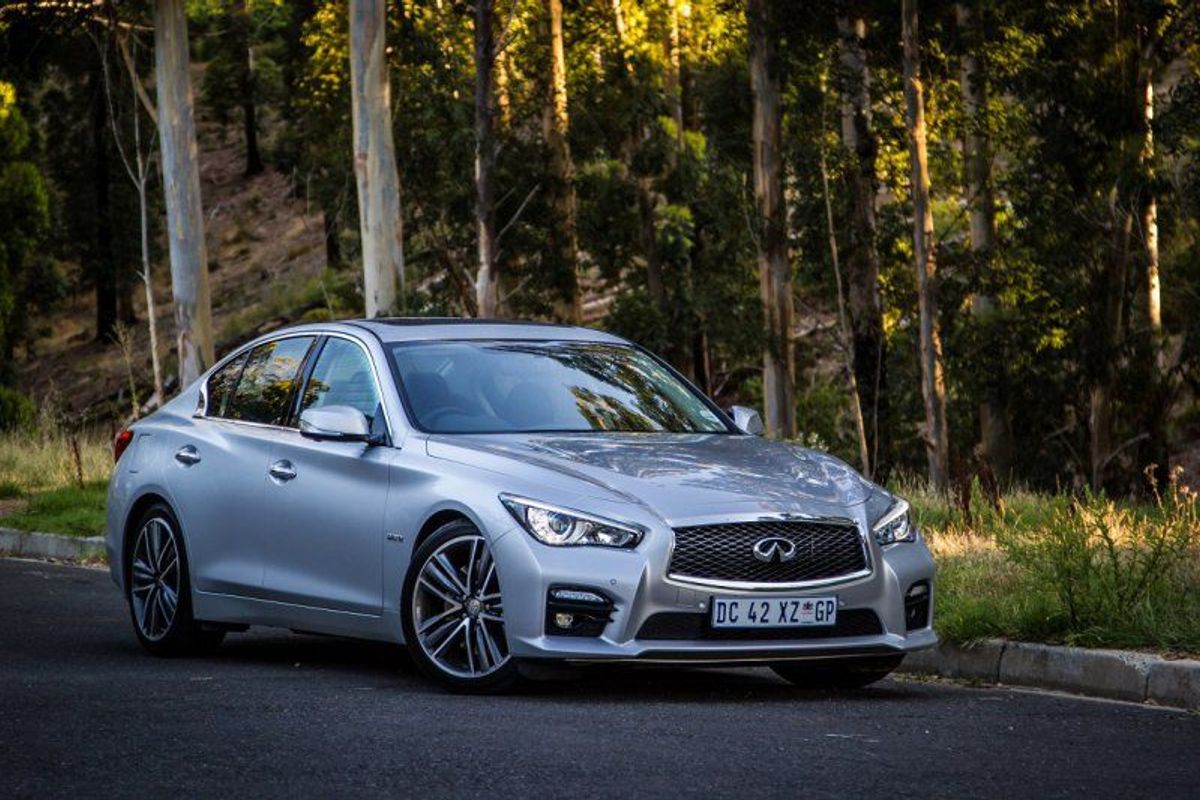
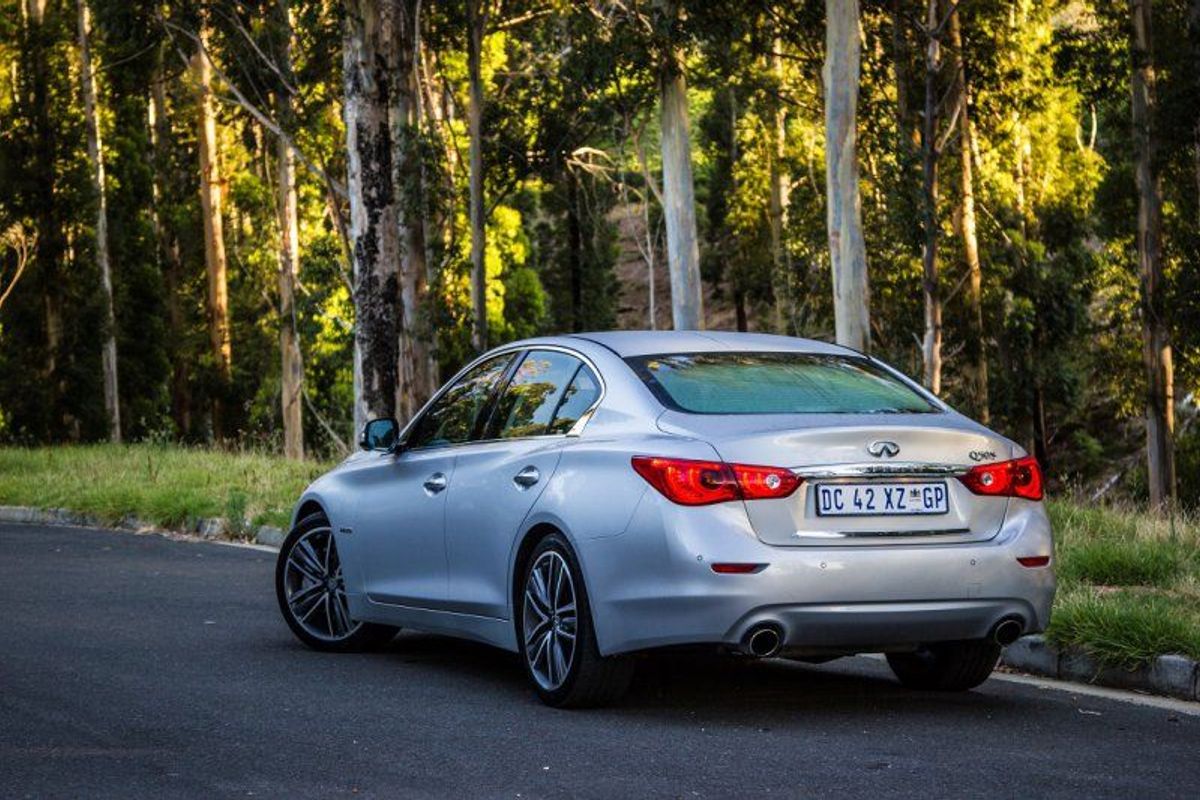
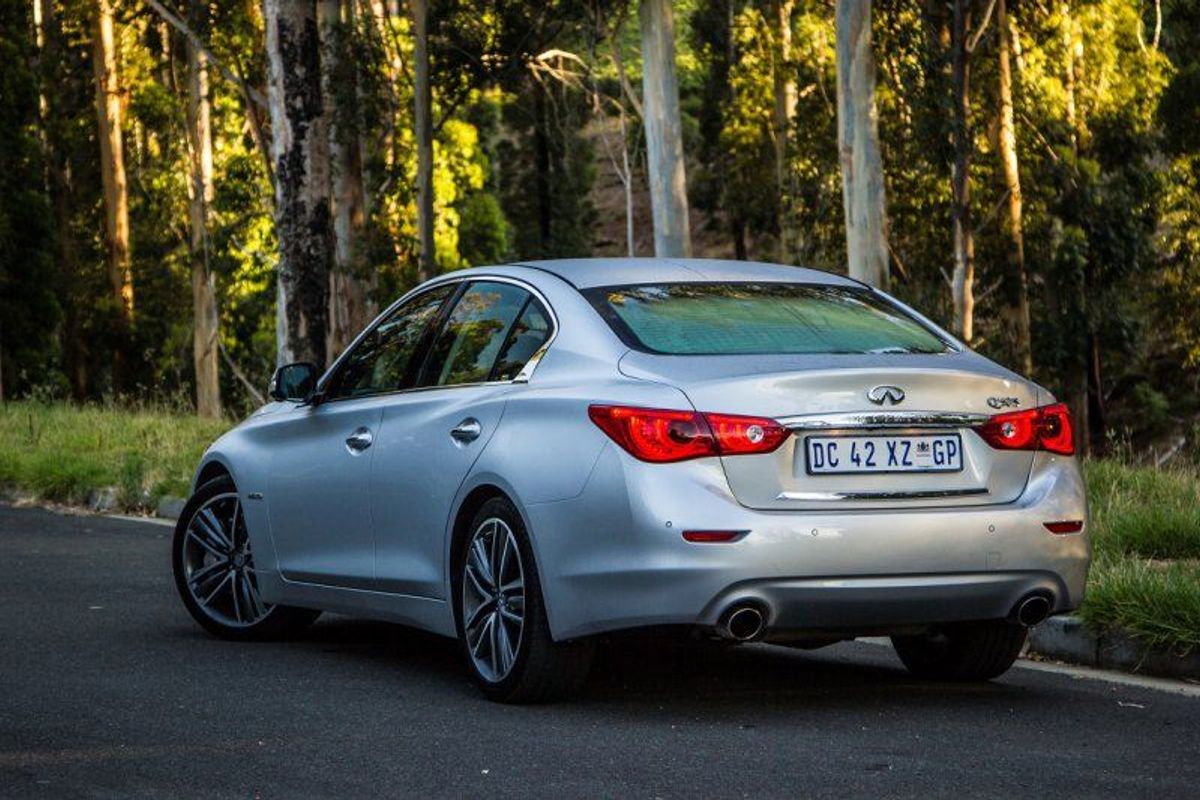
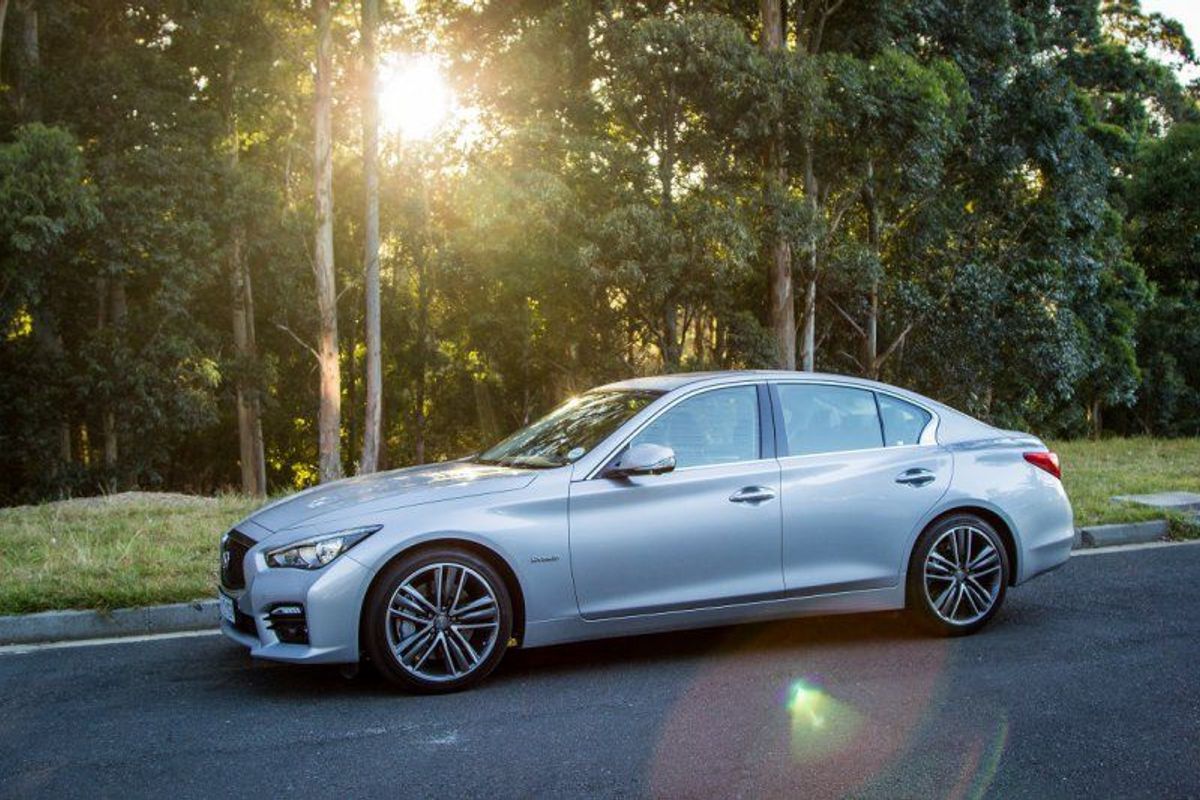
Infiniti Q50S Hybrid (2014) Review
Infiniti is still trying to make its mark in SA and latest sales data from the end of December shows that its two models the Q50 and QX70 sell a combined 27 units a month. Infiniti remains a premium extension of Nissan and the Q50S hybrid sits at the top of the Q50 range and is a competitor to the likes of the BMW ActiveHybrid 3 and the Lexus ES 300 Hybrid. I spent a week getting to grips with Infiniti’s hybrid offering to see how it stacks up.
Hybrid Power
Infiniti hasnt gone entirely eco-friendly with the Q50S Hybrid, the electric motor assists a thumping 3.5-Litre V6 that likes to get a move on. The electric part of the car helps with pulling away from lights, stop streets and when crawling in traffic, the problem is you have to drive particularly slowly in order to keep it on electric power. This is something ‘editor Dave’ is particularly good at doing, however I like to keep up with traffic and as you begin to coax more acceleration from the throttle pedal all 261 kW seem to arrive at once as the petrol engine fires up to assist. It makes the Q50S Hybrid quite jerky in town driving as the petrol engine introduces itself quite aggressively.
Out on the open road though the V6 petrol feels at its best, it has loads of torque to overtake and idles along nicely at 120kph. Thanks to the hybrid system, the Q50S Hybrid claims around 6.8L/100km and during its tenure with us we returned 8.9L/100km and that included a fair whack of enthusiastic driving as the V6 ramps out quite a sexy sound in the upper echelons of the rev range.
Impressive Interior
The Infiniti Q50S Hybrids interior is well designed and looks very stylish even if just about everything is covered in black leather. It does a relatively good job of not looking too much like a Nissan inside, but there are still lingering hints of the shared DNA in the drivers binnacle and the trip computer setup. The technology fest is centralised around two touch screens that sit one on top of the other. The lower unit looks and functions exactly like a tablet with swipe functionality and loads of buttons to press for every function you could possibly think of. It’s also a magnet for fingerprints.
It makes the top screen almost useless as all it seems to do is show a clock, trip computer details and screen a particularly low-res reverse camera. Space for passengers is quite good in the back and the seats offer up good support and comfort. The boot however is a bit small probably to make space for all the batteries and the rear seats cant be folded down, making it a bit less practical than your average sedan.
On the safety side of things the Q50S Hybrid is all about trying to avoid accidents, theres loads of passive aids like lane departure warning and lane departure prevention, blind spot warning and blind spot intervention, forward emergency braking, predictive forward collision warning and automatics also get distance control assist and back up collision intervention. Intervention seems to be the choice word in a lot of those systems meaning that the Q50 will take action on its own if the driver doesnt.
Ride and Drive
I enjoyed driving the Q50S Hybrid, mostly because the V6 is a sweet sounding and linear accelerating machine. Im not so much of a fan of the drive-by-wire steering as it turns the Q50 into something very synthetic and lacking any feel whatsoever. It also makes the steering feel inconsistent so at times it feels light and then the next bend youre suddenly wrestling with a whole load of artificial weight in the wheel.
The ride though is set for comfort, its particularly impressive over long runs where the suspension soaks up ripples and imperfections in the road. Its not bad on the twisty stuff either, theres not terrible lean and the Infiniti feels grippy when pushed. If only the steering matched the confidence the chassis gives.
Infiniti Q50S Hybrid – Verdict
The Infiniti Q50S Hybrid is a bit of an enigma to me, its meant to be a way of showcasing efficiency and greenery in a sporty package, a concept I find contradictory in itself. Nevertheless, its nice to listen to a howling V6 and then have the feel good factor of running zero emissions in town driving. The execution isnt quite as seamless as the theory as the Q50S Hybrid is a bit jerky in town driving, the steering lacks feel and the boot is compromised for space.
The Q50 does look stylish from the outside and that might help it get a few visits to the dealership. The other trick up its sleeve is the price, at R585 000 it undercuts the BMW ActiveHybrid 3 by nearly R150k and matches the Lexus ES 300h but offers loads more power in a more modern environment.
Second Opinion
As far as hybrids go, I do like the Infiniti Q50S Hybrid. The engine and electric combination work reasonably well together, and I enjoyed seeing the rev counter die as the car transitioned from petrol to battery when you come off the throttle. Despite the large capacity V6, the car isn’t as thirsty as you’d think and the safety technology is simply staggering. Sadly there’s a lot of stiff competition in this segment and despite its impressive skillset, I feel the Infiniti Q50S has its back up against the wall. – David Taylor
We Like: Styling, petrol engine, safety and tech
We Don’t Like: Jerky transition from electric to petrol, numb steering, low-res camera
The Mercedes-Benz S-Class Coupe was launched in Cape Town last week and Stuart Johnston was there to take it for a drive.
If ever there was a difficult balancing act to pull off in the automotive world it’s the one Mercedes-Benz is currently tackling with its new model offensive, with an emphasis on wooing younger customers with raw, at times raucous power, yet being careful not to offend the traditional Merc owner, who values ride quality and quietness above all else.
Perhaps no other car epitomises this strategic conundrum more than the new Mercedes-Benz S-Class Coupe, the car at the top of the Benz heap in terms of desirability, image-statement, and indeed, price.
Mercedes-Benz S-Class Coupe Pricing
For the pleasure of owning the new two-door version of what Mercedes-Benz is fond of stating is ‘the worlds best car’, you need to have close to R2-million of readily available disposable income, and thats only for the base model S-Class Coupe.
The S500, using the new 4.6-litre bi-turbo V8, weighs in at R1 193 000 before emissions tax or options are added. Moving on to the mid-line model, you have the S 63 AMG Coupe, starting at R2 499 000. If you want assurance that no-one outguns you in terms of spec, once the braai-grid discussion turns competitive, opt for the S 65 AMG Coupe, the V12 version with 463 kW and a sticker price of R3 070 700.
Design of the S-Class Coupe
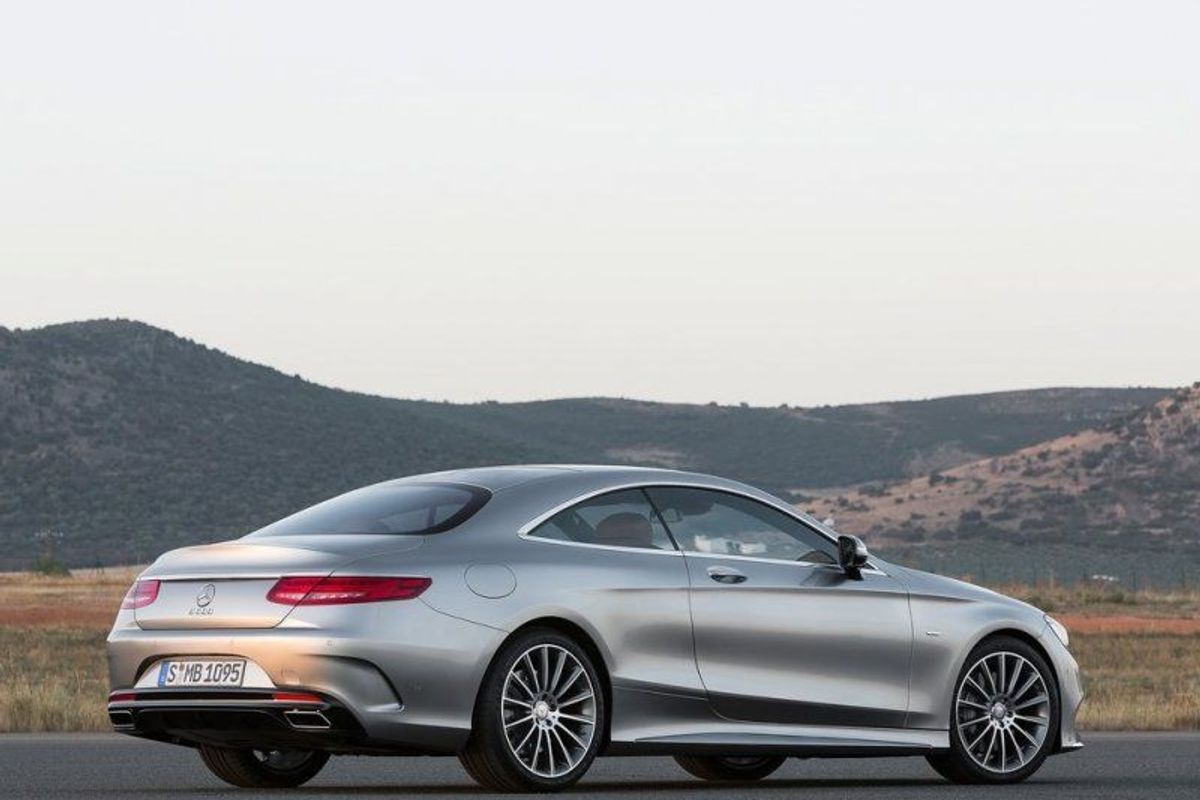
The very shape of the S-Class Coupe is a blend of gracious serenity and hard-edged power-broking. Viewed from the side, it renders the classic rear-wheel-drive two-door coupe silhouette by placing the dome-shaped cabin quite far back on the five metre-long body-form. This enables a suitably elegant truncated boot and a long nose. The flanks are shaped using the now-signature Merc DNA lines that have their origin at the tip of the nose, with the lower line easing upwards and the upper line dropping towards the tail light cluster.
The agro bit comes when you view the nose, or perhaps a better term for this aspect would be a snout. While there is a nod to the classicism of traditional Mercedes design in the shape of the grille, the huge air ducts underneath are almost primal in their gaping, swallow-anything-and-suck-it-up shape, edged by sharp-surfaced vanes that speak of aero efficiency while channeling huge volumes of air. Thats necessary for the turbo intercooling, oil-cooling and brake cooling systems on a machine of this calibre which moves a huge mass of metal at amazing speeds.
Driving the S63 and S65 AMG
At the S-Class Coupe launch, the S500 was announced, but not available for driving, as, on a world-wide basis, the straight non-AMG model is not yet readily available. So us journos had to choose between the V8 bi-turbo and the V12 bi-turbo. A pretty tough choice…
As things happened we drove the V12 first and the V8 after lunch, which took place half-way up the wonderful Helshoogte pass above the town of Stellenbosch. With the V12, I acknowledged that this package is biased more towards the sophisticated end of the Merc owner profile. The V12, even when pushed hard, has a muted song rather than a brash bellow, and things happen in this car in a seamless fashion, with just one exception noted.
That was when we hit some rather long-in-the-teeth secondary roads, with a degree of tar subsidence at irregular intervals. An S 500 would have wafted over these with no reaction, and I would have expected the same from the S 65 AMG, equipped as it is, standard with Magic Body Control, which adjusts the suspension settings before you reach a set of irregularities. In other words, there was just the slightest trace of the jitters as the wheels seemed to brush off their encounter with the bumps.
I believe that this is a crucial area where, particularly in the case of the AMG versions, Mercedes-Benz needs to pay close attention. The very essence of the brand is its hall-mark waftability. I realise that the sportier AMG versions lower the base model ride-height in the interests of sheer cornering power and stiffen up the ride, but AMG is definitely not the world leader in terms of rough-ish road composure in the performance field, and now with the sporting division brand known simply as AMG-Mercedes, it needs to be.
Engines
That said, the power-plants are indeed wondrous. For instance, the rasping, bellowing 430 kW V8 S63 AMG we sampled after lunch will haul the big coupe, weighing all of 2 070 kg , to a speed of 100kph from rest in just 4.2 seconds. The V12 will whisper you to that speed in one tenth of a second less! Thats thanks to a stonking power output of 463 kW, a torque level of a magical 1 000 Nm, but a mass of 2 185 kg before you’ve added fluids and occupants. Oh yes, and EU rated overall consumption figures are in the 10 to 11-litre/100 km bracket, quite remarkable!
An impressive new comfort feature, now integrated into the Magic Body Control package, is the curve-tilting function, which subtly induces the Coupe to lean into a corner when a bend is experienced. Merc insists it’s not a performance orientated function, but a comfort feature. Whatever, the S63 and S65 versions of the Coupe are so-equipped and on smooth roads with sweeping bends, the big cars forte, the body stays flat despite generating considerable outward-thrusting G-forces.
The amazing body, built largely from aluminium but with high-strength steel cockpit and even some plastic composites used to provide rigidity and insulation, is one of the quietest in the world in terms of road and wind noise.
Technology and Interior
There is a dazzling array of technology in this car, as you would expect. It’s all understandable on a huge display screen mounted on the curved dash top, which houses 3D displays of just about every configuration of comfort, dynamic adjustability, navigation, entertainment and safety configurations that you might desire. Its a nice techno tour-de-force, although it is somewhat in your face, compared to the rest of the cockpits elegant theme of swirls, swoops and soft edges.
The trim and equipment levels are everything youd expect from a top-end Benz, and the car makes a huge fashion as well as financial statement. It is indeed art on wheels, and despite what I feel about the ride under certain circumstances, this is what AMG, and many Mercedes customers now want. Many of them want that brutal aspect of the grumbling V8 version, a beast-on-demand whenever the personal cobwebs need an oxygen boost!
I just wish I could have tried the basic S 500 version, as I believe this will truly embody everything that’s best about balance and a considered approach to motoring, that is indeed Mercedes stock-in-trade.
BMW 2-Series Active Tourer SA Prices Revealed
We have stumbled across the pricing for the forthcoming BMW2-Series Active Tourer scheduled to launch in SA towards the end of January 2015.
Trim options
Although styling wont please everybody, the Sport Line package adds high-gloss black accents, special air intakes and exclusive 16- or 17-inch alloy wheels. There’s also sport seats, high-gloss black trim and contrast stitching.
The Luxury Line features high-gloss chrome grille and special 16- or 17-inch alloy wheels, as well as a leather-wrapped sport steering wheel, special seat upholstery and chrome accents.
For a sportier look, the M Sport package adds an aerodynamic body kit, a high-gloss black grille, a sport-tuned suspension (which reduces the ride height by 10mm) and 17- or 18-inch light alloy wheels. It also includes an M leather steering wheel, specially upholstered sports seats, an anthracite roof liner and M-branded door sill plates.
The 2-Series Active Tourer will be available in four models (218i, 220i, 220d and 225i) and three engine options.
These will include the entry-level 218i with a 1.5-litre three-cylinder petrol engine that delivers 100 kW and 220 Nm of torque – 230 Nm with overboost. The 225i is equipped with a 2.0-litre four-cylinder petrol engine that produces 170 kW and 350 Nm of torque. While the 220d is fitted with a 2.0-litre four-cylinder diesel engine with 110 kW and 330 Nm of torque.
BMW 2-Series Active Tourer price in South Africa
Standard model
218i
220i
220d
225i
Six-speed Manual
R378 000
R401 000
R428 500
–
Automatic Transmission Steptronic (6-speed for 218i, 8-speed for 220i, 220d and 225i)
R396 00
R419 000
R446 500
R447 000
Sport Line
Six-speed Manual
R395 300
R418 300
R445 800
–
Automatic Transmission Steptronic (6-speed for 218i, 8-speed for 220i, 220d and 225i)
R413 900
R436 300
R463 800
R464 300
Luxury Line
Six-speed Line
R403 900
R426 900
R454 400
–
Automatic Transmission Steptronic (6-speed for 218i, 8-speed for 220i, 220d and 225i)
R421 900
R444 900
R472 400
R472 900
M Sport package
Six-speed Manual
R414 950
R437 950
R465 450
–
Automatic Transmission Steptronic (6-speed for 218i, 8-speed for 220i, 220d and 225i)
R432 950
R455 950
R483 450
R480 150
Ford Fusion (2015) First Drive
Most of us remember the Ford Mondeo of old, the sedan that wasnt quite premium enough to fight with the German sedans and not quite desirable enough to make you upgrade from a big hatchback. It was a good car though, with loads of space, a comfortable drive and a sweet range-topping ST220 derivative. Unfortunately low sales dictated that the Mondeo be retracted from our market until now. The Mondeo has returned, but instead it has been branded a Fusion, we were at the launch to give it a quick spin and see what it has to offer.
Style-icious
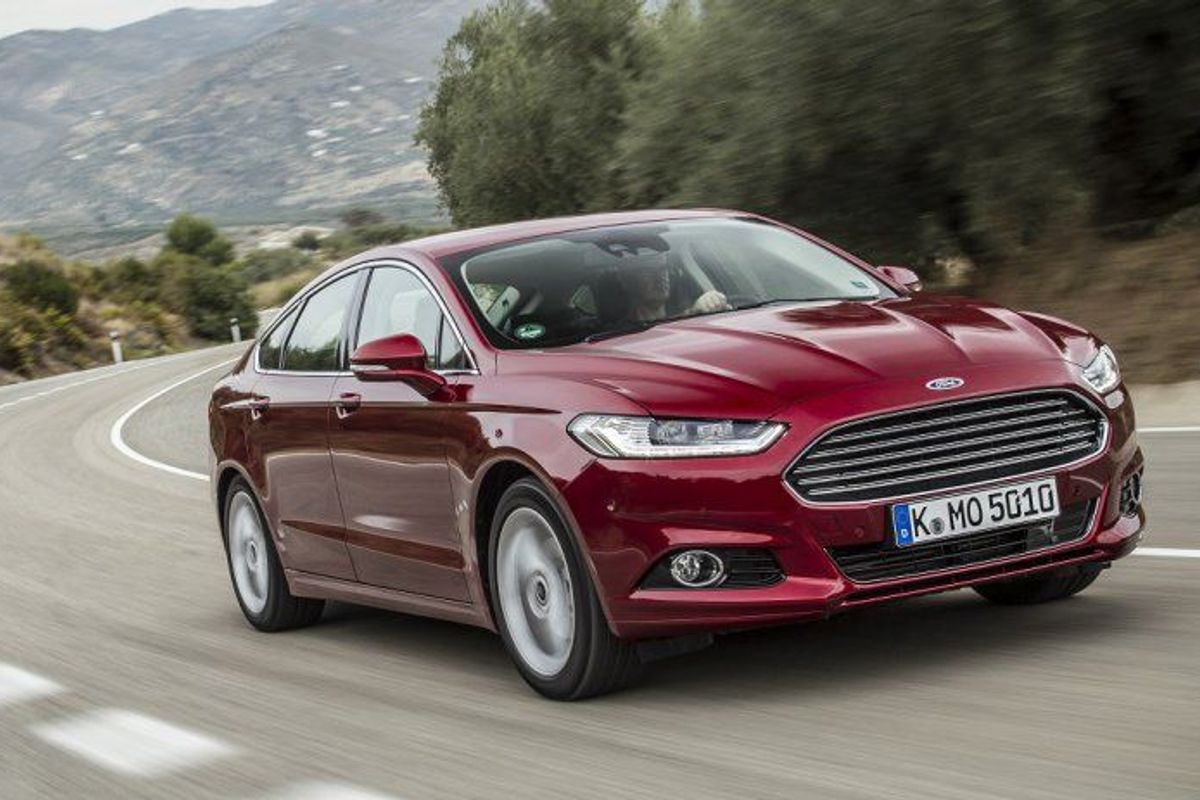
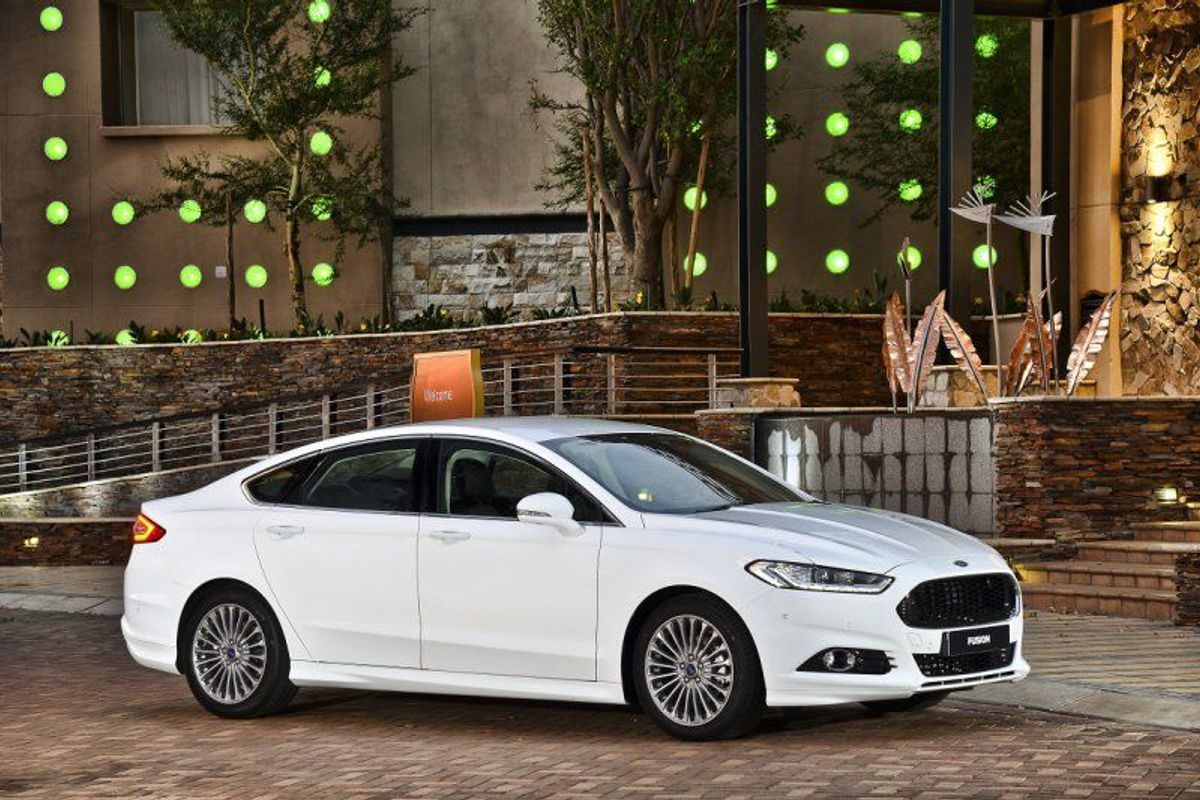
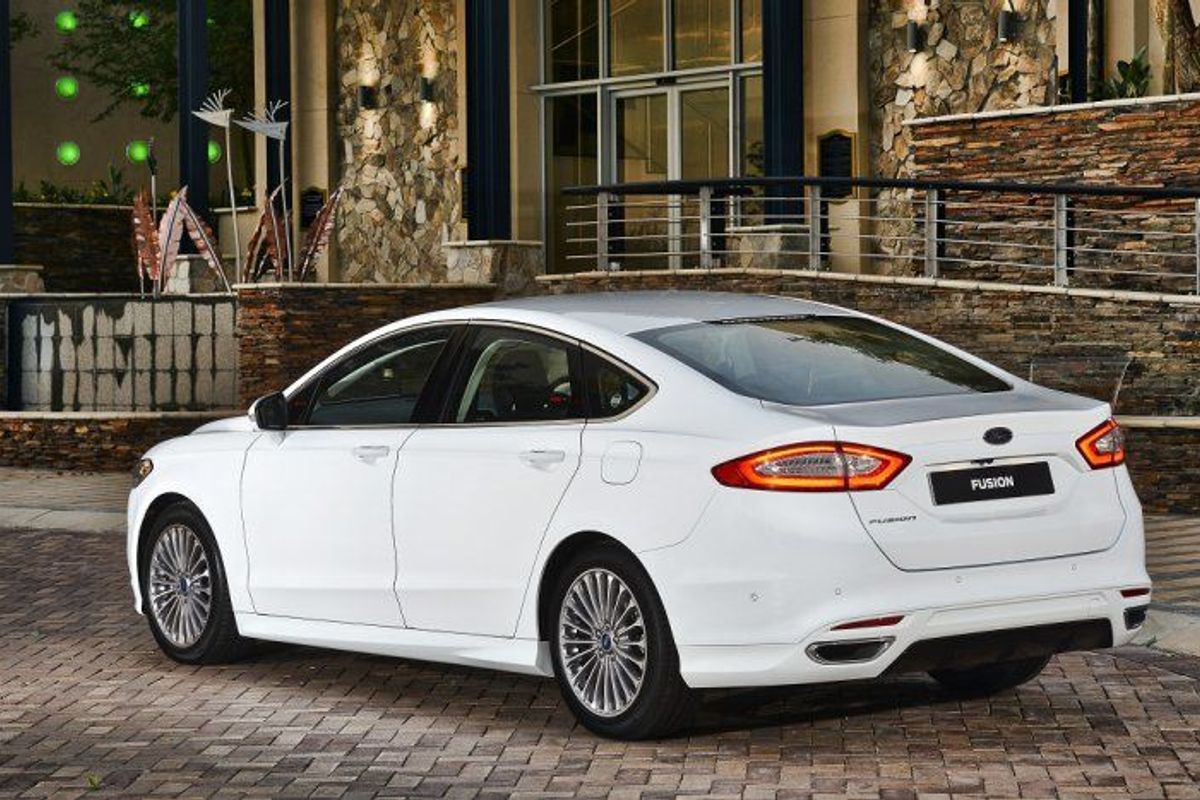
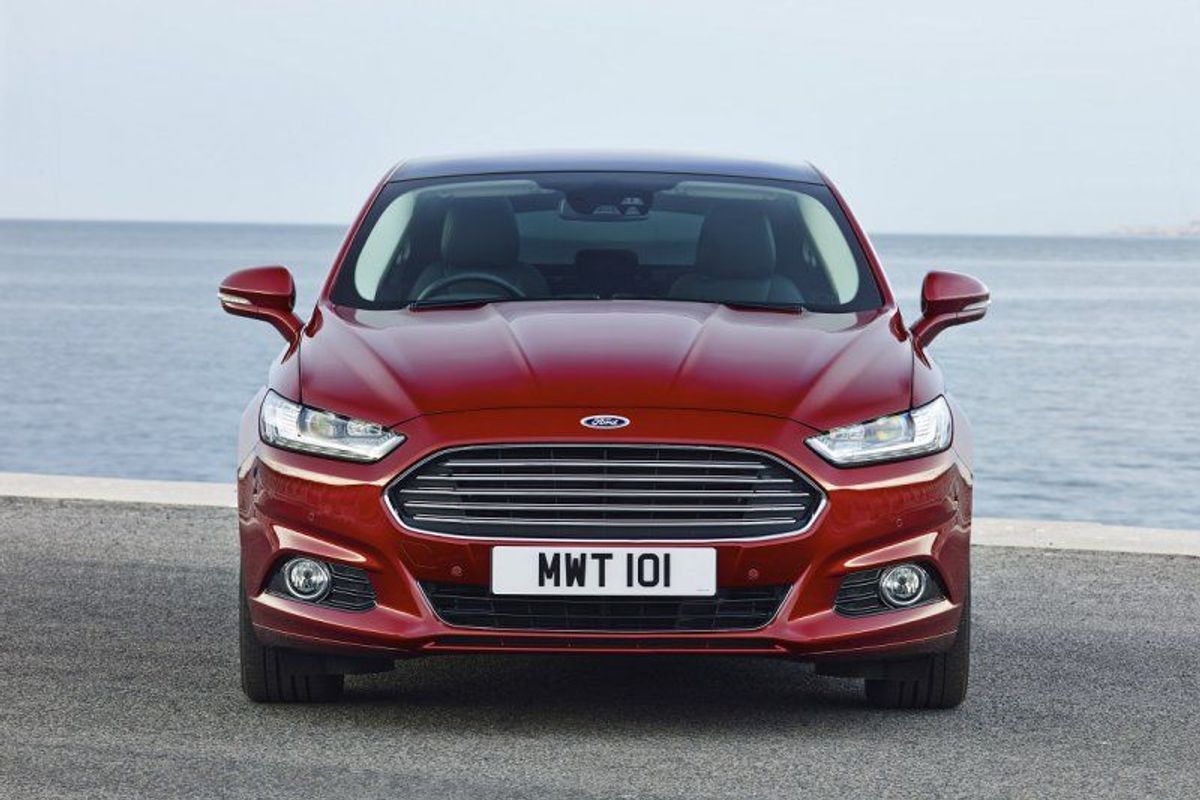
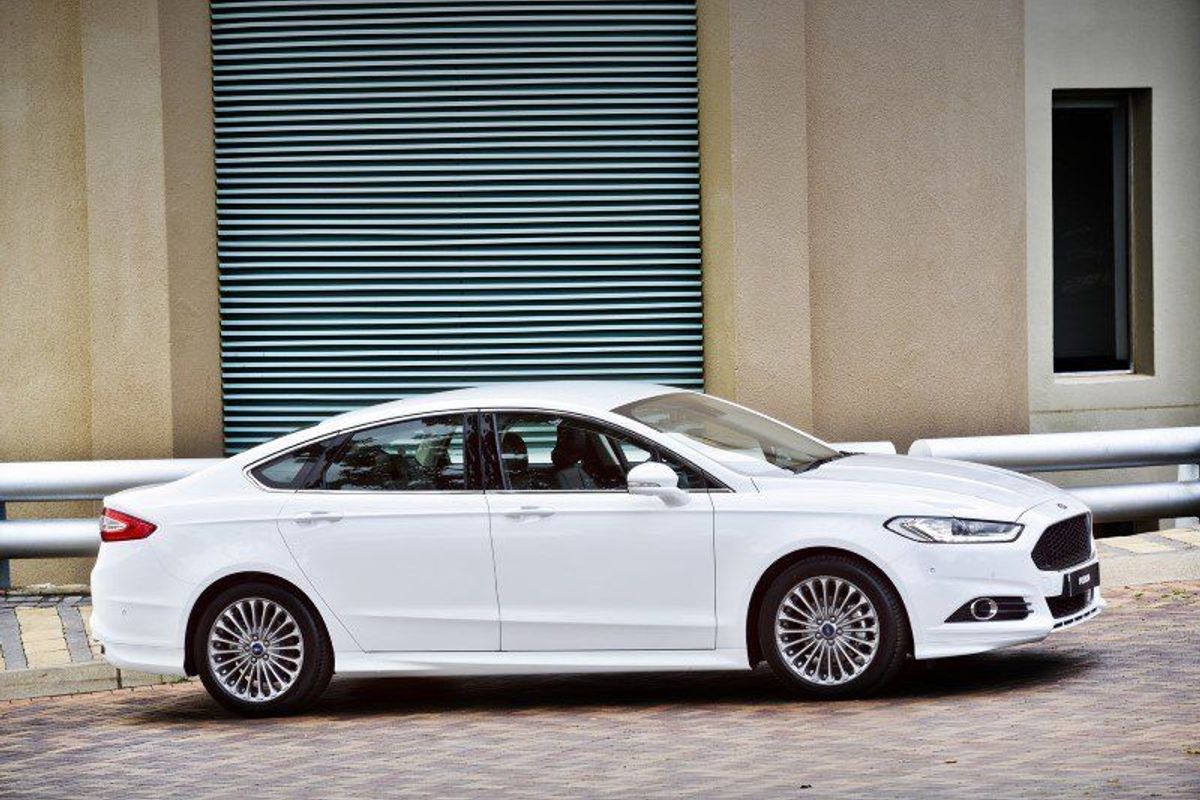
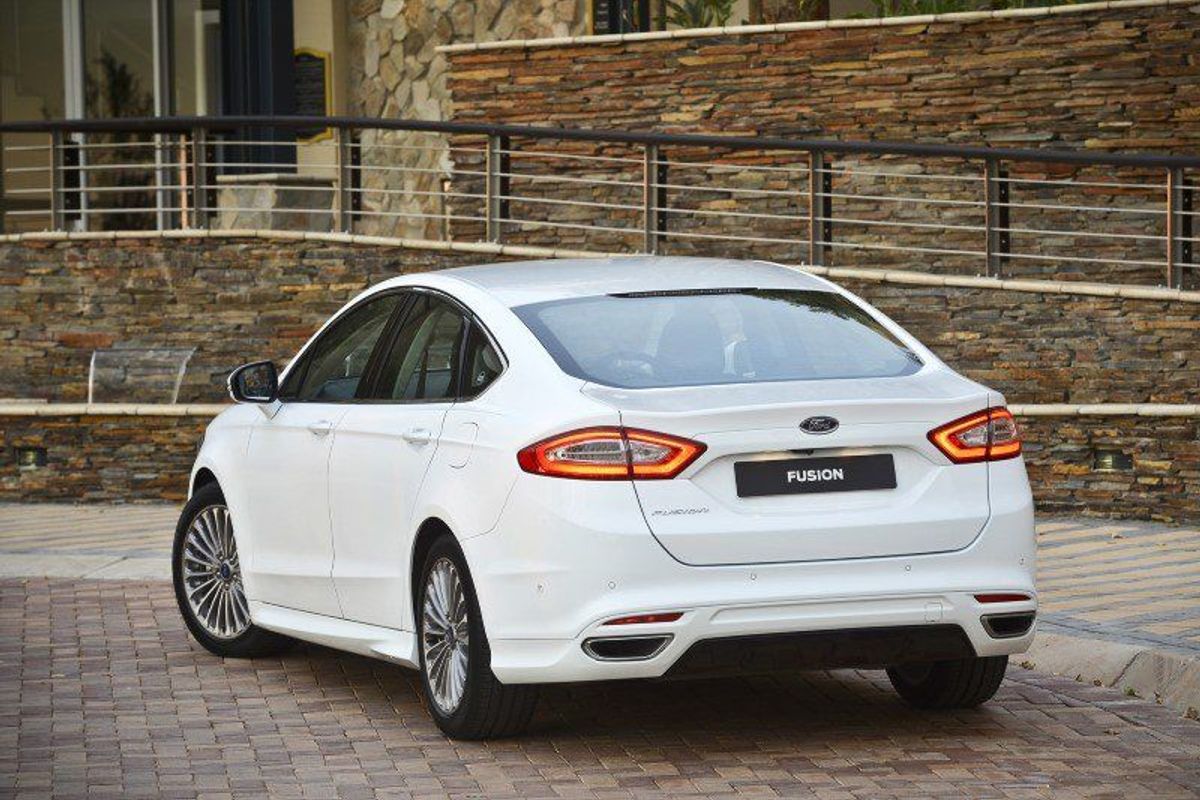
Its a good looking car and Ill have no arguments about that. The front end shares a lot of similarities with the new Mustang with its LED piercing forwards through slanting headlight housing. The grille might be a bit big, but it fits well with the overall sleek and sexy look of the front end. The rear end continues the impressive appearance with wrap-around taillights in thin slithery shape. In higher spec models the rear tailpipes are chromed and add a bit of attraction to the lower end of the rear. I can happily say that the Fusion is an excellent looking C/D segment sedan.
Techy Cabin
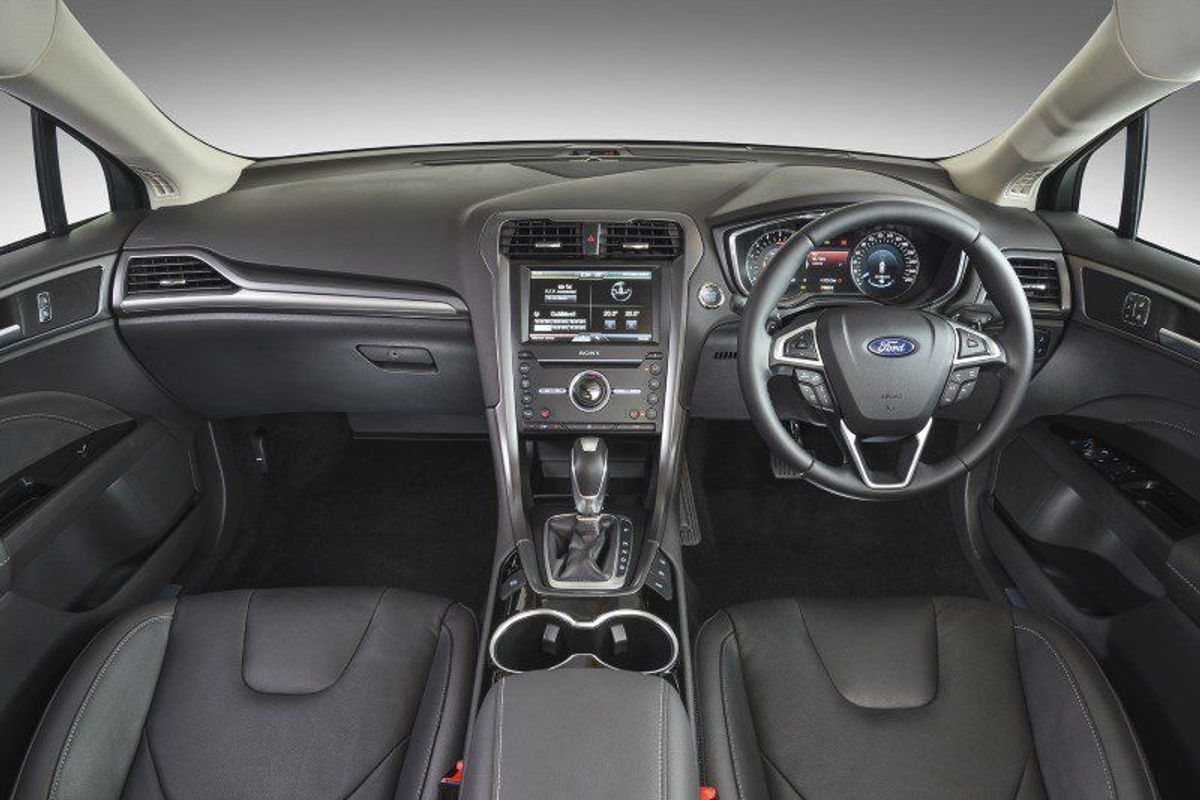
Ford has really gone to town on the tech in the new Fusion. Sync2 is now available and itll take some form of Microsoft certification before I can get my head around all the capabilities of this system. Hopefully when we get it on test well have some more time to figure it out. Lets just say that if you spec your way to the full system youll have everything you could want from auto-parallel and perpendicular parking to having multiple USB devices plugged in at the same time and an audio/video device attached as well.
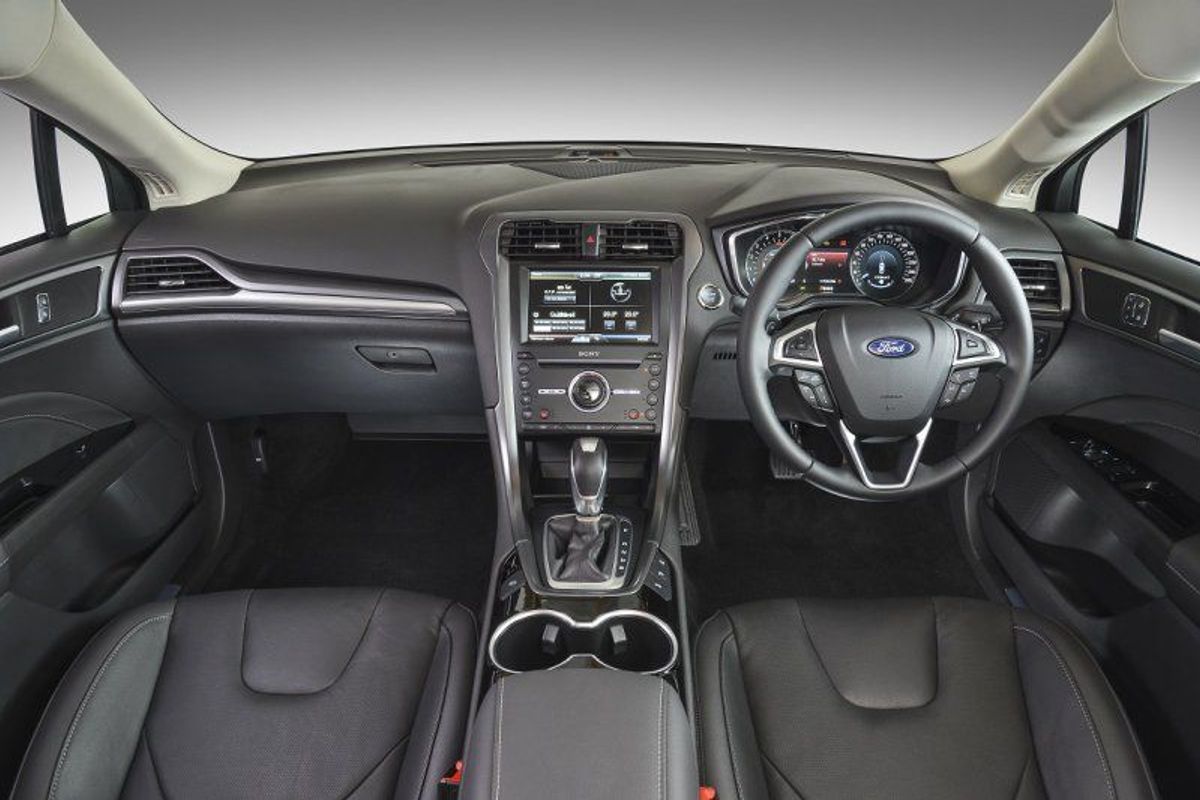
As for the interior, the Fusion has comfortable and endlessly adjustable seats in electric mode. The dash and surfaces, whilst being black throughout, are soft touch and well-designed to create a roomy environment. The drivers binnacle is very clear whether you spec the fully digital layout or the entry analogue variant.
The Fusion sells itself well on space, theres good legroom in the rear, even when the front seats are in six-foot plus positions. Then theres the boot, its huge, I had to drop down to eye-level just to see the end. In total its 453-litres and the rear seats can be folded down. Standard spec for the Fusion is the seven-airbags that provide its five-star safety award as well as a new rear-seatbelt airbag that will be introduced soon.
Engines
The Fusion is available in three petrol derivatives and a single diesel. The entry-level petrol is the new 1.5-Litre EcoBoost turbo that pushes out 132 kW and 240 Nm of torque. The small turbo dealt with the Fusion well and felt more than capable on the open road overtaking. The first of the 2-Litre turbo motors puts out 149 kW and 300 Nm, while the more powerful 177 kW 340 Nm feels suspiciously familiar to the engines in the Range Rover Evoque and Jaguar XF. Ford says the engine is a Ford only product and is unaware of any link between the Jag/Landy engines.
The diesel is a 2-Litre turbodiesel churning out 132 kW and 400 Nm. In a big sedan like this where most owners have families and maybe arent the most enthusiastic behind the wheel I recommend the diesel. Its a fuel efficient engine that delivers on all fronts, its just a pity its also the most expensive model in the range.
Pricing
Ford understands that the Fusion isn’t as premium a name as the 3-Series or C-Class but it wants to compete with them on the tech front and desirability side of things. In reality the competition is more in the Honda Accord and VW Passat range, but this new Fusion may just be able to convince a few people into its drivers seat. Option packs have been made available for those wanting to add something a little more to their Fusion and cost around R25k to bolt on.
Ford Fusion 1.5 EcoBoost Trend – R349 900
Ford Fusion 2.0 EcoBoost Trend – R369 900
Ford Fusion 2.0 EcoBoost Titanium – R424 900
Ford Fusion 2.0 TDCi Titanium Powershift – R449 900
Honda Jazz (2015) First Drive
The third generation Honda Jazz is now available in South Africa and Cars.co.za drove it in Cape Town.
The Honda Jazz is a popular city car around the world and is renowned for offering incredible space, practicality along with a generous helping of specification. It has a proven track record in SA, and was one of the first small city cars to offer a respectable safety rating as well as innovative interior versatility.
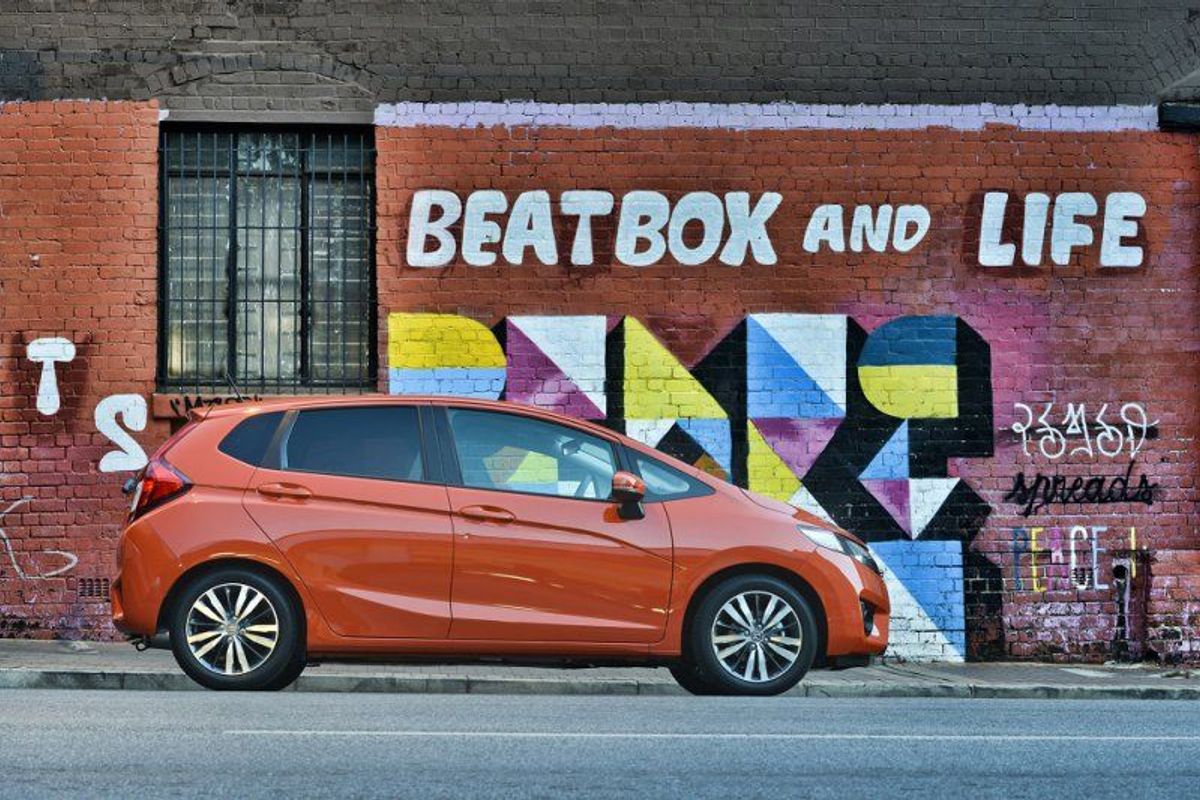
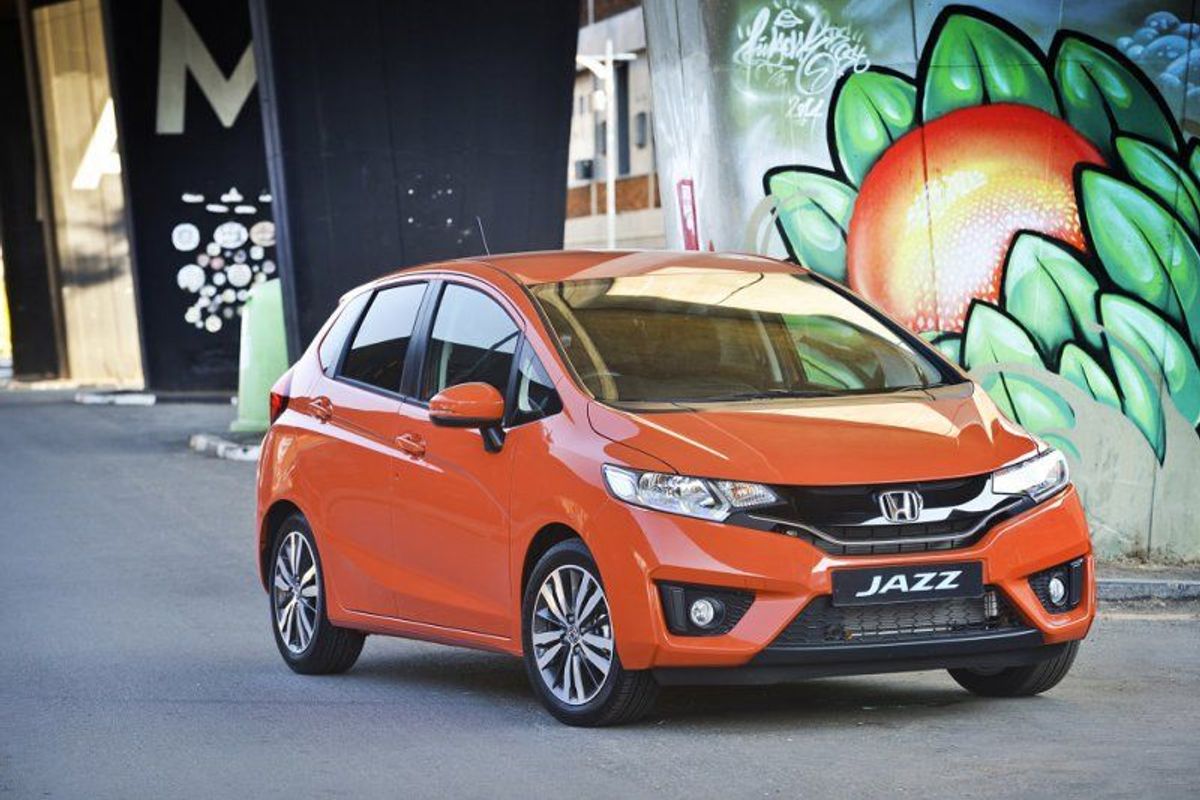
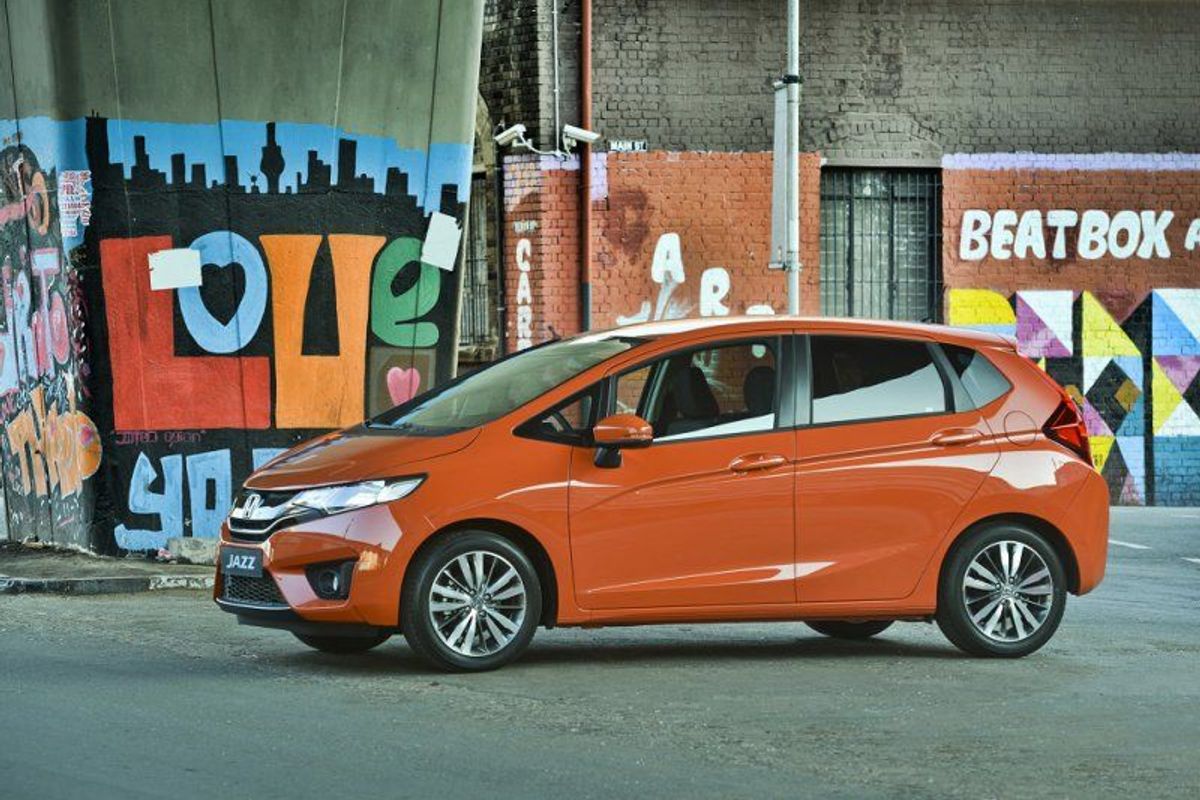
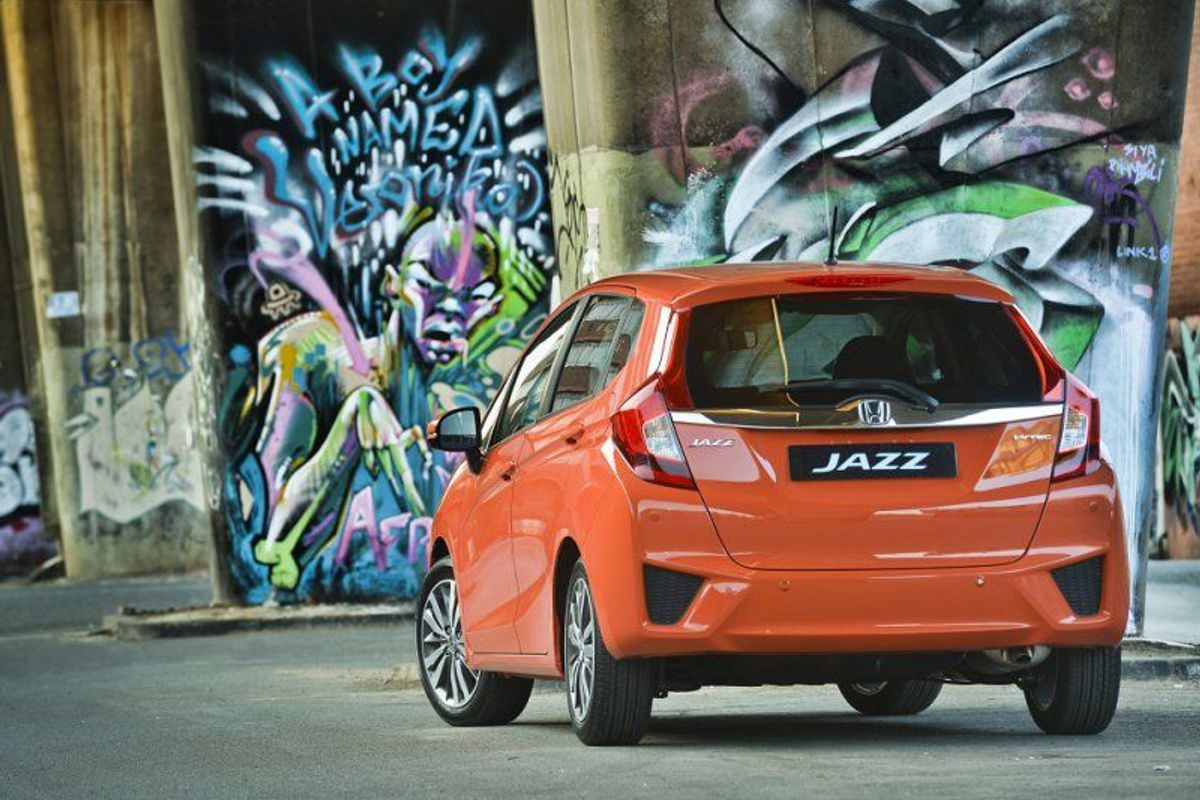
Fast forward to 2015, and the Honda Jazz which, we saw unveiled online has made its South African debut. The 2015 Honda Jazz gets a nice and modern front end, with the rear looking a lot fresher than the outgoing model. I think the design language is striking, particularly when paired with one of the more vibrant colours available. On the launch, I chose the delicious orange which was very eye catching.
Engines and performance
Essentially, the new car offers seven models, with two engines and two gearbox options. There’s a 1.2-litre engine and a 1.5-litre engine available. The smaller 1.2 offers 66 kW and 110 Nm, while the 1.5 has 88 kW and 145 Nm. The smaller engine Jazz can hit 100kph in 13.5 seconds, while consuming a claimed figure of 5.6l/100km. The 1.5 is a little quicker, being able to hit 100kph in a claimed 9 seconds, with fuel consumption sitting at 6.0l/100km. On launch, I drove the top specced 1.5 manual gearbox, and I feel the engine offers commendable performance.
Specifications and features
The Honda Jazz does not skimp on safety features. Passive safety features include dual front, side and curtain airbags, inertia reel seatbelts with pre-tensioners and load limiters for front occupants, and height adjustable seatbelt anchors. Child seat tethers are fitted to the rear. These features are joined by an array of active safety systems that includes ABS anti-lock brakes with electronic brake force distribution (EBD) and emergency braking assistance (EBA). The Trend also benefits from Hondas Vehicle Stability Assistance (VSA).
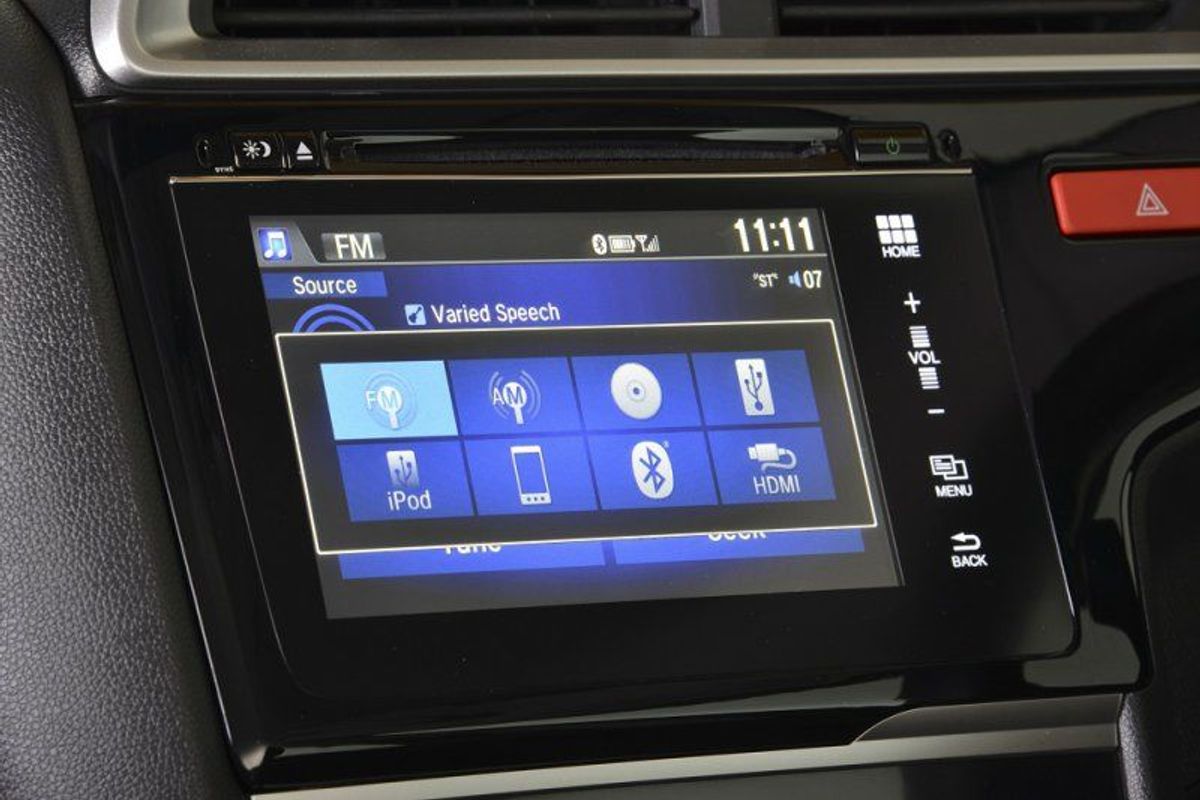
The model I drove came with a multifunction steering wheel as well as cruise control and Hill Start Assist. Alloy wheels and a full-size spare wheel both come standard in the 1.5 Dynamic. The interior gains a pretty seven-inch display in the dashboard, which incorporates the audio system, Bluetooth telephony, the trip computer, and more. There’s also leather trim on the steering wheel and gearshift knob, while a fully automatic climate control does a sterling job of keeping the summer heat under control. The best part has to be the two USB ports and HDMI port which will make use of your smartphone’s features for car use.
SA Launch
The launch route took us through the Swartland region of Cape Town and we skirted the towns of Paarl and Wellington. The car’s 1.5 engine performed well, and the gearshift was typically Honda, which is a great thing. The car’s features make it a competitive option in this segment and I feel like it will continue to be a best seller in our market.
2015 Honda Jazz Price in South Africa
The new Honda Jazz will go on sale in February 2015. All models except the entry-level Trend come with a four-year/60 000 km service plan included in the price, while services on all models are at 15 000 km intervals.
Jazz 1.2 Trend Manual R179 900 Jazz 1.2 Comfort Manual R204 900 Jazz 1.2 Comfort CVT R221 900 Jazz 1.5 Elegance Manual R234 900 Jazz 1.5 Elegance CVT R249 900 Jazz 1.5 Dynamic Manual R249 900 Jazz 1.5 Dynamic CVT R264 900
Ford Teases 2016 Focus RS (Video)
After numerous rumours suggesting the Focus RS will be coming in 2016, Ford has confirmed via a teaser video that the 2016 Focus RS will be officially revealed on February 3.
The car is still wrapped in camouflage, and details are yet to be revealed. The only thing available is the video, which shows the RS being put through the paces at one of Fords testing circuits.
While we dont have the official details as yet, it has been previously mentioned that the car will be equipped a 2.3-litre EcoBoost four-cylinder engine that delivers between 242 and 261 kW. This unit will supposedly be mated to a six-speed manual transmission and an all-wheel drive system.
Ford further confirmed that the 2016 Focus RS will be offered in “major markets around the world for the first time.”
Preview of the 2016 Focus RS
Ford Fusion Launched In SA Specs and Prices
The all-new Ford Fusion has been launched in South Africa, with a choice of four engines and is dubbed as the “most technologically advanced” vehicle to come from Ford.
Refined unique designs
Our design goal for the new car was to give the mainstream sedan buyer a top-drawer visual experience, adding some emotional appeal to an already sensible choice, said Chris Hamilton, chief exterior designer.
The model features a sleek profile characterised by sweeping lines, thin roof pillars, as well as polished exhaust tips and adaptive LED headlamps and taillights, combining full-LED headlamps with Ford’s “Adaptive Front Lighting System” to enhance the driver’s view of surroundings.
The sophisticated and technical front-end design features Fords more prominent trapezoidal grille, a power-dome bonnet and adaptive, slim-line, laser-cut headlamp design.
Inside, Fusion drivers are greeted by a digital analogue instrument cluster, while a sleek, wrap-around centre console design delivers a sporty, cockpit-like feel.
Advanced materials help improve vehicle strength
Advanced materials have also been used on the model, including high-strength steels, magnesium and smart plastic, as well as innovative hydro-forming production method which is used to produce the A-pillars, B-pillars and roof rails further improving the vehicles strength.
The recycled Front Energy Absorber designed to meet pedestrian protection requirements also helped in delivering body structure weight savings of up to 115kg for the 1.5-litre EcoBoost model.
The weight saved during development has been carefully re-invested into fuel-saving features such as aero-shields and Auto-Start-Stop technology; comfort and convenience features; and a stronger and safer body structure, said Ulrich Koesters, vehicle line director, Ford of Europe.
Weve improved the strength of safety relevant areas by 40%, and verified the performance with thousands of computer simulations and more than 180 real-world crash tests.
The all-new Ford Fusion offers a number of driver assistance and convenience technologies based on sensors, cameras and radar that enable the car to see and respond. These include the Lane Keeping System, Adaptive Cruise Control, Active Park Assist and Blind Spot Information System.
The Fusion also enhances comfort and convenience for drivers with a power-adjustable, memory-equipped steering column, Ford Multi-Contour Seats with unique Active Motion massage function, Fords SYNC 2 connectivity system, and an enhanced MyKey technology which will enable Fusion owners to programme a secondary key to restrict particular vehicle functions.
Engine range
Engine options include a 1.5-litre EcoBoost (132kW and 240Nm) and two 2.0-litre EcoBoost engines (one with 149kW/300Nm and the other with 177kW/340Nm), as well as a 2.0-litre TDCi diesel engine delivering 132kW and 400Nm. Combined with the brand’s Active Shutter Grille system, which provides aerodynamic benefits, Ford says these new engines deliver low carbon-dioxide emissions and “excellent consumption”.
Claimed combined fuel economy ranges from 5.1-litres/100km (diesel) to 8.5-litres/100 km (the 2.0-litre petrol), with all four models mated to a six-speed automatic transmission.
Ford Fusion price in South Africa
Ford Fusion 1.5 EcoBoost Trend – R349 900
Ford Fusion 2.0 EcoBoost Trend – R369 900
Ford Fusion 2.0 EcoBoost Titanium – R424 900
Ford Fusion 2.0 TDCi Titanium Powershift – R449 900
Service intervals are set at 20 000 km for petrol versions and 15 000 km for the diesel. Theres also a four-year/120 000 km, four-year/80 000 km service plan (five-year/90 000 km for the diesel) and three years of roadside assistance.
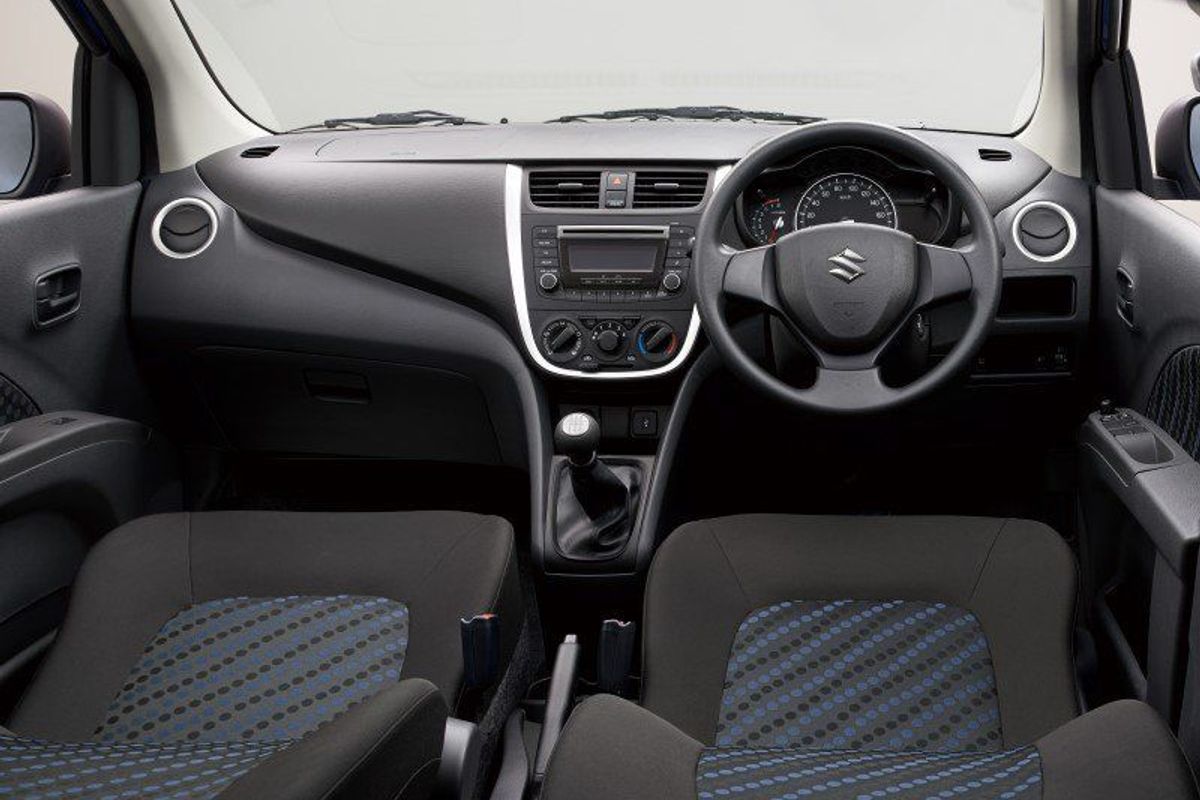
Suzuki Celerio (2015) First Drive
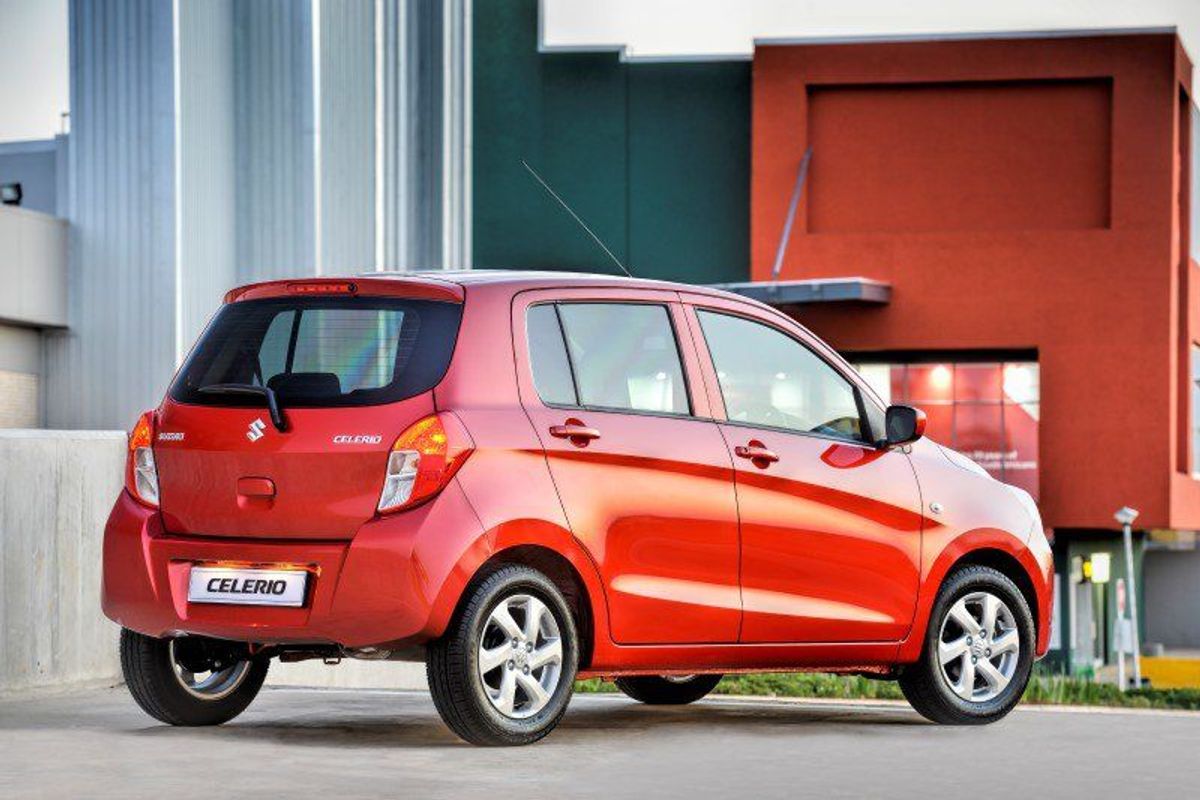
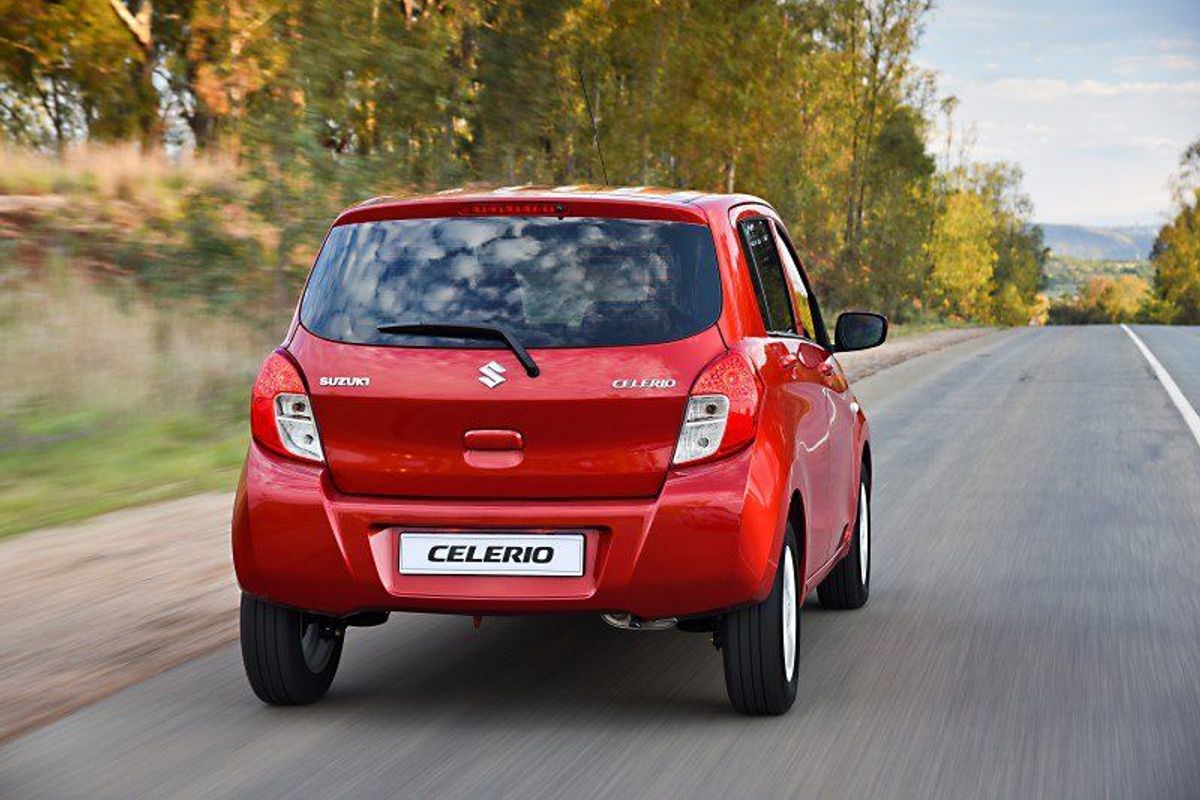
Suzuki was on a roll in 2014, with a number of new and updated vehicles introduced into the local market, and the trend continues into 2015 with the launch of the new entry-level Suzuki Celerio hatchback. Marketed as an ‘XL Small Car’, the addition of the Celerio to the Suzuki family has resulted in the Alto being kicked out of the nest for good.
I attended the launch of the Celerio in Durban this week and had a chance to acquaint myself with the newcomer.
Surprising Performance
After a brief product overview at the Empangeni Hotel, we were introduced to a fleet of cute-looking Celerios and proceeded on our launch route, about 95 km north of Durban, to the seaside resort of Blythedale. Apart from highway driving, the Suzuki Celerio had to perform on some poorly maintained rural roads, which it did with relative poise and composure.
The Suzuki Celerio is fitted with a 1.0-litre three cylinder engine offering 50 kW of power and 90 Nm of torque. On paper those numbers are small, but in the real world the Celerio holds its own and performs admirably. I was pleasantly surprised with the Celerio’s eager performance on the highway – small cars often get skittish at highway speed, but the Celerio felt confident and keen to push on. The steering, however, did feel a bit light for my liking .
I sampled the 5-speed manual transmission which felt smooth throughout. Suzuki also offers a five-speed automated manual transmission which allows for clutchless gear changes and improved efficiency. A creep function is also part of the package making stop-start traffic situations a breeze. Unfortunately, I was unable to test this transmission on the day, but I did receive mixed reactions from fellow journalists regarding this automatic gear shift transmission. We will hopefully get to the bottom of it when we review the Celerio in the coming weeks.
Suzuki Celerio Features
On the styling front, the Celerio features a chrome grille with broad horizontal bars accented by large headlights. The Celerio also features a ‘Curve-in Curve-Out’ (CICO) design, seen on the flanks and shoulder line of the car.
Two Suzuki Celerio models are on offer, namely the base-spec GA and the full-spec GL model. Both are offered with a five-speed manual transmission, but the automatic gear shift transmission is only available in GL trim. Dual front airbags and ABS are standard fare, which is always welcome and 14-inch wheels can be had in either steel or alloy.
In terms of niceties, the GL model comes equipped with a trip computer, electric windows and exterior mirrors, air-conditioning CD MP3 player, USB /auxiliary ports and mounted audio and Bluetooth controls on the steering wheel.
Interior space is claimed to be best-in-class and the Suzuki Celerio felt particularly spacious during my brief stint on the rear bench. Suzuki hasn’t skimped on boot space either, which is generous at 235-litres.
In terms of fuel efficiency, Suzuki claims 4.6-litres / 100 km for the automatic gear shift derivative and 4.7-litres / 100 km for the five-speed manual. I easily averaged 5.2-litres / 100 km behind the wheel and I felt I could’ve done better.
Suzuki Celerio Price in South Africa
Suzuki Celerio 1.0i GA MT (no service plan) R109 900
Suzuki Celerio 1.0i GA MT Alloy (no service plan) R112 900