Ken Block is back with the latest sequel in his YouTube sensation series of Gymkhana films.
No longer in a rally inspired Subaru Impreza or Ford Fiesta rally car, he is now terrorising the streets in a 630 kW all-wheel drive Mustang. According to the video, it’s the first ever performance Mustang that drives all four wheels. It’s called the Hoonigan and it’s built for smoke, theatre and bad-ass drifts.
Unlike Gymkhana 6 where they used a closed course to create the ultimate Gymkhana track, Block has returned to laying rubber on the streets, this time of Los Angeles. Keen spotters may notice a recreation of the Gone in 60 Seconds car chase scene.
Without harping on too much, here’s the video of Gymkhana Seven
Ken Block Gymkhana Seven
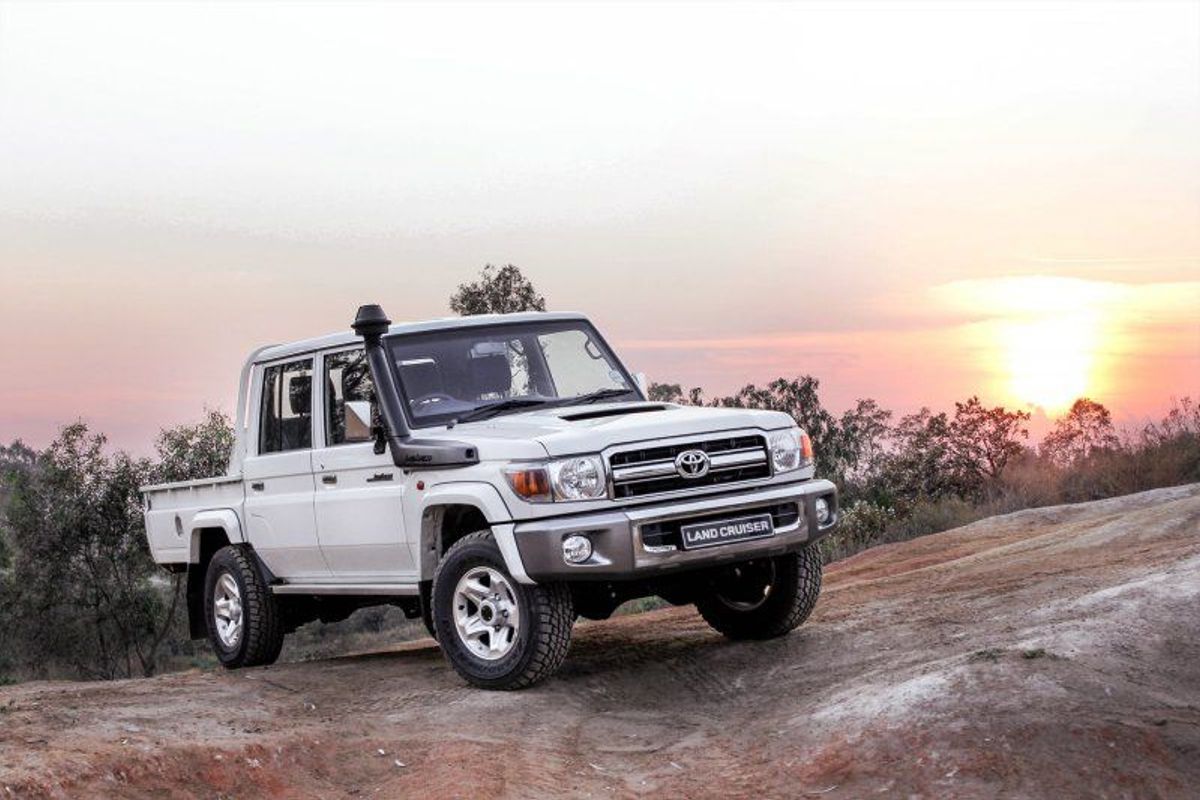
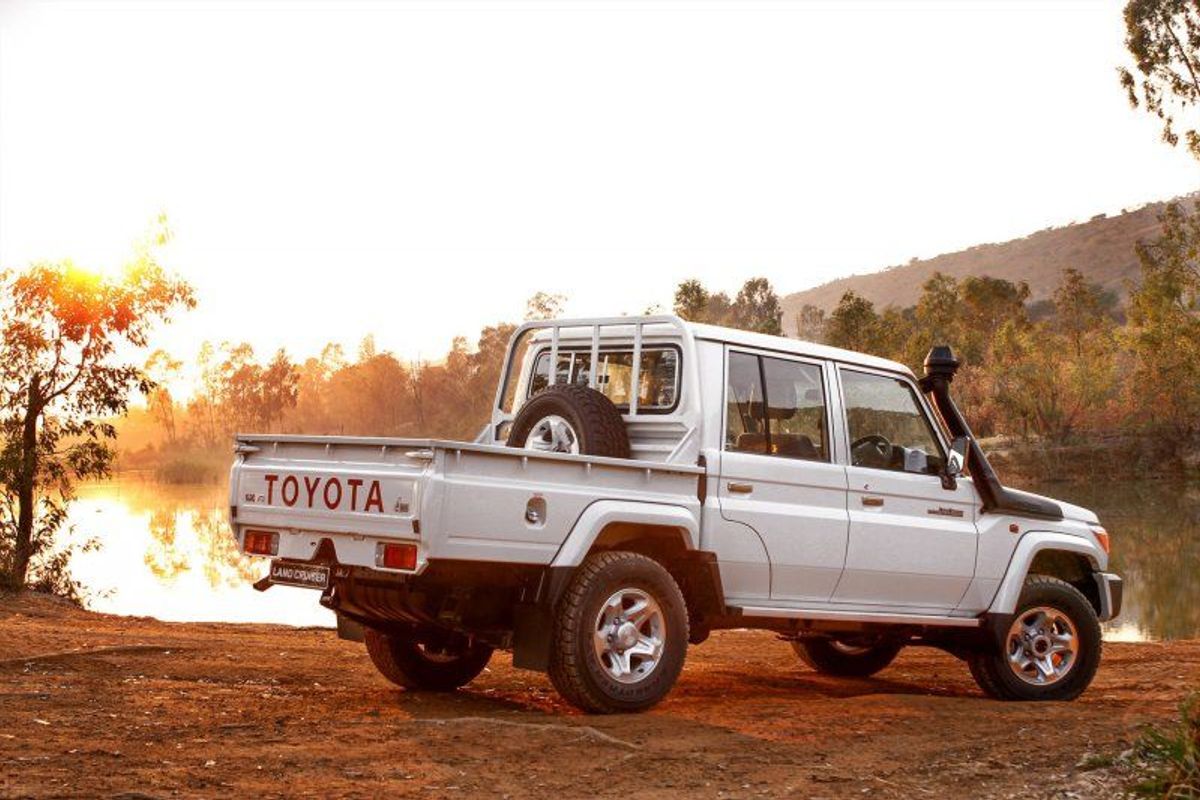
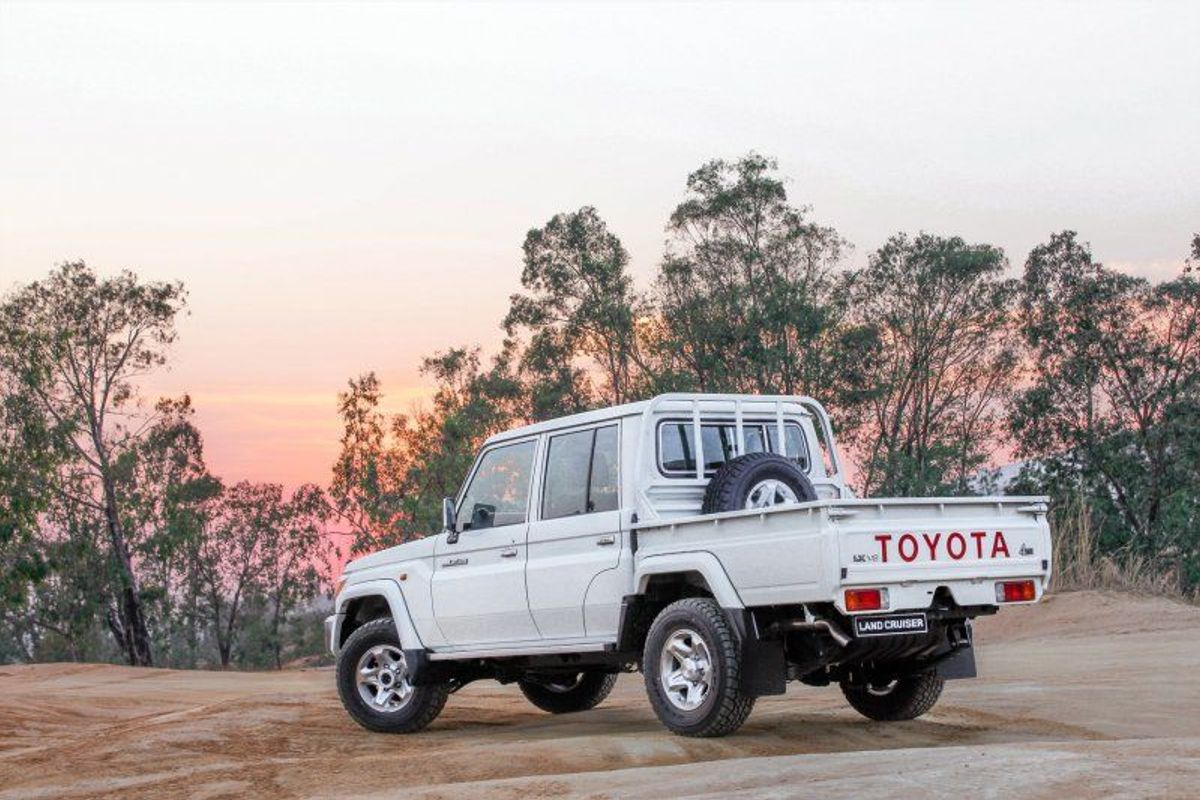
Toyota Land Cruiser 70 Series Updated Pricing for 2015
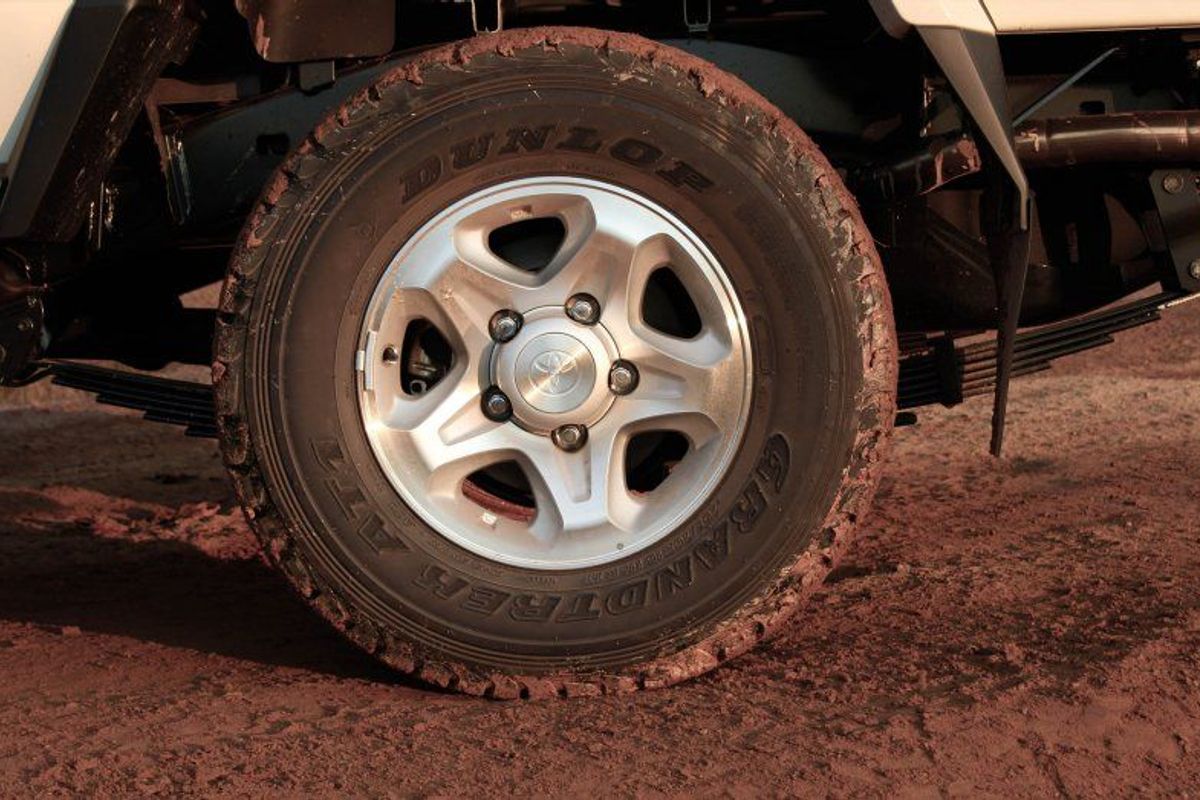
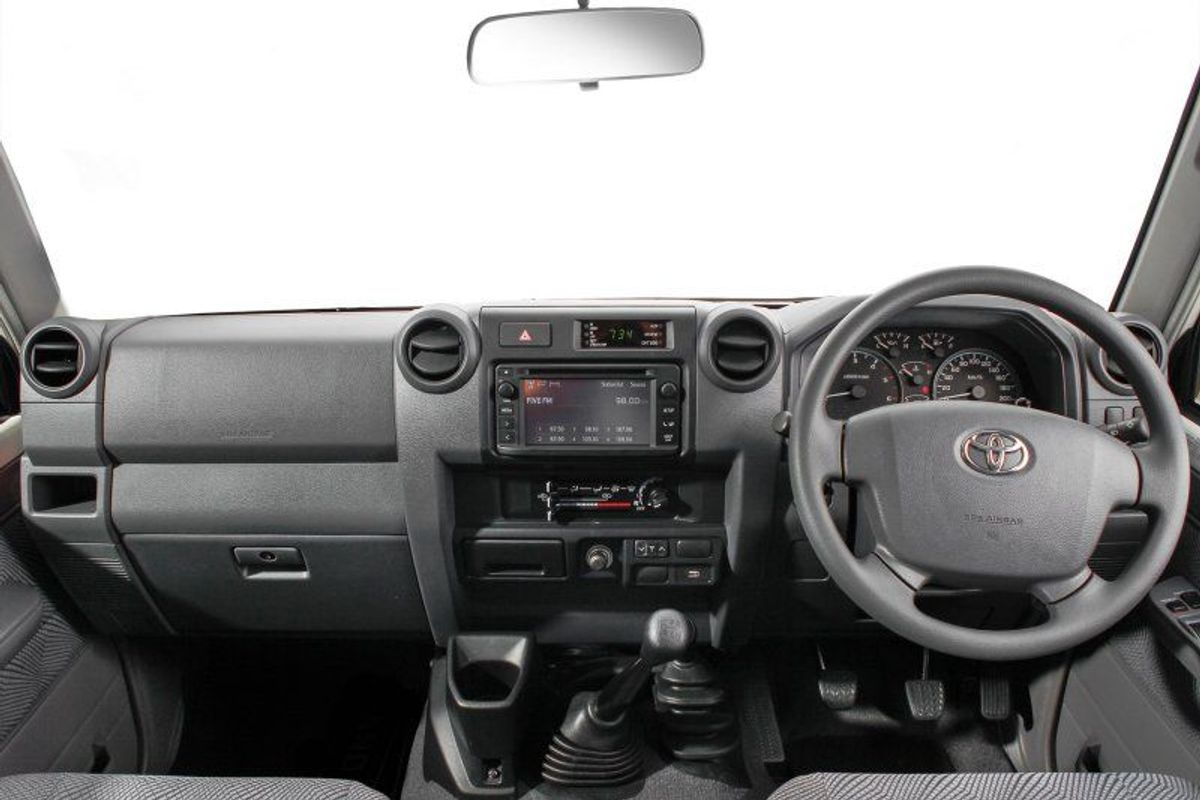
The revised Land Cruiser 79 Double Cab now comes with rear over fenders and 16-inch alloy wheels. All the models also get a Lights-On reminder warning sound, while 79 Single Cabs, 79 Double Cabs and 76 Station Wagons with V8 diesels now have auto-locking free-wheel hubs, which means that you no longer have to get out of the vehicle to lock the hubs.
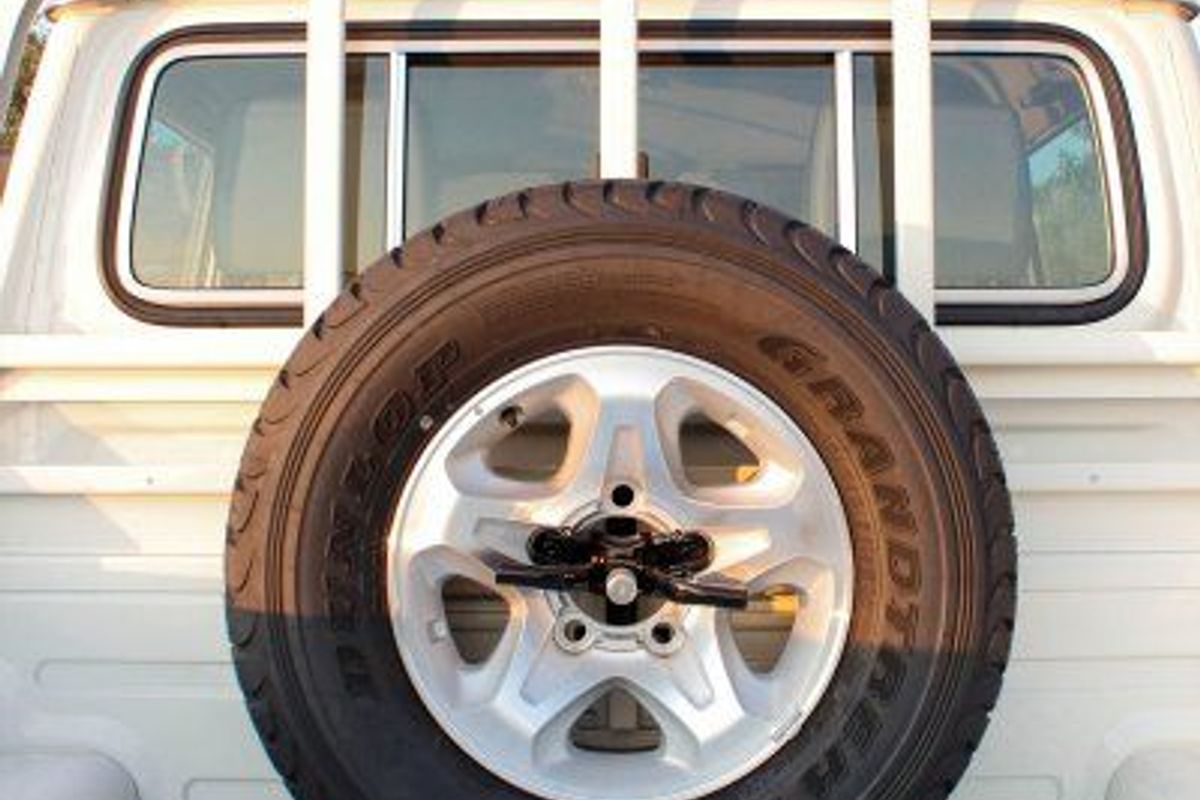
Furthermore, the Land Cruiser 76 V8 diesel station wagon now comes standard with a spare-wheel cover, while all 79 V8 diesel single and double cabs are now fitted with a spare -wheel lock.
Toyota Land Cruiser 70 Series price in South Africa
Toyota Land Cruiser 79 Single Cab
4.0 V6 petrol – R459 600
4.2 diesel – R489 000
4.5 V8 diesel – R559 400
Toyota Land Cruiser 79 Double Cab
4.0 V6 petrol – R519 700
4.2 diesel – R545 100
4.5 V8 diesel – R612 100
Toyota Land Cruiser 78 Wagon
4.2 diesel – R532 500
Toyota Land Cruiser 76 Station Wagon
4.2 diesel – R557 500
4.5 V8 diesel – R626 000
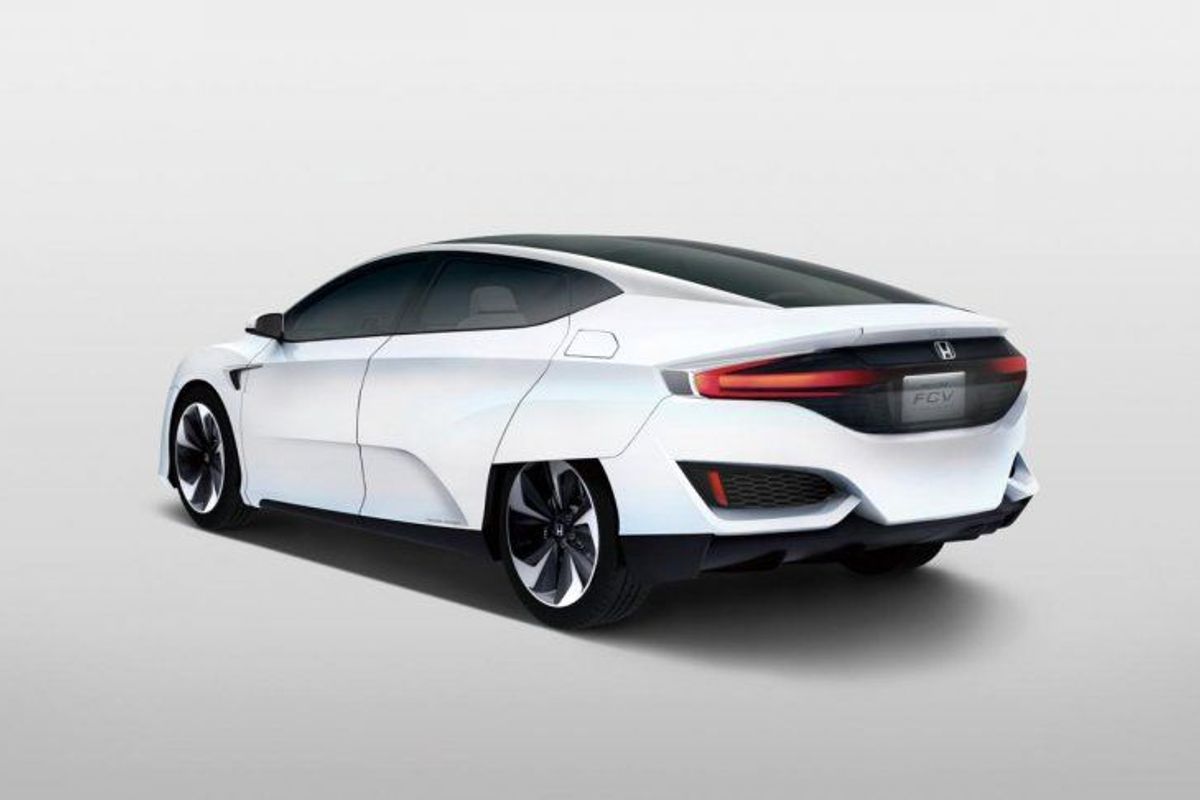
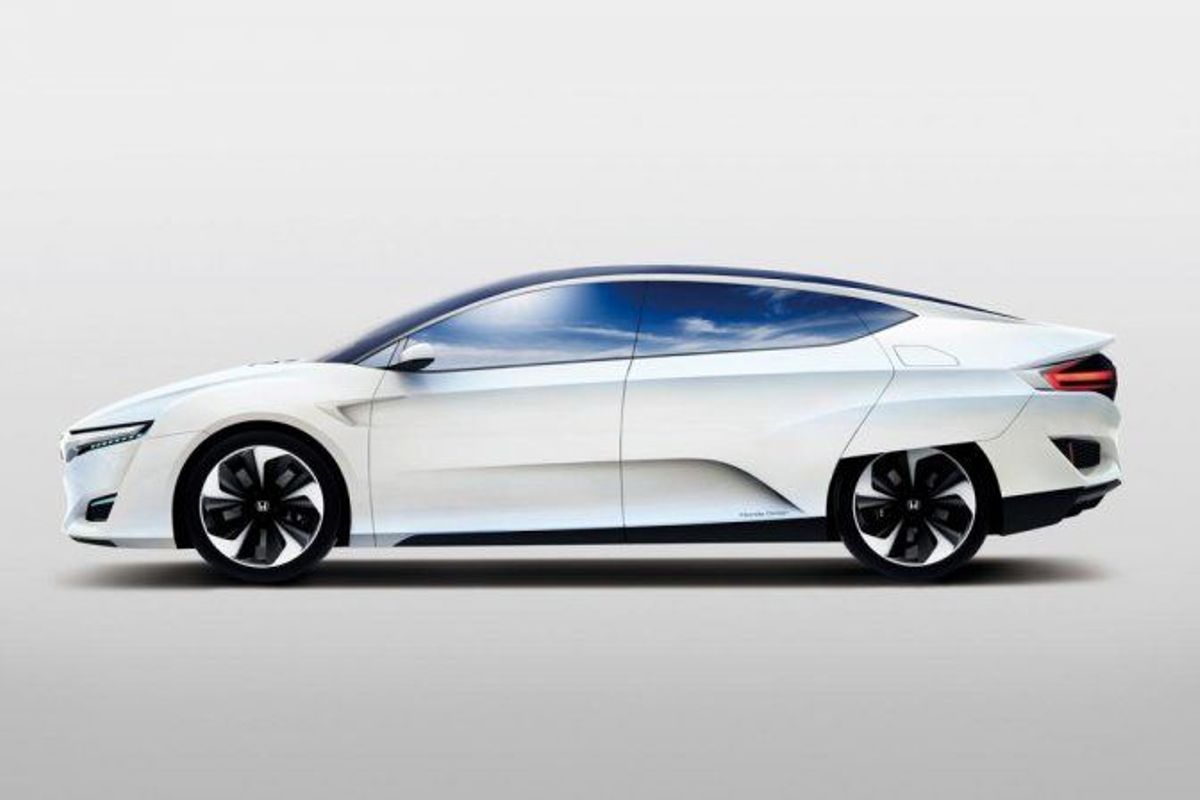
Honda FCV Concept Debuts In Japan
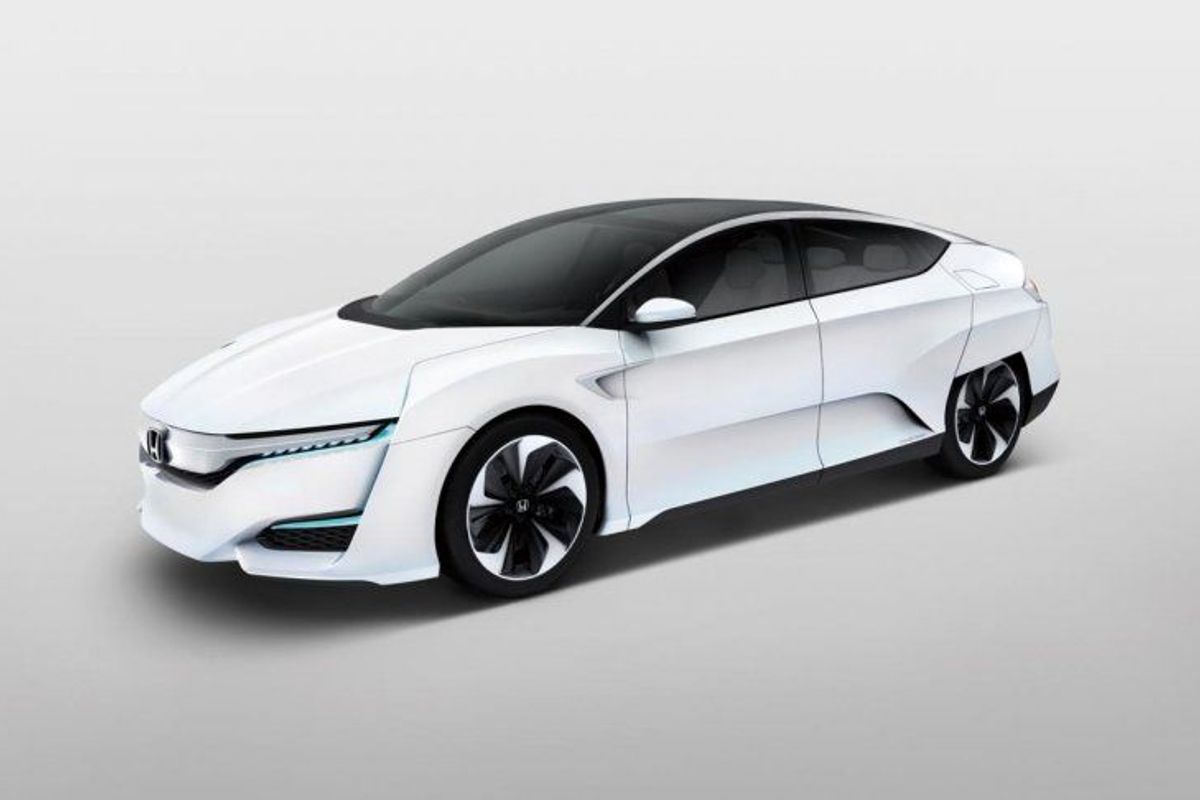
The Honda FCV Concept has been introduced in Japan ahead of the arrival of the production version scheduled to go on sale in Japan by the end of March 2016.
A concept car for an all-new fuel-cell vehicle (FCV)
Honda unveiled a similar fuel cell concept vehicle at last year’s Los Angeles Auto Show. The FCV concept is a successor of the FCX Clarity but with a 33 percent smaller fuel-cell stack and an output of more than 100 kW. According to Honda the overall performance has increased by around 60 percent compared to the previous version of the fuel-cell stack.
The Honda FCV concept is also equipped with a 70 MPa high-pressure hydrogen storage tank that provides a cruising range of more than 700 km. The tank can be refilled in approximately three minutes, which is just about the same as a regular petrol/diesel refill.
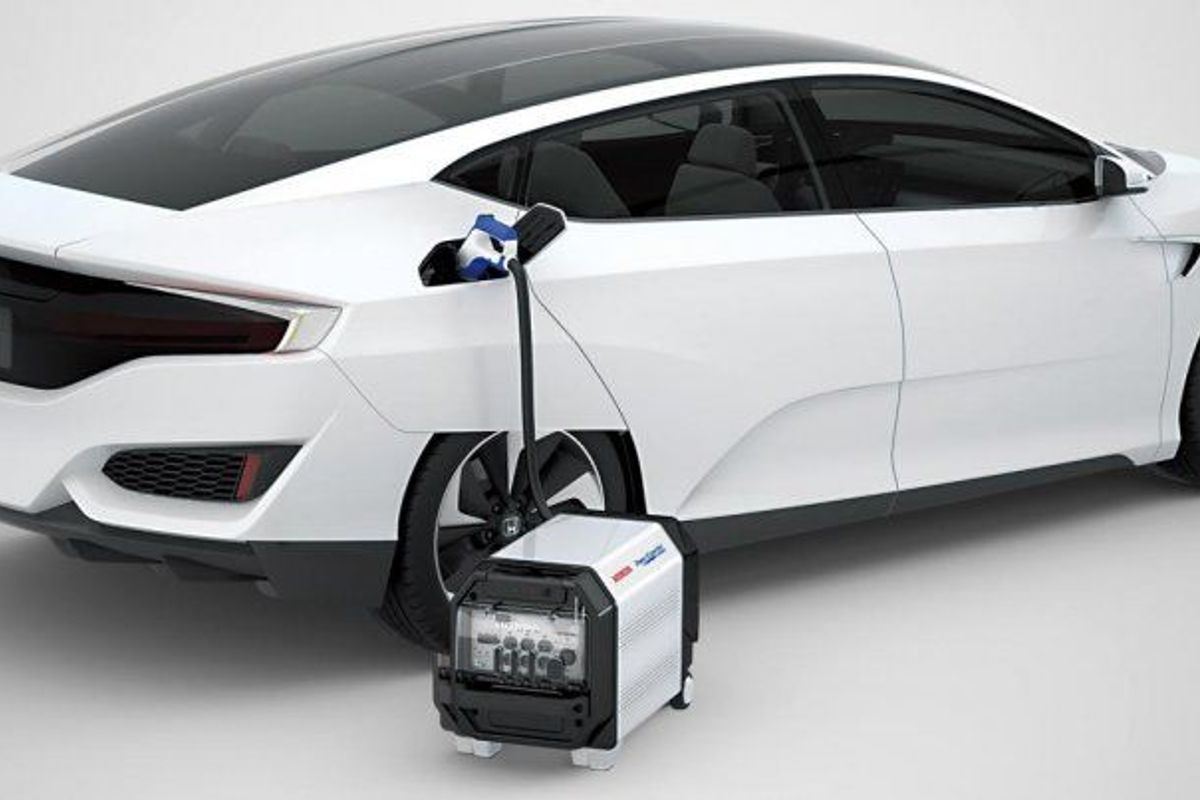
In addition, the concept features an external power feeding function which can be combined with an external power feeding device transforming the Honda FCV concept into a mobile power plant, generating and providing electricity to the community in times of disaster or other events.
Striving to make a contribution to the hydrogen energy society like its Japanese competitor Toyota, Honda says it will continue taking on new challenges in the area of hydrogen technologies including the Smart Hydrogen Station, FCVs and external power feeding devices.
Infiniti SYPNATIQ Concept Unveiled
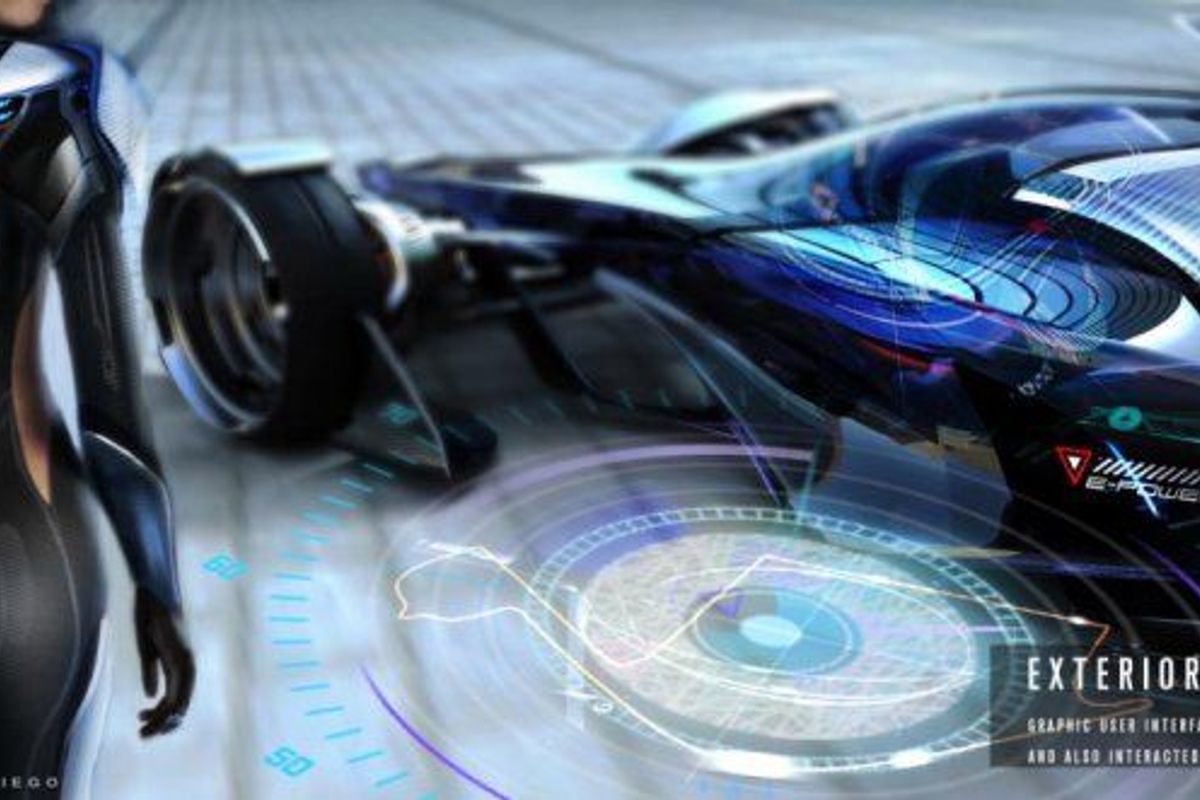
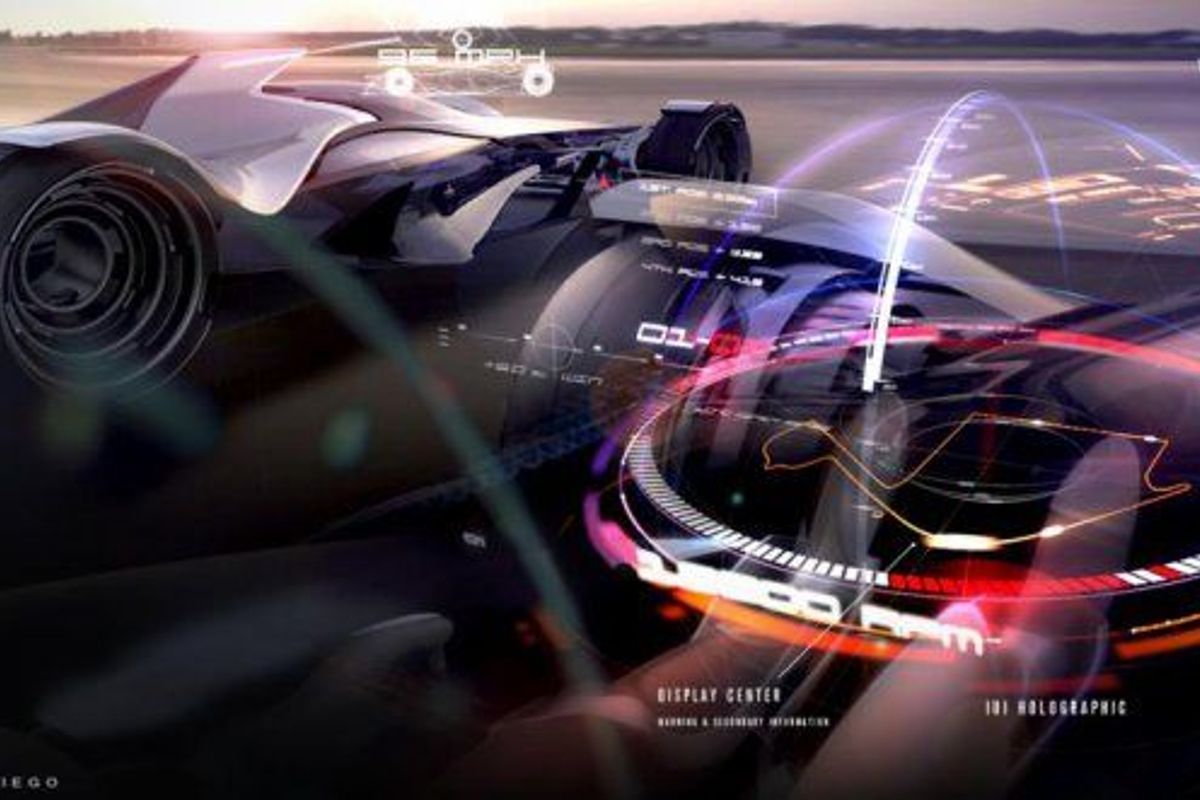
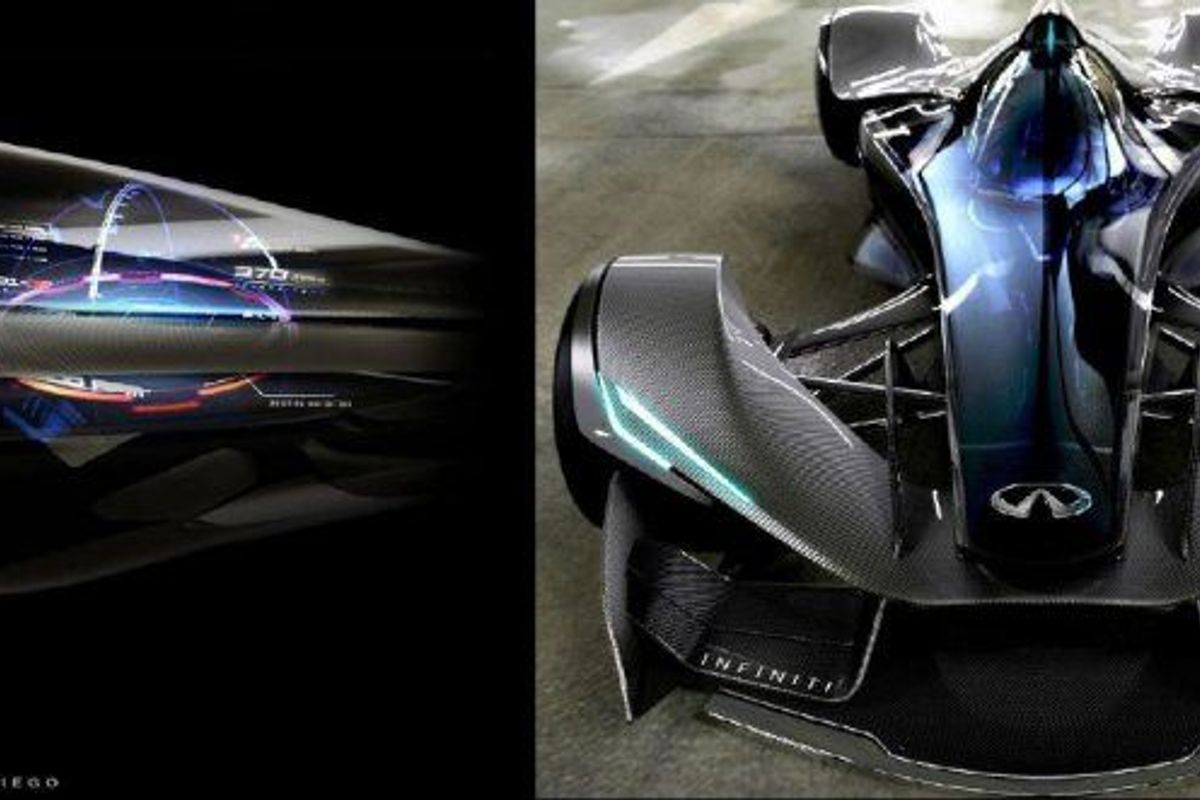
The InfinitiSYPNATIQ Concept has been unveiled in preparation for the Los Angeles Auto Show Design Challenge.
A vision into the future with the Infiniti SYPNATIQ Concept
This years theme focussed on how technology will transform the human-to-machine interface (HMI). The Infiniti Design San Diego team created a futuristic SYPNATIQ concept which is dubbed as “The Future Vision of Infiniti HMI.”
The company presented a proposal where its the year 2029 and its universal fuselage pod” is part of its sponsored extreme A.R.C (Air, Rally, Circuit) triathlon.
According to the company, the Infiniti SYPNATIQ Concept will integrate into three different types of vehicles for each stage of the race, the first stretch of the race being a Formula-1 grand prix course from L.A. to Las Vegas. The second portion is a desert race which, requires an off-road buggy to the Grand Canyon. The final leg of the race is a radical gymkhana style jet race through virtual pylons back to Los Angeles.”
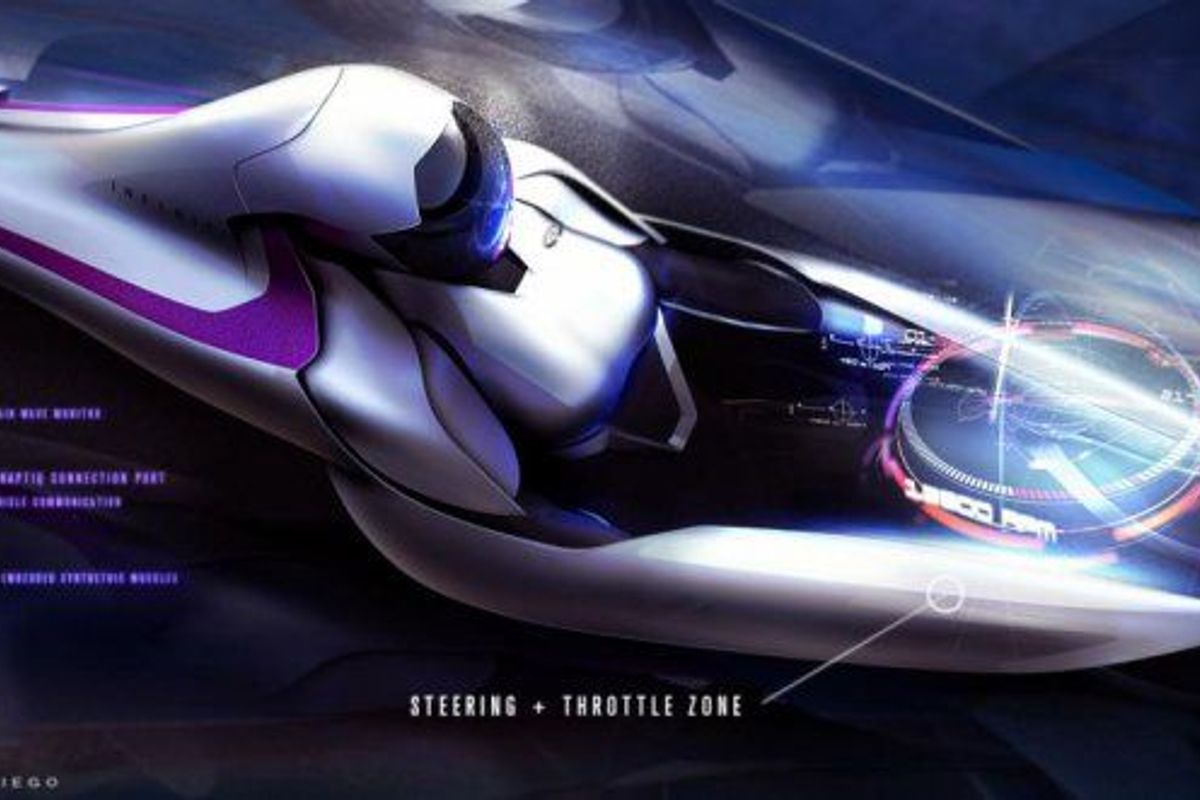
The A.R.C. triathlon race will also be the debut of Infinitis new futuristic HMI called SYNAPTIQ, and is described as a holistic system, which takes our current understanding of augmented reality, 3D hologram and wearable technology to the next level. The SYPNATIQ interface will make the driver and machine become one by connecting the SYNAPTIQ S.U.I.T. (Symbiotic User Interface Technology) through spinal lock attachment. Infiniti says this connection “both enhances and gives tactile resistance to the driver to simulate a physical interaction with the machine.”
The SYPNATIQ system also uses an Infiniti User Interface (IUI), a floating holographic projection that adapts to the situation and drivers needs, allowing the driver to move between the different vehicles without having to deal with different instrumentation.
More details on the Infiniti SYPNATIQ Concept will be revealed at the Los Angeles Auto Show next week.
Redesigned Audi A1 Unveiled With New Three-Cylinder Engines
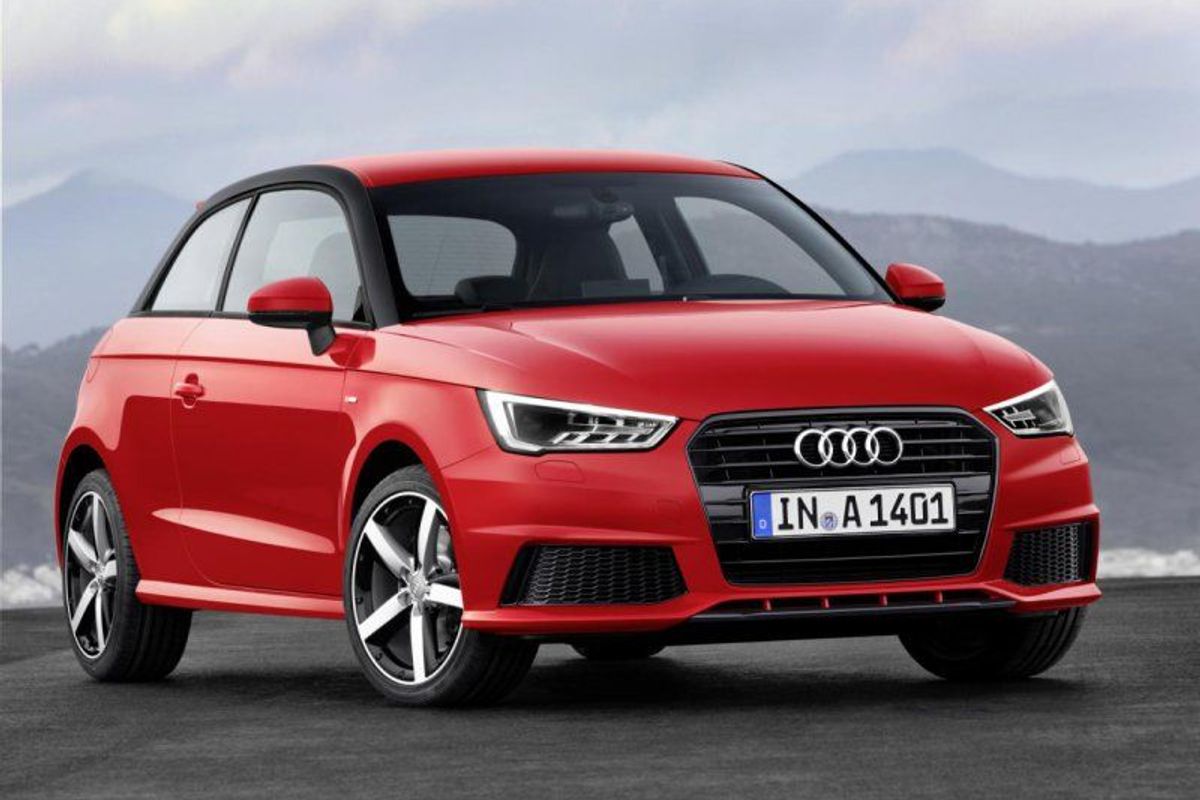
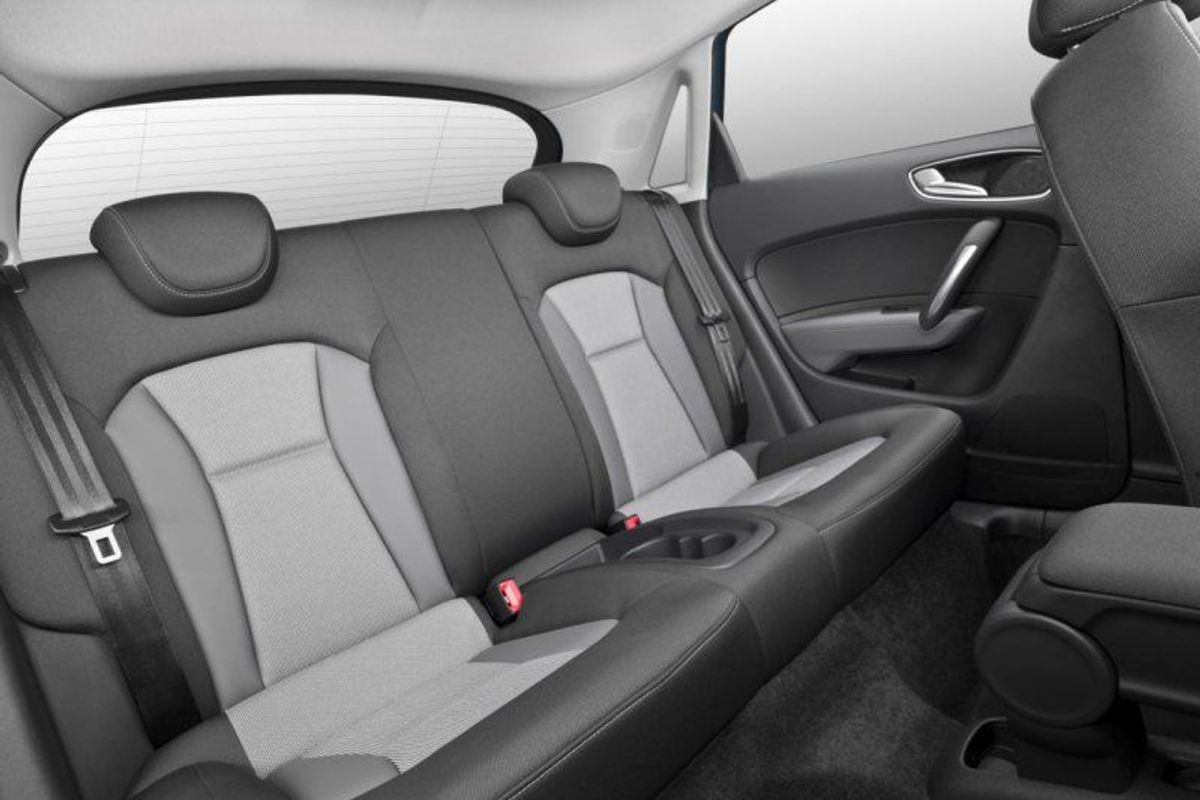
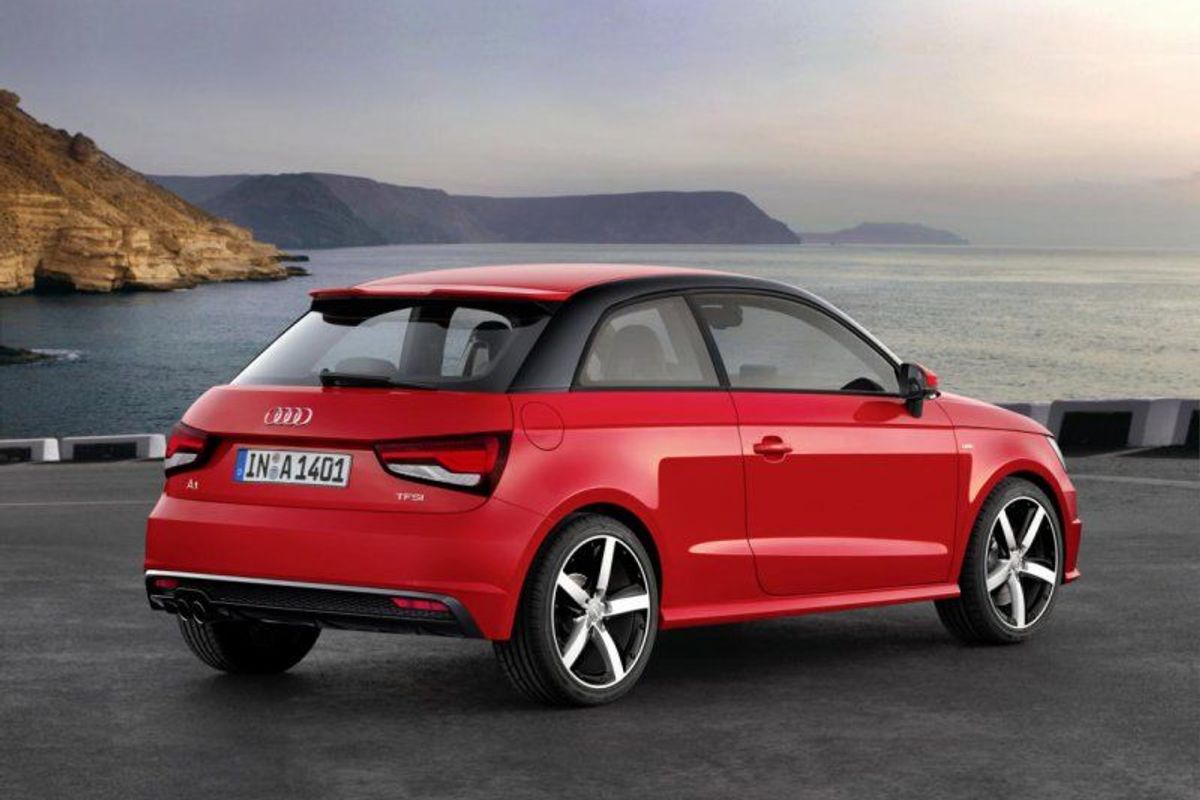
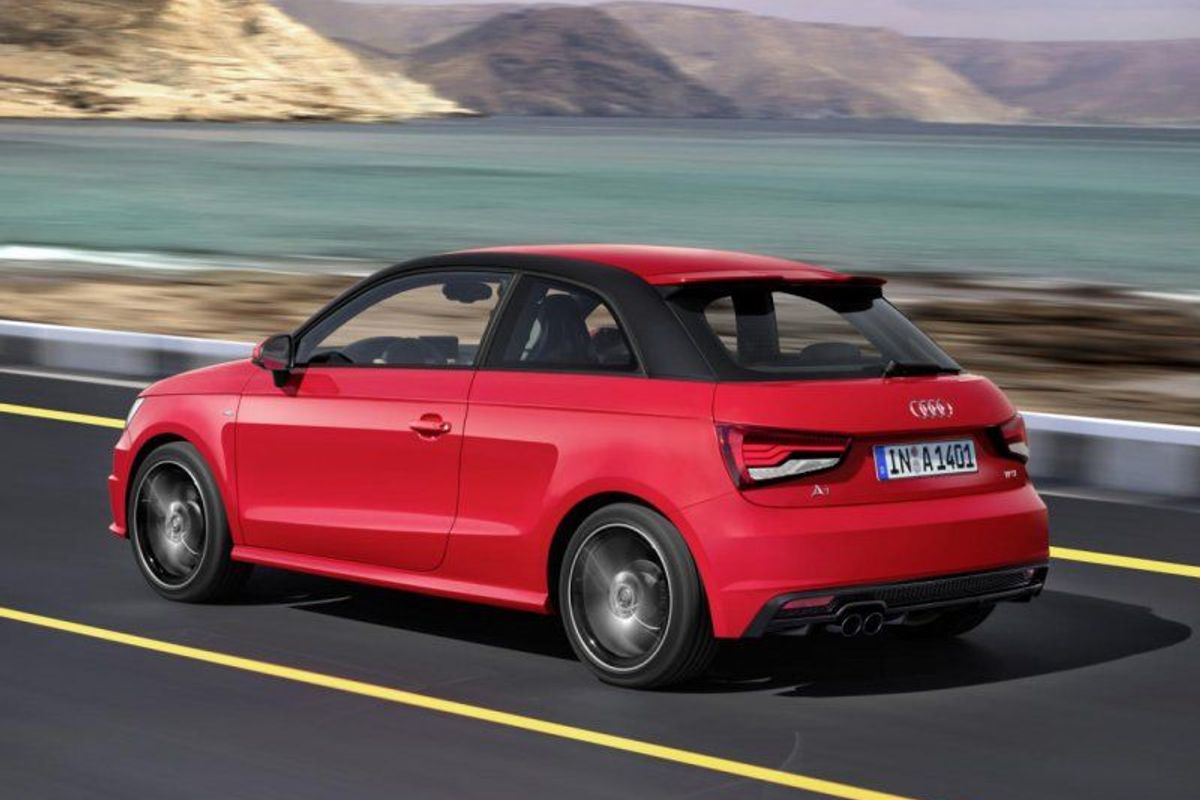
Audi has finally taken the wraps off its redesigned A1 and A1 Sportback models which, come with the latest technology, tweaked chassis, as well as new three-cylinder engines.
Audi A1 extensively redesigned
Visual changes include new front grille and headlights graphics and new paint combos. The changes also result in both models dimensions growing by two centimetres, while the roof arch can be ordered in a contrasting colour to the bodys paintwork.
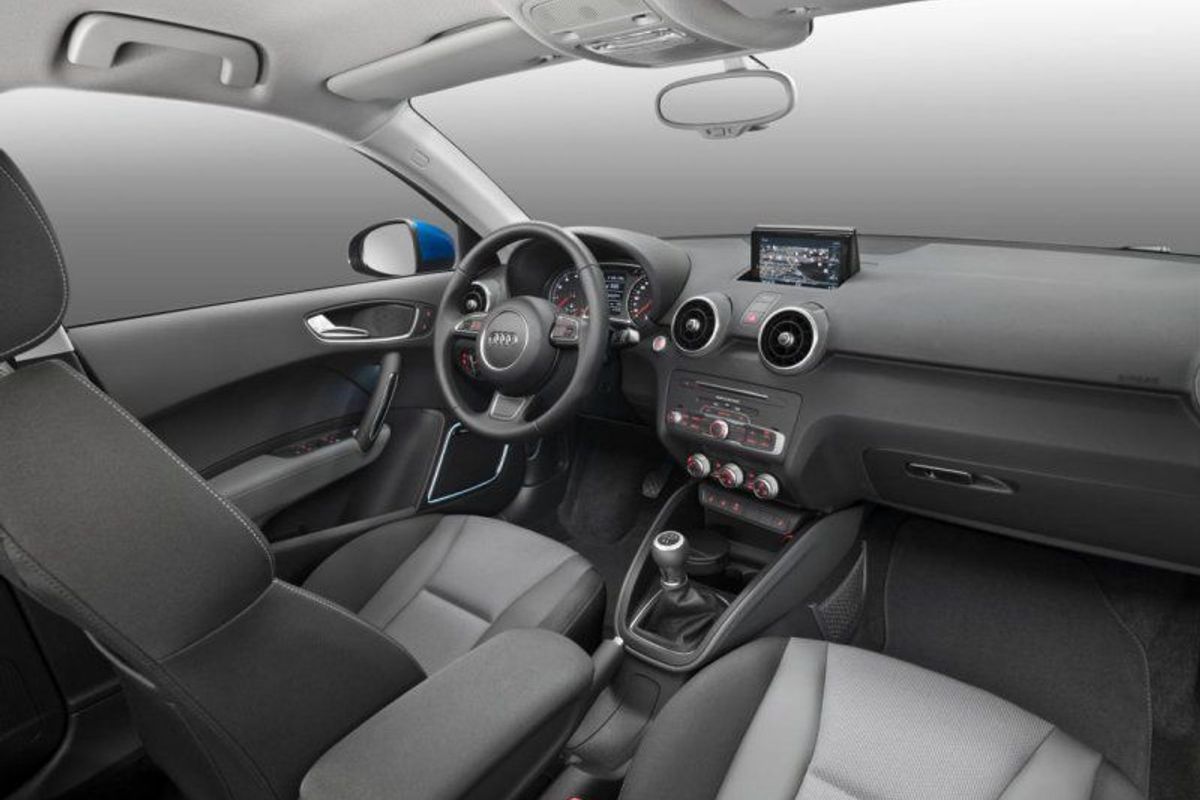
The interior benefits from the latest MMI infotainment control system and a Wi-Fi hotspot functionality.
The Audi A1 can be further customised by choosing either the design or sport line. Other options include the design selection and the S line sport package as well as many other customization options from coloured air vents to decorative decals for the body.
Advanced engines
Major changes can be seen under the hood where six new and upgraded engines are offered, including the 1.0-litre petrol engine delivering 70 kW which, will be offered for the base variants. There is also a 1.4-litre diesel engine with 66 kW and an average fuel consumption of 3.4-L/100 km.
Up next is a 1.4-litre direct injection petrol engine which can produce either 92 kW or 110 kW; the more powerful unit features a cylinder deactivation system. Lastly, theres an 85 kW 1.6 litre TDI four-cylinder and a range-topping 141 kW 1.8 litre TFSI four-cylinder in the list.
All engines can be ordered with the seven-speed S tronic twin-clutch automatic transmission.
Audi also stated that the chassis makes both compact models sporty and agile, with the new electromechanical steering guaranteeing that the driver has optimal assistance in all driving situations.
Adaptive damping is also offered on both A1 and A1 Sportback, along with Audi drive select (auto, efficiency, dynamic modes) that influences the steering, gearbox, throttle and damping.
Revised Toyota Hilux SRX Xtra Cab Introduced
Toyotahas introduced its revised Hilux SRX Xtra Cab, which now features a raised body and a few other changes.
New Raised Body Xtra Cab SRX
The new Raised Body version Toyota Hilux 2.5 D-4D SRX Xtra Cab replaces the previous low body version with an increased ride height and ground clearance up from 181mm to 212mm, as well as improved approach and departure angles which are up from 21 to 30 degrees and 18 to 23 degrees respectively. The model also boasts heavy duty 16-inch steel wheels which, replace the 17-inch wheels of the outgoing model.
In addition, the specification of the Raised Body version has been aligned to other SRX models, meaning the newcomer is de-chromed’ and gets practical black cladding for the door handles and outer mirrors whilst indoors, the SRX gets hard-wearing rough-weave fabric upholstery. Additional key specs include air-con, audio system (with USB and Bluetooth), electric windows, power steering, alarm, dual front airbags and ABS.
Under the hood is a 2.5 D-4D 4-cylinder, 16-valve DOHC diesel engine mated to a five-speed manual box, and delivers 75 kW and 260 Nm.
Revised Toyota Hilux SRX Xtra Cab price in South Africa
Toyota Hilux 2.5 D-4D Xtra Cab R298 700
Included in the price is a three-year or 100 000km warranty and five-year or 90 000km service plan (intervals of 10 000km).
Kimi Raikkonen Drifts Ferrari F12 Berlinetta (video)
Ferrari Formula 1 driver Kimi Raikkonen has been shuttling certain Ferrari guests around the Fiorano test circuit in Italy.
In a bid to give the guests the most exciting ride of their life the 2008 world champion gets the F12 Berlinetta as sideways as possible on the damp circuit. Whilst usually stone-faced, Raikkonen seems to be enjoying the terror he is inflicting on the passengers.
The Ferrari F12 Berlinetta is equipped with a 6.2-Litre V12 engine that develops 544 kW and 690 Nm of torque. There’s a seven-speed dual clutch gearbox which, as you can see from the video is shifted by paddles behind the steering wheel. The F12 Berlinetta will sprint to 100kph in just 3.1 seconds and go on to a top speed of 340kph.
Kimi Raikkonen Hot Laps the F12 Berlinetta
Jeep Cherokee (2014) Review
We like:
Excellent specification
Build quality
Ride and handling
Gadgets galore
Can go offroad
9-speed gearbox works well
We dislike:
Radical styling
Engine is quite thirsty
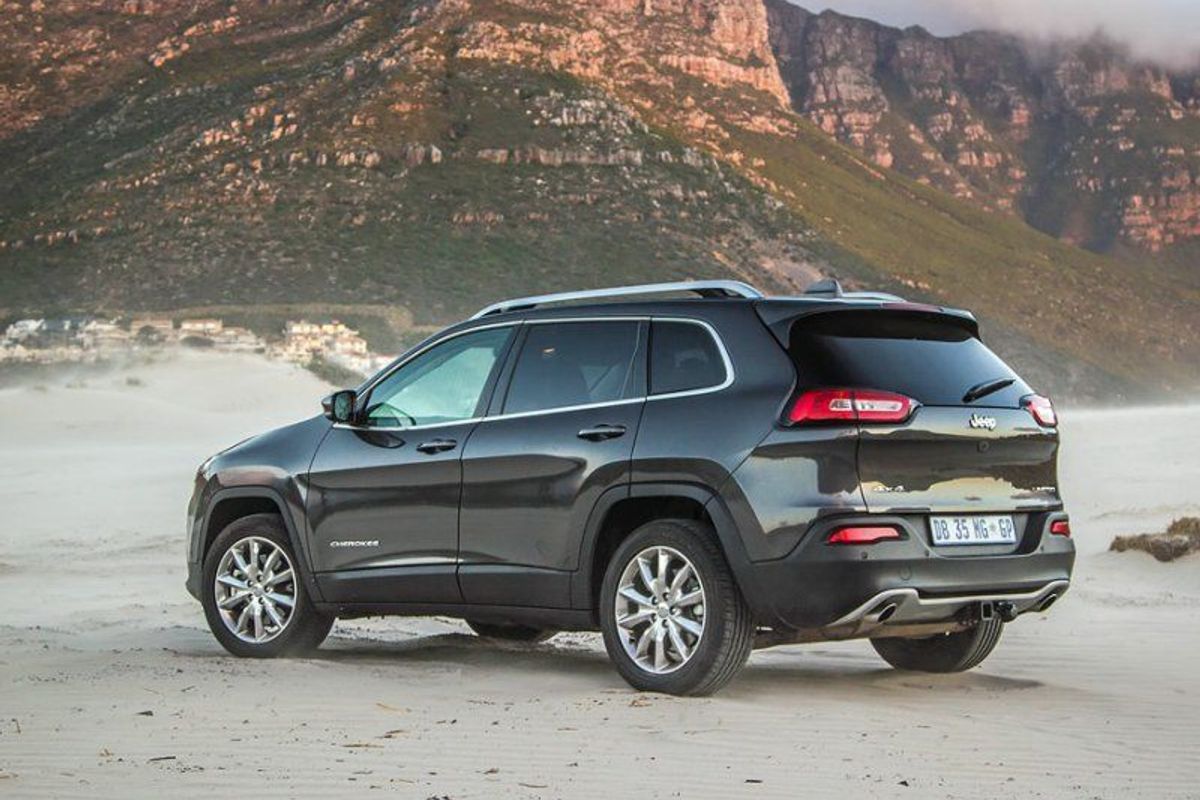
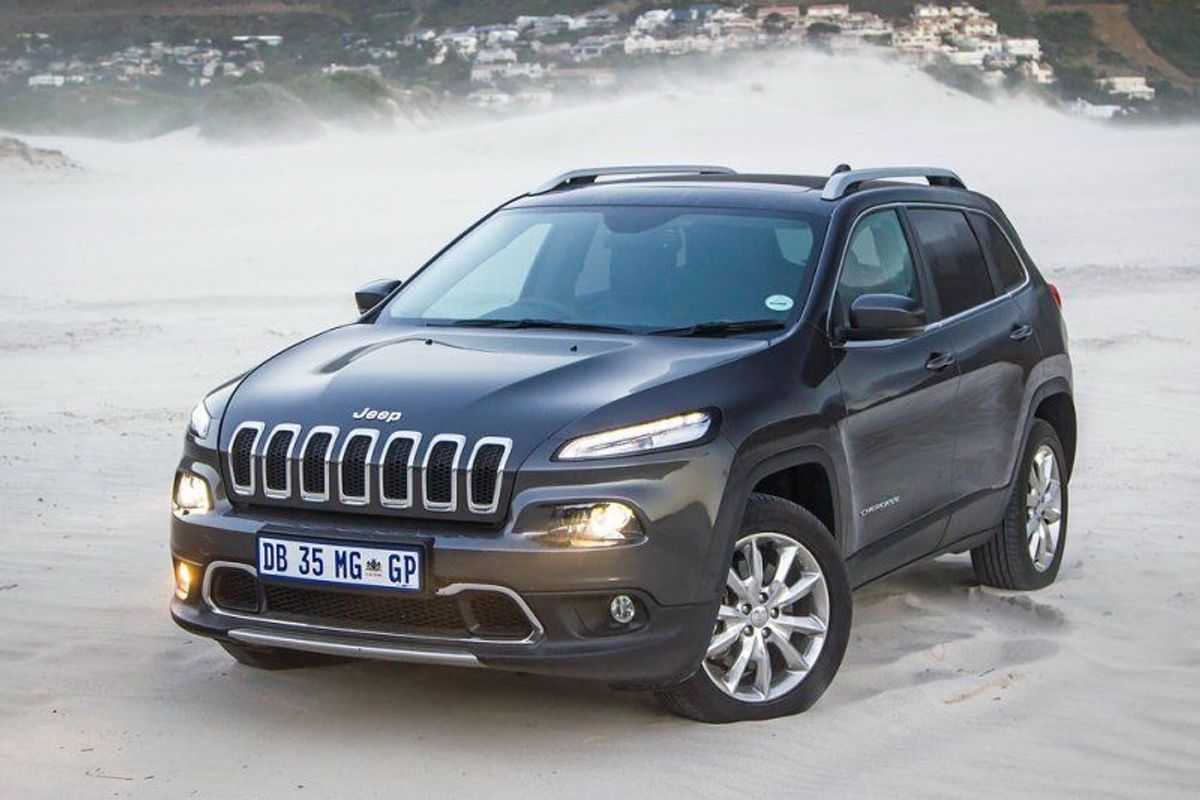
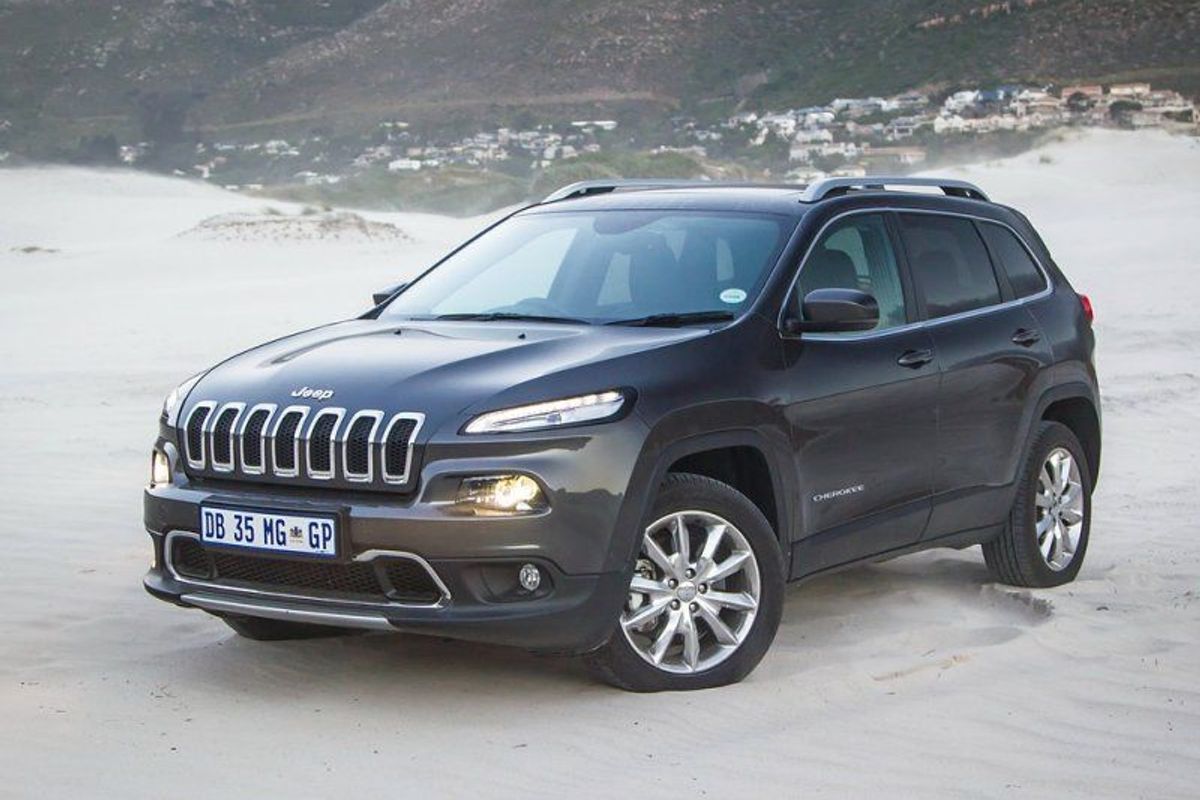
The latest Jeep Cherokee is visually quite far removed from anything in the Jeep family, but beauty is only skin deep. This Jeep Cherokee goes straight into a pretty competitive segment so it just has to deliver the goods, but does it?
When I first saw images of the newly-launched Jeep Cherokee on the Internet, my jaw dropped. That front end is so unlike anything the brand has done before and I found it repulsive. Fast forward a few months and I’m standing face to face with the new Jeep Cherokee. In the flesh, its not bad, but its still controversial. Controversy does work, the Nissan Juke is proof of that. Overall, its not a bad looking car, and while that face is going to raise a few eyebrows its the rear which more than makes up for it. The rear three-quarter angle is very pretty indeed.
Generous Specification
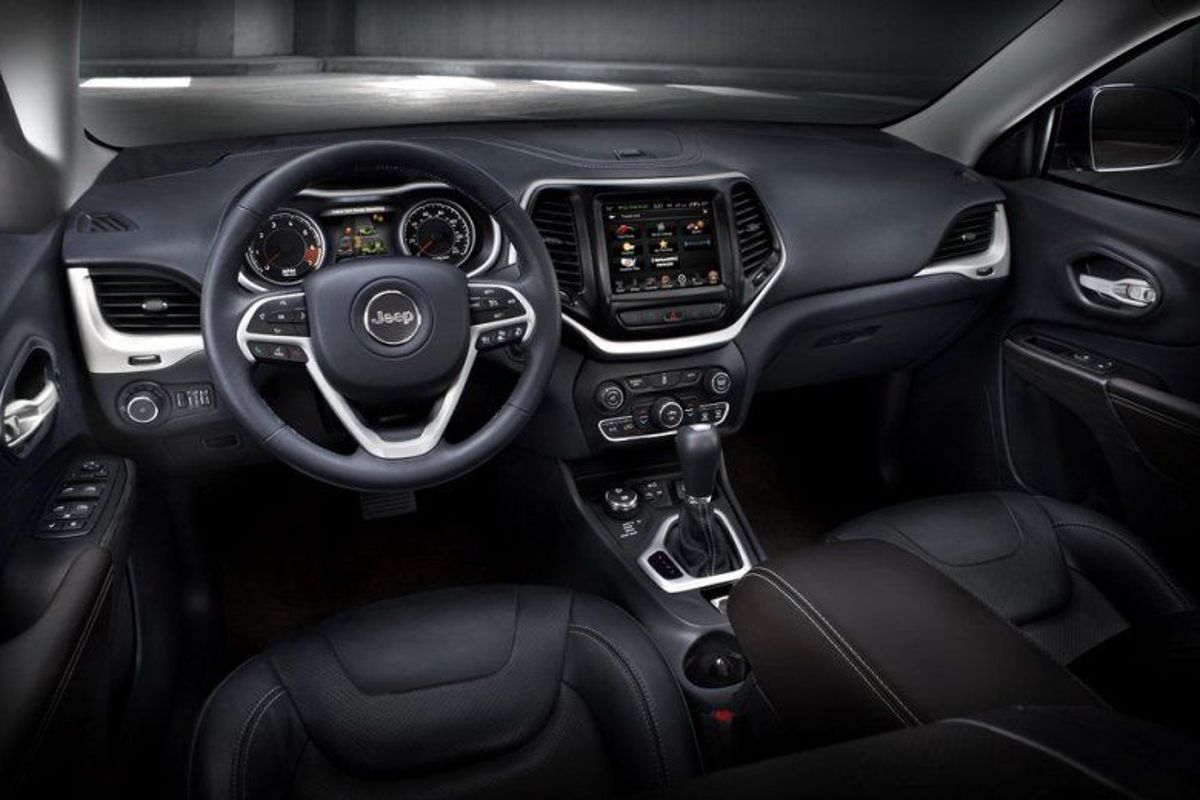
I was little worried when I first saw the pricing for the new Jeep Cherokee. This particular model is the 3.2-litre all-wheel drive Limited which retails for R563 990 with the range starting from R479 990. Your money does get you an awful lot of car though, and I was mightily impressed with the levels of standard specification on this Jeep Cherokee. There’s a brilliant infotainment touchscreen unit which encompasses an intuitive satellite navigation system. There’s two USB slots, SD card slot, Bluetooth, automatic dual zone climate control and there’s even the option to fit a wireless charging pad for mobile devices.
The list doesn’t stop there. How about heated seats, automatic tail gate, tyre pressure monitoring system as well as a full parking camera system? It also has the cool feature of being able to be started remotely by using the key. What this means is you can set the car to switch on its heated seats and heater first thing on a winter’s morning before you get in, which is handy. Or, blow some cold air through the car before you climb in on a hot summer’s day.
Engine and Performance
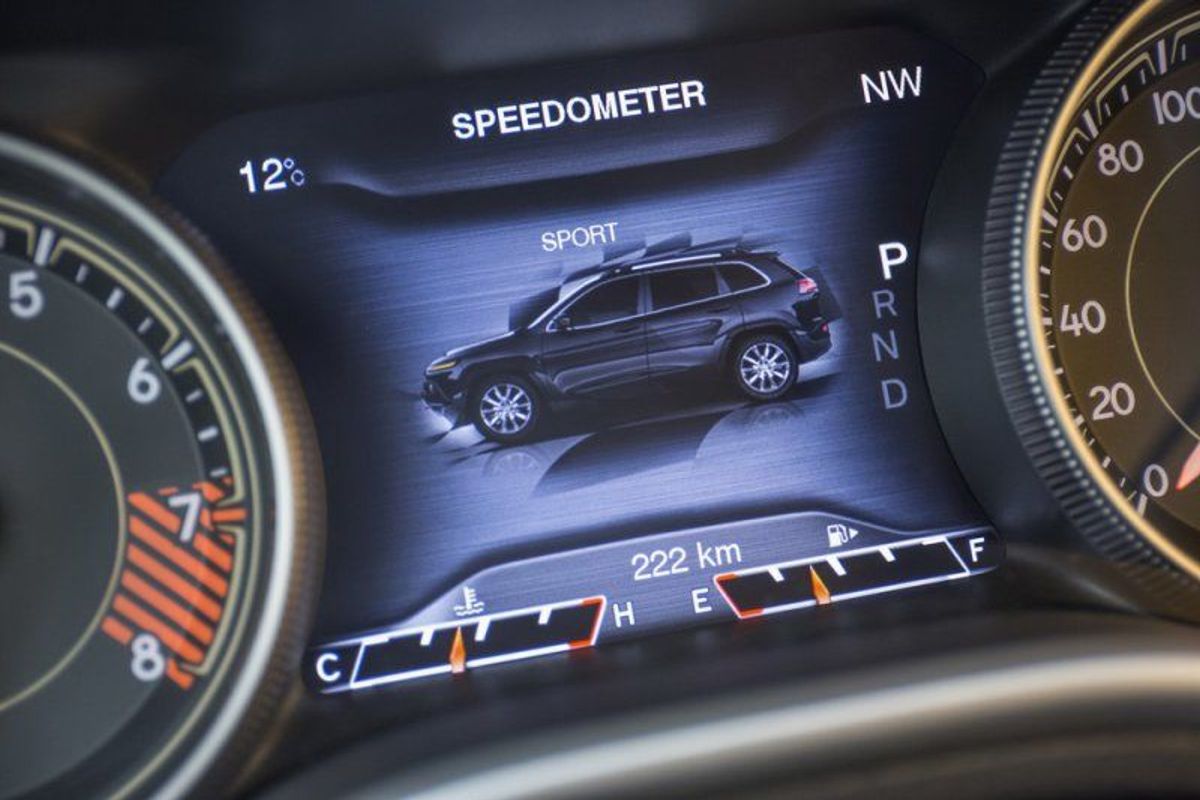
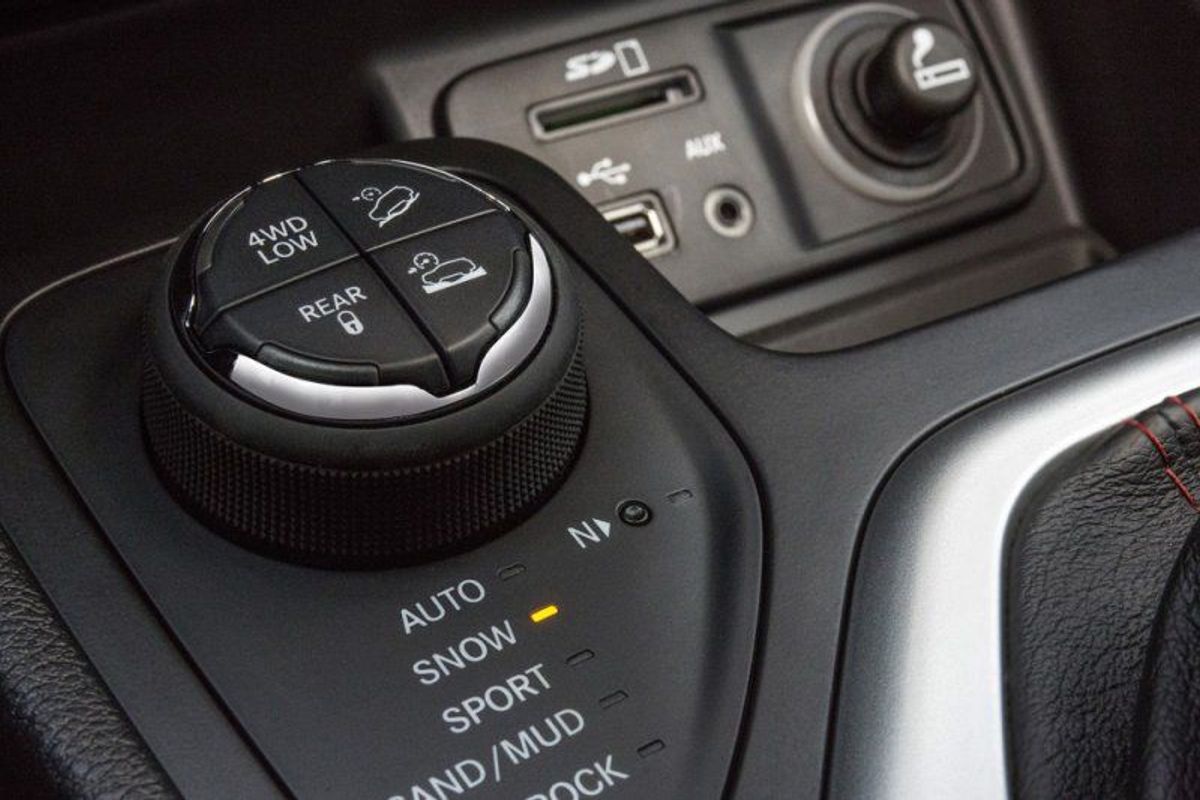
The new Jeep Cherokee offers commendable performance with 200 kW and 315 Nm from its 3.2-litre Pentastar V6. Mated to a 9-speed automatic gearbox, the vehicle proved to be smooth in operation, with very little hesitation from the gearbox. Fuel consumption is rated at 10L/100km and I was able to record 11L/100km during its week-long stay. This all-wheel drive version does exactly that and can hit the offroad stuff well. There’s a tougher Trailhawk version which is even more capable, but that commands a premium of R 607 990. Despite lacking a locking diff and low-range gearbox, the Jeep Cherokee was still able to make light work of some sand dunes.
Comfort and Practicality
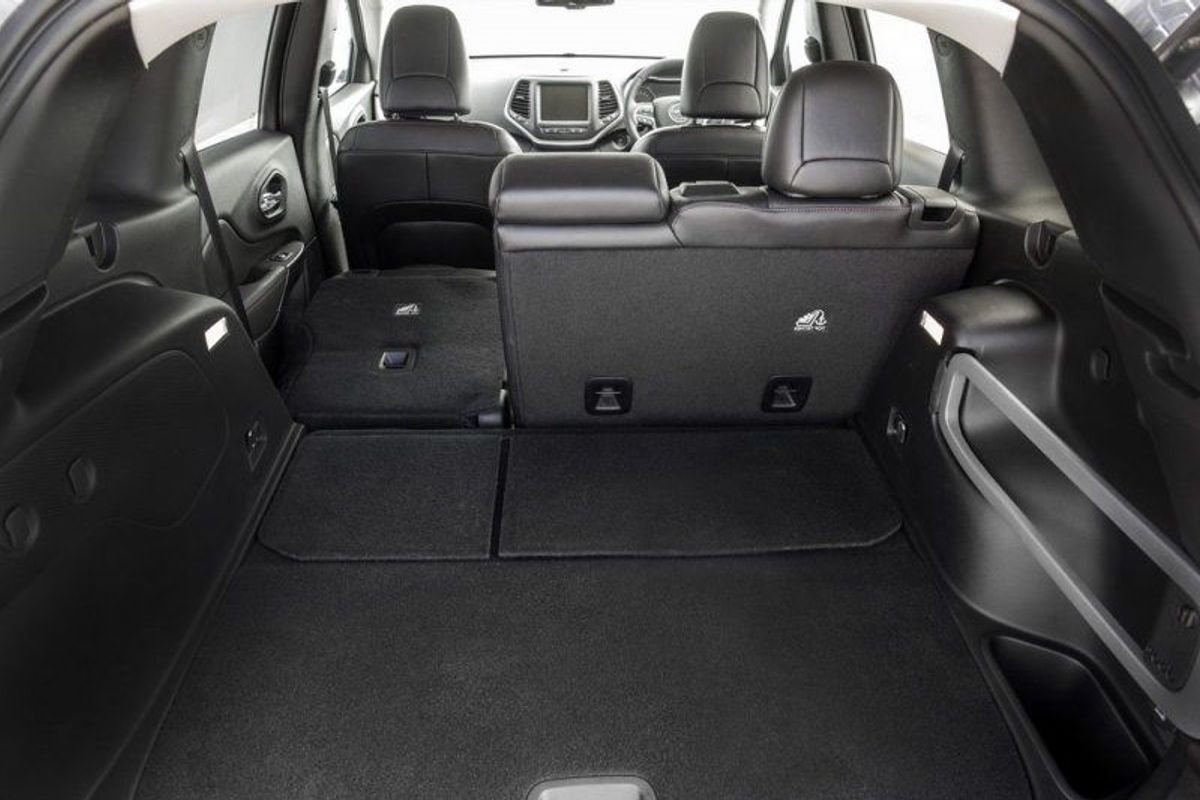
The Jeep Cherokee was comfortable and spacious, and during its week with Cars.co.za it was used to ferry visiting staff members from Johannesburg who happen to be surfers. The Jeep Cherokee easily swallowed boards and bags, but if you’re going to be carrying large amount of kit, you’ll find the boot space a little on the small size. No sweat, simply fold the back seats down and your storage space increases nicely. You can even fold the driver’s seat completely flat to allow the transportation of longer items such as curtain rails.
One of my favourite things of the Jeep Cherokee has to be the practicality bins dotted around the cabin. There’s one of these bins built into the passenger seat, meaning you can put your phone and house keys out of sight. There’s also a nice big bin located on the top of the dashboard.
Verdict
Jeep needs this model to work. As great as the Grand Cherokee is, its price puts it out of reach of many fans of the brand, which is a shame. These fans would then turn to the next product in the line up, which is the Cherokee and it’s an impressive product. The styling may not be to everyone’s taste, but you cannot deny the quality and practicality aspects of this SUV. It was a pleasant surprise driving the Jeep Cherokee and it gets a good rating from me, despite it having a slow puncture which required a tyre change towards the end of the week.
Second Opinion
I really liked the space inside, and I definitely thought it superior to the cheaper SUVs I have driven such as the Subaru XV and Mitsubishi Outlander. It’s also very comfortable to drive. However, I didn’t like the infotainment system. The Jeep Cherokee also makes for a fine surfer’s car as the key can be disassembled, meaning you can take the metal key into the water and not have to worry about damaging the electronics.-Ross McIlroy
I, on the other hand, enjoyed the entertainment interface and I thought it was really easy to use the Bluetooth and maps. I initially couldn’t find the button to open and close the boot, but once I did it worked nicely. The remote starting ability from the key is a bit silly and I didn’t really see the point.-Alastair MacMurray
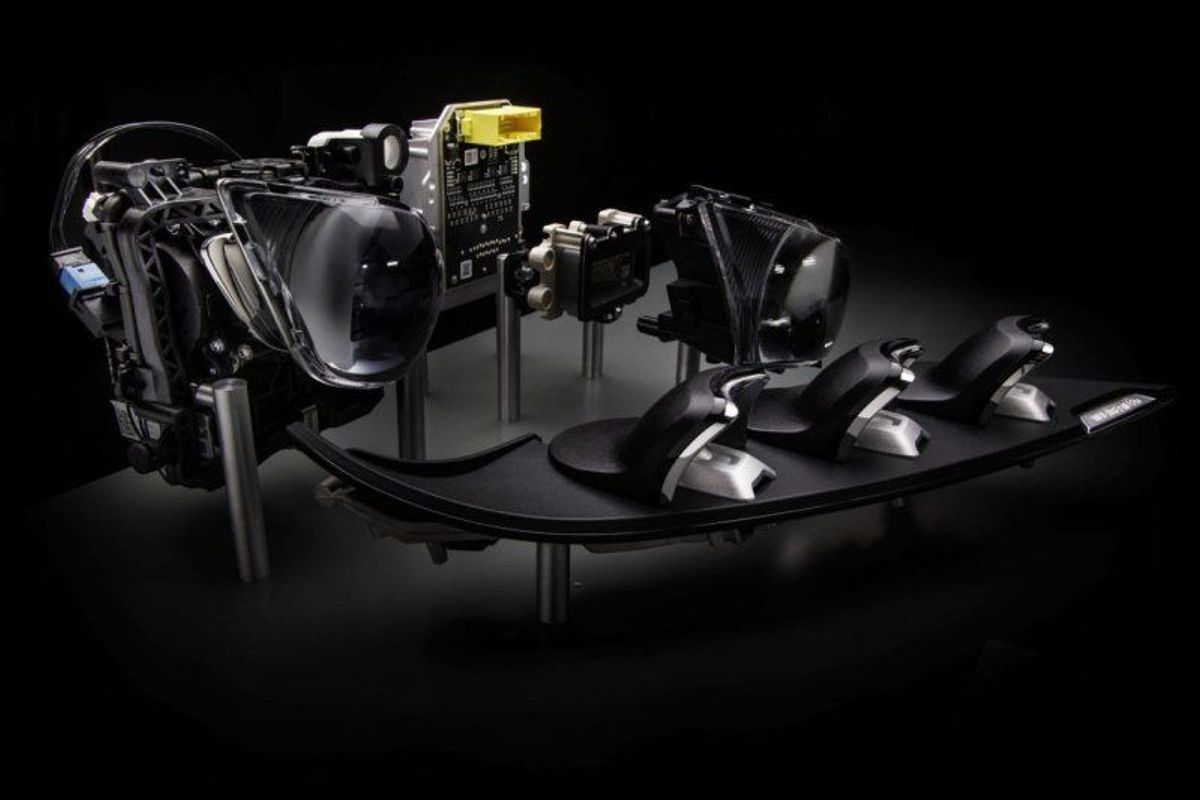
Mercedes-Benz has offered a preview of its next generation LED headlights, which feature more than three times the resolution of the recently unveiled CLS.
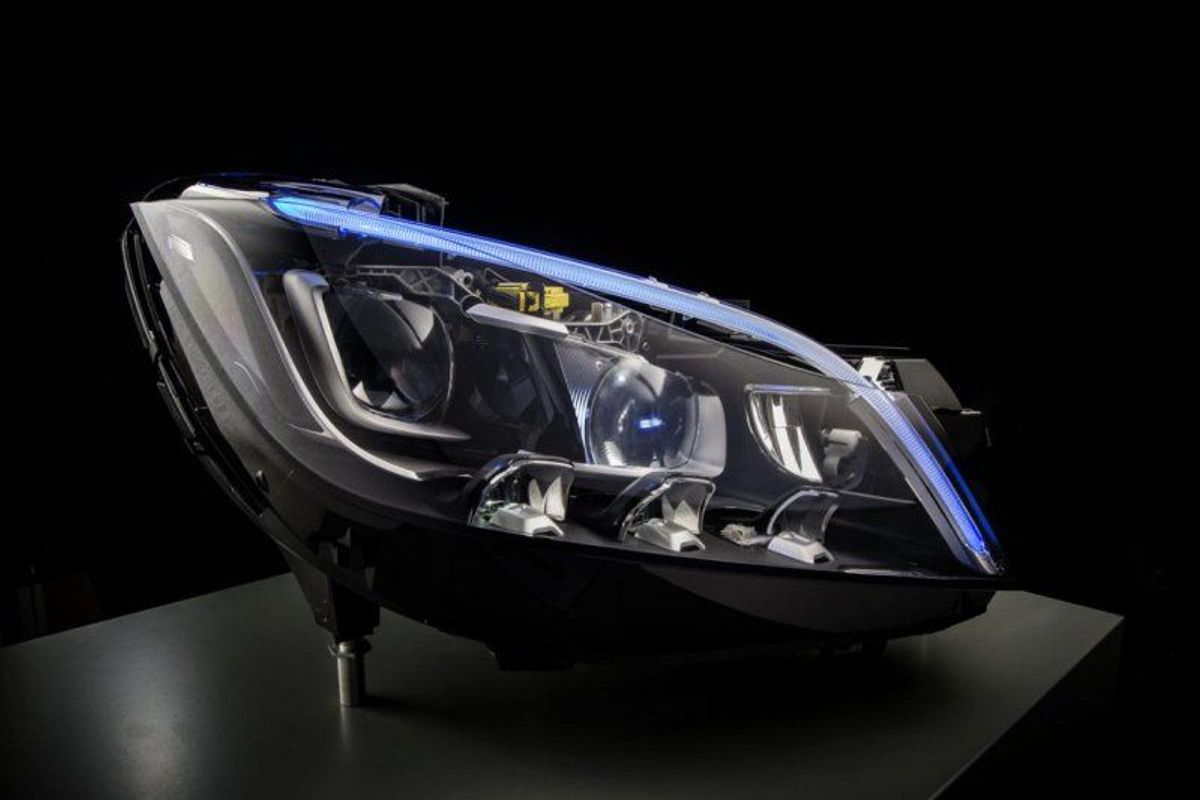
Mercedes-Benz next gen LED headlights with 84 LEDs
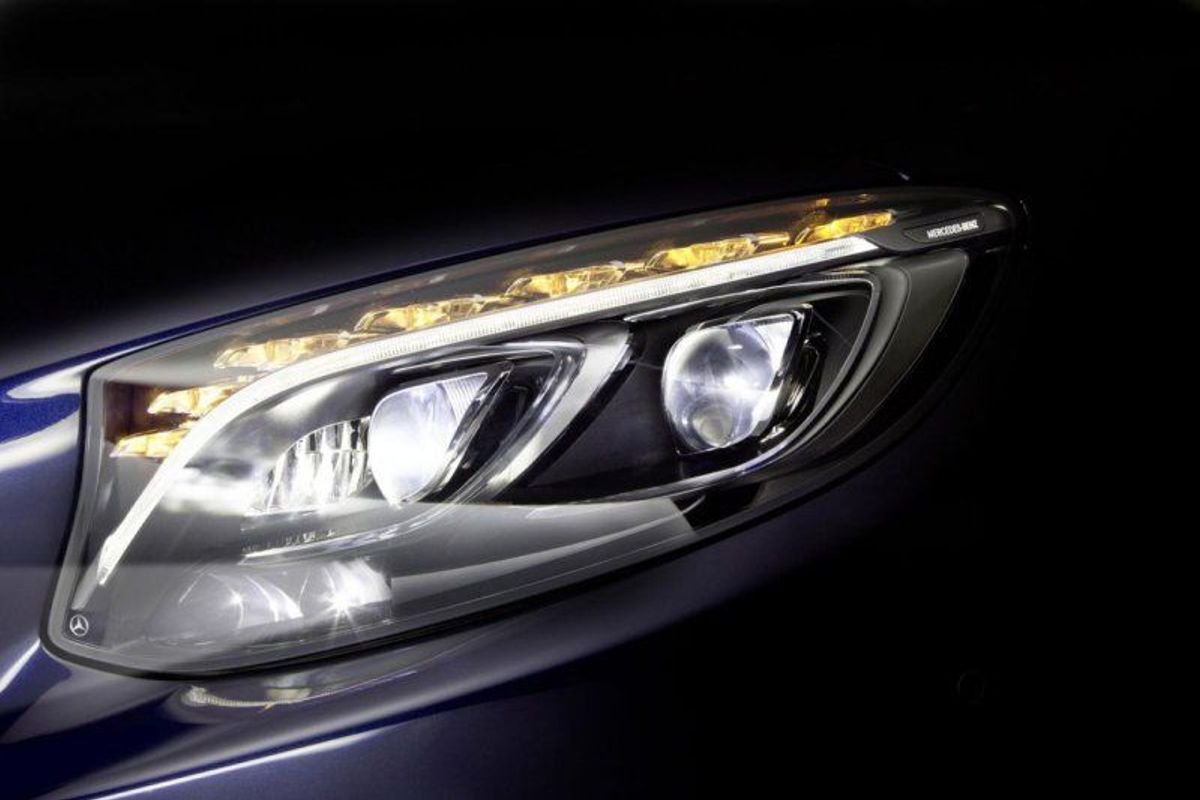
To further take on its rivals Audi and BMW, which have already moved on to laser headlights, the Stuttgart based company says its extending its role in the automotive lighting sector with the introduction of the next generation LED headlights that feature 84 LEDs.
The company points out that instead of the 24 LEDs of the gridded high beam module in the CLS headlamp, the 84 LEDs per headlamp will provide even better light quality and even greater safety at night. This additional high beam works with state-of-the-art high-performance Light Emitting Diodes to provide high beam ranges of over 600 meters in driving situations without any oncoming traffic or vehicles ahead.
Although Mercedes didnt say that its system is better than the Laser headlight system, they did say that in contrast to the current “laser headlamps”, LED technology achieves this performance at markedly lower costs and with a manageable degree of complexity. The company additionally confirmed plans to incorporate High Range LED high beams in LED headlamps of upcoming models in near future.
New Mercedes-Benz Nomenclature Introduced
Mercedes-Benz has announced plans to introduce a new nomenclature structure that will come into effect from next year.
New Mercedes-Benz nomenclature to provide customers with better orientation
Mercedes-Benz will launch more than 30 models worldwide, among them at least eleven do not have predecessors in the current product portfolio.
According to the Stuttgart based brand, the system behind the new Mercedes-Benz nomenclature is simple, clear and transparent. The system centres on the five core model series, A, B, C, E and S which will remain unchanged, while model designations for the SUVs will go through major changes.
In a tribute to the legendary G-Class, all SUV models will in the future have the first two letters “GL” in their name, and the third letter will indicate the relationship to the relevant core model series. This means the current GLK, ML and GL models will be called GLC, GLE and GLS respectively. The company also said that its SUV GLE Coupe will now be known as GLE-Class Coupe.
The same naming structure will also be applied to the SLK roadster which will get the SLC designation while the G, SL will retain its names in recognition of its iconic status.
In a development paralleling that of the model series designations, the different types of engines will also be given new designations using a lowercase letter to point out the type of engine used.
To denote the compressed natural gas the letter c will be used, likewise d for diesel e for electric, f for fuel cell and h for hybrid, while there be will be no suffix for the petrol models. The defining and established designation 4MATIC all-wheel-drive vehicles will also remain unchanged.