The new Haval H7 arrived in South Africa early in 2025. See specification and pricing details for the H7 below!
GWM South Africa has expanded its SUV product lineup with the arrival of the new Haval H7 in South Africa. The new 5-seater SUV – which features a boxier design and more rugged styling than the closely related H6 – will be available in a trio of derivatives.
The Chinese firm’s local division is offering a turbopetrol engine in both front- and all-wheel-drive guise, along with a flagship hybrid variant.
Note the GWM (rather than Haval) badge on the tailgate.
The range kicks off with the Haval H7 2.0T Luxury DCT, which is priced from R604 950. This derivative employs a turbocharged 2.0-litre, 4-cylinder petrol engine, which sends 170 kW and 380 Nm to the front wheels through a 9-speed dual-clutch transmission.
This 4-pot motor – which offers 20 kW and 60 Nm more than the equivalent engine in the H6 underpinned by the same platform – will also power the Haval H7 2.0T Super Luxury DCT 4WD, though here drive is delivered to all 4 corners. This all-paw derivative is priced from R674 950.
The Haval H7 HEV tops the local range.
Finally, the Haval H7 1.5T HEV Super Luxury DHT tops the line-up (though will arrive only in the 2nd quarter of 2025), priced from R734 950 and inheriting the H6 HEV’s powertrain. As a reminder, this dual-powered set-up combines a turbocharged 1.5-litre, 4-cylinder petrol mill with hybrid gubbins (an electric motor and battery pack), resulting in total system outputs of 179 kW and 530 Nm.
As anticipated, the H7’s pricing sees it overlap with high-spec variants of the H6 (which currently runs from R495 500 to R799 900) and the entry versions of the Tank 300 (from R699 900 to R929 950).
Here’s a look at the SA-spec H7’s interior.
Interestingly, though the new SUV wears the “Big Dog” nameplate in its domestic market of China, it will be badged as the H7 here in Mzansi. This is despite GWM having earlier applied to protect the “Haval Dargo” moniker (another export name for this model) in South Africa, a trademark that was officially registered in March 2024.
Featuring a unibody configuration, the 2nd-generation Haval H7 (the first having never made it to local shores) measures 4 705 mm from nose to tail, with a wheelbase of 2 810 mm. That makes it some 52 mm longer than the H6, a facelifted version of which is expected to arrive in South Africa in the 2nd quarter of this year. The luggage compartment comes in at a claimed 483 litres, expandable to 1 362 litres with the rear seats folded down.
What features are offered as standard on the H7 in South Africa?
All H7 derivatives ride on 19-inch alloy wheels as standard, while all driving lights are LED-powered. There’s a choice of 4 exterior paint colours – Hamilton White, Sun Black, Grey and Orange – while roof rails are included as standard.
Inside, you’ll find a 14.6-inch infotainment system a the 12.3-inch instrument cluster, with the latter complemented by a head-up display system on the Super Luxury grade. Standard features across the range include a panoramic sunroof, electrically adjustable front seats and leather upholstery (with synthetic trim on the Luxury model).
Standard safety features include 6 airbags, seatbelt safety warnings (for both rows), electronic stability control, traction control, cornering brake control, ABS with EBA, tyre-pressure monitoring hill-descent control, hill-hold control and a 360-degree camera system (with an additional 180-degree “electronically created” view of the surface beneath the vehicle).
How does the new Haval H7 cost in South Africa?
*Pricing is accurate as of September 2025
Model
Price
H7 2.0T Luxury DCT
R604 950
H7 2.0T Super Luxury DCT 4WD
R674 950
H7 1.5T HEV Super Luxury DHT
R734 950
The prices above include a 7-year/200 000 km warranty (plus an 8-year/150 000 km battery-specific warranty for the hybrid derivative) and 7-year/75 000 km service plan.
Frequently Asked Questions about the Haval H7 in South Africa
What is the price of the Haval H7 in South Africa?
The price of the Haval H7 in South Africa varies by model. The 2.0-litre turbocharged petrol models start from approximately R604,950 for the Luxury trim and R674,950 for the Super Luxury 4WD. The top-of-the-range 1.5-litre HEV (Hybrid Electric Vehicle) is priced from around R734,950.
What are the warranty and service plan details for the Haval H7?
The Haval H7 comes with a comprehensive 7-year/200,000 km warranty and a 7-year/75,000 km service plan. For the Hybrid Electric Vehicle (HEV) model, there is an additional 8-year/150,000 km warranty specifically for the high-voltage battery system.
What are the engine and performance specifications of the Haval H7?
The Haval H7 is available with two engine options. The standard engine is a 2.0-litre turbocharged petrol unit producing 170 kW and 380 Nm of torque. The hybrid model features a 1.5-litre turbocharged engine combined with an electric motor, delivering a total output of 179 kW and 530 Nm.
How fuel-efficient is the Haval H7?
The claimed fuel consumption for the 2.0-litre petrol model is around 8.1 L/100km for the FWD version and 9.1 L/100km for the AWD version. The more fuel-efficient hybrid model has a claimed consumption of 5.7 L/100km.
What features come standard on the Haval H7 in South Africa?
Standard features on the Haval H7 include a 14.6-inch touchscreen infotainment system, a 12.3-inch digital instrument cluster, a panoramic sunroof, and a comprehensive suite of advanced safety systems such as Adaptive Cruise Control and a 360-degree camera system.
If you’re in the market for a used car, but shopping on a tight budget of under R100 000, what are the best used cars to consider? Let’s take a closer look!
Finding the best used cars under R100 000 is a challenge, but if you search for a car on Cars.co.za, nothing is impossible!
If you are shopping in the lower end of the used car market, below R100 000, you need to be prepared to face up to and accept a few truths.
Generally speaking, the cars in this bracket of the market are older models that have lived a hard life and exhibit higher mileage. More often than not, general vehicle condition, including bodywork and interior finishing is average to poor as you reach the bottom end of the market.
Despite this truth, there are still good used car buys to be had in this end of the market and if you are patient, shop smartly and exercise a thorough, committed search, you can buy a good used car for under R100 000.
Before we dive in, let’s outline a strong buying strategy to ensure that you isolate the best-used cars under R100 000. As a rule of thumb, whenever you’re shopping for a used car, try and find cars that are in the best condition possible, with the lowest mileage and for the best price. This general strategy will ensure that you are considering cars that will offer the best value-for-money.
More than this, it’s also worth considering well-known brands with a strong reputation for reliability and parts availability which will help to reduce your overall running costs, including ongoing maintenance.
With the above in mind, here are our recommendations for the best used cars to buy under R100 000 in South Africa. Note that this list is not exhaustive or definitive, but these cars are merely suggestions for you to consider, representing a good starting point in your journey to find what moves you.
Please reach out on either Facebook or X if you have any particular questions or if you require further guidance. Our experienced team are ready to assist you!
Be sure to do your own research and be as thorough as possible. You can read up on what to look out for and tips on buying a used or new car here.
Suzuki Swift
We get asked about budget-car candidates quite often and, in response, we invariably point people to the Suzuki Swift. Note that a new Suzuki Swift recently arrived in South Africa.
It’s reliable, fuel efficient and quite fun to drive. Suzuki specs it quite well too and we suggest that you look at either a Swift GL or GLS. You can look for an older Swift with a 1.4 or 1.5-litre petrol engine, which was built in Japan, or you can look for a newer model with a 1.2-litre engine that was built in India.
The Japanese-built units offer better all-round quality and also look a bit better on the road – their wheels seem to fit better into the arches. But the previous-generation Indian-built Swift is perfectly fine – Suzuki sold thousands of them in India and the model is hugely popular in South Africa.
The Volkswagen Polo Vivo is South Africa’s budget car champion and used car buyers have many examples to choose from below R100 000.
Parts are widely available and the Polo Vivo is a reliable and efficient daily runner that’s fairly economical to maintain. The Polo Vivo can be had as a hatchback or sedan and engine choices include a naturally-aspirated 1.6 or 1.4-litre petrol engine.
There are numerous examples on offer with mileage below 100 000 km and we suggest that you look at these cars first in your search.
The Kia Picanto is another easy-to-recommend budget hatchback. Granted, the Korean offering is a little smaller than some of the other options on the list, but it offers good general build quality for the price.
At under R100k, you’ll have to decide between a 1.0-litre, 1.1-litre and a 1.2-litre engine. The bigger engine has obvious benefits, such as better freeway and acceleration behaviour, but if you plan on using the Picanto purely for city slicking, then the 1.0 and 1.1-litre powertrain are sufficient while also offering good fuel consumption.
The Toyota Corolla is a household name in South Africa and if you are looking for something that offers more space than a hatchback, then the Corolla sedan is well worth a closer look.
The Corolla and the Corolla Quest are both worth considering and because the Corolla is now in its 12th generation, there are also some older Corolla models available that might appeal to some people. With a range of engine options on offer, the Corolla has a strong reputation for reliability backed by the biggest car brand in the world. There’s a reason why the Corolla has found millions of homes worldwide…
The Hyundai Grand i10 is another excellent used car to consider under R100 000. In addition to the Grand i10, the older i10 is also a possibility.
The Grand i10 offers good reliability and low maintenance cost while also being fuel efficient. Small capacity, naturally-aspirated 1.0-litre, 1.2-litre and 1.25-litre petrol engines are available.
The Honda Brio is another Indian-made Japanese hatch. The Brio uses a basic 1.2-litre petrol engine that appears to offer typical Honda bulletproof reliability. It’s a similar size as the Picanto and has an equally small load bay. It can’t match the Picanto for quality feel and cabin materials, but there are some good used examples available for under R100 000.
The Brio’s 1.2-litre engine is one of the better offerings in the segment, because it offers decent performance and a quick-shifting manual ‘box which is preferable over the automatic transmission option.
Now that the Platinum trim grade is offered in Ford’s Ranger and Everest line-ups, has that diminished the allure of the Wildtrak spec? We took the Ford Everest Wildtrak on a family holiday to Knysna to gain an appreciation for its talents… and price positioning.
It’s easy to imagine that middle-child syndrome may extend to the car world’s “price, performance and specification” hierarchy. Sandwiched in between entry-level and flagship variants are often-overlooked mid-rangers that live in the shadows of their better-priced or flashier peers. Based on my experience over the December holidays, the Ford Everest Wildtrak (launched in May 2023) is one such example.
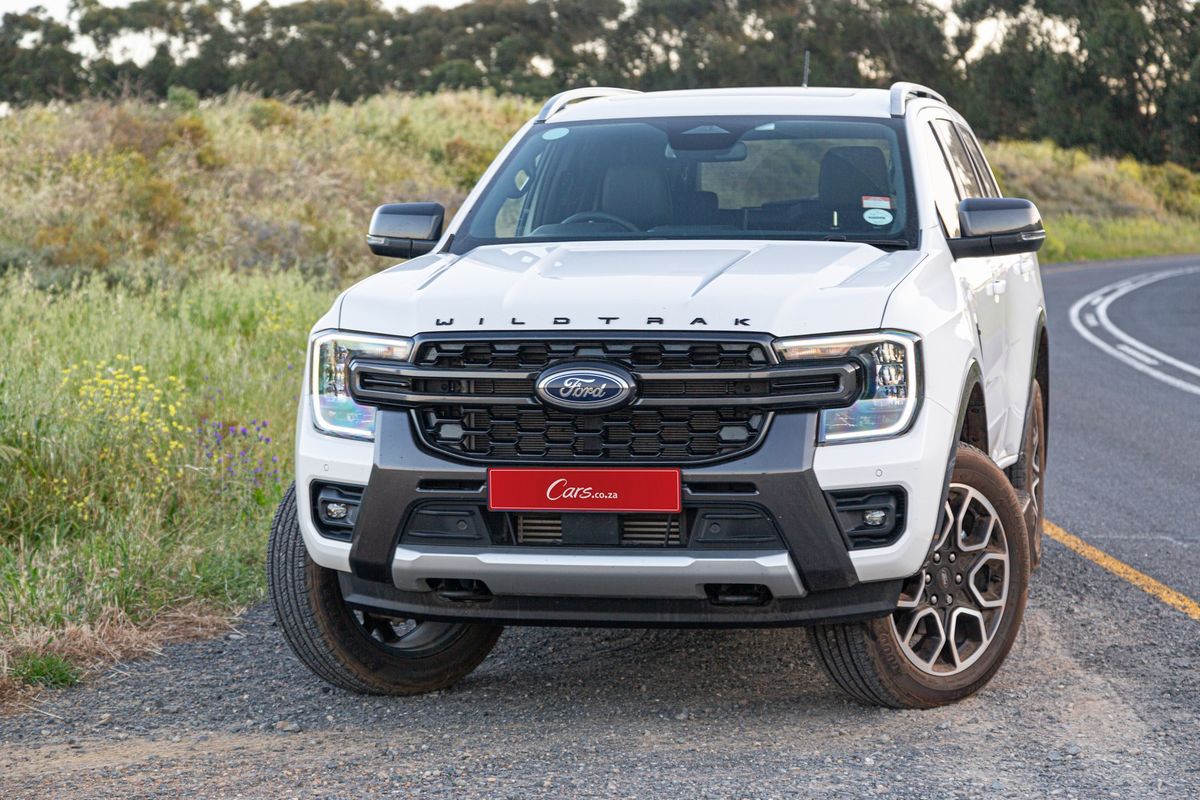
Even when clad in a practical, if a bit drab, white paint finish, the Everest Wildtrak has an imposing presence.
The 3.0TD V6 4WD Wildtrak is one of just two 6-cylinder derivatives in the Everest range; it’s positioned above the priciest 4-pot Sport, but crucially, below the range-topping V6 Platinum – and shorn of some of the latter’s tastiest treats – priced at a marginally more cents-saving R1 199 500 (almost R80k less).
Confession time. Truthfully, the prospect of having to hypermile the “2nd from the top” Everest variant with an expected drinking problem (only owing to its large-capacity engine) during my family’s annual pilgrimage to Knysna, when Ford’s more suitably configured and economically engined 2.0-litre people-carrier would have sufficed – read our Tourneo Custom (2024) Review – did not immediately appeal.
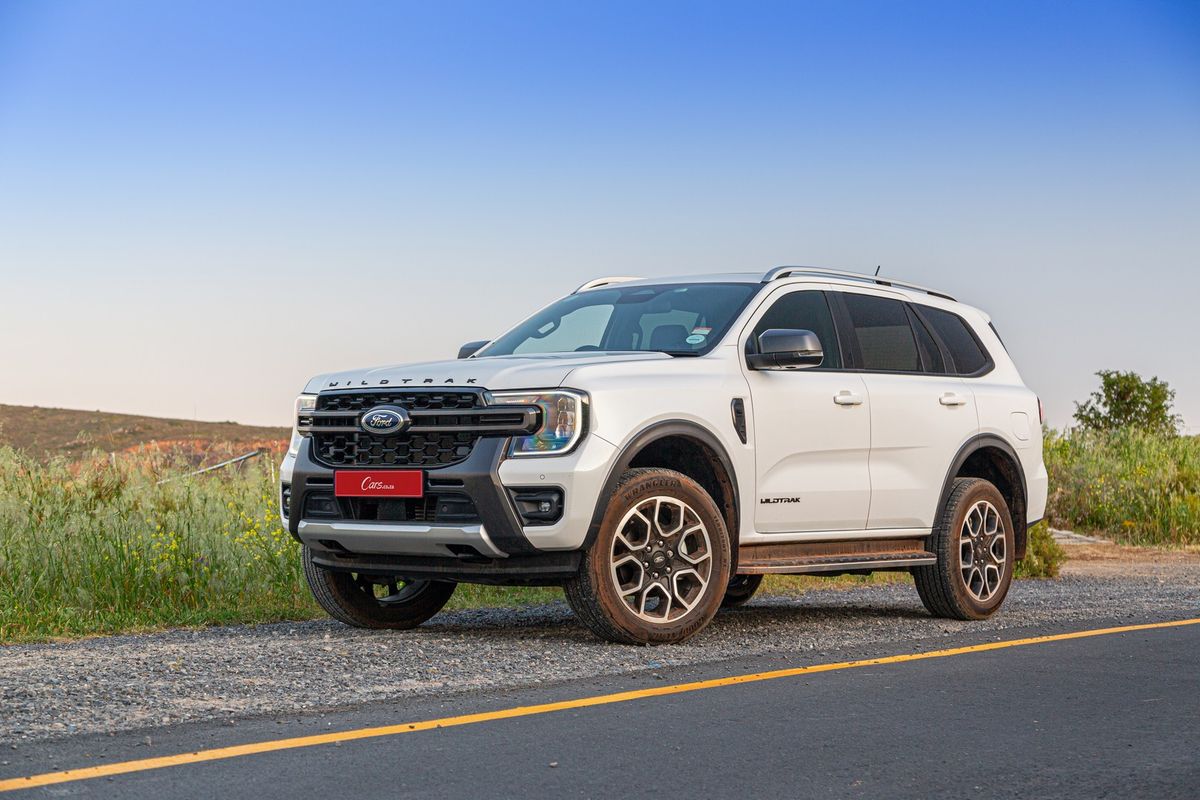
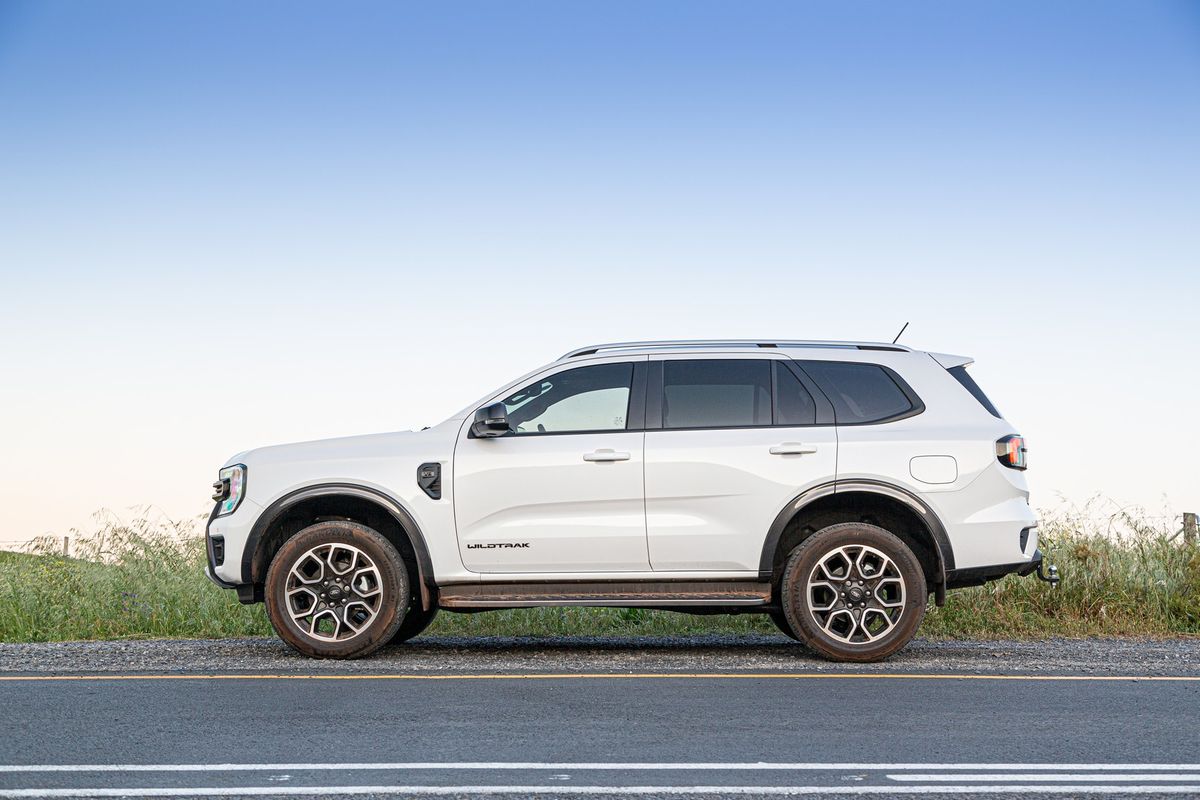
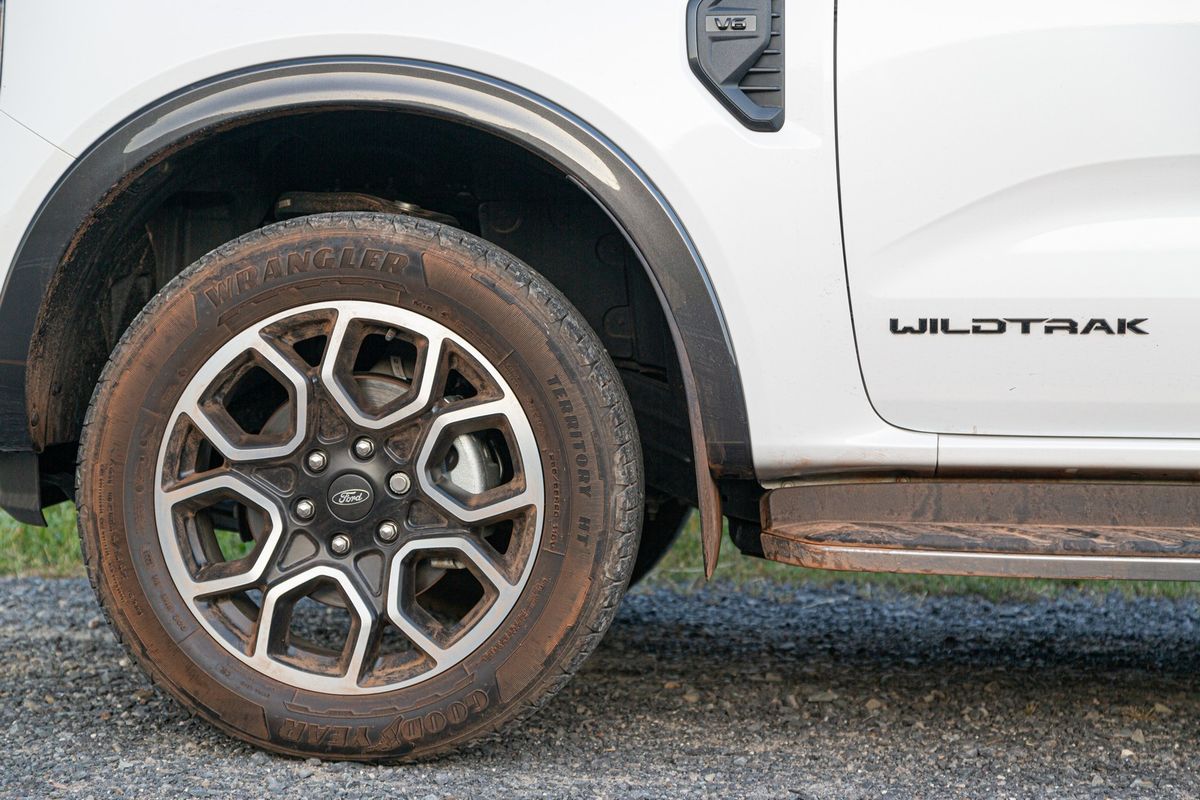
The Everest Wildtrak comes fitted with eye-catching 20-inch alloys that blend with the black detailing, plus side steps.
That’s because not only would spacial capacity (think everything from body boards to inflatable toys) be severely compromised in the Everest against the Tourneo’s desired fling-and-forget Boeing-beating belly, but so too would be the fuel budget. What a delight, then, to be proven wrong. On both counts.
Pack your bags… and everything else!
On the day of departure, adopting some cursory (and accompanying cursing) Courier Guy tactics, only a quartet of foldable beach chairs ultimately had to be sacrificed against a week’s worth of luggage and provisions for four – all of which was jammed into the back of the “fallback” Ford.
Although this generation of the Everest is an (uprated) evolution of its predecessor, it feels more SUV- than bakkie-like.
And on a day when every square millimetre of load-bay capacity counted, the 2nd-row seat’s sliding function of the Ford Everest Wildtrak – intended for access to the 3rd-row seats – was a godsend.
The Wildtrak hits the (long) road
Google Maps says a mere 13 km separates the 2 routes to Knysna from Cape Town’s northern suburbs when sticking to the N2 (484 Km); or my preferred and shorter pairing of following the N1 to Worcester before tranquilly tacking back towards the N2 through Robertson before re-joining at Swellendam.
If you have a family of 4, the flat-folding 3rd-row seats free up plenty of utility space to accommodate family holiday detritus.
The extended seat time facilitated revealing observations about the Ford Everest Wildtrak. Sharing its upgraded T6 platform with the Ranger (though swapping the rear leaf springs for coils), from mechanical advancement to tech trickery and NVH control, Ford’s Fortuner rival is – hardly surprisingly – easily one generation ahead of any of its ladder-frame SUV contemporaries, including the top-selling Toyota.
Wind noise is minimal and not unlike the Ranger, given its character the 184 kW/600 Nm V6 – solely throaty on demand – is perhaps more subdued than enthusiasts would appreciate at highway speeds.
The torquey 3.0-litre V6 turbodiesel delivers plenty of in-gear acceleration but is pleasantly muted on the open road.
Much of the engine’s Jekyll-and-Hyde persona is managed by Ford’s 10-speed automatic transmission, which, apart from being identical to the one in the Mustang, is arguably the star of the powertrain.
This ’box of tricks glides through the gears with the effortlessness of a cube of ice slithering into a glass of brandy-and-Coke (this is a 3.0-litre Ford, lest one forgets), as ratios are almost imperceptibly licked and skipped according to the torque demanded.
The Everest Wildtrak’s transmission lever proved quite a handful – literally.
10-speed auto ‘box revels in the V6’s torque
There’s no point in trying to keep track of which gear you’re in because there are simply too many – and why one doesn’t miss the presence of paddles (although the Ranger Raptor has them): it’s best to just trust the process.
Back in the real world, it’s also why Wildtrak drivers would be happy to select and forget, as groping the gargantuan transmission lever is a less gratifying affair. A literal handful that’s impossible to palm unless you’re Bigfoot, it’s a good-looking – but cumbersome – toggle that also finds Park too easily when one is only looking for reverse gear.
The contrast-stitched multifunction steering wheel is chunky, but the author noticed the absence of an audio mute button.
Other ergonomic shortcomings pertain to the absence of a mute button on the steering wheel to instantly silence the brain cell-brutalising jabbering of morning drive-time radio DJs and their ever-repeating songs (there’s a drinking game somewhere in correctly counting the repeats – provided you’re a passenger, of course); and there are no roof-mounted grab handles for the rear passengers.
Eminently comfortable cabin
On the plus side, the view from behind the wheel is suitably panoramic; on the open road, it adds a premium feel that’s absent in similar-styled rivals. The latter is aided by the front seats (finished with Wildtrak-specific orange stitching) providing terrific long-distance comfort that allows for above-average manspreading, unencumbered by the ungainly wide transmission tunnel present in said adversaries.
Apart from offering a host of connectivity options, the Ranger Wildtrak comes equipped with a wireless charging pad.
A wireless charging pad ahead of the gear selector allows for a less cluttered front cabin, freeing up the available USB-A and -C ports for the front passenger (there’s also a pair at the back – they’re essential to pacify itchy young travellers with mobile devices); the former enabling smartphones to pair seamlessly with the Wildtrak’s 12-inch SYNC 4 infotainment touchscreen through Android Auto or Apple CarPlay.
Not that thirsty, after all
And what of the 3.0-litre V6 turbodiesel’s dreaded thirst? Ford claims a combined consumption figure of 8.5 L/100 km that comprises a mix of urban and highway cycles. More often than not, such claims are marketing-driven pie-in-sky figures that are impossible to attain in the real world, however.
Rear occupants can utilise a USB-A and/or -C port, a separate ventilation control, as well as an AC outlet.
Yet after 5 and a half hours, the 3.0-litre Wildtrak covered the 468 km-long trek to Knysna by averaging 84 kph and a reasonable 8.6 litres/100 km. Although I wasn’t (and still am not) crazy about the lack of granular detail provided by 10 vertically stacked bars indicating the fuel level, the estimated range readout is a far more accurate and confidence-inspiring indicator of the distance to the next fill-up.
Over its 4-week-long stay, which included several short town-based trips, the average fuel consumption levelled out at 9.2 L/100 km, which is fair, considering the vehicle’s size, heft and family-hauling ability.
The Everest Wildtrak made a handful of shorter trips too, its fuel consumption levelled out at 9.2 L/100 km.
But do you really need a V6?
Unless you plan to utilise all of its 3 500 kg (braked) towing ability; and against the next-best 2.0-litre Everest Sport, which retails for R120k less – yeah, probably not. But when trundling around town, the faint hiss of the turbo masks the thrum of the throbbing V6 is a (nearly) priceless feel-good folly.
Although the fuel bar (far right) is a little imprecise, the digital instrument cluster is clear and easy to understand.
And, the steering-wheel-mounted speed limiter button is a countermeasure against the notoriously ferocious appetite of the Eden District’s authorities for year-end-party-funding speeding fines – it is so satisfying to press that button at the sight of one of many poorly camouflaged speed cameras.
During our stay, the Wildtrak embarked on several trips along the Cape South Coast and inland to the Cango Caves, where – when filling up for the first time since our departure – we incidentally discovered that the fuel flap was positioned opposite to the directional icon as indicated on the fuel gauge.
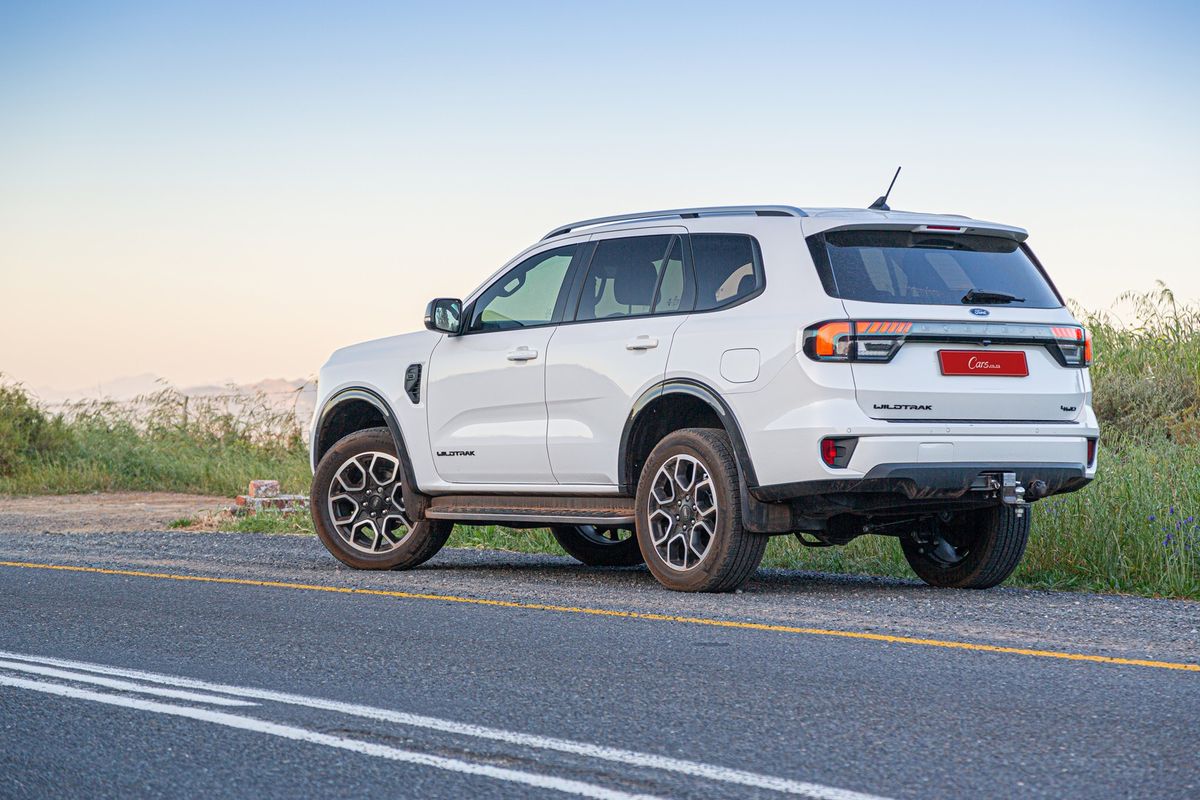
The (large) fuel flap is located on the left side of the vehicle; remember to check the vehicle’s AdBlue levels habitually.
Other idiosyncracies – good and less good – include the quietest windscreen wiper operation this side of a Rolls-Royce, but on the debit side, the indicator stalk is on the wrong side of the steering wheel and there is no retractable parcel shelf to block out the prying eyes of passers-by into the load area.
And, in the same vein, the removable towbar would be laughably easy to re-appropriate (thankfully it wasn’t) owing to its split-pin attachment setup.
Ford Motor Company of Southern Africa may want to beef up the security system on the Everest Wildtrak’s (standard) tow bar.
Don’t forget about AdBlue
Most importantly, though (and too rarely reported on) is the need for owners to keep an eye on the AdBlue level indicator, which is hidden away in the Everest Wildtrak’s sub-menu.
In our case, the Everest was delivered with around 7 800 km on the odo while displaying a warning about the remaining estimated 1 500 km of range before requiring a top-up of the emissions-emasculating extract (AdBlue) – just hours before the start of the mid-December long weekend; by which time most businesses had already or were about to close up shop for the rest of the year.
The Everest Wildtrak in its very element… a coastal town during the holiday season.
While Ford’s fast-moving fleet folk could swiftly provide a top-up before our Knysna sojourn began, the experience highlighted the need for owners to be vigilant about their turbodiesel vehicles’ AdBlue levels.
Price and after-sales support
The Ford Everest 3.0TD V6 4WD Wildtrak retails for R1 199 500, which includes a 4-year/120 000 km warranty, 4-year/unlimited distance Roadside Assistance and 5-year/unlimited distance corrosion warranty. The recommended service interval is 15 000 km or annually, whichever occurs first.
In line with the Right to Repair legislation, customers can purchase service or maintenance plans of up to 8 years or 165 000 km, and the warranty can be extended to 7 years/200 000 km.
Summary
By adding V6 options to its ladder-frame-based SUV lineup, Ford has bestowed the Everest range with halo products that neither Toyota, Mitsubishi, nor Isuzu respectively provide in their Adventure SUVs.
The Everest sits atop the Adventure SUV pile, but are you willing to spend R1.2 million to get a V6-powered one?
There’s something as innately South African about a 3.0-litre 6-cylinder SUV that bears a Blue Oval on its nose as braaiing and beers in the bushveld. To be fair, given its R240k-or-so price premium, the Everest Wildtrak V6 doesn’t truly compete with the flagship Toyota Fortuner – it’s a more upmarket product.
The Ford Everest Wildtrak may be the lower-specced V6-engined derivative in its line-up, but it’s no piecemeal offering. Ignoring the heart-or-head-conundrum demanded by its lofty price point, it’s still the cheapest new V6-powered Adventure SUV you can buy in SA. Now that’s an overachieving middle child.
Faves and flops! SA’s best- and worst-selling bakkies of 2024
We’ve tallied up the sales figures to identify South Africa’s best- and worst-selling bakkies of 2024. Here’s where your favourite pick-up placed last year…
With 2024 done and dusted, it’s time to tally up the sales figures and identify South Africa’s best- and worst-selling bakkies for the year. For the record, Mzansi’s broader light-commercial vehicle (LCV) segment ended 2024 on 133 254 units, translating to a 12.0% year-on-year decline (in a total market that was down 3.0% to 515 712 units).
So, which bakkies were the segment’s chief volume drivers in 2024? And which models achieved the most robust year-on-year growth in a declining market? And, of course, which contenders simply struggled throughout the year? Well, let’s break down the figures from the past 12 months and answer these questions and more…
Top 3 unchanged as Ranger narrows gap to Hilux
There was no stopping Toyota’s Hilux in 2024, though the Ford Ranger did cut the gap.
Yes, the Toyota Hilux remained South Africa’s best-selling bakkie – and indeed the country’s top-selling vehicle overall – in 2024, a title it has now held for more than 50 straight years. That said, sales of the Prospecton-built stalwart fell 12.6% year to year (largely in line with the overall LCV segment’s performance) to 32 656 units, for a monthly average of 2 721 units.
With the Hilux shedding sales compared with the prior year, the 2nd-placed Ford Ranger at least managed to narrow the gap to 7 103 units (from 12 764 units in 2023). In the end, the Silverton-made contender enjoyed a 3.8% year-on-year improvement in sales to finish 2024 on 25 553 units. As expected, the Struandale-produced Isuzu D-Max again completed the podium, with its registrations growing marginally (just 0.1%, in fact) to 18 973 units.
Mahindra Pik Up climbs as defunct NP200 falls
Mahindra’s Pik Up gained a ranking thanks to the axing of the Nissan NP200.
While the KwaZulu-Natal-assembled Mahindra Pik Up registered a handy 3.4% year-on-year increase in sales to finish 2024 on 8 336 units, its movement up a ranking to 4th position overall was largely thanks to the death of what was South Africa’s last-surviving half-tonne bakkie.
Yes, with production of the Nissan NP200 at Rosslyn having ceased back in March 2024, sales of the Japanese firm’s small bakkie plummeted 48.6% year on year to 6 544 units last year. However, the NP200 still managed to place inside the top 5, falling just a single spot (despite sales tapering to a mere 3 units in December 2024).
Ford-built Amarok rises as P-Series stumbles
Volkswagen’s Amarok enjoyed the strongest year-on-year growth in the top 10.
Though the Rosslyn-made Nissan Navara enjoyed a 6.0% year-on-year increase to end on 4 874 units and retain 6th, it was the Ford-built Volkswagen Amarok that registered the strongest growth in the top 10, improving 18.2% (compared to 2023) to 3 957 units and rising 2 rankings to 7th in the process.
Meanwhile, local registrations of the GWM P-Series slid 18.0% year on year to 3 659 units, seeing this Chinese-made bakkie (which is due a facelift) drop a place to 8th. Similarly, the Japanese-built Toyota Land Cruiser 79 – which benefitted from a refresh early last year – suffered a 13.0% year-on-year fall in sales to 3 459 units, meaning it slipped a position to 9th. Finally, the GWM Steed retained 10th place, with sales up 4.8% to 1 197 units.
5 bakkies at the bottom of the 2024 sales charts
Peugeot Landtrek sales surged 128% year on year, but it still couldn’t crack the top 10.
So, what about the bakkies at the foot of the table? Well, the Chinese-made Peugeot Landtrek was the best of the rest in 2024, registering a whopping 128% year-on-year increase in local sales to end on 782 units and climb 2 places to 11th. As a reminder, Stellantis SA plans to start local assembly of this bakkie from completely knocked-down kits at a new facility in Gqeberha towards the end of 2025 or the beginning of 2026.
Having moved into a long-awaited new generation late in 2024, the Mitsubishi Triton had to settle for 12th place (a ranking lower than it achieved in 2023), with sales down 22.8% year on year to 563 units. That was only slightly ahead of the Mahindra Bolero, which enjoyed a 49% year-on-year improvement to finish on 520 units (though slipped a spot to 13th).
Mitsubishi will be hoping its new Triton climbs the ranks in 2025.
The Jeep Gladiator, meanwhile, finished 2024 on just 67 units, though this low-volume model’s year-on-year decline of 67.8% didn’t impact its ranking (which remained 14th). Finally, the Mazda BT-50 – which was discontinued in South Africa in the opening quarter of the year – again rounded out the top 15, reaching a total of 42 units (down 39.1%, year on year).
*For the record, we’ve focused on traditional bakkies in this feature, excluding models such as the Hyundai H100, Kia K Series, Volkswagen Transporter Pick Up and Suzuki Super Carry. We were also not able to include the JAC T6, T8 and T9 ranges as the Chinese automaker reported only a combined number (which we tallied up to 1 198 units, an increase of 85.2%, year on year).
Etienne Prowse has a rather interesting collection of Mercedes-Benz cars, with models spanning several decades – and body styles.
The first time I met Etienne Prowse was at Zwartkops Raceway. He was kind enough to bring along his Merceded-Benz 450SLC 5.0 Mampe tribute race car for a drive and a photo shoot. Apart from talking about all things related to cars, it was evident that he was a true Mercedes-Benz enthusiast.
Prowse invited me to view his Mercedes-Benz collection, located outside of Hermanus when he visited the Cape again. Recently, we managed to align our diaries and early 1 morning, when the holidaymakers were heading to the beach, I made my way to a secret location outside of the bustling coastal town.
The building where Etienne stores his collection thankfully has enough space for all the cars, as well as lots of parts. He is working with a plan though, as he wants to rent out some of these cars in the near future. First, however, we rewind to where it all started.
“I only really started collecting Mercedes cars in 2012. The first car I bought was a R107-series 500SL. I wanted a 500SL as they are rarer than the more prolific 450SL. However, I learned a hard lesson.
“When I checked the chassis number and details, I found out that it was, as a matter of fact, a 450SL. I subsequently sold it and quickly discovered how and what to look for when purchasing a classic ‘Benz.
“My father drove Mercedes-Benzes as company cars in the 1980s. Some enthusiasts always joke and say you drive what your father drove. Well, that has been the case with me.
“There is a trick to it though. When I had around 3 cars, my wife started raising her eyebrows. Then, for her 50th birthday, I bought her an SLK32 AMG, because only around 4 000 units were manufactured.
“When I found one, it was not close to her birthday, so I had to hide the car for a few months before I could give it to her. From then on, we were collecting Mercedes-Benzes together. The trick worked!
“I think Mercedes-Benz has been building great cars for many decades. Even when I bought that first SL, I couldn’t believe what it still offered after so many decades. This included the level of performance, practicality and ride quality.”
Etienne admits that his cars are not in “concourse condition”, but as he uses them regularly and plans to rent them out, it is understandable why he wants to have them in a good, but not concourse condition.
The main building houses, among other cars, three 450SLs, a 280SL and a 500SL. Apart from the one R129 500SL, all the cars are from the 107 series.
Etienne says he can’t actually explain how he ended up focusing on the 107 series. He says it is also partly because the Pagoda is not as fun and practical to drive and also now costs an arm and a leg.
“I also have several additional R107 bumpers and other parts, including a full wiring loom and an engine.”
We head outside where Etienne and his assistant have neatly parked the cars. There is clearly quite a lot on the to-do list this morning. The row of cars is made up of no fewer than three SLK32 AMGs, an SLK320 and an SLK200.
“With 260 kW in such a relatively small car, it is truly a fun experience. I’ve had no major issues with the SLK32 AMGs. The only issue that is surfacing now is that some of the small pistons that are part of the automatic roof mechanism now need some attention.”
Two of the SLK32 AMGs have full-service histories, but the beautiful blue example had sadly been in an accident before Etienne bought it, but he knew that, meaning it is currently an emergency parts car should anything major go wrong with any of the other two.
“The SLK320 is truly a great little cruiser. Same engine as the SLK32 AMG, but just without the compressor,” he adds.
Etienne tackles some of the easier jobs himself, for example replacing the roof lining. “You can’t have all the jobs done by other people, it will simply cost too much. Remember, Google is your friend!”
The car with the highest mileage, but also for some enthusiasts the most desirable, is the 1981 Mercedes-Benz 240 GD Geländewagen. It has a full-service history, throughout its 601 000 km! Even so, some work must be done on this car which is earmarked for 2025.
It might be a single-brand collection, but between the AMGs, the Geländewagen, SLs and SLCs, the collection covers a wide base of Mercedes-Benz’s rich history and offerings.
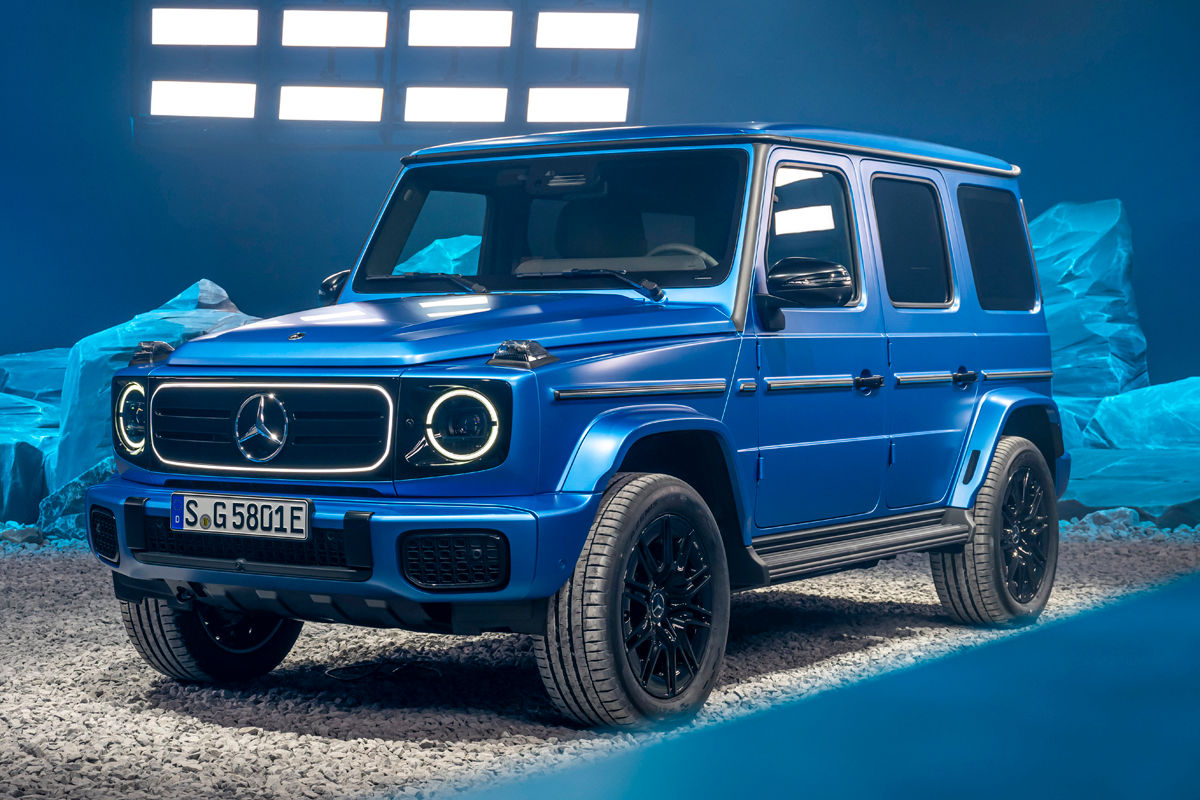
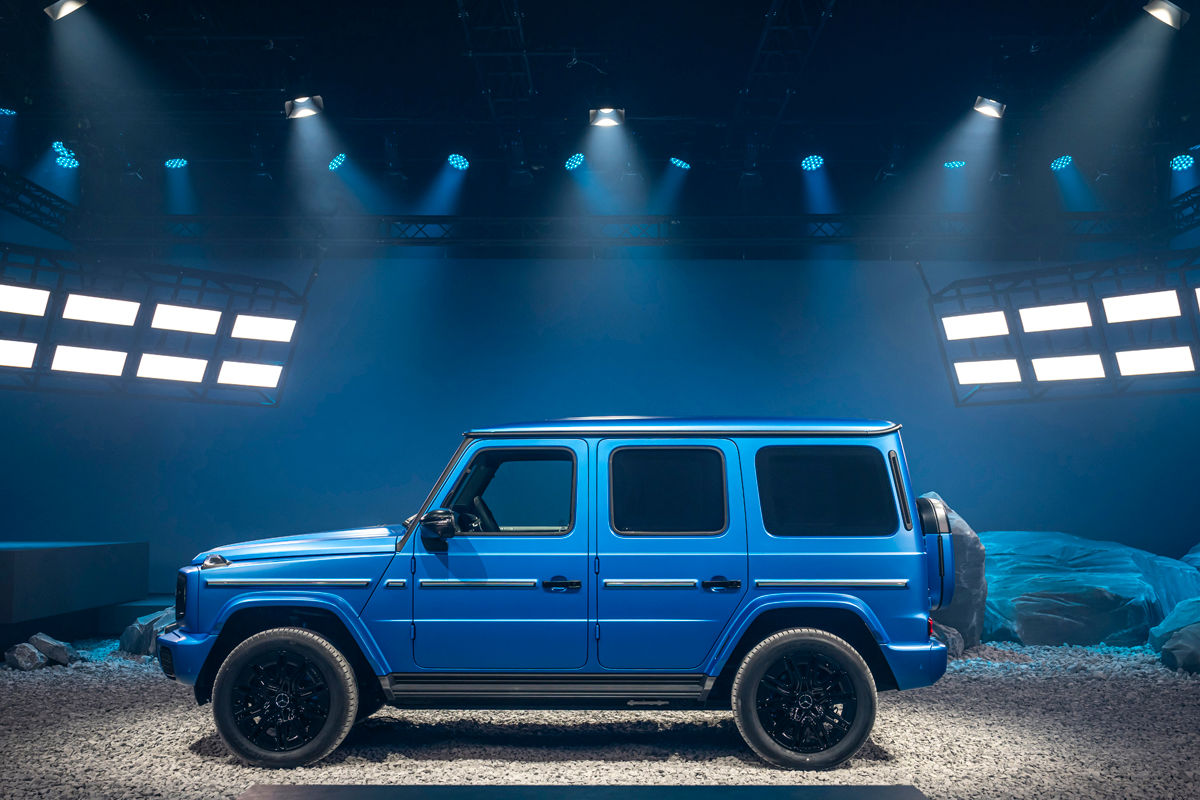
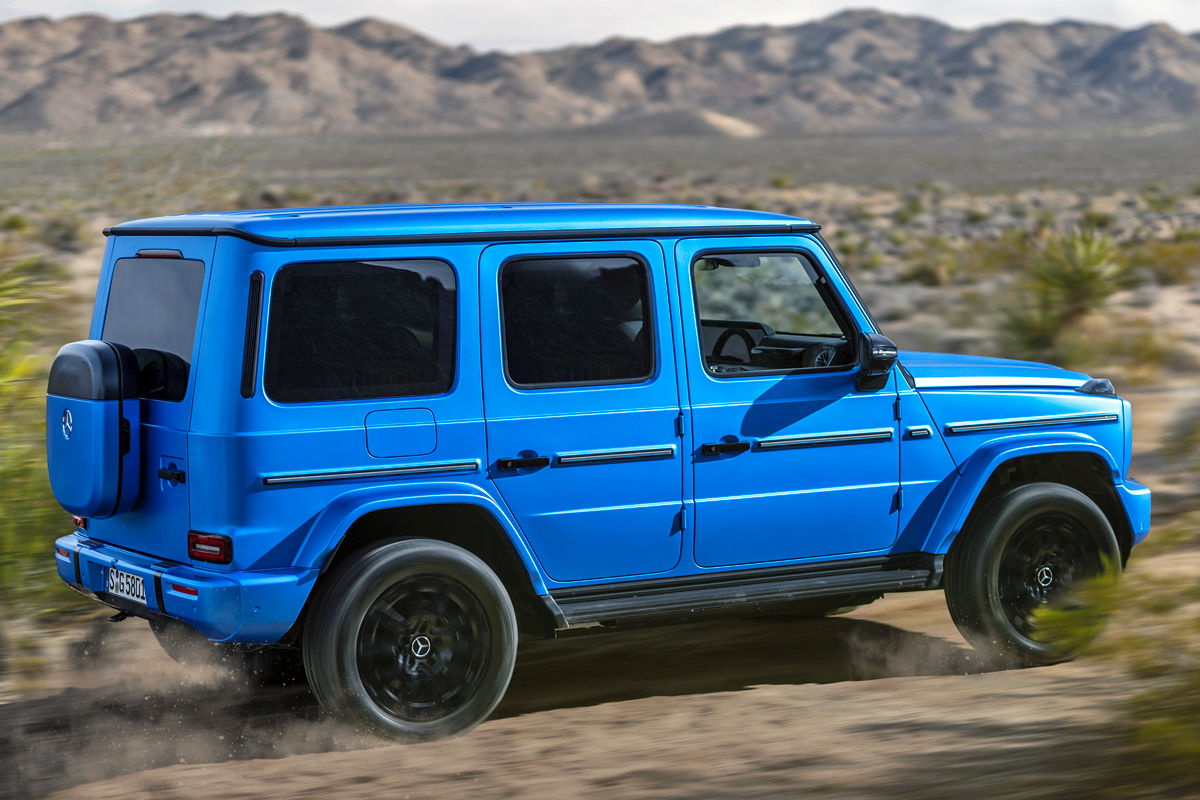
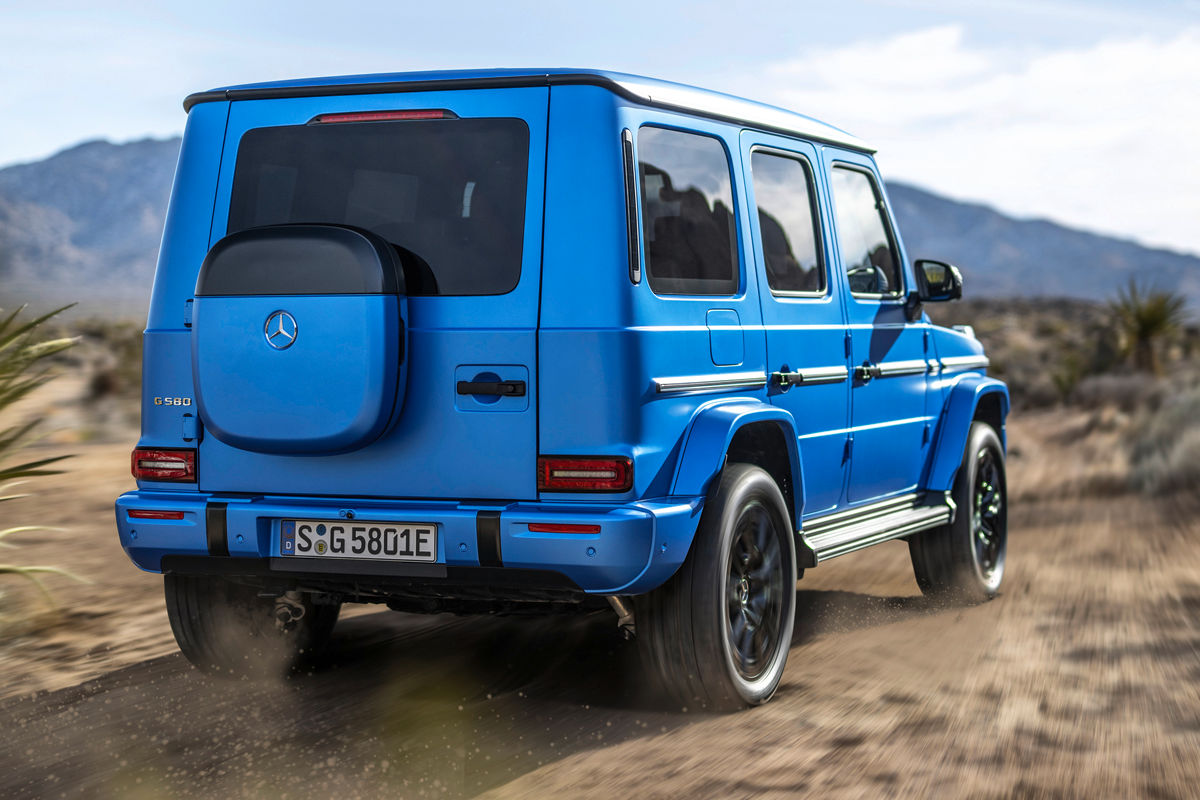
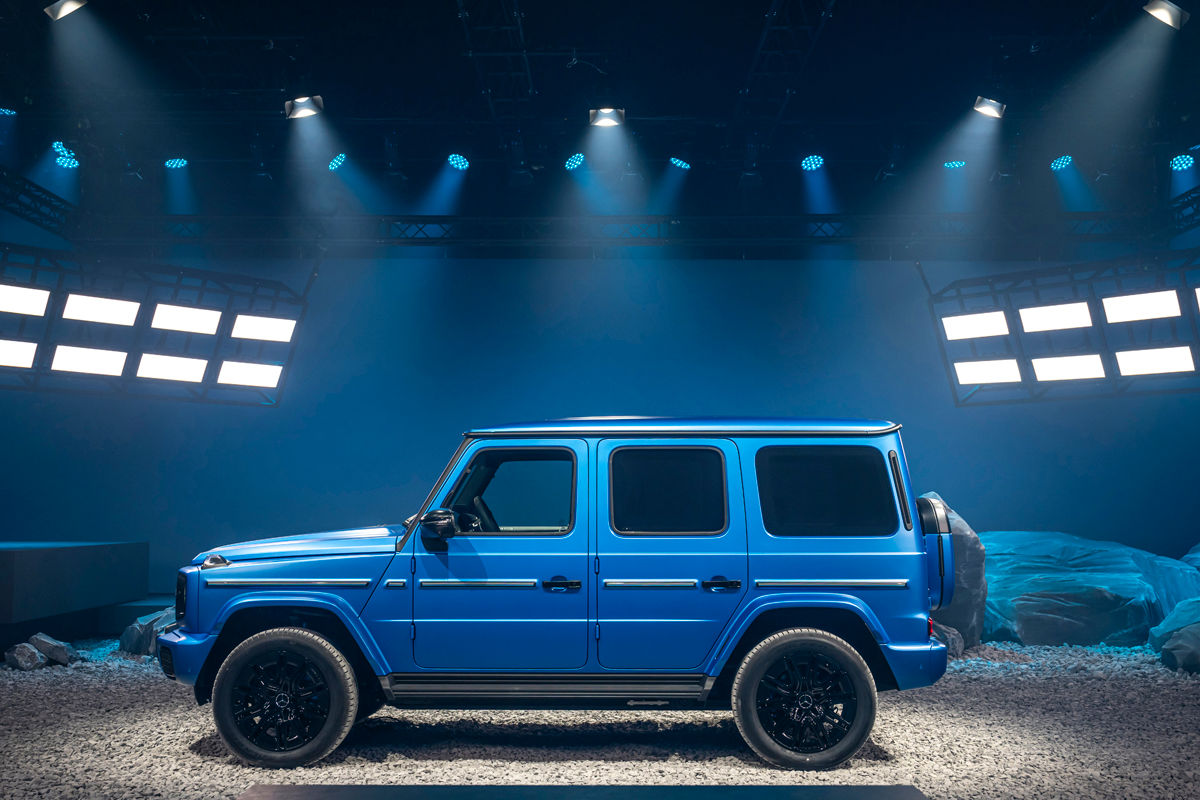
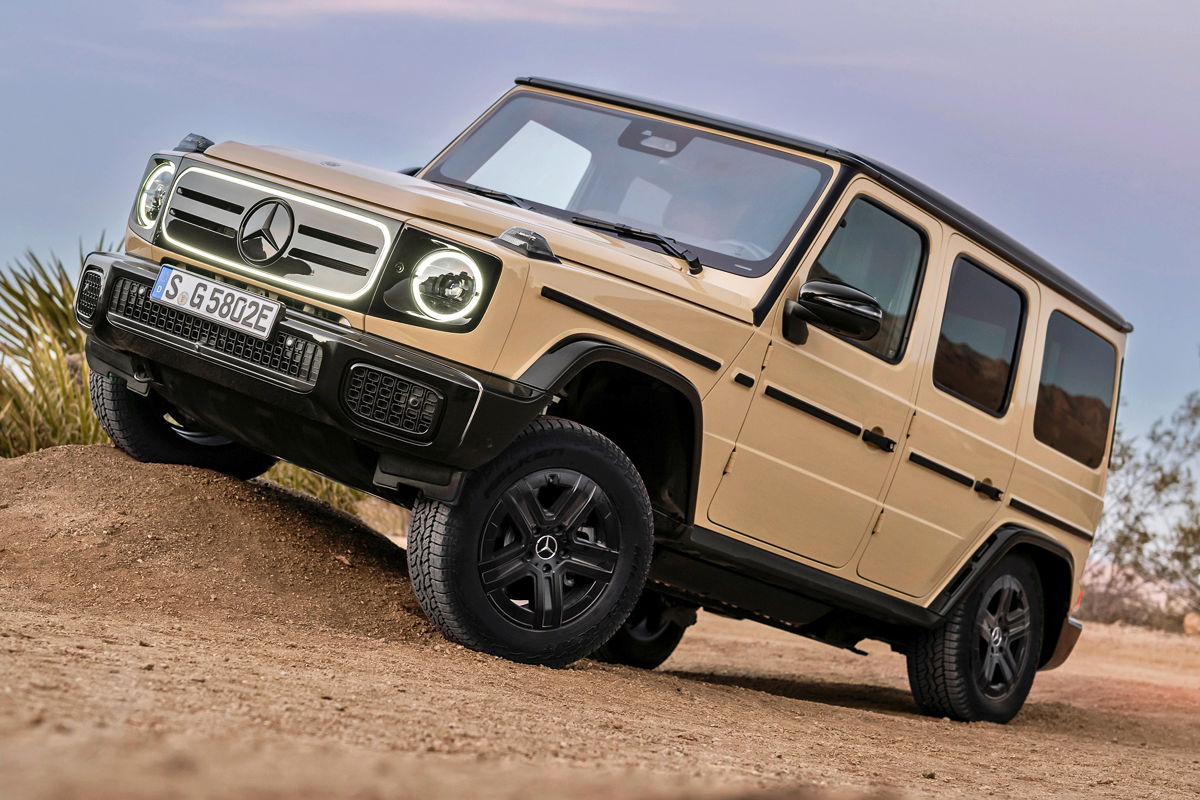
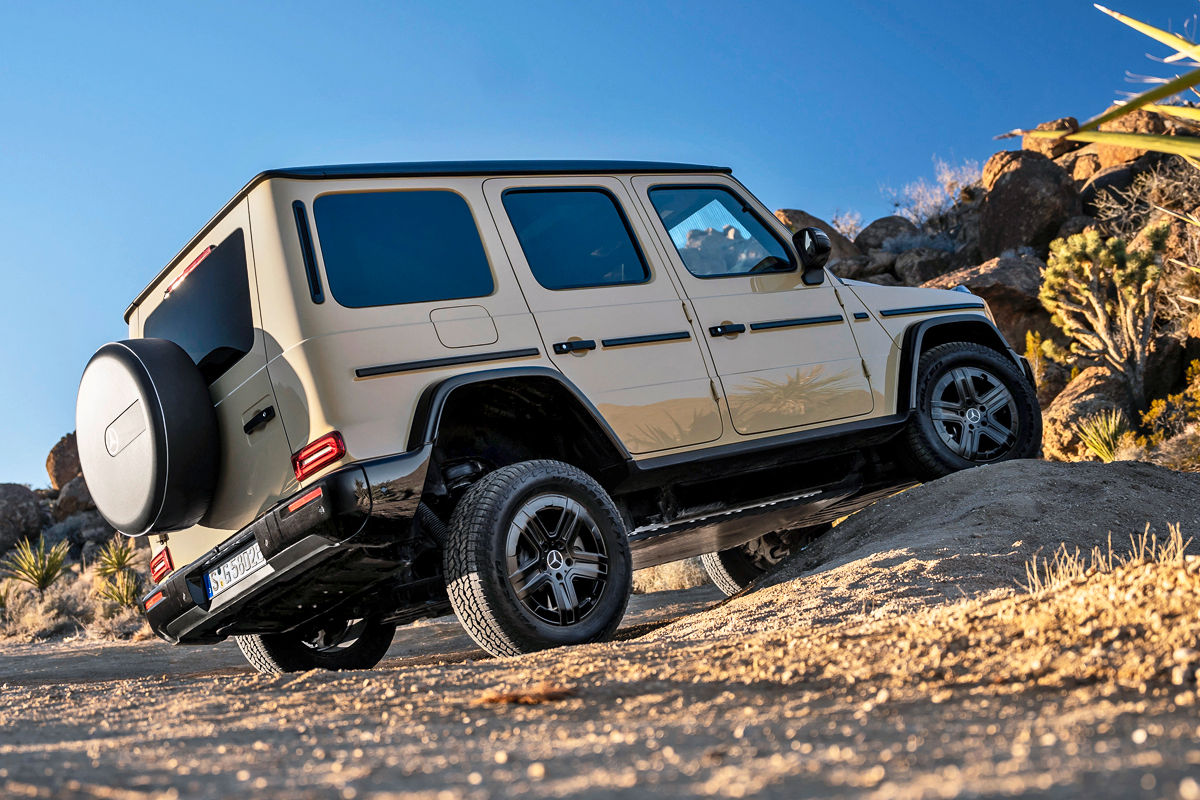
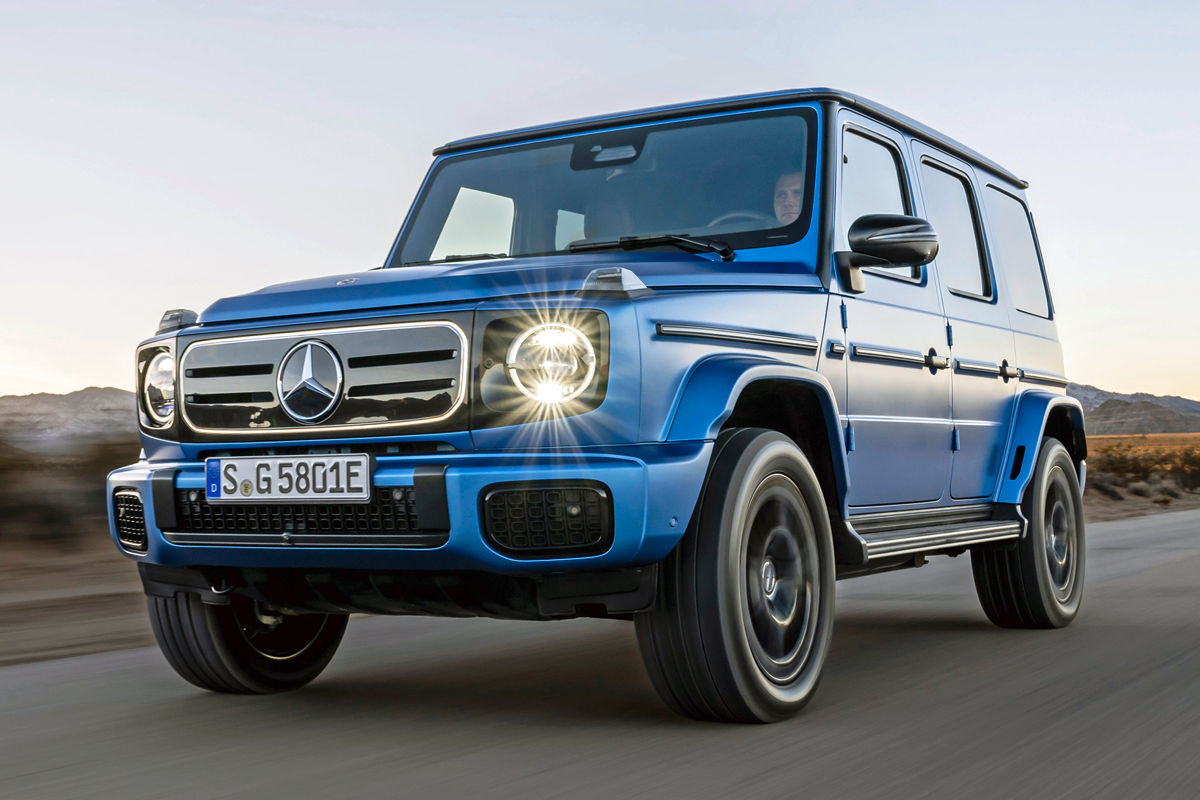
The all-electric G-Class is on its way to South Africa and pricing has been confirmed. Here’s your first look at the Mercedes-Benz G 580.
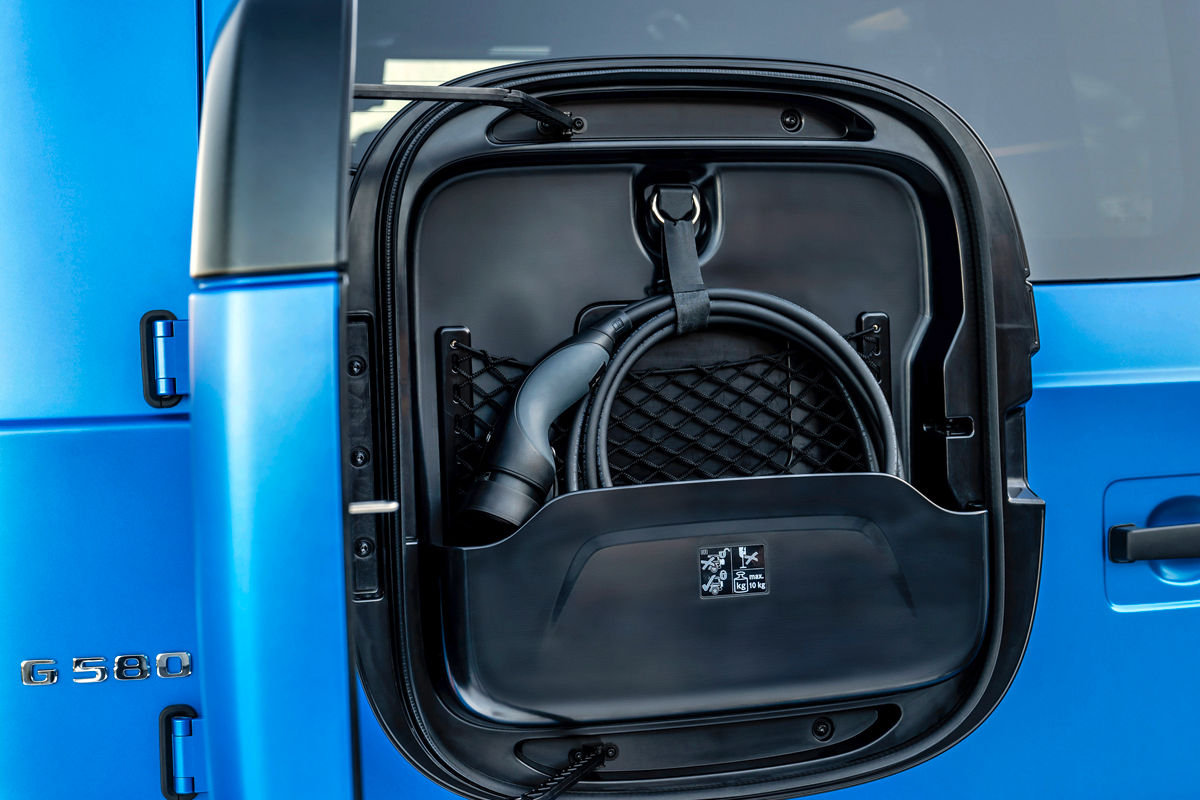
Interestingly Mercedes-Benz ditched its electric badging for the BEV G-Class, with the EQG name staying on the concept. Officially, this is the Mercedes-Benz G 580 with EQ Technology, yes that is quite the mouthful.
So, what do you get for your R4.6 million? The great news is that the electric G-Class will still be a formidable offroader, riding on a ladder-frame setup with a selectable low-range gearbox.
Powering the G 580 are four individually controlled motors near the wheels. A total output of 432 kW and 1 164 Nm is claimed and thanks to torque vectoring, there are virtual differential locks.
Range is up to 473 km based on the WLTP cycle, thanks to a 116 kWh battery which has been integrated into the ladder frame chassis for a low centre gravity and Mercedes-Benz claims it is water and dirt proof thanks to a torsion-resistant casing and carbon underbody protection. An energy consumption figure of around 29 kWh/100 km is claimed – which is heavy, yes, but not unexpected due to the 3-ton weight and un-aerodynamic shape.
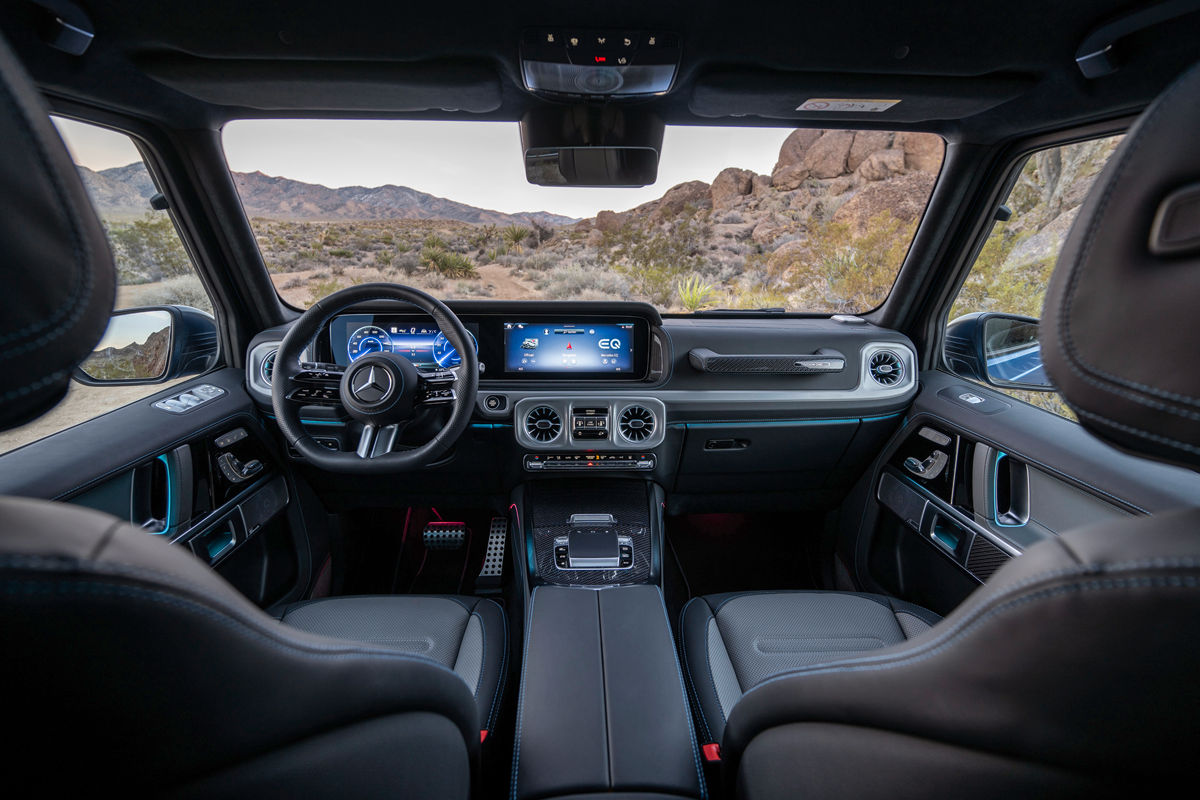
Inside, the electric G-Class features synthesised engine sounds, which won’t be as cool as the AMG’s V8, but interesting nevertheless. The rest of the cabin features a layout and updates that are near identical to the current facelifted G-Class range. Niceties include the latest iteration of MBUX infotainment system and a massive 31.2 cm screen which has integrated driver and media info.
How much does the electric G-Class cost in South Africa?
The below price is for the Launch Edition and includes VAT as well as a service & maintenance plan.
Though it has exited Mzansi’s new-vehicle market, the Kia Rio remains a compelling option as a used buy. Let’s examine the pros and cons of the 4th-gen hatchback…
In the opening quarter of 2024, the 4th-gen Kia Rio quietly left South Africa’s new-vehicle market, bringing down the curtain on this nameplate’s 23-year local run. Around a year earlier, the South Korean firm’s local distributor had confirmed to Cars.co.za the Rio would be “phased out” since its successor would not be produced in right-hand-drive guise.
Unlike the 3rd iteration – see our Kia Rio (2011-2017) Buyer’s Guide – the YB-series Rio was available only in 5-door hatchback guise in Mzansi (no sedan body style was offered). Known as the Pride in its home market and the K2 in China, the SA-spec Rio was sourced from Kia’s Sohari plant in South Korea.
The 4th-gen Kia Rio was revealed in 2016.
As one of the Seoul-based brand’s most recognised nameplates, the Rio was a steady seller in Mzansi, even if it couldn’t come close to matching the sales figures of the segment’s most popular offering, the Kariega-built Volkswagen Polo hatch. See also:VW Polo hatchback (2010-2017) Buyer’s Guide
Local registrations dipped from 3 907 units in 2021 to 3 511 units the following year, before declining further to 1 977 units in 2023 (and settling on around 100 units in 2024, with stock finally depleted).
Interestingly, the once-bustling compact-hatch segment lost a couple of other big names shortly before the axe fell on the Rio; the Ford Fiesta and Nissan Micra were both discontinued locally in 2022.
Kia Rio (YB) model line-up in South Africa
The Rio touched down in Mzansi in mid-2017.
In September 2016, Kia released the first official images of the YB-series Rio ahead of the model’s premiere at the 2016 Mondial de l’Automobile in Paris. Again penned by Peter Schreyer, but with input from the brand’s design centres in Germany and California, the Rio hatchback gained 15 mm in length (to 4 065 mm) and 5 mm in width (to 1 725 mm), while its wheelbase increased by 10 mm to 2 580 mm.
In June 2017, the 4th-gen Rio touched down in South Africa, with Kia claiming pricing was “virtually unchanged from the outgoing model”. At launch, the local line-up comprised 7 front-wheel-drive derivatives and offered the choice of a pair of naturally aspirated 4-cylinder petrol engines, 3 transmission options and 4 trim levels.
Kia Rio 1.2 LS 5MT (62 kW/120 Nm)
Kia Rio 1.4 LX 6MT (74 kW/135 Nm)
Kia Rio 1.4 LX 4AT (74 kW/135 Nm)
Kia Rio 1.4 EX 6MT (74 kW/135 Nm)
Kia Rio 1.4 EX 4AT (74 kW/135 Nm)
Kia Rio 1.4 TEC 6MT (74 kW/135 Nm)
Kia Rio 1.4 TEC 4AT (74 kW/135 Nm)
Interestingly, though these 1.2- and 1.4-litre engines were effectively carried over from the 3rd-gen Rio, they were “revised” to offer slightly less peak power (down from 65 kW and 79 kW, respectively). Load-bay capacity increased by 37 litres to a generous 325 litres, while a full-size spare wheel came standard.
Luggage capacity increased 37 units to 325 litres, compared with that of the 3rd-gen hatch.
Just 3 months after the launch, Kia Motors SA announced a “voluntary safety recall” of about 1 266 examples of the Rio to “inspect the operation of the rear-door child locks”. On certain models, the child-locking function may have been “inoperative due to the actuator cable length being out of spec”.
In the final month of 2018, Kia ditched the antiquated 4-speed automatic transmission (available with the 1.4-litre motor) – it was replaced by a 6-speed (likewise torque-converter) self-shifting gearbox. Such-equipped variants were thus 3-tenths of a second quicker from zero to 100 kph (at a claimed 12.9 seconds), with (for what it’s worth) the stated maximum speed increasing from 166- to 175 kph.
The facelifted Rio arrived in SA late in 2020.
Towards the end of 2020, the facelifted Kia Rio made local landfall, arriving with subtly refreshed exterior styling, more standard equipment and seemingly again-tweaked engines (with the 1.2- and 1.4-litre units each dropping a kilowatt to 61 kW and 73 kW, respectively). The GT-Line version shown overseas unfortunately didn’t make it to local dealerships.
Kia Rio 1.2 LS 5MT (61 kW/120 Nm)
Kia Rio 1.4 LS 6MT (73 kW/135 Nm)
Kia Rio 1.4 LS 6AT (73 kW/135 Nm)
Kia Rio 1.4 LX 6MT (73 kW/135 Nm)
Kia Rio 1.4 LX 6AT (73 kW/135 Nm)
Kia Rio 1.4 EX 6MT (73 kW/135 Nm)
Kia Rio 1.4 EX 6AT (73 kW/135 Nm)
Kia Rio 1.4 TEC 6MT (73 kW/135 Nm)
Kia Rio 1.4 TEC 6AT (73 kW/135 Nm)
While the 4 trim levels were retained, Kia Motors SA expanded the range to 9 derivatives by making the 1.4-litre engine (in either manual or auto form) available in entry-level LS guise. All variants upgraded to an 8-inch touchscreen, while Perennial Grey and Sporty Blue were added to the exterior paint colour palette. Note, however, that the 1.2 LS downgraded to a 2-year/60 000 km service plan at this point.
What are the strengths of the YB-series Rio?
The pre-facelift Rio LS was specced to attract fleet buyers.
Plenty of standard features: At launch, most derivatives came generously equipped, though it’s worth noting the pre-facelift 1.2 LS was pitched squarely at fleet buyers, which meant it made do with items such as steel wheels and a decidedly basic audio system. The LX grade boasted automatic headlamps, front foglamps, LED daytime running lights, 15-inch alloy wheels, a centre console armrest, a leather-trimmed steering wheel, an upgraded instrument cluster and extra speakers (a total of 6).
Next came the EX trim grade, which included projector headlights and LED rear combination lamps, along with a 7-inch touchscreen system (compatible with Apple CarPlay and Android Auto), a reverse-view camera and rear parking sensors. Finally, the TEC trim level was set apart by 17-inch rims, rain-sensing wipers, cruise control, an electro-chromatic rearview mirror, alloy pedals and leather trim.
A look at the pre-facelift TEC derivative’s cabin.
At the facelift, all variants upgraded to the aforementioned 8-inch touchscreen, while LS variants gained a 6-speaker audio setup and 15-inch alloys. Interestingly, the LX grade lost LED DRLs at this point, while the EX traded up to 17-inch alloys and the TEC gained auto aircon (climate control).
While the cabin featured plenty of plastic, it felt solidly put together with suitably tight shut lines. Rear passenger space was about class average (with aft occupants benefitting from access to a dedicated USB charging point), while the 60:40-split rear bench folded down flat to free up generous utility space. All derivatives came with tilt-and-telescopic adjustment for the steering column.
Both engine options were well-proven in the preceding model.
Well-proven engines: When the YB-series Rio was introduced in Mzansi, Kia Motors SA said it had opted to stick with the atmospheric 1.2- and 1.4-litre petrol engines (rather than go the forced-induction route) because the powerplants had “proven themselves over the past 5 years” and remained “very popular” with local buyers. For the record, both powerplants used so-called lifetime timing chains rather than belts. Properly maintained, these engines should provide several years of reliable service.
Unlimited-kilometre warranty: In South Africa, the 4th-gen Rio was sold with Kia’s 5-year/unlimited-kilometre warranty (along with roadside assistance for the same period). As such, late model-year examples on the used market would still enjoy appreciable warranty coverage, regardless of mileage.
What are the weaknesses of the YB-series Kia Rio?
The pre-facelift Rio wasn’t available with stability control.
No ESC in pre-facelift range: While the SA-spec version of the pre-facelift Rio shipped standard with dual front airbags, ABS and ISOfix child-seat anchors (along with side- and curtain airbags in the range-topping TEC derivative), it was regrettably missing any form of electronic stability control (ESC).
Still, that shortcoming was largely addressed at the mid-cycle update in December 2020, when both ESC and hill-start assist were added to all grades bar the entry-level LS.
Overly firm ride on 17-inch wheels: With its forebear criticised for a lack of dynamic sparkle, the 4th-gen Rio featured a revised spring-and-damper set-up to ostensibly deliver “more enjoyable, engaging handling characteristics”.
However, in variants fitted with 17-inch alloys and 205/45 R17 tyres (the TEC and the facelifted EX), this manifested as an overly firm, and sometimes fidgety, low-speed ride. Derivatives with 15-inch wheels, wrapped in plumper 185/65 R15 rubber, had a palpably more comfortable on-road demeanour.
Models on 17-inch alloys featured a firm ride.
Lack of low-down grunt: As was the case with its predecessor, the 4th-gen Rio scored potential reliability points for its relatively fuss-free atmospheric engines, but the resulting fly in the ointment was a distinct lack of low-down torque compared with competitor products powered by turbocharged powerplants. In short, both mills felt comparatively lifeless in the bottom part of the rev range.
The 1.2-litre motor’s meagre maximum torque (120 Nm) arrived only at 4 000 rpm, while the 1.4-litre unit made its peak figure (135 Nm) at an even loftier 4 200 rpm. Though a 1.0-litre, 3-cylinder turbopetrol engine (offered in conjunction with 7-speed dual-clutch auto ‘box) was available in some overseas markets – and reportedly under consideration for South Africa – it didn’t ever make local landfall.
How much is a used Kia Rio in South Africa?
A sunroof was optional on the TEC grade.
As a reminder, all derivatives came with a 5-year/unlimited-kilometre warranty and a 4-year/60 000 km service plan – bar the facelifted 1.2 LS, which dropped to a 2-year/60 000 km service plan. The only options were metallic paint and a sunroof, with the latter exclusive to the TEC derivatives.
Of the used 4th-gen Kia Rio models listed on Cars.co.za at the time of writing, around 60% featured the 1.4-litre 4-cylinder petrol engine. The manual gearbox was comfortably the most prevalent transmission with about 79%, while the base LS grade accounted for nearly half of all listings.
Below R200 000: The cheapest YB-series Kia Rio we discovered was a 2021 1.4 LS listed for just R99 900, though the seller declared that it had been involved in an accident. Still, we found several more units priced below R150 000, mostly from the opening 2 model years. The sub-R200 000 space also played host to later model-year examples, chiefly in LS guise.
From R200 000 to R250 000: Like the pricing bracket above, this space contained almost a 3rd of all 4th-gen Rio listings. Around half of the variants listed were facelifted examples, while their indicated mileages were, on average, well below 100 000 km.
R250 000 to R300 000: Once more, approximately 30% of listed examples were positioned between these pricing bookends, with the majority from the final 3 model years. Most showed under 50 000 km on their respective odometers, though the base LS grade interestingly still dominated.
R300 000 and up: A mere 6% of listed variants were priced above R300 000. All were facelifted examples, with the transmission split between manual and auto almost even. The most expensive unit we unearthed was a 2022 Rio 1.4 TEC 6AT with 32 000 km on the clock, priced at R359 995.
Which Kia Rio derivative should I buy?
The pre-facelift versions of the EX, LX, LS and TEC (left to right).
In terms of engines, we wouldn’t hesitate to recommend the larger-capacity 1.4-litre unit – which furthermore benefitted from an extra cog in manual form, making highway driving a decidedly more refined affair – over the comparatively breathless 1.2-litre mill. If you require a self-shifting transmission, opt for the 6-speed automatic cog-swapper introduced late in 2018 rather than the earlier 4-speed ‘box.
What about trim levels? Well, though it’s seemingly the most prevalent grade on the used market, we’d suggest steering clear of the entry-level LS specification and instead focusing your search on the better-equipped LX (or even the EX and TEC).
Note the larger touchscreen in this facelifted Rio’s cabin.
Of course, should ride comfort be high on your list of priorities, note that the range-topping TEC and the facelifted EX might not be your best choices owing to these derivatives’ 17-inch wheels and relatively low-profile tyres. In such a case, we’d thus again recommend the LX, which ran on plumper rubber. Unfortunately, however, keep in mind only the TEC came with the full complement of 6 airbags.
Finally, look for a facelifted model, considering the YB-series Rio’s mid-cycle update added items such as a larger touchscreen and electronic stability control (the latter for all except the LS derivatives).
Is the YB-series Rio a smart used purchase?
The 4th-gen Rio faced several big names in the B-segment.
What alternatives do you have in this space? Well, the heavy hitters in the B-segment at the time were the 6th-gen Volkswagen Polo hatch, the 7th-gen Ford Fiesta, the Renault Clio V and, of course, both the IB- and BI3-series versions of the Rio’s Hyundai i20 cousin.
Somewhat less popular rivals (though still worthy of your consideration) include the seemingly evergreen 3rd-gen Mazda2, the P2JO-series Opel Corsa and the K14-series Nissan Micra, along with late model-year examples of the 3rd-gen Honda Jazz (and early versions of the Fit that replaced it). After something a little more left-field? Well, there’s also the Peugeot 208 and Citroen C3.
In Mzansi, the Rio badge is sadly no more.
Of course, most of the models mentioned above were available with downsized turbocharged engines, while the YB-series Kia Rio stuck with simple atmospheric motors in South Africa. Still, the resulting lack of low-down punch is arguably offset by a greater potential for long-term mechanical reliability.
Add neat exterior styling, an ergonomically sound cabin and commendable levels of hatchback practicality and you can see why we feel it’s a shame this nameplate has been discontinued in South Africa (and indeed all other right-hand-drive markets). Thankfully, however, there are still plenty of examples available on the used market today.
No, the Kia Rio was discontinued in South Africa in the first quarter of 2024. The 4th-generation model’s production did not include a right-hand-drive version for the South African market. It is now only available as a used vehicle.
What engines were available in the Kia Rio in South Africa?
The Kia Rio in South Africa was sold with two naturally aspirated petrol engine options: a 1.2-litre (62 kW, 120 Nm) and a 1.4-litre (73 kW, 135 Nm).
Is the Kia Rio a good used car to buy in South Africa?
The Kia Rio has a reputation for being a reliable and economical choice, making it a popular option on the used car market. Many late-model examples may still have the balance of a 5-year/unlimited-kilometre warranty, which provides extra peace of mind for buyers.
What are the main alternatives to the Kia Rio?
Direct competitors and similar alternatives to the Kia Rio in South Africa include the Volkswagen Polo, Hyundai i20, and Ford Fiesta.
SA’s favourites in 2024: 10 best-selling cars & crossovers
A trio of South Africa’s 10 best-selling cars and crossovers for 2024 achieved double-digit year-on-year growth. Here are Mzansi’s favourites in the passenger-vehicle space…
In 2024, South Africa’s new-vehicle market fell 3.0% year on year to 515 712 units. That said, the new passenger-vehicle segment experienced marginal year-on-year growth of 1.1% to finish on 351 302 units. So, which cars and crossovers were ultimately Mzansi’s favourites in 2024? We’ve done the maths to identify the 10 best-selling models.
Rather fascinatingly, every vehicle that placed on the list of SA’s 10 best-selling cars and crossovers in 2023 again achieved that feat in 2024 – though there were some positional changes. That means the list again comprises 4 models produced right here in South Africa, along with another 4 imported from India and the remaining 2 shipped over from China.
As many as 3 nameplates (all imported) in the top 10 enjoyed double-digit year-on-year growth, while a further 3 (interestingly, all inside the top 4) suffered a fall in sales compared with the preceding reporting period. Let’s take a closer look at the figures and which of SA’s favourites placed where…
Podium unchanged as Polo Vivo wins again
Yes, the Volkswagen Polo Vivo (which was facelifed in August 2024) retained its long-held title of South Africa’s best-selling passenger car in 2024, finishing the year on a heady 25 913 units – or a monthly average as high as 2 159 units. The Kariega-built hatchback’s year-on-year growth of 8.4% is all the more impressive considering it came off the back of a 14.6% increase in 2023.
Though sales of the Toyota Corolla Cross slid 3.2% year on year to 21 861 units, the Prospecton-made crossover retained 2nd position in 2024, ending 4 052 units off the pace (for the record, the gap in 2023 was just 1 312 units). Similarly, sales of the Suzuki Swift were down 1.3% year on year to 15 768 units (thanks in part to the switchover to a new generation), but the Indian-manufactured hatchback still comfortably retained 3rd place.
Grand i10 records strongest growth in top 10
The Indian-built Toyota Starlet – which was again beaten to the title of SA’s most popular imported vehicle by the Swift – held onto 4th place despite local registrations falling 10.1% year on year to 14 129 units. For the record, the Baleno – the Suzuki model on which the Starlet is based – finished 2024 in 13th place on 7 311 units.
Meanwhile, the Hyundai Grand i10 – which benefitted from a mid-year price cut – climbed 3 rankings to 5th place, registering the strongest growth in the top 10. In the end, sales of the Indian-made budget model (which is offered locally in both hatchback and sedan form) surged 38.2% year on year to 13 583 units. Note this figure excludes the 756 Cargo-badged panel-van units Hyundai also registered in the light-commercial vehicle space.
Tiggo 4 Pro climbs as Polo hatchback slips
The Chery Tiggo 4 Pro was again the highest-ranked Chinese vehicle, moving up a position to grab 6th place in 2024. Sales of the small crossover grew an impressive 25.8% year on year to 12 646 units (this after soaring a whopping 117.5% in 2023). The increasingly popular Tiggo 4 Pro cracked 4 figures as many as 7 times in 2024, a feat it failed to achieve even once in the preceding 12 months.
The year 2024 was somewhat of a mixed bag for the Volkswagen Polo hatchback, with sales increasing 4.3% year on year to 12 253 units but the Kariega-manufactured model still slipping 2 spots to end in a comparatively lowly 7th. As a reminder, the Polo hatch was SA’s 2nd best-selling passenger vehicle (behind only the Vivo) as recently as 2021, though tumbled from the podium in 2022.
Magnite sneaks into 5 figures (and past Jolion)
While sales of the Toyota Fortuner increased 2.7% year on year to 10 666 units, the locally built adventure SUV ended up dropping 2 rankings to finish in 8th. That said, the Fortuner easily remained Mzansi’s top-selling ladder-frame SUV, with its nearest rival being the Ford Everest way down in 30th on 3 109 units.
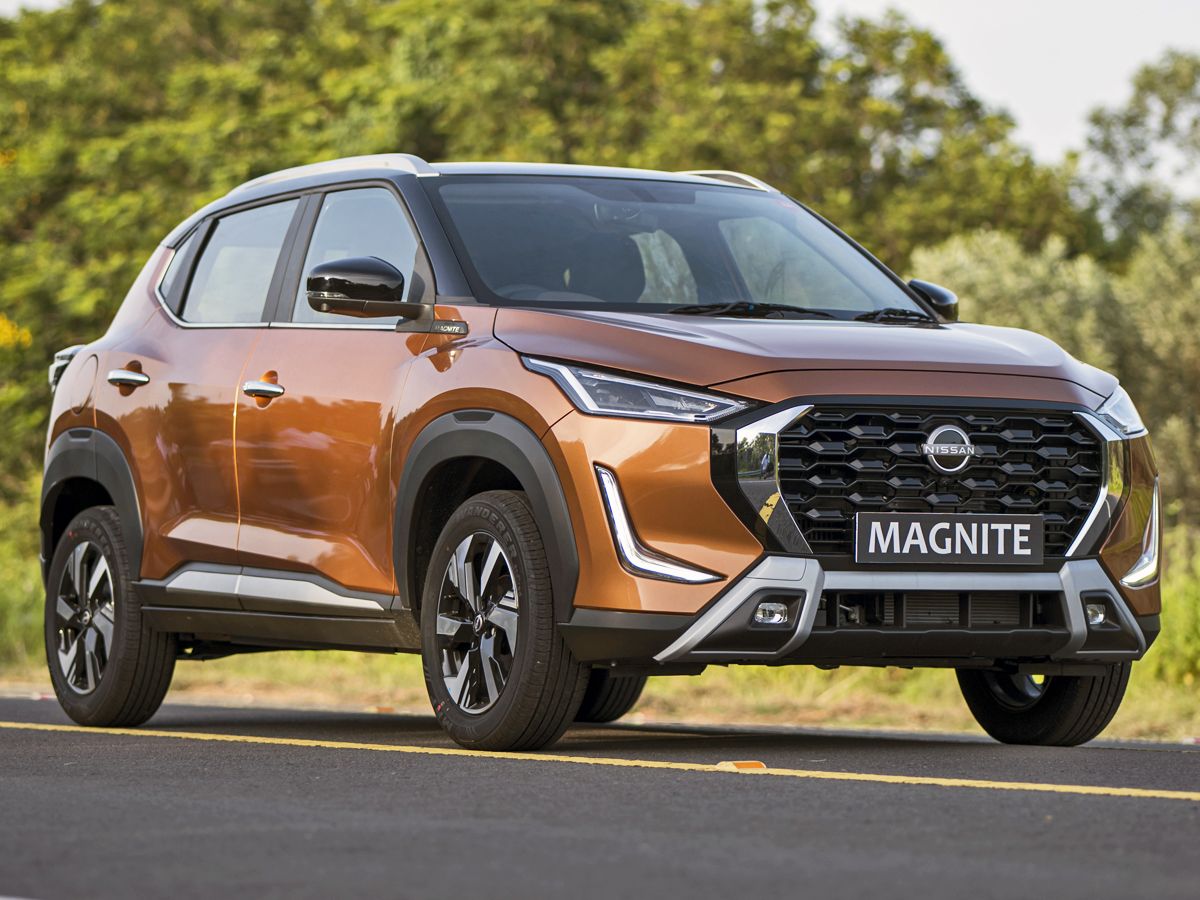
Meanwhile, the Nissan Magnite breached the 5-figure mark to climb a spot to 9th, with local registrations of this Indian-built crossover – which was facelifted in October 2024 – surging 17.2% year on year to 10 059 units. With the NP200 no more, the Magnite accounted for a whopping 45.1% of Nissan SA’s volume in 2024. Finally, the Haval Jolion fell a place to 10th position, despite sales growing 7.1% year on year to 9 213 units.
Which models were bubbling under in 2024, falling just outside the top 10? Well, the Kia Sonet (7 425 units) was the best of the rest, placing 11th and followed closely by a trio of Suzuki models: the Fronx (7 355 units), Baleno (7 311 units) and Ertiga (7 198 units). The Celerio-based Toyota Vitz, meanwhile, took 15th position with 6 927 registrations.
South Africa’s 10 best-selling passenger vehicles in 2024
We sample what is arguably one of the most exciting modern-classic Aston Martins: the 2009-2018 V12 Vantage – equipped with a manual transmission, no less!
Aston Martin is well-known for its gorgeous sportscars. We immediately associate the Gaydon-based brand with James Bond, as well as a strong racing pedigree. So, desirability is certainly strong. It can be argued, however, that most of the marque’s offerings fall more in the grand tourer category than being thrilling, engaging driver’s cars (excluding the likes of the super-exclusive Valour and Valkyrie, of course).
There are exceptions, though. If you’re looking for a fairly modern Aston Martin sportscar that is both good to look at and thrilling to drive, then the V12 Vantage, introduced in 2009, must rank at, or near, the top of the list. Besides… when last did you experience a V12 mated with a 6-speed manual gearbox?
The Details
Being the V12, this model is equipped with numerous model-specific addenda. Notice, for example, the carbon-fibre louvred bonnet, which is not just for show – it allows excess engine heat to dissipate.
You have to appreciate the 10-spoke alloy wheels and the small front splitter, to name a few other eye-catching details. It is not “over-the-top”, however, this car is still immediately recognisable as a Vantage.
The doors swing open (slightly upward) to reveal a cabin still in a near-pristine condition. When we took this car for a drive, it had less than 10 000 km on its odometer; unsurprisingly, the sportscar’s leather trim and the tastefully applied Alcantara inserts were in great condition.
When you’re ensconced behind the tiller, you are greeted by an anti-clockwise analogue rev counter and the clockwise speedometer behind a thick-rimmed (and Alcantara-trimmed) steering wheel. To your left is the most notable feature in the cabin, the stubby – and rather shiny – metal-capped gear lever.
This ornament gives you access to the car’s party piece: a 6-speed manual gearbox – not an automated manual, but a true stick-shift. Next, slot the crystal glass key fob into the dashboard. Press it and the 6.0-litre V12 engine erupts with a (very welcoming) deep burble from the pair of exhaust pipes at the back.
Specifications
Model: Aston Martin Vantage V12
Engine: 6.0-litre, 12-cylinder (V12), petrol
Power: 380 kW at 6 500 rpm
Torque: 570 Nm at 5 750 rpm
Transmission: 6-speed manual, AWD
Weight: 1 680 kg
0-100 kph: 4.34 sec (as tested by CAR magazine)
Top speed: 305 kph (claimed)
Behind the ‘wheel
Whether you’re parking the car or trundling through town at low speeds, the V12 Vantage feels relatively compact. At no time does it feel like a big, cumbersome GT, even if the expansive bonnet is pronounced.
In the bottom half of the rev range (at, say, 2 000 or 3 000 rpm), you can lean on the sizeable V12 motor’s torque, but the engine truly comes alive from there on out. If you push the revs past 6 000 rpm, the Aston feels like a true sports car in every way, accompanied by a magnificent soundtrack.
As I head towards Kalk Bay along Boyes Drive, I revel in the V12 Vantage’s ample performance and can’t help but smile at the visceral driving experience that this British machine delivers. With 380 kW and 570 Nm of torque on tap, you quickly run out of road to experience all the performance that it has to offer.
Make no mistake: the V12 Vantage is a fast car. Its claimed 0-100 kph time is 3.9 sec (with a top speed of 305 kph), but you’ll need time to familiarise yourself with the car, so you can learn how to best launch it.
The steering wheel provides enough feedback, while the carbon-ceramic brakes work perfectly to brush off speed – and in a hurry, which may often be the case. The faster you drive the V12 Vantage, the more compact the car begins to feel. The ride quality is firm, but thankfully not crashy whatsoever.
You can also count on the car’s grip, which is immense, but should the situation allow – and you’re sufficiently skilled behind the wheel – you can get the back end to break away with ease (such fun!), even if the front tyres are 255/35 ZR19 in size and, at the rear, a more substantial 295/30 ZR19.
If you haven’t driven a hardcore manual sportscar for a while, the Aston’s clutch action might seem a trifle heavy, but after a few minutes, you forget about it and are simply absorbed in the experience.
Summary
This Aston Martin V12 Vantage has a split personality. I can imagine how one could spend a good few hours behind the ‘wheel while covering vast distances in relative comfort. At the same time, it’s a dyed-in-the-wool sportscar that invariably offers an exhilarating experience, even on a dash to the shops.
Seeing as it’s a modern classic, don’t forget to pack your CDs from a decade ago if you need musical accompaniment in the car, but for most enthusiasts, I suspect the sonorous V12 will more than suffice.
Trading at more than double the price of a manual Vantage V8 from the same era, a V8 Vantage in great condition might still be a better buy – a bargain, even. However, if you want the ultimate non-S Vantage variant – a driver’s car that will beguile and engage you – it is hard to fault the V12 Vantage manual.
Apart from those gorgeous looks, the combination of the performance and the practicality of being able to take on a road trip (with some luggage accommodated in the boot), makes it a great proposition as a weekend toy and grand tourer. Relative rarity should ensure values remain strong in the long term, too.
This car was sourced and sold by MotoVillage, located in Tokai, Cape Town.
The Top 10 finalists in the running for the prestigious World Car of the Year title have been announced, along with the Top 5 in the 6 individual categories.
Now in its 21st year, the World Car Awards has been the world’s top motoring awards programme for the past 12 years (source: AITASTIC’s 2024 report, which analysed the WCA’s media reach in 47 markets) and the 2025 World Car Awards winners will be announced at the New York Auto Show on 16 April 2025.
A jury of 96 distinguished international automotive journalists from 30 countries selected the finalists based on their evaluation of each eligible vehicle as part of their professional work. Cars.co.za’s Head of SentiMETAL & Special Projects, Hannes Oosthuizen is South Africa’s longest-serving juror.
“With cars such as the locally-manufactured BMW X3, the recently-launched Ford Mustang, Mini Cooper, Suzuki Swift, Toyota Prado and Volkswagen Tiguan all in the running, this year’s World Car Awards are particularly relevant to our market,” said Oosthuizen. “Furthermore, several of these finalists are also in the running in the 2024/25 Cars.co.za Awards – sponsored by Absa,” he added.
Top 10 finalists: World Car of the Year
The trophy that car brands want most is the overall World Car of the Year title. The following 10 vehicles are competing for this prestigious trophy – the initial list consisted of no fewer than 52 contenders.
Furthermore, all vehicles competing in the 5 categories above are eligible for the 2025 World Car Design of the Year award.
A design panel comprising 5 highly respected world design experts was asked to 1st review each candidate and establish a short list of recommendations for the jurors’ final vote. The design experts were in alphabetical order: Anja Bracht (Germany – Pforzheim University), Gert Hildebrand (Germany – Owner Hildebrand-Design), Tom Matano (USA – Academy of Art University, Former Head of Design – Mazda), Victor Nacif (USA – Chief Creative Officer, Brojure.com and Design instructor, New School of Architecture and Design) and Shiro Nakamura (Japan – CEO, Shiro Nakamura Design Associates Inc.)
The 5 finalists chosen by the design panel for the jurors’ vote in February are: