Eyeing the VW Polo GTI but want to make it a little more special? Here are 5 of the best optional extras available for the Kariega-built hot hatch in South Africa…
Based on 2024 sales figures, the locally built VW Polo GTI is South Africa’s most popular hot hatch. So, considering there are so many examples on Mzansi’s roads, how can you make yours feel a little more special?
Well, we’ve identified 5 of the best optional extras for the facelifted Mk6 model.
As a reminder, the 147 kW Polo GTI is produced at VW’s Kariega plant – the exclusive manufacturer of this nameplate for global markets, in fact – right here in South Africa. While it ships with a relatively generous list of standard equipment, there are a few choice options we’d consider specifying. So, here they are…
Top 5 Equipment Options for the VW Polo GTI
1. Tilt-and-Slide Panoramic Sunroof
An extremely popular option among Volkswagen new-car buyers in South Africa, the sunroof is 1 of only 2 extras (not counting paint colours) that have a direct impact on the look the Polo GTI from the outside. VW offers a tilt-and-slide panoramic sunroof for its B-segment hot hatch, with this electrically operated item covering approximately half the length of the vehicle’s roof.
2.18-inch Alloy Wheels for VW Polo GTI
As standard, the Polo GTI rides on 17-inch “Milton Keynes” alloy wheels wrapped in 215/45 R17 tyres. However, you also have the option of upgrading to 18-inch “Faro” items shod in 215/40 R18 rubber. Like the standard wheels, these rims are diamond-turned and feature an eye-catching black-and-silver finish, though in a completely different design.
3. Upgrade your VW Polo GTI with the Leather Package
If you ask us, the Polo GTI’s standard black cloth upholstery doesn’t exactly scream “flagship hot hatch”. To remedy such concerns, the German automaker will gladly sell you the “Varenna” leather package. Tick this box and you score sports seats up front, with leather all around. The front pews retain the standard heating function, and furthermore, each gains red contrast stitching and a “GTI” logo to further enhance the sporty look.
4. Infotainment Upgrade: Discover Media
If you order your VW Polo GTI in standard form the infotainment will be taken care of by the basic 8.0-inch “Composition Media” system. Upgrading to the “Discover Media” version (also using an 8.0-inch display), however, will add items such as built-in navigation, wireless App Connect, voice control and wireless smartphone charging. Moreover, this package includes VW’s highly configurable digital instrument cluster. We think it’s worth ticking this option box!
5. Safety Package for the VW Polo GTI
While the VW Polo GTI comes standard with all the basic safety features you’d expect (including a full complement of 6 airbags), the optional safety package adds some extra “big-car” kit. Select this option and your hot hatch will gain adaptive cruise control (complete with “stop and go” function) as well as a lane-keeping system and traffic-jam assist. Forward-collision warning and autonomous emergency braking are also included, along with proactive pedestrian monitoring.
We compare the specifications of theJaecoo J7 and Ford Territory to see how well they stack up against those of the popular Haval H6.Which one of these family SUVs makes the strongest buying proposition? Let’s find out!
If you’re in the market for a new family car, there are many candidates to consider in mid-2025! New products, such as the Jaecoo J7 are giving established models such as the Toyota RAV4, Volkswagen Tiguan, Kia Sportage, Hyundai Tucson, Subaru Forester and the Haval H6 a run for their money!
Since both the Jaecoo J7 and Ford Territory are produced in China, we think it’s appropriate to pit them against a hugely successful Chinese-made family car in SA — yes, you guessed it, the Haval H6!
Haval, Great Wall Motor’s luxury SUV division, has been on a tear since the (now prominent) brand arrived on local soil in 2017. Steady sales of its Jolion compact SUV and H6 family SUV have propelled the brand up the sales chart to become one of the country’s best-selling SUV marques. More so, a thoroughly updated H6 has arrived in June 2025 and it’s expected to further solidify the model’s standing in the local market.
Now, with the Jaecoo J7 in the family car mix and the Ford Territory vying for the flag, how do their spec sheets and prices compare with those of the Haval H6? Which car has the strongest buying proposition?
Also, watch our video comparison of the Jaecoo J7 and Ford Territory below!
This article aims to help you, the consumer, make an informed buying decision (or at least finalise your shortlist of contenders). To help you do this, we will provide you with the need-to-know information and insight based on available vehicle information and our experience with the cars in question.
This article will cover key aspects including Exterior Styling, Performance & Efficiency, Interior Features & Safety, Dimensions & Practicality, as well as Pricing & Warranty details.
If, at the end of this article, you are still undecided about what to buy, you are more than welcome to reach out to us for advice via X, Facebook or Instagram. Our experienced test team will gladly assist you.
Haval H6 vs Jaecoo J7 vs Ford Territory
Exterior Styling
Jaecoo J7
The J7 brings fresh design flair to the family car segment.
The Jaecoo J7 comes to market with a suave design. Its upright slatted grille and slim headlights make a strong style statement, while its hidden door handles and sleek haunches enhance the modernised look.
The J7 range comprises 3 derivatives: the front-wheel-drive 1.6T Vortex and 1.6T Glacier (riding on 18-inch alloy wheels), as well as the range-topping 1.6T Inferno AWD, which gains larger (19-inch) rims.
Haval H6
The updated H6 brings fresh design flair to the family car segment.
The facelifted Haval H6 has just arrived in South Africa with a refined design execution that aims to elevate the H6 to the top of the segement. Haval has revised the front-end with a more progressive grille design and unique Daytime Running Light (DRL) design as well offering sportier 19-inch alloy rims to complete the new look.
The H6 range comprises both front- and all-wheel-drive derivatives with Luxury, Super Luxury and Ultra Luxury trim lines on offer. In addition, the H6 HEV (Hybrid) is offered in Ultra Luxury guise and, for those looking for a sportier H6 experience, the H6 GT is also available with the new powerful H6 GT PHEV, topping the H6 range.
Ford Territory
With a purposeful front-end design, the Territory has the looks, but does it have the go?
The Ford Territory boasts an attractive front-end design characterised by a distinctive grille design and daytime-running-light signature. Chrome finishes add a dash of class to the package and a tapering silhouette provides a sense of athleticism.
There are 3 Territory trim options on offer: the base Ambiente, mid-spec Trend (both with 18-inch alloy wheels) and a range-topping Titanium (with 19-inch alloy wheels) and Territory Dark Edition.
Middling performance deters from an otherwise attractive package.
We recently drove the Jaecoo J7 at its local launch in Johannesburg and while it doesn’t perform poorly, it does lack some urgency in terms of acceleration. This is a result of its tardy transmission calibration, which while smooth in operation, is sluggish to respond to throttle inputs. Admittedly, even though this might irk a few buyers, it’s unlikely to unsettle those who will be happy with the Jaecoo’s workmanlike performance and high feature value proposition, especially in 1.6T Glacier guise.
The Jaecoo J7 does have a comfortable ride quality (it’s not firmly sprung), which family car buyers will appreciate. According to our correspondent, the J7’s steering feel is light, which makes it a breeze to execute parking manoeuvres, but it does lack a sense of directness with a vague steering response.
We also spent an extended period with the J7 and we recommend that you read our “Living with it” article a thorough analysis of this car.
The Haval H6 offers impressive overall performance.
Compared with the J7’s 1.6-litre turbopetrol powertrain, the H6’s uprated 2.0-litre 4-pot turbopetrol is punchier and quite well-calibrated with the transmission to deliver a pleasing driving experience. There’s sufficient oomph for overtaking (when required) and the H6 pips its countryman with good overall performance.
As far as ride quality is concerned, the H6 doesn’t disappoint. While the Haval’s suspension is relatively firmly sprung, it doesn’t sacrifice overall ride comfort. As it turns out, it contributes to a more engaging drive, in combination with a more direct and communicative steering feel.
The performance of the H6 HEV is even more impressive, boasting the full-fat 179 kW and 530 Nm of torque, which is plenty for a family car. The H6 HEV is also the most frugal in the range (5.2 L/100 km versus standard derivatives’ 7.4 L/100 km), which is important considering the rising cost of fuel.
As for the new H6 GT PHEV, it offers considerable performance punch with its 1.5-litre PHEV powertrain producing 321 kW and 762 kW! Watch the review below for insight on its performance!
Ford Territory
The Territory offers good overall performance with high levels of refinement.
We tested the new Ford Territory at the end of 2024 and came away impressed with its general performance. Not only does the Territory deliver a comfortable ride quality but it also exhibits a pleasingly refined driving experience. It utilises a 7-speed dual-clutch automatic transmission, but in this case, it’s mated with a 138 kW/318 Nm 1.8-litre 4-cylinder turbopetrol engine.
The transmission is smooth and unobtrusive and in-gear acceleration is more than adequate for executing overtaking manoeuvres. Based on our launch drive experience, the Territory also delivers good fuel consumption for a car of its size. Ford claims 7.0 L/100 km, we saw an indicated figure of 8.1 L/100 km at the end of our launch drive (the figure dropped to as low as 7.7 L/100 km during the journey).
When compared to the Jaecoo J7 and 2.0-litre Haval H6 derivatives, the Territory’s performance is not as forthcoming at its rivals and is clearly outgunned in terms of power and torque.
Interior Execution and Features
For the purpose of this feature comparison, we will compare the specifications offered in the range-topping derivatives of each model range.
Yes, 10.25-inch digital display with Head-UP Display
Yes, 10.25-inch digital display, with Head-Up display
Yes, 12.3-inch digital display is integrated into a single panoramic display
Android Auto / Apple CarPlay
Yes, both
Yes, both
Yes, both
Bluetooth, Voice Control, USB, Wireless Charging
Yes to all. 2 front USB, 2 rear USB
Yes, 1 front USB 1 rear USB
Yes to all. 3 front USB, 1 rear USB
Rear View Camera
Yes, with panoramic view (360 degrees)
Yes, with panoramic view (540 degrees)
Yes
Steering Adjustment: Rake / Reach
Yes, both
Yes, both
Yes, both
Cruise Control
Yes, adaptive
Yes, adaptive
Yes, adaptive
Air Conditioning
Dual Zone Climate Control
Dual Zone Climate Control
Dual Zone Climate Control
Panoramic Sunroof
Yes, sliding
Yes
Yes, dual-sliding
Upholstery / electric seats
Artificial leather, front electric seats with heating/ventilation
Artificial leather, front electric seats with heating/ventilation
Leather, manual adjustment
Front / Rear Park Distance Control
Both
Both
Both
Safety Features
8 airbags, ABS with EBS, Brake Assist, Electronic Stability Control with Traction Control , Traffic Jam Assist, Blind Spot Assist, Lane Departure Warning with Lane Keep Assist, Hill Descent Control, Rear Cross Traffic Alert, Tyre Pressure Monitoring
6 airbags, ABS with EBS, Brake Assist, Electronic Stability Control with Traction Control , Traffic Jam Assist, Blind Spot Assist, Lane Departure Warning with Lane Keep Assist, Hill Descent Control, Rear Cross Traffic Alert, Tyre Pressure Monitoring
6 airbags, ABS with EBS, Brake Assist, Electronic Stability Control with Traction Control , Traffic Jam Assist, Blind Spot Assist, Lane Departure Warning with Lane Keep Assist, Hill Descent Control, Forward Collision Warning with Pedestrian Detection, Rear Cross Traffic Alert, Tyre Pressure Monitoring
Jaecoo J7
A large tablet-style infotainment screen dominates the central dashboard in the Jaecoo J7.
The Jaecoo J7 features a minimalist interior design execution, replete with one of the largest, if not the largest, central touchscreens in the family-car segment. The J7’s standard specification is generous, even in the base 1.6T Vortex offering, with the mid-spec Glacier arguably being the pick of the range.
Compared with the Haval H6 and Ford Territory, the Jaecoo has the most airbags (8) and its standard safety specification is indeed very good. Some safety features seem overly sensitive, however; they tend to trigger multiple (intrusive) audible warnings, which you can only deactivate via the touchscreen menu.
Haval H6
Haval’s fully loaded standard specification strategy has paid off – it’s one of the reasons why the H6 has proven such a hit in the South African new-vehicle market. Beyond the Haval’s neat and modern cabin execution, buyers are availed of a wide range of comfort and convenience features.
Ford Territory
A panoramic infotainment display is a highlight inside the new Ford Territory.
The Ford Territory’s cabin is a pleasant place to be and we found its perceived build quality to be very good indeed. The highlight feature is the expansive screen that houses the digital instrument cluster and infotainment screen, which reminds of the infotainment screens seen in the latest Mercedes-Benz models.
That’s a good thing, because the panoramic screen gives the cabin a decidedly premium ambience, which might partly justify the Territory’s higher-than-average asking price. Other interior highlights include a dual-panel panoramic “Moonroof”, but the Territory does lack a few nice-to-haves such as electric seat adjustment and ventilated seats.
Dimensions and Practicality
Jaecoo J7
Haval H6
Ford Territory
Length
4 500 mm
4 703 mm
4 630 mm
Width
1 865 mm
1 886 mm
1 935 mm
Height
1 680 mm
1 730 mm
1 706 mm
Wheelbase
2 672 mm
2 738 mm
2 726 mm
Kerb Weight
1 709 kg
1 720 kg
1 630 kg
Ground Clearance
200 mm
170 mm
190 mm
Load Capacity
412 litres
TBC
435 litres
Jaecoo J7
The Jaecoo J7 is touted to offer some offroad capability thanks to its ARDIS.
The J7 has a smaller footprint than the H6 and Territory, but has the highest clearance advantage of the 3 models (200 mm), which is useful if you intend to venture off tar. Moreover, if you opt for the range-topping 1.6T Inferno AWD, which is equipped with Jaecoo’s All Road Drive Intelligent System (ARDIS) that has 7 drive modes (including Sand and Mud), you’ll have some added confidence in the dirt.
Note that the Jaecoo’s wheelbase is also shorter, which will, inevitably, translate into less cabin space for passengers and luggage. The J7 is fitted with a full-size spare, which results in a shallow load bay with a claimed capacity of 412 litres, which contrasts starkly with the generous 600 litres offered by the H6.
Haval H6
The H6 is a capable all-rounder with suitable practicality traits.
The numbers suggest the Haval H6 is the most practical offering compared with the J7 and Territory. It has a generously-sized load bay for hauling luggage and the boot-floor height can be easily adjusted.
While its ground clearance (170 mm) is the lowest in this trio of family cars, the AWD-equipped H6 has an off-road driving mode to maximise traction should you decide to drive on an unsealed surface.
Ford Territory
The Territory is a smartly packaged family car.
The Territory has a ground clearance of 190 mm and is a front-wheel drive model only. Despite having a traction-enhancing “Mountain Mode”, the Territory will be most comfortable on tar.
However, the Territory’s true strength lies in its clever packaging. Its load bay looks larger than its claimed 448-litres suggests and combined with its added width and generous wheelbase, the Territory has its rivals licked as far as passenger comfort is concerned and offers excellent rear leg- and knee room for rear passengers.
Price and Warranty
Be sure to check out our New Car Specials to get a good deal on your next car!
While the new Jaecoo J7 presents a compelling value proposition, especially in 1.6T Glacier guise, we don’t think its pricing and value offering (in top-spec guise) is stronger than that of the Haval H6 or the new Ford Territory. With middling performance and compromised practicality, the J7 has its drawbacks.
The Haval H6, in the company of the J7, is a more well-rounded offering, while the added performance and efficiency of the H6 HEV is hard to ignore, given that the J7 Inferno AWD and H6 HEV are so closely priced and buyers will be happy know that the thoroughly updated H6 is now available in South Africa.
As for the Ford Territory, we think it’s a strong product that buyers should have on their family car shortlist. Yes, it’s a slightly pricier proposition but from a performance and build quality perspective, we think the additional outlay coincides with its value proposition.
Cars.co.za, South Africa’s leading online car portal, has launched a new Price Track Alert feature that allows users to receive notifications when a car’s price is reduced, increasing the chance of getting a good deal!
As a consumer champion, Cars.co.za is always striving to find useful solutions to make browsing for new and used cars easier and more practical for you, the consumer.
Our latest feature update is Price Track Alert!
Users who are logged in to their Cars.co.za profiles will be able to request a Price Track Alert on the vehicle listings page and receive an email notification when the price of a particular car is reduced.
What are the benefits of Price Track Alert?
The new Price Track Alert feature will save you time and money!
You will receive notifications when pricing on a particular vehicle changes so you don’t have to keep checking back, saving you time!
If the price of the car matches your budget, you can reach out to the dealer directly and proceed to buy the car! Receiving price alerts will increase your chance of buying a car at a better price, saving you money!
Price Track Alerts can be requested for multiple models of interest to you which means you can personalise your Price Track Alert only for the cars that you want to buy, resulting in a more focused buying strategy.
Other useful features to look out for
In addition to the new Price Track feature, Cars.co.za recently added Listing Badges to both new and used car listings to help consumers identify cars that might deserve a closer look.
Deal Badges include Great Deal, Good Deal and Fair Deal. The Fast Seller badge highlights listings in high demand and Price Drop badges highlight listings with a reduced price.
The facelifted Kia Sorento has finally hit the market in South Africa, with the local range now comprising a trio of 7-seater derivatives. Here’s what each one costs…
The facelifted Kia Sorento has officially hit the market in South Africa, with the South Korean firm’s local division trimming the range slightly to a trio of 7-seater derivatives.
As a reminder, the MQ4-series Sorento – the 4th iteration of this nameplate – touched down in Mzansi in January 2022, before the refreshed version was revealed overseas in November 2023. Now, that facelifted model has officially arrived.
While the pre-facelift line-up featured 4 derivatives, the updated portfolio comprises 3 variants, with the all-wheel-drive version of the EX grade falling away. As before, the range kicks off with the front-wheel-drive Sorento 2.2 CRDi EX+, which is now priced at R999 995. For the record, that represents a R51 000 increase over the pre-facelift line-up’s entry point.
Next comes the Sorento 2.2 CRDi SX AWD, priced from R1 199 995 (up a considerable R146 000 compared with the outgoing derivative), followed by the flagship Sorento 2.2 CRDi SXL AWD at R1 299 995 (priced some R166 000 higher than before).
From what we can tell, the 3-row Sorento’s powertrain carries over unchanged. Therefore, all 3 derivatives again employ a 2.2-litre, 4-cylinder turbodiesel engine, which here delivers 148 kW and 440 Nm via an 8-speed dual-clutch transmission.
So, what has changed? Well, in addition to the adoption of Kia’s latest exterior design language as well as the fitment of new 20-inch alloy wheels (up from the 18- and 19-inch items previously used), the refreshed Sorento’s cabin scores features like a redesigned gear lever and “sustainable” interior trim.
Inside, you’ll also find a 12.3-inch touchscreen (with navigation) and a 12.3-inch instrument cluster. There’s also again a wireless smartphone charger, while the cabin upgrades to 6 USB-C ports (2 per row). Kia says it has furthermore “upgraded” the various advanced driver assistance systems on offer.
Here’s a quick rundown on the standard kit. The EX+ grade features smart entry (with push-button start), 8 airbags, parking sensors (fore and aft), a reverse-view camera, LED headlamps, LED front foglamps, synthetic leather upholstery, cruise control, a panoramic sunroof, roof rails, dual-zone climate control and a 6-speaker sound system.
Stepping up to the SX trim level scores you powered front seats (including electric lumbar support for the driver, plus heating and ventilation for both pews), rear sun-shade blinds, “smart” cruise control, a height-adjustable powered tailgate, LED taillamps, rain-sensing wipers, a heated steering wheel, rear-seat check alert, driver-attention alert, rear-cross traffic alert, forward-collision avoidance assist, lane-following assist, lane-keep assist and blind-spot collision avoidance.
Finally, the range-topping SXL specification additionally boasts rear parking-collision avoidance assist, side parking sensors, a blind-spot monitor, an around-view monitor, interior mood lighting, an uprated instrument cluster, a 12-speaker Bose sound system and a head-up display.
What does the facelifted Kia Sorento cost in SA?
Kia Sorento 2.2 CRDi EX+ 8DCT – R999 995
Kia Sorento 2.2 CRDi SX 8DCT AWD – R1 199 995
Kia Sorento 2.2 CRDi SXL 8DCT AWD – R1 299 995
The prices above include Kia’s 5-year/unlimited kilometre warranty and a 6-year/90 000 km maintenance plan.
Ineos Automotive owes its existence to a dream of adapting a legendary off-roader for the contemporary motoring world, but given the lofty asking prices (and lengthy option lists) of the British brand’s models, how much are YOU willing to pay for nostalgia?
Haven’t some of the world’s best (and also, often, worst) ideas been conceived in bars out of scribbled back-of-a-napkin propositions? Depending on who you ask – or believe, the jet engine, Linux operating system and Velcro were all conceived over a few tipples, as was the Ineos Grenadier off-roader.
When it comes to off-roaders, either by coincidence or try-hard marketing spin, the story goes that the Ineos Grenadier was indeed birthed in an eponymous London pub by chemicals giant Ineos’ owner, Sir Jim Ratcliffe (pictured above), as far back as 2016.
According to legend, he’d reportedly previously approached Land Rover for the rights to continue building the OG Defender, but was turned down, not that that snag dissuaded Sir Jim whatsoever…
As one of the wealthiest individuals on the planet (and presumably bolstered by a fair degree of Dutch courage), Sir Jim and his associates set about planning to build a Defender-that-was-not-a-Defender; a retromodern clone that benefited from high-tech componentry, but retained the spirit of the original.
Just how hard could it be?
The common availability of off-the-shelf parts and global sourcing means that nearly anyone can build a car today: you only need to be a coachbuilder and have access to an assembly line. As for the rest, the Grenadier is assembled using BMW engines, Brembo brakes, Eibach suspension and ZF gearboxes.
And sure enough, the generous ground clearance and suspension travel, ladder-frame chassis, solid axles, low-range transfer case and exposed screwheads all pointed to a rugged, utilitarian go-anywhere boulder-buster in the spirit of the Toyota Land Cruiser 76, Jeep Wrangler and yes, the old Defender.
The vision of a supremely capable and modern, made-over Defender has all the hallmarks of a slam-dunk winner aimed at rose-tinted nostalgists and retro-cool hipsters.
Yet somewhere in the process, something went wrong. Sir Jim’s noble, almost Robin Hood-like vision of bridging past and present for the pathfinding purist, with an industrial, relatively affordable modern-day overlander, stumbled at the final hurdle – affordability.
Ignoring the commercial variants of the Ineos Grenadier for the moment, the 3.0T (turbopetrol) and 3.0TD (turbodiesel) variants of the 5-seat Grenadier Station Wagon cost R1 717 100 before options, with the Fieldmaster version adding another R145 000. Read our review of the 3.0TD Trialmaster Edition.
According to Cars.co.za’s New Car Specs, the most affordable Land Rover Defender 110 (5-door) is the D250 X-Dynamic SE, which costs R1 801 100. “But that’s even more expensive than the entry-level Grenadier, silly,” I hear you say. Indeed, it is, but in contrast with the relatively new (and rather niche) Ineos, there is a glut of keener-priced demo and slightly used Defenders on the used market.
Watch Ciro De Siena’s video review of the 2021 Land Rover Defender:
Besides, the big gripe with the Grenadier’s new-vehicle price is that it excludes a multitude of features.
Ineos Automotive seems to have taken a leaf from the German premium marques by only offering the Grenadier with a moderate spec level; buyers have to add the options as expensively bundled extras: if you want front and rear locking diffs and/or chunkier all-terrain tyres, that’ll cost an extra R48 250.
Watch Jacob Moshokoa’s recent launch review of the Jeep Wrangler:
More basic conveniences, such as electrically operated side mirrors, a rear-view camera or front PDC and some more charging points? Another R33 500, which pushes the price up to just below R1.8 million.
The weak ZAR-GBP exchange rate is certainly an impediment, but the fact is R1.8 million for what was meant to be a glorified off-road kit car (and of which its spiritual predecessor was intentionally designed as industrial so as to facilitate DIY roadside repairs) – is a lot of dead presidents in anyone’s language.
Watch Ciro De Siena’s review of the Toyota Land Cruiser 76:
So, much of that plucky maverick spirit that sparked the creation of the Grenadier no longer exists either in philosophy or execution: you pay for the privilege and can forget about fixing it with nothing but your Leatherman and your wife’s bikini bottom if you’ve whacked one off of its half-shafts in the Richtersveld.
Watch Ciro De Siena’s video review of the Mahindra Scorpio-N:
And a Jeep Wrangler Unlimited 2.0T Rubicon costs R1 299 900; for adventurers with a considerably smaller budget, the Mahindra Scorpio-N is a 7-seater (if you want to take gran along on safari) – 4Xplor variants’ prices begin at R587 999. Also, don’t forget the Suzuki Jimny 5-door, starting from R434 900.
Considering its undeniably cool backstory and, importantly, inarguable off-road credentials, it’s hard to bet against the Ineos Grenadier, provided, as ever, that you can afford one. But you have to consider the model within the broader context of nostalgia becoming a profitable commodity in the car world.
Legacy was also the one asset that Land Rover wanted to protect most (upon hearing the suggestion of a retromodern remake of the Defender by an interloper) and the very, however unmeasurable, reason why you’re paying more for memories than actual metal if you’re gunning for an Ineos Grenadier.
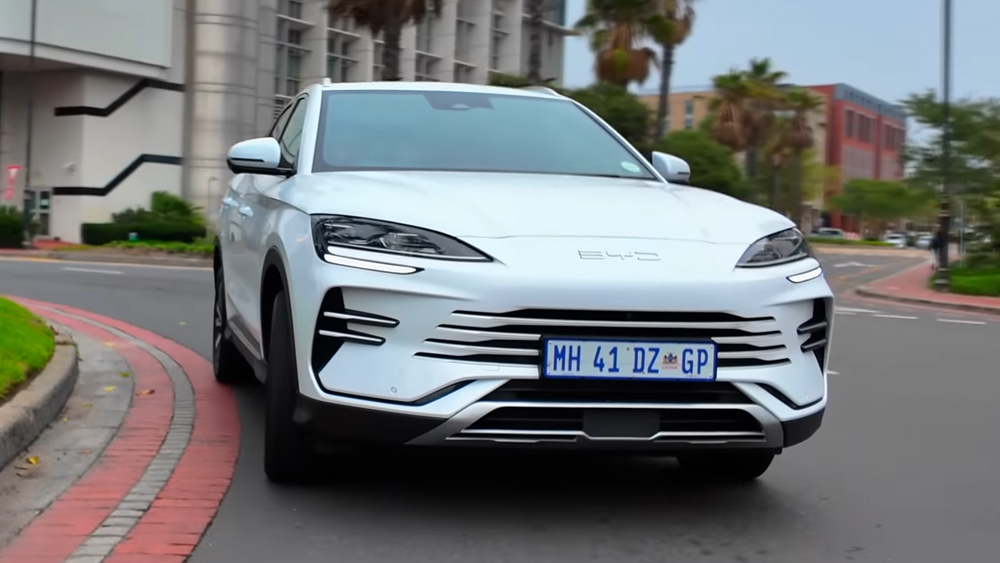
BYD Sealion 6: SA’s Most affordable PHEV family car
The BYD Sealion 6 PHEV is the most affordable plug-in hybrid electric family car (medium SUV) currently available in South Africa’s new-vehicle market. We review it.
In this in-depth video review, Ciro De Siena gets behind the wheel of the BYD Sealion 6 to find out if its combination of price and performance truly makes it the local market’s best-value plug-in hybrid SUV.
BYD is rapidly becoming a global titan. Since the Chinese new-energy vehicle brand arrived in Mzansi, it has rolled out a comprehensive product line-up based on its “Ocean” nomenclature – the BYD Sealion 6 was one of its first launches. BYD is set to introduce up to 14 new products over the next 2 years.
For local buyers, the arrival of these vehicles necessitates a brief primer on the jargon:
ICE (Internal Combustion Engine): The traditional petrol- or diesel-engined car.
HEV (Hybrid Electric Vehicle): A self-charging hybrid with a small battery (e.g., Toyota Corolla Cross). These systems excel in low-speed urban environments.
PHEV (Plug-in Hybrid Electric Vehicle): The focus of this review. It features a larger battery and electric motor, allowing for a significantly longer electric-only driving range (BYD Sealion 6).
BEV (Battery Electric Vehicle): A fully electric car (such as the BYD Sealion 7 coupe-styled medium SUV, Dolphin small crossover, and Dolphin Surf city car).
The BYD Sealion 6, as a plug-in hybrid electric vehicle (PHEV), is designed to offer the best of both worlds: zero-emission commuting combined with the peace of mind of a petrol engine for long journeys.
The most significant factor positioning the BYD Sealion 6 as a market contender is its price. Starting at R639 000 (November 2025), it immediately undercuts key rivals and remains, critically, the most affordable (new) PHEV currently available in South Africa. This aggressive positioning is no accident.
BYD’s ability to achieve this price is rooted in its unique structure. The company manufactures its own batteries, most notably the advanced Blade Battery, which is integrated into the BYD Sealion 6’s structure, enhancing safety and rigidity. This vertical integration significantly reduces production costs.
The BYD Sealion 6 is equipped with an 18 kWh battery, which allows for an electric-only driving range of up to 80 km. For many South African commuters whose daily travel falls within this range, the vehicle has the potential to function as a pure EV for most of the week without consuming a drop of petrol.
Unlike HEVs, which can struggle with fuel consumption on the open road, the PHEV system is designed to perform efficiently across all driving conditions. The BYD Sealion 6 is powered by a 1.5-litre 4-cylinder turbopetrol engine working in conjunction with its electric motor.
The front-wheel-drive version, which Ciro tests, produces a healthy 160 kW and 300 Nm of torque. A more powerful all-wheel-drive Premium version is also available. During real-world mixed urban and highway driving, the test car averaged a consumption figure of 5.2 L/100 km.
When the battery is consistently charged, which can be done in under an hour with a 22 kW AC home charger, that figure can drop to effectively zero for short to medium trips.
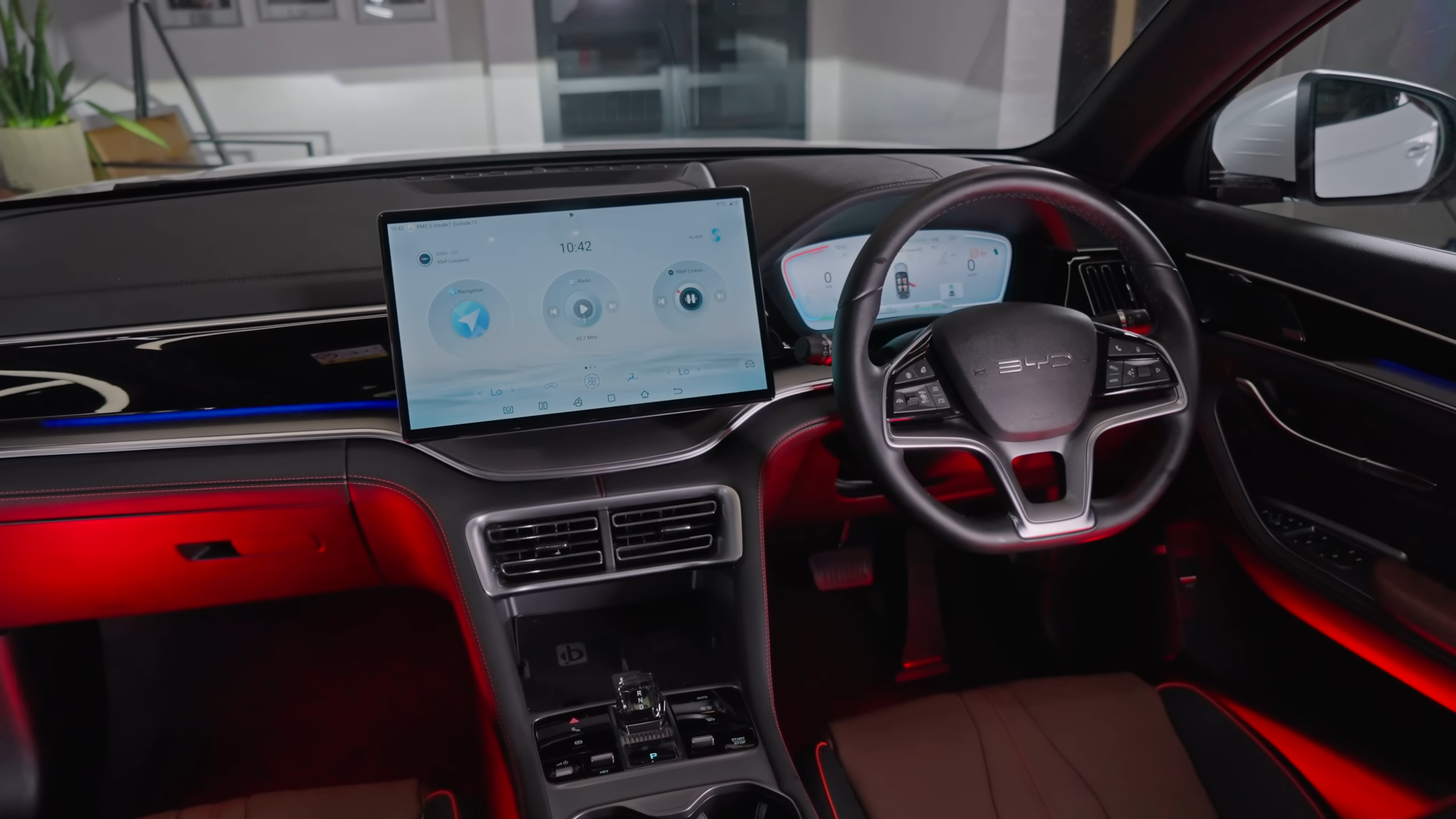
Stepping into the BYD Sealion 6, the interior is arguably one of the most surprising elements of the car. The cabin quality feels exceptionally premium, challenging the fit and finish of many legacy European brands in this price bracket.
The centrepiece is the sizeable (15.6-inch) touchscreen infotainment system, which can famously be rotated between portrait and landscape modes – it’s a party trick of several BYD models. Ciro notes that the software interface and large, responsive icons make the BYD system quite intuitive to use.
Practical features abound:
An NFC key reader allows for unlocking the car via a smartphone app.
The centre console includes 2 wireless charging pads.
The automatic transmission’s selector features a crystal-like “Wilson toffee” knob.
The cabin is packed with a full suite of modern safety systems, including active cruise control and lane-keeping assistance.
Is the BYD Sealion 6 practical?
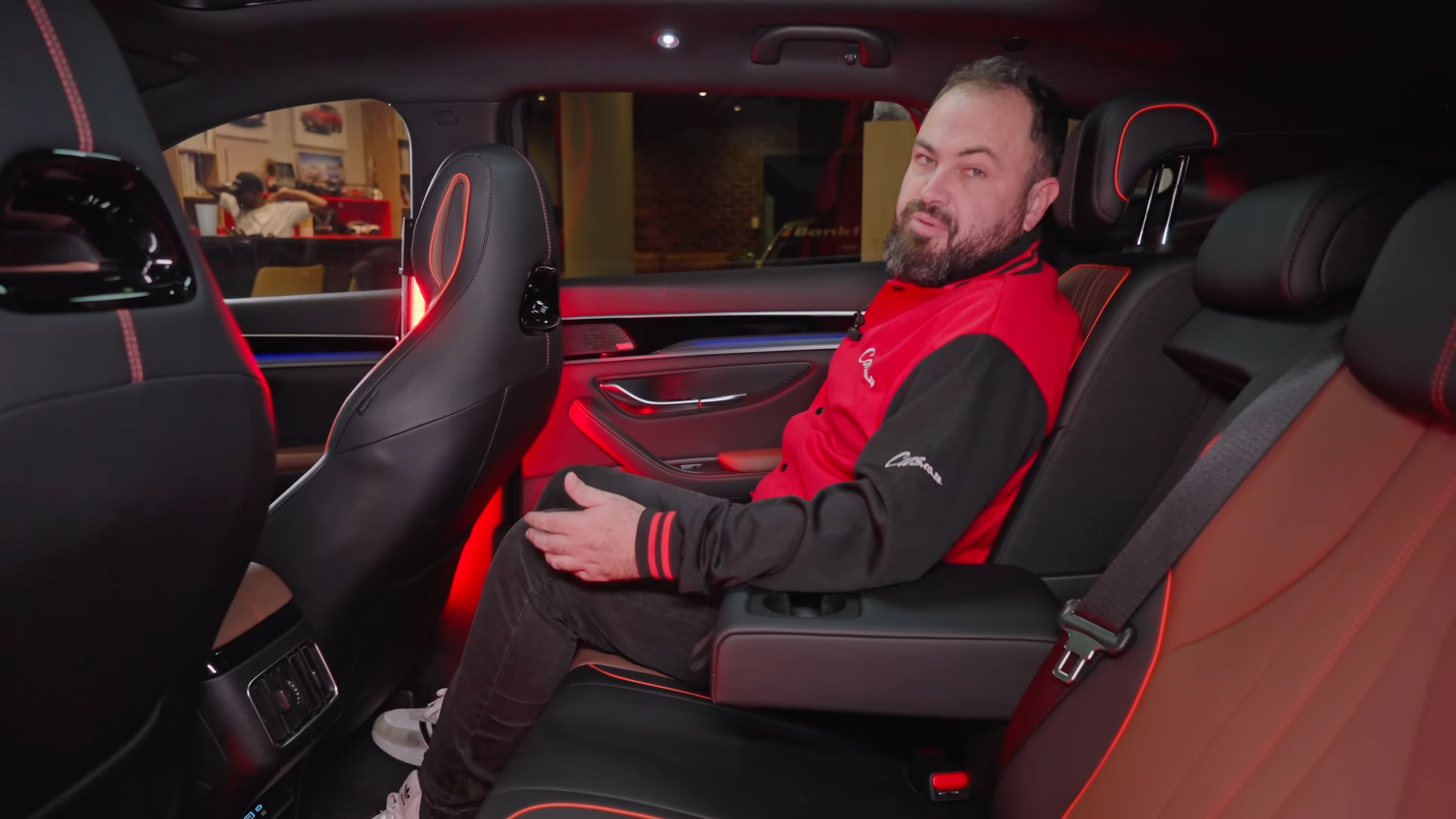
A high point in the practicality assessment of the BYD Sealion 6 is the rear seat comfort. Ciro describes the plush, supportive rear bench as among the most comfortable he’s experienced in the segment, complemented by adjustable backrest angles and generous head and legroom for adults.
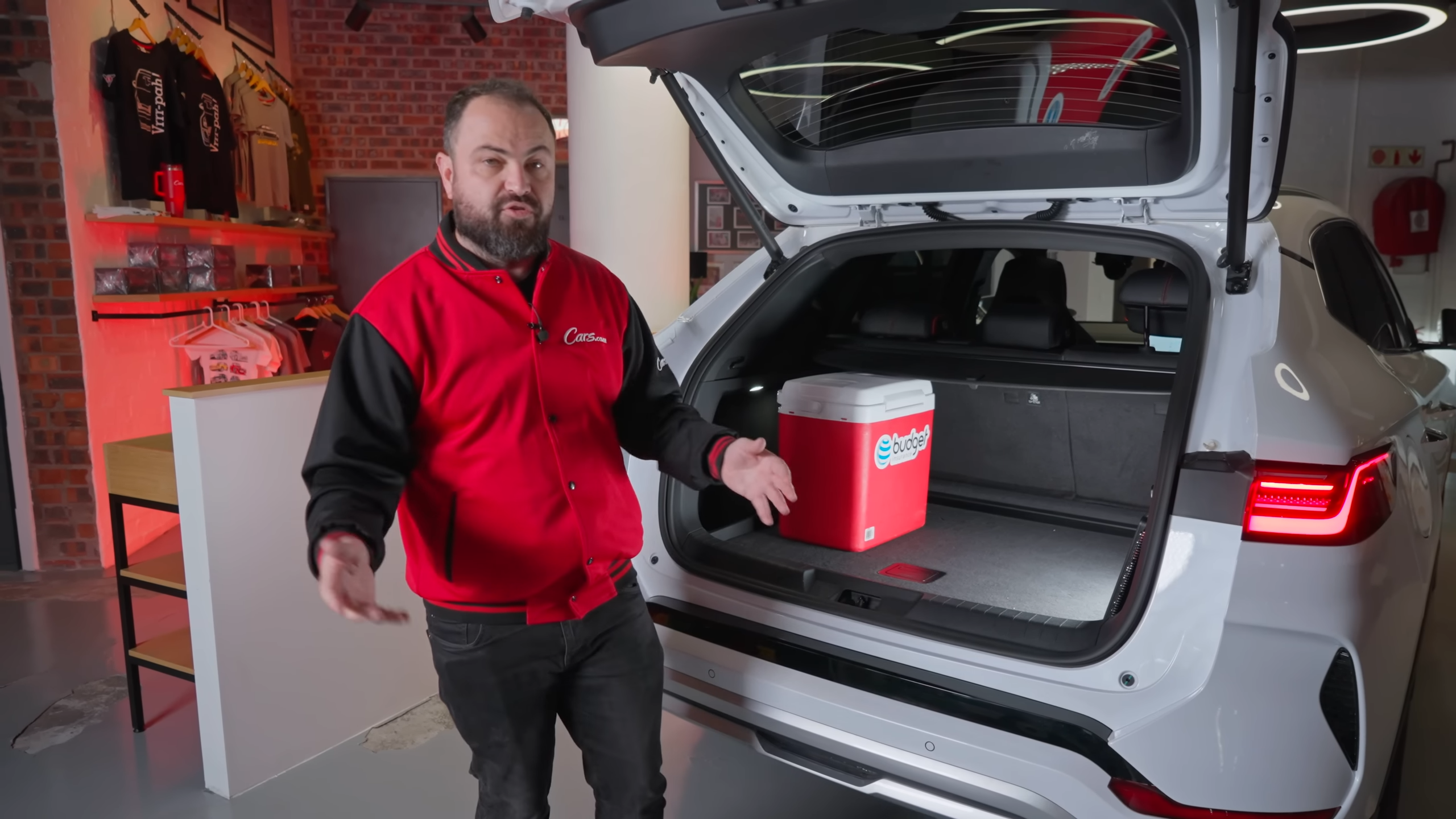
For family use, the BYD Sealion 6 offers 425 litres of luggage space with the rear seats up. Local buyers should note the absence of a full-size spare wheel, replaced by a tyre compressor and repair sealant.
How much does the BYD Sealion 6 cost in South Africa?
Prices (correct in November 2025) include a 5-year/100 000 km vehicle warranty, an 8-year/150 000 km battery warranty and a 5-year/100 000 km maintenance plan (the latter includes wear-and-tear items).
When the Sealion 6 arrived with a R639 900 price tag, it was a reset for the local NEV segment. The BYD delivers a premium experience, excellent efficiency, and impressive tech at an undeniably aggressive price point that no other current plug-in hybrid electric family car (in November 2025) can match.
The question for the segment is not whether the Sealion 6 is good, but how its rivals can raise their game in response. Watch the full video below to see Ciro’s final thoughts, comparisons against its rivals, and determine if the BYD Sealion 6 truly is South Africa’s best value plug-in hybrid SUV.
Frequently Asked Questions (FAQ)
Q: What is the primary selling point of the BYD Sealion 6 in the South African market?
A: The Sealion 6 is currently the most affordable (new) plug-in hybrid electric vehicle (PHEV) available in South Africa, starting at R639 900 (November 2025).
Q: What is the electric-only driving range of the Sealion 6 PHEV?
A: The vehicle is equipped with an 18 kWh Blade Battery, which allows for an electric-only driving range of up to 80 km.
Q: What are the combined power and torque outputs of the front-wheel-drive version?
A: The front-wheel-drive version produces a healthy 160 kW of power and 300 Nm of torque from its hybrid system.
Q: What is the warranty package included with the BYD Sealion 6?
A: The price includes a 5-year/100 000 km vehicle warranty, an 8-year/150 000 km battery warranty, and a 5-year/100 000 km maintenance plan (which includes wear-and-tear items).
Volvo EX90 (2025) Review
The all-electric Volvo EX90 Ultra Twin Performance – the Swedish brand’s most powerful, advanced and luxurious model – recently landed in Mzansi, but is it a well-resolved product?
We like: Hushed cabin, build quality, minimalist clean design, balance of performance and range.
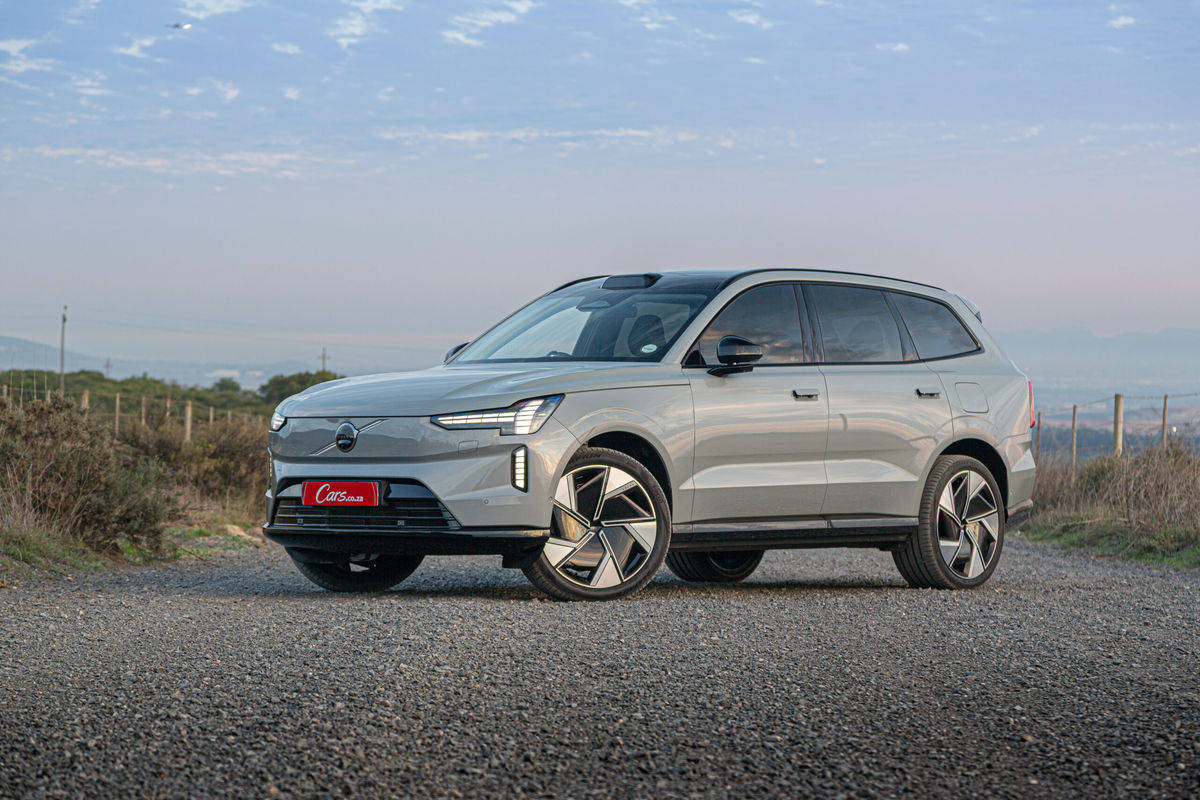
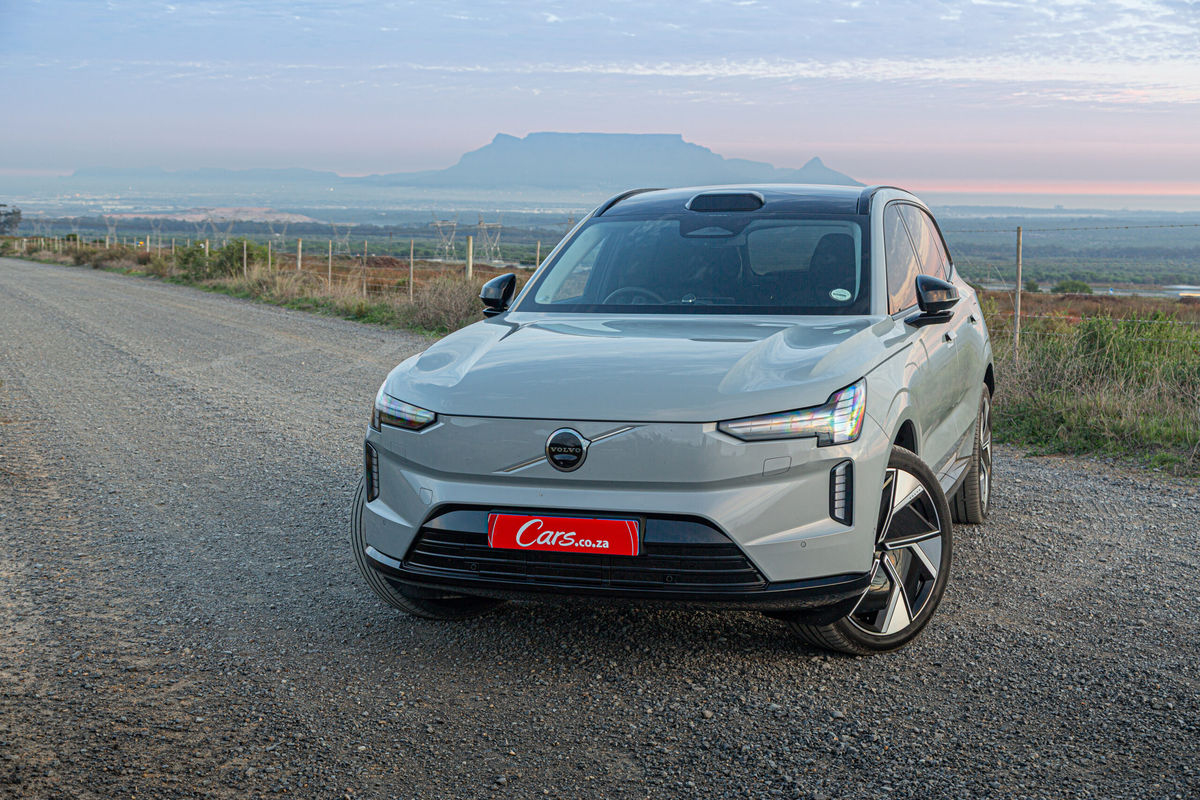
The EX90 is unmistakably Volvo; note the LIDAR sensor located just behind the windscreen.
The author of this review has followed the gestation of Volvo’s sleek, all-electric, 3-row premium SUV closely since the model’s global reveal in late 2022 – he even attended the international media launch in Los Angeles in 2024. Cars.co.za can now finally conduct a comprehensive test of the EX90 on home soil.
But, before we get stuck in, note those dates. There’s quite a time gap between the announcement of the model (2022) and the start of production at the Charleston, South Carolina plant in June 2024, which speaks volumes for the sheer complexity of this new-gen vehicle. Volvo says the 2025 EX90 is not just a car but rather a high-tech supercomputer on wheels, and unsurprisingly, it has had teething troubles.
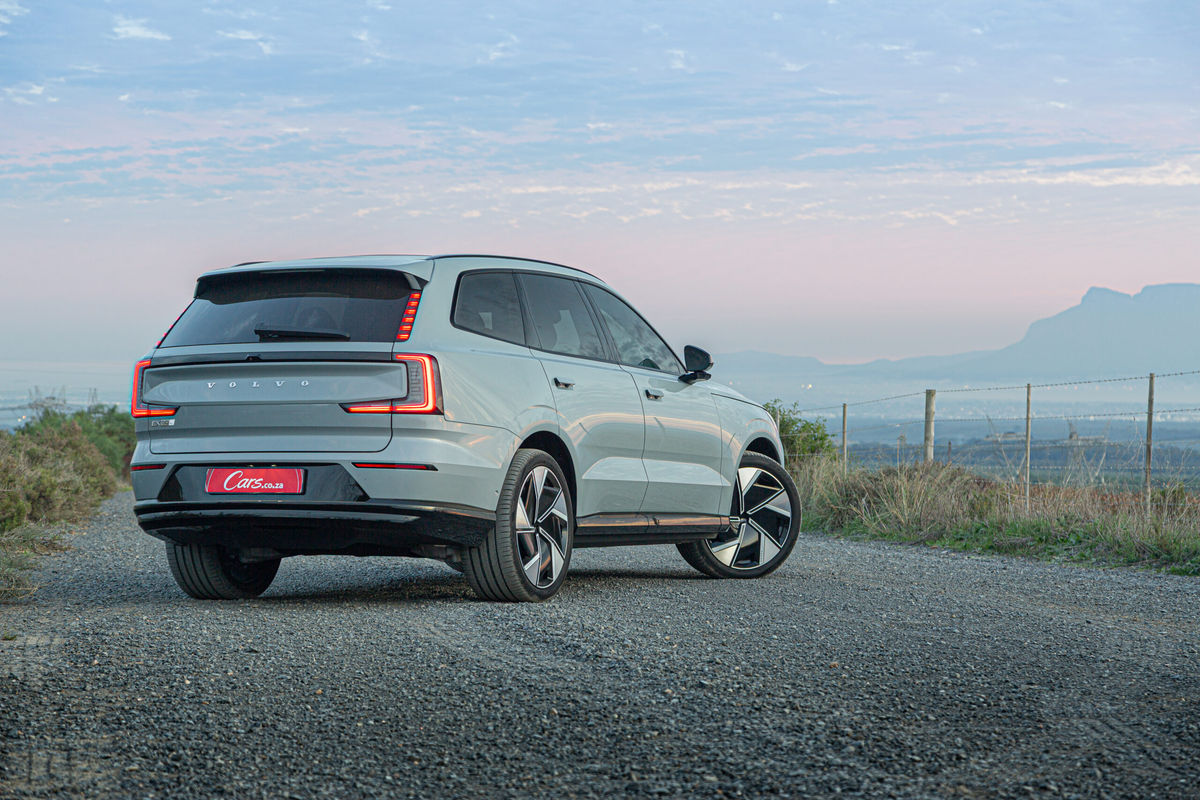
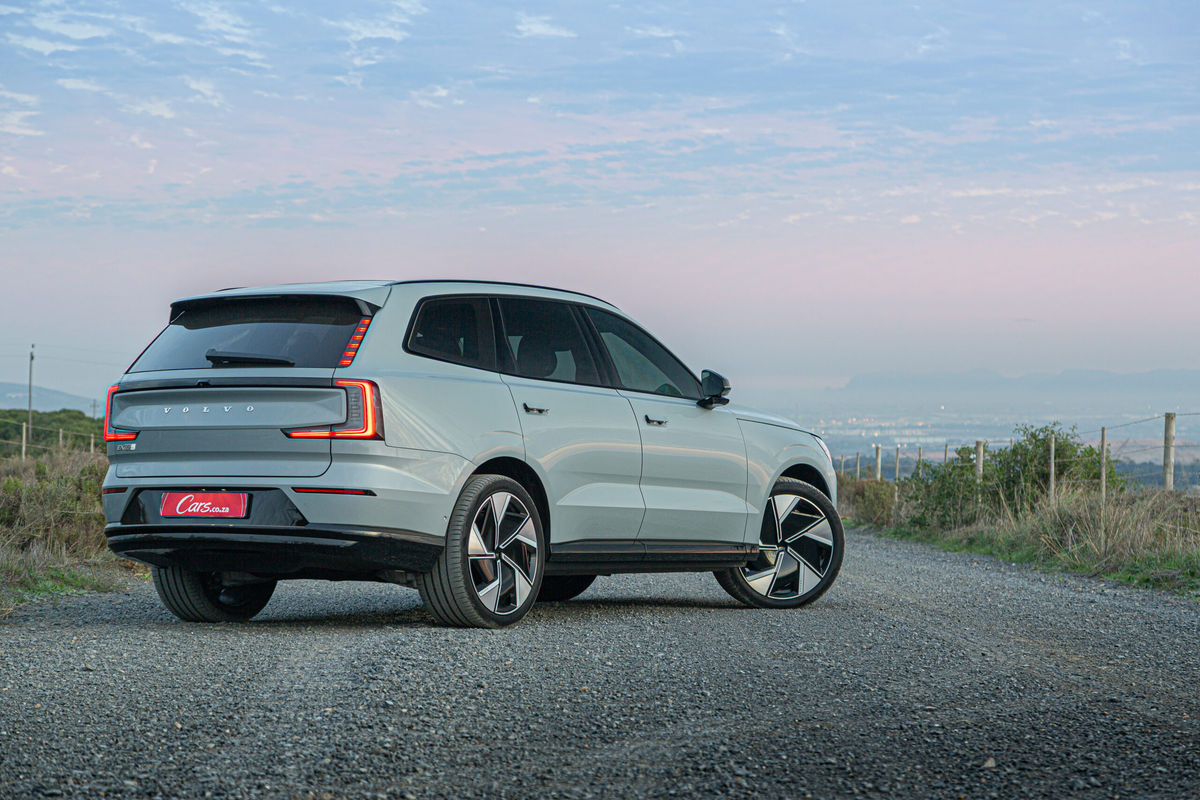
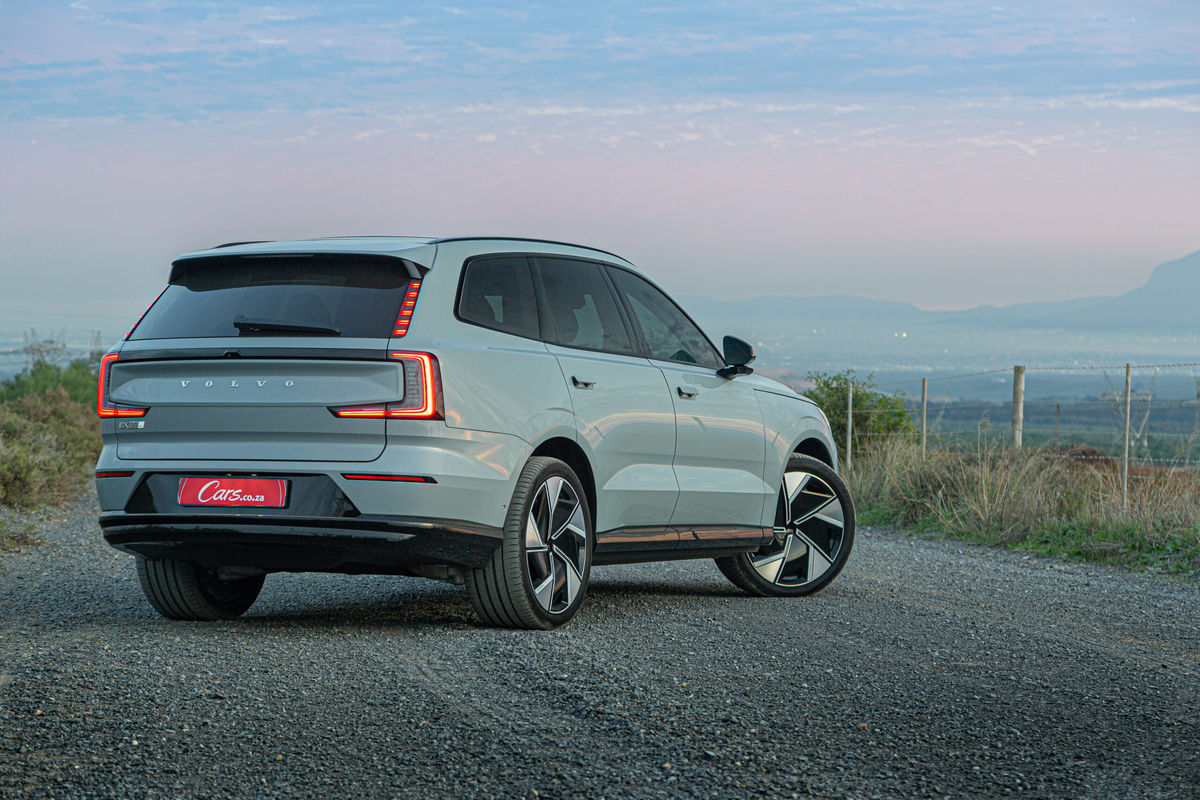
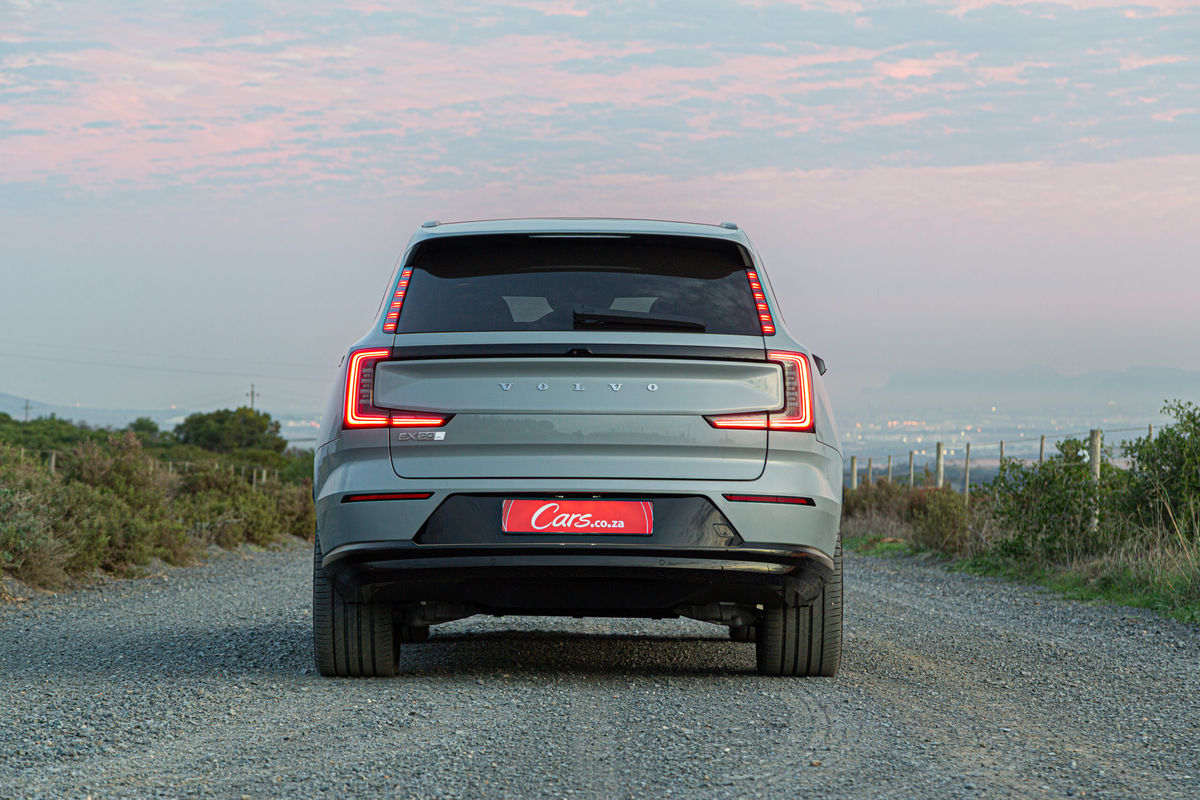
The EX90’s rear styling is neat and retains Volvo’s distinctive lighting signature.
Case in point, the international launch cars at the Los Angeles launch event lacked some (of what we’d deem) must-have features, especially at the price, such as Apple CarPlay, the full Bang & Olufsen audio suite as well as EV-specific functionality like Vehicle to Load (V2L) where the car can power your house.
Volvo promised that those missing features would be activated by a substantial update (sent to the cars via over-the-air tech), and the South African-spec EX90 went on sale in April 2025, a few days after Volvo globally rolled out its then eagerly-awaited (1.2.15) software update. Impeccable timing, then?
Now, to the product itself. At the moment, there’s no other BEV in South Africa that offers the Volvo’s levels of all-electric performance and specification in a 3-row (7-seat) configuration. The EX90’s 2 chief rivals – BMW iX and Mercedes-Benz EQS – are from Germany and should be able to match the Swedish newcomer’s performance and price, but what about the standard features list? More about that later on.
Which other 3-row premium SUVs can you get when you’re playing in the R2.5 million bracket? If you’re not completely sold on pure electric power, consider these models:
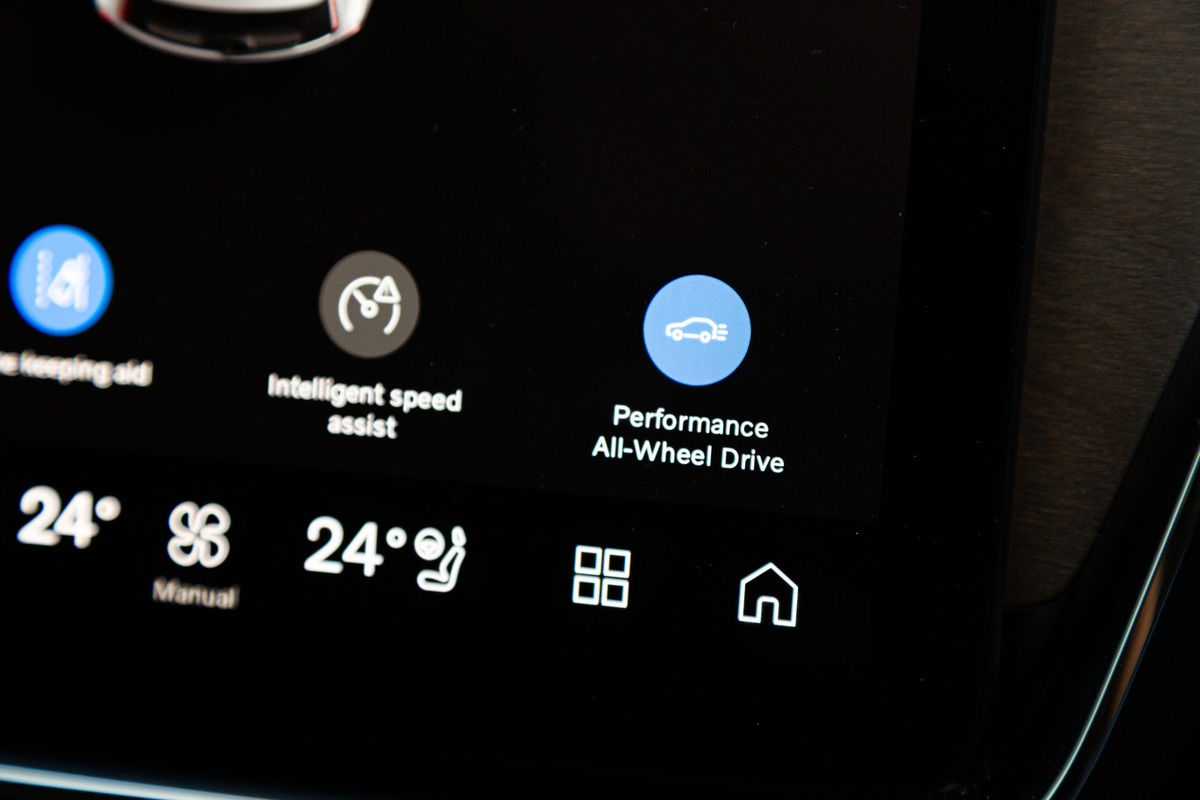
Volvo Car South Africa offers the EX90 in Twin Motor Performance spec (with an electric motor for each axle). With peak outputs of 380 kW and 910 Nm, the EX90 drives all 4 of its wheels via an automatic transmission. There are no drive modes, just a simple, discreet Performance All-Wheel Drive button.
With that mode activated, our test unit bolted from standstill to 100 kph in just 4.79 sec (compared with Volvo’s claimed 0-100 kph time of 4.9 sec) and completed the quarter mile sprint in a touch over 13 sec.
Those performance figures (according to our test equipment) are deeply impressive for something that tips the scales at almost 3 tonnes. As usual, Volvo has fitted an electronic speed limiter of 180 kph.
Volvo claims a fully-charged EX90 can travel over 600 km before it needs to be plugged in again.
When it comes to range, Volvo claims the EX90 can extract over 600 km from its fully charged 111 kWh battery (of which 107 kWh is usable). That claim is ambitious because true battery range depends on factors such as ambient temperature, style of driving and speed. Suffice it to say, EVs are at their most efficient in a low-speed urban driving scenario, which is where you are likely to get closest to 600 km.
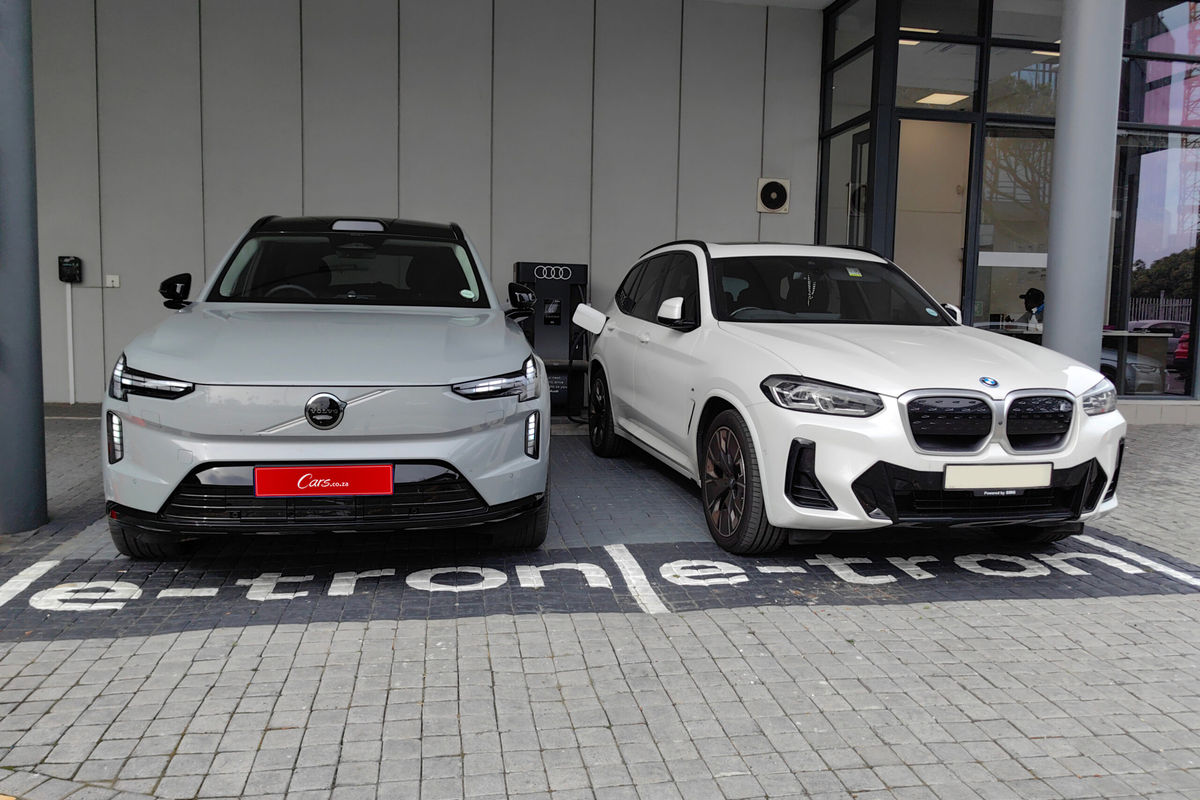
Volvo EX90 flanks a BMW iX3 at an Audi e-tron DC charger.
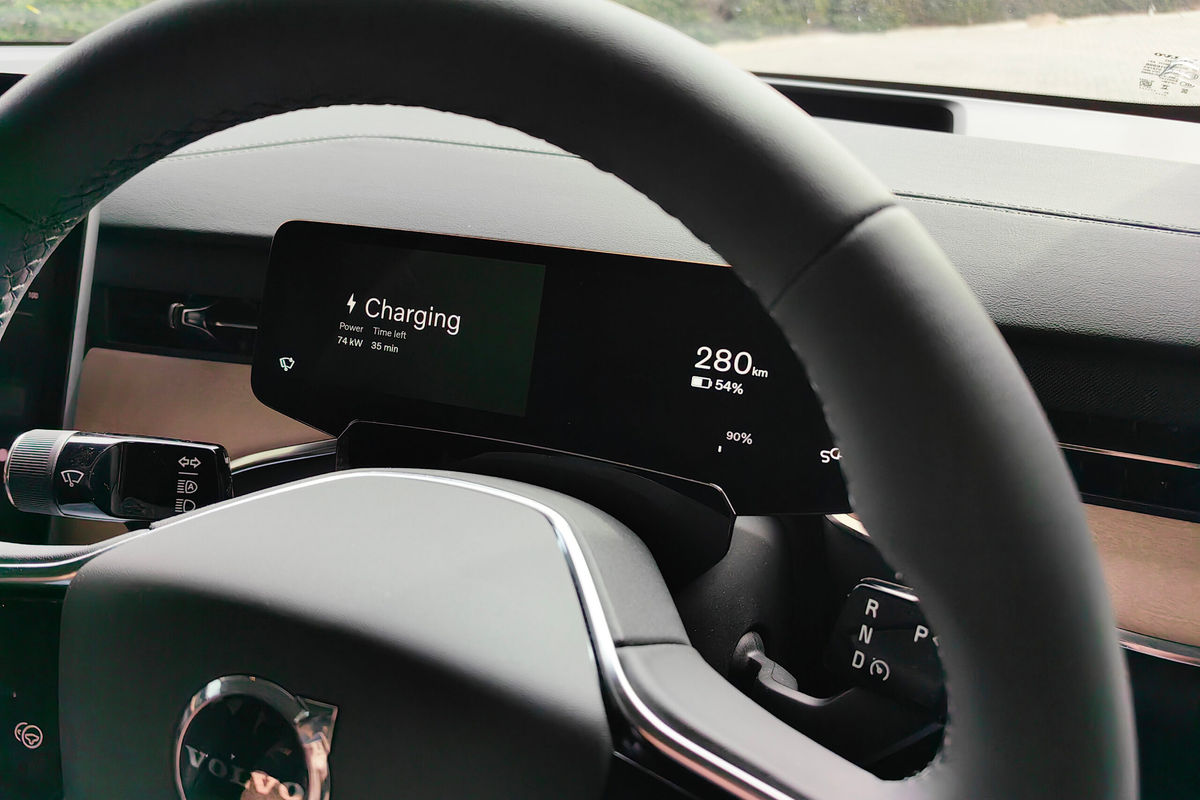
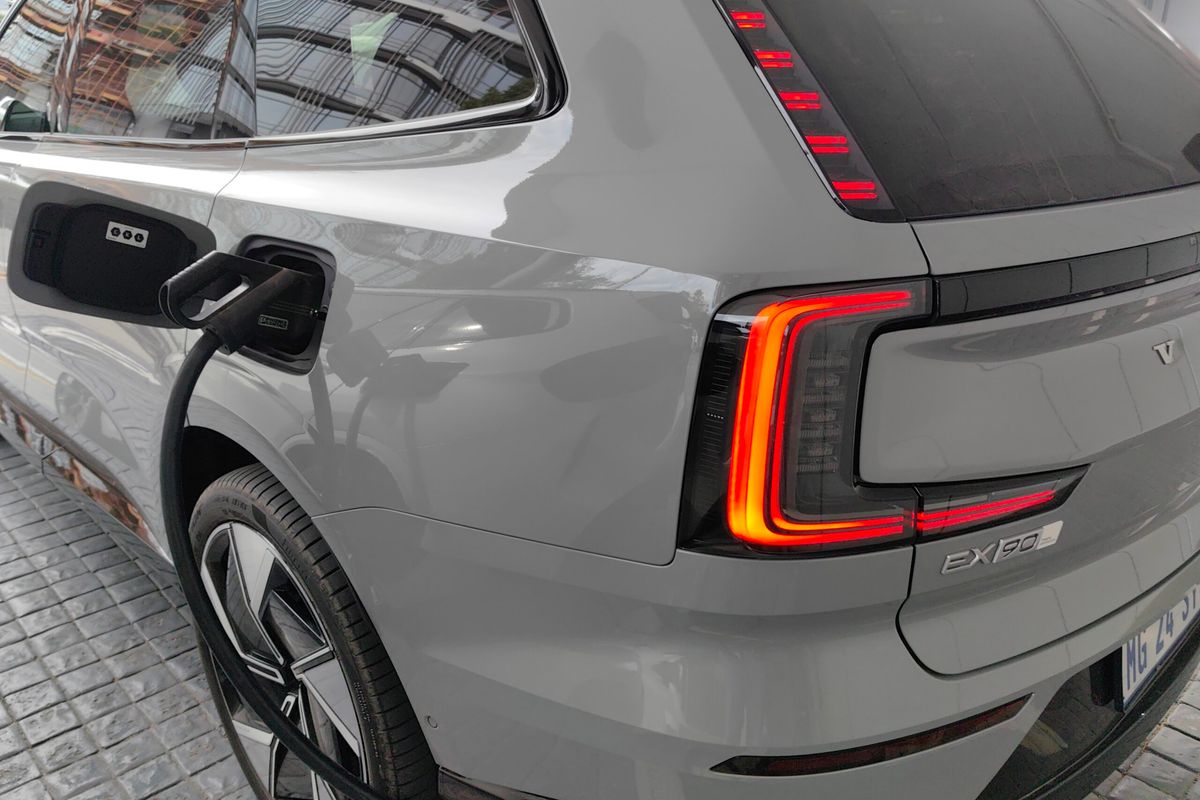
As far as charging goes, the EX90 supports up to 250 kW DC fast-charging, but as far as we’re aware, the fastest charger in South Africa is 150 kW. Still, 30 minutes at our local 75 kW DC box was enough to gain plenty of range, with time to check emails and enjoy that outstanding audio system while we waited.
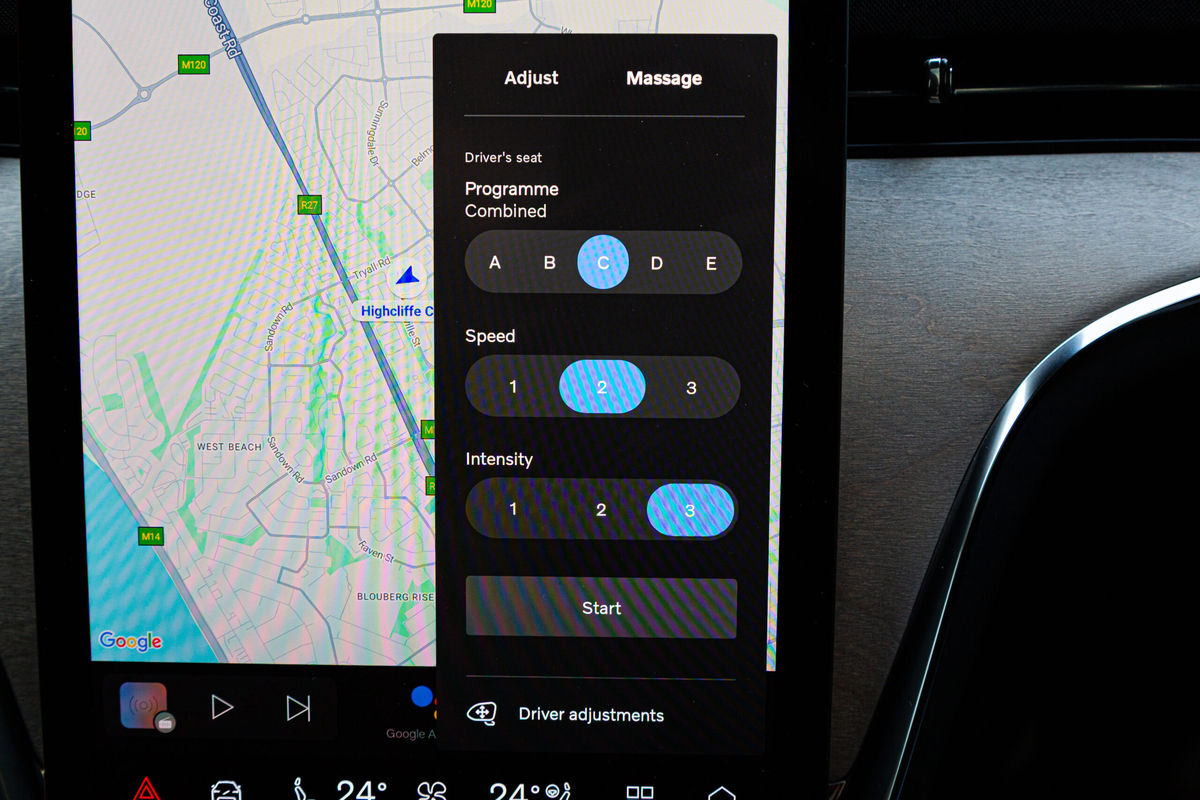
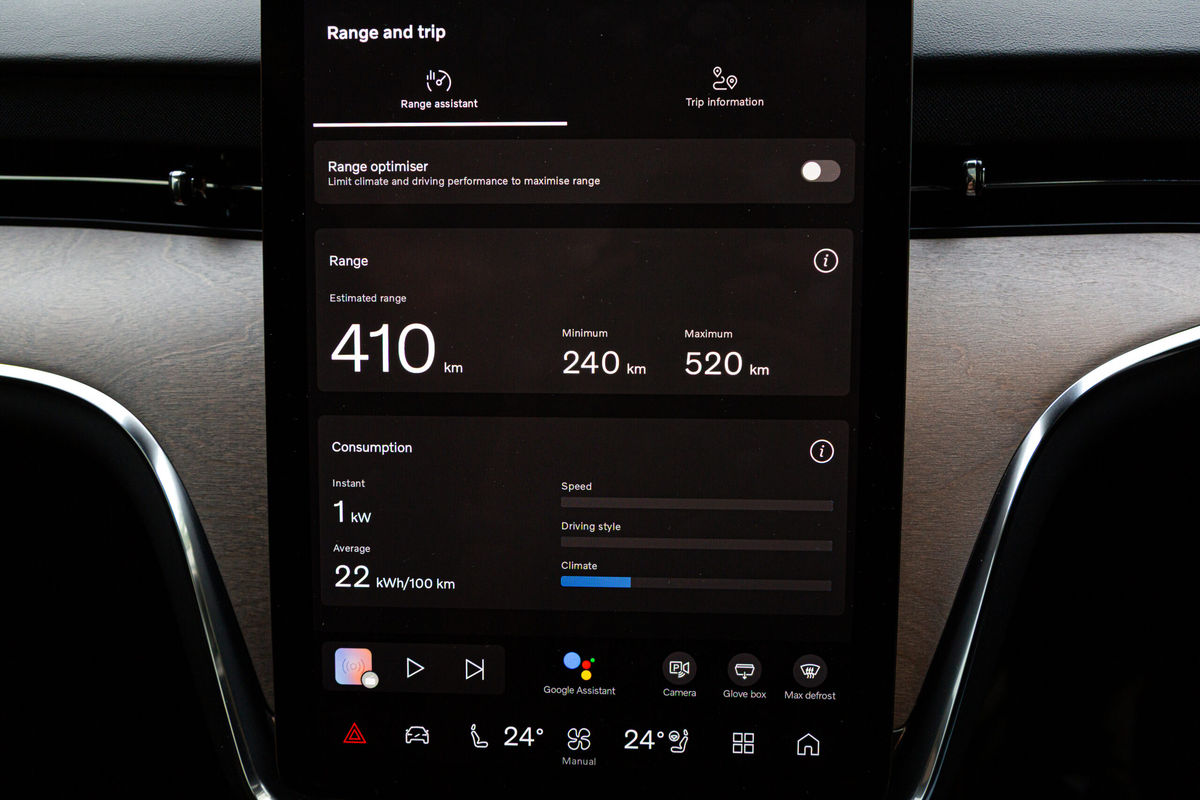
During its tenure in our test fleet, the EX90 consumed 22 kWh/100 km – fractionally higher than claimed, but to be fair, we often enjoyed the addictive nature of the Volvo’s powertrain, which allowed us to surge past slower traffic effortlessly. Interestingly, the infotainment system’s consumption readout highlighted just how power-intensive some functions are. For example, we listened to music and enjoyed a massage (with the heating function on) while the Volvo was being recharged, and those actions consumed 3 kW.
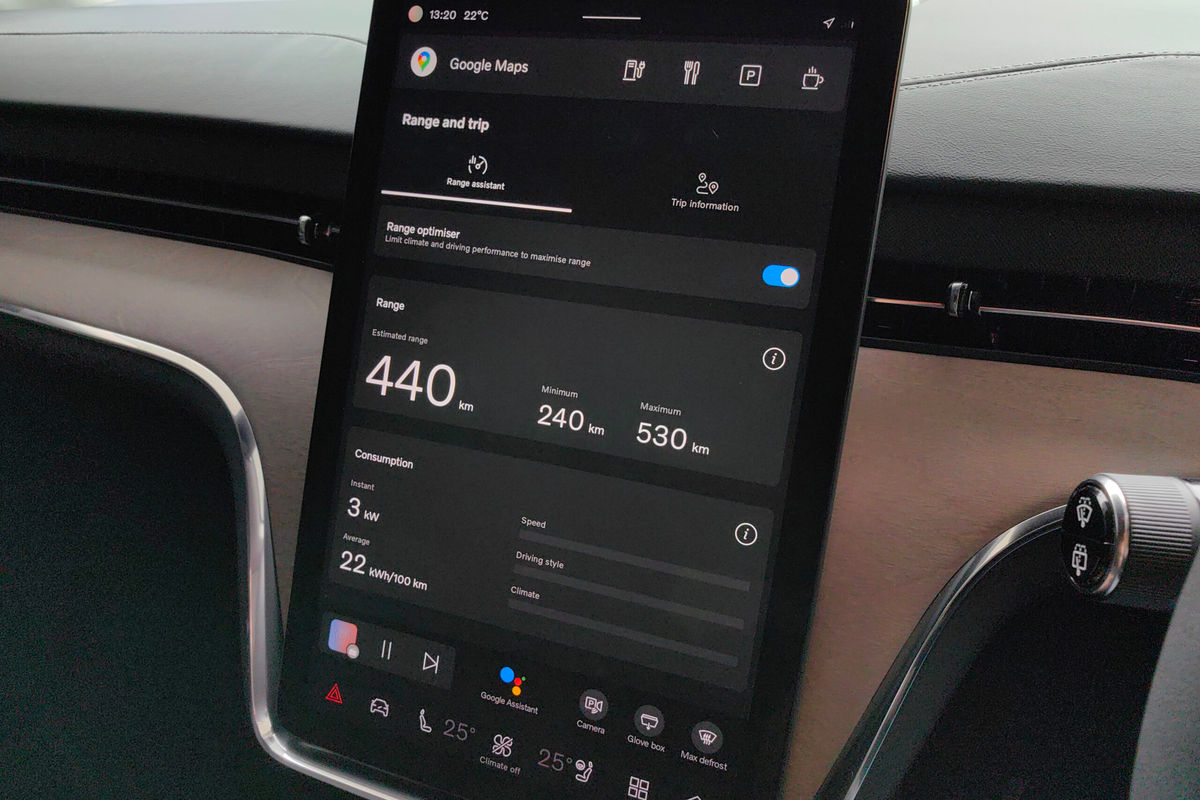
A 530 km range from a 90% charge level is impressive, but it’s subject to your driving style.
With the car charged to 90% (you extend the battery’s lifespan if you don’t charge it to 100% often), the EX90 indicated 3 ranges: if you drove spiritedly at triple-digit speeds, you’d get a minimum of 240 km, if you drove extremely conservatively at urban speeds, 530 km was possible and the final projected range was 440 km, based on mixed driving conditions, which was arguably the most realistic figure.
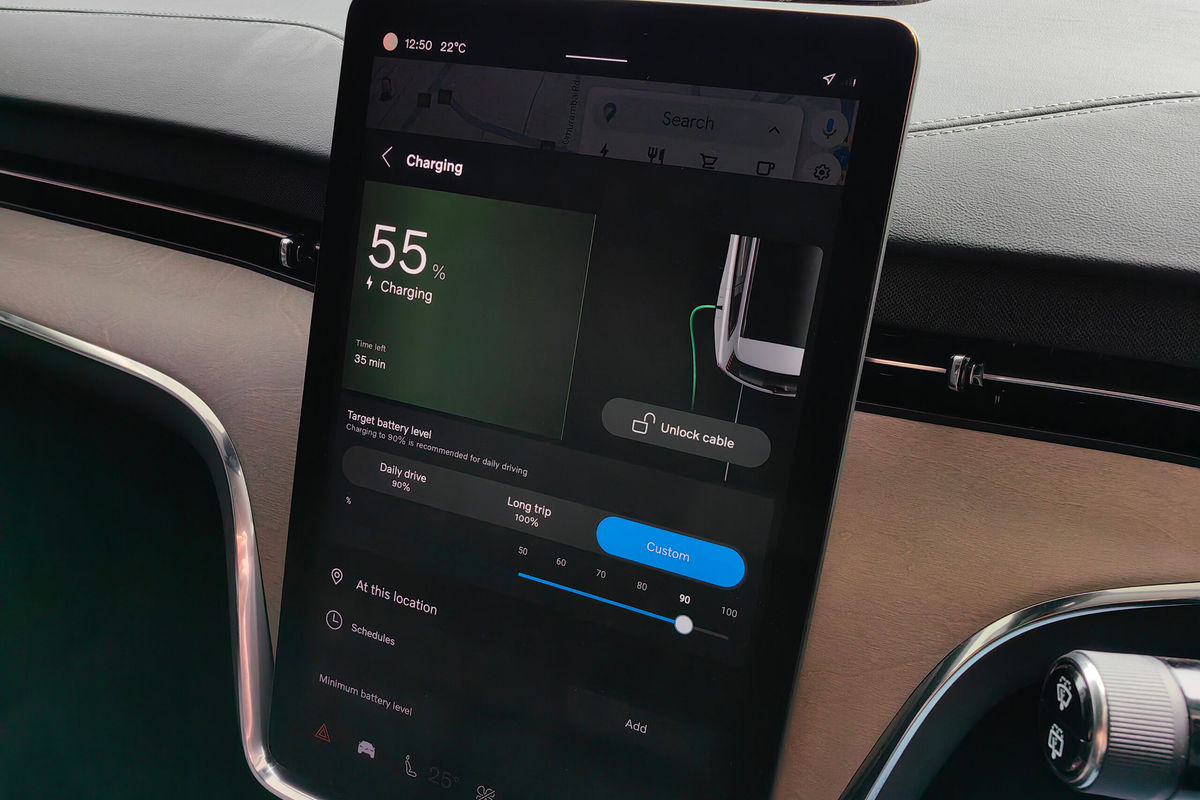
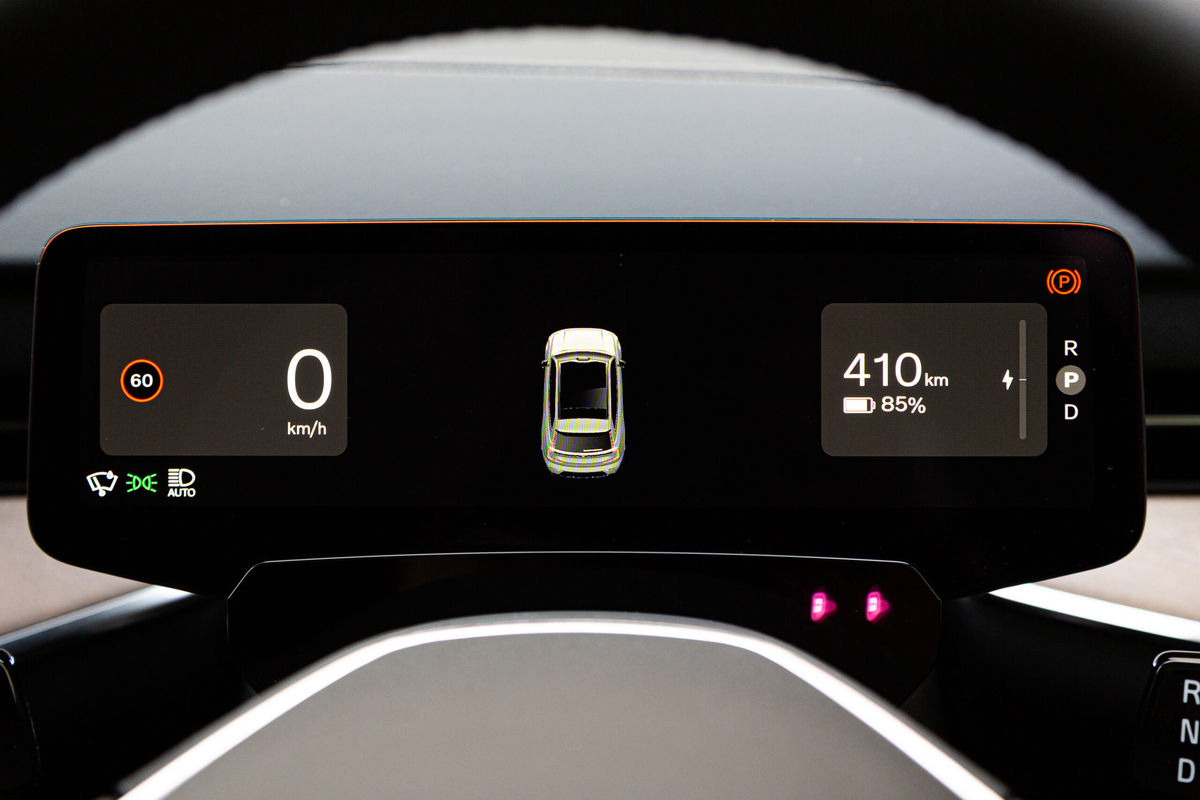
The minimalist digital instrument panel displays how the EX90’s recharging is progressing.
To sweeten the EX90’s value proposition, Volvo Car SA includes R7 500 towards the installation of a GridCars wall box charger at your house (useful for those overnight trickle charges), as well as a R12 000 public charging voucher (valid for 24 months) that you can utilise at your shopping mall, dealerships etc. There are more public EV chargers than you think and the infrastructure has grown at an impressive rate.
Pilot Assist facilitated our journey home in peak traffic. You still need to keep a hand on the ‘wheel!
The EX90’s 1-pedal operation is one of the best we’ve ever assessed, and the Pilot Assist assisted driving tech remains excellent. There’s no need to dab the accelerator and brake pedals repeatedly in dense traffic as the car does most of the work for you, but remember the Volvo’s adaptive cruise control strictly adheres to its following-distance setting; other road users will slip into the large gaps it leaves.
Features and Practicality
Minimalist, clean interior design – it can only be Volvo! But the touchscreen needs regular cleaning.
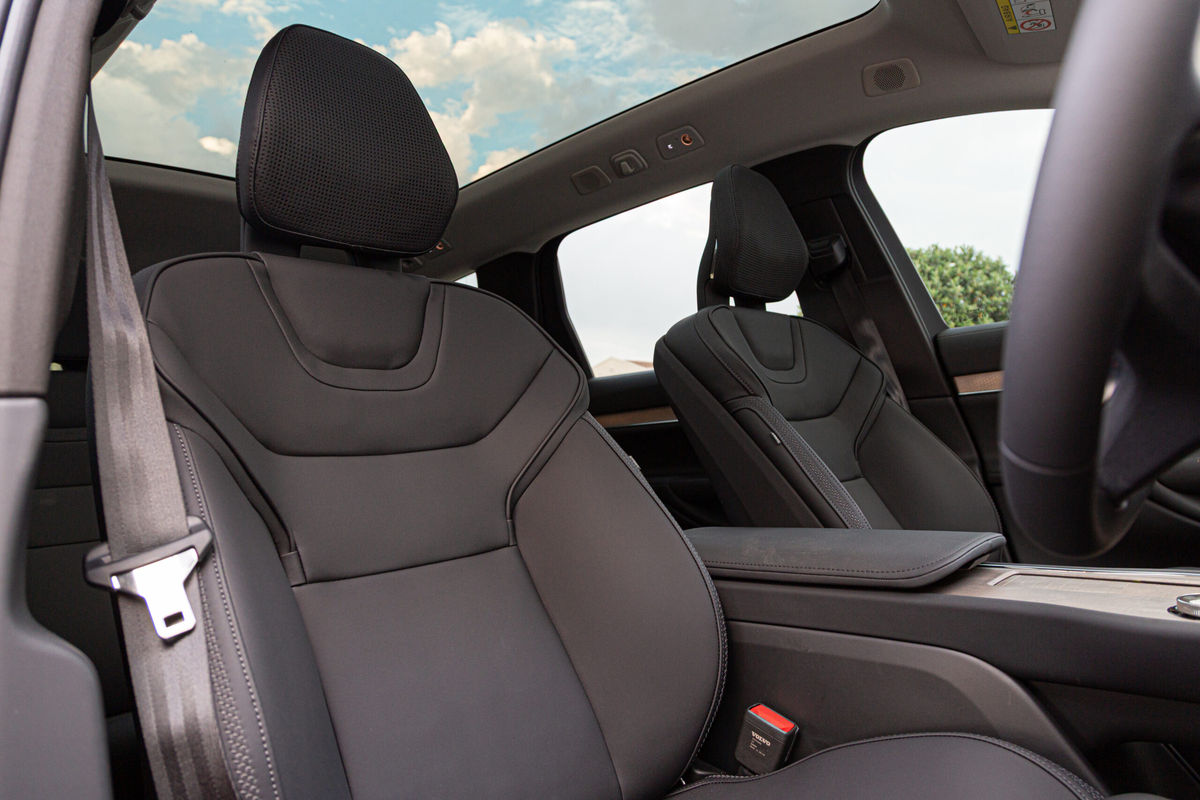
The 2025 Volvo EX90’s cabin is superb, both in terms of minimalist design and trim quality. Recycled and sustainable materials are used extensively, and the front seats offer class-leading levels of comfort and support. With this flagship (Ultra) specification, the seats also offer heating and massage functions.
The front seats are superbly comfortable!
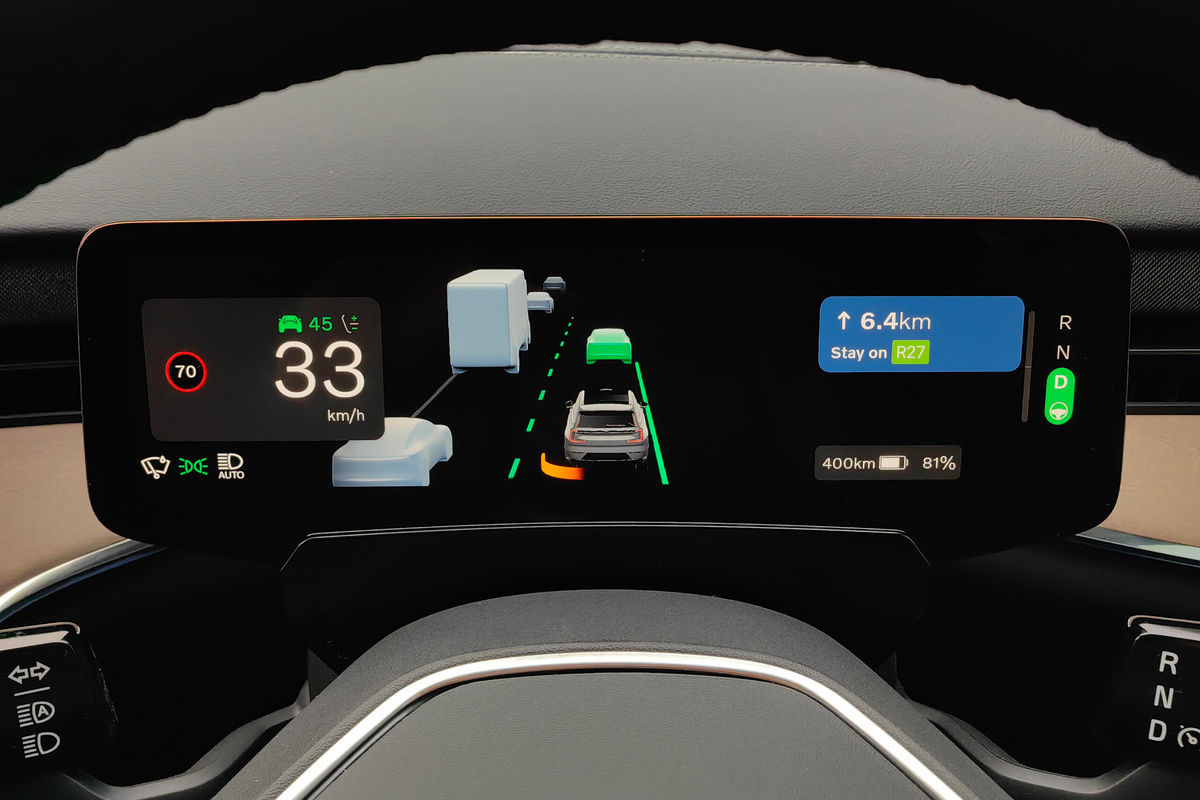
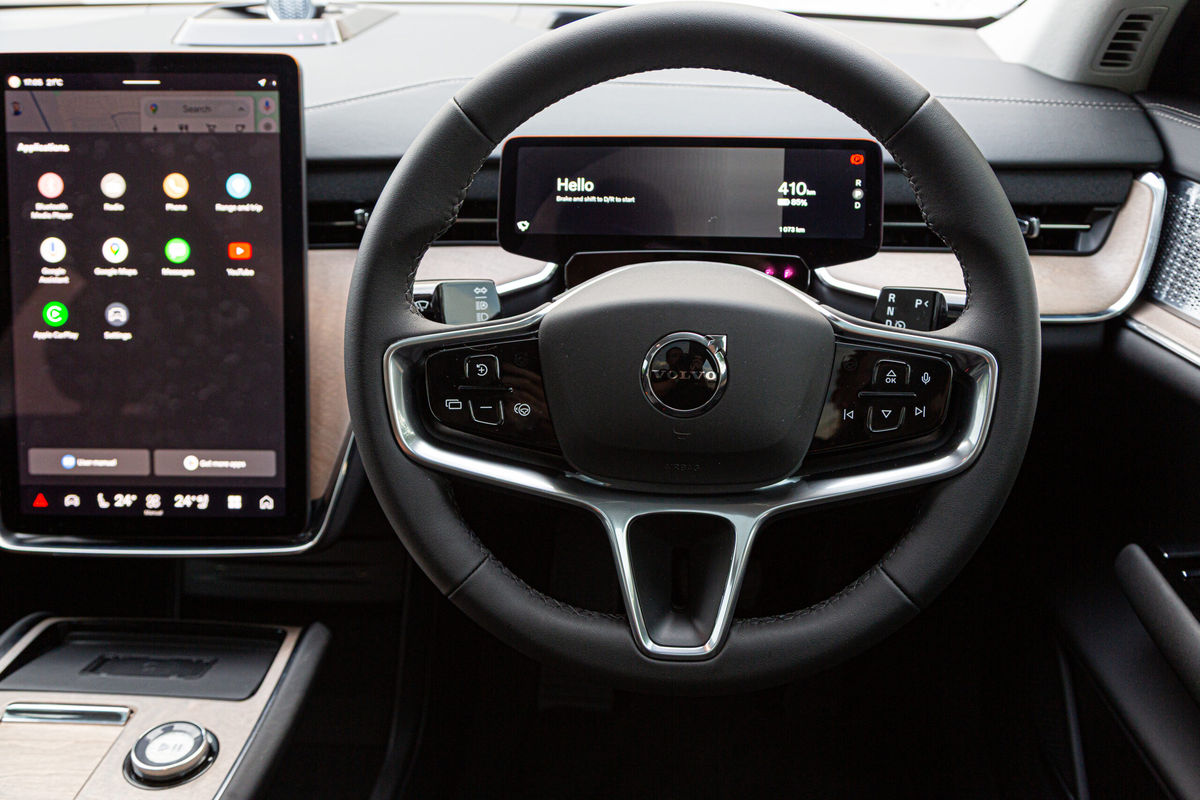
Unlike the Volvo EX30, the EX90 has a neat digital instrument panel behind its tiller. It may look simple, but it displays the essentials: speed, range, and satnav directions. It’ll also show you what the SUV can see in terms of other vehicles, and it can recognise the differences between cars, trucks, scooters, etc.
The Ultra Twin Performance’s standard spec is comprehensive, but then, given the EX90’s list price of almost R2.7 million, it should be! We suspect that lower-specced and less-powerful variants (such as a single-motor EX90) will be offered locally in future, but we have no official confirmation of that yet.
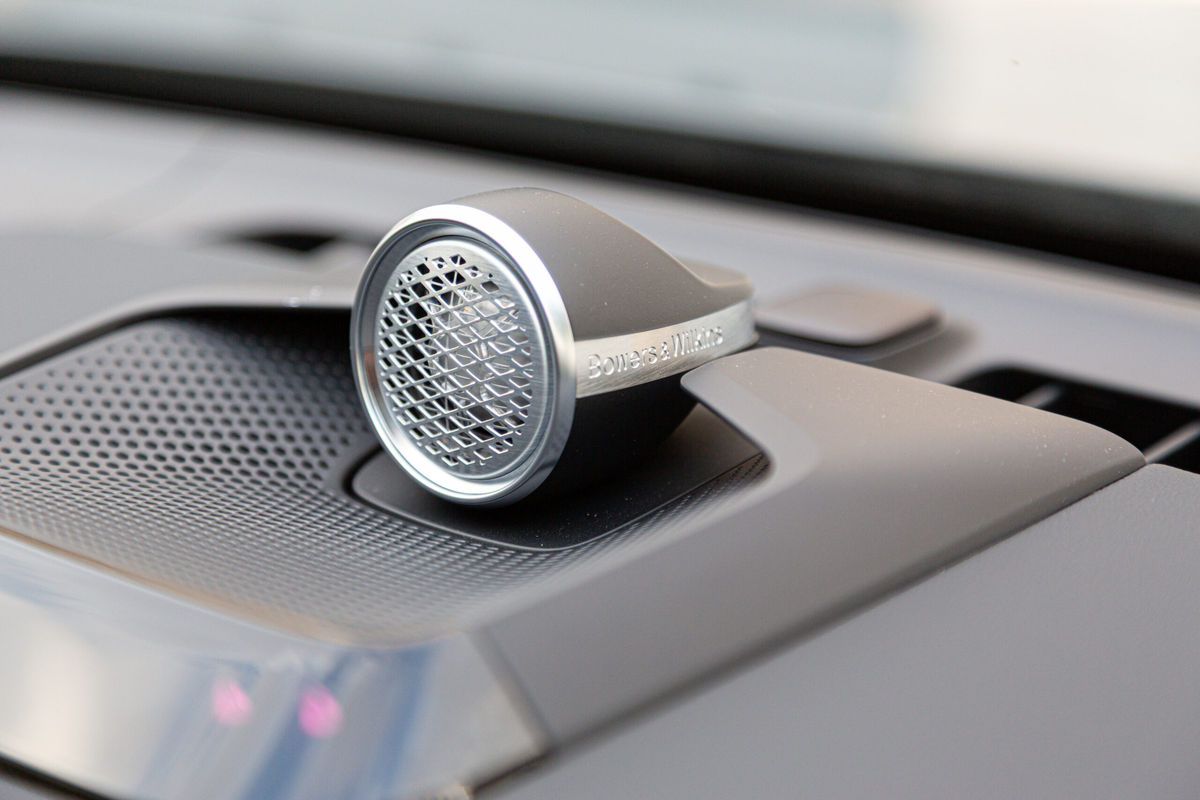
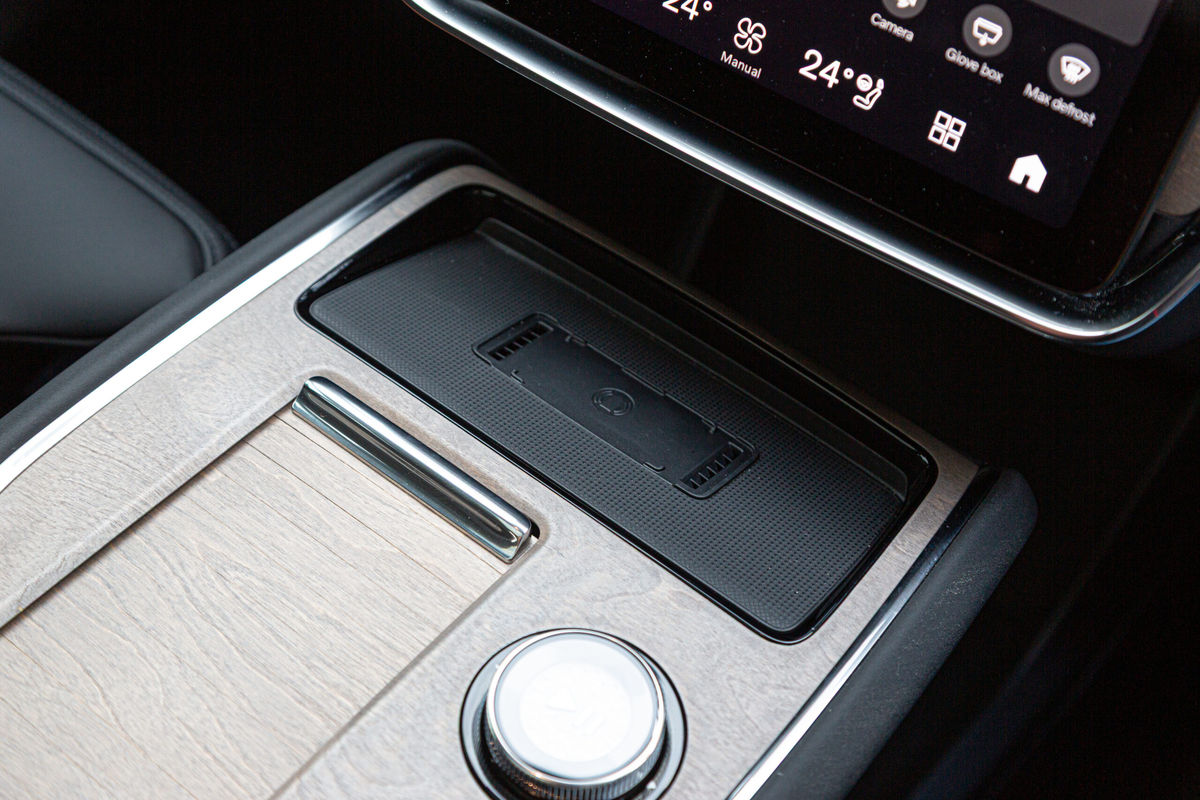
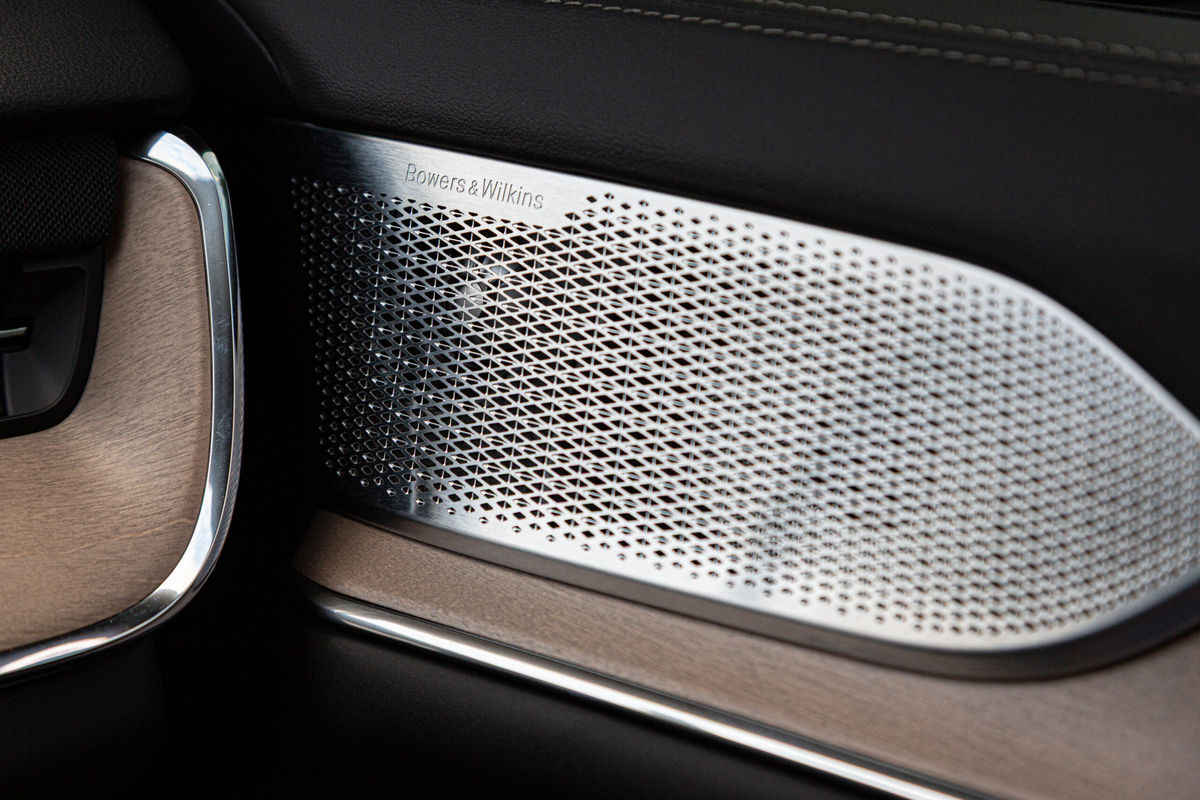
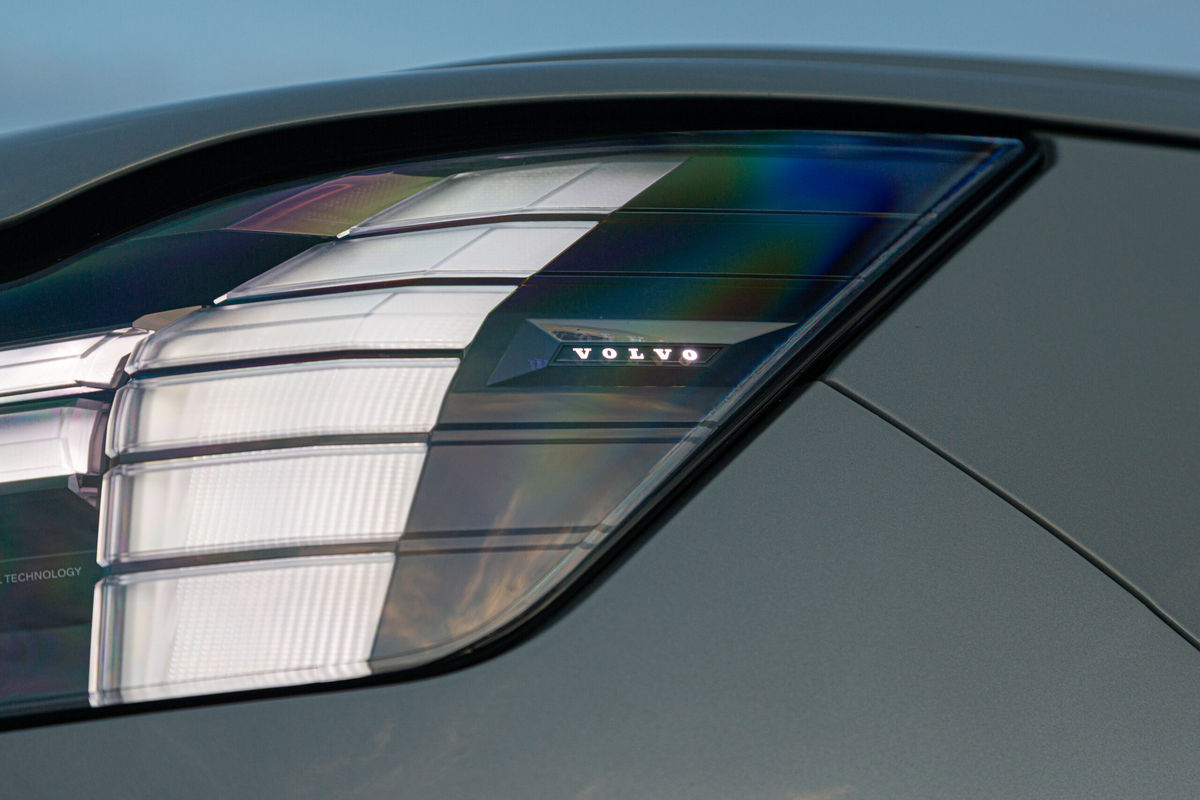
Features such as soft-closing doors, a sensational 25-speaker Bowers & Wilkins audio system, heated seats with a massage function, a heated steering wheel, a wireless charger and USB charging ports are just some of the highlights of the EX90 Ultra Twin Performance‘s specification. Speaking of lights, we just loved how the horizontal elements of the Volvo’s DRL arrays split to reveal the headlamps.
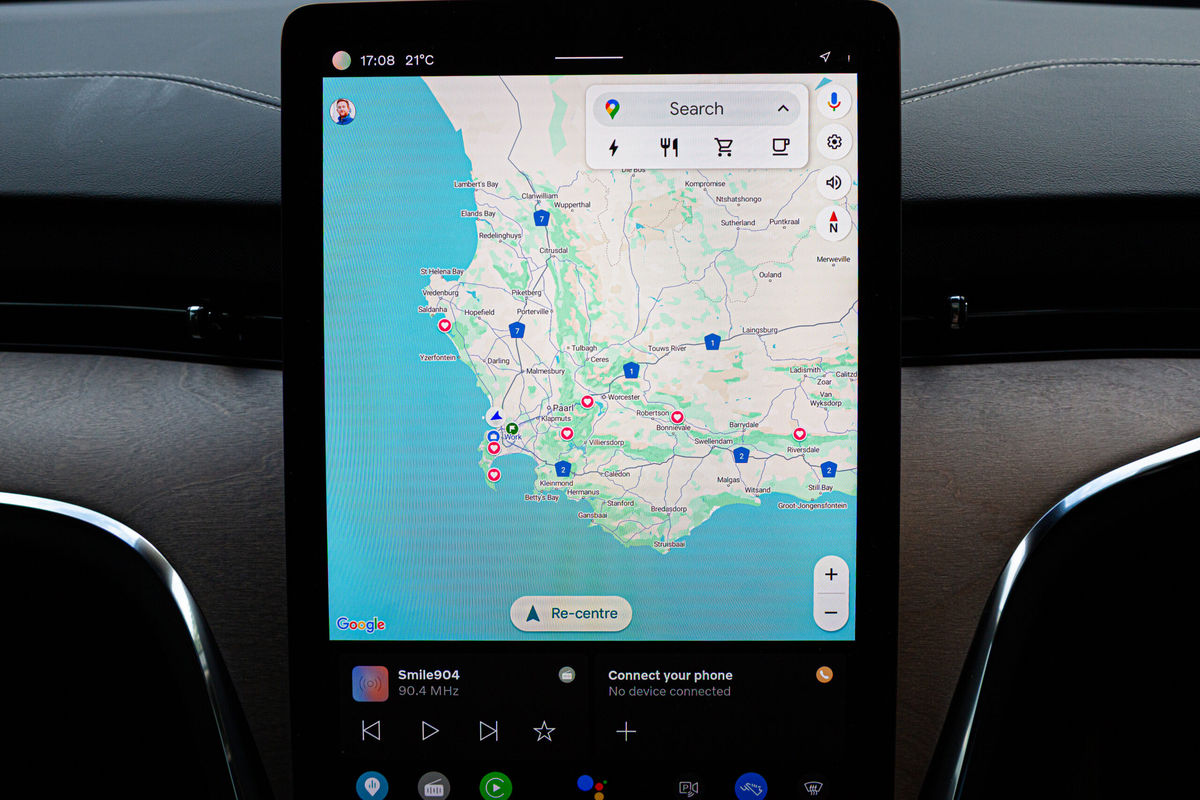
The Google Automotive user interface.
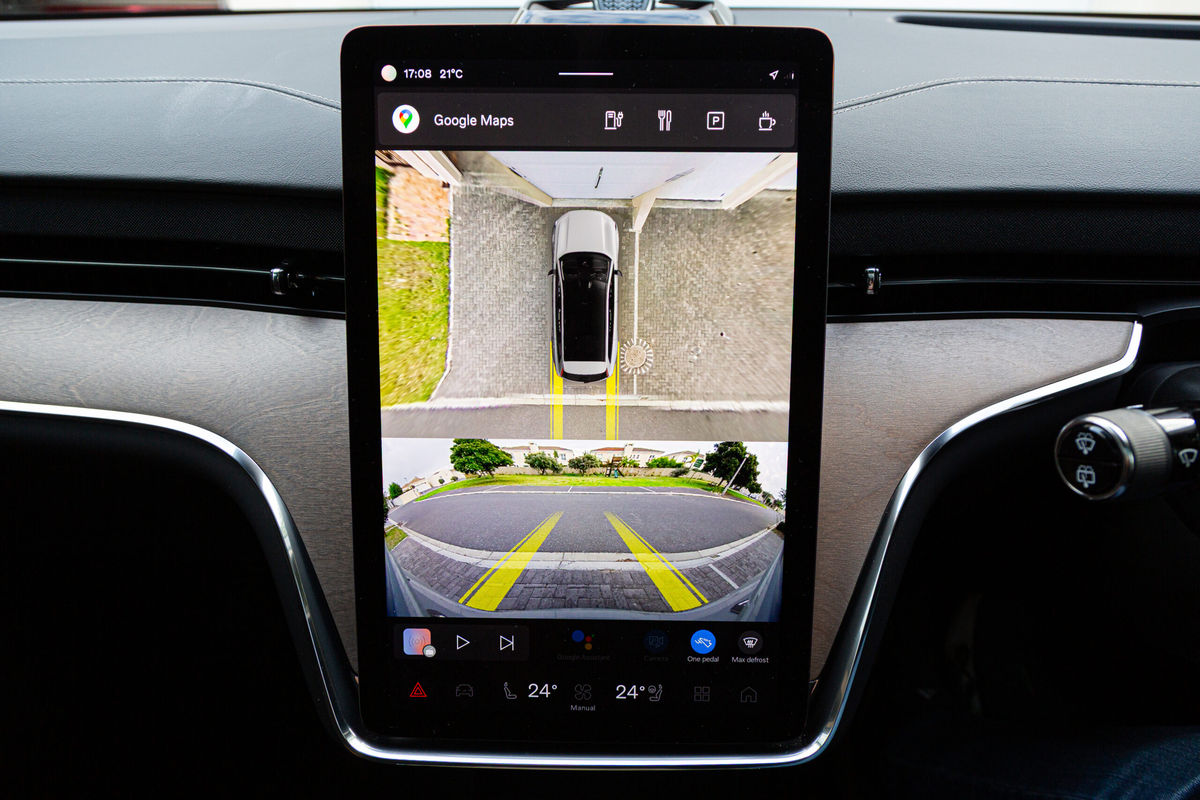
Safety-wise, the EX90 sports hardware such as a 360-degree camera system, lane-keeping aid, blind-spot info system, cross-traffic alert, road-sign information, plus its Pilot Assist assisted driving tech.
Now, while Volvo’s flagship SUV has LiDAR (light detection and ranging), radar and cameras to scan the road and detect vehicles in its vicinity, not all of it has been activated, but future over-the-air (OTA) updates should put that right (version 1.3.17 dropped on 16 June 2025). Functions such as Vehicle-to-Load, through which the car can power appliances and even your house, will be available one day.
We cleared error messages like this one by switching the car off and on again.
But apart from activating features of the EX90 that are not available yet, those OTA updates can’t come quickly enough to iron out the software glitches, several of which we encountered with Volvo’s test unit.
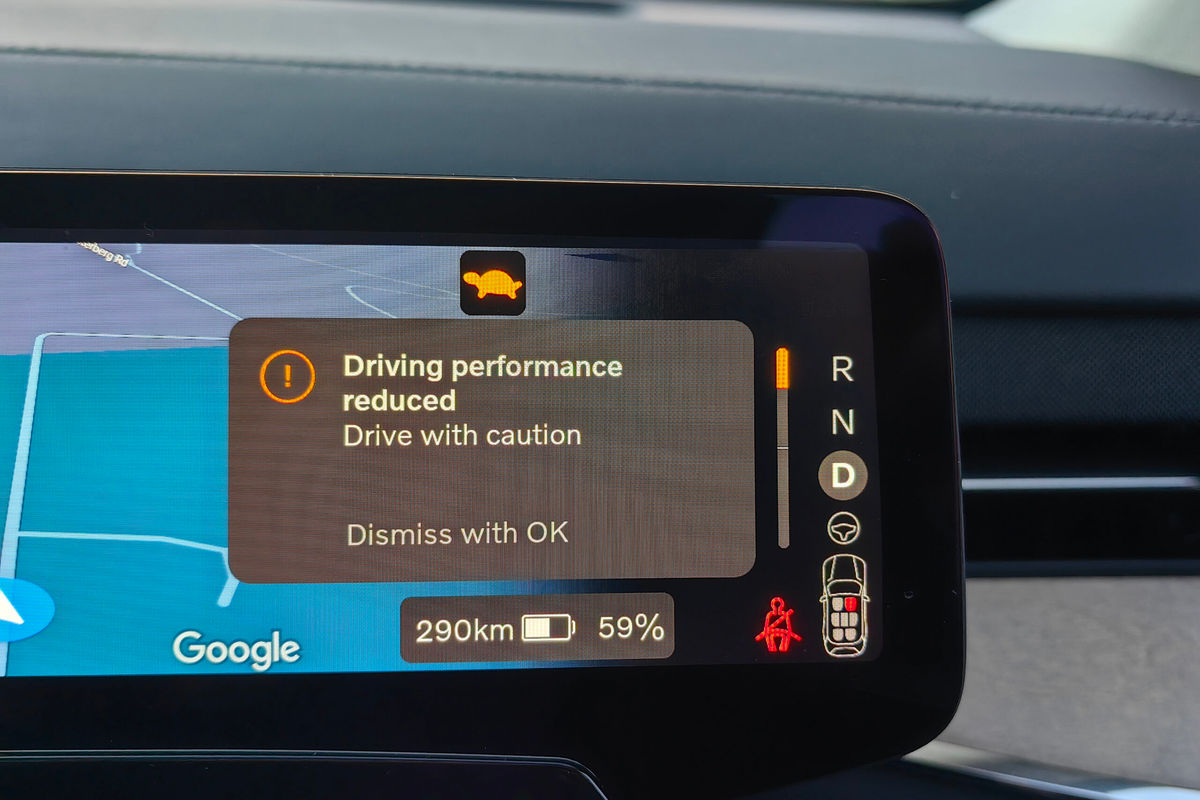
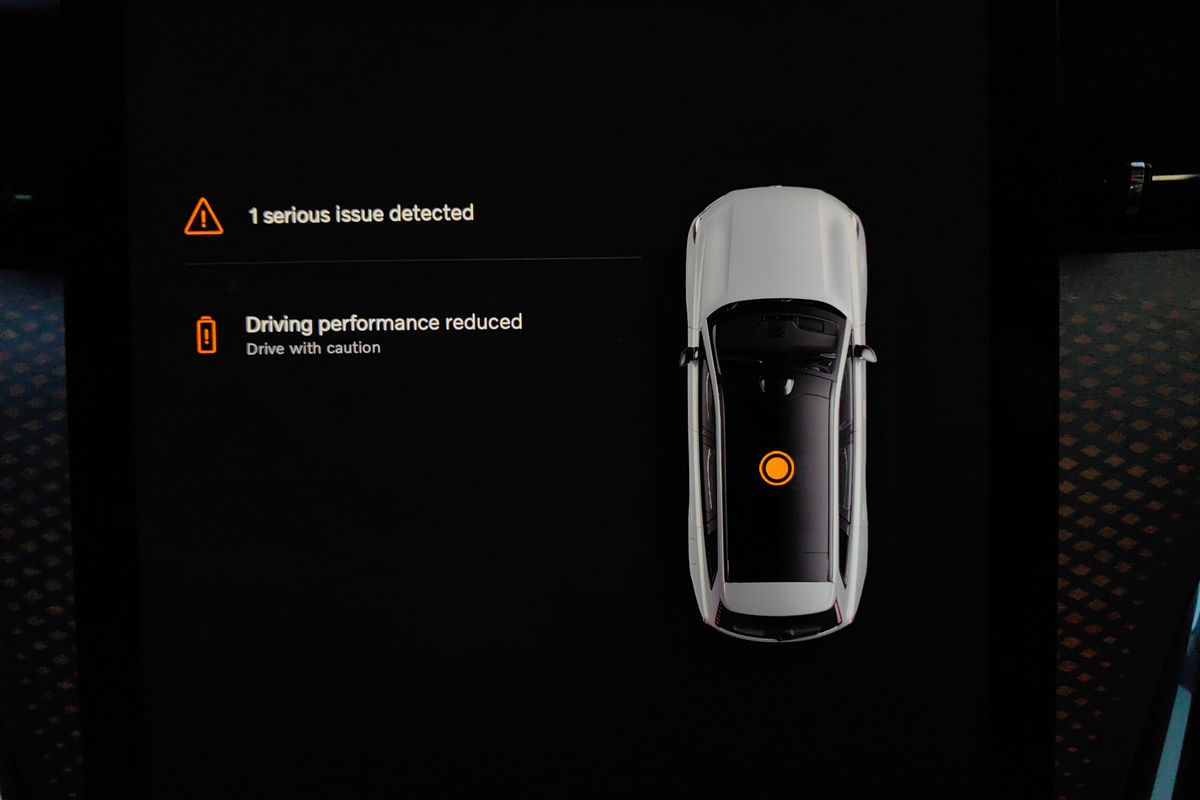
We encountered an air suspension failure message (which resolved itself after we locked, unlocked and restarted the car); we struggled for 45 minutes to get the Volvo to recognise its key tag to allow keyless entry (in other words, unlock itself – 1.3.17’s release notes say the update addresses this issue); finally, while we conducted the photoshoot, the EX90 showed a “Driving performance reduced” message (after which the Volvo was effectively in limp mode). We drove home at (an electronically limited) 80 kph, and the following day, the test unit started and performed normally, as if no such problem had occurred…
Maps and other Google applications are available.
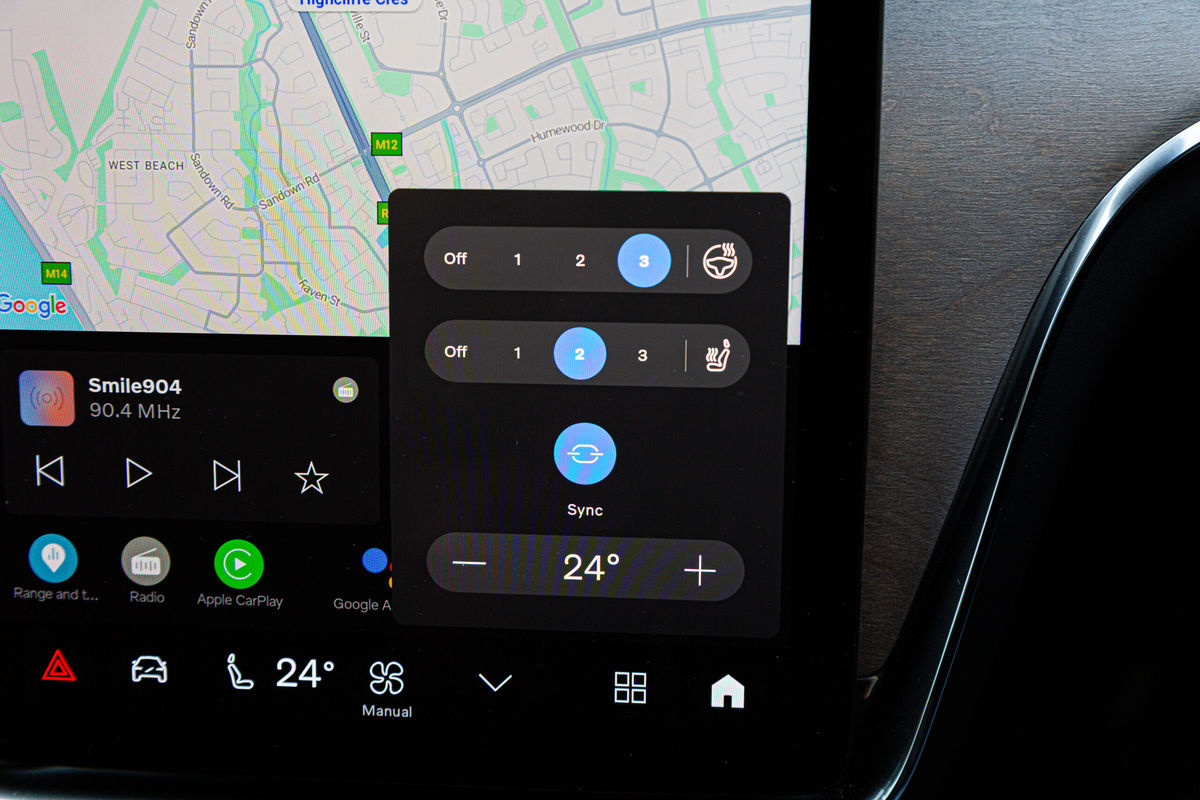
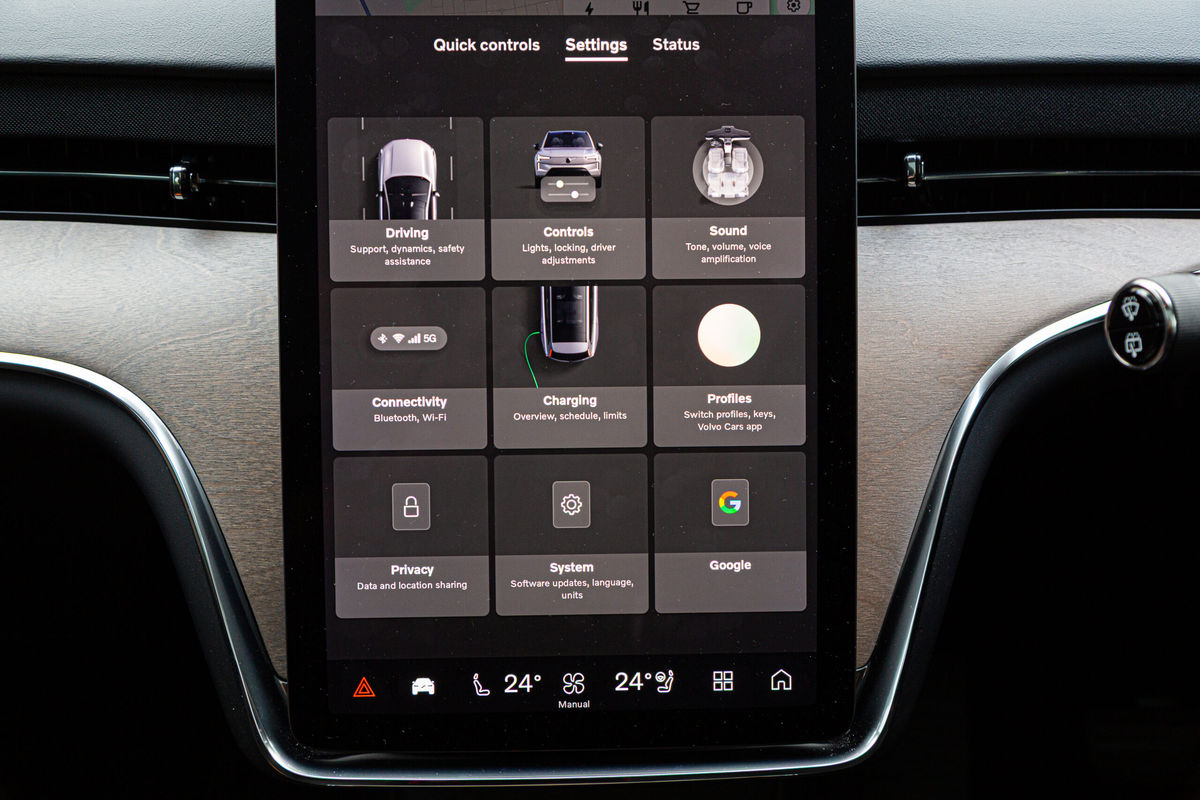
A Google-based system is at the heart of the EX90’s UX. Android Automotive – not to be confused with Google’s Android Auto smartphone-mirroring tech – powers the Volvo’s infotainment system. If you’re an Android acolyte, you’ll appreciate the Google suite, including Maps, Assistant, and critically, access to the Google Play store, where you can download even more apps like YouTube, games, Spotify and so on.
Are you an Apple disciple? Well, fear not, as we tested Apple CarPlay in the 2025 Volvo EX90 and it ran beautifully on the test unit’s massive (14.5-inch) centre screen. This SUV requires a data connection for all functionality, and Volvo SA supplies 10 GB of in-car data from Vodacom every month for 36 months.
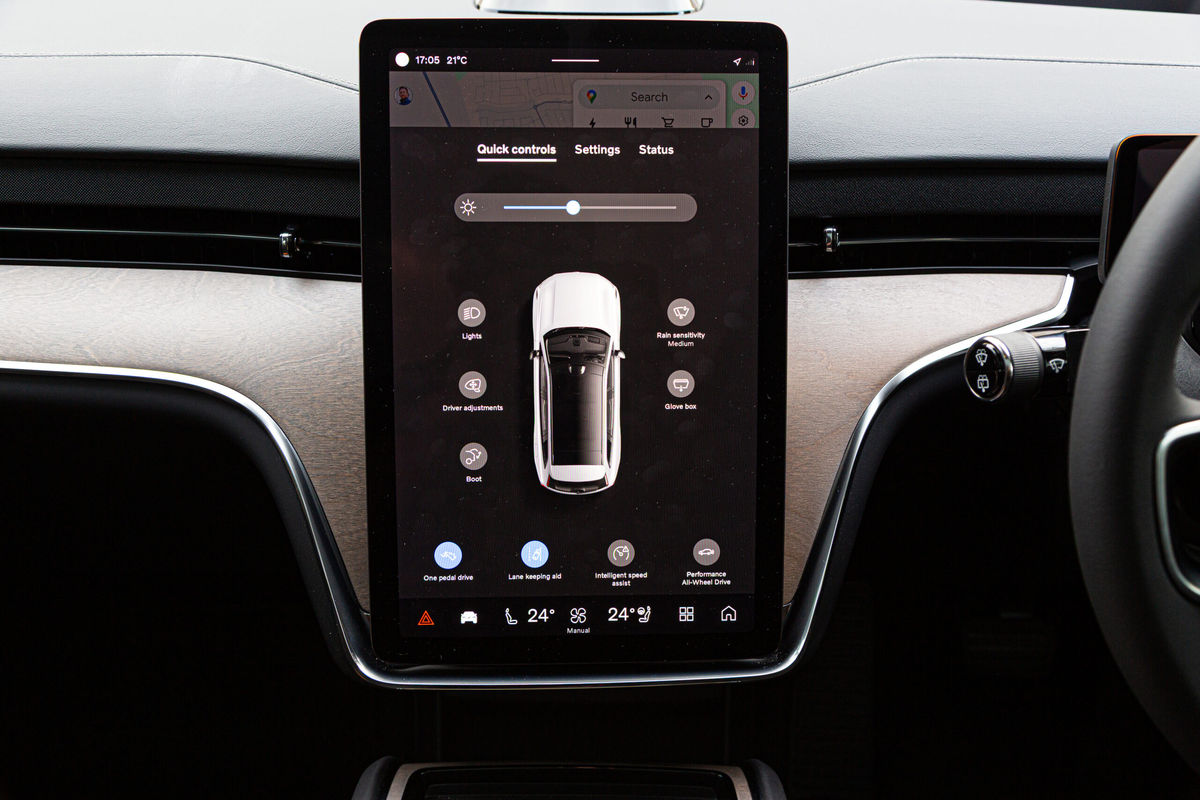
A button for the glove box on the screen? That’s odd.
Although the infotainment system’s interface is undeniably slick, we were mildly frustrated that access to many onboard functions is built into the touchscreen menu. You need to tap the touchscreen to perform simple tasks such as opening the glovebox and tailgate, or adjusting the steering column and mirrors.
Granted, a driver won’t need to adjust the 2025 Volvo EX90’s side mirrors to their preference that often, but it was irksome nonetheless. The menu system doesn’t seem intuitive at 1st, but Volvo says the car will learn what users access often and then automatically create shortcuts on the home screen. Clever!
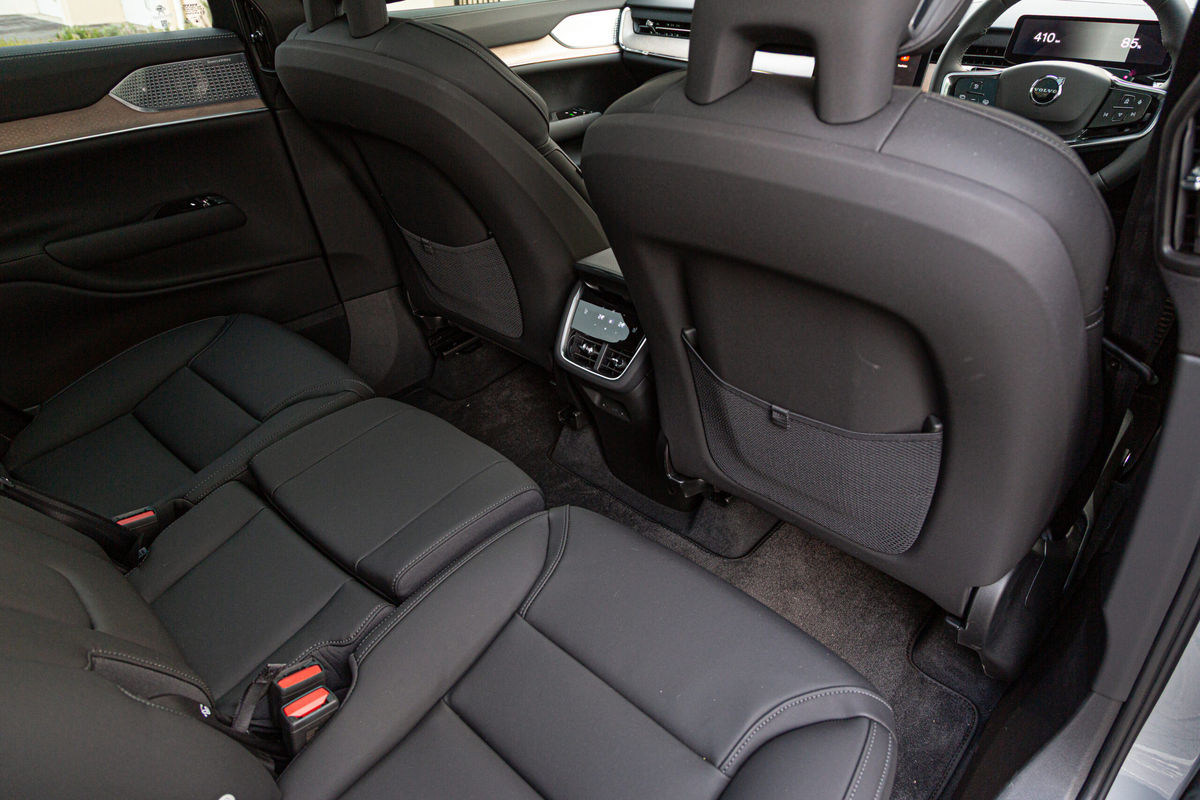
Rear passengers get all the space, plus ventilation controls and USB-C ports.
Seeing as the EX90 is a luxurious 7-seat family car, it’s expected to have an abundance of occupant and cargo space, and, to a degree, it does. The front- and 2nd-row seats offer ample head- and legroom.
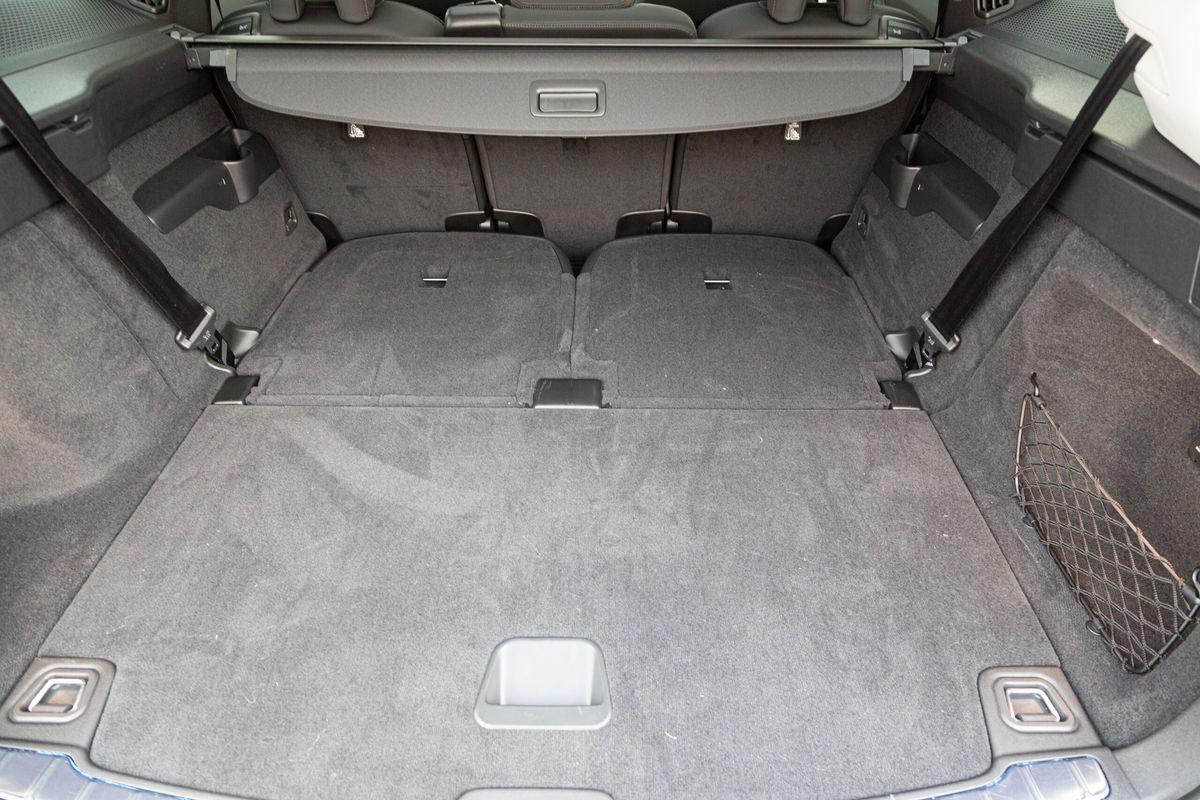
The 3rd-row seats are best suited for kids, but if you only need to transport 5 occupants, the rearmost row stows neatly into the load-bay floor, which is practically shaped and sized (324 to 697 litres). You can use the air-suspension control console to lower the rear of the car to make it easier to load cargo.
The Volvo EX90 offers sufficient load-bay capacity when the 3rd-row seats are stowed.
Ride and Handling
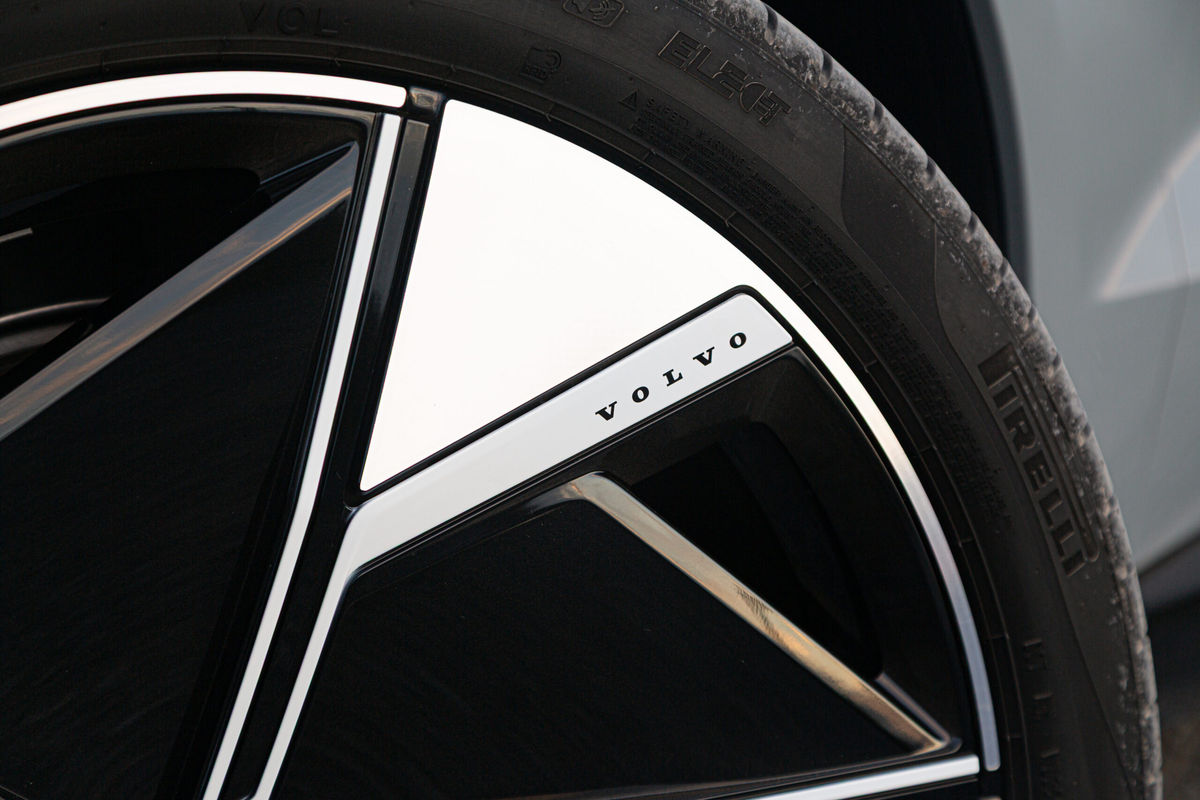
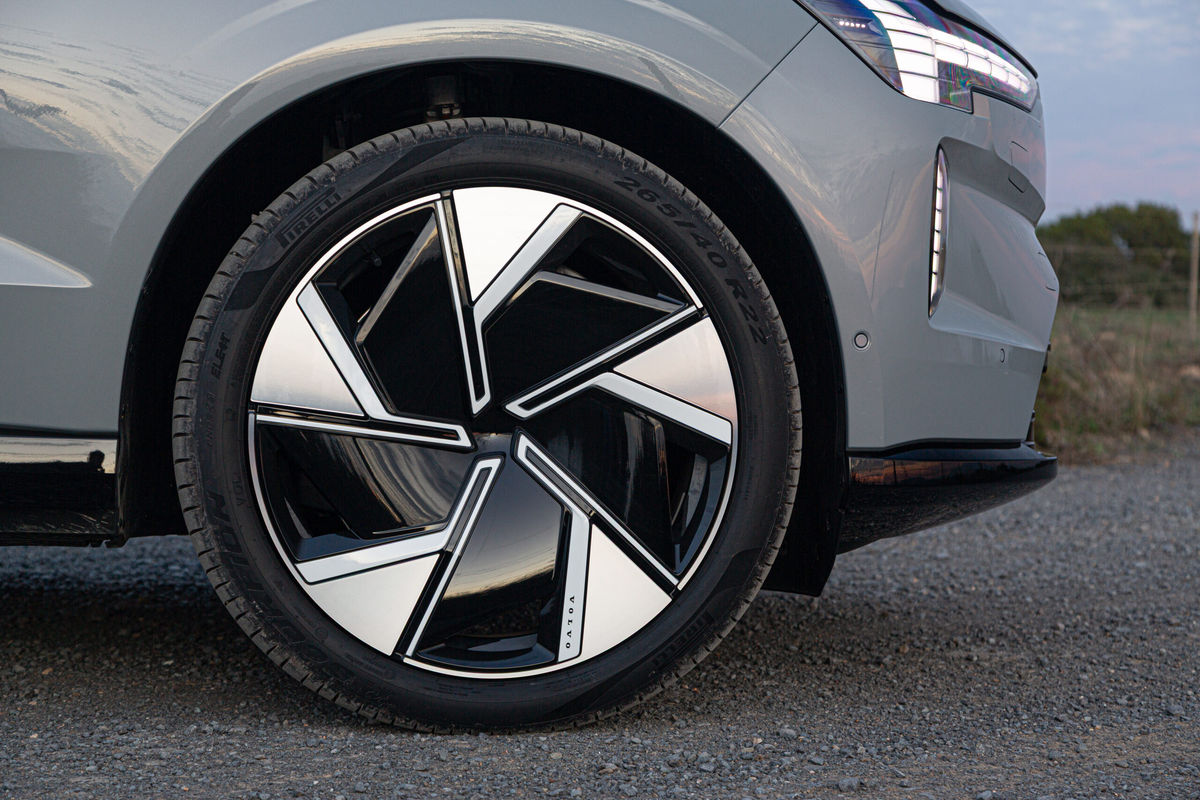
When we saw the EX90 Ultra Twin Performance‘s gorgeous (but rather sizeable) 22-inch alloy wheels, shod with skinny 265/40 tyres, we were worried they’d negatively impact the Volvo’s overall ride quality, but our fears were unfounded. Okay, the ride’s not flawless – it’s still firm at low speeds – but once you’re on the move, the EX90 floats along beautifully. Few cars that run on 22s offer such lofty ride refinement!
The secret to the forgiving ride quality is the fitment of adaptive air suspension, which enables the Volvo to quietly absorb all but the worst road imperfections, of which there are many on South African roads. In terms of the driving experience, it’s plug and play: there isn’t a multitude of confusing drive modes, you only need to choose between 2 suspension- and 2 steering feel settings. How refreshingly simple!
Look carefully and you’ll notice there is no logo on the centre cap.
Has Volvo Car SA missed a trick by not fitting wheels shod with higher-profile tyres, which would better suit local conditions, in conjunction with a spare wheel, or does the Volvo’s sheer heft (as a large battery-electric vehicle) prohibit that? An all-wheel-drive family SUV should be able to drive on tar and gravel with ease, but even when travelling to our photoshoot location, we worried about getting a puncture!
Another thing that really impressed us about the EX90 package was the hushed cabin. There’s an eerie spookiness to driving along in near silence with only the slightest of road noise intrusions; unlike some of its rivals, Volvo has chosen NOT to pipe in futuristic noise (soundscapes) through the EX90’s speakers.
The cabin is cool and stylish, but we think the BMW iX’s interior offers a bigger sense of occasion at this price.
At over 5 metres in length, the almost 2.8-tonne EX90 is not a compact or nimble vehicle; it can be a bit stressful to manoeuvre the SUV into tight parking spaces, but its sensors and cameras are invaluable in that regard. That said, for a R2.6+ million car, the camera feed isn’t of great quality, especially in low light.
The EX90’s all-new SPA2 platform (shared with no other Volvos, for now) incorporates a trick torque-vectoring system, which means the SUV can corner reasonably deftly if it needs to. While most family cars won’t be driven briskly through sweeping bends, it’s comforting to know the Volvo’s up to the task.
Price and After-sales support
The 2025 Volvo EX90 Ultra Twin Performance retails for R2 650 000 (June 2025), which includes R7 500 towards the installation of a GridCars wall box charger at your home, a R12 000 charging voucher (valid for 24 months) for public charging, and 10 GB of in-car data per month (Vodacom) for 36 months.
The EX90’s price includes a 5-year/100 000 km warranty and a 3-year/60 000 km full maintenance plan.
There’s a lot to like about the EX90, but we wish it had fewer software bugs.
The 2025 Volvo EX90 marks a new chapter for the Gothenburg-based brand, and while the compact EX30 BEV landed in SA first, its big(gest) brother has been in development for much longer. There’s an awful lot to like, such as the incredibly quiet cabin, the sensational seats, 1 of the finest audio systems ever installed in a car, an impressive range, and let’s not forget that blistering acceleration either.
If you’re interested in buying a new EX90, should you take the plunge? Our answer, at this time (June 2025), is: No, wait a while. This Swedish diamond needs some finishing touches, and thanks to the magic of over-the-air updates, you can bet that bug fixes and tech upgrades will be rolled out rapidly throughout this year and beyond. This car should, in theory, get better and gain more features with time.
We took a deep dive into online Volvo EX90 owner forums and learnt about some eye-opening issues with the model beyond those that we experienced. We’ll spare you the details, but suggest that if you’re serious about acquiring an EX90, you have to do your research and understand what you’re getting into.
In Volvo’s defence, this is one of its very first software-based vehicles, so some teething troubles should be expected. There’s no mistaking that if you look beyond buggy software, this is a deeply impressive, if pricey, offering. Watch this space, the only way is up for the Volvo EX90, but there’s a long way to go. We hope to get another loan unit in the future to fully experience what this model is truly capable of.
The Volvo EX30 Cross Country is confirmed for SA, bringing rugged capability and adventuring to the electric segment. Here’s what we know.
The Cross Country is essentially a Volvo EX30 which went to Cape Union Mart and accessorised itself for the great outdoors. Jokes aside, just look at it, you get the feeling that this little electric crossover is ready to tackle some gravel roads.
Officially, Volvo says the EX30 Cross Country offers an increased ride height over the standard EX30 and in our opinion, all-wheel drive and substantial ground clearance are the foundation for confident gravel travel. Visually, the car makes quite the statement, with 19-inch 5-spoke alloy wheels which are finished in Matte Graphite with Matte Black aero inserts. The front shield and boot lid have a darker look and if you look closely, the front has the outline of a topographical map, giving you some idea of the car’s capabilities.
Volvo South Africa has confirmed the Cross Country will only be available in the flagship Ultra Twin Performance which means you get an electric motor on each axle. Power outputs are claimed at 315 kW and 543 Nm, which means impressive performance. Volvo claims 0-100 kph in just 3.6 seconds for the standard EX30 with this powertrain, and we suspect the Cross Country will be fractionally slower due to its offroad accessories. A range of 427 km is being claimed.
This derivative has all the latest modern convenience features fitted as standard, with Volvo offering luxuries like heated steering wheel, panoramic sunroof, power-adjustable front seats and lets not forget Volvo’s safety tech either. Volvo SA confirmed numerous personalisation options like mudflaps, load carrier and roof racks.
Pricing and local specifications will be confirmed soon with Volvo SA launching the product in our market later in 2025.
RIP, Lexus IS? V8-powered ‘Climax Edition’ calls time
The reveal of the V8-powered (and rather suggestively named) Lexus IS Climax Edition in Japan seems to signal the end of the line for the Japanese firm’s rear-driven sedan…
Ready to pour one out for the Lexus IS? After 3 generations and some 27 years, the Japanese firm’s rear-wheel-drive sedan appears to be on the way out. In fact, the luxury brand has just announced a new limited-run “Climax Edition” (we’ll refrain from making childish jokes about the moniker) for Japan.
Suggestively named or not, the reveal of this model – along with the likewise limited and perhaps more tastefully named “Ultimate Edition” announced for North America just last month – all but confirms rumours that Lexus will end production of the current IS saloon in November 2025. As things stand, a 4th-generation IS doesn’t appear to be on the cards.
Just 500 examples of the Climax Edition will be built for Japan, each powered by the automaker’s naturally aspirated 5.0-litre V8 petrol engine (2UR-GSE). As is the case with other IS 500 derivatives offered in overseas markets, this 8-cylinder motor sends peak outputs of 352 kW and 536 Nm to the rear axle via an 8-speed automatic transmission.
So, what makes a Climax Edition? Well, Lexus says it has “strengthened” this special derivative’s suspension system as well as reduced its weight. The sedan furthermore gains Brembo brakes complete with red-painted callipers as well as matte-black 19-inch forged aluminium wheels from BBS.
The Climax Edition is finished in special new grey exterior paint, while the cabin gains “Ultrasuede” upholstery featuring a black-and-red combination. This colour scheme is repeated on the leather-trimmed steering wheel and gearshift knob as well as on the backing of the analogue clock.
There’s also an “IS 500 Climax Edition” plaque affixed to the centre console (as well as branded scuff plates in a similar design), while the 8-inch instrument cluster displays a derivative-specific opening screen upon ignition.
What about South Africa? Well, considering the local market didn’t ever receive the V8-powered IS 500, it’s highly unlikely we’ll see a similar “swansong” derivative in Mzansi. That said, the IS 300h F Sport Mode Black (currently priced at R1 211 900) launched locally in January 2025, positioned above the IS 300h SE (which starts at R1 091 200).
As a reminder, the 3rd-generation IS has been on the market in South Africa since 2013 (yes, it’s been around for some 12 years). Sales of this sedan – which admittedly plays a segment that has declined markedly over the past few years – have slowed in recent times, with just 19 units registered locally in 2024. Over the opening 5 months of 2025, only 3 examples were sold in Mzansi.
The Volkswagen Golf GTI Edition 50 is the fastest and most powerful road-legal GTI hatchback to come out of Wolfsburg, but will it come to SA?
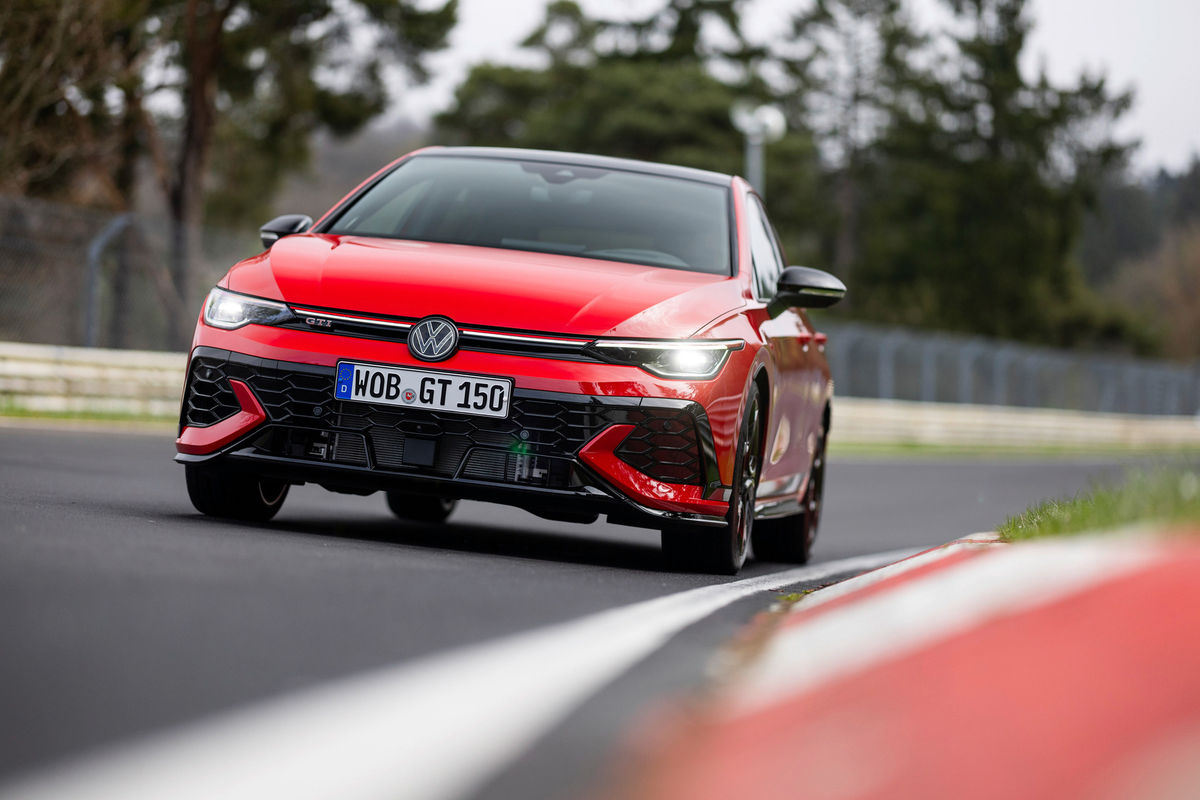
The Volkswagen Golf GTI Edition 50 celebrates 50 years of the iconic hatchback. With over 2.5 million units finding homes around the world, Volkswagen has created something special to celebrate this impressive milestone.
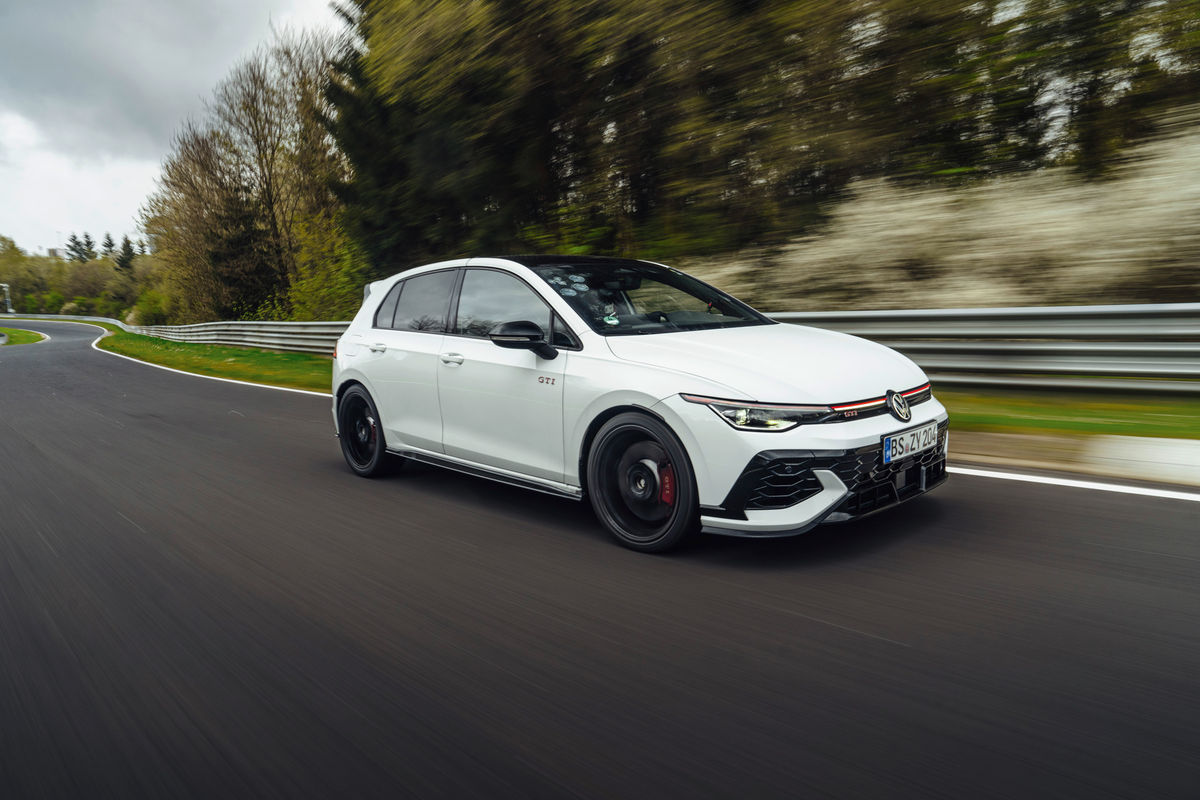
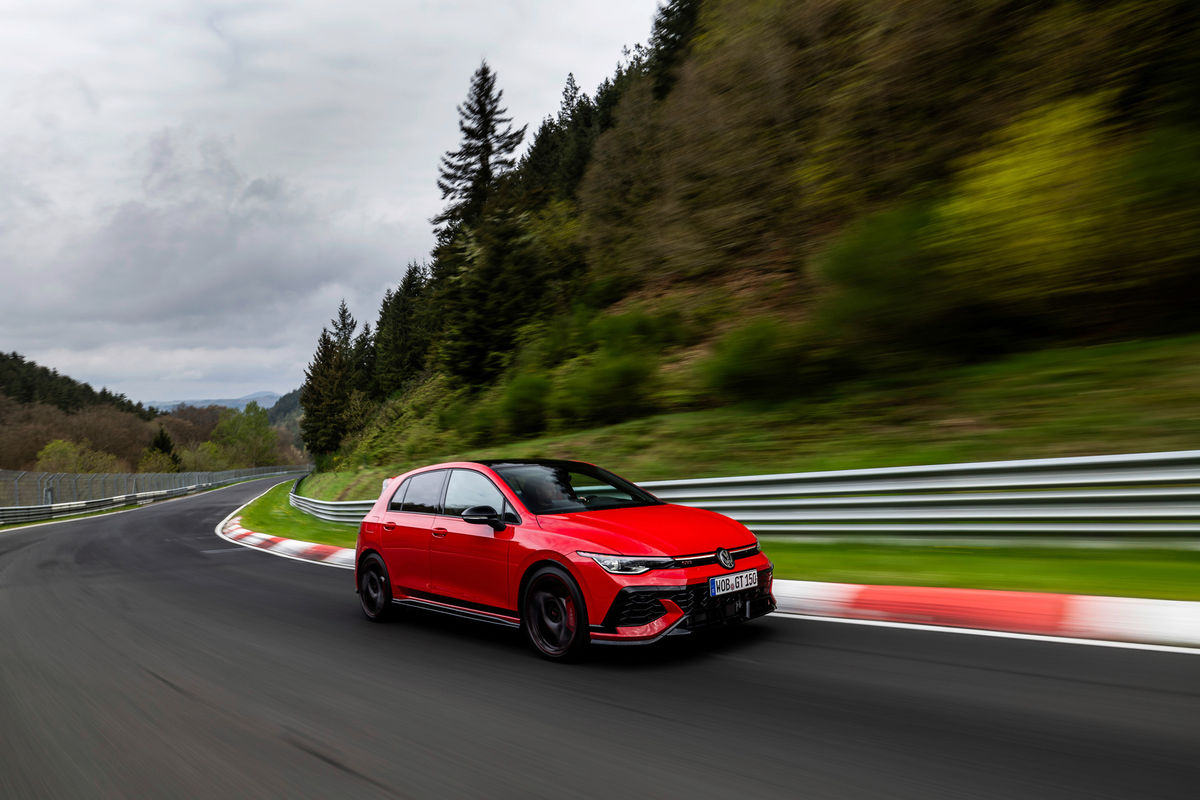
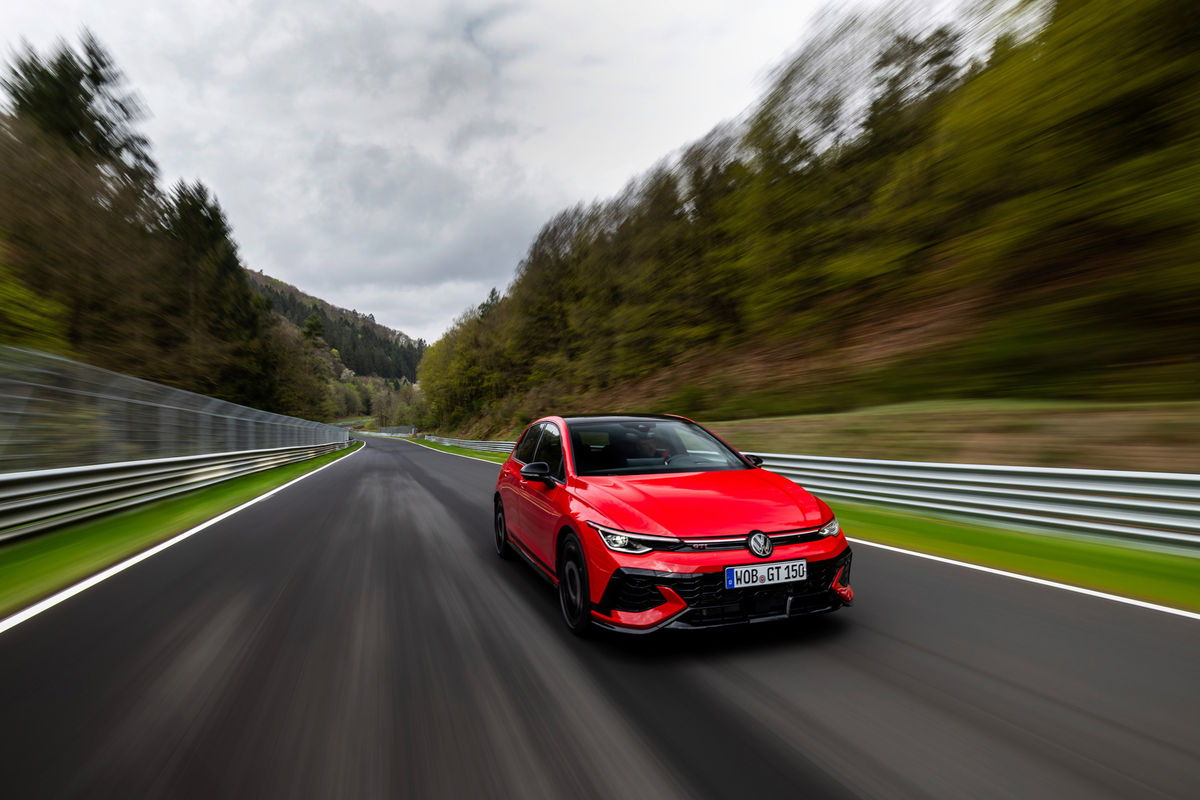
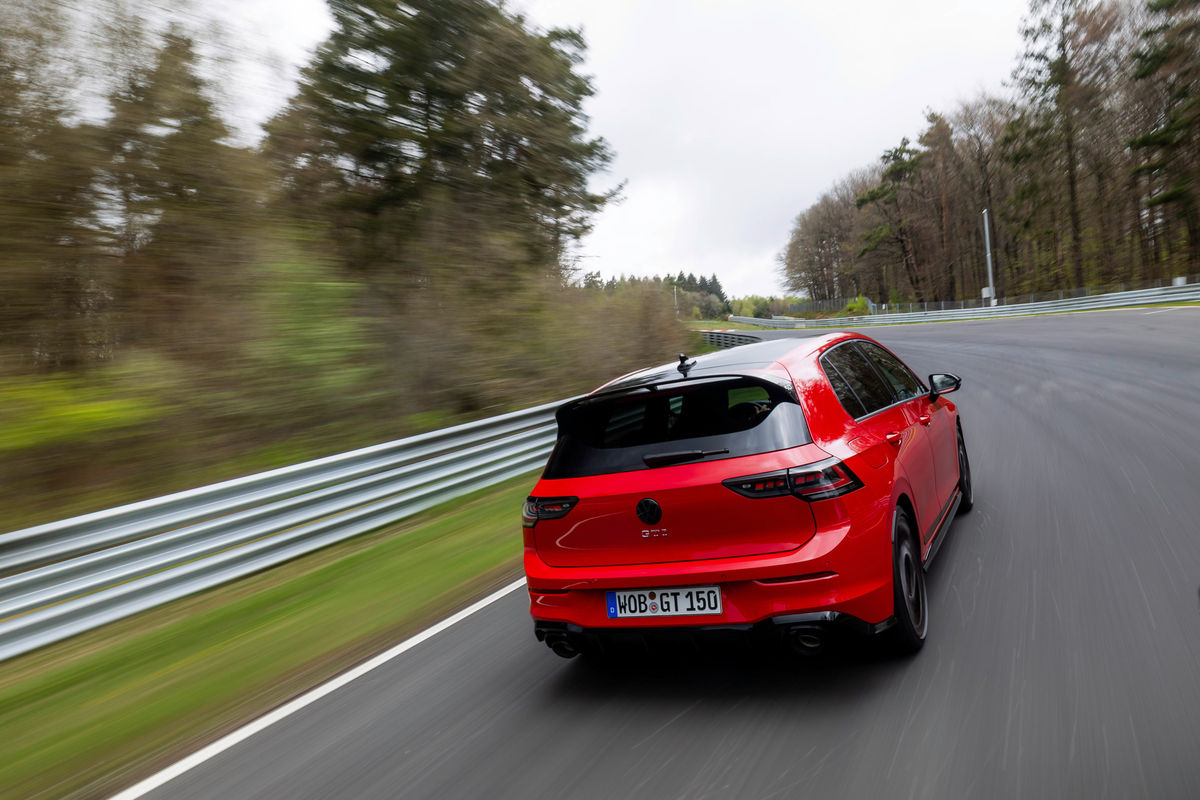
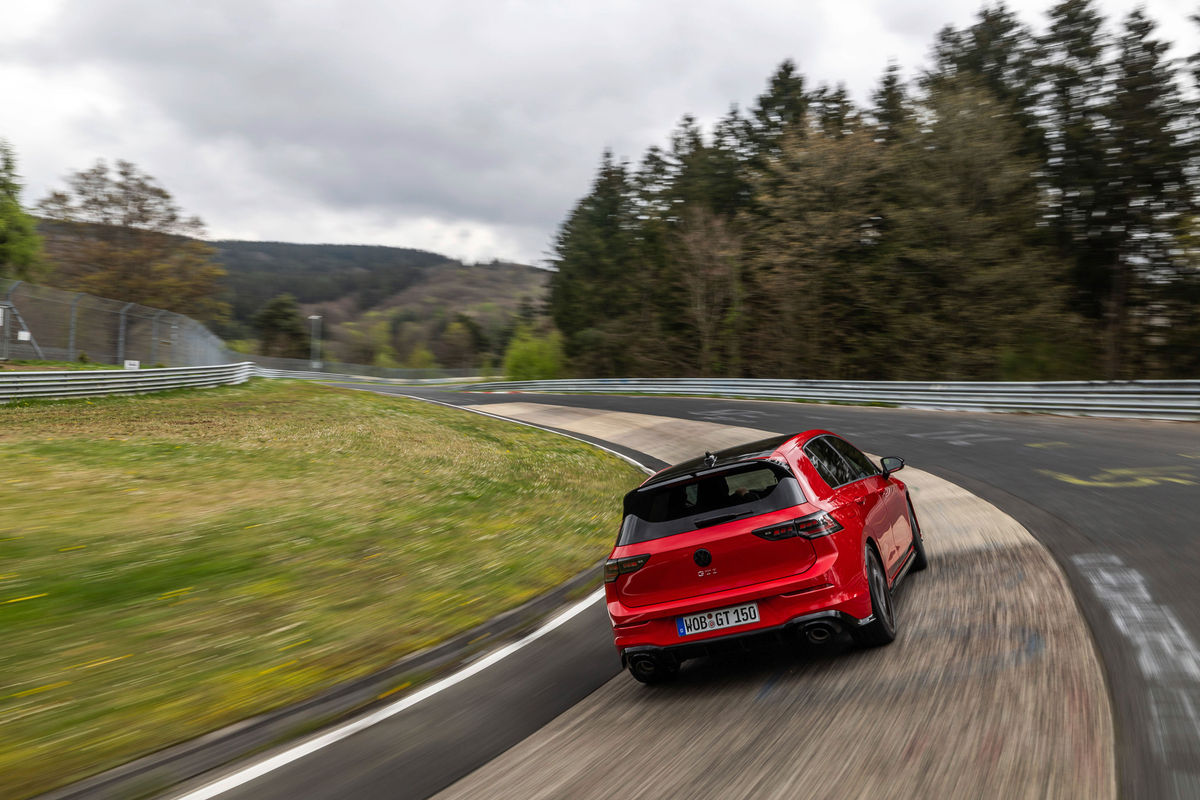
Keen-eyed fans will point out that 2025 is actually 49 years of GTI, but in Volkswagen’s defence, the vehicle only goes into production at the end of 2025 and customers will only get their cars in early 2026. Volkswagen claims the Golf GTI Edition 50 is the most powerful and fastest GTI to date. To prove just how quick it is, Volkswagen sent the car around the Nurburgring in 07:46:13 with its test driver benny Leuchter behind the wheel.
The enhancements are numerous, with both a bump in engine outputs and upgrades to the handling. The 2.0-litre turbocharged petrol engine now makes 239 kW and 420 Nm which is about as close to the Golf R as you’re going to get. As a reminder, the latter is an all-wheel drive setup while the GTI Edition 50 is exclusively front-wheel driven.
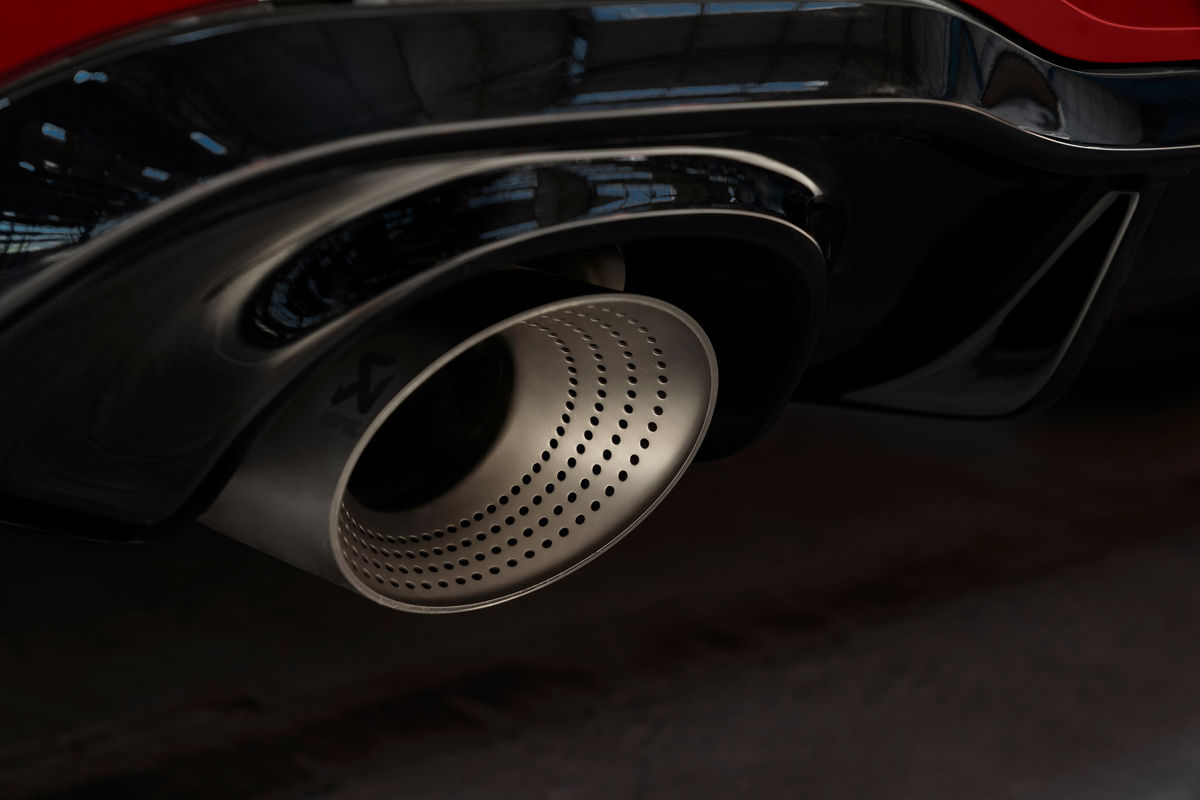
In terms of handling, the vehicle receives a newly-tuned DCC sports chassis, uprated front differential lock and a progressive steering setup. The suspension has been lowered by 15 mm too. But, if you’re wanting even more, then tick the options box for the GTI-Performance package which includes a set of high-performance semi-slick tyres from Bridgestone, adapted suspension mounts, an additional 5 mm of lowering, and a lightweight R-Performance Akrapovic exhaust system.
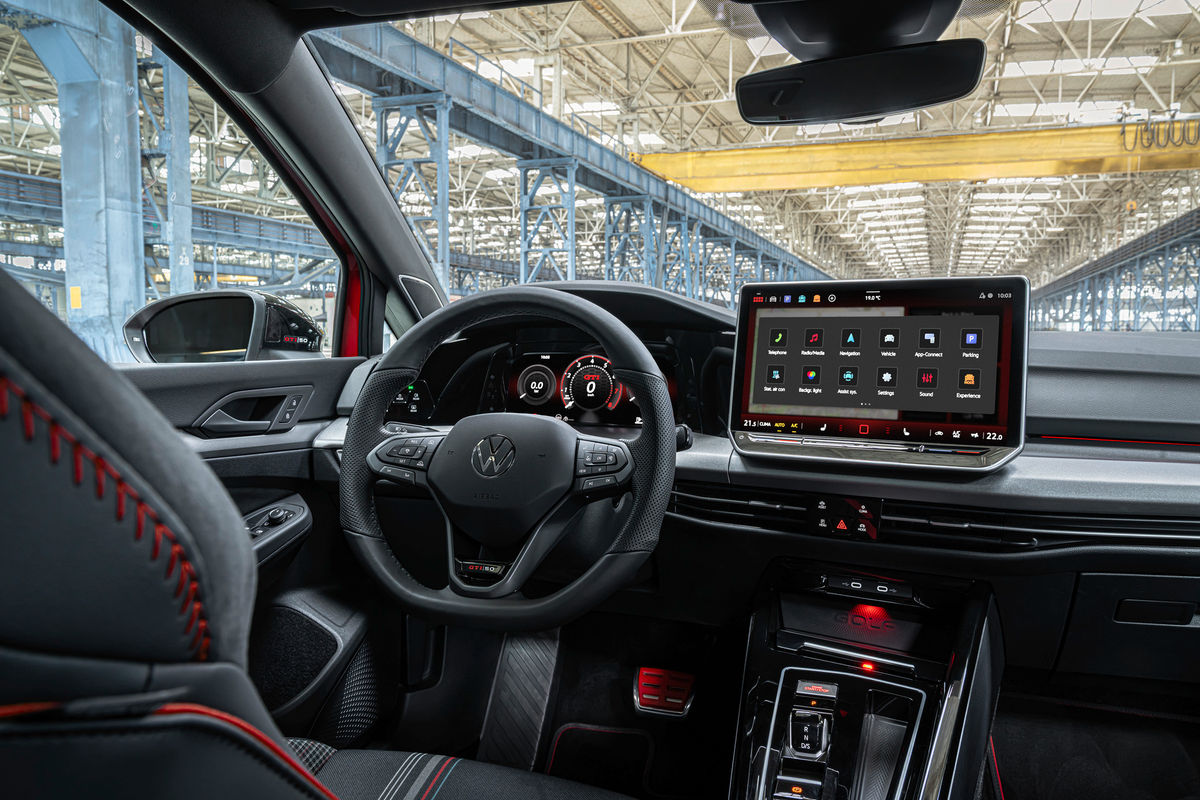
Climb inside and the first thing that will catch your eye are the sporty seats which are finished in a check pattern and have red seat belts. The steering wheel gets a subtle and classy GTI 50 logo. Exterior upgrades include subtle GTI 50 logos on the roof spoiler and insides of the exterior mirrors. Five exterior colours are planned for the Golf GTI Edition 50: Pure white, Moonstone grey, Grenadilla black metallic and – exclusively for the anniversary model – Dark Moss green metallic and Tornado red.
Will it come to South Africa?
This is tough to answer as VW Group Africa has yet to confirm even the basic Golf 8.5 GTI and the Clubsport at this stage, but given the legacy of the GTI name in South Africa, we live in hope that we’ll get a few units allocated, much like the iconic ClubSport S from back in 2016 when just 47 landed.