GWM C30 Sedan Now Available In South Africa – Specs and Prices

Previewed at the 2013 Johannesburg Motor Show, the GWM C30  is now available as the second sedan offering from the company to reach South Africa, following the recent introduction of the C-segment C50. It is also one of the most popular sedan models in China, regularly selling 10 000 units or more per month in its domestic market.

Engine details

The GWM C30 is powered by a 1.5-litre VVT-i normally aspirated petrol engine, mated to a five-speed manual gearbox and produces 71.3kW and 138Nm of torque. GWM claims this engine delivers a combined cycle fuel consumption figure of 7.3-litres/100 km and powers the C30 to a 170 km/h top speed.

Design

As mentioned in our previous report, the C30 Sedan rides on a stretched 2 610 mm wheelbase which results in a spacious cabin and one of the largest boots (510 litres) in its segment.

The vehicle is also fitted with 15-inch alloy wheels, colour-coded side mirror housings with integrated indicators, front and rear fog lamps, and customers have a choice of six colours, these being Pearl Black, Ocean Blue, Jazzy Red, Noble Grey, Star Silver and Titanium White.

Additional features include air-conditioning, power steering, dark cloth trim, electric windows all round, electric mirror adjustment, radio/CD/MP3 player with USB support, Bluetooth connectivity and a rake-adjustable steering wheel. Safety features include dual front airbags and ABS brakes, while the structure has been five-star rated by C-NCAP.

GWM C30 Sedan price in South Africa

GWM C30 1.5 VVT-i – R179 999

The GWM C30 comes with a five-year/100 000km warranty, 2-year’s AA roadside assistance and a five-year/45 000km service plan.

GWM C30 gallery

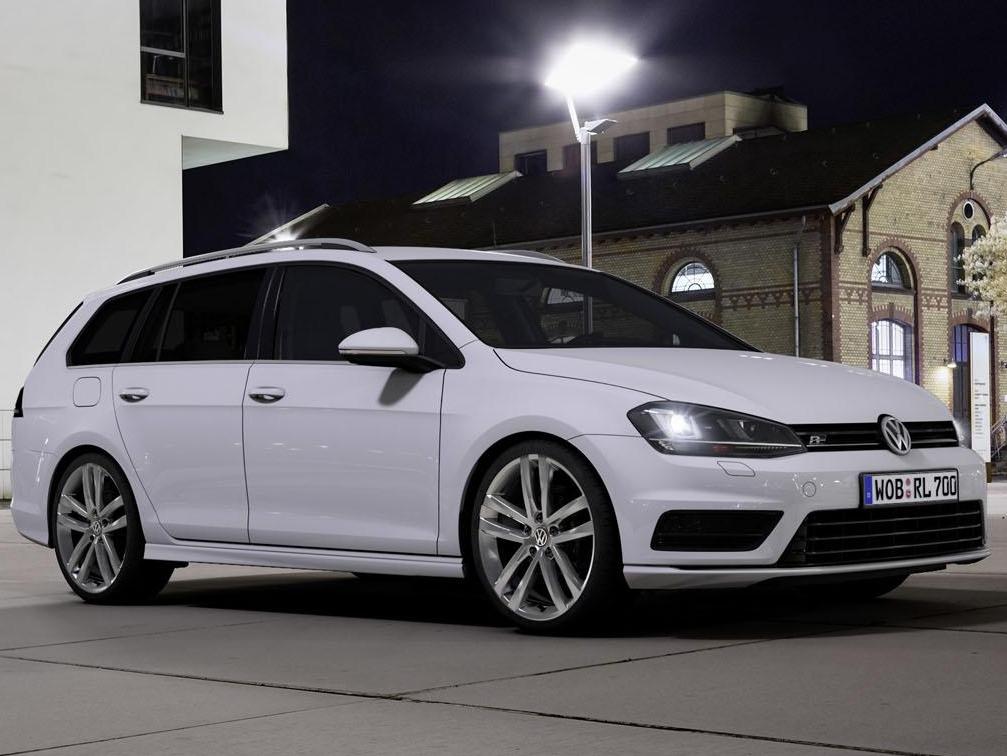
Volkswagen Golf 40th Anniversary

Volkswagen is celebrating 40 years of its iconic Golf model which has sold more than 30 million vehicles from the first to the seventh generation model.

The original Golf Mk1 which rolled off the assembly line in Wolfsburg in 1974, was a front-wheel drive, front-engined model which replaced the air-cooled, rear-engined, rear-wheel drive Volkswagen Beetle of which over 21.5 million units were built.

Now in its seventh generation, the Golf line-up is the biggest ever as it includes derivatives such as the GTI, GTD, GTE, R and e-Golf. The model is also the Volkswagen’s best-selling model and the world’s second best-selling model, with more than 29 million built by 2012.

Most production of the Golf was initially in the 3-door hatchback style. Other variants include a 5-door hatchback, estate/wagon (Variant, from 1993), convertible (Cabriolet and Cabrio, 1979–2002, 2011–present), and a Golf-derived notchback saloon/sedan, variously called Volkswagen Jetta, Volkswagen Vento (from 1992) or Volkswagen Bora (from 1999).

The Volkswagen Golf is additionally synonymous with a number of awards throughout its history. The Volkswagen Golf won the World Car of the Year in 2009 with the Volkswagen Golf Mk6 and in 2013 with the Volkswagen Golf Mk7.

Every generation of Golf has been a runner-up in the European Car of the Year awards and the South African Car of the Year Awards and two have been winners, the Golf Mk3 in 1992 and the Golf Mk7 in 2013.

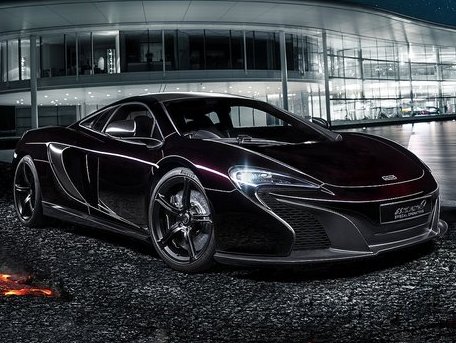
McLaren 650S Now In South Africa

The 650S stands for serious horsepower! The suffix “S” in a motorcar’s nomenclature usually stands for “sport”, on occasion for “speed” or “special”. But in the instance of the latest road-going McLaren sports car, S may well stand for “Serious”. We attended its local launch at Melrose Arch, Johannesburg.

McLaren 650S Power

This is a seriously serious supercar, and not just in terms of its bald performance figures, which are amongst the very best in the world.  And quite apart from an increase in horsepower to 650 (hence the name), which translates to about 487 kW, and 678 Nm of torque at 6 000 rpm.

That high-revving torque peak illustrates that the 3,8-litre twin-turbo V8 motor has been profiled for a seriously high output, and the overall weight of the car speaks volumes of McLaren’s intent to keep the car as light as possible. Its 1 330 kg dry weight is achieved despite a specification that is extremely luxurious, and includes all the creature comforts you’d expect to find in a luxury sedan.

Standard features

Amongst these are air-conditioning (actually a must in this type of mid-engined monster these days), IRIS satellite navigation, Bluetooth telephony, audio streaming, voice control and a rear parking camera. The cabin is trimmed in Alcantara, black in the case of the launch car on display at the 650S’s first South African viewing at Melrose Arch late last week.

In total, it is said that 25 per cent of the 650S’s components are new (compared to those on the MP4-12C)

The new everyday supercar?

“The big deal for me, regards the 650S,” said Daytona CEO Justin Divaris, “ is that these ultimate supercar performance figures have been achieved in a fully-equipped car. This is no stripped-out machine intended only for track days, or hot publicity laps at the Nurburgring.”

Indeed, the car on which the 650S is based, the MP4-12C, (a car we adore at Cars.co.za – ed) is noted most often for its benign mix of driveability, with suspension able to deal with speed-bumps and Jo’burg potholes, while endowing the supercar with the fine chassis balance for which McLarens are renowned. Divaris says this car has lost none of its commuter utility (if need be) and yet it has taken chassis balance and grip to new dimensions.

Carbon ceramic brakes are fitted, along with Pirelli P Zero Corsa rubber in  235/35 R19 sizing at the front and 305/30 R20 sizing at the rear. The rims are also bespoke 650S items to go with the visual upgrade this car enjoys, boasting some styling cues to be found on  the much more exclusive (and expensive) P1. Yes, while the MP4-12C might be criticized for its rather conservative styling, that barb won’t be directed the way of the 650S. The appearance changes are not just cosmetic either,  as McLaren’s CEO Mike Flewitt says : “ the optimised aerodynamics on this car increase the already high level of driver involvement to be found on the stock 12C.”

Okay, okay, so it’s trick, and McLaren’s boffins are expected to deliver the best. What are the numbers, bubba?

Performance

Well, the benchmark from rest to 100 km/h takes 3.0 seconds (those fractions of seconds become increasingly more important the closer you get to warp-speed), 0-200 takes 8.4 seconds, and 0-300 km/h takes 25.4 seconds. The standing 400 metres (quarter mile) takes 10.5 seconds, which for those of you in the know, is a seriously drag-car-like achievement, and top speed is 333 km/h.

McLaren 650S Price in South Africa

As for the most important figure? Go figure somewhere in the R4,5 region. Million that is. To date, McLaren under the Daytona umbrella in South Africa  has already sold two examples of the 650S, one to a Johannesburg customer and one to a lucky Cape Town resident. As for the MP4-12C, Daytona has currently sold 68 of them, which makes it one of the top McLaren dealers world-wide!

McLaren 650S Gallery

Hennessy Venom GT World’s Fastest Edition Revealed

Hennessey Performance (HPE) is building a limited run of World’s Fastest Edition Venom GTs to celebrate the company’s recent top speed run of 435.1 km/h, which was set at NASA’s Kennedy Space Centre in February.

“The Venom GT is America’s supercar and it broke 435.1 km/h on the same runway where the Space Shuttle landed at the Kennedy Space Centre. We wanted to offer a special paint scheme that would incorporate the colours of the American flag—the same flag we flew on the Space Shuttle runway,” said John Hennessey.

Production will be limited to three units and all will feature red, white and blue body stripes. Each version of the Venom GT World’s fastest Edition is said to feature a twin-turbocharged 7.0-litre V8 engine with 928 kW and 400 Nm of torque

“We’re thrilled about what we achieved at Cape Canaveral with the Venom GT,” added Hennessy CEO Don Goldman, “and now the World’s Fastest Edition is a living, breathing celebration of that record achievement.”

Mitsubishi Outlander (2014) Driven

By Ashley Oldfield
Certainly one of the quieter brands around, Mitsubishi has been going about its business under Imperial management reasonably well. The introduction of its best seller the ASX has seen Mitsubishi stay afloat after some iffy times in the late 2000s. The new Outlander was first available to overseas markets from mid last year and has now landed on our shores hoping to make a solid dent in the medium SUV market with its petrol, CVT seven-seater.

Engine and gearbox

It’s just the one model for now with a possible diesel coming in the future. Under the bonnet there’s a 2.4-litre DOHC four-cylinder petrol motor, complete with 123 kW @ 6 000rpm and 222 Nm @ 4 100rpm. It’s the same engine from the previous generation Outlander but it’s been specifically fettled with to improve fuel economy – a serious issue with the outgoing model. Mitsubishi claim it’ll do 8.2l/100km now but we couldn’t get it below 10l/100km on our mostly rural escapade around the Cradle of Humankind and Hartebeestpoort area.

Whilst overtaking a fair amount of trucks and general mashing of the accelerator, the long periods of 120 km/h driving at 2500rpm couldn’t recover the fuel economy figure. The CVT gearbox is the only option of transmission and in standard CVT mode can be very elastic in response and drone on when accelerating. Slip it into manual mode with a flick of the paddle shifters and it becomes a much more useable gearbox with snappy response to triggers and more natural power delivery. The gearbox also has an ‘L’ mode for locking the transmission in a single gear without automatically shifting up – handy for towing purposes.

Interior and space

The interior of the new Outlander is a nice improvement over the previous generation, as usual from the Japanese it feels strongly put together and carries a nice combination of soft-touch and rugged surfaces. There’s even a trace of wood around the passenger dashboard and doorsill, although I think it’s probably more modern to exchange that for a section of brushed aluminium or plastic carbon fibre.

All of the seven seats are covered in leather and it’s spacious wherever you choose to sit. The middle seating arrangement is very flexible as it slides backwards and forward to offer more legroom for that third row of passengers that often feel like they’ve been jammed into to the final row of seats on an EasyJet flight. The seats also fold flat with a couple pulls of levers and manoeuvring of bits to lay out a 1.74m flat loading bay that works out to 1608 litres of cargo space.

Standard specification for new Outlander

On the gadget side you won’t be left wanting as the Outlander is specced full of all the modern tricks and gizmos. Bluetooth, CD, MP3 and USB compatible radio sits up front and is connected to a powerful Rockford Fosgate sound system that harnesses the bass of a pretty big subwoofer next to the third row of seats.

The major selling point on the gadget side will be the roof mounted 9-inch DVD screen, it folds down for the back seat occupants to entertain themselves over those long distance holiday runs to the coast. Better news still is that it comes with a set of wireless headphones with a second pair added as an optional extra. If you miss those good old drive-ins you could always dispense with the headphones and play the sound through the Rockford Fosgate system and lay a mattress out on the back seat.

Safety features

Driving and safety aids aren’t skimped on as the Mitsubishi Outlander carries a five-star Euro NCAP and ANCAP (Australia) rating – right-hand drive models are tested in the ANCAP test. All the passive safety aids are thrown in so you get ABS, EBD, Brake Assist, Active Stability Control and hill-start assist for those incline pull-aways although not really worth having on an CVT gearbox. The new HID headlamps on the Outlander are said to be 1.4 times brighter than before and shine over an 80 degree angle, illuminating those sidewalks better.

One of the most impressive facets of the Mitsubishi Outlander is the ride and drive quality, it feels firm on the tarmac whilst dealing with bumps in a kind to the spine manner. The steering is standard rack and pinion with power assist, and is really well weighted with good feel making for a supremely-controlled drive. While we didn’t get to test its mettle on the rougher terrain Mitsubishi has fitted the Outlander with a 3-way variable all-wheel-drive system.

4×4 Abilities

The standard mode is 4WD Eco and runs the Outlander as a 2WD car until wheel slip is detected at which point it provides torque to the wheels with traction, this mode though is purely focused on making the Outlander as fuel efficient as possible. Mode number two is 4WD Auto and works in the same way as Eco mode, but is more generous with its use of fuel depending on throttle position. Mode three is 4WD Lock and does not lock the differential as the name suggests, but takes Auto mode a step further to use the differential more aggressively for that rougher terrain and slower speed 4×4 activities.

Summary and conclusion

The Outlander punts itself against some hefty competitors but aims to offer added value for money over its competitors. According to Mitsubishi the medium sized SUV market the Outlander faces consists of 60% 2WD, 55% petrol cars, 51% automatic models and is dominated by the Nissan X-Trail and Dodge Journey – 28% and 22% market share respectively. Other models they say are in the mix include the Kia Sorento, Hyundai Santa Fe, Subaru Forester and the Volvo XC60.

I can think of a few German models that may feel they take a bite out of this market too, but the Outlander has got decent value for money on its side. I don’t expect sales numbers to be too eye catching but those who do choose the Outlander will be quietly pleased they did.

Mitsubishi Outlander price in South Africa

The new Mitsubishi Outlander retails for R429 900

Mitsubishi Outlander gallery

BMW X7 Confirmed For Production

*pictured is the all-new BMW X4

Celebrating 20 years of production in the US, BMW has announced plans to expand its family of vehicles in the X model line-up with a completely new BMW X7 model set to compete against the Mercedes-Benz GL-Class.

BMW X7 to be built at Plant Spartanburg

The German firm has confirmed plans to invest 1 billion US dollars into their plant located in Spartanburg, South Carolina, where the X7 will be built.

“We will expand the plant’s annual production capacity by 50% up to 450,000 vehicles by the end of 2016. Today’s capacity is around 300,000 vehicles. This investment will also create an additional 800 jobs, increasing the total workforce to 8,800 on site,” said Norbert Reithofer, chairman of the board of management for BMW Group.

Although BMW hasn’t said much about its new X7, reports have suggested that the model will be a seven-seat crossover that will be launched in 2017 or 2018. It is also believed that the model will ride on a new platform underpinning the next-generation 5- and 7-Series.

Other than that, the BMW has confirmed plans to produce an X5 plug-in hybrid at the plant in the “near future”. The model was previewed by the Concept X5 eDrive and will most likely have a TwinPower Turbo four-cylinder petrol engine, an electric motor and an xDrive all-wheel drive system.

The South Carolina plant currently builds all of BMW’s crossovers including the X3, X5 and X6, and will begin production of the new X4 (pictured) which is currently underway.

New BMW 3 Series Sedan M Performance Edition

BMW South Africa has announced plans to expand its offering in the 3 Series model line up with the introduction of the new limited production BMW 3 Series Sedan M Performance Edition.

M Performance Parts

Limited to only 500 units, the Performance Edition 3 Series will offer customers standard features consisting of the BMW M Sport Package, 19-inch M Sport wheels, and M Sport brakes. Additional BMW M Performance parts will include the M Performance aerodynamic package, M Performance side sills with foil, M Performance carbon rear spoiler, M Performance carbon wing mirror caps, and a Black M Performance front grille.

Optional extras consist of exclusive 20-inch BMW M Performance light alloy wheel Double-spoke, M Performance top stripes, M Performance exhaust system (only available for the 328i and 335i), the exclusive Laguna Seca Blue and Valencia Orange metallic paint colours and the BMW M Performance Power Kit, which increases the power output (by between 10 and 15 kW) and torque (+30 Nm) – this is only available for the 320d, 330d and 335i models.

The BMW 3 Series Sedan is the 6th generation of the world’s most successful premium segment car which builds on a legacy that has seen the model sell over 12 million units since it debuted in 1975.

Since its introduction in South Africa in 2012, 22 453 units have been delivered to customers and the model has in addition maintained its position as leader in the mid-range premium segment.

BMW 3 Series Sedan M Performance Edition Parts Pricing In South Africa

BMW 3 Series Sedan M Performance Edition Content: R50 000 and R65 000 if specified with exclusive metallic paints (Price of M Performance Edition content if fitted at dealership is R 87 000).

20-inch BMW M Performance light alloy wheel Double-spoke 405M – R43 900

M Performance Top Stripes – R2895

M Performance Exhaust System – R11 755

M Performance Power Kit –  R15 670

BMW M Performance Parts are also offered in the BMW 1 Series, new BMW 2 Series Coupe, BMW 4 Series Coupe, BMW 5 Series Sedan, BMW 6 Series, BMW X6 and the new BMW X5.

BMW 4-Series Convertible (2014) Driven

Cars.co.za recently attended the local launch of the BMW 4-Series convertible in Kwa-Zulu Natal. The launch gave us the opportunity to also sample the new BMW 2-Series.

I almost didn’t get to Durban as my Mango flight suffered a technical difficulty and needed a component replacing. A two hour delay meant I had catching up to do when I finally got behind the wheel. There are two options available at launch, the 428i convertible and the 435i convertible. I jumped into the 435i convertible and set off.

Folding metal roof

The 4-Series convertible is an exceptionally pretty car and screams classiness. At the heart of the BMW 4-Series convertible is a folding hardtop roof which can be opened and closed in an extraordinarily short space of time. How does 20 seconds sound? What’s even better is you can put the roof up/down while the car is moving slowly. Sadly, the number one gripe with folding metal roofs is the lack of boot space, and the 4-Series convertible suffers.

With the roof down, my co-driver from Wheels24 and I were barely able to squeeze our overnight luggage in the hold. However, there’s a new feature which allows you to increase the dimensions of the boot aperture without having to put the roof up completely. Still, the bottom line is if you have lots to carry then you’re going to have to put the roof up.

Engines and derivatives

Right now there are two engines available, as mentioned earlier. There’ll be a 420i model joining the ranks later on this year and it’ll have 135 kW and 270 Nm. The 428i is a turbocharged 2.0-litre with 180 kW and 350 Nm, which is good for a 0-100km/h dash in about 6.5 seconds. The 435i makes do with the delectable 3.0-litre turbo’d six-cylinder motor which has 225 kW and 400 Nm.

I was in the 435i convertible for the duration of the launch, so I’ll be talking mostly about that. Its power goes to the rear wheels through a lovely eight-speed gearbox and when you’re changing gear through the steering wheel-mounted paddles, there’s an addictive and aggressive pop out the twin exhausts. The 435i is not short on speed either and mid-range acceleration is particularly grin inducing.

Launch route

The launch route took us from King Shaka Airport and up the N3 to Pietermaritzburg, then we turned off and drove the sweeping and winding roads of the sugar cane fields towards Port Shepstone. I’ll have to admit to putting the roof up soon after setting off as the heat and humidity was becoming a bit much. I’m happy to say the common convertible affliction of rattling and scuttle shake was nowhere to be found on the new BMW 4-Series convertible.

Summary

It’s a relaxing drive too, with the car aimed to be more of a boulevard cruiser rather than an out-and-out performance vehicle. I just can’t get enough of how nice that engine sounds and how lovely the eight-speed gearbox is. The price of the BMW 435i convertible does seem like an awful lot of money once you’ve specced it up, but then again who am I to complain? I’m not the target market and I’m sure many enthusiasts have already put down their deposits for what is a very stylish and classy convertible.

BMW 4-Series convertible price in South Africa

Model Price Fuel efficiency Power Torque
435i From R781 500 7.5 – 8.4l/100km 225 kW 400 Nm
428i From R634 500 6.6-7.0l/100km 180 kW 350 Nm

BMW 4-Series convertible gallery

Peugeot 2008 (2014) Driven

It’s remarkable to note that the Peugeot’s 2008 has exactly the same wheel-base – 2 538 mm — as its 208 hatchback sibling. Driving the car, and living with it for a couple of days on this week’s launch, it feels far bigger.

Dimensions

In length it has grown by nearly 200 mm, and it is almost 10 cm taller than the small, sporty hatch, but of course by using the same208  platform without any extension of wheelbase the cost benefits to Peugeot are enormous. Thus the very stylish new cross-over, half-hatch, half SUV, comes in at a South African launch price of R269 900. That’s right in there in Nissan Juke territory, Juke being the market-leader in terms of sales in the so-called crossover division for some time now.

Peugeot 2008 styling

The 2008 has pleasing, non-frivolous exterior lines, the most notable feature being the squared off wheel-arches, which  give the vehicle a gravitas it may not otherwise have enjoyed with the sort of ‘raised-eyebrow’ wheel-arches favoured by most other cross-over and compact SUV builders. In fact the overall style is very much shades of Mazda CX-5 in profile, while from the front the 2008 has a very clean front end with a sharp grille-intake profile dominating in bright metal.  The headlights are endowed with an interesting, but somewhat frivolous zig-zag outline.

Build quality

Build quality is a vast improvement over Peugeots of just some five years ago. The materials used in the interior have an extremely high quality feel, especially the seat upholstery, which is a mix of leather and rugged textile. The same goes for the dash and door fittings to a large degree. There is still the occasional panel that employs  a rather brittle-looking dimpled plastic, but these are minimal (notably on the door cappings) and the overall effect,  high-lighted by  a type of rugged carbon-weave-looking dash trimming, is classy and modern, without in any way being over boy-racer-ish.

Peugeot staffers are proud of their new minimalist instrumentation-pod and steering wheel arrangement. I am still not convinced by this layout, both in the 208 hatch and the new 2008 cross -over. I find that with my 1,83 metre height I have to drop the steering column way down so that I can get a decent view of the instrument panel. A bigger steering wheel would solve this problem. On the plus side, in the 2008, the steering wheel is small enough not to snag on my thighs as I drop it down far enough to see the dials (which is only just possible).

Peugeot 2008 engine and gearbox

The powertrain package on the new 2008 has a naturally-aspirated 1.6-litre motor, which is very lively at sea level. In fact initially I felt we might have been sitting behind a low-pressure turbo version of the Peugeot 16-valve motor, which incidentally is also used in the Mini Cooper in both naturally-aspirated and turbocharged form.

Okay, we were at sea-level, which accounts for 17% more power than we enjoy up on the Reef, but I still felt the initial throttle response was excellent. Interestingly, this large, full-five-seater car weighs 1 080 kg, which is appreciably  lower than many workaday hatchbacks, and impressive for a car that has a pretty full specification.

Thus the power-to-weight ratio is much more impressive than one would assume for a car of this size, given that the engine is rated at just 88 kW and 160 Nm of torque. What is impressive is that the engine spins very pleasantly to over 6 500 rpm. It is interesting, too, that Peugeot is only offering the one model here, in 1,6-litre petrol form, and with a  five-speed manual transmission.

Initially I was surprised that there is only a five-speeder available, in this age where manufacturers are going to six-speeders on manuals and eight or even nine speeds on automatic ‘boxes. Peugeot’s SA management team said that this is the only model available to them.

On the one-hand, some motorists may feel that the engine is buzzing a little too hard at the 120 km/h speed limits – a little under the 3 500 rpm mark – and thus using too much fuel at highway cruising speeds. But on the other hand, having only a five-speeder makes highway cruising and overtaking a more relaxed chore, for the simple reason that you stick it in fifth and leave it there – with the overall gearing, there is enough on tap to manage fifth-gear overtakes, and thus you don’t need to scramble between fifth and sixth as you do on some lower-powered six-speed models. Also, the engine is particularly smooth at cruising speeds.

Ride and handling

The launch route for the Peugeot 2008 took us from Port Elizabeth to Port Alfred and then into the interior via Bathurst and the outskirts of Grahamstown. The road surface is that light-grey tar peculiar to the Eastern Cape, commendably pot-hole-free but replete with many ripples and camber changes, not to mention bumps right in the apex of a corner.

The 2008 handles this with aplomb. Marc Bocque, Peugeot’s international Head of Communications,  was on the SA  launch and he remarked to assembled journos at a stop  in Kenton on Sea that we had no doubt experienced the “excellent ride quality Peugeot had achieved with this car.” Indeed, Peugeot have done just that, allied to a steering system that is ultra-light at parking speeds and very quick on turn-in at highway speeds, making for accurate placement of the car. Combined with the small steering wheel diameter, this gives the Peugeot 2008 a very-un-granny-like attitude when pitching it into a corner.

Summary

Overall I found the Peugeot 2008 satisfying in a refreshingly non-SUV or MPV fashion. Give its utility of excellent rear leg and head-room, and a 350 litre boot that is easily loadable(and expandable)  thanks to a hatch lid that extends all the way down to the bumper, this is a car that really can be used happily as an active-lifestyle conveyance. Mountain bikes, suba gear and the like.

Peugeot 2008 price in South Africa

The very good price of R269 900 includes a touch-screen NAV system, audio, six airbags, ESP and EBD, and a maintenance plan good for three years/60 000 km (that distance seems a little short for three years) and a three-year/100 000 km warranty. This car is going to surprise a lot of people who have consigned the French brands to those of also-rans and haven’t kept up with the strides they have made in recent years.

Peugeot 2008 gallery

Suzuki SX4 (2014) Driven

The next generation of Suzuki’s SX4 crossover has arrived in South Africa, and we attended its launch in Johannesburg.

Crossover festival

Crossover is a hotly-contested segment of the car market, with many manufacturers all fighting for a slice of the pie. Nissan has its Juke and Qashqai, there’s the decent Subaru XV and even Volvo is getting into the act with the V40 Cross Country. As I type this, a Ford EcoSport has just arrived for evaluation. I can understand the appeal. Crossovers are big, practical and aimed at the weekend outdoors enthusiasts. They’re also aimed at the young families, as well as the… in fact they’re marketed as a car for everyone.

The previous generation SX4 wasn’t a bad car, and some additions like all-wheel drive at the end of its product cycle made it quite good. Fast forward 2014 and I’m behind the wheel of the next generation of Suzuki SX4 – a larger, more practical version and a completely different vehicle compared to its predecessor. It doesn’t look half bad either and looks like a bigger and bolder Kizashi from the front. However those tail lights look a little generic. The 17-inch alloy wheels are also particularly striking.

Practicality

Suzuki claims class-leading practicality and has addressed the one main criticism of its outgoing SX4: rear legroom. The 2014 SX4 is substantially bigger as the wheelbase has grown by 100 mm, the overall length by 165 mm and finally the luggage space has grown from 270 litres, to 430 litres. If you fold the backrest all the way down, there’s 1 269 litres of space to play with.

Standard specification for SX4

So it’s bigger, wider and more practical. Let’s look at standard specification. In true Suzuki tradition, the product is well equipped. There are a few specification levels to choose from, but seeing as I spent most of my time in the GLX manual, I’ll focus on that.

You get cruise control, 17-inch alloys, six speaker USB/Mp3/CD radio, Bluetooth connectivity with steering-wheel mounted controls, automatic HID headlights, daytime LED lights, comprehensive trip computer, keyless start, auto wipers, park distance control as well as a five-star safety rating. It’s an impressive offering and yet this is the second cheapest version in the line up.

Suzuki SX4 engine

Powering the Suzuki SX4 is the M16A engine. If M16A means anything, you’ll know it’s the same motor which does duty in the pocket rocket Suzuki Swift Sport. Sadly, this engine has been detuned in the Sx4 and focuses on being economical. This 1.6-litre four cylinder has a power and torque rating of 86 kW and 156 Nm respectively. Fuel economy is where the vehicle shines and Suzuki South Africa claims the new SX4 will sip just 5.8l/100km.

It’s believable as I achieved around 6.2l/100km on the launch route in the North West province. As for power and delivery, the car is no hot performer and there’s just enough grunt to get about. I’m keen to see how the Suzuki SX4 will perform at sea level, where it won’t be suffering from a 17% power loss caused by altitude.

Gearbox choices

Things start to go awry when you consider the transmission options. There’s nothing wrong with the tried-and-trusted five-speed manual gearbox, but the continuously variable transmission (CVT) doesn’t make the most of a good engine. It’s fine if you’re happy to drive slowly and efficiently, but if you’re in a rush the ‘box just doesn’t seem to put all the power to the wheels.

The engine’s revs climb, the engine note increases, but you just don’t seem to pick up speed even when using the well-designed paddles. I’d only advise the CVT if you’re totally adverse to a manual gearbox. Otherwise, stick to the manual gearbox and you’ve got a winner, especially as the fuel consumption figure is better.

AllGrip and 4×4 ability

The Suzuki SX4 comes with a four-wheel drive system called AllGrip, and while I didn’t get to try it out, it seems capable on paper. There’s between 175 and 180 mm worth of ground clearance and the automatic AllGrip system does most of the work for you. By using a dial located in the centre console, you can choose modes to tackle different terrain.

There’s an auto mode, which will send torque and power to the back wheels if the fronts start to lose grip. Snow is ideal for unpaved surfaces and spreads the torque between the front and back wheels as you drive. In theory, this snow setting should work well on gravel and dirt. Sport will make things interesting and sharpens up the engine’s response as well as sending more torque to the back wheels for better cornering. If you literally get stuck in the mud and want to get the car out, activate the lock mode and the car will dig itself out.

Ride and handling

The Suzuki SX4 happens to ride well, and there’s a nice feeling of solidity about the vehicle. It’s well damped too and the car feels sure footed and stable on questionable tarmac. The roads of the North Western province really aren’t that great. Part of the launch route included some serious gravel sections as we went up an old mountain pass.

Amazingly, I didn’t need the all-wheel drive version as my launch unit was more than capable, and skipped up the pass without any problems. For gravel driving, it’s pretty good and I was delighted to not hear a single rattle after rejoining the tarred road, underlining decent build quality.

Suzuki SX4 Price in South Africa

The Suzuki SX4 is available in a number of derivatives which all share the same 1.6-litre engine.

Model Price Fuel efficiency Power Torque
 1.6 GL  R265 900  5.8  86 kW  156 Nm
 1.6 GLX  R295 900  5.8  86 kW  156 Nm
 1.6 GLX CVT  R318 900  5.8  86 kW  156 Nm
 1.6 GLX AWD  R319 900  6.2  86 kW  156 Nm
 1.6 GLX CVT AWD  R341 900  6.2  86 kW  156 Nm

Suzuki SX4 gallery