Five years after the launch of the second generation model, Renault Twingo became the first model in the range to show the brands new design identity following extensive restyling.
Now the French automaker has revealed yet another new Twingo set to be officially unveiled at the 2014 Geneva Motor Show.
Vibrant design features
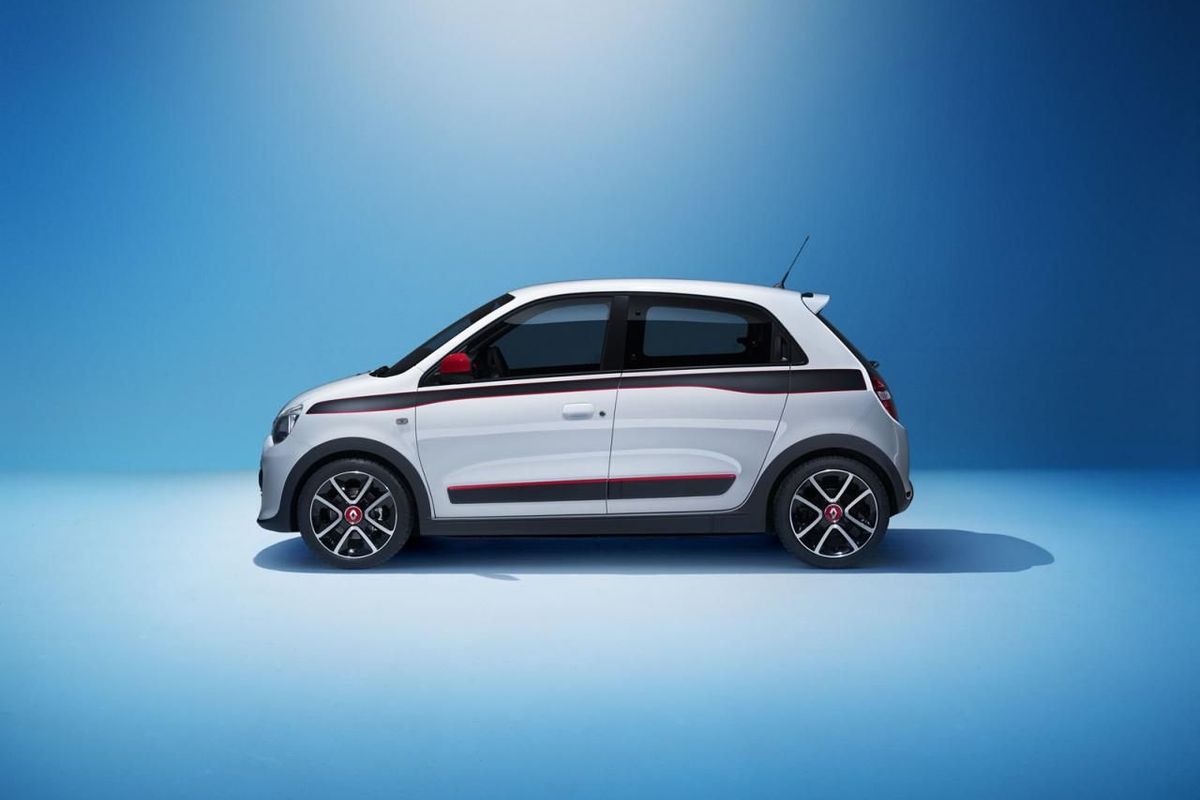
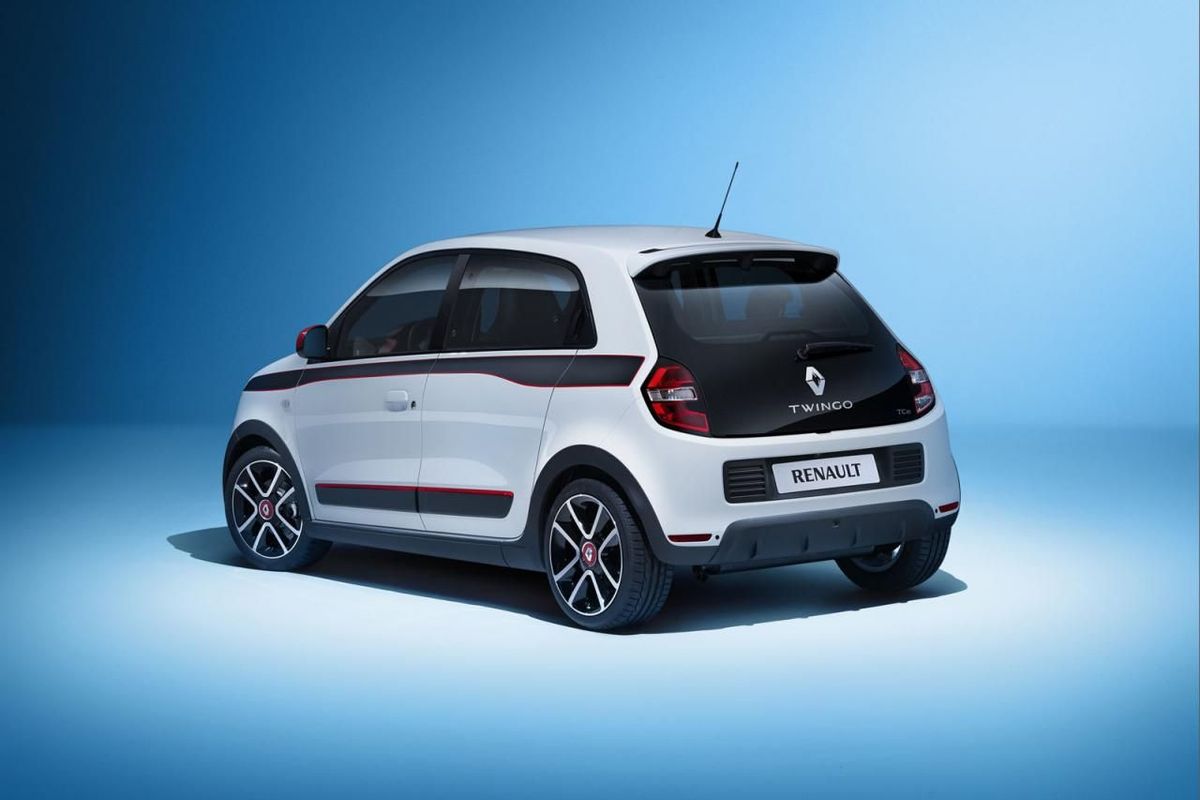
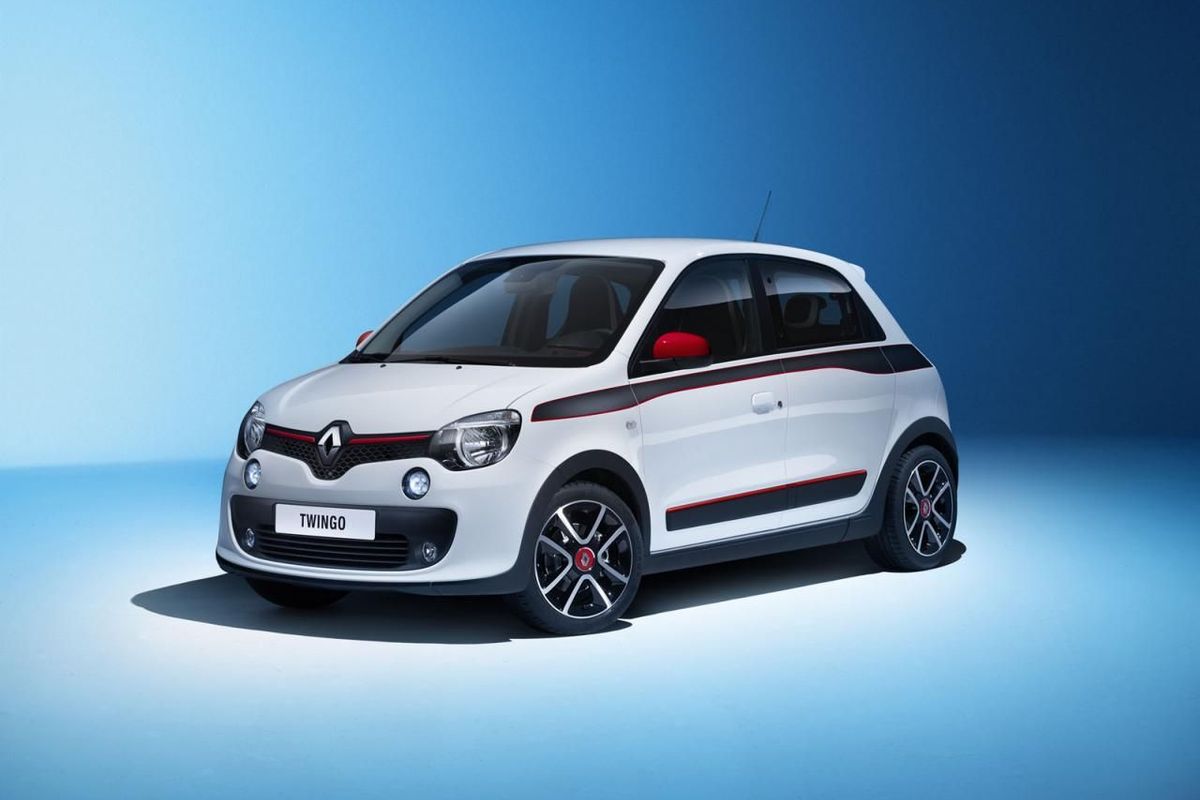
The 2014 Renault Twingo was created from a blank sheet of paper and draws inspiration from the original Twingo and the Renault 5. It features a rear-mounted engine and rear-wheel drive, freeing up the front end and considerably improving the turning circle.
Combined with the use of a smaller block and the positioning of the wheels at the car’s corners, the rear-mounted engine also frees up extra cabin space.
The model has been further equipped with a sporty and playful front fascia which has a prominent Renault logo set to a black background and circular LED daytime running lights which combine a hi-tech feel with an echo of the models predecessors. It also has hidden rear door handles and distinctive taillights that are described as a “natural prolongation of the tailgate.”
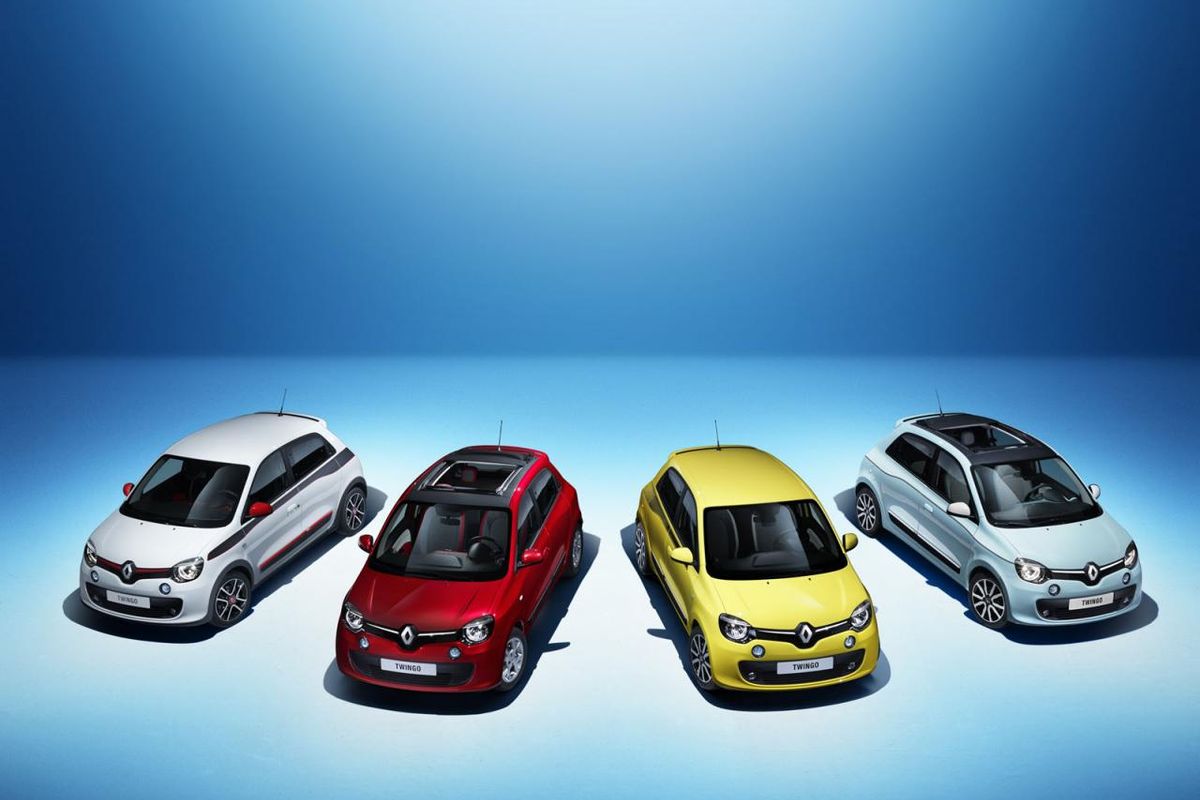
The redesigned model also features five doors, rather than three and comes in a choice of four vibrant pop colours (light blue, white, yellow and red).
Additional spec and interior details and images will only be released on March 4 at the Geneva Show, but Renault says customers can expect a “colourful and cheerful cabin which has been ingeniously thought through to deliver user-friendly, everyday versatility.”
A source at Renault South Africa said the new Twingo won’t be coming to our shores at this point. Fingers crossed Renault South Africa changes its mind.
2014 Renault Twingo gallery
2014 World Car Of The Year Finalists Revealed
Finalists for the 2014 World Car of the Year awards have been announced. Along with this top award, other awards to be announced include World Luxury Car, World Performance Car, World Green Car and World Car Design of the year.
This is the first year for the World Luxury Car award. This new category was created to acknowledge higher-priced premium models selling in more limited numbers worldwide.
The awards, in their 10th year will be hosted by the New York International Auto Show on April 17, and will be voted on by a jury of 69 international motoring journalists.
The 2014 World Green Car category has the Audi A3 Sportback e-tron, BMW i3, Honda Accord Hybrid, Mitsubishi Outlander PHEV and Volkswagen XL1 as entrants.
The winners of all categories will be announced at the New York Auto Show on April 17th. In the meantime, you can let us know which car you think is going to win, in each category.
*Cadillacs are no longer sold in South Africa
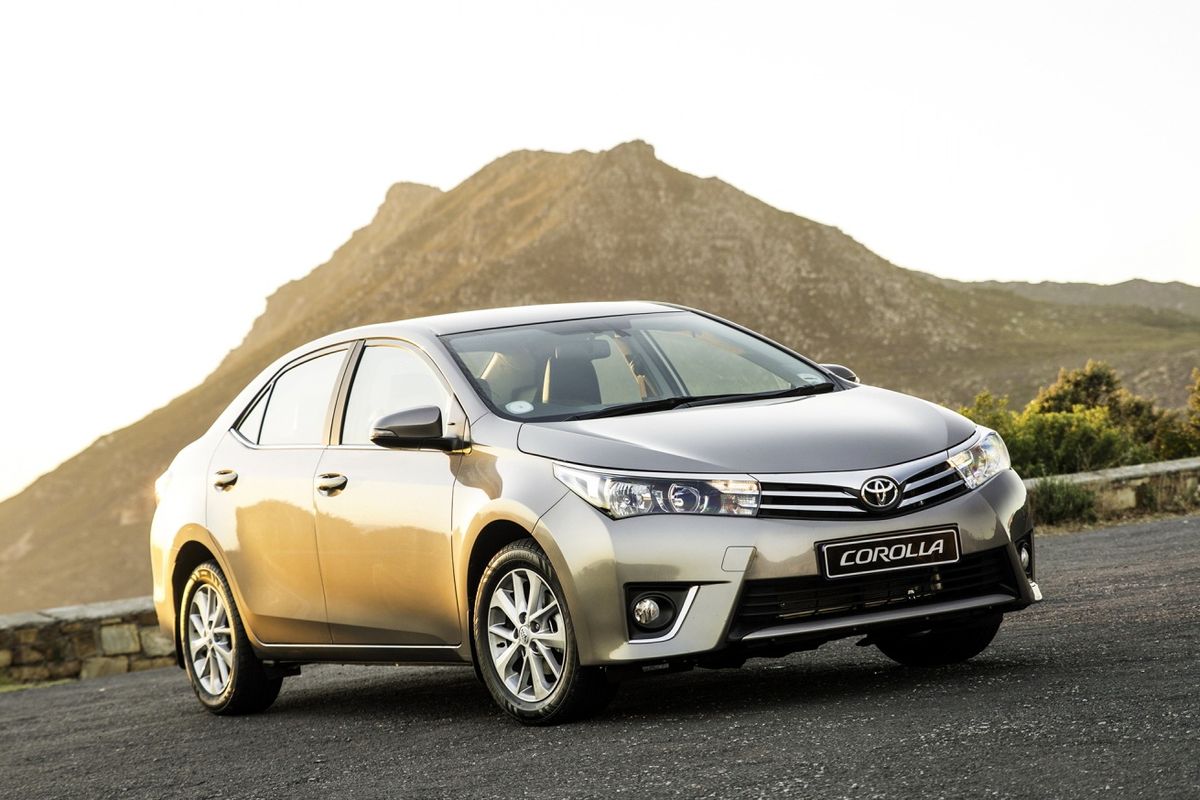
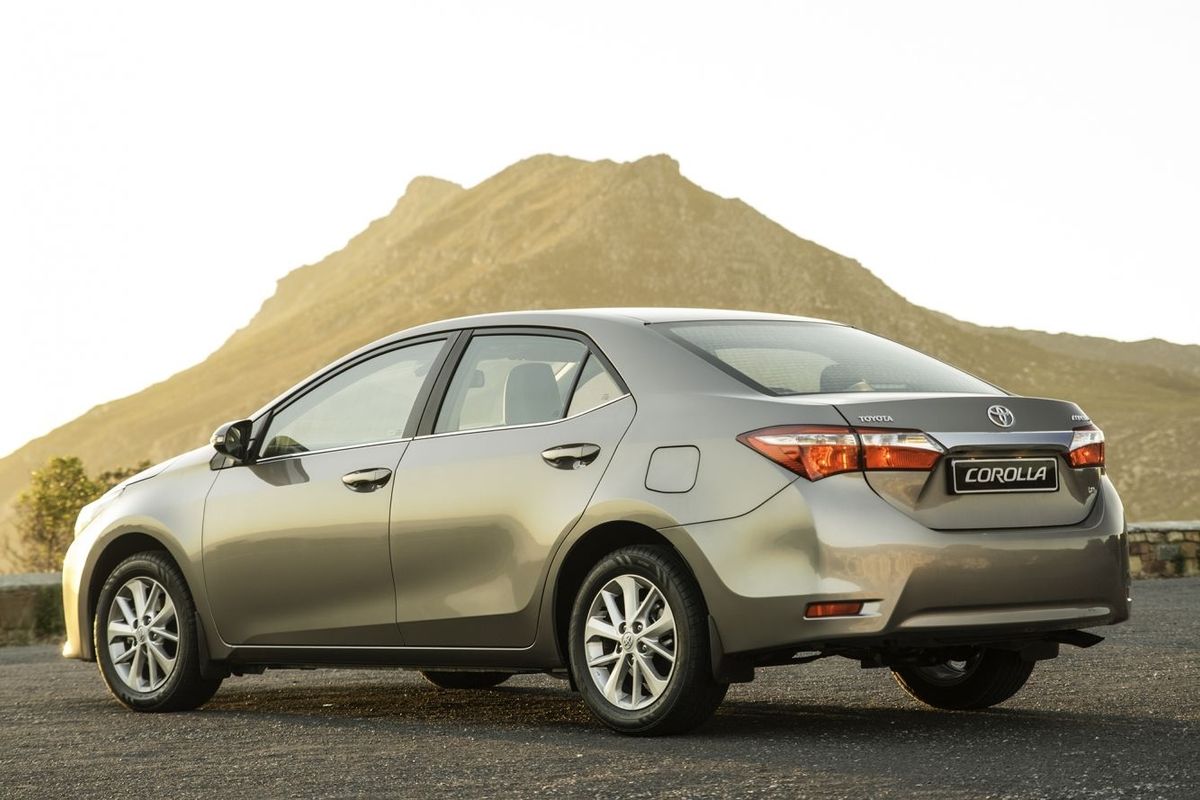
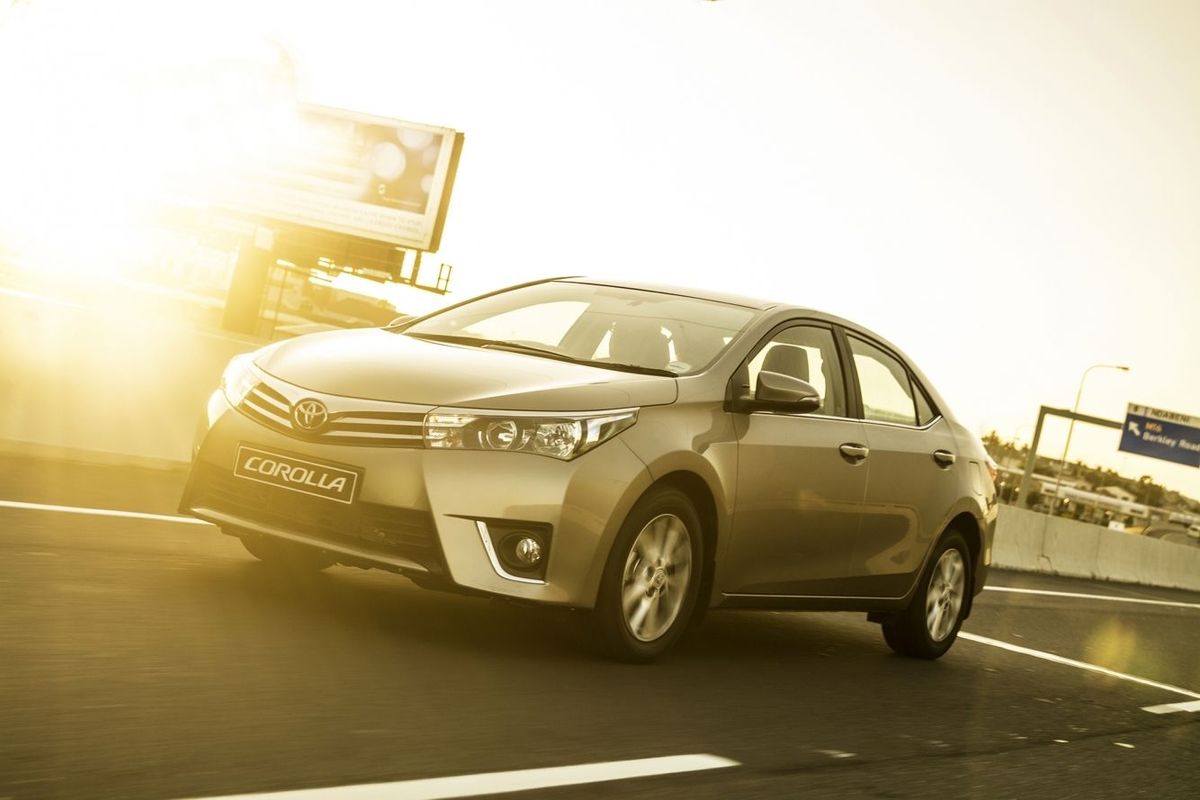
2014 Toyota Corolla Review And Video
Allow me to introduce the 11th generation of the Toyota Corolla. In 1975, South Africans were introduced to the third generation Corolla, and since then nearly 1 million have found homes in our country, as well as over 40 million across the globe. This is a truly iconic car.
And it’s quite easy to see why. This car wants nothing else but to be a car. Thats all. Not the fastest or prettiest or largest or smallest. Just a useful, practical, affordable machine that will help every kind of person, from grad students to grandmothers, get on with their daily lives.
2014 Toyota Corolla Video Review
But these are the hardest cars to design and build. It has to have comfortable seating for five, a frugal engine, a large boot, not-too-shabby looks and of course it all has to cost less to produce than a firepool.
The Interior
After a few days with the car, I actually started to think of it as more of a Lexus than a Toyota. Which is like spending some time with the girl next door, only to realise she is actually Anna Kournikova. There is leather everywhere and fine white stitching on the higher spec models, but lower specs get a cloth/leather combo. The dash is the best Ive seen in a Toyota and most models come with a 6.1 inch colour touch display, which is easy to use and creates a perfectly modern feel.
The position of the screen is a little low, especially when the reverse camera comes on. The camera is not the best Ive seen, but it is useful. Steering wheel controls are large and clearly marked, and a centre LCD screen in the dials displays all sorts of information, fuel range being the most useful, I found.
The Engines
At launch, four engines are available for the 2014 Toyota Corolla. For some reason which I didnt have a chance to ask on the launch, Toyota has shied away from small turbocharged petrol motors. There are instead three naturally aspirated options to choose from. There’s a 1.3, 1.6 and a 1.8 with one diesel is available, the 1.4 D-4D.
I didnt sample the 1.3, and I wasnt impressed by the 1.6. Its a little thrashy and the fuel consumption didnt impress, but that could have been affected by the journalists who drove before me. The 1.8 is a peach and delivers smooth, lively power. Its obviously the most expensive, but I would argue the best and potentially longest living of the bunch.
But the real star is the diesel. Although Toyota was late to the oil burning party, its second crack at a small diesel is impressive. Its quiet this motor, and while turbo lag is noticeable, its worth living with for the fuel consumption.
My test unit, over 5 days of mixed driving, returned 5.8 litres/100km. Remarkable, and I would argue vital in this age of excruciating prices at the pumps.
The Drive
Well, its not going to worry any German sedans, but the ride is impressive in other ways. New sound deadening materials reduce road noise, which make long distances less tiresome. While not sporty, the Corolla can handle the twisties without making your forehead sweat.
However, it has been set up for comfort, and comfortable it is. I cruised a 400km return trip up the West Coast, fully loaded with 4 passengers and luggage, and we were all comfortable and air-conned. Nothing wrong with that at all. It feels like you could cover large distances, urban or highway, and not feel too bothered at all.
The Safety
The 11th gen Corolla achieved 5 stars in the new, more stringent EuroNCAP testing. The interior is fitted with numerous airbags and the front seats are fitted with ELR (Emergency Locking Retractor) seatbelts, which lock under certain g-forces.
Active systems include ABS, VSC (Vehicle Stability Control), BA (Brake Assist) and EBD. The ABS system is all new.
The Rivals
When Germans started making cars, it was unthinkable that a Japanese company might one day lead sales around the world. When the Corolla first debuted, it must have been unthinkable that a Korean company might one day shake the boots of VW, GM, Ford and of course, Toyota.
But thats the reality and Toyota knows it. This Corolla had to be good, with high levels of spec to compete. And the good news is, that in most aspects, Toyota has delivered.
Vying for your hard earned Rands are cars like the Hyundai Elantra, the Kia Cerato, VWs Jetta, the Opel Astra Sedan, Honda Civic and the Chevrolet Cruze, amongst possibly others. All very decent cars in their own rights. If you are in this market, it would be genuinely difficult to tell you what to choose.
I think it is down to personal taste, perhaps brand loyalty, but increasingly in this modern age of smartphones, infotainment. When browsing the options list, have a good look at what comes standard and what is extra on the various cars, as you could end up forking out a small fortune for the features you want.
That said, most variants in the 2014 Toyota Corolla range represent a solid package.
2014 Toyota Corolla Price in South Africa
Model
Price
Power
Torque
Fuel consum**
1.3 Esteem
214 900
73 kW
128 Nm
6.0l/100km
1.3 Prestige
232 900
1.4 D Esteem
237 900
66 kW
205 Nm
4.5l/100km
1.4 D Prestige
249 900
1.6 Esteem
225 900
90 kW
154 Nm
6.6 l/100km
1.6 Prestige
241 900
1.6 Prestige MD
252 900
1.6 Sprinter
248 900
1.8 Prestige
251 900
103 kW
173 Nm
7.0l/100km
1.8 Exclusive
272 900
1.8 Exclusive MD
283 900
All models manual unless otherwise stated
*(MD) denotes Multidrive S, the CVT gearbox (functions like an automatic)
**All figures claimed by Toyota
The new Corolla benefits from a three-year/100,000km warranty and comes with a standard five-year/ 90 000 km service plan. Service intervals are set at 15 000 km (including the 1.4 D). The new models are also supported by the ToyotaCare Roadside Assistance Programme which entitles customers to 24-hour roadside assistance, ensuring ultimate peace-of-mind motoring.
2014 Toyota Corolla Gallery
2014 South African Car Of The Year Contenders – Infographic
The South African Car of the Year competition has been around for over 25 years and the strictest criteria apply to the finalists. Each car is thoroughly put through its paces over two days of testing at Gerotek’s facilities and the eventual winner will have to tick all the boxes in terms of value for money, safety, innovation, technology and dynamics.
Our 2014 South African Car of the Year infographic should give you a rough idea of how the cars match up. This year’s contenders include:
I was excited after a teaser page was put on Ferrari’s website which announced the arrival of an all-new product on the 12th February 2014.
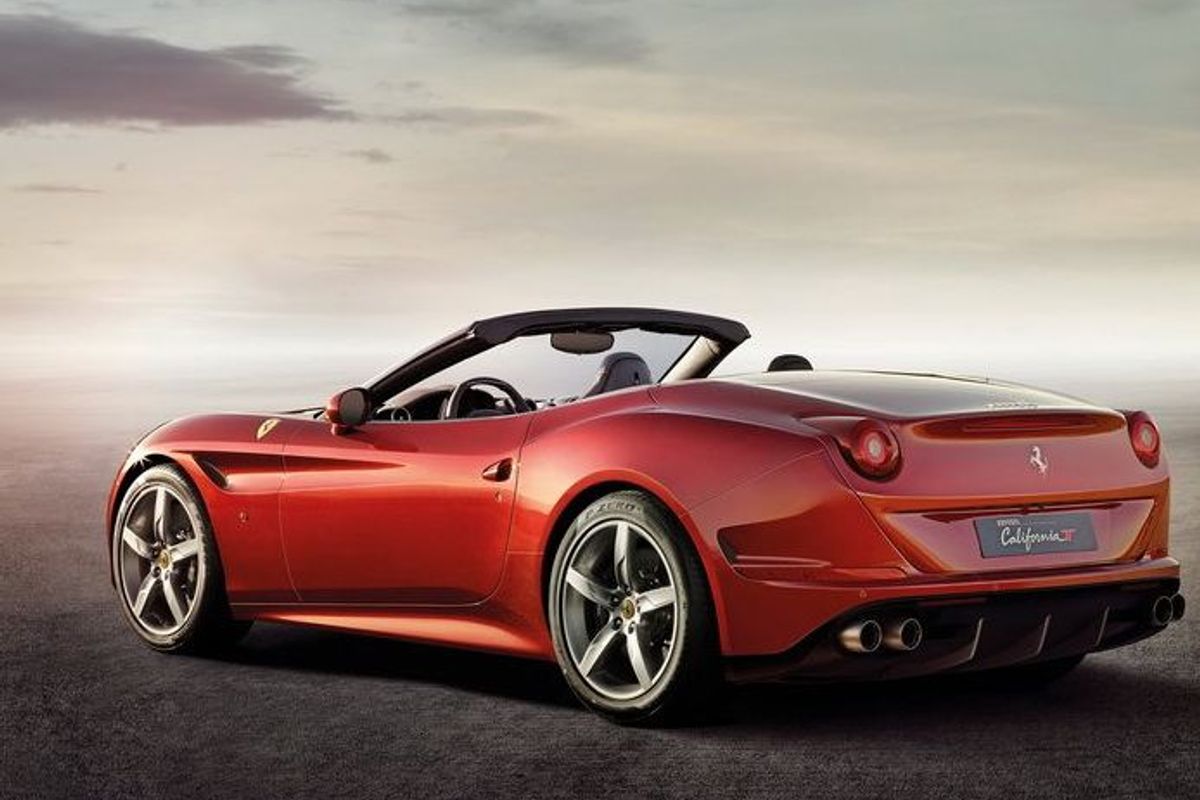
The time ran down and finally we get to see what the Italians have created. Meet the Ferrari California T, the next generation of California GT/sportscars.
The main changes between this and the old Ferrari California are the looks and the addition of an all-new powerplant. The car now looks like a shrunken F12 Berlinetta, while under the bonnet lies a brand-new twin turbocharged V8. When last did you hear of a turbocharged Ferrari? F40?
Visually the car has adopted the F12 Berlinetta nose, while the rear features numerous diffusers. If there was one criticism of the previous Ferrari California, it was a bit soft and regarded as a boulevard cruiser. Essentially it was a car for the person who didn’t want to go fast and not cause a scene. You can’t drive anywhere quietly with a 458 Italia…
Ferrari California T engine
The new engine has 422 kW on tap and is a 3.8-litre V8. Torque is pegged at 755 Nm. These figures give the Ferrari California T a claimed 0-100km/h time of 3.6 seconds. Due to the turbocharged engine, overtaking ability should border on mighty impressive. There’s an all-new tech in the form of Variable Boost Management, which claims to increase the torque curve across the rev range.
This setup should also help eliminate turbo lag. Ferrari engines have always sounded great, and the new California T should be no different.
We’ll see more about the Ferrari California T at the 2014 Geneva International Motor Show in March.
Ferrari California T Gallery
Honda Civic Type R Concept Set for Geneva Debut
The Honda Civic Type R Concept model has been included to the Japanese automakers line-up for the 2014 Geneva Motor Show happening in March.
The concept model previews the styling direction for the exterior design of the highly-anticipated production version scheduled to debut in 2015. Dubbed by the design team as a ‘racing car for the road’, its bold and expressive styling reflects the strong performance characteristics for which Type R is renowned.
The design sketch for the Civic Type R concept shows the model will feature bespoke black alloy wheels and a matte black finish which starts at the rear bumper and surrounds the entire car.
Rumour has it that under the hood the Civic will be a newly developed 2.0-litre, 4-cylinder Earth Dreams petrol engine producing a targeted 224 kW transferred to the front axle exclusively through a six-speed manual gearbox.
Compared to the standard Civic, the range-topping Civic will supposedly also come with a stiffer chassis and with standard adaptive rear dampers which are optional on the new Honda Civic Tourer.
Mclaren Teases 650S Ahead Of Geneva
British supercar maker McLaren teases an image of a forthcoming product. Called the 650S, this new Mclaren is thought to be a hardcore track version based on the Mp4-12C.
McLaren Automotive claims the 650S will “offer the enthusiast driver the ultimate in luxury, engagement and excitement, as well as dramatic yet beautiful styling.” I would guess 650S has something to do with output in horsepower. The 3.8-litre twin-turbo V8 has shown it can perform when tuned as witnessed with the phenomenal McLaren P1, so you can expect the 650S to use a modified version of this engine. Make a note in your calendar for 11.00GMT on Tuesday 4 March 2014 when all will be revealed.
The New Renault Clio RS Sport 200 EDC In SA – Specs and Prices
The long-awaited Renault Clio RS Sport 200 EDC has finally arrived in South Africa, sporting explosive performance and is already on show at Renault dealers throughout South Africa.
Engine capabilities
The RS Sport will be sold with a 1.6-litre turbocharged petrol engine linked to a dual-clutch six-speed transmission delivering 147 kW of power and 240 Nm of torque.
The dual-clutch transmission is called EDC Efficient Dual Clutch and can either be left alone working on its own or it can be manually controlled with the help of the shifters mounted on the steering wheel.
It retains its performance by completing the 0-100 km/h task in just 6.7 seconds before reaching a top speed of 230 km/h.
According to Renault, the latest Clio RS uses 6.3-litres/100 km of unleaded with CO2 emissions of 144 g/km.
Bold design features
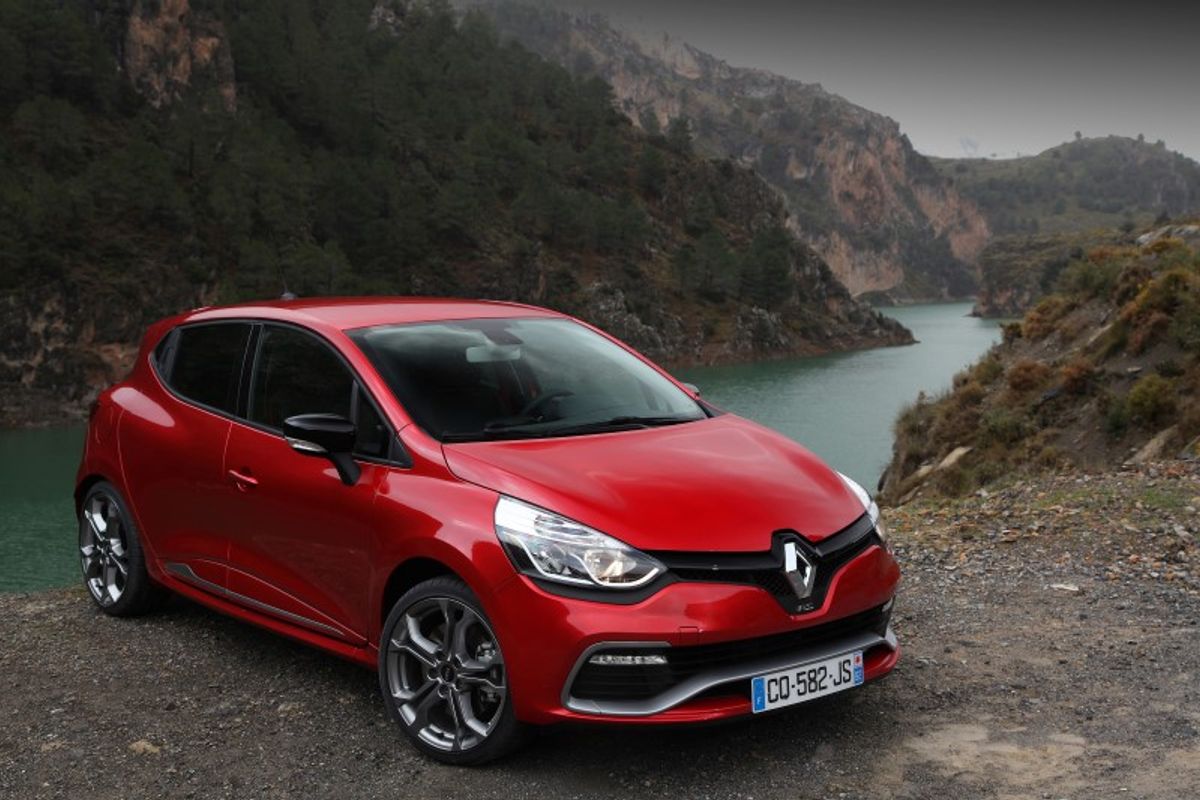
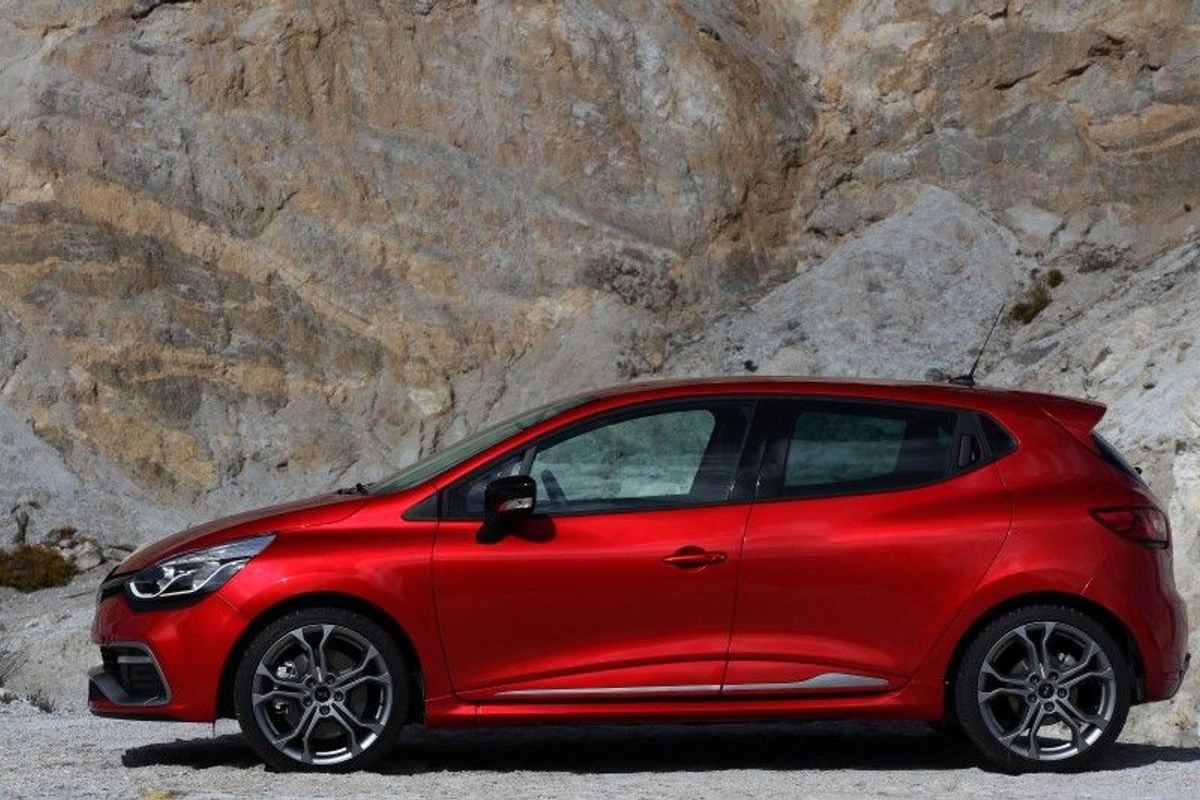
Design wise, the RS model looks more aggressive than the standard fourth-gen Clio, with a front F1-style blade, a spoiler and rear diffuser, LED Daytime Running Lights, sill extensions, redesigned bumpers and it uses a five-door body.
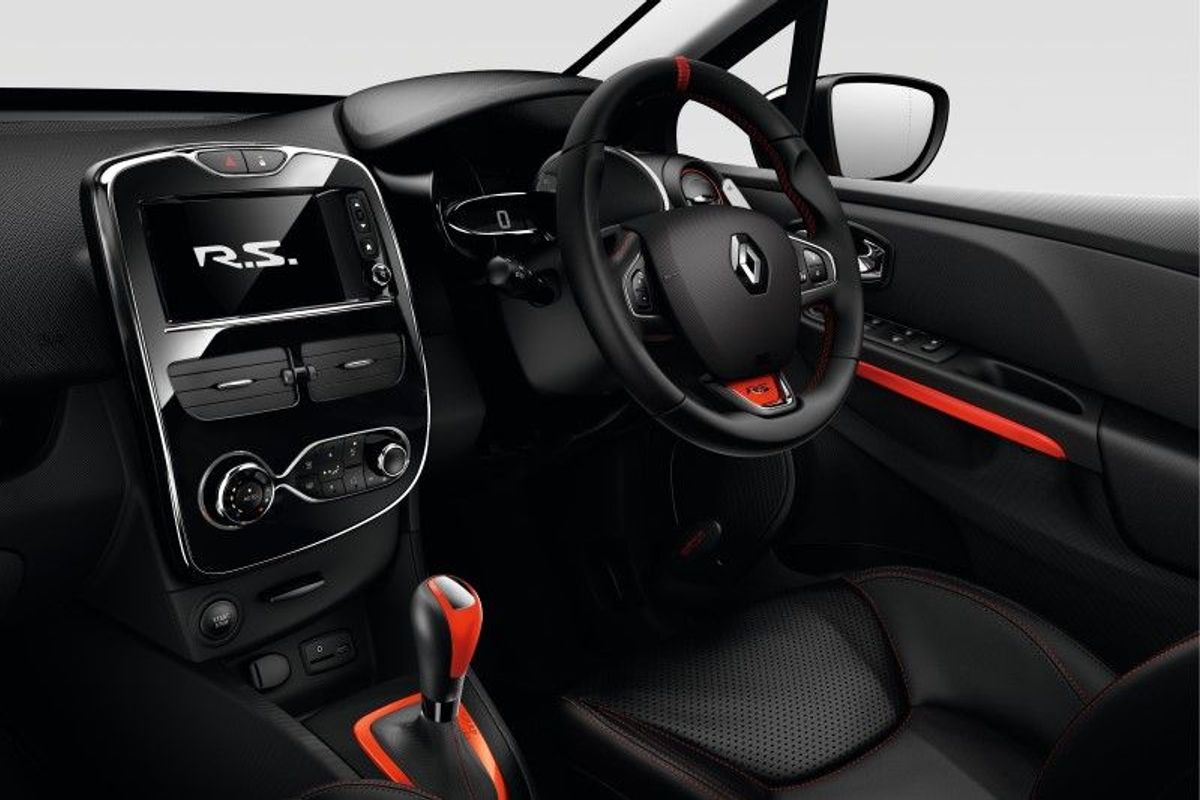
The interior is red-trimmed and includes sports bucket seats which can be enhanced with leather at an extra costs. Standard equipment includes starter button, hands free entry, Bluetooth and USB support, touchscreen navigation and the new R-Link infotainment system. Parking sensors and automatic climate control are on the options list.
New Renault Clio RS 200 EDC is available in a choice of five body colours including the exclusive, emblematic Liquid Yellow.
The range
There are two models available in the range: the LUX and CUP.
The LUX model is equipped with Goodyear Eagle F1 205/45 R17 tyres fitted to 17-inch Silver Grey alloy rims with RS studs, while standard on the 200 EDC CUP are Dunlop Sport Maxx 205/40 R18 treads fitted to 18-inch Glossy Black alloy rims that also sport RS studs.
The Clio RS 200 EDC LUX has the Sport chassis while the 200 EDC CUP is fitted with the Cup Pack (Cup chassis, red brake callipers, 18-inch alloy wheels and extra dark tinted windows).
Safety features across both the New Clio RS EDC variants include ABS + EBA (Emergency Brake Assist), Speed limited / cruise control, Hill start assist, ESC (Electronic Stability Control) and ASR (Anti-Slip Regulation) with full disable function, Driver and passenger front airbags with disable function, Isofix system in rear side seats and front passenger seat, and Anti-submarining system (Fix4sure) in front and rear.
Renault Clio RS Sport 200 EDC price in South Africa
Renault Clio Sport 200 EDC LUX R294 900
Renault Clio Sport 200 EDC CUP R314 900
The models will be available with a five-year or 150 000km warranty and three-year or 30 000km service plan (intervals of 10 000km).
Renault Clio RS Sport 200 EDC gallery
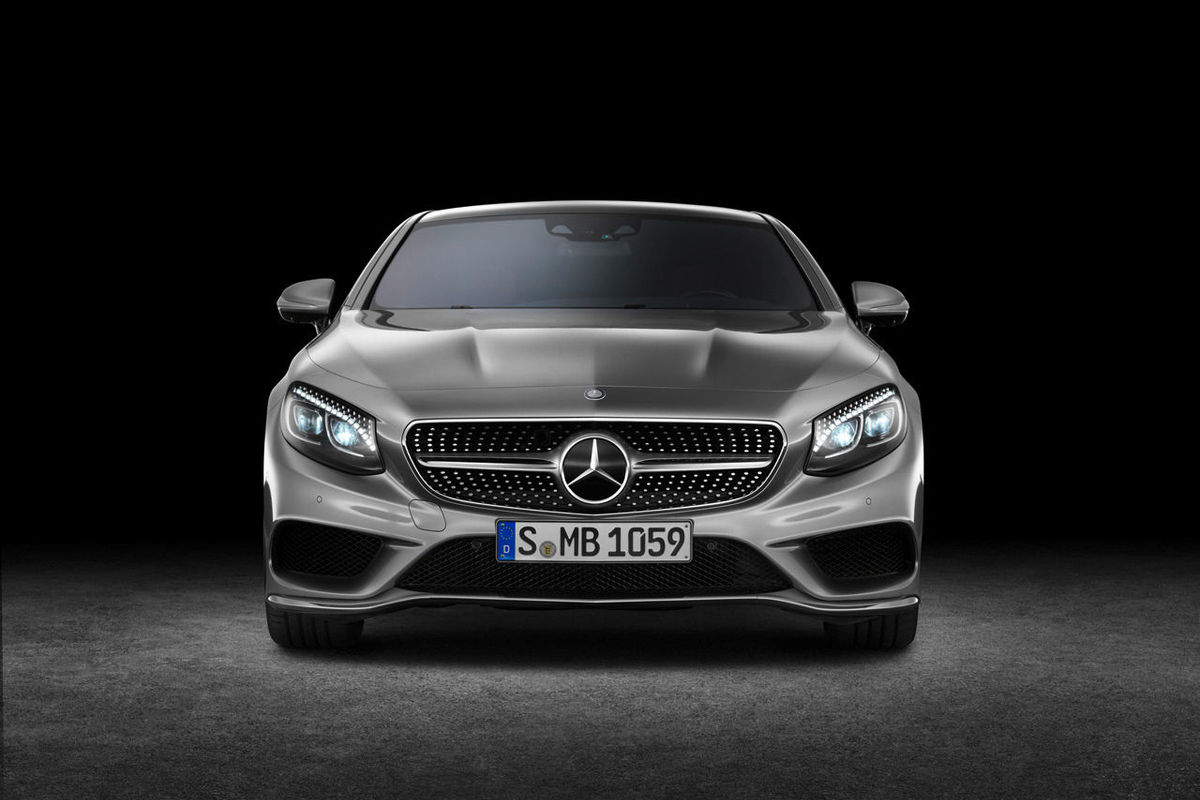
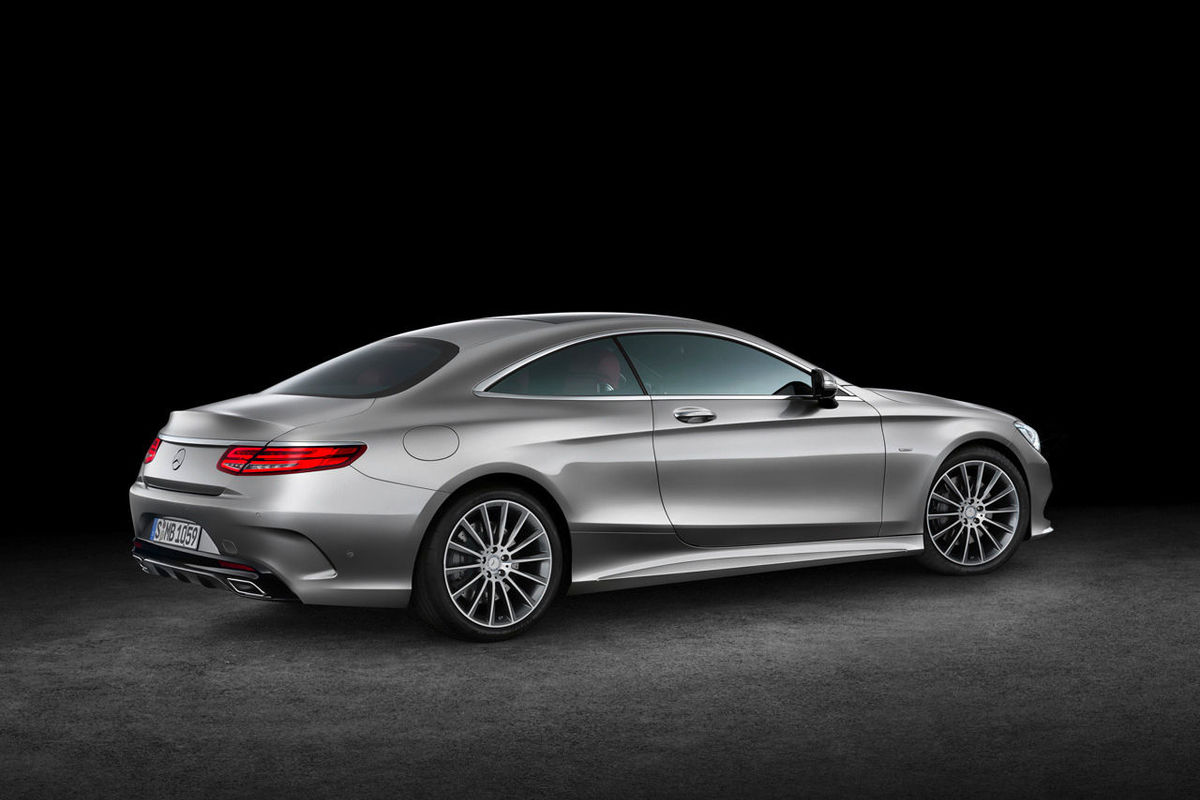
2015 Mercedes-Benz S Class Coupe Officially Breaks Cover
The 2015 Mercedes-Benz S Class Coupe has been officially revealed ahead of its public debut at the 2014 Geneva Motor Show next month.
Enhanced driving systems
Much like the concept, the 2015 Mercedes-Benz S Class Coupe is equipped with the same powerful V8 4.7-litre engine with 335 kW and 700 Nm of torque. Power is sent to all four wheels through a seven-speed transmission. Merc says the sport driving experience is enhanced by the emotional sound produced by the exhaust system.
As with the S Class Sedan, the Coupe is available with a number of new driving assistance systems including the introduction of the MAGIC BODY CONTROL system which now features a curve tilting function allowing the car to “lean into bends in a manner similar to a motorcyclist or skier.”
The function can be active as one of the three driving modes between 30 km/h and 180 km/h and has been designed “to produce a more pleasant motoring experience” by reducing the lateral acceleration felt by the passengers.
The “Intelligent Drive” systems include the PRE-SAFE brake with pedestrian detection, DISTRONIC PLUS with Steering Assist, BAS PLUS with Cross-Traffic Assist, Active Lane Keeping Assist, Adaptive High-beam Assist and Night View Assist Plus, while the COLLISION PREVENTION ASSIST PLUS features an additional function apart from the adaptive brake assistant, which provides collision protection from a speed of 6 km/h.
Aesthetic design features
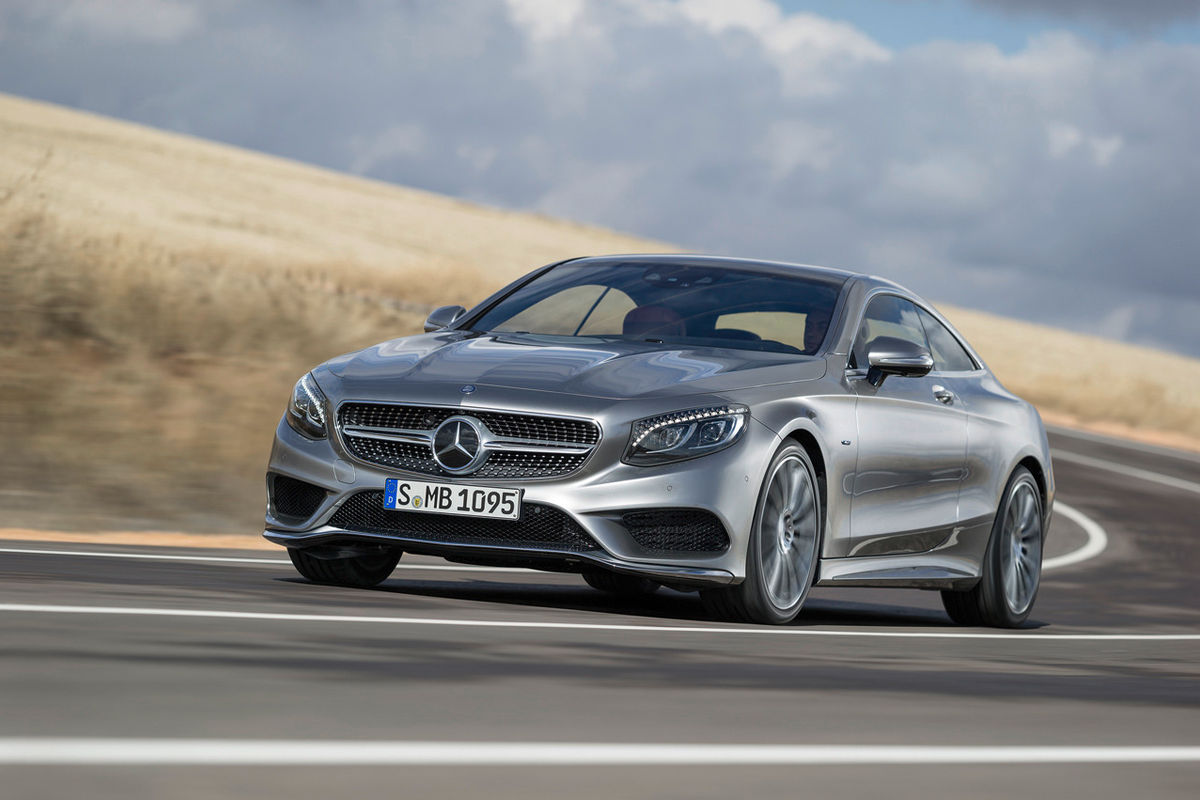
Exterior styling aims to create clear contours and smooth surfaces that showcase high-tech while radiating emotional appeal. The vehicle hosts a 2945mm wheelbase within an overall length of 5027mm, an 1899mm width and 1411mm height.
The sleek two-door coupe further combines a long hood with a low greenhouse and muscular wheel arches hosting rims in sizes ranging from 18 to 20 inches. There are also full-LED headlamps as well as a standard LED Intelligent Light System, featuring unique headlamps with no less than 47 Swarovski crystals are available. 17 angular crystals form the flare-shaped daytime running lamps, with 30 round-shaped crystals making up the turn indicator lamps.
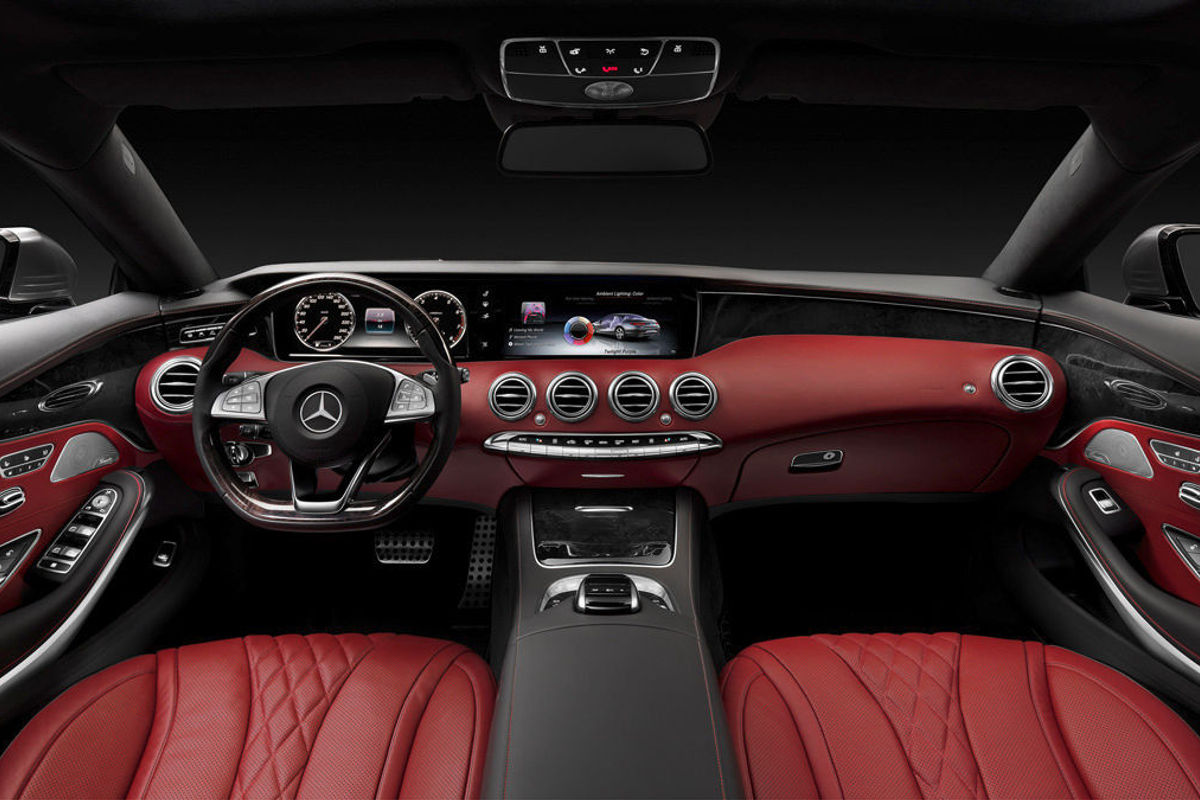
The avant-garde design of the interior is a combination of sculptural and modern luxury components, some of which are carried over from the sedan. The car features a “Super Sport” steering wheel, Bengal red and porcelain hues, two rear seats designed as individual seats, an optional head-up full-colour LED display, a two-part TFT screen, and a Magic Sky Control system which switches the transparency of the panoramic roof from light to dark at the touch of a button.
The 2015 Mercedes-Benz S-Class Coupe will makes its debut in production form at the Geneva motor show on 6 16 March 2014. Distribution to dealerships is scheduled for the second half of 2014, which will probably be the first half of 2015 for the South African market.
Volkswagen at Delhi Motor Show
David Taylor spent a few days in India and visited the Auto Expo 2014. I have compiled a brand-by-brand breakdown of what was showcased. Please note that some of these products may not be sold in South Africa as each market is different.
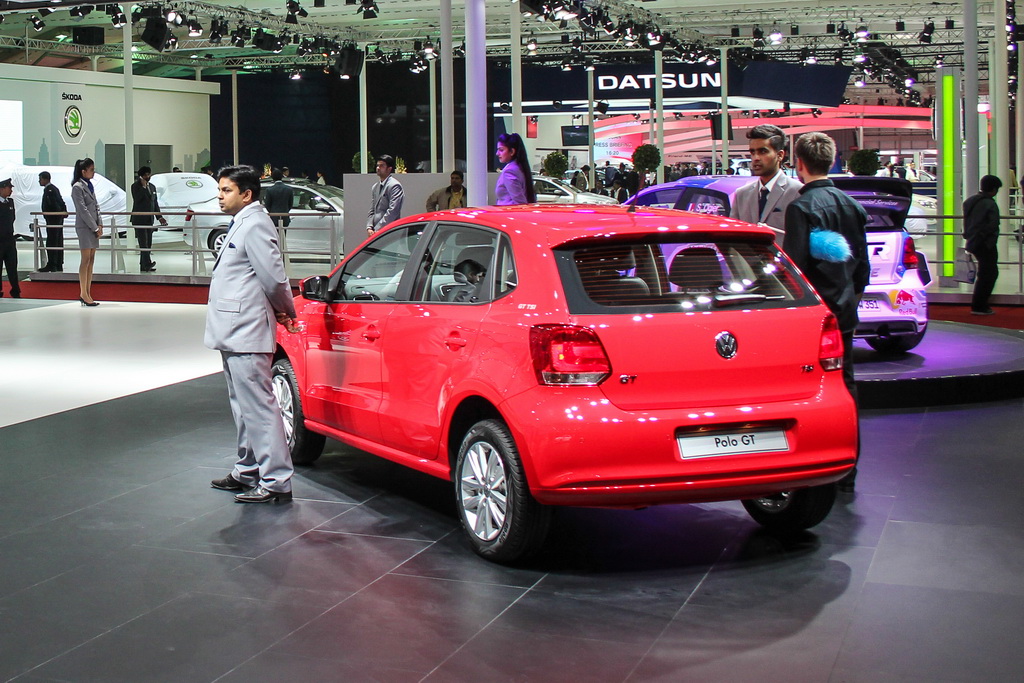
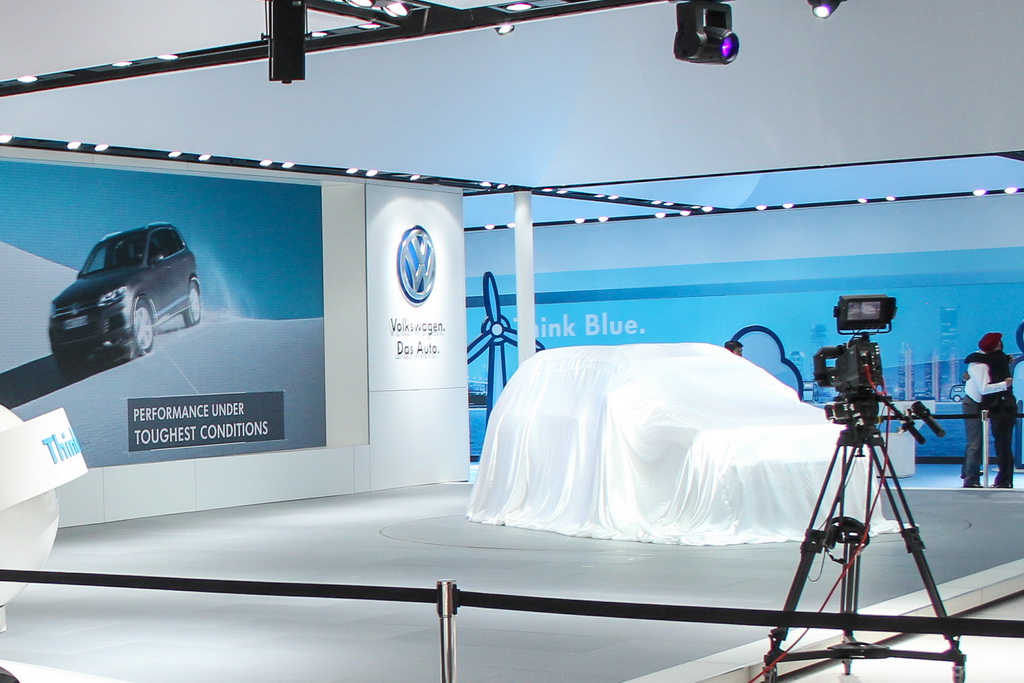
Despite it being one of the world’s biggest carmakers, Volkswagen doesn’t really have much of a presence in India. That didn’t stop the German car-maker from having one of the biggest and flashiest stands at the 2014 Auto Expo in Delhi. Unfortunately I missed all most of the reveals as we had to leave for the airport. That didn’t stop me from photographing the best of the stand.
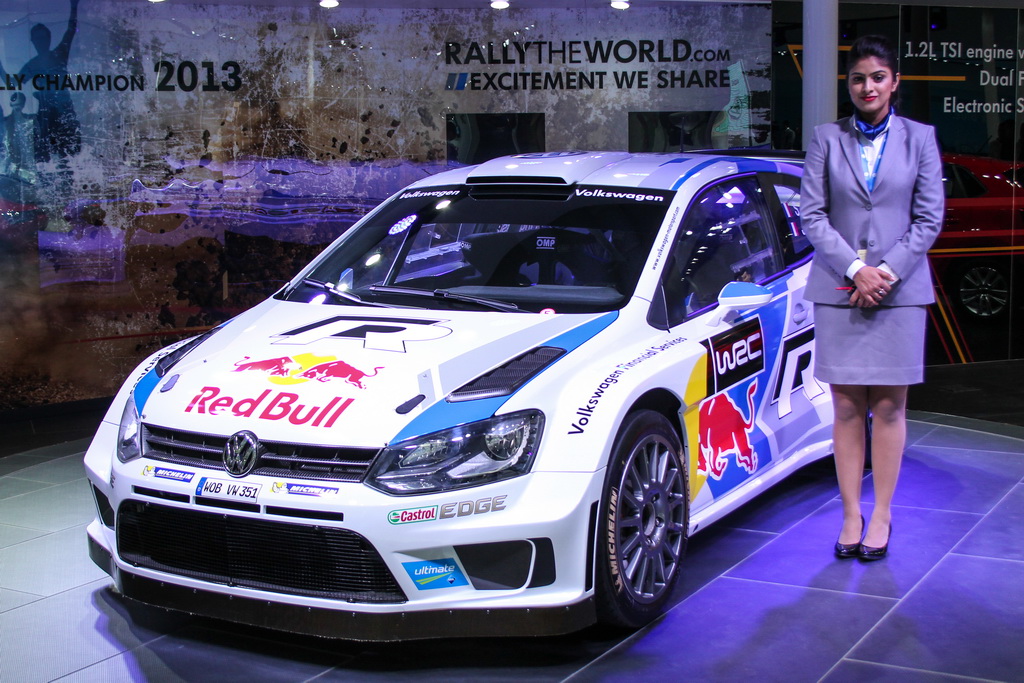
Volkswagen Polo WRC
One of the big drawcards to the Volkswagen stand was the rather special World Rally Championship Polo. Driven by Sebastien Ogier and Jari-Mari Latvala, this car finished at the top of the table in last year’s championship.
Volkswagen Polo GT
Volkswagen may not have had an example of the facelifted Polo revealed a few weeks ago, but it did have a 1.2-litre three-cylinder Polo GT which looks to be an entertaining drive without breaking the bank.
Volkswagen Taigun Concept
What everyone wanted to see was an updated version of the rather good looking Volkswagen Taigun concept. As mentioned earlier, I wasn’t able to see it due to time constraints but you can check the Taigun details here. If it goes into production, it will be taking on the Renault Duster and Ford EcoSport.