Single- & double-cab bakkie sales: Hilux vs Ranger in July 2024

In July 2024, the Hilux and Ranger again led SA’s bakkie sales race. But which one dominated the single-, extended- and double-cab segments? Here are the figures!

You’ve likely already seen our list of South Africa’s best-selling bakkies for July 2024, which was yet again topped by the Toyota Hilux, with the Ford Ranger taking 2nd place. But what happens when we separate the sales by the single-, extended- and double-cab body styles?

Well, since Naamsa’s monthly sales report unfortunately doesn’t include a breakdown of the 3 bakkie body styles, we’ve again turned to the folks over at Lightstone Auto for assistance with these fascinating figures.

Toyota Hilux Raider double cab

Before we jump into sales by body style, it’s worth noting the Hilux topped the bakkie charts overall in July 2024, hitting a total of 3 021 units (up 24.1%, month on month). The Ranger (2 258 units) was 763 units off the pace in the runner-up position, while the Isuzu D-Max again completed the podium, despite sales sliding 8.5% month on month to 1 641 units.

According to our records (based on collated Naamsa figures), the Hilux (18 766 units) is still comfortably in 1st place overall year to date, ahead of the Ranger (14 470 units) and D-Max (11 090 units).

SA’s best-selling double-cab bakkies in July 2024

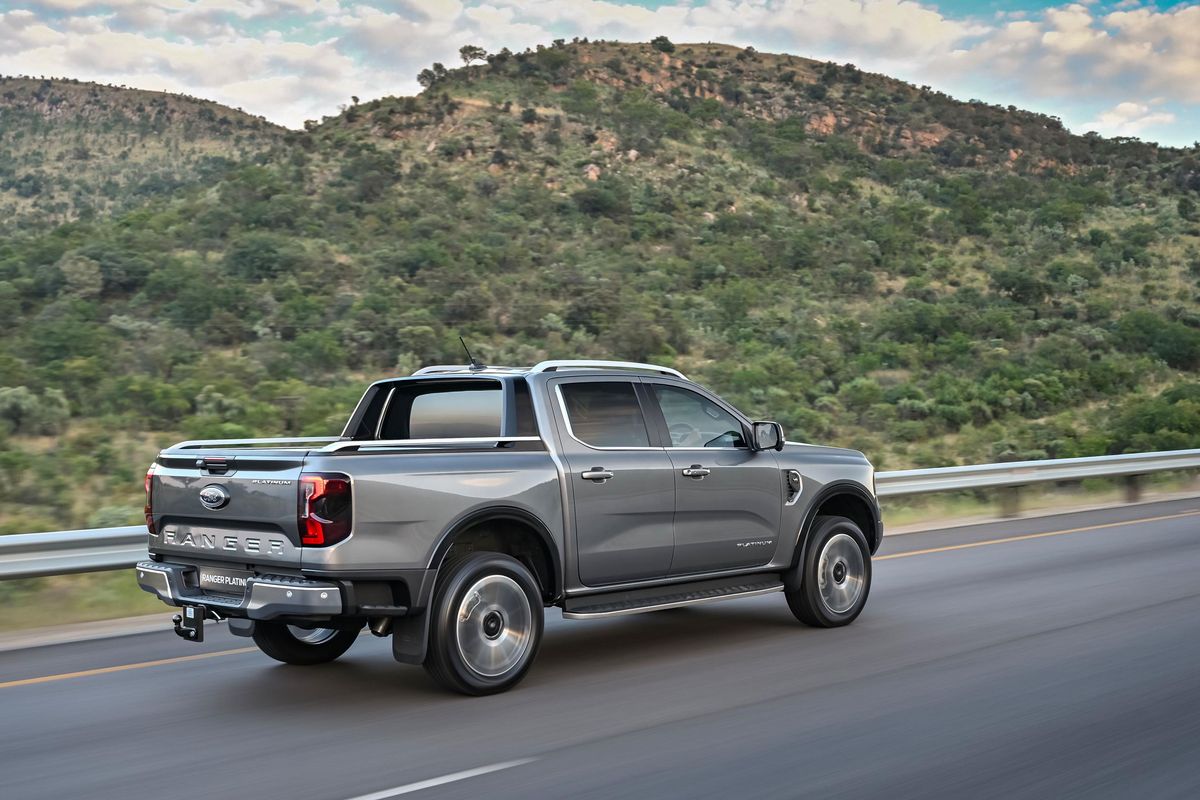
Ford Ranger

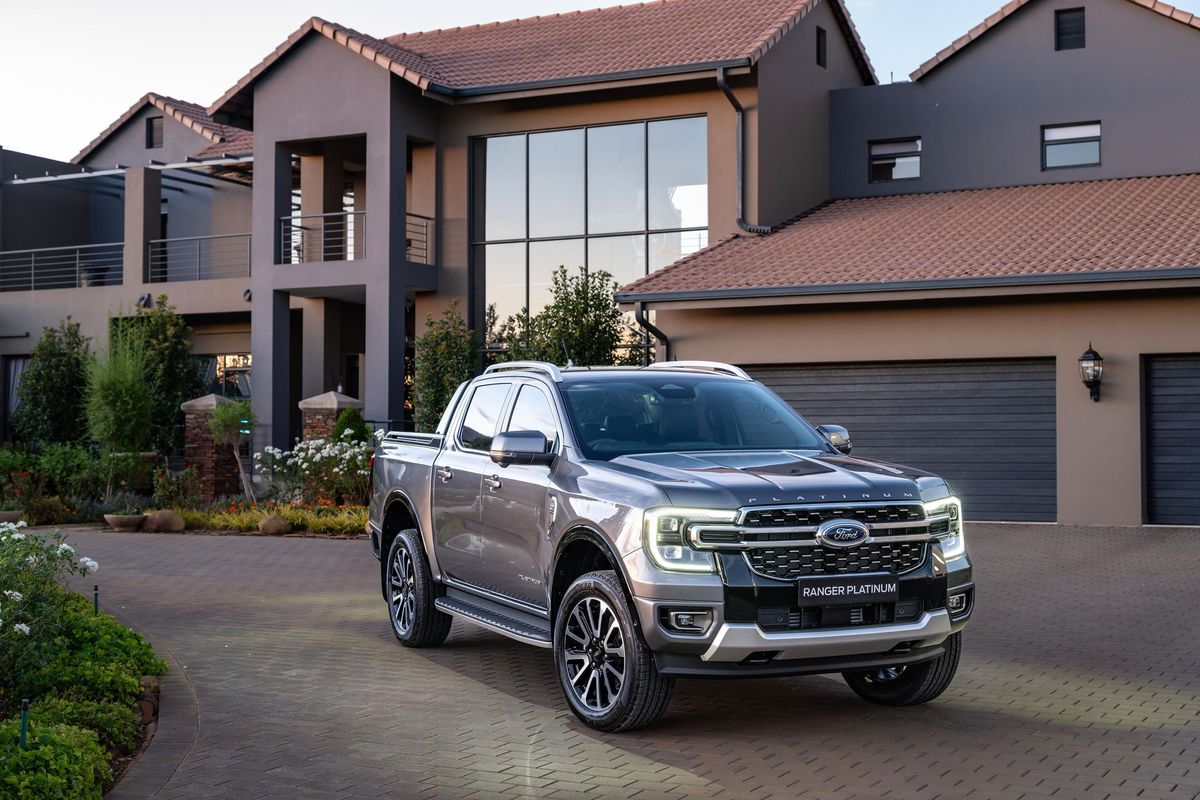
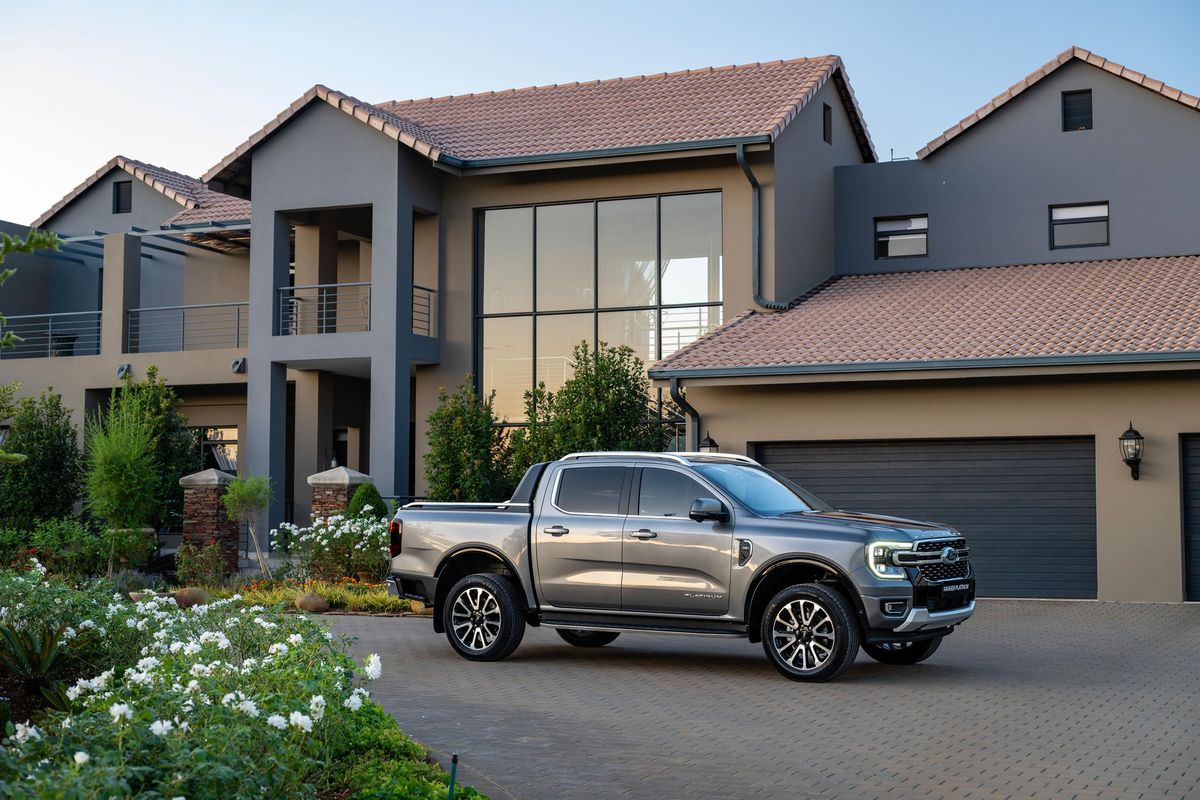
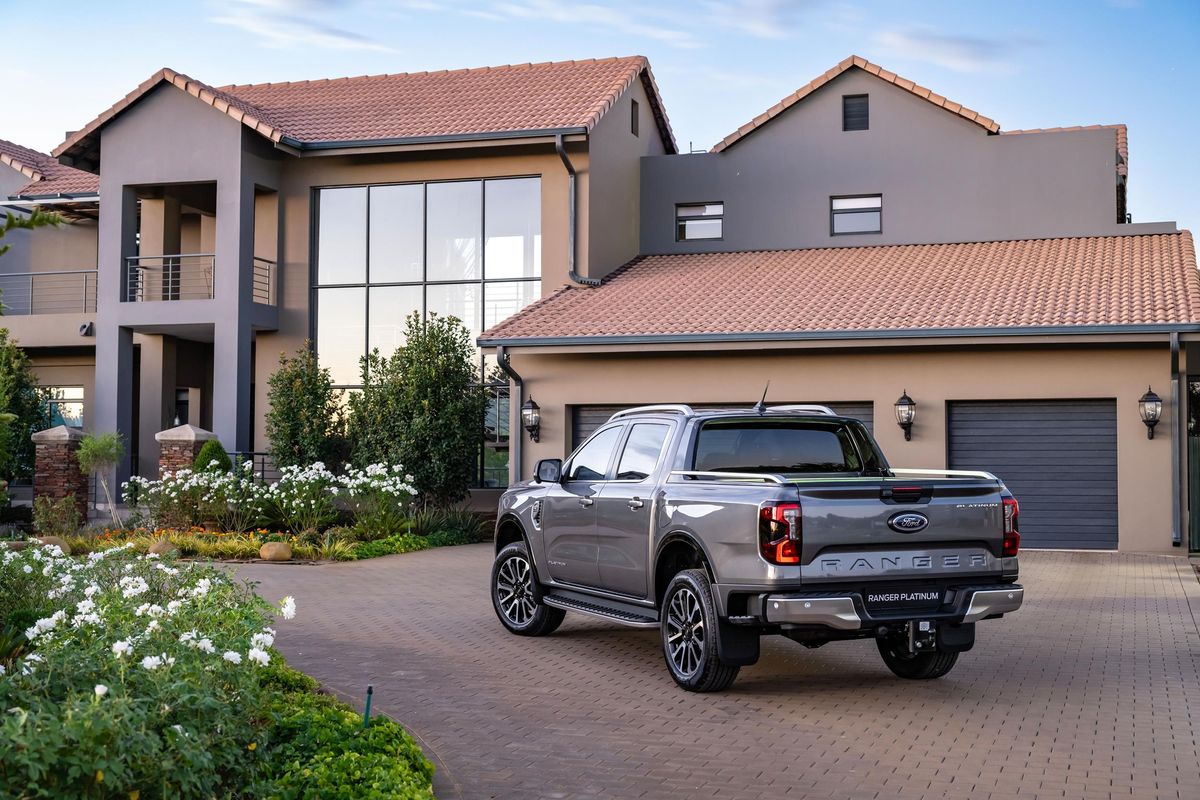
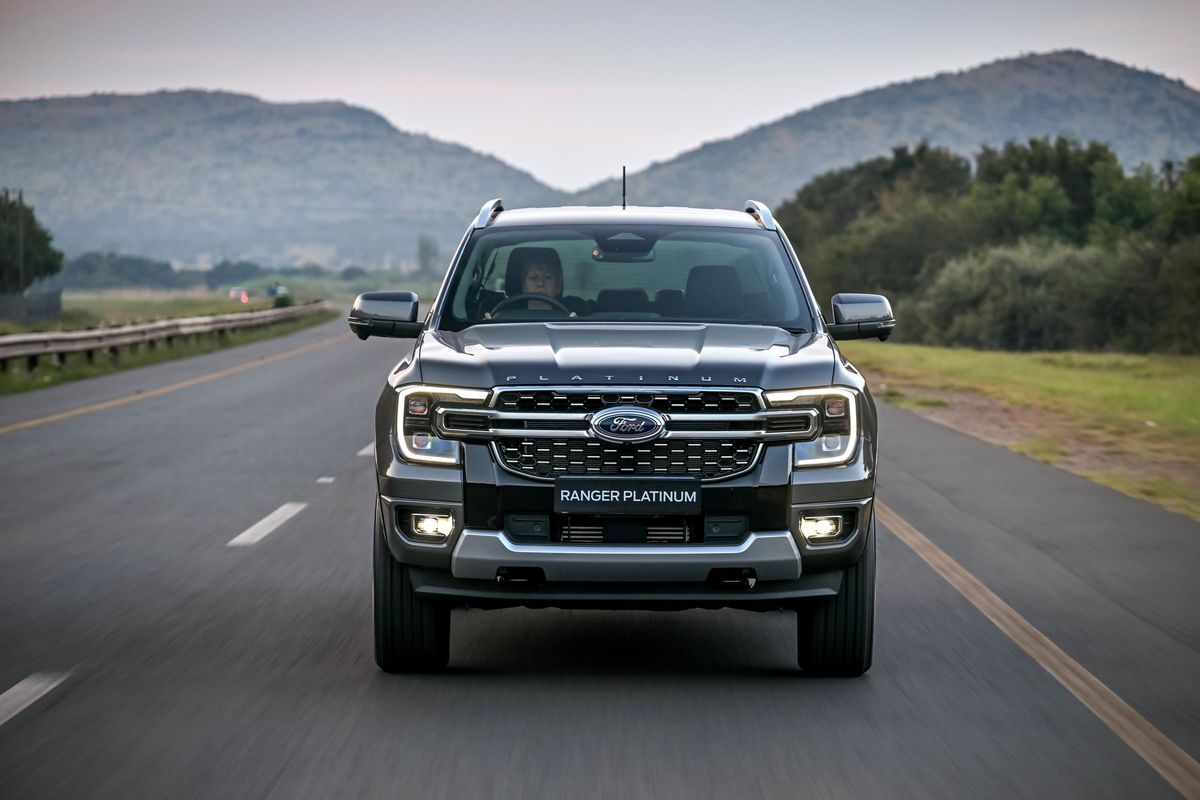
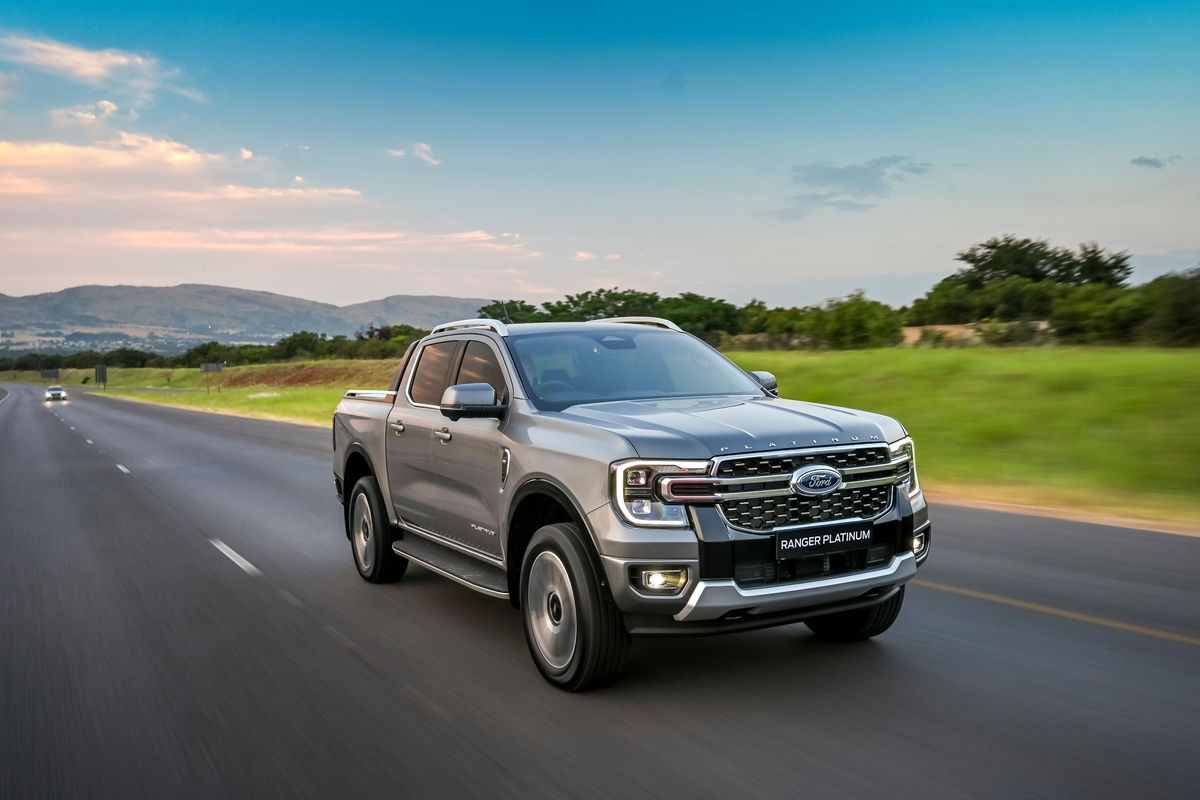
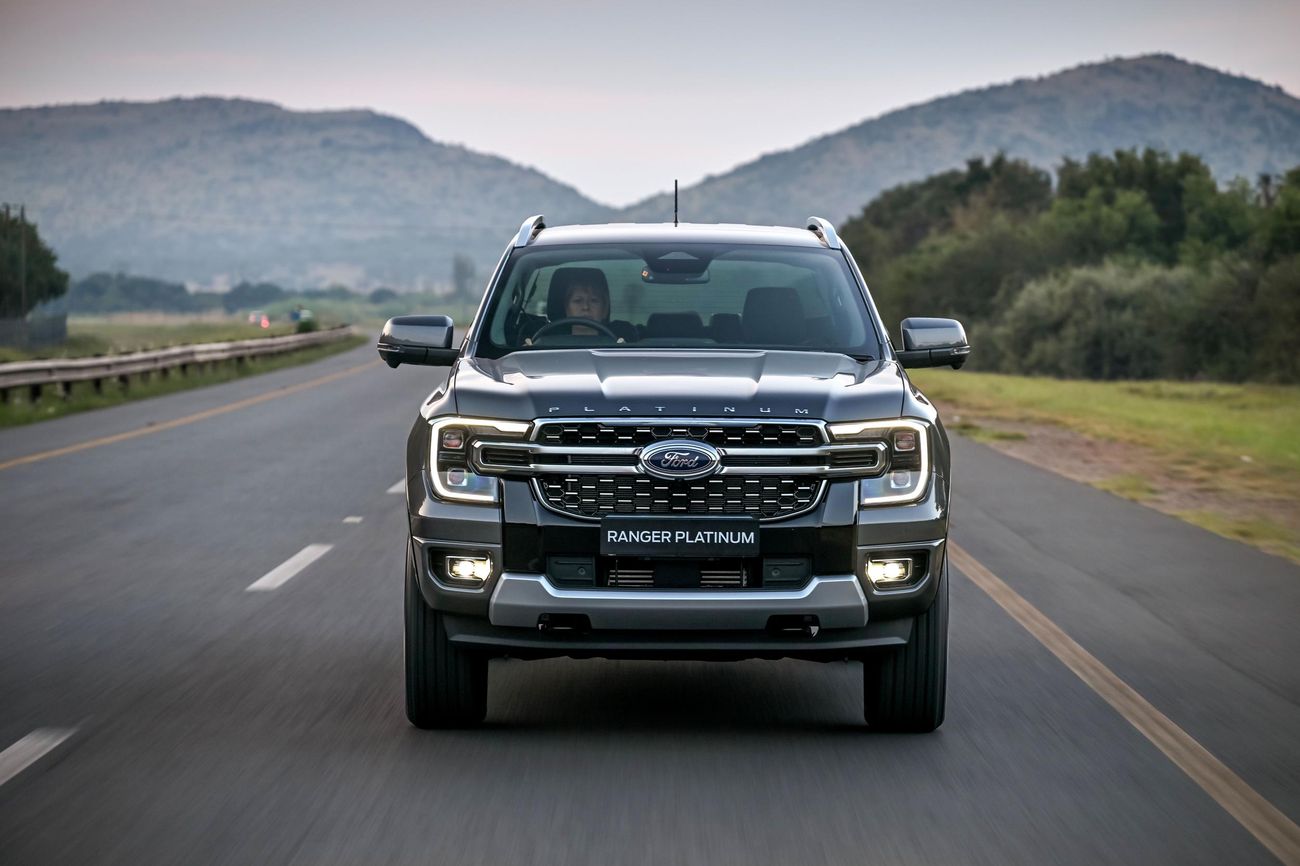
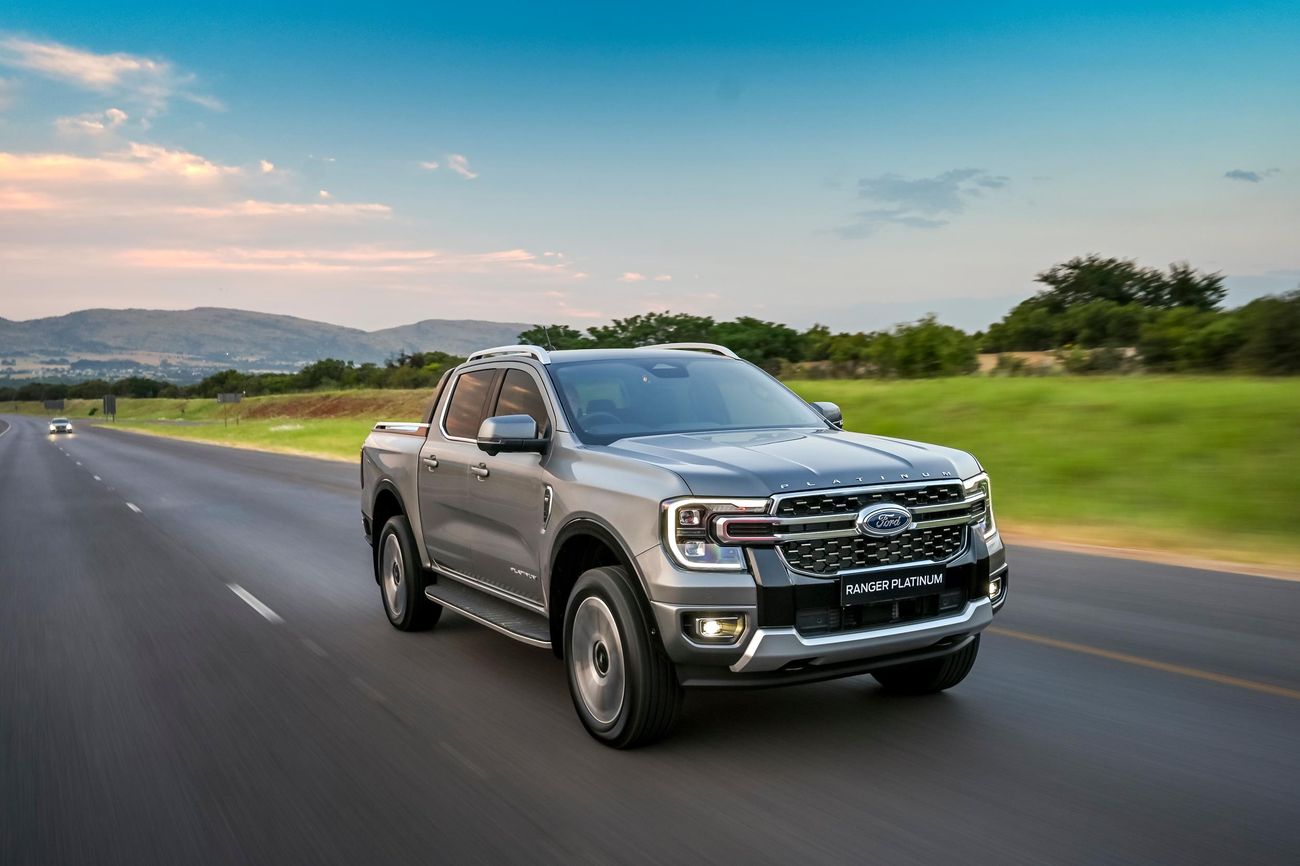
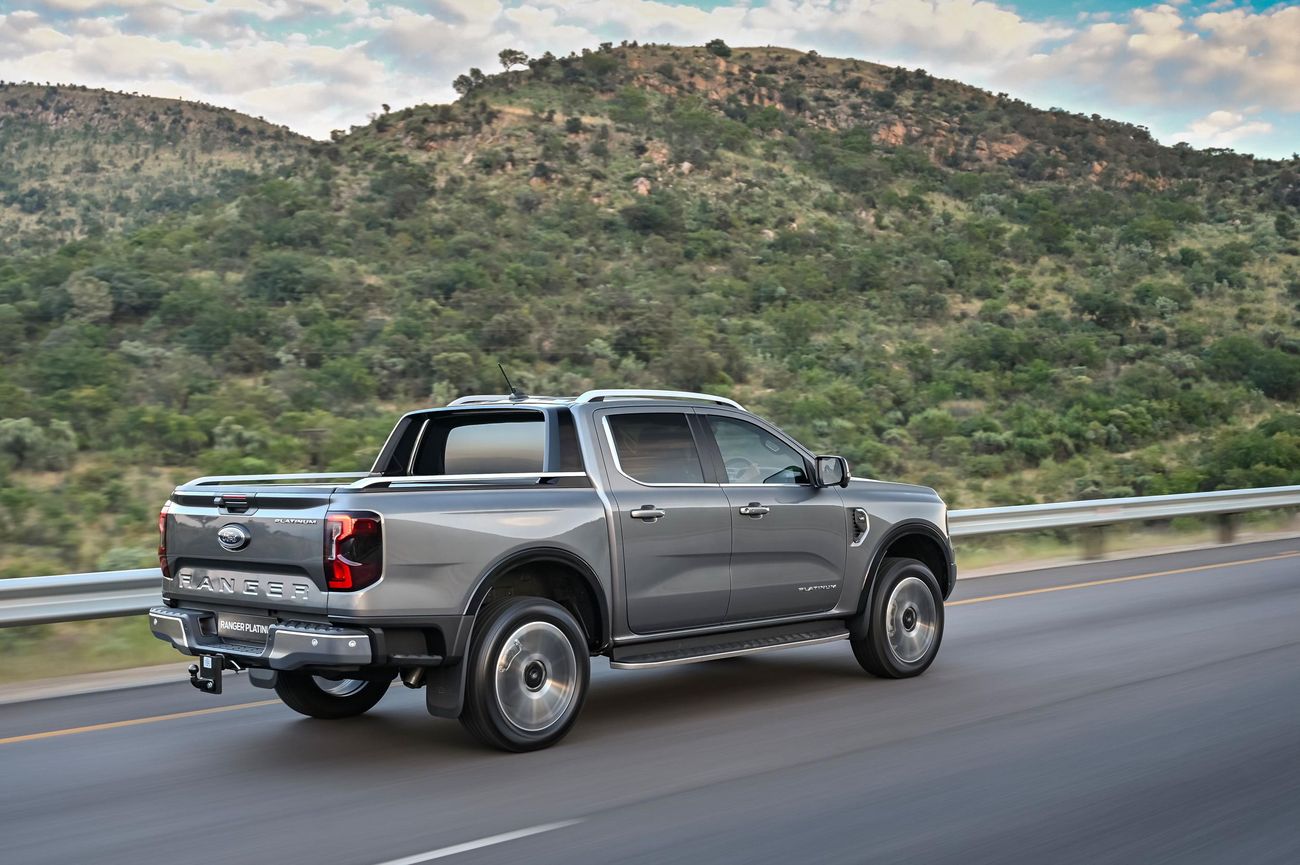
So, let’s now turn our attention to sales by body style. According to Lightstone Auto’s dataset, the Ford Ranger once again topped the double-cab sales charts in July 2024, with 1 758 dual-cab units registered. By our maths, that translates to 77.9% of the Silverton-built bakkie’s overall tally for the month.

Therefore, the Toyota Hilux again had to settle for 2nd position in Mzansi’s double-cab sales race in July, with 1 514 units sold. For the record, that figure represents 50.1% of the Prospecton-produced stalwart’s overall tally last month.

Predictably, then, 3rd place on the double-cab podium thus went to the Struandale-made Isuzu D-Max, which hit 683 dual-cab units last month. Thanks to a few choice pokes at a calculator, we find that works out to 41.6% of the Japanese contender’s aggregate for July 2024.

Lightstone Auto’s figures showed that all other 1-tonne double-cab bakkie derivatives (over and above the Ranger, Hilux and D-Max) collectively managed 1 357 registrations last month. Year to date, the Ranger leads the double-cab race on 11 099 units, ahead of the Hilux (8 576 units) and D-Max (4 537 units).

July 2024 sales of single- and extended-cab bakkies

What about the single-cab space? Well, in July 2024, the Hilux (1 145 units or 37.9% of its total) stood at the very top of the table, finishing well ahead of the D-Max (752 units or 45.8%). The 2-door version of the KwaZulu-Natal-assembled Mahindra Pik Up again grabbed 3rd in July, with 615 units (or 77.8% of the nameplate’s total).

In the year-to-date race in this segment, the Hilux (7 143 units) holds a strong lead over the D-Max (5 393 units), with the Pik Up in 3rd on 3 929 units. The Ranger single cab, meanwhile, managed just 142 registrations last month and stands at 1 091 units, year to date.

Meanwhile, the Hilux Xtra Cab (359 units) retained 1st place in the extended-cab segment in July 2024, with the Ranger Supercab (352 units) right on its tail in 2nd position. Year to date, the Hilux leads in the segment, with 3 038 units compared with the Blue Oval bakkie’s 2 274 registrations. As the only other model offered in this body style, the D-Max Extended Cab was 3rd both in July (206 units) and year to date (1 160 units).

Related content

GWM P-Series P500 (2024) Price & Specs

Which top-10 brands rely most on a single model?

Nissan NP200 (2008-2024) Buyer’s Guide

Volkswagen Polo Vivo (2024) Launch Review

A freshly updated Volkswagen Polo Vivo – with styling enhancements, equipment upgrades and improved safety features – has been launched in South Africa. We visited VW Group Africa’s Kariega production facility to drive the revised model.

Since arriving in 2010 (as a “replacement” for the beloved Citi Golf), the Polo Vivo has been a sales success story for Volkswagen; it’s consistently ranked among the nation’s top-selling passenger cars. 

The success of the Polo Vivo is rooted in the engineering prowess of the previous-gen Polo – a proven and highly regarded product. Unsurprisingly, used Volkswagen Polos are in high demand in Mzansi.

The Polo Vivo is, therefore, an important model for Volkswagen Group Africa – it’s one that the German firm is immensely proud of, and rightfully so. The Polo Vivo is built in South Africa, for South Africa, and is also exported to other African countries, such as Kenya, Namibia, Botswana, Mozambique and Mauritius. 

Volkswagen Polo Vivo BlaCK sTYLE pACKAGE
A Black Style Package is offered on Vivo and Life derivatives.

Since 2010, the Polo Vivo (of which each iteration was based on a previous-gen Polo model) has racked up more than 425 000 sales over 14 years, with numerous special edition Polo Vivos coming to market. Remember the 1st-generation Polo Vivo Street or the Polo Vivo Citi: a homage to the original Citi Golf? 

The current, 2nd-generation Volkswagen Polo Vivo came to market in 2018. It’s based on the 5th-generation Polo and is built alongside the 6th-generation Polo in the Eastern Cape. 

To enhance the Polo Vivo and further entice local buyers, Volkswagen has launched this thoroughly updated model that ushers in refreshed styling, enhanced safety kit, as well as interior improvements. 

Importantly, Volkswagen has not increased pricing for this updated Polo Vivo, which should come as a welcome relief for cash-strapped consumers in South Africa (prices are listed lower in the article).  

Watch Jacob Moshokoa’s video review of the pre-facelift Polo Vivo GT

What exactly has changed in the latest VW Polo Vivo? 

The first major change for the Volkswagen Polo Vivo is seen in its naming convention, which now includes the entry-grade Vivo (replaces Trend), mid-spec Vivo Life (replaces Comfortline), high-spec Vivo Style (replaces Highline) and range-topping GT (okay, well, that one remains the same). 

Volkswagen Polo Vivo GT rear
The centred chrome Vivo lettering now conforms with the rest of the Volkswagen product range.

In terms of aesthetics, Volkswagen has revised the Polo Vivo’s bumpers and updated the hatchback’s grille and headlamp designs to create a sharper, sportier look. The lower grille section now features wider horizontal ribs flanked by new boomerang trim elements inspired by those of the Polo GTI.

Note how the rounded headlamps have been replaced with more squared-off units; they give the Polo Vivo an edgier look. Onlookers might even mistake the Polo Vivo GT for a Polo GTI, which is a good thing!

Volkswagen Polo Vivo
Can you spot the changes on the updated Volkswagen Polo Vivo?

GT lettering has also been added to the grille and, at the rear, you’ll notice new Vivo lettering neatly centred beneath the new 2D Volkswagen emblem, bringing the model in line with other VW products. Also, note that front fog lights and cornering lights are now standard on all Polo Vivo derivatives. 

See more specification details for the Volkswagen Polo Vivo

The Polo Vivo package is further enhanced with new wheel designs for each trim grade. For example, the base Vivo derivative still rides on 14-inch steel wheels, but now has the option of 15-inch Tosa alloy wheels, while the Vivo Life gains 15-inch Ubomi alloy wheels. Similarly, the Vivo Style is now fitted with 16-inch Rivazza alloys, while the range-topping GT wears the familiar 17-inch Mirabeau alloy wheels.

Volkswagen Polo vivo infotainment system
A new 9-inch infotainment system is an interior highlight.

Inside, the biggest change is the fitment of a new, enlarged (9-inch) Mirgar touchscreen infotainment system (with Apple CarPlay and Android Auto functionality), which is standard equipment across the entire Polo Vivo range. The centre of the instrument cluster has also been updated.

The new infotainment system marks a major improvement over the rather basic “Composition” radio it replaces. Not only does the system lift the interior ambience to a more modern level, but its easy-to-use menu interface, which is similar to that of a modern smartphone, is sure to be a hit with local buyers.

Volkswagen Polo Vivo Interior
New seat designs add style and comfort to the Polo Vivo package.

Volkswagen has also taken the initiative to improve the safety credentials of the Polo Vivo and it has done so by adding electronic stability control (ESC) and a tyre-pressure monitoring system (TPMS) to all Polo Vivo derivatives. Moreover, passenger seat-belt recognition is now standard. 

While the base Vivo and Life derivatives are equipped with 2 front airbags, Volkswagen has upped the airbag count to 4 on the Style and GT derivatives with the fitment of front side airbags, which are located in the variants’ sporty front seats. As a matter of fact, new seats feature throughout the 2024 Polo Vivo range, plus they’re clad in fresh cloth upholstery designs that differentiate trim grades from each other.

What engines power the latest VW Polo Vivo?

Volkswagen Polo Vivo rear
Engines and transmissions remain unchanged.

Mechanically speaking, there are no changes to the engine and transmissions on offer in the range.

The familiar 55 kW/130 Nm and 63 kW/132 Nm 1.4-litre- (paired with a 5-speed manual transmission) and 77 kW/153 Nm 1.6-litre (paired with a 5-speed manual or 6-speed automatic transmission) naturally-aspirated petrol engines are carried over, while the range-topping 1.0-litre turbopetrol engine with 81 kW and 200 Nm (paired with a 6-speed manual transmission) continues its service in the Polo Vivo GT.

The Polo Vivo range is as follows:

Derivative Engine
Base Polo Vivo 55 kW 1.4-litre (manual) 
Polo Vivo Life
Polo Vivo Life 
63 kW 1.4-litre (manual)
77 kW 1.6-litre (automatic) 
Polo Vivo Style 77 kW 1.6-litre (manual) 
Polo Vivo GT 81 kW 1.0-litre TSI (manual) 

What’s the VW Polo Vivo like to drive?

Polo Vivo drive

As there are no mechanical changes to the updated Polo Vivo, buyers can expect the 2024 version of the popular hatchback to deliver the same driving experience as before (unless the ESC needs to intervene). 

The Polo Vivo remains one of the market’s most refined “budget” hatchbacks. Not only does it deliver a composed and pliant ride quality, but it’s impressively fuel-efficient. VW’s claimed average consumption figures range from 4.8 L/100 km (for the Polo Vivo GT) to 6.6 L/100 km (for the Polo Vivo 1.6 Style).

While the base 55 kW 1.4-litre petrol engine is said to return a respectable fuel consumption figure of between 5.7- and 5.9 L/100 km, its general performance is sluggish. And, that sensation will only be exacerbated when the base Polo Vivo is loaded with passengers and luggage, especially if you’re driving “at altitude” in the northern part of the country (where the thinner air saps about 17% of engine power).

If you will be driving in such conditions most of the time, prepare to gear down often to squeeze every ounce of power out of the engine – thankfully, the manual gearbox has quite a positive shift action. 

The Polo Vivo GT offers punchy performance, but the Polo Vivo 1.6 Style is probably the sweet spot in the range.

While the 63 kW 1.4 Polo Vivo Life performs marginally better than the base offering, we think that the 77 kW 1.6-litre Polo Vivo Life and Style derivatives represent the performance (and price) sweet spot in the range. These derivatives cope better under load and mid-range acceleration is more forthcoming.

Of course, if you’re after punchy turbocharged performance then the Polo Vivo GT is a no-brainer (if you can afford to buy one). With impressive overall performance and a dollop of street-cred with its GT-spec styling details, the Polo Vivo GT will appeal to those looking for more kerb appeal from their Polo Vivo. 

How much does the Volkswagen Polo Vivo cost in SA (Aug 2024)? 

Derivative Price
Base Polo Vivo 1.4 55kW ManualR266 600
Polo Vivo Life 1.4 63 kW ManualR288 500 
Polo Vivo Life 1.6 77kW AutoR320 200 
Polo Vivo Style 1.6 77kW ManualR318 000
Polo Vivo GT 1.0TSI 81 kW ManualR356 000 

The 2024 Polo Vivo is sold with 3-year/120 000 km general- and 6-year anti-corrosion warranties. Volkswagen has also added a 5-year/150 000 km engine warranty, but a service plan remains optional. 

Buy a new Volkswagen Polo Vivo on Cars.co.za

Sales of the Polo Vivo are expected to improve in conjunction with this latest update.

Summary

This represents the most significant update that has been applied to the 2nd-gen Volkswagen Polo Vivo to date and, with the model’s 15th birthday coming up in 2025, we wouldn’t be surprised if Volkswagen Group Africa introduced a new special edition derivative to celebrate the milestone. 

While the styling changes are welcome, the infotainment system upgrade is perhaps the feature that local buyers will appreciate the most along with the much-needed safety upgrades (ESP and additional airbags), all for the same prices as Volkswagen Group Africa charged for the pre-facelift derivatives! 

Volkswagen Group Africa recognises the importance of the Polo Vivo in the local market and the Kariega-based firm is sensitive and sympathetic to the plight of budget-sensitive car buyers. The decision to keep the Polo Vivo’s pricing unchanged should be applauded. 

With the current-gen Polo expected to soldier on until the end of the decade, so too will the Polo Vivo. The locally built hatch will continue to serve South Africa and other African markets. Viva Polo Vivo, Viva! 

Buy a used Volkswagen Polo Vivo on Cars.co.za

Related content:

EVs and hybrids: SA sales figures for 1st half of 2024

How many fully electric vehicles, traditional hybrids and plug-in hybrids were sold in South Africa in the 1st half of 2024? Let’s take a closer look at the official sales figures…

Naamsa has released official sales figures for so-called new-energy vehicles (NEVs) – that is, fully electric vehicles (EVs), traditional hybrids and plug-in hybrids (PHEVs) – for the 2nd quarter of the year, allowing us to calculate total registrations for the 1st half of 2024.

According to the industry representative body, NEV sales across the now-18 brands active in this space increased 169.8% year on year to 4 122 units in the 2nd quarter of 2024. According to our calculations, that takes the H1 2024 total to 7 164 units. As a reminder, this part of the market saw significant year-on-year increases of 421.7% (to 4 674 units) in 2022 and 65.7% (to 7 746 units) in 2023, though both instances admittedly came off low bases.

Toyota’s dual-powered Corolla Cross variants likely led the charge in the traditional hybrid segment.

In addition, it’s worth noting electrified models still comprise only a small (but growing) fraction of local registrations, with NEV sales – Naamsa seemingly doesn’t include mild hybrids in this group – breaching the 1% barrier for the 1st time last year, having comprised 1.45% of the total new-vehicle market. In the opening half of 2024, meanwhile, NEV registrations represented 2.91% of the total market, based on our calculations.

According to Naamsa, EV registrations in Q2 2024 came in at 419 units, up from 270 units in the 2nd quarter of 2023 (that’s a year-on-year increase of 55.2%). By our maths, that pushes the EV total to 749 units in the 1st half of 2024; for context, the industry representative body says total EV sales for 2023 sat at 929 units. The Volvo EX30 was the top-selling fully electric car in H1 2024 with 281 units, accounting for more than a 3rd of all registrations.

BMW X1 xDrive30e PHEV
We have it on good authority that BMW’s X1 xDrive30e was the best-selling PHEV in H1 2024.

What about PHEVs? Well, plug-in hybrids were yet again far less popular than fully electric models, with just 160 units sold in Mzansi in the 2nd quarter of the year (up 31.1%, year on year). Still, with the H1 2024 total thus sitting at 298 units, the PHEV segment (which recently welcomed the Toyota RAV4 PHEV, albeit quietly) remains on track to surpass its 2023 total of 336 units.

That leaves traditional hybrids, which unsurprisingly accounted for the bulk of NEV registrations in Q2 2024 at approximately 86% (likely largely thanks to dual-powered versions of the Prospecton-built Corolla Cross), with a sales total up a whopping 203.6% year on year to 3 543 units. So, over the 1st half of 2024, as many as 6 117 units have been sold in the traditional hybrid segment. For the record, Naamsa’s latest dataset suggests traditional hybrid sales came in at 6 518 units last year, so we’ll surely see a new record here, too.

Related content

Toyota Corolla 1.8 Hybrid XR (2024): Living with it

Toyota RAV4 2.5 PHEV (2024) Price & Specs

No time to die? Jaguar’s big EV leap into the unknown

Audi RS3 Facelifted for 2025

The Audi RS3 facelift has just been revealed and it’s confirmed for South Africa in early 2025. Here’s a look at the updates.

The Audi RS3 facelift brings some cosmetic and mechanical upgrades to the party for 2025. There are no engine enhancements mind you, but we’d argue that the 2.5-litre 5-cylinder petrol engine makes enough power already.

As a reminder, the engine makes 294 kW and 500 Nm, with a 7-speed dual-clutch transmission on duty. The 0-100 kph claim is pegged at 3.8 seconds which is one tenth quicker than its nemesis, the Mercedes-AMG A45 S.

Audi RS3 Facelift hatch and sedan

So, what’s actually changed then? Audi Sport has upgraded the chassis control system and added brake torque vectoring which essentially dials out understeer during high-speed cornering and allows drivers to apply more power when accelerating out of bends. Customers have the option of specialised Pirelli P Zero Trofeo R tyres for track driving, but the vehicle comes standard with C-rated Pirellis.

Do these upgrades make a difference? Well, Audi set a Nurburgring record of 7:33.123, which is five seconds quicker than the BMW M2, which is one of its chief rivals.

Audi RS3 Facelift

You can spot the updated model with a new front-end splitter, new-look headlight and taillight signatures, carbon detailing as well as new air intakes. The cabin gets some updates too with a new style of steering wheel which have haptic controls instead of physical buttons.

The changes also include repositioned air vents, redesigned gear selector and the addition of a new chequered flag mode which activates a performance mode, while the RS button brings up the car’s individual mode where you can tinker with various settings like exhaust sound, engine responsiveness and so on.

When is the Audi RS3 facelift coming to South Africa?

Audi SA has confirmed its compact performance legend will be touching down locally in the first quarter of 2025. European dealers will be receiving their vehicles from October 2024. As before, the RS3 will be offered in sedan and hatchback body styles.

Want to purchase a new or used Audi?

Read the latest Audi news and reviews

GWM P500 & Tank 500 (2024) Launch Review

The petrol-electric flagships of the GWM P500 “grande bakkie” and its 7-seat SUV equivalent – the GWM Tank 500 – may cost R1 million and R1.22 million, but they come equipped with enough luxury features to make SA’s other luxury bakkies blush.

GWM recently launched a new pair of heavy hitters – the GWM P500 double cab and GWM Tank 500 – in a near-perfect setting – the Garden Route – and, well, they’ve arrived with a proverbial thud! I will cut through all the double-speak and rigmarole and give you the most direct anecdotal comparison I can…

GWM P500 front three-quarter view

The GWM (P-Series) P500 and Tank 500 are to each other what Ford’s Ranger is to the Everest; what Toyota’s Hilux is to the Fortuner; what Isuzu’s D-Max is to the MU-X. The former is based on the latter – the P500 is a ladder-frame-based full-sized pickup and the Tank 500 is its 7-seat Adventure SUV sibling.

And, while neither are as large as the giants that roam the United States (think Ram 1500, Ford F-150 and Toyota Tundra – no name a few examples), the GWMs are notably larger than the aforementioned bakkies and SUVs that prowl the asphalt- and gravel road networks of our beloved Republic.

GWM Tank 500 front three-quarter view.

Who would have guessed that when our collective Government Agent-style fantasies finally came true, we’d have a Chinese automotive manufacturer to thank for it? One would most certainly be petrified at the prospect of having half a dozen of these, all clad in black from rim to roof, roll up on the driveway.

It’s a numbers game

Men in black fantasies aside, there’s a lot to unpack here. Such as how GWM does, as a matter of fact, have way more equity in the game of producing 4x4s than you think. And it’s via this not-so-humble flex, that Great Wall Motor SA has attached similarly monolithic sticker prices to the P500 and Tank 500.

GWM P500 rear three-quarter view

GWM is number one in China and has been producing pickups for more than 3 decades. That’s more skin in the game than Volkswagen and Mercedes-Benz combined, Peugeot too… unless you really start delving back into history at the odd rarity (or rare oddity). Yet, even armed with these lofty credentials, you might be as staggered as we were at the price tags of the pair of new Chinese offerings.

Let’s play a game. If a range-topping Everest 3.0TD V6 4WD Platinum costs R1 240 600 and a Fortuner 2.8GD-6 48V 4×4 VX costs R961 800 (Aug 2024), what would you guess is the Tank 500’s price tag?

GWM Tank 500 rear three-quarter view

Before you do, perhaps I should drop some clues to the Tank 500’s specification: the roughly 2.5-tonne behemoth propels its enlarged frame with a hybridised 2.0-litre turbopetrol engine; the sheer amount of technology and gear on board is enough to make your IT manager shudder in awe – and tremble in fear.

Would you play it safe and land somewhere in between the Everest and Fortuner’s price points? Would you recoil in horror at the notion that an Adventure SUV produced in China costs R1 million? But no, you would, in fact, be quite modest with your estimation, seeing as the GWM Tank 500 2.0T HEV Ultra Luxury 4×4 has a stratospheric R1 222 900 price tag, which positions it just R50k shy of the new Toyota Prado.

GWM P500 cabin

What then of the P500 double cab, you may ask? Well, thankfully, there’s a range of variants to choose from; prices start from R799 900 and top out at R999 900 (for the 2.0T HEV Ultra Luxury 4×4, in which you’ll encounter an extensive list of mod cons and extra features to humble a flagship Hilux and Ranger).

And for scale, the GWM P500 is 120 mm longer than the Hilux and 75 mm longer than the Ranger. It’s 135 mm wider than the Toyota and 73 mm broader than the Ranger – and taller than both.

GWM P500 profile shot, in motion

How much does the GWM P500 cost in SA? (Aug 2024)

And what you may lose out in potential aftersales security, GWM has mitigated with a commendable 5-year/75 000km service plan and 7-year/200 000 km warranty with 7-year roadside assistance. For the HEV model, GWM includes an 8-year/150 000 km “high-volt(age) warranty”.

GWM P500 2.4T Luxury 4×4R799 900
GWM P500 2.4T Super Luxury 4×4R889 900
GWM P500 2.0T HEV Ultra Luxury 4×4R999 900

New GWM P500 Specs & Prices in South Africa

Find a new/used GWM P-Series bakkie listed for sale on Cars.co.za

GWM P500 front view, on dune

What are the GWM P500 & Tank 500 like to drive?

Now that we’ve established that both new vehicles can be had for a great deal of money, let’s discuss what your fortunes get you.

We tested both the flagship P500 and the solitary Tank 500 variant (both of which feature hybrid powertrains) so that we could experience the full effect of their 255 kW and 648 Nm of torque.

Those outputs are derived from a 2.0-litre turbopetrol engine in combination with a 9-speed hybridised auto transmission. A hybrid battery helps both HEVs achieve an 8.3-sec sprint from zero to 100 kph, which is impressive… considering there’s still a mere 4-pot at the heart of these obelisks on wheels.

GWM Tank 500 frontal view – international model shown
International Tank 500 model shown.

The P500 will later receive a robust alternative powertrain in the form of a 135 kW/480 Nm 2.4-litre 4-cylinder turbodiesel paired with a 9-speed auto. It will be available in Luxury and Super Luxury grades.

The P500 and Tank 500 have respective party tricks, with the bakkie featuring a pretty nifty split tailgate, which is great for forklifts and general access. Like the P-Series (P300), it also remains the only double-cab in SA that can park itself, thanks to some clever driver-assistance systems, as well as Level 2 ADAS.

GWM P500 split tailgate

The Tank 500, in turn, gets an equally impressive ability to automatically retract its side steps, and a spare wheel located on its horizontally opening tailgate.

Hop aboard either and you’ll encounter a very similar cabin – and near identical controls, each dominated by a larger-than-life 14.6-inch touchscreen infotainment system. Where the GWM P500 favours dark plastics, its Tank 500 sibling boasts a more retro aesthetic with wood trim and an analogue clock.

GMW Tank 500 fascia and front seats

Nappa leather abounds in both vehicles, with triple-zone climate control across multiple rows keeping driver and passengers cooled (or heated) to exacting standards. All seats are heated and cooled, with the front occupants being further treated to extensive massage functions. There’s a lot to love here!

There’s also a lot that can go wrong

This is the cynical bit, so I’ll keep it brief and polite. As we see our beloved four-wheeled sources of vehicular transport grow ever more digital, and being over-engineered to higher levels, it’s only common sense to be wary of the potential problems that tend to accompany this sort of automotive “progress”.

GWM Tank 500 front of cabin

We live in an era in which vehicle components are repaired less and replaced more, with components growing in size and complexity. Once we breach that R1-million mark, it’s only natural to worry more about what life will be like when things go wrong, which they will, one day. What then of resale value?

Even if our 2-day, 500-km evaluation of the P500 and Tank 500 (on some spectacular dirt and tar roads) were completely incident-free, I still have mild reservations about recommending these new GWMs. A few minor gremlins did rear their heads, such as a tailgate that wouldn’t always open the way it should.

GWM Tank 500 centre console

The performance figures may look impressive, but the hybrid power unit felt somewhat breathless when ascending inclines. At other times, the HEV felt quite punchy, especially on flatter sections and downhills, where it would barely scrub off momentum as we weaved through natural chicanes and switchbacks.

GWM P500 kicks up dirt

Still, the P500 HEV and Tank 500 were awfully fun to pilot – they offer numerous drive modes, including Drift Mode and Off-road Racing. Because of all the “fun” that we had, the hefty GWM test units’ indicated fuel consumption figures rivalled those of comparable 6- or 8-cylinder vehicles during the trip.

But, in defence of our high-18 L/100 km returns, we were pushing some serious tin along the Outeniqua and Phantom Passes – they’re epic slivers of road that downright encourage a heavy right foot.

GWM P500 profile shot

How much does GWM Tank 500 cost in SA?

GWM Tank 500 2.0T HEV Ultra Luxury 4×4R1 222 900

The Tank 500’s price includes a 7-year/200 000 km warranty (plus 8-year/150 000 km coverage for the hybrid battery), as well as a 5-year/75 000 km service plan.

New GWM Tank 500 Specs & Prices in South Africa

Find a new/used GWM Tank 500 listed for sale on Cars.co.za

GWM P500 front three-quarter view

Summary

The GWM P500 and Tank 500 models have me vexed. They challenge that adage of “being worth more than the sum of (their) parts”. Both models are appointed to the rafters with ambient lighting, panoramic roofs, heated helms and smartphone connectivity, Harman Infinity audio and a host of safety acronyms.

They might have the most impressive luxury feature lists offered in the local bakkie and Adventure SUV segments. Ever. But R1 million or R1.22 million might still be more than you should be willing to part with.

Related content:

Toyota Land Cruiser Prado (2024) Launch Review

Ford Everest Wildtrak / XLT (2023) Launch Review

Toyota Fortuner 48V (2024) Price & Specs

Ferrari 308 GTB: Classic Drive

This Ferrari 308 GTB, which was rescued from a backyard in Cape Town, where it stood neglected for years, is back on the road after a 4-year restoration (and now wears the paint finish in which it was originally ordered). We take it for a drive.

The traffic crawls along slowly… We’re often at a standstill. This is, after all, peak afternoon traffic in Cape Town. A fully restored 308 GTB is arguably not the best car to pilot through this slow-moving traffic, but at least fellow road users have ample opportunity to see a “brand new” classic Ferrari.

Wilhelm Lutjeharms drives the Ferrari 308 GTB

Five years ago, this Ferrari 308 GTB was in a highly neglected state; it was found in the backyard of a residence not far from Cape Town’s CBD and the last time it ran was more than a decade before then. 

The owner, who rescued (what was left of) the car, commissioned a full nuts-and-bolts restoration. The car’s high chassis number proved it is one of the last 5 carburettor-fed 308s that were manufactured.

The transformation (under the supervision of Ferrari specialist Carlo Viglietti) has been very impressive. Even when you’ve seen how a rust bucket can be transformed, it is jaw-dropping to experience this car.

Specifications:

  • Model: 1980 Ferrari 308 GTB
  • Engine: 2.9-litre, V8, petrol
  • Power: 190 kW at 7 700 rpm 
  • Torque: 284 Nm at 5 000 rpm 
  • Transmission: 5-speed manual, RWD
  • Weight: 1 300 kg
  • 0-100 km/h: 6.9 sec (claimed)
  • Top Speed: 252 kph (claimed)

Behind the wheel of the Ferrari 308

As expected, I sit close to the ground, but it is surprising how tight the Ferrari 308 GTB’s cabin is. You are close to your passenger and headroom is very limited, even more so for my 1.87-metre frame.

With the seat moved back as far as it will go and the backrest in a more reclined position, I am comfortable enough, although I’m seated in a considerably more “laid back” position.

Ferrari 308 GTB instrument cluster

The cabin of the 308, which was immortalised by the Magnum PI television series in the ’80s, takes me back 45 years in time. I admire the small and beautifully simple MOMO 3-spoke steering wheel in front of me. It is perfectly within reach and to the right of my leg is the tall gear lever with a dog-leg first gear.

Towards the back of the centre console is where you’ll find all the required 80’s era switchgear, but none of those will be needed today. It is only the indicator stalk and the twisting of that stalk end that I need now, of which the latter allows those headlights to pop up – what a sight!

Ferrari 308 GTB shift gate

Look down to the footwell and the respective bottom corners of the brake and clutch pedals are cut-out. Honestly, this is well thought out, as you sometimes want to rest your left foot to the left, and the cut-out for the brake pedal allows your right foot to miss the brake pedal perfectly and dab the accelerator pedal.

As I pull away with the 308, I’m amazed at how “easy to drive” the car is. There is an aptly mechanical action to the gear shifts, which is not only such an integral part of this era of the Ferrari experience, but the clack-clack sound when the lever touches the metal of the open gate further adds to the drama.

Ferrari 308 GTB engine bay

You have a good view over the bonnet and you know your feet are in line with the front wheels. Guiding the car through a few corners comes very naturally and even though the view in the mirror is perfectly angled over the louvred engine cover, you will not need to use it often, because the 308 GTB isn’t slow. 

With only around 200 km on the odo’ since the engine rebuild, chasing the redline is not an option today as the powerplant is still being run in, but in 3rd or 4th gear at 3 000 rpm you can lean on the throttle, after which the car starts accelerating with intent. Choose a lower gear and that arrow of a rev needle quickly passes the low- to mid rev range before I purposely shift the gear lever to the next ratio.

Ferrari 308 GTB quad exhaust ends

The rather deep engine note also sounds crisp, as induction through the carburettors is close to the cabin and is a wonderful part of the experience. It is worth pointing out that once you’ve seen, heard and experienced a 4-pipe exhaust system on a 308, it will be very hard to expect anything less.

After all, the mere idea of an 8-cylinder Ferrari with a single-, even double, exhaust sounds wholly inappropriate, even though several 308 GTBs were fitted with these exhausts as standard.

Ferrari 308 GTB rear three-quarter view

The low weight of the car further adds to the enjoyment when you push harder through a corner or brake a little later. The other driving highlight is the steering feedback, as the ‘wheel is light around the centre. Yet, the further away you move from the centre position it progressively loads up – it truly feels perfect.

Viglietti admits that today it is the furthest he has driven the car out of town since it has been completed. I’m glad we could capture this moment after a mammoth 4-and-half years of painstaking rebuilding.

Ferrari 308 GTB rear view

Summary

It might be an entry-level Ferrari, but not having driven a 308 GTB before, I think it is arguably one of the de facto classic Ferraris to own. Its iconic design and eager performance make it all the classic Ferrari you’ll ever need. The fact that this 1 is now a “new” 1980 GTB makes it all the more appealing. 

Find a new/used Ferrari listed for sale on Cars.co.za 

Find exclusive car-themed merchandise at the SentiMETAL Shop

Related content:

Ferrari 458 Speciale vs 488 Pista: Classic Comparison

Ferrari 550 Barchetta vs 812 GTS: Classic Comparison

How to buy a new Ferrari: A beginner’s guide

Ferrari F430: Classic Drive

Ferrari F355 Challenge: Classic Drive

Dino 246 GT: Classic Drive

Ferrari F40: Enzo’s Greatest – SentiMETAL Ep13

New Mercedes‑Maybach SL680 roadster revealed

Meet the new Mercedes-Maybach SL680, a V8-powered 2-seater roadster billed as the “sportiest model in the Maybach brand’s history”…

This is the new Mercedes‑Maybach SL680, an ultra-luxurious version of the German automaker’s roadster. Yes, the storied Maybach badge has now – for the first time – been applied to Mercedes-Benz’s SL nameplate.

The new SL680 joins the growing Maybach range, slotting in alongside Maybach-badged versions of the S-Class, GLS and fully electric EQS SUV. The roadster is furthermore billed as the “sportiest model in the Maybach brand’s history”.

Before we delve into what makes the new SL680 a Maybach, let’s touch on the engine. In short, the powertrain is carried over from the Mercedes-AMG SL63 (as opposed to the 4-cylinder SL43 currently offered in South Africa or indeed the 600 kW SE Performance flagship). As such, the twin-turbo 4.0-litre V8 petrol motor delivers an unchanged 430 kW and 800 Nm to all 4 wheels via a 9-speed automatic transmission.

However, likely largely due to added heft, the claimed 0-100 kph time slows by half a second to 4.1 seconds, while top speed falls by 55 kph to 260 kph. In addition, according to Mercedes, its engineers “adapted” the accelerator-pedal characteristics to ensure “the supremely dynamic driving pleasure expected of a Maybach”.

Moreover, the company claims “comprehensive measures” have been implemented to “guarantee a quiet and comfortable, typically Maybach, driving experience”. These include a “noise-optimised” exhaust system, an extensive insulation package and a “comfort-oriented” suspension set-up, along with “soft” engine mounts.

In terms of exterior styling, the Maybach-specific chrome grille features illuminated contours (and illuminated “Maybach” lettering), while the black bonnet bears an upright Mercedes-Benz star and a chromed fin running down its centre. The bonnet is available “upon request” with the Maybach pattern incorporated in graphite grey.

The headlights boast rose-gold accents, while the windscreen frame is finished in chrome, a material repeated on the sill cladding. The Mercedes‑Maybach SL680 rides on 21-inch forged wheels in a 5-hole or a multi-spoke design. The “extensively insulated” acoustic soft top is fashioned from light black fabric, with the Maybach pattern incorporated in anthracite.

Round back, there’s a brand-specific rear skirt (with yet more chrome trim) and a new diffuser design. An “aerodynamically designed” double scoop means the rear bench has been ditched, which sees the Mercedes‑Maybach SL680 function as a strict 2-seater rather than a “2+2” roadster, like the SL43 and SL63. Inside, you’ll find “sustainably tanned” crystal white Nappa leather and trim parts in “gleaming” silver chrome.

The new Mercedes-Maybach SL680 is scheduled to hit initial countries in Europe in 2025, with “other markets to follow”. It’s not yet known whether this high-end model will be offered in South Africa.

Related content

Mercedes-Maybach GLS600 (2024) Price & Specs

BMW vs Mercedes-Benz: sales race in H1 2024

A45 S Limited Edition (2024) Price & Specs

GAC GS3 Emzoom (2024) Launch Review

GAC (Guangzhou Automobile Group) has made a suitably flashy debut in the local new vehicle market with the GS3 Emzoom, which exudes much boutique crossover appeal. We drove the flagship of the range – the 1.5T R-Style – in Gauteng recently.

Just to dispel any doubt, the GAC GS3 Emzoom demonstrates that Chinese automakers are willing to fight each other just as bitterly for market share in South Africa (and elsewhere) as in their homeland.

2023 alone saw the local introduction of brands and sub-brands such as BYD, Maxus and Omoda. In 2024, they were joined by Jaecoo, LDV and, as of yesterday, the battle has been turned up a few more notches – with the arrival of GAC (which has no relation to the similar-sounding Chi-African badge, JAC).

GAC GS3 Emzoom front three-quarter view

GAC is the abbreviation for Guangzhou Automobile Group Motor Company. It is a state-owned company, the 5th-largest automaker in China and reportedly retailed no fewer than 2.5 million cars in 2023.

The Portugal-based Salvador Caetano holding company has obtained the rights to distribute GAC products in South Africa, of which the GS3 Emzoom is the first. Other Em-prefixed (not M) vehicles in GAC’s stable include the Emkoo family car/medium SUV (which will be launched in Mzansi shortly) and Empow sedan (a possibility for the local market?). The Aion Y electric crossover may arrive next year.

GAC GS3 Emzoom profile view

Segment-wise, the GS3 Emzoom targets the overcrowded automatic, front-driven, turbopetrol small crossover segment; with models that are 4.4-ish metres long and powered by 1.4- to 1.7-litre engines.

Head-turning looks? Check!

The newcomer has arresting styling, comes loaded with many crowd-pleasing features and will pique the interest of young, well-remunerated, highly image-conscious buyers; that description also applies to the Omoda C5Jaecoo J7 and BAIC X55 Beijing, so, yeah, the GAC is not afraid of taking on its countrymen.

Pricing for the GS3 Emzoom begins at R469 900 and tops out at R549 900 (Aug 2024). All variants are powered by a 130 kW 1.5-litre 4-pot turbopetrol that develops 270 Nm between 1 400 and 4 500 rpm.

See also: GAC GS3 Emzoom (2024) Price & Specs

GAC GS3 Emzoom rear three-quarter view

Visually, the range-topping 1.5T R-Style takes the concept of a crossover and ties it into a bowl of writhing serpentine noodles. “Hot hatch meets high rider” is probably the best way to describe it, with a mishmash of diamond-shaped patterns scattered throughout its styling palette, further characterised by a walrus-toothed snout and lavish lashings of orange to accentuate its flamboyant flagship styling.

The non-functional rear diffuser wraps around a pair of howitzer-proportioned exhaust tips, of which the right houses a (visible) valve that can open with the press of a steering-wheel-mounted button… to emit a mildly more boisterous tone. The boy racer-meets-bush styling is conceivably open to interpretation; yes, it’s brash – but not overly offensive. It does limit the R-Style’s customer age and profile, however.

GAC GS3 Emzoom rear diffuser and exhaust tips

GS3 Emzoom’s surprisingly spacious interior

The utilisation of space in the GAC GS3 Emzoom is quite smart, however. Both rows of seats extend rearwards beyond their adjacent roof pillars. That, along with the absence of a transmission tunnel, creates an entirely flat rear passenger floor that facilitates a truly cavernous passenger area.

GAC GS3 Emzoom front of cabin

There’s no such thing as a free lunch, though. The price for being able to comfortably accommodate adults who like consuming extra (oh, let’s say) wontons is a limited luggage capacity. The load bay is said to accommodate 341 litres, which extends to 1 271 litres when the rear seatback is folded forward.

Up front – and similar to many of the GS3 Emzoom’s compatriots – there’s a dizzying mix of materials scattered around the fascia, although the more industrial ones have been implemented sparingly to solely carry out the heaviest buffering against scuffing.

As is de rigeur nowadays, the driver is faced by a pair of digital displays, with the centre one offering a range of adjustments (including opening all windows and the panoramic sunroof). It sits atop a row of physical buttons to control the more essential in-car functions.

GAC GS3 Emzoom wireless charging pad

Wireless Apple CarPlay is available, though Android users can only mirror their smartphone screens by installing a CarbitLink app or using an aftermarket box that allows wireless Android Auto, which GAC will install for R1 500. GAC says the latter connectivity should appear as an integrated feature by next year.

Sweet – and slightly sour – driving experience

The driving experience is a mainly sweet (and only minorly sour) affair. GAC claims a 0-100 kph sprint time of 8 sec, although an impromptu, smartphone-measured attempt to emulate this time only delivered a double-digit result. This is owed either to overzealous traction control (with no switchable traction or stability control) or too much clutch slip at pull-away, which robs the 1.5T R-Style of any instantaneous alacrity – or both. Plus, the kerb weight (of around 1 400 kg) makes a meal of its power-to-weight ratio.

GAC GS3 Emzoom drive modes selection screen

Once the GAC gets going, though, metres are munched as it sets off chasing the horizon. It’s not firing-squad-facing fast, but the flat torque curve – once reached – keeps the GS3, um, effortlessly zooming (sorry, Mazda) at impeachable velocities. Just mind the hyperactive ABS when it’s time to brake hard.

And akin to the Chery Tiggo 4 Pro’s dual-clutcher, shifts from the 7-speed automatic transmission are seamless yet nowhere near Volkswagen’s DSG in terms of crispness or rapidity. So much so, that, truth be told, the uninformed would be none the wiser over the transmission’s inner workings.

Gearshift paddles would have added an extra layer of engagement (by enabling drivers to keep the engine in “its sweet spot” longer) and more in keeping with the 1.5T R-Style’s alleged sporty character. The electric steering setup is also quite sterile – the ‘wheel feels lifeless, no matter the steering angle.

GAC GS3 Emzoom front tracking view

But do you know what? That narrower performance window only broadens the GAC GS3 Emzoom’s appeal. Sure, while the abundance of power is pleasing, there isn’t a hint of athleticism in its suspension setup, which isn’t helped by the 18-inch alloy wheels being wrapped in higher-profile (225/55) tyres.

But that’s exactly why you won’t see the GS3 Emzoom in Fast & Furious film anytime soon. And that makes the GAC – as a beefy, better-rounded (even if admittedly flashy) offering – all the better for it.

GAC GS3 Emzoom rear tracking view

The GS3 Emzoom also rides comfortably and quietly without fear of ruts and juts, with only wind and tyre rumble audible at highway speeds. And what about that bulk (1.4-tonne kerb weight) I mentioned? It’s put to great use in sealing in the solid feel so often and sorely absent in some Chinese brands’ models.

And, a mere glance at the GAC’s panel gaps (a tell-tale build quality benchmark) reveals a consistency that is easily comparable with those of the newcomer’s European counterparts. You read that correctly.

How much does the GAC GS3 Emzoom cost in SA?

GS3 Emzoom 1.5T ComfortR469 900
GS3 Emzoom 1.5T ExecutiveR499 900
GS3 Emzoom 1.5T R-StyleR549 900

All GAC GS3 Emzoom variants come with a 5-year/150 000 km warranty and a 5-year/60 000 km service plan, with service intervals every 15 000 km.

See also: GAC GS3 Emzoom (2024) Price & Specs

Summary

So is that a shì or a bú shì for the GAC GS3 Emzoom 1.5T R-Style? My head says the running shoe-cum-Timberland boot thing is a bit muddled, or that you’d be just as happy in the mid-range 1.5T Executive variant, which is arguably the pick of the range. But my heart says that I want this one – don’t you?

Related content:

Omoda C5 (2024) Review

BAIC Beijing X55: Best Chinese Car in South Africa?

Ford Territory vs Jaecoo J7: Full Comparison

BMW M5 Touring unleashed!

The 535 kW BMW M5 Touring has just been revealed, adding a station wagon body style to the family. Here’s your first look.

The BMW M5 Touring looks better than the M5 sedan. Yes, we said it. Without any awkwardness, the Touring’s proportions look almost spot on, but we’re confident that in the flesh it will be stellar.

Mechanically, its identical to the sedan and features the same 4.4-litre turbocharged V8 engine with an electric assist. All 535 kW and 1000 Nm go to all four wheels via an 8-speed automatic transmission and BMW claims a 0-100 time of just 3.6 seconds, which is a tenth slower than the sedan. Tick that optional M Driver’s package and a top speed of 304 kph is yours.

Inside, the Touring is all about the boot space and with the rear seats folded down, there’s a maximum cargo carrying capacity of 1 630 litres. The vehicle comes with an automatic tailgate and of course, there’s a tiny window in the rear bench to facilitate longer items like skis, fishing rods and curtain rails.

From what we can see, the BMW M5 Touring is well equipped with just a handful of options, like the steering wheel heating, active seat ventilation and a panoramic glass sunroof. As standard, you get a Bowers & Wilkins audio system, curved infotainment screen, heads-up display, 4-zone climate control, and M Sport multi-function sports seats, to name but a few.

While there’s no local confirmation yet, the BMW M5 Touring will hit international showrooms before the end of 2024. As it stands, the sedan M5 will be making its South African debut at the BMW M Fest, which is being held at Kyalami Grand Prix Circuit in Gauteng, in October.

Further Reading

Want to purchase a new or used BMW? Browse stock for sale

New BMW M5 Price and specifications

New 5-door Mahindra Thar Roxx revealed

Meet the new Mahindra Thar Roxx, which debuts with 5 doors and a choice of petrol and diesel engines. So, will this compact Wrangler-like off-roader come to SA?

The new Mahindra Thar Roxx has been revealed in India, with this latest version of the body-on-frame SUV featuring 5 rather than 3 doors, along with a suitably lengthened wheelbase.

Measuring 4 428 mm from snout to rump, the new 5-seater Thar Roxx falls in roughly between the 5-door Suzuki Jimny and the Jeep Wrangler Unlimited in terms of exterior dimensions. Featuring a wheelbase of 2 850 mm, the newcomer measures 1 870 mm wide and stands 1 923 mm tall.

So, will we see this Roxx-badged model in South Africa? Well, though the original 3-door Thar was offered on local shores, the 2nd-gen model revealed in 2020 still hasn’t made it to Mzansi. From what we understand, plans to introduce the Thar in SA fell away as Mahindra instead prioritised meeting robust demand in its domestic market of India.

And it seems the same will apply to the new Thar Roxx – at least for now. Though Rajesh Gupta, CEO of Mahindra South Africa, didn’t rule out launching the new model at a later stage, he told Cars.co.za that his company “appreciates the interest shown from local audiences regarding Thar Roxx”, adding that the local division would “provide updates as appropriate should there be any new developments”.

Built on what Mahindra calls its “all-new M_Glyde platform” at the Nashik facility in India, the Thar Roxx can be specified with a turbocharged 2.0-litre, 4-cylinder petrol “mStallion” engine that generates 119 kW and 330 Nm in 6-speed manual form and 130 kW and 380 Nm in 6-speed automatic guise.

There’s also Mahindra’s 2.2-litre, 4-cylinder turbodiesel “mHawk” motor, which makes 112 kW and 330 Nm in rear-wheel-drive models and in the manual-equipped 4×4 derivative, and 129 kW and 370 Nm in self-shifting 4×4 guise.

The Thar Roxx employs independent front suspension with double wishbones and coil springs, while the rear set-up features a rigid axle coil-spring arrangement with a Watt’s linkage. Models equipped with part-time 4×4 furthermore boast low-range gearing and an electronic locking differential.

The approach, departure and ramp-over angles are listed as 41.7, 36.1 and 23.9 degrees respectively (figures that Mahindra claim are “best in class”), while the wading depth comes in at 650 mm. Available safety features include 6 airbags, electronic stability control, tyre-pressure monitoring, automatic emergency braking, a 360-degree camera system, adaptive cruise control and roll-over mitigation.

Other interesting features offered in India include ventilated front seats, a panoramic sunroof, a 9-speaker Harman Kardon sound system, wireless smartphone charging and a pair of 10.25-inch screens (comprising a digital instrument cluster and an infotainment system, with the latter featuring wireless Apple CarPlay and Android Auto).

Related content

Mahindra Scorpio-N Adventure (2024) Price & Specs

New XUV3XO debuts as thoroughly updated XUV300

Mahindra Global Pik Up: trademark points to new badge