Volkswagen Golf 7 GTI ready for launch in South Africa

Volkswagen first pulled the cover off the seventh-generation Golf GTI concept in 2012 at the Paris Auto Show, while the production version was unveiled at the 2013 Geneva Motor Show and will arrive on our shores this week.

The Volkswagen Golf 7 GTI brings some major updates for the model, and for the first time will be offered in two different power levels: a standard GTI and a Performance version. Our editor Ciro De Siena will be one of the first to drive it on local soil, look out for his review on Friday.

Volkswagen Golf 7 GTI is impressive all-rounder

Interior and Exterior Features

The production version remains identical to the concept, as it still features the red painted brake callipers, smoked LED rear lights in a custom design as well as two chrome tailpipes for the sporty exhaust system.

The enhanced interior also delivers a sportier feeling, with the addition of the famous Golf GTI Vienna leather sport seats, an instrument cluster with colour display and unique instrument graphics, and black headliner with red ambience lighting. Just like any other GTI, the specific look in the interior is further complemented by a sport steering wheel with multifunction keys, GTI gear shift grip, special trim strips, and stainless steel pedals and foot support.

The new Volkswagen Golf 7 GTI version also offers newly designed 18-inch ‘Austin’ alloy wheels with size 225/45 tyres, and in addition to the GTI badges at the front and rear, red plates on the front wings at the height of the character line with the same typographic interpretation of the GTI logo that has been used for decades.

The model is also equipped with a high-performance brake system that features ventilated discs and traditional red-painted callipers. Customers will have the option to choose from three standard body colours: Red, Black and White.

Engine Capability

Underneath the bonnet, the new Volkswagen Golf 7 GTI features a 2.0-litre turbocharged direct-injection engine producing 162kW of power and higher torque of 350Nm which makes it possible to reduce the gear ratios for lower engine speeds, adapting them to the engine’s lower rev levels.

The engine is mated to a standard six-speed manual gearbox or an optional dual-clutch six-speed automatic.

Fuel consumption and performance for the new VW Golf GTI

Fuel consumption on the new VW Golf 7 GTI has been reduced from 7.3-litres/100km to 6.0-litres/100 km with CO2 emissions of 139 g/km.

The 162 kW Golf 7 GTI accelerates from 0-100 km/h in 6.5 seconds, reaching a top speed of 246 km/h and 244 km/h for cars equipped with DSG.

Innovative VW Golf GTI Features

GTI continues to offer innovative technology that is available for the first time in its segment. The standard features include progressive steering, a fatigue detection system, Automatic Multi-Collision Braking System and the advanced XDS+ electronic differential lock system.

Also new are optional systems such as Dynamic Chassis Control with driver profile selection. For entertainment, new VW Golf GTI customers can order the optional and exclusive Golf GTI 400-Watt sound system by Danish brand, DYNAUDIO.

Volkswagen Golf 7 GTI – Price

View the new VW Golf GTI

Volkswagen Golf GTI 2.0 TSI Manual R368 300
Volkswagen Golf GTI 2.0 TSI DSG R382 800

Driving impression: The new BMW 3 Series Gran Turismo

A few years ago BMW brought the 5 Series GT to market and people recoiled in horror. Well, the sort of people who are kept up at night by the shape of cars. BMW is the brand that makes the 3 Series, 6 Series and M5 – amazing cars to both look at and drive, yet they managed to come up with the turkey that is the 5 Series GT. This large, rather ugly vehicle may have been very comfortable, but it didn’t offer the space of an estate car or the sharp dynamic handling of a well-sorted sedan. Instead, the world was given a portly, expensive, high-riding car loosely based on the 5 Series sedan, but with all the discomfort of an older, high-riding SUV.

Launch of the new BMW 3 Series Gran Turismo in South Africa

With this history in mind, I approached the launch of the new BMW 3 Series Gran Turismo with caution. The press pictures did not bode well. They showed a long, badly proportioned car shot in dim lighting to hide many of the details. I’m rather pleased to report that the 3 Series GT shares only its name with its 5 Series GT sister.

Thanks to South Africans’ hatred for estate cars (something I’m battling to understand), BMW SA have chosen not to introduce the 3 Series Touring to the local market. Instead, they’ve chosen the Gran Turismo, designed as a merger between the sportiness of the sedan and the practicality of the Touring.

3 Series Driving Dynamics

In order to wear a 3 Series moniker, the BMW 3 Series GT needs to ride and handle with the poise and sharpness of its sedan sibling. With its larger bulk, tipping the scales at 1565kg, the 3 Series GT may be less nimble than the sedan variant, but it’s certainly no fat ballerina.

Add to this the power units available – I spent time in the 328i and 320d – and the 3 Series GT certainly retains a lot of the original 3 Series DNA. Power on the petrol 328i is from a 2,0l four-cylinder that has been turbocharged to produce 180kW and 350 Nm, propelling the 1,5 ton bulk from 0-100km/h in 6,1 seconds.

The 320d is slightly less powerful, developing 135kW, but makes up for this with 380 Nm of torque, giving a very satisfying surge in the 5,7 seconds it takes to get from 0-100km/h.

Power is delivered, as is traditional in a BMW, to the rear-wheels, via either a six-speed manual or an eight-speed automatic, with or without steering wheel mounted shift paddles. On launch I missed the chance to try the manual, but the automatic unit is remarkably smooth and quick, with no jerk shifting in either automatic guise nor in manual override.

3 Series GT Design

The new BMW 3 Series Gran Turismo is an elegant car. A long bonnet with a more gradual curve into the famous kidney grill than that of the sedan, with a door sill line running high along the car’s flank. It looks stately and regal, rather than aggressive and racey.

The front kidney grills are wider than on other BMWs, making the car itself look wider and more relaxed. On the front fender, there is a small notch for the BMW AirCurtains, designed to allow air in over the brakes for stability, and to minimise road noise. Along the side there is a deep crease in the metal, following the angle of the bonnet to the start of the rear overhang.

Around the rear, an all-new boomerang light design has been created and paired with the shorter rear overhang. The 3 Series GT has an almost sedan-like appearance when viewed straight-on from the rear. The long rear luggage area creates an unusual yet pleasant appearance, an appearance familiar from that of another German luxury manufacturer’s vehicle.

BMW Individuality

BMW not only identified but could well be credited with creating the design trend dubbed ‘mass individuality.’ Essentially, a brand mass produces an item with a number of key customisation options to give the customer a feeling of individuality and personalisation. The 3 Series GT fits here rather nicely. Available in Luxury, Modern or Sport specification (with the M-Sport package available soon), the BMW 3 Series GT buyer can customise their individual vehicle as much or as little as they’d like to. As with all BMWs, there is a long option list available. By our count, 17 exterior colours are available. Pair this with the numerous interior colours and alloy wheel designs, and each 3 Series GT sold will be be as unique as the person buying it.

Room & Functionality

A key element of the brief to the Gran Turismo engineers was to maintain the 3 Series traditional sporty handling, as well as incorporate a large amount of luggage space – since the 3 Series GT would be sold outside of Europe instead of the Touring model.

The boot has a capacity of 520l, up by 25l from the Touring model. An extra 70mm of rear legroom places it between the 5 and 7 Series in terms of rear legroom.

To incorporate all the extra space for passengers and luggage, the 3 Series GT is 200mm longer, 17mm wider and 81mm taller than the 3 Series sedan. The wheelbase has also been extended by 110mm, with 70mm going to rear legroom.

BMW 3 Series Gran Turismo conclusion

The BMW 3 Series GT is well designed, well built and although not cheap, an attractive option to the BMW buyer who needs just a tad more space. The sad fact is that while its almost certainly a better vehicle than many of the smaller SUVs on the market, BMW will struggle to sell the 3 Series Gran Turismo in South Africa thanks to our allergy to estate cars and love of owning an SUV. Its a shame, as the 3 Series GT is spacious, well equipped and has a ride height only a trifle lower than the current crop of soft roaders, yet in my opinion buyers will likely flock to SUVs for the perceived comfort and space that the GT just can’t quite communicate.

Renault Fluence range adds CVT option

The Renault Fluence line-up is expanding with the inclusion of a new Dynamique 2.0-litre sedan fitted with Continuously Variable Transmission (CVT), which is the third and final variant in the 2013 model line-up.

According to Renault, the addition of CVT to the new Fluence offers fast acceleration, quieter running and a seamless shifting experience, which Renault hopes will set it apart from the traditionally conservative C-segment sedan category.

Renault Fluence Dynamique CVT offers more zest

The range-topping Renault Fluence Dynamique has been styled in line with the sedan’s new look for 2013 and boasts a dynamic front-end revamp which showcases Renault’s new brand identity.

Petrol powered, like its two siblings, the Dynamique CVT is equipped with a 2.0-litre 16V engine producing 103kW of power at 6000 rpm and 195Nm of torque at 3700 rpm. Acceleration from 0-100km/h takes 10.1 seconds, and has a top speed of 195 km/h. Combined fuel consumption is claimed at 7.7-litres/100km.

For 2013, the new Renault Fluence Dynamique range boasts high value features which include cruise control with speed limiter, LED daytime running lights, lumbar setting on both driver & front passenger seats, an 18-inch touch screen with Tom-Tom navigation, and an Arkamys audio system.

Safety features include six airbags, ABS, EBA, EED and ESP, and Isofix child fastening systems.

Renault Fluence – Price

View the new Renault Fluence

Renault Fluence Dynamique 2.0 litre 16V CVT R264 900
Renault Fluence Dynamique 2.0 litre 16V R254 900
Renault Fluence Expression 1.6 litre 16V R219 900

All three of the Phase 2 Renault Fluence variants will come standard with a 5-year/150 000km mechanical warranty, and a 5-year/90 000km service plan (optionally upgradeable to a full maintenance plan), comprehensive roadside assistance plan for the duration of the warranty period, fixed-price servicing costs (15 000km intervals) and guaranteed parts availability or a mobility solution until parts become available.

Six best value automatic hatchbacks for under R200K

With the average car buyers budget arguably tighter than ever before, getting the most out of your first, or any car purchase for that matter, is vital. I’ve had a look at the sub R200 000 mark passenger vehicles, and with over 27 options available, I’ve narrowed it down to six. Let’s just say if you are sans left leg, or just don’t like to clutch, you’re probably interested in an automatic gearbox, and that’s specifically what we’re looking at here.

John Beale picks his 6 best automatic hatchbacks under R200 000

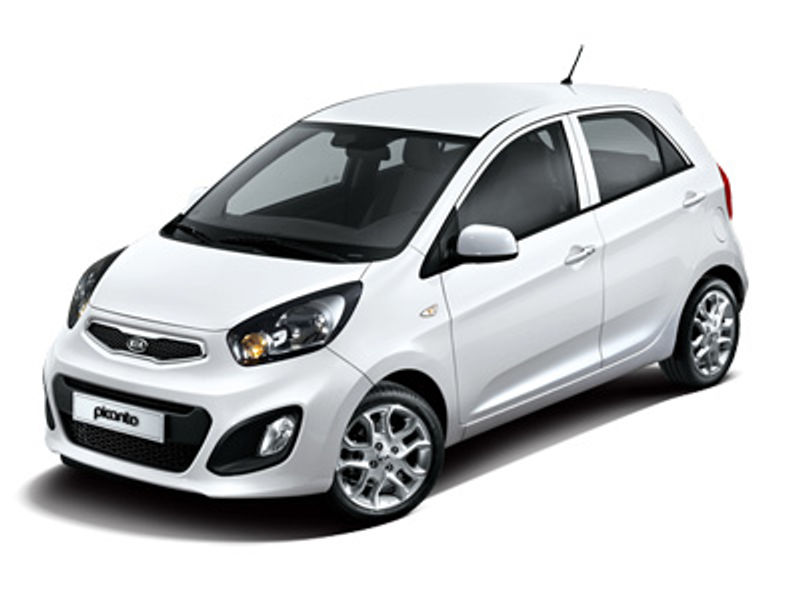
Kia Picanto

The Picanto might have once been a mockery, but the current model from Kia is anything but. Solid build quality, an engine that has more zip than most 1.4litre engines and more standard spec than something more…German. Don’t expect much in terms of ride and handling, space is limited and there’s no ABS. A solid offering from the Korean marque, sporting exceptional value.

Kia Picanto 1,0LX AT – R127 995

  • Specification – Power Steering and Steel wheels with hubcaps. Aircon, Alarm & Immobilizer, Central locking, Radio (USB&Aux), Electric front windows, auto lights and follow me home lighting, fog lamps, ISOFIX child seat anchors.
  • Safety kit – Disc & Drum brakes with Driver & Passenger airbag

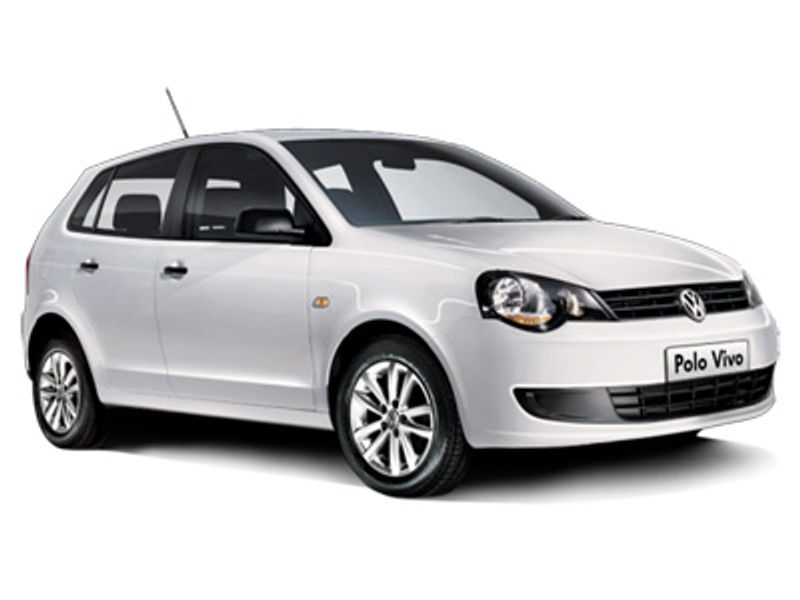
Volkswagen Polo Vivo

If you just want to buy German, the locally-made Polo Vivo is still going strong. Better build quality than the rest, the Vivo has solid handling characteristics and the best auto box of the lot. The styling may be dated, and the specifications very sparse indeed, but it’s a safe bet which is value in itself.

Polo Vivo Trendline 1.4 Tiptronic – R151 100

  • Safety kit – Front disc brakes assisted by ABS & EBD, Driver and passenger airbags
  • Specification – Aircon, Steel wheels, No radio, manual windows

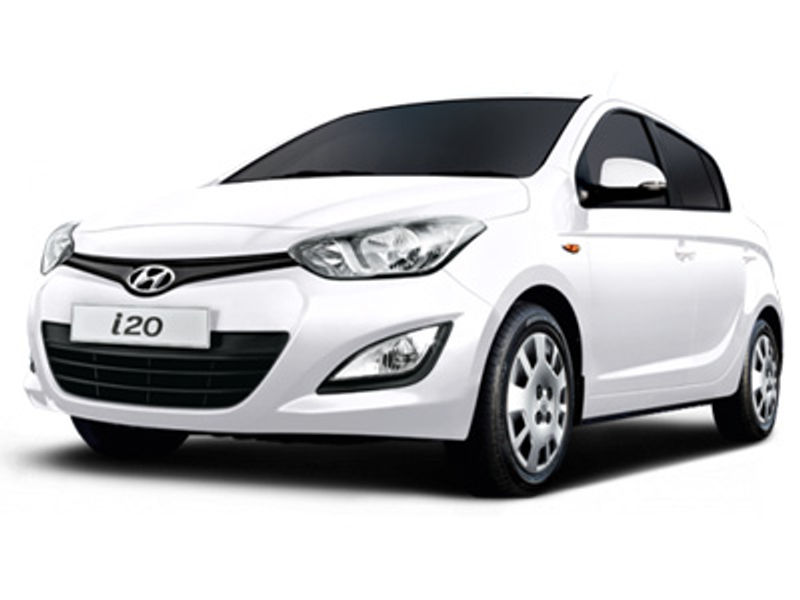
Hyundai i20

The i20 is arguably the best looking of the group here, with the strongest engine too. Specification is excellent, considering at this price it features parking sensors, Bluetooth and keyless entry, some of which are pricey options – even on larger cars. There is also a standard service plan, which means servicing costs are taken care of until 60 000km. Super-light steering is low on feedback, and lots of hard plastics make up the interior, so don’t expect magic inside, but its comfortable and well laid out.

Hyundai i20 1,4 Fluid AT – R184 900

  • Specification – Aircon, Radio USB/Ipod, Bluetooth, keyless entry, alarm, PDC, front&rear electrics, folding electric mirrors
  • Safety – Dual Airbags, ABS

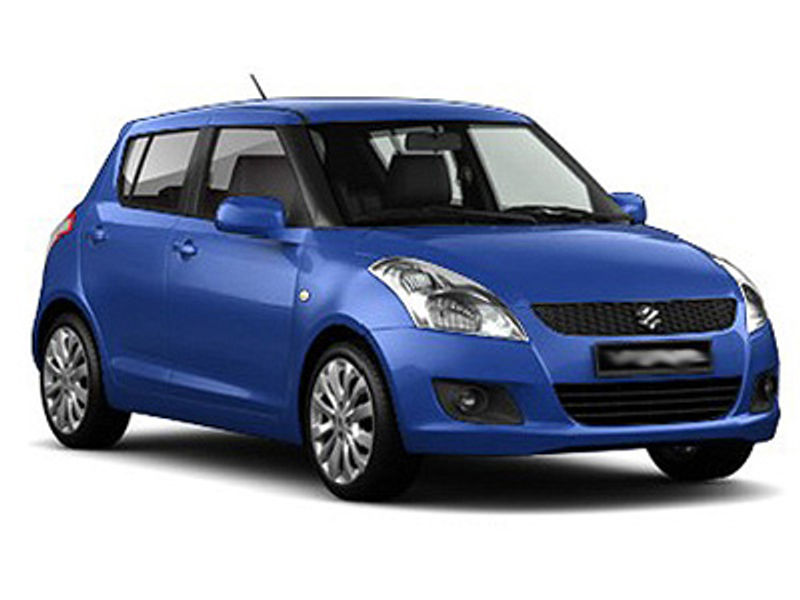
Suzuki Swift

One of the best cars (let alone hatchbacks) I drove last year. An engine that likes to be revved and a chassis that punches way above its weight. Good kit and build quality with a simple and functional interior means it has everything you need and nothing you don’t. Looks pretty good too.

Suzuki Swift SE AT – 186 900

  • Specification – Aircon, Alloy, Radio, Electric windows, Fog lamps , Safety – EBD, BAS, Dual Airbags

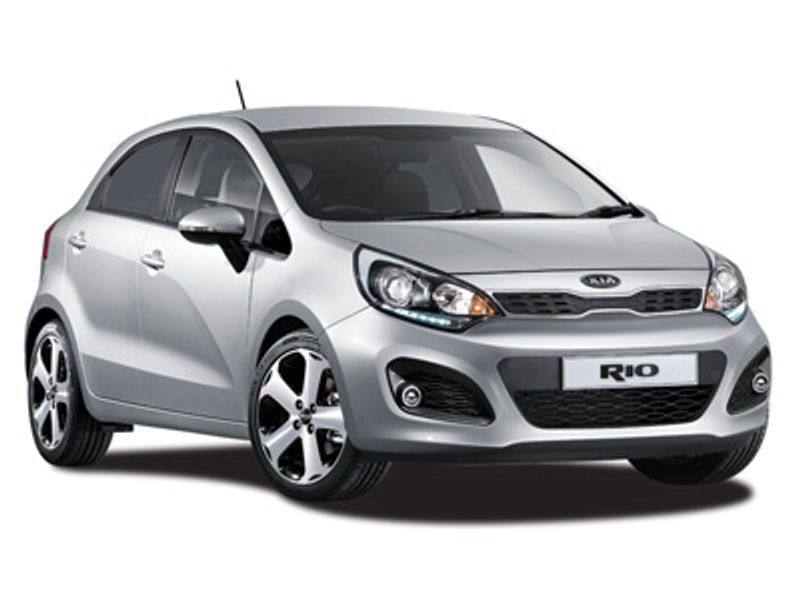
Kia Rio

This little hatch has been kicking the competition around the block for quite some time. It looks great, offers the most standard specifications, has a strong engine and the ride and handling is not bad either. Steering is super light (perhaps even too light) and dealerships are few and far between, but for just under our budget it’s the best-specced vehicle here.

Kia Rio 1,4 Tec AT – R192 995

  • Specification -, 17inch alloy, Alarm and Remote, Electric windows front and rear, Radio USB/Aux 6speaker, Bluetooth, electric mirrors, Armrest, Leather seats, Daytime running lights, Rain-sensing windshield wipers and auto-lights
  • Safety – ABS, EBD, Dual front, side and curtain airbags

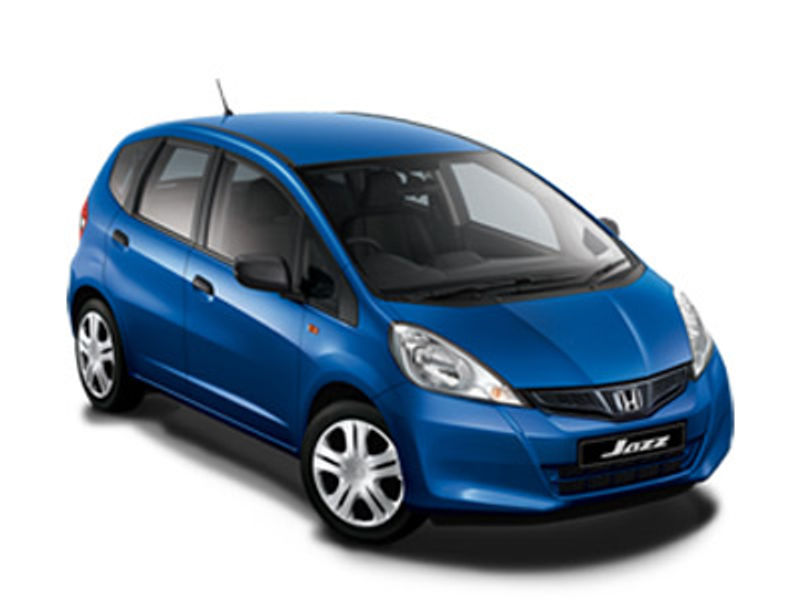
Honda Jazz

You don’t have to bring your pensioners discount card to get a good deal here. The Jazz has been a top seller for good reason. The most reliable of the group, the Jazz is a comfortable ride with a no fuss interior and a decent amount of space. However, its a CVT which means it’ll whine a bit as the gearbox keeps the engine at constant revs, but improved fuel consumption is the upside. It’s not the funkiest-looking of the bunch, but if that doesn’t bother you it’s a very solid purchase.

Honda Jazz 1.3 Comfort CVT – R197 000

  • Specification – Isofix baby seat anchors, Alarm, Central locking, Alloy wheels, CD/Aux/Mp3, Aircon, Electric windows front and rear
  • Safety – ABS, EBD, EBA, Dual front and side airbags

Comparison table

Vehicle Kia Picanto VW Polo Vivo Hyundai i20
Price R127 995 R151 100 R184 900
Engine 51Kw / 94NM 63kW / 132NM 73kW / 136NM
Fuel Consumption 6.72 l/100km 8l /100km 8.1 l/100km
Vehicle Suzuki Swift Kia Rio Honda Jazz
Price R186 900 R192 995 R197 000
Engine 70kW / 130NM 79kW / 135NM 73kW / 127NM
Fuel consumption 7.4 l/100km 8.3l /100km 6.7 l/100km

VW Golf TDI BlueMotion gets full marks for efficiency

Advancements in automotive technology are usually best measured not by performance and power figures, but by efficiency. Stretching the efficiency of internal combustion to what must be close to the limit, the all-new VW Golf TDI BlueMotion, is the most fuel-efficient model in the nameplate’s 39-year history, measuring 3.2l/100km fuel economy and 85g/km of CO2 emissions.

This is an astonishing figure for a traditional internal combustion engine, and although real world driving in real world conditions probably won’t achieve this, it remains a remarkable claimed figure. The local introduction of the VW Golf TDI BlueMotion according to Volkswagen South Africa is still under investigation and no decision has been taken as yet on when it will be introduced.

New VW Golf TDI BlueMotion: A new benchmark for sustainability

The VW Golf TDI BlueMotion features a new 1.6-litre direct injection four-cylinder turbo-diesel engine that produces 81kW of power between 3200-4000rpm and 250Nm of torque from 1500-3000rpm. A six-speed manual transmission replaces the old five-speed.

Acceleration from 0-100km/h takes 10.5 seconds, making it quicker than its predecessor. With its 50-litre fuel tank, the TDI BlueMotion has a 1500 km range.

Despite all the efficiency modifications, the Golf TDI BlueMotion has a top speed of 200 km/h, and earns a drag coefficient rating of 0.27 achieved through a series of aerodynamic enhancements that include a lowered chassis (by 15 mm), a special roof spoiler, a radiator grille that is almost closed to the outside (with integrated BlueMotion lettering), partially closed air inlet screens in the bumper and optimised cooling airflow and special underfloor panels.

The Golf TDI BlueMotion will be available in two well-known equipment levels of Trendline and Comfortline.

Comfortline is additionally equipped with the ParkPilot parking assistance system front and rear 16-inch Dover alloy wheels, a high quality instrument cluster and the new Composition Touch radio system including SD card interface and Driver Alert system.

The VW Golf TDI BlueMotion is further fitted with a 5-inch TFT display, a fuel tank inlet with a guard to prevent misfuelling, Electronic Stability Control including ABS, brake assist, anti-slip regulation, engine drag torque regulation, countersteer assistance, Electronic transverse differential lock XDS+, Multi Collision Brake (standard), Pressure monitoring indicator (standard), Dynamic Light Assist, Cruise Control, Park Assist, Preventive occupant protection system, Rear Assist, Lane Assist, and Road sign recognition.

The Hyundai i20 CRDi Glide review and price in South Africa

As I type this, there’s a headline on my newsfeed which suggests another massive petrol price increase is on the cards. How is the consumer expected to cope with an ever-increasing fuel price and still be in the market for a new vehicle? The answer is a small B-segment diesel, one of which I recently drove – the Hyundai i20 CRDi Glide.

Form follows function

Hyundai gave the little i20 a nip-and-tuck in the looks department and while it looks a little better, I still think it’s no beauty queen. That said, it’s not the ugliest thing around and winning pageants is not what the Hyundai i20 is about. The Korean car manufacturer is answering the call for comfortable, practical and sensible motoring, and if the numerous Car of the Year nominations are anything to go by, it’s doing a damn fine job.

Economical diesel engine

The little 1.4-litre turbocharged diesel engine powers the i20 and what an ingenious piece of tech it is. With 66kW and 220Nm at hand, it’s pretty powerful for such a small vehicle and in-gear acceleration is particularly potent. There’s a slight pause before the power comes surging in and the car (and I) will suggest changing down a gear to cancel out the turbo lag.

Like all modern diesel engines, fuel economy is a priority and here the Hyundai i20 excels. In the week I had this vehicle the trip computer read 5.7L/100km, which is excellent given the current rate of exorbitant petrol price increases.

How does the i20 drive?

The Hyundai i20 is quite pleasant to drive. There’s plenty of oomph for overtaking and it gets from 80km/h-120km/h surprisingly quickly However the engine has a rather on/off nature as mentioned above, but you can get round that by keeping it in the power with gear changes. Speaking of gearbox, it’s smooth and direct meaning changes are effortless. What impressed me was the quality of the ride where despite deliberately driving on poor tarmac, the i20 still felt fine. It’s a rather comfortable car, which is an important factor if you’re doing the daily grind. There’s no mistaking the fact you’re in a diesel though as the distinct truck-like clatter is quite obvious. It would be great if there was some form of noise shielding that could be fitted to diesel engines as some, like this one, sound very unrefined.

Hyundai i20 specs

It has been awhile since I had last driven one of Hyundai’s smaller cars and I was blown away by how much you get for your R200 000. There’s a comprehensive trip computer, 16-inch alloy wheels, rear park assist, automatic climate control, Bluetooth connection for mobile devices, glovebox cooling, one touch indicators and the radio finally has RDS which means it actually shows you the name of the selected station. The only thing which I’d like to see fitted is cruise control, but other than that the Hyundai i20 has the essentials box well covered.

There’s also a full set of safety features like driver, passenger, side, curtain airbags as well as anti-lock brakes.

Hyundai i20 CRDi Glide price in South Africa

Pricing for the Hyundai i20 CRDi starts from R199 900

Hyundai i20 CRDi Glide conclusion

In the highly competitive B-segment where nearly every manufacturer is having a go at making a thrifty runabout, the Hyundai i20 makes a good name for itself especially with this diesel engine. The diesel motor’s shortcomings are easily overshadowed by the generous power and torque, while the fuel consumption is outstanding.

I drove my i20 test unit for a week and it was returned to Hyundai with ¾ of a tank still remaining. In fact, the fuel needle only moved off the ‘Full’ mark after five days of driving. The price tag may scare off some potential buyers though, but I think you’d recoup that cost in saved fuel quite easily. I wouldn’t be put off by the distinct diesel engine noise either.

EuroNCAP announces crash test results for Honda CR-V and Citroen C4 Picasso

Renowned vehicle safety organization EuroNCAP has released its latest set of crash-test results featuring the Honda CR-V and Citroen C4 Picasso, which both earned the maximum five stars. The latest CR-V has recently reached the local market.

According to the organization, by law, all new car models must pass certain safety tests before they are sold, however legislation provides a minimum statutory standard of safety for new cars. EuroNCAP’s aim is to encourage manufacturers to exceed these minimum requirements.

The C4 Picasso scored 86% for Adult Occupant Protection, 88% for Child Occupant Protection, 68% for Pedestrian Protection and 81% for Safety Assist, while the Honda CR-V which recently launched in South Africa scored 93% for Adult Occupant Protection, 74% for Child Occupant Protection, 68% for Pedestrian Protection and 66% for Safety Assist.

Both cars were given the top ‘Good’ rating for whiplash protection in the event of a rear impact.

The Safety Assist score refers to a new test implemented relatively recently by the safety organisation. Manufactures often offer new breakthroughs in safety assist systems technologies which play an increasingly important role in accident avoidance. Euro NCAP implemented this crashworthy vehicle test to help mitigate the consequences for those involved in an accident and enhance driver judgement. Many systems are quite new and their impact on safety is not yet fully understood.

However, other technologies such as Intelligent Seat Belt Reminders, Electronic Stability Control and Speed Assistance systems have already been shown to save lives and are widely available amongst the vehicle fleet. The functionality of these technologies is assessed by Euro NCAP and points can be scored, but only if the fitment on all of the vehicle variants sold across Europe is high.

Other star ratings from 2013 include the Toyota Auris, also relatively new to the SA market, which scored 92% for Adult Occupant Protection, 84% for Child Occupant Protection, 68% for Pedestrian Protection and 66% for Safety Assist, and the Toyota RAV4 which scored 89% for Adult Occupant Protection, 82% for Child Occupant Protection, 66% for Pedestrian Protection and 66% for Safety Assist.

EuroNCAP also presented two automakers with its Advanced Award, which went to Mitsubishi for its Forward Collision Mitigation system and to Fiat, for the City Brake Control feature offered as an option on the Panda and 500L.

Ford Fiesta 1.0 Trend Review

Having had the chance to sample numerous 1.0-litre three-cylinder engines over the years, I was rather excited to get behind the wheel of the Ford Fiesta Ecoboost which on paper had the power to match much larger-engined counterparts.

Ford Fiesta 1.0 Trend review by David Taylor

After a facelift, Ford’s Fiesta adopted an all-new gaping grille on the front end. Many have suggested it looks like an Aston Martin and I applaud Ford for being so bold with a radical design. The Ford Fiesta has always been a bit of an eye-catching car and now it’s even more so. In the crowded B-segment where competition is tight, I believe looks and value for money play a huge role. The Fiesta is off to a great start as it gets thumbs up in the design stakes.

International Engine of the Year

The main change with the facelift can be found under the hood where a rather special engine can be found. Voted as ‘International Engine of the Year’ Ford’s 1.0-litre three-cylinder is hands-down the best engine of its kind. The amount of power it makes is simply astounding. There’s 92kW and 170Nm produced by this tiny engine. Read that again. To put that in context, many 1.6-litre motors have about 75kW on tap.

When you put your foot flat, the Ford Fiesta Ecoboost responds well and the power comes almost right away, which I find rather useful if you want to overtake. Being a three cylinder, it also has a pleasant sound which is exaggerated if you drive it hard.

Fuel consumption surprise

This little motor is marketed as being incredibly light on fuel, with Ford claiming an eyebrow-raising figure of 4.3L/100km. Despite the tiny size of the engine, I struggled to get anywhere near that figure. You should still see around 7L/100km on the combined cycle which isn’t too bad given the level of performance. The big plus with this engine is you have the option of driving it really gently, or you can pretend you’re Ken Block and race everywhere – the fuel economy difference between the two styles is hardly noticeable. Anyone with a performance car will be well-aware that the moment you start driving aggressively, fuel consumption skyrockets. In the Fiesta Ecoboost, the figure went from 7.0L/100km to 7.3L/100km during the week I had the vehicle. Brilliant.

Well-kitted out interior

Inside the Fiesta, you receive plenty of bells and whistles, and everything is laid out in one of the more visually appealing and better designed cabins. From the legendary Ford SYNC which is a voice-controlled Bluetooth phone pairing system, to the steering wheel-mounted controls, it doesn’t feel like there’s anything major missing. There are seven airbags, a stability control program, air conditioning, daytime running lights, hill start assist and automatic stop/start.

Ford Fiesta 1.0 conclusion

To date this is the best application of a 1.0-litre three-cylinder engine I have evaluated. While marketed as an economical and sensible choice, the Ford Fiesta Ecoboost is actually fun to drive without the drawback of the fuel economy taking a hit when you drive enthusiastically. It looks good, drives well and has the lovely SYNC tech to boot.

However all hopes of this vehicle receiving a top rating evaporate when you see the price tag. The price as tested for the Trend derivative sits at the R213k mark – a figure that will send a budget-conscious consumer running for miles. What’s more alarming is the higher-specced Trend model retails at R233 900! That figure puts you squarely in Volkswagen Golf 7 and Ford Focus territory, which isn’t a good place to be. For the same price as the top-of-the-range Ecoboost, you could have a Golf 7 1.2 Bluemotion which is a bigger car and lighter on fuel.

I’d recommend going for the 1.6 TDCi Ford Fiesta instead and save yourself around R30 000. It will be lighter on fuel, have similar levels of specification and is a lot cheaper. It’s a real shame that such brilliant technology costs so much. Hopefully we’ll see this Ecoboost technology come down in price in the near future.

Ford Fiesta – Price

Ford Fiesta 1.0 Trend – R213 700

2014 Mazda3 officially unveiled

Mazda has officially pulled the cover off its sleek and sporty 2014 Mazda3 which features a longer wheelbase, new human-machine interface and a new range of engines. Another Japanese competitor in an incredibly crowded segment which includes the VW Golf, Ford Focus and Toyota Auris, the 2014 Mazda3 will be available with a choice of two naturally-aspirated petrol four-cylinder petrol engines when it launches.

Locally, Mazda has confirmed that the 2014 Mazda3 will be introduced, but they couldn’t give an exact date at time of publication.

2014 Mazda3 – Specifications and Features

Engine Capability

The 2014 Mazda3 will be offered with two different petrol engines for the US market. At this stage we can’t confirm the local powertrain line up. The 2.0-liter SKYACTIV-G which produces 115 kW of power and 203 Nm of torque, while the 2.5-liter SKYACTIV-G develops 137 kW of power and 250 Nm of torque. Both engines can be paired to a SKYACTIV-MT six-speed manual transmission or SKYACTIV-Drive six-speed automatic transmission.

To improve fuel efficiency, the Mazda3 has i-ELOOP (Intelligent Energy Loop) brake energy regeneration and a SKYACTIV-Body that uses high-strength steel for significant weight savings.

SKYACTIV is Mazda’s sub brand, used to refer to all the technologies the company is developing which increase fuel efficiency and engine output. This technology appears in Mazda products that were developed from 2011.

Exterior Design Features

Aside from the name, the 2014 Mazda3 doesn’t share much with its predecessor. The car’s wheelbase has been stretched, however the length of the car has been reduced by nearly two inches.

Dominating the front fascia is a five-point grille which is equipped with a new active air-shutter system that helps to reduce drag and improve aerodynamic performance while contributing to real-world gains in fuel economy. The car’s presence is further emphasized by soft curves and flowing surfaces as well as a tailgate-mounted spoiler, and embraces the company’s KODO design language, which means ‘soul of motion’ in Japanese.

According to the manufacturer each set of wheels on the 2014 Mazda3 expresses dynamic motion from hub to rim, whether it is the 16-inch full cover steel or higher trim-equipped 16-inch and 18-inch aluminium alloy wheels.

At launch, the model will be available in eight colours, including the premium metallic finish Soul Red, two all-new Mazda hues introduced with Titanium Flash Mica and Deep Crystal Blue Mica.

Interior Design Features

The redesigned body has increased the interior space which features Mazda’s latest infotainment system, the Human Machine Interface (HMI) which is set to offer drivers more connectivity than any other Mazda model. This will happen through simplified methods of operation that have been designed with safety in mind.

The cabin is further fitted with a new instrument cluster, a seven-inch colour screen in the centre of the dashboard, a centrally positioned analogue gauge flanked by a pair of wing-shaped digital displays, satin chrome trim, piano black accents and the seats have been redesigned for more comfort and efficiency.

The re-sculpted front seats give back seat passengers more legroom. The car is also offered with cloth, leather and leatherette seat coverings. There is also a new infotainment system with Bluetooth/USB/AUX connectivity as well as the ability to access the internet via a smartphone.

The 2014 Mazda3 is also the first vehicle to feature Mazda’s all-new Active Driving Display, a clear pop-up panel that displays important driving information such as vehicle speed, navigation directions and is vertically mounted behind the meter hood. This is similar to the system available on some Peugeot models.

Safety Features

The 2014 Mazda3 will feature a variety of new safety systems including High Beam Control, Blind Spot Monitoring, Forward Obstruction Warning, Smart City Brake Support, Radar Cruise Control, and Lane Departure Warning System.

Other standard safety features on the 2014 Mazda3 include six airbags, whiplash-reducing front headrests, power-assisted ventilated front and solid rear disc brakes, anti-lock brakes (ABS) with Electronic Brakeforce Distribution (EBD) and Brake Assist, daytime running lights, Dynamic Stability Control (DSC), a Traction Control System (TCS), a collapsible steering column, a trunk entrapment release system, a tire pressure monitoring system (TPMS), three-point safety belts for all seating positions, front seatbelt pretensioners with force limiters as well as Lower Anchors and Tethers for Children (LATCH).

Gallery

View the new Mazda3 gallery here

GMSA Sales Summary for May 2013

GMSA’s sales success from April continued through May and totalled 5956 units, an increase of 7.5% from the same month last year. The Trailblazer continued to grow its presence in the market with a best-to-date performance of 423 sales, while the Chevrolet Utility once again dominated the sub-1 ton segment. Here is a breakdown of GMSA sales including key sales figures, Top 5 model sales and the most popular GMSA used cars for May 2013.

GMSA sales summary – May 2013

  • Total new car sales: 5956
  • Total market share: 11%
  • Total passenger vehicle sales: 2275
  • Total Light Commercial Vehicle (LCV) sales: 3311

Top 5 GMSA new passenger car sales – May 2013 (compared to April 2013)

  1. Chevrolet Utility – 1853 units (1628 units)
  2. Isuzu KB – 1364 units (1047 units)
  3. Chevrolet Cruze – 546 units (429 units)
  4. Chevrolet Spark – 464 units (433 units)
  5. Chevrolet Trailblazer – 413 units (321 units)

Most popular used GMSA cars in South Africa – May 2013

  1. Isuzu KB Series
  2. Opel Astra
  3. Chevrolet Spark
  4. Opel Corsa Utility
  5. Chevrolet Cruze

GMSA in the news

Locally produced Chevrolet Spark celebrates its first year of production

New Chevrolet Trailblazer – the all in one lifestyle SUV