Next-gen Mazda CX-5 ‘pencilled in’ for SA; CX-80 nixed
The head of Mazda Southern Africa says the as-yet-unrevealed next-gen Mazda CX-5 has already been “pencilled in” for a local introduction in around April 2026…
The next-gen Mazda CX-5 has yet to be revealed, but the head of the Japanese firm’s local division says the upcoming new version of the family SUV has already been “pencilled in” for a local launch in about April 2026.
Craig Roberts, Managing Director at Mazda Southern Africa, confirmed the news to Cars.co.za during an interview at Naamsa’s South African Auto Week 2024 in Cape Town.
“Our next new introduction will be the launch of a new CX-5. That is currently pencilled in – and I use the term ‘pencilled in’ – for around about April 2026,” he told us.
Based on Roberts’ comments, we would speculate that the 3rd-generation CX-5 – which earlier reports suggested might not happen at all – will be revealed globally at some point in 2025, before hitting initial markets in the latter part of next year.
Official details on the next-gen CX-5 are thin on the ground, though Mazda did confirm during a financial results presentation in May 2024 that the new model would be available with a “Mazda-developed hybrid engine”.
As a reminder, the KF-series (2nd-generation) CX-5 has been around since 2017 yet continues to serve as Mazda Southern Africa’s best-selling model. Interestingly, however, the local CX-5 line-up was rationalised from 6 to 3 derivatives in February 2024, with both the 2.2-litre turbodiesel engine and the 2.5-litre petrol mill removed from the range (leaving only the 121 kW/213 Nm 2.0-litre petrol motor).
Other than the new CX-5, is there anything else on the cards for South Africa? Well, though the 3-row CX-80 was initially planned for the local market, Roberts suggested that was no longer the case.
“Mazda globally will be and has launched new product in the larger SUV [space]: CX-80, CX-90 and also CX-70 for the US [United States] market. Those vehicles are not slated for the South African market or various other right-hand-drive markets.
“So, from a new-product introduction perspective, it is somewhat quiet. And it’s one of the challenges that I think we all face – Mazda, in particular – in terms of how quickly we are able to bring new product to market.
“Our competitors are able to do that, it seems, at a way faster pace and I think that’s one of the strategic adjustments that we as a brand globally have to make in terms of how quickly and how effectively – how speedily – we can introduce new products,” he said, pointing to a general industry trend of shortening vehicle lifecycles.
The Fiat Uno Turbo is an oft-forgotten hot hatch from the early Nineties, but nearly 40 years later, this little 3-door firecracker is certainly worth revisiting.
In the early Nineties (when the hot-hatch craze was past its peak), Fiat sprung a surprise when it fitted its Uno budget car with a turbocharged 1.4-litre mill; the result – a 3-door hatch with 85 kW of power and 161 Nm of torque – offered performance substantially above that of other variants in the range. Bear in mind that, before that, Fiat Unos produced between 33 and 52 kW, so 85 kW truly made headlines!
The first thing you notice when you walk up to the Fiat Uno Turbo is its boxy design. The front is typically period Fiat, and at the back, the rear slopes straight downwards towards the angular bumper. The iconic Scorpio alloy wheels are fitted with 175/60 R13 tyres, which are miniscule by modern standards.
At first glance, the Uno doesn’t appear to have door handles. It has “latches” instead: you have to put a finger into the panel gap between the front door and the rear panel, to flip the small handle upwards.
The Fiat Uno Turbo’s cabin
Once seated, I was surprised to find that my head didn’t touch the car’s ceiling (and I am 1.87 meters tall). You do sit close to the door though. It is a simple interior (as one would expect of a budget car from the ’90s), and the chequered-cloth seats with vinyl inserts don’t hide the era they date from either.
While the headrests are a little too far back, the seats are comfy and fairly supportive. The fascia and centre console have very blocky designs and, in front of you, the instrument cluster seems positively crowded with analogue dials. This car is even fitted with a period-correct Pioneer radio-tape unit!
In front of the easily legible dials is a 3-spoke Momo steering wheel, which is slightly offset to the left. The Fiat Uno Turbo’s yellow line begins at 6 000 rpm, while the red line is only a few hundred rpm later.
Specifications:
Model: Fiat Uno Turbo
Engine: 1.4-litre, 4-cylinder, turbopetrol
Power: 88 kW at 6 000 rpm
Torque: 161 Nm at 3 500 rpm
Transmission: 5-speed manual, FWD
Weight: 925 kg
0-100 km/h: 9.1 seconds (tested by CAR magazine)
Top Speed: 200 kph (tested by CAR magazine)
Behind the wheel of the Fiat Uno Turbo
When you start driving the Uno, you notice the squishy gear knob with which you row the 5-speed ‘box. The centre console emits a rattle or two, but it is immediately evident that this is an exciting little car to drive, because it has a tiny footprint. Lower down in the rev range, it feels almost like a naturally aspirated engine, but when you bury the accelerator pedal, you immediately sense how the boost starts to build.
There is also a little boost gauge in the middle of the instrument cluster! Again, in the lower part of the rev range, the Uno ambles. Keep your foot down and, as the revs climb, the gauge starts to indicate how the boost changes, and then, at around 3 500 rpm, the fun starts, and that fiery (sorry) 1.4-litre engine performs at its best. Then you’ve got another 2 500 rpm to play with before you need to change up.
You can’t rush gear changes; the throws are quite long. Keep it in 2nd or 3rd gear, as low as 2 000 rpm and, when you stab the long pedal, the torque will build steadily – this engine is remarkably tractable.
It’s such fun to hustle the Uno Turbo through tight corners at pace because it feels like you’re behind the ‘wheel of a large dinky toy, but in a good way. The driving experience is so immersive that you may think you’re going quite quickly, but when you look at the speedometer, the Fiat’s only travelling at 120 kph.
There is not a lot of traction, but the Uno Turbo’s handling ability is impressive, given its age and budget-car underpinnings. Because the car weighs only 925 kg, it offers a light and nimble driving experience.
The example we drove had 113 000 km on the odometer and presented as a neatly maintained “oldie”. This was evident from the good condition of the cabin and the seats, but also when we lifted the bonnet.
The engine bay was very clean – even the firewall’s heat-resistant lining was still in place – and when we looked under the wheel arches, the Fiat looked more like a 15-, as opposed to a 35-year-old, car.
This car was sourced and sold by MotoVillage, located in Tokai, Cape Town.
Summary
It was tremendous fun to drive an Uno again (for the first time in more than a decade-and-a-half), and now, after my first spin in a Turbo, I fully understand why it has a following among enthusiasts. Did you know this humble hatchback even competed in the Stannic Group N production-car racing series?
It has a fun-loving character, and according to CAR magazine’s original road test in 1990, it achieved a 0-100 kph acceleration time of 9.1 seconds and a top speed of 200 kph (phew, those testers were brave).
I can confirm that the Uno Turbo feels slightly faster than that acceleration time suggests. The Turbo is a car that should be listed among the memorable and affordable Italian hot hatches of the 1990s.
PHEV to ‘protect Ranger’s future in SA’, says Ford boss
Ford SA’s boss says the Ranger PHEV will “protect” the bakkie’s future in the country, describing this plug-in variant as the “first step of electrification” of the platform…
Neale Hill, President of Ford Motor Company Africa, says the new Ranger PHEV is a “critical step” to protect the future of the locally produced bakkie in South Africa, while also hinting that a fully electric version could be on the cards.
The first production-spec units of the new Ranger plug-in hybrid are scheduled to start rolling off the line at Silverton towards the end of 2024. This comes after the Blue Oval brand invested R5.2-billion in its South African plant, which will serve as the only facility worldwide building the Ranger PHEV.
“It’s such a critical step in terms of protecting the future of Ranger in South Africa. The fact that we are the only Ford plant in the world – out of 5 other plants globally [producing the Ranger] – to be honoured with the opportunity to build the plug-in hybrid is a big step forward,” Hill told Cars.co.za at Naamsa’s recent South African Auto Week 2024 in Cape Town.
Interestingly, Ford has yet to confirm this electrified derivative for the South African market. Perhaps more importantly, though, the Ranger PHEV will effectively allow the Silverton assembly plant to continue servicing Europe, its largest export destination and a continent in the midst of a shift towards electrified vehicles.
“One of our principle [export] markets is Europe – so UK [United Kingdom], Germany – and just the fact that we’re in the first step of electrification of the Ranger platform in the form of a plug-in hybrid starts opening up massive potential and massive opportunities. It gives people an insight as to what the future is and where we can go.
“If you look at F-150 Lightning, which we’re already producing in the US [United States] as a full electric version, the capabilities, the knowledge, the experience is there. It’s now just a question of at what point do we scale it into the Ranger platform and where do we go from that,” Hill added, hinting at plans to eventually offer a battery-powered version of the bakkie.
Rumours of a fully electric Ranger have been circulating for some time. In addition, Ford in the United States announced in August 2024 that it planned to launch a new “mid-sized electric pick-up” in 2027. Whether or not that ends up being a Ranger EV, of course, remains to be seen.
As a reminder, the Ranger PHEV’s powertrain combines Ford’s turbocharged 2.3-litre, 4-cylinder petrol engine and 10‑speed automatic transmission with a 75 kW electric motor and an 11.8 kWh (usable capacity) battery pack. Peak system outputs stand at 205 kW and 690 Nm, with this torque figure described as the “highest of any production Ranger ever” (eclipsing even the high-performance Raptor’s 583 Nm).
The electric motor is integrated into the transmission bellhousing, while the battery takes “less than 4 hours to charge using a single-phase 16-amp charger”, according to Ford. Interestingly, the company has still not provided a confirmed single-charge electric-only range, saying only that it has a target of “over 45 km”.
Ford adds that buyers can expect a payload of “up to 1 tonne” and a braked towing capacity of 3 500 kg. The Ranger PHEV employs a new “e-4WD” system along with a dual-range transfer box and rear differential lock. The traction battery, meanwhile, is packaged between “specially engineered” frame rails.
Ferrari registered more cars in SA last month than the prior 7 combined
Fascinatingly, Ferrari registered more new vehicles in South Africa in October 2024 than in the prior 7 months combined. Let’s take a closer look at the sale figures…
When glancing through the local automotive industry’s new-vehicle sales figures for October 2024, we noticed something quite fascinating: more new Ferrari units were registered in South Africa last month than in the prior 7 months combined.
Yes, Scuderia SA – the official distributor of new Ferrari vehicles in Mzansi – reported as many as 25 registrations to Naamsa for October 2024. That’s more than double its previous 2024 high of 12 units reported in February 2024 and far greater than its 2023 best of 9 units (in January of that year), too.
October’s 25-unit haul follows 3 consecutive months (July, August and September) of zero registrations for Scuderia SA, leading us to believe this could be a case of accumulated deliveries, for whatever reason. We’ve asked Ferrari’s local distributor for comment but have yet to hear back.
The 25 registrations were interestingly spread across 6 nameplates. The 296 GTB coupé lead the charge with 10 units, followed by its folding hard-top convertible sibling, the 296 GTS, with 5 units. The Purosangue (which Ferrari would prefer you don’t call an “SUV”) added a further 4 units, while the 812, Roma and SF90 each accounted for 2 units.
Scuderia SA registered 4 units of the Purosangue last month.
Year to date at the end of October 2024, Scuderia SA has registered 58 units locally, surpassing its 2023 tally of 54 registrations. That means last month’s figure currently comprises 43.1% of its 2024 running total, with November and December still to come.
So, what’s next for Ferrari in South Africa? Well, the new 12Cilindri (we’ve already published pricing for both the Coupé and Spider) is scheduled to arrive on local shores in the opening quarter of 2025, with order books for this 812 Superfast successor having opened a few months back.
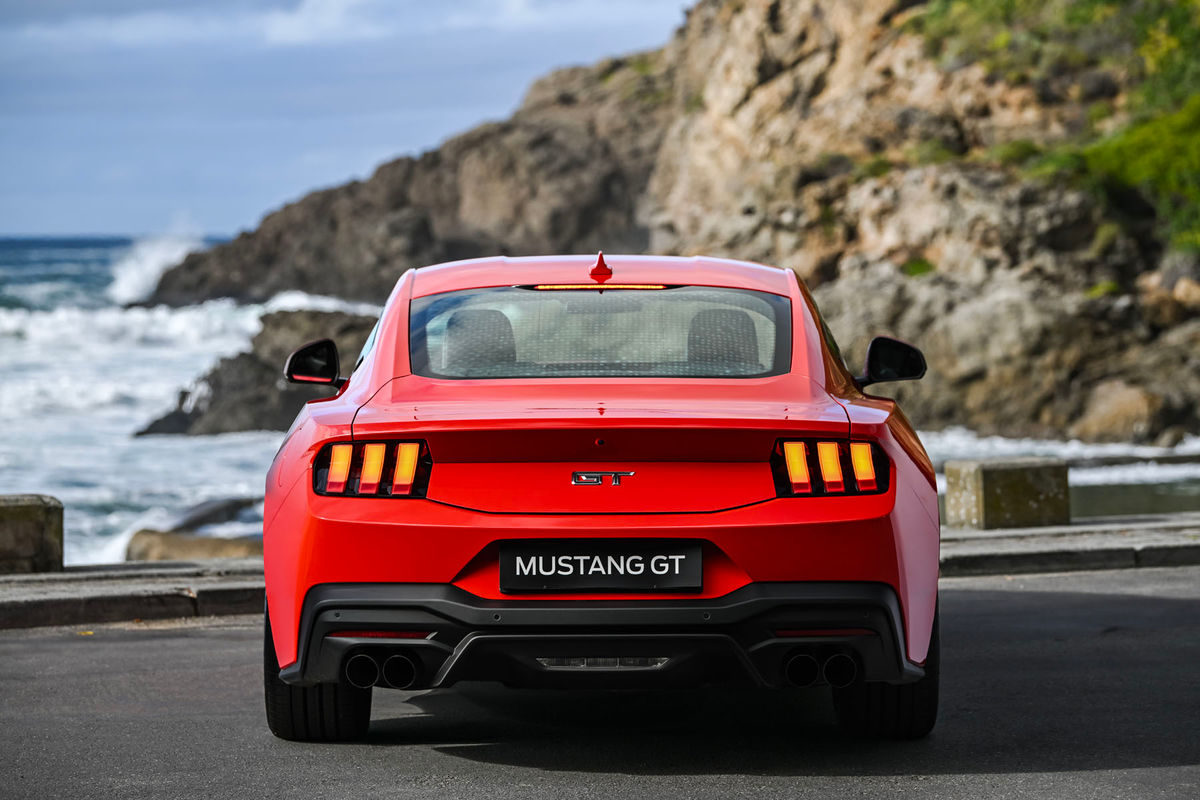
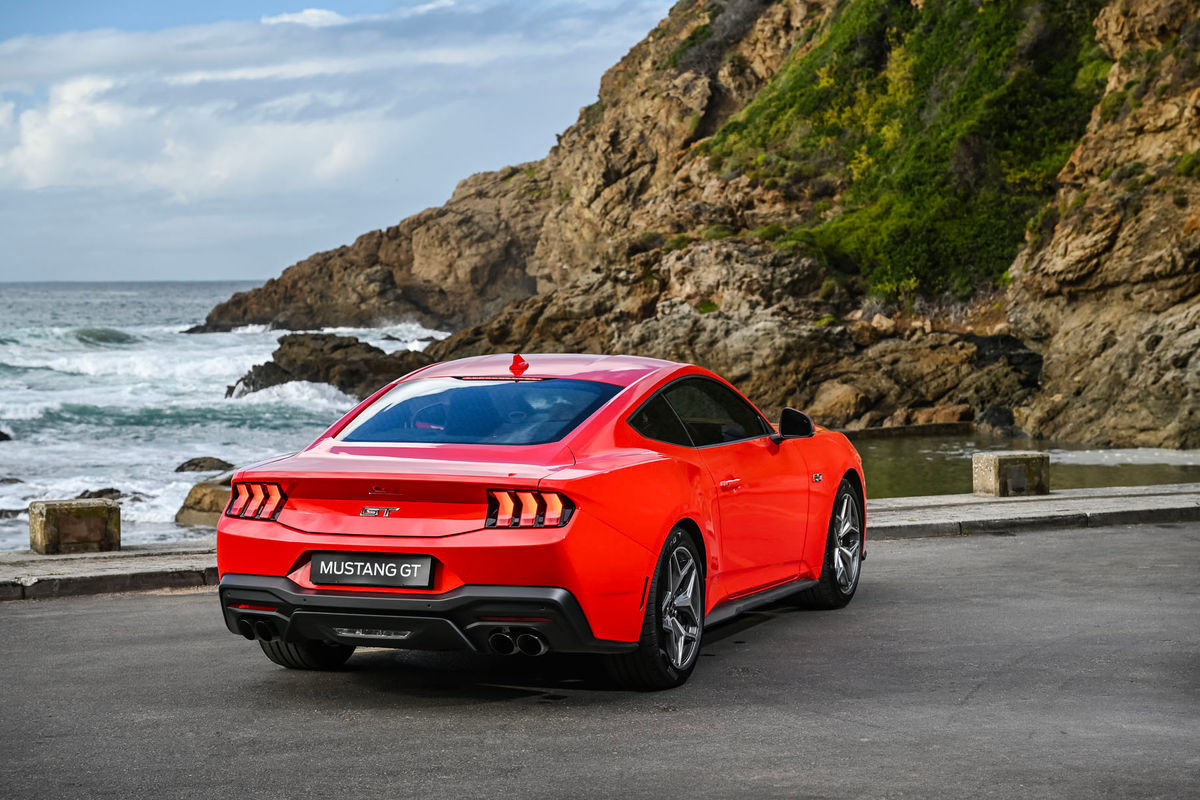
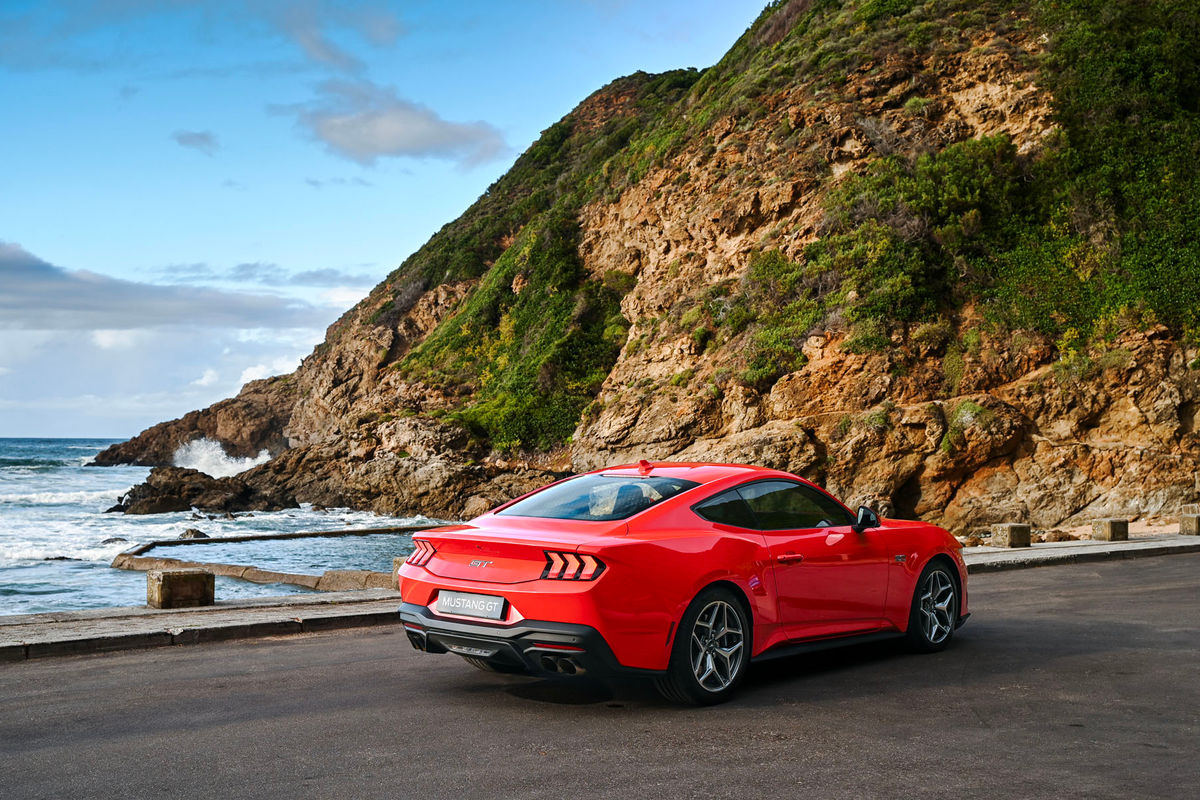
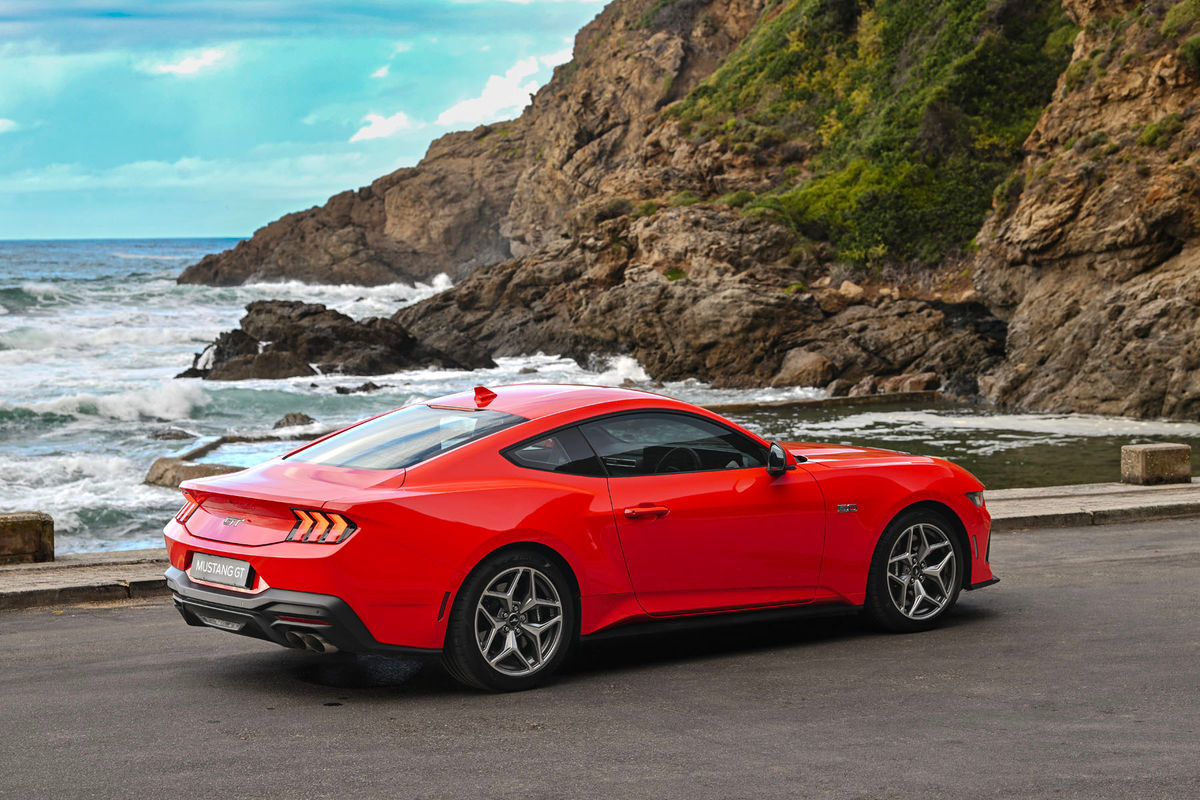
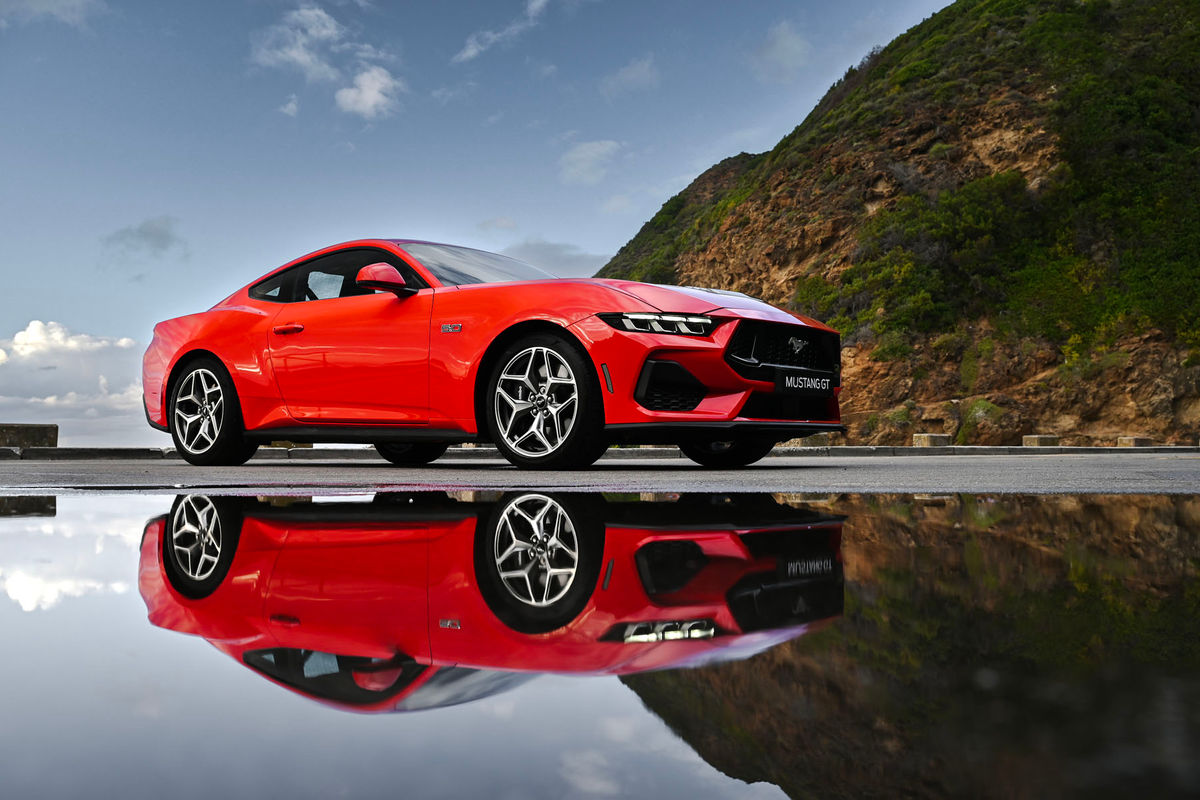
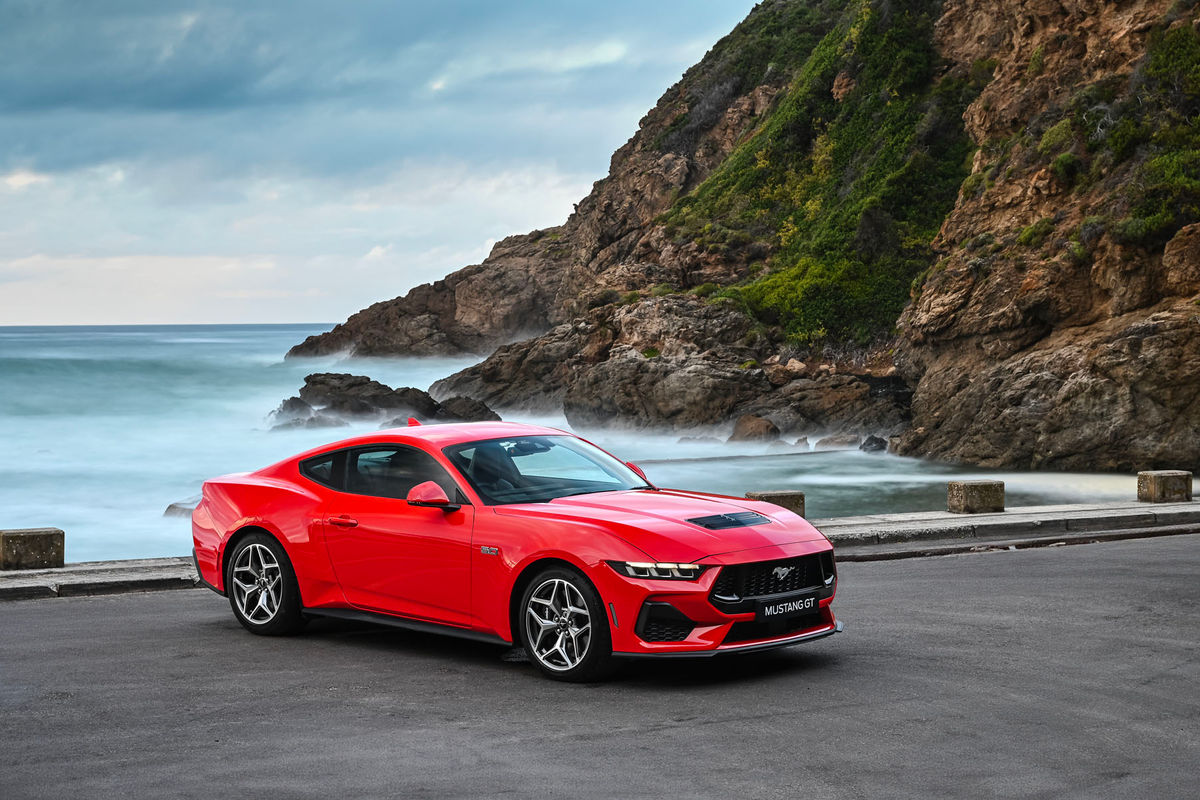
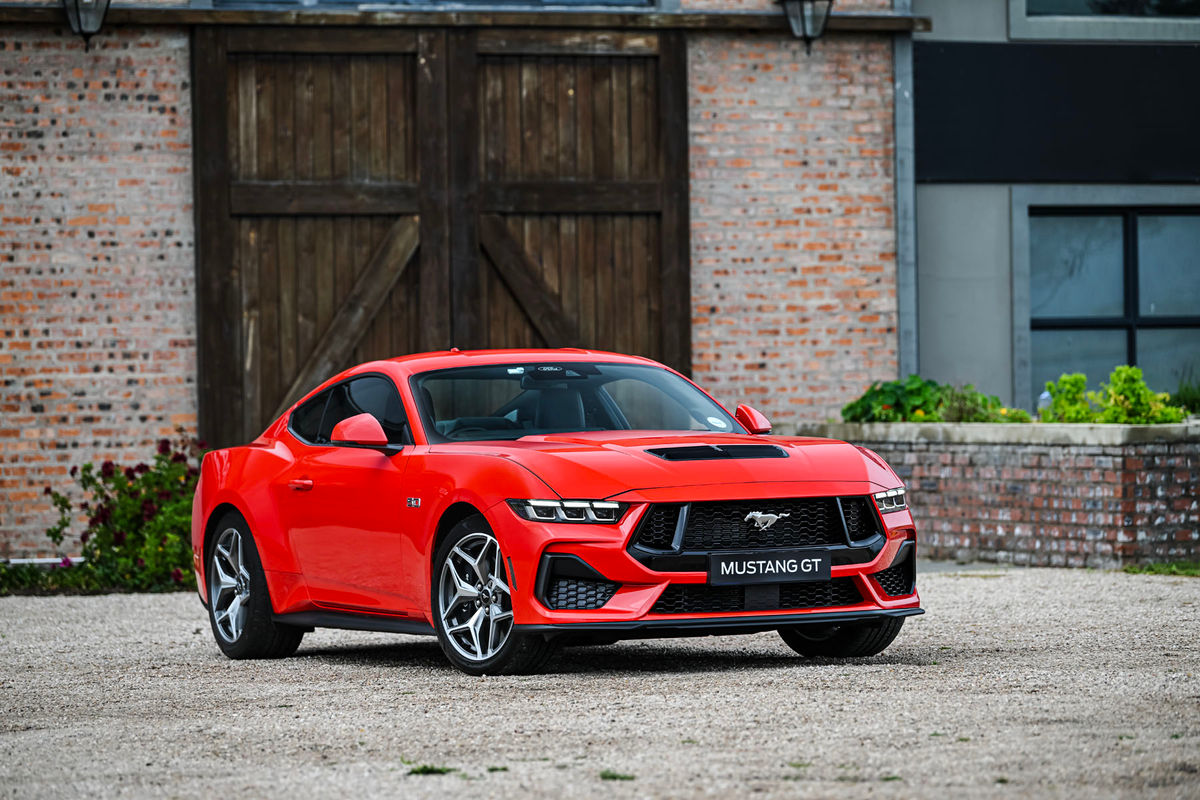
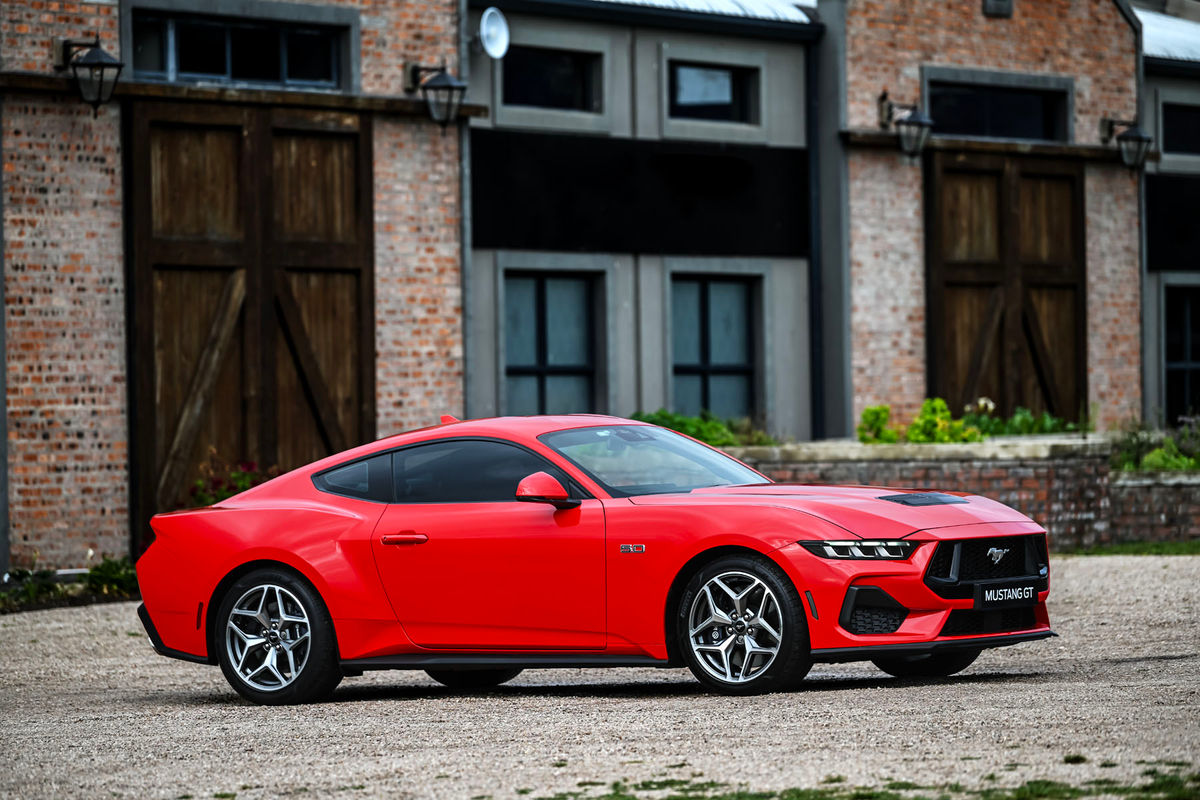
The 7th-gen Ford Mustang – one of few naturally aspirated V8-engined sportscars still in production – has been launched in South Africa. The Blue Oval offers the new model exclusively in 5.0 GT fastback guise, but a more potent Dark Horse version is coming.
In the 8 years that the 6th-gen Mustang (the 1st iteration of the iconic muscle car to be built in right-hand-drive guise) was offered in Mzansi, Ford Motor Company of Southern Africa (FMCSA) sold 4 082 units of the model. If you’re thinking of buying a used example of the outgoing S550-series Fastback, see our Ford Mustang (2015-2024) Buyer’s Guide.
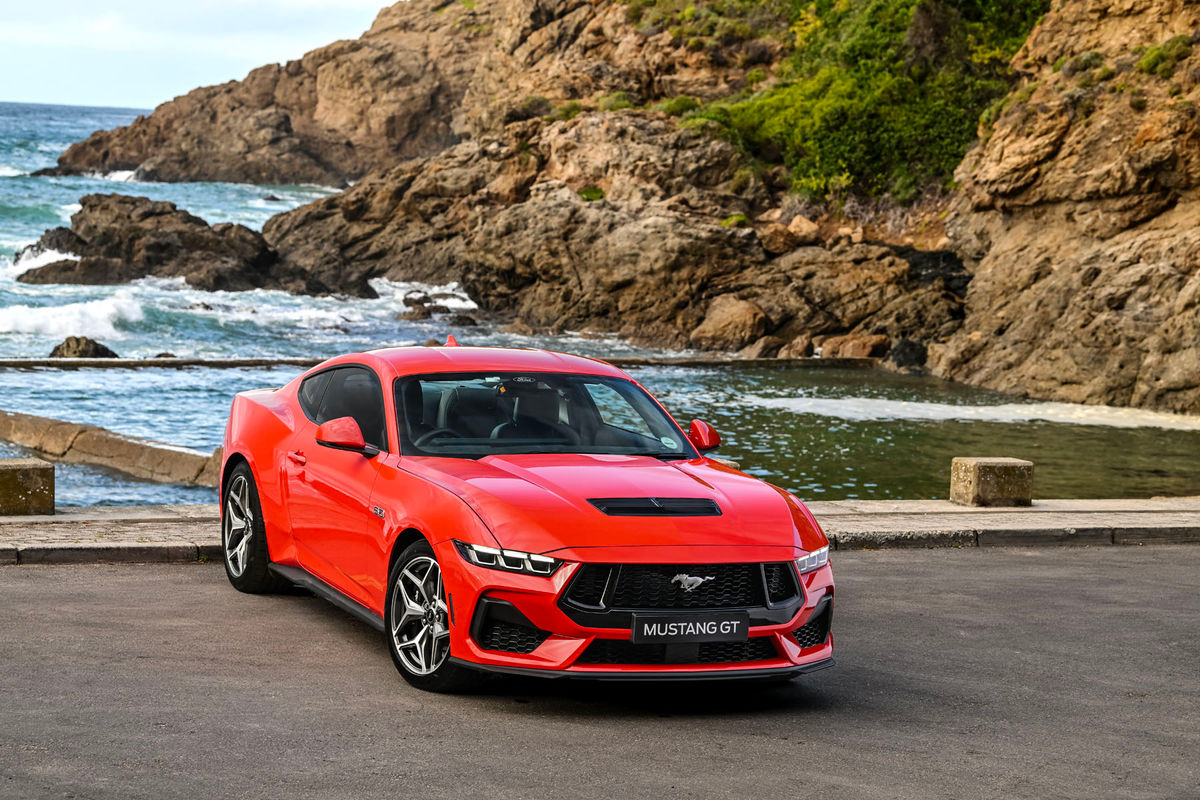
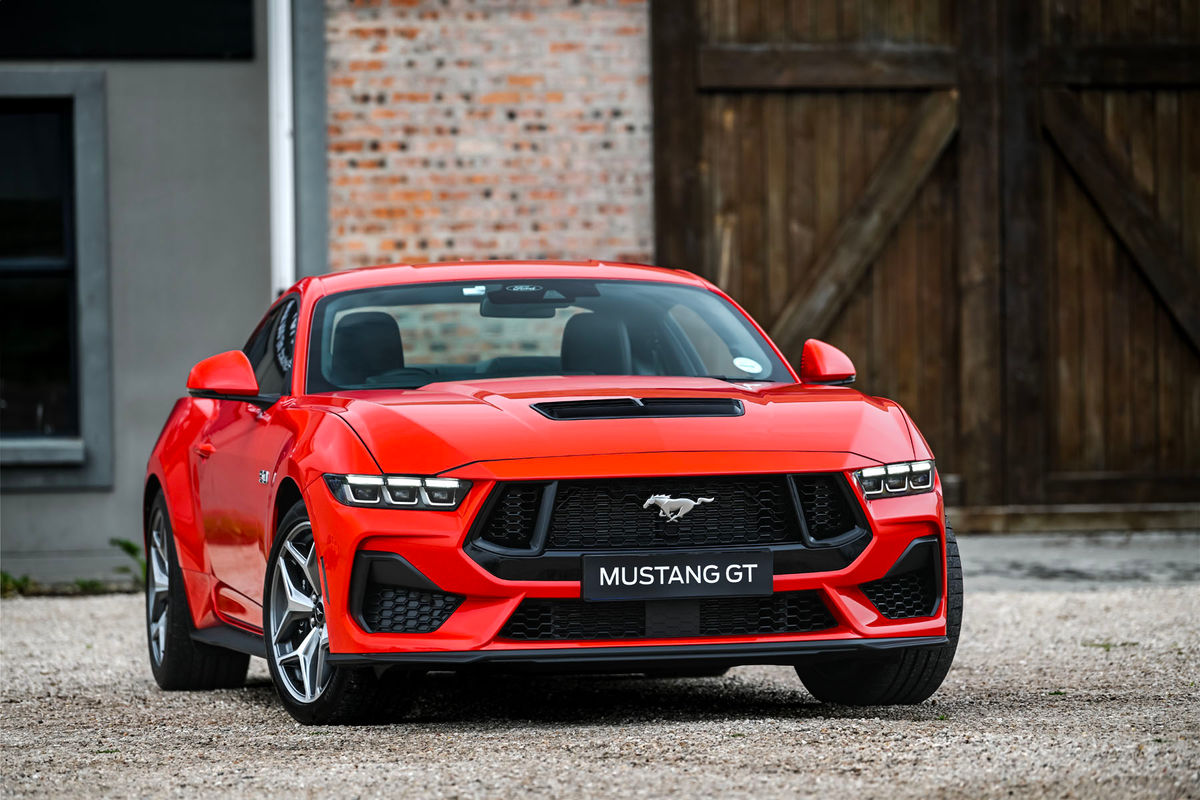
In terms of its exterior execution, the Blue Oval’s 7th-gen muscle car (codenamed S650) remains instantly recognisable as a Ford Mustang… At the front, a low, horizontal brow (ahead of the black bonnet vents) emphasises the fastback’s width, the shape of the upper grille pays homage to the original 1960s design, the sculpted bumper features large, purposeful grille openings (as well as a redesigned splitter), and the Tri-Bar LED headlamps are said to reproduce the Mustang’s classic lighting signature.
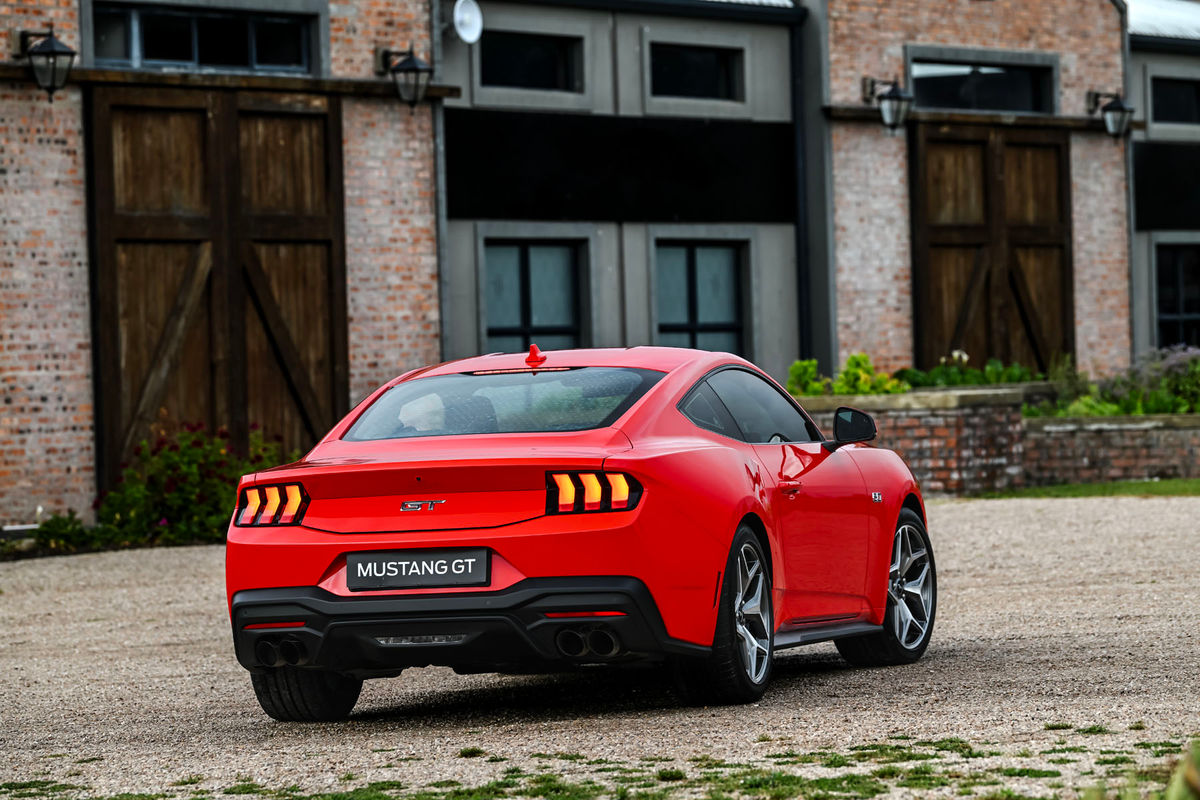
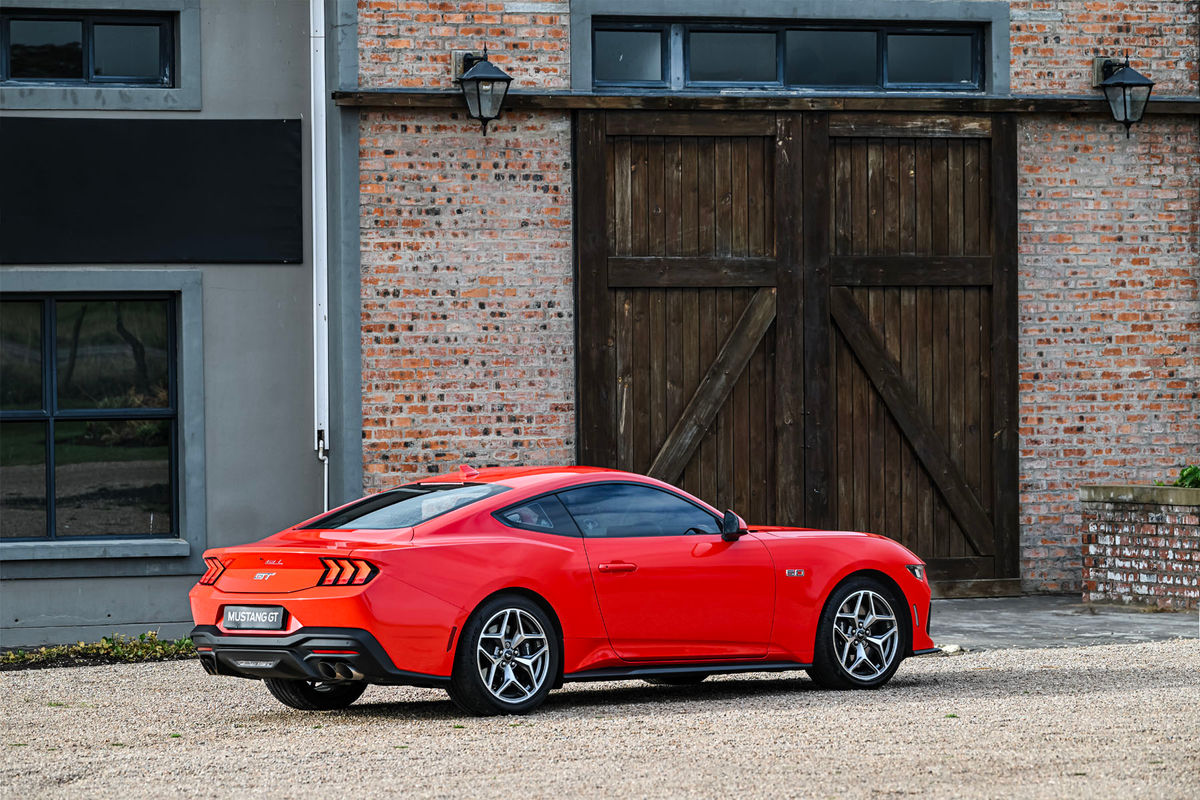
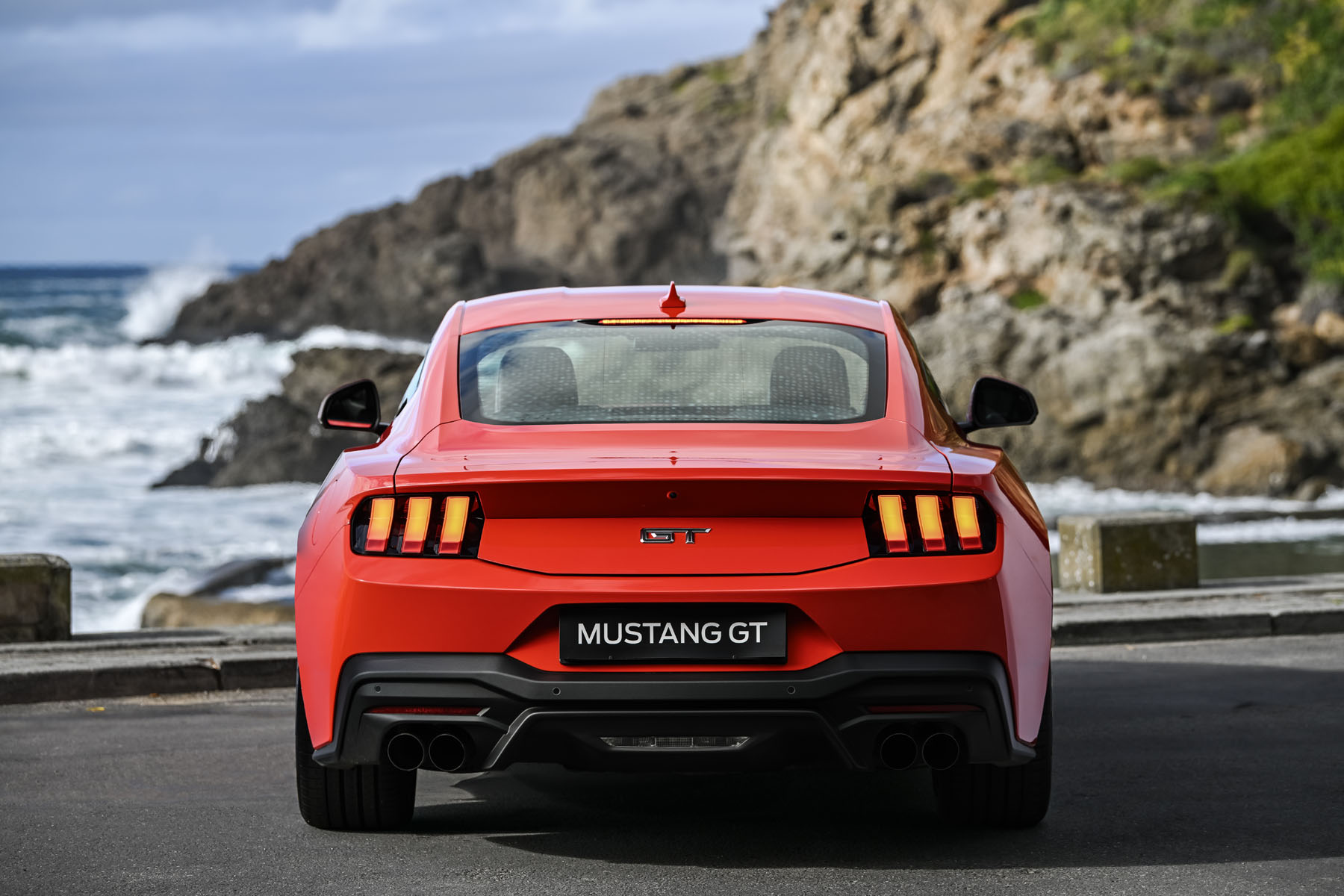
A road-hugging stance, sleek roofline, widened rear haunches and short overhangs are classic Mustang design cues that have been retained, while at the back, the 7th-gen model features an extended rear deck with tri-bar LED lighting elements and a motorsport-inspired rear diffuser.
Ebony Black multi-spoke alloys (19×9-inch rims fore and 19×9.5-inch rims aft) are fitted as standard, but machined Tarnished Dark Aluminium wheels can also be specified.
The newcomer is available in 8 paint finishes: Race Red, Oxford White (Solid), Absolute Black, Atlas Blue, Lucid Red, Vapor Blue, Iconic Silver and Dark Matter Grey Metallic.
0-100 kph in 4.9 sec (claimed)
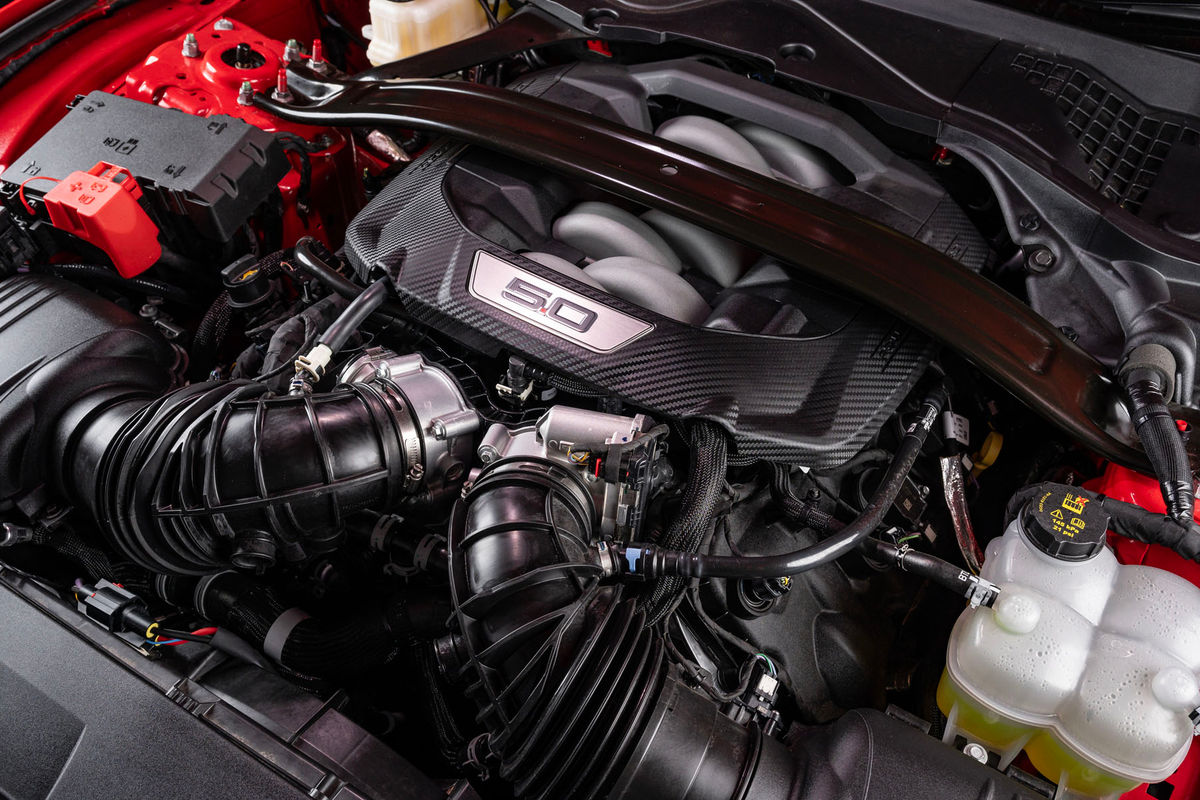
The 2024 Mustang 5.0 GT fastback is powered by a 4th-gen naturally aspirated 5.0-litre Coyote V8 petrol engine with a dual air intake box and dual throttle body that produces peak outputs of 328 kW/540 Nm and is paired with a 10-speed automatic transmission. FMCSA claims a 0-100 kph time of 4.9 sec, a limited top speed of 250 kph and an average fuel consumption of 12.8 L/100 km for the model.
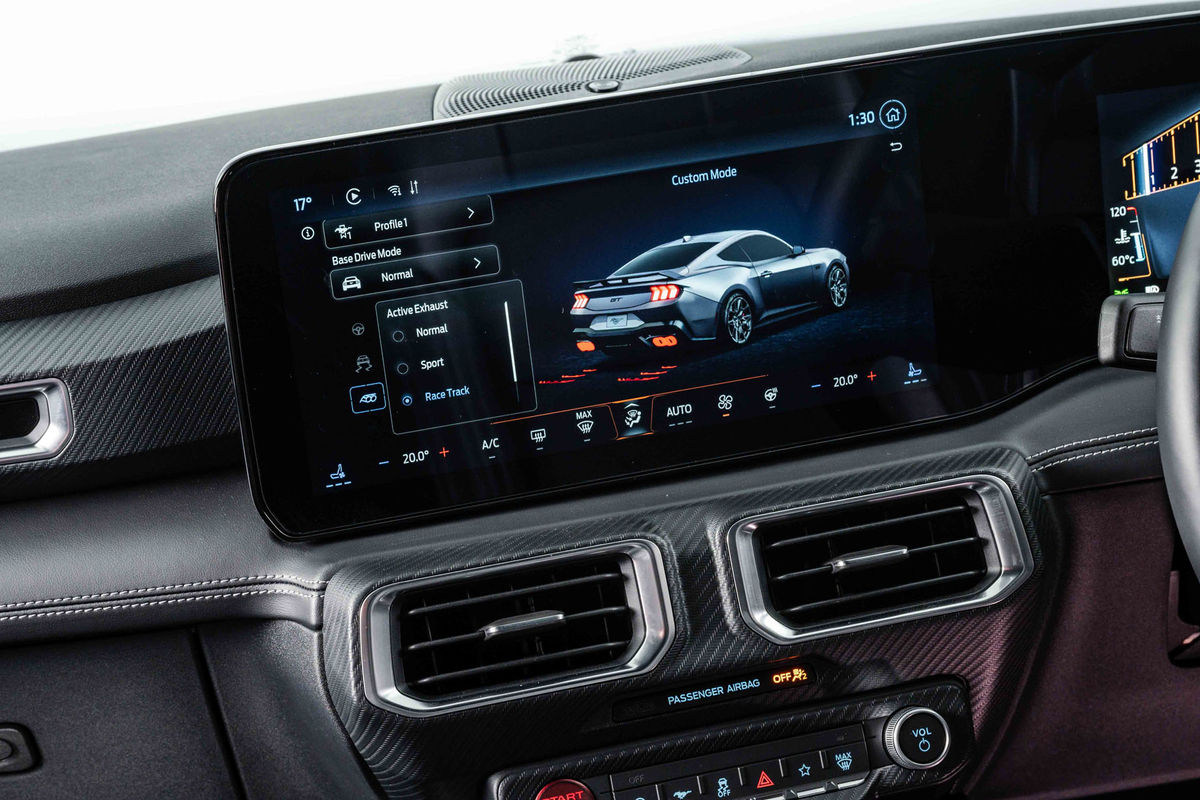
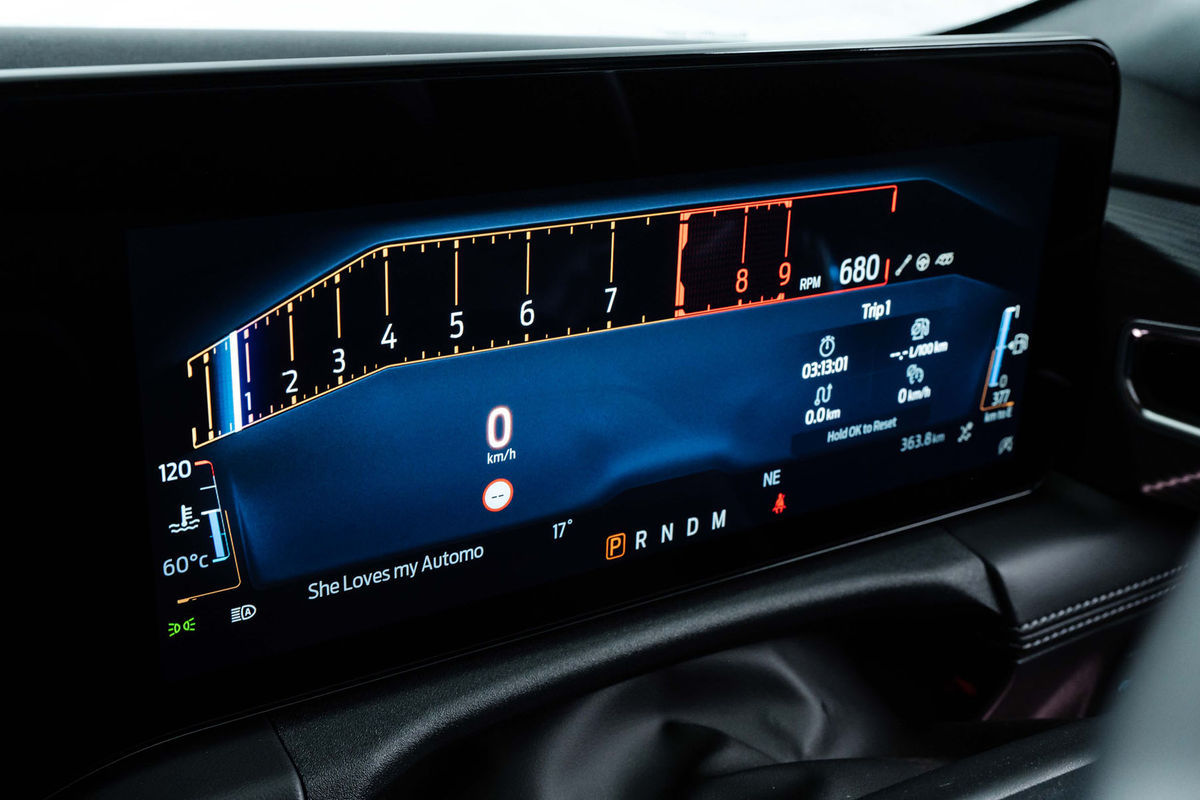
Drivers can adjust the Mustang’s steering effort, engine response, transmission and electronic stability control settings by toggling between 6 drive modes (Normal, Sport, Slippery, Drag, Track and a customisable setting with up to 6 individual profiles), each of which is accompanied by distinct graphic scheme on the digital instrument cluster.
Performance Pack is standard
In South Africa, the 2024 Mustang 5.0 GT fastback comes standard with the Performance Pack, which adds a front suspension tower brace, a Torsen limited-slip diff, MagneRide active suspension, upgraded (390-mm) front and (355mm) rear Brembo brakes, special brake ducts (for optimised cooling of the discs) and a standard auxiliary engine oil cooler.
The package also includes a performance electronic parking brake (styled to resemble a traditional, mechanical handbrake) with which a driver can exploit (or at least, revel in) the Mustang’s rear-wheel drive drifting capability, plus an active valve performance exhaust system that enables the driver to choose how quiet – or raucous – they want the free-breathing V8 to sound.
Oh, and with the Remote Rev function, they can rev the engine remotely using the key fob!
Fighter jet-inspired cockpit
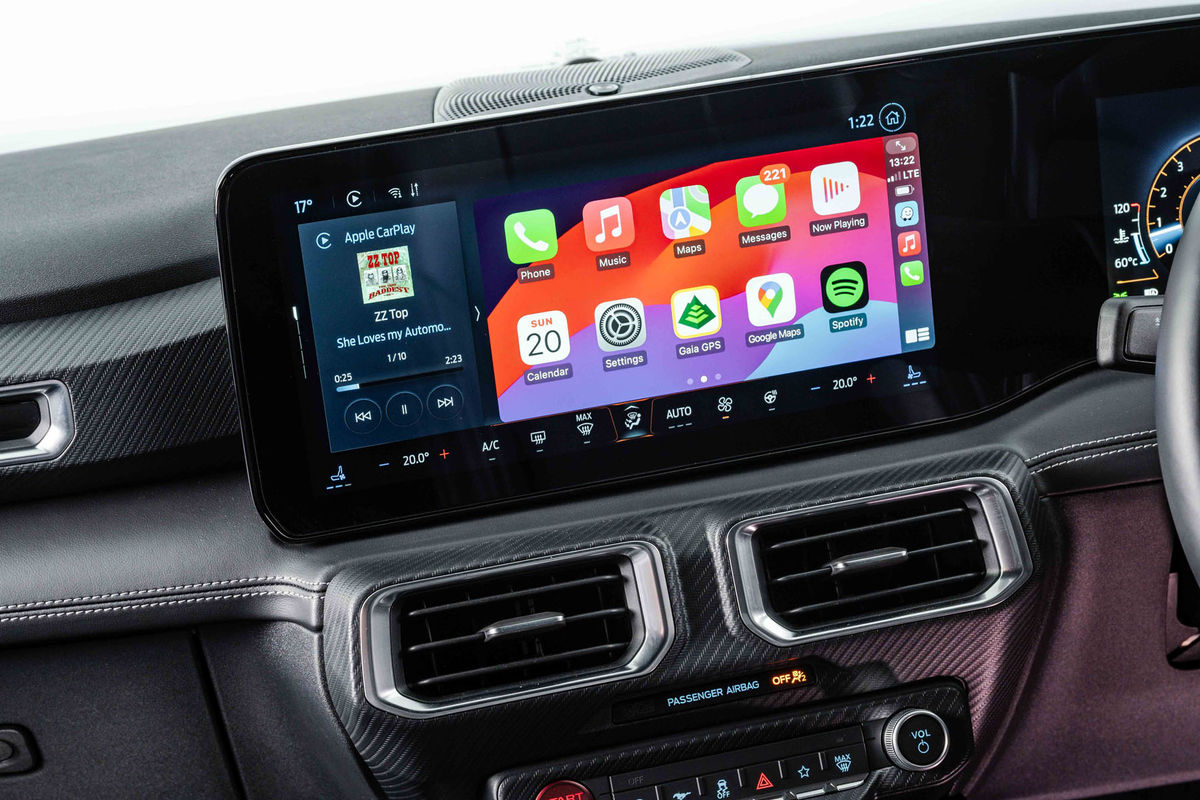
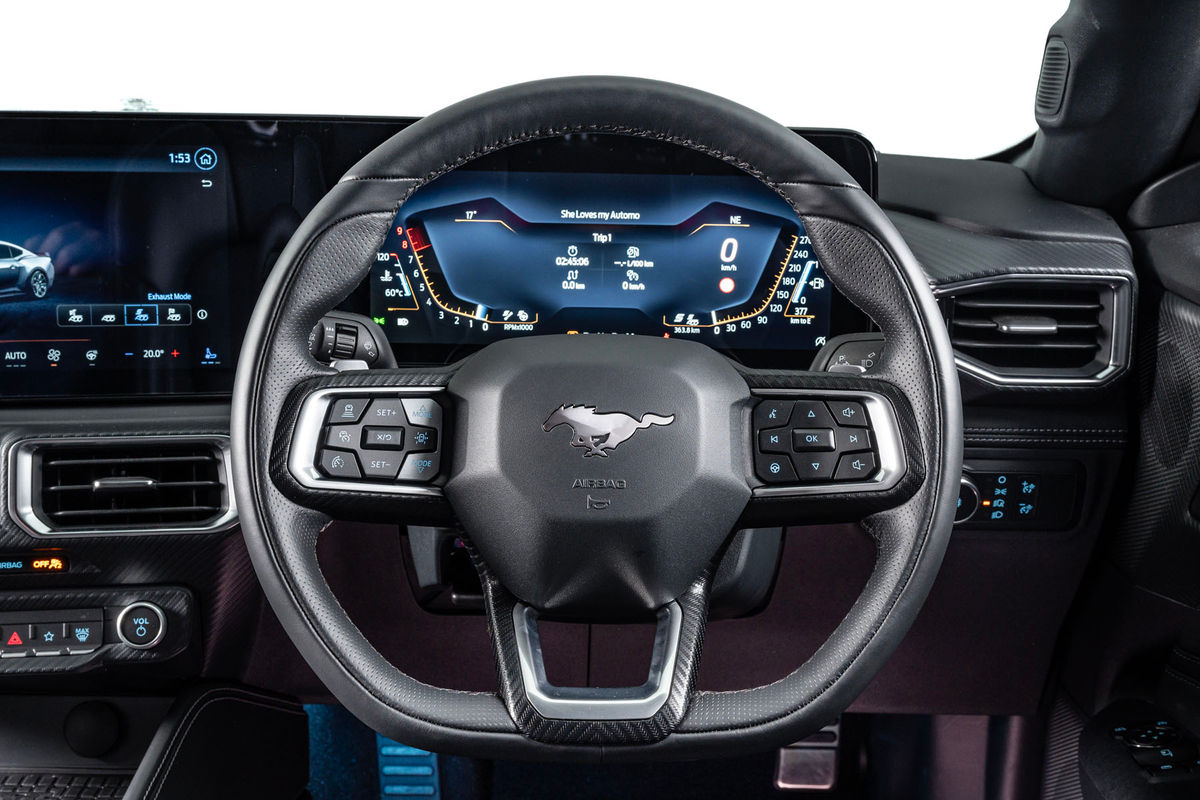
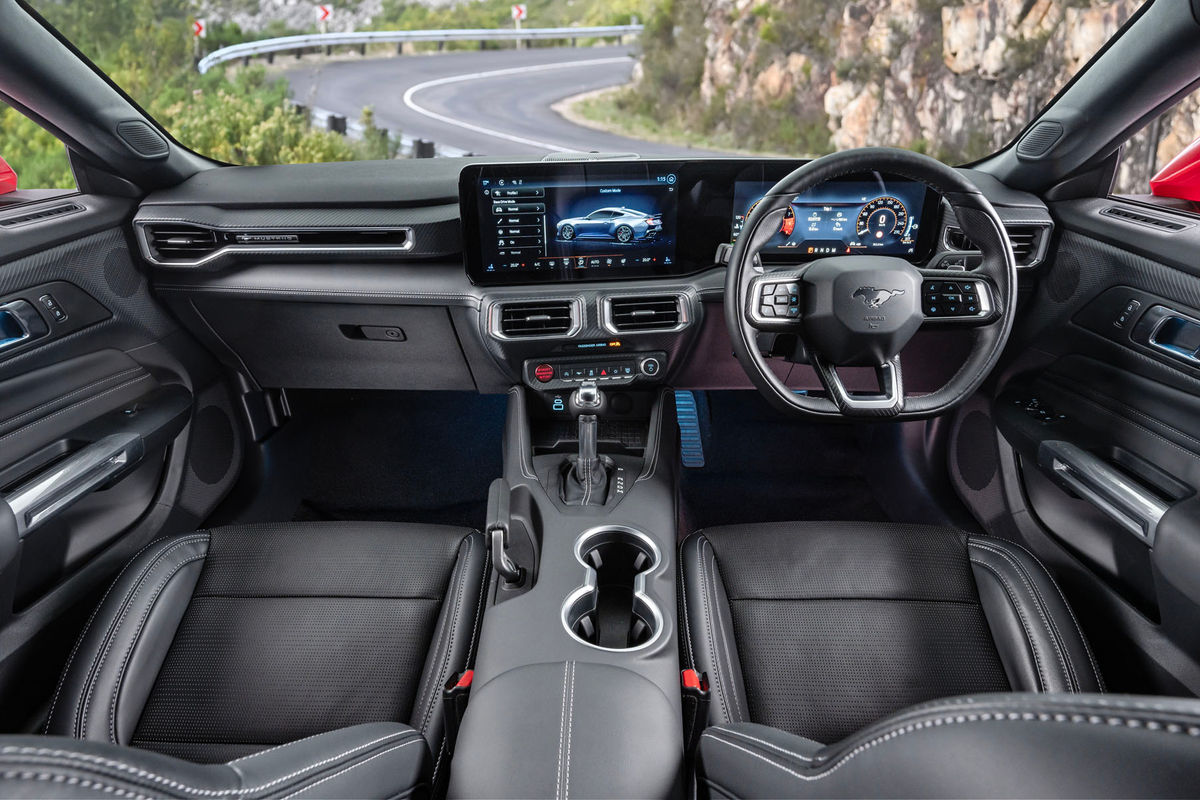
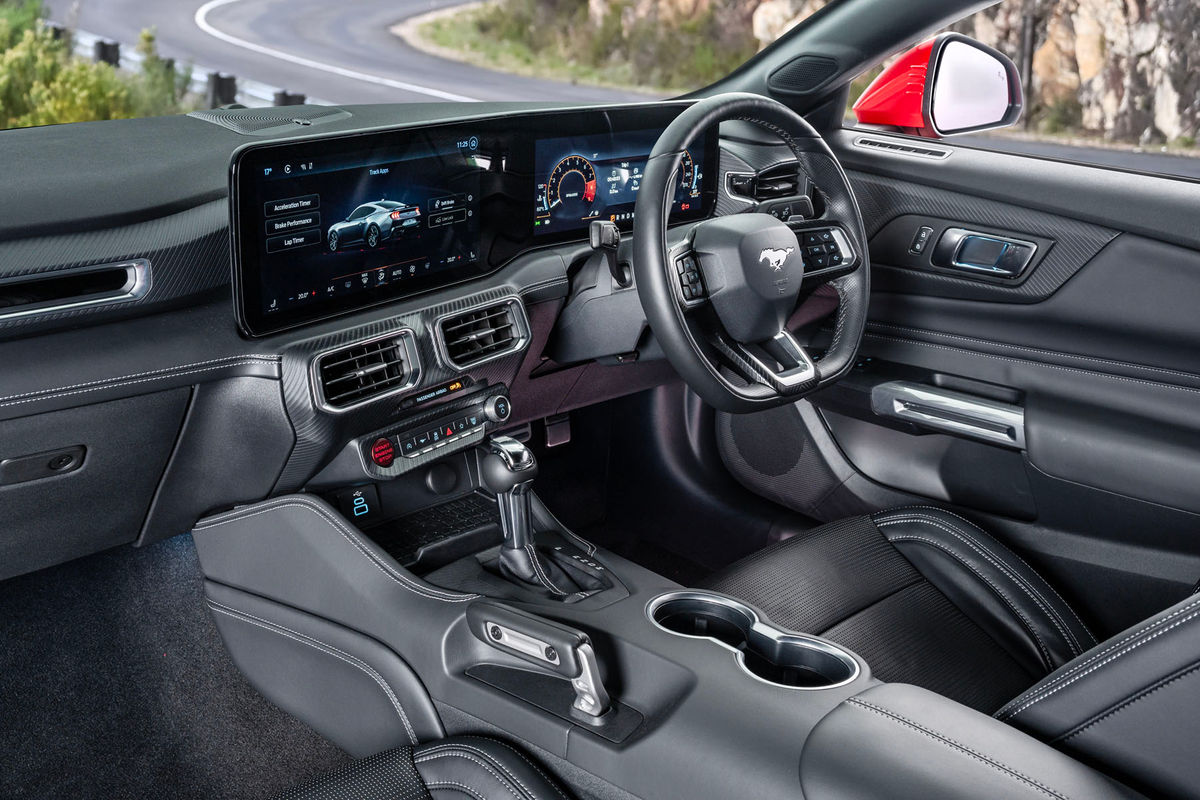
The fighter jet-inspired cockpit is dominated by a pair of flowing and curved displays: a 12.4-inch digital instrument cluster that’s highly customisable and an angled 13.2-inch SYNC4 infotainment touchscreen (with wireless Apple CarPlay and Android Auto).
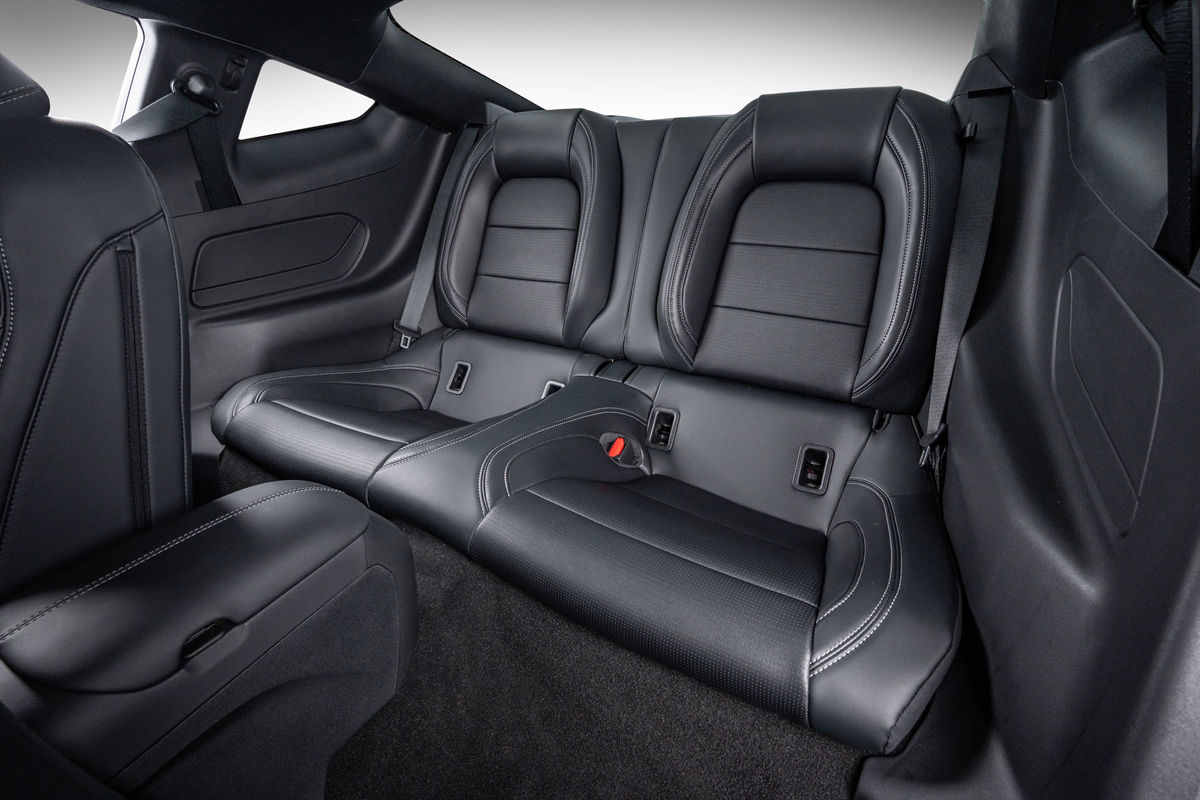
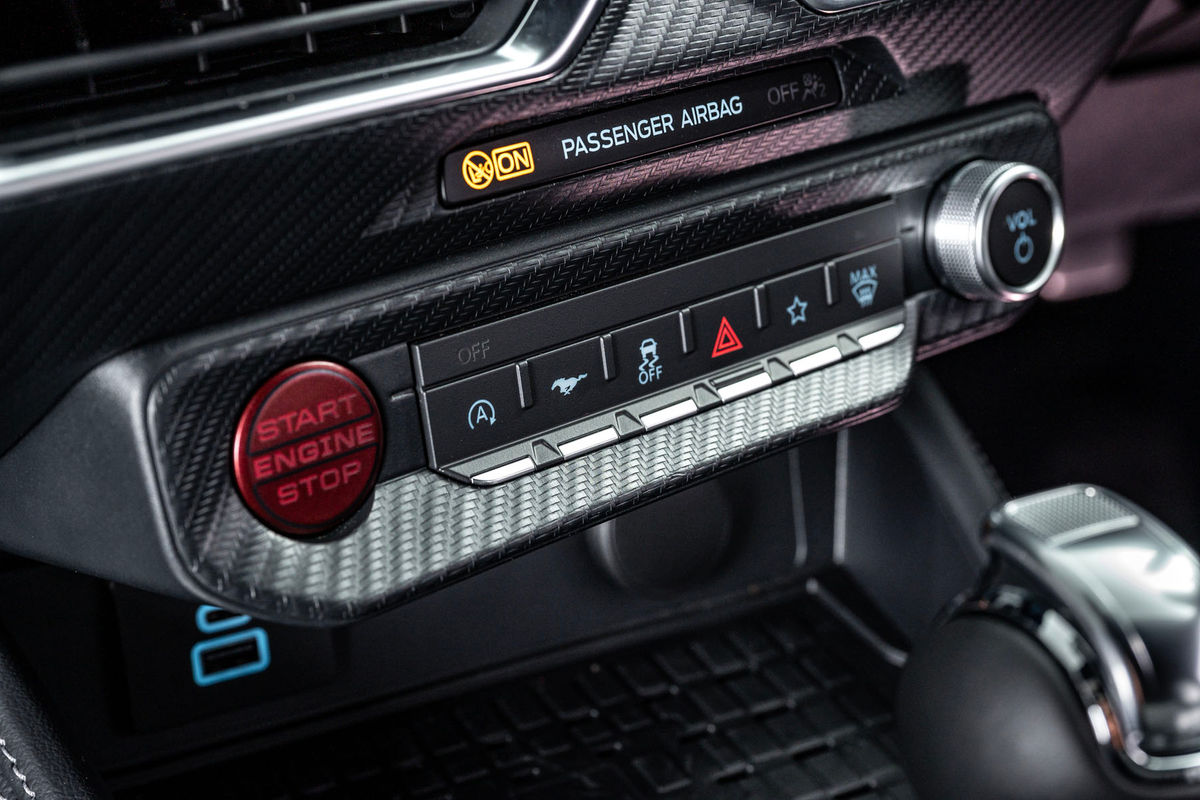
Beyond the new digital interfaces, the 7th-gen Mustang’s interior design carries over cues from its predecessors (such as the Mustang plaque on the left end of the dashboard and the transmission lever’s spherical knob) and features carbon-fibre look inserts, unique upholstery perforation on the inserts of the contrast-stitched Black Onyx leather seats, plus asymmetric accent striping on the seat belts.
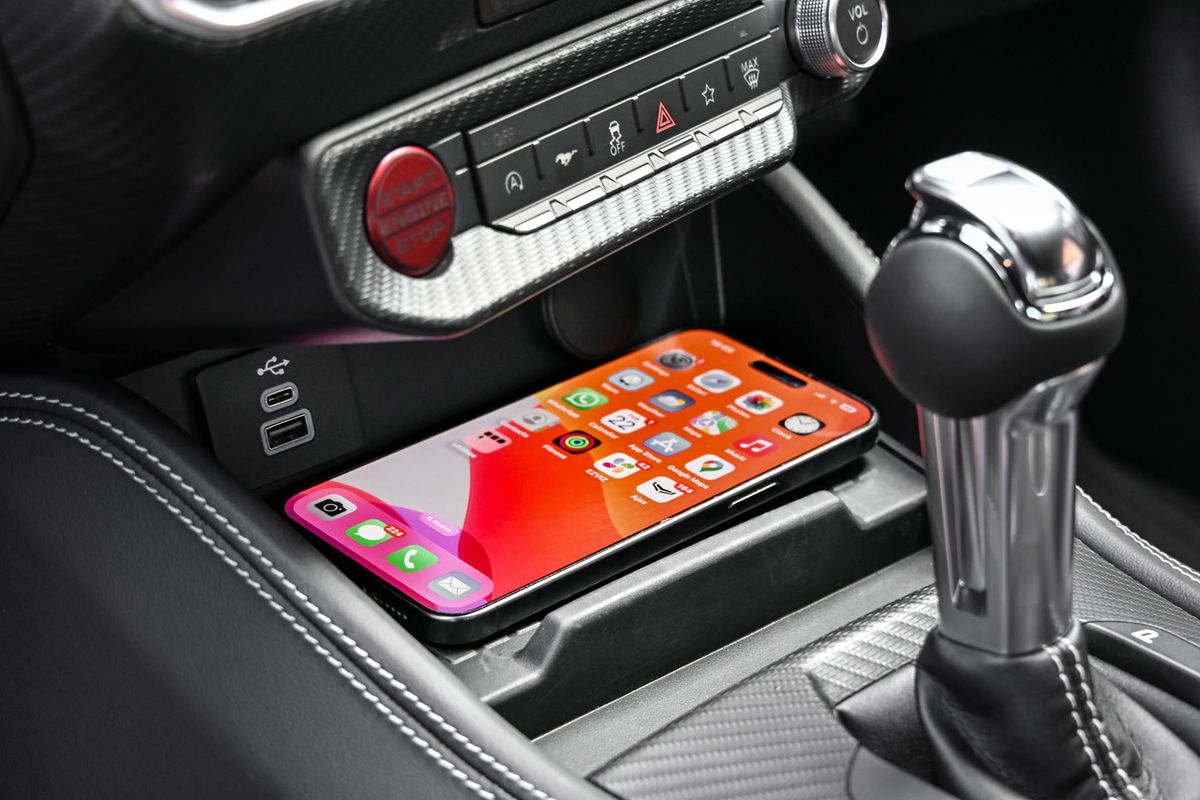
Standard features include a flat-bottomed multifunction ‘wheel, heated and ventilated front seats, dual-zone climate control, a B&O audio system with 12 speakers (including a subwoofer), a wireless charging pad, high-mounted USB ports (to power a “dash cam”, for example) and, for a bit of extra razzmatazz, an animated welcome light greeting, Mustang splash screens and multi-colour LED ambient cabin lighting.
Apart from 7 airbags, ABS with EBD and brake assist, as well as traction- and electronic stability control, the 2024 Mustang 5.0 GT Fastback comes equipped with an extensive range of advanced driver assist features, such as speed-sign recognition, adaptive cruise control with stop-go function, lane-centring assist, evasive steer assist, reverse brake assist and lastly, active pothole mitigation, which continually monitors suspension, body, steering and braking input and adjusts suspension response accordingly.
Owners can stay connected with their car via the FordPass app and utilise free features such as remote vehicle start and stop, door locking/unlocking, scheduling a start time, locating the vehicle, and vehicle health and status checks.
The app also makes vehicle info (such as fuel and oil levels, plus service history) available to users.
How much does the 2025 Ford Mustang cost in South Africa?
The price (correct in November 2024) includes a 6-year/90 000 km service plan, a 4-year/120 000 km Ford warranty, 4-year/unlimited km roadside assistance and a 5-year/unlimited km corrosion warranty.
Volkswagen Tera: mystery small SUV will use different name in SA
Volkswagen Tera: that’s the name of the firm’s upcoming mystery small SUV, as announced by its Brazilian division. But the SA-built version will use a different badge…
What will VW’s upcoming mystery small SUV be called? Well, the German firm’s Brazilian division has released a single image of the so-called A0 Entry SUV’s tailgate badge, revealing that it will be known as the “Volkswagen Tera” in that market.
However, Volkswagen Group Africa has confirmed to Cars.co.za that the “SA market will use a different name, which will be announced in due course”.
VW released a teaser image in Brazil in September 2024.
As a reminder, VW’s Brazilian arm – which is leading the design and development of this new model, and will also produce it at its Taubaté factory – dropped the first official teaser image in September 2024, ahead of a 2025 release in that market.
Thanks to a R4-billion investment, the small SUV will also be produced alongside the Polo hatch and Polo Vivo at the Kariega facility here in South Africa, though only from early 2027. What it will be called in our market, however, remains to be seen.
“There were long discussions to find the name for our new SUV and we arrived at an incredible result. Tera is a strong name that has the capacity to carry many stories. It will be a game-changer in the market and a new pop icon for Brazil,” said Ciro Possobom, CEO and President of Volkswagen Brazil, in translated press material.
Back in April 2024, Cars.co.za revealed that the Wolfsburg-based automaker had filed as many as 7 new trademark applications in South Africa, with each fresh badge starting with the letter “T” (falling neatly in line with VW’s current naming convention for its crossovers and SUVs – think T-Cross, Taigo, T-Roc, Tiguan and Touareg).
Production of the new model at Kariega is due to start in early 2027.
The very first badge on that list of 7 new nameplates? That’s right – “Tera”. Interestingly, we discovered that applications to protect all 7 nameplates were furthermore made in various other African markets, including Ghana, Egypt, Morocco, Algeria, Kenya and Tunisia. VW Group Africa seemingly has plans to export the Kariega-built version to countries such as these.
Fascinatingly, we’ve since discovered that in September 2024, VW’s application to trademark the “Tera” moniker in South Africa was provisionally refused for being “open to objection” as “confusingly similar” to Nissan’s “Terra” badge (a ladder-frame SUV that was on sale in Mzansi for only a short period).
The Kariega plant currently builds the Polo hatch (including GTI) and Polo Vivo.
In October 2024, Martina Biene, Chairperson and Managing Director of Volkswagen Group Africa, told Cars.co.za that the local teaser campaign for the new “A0 Entry SUV” is scheduled to kick off in February 2025.
“We’re talking about a model coming in the beginning of 2027 to our market. We have started refurbishing [areas of] the plant and there will be a bigger [undertaking] in the plant in May 2025, when we put the robots into the body shop, which is a major operation,” Biene told us.
“But because it takes some time, we have not shown our small SUV car [yet], which is based on the Polo platform. We’ll show something at our Volkswagen Indaba 2025. Just to tease that [event] already: it’s on the 5th of February in Kariega, where we’ll show the first camouflaged model of what is coming, to keep you excited for the next 2 years.”
VW Polo back in top 3! SA’s best-selling passenger vehicles
The Volkswagen Polo hatch registered its best sales performance of the year thus far to break back into the top 3 of SA’s best-selling passenger vehicles in October 2024…
In October 2024, South Africa’s new-vehicle market improved 5.5% year on year to 47 942 units, with passenger vehicles clearly driving that growth. In fact, the latter segment grew 14.5% year on year to 34 228 units last month, representing the market’s highest passenger-vehicle tally since October 2019.
It’s worth keeping in mind that in October this segment was greatly aided by sales to the rental industry, which comprised a considerable 19.8% of that total. But which models were the most popular overall? Let’s take a closer look at SA’s best-selling passenger vehicles for October 2024.
Toyota’s locally built Corolla Cross put in its best sales performance of the year.
The Volkswagen Polo Vivo (2 297 units) remained in pole position, though the likewise locally built Toyota Corolla Cross (2 104 units) narrowed the gap by putting in its best sales month of 2024 thus far. For the record, the Vivo’s tally included 586 sales to the rental industry, with the Corolla Cross benefitting from 397 sales via this channel.
Meanwhile, the Kariega-built Volkswagen Polo hatch cracked 4 figures for only the 4th time this year, registering easily its strongest performance of 2024 with 1 425 units sold. Though the hatchback relied heavily on the rental industry (535 units or 37.5% of its total), this showing saw it climb 3 places to return to the podium.
Toyota’s Starlet bounced back into the top 10 as the most popular imported model.
The most popular imported car of October 2024 was the Indian-built Toyota Starlet (1 358 units, including 532 rental sales), which returned to the top 10 to grab 4th. The Hyundai Grand i10 (1 280 units) wasn’t far behind, falling a place to 5th. For the record, since we’re examining the passenger-car segment here, that figure excludes light-commercial vehicle sales of the Cargo-badged panel van, which registered a further 68 sales.
With the latest-generation model now seemingly fully online, the Suzuki Swift (1 179 units) returned to the top 10 to snaffle a strong 6th position, finishing just ahead of the Suzuki Fronx (1 109 units). As many as 407 units of the Swift’s total came courtesy of the rental space, with the Fronx moving 216 units through that channel.
Suzuki’s Fronx crossed the 1 000-unit mark for the first time.
As an aside, this is the first time the Fronx has broken the 1 000-unit barrier since launching in Mzansi, with this 7th-place passenger-vehicle finish also its highest placing yet. Interestingly, the closely related Toyota Starlet Cross ended the month on 805 units, seeing it rank 14th.
Despite growing its sales volume month on month, the Chery Tiggo 4 Pro (1 079 units) thus slipped 3 rankings to 8th, while the Renault Kwid (934 units, of which 461 were rental sales) returned to the top 10 in 9th, recording its strongest effort of the year so far. After ranking 3rd in September, the Prospecton-produced Toyota Fortuner (905 units) plummeted 7 spots to 10th in October.
Renault’s Kwid returned to the top 10 in October.
For the record, the 3 models that made the top 10 in September but fell away in October were the Haval Jolion (886 units), Nissan Magnite (854 units) and Toyota Vitz (676 units).
SA’s 10 best-selling passenger vehicles in October 2024
The head of Toyota South Africa Motors admits the competition from new Chinese brands entering the local market is “very real”, saying “we need to respond”…
At the end of 2024, Toyota will mark 44 straight years of serving as South Africa’s best-selling automotive brand (with two months to go, the company’s lead is downright unassailable). But that doesn’t mean the Japanese firm’s local division is unconcerned by the rapid rise of new Chinese brands.
During Naamsa’s recent South African Auto Week 2024 in Cape Town, we asked Andrew Kirby, President and CEO of Toyota South Africa Motors, for his thoughts on the flood of new Chinese brands entering the local market.
Toyota SA boss Andrew Kirby on stage at SA Auto Week 2024.
“The competition is very real and it certainly does concern us. We know that a lot of the new brands – particularly from China – are attracting a lot of new customers. They’ve got some value propositions that are, you know, initially quite appealing.
“And we need to respond. We need to find ways in which we can compete and differentiate ourselves. It’s not going to be easy, but at the end of the day it’s going to be good for the consumer, because we all will try to do better and better, and create more value,” Kirby told us.
The SA-built Toyota Hilux remains the country’s best-selling vehicle.
Kirby – who has headed up Toyota SA Motors since 2016 – went on to admit that several brands from China were “innovating quickly” and, in some areas, even taking the lead in the industry.
“What’s interesting about the Chinese imports is they have a tremendous focus on the in-car experience – and they really have taken the lead, I must admit. Some of it’s maybe, if I can say, not that user friendly, but the tech is good. We can learn from that and try to accelerate that aspect.
“The design’s getting better and better, and they’ve innovating quickly. We haven’t actually lost market share, but I think it’s definitely having an impact on us,” Kirby said.
Over the past few years, Chinese firms such as GWM and Chery have made significant inroads into the local market, sparking an influx of other brands (most offering high levels of standard specification at comparatively attractive prices) from the world’s second-most populous nation. Recent examples include BYD and GAC Motor, along with Chery subsidiaries such as Jaecoo, Omoda and Jetour, with yet more in the pipeline.
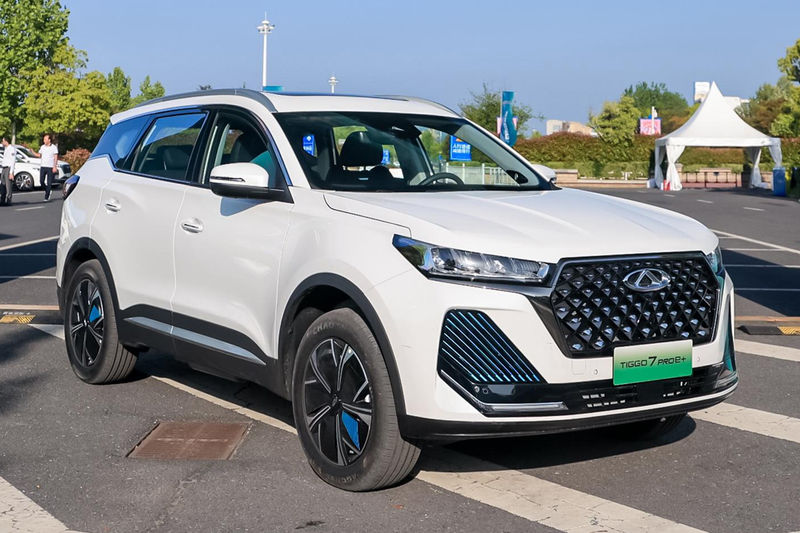
Chery South Africa has broadened its line-up to 4 models with the launch of the Tiggo Cross small crossover, which slots above the strong-selling Tiggo 4 Pro and below the Tiggo 7 Pro/Pro Max. Here is what the newcomer offers and how much it costs.
Although similarly sized to the Tiggo 4 Pro, the Tiggo Cross (which has replaced the former in some markets), has fresher, more distinctive styling and features newer in-car tech than its older sibling. In light of this, it presents as a more resolved package and comes in 2 trim grades: Comfort and Elite.
You can distinguish the Tiggo Cross from its brethren by its gloss black grille (with a diamond-pattern mesh) that is flanked by triple-element LED headlamps – it sprouts a pair of black wings that extend towards the edges of the bumper, where they are bookended by vertical daytime running light clusters.
The newcomer’s flanks feature body-coloured wing mirrors and -handles, as well as metallic lower-door garnishes (that complement the wheels and roof rails), while the side window sills kick up towards the rear, where they culminate in blacked-out C-pillars. The 1.5T Comfort comes fitted with 17-inch alloys, while the range-topping 1.5T Elite has sporty red-coloured brake calipers that sit behind 18-inch rims.
As for the rear end of the Tiggo Cross, it is adorned with a “jewel-like (LED) lightbar (that is) reminiscent of a tiger’s striped coat”, Chery SA says, plus a tailgate spoiler and chrome-trimmed exhaust finishers.
Like in the larger Tiggo 7 and Tiggo 8, the Tiggo Cross has a soft-touch dashboard, a leather-trimmed multifunction ‘wheel, black leather trim, a minimalist centre console, as well as an expansive panel that combines a 10.25-inch digital instrument cluster and the infotainment system’s 10.25-inch touchscreen. The latter supports wireless Android Auto and Apple CarPlay and includes Smart Voice Assistant tech.
Standard features include keyless entry, push-button (and remote) start, auto lights and -wipers, dual-zone climate- and cruise control, a 6-speaker audio system, a wireless smartphone charger, ambient lighting, front/rear armrests, a reverse-view camera, 4 USB ports, plus front and rear parking sensors.
Whereas the 1.5T Comfort has 6-way manual-adjustable front seats, the 1.5 Elite has 6-way electrically adjustable with lumbar support, a 360-degree camera system and intelligent high-beam control.
Both variants are powered by a 108 kW/210 Nm 1.5-litre, 4-cylinder turbopetrol engine that is mated with a 6-speed dual-clutch (automatic) transmission. The Tiggo Cross is front-wheel driven and its claimed average fuel consumption, aided by a standard stop/start system and Eco drive mode, is 6.5 L/100 km.
The newcomer’s suspension comprises McPherson struts, with a torsion beam configuration at the rear, with stopping power provided by brake discs all round, of which the front pair is ventilated.
Key safety features include ABS with EBD and EBA, electronic traction and -stability control, hill assist, auto-hold function, tyre pressure monitoring, and a speed limit reminder. Dual front-, side- and curtain airbags are standard, with the 1.5T Elite additionally featuring a centre airbag between the front seats.
The range-topping variant is also equipped with advanced driver-assistance systems: adaptive cruise control, auto emergency braking, blind-spot detection, plus front-collision- and lane-departure warning.
How much does the Chery Tiggo Cross cost in South Africa?
The vehicle is sold with a 5-year/60 000 km service plan, 5-year/150 000 km standard warranty, 10-year/1 million km warranty for the first owner, and 5 years/unlimited km roadside assistance.
The influx of new Chinese vehicle brands and models has already transformed the South African new-vehicle market and, as local car buyers’ appetite for plug-in and all-electric cars increases gradually, China certainly looks destined to win the EV war.
When Chinese-made vehicles first came to South Africa in the late 2000s, the torpid response by the public (to say nothing of the hostile one by the motoring media) was, sadly, justified in its scepticism.
“Howzit, my China?” became every lazy headline writer’s go-to chestnut to verbalise the cheapjack tawdriness of the clunkers, many of which were patently flimsy, had weird-smelling interiors and odd names (remember the Fudi Lion?); they were shockingly built shameless copies of established products.
Watch Ciro De Siena’s video review of GWM’s first EV model in SA – the Ora 03:
Neither was their cause helped by fly-by-night import efforts offering near-zero aftersales backup; their low prices only underlined the underlying sense of cheap-and-nastiness instead of acting as a genuine incentive to try a potentially smart buy. Alas, the global financial crisis put paid to most such efforts.
As first impressions tend to last, similar to when French brands arrived in South Africa en masse in the early 2000s, almost irreversible damage was done to the perception of the Chinese-made newcomers, fuelling a lasting dismissiveness as well as a healthy dose of customer distrust as the default response.
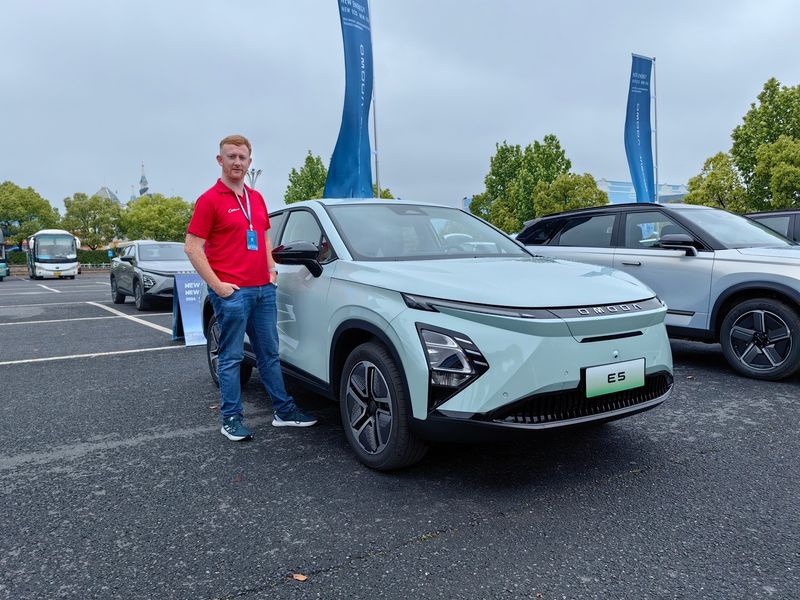
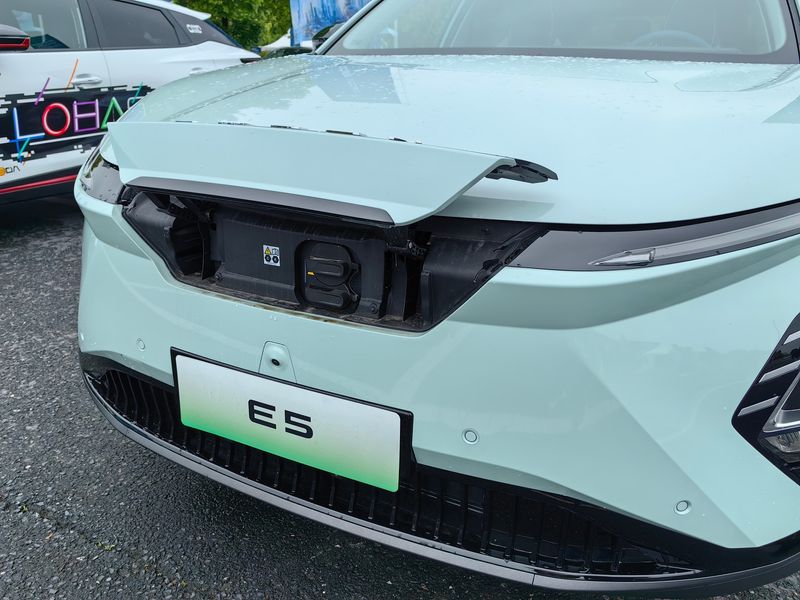
Cars.co.za’s David Taylor drove the SA-bound Omoda E5 – the all-electric sibling of the C5 – in China earlier this year.
Objectively, there was no way the Chinese brands, as newcomers to the game could credibly challenge established players with decades of experience; be it in vehicle design, engineering or manufacturing.
Chinese brands made giant strides in a short time
But that was then. Since the 2010s, several factors enabled Chinese carmakers to take giant strides in closing the gap to industry leaders. The first was the increased availability of off-the-shelf componentry.
No longer was it a requirement for fledgling carmakers to go through the exhaustive tribulations of developing proprietary transmissions, brakes, steering – even engines – when all of these could be procured from recognised global suppliers.
No need to beat European brands at their own game
Furthermore, serendipitously timed social pressure against passenger-vehicle exhaust emissions and a global shift towards crossovers in the mid-2010s spared the Chinese auto industry the effort and cost of having to develop honed apex carvers that would have taken decades to rival the Germans.
Today, brand heritage and ultimate driving pleasure (with apologies to BMW’s marketers) have taken a back seat to the features, versatility and space tyre-kickers crave most, which finally enabled Chinese brands to compete with their European peers on equal footing in terms of product quality and -offering.
Jaecoo’s opening salvo in Mzansi was the J7, and its plug-in hybrid equivalent is coming to our market too.
However, should an irrevocable shift to EVs occur, which OEMs are increasingly fighting in the European Union as sales of electric cars continue to slow, the game will be up for many (if not most) non-Chinese car brands. Why? Because consumer preference – jumbled in the perfect storm of fading brand loyalty, ever-higher tech requirements and ultimately, affordability – will give Chinese carmakers the upper hand.
A critical battle was won a decade ago when most car buyers started thinking of cars as… appliances. Today, a Chinese brand’s crossover will perform its duties as diligently as its Western counterparts – but it’ll offer more standard features at a lower price. Sure, you won’t be able to hustle it to pole position at your local club race, but neither would you have felt the need to in an equivalent legacy-brand model.
And where does virtually every appliance in your house – and crucially, their batteries – come from? You guessed right. EVs and PHEVs are the final frontier in the equalisation of tomorrow’s car technology.
Legacy brands haven’t rushed PHEV variants to our market, but the Tiggo 7 Pro and 8 Pro PHEVs are coming soon.
Spared the burden of chasing visceral appeal through engineering along with the emotional baggage of internal combustion engine (ICE) technology, EV-championing Chinese car companies are repositioning themselves as tech giants through investment into artificial intelligence, smart technology, ecosystems, autonomous driving and battery development (Chery will mass-produce a solid-state battery with a 1 500-km range by 2027) to become government-subsidised, future-first automotive pioneers.
Everybody else in the automotive industry seems to be fighting with one hand tied behind their back; many established brands are burdened with legacy, labour disputes and poor new-vehicle affordability.
More than 60% of all new EVs are made in China
Global EV sales reached 853 000 in July – only a 6% up from 2023. This unimpressive growth raises concerns about the demand for electric cars and whether the industry can keep up its momentum.
Unquestionably, in Europe, carmakers such as the Stellantis group, Volkswagen and Mercedes-Benz are losing significant market share. On the flip side, sales of plug-in hybrid electric vehicles (PHEVs) are booming – jumping 58% year-on-year (at the last count), largely thanks to strong demand in China.
The BMW iX1 was named the Best Electric Vehicle in the 2023/24 Cars.co.za Consumer Awards – sponsored by Absa.
Interestingly, BMW has been the outlier, growing its EV market share (from 3.7% to 4.6%), with the i4 and iX1 as the showroom superstars.
Even though EVs typically have lower running costs than internal combustion engine (ICE) cars, their high purchase prices and steep depreciation are making people think twice about buying them.
In Germany, which is a key European market, EVs are still about 20% more expensive than their ICE equivalents, even when you factor in subsidies. Many European consumers are still wary of “going electric” because of EVs’ hefty upfront costs and persistent fears of such cars’ weak value retention.
Chinese-owned MG will soon return to our market; the MG4 is one of the top-selling battery-electric vehicles in Australia.
Adding insult to injury, legacy carmakers rely on elaborate supply chains with their own profit demands; whereas in the case of Chinese EVs, almost everything is produced in-house to keep costs down.
These companies’ production facilities already operate almost entirely unmanned, enabling lower production costs through reduced staff costs and the sheer economies of scale of mass production.
The Cyberster is perhaps a halo model – brand builder – for MG, but demonstrates the brand’s lofty aspirations.
Chinese car brands no longer consider highly regulated markets off-limits. Last year, Chery began selling in the UK, Italy, Spain, Poland and Hungary; and it has the US, Korea and Japan in its sights – not just as new markets, but also to sell its tech for use in other brands’ respective car-manufacturing processes.
In 2023, more than 60% of all new EVs sold around the globe were made in China and, granted, that can largely be attributed to sheer affordability – the 5 cheapest EVs in Australia come from China! And, in China, vertically integrated BYD’s cheapest EV costs less than a 3rd of the most affordable Tesla.
Established carmakers have tried building their own batteries in an attempt to control costs, only to fail.
High-tech, high volumes, low cost – that’s the new Chinese tsunami. And, do you know what? As latecomers to the automotive scene, Chinese car brands didn’t even invent anything remotely concerned with cars. Much like Henry Ford, who did not discover the automobile, but pioneered how to build it in bulk, they only took mass production to the next level and made the end product more affordable.
With legacy brands facing an uphill battle and begging governments for increased protection against waves of Chinese imports (also in Mzansi), the motoring world’s about to change, and it’s happening right in front of our eyes. See also:Mitsubishi SA boss hits out at ‘damaging’ new Chinese brands
The BYD Shark PHEV seems destined to become the most powerful new bakkie (320 kW) on the local market next year.
A reduction in EV import tariffs from the current 25% may see battery-electric vehicles and their plug-in hybrid siblings become less expensive and boost the uptake of such variants in South Africa, but you can bet your bottom dollar any model from China will still cost less than a comparable European rival.
It’s either a miracle or a nightmare – or both. But as a cultural phenomenon, it’s definitely unstoppable.