New Isuzu KB for South Africa

A team of highly qualified and specialised designers were given an opportunity to create a vehicle for a specific South African market, and the result is the new Isuzu KB.

New Isuzu KB embodies iconic heritage of innovation, toughness, and functionality

The sixth generation Isuzu represents years of experience, modern technologies, forward-thinking design, and clever engineering. The new Isuzu KB was built in Port Elizabeth for local consumption and for export into sub-Saharan Africa, this formed part of a R1-billion GMSA three-model investment.

With a towing capacity of 3500 kg and engine performance of 380Nm, the new Isuzu KB can handle anything a South African driver can throw at it including traversing a dirt road to the most remote customer’s factory depot, climbing the Sani Pass into Lesotho or launching a boat into the Vaal River.

Engines for any occasion

The all-new Isuzu’s engines and drivetrain configurations are equipped to suit any needs. The engine range includes a 2.4-litre petrol motor accompanied by the 2.5-litre D-TEQ turbocharged diesel engine and the range topping 3.0-litre D-TEQ turbocharged diesel unit. Also on offer are the 4×2 and 4×4 drivetrains along with manual or automatic gearboxes.

Local crafty design implementation

The new design configuration of the new Isuzu KB features improved handling while still maintaining excellent off-road ability and adaptability. Depending on the model, the front end is styled with the fitment of an independent wishbone setup with coil springs and gas-filled dampers. The cleverly constructed overslung leaf springs at the rear ensure the new KB maintains its legendary bakkie capabilities.

The new Isuzu KB is available with different body styles including Single Cab, Double Cab and Extended Cab with rear-hinged ‘Flex Doors’.

“The all-new Isuzu KB is a great milestone for GMSA and we see it as a huge step up from the trusty previous-generation KB which found favour with thousands of South Africans in years gone by,” said Mlungisi Nonkonyana, Isuzu Brand Manager.

“Not only are we proud to have been able to customise the new Isuzu KB in its design and engineering phases but with left-hand drive production for our new sub-Saharan Africa export markets also part of the PE production investment, we really expect big things from the new KB. In its local context, it is the quintessential South African bakkie – designed by South Africans, for South Africans. And, being as capable as it is in any environment, it’s a true go-anywhere, do-anything vehicle with exceptional value to boot.”

With a massive 23-model line-up, there is certainly a new Isuzu KB for any comprehensible purpose.

View the new Isuzu KB Series bakkie


GMSA Sales Summary for April 2013

April was a month of growth for GMSA. Strong performances came from the brand’s Spark range which continued to attract buyers in the small car sector. The Spark accounted for 433 sales and was one of the most popular vehicles in its class. Here is a breakdown of GMSA sales, including key sales figures, Top 5 model sales and the most popular GMSA used cars for April 2013.

GMSA sales summary – April 2013

Total new car sales 5 110
Total market share 10%
Total passenger vehicle sales 2 040
Total Light Commercial Vehicle (LCV) sales 2 748

Top 5 GMSA new passenger car sales – April 2013*

1. Chevrolet Utility 1 628 units
2. Isuzu KB 1 047 units
3. Chevrolet Spark 433 units
4. Chevrolet Cruze 429 units
5. Chevrolet Aveo 325 units

Most popular used GMSA cars in South Africa – April 2013*

  1. Opel Corsa
  2. Opel Astra
  3. Isuzu KB Series
  4. Opel Corsa Utility
  5. Chevrolet Cruze

GMSA in the news

*New car sales statistics via Naamsa
*Used car statistics via Cars.co.za

Geely Emgrand EC7 launched in South Africa

The new Geely Emgrand EC7 luxury sedan has been launched in the local South African market.

Geely Emgrand EC7 brings affordable luxury to market

Engine Capability

The new Geely Emgrand EC7 is fitted with a GeTec-series 4-cylinder 1.8L 16V DOHC petrol engine. The engine is based with an all aluminium construction and other light weight technologie such as the plastic intake manifold. The engine produces 102kW of power at 6000 rpm and 172Nm of torque at 4200 rpm and is mated to a 5-speed manual transmission. Acceleration from 0-100km/h takes 10.5 seconds reaching a top speed of 185km/h.

Key features of the new Geely Emgrand EC7 include a wheelbase of 2650mm, a rear seat 40/60 split configuration with load through ability and 16-inch alloy wheels with McPherson struts and trailing arms at the rear.

High-end active and passive safety features

Active and passive safety features include ABS with EBD, driver and front passenger airbags and side impact beams in all four the doors. There are also pre-tensioners with force limiters for the front seatbelts, three-point seat belts for each of the seats front and rear, an intelligent reversing sensor, and a built-in mini fire extinguisher.

Furthermore, the Geely Emgrand EC7 is fixed with around 15 bright LEDs, and has a one-touch locking and unlocking system via a button on the driver’s arm rest. Both rear doors have tamperproof child safety locks. Both Geely Emgrand EC7  models have a seat belt warning indicator to remind the driver of any seatbelts not fastened.

The new Geely Emgrand EC7 is the first sedan to achieve five stars in the Chinese NCAP collision test, which is followed by a near perfect four out of five stars in the stringent European NCAP test program.

Geely Emgrand EC7 – Price

  • Geely Emgrand EC7 1.8 GL Luxury – R149 990
  • Geely Emgrand EC7 1.8 GT – R164 990
  • 5 year warranty is included, service plan is optional.

Volkswagen Sales Summary for April 2013

New passenger car sales in South Africa decreased by 8.6% when compared to last month, however the market is up by 5.7% in comparison to the same period in 2012. Sitting at the top of the new car passenger market for April was a familiar sight though with VW once again taking the top spot. Here is a Volkswagen sales summary including critical sales figures, Top 5 model sales and the most popular Volkswagen used cars for April 2013.

Volkswagen sales summary for April 2013

Total new car sales 8 463 units
Total market share 18.3%
Total passenger vehicle sales 8 463 units
Total Light Commercial Vehicle (LCV) sales 817 units

Top 5 Volkswagen new passenger car sales for April 2013

1. VW Polo Vivo 2 762 units
2. VW Polo 2 160 units
3. VW Amarok 589 units
4. VW Golf 7 551 units
5. VW Tiguan 538 units

Most popular used Volkswagen cars in South Africa – April 2013

  1. Volkswagen Polo
  2. Volkswagen Golf
  3. Volkswagen Polo Vivo
  4. Volkswagen Citi
  5. Volkswagen Jetta

Volkswagen in the news

*New car sales statistics via Naamsa
*Used car statistics via Cars.co.za

Used car analysis for April 2013

Statistics derived from Cars.co.za show that the South African public’s interest in particular used car brands and used car models has increased from the previous month. In April 2013 a total of 1 241 316 views were made on Cars.co.za. Here is a breakdown of the most popular used cars in South Africa for April 2013 as well as the most popular used car brands.

Top 10 most popular Used cars in South Africa for April 2013

Model Total views Used Car Market Penetration
1. BMW 3 Series 66 051 5.3% 2. Volkswagen Polo 58 012 4.7%
3. Volkswagen Golf 50 864 4.0%
4. Toyota Corolla 39 433 3.1%
5. Merc C-Class 36 893 3.0%
6. Audi A4 35 155 2.8%
7. Audi A3 26 965 2.1%
8. Toyota Hilux 26 581 2.1%
9. Volkswagen Polo Vivo 23 481 1.9%
10. Ford Focus 20 042 1.6%

The most sought after used car in South Africa is the BMW 3-Series with a market penetration percentage of 5%. In second place is the Volkswagen Polo with a market penetration of 4.7% with a fair amount of views for the month. However, South Africa’s best selling car for April 2013, the Toyota Hilux is the not nearly as popular in the used car market and only ranks 8th with a market penetration percentage of 2.1%.

The VW Polo Vivo, which is South Africa’s best-selling new passenger car for April 2013 has gone down from 7th place in March to 9th in April 2013 with a market penetration percentage of 1.9%.

Most popular used car brands in South Africa for April 2013

Used Car Brand Total Views Used Car Market Penetration % New Car Market Penetration*
Volkswagen 192 367 15.5% 18.3%
Toyota 156 378 12.6% 19.4%
BMW 136 340 11.7% 4.5%

* According to official NAAMSA sales figures for January 2013 statistics

Statistics from Cars.co.za also reveal that Volkswagen is considered to be the most popular car brand in the used car market in South Africa with a market penetration percentage of 15.5%. In the new car market in April 2013, Volkswagen holds second position with a market share of 18.3%, while Toyota holds the top position with a market share of 19.4%. Further BMW holds a greater market presence in the used car market with a penetration percentage of 11.7% compared to a low 4.2% in the new car market for April 2013.

Cars.co.za will continue to collate used car statistics throughout the duration of 2013 with the emphasis of expanding existing knowledge of the used car market in South Africa.

Volkswagen Creative Design Vision GTI Concept to be shown

The Volkswagen Creative Design Vision GTI Concept will make its debut as one of the traditional highlights at this year’s Worthersee festival.

Volkswagen Creative Design Vision GTI Concept is a powerful stunner

The GTI concept is equipped with a twin-turbo 3.0-litre V6 engine producing 370kW of power and a maximum torque figure of 560Nm. With the help of a dual-clutch DSG transmission the concept can sprint from 0-100km/h in 3.9 seconds before reaching a top speed of 300km/h.

Exterior Design Features

The Volkswagen Creative Design Vision GTI Concept has extremely crisp proportions and looks radical because it’s shorter, wider and lower than a regular GTI. According to Head of Design of Volkswagen Brand, Klaus Bischoff, visual clarity is part of Volkswagen’s success.

The colour scheme is further influenced by the traditional GTI triad of black, white and red. The distinctive C-pillar is drawn outward as an autonomous design element, while the main part of the body narrows strongly towards the rear. In parallel to the vertical air outlet that emphasizes the waisted doors, the sill grows continually outward until its upper edge merges with the C-pillar. The car is further styled with a honeycomb grille and 20-inch alloys with 235/35 front and 275/30 rear tyres.

Interior Design Features

Inside the visionary concept the steering wheel is equipped with ergonomically optimised DGS paddle shifters and a number of controls have been integrated into the upper section of the centre console. The electrical kill switch, a push-button for the fire extinguisher and the ESP deactivation are housed beneath the centre console.

The race-car impression is reinforced by the partial use of carbon fibre combined with Anthracite and Titan Black Alcantara as well as Black and Flash Red Nappa leather. The door handles are shaped in the form of a red loop, like a Porsche Cup car. The rear seats have been replaced by an X-shaped cross member that further strengthens body stiffness.

A large display to the right of the main instrument panel also shows info on the track map of the circuit you are running, along with lap times. This can also communicate with other vehicles on the course and calculate what’s going on in a race in real time.

“Our claim to be a global player is enhanced with our universal design language. A design that immediately communicates the brand’s identity is central for all models that carry the VW logo, with elements that allow each model to be recognized as a true Volkswagen by its distinctive design.” said Klaus Bischoff

New Porsche 911 Turbo celebrates 40 years

To celebrate 40 years of Turbo, Porsche revealed the new Porsche 911 Turbo and Turbo S ahead of a public debut at the 2013 Frankfurt Motor Show taking place in September. New features include the new all-wheel drive chassis with adaptive aerodynamics and active rear axle steering.

New Porsche 911 Turbo models – Specifications and Features

Engine Capability

The new Porsche Turbo models are offered with advanced engines and the new Porsche Traction Management (PTM) all-wheel drive systems. Under the hood of these vehicles is a turbocharged 3.8-litre flat-six engine with petrol injection. The new Porsche 911 Turbo produces 383kW while the Turbo S produces 412kW and are both mated to a seven speed dual-clutch transmission (PDK).

With the optional Sport Chrono Package Plus, the Porsche 911 Turbo accelerates from 0 to 100km/h in 3.2 while the new 911 Turbo S sprints to 100km/h in just 3.1 seconds. The car’s top speed is 317km/h. Fuel consumption for both models is rated at 9.7-litres/100km.

Exterior Styling Features

Porsche has expanded the wheelbase to 2450mm, and the front and rear tracks are also longer than before. Both models are fitted with 20-inch alloy wheels with the S version having hub wheel locks. Additionally the Turbo S is styled with full LED headlights with four-point daytime running lights and camera based main beam control (optionally available for Turbo)

Interior Styling Features

Both new Porsche 911 Turbo models boast a completely redesigned interior, building on the styling themes of the 911 Carrera models. The Turbo S features an exclusive interior in a Black/Carrera Red colour combination and Sport Seats Plus with 18-way adjustment and position memory. The seat backrest shells are covered in leather with double cap seams and various elements in Carbon Look.

Furthermore the models are equipped with a standard Bose Surround Sound audio system, and an optional higher output Burmester upgrade. Other new options offered include a radar-controlled cruise control system, camera-based road sign recognition and speed limit recognition.

Standard Features

Standard features include: adaptive aerodynamics, Porsche Active Suspension Management (PASM), Porsche Traction Management (PTM) four-wheel drive, 20-inch diameter forged alloy wheels, leather interior, automatic climate control, Bi-Xenon headlights, Porsche Communication Management (PCM) satellite navigation system, DAB digital radio with Bose Surround Sound, Bluetooth telephone module, a universal audio interface offering MP3 connectivity and a three year warranty.

The two new Porsche 911 Turbo series models will be available on the South African market at the end of October 2013.

Aston Martin V8 Vantage Review

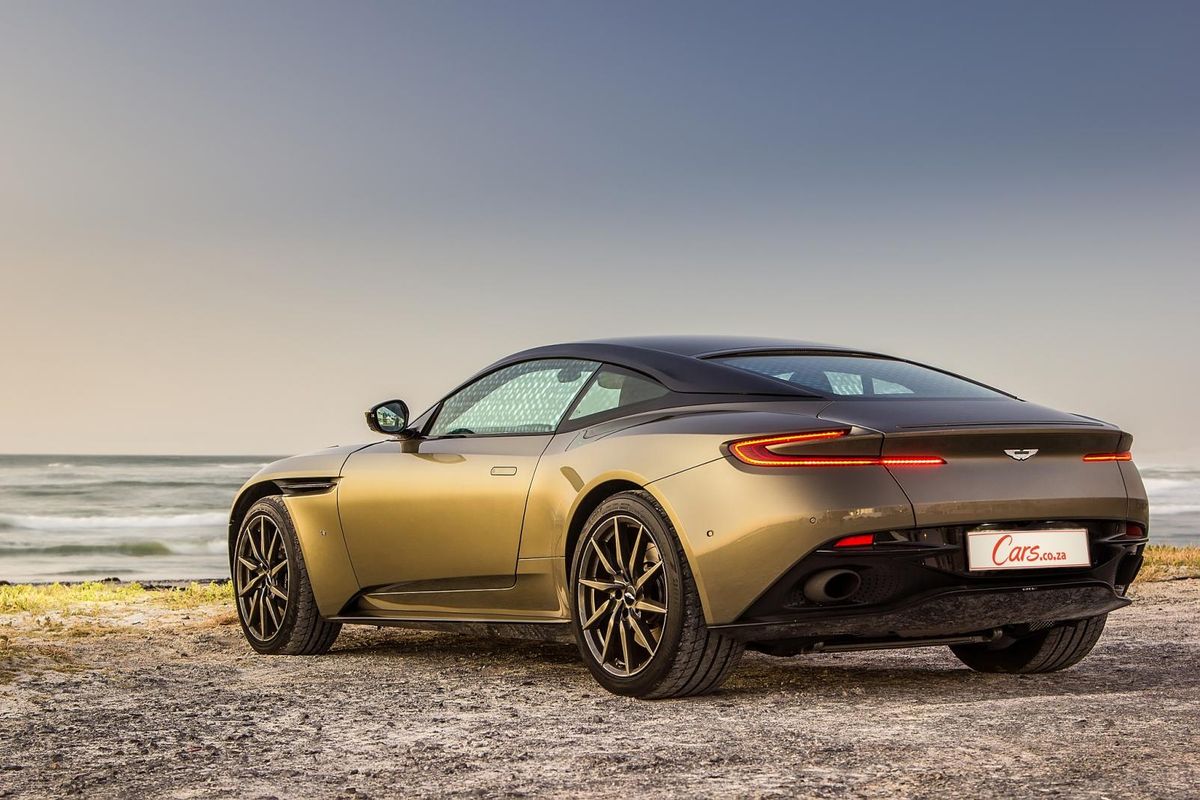
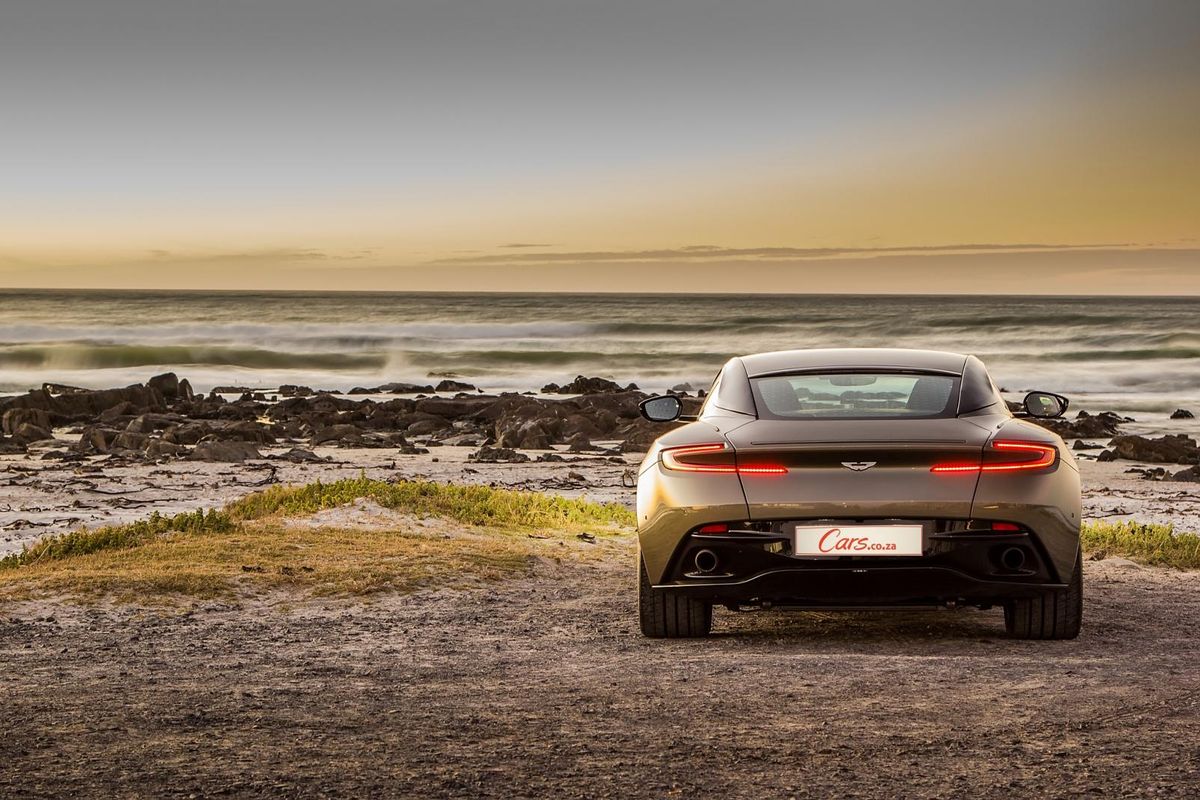
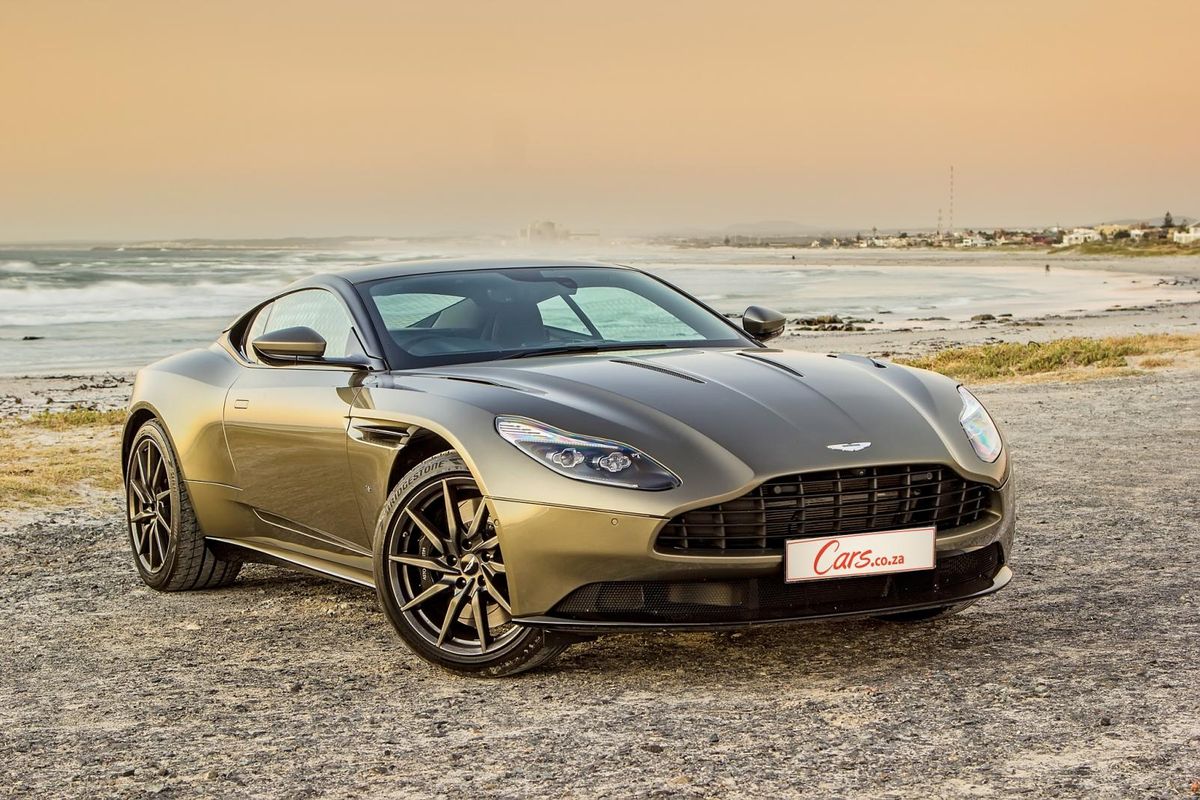
Aston Martin is one of those brands which just oozes cool. From supplying vehicles to the silver screen, to a successful motorsport outfit, the Brits know what they’re doing. The Aston Martin range is quite comprehensive now and features five different models. How does the entry-level Aston Martin V8 Vantage fare?

Aston Martin V8 Vantage review by David Taylor

Beautiful to look at

Like all Astons, the Vantage is an exceedingly pretty car. It’s hard to fault something with such a beautiful design and the Morning Frost pearlescent paint only added to the visual magic. Whether driving or standing still the Aston Martin V8 Vantage is quite eye-catching and for a bit of entertainment, it was good fun driving through Camps Bay and watching people’s reactions.

Raw V8 power

Naturally a car like this must have some go to match the show and it doesn’t disappoint. With a 4.7-litre V8 engine, the Vantage has 313kW and 470Nm which means it’ll hit 100km/h in about 5 seconds and go onto a top speed of just under 300km/h.

The party trick of the Aston has to be the exhaust system. As the revs reach 4,000rpm, butterfly valves open and the result is the pure, unfiltered engine note singing out the back. The change in tone is definitely noticeable and it’d be fair to say the engine noise doubles. Under hard acceleration, the car sounds as if there’s a small Highveld thunderstorm following it about. Beautiful.

This particular Vantage was fitted with the six-speed automated manual gearbox called SportShift. It’s not nearly as good as the German double-clutch units found in the Aston’s rivals, but I’m assured later versions of the car came out with upgraded seven-speed transmissions. Still, this gearbox was good when pushing on the open road. Problems arose when the Aston was forced into bumper-to-bumper traffic. Much like a caged animal in a zoo, you could feel the car wasn’t happy and it just wanted to be let loose. That said, many high performance vehicles are like this and I feel sorry for anyone who has a manual gearbox on a six-figure super car.

Once clear of the traffic, you can get a feel for how the Aston Martin V8 Vantage performs. It’s quick between corners and the handling is confidence-building. I’m no professional racing driver, but at no point did I feel like the vehicle was a handful. Look, if you try accelerating out of a corner too quickly, you do run the risk of kicking the rear out so don’t say you haven’t been warned.

I get the feeling the Vantage is happiest when cruising around. Yes, it’s capable of hitting 200km/h and more without really trying, but as far as grand touring coupés go, this sort of driving is perfect. Also noteworthy are the massive brakes which provide excellent stopping power.

Classy interior

The interior is a lovely place to be, once you get used to the layout. For starters, the key slots into the middle of the dashboard and the starting procedure is quite unique. Slide the key in and hold it in the slot. Wait a second or two, and the meaty V8 fires up. The two seats in the Aston Martin V8 Vantage are only comfortable when you’ve spent time carefully setting them up. The cabin is covered in hand-stitched leather and it looks very impressive.

Sporty, yet practical

There are also comfort features like cruise control, climate control, auto headlamps, daytime running lights, park distance control as well as hands-free phone pairing. It’s practical too, with just enough boot space to take a set of golf clubs or luggage for a weekend away.

Aston Martin V8 Vantage – Conclusion

It’s fast, loud and is achingly beautiful. It’s a pleasure to drive on the open road and when you’re going flat out through twisty bends, you’re accompanied by one of the finest engine notes on the planet. My only gripes were that the Comfort mode button didn’t feel like it did anything (I was hoping the suspension would become super soft), the key looked a little cheap and the steering wheel gearshift paddles were connected to the actual wheel itself and not the steering column. All of these problems are quickly forgotten when you get out and take a look at what you’ve just been driving.

  • Why you should: Victoria’s Secret supermodel good looks, raucous engine note after 4,000rpm, can accelerate from zero to illegal speeds rather quickly, immense braking power.
  • Why you shouldn’t: Why wouldn’t you buy an Aston? Sure, the competition may be slightly faster/better engineered/cheaper, but they cannot match the class or prestige. The attention you’ll get from onlookers can get a bit much.
  • It would be better if: Comfort mode was actually comfortable, the key looked a bit more upmarket, the steering wheel paddle shifters turned with the wheel.
  • Competitors worth checking out: BMW 6-Series, Jaguar XK, Maserati GranTurismo, Mercedes-Benz SL500, Porsche 911, Audi R8

Ford Sales Summary for April 2013

Ford sales continued to perform well in the industry with a market share of 10.1%, the highest since December 2005. The Ford Ranger continued to sustain demand off last month’s all-time record sales with 1787 units sold in April 2013, the second-best month for Ranger sales since launch. Here is a breakdown of Ford sales figures including Top 5 model sales and the most popular Ford used cars for April 2013.

Ford sales summary – April 2013*

Total new car sales 5050
Total market share 10.1%
Total passenger vehicle sales 3003
Total Light Commercial Vehicle (LCV) sales 2047

Top 5 Ford new passenger car sales – April 2013*

1. Ford Ranger 1787 units
2. Ford Figo 1163 units
3. Ford Fiesta 718 units
4. Ford Focus 456 units
5. Mazda 3 279 units

Most popular used Ford cars in South Africa – April 2013*

  1. Ford Focus
  2. Ford Fiesta
  3. Ford Ranger
  4. Ford Figo
  5. Ford Bantam

Ford in the news

*New car sales statistics via Naamsa
*Used car statistics via Cars.co.za

Volkswagen Golf 7 1.4 TSI Review

When the latest Volkswagen Golf 7 arrived, I found myself absolutely unexcited. I completely understand the importance of the car, but I felt like the game had moved on, and maybe it was time for Golf to move on as well. I couldn’t have been more wrong. The new Golf 7 is like that friend we all have who is so effortlessly good at everything that it’s actually quite annoying. If the Golf 7 was actually into golf, it would probably worry Rory McIlroy.

Volkswagen Golf 7 Engine Capability

The line up as it stands at launch will see three engines available, with each available in two states of tune. Petrol variants are limited to the 1.2 TSI and 1.4 TSI, and there is one diesel in the form of the 2.0 TDi. I drove the more powerful Golf 7 1.4, with 103kW and a healthy 250Nm, importantly available from low in the rev range, at just 1500rpm.

This means there is very little lag and the way it pulls cleanly and consistently through the rev range is as impressive as it is effortless. This is not your dad’s 1400. The goalposts haven’t moved so much as been obliterated. Other manufacturers have squeezed great power out of small engines, the 1.6 litre developed by Peugeot/Citroen for BMW’s Mini project is a particular peach, but that engine idles like a tractor in comparison. In the VW Golf 7, I kept thinking the engine was off.

Exterior Styling

I’ve already heard whinging from the general public that the new Golf just looks like the old Golf. I should know, I was a whinger. But side by side, the differences are obvious, and the Golf 7 is all the better for it. Sharper, tauter and sportier, the latest generation is slightly lower, longer and wider than its predecessor.
The easiest edits to spot are the front and rear lights, which are both narrower and more aggressive, while the rear end is sexier. I don’t envy whoever is tasked with Golf design. It has to appeal to men and women equally, pay homage to past versions, have enough aggression to handle the GTi and Golf R treatments down the line and not look silly, all the while appealing to every human on earth. That’s quite a design brief. Opinions will be divided on whether they’ve nailed it or not.

Interior Styling

This is where Volkswagen have cranked it up a notch. The interior of the Golf 7 feels like it was designed over seven years by an army of very intelligent Germans who never sleep. There are so many clever touches in here. All five seating positions have been redesigned and you can feel it. The driver’s seat is more reclined and feels more sportscar-like than should be possible in a boxy hatchback. The level of comfort is quite special in this segment, and combined with a massive effort to keep the cabin quiet, you’d be forgiven for thinking you were driving something much, much more expensive.

The Golf 7 comes standard with a 5 inch touch screen, with a bigger 5.8” or massive 8” available. The interface is modeled on smartphones, so you touch and swipe just as you would on your mobile device. The fascia is a little too shiny for my liking, but as a package it works well. The interior lighting is clever; tiny rear-facing blue lights in the roof trim illuminate the rear seats completely without bothering the driver. Rear seats fold almost flat, so you can easily squeeze in that designer wheel barrow and instant lawn.

Safety Features

Accident research has shown that in 25% of road accidents, one car experiences more than one collision. VW has introduced Multi Collision Braking to the Golf 7, which will automatically lock the brakes during an accident, to slow the car down for the next potential collision.
ABS and EBD are standard, as well as the Driver Alert System, which monitors the driver’s face and head for weariness, and signals loudly to wake you up a bit. Pre-crash occupant protection will kick in if the car detects an imminent collision or loss of control. The system will optimise the seatbelt tension, ready the airbags and close the windows and sunroof, leaving a little open as this is the best position to absorb impact.

Driving Capability

In an age where each successive car model seems to get fatter, the Volkswagen Golf 7 is up to 109kg lighter than the Golf 6. That’s almost a whole Bakkies Botha that you don’t have to carry around any more. The positive effect is multifold; fuel consumption, handling and acceleration are all improved.
I’m not a fan of front wheel drive but most of the downsides have been dialled out, and it feels like the amount of power is just right for the amount of traction available, although you can still quite easily light up the tyres, if you’re that way inclined. Which I am certainly not. Maybe. With the power a little high in the rev range, but with torque low down, there’s a satisfying amount of oomph in any gear.

The ride manages to be an almost mystical combo of sporty and smooth, handling road imperfections like they’re not there. You can really chuck it into corners as well; I can’t imagine how good the GTi and R versions are going to be. It always feels very sensible, but if you ask it to, the rather serious German will let its hair down and join the party.

VW Golf 7 conclusion

It’s an impressive car, but with an almost infinite number of the rivals, the latest Golf had to be more than impressive. It has to be rather special. And there is one aspect of the South African spec car that just blows my mind – the latest generation is on sale for exactly the same price as the outgoing model. In that sense, this is the bargain of the decade. Latest technology, latest safety features, latest styling, at no extra cost. No wonder the Volkswagen Golf 7 has been named World Car of the Year.

Volkswagen Golf 7 Price

Volkswagen Golf 7 from R233 800

VW Golf 7 specs

Engine 1.4 twin charged petrol
Transmission 6 speed manual or 7 speed DSG
Power Output 103kW at 4500rpm
Torque 250Nm at 1500rpm
Fuel Efficiency 6.4 l/100km (Euro combined cycle)
CO2 Emissions 121 g/km
0 – 100km/h 8.4 seconds
Top Speed 212km/h
Price R264 900