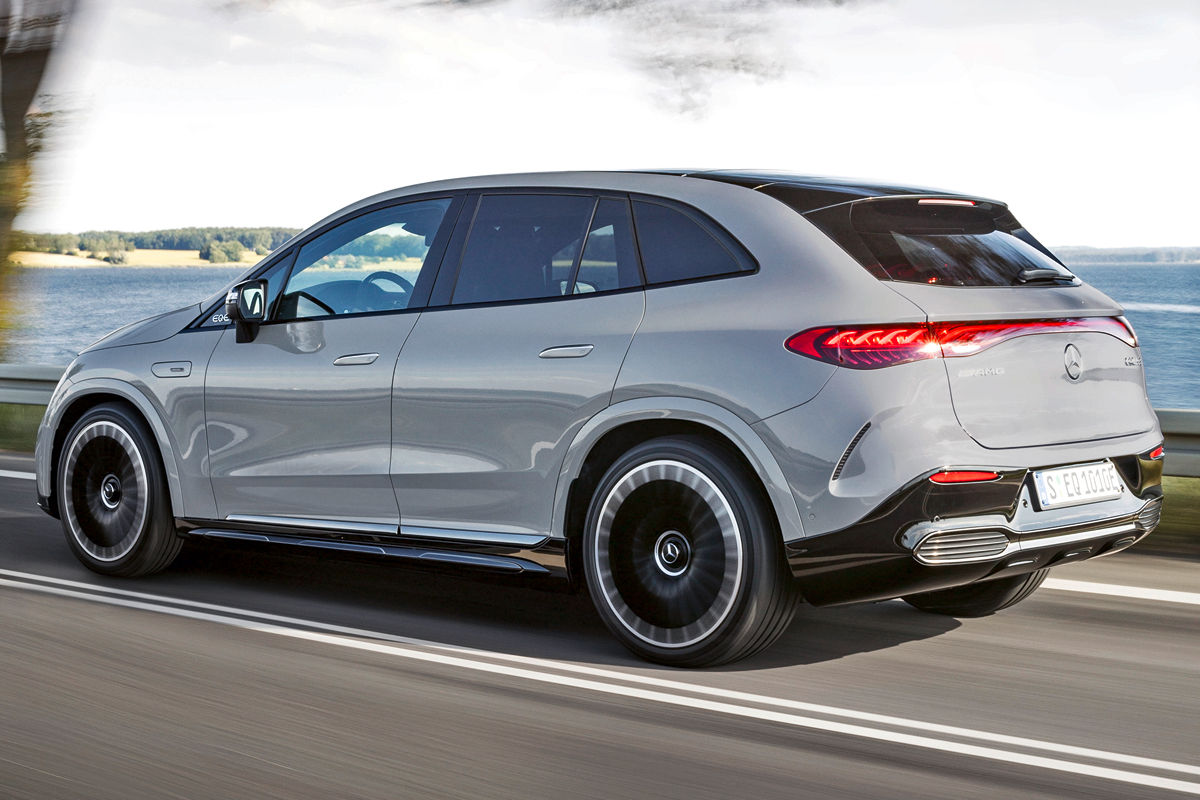
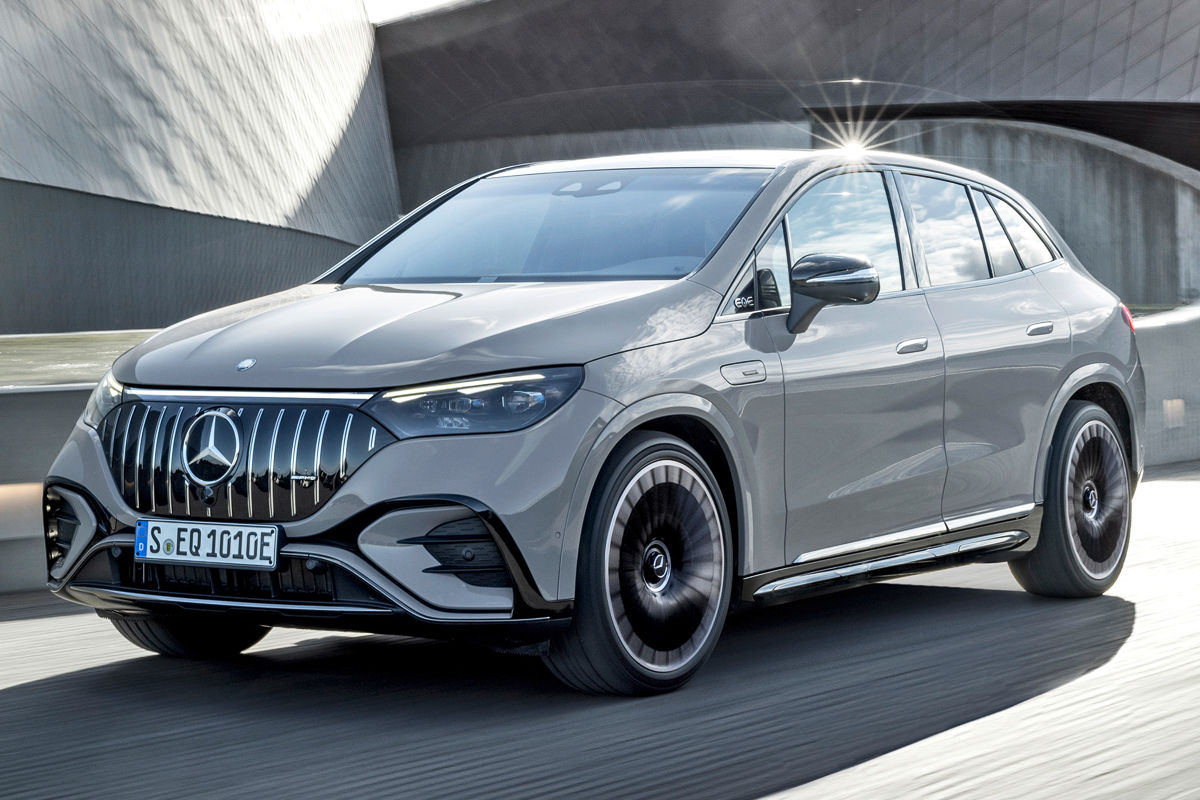
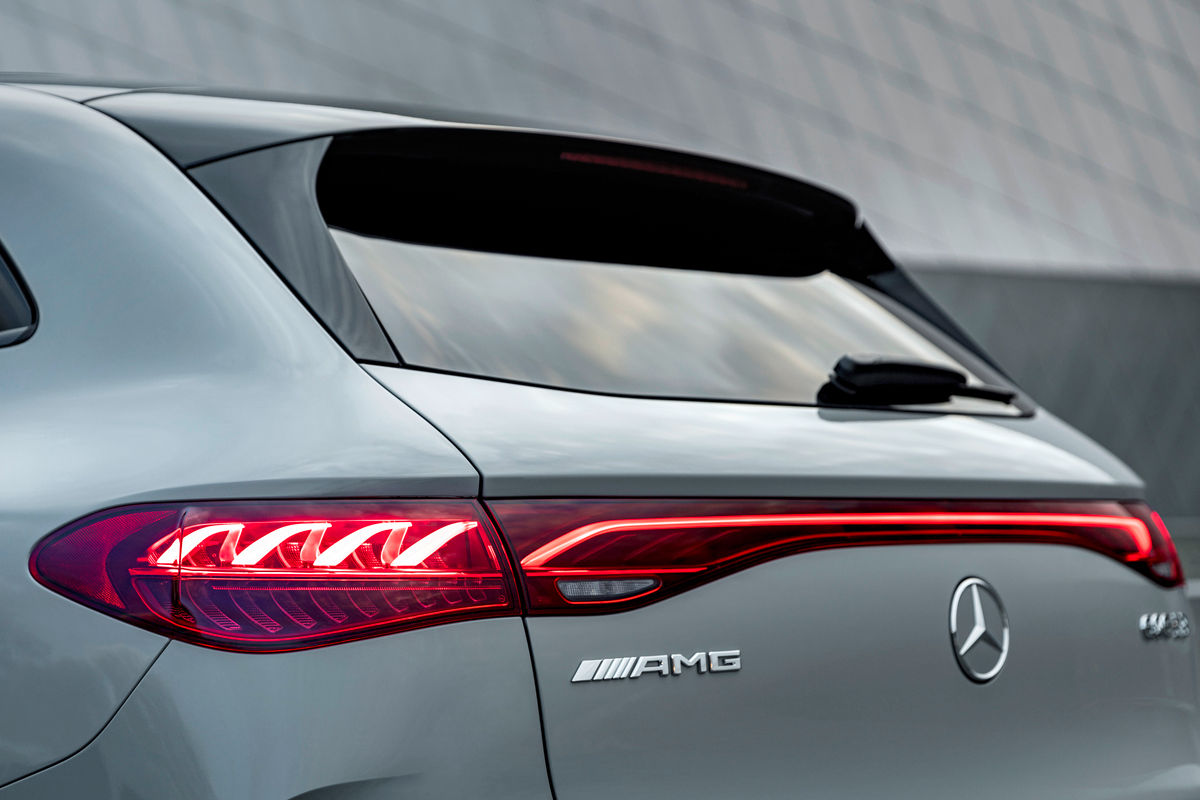
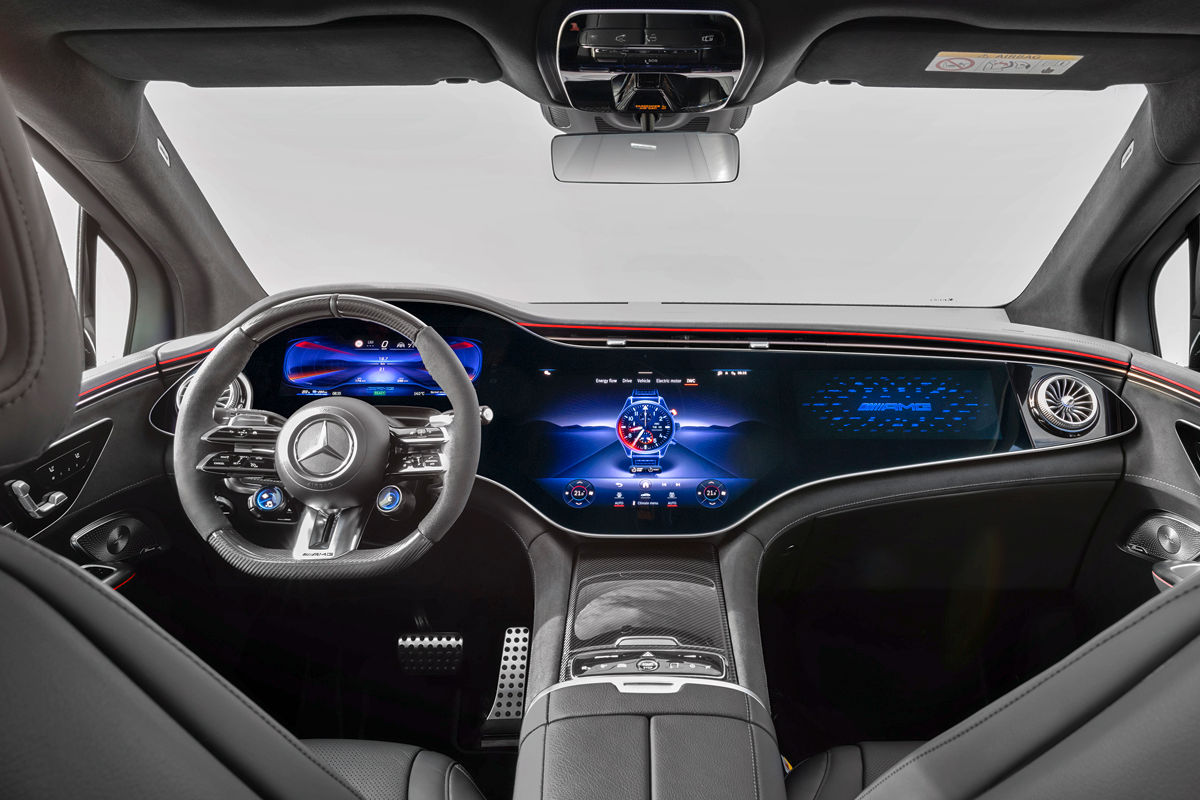
The updated Porsche 911 GT3 has just been announced with some enhancements and here’s your first look, plus SA pricing details.
If ever there was a vehicle which epitomised a brand, its the Porsche 911. Sure the Cayenne and Macan sell in substantially more numbers, but the 911 is the halo product. For 2025, the flagship has been given some updates.
Visually, its a mild update, with subtle enhanced aerodynamics to improve downforce and airflow. The car features revised damper settings as well as an upgraded steering setup.
The great news is the iconic 4.0-litre naturally-aspirated flat-6 petrol engine has been retained and continues to thump out 375 kW and 450 Nm. Performance? Blistering. The updated Porsche 911 GT3 accelerates to 100 kph in just 3.4 seconds with PDK and reaches a top speed of 311 kph. If you’ve opted for the manual gearbox, expect 3.9 seconds and a top speed of 313 kph.
If you’re a petrolhead, you’ll notice this new model has slightly less torque and we have strict emissions laws to thank for that. Still, its impressive how Porsche has managed to maintain the performance as well as a 9 000 rpm redline. The exhaust is new and features extra hardware to try keep emissions low.
In terms of transmissions, Porsche says there’s a shorter gear ratio for the final drive which is said to improve drivability. Both a PDK and a manual gearbox are available.
Shown alongside the GT3 was the GT3 with Touring package. This is aimed for those who want a bit more practicality and usability, not to mention subtlety. There’s now an optional rear seat system, and if you’re not a fan of the standard seats, you can option the 18-way adjustable adaptive sports seats plus.
Porsche has confirmed the Weissach (GT3) and Leichbau (Touring) packages for the enthusiasts which introduces numerous weight-saving measures like carbon fibre roof, rear wing end plates, exterior mirrors, anti-roll bar while the cabin gets carbon fibre door handles.
How much does the updated Porsche 911 GT3 cost in South Africa?
The new Porsche 911 GT3 and the new Porsche 911 GT3 with Touring Package can be ordered by the end of this year and the below price includes a 5-year/100 000 km Driveplan.
The Audi SQ7 heads up the updated Q7 range that will go on sale in South Africa in early 2025. We had a drive on the roads of Audi’s hometown of Ingolstadt, Germany.
When you think of Bavaria, 1 car brand usually comes to mind – BMW. Yet, only 80 km north of Munich is a city named Ingolstadt – the home of Audi. After departing the arrivals hall at Munich’s domestic airport terminal, I walked over to Audi’s satellite office and signed the paperwork to test the Audi SQ7 and SQ8.
Now, having driven the latter at its debut in Cape Town towards the end of 2023, my focus was on the most potent Q7 variant, as there will be no RS-badged flagship of Audi’s 2nd-gen premium SUV, unlike the Q8 SUV-coupe range, which has the RSQ8 Performance. The SQ7 is the hottest Q7 you can get.
What’s changed?
Audi calls its facelifts “Product Improvements” or PI (which isn’t terribly original, but sounds less poncy than BMW’s “Life Cycle Impulse” or LCI). The biggest change to the SQ7 and SQ8 is that they now share a turbopetrol powertrain. Previously, a 4.0-litre V8 turbodiesel (with 310 kW and 900 Nm) propelled the Teutonic juggernauts from 0 to 100 kph in under 5 seconds. Some may turn up their noses at fast diesel SUVs, but given that the powertrain delivered such compelling performance, why did Audi substitute it?
Be it because of fallout from the VW Group’s Dieselgate scandal, or concern over the impact of diesel-engine exhaust emissions on public health, turbodiesel power is no longer in fashion in European passenger cars. As a consequence, the performance derivatives of the Q7 and Q8 have switched to petrol power, but thankfully there’s no downsizing – the engine on duty is one we’re all familiar with.
The 4.0-litre twin-turbopetrol V8 is well known – and -proven – in the VW Audi Group, having powered a variety of products, such as the Porsche Cayenne, Bentley Bentayga and the Lamborghini Urus.
In the SQ7, that powerplant produces 373 kW and 770 Nm of torque. It drives all 4 of the premium SUV’s wheels (quattro, of course) via an 8-speed automatic transmission, and Audi claims a 0-100 kph time of just 4.3 sec – a touch quicker than the diesel-powered SQ7. Mild-hybrid tech has been included too.
“Surely the facelift comprises more than just a new engine”, I hear some of you say. Yes, it does, but bear in mind that this is the Q7’s 2nd facelift and the aesthetic changes to the model are very subtle.
The tweaks include slightly refreshed bumpers, upgraded head- and tail lamps (that offer customisable animations and themes), new exterior colours, cabin trim options and wheel designs, plus enhancements to the infotainment system (they pertain to connecting to your favourite streaming services).
So, what distinguishes the SQ7 from other top-end Q7 derivatives? Visually, the performance variant is fitted with the largest wheels (20-inch alloys), quad exhaust pipes and a subtle SQ7 tailgate badge to let people know you’re going to win the school run. It’s a pity the SQ7 badge on the nose has been deleted.
The SQ7 is further fitted with all-wheel steering and adaptive suspension as standard. Buyers who seek a particularly focused driving experience can specify a quattro sport diff and active roll stabilisation.
First Impressions
Our Audi SQ7 test unit was finished in a striking hue – Chili Red – and rode on sporty-looking jet-black wheels. It’s probably a far more ostentatious specification than (what we assume) most Q7 customers would choose, but for this exercise – to impress a bunch of jaded motoring journalists – it was perfect.
The surprises didn’t end there. When I started the engine, it created a rather unruly rumble (in a good way). Many performance cars, especially European ones, are losing their voice, but the SQ7 sounds wicked.
Even though the Typ 4M series Audi Q7 has existed for almost a decade, the 7-seater SQ7 still feels quite spacious inside. We’d say the rearmost pair of seats is only really fit to accommodate children, but with the 3rd row stowed, the Audi’s load bay is cavernous – it easily outguns the equivalent BMW X5 and Mercedes-Benz GLE. And, apart from plenty of visual- and tactile appeal, the build quality is admirable.
If you’re paying top Rands for a luxury model, it simply has to feel the part – and the SQ7 nails the brief. Granted, the 3-screen setup seems a bit old-school compared with the more advanced digital interface in the new A5 sedan, for example, but the Virtual Cockpit is still commendably intuitive (user-friendly).
What is the Audi SQ7 like to drive?
When in Germany, it’s almost compulsory to test a new vehicle on the country’s finest stretch of asphalt, the Autobahn. Now, if you’ve never driven on the ‘bahn, there are certain things to be mindful of… It’s not a free-for-all road on which every M-, Merc-AMG- and RS model (plus a variety of more exotic machinery) constantly travel at ludicrous speeds, and only some sections have no speed limit. The Autobahn’s limits are electronically controlled and the speeds vary based on time of day, traffic congestion and weather.
There are also legal consequences: if you’re involved in an incident on a derestricted part of the ‘bahn, you have increased liability. The German traffic police also have the habit of setting up speed cameras just after speed limits come into play, so more often than not, you’ll need to climb on the brakes. Hard.
But, back to the SQ7! The 2nd iteration of the Q7 is renowned for being an impressive open-road cruiser – it’s effortlessly refined – but the SQ7 turns things up quite a few notches. Even when its most comfort-oriented drive mode was active, the Audi SQ7 could surge forward without hesitation; we’re eager to test its 60-120 kph acceleration figure – it will probably make several performance hatchbacks seem slow.
When you push the accelerator pedal halfway down, the ‘box will kick down promptly and the engine will smoothly deliver all of its goodness until the Audi reaches its electronically limited top speed of 250 kph.
It’s all so undramatic, yet oh-so effective at the same time! With the speedometer reading just over 160 kph (yep, that was our average speed in the middle lane), we were in awe of the car’s overall quietness – minimal road noise intruded into the cabin when were were “cruising”, even at the proverbial ton of 100 mph.
But at full throttle, that twin-turbo V8 reminds us of its presence with a brutish snarl! As for (up)shifts, Audi has improved the torque-converter-type transmission’s calibration for better-timed gear changes; the ‘wheel has shift paddles, but the ‘box shifted so smoothly and predictably that we never used them.
What if you want to carve up a road? When you activate Dynamic mode, the air suspension hunkers down and stiffens, the throttle response becomes sharper and the boisterous exhausts get louder still.
But we wonder whether all that intensity is even necessary. The SQ7 is a fine family cruiser, so why compromise a pliant ride quality with an overly sporty suspension setting? Thankfully, the Individual setting enables a driver to customise the car’s facets; we adore the soft damping/loud exhaust combo.
Autobahn and straight-line performance is one thing, but what about cornering ability in everyday driving conditions? Our test unit was specced with the aforementioned quattro sport differential and active roll stabilisation and, well, the hefty 3-row family SUV felt remarkably nimble and light on its wheels!
Yes, when you hustle the SQ7 into tight bends at higher speeds, you’re well aware of its 2.3-tonne kerb weight, because the Audi is reluctant to change direction quite as sharply as you might like it to. In those conditions, the premium SUV’s brakes will be working hard too, but it is genuinely entertaining to wield the SQ7, at a brisk pace, in the twisties. Again, you don’t have to use the sportiest setting to have fun.
Between each stretch of Bavarian forest road was a series of villages, some of which were even too small to be classed as anything more than a cheery hamlet, but there were electronic speed warning signs everywhere. Once travelling at the civilised urban speed limit of around 45 kph, the SQ7 seemed to glide, with its suspension absorbing almost every road surface imperfection. To be fair, European roads are generally of an exceptionally high standard, so we’re keen to see how this vehicle copes with our mixed quality of SA roads.
How much does the facelifted Audi SQ7 cost in South Africa?
First, let’s chat about the line-up. According to Audi South Africa, the facelifted Q7 range will not feature any turbodiesel-powered derivatives initially – the line-up will comprise petrol-powered variants only.
This is due to production constraints – most turbodiesel Q7s have already been snapped by other right-hand-drive markets (Aren’t diesel cars going out of fashion?). The facelifted Q8 range, however, does include a TDI variant and, if you want even more firepower than the SQ8, the RSQ8 is coming to South Africa.
“The Q7 45 TDI is still under consideration for our market,” Audi South Africa PR and Relationships Manager Terence Steenkamp told Cars.co.za this week. “For now, Audi will offer the option of a diesel model in the popular Q8 range for those buyers who prefer this fuel type over petrol power.”
The facelifted Audi Q7, SQ7, Q8 and SQ8 will all go on sale in South Africa in early 2025. We’ll update this article with pricing as soon as we have it. See also: Audi Q8 (2025) Price & Specs
Summary
While the turbodiesel-powered pre-facelift Audi SQ7 and SQ8 were rapid juggernauts, the 4.0-litre V8 turbopetrol motor does produce a more glorious soundtrack – and offers better performance to boot.
As a result, the updated Audi SQ7 is a far more engaging proposition than its predecessor, which “spoke softly and carried a big stick” (to shamelessly mangle a famous Teddy Roosevelt quote). The SQ7 is really in a class of its own, but you could consider the BMW X7 M60i (also a 7-seater) a distant rival.
This is a light update and one could say Audi has been very pragmatic – “if it ain’t broke, don’t fix it”, as they say. The Q7 PI (2nd facelift model) picks up right where the pre-facelift Q7 left off with exceptional space, refinement, open-road crushing competence and now, with the SQ7, thundering performance.
The GLC 63 S and 43 will be the flagship performance derivatives of the Mercedes-AMG range. Here’s a first look at what you get, plus just how fast are they?
The Mercedes-AMG GLC 63 S will be one of the most powerful SUVs and the good news is that it has touched down in South Africa.
Of course, there are detractors who will continue to moan about the lack of a thundering AMG V8, but they cannot deny the sheer pace of the GLC 63 S. The new model features a 2.0-litre turbocharged four-cylinder petrol engine with an electric assist.
Power outputs are 500 kW and 1 020 Nm, and power goes to all four wheels via a 9-speed automatic gearbox. Acceleration from standstill to 100 kph takes just 3.5 seconds and only ends at an electronically governed 275 kph.
Standard kit at this price point is high with adaptive dampers (AMG Ride Control suspension) and rear-wheel steering fitted. The AMG Track Pace data logger is standard and this gives driver performance data to analyse as well the ability to test 0-100 kph and so.
Also available, at a lower price point and less power, is the Mercedes-AMG GLC 43. The GLC 43 has a slightly similar setup, albeit with a smaller turbocharger and this vehicle produces 310 kW and 500 Nm. In terms of performance, Mercedes-AMG says the GLC 43 dashes to 100 kph in just 4.8 seconds and it has all-wheel drive and a 9-speed automatic gearbox.
How much does the Mercedes-AMG GLC 63 S cost in South Africa?
Both performance SUVs are sold with a 5 year/100 000km Service Plan and Maintenance Plan. The below pricing includes VAT.
Jetour, which is an offshoot brand of the Chery Group but operates independently of Chery SA, recently launched a pair of medium-sized SUVs in Mzansi, one of which is the Jetour Dashing. Is the 1.5T Deluxe’s value offering as good as it looks? Read on!
We Like: Bang-for-buck, modern styling, interior finishes, rear legroom, refined performance
We Don’t Like: Poor infotainment interface/usability, poor rearward visibility
The Dashing features a unique look that’s hard to miss on the road.
The Jetour Dashing 5-seater is a medium SUV that stands 4 590 mm long, 1 900 mm wide, 1 685 mm high and has a wheelbase of 2 720 mm. Based on those dimensions, the Dashing is similarly sized to upmarket family cars such as the Volkswagen Tiguan, Kia Sportage, Toyota RAV4 and Hyundai Tucson.
However, the newcomer’s price tag is comparable with those of small crossovers, such as the Toyota Corolla Cross, Omoda C5 and Chery Tiggo 7 Pro – it seems to offer “a lot of car for the money” and its sibling, the X70 Plus 7-seater caters for those who want a medium SUV with extra seating capacity.
Established in 2018, Jetour is a crossover/SUV brand focused on design, technology and affordability. Production of the Dashing, or “Monkey King” as it’s known in its home market, began in 2022 and the model formed part of the Chinese brand’s local market introduction in September 2024.
The Dashing’s rear quarters are accentuated with angular elements. 19-inch wheels are standard.
Granted, Jetour is still an unknown quantity in our market (it must still prove itself in South Africa), but the Chinese firm has stated its commitment to delivering exceptional customer service through its 40-strong dealership network nationwide, as well as robust parts support thanks to Jetour’s large parts warehouse in Kyalami that’s stocked with over 82 000 parts to service local consumers.
The Jetour Dashing is offered in 2 trim grades: Momentum and range-topping Deluxe, an example of which is the subject of this review. To stand out from the swathe of medium SUVs on the road, the Dashing features a sleek and futuristic design penned by ex-Porsche designer, Hakan Saracoglu.
The Dashing gives off some Urus vibes, but that’s a good thing, right?
The Dashing’s exterior execution is muscular and highlighted by a bold front end with an intricate grille design, as well as strong rear haunches that evoke athleticism. Note the Range Rover Velar-esque hidden door handles, which also feature on the Chery Group’s recently launched Omoda C9 executive SUV.
During the Dashing’s tenure in our fleet, some onlookers noted that the model had design similarities to the Lamborghini Urus; they have a point, but the Chinese newcomer’s influences aren’t that exotic.
How the Jetour Dashing fares in terms of…
Interior execution, features and practicality
The Jetour Dashing’s cabin design and -execution make it abundantly clear that its maker adopted an upmarket design approach to the model’s interior. Younger/youthful, fashion-forward buyers will love it.
You sit in surprisingly sumptuous sports-style seats, while the wraparound dashboard blends elegance with sportiness. You can see the latter above – it features a red trim line that spans the length of the dashboard, complemented by matching magnetic belt strips in the door-armrest structure and contrasting red stitching seen on the seats and door cards. The grey and patterned door inserts and chrome speaker housings add further design appeal.
The centre console section houses a storage bin, 2 USB-A ports, a 12V socket and a convenient wireless charging pad for charging smartphones. The cabin utilises a mix of hard plastics and soft-touch faux leather surfaces and, not only does it offer excellent comfort, the overall perceived build quality is good.
However, there are a few niggles to point out. Our first criticism is that the cabin temperature-, demister and ventilation controls – located in the gloss-black panel in the lower part of the fascia – are near-impossible to see in the brightness of day, rendering the panel useless unless you’re driving at night.
Admittedly, the aircon and other in-car functions can be adjusted via the infotainment system’s 10.25-inch touchscreen. However, the menu layout is poorly configured and not particularly user-friendly. Also, the small size and poor legibility of the menu make it difficult and distracting to navigate the system.
This problem is also experienced in the 10.25-inch instrument cluster where the embedded menus are similarly difficult to decipher and use while driving. While this might seem like a trivial problem, it’s a frustrating one that can create unnecessary distractions while you’re driving. You can use the menu dial in the centre console to navigate the menus, but it doesn’t make menu navigation much easier.
To its credit, the 360-degree camera system’s display is of excellent quality and particularly useful when you are parking/reversing or manoeuvring in tight spaces. Other nice-to-have features include a large panoramic sunroof, 8-colour ambient lighting and electrically adjustable front seats with seat memory.
A Jetour welcome light is a surprise feature. It’s often found on more expensive cars but it proves useful at night or if you want to impress your friends.
Safety features include 6 airbags, lane-departure and -blind spot warning, plus tyre-pressure monitoring.
Rear passenger space is generous with high levels of comfort.
In terms of rear passenger space, the Jetour Dashing is quite generous – aft occupants (even adults of average height) can sit comfortably thanks to ample leg- and knee room. A centre armrest (with a pair of cupholders) is a convenient feature for those long journeys and USB-A and USB-C ports are provided.
All that space does come at the cost of some luggage capacity, however. The Jetour Dashing’s load bay is claimed to accommodate 486 litres with the rear seatback up, which is lower than the stated figures for the Sportage (591 litres) and Tiguan (652 litres) – still useful, but not generous for a car of this size.
At least the load bay is on par with what’s offered in the small crossover segment, plus it has a dual-level floor to either haul more cargo or store valuable items out of sight. A powered tailgate is standard.
The Dashing’s load bay is quite shallow but the floor level can be raised or lowered.
Overall then, the 1.5T Deluxe’s cabin is attractively styled, smartly finished and more-than-sufficiently comfortable… only the limited user-friendliness of the infotainment system and some ergonomic quirks detract from an otherwise appealing proposition. Of course, it remains to be seen how well the Jetour Dashing’s interior will hold up with years of use in South African conditions, but time will reveal all.
Performance and efficiency
The Jetour Dashing and its X70 Plus sibling are powered by a 1.5-litre 4-cylinder turbopetrol engine that produces 115 kW/230 Nm and is paired with a 6-speed dual-clutch automatic transmission.
A punchy engine and a refined driving experience are highlights of the new Jetour Dashing.
In terms of performance, we’re happy to report that the Jetour Dashing met our expectations, given its engine capacity and -outputs – which is to say we found that it accelerated strongly and offered enough mid-range oomph to execute brisk overtaking manoeuvres on the highway. Plus, we were pleasantly surprised by its engine refinement with adequate sound suppression, even under hard acceleration.
It helps that the dual-clutch transmission is well-calibrated; it shifts up/down swiftly and predictably, plus you could always use ‘wheel-mounted paddles to shift manually if and when you feel the need to do so.
There are 2 drive modes to choose from: Eco and Sport, but if you want to engage, say, the latter, you have to access the infotainment menu, which isn’t intuitive – it would be so much simpler to toggle between drive modes by using a button. You can also set the steering feel to either Comfort or Sport.
Expansive bodywork does impact negatively on rearward visibility.
Sport mode does change the on-road demeanour of the Jetour Dashing; the powertrain offers more eager throttle response and will executive upshifts only at higher revs. The model’s suspension setup is on the firm side of pliant, but not overly sporty and general ride comfort is good – on tar and gravel.
It’s also worth mentioning that due to the narrow rear screen and upwardly sloping aft window sills, rearward visibility is limited, so if you buy a Dashing, be extra mindful to check your blind spots before changing lanes safely. Thankfully, the Dashing is equipped with blind-spot alert and lane change assists.
In terms of fuel consumption, Jetour claims an average of 7.8 L/100 km for this variant, but we averaged around 9.5 to 10 L/100 km during our week-long test, which was a little disappointing, but not damning.
Price and after-sales support
The Jetour Dashing 1.5T Deluxe costs R469 900 (October 2024), which includes a 5-year/150 000 km warranty, a 10-year/1 million km engine warranty (for the first owner only) and a 5-year/60 000 km service plan. See also:Jetour Dashing (2024) Price & Specs
The Jetour Dashing is poised to take the market by storm with a strong value proposition.
At its price point (R439 900 to R469 900), the Jetour Dashing represents excellent value for money for buyers who desire a stylish and generously equipped new medium SUV/family car for well under R500k.
Its bold appearance is likely to divide opinion and, yes – it won’t appeal to everyone, but the Dashing’s value proposition will probably propel the newcomer up the local sales charts in the months to come.
Despite a few quirks that detract from an impressive, well-specified interior (some of which could be improved by running updates), the Dashing delivers an acceptable balance between performance and economy, while exhibiting resolved road manners and surprisingly high levels of overall refinement.
From an after-sales perspective, Jetour’s service will be in the spotlight from the get-go but the Dashing is at the very least backed by comprehensive warranties that will give local buyers some peace of mind.
Jetour is a brand to watch and with new products, such as the T2 small off-roader and a Dashing Pro, due to arrive in 2025, it will be interesting to see how quickly the brand grows on South African soil. Watch this space!
The facelifted Mazda BT-50 bakkie has been revealed, though with this nameplate having been discontinued in SA earlier in 2024, we won’t see it on local roads…
In March 2024, Cars.co.zabroke the news that the Mazda BT-50 nameplate had been discontinued in South Africa after an 18-year run. Now, the facelifted version of the Japanese firm’s bakkie has been revealed overseas.
Of course, since the BT-50 is no longer a part of Mazda Southern Africa’s line-up – with the automaker’s local division having cited an “extremely challenging landscape for imported vehicles” and a struggle to compete directly with locally manufactured products, such as the Toyota Hilux, Ford Ranger and Isuzu D-Max – this facelifted model won’t be seen in Mzansi.
So, what are we missing out on? Well, styling changes on the double-cab bakkie include a refreshed front end, which sports a new lighting signature for the LED headlamps as well as a redesigned grille and bumper (the latter now incorporating an “air curtain”). Around back, the tailgate gains a ridge along its bottom edge, while new LED taillamps and a larger “Mazda” logo have been adopted.
The facelifted BT-50 furthermore scores redesigned alloy wheels, while 3 fresh paint colours – Red Earth Metallic, Geode White Pearl and Sailing Blue Metallic – have been added to the colour palette. The cabin upgrades to what Mazda calls a “completely new infotainment system” presented within a “responsive central touchscreen interface that now integrates touch switches below the display for better usability and visibility”.
The largest available touchscreen measures 9 inches in diameter, while physical volume and tuning dials are positioned on either side of the screen. There’s also a new 7-inch instrument cluster. In addition, the refreshed bakkie now features USB-C sockets, as well as the integration of wireless Android Auto (to join its existing wireless Apple CarPlay functionality).
Meanwhile, the interior door trim, console lid and dashboard trim benefit from what Mazda calls “subtle yet effective” material updates, including a move from brown to black leather for some grades. The list of driver-assistance systems has been bolstered, too, with the BT-50 now featuring front stereo cameras, traffic jam assist, rear cross traffic brake and intelligent adaptive cruise control.
Moreover, the automatic emergency braking (AEB) system gains motorcycle detection and pedestrian detection at intersections. The digital reverse-view camera scores a hydrophobic coating, while dynamic guidelines have been added to the display and a new USB port positioned near the rearview mirror.
As a reminder, the pre-facelift BT-50 range in South Africa had comprised 4 double-cab derivatives, last priced from R630 400 and running through to R818 400. The line-up kicked off with a pair of 4×2 Active variants using a 1.9-litre, 4-cylinder turbodiesel engine (110 kW and 350 Nm), and available in either 6-speed manual or 6-speed automatic guise.
There was also a 3.0-litre, 4-cylinder turbodiesel engine (producing 140 kW and 450 Nm), offered in either 4×2 Dynamic or 4×4 Individual form but exclusively with a 6-speed self-shifting transmission in either case. The SA-spec BT-50 had been imported from Thailand, where it was produced by Isuzu (and based on the latest-generation D-Max). Though the TF-series BT-50 was revealed in mid-2020, it touched down in Mzansi only in July 2021.
After 5 months of fuel price cuts, the table has now turned with the first fuel price increase since May 2024 now in the crosshairs for November 2024. This outlook is based on unaudited mid-month fuel price data released by the Central Energy Fund (CEF). Take a look at the fuel price forecast below!
The recent spate of welcome fuel price reductions is nearing its end as the latest fuel price data suggests that price increases for petrol and diesel can be expected in November 2024.
This comes as international oil product prices increased during the month of October 2024 in conjunction with the Rand-Dollar exchange rate starting to level off.
The Automobile Association (AA) commented, “Lower stable fuel prices play a crucial role in the decrease of inflation, and in lowering of the prices of goods and services. It would greatly benefit our economy if the fuel price decrease trajectory continued for longer but the expectant increase, though marginal at this stage, comes at a time when most consumers and motorists are still struggling financially and any increase now will add pressure on them,” notes the AA.
At the mid-month mark, the data shows the potential for 20 c/l increase for 95-grade petrol while an 8 c/l increase for 93-grade petrol could materialise.
Diesel 0.05% could see an increase of 17 c/l while the price of 0.005% diesel might see an increase of 15 c/l come November 2024.
Geo-political tensions in the Middle East are creating an air of global uncertainty as conflict between Israel and Iran continues to escalate. The impact of a broader war can impact negatively on oil production, resulting in higher fuel prices in the short to medium term.
“Due to the tensions which are ramping up in the Middle East, the local currency could be under significant pressure going into the last two weeks of October and this could have a more significant impact on local fuel prices in November. At this stage it is important to keep an eye on that indicator as we head into the new month,” says the Automobile Association (AA).
Fuel price forecast for South Africa – November 2024
Fuel Type
Oct’ 24 Inland
Oct’ 24 Coast
Nov’ 24 Inland*
Nov’ 24 Coast*
Petrol Unleaded 93
R20.73
R19.94
R20.81
R20.02
Petrol Unleaded 95
R21.05
R20.26
R21.25
R20.46
Diesel 0.05%
R18.45
R17.66
R18.62
R17.83
Diesel 0.005%
R18.57
R17.81
R18.72
R17.96
*November 2024 figures are forecast figures and not official
The 39 finalists of the 2024/25 Cars.co.za Awards – sponsored by Absa, have been announced. The 13 category winners of the 2025 CarsAwards will be selected from these vehicles, each of which will be tested intensively at Gerotek in early November.
The 2025 CarsAwards (or #CarsAwards, on social media) marks the 8th iteration of South Africa’s most comprehensive and authoritative motoring awards programme that annually recognises the best purchasing propositions in 13 respective segments of the local new-vehicle market.
What’s more, like the preceding (2023/24) iteration of the programme, the 2024/25 Cars.co.za Awards – sponsored by Absa is sponsored by Absa and endorsed by the Automotive Business Council of South Africa (the motor industry body formerly known as the National Association of Automobile Manufacturers of South Africa), which organised the SA Autoweek event that took place in Cape Town this week.
The 39 finalist vehicles (3 per category) were selected by the extended Cars.co.za editorial team from a list of 65 semi-finalists. Team members evaluated the semi-finalists individually, based on the categories’ respective “Filters of Eligibility” and “Pillars of Success”. See also:2025 CarsAwards: The Semi-Finalists
Unlike other automotive awards programmes, all models and derivatives available on the South African new-vehicle market on September 1, 2024 were eligible for the 2024/25 Cars.co.za Awards – sponsored by Absa not only new products launched during the past 12 months.
However, to ensure that the 2025 CarsAwards best represents the local new-car market when the winners are announced in early next year, 3 models that were launched and made available for evaluation between September 1, 2024 and the time of finalist selection were included as wildcards.
As with the 2023/24 CarsAwards programme, Toyota and BMW have the most finalists with 5 contenders each (or 7 each, if you count Lexus and Mini with their respective parent brands). Ford, Kia, Mercedes-Benz, Suzuki and Volkswagen are in joint third place with 3 finalists each.
Eighteen car brands are represented in the finalist list of the 2024/25 Cars.co.za Awards – sponsored by Absa. This 2025 CarsAwards is further distinguished by the fact that models from Ineos Automotive and Mahindra have progressed to the final stage of the awards programme for the first time.
During the next phase of the 2024/25 Cars.co.za Awards – sponsored by Absa each of the 39 finalists (3 per category) will be subjected to back-to-back testing at the renowned Gerotek proving ground in Gauteng by the combined judging panel (the Cars.co.za editorial team members and respected guest judges from various backgrounds and fields of expertise) on 4 and 5 November 2024.
As with previous iterations of the CarsAwards, the 19 judges’ scores for each of the 39 finalists will only count for 50% of the final standings. The other 50% will be based on rankings that the finalist vehicles’ respective brands achieved in the Cars.co.za Ownership Satisfaction Survey.
The data incorporates feedback from thousands of vehicle owners, based on their experiences of their vehicles (less than four years old and serviced through franchised outlets).
The winners of the 2024/25 Cars.co.za Awards – sponsored by Absa will be announced at a gala event in Gauteng in February 2025. The event will be complemented by a Cars.co.za Roadshow at the Mall of Africa, where consumers will be able to see the finalist vehicles (and even purchase them), interact with judges and have interactive #CarsAwards experiences.
Martini Racing 911 Carrera RSR tribute: Classic Drive
The Martini Racing Carrera RSR 2.1 Turbo boasted the largest wing and widest hips of any Porsche 911 when it was raced back in the early 1970s. We experience what it must have been like to drive by getting behind the ‘wheel of a local tribute car.
IMAGES: Duwyne Aspeling
I’m ensconced in the Martini Racing 911 Carrera RSR 2.1 Turbo tribute car’s Racetech racing seat with my legs almost parallel to the floor. I can hear road debris hitting the car’s undercarriage and I have to shout to talk to my passenger, the owner of the car. I’m intimidated, but immensely excited nonetheless.
In front of me is a plastic windscreen (a weight-saving measure), while the cabin is stripped out with only the necessary buttons and switches you associate with a race car. Above the windscreen, down the A-pillar and to my right, the silver tubes of the full roll cage leave no doubt that this is a pukka 911 race car.
With a quick glance in the rear-view mirror – as I won’t need it again on this drive! – I observe one of the largest wings in Porsche’s racing history. As I peer into the side view mirrors, the massive, widened rear arches and end tips of the rear wing come into view.
This car fills the road with its size and presence unlike any air-cooled Porsche 911 I’ve ever driven. I need to feed in enough throttle to stop the car from stalling but also let the racing clutch out as quickly as possible because any unnecessary slippage will damage it.
The steering wheel conveys oodles of feedback; it goes light for only a brief moment before it stiffens up again and gives your arms a proper workout.
The Martini Racing 911 RSR tribute car’s G50 gearbox allows for quick and direct shifts, while the long metal gear lever and gear knob (with the very industrial-looking linkage system below) contributes to the solid shift action every time I change gear; it helps to ensure that you never miss a gear when shifting.
The Martini Racing 911 RSR tribute car is not happy when driven at anything less than full speed. There is a cacophony of mechanical sounds that emanates from the drivetrain in the rear of the car, while the smallest of throttle applications prompt a blowing and hissing sound from the turbocharged system.
If I briefly close my eyes, the experience is not far removed from that of the 993 GT2 Clubsport I experienced a couple of years ago. These mechanical sounds are so intense, that you also want to pull over and switch off the car, because it almost sounds as if there is no lubricant in the transmission!
As I press the accelerator pedal harder, and following a minor delay as the turbo gets up to speed, the Martini Racing 911 Carrera RSR tribute car positively surges towards the next corner with a rush of a modern-day supercar, only with much more noise, feedback and excitement.
Through the steering wheel, it is easy to experience how the front wheels sniff out any changes in the road camber and dive into bends like only a race car can. I realise that you need all your mental focus (and rather talented feet and hands) to get the most from this car.
Below 3 000 rpm nothing happens, but as I press on I can hear – and feel – how the tyres barely cope with the levels of torque, which are twisted through them as the full force of the engine presents itself with astonishing efficiency. It is a unique physiological experience; it feels as if the push is coming not only from behind you, but as if you are being shoved by something through your lower back.
And, it feels as if every ounce of the power and torque is on tap… if not more. Here, on this mountain pass, this Martini Racing 911 Carrera RSR tribute car feels like it will obliterate anything before it. Maybe it is a good thing that there are almost no other vehicles on this road.
On a public road, rolling on wet-weather racing tyres no less, full-bore acceleration upon corner exits is not on the cards, but between my time behind the ‘wheel as well as during a stint in the passenger seat while the owner, who races this car, was at the wheel, one thing became abundantly clear – this car is best-suited to the track!
History of this ‘Martini Racing 911 RSR’
However, this car’s origin is the same as all other 911 T production cars that left the factory in 1972. It rolled off the assembly line as a standard production car, but 45 years on, it is racing in South Africa.
Apart from the significant development process of this car – which we’ll get to in a minute – this Porsche 911 has been road-registered every year since 1972.
This car was already built (at great expense and with much effort) into a race car by one of the previous owners. At the time when we drove the car, the owner had bought the Martini Racing 911 Carrera RSR tribute car a few years before from a fellow 911 racer and enthusiast. Following his purchase, he competed in races occasionally but realised that a full rebuild of the car was required.
The result was that the car underwent a nearly 2-year restoration. It was stripped, the wiring was redone, the chassis was straightened up and the entire car was repainted. Then, the engine was taken out, stripped and rebuilt, and the cooling system was upgraded, to name just a few of the alterations. The engine was originally a 3.6-litre flat-6 engine from a 964-series 911 Carrera, which was turbocharged.
The owner explains: “I’ve campaigned it in this state, but then rebuilt it and enlarged the engine capacity to 3.8 litres. Other upgrades included race bearings, bespoke camshafts and a rebuilt turbo. The engine was converted to a turbocharged unit in Germany, where it also received special heads and porting.
“We redesigned the entire oil-cooling system. I didn’t like the number of oil pipes and reservoirs that were scattered all over the car and they also contributed to the heat soak in the cabin. So, we took some inspiration from older Cup cars and mounted the oil tank between the engine and gearbox.
The boost pressure for the turbo has been set at 0.8 bar. We also rebuilt or recommissioned every moving part, which came from Porsche, on the car. We’ve tried to keep the ‘RSR’ as original as possible.
After the rebuild, a dyno test revealed (very) impressive peak outputs of 413 kW and 680 N of torque. Let’s not forget, this power is delivered in a car that weighs a mere 1 250 kg.”
“It is, as a matter of fact, a little heavier than it should be, but you have to realise that a tremendous amount of strengthening has gone into the structure of the car,” he adds.
This is visible everywhere. Not only in the cabin, but below the bonnet there is a complete cross-strut bar, adding even more rigidity to the front of the chassis.
Specifications:
Model: 1972 Porsche 911T (base car)
Engine: 3.8-litres, flat-6, turbocharged
Power: 413 kW
Torque: 680 Nm
Transmission: G50, 5-speed manual, RWD
Suspension front: MacPherson struts, Coil springs, Sachs shocks, anti-roll bars
Rear: Swing arms, coil springs, Sachs shocks, anti-roll bars
The cabin is completely stripped and the only obvious modern equipment is the Motec digital screen. This small, but informative, screen displays the air temperature, fuel pressure, engine oil pressure, oil temperature, GPS speed and selected gear – pretty much all the necessary data and figures a racer would require pre-, during and post-race.
The revs are indicated by digital bars running at the top of the screen. There is the compulsory “ignition cut” switch, as well as brake bias and turbo-boost controller switches. The boost gauge is also visible, while the fire extinguishing system can be activated by the pull of a lever – it is an important function when you are strapped in with a 5-point harness and need to climb over so many pipes!
The NACA ducts are pure race car cues and that large rear wing is adjustable. As much as the rear wheel arches grab your attention, the same is true for those widened front arches.
It was the earlier owner who made the effort to build this race car and, in the early 2000s, started the long development process of converting his 911T into a race car. He started by installing lightweight parts, widening the body and the axle tracks, putting in a new floor etc.
The car was mostly developed on the Zwartkops racing circuit outside Pretoria.
“Racing is also something I was interested in, and over the years, through my participation in a few events and with the help of the previous owner of this car, I gained more experience. This is not the first Porsche race car I’ve owned,” the owner adds.
“Previously I’ve owned a 996 GT3 Cup car. I campaigned that for just over a year. We even did the 6-hour endurance race at Phakisa Freeway in the Free State, in which we came 2nd. When I sold that Cup car, I bought this car. Being a turbo, I like it a lot.”
Summary
It might be a bit of a novelty that this tribute car is still road-registered, but long may it continue. It is, without a doubt, one of the most exhilarating 911s I’ve ever had the chance to drive on the road. This homage to the Martini Racing 911 Carrera RSR 2.1 Turbo is a well-developed race car that pays tribute to the original, a car that formed the foundation of so many Porsche road- and race cars since the 1970s…
The new-generation BMW 2 Series Gran Coupe offers a bit more space and receives more powerful engines. Here’s your first look.
Following on from the new-generation 1 Series hatchback comes the BMW 2 Series Gran Coupe and while we’re yet to receive confirmation from BMW SA, it would be a surprise if this model wasn’t earmarked for our market.
It may be tagged as a new-generation model, but in reality, the previous-gen platform has been retained, albeit with some enhancements. BMW’s design team has created something interesting, and these pictures show a sportily-styled sedan, and we’ll pass a verdict when we see the vehicle in the metal. For what it’s worth, we think its a mature design, but you can add trinkets like vibrant paint and an illuminated grille if you’d like to stand out a bit more.
The vehicle has grown in size, with a 20 mm increase in overall length, taking it up to 4 546 mm. Height has increased by 25 mm, which means a bit more headroom, although wheelbase and width remain the same as the outgoing model. It’s interesting to note the badging has changed, with ‘i’ falling away. So you’ll get 218 and M235 as the official names.
There’s more power on offer and the 8-speed automatic gearbox has been replaced by a 7-speed dual-clutch transmission. The SA lineup is yet to be confirmed, but for now, the international powertrain lineup is as follows; 218 with 115 kW/230 Nm from a 1.5-litre turbocharged 3-cylinder (up from 103 kW and 220 Nm) and M235 with 233 kW/400 Nm (225 kW/450 Nm previously). The 218 is front-wheel driven, while the baby M model used xDrive all-wheel drive and will be the quicker of the two, with a 4.9 second sprint to 100 kph. It appears the adaptive M suspension is standard across the range.
The cabin has been enhanced and BMW says the new Gran Coupe will come highly specced. That means 12-speaker Harmon Kardon audio, cloud-based navigation, keyless entry, wireless charging pad and so on will not be optional. Inside, the car gets a 10.25-inch screen that serves as the instrument cluster and a 10.7-inch infotainment screen, neatly packaged as the Curve Display. It runs iDrive 9 software and features over-the-air update capability.
Will the BMW 2 Series Gran Coupe come to South Africa?
Right now, we’re awaiting comment from BMW SA and like we said earlier, we’d be surprised if this model is not available in our market. We expect the lineup to stay much the same, with 218 and M235.
The convertible derivative of the Mini Cooper has just been revealed and it’s confirmed for South Africa. Here’s your first look.
The 2025 Mini Cooper Convertible will be available in both C and S derivatives and that means turbocharged petrol power.
Interestingly, the three-cylinder motor is not available and Mini has gone for the 2.0-litre turbocharged 4-cylinder petrol instead, with a choice of two outputs; 120 kW / 250 Nm and 150 kW / 300 Nm. Both erivatives feature front-wheel drive and automatic gearboxes. The C is said to dash to 100 kph in just 8.2 seconds, with the S being the more performance biased and it’ll hit 100 kph in 6.9 seconds.
Fans of the open-top lifestyle will be interested to learn that the new Mini Cooper Convertible’s roof mechanism opens automatically in just 18 seconds. You don’t have to deploy the roof fully either and you can partially open it, like a sunroof. Once retracted, the canvas roof disappears behind the rear seats and stowed in the luggage compartment. If the weather suddenly takes a turn for the worst, the soft top be fully retracted at speeds of up to 30 kph.
We’ve always seen Mini Coopers as compact cars, with the second row of seats offering just enough space for children, but the brand is claiming the new product is a four-seater. We’ve already spent some time with the latest-generation infotainment system from Mini and this new OLED screen is impressive. For the Mini Cooper Convertible there’s a cute timer that records how long the roof has been down, which is clever. How often do you see convertibles with the roof down? Perhaps if customers were timed, they’d drop the roof more often.
When will the 2025 Mini Cooper Convertible come to SA?
BMW Group South Africa confirmed the new Convertible derivative of the new Mini Cooper will be touching down from the first quarter of 2025. Pricing and location specifications will be made available closer to launch date.