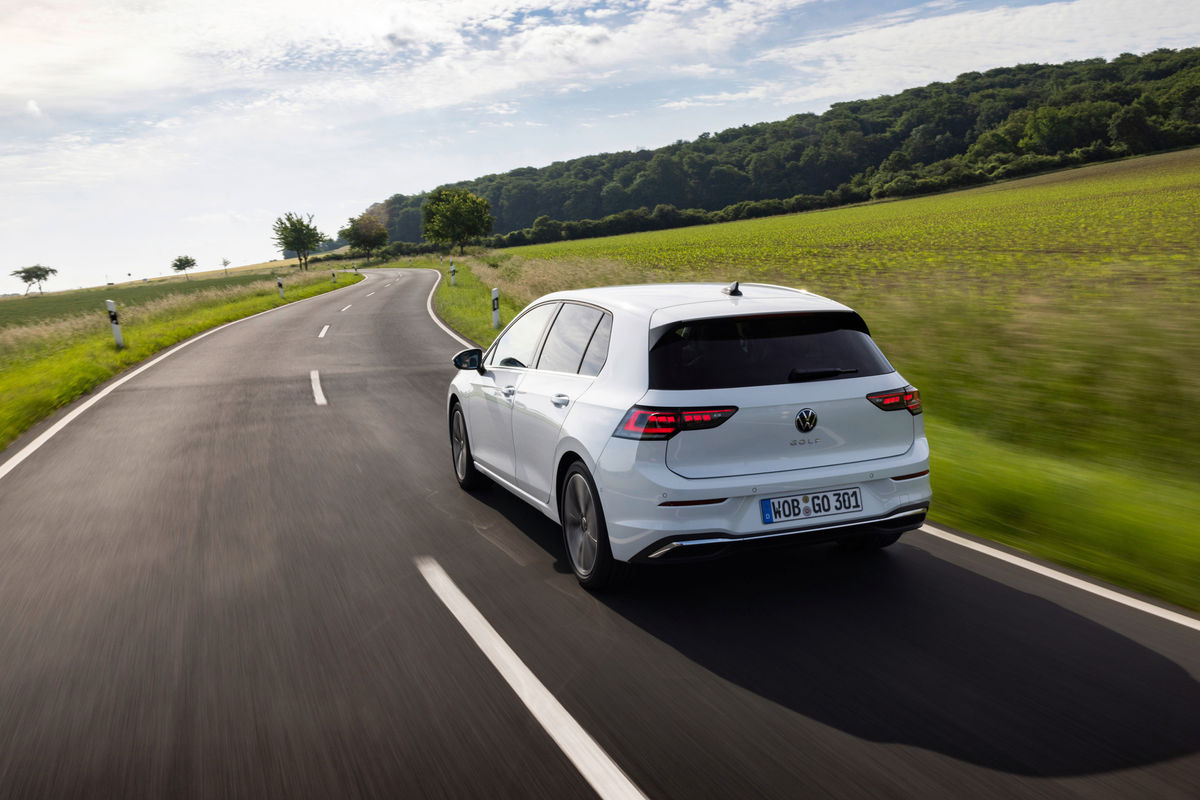
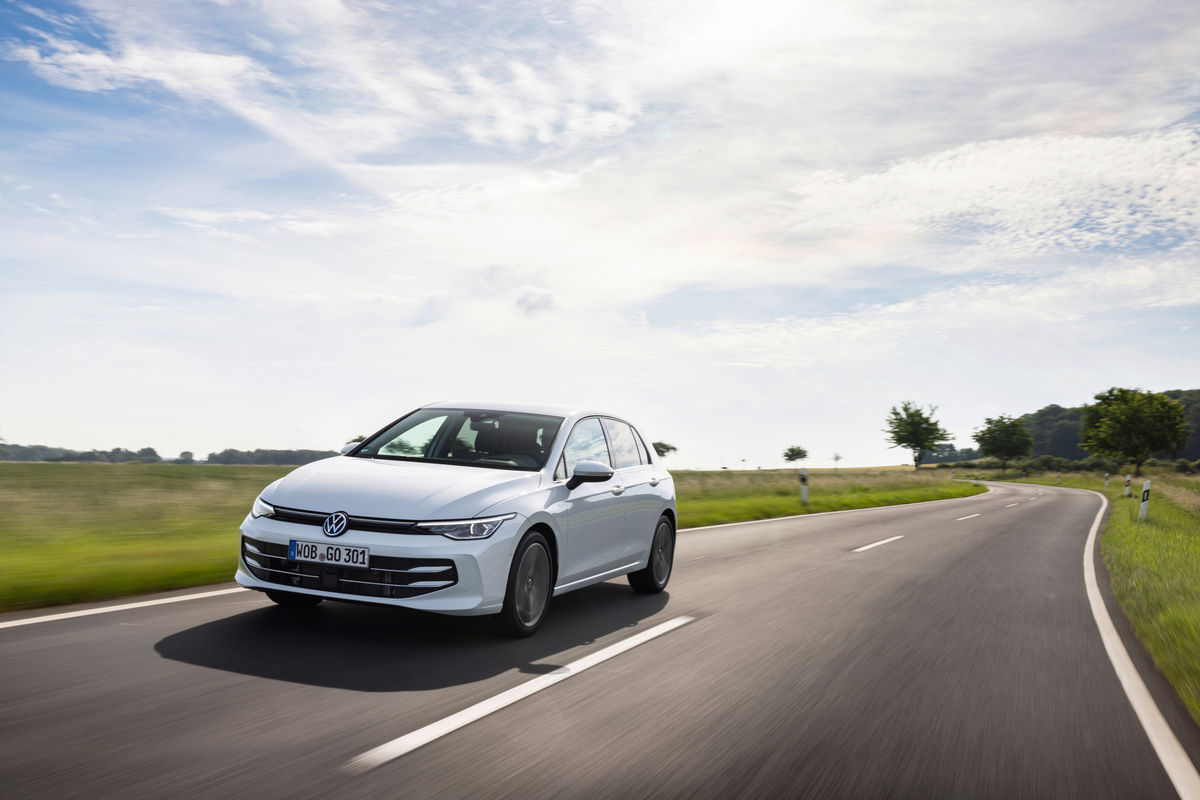
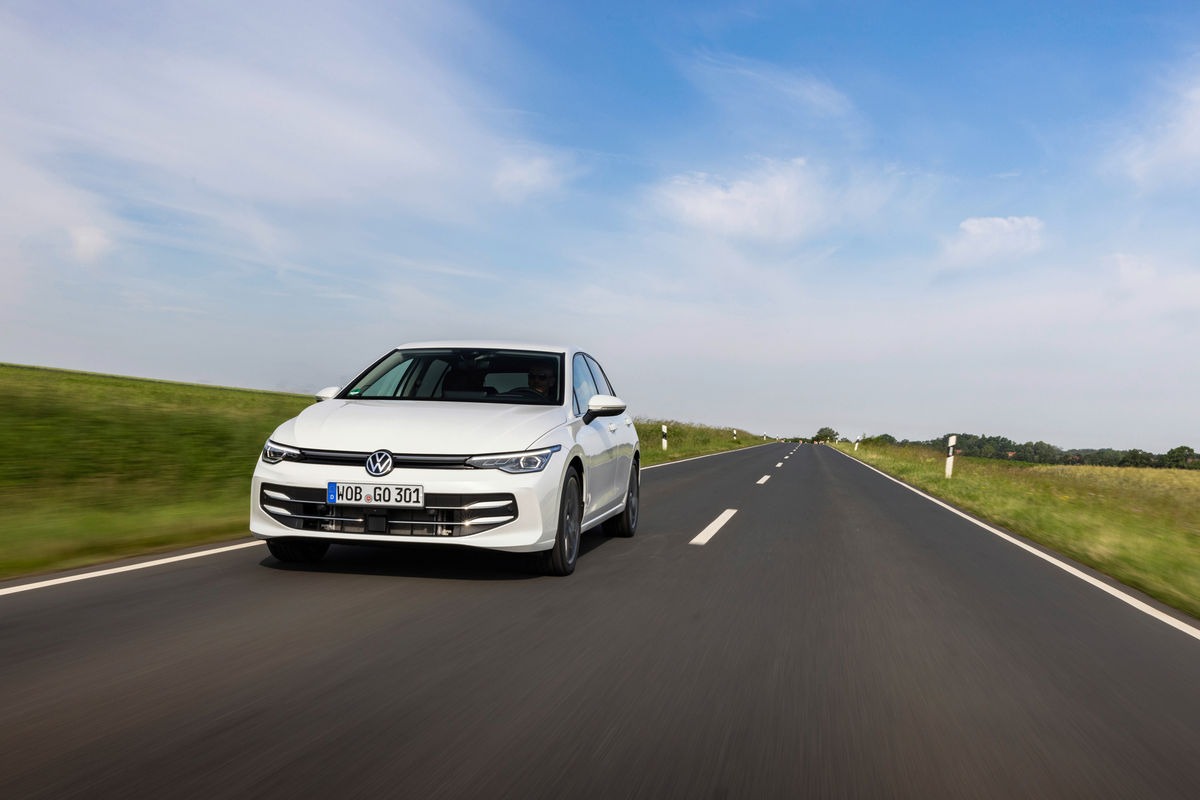
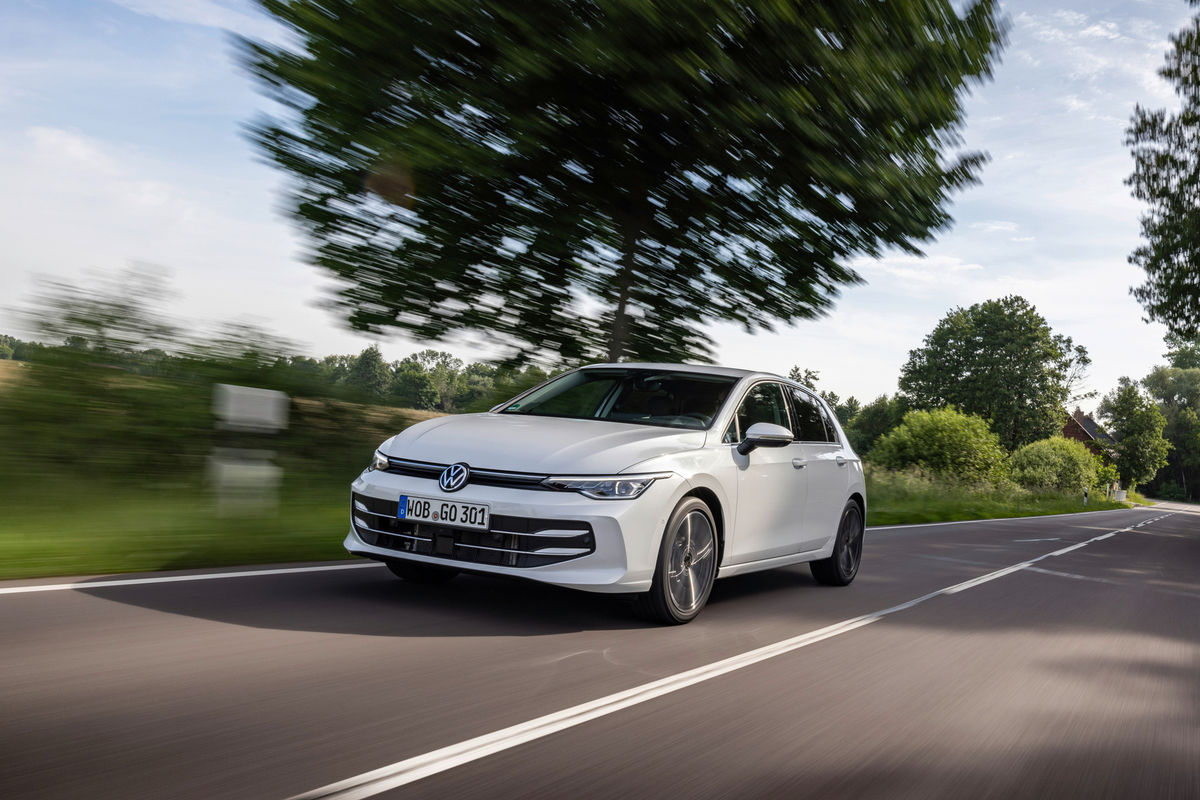
The Volkswagen Golf 1.4 is earmarked for a return to our market in the first quarter of 2025 and we can share some early details.
In an interesting turn of events, the C-segment hatchback will be returning to SA, with Volkswagen Group Africa confirming the Volkswagen Golf 1.4 in the first quarter of 2025. Yes, it will be the facelift model too, the 8.5.
South Africa has always shown preference to the performance Golf models, like the GTI and the R, and as a result, the base models were discontinued for our market. Interestingly, Volkswagen Group Africa offers the 8 GTI and R, but the facelifted 8.5 GTI is yet to be confirmed, with concerns around fuel quality.
Under the bonnet, you’ll find the 1.4-litre turbocharged 4-cylinder petrol engine and in this application, we suspect it will offer the same outputs as many of its Volkswagen siblings. With 110 kW and 250 Nm driving the front wheels via a 7-speed dual-clutch transmission, you can expect 100 kph in around 8.5 seconds. We have no confirmation on the transmissions yet, but we suspect VW will be not be offering a manual gearbox, given the popularity of a two-pedal setup.
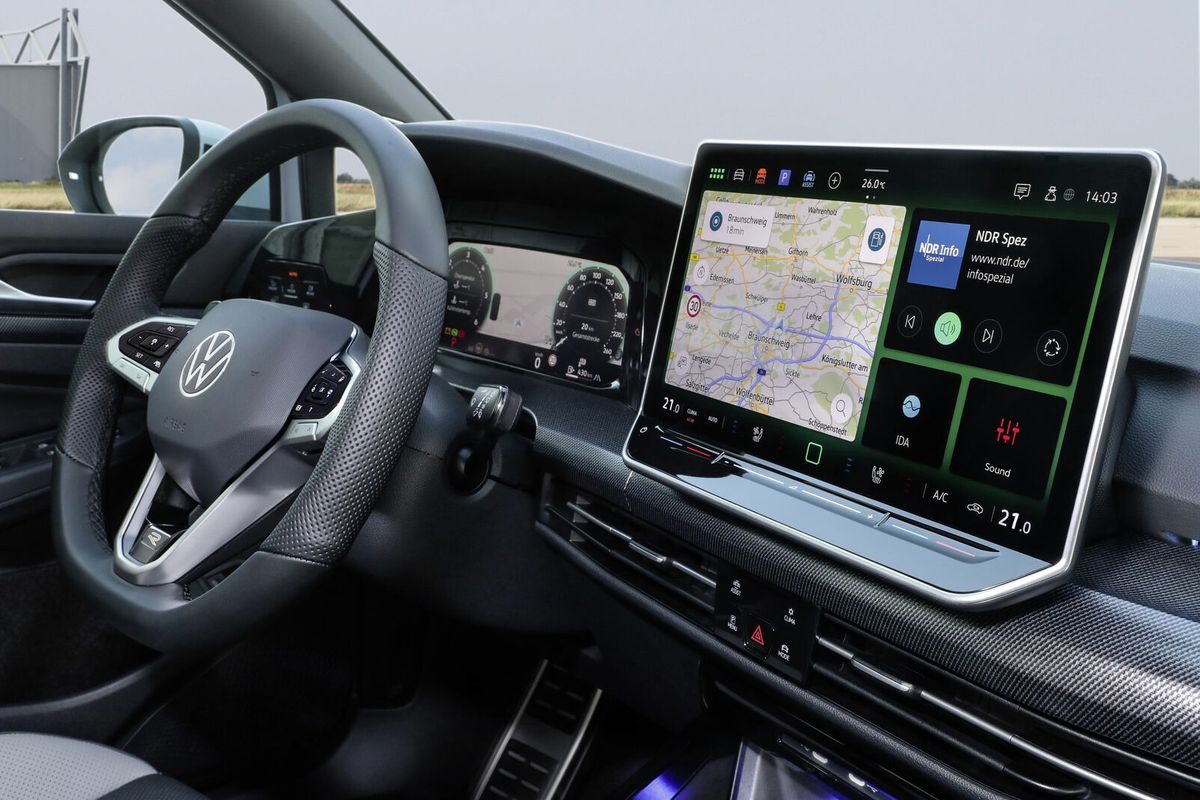
The inside of the Volkswagen Golf 8.5 receives a brand-new 4th-gen infotainment screen dubbed MIB4 with a 10.4-inch screen perched on top of the dashboard. VW claims operation is simplified and there’s an easier to use menu structure and crisper graphics. We hope the all-digital instrument cluster is confirmed for our market too. Having experienced that in theall-new 3rd-gen Volkswagen Tiguan, we can safely say this is a great system.
When will the Volkswagen Golf 1.4 arrive in SA?
Volkswagen Group Africa confirmed the Golf will be touching down in the first quarter of 2025. Pricing and local specifications will be confirmed closer to the product launch date.
The quality of Kia cars has improved significantly in the last decade and with a good reputation for reliability and aftersales support, Kia has become a respected and sought-after car brand.
What are the best Kia models to buy in 2024, you ask? Well, the answer to that question will depend on what kind of car you are looking for and how much you can afford to spend on a car.
The #CarsAwards is South Africa’s most comprehensive and authoritative motoring awards programme and recognises the best new cars currently available. Kia has 3 finalists in the 2024/25 #CarsAwards sponsored by Absa and these products represent excellent buying propositions in their respective segments.
That means that if you choose to buy any one of the #CarsAwards finalists, you are undoubtedly buying one of the best cars in South Africa.
On that note, let’s take a closer look at the best Kia models you can buy in South Africa!
The Sonet 1.5 LX automatic is powered by a naturally-aspirated 1.5-litre petrol engine that produces 84 kW and 144 Nm of torque and is paired with a Continuously Variable Transmission (CVT).
The Kia Sportage is the reigning Family Car category champion and represents an excellent buying proposition for any family car buyer.
The Sportage 1.6 CRDi GT Line Plus is powered by a 1.6-litre turbodiesel engine with 100 kW and 320 Nm of torque and is mated with a 7-speed dual-clutch transmission.
Hyundai SA ‘in discussions’ with HQ about bakkie options
With sister brand Kia set to enter the pick-up space, Hyundai SA says it’s “in discussions” with head office in Korea with a view to introducing its own bakkie…
The head of Hyundai Automotive South Africa has confirmed to Cars.co.za that the brand’s local division is “in discussions” with head office in Korea about the possibility of introducing a double-cab bakkie, though adds “there are no definite plans” for now.
Gideon Jansen van Rensburg, Chief Executive Officer (CEO) of Hyundai Automotive South Africa, was speaking to Cars.co.za during an interview conducted in a custom-built podcast booth at Naamsa’s recent South African Auto Week 2024 in Cape Town.
Hyundai Motor Group brand Kia will soon reveal its new Tasman.
With sister brand Kia set to enter the traditional double-cab bakkie space with the new Tasman, we asked Jansen van Rensburg – who has been in the role since July 2023 – whether the Hyundai marque had any plans to follow suit.
“We are in discussions with Hyundai [in] Korea to look at a pick-up. Currently, there are no definite plans, so H-100 for now is the real volume seller in our [light] commercial range, along with our Cargo vehicles – the Grand i10 Cargo and the Venue Cargo,” the executive told us.
Hyundai already has a strong LCV presence thanks to its H-100 (above) and Cargo panel vans.
“That is our commercial range for now. But, yes, we are talking with them [Hyundai’s head office in Seoul] and looking for solutions [in terms of] what they can offer us,” Jansen van Rensburg added.
So, what sort of solutions could one day be put on the table? Well, earlier rumours suggested Hyundai had no plans to offer a ladder-frame bakkie based on the Tasman, though that could, of course, change.
The current Santa Cruz is built exclusively in left-hand drive.
Interestingly, Hyundai Motor Company Australia’s Chief Operating Officer, John Kett, told media Down Under as recently as June 2024 that “it’s just a matter of time” before the Korean firm adds a right-hand-drive bakkie to its line-up.
“We’ll love the day where we can actually tell you something about it. The reality is, we know we’re getting one – it’s just a matter of time,” Kett told CarsGuide at the time, adding that “whenever it comes, it will bring incredible value”.
Rumours suggest the 2nd-gen Santa Cruz will also be built in right-hooker form.
Kett furthermore said “we so desperately realise we want one”, before intriguingly adding “we won’t see one in a diesel form”. These comments added substance to an earlier report claiming that the Santa Cruz – a unibody bakkie based on the Tucson SUV and currently produced exclusively in left-hand-drive form – could be built in both left- and right-hooker guise in its 2nd generation. This 2nd iteration could apparently hit the road as early as 2026.
Of course, another option for Hyundai is a fully electric bakkie of some kind. Indeed, the Korean firm has applied to trademark the Ioniq T7 and Ioniq T10 badges (including right here in South Africa), which reports suggest could be applied to some form of battery-powered pick-ups.
The Creta STC concept revealed way back in 2016.
Furthermore, a March 2024 report out of South America claimed Hyundai was developing a new small bakkie based on the Creta, and thus set to be positioned below the aforementioned Santa Cruz. According to Brazilian media, this rumoured model could be released in initial markets “in 2026 or 2027”.
Isuzu D-Max facelift and ‘sexier’ MU-X set for 2025
The head of Isuzu Motors South Africa says the facelifted D-Max bakkie and a “sexier” version of the MU-X adventure SUV will be introduced within the next 12 months…
Billy Tom, Isuzu Motors South Africa’s CEO and Managing Director, says the local market will see the introduction of the facelifted D-Max and a “sexier” version of the MU-X within the next year.
Speaking during an interview conducted in Cars.co.za’s custom-built podcast booth at Naamsa’s recent South African Auto Week 2024 in Cape Town, Tom suggested the D-Max – produced for the local market at Isuzu’s Struandale plant in the Eastern Cape – would benefit from a refresh in 2025, as would the imported MU-X.
The Thai-spec RS version of the facelifted Isuzu MU-X.
“In the next 12 months, we will be doing a mid-cycle announcement on the D-Max, where we will do a facelift. On the MU-X, also – I mean, there is a new, sexier MU-X. Watch this space,” said Tom, who also serves as President of Naamsa.
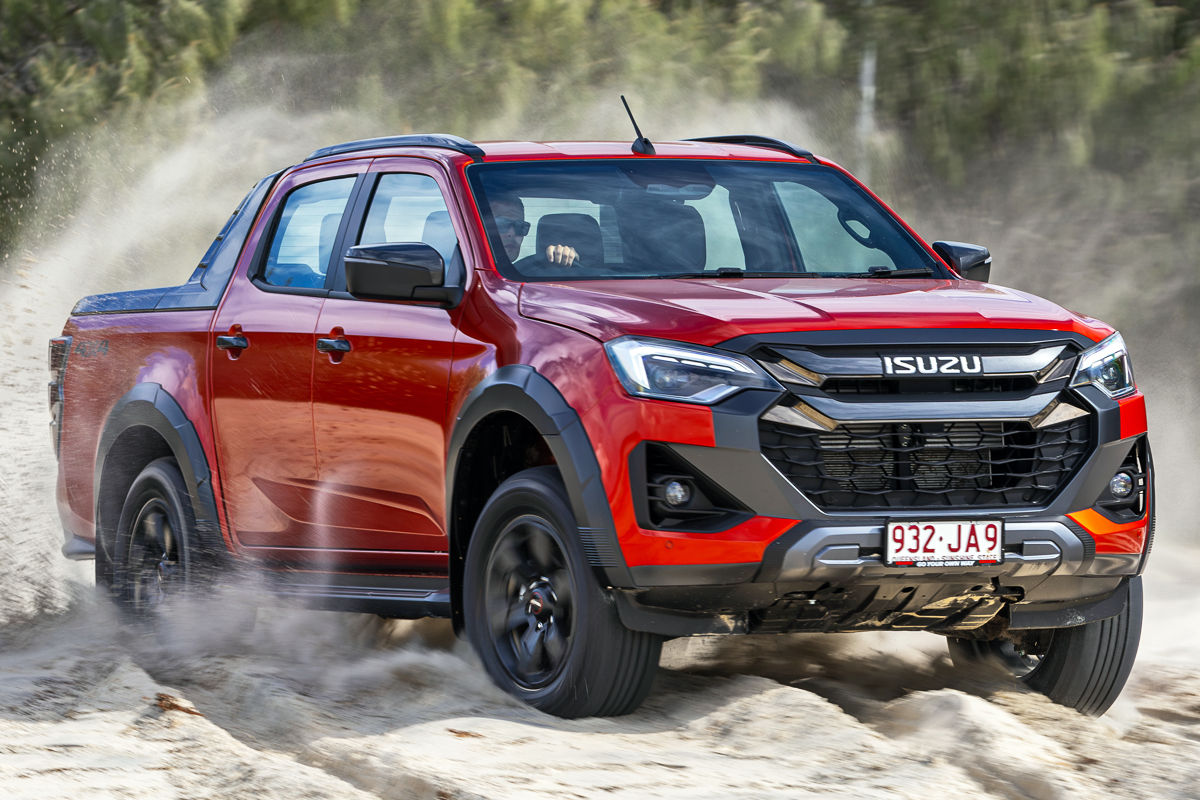
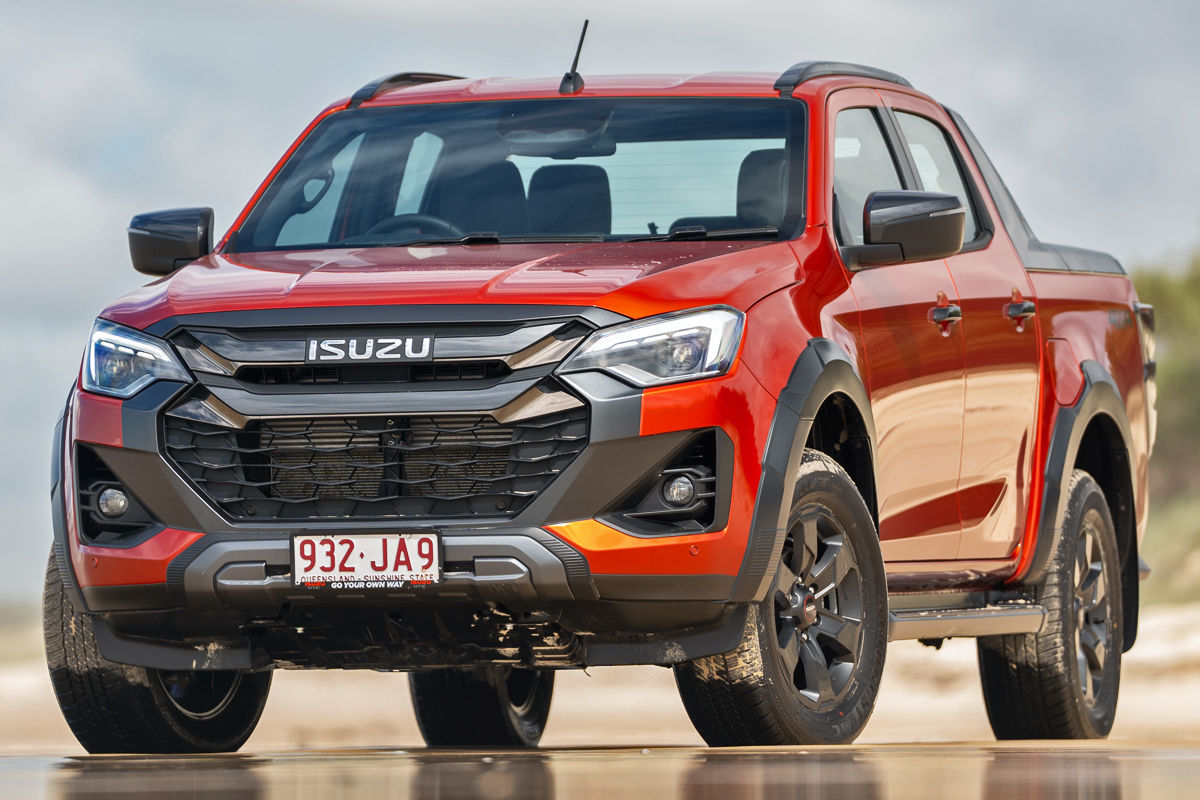
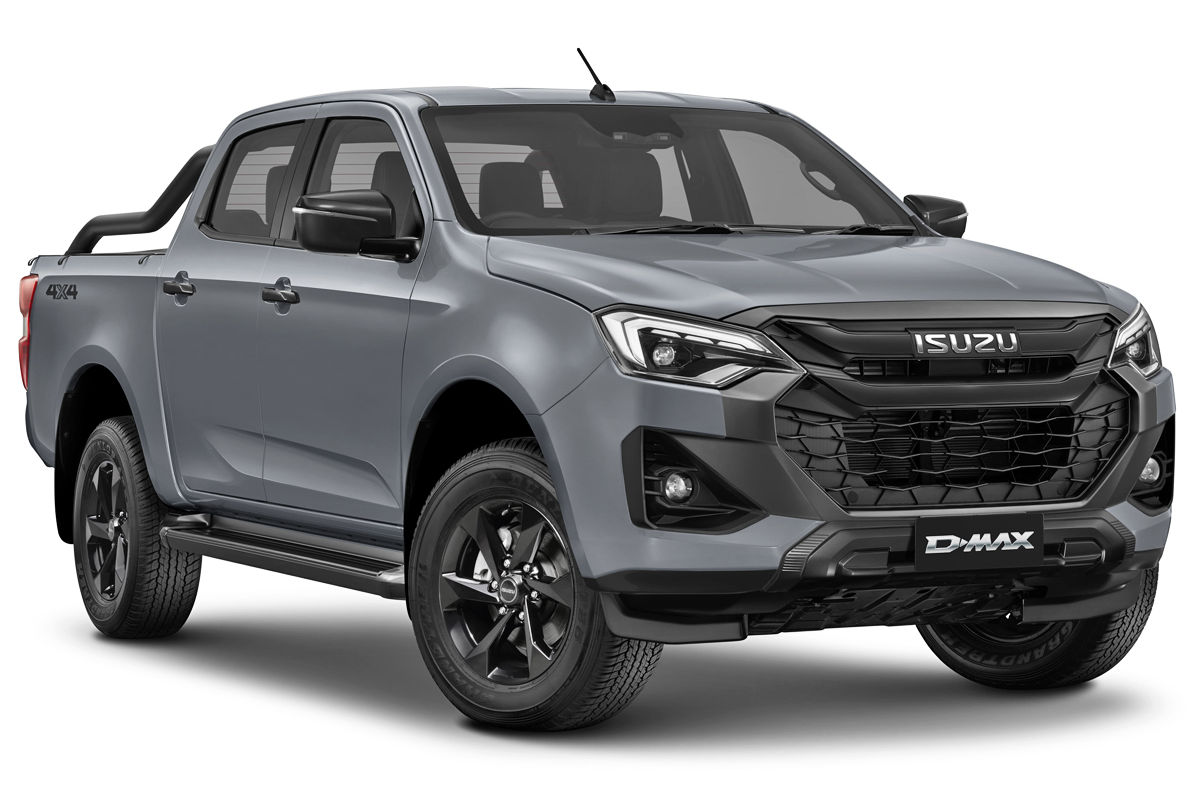
Of course, the facelifted D-Max was revealed in Thailand back in October 2023, billed as a “significantly improved” version of the Japanese bakkie (which remains SA’s 3rd most popular bakkie, behind the likewise locally built Toyota Hilux and Ford Ranger), complete with revised styling, an updated interior and various added features.
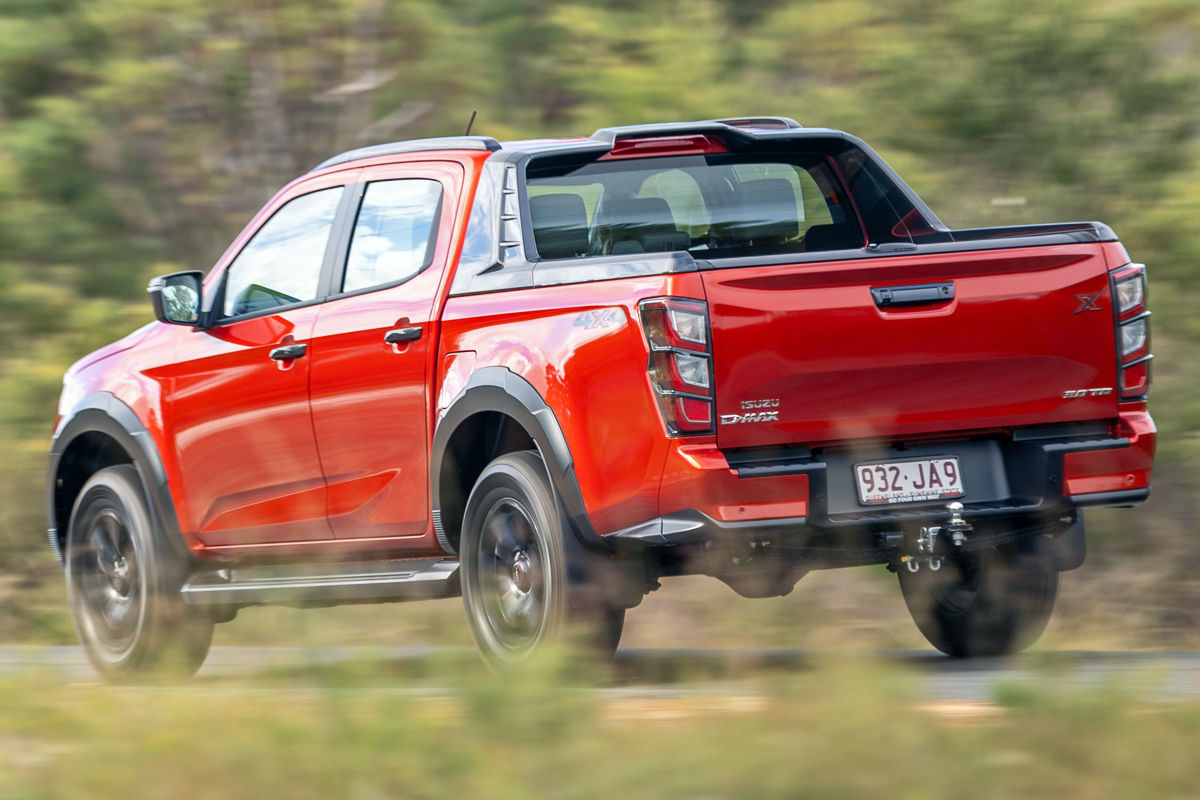
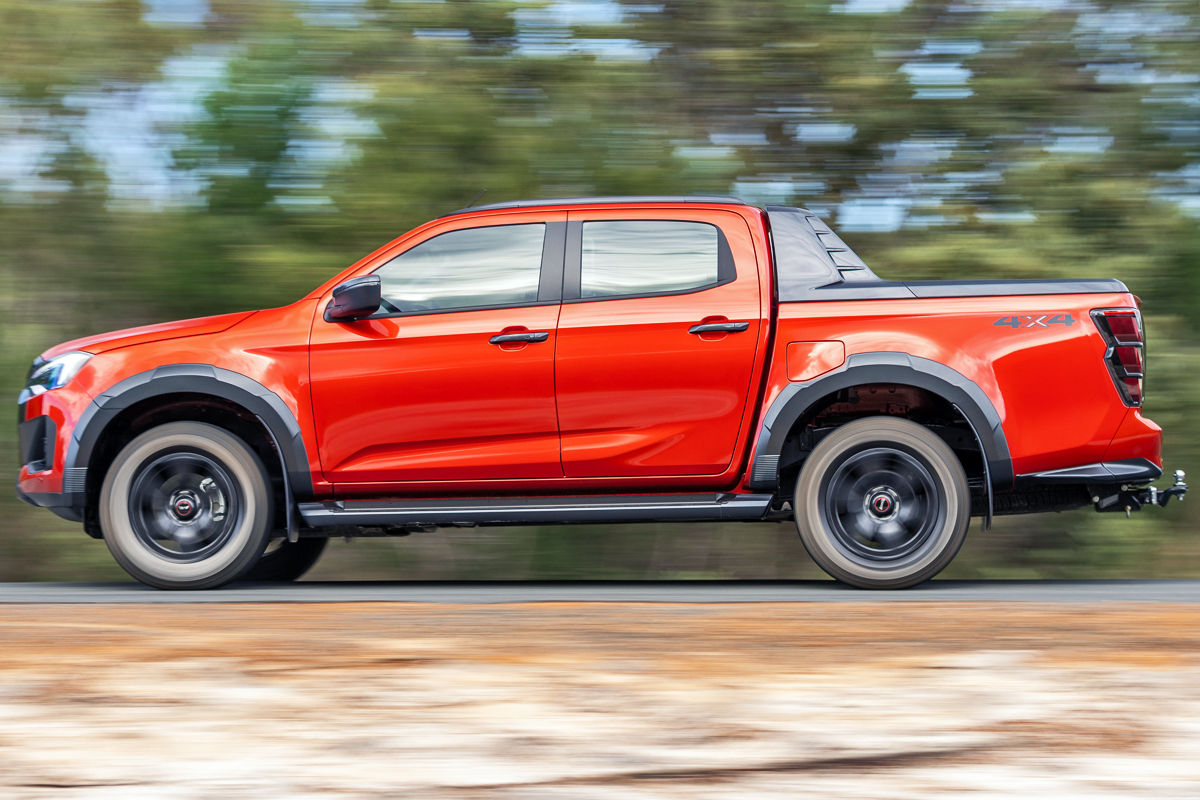
The facelifted Isuzu D-Max, seen here in Australian specification.
As a reminder, though the RG-generation D-Max launched in South Africa in April 2022 – with production finally commencing at Struandale after a lengthy delay at least partially attributed to the global pandemic – this model has been available in markets such as Thailand (where it is also built) since late in 2019.
The Thai-spec version of the facelifted D-Max gains revised styling up front, including a “power bulge” for the bonnet and a “higher and wider” grille. The headlamps have been redesigned and now feature a new lighting signature, while the taillights gain a 3-level “L-shaped” motif courtesy of LED tubes. New 18-inch alloy wheels debut as well.
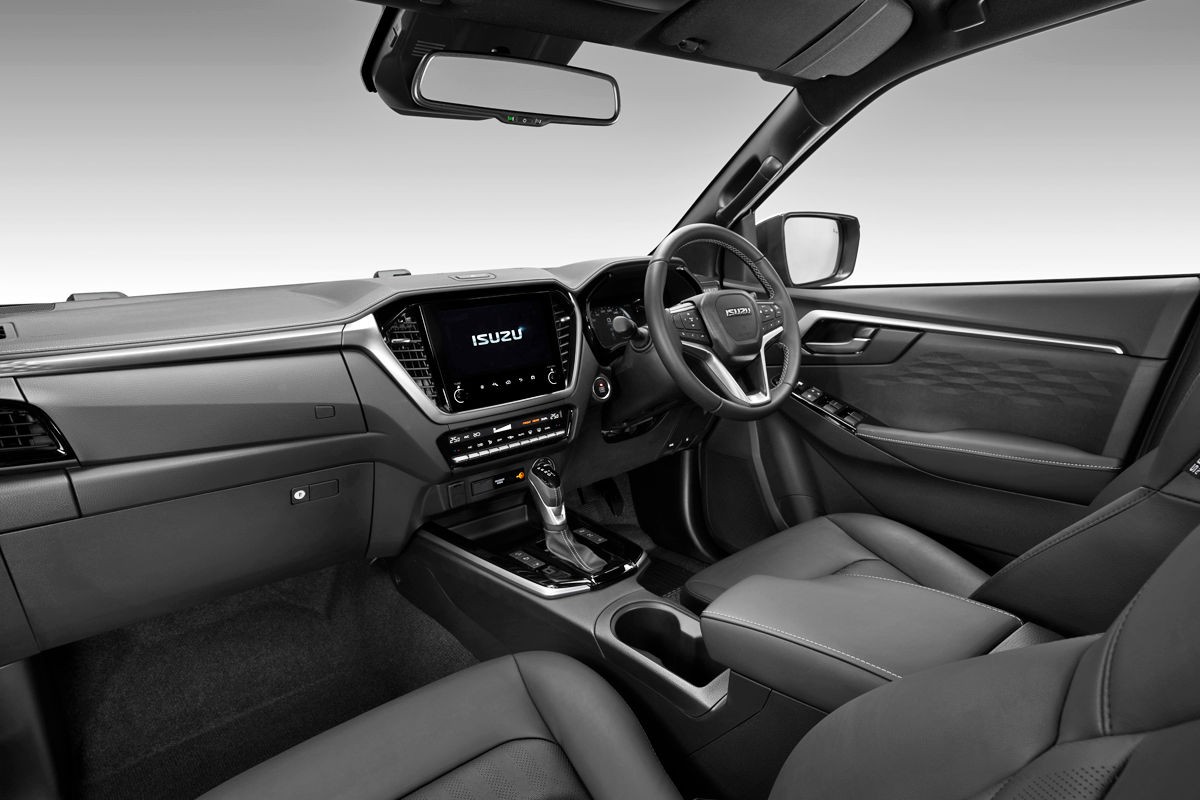
Inside, the instrument cluster has been revised (and enlarged to a diameter of 7 inches), while Isuzu claims the infotainment display features “greater user-friendliness” than before thanks to an updated interface and the addition of a physical volume dial (as opposed to buttons).
No changes have been made to the powertrain, so high-spec D-Max derivatives still employ a 3.0-litre, 4-cylinder turbodiesel engine generating 140 kW and 450 Nm. For the record, the pre-facelift D-Max still manufactured locally is also available with a 1.9-litre oil-burner, which offers 110 kW and 350 Nm. Transmission options on both engines comprise a 6-speed manual gearbox or an automatic with the same number of cogs.
Unveiled in Thailand, the refreshed MU-X is now offered in flagship RS trim.
What about the updated MU-X? Well, the facelifted version of the 7-seater adventure SUV was unveiled in Thailand – the country from which Isuzu Motors SA imports this product – in June 2024, complete with a bold new RS flagship derivative. From what we understand, this RS version is the “sexier” MU-X to which Tom was referring, though it may well end up wearing a different badge in Mzansi.
Exterior styling changes for the refreshed MU-X are led by an aggressive new front-end design, complete with revised headlamps, a sporty front bumper and an updated grille. The taillamps, meanwhile, gain a new lighting signature and are now connected by a full-width trim piece, while fresh alloy-wheel designs have been rolled out, too.
The model-specific grille on the RS derivative.
The top-spec RS grade gains a model-specific grille design as well as black finishes for items such as the wheel-arch extensions, side-mirror caps, roof and 20-inch alloys. Of course, there’s also the requisite smattering of “RS” badges, which have been applied to the grille, front fenders and tailgate.
Look out for more details – hopefully including more specific timelines – once we’ve crossed into 2025…
While you can no longer buy an Audi TT new, there are a few tantalising examples of the 3rd-gen model on the used market. Here’s what you need to know when shopping for a 2nd-hand version of one of Ingolstadt’s most recognisable cars…
The Audi TT is no more. After 25 years (and 3 generations of the model), during which Audi produced exactly 662 762 units of the TT, the Ingolstadt-based brand called time on this nameplate late in 2023, when the final example rolled off the Győr production line in Hungary.
Since there’s seemingly no direct replacement in the pipeline (though Audi is reportedly mulling a fully electric model that could play a similar role in the future), the next best thing is – you guessed it – a lightly used 3rd-gen model. For the record, we’re going to focus on the coupe body style in this buyer’s guide, since a roadster variant was available locally only after the facelift and exclusively in RS guise.
Mk3 styling stayed true to the iconic TT silhouette.
The TT badge (which stands for “Tourist Trophy”) was introduced at the 1995 Frankfurt Motor Show, where it was applied to a sleekly styled concept car. Around 3 years later, the production version (codenamed Type 8N) was unveiled, marking the start of a run that would last a quarter of a century.
In 2006, the 2nd-gen model (Type 8J) hit the market and the 3rd-gen TT (Type FV/8S) debuted in 2014. The 3rd iteration was based on the Volkswagen Group’s ubiquitous MQB platform, thus again sharing its underpinnings with the VW Golf and Audi A3 of the era (just as it did in the opening 2 generations).
Audi TT model line-up in South Africa
The 3rd-gen TT launched in SA in 4-cylinder form.
The 3rd-generation Audi TT was revealed at the Geneva International Motor Show in March 2014. Just under a year later, in February 2015, the coupe version of the 3rd-gen model arrived in South Africa.
At launch, the TT shipped standard with a 2.0-litre, 4-cylinder turbopetrol engine that generated 169 kW (matching the peak power of the Volkswagen Golf 7 GTI Performance Pack of the time) and 370 Nm of torque. The front-wheel-drive variant employed a 7-speed dual-clutch automatic transmission, while the all-paw derivative (bearing the “quattro” badge) used a 6-speed direct-shift gearbox (also an auto).
TT 2.0 TFSI (169 kW/370 Nm) S tronic
TT 2.0 TFSI (169 kW/370 Nm) S tronic quattro
By October 2015, the Audi TT S coupe had joined the local line-up, powered by an uprated version of the familiar 2.0 TFSI engine. In the S-badged TT, this motor sent 210 kW and 380 Nm to all 4 wheels (also via a 6-speed dual-clutch cog-swapper), while gaining a model-specific grille, quad tailpipes, an aluminium-look finish for the side-mirror caps and a 10-mm drop in ride height.
The pre-facelift TT S generated 210 kW.
Early in the 2nd half of 2017, which was around the time that Audi switched to a fresh model-naming strategy, the 1.8 TFSI (aka TT 40 TFSI) quietly arrived in Mzansi. Serving as the new entry point to the TT range, this derivative used the VW Group’s turbocharged 1.8-litre, 4-cylinder petrol mill, which sent 132 kW and 250 Nm to the front wheels through a 7-speed double-clutch automatic transmission.
What about the other end of the line-up? Well, South Africa had to wait until November 2017 to finally welcome the flagship TT RS coupe, a derivative defined by its spectacular powertrain. The full-fat RS version of the TT boasted Audi Sport’s turbocharged 2.5-litre, 5-cylinder engine, which delivered a whopping 294 kW and 480 Nm to all 4 corners via a 7-speed dual-clutch transmission.
The flagship TT RS was defined by its 5-cylinder engine.
In Mzansi, this version of the TT RS was offered with either a fixed rear wing or a retractable -spoiler, along with model-specific tuning for the suspension and steering, plus aggressive exterior styling and an RS sports exhaust system (the latter culminating in 2 oval tailpipes). Options included 20-inch forged lightweight wheels (upsized from the standard 19-inch alloys), carbon-ceramic brakes and adaptive dampers.
At some point in the 2nd quarter of 2018, Audi South Africa quietly axed the quattro version of the 2.0-litre coupe. By August 2019, however, the subtly facelifted coupe had made local landfall, with the range rationalised to the front-driven, since-renamed TT 45 TFSI – again powered by a 169 kW/370 Nm 2.0-litre 4-cylinder engine – and the TT S. The latter model’s EA888 engine, however, had its peak power hiked to 228 kW (max torque remained 380 Nm), though stuck with the 6-speed dual-clutch gearbox.
The TT RS coupe in facelifted form.
The final change to the local Audi TT portfolio came in November 2020, when the refreshed version of the TT RS – which the Ingolstadt-based firm described as having “never been this masculine” – blasted into Mzansi. While the potent 5-cylinder powertrain was untouched, Audi SA opted to offer the flagship in both coupe and roadster form from this point, while also switching to a fixed rear wing as standard.
Interestingly, the TT 45 TFSI fell away around this time. Therefore, for the next 3-plus years, the local Audi TT portfolio comprised only the S- and RS-badged models. Production in Hungary ended in November 2023, though the nameplate remained on Audi SA’s price lists until early in 2024.
What are the advantages of an Audi TT?
The 2.5 TFSI motor offered oodles of pace (and a wonderful soundtrack!).
Sufficiently quick in all guises: Virtually all engine options available in South Africa during the 3rd-gen model’s almost decade-long lifecycle facilitated at least relatively rapid progress. Of course, the (short-lived) TT 40 TFSI was the tardiest of the bunch, though still managed to see off the 0-100-kph dash in a fairly brisk 7.0 sec.
The front-driven 2.0 TFSI coupe (later known as the TT 45 TFSI) could reportedly complete the 0-100 kph sprint in 5.9 sec, a number that fell to 5.3 in the case of the all-paw version. Of course, the TT S was even swifter to 3 figures, taking a claimed 4.8 sec in 210-kW pre-facelift guise, but (somewhat curiously) 4.9 sec in refreshed 228-kW form.
A look at the pre-facelift cabin.
Meanwhile, the blisteringly quick TT RS coupe – replete with a provocative 5-cylinder soundtrack – was a real firecracker, that, according to Audi, could see off the 0-100-kph sprint in a supercar-baiting 3.7 sec. Audi. Despite weight and stiffness penalties, the TT RS Roadster managed a sub-4-sec claimed time!
Impeccable cabin quality and ergonomics: The 3rd-gen Audi TT’s cabin was an absolute study in high-quality materials and well-considered, driver-centric design. The TT’s dashboard drew inspiration from the 2nd-gen R8‘s fascia – it was devoid of any distracting touchscreens and delivered crucial information directly to the pilot via a 12.3-inch digital instrument cluster (dubbed the Audi Virtual Cockpit).
Air-conditioning controls cleverly integrated into the vent design.
The driver could alter this highly configurable display using Audi’s intuitive rotary controller, though the integrated touchpad atop the dial was a bit fiddly. The controls for the auto aircon system, meanwhile, were cleverly positioned directly on the 3 centrally sited air vents, each complete with a neat digital display. In short, the TT cabin was both very well screwed together and an ergonomic wonder.
Instantly recognisable shape: Right from the debut of the original way back in 1998, Audi stood accused of placing the TT’s focus firmly on style over substance. As such, the Ingolstadt-based brand’s entry-level sportscar was long pigeonholed as little more than a chic vehicle designed for so-called “posers” (even drawing the dreaded “hairdresser’s car” label).
Instantly recognisable shape.
Regardless of your feelings on the topic, there’s no denying the classic TT silhouette – inspired by the less-is-more Bauhaus design movement – was one of Audi’s most recognisable shapes.
While the 3rd iteration evolved from the 2nd-gen model, it retained key design elements of the original, including that distinctive high beltline. As such, there was simply no mistaking the TT for anything else.
What are the disadvantages of an Audi TT?
The TT was based on the same MQB platform as the Golf and A3 of the era.
Not the most dynamically gifted: While the 3rd-gen TT was certainly a sharper handler than the 1st-gen model (and indeed the best TT to drive of the 3), there was no escaping the limitations of its relatively humble underpinnings. The resulting tendency towards understeer necessitated the “slow in, fast out” approach to corners often required with quick Audi models, while the light steering was a little lifeless.
As such, the somewhat nose-heavy TT was predictable rather than playful – and, in turn, wasn’t the most involving steer. Still, the all-paw versions offered lofty levels of grip, while the RS’ 5-pot soundtrack – let alone stunning off-the-line acceleration – arguably compensated for any lack of dynamic sparkle.
Not much space in the back…
Cramped rear quarters: While Audi described the hardtop TT as a “2+2”, even that was a little generous. Yes, the cramped rear seats were not suited to anyone taller than a small child, meaning it was best to treat this model as a 2-seater. Still, that’s a criticism that could be levelled at several contenders in this segment. In addition, since dropping the rear bench more than doubled the luggage compartment’s already useful 305-litre capacity, the TT was perhaps a little more versatile than many thought.
Poor water-pump housing design: The 2.0-litre (EA888) engine used in several of the SA-spec TT derivatives suffered from a well-known weakness: a poor water-pump housing design. The water pump and thermostat (plus integrated sensors) were packaged inside a plastic housing, which was prone to early failure, unfortunately. This might initially have presented as a minor coolant leak, before developing into a more substantial problem. If left unchecked, it could lead to overheating of the engine.
How much is a used Audi TT in South Africa?
Cabriolet models are few and far between on the used market.
The Audi TT shipped with a 1-year/unlimited mileage warranty and a 5-year/100 000 km Audi Freeway (maintenance) Plan. This model was available with all manner of optional extras – from a Bang & Olufsen premium audio system to adaptive dampers and various styling packages – so make sure to take this into account when comparing vehicles on the used market.
Of the used 3rd-gen TT units listed on Cars.co.za at the time of writing, just 10% were roadsters. The listings were spread relatively evenly over the 10 model years, though 2021 was the most popular by a small margin. About a quarter of listings showed more than 100 000 km on their respective odometers.
Below R350 000: Options were fairly limited below R350 000, where we discovered a couple of front-wheel-drive 2.0 TFSI units (both from the opening model year) and a couple more 1.8 TFSI examples (from 2017). All had done more than 100 000 km.
From R350 000 to R500 000: There was a little more choice between these pricing bookends (with the front-driven 2.0 TFSI being the most common variant), though only pre-facelift units were on offer here. That said, we even found a seemingly clean TT S in this space.
From R500 000 to R800 000: Despite this price bracket spanning a considerable R300 000, we discovered only a handful of units in this space. Interestingly, all were S-badged derivatives, most offered in facelifted form. Indicated mileage, though, tended to fall below 50 000 km.
R800 000 and up: Unsurprisingly, spending more than R800 000 would quite easily get you into a facelifted TT RS, in either coupe or roadster guise. The most expensive listing we unearthed was a highly specced 2024 TT RS Roadster with 9 000 km on the clock and listed for R1 449 995 (for the record, the last list price we saw new was R1 335 600).
Which Audi TT should I buy?
The Mk3 TT range covered several bases.
So, which Audi TT derivative should you choose? Well, the answer will depend largely on what you desire from the ownership experience (and, of course, on your budget). Thankfully, even though we didn’t receive the oil-burning 2.0 TDI engine in South Africa, the TT range covers several bases.
The front-wheel-drive 1.8- and 2.0 TFSI models (aka 40- and 45 TFSI), for instance, deliver more than sufficient grunt for most needs, particularly when it comes to everyday driving. The TT S, meanwhile, offers a pleasing middle ground in terms of outputs and day-to-day comfort, as well as extra wet-weather security courtesy of the all-wheel-drive system.
Decade-old exterior design has aged well.
Those in the market for a performance car might find it difficult to ignore both the aural charm and the ballistic acceleration delivered by the mighty 2.5-litre 5-cylinder motor in the TT RS. Of course, landing an RS-badged example – whether in coupe or roadster guise – requires a considerable budget (even if it scores well in the performance bang-for-buck department).
Is the Audi TT a smart used buy?
Relevant info was delivered to the driver via a highly configurable digital instrument cluster.
During its lengthy run on the local new-vehicle market, the 3rd-gen Audi TT had several rivals, though most were pitched against the top-spec RS derivatives. That said, the Peugeot RCZ – perhaps the closest thing to the Audi coupe in both proportions and dimensions – offered competition towards the bottom of the range and was likewise built on a front-wheel-drive platform.
More traditional (though rear-wheel-drive) challengers came in the form of the R172-series Mercedes-Benz SLK/SLC and the G29-series BMW Z4, along with Porsche’s razor-sharp 718 Cayman and Boxster twins. Other rear-driven options included the Jaguar F-Type (which was furthermore offered in all-paw guise), Nissan 370Z and Toyota GR Supra.
Most versions of the TT were quick without being intimidating to drive fast.
In most forms, the Type FV/8 Audi TT was a highly capable machine – more so than many gave it credit for and thus largely undeserving of the “hairdresser’s car” slur – but there was no denying the fact the majority of its competitors were more involving to drive. As such, most sportscar alternatives delivered palpably higher levels of driver satisfaction, but that won’t matter to each and every luxury-car buyer.
There’s something to be said for a rapid coupe that isn’t exceedingly intimidating to drive fast (and undoubtedly a market for such a thing). Add timeless exterior styling and easily one of the best interiors in the business, and you can see why we feel it’s a great pity that Audi shelved the TT as we know it.
The Mustang Dark Horse takes the American muscle car concept up a notch and the good news is that it’s confirmed for SA! Here’s all you need to know.
What’s a Dark Horse?
Following on from the standard 7th-generation Ford Mustang GT will be this Mustang Dark Horse, which the Blue Oval claims will be a ‘street and track-capable performance Mustang,’ so we’re expecting a bit more firepower and aggression.
For this derivative, the 5.0-litre naturally-aspirated V8 engine has been upgraded to make a bit more power than the standard car, and outputs of 334 kW and 540 Nm (6 kW more than the GT) are claimed. As always, the Mustang is rear-wheel driven and features a 10-speed automatic transmission. It’s not just about a bit more power as there are enhancements to the aerodynamics and handling setup too.
Visually, you can spot a Dark Horse with bigger grille, darkened LED headlamps, fixed rear wing and darkened exhaust tips. There’s a special new Mustang Dark Horse badge too and customers have the choice of a unique Blue Ember metallic paint.
The under-the-skin work is impressive with unique chassis tuning, larger sway bars, heavy duty front shocks and upgraded brakes, in the form of 19-inch Brembos with six pistons. The vehicle retains its MagneRide adapative dampers and features a Torsen rear differential, and the Dark Horse rides on 19-inch wheels wrapped in Pirelli P Zero rubber.
Inside the cabin, there’s a flat-bottom steering wheel and plenty of blue accents dotted about. There’s a SYNC4 digital instrument cluster and infotainment screen and B&O sound system with 12 speakers as well.
How much does the Mustang Dark Horse cost in South Africa?
Mustang Dark Horse 5.0L V8 10AT R1 500 000
This special Mustang includes a 6-year/90 000 km Ford Optional Service Plan, four-year/120 000 km Ford warranty, four-year/unlimited distance Roadside Assistance and five-year/unlimited distance corrosion warranty.
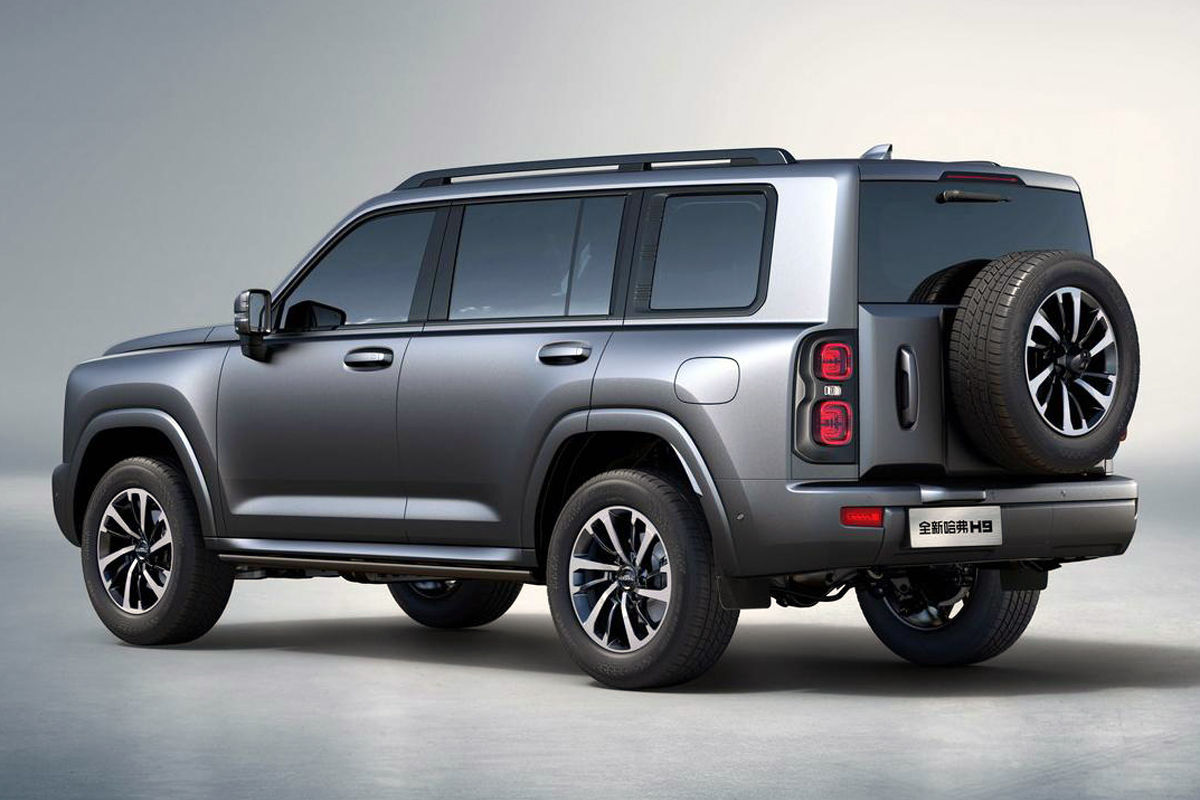
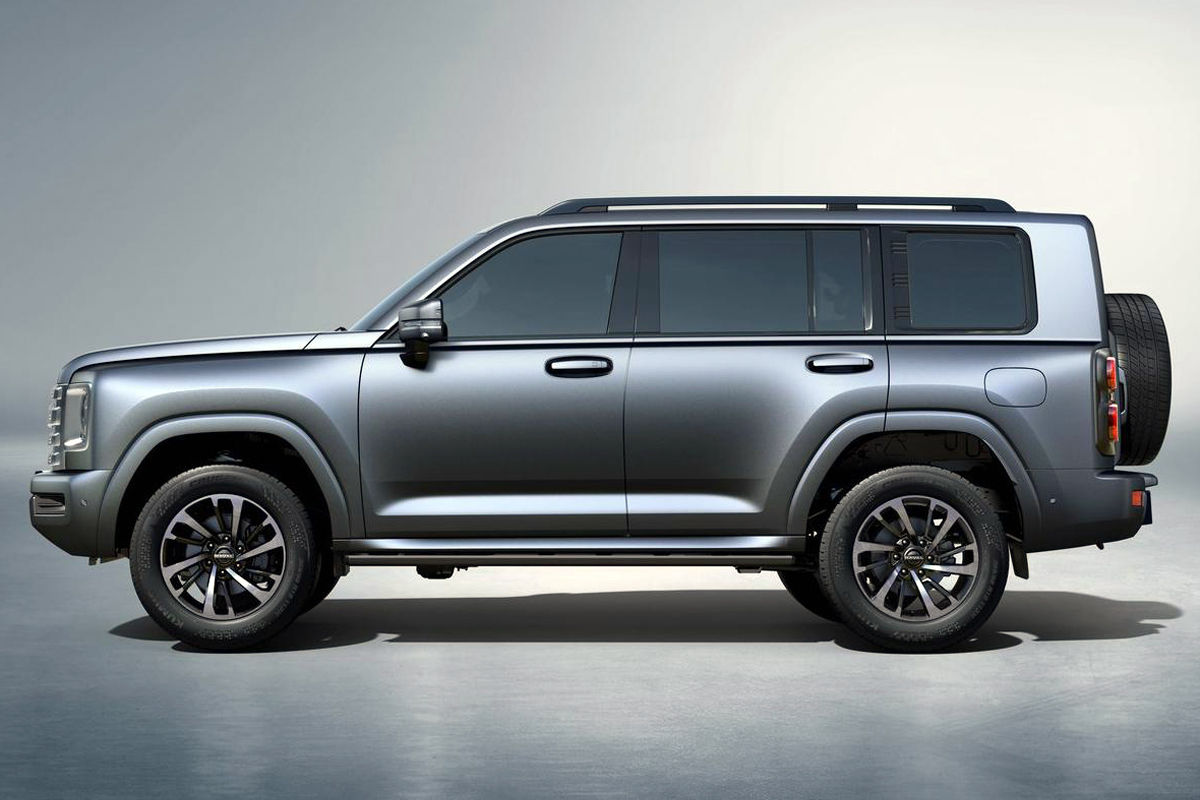
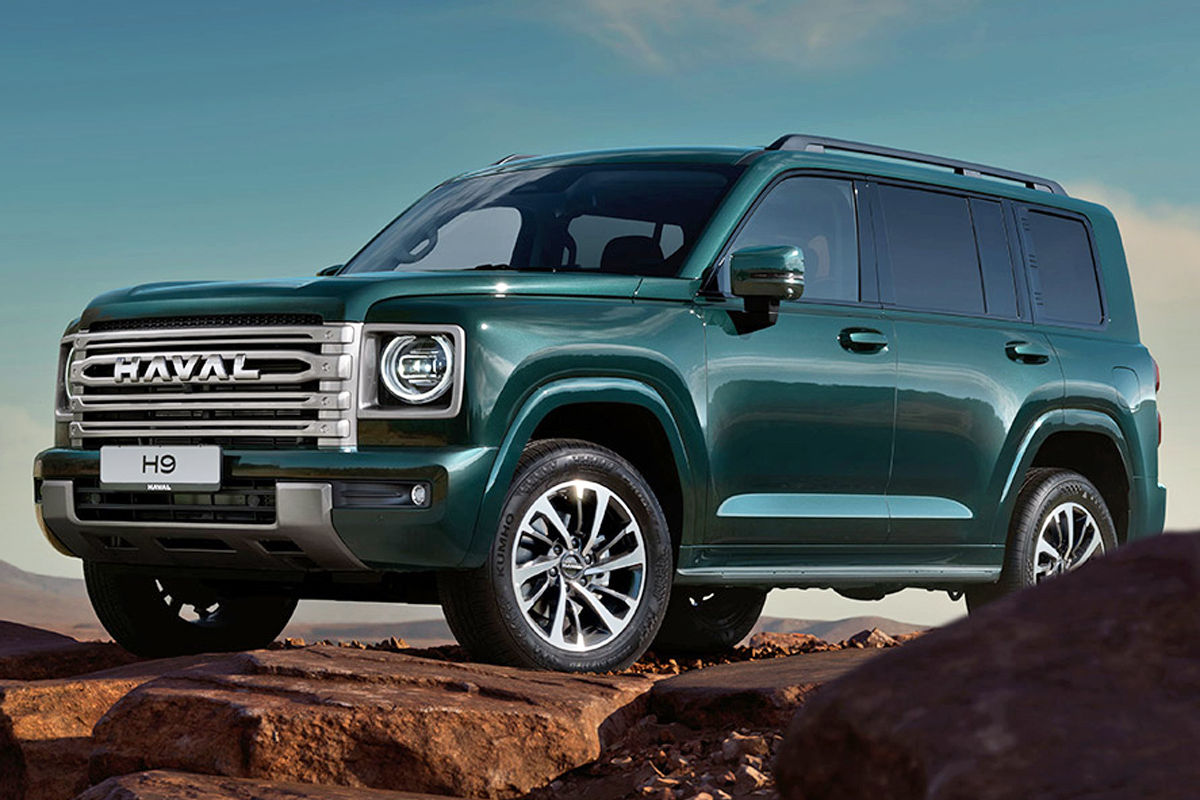
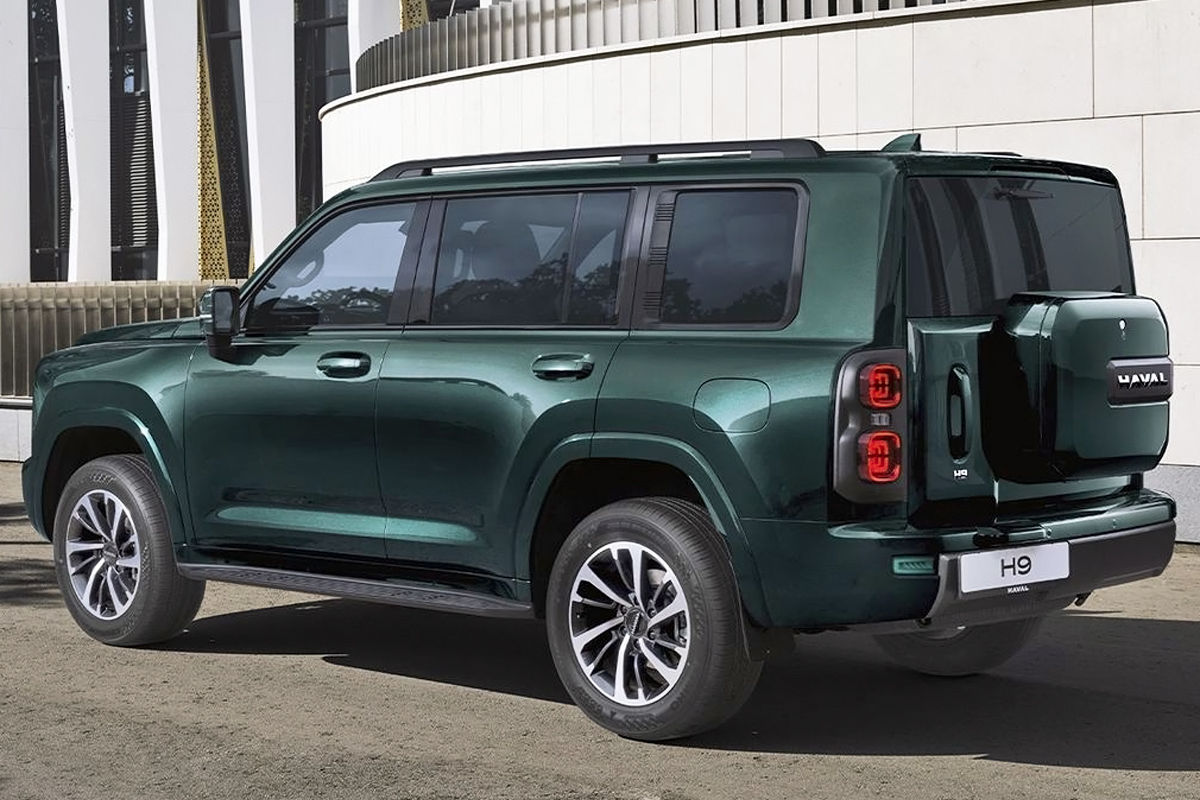
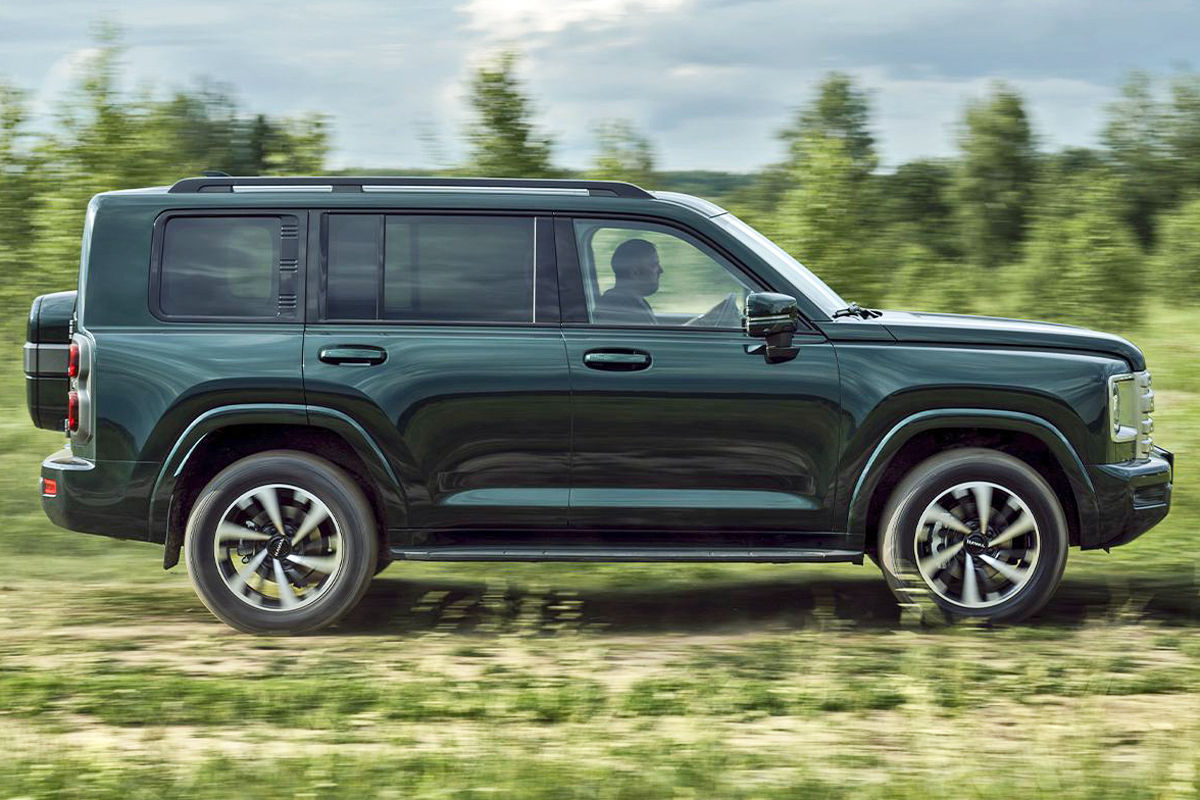
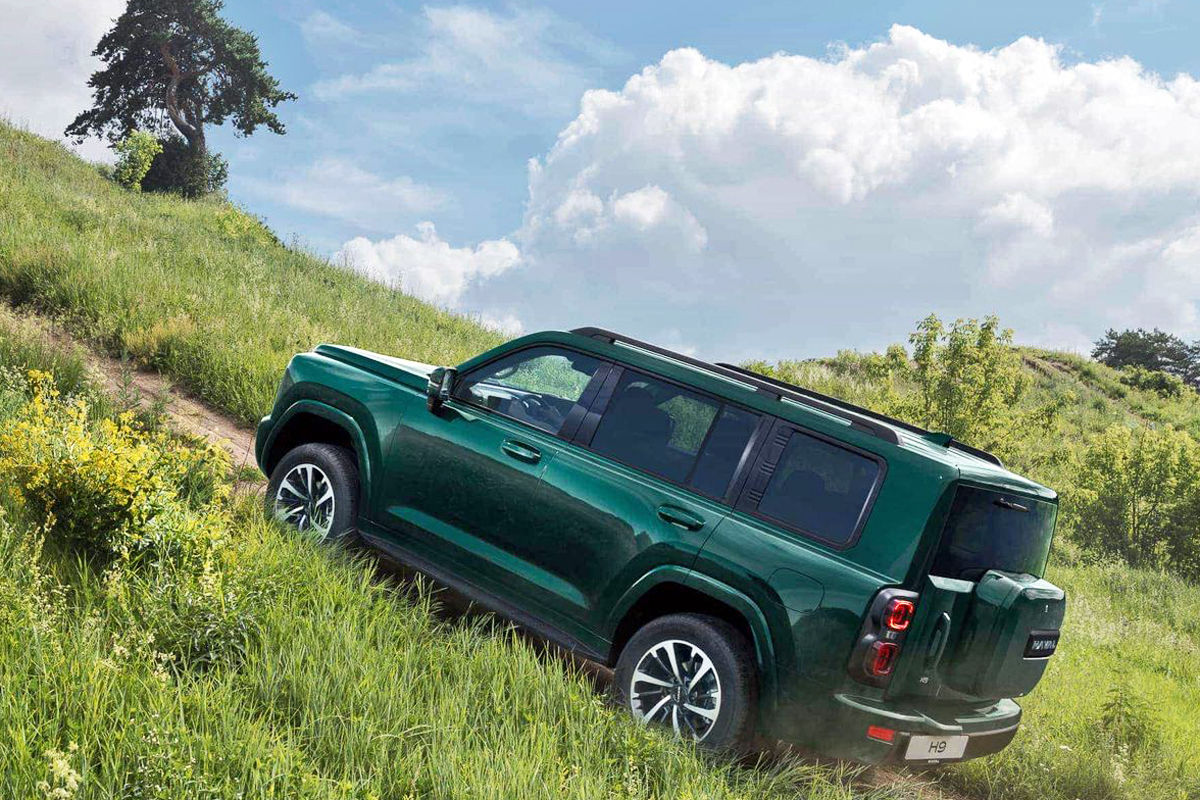
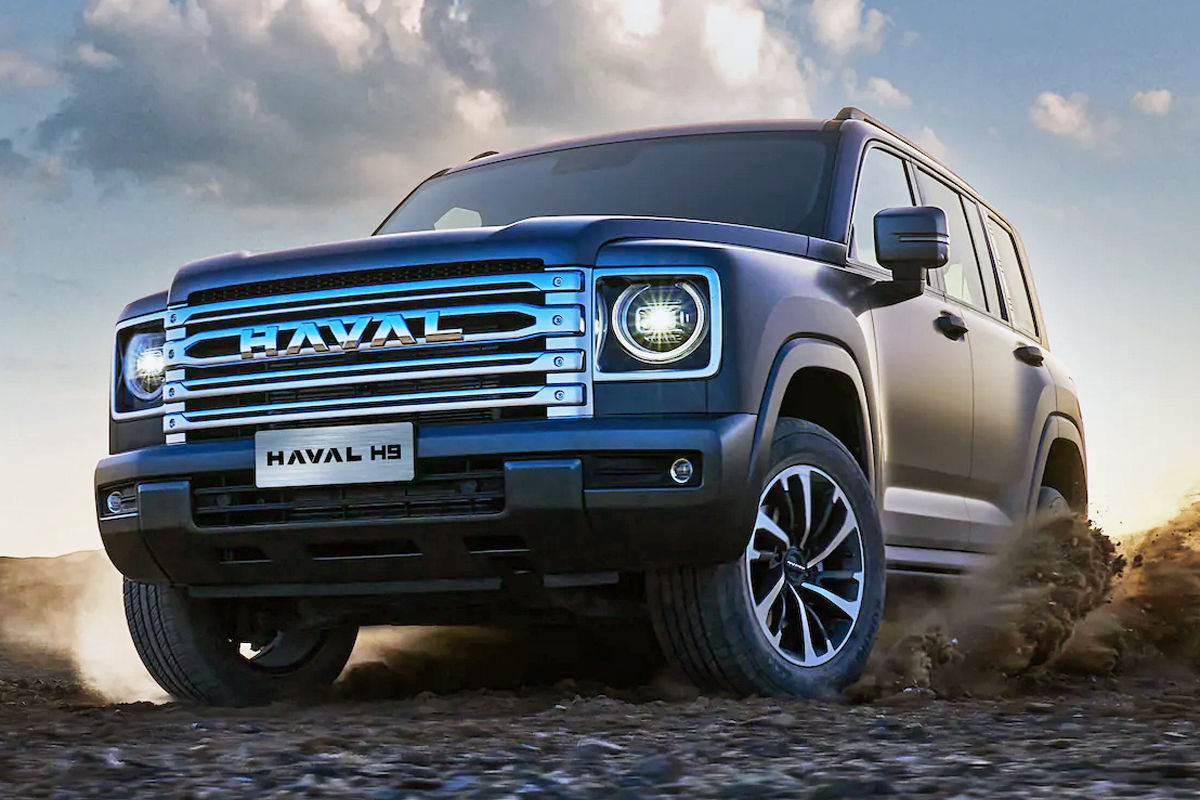
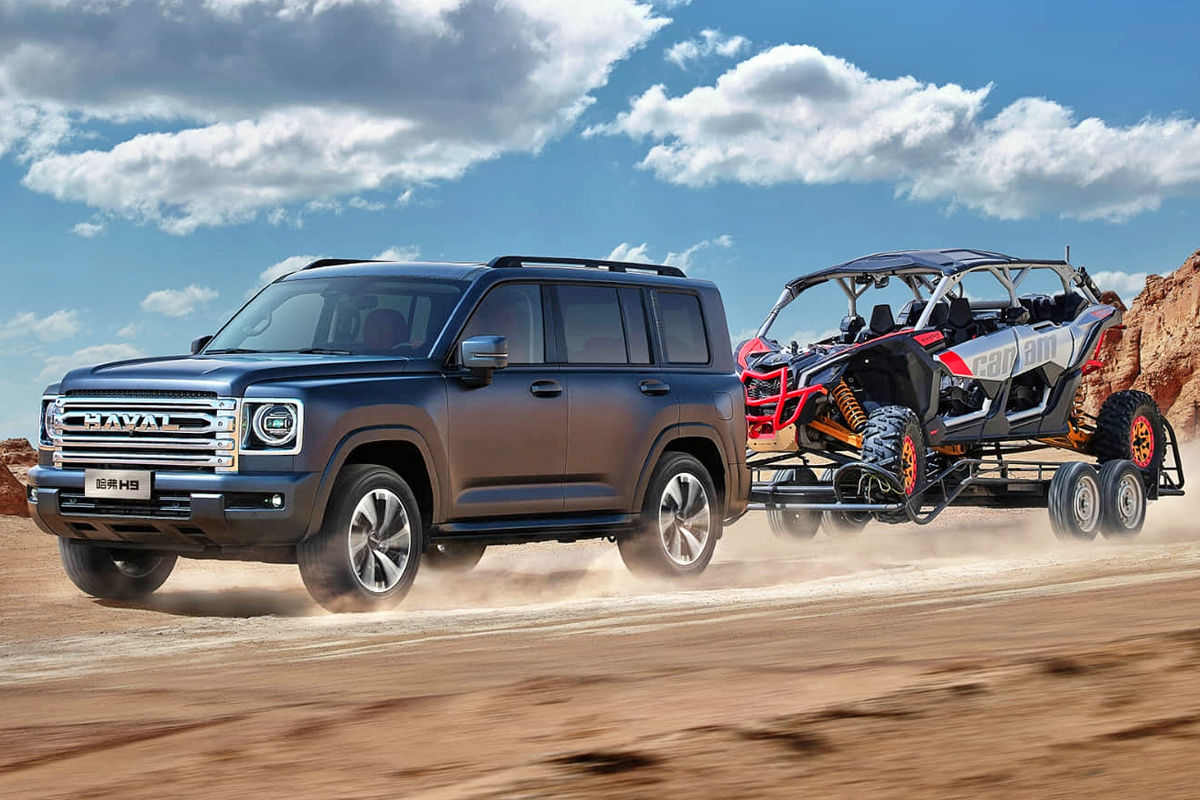
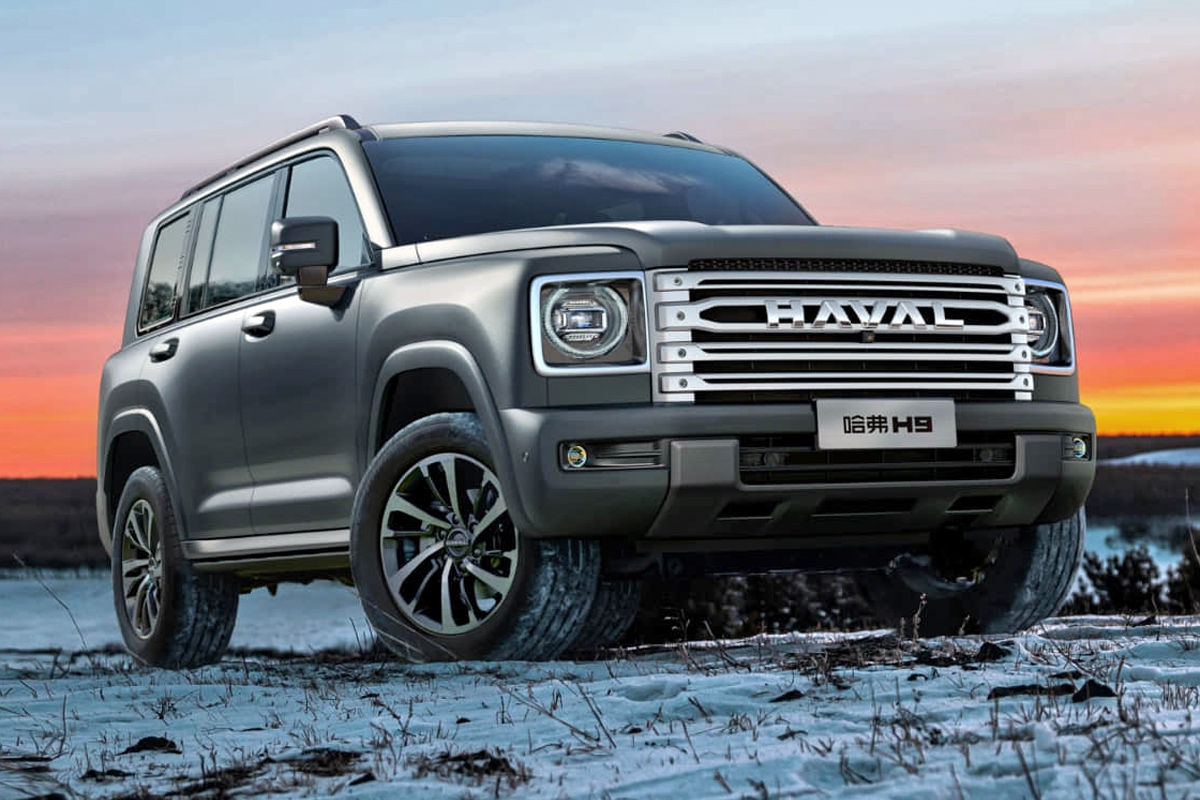
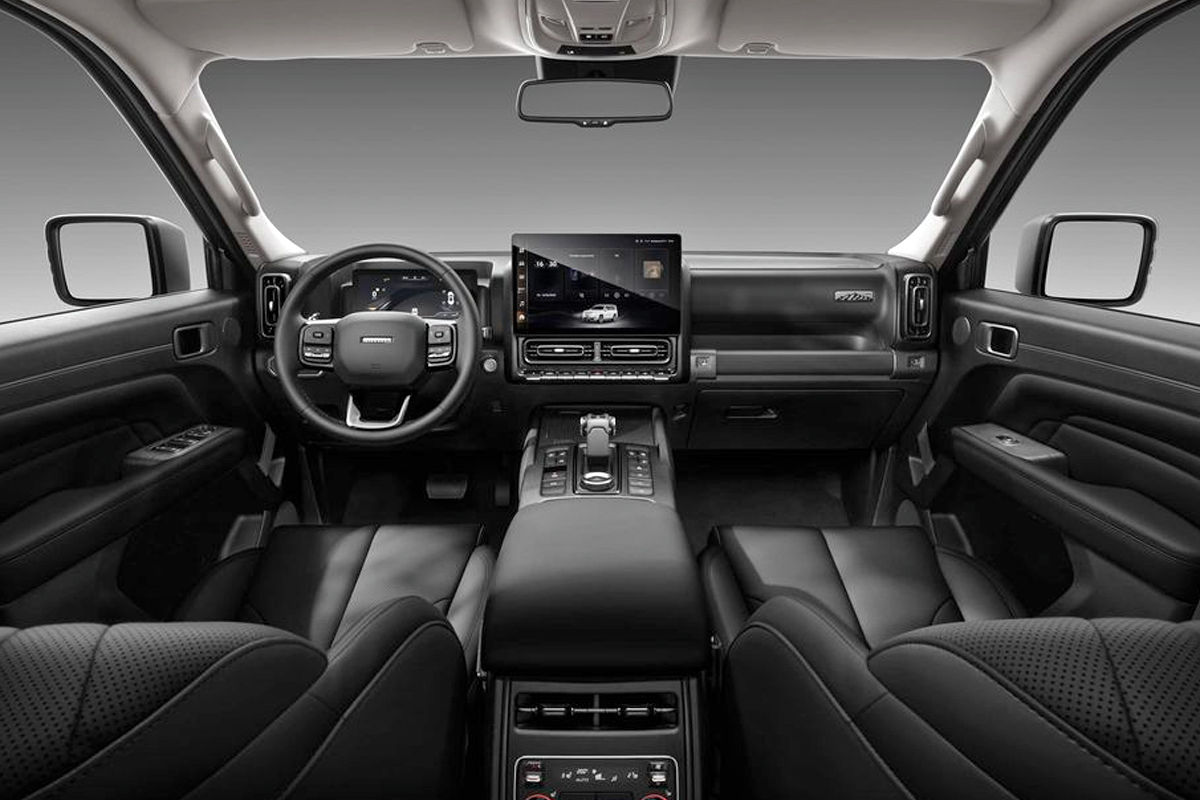
The new Haval H9 ladder-frame SUV is on the cards for South Africa, though the Chinese firm says it’s yet to nail down the “right powertrain” for the local market…
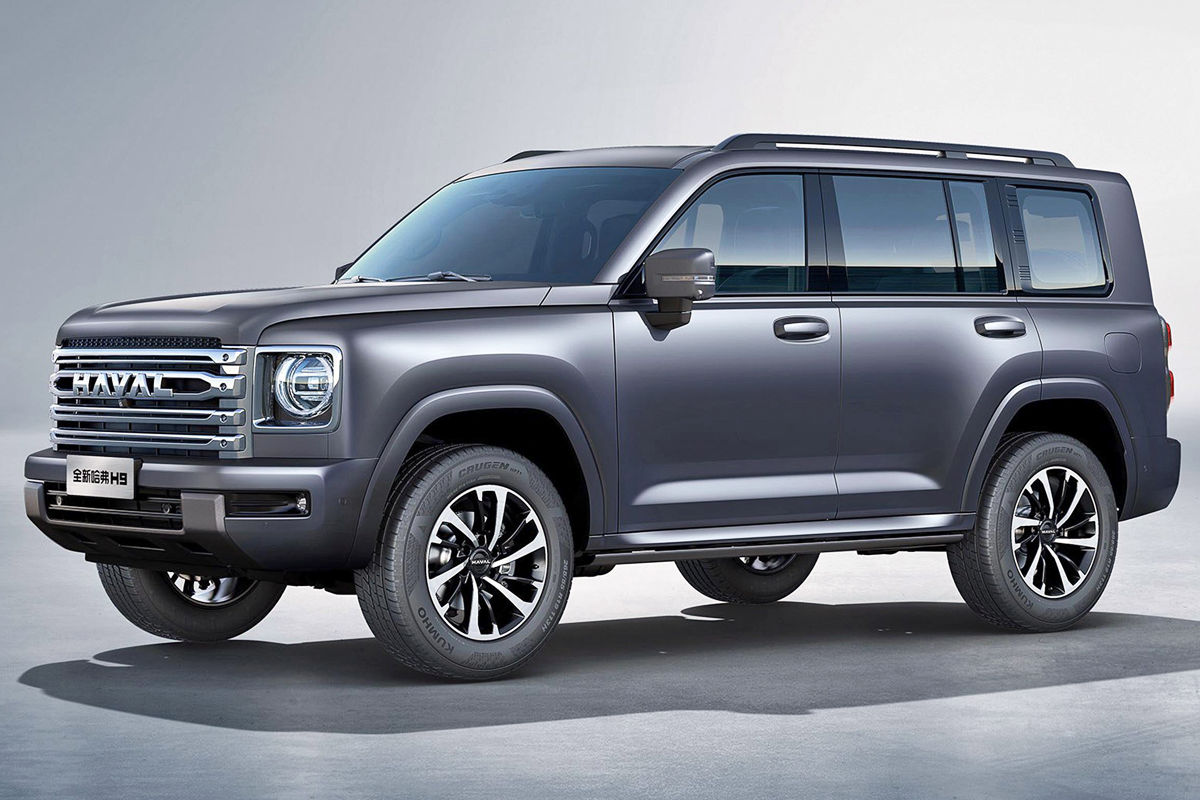
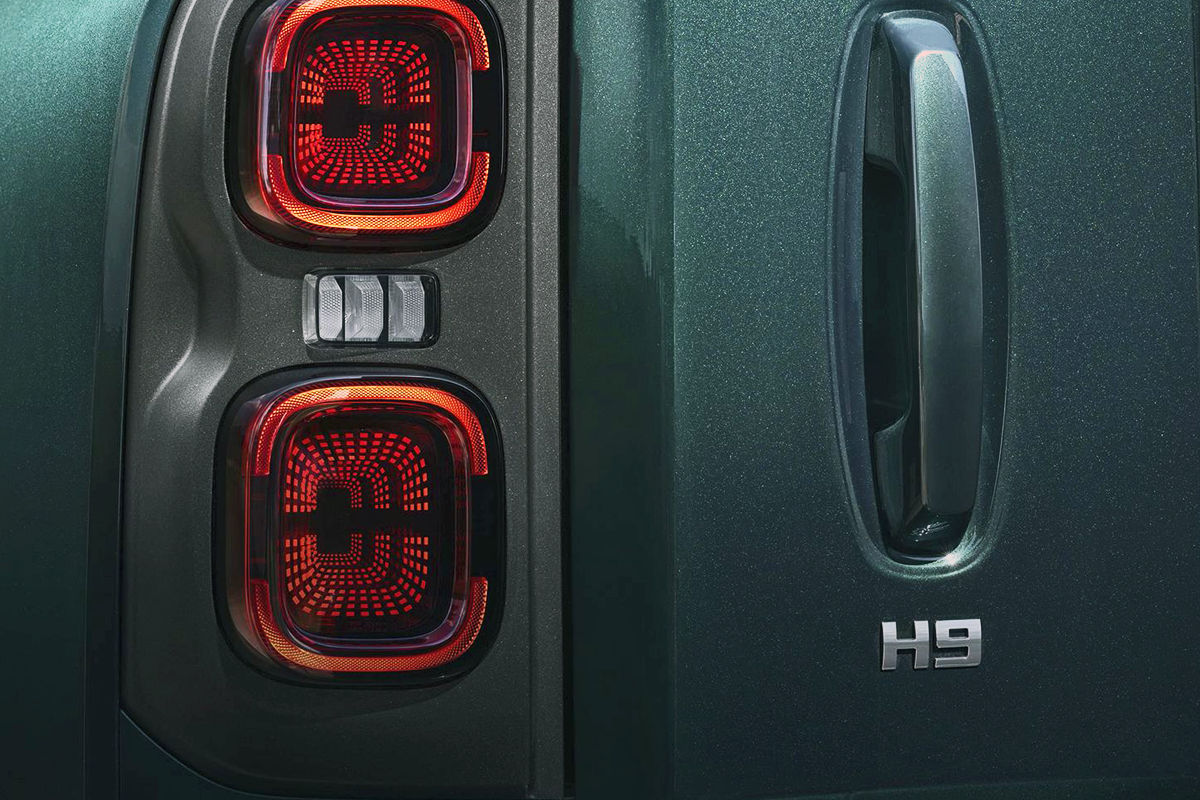
Remember the Haval H9? Well, the nameplate looks set to return to Mzansi, with GWM South Africa saying the 2nd-generation version of the ladder-frame SUV is “definitely planned” for the local market.
However, the Chinese firm’s local division hasn’t yet committed to a firm launch date for the new H9 – which would arrive as a belated successor to the original model that was discontinued locally around the middle of 2022 – since it’s still settling on what it terms the “right powertrain” for the South African market.
Desmond Els, Sales Director at GWM South Africa, made the comments during a wide-ranging interview conducted in Cars.co.za’s custom-built podcast booth at Naamsa’s recent South African Auto Week 2024 in Cape Town.
“There’s a reason I don’t want to divulge [all the details], but the car’s definitely planned – it’s coming … But there’s one reason [we haven’t officially announced it]: we need to find the right powertrain as a solution to this vehicle,” Els said when asked if the new H9 would come to South Africa.
“The vehicle’s already been developed for our market, but we need to tick certain boxes – [such as] powertrain and transmission – to make sure we launch the right car into this market,” he added.
At present, the new H9 – which was revealed in China towards the start of 2024 – is offered in its domestic market only with a turbocharged 2.0-litre, 4-cylinder petrol engine. Driving all 4 wheels via an 8-speed automatic transmission, this motor (seemingly closely related to the unit offered in the Tank 300) offers peak outputs of 160 kW and 380 Nm.
However, the 3-row H9 sold in Russia is furthermore available with GWM’s latest 2.4-litre, 4-cylinder turbodiesel engine, which debuted locally in the super-sized P500 bakkie and is also set to be rolled out to the facelifted P-Series (which will wear the P300 badge in SA) and the Tank 300 in the opening quarter of 2025.
As a reminder, in the SA-spec P500, this GW4D24 oil-burner generates maximum outputs of 135 kW and 480 Nm, with drive delivered to all 4 corners via a 9-speed automatic transmission. We’d speculate this would be the powertrain that GWM SA would most likely prefer for the new H9 as it would allow the ladder-frame SUV to compete head-on with the market’s many popular turbodiesel 4x4s.
In addition, opting for this motor could potentially allow GWM SA to position the new H9 – which adopts a far boxier exterior design than its predecessor – neatly between the smaller Tank 300 and the 7-seater Tank 500 (currently starting at R1 222 900), since the latter is currently exclusively available in South Africa with the (pricier) petrol-hybrid powertrain.
Excluding the spare wheel that stands proud of the tailgate, the new Haval H9 measures 4 950 mm from nose to tail – for context, that’s 10 mm longer than the Ford Everest and 25 mm longer than the Toyota Land Cruiser Prado – with a wheelbase of 2 850 mm and a minimum ground clearance of 224 mm.
As an aside, Els also confirmed to Cars.co.za that the “H7 is on its way and will be introduced in Q1 [2025],” the same period in which GWM SA plans to launch the aforementioned facelifted P-Series and the diesel-powered version of the Tank 300. The H7, which is known as the “Big Dog” or “Dargo” in some markets, will likely slot in between the Haval H6 and the Tank 300.
VW Group Africa’s boss has revealed that an SA-built half-tonne bakkie derived from Kariega’s upcoming small SUV is looking “a bit more unlikely” than before…
Back in April 2023, the head of Volkswagen Group Africa told us “there is hope” that an SA-built half-tonne bakkie spun off the upcoming new small SUV could be produced at the Kariega plant. Now, however, she has revealed that such a scenario is – though “not decided” – a “bit more unlikely” than before.
Martina Biene, Chairperson and Managing Director of Volkswagen Group Africa, told Cars.co.za about these latest developments during a wide-ranging interview conducted in a custom-built podcast booth at Naamsa’s recent South African Auto Week 2024 in Cape Town.
A teaser image from Brazil showing the upcoming small SUV.
Thanks to the Wolfsburg-based automaker’s R4-billion investment in its South African operations, production of the as-yet-unrevealed new small SUV (which VW refers to as the “A0 Entry SUV”) is scheduled to commence at the Kariega facility in the Eastern Cape in early 2027. But is the half-tonne bakkie spin-off still on the cards?
“Unfortunately, we are still investigating [the bakkie]. It was quite close that there would have been a model derived out of that car which we are bringing – the ‘A0 Entry SUV’ – which would be quite similar … up to the B-pillar, and we could derive a bakkie out of that. Unfortunately, our sister plant [in] Brazil has changed their mind on how they do it, so we are still rethinking,” Biene told us.
VW Group Africa boss Martina Biene.
As a reminder, VW’s Brazilian division is leading “the design and development” of the left-hand-drive version of the upcoming small SUV, though the Kariega-built (right-hand-drive) iteration – which will be produced alongside the Polo hatch and Polo Vivo – will eventually be adapted to “local and continental requirements”, according to VW Group Africa.
Interestingly, in June 2024, Volkswagen announced a fresh investment in its São José dos Pinhais factory in Brazil, confirming plans to build a “new pick-up” at this plant. It’s worth noting that the Brazilian-spec version of the new small SUV is set to be produced not at that facility but at the Taubaté factory instead. This fact – alongside Biene’s latest comments – suggests the aforementioned new pick-up might not be as closely related to the “A0 Entry SUV” as we previously thought.
VW’s Tarok concept perhaps previews Brazil’s recently confirmed new small bakkie.
Still, Biene hasn’t ruled out the possibility of eventually building some sort of half-tonne bakkie in the Eastern Cape, calling on South Africans to make their voices heard should they be keen to buy such a vehicle.
“We are looking for a car – and that can be a half-tonne bakkie and I need a lot of listeners to vote for it – that we can sell approximately 50 000 times per year in Africa. Then we’ve got the right car for Africa. If this is a half-tonne bakkie, please let me know – please send us your orders – then we know already how [many] we can sell and then it’s something we can progress,” she said, adding that “it’s not decided but it’s also become a bit more unlikely”.
VW already offers an SA-built bakkie in the form of the Ford-manufactured Amarok.
Of course, VW has offered a small bakkie in Mzansi before in the form of the Mk1 Golf-based Caddy, which traced its origins all the way back to 1978. Volkswagen’s facility in Kariega (then named Uitenhage) produced this model from 1981 until 2007.
In addition, the German firm currently has an SA-built bakkie in its range, since the 2nd-generation Amarok is manufactured by Ford alongside the latest Ranger at the Blue Oval brand’s Silverton factory in Gauteng.
The new JAC T9 launched in South Africa earlier this year. Is the JAC T9 a proper alternative to a Hilux, Ranger or Isuzu? Jacob Moshokoa examines the T9 to find out how good it really is. Watch the video!
JAC is a Chinese company that has been building trucks since the 1960s. They’ve been building bakkies since the 1990s but their first foray into our market was in 2017.
Since then the brand has established a foothold in the South African market and with this latest, more luxurious or premium T9 offering, they’re aiming to gobble up even more of the bakkie pie.
In this video, Jacob Moshokoa reviews the new model, specifically the JAC T9 Super Lux double cab. Do we think the JAC is worth a look? There’s only one way to find out.
We know SA still wants Oroch bakkie, says Renault boss
Renault SA’s MD says he knows the South African market still wants the Oroch half-tonne bakkie and confirms the door hasn’t been closed on this long-planned model…
The head of Renault South Africa says he’s well aware that the local market still wants the Oroch half-tonne bakkie, adding that “conversations are still open and we’re looking at it”.
The French firm’s local distributor has been endeavouring to bring the Duster-based Oroch to the Mzansi since at least 2016, with Renault SA having on several occasions said the unibody bakkie was “in the planning” for a local launch.
In fact, Renault SA even homologated the Oroch in 2023, before again pausing the project due to what it termed “unfavourable” market conditions. Since South Africa has experienced an improvement in the exchange rate over the past few months, we asked Shumani Tshifularo, Renault South Africa Managing Director, if the Oroch might be back on the table.
“The rethink is there. We have been talking about it as well with the team, because the car was homologated. It was ready … we were about to place orders – we were organising everything – but the commercial sense couldn’t happen,” Tshifularo told Cars.co.za during an interview at Naamsa’s recent South African Auto Week 2024 in Cape Town.
“We also couldn’t agree with the OEM [original equipment manufacturer] in terms of pricing. It’s not necessarily [just] the exchange rate; it’s also the FOB pricing,” Tshifularo explained.
A shipment term, Freight on Board (FOB) pricing is effectively the price at which the seller (in this case, the Renault Group) delivers the goods (the Oroch) to the buyer (Renault’s local distributor), including all expenses incurred up to that point.
“There was a huge investment that they [the Renault Group] had to make for our [right-hand-drive] market and we kept on saying: ‘guys, we cannot afford to bring this car at this price’ because it’s a half-tonne bakkie that was going to be competing with a 1-tonne bakkie. We needed to make sure that it made commercial sense,” he added, suggesting the proposed price would have seen the Oroch positioned dangerously close to full 1-tonne alternatives.
Still, Tshifularo says the door hasn’t been completely closed on the Oroch, a vehicle he believes still holds great potential in the local market – provided it can be secured at the right price, that is.
“Those opportunities are not closed. We really love that bakkie and I know the market wants it. There were actually some people who wanted to buy the cars that were here for homologation,” he quipped.
“Those conversations are still open and we’re looking at it, because remember the market goes up and down. We’re open to those discussions because the customer still wants the car. It’s so nice when you have a customer who wants the car; your job is to bring the car, but it must be in an affordable way.”
Production of the original Duster Oroch double-cab bakkie in South America kicked off back in 2015 (though Dacia marketed a single-cab version in Romania from 2020 as well). The facelifted Oroch was revealed in Brazil in 2022, dropping the “Duster” prefix but again being built exclusively in left-hand drive.
Interestingly, as recently as September 2024, Renault announced a fresh investment in its Córdoba factory in Argentina, confirming that it will indeed produce a new half-tonne bakkie based on the Niagara concept. Tshifularo’s comments, however, suggest Renault SA will continue to push for the older Oroch instead, despite having applied to trademark the “Niagara” badge locally.