New VW Tayron revealed as Tiguan Allspace replacement
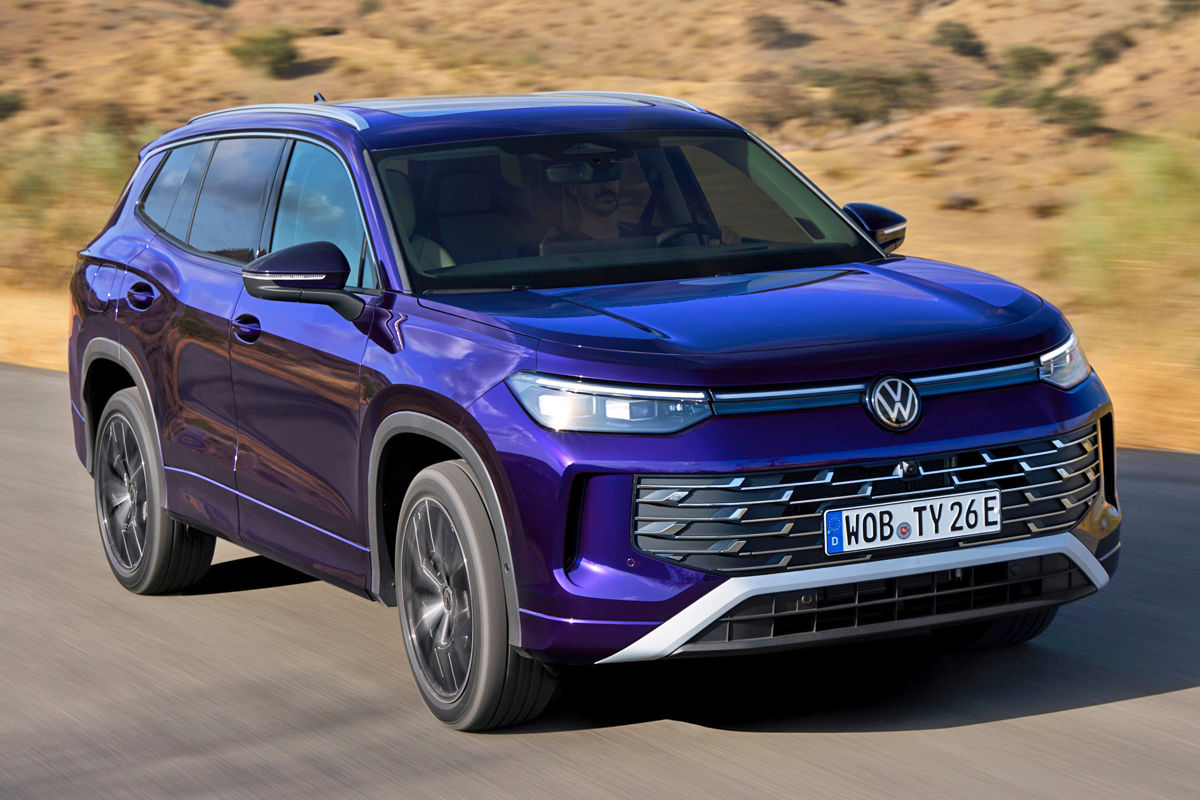
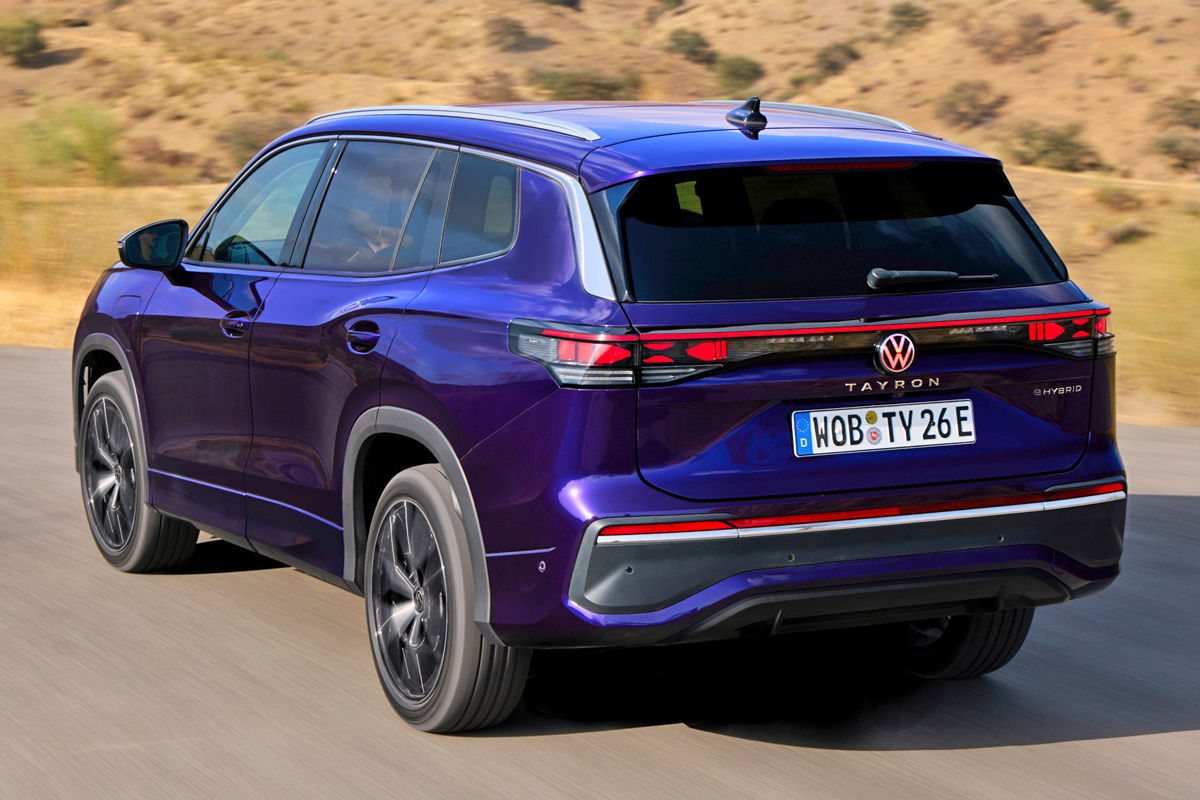
The new SA-bound Volkswagen Tayron has been revealed, offering up to 7 seats and thus effectively serving as a replacement for the Tiguan Allspace…
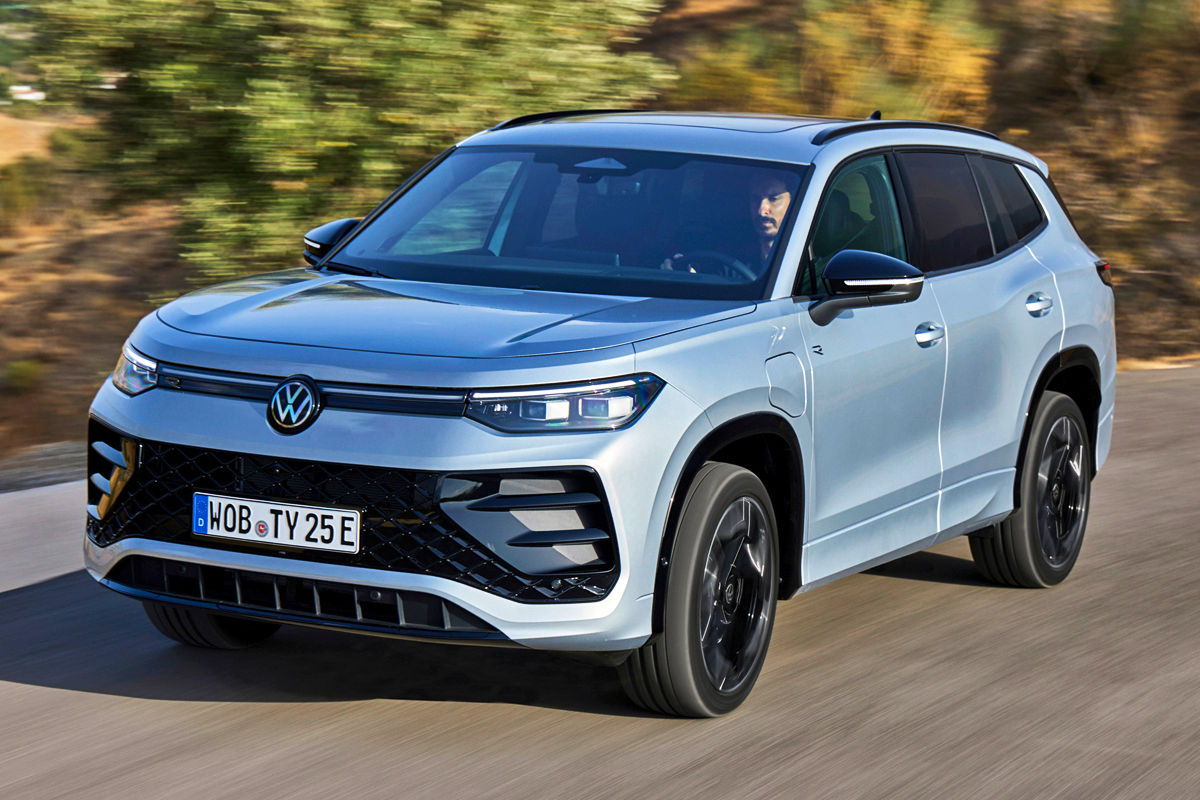
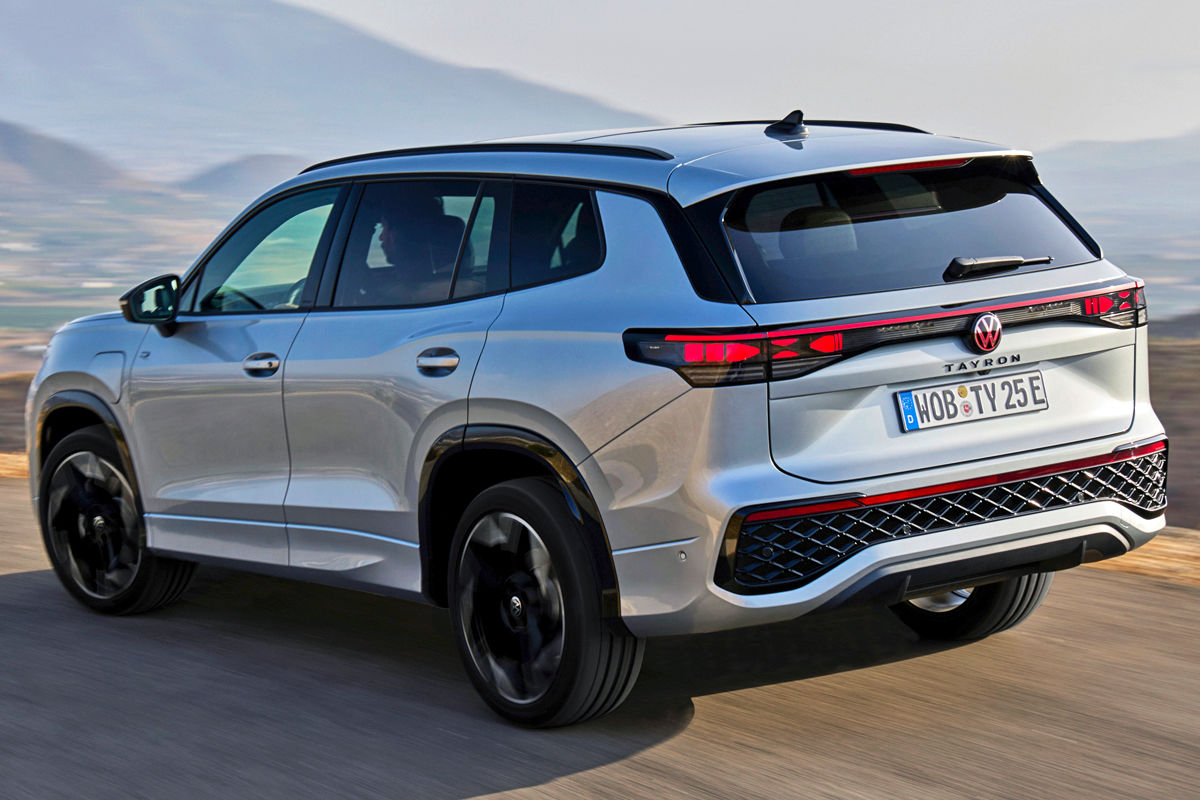
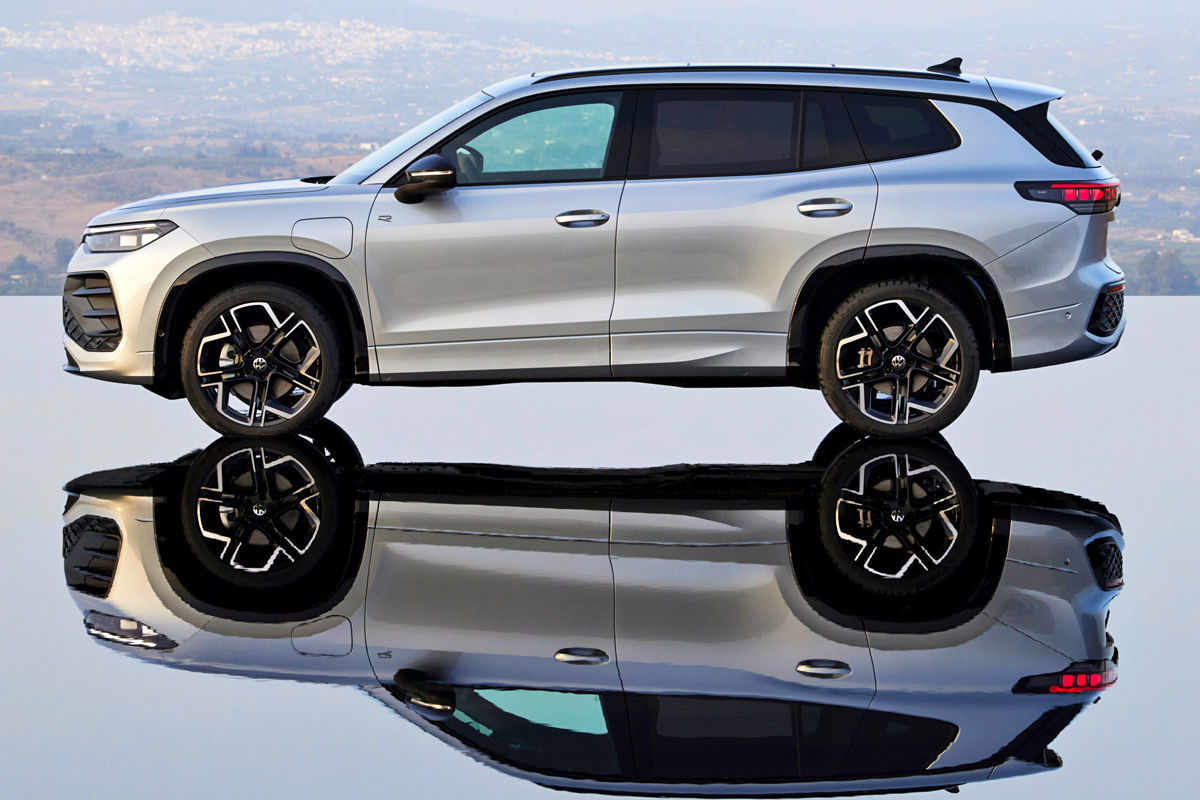
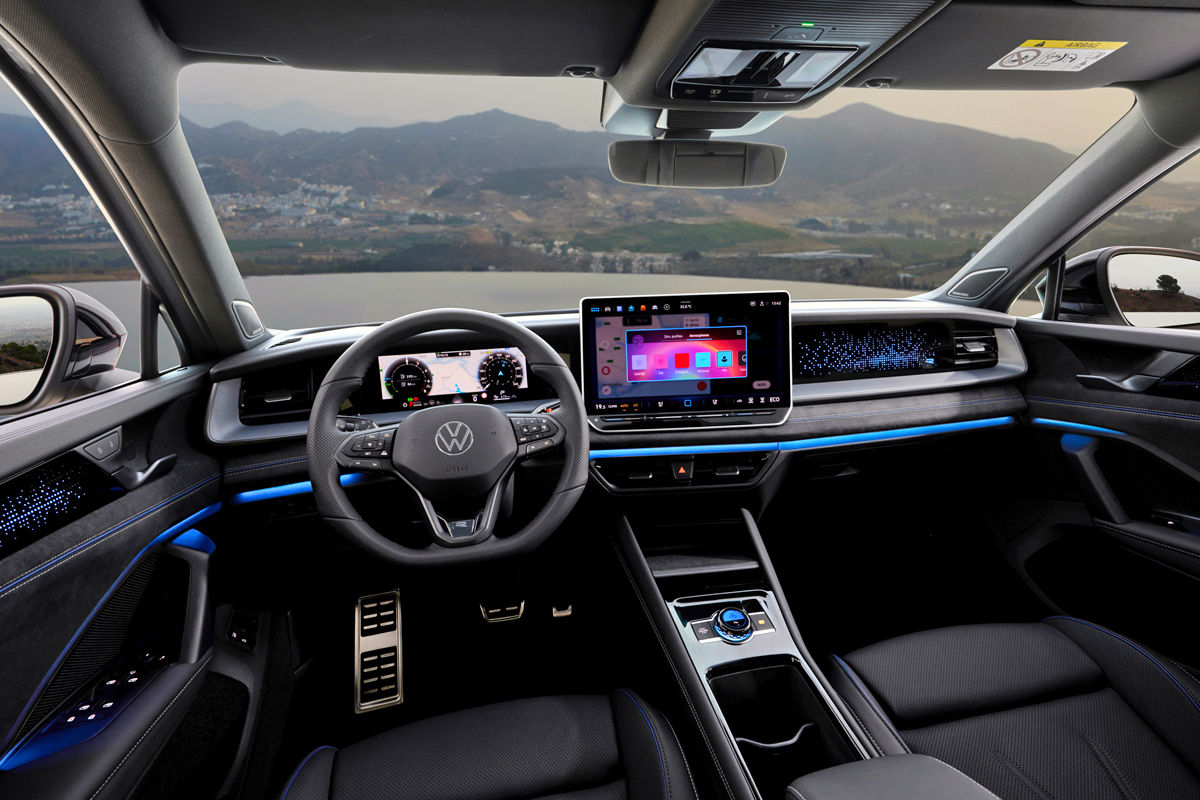
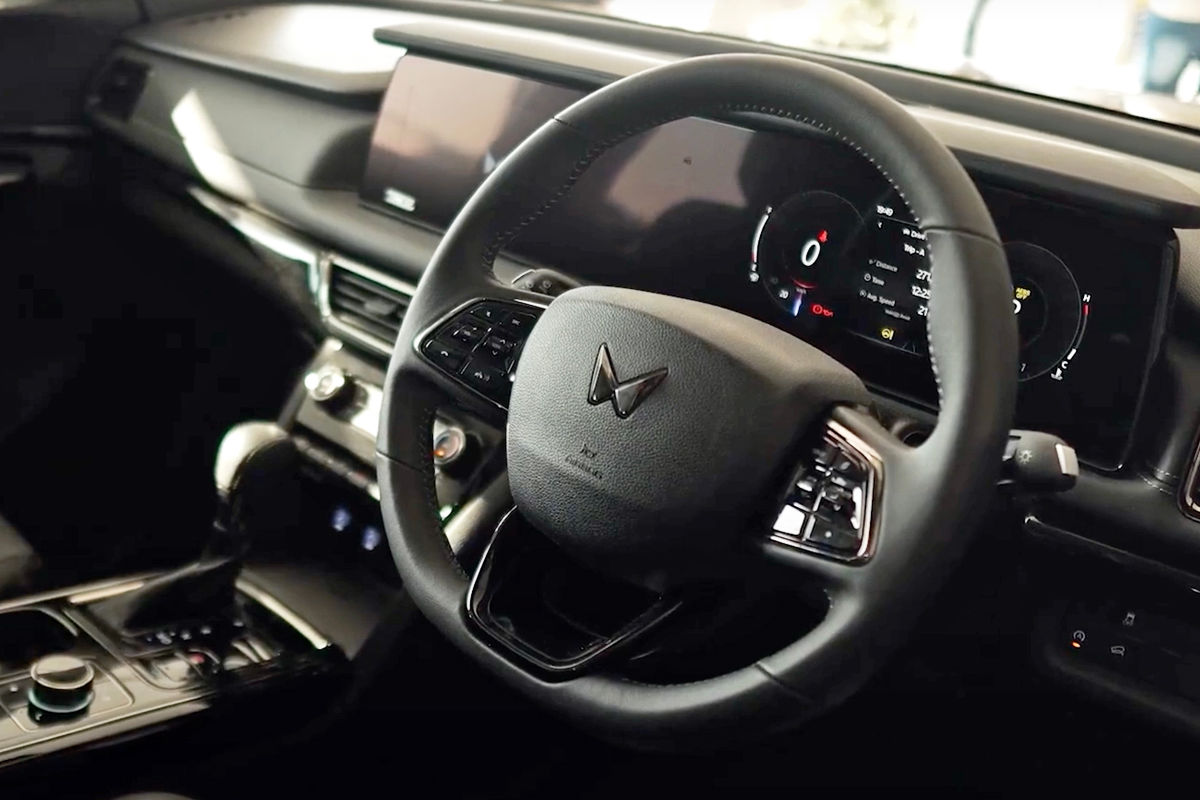
Meet the new Volkswagen Tayron, which the Wolfsburg-based automaker has slotted in between the latest Tiguan and the facelifted Touareg. As such, this fresh-faced SUV – which will offer up to 7 seats – effectively serves as a replacement for the Tiguan Allspace.
While pre-sales have already opened in Europe, the new Tayron – a badge previously reserved for a separate China-only SUV – is scheduled to launch in South Africa in the 3rd quarter of 2025. VW Group Africa tells us “further details, including specifications, pricing and launch dates, will be shared in due course”.
UPDATE (August 2025): VW Group Africa has opened pre-orders for the new Tayron, which will be offered locally with the German brand’s familiar 1.4 TSI engine mated to a 7-speed dual-clutch transmission. This turbopetrol motor develops 110 kW and 250 Nm.
In Mzansi, VW says the base Tayron will be only available as a 5-seater. As such, we can expect the mid-grade Tayron Life and the flagship Tayron R-Line to both be offered with 7 pews.
On the Old Continent, the new Tayron will be available with a wide range of engines, all mated with dual-clutch transmissions as standard (driving either the front axle or all 4 wheels). The range will kick off with a 110 kW 1.5 eTSI mild-hybrid powertrain, while 2 turbocharged petrol engines (TSI) and a pair of turbodiesel motors (TDI) will also later be available.
In addition, European markets will receive 2 plug-in hybrid options. Wearing the eHybrid badge, these powertrains will generate 150 kW/350 Nm and 200 kW/400 Nm, respectively, each furthermore using a 19.7 kWh (net capacity) battery pack to offer an all-electric range of “over 100 km”.
However, in South Africa, we’d speculate the new Tayron will likely draw from the engine options available in the latest Tiguan portfolio (which you can read about here). For reference, the outgoing Tiguan Allspace – with current pricing bookends of R687 800 and R916 400 – is still available locally with 1.4 TSI and 2.0 TSI powertrains.
Interestingly, while all 5 derivatives in the local Allspace line-up come standard with 7 seats, the Euro-spec Tayron can be specified with either 5 or 7 pews. Measuring 4 792 mm from nose to tail (with 2 791 mm between its axles), the new model is slightly longer than the Allspace.
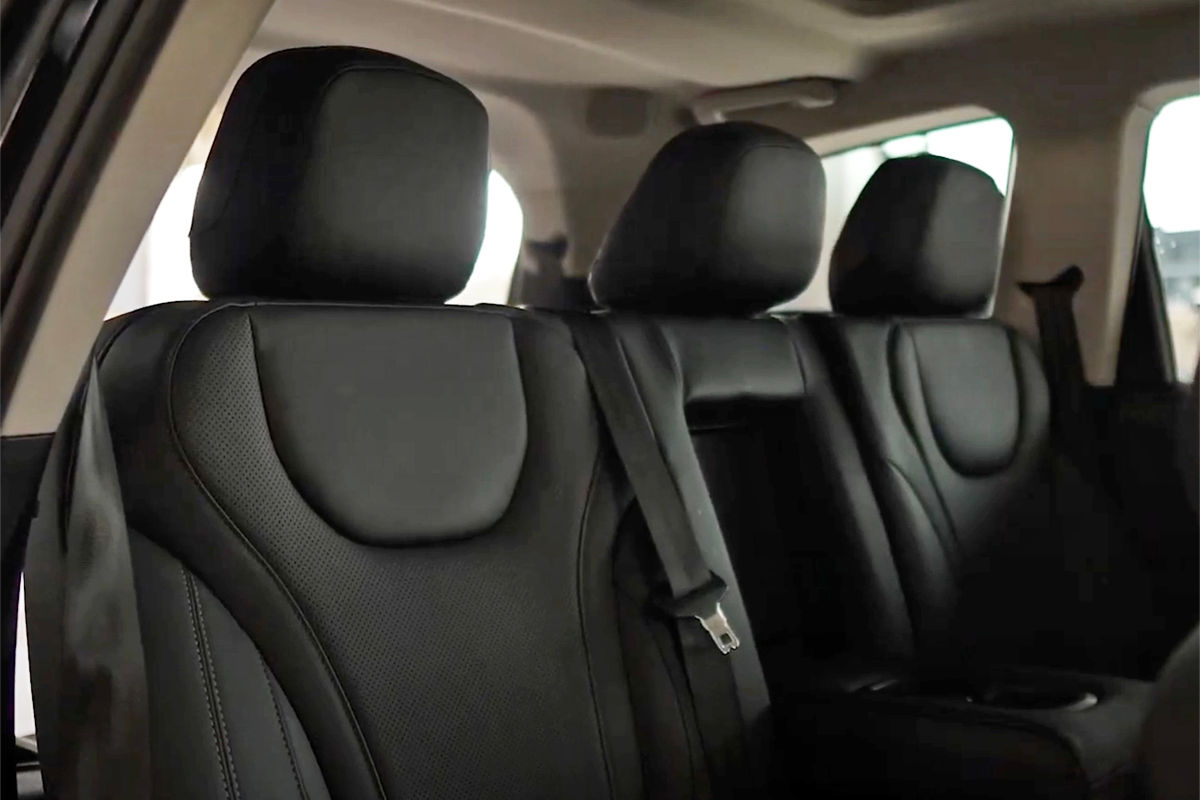
When configured as a 7-seater (which is interestingly not possible in conjunction with the plug-in hybrid powertrain), the 3rd row features what VW describes as 2 “individual seats for smaller guests”. When not in use, this final row can be folded flat to increase the luggage space. While 5-seater derivatives offer 885 litres of boot space, the 7-seater’s number falls to 345 litres (or 850 litres with the 3rd row stowed).
“The new Tayron is a bona fide Volkswagen: its quality is reflected in every detail; it is comfortable and practical for everyday life, and it is available with a wide range of drive systems. With this new Volkswagen SUV, we are further expanding our range in a growing segment and closing the gap between our best-seller, the Tiguan, and our luxury SUV, the Touareg. I am convinced that the Tayron will make its mark and be well received by our customers,” said Thomas Schäfer, CEO of Volkswagen Passenger Cars.
The facelifted Audi Q8 has arrived in South Africa, again available in both petrol and diesel flavours (but now in new Platinum Edition and Black Edition form, too)…
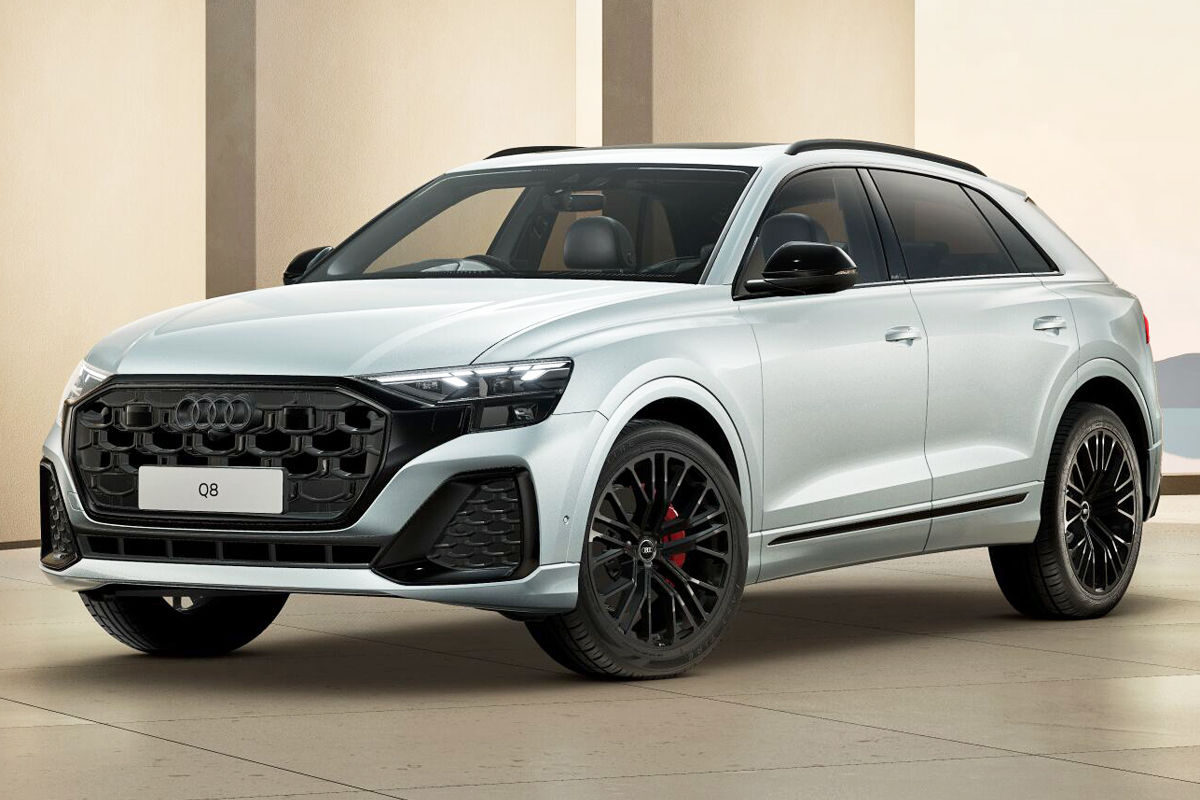
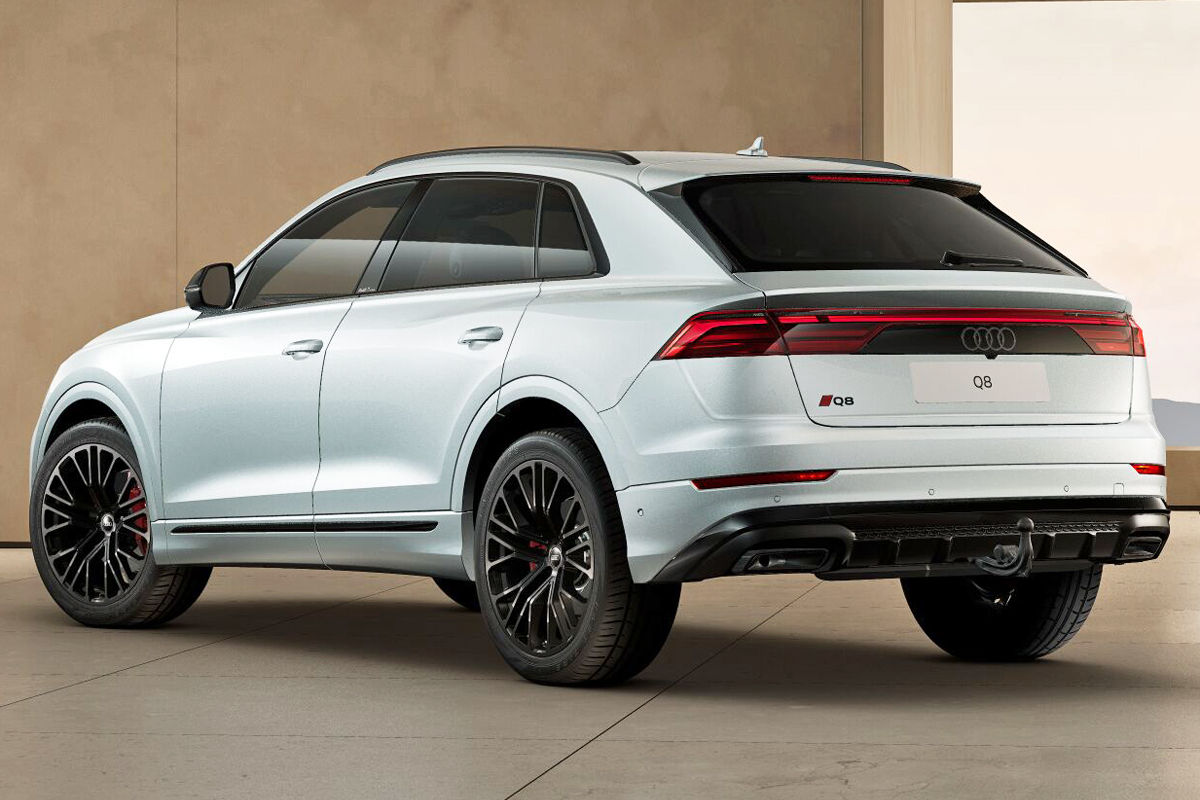
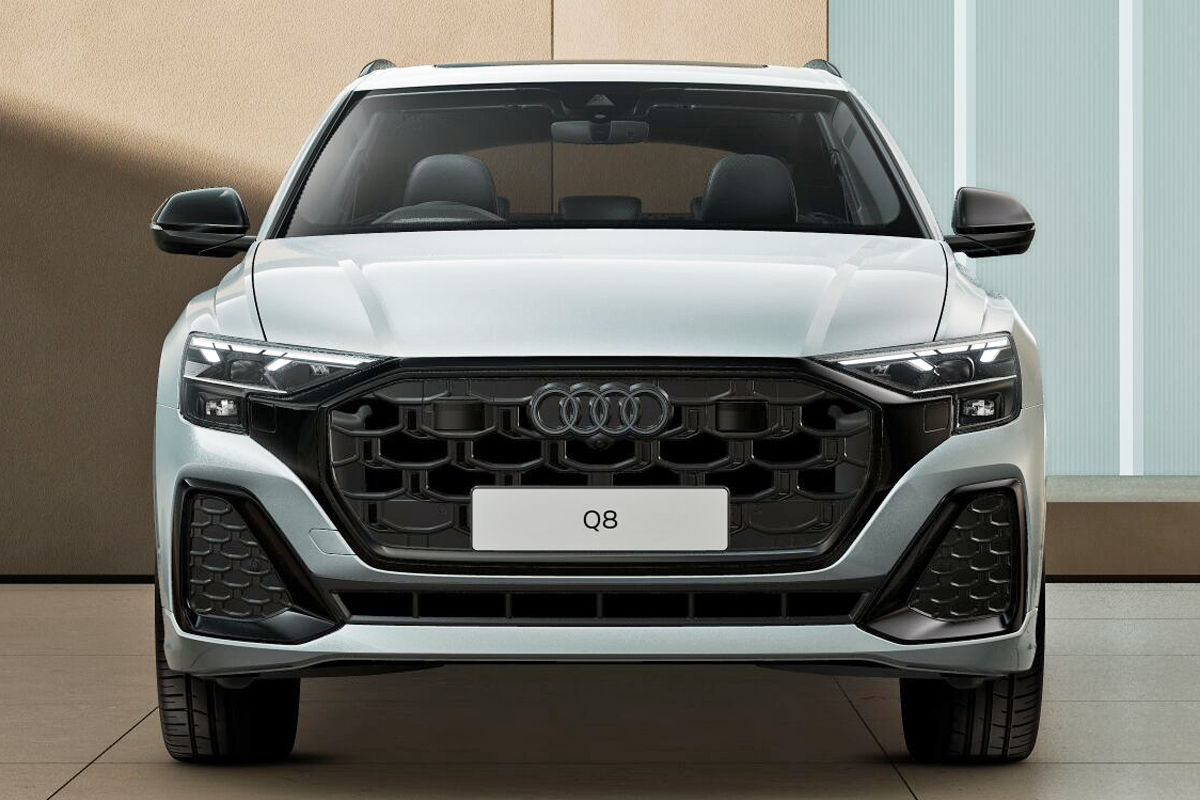
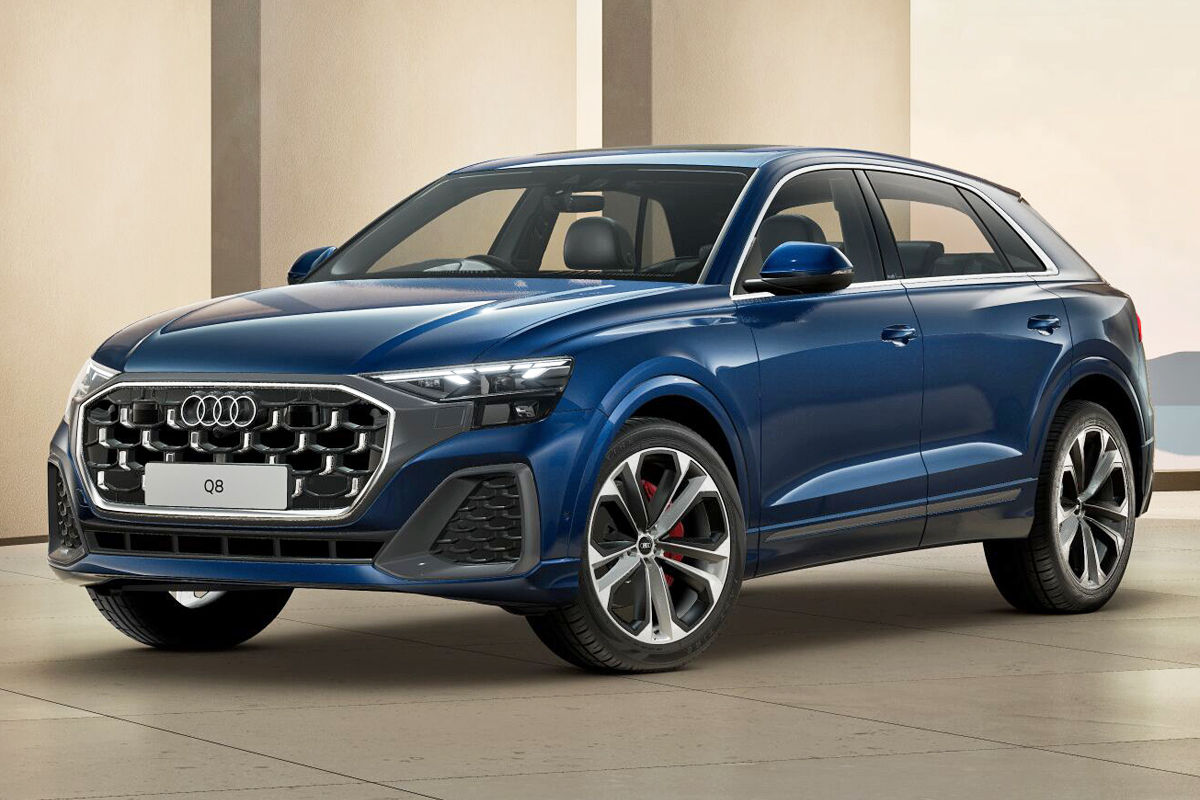
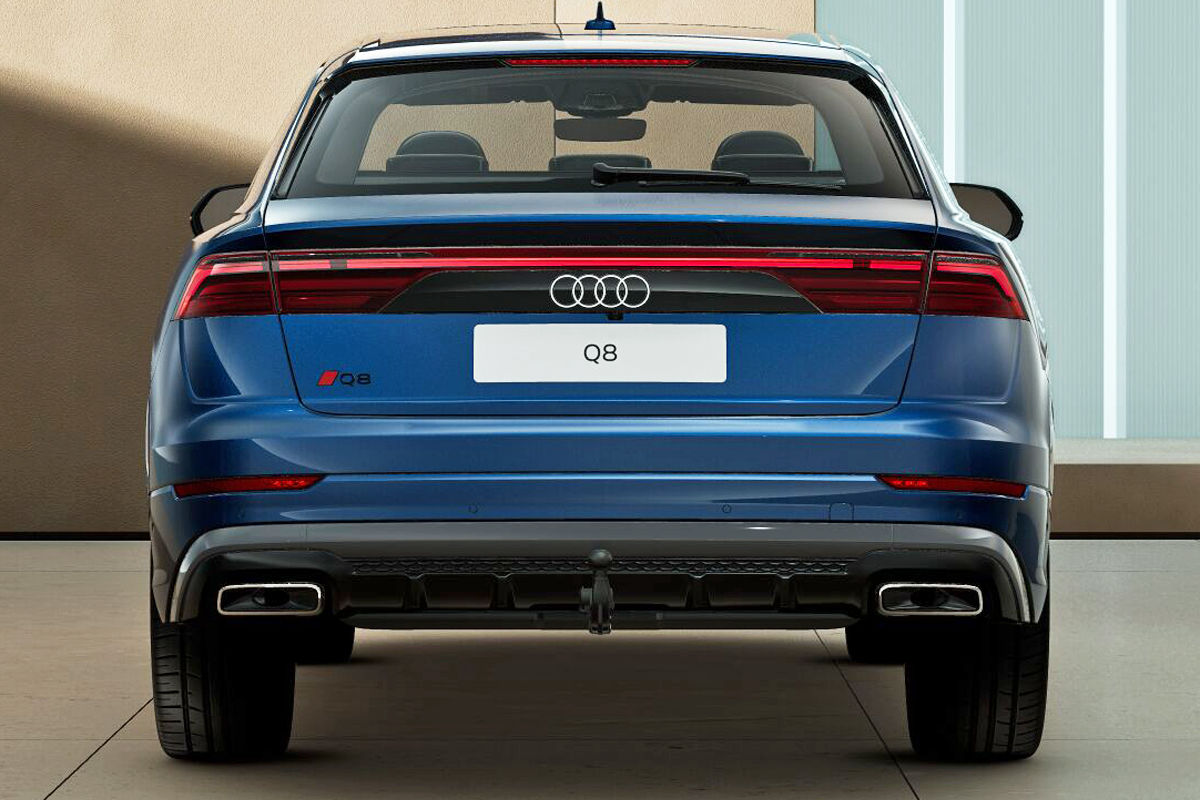
The facelifted Audi Q8 has quietly touched down in South Africa, with the local line-up expanding from 2 to 4 derivatives (excluding Audi Sport wares, that is) thanks to the launch of fresh Platinum Edition and Black Edition variants.
As before, Ingolstadt’s largest coupé-style SUV is available with both petrol and diesel powertrains. The 45 TDI’s 3.0-litre V6 turbodiesel motor again offers 183 kW and 600 Nm to all 4 wheels via an 8-speed automatic transmission, while the 55 TFSI’s turbocharged 3.0-litre V6 (still featuring a 48V mild-hybrid system and an 8-speed auto) likewise generates an unchanged 250 kW and 500 Nm.
A look at the Platinum Edition’s exterior styling.
That said, it’s interesting to note the 45 TDI’s listed 0-100 kph time slows by a tenth to 7.1 seconds, while the 55 TFSI’s improves by 3-tenths to 5.6 seconds. In addition, the oil-burning derivative’s maximum speed increases slightly to 226 kph, while the petrol variant again tops out at 250 kph.
So, how much does the facelifted Audi Q8 cost in Mzansi? Well, thanks to a heads-up from the ever-resourceful folks over at duoporta.com, we know the Q8 45 TDI Platinum Edition is priced from R1 968 700, while the Q8 55 TFSI Platinum Edition kicks off at R2 015 400.
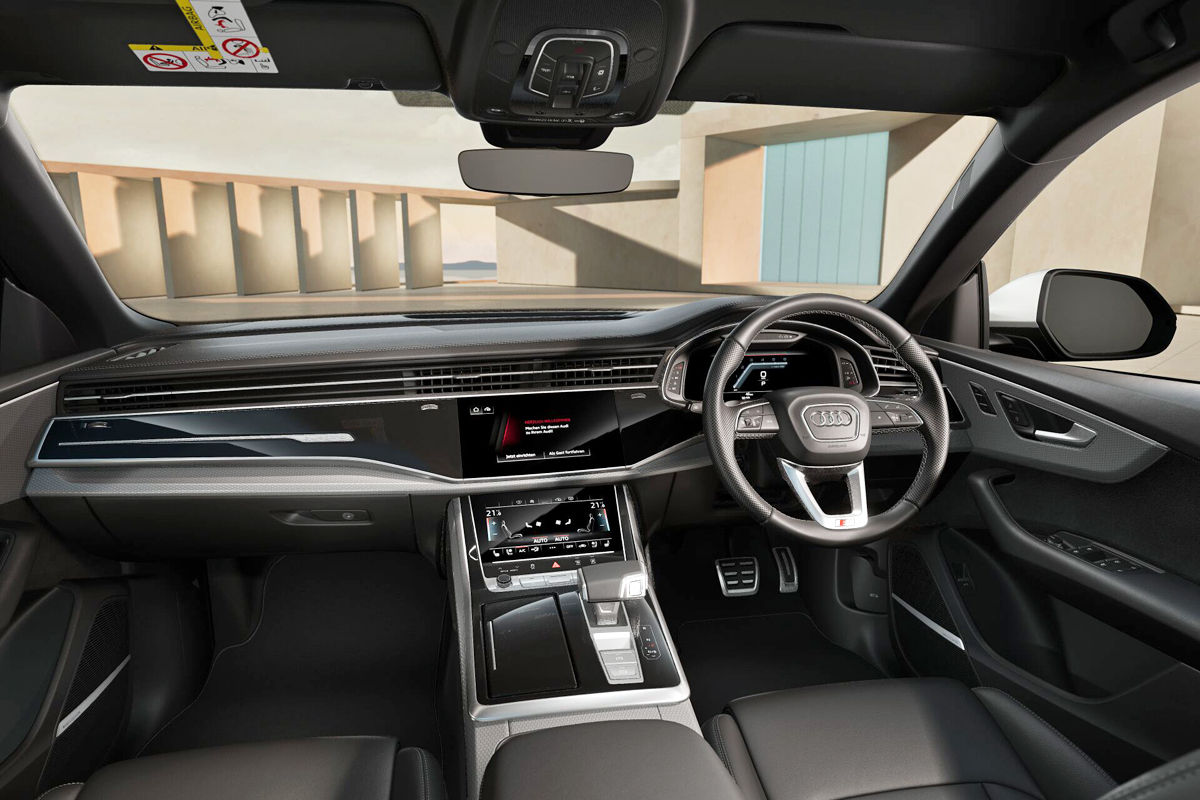
Note the subtle brushed aluminium trim.
Meanwhile, the Q8 45 TDI Black Edition starts at R2 011 700, with the Q8 55 TFSI Black Edition available from R2 058 400. As a reminder, the outgoing Q8 45 TDI was priced from R1 725 200, with the pre-facelift Q8 55 TFSI offered from R1 768 600, though the new derivatives appear more generously specified than the variants they replace.
For instance, the Platinum Edition grade includes features such as “S line” exterior styling, 22-inch alloy wheels, adaptive air suspension sport, adaptive cruise control, Audi virtual cockpit plus, a Bang & Olufsen 3D Premium sound system, “Valcona” leather trim, 4-zone climate control, powered (and heated) front seats, a powered tailgate and a panoramic glass roof.
The grille surround on Black Edition derivatives is, well, black.
Meanwhile, the Black Edition furthermore gains items like dark 22-inch alloys, the Black styling package plus (including ebony-hued Audi badges), a privacy tint for the rear windows and a black finish for the side-mirror caps, grille surround and roof rails.
Both grades can optionally be upgraded with 23-inch wheels, while other paid extras include all-wheel steering (R26 800), digital OLED taillights (R23 000) and HD matrix LED headlamps with laser lights and LED taillamps (R19 500). Inside, buyers can specify uprated sports seats (R25 500), front-seat ventilation (including a massage function, for R36 000), a head-up display (R32 500) and even a night-vision assistant (R49 900).
“Valcona” leather trim ships standard.
There’s no sign yet of the refreshed RSQ8 (nor the likewise V8-powered SQ8), though considering this updated Performance-badged flagship was revealed as recently as June 2024, it may well still be a number of months away. For now, the pre-facelift RSQ8 is still listed at R2 762 900.
As a reminder, the Q8 was revealed in mid-2018, before arriving in South Africa in May 2019. The facelifted Q8 was unwrapped in September 2023, sporting a revised exterior design (we drove it at the international launch in Cape Town). Year to date at the end of September 2024, Audi SA has registered 87 units locally, while 188 examples were sold in Mzansi in 2023.
How much does the facelifted Audi Q8 cost in SA?
Audi Q8 45 TDI Platinum Edition – R1 968 700
Audi Q8 45 TDI Black Edition – R2 011 700
Audi Q8 55 TFSI Platinum Edition – R2 015 400
Audi Q8 55 TFSI Black Edition – R2 058 400
The prices above include Audi’s 1-year/unlimited kilometre warranty and a 5-year/100 000 km maintenance plan.
It’s official: 320 kW BYD Shark coming to SA in 2025!
The new BYD Shark is scheduled to launch in South Africa in 2025 and could potentially beat Ford’s electrified Ranger to market as Mzansi’s first PHEV bakkie…
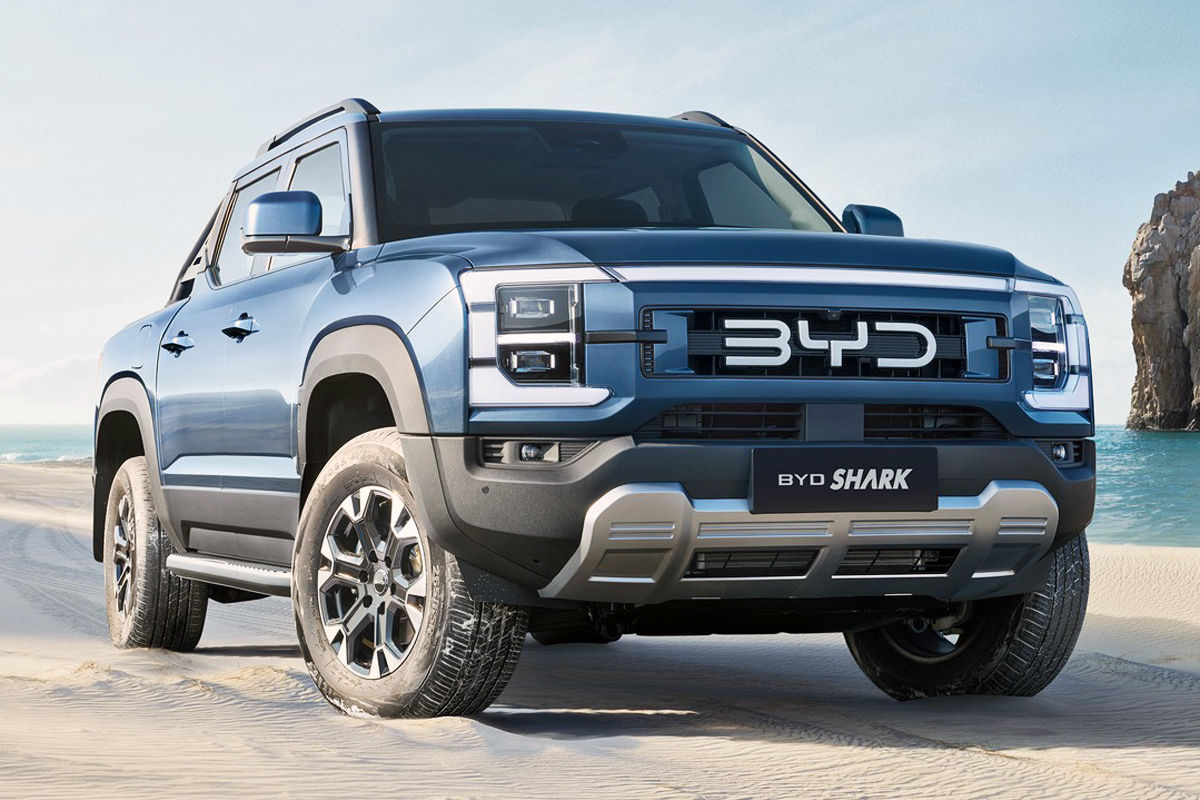
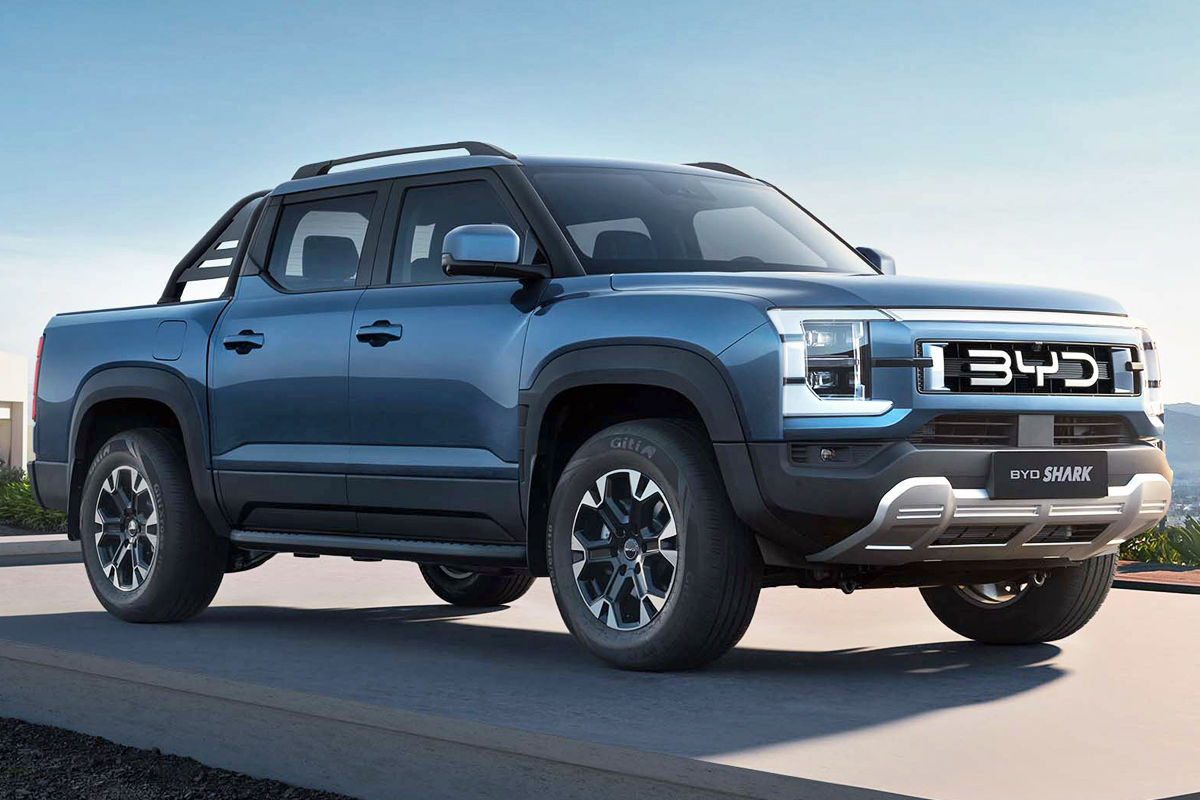
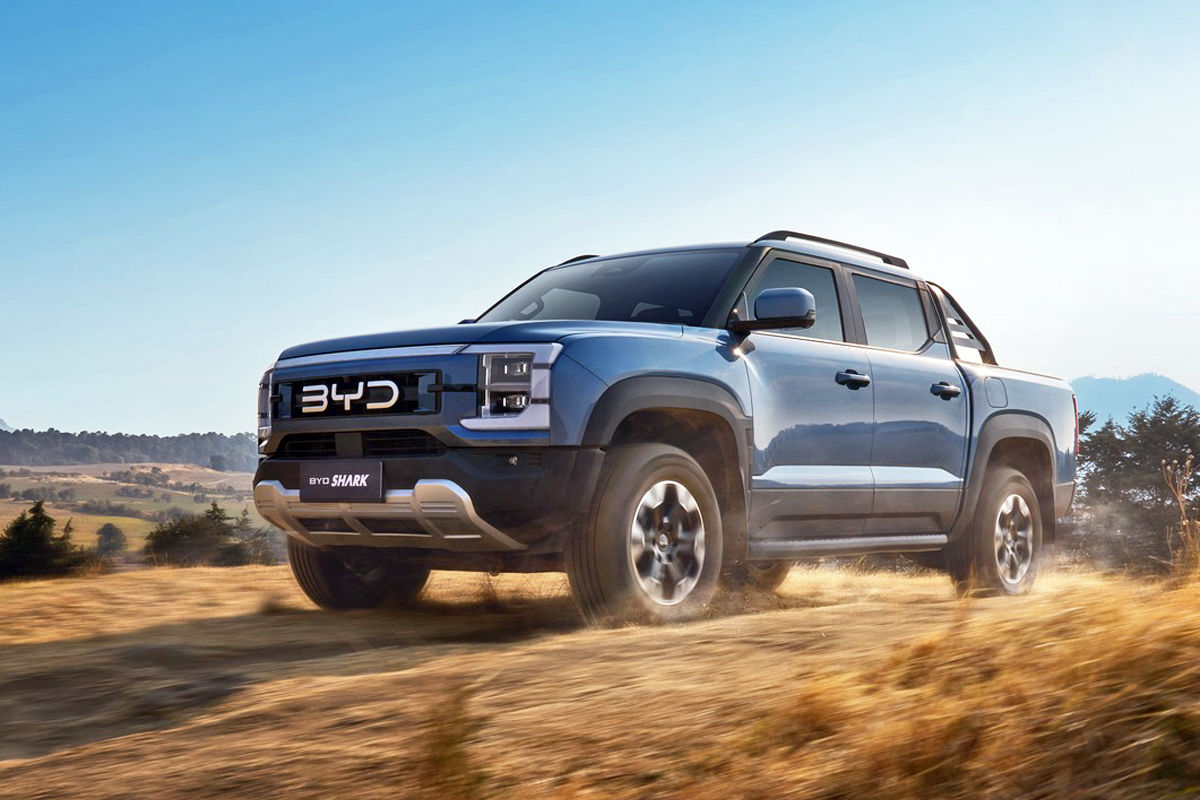
Yes, it’s official: Cars.co.za can confirm that the new BYD Shark double-cab bakkie is scheduled to launch in South Africa at some point in 2025, arriving with a plug-in hybrid electric vehicle (PHEV) powertrain boasting as high an output as 320 kW.
That would, of course, make the BYD Shark the most powerful bakkie on the local market, a title currently held by the 292 kW Ford Ranger Raptor. In addition, this fresh-faced Chinese contender could potentially beat the Blue Oval brand’s upcoming electrified Ranger to market as Mzansi’s first PHEV bakkie.
As a reminder, the 205 kW Ranger PHEV will be built at Ford’s Silverton assembly plant in South Africa, with a launch in initial European markets expected to take place in the opening half of 2025. As yet, Ford SA has technically not confirmed the plug-in Ranger for the local market, though it’s surely only a matter of time.
Meanwhile, BYD South Africa told Cars.co.za that the Shark “will be offered in the local market in the upcoming year”, without specifying exactly when. For the record, the Chinese automaker’s local range currently comprises only fully electric vehicles (the Dolphin, Atto 3 and Seal), which means the Shark could arrive as its first PHEV.
As we reported earlier, the Chinese new-energy automaker applied to register the “BYD Shark” trademark in South Africa at the end of January 2024. Since this model is set to launch in Australia (where it will be badged as the “Shark 6”) towards the end of October 2024, right-hand-drive production has obviously already commenced.
Revealed in May 2024, the BYD Shark employs a ladder-frame chassis and is the brand’s first attempt at a bakkie. It features independent suspension at each corner (rather than traditional leaf springs at the rear), while the battery pack is integrated into the platform.
The powertrain comprises a turbocharged 1.5-litre, 4-cylinder petrol engine combined with a plug-in hybrid system featuring a 29.6 kWh battery pack and electric motors. Peak system outputs stand at 320 kW (170 kW and 310 Nm up front, and 150 kW and 340 Nm at the rear), while 3 terrain modes are on offer, along with a so-called “virtual” differential lock.
As a result, BYD claims the new Shark can complete the obligatory 0-100 kph sprint in 5.7 seconds, before topping out at 160 kph. According to the Chinese firm, the lithium-iron phosphate battery pack offers an all-electric NEDC range of up to 100 km, which pushes the combined range to a claimed 840 km. BYD says the battery’s state of charge will move from 30 to 80% in approximately 20 minutes when using a 55 kW DC fast charger.
According to the international press material, the 5-seater plug-in bakkie has a payload of 835 kg (with the load bed measuring 1 520 mm by 1 500 mm by 517 mm), a towing capacity of 2 500 kg and a ground clearance (with maximum load) of 210 mm. The listed approach, departure and breakover angles are 31, 19.3 and 30 degrees, respectively.
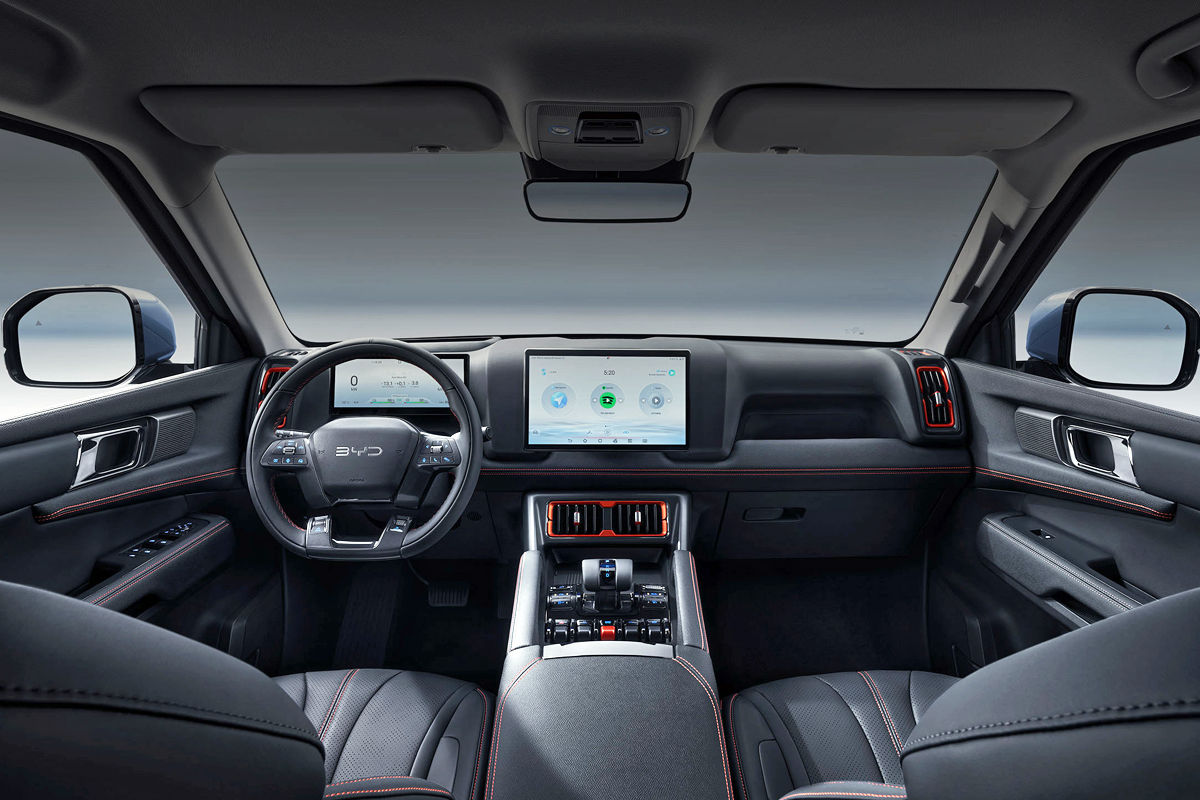
Measuring 5 457 mm from nose to tail, the BYD Shark – which stands 1 971 mm wide and 1 925 mm tall – is a considerable 107 mm longer than a Ranger double cab, while featuring a 10 mm shorter wheelbase (at 3 260 mm) than that of the Blue Oval bakkie. Inside, you’ll find a 12.8-inch multimedia rotating screen and a 10.25-inch LCD instrument panel, along with a 12-inch head-up display and wireless smartphone charging.
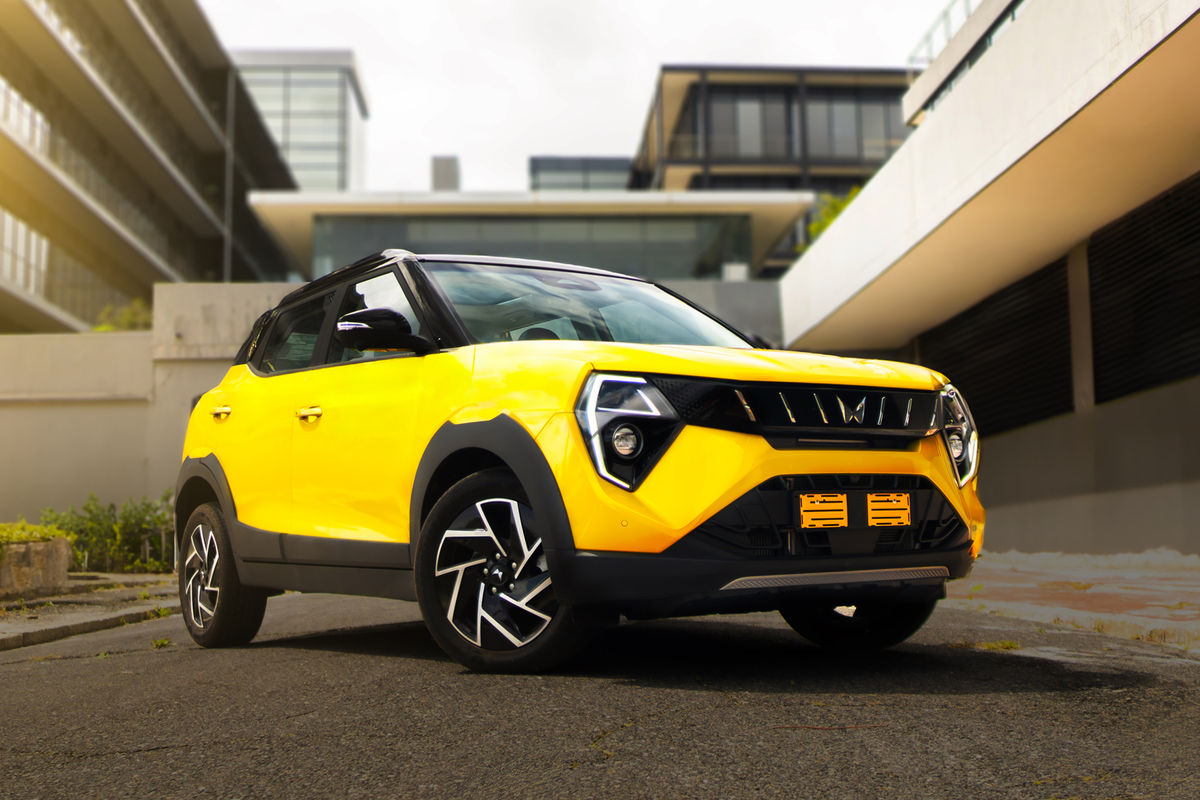
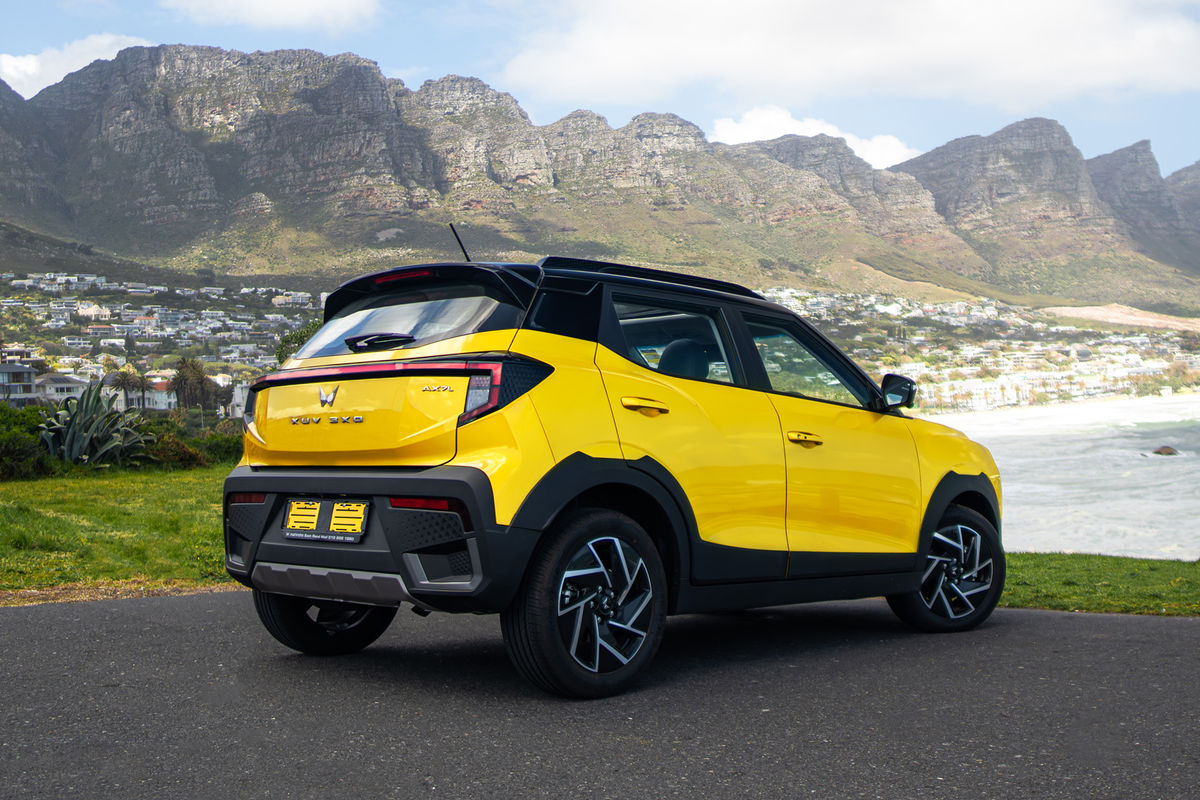
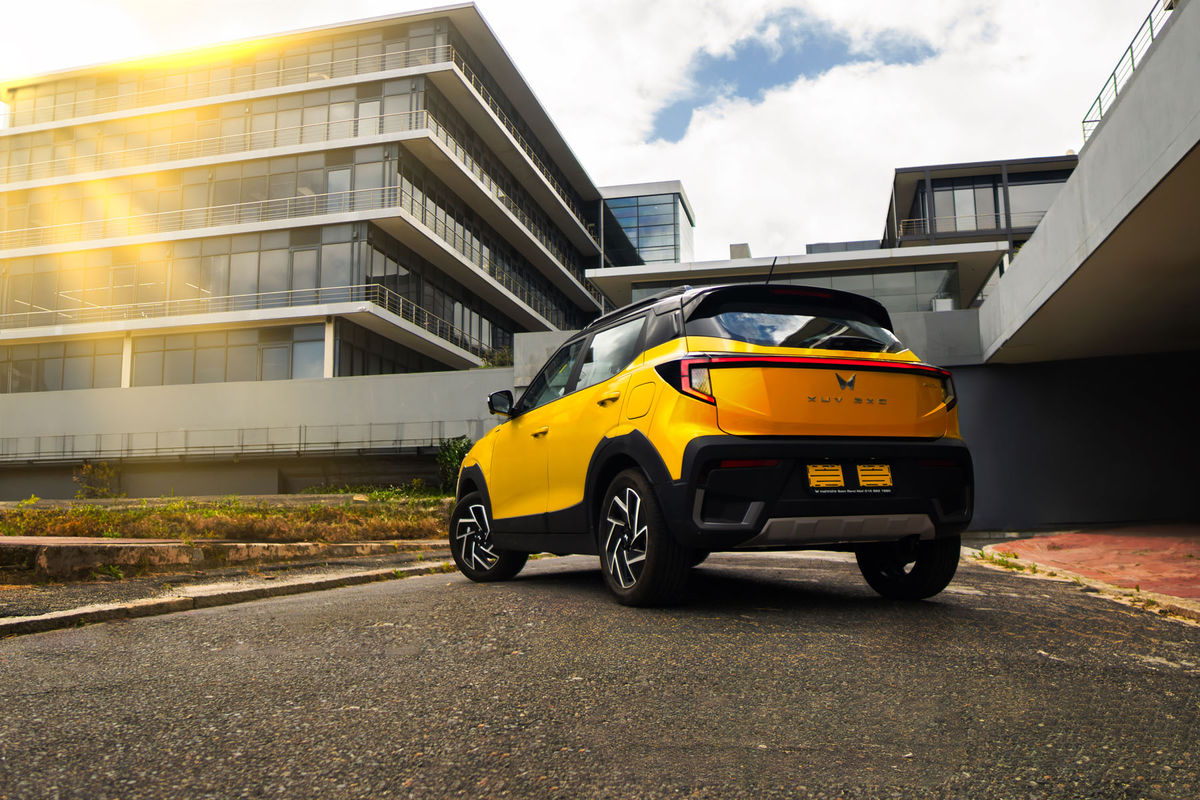
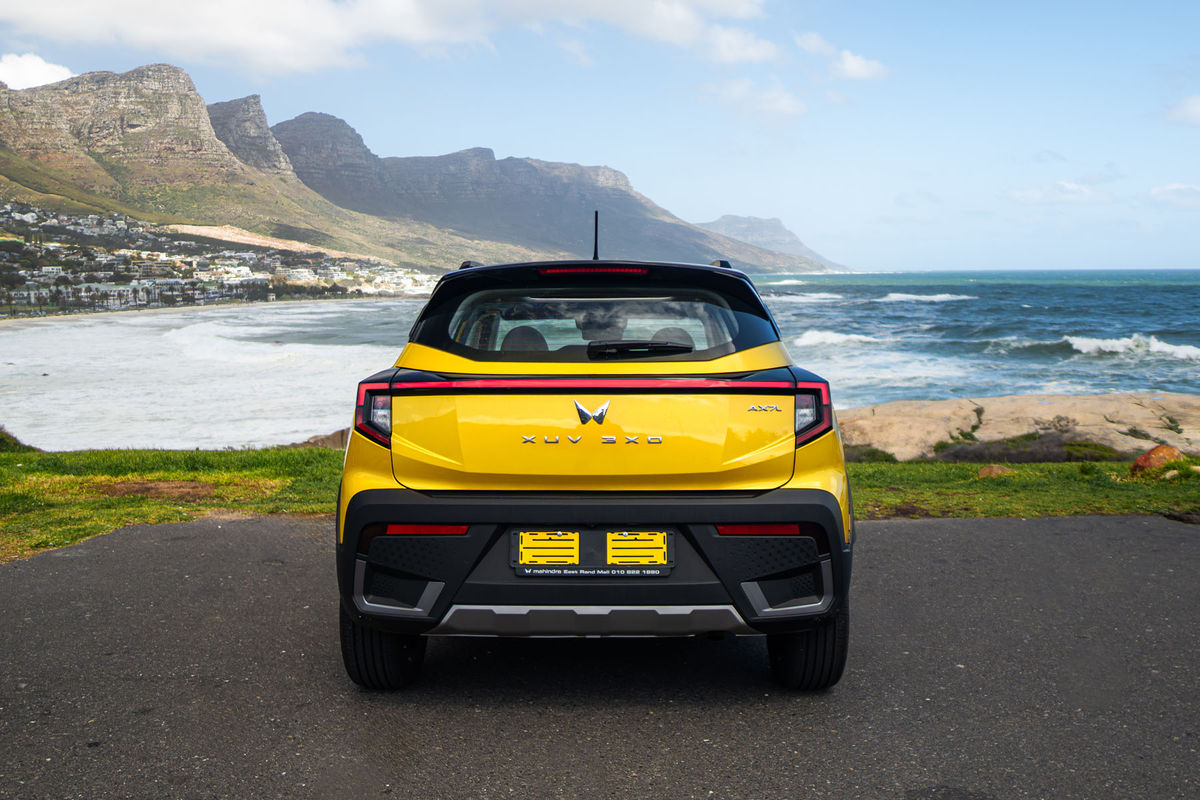
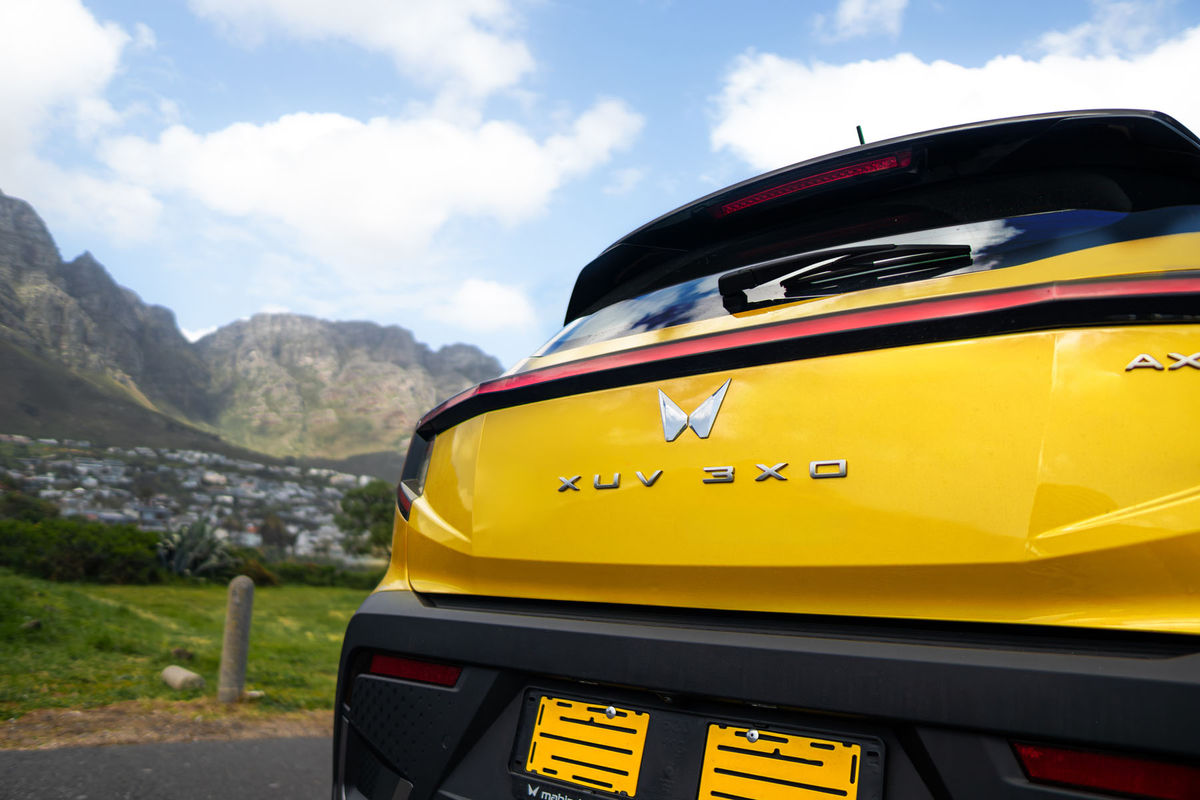
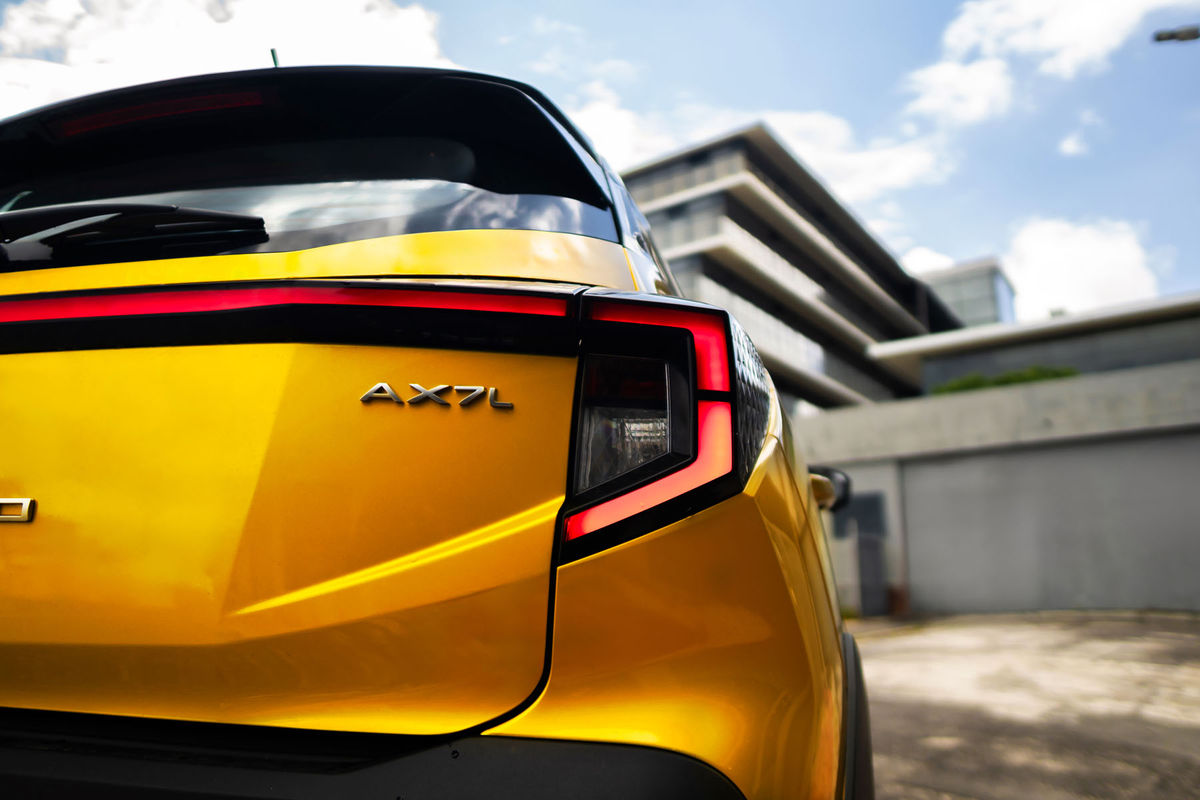
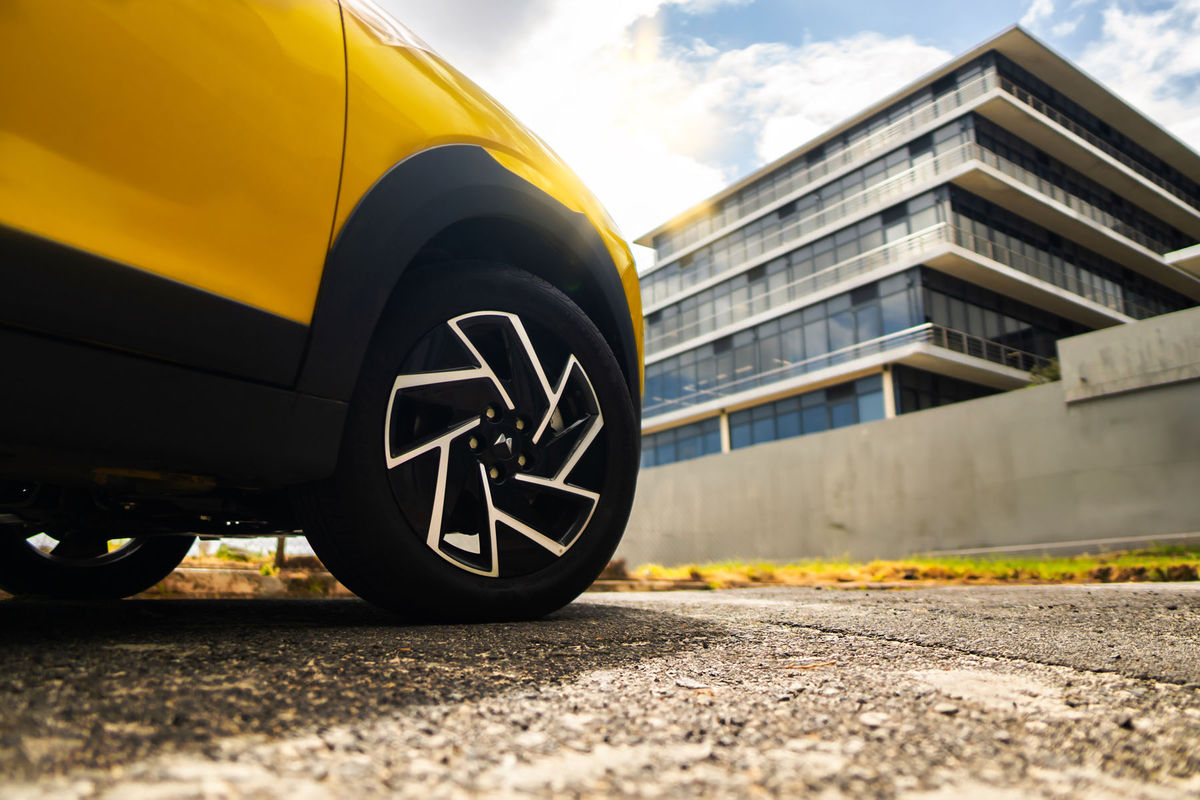
The Mahindra XUV 3XO has touched down in South Africa, armed with a generous list of standard features and keen pricing. Here’s how much you will pay for this stylish small crossover from India.
With an overall length of 3 990 mm and a wheelbase of 2 600 mm, the Mahindra XUV 3XO goes up against the likes of the Suzuki Fronx / Toyota Starlet Cross, Kia Sonet, Renault Kiger/Nissan Magnite and Hyundai Exter to name but a few. This segment is price sensitive and customers are craving value.
Mahindra is claiming its new SUV has quite the offroad skillset and with a ground clearance of 201 mm and a wading depth of 350 mm, it does sound promising.
Engine and Powertrain
The newcomer is powered by the brand’s mStallion turbocharged petrol 1.2-litre motor, which develops 82 kW and 200 Nm.
Interestingly, Mahindra is using the 0-60 kph as a performance metric and the claimed time for that is 4.6 seconds. Our testing gear has the ability to measure that too, and a vehicle in a similar ballpark is the Hyundai I20 N Line. We can then extrapolate that data and estimate the new Mahindra XUV3XO will go under 10 seconds to 100 kph, which we’ll test when the vehicle comes to our office.
Grade Walk/Trim Levels
Mahindra has structured its new baby SUV lineup with five trim levels, with customers able to choose between manual and automatic transmissions. The flagship is offered in automatic only.
In terms of safety, it is important to note all Mahindra XUV 3XO derivatives come with stability control and 6 airbags as standard equipment.
MX2
Bi-Halogen Projector Headlamps with LED Signature lamp with front turn indicator
LED Tail Lamp
6 Airbags
Electronic Stability Control (ESC)
ISOFIX
16-inch Steel Wheels
Electrically Adjustable ORVM
Engine Start/Stop
Smart Steering Modes
Power Window – Front & Rear
Power windows: 1- Touch Down (Driver)
Front Armrest with Storage
60:40 split rear seat
Rear AC Vents
Front USB – A, Rear USB – C
12V socket
Adjustable headrest for 2nd row
Reverse parking sensors
Seat belt reminder for all passengers
Front height adjustable seat belt
3-point seat belt for all passengers
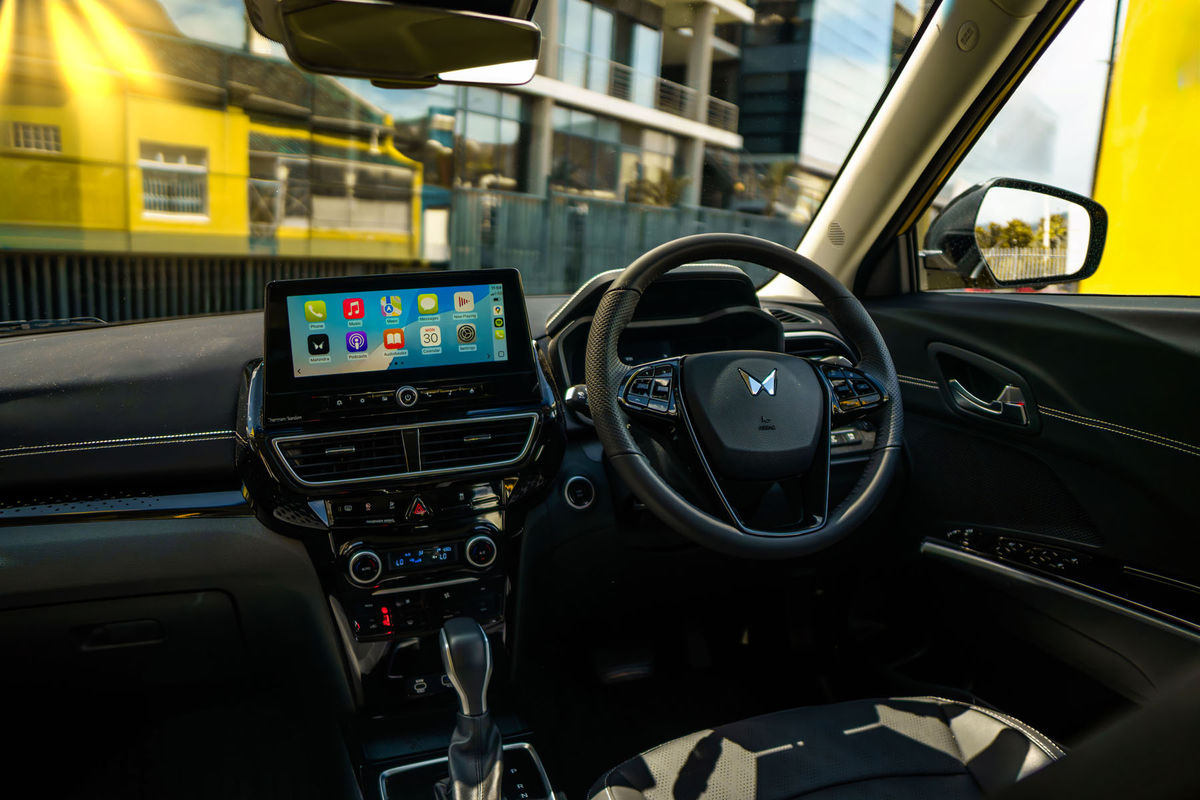
9-inch Infotainment
4 Speakers
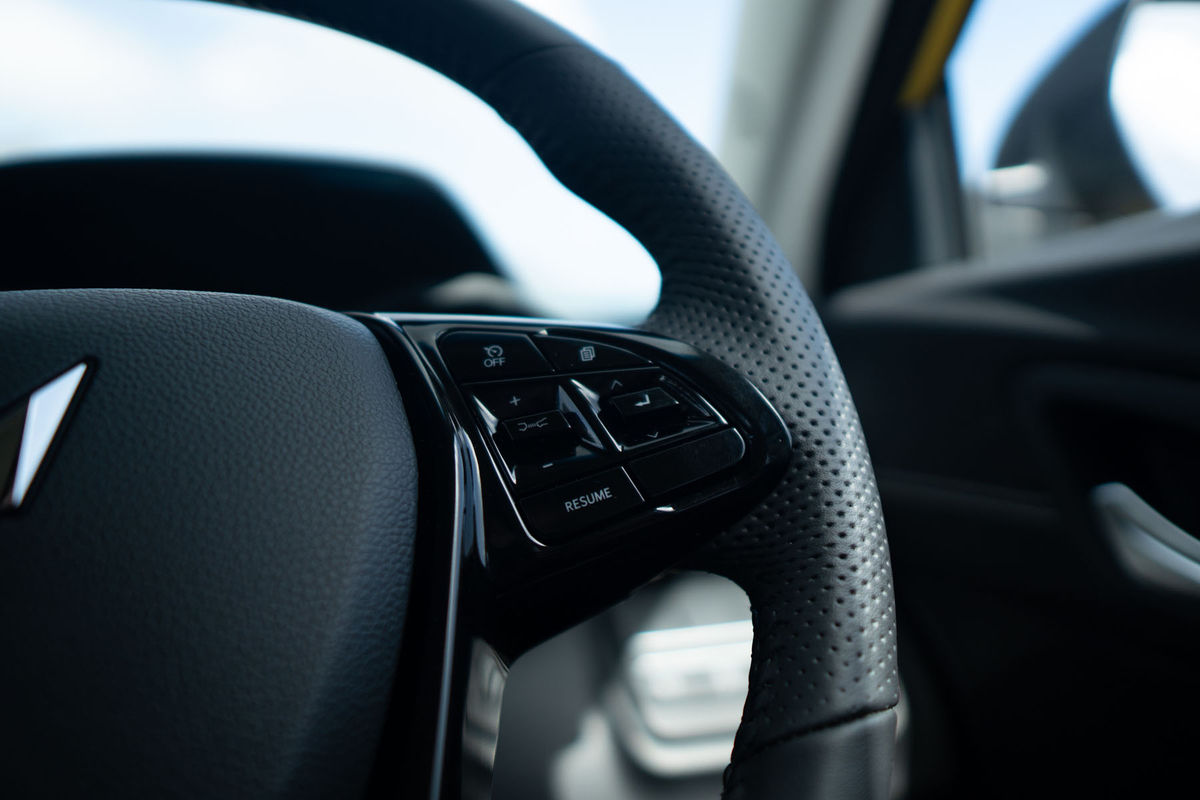
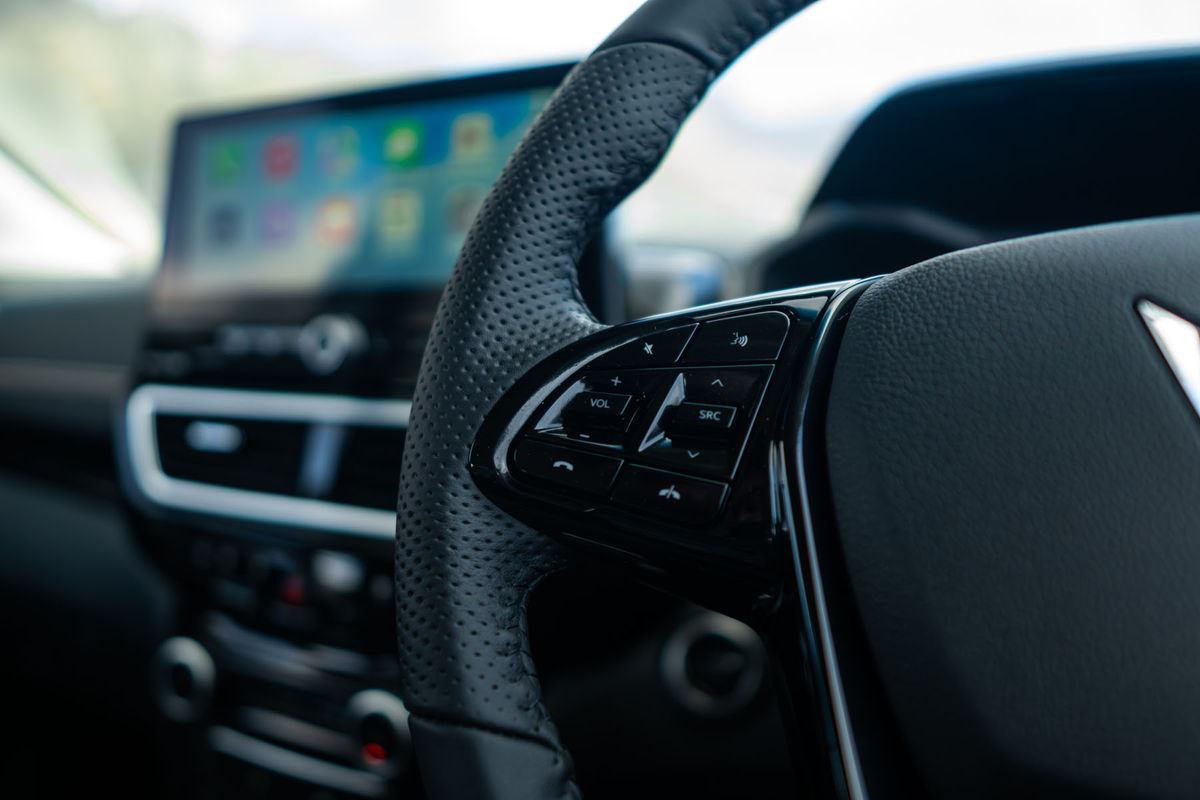
Steering Audio Control
Remote Keyless Entry
Follow Me Home Headlamp
MX3
The above content, plus:
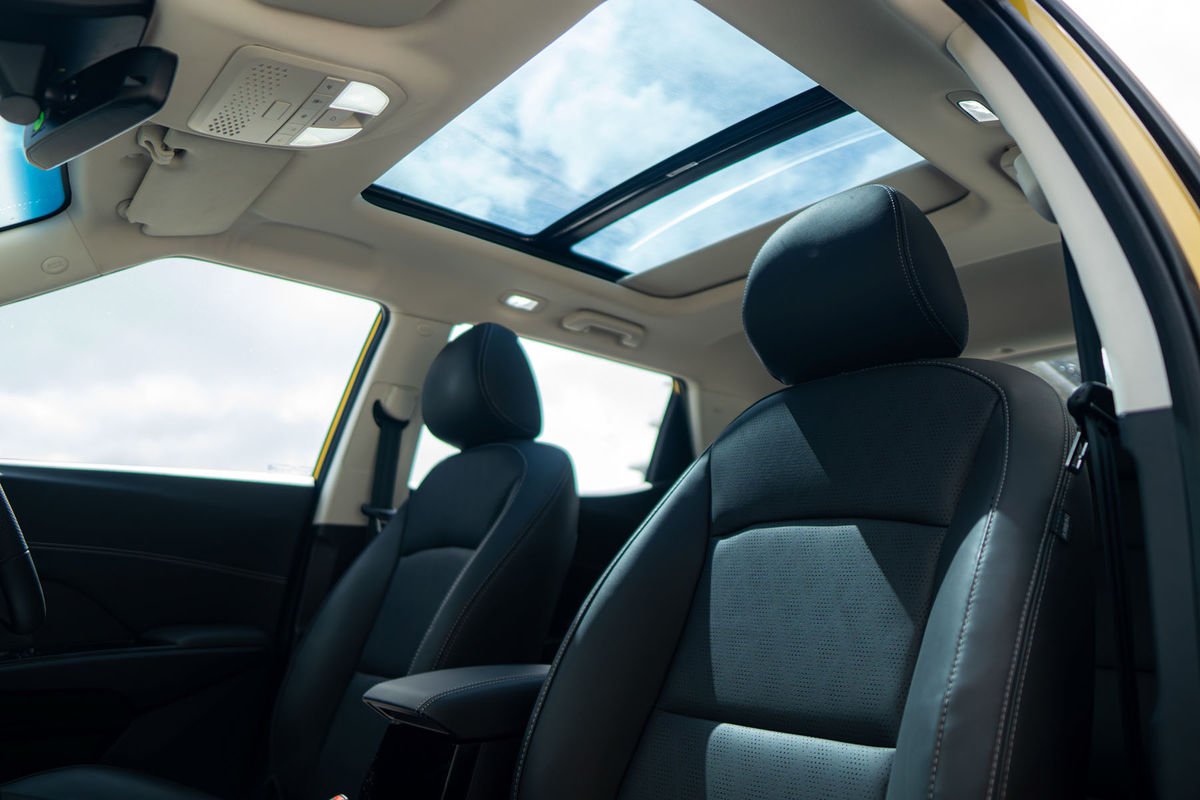
Sunroof
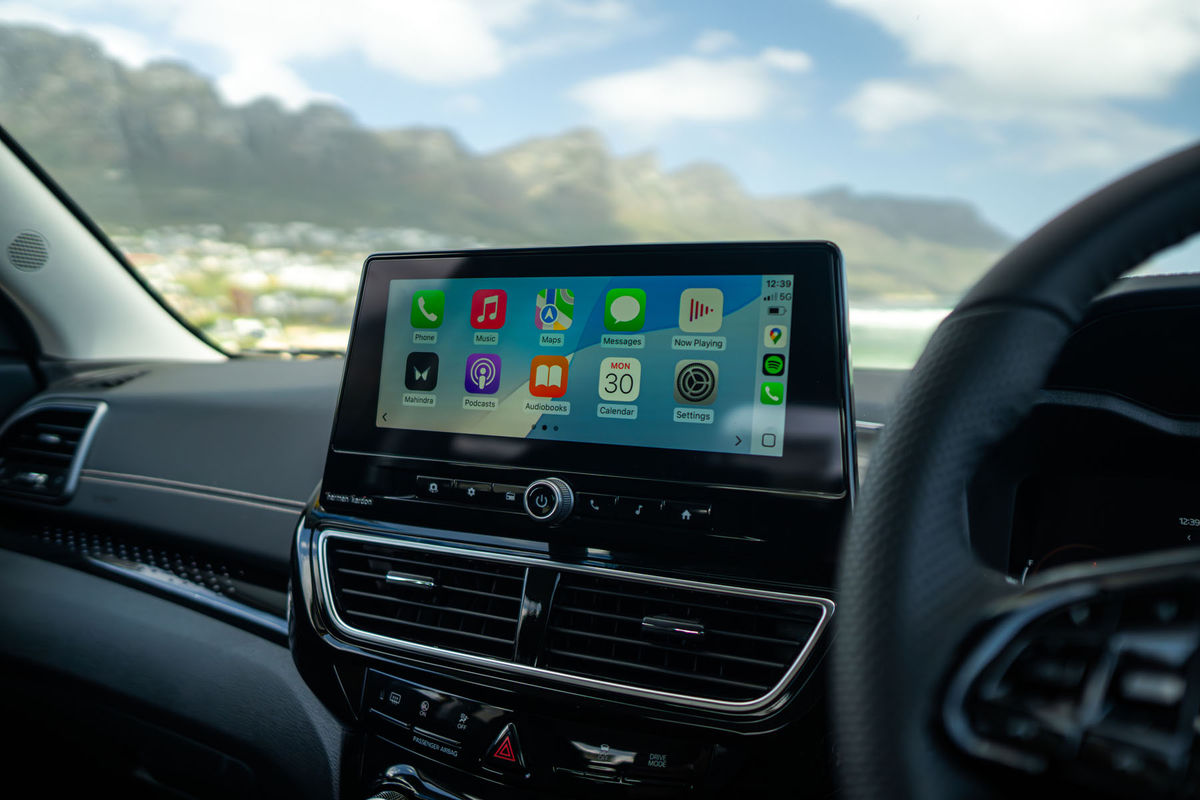
26.03 cm HD Infotainment
Wireless Android Auto & Wired Apple CarPlay
Cruise Control
Wireless Charger
Versa wheel Cover
AX5
The above content, plus:
Bi-LED Projector Headlamps with LED DRL with Front Turn Indicator
Infinity LED Tail Lamp
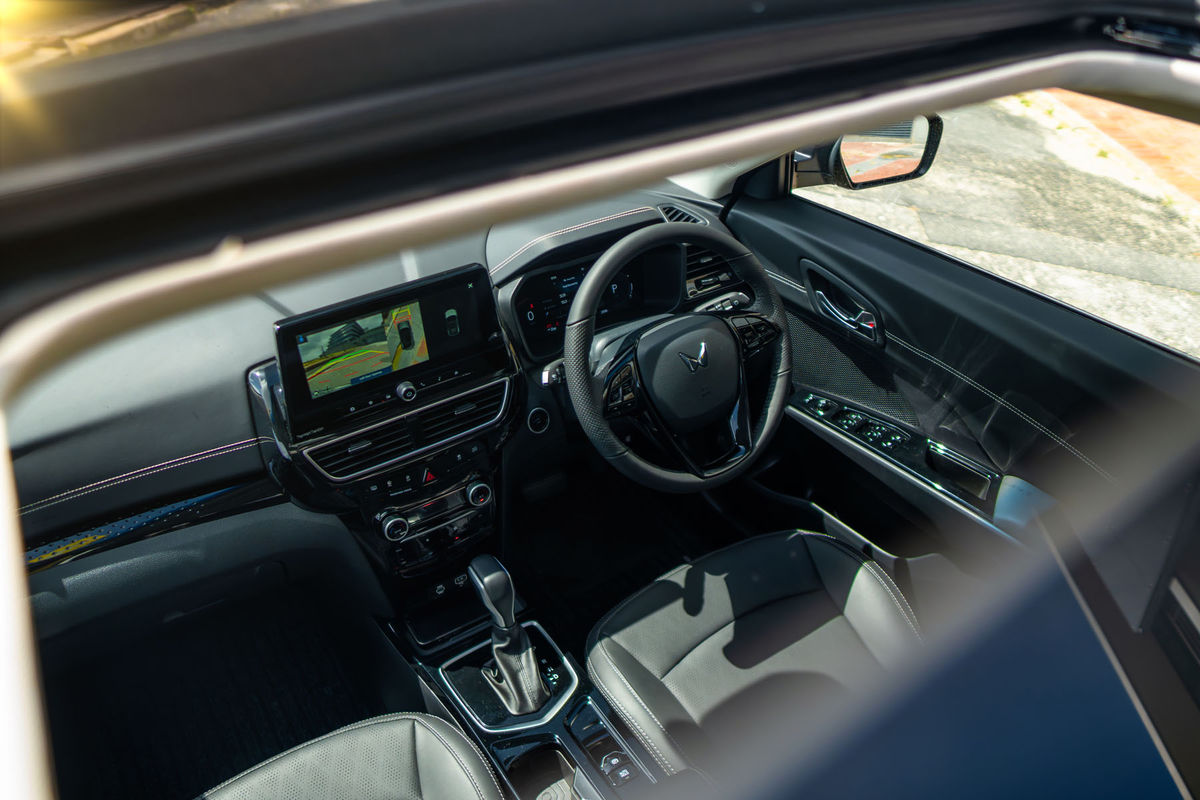
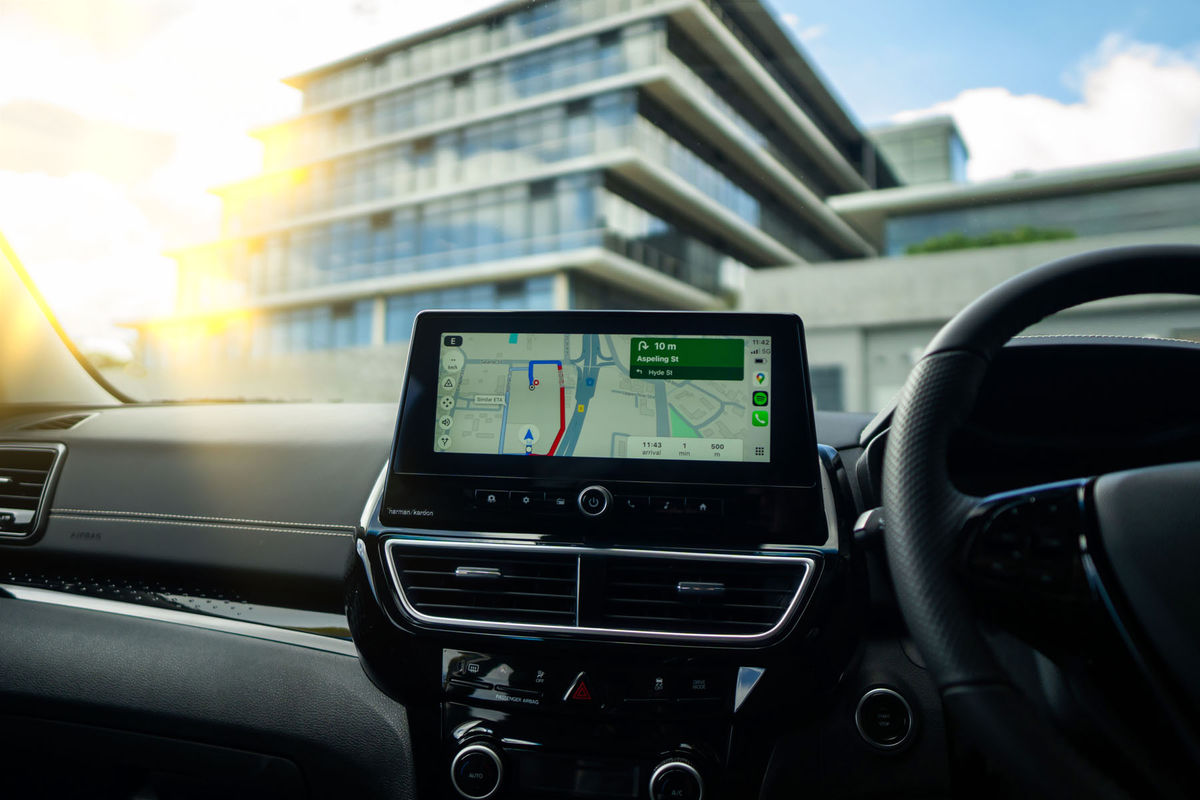
Twin HD 26.03 cm Infotainment & 26.03 cm Digital Cluster Screen
Online Navigation
Wireless Android Auto & Apple CarPlay
16-inch Diamond Cut Alloys
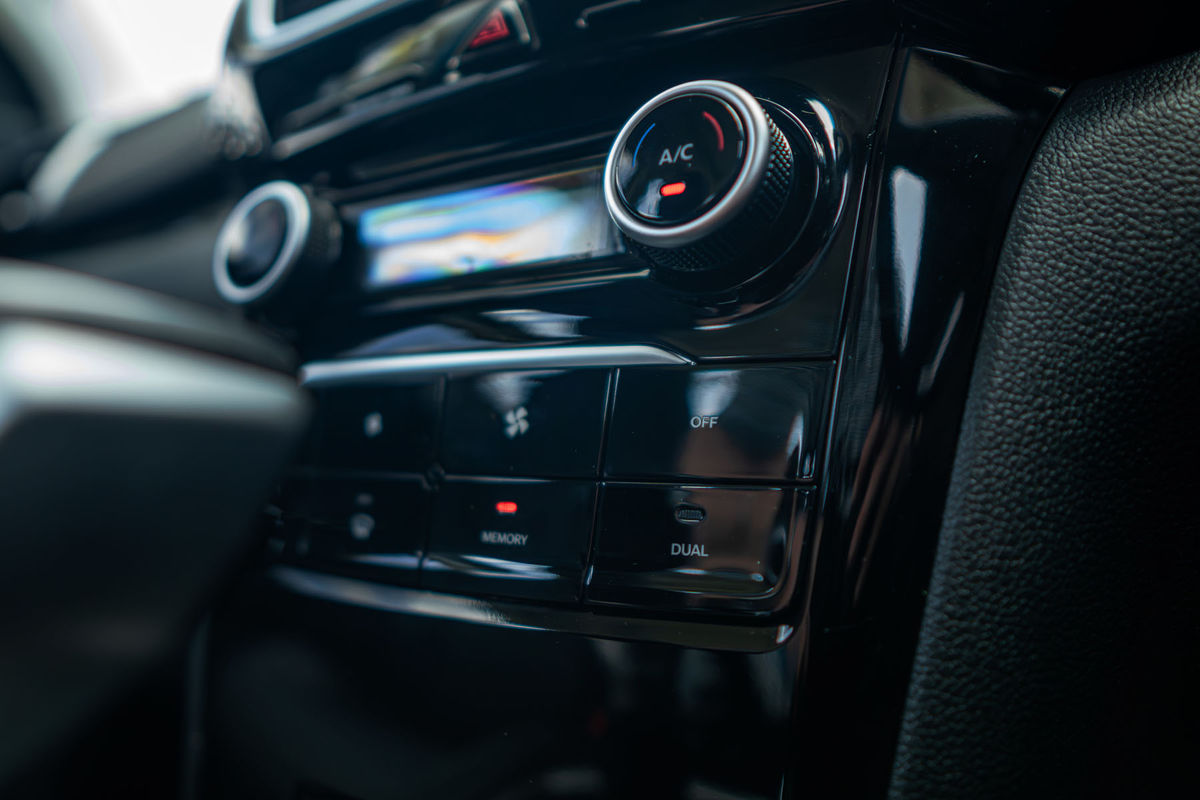
Dual Zone Climate Control
Rear View Camera
Passive Keyless Entry
Push Button Start
Leather Steering & Gear Knob
Tyre Pressure Monitoring System
Electrically Foldable ORVM
Height Adjustable Driver Seat
Rear Armrest with Cup Holder
Auto Headlamps + Auto Wiper
Rear Wiper & Wash + Rear Defogger
Roof Rails & Rear Spoiler
6 Speakers
Adjustable Headrest for 2nd Row Middle Passenger
Power Window: – 1 Touch Up (Driver)
AX7L
The above content, plus:
Level 2 ADAS
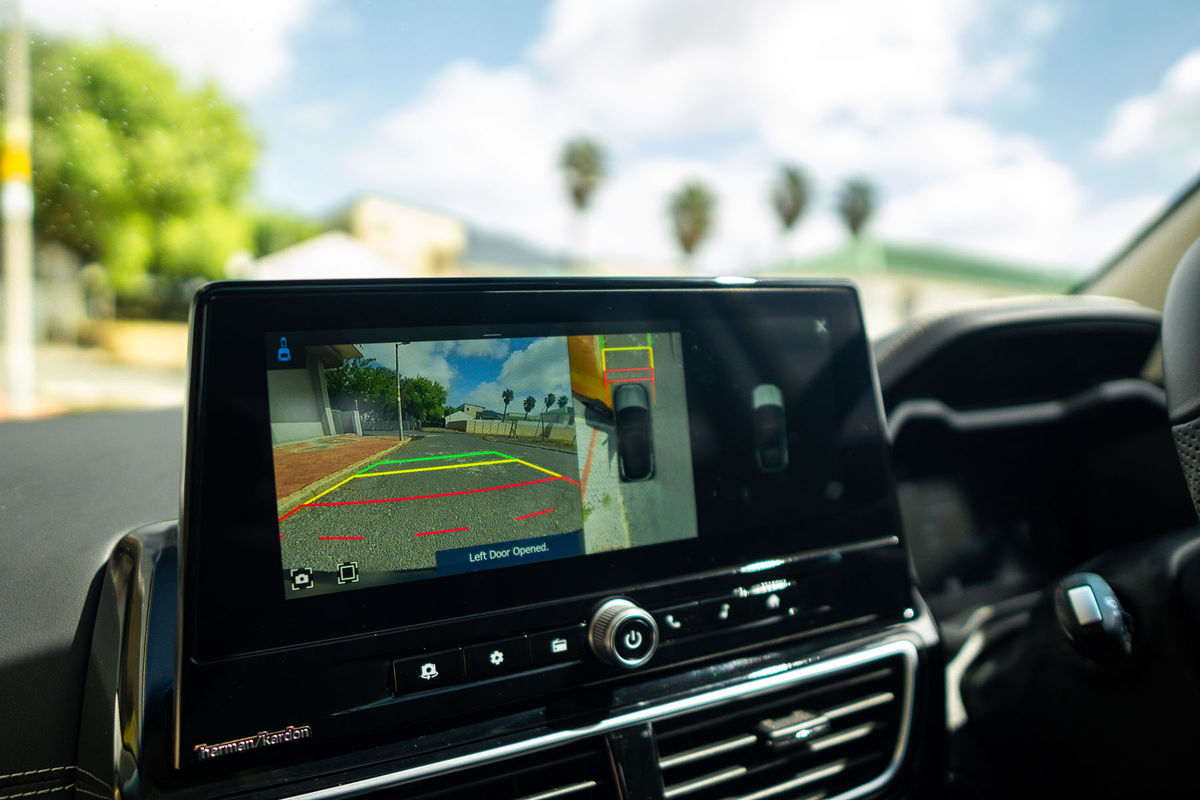
360-degree surround view system with Blind view monitor
Auto Dimming IRVM
Electronic parking brake with Auto Hold
Cooled Glove box
Skyroof
Harman Kardon Premium Audio with Amplifier & Sub-woofer
Soft Touch Leatherette on Dashboard & Door Trims
Leatherette Seats
17-inch Diamond Cut Alloys
LED Front Fog Lamps
Front Parking Assist System
65 W USB – C Fast Charging
How much does the Mahindra XUV 3XO cost in SA?
XUV 3XO 1.2T MX2 MT
R254 999
XUV 3XO 1.2T MX2 AT
R274 999
XUV 3XO 1.2T MX3 MT
R274 999
XUV 3XO 1.2T MX3 AT
R294 999
XUV 3XO 1.2T AX5 MT
R319 999
XUV 3XO 1.2T AX5 AT
R344 999
XUV 3XO 1.2T AX5L AT
R374 999
XUV 3XO 1.2T AX7L AT
R404 999
Prices (correct in October 2024) include a 5-year/150 000-km mechanical warranty. MX derivatives come with 3-year/55 000 km service plans, while AX derivatives have 5-year/100 000 km service plans. Mahindra has 90 dealers across South Africa.
We would like something reliable, lightweight, and not too thirsty. Of course, shopping on a budget means it must be affordable.
Mission impossible? Not at all!
This guide is packed with the best rides for students who want to hit the road without burning a hole in their pocket. From fuel-efficient commuters to weekend adventure buddies, we’ve rounded up cars that tick all the boxes. So, whether you’re a campus cruiser or a road trip warrior, let’s find the perfect set of wheels to match your student lifestyle.
Why Choosing the Right Car Matters
Getting your first car is a rite of passage and an exciting one at that. Having a car opens the door to fun, convenience, and a whole new life as a junior adult.
However, with limited budgets and varying needs, selecting the best car involves considering factors such as fuel efficiency, insurance costs, maintenance, and safety features. The ideal student car should be compact enough for city driving yet spacious enough to accommodate friends or carry groceries. Additionally, affordability is a major consideration, both in terms of purchase price and ongoing expenses.
Key Considerations When Buying a Car for Students
It’s all too easy to get caught up in the shopping process and forget what matters most when buying a car. If you can, try to take the emotion out of the equation and focus on the must-haves before looking at the nice-to-haves.
Budget: Set a realistic budget that includes not just the purchase price but also insurance, fuel, and maintenance costs. (Here’s a handy car finance calculator to help you with your sums.)
Fuel Efficiency: Look for cars that offer excellent mileage to save money on fuel.
Safety Ratings: Prioritise vehicles with high safety ratings and essential safety features.
Reliability: Choose brands known for their reliability to minimise repair costs.
Size: A smaller car can be easier to park and manoeuvre in busy urban environments.
What Is Considered “Fuel Efficient”?
Fuel efficiency, often called fuel economy, measures how effectively a vehicle converts fuel into distance travelled.
It is typically quantified in terms of distance per unit of fuel consumed, such as miles per gallon (mpg) in the United States or litres per 100 kilometres (L/100 km) in South Africa. Cars that achieve 7.8 L/100 km or less are generally considered fuel efficient, as they minimise fuel consumption while maximising travel distance.
Factors influencing fuel efficiency include engine design, vehicle weight, aerodynamics, and driving habits.
Top Picks for the Best Cars for Students
Let’s take a look at some of the best cars for students available in South Africa, focusing on affordability and practicality:
Car Model
Price Range (Approx.)
Fuel Efficiency
Key Features
Kia Picanto
R 150,000 – R 180,000
5.0 L/100 km
Compact size, low running costs
Hyundai Grand i10
R 160,000 – R 190,000
5.4 L/100 km
Spacious interior, good safety ratings
Suzuki Swift
R 170,000 – R 200,000
5.5 L/100 km
Stylish design, practical storage
Ford Figo
R 140,000 – R 180,000
6.0 L/100 km
Affordable servicing, decent boot space
Toyota Aygo
R 160,000 – R 190,000
4.1 L/100 km
Excellent fuel economy, compact dimensions
Nissan Magnite
R 180,000 – R 210,000
5.9 L/100 km
Spacious boot, good tech features
Volkswagen Polo Vivo
R 190,000 – R 220,000
6.2 L/100 km
Reliable performance, a popular choice
Kia Picanto
The Kia Picanto stands out as an excellent option for students due to its compact size and affordability. With prices ranging from R 150,000 to R 180,000 and impressive fuel efficiency of around 5.0 L/100 km, driving and parking in busy areas is easy. The Picanto also offers a comfortable interior with modern features that make it appealing to young drivers.
Hyundai Grand i10
Another strong contender is the Hyundai Grand i10, priced between R 160,000 and R 190,000. This model provides ample space for passengers and luggage while maintaining low running costs of approximately 5.4 L/100 km. Its safety ratings are commendable, making it a reliable choice for students who prioritize security.
Suzuki Swift
The stylish Suzuki Swift combines aesthetics with functionality. Priced around R 170,000 to R 200,000 and achieving about 5.5 L/100 km in fuel efficiency, it offers a fun driving experience along with practical storage solutions.
Ford Figo
The Ford Figo is known for its affordability and space efficiency. With prices ranging from R 140,000 to R 180,000 and fuel efficiency of about 6.0 L/100 km, it provides great value for money while being easy to maintain.
Toyota Aygo
For those looking for excellent fuel economy without sacrificing comfort, the Toyota Aygo is an ideal choice. It offers an impressive fuel efficiency of around 4.1 L/100 km while being compact enough for urban driving. Prices typically range from R 160,000 to R 190,000.
Nissan Magnite
The Nissan Magnite is perfect for students needing extra space without high costs. Priced between R 180,000 and R 210,000 with a fuel efficiency of about 5.9 L/100 km, this SUV-like hatchback offers practicality along with modern tech features.
Volkswagen Polo Vivo
Finally, the popular Volkswagen Polo Vivo remains a favourite among students due to its reliability and performance. With prices starting at around R 190,000 up to R 220,000 and fuel efficiency of approximately 6.2 L/100 km, it combines quality with affordability.
Cars in South Africa That Are the Cheapest to Service
Service costs play a significant role in determining the overall cost of owning a vehicle, especially for students who are often on tight budgets.
Certain cars stand out in South Africa due to their low servicing costs, making them ideal choices for students. According to the last report from Automobile Association of South Africa (2021), the Renault Kwid 1.0 Dynamique is one of the cheapest cars to service, with a service parts basket costing approximately R4,085.84.
Following closely is the Ford Figo 1.5 Titanium, which has a service parts cost of around R3,347.78. Other economical options include the Peugeot 1.2 Active and the Toyota RAV4, which also offer relatively low maintenance expenses, at R6,011.94 and R6,183.32 respectively for their service parts.
Safety Rating Matters
While you can never guarantee that a higher safety rating will keep you safer in every scenario, it’s good to have the facts when you’re looking at a student car. (Check the safety rating for your car here.)
Car Model
Adult Occupant Safety Rating
Kia Picanto
81%
Hyundai Grand i10
83%
Suzuki Swift
86%
Ford Figo
84%
Toyota Aygo
78%
Nissan Magnite
80%
Volkswagen Polo Vivo
94%
Personal Safety Concerns
Hijacking is not something we like to think about, but it’s a sad reality in South Africa. If this is a factor for you, then you should scan through this list of the most hijacked cars.
Toyota Hilux – Known for its durability and high resale value, it is a prime target for thieves.
Volkswagen Polo – Its popularity and easily sellable parts contribute to its high hijacking rates.
Toyota Fortuner – Often targeted for its parts and resale value, particularly in rural areas.
Ford Ranger – Valued for its durability and market demand, making it attractive to hijackers.
Nissan NP200 – Frequently hijacked due to its practicality and extensive use in various industries.
Toyota Corolla Cross – A newer model that has quickly climbed the ranks of high-risk vehicles since its launch.
Toyota RAV4 – Similar to the Corolla Cross, it is often taken for its off-road capabilities and demand in neighbouring countries.
Best Cars for You
Choosing one of the best cars for students is essential for enhancing mobility while managing financial constraints effectively.
Each of the cars listed provides unique benefits tailored to student needs—be it affordability or practicality—making them excellent choices in South Africa’s diverse market.
For more insights into affordable options like these or to explore various models further, check out used cars for sale in South Africa. Whether you’re heading to class or enjoying a weekend getaway with friends, these cars will serve you well during your studies!
Mahindra XUV700 Black Edition (2024) Price & Specs
Mahindra South Africa has added a new Black Edition flagship derivative to its XUV700 range. Here’s how much this thoroughly blacked-out variant costs…
Mahindra South Africa has expanded its XUV700 SUV portfolio with the launch of a new Black Edition flagship derivative.
This latest variant slots in at the very top of the local line-up, which now numbers 4 derivatives. Available exclusively in so-called “AX7L” (so, top-spec 7-seater) form, the Black Edition is priced at R627 900. For the record, that makes it R27 901 more expensive than the standard AX7L.
So, what do you score for the extra outlay? Well, as you might have guessed from the name, the newcomer comes finished in “Napoli Black” paint, rather than any of the 5 other exterior colours available (Everest White, Midnight Black, Dazzling Silver, Red Rage and Electric Blue).
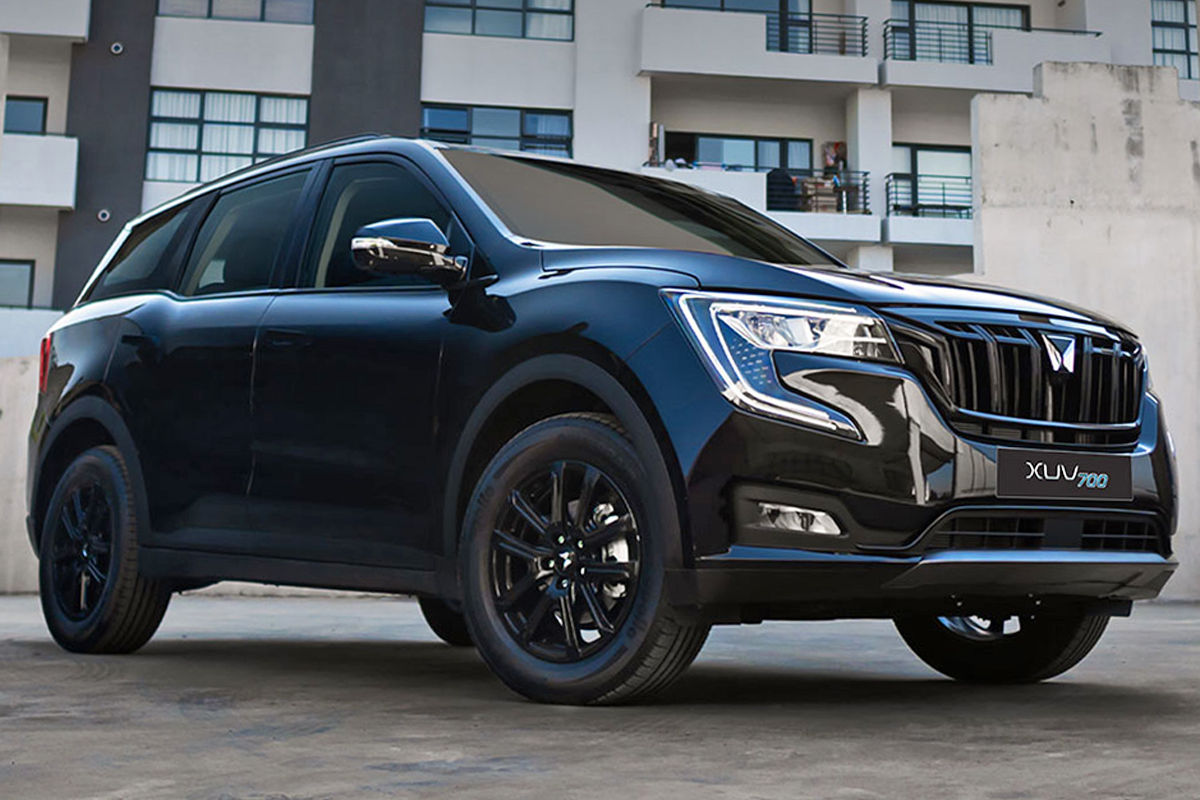
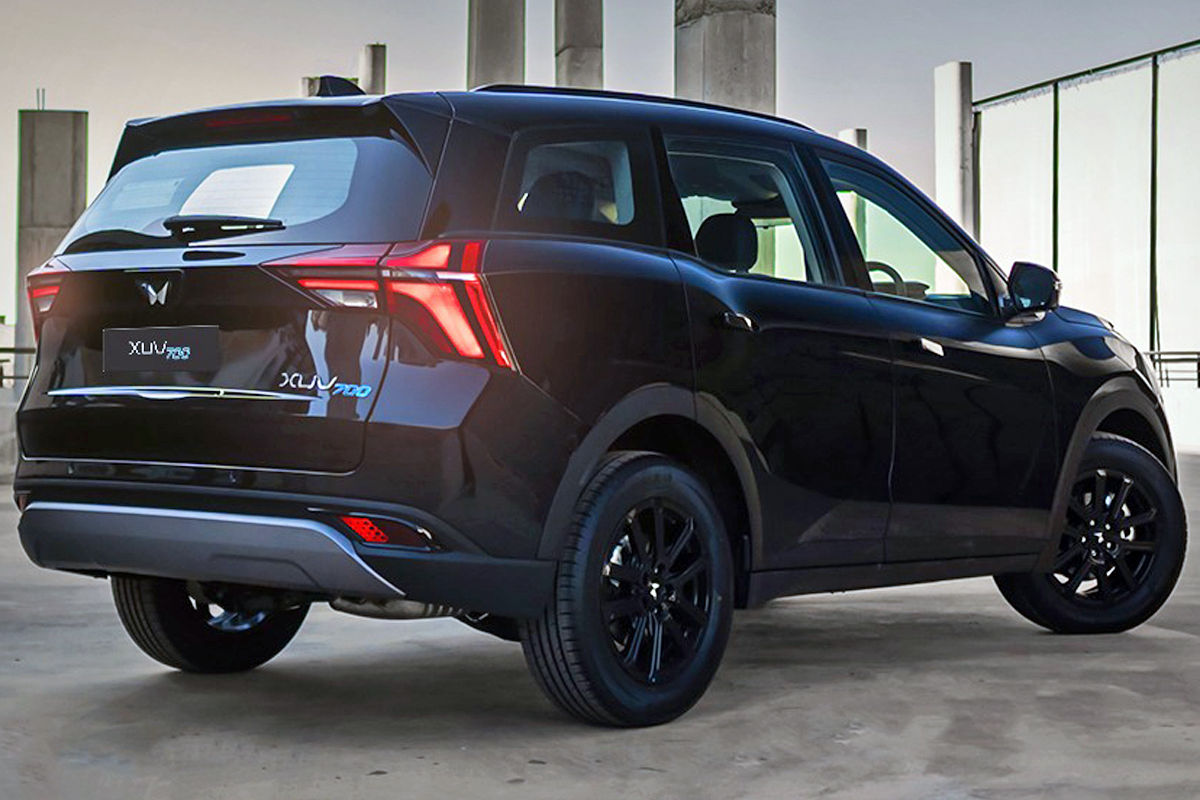
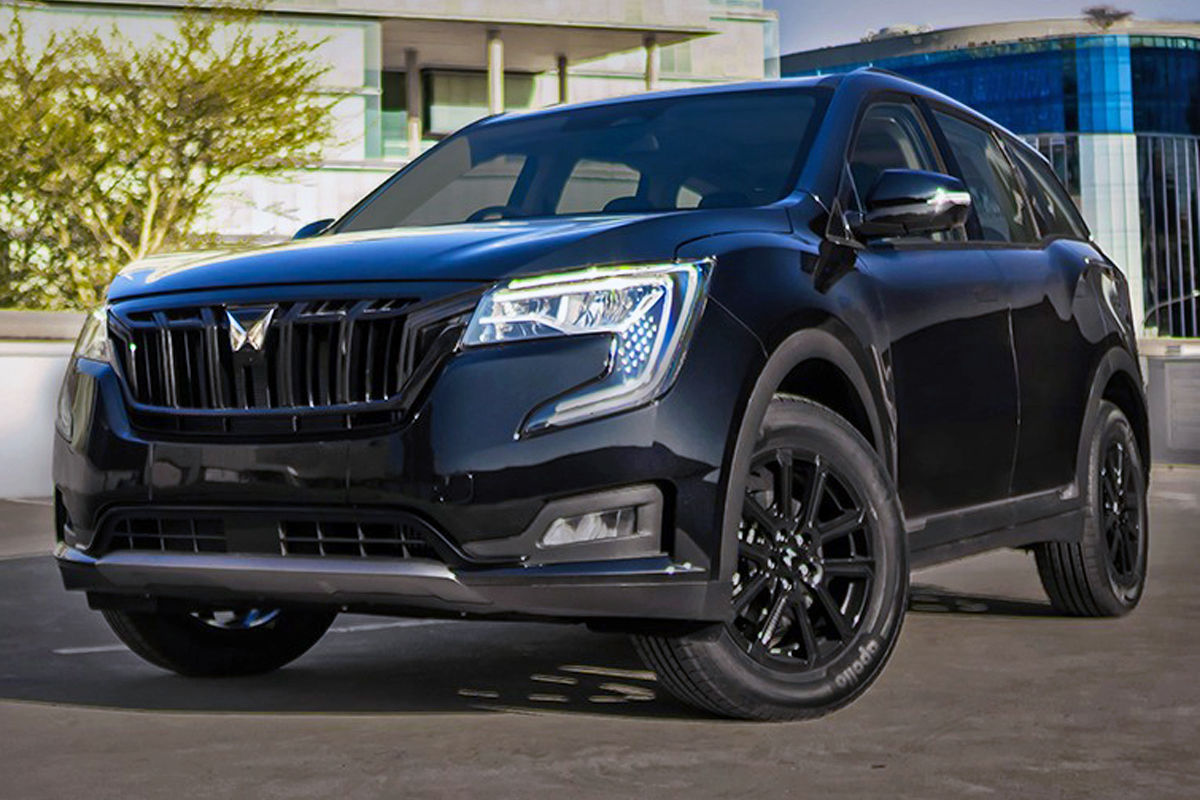
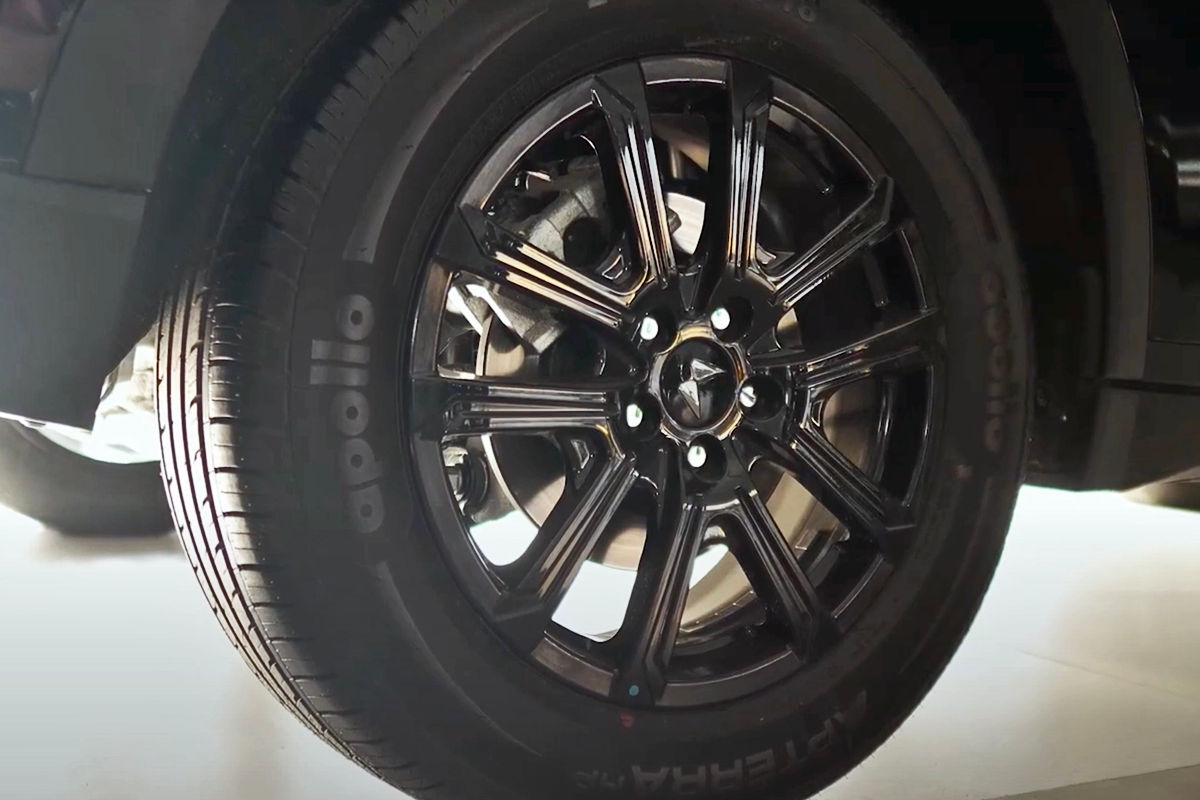
In addition, it rides on black 18-inch alloy wheels and features an all-black (rather than black-and-chrome) grille. Inside, the XUV700 Black Edition ditches the standard AX7L’s off-white upholstery in favour of black leatherette.
Of course, the powertrain is untouched, which means the XUV700 Black Edition’s turbocharged 2.0-litre, 4-cylinder “mStallion” petrol engine offers an unchanged 149 kW and 380 Nm to the front axle through a 6-speed automatic transmission.
High-end standard features carried over from the AX7L include items such as a blind-spot monitor, a 360-degree camera, a 12-speaker Sony sound system, a driver’s knee airbag (for a total of 7 airbags), an electronic parking brake, wireless smartphone charging and a stop-and-go function for the adaptive cruise control system.
As a reminder, the XUV700 touched down in South Africa in November 2022, effectively arriving as a successor to the XUV500. The 5-seater XUV700 2.0T AX5 is currently priced from R495 199, while the XUV700 2.0T AX7 comes in at R551 399 and the XUV700 2.0T AX7L at R599 999.
Year to date (at the end of September 2024), Mahindra SA has registered 583 units of the XUV700 in Mzansi. That sees this SUV slot in behind the KwaZulu-Natal-assembled Pik Up (6 538 units), the Scorpio-N (772 units) and the XUV300 (692 units), with the latter since replaced by the XUV3XO.
How much does the XUV700 Black Edition cost in SA?
Mahindra XUV700 2.0T AX5 – R495 199
Mahindra XUV700 2.0T AX7 – R551 399
Mahindra XUV700 2.0T AX7L – R599 999
Mahindra XUV700 2.0T AX7L Black Edition – R627 900
The prices above include Mahindra’s 5-year/150 000 km warranty and a 5-year/100 000 km service plan (with 20 000 km intervals).
The 6th-gen Ford Mustang was offered in right-hand drive directly from the factory, which facilitated an official launch in South Africa. A new model will be here soon, but what should you look for when shopping for a used version of the muscle car?
If you wander around an S550-series Ford Mustang, you won’t find the word “Mustang” – or even the famous Blue Oval emblem – emblazoned anywhere on the fastback or convertible’s exterior. The 6th-gen muscle car was endowed with such an instantly recognisable shape that the Dearborn-based brand didn’t feel the need to slap a traditional wordmark on the Mustang’s aggressively styled rear end.
Instead, the company simply affixed the “galloping horse” logo to the 6th-gen Mustang’s grille. By the time this model was officially rolling off the line in right-hooker guise – thus finally facilitating a market launch here in South Africa (as well as in several other right-hand-drive (RHD) markets around the world, of course), the Mustang had become a brand in its own right, such was its cachet and heritage.
No Ford badge anywhere to be seen…
The S550 series was revealed in 2013 as the 1st iteration of the Mustang – a nameplate that has been in production since 1964 – to be offered directly from the factory in RHD form (though the handbrake was a little frustratingly still sited on the far side of the transmission tunnel). The “Cyclone” 3.7-litre V6 wasn’t offered in the Republic; our market received the turbopetrol 4- and naturally aspirated 8-cylinder motors.
Manufactured at Ford’s Flat Rock assembly plant in Michigan, the 6th-gen Mustang was offered in both fastback coupe and soft-top convertible body styles. Interestingly, this model finally ditched the solid rear-axle configuration, which was employed by almost all preceding examples of the Blue Oval’s iconic muscle car, in favour of a fully independent suspension set-up.
The S550 was the first ‘Stang to be offered in RHD from the factory.
Production of the S550-series Mustang ended in April 2023, but it soldiered on in Mzansi until November 2024, when the 7th-gen model finally made its local debut. Ford Motor Company of SA (FMCSA) says more than 4 000 units of the 6th-gen model were registered in our market and, seeing as convertible variants weren’t nearly as in demand as their tin-top siblings, we’ll focus on the coupe in this article.
Ford Mustang model line-up in South Africa
It took 2 long years for the Mustang to arrive in Mzansi.
The S550-series Ford Mustang was unveiled in December 2013, shortly ahead of the nameplate’s 50th anniversary. South Africa had to wait a further 2 years for the local launch of the rear-wheel-drive muscle car, although when it did eventually touch down in December 2015, its maker billed the (then) newcomer as “arguably the most anticipated new-model introduction in Ford South Africa’s illustrious history”.
Judging by local interest at the time, this wasn’t merely a case of marketing hyperbole. FMCSA even cooked up a “Mustang Lottery”, which operated on a sweepstake basis and gave 15 individuals the opportunity to jump to the top of the already bulging waiting lists, as a matter of fact.
The convertible sold in far smaller numbers than the coupe.
At launch, the local Ford Mustang line-up comprised 6 rear-driven derivatives, each offering a unique combination of body style, engine and transmission.
Furthermore, the Performance Pack was fitted as standard on all SA-spec variants, adding items such as a larger radiator, high-performance brakes, 19‑inch alloy wheels, special chassis tuning, heavy-duty front springs, an upsized sway bar (exclusive to Fastback variants), plus a “K-brace” under the bonnet:
2.3 EcoBoost Fastback 6MT (223 kW/430 Nm)
2.3 EcoBoost Fastback 6AT (223 kW/430 Nm)
2.3 EcoBoost Convertible 6AT (223 kW/430 Nm)
5.0 V8 GT Fastback 6MT (306 kW/530 Nm)
5.0 V8 GT Fastback 6AT (306 kW/530 Nm)
5.0 V8 GT Convertible 6AT (306 kW/530 Nm)
The local Mustang portfolio went largely unaltered until July 2019, when the facelifted version hit South Africa. While the mid-cycle refresh included the requisite smattering of updates to the exterior styling as well as revised cabin materials, the mechanical changes were perhaps more significant.
The refreshed Mustang arrived in SA early in the 2nd half of 2019.
For instance, the turbocharged 2.3-litre, 4-cylinder engine had its peak power reduced from 223 kW to 213 kW, though interestingly gained 11 Nm for a new maximum twisting-force figure of 441 Nm. Claimed combined fuel consumption for this powerplant also increased slightly to 10.0 L/100 km.
Meanwhile, the “thoroughly reworked” naturally aspirated 5.0-litre V8 engine’s peak power climbed 22 kW to 331 kW (now on tap at an even loftier 7 000 rpm), while maximum torque dropped a single unit to 529 Nm. The 8-cylinder unit furthermore gained Ford’s so-called “Good Neighbour Mode”, which could be set to automatically limit the exhaust’s noise output at selected times of the day.
The manual-equipped Bullitt launched alongside the facelift.
Furthermore, standard versions of the Mustang were no longer available with a manual gearbox from this point, instead switching to the American firm’s new 10-speed automatic transmission. The initial exception was the limited-edition Bullitt (inspired by the 1968 Warner Bros film of the same name), which came with a 6-speed manual gearbox and a V8 tweaked to deliver 338 kW.
Just 50 units of the Bullitt were set aside for Mzansi, each finished in either Dark Highland Green or Shadow Black. The special model came standard with the MagneRide adjustable suspension system, a 10-speaker Bang & Olufsen (B&O) sound system, model-specific styling upgrades, a top speed of 262 kph (12 kph faster than the standard V8 derivatives, for what it’s worth) and a cue-ball gear knob.
One of the Bullitt’s defining features.
By April 2021, with all 50 examples of the Bullitt sold, the 2.3 EcoBoost derivatives were quietly axed in South Africa – likely due to slow sales – reducing the Mustang range to a pair of auto-equipped 5.0 V8 derivatives (a fastback and a convertible). However, in June 2021, the “track-focused” Mustang Mach 1 made local landfall, with 90 units earmarked for our market.
Like the Bullitt, the Mach 1’s 8-cylinder motor generated 338 kW, though here it could be mated with either a Tremec-sourced short-throw 6-speed manual gearbox or the 10-speed automatic cog-swapper (each with a dedicated oil cooler as well as an auxiliary engine-oil cooler).
SA received 90 examples of the Mach 1.
In addition to its Fighter Jet Grey paintwork (with contrasting decals) and aero body kit, the Mustang Mach 1 came with specially tuned power steering, the latest MagneRide adjustable suspension set-up, stiffer front springs, stiffer anti-roll bars, wider 5-spoke 19-inch alloy wheels and even a Track mode.
The special-edition theme continued in June 2022, when the Mustang California Special blasted into South Africa. Limited to just 100 units locally, this automatic-only variant boasted a prominent front splitter, a large rear wing and air scoops behind its doors, though its V8 interestingly made 330 kW and 529 Nm (the same outputs as the standard GT variants). It was available in a choice of 9 exterior colours.
Just 100 units of the California Special were set aside for Mzansi.
As an aside, we should mention that local Mustang enthusiasts also had access to several performance-tuned models via Ford Motor Company of Southern Africa’s various conversion partners.
For instance, Shelby South Africa offered the supercharged Super Snake, Speedster, Carroll Shelby Signature Series and King of the Road models, while Performance Centre SA marketed the RTR Vehicles Series 1 Mustang and various Roush performance upgrades.
What are the advantages of a Ford Mustang?
Road presence? Check!
Oodles of road presence: Despite the S550-series Mustang’s exterior design dating back more than a decade, it remained a head-turning machine even at the end of its time on the new-vehicle market. Even standard versions (which did without the various body addenda of the special editions) continued to draw attention thanks to an aggressive stance, that lengthy bonnet and distinctive lighting signatures.
Of course, the derivatives powered by the free-breathing 5.0-litre engine furthermore boasted an attention-drawing aural character, ranging from a menacing V8 burble at low engine speeds to a thundering 8-cylinder roar as the tachometer needle barrelled past 7 000 rpm.
Even the 4-pot offered considerable oomph.
Sufficiently fast: When the tarmac turned twisty, the 6th-gen Mustang was hardly a precision tool (the V8 derivatives could break traction with very little provocation, after all), despite having upgraded to independent rear suspension. Indeed, the Blue Oval brand’s muscle car came across more as a capable cruiser than an out-and-out sportscar. But it was by no means slow, particularly in a straight line.
In fact, we’d say this generation was more than sufficiently fast – in virtually all guises, too. For instance, Ford said the standard 5.0-litre V8-powered GT derivatives could complete the 0-100 kph sprint in just 4.8 seconds (regardless of the specified transmission), a figure that fell to 4.5 seconds in the case of the California Special and 4.4 seconds for the auto-equipped version of the Mach 1. All 4-cylinder derivatives, meanwhile, had a claimed 0-100 kph time of 5.8 seconds – hardly tardy at all.
Soon to graduate to collectable status?
Local availability of special models: While Ford Motor Company of Southern Africa has sometimes been accused of playing the “special edition” card a little too frequently (also with the Ranger bakkie), the limited-run models that peppered the 2nd half of the Mustang’s local lifecycle were broadly welcomed.
Why? Well, each and every one benefited from more than just a sticker pack, receiving upgrades on both the aesthetic and functional fronts. As such, there’s a strong chance the likes of the Bullitt, Mach 1 and California Special could one day graduate to “collectable” status – particularly as the world continues to shift away from large-displacement petrol engines.
What are the downsides of a Ford Mustang?
Cabin build quality wasn’t exactly top notch…
Sub-par cabin finishes: Since the Ford Mustang was never intended to compete with luxury sportscars, its comparatively low price in North America neatly offset any would-be grumbles about the less-than-stellar cabin build quality. But the imported 6th-gen model wasn’t nearly as much of a bargain here in SA, leading to inevitable comparisons with similarly priced – and notably more premium – German rivals.
Needless to say, the Mustang finished a distant 2nd best to premium marques’ offerings, despite a few interesting design touches inside (such as the bank of toggle switches alongside the start button). The interior’s fit and finish were below par and it was clear the cabin was built to a price; to a degree, this trend extended to the exterior as well, where panel gaps weren’t the most consistent.
The facelifted model’s interior benefitted from minor updates.
That said, Ford did at least make some cabin improvements at the facelift, including adding soft-touch material to the door linings and switching to aluminium door handles. So, if material quality is a key consideration for you, it may be worth opting for a refreshed model.
That big V8 is thirsty: With great displacement comes great … big fuel bills? Yes, the atmospheric V8 was a thirsty beast, capable of draining the 61-litre fuel tank in the blink of an eye or with a few flexes of the right ankle. FMCSA’s official fuel-consumption claim for the manual-equipped GT came in as high as 13.5 L/100 km (while the facelifted GT with the 10-speed auto was said to use 12.3 L/100 km), though the brawny 8-cylinder’s real-world figure was obviously far loftier.
The V8 was a heavy drinker of unleaded.
Poor Euro NCAP score: In 2017, Euro NCAP crash-tested a 6th-gen Mustang, handing the coupe a disappointing 2 stars for safety. Though the Ford scored particularly poorly in the child-occupant category and safety-assist section, the front airbags also showed “insufficient inflation” during the frontal-offset evaluation, causing both the driver dummy’s head and that of the passenger dummy to “bottom out” against the cabin architecture.
Later in 2017, the facelifted Euro-spec version gained a few driver-assistance features while also benefiting from changes to its restraint system (thus preventing the front airbags from bottoming out). As such, Euro NCAP revised its rating to 3 stars, though opted not to crash-test the vehicle again, saying it was “structurally identical” to the pre-facelift car.
The Mustang after its frontal-offset impact test at Euro NCAP.
Interestingly, the Mustang fared far better in its home country, scoring 5 stars in the National Traffic Safety Administration (NHTSA) test and coming close to earning a Top Safety Pick rating in the Insurance Institute for Highway Safety (IIHS) evaluation.
Miscellaneous potential issues: Considering it played in the sportscar segment, it should come as no surprise that the S550-series Ford Mustang’s rear quarters were particularly tight. In addition, the Sync 2 infotainment system in the pre-facelift model wasn’t the slickest, though the mid-cycle update did at least bring an upgrade to Sync 3.
What else did we find in our research? Well, some early V8 models suffered from oil-cooler issues, though this was seemingly corrected fairly swiftly. We’ve also heard of a few local instances of complete air-conditioning failure, so the HVAC system is worth checking carefully during any test drives.
How much is a used Ford Mustang in South Africa?
V8 variants are in far greater supply than 4-cylinder derivatives.
At launch, all Mustang derivatives shipped standard with a 4-year/120 000 km warranty and a 5-year/100 000 km service plan (with intervals of 20 000 km). However, at the facelift, the latter arrangement was quietly adjusted to 6 years or 90 000 km, with the intervals shortened to 15 000 km. Then, from the start of November 2021, Ford “unbundled” its service plans from the purchase price of its vehicles, instead offering these as added-cost options.
Nearly 93% of the S550-series Ford Mustang units listed on Cars.co.za at the time of writing were specified with an automatic transmission (which makes sense, since facelifted models were far more prevalent than earlier units). Similarly, at almost 92%, the coupe body style was considerably more popular than the convertible.
Mustang convertibles are few and far between.
Meanwhile, only around 9% featured the turbocharged 2.3-litre, 4-cylinder motor, reflecting the overwhelming popularity of the 5.0-litre V8. We found just 3 examples of the Mach 1 (all in auto guise), along with as many as 13 units of the California Special and a single Bullitt.
Mileages topped out at around 150 000 km, the latter achieved by a 2017 Mustang 5.0 V8 GT Convertible 6AT; most listings, however, showed well under 100 000 km. Interestingly, red was the most popular paint colour at 31%, followed by white and blue (with 17% each), then grey (15%).
Below R450 000: We found a mere 6% of all S550-series listings under this mark, with the lowest price being R395 000 (for the aforementioned 150 000 km convertible). More than half of the examples we found here featured the 4-pot forced-induction motor.
From R450 000 to R700 000: This pricing bracket hosted the remainder of the 4-cylinder models, along with a handful of pre-facelift V8s. Interestingly, all but a single listing showed under 100 000 km. Bold decals, aftermarket alloy wheels and body kits were furthermore the order of the day here.
From R700 000 to R1 000 000: Nearly 45% of listings were positioned between these pricing bookends, where model years were heavily skewed towards 2023 (on a related note, average mileage fell well below 20 000 km in this space). Interestingly, this was where we discovered the solitary Bullitt – priced at R865 000, with just 16 000 km on the clock – on the market.
R1 000 000 and up: Should your budget just about stretch into 7 figures, you’d be able to pick up a virtually brand-new California Special or a lightly used Mach 1. Other listings here included supercharged models from Shelby and Roush. Indeed, the most expensive Mustang we found was low-mileage Shelby-fettled V8 listed for a whopping R1 680 000.
Which Ford Mustang derivative is the pick of the bunch?
V8 or nothing, we say.
So, which Mustang derivative should you buy? Well, if you’re purchasing a muscle car, you simply have to go for the V8 over the 4-pot, don’t you? Thankfully, the burly atmospheric engine is far more common than the turbocharged 2.3-litre motor. It’s a similar case with body styles; we’d argue the more plentiful coupe offers the most authentic experience, with the soft-top model being hampered by extra weight and lower rigidity.
Furthermore, should your budget allow, we’d suggest narrowing your search to facelifted derivatives, considering these benefited from a slight improvement in cabin quality, as well as extra power for the V8. Unless you’re prepared to cough up for a manual-equipped special edition, that’d mean opting for the 10-speed automatic transmission (which does a fine job when cruising, but can become a little flummoxed when you’re pressing on). That said, our ideal Mustang would be the 3-pedal Bullitt.
Special-edition models aren’t cheap.
Finally, here’s our obligatory warning about purchasing a 2nd-hand performance car: yes, models like the Ford Mustang tend to be driven with, ahem, “enthusiasm”, so make sure to check closely for evidence of meticulous maintenance. In addition, steer well clear of modified examples, unless they’ve been tuned by one of Ford’s official conversion partners.
Is the Ford Mustang a smart used buy?
The Mustang arguably had no direct rival in SA.
It’s not easy finding direct rivals to the Ford Mustang in a South African context, considering muscle cars such as the Chevrolet Camaro and Dodge Challenger (both of which have since been discontinued overseas) were never officially offered locally.
That said, during the Mustang’s time on the market, there were several other sportscars from which to choose, from the pricier F82-gen BMW M4 and A90-series Toyota Supra (both employing turbocharged straight-6 motors) to the V8-powered Lexus RC F and the razor-sharp Porsche 718 Cayman.
Bullitt: the ideal S550-gen Mustang?
Compared with such models, the S550-series Ford Mustang was unapologetically old school. Sure, those models boasted loftier performance credentials, oodles more sophistication and indeed far better build quality. But none could touch the Mustang when it came to timeless charm and sense of occasion.
More than charismatic enough for us to forgive its flaws, the V8-powered Ford Mustang’s status as a bona fide icon will become only more entrenched as the automotive world charges towards large-scale electrification. We’ll take a Mustang Bullitt in Dark Highland Green, thank you very much (and a company petrol card, please).
Watch Ciro De Siena and Ash Oldfield agree to disagree about the 2023 Mustang CS
The Renault R8 Gordini is a little car that took big scalps on the South African racing scene in the late 1960s. We get to drive a superb example of this iconic French car.
IMAGES: Duwyne Aspeling
“Sideways Scheckter”, the nickname given to South Africa’s sole F1 world champion, was earned behind the ‘wheel of one of these little cars. The sight of Jody flinging his modified Renault R8 Gordini around local racing circuits was a familiar one during the late 1960s and the tiny French sedan chalked up plenty of race wins as it took on Alfa Romeo GTAs, Mini Coopers and Ford Escorts in the modified saloon class.
I must admit it wasn’t a fascination with these golden years that first piqued my interest in the Renault R8 Gordini; credit must go to a much later model. That one also carried a Gordini sticker, but was more of a respectful nod to its ancestor than an actual Gordini.
History
As a big fan of the high-revving, naturally aspirated, early-generation RenaultSport Clios, I was intrigued by this moniker when the limited-edition Gordini version of that car was released in 2011.
A little research pointed to Italian Amadeo Gordini, a racecar driver and tuner known as Le Sorcier who was employed by Renault during the 1960s and ‘70s to breathe some magic into its models.
The legendary Renault R8 Gordini was one such example and my interest in it grew to a point where a phone call was made to the WP Renault Club. Was it really that special? I had to find out.
Fortunately, a member of the club owns an example and, within a few days, on a particularly cold Cape winter morning, we met at the tight and twisty Bain’s Kloof Pass outside Wellington.
Typical of European sedans of this vintage, the Renault R8 Gordini is small when compared with modern compact sedans. The engine is also in the “wrong” place. Open the bonnet and you’re greeted by a black fuel tank, wiring and the battery. The former is a 25-litre auxiliary tank, placed there to improve mass distribution, because at the rear is the main 38-litre tank… and the engine.
A long strip of vents on the boot above “Renault” lettering gives away the location of the powerplant, which is a very compact unit and there’s plenty of space in the bay. It’s a proverbial “mechanic’s dream”: you get a perfect view of the manifold, air filter and the big “G” on top of the engine head cover.
Although this particular car was refurbished 17 years ago, it’s meticulous throughout, from period alloys to the spartan black interior and small bucket seats. It looks perfect.
Specifications:
Model: 1970 Renault R8 Gordini
Engine: 1.3-litre, 4-cylinder, petrol
Power: 77 kW at 6 750 rpm
Torque: 116 Nm at 5 000 rpm
Transmission: 5-speed manual, RWD
Weight: 855 kg
0-97 kph: 10.3 sec (tested by CAR magazine)
Top Speed: 175 kph
Behind the wheel of the Renault R8 Gordini
When you open the driver’s door, you get an indication of how light this car is – it only takes a couple of fingers to swing ajar – and it was this element that contributed to the Gordini’s on-track success. Its 77 kW 1.3-litre 4-cylinder petrol engine had to propel a vehicle weighing just 855 kg, when fully fuelled.
Automotive ergonomics have evolved tremendously during the past 5 decades but, despite that, my lanky frame fits fairly comfortably behind the ‘wheel. Taking my time to familiarise myself with the R8, I notice that the steering column is short; so is the dashboard – I sit virtually “on top” of the windscreen. Being this close to the controls has its advantages, though: I feel instantly connected with the car.
A quick turn of the key brings the engine to life and a few pulses on the accelerator pedal produces a distinctly coarse sound from the exhaust pipe. This li’l motor enjoys being revved right through its range.
Once underway, I find the Renault R8 Gordini’s 5-speed manual gearbox tricky to master – during the first few minutes, my shifts are clumsy and I require a couple of attempts to select the right ratio.
However, it’s not long before I start moving up and down the ‘box with confidence and, as the clear-sighted corners of this Western Cape pass loom ahead, I start to get a feel of the car.
As I accelerate in 2nd gear, the engine pick-up is instant. Soon, the piercing growl at 6 500 rpm indicates I should select 3rd gear. On this stretch of road, straight sections of asphalt are in short supply and I’m required to regularly jump on the brakes to scrub off speed before turning into the challenging corners.
The steering feels direct and provides more feedback than I’ve experienced in any recent modern car.
Feeling increasingly “plugged into” the little Renault, I find a rhythm through the succession of turns, all the while the front- and rear independent suspension (coil springs with telescopic hydraulic shocks) inform me exactly what is happening at each corner of the car.
Sitting close to the road surface with those alloys tucked deep into the wheel arches, the R8 Gordini feels planted. Thanks to its remarkably low mass, you can brake late into corners and change direction deftly.
CAR magazine tested an R8 Gordini for its January 1970 issue and recorded a 0-60 mph (0-97 kph) time of 10.3 sec (and 7.3 sec for an X-128 race car tested in their July 1967 issue), but that figure cannot quite convey the sensation of piloting this car. It’s an utterly absorbing and concentrated experience.
After a few more runs, I park the car at the top of the pass, open the door with the delicate lever and unfold my 1.87-metre frame to get out.
Summary
What a genuine thrill it was to drive the Renault R8 Gordini in exactly the way its makers intended. It’s a testament to the Billancourt-based brand’s ability to build a compact car that’s enormously fun to drive, a wonderful legacy that lived on in RenaultSport and survives to this day under the Alpine sub-brand.
6 Small Crossovers that faltered, so others could fourish
Small crossovers are the most popular new passenger vehicles in South Africa, but the path to their utter domination was laid by quirky 4-wheeled holdalls and compact MPVs, some of which were ahead of their time… and others, well, misguided.
Today, our choice of vehicles has become based on the premise that consumers with active lifestyles strive to enjoy weekend getaways or that marketer’s chestnut of “being more in touch with ourselves”.
I refer, of course, to small crossovers, the rise of which is fuelled by taste-making trends in automotive manufacturing methods; economics to a greater degree and environmentalism… to a near-zero one.
The Suzuki Fronx is a popular small crossover based on the Baleno hatchback.
The traditional mainstay of the nuclear family, the 3-box sedan – has now been almost completely elbowed out of the market by the trifecta of SUVs, crossovers and hatchbacks; which take up 80% of the South African new-vehicle market; and double-cab bakkies occupying another 10%.
For all its rampant popularity, though, the small crossover (also known as the compact family car) owes much of its success to its evolutionary forebear, the similarly-sized small multi-purpose vehicle (MPV).
The DNA of these slab-sided, 5-seater/5-door-styled, um, “bread vans” characterise much of what modern-day crossover tyre-kickers require – such as versatility, additional space (owing to a tall roof, large windows and, in some cases, a flat floor that facilitates modular seating arrangements), a big-car feel with over-assisted steering and wafty suspension – and crucially, reasonably good fuel efficiency.
Of the cars below, only the BMW 2 Series Active Tourer and Mercedes-Benz B-Class still exist, but neither of them are still available in the South African new-vehicle market. Nevertheless, all of them did once serve a purpose as warriors in the never-ending pow-wow for market share, and with varying degrees of success. Looking back, though, each company could have done much better…
Citroën C3 Picasso (2008-2017)
Taking a leaf from the OG MPV, the Renault Scénic, the Citroen C3 Picasso iconised the box-on-wheels from the mid-2000s compact MPV category. It was quirkily styled and sported a cavernous glasshouse, lots of hidey holes, a premium-feeling interior (by French car standards) and, sigh, woeful performance.
The C3 Picasso – and its upsized C4 Picasso sibling, which won its category in the 2015/16 #CarsAwards – made cubist cars about as sexy as they could be; they balanced work and play while moving affordable family transport out of the realm of necessity into tasteful choices for city slickers and suburbanites.
If you like to buck the trend and French cars are your thing (vive la différence and all that), the air bump cladded C4 Cactus, which emerged during the C3 Picasso’s twilight years, was off-the-wall cool!
The contemporary Peugeot 2008 offers similar faux-off-road vibes; as do the Clio-based Renault Captur, Kiger and larger Kadjar small crossovers, the latter of which is a Nissan Qashqai clone.
Kia Soul (2008-2019)
The oddball Kia Soul soldiered on for 10 years in South Africa until the end of 2019, when the Seoul-based company announced that the 3rd-gen model would not be produced in right-hand drive guise.
When it debuted in Mzansi in 2009, the Kia Soul seemed almost cartoonish and commentators struggled to categorise it into an appropriate market segment, but with the benefit of hindsight, this Korean holdall (a repackaged hatchback) was a “a funky trolley for the plugged-in generation” – and ahead of its time.
Another drollishly designed “box on wheels” that featured in our market (if briefly) was the Daihatsu Materia, of which GWM produced a “tribute model”, named the Coolbear 150 (yes, you read right).
At a stretch, possible contemporary exceptions are the recently departed Jeep Renegade and its Fiat 500X and 500L cousins, although they’re more small crossovers than blockish holdalls in nature.
The nearest successors to the Soul from the Kia stable are the Sonet and its larger Seltos sibling, both of which compete strongly in the country’s most overcrowded and hardest-fought segment.
Ford gave away significant market share when it stopped producing the popular EcoSport (replaced by the pricier Puma), while Honda’s Elevate and HR-V are relatively conservative offerings, but worth a look.
Opel Meriva (2004-2017)
The underrated Opel Meriva, which came and went several times in Mzansi, represented the German marque’s valiant attempt to beat French brands – the pioneers of the compact MPV – at their own game.
The 2nd-gen model (launched in 2012) even featured rear suicide doors – a phrase incidentally much-hated by Opel’s local PR team. But the Meriva’s interior was solid (this was before General Motors’ bean counters effectively gutted Opel by moving production of many models to Korea and rebadging them as charmless Chevrolets), its 1.4-litre turbopetrol engine was punchy and the ride quality well above par.
There was also a flexible seating arrangement that enabled a near-flat loading space. With sharper lines and a more high-tech interior, it was an infinitely sexier take than, for example, the blobby chastity belt that was the Toyota Verso. Toyota did eventually redeem itself with the Corolla Cross, though.
Today, Opel is free from General Motors’ rule and sits in the Stellantis stable. The Meriva has been succeeded by the Crossland and, even though the 1st-gen Mokka X felt a bit dusty straight out of the box (back in 2016), the current-gen Mokka is a wholly more charismatic high-heeled family-hauler.
At least once in every automotive product planner’s career, there comes a moment when a sweaty, clenched hand is raised in the reluctant admission of a grave occupational misestimation.
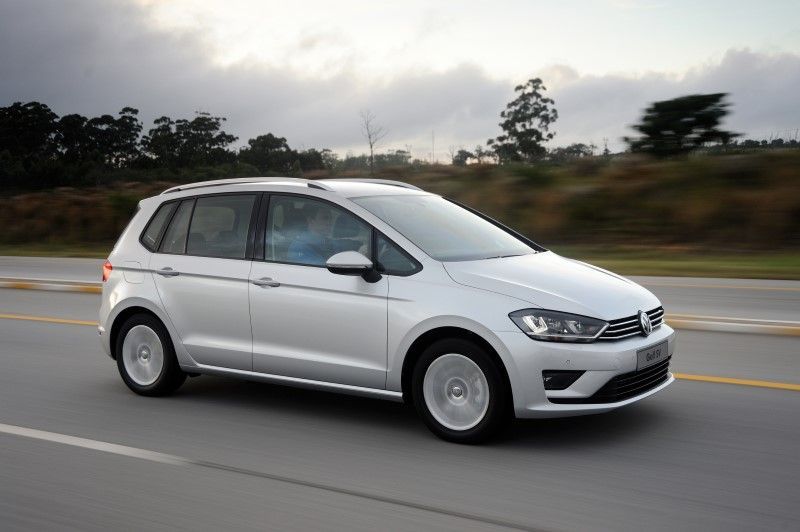
The Volkswagen Golf SV was one of those blunders. Neither fish nor foul, it wasn’t a conventional hatchback or really an estate, for that matter, but worst of all – Volkswagen allowed the unloved Golf SV to exist in the shadow of the Touran, which was already the company’s anointed small MPV offering.
VW was late to the small crossover party (the T-Cross arrived in 2019 and the Taigo in 2020), but it could have had an earlier foothold had it built something akin to the Mazda CX-3 or CX-30. The brand sold so few Golf SVs in Mzansi that the model is destined to be a future classic – albeit not a very desirable one.
BMW 2 Series Active Tourer (2015-2018)
The 2 Series Active Tourer was BMW’s first front-wheel-drive model – at the time, it made traditionalists choke on their bratwurst. The model was designed to lure new customers to BMW, and once hooked, the brand hoped they would look to its core line-up, under which the Active Tourer patently did not fall.
It was effectively a reskinned Mini Countryman, but a far worse interpretation; for the world had become used to estate-styled Minis thanks to the cool-ish (now discontinued) Clubman, but not a BMW minivan!
The Active Tourer package just felt awkward or… unresolved. Interior comfort wasn’t terrible and quality outshone many rivals, but the ride quality was harsh on large-diameter tyres and the diesel engine noisy.
Moreover, philosophically it was hard to fathom why anybody would have preferred the 2 Series Active Tourer over a BMW X1, which, incidentally, by then was also available in front-wheel-drive guise.
Mirroring the fortunes and timeline of the Golf SV, the BMW 2 Series Active Tourer was taken off the market after about 2 years in South Africa. As for the 2nd-gen model? It was never launched here.
As far as left-field models go, the Munich-based firm really should have drawn the line at the 3 Series GT, or the gawky X4, the latter of which would have also made a perfect, if ungainly – gateway BMW.
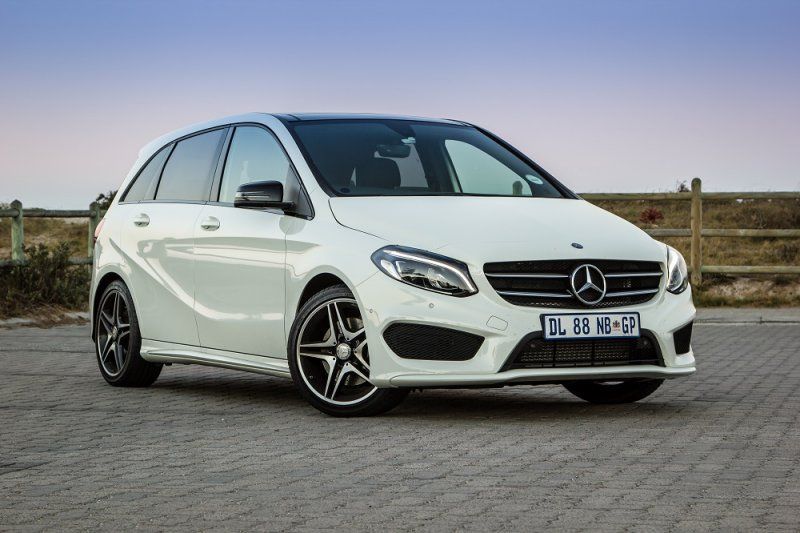
Of all of these, the Mercedes-Benz B-Class endured the longest. It was withdrawn from the local market earlier this year and, in 2025, it will finally be shelved globally as ‘Benz streamlines its model line-up.
The B-Class has always been somewhat of an anomaly: The 1st-gen model was an indistinct A-Class clone, whereas its successor was perhaps a too literal interpretation of the formula for the Mercedes-Benz faithful to come to terms with; the outgoing one, in turn, is more hatchback than humpback.
Among Germany’s trio of premium brands, only Audi was clairvoyant enough not to try its hand at a Postman Pat-style people-mover, a genre inherently characterised by a low sales ceiling that BMW and Mercedes-Benz seemed to ignore. Moreover, those 2 brands over-relied on their respective promises of a premium-feeling small crossover when there were more practical and affordable options at hand.
Models such as the Hyundai Tucson have become so luxurious, they compete with luxury brands’ small crossovers.
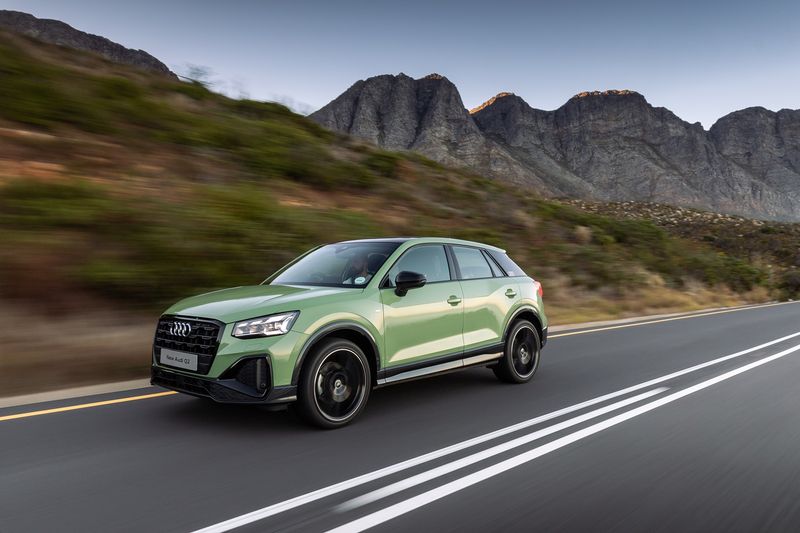
Audi’s nearest indiscretion of the sort came by way of the Q2 (the cousin of the Volkswagen T-Roc), which is a tad pricey, too weirdly positioned in Audi’s range and too irresolute against its competitors.
Small crossovers: A recipe refined
Even a cursory glance at the above list reveals that what compact MPVs fundamentally lacked was the default taller driving position and improved esthetics that contemporary small crossovers offer. Other contenders were either simply too far ahead of their time or best described as misguided mashups.
It’s also hard to make a style statement when relying on the gawky, boxiness of MPVs when small crossovers – with increasingly car-like driving traits – can be visually scaled up or down while retaining a greater degree of allure… and dignity. In retrospect, it’s easy to see how small MPVs and boxy holdalls were mere evolutionary (mis)steps on the ladder that allowed crossovers to ascend to global domination.
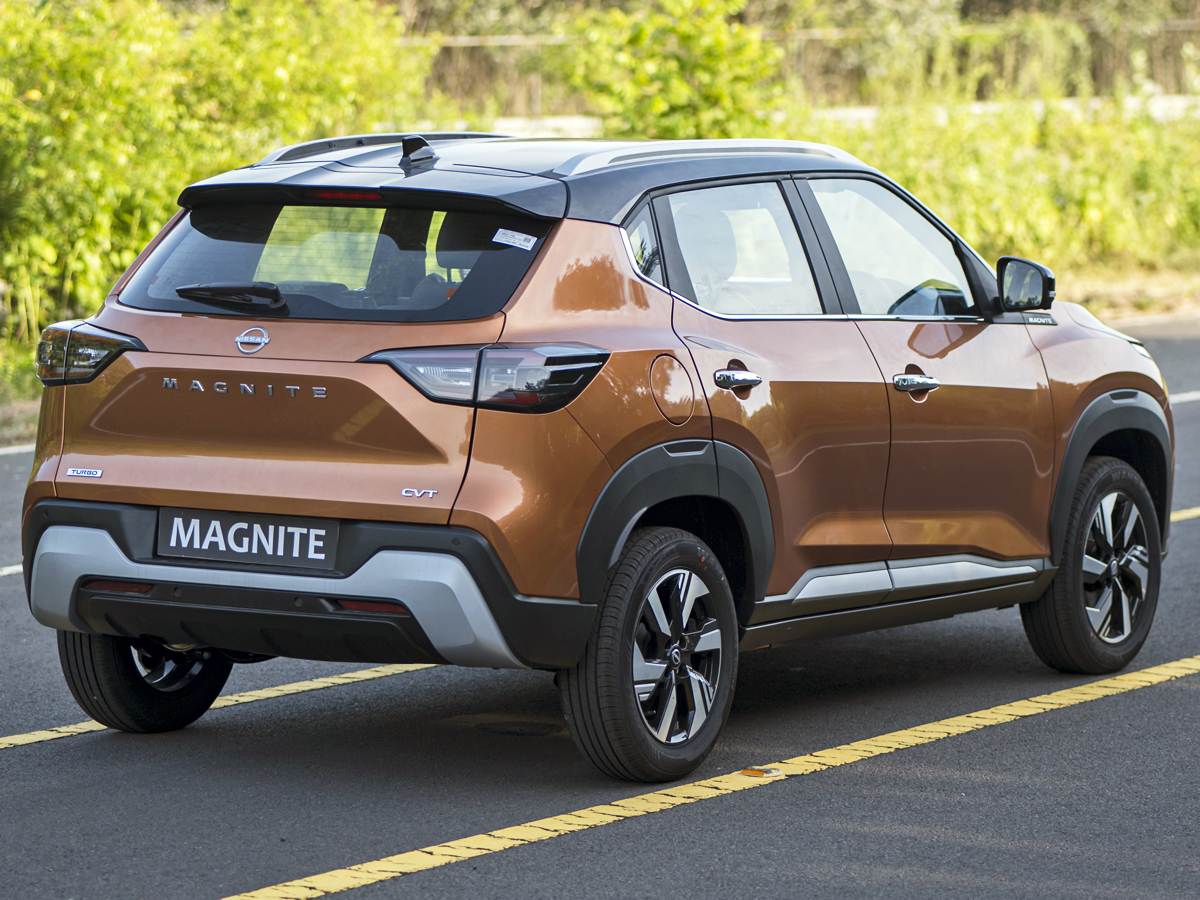
The facelifted Nissan Magnite has been revealed, sporting mild styling revisions. Here’s what we know so far about the refreshed version of Nissan SA’s most popular vehicle…
Meet the facelifted Nissan Magnite. Unveiled in India – where it’s produced at the Renault-Nissan alliance plant in Chennai – the refreshed version of the small crossover will be shipped to 47 new markets, taking its total export footprint to more than 65 countries.
Of course, South Africa is key market for the Magnite, since this baby crossover has taken over from the since-discontinued NP200 half-tonne bakkie as Nissan SA’s best-selling product. As such, we’d expect to see the facelifted Magnite on local roads early in 2025 (or perhaps even late in 2024).
Spot the differences: pre-facelift on the left and refreshed version on the right.
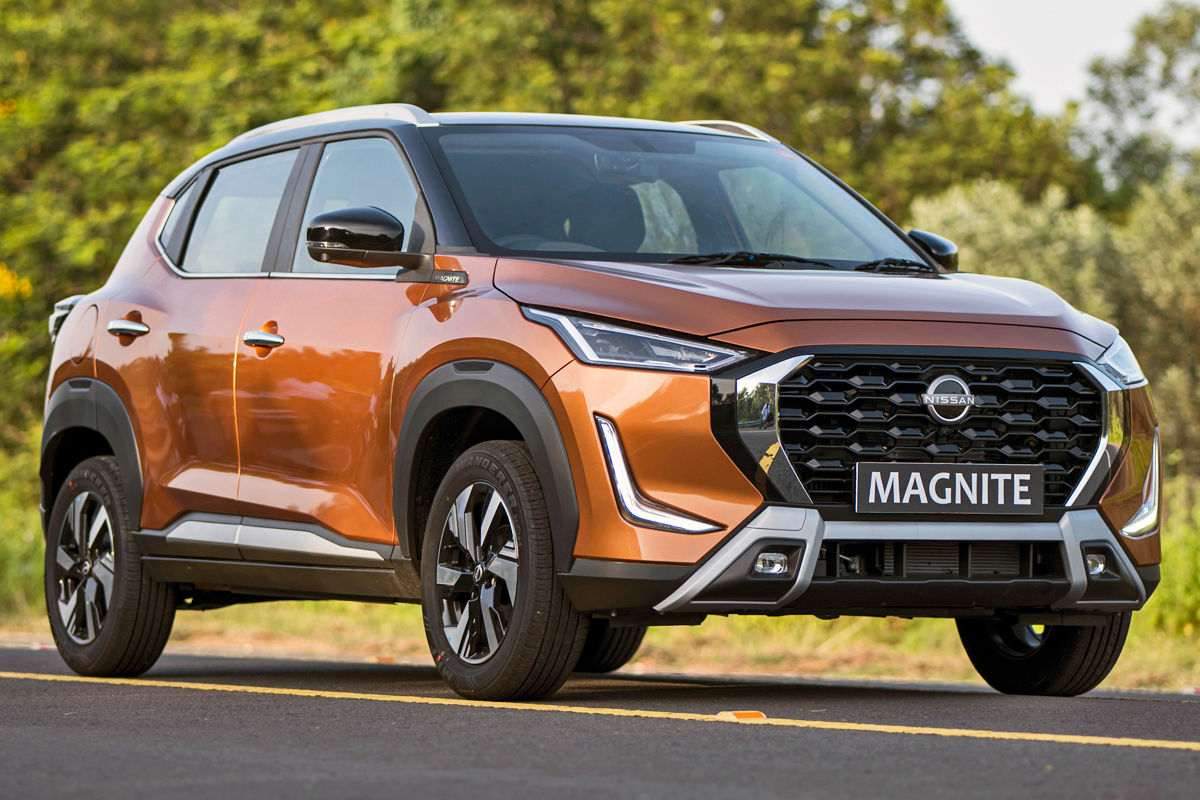
So, how will you spot a refreshed Magnite? Well, you’ll have to look rather closely, because the styling revisions are relatively mild. For instance, the boomerang-shaped daytime running lights are untouched, while the headlight clusters appear unchanged, too (though perhaps benefit from an internal structure tweak).
Black trim now frames the grille (though the chrome-effect side caps remain), but the biggest change up front is the adoption of a new, more angular lower-bumper design. In addition, the version revealed in India features fresh dual-tone 16-inch alloy wheels. In that market, the facelifted Nissan Magnite will furthermore be offered in a choice of 11 paint colors (6 monotone and 5 dual-tone hues).
Note the new leatherette colour scheme offered in India.
Meanwhile, Nissan claims to have “refined” the Magnite’s cabin and “improved seat comfort”, with the Indian-spec version now available with brown-and-orange leatherette trim for the dashboard, seats, interior door panels, parking brake lever, steering wheel and front armrest.
Other updates available in the world’s most populous nation include multi-color ambient lighting, a smart key (with remote engine start within a 60-metre range), an Arkamys sound system and 6 airbags across the range. The 7.0-inch digital instrument cluster and an 8.0-inch touchscreen system (with Android Auto and Apple CarPlay) seemingly carry over.
Nissan has seemingly made no mechanical changes.
Mechanically, the facelifted Magnite is apparently unchanged. As such, the Japanese automaker again offers a naturally aspirated 1.0-litre, 3-cylinder petrol engine – which makes 53 kW and 96 Nm – as the entry-level motor, available with either a 5-speed manual gearbox or an automated manual transmission (AMT) with the same number of cogs.
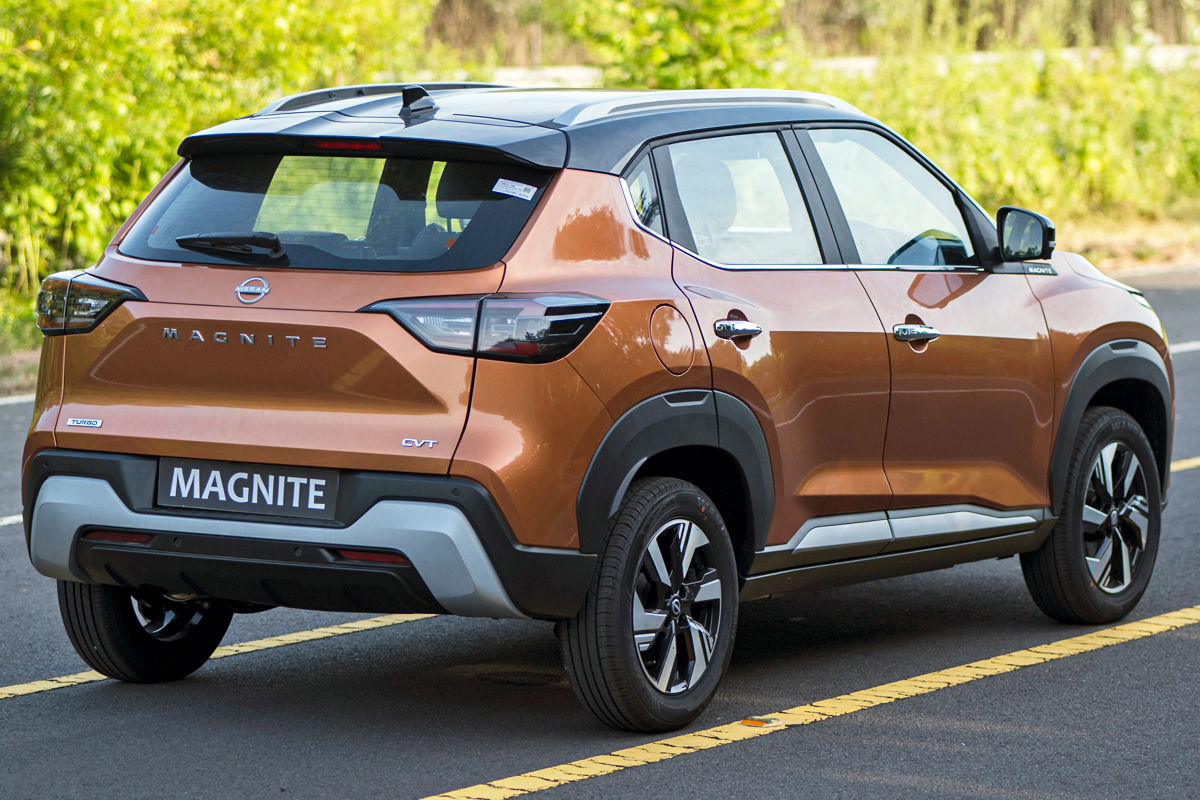
Then there’s also a 74 kW turbocharged version of this 3-pot mill, which in pre-facelift, SA-spec form generates 160 Nm in the case of the 5-speed manual gearbox and 152 Nm for the continuously variable transmission (CVT).
The turbocharged version is available with a CVT rather than an AMT.
As a reminder, the Magnite was revealed on October 2020, before launching in South Africa in April 2021. The current range comprises as many as 13 derivatives, with prices running from R240 000 to R377 800. Year to date (at the end of September 2024), Nissan SA has registered as many as 7 776 units of the Magnite, making it the brand’s most popular product locally.