The #CarsAwards sponsored by Absa is back! David Taylor explains the structure and inner working of South Africa’s most trusted car awards programme. Watch the video!
Now in its 8th year, Cars Awards is a unique motoring awards programme as it includes you, the consumer, and you have your say who takes top honours. In this video, Dave Taylor explains how the competition works, shares insights into the testing process and announces the finalists in all 13 categories.
There’ll be 39 cars under the microscope when we head to Gerotek Testing Facility in early November. You can follow all the action through our hashtag #CarsAwards on all of your favourite social media channels.
Nissan Navara double-cab entry point to drop by R50k
Nissan SA will soon expand its locally built Navara double-cab bakkie range with new entry-level XE variants, which our info suggests will undercut the Hilux, Ranger and D-Max by some margin…
Nissan South Africa recently announced plans to expand its Rosslyn-built Navara double-cab bakkie portfolio to 14 variants. After some digging, we’ve managed to unearth pricing for the pair of new base XE derivatives, each of which will come standard with a 6-speed manual gearbox.
While official images of these new XE derivatives have yet to be released, our information suggests the Navara 2.5 DDTi XE DC 6MT 4×2 will be offered at R493 600, effectively dropping the Navara double-cab range’s starting price by R48 800. As a reminder, the Navara 2.5 DDTi SE DC 6MT 4×2 is the current entry point to the line-up, priced at R542 400.
Existing Navara double-cab derivatives will be joined by new entry-level XE variants.
For the record, the Toyota Hilux double-cab range currently starts at R528 800, while the most affordable dual-cab versions of the likewise locally built Ford Ranger and Isuzu D-Max cost R522 600 and R555 900 (or R538 100, if you count the Gen 6), respectively. In fact, the only double cabs priced below the soon-to-launch Navara 2.5 DDTi XE DC 6MT 4×2 are from Chinese brands (JAC, GWM, Foton and LDV) and Indian firm Mahindra.
The XE specification will also be offered in all-paw guise. It’s our understanding that the Navara 2.5 DDTi XE DC 6MT 4×4 will be priced from R567 000, which would make it a considerable R70 500 less expensive than the SE version (which is currently the most-affordable 4×4-endowed Navara double cab at R637 500).
The SE Plus version of the Navara double cab.
The new XE-badged Navara double-cab derivatives will be powered by the Japanese firm’s familiar 2.5-litre, 4-cylinder turbodiesel engine, here offering 120 kW (at 3 600 rpm) and 403 Nm (from 2 000 rpm) rather than the full-fat 140 kW/450 Nm tune available in automatic-equipped variants.
Nissan SA has confirmed that the XE double cabs will feature leaf springs at the rear as opposed to the 5-link coil suspension set-up employed by other Navara variants. This will, according to the Japanese brand, result in an increased payload capacity of 1 148 kg (the loftiest in the Navara dual-cab range) for the 4×2 derivative and 1 067 kg for the 4×4 variant.
The XE single-cab features a black plastic front bumper.
Incidentally, the XE trim level is already familiar from the Navara single-cab range, though it’s not yet clear whether the new double-cab version will feature the same black plastic front bumper. It will, however, surely ride on steel wheels.
According to Nissan, standard features for the XE grade will include central locking (with speed-sensing auto-locking), air conditioning, electric windows, electrically adjustable side mirrors, a sliding rear window (for access to the load bin), a Bluetooth-enabled audio system, steering wheel-mounted controls, dual front airbags, vehicle dynamic control, ABS with EBD, ISOfix child-seat anchors (rear outboard) and trailer-sway control.
The latest iteration of the Nissan badge.
Nissan South Africa is also set to launch fresh LE versions of the Navara double cab (and rename the current LE variants as “LE Plus”, from what we understand). On that note, we believe the Navara 2.5 DDTi LE DC 7AT 4×2 will be priced at R660 200, while the Navara 2.5 DDTi LE DC 7AT 4×4 should kick off at R744 200. All Navara derivatives will furthermore switch to the latest “Nissan” badge, pictured above.
The next-generation Navara – which is expected to share much with the new Mitsubishi Triton under the global Renault-Nissan-Mitsubishi Alliance – seems likely to be revealed at some point in 2025. However, it’s not yet known if Nissan SA has secured the required investment to build this new bakkie at its Rosslyn facility, which incidentally ended production of the NP200 earlier this year.
How much will the Navara XE and LE double cabs cost?
Nissan Navara 2.5 DDTi XE DC 6MT 4×2 – R493 600
Nissan Navara 2.5 DDTi SE DC 6MT 4×2– R542 400
Nissan Navara 2.5 DDTi SE DC 7AT 4×2– R576 800
Nissan Navara 2.5 DDTi XE DC 6MT 4×4 – R567 000
Nissan Navara 2.5 DDTi SE Plus DC 6MT 4×2 – R591 000
Nissan Navara 2.5 DDTi SE Plus DC 7AT 4×2 – R614 200
Nissan Navara 2.5 DDTi SE DC 6MT 4×4 – R637 500
Nissan Navara 2.5 DDTi LE DC 7AT 4×2 – R660 200
Nissan Navara 2.5 DDTi SE Plus DC 6MT 4×4 – R674 000
Nissan Navara 2.5 DDTi LE Plus DC 7AT 4×2 – R703 800
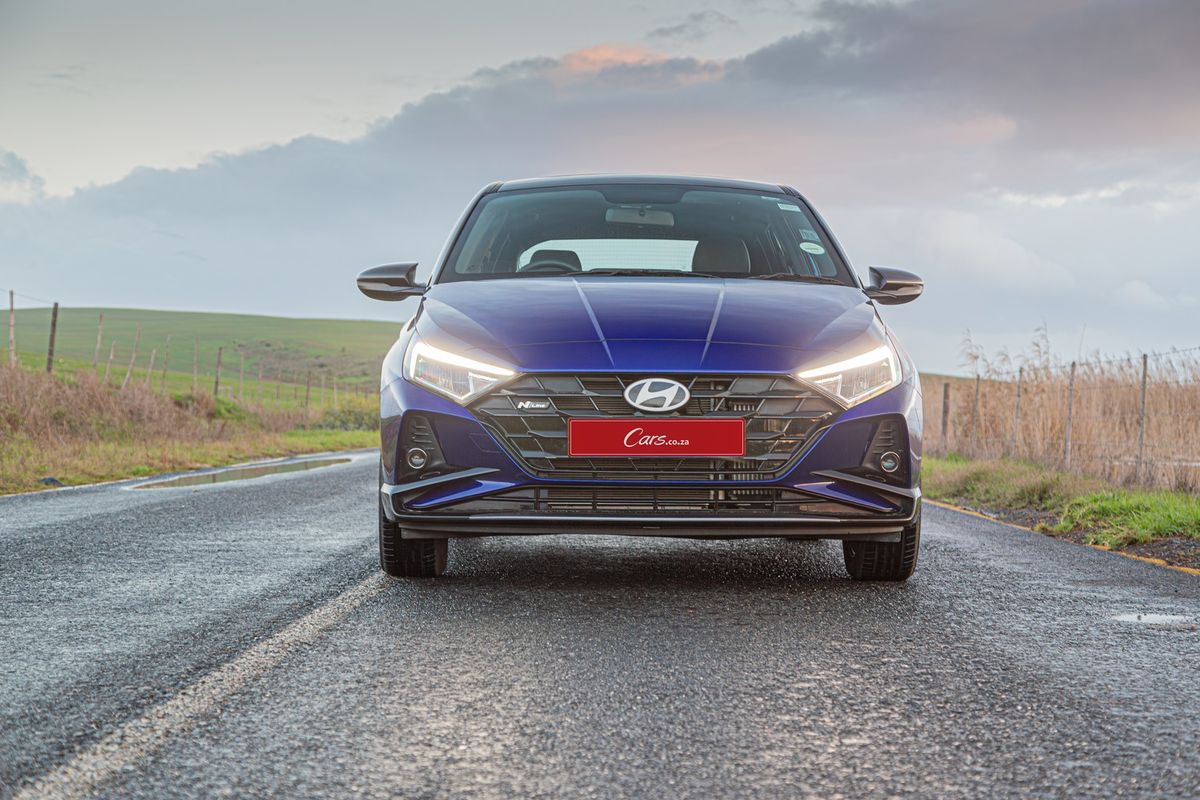
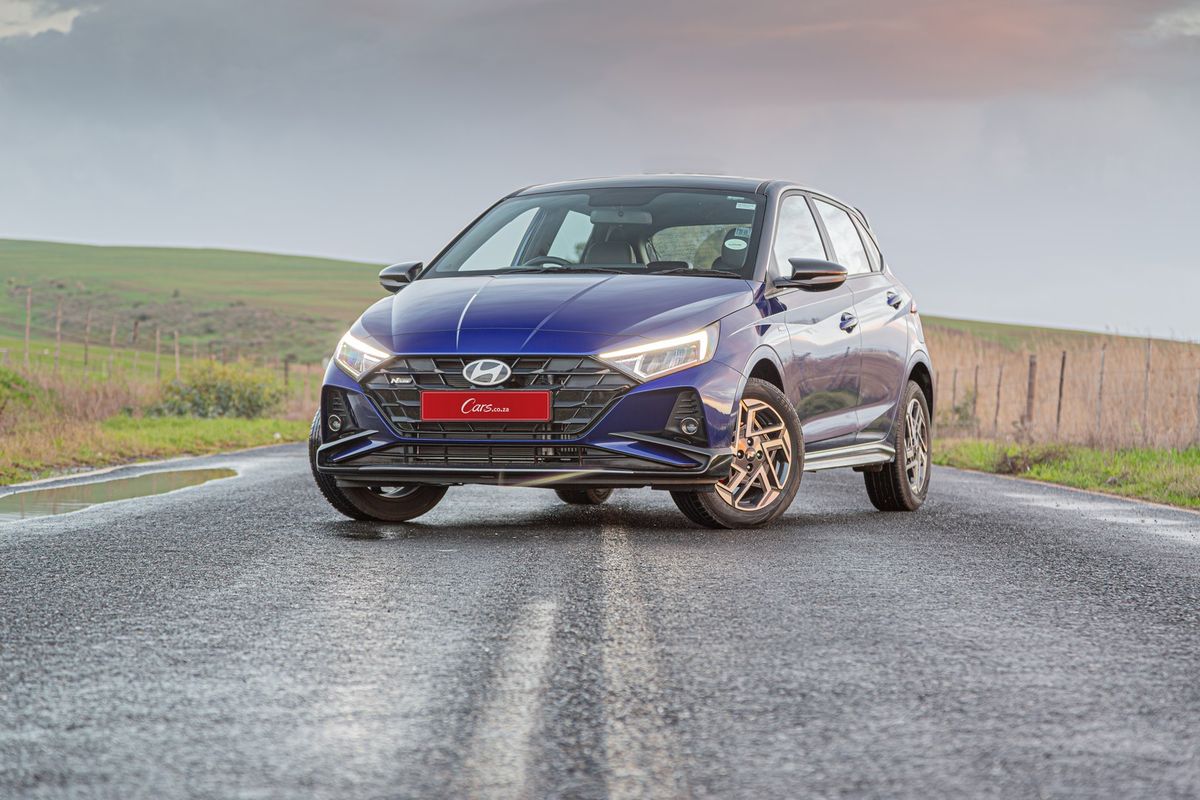
The Hyundai i20 N Line is the flagship of the Korean brand’s revised compact hatchback range. It looks sportier than its siblings and has a great-sounding engine, combined with a dual-clutch automatic ‘box, but what is the variant like to live with?
We like: Sporty appearance, subtle red interior accents, generous specification, fun to drive.
We don’t like: The rowdy exhaust may prove tiring in the long run, better value in the rest of the range.
Less than a decade ago, B-segment hatchbacks were the most popular compact cars in the South African new-vehicle market and almost every model in that segment offered a range-topping and suitably sporty hot- (or at least warm-) hatch variant.
But compact hatchbacks have now been eclipsed by more sensible – and practical – crossovers. Did it happen because young petrolheads who lusted after small hot hatchbacks grew up and their priorities changed? Perhaps, but consider that with hatchback sales in decline, carmakers (who look to save costs wherever they can) are unlikely to devote resources to the development of low-volume variants. Instead, they clad their wares in sporty attire, but stop short of endowing them with “the go to match the show.”
Although compact hot hatchbacks seem to be fading into obscurity (only the Volkswagen Polo GTI remains, until – and if – Suzuki decides to produce a Swift Sport based on the new, AOL-gen model), there are a handful of brands that at least produce sporty-looking 5-door B-segment models and the great news is that they are all fun to wield when driven enthusiastically. While they’re not going to set any speed records, they all look the part, and interestingly, most of them have one word in common: Line.
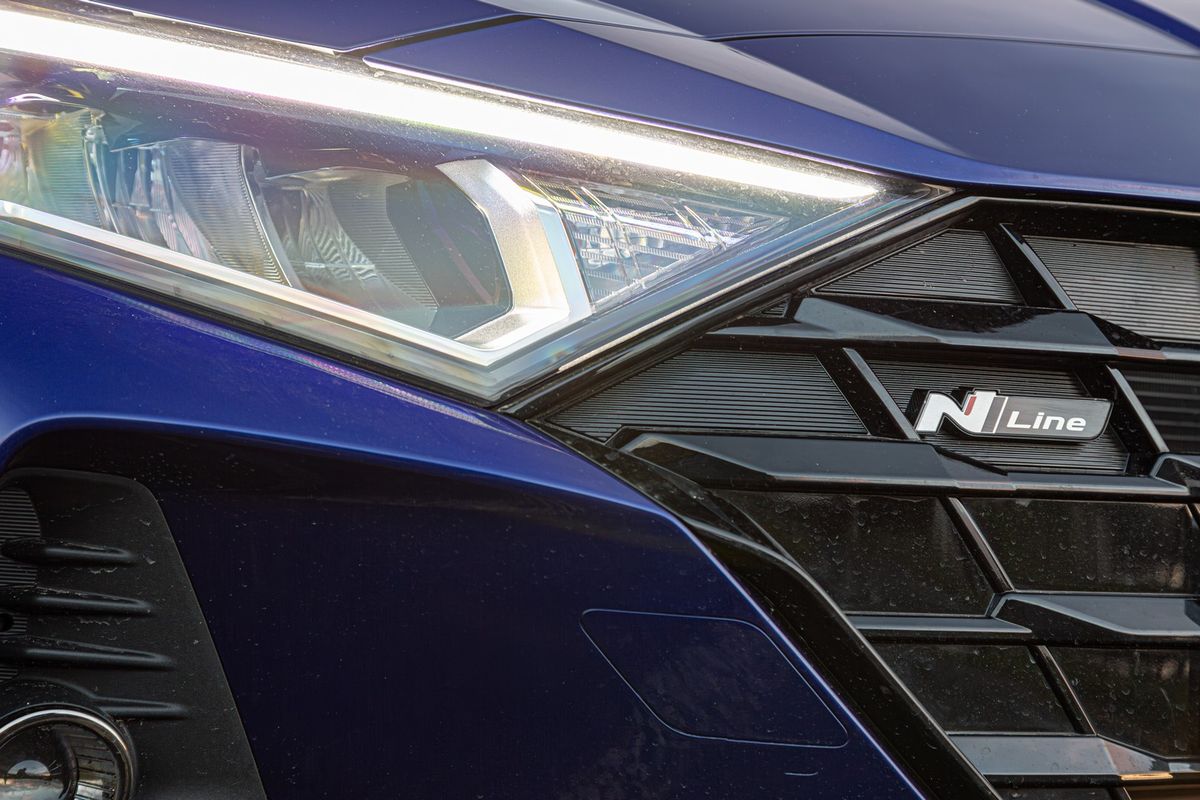
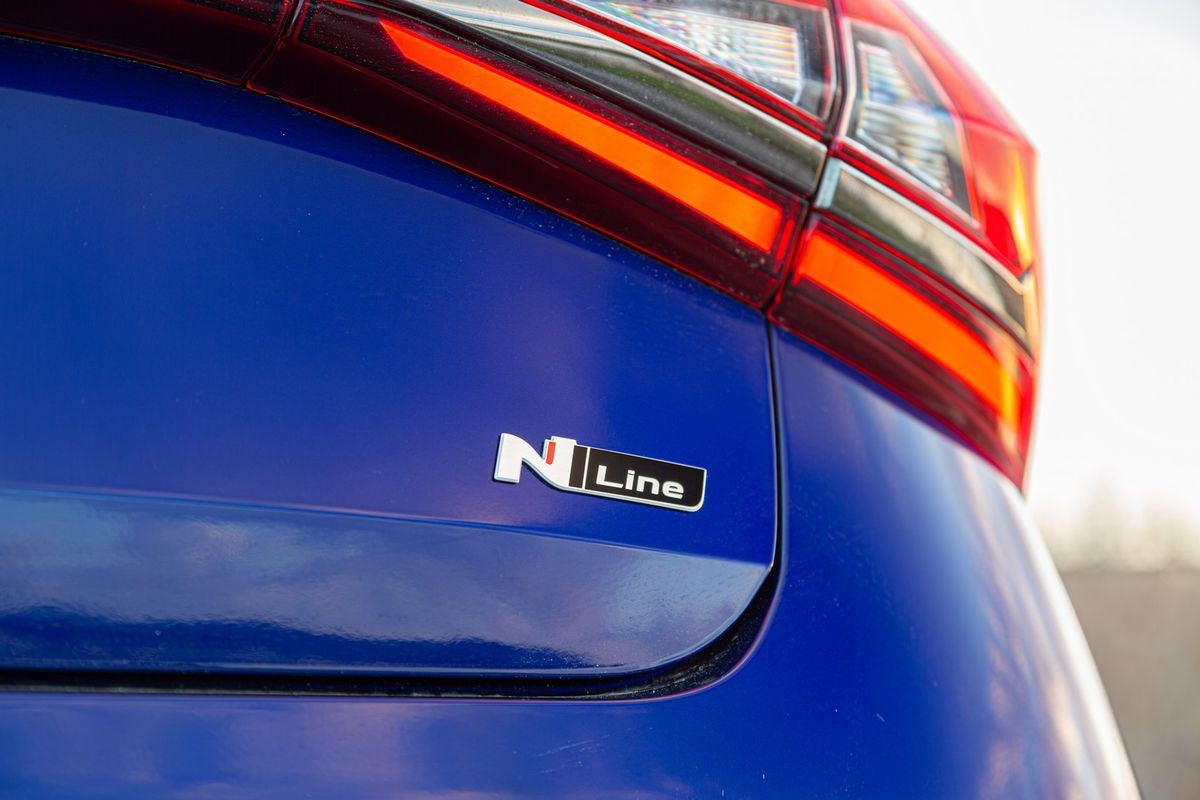
One of many N Line badges dotted around the Hyundai i20‘s sheet metal.
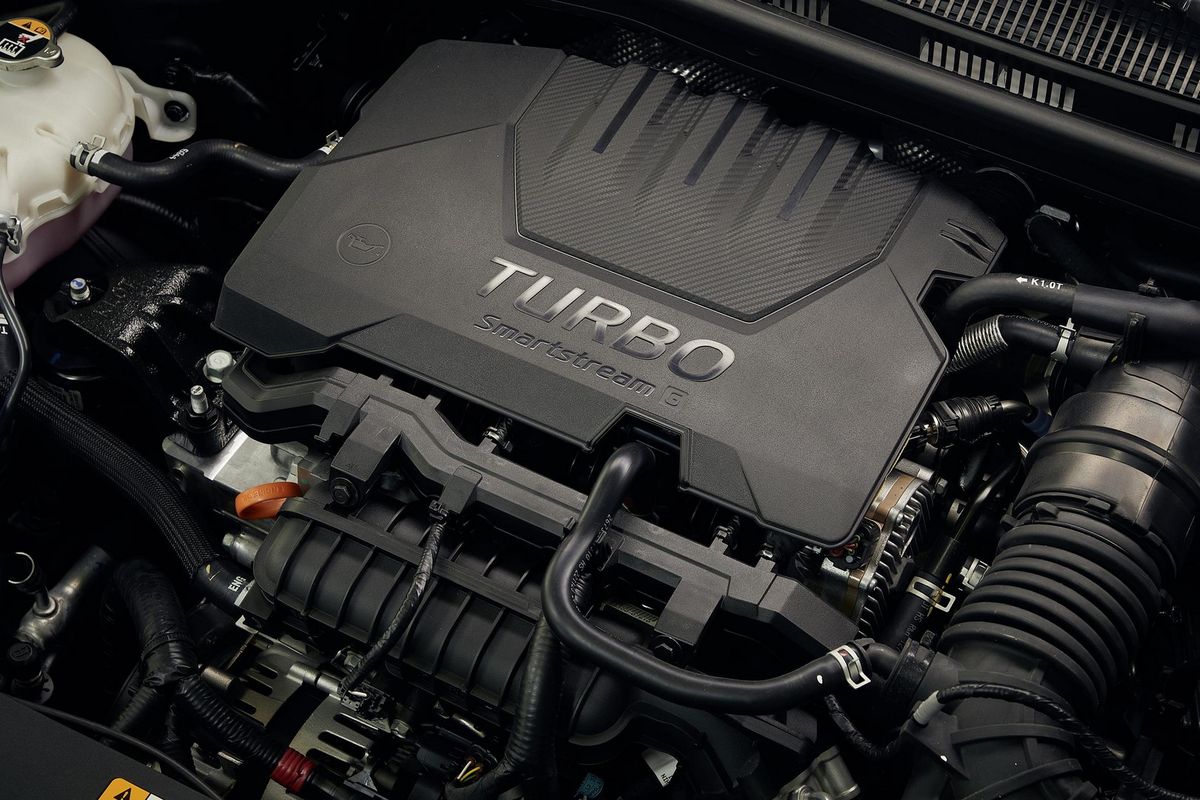
Under the bonnet of the Hyundai i20 1.0T N Line is a 1.0-litre 3-cylinder turbopetrol engine, which has peak outputs of 90 kW and 172 Nm of torque. Power goes to the front wheels via a 7-speed dual-clutch auto transmission and, for the enthusiasts, there are substantial gearshift paddles on the steering wheel.
Sadly, the i20 N hot hatch is not coming to SA any time soon… this is the closest to that you’ll get.
With our test gear hooked up, the i20 1.0T N Line media-fleet unit scampered from zero to 100 kph in 9.46 sec, which was a touch quicker than Hyundai’s claim (we’d put it in the lukewarm hatchback class).
While this isn’t a comparative review, we must mention that when we tested the Corsa 1.2T GS Line, its 0-100 kph time was slightly quicker (9.07 sec), thanks to the Opel’s higher power and torque numbers.
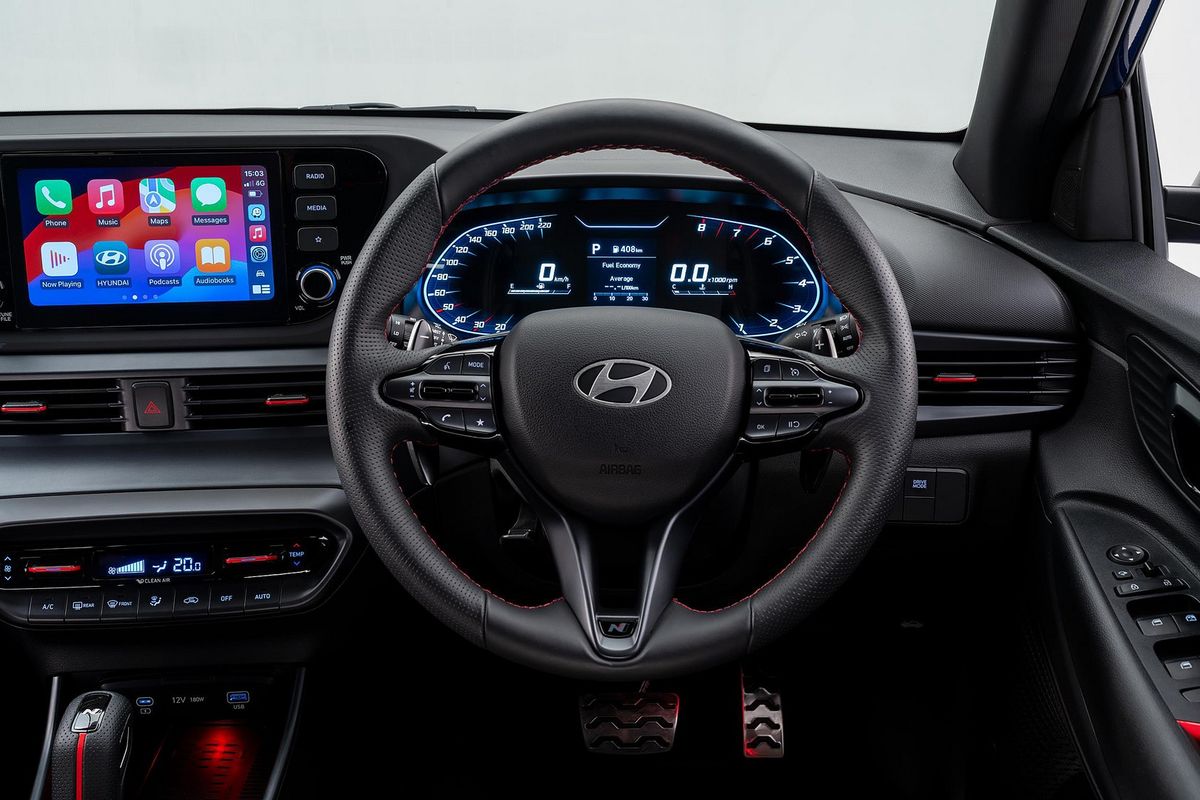
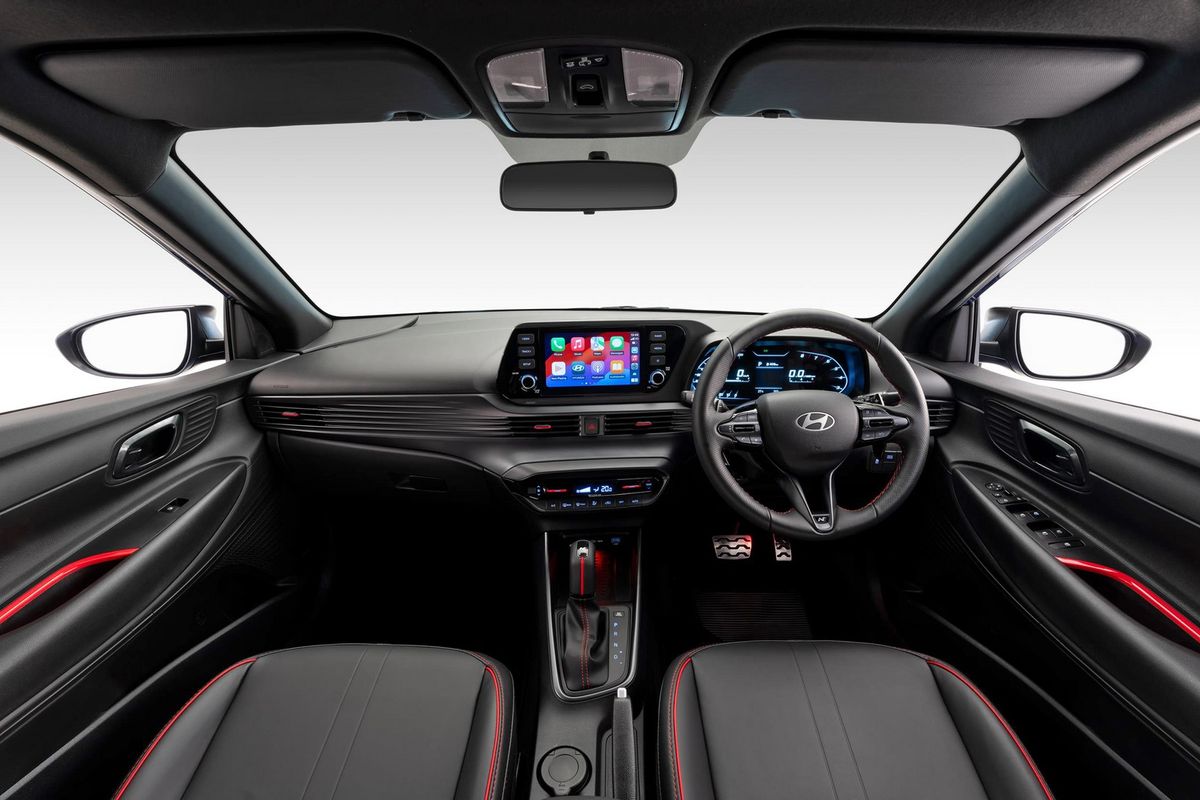
A sporty cabin matches the extroverted exterior execution.
That said, the Hyundai’s powertrain is responsive and ever-willing; the i20 1.0T N Line can punch through slower urban traffic without much hesitation. There is a tiny amount of turbo lag, but this is easily sorted by changing down a gear to put the engine into its sweet spot. It’s a pity there are no drive modes, but you can flick the transmission lever into Sport, which makes the car hold onto its ratios for a bit longer.
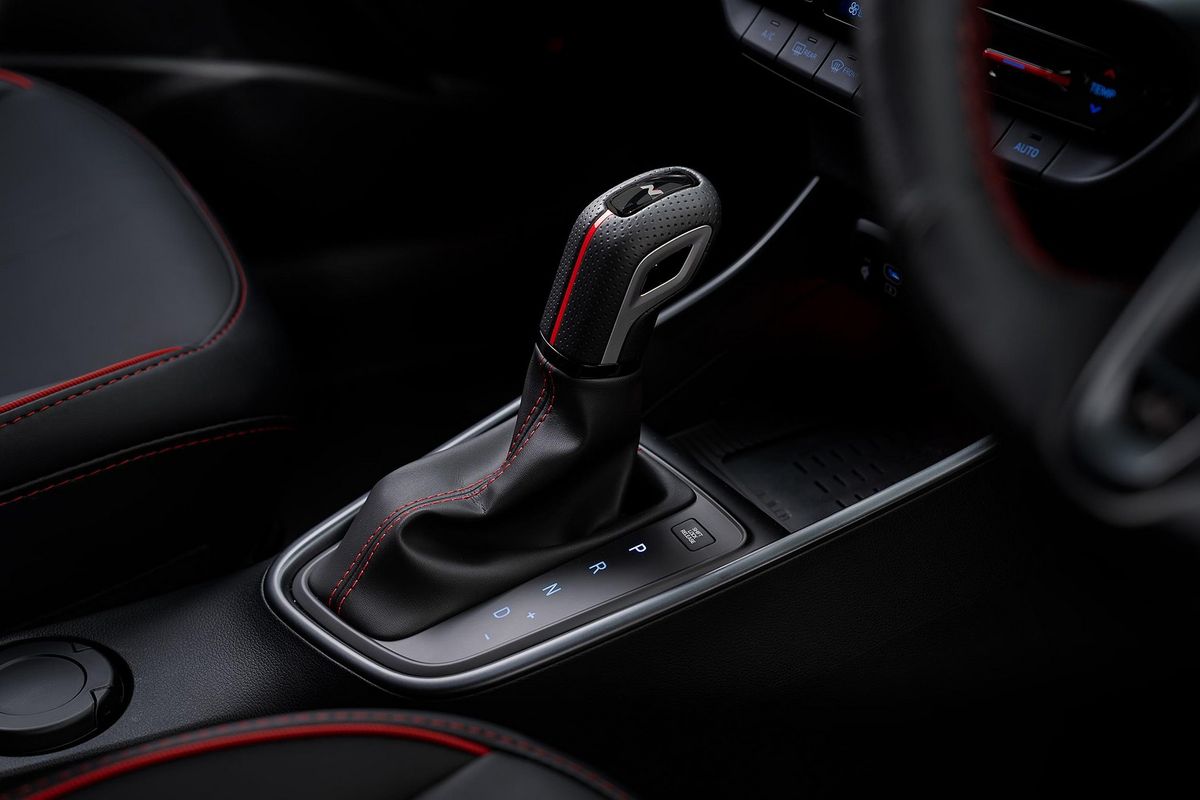
Another N Line badge, this time on the dual-clutch transmission lever.
What separates the i20 1.0T N Line from its rivals, however, is the (relatively) evocative soundtrack that it emits from its sports exhaust system. Those dual exhaust ends enhance the off-beat and throaty 3-pot rumble appreciably and when you’re hustling along, each gear change is punctuated by vrrphah!-like pops and bangs. They’re hilarious and induced more than a few grins in our office parking basement.
However, we suspect that the novelty of that rorty noise may wear off eventually, and it’s a pity that you cannot quieten this exhaust at the push of a button when you need to leave (or arrive) home discreetly.
Another – but expected – drawback is that the i20 N Line’s fuel consumption is not impervious to lead-footed driving. At one stage, we saw an indicated figure of 9.5 L/100 km, but you should be able to achieve about 8 L/100 km on the daily commute if you adopt a measured driving style. Hyundai claims an average of 6.9 L/100 km, so with a 37-litre tank, the variant’s theoretical full-to-empty range is 536 km.
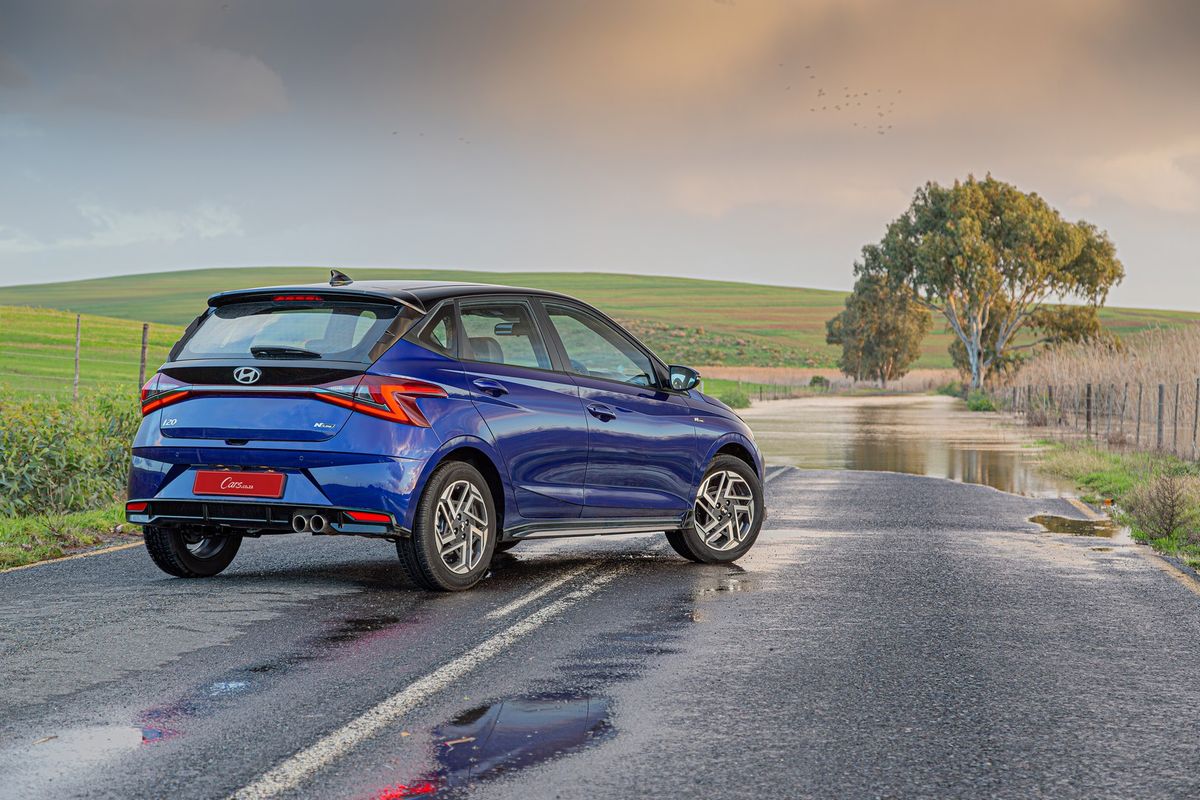
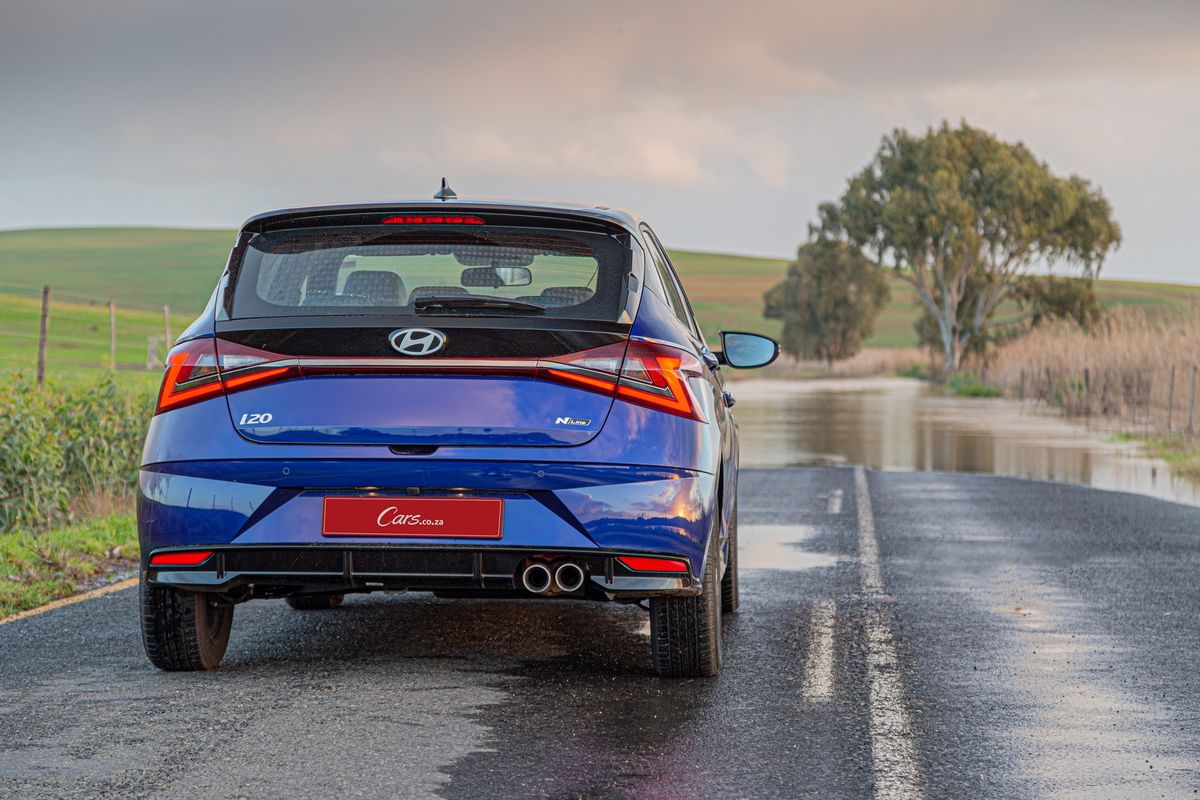
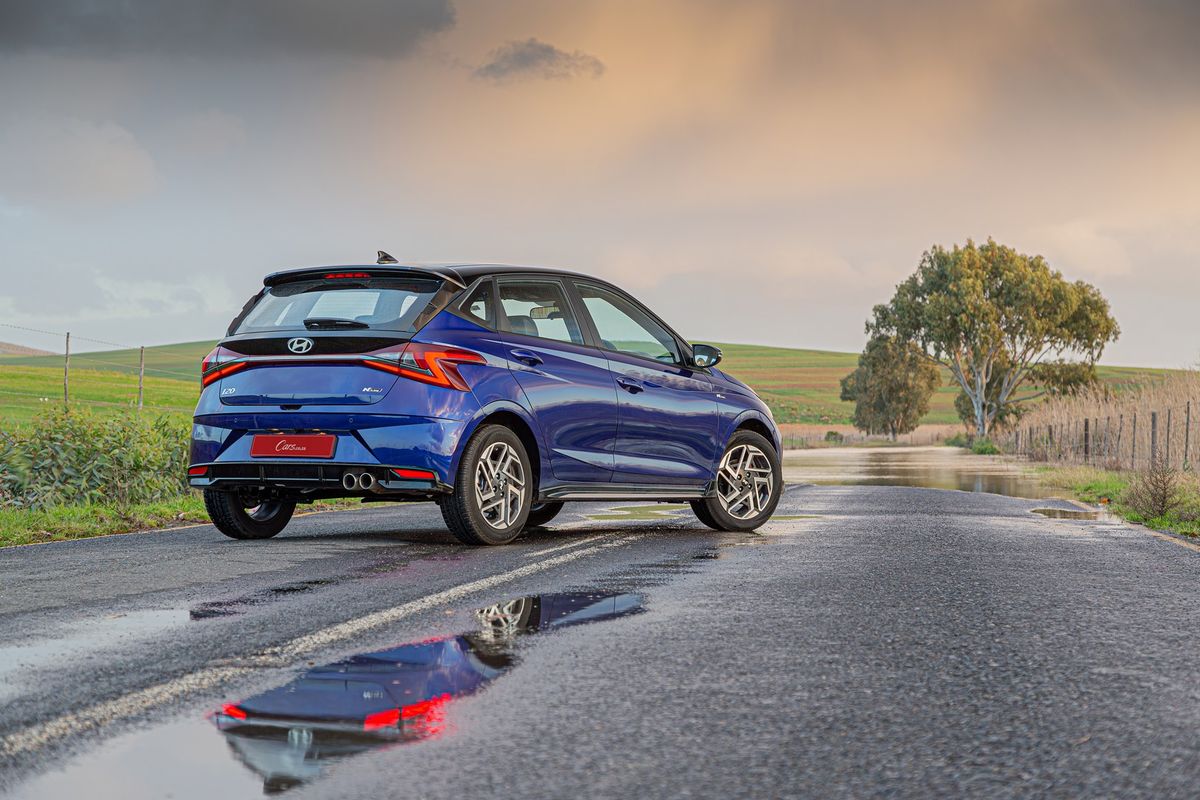
Those twin exhaust pipes are not just for show.
Ride and Handling
While it features minimal powertrain enhancements compared with its lesser siblings, the i20 1.0T N Line does offer a comparatively sportier driving experience. Hyundai has firmed up the variant’s suspension setup, which has enhanced the handling to an extent, if (predictably) to the detriment of the ride quality.
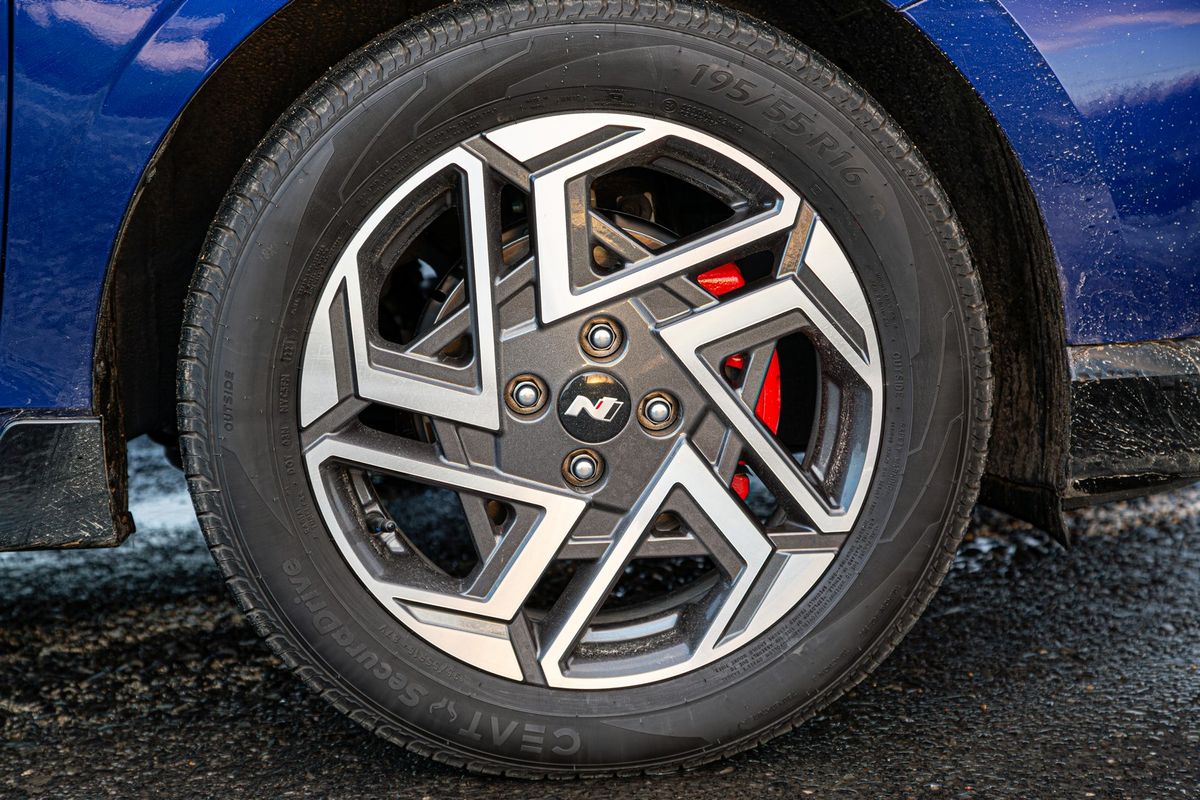
Red brake callipers and another N badge on the alloy wheel’s centre cap!
Admittedly, achieving a near-perfect balance between sportiness/driver engagement and everyday usability/ride comfort is not easy, especially considering the i20 1.0T N Line may need to traverse some of the poorly maintained sections of our nation’s road network. Any setup will demand a compromise.
Even so, Hyundai has pretty much nailed the brief with this flagship variant. While the test unit’s general ride quality was firm, it wasn’t unbearably harsh over rougher surfaces. The 195/55 R16 tyres aren’t too skinny (have plump sidewalls) and did a good job of soaking up all but the worst road imperfections.
The 1.0T N Line may look sportier than it is, but its steering offers enough feel and directness to make the Hyundai fun to pilot – whether you’re late for an appointment or “making the most” of a twisty road.
Design, Features and Practicality
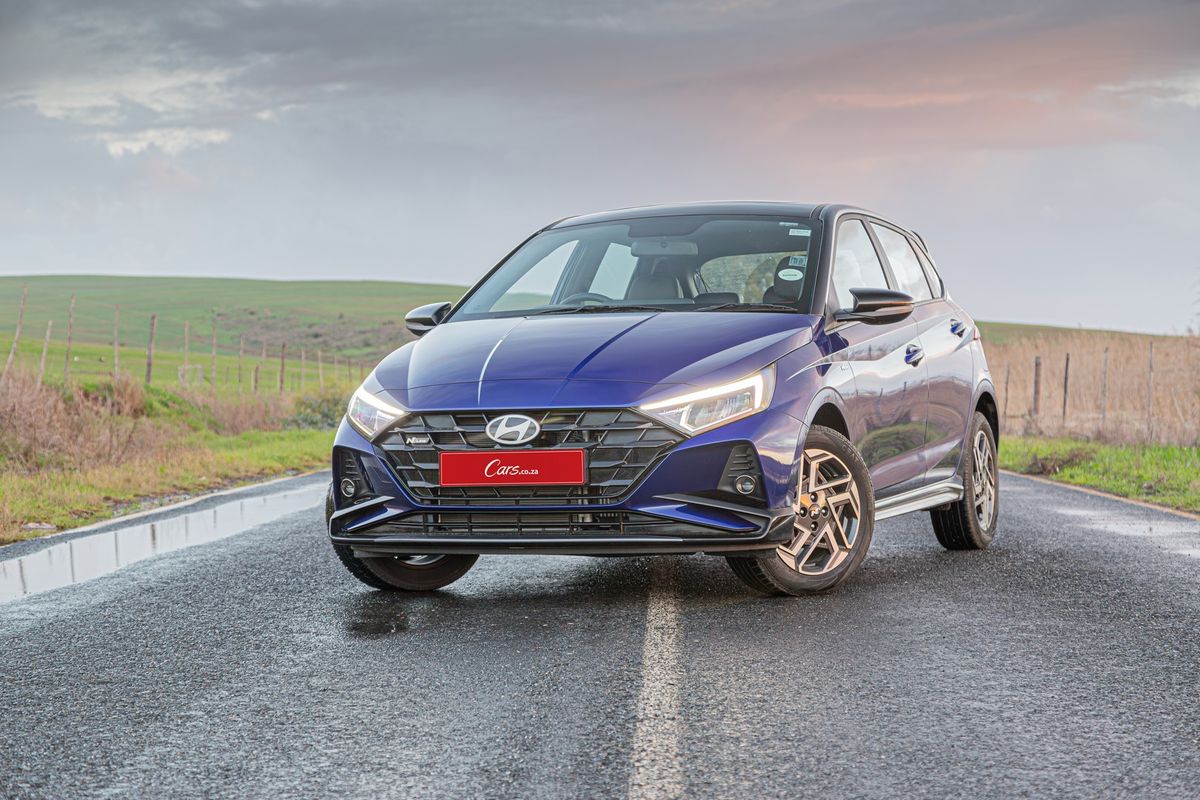
The front end of the i20 1.0 N Line features LED headlights, -daytime running lights and -fog lamps.
Hyundai has tastefully beefed up the appearance of the 1.0T N Line to distinguish it from the rest of the facelifted i20s. N (the logo of the brand’s performance division) badges feature on the 16-inch alloys, front grille and rear bumper, while LED headlamps with -daytime running lights give the car considerable road presence, along with the aforementioned sporty wheels, twin exhaust ends and tailgate spoiler.
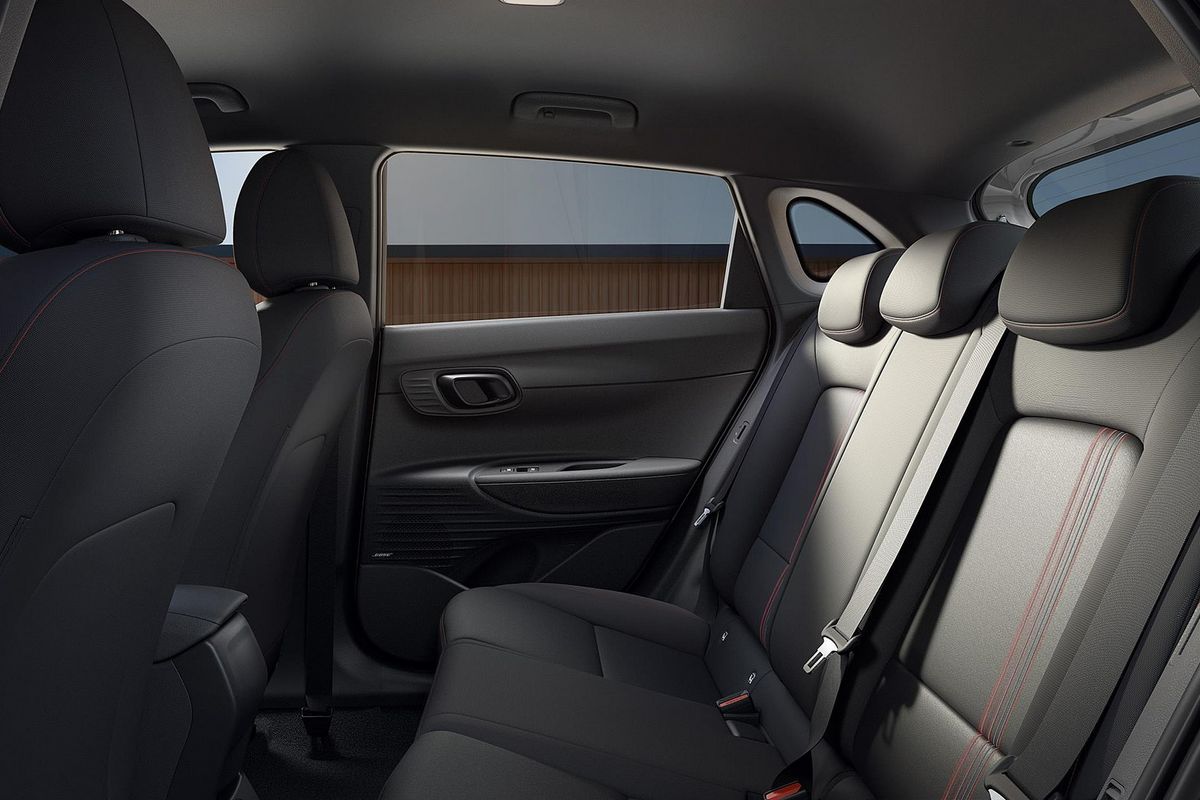
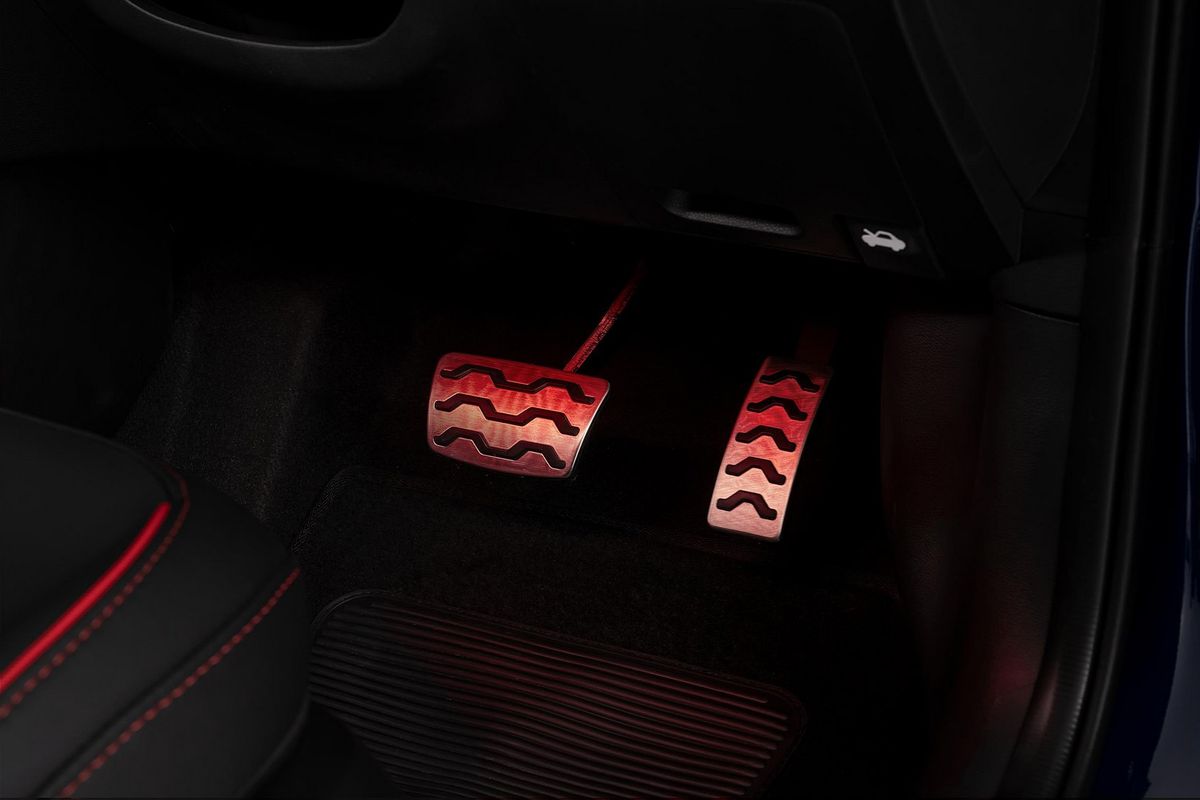
Inside, the sporty theme continues with N-branded seats that are finished in faux leather trim. N logos appear on the transmission lever as well as the steering wheel, in case you need further reminders that this isn’t a run-of-the-mill compact hatchback. Granted, there are some marginal materials (on the door panels, for example) but in general, the build quality is good where it matters (at common touchpoints).
These seats do look sporty, but don’t offer sufficient side bolstering to be classed as sports seats.
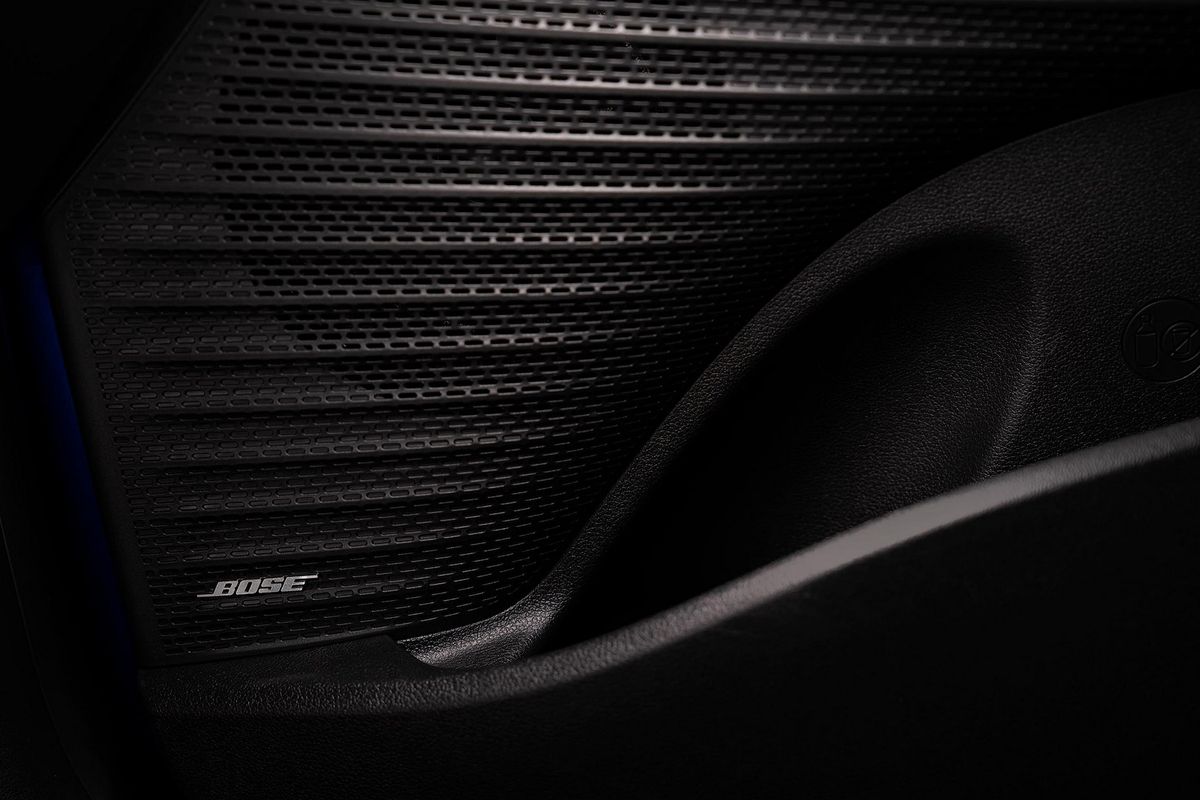
What’s more, the i20 1.0T N-Line comes equipped with some features that you won’t find on Premium- or Executive-grade variants. Push-button start, a sunroof and a Bose audio system are exclusive to the flagship variant, but to Hyundai Automotive SA’s credit, all variants come with a digital instrument cluster, wireless charging pad, USB-A and USB-C charging ports, reverse-view camera and rear parking sensors.
Two additional airbags, taking the total to 6, electronic stability control and hill-start assist are fitted too.
Price and After-sales support
The Hyundai i20 1.0T N Line costs R467 500 (September 2024), which includes a 5-year/150 000 km vehicle warranty, a 7-year/200 000 km drivetrain warranty and a 4-year/60 000 km service plan.
With its extroverted sporty looks, rorty engine and quicker-than-expected performance, the Hyundai 1.0T N Line “ticks most boxes”, as they say, if you are looking to buy a compact hatchback with a long standard-features list and an extra bit of pop (in both figurative and literal senses). We genuinely enjoyed the test unit’s rollicking exhaust note, but do wonder how long it would take for its novelty to wear off…
Also, if the N Line is this enticing, we can only dream of what the full-fat i20 N would be like. Sadly, that car isn’t confirmed for the local market, where it would surely give the Polo GTI a real run for its money.
Should you add the i20 1.0T N Line to your shortlist if you’re shopping for a B-segment hatchback? Sure, if you crave a modicum of excitement from your “daily driver”, but don’t discount the Opel Corsa 1.2T GS Line, which is a little punchier and slightly more affordable. If you’re sold on an i20, but care little for performance (or a fruity noise), the 1.4 Executive derivative (R349 900) offers better value for money.
Fortuner, Fronx crack top 10! SA’s best-selling passenger vehicles
The Toyota Fortuner and Suzuki Fronx put in their best sales performances of the year so far to crack the list of SA’s 10 best-selling passenger vehicles in September 2024…
In September 2024, South Africa’s new-vehicle market slipped 4.1% year on year to 44 081 units. However, passenger vehicles again showed marginal growth, improving 2% to 30 218 units, with the rental industry contributing a substantial 28% of that total.
As was the case in August 2024, the Volkswagen Polo Vivo – which recently benefitted from a facelift – ended the month at the very top of the passenger-vehicle charts, with 2 407 units sold. A whopping 1 089 units (or 45%) of the Kariega-built hatchback’s tally came via the rental channel.
The updated VW Polo Vivo retained the leadership position in September 2024.
The Toyota Corolla Cross also managed to cross the 2 000-unit mark in September, with its total of 2 045 registrations proving more than enough for it to comfortably retain the runner-up position. For the record, this locally made model benefitted from 363 sales to the rental industry last month.
The big news, however, was the performance of the likewise Prospecton-produced Toyota Fortuner, which registered its best effort of 2024 thus far to grab 3rd place (after ranking 12th in August). Breaking into 4 figures for the first time this year, the resurgent Fortuner ended the month on 1 086 sales, including 189 rental-industry registrations.
Hyundai’s Grand i10 slipped a spot to 4th.
That saw the Hyundai Grand i10 fall a ranking to 4th, with 1 062 units sold. For the record, since we’re examining the passenger-car segment here, that figure excludes light-commercial vehicle sales of the Cargo-badged panel van, which found a further 64 homes in September 2024.
As the highest-placed Chinese contender, the Chery Tiggo 4 Pro (990 units) climbed 2 positions to 5th, while the locally built Volkswagen Polo hatchback (948 units) retained 6th despite likewise sliding back into 3 figures. The Nissan Magnite (869 units), meanwhile, moved up a spot to 7th, with its effort representing a hefty 61% of the Japanese brand’s overall figure for the month.
The Suzuki Fronx outsold the closely related Toyota Starlet Cross in September.
The Suzuki Fronx (850 units) put in not only its best showing of 2024 so far but also its top month ever, breaking into the top 10 and grabbing 8th place. Interestingly, the closely related Toyota Starlet Cross – which rocketed to 5th spot in its in first full month on sale – dropped off the list in September, with a still-impressive 713 units registered.
That said, the Toyota Vitz (814 units) – yet another Suzuki-built model in the Toyota stable – returned to the top 10 in September 2024, finishing in 9th position, just ahead of the Haval Jolion (812 units), which dropped a spot to 10th. Other models that made the cut in August but fell away last month were the Suzuki Swift (sales dipped to 539 units, with the new-gen model around the corner) and the Suzuki Ertiga (which managed 717 registrations).
SA’s 10 best-selling passenger vehicles in Sept 2024
The facelifted BMW i4 will soon launch in SA, again offered in 2 flavours (including an M Performance variant). Here’s how much this updated electric car will cost you…
In May 2024, the facelifted BMW i4 broke cover, with this fully electric 4-door model sporting design updates, inside and out. Now, just ahead of its official market launch in South Africa, we can confirm how much this Munich-built EV will cost.
Of course, we’ve already brought you local pricing for the refreshed 4 Series Coupé and 4 Series Gran Coupé – and now we turn our attention to what is effectively the fully electric version of the latter.
The local G26-generation BMW i4 range will comprise 2 derivatives, as before. The entry point is thus still the i4 eDrive35, which again ships standard in M Sport guise. Now priced from R1 346 500, this latest version is R61 500 more expensive than the pre-facelift model.
As a reminder, the i4 eDrive35’s rear axle is powered by an integrated electric motor generating 210 kW and 400 Nm, facilitating a 0-100 kph sprint in a claimed 6.0 seconds and a top speed of 190 kph. The lithium-ion battery pack has a net capacity of 67 kWh, translating to a claimed range of up to 483 km.
What about the M Performance derivative? Well, the i4 M50 xDrive – which was the M division’s best-selling model worldwide in both 2022 and 2023 – is priced from R1 695 000 in facelifted form, representing an increase of R7 100 over the outgoing version.
The all-wheel-drive i4 M50’s powertrain is likewise unchanged, which means it still employs an electric motor on each axle, which together generate peak outputs of 400 kW and 795 Nm. According to BMW, this flagship version of the battery-powered fastback will hit 100 kph from standstill in 3.9 seconds, before topping out at 225 kph. The 81 kWh (net) battery pack has a claimed maximum range of 510 km.
As with the 4 Series Gran Coupé, updates for the i4 include a revised grille design, new LED headlight structures, fresh exterior paint colours, updated alloy-wheel designs and new steering wheels. The instrument panel features a “reduced number of buttons and controls due to consistent digitalisation”, while new interior-trim elements are also available.
How much does the updated BMW i4 cost in South Africa?
BMW i4 eDrive35 M Sport – R1 346 500
BMW i4 M50 xDrive – R1 695 000
The prices above include BMW’s 2-year/unlimited kilometre vehicle warranty, an 8-year/100 000 km battery-pack warranty and a 5-year/100 000 km maintenance plan.
When production vehicles’ peak engine outputs (and not to mention price tags) beggar belief or their concepts are so downright bonkers – or foolish – that they somehow seem to make sense, well, you’ve entered the realm of freakish (yet lovable) cars.
Hobbies and car collecting were probably not what Karl Marx had in mind when he scripted the capitalism-critiquing Das Kapital. Yet today, these very pastimes personify the absolute power of consumerism, according to which we are never satisfied with what we have.
Citroen C3 Pluriel owners could partially dis- and reassemble their cars into 5 open-top variants. It sounds fun, but wasn’t.
Marx would have undoubtedly rolled his eyes at every facet of what Brad Pitt represents (except the choice of his 2 ex-wives) but would have most certainly raised a shot of vodka to anthemic platitudes from The Fight Club film such as “We are consumers. We’re the by-products of a lifestyle obsession.”
That obsession (the root of eternal dissatisfaction?) is driven by aspiration, and the psychology thereof is the hallmark of every single maker of luxury consumer goods on Earth. Let’s start with a simple example.
You buy jeans from Mr Price, but really lust after a pair of Levi’s, even if they fulfil precisely the same purpose. You have a Samsung… but it’s no iPhone. And you drive a BMW M340i, but in your mind, you’re not getting a date with that girl at the gym unless it’s a BMW M4. The same goes for the Alfa Romeo Giulia Veloce and Quadrifoglio, Audi S4 and RS4, and Mercedes-AMG C43 and C63. The former will forever – are quite unjustly – live in the latter’s shadow. Why? Because enough will never be enough.
Victims of affluenza, who can afford it (and even more so those who can’t), will always strive to buy the best, but what happens when the upgrade obsession starts tickling the lunatic fringe?
When marketing ambition and manufacturing muscle meet in the automotive world, pointlessness usually ensues in the form of over-engineering or vehicles superfluous for purpose in their segment.
From Golf GTI-humbling vans (remember the Opel Zafira OPC, anyone?) and supercar-shaming sedans to sub-5-second SUVs, there comes a point where more is simply too much.
When a bakkie is no longer a ‘bakkie’
Surely the R1.2-million-plus, 292 kW/583 Nm and even #CarsAwards category award-winningFord Ranger Raptor – replete with Baja-ready suspension and a thumping (not to mention sonorous) 3.0-litre twin-turbopetrol V6 – is the answer to a question that no builder or holidaying family has ever asked?
Yet, the Raptor is purchased in bulk for its image-bolstering ability. Even Ford can’t deny the turbodiesel V6-powered Ranger Wildtrak and Platinum will also satisfy most consumers’ needs… for less money.
Toyota, by contrast, is a serially sensible brand, even where its Gazoo Racing division is involved. Despite enjoying access to several large-capacity V8 engines from abroad and the Dakar Hiluxes being powered by a rip-snorting 5.0-litre Lexus V8 motor, Toyota SA Motors doesn’t believe in the extreme nature of the production-based mega-bakkie concept. That’s why the 165 kW GR-S is its most powerful Hilux variant.
At the opposite end of the scale, sits the Jeep Gladiator and few vehicles can match the brash American model’s ability to fill rear-view mirrors. While epitomising capitalism’s first rule: “because I can”, it is also a cautionary tale of the latter’s last and least favoured rule, which is “… doesn’t mean that I should.”
It’s no different for premium SUVs. In the early 2000s, the Volkswagen Group set about establishing turbodiesels as viable alternatives to hybrids to counter the Toyota Prius’ then-growing global acclaim.
As the TDI suffix gained popularity, so did its devastating potential on the racetrack, but a marketing connection between the 2 was required to hammer the point home.
With neither Volkswagen’s Touareg V10 TDI nor the Q7’s 4.2-litre variant deemed sexy or strong enough to make a suitably shout-worthy statement, the world’s first 12-cylinder turbodiesel engine was born…
The Audi Q7 V12 TDI sported 6.0 litres of swept capacity, 368 kW and 1000 Nm of torque and a laughable emissions figure of 298 g/CO2 per km. With enough torque to reverse spin the earth on its axis, the 12-cylinder Q7 was a fitting over-the-top incarnation of VW’s plans to rule the world.
Of the 1200-ish examples produced, most were snapped up by Russian oligarchs, arms dealers, and Albanian human traffickers. Allegedly. Only a handful of examples made it to Mzansi, by the way.
Not to be outdone in the silliness stakes, from across the Atlantic came the Jeep Grand Cherokee SRT, powered by a 6.4-litre Hemispherical (Hemi) V8 (as well as the later supercharged Trackhawk); good for rocketing the 2.5-tonne leviathan from standstill to 100 kph in 4.5 seconds. It existed only because the regular V8-engined Cherokee was too tame and generated only “communist-appeasing” (low) profits.
Of course, no discussion about unrestrained needlessness is complete without referencing Germany’s most renowned premium marques. Are any of the 63 AMG models (2007-2017) that produced between 335 kW and 430 kW – too proletarian? Just get the V12 65 AMG in the CL-, S-, SL-, G-Class or Maybach S650, because no self-respecting tycoon could ever achieve self-fulfilment from a paltry V8 AMG model.
A special mention must go to the W212-gen Mercedes-Benz E63 AMG (2010-2016), which was initially powered by a 386 kW/630 Nm 6.2-litre V8 and, after the facelift, a twin-turbo 5.5-litre V8.
As the last-ever rear-wheel-drive E-Class AMG, it bowed out with 430 kW/800 Nm (with the AMG “S” Performance Package); nervous would-be owners in countries where roads tend to be perilously slippery implored begged ‘Benz to include a lifetime supply of tranquilisers in the list price, but alas, it never did.
BMW has not shied away from shouting “yes” to excess either. When the Munich-based firm launched the 272 kW/465 Nm BMW M2 as a series-production follow-up to the E82-gen BMW 1 Series M Coupe in 2016, it whipped its fans into a frenzy. But not too long thereafter, BMW turned up the wick on the M2; whether the brand did it to comply with emissions regulations or just because it could, we’ll never know.
By transplanting the F80/F82-gen M3/M4 twin-turbo 3.0-litre inline-6 into the small coupe, BMW made the M2 wilder, if not a bit feral. One can’t blame once-content M2 owners for feeling that that car, the M2 Competition was just a cash-grabbing exercise – until BMW dropped the single-turbo version to solely sell the Competition, which kind of diminishes its specialness when there’s only 1 variant to choose from.
I could lambaste Bimmer for wedging its twin-turbo 3.0-litre inline-6 and -4.4-litre V8 into every X model between the X2 and X7 – and having the nerve to label those hefty, high-riding and overpowered kerb-climbers “dynamic (cough) M cars” – but that would be stating the obvious. Besides, Alfa Romeo, Audi, Benz, Jaguar/Land Rover and Porsche have followed the same formula, and also with much success.
Instead, I want to highlight BMW’s spectacular overreach with one of its 2nd-gen 8 Series variants (not that the model didn’t struggle anyway, as its predecessor did in the late Eighties and Nineties).
Ignoring for a moment the M-monicker-murdering dynamic compromises and extra weight required to go roofless, the Bavarian company went full bunny boiler with the G14-gen (2018–2022) M8 Competition Convertible, a 460 kW/750 N.m hair dryer that was capable of blasting from 0 to 100 kph in 3 seconds. I mean, as if the standard 441 kW M8 Convertible wasn’t an absurd proposition to start with already…
Not even the gateway vehicle to the addiction of speed – the hot hatch – was spared over the years. Never before (or since) did the world see anything as deranged as the mid-engined, rear-driven Renault Clio V6, sporting a wheelbase no longer than an office desk is wide and exactly zero traction or stability interventions. If you want to see what I mean, watch Ciro De Siena’s video review of that car.
All was not lost, though. As proof, the lighter and faster front-wheel-drive VW Scirocco R (188 kW) was a smarter, suaver representation of its all-wheel drive Golf R sibling. On the other hand, was an R variant all that necessary when a nearly-as-capable 2.0 TSI (in either 155 kW or 162 kW guise) was also on hand?
And why would you buy a R1-million-plus Mini Countryman JCW, now with mandatory all-wheel-drive, a peak output of 233 kW and a footprint as big as a Golf’s, when a 160 kW S version costs R200k less?
Models that were destined to fade quickly
We’ll wrap up with ostensibly the least-senseless batch of this batty bunch. At launch in 2011, the Suzuki Kizashi, especially in 138 kW/230 Nm, 2.4-litre form, targeted buyers who would otherwise purchase a Toyota Camry, Hyundai Sonata, Honda Accord or Mazda6. Yep, it predates the apogee of the SUV craze.
Sedans are all but dead today, but even back then, the Kizashi made little sense. It was well-specced and decently powerful – but in a new-vehicle market where brand snobbery is rife (and Mzansi is not that much worse than overseas markets) few gave any thought to choosing a Suzuki over a BMW 3 Series.
Also from Japan came the Nissan Murano and Subaru Tribeca; both product-planning blunders were large-capacity, naturally aspirated, 7-seat soft-roaders (as was the now-thankfully-forgotten Cadillac SRX), but they were so thirsty they had to be sold with towbars to drag along trailers loaded with extra jerrycans. Luxurious, but ungainly, useless off-road and shockingly mediocre. Today, they’re unsellable.
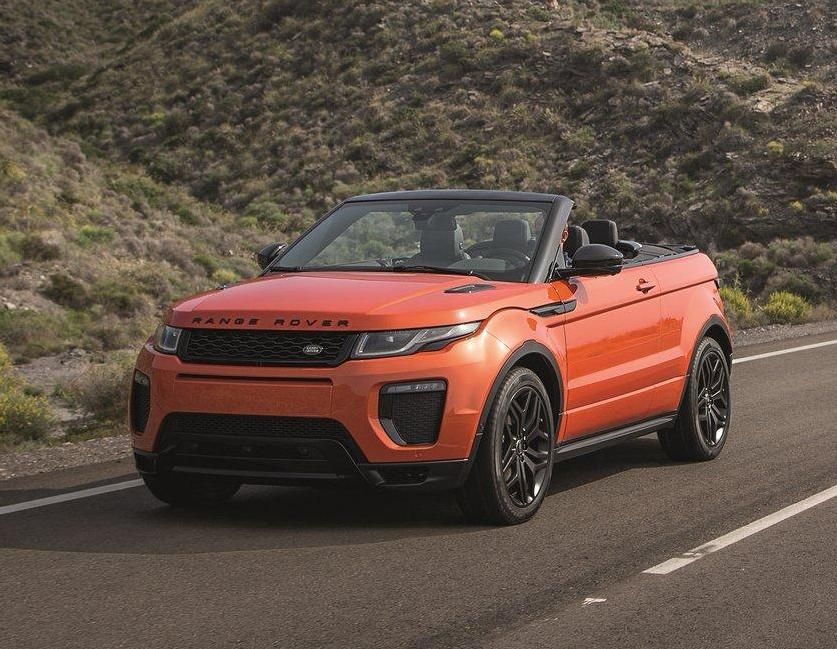
Range Rover produced a 1st-gen Evoque convertible (2017–18), but has (perhaps wisely) chosen against doing it again.
Freakish cars are markers of motoring culture
Regardless of our social status or belief systems, humans are wired to always want what they cannot have. Freakish or Frankensteinian cars like these allow a brief peek beyond the edge of sanity to the (usually) monied minority that is fuelled by owning what others can merely dream of, because, lest anyone ever forgets – they’re worth it.
Power Value is an alternative term for the commonly used colloquial phrase, bang-for-buck.
Put simply, it’s the most engine power you can buy within your budget.
In this case, we’ve set the budget at no more than R1.5-million.
Power value is calculated by dividing the price of the car by the total power output (kW) to arrive at a Cost Per Kilowatt (CPK) or Power Value figure.
What cars offer the biggest bang-for-buck or power value for under R1.5 Million in South Africa?
Here they are!
Note that pricing is accurate as of October 2024 and the CPK or power values are ranked from lowest to highest.
It’s interesting to note that Ford offers the best Power Value or CPK in South Africa for under R1.5 million!
Best Cost Per kW Cars for under R1.5-million in South Africa
1. Ford Mustang GT 5.0 V8: 330 kW @ from R1 142 900
Power Value / CPK: R3 463 per kW
The outgoing 6th-generation Ford Mustang sportscar is about to be replaced with an all-new Mustang which is due to go on sale in South Africa in October 2024.
Nonetheless, the Mustang offers the best bang-for-buck with 330 kW on offer from its naturally aspirated 5.0-litre petrol V8 engine with pricing starting from R1 142 900.
Pricing for the new incoming 328 kW Mustang has been confirmed at from R1 300 000 which means it will still top this list with a Power Value / CPK figure of R3 963 per kW.
The Ford Ranger Raptor claims second place on this list and with 292 kW generated from its 3.0-litre turbocharged petrol V6 engine and priced from R1 226 700, this super bakkie has an impressive Power Value of R4 201 per kW.
3. Audi RS3 Sportback / Sedan – 294 kW @ from R1 330 800
Power Value / CPK: R4 526 per kW Claiming third place on the Power Value podium is Audi’s RS3 Sportback / Sedan with 294 kW on offer from its lauded 2.5-litre, 5-cylinder turbopetrol engine with a starting price of R1 330 800.
4. Mercedes-Benz A45 S 4Matic – 310 kW @ from R1 475 690
Power Value / CPK: R4 760 per kW
Luxury meets performance in the Mercedes-AMG A45 S 4Matic and with a starting price of R1 475 690 and 310 kW available from its 2.0-litre turbocharged petrol engine, this is just about as as hot as a hot hatchback can get!
5. Toyota GR Supra – 285 kW / 8.9 L/100km / From R1 494 800
Power Value / CPK – R5 245 per kW
As the most expensive car on this list with the least amount of power, the Toyota GR Supra might not have the best Power Value but it’s undoubtedly on of the strongest-performing cars you can but for under R1.5 million with 285 kW on tap from its 6-cylinder, 3.0-litre turbopetrol engine.
P-Series rises! SA’s 10 best-selling bakkies in September 2024
The GWM P-Series range – including the new P500 – climbed the list of South Africa’s best-selling bakkies in September 2024. Here are all the details…
In September 2024, South Africa’s new-vehicle market slid 4.1% year on year to 44 081 units. While passenger-car sales grew, the light-commercial vehicle (LCV) segment shrunk 17.1% year on year to 10 914 registrations.
As has been the case for the past few months, that year-on-year decline was no doubt amplified by the discontinuation of the Nissan NP200 earlier in 2024. So, what happened on the list of South Africa’s best-selling bakkies in September? Well, let’s start at the top…
The Toyota Hilux was again SA’s best-selling bakkie.
The Toyota Hilux stayed out in front with 2 942 registrations, a 16.4% increase compared with August 2024’s effort. As many as 254 of the Prospecton-built bakkie’s sales came courtesy of the rental industry, while a further 37 units were sold to government.
The Silverton-produced Ford Ranger (2 382 units) again found itself in 2nd position, with 229 units purchased by government and 33 sold via the rental channel. As the final model to crack 4 figures, the Struandale-made Isuzu D-Max (1 592 units) remained in 3rd place, benefitting from 291 sales to government and 37 to the rental industry.
The KwaZulu-Natal-assembled Mahindra Pik Up (782 units) again ranked 4th, with the Rosslyn-built Nissan Navara (451 units) likewise retaining 5th place in September 2024. Meanwhile, the GWM P-Series – including the new P500 flagship derivatives – climbed 2 positions to 6th, with a total of 350 units sold (including 45 to via the rental channel). For the record, that’s a month-on-month increase of 71%.
As such, the Ford-built Volkswagen Amarok (325 units) and imported Toyota Land Cruiser 79 (168 units) each fall a ranking to 7th and 8th, respectively, while the GWM Steed (113 units) returned to 3 figures and moved up a spot to 9th. The now-defunct Nissan NP200 (76 units) dropped a place to close out the table.
Best of the rest in September 2024: bakkies outside the top 10
Local sales of the Peugeot Landtrek fell to 39 units last month.
What about the bakkies that didn’t crack the top 10 in September 2024? Well, the JAC T-Series – the Chinese firm unfortunately reported only a combined figure for its T6, T8 and T9 line-ups, so we technically can’t rank any of these individual nameplates in the top 10 – managed 89 units.
Next came the long-in-the-tooth Mahindra Bolero (61 units), while sales of the Chinese-made Peugeot Landtrek fell to just 39 units in September. The outgoing Mitsubishi Triton ended up on 22 registrations, with the final spot again going to the Jeep Gladiator, which managed 8 sales.
The new Hyundai Exter is off to a solid start, with the brand’s most affordable crossover placing inside the top 20 of SA’s best-selling passenger cars in September 2024…
The new Hyundai Exter has only just arrived in South Africa, but it’s already made a significant impact, attracting as many as 453 sales in its (partial) launch month and helping the South Korean firm grab back 4th place from Ford in September 2024.
Though the Exter’s media launch took place only on 17 September 2024, we believe Hyundai dealerships around the country began receiving limited stock of the brand’s most-affordable crossover in the opening week of the month. In addition, it seems only mid-spec Executive derivatives have thus far arrived in Mzansi.
With 453 units sold, the Exter placed 18th on the list of SA’s best-selling passenger vehicles for the month, finishing ahead of well-established (though larger and more expensive) nameplates such as the Toyota Urban Cruiser (441 units) and Volkswagen T-Cross (409 units).
In September, Hyundai registered 441 units of the Exter via the dealer channel, with the remaining 12 sold to the rental industry. That made the newcomer Hyundai Automotive SA’s 2nd most popular product for the month, finishing behind the closely related Grand i10 (1 062 units, plus 64 Cargo panel-van sales) but ahead of the Venue (370 units) and i20 hatchback (303 units).
As a reminder, the local Exter range comprises 5 derivatives, starting at R269 900 and running through to R334 900. The Indian-built Exter is offered in a trio of grades: entry-level Premium, mid-tier Executive and top-spec Elite. All employ a naturally aspirated 1.2-litre, 4-cylinder petrol engine, familiar from the Grand i10, i20 and Venue.
This “Kappa” motor delivers 61 kW and 114 Nm to the front axle. Premium and Executive derivatives are available with either a 5-speed manual gearbox or a 5-speed automated manual transmission (AMT), while the flagship Elite variant is offered exclusively with the latter cog-swapper. The manual version has a claimed fuel economy of 5.7 L/100 km, while the AMT’s listed figure is 5.9 L/100 km.
Revealed back in May 2023, the Exter employs the same platform as the Grand i10 hatchback and sedan twins, and is likewise produced at Hyundai’s plant in Sriperumbudur near Chennai. The boxy little crossover measures 3 815 mm long (the same length as the Grand i10 hatch), with a wheelbase of 2 450 mm, a width of 1 710 mm, a height of 1 631 mm (including roof rails) and a ground clearance of 185 mm.
For the record, that makes it around 180 mm shorter from nose to tail than the likes of the Venue, Nissan Magnite and Renault Kiger (and 166 mm stubbier than the CC21-generation Citroën C3, too), but about 115 mm longer than the diminutive Suzuki Ignis. The Exter’s luggage capacity comes in at a claimed 290 litres.
We first reported that the Exter was coming to South Africa back in May 2024, receiving confirmation from Hyundai Automotive SA after we discovered the company’s Seoul head office had applied to register the “Exter” badge in South Africa as early as October 2022. The local registration of this trademark took effect in December 2023.
GWM climbs! SA’s best-selling brands in September 2024
South Africa’s new-vehicle market suffered a 4.1% year-on-year drop in sales in September 2024. Here’s your market overview, including Mzansi’s most popular brands…
Though there’s still hope of improvements in the final quarter of the year, South Africa’s new-vehicle market didn’t manage to return to growth in September 2024, with sales falling 4.1% year on year to 44 081 units. Still, at least that tally represented a (marginal) 1.1% increase compared with August 2024’s effort.
Exports, meanwhile, fell a considerable 38.1% year on year in September to 21 964 units (the 2nd lowest total of 2024). Year to date, exports stand at 289 198 units, a significant drop of 19.7% compared with the same 9-month reporting period in 2023. Local domestic sales are also behind in the year-to-date race, with that tally currently sitting at 401 169 units (5.8% down).
Out of the total reported industry sales in September 2024, Naamsa estimated that 79% represented registrations via the dealer channel, while a hefty 15% were sales to the vehicle-rental industry, 3% to government and 2% to industry corporate fleets.
Again bucking the general market trend, the new passenger-vehicle segment grew 2% year on year to 30 218 units in September 2024, with the rental industry representing a whopping 28% of that total. Meanwhile, the light-commercial vehicle segment slipped 17.1% year on year to 10 914 registrations (a decline no doubt amplified by the discontinuation of the Nissan NP200).
Brandon Cohen, National Chairperson of the National Automobile Dealers Association (NADA), said September 2024’s sales figures offered “hope that the market may be slowly turning”.
“Passenger-car sales are a key indicator of consumer sentiment and the positive growth in this segment for the 2nd consecutive month is encouraging. While the Reserve Bank’s first interest-rate cut in 4 years will take time to fully impact the market, we are already seeing other positive factors, including a stronger exchange rate, lower inflation, a positive 100-day performance by the Government of National Unity, increased foreign investment, 190 days without load-shedding and lower fuel prices. These are all promising signs,” Cohen said.
Lebo Gaoaketse, Head of Marketing and Communication at WesBank, added that though the interest-rate cut wasn’t quite enough to stimulate new-vehicle sales during September, it could potentially signal the “start of a cutting cycle over the next 18 months”.
“Cumulatively these cuts will begin to impact indebted consumers over time and provide some level of relief in expensive debt. However, the immediate effects are practically small; but philosophically provide a stimulus to the market in sentiment,” Gaoaketse explained.
New-vehicle sales summary for September 2024
Aggregate new-vehicle sales of 44 081 units decreased by 4.1% (1 889 units) compared to September 2023.
New passenger-vehicle sales of 30 218 units increased by 2.0% (112 units) compared to September 2023.
New light-commercial vehicle sales of 10 914 units decreased by 17.1% (2 257 units) compared to September 2023.
Export sales of 21 964 units decreased by 38.1% (13 535 units) compared to September 2023.
10 best-selling automakers in SA in September 2024
Hyundai climbed to 4th place in September.
For the 6th time in 2024, Toyota – which includes the Lexus and Hino brands – cracked 5 figures in a single month, selling 10 890 units in September. As such, the Japanese giant again found itself way out in front. Meanwhile, the Volkswagen Group (including the Audi brand) grew its sales 4.3% month on month to 5 885 units, retaining 2nd place and stretching its lead over Suzuki (5 023 units), which again grabbed the final spot on the podium.
With its best sales performance of 2024 thus far, Hyundai (2 841 units) gained a ranking to finish 4th, pushing Ford (2 823 units) down a place to 5th. Isuzu held steady in 6th spot with 1 960 registrations, while GWM (including the Haval brand) climbed 2 positions to 7th, finishing September 2024 on 1 740 units. That, too, was a 2024 best for the firm as well as its highest placing of the year so far.
Fellow Chinese company Chery (1 614 units) thus slipped a spot to 8th, while Renault (1 426 units) gained a place to end the month in 9th. Meanwhile, Nissan – just a single registration behind its alliance partner on 1 425 units – fell 2 more positions to close out the table, enduring its lowest sales tally of the year so far.
Kia (1 284 units) was once again bubbling under in 11th place, finishing ahead of 12th-placed Mahindra (1 014 units). That meant the BMW Group (961 units) again found itself in 13th, with Mercedes-Benz (on a Naamsa-estimated 535 units) in 14th. Fascinatingly, Chery division Omoda & Jaecoo (506 units) completed the top 15, pushing Stellantis off the list.
1. Toyota – 10 890 units
2. Volkswagen Group – 5 885 units
3. Suzuki – 5 023 units
4. Hyundai – 2 841 units
5. Ford – 2 823 units
6. Isuzu – 1 960 units
7. GWM – 1 740 units
8. Chery – 1 614 units
9. Renault – 1 426 units
10. Nissan – 1 425 units
Sales outlook in SA for final quarter of 2024
Where to from here for South Africa’s new-vehicle market? Well, Naamsa is “optimistic that the tide for higher new-vehicle sales will turn”, saying economic indicators in September 2024 “showed positive trends, including the first interest-rate cut in 4 years”, a stronger rand and easing inflation below the mid-point of the central bank’s target range.
“Lower fuel prices further bolstered consumer confidence, offering relief to household budgets,” points out the industry representative body, adding that “the passenger-car segment has shown a positive trend in recent months, boosted by rental sales, currency strength and decreasing inflation”.
“As the country anticipates further interest-rate reductions, the costs of borrowing are expected to decline, which may stimulate economic activity, even though immediate improvements in vehicle affordability may be limited. Since the decline in new-vehicle sales began in August 2023, expectations are rising that the new-vehicle market could see improvement for the remainder of the year,” Naamsa concludes.
NADA’s Cohen adds that though the “economic environment remains challenging, with rising electricity prices expected to put further pressure on disposable income”, the industry remains “cautiously optimistic about potential improvements in the 4th quarter, driven by the introduction of new models, additional brands in the lower-price segments and aggressive dealer incentives”.
“We are not out of the woods yet, but the data is showing positive signs in the domestic market and sentiment continues to improve. This momentum will hopefully translate into stronger sales in the medium- to long term,” Cohen concludes.
WesBank’s Gaoaketse suggests that, thanks to likely “stimulated trading conditions over the next 18 months”, South Africa’s new-vehicle market “can be expected to perform better as consumers slowly reap the rewards of debt savings”.
“Sentiment is shifting more positively, which will provide good impetus for the country’s new-vehicle market. Volumes remain robust and demand remains high, all positive conditions for improving market performance,” says Gaoaketse.