Most Powerful New Cars Under R1.5 Million in South Africa
This article highlights the 5 most powerful new cars currently available in South Africa with a budget of no more than R1.5 million. Which one of these cars deserves to be in your driveway?
If power in a car matters to you and you have a budget of up to R1.5 million to spend on a new car, what are the most powerful cars you can buy for that money?
Earlier this year, we created a list of the Most Powerful New Cars in South Africa for Under R1 Million which includes electric cars. This list, however, focuses on cars with Internal Combustion Engines (ICE) only— because they sound better!
Here are the 5 most powerful new cars priced under R1.5 million in South Africa!
Most powerful new cars under R1.5 million in South Africa
1. Ford Mustang 5.0 V8 – 330 kW
The outgoing Ford Mustang is the most powerful new car you can buy for under R1.5 million in South Africa!
Fitted with a burly naturally-aspirated 5.0-litre V8 lump that produces 330 kW and 529 Nm of torque and paired with Ford’s 10-speed automatic transmission, the Mustang is capable of sprinting from zero to 100 kph in 4.8 seconds!
The Mustang can be had in GT, GT-CS (California Special) or Convertible guise with pricing starting from R1 142 900.
Note that an all-new 7th generation Ford Mustang is expected in South Africa in October 2024 with pricing starting from R1 300 000 but its 5.0-litre V8 will offer 2 kW less! We don’t think you’ll even notice…
The potent Mercedes-AMG A45 S 4Matic slips in under the price barrier at R1 475 690 and packs a punch with its turbocharged 2.0-litre petrol engine delivering 310 kW and 500 Nm of torque. Acceleration from zero to 100 kph is rapid with Merc claiming just 3.9 seconds to get the job done.
Audi’s RS3 5-pot banger can be had in Sportback or Sedan guise and both offer scintillating performance with Audi claiming 3.8 seconds to sprint from zero to 100kph. The German firm’s famed 2.5-litre, 5-cylinder turbopetrol is as good as it gets with outputs of 294 kW and 500 Nm of torque ripping all four wheels through a 7-speed dual-clutch transmission.
The Ford Ranger Raptor is the only bakkie on this list but with its 3.0-litre V6 turbopetrol engine producing a whopping 292 kW and 583 Nm of torque using a 10-speed automatic transmission, there’s no doubt that the Raptor deserves to be here!
Even though Ford doesn’t claim a zero to 100 kph time for the Ranger Raptor, it’s the fastest and most powerful bakkie on the market right now!
Pricing for the Ford Ranger Raptor starts from R1 226 700.
The Toyota GR Supra rounds out this Top 5 list with a price starting from R1 494 800 and its zesty 3.0-litre, 6-cylinder produces 285 kW and 500 Nm and can be paired with either a 6-speed manual transmission or 8-speed automatic transmission. The manual GR Supra claims 4.4 seconds in the sprint to 100 kph while the automatic GR Supra is quicker with a claimed sprint time of 4.1 seconds.
The updated BMW 3 Series will soon be available in South Africa, though the base 318i will fall away. Here’s how much the latest version of the G20-gen sedan will cost you…
At the end of May 2024, the G20-generation BMW 3 Series received a 2nd update. Now, just ahead of its arrival in South Africa, we have local pricing for Munich’s revised premium sedan.
Interestingly, the base 318i – which had been available in both standard and M Sport trim – falls away, meaning the local 3 Series portfolio shrinks from 8 derivatives to 6 (not including the high-performance M3 Competition Sedan and M3 Competition Touring, that is).
So, the revised line-up now kicks off with the 320i, which is priced from R913 731 in standard form. Since the outgoing 318i started at R828 731, that means the entry point to G20 ownership has effectively increased by a considerable R85 000.
The 320i – which again offers 135 kW and 300 Nm from a turbocharged 2.0-litre, 4-cylinder petrol engine, driving the rear wheels via an 8-speed automatic transmission – is furthermore available in M Sport trim, pushing the price to R963 731.
Meanwhile, the 320d starts at R965 377, with the M Sport version priced from R1 015 377 (as our learned friends over at duoporta.com pointed out, both of these figures interestingly include an additional R4 500, with BMW seemingly forcing the selection of the “storage for wireless charging” option). As a reminder, the 320d again employs a 2.0-litre, 4-cylinder turbodiesel motor delivering an unchanged 140 kW and 400 Nm to the rear axle, likewise through an 8-speed auto.
As before, the 330i is available exclusively in M Sport guise, with the starting price seemingly unchanged at R1 034 067. Like the 320i, this derivative is powered by a 2.0-litre turbopetrol unit, though peak outputs here have been hiked to 190 kW and 400 Nm.
Finally, the M340i xDrive again starts at R1 364 607, with this M Performance variant’s turbocharged 3.0-litre straight-6 petrol motor offering 285 kW and 500 Nm to all 4 wheels. Interestingly, BMW SA’s website furthermore shows technical data for the 330e plug-in hybrid electric vehicle (PHEV), though this variant is not included on the latest price list.
So, what exactly does this update encompass, considering the 3 Series benefitted from a full mid-cycle refresh (or LCI, as BMW calls it) as recently as 2022? Well, the Munich-based firm has made very few changes to the 3 Series sedan’s exterior, offering only a couple of new paint colours (Arctic Race Blue metallic and Fire Red metallic) and a handful of fresh alloy-wheel designs.
Under-the-skin tweaks, however, include various chassis updates that ostensibly result in a “notable increase in comfort across all driving situations”. Inside, meanwhile, you’ll find new steering-wheel designs, “visual modifications for the instrument panel” and “modernised decorative elements”, along with fresh upholstery options.
The updated 3 Series furthermore upgrades to the latest-generation “BMW iDrive with QuickSelect”, based on BMW Operating System 8.5, while the interior lighting system now includes “cascade lighting” integrated into the trim around the central seam vents. There’s also a new “CraftedClarity” option, which sees the gear-selector lever, iDrive controller and start/stop button fashioned from glass.
How much does the updated BMW 3 Series cost in SA?
BMW 320i – R913 731
BMW 320d – R965 377
BMW 320i M Sport – R963 731
BMW 320d M Sport – R1 015 377
BMW 330i M Sport – R1 034 067
BMW M340i xDrive – R1 364 607
The prices above include a 2-year/unlimited kilometre warranty and BMW’s 5-year/100 000 km maintenance plan.
Kia Sportage vs Volkswagen Tiguan (2024) What should you buy?
An all-new Volkswagen Tiguan recently arrived in Mzansi. How well does it stack up against the 2023/24 #CarsAwards family-car category champion: the Kia Sportage? Which one should you buy? This article will help you make the best buying decision!
If you are shopping for a new family car, the chances are that you’re considering cars such as the Kia Sportage and Volkswagen Tiguan.
The family-car segment is hugely competitive and, with a recent influx of new products, particularly from fledgling Chinese brands such as Chery and GAC, legacy carmakers such as Kia, Volkswagen, Hyundai (Tucson), Mazda (CX-5) and Toyota (RAV4) are under significant pressure to maintain sales momentum.
In the 2023/24 #CarsAwards, sponsored by Absa, the Kia Sportage 1.6CRDi EX scooped the win in the Family Car category and was recognised as the best medium SUV in the new-car market for a myriad of reasons, including performance and efficiency, interior build quality, standard features and overall value.
The Kia Sportage is the 2023/24 #CarsAwards family car category champion!
The hugely popular previous-gen Tiguan was struggling to remain competitive in the company of newer products but, now that the new 3rd-gen Tiguan has arrived in South Africa, the Wolfsburg-based brand is once again in a strong position to reclaim its market share in the family-car segment.
How does the new Volkswagen Tiguan stack up against the award-winning Kia Sportage? The article should provide you with need-to-know information to help you make an informed buying decision.
The new Volkswagen Tiguan is a major improvement over its predecessor.
This article will cover key aspects including Performance & Efficiency, Interior Features & Safety, Dimensions & Practicality and Pricing & Warranty details.
If, at the end of this article, you are still undecided about what to buy, you are more than welcome to reach out to us for advice via X, Facebook or Instagram. Let’s find what moves you.
What To Buy: Kia Sportage vs Volkswagen Tiguan
Performance and Efficiency
Derivatives in the Kia Sportage range are powered by either a 1.6-litre 4-cylinder turbopetrol or -turbodiesel engine. The petrol engine is offered in conjunction with GT Line, GT Line Plus and GT Line S trim grades, while its turbodiesel equivalent is available with the LX, EX and GT Line Plus trim grades.
The new VW Tiguan is offered with a 1.4-litre 4-cylinder turbopetrol engine (September 2024) and in base, Life and R-Line guises. A 2.0-litre turbodiesel version is available to order but is only expected to join the range in November 2024, with a more potent 2.0-litre turbopetrol set to join the range in 2025.
Kia Sportage
Volkswagen Tiguan
Powertrain
Petrol
1.6L turbopetrol 132 kW / 265 Nm
1.4L turbopetrol 110 kW / 250 Nm
Diesel
1.6L turbodiesel 100 kW / 320 Nm
2.0L turbodiesel 110 kW / 340 Nm
Transmission
7-speed dual-clutch automatic
7-speed dual-clutch automatic
Fuel Consumption(Claimed)
Petrol
6.3 L/100 km
6.6 L/100 km
Diesel
5.0 L/100 km
7.6 L/100 km
Kia Sportage
The Sportage’s 1.6-litre 4-cylinder turbopetrol (which is paired, and well-calibrated with a 7-speed automatic ‘box) is a strong performer that delivers good in-gear acceleration. While Kia claims an average consumption figure of 6.3 L/100 km, expect real-world returns of around 9.0 L/100 km.
The Korean model delivers impressive on-road refinement thanks to good sound insulation (engine-, wind- and road noises are sufficiently suppressed). Over and above a pleasant and premium driving experience, the Sportage also offers solid and surefooted handling dynamics. The suspension setup is on the firm side, but the ride quality is still adequately comfortable, which befits a premium family car.
If you are looking for an even better balance between performance, efficiency and price, perhaps consider the diesel-powered Sportage 1.6 CRDi EX (our #CarsAwards champion) or the GT Line Plus.
Not only is this powertrain powerful enough to perform daily family-car duties, it’s surprisingly efficient too! When we reviewed the turbodiesel variant, the test unit indicated consumption figures of around 6.0 L/100 km (compared with Kia’s claim of 5.0 L/100km) – that’s an excellent return for a vehicle of this size.
Volkswagen Tiguan
The Tiguan’s 1.4-litre turbopetrol engine, which has been detuned to 110 kW, might have a lower power output than the Sportage’s turbopetrol 1.6-litre 4-pot, but rest assured that the former delivers excellent overall performance in conjunction with a smooth-shifting 7-speed dual-clutch automatic transmission.
Not only is the Tiguan quick off the mark, but its mid-range acceleration (which is useful for executing quick overtakes) is strong – the VW can cruise effortlessly at the highway speed limit and beyond.
In terms of real-world efficiency, the new Tiguan is on par with the equivalent Sportage, with realistic returns of about 9.0 L/100 km (Volkswagen claims an average fuel consumption of 6.6 L/100 km).
And, as far as refinement and comfort are concerned, Volkswagen has hit the mark with the new model. Not only does the new Tiguan offer surefooted handling with sharp and positive responses to steering inputs, it also exhibits an excellent ride quality thanks to a forgiving, comfort-oriented suspension setup.
In our experience, Volkswagen’s 2.0-litre 4-cylinder turbodiesel engine and 7-speed automatic transmission is a well-balanced powertrain that delivers punchy performance, while also returning good fuel economy. When that variant arrives in November 2024, we suspect that many buyers will opt for it. Volkswagen, however, still expects the 1.4-litre turbopetrol engine to be the best-seller in the range.
Much like the range-topping turbopetrol Sportage, the incoming 2.0-litre turbopetrol Tiguan derivative (expected in 2025) will most likely be a rather pricey proposition…
Partial cloth + leather Front and rear heated / cooled seats Lumbar support
Leather Front heated seats Lumbar support Massage functions
Safety Features
6 airbags, ABS with EBD, brake assist, vehicle stability control, hill start assist, hill descent control, blind spot assist, lane departure warning and lane keep assist, forward collision avoidance, trailer stability assist
8 airbags, ABS with EBD, brake assist, vehicle stability control, park assist plus, matrix LED headlights with high-beam assist, tyre pressure monitoring.
Additional safety features are optional
Kia Sportage
In a bid to make the 5th-gen Kia Sportage more competitive against highly-specced new rivals (most of which hail from China), Kia has moved the interior execution of the 5th-gen Sportage notably upmarket.
As such, the Sportage (as highlighted in the table above) is generously equipped with standard features with the highlight being its large, curved touchscreen and digital instrument cluster.
GT-Line Plus spec includes a panoramic sunroof, larger 19-inch alloy wheels, reverse-view camera, front and rear heated seats and a comprehensive list of active and passive safety features.
Volkswagen Tiguan
The new Tiguan’s interior has also moved upmarket and a major highlight is the MIB4 operating system paired with a standard 12.9-inch touchscreen infotainment system (a larger 15-inch system is optional).
In standard guise, the Tiguan R-Line lacks a few key features compared with its Korean rival, such as a panoramic sunroof, reverse-view camera (optional) and wireless charging (optional with the 15-inch infotainment system). The Tiguan, however, hits back with 8 airbags (versus 6 in the Sportage) and tyre-pressure monitoring.
It’s also well worth mentioning that the new sports seats are equipped with a massage function (standard in R-Line guise) – it’s a feature that elevates the Tiguan’s interior comfort considerably.
In terms of feature value, it’s evident that the Sportage pips the Tiguan in terms of the standard kit but the Tiguan’s comparative feature deficit is hardly a deal breaker.
Dimensions and Practicality
Kia Sportage 1.6TGDi GT Line
Volkswagen Tiguan 1.4TSI R-Line
Length
4 515 mm
4 539 mm
Width
1 865 mm
1 843 mm
Height
1 650 mm
1 631 mm
Wheelbase
2 680 mm
2 676 mm
Ground clearance
170 mm
201 mm
Load Capacity
591-1 780 L
652-1 650 L
Towing capacity
1 650 kg
1 900 kg
Kerb weight
1 497 kg
1 384 kg
Practicality Summary
The Sportage and Tiguan offer similar levels of practicality.
Both models offer ample rear legroom and passenger comfort is further enhanced with rear ventilated seats in the Sportage GT Line (as highlighted in the feature section of this article).
The new Tiguan does feature a larger load bay (652 litres, which is 37 litres more than the outgoing model) than the Sportage (591 litres). The Sportage, however, offers marginally more utility space (load capacity when its rear seatback is folded down) than its German rival.
Note that the Tiguan also has a higher ground clearance than the Sportage, which is useful if you intend to take your family on gravel-travel adventures, even if only occasionally.
For those families that require moderate towing capability, the Volkswagen trumps its Korean rival in this regard with a towing capacity of 1 900 kg for the front-wheel drive Tiguan, while the upcoming turbodiesel-powered and all-wheel-drive (4Motion) variant will be able to tow 2 300 kg!
Price and warranty
Note that pricing is accurate as of September 2024.
The Kia Sportage remains a formidable offering in the family-car segment and represents good value, especially in EX, GT Line and GT Line Plus guises. The Sportage is not only a practical family car, but it also strikes a good balance between performance and economy. We recommend the diesel-powered Sportage if you want to maximise value and efficiency over time. It’s worth pointing out that Kia also offers a longer warranty and service plan than Volkswagen, which you should factor into your buying decision.
If your budget isn’t able to stretch to acquiring a new Sportage, we suggest that you browse for a used Sportage on Cars.co.za as there are many worthwhile used (second-hand) options to consider.
The new Tiguan makes a strong case for itself and it should be on your family car shortlist.
With that said, the new Volkswagen Tiguan’s vastly improved cabin and added comfort features are compelling. The 1.4-litre turbopetrol engine punches above its weight/performs better than its outputs suggest, but, as is the case with the Sportage, we suspect that the incoming Tiguan diesel derivative will be the sweet spot in the range. Meanwhile, the detuned 140 kW 2.0TSI R-Line 4Motion, which is due in early 2025, is very likely to deliver good performance, but will come at a premium price (pricing is TBC).
The Kia Sportage and Volkswagen Tiguan are excellent choices in the family-car segment and both deserve to be on your family car shortlist! Which one would you pick?
New Nissan Gravite: is this the name of the brand’s next SUV?
We’ve unearthed a fresh trademark filing for the Nissan Gravite badge, a nameplate that might just end up being used on the Japanese firm’s next Indian-built SUV…
Back in March 2024, Nissan announced plans to build a pair of new SUVs in India, with these Renault-based models all but confirmed for South Africa. Now, based on a recent trademark application, we believe one of them might just end up being called the “Nissan Gravite”.
Yes, Cars.co.za can confirm that Nissan Motor Corporation filed to trademark the “Gravite” nameplate in South Africa in May 2024. For the record, the Japanese automaker applied to reserve the very same nameplate in India back in November 2023.
Nissan’s upcoming pair of SUVs will be positioned above the Magnite.
Though we’re administering a healthy dose of speculation here, we’d say the Gravite badge could be a prime candidate for use on a new SUV positioned above the Magnite (currently Nissan SA’s best-selling passenger vehicle), as an eventual – more cost-effective – replacement for the locally discontinued Qashqai.
From what we understand, the Japanese firm’s new 5-seater SUV will be based on the upcoming Indian-spec Renault Duster, with both models – seen in teaser images released during the “Alliance Advance in India” conference in March – set to be produced at Renault Nissan Automotive India’s manufacturing plant in Oragadam near Chennai (which currently also builds the Magnite, Kiger and Triber).
The Indian-spec Renault Duster may look a little different from this Turkish-market version.
This Indian facility is furthermore expected to produce a pair of 7-seater SUVs – one wearing a Renault badge and the other featuring a Nissan logo – which will likewise ride on a version of the Alliance’s CMF-B platform. The Renault version seems very likely to be an Indian-spec version of the upcoming Bigster.
As an aside, Renault filed to register the “Bigster” trademark in both India and South Africa, also in May 2024. Of course, there’s certainly a chance the Gravite nameplate could end up being applied to Nissan’s version of the 7-seater SUV rather than the 5-seater model. Time will tell, however, if it’s used on either.
Autocar India suggests the Duster and its Nissan equivalent will be launched in the world’s most populous nation late in 2025. As such, we’d expect the Nissan version to arrive in South Africa perhaps only the following year. Whether it will indeed be wearing this new “Nissan Gravite” badge, of course, remains to be seen…
We tracked down an enthusiast who, after literally having to run after this Mercedes-Benz C43 AMG, had to wait patiently before he could fully enjoy one of only two W202-series C43 AMGs in South Africa.
Words: Wilhelm Lutjeharms
Hanjo Stier is obviously quite happy and content with his classic Mercedes-Benz C43 AMG. However, it has been a long journey, not only to acquire this rare AMG, but to get it to its current, beautiful condition.
“I first saw it on New Year’s Day about a decade ago in Windhoek, Namibia. We used to get a lookalike body kit that could be fitted to the W202-series C280, but I must have spotted the light-grey inserts on the seats and upon further inspection saw that this was a genuine C43 – which I had never seen before. To this day it is the only one I’ve ever seen, including during my travels through Europe,” he says.
“I managed to find the owner inside a shop, but he wasn’t ready to sell the car. I left my number and I took his. A couple of years went by and I kept asking. Then one day he told me he had sold it to a friend in Johannesburg – I was devastated. Sometime later, in 2017, I was again in Windhoek on business, and this very car came past me, with a “For Sale” sign on the back.
“So, I ran after it, which is rather out of character, because I don’t run for anything! The passenger eventually told the driver that a guy was running after them and maybe he should stop. We exchanged details, and it turned out that the owner had indeed bought it from our mutual acquaintance.”
Finally!
“He told me that his W202-series Mercedes-Benz C43 AMG had been on the market for half a year and that no one wanted to buy it! Of course, the decision to make it mine had been made years ago, so there was no way I was leaving without it. The mileage was high and it was in a terrible condition, so I used one of my clients in Windhoek, Christiaan Bauer at Bauer’s Autowerkstatt, to take a look at the car.
“We put it on a lift only to find more issues and more rust, also spotting control arms and bushes that were in urgent need of replacement. He is Mercedes-Benz-trained and worked for the local dealer at one point, so his advice and trained eye were very useful. I also phoned Robert van Alphen, my Mercedes-Benz specialist in Cape Town. While the car was on the lift, he inspected the car with me (via video call) and gave me good advice in terms of how much I should pay for the car considering the condition.
“I actually used a professional guy from WeBuyCars in Namibia to broker the deal, as both individuals in the transaction were private. Once the deal was done, the car was sent straight to Bauer’s Autowerkstatt to have it checked over, serviced and the necessary work done so it could pass its roadworthy test. Then I drove the car for about a year during my regular visits to Namibia.
“I decided then to have the car fully refurbished, but to have that done closer to home, in Cape Town. I drove it down for the 1 500 km from Namibia to Cape Town and it didn’t give any issues. Back home, at one stage it was the only running car in the family; even my pregnant wife was driving it.”
Restoring the C43 AMG to its former glory
Next up was the process of having the bodywork done, which took by far the longest time, but for good reason. “I decided to have all the bodywork done by Mark Coetzee at Coetzees Auto Coachworks, a company well known in the Mercedes-Benz Club of South Africa.
“He came highly recommended, but his company is quite busy, so I had to get in the queue. I made a deal with him based on that wonderful triangle of speed, quality and cost. I wanted good quality at a reasonable cost. ‘Then don’t rush me”, was his response.”
“The car was delivered to him in January 2020 and I got the car back midway through 2023. It took this long for the bodywork to be done, because the more they dug, the more rust they found. It was mainly around the bottom of the car. There was, for example, a huge hole under the driver’s footwell.
“The sills were a bit rotten and so was one door. They stripped body panels and did well to get rid of all the rust. As agreed, I didn’t rush them – it was for me an exercise in patience. I visited the car a few times during the course of the project, with them also moving premises as their business was expanding.
“The interior was original, but pretty worn out. I used Color Glo in Cape Town, which had done a very sympathetic restoration on another 50-year-old car of mine. They had to replace 2 panels in the seats, but the grain of the leather and the colour match was done expertly while the rest of the leather also received some care. As for the rest, I wanted some patina. After all, the car has done over 250 000 km.
“More mechanical work was done by Robert van Alphen in Cape Town once the body was done. This was necessary as the car had effectively stood still for 3 years. These included new shocks, pipes and hoses, rubbers and the fuel system were attended to. Thankfully the brakes were still in good condition.
“I told a fellow enthusiast the other day that, when I eventually got the car back, it felt like a new purchase. I had sort of forgotten what it felt like to drive and what it smelt like,” Hanjo adds.
One of the things on Hanjo’s to-do list is finding a set of mono-block W202-series Mercedes-Benz C43 AMG wheels. Finding the perfect wheels is a painstaking process. But fortunately, the car’s current set is period correct. One aftermarket and quite popular modification that is also on the list is to upgrade the open differential to a limited-slip type. Thankfully an original Becker radio was found on eBay.
Apart from that, there are still a few final cosmetic and electronic gremlins Hanjo will attend to in the coming months. But for now, after more than 3 years, it is clear he simply wants to enjoy his car, one of the rarest Mercedes-Benzes, and cars in general, in South Africa.
Specifications:
Model: Mercedes-Benz C43 AMG (W202)
Engine: 4.3-litre, V8, petrol
Power: 228 kW at 5 850 rpm
Torque: 410 Nm at 3 250 – 5 000 rpm
Transmission: 5-speed automatic, RWD
Weight: 1 570 kg
0-100 km/h: 6.5 sec (claimed)
Top speed: 250 kph (limited)
Years produced: 1997–2000
Behind the wheel of the C43 AMG
Strolling around the car with the key in hand, it is the subtle exterior upgrades that catch one’s eye. Impressive in the sense that they are there, but they are almost only visible to the trained eye – so very typical of the understated 90s. As Hanjo explains to me, now and then he will find an enthusiast walking over to him, usually an elderly gentleman. They would stop, point at the car and ask: “Is this a real one?”.
The exterior updates include the front bumper, the wheels, the side sills and the rear bumper. Of course, also the chrome-tipped double exhaust pipe. It is very subtle, but if you are a Mercedes-Benz enthusiast you will notice it from a distance.
It is refreshing that the W202-series Mercedes-Benz C43 AMG, unlike modern AMGs, doesn’t scream performance with a huge wing, front winglets, air scoops, stripes, and coloured beading. Then semi-independent of ‘Benz, the Affalterbach-based firm did things differently 2-and-a-half decades ago.
The cabin has been given the same treatment: it’s noticeable, yet very subtle. The leather seats offer a combination of side bolstering for support, as well as comfort; they’re visually appealing thanks to the use of black and light-grey leather. The thick steering wheel has been given the same 2-tone treatment. The transmission lever has a “Sport” inscription at the top and, as expected, the dials are white.
Under the bonnet is the 4.3-litre V8 engine, and as I turn the key the powerplant’s deeper burble instantly, yet understatedly, takes centre stage. Some might say I’m starting my W202 C-Class journey at the wrong end though, as this is the 1st W202-series derivative (I know, it’s shocking) I’ve experienced.
The cabin is relatively small, and so is the car’s footprint. It is refreshing though, especially as the length of the bonnet feels rather short with the perched tri-star emblem visible at the end.
Once on the twisty highway, the Mercedes-Benz C43 AMG rides like I expected. Comfort is still the main characteristic, but I enjoy the slight firmness that this AMG model offers. The torque allows you to travel at low engine speeds, but press the throttle deeper towards the floor and the gearbox shifts down, the car picking up speed quite impressively.
It is not quick in a modern way, but it is quick enough to be exciting and enjoyable. The brake pedal travel is also rather long, but it does its job well while the relatively small (for a performance sedan) footprint makes it easy to place on the road and through corners.
Summary
As I pull into the lookout point for the final sunset pictures, I have a new level of appreciation for these early AMG cars. Their subtle approach to performance and the “if you know you know” style makes them quite alluring. Hanjo had to wait long to finally fully enjoy this rare Mercedes-Benz, but it is safe to say that the Western Cape’s roads will now be seeing much more of this car.
A facelifted Fiat 500 has arrived in South Africa with a 3-derivative lineup. Here’s how much you will pay for the iconic European city car.
The Fiat 500 facelift is going on sale in South Africa priced from R308 900. There’ll be a trio of derivatives and all use the Stellantis 1.2-litre naturally-aspirated 4-cylinder petrol engine which makes 51 kW and 102 Nm. Power goes to the front wheels via an automated 5-speed manual gearbox. Given its compact size, it should be reasonably efficient, with Fiat claiming 4.8 L/100 km.
The Fiat 500 history is substantial, with three generations over 67 years. Since the start of the modern 500 in 2007, over 2.5 million of these cute city cars have been built. It may be a small city car, but there’s no safety shortcuts as there are 7 airbags, stability control and hill hold assist.
Inside, the Fiat 500 features a 7-inch HD touchscreen with Apple CarPlay and Android Auto connectivity. There’s also Bluetooth and a USB port.
Trim levels
The Style model adds rear parking sensors, climate control, front fog lights, 16-inch alloy wheels, and folding rear seats. For those wanting the convertible experience, the Style Cabrio has an electrically-powered fabric roof that peels backwards.
How much does the facelift Fiat 500 cost in South Africa?
The updated model is sold with a 5-year/100 000 km warranty.
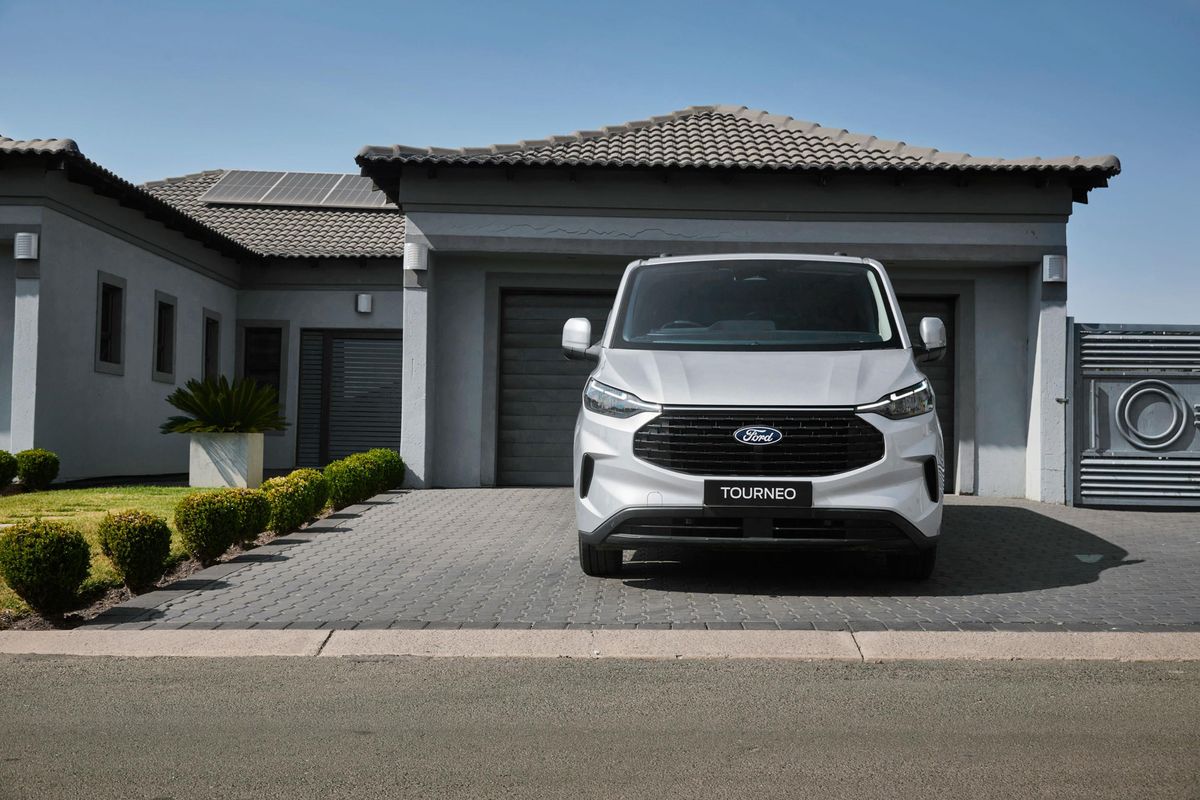
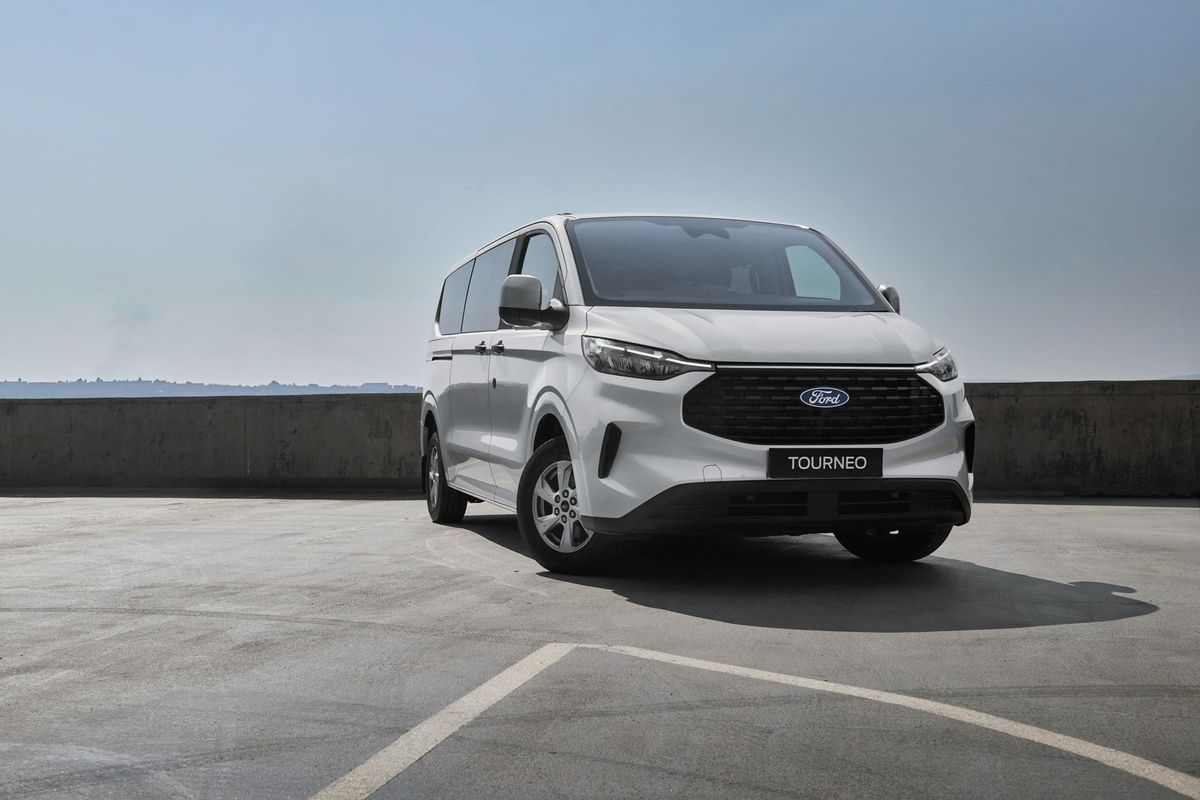
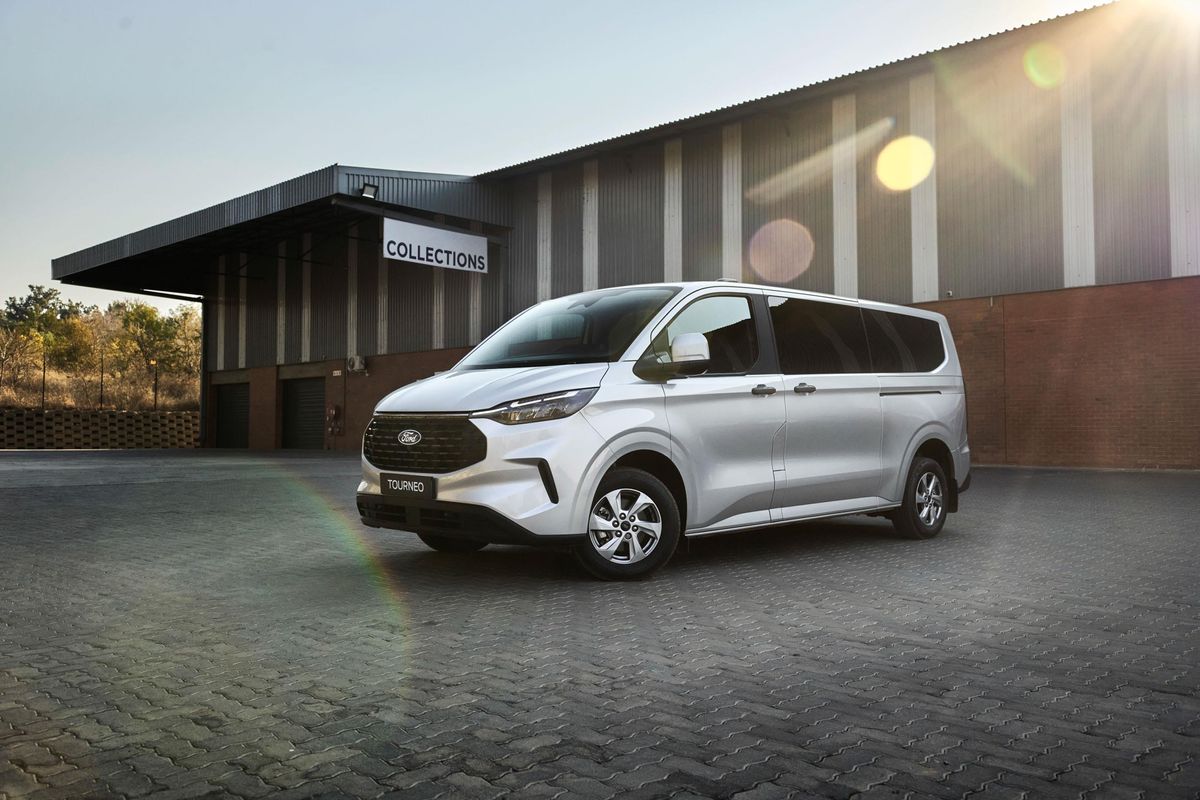
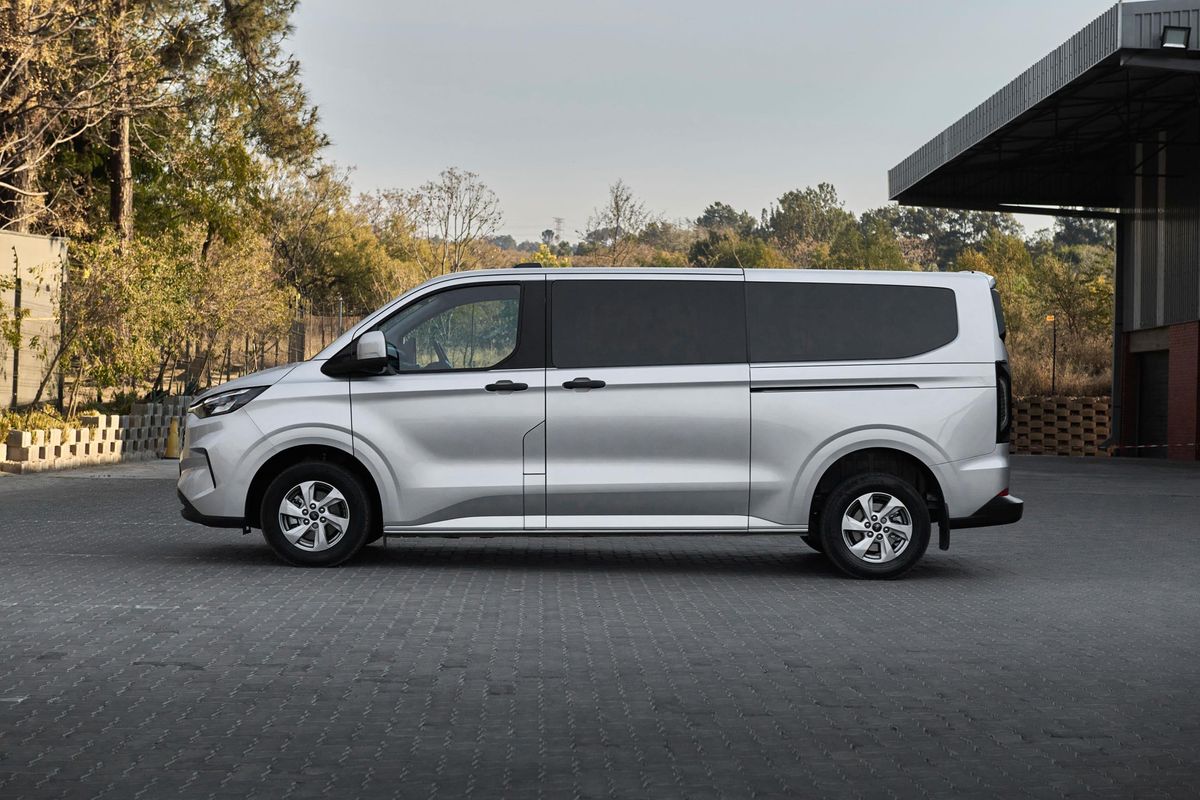
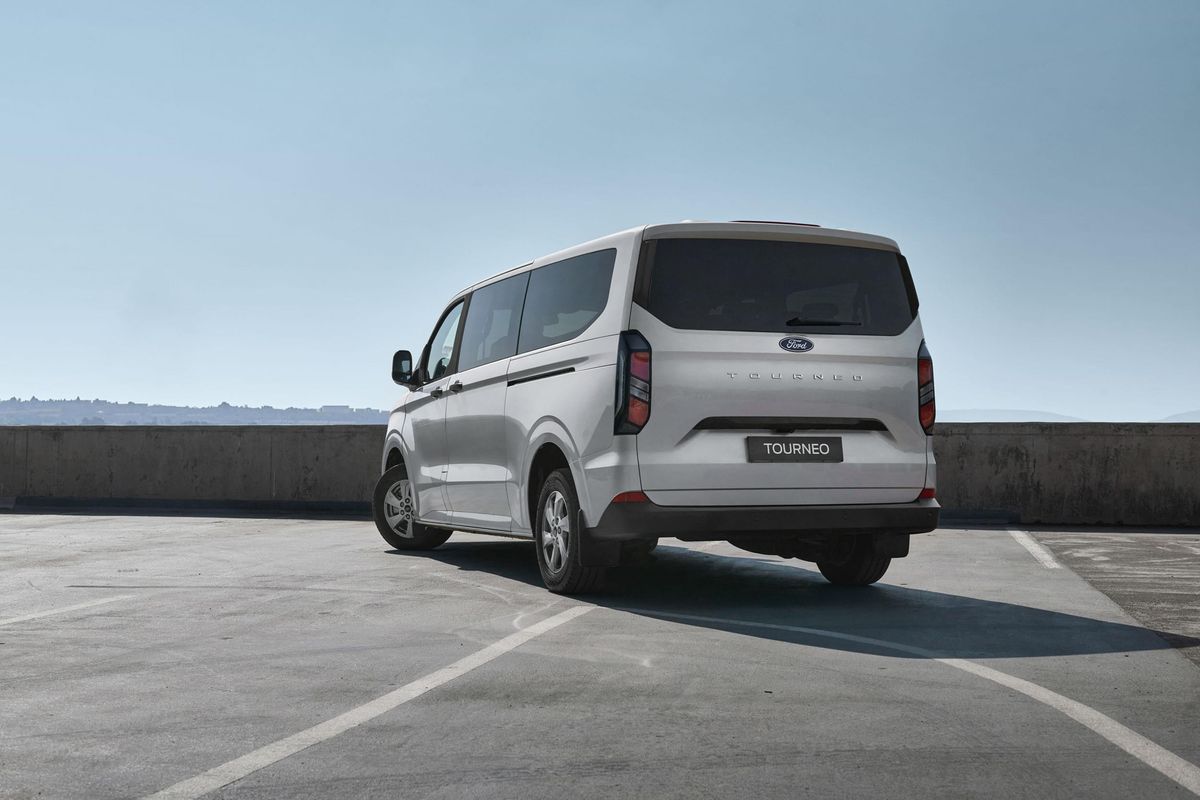
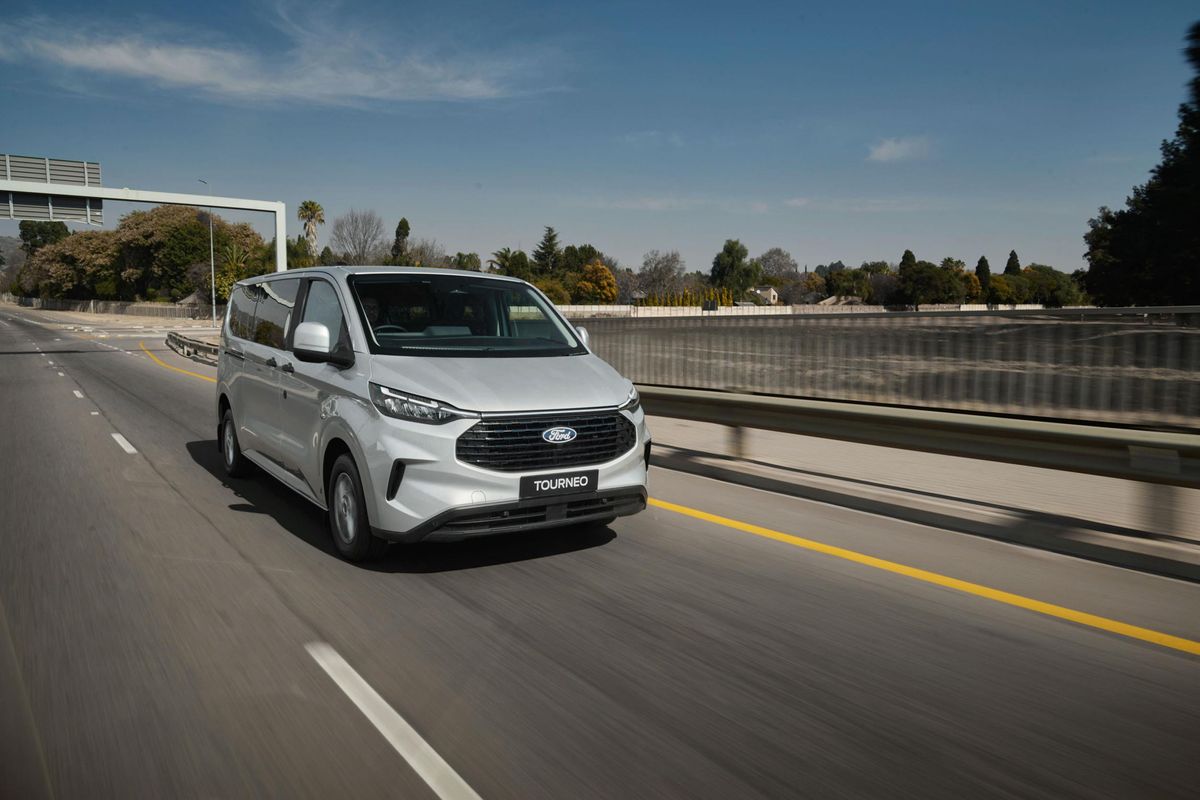
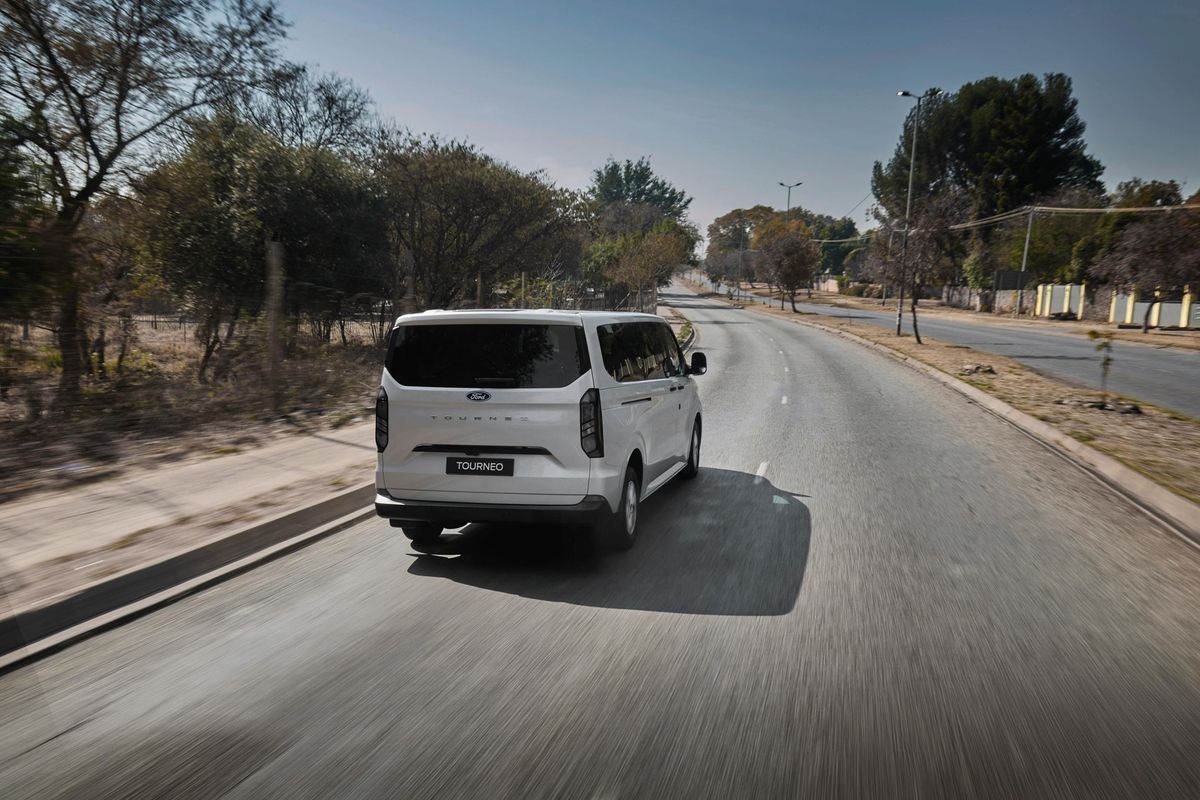
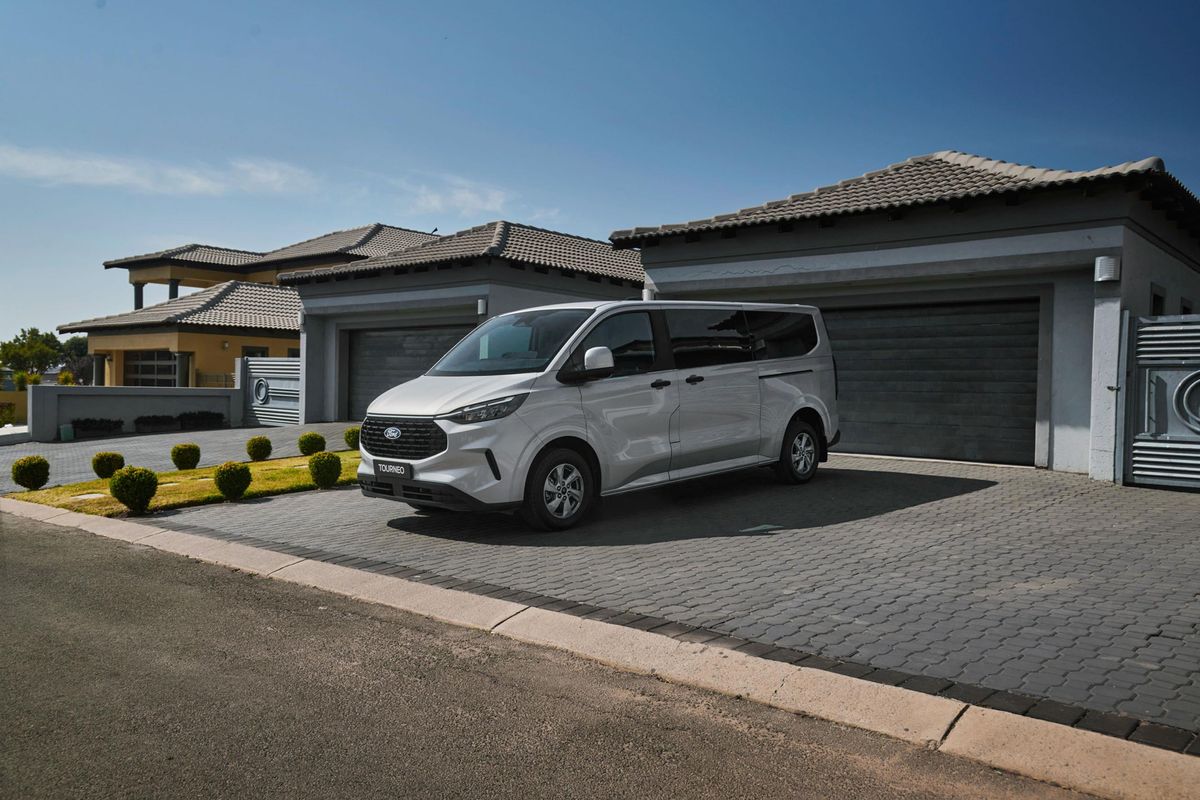
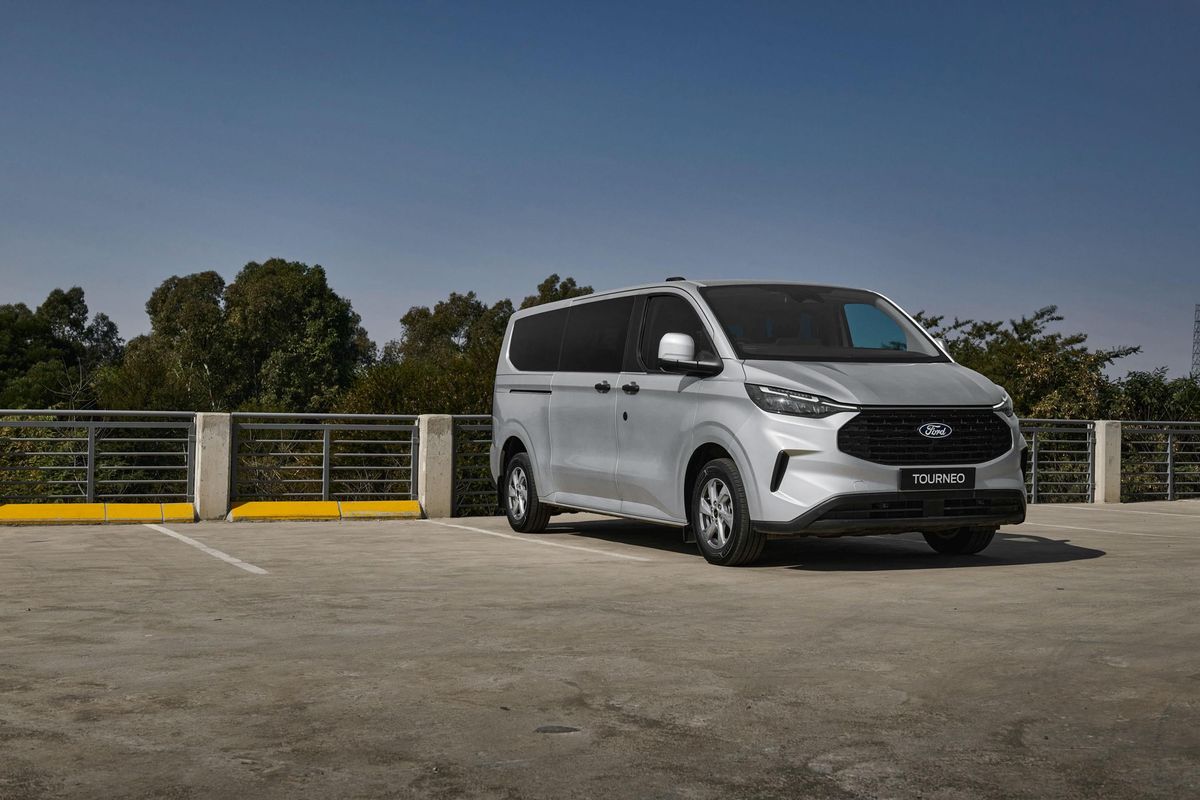
The Blue Oval is seeking to increase its foothold in the people-mover market with the new Tourneo Custom. This week, Ford Motor Company of Southern Africa finalised the launch price of the 2.0SiT Trend LWB and here are our impressions of the newcomer.
English farmer and former most famous motoring TV presenter in the world Jeremy Clarkson once wrote that a motoring journalist’s only essential task is to try convincing anyone why they shouldn’t buy a Golf.
So, does that maxim ring equally true for Volkswagen models in the people-carrier segment?
Certainly in South Africa, combined sales of the Volkswagen Caravelle, Kombi and crew buses swallow 37% of the segment’s 2 748 units sold up to the end of July, followed by the Hyundai Staria 10% behind. Next up are the Mercedes V-Class and Vito line-ups (19%) and the subject of this review – Ford, with the Transit Custom it launched in June and the Tourneo Custom LWB 8-seater – somewhat behind at 11%.
So, after some cursory back-of-the-carton calculations, Clarkson’s wisdom wasn’t as out whack as his detractors would like the world to believe. Ford; however, wants to believe that the newcomer is a worthy adversary to, specifically, the benchmark-setting, space-age Hyundai Staria Executive 9- and 11-seater.
Is it truly a foil to the Staria et al?
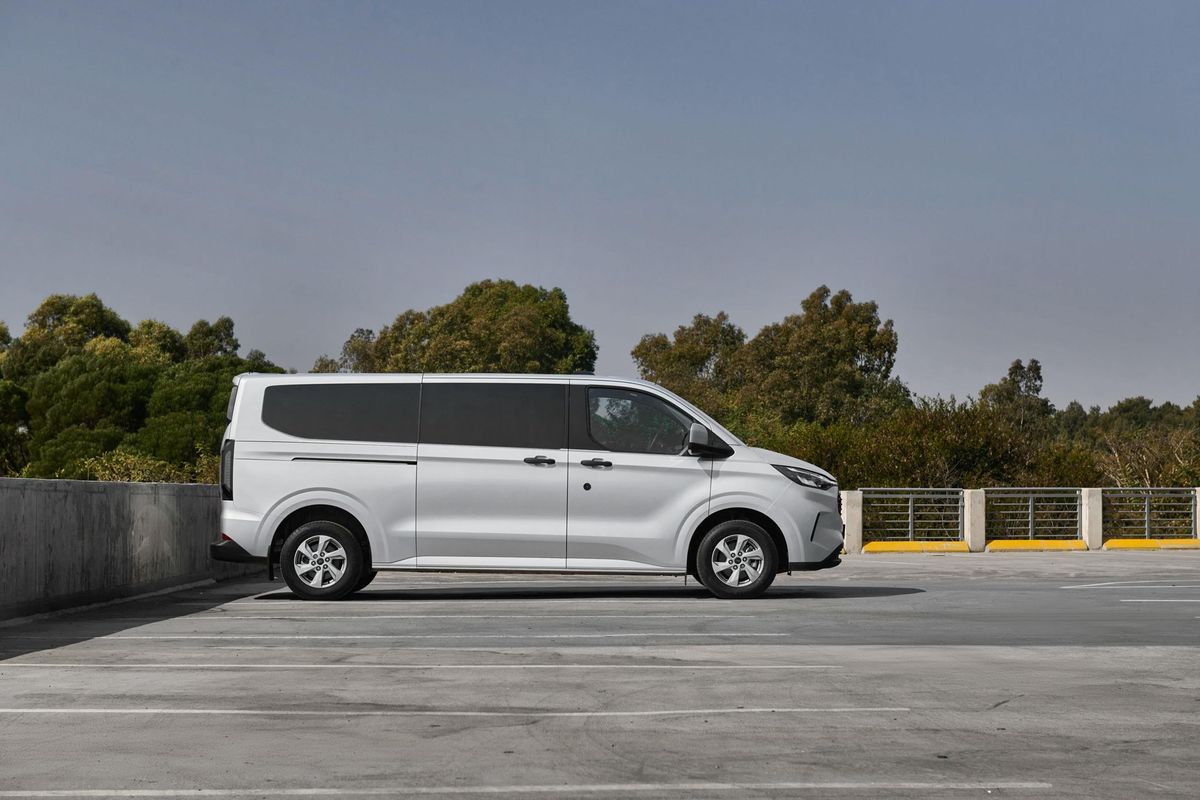
As the person-conveying version of the package-moving Transit Custom, the 5450 mm-long Tourneo Custom (available in 2.0SiT Trend LWB guise, for now) shares the same improvements in its DNA.
The combination of the new platform’s 100 kg diet, the wheel-in-each-corner placement, rear trailing-arm suspension, wind-cheating redesigned front end and reduced overall height (to 1 961 mm) has resulted in a more efficient, comfortable and enjoyable driving proposition for courier guys (and guy-lettes, of course) in the Transit Custom. And now – soccer moms and -dads in the Tourneo Custom, too.
Similarly shared is the 100 kW/360 Nm 2.0-litre AdBlue-supplemented turbodiesel engine (with Normal, Eco, Slippery and Tow drive modes), but instead of Mr Delivery’s 3-pedal version, Mrs Beckham’s bus has an 8-speed automatic transmission, with the drive selector configured as a column-mounted stalk.
Manual shift overrides are executed by an endcap turn-dial shaped and operated in the same way as one would activate the rear wiper; with forward twists triggering upshifts and rearwards ones for downshifts.
From safety to luxury, one would be hard-pressed to want for more features in the Tourneo Custom…
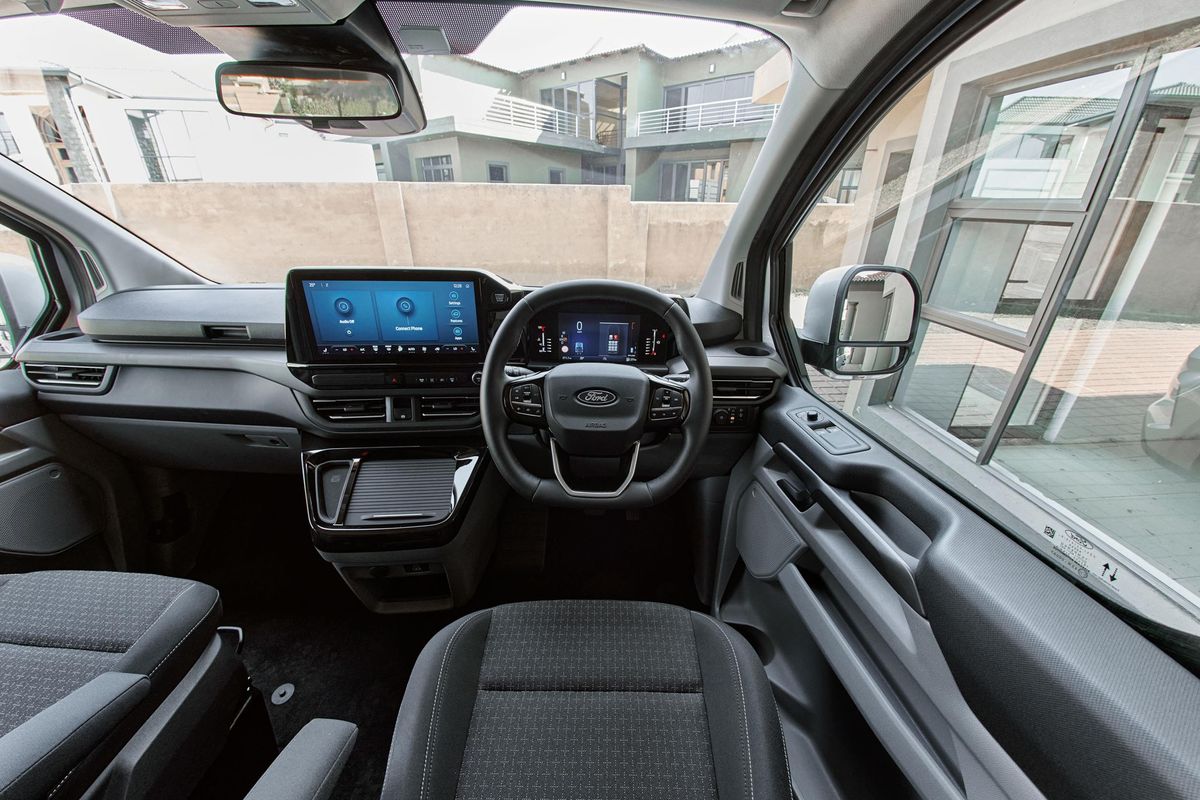
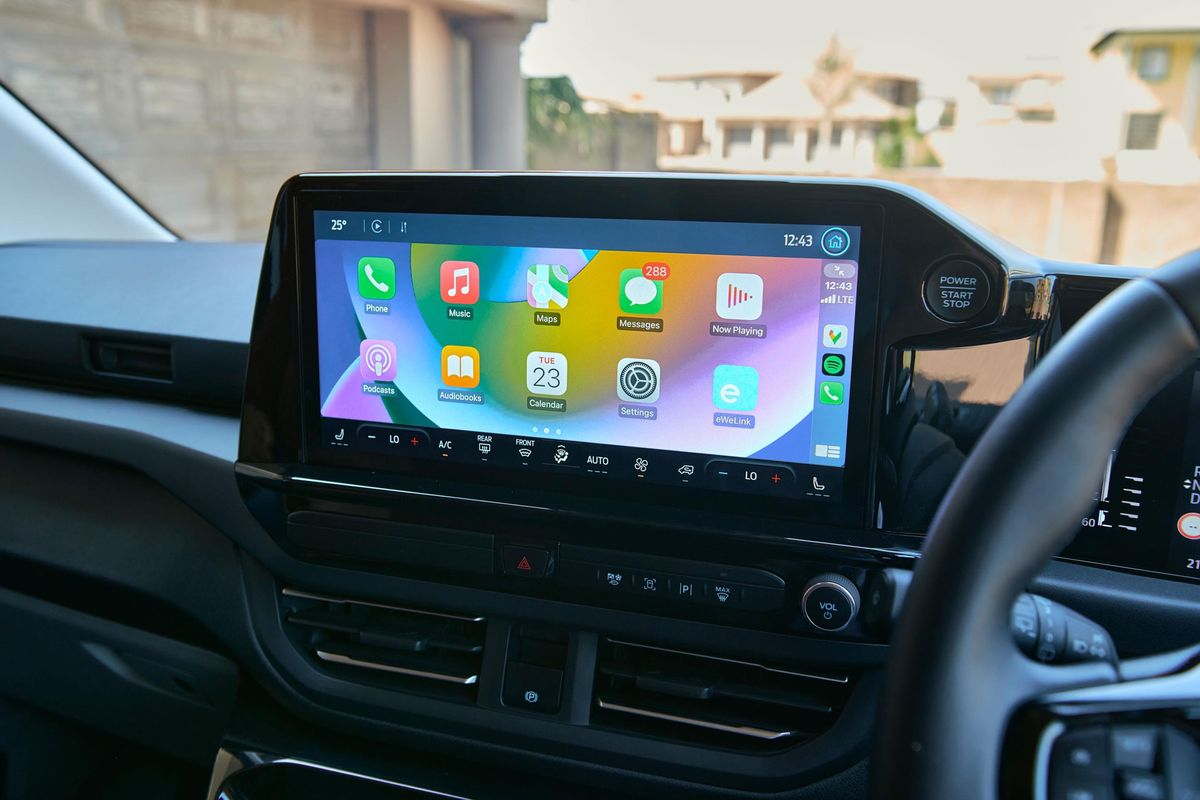
The cabin is dominated by a 13-inch Ford SYNC4-operated touchscreen that controls nearly all vehicle functions; which is flanked by an 8-inch-sized configurable digital instrument panel ahead of the driver. Apple CarPlay and Android Auto are available wirelessly, for spouting Spotify and other apps’ outputs through 10 speakers; and there’s a wireless charging pad at the bottom of the centre console.
A pair of 12V power outlets are positioned fore and aft; as is a smattering of USB A and C charging points throughout the cabin; most usefully in the B-pillar alongside the 1st row of rear passengers.
Roadholding is taken care of by ABS (with emergency brake-force distribution and brake assist), stability control, as well as hill-launch assist. There are 6 airbags and the driver aids extend to cruise control, a tyre-pressure monitor, front and rear parking sensors, a 180-degree rear camera, lane-keeping nanny, an (overzealous) driver fatigue monitor, traffic (and speed!) sign recognition and collision mitigation.
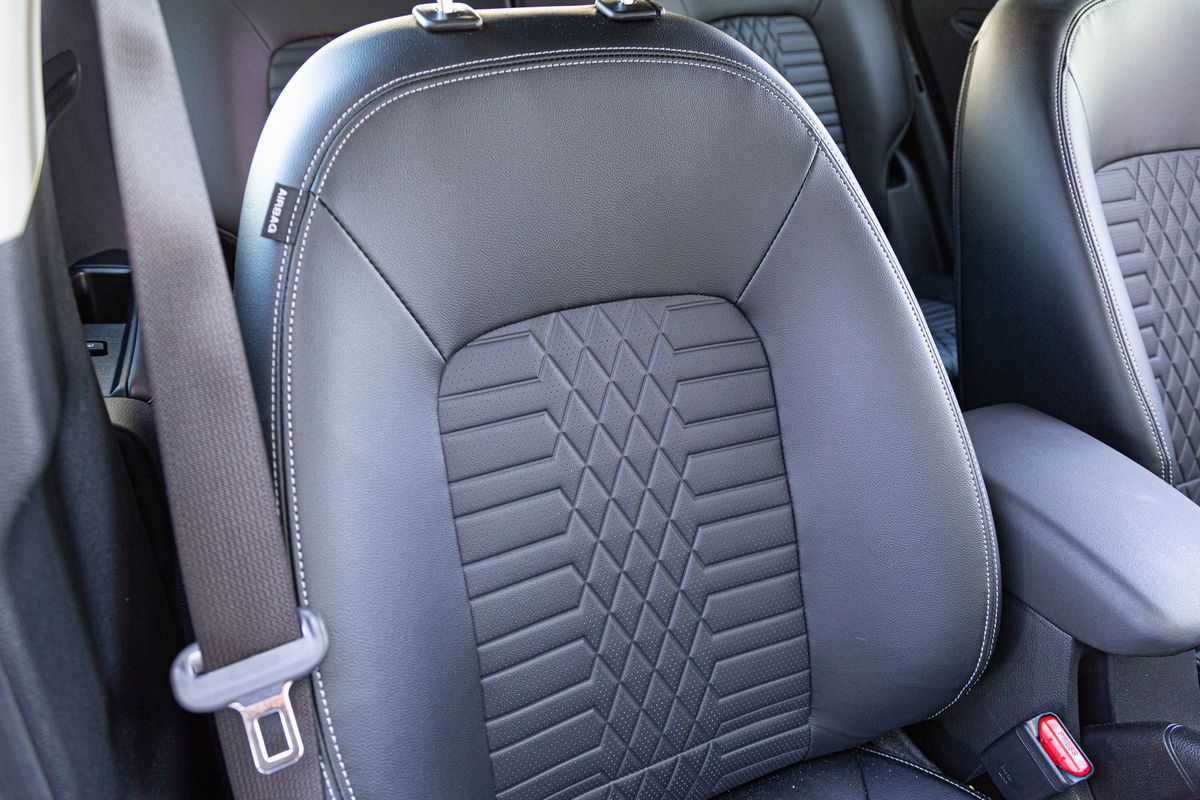
Now, trainspotters may derive sadistic pleasure from drawing conclusions after like-for-like comparisons over the different tread counts utilised in the seat trim of rival products, but ignoring the acres of hard plastic and rudimentary couture embellishment, the Tourneo’s primary purpose is packing people and their luggage, as well as towing stuff. And that’s where it truly shines.
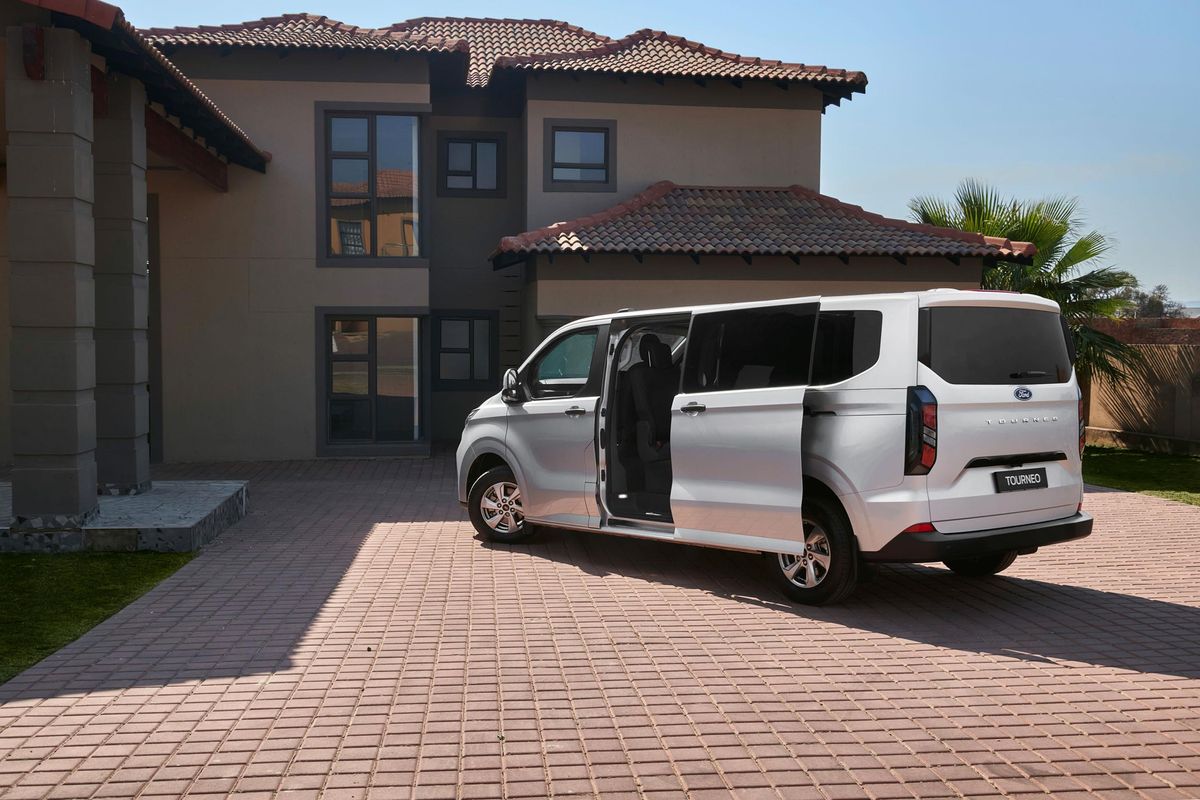
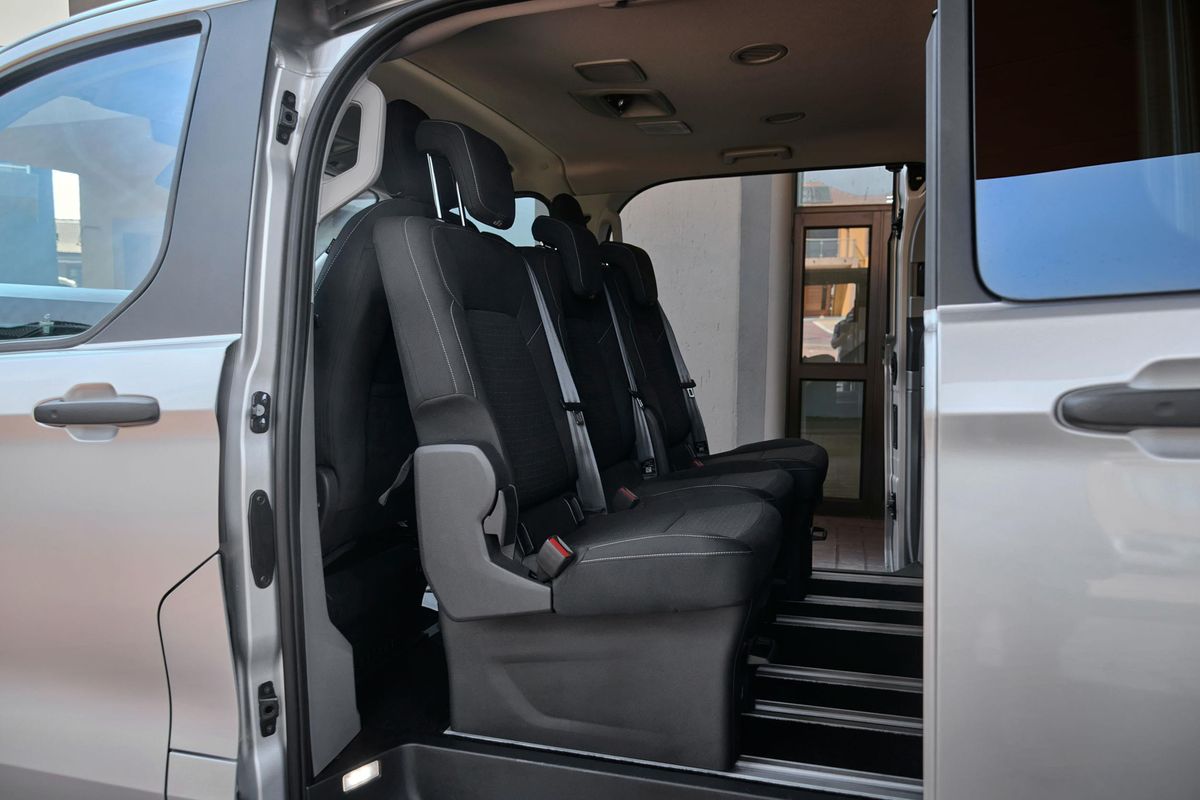
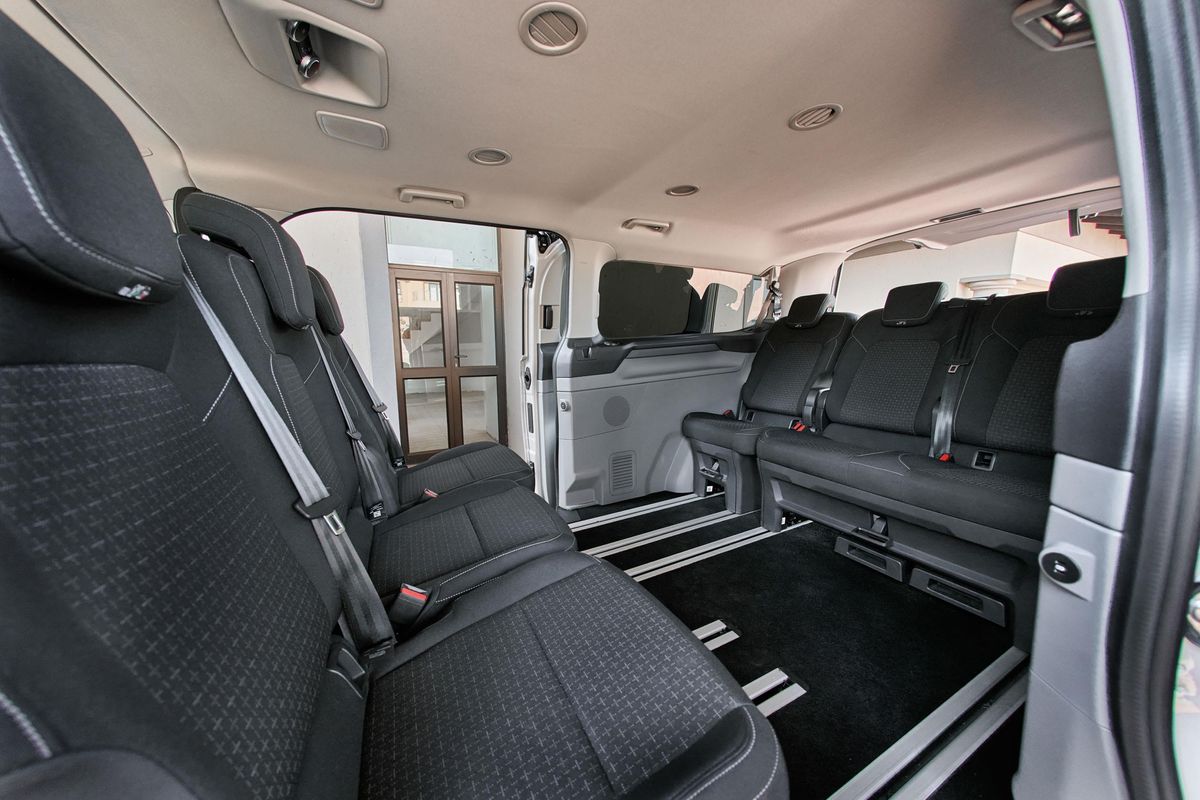
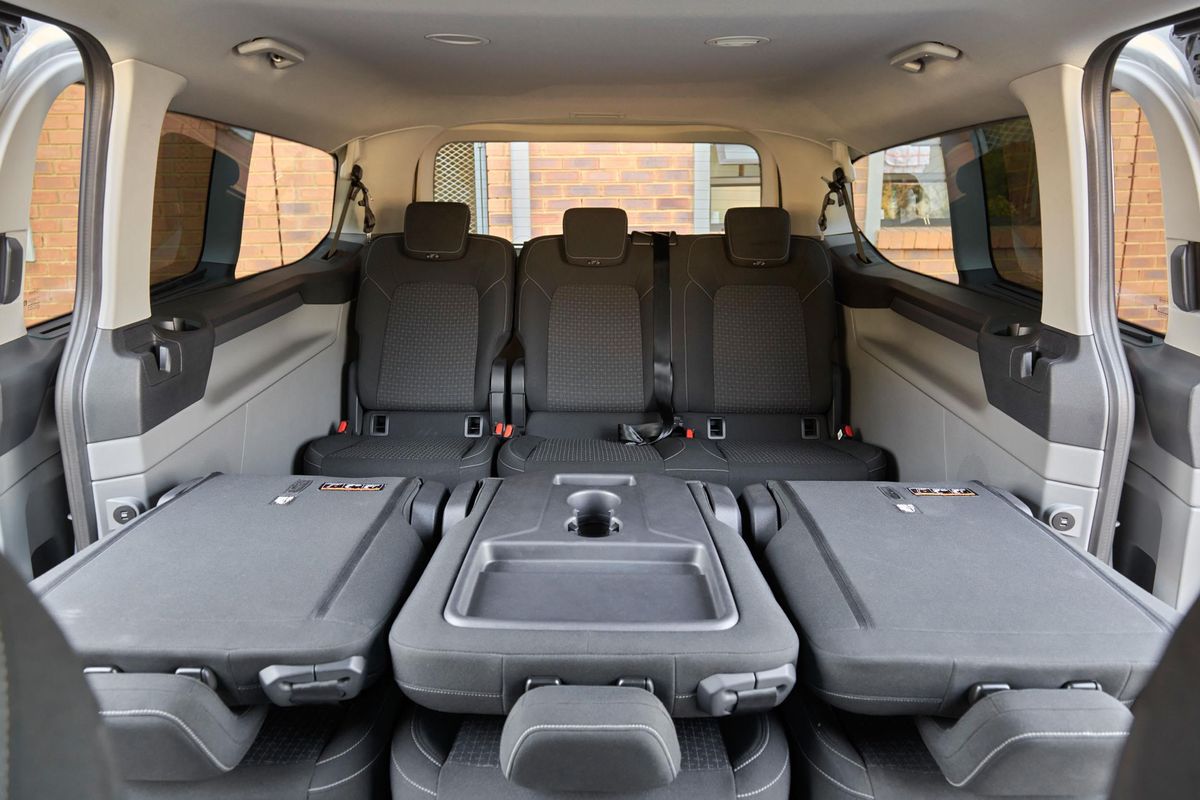
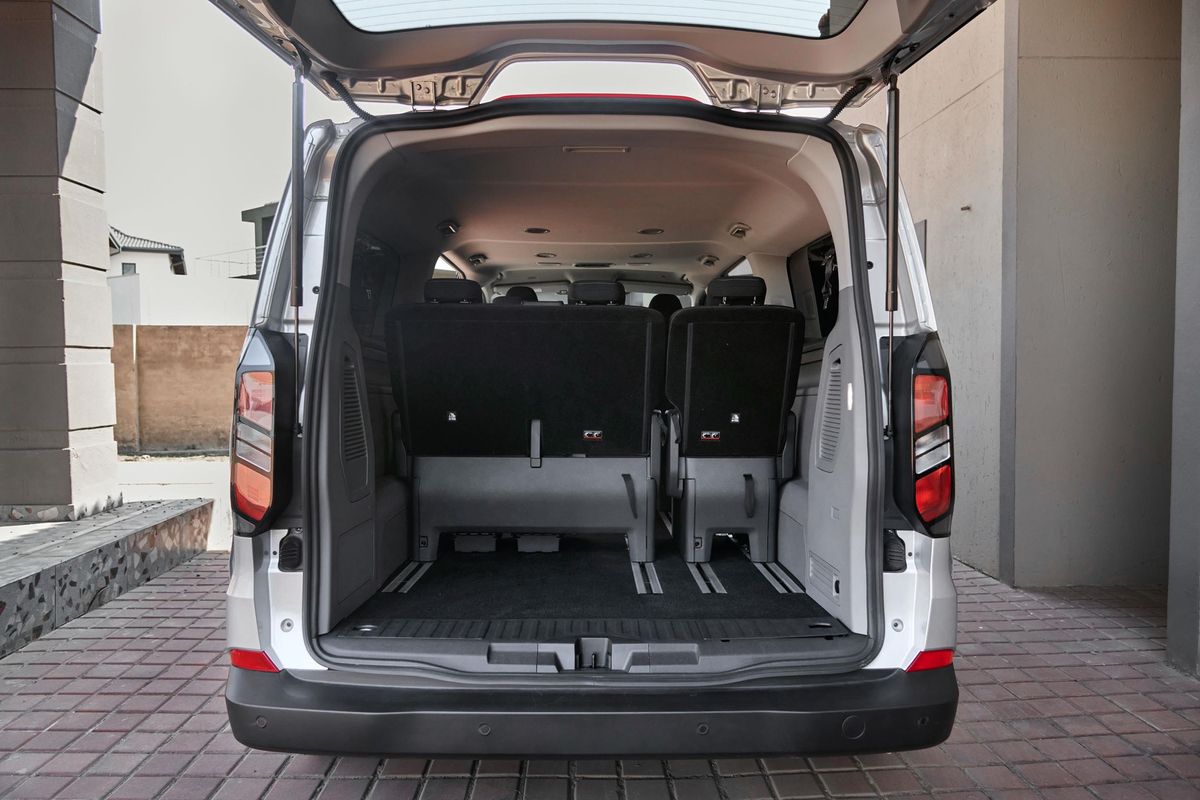
Configured as standard with 3 rows of slideable, 180-degree rotatable (and entirely and easily removable seats), the Ford’s workhorse roots can see it transform from a versatile, formidable people-mover into a load-lugger. With all seats removed, it’ll match the Transit’s ability to gobble a trio of Euro-sized pallets.
Only with the 3rd row of seats slid into the rearmost position, does loading space finally turn into an endangered species. And that’s why the Tourneo Custom comes pre-wired to fit a towbar.
Except that towing should only really be seen as a last resort and sadly – but realistically – as a threat to otherwise tranquil traversing of the countryside in the Tourneo Custom. The single-turbo engine provides quiet and adequate performance, though there’s an occasional reluctance to kick down on uphills.
What’s more, the oblong-shaped tiller actuates direction changes lightly and sharply, and true to form, the pilot’s position is commanding as it is pleasantly panoramic; slightly offset by the looming low ceiling.
Even with an empty payload, it’s never going to trouble the Sporty Spice that is the Hyundai Staria with 130 kW/430 Nm; let alone the Volkswagen Transporter and Caravelle’s 146 kW/450 Nm zombie-stopper.
Yet perhaps the Tourneo Custom’s greatest contestation lies in its blue-collar DNA. Visually, its slab-sided appearance and workaday front end struggle to dispel the bus’ panel-van underpinnings. Neither is it as sumptuous-feeling inside or intriguingly styled as the Staria and there’s an irrefutable power deficit.
How much does the Ford Tourneo Custom cost in SA?
Tourneo Custom 2.0SiT Trend LWB
R1 070 000
Whereas Ford Motor Company of Southern Africa has listed its new-model prices exclusive of service plans for the past few years, the Tourneo Custom 2.0SiT Trend LWB’s price (September 2024) includes a 6-year/90 000 km service plan. However, buyers can pay a lower price if they choose to forego the latter.
Furthermore, the price includes a 4-year/120 000 km warranty, 4-year/unlimited km roadside assistance and a 5-year/unlimited km corrosion warranty. The recommended service interval is 15 000 km or annually, whichever occurs first.
FMCSA announced the Ford Tourneo Custom 2.0SiT Trend LWB’s price about 2 weeks after the launch event. The 8-seater is built in Turkey and the Silverton-based brand hoped for a favourable outcome from the rallying Rand/Euro exchange rate – perhaps it believed it could match the price of the Staria 2.2D Executive 9-seater, which is regarded as the (currently only) Tourneo Custom variant’s main rival.
However, with a 6-year/90 000 km service plan included (as the Hyundai has), the Ford costs a notable R160k more than its rival, even if it offers more features (such as keyless start and heated front seats).
Therefore, the newcomer starts with a disadvantage, even if it is more than capable of holding its own.
And do you know what? There’s nobility in humility: when you can’t quite reach the stars, you only have to shoot to shoot out the lights. Just look at Jeremy Charles Robert Clarkson: he once drove Lambos (while mouthing off) for a living, but today, he is content to drive a tractor… and whisper.
The 8-seater Ford Tourneo Custom people-mover has touched down in South Africa. Here’s how much you can expect to pay, plus what you get for your money.
The new Ford Tourneo Custom is an 8-seater people mover and despite the popularity of big SUVs, the Blue Oval brand reckons its new bus brings comfort and space to the party. Right now, there’s just 1 derivative available, but 2 more derivatives (Sport and Titanium X) are earmarked for introduction at a later stage.
The model is powered by a 2.0-litre 4-cylinder turbocharged diesel engine which produces 100 kW and 360 Nm, and drives the front wheels via an 8-speed automatic transmission. There are selectable drive modes, including a tow function, and the vehicle has a braked trailer rating of up to 2 500 kg.
Unlike its body-on-frame Everest relative, the Tourneo Custom is based on a monocoque with independent rear suspension, so in theory, Ford’s new bus should have better on-road refinement, comfort and stability.
Of course, this vehicle’s most important aspect is its seating configuration’s versatility. The new-gen Ford Tourneo Custom’s seats are lighter than those of its predecessor, so it’s fairly simple to remove the 2nd and 3rd rows to transfer the Blue Oval’s new people-mover into a panel van.
The seats can slide fore/aft on tracks and the 2nd row can be turned around to free up more space and configurations. The new platform is also said to offer a lower floor height, which will make loading easier.
The 2024 Tourneo Custom grade walk
Trend
Dual Load Doors
Signature LED Headlamps
16-inch Alloy Wheels
Dual Zone Electronic Climate Control & Rear Seat Climate Control
Front heated seats
13-inch Landscape Touchscreen with SYNC4
Apple CarPlay & Android Auto
10-Speakers Sound System
12-inch Instrument Cluster with 8-inch Configurable Centre Display
Wireless Charging
Front & Rear USB Charging Points
Front & Rear 12V Charging Socket
Electronic Park Brake
Sensico Steering Wheel & Gear Shifter
Keyless Start
Track-Based, Configurable Seating System
ABS, EBD & EBA
Electronic Stability Program with Traction Control
Hill Launch Assist
Driver Impairment Monitor
Collision Mitigation
Intelligent Speed Assistance
Speed Sign Recognition
Lane Keeping Aid
Roll Over Mitigation
Tyre Pressure Monitoring System
Front & Rear Parking Sensors with Rear Camera
Six airbags
5G FordPass Connect
How much does the Ford Tourneo Custom cost in SA?
Ford Tourneo Custom 2.0SiT Trend LWB
R1 070 000
Whereas Ford Motor Company of Southern Africa has listed its new-model prices exclusive of service plans for the past few years, the Tourneo Custom 2.0SiT Trend LWB’s price (September 2024) includes a 6-year/90 000 km service plan. However, buyers can pay a lower price if they choose to forego the latter.
Furthermore, the price includes a 4-year/120 000 km warranty, 4-year/unlimited km roadside assistance and a 5-year/unlimited km corrosion warranty. The recommended service interval is 15 000 km or annually, whichever occurs first. In addition, over-the-counter parts (OTC) and service parts warranty (SPW) are covered for 2 years/unlimited km.
Customers have the option of purchasing a service or maintenance plan of up to 8 years/165 000 km. The warranty can be extended up to 7 years or 200 000 km, while the roadside assistance can be extended for an additional 1 or 2 years.
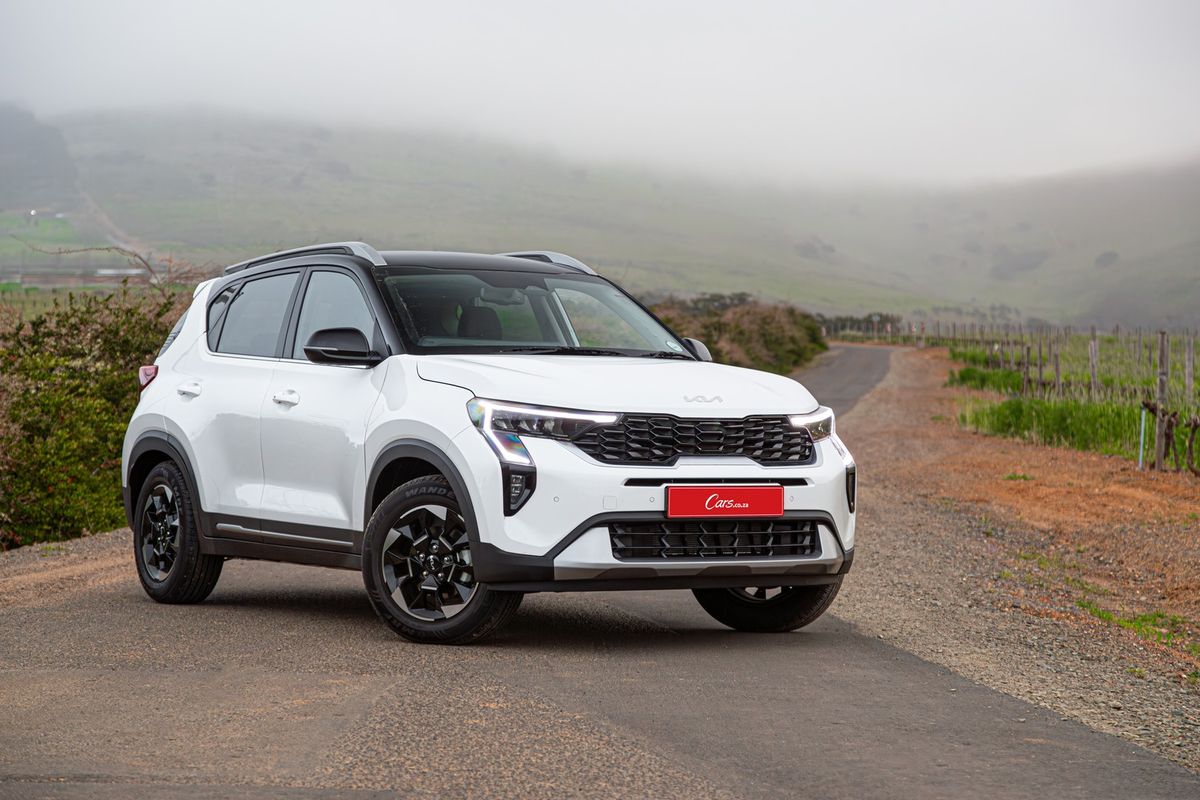
The facelifted Kia Sonet is the entry point to the Korean brand’s SUV line-up. We recently evaluated the flagship 1.5 SX derivative of the updated range to determine whether the Sonet is still one of the best models in the small crossover segment.
If you’re in the market for a Kia Sonet then this review will help you make an informed buying decision!
We like: Overall refinement, ride quality, packed with features, comprehensive after-sales package.
We don’t like: Top-spec variants are a bit pricey, powertrain sounds strained under hard acceleration.
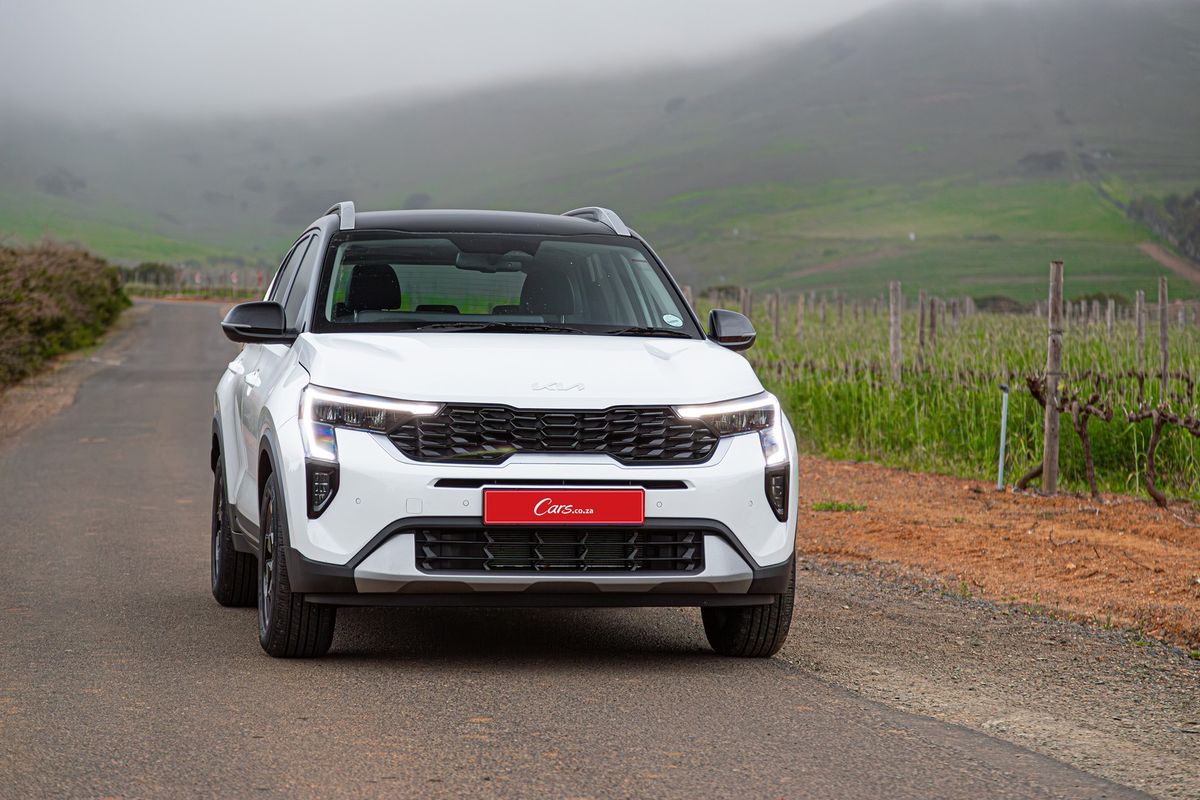
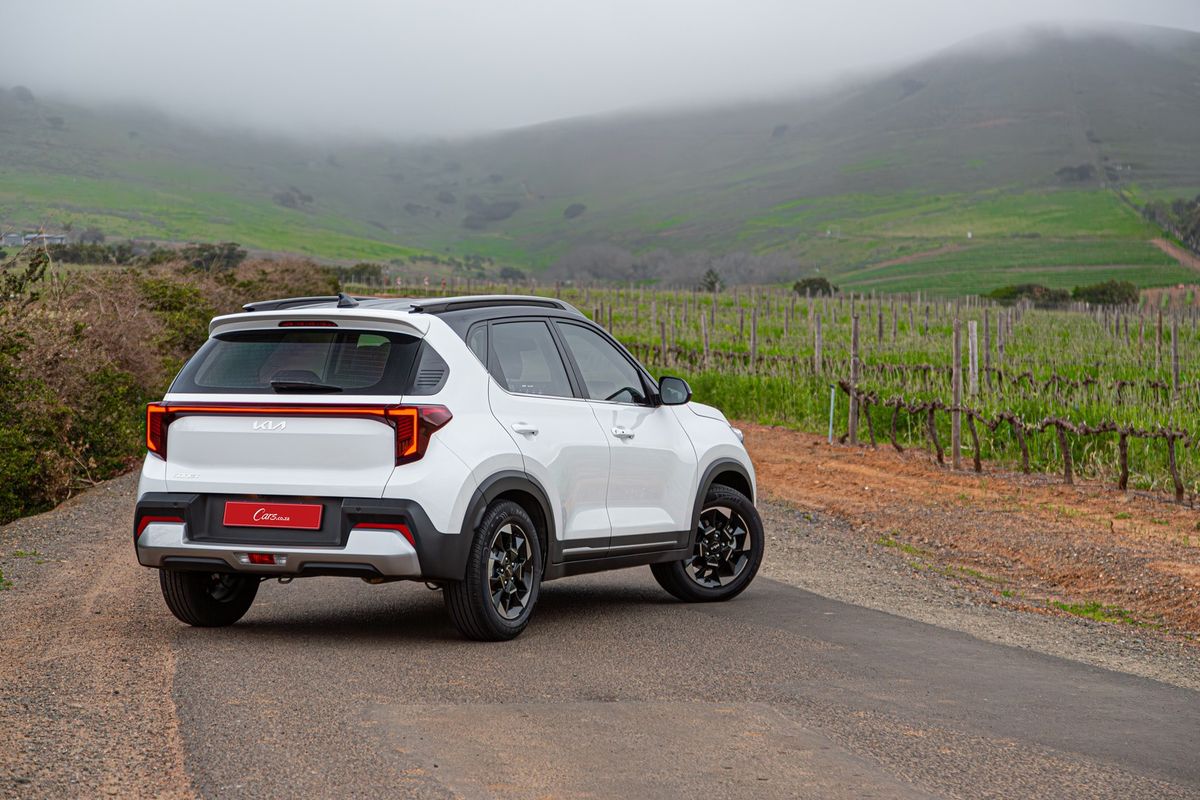
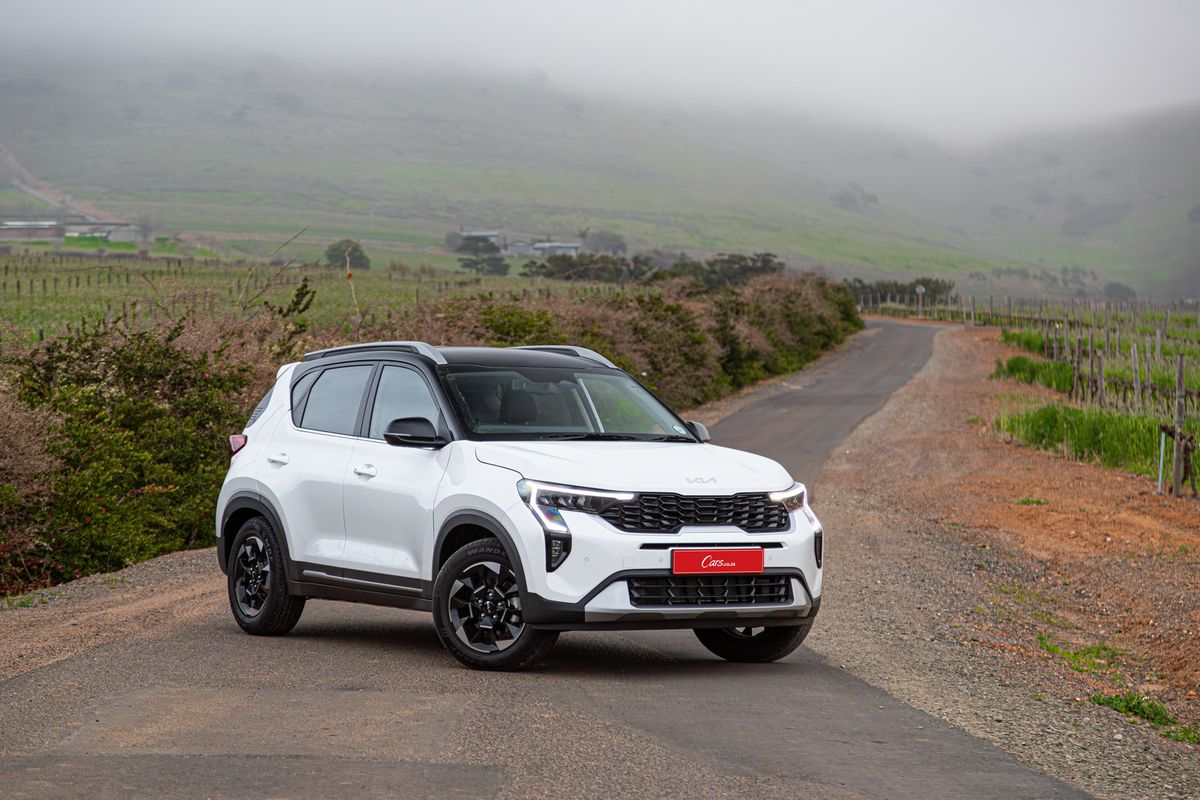
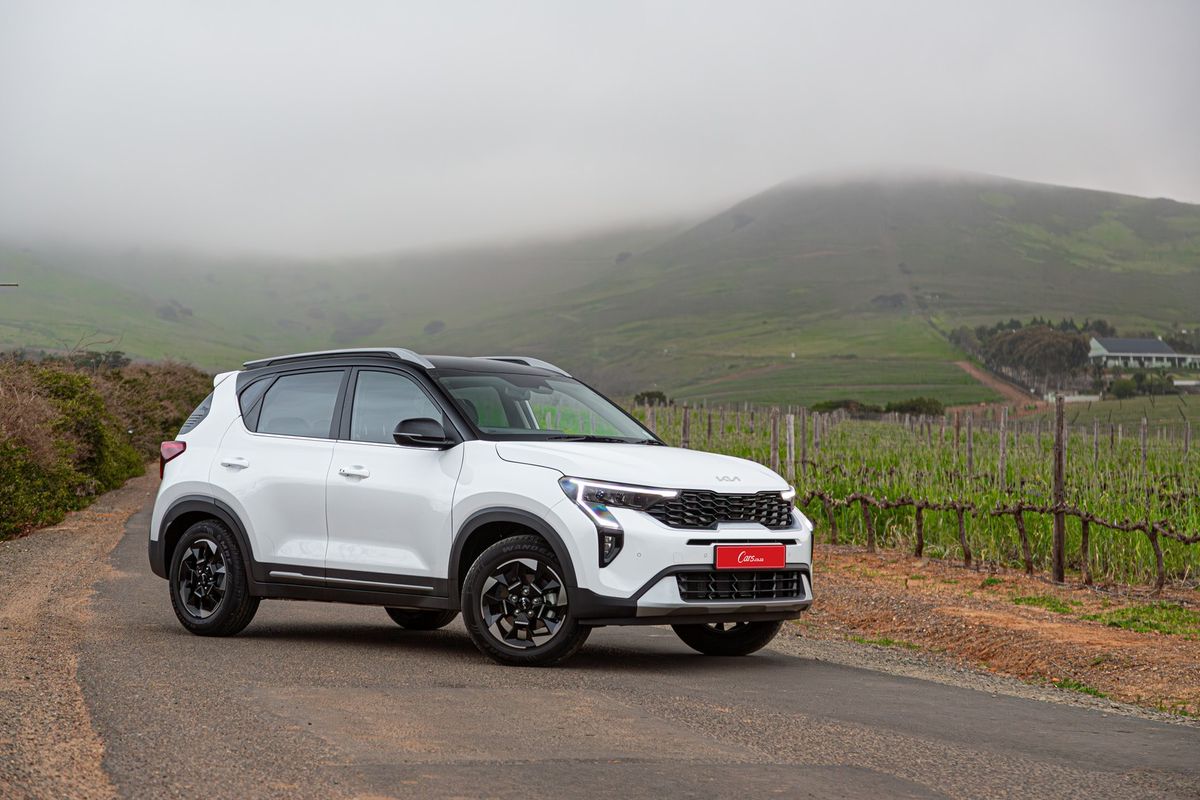
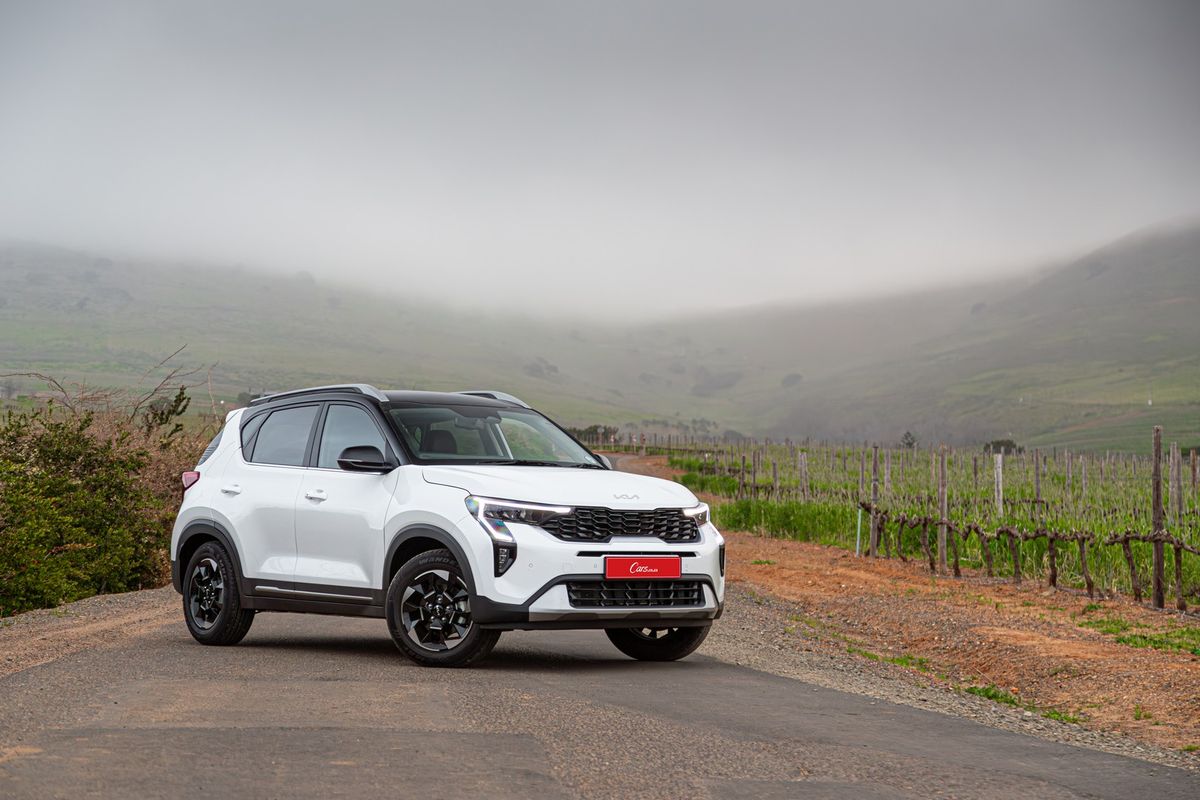
The updated Sonet looks ready to face new rivals in the ultra-competitive crossover segment.
The Kia Sonet’s recent mild upgrade evokes that adage of “if it ain’t broke(n), don’t fix it”, but that doesn’t mean that an accomplished offering can’t be tastefully enhanced, of course.
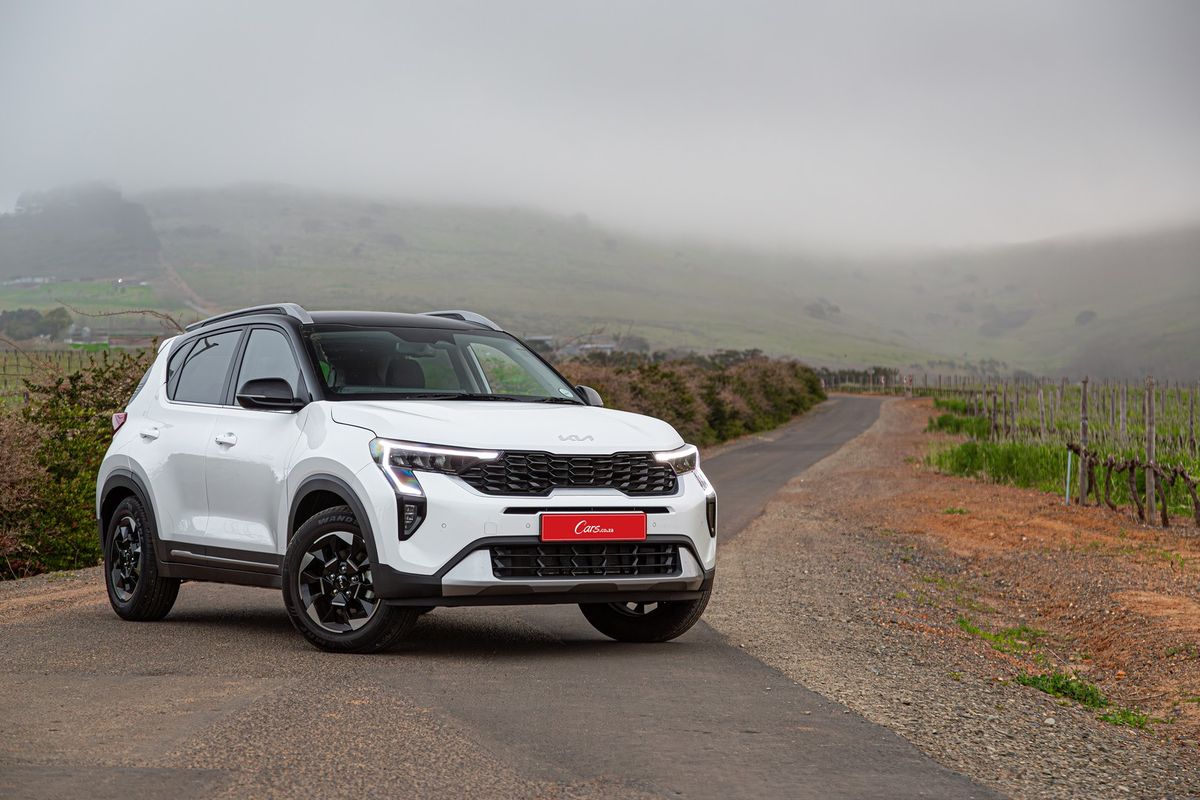
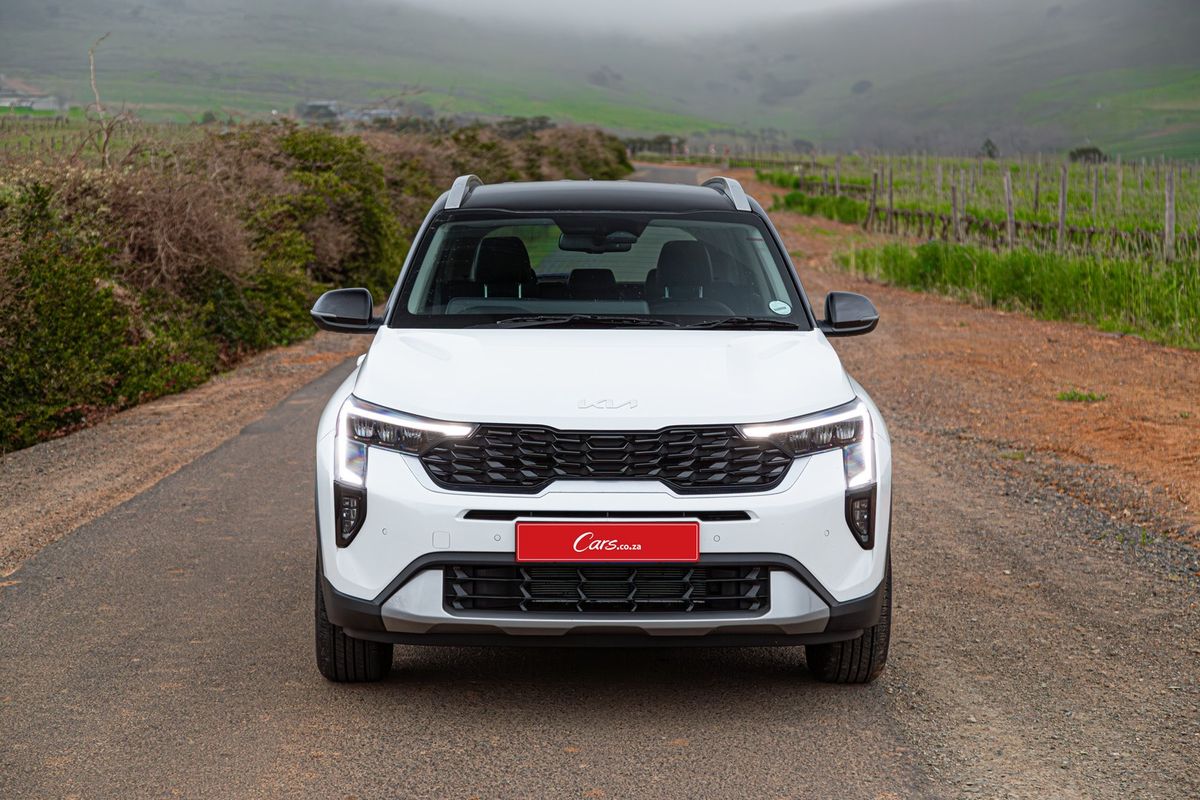
Consider the cosmetic tweaks that have been applied to the Sonet, for example. That revised front-end treatment is striking and bold, replete with oh-so-upmarket daytime running light arrays… it brings the exterior execution of the small crossover closer to those of its Seltos and Sportage siblings.
In terms of the Sonet’s line-up, while the 1.5-litre naturally-aspirated and 1.0-litre turbocharged petrol engines are on duty as before, the range has welcomed a 1.5 SX flagship (tested here). Critically, the 1.5 SX introduces some semi-autonomous safety tech, which wasn’t available in the pre-facelift model.
The top-of-the-range Sonet 1.5 SX is distinguished by LED headlamps and fog lamps.
Which models rival the Sonet? Well, the sub-R500k small crossover/compact family car segment is more competitive than the combatants in a gladiator arena! Yep, we could easily fill this page by listing every contender, but we’ve compared the Kia with relatively new models that are the closest to it, price-wise.
If you’re shopping in this segment and think the Sonet is a bit small, consider its larger Kia Seltos sibling, which was also facelifted in 2024; we suspect that year-old demo units may prove fantastic value.
How does the Kia Sonet facelift fare in terms of…
Performance and Efficiency
Our test unit matched its manufacturer’s claimed 0-100 kph time, but its engine sounded strained under full acceleration.
The 1.5 SX’s powertrain delivers, um, workmanlike performance. With our test equipment hooked up, the 1.5 SX accelerated from zero to 100 kph in 10.31 sec, which matched the manufacturer’s claim.
Suffice it to say, the Kia Sonet facelift performs acceptably by the standards of its segment, but when you need it to accelerate hard, it emits a strained engine note. If you want more punchiness, there’s a 1.0-litre 3-cylinder turbopetrol variant – it’s torquier, but probably won’t be as fuel-efficient as the 1.5.
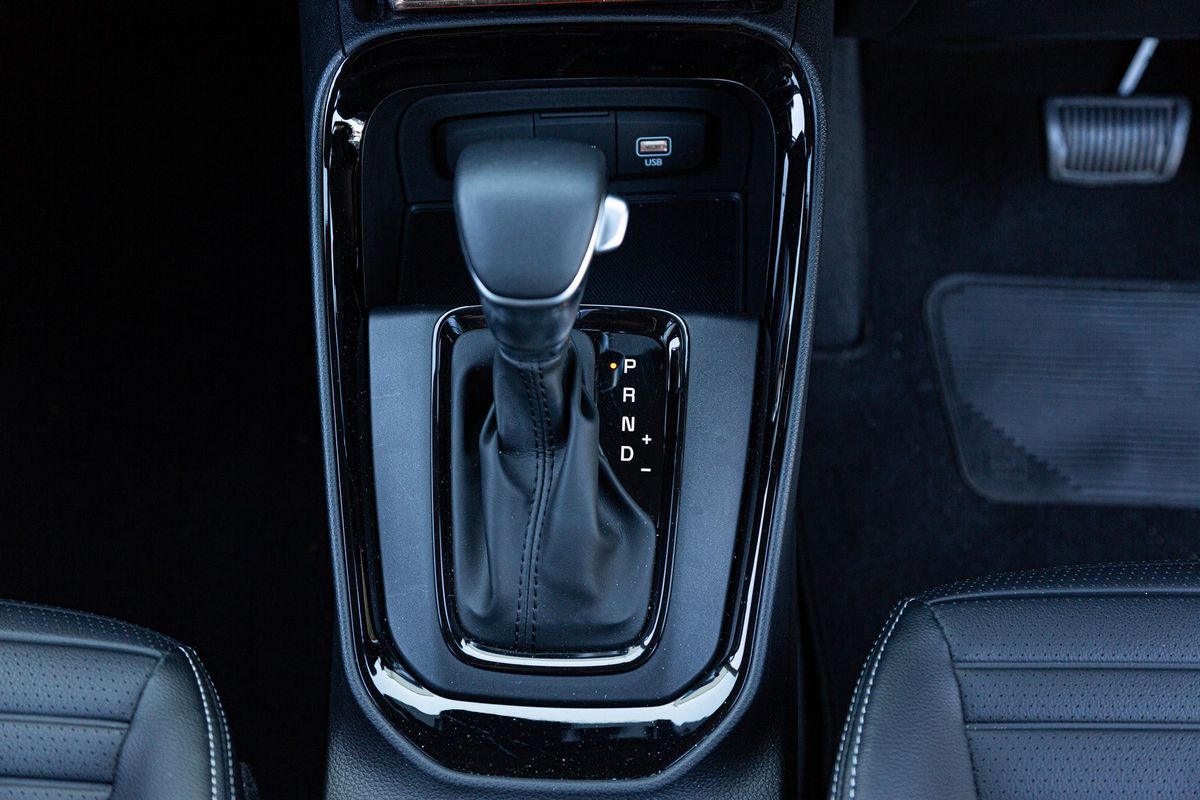
So, as you may have deduced, the Sonet is optimised for ease of use on the daily commute, rather than driver engagement. Befitting its urban runabout role, it comes equipped with a continuously variable automatic transmission (CVT), which facilitates ambling along in congested traffic with the minimum of fuss (and no gear shifts). Provided you’re circumspect with right-foot inputs (through the accelerator pedal), even a conventional auto ‘box will struggle to match the smoothness and efficiency of a CVT.
The Sonet’s continuously variable automatic transmission is well-suited to the daily commute.
The SX trim grade adds a selection of drive modes into the mix, as well as customisable traction control modes, which are said to enhance the Sonet’s (very mild) off-road capabilities. While the Kia’s ground clearance is surprisingly generous (190 mm), it’s still a front-wheel-drive vehicle with limited ability to traverse low-grip surfaces, so be mindful: those off-road modes can be beneficial, but only up to a point.
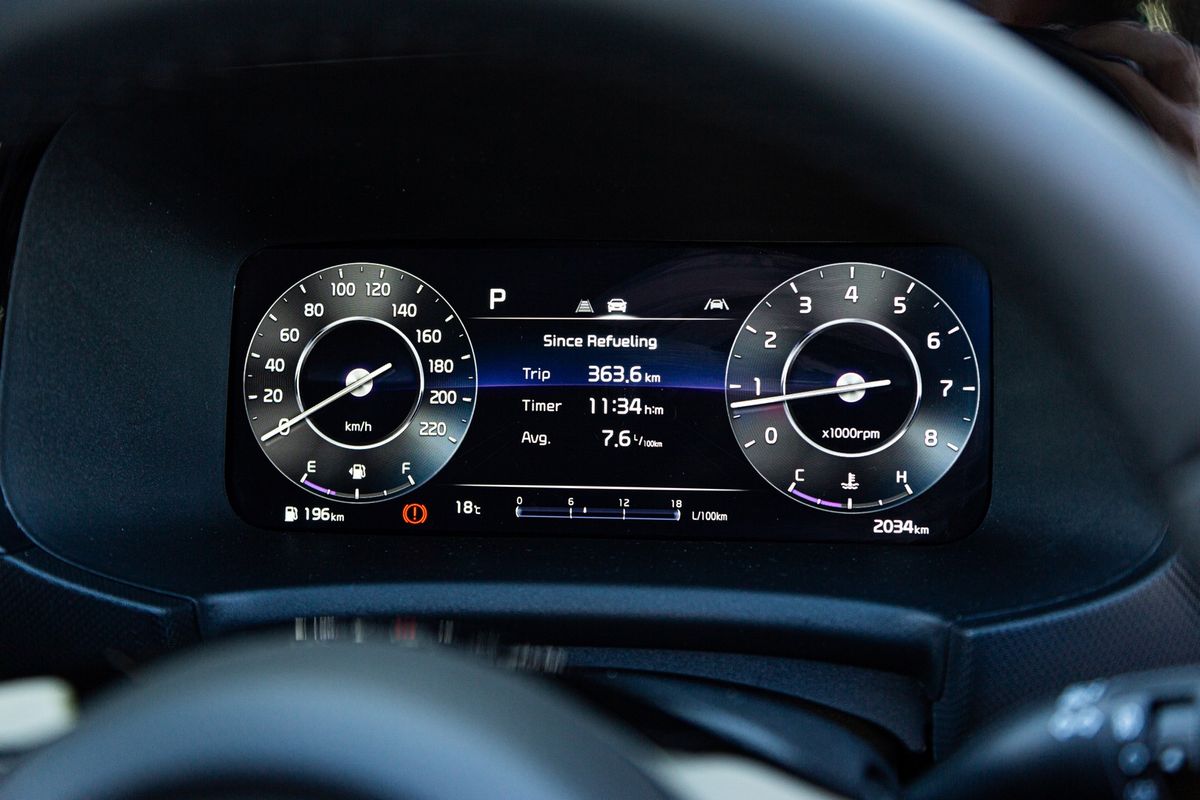
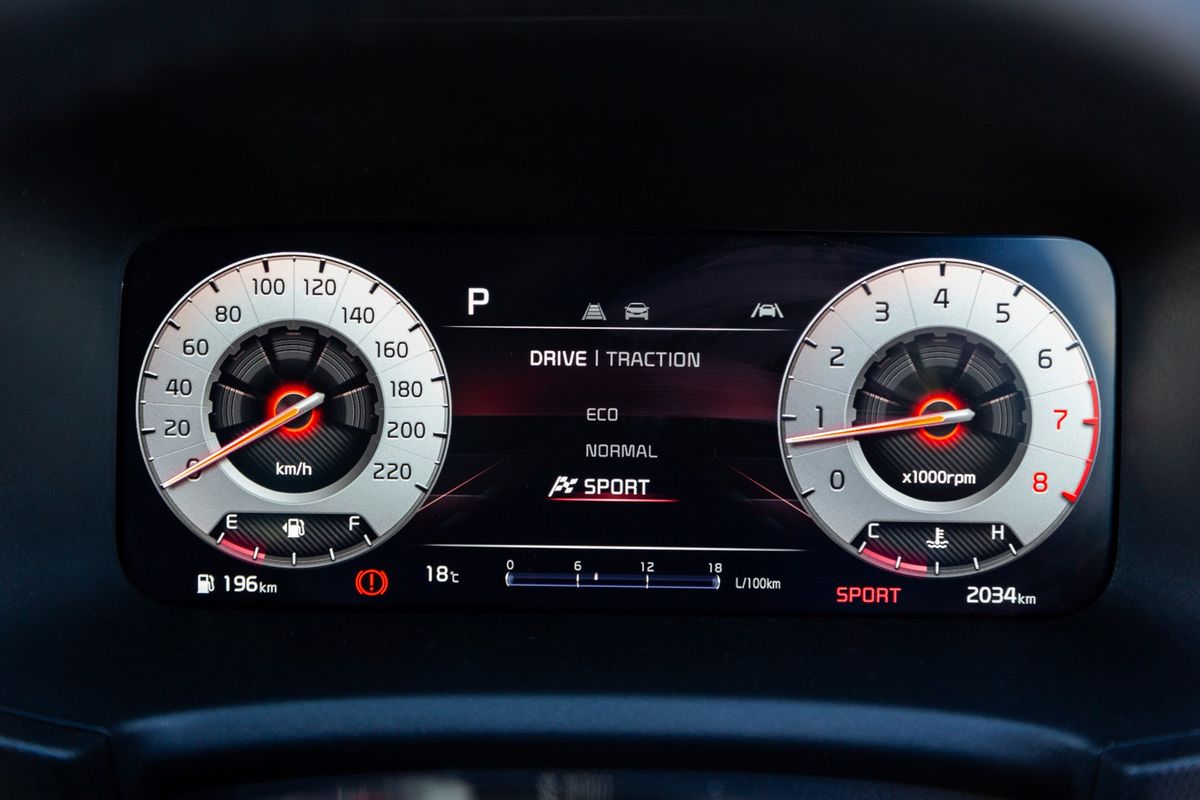
To us, the drive modes are of far more interest! Normal is self-explanatory, Sport tweaks the powertrain’s responses to facilitate more eager performance, while Eco dials the car’s settings back (to an extent) to optimise fuel efficiency. Each mode has a corresponding display theme on the digital instrument cluster.
Sport mode loads these great-looking dials.
Considering that the claimed consumption figure of the Sonet 1.5 SX is 6.2 L/100 km, you should be able to achieve a range of around 700 km from its 45-litre fuel tank (from full to empty).
That said, the stated figure of 6.2 L/100 km might be a little too ambitious; after we reviewed the test unit for 10 days, it showed a combined consumption figure of 7.6 L/100 km. To be fair, some of our testers are notoriously lead-footed, so we expect that 7 L/100 km is possible if adopt a more measured driving style.
We’d bet you’d be able to achieve a lower fuel consumption than we did!
Design, Features and Practicality
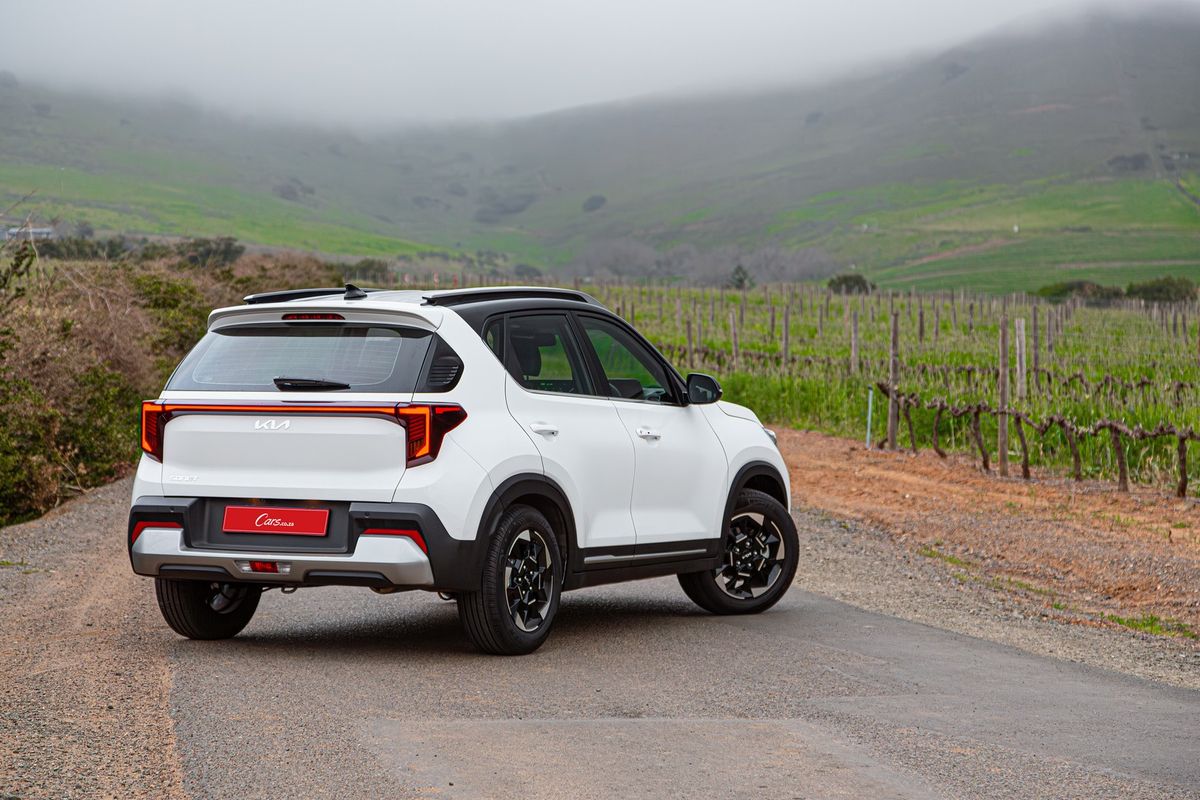
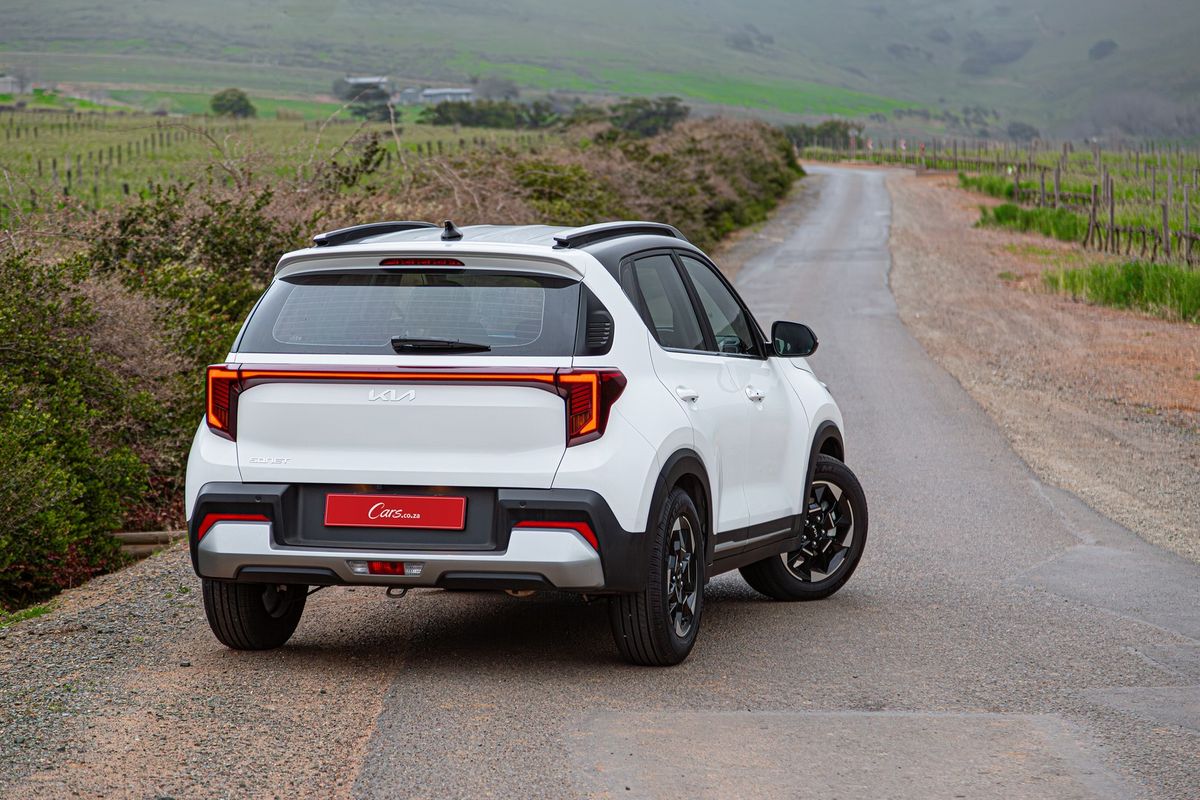
We’ve already made mention of the Kia Sonet facelifted’s decidedly smart appearance and we love the new-look rear light bar, which makes quite the style statement in low light conditions.
The addition of a rear LED bar has made the facelifted Kia Sonet’s rear appearance more distinctive.
When it comes to cabin space, most small crossover models can’t genuinely seat 4 adults in comfort, but the Sonet manages it… well, just about.
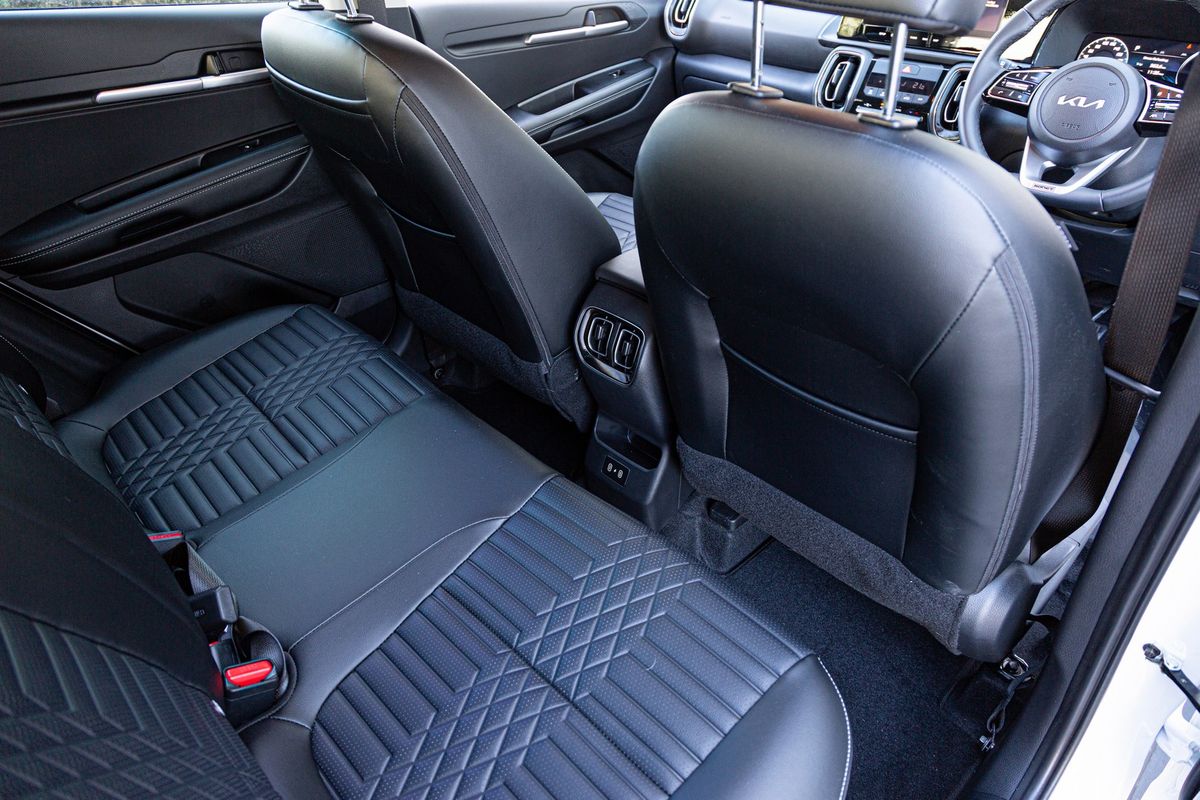
Look, the rear bench is best suited to accommodate children, but thanks to the Kia’s 2 500-mm wheelbase, there’s sufficient leg- and headroom available to seat a pair of average-sized adults on shorter trips. For convenience, a pair of ventilation outlets and two USB charging ports are provided.
There is more rear leg- and headroom available than you expect, but the rear bench is still best suited to seating children.
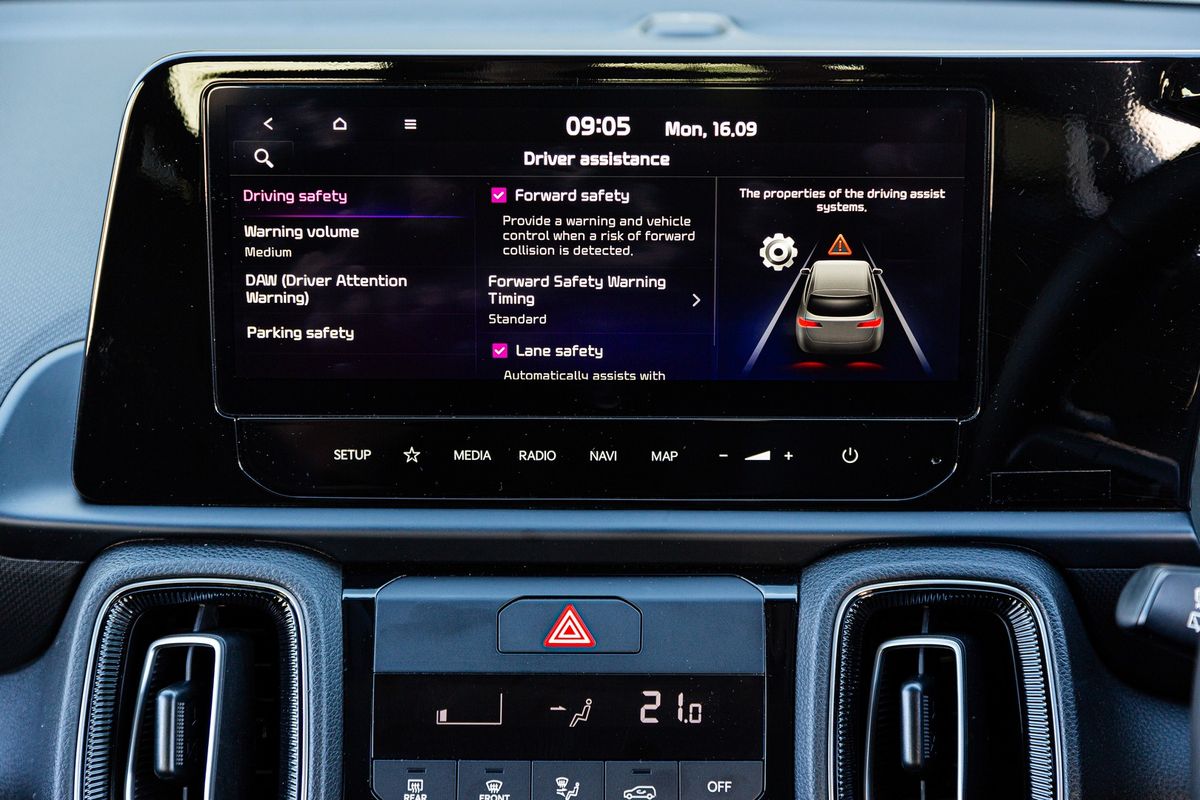
There’s no skimping on safety features – as all derivatives of the Kia Sonet facelift come equipped with 2 airbags, ABS, EBD and brake assist, as well as electronic stability control. If you opt for one of the higher-specced derivatives, your airbag count goes up to 6 and, in the case of the flagship variant, driver-assistance technology, including lane keep and -follow assist and forward-collision avoidance.
Is the driver-assistance tech a must-have, though? We’d say that, given the high prevalence of bumper bashes (some call them fender benders) and collisions with pedestrians on our national road network, it would be a boon if your vehicle could automatically stop to prevent a collision with a person or object.
As opposed to the 1.5 EX+, the 1.5 SX comes with lane-keeping assist and autonomous emergency braking.
At this price point of almost R500 000 (yes, even small cars have become quite pricey), a Sonet 1.5 SX should have a comprehensive equipment list and to a degree, it does.
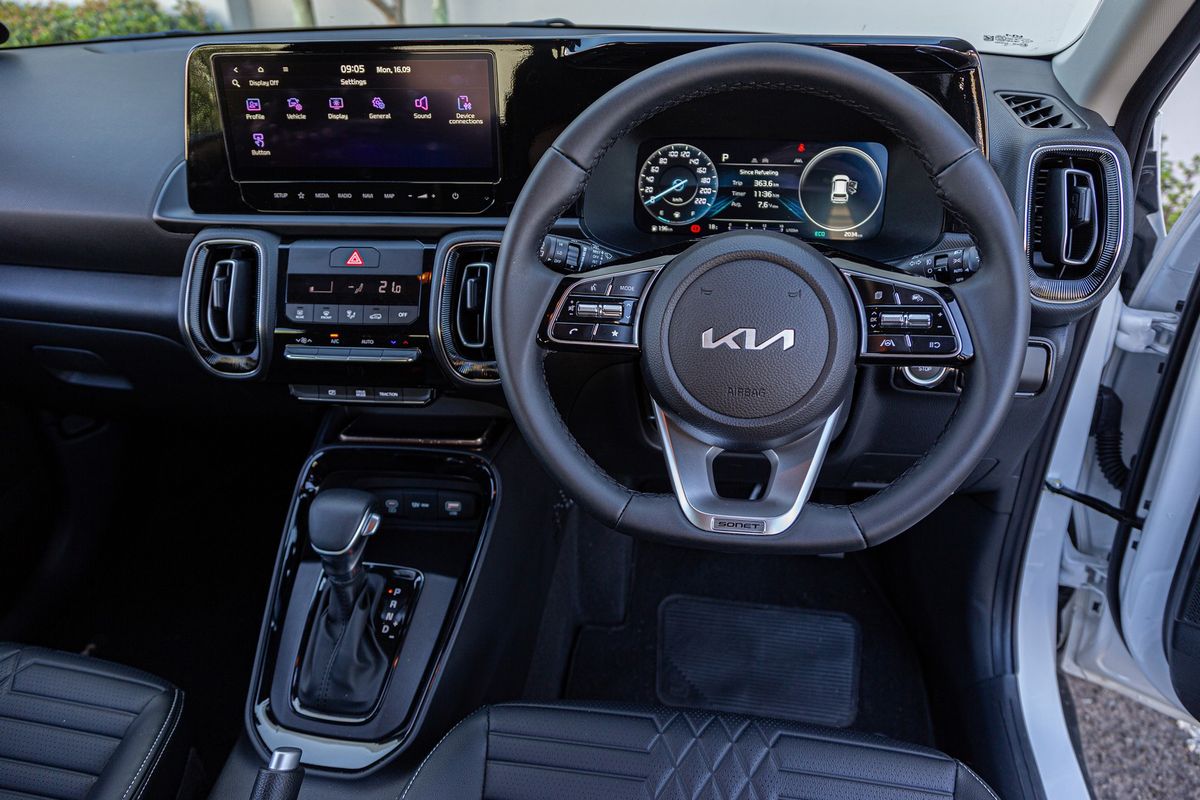
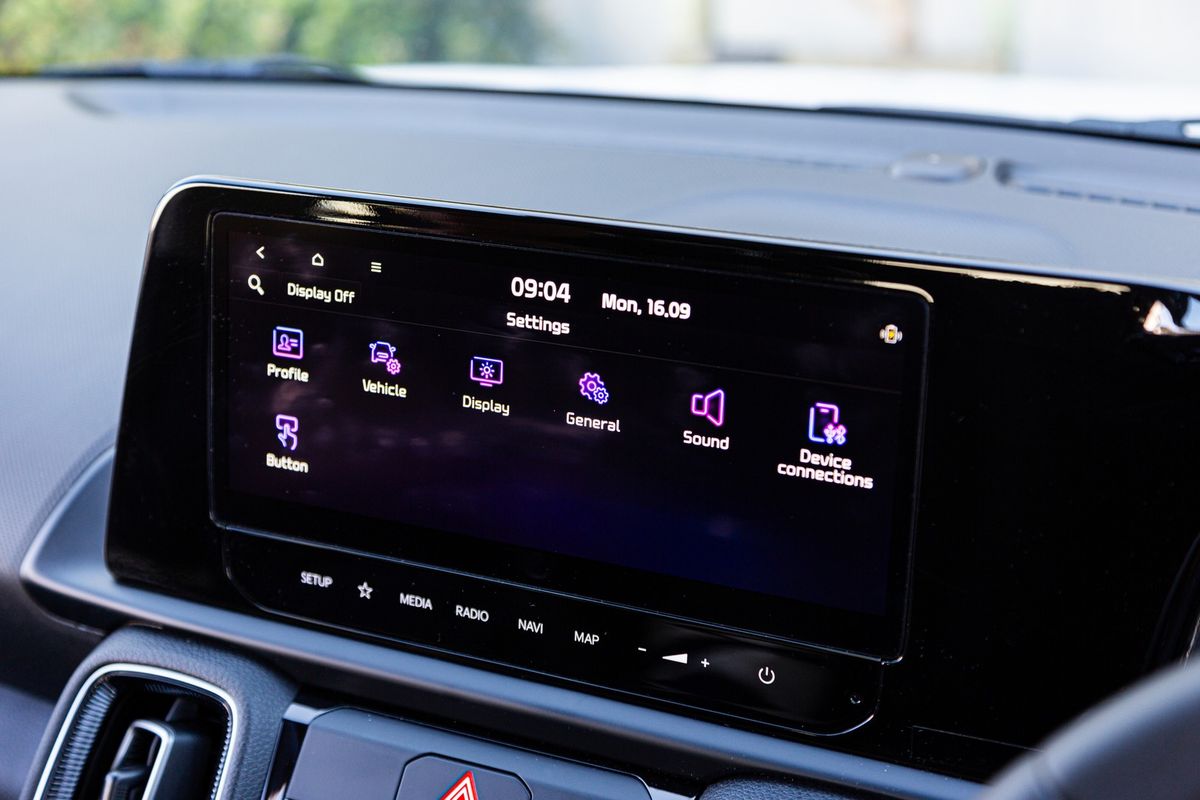
It’s fashionable for a small crossover to have a black panel that incorporates a digital instrument cluster and the infotainment system’s touchscreen. Tick! Also, the ability to connect your smartphone (via Apple CarPlay or Android Auto) gives you the option to utilise navigation- and music streaming apps. Tick!
The faux leather trim features rather decorative patterning.
The Sonet 1.5 SX’s specification includes features such as LED headlamps and -fog lamps, push-button start, a wireless charging pad, drive modes, as well as the aforementioned added safety tech. Does this mean the rest of the range is meagerly equipped? Not at all, the EX+ derivative (just below the SX) offers features such as climate control, alloy wheels, leather-like upholstery and also has those digital displays.
Even the base-spec LX comes with nice-to-haves such as a reverse-view camera, wireless Apple CarPlay and so on. Perhaps the EX+ offers better value, considering that it costs R30k less than the SX?
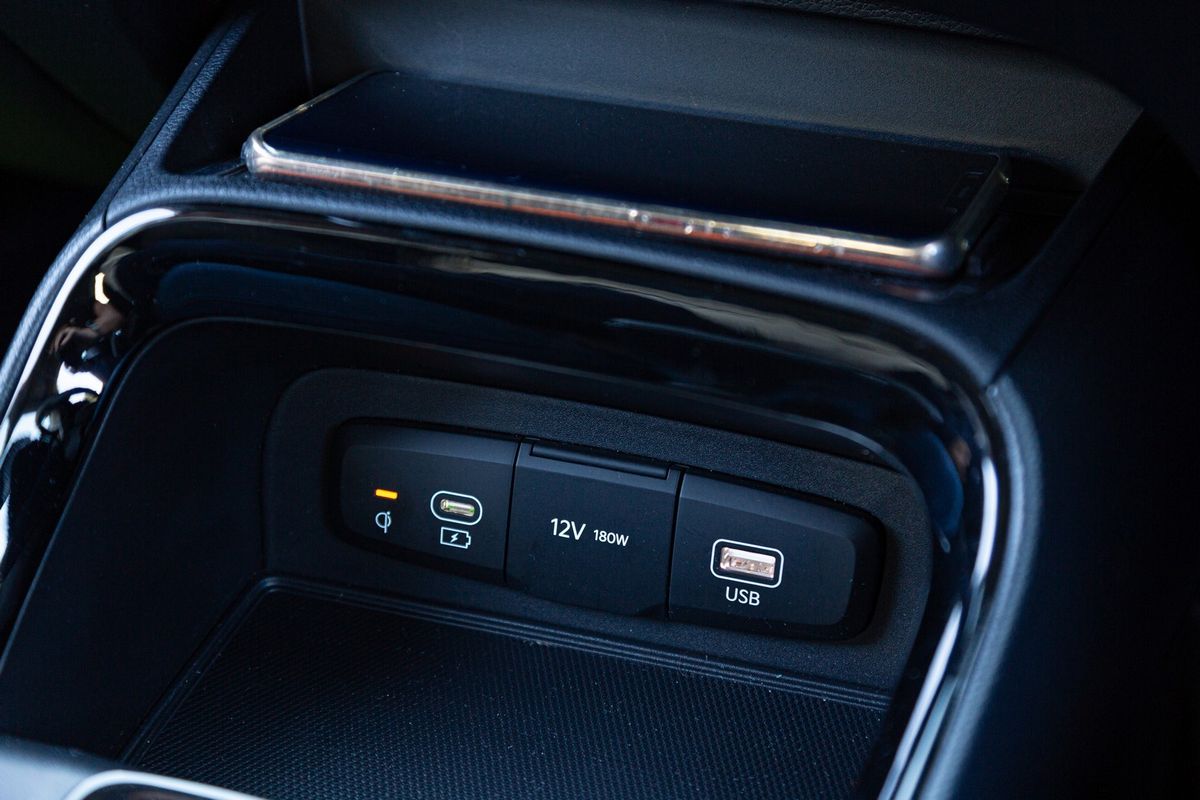
All the connectivity bases are covered with USB-A, USB-C and a wireless charging pad.
Ride and Handling
It may be “Kia’s most affordable SUV”, but there’s nothing cheap about the Sonet’s on-road demeanour. Its more affordable rivals cannot match the Sonet’s lofty level of refinement – which is understandable, given their lower price tags – but in the Kia’s case, you pay a bit more money, but also get “more car”.
The Kia Sonet facelift’s interior is well-executed and -finished.
With 16-inch alloys, wrapped in generously sidewalled 215/60 tyres, only major road undulations and tree-root ripples are likely to upset the Sonet’s pliant ride quality/on-road balance. To reiterate, there’s 190 mm of ground clearance on offer, so you can traverse average-quality dirt roads with confidence.
But the steering setup impressed us even more. It’s light enough to make the Kia feel very manoeuvrable, which is great when you need to parallel park into ridiculously small spots, yet it offers sufficient feel to create the impression you’re behind the ‘wheel of a car that’s more upmarket than an entry-level SUV.
Price and After-sales support
The Sonet 1.5 SX retails for R484 995 (August 2025), which includes a 5-year/unlimited km warranty, 5 years’ roadside assistance and a 3-year/45 000 km service plan. A variety of plan-extension options are available at extra cost. See also:New Kia Sonet Specs & Prices in South Africa
They’ve done it again! With well-thought-out derivatives loaded with tech and safety features, the Kia Sonet facelift caters for a wide spectrum of buyers. We’ll leave the powertrain choice up to you, but the 1.5 does offer the widest choice: it’s available in all 4 trim grades, from LX to SX. The 1.5 SX makes quite the statement, but you won’t feel like you’re skimping too much by opting for an EX+ or EX.
Value plays a critical role in vehicle-buying decisions and while we adore the Sonet for its relatively lofty sophistication and refinement, it is priced in a higher bracket than many of its immediate rivals. Bear in mind, however, Kia’s warranty is comprehensive but Kia has cut its service plan down from 4-year/60 000 km to the current 3-year / 45 000 km.
Should you consider the Kia Sonet facelift? Yes, certainly. It’s easy to be distracted by numerous new entries into the market, some of which offer extraordinarily long standard specifications at astonishingly low prices. Having said that, those vehicles still have room for improvement (in some aspects) and their brands (most of which hail from China) are still new to the market and, as yet, unproven.
Legacy brands, such as Kia, need to be wary of tougher competition, but the Sonet aptly demonstrates their response to new market entrants: Offer accomplished products with stronger value propositions.
A: The Kia Sonet is a compact crossover vehicle in the South African market. It was first launched in 2021 and received a mid-life upgrade in 2024, introducing new features and an updated design.
Q: What engine options are available for the Kia Sonet?
A: The Kia Sonet is offered with two engine options: a 1.5-liter naturally-aspirated petrol engine and a 1.0-liter, 3-cylinder turbopetrol engine. The turbocharged version is recommended for those who need more power, especially at higher altitudes.
Q: What are the key features of the 2024 Kia Sonet?
A: The 2024 facelift introduced several tech features, including wireless Android Auto/Apple CarPlay, Bluetooth with voice recognition, and a reverse camera. The top-tier SX grade also comes with an active safety suite.
Q: What are the disadvantages of the Kia Sonet?
A: According to the article, some disadvantages include a low airbag count (only two) in the entry-level models, a significant power loss in the 1.5-liter engine at high altitudes, and the high price of the flagship SX model. The service plan was also reduced from 4 years/60,000 km to 3 years/45,000 km.
Q: Which Kia Sonet model is the best to buy?
A: The article recommends the Sonet 1.5 EX+ model as the best balance of specification and price.
Ford’s CEO says producing a right-hand-drive Bronco is “worth a try”, suggesting the retro-styled SUV – which shares its platform with the Ranger – could finally go global…
After a 25-year pause, the Ford Bronco nameplate was revived in 2020, though the long-awaited 6th generation of this off-roading SUV went into production exclusively in left-hand-drive form. But that could finally be changing, based on fresh comments from the man at the very helm of the Blue Oval brand.
Yes, Ford CEO Jim Farley recently suggested to Car UK that the Bronco – which shares its platform with the Ranger bakkie and Everest adventure SUV – could finally be built in right-hooker guise, following in the footsteps of the Mustang.
Could the Bronco, like the Mustang, go global?
“The big Bronco will do right-hand drive and I think it’s worth a try,” Farley told the publication, seemingly suggesting the retro-styled ladder-frame SUV could be pitched against the likes of the unibody Defender in the United Kingdom.
Making reference to the Dearborn-based firm’s sale of Land Rover (and Jaguar) to Indian company Tata Motors back in 2008, Farley added: “We had a break-up with a marriage there. The next step is to go dating again, right?”.
The U725-gen Bronco was revealed in 2020 in both 2- and 4-door guise.
The 62-year-old executive explained that “Ford never funded enthusiast products”, adding that “they were always a side business” but “now with Mustang, Raptor and Bronco, they’re our business”.
Back in 2020 after the vehicle’s reveal, Bronco chief designer Paul Wraith told Ford Authority that though the company had “optimised” the SUV for left-hand drive, it was open to doing “all sorts of things in the future”. He furthermore pointed out that since the Bronco was effectively a Ranger underneath, the platform “is capable of right-hand drive”.
The SUV effectively uses Ranger underpinnings.
While Ford builds the Bronco alongside the Ranger at its Michigan facility in the United States, Jiangling Ford Auto – the American firm’s joint venture with Jiangling Motors in China – recently started producing Chinese-spec units at its Nanchang factory.
If the right-hand-drive Bronco project were indeed to go ahead, we’d speculate that this plant would be the more likely of the 2 to be tasked with production for markets such as the United Kingdom, Australia and potentially even South Africa.
The flagship Raptor derivative employs the twin-turbo 3.0-litre V6 from the Ranger Raptor.
So, should the project receive the green light, will we finally see the Bronco in South Africa? Well, only time will tell, though it’s worth noting Ford still holds the Bronco trademark locally. First registered back in 1965, the company has faithfully renewed this trademark since, never allowing it to expire.
As a reminder, the Bronco is available in the United States in both 2- and 4-door guise, offered exclusively in turbocharged petrol form. Engine options include the brand’s 2.3-litre 4-cylinder unit, a 2.7-litre V6 motor and a 3.0-litre V6 lump, with the latter reserved for the Bronco Raptor (a close relative of the Raptor-based Ranger). China, meanwhile, currently builds only the 4-door version with the 4-cylinder engine.