Ford’s pending application to trademark the Ranger “Bushtrak” badge in South Africa potentially hints at a mysterious new (local?) version of the Silverton-built bakkie…
Ford has a habit of punctuating its Silverton-built Ranger bakkie line-up with special derivatives (think Tremor, Wildtrak X and the like). Now, based on trademark filings unearthed by Cars.co.za, another new derivative may well be on the cards for South Africa: the Ranger Bushtrak.
Yes, the Blue Oval brand filed to trademark both the “Bushtrak” and “Ranger Bushtrak” badges in South Africa back in December 2021. The former was officially registered in September 2023, while the latter is currently pending registration (though it should be registered within the next few months).
Ford SA holds several other Ranger-specific trademarks locally, including “Wildtrak X”.
Of course, Ford already holds the rights to the “Wildtrak” and “Wildtrak X” nameplates in Mzansi, along with “Wolftrak” (registered in September 2023, though not yet used locally, despite featuring on the previous-gen Ranger in certain overseas markets). The company also applied to trademark “Stormtrak” and “Thunder” – badges likewise used on the P375-gen model – in South Africa, though these have technically yet to be officially registered.
What makes the “Ranger Bushtrak” filing particularly interestingly, however, is that we can find no record of applications to trademark this badge in any country other than South Africa. That’s not the case with the other nameplates mentioned above, which are all used (or once were used) in various other markets around the world.
Ford SA seemingly already has its off-road bases covered by the Tremor (and Wildtrak X).
So, could this be a new Ranger derivative developed specifically for South Africa? If so, we’d speculate the “Bushtrak” name could point to a variant endowed with enhanced off-road capabilities, though that base is technically already well covered by the Tremor and Wildtrak X, both of which feature full-time 4×4, Bilstein position-sensitive dampers, a wider track, steel underbody protection and all-terrain tyres.
Of course, we should keep in mind that Ford’s “Bushtrak” trademark filing is by no means confirmation that it will indeed use this badge in Mzansi, with several potential scenarios at play here. For instance, the name could perhaps relate to a shelved project based on the previous-gen Ranger or the Dearborn-based firm may simply be protecting a badge for which it has no specific, immediate plans.
So, perhaps the Bushtrak nameplate will never see the light of day – here in South Africa or indeed anywhere in the world. Or perhaps Ford will roll out a special-edition Ranger wearing this badge in the not-too-distant future. We’ll just have to wait and see…
The new Mercedes-AMG C63 S has come to market but can its 4-cylinder mild-hybrid powertrain compete against the instantaneous acceleration of the new Volvo EX30 electric car? We lined these 2 cars up on the drag strip to find answers! Watch the video!
Today’s drag race is a battle between EV and petrol power (augmented by battery power).
Can the Mercedes-AMG put down all 500 kW and 1020 Nm of torque without wheel-spinning and losing time on the launch? The Volvo makes do with just 315 kW and 543 Nm but it’s lighter and able to launch like a rocket. Let’s see who wins this battle of EV vs ICE.
Road accidents and unforeseen vehicular mishaps can leave you with a damaged car, but if you have comprehensive insurance cover, dealing with car insurance claims and the repair process should not be an uphill battle. Here’s a step-by-step guide.
This article, brought to you by Budget Insurance, explains how claims and the repair process work so that you can gain the knowledge and understand the support that you need to get back on the road.
What does Comprehensive Car Insurance mean?
Your car is one of your most valuable assets. If you can afford to take out comprehensive insurance, it’s the best protection you can give your vehicle, because apart from covering damage you may cause to a 3rd party’s car or property, the policy provides the most extensive insurance cover against accidents and mishaps. It covers repairs or replacement of your vehicle if it’s damaged or stolen, regardless of fault.
Whereas 3rd-party car insurance (usually the most affordable type of policy) covers damage you may accidentally cause to someone else’s vehicle or property, 3rd-party, fire and theft insurance also covers your car being stolen or damaged by fire, BUT it doesn’t cover your car against accident damage.
Comprehensive car insurance has you covered across virtually every imaginable scenario – from being stolen to being damaged by a falling tree branch, dinged by a shopping trolley, vandalised etc.
It does cost more than 3rd-party, fire and theft insurance, but it can be well worth it. Having this level of coverage can help you avoid expensive out-of-pocket repairs and get your car back on the road quickly.
Understanding insurance claims and the repair process
Unlike having your car serviced or the tyres changed, you hopefully shouldn’t have to submit a car insurance claim regularly. Because it is often unknown territory for many, the process of claiming and having your vehicle repaired can seem very daunting. However, knowing the steps to follow can help you remain calm after an accident and avoid unnecessary delays in getting your car repaired.
Safety first: Your priority is the well-being of yourself and others involved. If anyone is injured in a car accident, call emergency services immediately. Secure the scene as best as possible using hazard lights, warning triangles, etc.
Exchange information: If other parties are involved, get their names, contact details, insurance information and number plate info. This is crucial for your insurance claim.
Document the scene: Take photographs of the damage to your car, the position of any involved vehicles and any relevant aspects of the scene (skid marks, road conditions, etc). The more evidence you have, the easier it will be to build a strong claim and get your car repaired or replaced.
Gather witness information: If there are witnesses to the incident, obtain their contact information, as their statements may help support your car insurance claim.
Get a police report: If the police attended the scene, obtain a copy of their report and the Accident Report (AR) number. If the police did not attend the scene, you must still report the accident to them within 24 hours.
Be thorough and honest: Provide a detailed, accurate account of the incident and the full extent of damages to your car. Your insurer needs this information to process your claim fairly.
Understand the claims adjuster’s role: Your claims adjuster investigates your case and works to determine the extent of your insurer’s responsibility. Be prepared to answer questions and provide any additional information requested.
Visit approved repairers: Many insurers have a network of approved repair shops that offer quality workmanship and seamless communication with your insurer. These streamline the process and may minimise additional costs to you.
Get multiple quotes: Get at least 2 or 3 quotes for the repair work. This helps you compare prices and ensure fair costs. Try to negotiate with the repairer if their quote seems unreasonable.
Don’t skip any of these steps and rush to have your vehicle repaired. Ask your insurer for clarification on any part of the insurance claims and repair process that you don’t understand.
Understanding the role of insurance in repair costs
Your insurer plays a crucial role in managing the costs associated with repairing your vehicle after a covered event. Here’s how this typically works:
Excess: This is an agreed-upon amount you pay towards the repair costs, with your insurer covering the rest. The excess amount depends on your policy and the nature of the claim and is usually included in your policy documents. There are different types of excess, such as a flat amount or a percentage of the total claim.
Deductibles: In some cases, insurers also apply a deductible in addition to your excess. This is another amount, separate from the excess, that you pay towards repairs.
Coverage limits: It’s important to understand that comprehensive car insurance has limits. This means it covers repairs up to a certain amount, usually the market value of your vehicle. If repair costs exceed this, you’ll probably be responsible for the difference.
Approved repairers: Working with approved repair shops helps your insurer avoid inflated costs and minimises the risk of unexpected out-of-pocket expenses for you.
After reading this guide, we hope you feel more clued up about insurance claims and the repair process. Contact Budget Insurance to help you understand your coverage options and provide a comprehensive car insurance quote tailored to your needs. You can contact Budget Insurance on 086 1600 120 or utilise their online car insurance calculator, which gives you an accurate and budget-friendly quote in minutes.
A fresh teaser image released in Brazil seemingly gives us our first official glimpse of the new small SUV that Volkswagen will eventually build in South Africa, too…
Earlier this year, Volkswagen announced a R4-billion investment in its South African operations, confirming plans to start building an as-yet-unrevealed new small SUV at its Kariega plant from 2027. And now, thanks to the German firm’s Brazilian arm, we seemingly have our first official glimpse of this mystery model.
As a reminder, VW’s Brazilian division led “the design and development” of this new small SUV, though the Kariega-built version – which will be produced alongside the Polo hatch and Polo Vivo – will eventually be adapted to “local and continental requirements”, according to VW Group Africa. In addition, a unibody bakkie may well be spun off the new small SUV (and thus also built at Kariega).
We’ve zoomed in and further lightened the teaser image.
While South Africa will have to wait until 2027 for this MQB-A0-based model to come online, Brazil is scheduled to commence sales of the newcomer in 2025. As such, a teaser campaign has just kicked off in the Latin American country, with VW revealing the above image at the “Rock in Rio” music festival (which it sponsors) in Rio de Janeiro.
Though we’ve lightened the shadowy teaser image you see above, it still doesn’t give too much away. That said, we do get a look at the new vehicle’s lighting signature as well as its grille design (the latter split by a horizontal bar), along with an idea of the front-bumper styling. The vehicle in the teaser image furthermore wears roof rails and features contours in its roof panel.
VW says the new model’s name in Brazil will feature “up to 5 letters”.
Interestingly, while Volkswagen has yet to reveal the name of the new small SUV (which is due to slot in below the T-Cross), it has invited the Brazilian public to guess the badge that will be used, saying “we can only give one hint: the name will have up to 5 letters”. Whether the vehicle ends up wearing the same moniker in South Africa, of course, remains to be seen.
Still, earlier in 2024, Cars.co.za reported that the German firm had filed as many as 7 new trademark applications in South Africa, with each fresh badge starting with the letter “T”. Since VW’s current naming convention sees the title of each crossover and SUV in its range – including the T-Cross, Taigo, T-Roc, Tiguan and Touareg – begin with this letter, the newcomer’s eventual designation may just come from this list.
An again-lightened and zoomed-in shot showing more design details.
As a reminder, Volkswagen’s head office in Wolfsburg applied to trademark the following 7 badges (in class 12, covering vehicles) in South Africa on 18 January 2024: Tera, Teria, Taroko, Tivas, Tyber, Therion and Tamiz. For the record, VW also filed to trademark all of these monikers with the German Patent and Trade Mark Office, making these applications between July and September 2023.
In addition, we discovered that applications to protect all 7 nameplates were furthermore made in various other African markets (in February 2024), including Ghana, Egypt, Morocco, Algeria, Kenya and Tunisia. VW, of course, has a significant presence in each of these countries. Intriguingly, of the 7 names in question, VW filed to trademark only the “Tera” and “Therion” badges in Brazil (along with “Hera”).
Look out for more teaser images – and eventually a full reveal – from Brazil over the next few weeks and months…
SUVs are all the rage right now but if you’re looking for the most expensive SUVs currently available in South Africa then this list is for you!
The SUV body shape has come of age and it’s by far the most popular body shape on the market in South Africa, but what are the most expensive SUVs on the market?
This article will focus on what we refer to as “Super SUVs” which are the most expensive SUVs you can buy in South Africa right now.
Note that pricing for some models isn’t disclosed by the manufacturers as varying specifications and limited production runs have a major influence on the final price. For this reason, the pricing shown is likely to differ from what you might end up paying for one of these expensive SUVs.
Here are the most expensive SUVs you can purchase in South Africa in 2024.
7 Most Expensive SUVs in South Africa
1. Rolls-Royce Cullinan Series II
Pricing for the Rolls-Royce Cullinan is available on a “Price On Application (POA)” basis and while the brand is tight-lipped on the pricing structure, we understand that you’ll need to have around R16 million to start the purchase process, making it the most expensive SUV you can buy in South Africa, by a long shot…
Apart from offering bespoke luxury, the Cullinan Series II is fitted with a twin-turbocharged 6.75-litre V12 engine offering no less than 441 kW and 900 Nm of torque and is paired with an 8-speed ZF automatic transmission. In terms of performance, the Cullinan will accelerate from zero to 100 kph in 5.2 seconds before reaching a top speed of 250 kph.
Ferarri refuses to call its new Purosangue an SUV but the Italian firm’s “utility vehicle” is in fact, an SUV, albeit low-slung with a purposeful silhouette.
Call it what you want, but the Purosangue is currently priced from R9 759 300, before options, of course…
For that money, you’d expect something special under the bonnet and Ferrari won’t disappoint you with a naturally-aspirated 6.5-litre V12 engine producing 533 kW and 716 Nm of torque and paired with a 8-speed dual-clutch transmission.
The sprint from zero to 100 kph will take around 3.3 seconds before reaching a top speed of 310 kph.
If you seek ultimate comfort and luxury, the Bentley Bentayga Azure might just be perfect for you! The Bentayga is undoubtedly one of the most opulent SUVs you can buy and the Bentayga Azure EWB (Extended Wheelbase) is currently the most expensive Bentayga on the market with a price starting from R7 175 000.
The Azure comes packed with additional features with a focus on comfort and buyers can, of course, dabble in Bentley’s extensive options list to further personalise your dream Bentayga.
Powering this luxury barge is a twin-turbocharged 4.0-litre V8 engine that produces 404 kW and 770 Nm of torque and is paired with a silky-smooth 8-speed automatic transmission. The Bentayga is no slouch either with the luxury British firm claiming 4.6 seconds in the zero to 100 kph with a top speed of 290 kph.
The DBX707’s performance numbers are impressive with its 4.0-litre turbocharged engine producing 520 kW and 900 Nm of torque and paired with a 9-speed automatic transmission. Unsurprisingly, the DBX707 is eye-wateringly fast, with the Gaydon-based firm claiming 3.3 seconds in the sprint to 100kph with a top speed of 311 kph.
This list wouldn’t be complete without an entry from Mercedes and the AMG G63 Grand Edition is the ultimate G-Wagon with pricing starting from R5 510 946!
This is, however, a limited-run model with only 20 units on offer in South Africa (1 000 globally). Rolling on 22-inch cross-spoke AMG forged wheels and wearing a Manufaktur night black magno paint with gold details, this is a unique G63.
Power comes courtesy of a bi-turbocharged 4.0-litre AMG V8 engine that produces 430 kW and 850 Nm of torque. Using a 9-speed automatic transmission, the G63 Grand Edition can hurtle from zero to 100 kph in 4.5 seconds and reach a top speed of 220 kph.
As you would expect at this price point, the Range Rover is packed with luxury and comfort features and it gets its motivation from a turbocharged 4.4-litre V8 powertrain that delivers 452 kW and 750 Nm of torque and paired with an 8-speed automatic transmission. Land Rover claims a zero to 100 kph sprint time of 4.6 seconds or 4.4 seconds with Dynamic Launch engaged.
The updated Lamborghini Urus gains the Performante nomenclature and rounds out this list with pricing starting at R4 950 000.
The latest Urus is not only 47 kg lighter but it’s also more powerful with its twin-turbocharged 4.0-litre V8 petrol engine now producing 490 kW and 850 Nm of torque! An 8-speed automatic transmission is standard and Lamborghini claims 3.3 seconds in the sprint to 100kph with a top speed of 306 kph.
Lotus Cars founder and renowned design engineer Colin Chapman was known for making his sports- and racing cars as light as possible. We travel back in time to 1970 to sample one such example in the shape of the seductive Lotus Elan +2.
If you think about Lotus, lightweight sports- and race cars should come to mind first. That is until recently, when the company launched the supremely powerful and -expensive Eletre electric SUV.
The iconic British (now Chinese-owned) company has a rich racing history, and that has also been the case with its road cars. South African car buyers haven’t had access to many Lotus models, due to a multitude of reasons, but some examples were imported to South Africa, officially and privately.
But back in the swinging ’60s, Lotus achieved numerous on-track successes, one being the Lotus-Ford Type 38 with which the team took the win at the 1965 Indianapolis 500 (yes, that was 60 years ago).
Furthermore, when Goodwood Estate (the UK’s Mecca of motorsport) published an article in which it named its best F1 cars of the 1960s, there were 2 Lotus cars on the list: the 25 and the 18.
It was during those years that the Lotus Elan road car was developed and released. There were various versions, including a drop head coupe, fixed head coupe, a racing version and then also this subject of this drive, the +2. As can be assumed from its name, it offered 2 additional (albeit tiny) seats in the rear.
Details of the Lotus Elan +2
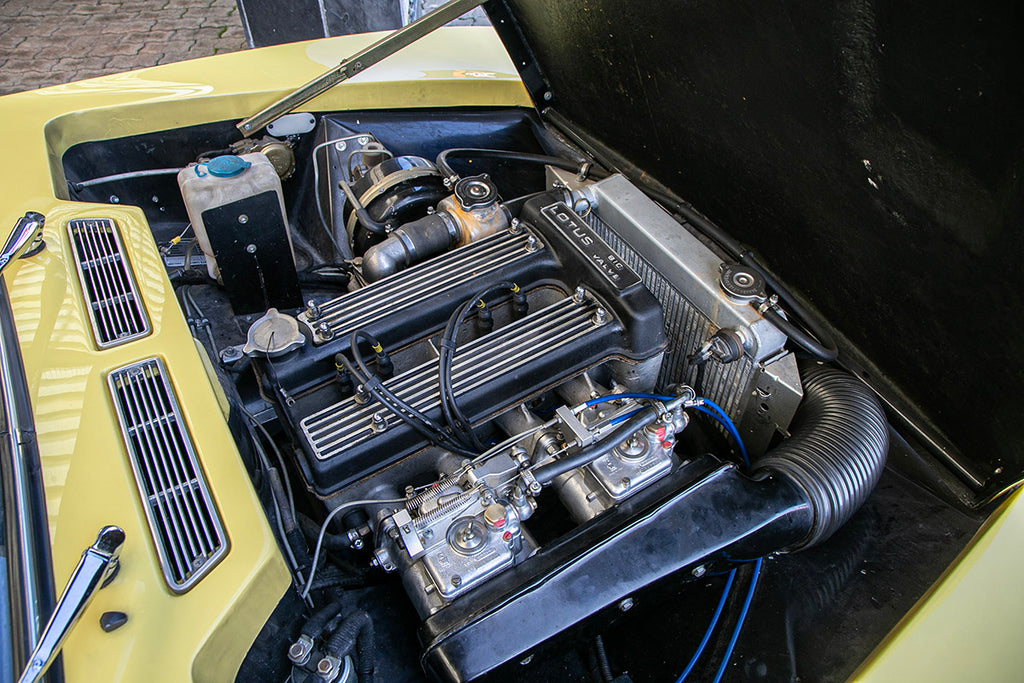
The chassis of the Elan was manufactured from mild steel and the body mounted on top of it was made of fibreglass. Under the lightweight bonnet is a 1.6-litre Lotus twin-camshaft, 4-cylinder petrol engine.
It develops 88 kW at 6 000 rpm and 146 Nm of torque at 4 000 rpm, but seeing as the Elan +2 only weighs 890 kg, I would soon discover that it delivers ample performance. This is evidenced by road tests at the time with testers managing a 0-97 kph time of below 8.0 sec and a top speed of 193 kph.
As I approach the Elan, 2 elements of the venerable British coupe stand out above everything else: the compact size of the car, as well as the general, flowing design. This example’s paintwork also seems to be in excellent condition, which further contributes to its classic and attractive stance.
The 2-tone paintwork (with the yellow bodywork and silver top and bumpers) makes it stand out even more. The sloping front and rear ends perfectly “connect” with each other on either end of the cabin. Although this might give a visual impression that it is a lengthy car, in real life it is quite dinky.
Specifications:
Model: 1970 Lotus Elan +2
Engine: 1.6-litre, 4-cylinder, petrol
Power: 88 kW at 6 000 rpm
Torque: 146 Nm at 4 000 rpm
Transmission: 4-speed manual, RWD
Weight: 890 kg
0-100 km/h: 8.0 sec
Top Speed: 193 kph
Behind the wheel of the Lotus Elan
When you get seated in the Elan, you notice the relatively small size of the cabin. It takes you back to the late-’60s, from the instruments to the thin-rimmed steering wheel and the almost oversized gear knob. You sit close to the floor which, in turn, is close to the road – the ideal driving position for a sportscar!
There are numerous dials and gauges nestled in the expansive walnut trim inlay below the dashboard, they indicate the temperatures of the fluids, the time, battery voltage, fuel level and so on.
The compact nature of the Lotus Elan +2 is also evident in the size of the sportscar’s wheels and tyres. All four corners are equipped with modest 175/60 R14 tyres – but that is all you need when your car weighs only 890 kg! If you think there is no grip, you are very much mistaken.
When you squeeze the accelerator pedal a little harder, it is obvious the engine is revvy. Some finetuning of the carburettor must still be done, as in traffic you can sense that it only wants to “clear its throat”.
As I head up Ou Kaapse Weg, the Lotus feels light and nimble. It honestly feels as if the Elan +2 wraps itself around you, much more so than in many modern cars. You sit close to the door and windscreen, which also makes you feel much more “involved” in the driving experience than in other cars.
For one particular corner, I brake quite hard and the ol’ Lotus’ stoppers do a better-than-expected job of brushing off speed quickly. The 4-speed gearbox offers another layer of pure mechanical interaction with the car: the shift throws are relatively short, while each change is notably mechanical in feel.
If you can heel and toe with your feet, even to a moderate level – the pedals are perfectly positioned for this task. The steering wheel provides a great level of feedback, and although I didn’t push the car to its limit, I could feel the feedback increasing with speed, which is exactly what an enthusiast would want.
As I head back to where my drive began (at the MotoVillage dealership in Tokai, Cape Town, which lent us this car), I switch on the headlights to enjoy the sight of them popping up – hmm, the coup d’grace.
Summary
It is hard not the like the Lotus Elan +2. The additional space in the rear allows you to also add luggage for a longer trip, but at the same time, the car can accommodate a pair of young passengers to enjoy the trip with you. It’s not a ponderous classic car, but light, nimble and surprisingly sprightly. It is a sportscar in the true sense of the word and a car that only those in the know will appreciate and recognise.
Farewell, Toyota C-HR! Coupé-style crossover exits SA
The Toyota C-HR has exited South Africa after some 7 years on the market, with the 2nd-gen version of this coupé-style crossover not on the cards for a local introduction…
The Toyota C-HR has officially exited South Africa, with the Japanese giant’s local division furthermore confirming to Cars.co.za that the 2nd-generation version is not planned for Mzansi.
We recently noticed that the coupé-style crossover – which arrived in South Africa back in the opening quarter of 2017, complete with a sweeping, coupé-like roofline – was no longer listed on Toyota’s local website and asked the company for comment.
The C-HR nameplate has officially exited Mzansi.
“Yes, we can confirm that the C-HR has been discontinued in South Africa. This is due to the new-generation C-HR being only available in HEV [hybrid electric vehicle] and offered at a slightly higher price point compared to the current-generation model,” Toyota SA Motors told Cars.co.za.
Interestingly, the firm’s local division furthermore hinted that were the new dual-powered C-HR to be introduced to the South African market, it would be competing against hybrid versions of the strong-selling, Prospecton-built Corolla Cross.
The 2nd-gen C-HR is built exclusively in hybrid form.
“Following its investment in the production of Corolla Cross, available in HEV, Toyota South Africa Motors believes that this model has enjoyed great success in its segment and is pivotal in supporting Toyota sales in the passenger category,” the company added.
As a reminder, the 2nd-generation C-HR – bearing the AX20 internal model designation – was revealed in June 2023. Overseas, it’s currently offered exclusively in electrified form, available either as a standard hybrid or as a plug-in hybrid electric vehicle (PHEV).
The C-HR spent more than 7 years on the local market.
While 430 units of the C-HR were registered in South Africa in 2023, just 94 examples were sold locally over the opening 8 months of 2024. Indeed, sales slowed to just 7 units in June, before falling further to 5 units in each of July and August. We’re guessing Toyota SA Motors stopped importing stock a few months back (in fact, from what we understand, production ended towards the close of 2023).
Back in March 2017 – the nameplate’s first full month on sale – as many as 418 units were registered in Mzansi, seeing the C-HR off to a strong start. In August 2018, the range was expanded with a new flagship derivative, before a facelifted version of the boutique crossover touched down in February 2020.
All derivatives were powered by a turbocharged 1.2-litre petrol motor.
In June 2021, the top-spec Luxury grade gained fresh aesthetic and safety upgrades, while August 2022 saw yet more updates, including redesigned alloy wheels for certain variants and new exterior paint colours.
Before its removal from Toyota SA Motors’ line-up, the C-HR portfolio had comprised 4 derivatives, each employing the Japanese firm’s 85 kW/185 Nm turbocharged 1.2-litre, 4-cylinder petrol engine and either a 6-speed manual gearbox or a continuously variable transmission (CVT). The range ran from R487 500 to R612 000.
Although the Suzuki Vitara Brezza-based Toyota Urban Cruiser was only briefly in the South African market, it was an incredibly popular product. Here’s our guide to buying a used version of (what turned out to be) the 1st-gen Toyota Urban Cruiser…
At the start of 2021, Toyota SA Motors’ line-up was sorely missing an entry-level crossover. Yes, there was space below the ill-fated Rush, the C-HR boutique crossover and the RAV4, while the Prospecton-built Corolla Cross was set to launch only towards the end of that year. Enter the Toyota Urban Cruiser.
Before then, the Japanese firm’s local division was probably mulling models such as the Daihatsu-built Raize and the Yaris Cross. But the company ultimately settled on… a Suzuki. Taking advantage of its mother company’s burgeoning alliance with the Hamamatsu-based brand, Toyota SA Motors entered the sub-4-metre crossover segment with what was admittedly little more than a rebadged Vitara Brezza.
Bar the badging, the Urban Cruiser looks just like a Vitara Brezza from the rear.
Despite the Aichi-based automaker’s foray into this growing corner of the market coming courtesy of a, well, badge-engineering exercise, it turned out to be an incredibly successful move. In short, the Urban Cruiser – a badge that incidentally dates back to 2006 when it was applied to a concept car in Europe – was an instant sales hit in South Africa, easily outselling the model on which it was based.
By our maths, Toyota SA Motors sold at least 28 000 examples of the Urban Cruiser over its circa-2-year local lifecycle, snatching a segment share of nearly 20% in the process. As a matter of fact, the baby Cruiser – which was produced at Maruti Suzuki’s Gurgaon plant in India – earned the title of South Africa’s best-selling SUV/crossover in 2022 (pinching the crown from the Prospecton-built Toyota Fortuner), while also placing 3rd on the list of most popular passenger vehicles that year.
The Urban Cruiser at least scored a unique grille design.
So, why did Toyota pull the plug on one of its best-selling models? Well, the brand’s division in India opted not to develop a follow-up version based on the 2nd-gen Brezza, with the latter interestingly also taken off the table for export markets such as ours. Instead, Toyota SA Motors launched a new, larger Urban Cruiser (which wears the “Hyryder” suffix on the subcontinent, where it’s produced at Toyota’s Bidadi plant), a model that shares much with the latest Suzuki Grand Vitara.
Despite Toyota SA Motors’ shrewd product planners sticking with a basic powertrain and eschewing the available option of all-wheel drive in an attempt to keep the range’s prices in check, the new Urban Cruiser – which is a considerable 370 mm longer than its predecessor, with an extra 100 mm in its wheelbase – is still appreciably more expensive and thus arguably not quite a direct replacement for the model we’ll examine here. Instead, that role has been assumed by the Fronx-based Starlet Cross.
Toyota Urban Cruiser model line-up in South Africa
The Urban Cruiser was an immediate sales success in Mzansi.
The Urban Cruiser was revealed in India in August 2020, before Toyota SA Motors confirmed the small crossover for the local market in January of the following year. In March 2021, the Urban Cruiser touched down in Mzansi, only a month after its Vitara Brezza cousin had made local landfall. The Toyota version was immediately successful, with just short of 1 000 units sold in its debut month.
At launch, the local Toyota Urban Cruiser line-up included just a single engine option (a naturally aspirated 1.5-litre, 4-cylinder petrol motor), a pair of transmission choices and a trio of trim levels. As a result, the original Urban Cruiser portfolio spanned the following 5 derivatives:
1.5 Xi 5MT (77 kW/138 Nm)
1.5 Xs 5MT (77 kW/138 Nm)
1.5 Xs 4AT (77 kW/138 Nm)
1.5 Xr 5MT (77 kW/138 Nm)
1.5 Xr 4AT (77 kW/138 Nm)
The Japanese firm made no changes to the range over the next couple of years. In November 2022, we reported the Urban Cruiser had been axed in India, though Toyota SA Motors told us it had enough stock to carry the model into the following year. By April 2023, the more expensive Hyryder-based model had arrived in Mzansi, though it couldn’t match its predecessor’s overnight sales success.
What are the advantages of a Toyota Urban Cruiser?
Items such as cruise control were reserved for the top trim level.
Strong value for money: When a vehicle offers strong value for money on the new-car market, that trend tends to trickle through to the used space, too. And that was certainly the case with the Urban Cruiser range, which had pricing bookends of R247 900 and R315 700 at launch in the opening quarter of 2021 (price tags that had risen to R283 200 and R357 100 by the time it had been discontinued).
Still, it’s worth pointing out that the Urban Cruiser’s focus on value predictably came with certain minor compromises. For instance, the cabin employed plenty of hard plastics and wind noise was noticeable on the open road, while some features were either restricted to the loftiest trim level (think cruise control and a leather finish for the steering wheel) – or not available at all.
Suzuki’s familiar K15B engine.
Ubiquitous (proven) engine: Being a rebadged Vitara Brezza, the Urban Cruiser employed Suzuki’s familiar K15B engine. This atmospheric 1.5-litre 4-pot – a free-revving motor providing the front axle with 77 kW at 6 000 rpm – was widely used across the Suzuki line-up, doing duty in everything from the Ciaz sedan to the 7-seater Eritga and even the Jimny 4×4. As such, it remains a well-proven powerplant with readily available spares.
In the Urban Cruiser, the engine’s peak outputs felt sufficient for most applications, though maximum torque of 138 Nm arrived a touch late in the rev range (at 4 400 rpm) compared with forced-induction alternatives. Still, the little Suzuki engine was fairly fuel-efficient; Toyota claimed a combined figure of 6.2 L/100 km regardless of the specified transmission.
Impressive utility space considering the compact exterior dimensions.
Practicality (for its size): Though the Urban Cruiser measured a mere 3 995 mm from snout to rump, it was – just like its Brezza-badged cousin – endowed with a useful degree of practicality. With 198 mm of ground clearance on offer (for all derivatives bar the base Xi variant, which made do with 192 mm courtesy of a slightly different tyre profile), the Urban Cruiser was equipped for basic gravel travel and rode with a pleasing mix of pliancy and surefootedness on asphalt.
Thanks to a wide tailgate aperture, access to the 328-litre luggage compartment was fuss-free, while the bases of the rear bench could tilt forward, allowing the likewise 60:40-split seatbacks (note the base Xi variant was saddled with a single-piece bench) to drop almost completely flat, freeing up oodles of utility space. Furthermore, the load bay housed a full-size spare wheel.
What are the disadvantages of a Toyota Urban Cruiser?
The standard Global NCAP test suggested the Urban Cruiser’s body shell was stable.
Mediocre levels of safety kit: Global NCAP awarded the Indian-spec Urban Cruiser 4 stars for adult-occupant protection in 2022, with the basic 64-kph frontal-offset crash test suggesting the body shell was “stable” and “capable of withstanding further loadings”. But this small crossover was nevertheless missing a few basic safety features.
In South Africa, for instance, all derivatives had to settle for dual airbags (while the high-spec variants in some competitor line-ups boasted as many as 7 airbags), along with drum brakes at the rear, and electronic stability control was not at all available. Other basic safety features standard across the range were thus limited to ABS with EBD and ISOfix child-seat anchors.
Toyota SA Motors offered a less generous service plan and warranty compared with Suzuki.
Shorter warranty and service plan: While Suzuki Auto SA offered the Vitara Brezza with a generous 5-year/200 000 warranty, Toyota SA Motors’ standard 3-year/100 000 km coverage applied to the Urban Cruiser (despite the latter commanding a small price premium).
It was a similar case when it came to service plans, with the Suzuki scoring a 4-year/60 000 km arrangement and the Toyota settling for a 3-service/45 000 km plan. Of course, these differences remain valid to buyers scouring the used-car market today.
Though it wore the Toyota badge, the Urban Cruiser was a Suzuki, through and through.
It’s not a Toyota: If you’re shelling out for a vehicle with the famed Toyota logo affixed to its nose, you’d expect a genuine Toyota, right? Well, the Urban Cruiser was a Suzuki product through and through, with zero engineering input from Toyota (though there were some specification differences and the rebadged model furthermore scored an in-car Wi-Fi hotspot with 15GB free data “once-off upon activation”).
That said, it’s worth keeping in mind Suzuki has long held a reputation for developing wonderfully competent small cars – an entirely apt description in this case, too. Moreover, in a market in which so many buyers place tremendous value on the Toyota badge, the Urban Cruiser benefited from the Japanese giant’s typically stronger resale value, plus access to its more extensive dealer footprint.
How much is a used Urban Cruiser in South Africa?
Toyota offered the option of extending the warranty up to 6 years.
Although we’ve detailed the Urban Cruiser’s aftersales cover above, we should note Toyota also gave buyers the option of extending the warranty to 6 years (with no limit on mileage). In addition, keep in mind some examples on the used market may have been fitted with factory-backed accessories ranging from silver-painted bumper trim to a tow bar (for the record, the Urban Cruiser offered a braked towing capacity of 1 100 kg).
Of the used previous-generation Toyota Urban Cruiser units listed on Cars.co.za at the time of writing, 2022 was easily the most popular model year (entirely predictably, considering this was the only full calendar year in which the vehicle was on the new-car market), accounting for more than 70% of listings.
Judging by our listings, the manual was only slightly more popular than the auto.
Fascinatingly, the split between manual and automatic transmissions was almost even, with 3-pedal models edging ahead (52%). The mid-tier Xs trim level was the most common (58%), followed by the flagship Xr (29%), with the entry-level Xi (13%) bringing up the rear.
Although we calculated the average mileage as being well below 50 000 km, we also found a few ultra-low-mileage examples, including a 2023 1.5 Xs manual with a mere 474 km on its odometer. At the other end of the spectrum, we discovered a 2021 1.5 Xi manual that had covered 187 500 km (one of only 3 listings that had clocked up more than 150 000 km).
Below R200 000: Slim pickings below this mark, where we found only a handful of 2021 models, each in mid-spec Xs guise. Still, indicated mileage topped out at 40 000 km in this space, with most of the admittedly few options here unexpectedly specified in self-shifting form.
From R200 000 to R250 000: The manual gearbox dominated this pricing bracket, where we discovered a mix of 2021 and 2022 models. This was also where we found most of the listed base Xi derivatives, which accounted for more than half of the examples in this space.
From R250 000 to R300 000: At the time of writing, these pricing bookends housed the bulk of previous-generation Urban Cruiser stock (a whopping 73%, in fact). Fascinatingly, the automatic transmission was easily the most plentiful cog-swapper here.
R300 000 and up: Spending upwards of R300 000 would get you into a low-mileage Urban Cruiser in mid- or top-spec guise (with either gearbox). Still, you could opt for the new, larger model at this price point. The most expensive previous-gen Urban Cruiser we found was the 474-km example mentioned above, which was listed for a heady R359 900 – even more than it would have cost new.
Which Urban Cruiser derivative should I buy?
Focus your search on the Xs and Xr grades.
So, which derivative should top your shopping list? Well, since there was just a single engine on offer, your only powertrain decision relates to the transmission. The 5-speed manual gearbox (which could do with a 6th forward ratio for quieter cruising at the national speed limit) is the logical choice thanks to its snappy action and easily modulated clutch, but the 4-speed automatic isn’t as dreary as you might think.
In terms of trim levels, we’d advise steering clear of the entry-level Xi grade, which was missing a rear wiper, height adjustment for the driver’s seat, a rear armrest and a split-folding function for the rear bench, while also having to settle for manual air conditioning and steel wheels (it did, however, at least offer the 7-inch touchscreen infotainment system).
The Xr specification boasts a few tempting extras.
Instead, the popular Xs trim grade offered a more pleasing spread of standard kit, gaining the missing items listed above, plus 16-inch alloy wheels, roof rails, body-coloured exterior door handles, power-retractable side mirrors, climate control, a reverse-view camera and a secondary glove compartment.
If your budget allows, the top-spec Xr is tempting and set apart by its LED foglamps, automatic headlights, cruise control, electro-chromatic rear-view mirror, rain-sensing wipers, dual 12V power outlets, front armrest, leather-trimmed steering wheel, a pair of additional tweeter speakers, glovebox illumination, a cooled storage compartment and dedicated luggage-compartment lighting.
Is the Toyota Urban Cruiser a smart used buy?
The Urban Cruiser was 1 of many sub-4-metre crossovers sourced from India.
The 1st-gen Toyota Urban Cruiser played in a sub-4-metre Indian-built crossover segment that was brimming with options. Besides the Vitara Brezza, Toyota’s baby crossover faced strong competition from the Kia Sonet – perhaps the most accomplished contender in this space – as well as the compelling Hyundai Venue and the somewhat underappreciated Mahindra XUV300.
Although the Urban Cruiser had only a fleeting stay in South Africa, its overnight success served as a striking reminder of the Japanese giant’s general dominance of the local market. But regardless of the so-called “Toyota Effect”, the product itself – whether wearing a Suzuki badge or a Toyota emblem – continues to make a strong case for itself on the used market today. This version offers added appeal to those keen on an affordable small crossover backed by the market’s most popular marque.
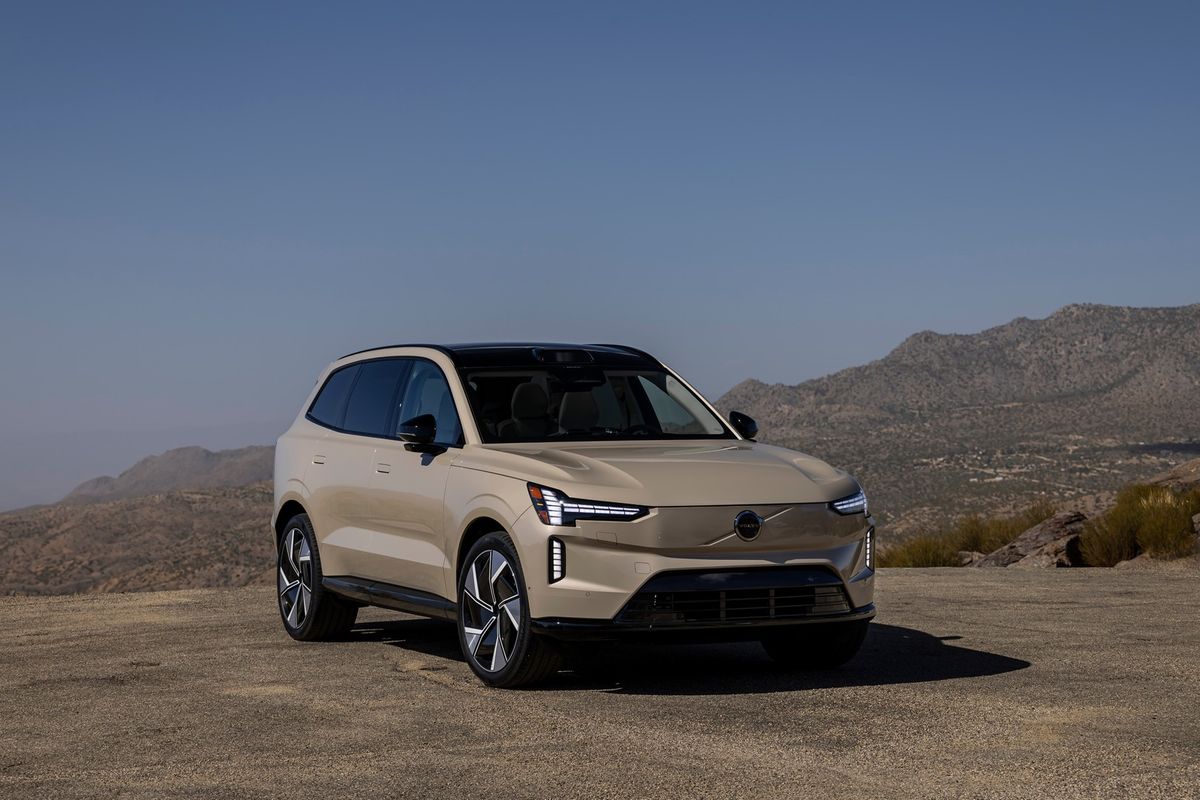
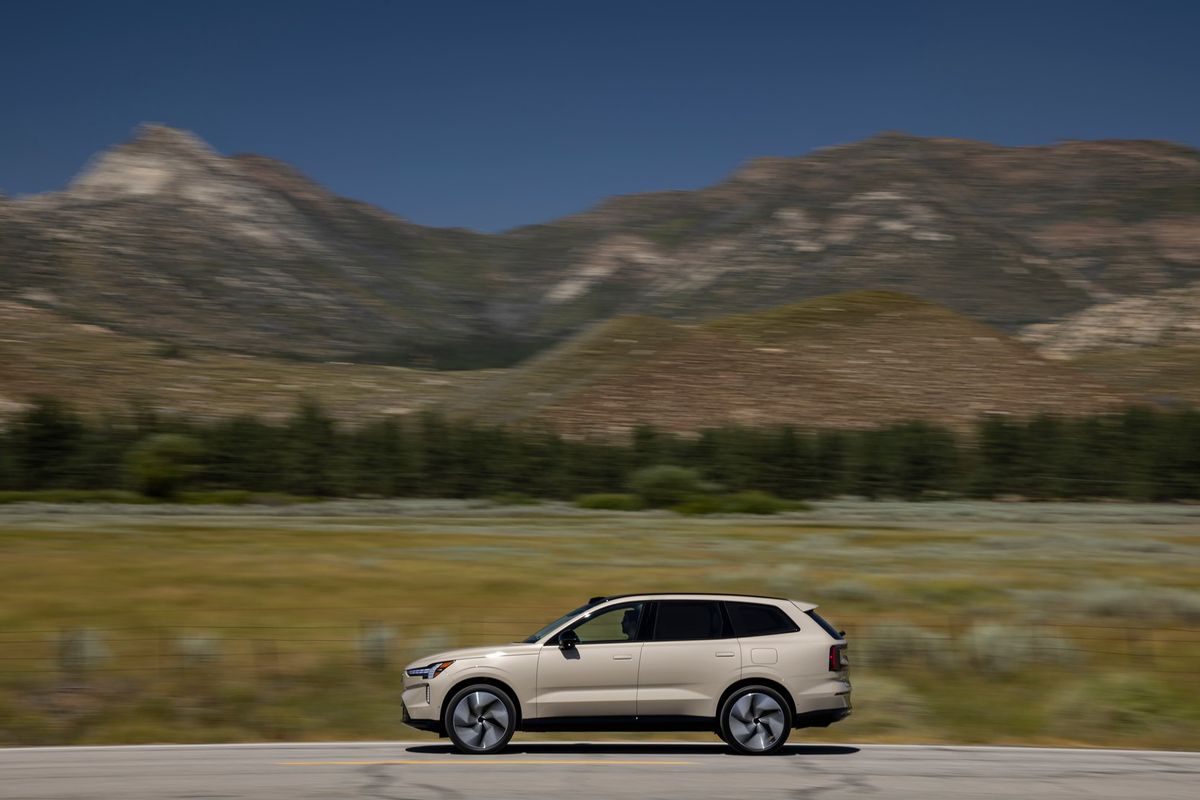
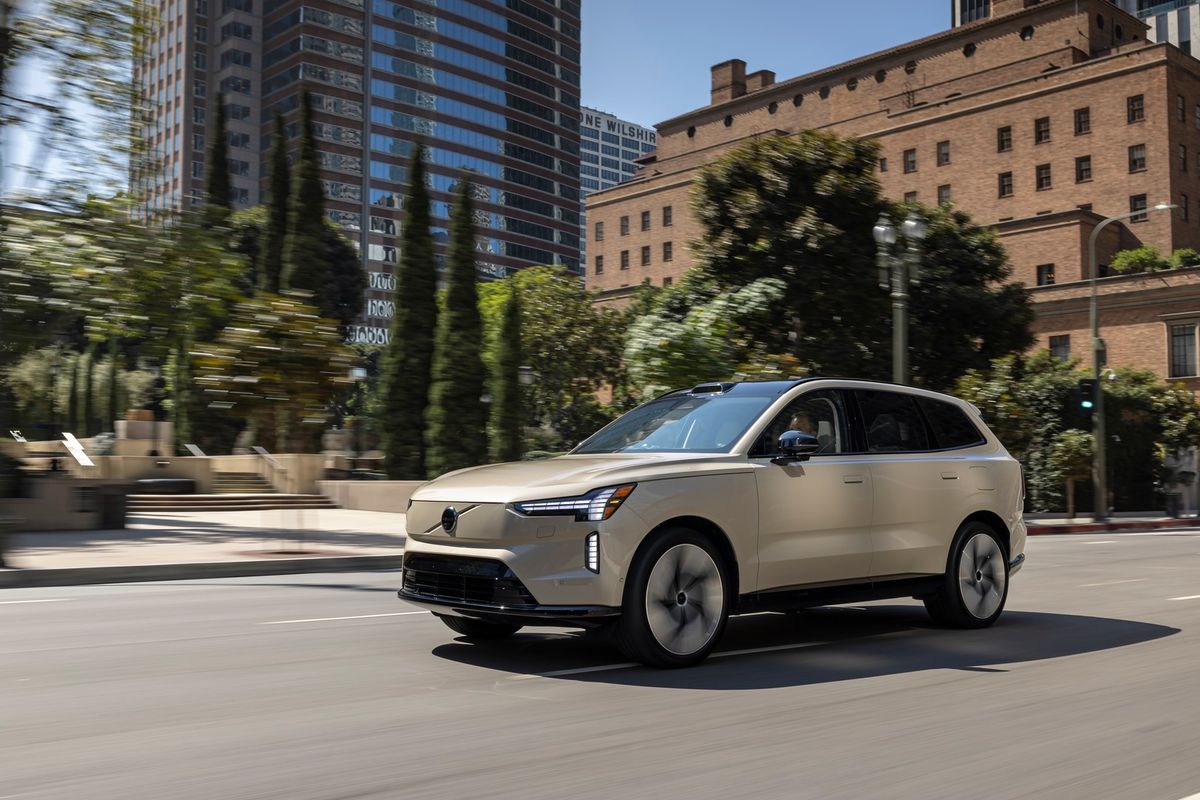
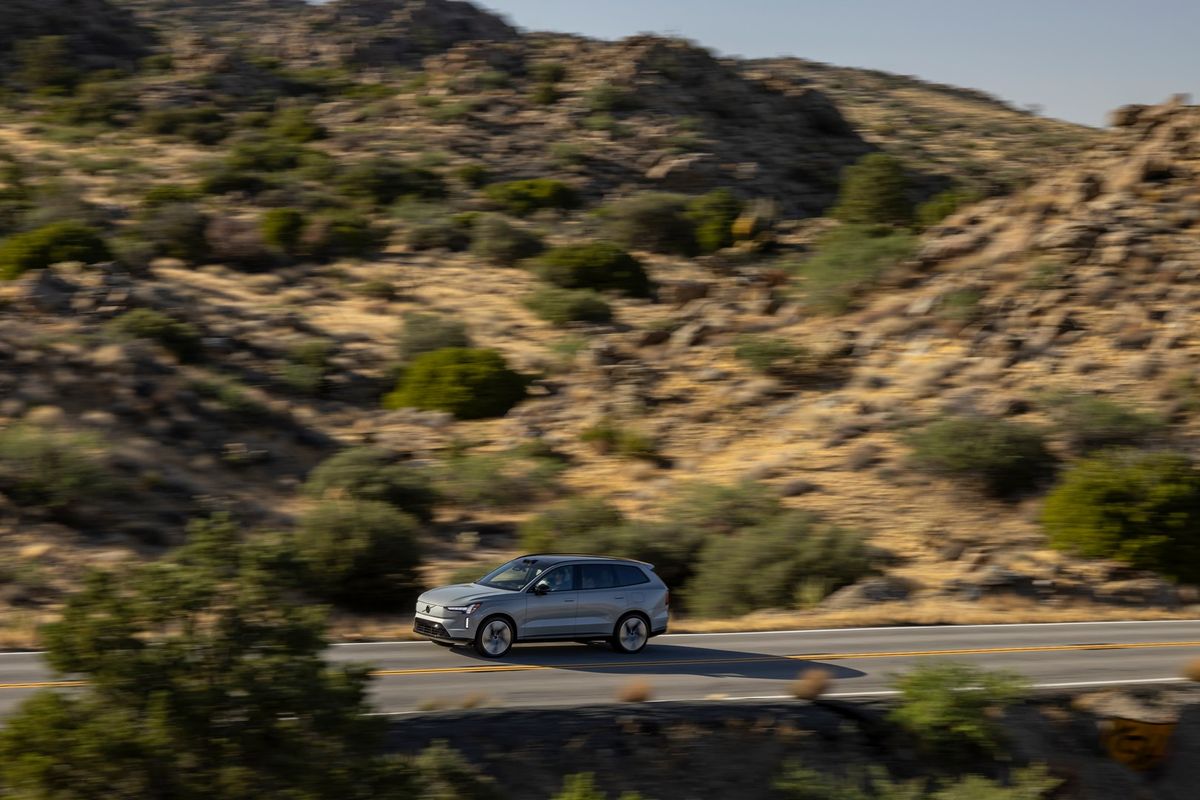
The all-electric Volvo EX90 is said to be the Swedish marque’s quietest and safest vehicle yet. We headed to Los Angeles to drive the model ahead of its local arrival in 2025.
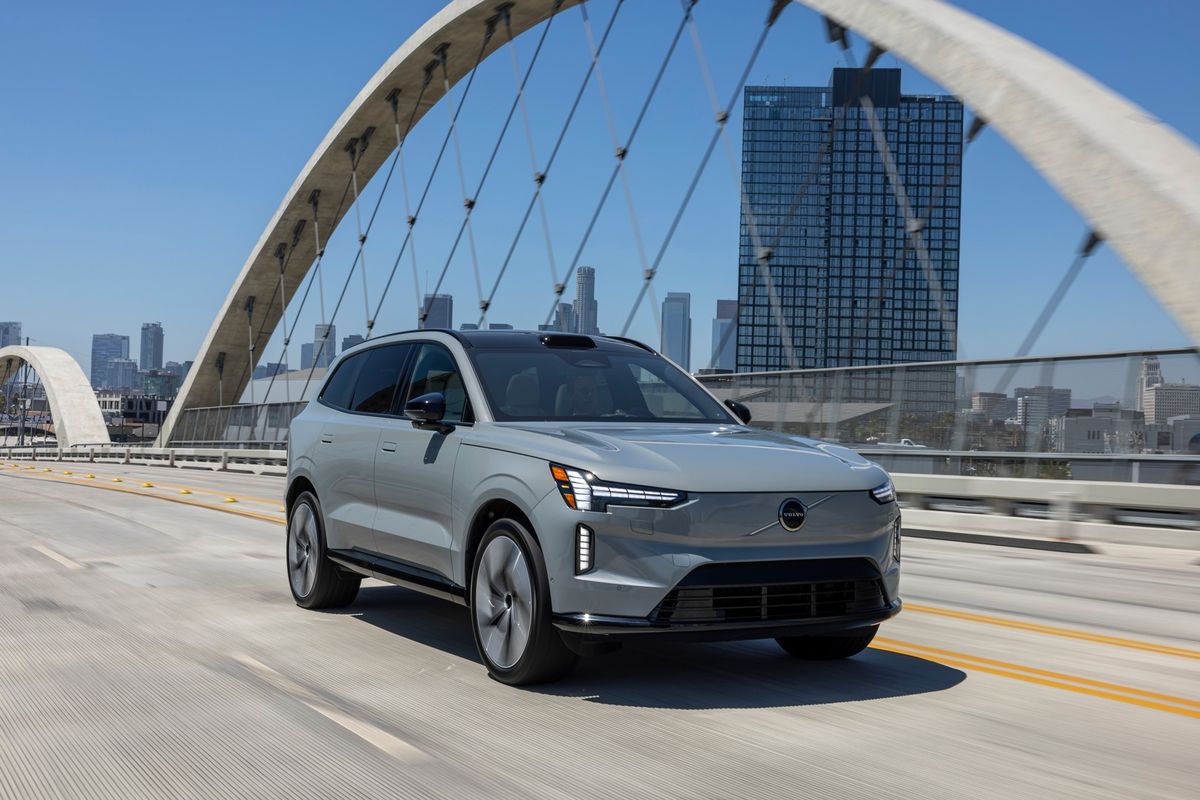
The Volvo EX90 is a 7-seater luxury family SUV (or premium SUV, in #CarsAwards parlance) that features an electric powertrain instead of an internal combustion engine. If you think that means the Volvo XC90 will be mothballed, fear not – that model has been facelifted and will be around for a few more years.
This new Volvo is not assembled in Sweden or China, but in Ridgeville, South Carolina. The new EX90 is underpinned by the Swedish marque’s Scalable Product Architecture (SPA), but seeing as this platform is electric-only, it is dubbed SPA2. The long-serving XC90, by contrast, is based on SPA and we’re fond of the comfort, luxury and spaciousness the model offers. Does the EX90 tick those boxes too? You bet.
Old school XC90 (left) next to its new school EX90 sibling.
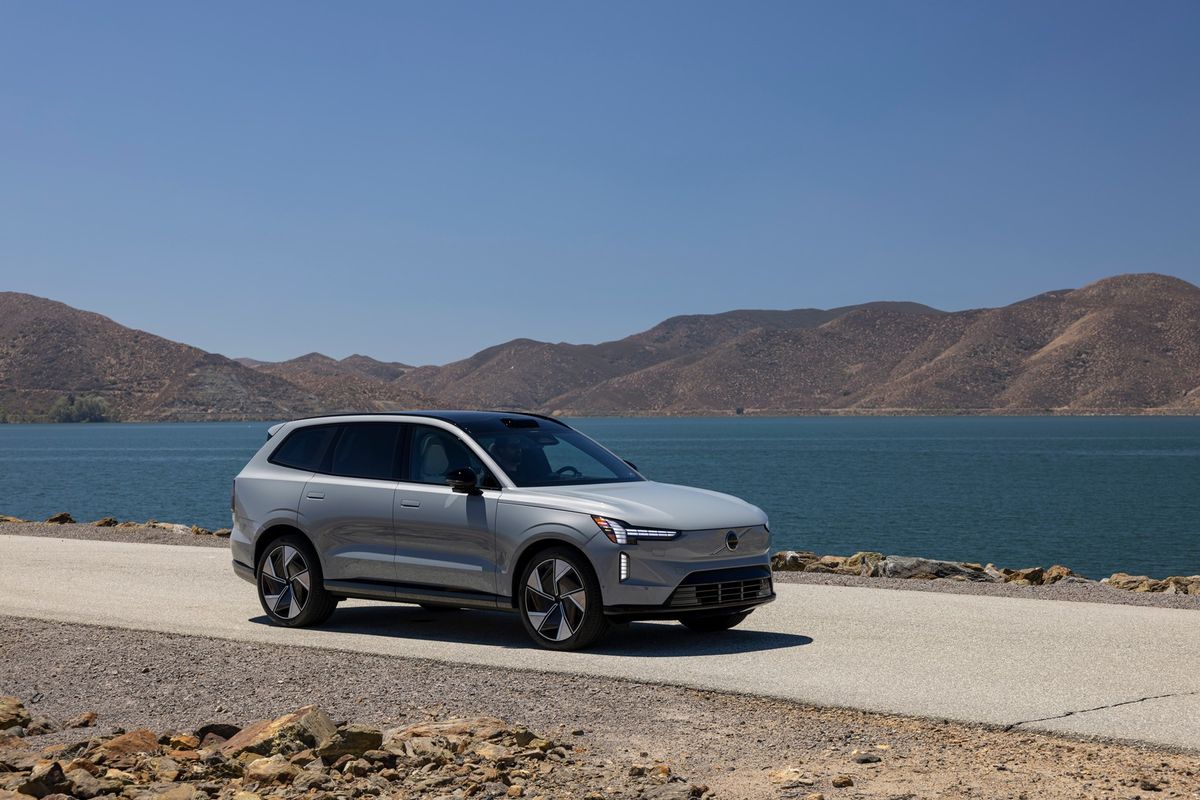
But first, look at it! When parked next to its XC90 sibling, the EX90’s exterior execution looks remarkably fresh, simplified and futuristic. It’s like someone applied an Instagram beauty filter to the XC90 (but with unreal levels of skin smoothening) and it remains to be seen where the front numberplate will be located.
Granted, the EX90 doesn’t need a gaping grille for cooling, but for us, the real highlight is the daytime running lights, which split open to reveal headlights! You’ve probably noticed the taxi-light-like bulge on the car’s roof: that houses the light detection and ranging (Lidar) scanner, but more on that tech below.
What’s on offer?
There are only 2 derivatives in the Volvo EX90 launch line-up: Twin Motor and Twin Motor Performance (we drove the latter variant in California). We expect that single-motor derivatives and lesser-specced versions will be released later, but our Swedish hosts remained tight-lipped about future offerings.
As its name implies, Twin Motor features a pair of electric motors – one on each axle. The Twin Motor kicks off the range with 300 kW and 770 Nm, while the flagship variant produces 380 kW and 910 Nm.
US-spec cars feature orange lights on the outer edges of the LED headlamp clusters.
While it’s widely known – and, by now, expected – that most premium EVs accelerate rather rapidly, Volvo has taken a more restrained approach with the EX90 Twin Motor Performance. It is said to be capable of hitting 100 kph from a standstill in 4.9 sec (before going on to a limited top speed of 180 kph); the EX90 is no speedster, but that 0-100 kph time is quick for a vehicle that weighs around 2.8 tonnes.
Thanks to a 111 kWh (of which 107 kWh is usable) battery, the Volvo’s claimed range is between 570 and 614 km (WLTP). The vehicle supports DC fast-charging up to 250 kW, which allows 10% to 80% to be replenished in around 30 minutes. As a reminder, the fastest chargers in South Africa rank at 200 kW.
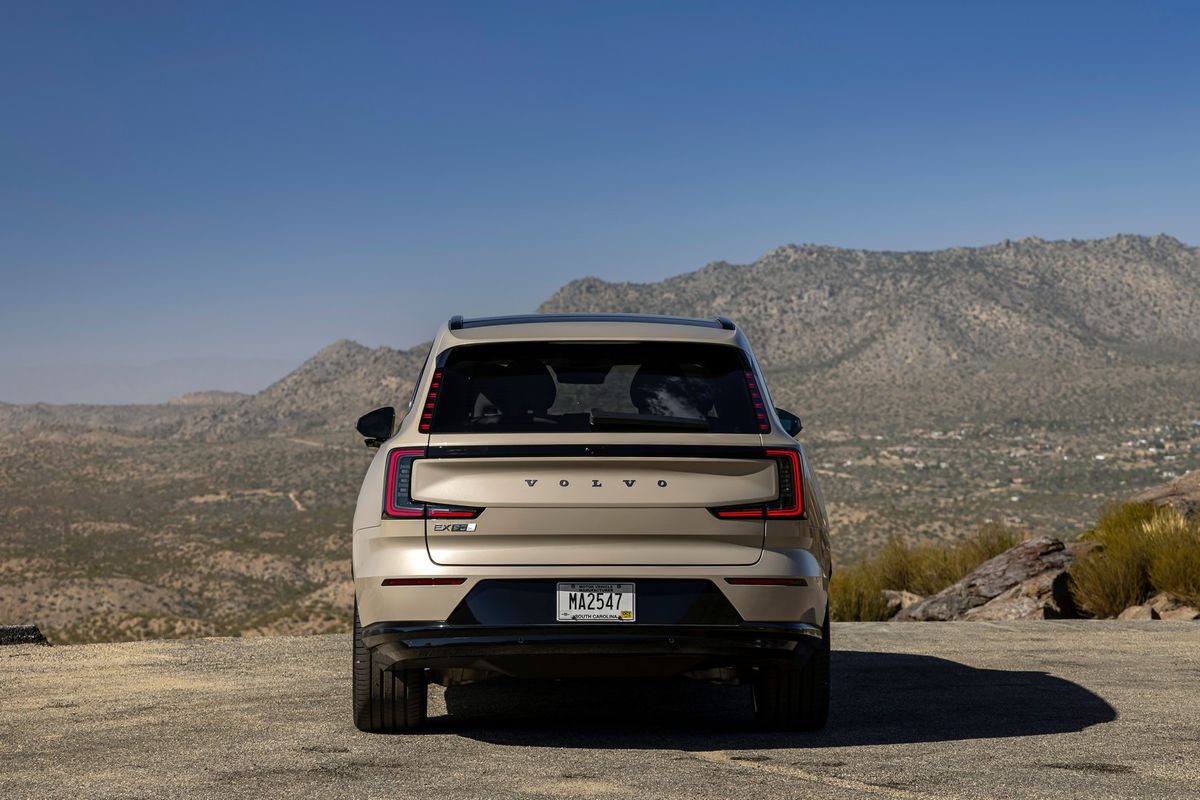
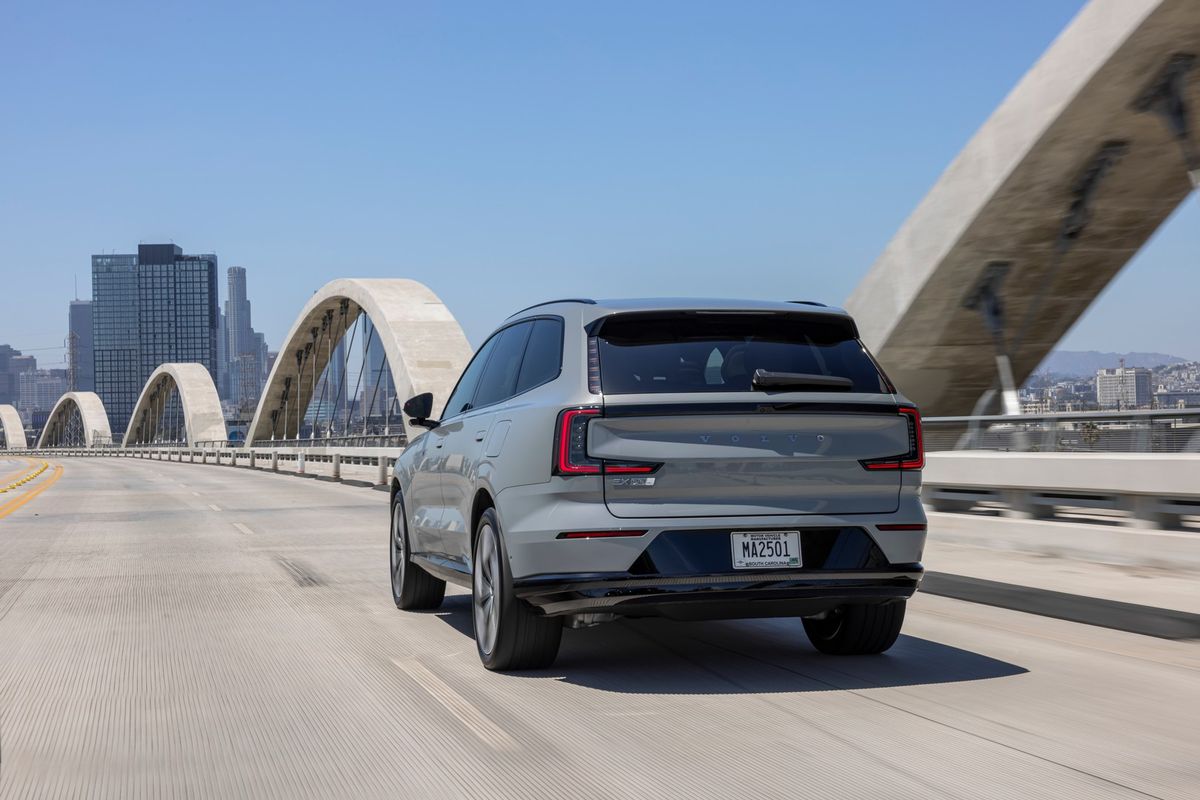
The Volvo’s EX90’s rear styling is a little on the quirky side, but on-brand.
According to the EX90’s comprehensive tech sheet, the model will be available in 4-, 5-, 6- and 7-seat configurations and we assume the SA market will get the 6- (captain’s chairs) and 7-seat versions.
Sustainability is a key focus area for Volvo and, in that regard, the EX90 is a great example: 15% of the steel, 25% of the aluminium and 48 kg of the plastics used to assemble the model are recycled material.
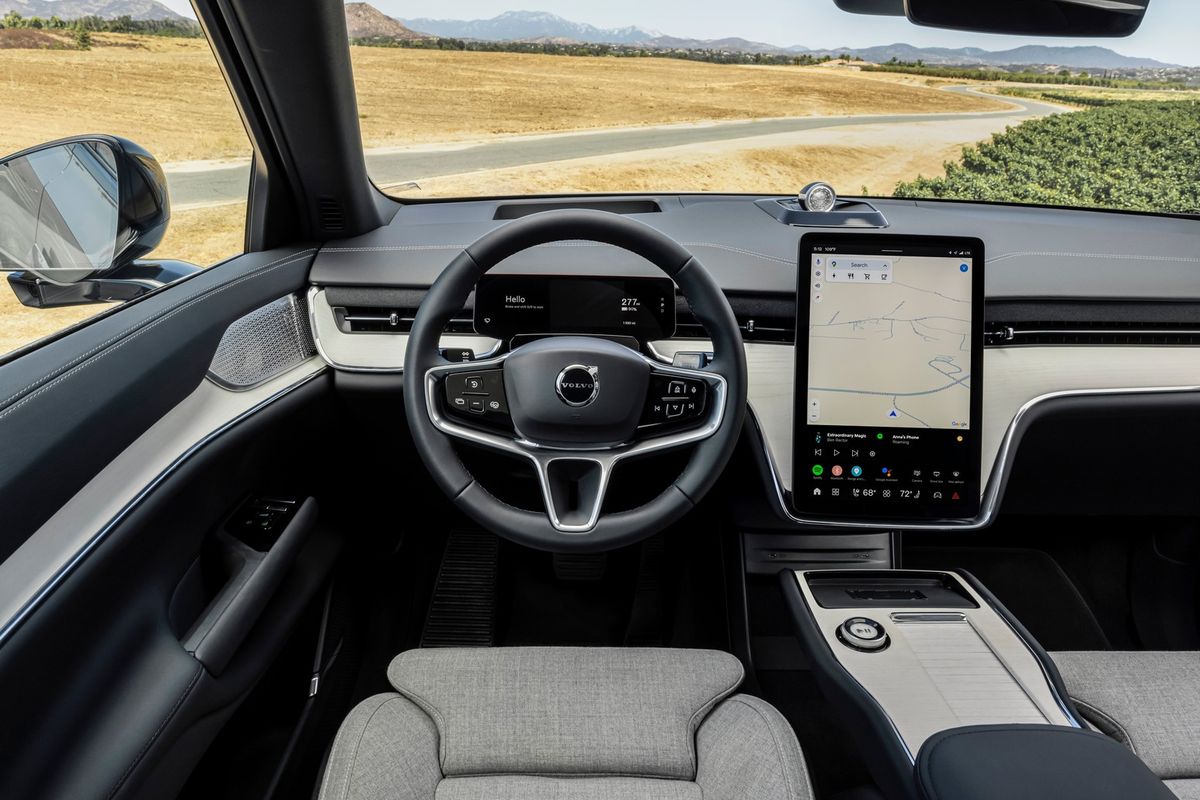
The front of the Volvo EX90’s cabin is a study in Scandinavian minimalism.
The cabin is modern and minimalist in a way that (seemingly) only Volvo can be; it’s a pleasant, relaxing space. But the build quality and details truly stand out – it feels every bit as premium as Volvo says it is.
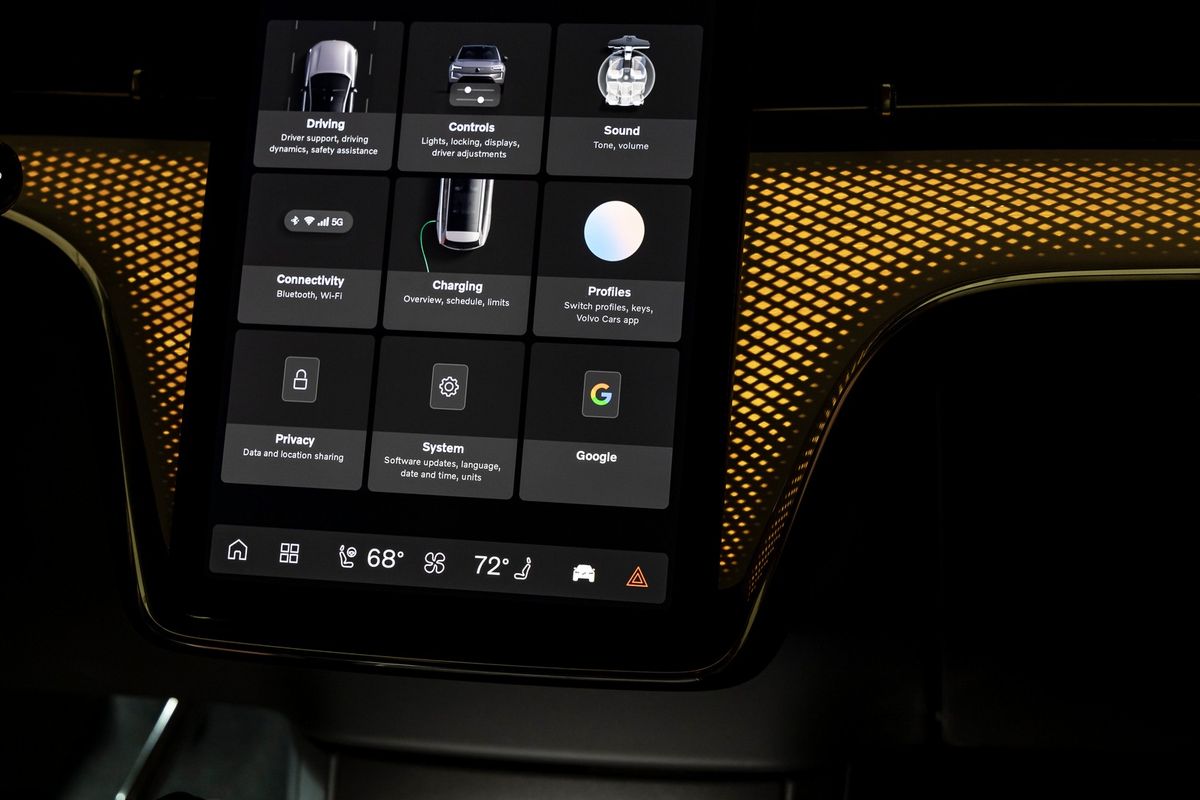
The Google-powered infotainment system has a massive (14.5-inch) portrait-oriented touchscreen, but unlike its EX30 sibling, the EX90 has a compact instrument cluster as well as a driver’s head-up display.
I appreciated having just the critical driving info (speed, range and the next navigation waypoint) in front of me – this is how I think all instrument clusters should be. Save the additional stuff for the main screen.
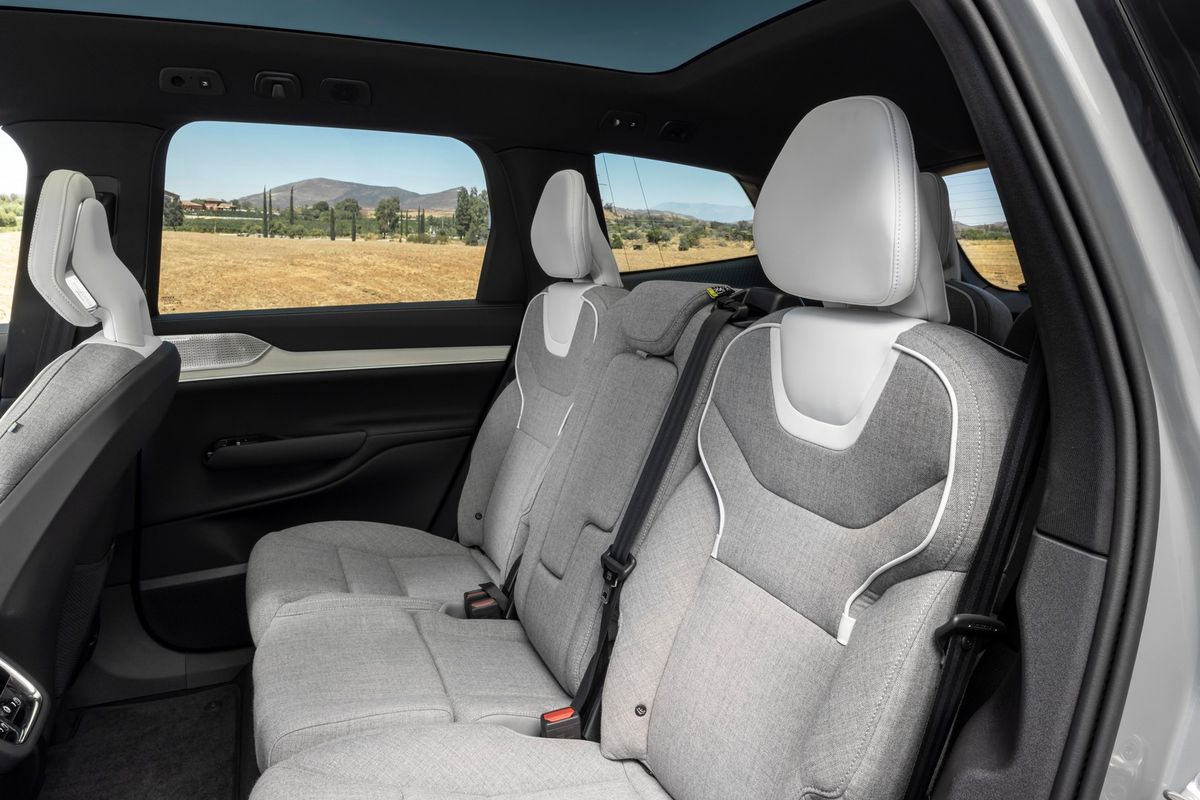
Excellent leg- and headroom for the 2nd row passengers. These seats are superb!
Space utilisation/interior packaging is also impressive. Perhaps Volvo engineers carted their own families around in EX90 prototypes to gain insights – the cabin’s storage solutions/workflow is that well resolved.
You can deploy the 3rd row of seats by simply pressing a button, the 2nd row can be manipulated with just one hand, and the load bay is reasonably spacious even when all seats are in use (unlike in bakkie-based Adventure SUVs). Also, as it’s an EV, you get an additional storage area in the front, um, “frunk”.
The guide to how much cargo the EX90 can accommodate is embossed into its tailgate.
Rivals?
Right now, the big electric Volvo SUV has very few competitors in the local market. The BMW iX (which won the Premium SUV category of the 2023/24 CarsAwards programme) may have quirky looks, but it has the performance and technology to match the EX90, and don’t forget about the Mercedes-Benz EQE and EQS e-SUVs, but have yet to test either of those. Audi, in turn, will be launching the Q8 e-tron soon.
If you’re prepared to try a plug-in hybrid, then Volvo will sell you the XC90 T8 Recharge, which was recently updated and there are options from Jaguar Land Rover, Porsche and BMW too.
The updated XC90 PHEV, if you’re not ready to buy a fully electric SUV yet.
What is the Volvo EX90 like to drive?
Yes, it is a 3-row, 7-seater SUV, but “ease of use” must be one of its strong points. And it is! You can use either a smartphone or proximity key to unlock the Volvo EX90 and there’s no start button: You simply get in, put on your seatbelt and engage Drive on the switchgear behind the steering wheel – that’s it!
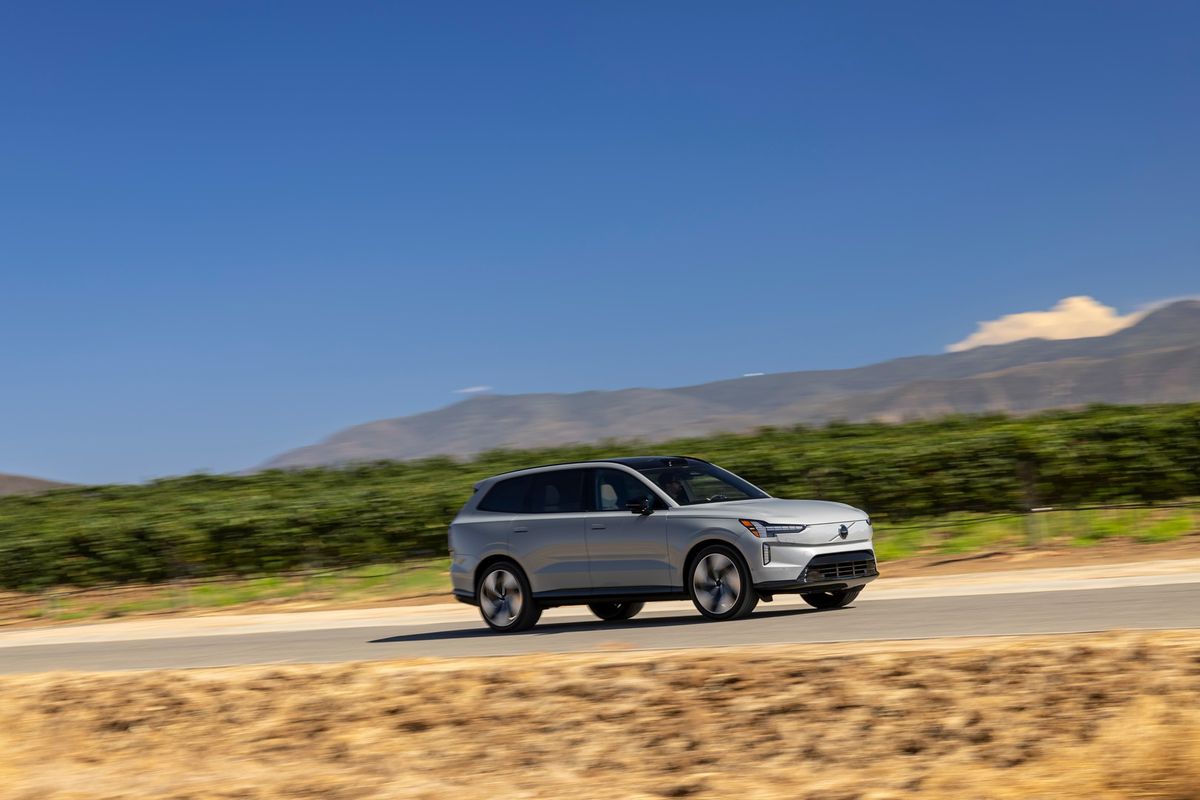
On near-perfect tarmac, the high-tech Swede floated along with supreme comfort.
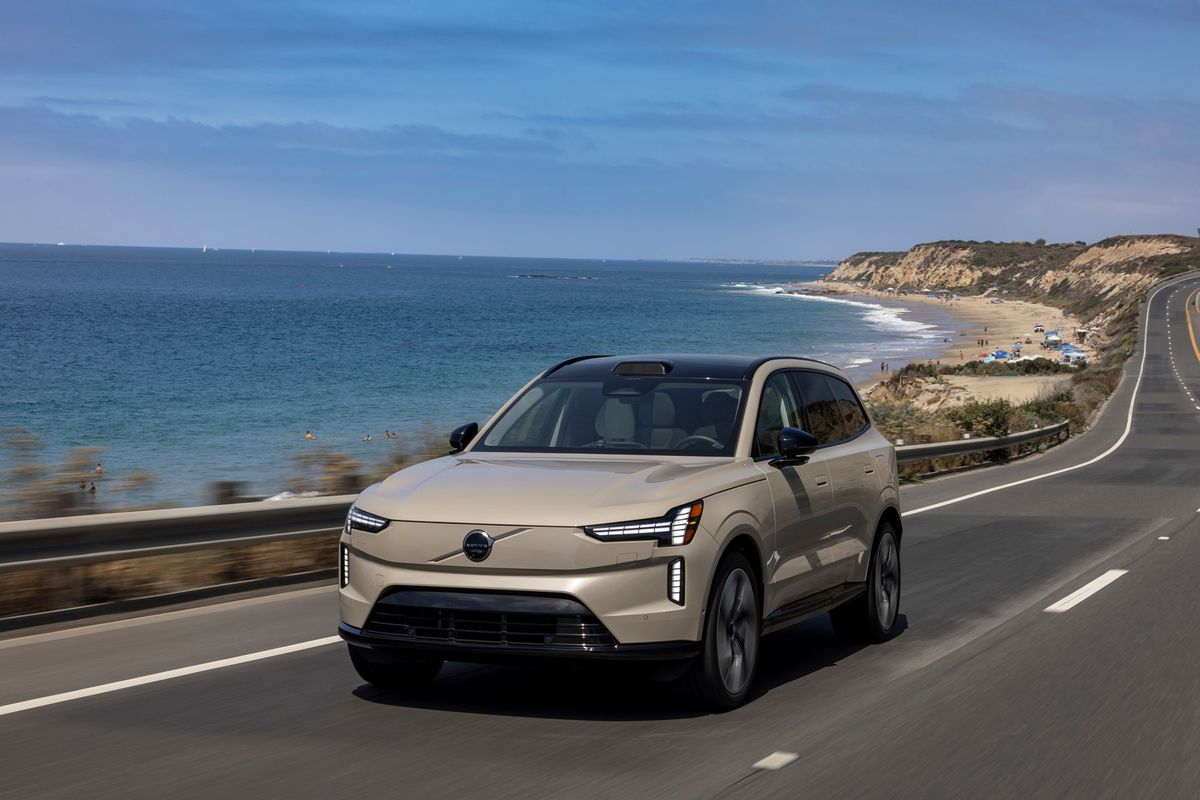
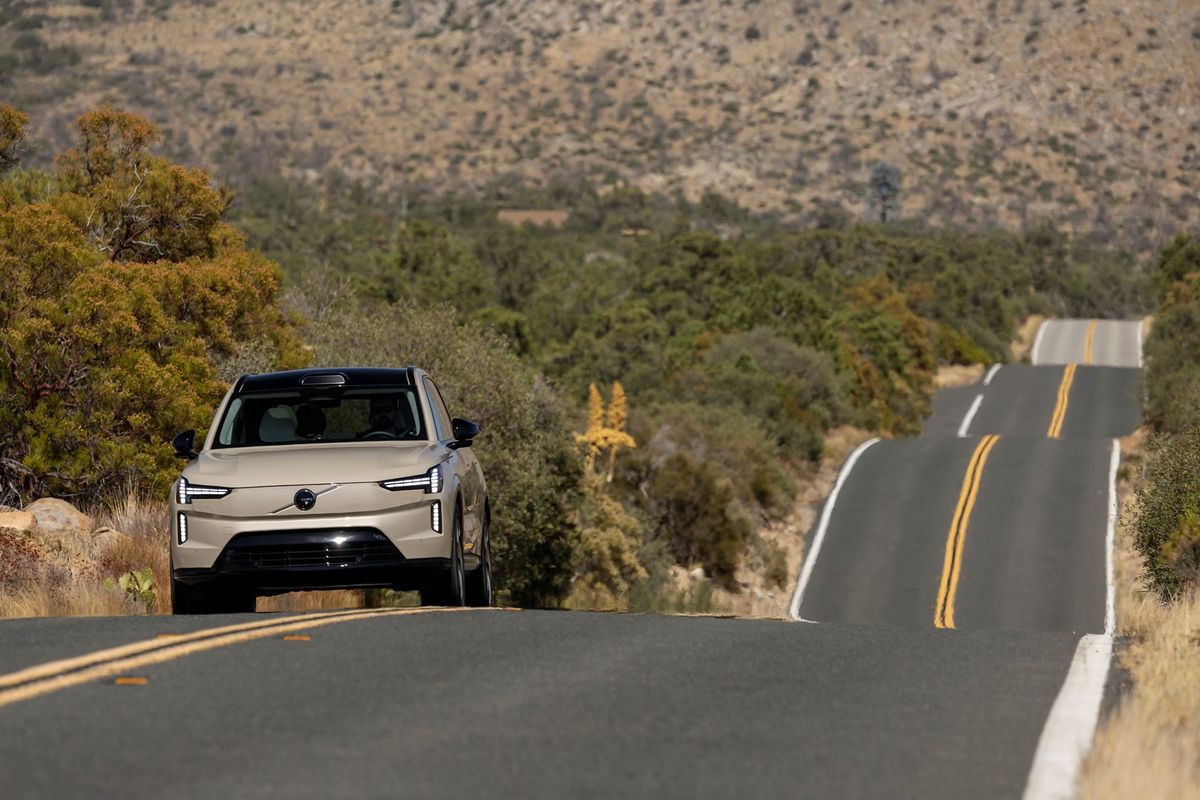
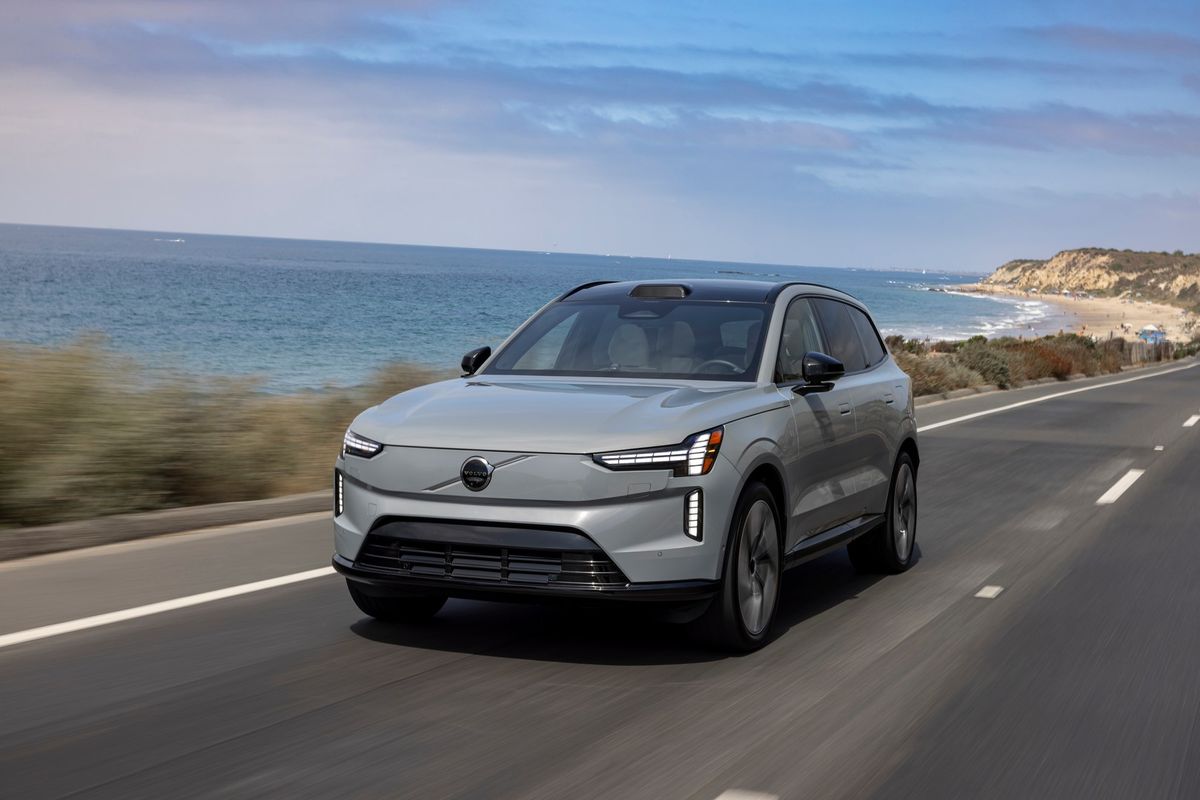
In the hustle and bustle of late-summer traffic on California’s Pacific Coast Highway (as we made our way to Laguna Beach and Dana Point), the suave Swede felt right at home and was comfortable rubbing shoulders with some huge American SUV stalwarts such as the Cadillac Escalade and Lincoln Navigator.
Compared to those 2 ostentatious land yachts, the Volvo is demure and inconspicuous (and that’s how you use demure correctly in a sentence, kids.) And, as an EV, the EX90 is eminently tasteful, or to put it another way: a far cry from the outlandish Rivians and Tesla Cybertrucks that we saw during our journey.
Like all electric cars, the Volvo XC90 is most at home in an urban environment.
Before our coastal cruise, we had the pleasure of taking the CA-74 Ortega Highway to Lake Elsinore, a fabulous stretch of near-perfect tarmac that twists its way inland from the coast. Now, while the road quality was some of the finest we’ve ever experienced, it made the Volvo EX90 feel outrageously good.
Even when rolling on not-insubstantial 22-inch aerodynamically-tuned alloy wheels and skinny tyres, the EX90 simply glided along on its 2-chamber adaptive air suspension with a stunning level of refinement.
I deliberately drove over a few ruts and manhole covers (only to feel how the Volvo’s ride quality would be affected by those road imperfections). Whereas the XC90‘s ride quality can feel a tad brittle at low speeds (and bigger impacts occasionally crash through to the cabin), the EX90 appears to have more forgiving damping. We have yet to drive the Volvo on our local roads but trust me, it rides impressively.
These 22-inch wheels look sensational and have the additional benefit of reducing drag, to aid range.
We often talk about how a car’s controls need to be well-balanced or “equally weighted” and, well, Volvo has achieved that with the EX90. Things are mostly just right: the sensitivity of the accelerator pedal, the light-but-accurate steering setup and feel, the low-speed control (which makes the car feel smaller) and so on. It doesn’t feel like a 2.8-tonne SUV rolling on low-profile 22-inch tyres, which is quite a feat.
Comfort levels, aided by the Volvo’s exquisite seats, are up with the very best in its class. The front seats look and feel the part and, importantly, they offer a veritable array of massage functions. The climate control is worth a mention too (considering it was 39°C outside) and while Volvo says its panoramic roof features special glass that helps to reduce the sun’s impact, there was no way to close it with a cover.
Comfortably cruising in California at 39 degrees Celsius.
Driving on a winding canyon road presented the perfect opportunity to activate the Performance AWD mode, which sharpens up the throttle responses and brings the rear-wheel torque vectoring into play. You can also stiffen the ride quality and firm up the steering, but good luck trying to find those settings –they’re buried deep in the touchscreen menu. And can the EX90 be hustled along if you’re in a hurry?
The answer is yes, certainly. It’s poised and with just over 900 Nm a mere stab of the right foot away, it can get a move on. The car only feels hefty – which it is – when you need to brake suddenly, but for the most part, Volvo’s newcomer hides its weight well, due to the large battery being positioned quite low.
It’s nice to know that Volvo’s all-electric 7-seater can deliver punchy performance when required, but we doubt that many future EX90 owners will ever bother making minor changes to the vehicle’s default drive-mode settings. Besides, why would you want to firm up that near-perfect ride quality?
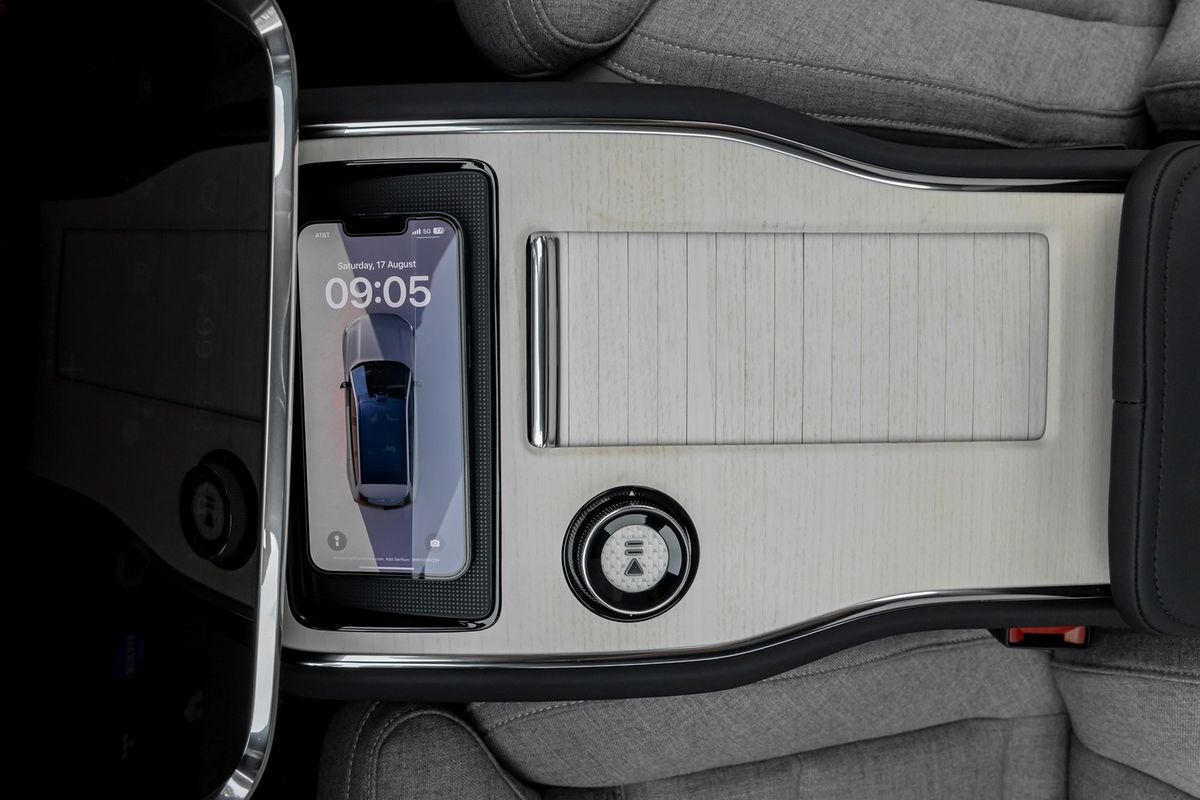
The car features a cooled wireless charging pad and plenty of USB ports for recharging electronic devices.
As for the cabin ambience, the Volvo EX90 is hushed inside with virtually zero wind and road noise… well, at least until you are travelling at triple-digit (in kph) speeds, I’d say.
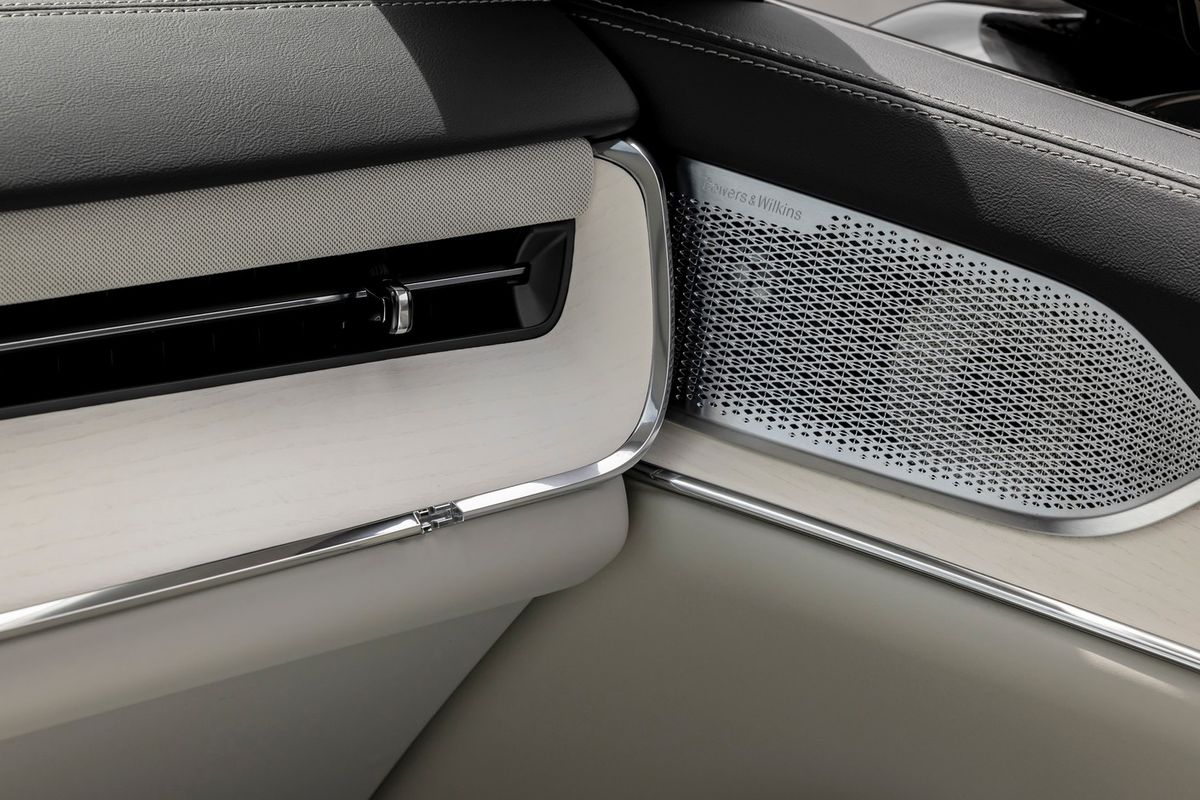
Yep, it’s an almost spooky experience, but to limit the likelihood of awkward silences driving you crazy, Volvo relied on its long-standing partner Bowers & Wilkins to develop a superb 25-speaker audio system specifically for this vehicle. Fleetwood Mac and Bruce Springsteen have never sounded this good!
After chatting with several of the Volvo engineers who were involved in the development of the EX90, it became apparent that this new vehicle is tantamount to a supercomputer on wheels. There’s an insane level of computing power on offer, thanks to Volvo’s partnerships with Nvidia, Google, Qualcomm, etc.
The Nvidia Drive Orin system-on-a-chip can complete over 250 trillion operations per second and is responsible for safety, infotainment, and battery management, while Qualcomm’s Snapdragon handles the cabin tech. The main benefit of the extensive use of tech is that Volvo has future-proofed the model to a large extent. The brand claims that thanks to over-the-air updates, the EX90 will get even better.
Now, about that bulge at the top edge of the windscreen, which is Luminar’s lidar (light detection and ranging) system. Right now, it’s only gathering data and learning about traffic and roads. When it’s fully active, it’ll facilitate higher levels of assisted driving, but that functionality will take a while to be rolled out because there are legal hurdles to overcome. Also, Volvo admits the system does not work 100% yet.
We’re okay with that, as we’re satisfied with the brand’s Pilot Assist 2 adaptive cruise control and lane-keeping assist systems (as fitted to the EX90), which take the chore out of driving in traffic. Suffice it to say, a 360-degree camera system is present too, but we weren’t all that impressed with its resolution.
What’s not good?
The car’s on-road manners are impressive, but not everything works
If Volvo launched the EX90 (in its current state) in Mzansi now (September 2024), the model would likely cause biblical levels of customer dissatisfaction. Why? Because while all the hardware is present, the software to fully operate it isn’t; to fix that would require the car to receive at least 1 over-the-air update.
Key features like Apple CarPlay, some of the Lidar-assisted safety tech, bidirectional charging and even one of the Bowers & Wilkins audio modes will only be activated in early 2025. Imagine you are a US-based customer who’d just forked out more than $90k (just over R1.6 million) for a Volvo EX90 only to be informed that not everything in your vehicle works… yet. I have and I’d be more than slightly irritated.
For us South Africans who are keen to take the plunge with an all-electric premium SUV, I don’t think you have much to worry about, the EX90’s expected launch date coincides with the much-needed updates.
The Google Automotive system is lovely, but would the interior be entirely ruined if it had a few buttons?
Our next gripe pertains to the user experience. As much as we applaud an uncomplicated, intuitive and responsive infotainment system, why are some core functions buried in the depths of the menu system?
Granted, some of the functions, such as adjusting the steering column and side mirrors, and opening the glovebox aren’t exactly used daily, but what happened to good old buttons? To reiterate, the cabin layout is the sheer embodiment of minimalism, so to enjoy that, you have to be willing to make some sacrifices.
When is the Volvo EX90 coming to South Africa?
Coming to SA in mid-2025
Volvo has said it “expects (to) launch the new EX90 in South Africa in early 2025, with the first customer vehicles scheduled to arrive in the Republic towards the end of the 2nd quarter of next year.”
Our advice is to wait until all the features have been activated – and the software bugs ironed out – before you purchase the model.
Summary and Price Prediction?
When the EX90 touches down in South Africa, we reckon Volvo Car South Africa will be bullish and follow a similar strategy to what it did with the EX30 and launch the model with an aggressive pricing structure. That being said, the EX90 will be an ultra-luxurious and tech-laden electric flagship family car that will command a premium. We reckon it’ll be a minor miracle if the range starts from about R1.8 million.
Should you put Volvo’s newcomer on your premium SUV shopping list? Despite the need for some tweaked software and a few finishing touches, the EX90 is poised to be a ground-breaking vehicle – locally and internationally. The model’s tech is jaw-dropping, but the fact that it gets the basics so right –and then some – is even more impressive. This is not just a good electric car, it’s a good car full stop.
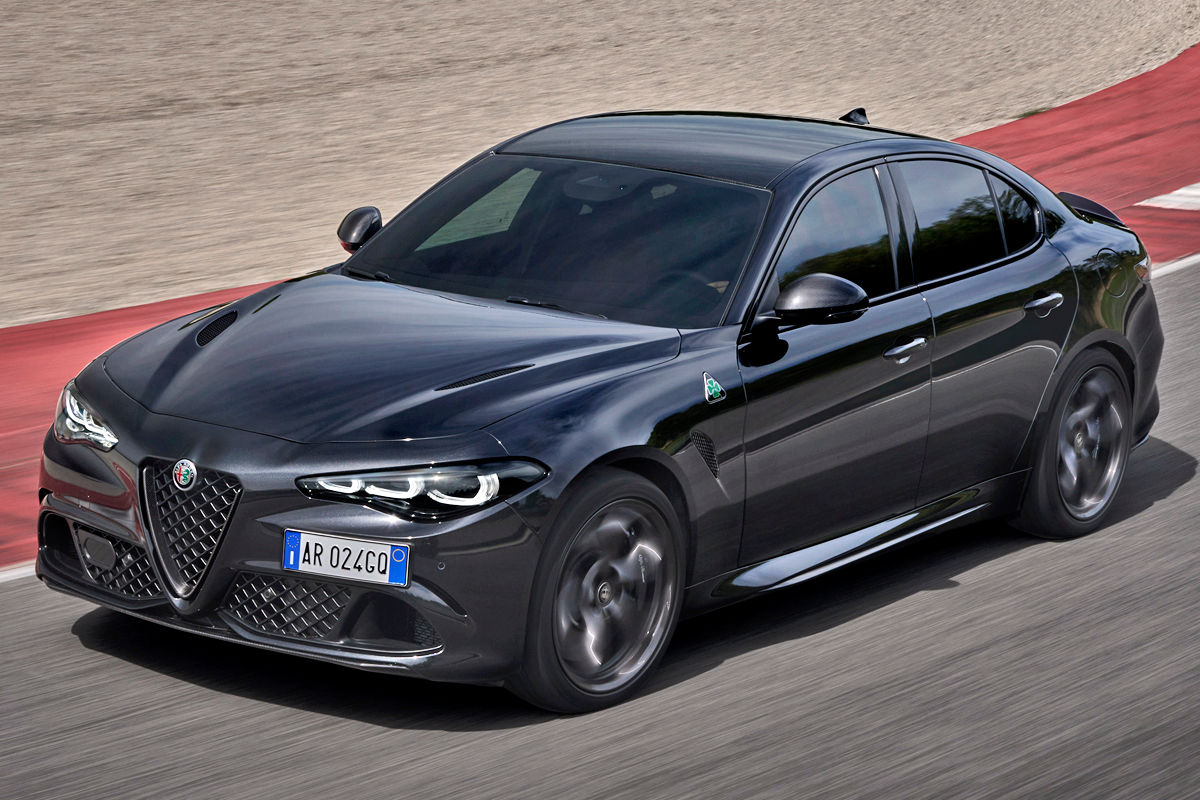
Alfa Romeo Giulia & Stelvio Quadrifoglio Super Sport (2024) Price & Specs
Prices for the newQuadrifoglioSuper Sport versions of the Alfa Romeo Giulia and Stelvio have been released, but South Africa will likely receive only a few units…
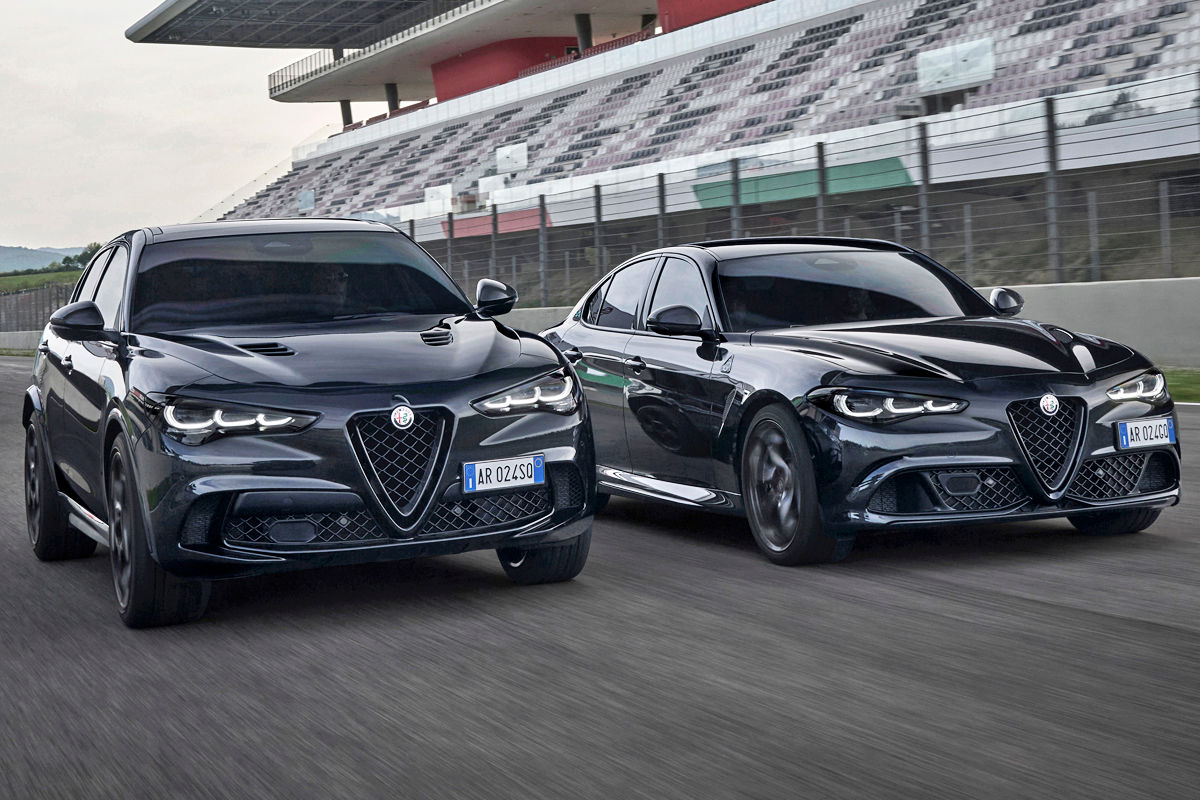
Back in May 2024, Alfa Romeo whipped the wraps off new Quadrifoglio Super Sport versions of its Giulia sedan and Stelvio SUV. Now, prices for these limited-run derivatives in South Africa have been released.
Before we take a closer look at the sticker prices, it’s worth keeping in mind the Italian firm will produce just 275 units of the Giulia Quadrifoglio Super Sport and only 175 units of the Stelvio Quadrifoglio Super Sport for global consumption.
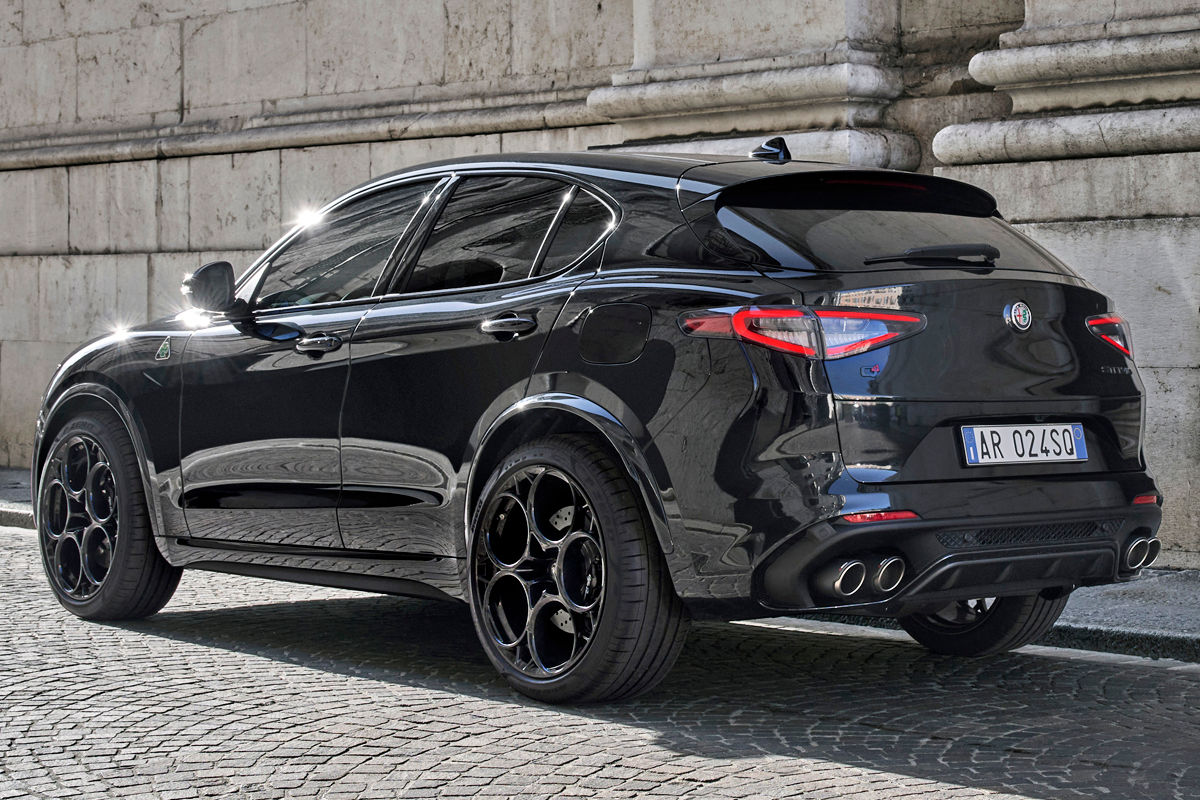
Only a few units are expected to be available in Mzansi.
As such, South Africa seems likely to receive an extremely limited allocation – we’re thinking a number you can count on one hand. So, how much will these exclusive derivatives cost you (if they’re not all already accounted for, that is)?
Well, the rear-wheel-drive Giulia Quadrifoglio Super Sport is priced at R2 229 900, representing a R220 000 premium over the “standard” Quadrifoglio version of the high-performance sedan (which Alfa Romeo currently lists at R2 009 900 on its website, along with a seemingly outdated figure of R1 849 083 – perhaps for the prior model year – on its configurator).
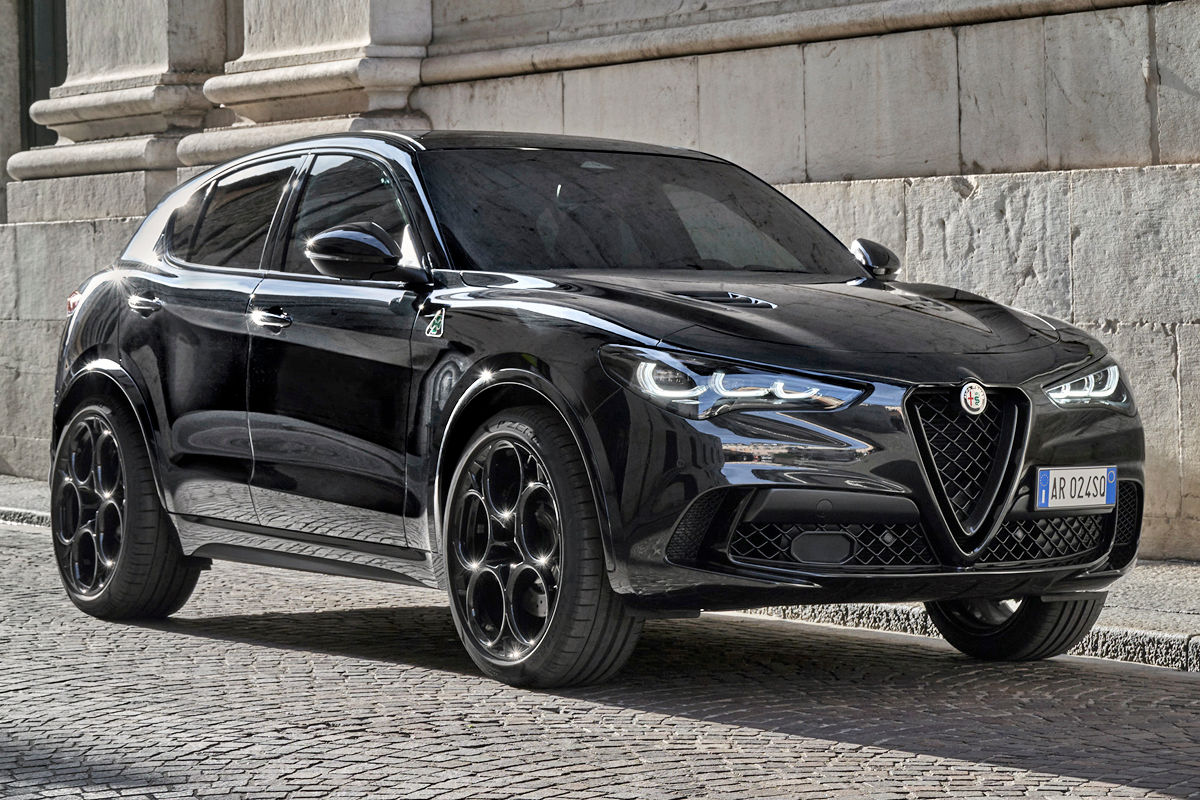
Dark 21-inch alloys are standard on the Stelvio Super Sport.
Meanwhile, the all-wheel-drive Stelvio Quadrifoglio Super Sport starts at R2 508 900, which makes it R316 000 pricier than the model it’s based on. For the record, the standard Stelvio Quadrifoglio is listed on Alfa’s local website at R2 192 900, with the configurator still showing an old figure of R1 956 900.
So, what makes a Super Sport? Well, while the twin-turbo 2.9-litre V6 petrol engine is unchanged – as are its peak outputs of 375 kW and 600 Nm – here it combines with a mechanical limited-slip differential derived from the Giulia GTA. Alfa Romeo claims this optimises torque transfer and increases stability, agility and cornering speed.
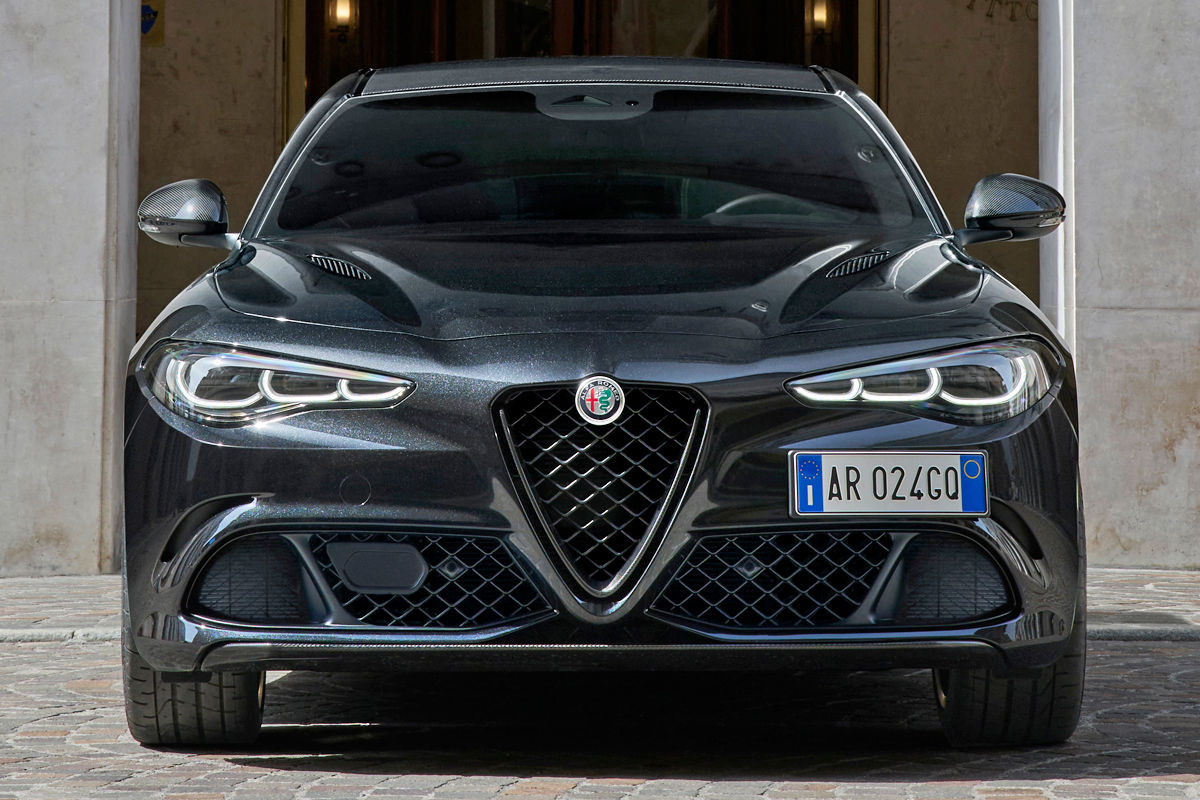
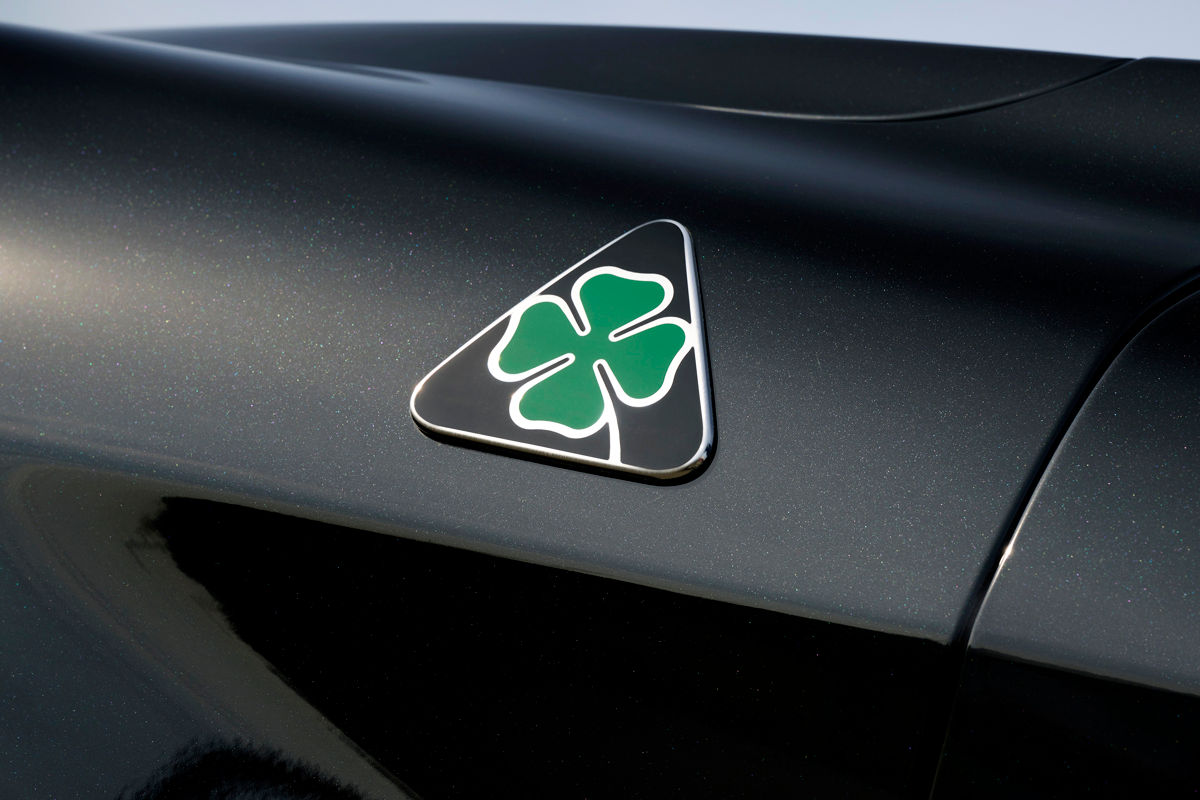
The 4-leaf clover badge features a black background for the first time.
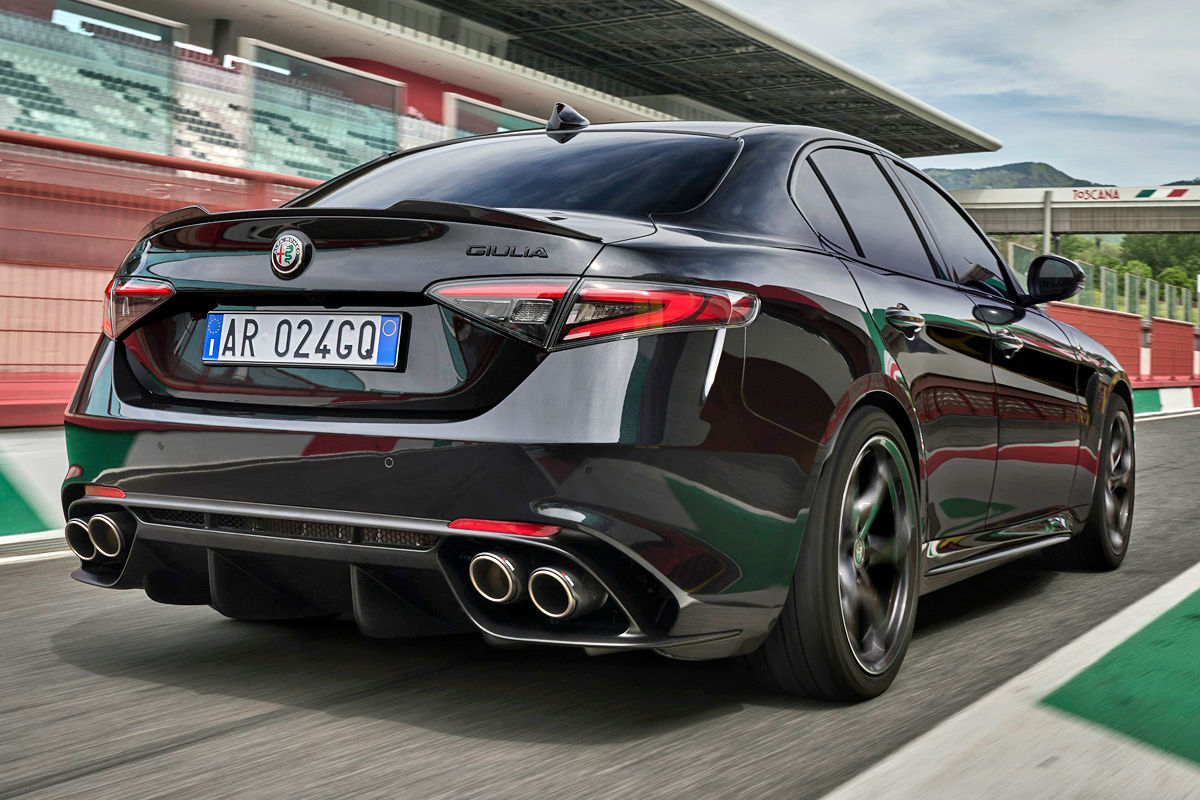
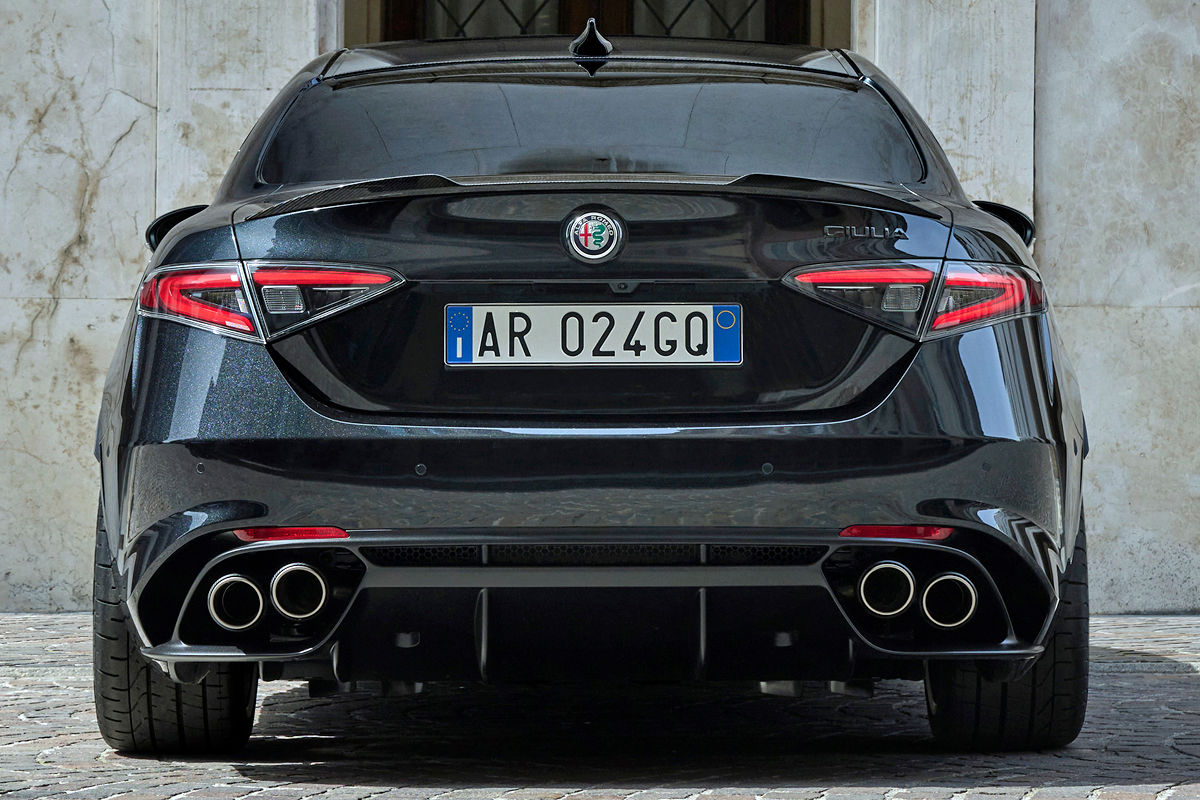
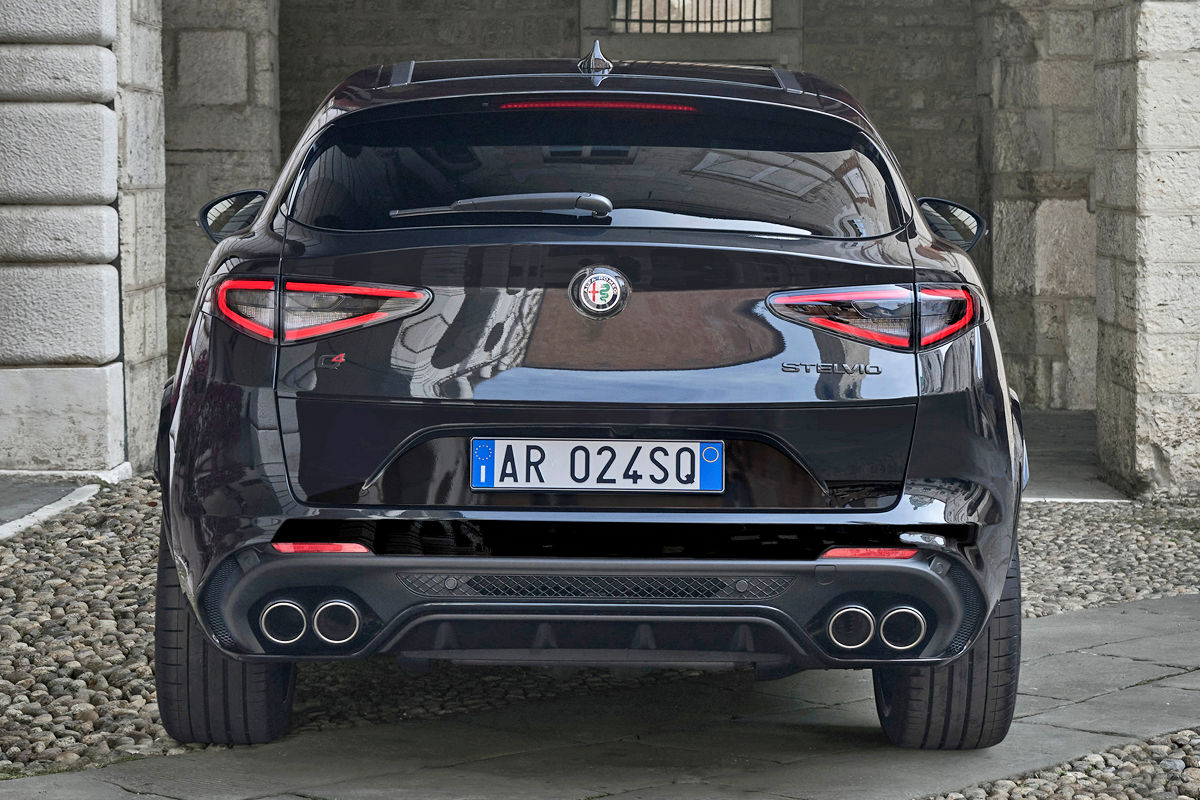
In addition, the Giulia version scores an Akrapovič exhaust system, a carbon-fibre roof, carbon-fibre side mirror caps, black brake callipers, a black “Giulia” badge and a 4-leaf clover logo featuring a black background. Meanwhile, the Stelvio version adds 21-inch alloys and drops the carbon-fibre roof for a panoramic glass roof.
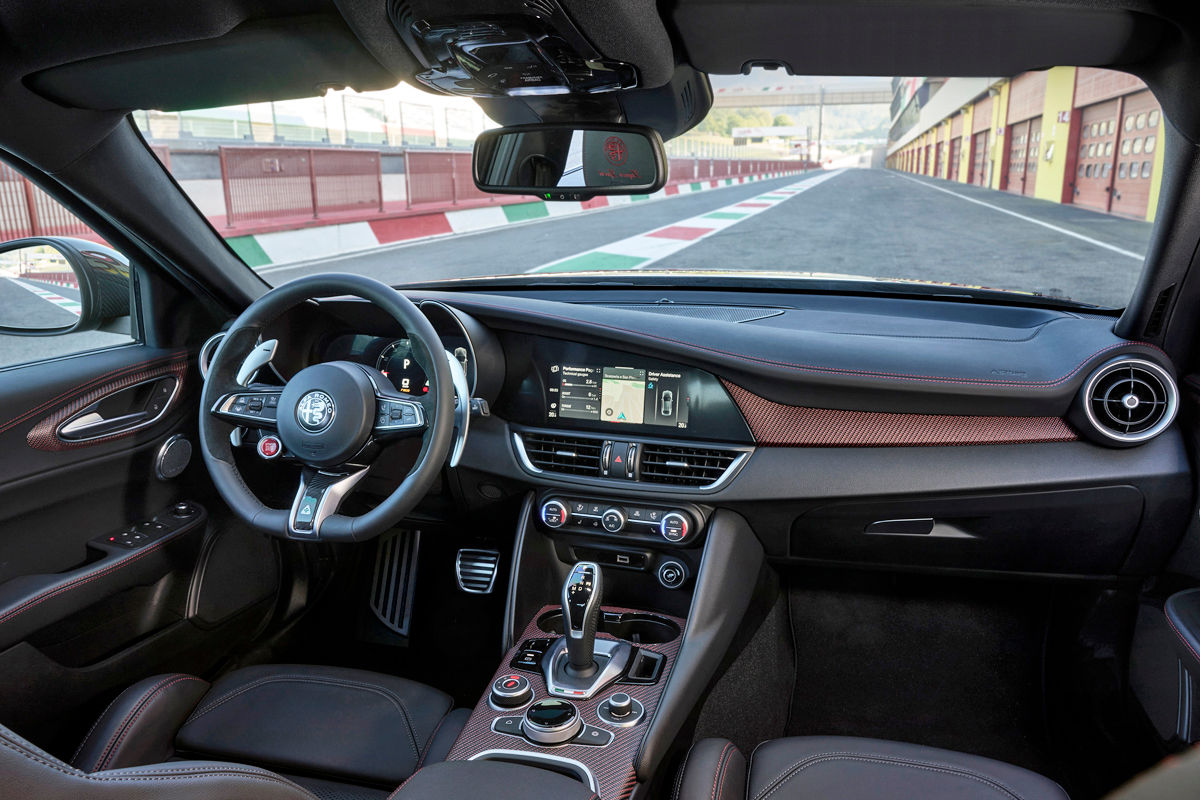
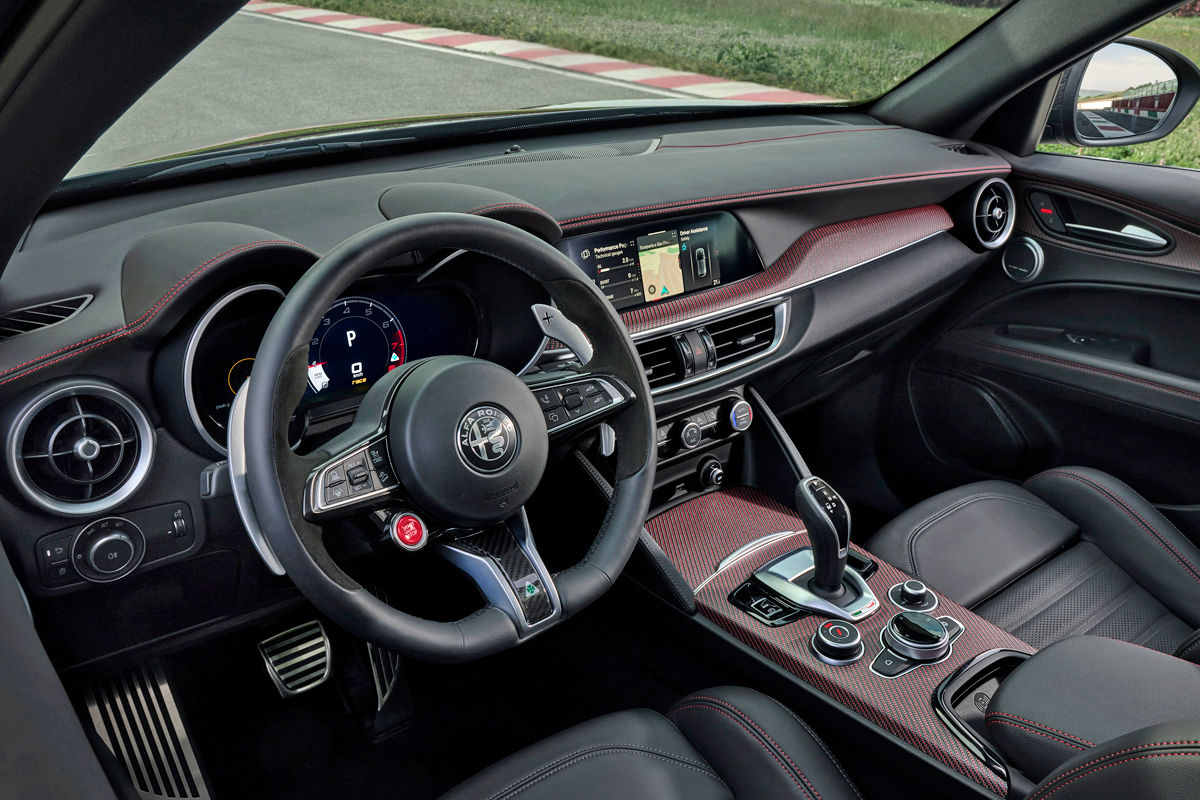
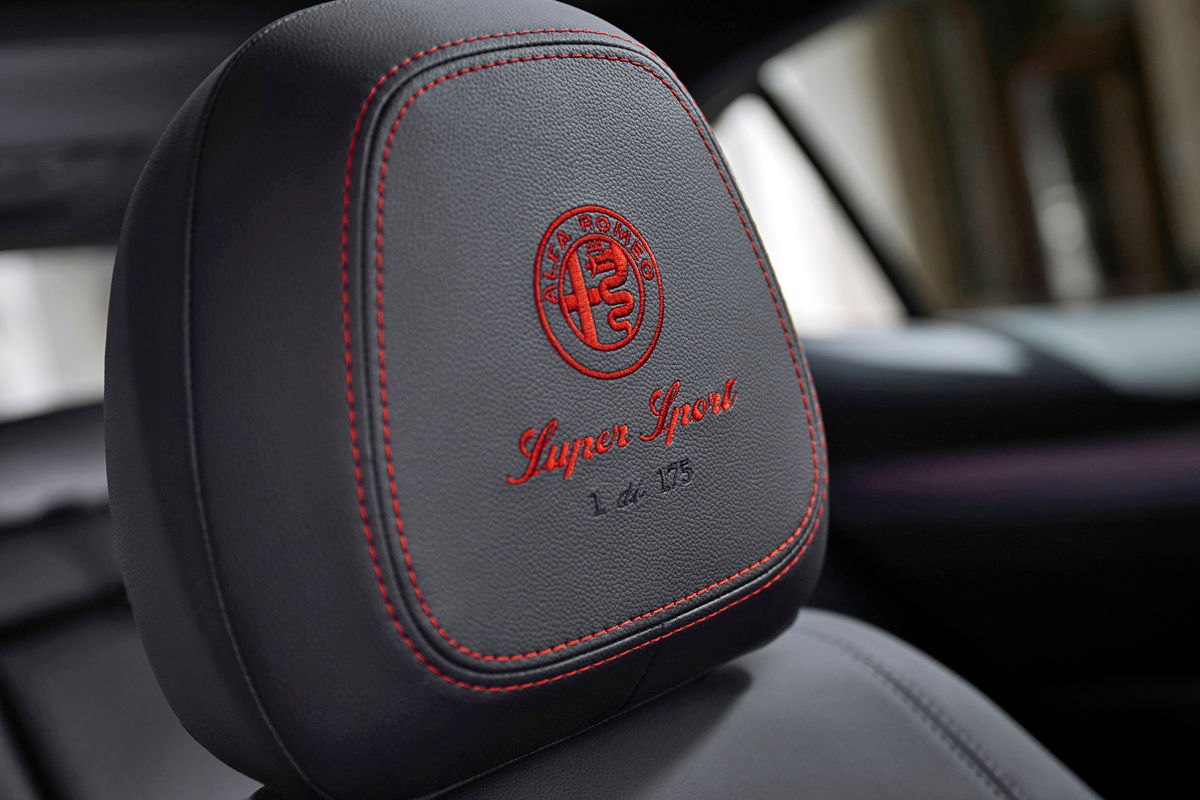
Inside, both derivatives feature a new “3D” finish in red carbon-fibre on the dashboard, central tunnel and door panels. Furthermore, the front headrests gain the “Super Sport” logo in red as well as the vehicle’s build number in black.
How much do the new Super Sport derivatives cost?
Alfa Romeo Giulia Quadrifoglio – R2 009 900
Alfa Romeo Giulia Quadrifoglio Super Sport – R2 229 900
Alfa Romeo Stelvio Quadrifoglio – R2 192 900
Alfa Romeo Stelvio Quadrifoglio Super Sport – R2 508 900
The prices above include the brand’s 5-year/100 000 km warranty and maintenance plan.