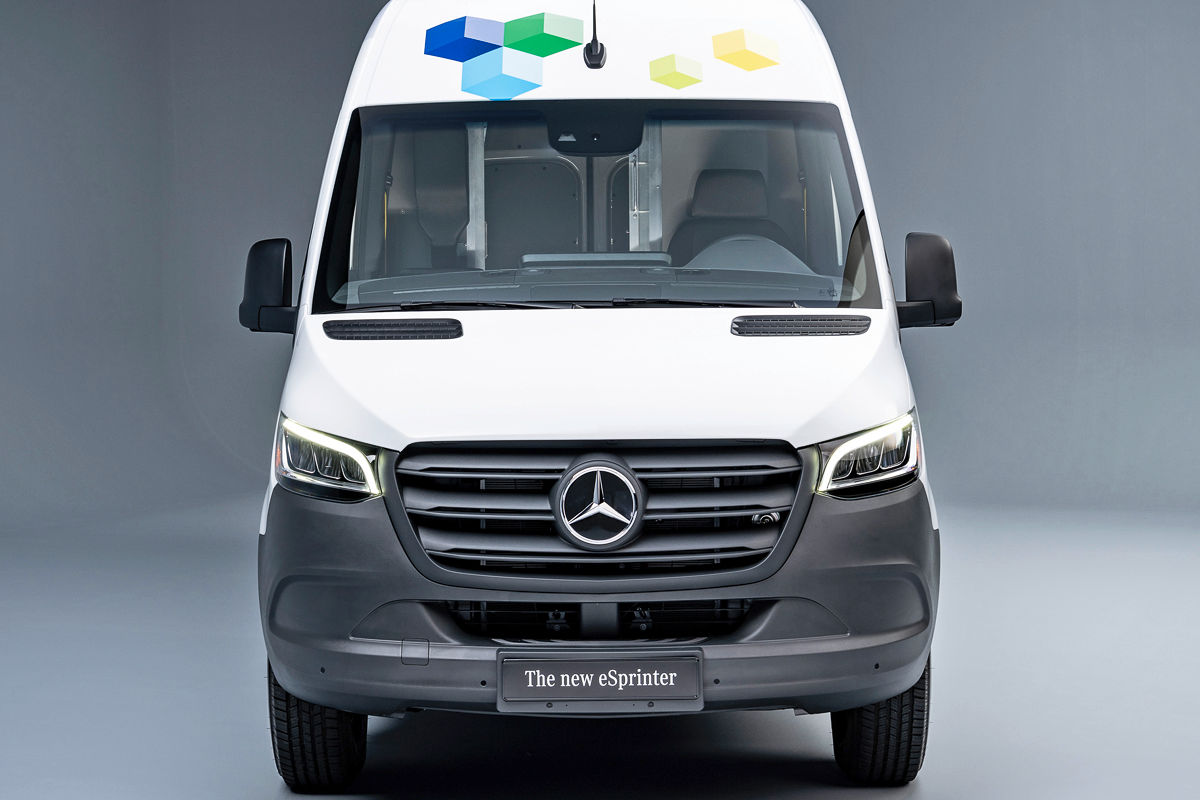
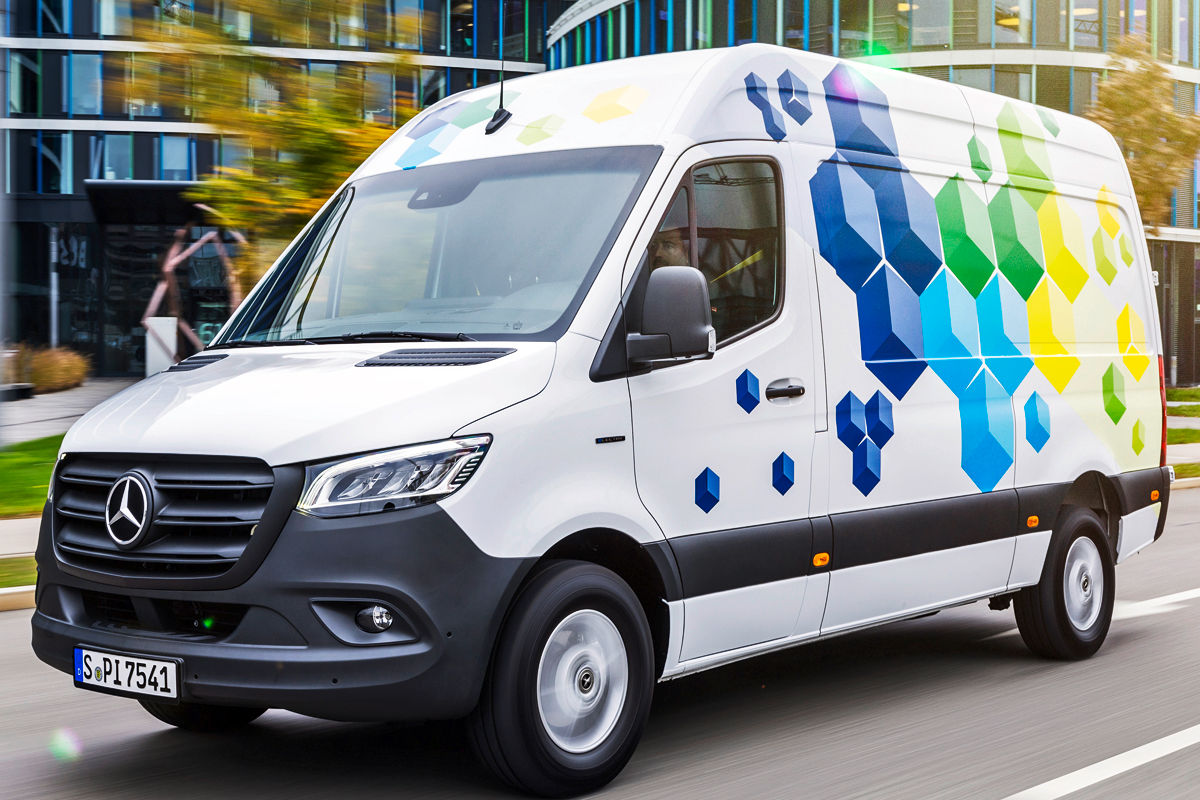
The fully electric Mercedes-Benz eSprinter has officially launched in South Africa, arriving as the country’s most expensive panel van. Here’s how much it costs…
The fully electric Mercedes-Benz eSprinter has officially hit the market in South Africa, with the local range comprising a trio of derivatives at launch. The electric panel van is available in either standard- or long-wheelbase (LWB) form, with 2 battery capacities on offer.
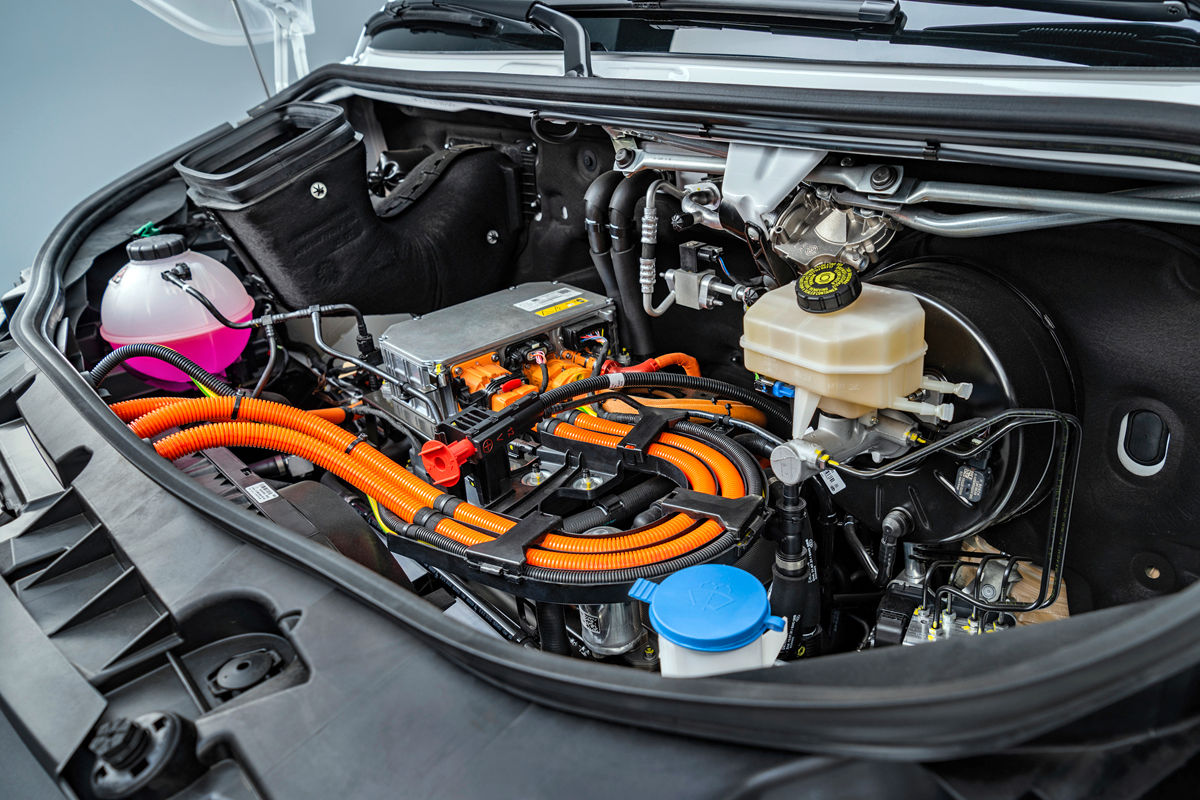
The standard-wheelbase derivative employs a rear-mounted 100 kW/400 Nm electric motor and an 81 kWh (usable capacity) battery pack, a powertrain that is likewise offered in LWB form. The flagship LWB variant, meanwhile, upgrades to a 150 kW/400 Nm electric motor and a 113 kWh (usable capacity) battery. Gross vehicle weight is a claimed 4 250 kg, while towing capacity is “up to” 2 000 kg and load volume “up to 14 m³”.
Gross vehicle weight is a claimed 4 250 kg, while towing capacity is said to be “up to” 2 000 kg and load volume “up to 14 m³”. And, yes, the eSprinter is easily the market’s most expensive panel van.
Just how expensive? Well, the 414 eSprinter Pro (81 kWh) kicks off at R1 270 030, while the 420 eSprinter Pro LWB (81 kWh) starts at R1 301 140. The flagship variant is the 420 eSprinter Pro LWB (113 kWh), which comes in from R1 566 723.
Curiously, the local press release does not include any official claimed single-charge range figures, instead mentioning a 475 km route covered by a “pre-production” model equipped with the 113 kWh battery pack, as well as a “preliminary” 530 km figure based on “simulations”. The local website, meanwhile, says only that range will depend on the “individual driving style, road and traffic conditions, outside temperature, and the use of the air conditioning system, heating system and other electrical consumers”.
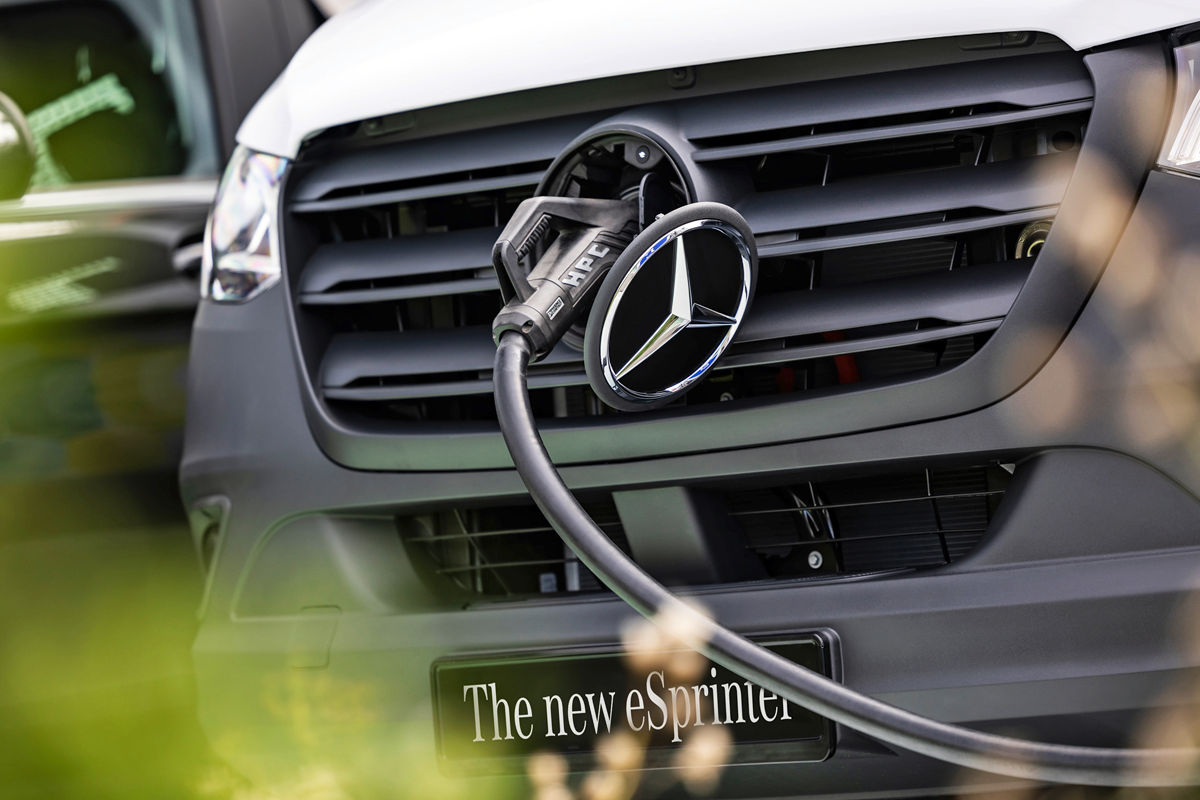
According to Mercedes-Benz Vans, the eSprinter’s battery pack can be charged with direct current at up to 115 kW at a fast-charging station, which would take the 81 kWh unit to 80% in “around 32 minutes” (presumably from empty) and 113 kWh unit to the same mark in “approximately 42 minutes”. The official price list, however, suggests this 115 kW maximum charge speed is a R14 605 extra, with the standard DC charging rate instead coming in at 50 kW.
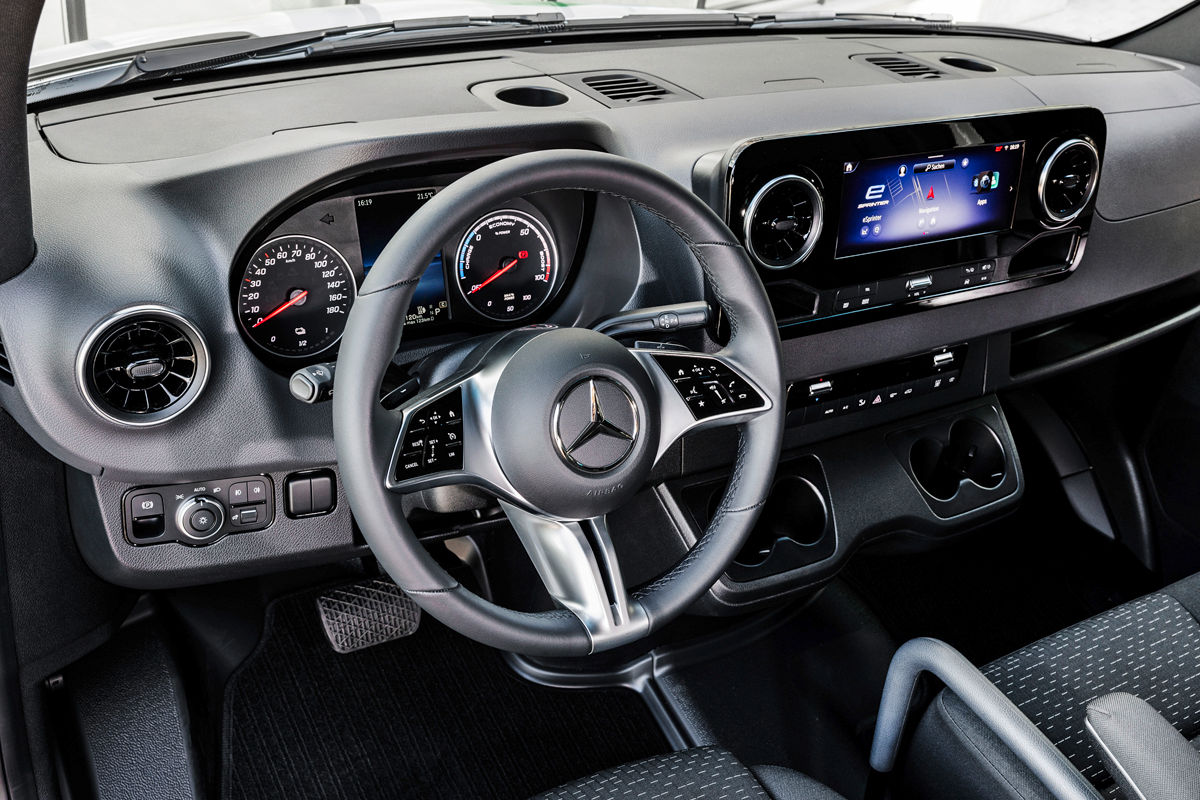
The so-called “Pro” package is standard on all 3 derivatives and includes items such as a USB socket, semi-automatic air conditioning, active brake assist, hill-start assist, a multifunctional steering wheel (with rake-and-reach adjustment), a heated driver’s seat, rain-sensing wipers, cruise control and the MBUX multimedia system (though navigation will cost you an extra R14 473).
“With the introduction of the new eSprinter, we are solidifying our position as leaders in electric drive technology. The new eSprinter redefines what an electric van can be. Its innovative design, robust technical features and exceptional efficiency make it the perfect choice for businesses looking to embrace locally-emission-free mobility without compromising on performance,” said Marinus Venter, Head of Product, Marketing and Customer Services for Mercedes-Benz Vans SA.
“By launching the premium eSprinter in the South African market, we aim to transform the industry, by reaffirming our commitment to delivering cutting-edge, sustainable solutions that meet the diverse needs of our esteemed customers,” he added.
How much does the Mercedes-Benz eSprinter cost in SA?
414 eSprinter Pro (81 kWh) – R1 270 030
420 eSprinter Pro LWB (81 kWh) – R1 301 140
420 eSprinter Pro LWB (113 kWh) – R1 566 723
The prices above include a 2-year/unlimited kilometre warranty, with the battery pack covered by an 8-year/160 000 km warranty “certificate”. Mercedes-Benz Vans offers what it calls the “ServiceCare eComplete Plan” (with intervals of 1 year or 40 000 km) as an option, starting at R54 683 for the 5-year/100 000 km arrangement.
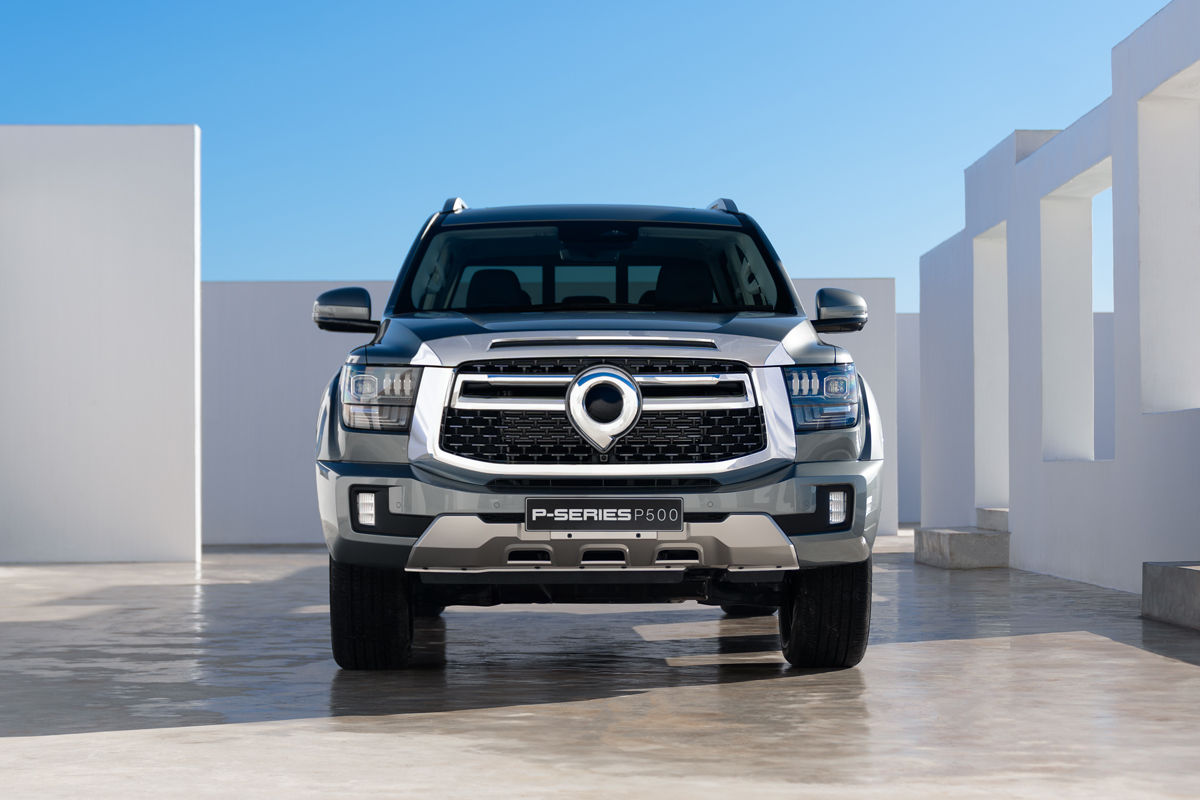
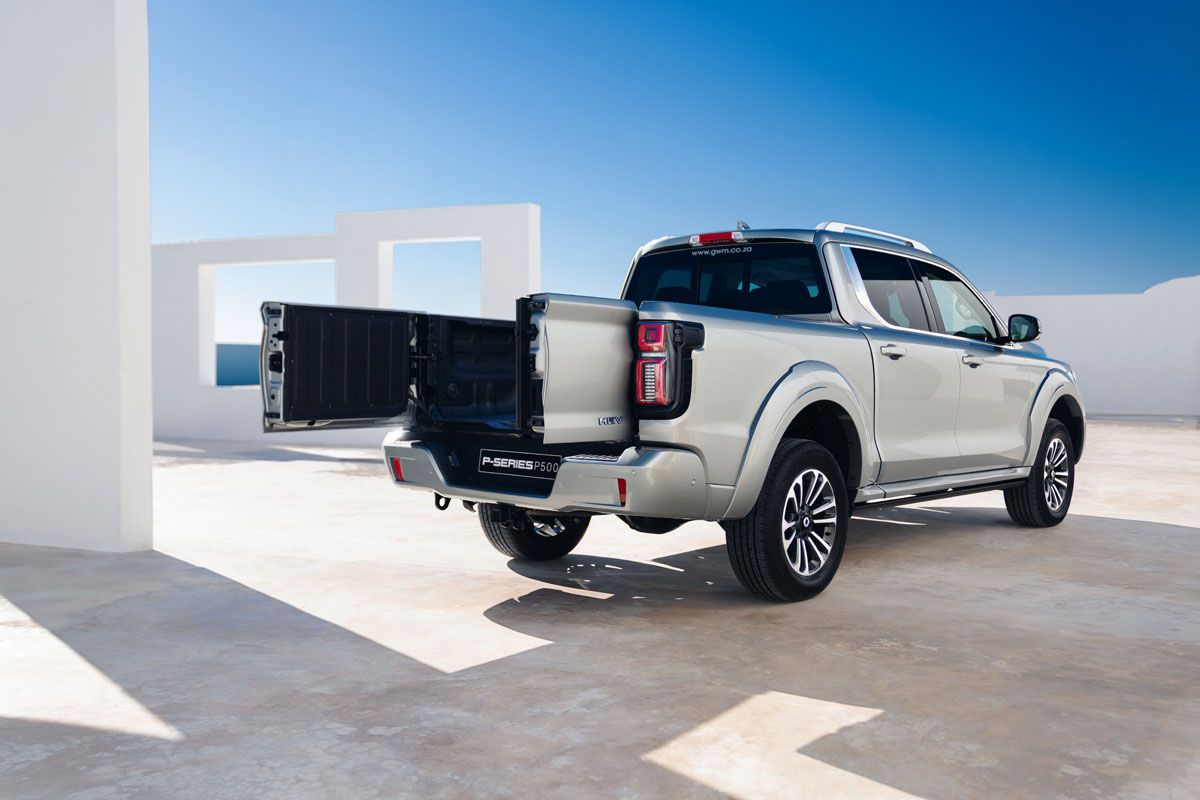
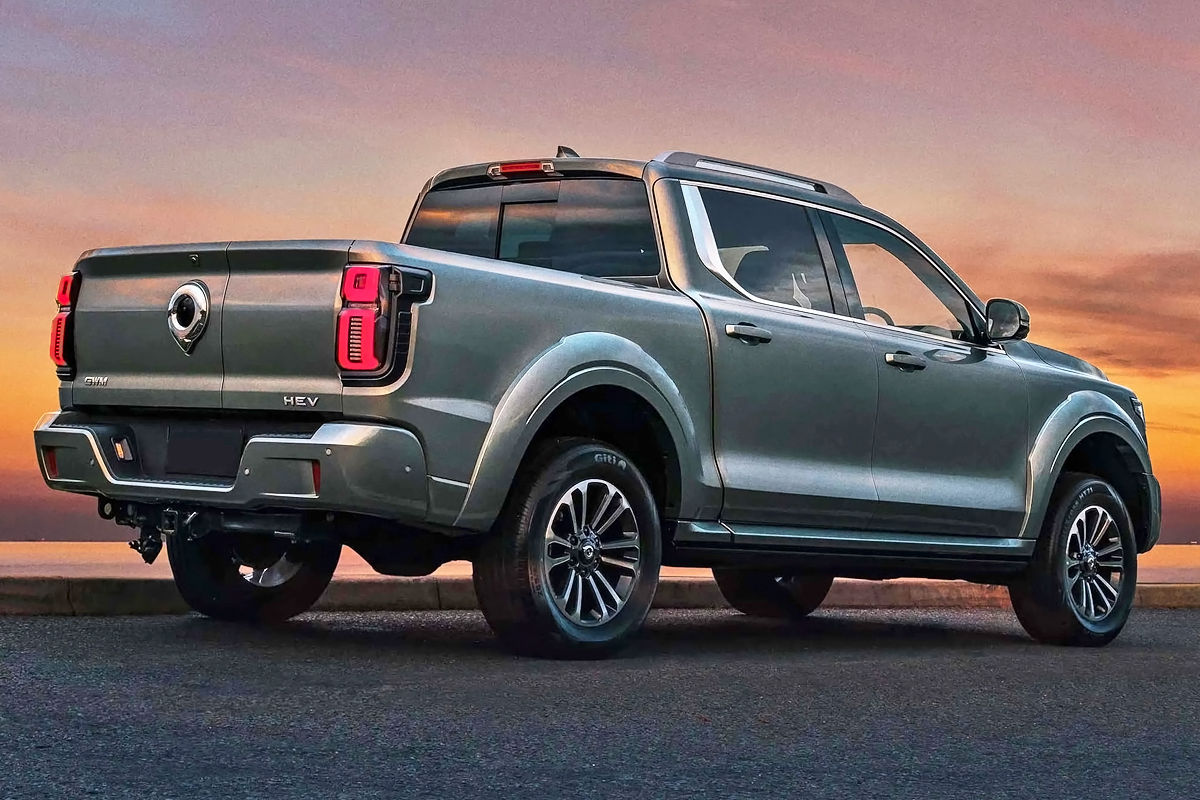
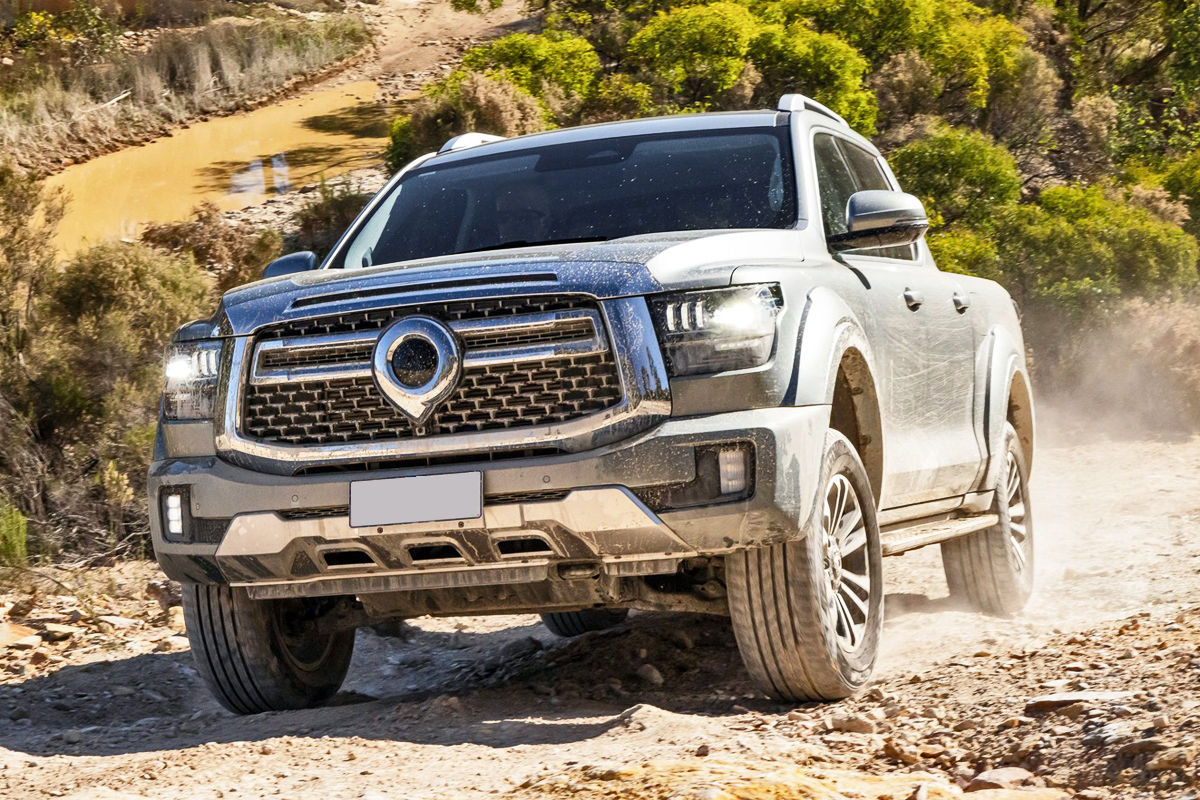
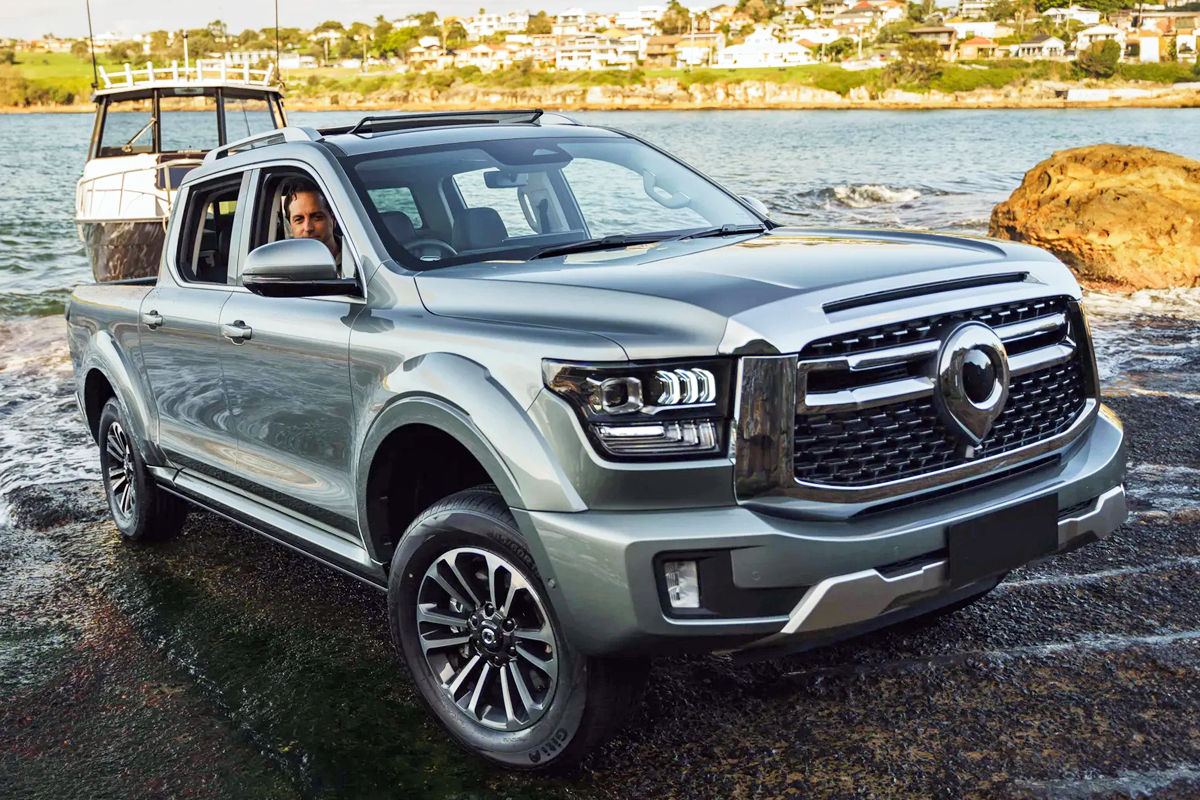
The new GWM P-Series P500 – which debuts a fresh 2.4-litre turbodiesel engine and is also offered in 255 kW hybrid form – has officially launched in South Africa!
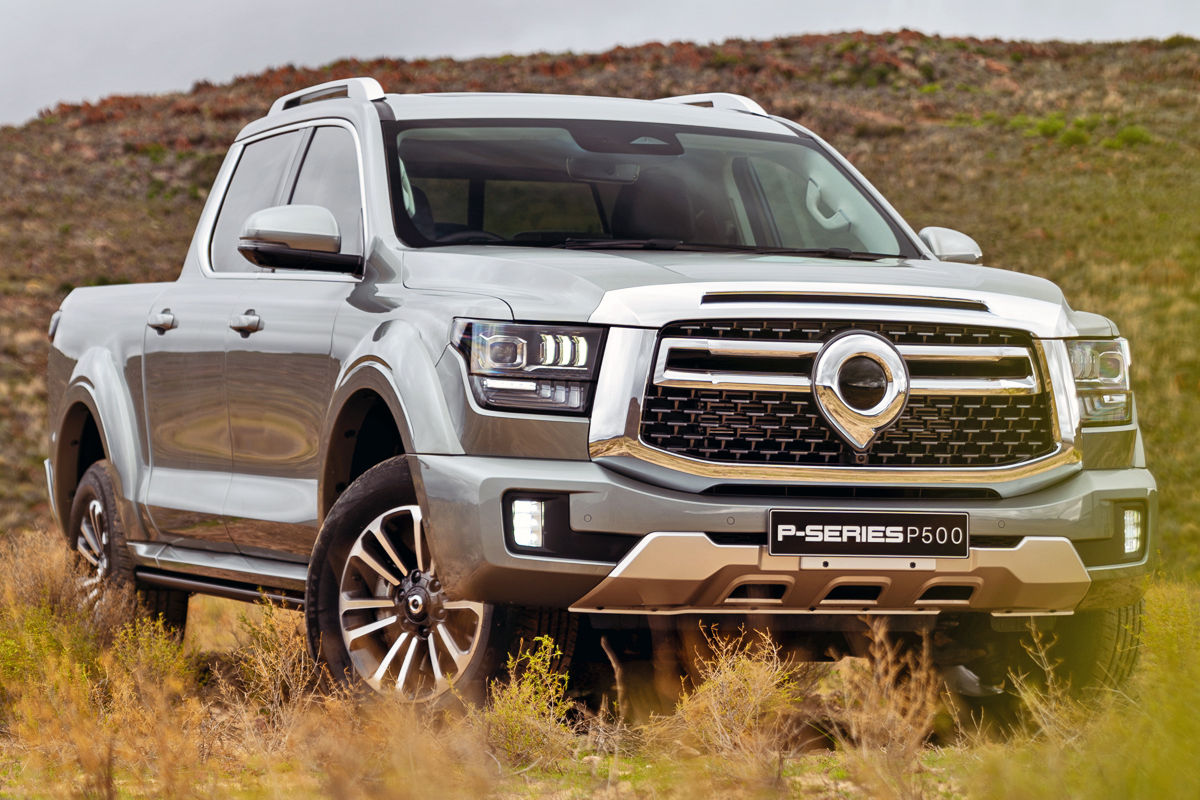
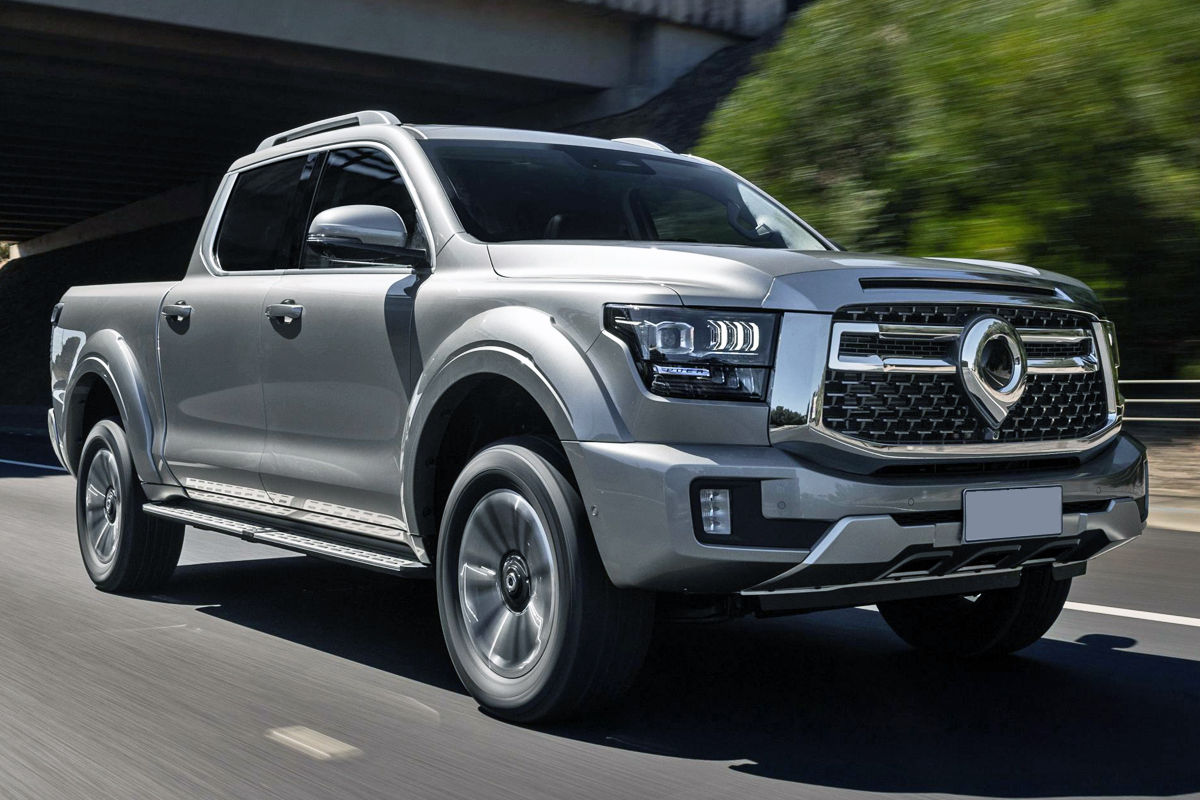
The new GWM P-Series P500 has officially launched in South Africa, some 3 weeks after Cars.co.za published its pricing scoop (22 July 2024). As we reported at the time, this supersized Chinese double-cab bakkie debuts a fresh 2.4-litre turbodiesel engine and is also available in 255 kW hybrid guise.
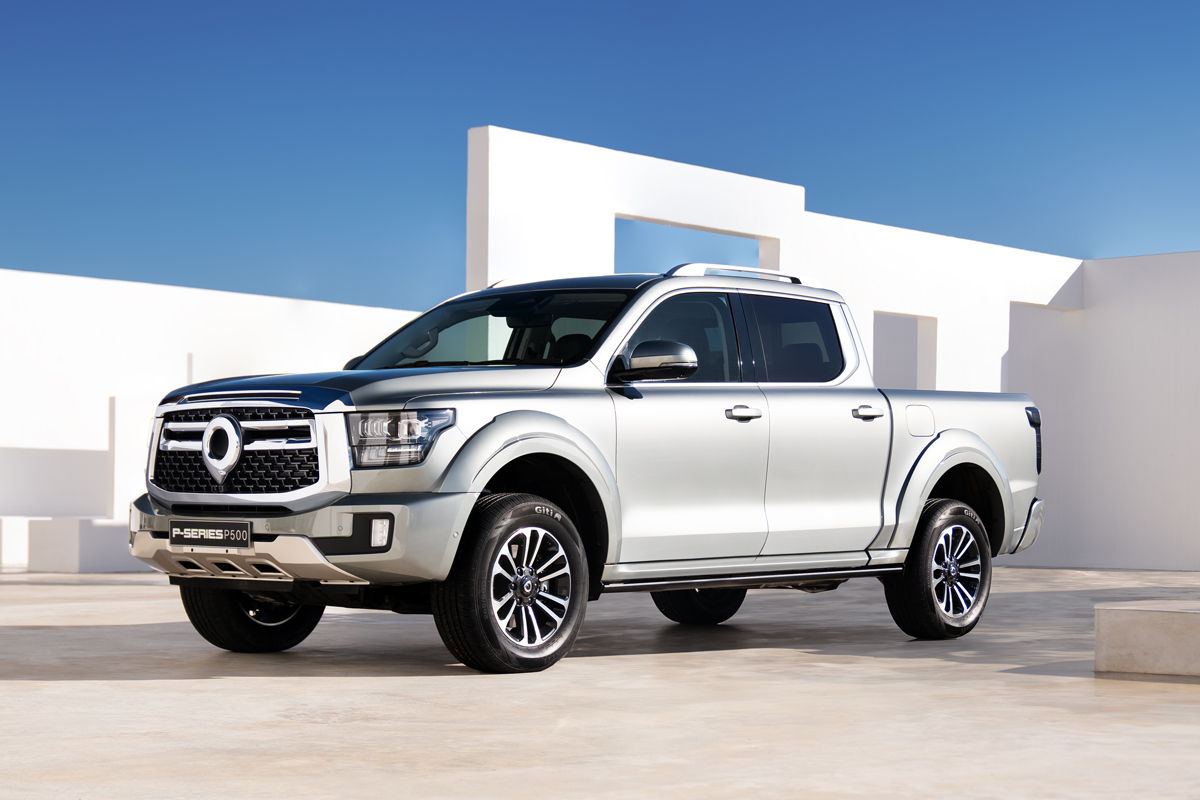
At launch, the new P-Series P500 is offered in 3 forms, with this trio of double-cab derivatives slotting in above the existing P-Series variants.
First up is the P-Series P500 2.4TD Luxury 4×4 9AT, which is priced from R799 900. Power comes from a new 2.4-litre, 4-cylinder turbodiesel mill codenamed GW4D24, which generates peak outputs of 135 kW and 480 Nm. Drive is delivered to all 4 wheels via a 9-speed automatic transmission as standard, while claimed fuel economy comes in at 8.6 L/100 km.
This fresh powertrain – which makes 15 kW and 80 Nm more than the 2.0-litre oil-burner that’s employed across the standard P-Series portfolio – is likewise offered in the P-Series P500 2.4TD Super Luxury 4×4 9AT, which starts at R889 900.
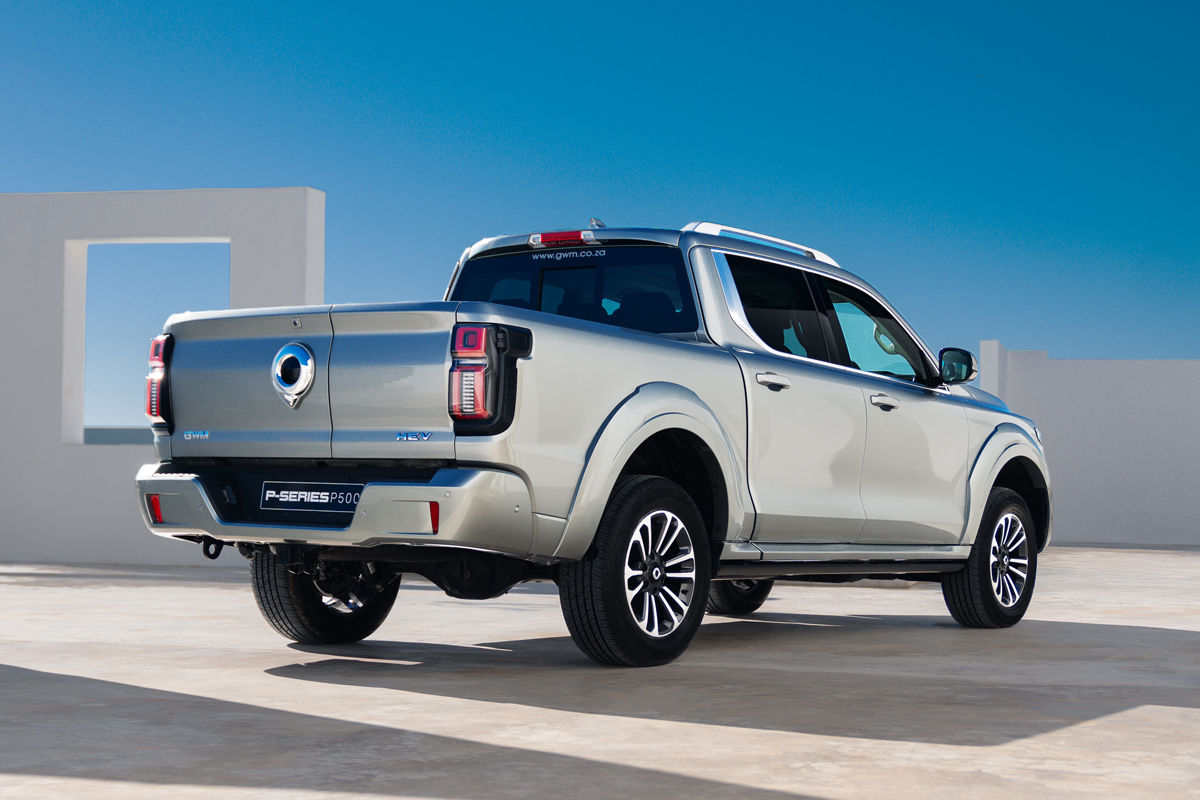
Finally, there’s the P-Series P500 2.0T HEV Ultra Luxury 4×4 9AT, which is priced at R999 900, narrowly avoiding admission to SA’s growing club of 7-figure bakkies. This flagship variant uses GWM’s turbocharged 2.0-litre petrol-hybrid set-up, which is already familiar from the top-spec Tank 300 and also features in the Tank 500.
As it does in those ladder-frame SUVs, the P500 version of this powertrain churns out 255 kW and 648 Nm, outputs that are channelled to all 4 corners through a 9-speed automatic transmission. Claimed fuel consumption is listed as 9.8 L/100 km.
The P-Series P500 2.0T HEV Ultra Luxury 4×4 9AT thus launches as South Africa’s first full parallel hybrid bakkie (remember, Toyota’s Hilux 48V derivatives use a mild-hybrid arrangement, while Ford’s electrified Ranger employs a plug-in hybrid set-up and has yet to hit the market). For now, at least, it seems the 260 kW/500 Nm turbocharged V6 petrol engine GWM offers in some other countries is off the menu for Mzansi.
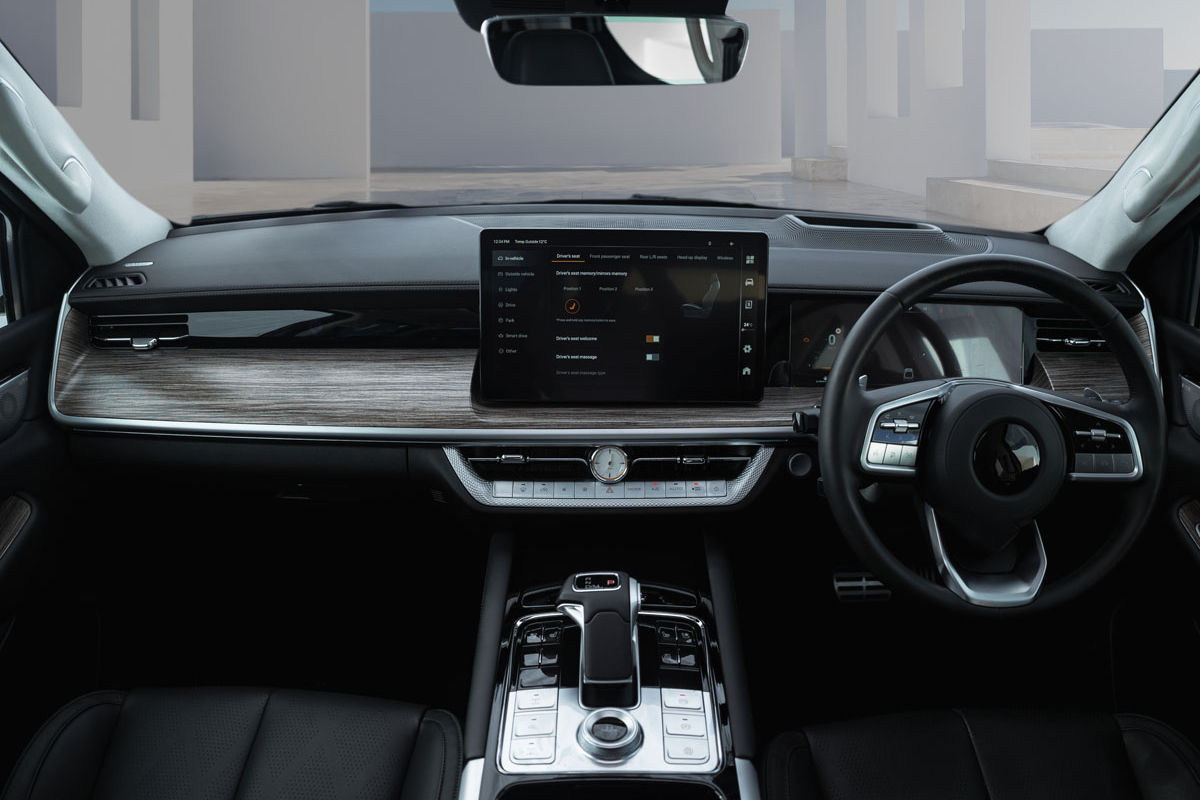
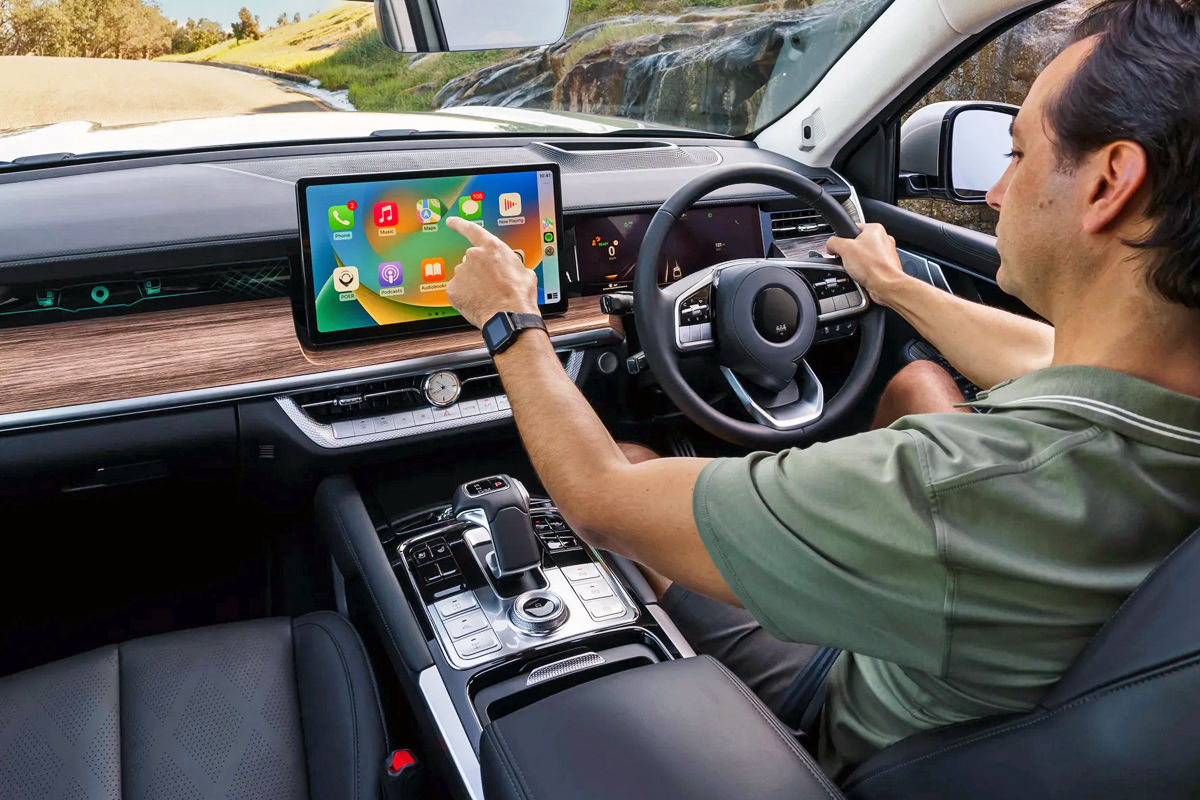
So, what about specifications? Well, the Luxury trim level includes items such as 18-inch alloy wheels (shod in 265/60 R18 tyres), a 12.3-inch touchscreen system (with wireless Apple CarPlay and Android Auto), a 360-degree camera, a 6-speaker sound system (with integrated amplifier), parking sensors (fore and aft) and keyless entry.
The list of standard safety equipment includes a full complement of airbags (front, front side, curtain and front centre), adaptive cruise control, traffic-jam assist, trailer sway mitigation, rear cross traffic alert, lane-change assist, front collision warning, automatic emergency braking, pedestrian safety assist, bicycle safety assist, automatic collision unlocking, brake assist and downhill assist.
The Super Luxury grade adds items such as front-and-rear electronically controlled differential locks, an electric rear sliding window, an electro-chromatic rear-view mirror, electric adjustment for the front seats (8-way for the driver and 6-way for the front passenger), front-seat ventilation, front-seat heating, a front-seat massage function, Nappa leather upholstery, a 14.6-inch touchscreen, a panoramic sunroof, wireless smartphone charging, a 220V power outlet, auto-folding side mirrors (with a memory function), an “easy-lift” 40:60-split tailgate and front foglamps.
Finally, the Ultra Luxury furthermore scores steering-wheel heating and storage trays under the rear seats, along with a ventilation-and-heating function, 2-way electric adjustment and wireless smartphone charging for rear passengers. Other features specific to this hybrid model include ambient lighting, a head-up display, a “retro” clock, a 10-speaker Harman Infinity sound system, parking assist, adjustable regenerative braking, extra parking sensors (up from 4 to 6) and a demister function for the side mirrors.
Known as the “Shanhai Cannon” in its domestic market of China, as the “Poer Sahar” in Thailand and as the “Cannon Alpha” in Australia, the jumbo-sized bakkie measures a whopping 5 445 mm from snout to rump, making it a considerable 120 mm longer than a Hilux Legend RS double cab and 85 mm lengthier than a Ford Ranger Raptor. It stands 1 991 mm wide and 1 924 mm tall, while sporting a 3 350 mm wheelbase.
While payload capacities are curiously not listed for the SA-market P500, it’s worth noting the equivalent Cannon Alpha offered Down Under is rated to carry between 735 kg and 821 kg, depending on the derivative (with the hybrid at the lower end of that scale). All variants, however, boast the full 3 500 kg braked towing capacity.
How much does the new GWM P-Series P500 cost in SA?
A 5-year/75 000 km service plan ships standard, with the standard warranty taking the form of GWM’s 7-year/200 000 km arrangement (plus 8-year/150 000 km coverage for the hybrid variant’s battery pack).
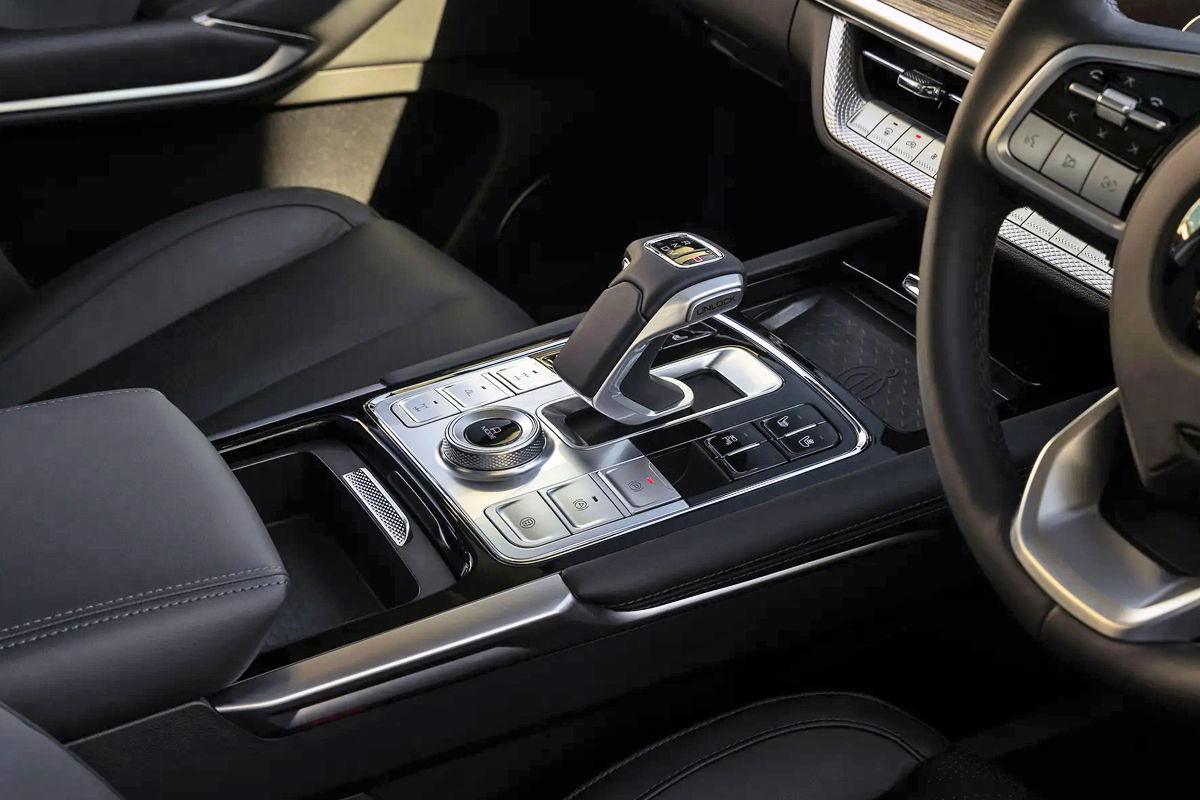
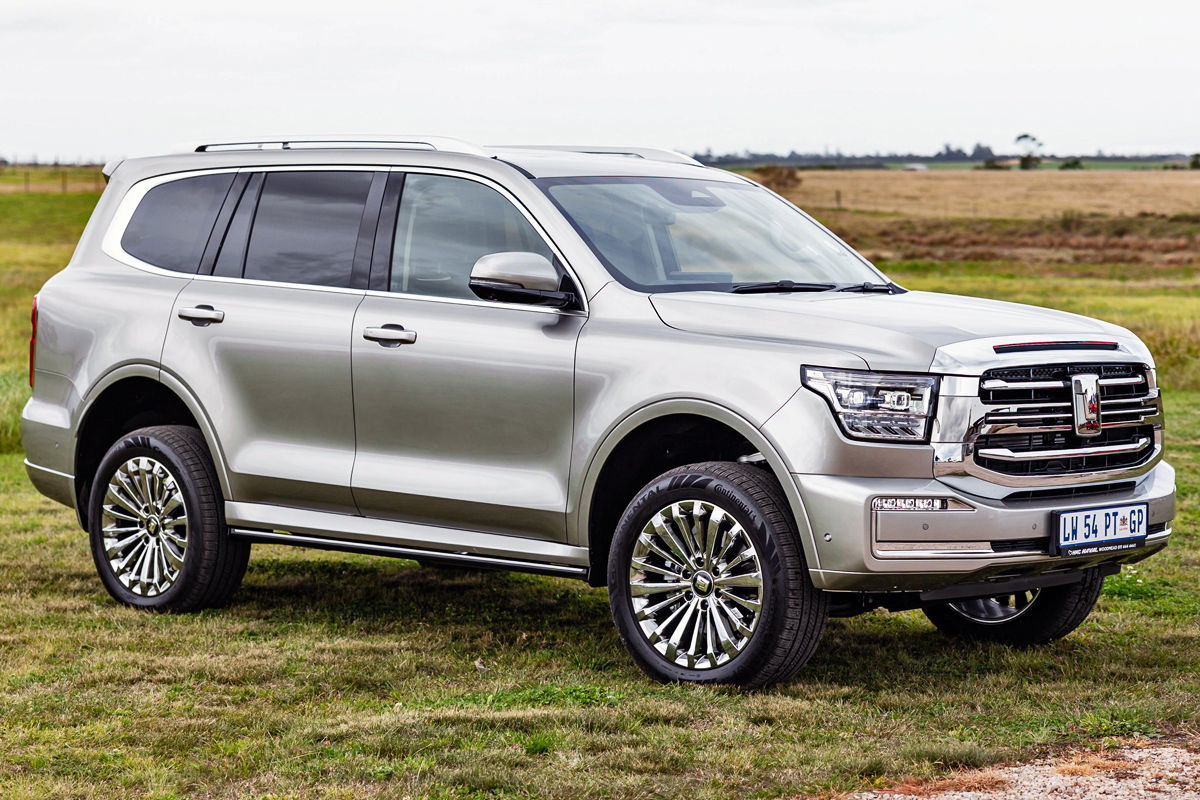
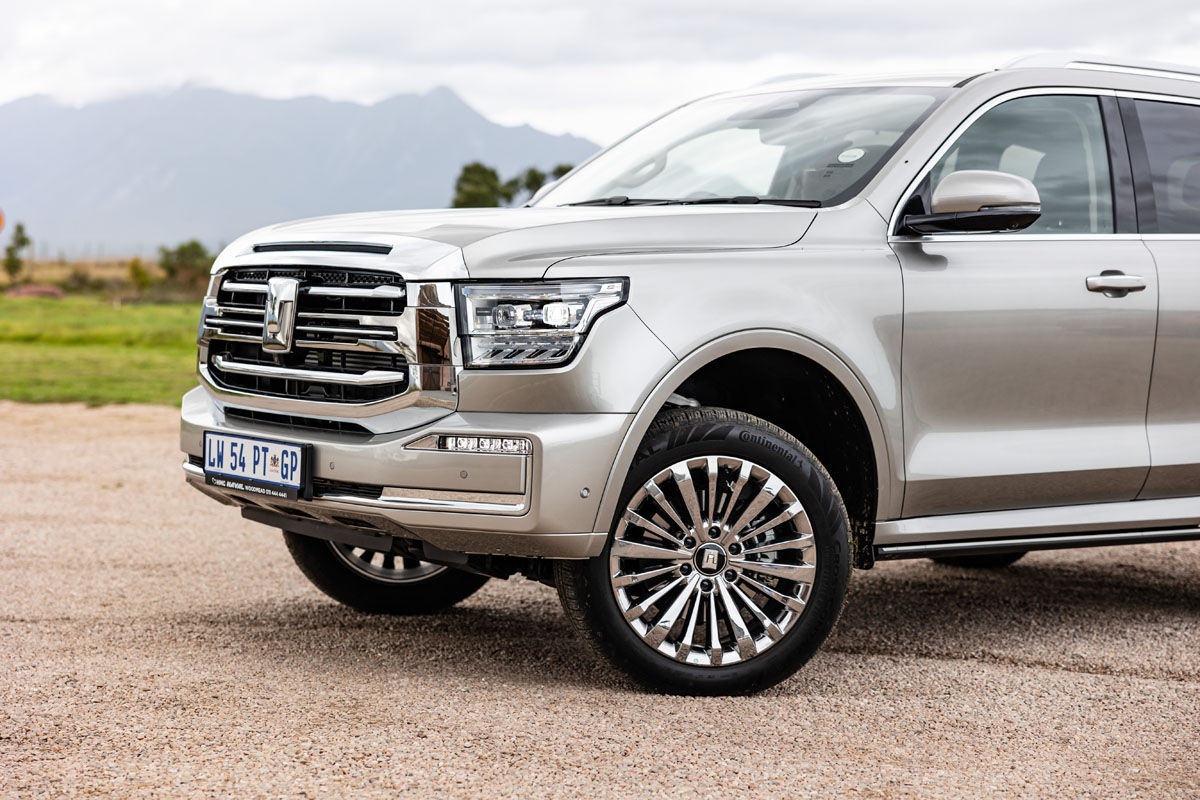
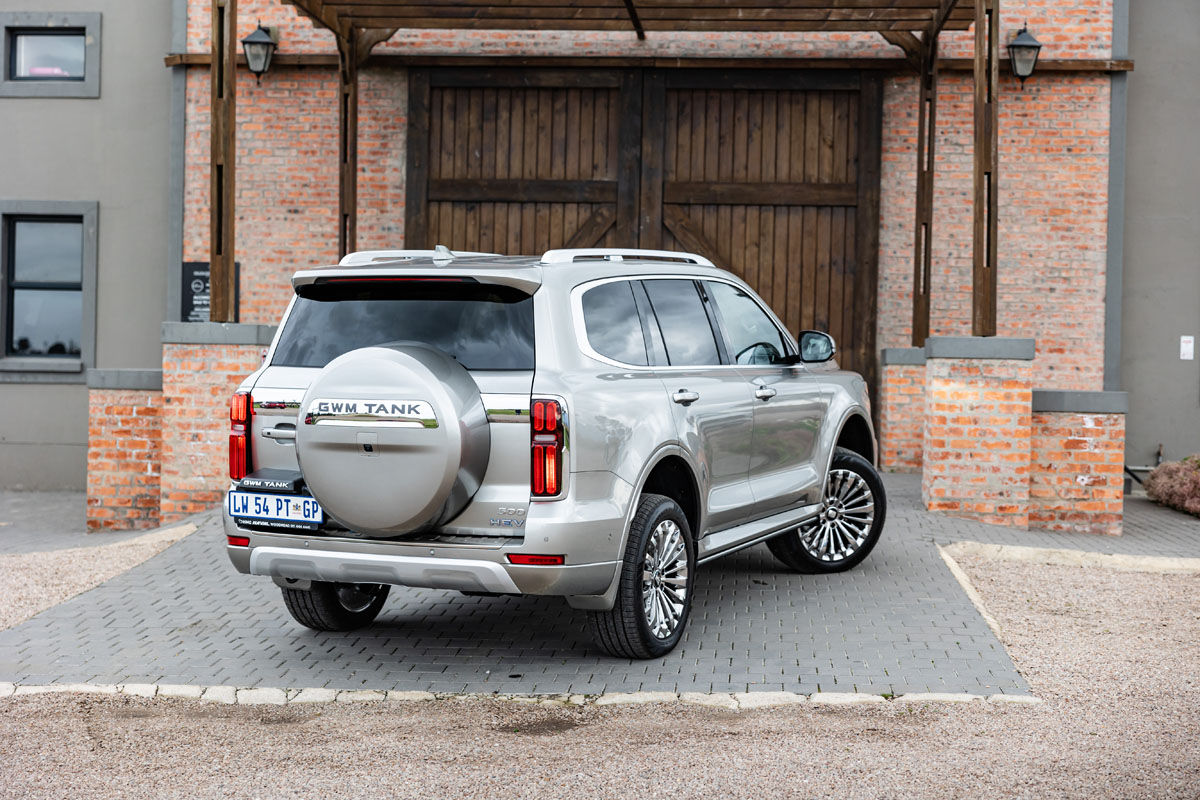
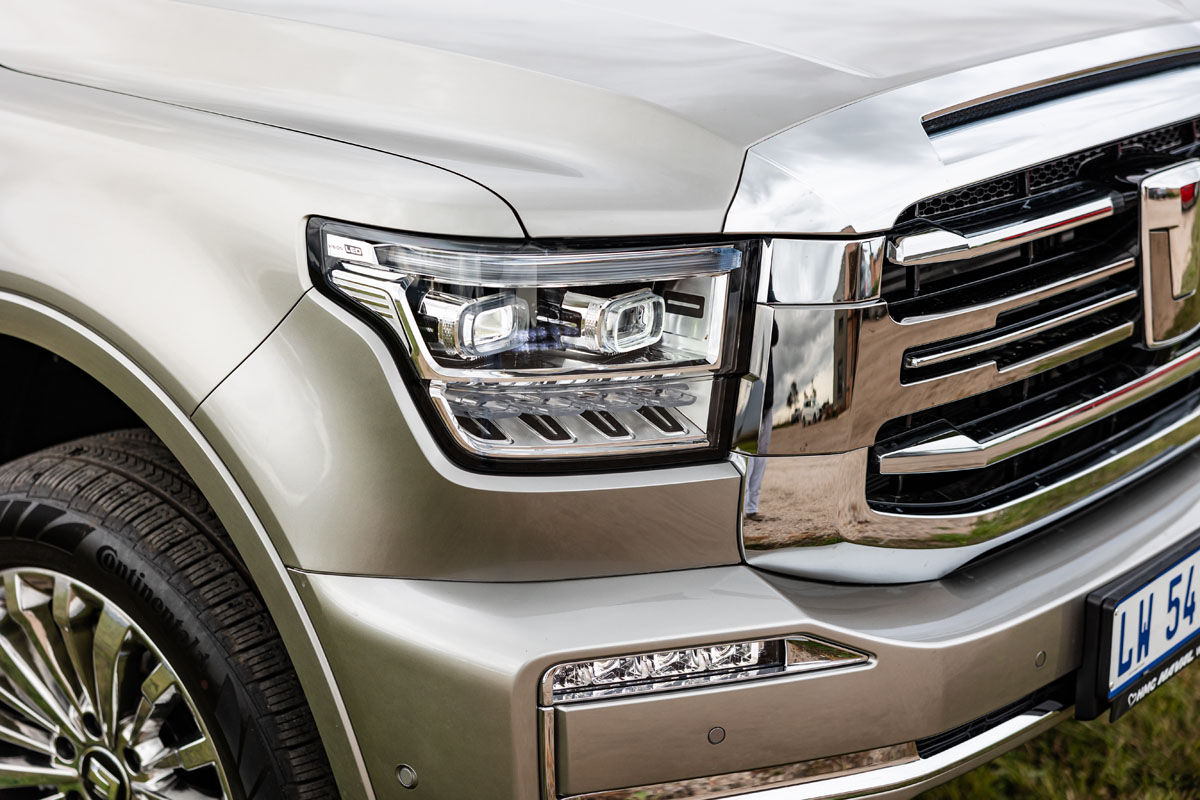
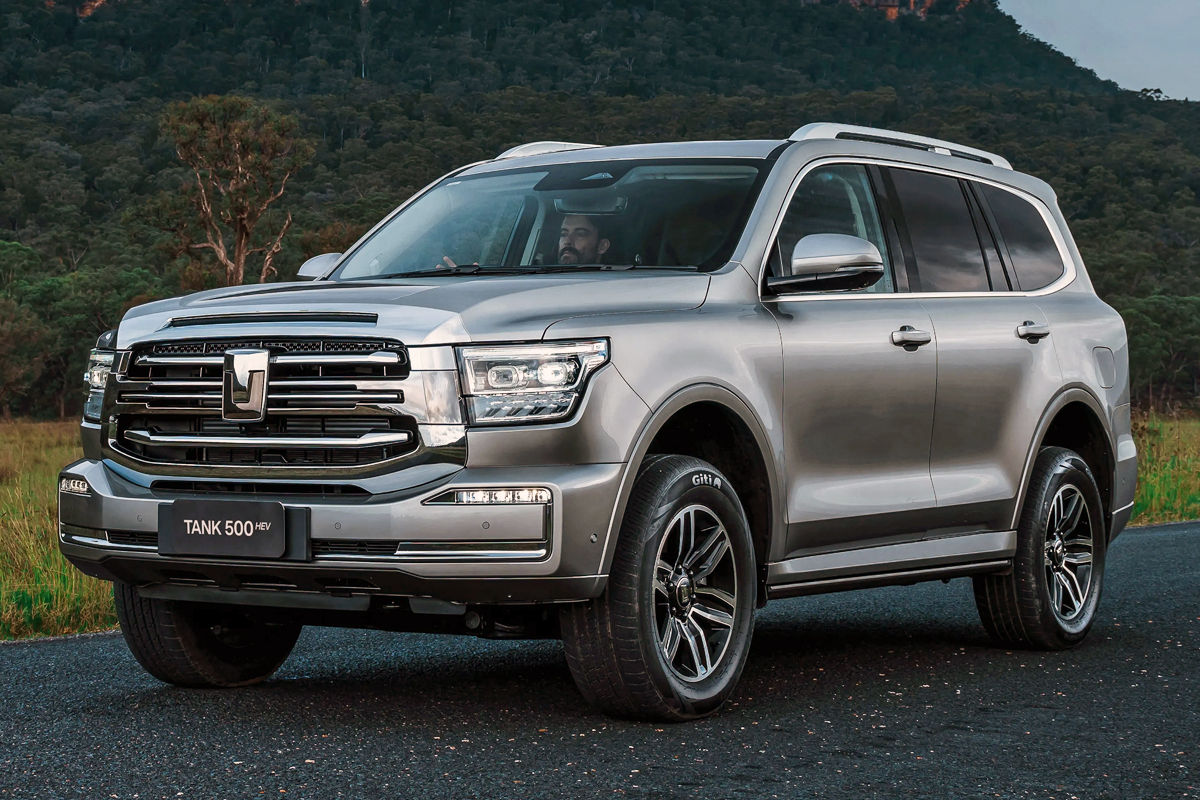
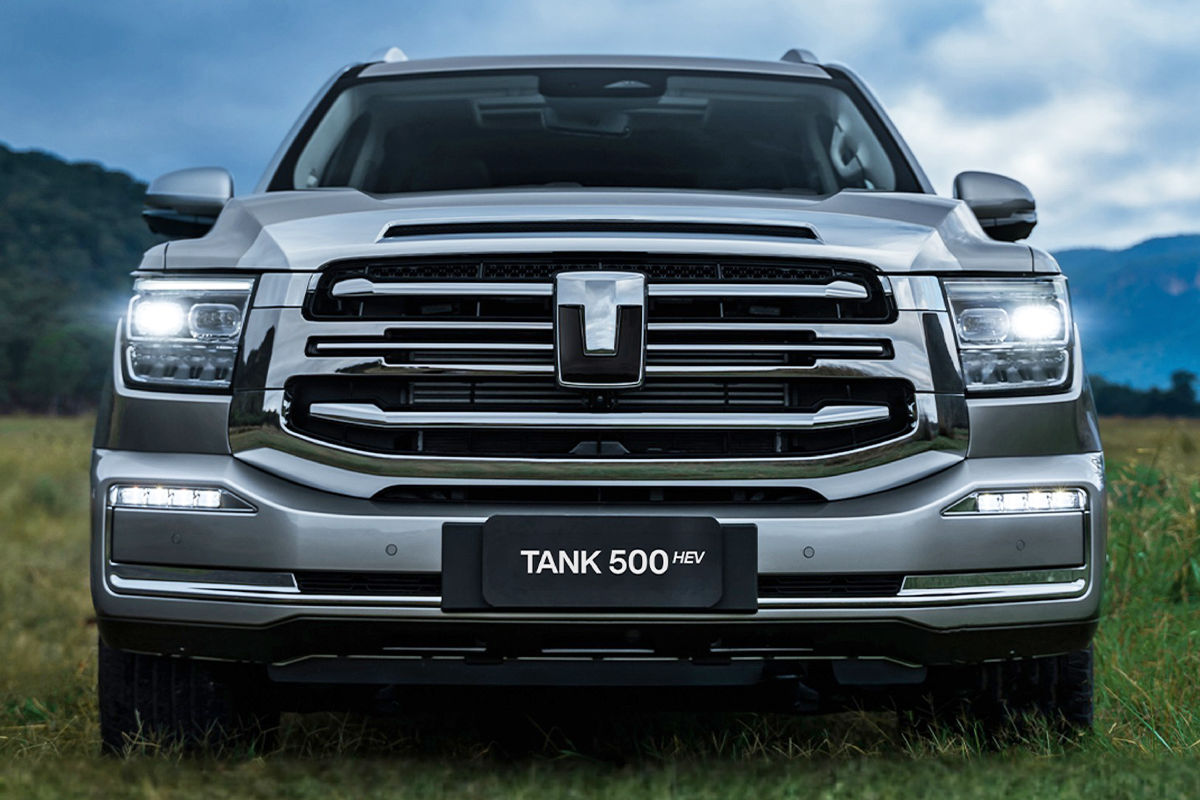
The GWM Tank 500 has officially launched in SA – offered exclusively in hybrid form and with 7 seats – as the Chinese firm’s first model priced on the far side of R1 million…
As we reported in our pricing scoop as early as 25 July 2024, the new GWM Tank 500’s arrival in South Africa pushes the Chinese firm into unchartered pricing waters – well past the R1-million mark.
The ladder-frame GWM Tank 500 is offered exclusively in petrol-hybrid form at launch, boasting total system outputs of 255 kW and 648 Nm, with a 9-speed automatic transmission and 4×4 (including as many as 11 driving modes) shipping standard. The claimed fuel economy comes in at 8.5 L/100 km.
This parallel hybrid powertrain is, of course, familiar from the flagship variants in both the Tank 300 and P-Series P500 portfolios, and combines a turbocharged 2.0-litre, 4-cylinder petrol engine (sipping from an 80-litre fuel tank) with an electric motor and a lithium-ion battery pack.
So, how much will it cost you? Well, interestingly, there’s just a single derivative of the 7-seater SUV available at launch, in the form of the Tank 500 2.0T Ultra Luxury Hybrid 4×4 9AT. Offered at R1 222 900, it becomes the first GWM model to be priced north of R1-million (with the top-spec version of the P500 coming in just under that mark).
Despite the fact our initial information suggested 2 variants would be available (with the 2nd being the Tank 500 2.0T Super Luxury Hybrid 4×4 9AT, priced slightly lower at R1 122 900), the line-up is limited to a single derivative at launch. Still, perhaps the local range will expand at a later point.
Regardless, this pricing sees the Tank 500 going head to head with several established 7-seater SUVs, including the V6 turbodiesel versions of the Ford Everest (the Wildtrak for R1 180 200 and the Platinum for R1 240 600, though those prices are sans service plans) and even the base model in the J250-generation Toyota Land Cruiser Prado range (the 2.8GD TX, priced at R1 296 300).
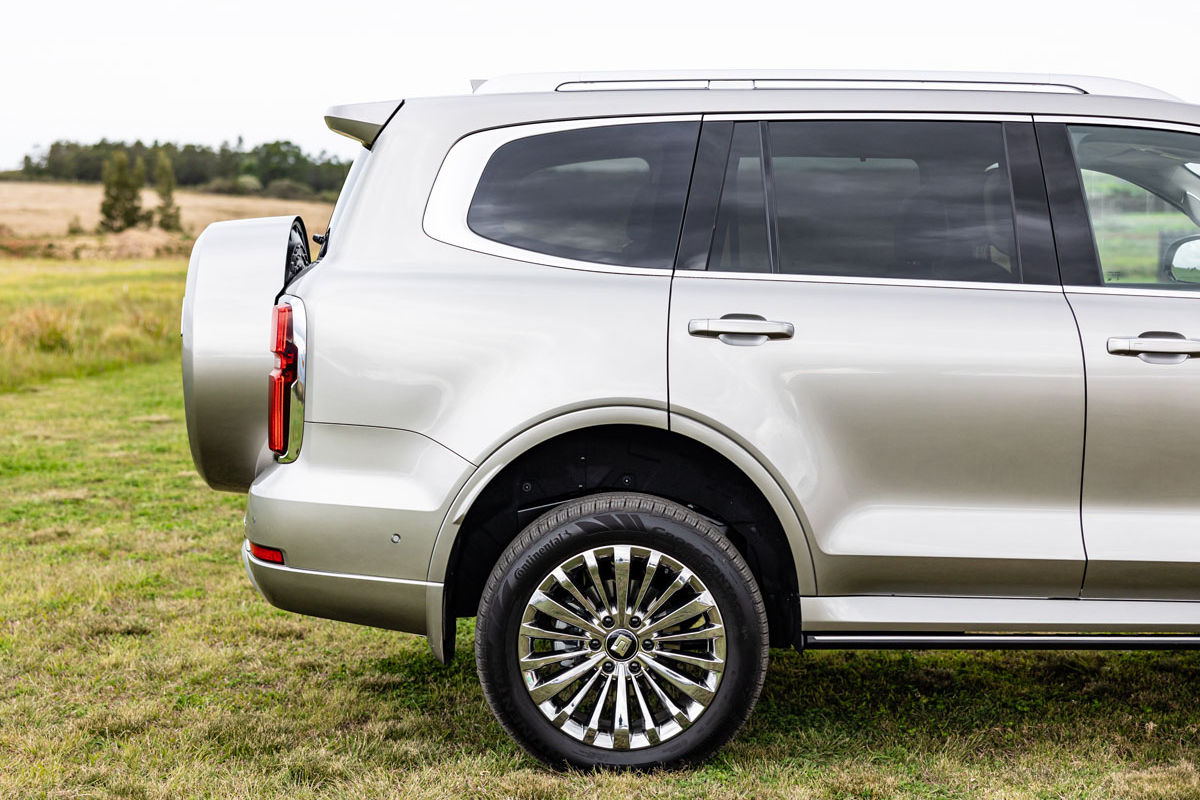
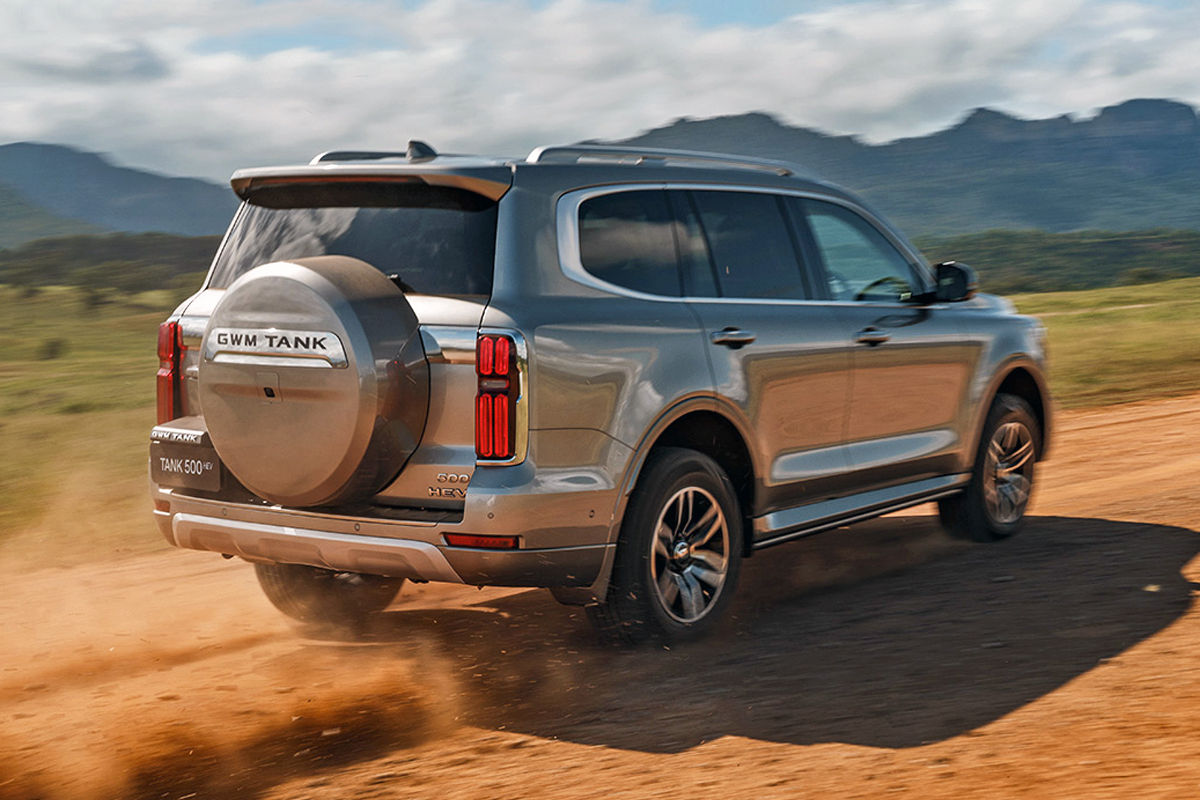
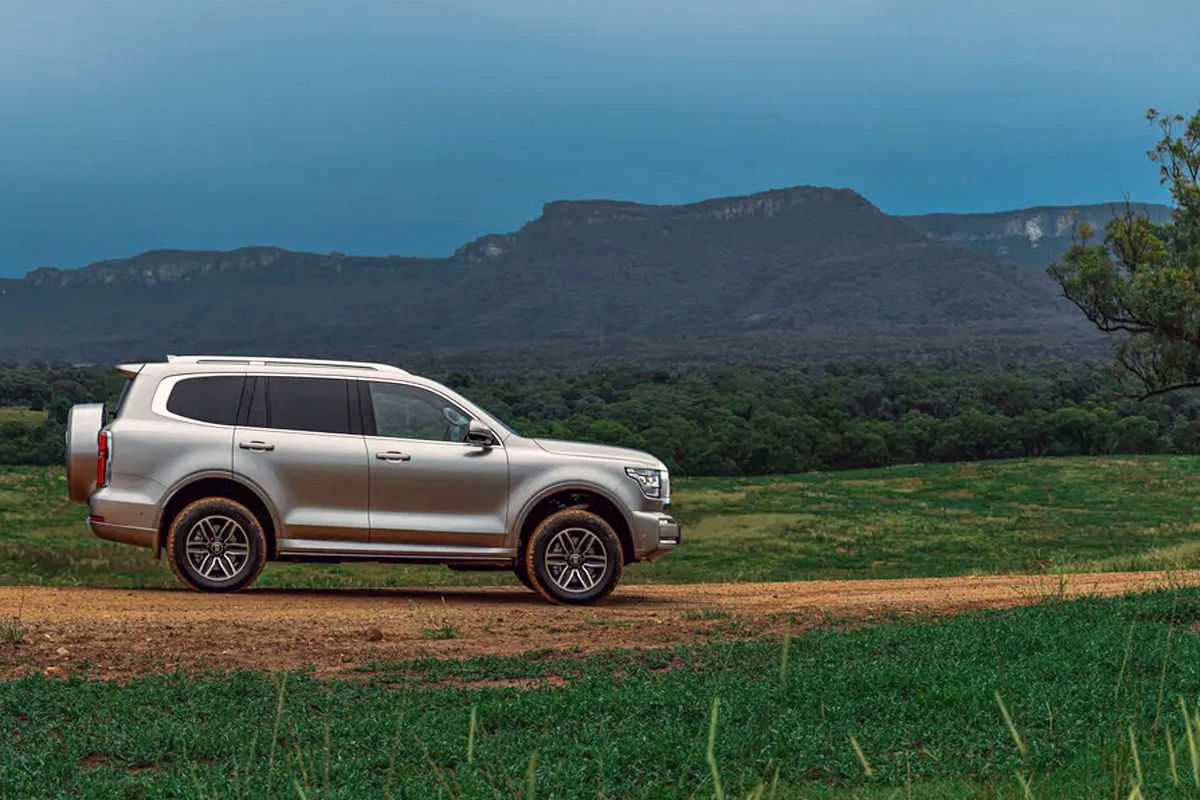
For the record, the 3-row Tank 500 measures 5 078 mm from nose to tail, making it longer than both the Everest (4 940 mm) and Prado (4 925 mm) – and even lengthier than the Land Cruiser 300 (5 005 mm). However, we should keep in mind that GWM’s 7-seater SUV features a tailgate-mounted spare, which is seemingly included in this measurement.
The Tank 500 has a wheelbase of 2 850 mm, measures 1 934 mm wide and stands 1 905 mm tall. Ground clearance comes in at 224 mm, while the dual-powered SUV’s wading depth is 800 mm. The approach, breakover and departure angles are listed as 30, 22.5 and 24 degrees, respectively, while braked towing capacity is 2 500 kg. Luggage capacity comes in at 795 litres with the 3rd row of seats folded down (and a whopping 1 459 litres with the 2nd and 3rd rows both flat).
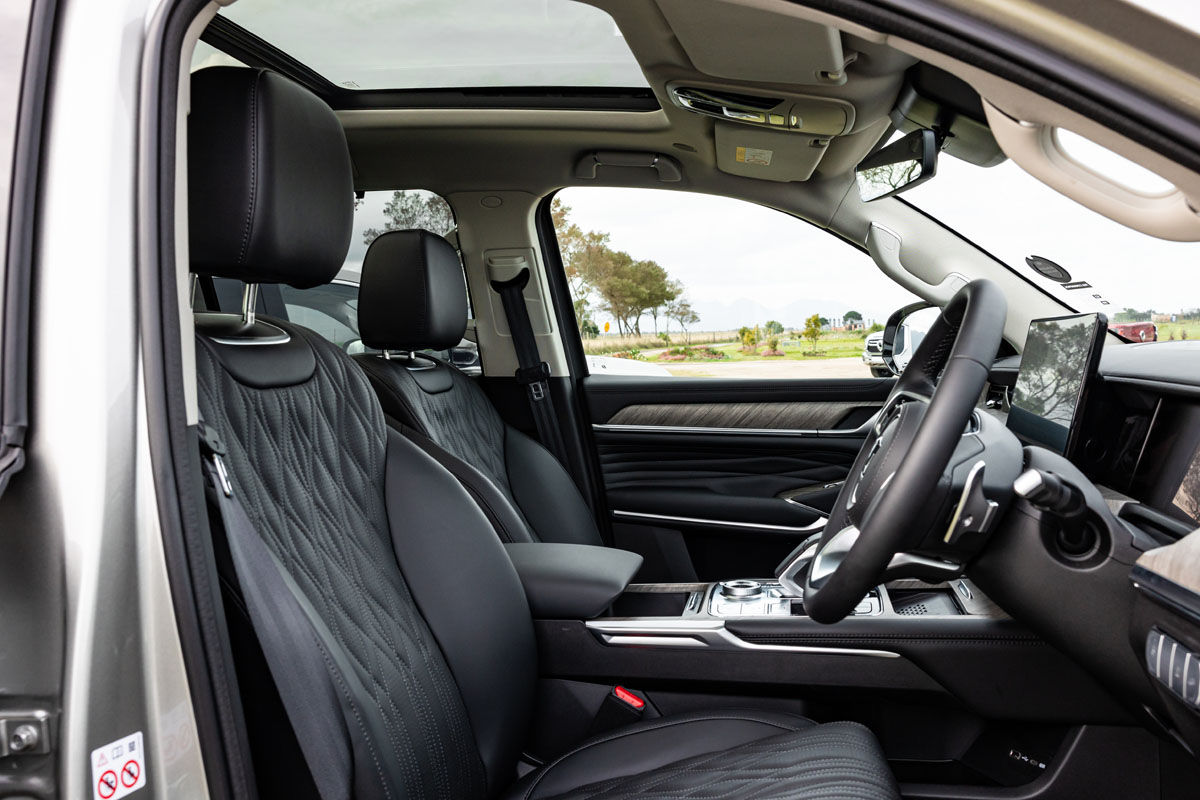
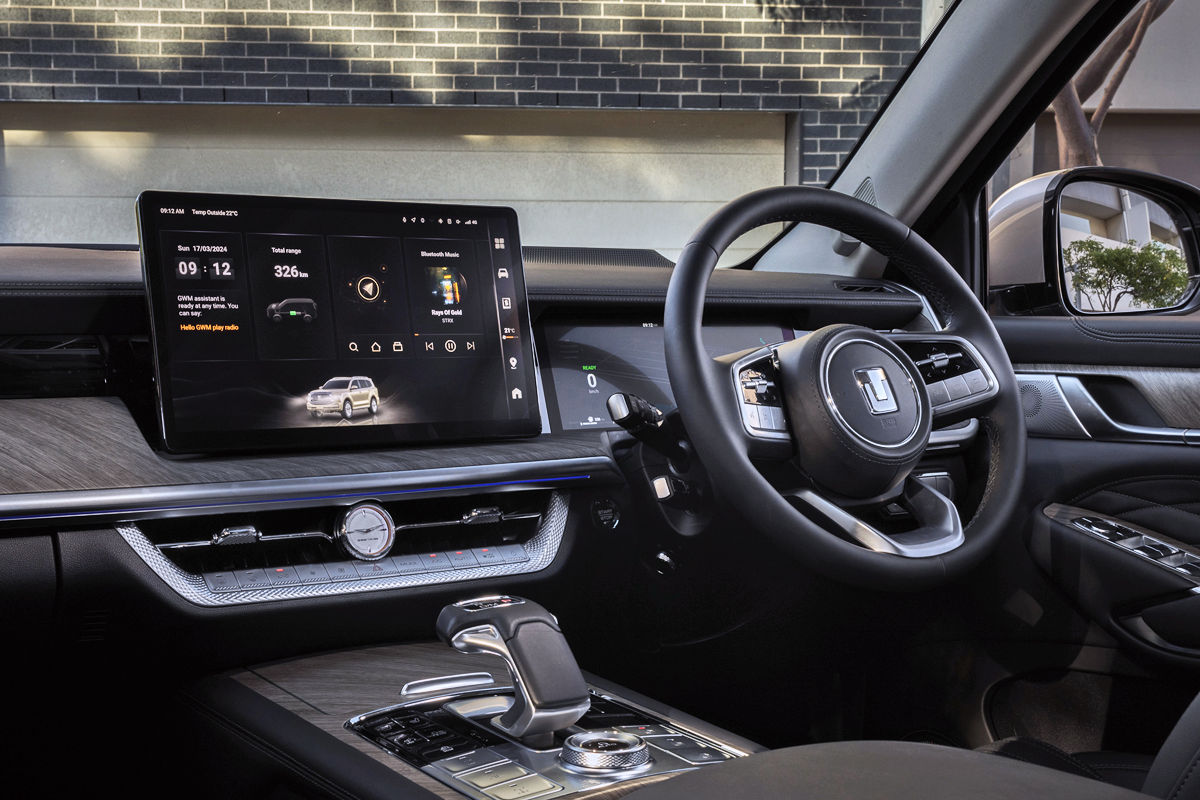
So, what about standard specifications for the South African market? Well, the extensive list of kit includes a 14.6-inch touchscreen and Nappa leather accents for the front seats, with the latter being both heated and ventilated, and furthermore featuring an 8-point massage function. Both front pews are electrically adjustable and boast memory settings, too.
Passengers in the 2nd row of the Tank 500 enjoy reclining seats, 2-way adjustable headrests, a dedicated climate-control system, seat cooling and charging points. Legroom in the middle row can be optimised by sliding the seats rearwards if the 3rd row (which can be deployed electronically and has its own roof-mounted vents) is unoccupied.
Other standard features for the Ultra Luxury grade include 20-inch alloy wheels, automatic side steps, a panoramic sunroof, ambient lighting, a 12-speaker Infinity sound system, a head-up display, a 360-degree camera and automatic intelligent parking. Safety is covered by intelligent adaptive cruise control, rear collision warning, cross traffic alert, emergency lane-keep assist, automatic emergency braking, lane-departure warning and a full complement of airbags (front, front side, curtain and front centre).
How much does the GWM Tank 500 cost in South Africa?
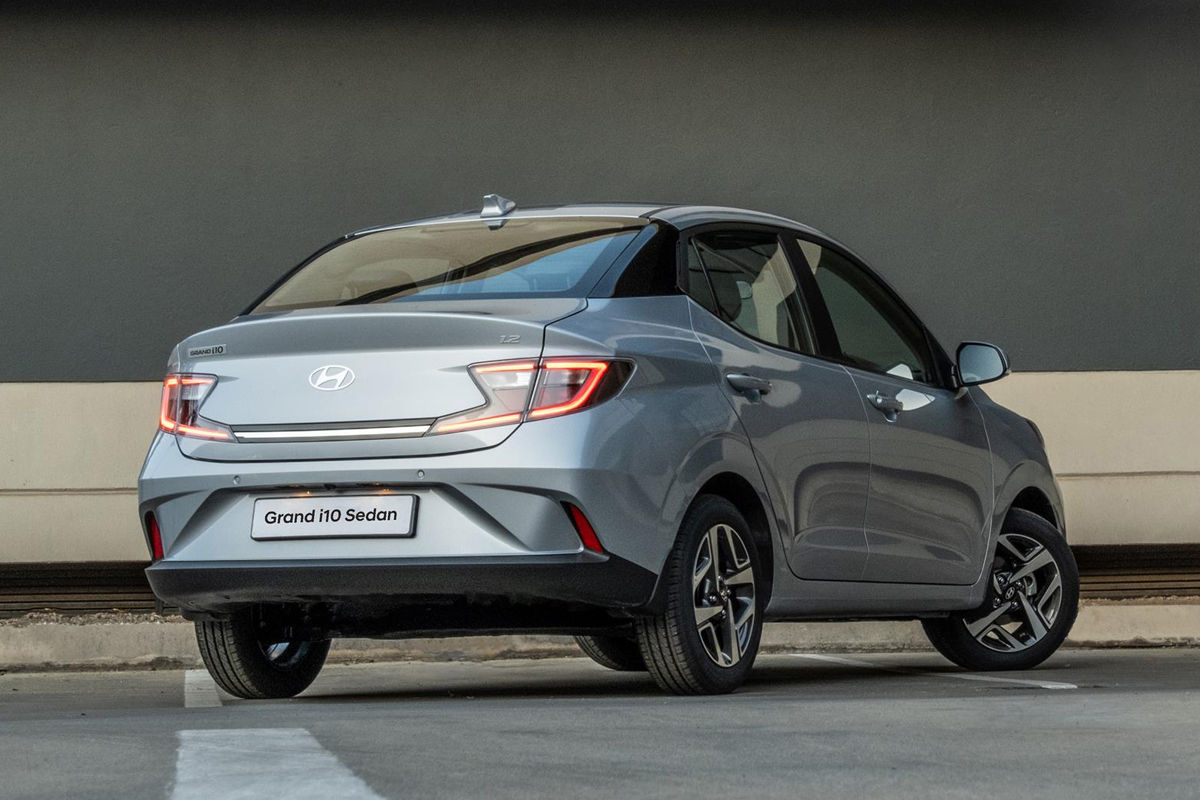
Hyundai Automotive SA recently tweaked its facelifted Hyundai Grand i10 range, which now features a trimmed line-up and renamed trim grades. Herewith pricing and spec details for the hatchback and sedan variants of Hyundai SA’s best-selling vehicle…
Just like the updated i20 model, the rejigged Grand i10 and Venue ranges have switched from the South Korean firm’s earlier trim-level naming convention (which incorporated the “Motion” and “Fluid” trim grades) to the latest pair of nomenclatures that denote “Premium” and “Executive” equipment levels.
When the facelifted Grand i10 range was launched in Mzansi in August 2023, the portfolio comprised 8 derivatives – 5 hatchbacks, 2 sedans and a solitary Cargo panel van variant. However, Hyundai has quietly trimmed the line-up to 6 derivatives, with a pair of 1.2-litre hatchback variants falling away.
Watch Ciro De Siena’s video review of the 2023 Hyundai Grand i10
What does the facelifted Hyundai Grand i10 offer?
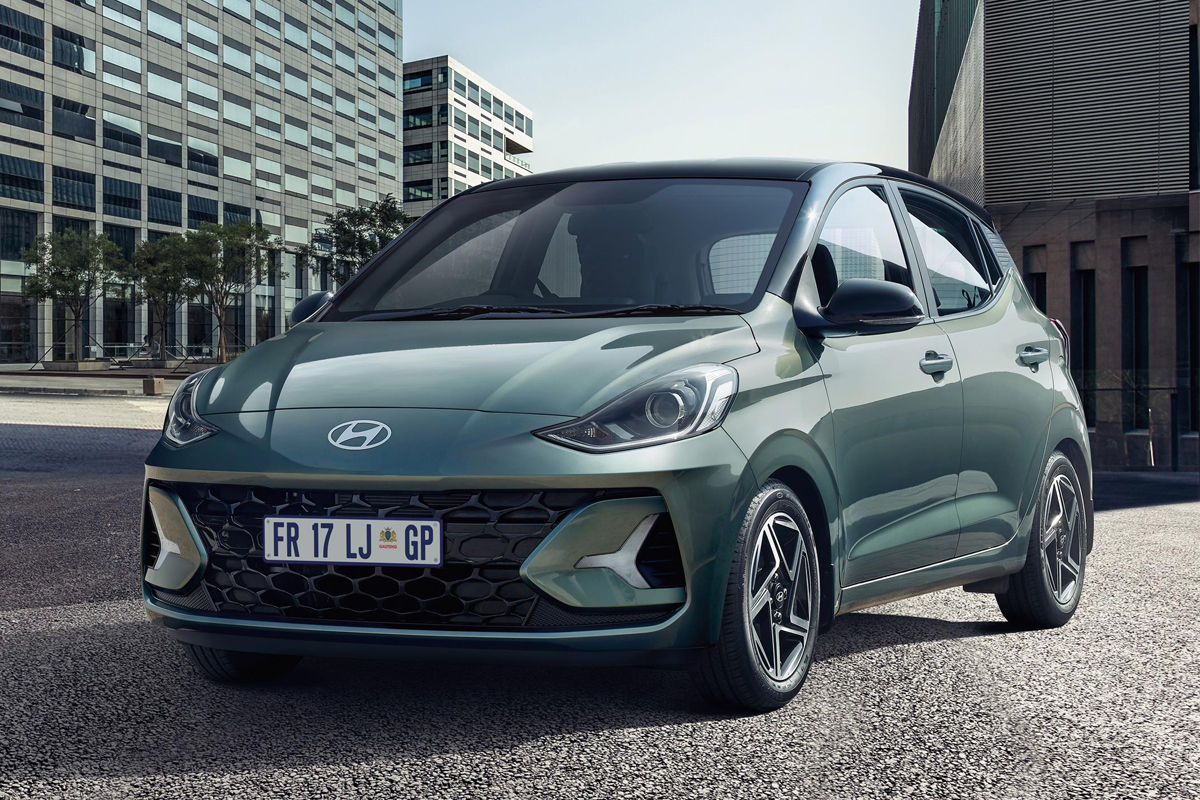
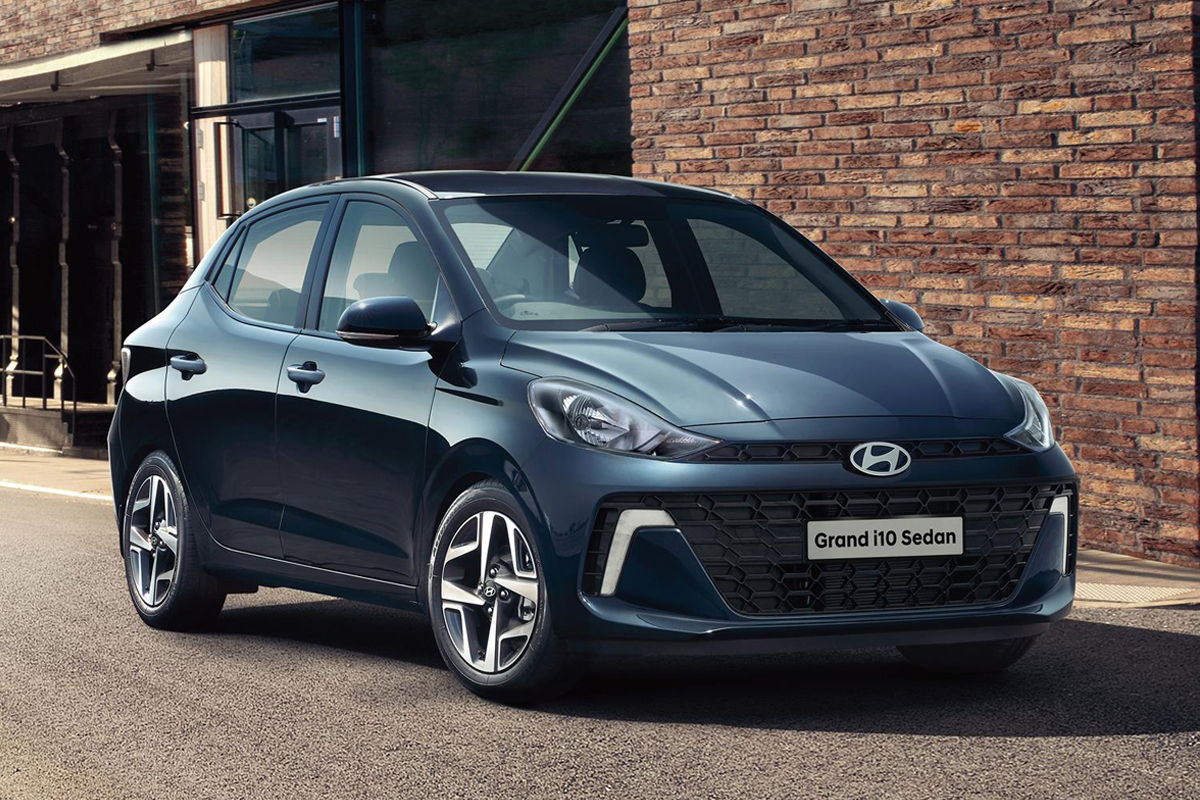
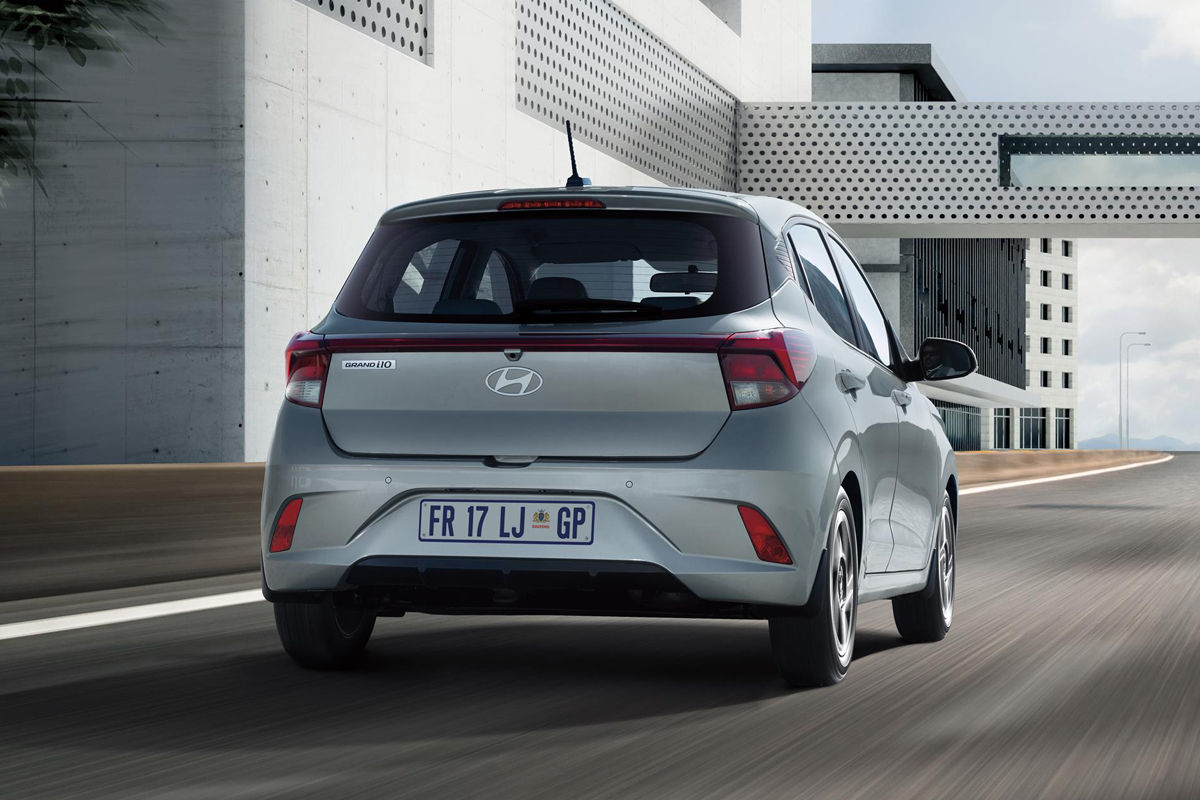
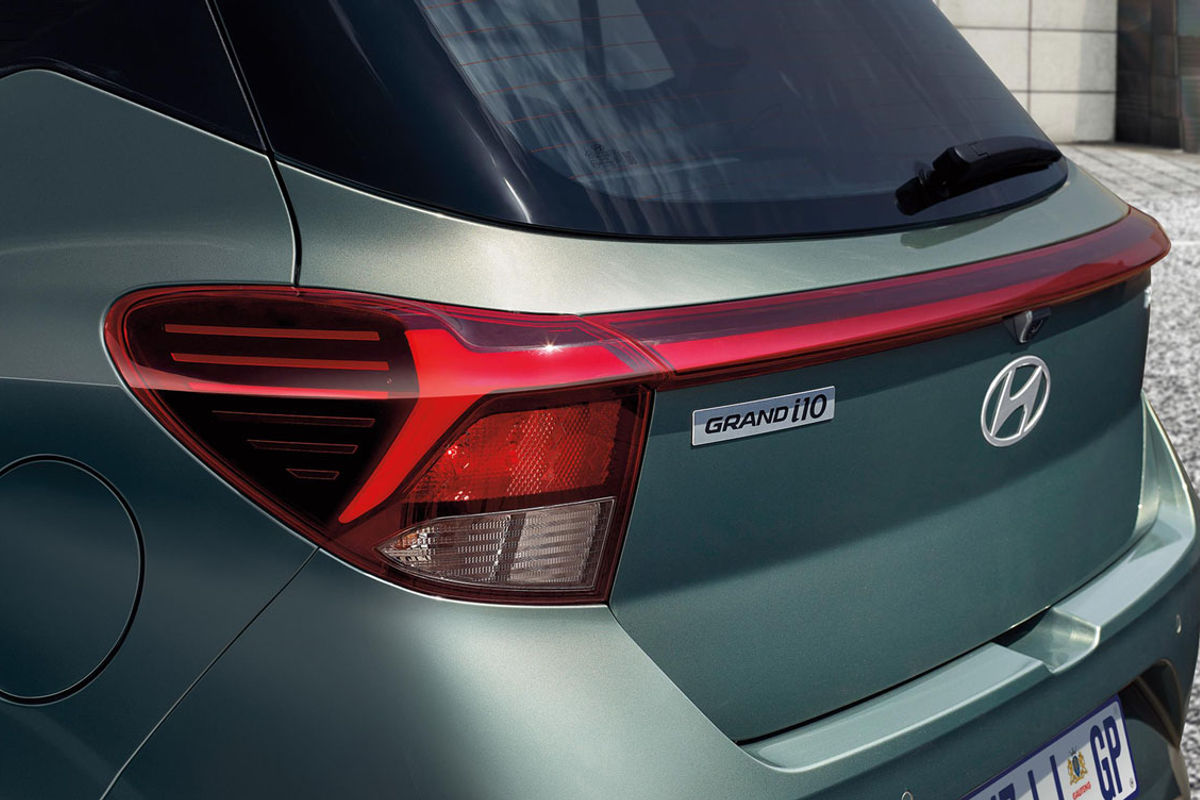
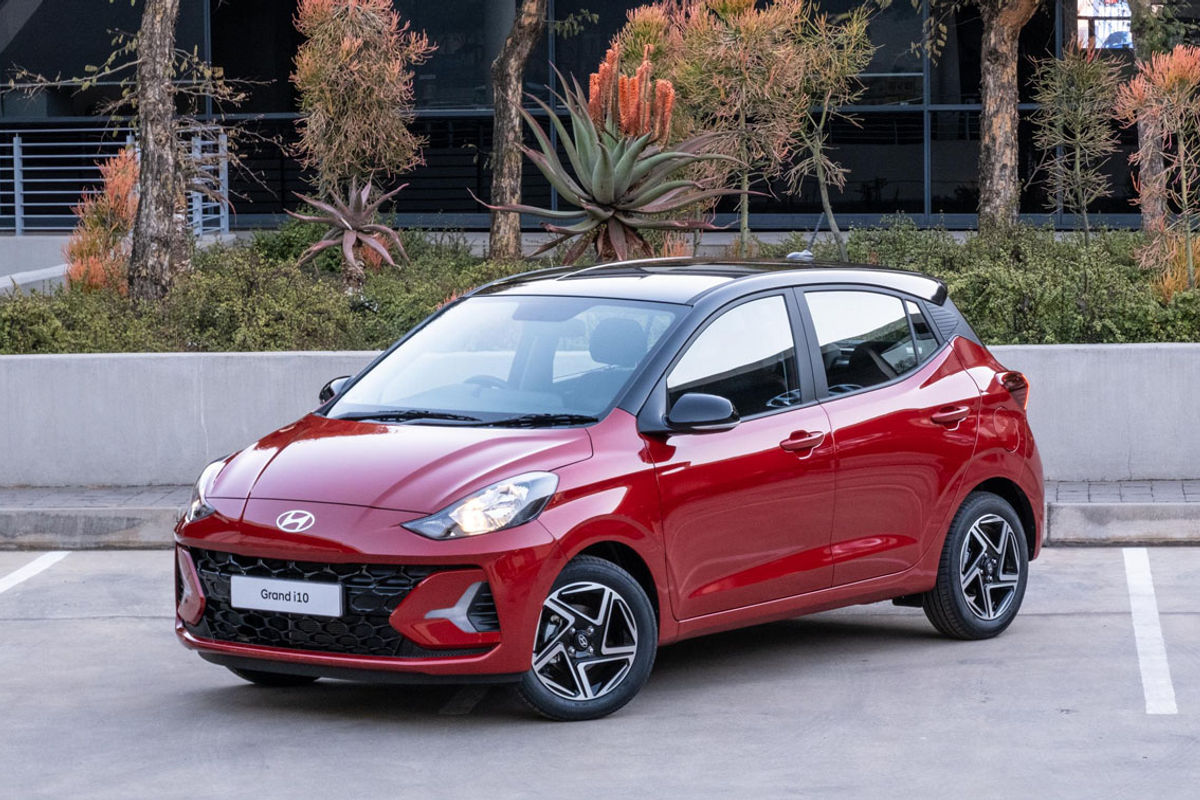
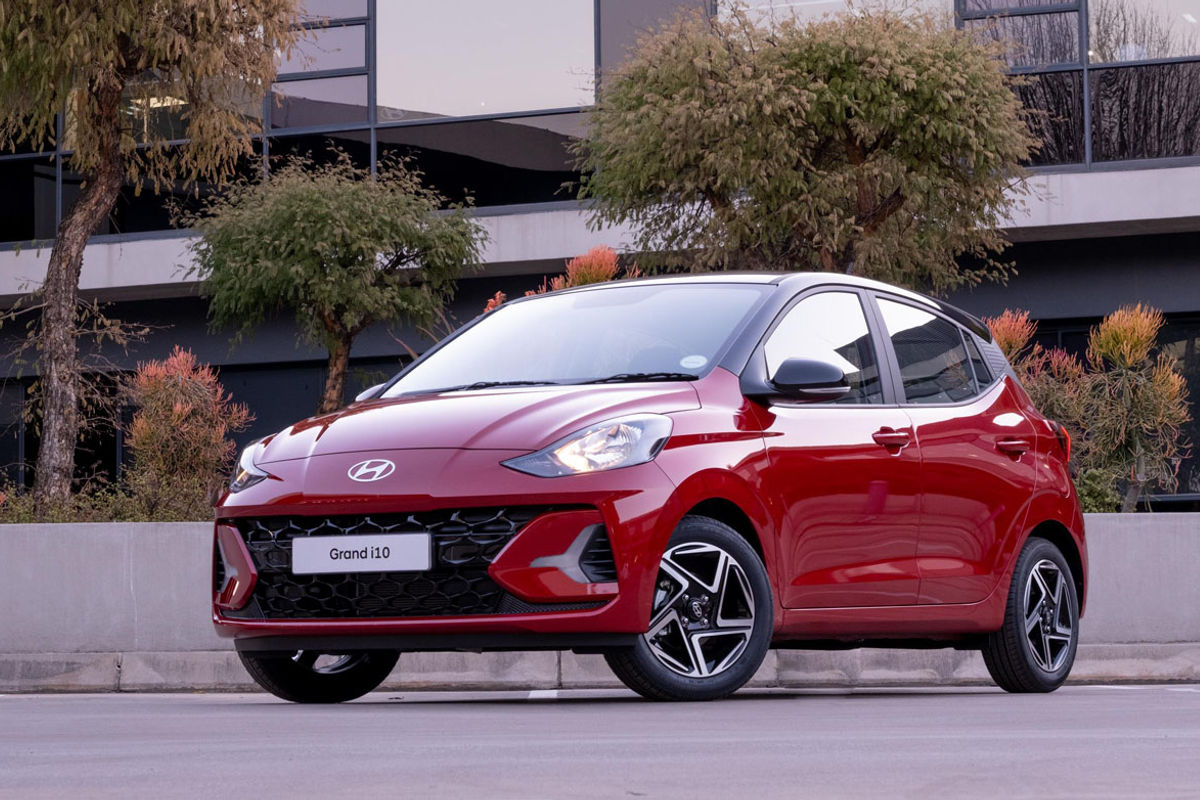
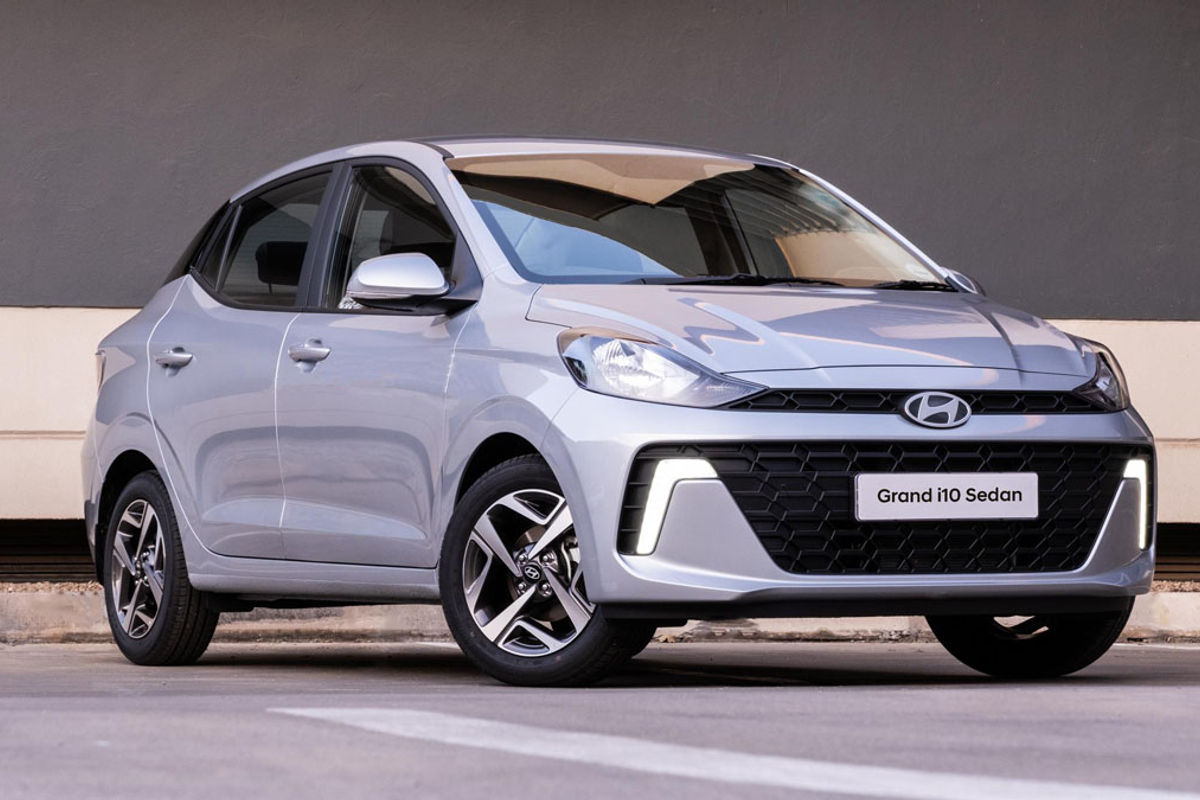
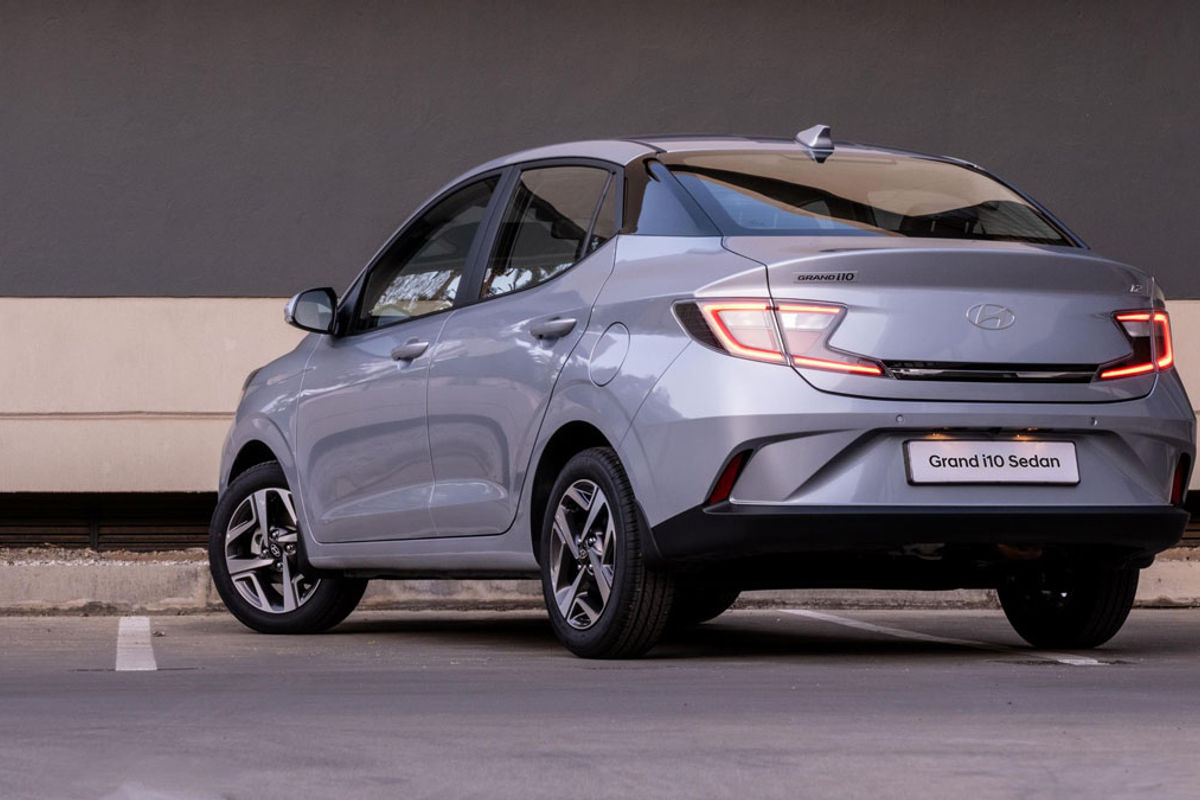
The revised Grand i10 sports a redesigned black grille (with a gloss finish and LED daytime running lights on Executive variants – they’re 3-pointed items on the hatchback and L-shaped arrays on the sedans), plus an updated bumper, while the rear is adorned with a high-mounted stop lamp and revised taillamps.
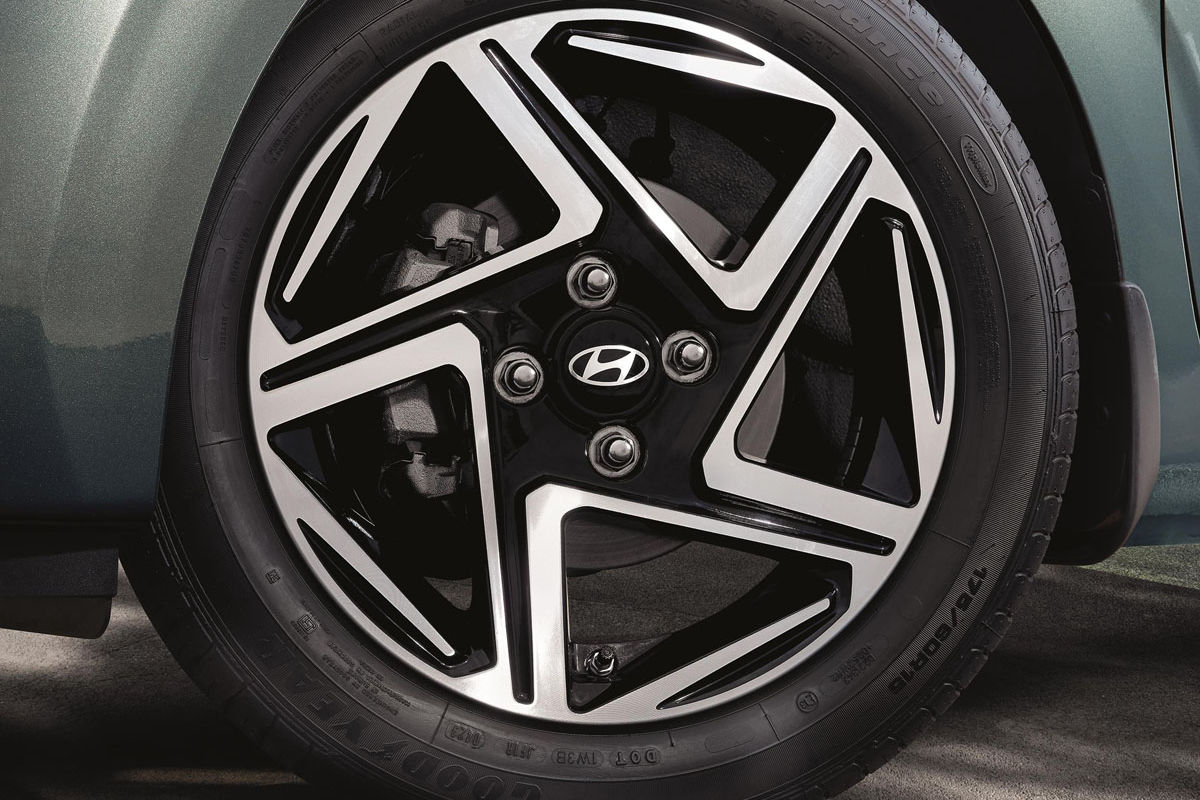
Also, whereas Premium variants have 14-inch wheels (with plastic trims), their Executive counterparts feature 15-inch alloys and integrated repeaters on their heated- and electrically folding side mirrors.
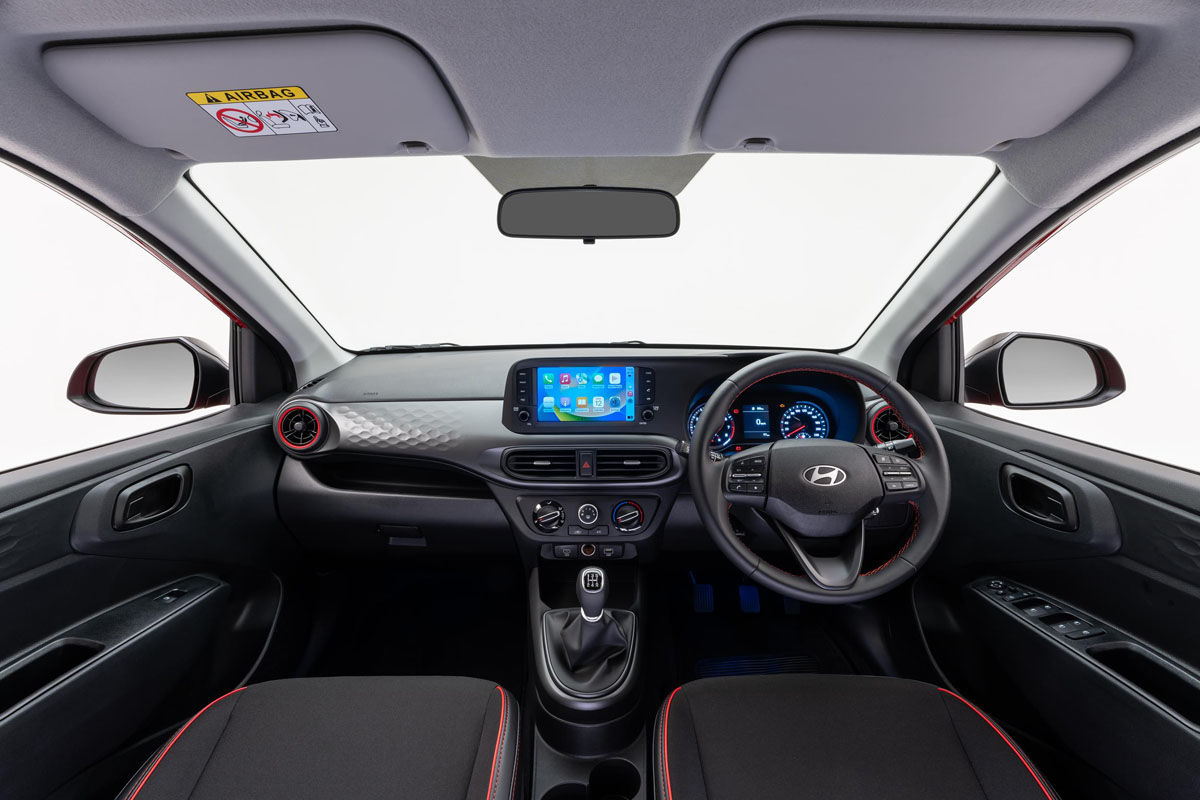
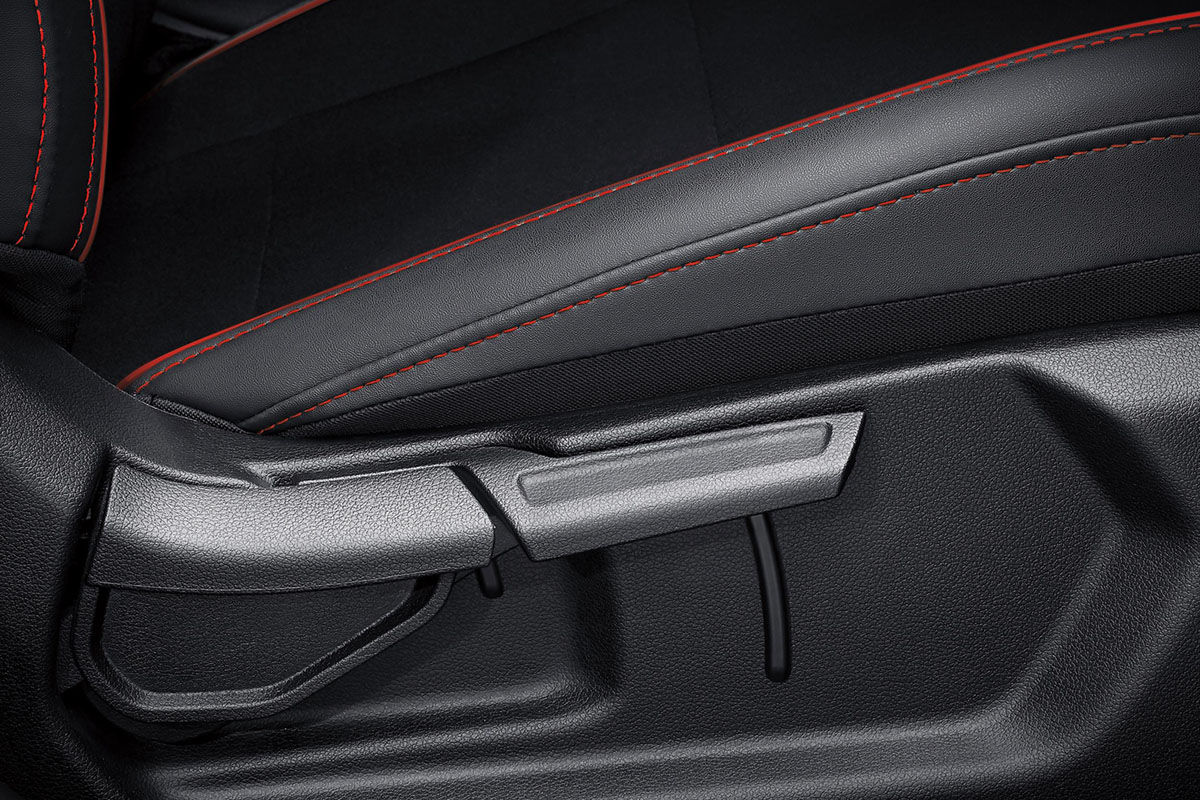
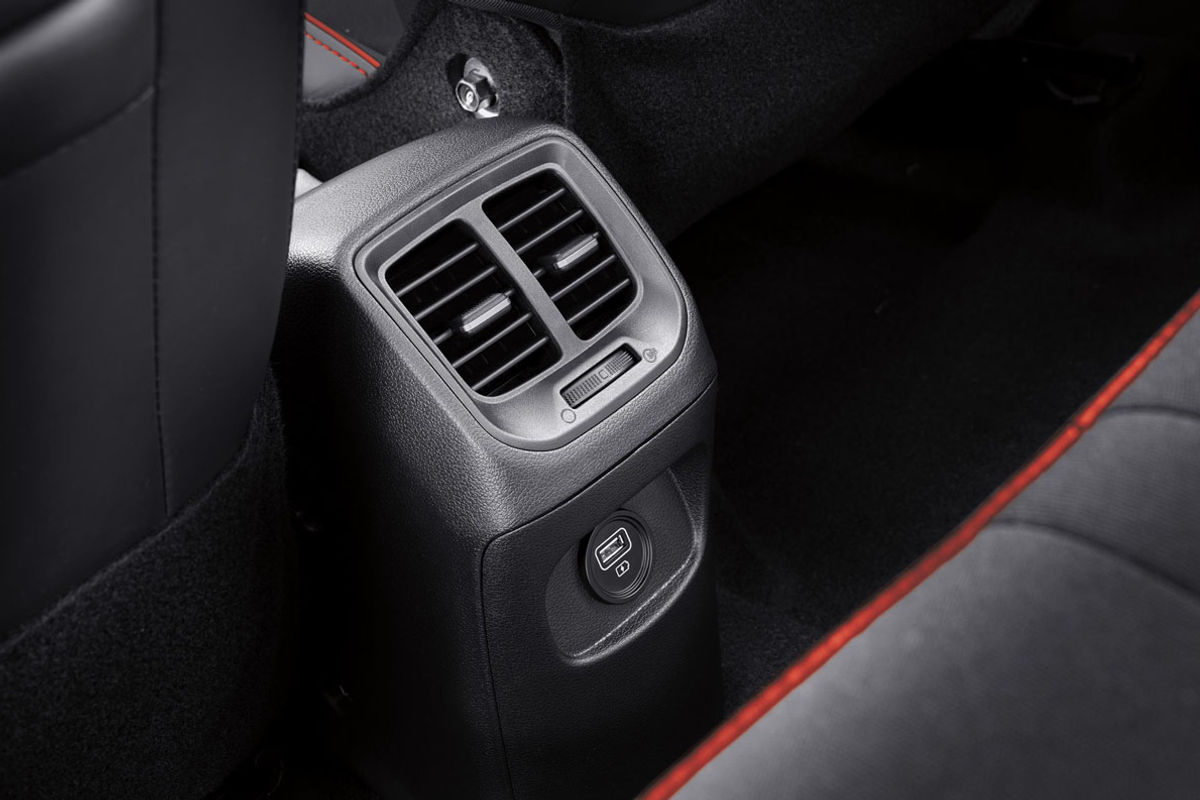
Inside, all facelifted Grand i10 variants have black cloth-and-vinyl upholstery with red accents, a height-adjustable driver’s seat and tilt-adjustable steering column, a multifunction steering wheel, manual aircon, electric windows all round, an 8-inch touchscreen infotainment system (Apple CarPlay/Andriod Auto compatible), a Type-C USB fast charger (front), a reverse-view camera and rear air vents.
As before, the entry-level engine for the hatchback (including the Cargo-badged panel van) is a naturally aspirated 1.0-litre, 3-cylinder petrol motor, which generates an unchanged 49 kW/94 Nm. Drive is sent to the front axle via a 5-speed manual gearbox and the claimed consumption figure is 5.5 L/100 km.
If you want a hatchback powered by the slightly punchier 1.2-litre, 4-cylinder petrol engine, which delivers peak outputs of 61 kW/114 Nm, the 1.2 Premium 5-door is exclusively available in 4-speed automatic guise. Hyundai Automotive SA says the variant will consume an average of 5.9 L/100 km.
Whereas the pair of Premium-grade Grand i10 hatchbacks come equipped with black side-mirror caps, a multifunction ‘wheel with a polyurethane finish, a 2.8-inch driver info display in the instrument cluster and a folding rear seatback (not split), the 1.0 Executive hatchback (also available with a black roof finish on white, red and green cars) additionally features auto lights, a 3.5-inch TFT display, artificial leather-trimmed ‘wheel and gear-lever boot, one-touch driver’s window, ambient cabin lighting, cruise control, seatback pockets, a 60:40 split rear bench, a luggage net and -hooks, as well as rear park assist.
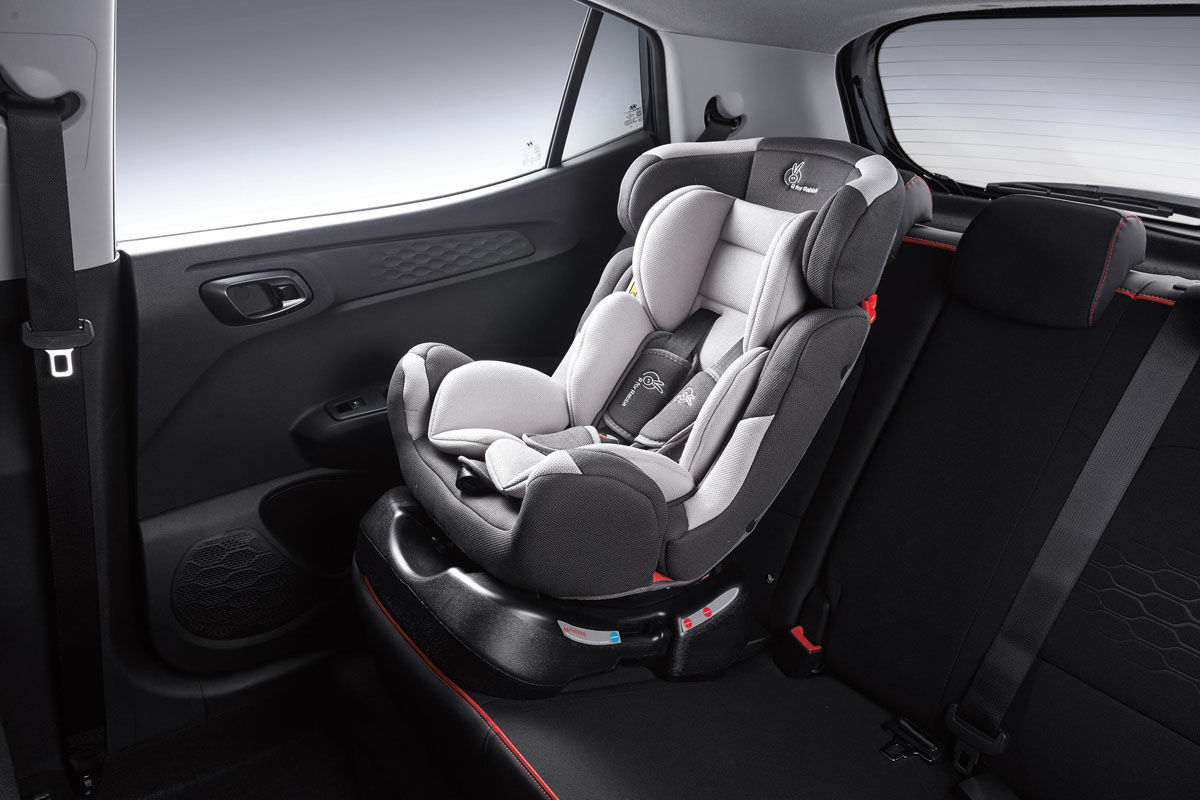
Dual front airbags, ABS with EBD and ISOfix child-seat anchors are standard safety features across the range, though stability control is again not present.
The Grand i10 Sedan is offered exclusively in 1.2-litre Executive guise, which has the same spec level as the 5-door 1.0 Executive, apart from the black roof finish being unavailable (the side mirrors are body-coloured), while the 60/40 split rear bench and luggage net and -hooks are not applicable either.
The 5-speed manual version of the 1.2 Executive sedan is said to consume an average of 5.5 L/100 km, while its 4-speed automatic counterpart has a stated fuel consumption figure of 5.7 L/100 km.
The Grand i10 sedan’s main local competition includes the Suzuki DZire and Honda Amaze, which like the Hyundai each comes in at under 4 metres long and is manufactured in India.
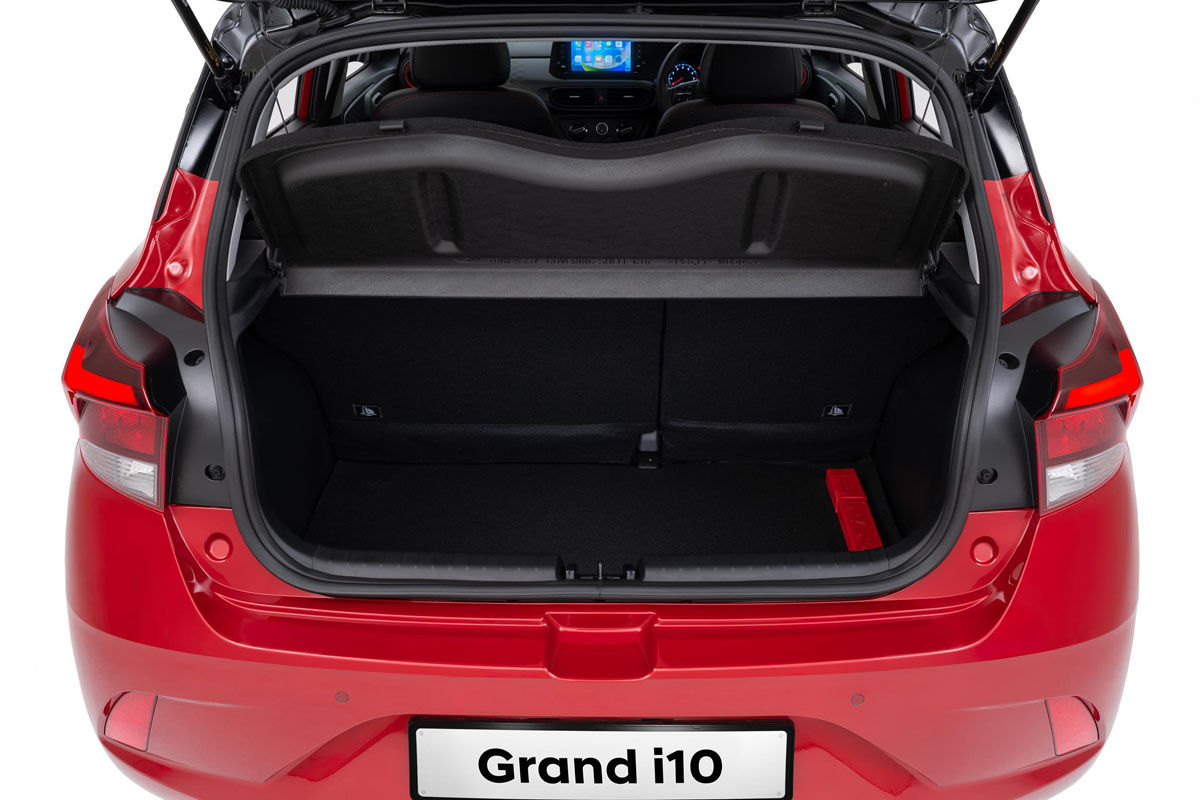
Measuring 3 995 mm from nose to tail, the Grand i10 sedan is around 180 mm longer than its 5-door hatch sibling. While the hatchback’s luggage compartment can swallow a claimed 360 litres, Hyundai lists the sedan’s load-bay capacity at a slightly more generous 402 litres.
How much does the facelifted Hyundai Grand i10 cost in SA?
The prices above (correct in July 2024) include a 5-year/150 000 km vehicle warranty, a 7-year/200 000 km powertrain warranty and a 1-year/15 000 km service plan.
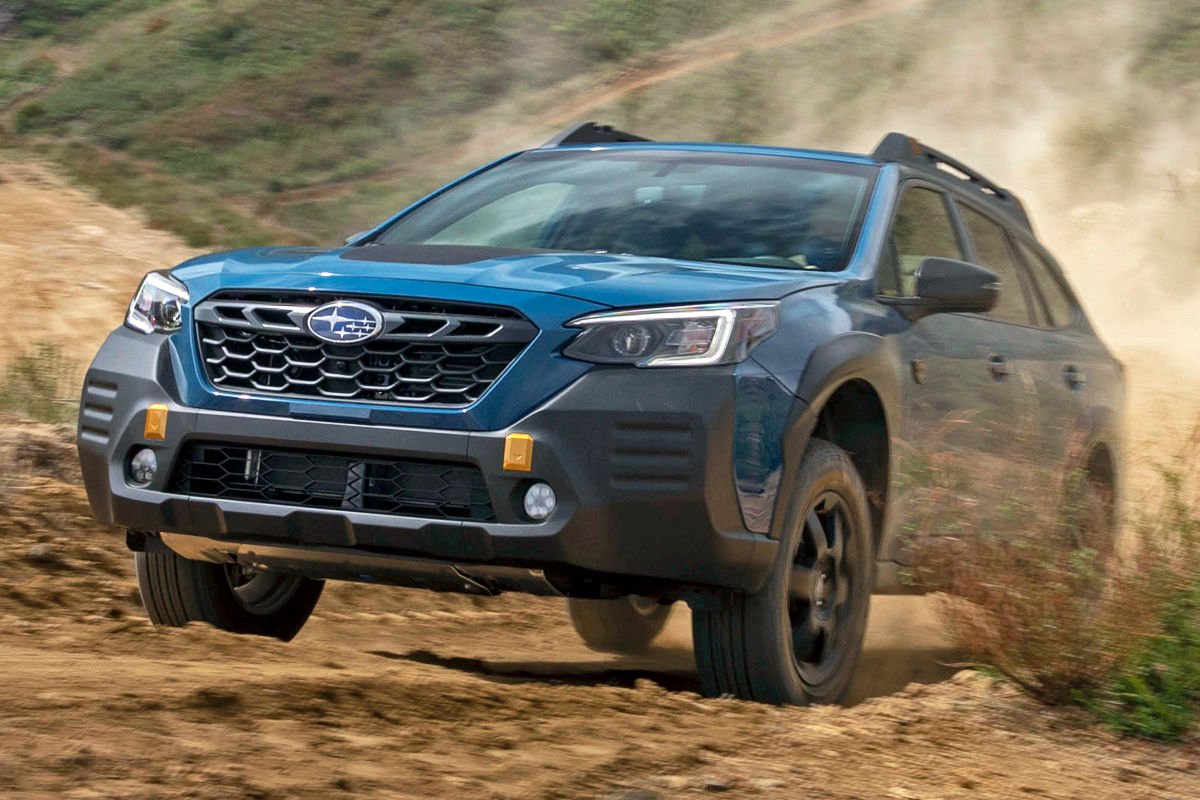
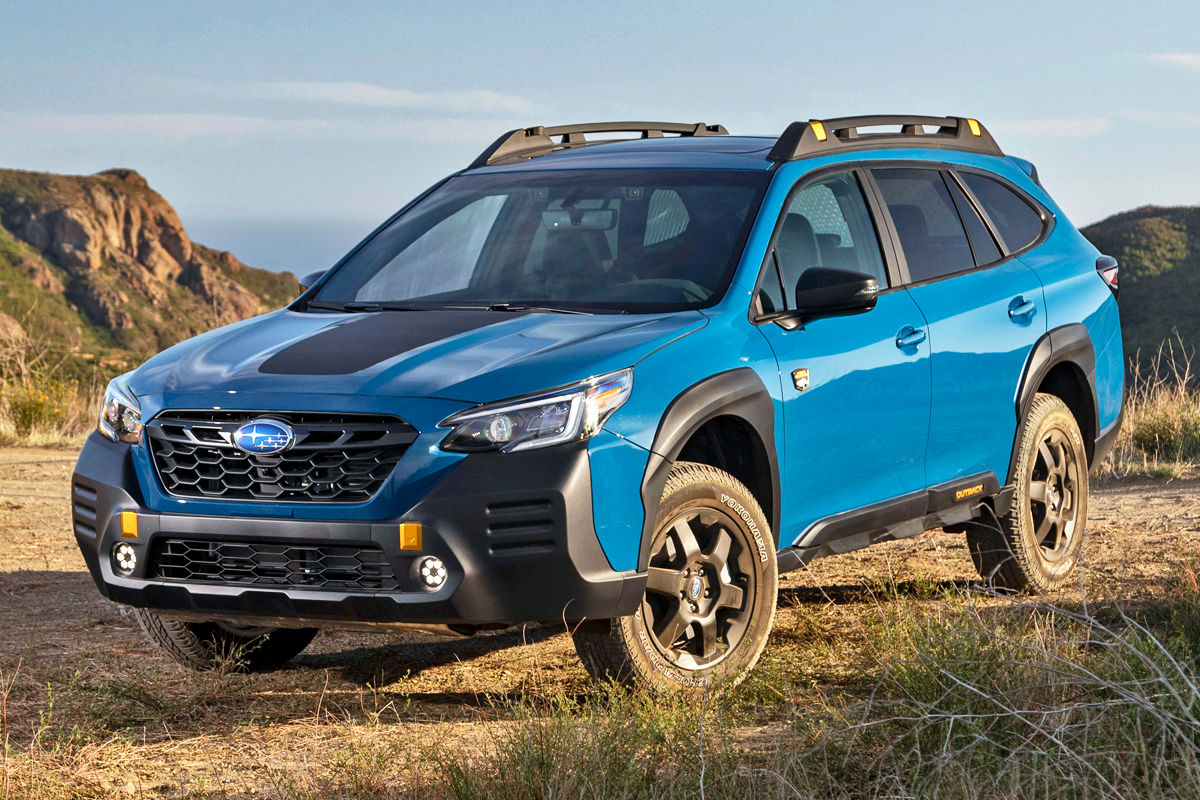
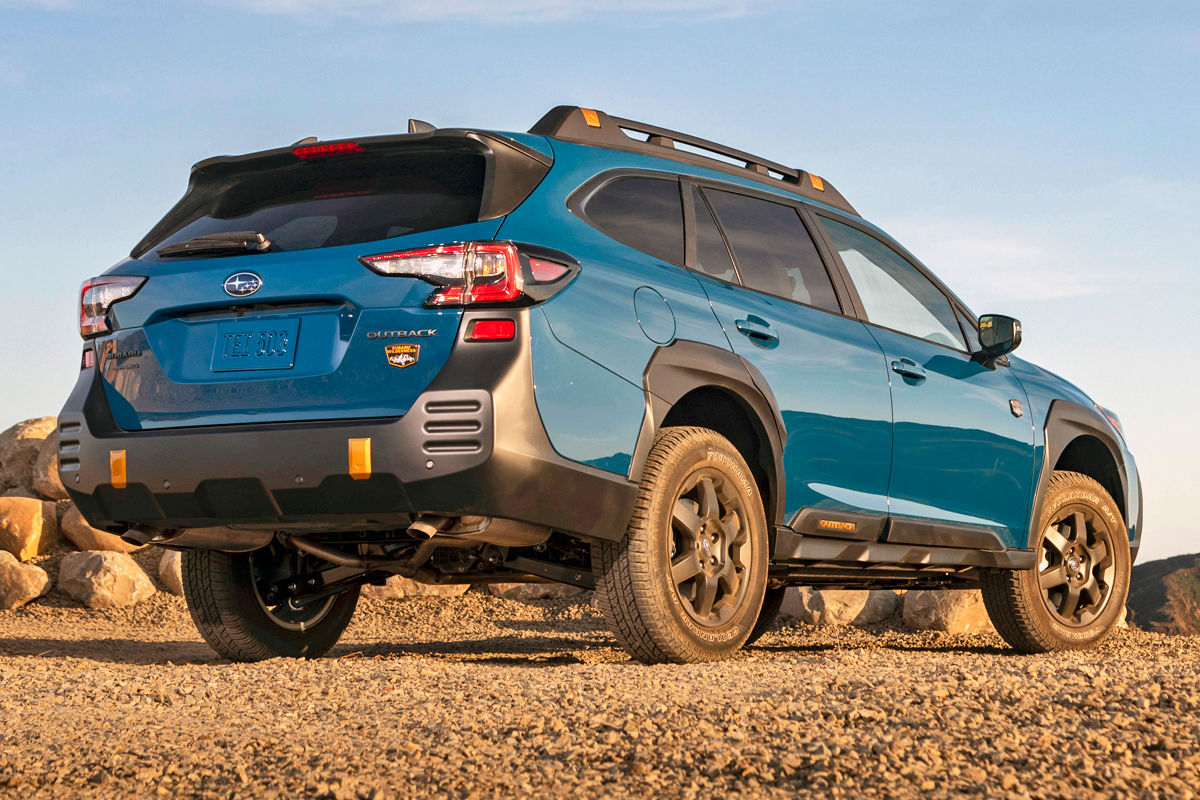
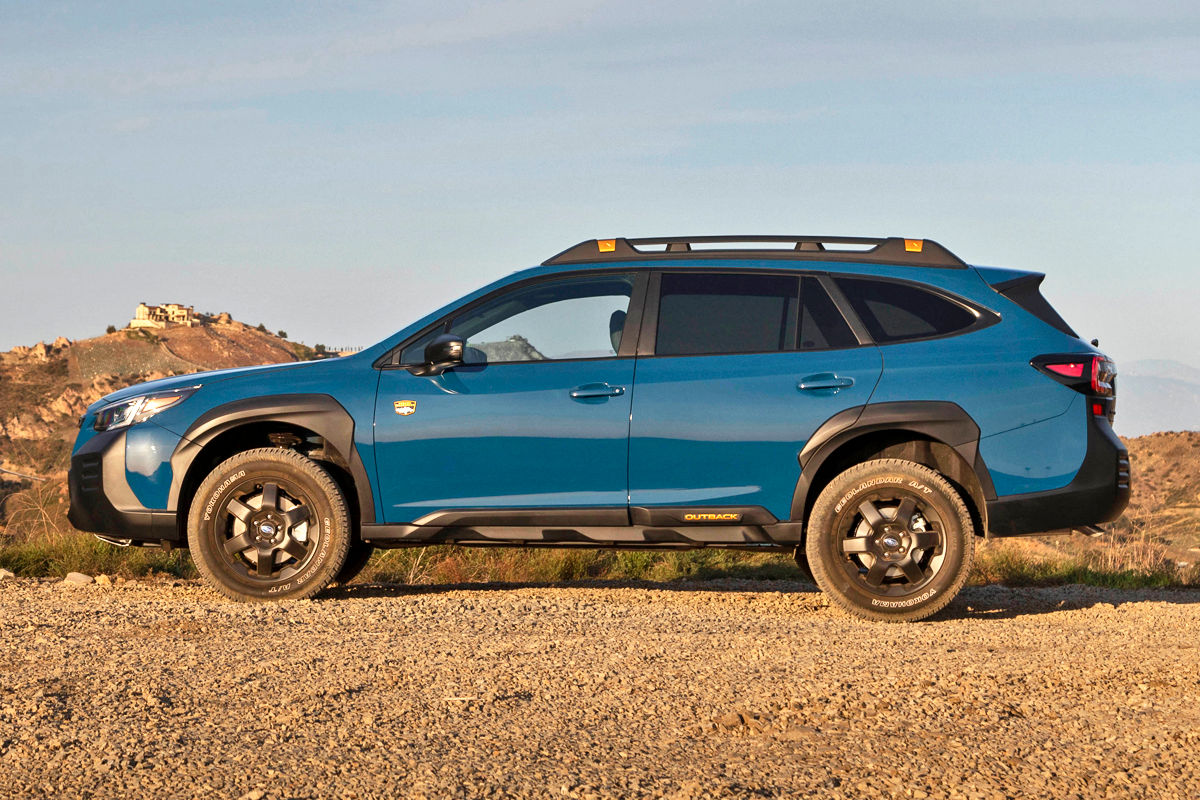
Though Subaru’s Wilderness derivatives are currently exclusive to North America, the brand’s local division is campaigning to offer these off-road variants in South Africa…
While Subaru offers special Wilderness versions of its Crosstrek, Forester and Outback in North America, these extra-rugged derivatives are currently exclusive to that market. However, the Japanese firm’s local division says it’s working on changing this, with a view to eventually bringing such models to South Africa, too.
“The Wilderness models are exclusively for the North American market. We are trying to convince Subaru [headquarters in Japan] to change this due to the number of requests we have received for these models,” Subaru Southern Africa told Cars.co.za.
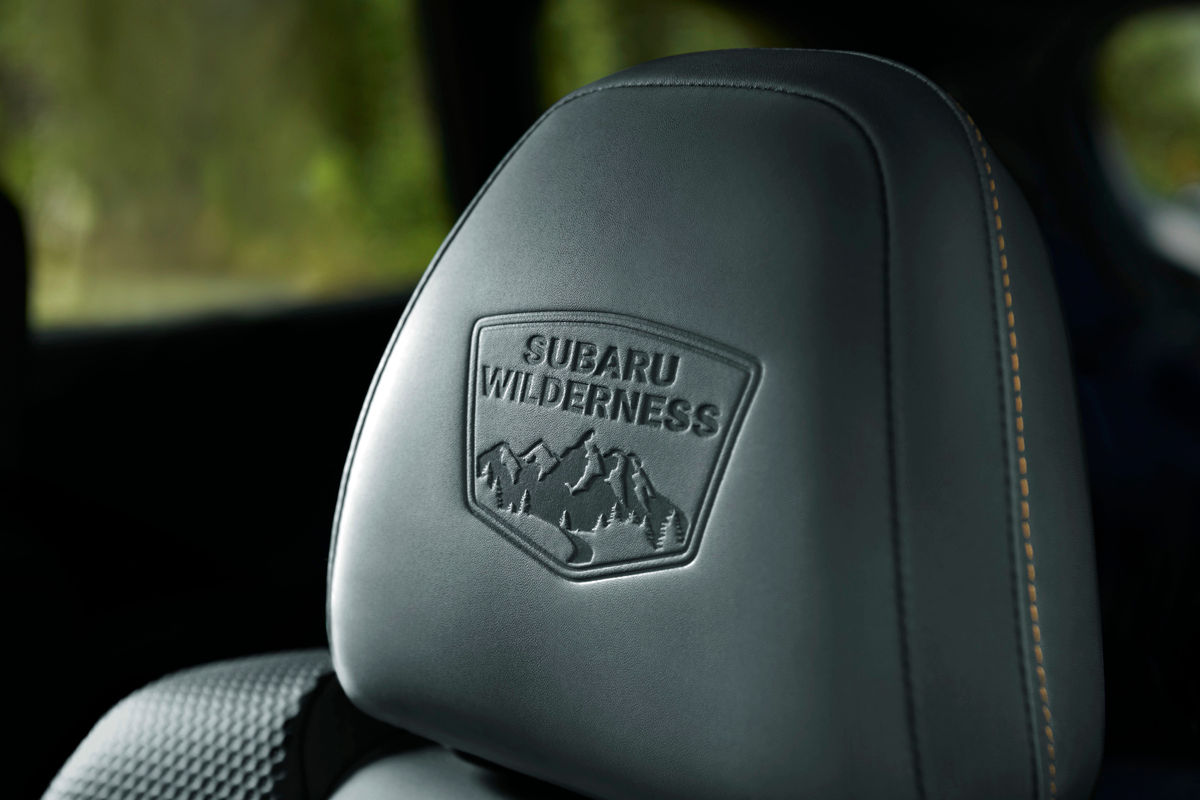
This badge is currently exclusive to North America.
Judging by local trademark filings over the past few years, the Tokyo-based firm’s bosses certainly seem amenable to the idea. Indeed, Subaru applied to trademark the Wilderness logo (pictured above) in South Africa as long ago as February 2021, with an official registration taking place in June 2024.
In June 2024, Subaru’s global headquarters also made applications to trademark the “Wilderness”, “Subaru Wilderness” and “Outback Wilderness” nameplates here in Mzansi, with the status of each filing currently listed as pending.
The Crosstrek in Wilderness form.
While Subaru Southern Africa’s volumes are nowhere near significant enough to convince the company’s headquarters to take such a step, there’s handily some support from other right-hand-drive markets. For instance, according to CarExpert, the Japanese automaker’s division in Australia – where Subaru is a regular top-10 brand – is likewise “working towards” launching these rugged derivatives.
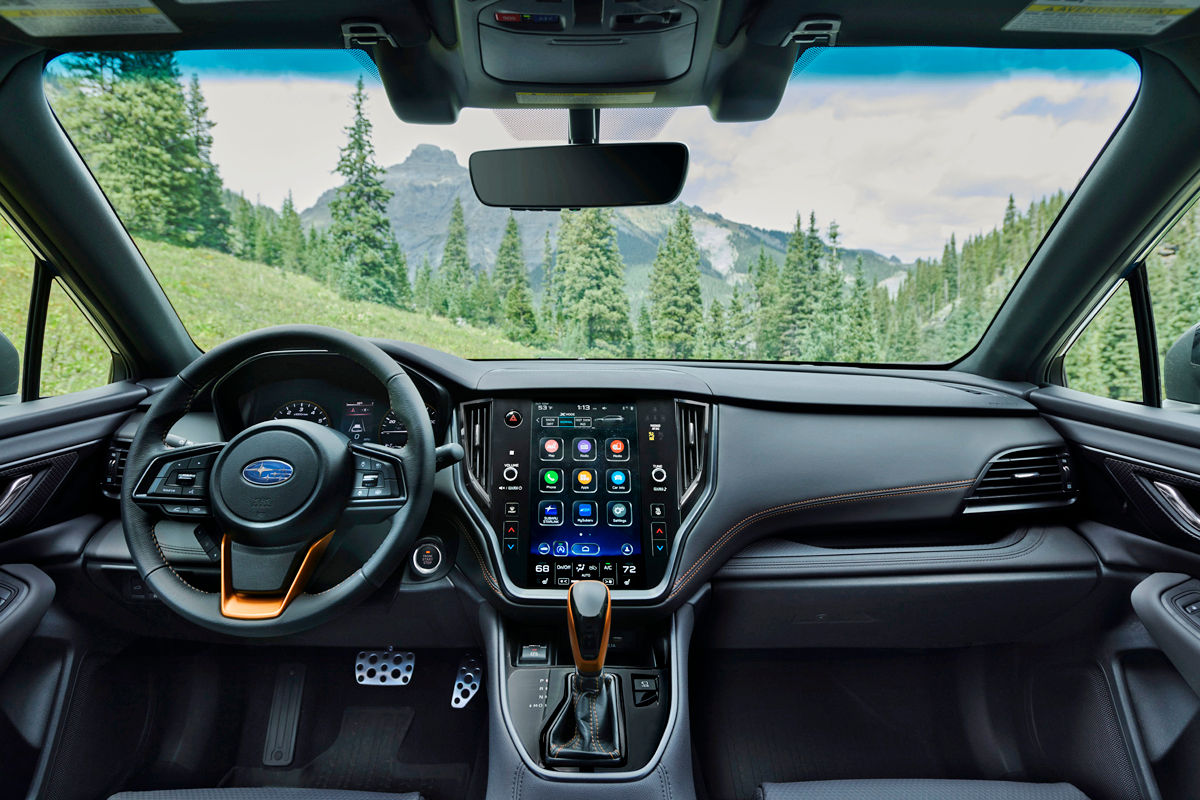
According to Subaru, Wilderness models are “specifically engineered for off-road exploring”, boasting tweaked suspension, added ground clearance, all-terrain tyres, revised gear ratios and model-specific exterior styling (including chunky black cladding and anodised copper accents), along with a smattering of cabin updates.
The Forester version.
Such variants also score upgraded roof rails (with a higher load capacity) as well as redesigned bumpers with improved approach and departure angles. Of course, all Wilderness-badged derivatives furthermore feature Subaru’s standard symmetrical all-wheel drive, along with an enhanced dual-function X-Mode multi-terrain system.
Although Wilderness models are currently built only at Subaru’s Indiana factory in the United States, should they eventually be given the green light for right-hand-drive markets such as South Africa and Australia, we’d think they’d come from the firm’s Gunma plant in Japan instead.
We visit Modern Classic Collective – one of the newest classic car traders in Cape Town, to admire the dealership’s stock and chat with one of its co-founders.
IMAGES: Wilhelm Lutjeharms
As the industrial shutter door to Modern Classic Collective opens, I enter the world of one of the latest classic and modern-classic car traders in Cape Town. To my left is a Lamborghini Diablo – which is not for sale. Even without the characteristic rear wing (or perhaps, because of that), it is a sight to behold.
Along the walls, all neatly reverse-parked are a variety of other tantalising sights. There is a 2015 Porsche Boxster S and a 2006 Porsche Cayman S, as well as a 1980 Corvette C3 T-Top.
Further along the back wall is an adventure-ready air-cooled 1973 Porsche 911 T and a 2014 Mercedes-Benz G-Class – a G350d. There is also a Porsche 911 3.0 SC, a Jaguar E-Type and a neat yellow 2000 Ferrari 360 F1 with a beautiful blue interior. Indeed, a great variety of cars!
Dave Blackman is one of the business’ 2 co-founders. He sits down with me to talk about their approach.
“We decided a few things upfront. We don’t want to do storage, because then you are married to a place. We thought it best to rather get relatively small premises where we can focus on current stock and ‘marry’ each new car we receive with a new owner. There are enough storage places around so we can direct our clients to those companies, and that freedom allows us to focus on sales.
“We are in the position where we can buy most cars ourselves before we put them up for sale. With my network, Brad’s (the main business owner) contacts and my work ethic, we believe we can achieve a lot and we think this space works perfectly for us.
“Brad has been involved in the muscle car scene for some time and is embedded in the Porsche market as well. I’ve also been in the industry for a number of years. Because of Brad’s contacts, we’ve found new homes for 15 Porsches since we opened our doors at the start of this year.”
“When we first get a car in, the first step is to have a technical inspection done. We’ll then look at the report to understand the condition of the car. We then price the car according to this report. Ideally, we prefer to buy the car, do the necessary recommission work and then list it for sale.”
As is the case with nearly all classic and modern-classic specialists I’ve spoken to, Dave and his team try to not export any cars. There are exceptions, however.
“In some cases, there is a stronger demand overseas for a specific car, an example being a Shamrock Cobra. There is a guy in the Netherlands who is buying many pre-2000 run-of-the-mill units, and then, of course, they leave our shores. Sometimes these things are not in our control. A client could buy a left-hand drive Porsche and then later export it…
“Sometimes there will be limited interest in a certain model, like our Ferrari 360 F1 at the moment, but a lot of interest is coming from Australia, which is also a right-hand drive market. There seems to be little interest in the standard F430 and 360 Modena models. The 360 F1 we are selling has a Tubi exhaust system and 360 Challenge Stradale gearbox software. I honestly think it is a good buy.”
Dave and I further discuss the 360 Modena and the pros and cons of owning such a vehicle. At this price bracket (just under R1.3 million), it does present a great level of modern classic performance and design. The only drawback would be running costs compared to other modern classics in this price bracket.
Modern Classic Collective intends to offer a greater variety of cars: “For example, we’ve done a couple of SUVs and we are quite specific about what we stock, as we want to offer the right car at the right price.
“We are also working with a company that can provide finance for cars older than 10 years. The result is that a buyer could apply for finance on a car such as a Ferrari 360 Modena and even a Jaguar E-Type.”
“We also own most of the cars. The benefit of that is that our co-founder and I can drive these cars, test them and identify issues they might have. Then we try to rectify these problems before someone comes to view the car or we add it to the list of things to be done before the new owner takes delivery of it.”
Initially expected to launch in South Africa at some point in 2024, the new Hyundai Santa Fe has now been put “on the back burner” for the local market…
Waiting patiently for the new Hyundai Santa Fe to make local landfall? Well, Hyundai Automotive South Africa has confirmed to Cars.co.za that the 5th-generation SUV has been put “on the back burner” for the local market.
Though the South Korean firm’s local distributor stopped short of ruling out the possibility of an introduction at a later date, it told us the new model was not currently “on the horizon”. We can only speculate that the boldly styled new Santa Fe would have come in at an unfeasibly high price point.
For context, the outgoing 4th-generation Santa Fe range was recently rationalised to a single derivative: the Santa Fe 2.2D 4WD Elite for R1 094 500. That’s not far behind the respective flagship versions of the Palisade (R1 204 500) and the Staria (R1 263 900).
In addition, it’s perhaps worth noting that the new version of the SUV is not produced in turbodiesel guise, instead being available in overseas markets only in various petrol and petrol-hybrid forms. Considering the 4th-gen Santa Fe was offered in Mzansi exclusively with an oil-burning motor, this too may have played a role.
In 2023, Hyundai sold 177 examples of the Santa Fe in South Africa, with a high of 30 units in July of that year. Meanwhile, over the opening 7 months of 2024, just 51 units have been registered, with the SUV breaking into double figures only twice. We suspect local stock has started to run dry, with Hyundai selling just 5 units in June and 5 in July 2024.
It’s furthermore worth keeping in mind that as Hyundai Automotive SA bids to regain 4th position in the local sales rankings (year to date, it’s in 5th, behind Ford), the company has seemingly placed a renewed emphasis on the lower end of the market, having recently cut pricing for the Grand i10, i20 hatchback and Venue. In addition, the new Exter – which is poised to play the role of “most-affordable crossover” for the brand – is scheduled to launch in September 2024.
As a reminder, Hyundai released a few images of the new Santa Fe back in July 2023, before revealing more details the following month. Having undergone what the manufacturer describes as a “radical transformation”, the new Santa Fe looks nothing like its predecessor.
Interestingly, Hyundai claims the newcomer’s identity is closely linked to its tailgate area, which is no longer merely a “storage space” but has now become “an open terrace that can be used to effortlessly enjoy the outdoors”. Indeed, the foldable 2nd- and 3rd-row seats create what Hyundai dubs a “terrace-like” space at the rear with the wider tailgate open.
From nose to tail, the fresh-faced Santa Fe is some 45 mm longer than its forebear, now measuring 4 830 mm long and 1 900 mm wide, while standing 1 720 mm tall. There’s an extra 50 mm between the axles, too, taking the wheelbase to 2 815 mm and allowing the new 7-seater model (though some markets will also feature a 6-seater) to offer what Hyundai calls “enhanced” 3rd-row seating.
The tailgate opening is a considerable 145 mm wider than before at 1 275 mm, while the luggage compartment has gained 91 litres of space (now set at a “class-leading” 725 litres; we’re guessing this is with the 3rd row folded flat). Legroom in the 2nd row has increased by 35 mm to 1 075 mm, with occupants of the 3rd row furthermore gaining an extra 15 mm in this area (and an additional 69 mm of headroom), according to Hyundai.
Since its launch in 2021, the Haval Jolion has become very popular in Mzansi, but what are the strengths and weaknesses of the Chinese compact family car as a used buy? Reba S also presents the model’s key features, parts prices and depreciation data.
The Haval Jolion, which succeeded the H2 that debuted in South Africa in 2017, demonstrates how quickly Chinese brands can learn… and adapt their products to suit the local market’s requirements.
The small crossover, of which the 1.5T S Super Luxury derivative was a finalist in the Compact Family Car category of the 2023/24 Cars.co.za Consumer Awards, sponsored by Absa, ticks so many boxes – it’s reasonably spacious and practical, loaded with features, and priced impressively well.
Most Jolions are powered by a 105 kW/210 Nm 1.5-litre 4-cylinder turbopetrol mated with a 7-speed dual-clutch automatic transmission, but before the recent introduction of the 2024 model year Jolion and its Jolion Pro coupe-crossover variant, a manual ‘box was offered on both City and Luxury grades.
Bear in mind that in 2023, Haval South Africa also introduced a Jolion 1.5T S derivative that offered 130 kW/270 Nm, while the range is topped by a 1.5-litre petrol-electric hybrid 1.5 HEV Ultra Luxury variant.
From new, turbopetrol Haval Jolions shipped with 5-year/100 000 km warranties and a 5-year/60 000 km service plans, while Haval South African upgraded the HEV’s warranty to 7 years or 200 000 km early in 2024, allied with an 8-year/150 000 km battery warranty as well as a 5-year/75 000 km service plan.
In this video, Reba S unpacks the Jolion range’s line-up, highlights the key features, shares the product strengths and weaknesses and briefly compares it with its rivals. She also shares the parts pricing, both from the OEM and a 3rd party supplier, so you have some idea of what it would cost to maintain the car.
The 2021 Jolion 1.5T Super Luxury you see in this video was supplied by GetWorth. Thank you, GetWorth for loaning us this clean example and supplying depreciation insights of this vehicle.
According to Cars.co.za, the Haval Jolion is considered a good car to buy as it is a popular choice in the compact SUV segment. It offers an appealing blend of style, standard features, practicality, and value-for-money.
Is the Jolion a fuel-efficient car?
While Haval claims a fuel consumption range of 5.1-8.1 L/100km, the article notes that the car has been criticised for higher-than-expected fuel consumption in real-world driving situations.
Is the Haval Jolion all-wheel-drive?
No, the article specifies that the Haval Jolion is offered exclusively as a front-wheel-drive car.
You can no longer buy a new Nissan NP200, but should you consider it as a used buy? Let’s take a closer look at this South African-built half-tonne bakkie’s almost 16 years on the local market and what you can expect to pay for a good used example.
When the Nissan NP200 hit the South African market in 2008, it had massive (figurative) shoes to fill. Yes, this half-tonne bakkie was faced with the unenviable task of replacing the iconic Nissan 1400, which traced its local production roots all the way back to 1971, when it was known as the Datsun 1200 (B120).
Effectively a single-cab bakkie version of the 1st-gen Dacia Logan (the Renault-badged version of the sedan was briefly sold in Mzansi – find a Logan), the NP200 was – just like its storied forebear – built at Nissan SA’s Rosslyn factory, north of Pretoria. At launch, Nissan SA forecasted that the unibody NP200 was “clearly destined to [become] a reckonable force in the South African commercial vehicle market”.
The NP200 was the follow-up to the long-running Nissan 1400.
That prediction turned out to be entirely accurate as Nissan’s smallest workhorse – which is interestingly still built and sold as the Renault Tondar Pick-Up in Iran – ended up outlasting every other half-tonne bakkie on the local market, thus having the segment all to itself for its final few years of existence.
Despite being decidedly long in the tooth, the NP200 remained exceedingly popular with local buyers – partly owing to the sheer power of monopoly, we should add – as the clock wound down. As many as 12 859 units were registered in Mzansi in 2022, enough for the NP200 to rank 4th on the list of SA’s best-selling bakkies. A further 12 721 units were sold locally in 2023, seeing the NP200 retain 4th position.
Production of the Nissan NP200 was officially suspended in March 2024, marking the end of a highly successful 16-year run on the local market. That final month of production saw the NP200 put in its best sales performance in recent memory, securing the bakkie a surprise 2nd position with a whopping 2 679 registrations (and even helping it keep 4th spot for H1 2024). It was an entirely fitting swansong, then.
Nissan NP200 model line-up in South Africa
At launch in South Africa, just a single derivative was on offer.
The Dacia Logan Pick-Up was revealed at the 2007 Bucharest International Motor Show in Romania, but the Nissan-badged version debuted in South Africa only around a year later, in September 2008.
At launch, just a single base-spec derivative – known as the NP200 1.6 8V and priced at just R88 900 – was available, with its Renault-sourced naturally aspirated 1.6-litre, 4-cylinder petrol engine generating 64 kW at 5 500 rpm and 128 Nm at 3 000 rpm. In contrast with its predecessor, the drive was directed to the front axle via a 5-speed manual ‘box, with coil springs (rather than leaf springs) employed at the rear.
By May 2009, Nissan SA expanded the range with the introduction of new mid-tier “S” and top-spec “SE” derivatives (later renamed Mid and High, respectively), plus additional engine options, while also freshening up the bakkie’s exterior styling despite the fact it had been on the market for only 8 months.
The NP200’s wheelbase came in at 2 905 mm.
At that point, the S and SE grades were available with a slightly perkier 77 kW/148 Nm 16-valve version of the base version’s 1.6 petrol motor, while a dCi-badged 1.5-litre, 4-cylinder turbodiesel motor offering 63 kW and 200 Nm (the latter figure from 1 900 rpm) made its debut in base and SE guise in October 2009.
In the opening quarter of 2011, Nissan SA upgraded the NP200’s warranty from the original 3-year/100 000 km cover to a 6-year/150 000 km arrangement. Moreover, the entry-level NP200 1.6 8V variants become available with (manual) aircon (resulting in a model unimaginatively dubbed the “1.6 8V Base + AC”) and with a safety pack incorporating dual airbags and ABS with EBD (the “1.6 8V Base + AC + Safety Pack”). While the SE grade was unchanged, the S trim also gained a passenger-side airbag.
The first special edition to be rolled out was the NP200 Loaded.
With 7 derivatives in its line-up, the Nissan NP200 finally rose to the very summit of the local half-tonne bakkie sales charts in January 2012, right after the Ford Bantam exited the market, although the likewise SA-built Opel Corsa Utility/Chevrolet Utility had placed 1st in this segment in the preceding few years.
The NP200 Loaded – the first in a line of limited-edition models – was launched in May 2014. Based on the entry-level petrol variant (but fitted with aircon and the safety package), the limited-run derivative sported “Loaded” decals along its flanks, with the logo repeated on the leather seats and black carpets.
The special-edition NP200 Stealth, complete with daytime running lights.
Available exclusively in white, the NP200 Loaded furthermore scored a front-loading CD (and Bluetooth-enabled) audio system, central locking, a stainless-steel nudge bar, a stainless-steel sports bar, black roof rails, a black tonneau cover and “specially designed” alloy wheels.
The NP200 Stealth special edition followed in February 2015, described as a “leisure-focused” derivative but curiously offered only with the lower-output 8V petrol engine.
The Stealth came painted in a “Techno Grey” hue and featured a dark sports bar, dark nudge bar, flush-fitting tonneau cover, charcoal-black alloy wheels (with red accents), “Stealth” decals, smash-and-grab glass protection, daytime running lights, remote central locking, an Alpine audio system, imitation-leather upholstery (with titanium-coloured contrast stitching) and a special carpet set.
The cabin design was revised towards the close of 2015.
Towards the end of 2015, Nissan handed the NP200 a light refresh, rolling out “all-new” cabin materials and additional standard features on certain variants. Inside, the bakkie gained a revised centre console (including a redesign of the controls for the heating, ventilation and air-conditioning system), with base derivatives furthermore switching to a “hard-wearing” black textured fabric upholstery with vinyl inlays.
Mid-tier variants gained a “more modern” black-and-grey fabric on the seats and door panels, complemented by black woven cloth on the seat bolsters and black vinyl inlays on the seat backs. Meanwhile, top-spec NP200s also scored black-and-grey textured fabric, but with black woven cloth on the sides and bolsters. Finally, mid- and high-grade derivatives gained an upgraded audio system that offered CD, MP3, USB, audio jack and Bluetooth functionality.
The limited-run NP200 ICE finished in Starling Blue.
Then, around October 2016, Nissan SA launched another special-edition NP200. Available in “limited numbers”, the NP200 ICE could be specified with the 1.6 8V petrol engine or the 1.5 dCi turbodiesel motor. Defining features included “Starling Blue” or “Bright Silver” metallic paint (plus obligatory decals), model-specific 15-inch alloy wheels, a brushed aluminium nudge bar, a brushed aluminium sports bar, a tonneau cover, tinted safety film, daytime running lights, eco-leather upholstery and rubber mats.
Little else changed over the next few years, though the 16V petrol engine and the 1.5-litre turbodiesel were quietly discontinued in 2022. Towards the end of the NP200’s lifecycle, the local range was thus trimmed to just a pair of base derivatives – the 1.6 8V Safety Pack and the 1.6 8V Safety Pack (air con) – which would have continued to appeal to fleet buyers.
What are the advantages of a Nissan NP200?
The NP200’s payload capacity came in at a generous 800 kg.
Load-carrying ability: Though the Nissan NP200 was classed as a half-tonne bakkie, its payload capacity was, as a matter of fact, closer to a full tonne than 500 kg. Rated to carry a generous 800 kg, the load tray measured a handy 1 807 mm long and 1 374 mm wide (or 1 024 mm between the arches), while its upper edge was protected by a plastic surround.
There were no fewer than 16 anchor points in the rubberised bay and the tailgate was designed to “resist” loads of up to 300 kg when open, while braked towing capacity came in at 650 kg, regardless of powertrain. In addition, there was a storage area behind the seats offering a useful capacity of 300 litres.
A rubberised load tray was standard (note the tie-down points).
Generally affordable to maintain: Compared with larger 1-tonne single-cab bakkies, the NP200 was generally more affordable to maintain, routinely finishing at the top of its (admittedly uncrowded) class in the annual AA Kinsey Report (which took into consideration a total parts basket price, comprising service, repair and crash parts). Of course, it’s worth keeping in mind some of the big-ticket items nevertheless remained pricey to replace.
Considering this model’s unusually lengthy lifecycle and its sustained popularity over that period, spares were fairly easy to come by, particularly when it came to “OEM-equivalent” parts. However, we have heard of a few rather puzzling instances of NP200 owners having to wait months for certain replacement components to arrive at Nissan dealerships, with services at official dealers also said to be rather pricey.
The 8V engine was the popular choice with fleet buyers.
Proven to hit high mileages: Though we obviously noted some instances of mechanical woes – as will always be the case with vehicles sold in such vast numbers – there’s no doubt that the Nissan NP200 proved itself as a bakkie capable of racking up considerable mileages. Indeed, the plucky little utility was widely employed by security firms, courier companies and other fleet users all over the country, while also often being the vehicle of choice for artisans (think plumbers, electricians and the like).
In 2017, Ampath Laboratories famously said its fleet of more than 200 NP200s had travelled some 25 million kilometres or “over a 500 times around the circumference of the Earth and half the distance to Mars”. At the time of writing, we found 6 units listed on Cars.co.za with more than 300 000 km on their respective odometers (some just a couple of years old!). Not quite as impressive as certain Toyota Hilux and Isuzu KB examples, but lofty mileages nonetheless.
What are the disadvantages of a Nissan NP200?
Some of Nissan’s marketing positioned the NP200 as a leisure bakkie.
Lack of creature comforts: Though Nissan sometimes referred to the NP200 as a “leisure” or “recreational” bakkie, it was first and foremost a workhorse. As such, private buyers might have been disappointed with the specification levels on offer, particularly when it came to the entry-level derivatives, which went without basic features such as aircon, never mind ABS or airbags.
Of course, the higher-spec variants that followed – as well as the subsequent rollout of optional air-con and safety packs – mitigated this somewhat, but some NP200s forever did without items such as electric windows, electrically adjustable side mirrors, an audio system and a height-adjustable driver’s seat.
The decidedly basic cabin of an early NP200.
Clutch (and miscellaneous) problems: During our research, we noted many owners complaining of clutch issues. We’ve heard of numerous instances of clutch judder (sometimes even on low-mileage vehicles and often traced back to a bad pressure plate), plus a few examples of clutch failure. Other common issues included starter-motor maladies, problems with the aircon system and overheating.
Ergonomic idiosyncrasies: Likely as a function of its underpinnings, the NP200 was saddled with a few ergonomic idiosyncrasies. For instance, the windscreen wipers were oriented for a left-hand drive vehicle, which resulted in a section of unswept glass just to the right of the driver’s forward gaze. In addition, the height of the load-tray walls meant rear visibility wasn’t the best. Furthermore, variants fitted with electric windows had their controls sited on the centre console rather than the door panels.
How much is a used Nissan NP200 in South Africa?
Early models are hard to come by today.
Models sold from early 2011 upgraded to a 6-year/150 000 km warranty (from the original 3-year/100 000 km cover), while a service plan was optional throughout the NP200’s tenure on the market. If the example you’re considering doesn’t have a complete maintenance history (with evidence of servicing at least every 15 000 km), move on to the next candidate… There are plenty of examples to choose from!
For all 3 engine options, Nissan SA recommended the timing belt be replaced every 90 000 km or 48 months, describing this as “the maximum lifespan which should not be exceeded”. If the vehicle was used mostly for short journeys (or towing), Nissan SA furthermore advised cutting this interval to 45 000 km. Check the maintenance history closely to ensure these recommendations have been followed.
Various factory-backed accessories were available for the bakkie.
At the time of writing, a whopping 83% of all Nissan NP200 listings on Cars.co.za featured a petrol engine. Fascinatingly, early models were particularly scarce, with 2023 being the most common model year (accounting for 30% of all listings), followed by 2019 (12%) and 2018 (11%).
Mileages varied from virtually zero (a few brand-new examples were on offer) to an indicated 330 500 km, with the latter achieved by a 2015 1.6 8V model. We discovered a further 5 examples with more than 300 000 km on their respective odometers, as well as 48 more that had covered in excess of 200 000 km. Predictably, white was the most popular exterior colour, with 90% of listings painted in this hue.
Below R100 000: As you may have guessed, the majority of NP200s on the market for under R100 000 were high-mileage examples, most of which were furthermore registered before 2014. The 1.5 dCi motor was even more scarce in this pricing bracket.
From R100 000 to R150 000: We found far more variety between these pricing bookends, where the most common model year was a more attractive 2018. Interestingly, it was here we discovered most of the special-edition ICE models on offer.
From R150 000 to R250 000: This was easily the most densely populated pricing bracket, while also featuring an increased percentage of diesel derivatives (at around 20%). We suspect most buyers would be shopping in this space, where we came across everything from seemingly well-looked-after 2015 models to almost-new vehicles with little more than delivery mileage.
R250 000 and up: Considering the most expensive NP200 available new at the end of this model’s lifecycle had a retail price of R253 800, we were a little surprised to find quite a few listings above this mark. Admittedly, many were virtually new examples, though we also discovered some 2022 models fitted with a raft of factory-backed accessories. The most expensive NP200 we found was a 2023 1.6 8V (with safety pack and air-con) with 1 500 km on the clock, listed for R289 900.
Which Nissan NP200 should I buy?
Models such as the NP200 Loaded featured extra kit, such as a front-loading CD sound system.
So, which derivative is the pick of the bunch? First, we’d suggest concentrating on the later model years, or at least the updated versions launched in late-2015. While there’s no real reason to avoid any of the 3 proven engine options (with the 8V K7M dating back to 1995, the 16V K4M to 1998 and the turbodiesel K9K to 2001), which motor you choose will be largely determined by your requirements.
Though the 8V unit lacked grunt, it was perhaps most fit for high-mileage duty (and the preferred option for fleet buyers). The 16V produced a bit more oomph (but used a claimed 8.0 L/100 km), while the 1.5 dCi was the most frugal with fuel, sipping diesel at just 5.3 L/100 km, according to Nissan.
Moreover, we’d avoid models not fitted with the available basic safety kit (in this case, ABS and a pair of airbags), while also pointing to air conditioning as a crucial feature in a country capable of serving up blisteringly hot summers. Finally, keep in mind Nissan SA offered a wide range of official accessories, from a stainless-steel sports bar and a tow bar to a neat tonneau cover and a range of approved canopies (fashioned from either stainless steel or fibreglass).
Is the Nissan NP200 a good used buy?
The NP200 was a workhorse, through and through.
Whereas it faced several half-tonne rivals in its early days, the NP200 had the market all to itself late in its life. Since the Mk1 Golf-based Volkswagen Caddy was axed a year before the NP200 hit the scene, one of the Nissan’s biggest battles was with the likewise locally produced Ford Bantam, which was put out to pasture in 2011.
The seldom-spotted Proton Arena was discontinued the very same year, while the Fiat Strada followed in 2012, before General Motors pulled out of South Africa at the end of 2017, sounding the death knell for the Chevrolet Utility (which was earlier badged as the Opel Corsa Utility).
The NP200 is the only half-tonner available in a recent model year.
So, the Nissan NP200 enjoyed an unusually lengthy lifecycle, which means it’s easily the most common half-tonner on SA’s pre-owned market. With no confirmed replacement on the horizon – from Nissan, or indeed any other manufacturer (though the next-gen Fiat Strada is said to have been pencilled in for Mzansi) – despite an obvious demand, NP200 prices in the used space are unlikely to fall anytime soon.
Does it make a good used buy? Well, though 2024 examples are virtually as rudimentary as those that rolled off the assembly line back in 2008, the NP200 has its strengths. More pertinent, perhaps, is the fact it’s the only choice for anyone requiring a relatively freshly built half-tonne single-cab bakkie today.
The new BMW X2 arrived in South Africa earlier this year and Jacob Moshokoa recently spent some time with the range-topping X2 M35i. In our latest video review, Jacob questions whether the new X2 is worthy of wearing an M badge. Watch the video!
When the first generation BMW X2 luxury compact SUV hit the market back in 2018, it received a lukewarm welcome from local buyers. With its focus on style rather than practicality, the X2’s appeal was restricted in a market offering a range of more practical, common-sense offerings.
Fast forward to 2024 and BMW has unleashed an all-new X2 and from the outside it looks significantly bolder than its predecessor. Importantly though, the new BMW X2 now has a larger footprint (it’s 194 mm longer and 21 mm wider). Importantly, it features a 22mm longer wheelbase, resulting in a more practical cabin for passengers and luggage. In fact, the load bay offers 560 litres of space, an increase of 90 litres over the previous generation X2!
Is the new BMW X2 worthy of an M badge?
So, the new X2 M35i has visual appeal and enhanced practicality but is its performance worthy of an M badge? Jacob Moshokoa wanted answers and he put the X2 M35i’s turbocharged 2.0-litre turbopetrol engine to the test. With 233 kW and 400 Nm of torque mated to a 7-speed dual-clutch automatic transmission, the X2 M35i is capable of a claimed zero to 100kph acceleration time of 5.4 seconds with a top speed of 250kph.
With pricing as of August 2024 starting from R1 223 936, the new X2 M35i is significantly pricier than the outgoing iteration of the luxury compact SUV, but the question remains, is it worth your consideration or are you better off looking elsewhere for your kicks? Note that a more affordable X2 sDrive18i M Sport is also available from R879 738.
This video review will help you decide, watch the video!
Also, be sure to watch our New BMW X2 Walkaround Review published earlier this year for more insight into the X2’s improved practicality.