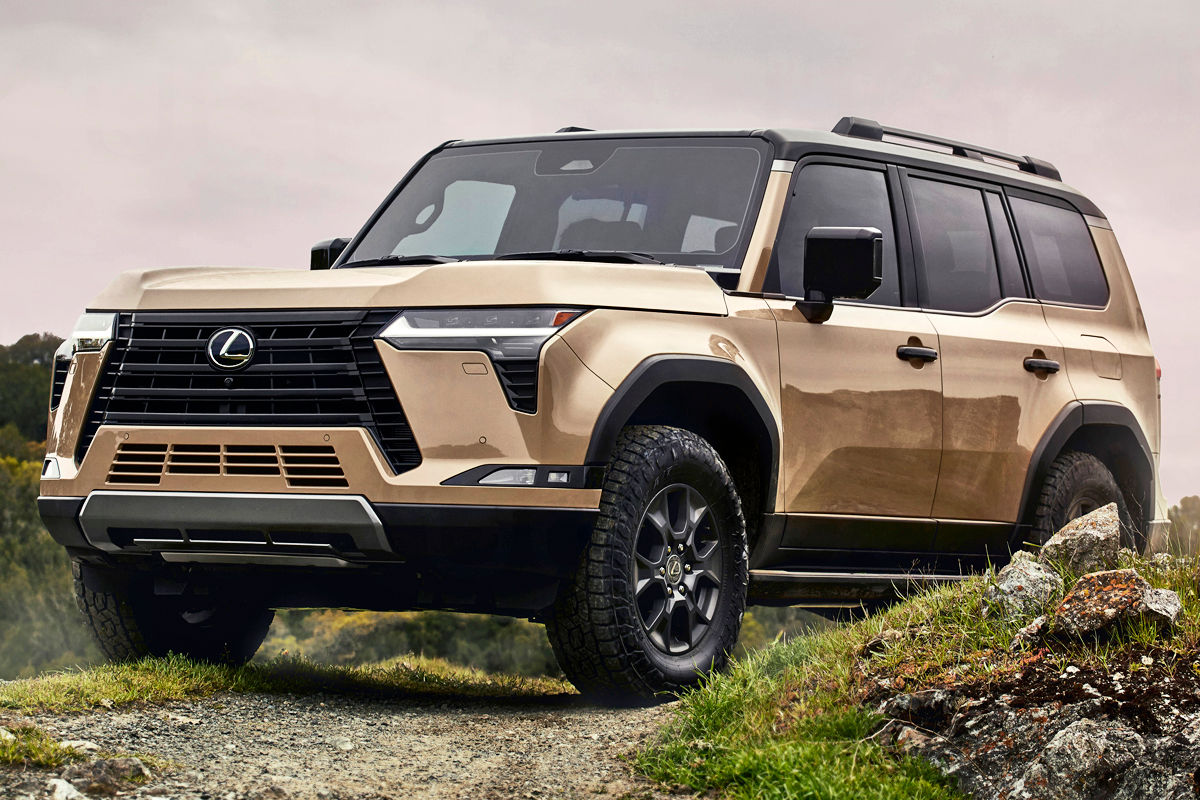
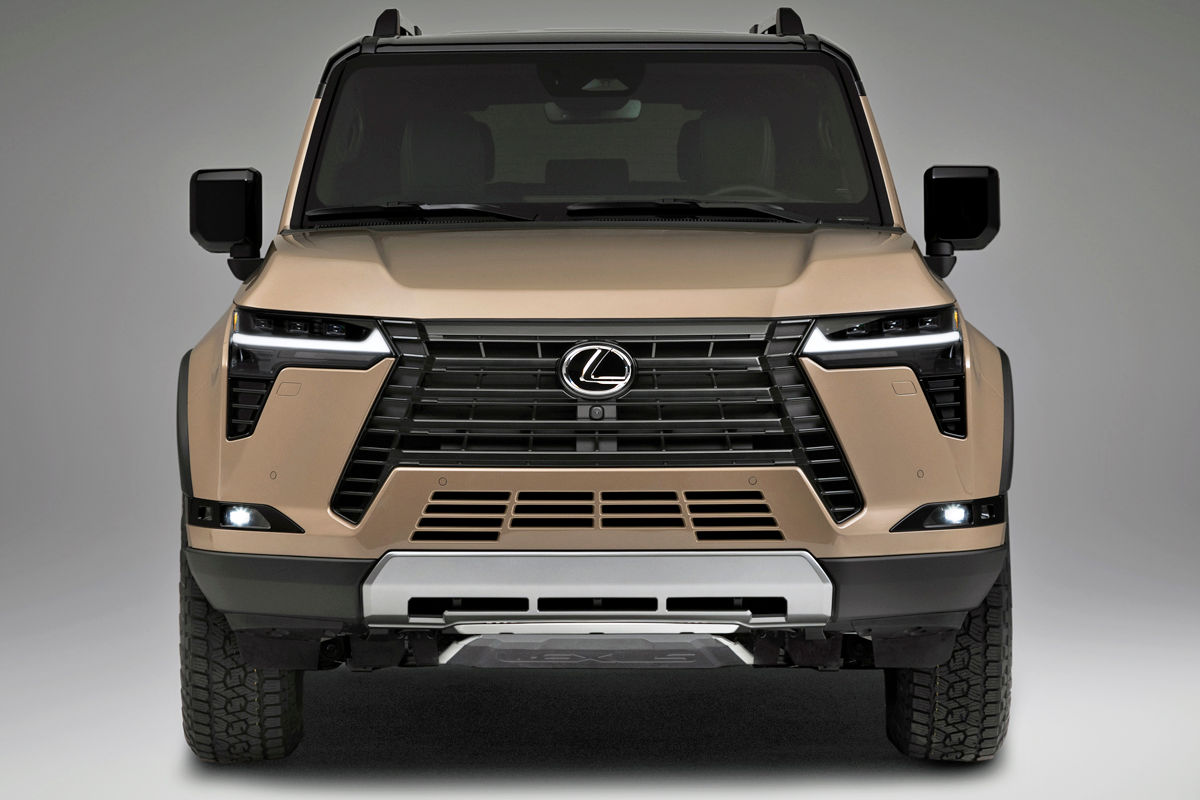
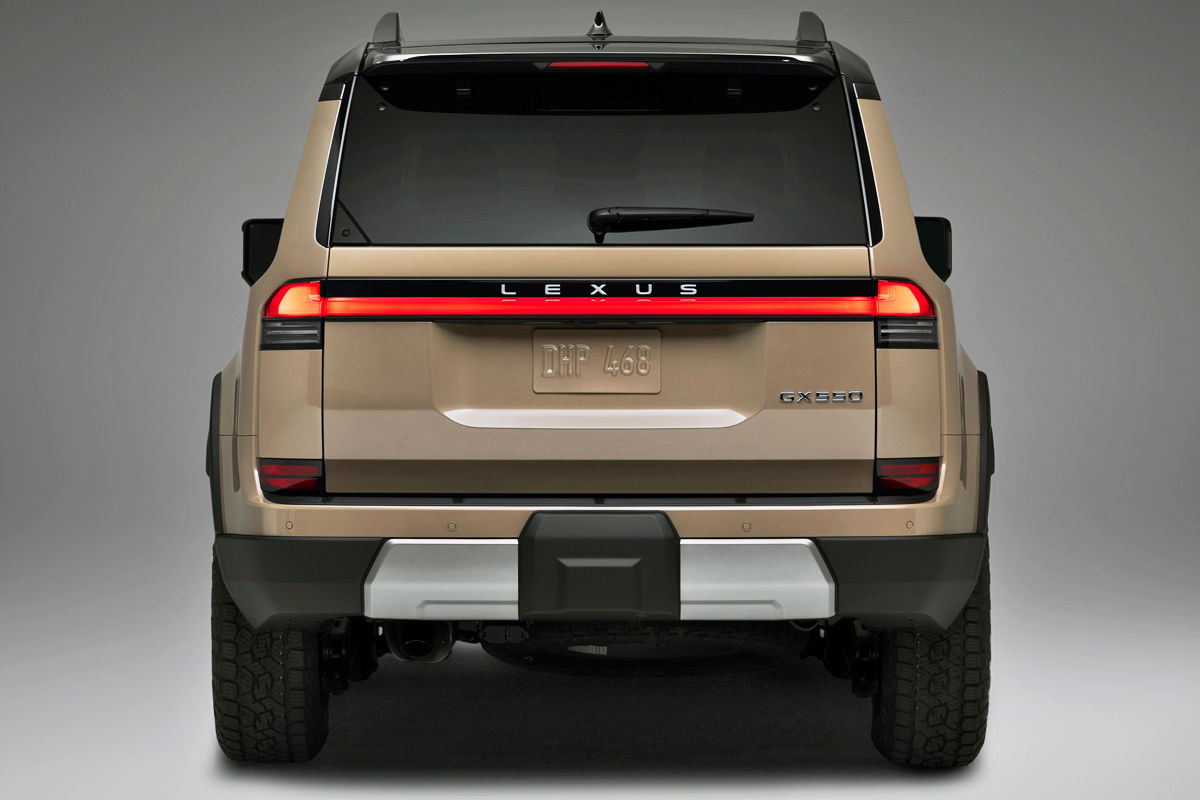
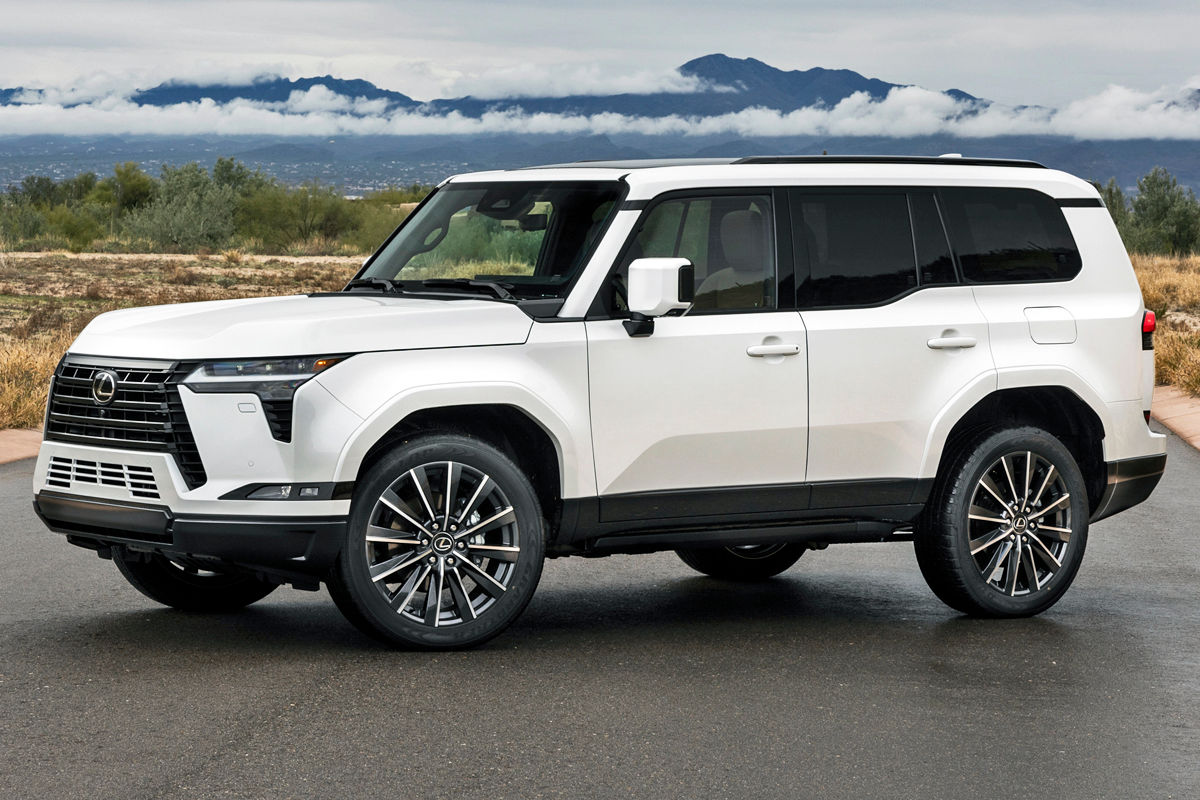
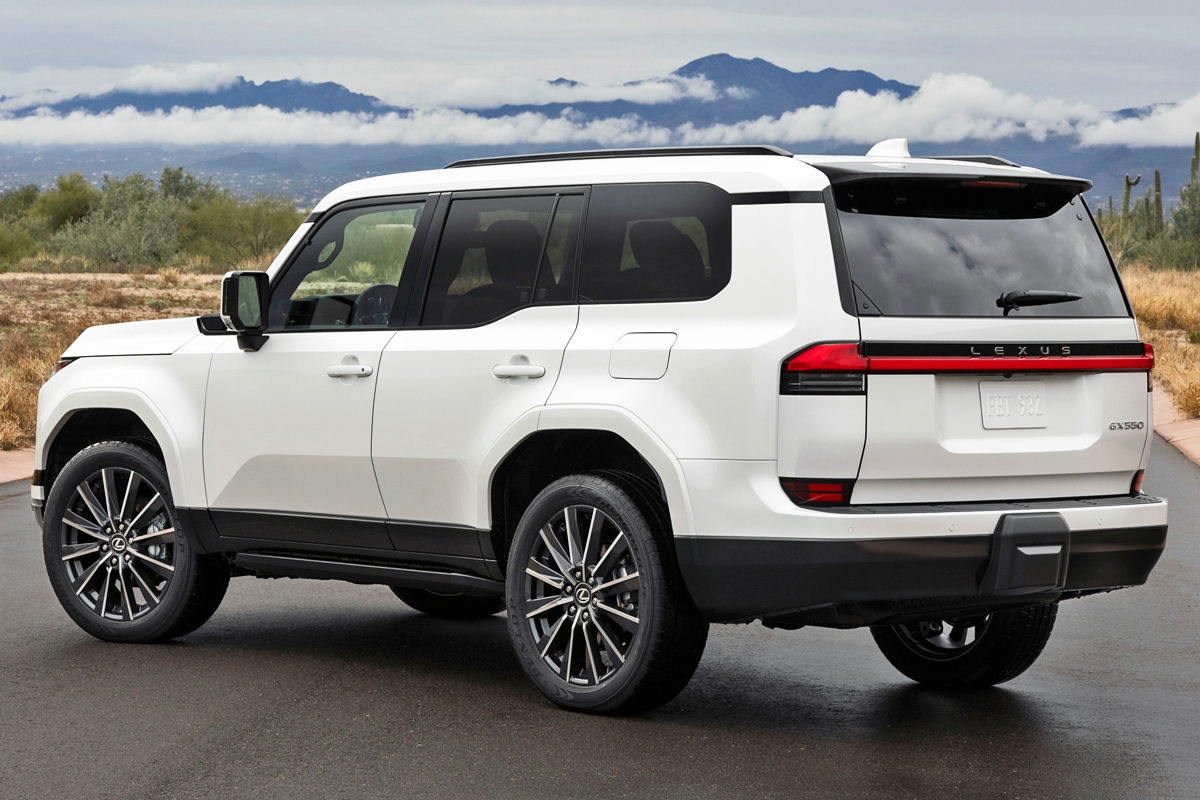
New information suggests the Lexus GX – the Toyota Land Cruiser Prado’s luxury twin, but with twin-turbo V6 grunt – is set to launch in South Africa in 2025…
The new Lexus GX has been locked in for South Africa. Yes, Cars.co.za‘s latest information suggests that the Toyota Land Cruiser Prado’s luxury twin is scheduled to launch locally in early 2025, introducing a nameplate never before offered in Mzansi.
While Lexus South Africa has yet to make an official announcement on the GX – having told us in mid-April 2024 that it “can’t comment on future product plans” – our information suggests this luxury off-roader will indeed roll onto local dealership floors in the opening quarter of next year.
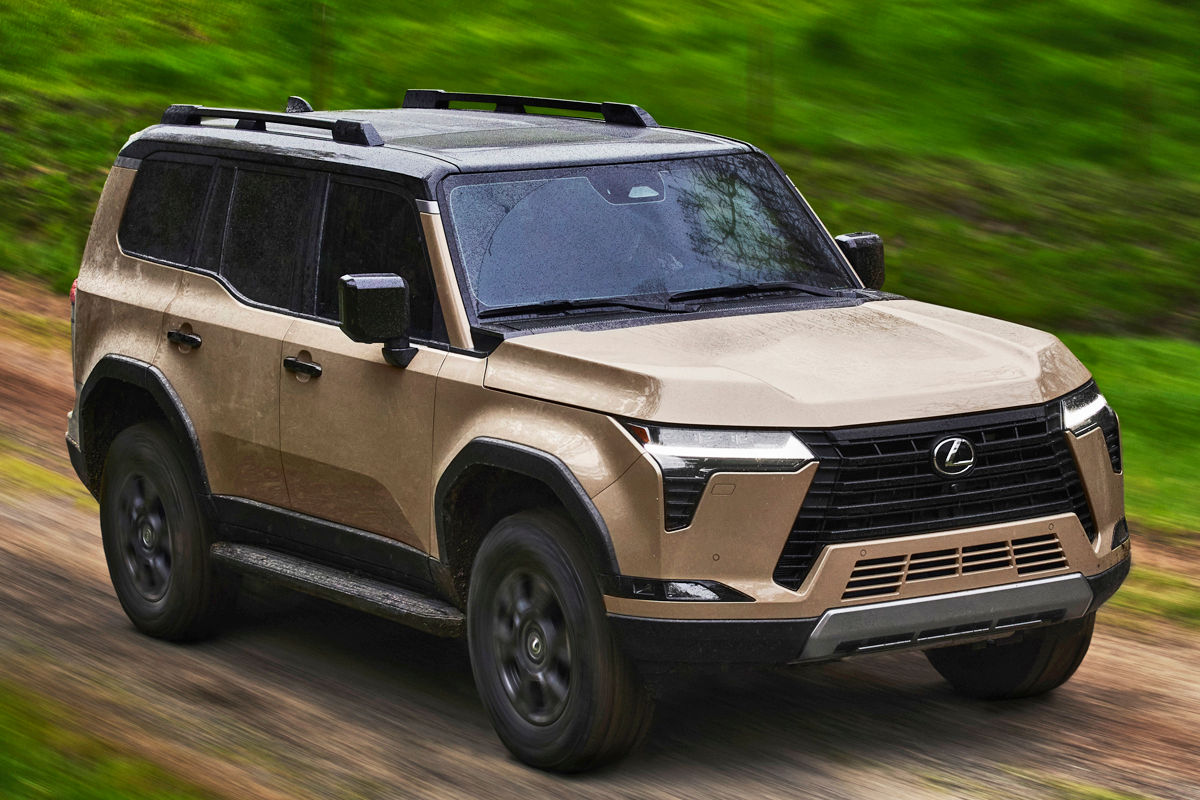
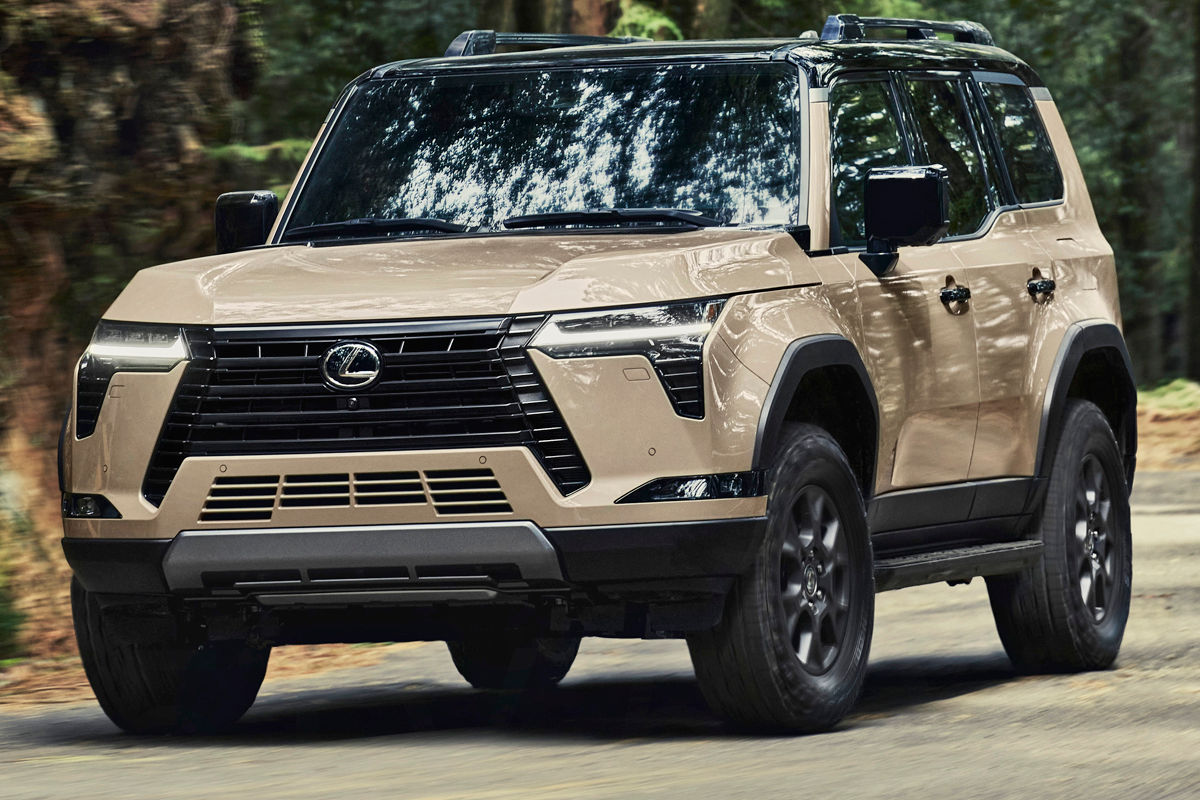
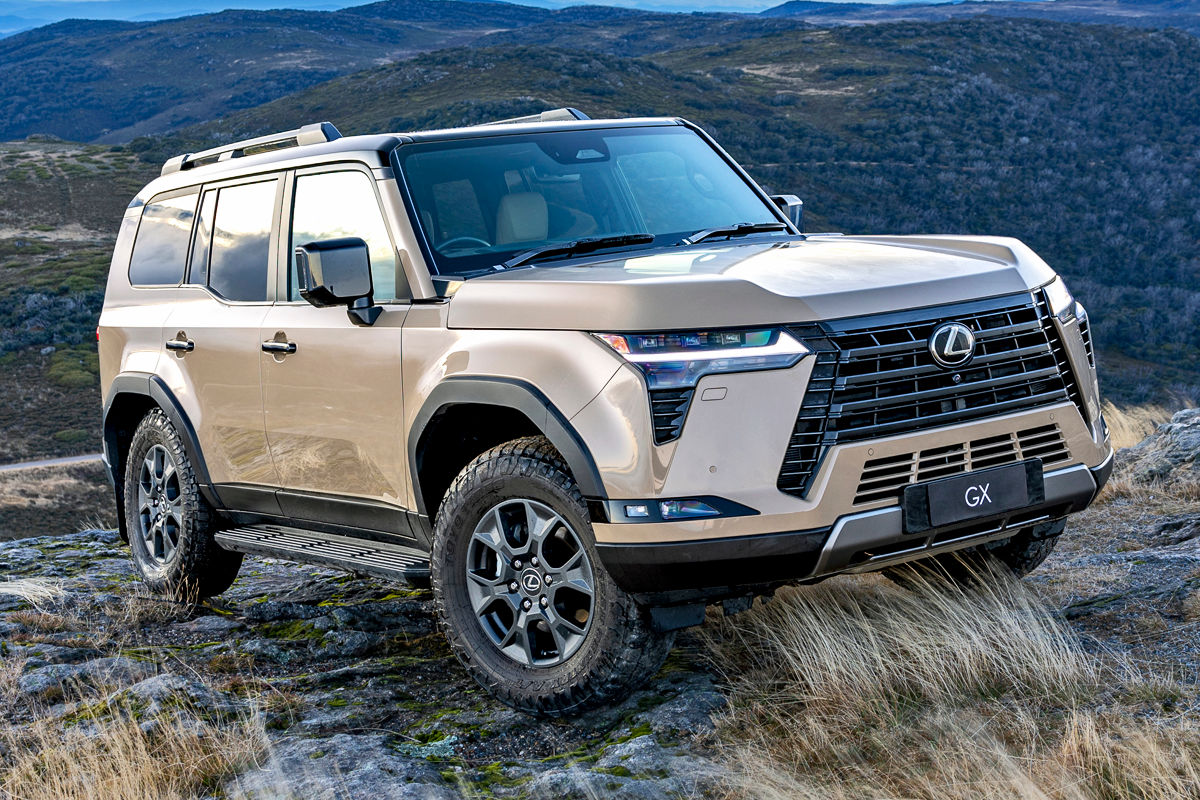
This is the Overtrail model, which is said to have an off-road bent.
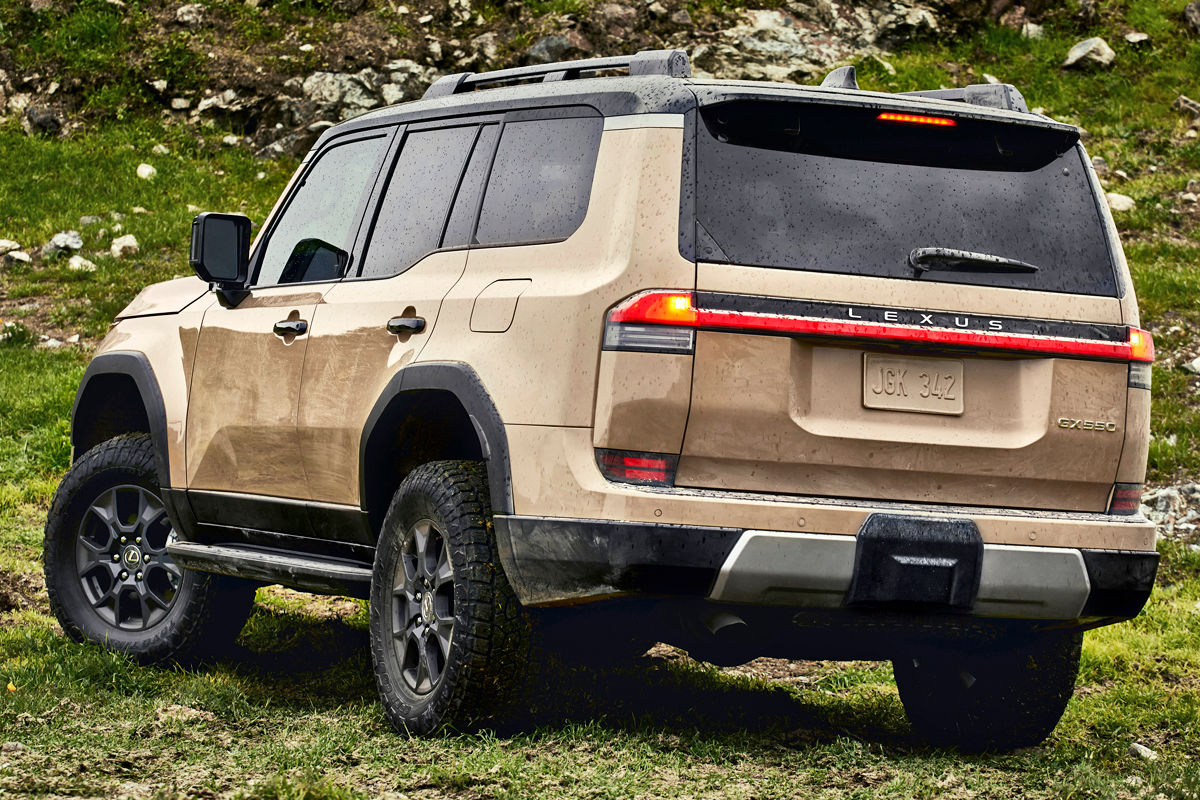
For the record, Toyota Motor Corporation applied to trademark the “GX550” badge in South Africa in June 2023, about 2 weeks after the 3rd-generation GX was revealed on the global stage. While the trademark has yet to be officially registered in Mzansi, it’s surely only a matter of time.
As a reminder, the Lexus GX is a body-on-frame SUV that traces its roots all the way back to 2002. While the opening 2 generations were produced exclusively in left-hand-drive guise (catering primarily to North America), this 3rd iteration is also manufactured in right-hand drive, opening the door to introductions in its domestic market of Japan as well as in Australia and indeed SA.
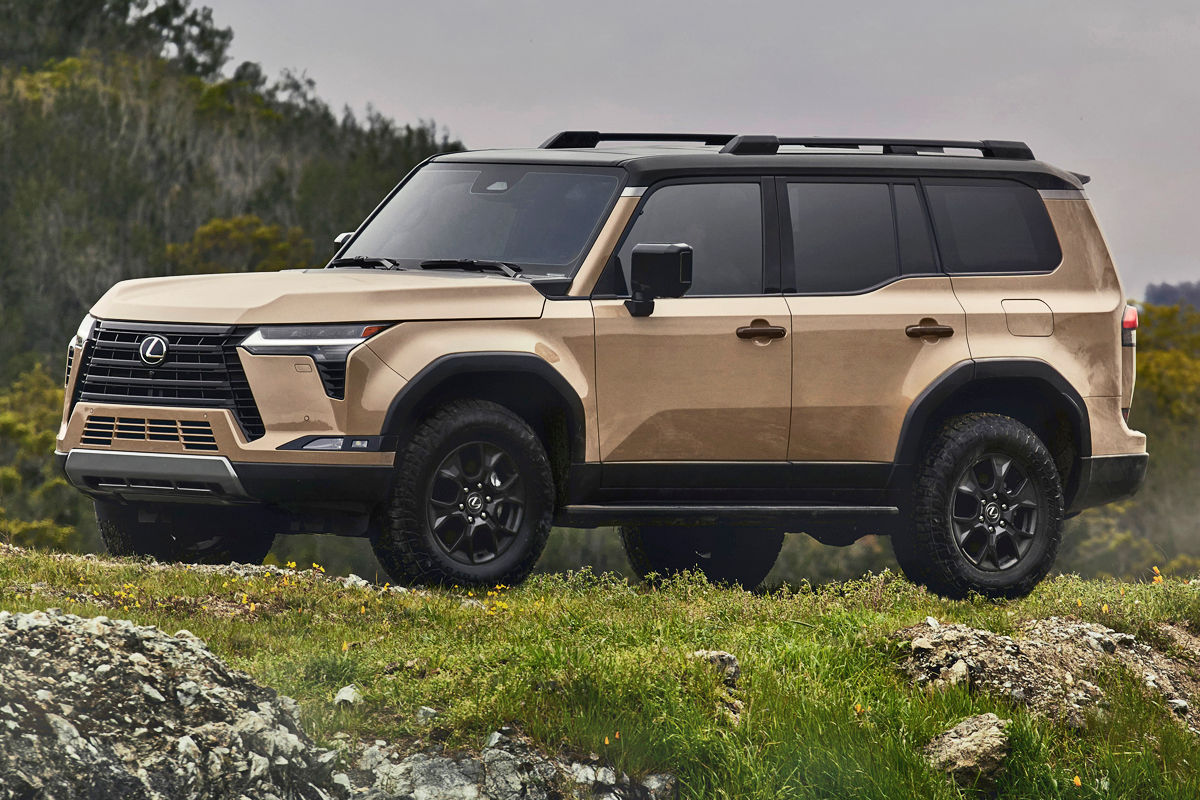
Versions of the GX other than the Overtrail appear more road-biased.
Set to be positioned between the Lexus RX and flagship LX, the GX shares various elements with the latest (and already popular) Land Cruiser Prado, right down to its “J250” model code (for the record, it’s 25 mm longer than the Prado at 4 950 mm, though the 2 850 mm wheelbase is common to both). The new GX will be a welcome addition considering the local line-up lost the RC coupé and LS sedan at the end of 2023.
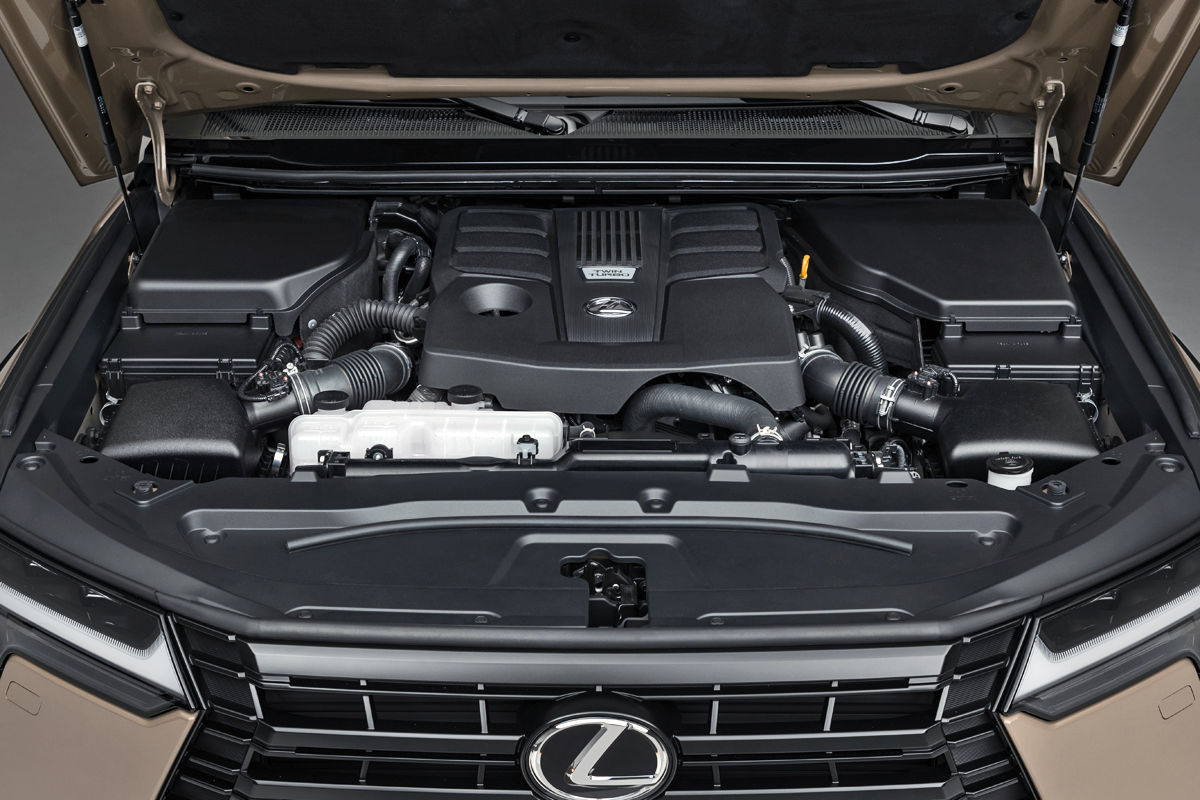
Riding on the same GA-F platform as the latest-generation Prado (which is currently available locally only in turbodiesel guise and globally only with 4-cylinder motors), the new Lexus GX is offered in other markets in GX550 form, powered by a twin-turbocharged 3.5-litre V6 petrol engine. Familiar from the Land Cruiser 300 and LX600 but here detuned to 260 kW and 650 Nm, this V35A-FTS engine is mated to all 4 wheels via a 10-speed automatic transmission.
A twin-turbo V6 petrol engine will likely be offered at launch.
However, in select countries, there’s also a hybrid model that wears the GX550h badge and employs an 8-speed automatic cog-swapper. This dual-powered derivative uses a turbocharged 2.4-litre, 4-cylinder petrol motor (T24A-FTS) as a base, while also incorporating an electric motor with a battery pack. It’s a powertrain that is likely very closely related to that of the RX500h.
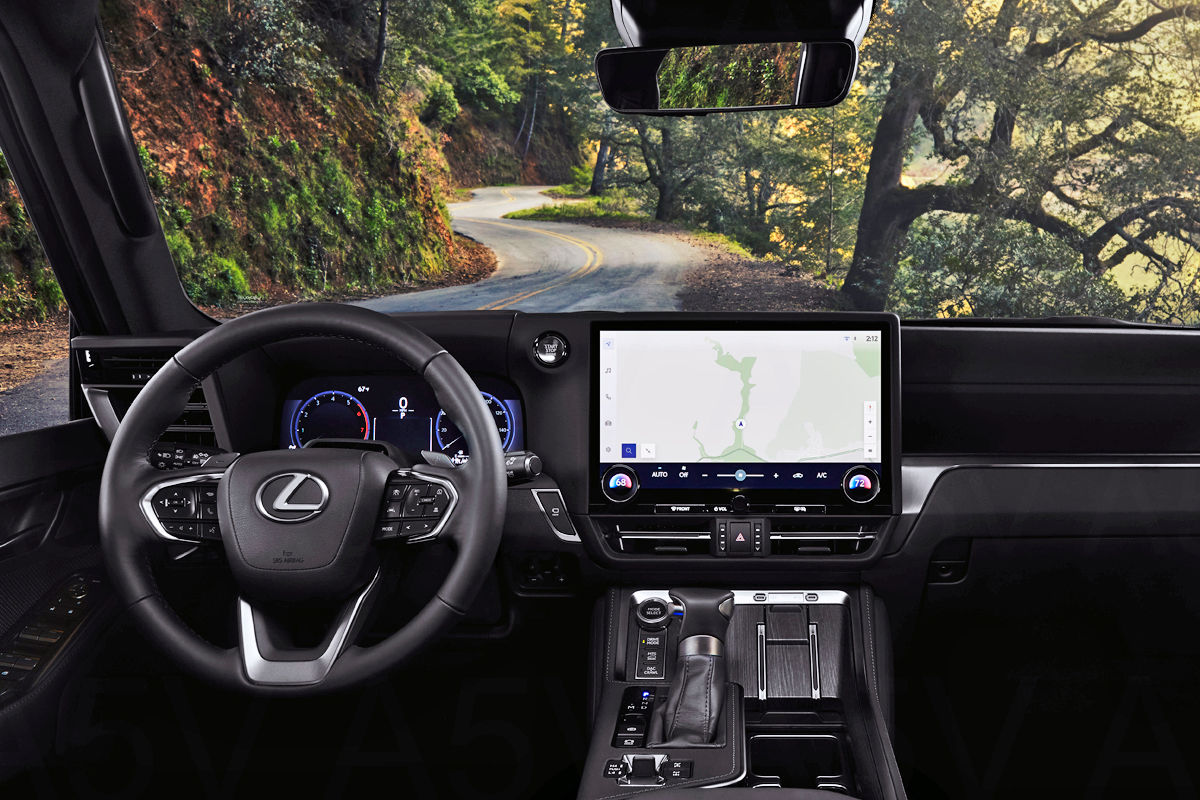
Like the SA-spec Prado, we expect the Lexus GX to come with a 7-seater configuration as standard, though if the Overtrail specification is included in the South African range, this derivative is likely to feature only 2 rows of seats.
Will the Overtrail model also be offered in Mzansi? Time will tell…
This Overtrail grade adds what Lexus describes as an “exclusive exterior design that elevates off-road performance” (including model-specific bumpers and black wheel-arch cladding), along with all-terrain tyres, e-KDSS (Toyota’s clever off-road suspension system), the Multi-Terrain Select system, crawl control, a rear differential lock, chunkier roof rails and special seats.
Check back later in the year or early in 2025 for more local information as it becomes available…
A refreshed Hyundai i20 hatchback has arrived in South Africa with stylish upgrades and a reduced pricing structure! Calvin Fisher braved a wet winter storm in Cape Town to experience Hyundai’s freshly reiterated i20 hatch in the metal. Is the latest i20 worth a closer look? Read on…
As South Africa’s roads face an onslaught of new metal from China and the Pacific Rim, the Korean and Japanese manufacturers have had to batten down the hatches… Or is that hatchbacks – a segment somewhat less affected due to the warring factions mostly competing in the SUV markets, both small and large.
It’s here in the B-segment hatchback arena where the i20 remains a stalwart, competing against all manner of rivals including the Volkswagen Polo, Suzuki Swift and Renault Clio.
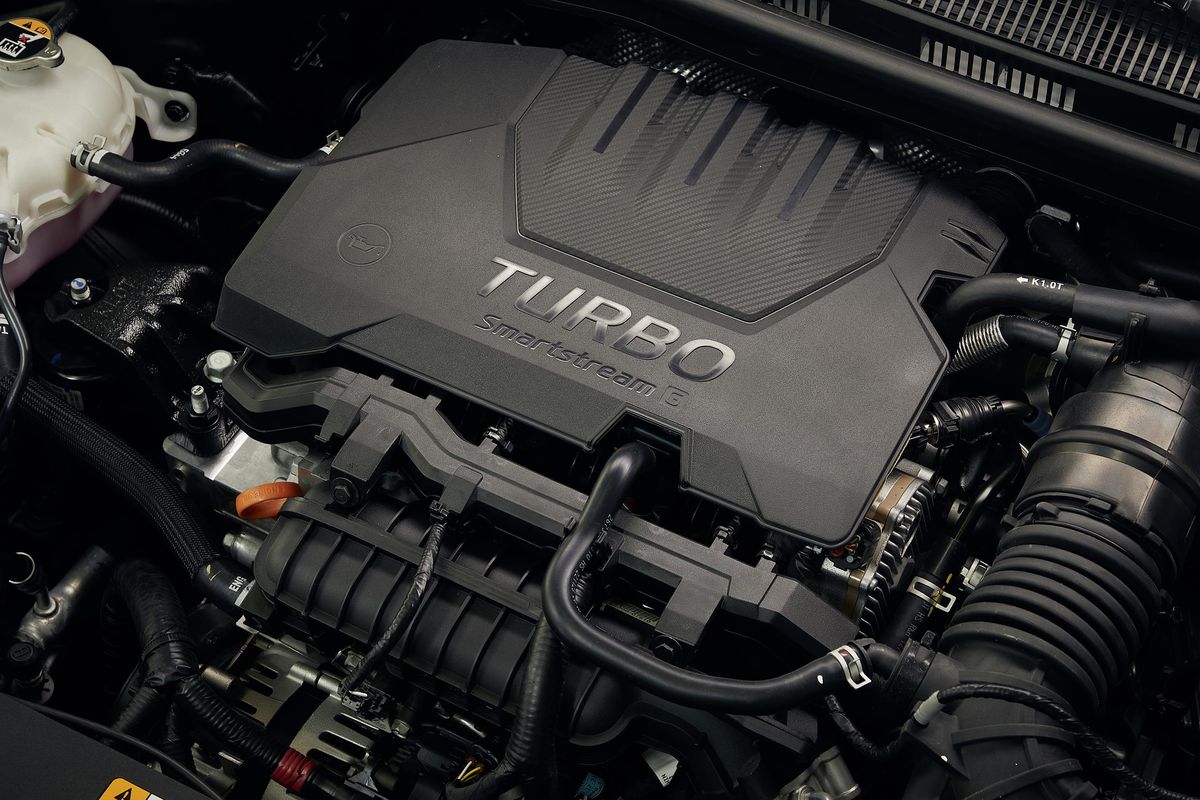
But Hyundai isn’t sending its i20 into the fight without an impressive array of features and attributes, perhaps the most significant of which being the turbocharged 1.0-litre, 3-cylinder petrol engine found under the bonnet of the i20 N Line derivative.
Before I share my findings with you, let’s quickly look at the powertrain hierarchy of the updated Hyundai i20 range.
What engines power the latest Hyundai i20?
A total of 3 engines are offered for the updated Hyundai i20.
In addition to the feisty 1.0-litre engine in the i20 N Line, there are lesser engines in the trim levels beneath it such as the naturally aspirated 1.2-litre Kappa engine with 61 kW and 114 Nm of torque found in the entry-level i20 Premium derivative or buyers can opt for the larger capacity 1.4-litre Kappa engine with 73 kW and 133 Nm in the i20 Executive derivative.
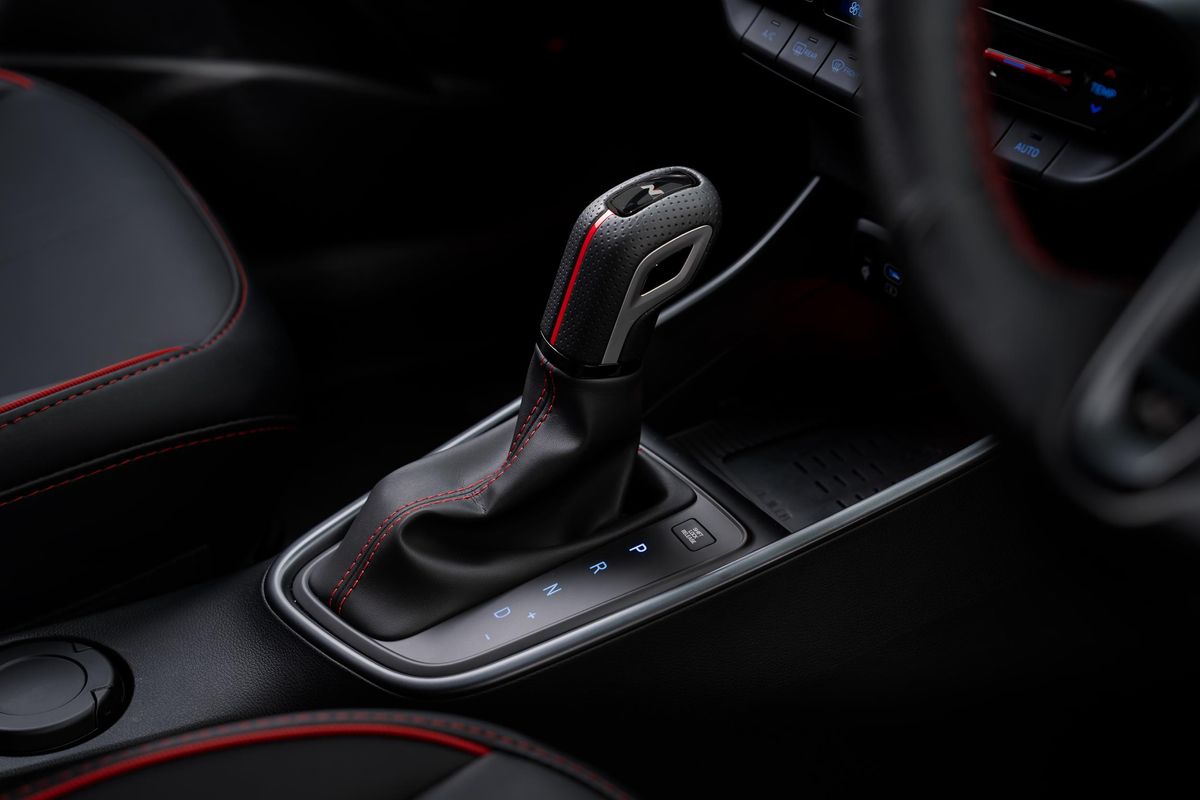
The range-topping i20 N Line is endowed with 90kW and 172Nm and is paired with a 7-speed dual-clutch automatic transmission. Elsewhere in the range, Hyundai will give you a 5-speed manual or 4-speed conventional automatic at a significant cost reduction! See pricing details below!
What improvements have been made to the updated Hyundai i20?
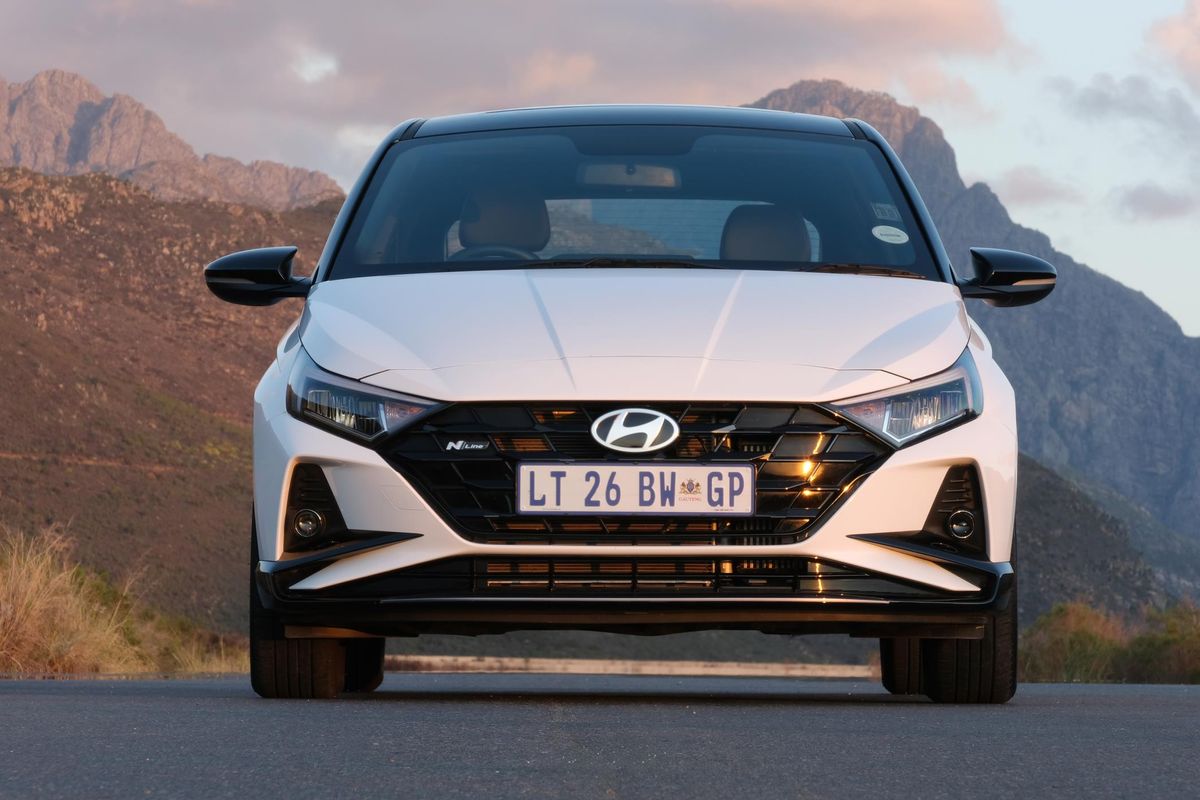
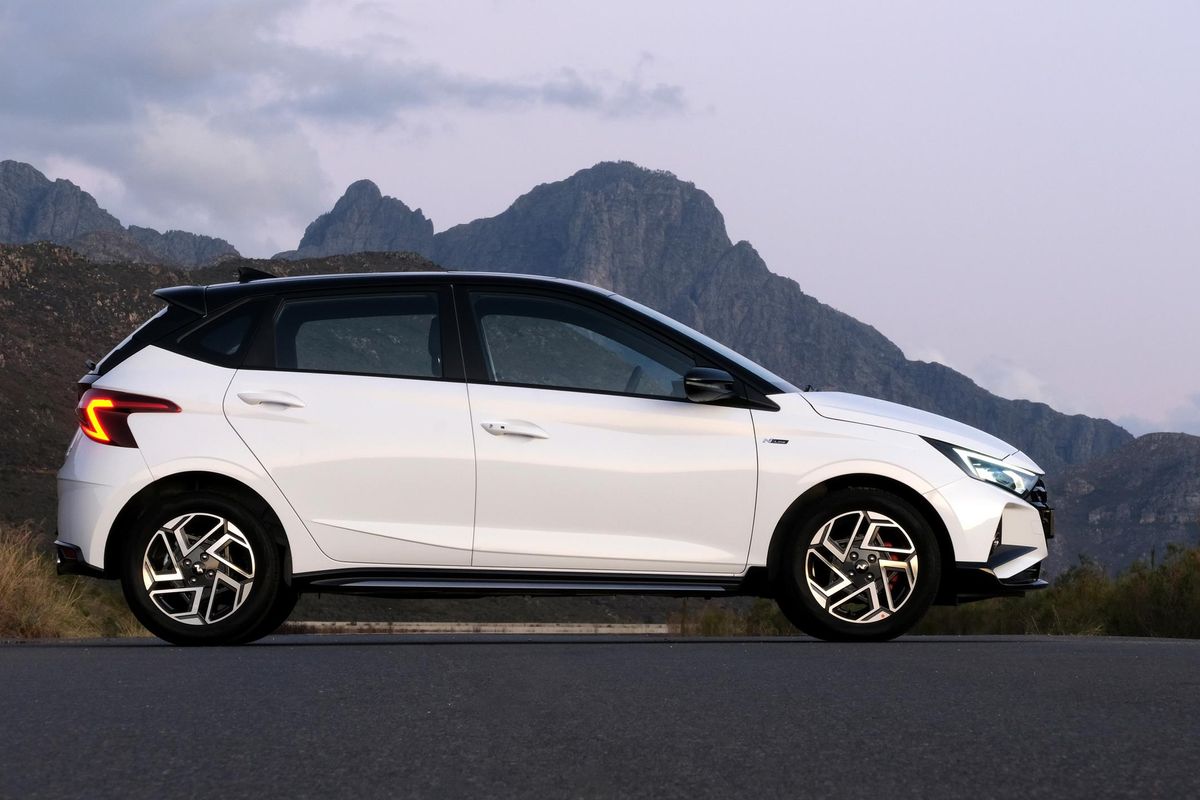
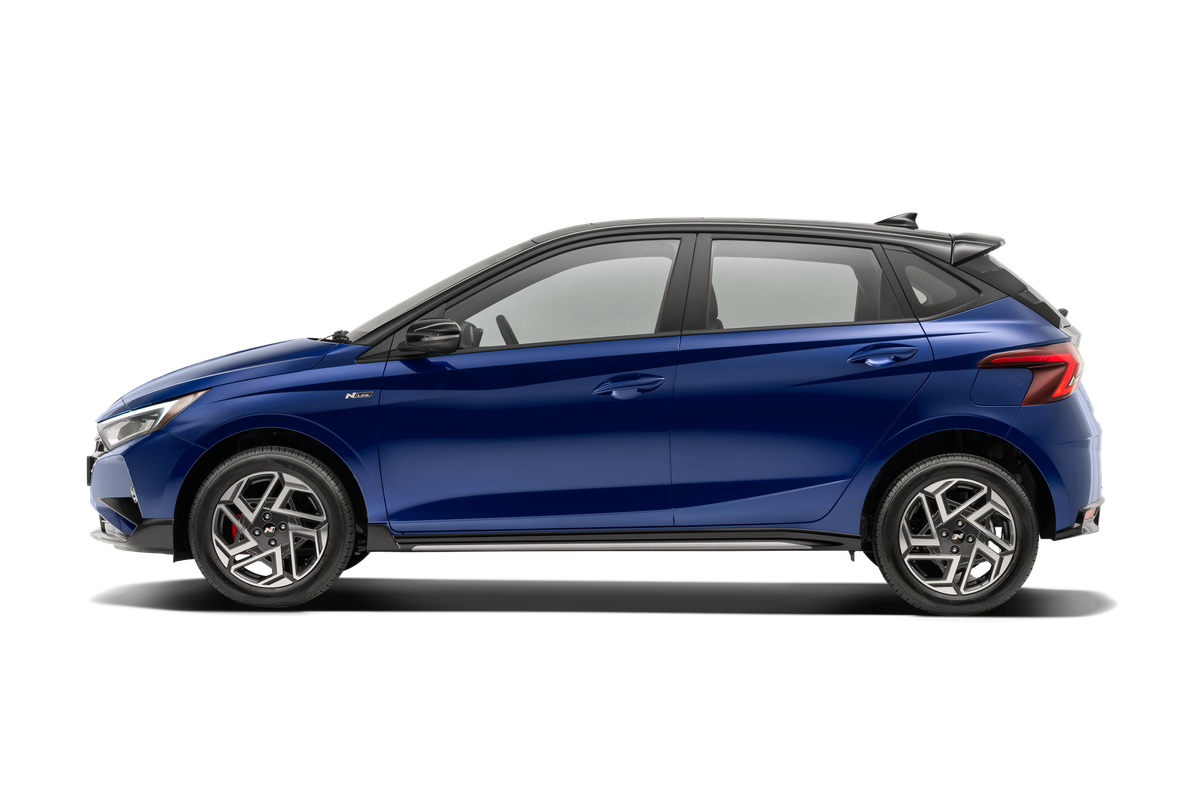
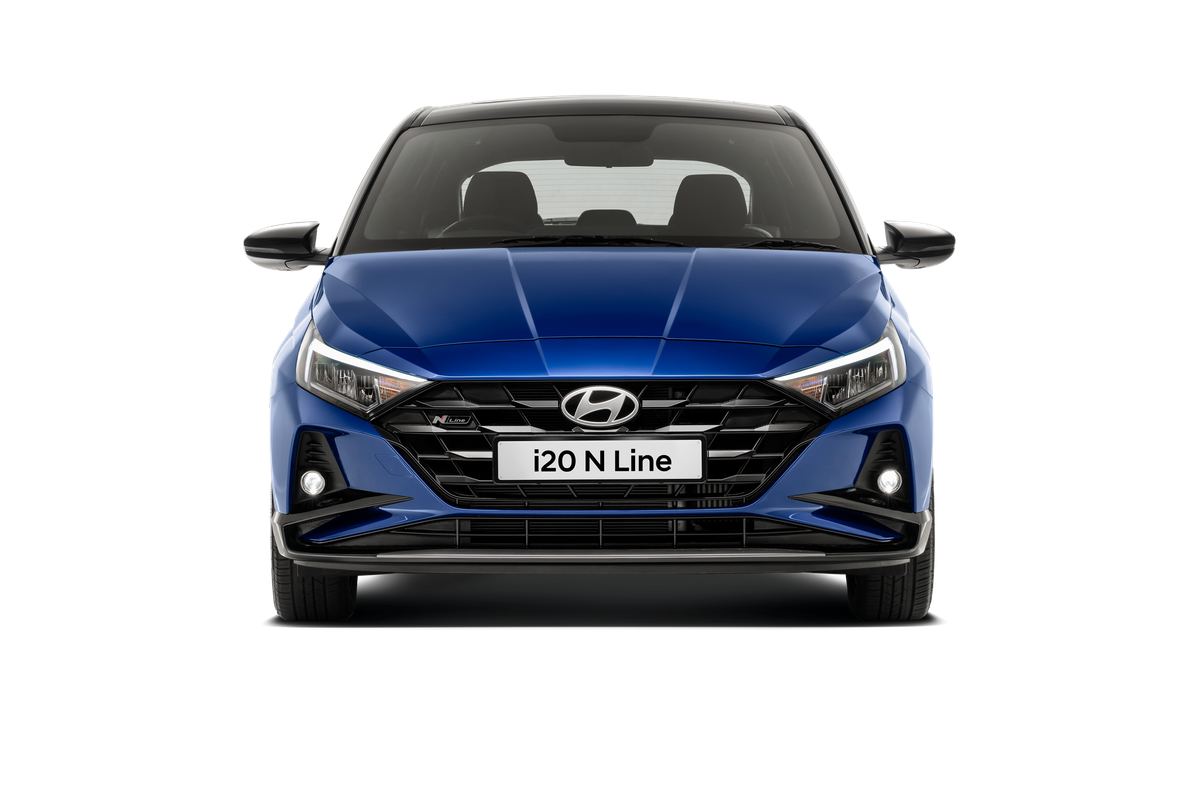
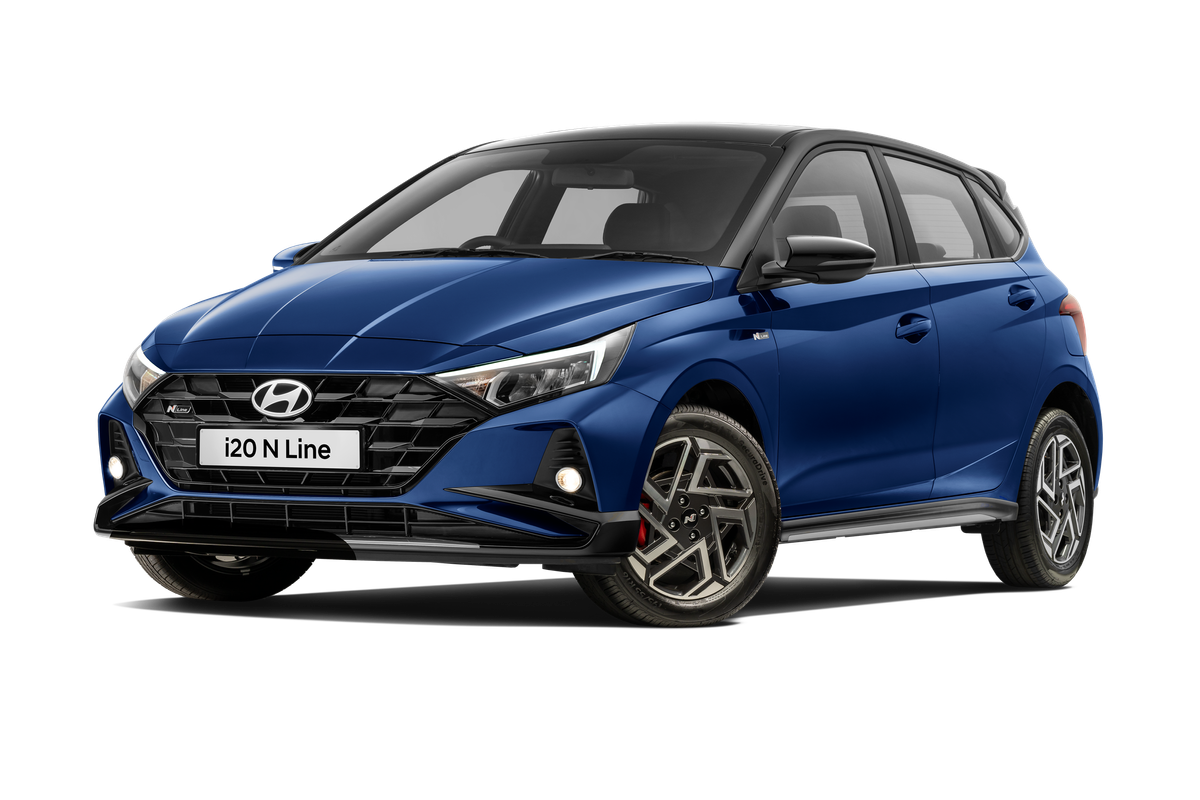
The i20 N Line adopts a sportier look combined with a vibrant 1.0-litre turbopetrol engine.
The updated Hyundai i20 is undoubtedly one of the most stylish and eye-catching hatchbacks on the market. Boasting attractive styling, appealing proportions and a pleasant cabin, the i20 has much to offer.
Where the previous iterations i20 models were hardly evocative, the latest model on which this “facelift” is based did much to reform Hyundai’s image – with some motorsport cred inherited from the marque’s multiple decades of conquest at the sport.
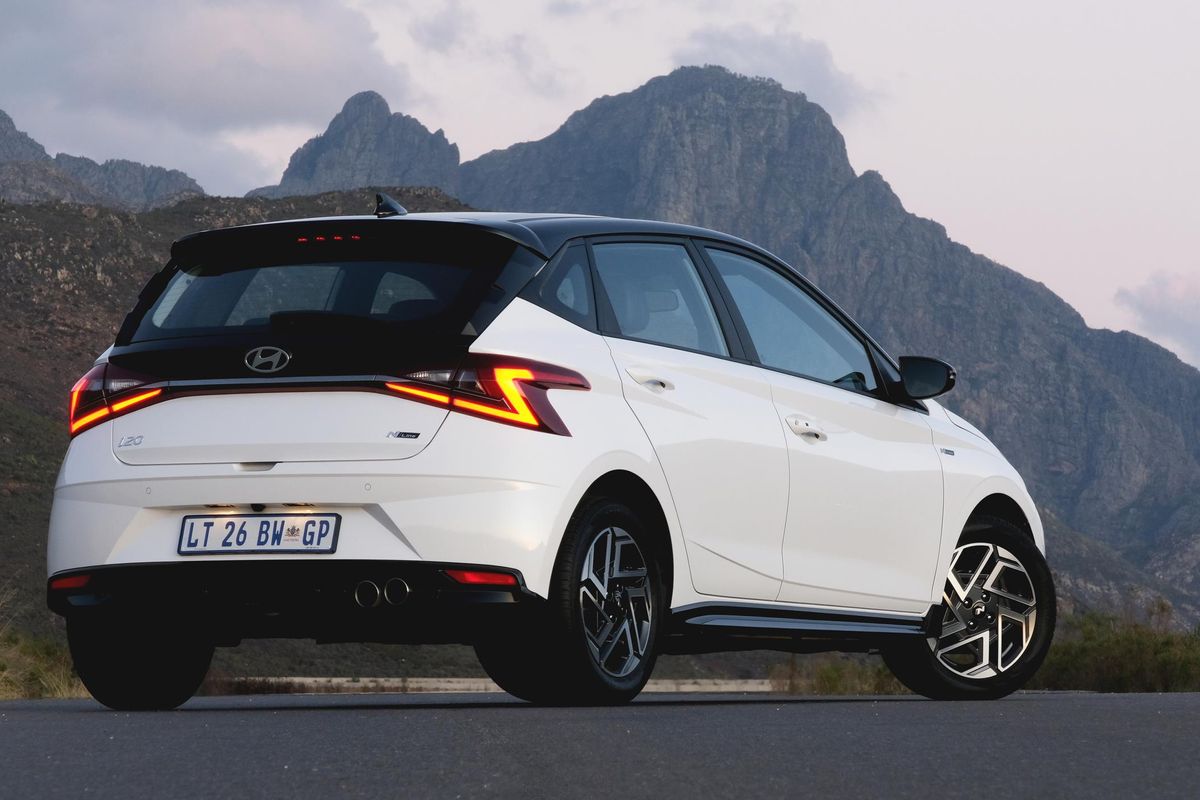
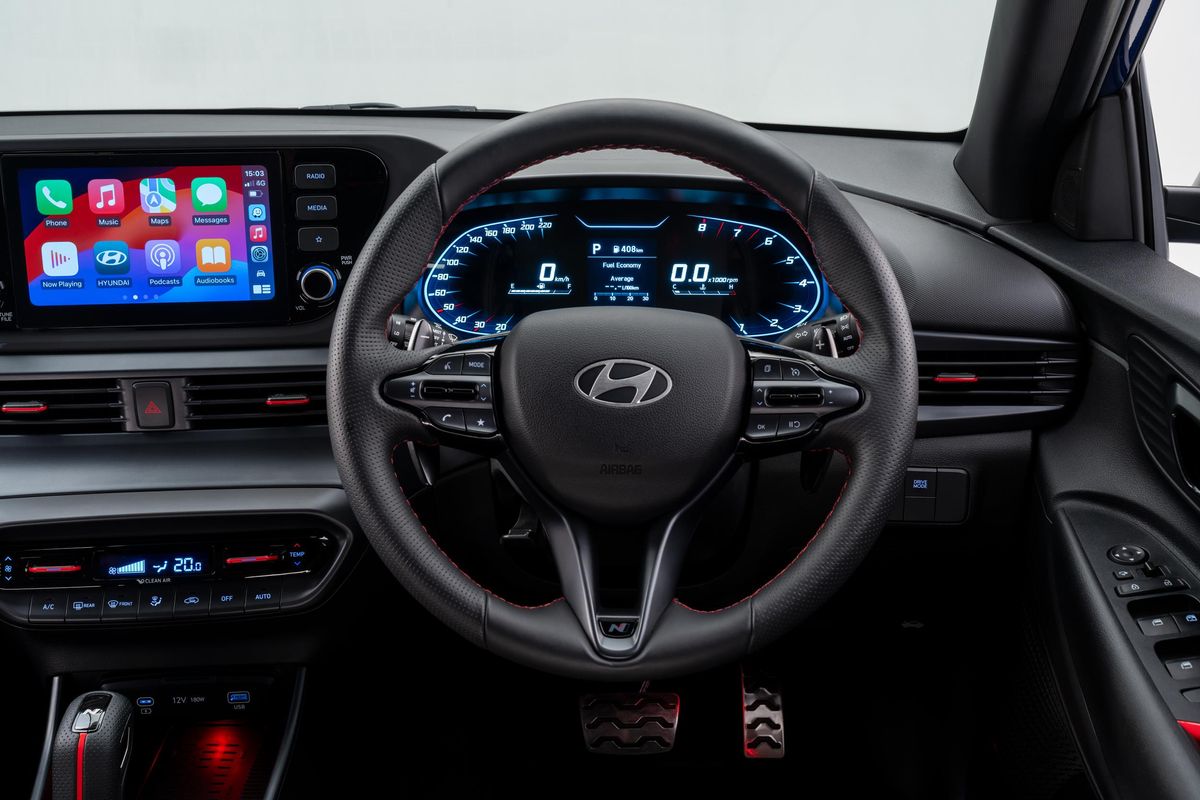
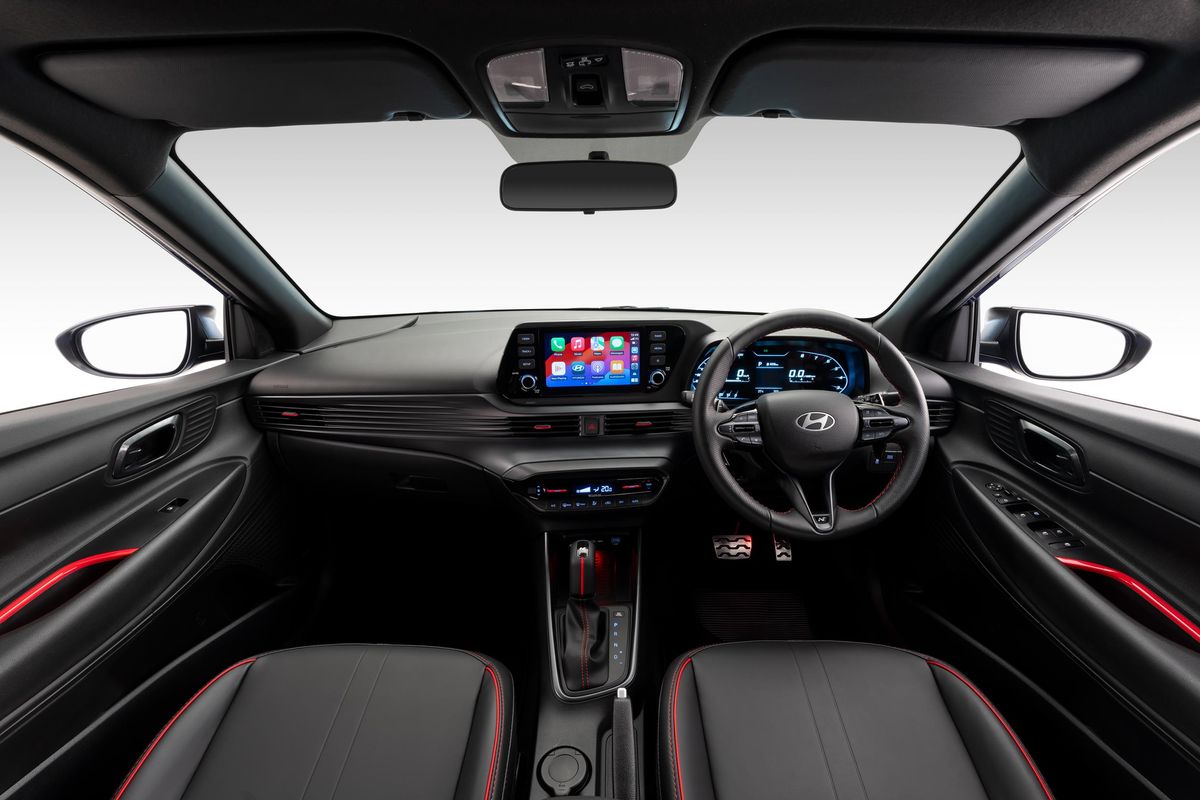
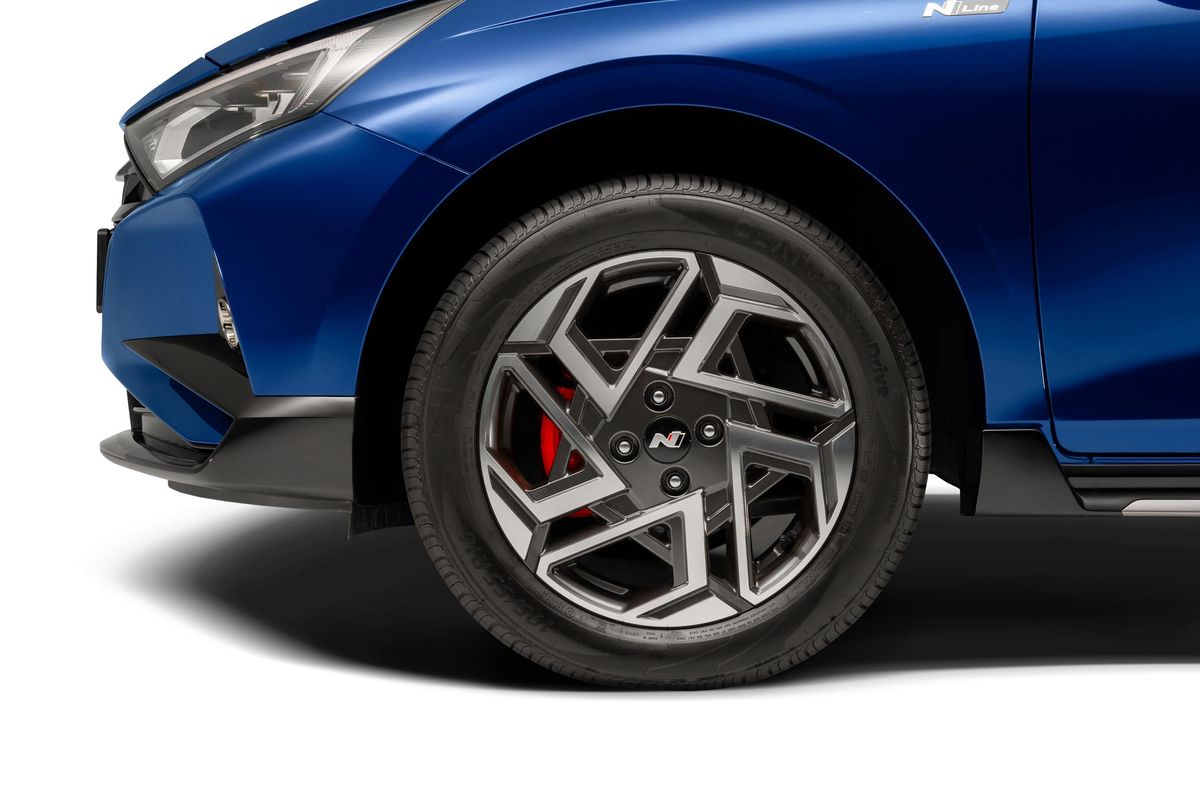
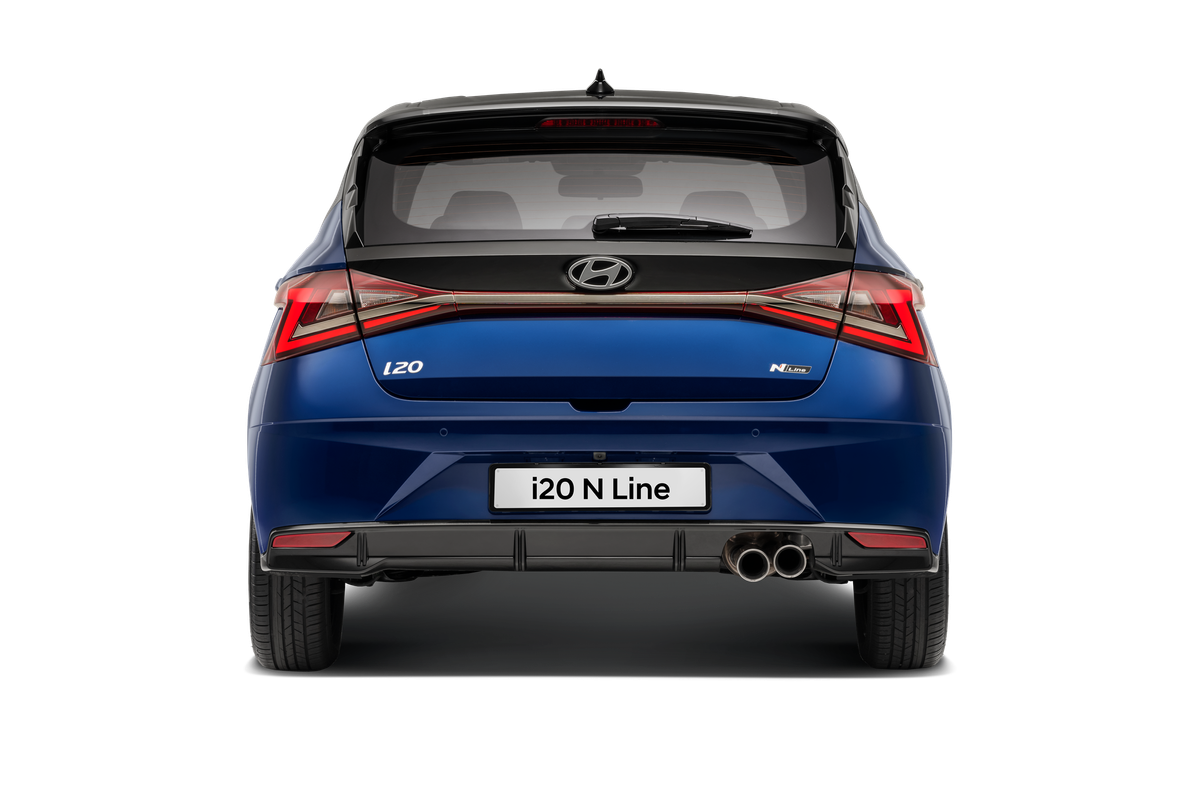
The i20 N Line bares all with the sharp lines, triangles and diffusers that endow it with a bit of machismo while riding on two-tone alloy wheels. The Premium model must make do with wheel covers while the Executive gets single-tone alloy wheels. The N Line and Executive derivatives also gain a wireless charger, but a comprehensive entertainment system is standard across the range.
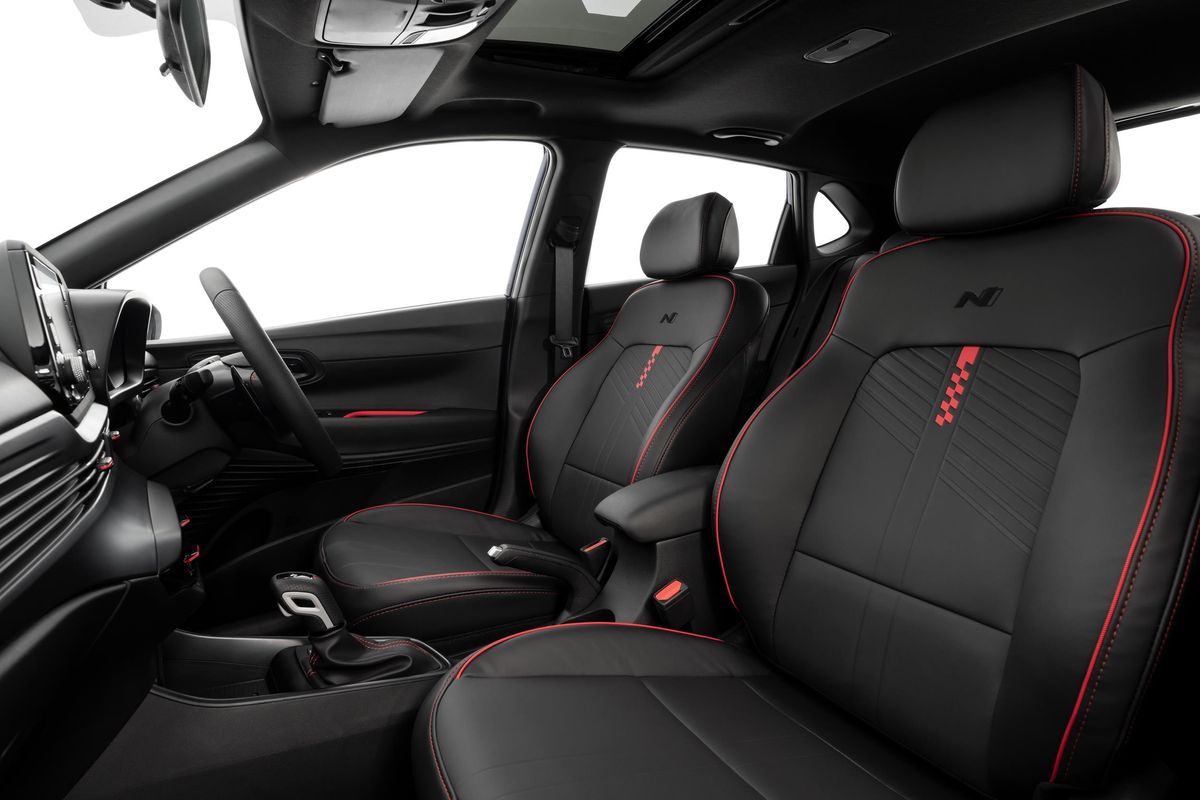
Where the Premium and Executive have cloth and artificial leather cabins respectively, the N Line is exclusively fitted with faux leather. There are 5 colours on offer but if you’re set on the i20 N Line you’ll have to choose between Atlas White and Thunder Blue.
I copped the keys to the i20 N Line and set off for a test drive…
How does the latest Hyundai i20 N Line perform?
The i20 N Line shown in Atlas White.
I stuck the transmission into Drive and made my way to Riebeeck Kasteel. The total trip distance was around 200 km, a fair test of a car’s abilities.
The first thing to report is a pretty sweet engine note from the rear pipe. It’s not even pretending to be a hot hatch, so neither will I – but it’s engaging, far more than I thought it would be!
Acceleration is satisfyingly linear considering it has a tiny capacity, forcefully-aspirated engine. At under 4 metres long, it’s a pleasure to swap directions in, scrubbing off speed as you do – but that’s where the 180 Nm of torque comes in, quickly getting you back up to speed again to chuck it into the next bend.
So, I guess what I’m saying is that the i20 N Line loves a roundabout, or three, and it’s an utter hoot to drive!
We will have the Hyundai i20 N Line on test soon so you can expect to see a thorough evaluation on Cars.co.za in the near future.
What’s the interior like?
The i20’s cabin is well-equipped with standard features.
I genuinely enjoyed my time driving the i20 – the cabin is airy, the cockpit suitably ergonomic thanks to a grippy pew with plenty of adjustability including tilt and telescopic reach adjustment, a feature present across the i20 range. As a result, it’s easy to get comfortable and remain that way for the rest of the trip.
Furthermore, the N Line boasts automatic climate control versus the manual air-conditioning in the Executive and Premium derivatives, but that shouldn’t be a deal breaker for buyers. Importantly, the i20 has a wealth of charging points and sockets including a 12V socket, USB ports and USB-C ports!
In summary, while the i20 N Line didn’t surprise me, it continued to impress me as a car that’s worthwhile considering in this segment. If value-for-money is a factor, I’d almost certainly opt for a lower trim level – the automatic i20 Executive at R349 900 in particular stands out as the sweet spot in the i20 range. But if you’d like the extra performance and some of the hop-ups that come with owning the flagship, I wouldn’t blame you for choosing the N Line, it’s a cracker!
How much does the new Hyundai i20 cost in South Africa?
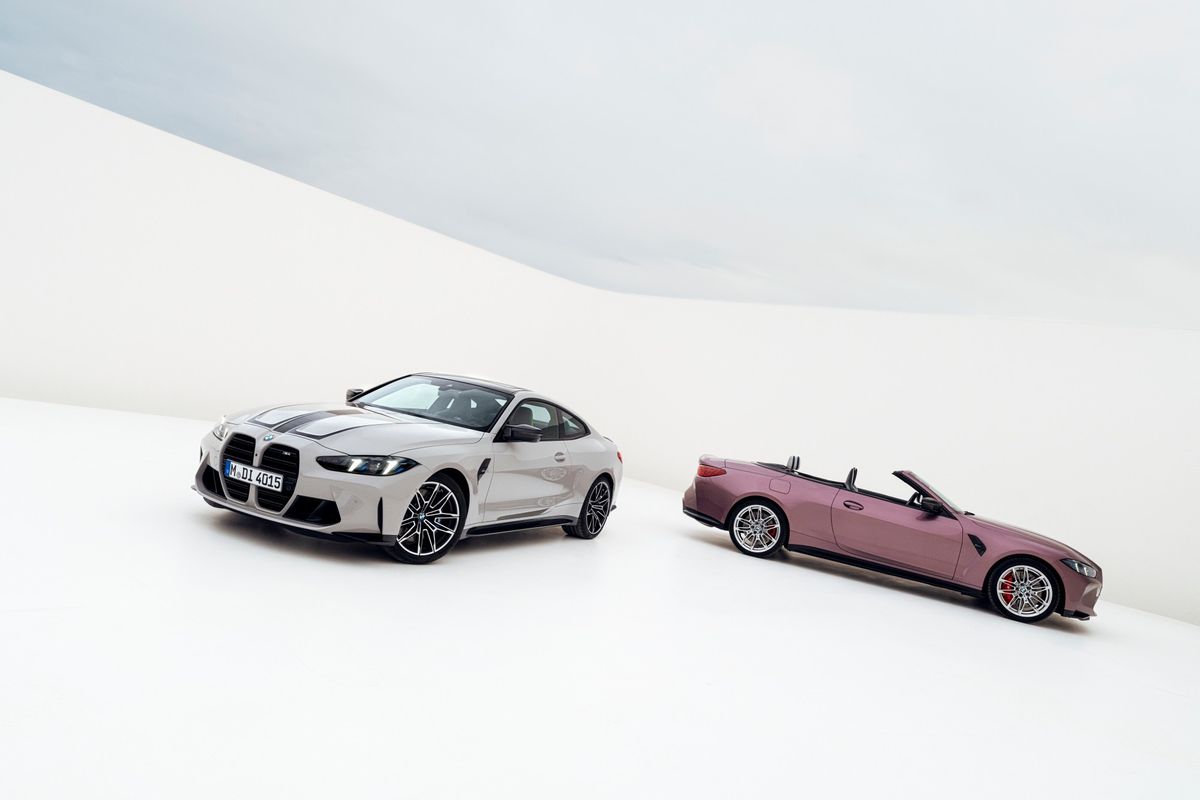
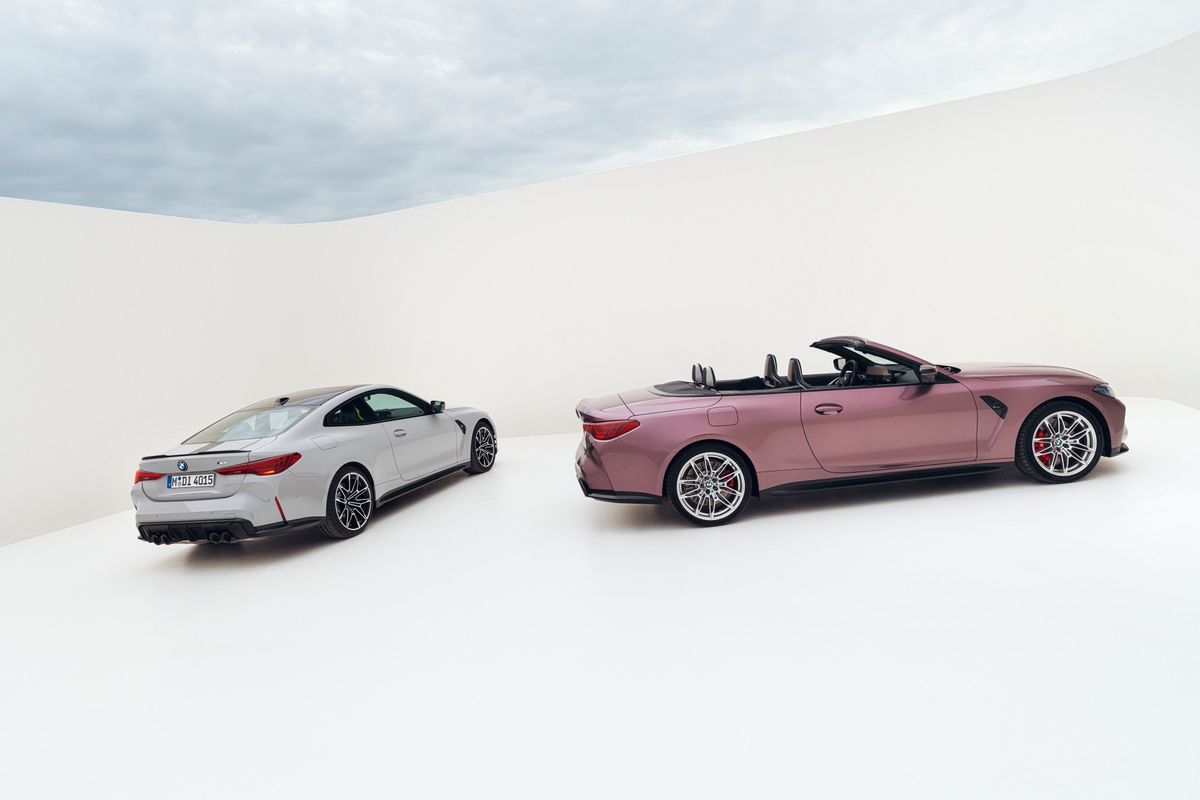
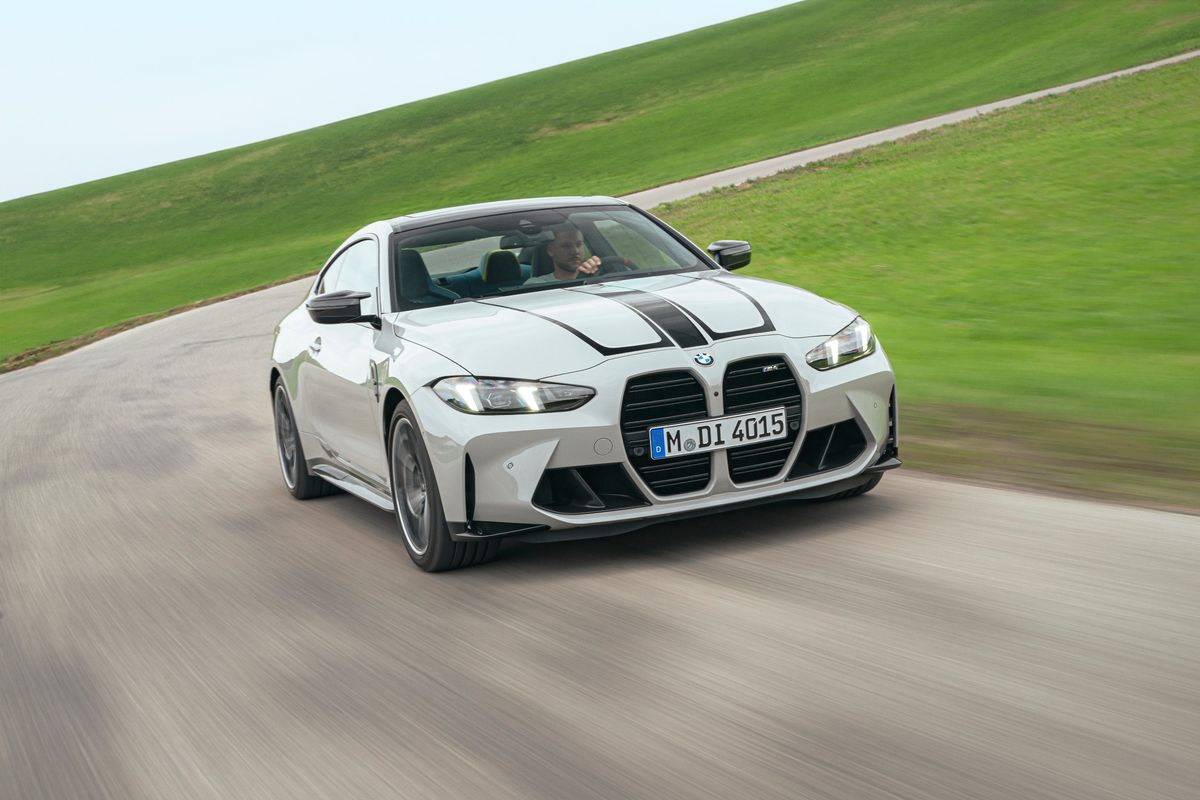
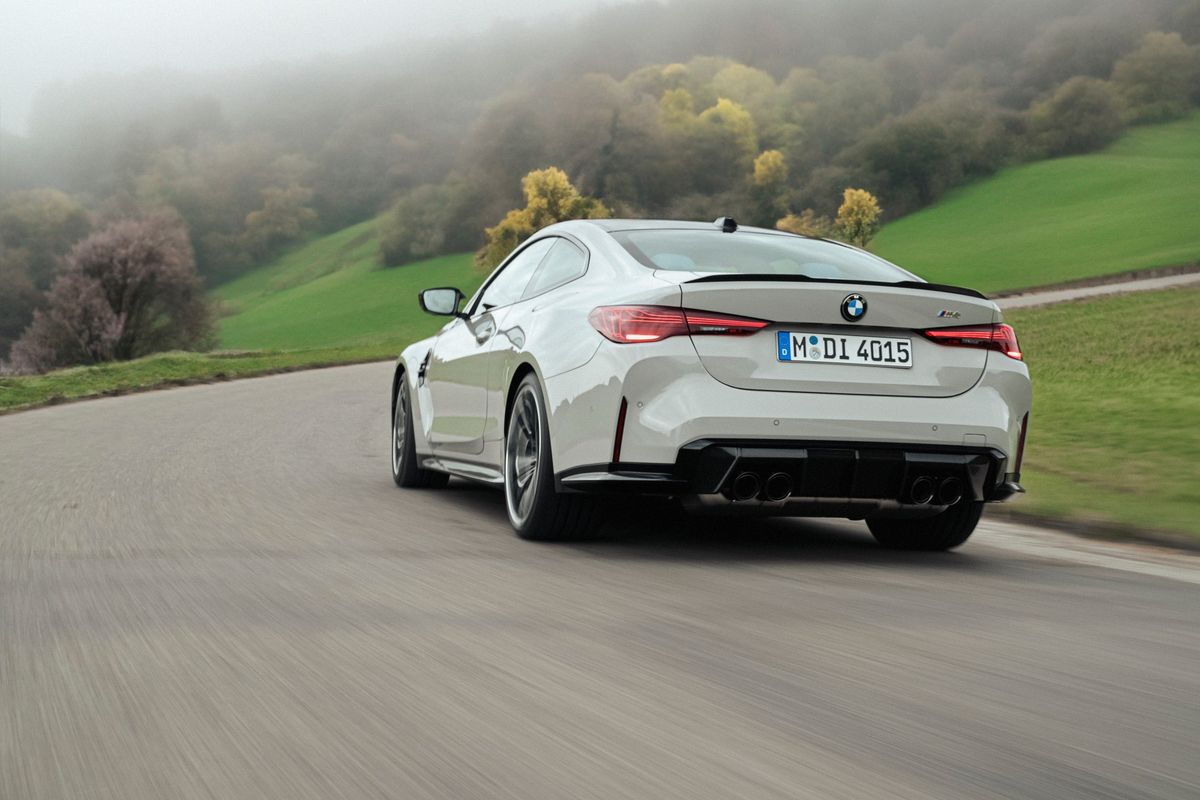
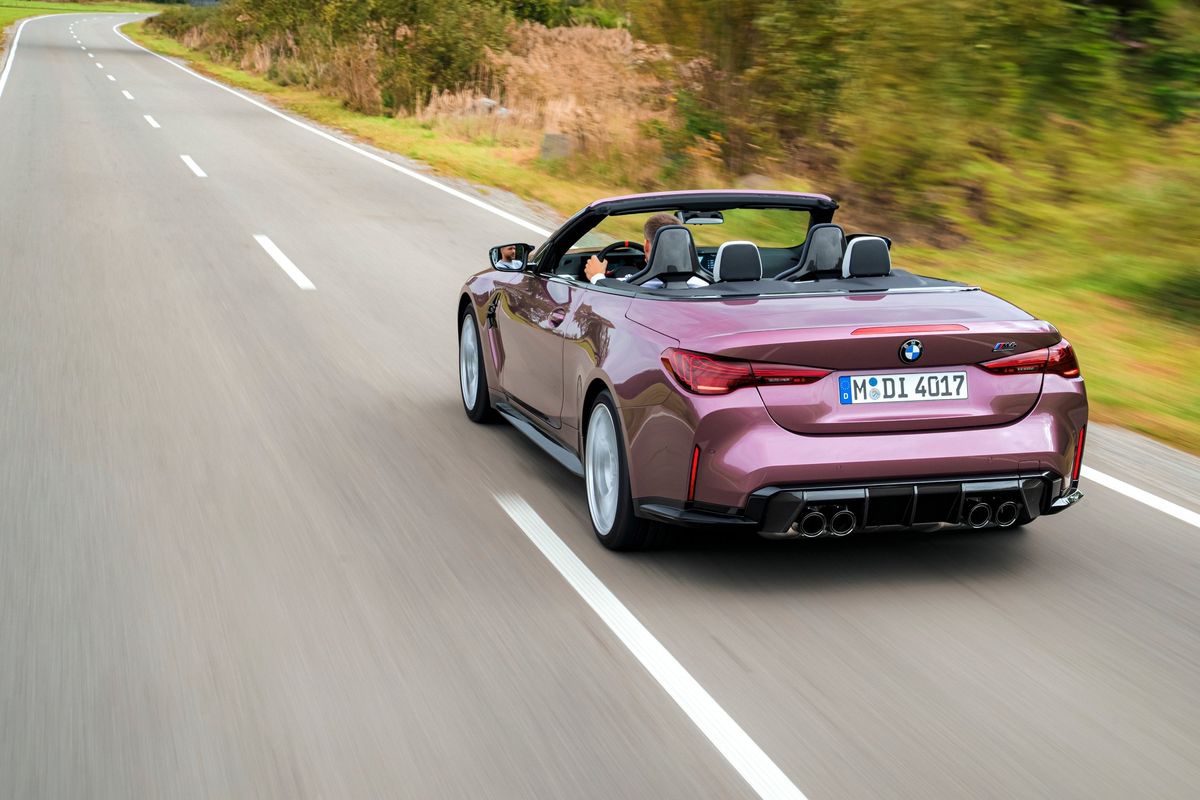
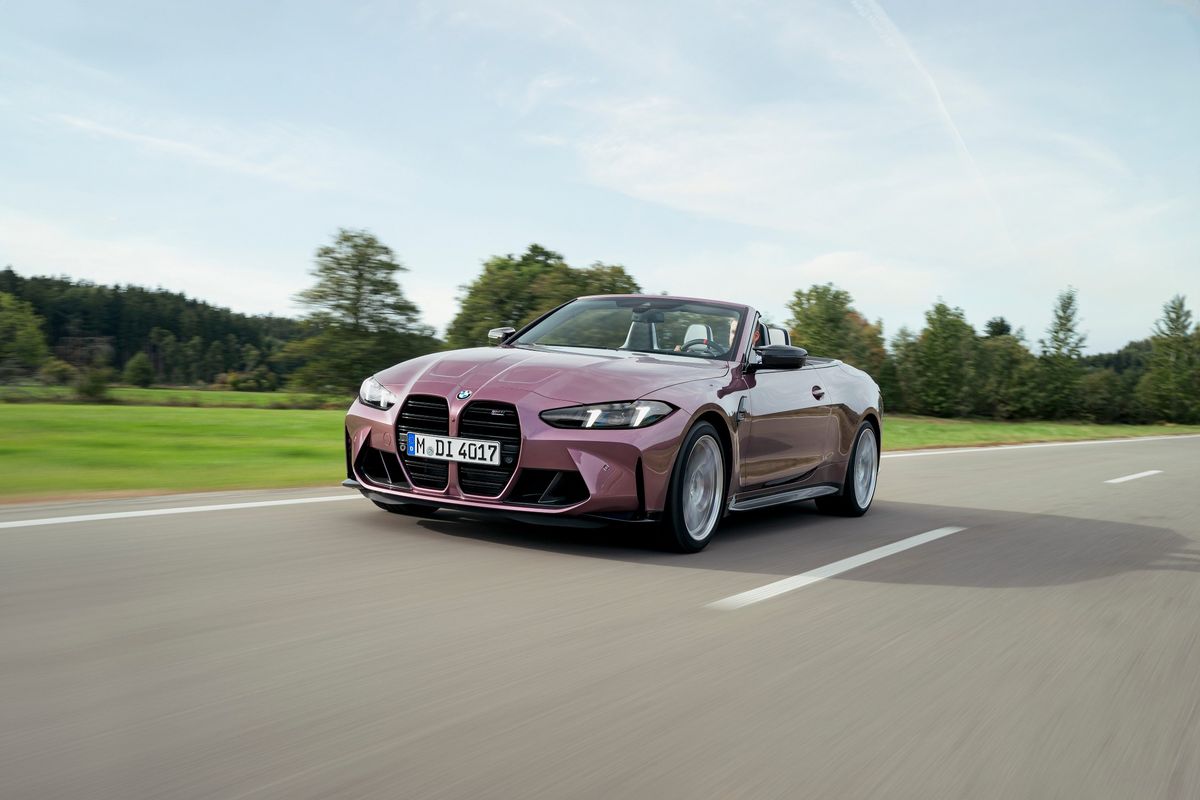
The updated BMW M4 range comprises a coupe and a convertible derivative to choose from! Take a look at specification and pricing details below!
The updated BMW M4 arrived in South Africa in 2024. The biggest change for the M4 LCI range is the increase in power! The 3.0-litre turbocharged 6-cylinder petrol now makes 390 kW and 650 Nm (up by 15 kW) and both the M4 coupe and convertible derivatives feature all-wheel drive. An 8-speed automatic transmission is fitted as standard.
Enthusiasts who seek even more performance from the M4 package can opt for the limited M4 CS which packs 405 kW and 650 Nm from its twin-turbocharged, 3.0-litre, 6-cylinder petrol engine.
The bump in power does not translate into an increase in performance with the brand claiming the same acceleration figures as before. The M4 LCI is good for a 0-100 in just 3.5 seconds, with its soft-top sibling completing the same run fractionally slower at 3.7 seconds.
The M4 CS claims a zero to 100kph sprint time of 3.4 seconds.
What’s changed on the M4 LCI?
BMW has mostly retained the front end and despite initial reactions, we think that the grille is really bold and aggressive. There are tweaks to the LED headlights and new LED taillights with laser technology are also fitted. BMW has also added new-look wheel designs with 19-inch units at the front and 20-inch wheels at the rear.
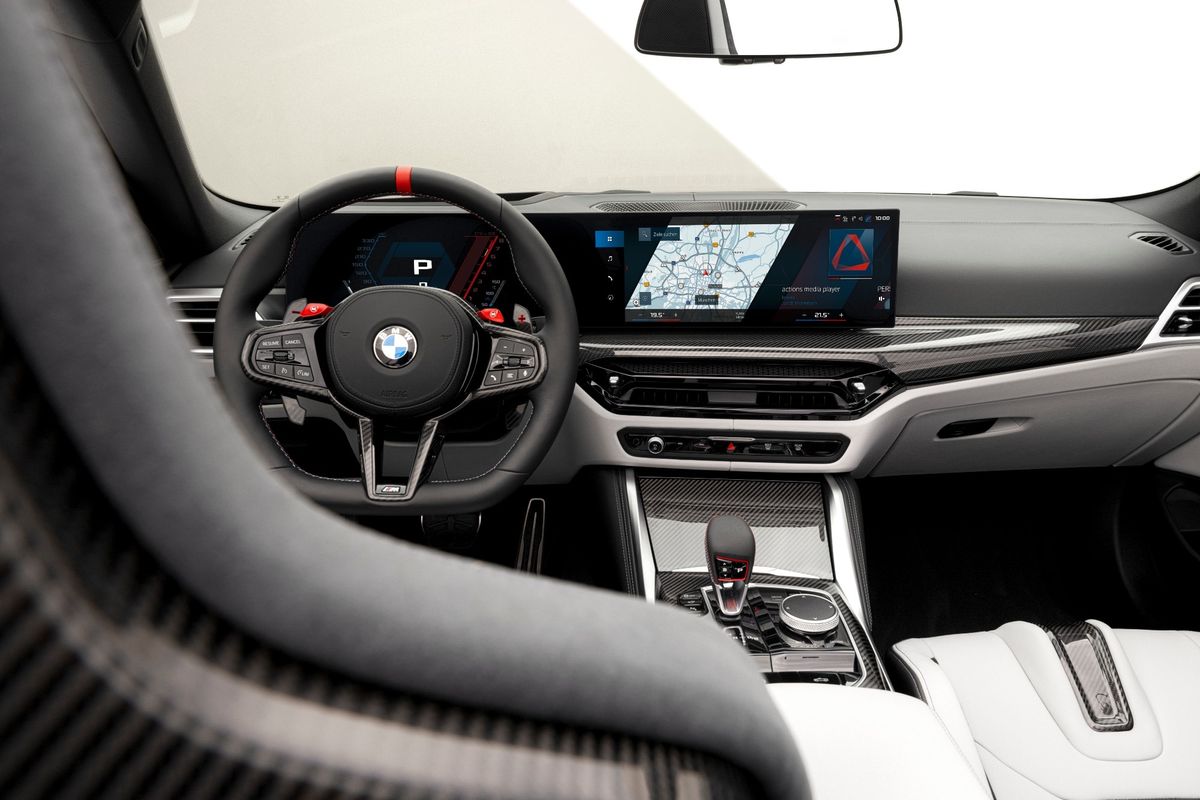
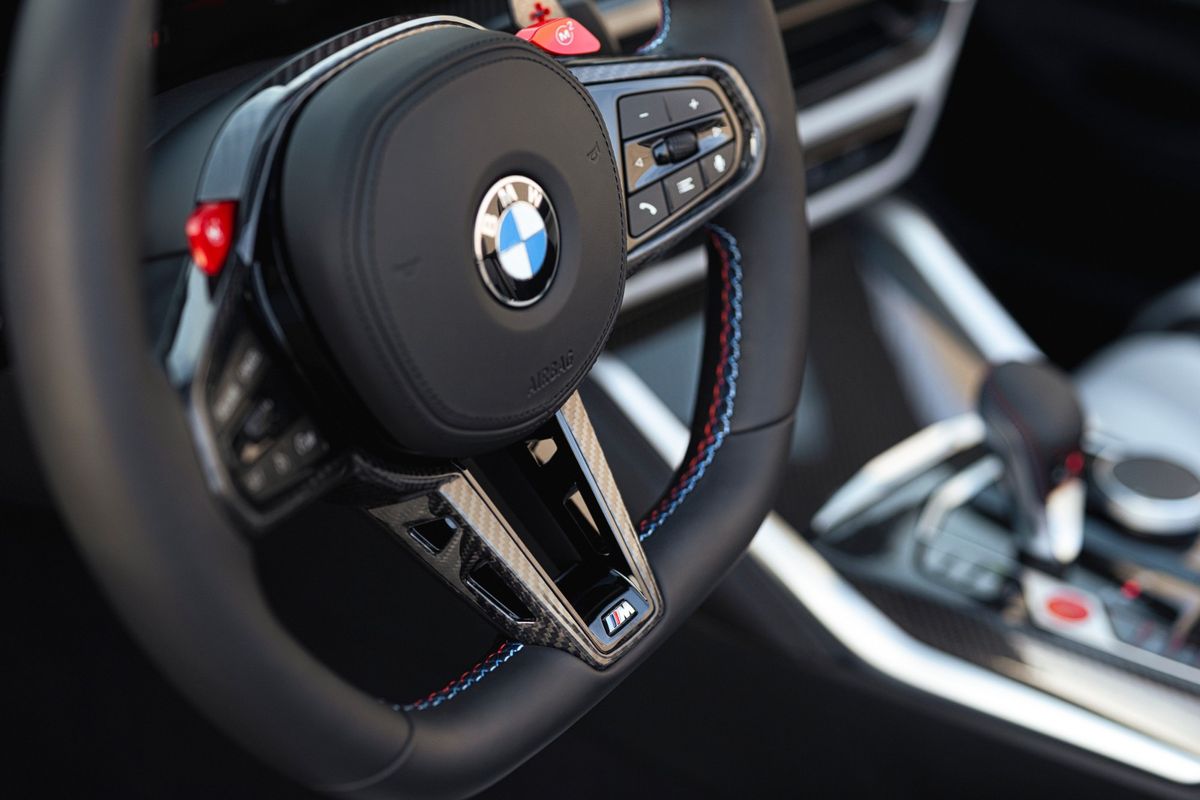
Climb inside and there’s a new-look steering wheel with BMW offering either a leather trim or an Alcantara flat-bottomed steering wheel and there are new materials for the trim panels. The BMW Operating System 8.5 makes its debut in the M4 and customers have a 12.3-inch digital instrument cluster and a 14.9-inch infotainment screen in a curved screen setup that elevates the interior experience considerably.
What optional features are available for the M4 Competition?
Buyers can specify BMW Individual exterior paint finishes as an option as well as 19- or 20-inch M-forged double-spoke 826 M Black wheels. An M Carbon exterior package is also available which includes carbon-fibre reinforced plastic (CFRP) components such as the elements in the front bumper, mirror housings and rear spoiler while the rear diffuser is finished in carbon-fibre.
Moving inside, the M4 is also offered with a fine selection of BMW Individual trim options including full leather options in various colour combinations.
How much does the BMW M4 LCI cost in South Africa?
*Note that pricing is accurate as of August 2025.
A 5-year/100 000 km service plan and 2-year/unlimited km warranty is standard.
What are the different models of the 2025 BMW M4 available in South Africa?
The 2025 BMW M4 range in South Africa includes the M4 Competition Coupe, the M4 Competition Convertible, and a limited edition M4 CS model.
What are the engine specifications of the new BMW M4?
The standard M4 Competition models are powered by a 3.0-liter turbocharged 6-cylinder petrol engine that produces 390 kW and 650 Nm of torque. The M4 CS version has an increased output of 405 kW.
What are the 0-100 kph acceleration times for the new M4?
The M4 Competition Coupe with all-wheel drive accelerates from 0 to 100 kph in 3.5 seconds. The convertible version does it in 3.7 seconds, and the M4 CS achieves it in 3.4 seconds.
What is the price of the 2025 BMW M4 in South Africa?
As of May 2025, the M4 Competition Coupe AWD is priced at R2,238,002, and the M4 Competition Convertible AWD is priced at R2,338,842.
What are the warranty and service plan details for the M4?
The BMW M4 comes standard with a 5-year/100,000 km service plan and a 2-year/unlimited km warranty.
Hyundai SA cuts prices of Grand i10, i20 and Venue
Hyundai Automotive SA has repositioned its 3 core ranges, cutting the respective starting prices of the Grand i10, refreshed i20 hatchback and Venue crossover…
Hyundai Automotive South Africa has cut the starting prices of its 3 most affordable (and indeed best-selling) models, lowering the barrier to buying a new Grand i10, refreshed i20 hatchback and Venue crossover.
Earlier in July 2024, we reported that the introduction of the refreshed i20 line-up had seen this hatchback’s starting price reduced to R309 900, representing a R23 600 saving over the pre-facelift model (in fact, all derivatives bar the N Line benefited from lower prices). Now, Hyundai Automotive SA has applied a similar strategy to 2 other likewise Indian-built models, effectively cutting prices across the range.
Just like the updated i20, the rejigged Grand i10 and Venue ranges switch from the South Korean firm’s earlier trim-level naming convention (which incorporated the “Motion” and “Fluid” grades) to the latest nomenclature, which uses the “Premium” and “Executive” equipment levels. Where applicable, N Line models remain.
When the facelifted Grand i10 range launched in Mzansi in August 2023, the portfolio comprised 8 derivatives – 5 hatchbacks, 2 sedans and a single light-commercial vehicle Cargo variant (effectively a panel van). Now, the line-up has been quietly trimmed to 6 derivatives, with a pair of 1.2-litre hatchback variants falling away.
At the same time, the Grand i10 range’s starting price drops from R239 500 to R224 900, a saving of R14 600 (as a reminder, this model plays the role of Hyundai’s most-affordable car, with the Atos having since been discontinued). Taking a closer look at the rest of the Grand i10 line-up, the sedan now starts at R279 900 (down R12 600), while the Cargo panel van’s starting price has been cut by R8 000 to R249 500.
What about the Venue? Well, this once 7-strong line-up now comprises 5 derivatives, with the starting price reduced by R19 000 to R309 900 (incidentally matching the i20’s entry point). This latest shuffle sees a couple of turbocharged 1.0-litre derivatives fall away, with the naturally aspirated 1.2-litre motor now also available in mid-spec guise.
At the new prices, the Venue Cargo panel van is now a considerable R30 400 more affordable at R321 500, while even the range-topping Venue 1.0T N Line’s price has been reduced, falling R6 000 to R499 900. Interestingly, the new Exter is scheduled to launch in South Africa towards the final quarter of 2024, when it is expected to slot in below the Venue.
So, are these price cuts the result of standard kit been stripped from the models in question? Well, after scouring the facelifted i20’s specification sheet we could find no evidence of such (in fact, the base model has gained a few features). However, we’ve not yet been able to perform this exercise with the Grand i10 and Venue since the specification sheets on Hyundai Automotive SA’s website still reflect the old ranges.
With one of the most unmistakable shapes of all time and an almost unrivalled rally pedigree, the Lancia Delta HF Integrale remains a dream car for many a petrolhead. But is it as good to drive as one would hope?
Group B rallying will always stand out as a high-water mark in the world of sport, not only motorsport, of the 20th century. The cars that competed in the (then) pinnacle of rallying developed crazy levels of power and achieved speeds on the ground, and in the air (!) that still beggars belief. And the drivers that were (barely) in control of those growling beasts were all real-life superheroes.
Perhaps inevitably, the series had to come to an end, following a number of fatal accidents. But the world rally championship (WRC) endured. In fact, it went from strength to strength…
It’s fair to say that some of the most iconic rally cars of all time (particularly from Lancia and Subaru) emerged from the shadow of Group B and continued to achieve celebrity status in this sport. Many would agree that the most memorable rally car of the ’80s and ’90s was indeed the Lancia Delta HF Integrale…
History
After the demise of Group B and, as a consequence, Lancia’s Delta S4 rally weapon, the Italian marque chose the most unlikely of platforms to underpin its next rally monster: the Delta compact hatchback.
Initially offered as a demure front-wheel drive rival for the likes of the Volkswagen Golf and Opel Kadett (Astra), an all-wheel-drive Delta variant was launched in 1986, incorporating lessons learnt during the S4’s development. To compete in Group A of the WRC in 1987, Lancia homologated the newcomer.
Specifications
Model: 1989 Lancia Delta HF Integrale 16V
Engine: 2.0-litre, four-cylinder, turbopetrol
Power: 147 kW at 5 500 rpm
Torque: 298 N.m at 3 000 rpm
Transmission: 5-speed manual, AWD
Weight: 1 291 kg
0-100 kph: 6.1 sec (claimed)
Top speed: 212 kph (claimed)
Design
If you appreciate the boxy design of ’80s cars such as the E30 BMW 3 Series, especially the M3 with its flared arches, the Delta Integrale will be right up your alley. Designed by none other than Giorgetto Giugiaro, the original Delta hatch looked rather plain, but it was developed and improved over the years, gaining a far more macho appearance in the process, particularly so with the Evo and Evo II variants.
Even the Delta’s adjustable rear wing has a clean-cut and angular design. At the front, the blunt nose features a sudden drop and is studded with the legendary 4 headlights and multiple air intakes.
There are also the famous telephone dial (“teledial”) wheels and, most notably, a very vibrant interior design when you open the door. The Recaro cloth-upholstered seats are generously bolstered and have a neat multi-stripe theme in the centre cushions that is a further (delightful) throwback to the late-’80s.
Once seated behind the Lancia’s ‘wheel, the square design approach of the exterior is replicated in front of you. The dashboard design is all angular, quite Germanic, actually – and perfectly period-correct.
Even the layout of the dials is beautifully straightforward with the speedometer to the left, smaller dials in the centre and the rev counter to the right. It really does take you back to the ’80s!
Powertrain
The Lancia Delta HF Integrale 16V was powered by a 2.0-litre, 4-cylinder, 16-valve (the double overhead camshaft configuration was a very important differentiator, back then) turbocharged and intercooled petrol engine that was mated with a 5-speed manual gearbox that powered all 4 wheels, all the time.
The all-wheel-drive system featured an epicyclic centre differential (that normally distributed the torque as follows: 56% to the front axle, 44% to the rear), a Ferguson viscous coupling (to vary that torque split between the axles depending on road conditions and tyre grip), as well as a Torsen rear differential that further divided the torque delivered to each rear wheel according to grip available.
The engine developed 147 kW and 298 Nm and propelled the Delta HF Integrale 16V from a standstill to 100 kph in a claimed 6.1 sec and, if you’re a Volkswagen Golf GTI fan, those outputs may sound familiar.
The 5th-gen Volkswagen Golf GTI of the mid-2000s(!) produced 147 kW and 280 Nm! Suddenly the Delta HF Integrale 16V’s numbers look very impressive, wouldn’t you agree? Also, keep in mind that the Lancia is lighter than the Golf 5 GTI and was launched a decade and a half before the Volkswagen!
Behind the ‘wheel
When pottering around in traffic, there is never a sense that you need to mash the accelerator pedal to the floor; this is a comfortable car to drive slowly. The gear lever moves between the ratios with ease and even though it is a left-hand-drive car, because of its small footprint, all-round visibility is still very good.
I head to a quieter road, as you should with a car such as this that begs to be driven with enthusiasm, to open the Lancia’s proverbial taps a little… and when you keep your right foot on the long pedal for just a bit longer, you are treated to the full, old-school, turbocharged experience, which is deeply impressive.
It builds slowly in a typical turbocharged manner (no fancy twin-scroll tech here), but then, just before 4 000 rpm, the motor dumps all its torque through the drivetrain. You have another 2 500 rpm – which goes by rather quickly! – to enjoy this level of performance before you need to shift to the next gear.
Keep your foot flat and you will again surf the crest of the torque wave. If not, you will just have to wait a moment for the boost to build up again. The Lancia is a car that rewards the dedicated driver – one who is willing to learn its ways. If you corner with a little bit more gusto, the high level of grip (7JX15, 205/50 R15 front and rear) is reassuring. I was pleasantly surprised by the performance of this 35-year-old car!
The steering wheel also provides a good level of feedback, while the Delta HF Integrale also feels compact at all times – which is a rare occurrence considering today’s much larger and heavier cars.
The fact that you can also manually adjust the rear wing is another interesting feature for enthusiasts, and so is the sticker in the rear window reminding one of Lancia’s WRC success from 1987 to 1991!
Summary
From my limited time with this car, it was evident that it had been well looked after. Therefore, it didn’t come as a surprise when I learnt that this example, supplied by Moto Village, quickly found a new owner.
After all, the Lancia Delta HF Integrale shares a bloodline with immensely memorable rally car versions that the Italian marque campaigned in the WRC. This is a hero you won’t be disappointed to meet!
Shopping for an F82-generation BMW M4? Let’s examine this high-performance coupe’s strengths and weaknesses, things to look out for and what you can expect to pay for a good used example…
In some ways, the BMW F82 M4 represented a radical departure for the Bavarian brand’s high-performance M division. But in others, the M4 marked a return to the Munich-based marque’s roots.
For instance, while its E92-gen predecessor (which was badged an M3, because it was based on the platform of the E90 3 Series – the E92 coupe was succeeded by the F80 4 Series in 2013, hence the F82’s M4 moniker) employed a naturally aspirated V8 engine, the M4 switched to a twin-turbocharged inline-6-cylinder motor, effectively sounding the death knell for the atmospheric M car. Yes, for the first time in the series’ then 28-year history, BMW M GmbH had turned to the dark art of forced induction.
Like the E36 and E46, the F82 M4 used a straight-6 engine.
On the other hand, the F82 BMW M4’s freshly developed 3.0-litre powerplant featured 6 cylinders neatly arranged in a straight line (rather than 8 cylinders laid out in a “V”, as was the case with the E92 M3), returning to a configuration favoured by the E36 and E46 versions of the M3. In addition, production of the M4 was assigned to BMW Plant Munich, the very site where the original E30 M3 was built.
Of course, as part of a bold nomenclature shuffle, this was also the first model to wear the M4 badge, as all body styles in the previous 4 generations had gone by the M3 name (whether shaped like a sedan, convertible or indeed coupe). With the launch of the F30-gen 3 Series, BMW opted to spin off the 2-door variants to create the 4 Series, a move that was also applied to the performance derivatives.
A look at the pre-facelift M4’s cabin.
We’ll focus on the M4 Coupe in this Buyer’s Guide, making only a passing reference to the slower-selling F83-gen M4 Convertible, which had a 3-part metal folding top. For the record, the coupe came standard with a carbon-fibre-reinforced plastic (CFRP) roof, but that fell away if the buyer specified a sunroof.
F82 BMW M4 Coupe in South Africa
The F82 M4 arrived in Mzansi in July 2014.
Previewed by the Concept M4 Coupe displayed at Pebble Beach in August 2013, BMW released official images and details of the production model – as well as those of the closely related F80 M3 Sedan – in December of that year. Both the M3 and M4 were then shown at the North American International Auto Show (NAIAS) in January 2014.
By July 2014, the high-performance twins had touched down in South Africa. At launch, the M4 Coupe was available with either a 6-speed manual gearbox or a quick-shifting 7-speed M double-clutch transmission (DCT), with the latter facilitating both a quicker 0-100 kph time (4.1 sec versus 4.3 sec) and a lower combined fuel consumption (8.3 L/100 km versus 8.8 L/100 km). A 1-day “High-Performance Driving Experience” course was included in the price.
M4 (317 kW/550 Nm) 6MT
M4 (317 kW/550 Nm) 7DCT
The M Driver’s Package became available in November 2014.
The M4 Convertible followed in November 2014, which was around the same time BMW Group SA launched the M Driver’s Package for the M3, M4, M5 and M6 portfolios. In the case of the M4 Coupe, checking this then-R25 000 box saw the vehicle’s top speed hiked from the standard 250 kph to 280 kph (though this new Vmax would kick in only once the obligatory 2 000 km run-in period and subsequent inspection had been completed).
Models produced from March 2016, meanwhile, were available with an optional Competition Package that added 14 kW (for a total of 331 kW), cutting the respective 0-100 kph times by 0.1 sec. This upgrade furthermore included the otherwise optional Adaptive M Suspension, “exclusive” 20-inch multi-spoke M alloy wheels, lightweight M sports seats, extended BMW Individual high-gloss Shadow Line exterior trim and the M sports exhaust system (complete with black chrome tailpipes).
The M4 GTS is easily identified from most angles, but particularly the rear.
By August 2016, the M4 GTS had made its debut in Mzansi, billed as the “most agile, radical and dynamically potent model in the range”. Just 23 units were allocated to South Africa, each sporting a clever water-injection system that helped raise the 6-cylinder engine’s peak outputs to 368 kW and 600 Nm. As a result, the claimed 0-100 kph time fell to 3.8 sec, while top speed climbed to 305 kph.
The M4 GTS – which was offered exclusively in 7-speed DCT form – was further distinguished by a raft of weight-saving measures, even ditching its interior door handles in favour of door pull loops. BMW also made extensive use of CFRP (for that adjustable rear wing, for example) and fashioned the exhaust muffler from titanium. The special model furthermore gained 3-way M coil-over suspension, OLED taillamps and carbon-fibre-backed M bucket seats, while the Clubsport Package (adding an orange roll bar, a race-specification 6-point harness and a fire extinguisher) was optional.
The M4 DTM Champion Edition borrowed much from the GTS.
The BMW M4 DTM Champion Edition that followed in May 2017 borrowed the water-injection technology and suspension setup from the M4 GTS but was even more exclusive, with just 15 units set aside for SA. Offered only in Alpine White, the 2-seater DTM edition celebrated Marco Wittmann clinching the Deutsche Tourenwagen Masters (DTM) driver’s title in the 2016 season finale.
In July 2017, BMW Group SA handed its broader 4 Series range a facelift (or LCI, in BMW-speak). As part of this mid-cycle update, the M4 Coupe – with its powertrain unchanged and again with the option of the Competition Package – scored adaptive full-LED headlights, newly designed full-LED taillamps, an updated version of the “Professional” Navigation system and other ConnectedDrive features.
The facelifted M4 Coupé touched down in July 2017.
The limited-run M4 CS made local landfall in October 2017, effectively filling the space between the M4 Competition Package and the track-biased GTS/DTM derivatives. In the CS-badged model, the Munich-based firm’s familiar 3.0-litre inline-6 produced 338 kW and 600 Nm of torque, allowing the coupe to reach 3 figures from a standstill in a claimed 3.9 sec. Drive was again delivered to the rear axle via a 7-speed DCT, while various model-specific suspension tweaks were implemented. With the M Driver’s Package included as standard, the CS was electronically limited to 280 kph.
The M4 CS further benefited from a CFRP construction for its bonnet, while the model-specific light-alloy wheels were wrapped in semi-slick Michelin Pilot Sport Cup 2 tyres (265/35 R19 at the front and 285/30 R20 at the rear). The boot lid gained a carbon-fibre Gurney spoiler lip, while the rear diffuser was pilfered from the GTS. Inside, this special model featured lightweight M sports seats trimmed in a combination of leather and Alcantara.
The M4 CS offered a peak power output of 338 kW.
Interestingly, BMW said all M4 models (bar the CS and since-discontinued GTS and DTM) built from November 2017 onwards switched from a CFRP driveshaft to a version made of steel. This measure, according to the Munich-based company, created the “necessary technical basis for meeting future statutory emissions requirements”. From what we understand, the CFRP driveshaft’s larger diameter would have hindered the fitment of new emissions control devices.
The final update came around the 2nd quarter of 2020, when 10 units of the M4 Edition M Heritage arrived. This limited-production derivative was available in light blue, dark blue and red – yes, the colours of the M logo – hues that were repeated on a decorative strip that ran the length of the CFRP roof.
The F82 M4 finally bowed out of Mzansi when the G82 M4 debuted in March 2021, complete with its controversial oversized double-kidney grille and without the option of a manual gearbox (in SA, anyway).
What are the advantages of an F82 BMW M4?
The S55 engine was an eminently tractable motor.
Tractability of engine: While some may have lamented the axing of the E92 M3’s free-breathing V8 (S65) engine, there’s no contesting the fact the inline-6 (S55) was a far more flexible unit. With more twisting force on offer earlier in the rev range – from a rock-bottom 1 850 rpm all the way through to 5 500 rpm, in the case of the standard M4 – this tractable turbopetrol motor boasted startling levels of in-gear acceleration (though some say the early models were a little peaky in their torque delivery).
Endowed with a pin-sharp throttle, the F82-gen BMW M4’s performance was more accessible than that of its predecessor, making this version of the high-performance coupe – dare we say it – a smidge easier to drive rapidly than the E92 M3. Of course, whether that’s an advantage depends on your perspective. But there’s no doubting the fact the S55 was lighter on fuel (though best of luck matching BMW’s claim of 8.3 L/100 km for the standard DCT model).
The M4 offered arguably segment-leading handling.
Stellar handling: Weighing in at about 80 kg less than its predecessor, the F82 BMW M4 was about far more than mere straight-line speed. Indeed, this agile coupe’s smartly engineered chassis (with a little help from that clever Active M differential) served up the sort of mid-corner balance and grip that translated into astonishing cross-country pace in the right hands, while also benefitting from mighty brakes. As an aside, grip levels could be adjusted via settings in the M Dynamic Mode.
Of course, a largely unwelcome upshot of this segment-leading handling prowess was a particularly jarring ride quality over broken or uneven road surfaces. In addition, it’s worth keeping in mind the S55’s engine note was both partially synthesised and not nearly as aurally dramatic as the old free-revving V8.
Local availability of special editions: Since South Africa was (and still is) a significant market for BMW’s M division, it’s little surprise we received allocations of almost every globally available special edition, missing out on only the M4 Convertible Edition 30 Jahre of 2018. As a result, the GTS (23 units), the DTM Champion Edition (15 units) and – to a lesser extent – the M4 CS (60 units) are all positioned to become collector’s items.
What are the downsides of an F82 BMW M4?
Spun crank hubs are frequently discussed on BMW forums.
Crank hub issue: Though the failure rate is likely nowhere near as high as some on the internet would have you believe, it’s still worth noting the S55 engine used in the F82 BMW M4 (and other models) had its crank gear locked to the crankshaft with little more than a small friction washer held in place by torque from the main crank bolt. Since there’s no keyway to prevent movement, the hub can sometimes slip, throwing out engine timing and triggering a drivetrain malfunction light – or worse.
Spun crank hubs are thought to be more common in DCT-equipped examples than in manual models, while this issue is, unsurprisingly, also more likely to afflict tuned M4s (which, of course, would generate higher levels of torque). Though oil leaks from various locations may also present, the S55 is largely regarded as one of the more reliable M engines… when maintained meticulously, of course.
Potential PCV valve failure: That said, the S55 engine did retain the positive crankcase ventilation (PCV) valve system – which was integrated into the valve cover – used by the N55 motor, which could fail prematurely in a few ways. Stuck open, stuck closed or suffering from a clogged filter, pressure would build up in the crankcase, potentially leading to – you guessed it – oil leaks.
Monthly running costs can quickly add up.
Pricey to buy and run: As you might expect from a German-built high-performance coupe, purchasing a clean used M4 requires a substantial initial outlay, while running costs – from fuel to insurance and tyres – are anything but negligible. So, make sure to take that into account when determining your budget.
Depending on your preferred automotive service provider (not to mention the supplier of parts), general maintenance costs have the potential to make a sizeable dent in your monthly income. Since the final units of the F82 M4 arrived in SA in early 2021, there is the option of picking up a late example that still enjoys the balance of its standard Motorplan – but the clock is certainly ticking on that front.
How much is a used F82 BMW M4 in South Africa?
Maintenance history is key.
From launch, the F82 BMW M4 purchase price included a 5-year/100 000 km maintenance plan, with the contract distance optionally extendable up to 200 000 km. As always, scour the service history of any used M4 you’re eyeing up; fastidious maintenance is key when it comes to 2nd-hand performance cars.
Also, keep in mind that BMW Group SA offered a wide range of options for the M4, so consider that when comparing any 2 examples. For instance, at launch, the M4 could be optionally specified with items such as carbon-ceramic brakes, adaptive M running gear, larger alloy wheels (up to 19 inches), adaptive LED headlights, a head-up display, seat heating and an uprated surround-sound audio system.
The overwhelming majority of F82 M4s on the used market are DCT models.
At the time of writing, just 2 of the 58 examples of the F82 BMW M4 listed on Cars.co.za were manual derivatives, while there were only 4 convertibles available. Just a single listing had clocked up more than 150 000 km (a 2016 convertible that had completed 164 000 km), while the lowest-mileage unit we unearthed was a 2020 M4 Edition M Heritage with 14 000 km on its odometer.
As many as 23 units (or around 40% of all F82 BMW M4 listings) were specified with the Competition Package. Overall, the most common model year was 2016, followed by 2017 and 2018. Likely due to a certain global pandemic, 2020 was the least prevalent model year.
Below R700 000: The initial 5 model years were all represented in this sub-R700k space. You’ll want to keep your wits about you here, particularly if any deal looks too good to be true. For the record, the least expensive F82 M4 we discovered was a 2016 convertible priced at R499 000, with 149 000 km on the clock.
From R700 000 to R1 000 000: Around half of all F82 stock was positioned between these pricing bookends, with model years running from 2015 to 2019. Towards the top end of this bracket, we found various low-mileage M4s equipped with the Competition Package. The highest odometer reading we noted here was 128 000 km.
R1 000 000 and up: If your budget creeps into 7 figures (keeping in mind the G82 BMW M4 kicks off on the far side of R2.1-million these days), you should be able to pick up a clean Competition-equipped F82 M4 quite comfortably. We also found a few M4 CS units here, along with the only GTS on offer. The latter had 39 000 km on its odometer and was listed at R1 950 000 (for the record, the base price new in 2016 was R2 203 900).
Which F82 M4 derivative should I buy?
The facelift brought only minor changes.
So, which F82 BMW M4 should you buy? Well, while we often recommend that shoppers narrow their respective searches to facelifted models (which tend to benefit from substantial under-the-skin upgrades as well as additional standard equipment), but in the case of the F82 M4, its mid-cycle refresh (LCI) brought only relatively minor updates. So, while an LCI example would still be first prize, there’s nothing wrong with looking at earlier models, too, particularly if you’re keen on maximising value.
Since the special-edition derivatives are few and far between (for example, not a single DTM Champion Edition was listed at the time of writing), most buyers would be considering a “standard” M4. If your bank balance allows, we’d err towards a model equipped with the Competition Package.
Before we forget, here’s the requisite caveat about buying a 2nd-hand performance vehicle: bear in mind that models like the M4 tend to be driven extremely hard, which makes evidence of regular maintenance all the more important. We’d also suggest avoiding modified examples – purchase a stock standard one.
Is the F82-gen M4 a good used buy?
Just 10 units of the M4 Edition M Heritage came to SA.
What else might be on a would-be M4 buyer’s shopping list? Well, the W205-series Mercedes-AMG C63 Coupe was the BMW’s most obvious rival, with its twin-turbo 4.0-litre V8 generating 350 kW in standard guise and 375 kW in “S” form. There was also the V6-powered (though all-wheel-drive) Audi RS5 Coupe that touched down in late 2017.
The rear-driven Lexus RC F was a bit of a latecomer to the local party but remained a left-field alternative until its quiet discontinuation at the end of 2023, despite sporting a lovely 351 kW naturally aspirated 5.0-litre V8. Just keep in mind this Japanese contender wasn’t nearly as sharp a driving tool as the M4.
The F82 BMW M4 remains sought after today.
Buyers could also have considered the Jaguar F-Type, which was available with 4-, 6- or 8-cylinder engines, while the 991.2 Porsche 911 – perhaps in “S” or even “GTS” form – was another popular option in this space, as was the Porsche 718 Cayman GTS. It would be remiss of us not to mention the F87-generation BMW M2 Competition here as well, considering it shared so much with its bigger brother.
Still, the F82-gen BMW M4 certainly carved out a healthy niche for itself around the globe. Despite differing markedly from its arguably more characterful E92-gen predecessor in several key areas – and even pivoting to an entirely new nameplate – this coupe still holds huge appeal among enthusiasts today.
Amarok Vivo, anyone? A refreshed version of VW’s original Amarok bakkie – which is still in production in Argentina – has been revealed. So, this or the Ford-built version?
Despite the fact most global markets have moved on to the 2nd-generation Volkswagen Amarok – based on the Ranger and built by Ford right here in South Africa – the German firm’s Argentinian division still produces the original iteration for South America. And now a refreshed version has been revealed as something of a prolonged-lifecycle model. An Amarok Vivo, if you will.
Yes, just as VW Group Africa’s facility in Kariega still churns out the previous-generation Polo hatchback (badged as the Polo Vivo), the German firm’s Pacheco facility in Argentina continues to produce the 1st-gen Amarok – a model that traces its roots all the way back to 2010. For the record, however, the Ford-based version of the bakkie is not offered in South America.
So far, Volkswagen’s South American arm has released just a single image, along with a 40-second video clip filmed in the Pacheco factory. While very little official information has thus so far come to light, more details and photographs are expected to be released on 6 August 2024, when the full reveal is scheduled to take place.
However, thanks to the single photograph and short video clip, we can see the refreshed 1st-gen Amarok gains a completely redesigned grille (including a chrome-effect band similar to that used on the 2nd-gen bakkie) and restyled headlamps, a combination that is topped by a striking full-width LED strip. The front bumper furthermore scores a new foglamp design and a prominent air intake.
The original Amarok, seen here in Canyon guise.
The bakkie’s flanks appear largely unchanged, with the squared-off wheel arches still very much present and correct. While VW has yet to give us a glimpse of the updated 1st-gen Amarok’s rear end, the video clip does at least include an exceedingly brief look at the cabin’s touchscreen system. We’re likely to eventually see minor updates inside, perhaps along with a few added safety features.
However, VW is not expected to make any significant mechanical changes, which means the “Amarok Vivo” (we can’t help but call it that) will continue to be offered in South America with a 2.0-litre, 4-cylinder turbodiesel engine as well as the Porsche-derived 3.0-litre V6 turbodiesel motor. The latter was arguably the original Amarok’s defining feature, generating a heady 190 kW (or 200 kW on overboost) and 580 Nm in its loftiest tune.
The Ford-built VW Amarok, for the sake of comparison.
Of course, we should point out there are no plans to offer this prolonged-lifecycle version of the Amarok – which is expected to remain in production in Argentina for a further decade, effectively pushing its lifespan to nearly 25 years – outside of South America, so you won’t ever see this bakkie on local roads.
So, why is the 2nd-gen Amarok not available in South America? Well, as a VW executive suggested to Motor1.com last year, if Ford in Argentina were to produce the new-gen Amarok for that part of the world (as the Blue Oval brand does here in Mzansi), Volkswagen’s Pacheco plant would lose its key model, greatly impacting the viability of the German firm’s manufacturing business in that country. So, instead, it opted to continue making the original model, albeit with choice tweaks.
SA’s 15 best-selling cars and crossovers in H1 2024
The list of South Africa’s 15 best-selling cars and crossovers features 3 new entrants at the year’s halfway point. Here’s a closer look at H1 2024 passenger-vehicle sales…
In the opening half of 2024, South Africa’s new passenger-vehicle market suffered a year-on-year decline of 6.9%. During H1 2024, a total of 161 981 new cars and crossovers were registered locally. But which models were the top performers?
Well, we’ve sorted through the year-to-date sales figures and identified South Africa’s 15 best-selling passenger vehicles during this 6-month period (after picking out SA’s best- and worst-selling bakkies, too). For the record, Toyota boasts 4 models in the top 15, while Volkswagen and Suzuki each take 3 spots.
As many as 8 models come from India, while 4 are produced here in South Africa. A further 2 nameplates hail from China, while the final model is imported from Spain. Right, let’s take a closer look at the sales statistics…
Polo Vivo back on top as Swift cracks podium
Local sales of the VW Polo Vivo grew 18.1%, year on year.
Having been relegated to the runner-up position at this point last year, the Kariega-produced Volkswagen Polo Vivo returned to the top spot, with as many as 11 736 units registered around South Africa in H1 2024. That total represents an 18.1% year-on-year improvement. As such, the Prospecton-made Toyota Corolla Cross had to settle for 2nd place, with local sales falling 2.4% year on year to 10 354 units.
Meanwhile, the Suzuki Swift – the facelifted version of which will surely arrive in Mzansi at some point later this year – cracked the top 3, moving up a ranking compared with H1 2023. At the halfway point of 2024, the Indian-built hatchback grew its local registrations 5.7% year on year to 8 663 units.
That saw the likewise Suzuki-built Toyota Starlet slip a spot to 4th position, with sales falling 9.2% year on year to 7 584 units. The Hyundai Grand i10 enjoyed the strongest year-on-year growth in the top 5, improving registrations 23.6% to 6 132 units (note this figure excludes light-commercial vehicle sales, which came to a further 261 units) and climbing 2 places to 5th.
Tiggo 4 Pro and Magnite up as Polo and Fortuner fall
Year-on-year sales of Chery’s Tiggo 4 Pro improved 23.2%.
The Chery Tiggo 4 Pro – which moved up 2 positions to 6th – came awfully close to cracking the top 5, with sales of this Chinese-built crossover growing 23.2% year on year to 6 102 units. That meant the Kariega-manufactured Volkswagen Polo hatchback was forced down a position to 7th, despite year-on-year sales holding steady (down 0.2% to 5 638 units).
The Prospecton-made Toyota Fortuner slipped even further, falling from H1 2023’s 5th position to 8th in H1 2024. Though still comfortably South Africa’s favourite bakkie-based adventure SUV, sales of the Fortuner declined 17.0% year on year to 4 973 units. Meanwhile, the Nissan Magnite jumped 3 rankings to 9th, with local registrations up 25.0% year on year to 4 864 units.
The Chinese-made Haval Jolion – which recently received an update and welcomed new Jolion Pro derivatives to the range – suffered a 25.6% year-on-year drop to finish this 6-month reporting period on 3 558 units. As such, the Jolion fell a position to 10th on the list of Mzansi’s best-selling cars and crossovers.
Indian-made Vitz, Sonet and Ertiga break into top 15
The Suzuki-built Toyota Vitz broke into the top 15 in H1 2024.
The Suzuki Baleno – the hatchback on which the 4th-placed Starlet is based – rose 2 rankings to 11th, with sales holding steady at 3 459 units (+0.3% year on year). Another Suzuki-made model, the Toyota Vitz, entered the top 15, ending H1 2024 on 3 261 units. Though that represents a massive 320.2% year-on-year increase, remember that this Celerio-based budget hatch hit the market only in May 2023.
Having recently undergone a facelift, the Kia Sonet also broke into the top 15, despite local registrations remaining almost unchanged year on year (down just 0.1% to 2 853 units). The Suzuki Ertiga earned 14th place with 2 829 units (a year-on-year improvement of 32.0%), while local sales of the Spanish-built Volkswagen T-Cross (also due a facelift soon) dropped 34% year on year to 2 737 units.
Models that made the top 15 in H1 2023 but were booted off the list in the corresponding period in 2024 included the Renault Kiger (down 37.7% to 2 523 units), the Toyota Corolla Quest (down 52.4% to 1 501 units) and the Renault Triber (down 29.9% to 2 128 units).
Volkswagen Polo hatchback (2010-2017) Buyer’s Guide
Juliet McGuire lists the strengths and weaknesses, common problems and parts prices of the 5th-gen VW Polo. Also in this guide, Ryan Bubear reveals which variants were offered in South Africa and how much you can expect to pay for a good example…
For the 7 years it was on the market in South Africa, the locally produced 5th-gen Volkswagen Polo hatchback held the title of the country’s 2nd best-selling passenger vehicle (nearly 200 000 new units of the model were sold in Mzansi, although its sales success was trumped by its prolonged lifecycle Vivo-badged sibling). As a result, there’s anything but a shortage of 5th-gen Polos in the used market.
Indeed, the 5th-gen Polo – known internally at VW as the Typ 6R – was an incredibly important vehicle for Volkswagen South Africa, with the Kariega (then Uitenhage) factory servicing the needs of both local and export markets, shipping off units to many right-hand-drive countries. The hatchback garnered rave reviews, bagging both the World Car of the Year and European Car of the Year titles in 2010.
Today, the 5th-gen Polo effectively lives on in the form of the likewise locally built Polo Vivo, albeit with a few choice tweaks. Let’s take a look back at the original.
The 5th-gen Volkswagen Polo line-up
All petrol engines in the initial Polo hatchback range were naturally aspirated.
Unveiled at the Geneva International Motor Show in March 2009, this iteration of the 5-door Polo hatchback arrived on dealership floors in South Africa almost a year later in February 2010. At launch, 6 variants were available:
1.4 Trendline (63 kW/132 Nm) 5-speed manual
1.6 Trendline (77 kW/155 Nm) 5-speed manual
1.4 Comfortline (63 kW/132 Nm) 5-speed manual
1.6 Comfortline (77 kW/155 Nm) 5-speed manual
1.6 Comfortline (77 kW/155 Nm) 6-speed automatic
1.6 TDI Comfortline (77 kW/250 Nm) 5-speed manual
Initially, the local Polo range comprised three 4-cylinder engines: a pair of naturally aspirated petrol powerplants – displacing 1.4 and 1.6 litres – and a 1.6-litre turbodiesel unit. All shipped standard with a 5-speed manual gearbox, though the 1.6-litre Comfortline (in petrol guise) was available with an optional 6-speed automatic Tiptronic transmission.
Towards the middle of 2010, the Wolfsburg-based firm’s local division added the CrossPolo to the mix, offered with the 77 kW 1.6-litre petrol and diesel engines. The CrossPolo (which was further available with an optional Urban Ice package from late in 2012) was differentiated from cooking models by items such as black-plastic body cladding, silver-anodised roof rails and a hike in ride height.
By the end of that year, another oil-burning option had been added to the line-up in the form of the 1.2 TDI BlueMotion (55 kW/180 Nm), featuring a 3-cylinder turbodiesel engine boasting a claimed fuel consumption as low as 3.4 litres per 100 km. At the time, VW suggested it might be considered the “most economical 5-seater in the world”.
Pre-facelift models went without a standard service plan.
What about the other end of the range? Well, the Polo GTI (with the same 5-door body shell) arrived in April 2011 and assumed the role of performance flagship, introducing a 7-speed dual-clutch (DSG) transmission to the 5th-gen Polo line-up in the process. Interestingly, this version of the GTI downsized from its predecessor’s 1.8-litre heart to a 1.4 TSI engine, though featured both super- and turbocharging. There was no option of a manual gearbox for the 132 kW/250 Nm twin-charged 4-pot.
Midway through 2014, the Polo facelift introduced subtle styling changes, touchscreens and the Highline specification, but perhaps more importantly dropped the atmospheric engines in favour of 1.2 TSI units offered in two states of tune: 66 kW/160 Nm and 81 kW/175 Nm. The lower-powered motor stuck with the 5-speed manual gearbox, while the higher-output version upgraded to a 6-speed manual cog-swapper, with the option of a 7-speed DSG on the Highline trim level.
The facelift included styling tweaks and an entirely new engine range.
A revised version of the GTI hit the market just under a year later, switching back to an EA888-derived 1.8 TSI with 141 kW and 250 Nm. Initially again available only in 7-speed DSG form, a 6-speed manual option was added by August 2015, boasting an extra 70 Nm.
It was then that Volkswagen also introduced a new 1.0 TSI BlueMotion derivative (bearing a turbocharged 3-cylinder worth 70 kW and 160 Nm, and sipping at a claimed 4.2 litres per 100 km) as well as a likewise 3-cylinder 1.4 TDI engine available in two states of tune: 55 kW/210 Nm and 77 kW/250 Nm. In October 2016, the special-edition Polo Beats arrived, set apart by its premium sound system and eye-catching exterior details.
The final tweak to the 5th-gen Polo range came in March 2017, when a new 1.0 TSI engine was rolled out in conjunction with the R-Line package. This 3-cylinder unit was mated to a 7-speed DSG transmission as standard, delivering 81 kW and 200 Nm to the front axle.
Back in 2010, the Polo’s cabin was one of the most upmarket in the B-segment hatchback game.
Comfort and refinement: Not only did the 5th-gen Polo have more than a hint of Golf about its exterior design, but it also shared a sense of maturity and classlessness with its larger sibling. Virtually all derivatives in the Polo hatchback range majored in comfort and refinement, managing to feel more upmarket than the majority of rivals. After all, there’s a reason it was dubbed a proper “Baby Golf”.
Fuel economy: While the naturally aspirated petrol engines that initially made up the bulk of the local line-up weren’t exceptionally efficient with fuel, the 1.6 TDI unit sipped at a claimed 4.2 litres per 100 km (a figure matched by the 1.0 TSI BlueMotion that launched in 2015). Then, with lightweight wheels, low rolling resistance tyres and a clever regenerative braking system, the 1.2 TDI BlueMotion could theoretically travel nearly 1 200 km on a single 45-litre tank. Meanwhile, the 1.2 TSI engines introduced with the facelift were all rated to use around 5 litres per 100 km, with the 1.4 TDI derivatives coming in at a claimed 4.1 litres per 100 km.
The CrossPolo (3rd from left) was available with an efficient 1.4 TDI engine from August 2015.
Safety equipment: Soon after its launch, the Polo was awarded a full 5-star safety rating from Euro NCAP, returning particularly high scores in the adult and child occupant protection areas, though surprisingly low marks for pedestrian safety. In South Africa, standard safety kit at launch included ABS with EBD, dual front airbags, side airbags and IsoFix child-seat anchors at the rear, with only the 1.6 TDI shipping standard with an electronic stability programme. However, the latter system became standard across the range after the facelift, which also brought automatic post-collision braking to all variants (as well as the option of front and rear curtain airbags).
Parts availability: Considering the sheer number of units sold in South Africa as well as VW’s extensive national network of dealers, there should be no problem sourcing parts for a used 5th-gen Polo variant There’s a broad choice of “original equivalent” (as opposed to original equipment) parts on the market.
Product weaknesses of the 5th-gen Polo
The pre-facelift Polo GTI certainly had its reliability issues.
Potentially patchy service history: When this generation of Polo launched in South Africa, a service plan was – a little controversially considering what rival brands were offering at the time – entirely optional. Thankfully, VWSA added a 3-year/45 000 km service plan as standard from the mid-cycle update. Still, it’s worth insisting on evidence showing the vehicle was diligently maintained, particularly if you’re looking at a pre-facelift model. Remember, there are enough on the market to simply walk away if you’re not entirely convinced.
Timing belt versus chain: Some of the engines in the Typ 6R range used timing belts while others used chains. Of course, it’s worth keeping in mind the former tend to require routine changing (even if VW billed some as “lifetime” belts), though in the case of this Polo the latter certainly weren’t exempt from issues, either. Still, checking which one your potential buy uses is often as simple as opening the bonnet and examining the end of the block; if you find a clip-on plastic cover, you’re likely dealing with a belt.
The DPF in Polo diesel engines are prone to becoming clogged.
Clogged DPF: The diesel particulate filter (DPF) on oil-burning engines such as the 1.6 TDI is prone to becoming clogged, particularly if the vehicle is primarily used for short journeys. Check for warning lights on the instrument cluster. Though it is sometimes possible to clear with a 15-minute open-road drive at higher revs (termed a “DPF regeneration”), a particularly saturated filter could lead to all sorts of expensive problems. Also bear in mind these EA189 engines were at the centre of the Dieselgate scandal, though no action was taken in South Africa since VW said all models complied with local standards.
GTI’s problem-prone 1.4 TSI: Though the twin-charged 1.4-litre engine in the pre-facelift GTI was certainly an interesting powerplant, it wasn’t without its gremlins. We’ve heard of multiple reliability problems arising with this engine, from misfires and excessive oil consumption to stretched timing chains potentially leading to the costly collision of valves and pistons. The GTI’s dry dual-clutch transmission was also known to present reliability troubles, though this was perhaps amplified by the sort of abuse hot hatches tend to attract. The 1.8-litre engine that debuted in the facelifted GTI suffered from far fewer reliability foibles, though we have been told of a few instances of turbo failures.
How much does a 5th-gen Polo cost today?
The facelift introduced touchscreens to the Polo range.
Since there tend to be plenty of examples of the 5th-gen Polo on the second-hand market, any hint of a red flag is more than enough reason to walk away. In short, you can afford to be picky here.
Of the used stock listed on Cars.co.za at the time of writing, the 1.2 TSI was easily the most common engine derivative. Interestingly, less than 9% of 5th-gen Polo units listed were diesel-powered, while around 22% of all stock featured an automatic transmission (the majority in the form of the DSG).
Below R125 000: We combed through this section of the market and unsurprisingly found it was dominated by the older, free-breathing 1.4- and 1.6-litre petrol powerplants, with the odd diesel and higher-mileage TSI thrown in.
From R125 000 to R150 000: This price bracket contained a decent number of units as well as plenty of variety in the engine department, though we saw many odometers on the wrong side of 200 000 km. If you plan on selling again in the next couple of years, it’s worth keeping your eyes open for a lower-mileage example.
From R150 000 to R200 000: At the time of writing, this is where the majority of used 5th-gen Polo stock was to be found. We uncovered a number of high-spec 1.2 TSI units, each with mileage well under 100 000 km and priced not much more than R150 000. The majority of the 1.4 TSI GTI models were also nestled between these pricing bookends.
R200 000 and up: As you’d expect, the newer versions – note that facelifted models tend to be tagged as “GP” (standing for Grosse Produkt wanderung) – are generally priced above R200 000. Here, we found a few 1.2 TSI examples with under 50 000 km on the clock as well as a handful of seemingly clean 1.8 TSI GTI derivatives.
Pick of the range?
Facelifted models should be at the top of your shopping list.
So, where in the range should you be looking? Well, we’d likely limit our search to facelifted models, which benefit from generally more frugal engines, added safety features and more modern infotainment systems. The 1.2 TSI engine arguably represents the sweet spot in terms of powertrain options (though the 1.0 TSI BlueMotion and 1.0 TSI R-Line variants are also worth a look), offering a pleasing mix of oomph and potential frugality. It’s easily the most common engine, too, which means there is plenty of choice.
The Comfortline specification should cover most needs, though it’s certainly worth looking at Highline variants, too, as well as keeping your eyes open for optional extras fitted, such as the popular panoramic sunroof, uprated climate control, parking sensors (fore and aft) and reversing camera. Should you prefer something a little different, the CrossPolo is an interesting alternative.
The facelifted Polo GTI’s 1.8 TSI engine has a better reputation for reliability than the twin-charged 1.4 unit.
What about those in the market for a hot hatch? Well, we’d suggest avoiding the 1.4 TSI altogether and going for a post-facelift 1.8 TSI, preferably in manual guise (considering this gearbox has a far better reputation for reliability than the DSG). However, be aware that a three-pedal Polo GTI is already a relatively rare thing, with only two of the 39 examples listed at the time of writing featuring this cog-swapper.
Verdict
The R-Line model introduced an 81 kW 1.0 TSI engine to the 5th-gen Polo range late in its life.
The SA-built 5th-generation Polo was a smash hit on South Africa’s new-vehicle market for the seven years it was in production and remains an immensely popular car on the used market today. Back then, it was one of the most polished, classiest contenders in the B-segment, with only the likes of the closely related Audi A1 and the Mini Hatch managing to feel any more upmarket (for more money, it must be said). That remains true today, helping render it a compelling used buy.
Although the Polo is not nearly as rewarding to drive with verve as the 6th-generation Ford Fiesta, it’s still a thoroughly composed – not to mention noticeably more refined – small hatchback. Other traditional rivals in this space include the Renault Clio, Opel Corsa and Mazda2, as well as the Hyundai i20 and Kia Rio. In the hot-hatch space, the Polo GTI was a more forgiving everyday performance model than the Fiesta ST (and the Clio RS) of that era, though offered less in the way of thrills.
Finding a manual-equipped Polo GTI won’t be easy.
Despite an abundance of used stock, there’s still plenty of local demand for the 5th-gen Polo, which has retained its value rather well. As a result, you’re likely to pay a little more for one than you would for an equivalent Fiesta or Clio, for instance. But if can bag a well-maintained, relatively low-mileage facelifted example, it’s arguably worth the premium considering the comfort, fuel economy and safety kit on offer.
Mercedes-Benz’s East London plant needs to move beyond C-Class
Mercedes-Benz SA’s factory in East London is world-class, but with dwindling global demand for business-class sedans, the 5th-gen C-Class could be the final version of the model it produces. If it hopes to prevail, the plant must build another product…
Mercedes-Benz might be headquartered in Stuttgart, but as a truly global luxury car brand, it has production facilities everywhere, including – for the past 62 years – East London in the Eastern Cape.
In total, 56 000 people across 21 facilities build the powertrains and cars that carry Mercedes-Benz’s iconic Three-pointed Star. However, of those 21 factories – dotted around the globe – only 7 are assembly factories (where Mercedes-Benz passenger cars are built). And, of those 7 facilities, 4 are outside of Germany – but only 1 has more than half a century of proven build quality.
As Mercedes-Benz introduced smaller cars and SUV models in the 1990s, it needed new vehicle assembly plants. Tuscaloosa, in Alabama, became the American hub for SUVs, while Hungary was another new production node (for Merces-Benz’s smaller cars). And, like any European luxury car company that wanted to trade strongly in Asia, Mercedes-Benz opened a plant in China.
However, the Mercedes-Benz car factory outside of Germany that pre-dates the American, Hungarian, and Chinese plants is in East London. Mercedes-Benz’s facility on the Buffalo River has been operational since 1962 and, for many years, it was the brand’s pioneering quality-control facility outside of Germany.
Building the best in East London
These were built in East London. The W126 was arguably the greatest S-Class ever.
Even among technology-obsessed German car companies, Mercedes-Benz is extreme. It spends more on R&D than any other German car company – it leverages its location in Stuttgart to get the best from local universities’ PhD students in mechanical, electronic, and design engineering. That’s why the East London factory has always been a global outlier and a source of pride for South Africans.
For decades, the idea that South African workers could build world-class Mercedes-Benz cars was remarkable. Especially so because this was when Mercedes-Benz models were known for being the best-built cars in the world – with some models ranking as the best-built cars of all time.
The S-Class has always been a technological marvel. And in the history of all things S-Class, the W126 stands as a model range of record – perhaps the best-built luxury car of all time.
Mercedes-Benz workers in East London were entrusted with building W126-series S-Class throughout the 1980s and early 1990s. There is no greater testament to the East London factory’s legacy than its history as a W126 builder.
C-Class has served East London well. But its global growth is reversing.
The current production configuration in East London is for the W206-generation Mercedes-Benz C-Class. Once a crucial car in the Mercedes-Benz model range, the C-Class has suffered the same fate as its rivals from Audi (A4), BMW (3 Series) and others – a collapse of demand for compact luxury sedans.
It’s not the fault of anyone at Mercedes-Benz product planning, marketing, or even the workers in East London. Since the mid-90s, every iteration of the C-Class has been built in Mzansi (for many markets), but the reality is that the C-Class sedan is being built to sell into a dramatically narrowing market.
The world’s 2 most entrenched luxury sedan markets – America and China – have been transitioning to crossovers for years. In Europe, Tesla’s Model 3 has supported the demand curve for luxury sedans, but the trend is clear – crossovers are the future. This is why Mercedes-Benz invests so much in its GLC executive SUV, which is based on the same platform as the W206-generation C-Class.
What does all this mean for a South African car factory that has built some of the best German luxury cars in history? A future that is potentially as stormy as the low-pressure systems that often make the Buffalo River waterway and ocean passage extraordinarily treacherous for marine transport.
At least Mercedes-Benz has money for change
The Mercedes East London factory is future-proofed for energy.
Mercedes-Benz makes good money; it had a net profit of R280bn last year – more than Eskom’s entire revenue for the same period. The global business is strong, but for the East London factory, all that matters is the status of the C-Class and its future business case. And that’s not an easy case to make.
The 2 leading German luxury car companies – BMW and Mercedes-Benz – are symbiotic; the best way to understand one is to benchmark it against the other.
For decades, BMW and Mercedes-Benz’s South African car factories built reasonably similar cars: sedans and limousines. However, a few years ago, BMW transitioned its South African vehicle production from 3 Series to X3, allowing it access to the trending global demand curve for crossovers and SUVs.
There’s little question that strategists at the Mercedes-Benz East London factory would want to do the same – build the GLC in the Eastern Cape instead of the C-Class – but making that happen isn’t just about vision. It’s about reality. Most global GLC production is accounted for by Bremen and Beijing, making it difficult for East London to present a case for its share of GLC production.
Mercedes-Benz’s East London factory is in a challenging position. The sedan market is sunsetting while crossovers and SUVs continue to rise. Moreover, some markets are being prioritised for electrification, while South African production skills and supply chains remain inadequate for producing EVs.
Think beyond building Mercedes-Benz models
W126 proved the East London factory can do anything automotive – at the highest standard.
You don’t need to be a business analyst to interpret the risks for Mercedes-Benz’s East London factory. The recent risk of 700 job losses for this proud Mercedes-Benz factory, might just be the beginning.
But are there solutions? If you’re a proudly South African motoring enthusiast or Sentametalist, there is an entrenched desire for the Mercedes-Benz East London factory to survive – and thrive.
Geely is the biggest shareholder in Mercedes-Benz. Could the Chinese giant build one of its models in Mzansi? Well, before the East London factory built Ballade and Civic models for Honda (in the ’80s and ’90s), and Colts and Tritons for Mitsubishi (from the ’90s to 2010s), nobody would have predicted it…
Two things could secure the future of the Mercedes-Benz plant in East London and have workers tooling up for 4 shifts again. The first is a mild global trend that is making a big difference – hybrids.
Despite all the R&D invested in (and nearly hysteric marketing of) EVs, they’re underperforming in many markets for luxury car brands. And Mercedes-Benz isn’t an exception. The paradox is that mild hybrids and PHEVs are overperforming, with EV-curious buyers opting for a hybridised experience instead.
Getting government policy and a local supply chain aligned to produce hybrid vehicles in East London will be much easier than paving the way to build 80-100kWh EVs. The East London factory already builds C-Class hybrids, so making a case for building PHEVs would be much easier than for assembling full EVs.
What if Mercedes-Benz produced bakkies in East London?
For nearly two decades, Mitsubishi bakkies were built by Mercedes-Benz in East London.
What is the 2nd idea for getting that 4th shift back in Mercedes-Benz’s East London plant? Build bakkies. “That’s a crazy and ridiculous idea, X-Class was a total failure,” I hear you say.
Yes, Mercedes-Benz’s Navara twin might have been its only true product failure in decades. Still, bakkies remain a hugely profitable product category, and they’re very easy to build – being low-tech vehicles. Best of all, South Africa has an established bakkie component supply chain.
To reiterate, Mercedes-Benz’s East London factory has a history of building bakkies, having assembled Mitsubishi Colts and Tritons from 1994 to the early 2010s…
The simple fact is that Mercedes-Benz’s East London factory needs to build more vehicles for local and international consumption to avoid losing jobs. Another bakkie assembly partnership is a much lower-cost way of achieving that than hoping for South Africa’s EV supply chain to materialise.