Porsche 911 (930) Turbo vs (996) GT3: Classic Comparison

There are various modern-classic Porsche 911 variants to consider at around the R1.6- to R1.8-million mark. We compare 2 tantalising options: the 930 Turbo and 996 GT3.

IMAGES: Michael Schmucker

If you are reading this article, it is more than likely that you also get rather hot under the collar when someone expresses the opinion that “all 911s are the same”. It is often doubly irksome when the persons who make this nonsensical statement claim to be so-called “motoring enthusiasts”.

That’s because the variety of 911s produced during the past 60 years is unlike those of any other series-production sportscars. Distinctive body shapes, with vastly different engines/transmission combinations, constitute a long and storied lineage of cars that offer an immense array of driving experiences.

Porsche 911 (930) Turbo and 911 (996) GT3 front view

Depending on your budget, there is an abundance of 911s to choose from in the classifieds and from specialists when you take mileage, condition and age into account. This is proven by these two 911s we’ve lined up around 70 km outside Johannesburg.

From around the R1.5 million mark, you can purchase a high-mileage 1st-generation turbocharged 911 in the shape of the wide-arched 3.3-litre flat-6-powered 930-series 911 Turbo.

Keep in mind, at this price point the car will need some level of attention. This is the bottom end in the current market conditions for these cars as their asking prices rise to over double this figure, depending on the factors mentioned above, as well as history, provenance or if any special models are considered.

Porsche 911 (930) Turbo and 911 (996) GT3 rear-view tracking.

But, on the opposite end of 911 scale in terms of the driving experience, one of Porsche’s early water-cooled road racers, in the shape of the 996 GT3 Mk II can be sourced. However, in this instance, you can choose one of the best examples on the market… Which of these rather iconic 911 models should be considered most strongly for your next vehicular acquisition?

Details of the Porsche 911 (930) Turbo

When this specific 1979 911 (930) Turbo was acquired by its owner at the time of our drive, it needed a decent restoration. Although it might have looked in good nick judging by a casual walk-around inspection, the car was stripped, repainted, received a new interior and its engine was rebuilt.

It was during the latter revision that 911 SC cams were fitted – a welcome upgrade.

Specifications

  • Model: 1979 Porsche 911 (930) Turbo
  • Engine: 3.3-litre, flat-6 turbopetrol
  • Power: 221 kW at 5 500 rpm
  • Torque: 412 Nm between 4 000 rpm
  • Transmission: 4-speed manual, RWD
  • Weight: 1 335 kg
  • 0-100 kph: 5.4 sec (claimed)
  • Top speed: 260 kph
Porsche 911 (930) Turbo profile view

Even the tartan inserts on the seats were imported from Germany. These seats with the black side bolsters are perfectly in tune with the 1970s and complement the altogether neat interior.

This 930 Turbo was originally delivered in Hamburg, Germany, and featured options such as the right-side mirror (261), aircon (559) and, importantly, colour code 99, which is this beautiful platinum metallic.

When I open the engine cover, the squeaky clean flat-6 engine with the necessary stickers demonstrates that the motor has been reconditioned.

Porsche 911 (930) Turbo rear view

The metallic finish suits the car perfectly and the colour-coded Fuchs rims add further aesthetic allure to this rare machine. It is stylish, but the performance on offer and the link with Porsche’s race cars at the time is clear for all to see.

Next to the 930 Turbo, the 996 GT3 Mk II appears clearly related to its older stablemate, but it is an entirely different machine. The visual differences are immediately apparent: the 996’s shape is soapy smooth, but as its owner rightly remarks: “The added aero does make the car pop and stand out”.

Porsche 911 (996) GT3 profile view

And that is certainly the case. According to the owner at the time, this 996 GT3 was originally ordered with the 996 RS’s rear carbon-fibre wing and side mirrors. A peek through the car’s official documents reveals an “Aerokit Cup” annotation, which doesn’t have a code, but states the word “coordinate” next to it. These two features simply add to the focused stance of the silver (paint code X1X1) GT3.

On the road, it is a pure joy to view the Turbo from behind, but the experience is most pleasurable when the 930 delivers a burst of full-throttle acceleration and the forced induction motor emits a barrage of whistling noises.

Porsche 911 (996) GT3 rear view

The GT3, by contrast, produces a more mechanical, sonorous and intense sound from below the carbon-fibre rear wing. For a moment, I’m thankful that I can experience the sound from the photography car. However, it is soon time to experience each car from behind their respective tillers.

Behind the wheel of the 911 (930) Turbo

As I get behind the (starkly minimalist, by modern standards) steering wheel of the Porsche 911 (930) Turbo for the first time, I’m reminded of how comfortable this car is inside. The seats are fairly cushy, while the damping is also not as stiff as other sportier 911s, like the GT3, for example.

Porsche 911 (930) Turbo interior

Equipped with only 4 gears, the driving experience is much more relaxed than in the 6-speed, howling 3.6-litre engine that revs to 8 200 rpm. This fact adds to the 911 Turbo’s long-distance mile-crunching capability. The gears are long, but make no mistake, there is still plenty of excitement to be had.

During the first 3 500 rpm you might question the car’s ability, but as you approach 4 000 rpm, the turbo is well on its way to delivering the rush it was designed for, and the needle swings vigorously around the rev counter. I decided to change up just after 6 000 rpm (after all, the engine had recently been rebuilt), but the owner reminds me that he often revs the motor to the redline, which is around 6 800 rpm.

Porsche 911 (930) Turbo instrument cluster

It is a driving experience to which you will need to become accustomed; when you keep a constant throttle, even above 4 000 rpm, and then put your foot down, the boost needs to build for a moment before you receive that rush of torque and the Turbo’s narrow body is pushed to the next corner.

The steering wheel is, as expected, very lively, and such a strong reminder about the feedback of early 911s. The power delivery isn’t as progressive as those of modern turbocharged cars, but that is one of several characteristics that enable the 911 (930) Turbo to deliver such an invigorating driving experience, even by today’s standards. The transmission does a good job; I never had any difficulty finding a gear.

Porsche 911 (930) Turbo front three-quarter view

Time to give the 966 GT3 a whirl…

Upon sliding into this 2004 996 GT3 Mk II’s driver’s seat, the 911’s 3-decade metamorphosis is evident. Compared with the 930 Turbo, the Mezger-design engine has an 8 200 rpm redline, the gearbox has 6 gears and the proper bucket seats hug me all the way to my shoulders… and I’m 1.87 metres tall!

This model also doesn’t feature the CD holders behind the gear lever, which means there is more focus on the short lever on the transmission tunnel. A look over my shoulder reveals there are no rear seats.

Specifications

  • Model: Porsche 911 (996.2) GT3
  • Engine: 3.6-litre, flat-6 petrol
  • Power: 284 kW at 7 400 rpm
  • Torque: 385 Nm at 5 000 rpm
  • Transmission: 6-speed manual, RWD
  • Weight: 1 380 kg
  • 0-100 kph: 4.5 sec (claimed)
  • Top speed: 306 kph
Porsche 911 (996) GT3 interior

I immediately feel more ensconced in the car compared with the 930 Turbo, more dialled-in to what it is capable of. I have even more confidence in driving the car harder than I did when I positioned myself behind the 1979 car’s ‘wheel.

As I turn the key, a comparatively harder, more mechanical sound erupts from the 3.6-litre flat-6 and its exhaust tips, even just at idle speed.

The transmission has a perfect short throw through each gear, a feature that beckons me to change gears more than is necessary. Surely, I’m not the only one who has felt so compelled when behind the wheel of these cars? I sense there is no delay from the engine when you touch the throttle pedal.

Even at 2-, 3- or 4 000 rpm, there is enough torque to push this 1 380 kg car irrepressibly forward. But, this engine was never designed to potter around at these low engine speeds. After all, this engine’s roots can be traced back to Porsche’s Le Mans-winning GT1 – it has been written about numerous times.

Porsche 911 (996) GT3 engine bay

I put my foot down and relish the rev needle surging intently just beyond 8 000 rpm. A clean shift into the next gear and, with my foot back on the throttle again, the clear metallic soundtrack continues. It is better to start your gear change 2- to 300 rpm before the redline, otherwise you will run into the limiter.

The first part of the brake-pedal travel is soft, which works out fine, because as the centre pedal starts to become firmer, it aligns with the accelerator pedal (should you wish to heel-and-toe). Even if you prefer to simply blip the throttle before a down change, the engine response is truly something to experience.

Porsche 911 (996) GT3 front three-quarter tracking shot.

There is less body movement compared with the 930 Turbo, and the steering is extremely direct, while providing feedback by the bucket load. There are no electronic stability systems to bank on to save you from the ravages of physics, but grip levels are high, while the limited-slip differential can be trusted.

The result is that it takes a while to realise that you should apply the throttle earlier upon corner exit than you might have thought. It goes without saying that the 996 GT3’s grip levels are lower than those of contemporary 911 variants, but that is one of the highlights of these earlier GT3s. Things don’t happen as quickly in the newer cars, but you can have more fun at lower speeds… and more often.

It is an exhilarating drive, and every moment I have I want to plant the throttle, even if it is only for a second or 2 to experience the engine and how light the 996 GT3 feels on its, um, wheels. 

Summary

Porsche 911 (930) Turbo and 911 (996) GT3 tracking shot.

For covering longer distances at considerable speed, I can see the appeal of a Porsche 911 (930) Turbo. It is a car in which you can travel in comfort for hours. The luxury and comfort factors go out the window with the 996 GT3, except if your requirements for comfort are vastly different to those of most people.

At the same time, the 996 GT3 will excite at every possible opportunity. It is a car that does not mind being driven hard and it will possibly put more smiles on your face through a mountain pass than the Porsche 911 (930) Turbo. Needless to say, variety is truly the spice of life, and that applies equally as much to the diversity of the Porsche 911 range. 

Search for a Porsche 911 listed for sale on Cars.co.za

Find exclusive car-themed merchandise at the SentiMETAL Shop

Related content:

Porsche 911 (997) GTS vs GT3: Classic Comparison

Porsche 911 (993) GT2: Classic Drive

Porsche 356 vs Porsche 912: Classic Comparison

Porsche 911 Targa ‘Edition 50 Years’ (2022) Launch Review

Porsche 911 GT3 (2022) Launch Review

Porsche 911 GTS (2021) Launch Review
Porsche 911 Turbo S (2020) Launch Review

Porsche 911 GT3 RS (2020) Review

MG ZS Pro (2024) International Launch Review

While the ZS Core is the value-oriented compact family car offering in MG’s local line-up, the Chinese brand will slot the newer generation of the model, named the ZS Pro, above it in 2025. Our correspondent, who drove it in China, gives us a preview.

After sampling some of the new models that the returning Chinese brand offers/will offer in Mzansi, I reckon the MG ZS is the one (in Core and, later, Pro guise) that will find its way to many of our driveways. 

See also: MG ZS (2024) Price & Specs (for the current ZS Core model)

Sure, the larger and slightly more impressive MG HS – MG’s 2nd-gen medium SUV – is already here and the MG3 hatchback – charming, intrinsically European in look/feel, and very likely to challenge hard in its segment – is coming, but the latter’s segment (compact 5-door cars) is but a shadow of its former self.

The MG ZS, however, is fighting other compact family cars/small crossovers and is looking to bloody the noses of not just the European, Korean and Japanese stalwarts, but also a glut of Chinese rivals.

Consider the Haval Jolion and Chery Tiggo Cross, plus their compatriots from BAIC (X55), GAC (GS3 Emzoom), Jaecoo (J7) and Omoda (C5) to have an idea of how vast the battlefield has become.

What MG arguably has going for it, is some pedigree and substantial financial backing. I won’t pretend that Morris Garages has a tonne of brand cachet in South Africa in 2024, but the British marque’s badge used to be synonymous with sportiness and innovation.

MG is exactly a century old, now the purveyor of the petrol-powered and hybridised models mentioned earlier, in addition to an electric sportscar: the Cyberster, which has also been launched in Mzansi.

See also: MG’s officially back in SA! Initial line-up & prices

More crucially, MG’s coffers are full and healthy since SAIC (China’s largest state-owned vehicle manufacturer) has acquired it. But, to quote Joe Pretorius, MG Motor SA’s Marketing Manager: “The ZS is the right product at the right price”. Well, time will tell, but first, allow me to clear up some confusion.

Indeed, our market will welcome the new ZS Pro in the first half of 2025, but the MG ZS Core is already in the Chinese brand’s local line-up. Before you run out and grab one, you should know that the MG Core model is meant to be an affordable small crossover offering, because it is the older iteration of the ZS.

Put another way, MG has rolled out the older model first and the newer one will follow next year, when MG Motor SA will sell them side-by-side at different price points – well, that is the plan, anyway. 

A 2-pronged MG ZS line-up

MG ZS

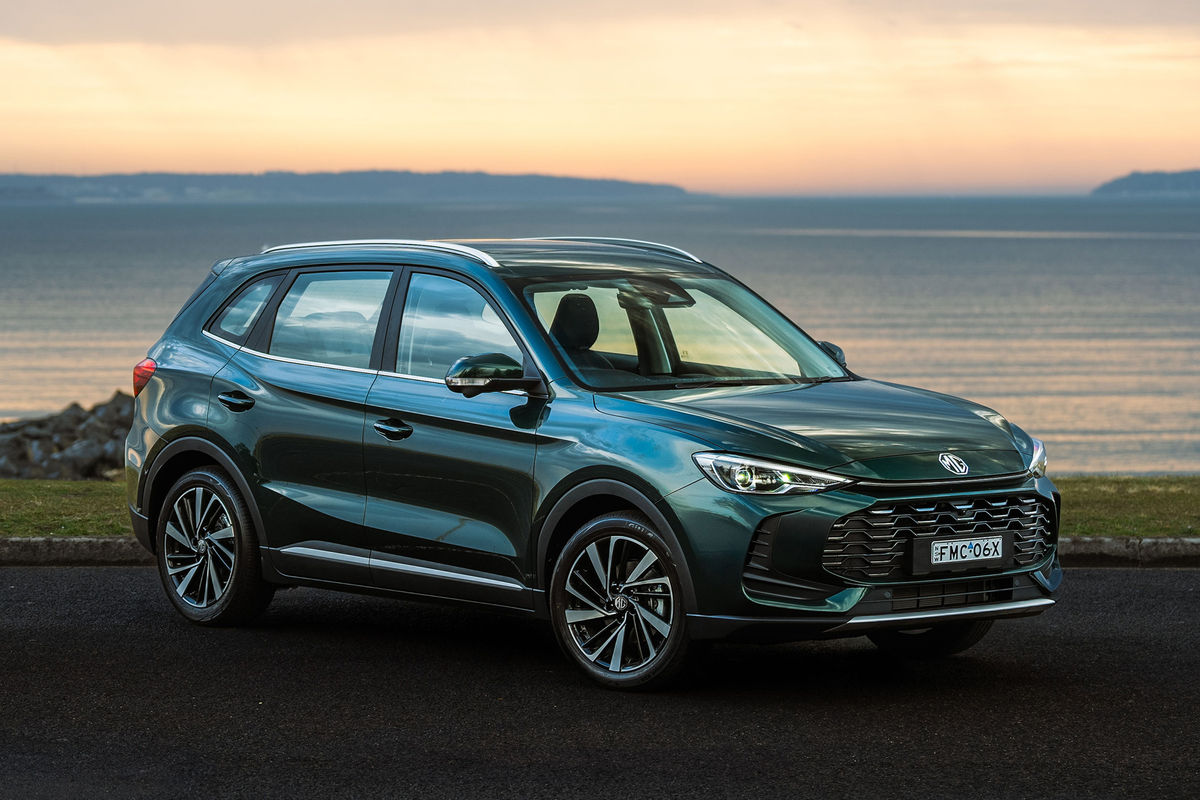
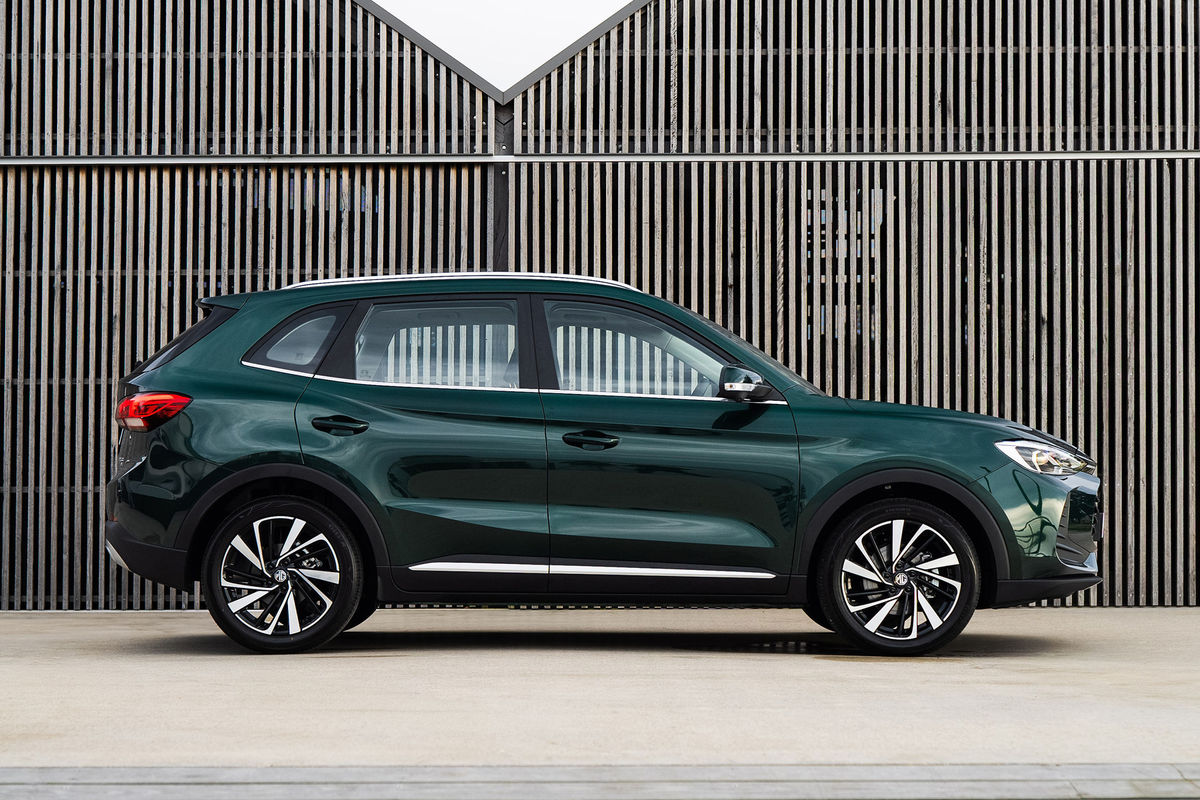
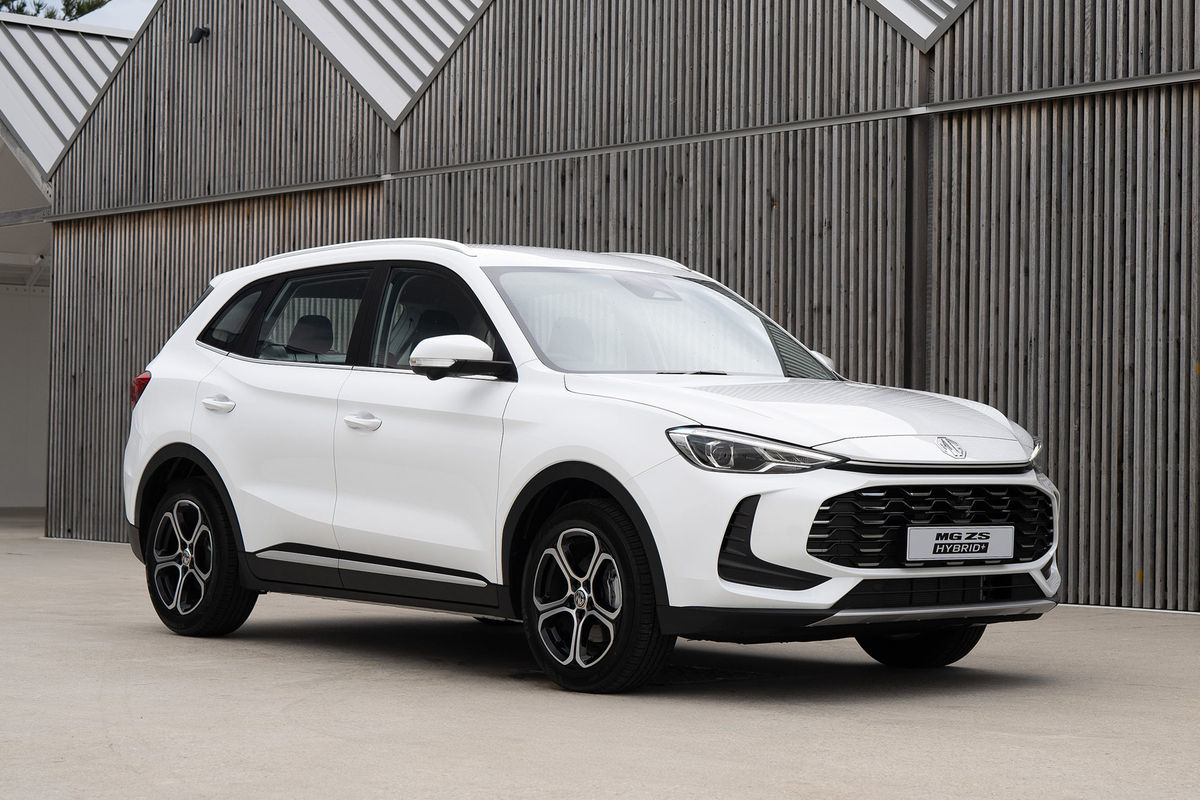
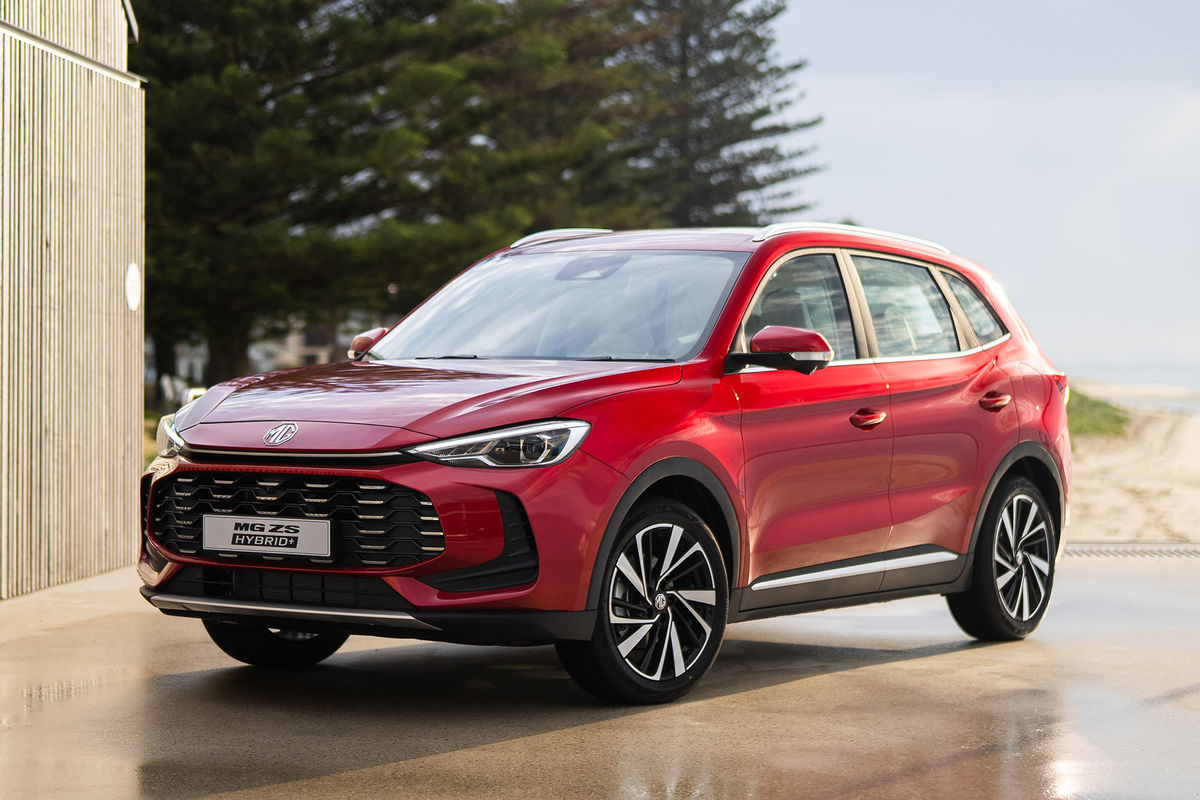
Whereas the ZS Core (shown above) kind of resembles a 5-year-old Mazda CX-5, the MG ZS Pro features the same style signatures as its contemporary siblings, and it’s that model we’ll focus on here.

Design-wise, you can tell the ZS Pro is related to its bigger sibling (the MG HS); it looks more up-to-date and characterful than the ZS Core. MG says the headlamps are “feline-inspired”… I don’t know about all of that, but they’re attractive projector items with LED DRLs and they’re joined by a narrow bonnet line.

Beneath them, the bumper features a gaping (mesh) grille flanked by a pair of similarly finished air dams, which creates a floating graphic. It’s all underpinned by a silver diffuser for a bit of machismo and the result is attractive overall, if not quite striking enough to be noticed in a parking lot full of SUVs.

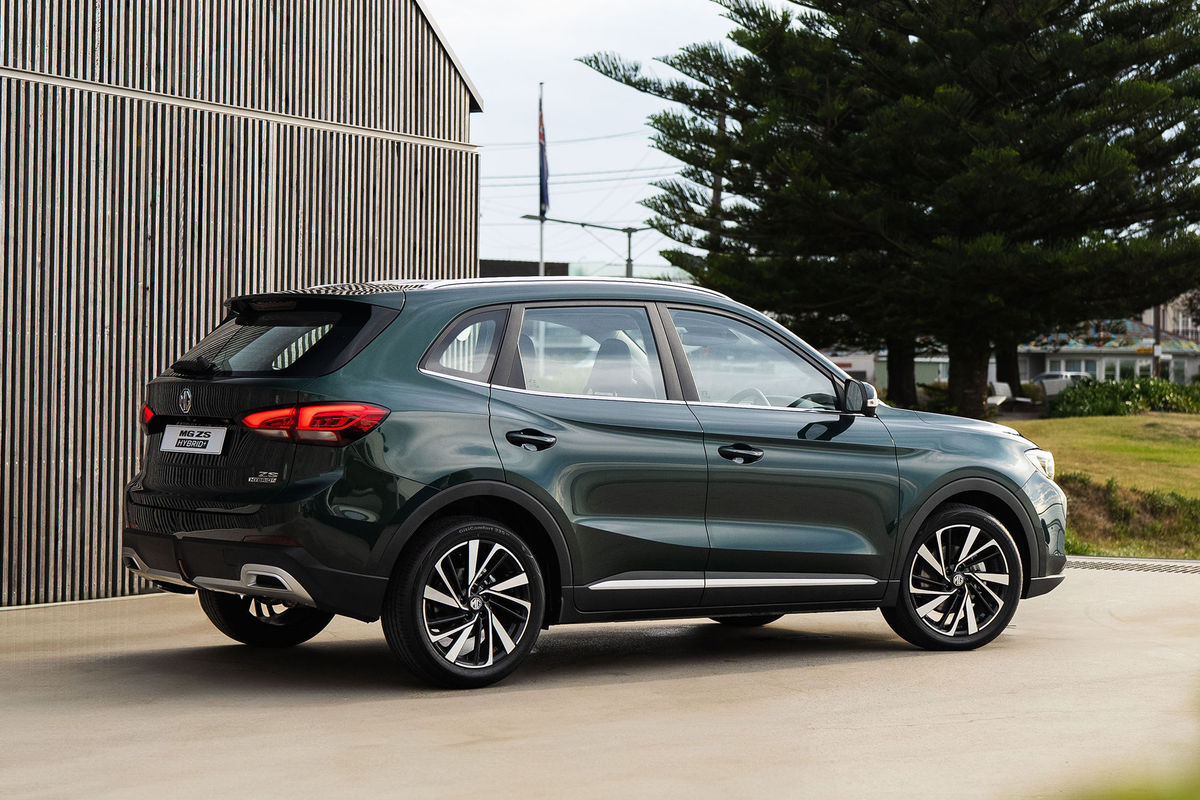
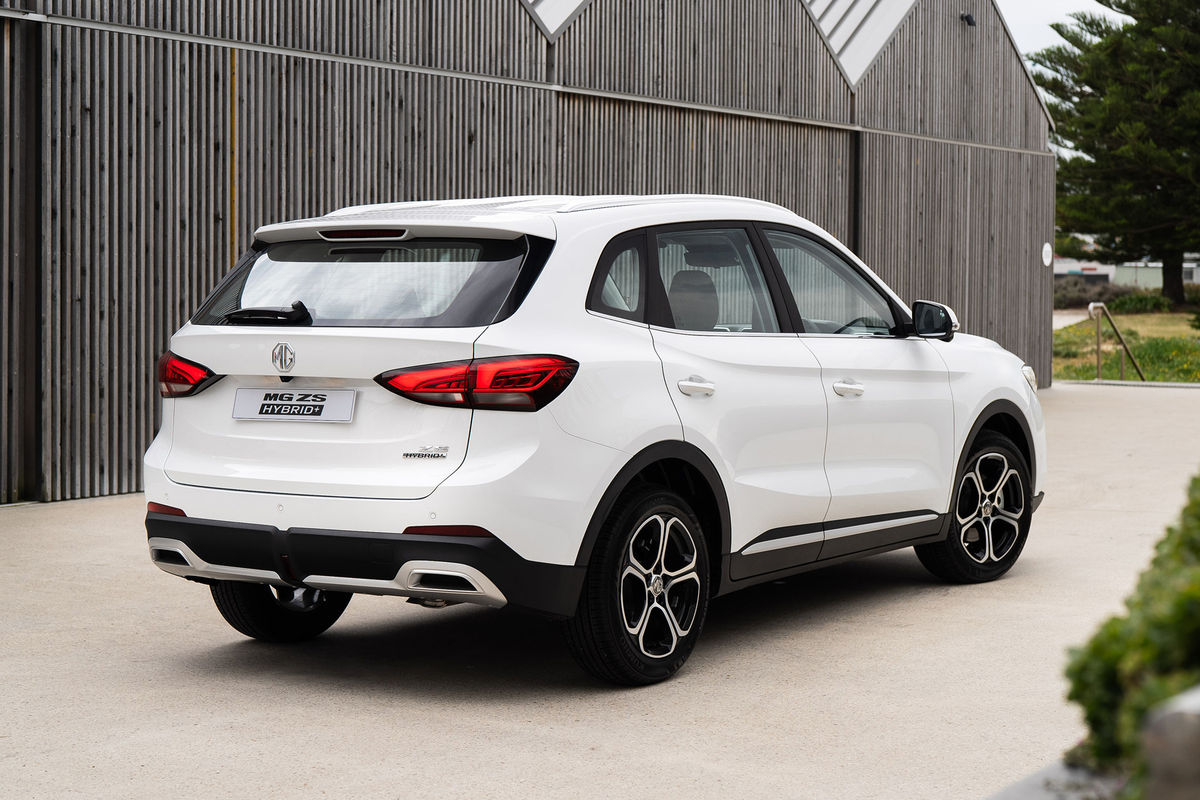
Then again, that was probably the brief. Move to the rear and it’s more of the same – inoffensive-looking, functional, and vaguely familiar ie. large wedge-shaped tail lamps and the obligatory tail-pipe finishers ensconced in a silver diffuser surrounded by the chunky black plastic – all classic softroader hallmarks.

The ZS Pro will also be available in Comfort and Luxury trim grades; whereas the former will be fitted with silver 17-inch alloys – they’re machine-finished on the Luxury.

Both iterations have a 1.5-litre 4-cylinder turbopetrol engine that produces 84 kW/150 Nm and is paired with a 4-speed automatic transmission. This enables the ZS Pro derivatives to have a top speed of 195 kph and an average fuel economy figure of 7.1 L/100 km, MG claims.

Globally, the ZS Pro receives a hybridised version of this drivetrain, but we don’t have confirmation on whether it will also be offered in our Chinese-built models – if so, it will be offered at a slight premium. 

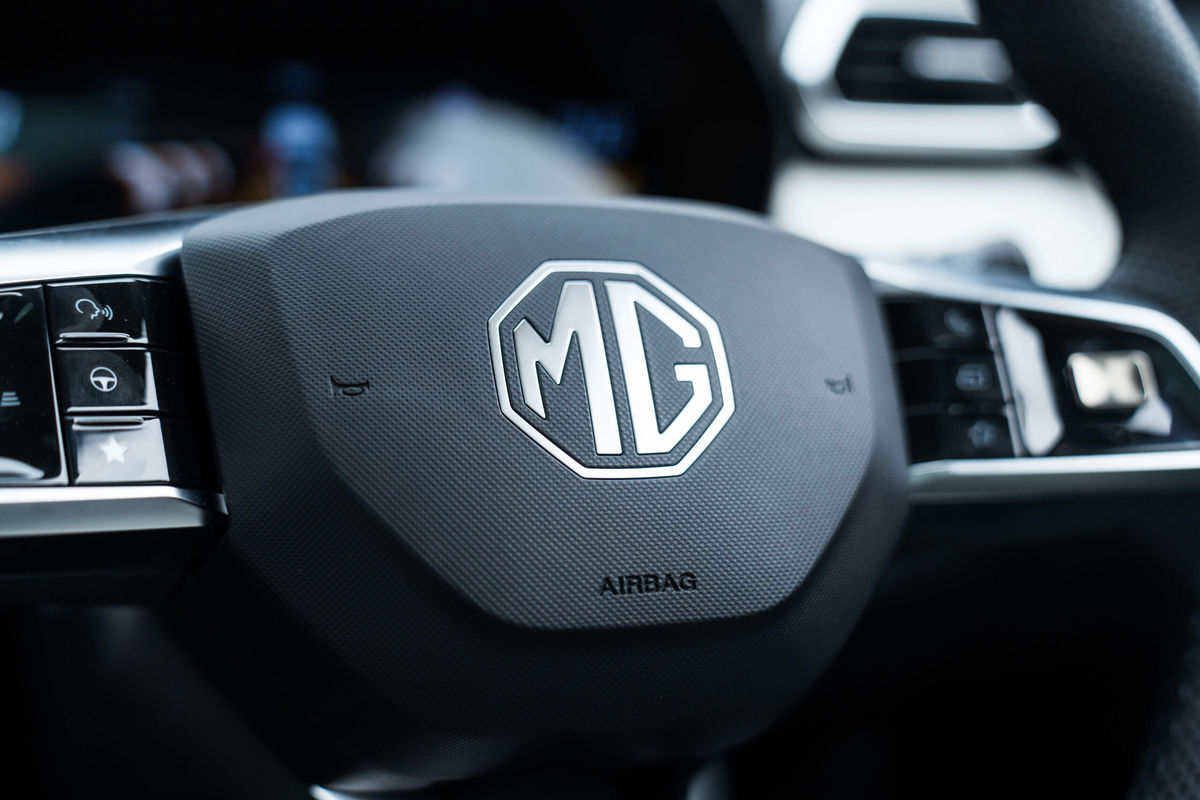
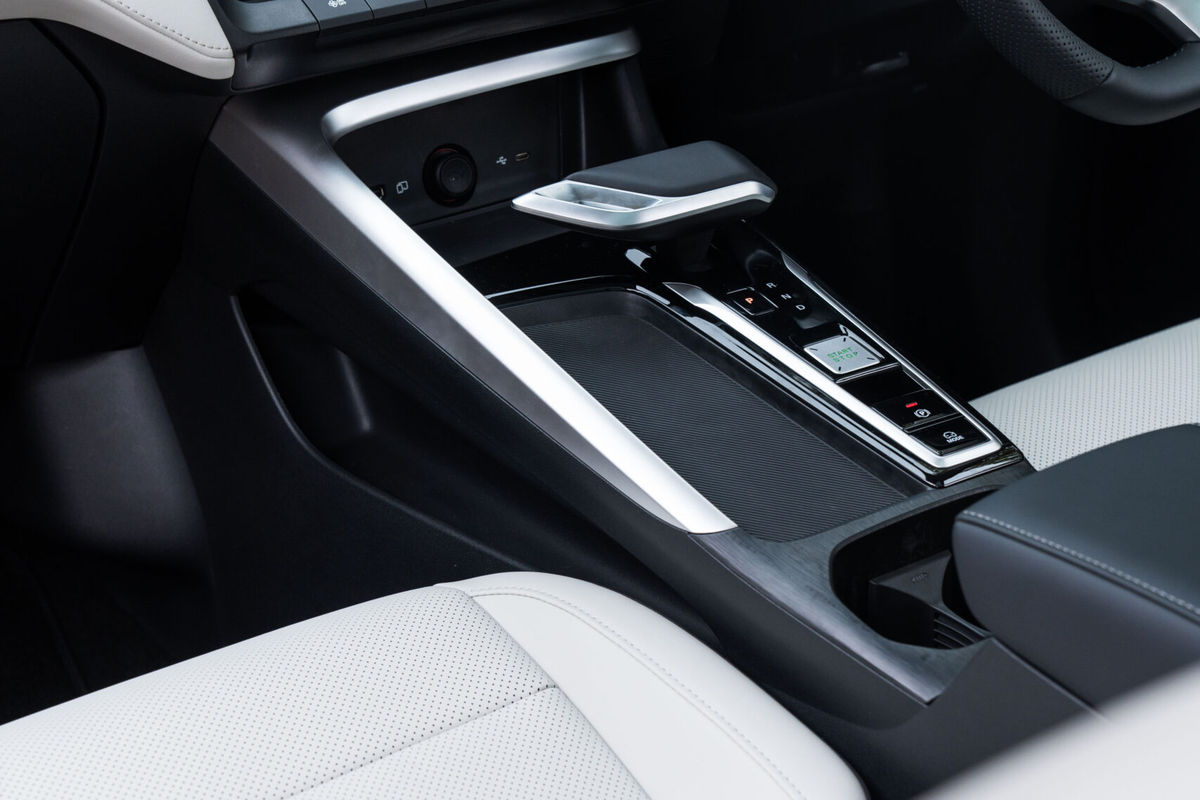
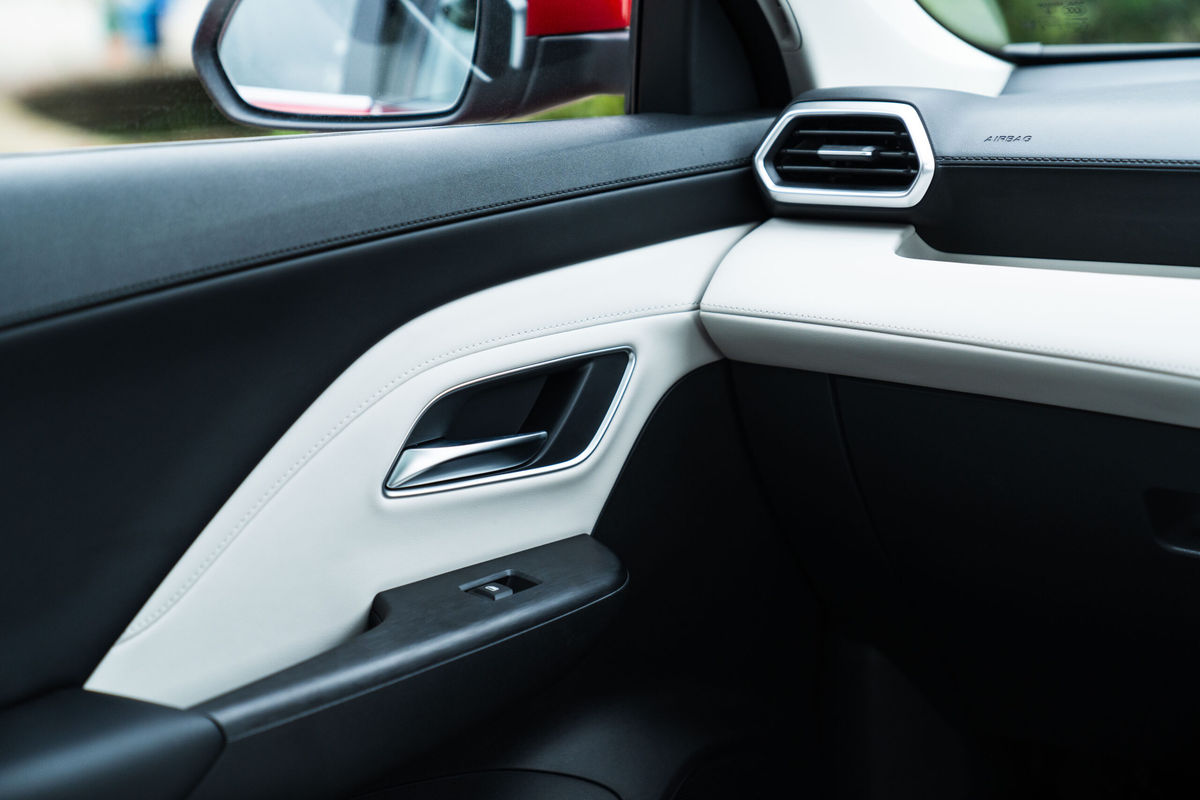
Clambering aboard reveals a handsome interior, with a stylish mix of dark surfaces, a restrained amount of silver accents and the bold MG badge on the helm, which sure looks the part. It feels right to have this brand back on our roads and, if I’m being honest, the ZS is making quite an impression on me so far.

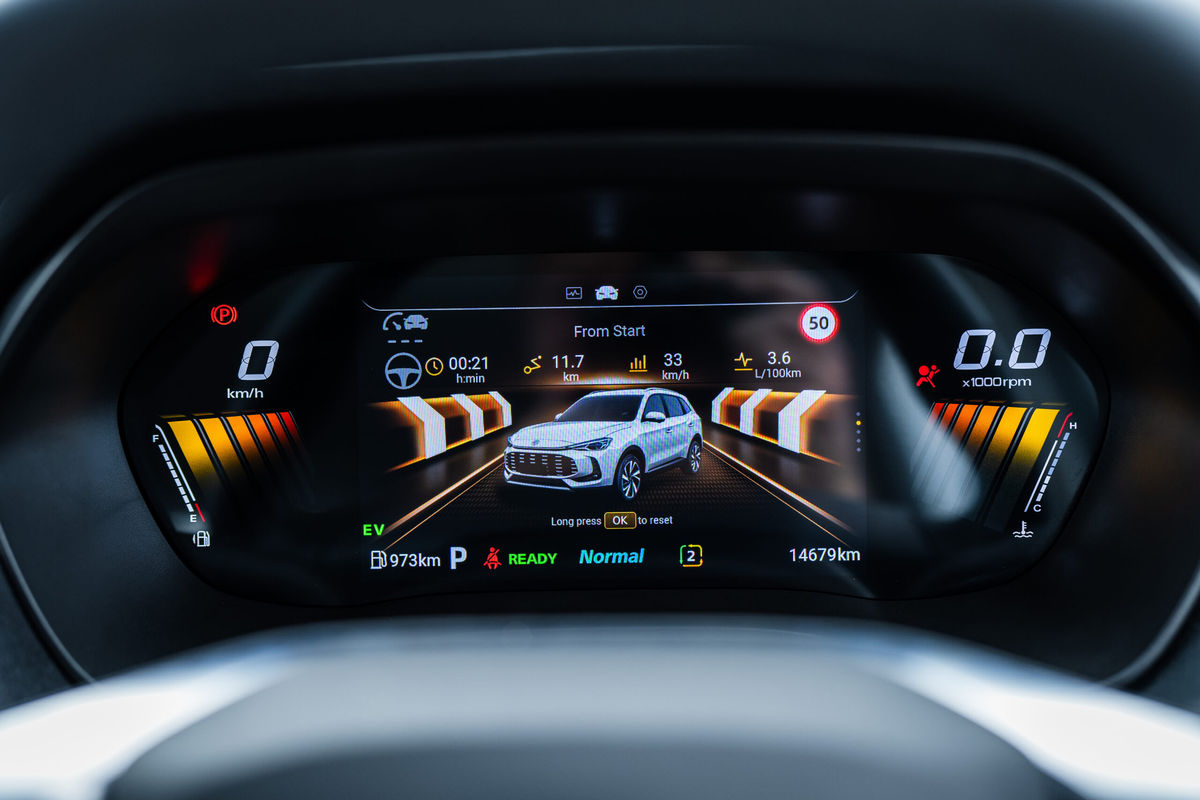
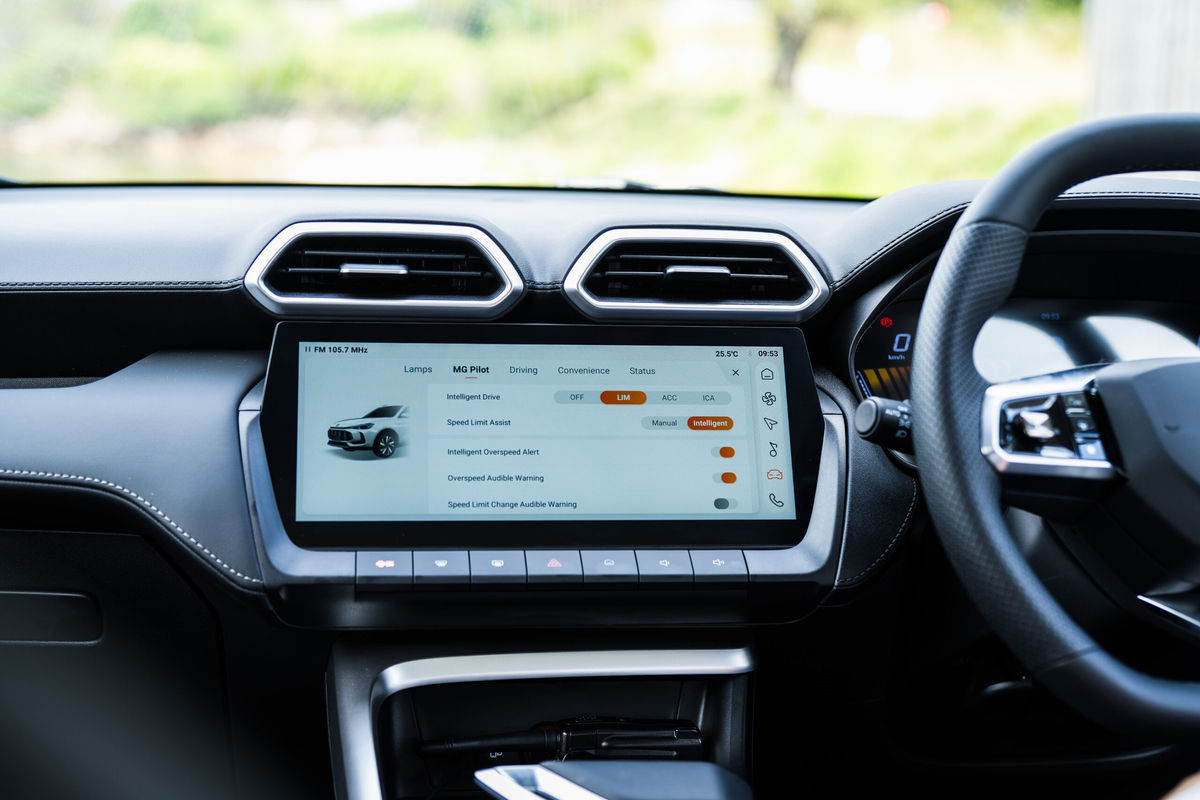
The cabin is pleasingly ergonomic, well-lit and just as well-appointed, with an abundance of technology and safety systems in place. To earn its 5-star Euro NCAP crash safety rating, MG has deployed its full “Active Safety” package in the ZS Pro – ABS with EBD and brake assist, 6 airbags (dual front-, side- and curtain airbags), electronic stability control and a tyre-pressure monitoring system are standard.

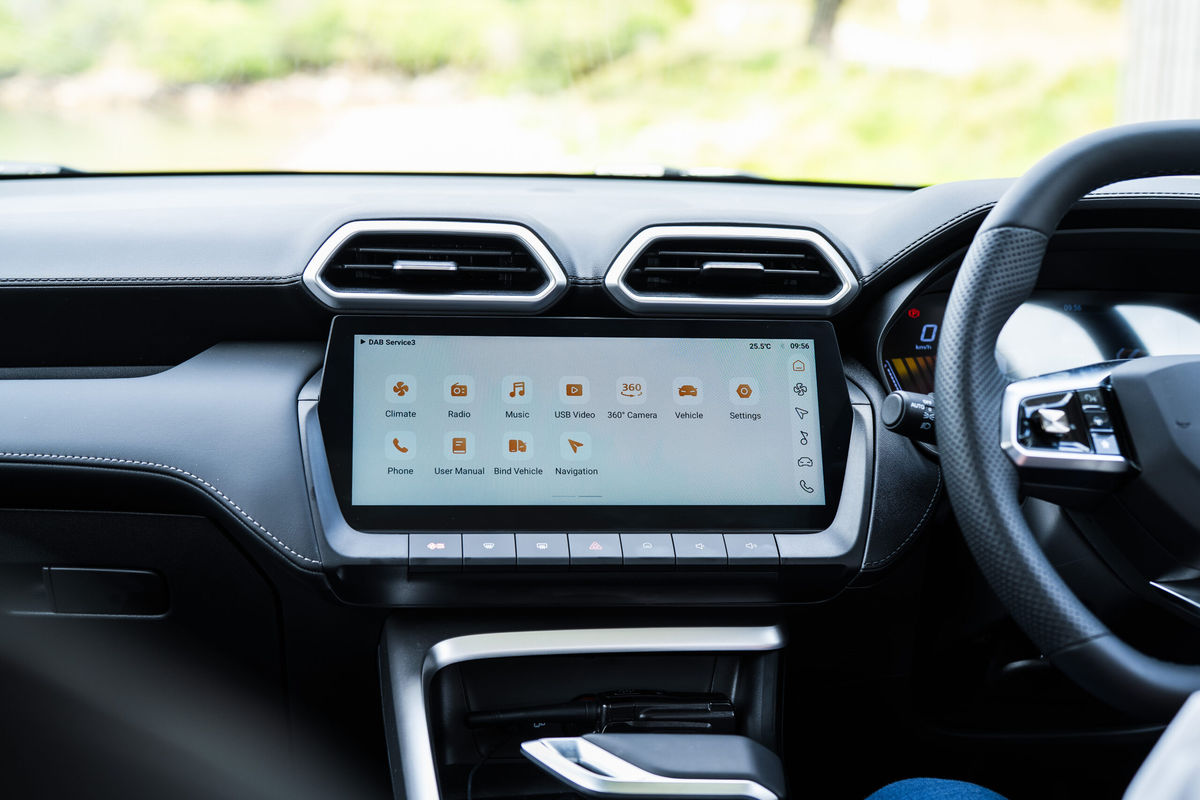
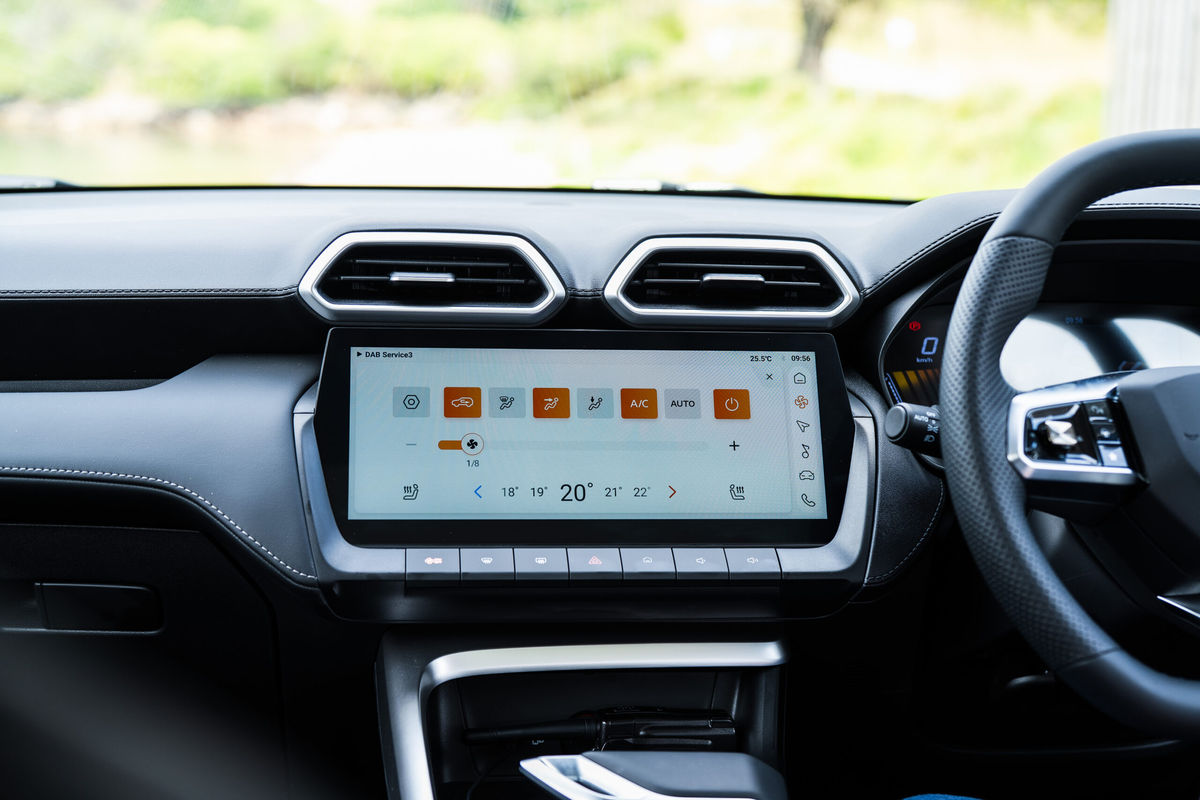
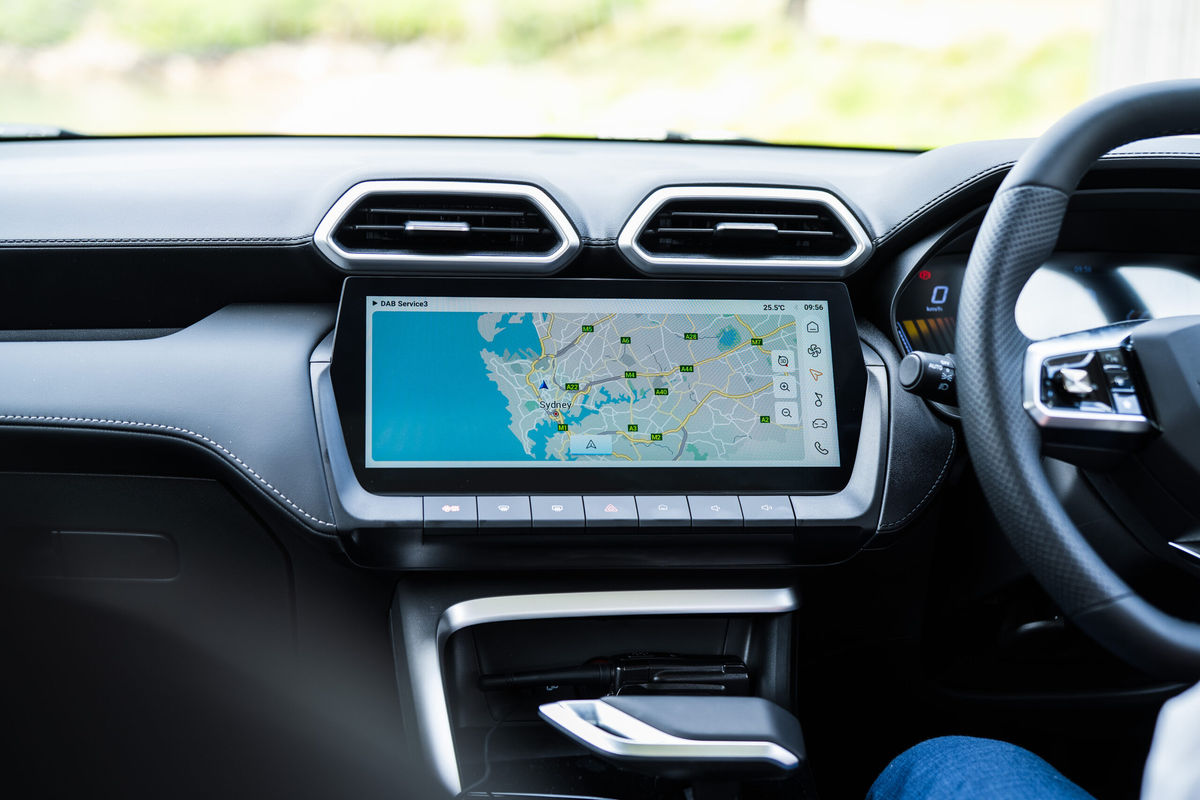
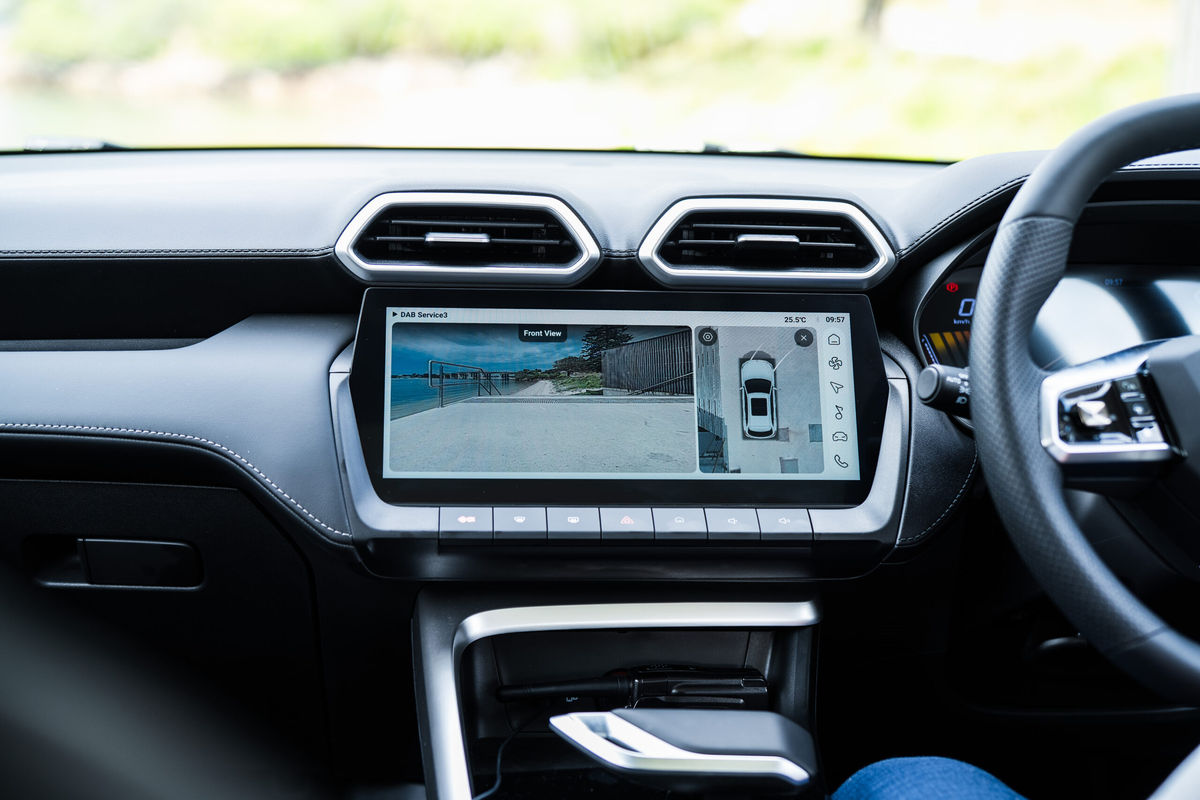
The fascia is dominated by an 8-inch touchscreen infotainment system (equipped with a reverse-view camera on the Luxury variant). What’s more, virtually all the connectivity you could ask for (USB ports, Bluetooth telephony and streaming and Apple Carplay/Android Auto screen-mirroring tech) is provided.

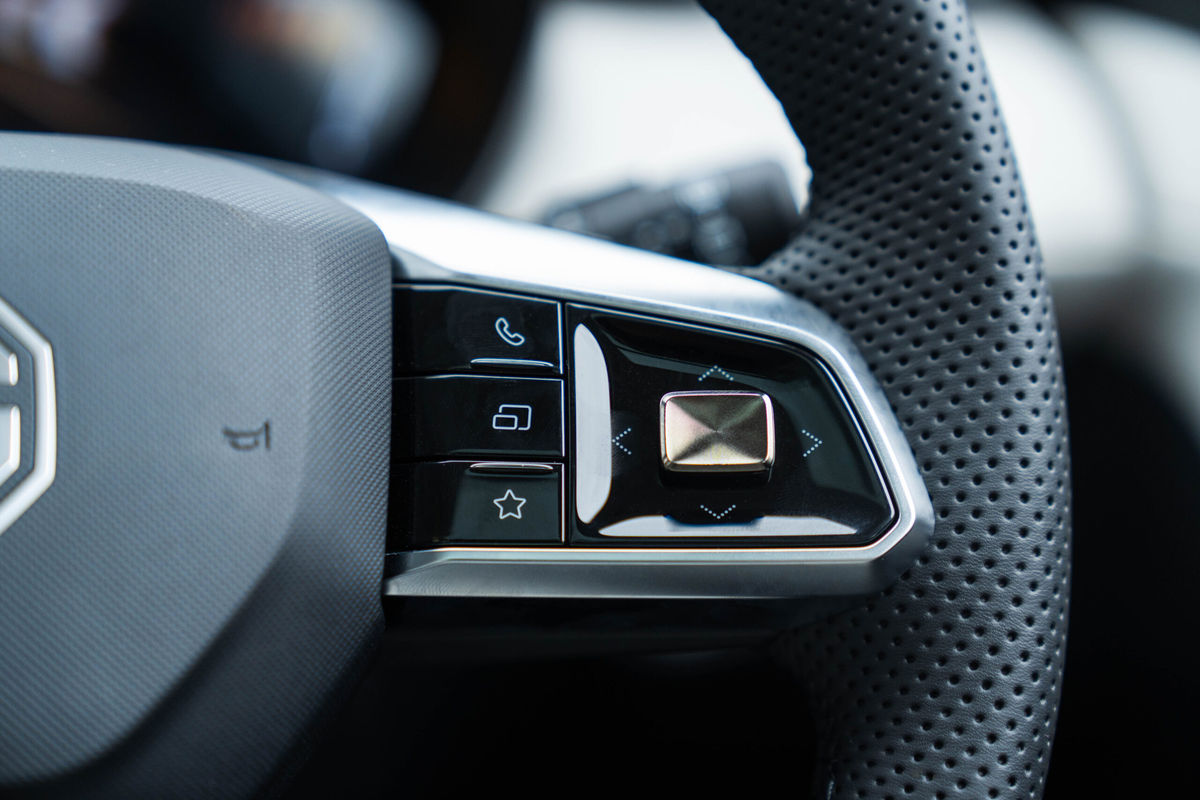
For your added peace of mind, MG has fitted rear PDC, remote central locking, speed-activated door locking, electric windows (with one-touch for the driver), electrically folding and -heated side mirrors, remote steering wheel controls and a 4-speaker audio system (the latter on the Comfort derivative).

The top-of-the-range Luxury enjoys a 6-speaker system with 3D sound, plus cruise- and climate control.

What is the MG ZS Pro like to drive?

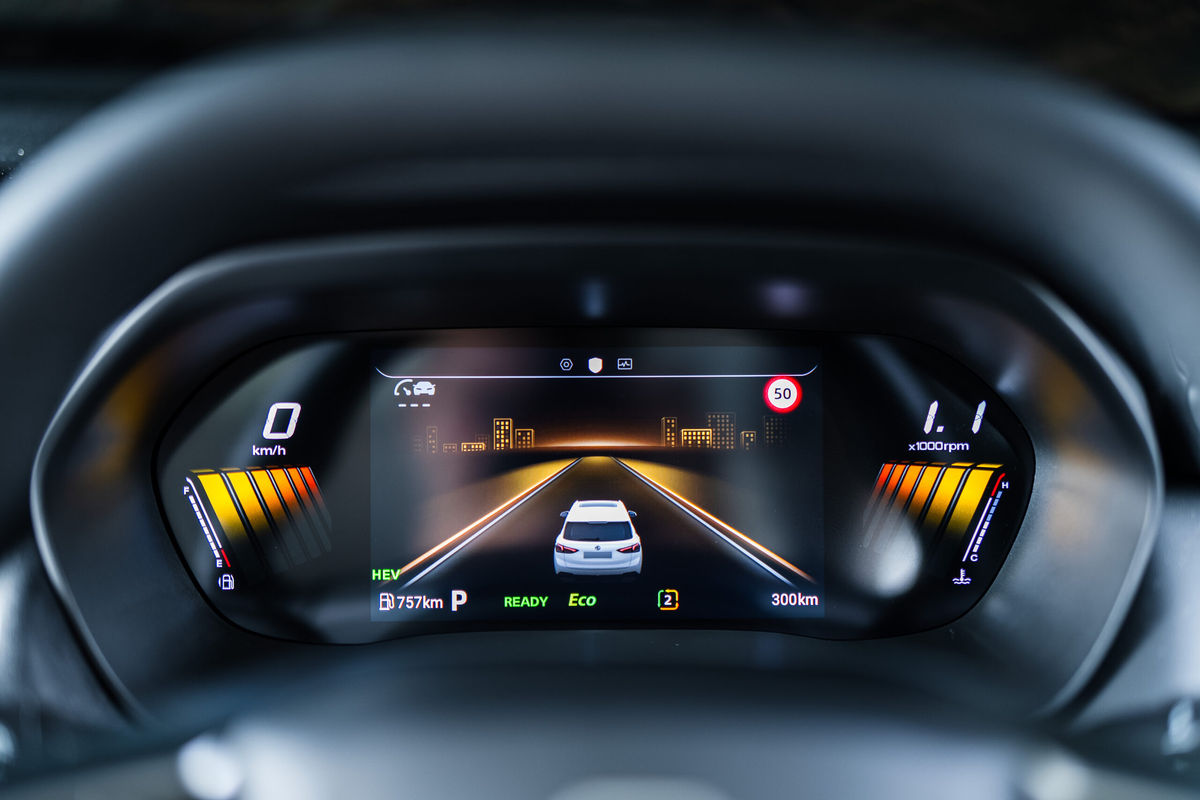
Our ZS Pro test car was a petrol-electric hybrid unit and even at pullaway, I was immediately – but pleasantly – surprised by a drivetrain that was eager to go places, albeit not terribly quickly. Once it was up to speed, the MG felt poised and would continue to do its part as the handling course got twistier.

No, this is not a sporty MG model by any means, but as a mildly athletic small crossover, the ZS Pro can hold its own – not that there’s any large enough amount of grunt here that could get you in any kind of trouble. I did miss reach adjustment on the steering column, so wasn’t able to get perfectly comfortable behind the ‘wheel and there was a fair bit of road-noise intrusion, but not so much as to be distracting.

Summary

There is a lot to like about the MG ZS Pro. Like its siblings, it will come with a competitive warranty (5 years/200 000 km vehicle & 7 years/unlimited km on the engine), plus a 5-year/60 000 km service plan. Pricing will be revealed shortly before launch (to reiterate, at some point before the middle of 2025), but MG Motor SA knows the ZS Pro will need to be keenly priced to be competitive in this cutthroat segment.

The compact family car/small crossover market is massive – and bristles with talent. MG enters the local market when Western brands are struggling to do business, and new models from China and India have proliferated. I can’t pretend to imagine how different our roads will look in 2 years purely in terms of what cars will survive, but it wouldn’t surprise me if the MG ZS (Core and especially, -Pro) thrives.

Would you consider buying an MG in 2025?

Related content

MG ZS (2024) Price & Specs (for the current ZS Core model)

MG HS (2024) Price & Specs

MG Cyberster (2024) Price & Specs

MG HS (2024) International Launch Review

MG is back in SA! Launch line-up confirmed

Opinion: The Zeitgeist is Chinese – it just is…

MG HS (2024) Price & Specs

The new MG HS is the freshly relaunched brand’s take on a family SUV. Here’s what this 2nd-gen model – pitched against the likes of Haval H6 – costs in South Africa…

Officially relaunched in South Africa after an 8-year pause, the MG Motor range kicks off with the entry-level ZS (Core) crossover and tops out with the flagship Cyberster electric roadster. But what’s in the middle? Well, the MG HS family SUV neatly fills that slot.

Measuring 4 655 mm from front to back (with a wheelbase of 2 765 mm), the MG HS arrives in Mzansi in 2nd-generation form – sharing much with parent company SAIC Motor’s Chinese-market Roewe RX5 – and is quite close in size to the Haval H6. It’s also very similarly priced.

The 4-strong HS line-up starts with the MG HS 1.5T Comfort 7DCT, which is priced at R499 900, followed by the MG HS 1.5T Luxury 7DCT for R534 900. These derivatives are powered by a turbocharged 1.5-litre, 4-cylinder petrol motor delivering 125 kW and 275 Nm to the front wheels through a 7-speed dual-clutch transmission as standard. Maximum speed is a claimed 195 kph, while combined consumption is listed as 6.9 L/100 km.

In addition to the basic safety kit (including 7 airbags and rear parking sensors), the HS boasts plenty of driver-assistance technology, such as front-and-rear collision warning, lane-departure warning, emergency lane-keep assist, lane-change assist, blind-spot detection, rear cross traffic alert (and braking), a driver-monitoring system and intelligent cruise assist.

Inside, you’ll find items like 12.3-inch dual screens, a 360-degree camera system and perforated leatherette upholstery. The 1.5T Luxury variant furthermore scores a panoramic sunroof, rear privacy glass, an 8-speaker audio system (2 more than the 1.5T Comfort), front parking sensors, electrically adjustable (and heated) front seats, dual-zone climate control and a wireless smartphone charger.

Interestingly, MG Motor SA has also released pricing for a pair of more powerful 2.0T derivatives, which were initially expected to arrive only later. While official information on this larger-capacity engine is thin on the ground, we do know this likewise 4-cylinder motor generates 170 kW and 370 Nm, peak outputs that are delivered to the front wheels via a 9-speed torque-converter automatic transmission.

This engine – which has a claimed combined fuel consumption of 8.6 L/100 km – is likewise available in both the aforementioned trim levels, with the MG HS 2.0T Comfort AT priced at R629 900 and the MG HS 2.0T Luxury AT coming in at R665 900. All HS derivatives ship standard with a 5-year/200 000 km warranty on the vehicle, a 7-year/unlimited kilometre warranty on the engine and a 5-year/90 000 km service plan.

How much does the MG HS cost in South Africa?

MG HS 1.5T Comfort 7DCT – R499 900

MG HS 1.5T Luxury 7DCT – R534 900

MG HS 2.0T Comfort 9AT – R629 900

MG HS 2.0T Luxury 9AT – R665 900

The prices above include a 5-year/200 000 km warranty on the vehicle a 7-year/unlimited kilometre warranty on the engine, plus a 5-year/90 000 km service plan.

Related content

MG Cyberster (2024) Price & Specs

MG is back in SA! Launch line-up confirmed

Opinion: The Zeitgeist is Chinese – it just is…

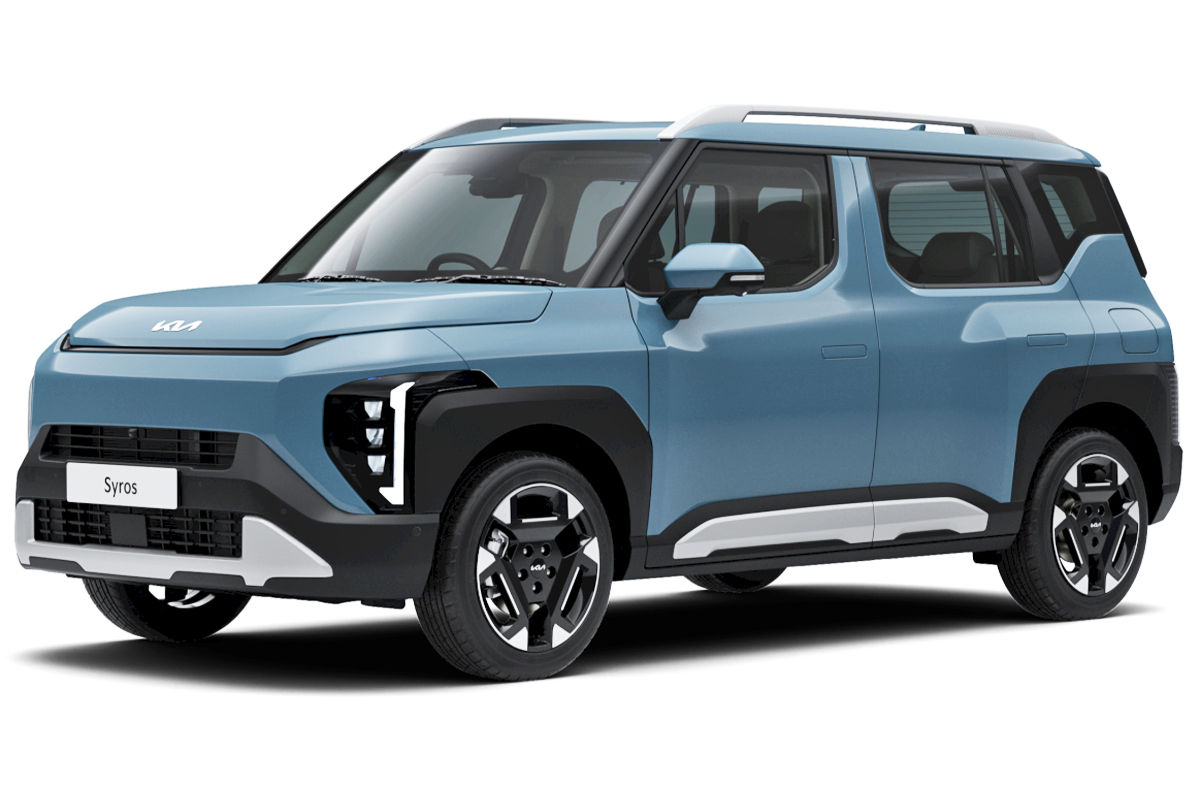
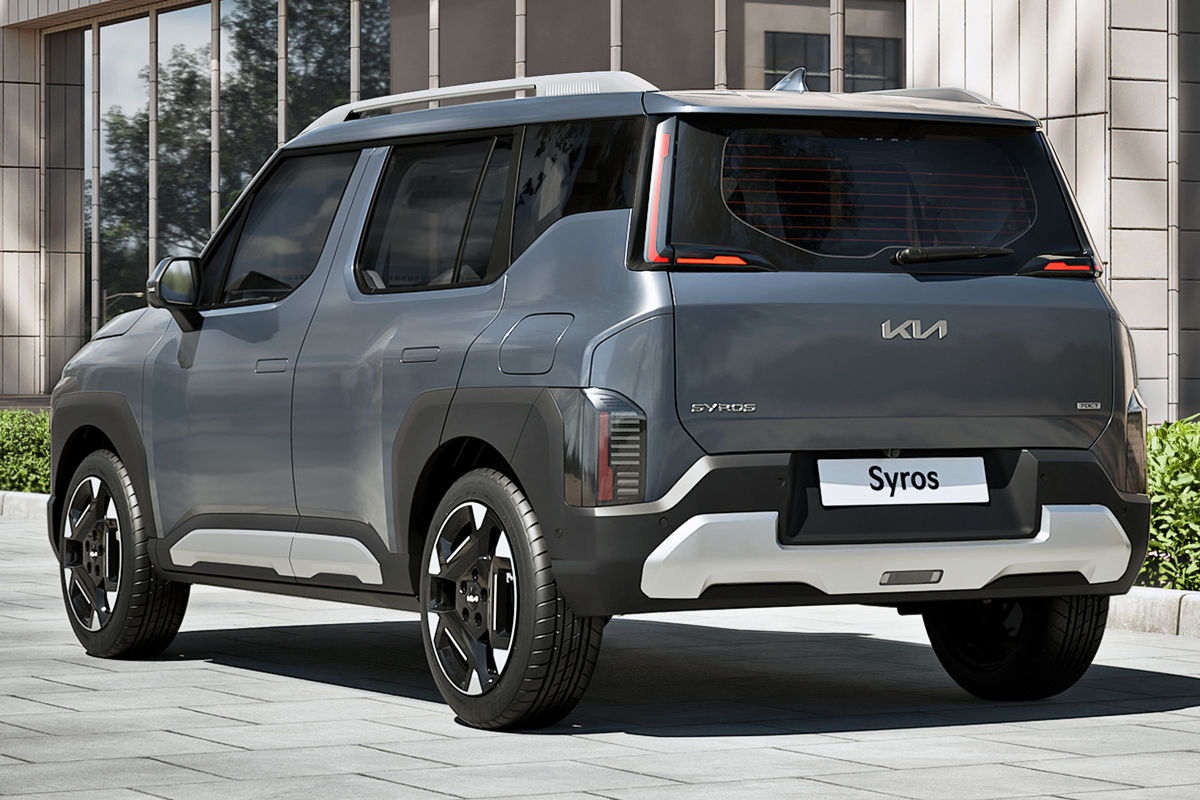
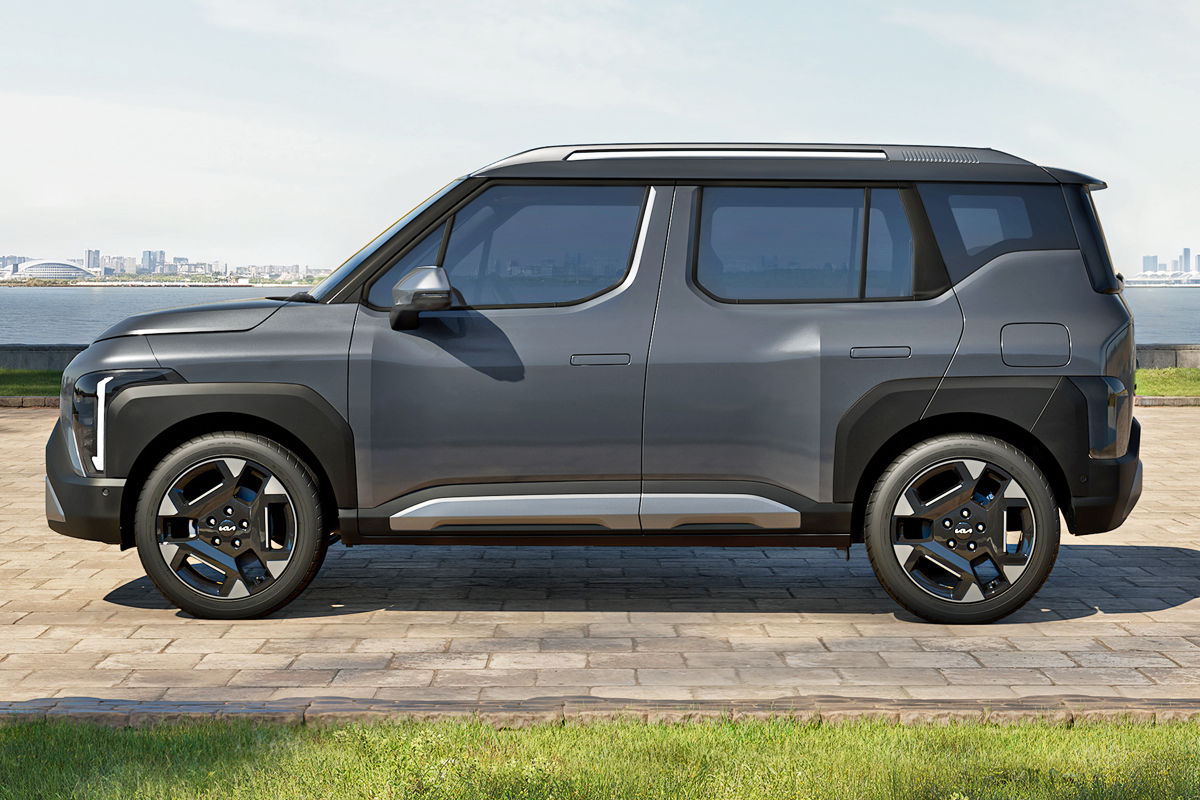
New Kia Syros revealed (but will it come to SA)?

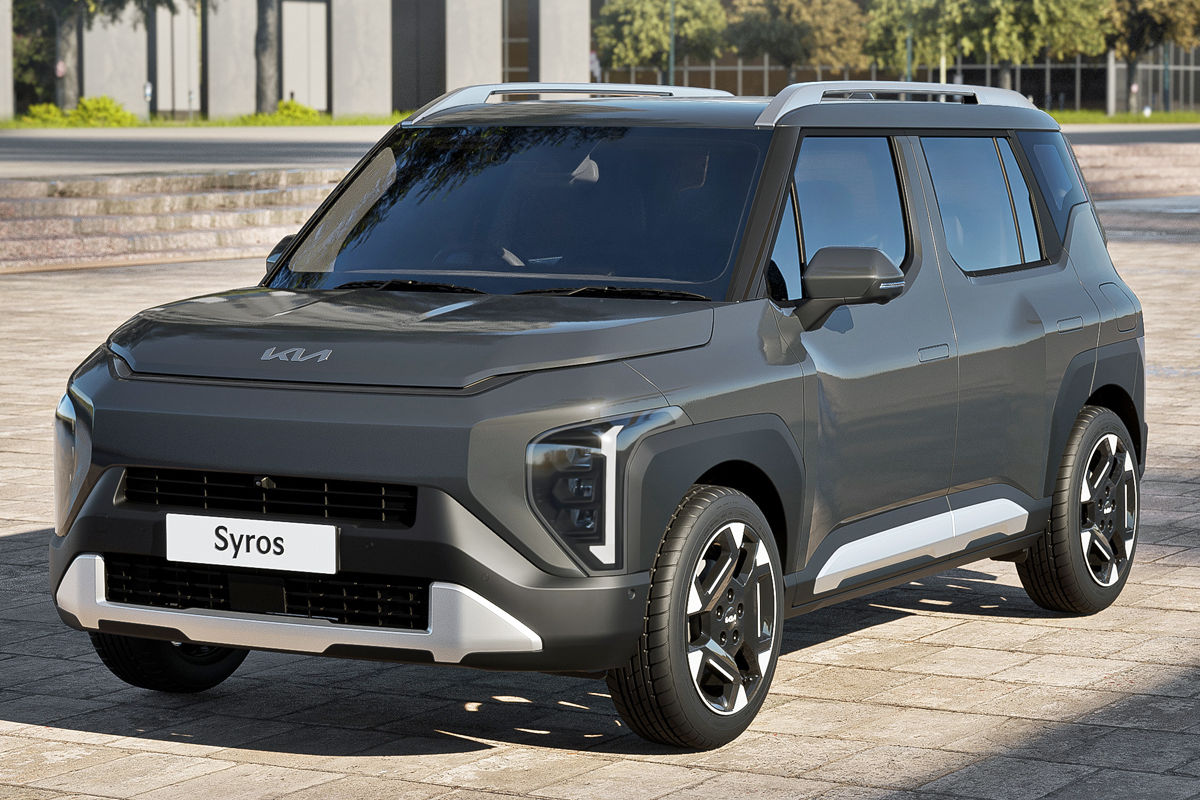
This is the new Kia Syros, a small boxy model described as a “new species of SUV”. And, from where we’re sitting, it looks likely to be on the table for South Africa…

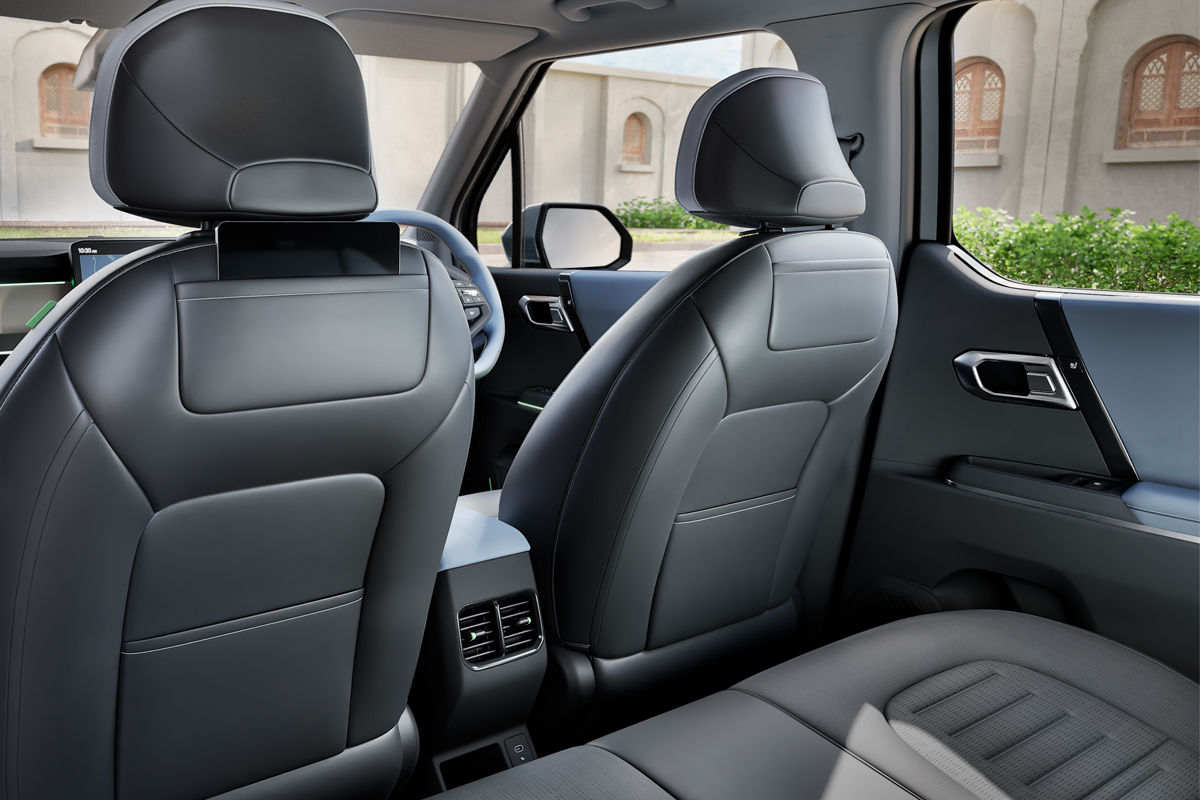
Meet the new Kia Syros, revealed in India and potentially in line for South Africa. Described as a “new species of SUV”, this boxy model is built on what the South Korean firm calls a “reinforced” version of the K1 platform, an architecture that also underpins pint-sized Hyundai siblings like the Grand i10 and Exter.

So, will we see this newcomer in Mzansi? Well, Kia South Africa earlier didn’t rule out the possibility, telling Cars.co.za in November 2024 that it “will look at all product made available to SA in right-hand drive and evaluate all possibilities” to ensure it brings in “the right product at the right price” for the local market.

Furthermore, it’s interesting to note the automaker’s head office in Seoul applied to trademark the “Syros” badge locally in March 2024, with the status currently listed as “pending”. Of course, we should point out that an application to protect a badge is no guarantee the brand will use the nameplate in question.

The new Syros is set to slot into the (narrow) gap between the likewise Indian-made Sonet and Seltos, though is very similar in size to the former. Indeed, the 3 995-mm-long Syros is only slightly wider and taller than the Sonet, while its 2 550 mm wheelbase is 50 mm lengthier.

Though the exterior design is seemingly inspired by the likes of the fully EV3 and EV9, the boxy silhouette is not dissimilar to that of the Soul (a model no longer built in right-hand drive). These proportions, however, unlock what appears to be a more practical cabin than that of the Sonet.

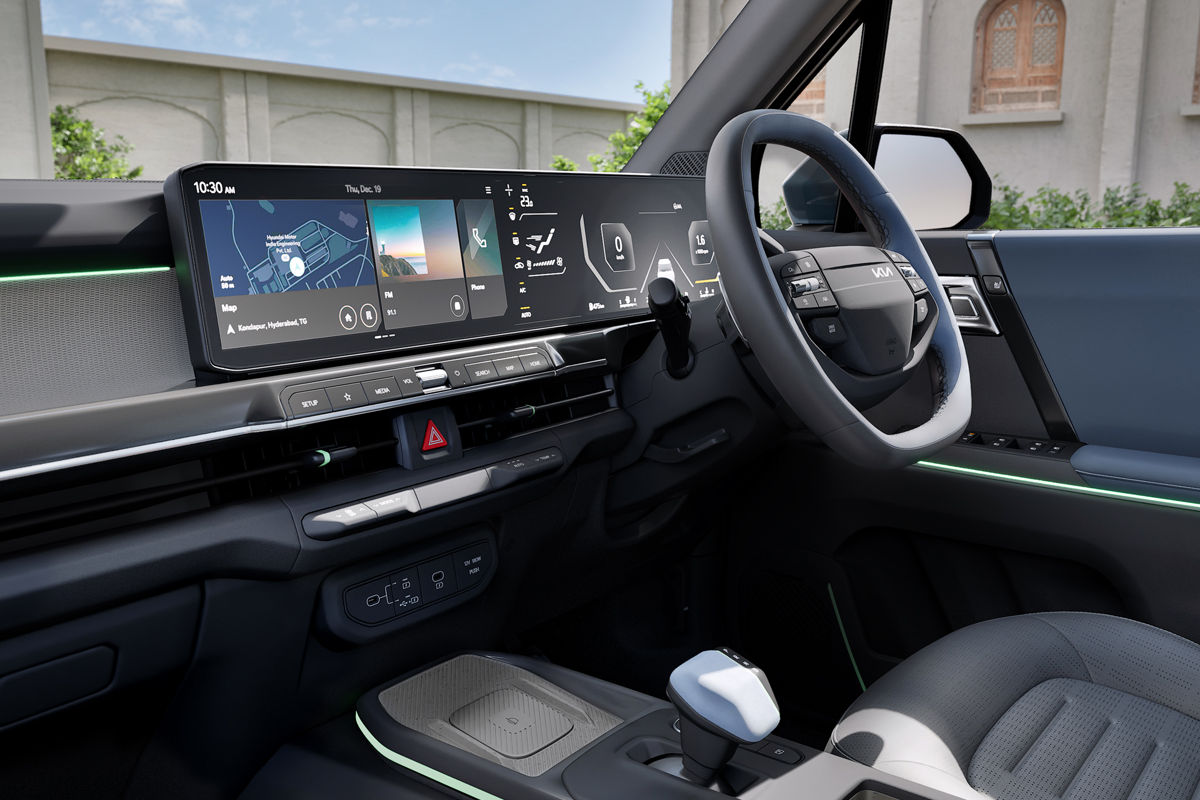
Indeed, Kia says the Syros boasts “first in-segment” sliding, reclining and ventilated 60:40-split seats at the rear, along with other big-car features, such as a dual-pane panoramic sunroof, a Harman Kardon sound system, wireless smartphone charging and various driver-assistance systems.

Standard safety features for the Syros in the world’s most populous nation include electronic stability control, hill-start assist and 6 airbags. The Indian-spec model’s cabin furthermore features a whopping 30-inch panoramic display panel along with 64-colour ambient lighting and a 4-way electrically adjustable driver’s seat.

What about engine options? Well, in India, Kia will offer the new Syros with the choice of 2 powertrains. The first is a turbocharged 1.0-litre petrol engine (1.0 T-GDi) sending 88 kW and 172 Nm to the front axle via either a 6-speed manual gearbox or a 7-speed dual-clutch transmission.

Buyers will also have the option of a 1.5-litre turbodiesel motor (1.5 CRDi VGT) directing 85 kW and 250 Nm to the front wheels through either a 6-speed manual cog-swapper or a torque-converter automatic ‘box with the same number of gears.

Customer deliveries in India are expected to start in February 2025, so if the Syros does end up getting the official nod for South Africa, we’d expect it to arrive towards the very end of 2025 or – perhaps more likely – only in 2026.

Related content

New Kia Syros teased: another small SUV for SA?

3-row Kia Carens coming to South Africa in 2025

Why the new Kia Tasman looks so … different

MG ZS (2024) Price & Specs

The MG ZS arrives in South Africa as the freshly relaunched brand’s most affordable crossover, kicking off at under R300k. Is this MG’s answer to the Chery Tiggo 4 Pro?

MG has officially returned to South Africa and its volume driver is expected to be this: the MG ZS. So, how much does this compact crossover cost in Mzansi?

Well, before we take a look at local pricing, it’s worth pointing out the ZS available at launch in South Africa is the 1st-generation model, which has been in production since 2017. The 2nd-gen version, however, is tipped to arrive in the opening half of 2025, likely wearing the “ZS Pro” badge and positioned above the older model (which we expect to soldier on as the “ZS Core”). 

MG ZS

With that out of the way, back to the topic at hand. In South Africa, the original ZS launches in 2 flavours: the MG ZS 1.5 Comfort 4AT for R289 900 and the MG ZS 1.5 Luxury 4AT for R309 900. That sees this model debut with a foot in the highly competitive sub-R300k segment and the other just outside it.

So, where does this model fit into Mzansi’s broader crossover market? Well, measuring 4 314 mm from snout to rump, it’s very similar in length to the popular Chery Tiggo 4 Pro (which currently runs from R269 900 to R415 900). Though it interestingly undercuts the slightly larger Haval Jolion (currently priced from R345 950), it also finds itself competing with a throng of smaller Indian-built crossovers, based on price alone.

MG ZS

Both ZS derivatives employ a naturally aspirated 1.5-litre, 4-cylinder petrol engine, delivering 84 kW and 150 Nm to the front wheels via a 4-speed automatic transmission. MG Motor SA claims a top speed of 195 kph and a combined fuel economy of 7.1 L/100 km in each case. Luggage space is listed as 357 litres, expandable to 1 166 litres with the rear bench dropped.

The Comfort and Luxury trim levels both feature electronic stability control, 6 airbags, tyre-pressure monitoring and rear parking sensors as standard. The Comfort grade, however, comes with a 4-speaker sound system and cloth-trimmed seats, while the Luxury model upgrades to 6 speakers and leatherette upholstery. An 8-inch touchscreen is standard, with the Luxury grade furthermore featuring a reverse-view camera.

MG ZS interior

MG Motor SA is set to kick off its retail operations in the final few days of 2024, the year in which the brand celebrates its centenary. Founded 100 years ago as “Morris Garages” in the United Kingdom, MG is these days run by Chinese group SAIC Motor, a state-owned manufacturer that is also responsible for the LDV marque.

Officially under the stewardship of Shanghai-based SAIC Motor since around 2007, MG began its previous re-entry to South Africa late in 2011, though again exited the local market in 2016. Now, some 8 years later, it’s back, describing itself as “100% committed to the South African market”.

How much does the MG ZS cost in South Africa?

MG ZS 1.5 Comfort 4AT – R289 900

MG ZS 1.5 Luxury 4AT – R309 900

The prices above include a 5-year/200 000 km warranty on the vehicle and a 7-year/unlimited kilometre warranty on the engine, plus a 5-year/60 000 km service plan.

Related content

MG Cyberster (2024) Price & Specs

MG is back in SA! Launch line-up confirmed

Opinion: The Zeitgeist is Chinese – it just is…

MG Cyberster (2024) Price & Specs

How much will the new MG Cyberster cost in SA? Well, the 100-year-old brand has released pricing for its 375 kW electric roadster, which comes complete with scissor doors…

Yes, MG is officially back in South Africa after an 8-year absence. While the launch line-up includes a pair of crossovers (the ZS and HS), the model hogging the headlines has been the flagship MG Cyberster. So, how much does this fully electric roadster cost?

Well, the Chinese-backed brand – which returns to Mzansi just in time to celebrate its centenary – has released pricing for its svelte 2-seater electric roadster. Slotting in at the very peak of MG’s local range, the Cyberster is priced from R1 399 900. In the local soft-top market, that sees it slot in between the 285 kW BMW Z4 M40i (R1 332 760) and 167 kW Mercedes-Benz CLE200 Cabriolet AMG Line (R1 527 271).

Interestingly, it seems only the full-fat, all-wheel-drive version (there’s also a lower-powered, rear-driven iteration offered in some markets) will be sold in South Africa, offering a whopping 375 kW and 725 Nm courtesy of dual electric motors.

The Cyberster draws its urge from a 77 kWh lithium-ion battery pack that accepts a maximum AC charge rate of 7 kW and maximum DC charge rate of 144 kW. MG claims a single-charge WLTP range of 443 km, a 0-100 kph time of just 3.2 seconds (using launch control) and a top speed of 208 kph.

The SA-spec Cyberster rides on 20-inch alloy wheels (framing Brembo brakes), while a quartet of drive modes (Comfort, Sport, Custom and Super Sport) along with 4 regenerative braking modes are standard. The roadster features an electrically operated fabric hood that can be opened or closed in 15 seconds at speeds up to about 50 kph.

Previewed by a concept released in 2021, the production Cyberster – complete with scissor doors – was revealed in 2023. Officially under the stewardship of Shanghai-based SAIC Motor since around 2007, MG began its previous re-entry to South Africa late in 2011, though again exited the local market in 2016. Now, some 8 years later, it’s back, with the halo Cyberster leading the charge…

How much does the MG Cyberster cost in South Africa?

MG Cyberster – R1 399 900

The price above includes a 5-year/200 000 km warranty on the vehicle a 7-year/250 000 km warranty on the powertrain, plus a 5-year/100 000 km maintenance plan.

Related content

MG HS (2024) International Launch Review

MG is back in SA! Launch line-up confirmed

Opinion: The Zeitgeist is Chinese – it just is…

One night stand with the new Mustang: Is old school still cool?

We get behind the wheel of the latest generation Ford Pony Car. Our Mustang night drive video is about a simple question: is this the best version of the iconic muscle car?

The new Ford Mustang bucks the trend of downsizing and electrifying by sticking with its 5.0 V8 engine and rear-driven chassis. Whoever thought that old school thinking would be such a breath of fresh air in an ever-complicated motoring landscape?

To understand the Mustang, you must think about where it comes from. And what it really is. In a sense, the Mustang has been, for generations of American buyers, what the Golf GTI has been for South African car enthusiasts.

Performance car for the people

Much as the hot hatch was the defining affordable performance car in South Africa, for decades, the Mustang has presented something different, but with the same idea. In America, the Mustang has been a very affordable performance car for decades. It combines a big engine, rear-wheel drive, coupe looks, and a surprisingly cosy cabin.

Some generations of Mustang have been criticised for being too soft. More boulevard cruisers than real affordable performance cars. But the latest Mustang is widely regarded as the best. It combines traditional Mustang design and presence with much better dynamics and presence when the roads aren’t straight.

In a world where cars are becoming increasingly uniform, the Mustang offers a lot that is different, without an outrageous price tag. Very few cars offer naturally aspirated V8 engine, a low centre of gravity, and rear-wheel drive. All attributes that have always been deeply valued by driving enthusiasts.

In this Mustang night drive video video, Jacob Moshokoa drives the new Ford Pony car at night on the roads of Cape Town. Blipping the V8 engine at every opportunity and listening to the crackle and backfire from the exhausts. Yes, it’s theatrical, but is the new Mustang any good? Or does it even need to be good for you to like it…?

Want to purchase a new or used Ford? Browse vehicles for sale

Read the latest Mustang news and reviews

LDV D90’s launch in South Africa pushed back

The LDV D90 won’t launch in 2024 after all, with the fresh-faced 7-seater SUV’s scheduled arrival in South Africa having now been pushed to some point in 2025…

In June 2024, LDV South Africa said the first local deliveries of the D90 were scheduled for the start of the final quarter of this year. However, now the Chinese-owned brand has confirmed the 7-seater SUV won’t hit the local market until some point in 2025.

Though LDV SA told Cars.co.za it has no confirmed date for the D90’s official arrival on the local market, our understanding is that the automaker is targeting a launch date in the opening quarter of 2025.

There are at least 2 units of the ladder-frame SUV already in the country, with both having arrived earlier in 2024 for what LDV SA then described as “customer viewing and final homologation”. These examples each feature a turbodiesel engine, though the latest D90 that recently launched in Australia has interestingly ditched (perhaps temporarily) this oil-burning motor in favour of a turbocharged 2.0-litre petrol engine.

In Mzansi, however, the D90 line-up is expected to comprise Elite and Flagship derivatives, each powered by the same 2.0-litre biturbodiesel engine employed by top-spec versions of the T60 bakkie. This 4-cylinder oil-burner generates 160 kW and 500 Nm, peak outputs that are delivered to all 4 wheels via a ZF-sourced 8-speed automatic transmission. Braked towing capacity is listed as 3 100 kg.

Both derivatives will feature 4×4 with low range as standard, though the Flagship variant will add front and rear differential locks to the Elite’s central item. Other standard features will include climate control, leather upholstery, a 12.3-inch touchscreen infotainment system and dual smartphone-charging pads.

The D90 Flagship will furthermore score massaging- and heating functions for the front seats, while also upgrading from a standard sunroof to a panoramic version and from 18-inch gloss-black alloys wheels to 20-inch diamond-cut items. In addition, while the Elite uses an 8-speaker sound system, the Flagship boasts a 12-speaker JBL arrangement.

LDV South Africa also earlier confirmed that SA-spec D90 derivatives will be fitted with the “Black Package” as standard, adding a gloss-black finish for the exterior handles, side-mirror caps, roof rails and rear spoiler, along with black wheel-arch mouldings.

Measuring 5 046 mm from nose to tail, the 3-row D90 is 121 mm longer than the J250-generation Toyota Land Cruiser Prado, while its 2 950 mm wheelbase offers 100 mm more than that of the Japanese SUV. From what we understand, the D90 for the local market is effectively an LDV-badged version of the Chinese-market Maxus Lingdi (a name that translates to “Territory”).

As a reminder, LDV opened its doors in South Africa in May 2024, kicking off its local operations with the launch of the T60 range of double-cab bakkies. The company traces its roots all the way back to 1896, when it was founded in the United Kingdom. In the late 1980s, the marque transformed into Leyland DAF Vehicles (hence the “LDV” initialism), before becoming a wholly owned subsidiary of China’s SAIC Motor in 2010.

Related content

LDV T60 Review (2024): new player enters game

LDV T60 beats Hilux, Ranger on power – and price

New LDV D90 7-seater SUV confirmed for SA

MG HS (2024) International Launch Review

MG has returned to the South African new-vehicle market! Our regular contributor, Calvin Fisher, recently travelled to China to spend some quality time at the helm of the MG HS – the Chinese brand’s family car that will take on segment mainstays and -newcomers alike.

We arrived in Zhengzhou not by ‘plane, but by high-speed train. The city, where we would sample the new hardware MG will release in Mzansi in early 2025, is a metropolis in every way, except vertically. Military bases in the area mean no building reaches beyond 280 metres.

Read More: MG’s officially back in SA! Initial line-up confirmed

It’s here where Apple builds its iPhones and more relevantly, where Chinese State-owned SAIC produces its MG-branded passenger cars. That’s the real reason I’ve arrived in the People’s Republic, to peek behind the red curtain at MG’s manufacturing plant and design studio and to ultimately test its wares at the proving grounds SAIC shares with VW. It’s here that I finally go hands-on with the 2nd-gen MG HS.

What is it? In short, it’s yet another Chinese SUV making its way to our shores, but this one comes with a more substantial backstory.

It’s an MG.

That very British marque, Morris Garages has been injected with a new lease on life (and cash). And, as I’ve already mentioned, this HS is the model’s 2nd iteration.

To put it another way, the MG HS has already enjoyed significant success in other markets, but we’ll get the new version that benefits from a bullish upgrade in aesthetics and practicality.

It’s a medium SUV (a compact family car will also ship in the form of the MG ZS) and now features more cabin space than its predecessor, achieves maximum safety standards and absolutely brims with mod-cons, comforts and technology.

Objectively, it’s impressive – but ultimately cars are still best appreciated subjectively when seen in the metal and experienced from the driver’s perforated leatherette-trimmed seat. I’ll start by eyeballing it.

Exterior Styling

The MG HS is easy on the eyes, but it will probably blend in with the rest of the non-descript parking lot fare: amorphous crossovers that seem to share a similar metallic palette. The stylists have opted for a “hammer-head shark” appearance at the front with slim LED clusters joined by a narrow bonnet line.

The front-end execution reminds me of Clint Eastwood staring into the sun from behind the brim of his cowboy hat in a classic Western’, but without the corresponding level of machismo. No, the MG HS is a people-mover and it knows it – despite the design team likening the headlamps to London’s famous Shard Building. Do you see it? I don’t either, but like Clint, I may have been squinting too hard.

I do, however, enjoy the 19-inch machined alloys tucked into each arch. Overall, the design is inoffensive, functional and simply par for the course in the segment it is due to compete in. Good job. No notes.

Upmarket interior

As soon as I drop into the cabin of the Luxury variant, it’s immediately apparent that the folks at MG have aimed high. The base Comfort variant has a raft of safety equipment and acronyms, plus a hearty spec level, but it’s been further enhanced here with an electric panoramic sunroof and rear privacy glass.

Perhaps more relevantly, it also includes an 8-speaker audio system for servicing all 5 of its occupants. There are also front parking sensors, electric seat adjustment with heating, dual-zone climate control plus a wireless charger.

I mentioned the safety acronyms, but won’t dare list them all because that would deplete your phone data, so here are a few highlights: electronic stability- and cornering control, dynamic and hazard control, hill-start assist, tyre pressure-, and even brake disc monitoring.

Only then do we get to the reams of driver aids including – but not limited to – collision warnings, lane assist, rear cross-traffic alert and -braking, driver monitoring, and intelligent (adaptive) cruise control.

Naturally, you’ll be able to adjust these settings in addition to your media modes and smartphone apps (Apple Carplay/Android Auto) via the large 12.3-inch touchscreen that dominates the dashboard.

Add to this the MG HS’ full complement of 7 airbags and you can see how it achieves its 5 stars for safety, and why the brand is being taken so seriously despite a market burgeoning with Chinese metal.

There’s also a virtual cockpit in this tech-forward, gadget-strewn cabin, as well as an electronic parking brake, rain-sensing and a 360-degree surround view camera.

What is the MG HS like to drive?

Both Comfort and Luxury derivatives share the same 1.5-litre 4-cylinder turbopetrol engine paired with a 7-speed dual-clutch transmission. The latter is a new wet-clutch system designed for smoother ‘shifts, has to contend with the motor’s 125 kW and 275 Nm peak outputs, and directs drive exclusively to the MG HS’ front wheels. Fuel consumption is rated at 6.9 L/100km, which is the norm in this segment.

All that was left at this point was to drive the thing, but luckily that was next. SAIC’s proving ground didn’t disappoint; it featured high-speed corners that tighten on themselves while undulating and articulating surfaces are designed to unsettle and wobble the bits for a thorough test.

Yet the MG HS remained composed throughout the experience, rewarding with a steering-wheel feel full of detail allowing you to navigate confidently. The ride quality impressed me, it weighted up satisfyingly in the lengthier bends and did a good job of soaking up the bumps when things went pear-shaped.

The widely variable conditions of South African roads won’t bother the MG HS. Acceleration felt brisk with responsive mid-gear acceleration and, overall, I give it a satisfactory report card. It’s great to drive.

Summary

While the MG HS represents yet another Chinese SUV set to make landfall in early 2025, it is bound to make quite a good impression. The MG badge still holds value, and SAIC has respected this fact by producing vehicles that don’t feel like exploitative cash grabs.

Instead, they feel well-built, nurtured and honed for a public that knows what they want in this segment. It looks great, albeit indistinct and is quite unlike the MGs you may remember: It conducts itself like the European cars that must certainly have been its inspiration at some point, but will now be its competition.

With a competitive pricing structure (see below), the MG HS appears to be a strong buying proposition for prospective family car buyers looking for a good balance between value, performance and practicality.

Watch this space, MG is back with a bang!

How much does the MG HS cost in South Africa?

MG HS 1.5T Comfort AT – R499 900

MG HS 1.5T Luxury AT – R534 900

MG HS 2.0T Comfort AT – R629 900

MG HS 2.0T Luxury AT – R665 900

The MG HS is sold with a 5-year / 200 000 km vehicle warranty and a 7-year / unlimited km engine warranty as well as a 5-year / 90 000 km service plan.

Related content:

MG’s officially back in SA! Initial line-up confirmed

GAC Emkoo (2024) Launch Review

Ford Territory (2024) Review

Volkswagen Tiguan (2024) Launch Review

Ferrari 550 Barchetta vs 812 GTS: Classic Comparison

We drive a contemporary Ferrari 812 GTS and a modern classic (and quite rare) 550 Barchetta. They represent different eras of the Maranello-based brand’s front-engined V12 roadster, but can any parallels be drawn between these 2 machines?

Standing in the pits at Zwartkops Raceway outside Pretoria, while looking at these 2 magnificent V12 roadsters, I have to get a small bugbear off my chest. As a company, Ferrari hardly needs to promote its cars – they sort of “sell themselves”; not much in the way of conventional marketing is required, I’d say.

However, the storied brand does sometimes take liberties, particularly in its press releases, to ramp up the desirability of its products. A release (dated 9 September 2019) for the 812 GTS states: “Exactly 50 years on from the debut of the last spider in the Ferrari range to sport a front-mounted V12, the 812 GTS hails a triumphant return for a model type that has played a pivotal role in the marque’s history…”

Ferrari 550 Barchetta (front) and a Ferrari 812 GTS, rear tracking shot

It carries on: “The last in that long lineage was the 1969 365 GTS4, also known as the Daytona Spider…” It is at this stage where you might start to rub your chin, as you glance at the shapely 550 Barchetta…

But wait, Ferrari then continues with: “The front-mounted V12 architecture has not been used in a Ferrari series-production spider since the 365 GTS4.” That said, four special series limited editions have been launched: the 550 Barchetta Pininfarina in 2000, the Superamerica in 2005, the SA Aperta in 2010 and, most recently, the F60 America of which just 10 were built…

So, if you split standard series production and limited editions, this is indeed the 1st time such a model has been made available for 50 years. Clearly, one can spin virtually anything any which way you fancy!

From left: Ferrari 812 GTS and Ferrari 550 Barchetta

Modern siblings

Getting these 2 open-top V12s together was no small feat. The owners of these machines both live in Johannesburg, but our first attempt to get these cars side-by-side (in 2022) coincided with the owner of the 812 GTS taking delivery of the car – so, not the ideal moment to ask him to hand me the keys, then. A few months later, all was planned – including an empty track just for us – and then the rain came. But it was a case of 3rd time lucky – on a sunny autumn day it all worked out at Zwartkops Raceway.
A 2-decade advancement in Ferrari’s design language is immediately evident with these cars. The Ferrari 550 Barchetta has a very strong, detailed design, which it shares with the 550 Maranello, but the fact that it is essentially a permanent roadster makes it rather attractive. A cloth roof can be installed, but this takes rather a lot of time and effort. Even so, the owner admits that he loves the fact that the car is compromised and a full-blown roadster and that you must pick your days carefully to enjoy the car. 

Both have the rear humps behind the occupants’ heads, while the Barchetta allows for a cleaner and more unobstructed design than the GTS since only the top part of the roof is stored behind the cabin.

Neither of these cars are garage queens, as both owners have set out to enjoy their V12s as often as possible. This example of the Ferrari 550 Barchetta has close to 49 000 km on the odo – a considerable number as the owner purchased it with only around 8 800 km back in 2006 in the UK.

The owner eagerly shares his experiences with the car since that day: “In 2008, I drove from London to Monza, on to Maranello and then watched the Grand Prix at Monza. I’ve had some great memories and experiences with the car in the UK and being part of the Ferrari Owners Club GB.

“Apart from that, the car has been on Killarney International Raceway in Cape Town, Kyalami Grand Prix Circuit in Johannesburg and even Silverstone in the UK. I believe the miles on the car just add to its provenance. My next aim is 100 000 km – after all, no one checks the mileage on a 250 GTO!”

Ferrari 550 Barchetta cockpit

To sum it up, the fact that he did 35 laps on this track where we are standing (during a Ferrari event a few weeks before our shoot) attests to his intent to enjoy the car to the fullest! He also customised it a little by painting the rims a slightly darker colour, as well as having a yellow stripe on the bonnet (as a tribute to #4153 GT, 250 GTO) and, finally, he got Mimmo Schiattarella to build a special exhaust for him.
The owner of the 812 GTS has also had an interesting journey that led him to some of Ferrari’s most exciting, modern cars. Since he purchased his Prancing Horse, he has made full use of it. 

“I visited the Ferrari factory in 2008, however, I developed a strong interest in (the brand) even before that, when Michael Schumacher was racing F1 for them. At the factory, I was impressed with the way they built the cars, the trees in the factory and the cleanliness. I never thought I would own one, though.

“Shortly after I received the car, I did 2 800 km with it on a single journey during 8 days of driving. The car’s ability to cruise on the open road comfortably really impressed me. We also tackled several back roads, as well as mountain passes,” he adds.

Ferrari 812 GTS cockpit

The track is empty and at our exclusive disposal before the sun sets and I select to first slip into the modern classic. There is a level of simplicity around the cabin that modern cars lack.

That is partly thanks to less technology being on offer at the time of manufacture – depending on your approach or need for technology, you will either appreciate or loathe it. I, for one, appreciate the lack of technology, as what is housed beneath the light-blue bonnet in front of me is of greater importance. 

An interesting little fact is that the windscreen is not the same size as a standard 550 Maranello’s, but is specific (lower) to the Ferrari 550 Barchetta. That is a fact the owner was told when he bought the car, so he has been taking good care of the windscreen.

Behind the ‘wheel of the 550 Barchetta

The 4-point harness, which thankfully clips in like a normal seatbelt, has been used in several Ferraris since the Barchetta. It makes you feel much more secure than a standard seatbelt while doing away with the cumbersome machinations that a real harness, with its centre locking mechanism, requires. Needless to say, you know you are not driving an everyday Ferrari when it is equipped with one of these features. 

Specifications

  • Model: Ferrari 550 Barchetta
  • Engine: 5.5-litre, V12, petrol
  • Power: 362 kW at 7 000 rpm 
  • Torque: 568 N.m at 5 000 rpm
  • Transmission: 6-speed manual, RWD
  • Weight: 1 690 kg
  • 0-100 kph: 4.4 sec (claimed)
  • Top speed: 300 kph (claimed)
Wilhelm Lutjeharms at the wheel of the Ferrari 550 Barchetta

Setting off, I immediately realise that this is no lightweight car. After all, the Ferrari 550 Barchetta tips the scales at 1 690 kg, but even so, with 362 kW and 568 Nm on tap, there is an immediate and noticeable amount of acceleration available thanks to plentiful low-down torque – as should be the case with a GT.

However, soon I start to rev out the gears and allow the needle to swing past 7 000 rpm. It is here where the liveliness of the engine can be intimately experienced. Zwartkops is not a long track (only 2.5 km) and has a combination of mostly shorter and lower-gear corners with 1 very fast and long right-hander.

It is through the latter that the Barchetta feels especially stable, but in the tighter corners, you can truly feel the outer tyres load up – where a brief push of the throttle pedal will easily allow the rear axle to break traction. This is also helped by the fact that the rear tyres are not that wide. You can also pay attention to the weight transfer once the car has settled in a corner, or is about to settle, as that is another factor to keep in mind if you want to break traction at the rear or just keep it close to the limit.

Ferrari 550 Barchetta engine bay

Take into account that more than 2 decades of development have transformed performance cars dramatically; you certainly need less skill to play with the Ferrari 550 Barchetta than I expected.

Having taken the Barchetta to numerous track days, the owner can easily drive his car on the limit most of the time, which he eagerly illustrates to me. From my drive but also during his drive, it is evident that on track you need to switch off ASR, as it inhibits your efforts to put down the power completely.

I don’t make use of all the braking force as I approach corners, but even so, the brake pedal is relatively firm and lowers the car’s speed with a good level of confidence. The steering provides decent feedback while the gears can be swapped faster than I expected.

Ferrari 550 Barchetta tail lights

At times you can hear the “clack” sound as the lever touches the edges of the metal open gate. Some blipping of the throttle makes the process even smoother and, after a couple of laps, I have a higher level of appreciation for the Ferrari 550 Barchetta. The track might not be its ideal environment, but the fun factor on track that it provides, together with its touring capability, makes it a very attractive proposition. 

Behind the ‘wheel of the 812 GTS

If touring ability and entertaining dynamics are the aspects by which you rate a car, the 812 GTS should be up there as well. When I attended the launch of the 812 Superfast in Italy in 2017, I was enormously impressed. I’ll admit, it was my first Ferrari launch, but one must always try to stay objective.

In truth, the 812 Superfast is barely a GT – it’s more of a front/mid-engined supercar. Most of the time it was very difficult to put all that power and torque onto the Italian roads. On track, it was a different story.

Specifications

  • Model: Ferrari 812 GTS
  • Engine: 6.5-litre, V12, petrol
  • Power: 588 kW at 8 500 rpm
  • Torque: 718 N.m at 7 000 rpm
  • Transmission: 7-speed, dual-clutch automatic, RWD
  • Weight: 1 645 kg
  • 0-100 kph: 3.0 sec (claimed)
  • Top speed: 340 kph (claimed)
Wilhelm Lutjeharms driving a Ferrari 812 GTS

With the introduction of the 812 GTS, Ferrari clearly wanted to lure customers who want the best of both worlds: touring, al fresco experiences but with nearly the same level of performance.

Make no mistake, Ferrari has smartly converted the 812 Superfast into a partial convertible. The same focused intention of the coupe is still evident in its overall design, especially in the sharply designed front lights, the side air outlets and the way the shoulder lines run towards and over the rear fenders. With the roof in place, there is barely any difference compared with the 812 Superfast. But today, the roof will be lowered and stowed so we can experience the GTS in the way its engineers and designers intended.

Ferrari 812 GTS engine bay

From behind the ‘wheel, it is a pure modern Ferrari. Having driven an 812 Competizione a few weeks earlier, the cabin feels immediately welcome and snug. 

As I make myself comfortable, the kind owner tells me to enjoy the car to its fullest, and it is immediately noticeable that less effort is needed to pilot this GT than the 550. The start button lets the engine burst to life, the right-hand paddle engages 1st gear and I’m off. Leave it in Auto and the Sport drive mode and it feels like you could be heading to the shops. There is a clear raspy sound to the exhaust note, never leaving you in doubt as to what is available under your right foot.

With the Manettino knob dialled to Race, I pull the left paddle a few times and, with 2nd gear selected, I accelerate down the straight. In an instant, there is a very strong and urgent mechanical push from the engine and the next moment the rev lights illuminate at the top of the steering wheel. The first few LEDs light up close to 6 000 rpm and then the row lights up progressively as you approach the red line at 9 000 rpm, before the final blue light comes on. The engine truly comes on song in the last 1 000 rpm!

Ferrari 812 GTS tail lights

I pull the lever and select 3rd gear. Moments later the brakes feel very strong and sharp. With little input through the steering wheel, the nose darts into the corner and I confidently start to press the throttle pedal again. Even more so than in the Barchetta, overpowering the rear axle is not difficult, but the 812 GTS has more electronic systems (not to mention modern tyres) that can prevent this from happening. 

The speed with which the engine revs is markedly quicker than in the Barchetta. It picks up speed very quickly in a smooth, yet potent, manner. It makes the car feel lighter than what it is. Although you can leave the gearbox in its automatic setting and allow it to give you a quicker time around the track, that is not as much fun as deciding when to shift gears yourself. The barking sound from the exhaust on each down change is a true joy while the engine – and its quartet of exhaust ends – inform your passenger and anyone else in the vicinity that the powertrain (with the F140 GA engine at its core) has dropped a cog.

Ferrari 812 GTS instrument panel

Racking up the corners, the car also starts to feel more compact than it is. This is attributable to the pin-sharp handling, as the car does seem to shrink around you the more you experience it on track.

Things happen quicker in the 812 GTS – the speeds you carry towards and through corners are notably higher. As expected, less input is needed to keep the car on track. Having said that, if you want to deploy the full 588 kW with the nanny systems switched off, you’ll need to be handy behind the ‘wheel.

Summary

Ferrari 812 GTS (left) and Ferrari 550 Barchetta

On the highway back home, the Ferrari 550 Barchetta sits comfortably below 3 000 rpm at an indicated 120 kph – although I think it will cruise just as effortlessly at double this speed. Also keep in mind that only 448 units of this drop-top were produced, making this a semi-rare modern-classic Ferrari.

The 812 GTS will be more comfortable on longer journeys, is a less compromised package and offers its occupants all the creature comforts. Although not limited in production numbers, we can safely assume that not too many of them will be produced. So, a Ferraro 550 Barchetta or a 812 GTS? I guess one’s decision will be influenced by which other Ferraris are already in the garage…

Find a new/used Ferrari model on Cars.co.za 

Find exclusive car-themed merchandise at the SentiMETAL Shop

Related content:

Naturally aspirated Ferrari 12Cilindri revs up

How many Ferraris have been sold in SA in 2023 thus far?

Ferrari F430: Classic Drive

Ferrari F355 Challenge: Classic Drive

Dino 246 GT: Classic Drive

Ferrari F40: Enzo’s Greatest – SentiMETAL Ep13

Ferrari Roma Spider (2023) Price & Specs

Ferrari 296 GTS: Drop-topping at its finest?