Francisco Nwamba and Jacob Moshokoa present an in-depth comparison between 2 new medium SUVs – the Ford Territory and Jaecoo J7 – both of which hail from China.
The Ford Territory (the successor to the Kuga) and Jaecoo J7 (the first model in SA of the Chery Group’s O&J division) are recent entrants to the family car segment. Both are built in China (yes, even the Ford) and feature loads of modern features at a price point that you might call “decent value for money”.
In this comparison, our presenters, compare the 2 newcomers in every department and pick a winner. In this comparison, Francisco first takes the ‘wheel of the Ford Territory, while Jacob pilots the Jaecoo J7.
The Jaecoo J7, by contrast, is very much a boutique offering that is designed to lure buyers away from premium brands’ crossovers. It combines classic SUV cues with a tech-intensive (futuristic, even) cabin treatment. It may share a powertrain with the Chery Tiggo 7 Pro/Pro Max, but its execution is distinctive.
See how these family cars perform in terms of practicality, performance, rear seat- and load-bay space, what they are like to drive, and what sort of backup Ford and Chery / Omoda & Jaecoo SA offer.
The derivatives in this comparison – Ford Territory 1.8T Trend and Jaecoo J7 1.6T Glacier – cost R632 600 and R599 900 respectively (June 2024). We pick our winner, but which car would get your nod?
Toyota Land Cruiser Prado vs Land Rover Defender – Spec Check
The new Toyota Land Cruiser Prado has arrived in South Africa, but how does it stack up against the segment-heavyweight Land Rover Defender? This article takes a “deep dive” into the specification details to help you make an informed buying decision.
When the highly-anticipated new Land Cruiser Prado is launched in the South African market (due in June 2024), it will mount a challenge to Land Rover’s (New) Defender, which has firmly entrenched itself in the luxury off-road SUV market. Will the new Prado ruffle the Defender’s feathers? Read on!
The New Defender arrived in South Africa in 2020, with the Defender 110 coming to market at launch and the 3-door Defender 90 joining the line-up 2 years later. In 2023, the long-wheelbase Defender 130 joined the range with the overlanding-ready Defender 130 Outbound following in June 2024.
The Defender is offered with a choice of petrol, diesel, V8 and PHEV powertrains. The Defender range was recently updated to include specification updates, a more powerful diesel powertrain and the addition of the Defender Sedona Edition. The Defender 110 is optionally available as a 7-seater.
As for the new Toyota Land Cruiser Prado, it’s a 7-seater SUV with 3 main derivatives to choose from including the entry-level TX, high-spec VX-R and limited-run First Edition, the latter of which is offered with either a bi-tone or monotone finish and equipped with special features. The Land Cruiser Prado will be powered by Toyota’s familiar 2.8-litre 4-cylinder turbodiesel engine, which serves in several models.
In this article, we will compare the Defender D250 110 X-Dynamic SE with the Toyota Land Cruiser Prado 2.8 GD VX-R.
This article aims to help you, the consumer, make an informed buying decision. To help you do this, we will provide you with the need-to-know information and insight based on available vehicle information and our experience with the cars in question.
Please note that while we have tested the Defender extensively, we have yet to drive the new Prado. We will reserve judgment on the Prado’s performance until after the launch and update this article accordingly as soon as we’ve driven Toyota’s newcomer.
This article will cover key aspects including Exterior Styling, Performance & Efficiency, Off-road Features and Practicality, Interior Features & Safety and Pricing & Warranty details.
If you are still undecided about what to buy at the end of this article, you are more than welcome to reach out to us for advice via X, Facebook or Instagram. Our experienced test team will gladly assist you.
Toyota Land Cruiser Prado vs Land Rover Defender
Exterior Styling
NewToyota Land Cruiser Prado
When the new Prado broke cover in 2023 it sported a modern (if still rather squared-off) design that brought the appearance of the Aichi-based brand’s off-road SUV up-to-date to rival the Defender.
The Prado wears a sophisticated grille design flanked by slim rectangular headlight units, while the First Edition derivatives sport retro round headlights. Being a rugged, purpose-built off-road SUV, the new Prado also wears protective cladding with angular wheel arches.
With a thoroughly modern design, we expect the new Prado to strike a chord with local buyers.
Land Rover Defender
With its beefy boxy looks, the Land Rover Defender has been well-received by local buyers. The modern Defender has dropped the utilitarian design of its long-serving predecessor in favour of a thoroughly modernised design. The circular light signature of the headlamps and chunky protective cladding give the Defender a purposeful look, while a subtle rear-light design adds a modern touch to the rear end.
The new Prado and Defender make strong style statements. In addition to its trim lines (S, SE, HSE, Sedona and X), Land Rover also offers a variety of optional styling packs that further enhance the SUV’s packaging based on the specific intended use of the vehicle. These include an Explorer Pack, Explorer Black Pack, Adventure Pack, Adventure Black Pack, Country Pack, Country Black Pack and Urban Pack.
Performance and Efficiency
Toyota Land Cruiser Prado 2.8 GD VX-R
Land Rover Defender D250 X-Dynamic SE
Powertrain
2.8-litre turbodiesel, 4- cylinder
3.0-litre twin-turbodiesel, 6-cylinder
Power Output
150 kW @ 3000-3400 rpm
183 kW @ 4000 rpm
Torque Output
500 Nm @ 1600-2800
570 Nm @ 1250-2500 rpm
Transmission
8-speed automatic
8-speed automatic
Fuel Consumption (Claimed)
7.9 L/100km
8.3 L/100km
Fuel Tank Size
110 L (80 + 30)
89 L
Fuel Range (avg)
1 392 km
1 072 km
New ToyotaLand Cruiser Prado
We will drive the new Prado very soon, so reserve judgment on its on-road and off-road performance.
However, we know Toyota’s 150 kW/500 Nm 2.8-litre 4-cylinder turbodiesel powerplant well from products such as the Hilux and Fortuner. It’s a well-proven engine that strikes a good balance between performance and economy. The big news is that in the Prado, this engine is paired with an 8-speed automatic transmission, which is expected to improve its performance and efficiency even further.
With the 2.8-litre 4-cylinder turbodiesel being the only engine in the new Prado line-up, we hope that it will perform well enough to satisfy local buyers. Toyota could, however, introduce a higher-power Prado in future, perhaps using the same uprated powerplant in the recently introduced Toyota Hilux GR Sport III, which produces 165 kW/550 Nm. Perhaps Toyota will introduce a Prado GR-Sport? Let’s hope so!
We will update this article as soon as we have driven the new Toyota Land Cruiser Prado.
Land Rover Defender
The Defender can be had with a 3.0-litre 6-cylinder bi-turbodiesel engine with peak outputs of 183 kW and 570 Nm, which is notably more powerful and torquey than the new Prado’s powerplant. This engine is also mated with an 8-speed automatic transmission. If that’s not enough, an uprated Defender D350 came to market in May 2024 – its 3.0-litre bi-turbodiesel engine produces 257 kW and 700 Nm!
With its higher outputs, the Defender D250 may offer better performance, but with 2 extra cylinders and a higher engine capacity, it’s unlikely to be as fuel-efficient as the Prado (but we’ll put that to the test).
The Defender’s got enough grunt to tackle challenging terrain while also offering a pliant ride quality on asphalt thanks to its standard air suspension, which the Prado doesn’t have. The 8-speed automatic transmission is also well matched to the engine and delivers smooth gear shifts, all of which enable the Defender to deliver high levels of driving refinement, whether it be on tar or in the dirt.
Practicality and Off-road Features
Toyota Land Cruiser Prado
Land Rover Defender
Length
4 925 mm
5 018 mm
Width
1 980 mm
2 008 mm
Height
1 935 mm
1 967 mm
Wheelbase
2 850 mm
3 022 mm
Ground clearance
216 mm
291 mm
Approach angle
30°
38°
Departure angle
17°
40°
Breakover angle
TBC
28°
Wading depth
TBC
900 mm
Low Range
Yes
Yes
Differential Locks
Limited-slip diff, front and rear
Centre differential lock (optional Active Locking Rear Differential )
Off-road Driving System
Multi-Terrain Select (Multi Terrain Monitor
ConfigurableTerrain Response 2
Towing capacity (braked)
3 500 kg
3 500 kg
Off-road Summary
Both the Prado and Defender are designed and built to tackle difficult off-road terrain. The Defender 110 does have a larger footprint and, on paper, it does appear to have the upper hand over its Prado rival.
We’ve evaluated the Defender off-road on several occasions and the abilities of the Solihull-based brand’s SUV have impressed our testers. Note that the Defender stands significantly higher than the Prado with a ground clearance of 291 mm (versus the Prado’s 216 mm. The Defender also holds an advantage with its standard air suspension, which can raise the vehicle by 75 mm when required.
To reiterate, we haven’t tested the Prado in local off-road conditions, but even though it’s a smaller vehicle than the Defender, do NOT underestimate the newcomer’s 4×4 capability. We expect that it will prove to be a formidable off-roader in its own right. It’s a Toyota, after all – its success depends on it.
Interior Features and Safety
The Toyota Land Cruiser Prado 2.8 GD VX-R and Land Rover Defender D250 X-Dynamic SE are similarly specified in terms of standard features. Use our Compare Tool to compare any derivatives you like.
Toyota Land Cruiser Prado VX-R
Land Rover Defender X-Dynamic SE
Infotainment system
12.3-inch infotainment
10-inch Pivi Pro Infotainment
Digital Instrument Cluster
12.3-inch digital instrument cluster
12.3-inch digital instrument cluster
Android Auto / Apple CarPlay
Yes, wireless CarPlay
Yes, both
Bluetooth, Voice Control, USB, Wireless Charging
Yes to all (7 USB Type C ports)
Yes to all
Rear View Camera
Yes, surround view
Yes, surround view
Steering Adjustment: Rake / Reach
Yes, both
Yes, both
Cruise Control
Yes, adaptive
Yes, adaptive
Air Conditioning
Automatic dual-zone
Automatic dual-zone
Panoramic Sunroof
Yes
Yes, optional sliding panoramic
Upholstery / electric seats
Full leather, heated front seats, heated steering wheel, 2nd row heating, electric folding 3rd row
Artificial leather, electric front seats, heating and ventilation is optional
Front / Rear Park Distance Control
Yes, front and rear
Yes, front and rear
Safety Features
9 airbags, ABS with EBD, Brake Assist, traction control, Blind Spot Monitor, Lane Departure Warning with Lane Keeping Assist, Hill Assist Control, Downhill Assist Control, Crawl Control, Tyre Pressure Monitoring
6 airbags, ABS with EBD, Brake Assist, traction control, Blind Spot Warning, Lane Departure Warning with Lane Keeping Assist, Fatigue Detection, Hill Descent Control, Tyre Pressure Monitoring
Interior Feature Summary
The range-topping Toyota Land Cruiser Prado VX-R is well-specified with comfort and convenience features, as well as safety equipment (in fact, it trumps its Defender rival by offering 3 more airbags).
Note that the Prado is a 7-seater as standard. It’s a pity Toyota hasn’t quoted a figure for the Prado’s load-bay capacity, but hopefully, that detail will be divulged at the model’s upcoming local launch.
Comparatively, the Defender 110 is a 5-seater in standard guise, but a 7-seat configuration can be specified for an additional R31 700 (June 2024). In addition, Land Rover offers a wide variety of optional features (such as heated and ventilated front seats), but these can push up the price dramatically.
The choice to buy a new Toyota Land Cruiser Prado or Land Rover Defender might very well depend on what you’re able to afford. You may (or may not) be shocked at the vast price differences between the Prado and Defender – that alone might be the most critical point that will drive your buying decision.
Yes, the Defender is larger and offers stronger performance, but over and above its base price, you will pay extra to gain a 3rd row of seats, or spec any of the option packs. The Land Rover, when compared with the new Toyota, is therefore a pricey proposition and, unless you can afford to pay that premium, the new Prado is a strong alternative and will likely claim a sizable share of the luxury off-roader market.
It’s worth noting, however, that the Defender is sold with a superior warranty, but Toyota’s brand strength and vast dealership network in South Africa should inspire consumer confidence.
From a sales perspective, the Defender has been popular in Mzansi and that trend is likely to continue. But with the arrival of the new Prado, buyers will have a more affordable luxury off-road SUV option to consider – judging by the success of the outgoing model, expect to see many new Prados on our roads.
Which one of these luxury offroad SUVs would you buy and why?
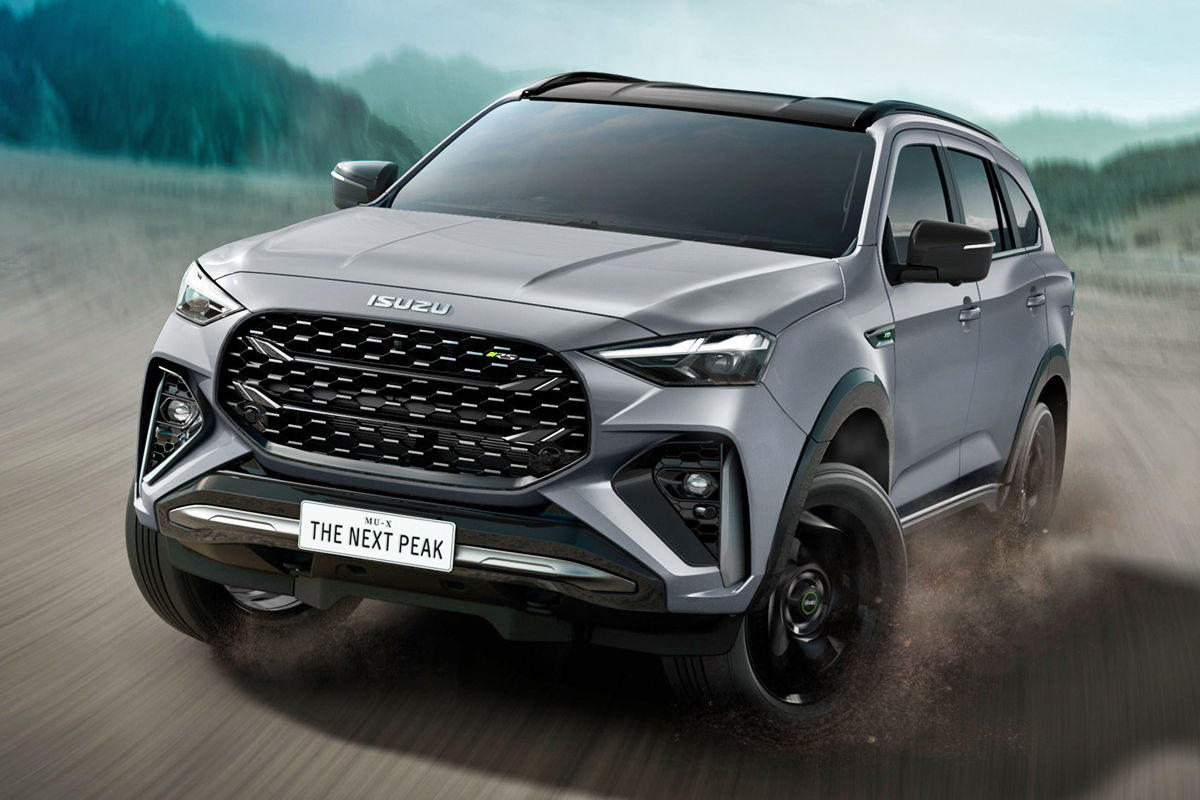
Facelifted Isuzu MU-X revealed in flagship RS form
The facelifted Isuzu MU-X has been revealed overseas, with the refreshed version of the 7-seater adventure SUV even gaining a new RS flagship derivative…
Say hello to the facelifted Isuzu MU-X, which debuts as an updated alternative to the likes of the Toyota Fortuner and Ford Everest. The Japanese firm says it has “significantly upgraded” its 7-seater adventure SUV in response to “market demand”, while also unveiling a bold new RS flagship derivative.
Though the refreshed MU-X is already on sale in Thailand (where SA-spec MU-X models are produced), it’s not yet clear when Isuzu Motors South Africa plans to launch the updated SUV in the local market. As an aside, the revised D-Max bakkie – on which the MU-X is based – was unwrapped overseas in October 2023, but the Struandale facility in the Eastern Cape is still building the pre-facelift version for Mzansi.
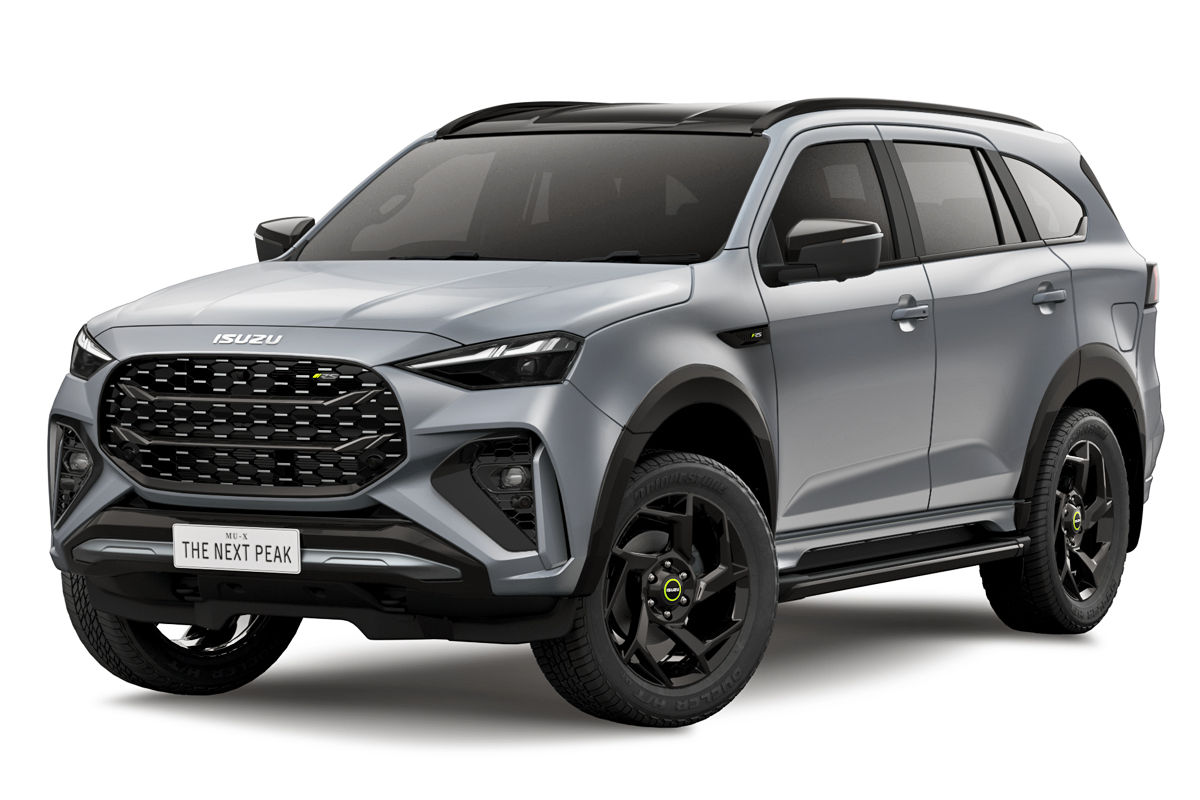
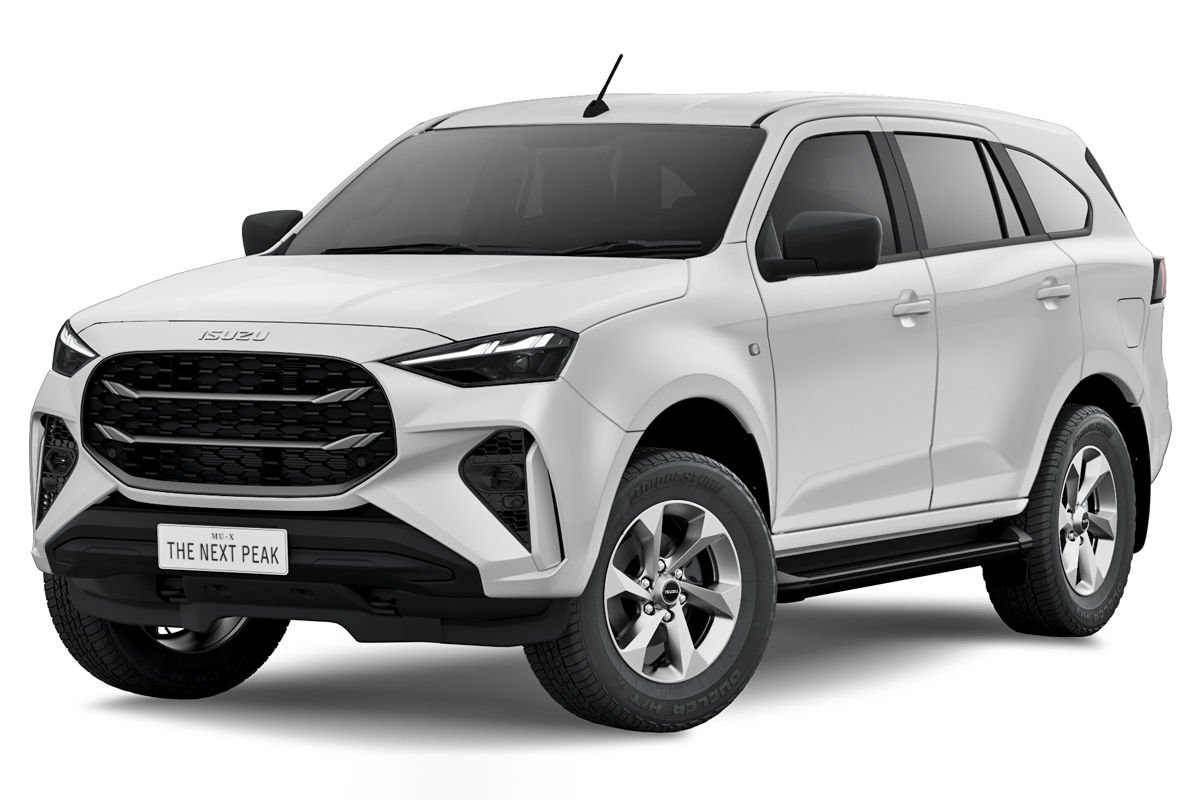
A look at the base (non-RS) version of Isuzu’s refreshed MU-X.
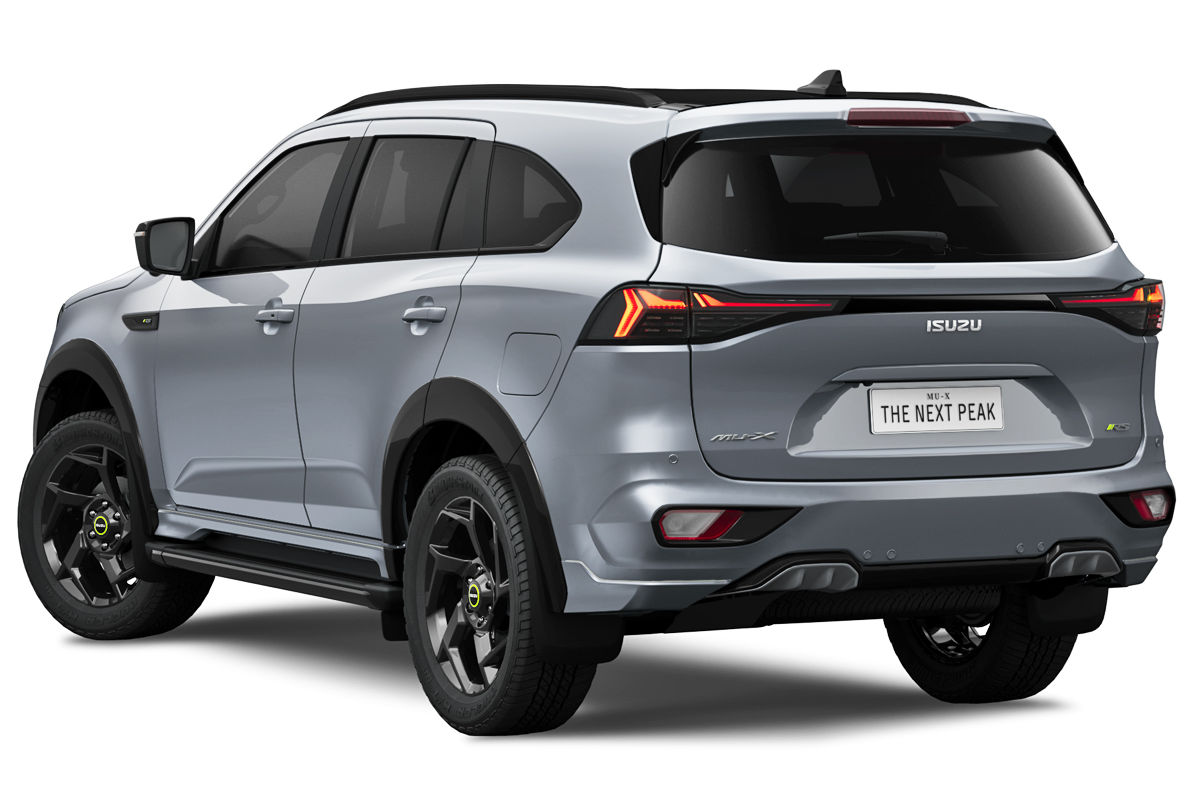
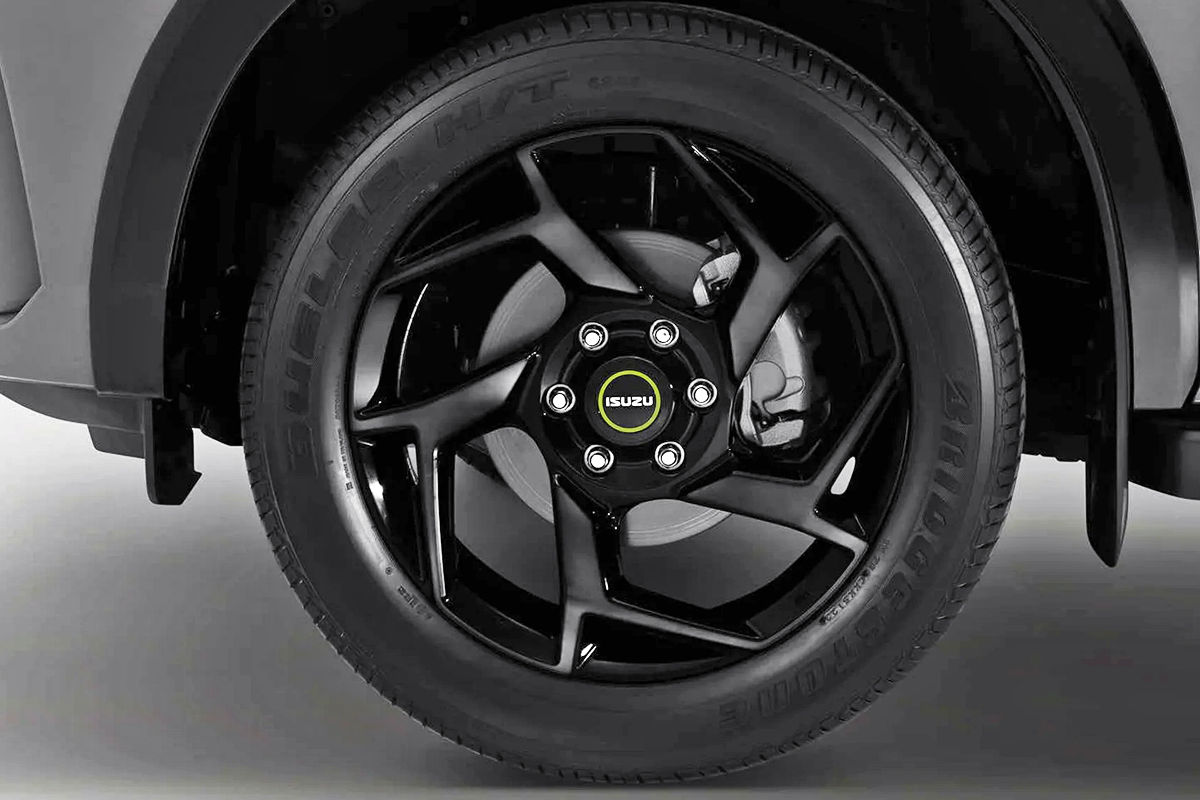
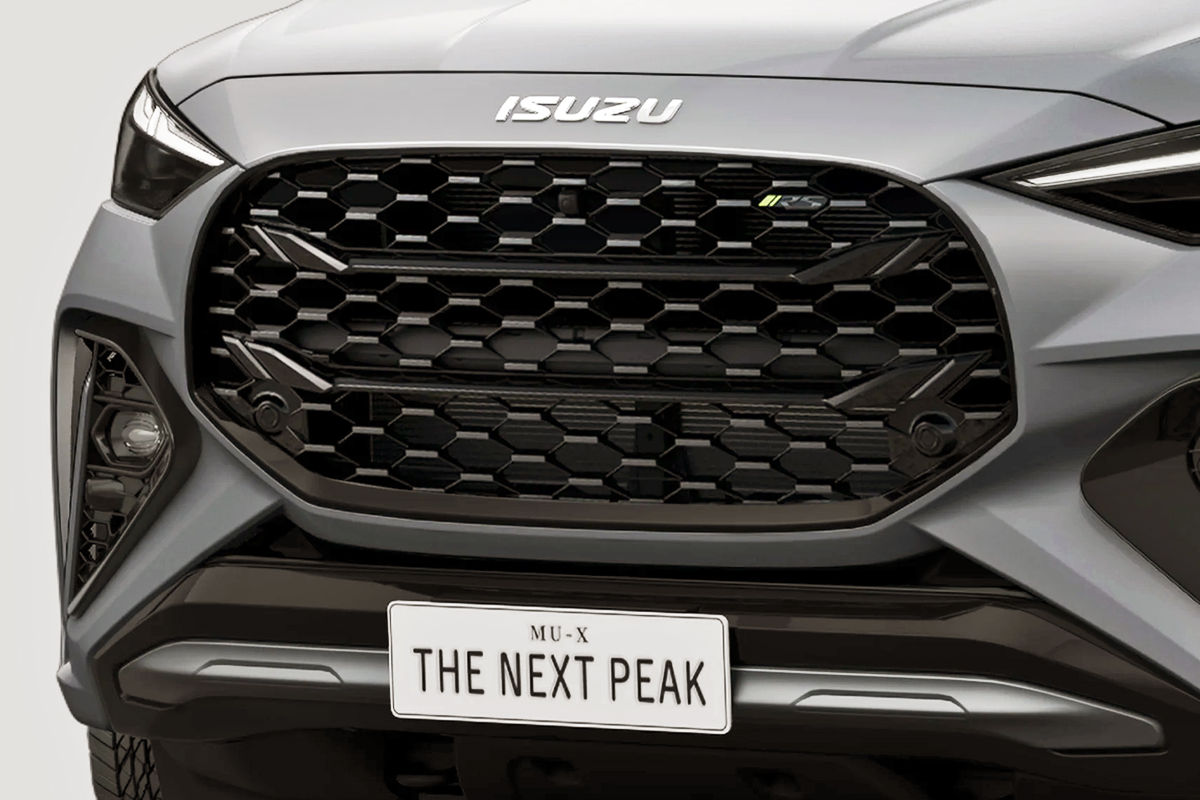
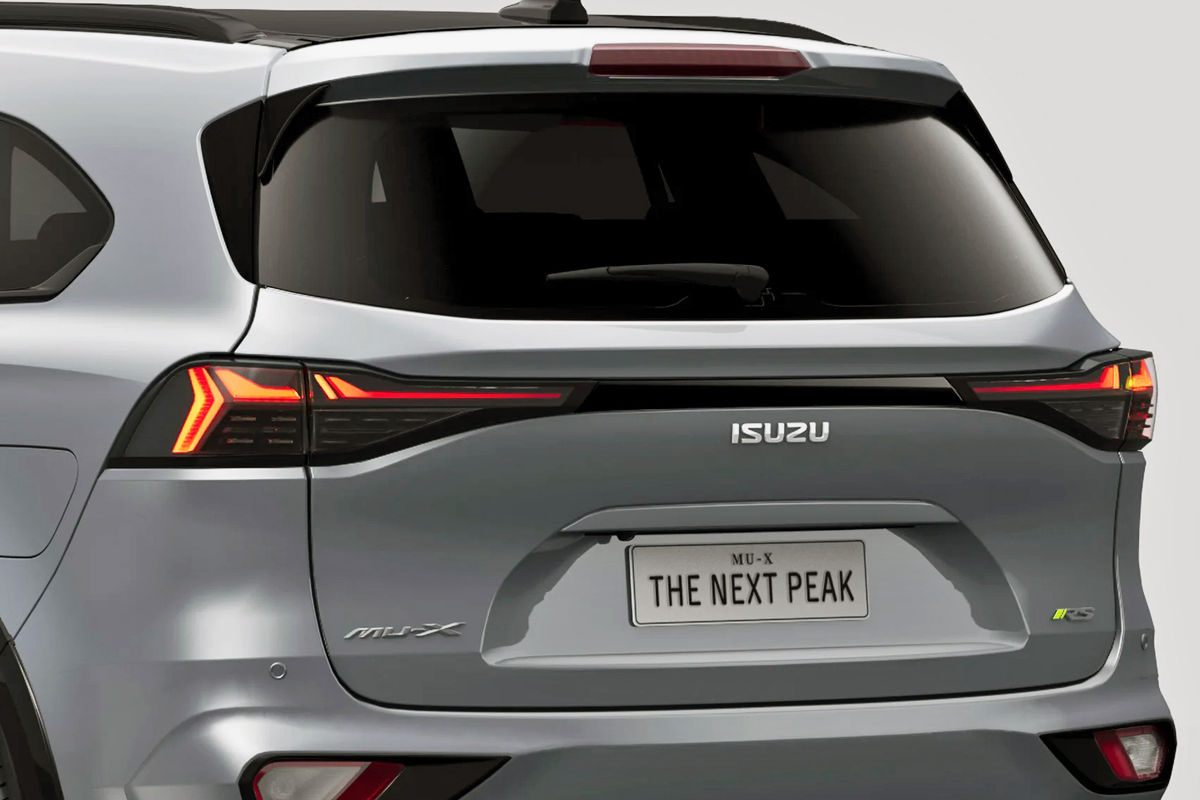
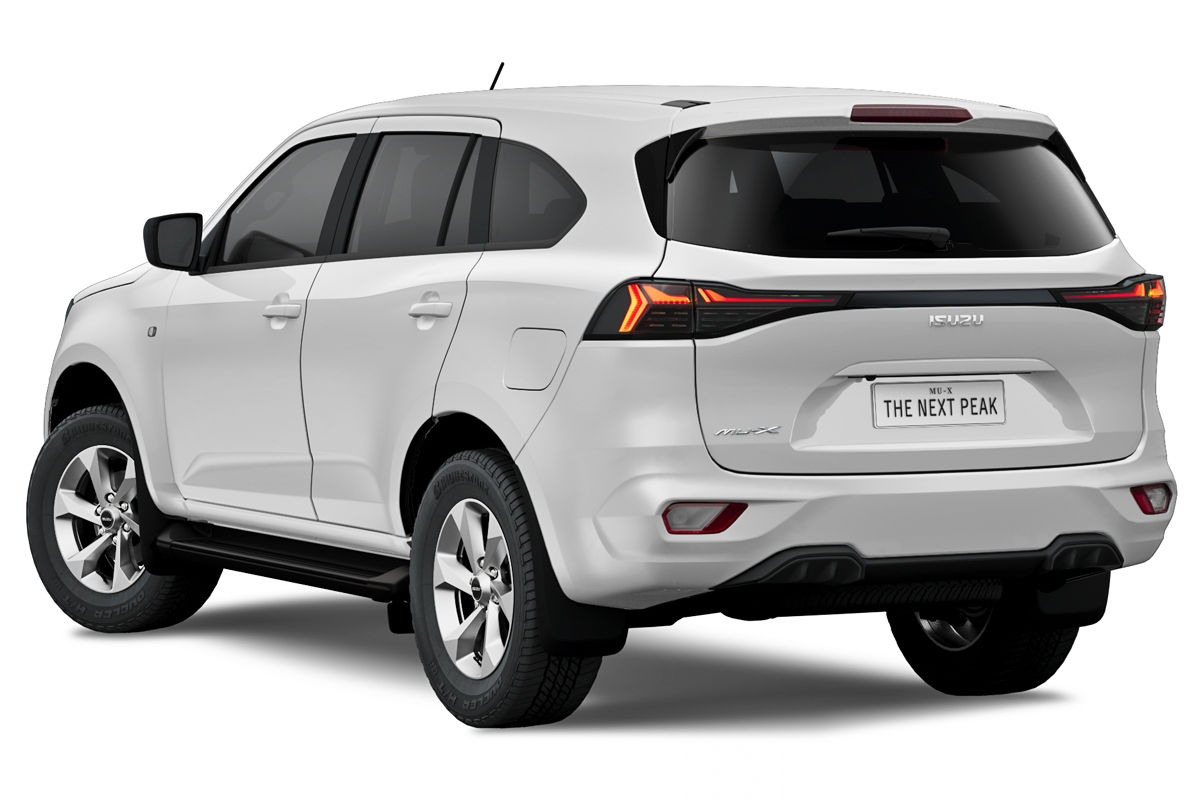
But back to updated MU-X. Exterior styling changes are led by an aggressive new front-end design, complete with revised headlamps, a sporty front bumper and an updated grille. The taillamps, meanwhile, gain a new lighting signature and are now connected by a full-width trim piece, while fresh alloy-wheel designs have been rolled out, too.
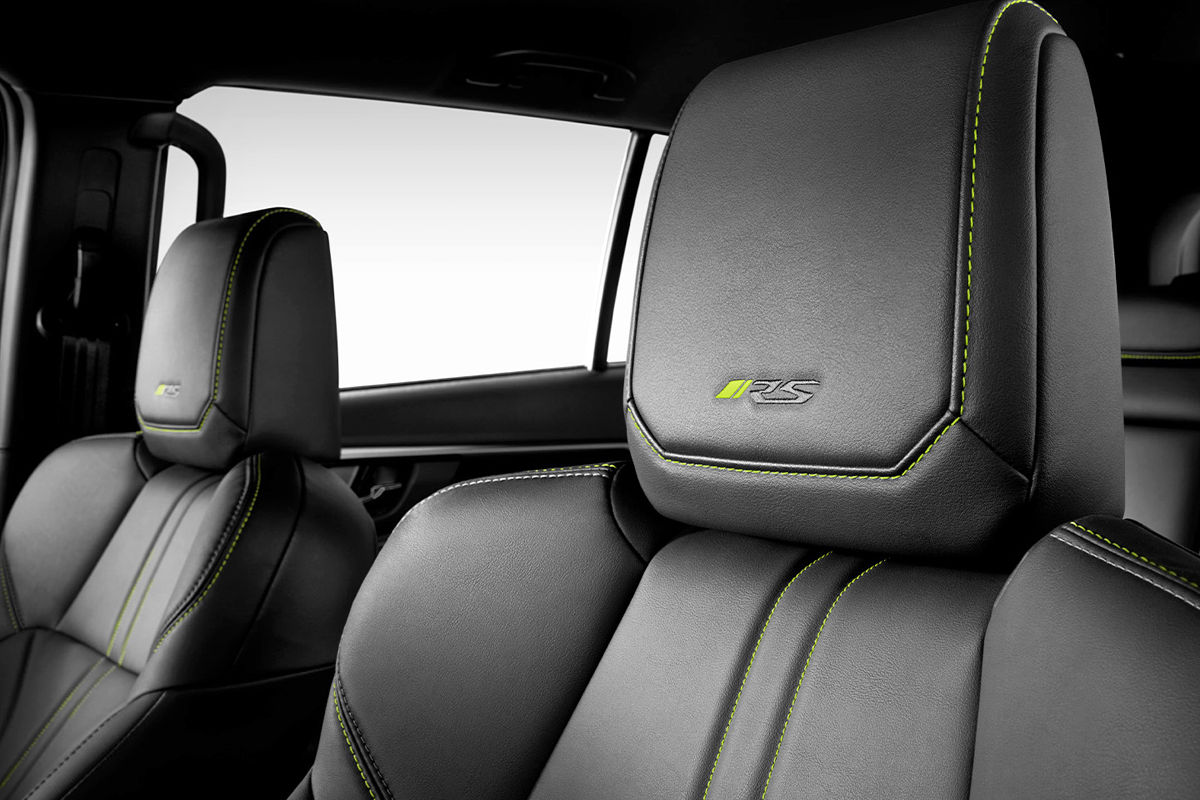
What about the top-spec RS grade, which thus far appears exclusive to Thailand? Well, the flagship derivative gains a model-specific grille design as well as black finishes for items such as the wheel-arch extensions, side-mirror caps, roof and 20-inch alloys. Of course, there’s also the requisite smattering of “RS” badges (on the grille, front fenders and tailgate).
The aggressively styled RS, which thus far appears exclusive to Thailand.
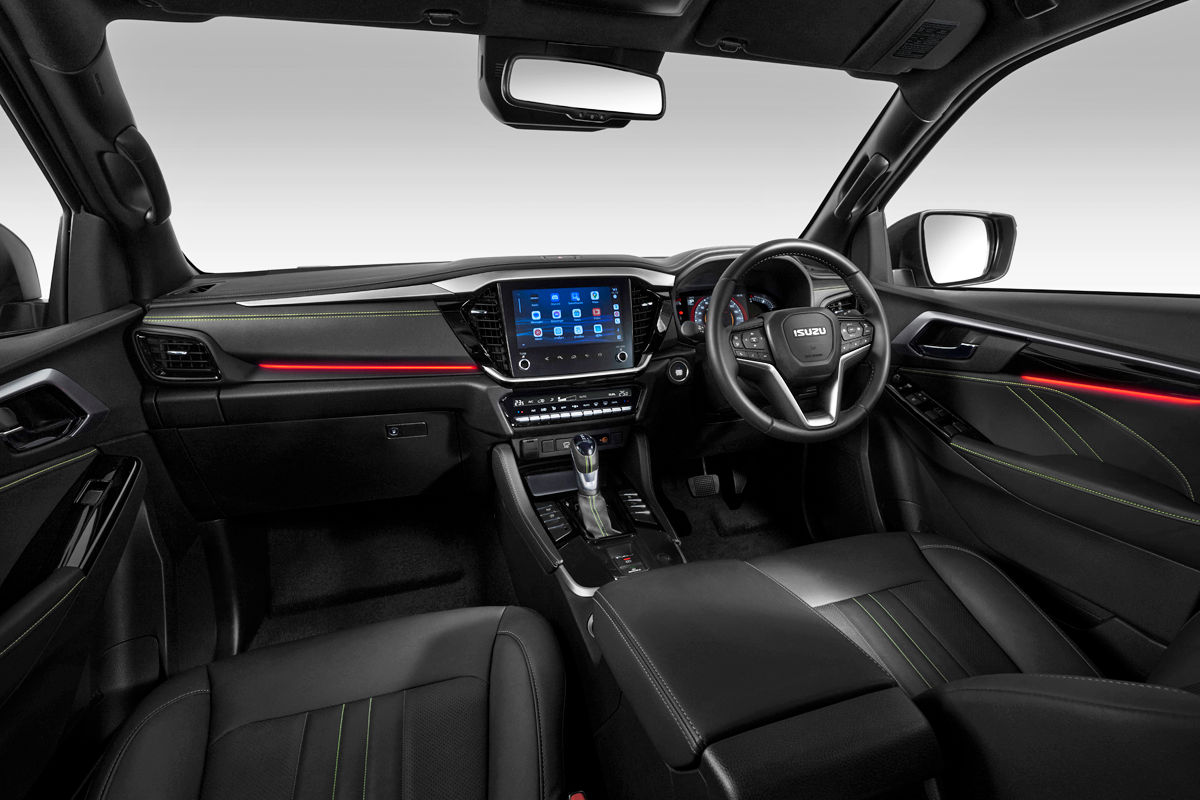
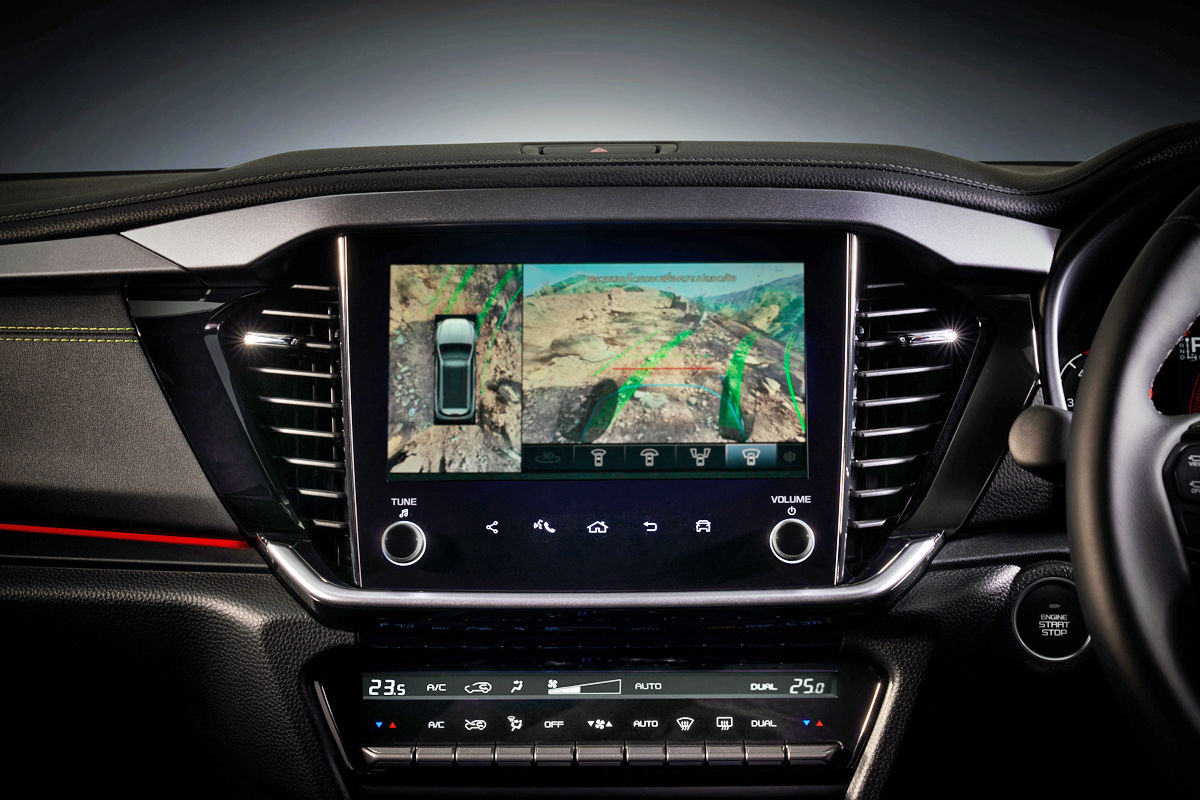
Inside, standard versions of the facelifted MU-X feature fresh designs for the instrument panel, seats and door trim, while the RS variant adds ambient lighting, extra trim elements and contrast stitching. In Thailand, new features include a “next-generation stereo camera” (opening the door to various safety features), along with a 360-degree camera system and a 7-inch TFT LCD instrument panel display.
From what we can tell, no changes have been made to the MU-X powertrain line-up, which again comprises a 1.9-litre turbodiesel engine (110 kW/350 Nm) and a 3.0-litre turbodiesel motor (140 kW/450 Nm). Both units are mated to a 6-speed automatic transmission as standard. As a reminder, the current MU-X portfolio in South Africa comprises 6 derivatives (both 4×2 and 4×4 variants), priced from R722 200 to R970 300.
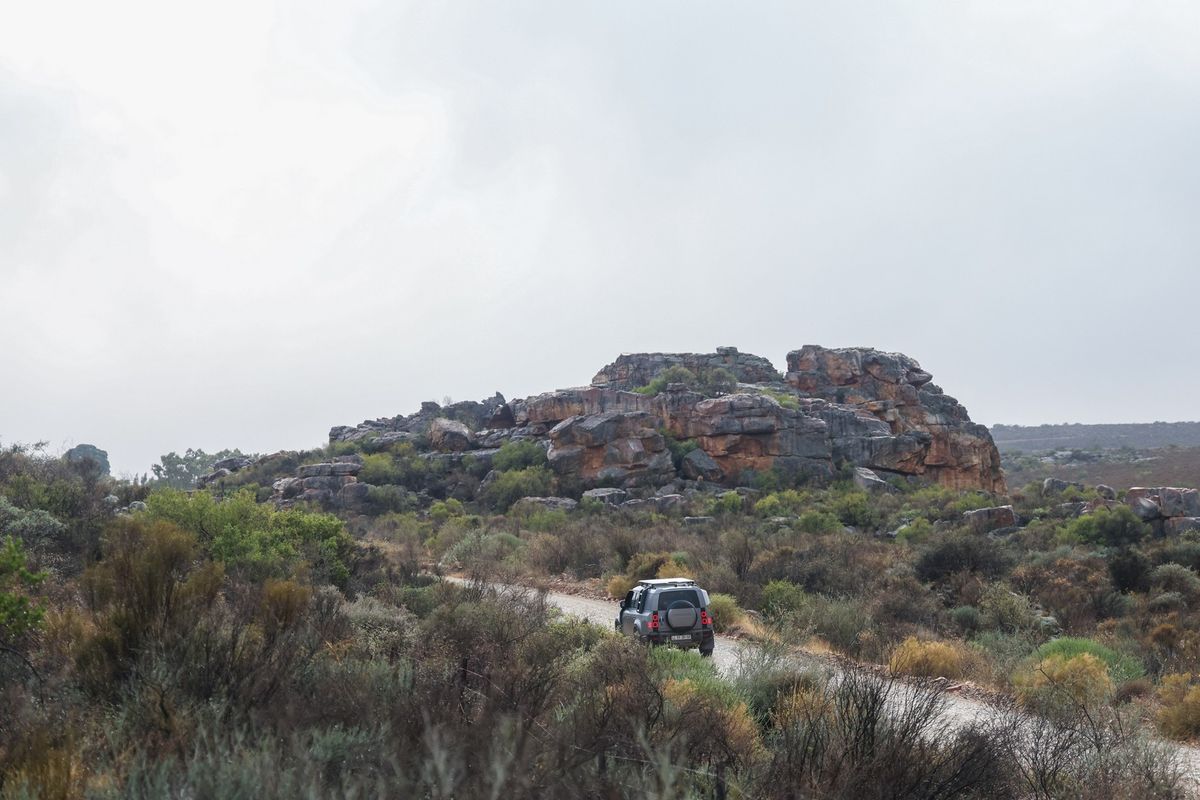
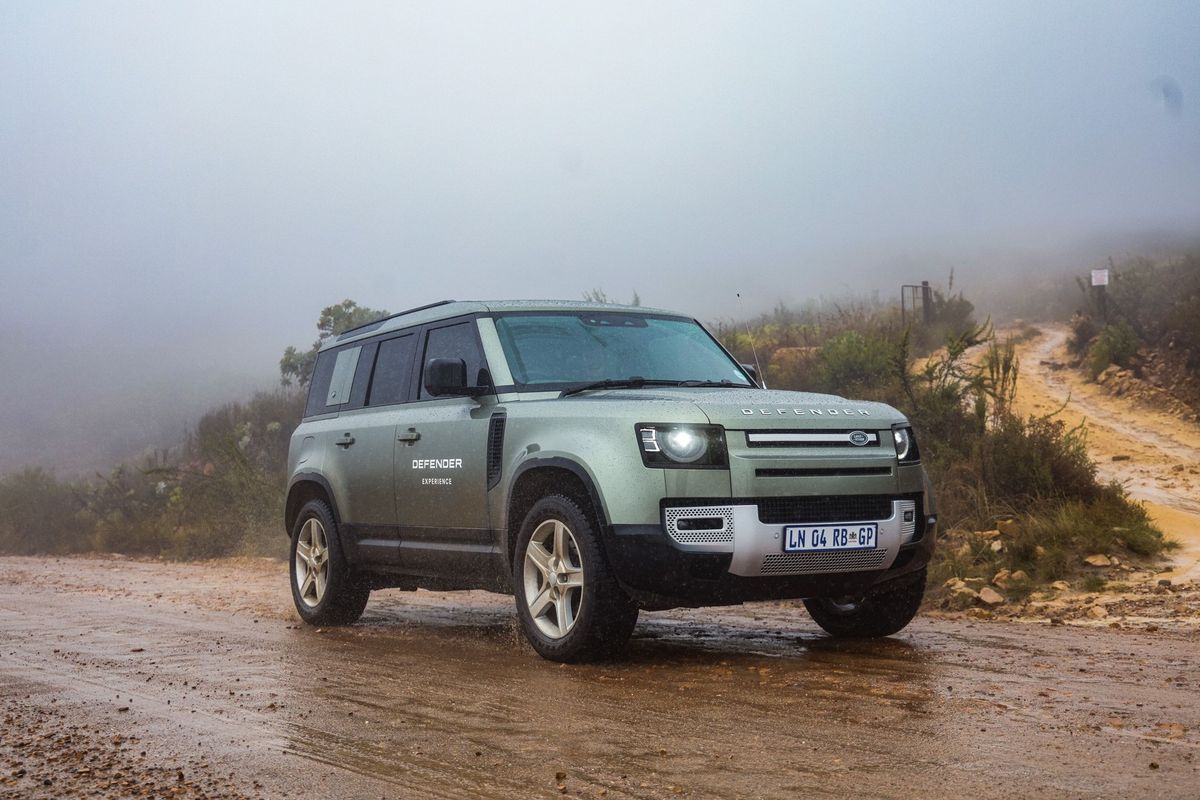
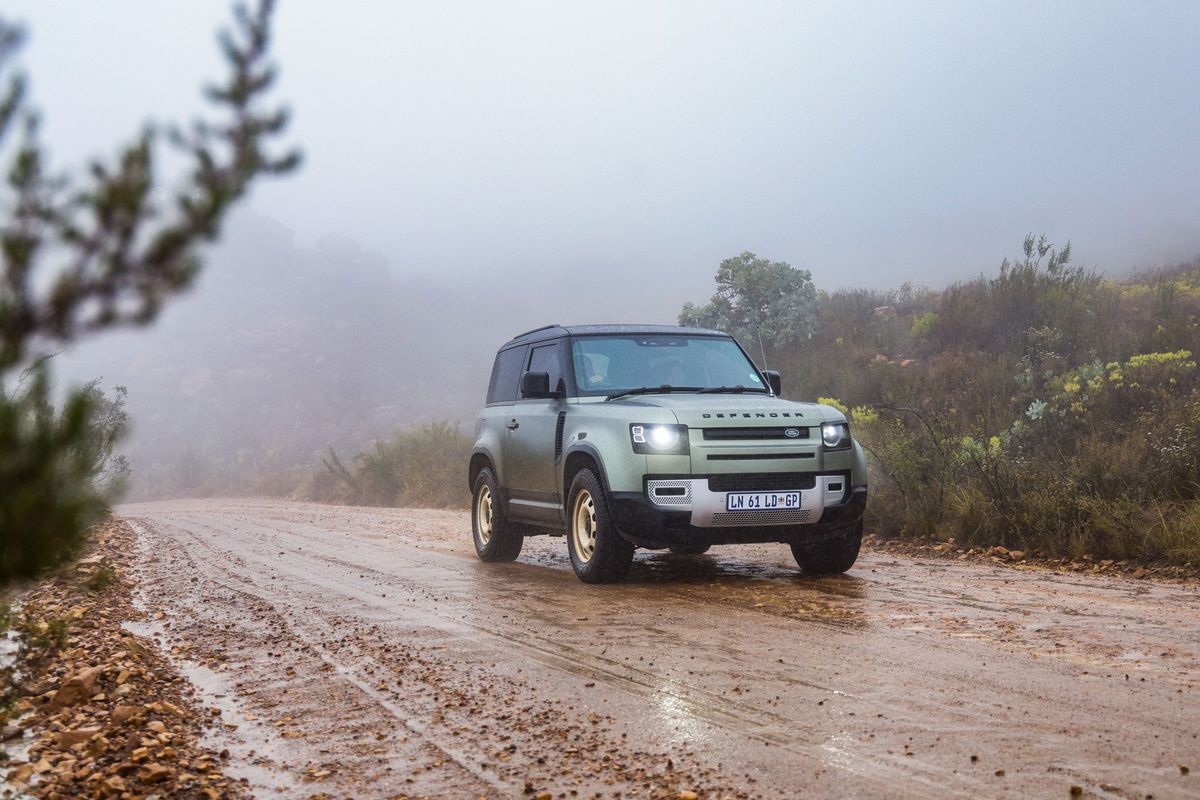
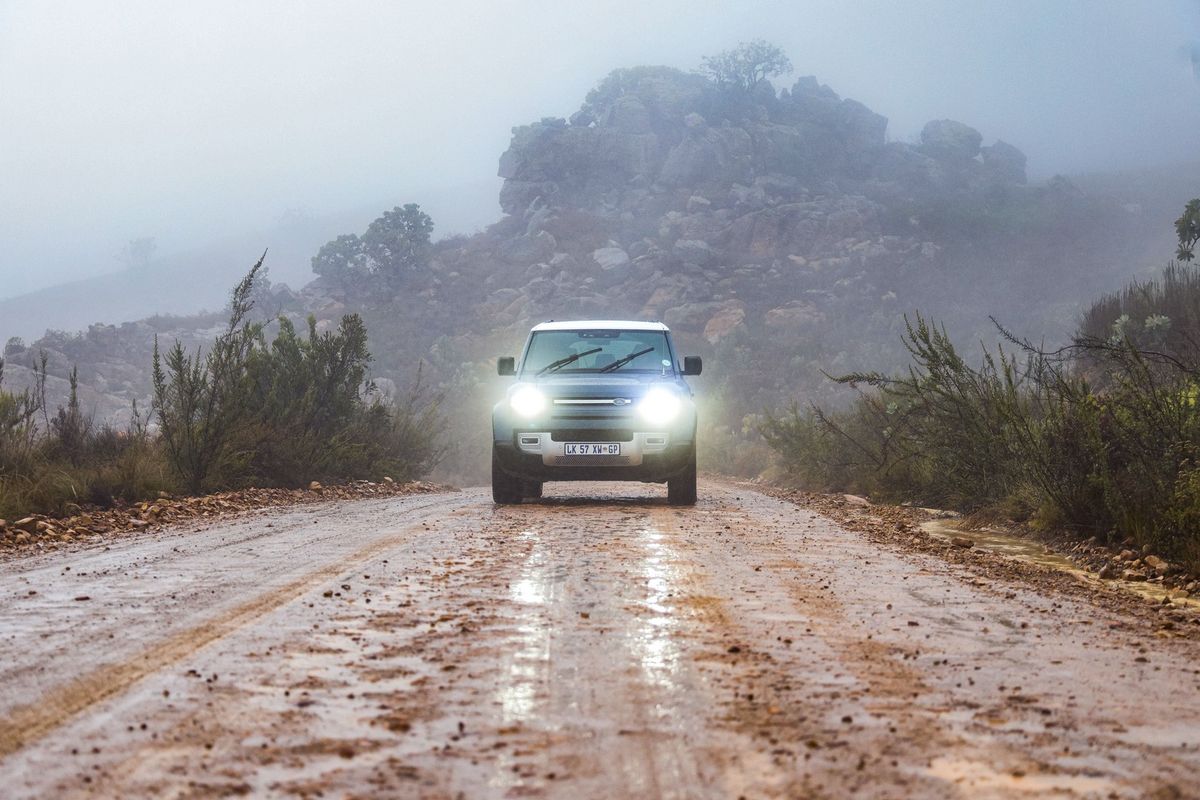
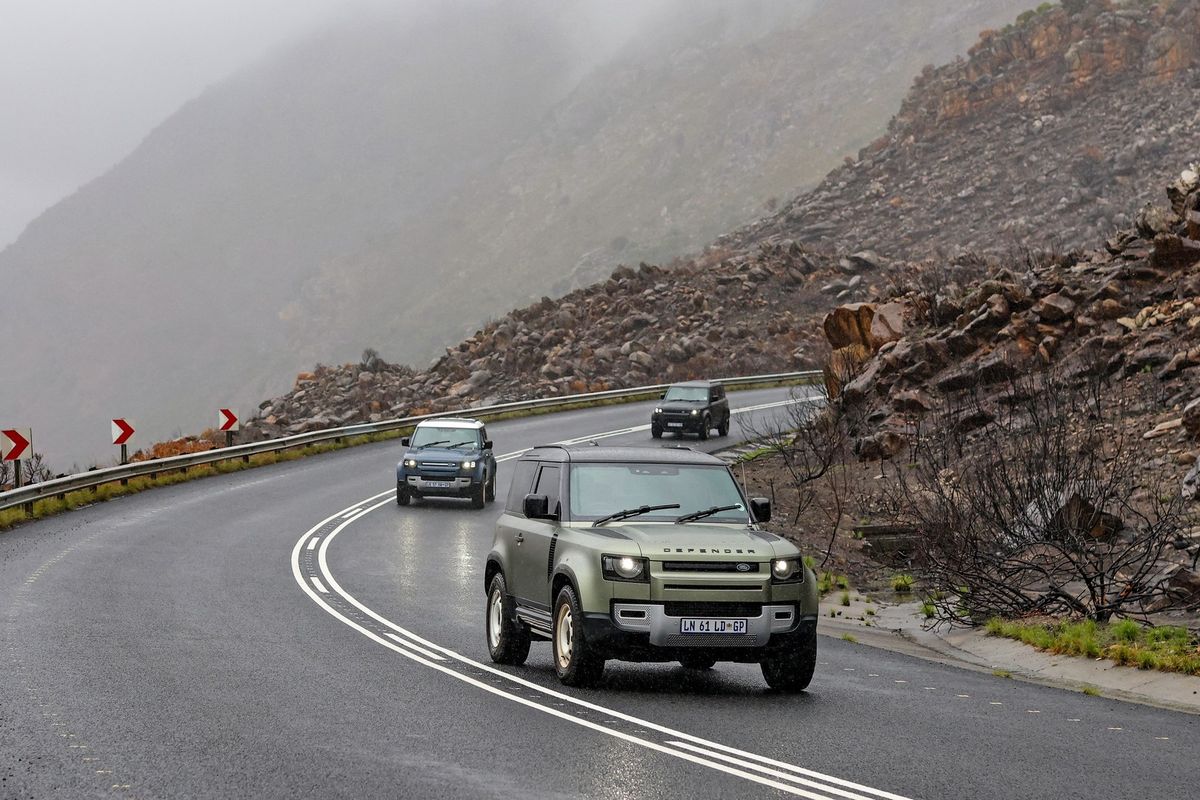
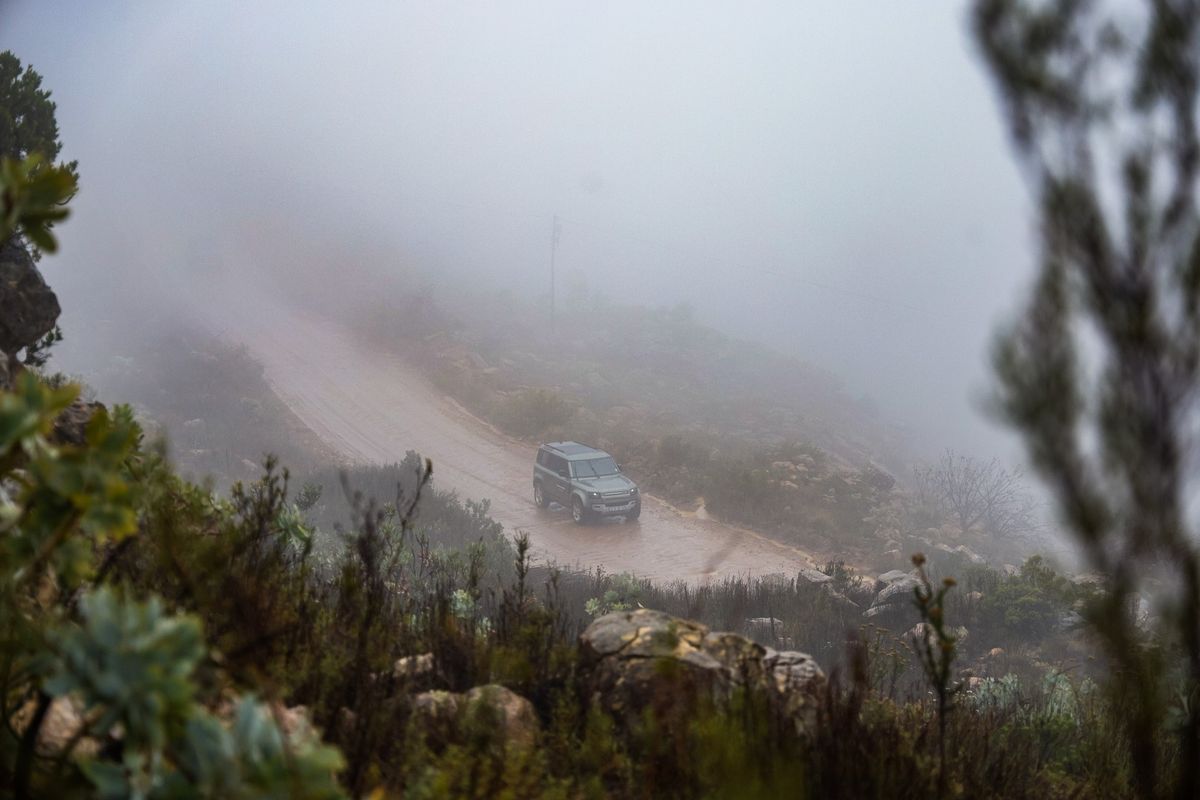
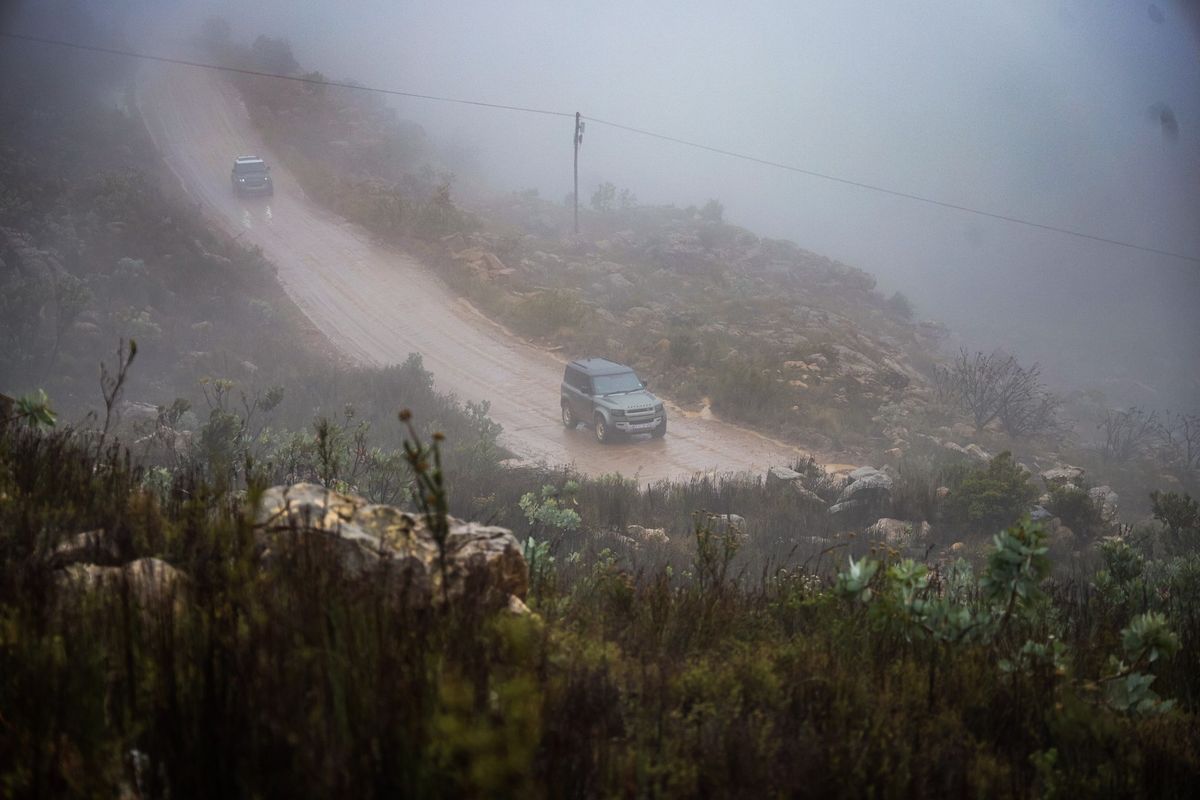
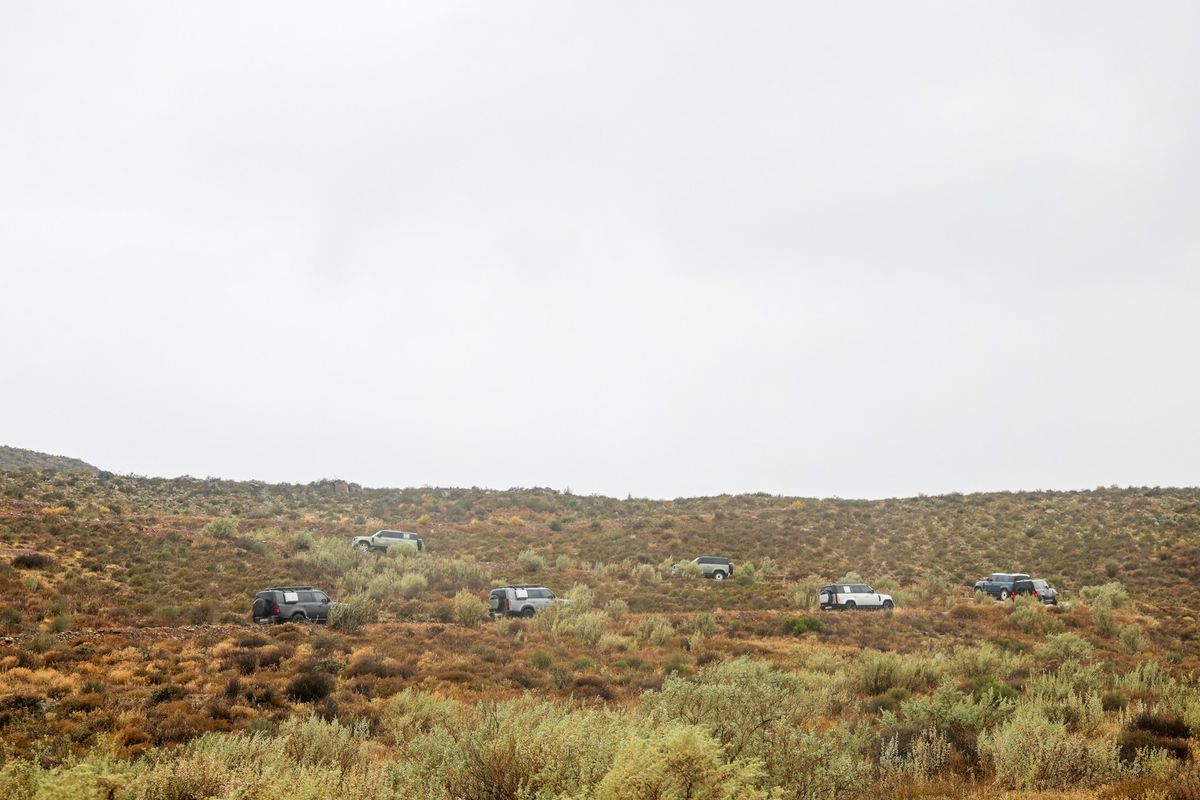
Driving a renowned off-roader in inclement weather is an experience to savour. David Taylor drove various Defender variants during a winter storm in the Cederberg.
When an email invitation to drive Land Rover Defenders during a 3-day trip to the beautiful Cederberg Wilderness Area arrived in my inbox, I thought that it would be a straightforward and pleasurable gig.
I mean, what’s not to like? Stay in a luxury hotel; do a bit of mild off-road driving; get to enjoy a telescope viewing session with a renowned cosmologist to study the origins of the universe. I couldn’t say no.
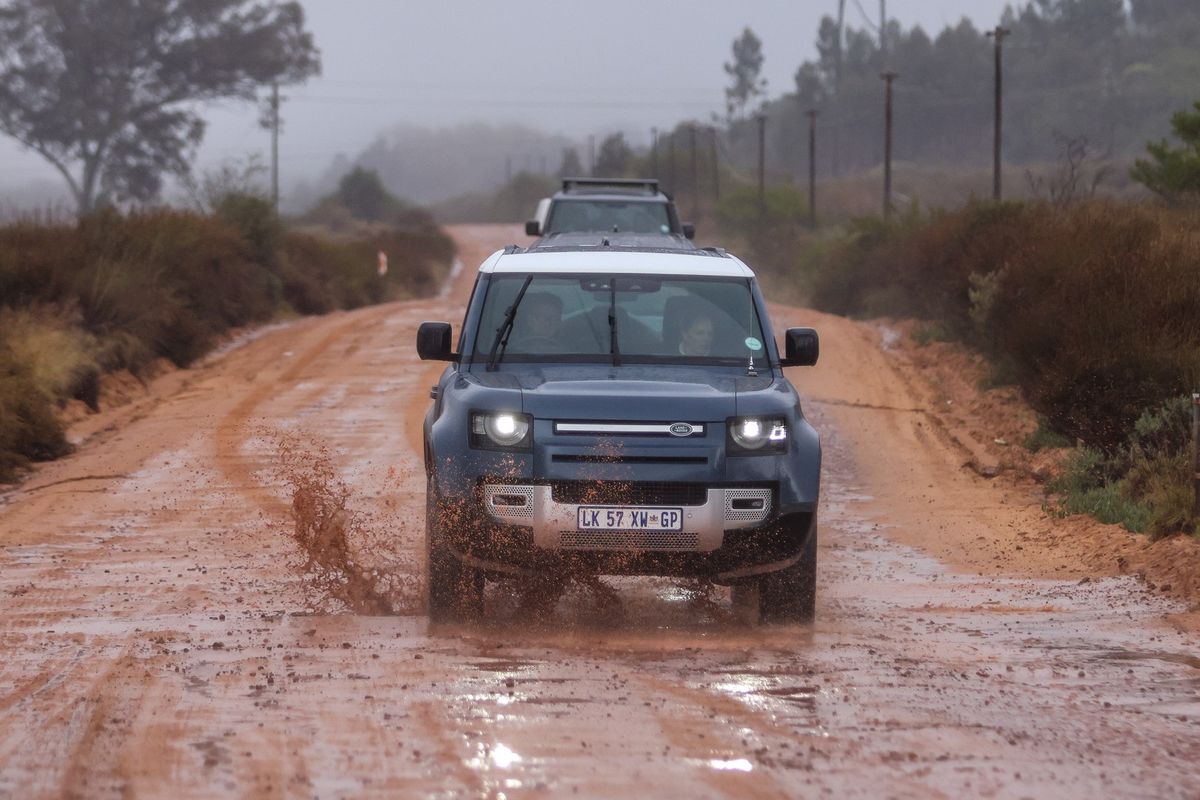
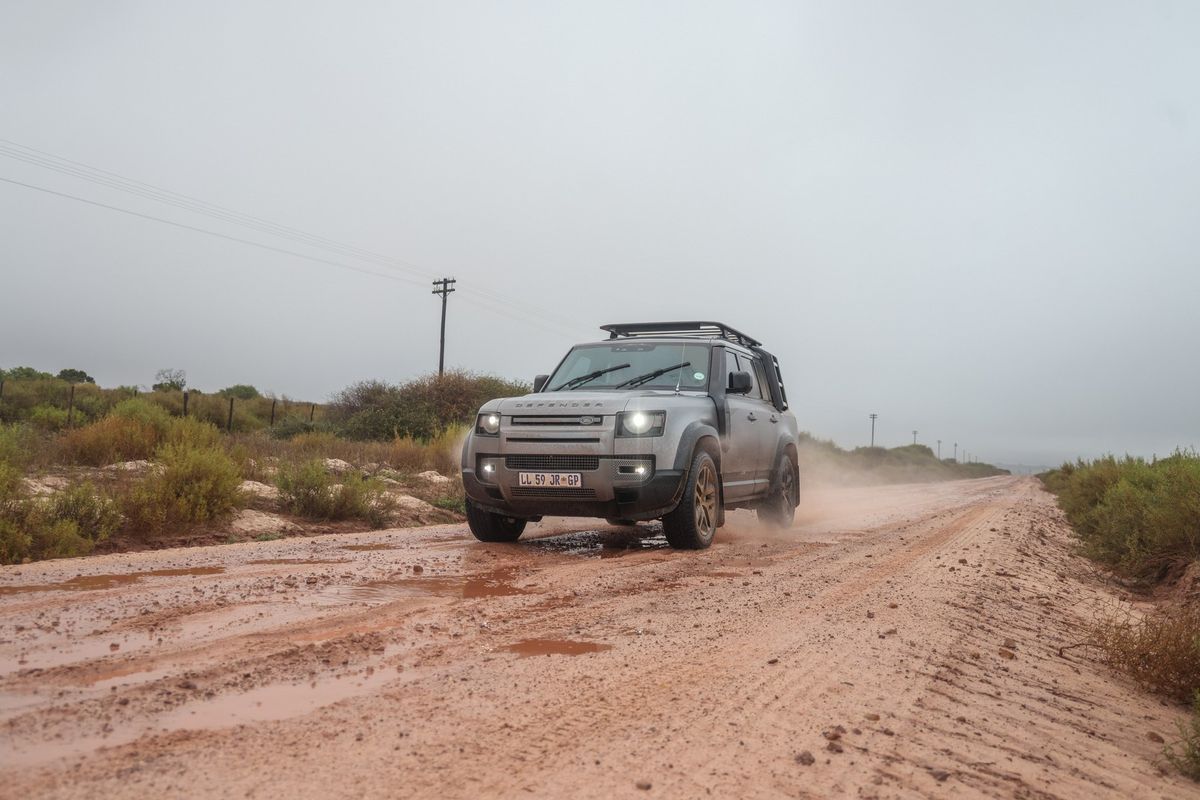
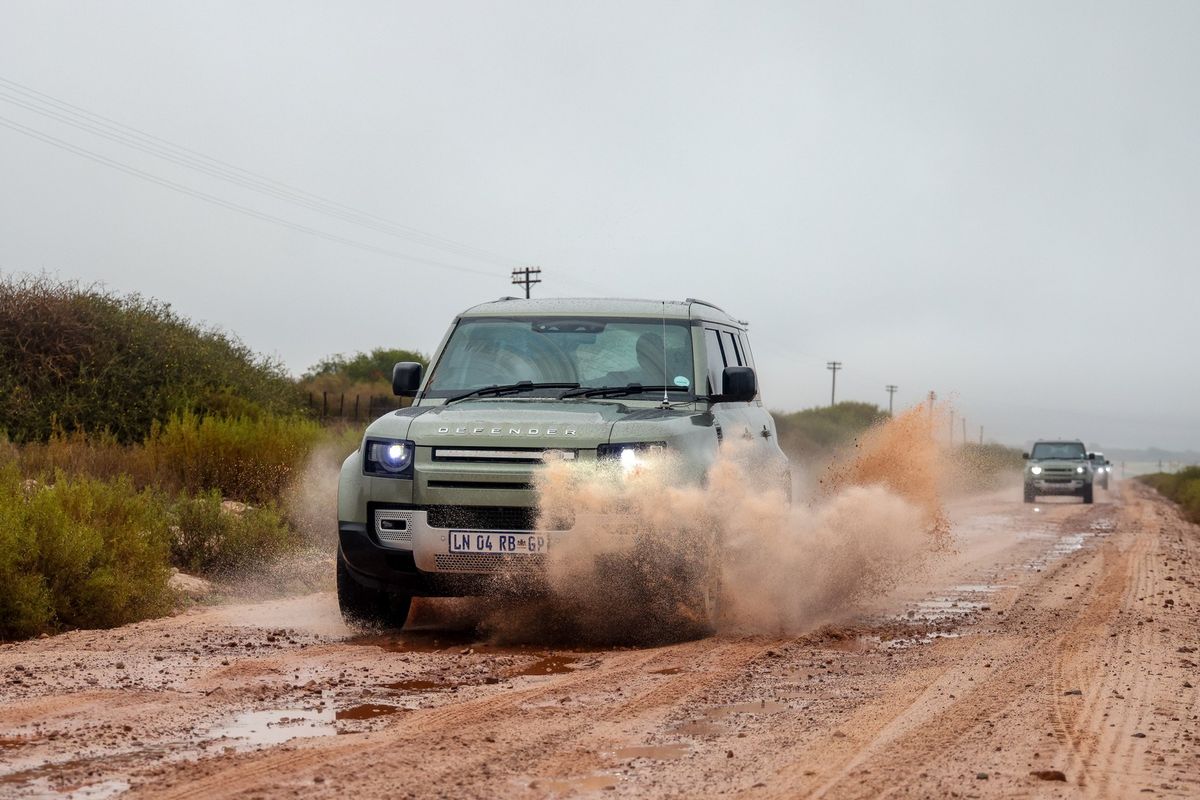
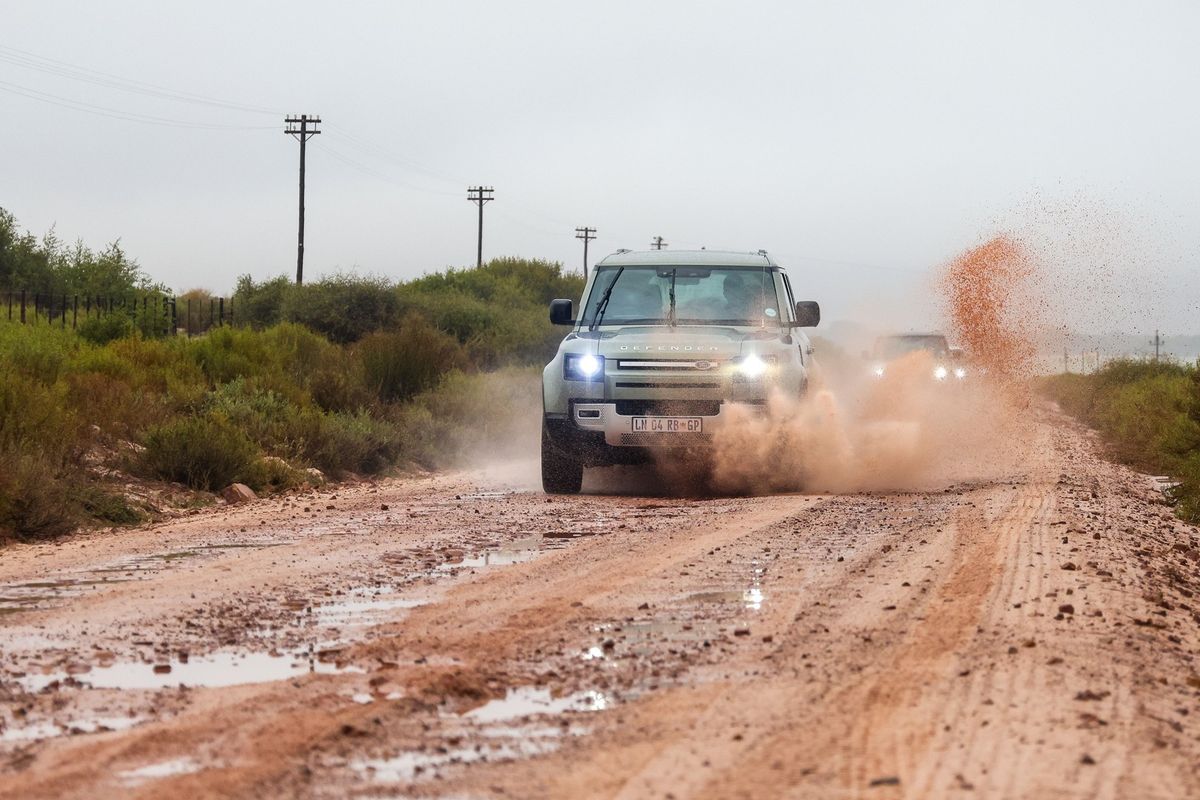
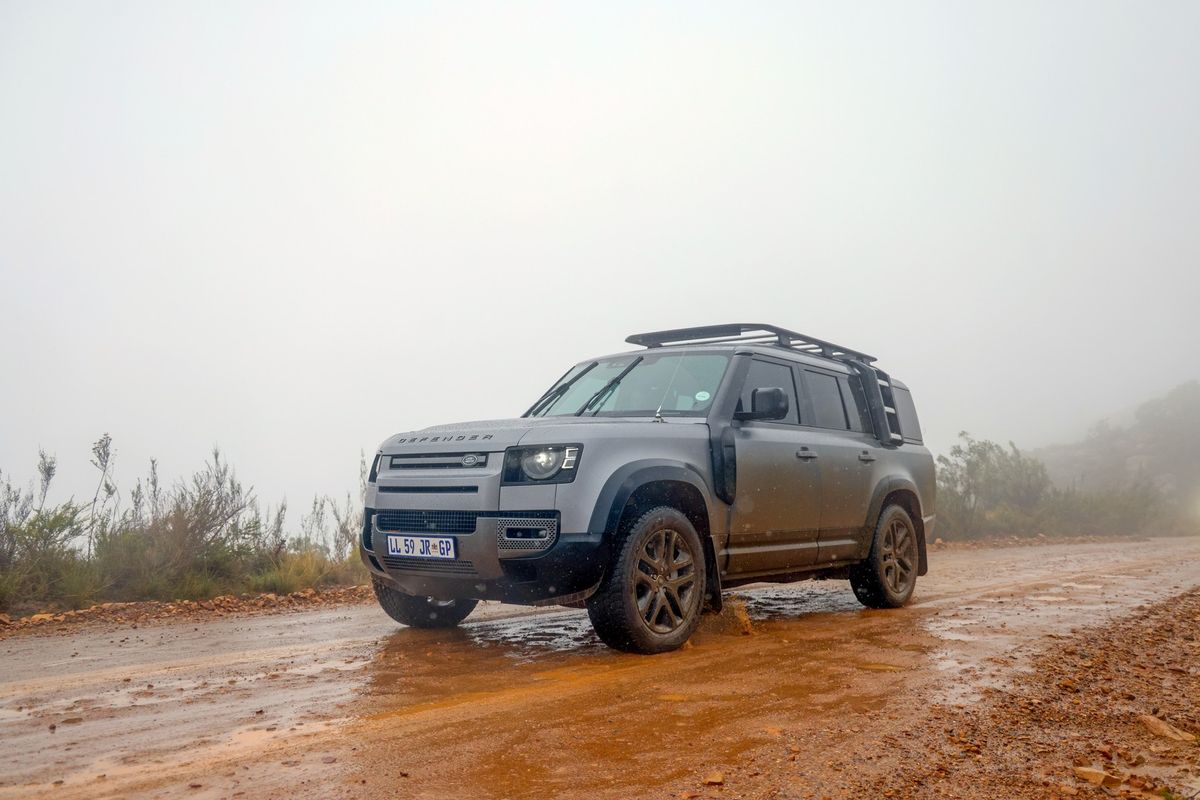
Every puddle had to be driven through, obviously.
Mother Nature, as it turned out, had other plans – stormy weather, which lasted all of 4 days, positively battered the Western Cape during the event. The heavy cloud quickly crushed any chance of looking at the galaxy through Professor Peter Dunsby’s telescope…
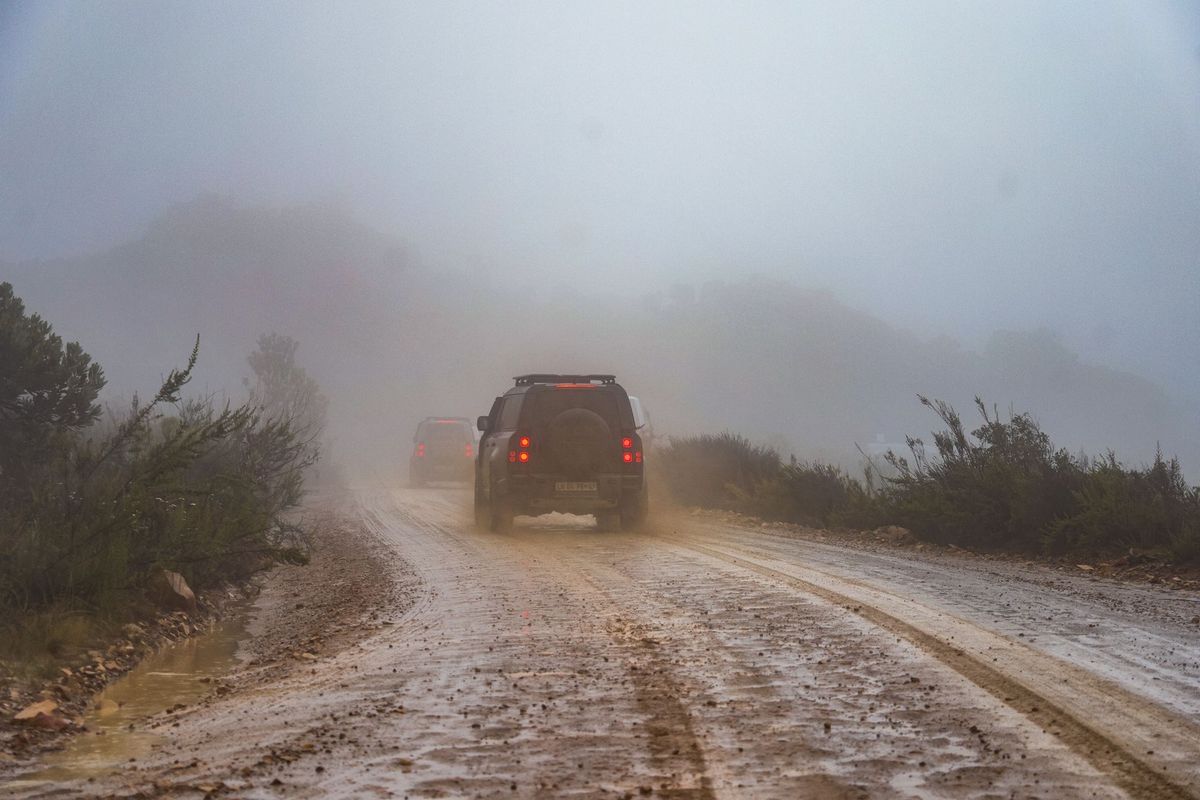
Temperatures plummeted and the majority of dirt roads in the nature reserve quickly gained a chocolate mousse-like consistency (not appetising at all). Worryingly, that part of the world has a handful of low-lying towns on the banks of the Olifants River, like Citrusdal, which had been cut off by flooding before.
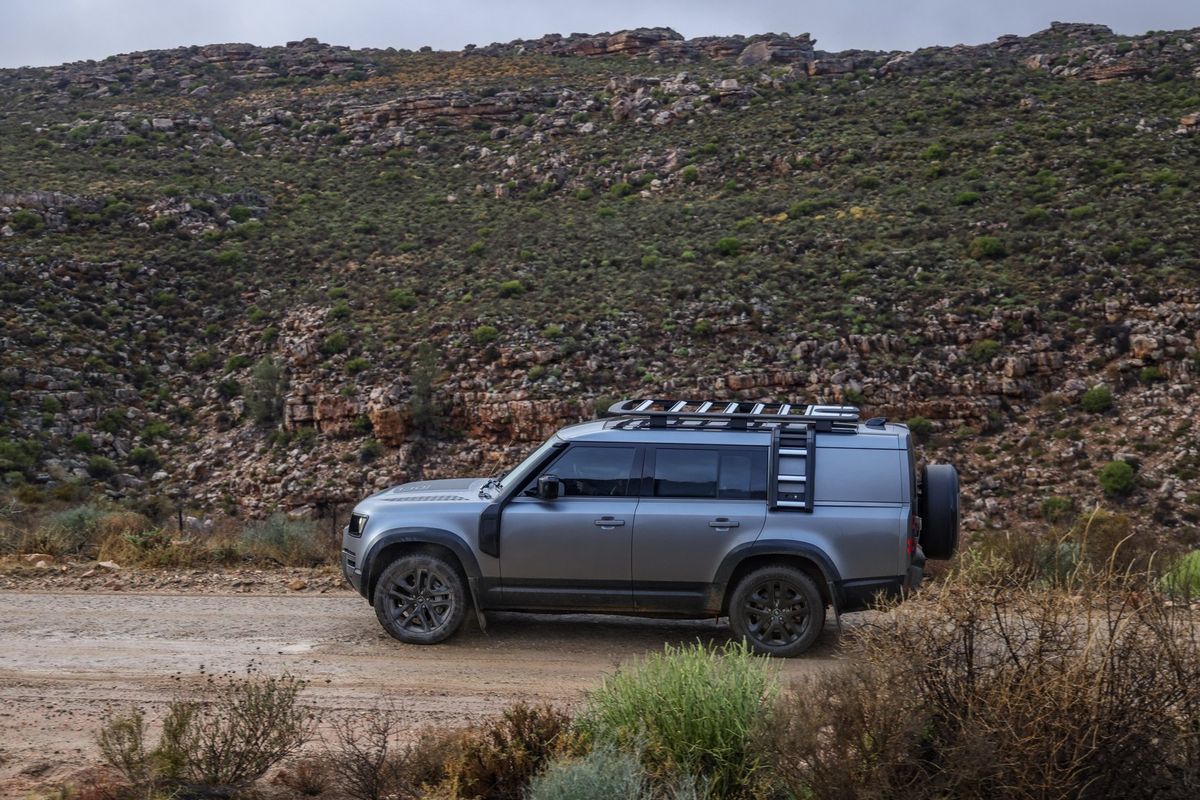
The scenery of the Cederberg Wilderness Area is sensational, well, when it’s not obscured by thick clouds.
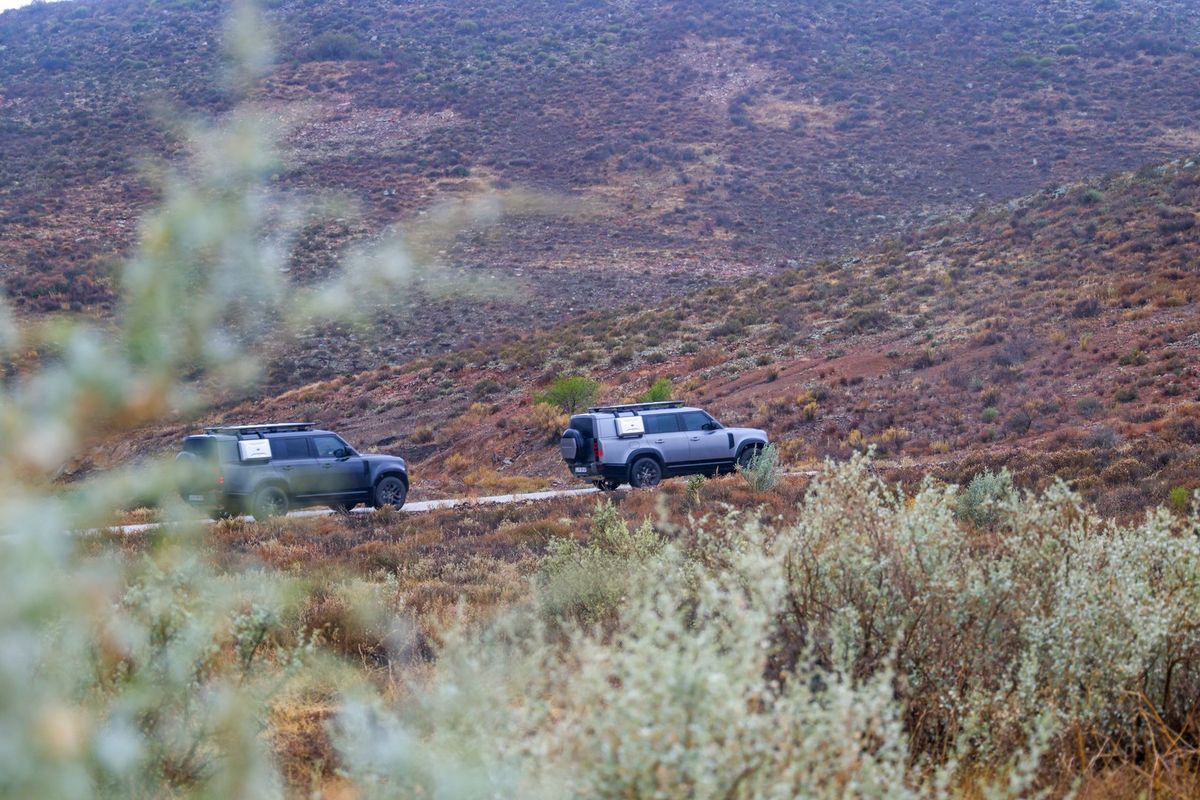
Suffice it to say, off-road conditions were far from perfect, but secretly, I was excited. What’s the point of having an off-road-proven 4×4 if you never make a point of testing its capabilities? The Defender brand rolled out its entire arsenal: petrol, diesel and hybrid power, packaged in the 90, 110 and 130 variants.
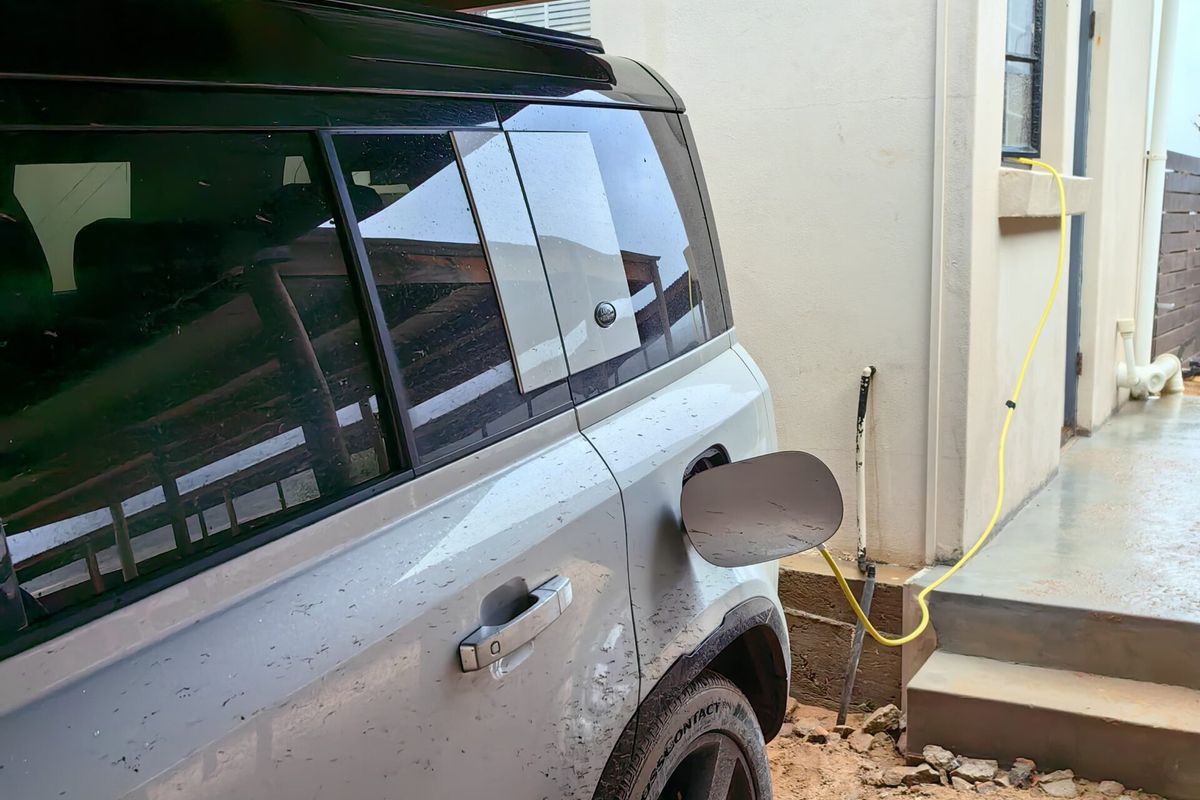
We recharged the Defender 110 P400e plug-in hybrid (PHEV) overnight.
The first vehicle we sampled was a Defender 110 P400e. A plug-in hybrid Defender may be a strange concept to grasp (for some), but this setup works well for the majority of users in urban environments.
The electric motor is sufficiently powerful for owners to drive the British premium SUV to the shops, school or work “emission-free” because the P400e has a claimed pure electric range of about 45 km.
Once the 19.2-kWh hybrid battery’s charge is depleted, the petrol engine takes over. You can charge the battery using the engine, but it’s best to plug the P400e into a wall socket overnight to keep it topped up.
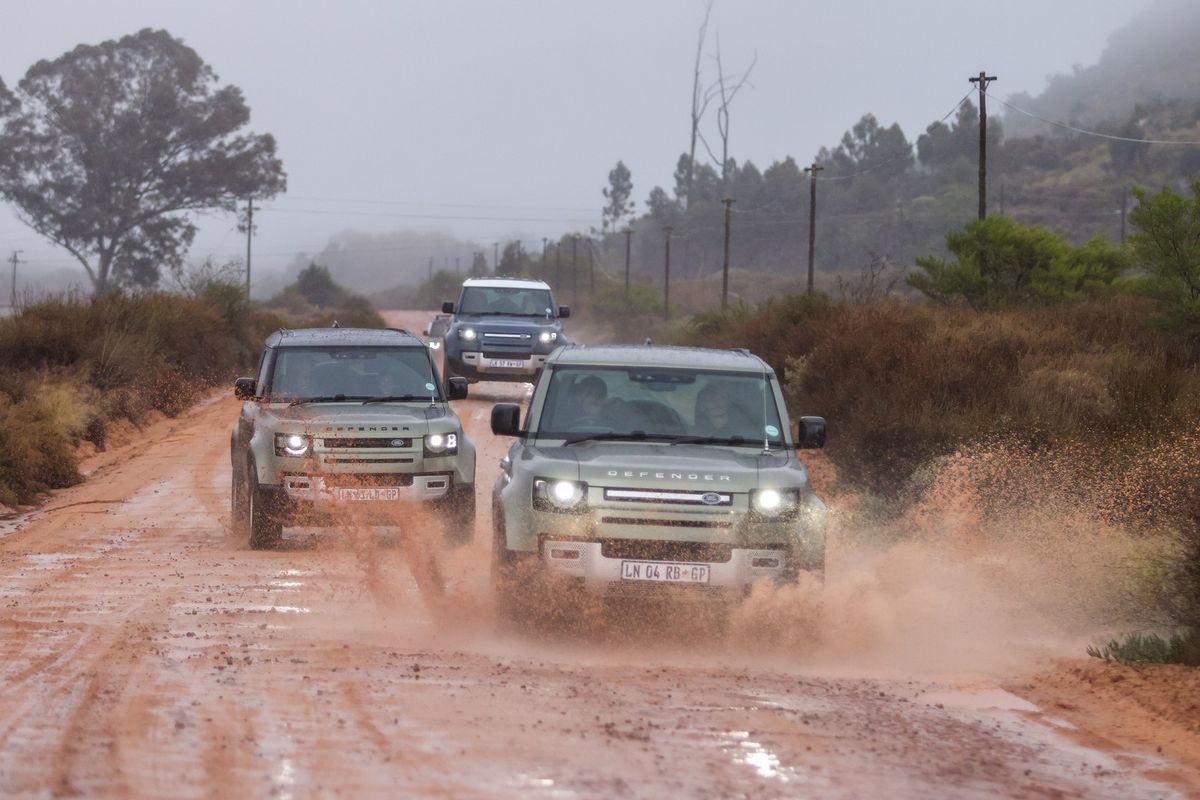
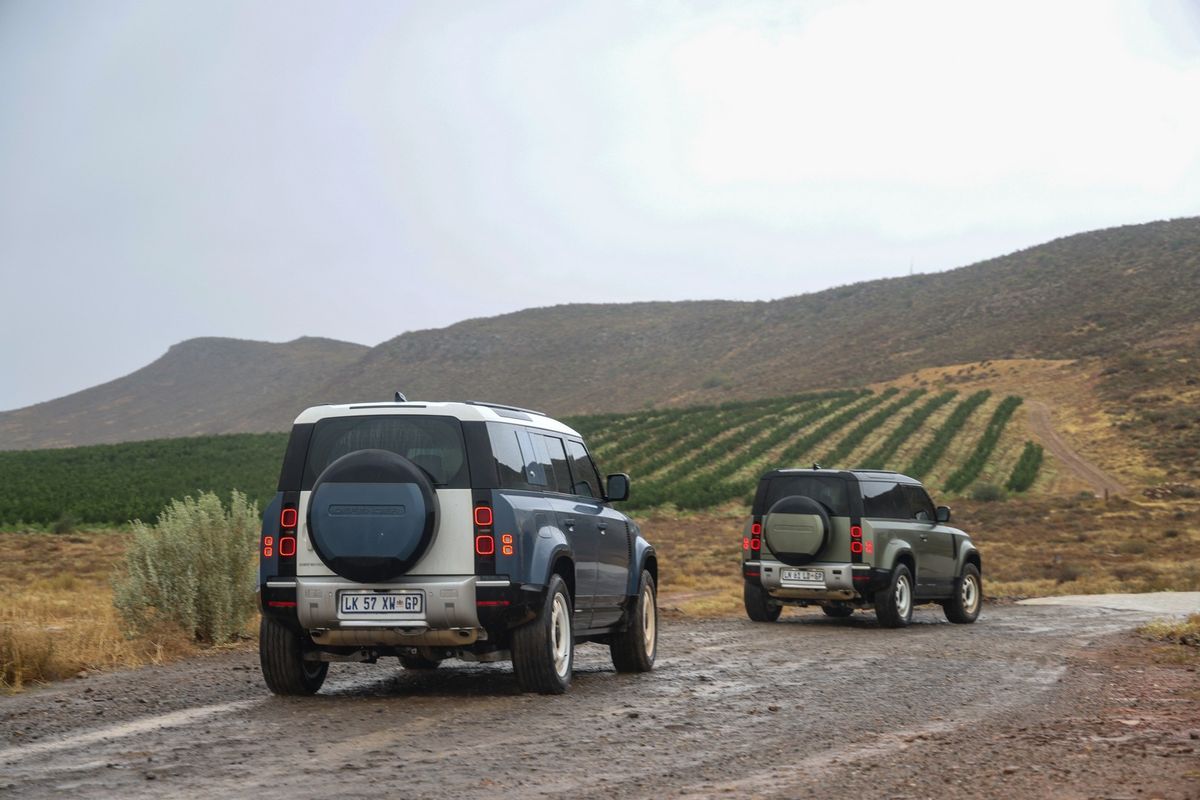
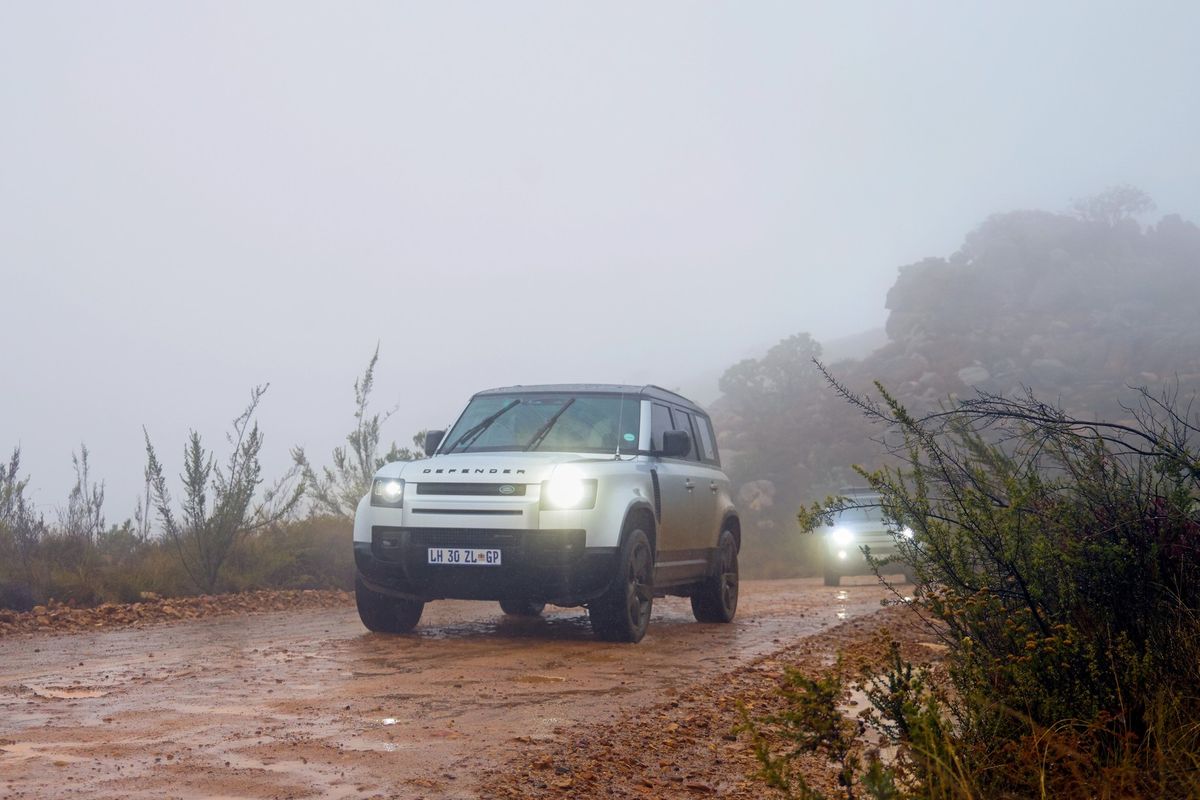
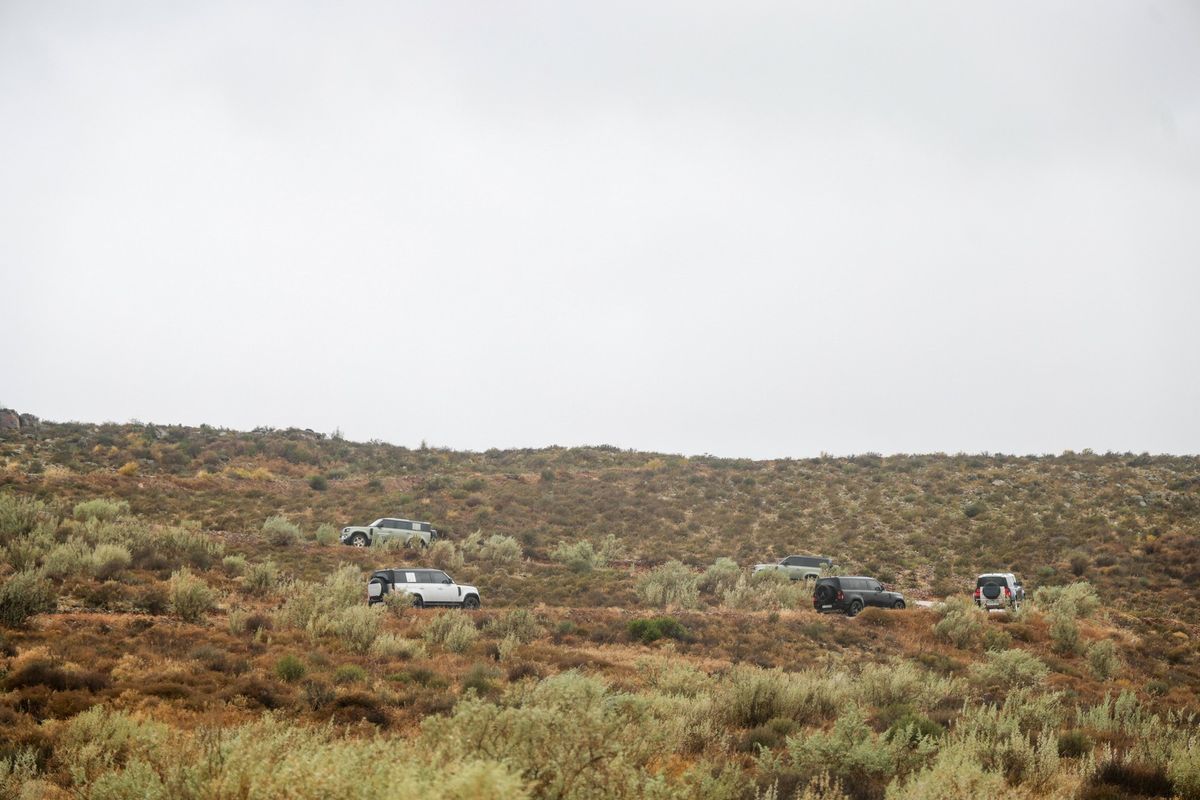
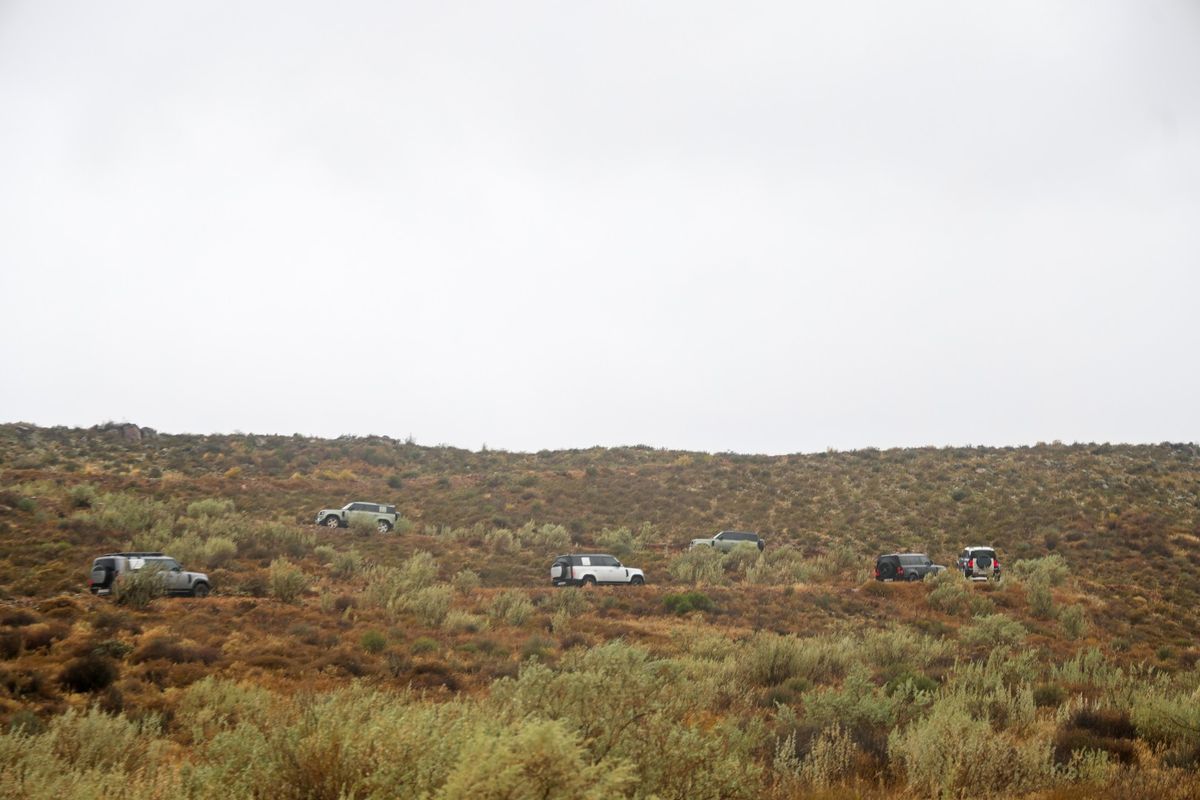
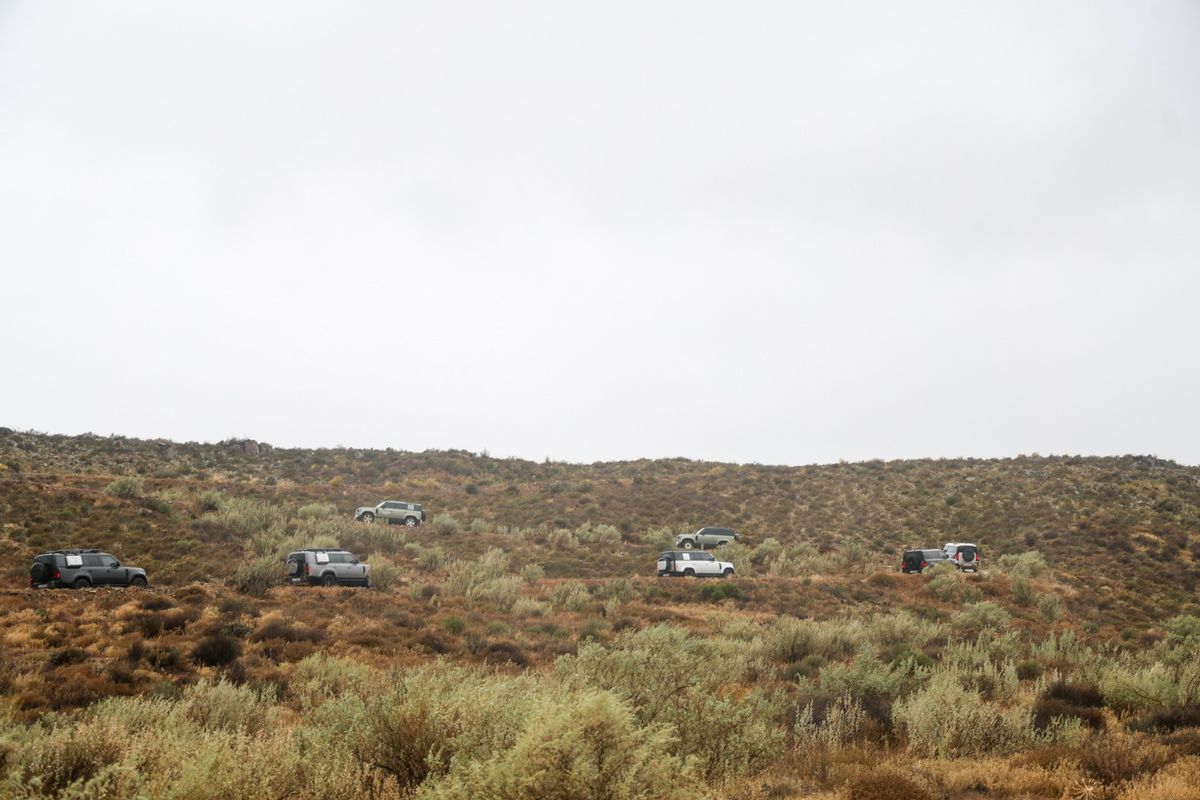
The Defenders were completely in their element on the muddy roads.
While I enjoy all derivatives of the Defender, I find it difficult not to favour a turbodiesel-powered 110. It’s simply the best all-rounder. For some, the 90 is compromised in terms of luggage space and tricky rear-passenger access, although it’s lovely to sit in the back (once you’re in). The 130 looks a bit ungainly, and besides, how many drivers will often need to transport 8 people (including themselves) in a Defender?
The new Defender 130 Outbound, however, is terrific. Instead of 8 seats, it has 5 and plenty of luggage space. The setup is aimed at overlanders – just think of all the accessories they could load up. When I win the lottery, I won’t tell anyone, but there will be signs… of a matte-grey Outbound on my driveway.
Defender 130 Outbound in the perfect spec. Yes, please!
As most of the gravel roads turned into sludge, I was grateful for several things. Firstly, the heated seats. In colder conditions, there’s nothing as lovely as sitting on a comfortable and warm seat. Secondly, all the Defenders were fitted with all-terrain tyres, which notably aid traction on challenging surfaces.
But the feature I appreciated most was the Defender’s Terrain Response 2 software. Yes, you can select various off-road modes like Gravel, Grass, Snow, Ruts, Rocks and so on, but I chose to leave it in Auto mode, so the vehicle could detect, and adapt to, conditions – take the guesswork out of the equation.
Suffice it to say, if you’re not experienced with driving in such adverse weather conditions on unsealed road surfaces, Auto mode presents a perfect opportunity to trust the SUV. I did and it didn’t skip a beat.
The perfect time to use those rear fog lights
It was only towards the end of the trip that the sun managed to make a few brief appearances and we lost count of how many rainbows filled the rear-view mirror of the Defender that we were driving.
Sadly, Citrusdal was again cut off from the N7 highway due to the rain – the flood waters only receded 2 days later (by Friday 7 June 2024). Incredibly, more than 240 mm of rain fell in 2 days in the region.
WHAT A PHOTO! Defender at the end of a rainbow.
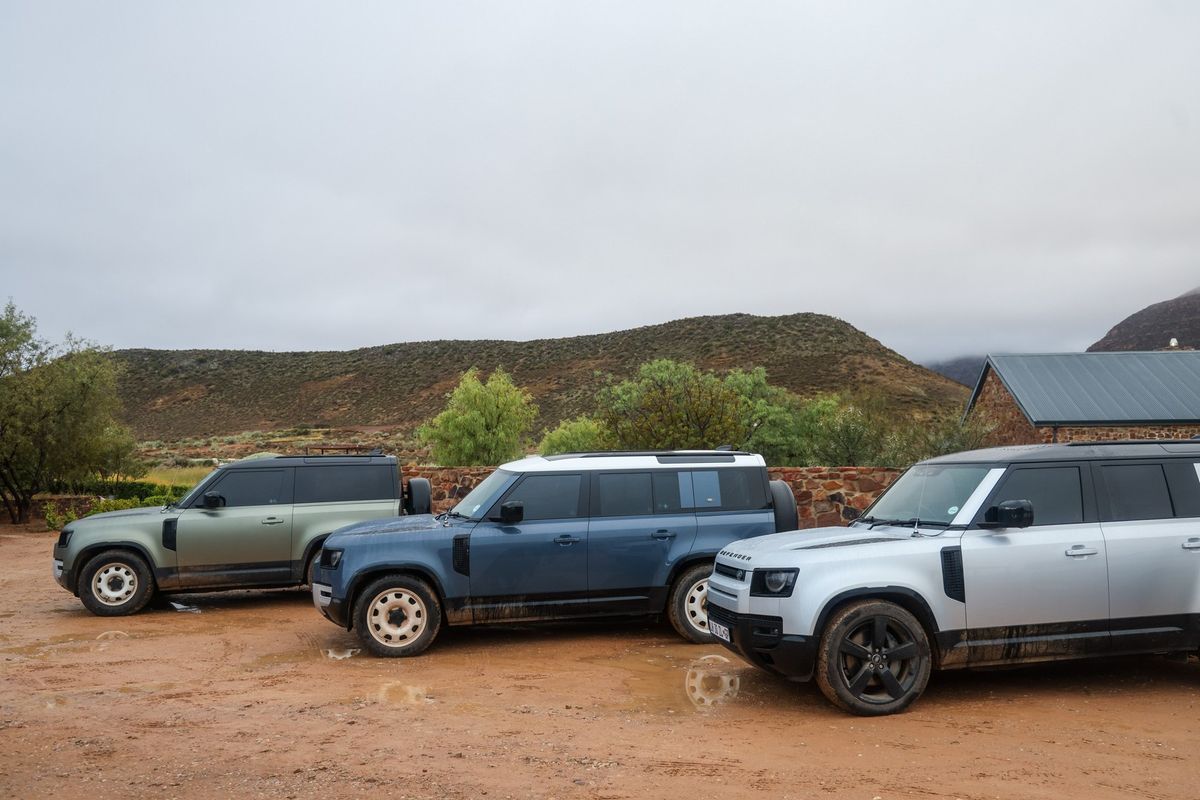
Spare a thought for the fleet managers and cleaning crews – the Defenders were caked in mud by the end of the trip. As a lensman, I appreciated the efforts of the photographer who captured the majority of these images, his equipment got drenched and he probably caught a cold working in those conditions.
90, 110 and 130… there’s a Defender flavour for everyone (who can afford one).
Summary
While it’s lovely to commute in, or have occasional weekend jaunts with, a Defender, it’s so satisfying to use the SUV for its intended purpose. A handful of highly capable luxury off-roaders would have revelled in those adverse off-road conditions, BUT there’s only one Defender. Oh dear, have I become a fanboy?
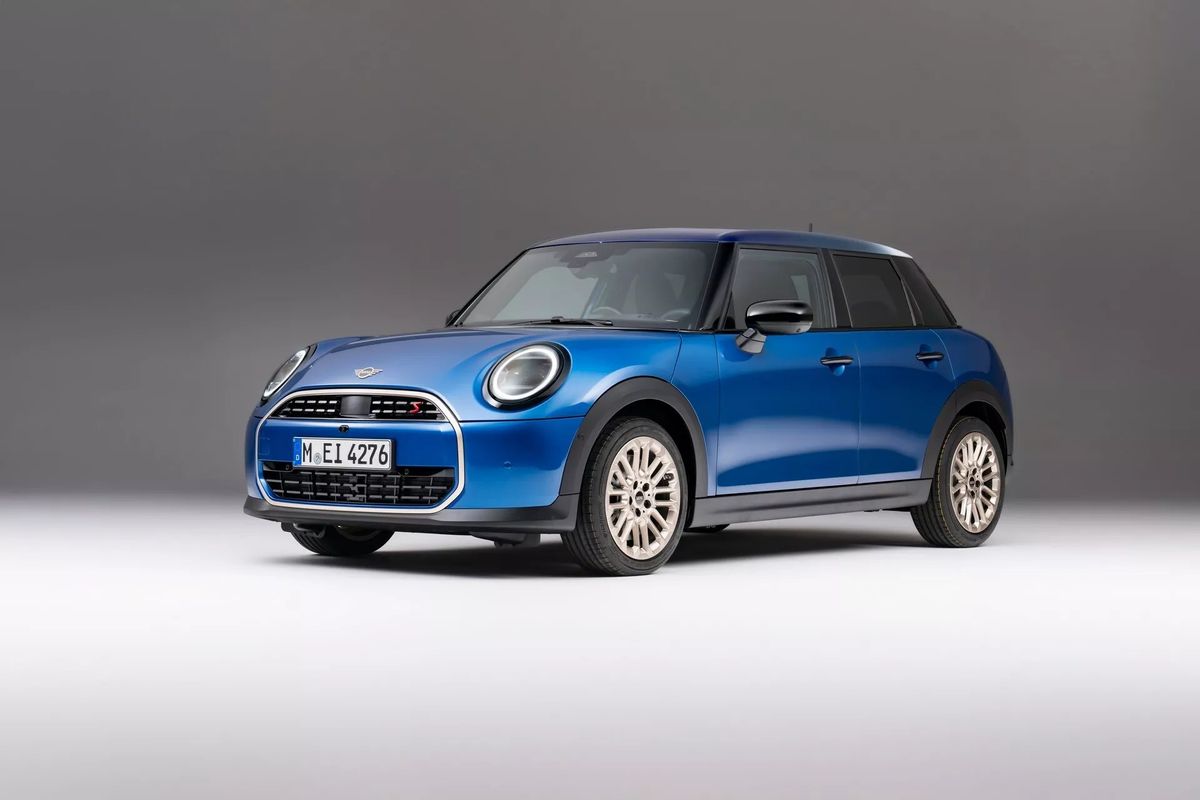
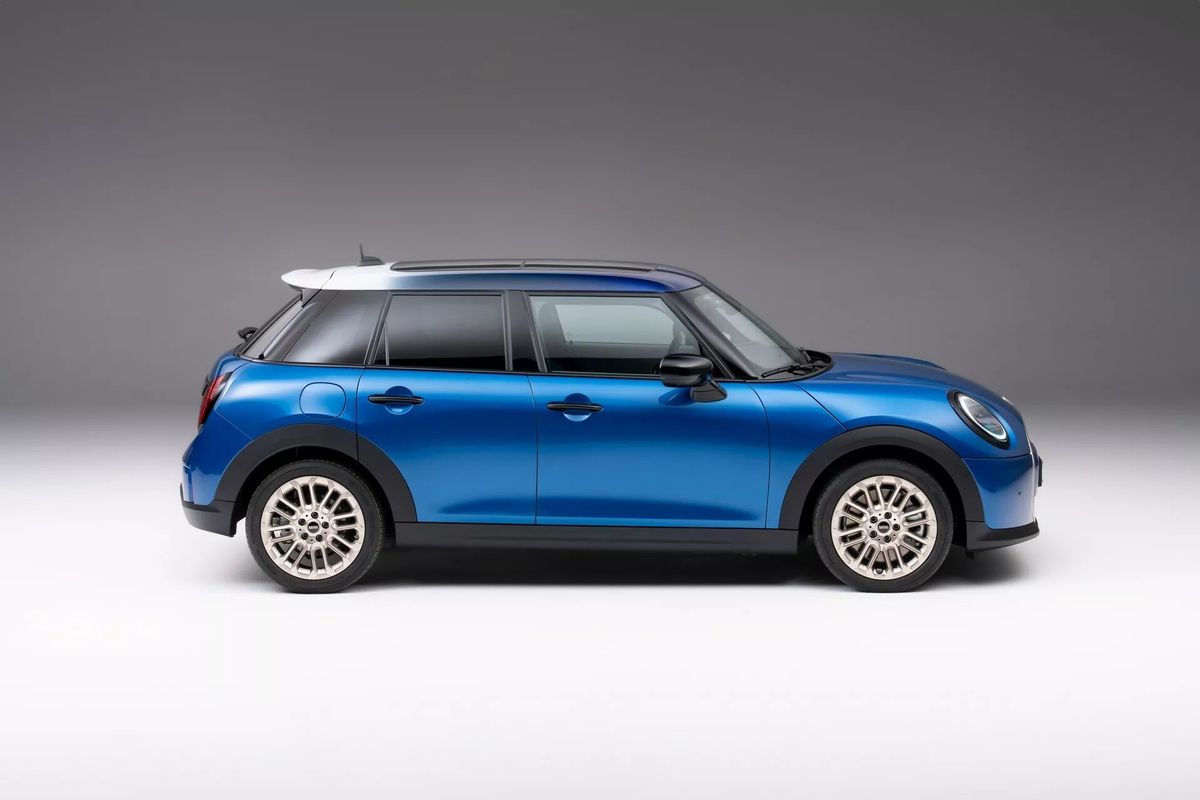
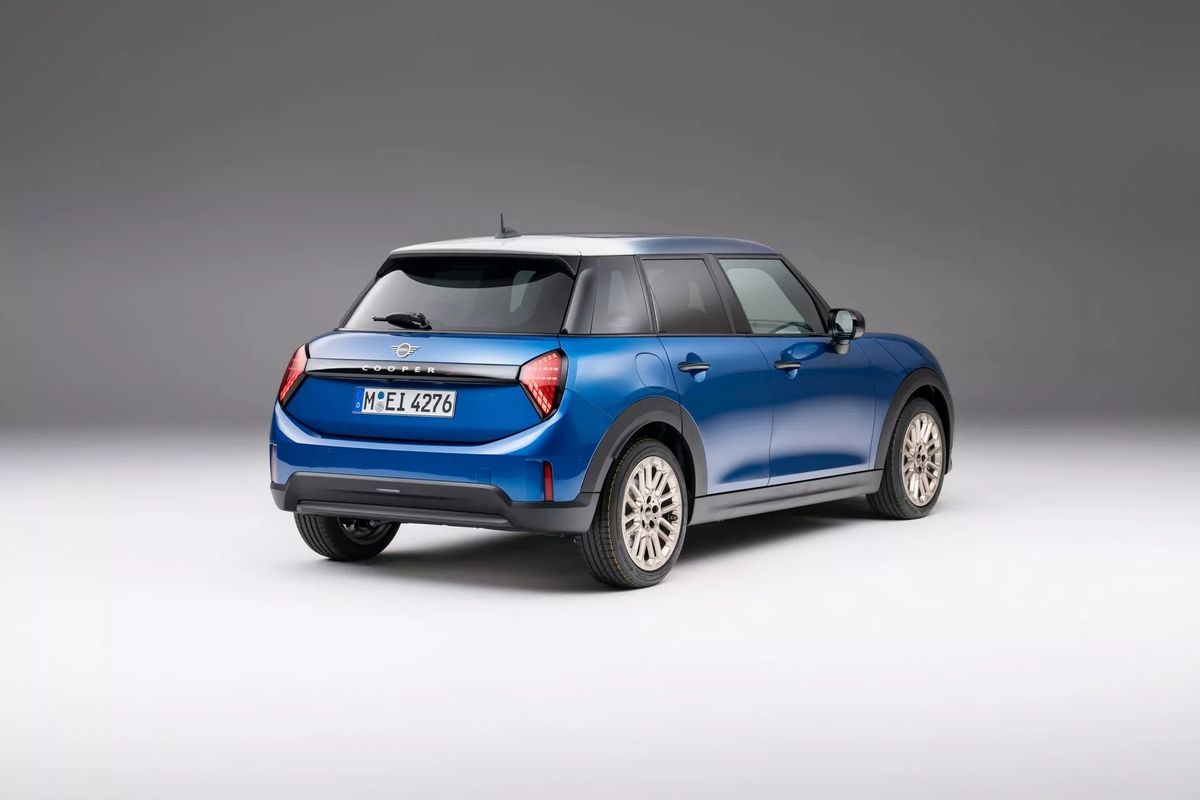
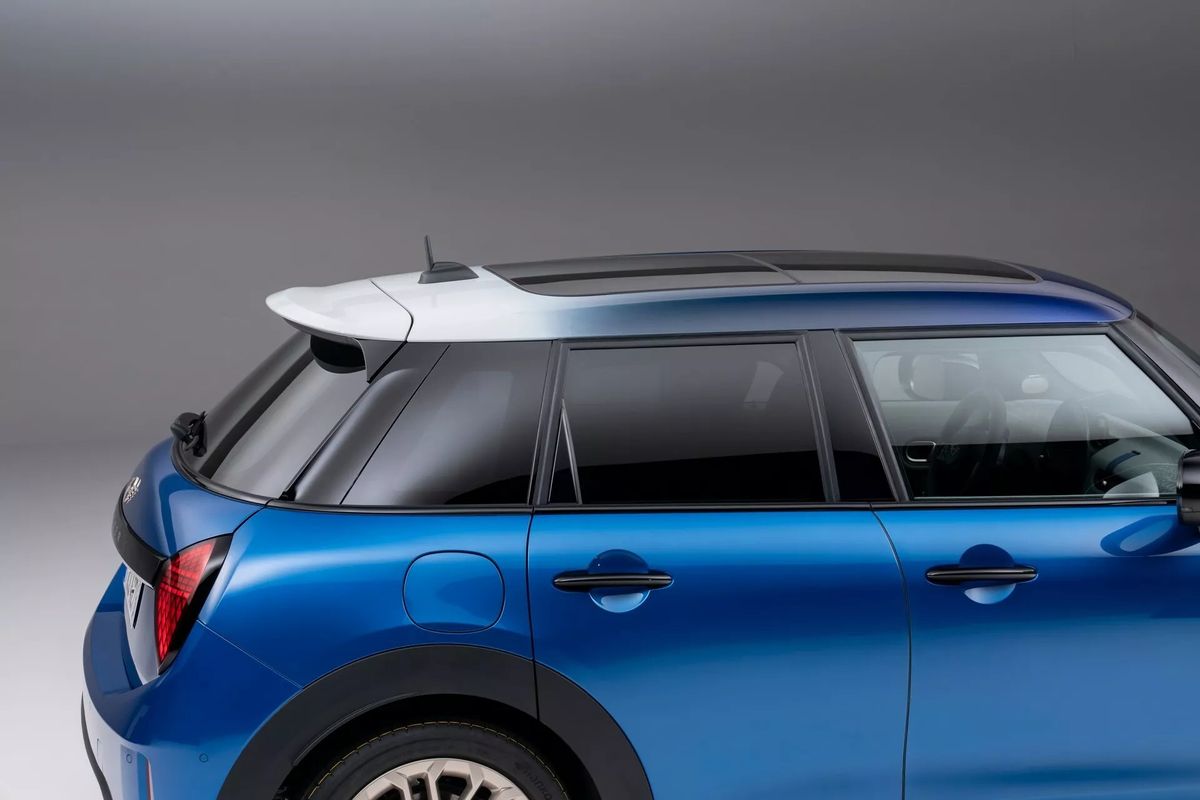
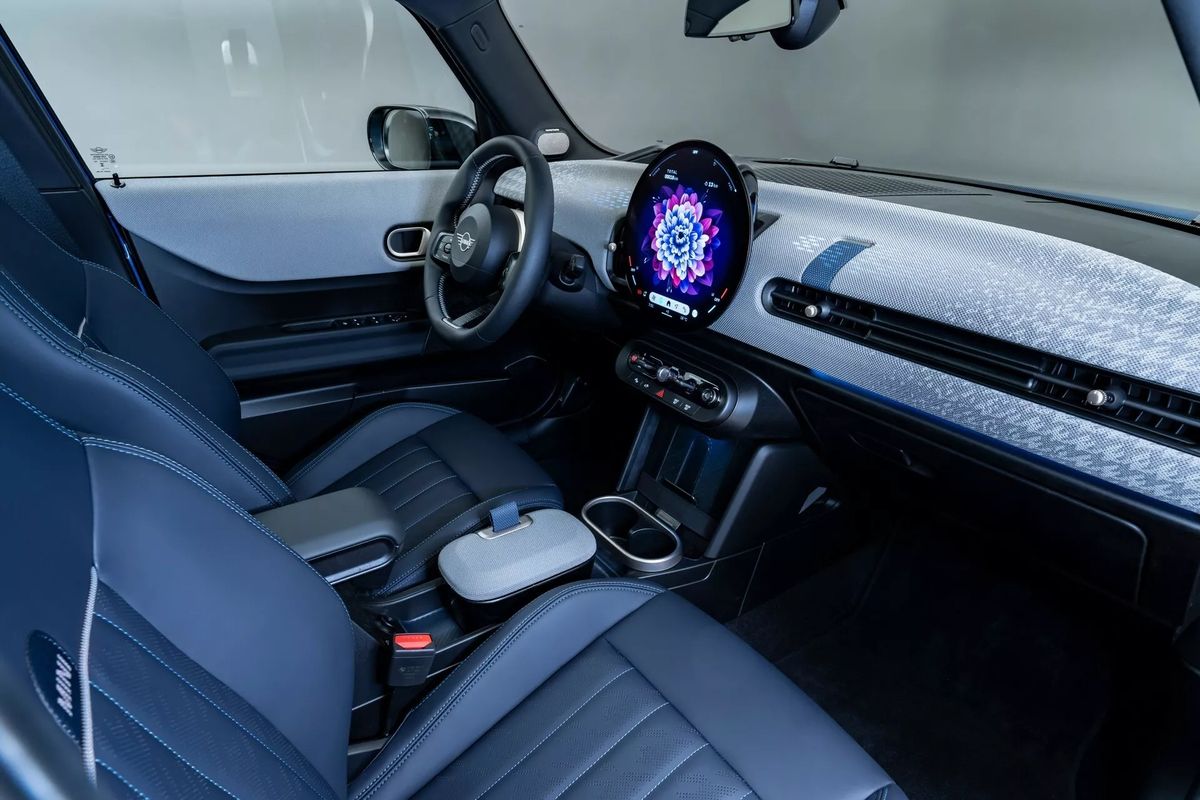
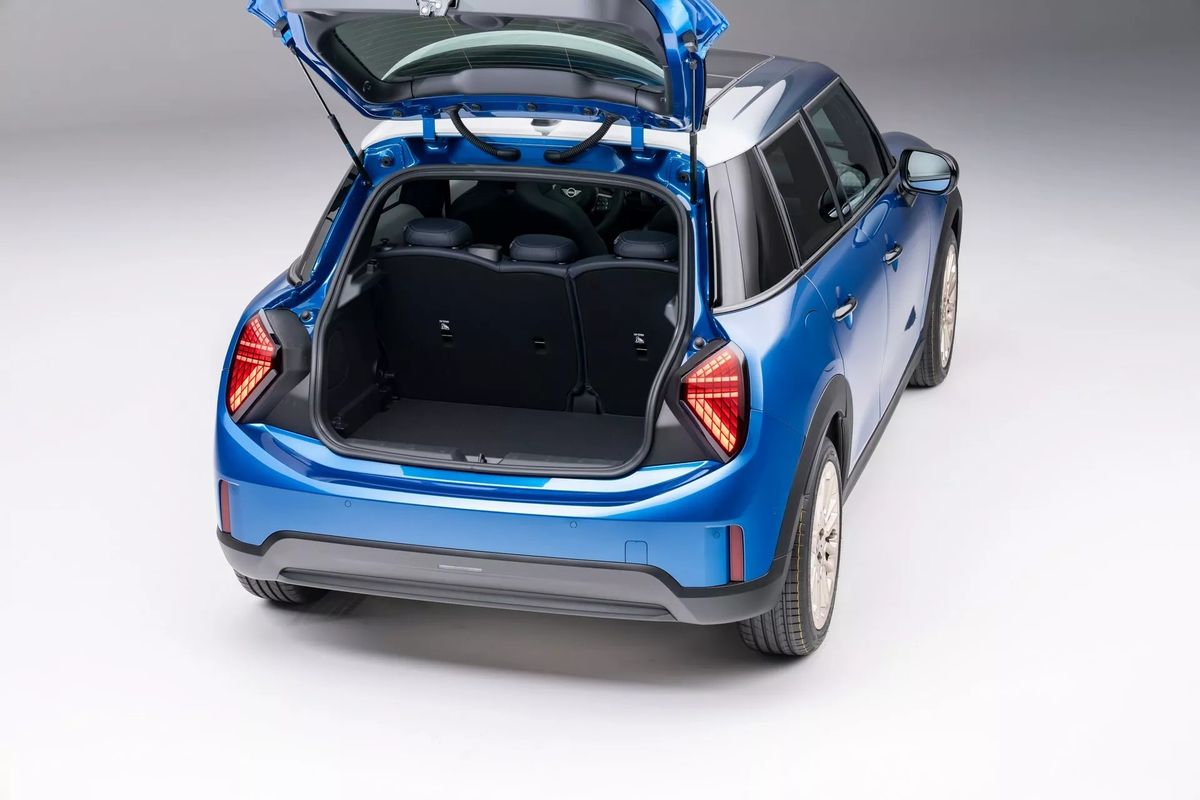
The new-generation Mini Cooper 5-Door has just been shown, bringing additional practicality to the cool hatchback’s lineup. Here are some early details.
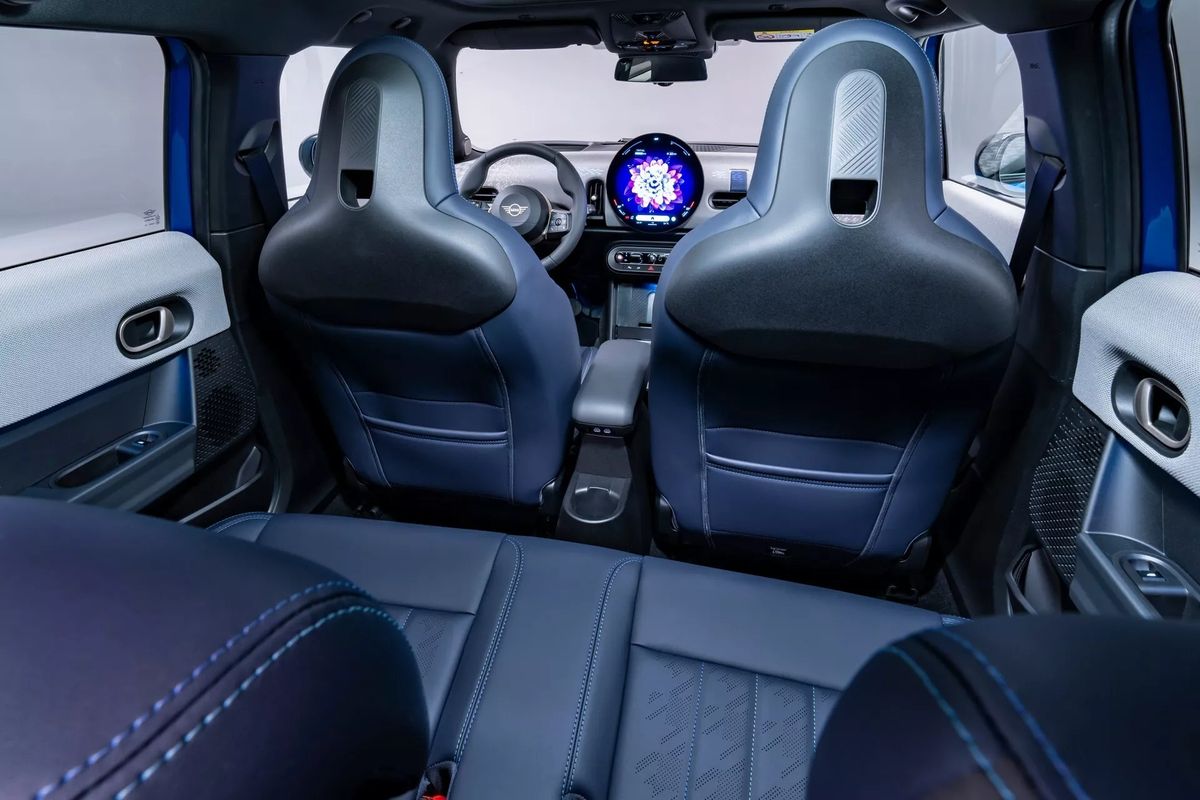
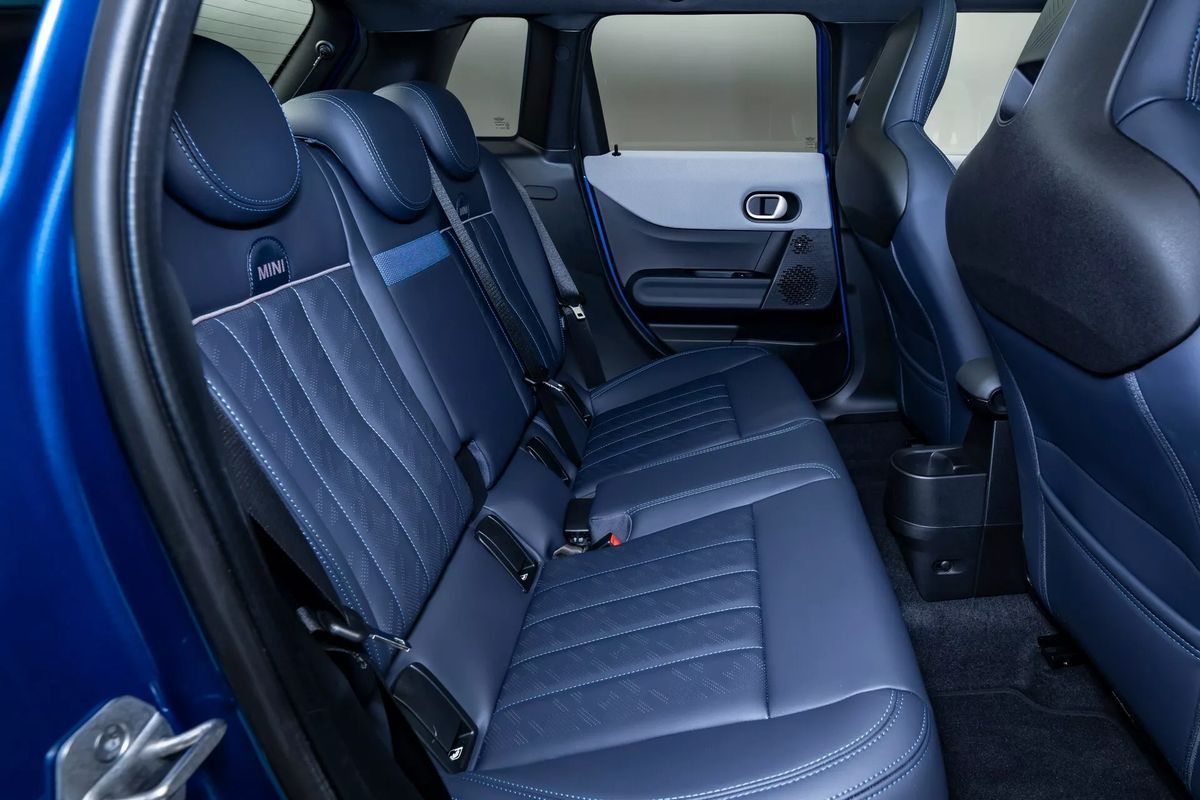
The cute Cooper family has expanded with the unveiling of the practicality-focused Mini Cooper 5-door. While we’d all love the cute two-door Mini hatchback, the reality is that a 5-door derivative offers that much more practicality and space.
So, what’s happened under the skin? The Mini Cooper 5-door has been stretched out, both in terms of wheelbase and overall length. It’s now at 4 036 mm long (17 cm longer than the two-door) and the wheelbase extended by 72 mm. It may not sound like much, but just a few centimetres extra is needed to separate a rear passenger’s knees from the seat in front of them.
The Mini Cooper 5-door retains those funky retro-style looks and we understand that initially turbocharged petrol engines will power the range, before an all-electric powertrain joins. Right now, the engine choices are the 1.5-litre turbocharged 3-cylinder petrol engine with 115 kW and 230 Nm, badged as the Cooper C. This powertrain is good for a 0-100 kph time of 8 seconds and a top speed of 225 kph.
For those wanting more fun, the Cooper S 2.0-litre turbocharged 4-cylinder makes 150 kW and 300 Nm. It offers a sportier drive and a 0-100 kph time of 6.8 seconds is being claimed.
Mini has said the 5-door model retains that “spirited handling” thanks to a special suspension and damping tune. While SA specs are not yet confirmed, wheel sizes range from 16- to 18-inch units.
When will the Mini Cooper 5-Door arrive in South Africa?
We’re yet to hear from BMW Group South Africa, but we’re expecting the new Cooper 3-door hatchback to launch locally very soon. The Countryman has already made landfall and the first few units have already found homes in the republic. We’ll update this article as soon as we hear more.
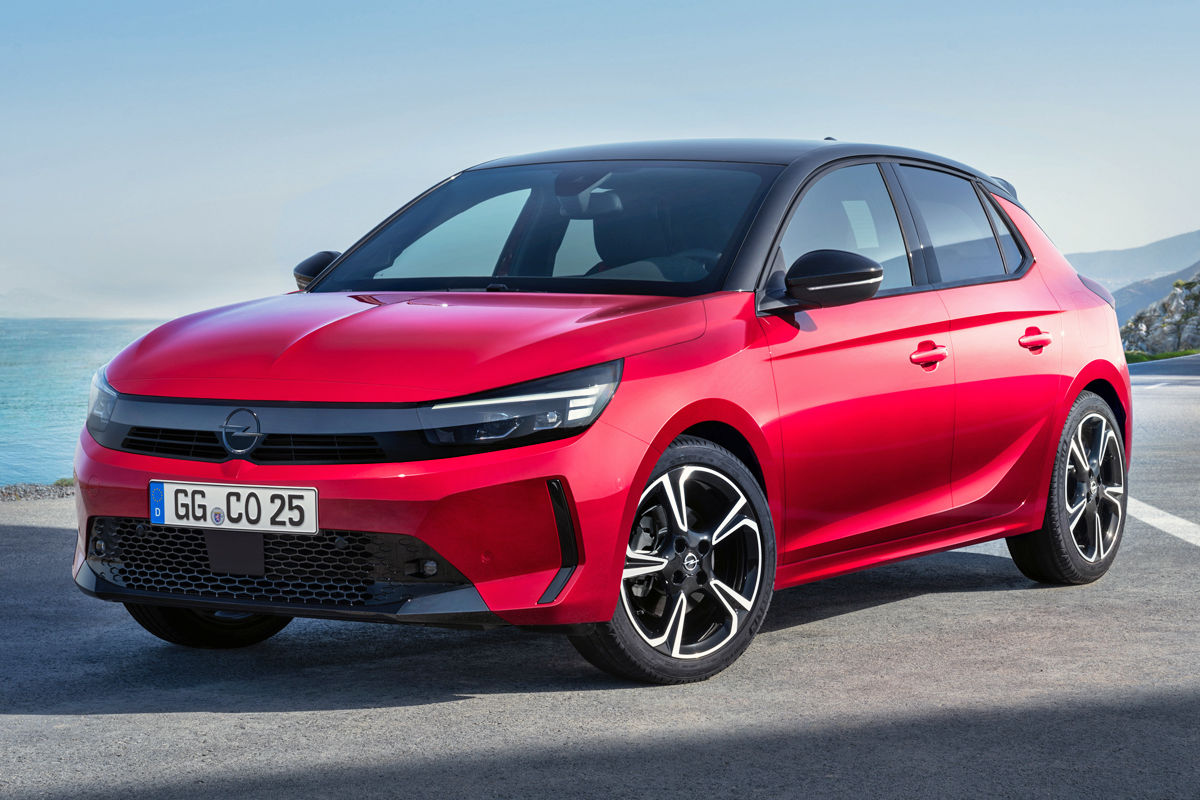
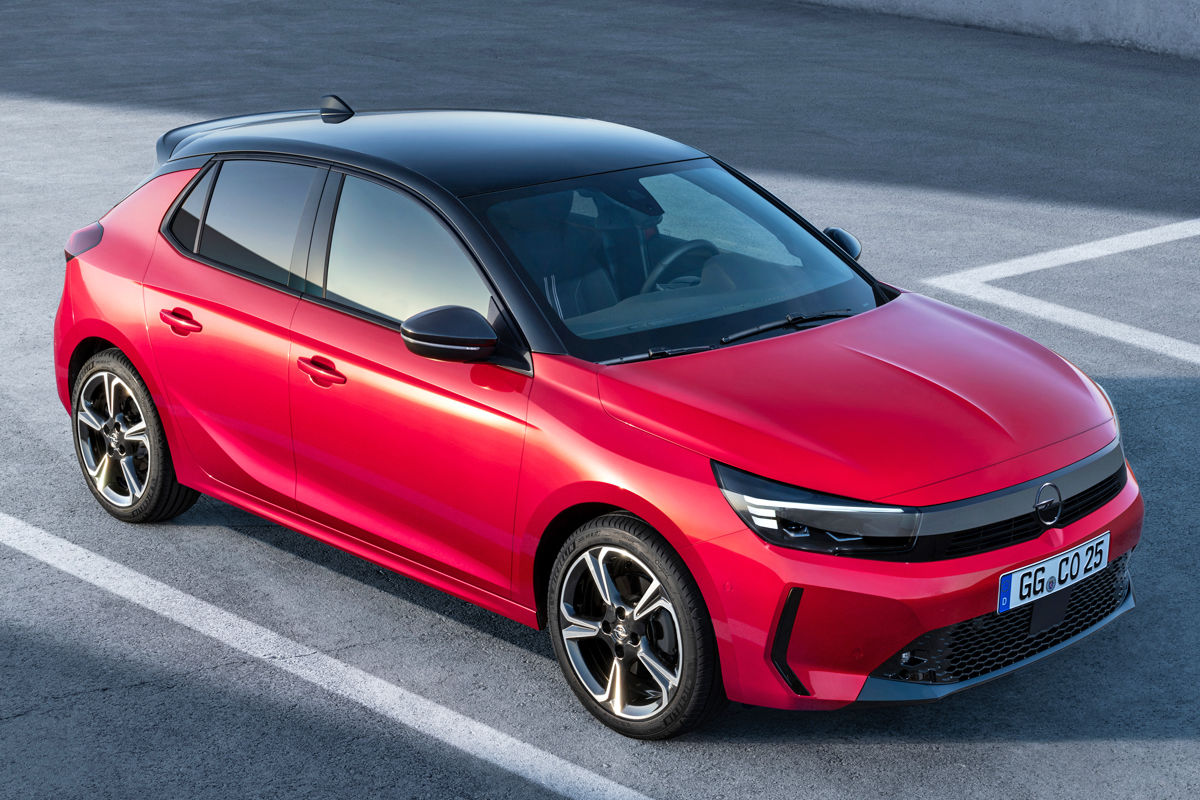
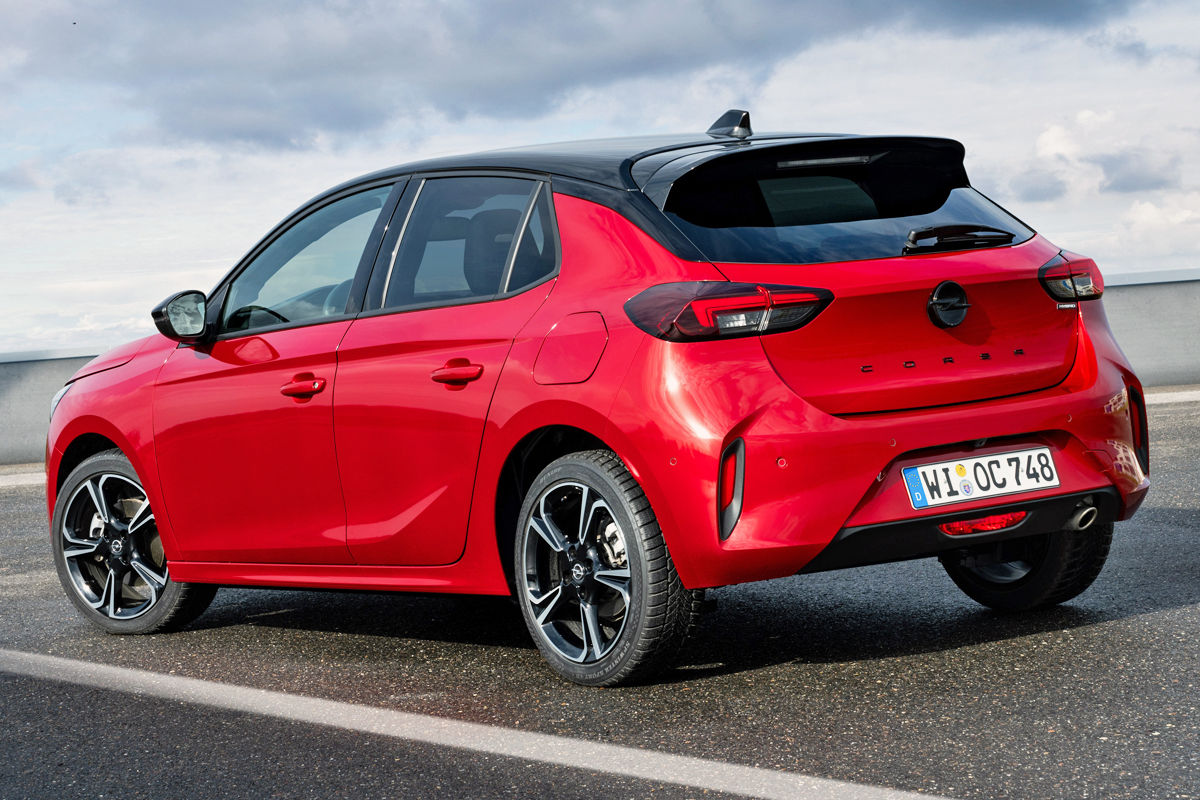
The facelifted Opel Corsa has arrived in South Africa, complete with a new GS Line flagship derivative. Here’s how much the refreshed hatchback costs…
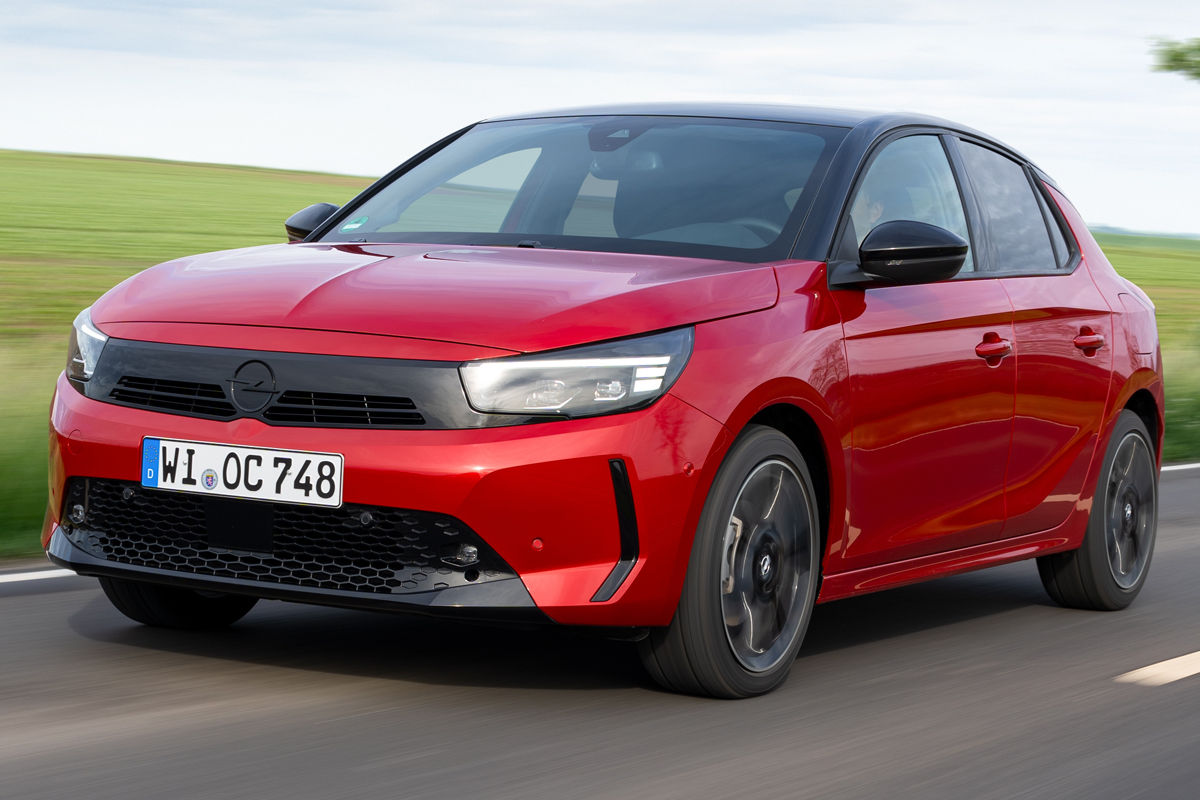
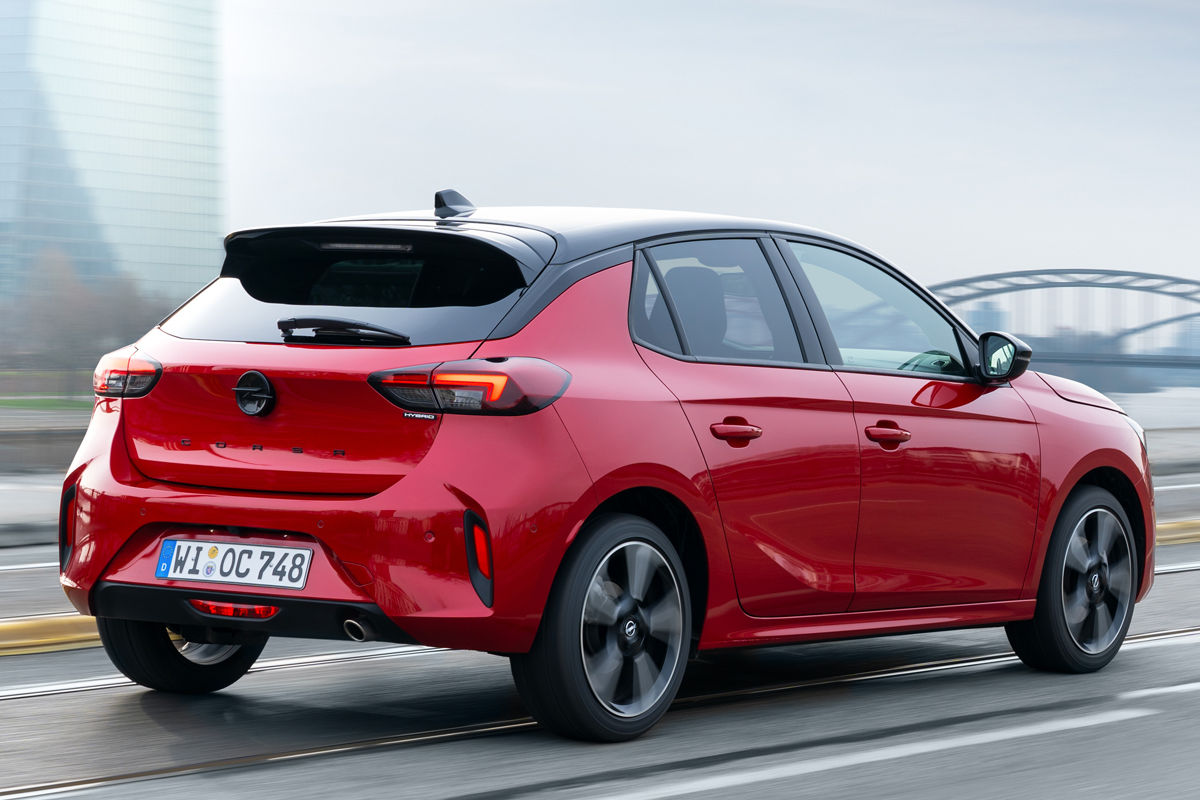
Just over a year after its reveal overseas, the facelifted Opel Corsa hatchback – featuring refreshed exterior styling in line with the German firm’s latest design language debuted by the latest Mokka – has officially launched in South Africa. However, the engine range carries over, which means Mzansi misses out on the diesel, mild-hybrid petrol and fully electric powertrains available in some other markets.
So, as before, the local line-up comprises 3 derivatives, though the pre-facelift Elegance trim level falls away in favour of a new GS Line grade. The updated G2J0-generation Corsa portfolio again kicks off with the Corsa 1.2T Lite, which is now priced from R374 900 (representing a R20 000 increase).
A new GS Line flagship joins the local Corsa range.
The Lite – a nameplate the Rüsselsheim-based firm’s local division revived in April 2023 – is again powered by a turbocharged 1.2-litre, 3-cylinder petrol engine, which delivers an unchanged 74 kW and 205 Nm to the front axle via a 6-speed manual gearbox.
Standard features for the Corsa Lite include 16-inch alloy wheels, automatic LED headlamps, LED daytime running lights, cloth upholstery, height adjustment for the driver’s seat, manual air-conditioning, a 3.5-inch instrument cluster, a 10-inch touchscreen, rear parking sensors, cruise control, electronic stability control, hill-start assist, lane-keep assist, tyre-pressure monitoring and 6 airbags.
The Corsa Edition (top) alongside the Corsa GS Line (bottom).
Meanwhile, the Corsa 1.2T Edition holds its place as the mid-tier derivative, though its price has likewise increased by R20 000, to R394 900. This variant employs the same powertrain as the Lite, but gains features such as front LED foglamps, a 7-inch digital instrument cluster, front parking sensors (in addition to the rear items), a 180-degree parking camera, blind-spot alert and an electric folding function for the side mirrors.
Finally, there’s the new Corsa 1.2T GS Line, which starts at R459 900 (R5 000 more than the Elegance derivative it replaces). Like the outgoing Elegance, the GS Line employs an uprated version of the forced-induction 1.2-litre 3-pot motor, which here sends 96 kW and 230 Nm to the front wheels via a 6-speed automatic transmission.
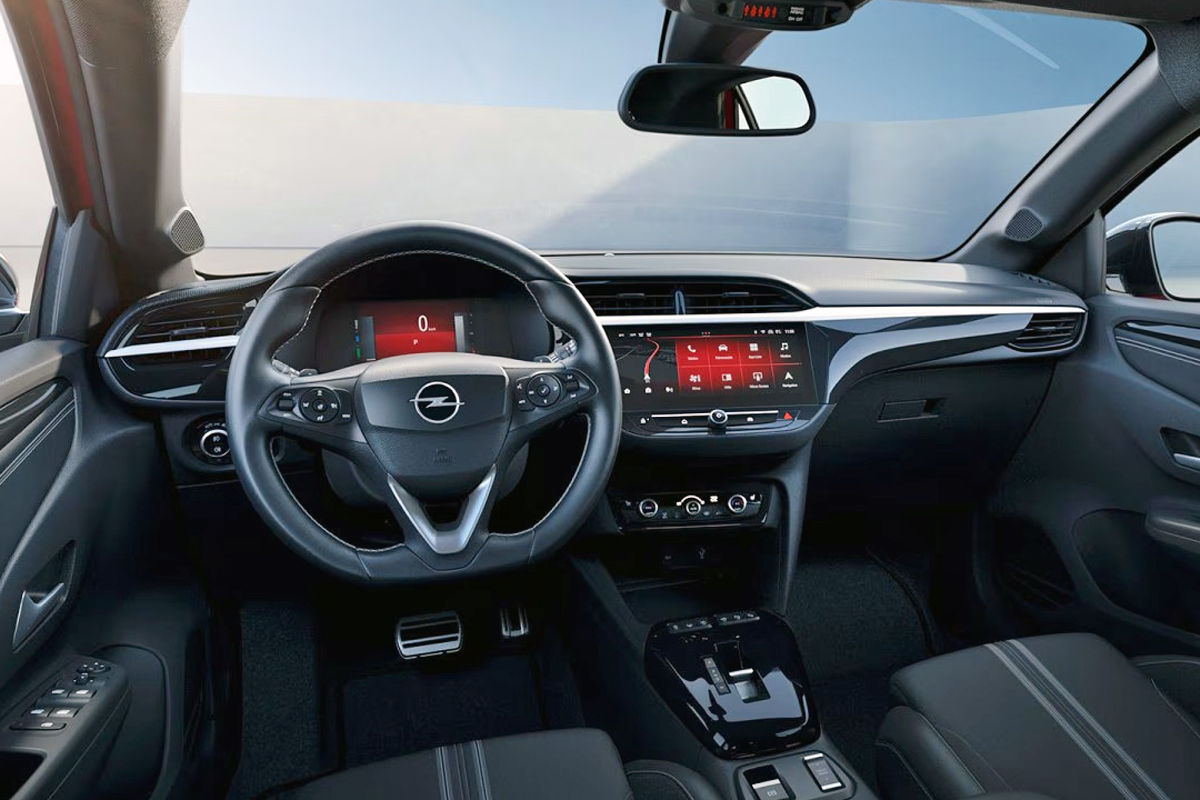
The GS Line’s cabin (left-hand-drive model shown).
The GS Line scores not only sportier exterior styling (including extra chrome and gloss-black trim plus a black roof and 2-tone alloys) but also leatherette/cloth upholstery, leather trim for the steering wheel, heated front seats, height adjustment for the front passenger pew, climate control, a model-specific front console, traffic-sign recognition, driver drowsiness alert and low-speed collision mitigation braking.
The Kia Seltos recently underwent a thorough facelift. Endowed with an updated appearance, a larger-capacity turbopetrol engine and cabin enhancements, it has all the ingredients to be a segment frontrunner. We review the flagship GT Line variant.
We like: Engine performance, fuel economy, spacious cabin, on-road refinement.
We don’t like: A bit pricey (the price of flagship variant is near that of an entry-level Sportage).
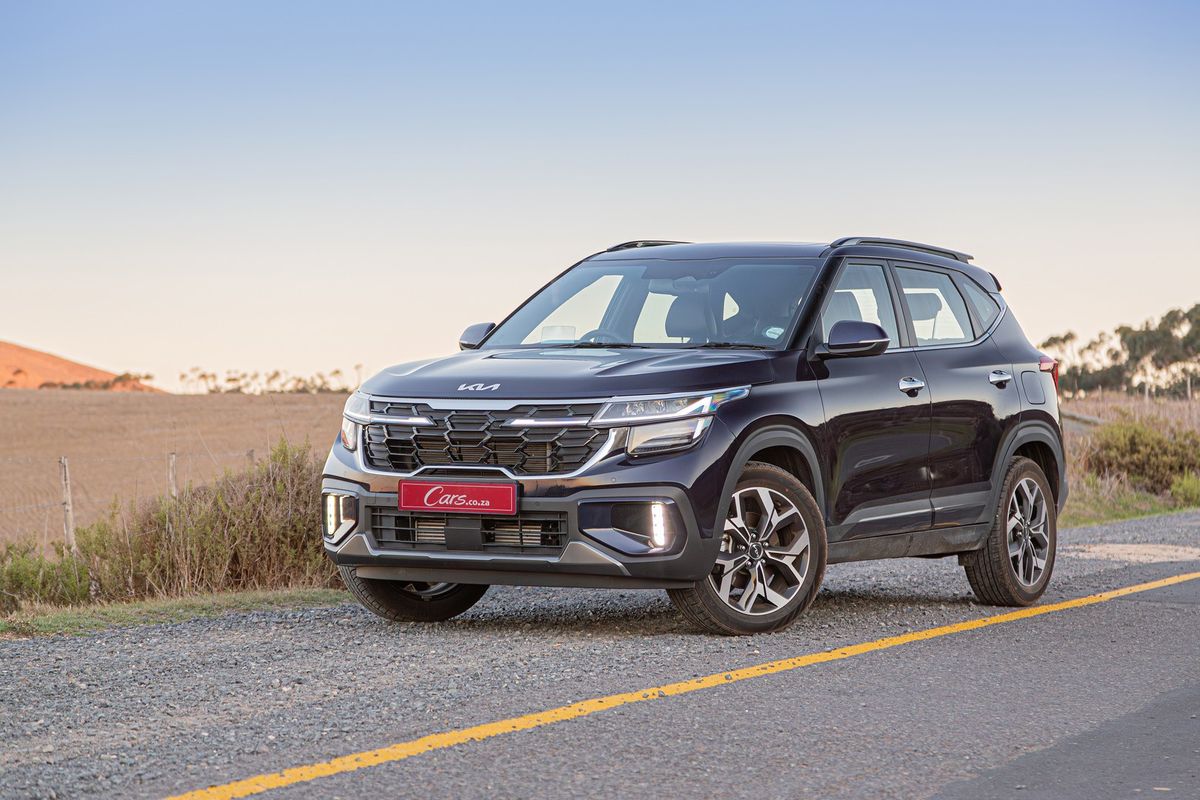
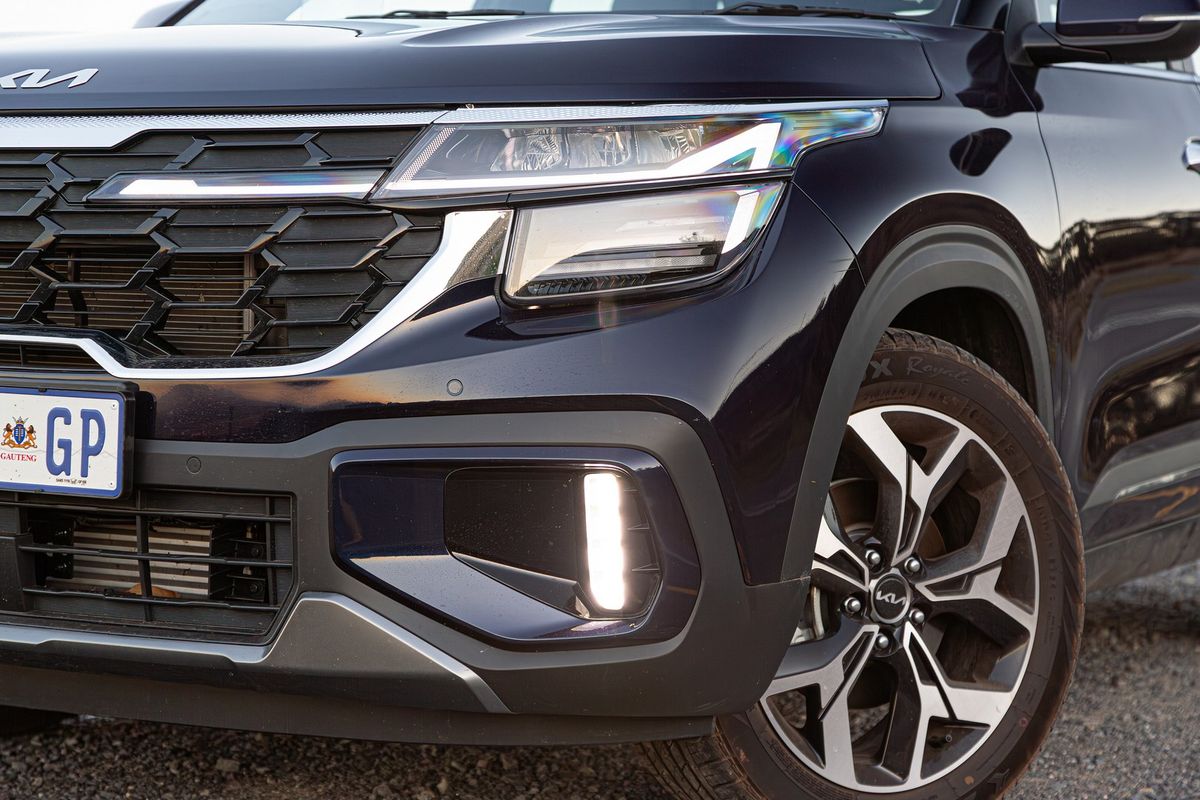
The updated front-end treatment is distinguished by new-look LED daytime running lights.
Korean car giant Kia’s local model line-up now consists mainly of crossovers and SUVs – it’s one of many brands that have adopted such a product strategy. But it’s no surprise, given that consumers now favour higher-riding models over the conventional B- and C-segment hatchbacks that, in fact, underpin them.
As was the case with the pre-facelift version of the model, the 2024 Kia Seltos sits above its Sonet small crossover sibling in terms of size, but while it is positioned as an affordable, compact family car, there’s nothing small about it; we’ll discuss the 1.5T-GDI GT Line‘s generous dimensions later in this review.
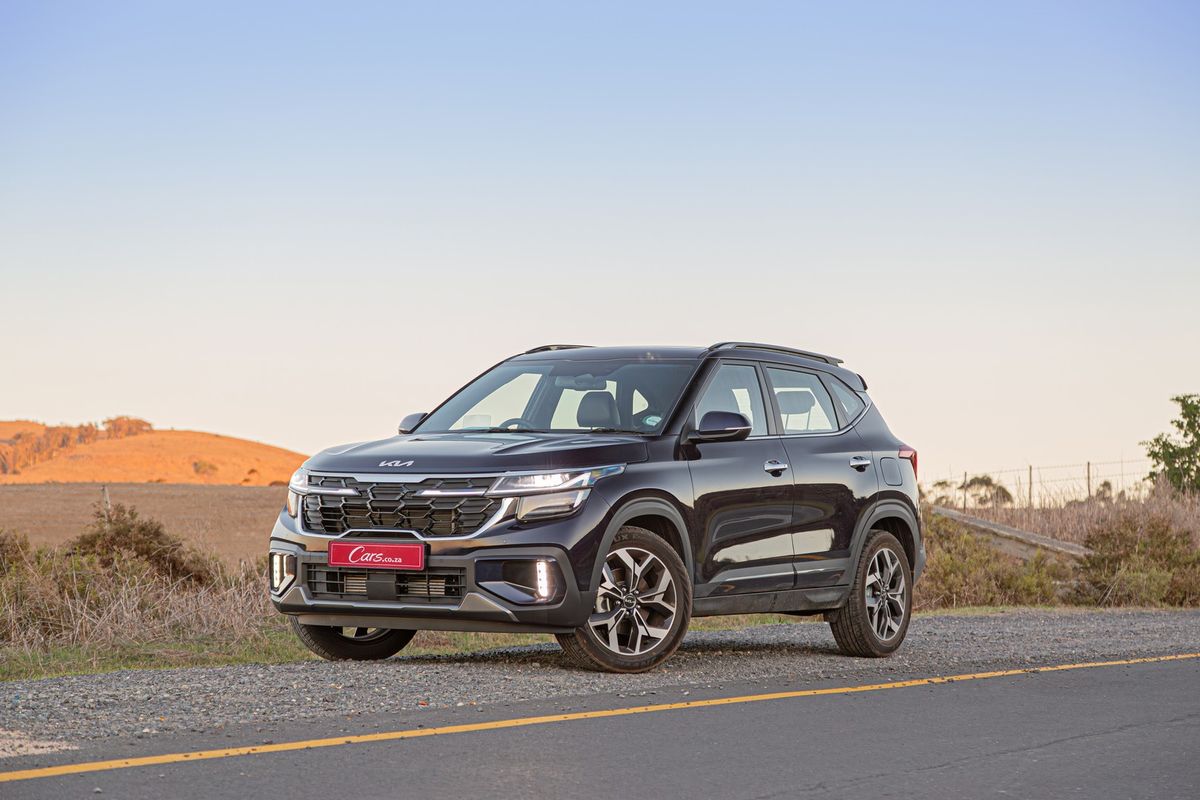
The Seltos is one of the bigger and better-riding compact family cars in the market.
Launched in South Africa in November 2019, the Seltos quickly became popular in our market; 5 years later (2024), the facelift has touched down, bringing updates in terms of engines, features and styling.
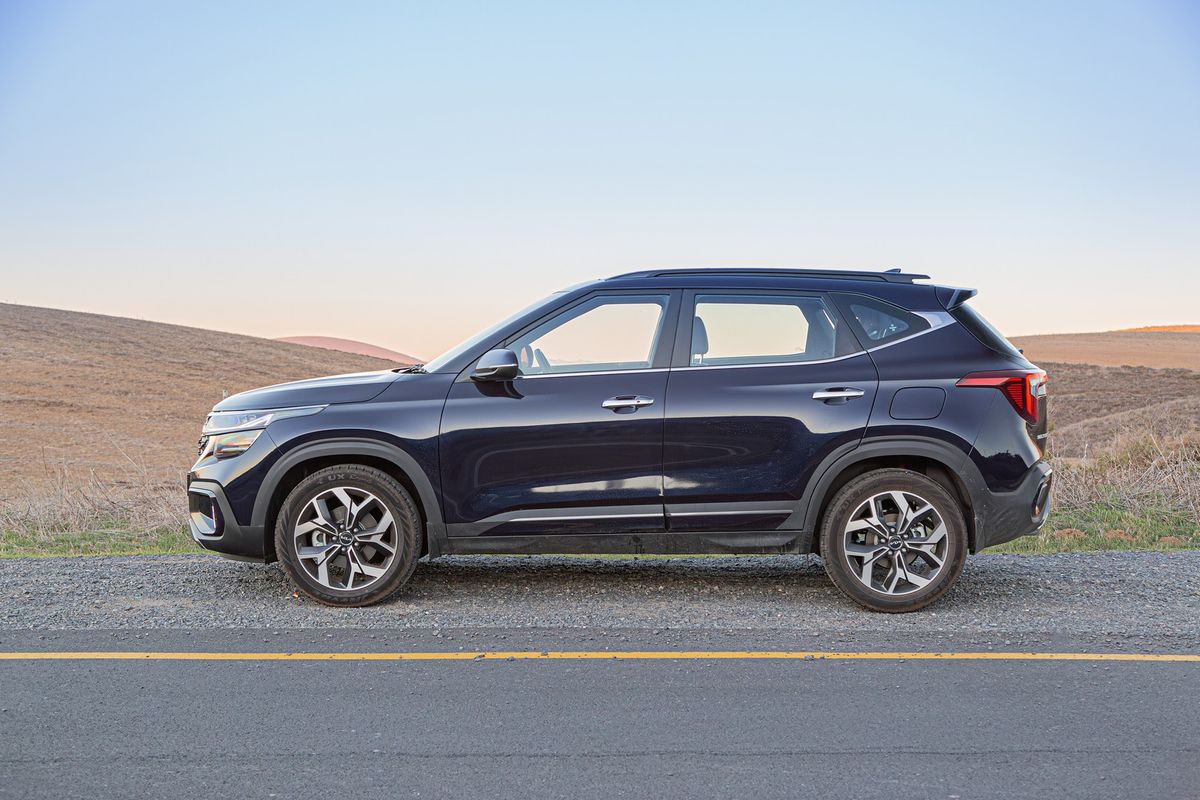
Now, let’s talk size. Based on its dimensions – 4 365 mm long, 1 800 mm wide and 1 620 mm tall – the Seltos is one of the biggest compact family cars in our market; Kia offers an array of derivatives, with a naturally-aspirated petrol engine, a turbodiesel and a turbopetrol in the line-up. It’s tricky to pick rivals, but we’d say, based on occupant space, it goes up against the Toyota Corolla Cross and Haval Jolion.
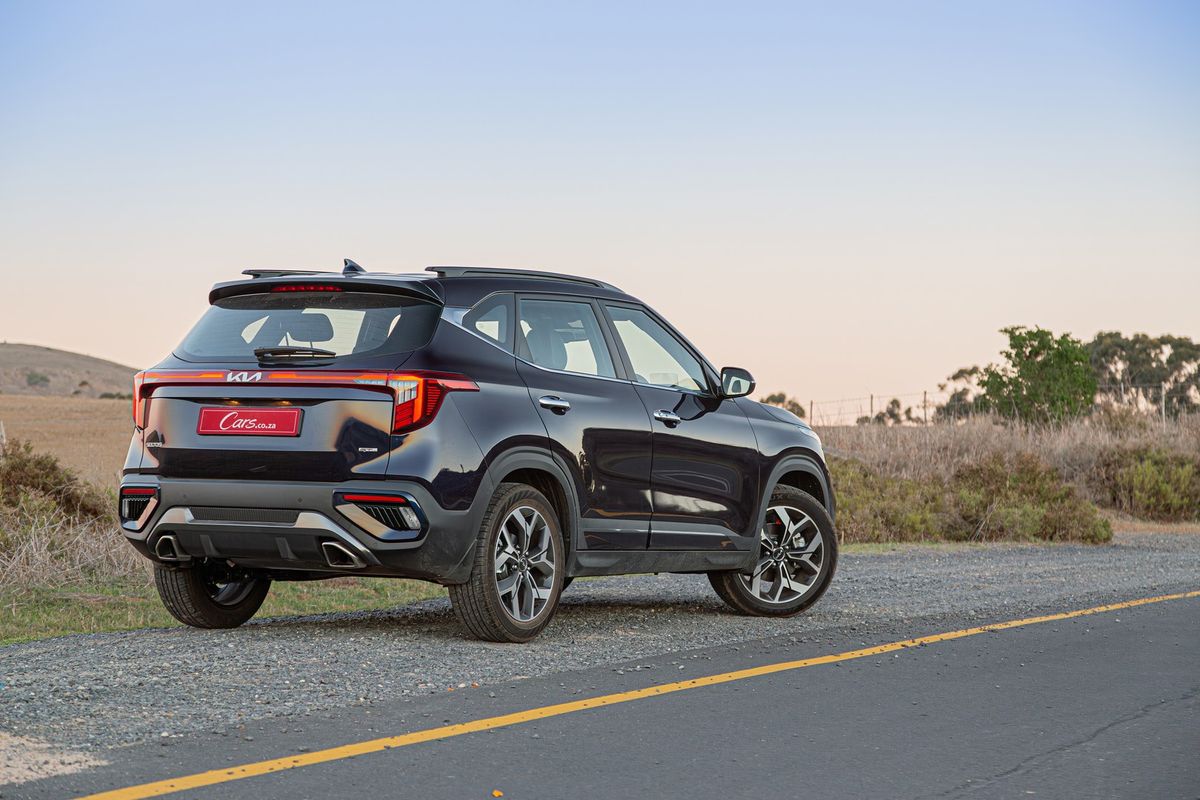
The range-topping GT Line truly looks the part – check out those shapely exhaust ends.
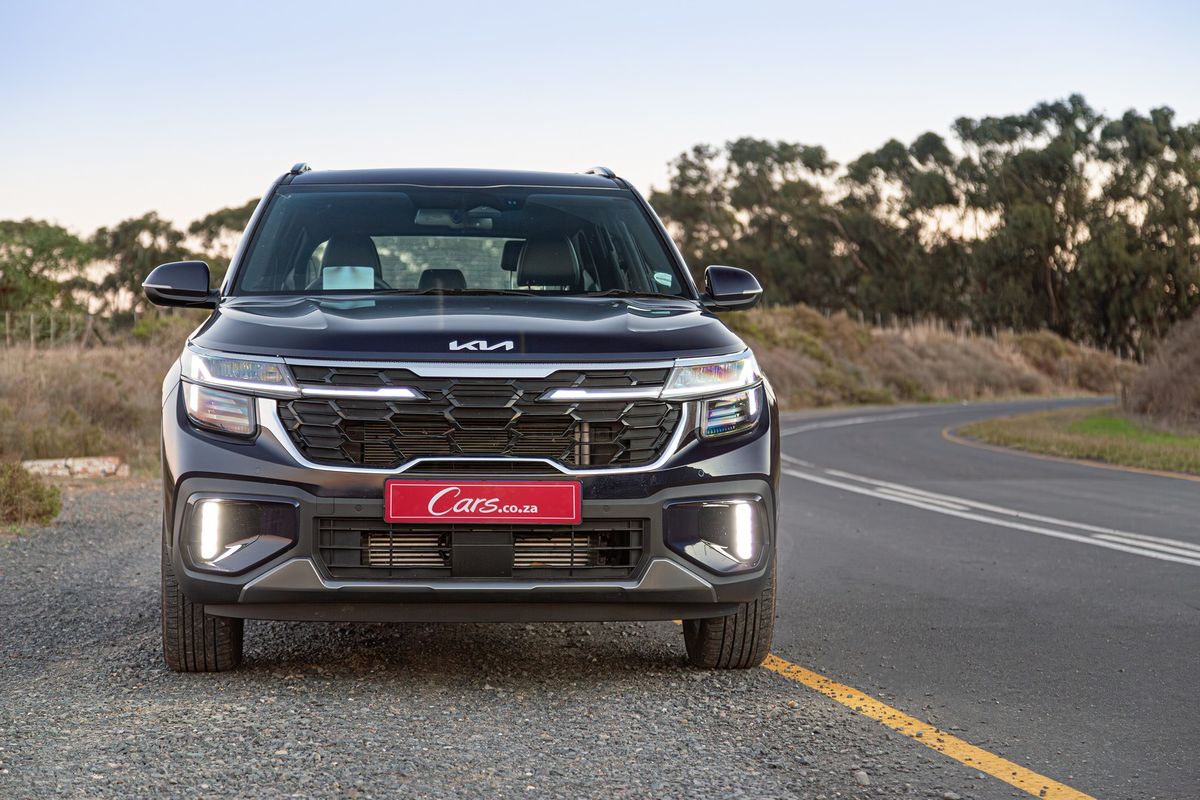
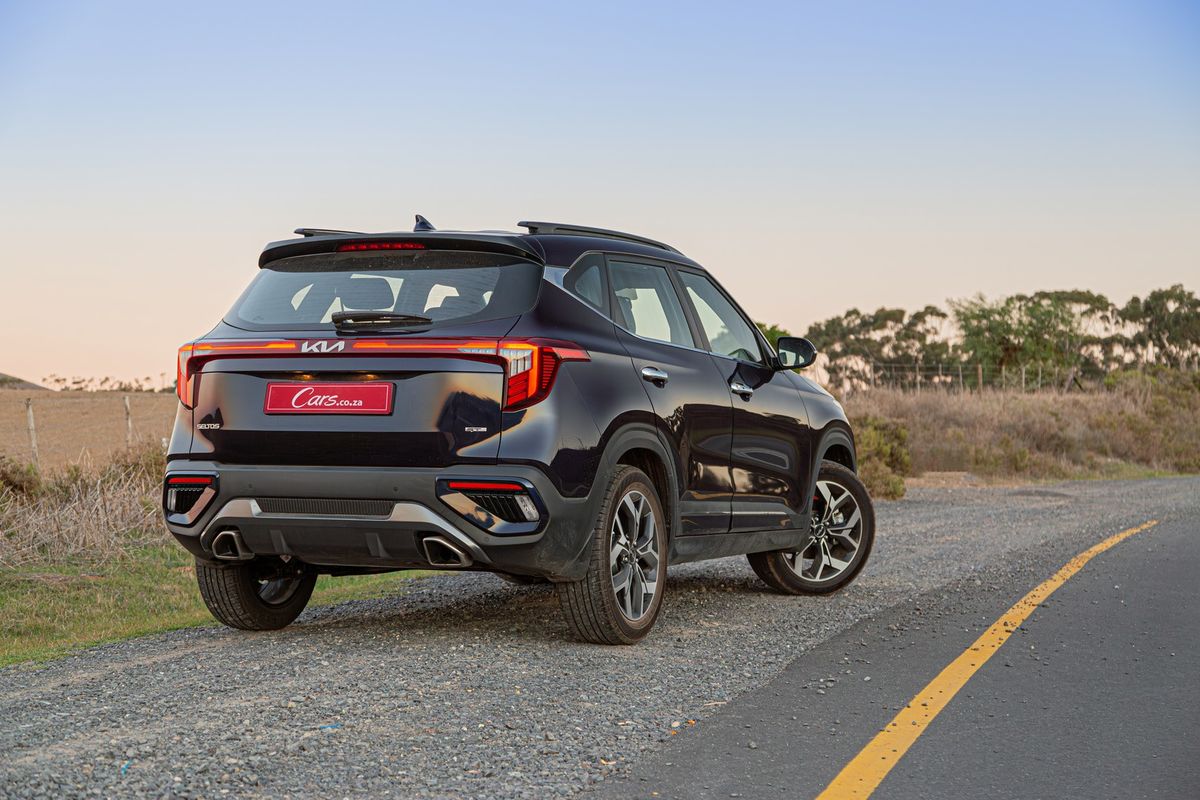
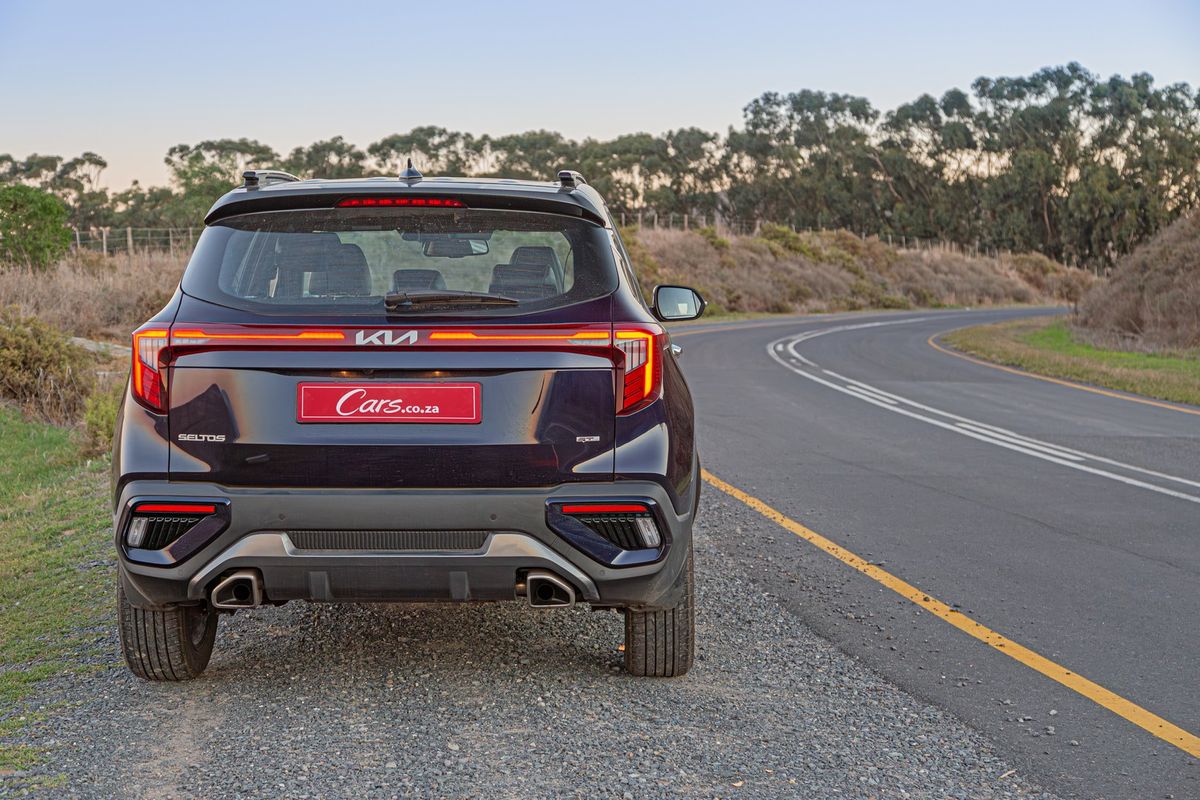
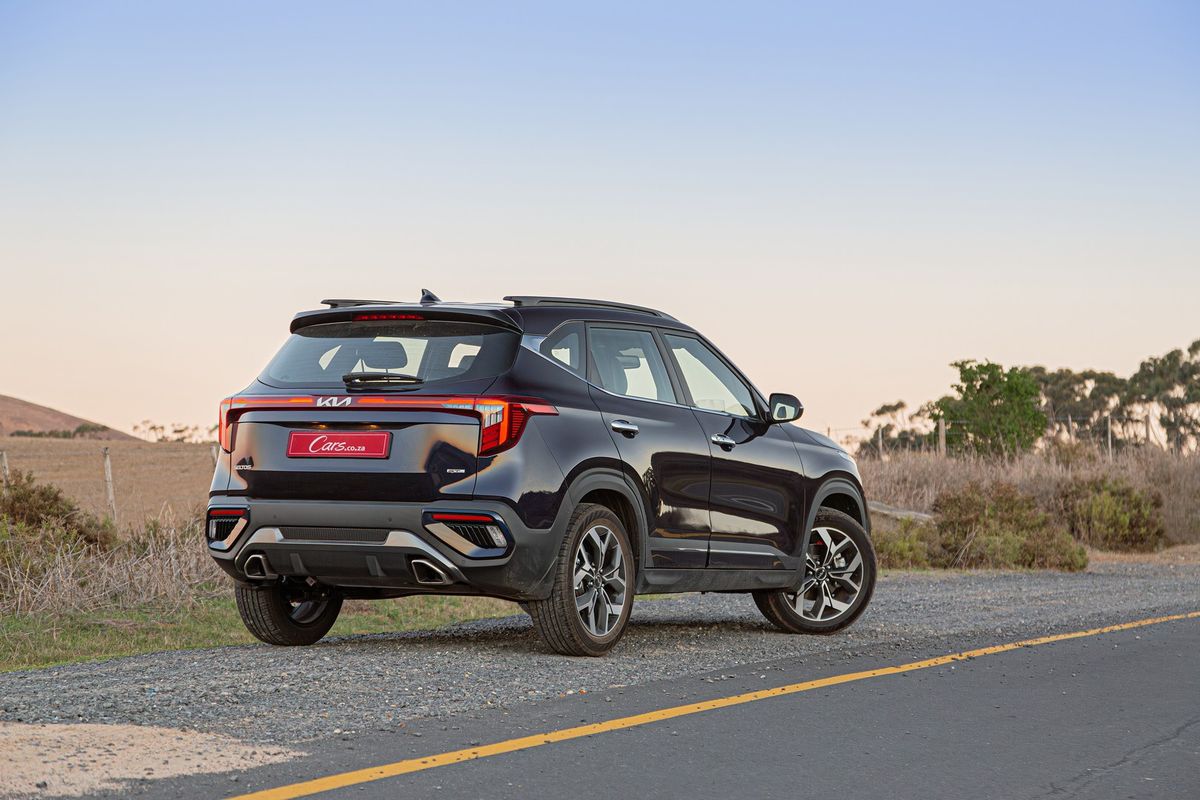
Although the contours of the Kia Seltos’ sheet metal are unchanged, the facelifted version of the Indian-built compact family car incorporates notable cosmetic details, such as the repositioned LED daytime running lights and fog lamps, a new-look front grille, as well as redesigned tail-light clusters.
Given its position as the range’s flagship, the Kia Seltos 1.5T-GDI GT Line comes with derivative-specific adornments: sportier bumpers with dark grey accents, red brake calipers and 2 (shapely) exhaust ends.
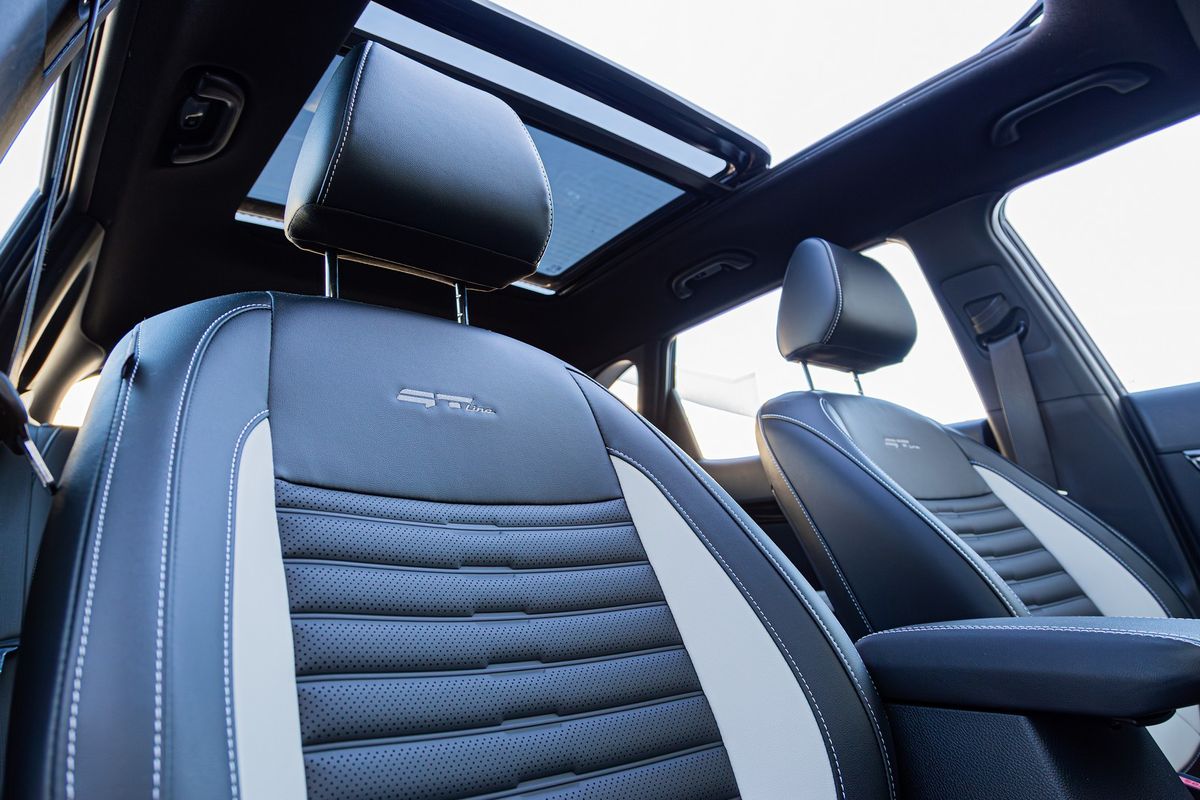
Sporty seats and a panoramic sunroof enhance the cabin’s appeal.
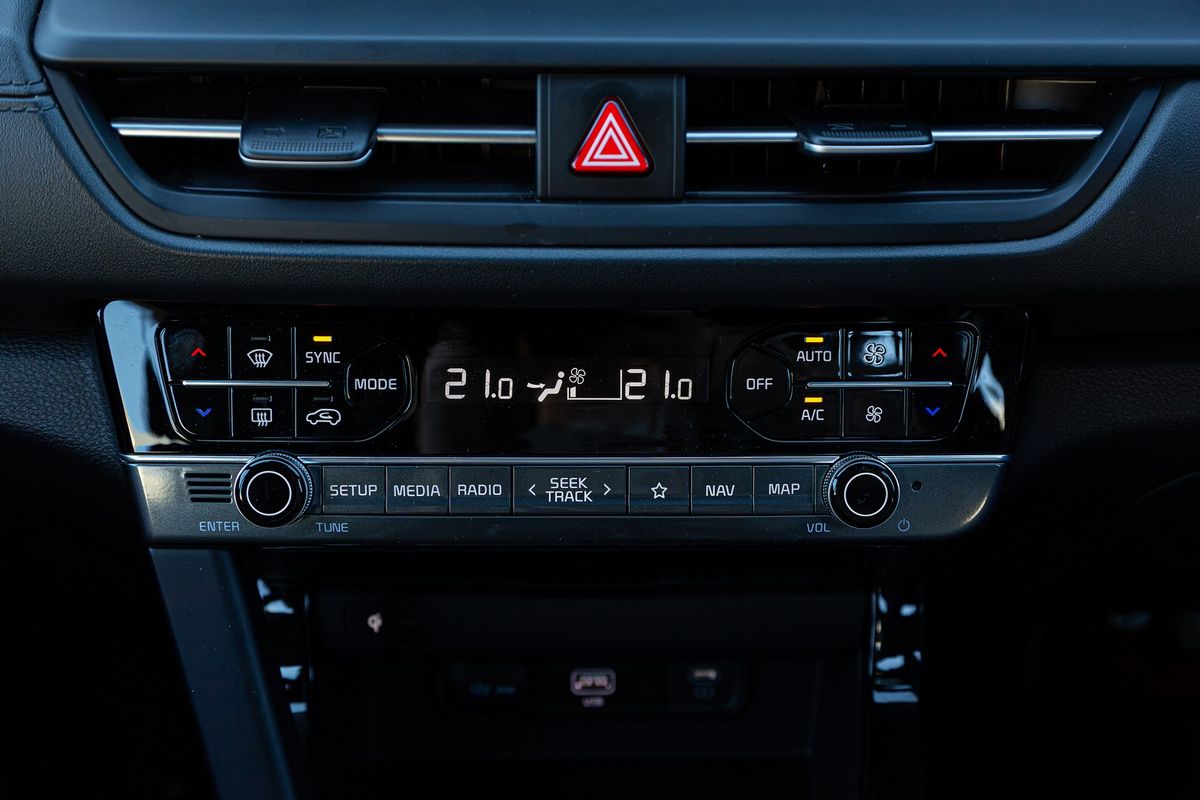
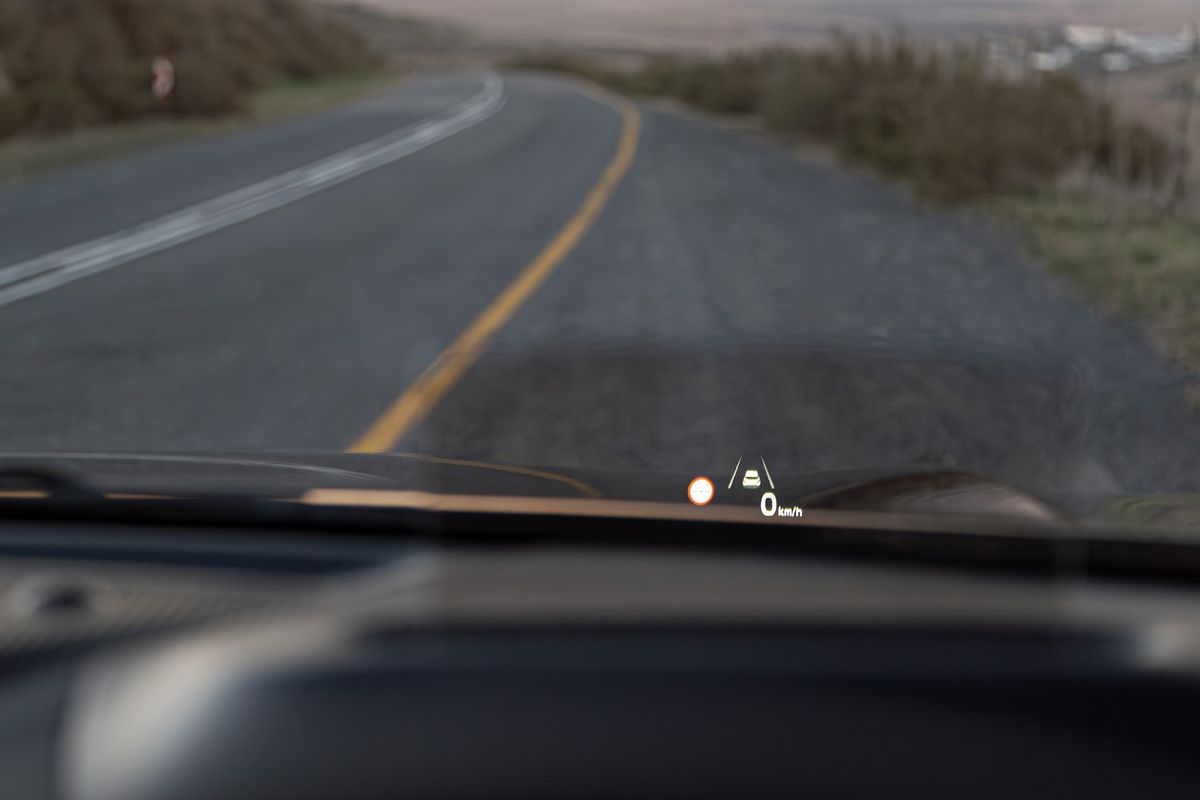
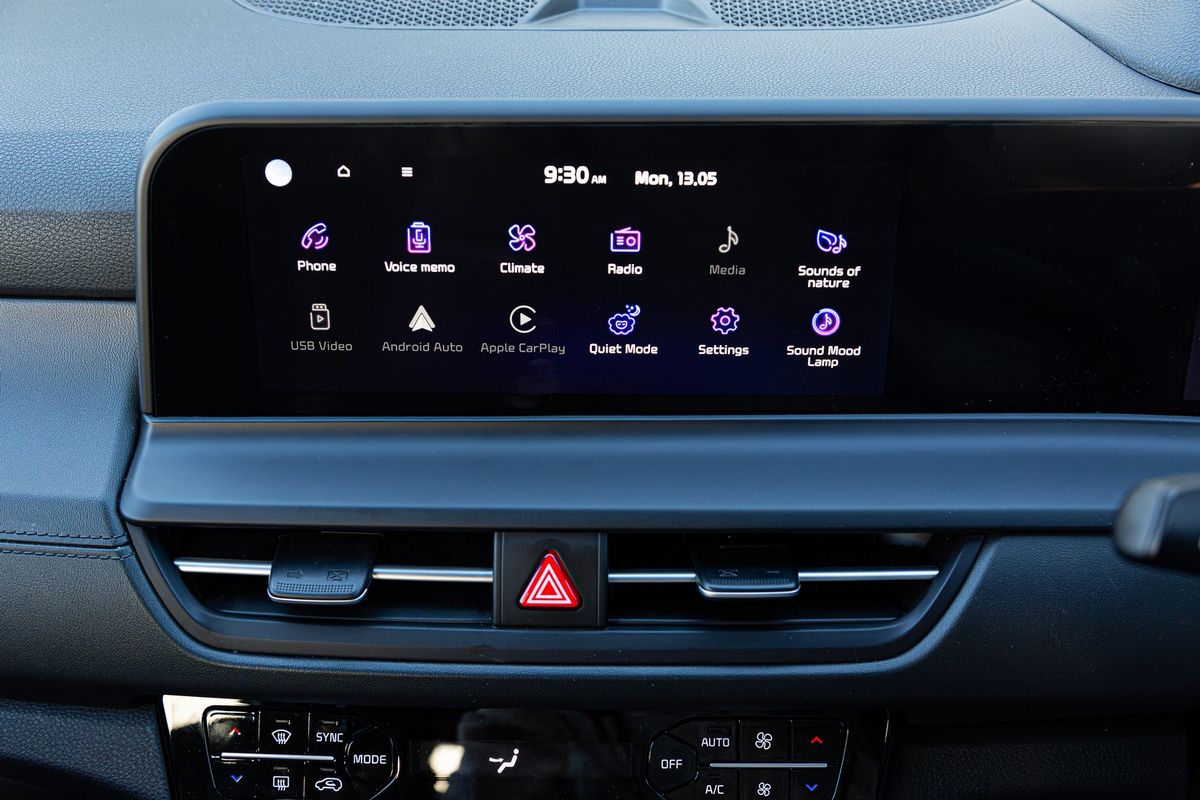
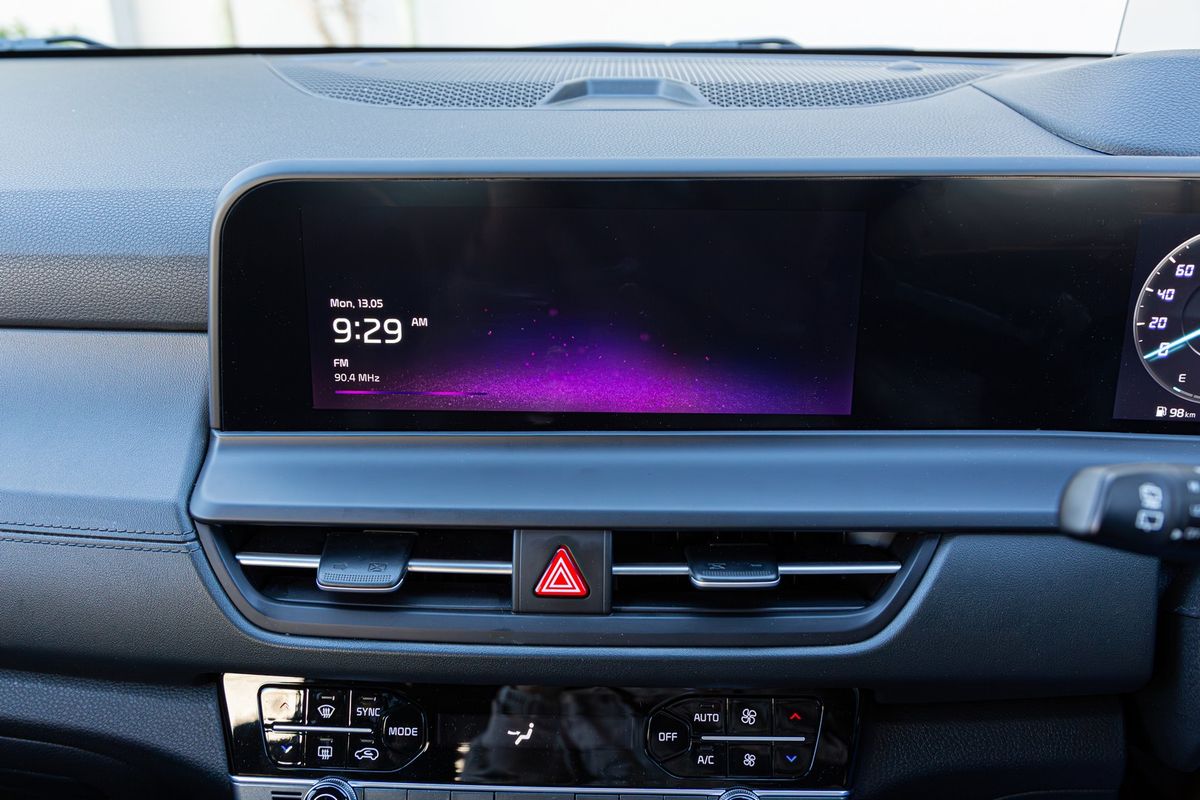
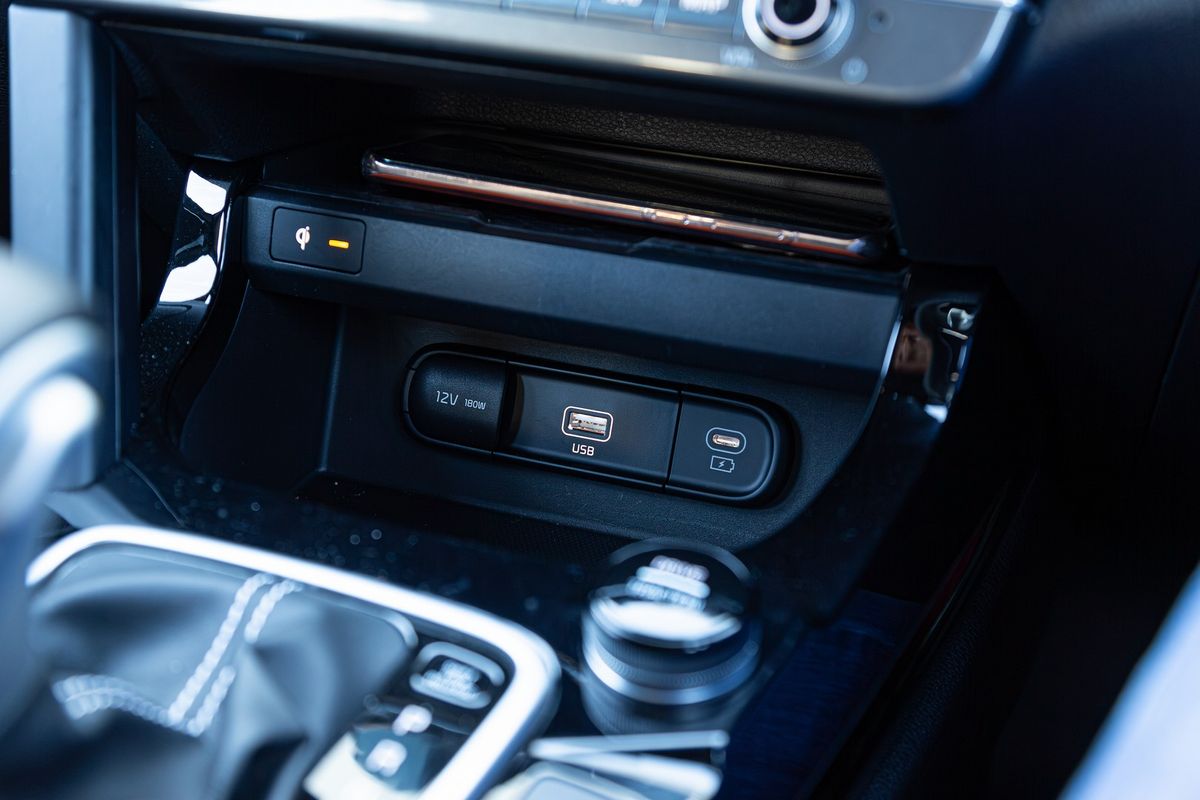
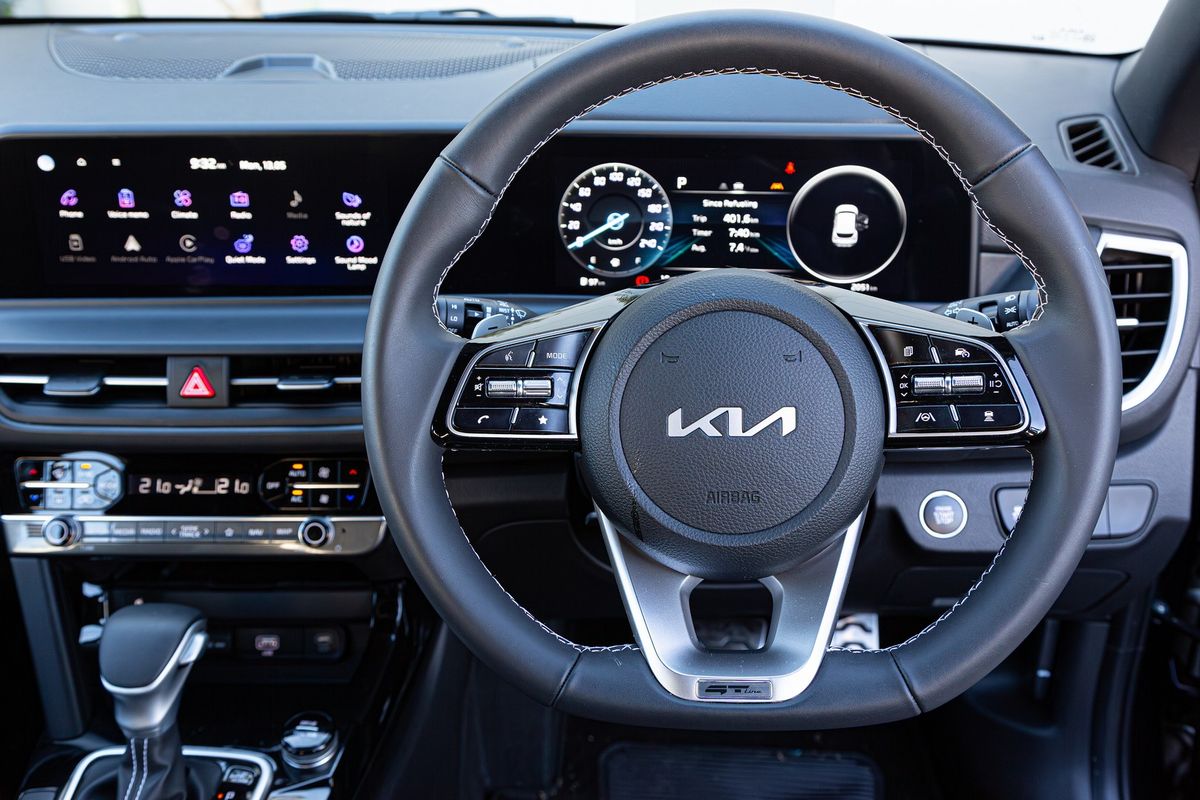
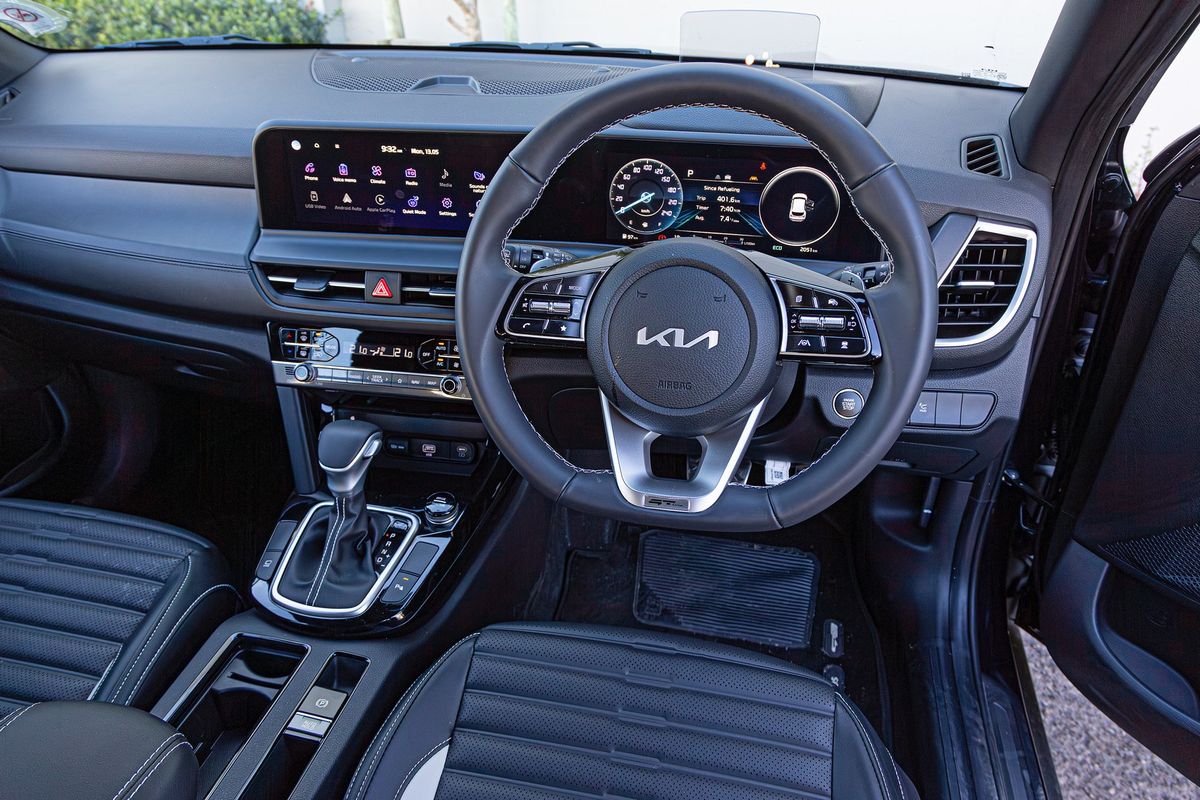
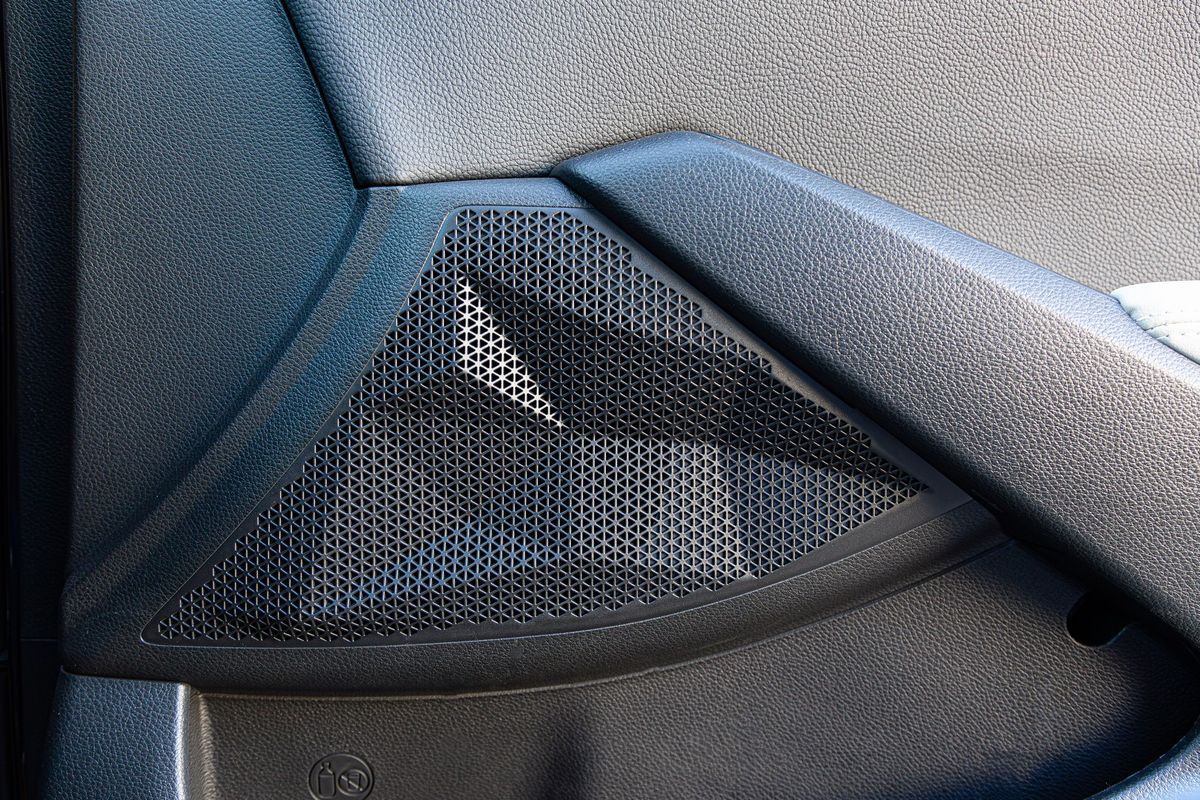
Inside, the Kia features a panoramic sunroof, a curved display (that combines a digital instrument cluster and the 10.25-inch infotainment touchscreen), a head-up display, Android Auto/Apple CarPlay support, a wireless charging pad, parking sensors, reverse-view camera, drive modes, plus keyless entry and -start.
When you step into Seltos, you’re welcomed by a neatly presented and highly contemporary (tech-filled) cabin – materials and finishes are of high quality and most touchpoints feel upmarket. We liked the faux-leather-trimmed sports seats (with GT-Line branding), but the lack of a heating function was a letdown.
The bang-up-to-date interior features most modern creature comforts.
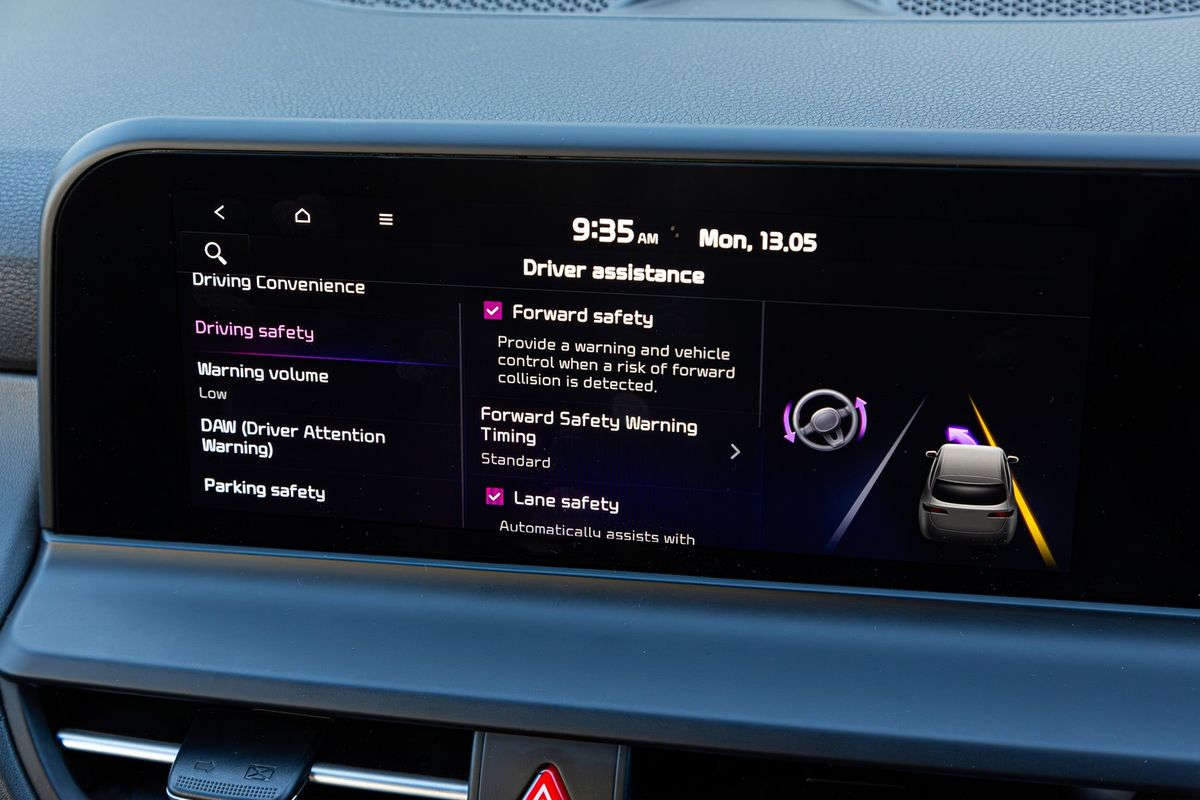
The safety package is comprehensive. At this price point, buyers expect features such as adaptive cruise control, emergency autonomous braking, blind-spot collision avoidance, lane-keeping assist, plus rear cross-traffic alert – and the GT Line has them. All variants have 6 airbags and electronic stability control.
Rear cross-traffic alert more than proves its worth in congested parking lots.
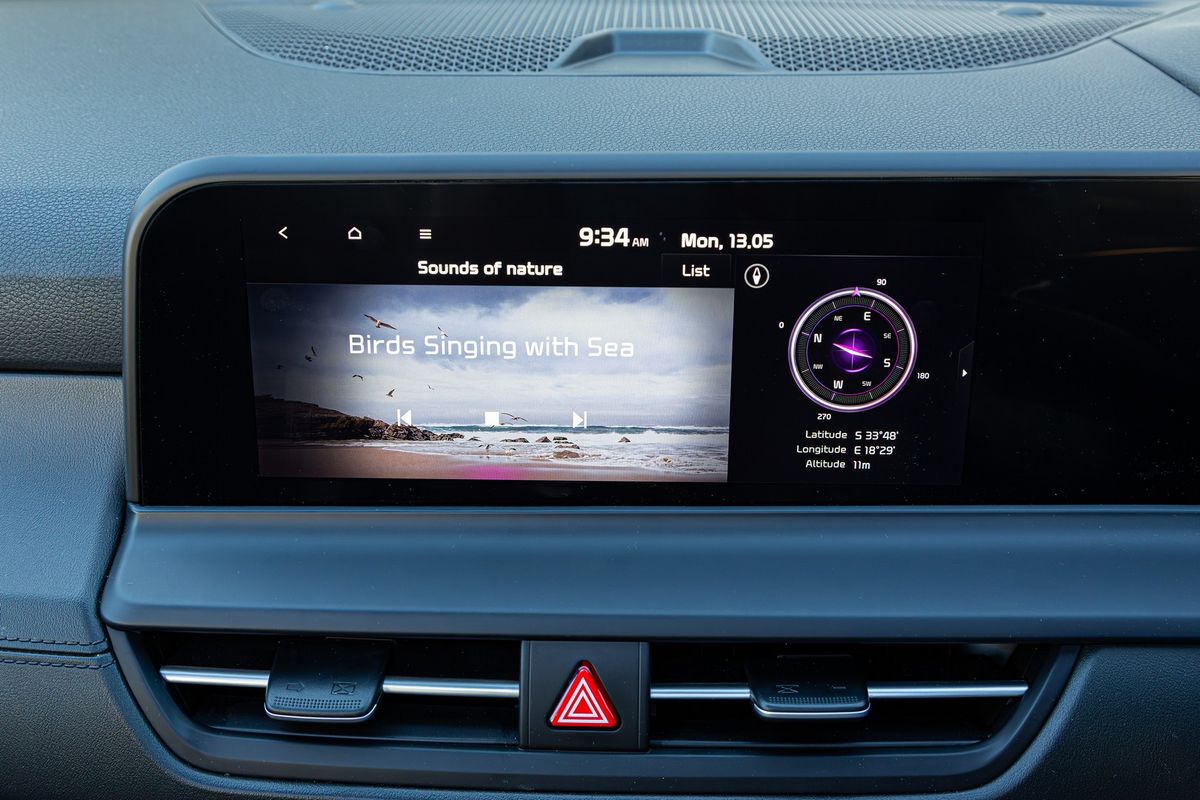
One of our favourite fun features of the Seltos – Sounds of Nature – is simple, yet brilliant. Imagine that you are sitting in traffic after a long day at work and feeling deflated, or even worse, defeated…
When you activate Sounds of Nature (in the Media section of the menu), the audio system will soothe you by playing a relaxing soundscape of your choice, such as Calm Sea Waves, Rainy Day and so on.
Relaxing sounds for those terrible traffic jams – what a treat.
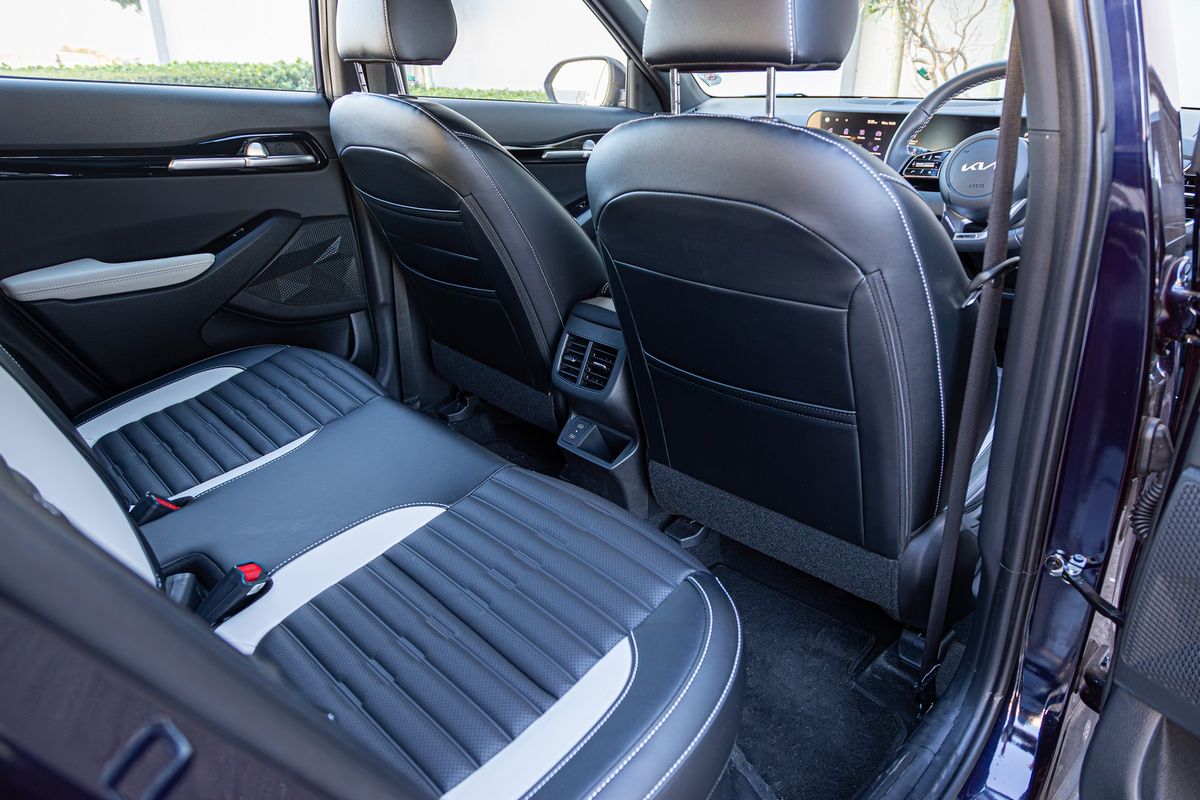
But back to practicality: with its wheelbase of 2 610 mm, the Seltos has no shortage of cabin space (by compact family-car standards) and testers were satisfied that the test unit offered enough rear leg- and headroom for adults. What’s more, the panoramic sunroof contributes to the Kia’s airy cabin ambience.
The load-bay capacity (433 litres) is just about on par for the segment. A full-sized spare wheel is fitted.
Rear passengers are afforded ample leg- and headroom, as well as USB charging ports.
Performance and Efficiency
The previous-gen Kia Seltos GT Line (powered by a 1.4-litre 4-cylinder turbopetrol engine) was certainly no slouch, but the updated version of the flagship variant features an even punchier 1.5-litre powerplant.
Outputs of 118 kW and 253 Nm of torque are on tap, up from the 103 kW/242 Nm of the older car. Again, the Seltos GT Line makes use of a 7-speed dual-clutch transmission, which drives the front wheels only.
The 1,5T-GDI GT Line is an impressive performer – our test unit bettered Kia’s claimed 0-100 kph time.
The 1.5T-GDI GT Line is said to have a claimed 0-100 kph time of 8.9 sec and, when we tested that claim, our our test unit exceeded expectations by galloping from a standstill to 100 kph in 8.65 sec. But there’s more to the Seltos flagship than quick off-the-line acceleration – its powertrain is impressively calibrated.
The 7-speed dual-clutch auto transmission manages to invariably “find the right gear at the right time” –if you demand strong overtaking acceleration, no matter which drive mode is active, the GT Line delivers.
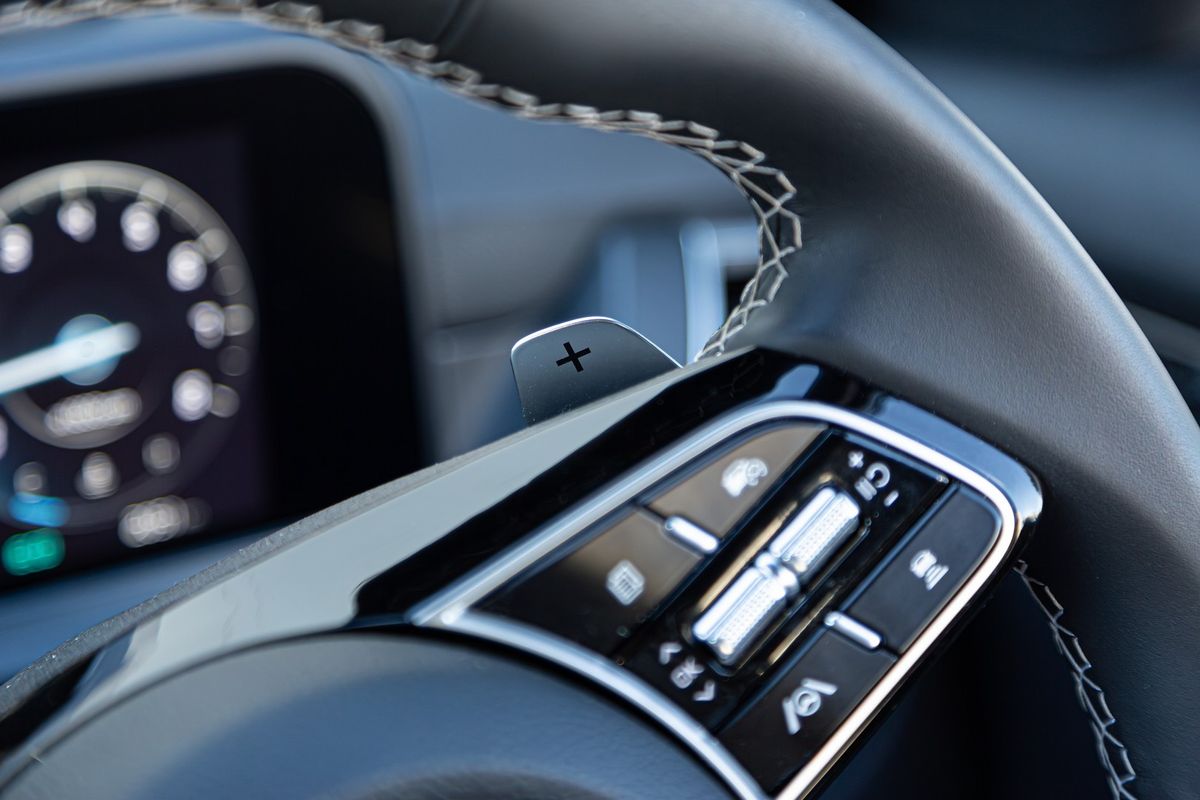
Speaking of drive modes, you can toggle between Sport, Comfort, Eco and Smart (each has a distinct display theme for the dials). Comfort (the default), Sport and Eco require no explanation, but we found we utilised Smart most of the time, because it makes the Kia’s software adapt the powertrain’s settings dynamically – if you accelerate suddenly, the car will switch to Sport for a few seconds, for example.
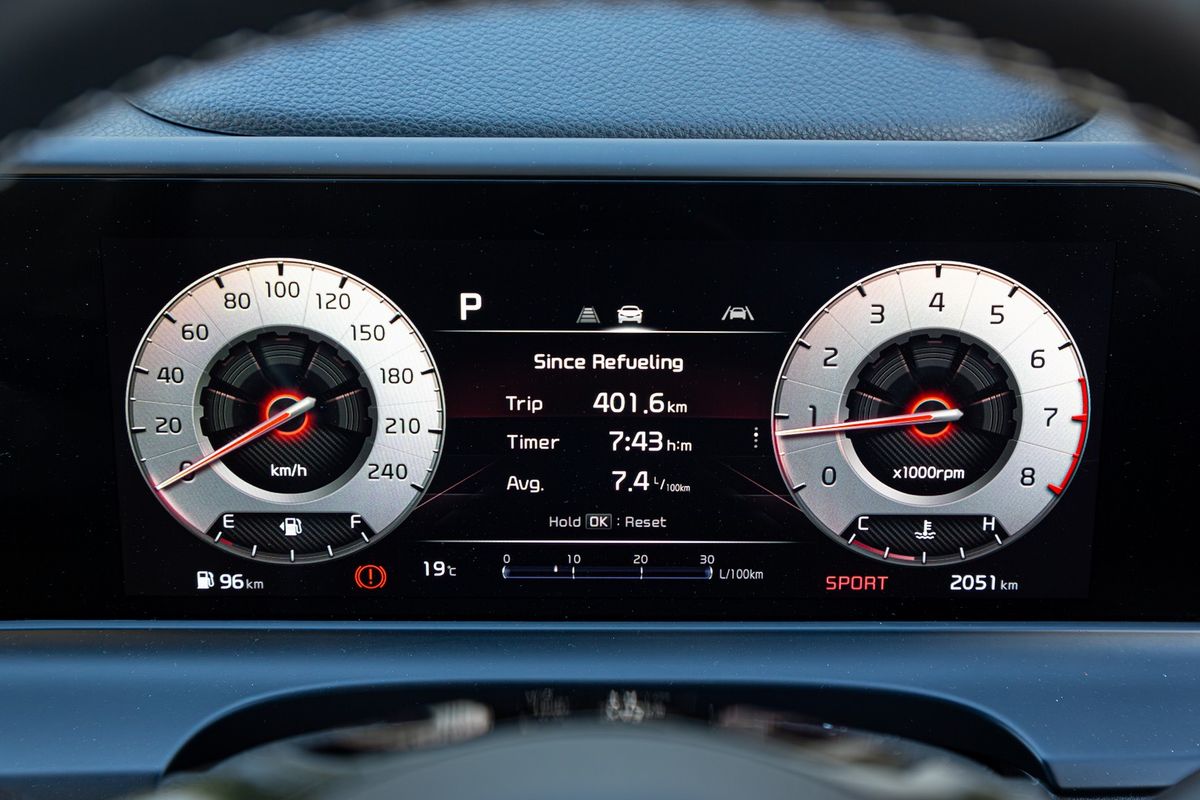
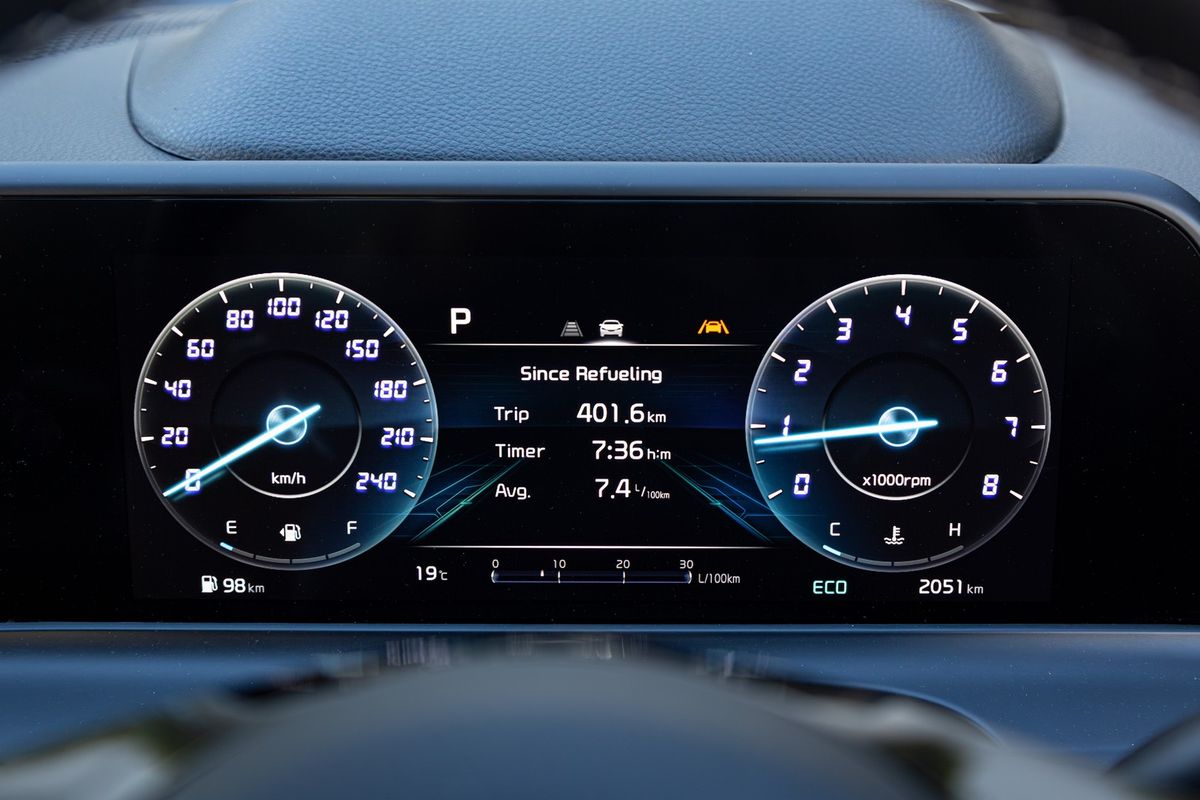
We enjoyed the 1.5T-GDI GT Line’s eager performance, so 7.4 L/100 km is a good consumption figure!
Kia South Africa claims the 1.5T-GDI GT Line has an average fuel consumption of 6.2 L/100 km and, by the end of the Seltos’ tenure in our test fleet, it indicated 7.4 L/100 km, which was impressive, if you bear in mind that (some of) our testers revelled in the eager performance of that 1.5-litre turbopetrol engine. Based on its 50-litre tank capacity, this derivative has a theoretical full-to-empty range of about 800 km.
Ride and Handling
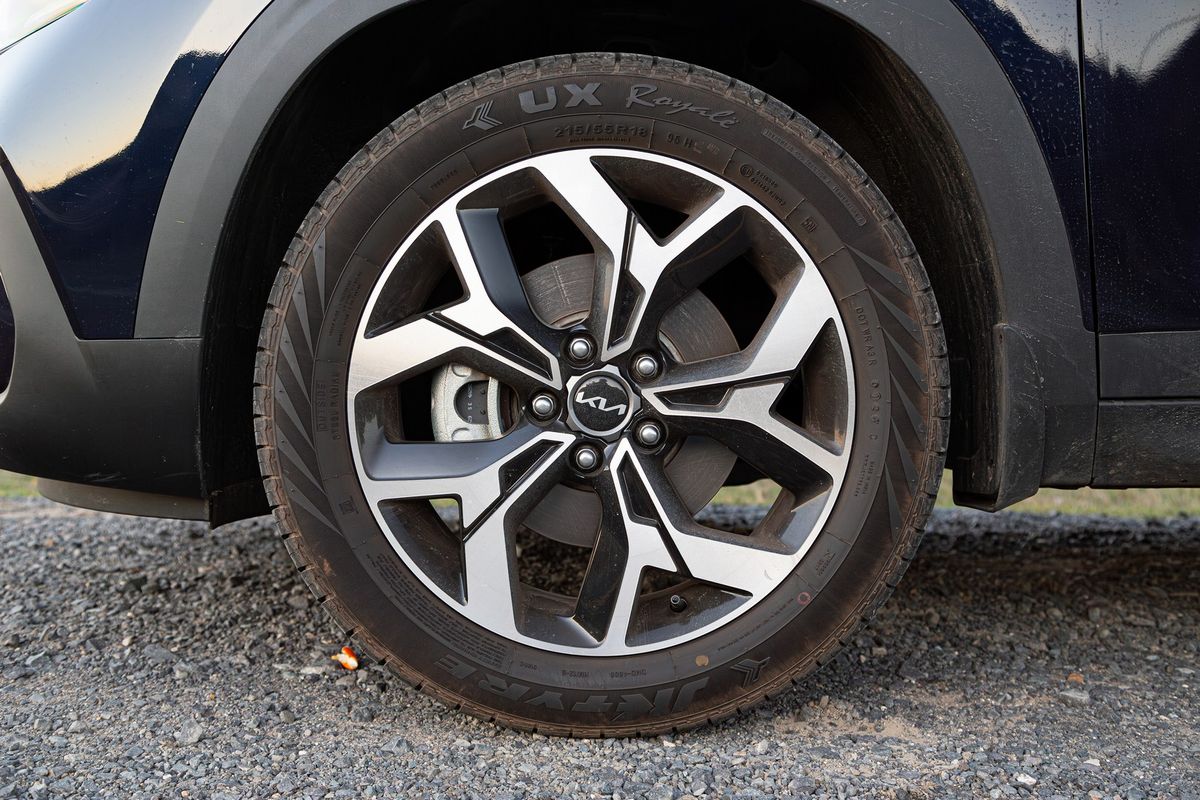
The 18-inch alloy wheels are wrapped in 215/55 rubber.
Kia reserves its GT-Line badge for sportier derivatives and the Seltos is no exception. Apart from gaining a punchier powerplant as part of the facelift, the top-of-the-range derivative has received a wheel-size upgrade, from 17-inch alloys (with 215/60 tyres) to handsome 18-inch units (with 215/55 tyres).
If you drive the 1.5T-GDI spiritedly, you’ll find this “baby SUV” entertaining to pilot. Body roll is kept well in check and a light, but direct, steering setup makes it a cinch to guide the car in the desired direction. Plus, the liberally assisted ‘wheel is easy to twirl when you need to manoeuvre into tight parking bays.
USB-A, USB-C and a wireless charging pad will keep “always-connected” occupants happy.
The GT Line’s suspension tune seems to tread that fine line between comfort and dynamism nicely. The derivative’s general ride comfort is good, but maybe lower Seltos derivatives (that ride on smaller tyres with thicker sidewalls) may traverse the Republic’s roads, which vary wildly in condition, more pliantly.
If we had to nitpick, a bit too much road noise enters the cabin, but other than that, you’ll struggle to find fault with the Seltos’ on-road manners. The (front-wheel-drive) 1.5T-GDI GT Line is no off-roader, but its 190 mm of ground clearance makes it well suited to travelling on gravel roads and, um, climbing kerbs.
The Kia Seltos continues where it left off – it’s a charming and spacious compact family car.
2024 Kia Seltos: Price and After-sales support
The Kia Seltos 1.5 T-GDi GT Line DCT retails for R626 995 (June 2024). A 5-year/unlimited km warranty (with roadside assistance) and a 5-year/90 000 km service plan are included in the asking price.
The Seltos remains a highly compelling proposition! Granted, it is pricier than some models that may be considered rivals, but the Kia’s value offering lies in spaciousness and generous spec (on most variants).
While the GT Line is a halo product, we think the 1.5CRDi turbodiesel derivatives offer better value.
The Seltos flagship is a deceptively fleet-footed compact family car and its performance and packaging befit the GT-Line badge. Should you buy one, however? While the Seltos is highly desirable (especially in this trim grade), given its lofty price tag, which at R626 995 (June 2024) is not too far from that of larger, arguably more refined medium SUVs – such as the Sportage – there’s better value lower in the range.
As was the case with the pre-facelift Seltos, a turbodiesel-powered derivative makes the most sense. The 1.5CRDi EX+ may not be as quick as the GT Line, but it offers excellent fuel economy for R30k less.
We haven’t tested a diesel variant of the facelifted model (yet), but if it’s anything like its predecessor, a 1.5CRDi auto should easily achieve a fuel consumption figure of under 7 L/100 km in mixed conditions. For what it’s worth, Kia SA tested one from Johannesburg to Cape Town and managed 4.37 L/100 km.
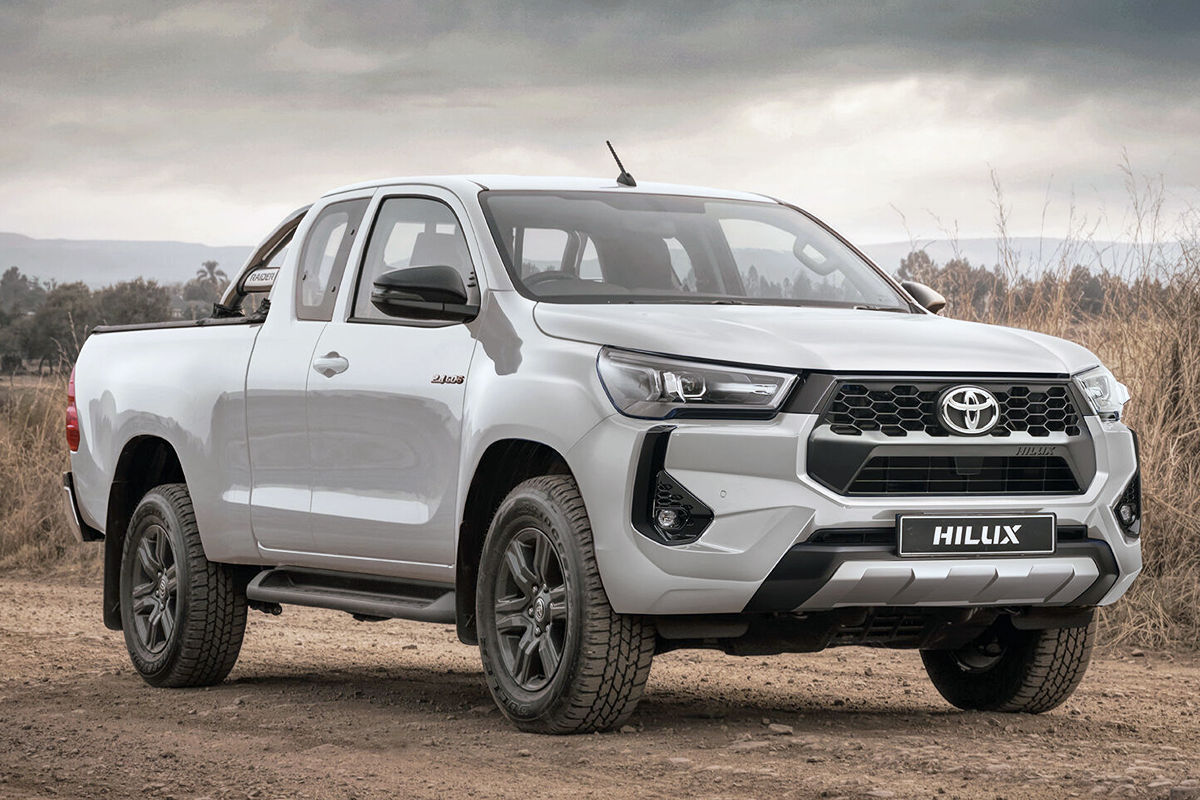
Toyota Hilux Raider gains fresh look! SA prices revealed…
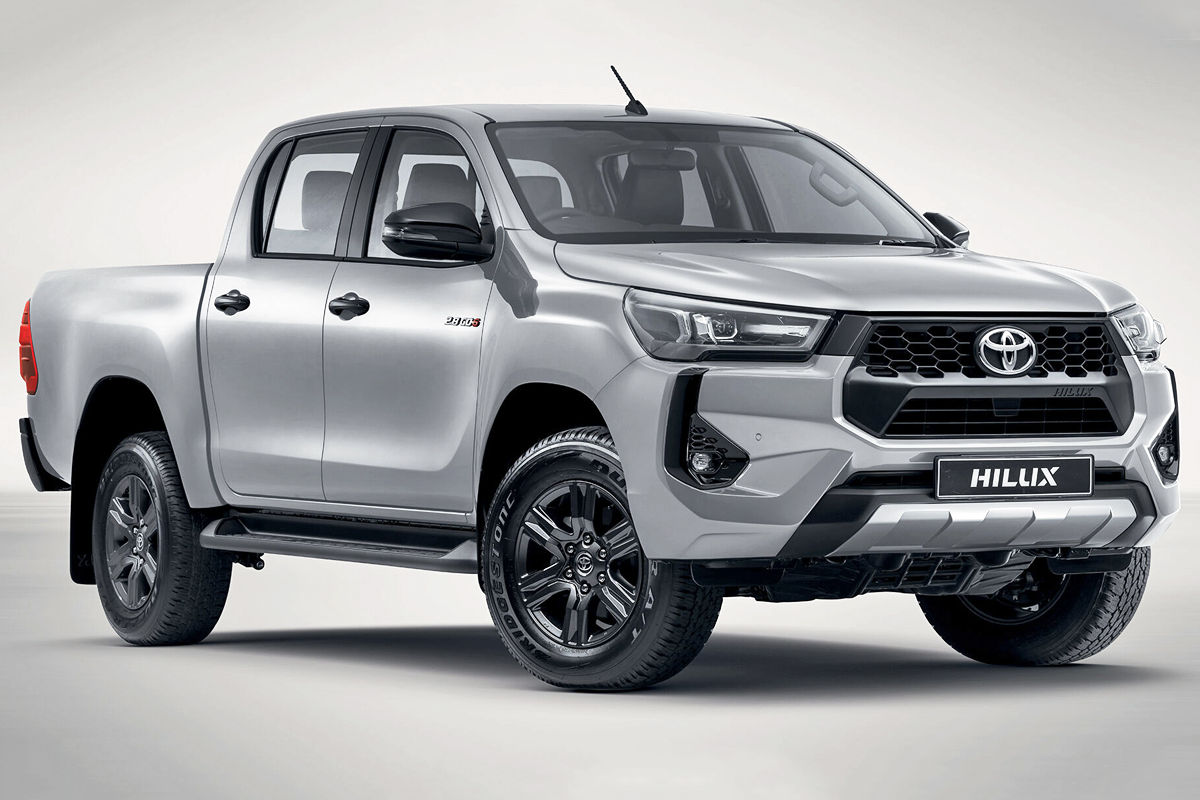
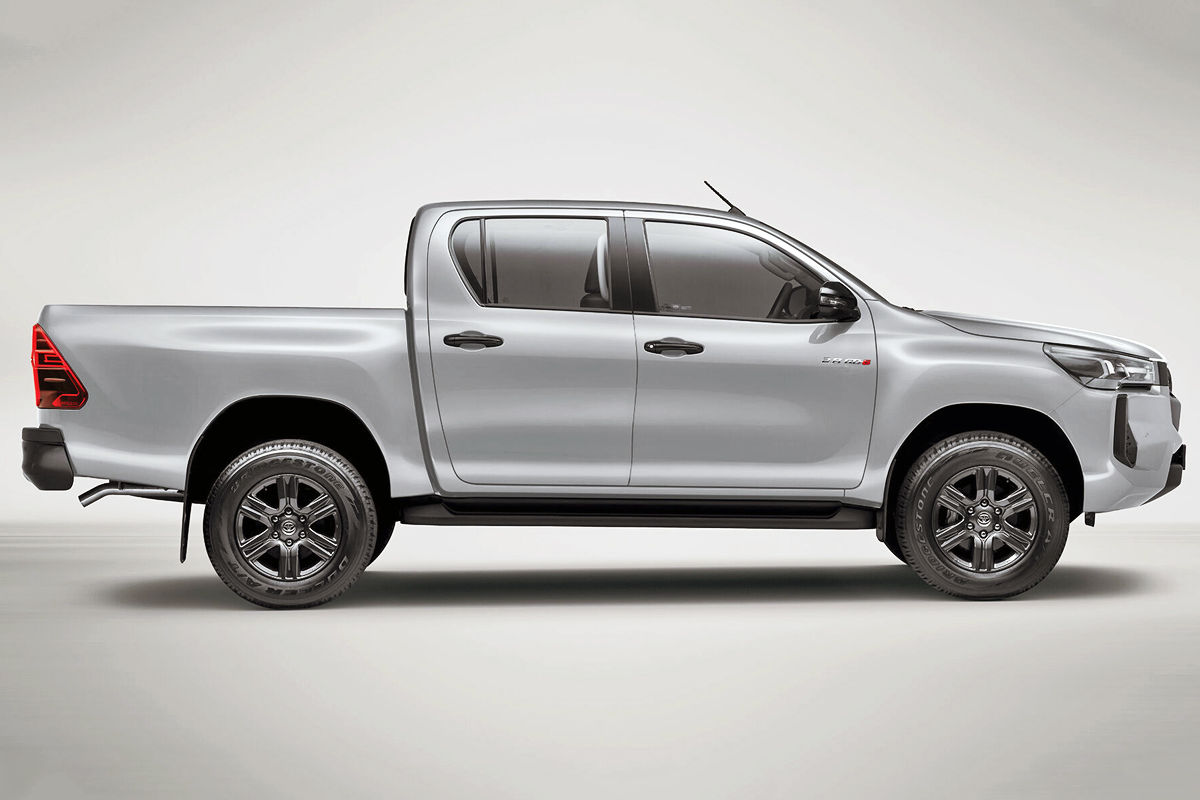
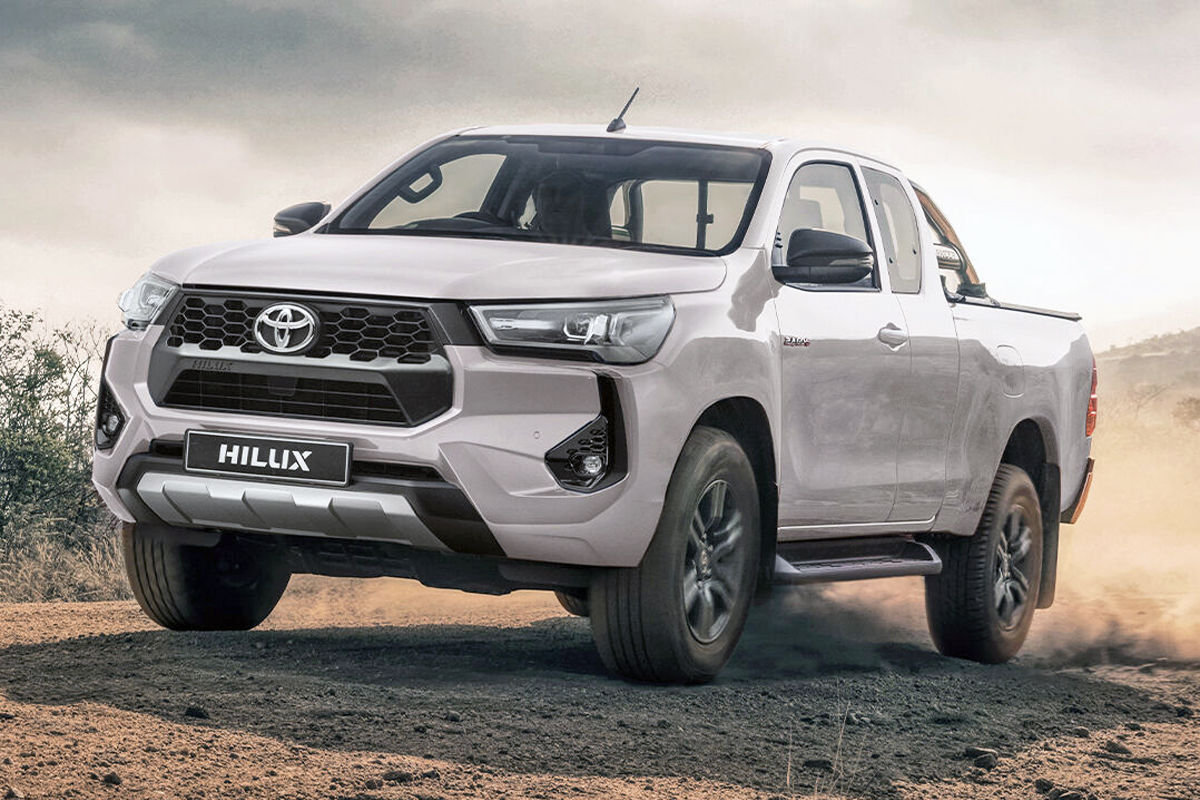
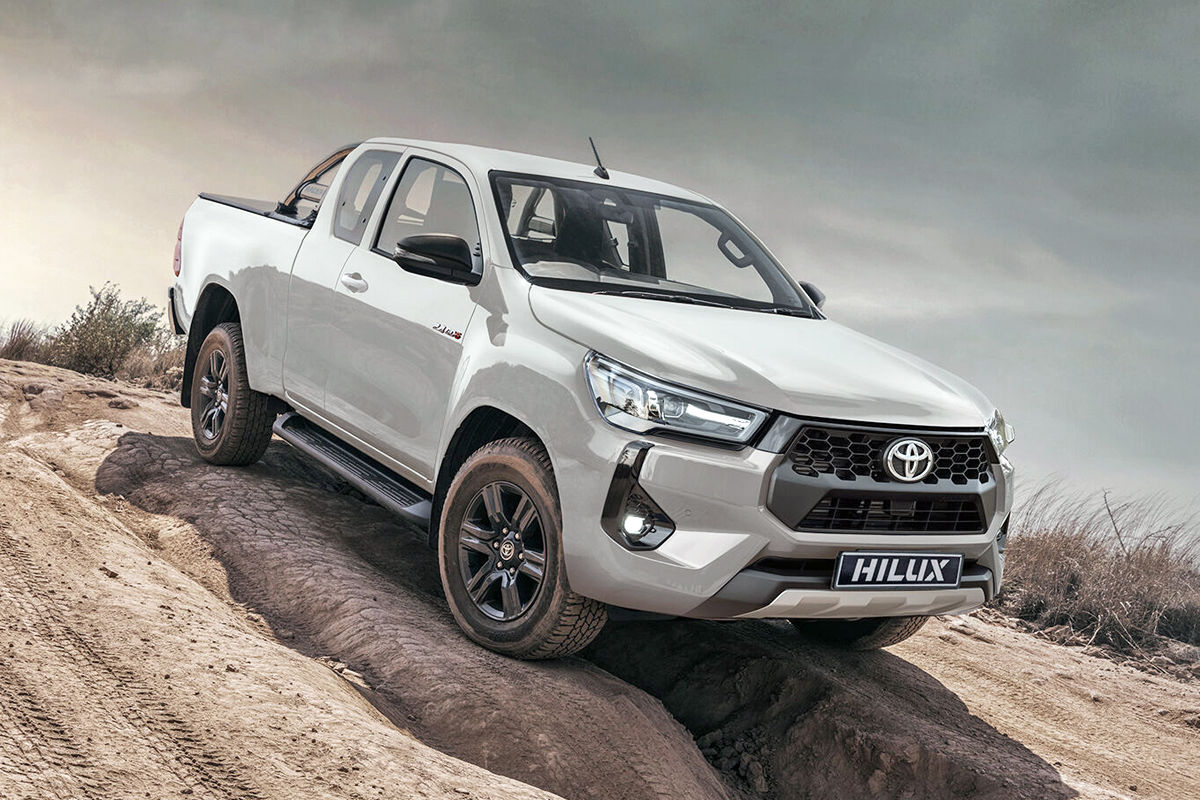
Toyota SA Motors has updated its Hilux Raider extended- and double-cab derivatives with fresh front-end styling. Here’s how much these new-look bakkies cost…
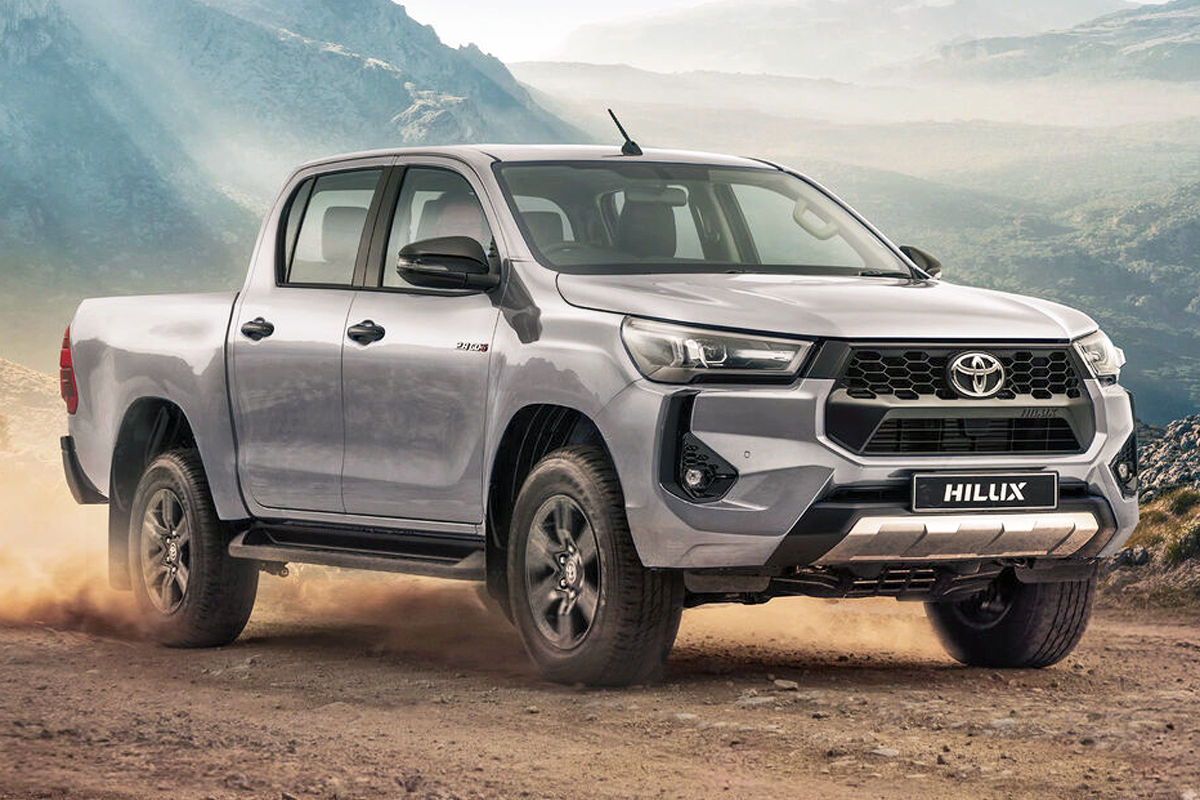
Back in February 2024, the Toyota Hilux was handed fresh front-end styling overseas. Now, Toyota South Africa Motors has applied this new look to the extended- and double-cab versions of its Hilux Raider trim level.
From what we can tell, single-cab Raider derivatives seemingly stick with the old design, as do the limited-edition Raider X double cab variants (though we suspect the latter will soon fall away).
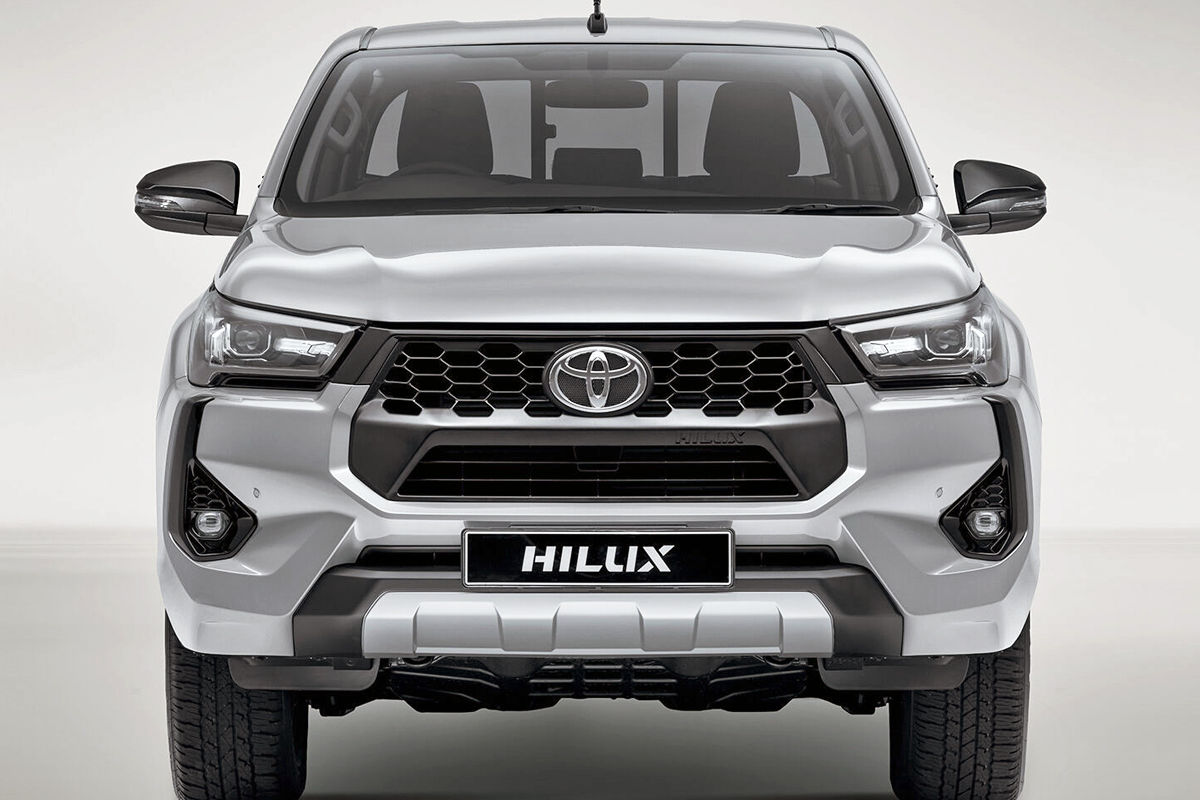
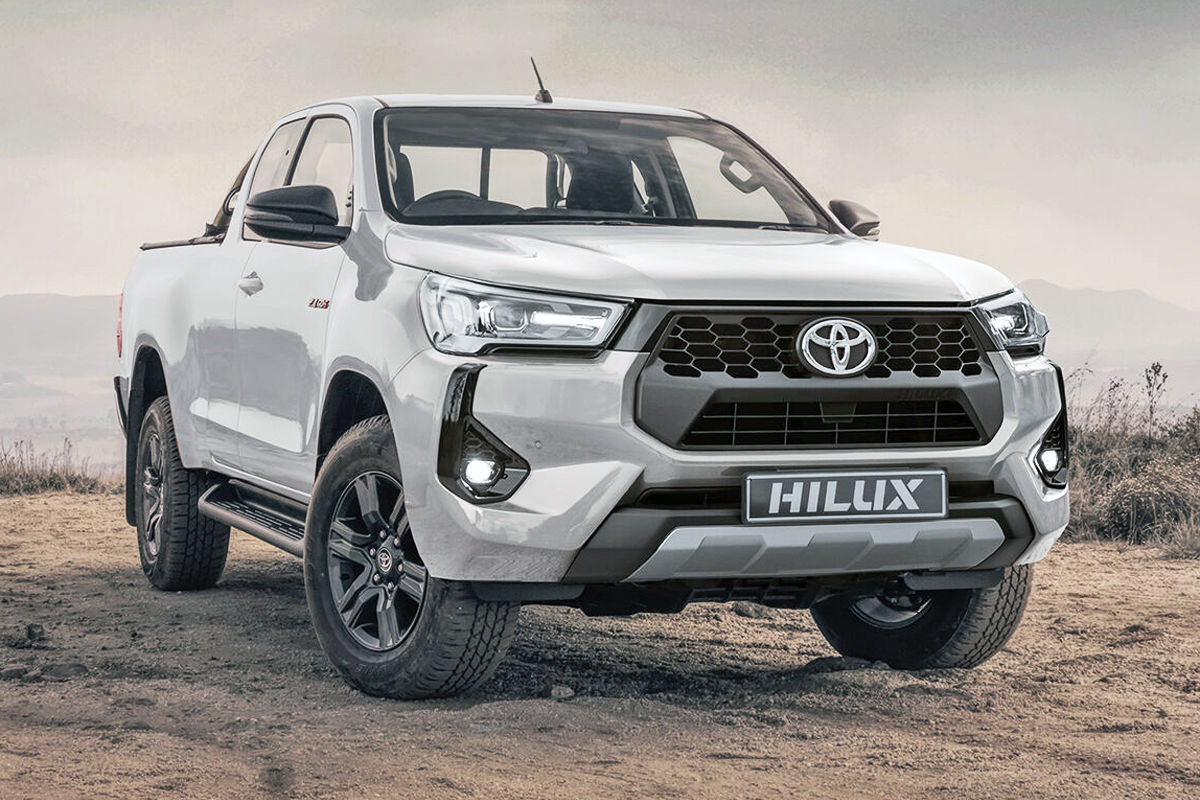
Note the new grille treatment, as well as the revised foglamp bezels.
So, what do these design revisions entail? Well, the Hilux Raider’s updated face features a new-look matte-black grille and front bumper, combined in what the Japanese automaker describes as an “interlocking design with an octagonal grille, trapezoidal lower section and bold outer bumper”.
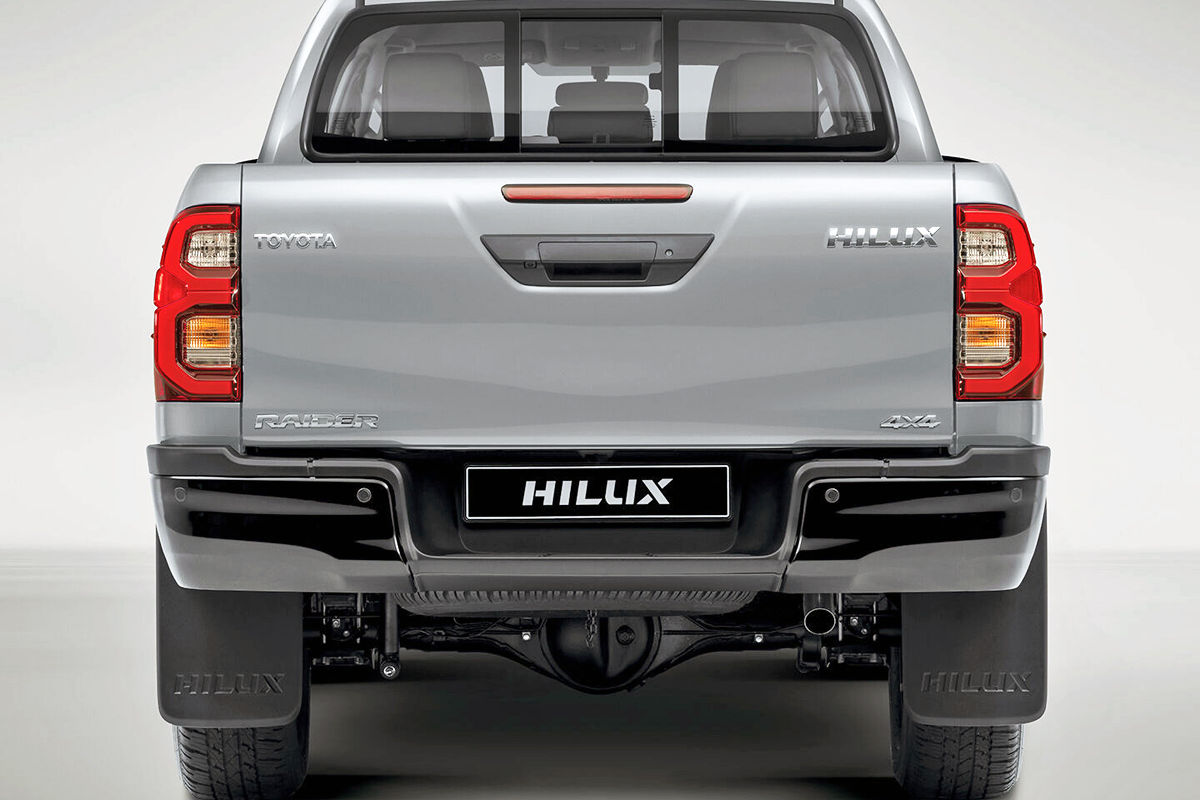
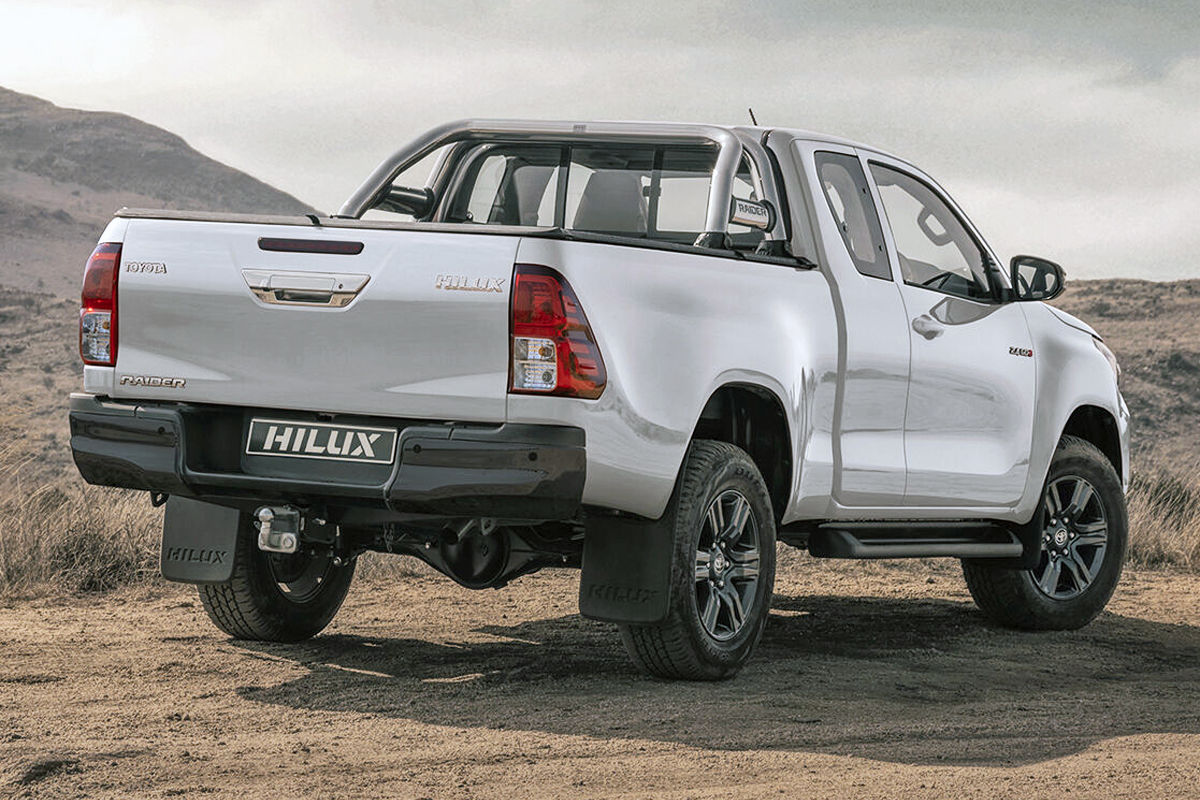
Judging by the images of the Prospecton-produced model, there’s also a fresh foglamp-bezel design, as well as a black rear bumper and black side-mirror caps (double-cab derivatives furthermore score black exterior door handles). It’s not yet clear whether any updates have been made to the cabin nor whether the list of standard specification has been expanded.
Xtra Cab Raider derivatives score black side-mirror caps but do without black exterior door handles.
As before, however, the Hilux Xtra Cab line-up includes 2 Raider derivatives, each using the familiar 2.4-litre, 4-cylinder turbodiesel engine, which delivers 110 kW and 400 Nm to the rear axle via either a 6-speed manual gearbox or an automatic transmission with the same number of cogs.
The updated 2.4 GD-6 Xtra Cab Raider 4×2 6MT is priced at R563 200, while the 2.4 GD-6 Xtra Cab Raider 4×2 6AT comes in at R587 200. For the record, these new prices represent a R4 900 increase in each case.
The new Raider front-end design (left) compared with the outgoing version (right).
Meanwhile, there are again 8 Raider derivatives in the double-cab portfolio, powered either by the same 2.4 GD-6 engine mentioned above or the larger-capacity 2.8-litre, 4-cylinder turbodiesel mill (which generates 150 kW and 500 Nm). The latter powerplant is, of course, furthermore offered in 48V mild-hybrid form.
What about pricing for the dual-cab models? Well, the updated Raider double-cab derivatives start at R612 100 and run through to R876 600, with increases of R4 900 in the case of the 2.4 GD-6 derivatives and R10 600 for the 2.8 GD-6 variants.
Check out full Raider extended- and double-cab pricing below…
How much does the updated Toyota Hilux Raider cost in SA?
2.4 GD-6 Xtra Cab Raider 4×2 6MT – R563 200
2.4 GD-6 Xtra Cab Raider 4×2 6AT – R587 200
2.4 GD-6 Double Cab Raider 4×2 6MT – R612 100
2.4 GD-6 Double Cab Raider 4×2 6AT – R633 200
2.4 GD-6 Double Cab Raider 4×4 6MT – R684 800
2.4 GD-6 Double Cab Raider 4×4 6AT – R716 300
2.8 GD-6 Double Cab Raider 4×2 6AT – R769 900
2.8 GD-6 Double Cab Raider 48V 4×2 6AT – R785 400
2.8 GD-6 Double Cab Raider 4×4 6AT – R858 600
2.8 GD-6 Double Cab Raider 48V 4×4 6AT –R876 600
A 3-year/100 000 km warranty and a 9-service/90 000 km service plan are again included as standard.
Although it was unveiled at the Frankfurt Motor Show in 2001, it took another 4 years of fine-tuning before the profound Bugatti Veyron 16.4 was deemed “ready for public consumption.” We revisit this automotive marvel on a sunset drive in the Winelands.
If you dig deep into the Bugatti Veyron’s history, it becomes evident that the genesis of this car can be traced all the way to shortly after World War II. In his book Faster, Higher, Farther, Jack Ewing’s in-depth writing covers the inside story of Volkswagen’s “Dieselgate” scandal.
Naturally, throughout the book, the late Dr Ferdinand Piëch is mentioned, also casting a light on his early life as a child. Piëch, of course, is regarded as the “father” of the Veyron…
Already in 1942, during World War II (at the age of 5), Piëch walked around in the Volkswagen factory, where he immersed himself in the environment and reportedly shifted the gears of the (unsynchronized) gearboxes of the cars of that era. Even before he was in school (in the early ’40s), he reportedly told his mother that he would like to be hands-on and work in a factory with various automotive machines.
That force of will remained throughout his career. Under his guidance, the Bugatti Veyron was destined to become the pinnacle of the motoring world. First, the VW Group decided to revive Bugatti and then incorporated the French brand as a wholly-owned subsidiary in 2000. Piëch, who studied engineering, was ultimately responsible for some of the most significant road and race cars in automotive history.
As Ewing states, when the Veyron first saw the light of day in 2005, it was “in the spirit of Ettore Bugatti, fabulously expensive and ridiculously overpowered.” For a petrolhead, the latter statement is debatable.
The idea of the Veyron came about, as some brilliant ideas do, through a rough drawing on a piece of paper. It is said that during 1997, Piëch and Volkswagen’s head of powertrain development Karl-Heiz Neumann were travelling on the “Shinkansen” bullet train between Tokyo and Nagoya. Piëch had this idea of an 18-cylinder engine and drew it on that now historic slip of foolscap. It would eventually take 4 concept models, but in 2001, Bugatti announced that the Veyron would go into series production.
The Bugatti Veyron’s long gestatation
I happened to attend the 2001 Frankfurt Motor Show and remember seeing the Veyron on the stand; the hypercar’s muscular drivetrain had a display of its own! It was massive. There were numerous challenges along the way. Keeping the car as compact as possible, as stable as possible at high speed and as light as possible were just some of the problems, not to mention the complex all-wheel drive system.
Of course, the Chiron has come along and has upped the ante to new levels in many ways. But whether they can or can’t afford it, many enthusiasts still prefer the Veyron – it will always be the “OG” hypercar.
This particular Bugatti Veyron stands out from the crowd like few other cars, particularly because of its traditional – and typically Bugatti – paint scheme. And, at the time of writing, there were only 3 Veyrons in the Republic of South Africa and most of them are usually tucked away and rarely seen on the road.
Franschhoek is in the heart of the Winelands and offers some of the best driving roads in the world. These roads are known not only for their high-quality surfaces but also for their visual majesty.
One of them is the Franschhoek Mountain Pass, a twisting piece of tarmac that snakes up a mountain in true Alpine fashion, followed by a sweeping stretch of flat road when you leave the mountain behind. Interestingly, during its development phase, the Bugatti Veyron was sent to South Africa for testing.
The VW Group has a massive, relatively secretive, test facility out in the Northern Cape, so it stands to reason that it would fine-tune one of its high-speed vehicles there.
Specifications
Model: Bugatti Veyron 16.4
Engine: 8.0-litre, quad-turbo W16, petrol
Power: 736 kW at 6 000 rpm
Torque: 1 250 Nm at 2 200-5 500 rpm
Transmission: 7-speed dual-clutch automatic, AWD
Weight: 1 888 kg
0-100 kph: 2.5 sec (claimed)
Top speed: 407 kph (claimed)
The sinuous sheet metal of the Bugatti Veyron
Before the late afternoon light fades, we harness nature’s golden illumination to capture the Veyron’s striking lines on camera. Then, the Veyron’s key is handed to me. As expected, the car looks hunkered down. I keep thinking, as I walk to the car and also later during the afternoon, about the car’s smooth, “unfussy” design. Modern hypercars are plastered with numerous winglets, aero inlets and -outlets, as well as myriad other body addenda – but not the Bugatti Veyron, even its rear wing is elegantly stowed.
There is, of course, the iconic horseshoe grille in the front, a large cut-out into the bodywork behind the front wheels and the intakes behind the doors. Both the latter items are optically hidden thanks to the black paintwork. However, at the rear of the hypercar things do get interesting. When travelling at, or braking from high speeds, the Bugatti Veyron will automatically deploy its massive dual-plane rear wing.
However, it is still a very sinuous design. The Veyron presents one of the purest rear 3-quarter views of any hypercar – or any car, period. When parked, the wing can still be deployed and left in that position.
That configuration presents an ideal opportunity to look at what’s hidden beneath it – you can see part of the exhaust system and the rear end of that W16, which can catapult the car from 0-100 kph in 2.5 sec.
The brushed-silver air intakes above the engine (they peek out ever so slightly above the roofline) flow elegantly with the car’s design and are beautifully integrated into the body. Even the side mirrors don’t extend outward past the car’s body (as on other cars) – it’s yet another bit of clever aerodynamic design.
But the absolute highlight is seeing the “open” engine nestled between the pair of ascending air intakes. I peer in a little deeper and can’t help but wonder how the engineers were able to fit this drivetrain into a vehicle with such a relatively small footprint – to call it a triumph of engineering is an understatement!
The Bugatti Veyron’s sumptuous cabin
I pull the polished metal door handle and when I sink into the low seating position a few things catch my eye. Firstly, I’m struck by just how luxurious but, at the same time, homogenous and elegant the cabin is.
The duo-tone navy blue and cream interior creates a clean, relaxing ambience, which seems incongruous with the visceral driving experience this hypercar is said to offer! There is no big infotainment screen, just the controls for the climate control, a leather-wrapped transmission lever and 2 steering column stalks.
And how refreshing is it to experience a steering wheel devoid of a multitude of buttons? Suffice it to say, the Veyron’s cabin is pleasantly simple and quite “elemental” compared with those of modern exotics.
There is nothing to draw your attention away from the driving experience. Behind the steering wheel is a large analogue rev counter, to the right the smaller speedometer (with an even smaller digital display) and a few other displays for interesting bits of info (such as the power indicator on the left, with a needle that swings around the clock to 1 000, if you’re brave enough to press the accelerator pedal to the floor).
Behind the ‘wheel of the Bugatti Veyron
I twist the key, then press the starter button behind the transmission lever. The starter motor whirrs a few times and then the W16 catches. At first, I’m surprised by how quiet it is, although it emits a deep rumble.
However, later on I would realise that the deep bassy exhaust note is more audible to those listening from outside. The Veyron’s driver’s seat is comfortable, but certainly more firm and supportive than plush and cossetting. That said, you should be able to spend a good few hours in it without feeling any discomfort.
I push the transmission lever to the right to select Drive and pull away. Within a few metres, I realise how planted the car Veyron feels and how stiff its suspension is. It’s no surprise: this is a 1 900 kg (official figure is 1 888 kg) car that must be able to handle a plethora of forces up to 400 kph. This is no cushy GT, it is a focused hypercar – especially if you consider what it represented almost 2 decades ago.
The tiniest throttle inputs remind you that there are no fewer than 4 turbochargers bolted to the 8.0-litre W16. There is some whistling from them, but less so than in a modern Pagani Huayra. The powertrain still offers a very high level of sophistication – the idea was to not allow too much noise to enter the cabin.
You sit as near as dammit to the floor pan of the car, which means you are very close to the road. Still, I have a perfect view over the first part of the black bonnet, while I can see the blue fenders as well. As the nose of the Bugatti Veyron is quite stubby, you know the front wheels are close to your feet, which makes it easy to place the car through corners. This is anything but a bulky and cumbersome machine.
As the Veyron had been driven before the shoot, all its vital fluids were already warmed up. Having fully steeled myself to experience the 16.4’s prodigious performance, I decide to push the transmission lever again to activate Sport mode and utilise the paddle shifters on the ‘wheel to change gears myself. This gives you more control over the engine, allowing you to get a better feel for its herculean performance.
The Bugatti Veyron’s steering is light, but precise and as I dive through a few corners, the lightness of the steering system allows me to focus on other aspects of the car. I thought the 16.4’s weight would be very noticeable, but that is not the case. Even when pressing the brake pedal, the massive discs (400 mm up front, clamped by 8-piston calipers) not only give “good pedal feel”, but scrub off speed adroitly.
At 2 000 rpm in 5th gear, I lean on the hypercar’s accelerator pedal and feel a storm building deep down behind me. What follows, virtually instantaneously, is a seemingly relentless surge of glorious torque. I shift down a couple of gears and press the long pedal down further. Within a split second, the previously burbling hypercar reacts with a guttural roar as its 16-cylinder engine rollicks inexorably to the red line.
The red line is just after 6 000 rpm, but that number is nearly irrelevant, because throughout the 8.0-litre quad-turbo W16’s rev range, there is always a copious torque (1 250 Nm from 2 200 to 5 500 rpm) on offer. When you engage the next gear, the surge continues unabatedly, but even if the Veyron’s huge engine isn’t as rev-happy as smaller capacity, non-turbocharged motors (such as the 3.9-litre V12 in the GMA T.50) you’re likely to reach the end of most straight stretches before you reach the red line again!
When I find myself with a clear stretch of straight(ish) asphalt in front of me, I’m deep into 3-figure kph speeds within seconds. As impressive as the acceleration is, it’s the utter stability of the Veyron 16.4 at such speeds that impresses me most. Several other modern high-performance cars shimmy about ever so slightly as they approach their limits, but the elder statesman Veyron remains planted to terra firma.
As you are always aware of how fast it can go, the Bugatti Veyron does entice you to eke as much out of it as you can during straight-road blasts. But it’s not a one-trick pony. It might be on the heavy side, but it’s fitted with incredibly wide tyres (265 at the front, 365 at the rear), as well as a clever electronically controlled all-wheel-drive system; the “French” hypercar has huge grip and traction to aid cornering.
You rarely have to look in the rear-view mirror, but when you do, it would be to appreciate anew the view (over the metal covers) of the masterpiece that is the 725-kW 8.0-litre, 16-cylinder quad-turbo engine.
For a moment I think about the Bugatti Veyron’s heft. In the mid-2000s, a sportscar with a kerb weight of 1 888 kg was considered rather portly. Oh, how times have changed. Today, a BMW M3 Sedan tips the scales at 1 840 kg. In that sense, as in several other ways, history has been kind to Piëch’s brainchild.
I squeeze the accelerator pedal a few more times and start giggling at the “otherworldly” performance. Even today, but especially 2 decades ago, this car represents engineering on another level, and keeping such a special car on the road is likely to cost the same as a small boat. Indeed, another owner (and several online resources) confirm that you have to have deep pockets to keep a Veyron in the stable…
Before I exit the Veyron, I adjust the driver’s seat back to the position it was before I drove the car with a mechanical lever underneath the seat. That might seem trivial, but it illustrates that Bugatti still wanted to keep the weight as low as possible for obvious reasons. The same is the case for the level of luxury in the car. It is luxurious, but if you want the most luxurious car on the planet you will need to look elsewhere.
However, if you want to experience one of the pinnacles of automotive performance – in road-car terms – and an all-round engineering marvel that had many highly gifted engineers scratching their heads for quite a few years, the Bugatti Veyron must be at the top of your list. Just don’t ask how much it costs.
Special thanks to The Archive for making this drive possible.
Just how well has the new Ford Territory been received in South Africa? Well, let’s take a closer look at local sales figures after this crossover’s first month on the market…
The new Ford Territory officially hit the market in May 2024, seeing the Blue Oval brand return to the South Africa’s family crossover space (remember the Kuga?). So, just how well has the Territory been received by local buyers so far?
Well, according to figures submitted to Naamsa, Ford sold 264 units of the Territory in Mzansi in May 2024, with 258 units coming via the dealer channel and 6 units listed as so-called “single” registrations (effectively vehicles the brand kept and licensed for its own use). Keep in mind the 5-seater crossover’s official on-sale date was 8 May 2024, meaning the figure above doesn’t quite represent a full month on the market.
Still, the Territory’s tally was enough for it to place 2nd on the list of most-popular Ford models in May 2024, beaten only by the Silverton-built Ranger (2 216 units). That meant the Territory was the top-selling passenger vehicle for the Blue Oval brand last month, finishing ahead of the Everest (220 units), Puma (43 units) and outgoing Mustang (7 units).
This early performance furthermore saw the Territory beat established segment rivals such as the Volkswagen Tiguan (141 units), Mazda CX-5 (118 units), Toyota RAV4 (102 units), Hyundai Tucson (52 units) and Kia Sportage (49 units). However, it couldn’t match likewise Chinese-built contenders such as the Chery Tiggo 7 Pro (342 units) and Haval H6 (272 units). Though Jaecoo reported 148 sales of the newly launched J7 in April (achieved in about half a month), neither Jaecoo nor Omoda supplied figures to Naamsa in May.
Interestingly, Ford also registered 140 units of the Territory in April 2024, the month prior to this model’s market launch. However, the company tells us that 120 units were dealer demonstrators, with 10 units set aside for the media launch and a further 10 units for marketing purposes.
As a reminder, the new Territory – which is produced in Nanchang by Jiangling Motors Corporation (JMC) as part of a joint venture between Ford and the Chinese manufacturer – is available locally only with a turbocharged 1.8-litre, 4-cylinder petrol engine that sends 138 kW and 318 Nm to the front axle via a 7-speed dual-clutch transmission.
In South Africa, the Territory line-up comprises 3 derivatives, each distinguished by its trim level. The Ambiente starts at R576 000, while the mid-tier Trend comes in at R632 600 and the top-spec Titanium at R707 000. A 6-year/90 000 km service plan can be added for an additional R14 000 in each case.