Mini Countryman (2024) Launch Review
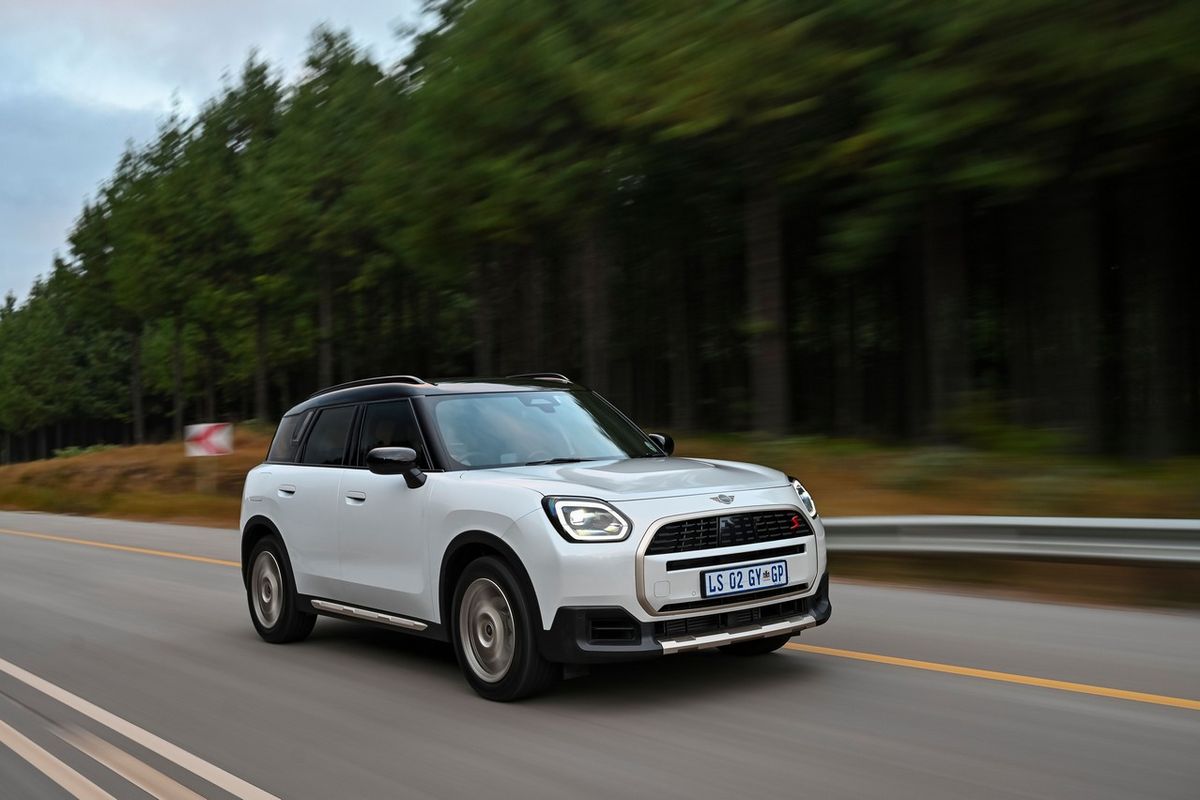
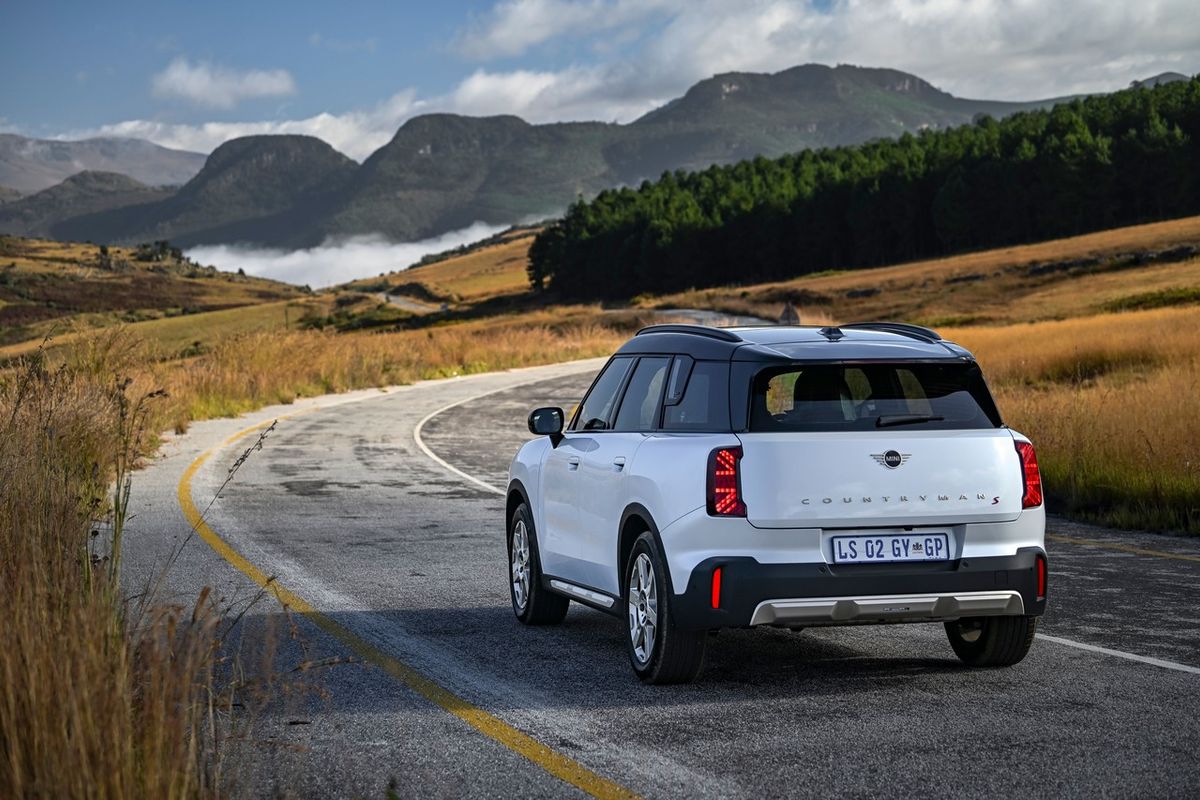
The Mini Countryman is the Oxford-based brand’s biggest, most versatile model. The 3rd iteration, which recently landed in SA, has features that even top-end BMWs don’t have yet! We got to grips with the crossover during a drive from Joburg to Graskop.

What’s new on the Mini Countryman?

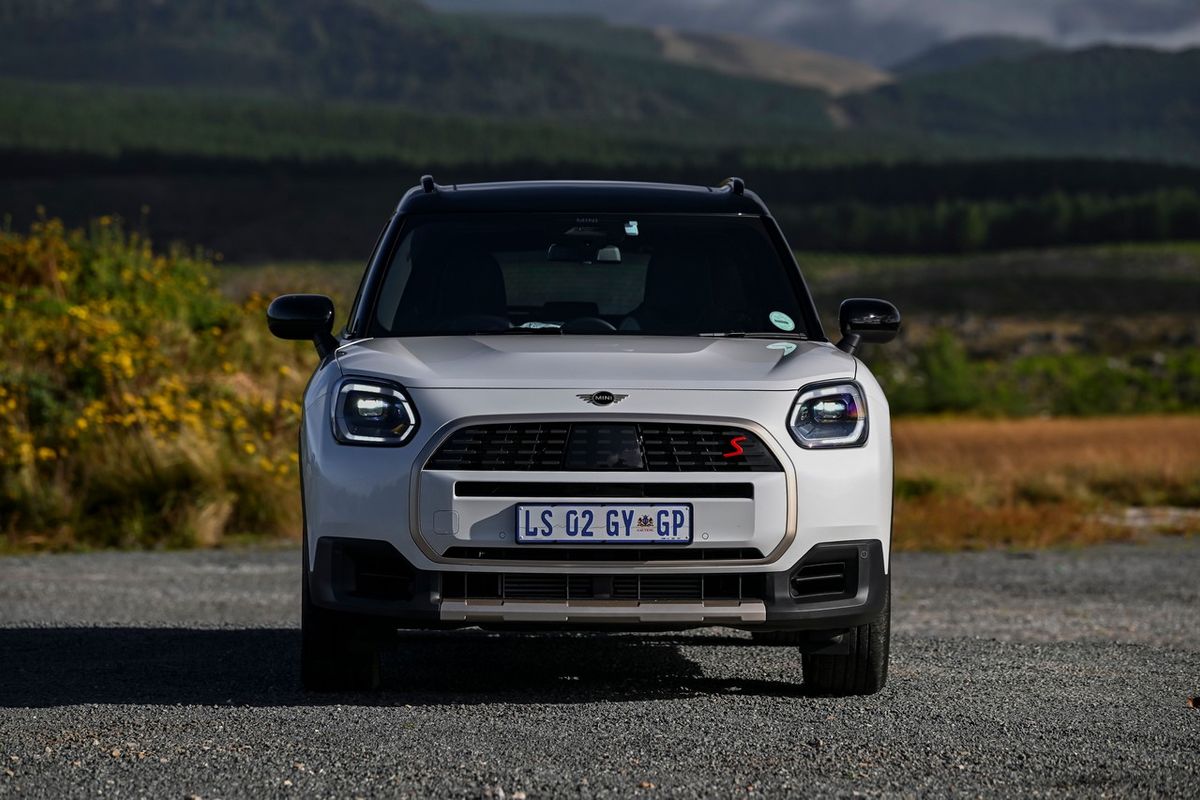
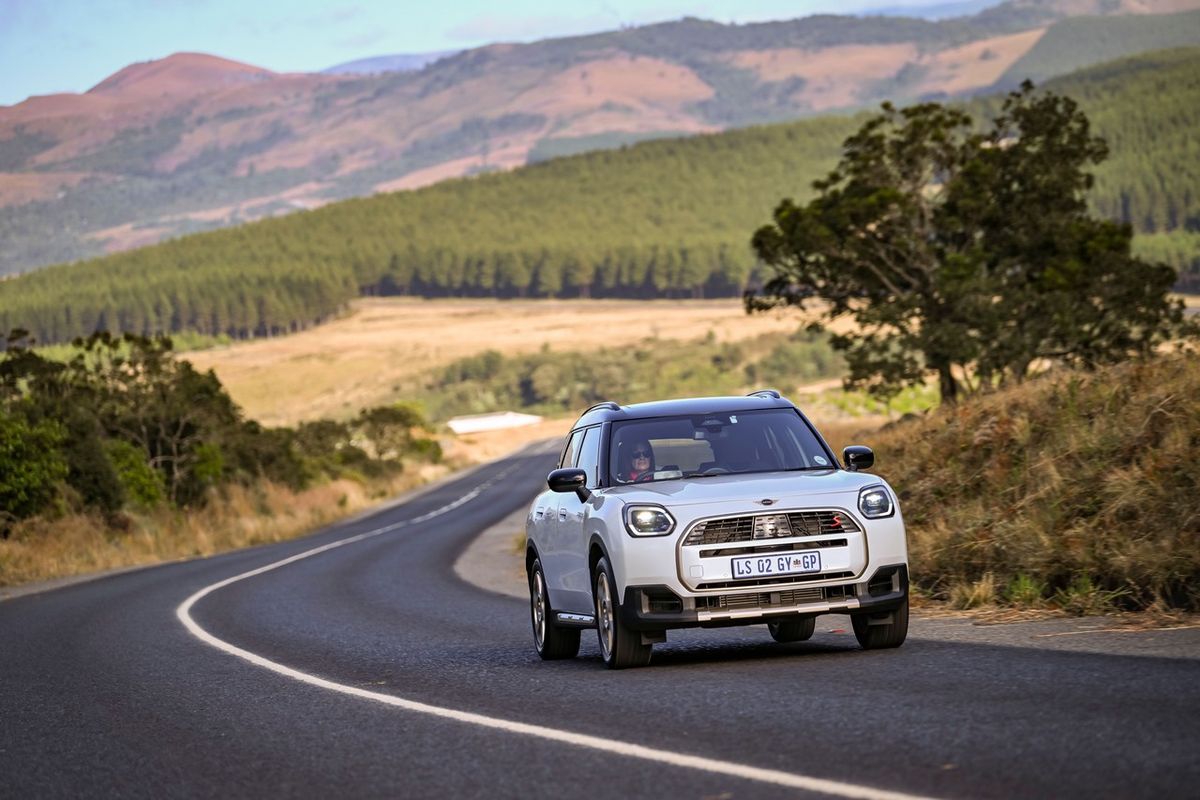
Mini-Countryman-2025 front
The new, 3rd-gen Mini Countryman is notably bigger than the previous model.

Traditionalists moan that “there’s nothing mini about Minis anymore” and indeed, since the BMW Group took over the British brand in the early 2000s, the dimensions of the latter’s models have grown in every direction. However, that can be said of virtually every nameplate that dates back to the previous century, including, for example, the Volkswagen Golf, which also underpins a crossover model (T-Roc, Tiguan).

And, seeing as Countryman is a premium crossover that rivals the Alfa Romeo Tonale, Audi Q3, BMW X1, Mercedes-Benz GLA and Volvo XC40, the newcomer holds more general appeal than its Cooper siblings.

This all-new version is built on the same platform as the BMW 1 Series, 2 Series Gran Coupe, X1 and X2 (UKL2), but looks bigger than those models thanks to its boxy proportions and squared-off design (to me, it looks more X3- than X1-sized). The Countryman is also the first model in SA to use BMW’s OS9 operating system, which controls the central touchscreen or iDrive system. More on that later though.

Although the 3rd-gen Countryman is 130 mm longer, 22 mm wider and 80 mm taller than the previous model, its engine line-up is unchanged (but those motors are well-proven in BMW compact models).

Mini Countryman line-up

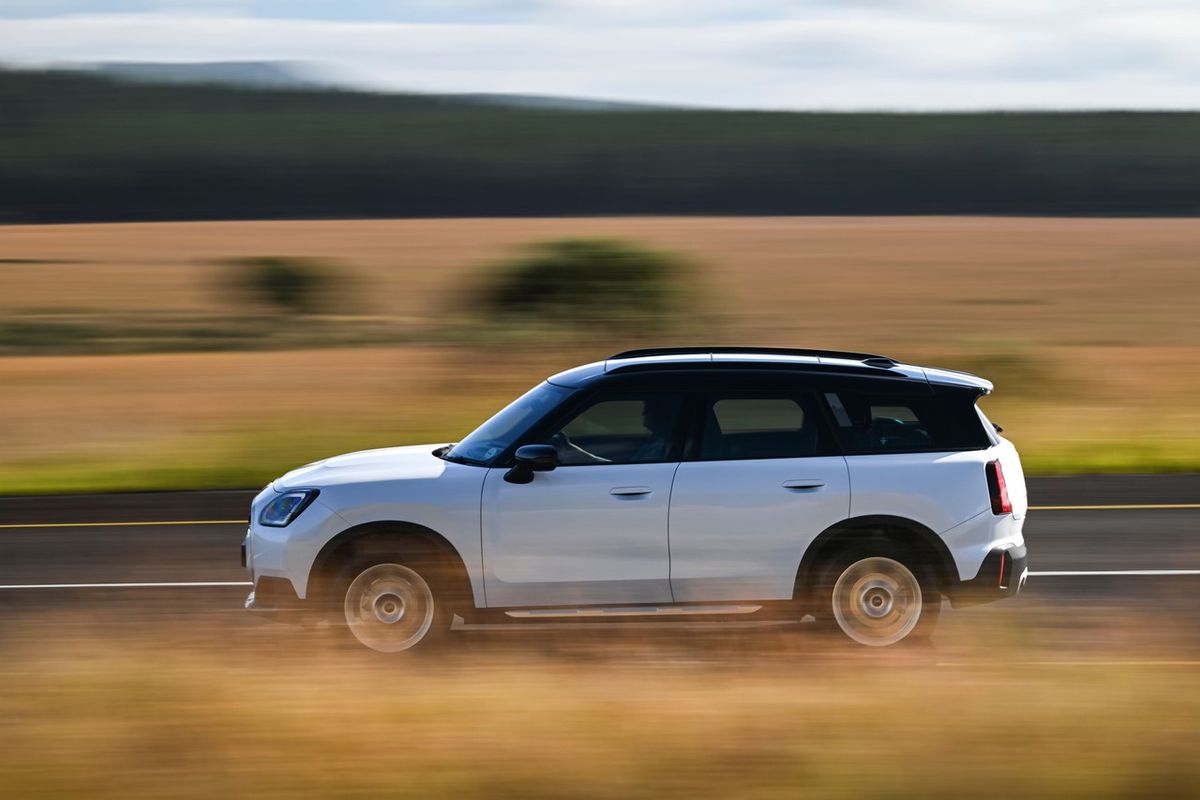
Mini-Countryman-2025-side
The Countryman will come in C, S, JCW and SE versions when the rest of the lineup arrives.

The initial South African lineup includes the newly named Countryman C (previously just the standard version) and the Countryman S – the sportier or bigger-engined variant. The JCW performance model will join the fray soon, followed by the SE version, which is a battery-electric (all-electric) vehicle.

The standard (C) derivative is powered by a 1.5-litre turbopetrol unit delivering 115 kW and 250 Nm of torque, while the Countryman S uses a 2.0-litre turbopetrol pushing out 150 kW and 280 Nm of torque.

We drove the Countryman S from Johannesburg to Graskop and then swapped it for the Countryman C on the return leg. Personally, the latter’s 1.5-litre powerplant felt like it delivered enough “bang for buck” to be a better proposition than the 2.0-litre in terms of value for money (it’s R70 000 cheaper than the S). It pulls well from low down, cruises easily on the freeway and has enough legs to overtake at speed. 

The Countryman S’ 2.0-litre 4-cylinder motor does offer more punch (and is equipped with all-wheel-drive), but I can’t say it delivers a notably bigger performance thrill to warrant its premium over the “C”.

We did notice that the bigger-engined Countryman S was more fuel efficient on the open road/in freeway driving conditions – we averaged 6.8 L/100 km in the 2.0-litre and 7.3 L/100 km in the 1.5-litre. However, the Countryman C should be the more frugal operator in the Mini’s natural habitat – in and around town.

What’s the Mini Countryman like inside?

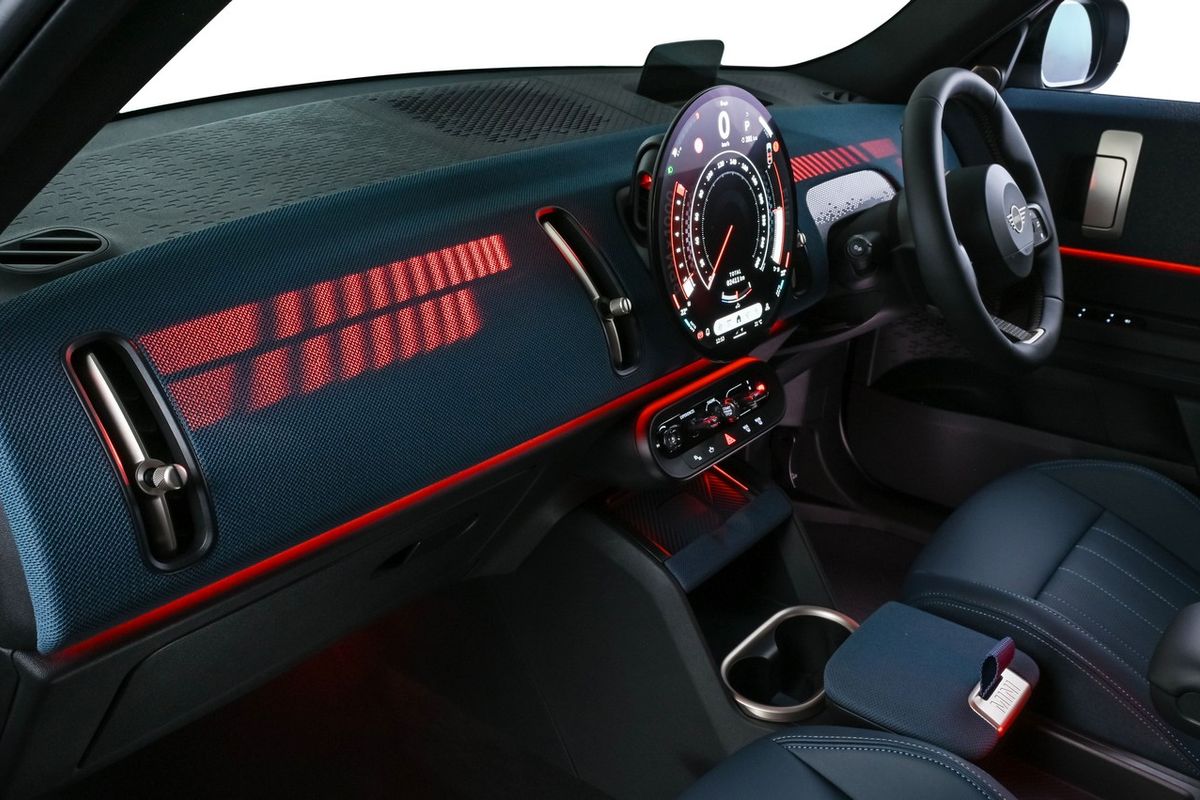
Mini-Countryman-2025-interior
Uniquely funky interiors are something that Mini does better than most.

If any brand can pull off “gimmicky” and “toyish” with a modicum of sincerity, it’s Mini. The Oxford-based brand has always prided itself on catering for the young and young at heart, not taking itself too seriously and always looking to put a fun, colourful spin on everything. Remember the previous model’s disco-inspired Light Ring that resembled a 2000s glow-stick party at night? What about the “Maximum Go-Kart” message that would flash up when you engaged the Sport drive mode or the built-in fish game that was meant to teach you how to drive economically? Well, the new model continues to trial fun features.

Instead of Eco, Sport and Normal, the Mini offers 5 distinct Experience modes via the touchscreen menu – they enable the driver to tailor the driving “ambience” to their preference. Note I didn’t say driving experience because the enhancements don’t materialise so much through the pedals and ‘wheel, as in the cabin lighting and infotainment display. You can have a classic central Mini speedo or predominantly red, sporty-looking graphics (with Vivid). Other modes include Green, Personal, Core, Iconic and Classic.

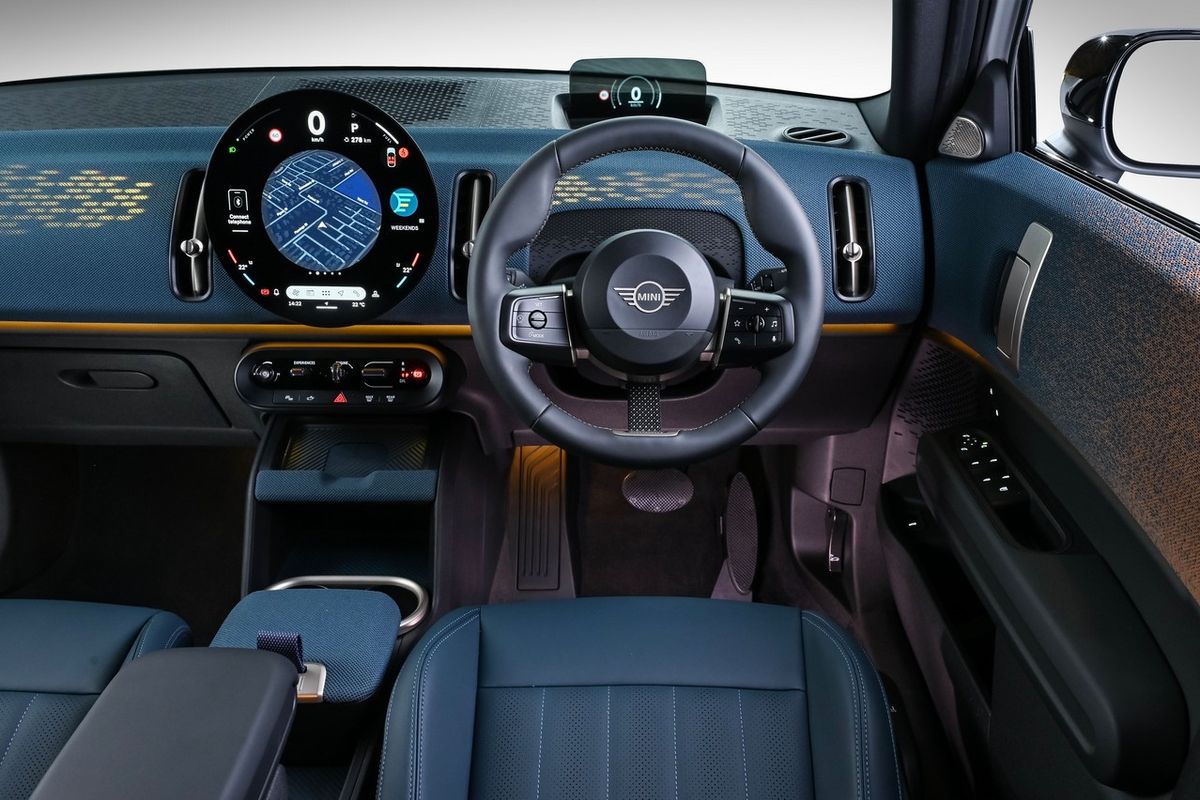
Mini-Countryman-2025-big screen
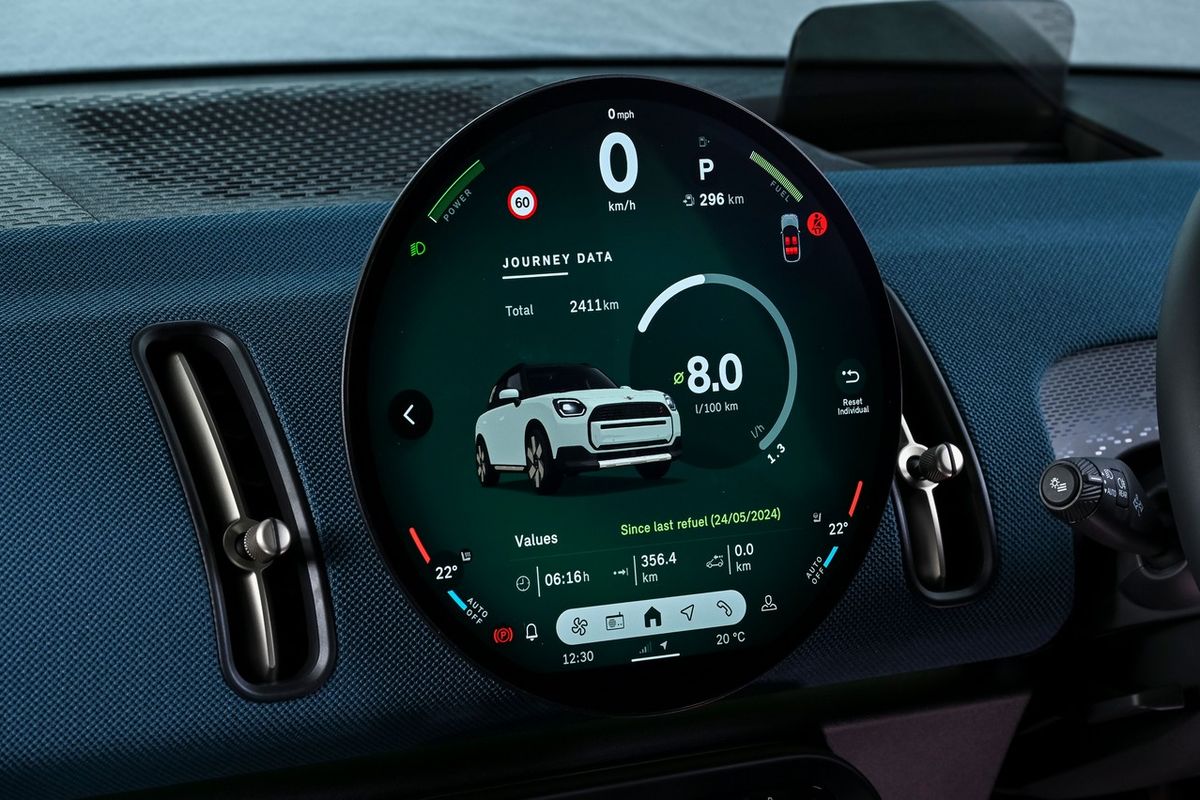
The new OS9 software makes its debut in the new Countryman.

The Vescin (100% recyclable synthetic leather) trim feels refreshingly different to the textured material (that resembles denim fabric) applied to the doors and dashboard. The manner in which a shade of tan gently fades into blue on the upper door panels creates a very interesting contrast within the cabin.

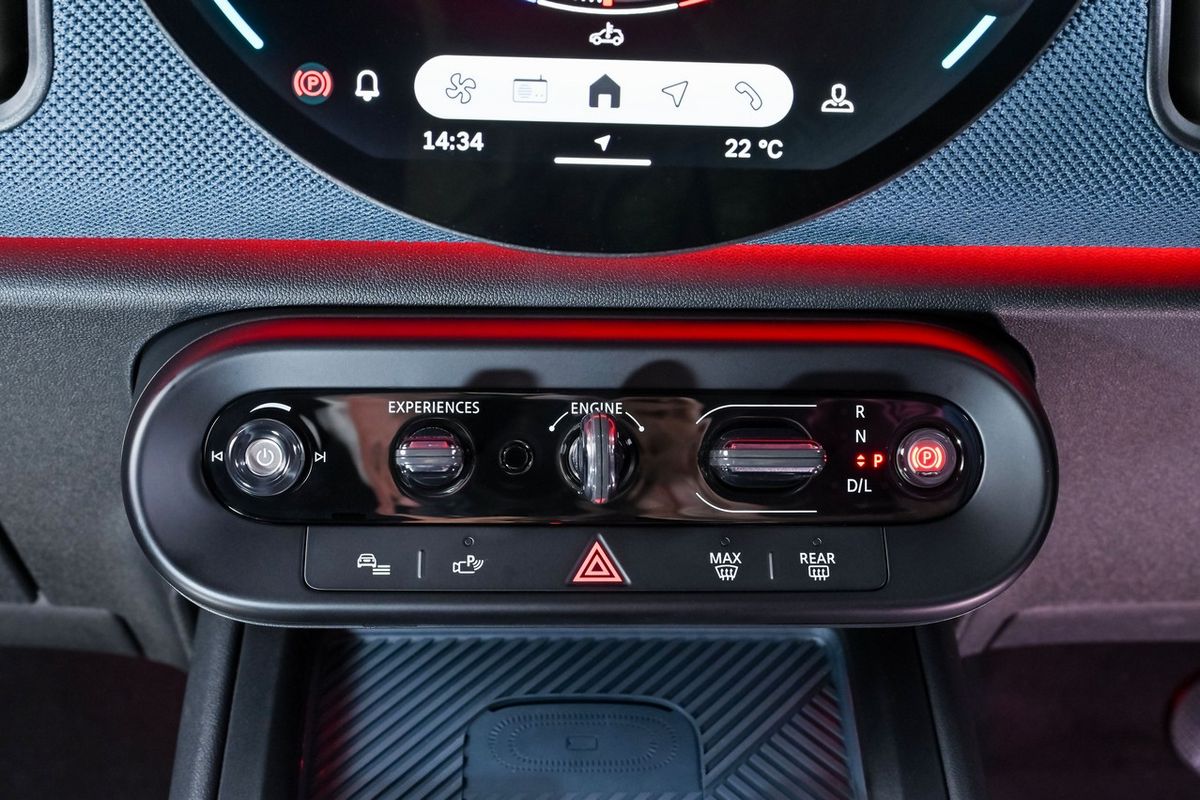
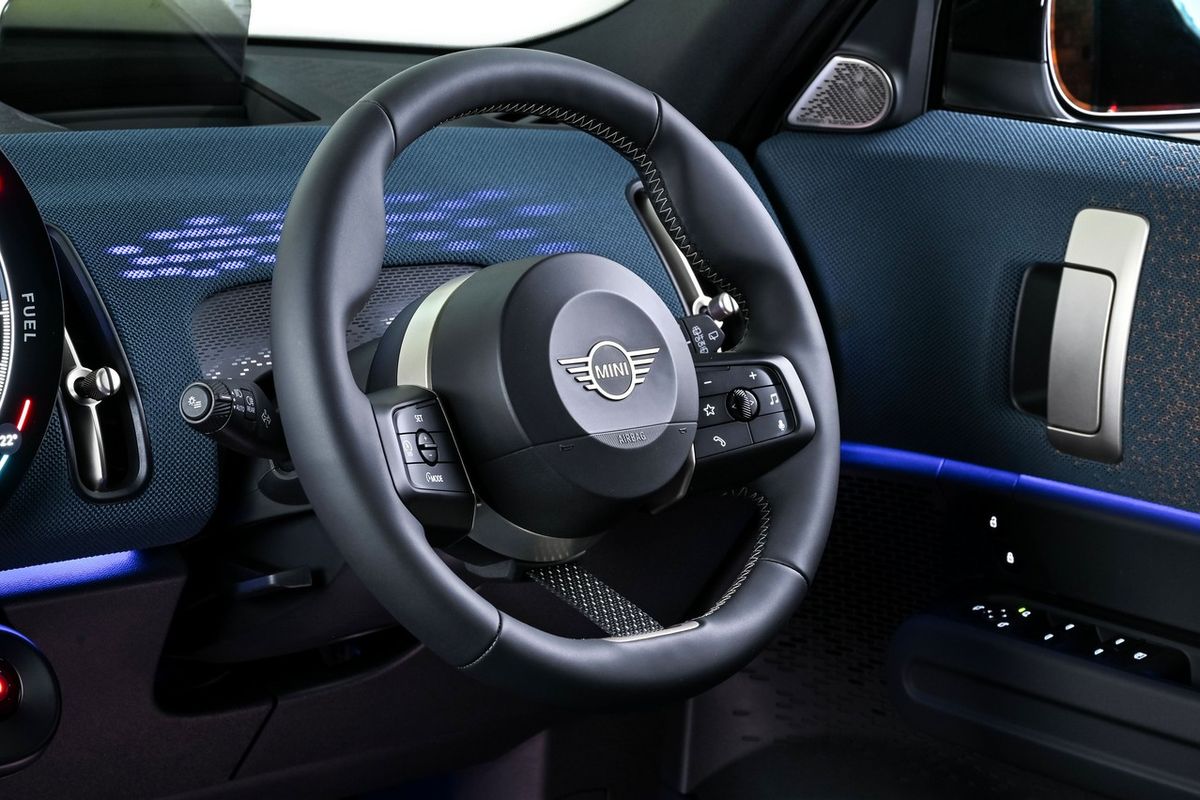
The steering wheel feels chunkier than ever, especially at the 10-2 position. The automatic transmission lever has been removed to create more cabin storage space and now sits in the centre of the fascia as a simple toggle switch. The engine start button needs to be twisted like a key to start it, which is novel. 

Passenger space is relatively generous – even for rear occupants and the claimed load-bay capacity is 450 litres, increasing to 1 460 litres with the back seats down, which is about average for the segment.

The Mini Countryman’s features

Mini-Countryman-2025-start button
The engine start and gear selector buttons are now both on the centre dashboard.

Meanwhile, the BMW Group’s new OS9 is said to be faster and offer more features than the operating system that does duty in the new 5 Series and even 7 Series. I suggest taking some time to familiarise yourself with where most of the functions lie as there are a lot of settings to play with here. It took me a while to find the trip computer and disable the annoying ding notifying me of a speed-sign change. Most of the system’s features are “set and forget” so it’s just commonly changed ones you need to figure out.

The system has an app download centre where you can play games such as pool and rallying via the touchscreen (although the car has to be stationary for that – playing a rally game while weaving through the frenetic JHB traffic might be a stretch too far for even the best multitaskers out there). 

The options list is pervasive and now features the BMW subscription model so you can “subscribe” to functions such as heated seats for only 3 months of the year, or trial a feature for a month to see if you like it rather than paying for something you may never use.

What’s it like to drive?

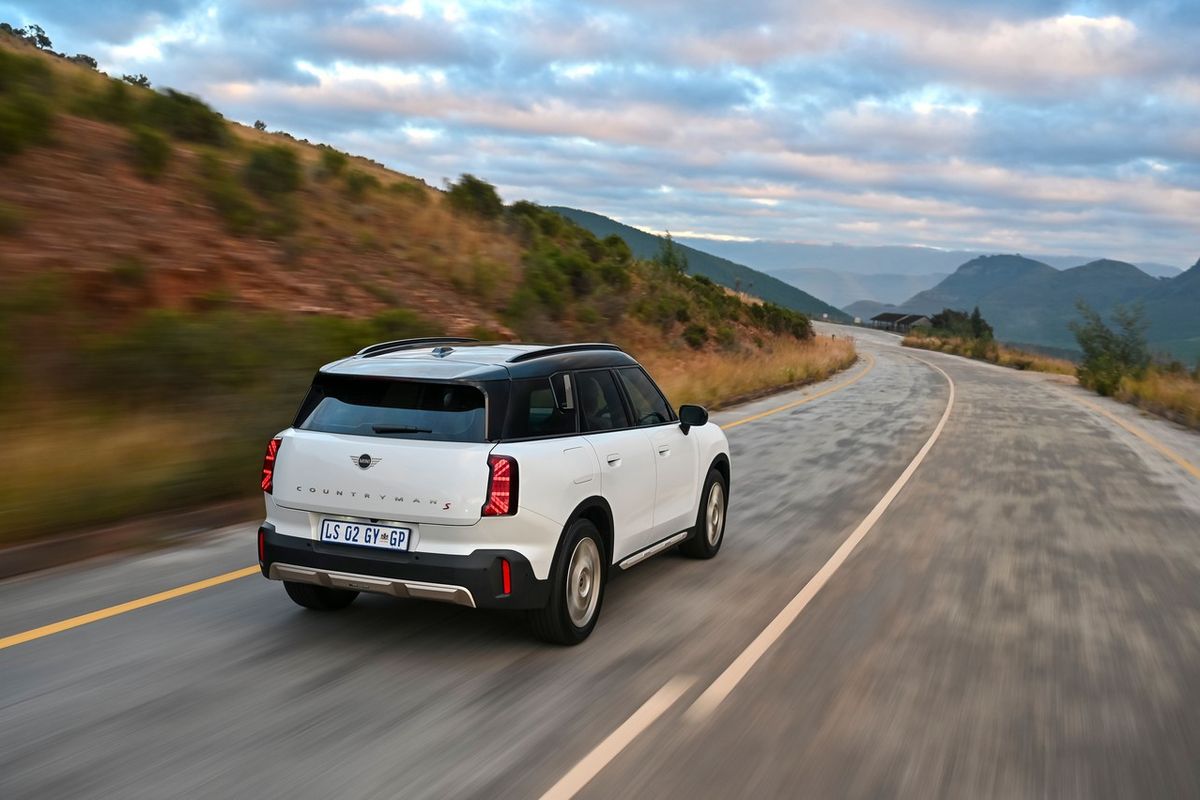
Mini-Countryman-2025-rear
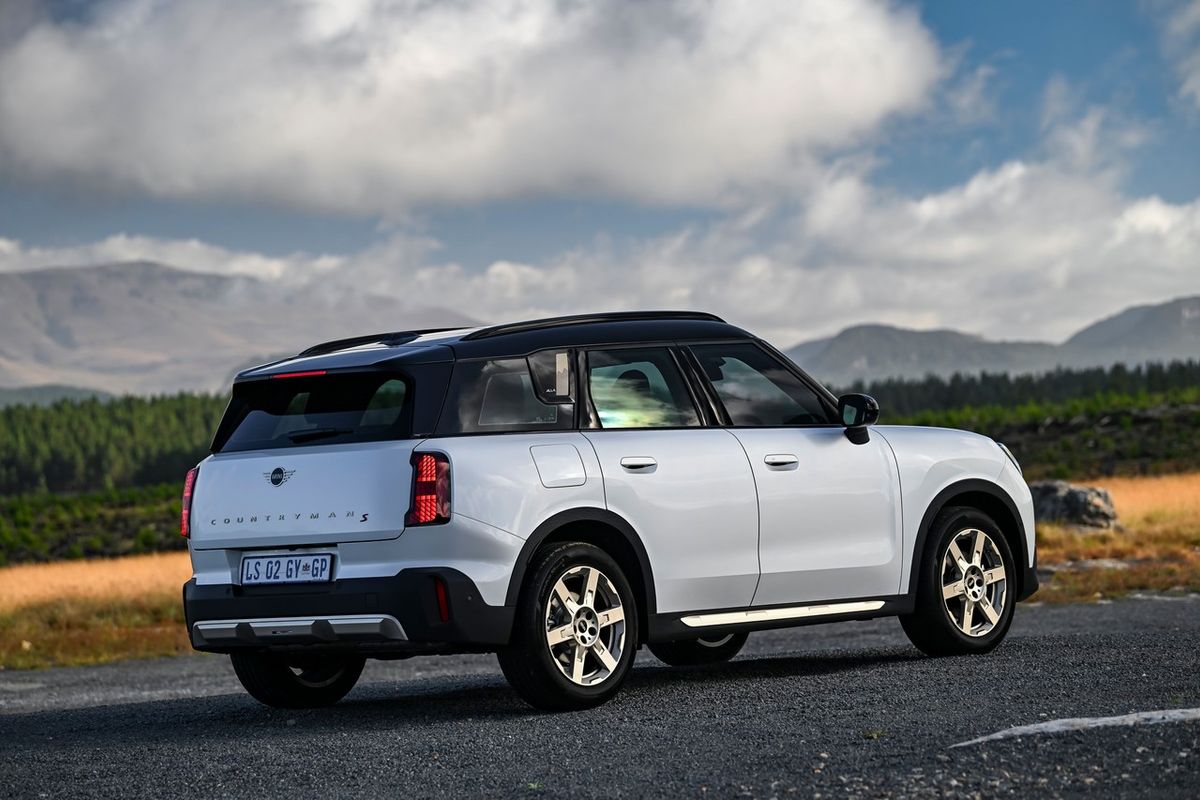
The Countryman C proved to be just as good to drive as the S version.

While the Countryman isn’t meant to deliver Cooper-like “go-kart thrills”, it needs to be fun to drive, but with a level of refinement that befits its price position. While darting around the sublime roads between Graskop, White River and Sabie, the Countryman delivered a surefooted, confident driving experience.

It certainly feels like a resolved product and a vehicle that could be sufficiently engaging to drive on your favourite piece of blacktop. While a lot of noise has been generated in the small crossover- and medium SUV segments by Chinese entrants that offer great value for money, if you want a more premium driving experience, this German/British offering delivers a LOT more – if at an admittedly higher price point.

It’s a pity the transmission seems slow to kick down when you want to drive a little more enthusiastically. And without paddle shifters or a manual mode to the gearbox, there’s nothing you can do to improve this.

Mini Countryman price in SA (June 2024)

The 2024 Mini Countryman comes standard with a 2-year/unlimited km warranty and a 5-year/100 000 km maintenance plan. See also: Mini Countryman (2024) Price & Specs

Mini Countryman CR758 820
Mini Countryman S ALL4R821 074
Mini JCW Countryman ALL4R1 029 768
Mini Countryman SE ALL4R1 112 000

Summary

Mini-Countryman-2025-side rear
The Countryman still offers something a little different from most of its rivals.

The new Mini Countryman is an expensive toy, but well and truly “on brand”. It’s distinctively quirky, filled with fun features and endowed with a bold interior design. The driving experience is refined and more grown up than the playful interior design and -features suggest, but it still feels like a premium product. 

It offers something different in 1 of the few segments where stand-out kerb appeal and the fun-to-drive factor outweigh sheer value for money. You’re unlikely to confuse the Mini for anything else on the road, but opt for brighter exterior colours – the black-and-white scheme of the unit we drove was a bit plain.

Related content:

BMW X1 (2023) Review

Mercedes-Benz GLA/GLB Updated for 2023

BMW X2 (2024) Launch Review

Audi Q3 Sportback (2024) Review

Tiggo 4 Pro hits new high! SA’s 10 best-selling cars and crossovers

The Chery Tiggo 4 Pro put in its best sales performance yet in May 2024, cracking 4 figures. Here are South Africa’s 10 best-selling cars and crossovers for last month…

Since we’ve already brought you a list of Mzansi’s most popular bakkies for May 2024, we’re now turning our attention to the passenger-vehicle segment. So, which models were South Africa’s best-selling cars and crossovers last month?

Well, we’ve managed to lay our hands on the (unaudited) figures submitted to Naamsa, allowing us to compile a list of the top-selling passengers vehicles. As a reminder, South Africa’s new-vehicle market suffered a significant year-on-year decline in May 2024, with total sales falling 14.2% to 37 105 units. The new passenger-vehicle market, meanwhile, dropped 11.7% year on year to 24 367 units.

Volkswagen Polo Vivo GT

Drilling down into the data, we find that the Kariega-built Volkswagen Polo Vivo retained the 1st place it held in April 2024, with 1 817 units registered. The Prospecton-produced Toyota Corolla Cross (1 543 units) climbed back to 2nd, forcing the Suzuki Swift (1 239 units) – again the highest-ranked imported model – down to 3rd.

Meanwhile, the Chery Tiggo 4 Pro finished May 2024 on 1 101 units, climbing a ranking to 4th. Though the small Chinese crossover has often flirted with 4 figures, we believe this is the 1st time this model range – which recently welcomed new dual-clutch derivatives – has crossed the 1 000-unit barrier in a single month, resulting in a record sales performance.

The Hyundai Grand i10 (excluding 45 light-commercial vehicle sales of the Cargo derivative) moved up 2 positions to 5th, with 1 072 units registered, while the Toyota Starlet (1 047 units) slipped 2 places to 6th. The Volkswagen Polo hatch – which is built alongside the Vivo at Kariega – gained a spot to 7th with 888 units, while the Nissan Magnite (774 units) dropped 2 places to 8th.

The Prospecton-built Toyota Fortuner (763 units) returned to the top 10 – at the expense of the Haval Jolion, which will soon benefit from an update – to finish 9th, which saw the Suzuki Baleno (578 units) fall a ranking to 10th and close out the table.

SA’s 10 best-selling cars and crossovers in May 2024

1. Volkswagen Polo Vivo – 1 817 units

2. Toyota Corolla Cross – 1 543 units

3. Suzuki Swift – 1 239 units

4. Chery Tiggo 4 Pro – 1 101 units

5. Hyundai Grand i10 (excluding LCV) – 1 072 units

6. Toyota Starlet – 1 047 units

7. Volkswagen Polo (hatch) – 888 units

8. Nissan Magnite – 774 units

9. Toyota Fortuner – 763 units

10. Suzuki Baleno – 578 units

Related content

VW back in 2nd! SA’s best-selling brands in May 2024

10 best-selling bakkies in South Africa: May 2024

Hybrids and EVs: SA sales figures for Q1 2024

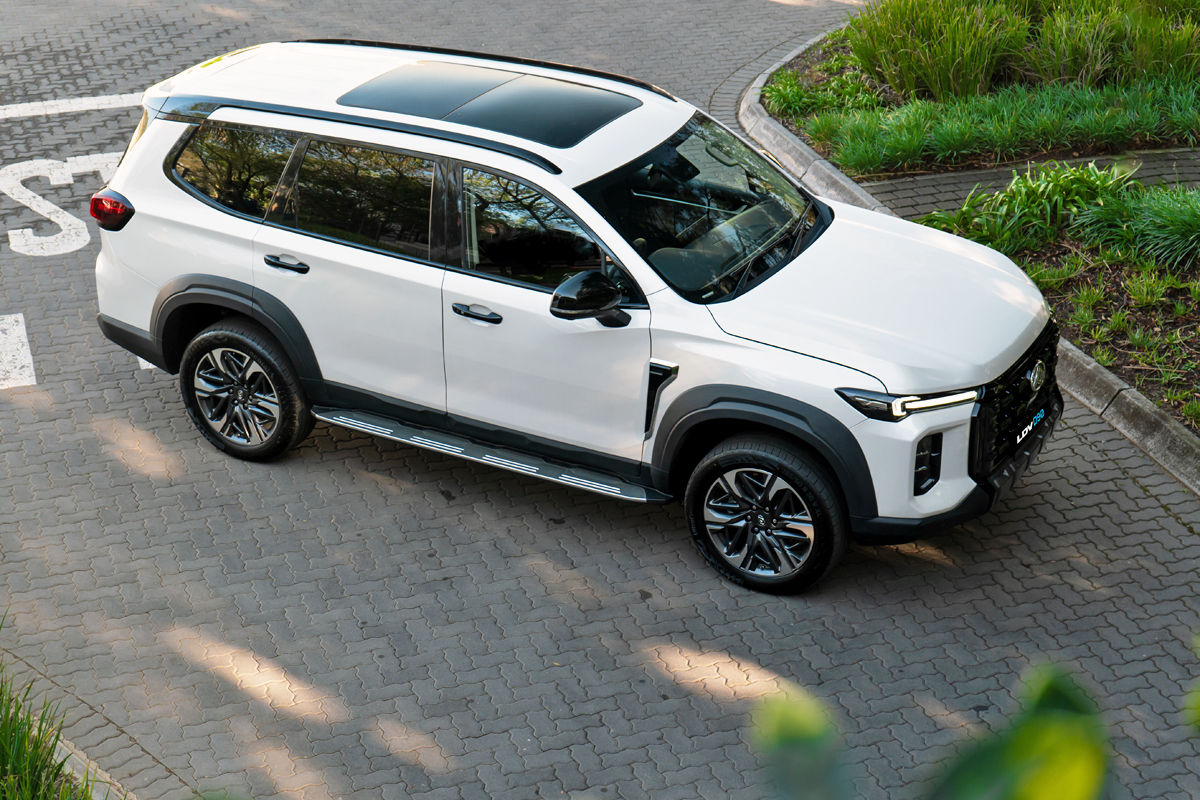
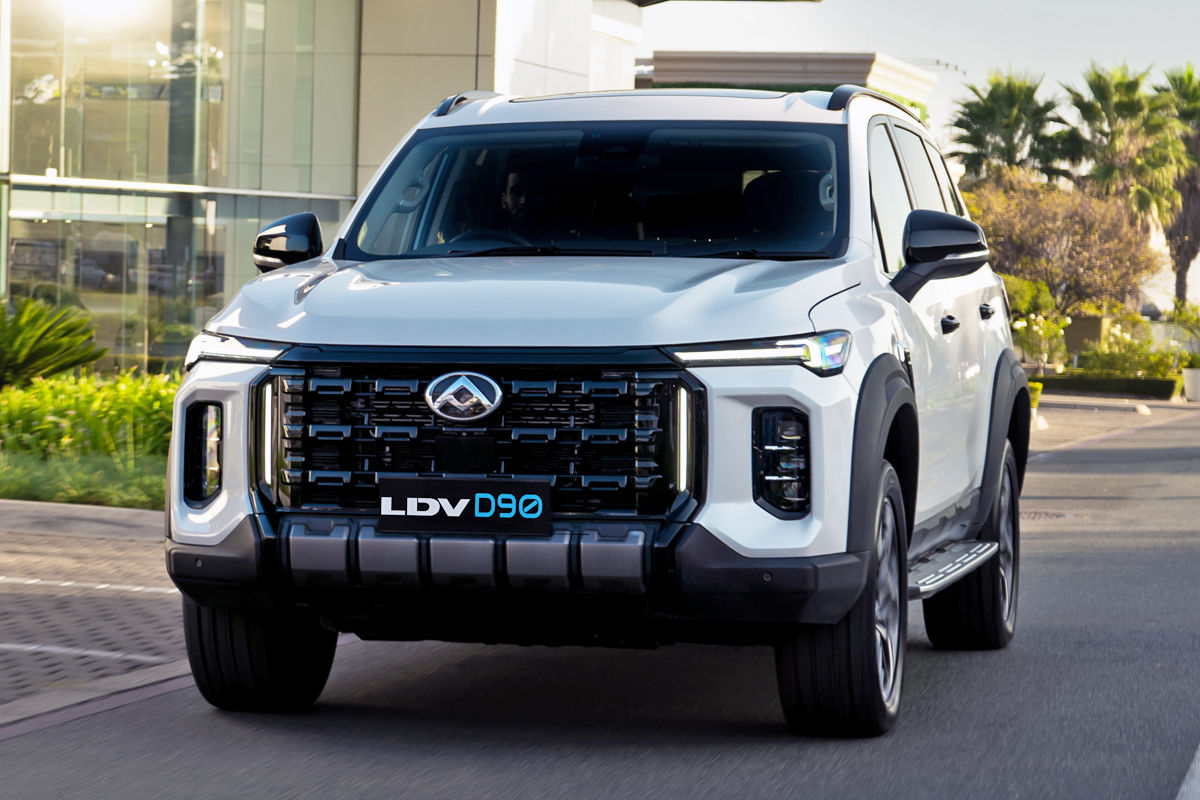
New LDV D90 7-seater SUV: SA details released

The new LDV D90 is scheduled to launch in South Africa in the final quarter of 2024. Ahead of this 7-seater SUV’s arrival, the Chinese firm has released fresh local details…

Chinese-owned brand LDV opened its doors in South Africa in May 2024, kicking things off with the T60 range of double-cab bakkies. The new LDV D90 7-seater SUV will be next, with the automaker having now confirmed a local launch date in the final quarter of 2024.

LDV South Africa has also released fresh information on this upcoming ladder-frame SUV, along with images of 1 of the 2 units already in Mzansi for “customer viewing and final homologation”. According to the brand, that makes SA “the 1st country in the world outside China to receive this new flagship model”.

In our market, the D90 line-up looks set to comprise Elite and Flagship derivatives, each powered by the same 2.0-litre biturbodiesel engine employed by top-spec versions of the T60 bakkie. This 4-cylinder oil-burner generates 160 kW and 500 Nm, peak outputs that are delivered to all 4 wheels via a ZF-sourced 8-speed automatic transmission. Braked towing capacity is listed as 3 100 kg.

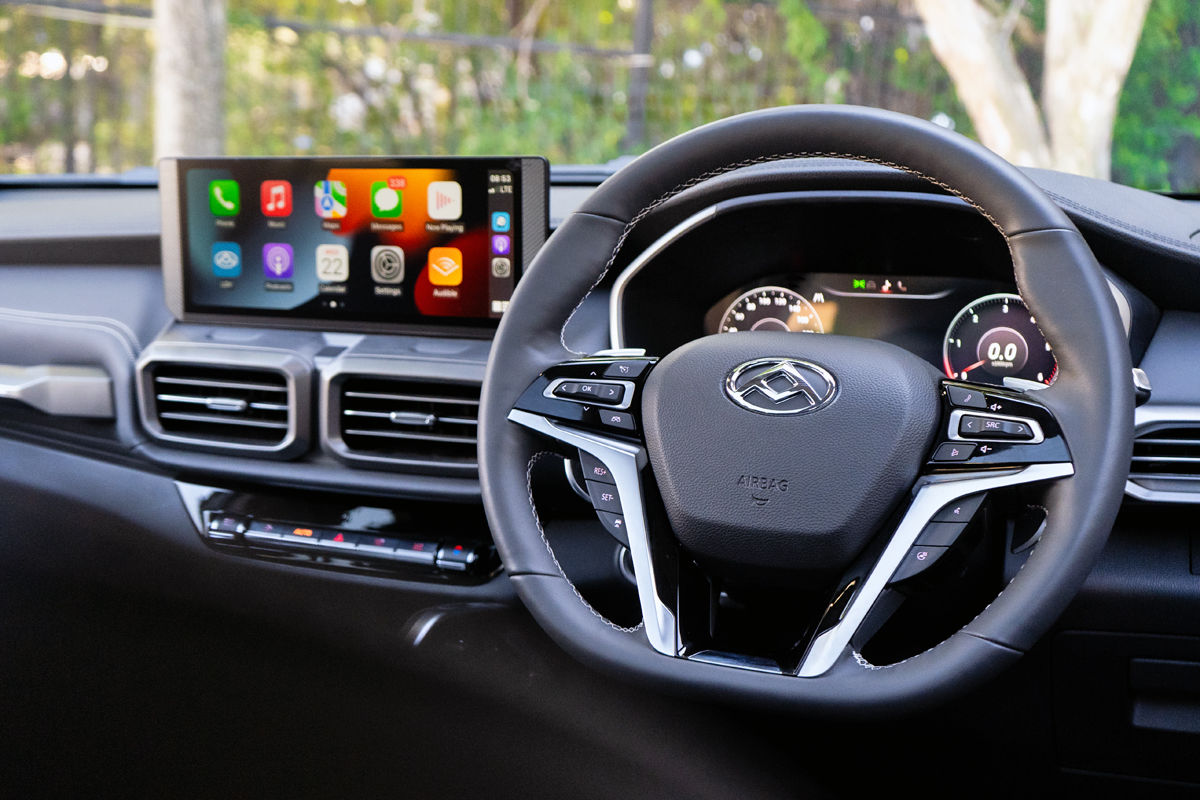
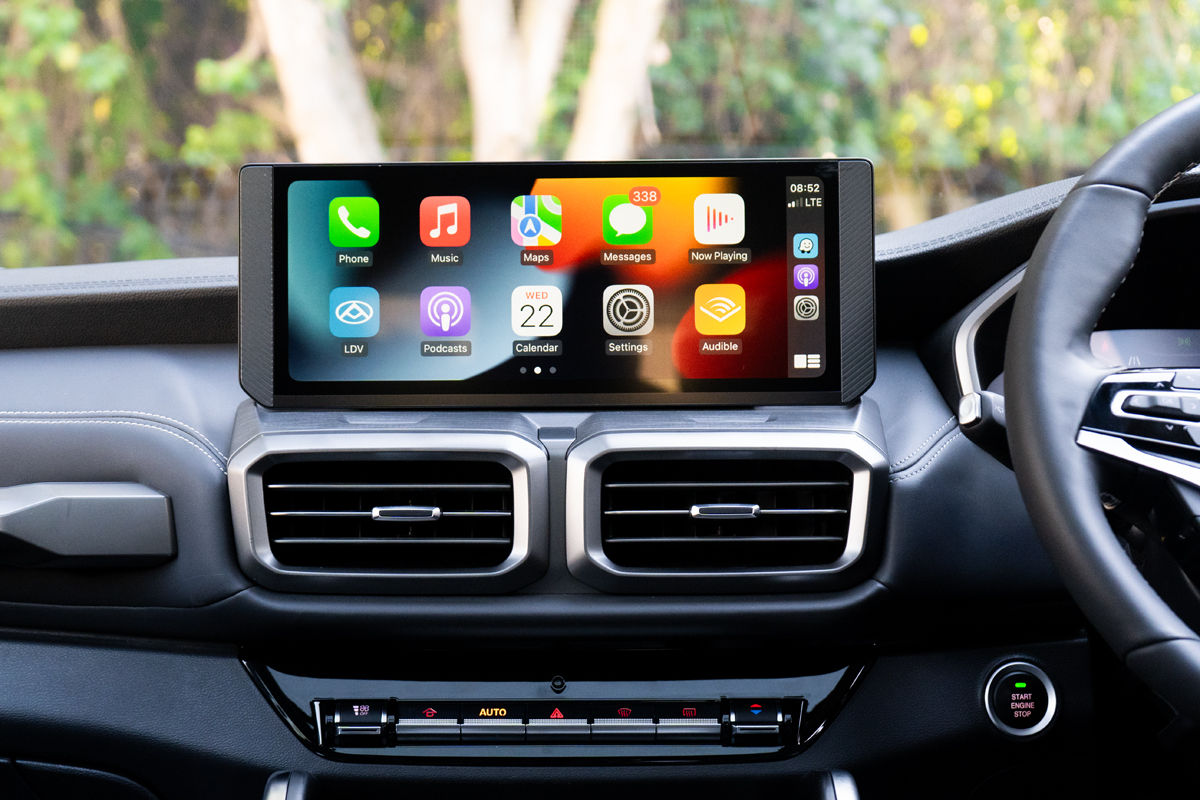
Both derivatives will feature 4×4 with low range as standard, though the Flagship variant will add front and rear differential locks to the Elite’s central item. Other standard features will include climate control, leather upholstery, a 12.3-inch touchscreen infotainment system and dual wireless charging pads.

LDV D90 7-seater SUV interior

The D90 Flagship will furthermore score massaging- and heating functions for the front seats, while also upgrading from a standard sunroof to a panoramic version and from 18-inch gloss-black alloys wheels to 20-inch diamond-cut items. In addition, while the Elite uses an 8-speaker sound system, the Flagship boasts a 12-speaker JBL arrangement.

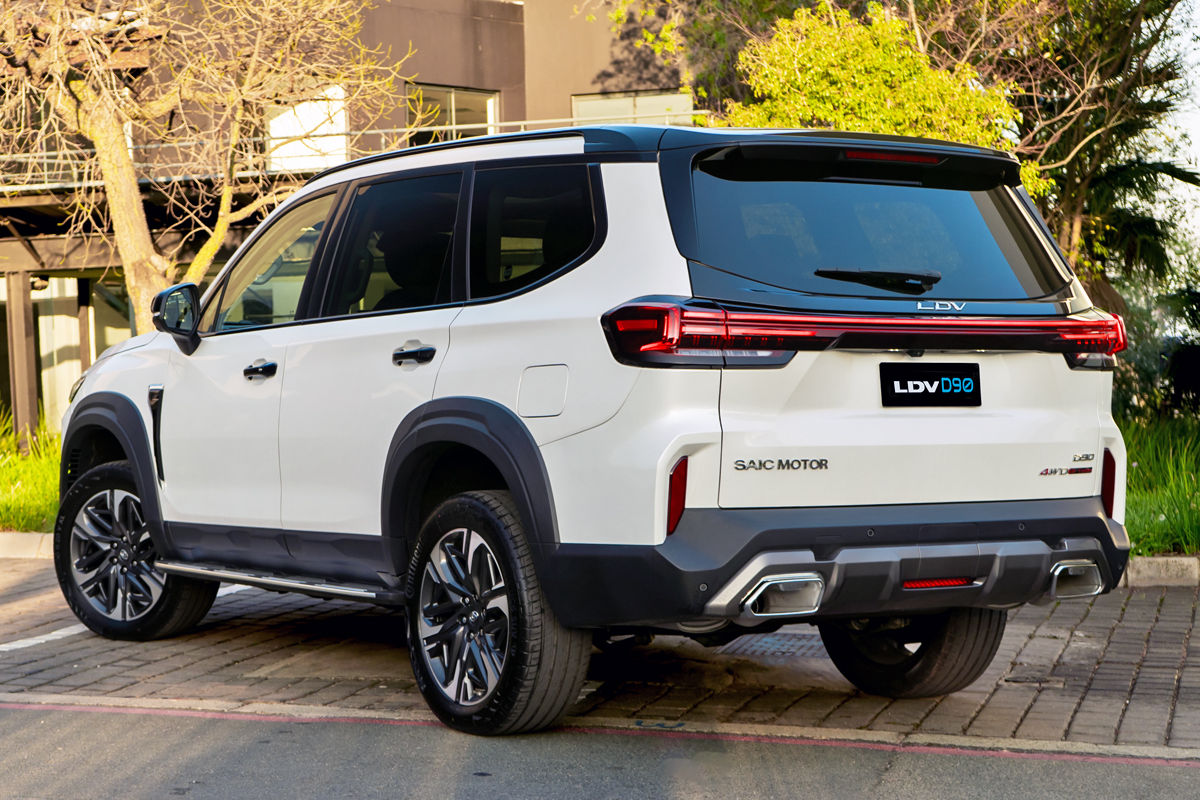
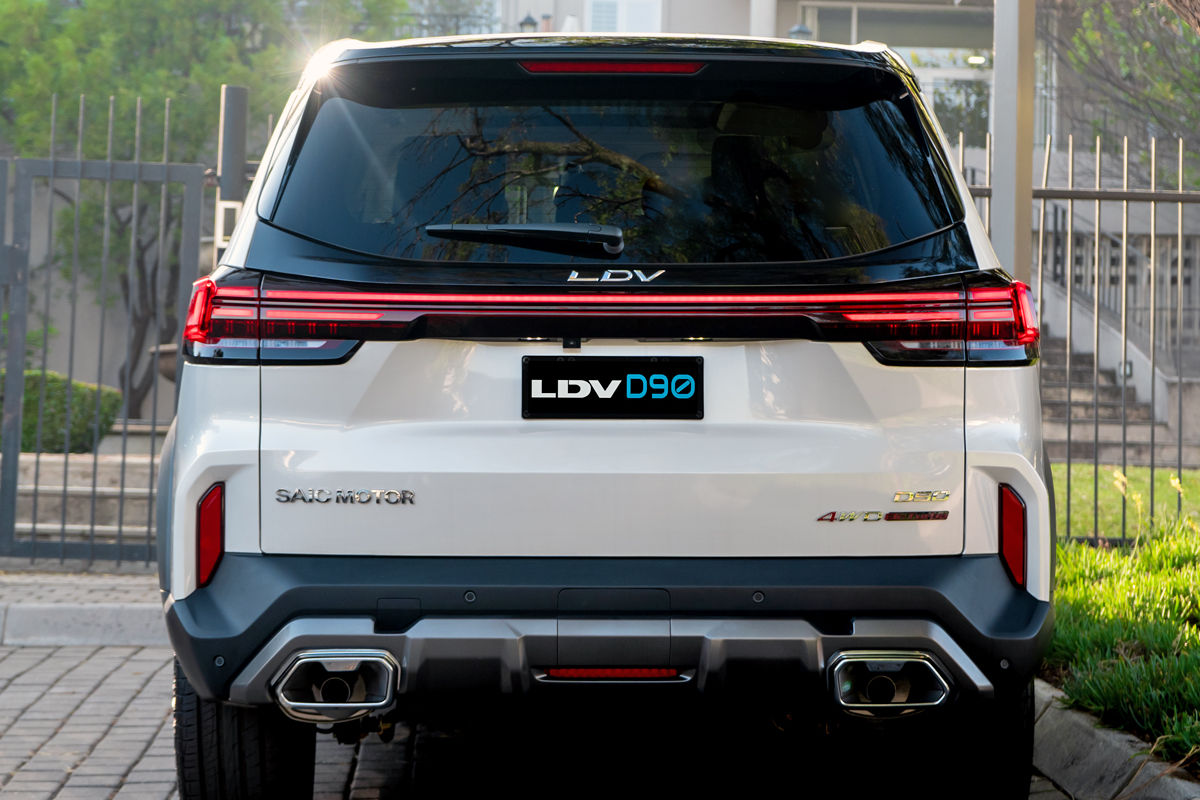
LDV South Africa has also confirmed that SA-spec D90 derivatives will be fitted with the “Black Package” as standard, adding a gloss-black finish for the exterior handles, side-mirror caps, roof rails and rear spoiler, along with black wheel-arch mouldings.

LDV D90 7-seater SUV

Safety features standard across the range will include electronic stability control, automatic emergency braking, 6 airbags, adaptive cruise control, an integrated dashcam and lane-keep assist, with the Flagship model adding a 360-degree camera system. The LDV D90 will ship standard with a 5-year/200 000 km warranty and a 5-year/100 000 km service plan.

Measuring 5 046 mm from nose to tail, the 3-row D90 is interestingly 121 mm longer than the new J250-generation Toyota Land Cruiser Prado, while its 2 950 mm wheelbase offers 100 mm more than that of the Prado. From what we understand, the D90 for the local market is effectively an LDV-badged version of the Chinese-market Maxus Lingdi (a name that translates to “Territory”).

As a reminder, the company traces its roots all the way back to 1896, when it was founded in the United Kingdom. In the late 1980s, the marque transformed into Leyland DAF Vehicles (hence the “LDV” initialism), before becoming a wholly owned subsidiary of China’s SAIC Motor in 2010.

Check back closer to Q4 2024 for more specification details and pricing…

Related content

LDV T60 beats Hilux, Ranger on power – and price

New LDV D90 7-seater SUV confirmed for SA

LDV T60 Double-Cab Bakkie (2024) Price & Specs

Used F30 BMW 3 Series (2012-2019) Buyer’s Guide

The F30-gen BMW 3 Series was one of SA’s most popular vehicles while it was on the local market from 2012 to 2019. What mechanical issues should you look out for when shopping for a used example? Francisco Nwamba has answers – and spares prices!

BMW Group South Africa produced no fewer than 5 generations of its 3 Series business-class sedan from the early ‘Eighties to the late Twenty Tens. The F30 was the final iteration of the BMW 3 Series that was built in SA; when it was replaced by the current G30, the Rosslyn plant switched to building the X3.

Compared with the E90-gen model that preceded it, the F30 BMW 3 Series’ exterior styling held broader general appeal and the sedan was more luxury- and comfort-oriented and slightly less sporty to drive.

It also had a notably more forgiving ride quality and incorporated 3- and 4-cylinder turbopetrol engines, the latter of which made up the bulk of the range. The flagship was still powered by a 3.0-litre inline-6 turbopetrol, however – first the N55 (in the 335i) and later, the now ubiquitous B54 motor (in the 340i).

Suffice it to say, well-maintained and -preserved examples of the F30 3 Series remain highly desirable on the used market, so it would be wise to know what to be wary of when shopping for a 2nd-hand example of the sedan (the info in the video also pertains to the 3 Series GT and various 4 Series contemporaries).

Francisco Nwamba, who has owned an F30 BMW 3 Series, points out some key aspects… He goes through the common problems (concerning engines and the cooling system), what to look out for on a test drive and lists selected parts prices (including those of brake- and suspension components).

Search for a used F30 BMW 3 Series listed for sale on Cars.co.za

Read more articles/watch other videos in our Buyer’s Guide series

Related content:

E90 BMW 3 Series Sedan (2005-2012) Buyer’s Guide

F20 BMW 1 Series (2011-2019) Buyer’s Guide

BMW X3 (2011-2017) Buyer’s Guide

F15 BMW X5 (2014-2019) Buyer’s Guide

Watch our ‘BMW 50 Years’ series episodes:

Mzansi’s love for BMW M cars – BMW Group SA Chronicles (Ep 6)

The story behind BMW’s iconic TV adverts + BMW SA exports – BMW Group SA Chronicles (Ep 5)

BMW 333i and 325iS – BMW Group SA Chronicles (Ep 4)

The M1-engined 745i – The secret SA creation – BMW Group SA Chronicles (Ep 3)

How BMW’s SA race cars were born – BMW Group SA Chronicles (Ep 2)

Celebrating 50 years of BMW in SA – BMW Group SA Chronicles (Ep 1)

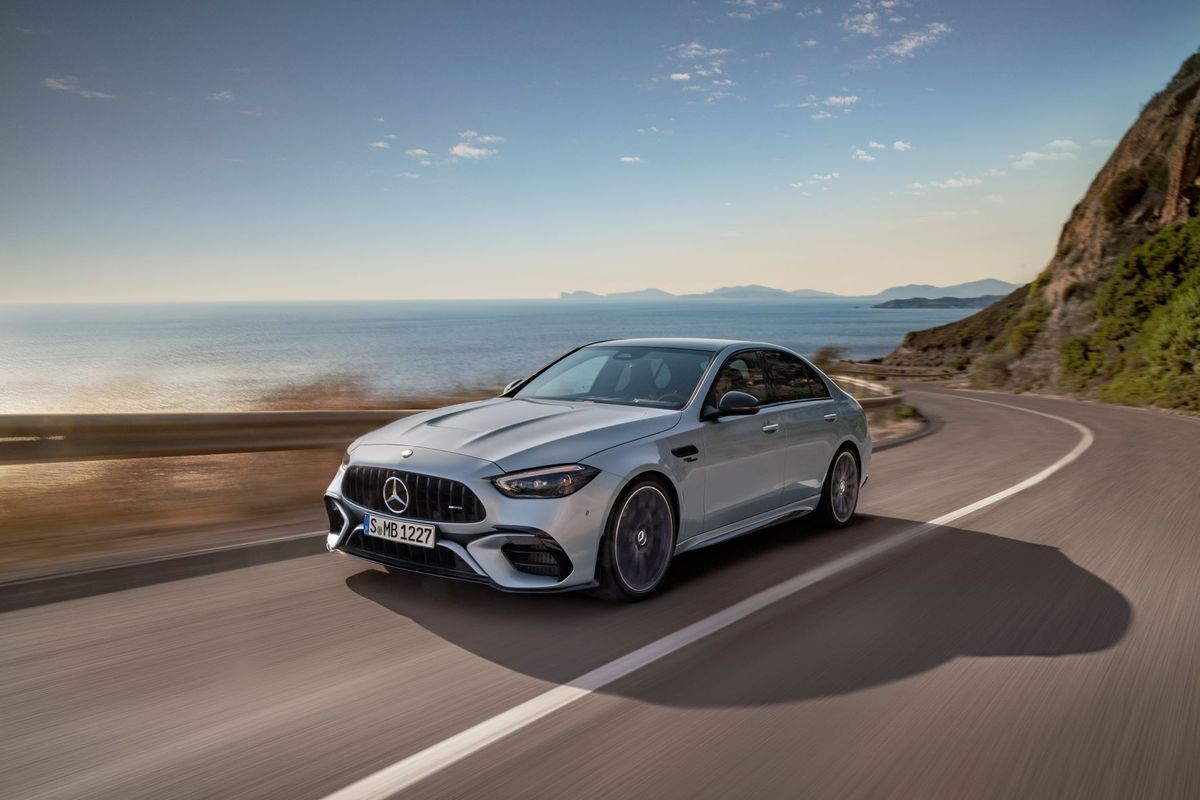
Mercedes-AMG C63 S E Performance (2024) Price confirmed for SA

AMG’s C63 S E Performance is about launch locally in South Africa. Here’s a look at how much you can expect to pay for this 500 kW sedan.

The Mercedes-AMG C63 S E Performance is about to go on sale and the local brand has confirmed just how much you’ll be paying for this hybrid sedan.

Hybrid, you ask? Yes, for the first time, the C63 has downsized and that means no more roaring V8 engine. Instead, there’s a 2.0-litre turbocharged 4-cylinder petrol engine (derived from the A45 S) driving the front wheels and an electric motor on the rear axle. Together, there’s 500 kW and 1 020 Nm.

C63 S E Performance rear

The electric motor offers up a range of 13 km, but this is not what this car is about. Instead, the 6.1 kWh battery and 70 kW motor help with the responsiveness and performance. For ten seconds, the motor can summon 150 kW, which should give it quite rapid acceleration. Speaking of, 3.4 seconds to 100 kph should be quick enough to satisfy most needs and there’s a 9-speed automatic transmission.

C63 S E Performance interior

We don’t have the full specification loadout as yet, but we expect the active rear axle steering, MBUX infotainment screens, 19-inch alloy wheels, and AMG sports seats to be standard equipment.

It will be interesting to see how well this new four-pot C63 does in terms of sales. Initial reception since its debut hasn’t been too positive, with fans of the brand lamenting the lack of a thundering V8 engine. Look, we’re yet to drive it, but are those on-paper performance claims strong enough to offset what’s likely to be a generic engine soundtrack? Only time will tell!

Listen to the 2024 Mercedes-AMG C63 S E Performance’s exhaust note below

How much does the Mercedes-AMG C63 S E Performance cost in South Africa?

The new performance sedan from Mercedes-AMG ships standard with a 2-year/unlimited kilometre warranty and 5-year/100 000 km maintenance plan.

C63 S E PerformanceR2 476 800

Further Reading

Want to purchase a new or used Mercedes-Benz? Browse vehicles for sale

Land Rover Defender Outbound (2025) Launch Review

The Land Rover Defender Outbound derivative is designed for the overlanding market, so it sacrifices some seating capacity for heightened practicality. We got behind the ‘wheel of the newcomer during the Western Cape’s first winter storm of 2024.

Let’s get the formalities out of the way. Coventry-based Jaguar Land Rover (or JLR, as it now prefers to be known) has repositioned itself as a house of brands, with each Land Rover model now marketed as a standalone brand. Essentially, you’ll be driving a Range Rover, Defender or Discovery, not a Land Rover.

To be fair, the Defender does have a cult-like following and, like (Toyota’s) Land Cruiser, its nameplate could be viewed as… a brand in its own right. The Defender line-up caters for all tastes and needs. This is the big boy; we’ve reviewed the Defender 130 before (in First Edition guise), but this one is different.

What is a Land Rover Defender Outbound?

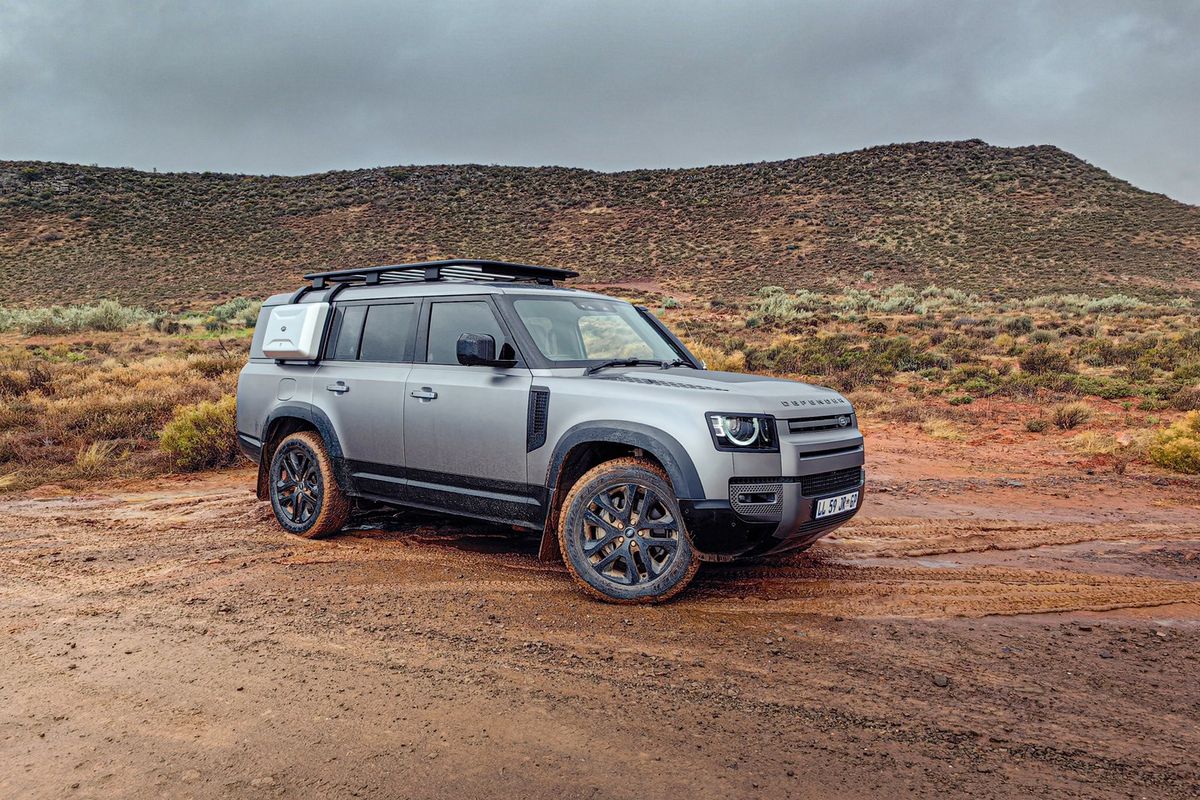
The Defender Outbound is tailor-made for overlanding in the wildest weather.

The Defender 130 is billed as a people-carrying luxury SUV, but if you need an 8-seater, a premium MPV, such as the Volkswagen Caravelle or Mercedes-Benz V-Class, is arguably better suited for the role.

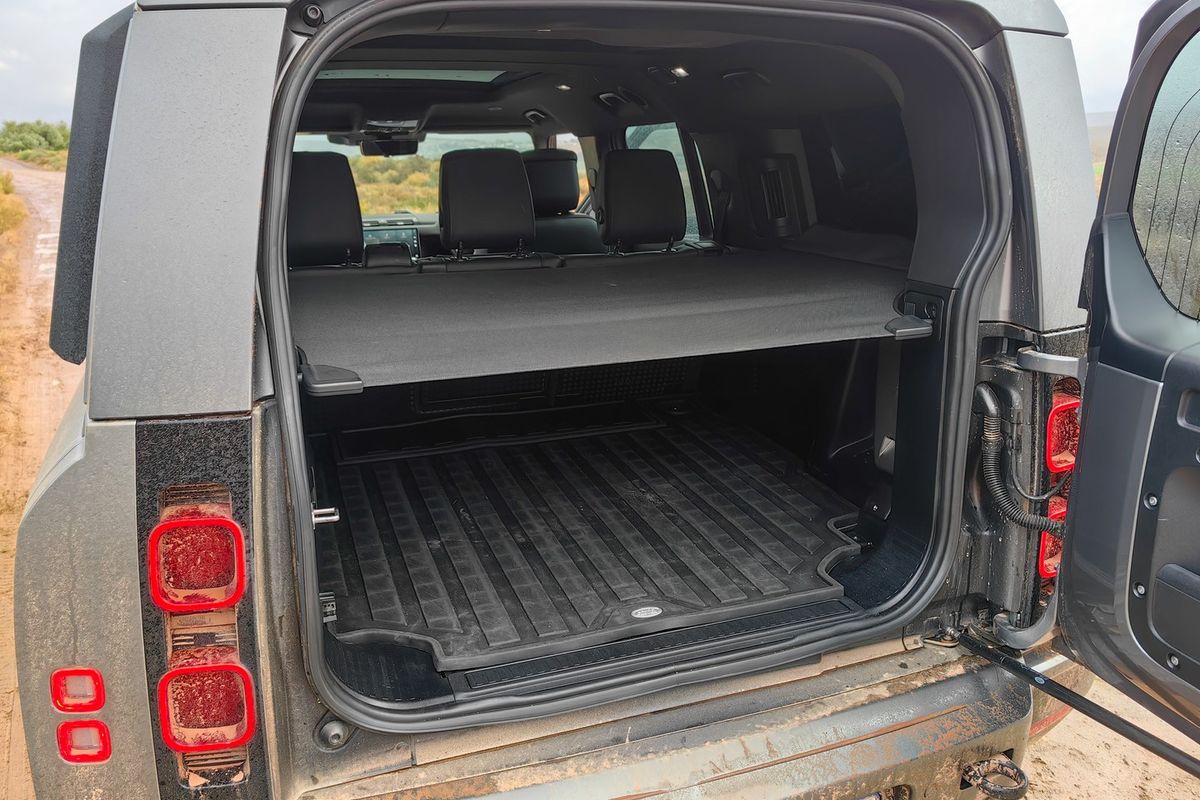
The Outbound ditches the 3rd row of the 130’s 2-3-3 seat configuration to free up several acres of load capacity. You still have 5 seats with ample legroom in the 2nd row, but the load bay becomes one of the biggest holds we’ve seen (1 329 litres), which expands to 2 516 litres if you fold the rear seatbacks down.

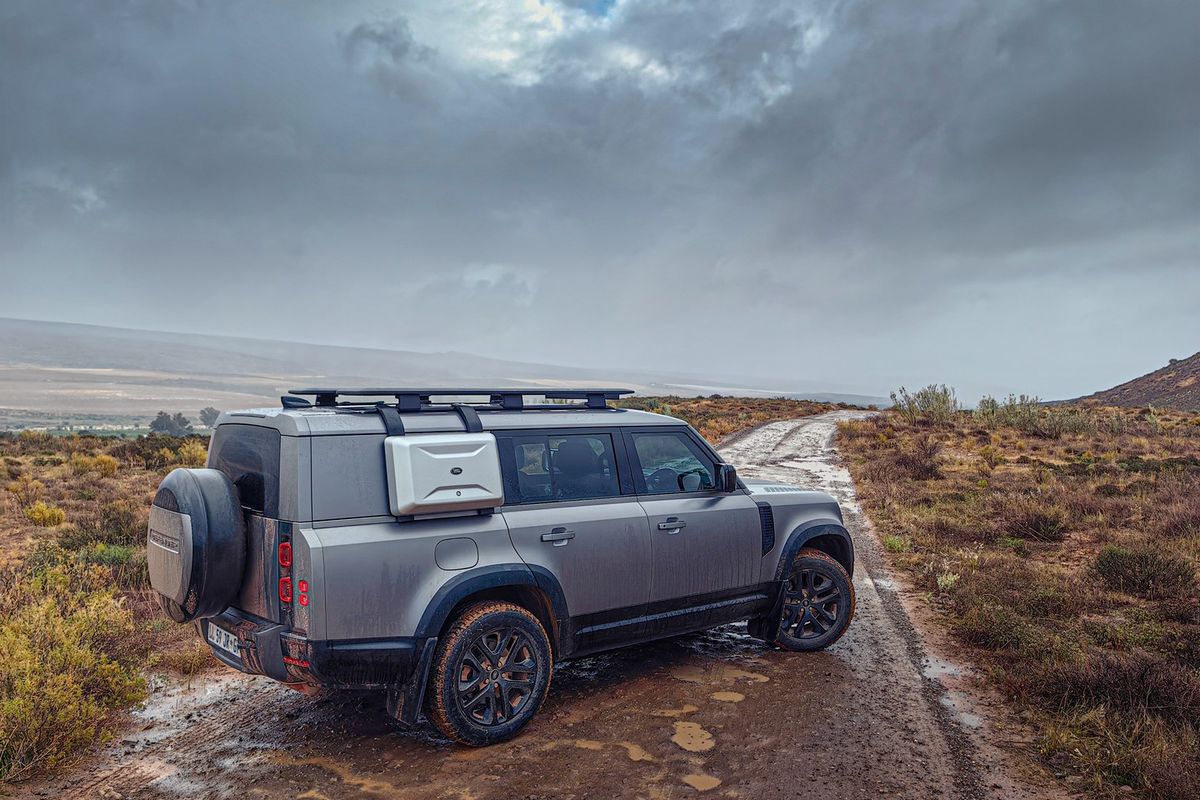
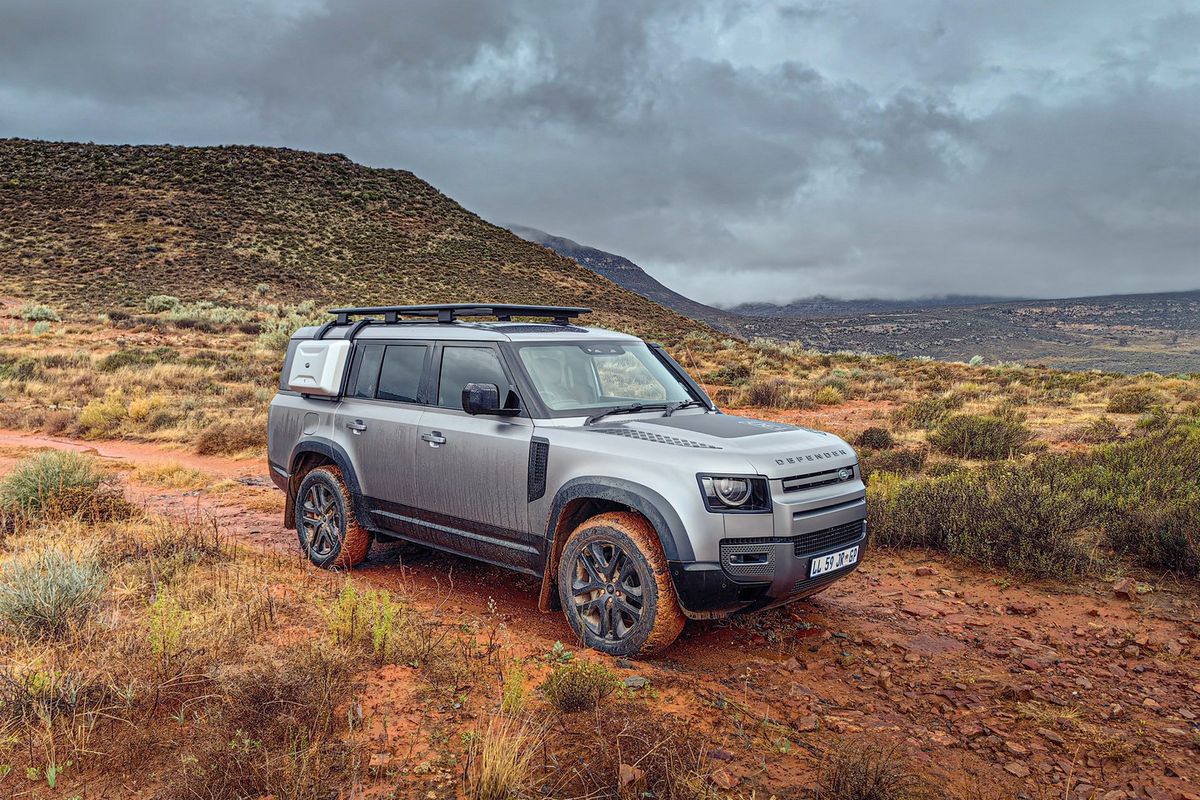
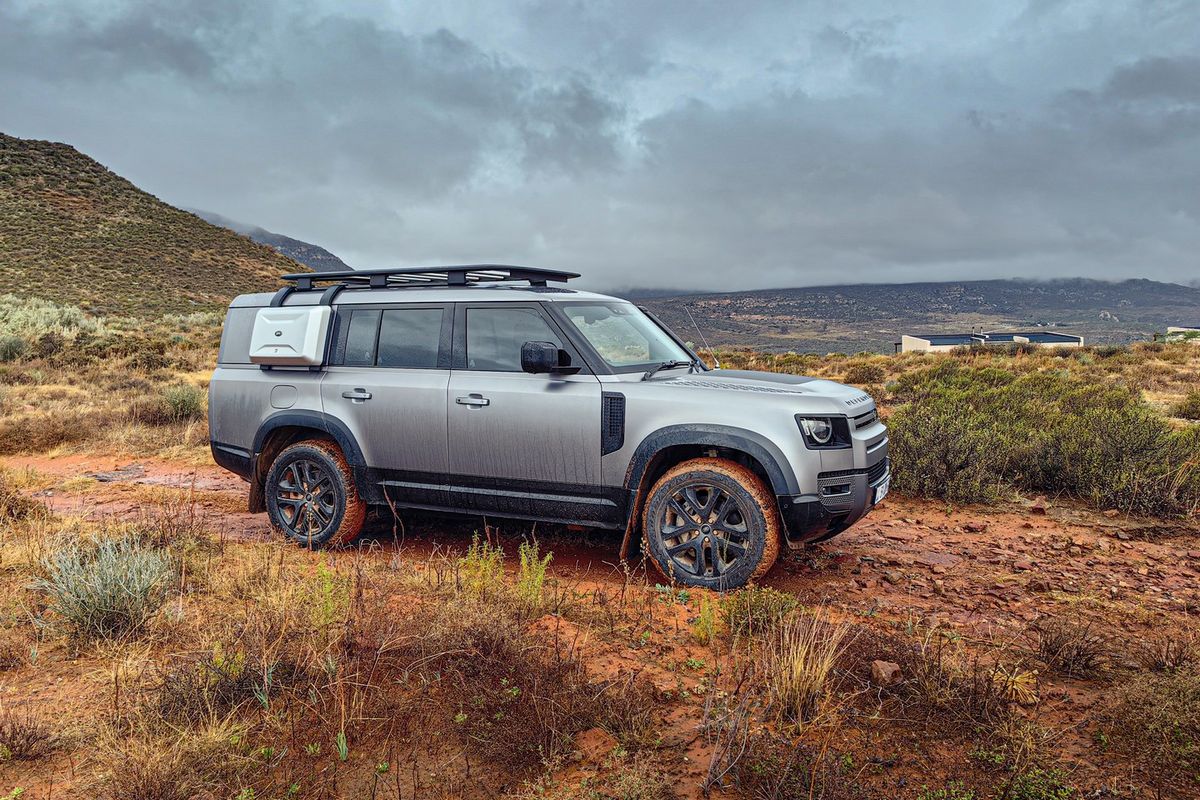
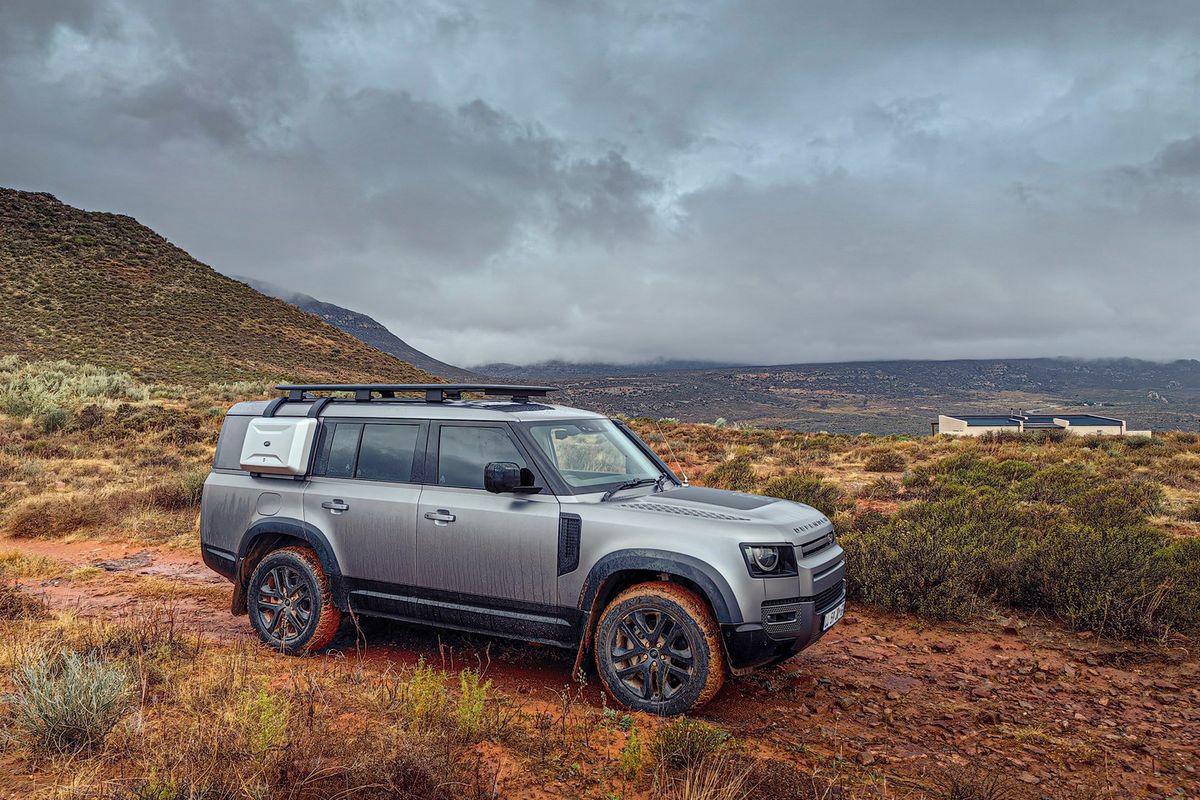
This Defender (130) Outbound has a matte-grey paint finish – it’s one of a handful of colours available.

The Land Rover Defender Outbound can be distinguished by the matte finish applied to its mesh grille and bumpers, as well as the 20-inch wheels (in gloss black). This derivative is only available in a handful of exterior colours – our test unit (shown here) was finished in a gorgeous matte grey, replete with a square bonnet decal. This finish is not just for looks; it also adds a layer of protection from “bush rash”.

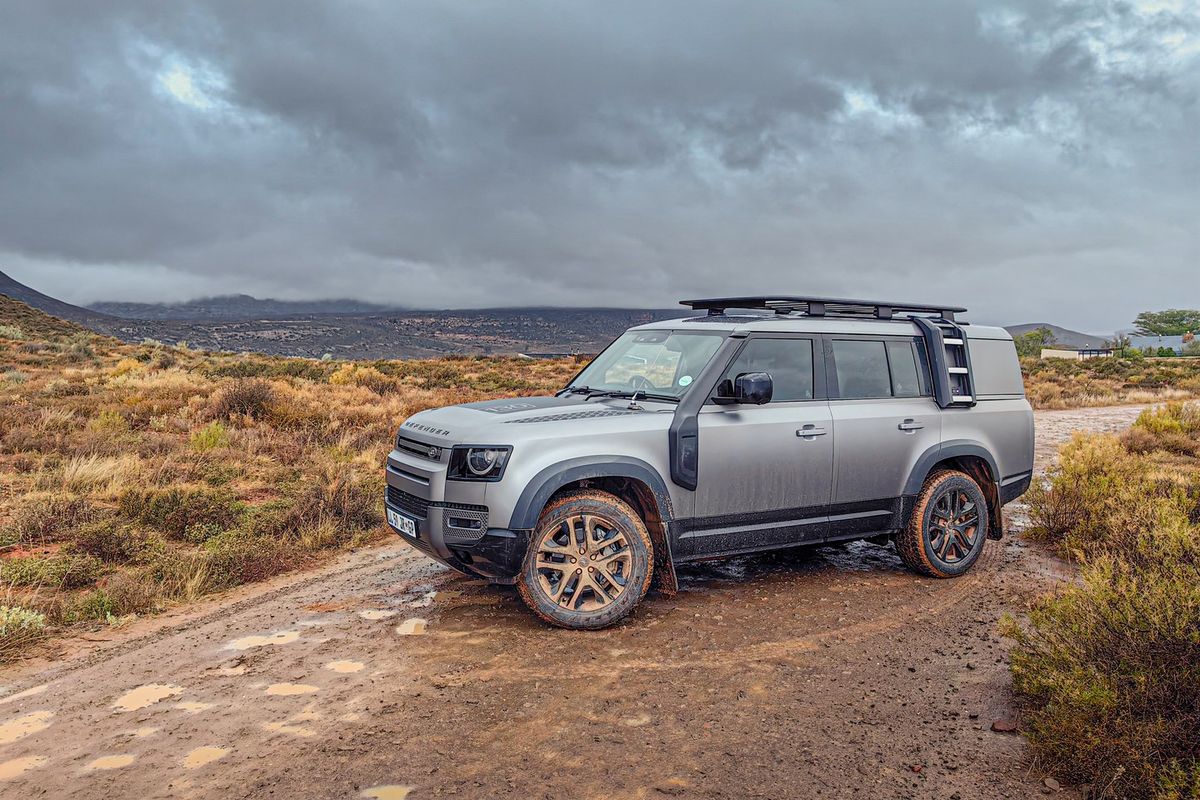
In Outbound guise, the Defender 130 loses 3 seats, but gains a massive load bay.

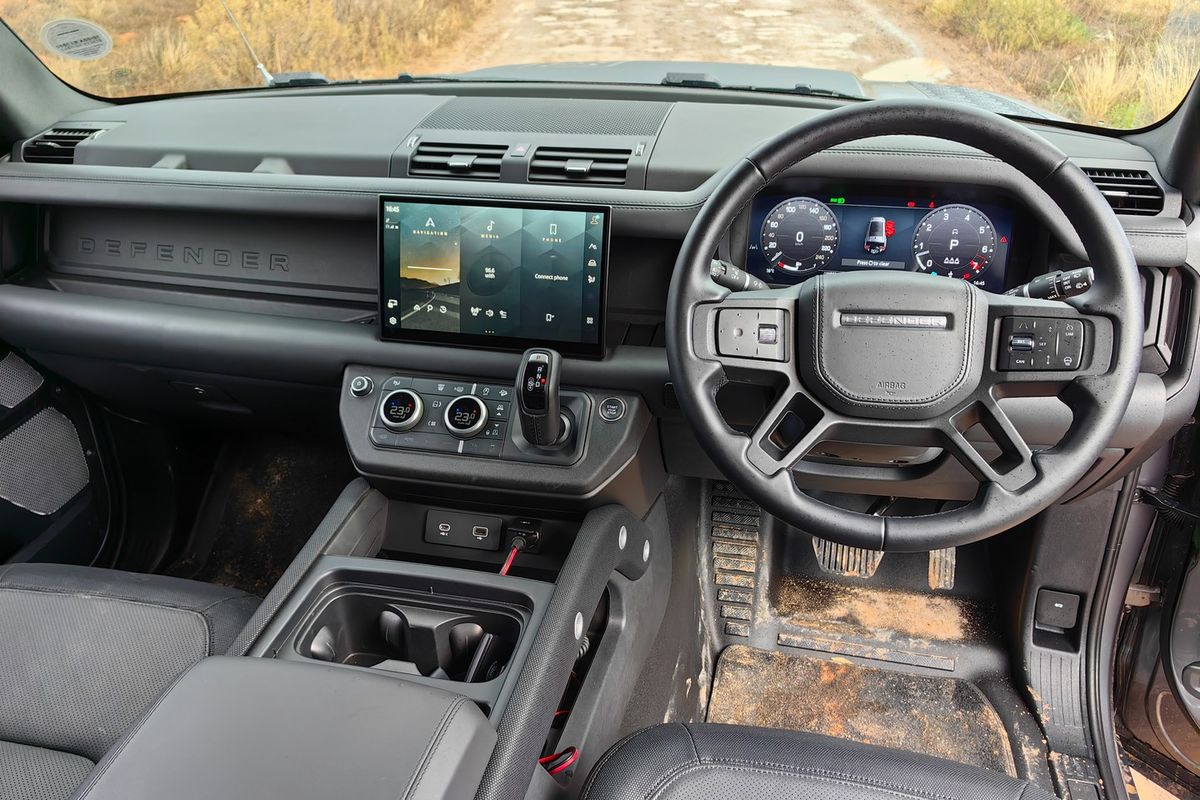
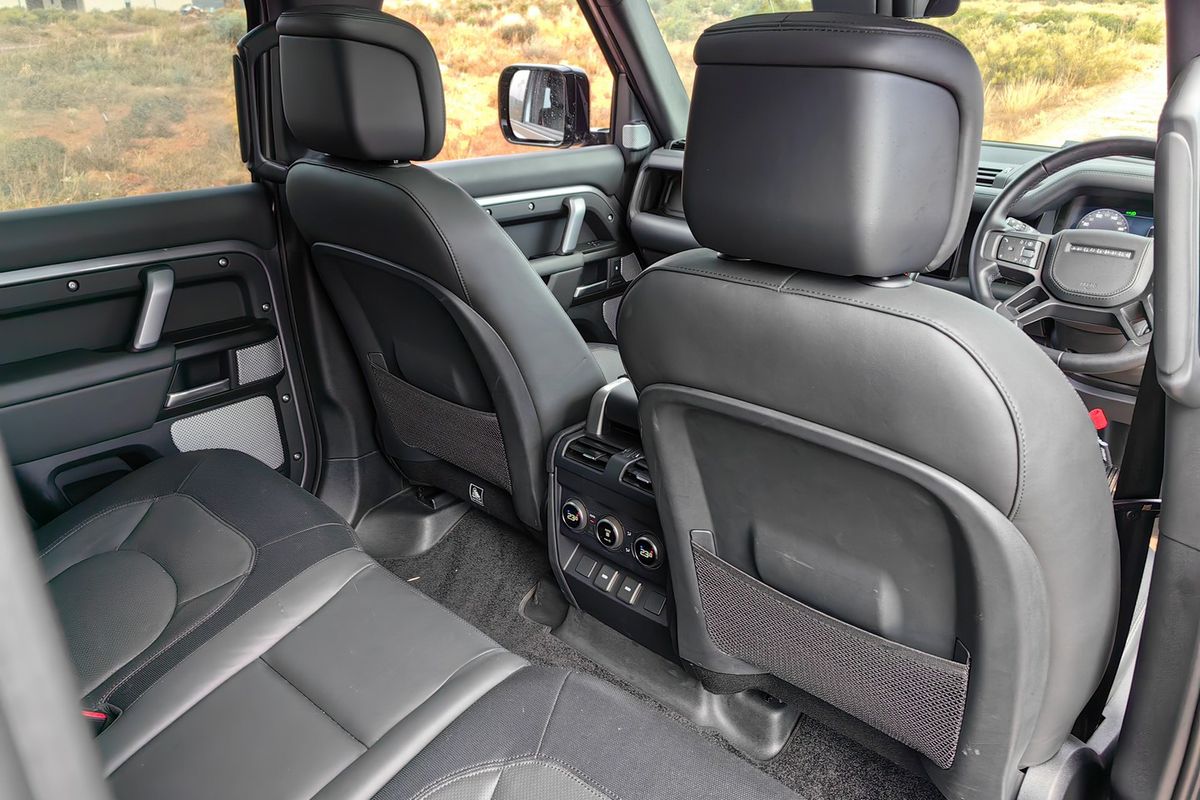
As a Premium SUV, the Defender Outbound sports “generous lashings of luxury”, but Land Rover has also applied clever practical touches to the cabin. For example, while it’s quite appropriate to have plush carpets in a luxury SUV, this overlanding variant is equipped with rubber mats, which are easy to clean.

Also, the load bay has a durable rubber floor to protect the interior from being gouged or scratched by camping stoves, mountain bikes and other heavy items. Mounting points are provided to secure cargo.

Engines and Performance

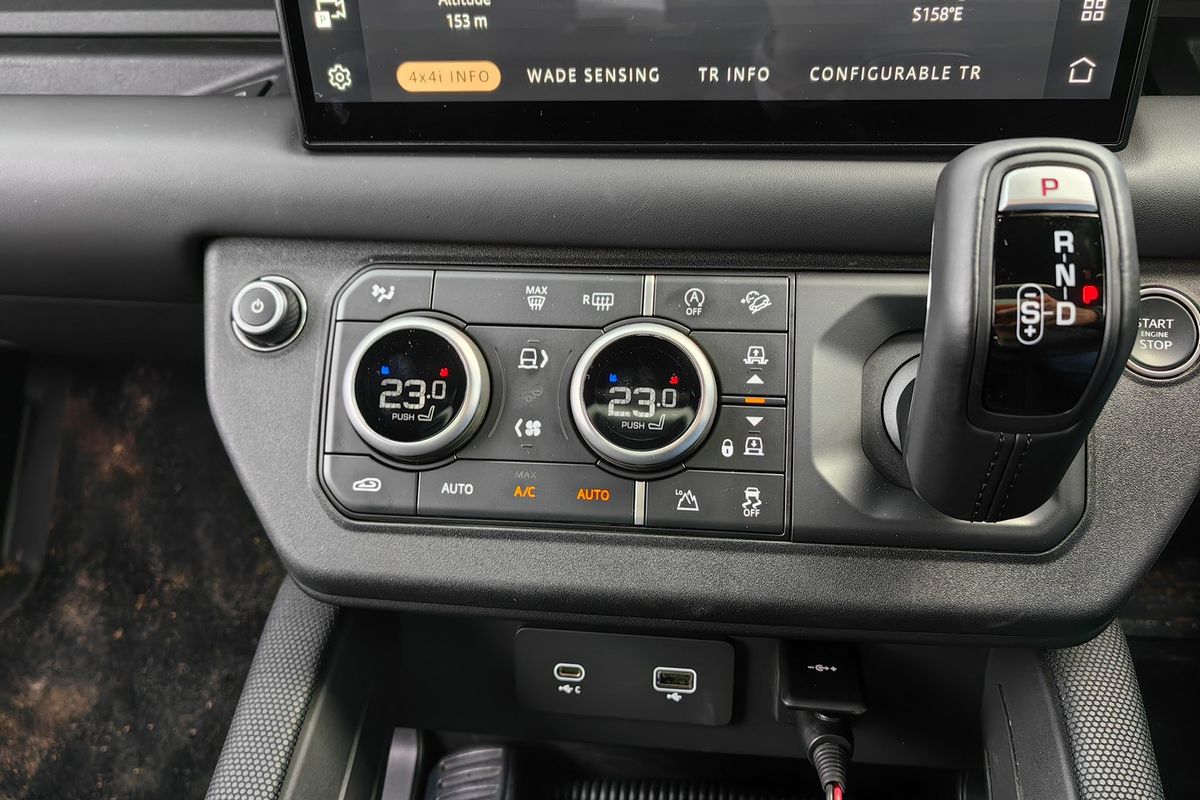
Land Rover Defender Outbound interior
We gave the Defender Outbound’s cabin proper exposure to the outdoors. Sorry about the muddy footwell.

Customers have a choice of 2 engines. The D350 has a 3.0-litre 6-cylinder turbodiesel that produces 257 kW and 700 Nm of torque – it gives this Defender 130 variant a claimed 0-100 kph time of 6.7 sec.

The P400, in turn, is powered by a mild-hybrid 3.0-litre 6-cylinder turbopetrol motor that puts out 294 kW and 550 Nm of torque. For what it’s worth, the P400 is said to gallop from 0 to 100 kph in 6.6 sec, which is impressive for a vehicle of the Landy’s size. Both variants have 8-speed auto transmissions.

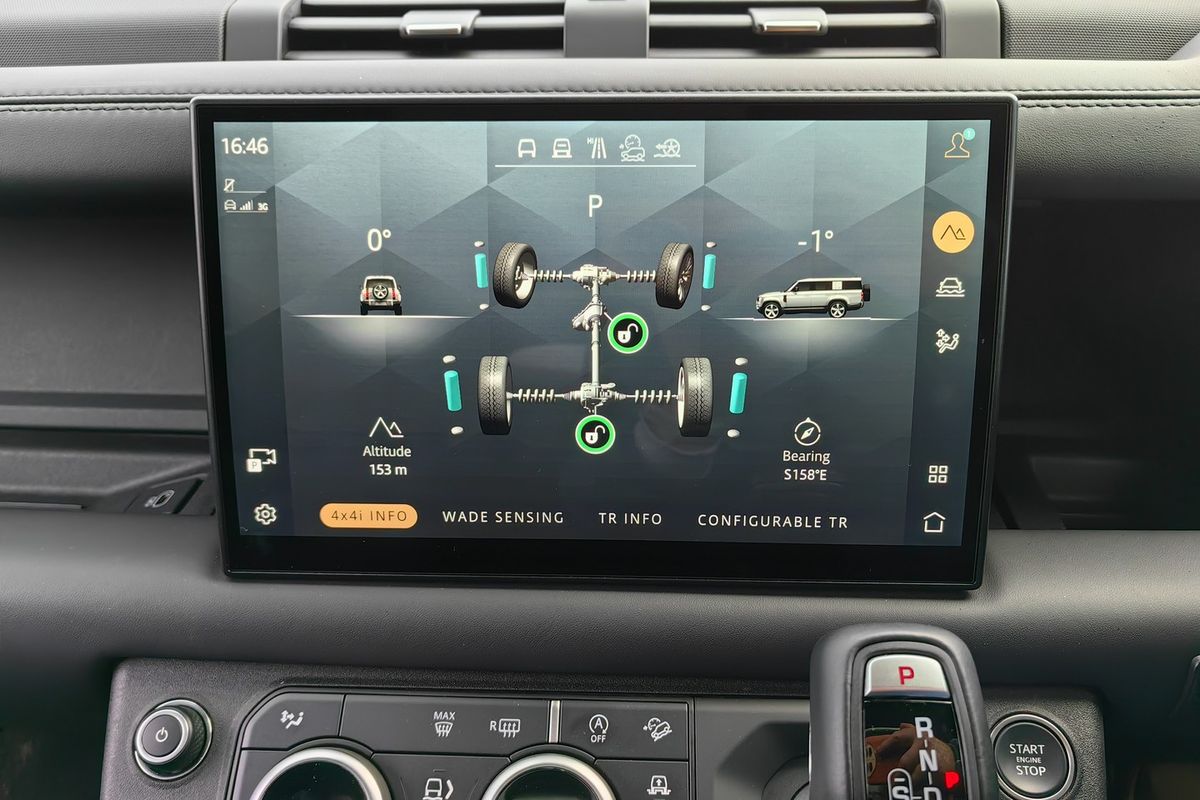
The Pivi Pro infotainment system is one of the best in the business

Of course, being a Defender, the Outbound will be expected to traverse the roughest off-road terrain. To that end, it comes equipped with Intelligent All-Wheel Drive and Terrain Response system (it rides on air springs, with adaptive damping). With the appropriate drive mode selected, the variant’s electronically controlled air suspension is claimed to allow up to 430 mm of articulation and up to 900 mm of wading.

Finally, the newcomer is rated to tow braked trailers of up to 3 000 kg – a tow bar is fitted as standard.

What is the Defender Outbound like to drive?

Our evaluation route saw us driving north of Cape Town towards the Cederberg region, where we visited places such as Citrusdal and Clanwilliam. This trip formed part of a bigger adventure called the Defender Night Sky, which was intended to include some star gazing, but the winter weather had other ideas.

Land Rover Defender Outbound road
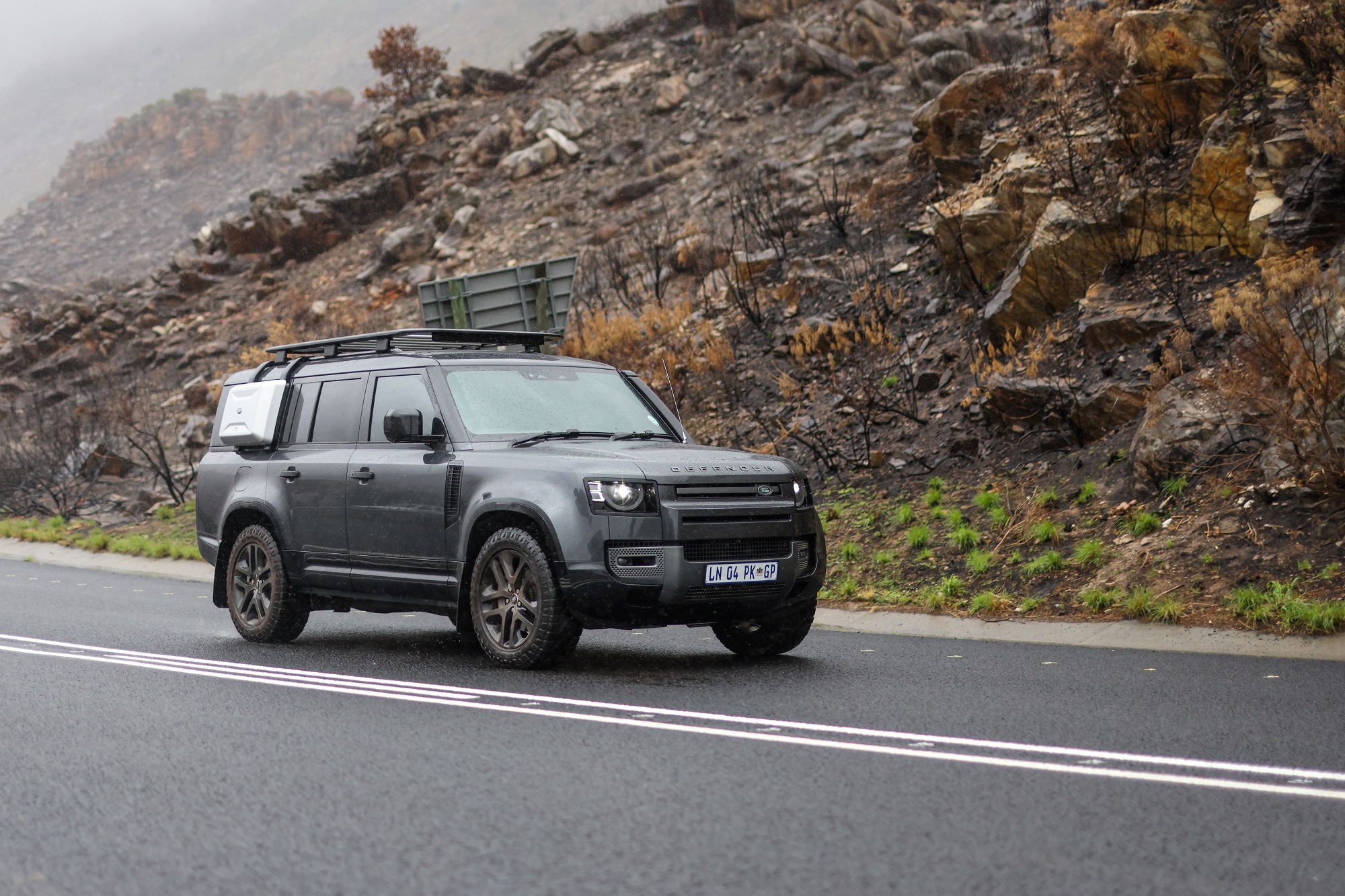
The 20-inch all-terrain tyres strike a great balance of grip and refinement.

On tarred roads, the Defender Outbound exudes classiness and impeccable road manners. Even though the variant is fitted with 20-inch all-terrain tyres, the cabin was hushed. We drove a P400 and, despite its 2.5-tonne kerb weight, the turbopetrol-powered unit delivered eager acceleration without any hesitation.

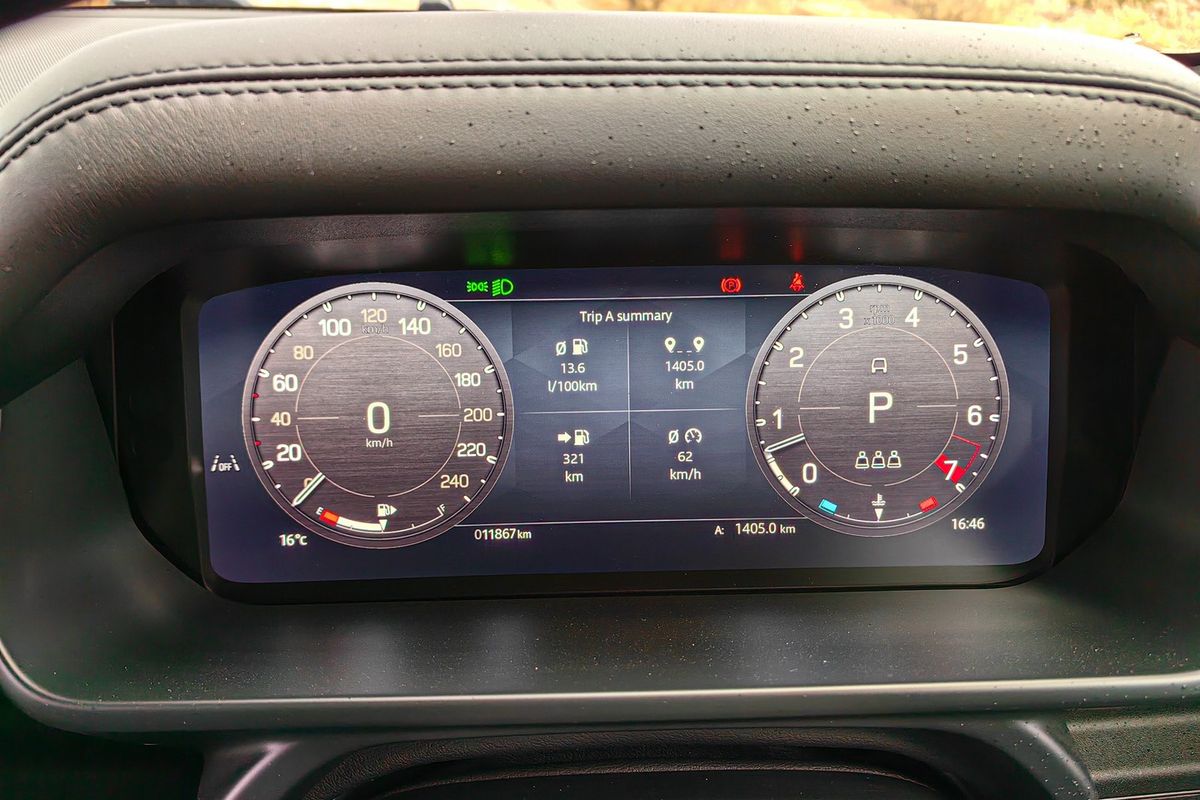
Irrespective of which drive mode you’ve selected, the P400 will respond to your accelerator-pedal inputs almost instantaneously, with the transmission efficiently shuffling its gears. Don’t be too heavy with your right foot, though – our test unit’s trip computer indicated a fuel consumption figure of 13 L/100 km.

Land Rover Defender Outbound mud
Driving at pace on wet dirt roads in the Defender 130 Outbound. Exhilarating stuff.

Then we got to truly test the Outbound’s mettle. We also traversed many kilometres of gravel farm roads and, just to make regional driving more of a challenge, Mother Nature decided to whip the Western Cape with a brutally strong cut-off-low weather system that yielded 4 days of uninterrupted rain and flooding.

With the majority of gravel roads turned to veritable furrows of mud, we had to rely on Defender (130) Outbound’s all-terrain tyres and all-wheel drive system to keep the vehicle stable while driving at pace.

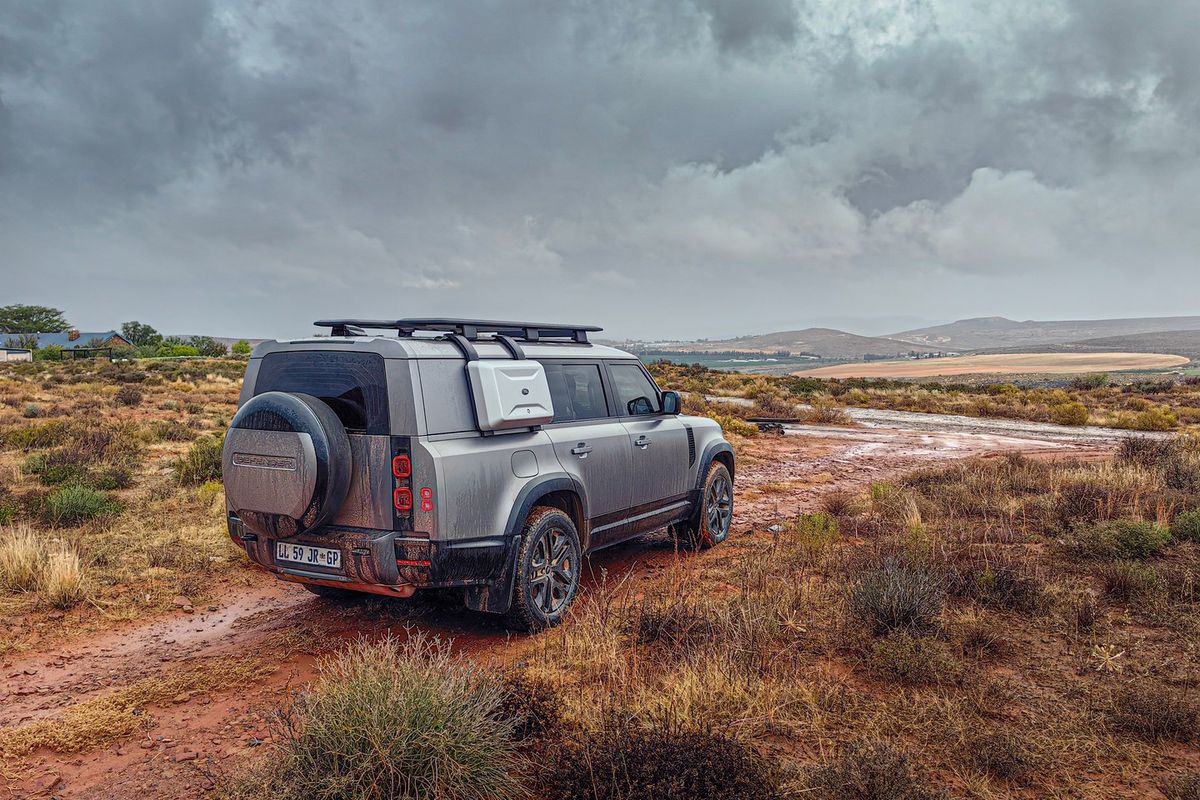
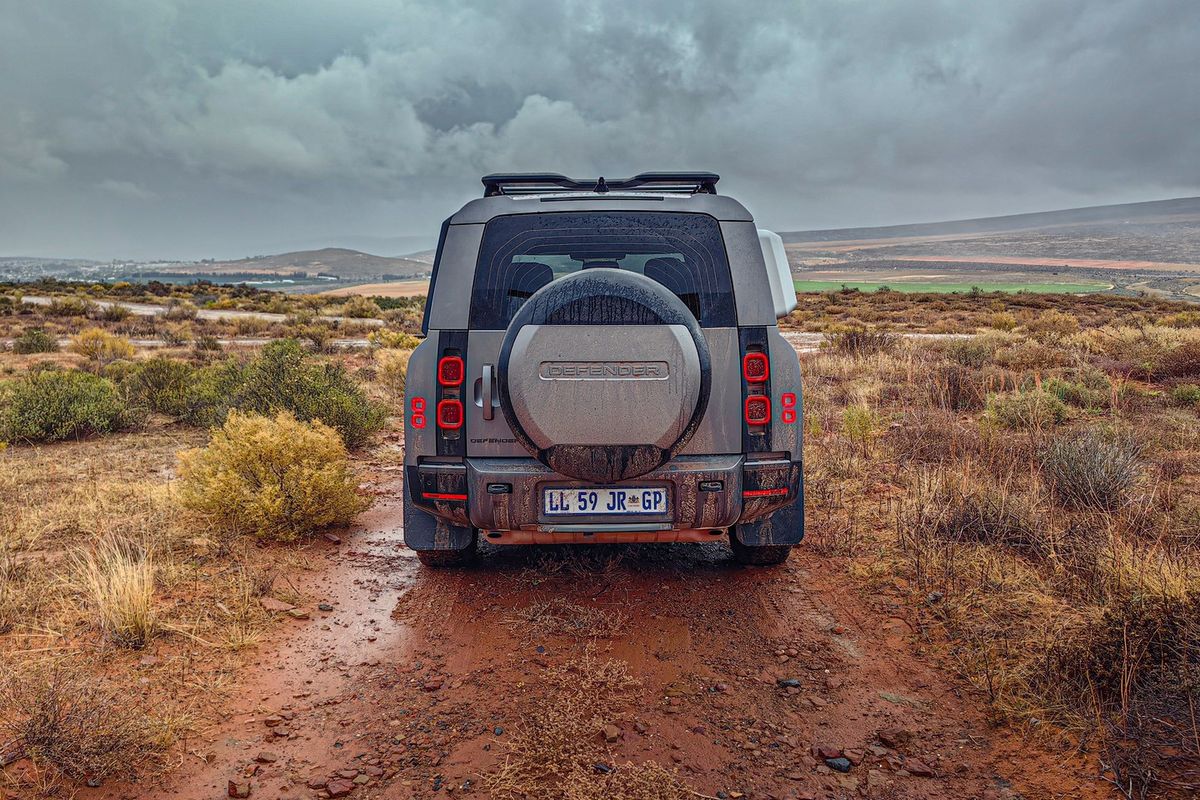
Land Rover Defender Outbound rear
The car is going to need a proper wash after this!

Some of the puddles were rather deep, but our test unit was untroubled. It’s reassuring to know that even in the wildest conditions, the Defender Outbound is unlikely to get stuck unless you drive foolishly. The vehicle does the hard yards for you, so just sit back and relax in those comfy heated leather seats.

How much does Land Rover Defender Outbound cost in SA?

The Defender 130 is sold with a 5-year/100 000 km warranty and -maintenance plan.

Defender 130 Outbound P400R1 974 600
Defender 130 Outbound D350R1 970 800
The performance of the Outbound demonstrated why the Defender is JLR South Africa’s top seller.

Summary

While heavy rain partly disrupted the Defender Outbound’s launch event, driving on muddy, rutted roads provided a suitable real-world test of the new 130 variant’s capability. In those unpleasant wet and windy driving conditions, the Defender was a source of surefooted, safe and confidence-inspiring transport for its occupants, who were ensconced in luxury and comfort. The Defender – any derivative – will do it all.

It’s no wonder that the model is JLR South Africa’s top seller! As for the 130 Outbound, we were thoroughly impressed with its packaging and what it “brings to the table”. Who really needs an 8-seater anyway? Settle for 5 and enjoy one of the biggest load bays in SA’s Premium SUV segment instead.

The latest Defender specifications and prices

Want to buy a new or used Defender? Browse vehicles for sale

BMW X5: Most influential car of this century (so far)

Forget the Prius and Model S – the BMW X5 is the most influential car of this century (so far) because it is the model that saw the SUV transform from a ponderous off-roader into a refined unibody-based luxury car. The rest, well, is history.

Just before the dawn of the millennium, a new vehicle segment – calved by capitalism and seldom safe from social scorn, yet what would ultimately prove exceedingly lucrative – was hatching: the luxury SUV.

1989 Jeep Wagoneer

The SUV germinated in the United States from highly utilitarian beginnings. In 1963, the Jeep Wagoneer debuted as a body-on-frame station wagon built with 4-wheel-drive and fitted with a muscular motor. Across the pond, Range Rover followed with a similar concept (1970), Jeep did it again with the Cherokee (1974) and, perhaps most importantly, Mercedes-Benz rolled out the legendary Geländewagen (1979).

Browse: New or used examples of the Range Rover and Mercedes-Benz G-Glass on Cars.co.za

Apart from a flash of notoriety in 1994, when the late O.J. Simpson tried outrunning the Law in his Ford Bronco (said to have been viewed on live TV by 95 million people), SUVs remained “off-roaders dressed up as family vehicles”; they were cost-effective to produce and generated profits for their makers, but by passenger-car standards, had compromised road holding, -handling, -ride qualities and -safety ratings.

W163-series Mercedes-Benz ML

Even when Mercedes-Benz unveiled the W163-series ML in 1997 (indeed, the Three-pointed Star built what became known as a Premium SUV before BMW did, but hang on a bit) it was essentially a posher rendition of the dutiful Geländewagen (now named the G-Class); it had a low-range transfer case and, like its predecessors – as well as millions of bakkies and 4x4s – was based on a ladder-frame chassis.

Read/Watch our review of the Mercedes-Benz G400d Stronger Than Time

However, BMW was determined not to be eclipsed by its Stuttgart-based rival in its pursuit of market dominance (Audi was still a bit player then). In 1999, BMW struck back with the original, E53-gen X5.

The E53-gen BMW X5 is quite possible the most influential car of the century (so far)

Decisively blueprinting the genre’s DNA for the 21st century, BMW eschewed the ladder-frame concept in favour of a unibody design; SUVs had to be roomy, practical and look the part, but because they were unlikely to venture far from a tar road, if at all, they required only electronically controlled all-wheel-drive. Plus, they afforded a de rigeur perched driving position and car-like driving experience, if not in extremis.

For everything else, presumably, there was still a UNIMOG. After the X5’s debut, the floodgates opened.

See also: F15 BMW X5 (2014-2019) Buyer’s Guide

1st-generation Porsche Cayenne

Greta Thunberg’s birth in 2003 missed the unveiling of a barrage of her future bane of ozone-destroying SUVs by only a year – when the Volvo XC90, Volkswagen Touareg and the Porsche Cayenne all saw the light – with Mercedes-Benz following with the 2nd-gen (and also monocoque-based) ML in 2005.

Overnight, large and luxurious SUVs became all the rage. They allowed well-heeled families to travel in style and survey their surroundings in comfort, but didn’t hold up traffic in the fast lane. They were laced with mod cons, trimmed in posh materials, handled okay (with fair road-holding, stopping power and body control), could be reasonably fuel-efficient and scored high marks in official crash-safety tests.

2015 Cadillac Escalade

Likewise, for criminals and office-bearers, the SUV became the weapon of choice for on-road thuggery and blue-light brigading, relegating the vehicle to an object of contempt for lesser, law-abiding motorists.

It IS a polarising vehicle (seemingly loved and hated with equal passion), yet the SUV has been a catalyst for advancements in automotive design, -production and -engineering. Indeed, it has transformed our motoring landscape; SUVs and their more affordable 2WD tribute acts (crossovers) have put sedans, station wagons, MPVs (except minibuses) and hatchbacks on the automotive endangered-species list.

Lamborghini Urus profile view

Thanks to the (I’ll reiterate) unibody-based SUV, consumers now expect most new vehicle models to be multitalented; they need to combine the functions of several of the vehicle archetypes we grew up with.

The BMW X5 was also influential because, before 1999, there was no man’s land between overlanders, limousines and drag-strip destroyers. Ever wonder why most double-cab buyers don’t want workhorses, but demand flashy vehicles with luxury features, refined powertrains, oh, and notable off-roading ability?

Browse: New/used examples of the BMW X5 listed for sale on Cars.co.za

For all-out performance – but laughably few concessions to gravel travel – there are apex versions of the Porsche Cayenne, its sibling the Lamborghini Urus, the Alfa Romeo Stelvio and the Ferrari Purosangue.

2024 Mercedes-Benz GLS front three-quarter view

SUVs have only grown bigger since the advent of the X5; consider behemoths such as the Mercedes-Benz GLS and BMW X7. Along with the bulk-up has come a rise in luxury levels (Bentley Bentayga, Rolls-Royce Cullinan), which not only begets more weight – it deepens the association with “gas-guzzling”.

Stricter emissions targets, however, have sharpened carmakers’ pencils to pursue greener solutions, be it either through increased combustion efficiency or alternative energy sources. And that’s laudable.

Second-gen BMW X4 rear three-quarter view

Alas, the BMW X5 has not been influential enough to dissuade uninspired product designers and cynical marketers from cooking up smaller, less competent versions of large SUVs – to say nothing of the idiocy of coupe-styled derivatives with their tortoise-shell silhouettes and near-useless rear utility space.

The X3 has matured nicely, but why didn’t BMW fire the person who signed off the X6, and worse – the X4? Can you imagine anything more undignified than driving a mutant reimagining of the Dodge Caliber?

Audi RSQ8 front three-quarter view

To its credit, Audi has erred on the side of conservatism when styling the marque’s SUVs and their subtly-coupe-inspired variants; the Q3, Q5, Q7 and Q8 – they’re all reasonably visually appealing.

Browse through new/used Audi SUVs listed for sale on Cars.co.za

The only blight has been the Audi Q2, which was pricey as it was pointless; and about as off-roady as a Jimmy Choo shoe. Thankfully, sanity has prevailed at Audi HQ and the Q2 is set to be axed soon.

Kia Seltos GT Line rear

I could critique all the premium marques’ SUV wares, but I’d run out of space. Besides, you get the gist: Premium SUVs have spawned larger and smaller high-riding clones with varying degrees of success.

Seek and ye shall find a BMW X5-inspired product

Virtually all volume-selling passenger car brands now offer crossovers spun from hatchback platforms. From Renault Kiger to Koleos; Kia Seltos to Sportage, Volkswagen Tiguan to Taigo and countless others – somewhere, in each of their lineages, a designer owes BMW a tip of their hat for pioneering the unibody soft-roader (and the VW Group, for perfecting platform-sharing), that pathed the way for the multitude of small- and medium crossovers that dominate our roads. Yes, that goes for BMW’s X1 and X2 too.

See also: Read/Watch our BMW X1 sDrive18i xLine review

BMW X3 3rd generation

If the E53-gen BMW X5 never emerged from the motor industry’s primordial sludge in 1999, perhaps we wouldn’t have millions of road-biased SUVs and cutesy crossovers on the globe today. Of course, that’s cold comfort for Greta, but even she would have to (rather reluctantly) admit that given its forward-thinking credentials, the BMW X5 is quite possibly the most influential car of the century (so far).

Browse through new/used BMW SUVs listed for sale on Cars.co.za

Find exclusive car-themed merchandise at the SentiMETAL Shop

Related content:

Forget the M3 Touring, you want a Golf R Wagon

5 Semi-sensible (and non-German) Sports Sedans

Rapid tech advances are bad news for EV owners

Most Powerful New Cars in South Africa for Under R1 Million

Used Car Bargains: Fun Used Cars for Sale

Kia Picanto Review: Still a good budget car?

Jacob Moshokoa provides a detailed review of the base 1.0 LX manual derivative of the 3rd iteration (2nd facelift) of the 3rd-gen Kia Picanto, priced at R260 995 (June 2024)

The recently updated Kia Picanto features a more upmarket cabin, plus more up-to-date technology. The problem is that the price increase of adding those features has raised the price of the budget car…

2024 Kia Picanto front view

Kia South Africa has also brought the revised JA-series Picanto’s trim-level naming strategy in line with much of the rest of the Kia range, ditching the old Start, Street and Style grades in favour of the LX, EX and EX+ trim levels (suffixes similar to those used on the 2nd-gen Picanto).

Each grade comes in your choice of a 5-speed manual gearbox or 4-speed automatic transmission, paired with (in LX derivatives) a 1.0-litre inline-3-cylinder petrol engine (it produces 49 kW and 95 Nm) or, in the EX and EX Plus, a 1.2-litre inline-4-cylinder petrol motor (with outputs of 62 kW and 122 Nm).

2024 Kia Picanto interior

The 1.0 LX derivatives are fitted with dual front airbags, ABS (all cars should have them though), ISOfix points, keyless entry, all-round electric windows (with auto up/down function for the driver), electrically adjustable and -heated side mirrors, remote central locking, alarm and immobiliser, plus (manual) aircon.

Perhaps the Picanto’s now-maturer price point (between R260k and R325k) sees it being priced out of the “student-car zone”, but despite inflation, the Korean city car remains universally desirable across all age and cultural demographics (even if the majority of its buyers are between the ages of 26 and 32).

2024 Kia Picanto rear three-quarter view

In his review of the Kia Picanto, Jacob Moshokoa discusses the 1.0 LX manual’s price, ride/handling, performance/efficiency, build quality, and practicality, as well as its warranty and service plan. He also compares the Korean brand’s model with the bestseller in the segment, the outgoing Suzuki Swift.

New Kia Picanto Specs & Prices in South Africa

Fina a new/used Kia Picanto listed for sale on Cars.co.za

Related content:

Kia Picanto (2024) Launch Review

Maruti Suzuki Swift Revealed

Citroen C3 (2023) Review: New budget champion?

Hyundai Grand i10 (2023) Review

RIP: Nissan Qashqai axed in South Africa

Another Nissan model exits Mzansi. Yes, the Nissan Qashqai has been quietly discontinued in South Africa, ending the nameplate’s nearly 17-year run on the local market…

The Nissan Qashqai is no more in South Africa. Yes, Cars.co.za can confirm that the Japanese company’s local division has discontinued the crossover, quietly bringing down the curtain on this well-known nameplate’s nearly 17-year run in Mzansi.

From what we understand after speaking to multiple sources, stock of the 3rd-generation Qashqai – which was priced at a significant premium compared with its exceedingly more popular predecessors – has almost run dry in South Africa, with this model having already been removed from Nissan’s local website.

The J12-generation Qashqai has exited South Africa.

We’ve asked Nissan South Africa’s communications department for official comment on the matter and will update this article should we receive any additional information. However, considering the Qashqai is imported from United Kingdom (where it’s built in Sunderland), we’d speculate that exchange-rate woes might have something to do with the decision.

UPDATE: Nissan SA has issued Cars.co.za with the following statement: “As part of Nissan’s strategy focused on enhancing the brand’s competitiveness in Africa, we are undergoing a continuous assessment of our vehicle line-up and evaluating future models that best serve the market. For now, Nissan confirms the discontinuation of the current Qashqai model in South Africa. This discontinuation will not impact the aftersales services currently provided to our customers.

Nissan South Africa is currently evaluating opportunities for new products and an updated product plan will be shared in due course. Nissan would like to assure its customers and stakeholders that it remains committed to South Africa. 

For the record, our figures suggest Nissan sold just 879 units of the Qashqai in 2023, which translates to a monthly average of only 73 units. After moving around 150 units every month in 2024’s opening quarter (150 in January, 151 in February and 157 in March), local Qashqai registrations fell to a mere 10 units in April 2024, before zero sales were reported in May 2024.

The 3rd-gen Qashqai was available in 3 flavours in SA.

A facelifted version of the Qashqai was revealed overseas in April 2024, but it doesn’t appear to be on the cards for SA. With the likes of the NP200, Almera and Micra – not to mention the entire Datsun brand – having been pulled from the local market over the past couple of years, Nissan SA’s range has now been reduced to the Magnite, X-Trail, Patrol and Rosslyn-built Navara.

Before the axe fell, the 3rd-generation Qashqai line-up had comprised 3 front-wheel-drive derivatives, each powered by a turbocharged 1.3-litre, 4-cylinder petrol engine generating 96 kW and 240 Nm in base Visia (6-speed manual) form, and 110 kW and 260 Nm in mid-tier Acenta (CVT) and top-spec Acenta Plus (CVT) guise. Pricing ran from R568 200 to R670 600, with the promised e-Power derivative unfortunately never making it to local shores.

The original Qashqai hit the local market in September 2007.

As a reminder, the original Qashqai (J10) launched in South Africa in September 2007, slotting neatly into Nissan’s line-up below the X-Trail of the era. Well in excess of 20 000 units of this Mk1 model were registered across the country over the next 6 or so years, before the 2nd-gen Qashqai (J11) arrived in mid-2014 and continued the nameplate’s sales success.

Finally, the ill-fated 3rd-gen model (J12) touched down in September 2022. But, according to our maths, only around 1 700 examples of the J12-gen Qashqai were sold in Mzansi before Nissan SA pulled the plug.

The Mk2 version of the Qashqai launched in Mzansi towards the middle of 2014.

Pronounced “Kash-Kai”, Nissan’s prototypical crossover was named after a semi-nomadic tribe in southern Iran but interestingly wore the “Dualis” badge in its domestic market of Japan, as well as in Australia (the latter seemingly over concerns it would be dubbed – not entirely inaccurately at the time, it must be said – Nissan’s “cash cow”).

Fascinatingly, the original Qashqai was conceived as an indirect replacement to the N16-gen Almera hatchback that was never offered here in South Africa (but was struggling against the likes of the Volkswagen Golf and Ford Focus over in Europe). Styled by Nissan’s design office on the Old Continent, the Mk1 Qashqai was positioned as a “robust alternative to the more generic hatchbacks in the segment”.

Browse Cars.co.za’s selection of Qashqai models here!

Related content

Facelifted Nissan Qashqai fully revealed

Nissan Qashqai (2007-2014) Buyer’s Guide

Nissan Qashqai 1.3T Acenta Plus (2022) Review

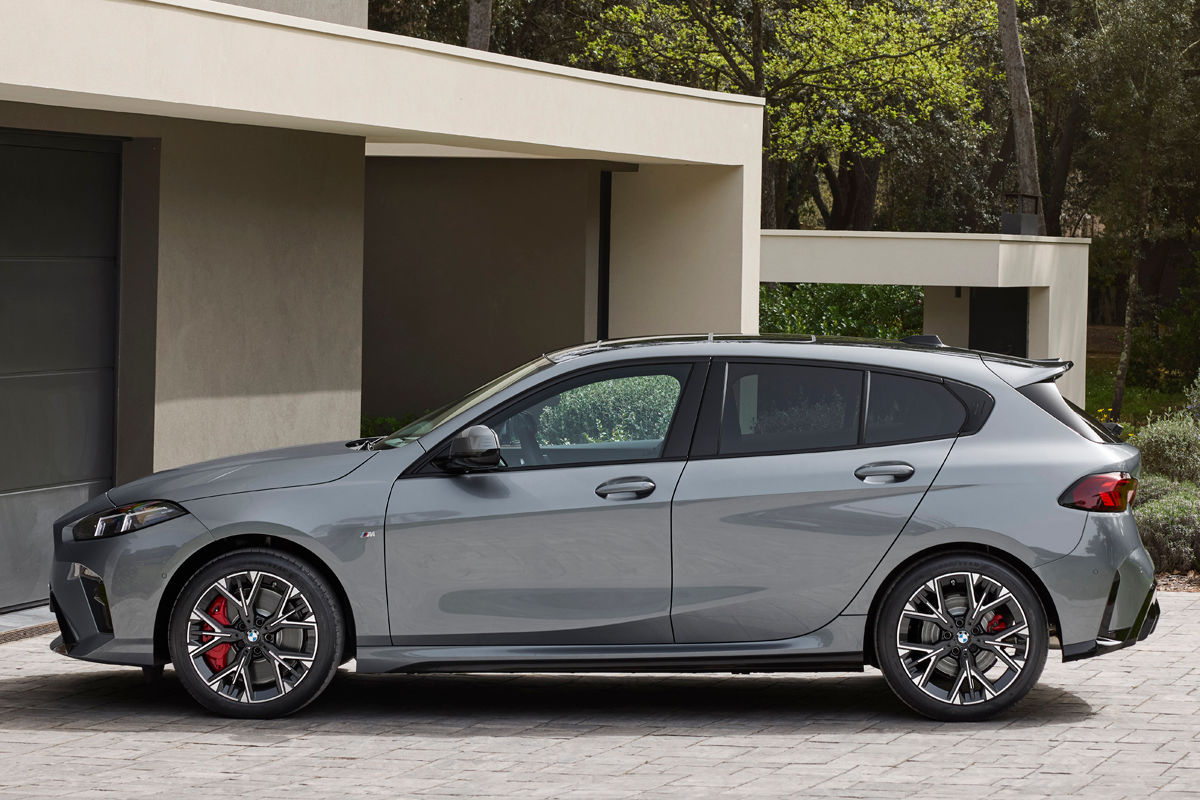
New BMW 1 Series revealed and SA line-up confirmed

The new BMW 1 Series hatchback has been revealed, with the line-up for South Africa – as well as local launch timing – already confirmed. Here’s what you need to know…

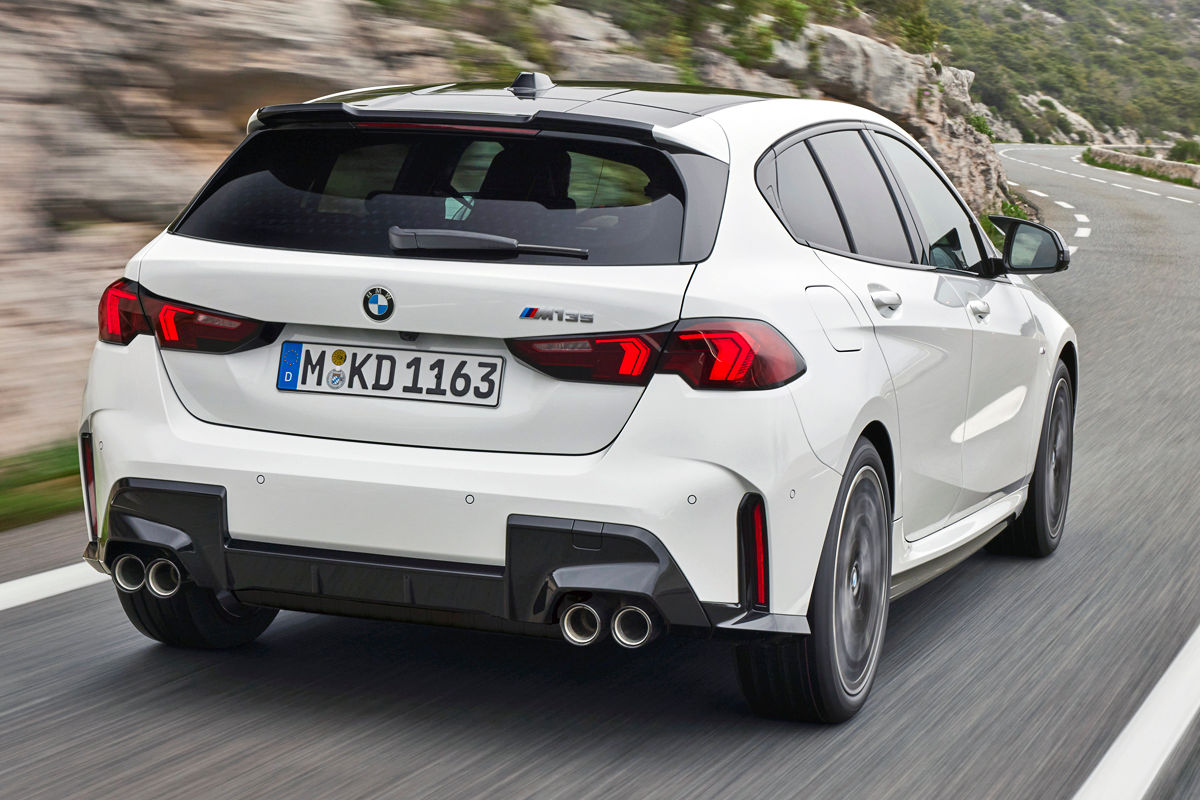
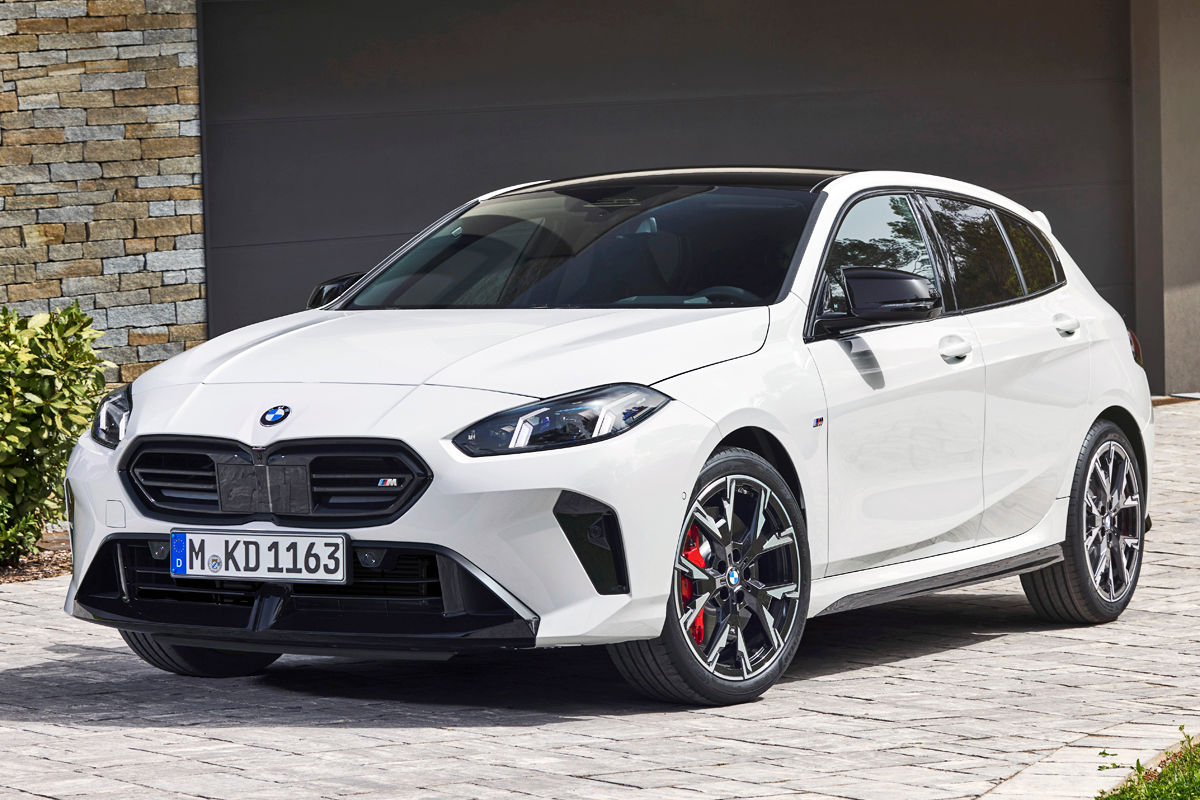
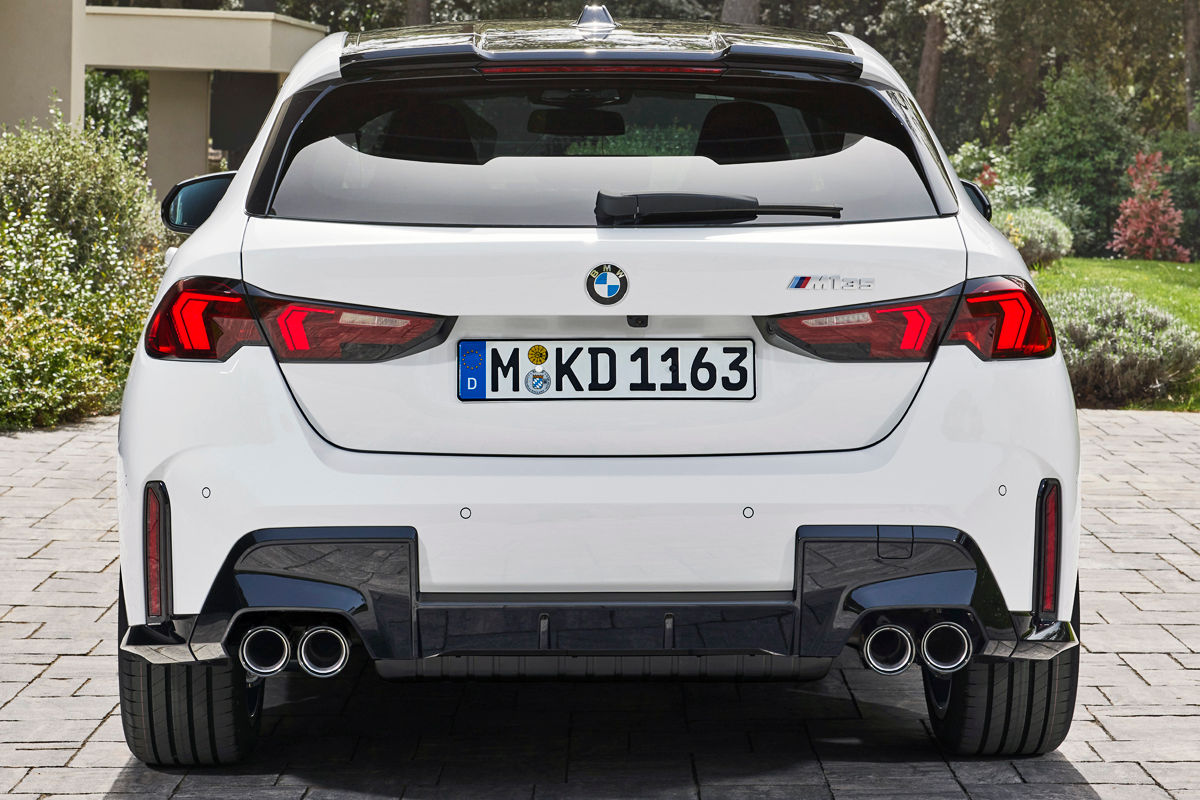
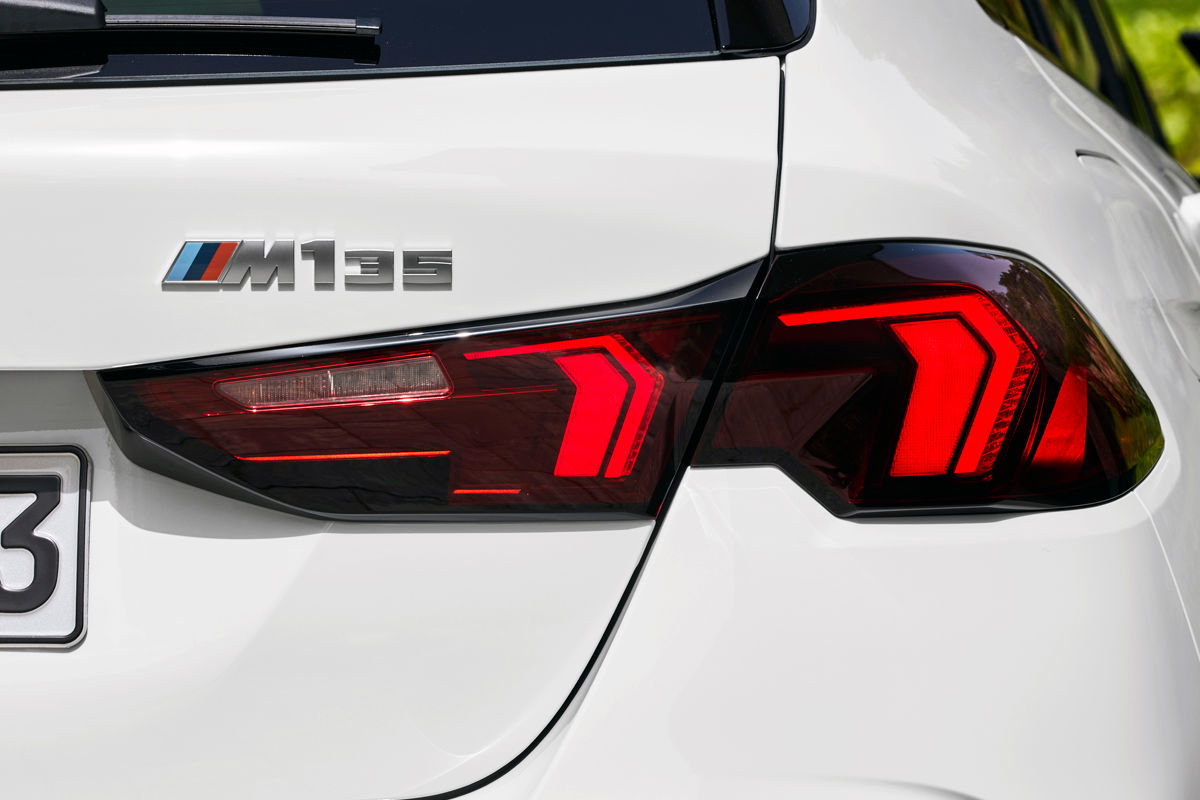
Meet the new BMW 1 Series premium hatchback, which has already been pencilled in for a launch in South Africa in the 4th quarter of 2024.

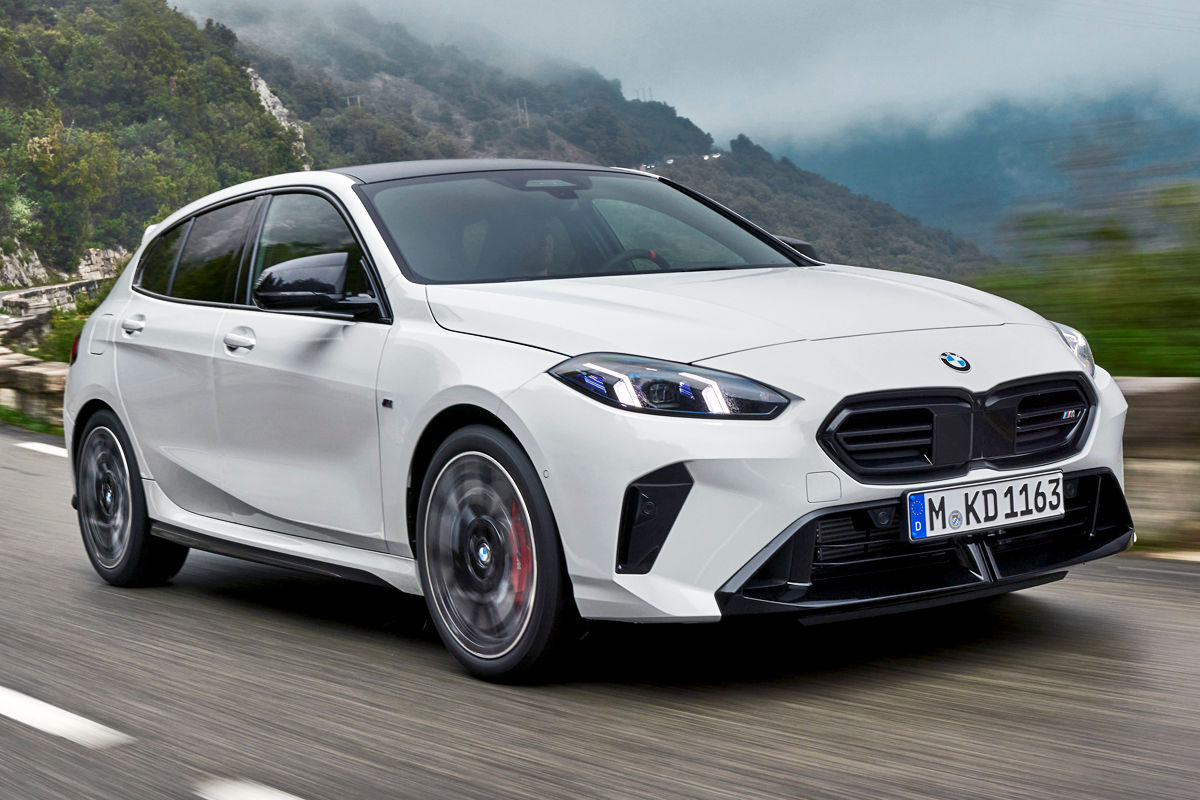
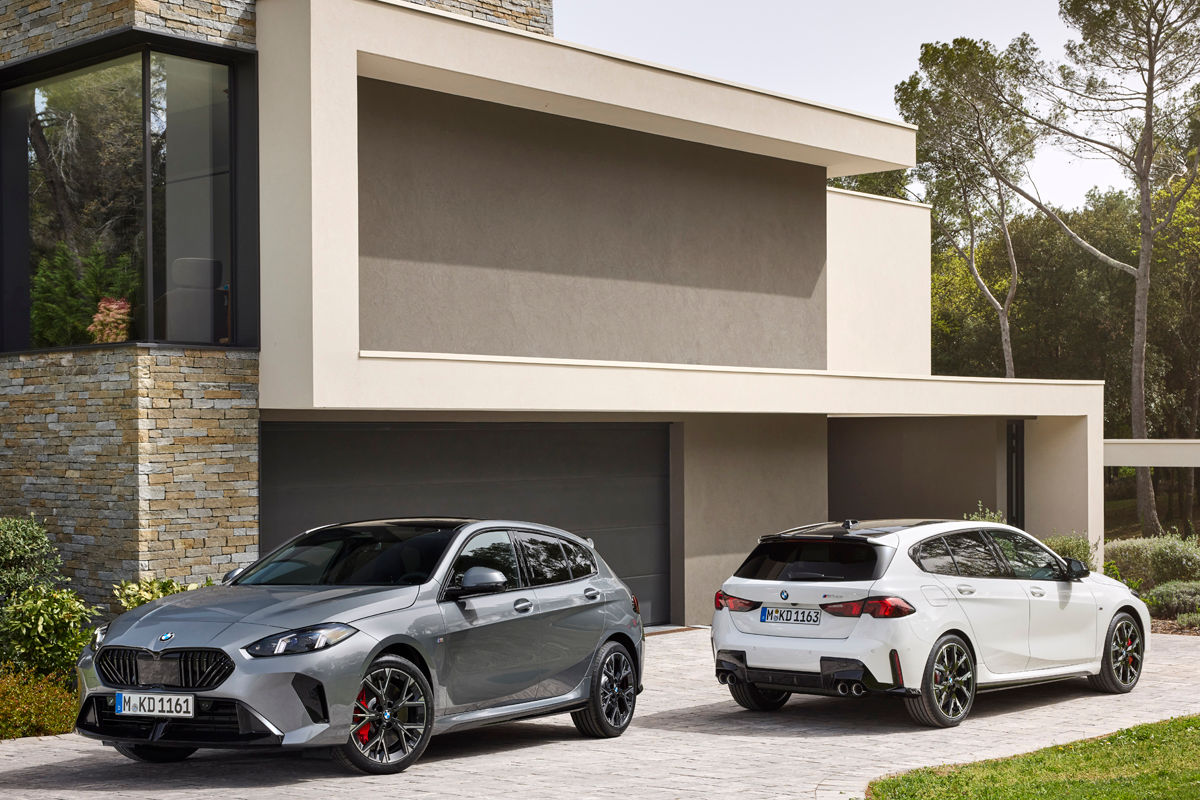
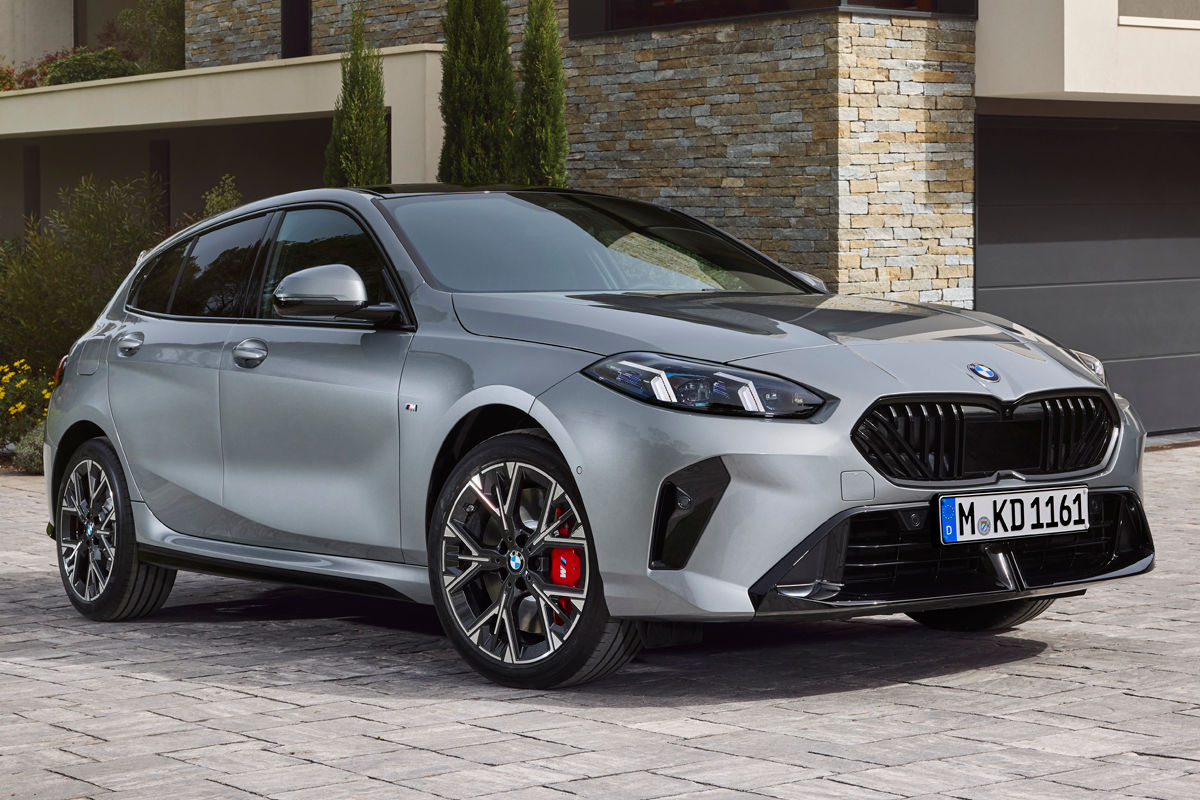
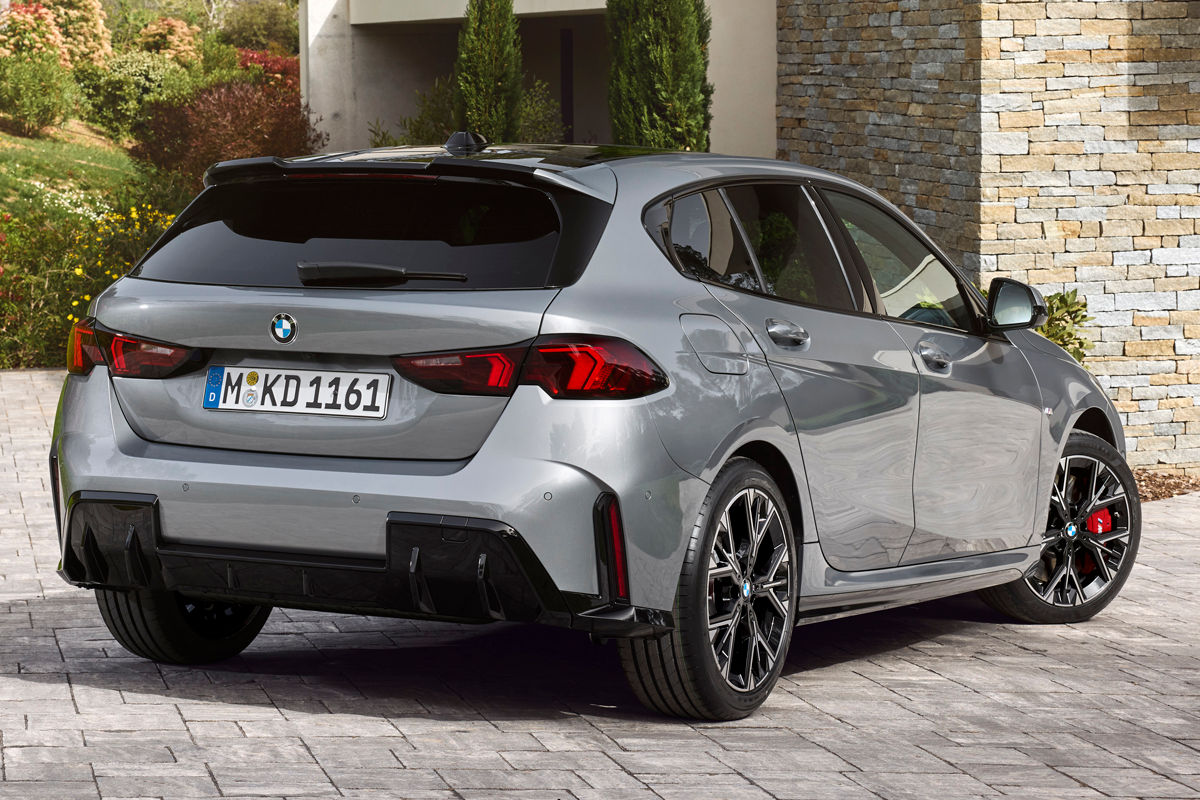
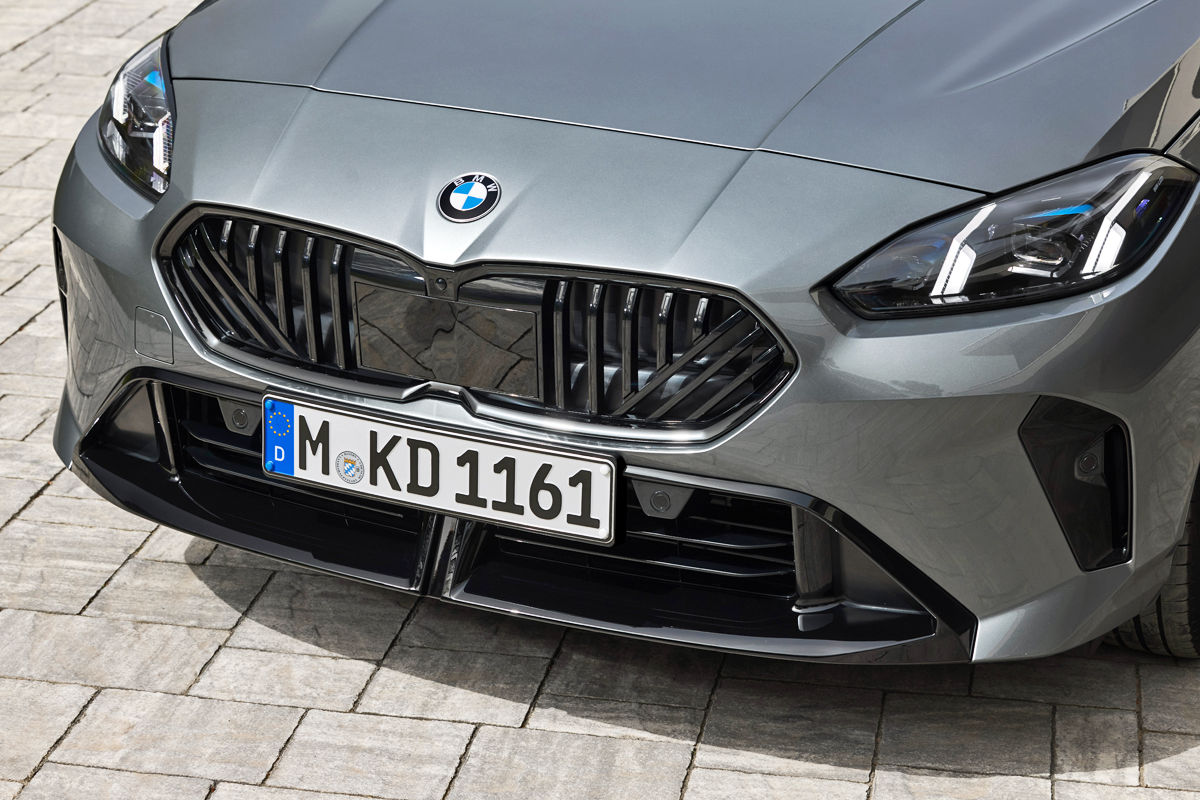
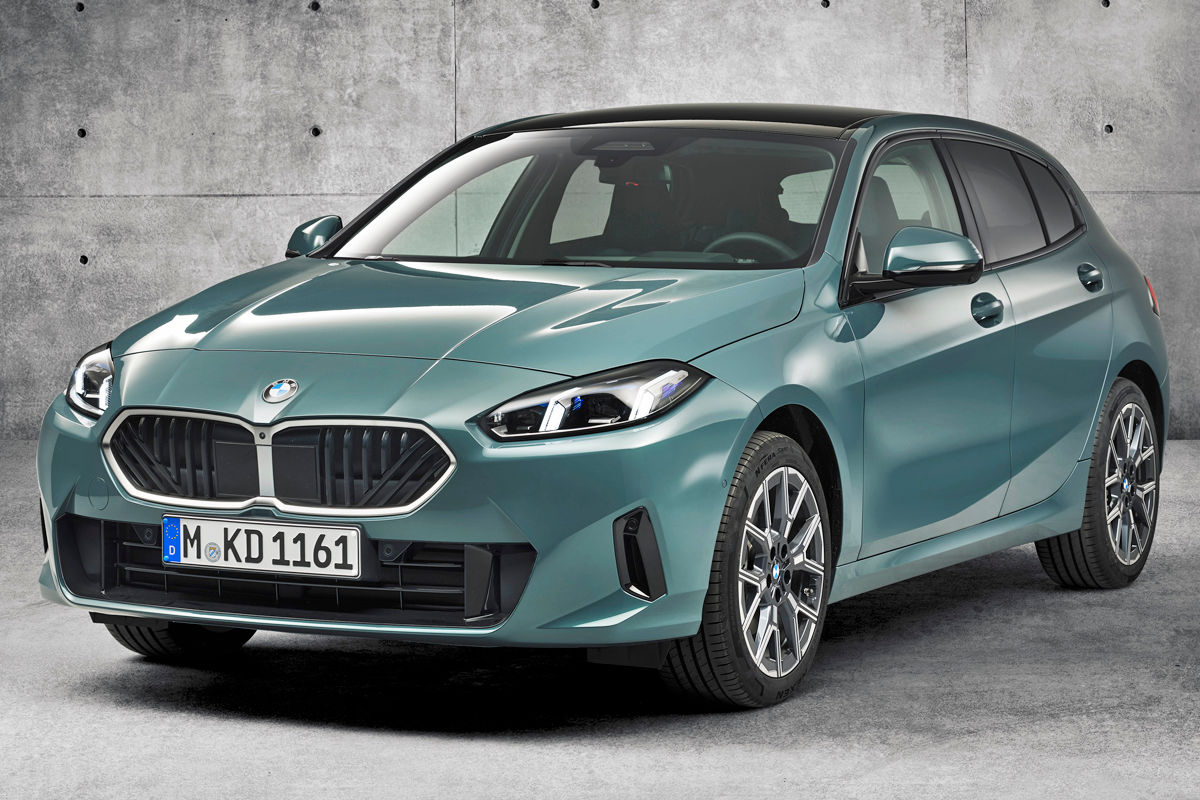
Considering the F40-generation 1 Series debuted as recently as 2019, you’d be forgiven for thinking this is an extensive facelift (that includes a fresh grille treatment with vertical and diagonal bars on standard derivatives) rather than an all-new model. However, since the Munich-based firm has handed this latest version of its premium 5-door hatchback the F70 model code, it technically arrives as the nameplate’s 4th generation.

F70 BMW 1 Series
The F70-gen 1 Series features an unusual grille design.

Measuring 4 361 mm from snout to rump, the new Leipzig-built model is 42 mm longer than the outgoing 1 Series, though its wheelbase is unchanged at 2 670 mm. In addition, the hatchback stands 25 mm taller than its predecessor at 1 459 mm. Luggage capacity is listed as 380 litres, a figure expandable to 1 200 litres by dropping the rear bench.

So, which engines can we expect here in South Africa? Well, BMW Group SA says the local line-up will comprise the front-wheel-drive 118 and the all-paw M135 xDrive (the Bavarian firm’s latest naming convention drops the “i” suffix for petrol derivatives, seemingly instead reserving this for fully electric variants), with the front-driven 120 expected to follow in 2025. In each case, a 7-speed dual-clutch transmission will ship standard.

Base BMW 1 Series F70
The new 1 Series in base form (sans an M Sport kit).

The international specification sheet doesn’t include the 118, leading us to believe the current turbocharged 1.5-litre, 3-cylinder motor will simply carry over – though perhaps will a little extra oomph. The 120, meanwhile, looks set to use the same engine configuration but with the benefit of 48V mild-hybrid technology. Local outputs for this powertrain have yet to be confirmed.

Interestingly, the local press material makes no mention of turbodiesel engines, which suggests the new line-up could drop the outgoing range’s 118d powertrain (currently the only diesel-powered hatchback on Mzansi’s new-vehicle market). There’s also no mention of a model to directly replace the 128ti.

F70 BMW M135
A look at the new M135’s cabin, complete with the latest BMW Curved Display.

What about the M135? Well, the European-spec version of the M Performance derivative’s turbocharged 2.0-litre, 4-cylinder engine sends 221 kW and 400 Nm to all 4 corners, though the SA market will likely receive the full-fat tune of 233 kW (with an unchanged torque output). If that turns out to be the case, the new version will offer 8 kW more than the outgoing M135i, while losing 50 Nm. The claimed 0-100 kph time is listed as 4.9 seconds, a tenth of a second slower than the current model.

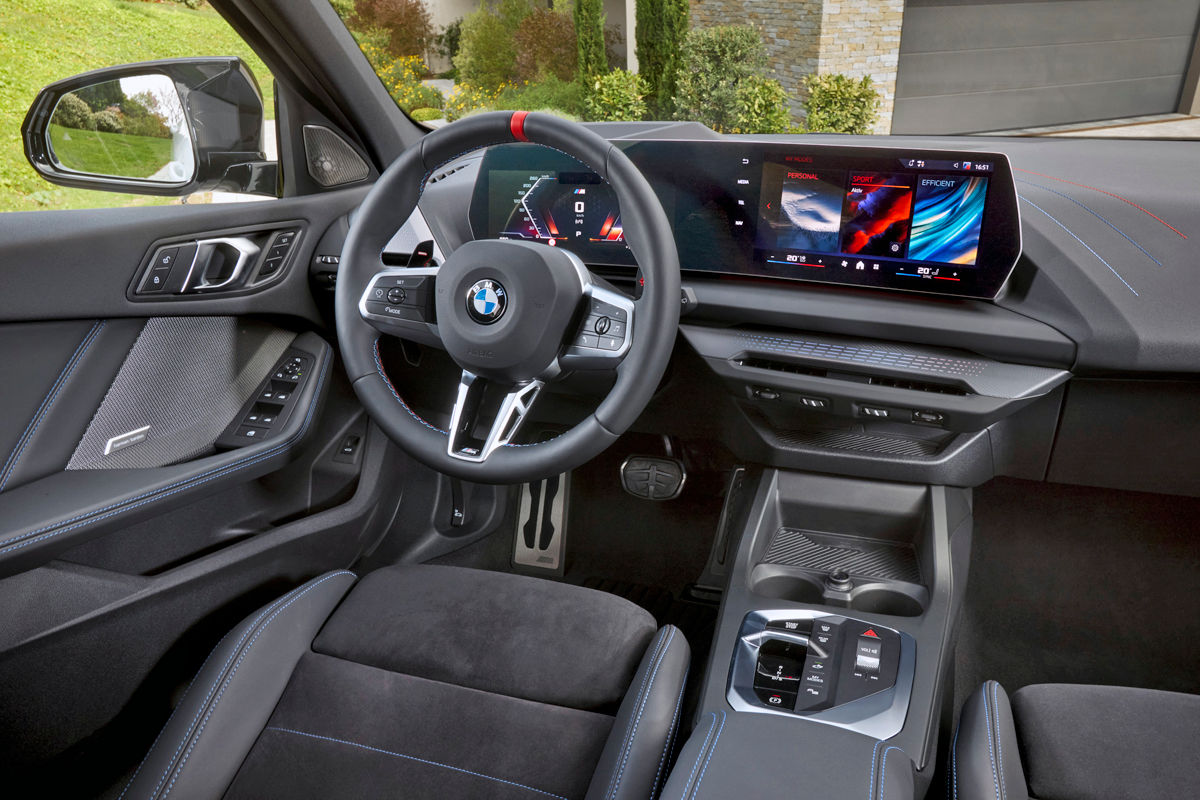
Inside, the new 1 Series is “completely leather-free as standard”, with options including “leather-like” material as well as upholstery fashioned from recycled polyester. There’s also a redesigned gear selector as well as the latest BMW Curved Display, which comprises a 10.25-inch digital instrument cluster and a 10.7-inch infotainment screen. Air conditioning controls are now fully digital.

We’ll bring you local pricing and specifications closer to the SA market launch later in the year…

Related content

Updated BMW 3 Series: SA details released

M3 Competition Touring: SA price revealed…

BMW 4 Series Coupé (2024) Price & Specs