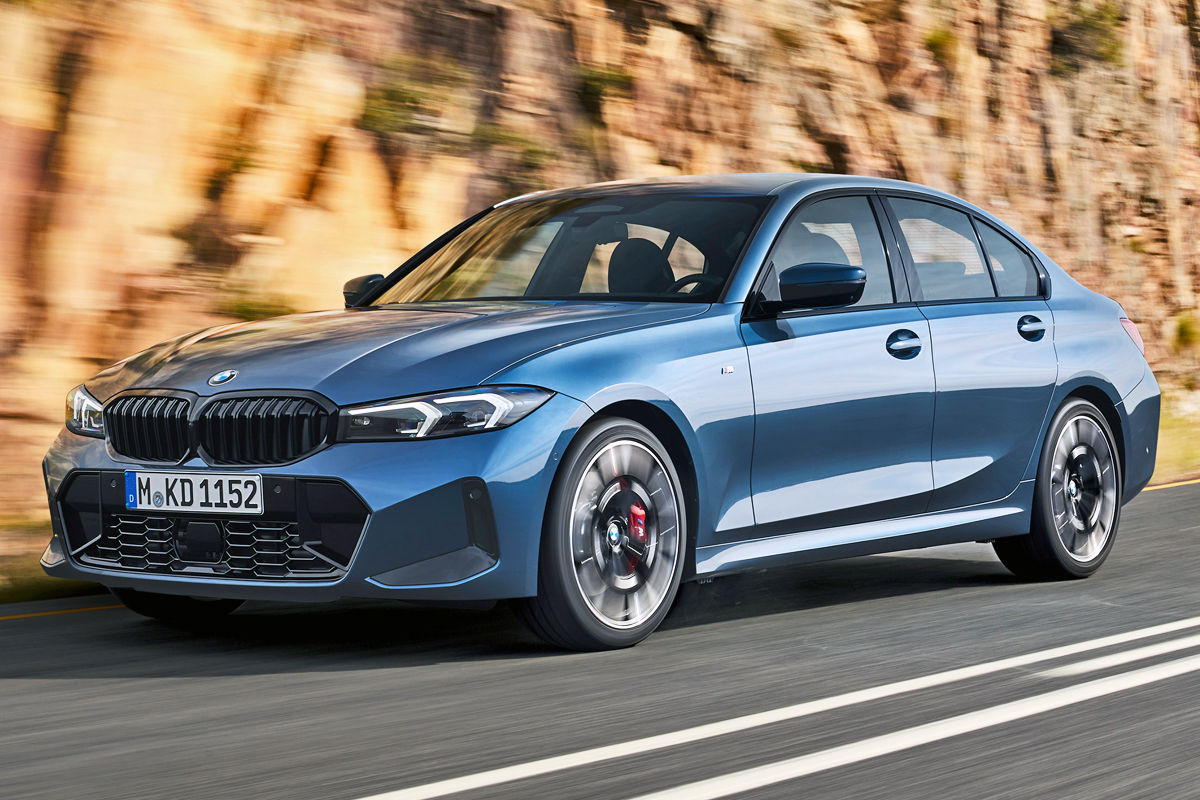
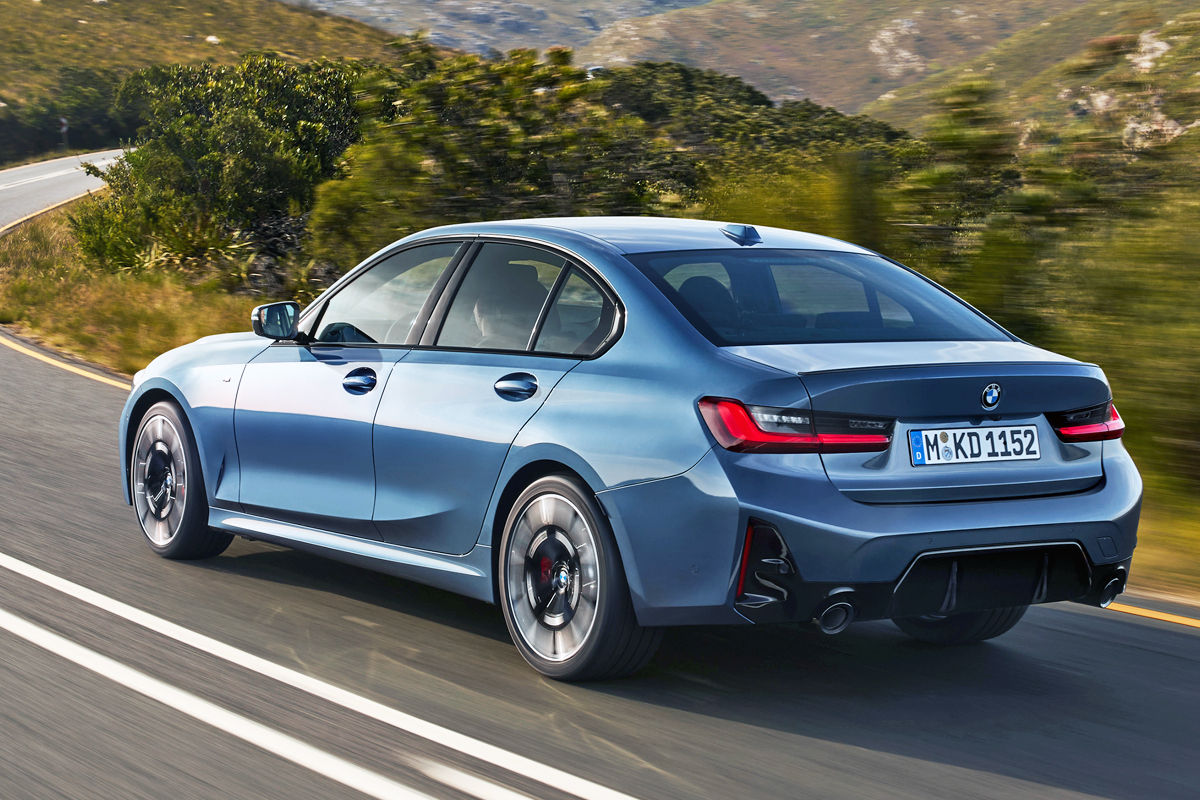
The G20-gen BMW 3 Series has received a 2nd update and is due to launch in South Africa before the end of 2024. Here’s what we know about the refreshed sedan range…
Despite having benefitted from a mid-cycle refresh as recently as 2022, the G20-generation BMW 3 Series range has just been handed a 2nd update. And it’s expected to arrive in South Africa before the end of 2024.
Yes, BMW Group South Africa has confirmed that production of the updated saloon will commence in July 2024, with local availability “from the 4th quarter of the year”.
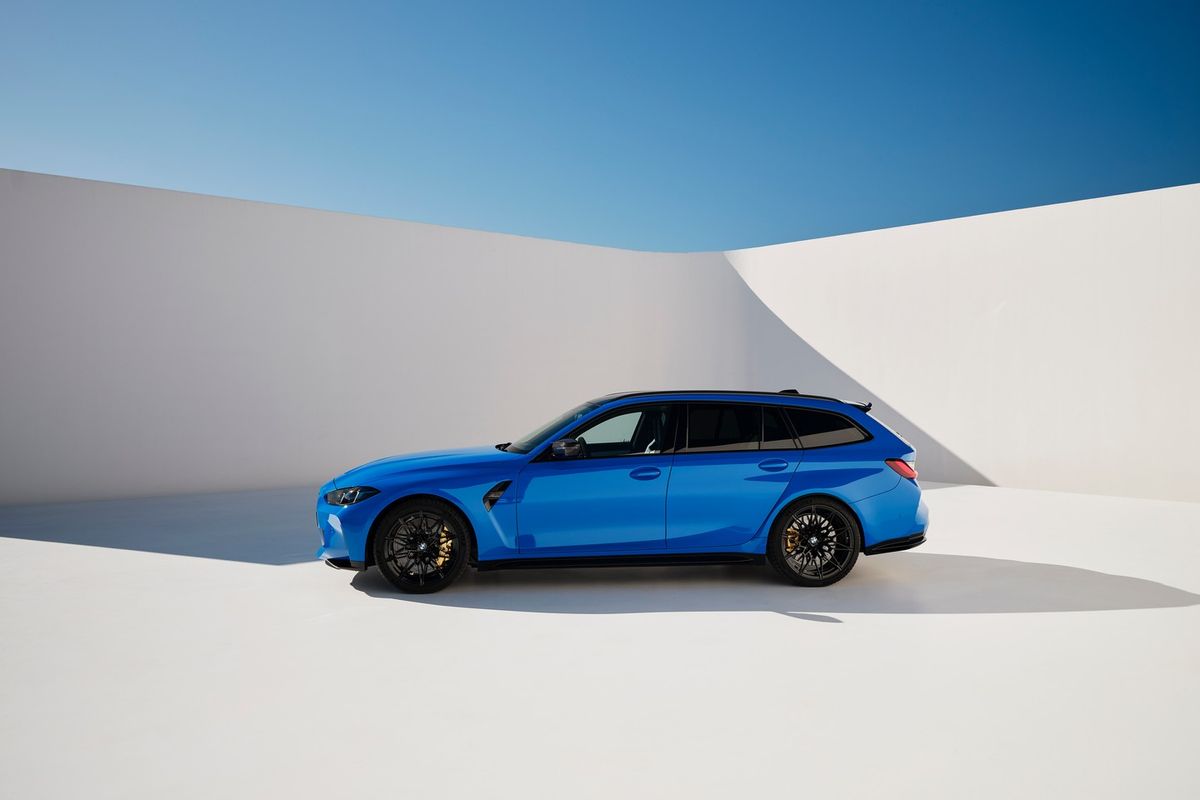
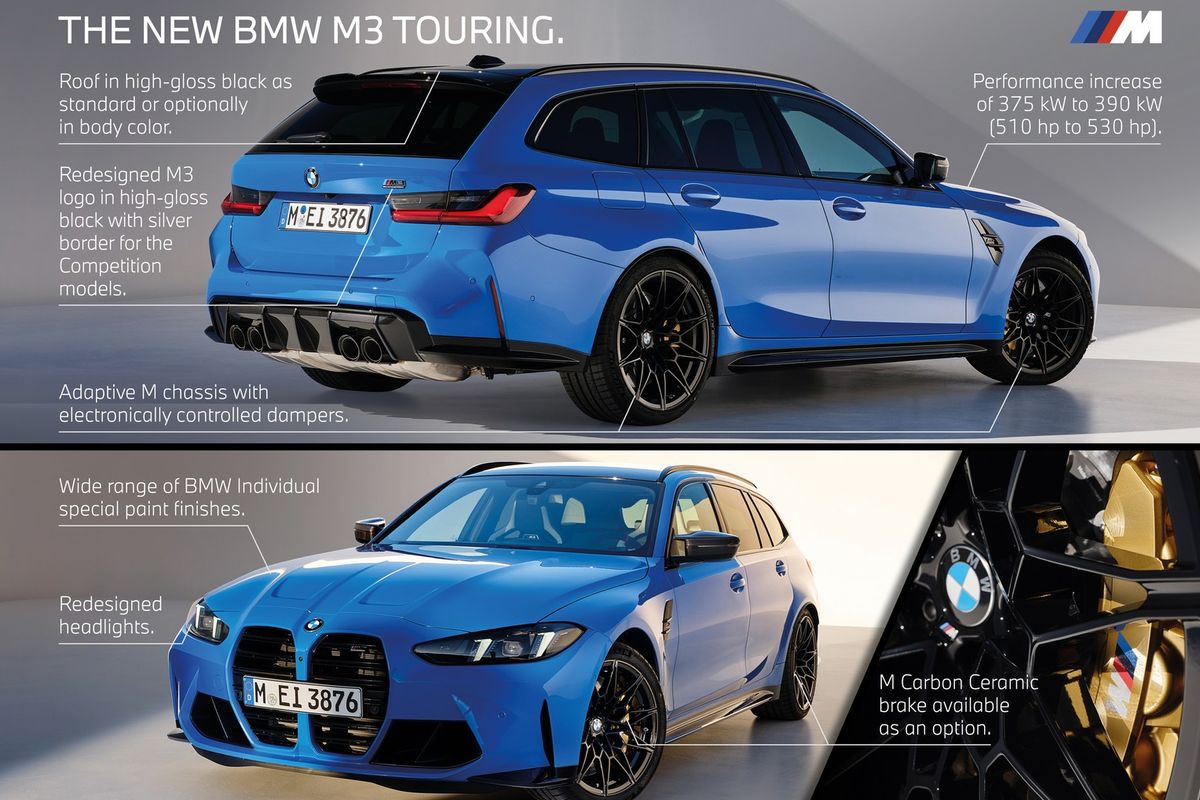
So, what will the Mzansi-spec line-up look like? Well, the German automaker’s local division says the “existing range of 1 diesel and 3 petrol engines” will be carried over (seemingly in addition to the likewise updated M340i and M3 Competition, with the new-to-SA M3 Touring also confirmed for local roads).
Based on that, the SA portfolio will again comprise the rear-wheel-drive 318i (115 kW/250 Nm), 320i (135 kW/300 Nm), 330i (190 kW/400 Nm) and 320d (140 kW/400 Nm), each employing an 8-speed automatic transmission as standard. According to the international press material, both the oil-burning 320d and the all-paw M340i (285 kW/500 Nm) will gain mild-hybrid technology, bringing an additional 8 kW to the table.
Interestingly, BMW Group SA has again opted not to launch the plug-in hybrid 330e on local shores. For the record, this PHEV model upgrades to a new high-voltage battery pack offering 19.5 kWh of usable energy, improving its claimed all-electric range to approximately 100 km. Mzansi will also again miss out on the 318d, 330d and M340d.
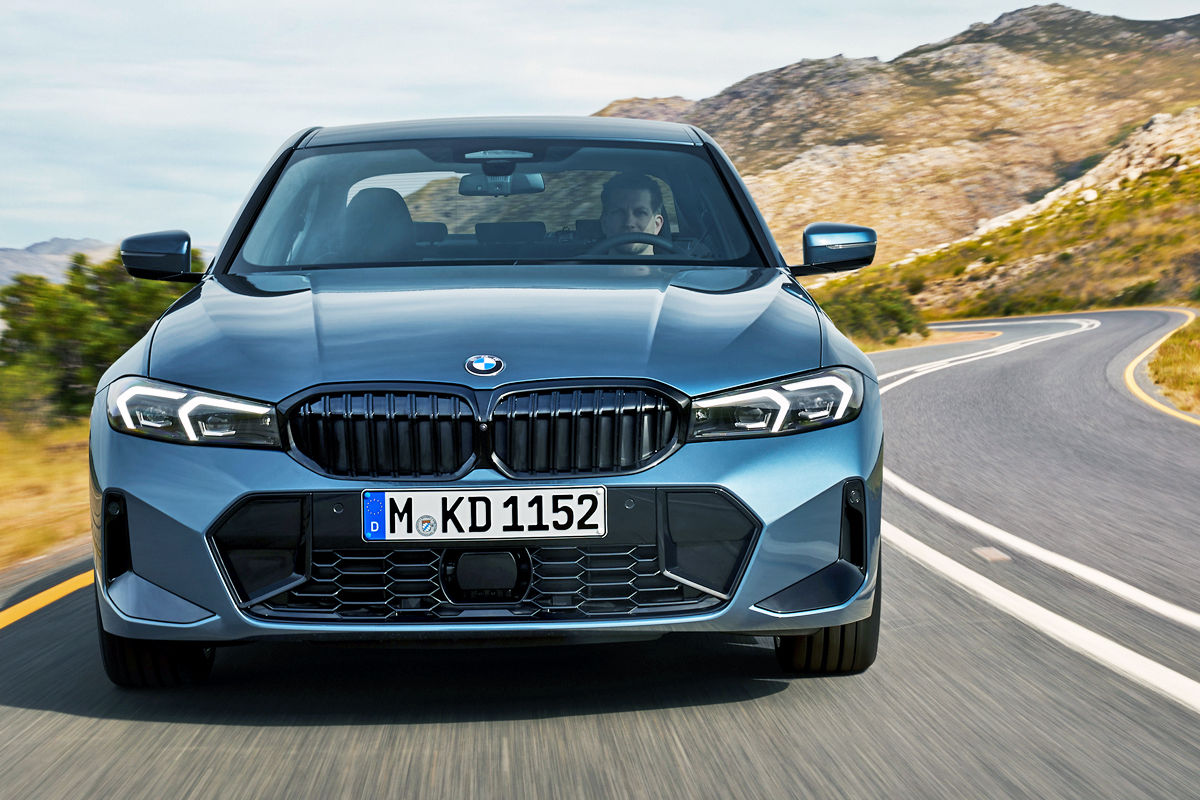
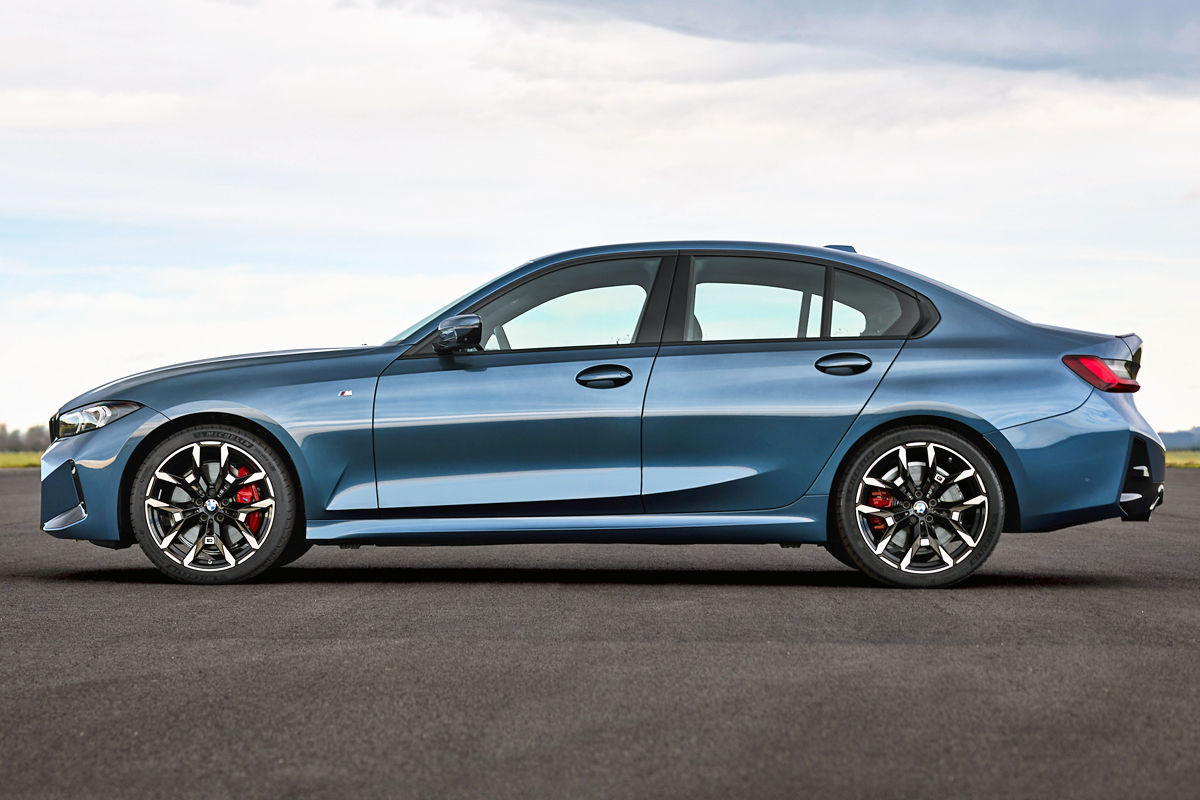
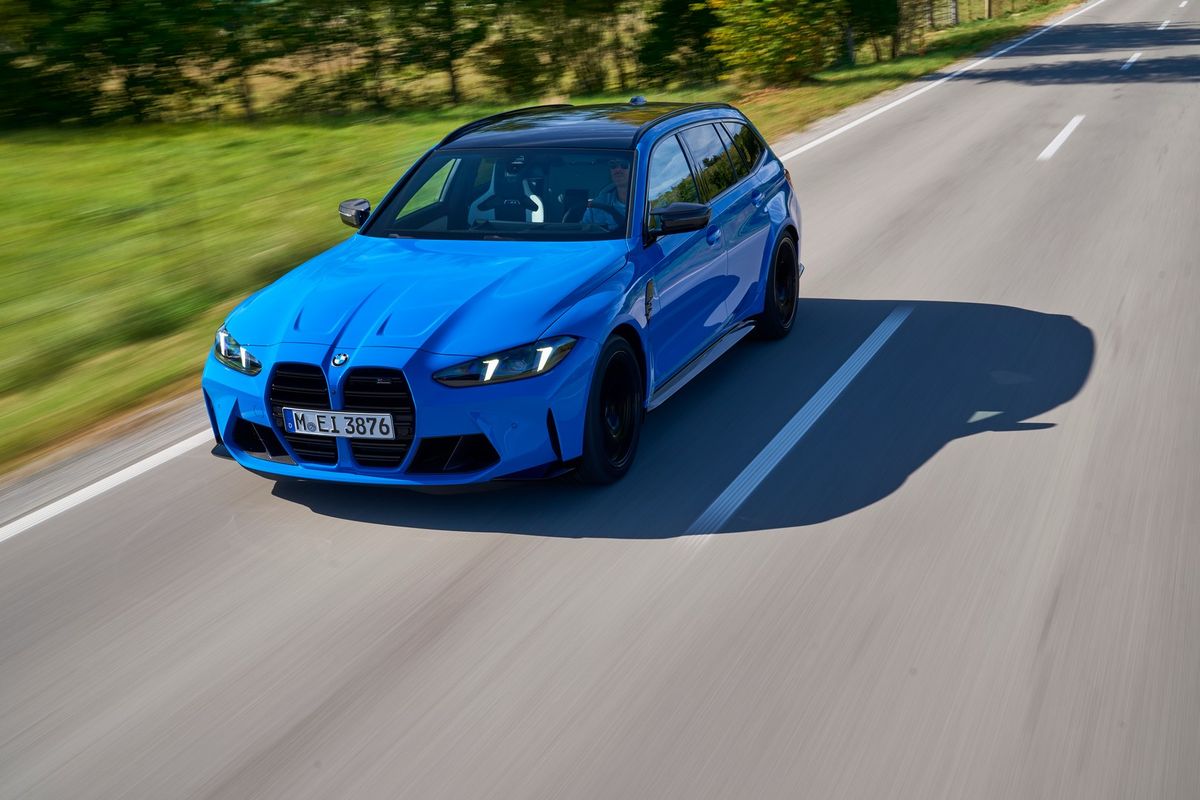
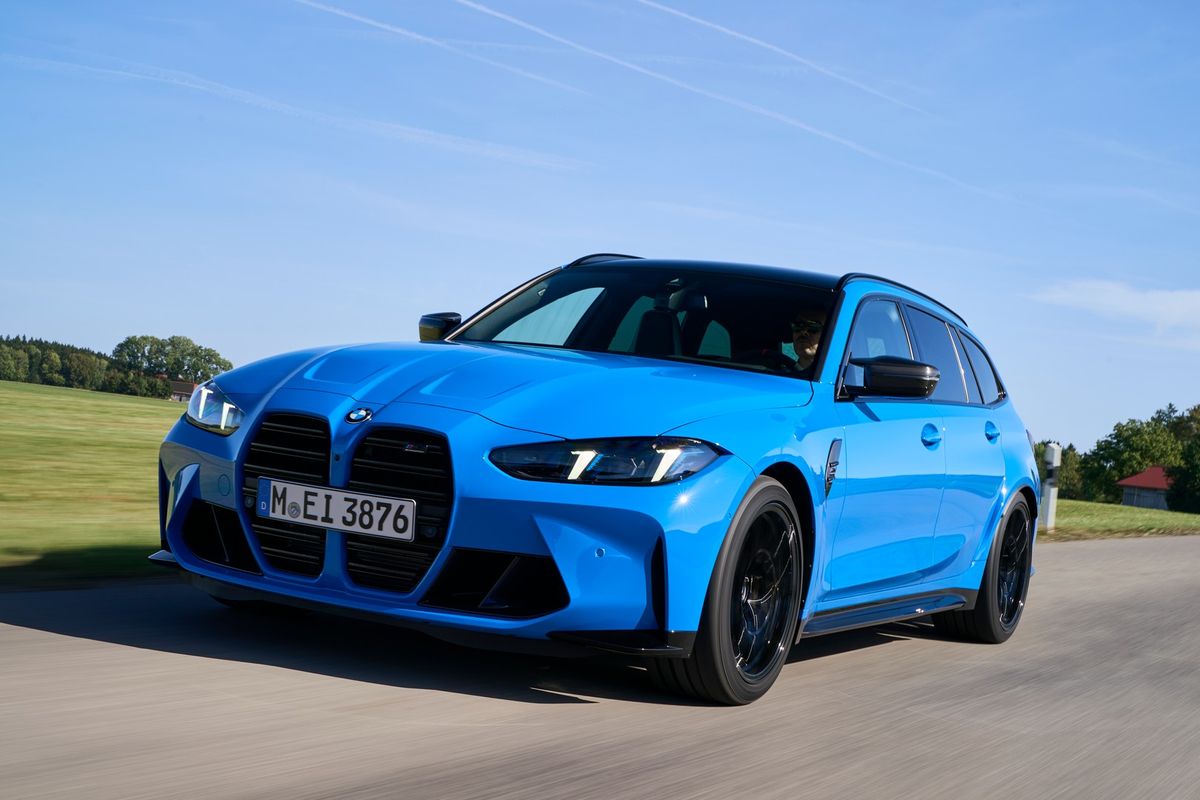
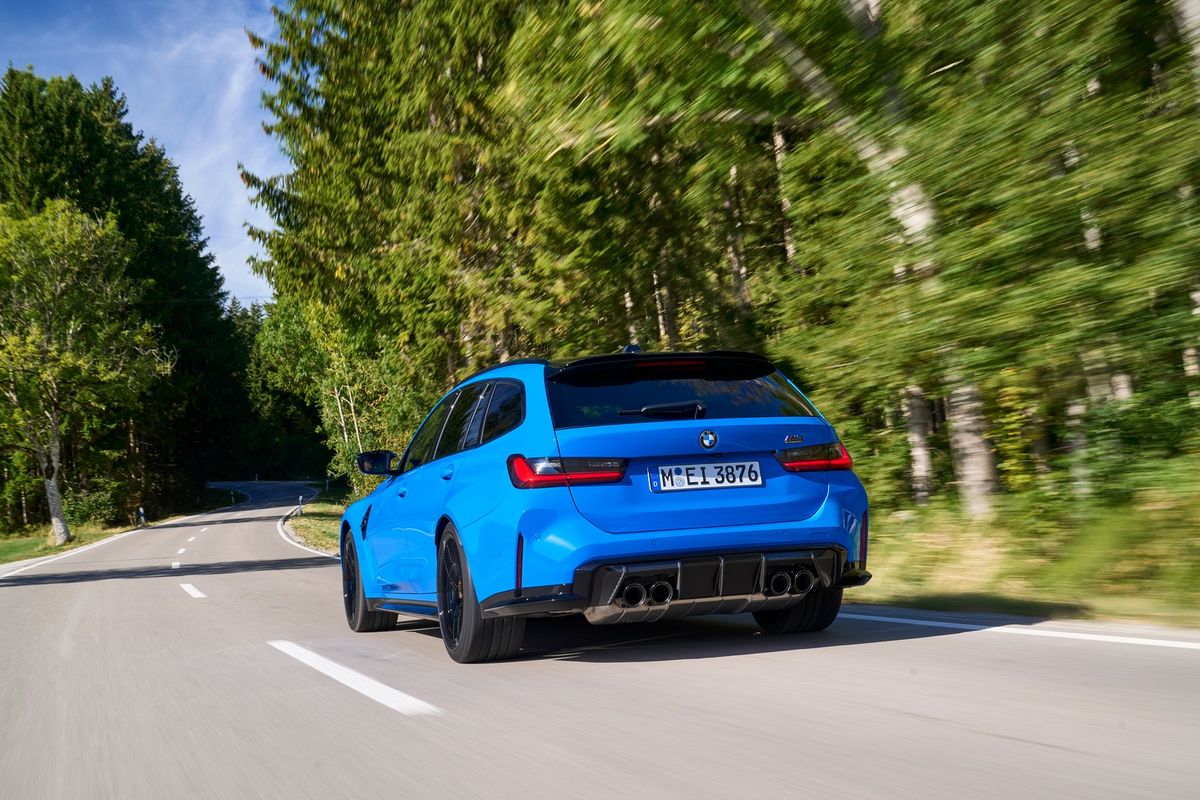
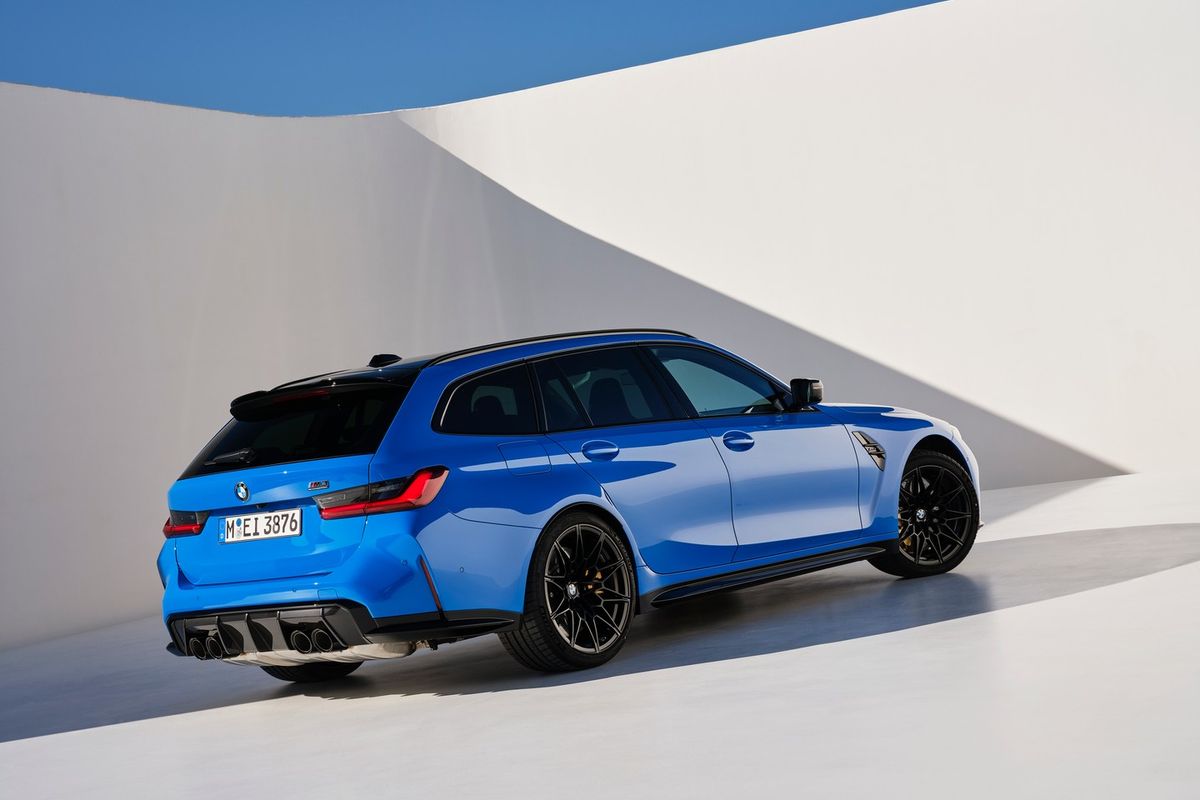
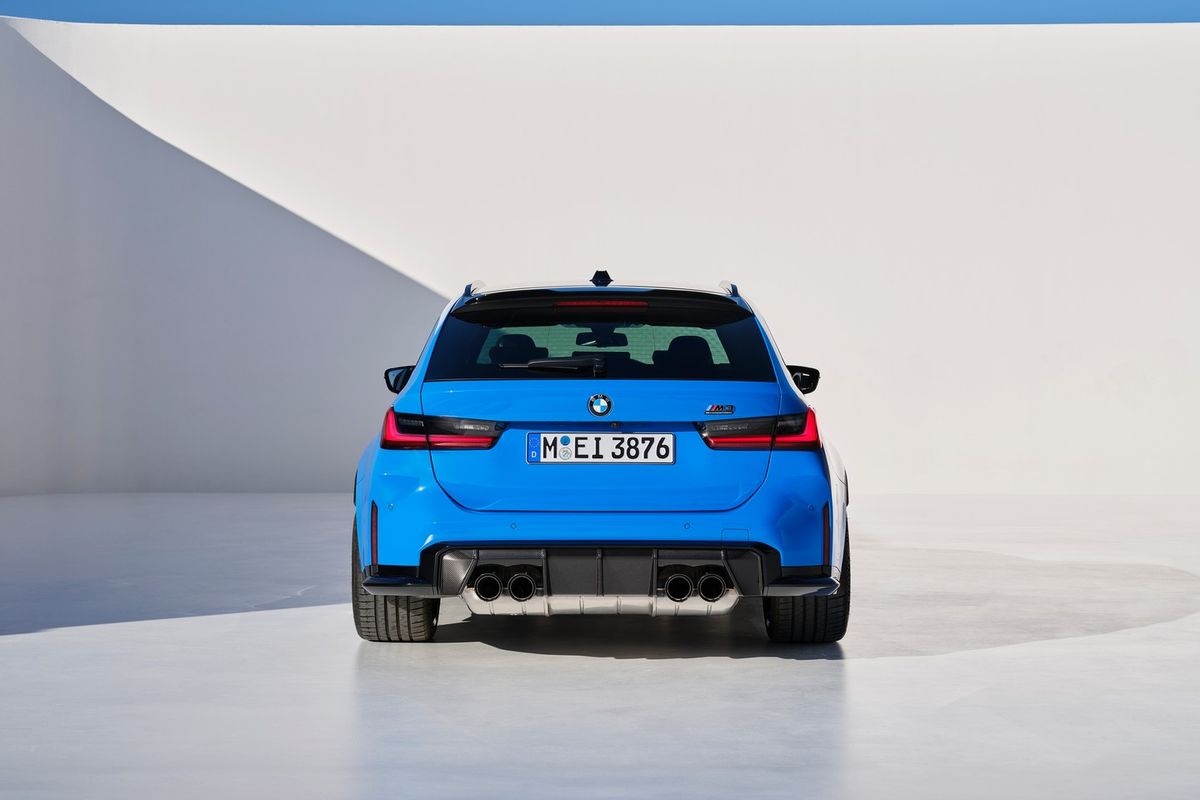
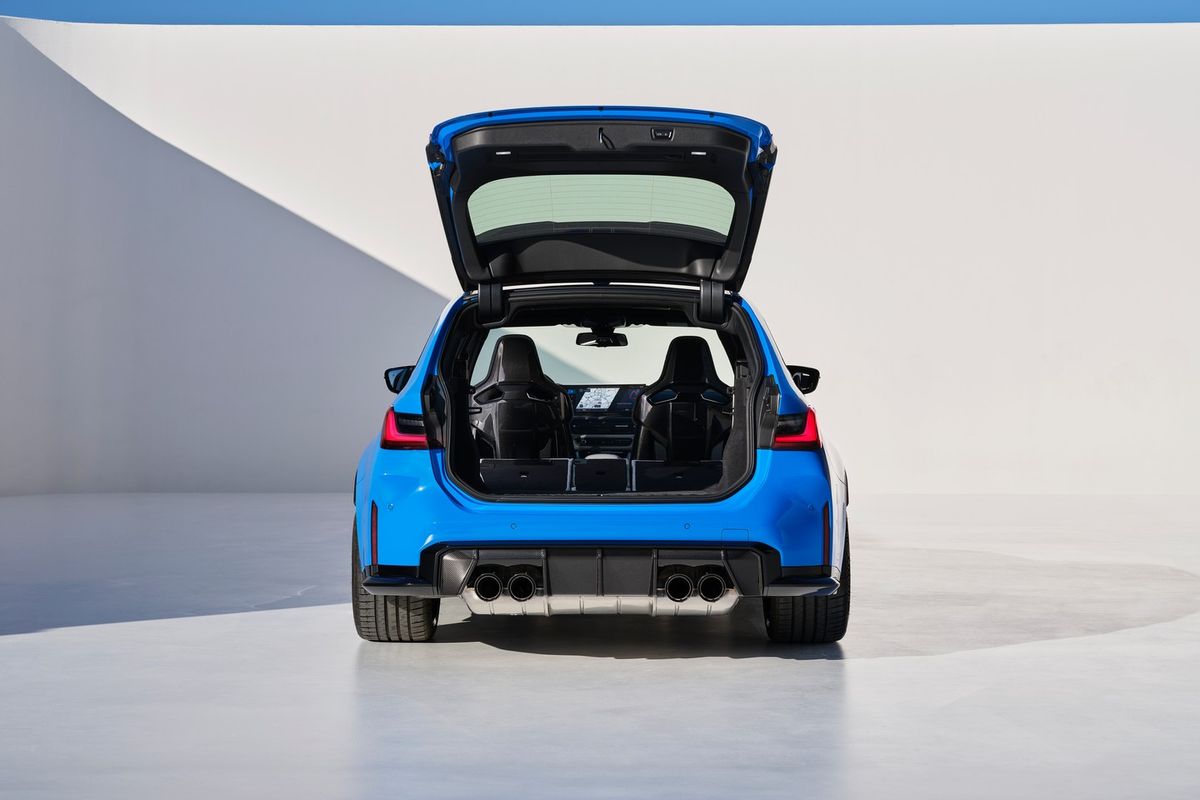
As you’ve no doubted already figured out, the Munich-based firm has made few changes to the 3 Series sedan’s exterior, offering only a couple of new paint colours (the Arctic Race Blue metallic finish shown here as well as a new Fire Red metallic hue) and a handful of fresh alloy-wheel designs.
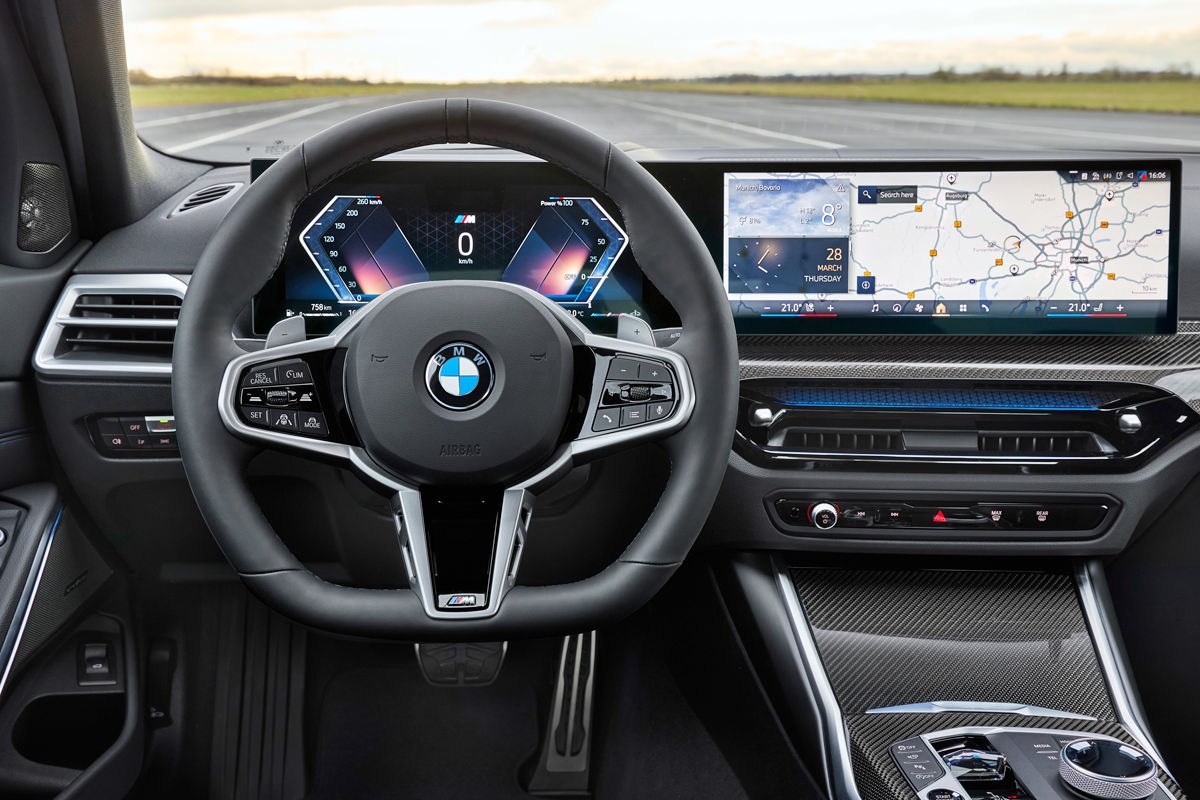
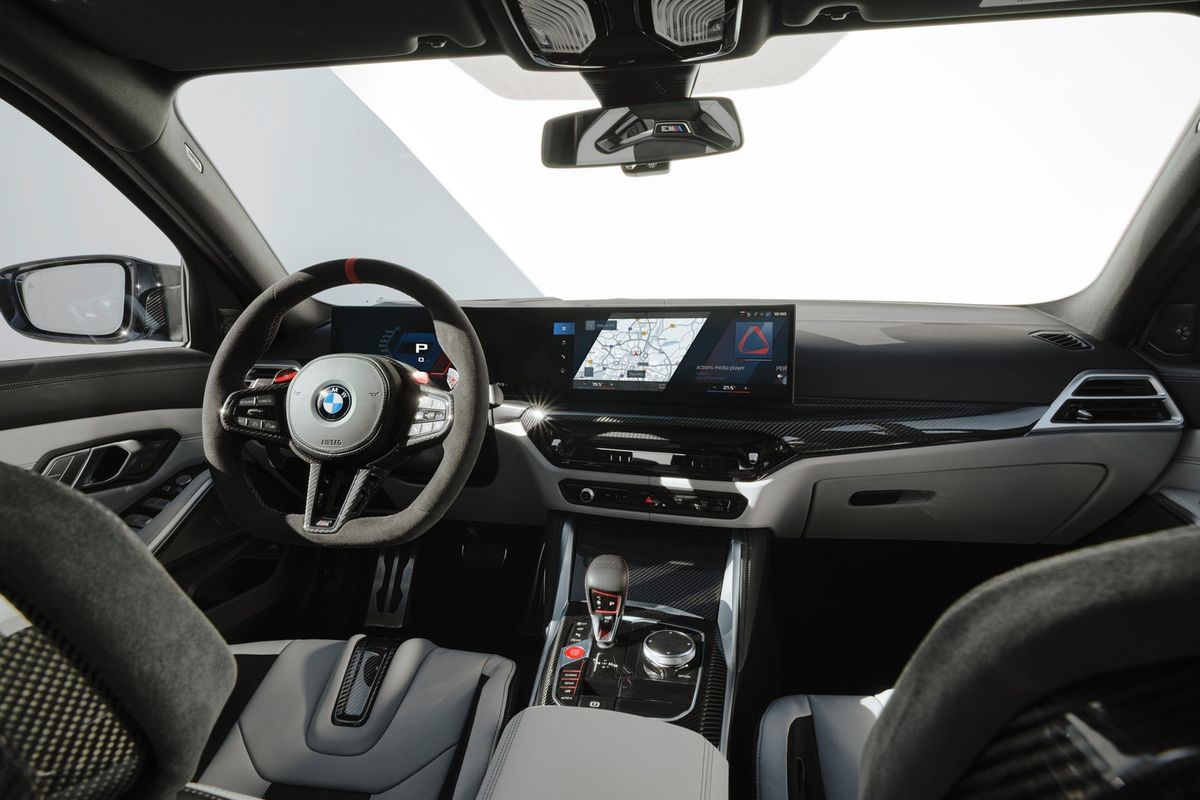
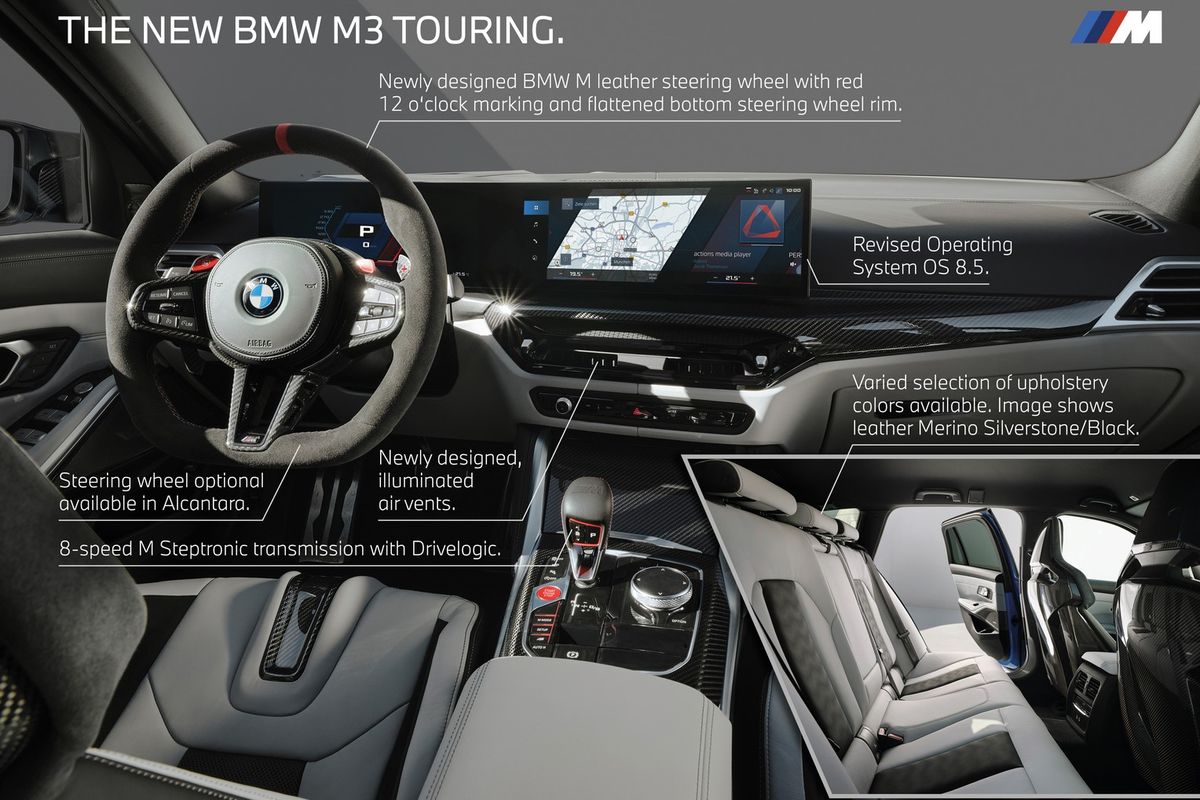
However, under-the-skin tweaks include various chassis updates that ostensibly result in a “notable increase in comfort across all driving situations”. Inside, you’ll find new steering-wheel designs, “visual modifications for the instrument panel” and “modernised decorative elements”, along with fresh upholstery options.
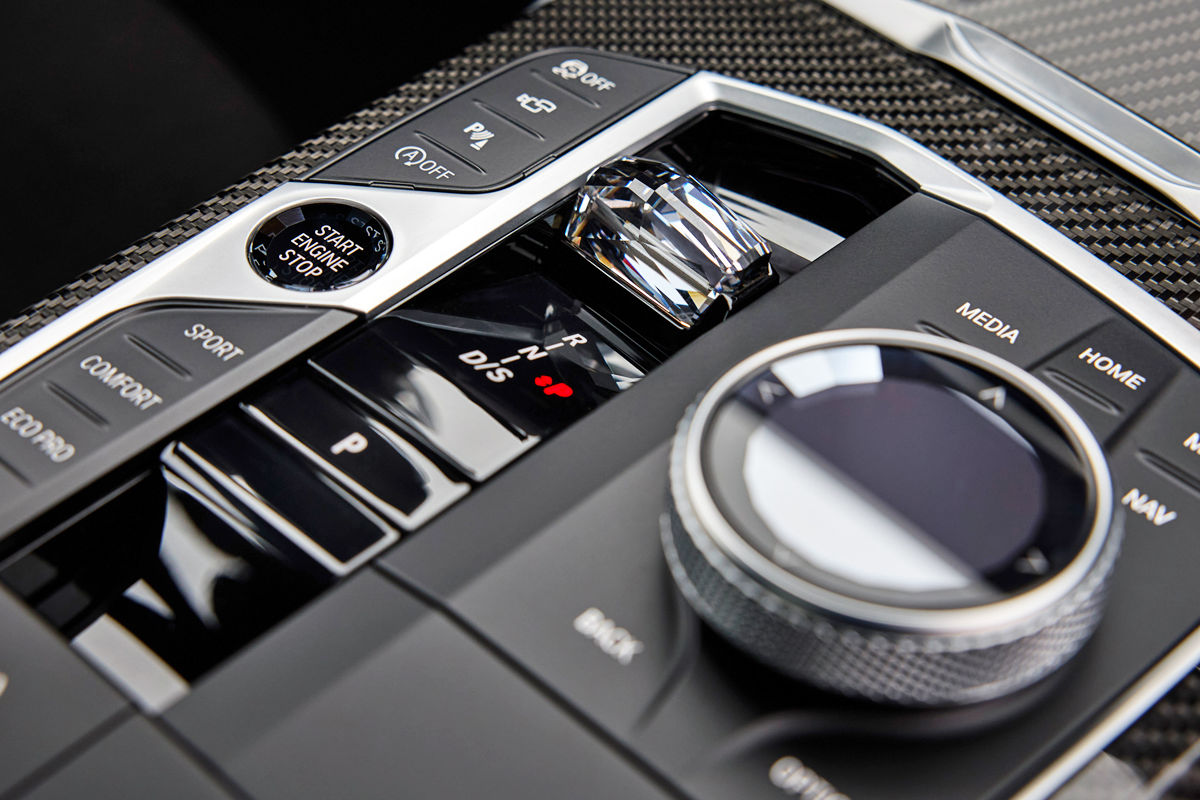
The updated 3 Series furthermore upgrades to the latest-generation “BMW iDrive with QuickSelect”, based on BMW Operating System 8.5. Meanwhile, the interior lighting system now includes “cascade lighting” integrated into the trim around the central seam vents. There’s also a new “CraftedClarity” option, which sees the gear-selector lever, iDrive controller and start/stop button fashioned from glass.
Check back for updated BMW 3 Series pricing and detailed specifications closer to the local market launch in the final quarter of 2024…
Are you among the many South Africans looking to spend a sizeable sum of money on buying a new car? If that’s the case, Jacob Moshokoa presents a list of 5 easy steps to follow to make the buying process a lot easier, brought to you by Absa.
PARTNERED CONTENT
Cars.co.za recently hosted Yumna Mohamed – the winner of Cars.co.za Consumer Awards Roadshow competition held in Sandton City late last year – at our Johannesburg office. Yumna won R500 000 from Absa, the title sponsor of the Cars.co.za Consumer Awards, to purchase a car of her choice and our team guided her through the process by explaining the pros and cons of each of the models she considered.
We’d like to help you, the prospective new- or used car buyer, navigate your purchasing journey too, so here are the 5 steps that could save you a lot of time and hassle when you’re looking to buy a vehicle.
1. Do your research
And by this, we don’t mean flicking through our app to look at car pictures. Buying a car is a MAJOR financial commitment, so you need to understand all the aspects and pitfalls of becoming a car owner.
Ask yourself serious questions like: Can I afford this car? Does it truly suit my needs (as opposed to my wants)? What are the pros and cons of diesel vs petrol? What are the insurance and maintenance costs?
Be sure to ask the right questions (even if they seem “stupid”) and proceed calmly, armed with the knowledge that you need, so that you don’t get yourself on the wrong side of your bank manager.
2. Create a budget
Your budget needs to accurately reflect your financial situation. Are you certain that you can cover expenditures such as repayments, insurance, maintenance, registration, repairs, tyre changes and fuel?
There’s a lot to think about when buying a car and, as they say, “sometimes the maths isn’t mathsing“. However, it’s better to be realistic and get the car you need and, importantly, can comfortably afford.
3. Consider buying a pre-owned car
Granted, a used car won’t necessarily still have that new-car smell and delivery mileage on its odometer, but buying a certified pre-owned vehicle is a great way to get a good car for MUCH less than a new one.
You could even get an older-, but higher-spec model of the same car for a lot less than the new(er) one.
4. Inspect the car thoroughly
When you’re inspecting, or experiencing, a car you are thinking of buying, put your proverbial detective hat on and look for any clues that might signal bigger issues. Every ding, scrape and scratch has a story.
There’s no such thing as “just a flickering light”… some minor issues might be pointing to a bigger issue.
Don’t let anyone rush you while you’re doing your inspection. Take your time. Check everything. Oh, and don’t hesitate to ask as many questions as you need to: age of vehicle, service history and so on.
Remember any issues you discover, however small, could give you a bit of leverage in the negotiation.
And then, you MUST take the car you’re eyeing to buy out for a test drive. Put it through its paces; be wary of sloppy handling and strange noises the vehicle may emit; find out if the acceleration is normal.
5. Secure finance
Then, when you’ve found a good car that you want and can afford, do your utmost to put down a sizeable deposit when you make the purchase. By reducing that loan amount, you’ll pay less in interest over time.
Besides banks, dealerships also offer financing. See what’s on offer and accept the best deal for YOU.
Absa’s Fulufhelo Mandane discusses what you need to consider before you start shopping for a vehicle, the costs of ownership and your various finance options. Absa First-time Buyer Guide to Vehicle Finance
Absa’s Gordon Wood details how the new Aftermarket Guidelines, which were introduced in the motor industry last year, affect you as a vehicle owner. Absa’s Guide to Responsible Vehicle Ownership
New Vantage: Has Aston Martin built a visceral sportscar?
Aston Martin is in a massive transition as it undertakes new ownership that is so keen to see it flourish and become a real competitor in the ultra-luxury segment. Ashley Oldfield headed to Spain to drive the new Aston Martin Vantage, watch the video!
The Vantage has been Aston’s sportscar over the years, but it’s always sold on its good looks and ferocious engine sound. Now, it wants to compete on dynamics. Can Aston immediately compete with Ferrari, McLaren and Porsches for thrills at the apex?
We drove the latest Aston Martin Vantage in Spain on the road and on track to get a quick feel for the new model. Here’s what our in-house track ace Ash Oldfield thinks of the new Vantage. We’ll have a full review as soon as the car lands in South Africa.
Finally! GWM has listened to the fans and the Tank 300 diesel has been confirmed for production. Here are some early details.
According to a report from CarNewsChina, GWM will build a Tank 300 diesel. This is great news for potential customers as many had been put off by the lack of a torquey and efficient powertrain. While the Tank 300 HEV petrol hybrid offers commendable performance and efficiency, a modern diesel engine should prove better.
The Tank 300 Diesel should be the most economical and offer the most range between fill ups. A quick estimate suggests the diesel-powered Tank should comfortably complete over 1000 km, based on its 80 litre fuel tank capacity. In comparison, the hybrid Tank 300 claims 8.4 L/100 km and has an endurance range of 952 km.
As a reminder, Tank is Great Wall Motors offroad adventure brand and the Tank 300 is the first model to arrive locally. We’re expecting the bigger Tank 500 to touch down before the end of 2024.
Will the Tank 300 Diesel come to South Africa?
One of the biggest criticisms levelled at the Chinese manufacturers is the heavier-than-expected fuel consumption from the turbocharged petrol engines. Diesel is still a popular fuel of choice for many South African motorists and we reckon this derivative is highly likely to prove popular.
BMW M3 Competition Touring Price Announced For South Africa
The BMW M3 Competition Touring is confirmed for South Africa and we’ve uncovered pricing for this halo product.
Confirmed! The BMW M3 Competition Touring is coming to South Africa in 2024. Generally, station wagons aren’t the most popular in South Africa, with just a handful of enthusiasts showing love for things like the Audi RS4/RS6 and Subaru Outback. The meteoric rise of the SUV has all but killed the love for the humble station wagon…
However, BMW has tried to buck the trend and built the M3 Touring and when it was revealed, we were the first to admit we thought it was highly unlikely this model was going to touch down locally. Understandably so, you’d think the Munich-based brand has all the bases covered with M3 sedan, M4 coupe and X3 M / X4 M SUVs. However, good news as the BMW M3 Competition Touring is coming to South Africa!
A source close to BMW SA has shared some important details about the new BMW M3 Competition Touring with us. From our understanding and documents we’ve seen, we’ll be getting the Competition xDrive derivative which has a 3.0-litre turbocharged 6-cylinder petrol engine and it makes 390 kW and 650 Nm. The vehicle features all-wheel drive and an automatic transmission. BMW claims its Touring can sprint to 100 kph in just 3.6 seconds and it will run to a top speed of 280 kph, thanks to the M Drivers Package being included.
Customers will be able to add the M Carbon Exterior Package and M Race Track Package (carbon bucket seats, carbon ceramic brakes) as optional extras. As far as colours are concerned, there will be 9 standard colours, with 5 BMW Individual colour options to choose from. There are also four wheel designs, all of which are 19-inch (front) and 20-inch (rear) in size.
So, if you want one of these highly desirable cars, what’s your next step? We understand that stocks are limited this year, with customer allocation and orders taking place in May 2024, with production taking place in July 2024. The customer deliveries start from October 2024, which we suspect will likely coincide with the BMW flagship event, M-Fest. Don’t stress if you miss the first batch as we’ve been told more units will land in SA in 2025.
How much does the BMW M3 Competition Touring cost in South Africa?
The below price includes VAT & Motorplan, but excludes CO2 tax.
How much does it cost to replace a BMW i3’s battery pack?
Just how much would it cost to replace the entire battery pack in a BMW i3 here in South Africa? Well, brace yourselves, folks: it’s by no means a small number…
While doing research for our recently published BMW i3 Buyer’s Guide, we decided to find out exactly how much it would cost to replace the entire lithium-ion battery pack in this compelling little electric car. After all, if you’re purchasing a 2nd-hand EV, it’s a number certainly worth knowing.
Before we delve into our eye-opening discovery, here’s a quick reminder of the i3’s time on the local market (head over to the aforementioned buyer’s guide for the detailed background). This innovative electric car launched in Mzansi in 2015 in 60-Ah guise, before upgrading to a 94-Ah battery pack late in 2016 and a 120-Ah item in 2019. In each case, the battery pack comprised 8 modules, each with 12 cells.
The i3 battery pack comprises 8 modules, each with 12 cells.
Throughout its local lifecycle (it was discontinued in 2022), the i3 shipped standard with an 8-year/100 000 km battery-pack warranty. Although we understand that BMW Group SA has never been called upon to replace an entire battery pack in an i3 – the battery was developed “to last for the full life of the vehicle”, after all – we were nevertheless curious to find out the cost of this big-ticket component. Ready for the numbers? Well, brace yourself.
Armed with a VIN for a 2015 i3 (60 Ah), we approached a local BMW dealer and were presented with a whopping R432 049 battery-pack replacement cost. Even the chap in the parts department was absolutely floored by this figure. For the record, that price covers all 8 modules but doesn’t include fitment. In the case of this 2015 model, it’s also more than the estimated retail value of the vehicle itself, which no longer enjoys warranty coverage on its battery.
What about a new 8-module battery pack for a 2019 i3 (120 Ah), again confirmed using a valid VIN? Well, the price here rises to an even more frightening R483 644 (again, excluding labour and any consumables). While we unfortunately couldn’t determine a cost for a 94-Ah battery replacement, we’re guessing it would fall somewhere between the 2 figures above.
This i3, pictured with owner Shaun Maidment (right) in 2019, has so far covered 364 000 km.
Keep in mind, of course, that the modular nature of these battery packs means a faulty or failing module could be individually replaced, likely greatly reducing the bill. We should also reiterate that we’re unaware of any i3 owner in South Africa who has had to go the route of replacing the entire pack (and such an instance would surely result in an insurance write-off anyway).
In fact, South African Shaun Maidment, owner of the highest-mileage i3 in Africa, told Cars.co.za that his 2016 60-Ah model is still going strong on the original battery after a whopping 364 000 km. Indeed, our research suggests that battery degradation – never mind complete failure – has yet to prove much of an issue for the i3 on the whole, even when it comes to the early models. That said, keep in mind that degradation of any lithium-ion battery can be accelerated by various usage factors.
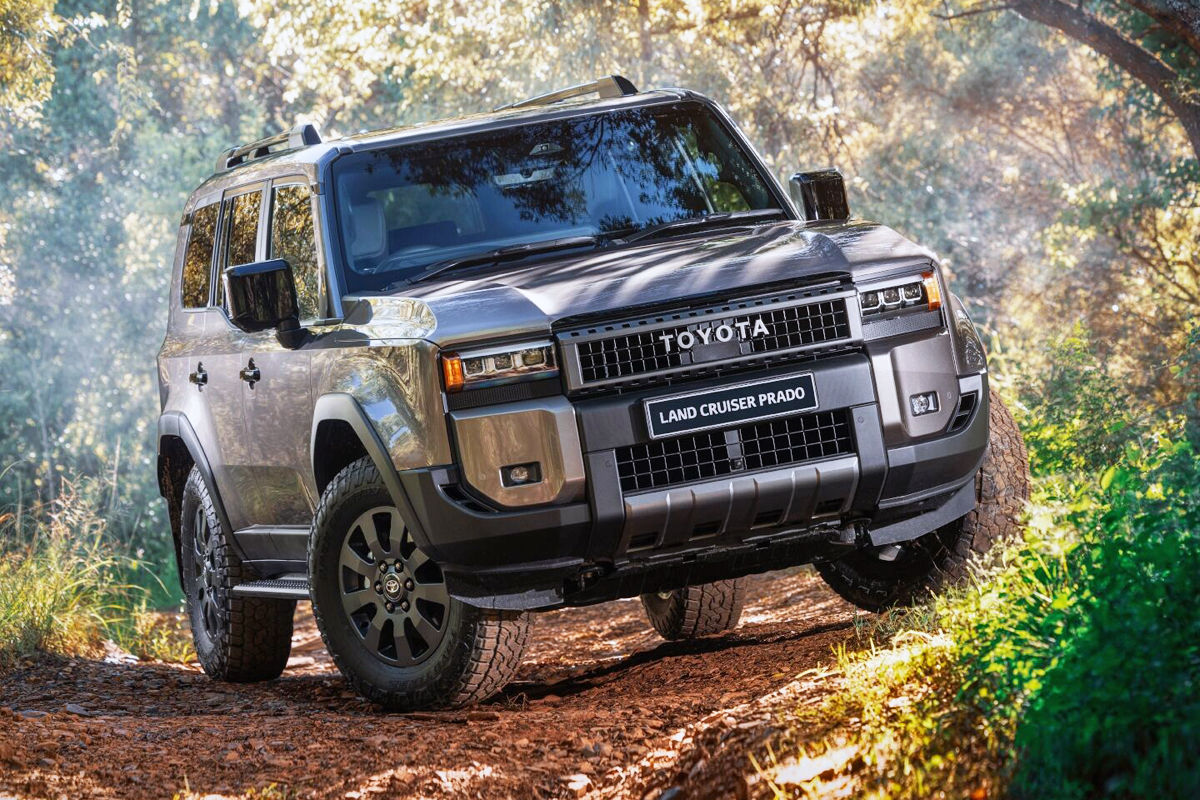
We’ve uncovered local prices for the new Toyota Land Cruiser Prado ahead of this J250-gen SUV’s imminent launch in South Africa. Here’s what you’ll pay…
After a short delay, the new Toyota Land Cruiser Prado 7-seater SUV is scheduled to hit the market in South Africa in June 2024. But, after some digging, we’ve managed to unearth local pricing for this highly anticipated J250-generation range, which includes a “very limited number” of First Edition units…
As we previously reported when we uncovered several details of the local line-up back in January, the local Prado range shrinks slightly – from the current 5 derivatives to 3 variants (or, technically, 4 if you include the bi-tone version as a standalone model) – largely owing to the removal of the naturally aspirated 4.0-litre V6 petrol engine from the portfolio.
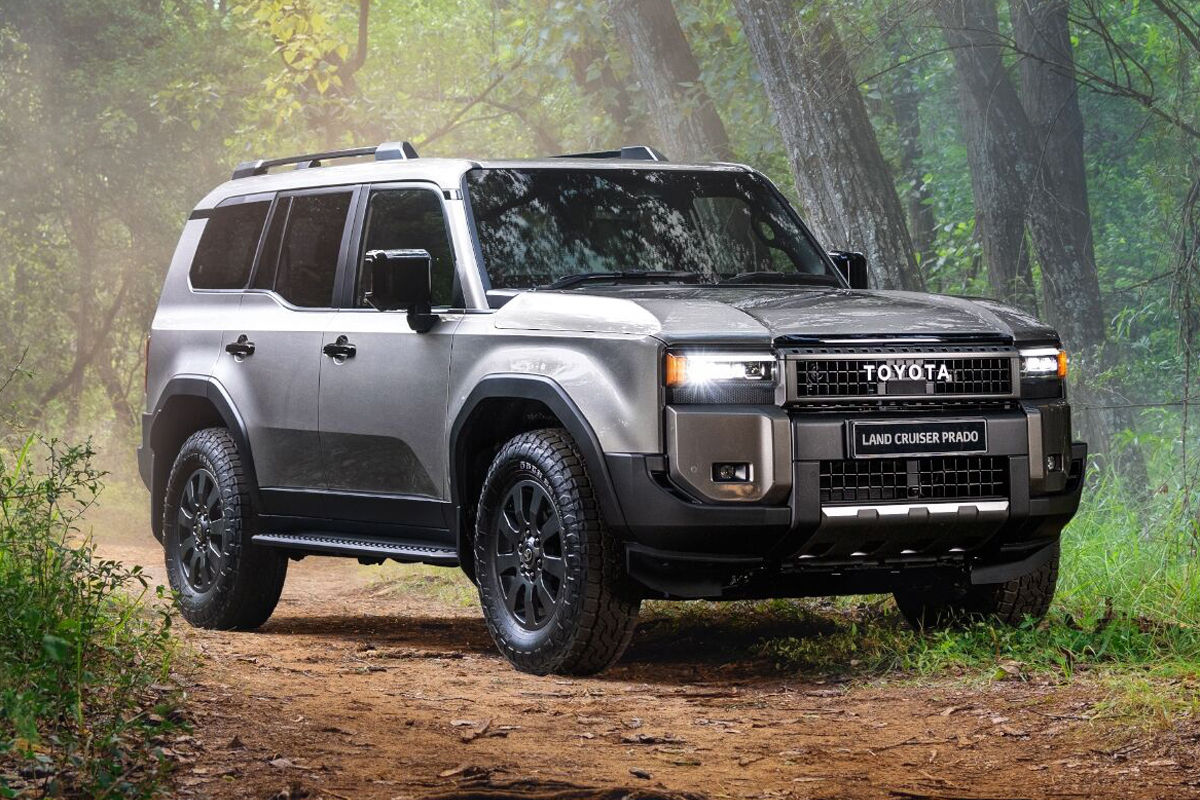
The new Prado in standard guise (note the rectangular headlights).
So, it’s now an exclusively oil-burning range, with all derivatives employing the Japanese firm’s familiar 2.8-litre, 4-cylinder turbodiesel engine. In J250-series Prado form, Toyota’s well-known 1GD-FTV motor again delivers 150 kW and 500 Nm to all 4 corners, though switches from the outgoing model’s 6-speed automatic transmission to a more modern 8-speed self-shifting gearbox.
What about pricing? Well, according to our information, the Prado 2.8 GD TX again serves as the entry point to the range, though is now priced from R1 296 300. For the record, that represents a R127 900 increase over the outgoing version (the J150-gen Prado’s pricing bookends having been pegged at R1 168 400 and R1 376 400).
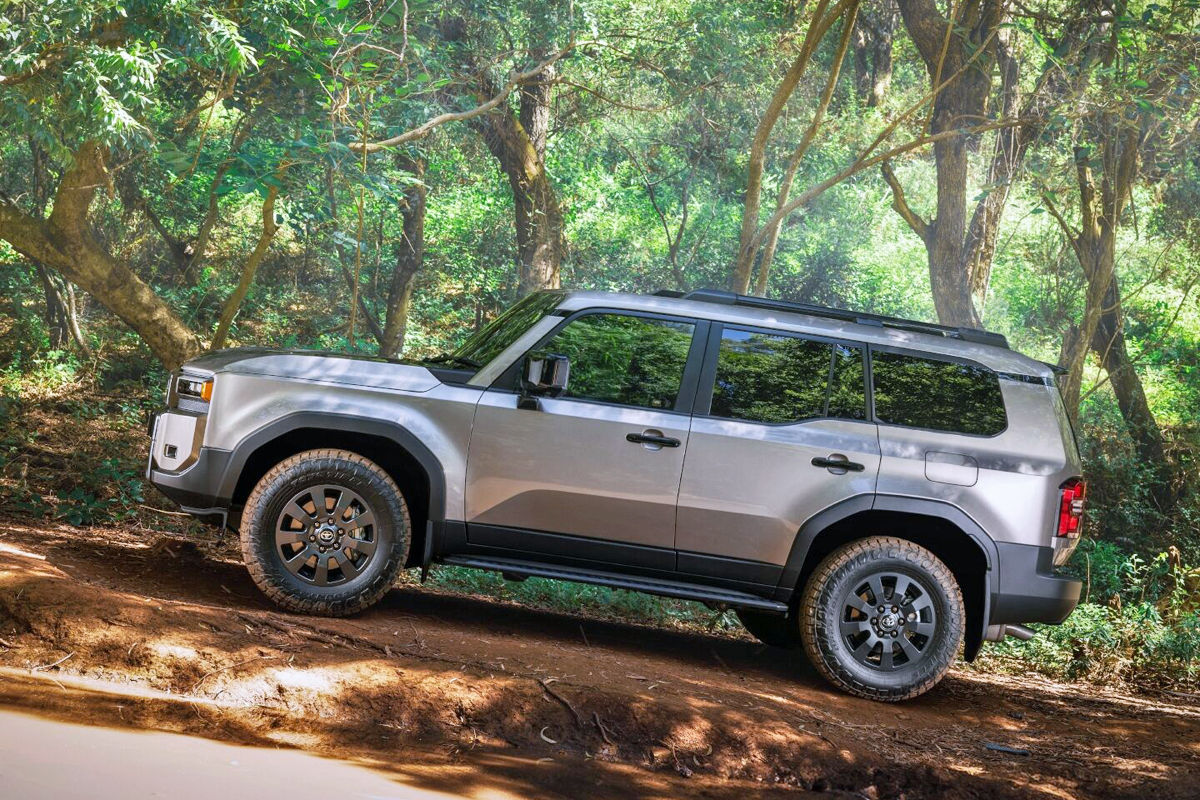
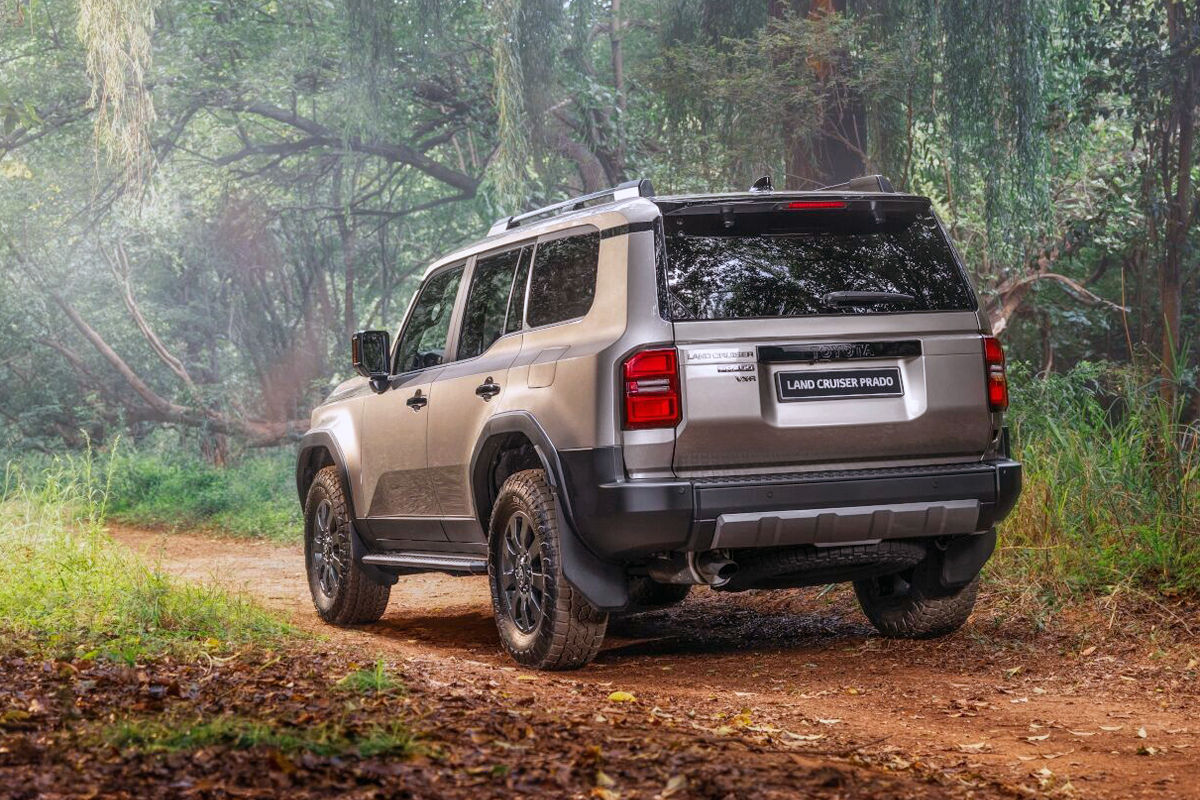
The spare wheel is no longer mounted on the tailgate.
From what we understand, the new 2.8 GD TX loses its centre limited-slip differential but gains a more comprehensive anti-theft system, as well as added safety features such as tyre-pressure monitoring, parking sensors, blind-spot monitoring, lane-trace assist, adaptive cruise control and additional airbags.
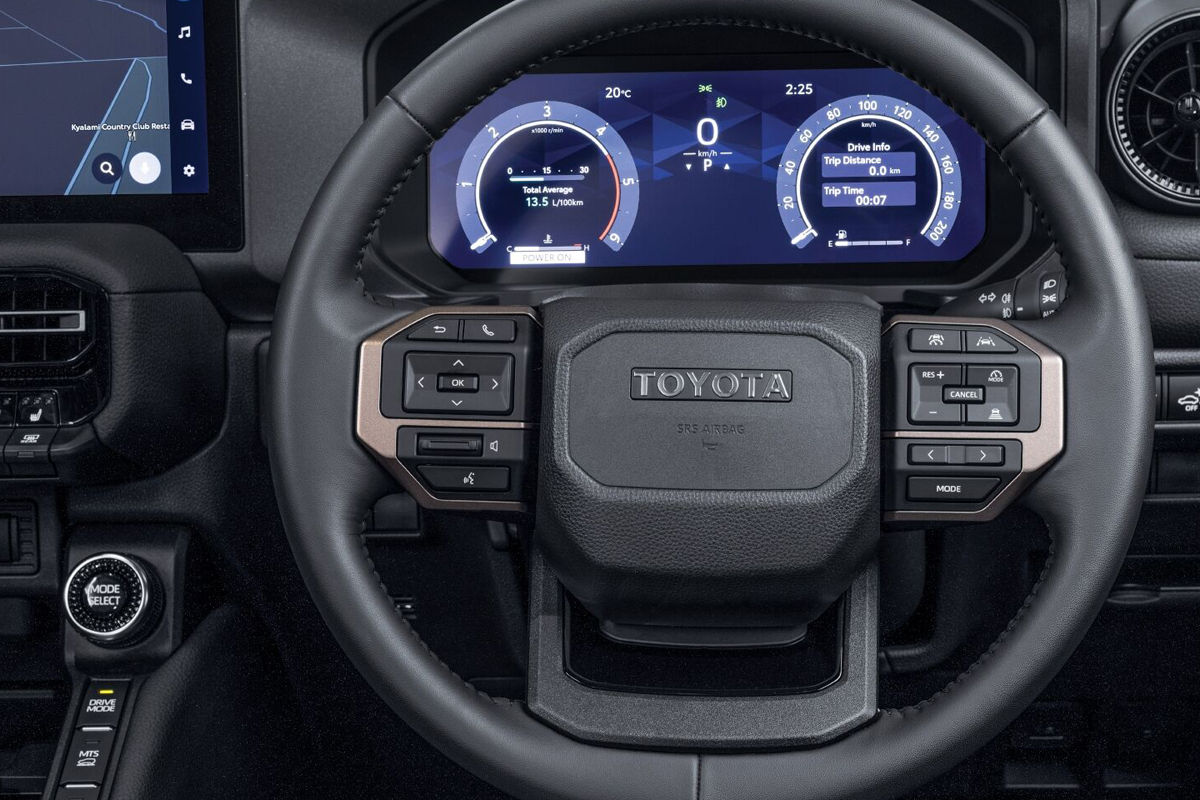
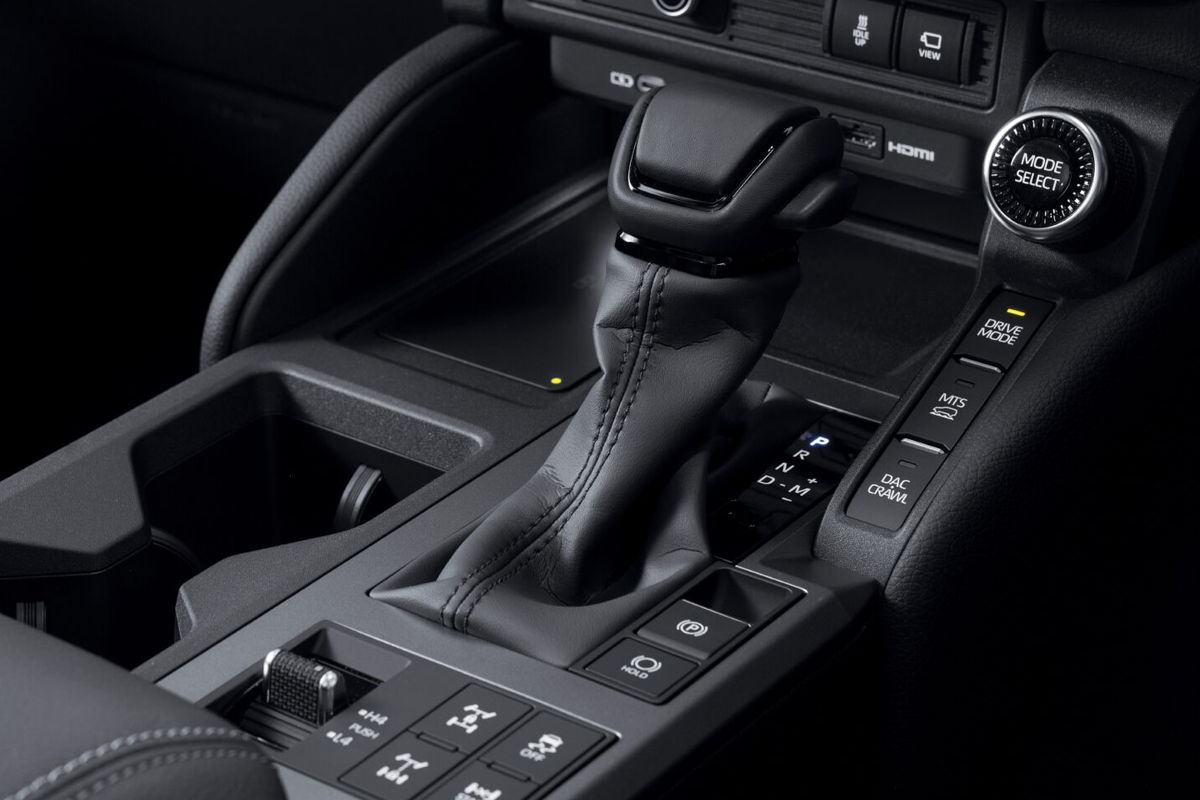
Like all variants in the new range, the 2.8 GD TX derivative comes with a black finish for its front bumper, grille, side-mirror caps, rear bumper and wheel-arch mouldings. Inside, however, it switches from a leather-and-fabric combination to straight leather (while also dropping its traditional handbrake lever in favour of an electric version).
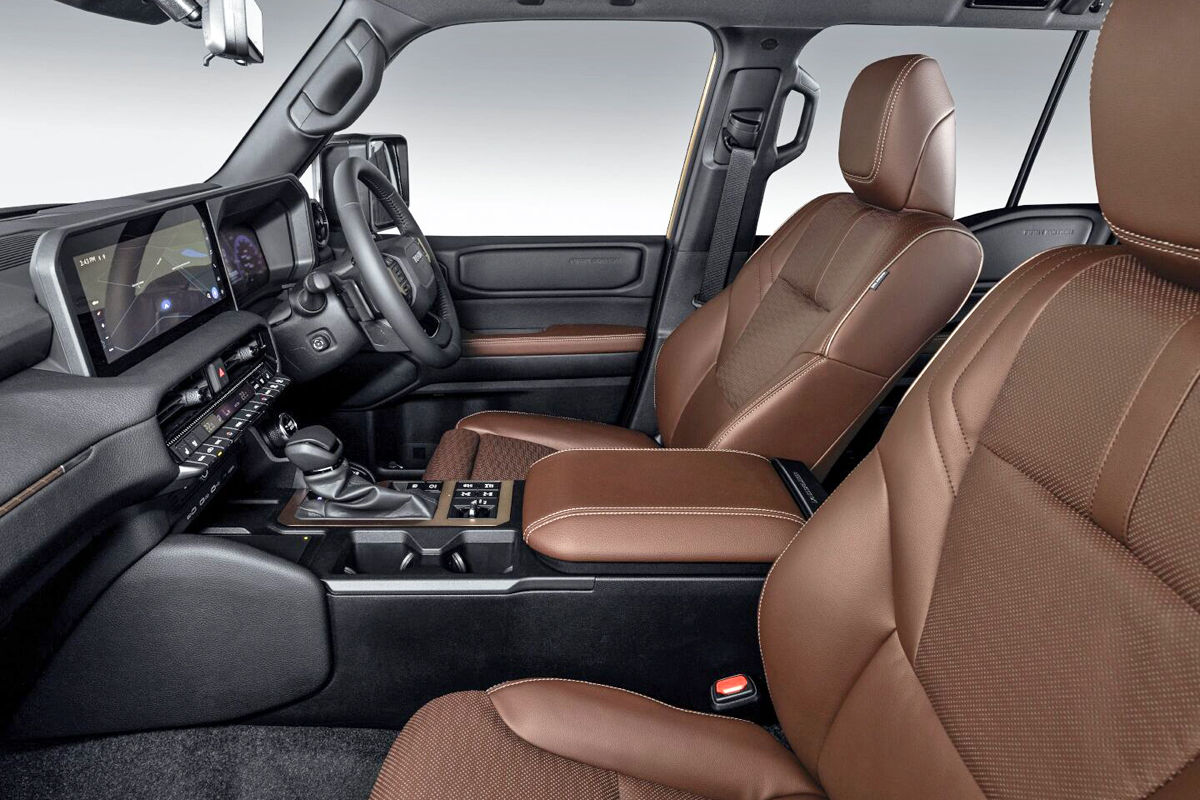
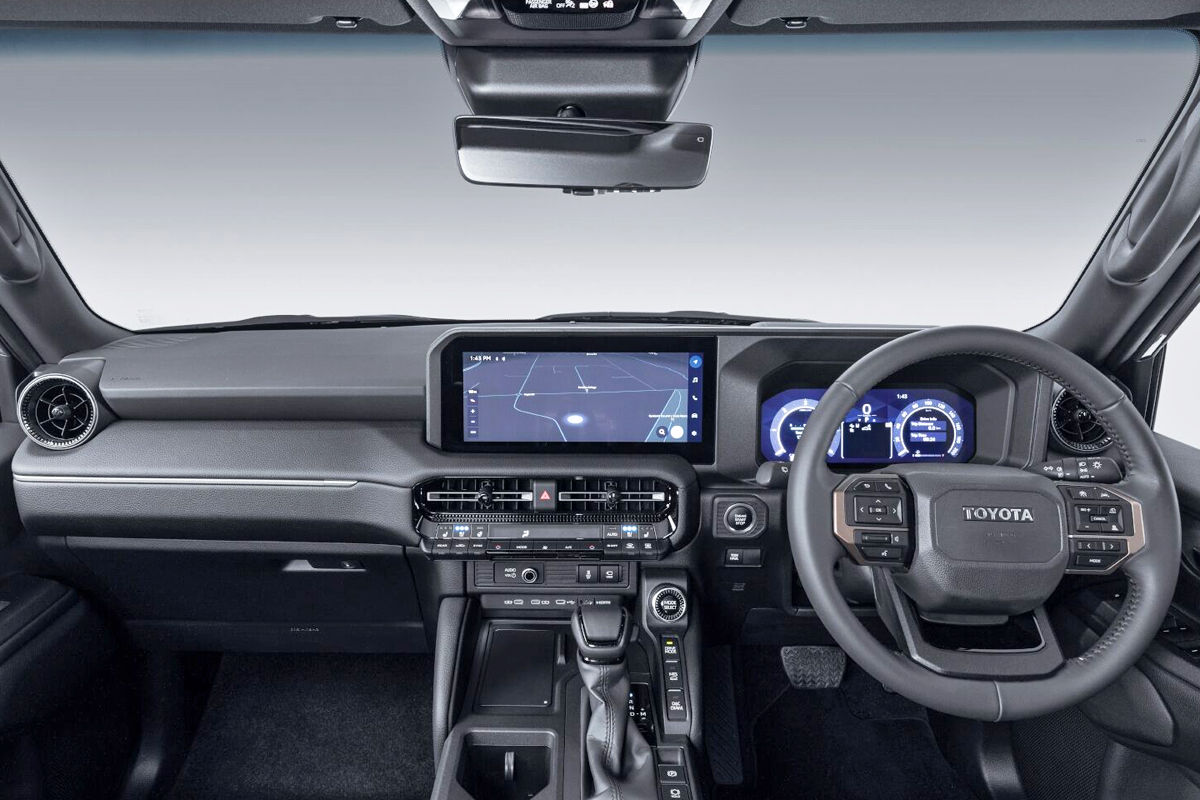
The interior of the SA-spec VX-R derivative.
With the outgoing range’s VX and VX-L trim levels scrapped, the new Prado 2.8 GD VX-R specification is up next. Priced from R1 448 900, this grade adds items such as a moonroof, a heated steering wheel, a cooler box, wireless smartphone charging and adaptive high-beam headlamps. It appears to do without adaptive variable suspension but scores a rear and centre torque-sensing limited-slip differential.
Finally, there’s the Prado 2.8 VX-R First Edition, which will be available “while stocks last”. There are technically 2 versions of the First Edition – one in monotone form and the other in bi-tone guise – each based on the VX-R specification. First Edition models will be easily recognisable thanks to their circular headlamps. The monotone variant is priced from R1 462 400, while the bi-tone derivative starts at R1 472 600 (a premium of R10 200).
First Edition headlamps are round.
First Edition variants are offered in a choice of 4 exterior paint colours: Platinum Pearl White, Avant-Garde Bronze Metallic, Sand and Sand Bi-Tone (the latter featuring a white roof). Meanwhile, TX and VX-R models will also be available in Platinum Pearl White and Avant-Garde Bronze Metallic, along with Glacier White, Attitude Black, Black and Smokey Grey.
As a reminder, the new Prado is underpinned by the same TNGA-F ladder-frame chassis employed by the Land Cruiser 300. For the record, the 5-strong Land Cruiser 300 portfolio is currently priced from R1 458 900 to R2 095 100. See full new Prado prices below…
How much does the new Toyota Land Cruiser Prado cost in SA?
Land Cruiser Prado 2.8 GD TX – R1 296 300
Land Cruiser Prado 2.8 GD VX-R – R1 448 900
Land Cruiser Prado 2.8 GD VX-R First Edition – R1 462 400
Land Cruiser Prado 2.8 GD VX-R First Edition Bi-Tone – R1 472 600
The new Prado will ship standard with Toyota’s 3-year/100 000 km warranty and a 9-service/90 000 km service plan.
Toyota South Africa Motors has finally introduced the Hilux GR Sport III, replete with a striking widebody kit and uprated suspension that amplifies the bakkie’s off-road capability. Gero Lilleike attended the local launch to put the newcomer to the test.
Even though the 8th-gen Toyota Hilux is now in the twilight of its product lifecycle, it remains a stalwart of the highly competitive leisure double-cab market – and the Hilux GR Sport III is its new halo model.
Nonetheless, Toyota’s widebody GR Sport III has arrived to stamp its authority on the bakkie market! We joined Toyota South Africa Motors (TSAM) at the GR Sport III’s media launch event in George, Western Cape, to experience the locally assembled newcomer in the metal and to put its capabilities to the test.
What sets the Hilux GR-Sport III apart from a standard Hilux?
A bold, purposeful look is backed by notable off-road capability.
The Hilux GR Sport III was conceived, first and foremost, as an off-road-biased double-cab bakkie (it’s only offered in 4×4 guise) and its mechanical enhancements primarily serve that purpose.
But it also looks the part… The new Hilux GR Sport III is distinguishable by its chunky widebody kit, including large over-fenders and a beefy bumper, all of which considerably enhance its visual appeal.
Other styling enhancements include a unique black grille with TOYOTA lettering, a silver underbody bash plate and a tubular sports bar, which is an SA-specific feature (an aero bar is fitted in other markets).
Notably, the widebody Hilux GR Sport III stands 2 020 mm wide, making it 30 mm wider than a standard Hilux (1 900 mm), while also standing some 20 mm higher by comparison.
With its wider footprint and uprated suspension, the Hilux GR Sport III is ready to tackle any challenge.
Moreover, the Hilux GR Sport III’s tracks have been increased by 140 mm (front) and 155 mm (rear) to enlarge the bakkie’s footprint, thereby improving its on-road manners, specifically in terms of handling (but more about that below). The revisions are also said to provide greater stability when the Toyota – fitted with BFGoodrich all-terrain tyres (265/65 R17) as standard – traverses major off-road obstacles.
From a mechanical standpoint, the GR Sport III’s suspension and braking system have been beefed up; Toyota says new monotube dampers offer better off-road performance than the previous twin-tube units.
As far as engine outputs are concerned, Toyota’s familiar but uprated 2.8-litre 4-cylinder turbodiesel produces peak outputs of 165 kW and 550 Nm of torque (compared with the standard 2.8GD-6 engine’s figures of 150 kW and 500 Nm) and is exclusively paired with a 6-speed automatic transmission.
Any changes to the interior?
A few GR-specific details are included but the GR Sport III’s interior is very familiar.
The interior architecture of the Hilux GR Sport III is carried over from the standard Hilux, but the cabin has been enhanced with a combination of suede and leather trim. GR badges appear on the steering wheel (with a red 12 o’clock marker), seat headrests, carpets and of course, on the engine start button.
Red seatbelts add further contrast to the cabin and Toyota has fitted “Technical Mesh” inserts to the dashboard and door cards to further differentiate the newcomer from its standard Hilux stablemates.
In terms of infotainment, Toyota’s Display Audio touchscreen setup features Android Auto and Apple CarPlay functionality, while superb sound delivery comes courtesy of a 9-speaker JBL audio system.
As expected, the perceived build quality of the Hilux’s interior is admirable; it has a level of solidity that buyers will appreciate. Nonetheless, the Hilux’s cabin design/architecture shows its age, especially when compared with the new Ranger. Our biggest gripe is the shortage of USB charging ports in the Hilux – there is only one! So, be prepared to fight other passengers for “charge juice” on those longer trips.
During the launch event, we drove the Hilux GR Sport III on various road surfaces (tar, as well as dirt) and even on dunes, all of which gave us a fairly good opportunity to experience the capability of the bakkie.
The added width of the GR Sport III is immediately noticeable when you’re seated behind its ‘wheel, so much so that you need to be extra vigilant when cornering with – or parking – the double-cab (to avoid incurring unwanted scuffs and bumps). The wider tracks and revised suspension setup do, however, contribute to a more “planted” driving experience; the bakkie’s handling exhibits notably less body roll.
Overall ride comfort, especially when driving on tarred roads, has improved too. Considering that the bakkie is fitted with large all-terrain tyres, we were expecting them to generate higher levels of road noise (compared with the tyres fitted to a standard Hiluxes), but we were pleasantly surprised by the Hilux’s impressive sound deadening, which contributes to a higher level of driving refinement.
Better stability on dirt roads
And, when traversing dirt roads, the Hilux’s improved road holding/stability instils more confidence than before. Having said that, while we applaud the improved suspension setup, the ride quality still degrades markedly over rough and/or uneven dirt roads. When the Hilux is not carrying cargo in its load tray, the bakkie’s rear does become quite jittery, particularly over corrugations, but that’s par for this segment.
On a private beach on the outskirts of Jeffreys Bay in the Eastern Cape, we made the most of an opportunity to test the rugged Hilux’s sand-driving ability. With tyre pressures reduced to 0.8 bar and low-range engaged, the convoy of Hilux GR Sport III units set off into the dunes for some sandy fun.
The Hilux’s off-roading prowess truly came to the fore; it made light work of soft sand and glided along with minimal exertion of the powertrain. The dunes may have been no match for the GR Sport III, but we look forward to putting the bakkie to the test on a technical 4×4 course as part of a more detailed review.
Well-proven engine offers great power/efficiency balance
Toyota’s venerable – but uprated – 2.8-litre 4-cylinder turbodiesel, remains a highlight of the GR Sport III package. Not only is it refined i.e. not as noisy as some other engines in this segment, but in combination with a 6-speed automatic transmission, it delivers meaty performance. Its ability to dish out mid-range acceleration is excellent – and rather useful when you need to execute urgent overtaking manoeuvres. Any off-road vehicle worth its salt needs a strong engine and the Hilux GR Sport III doesn’t disappoint.
Moreover, the “tried and tested” GD-6 motor still strikes an admirable balance between performance and economy. Our GR Sport III unit was given a proper workout during the event, yet its trip computer showed fuel consumption figures of around 10.2 L/100 km. In normal driving conditions, we would expect to see figures of between 9.5- and 10 L/100 km, which would be impressive for any double-cab 4×4 bakkie.
Who should consider buying the new Hilux GR Sport III?
Priced from R999 000, the new Hilux GR Sport III will appeal to Toyota 4×4 loyalists who are looking for a distinctively packaged Hilux with added off-roading capability “fresh from the factory”. Not only does the GR Sport III look purposeful, but its mechanical upgrades have elevated the bakkie’s on-road handling and off-road ability. As for engine performance, reliability and after-sales support, the Hilux is sorted.
The widebody GR Sport III rivals Ford Ranger double-cab derivatives such as the 2.0 BiTurbo Tremor 4WD (R978 600) and 2.0 BiTurbo Wildtrak X 4WD (R1 040 600). Buyers considering these products are best advised to arrange test drives to determine which of the derivatives is most suitable to their needs, as there are styling and specification differences between them that could sway their buying decision.
Overall, the Toyota Hilux GR Sport III is a welcome and competitive addition to the Hilux range – one that is likely to fulfil most of the dyed-in-the-wool 4×4 enthusiasts’ requirements. For just under R1 million, the “Widebody” makes a strong case for itself; even if it’s based on an ageing model, you should add it to your shortlist if you are looking for an off-road-biased double-cab 4×4 with head-turning looks.
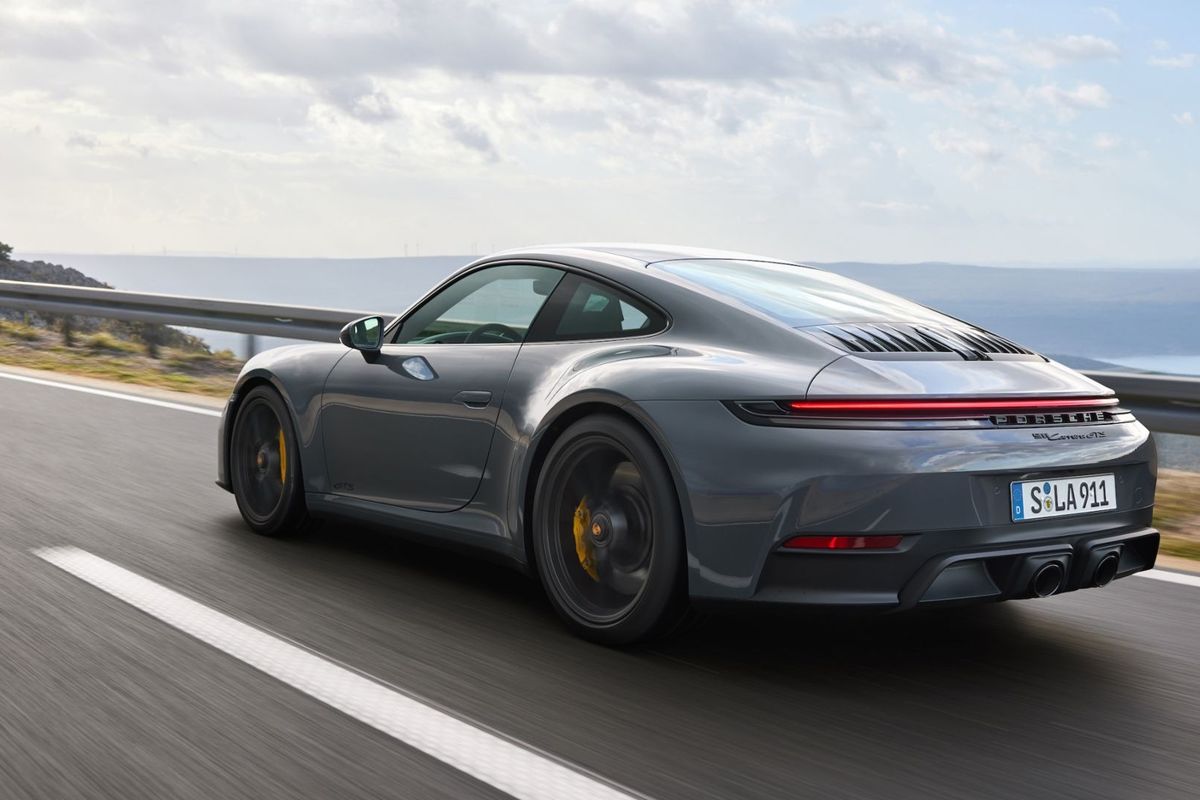
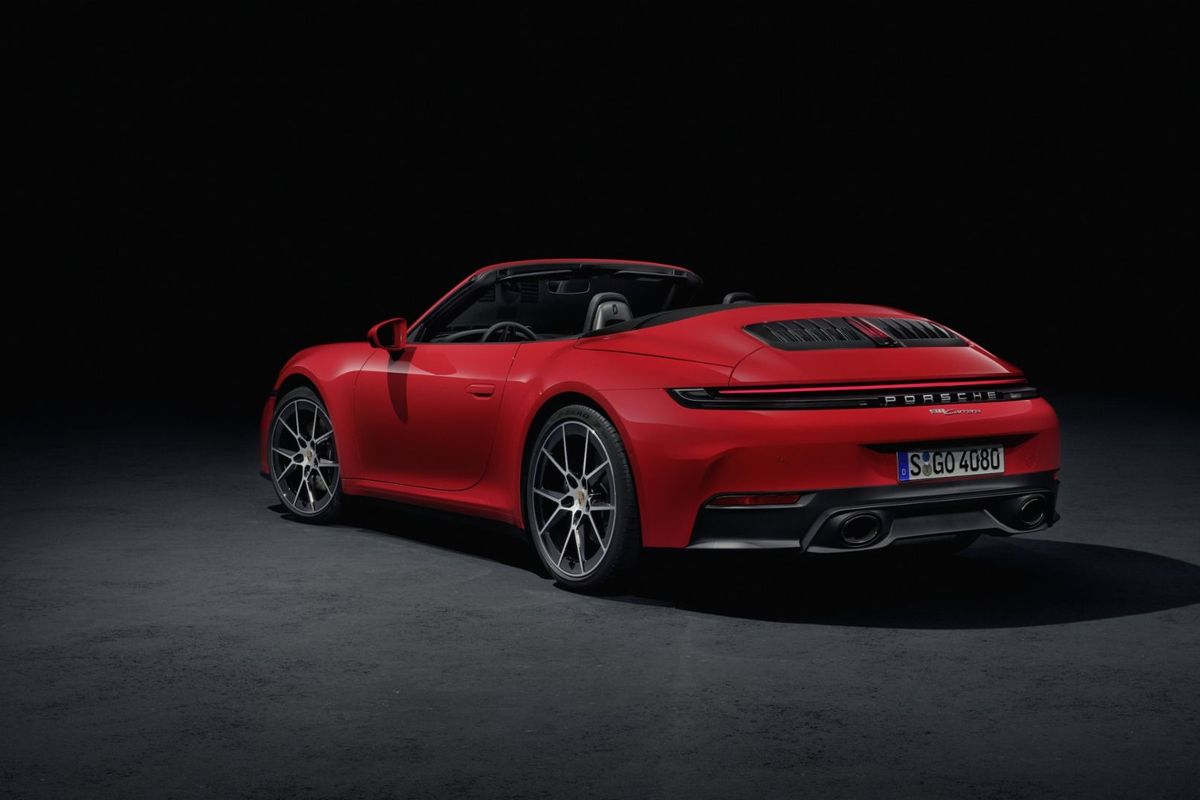
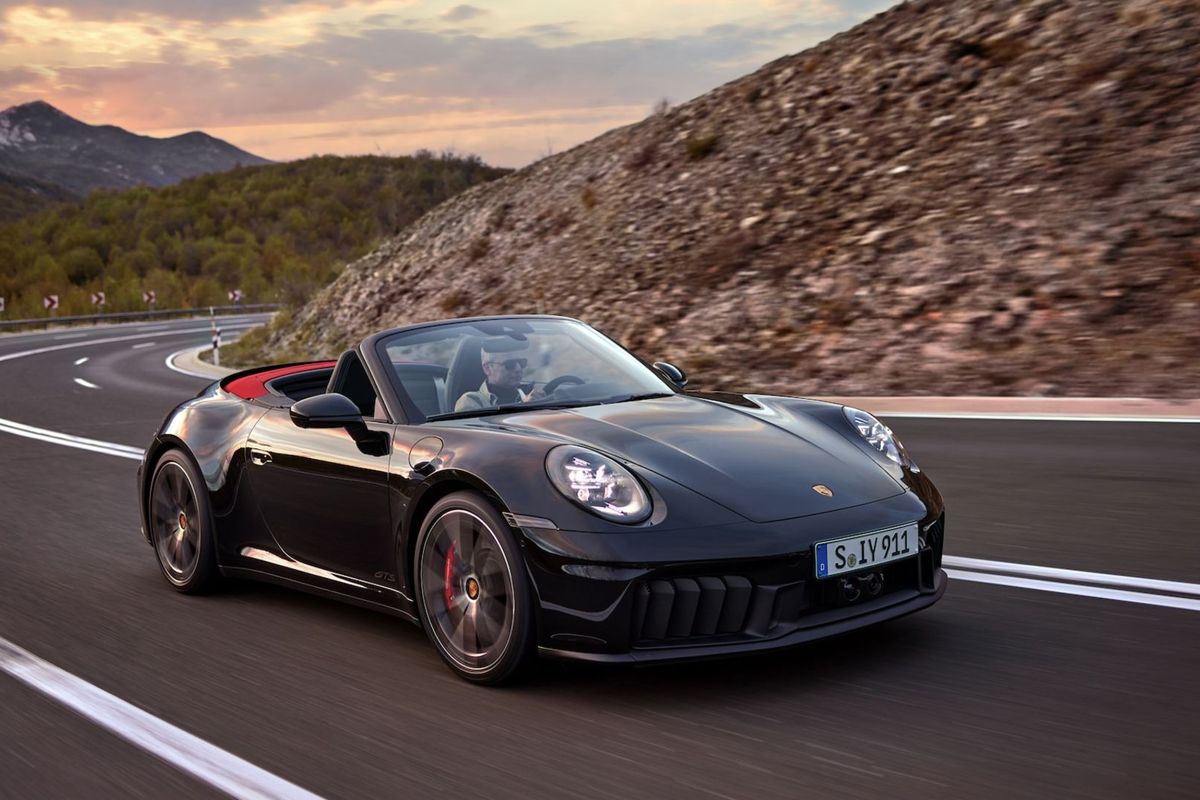
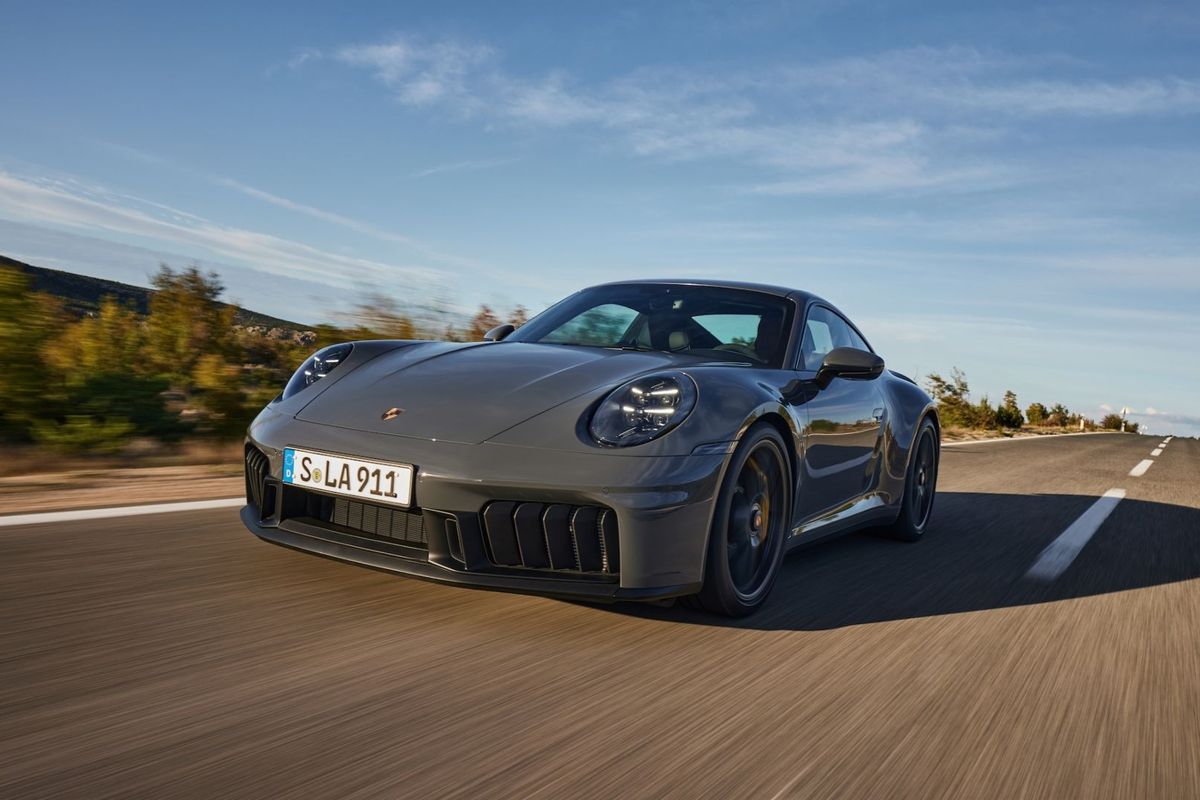
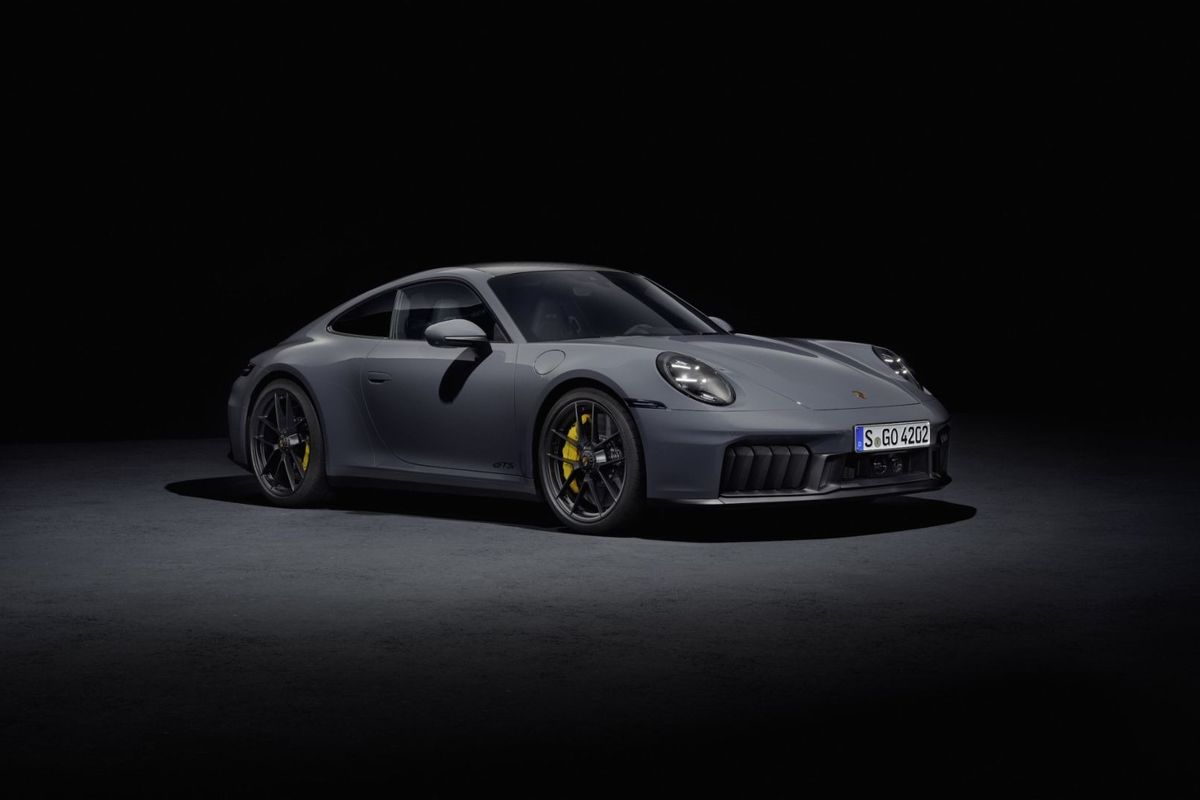
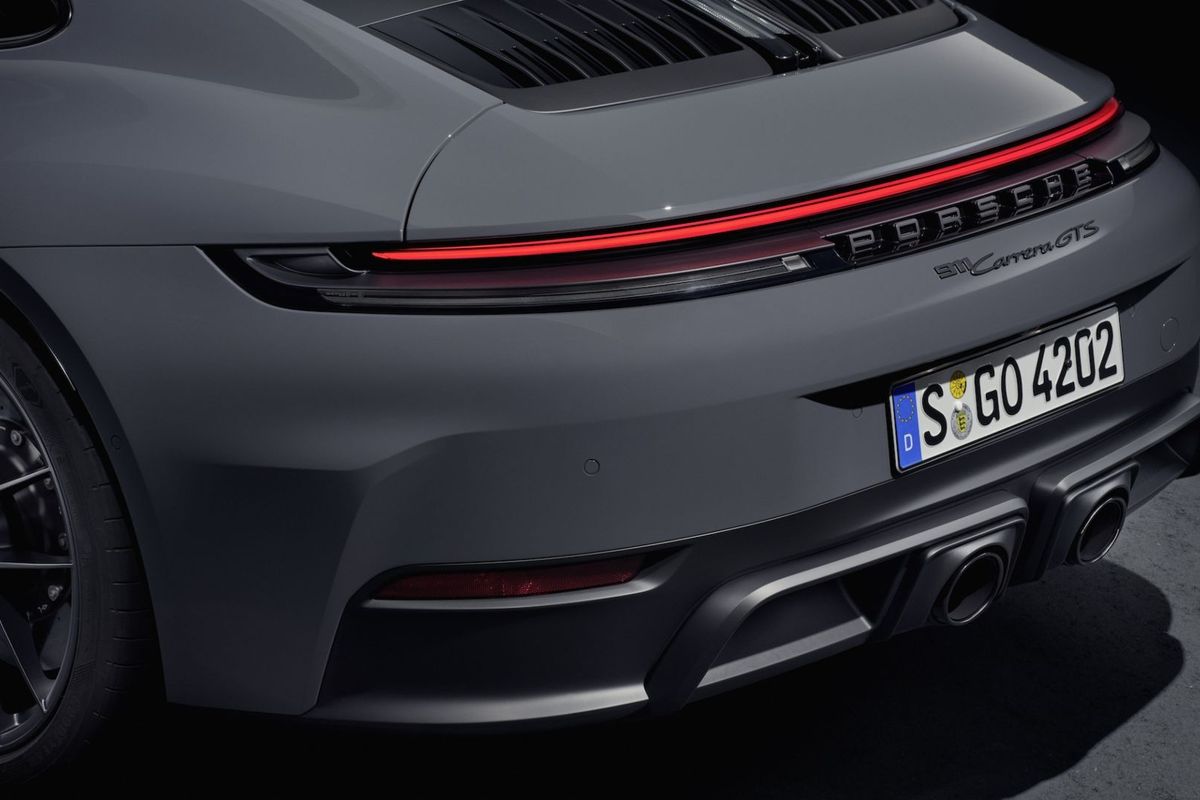
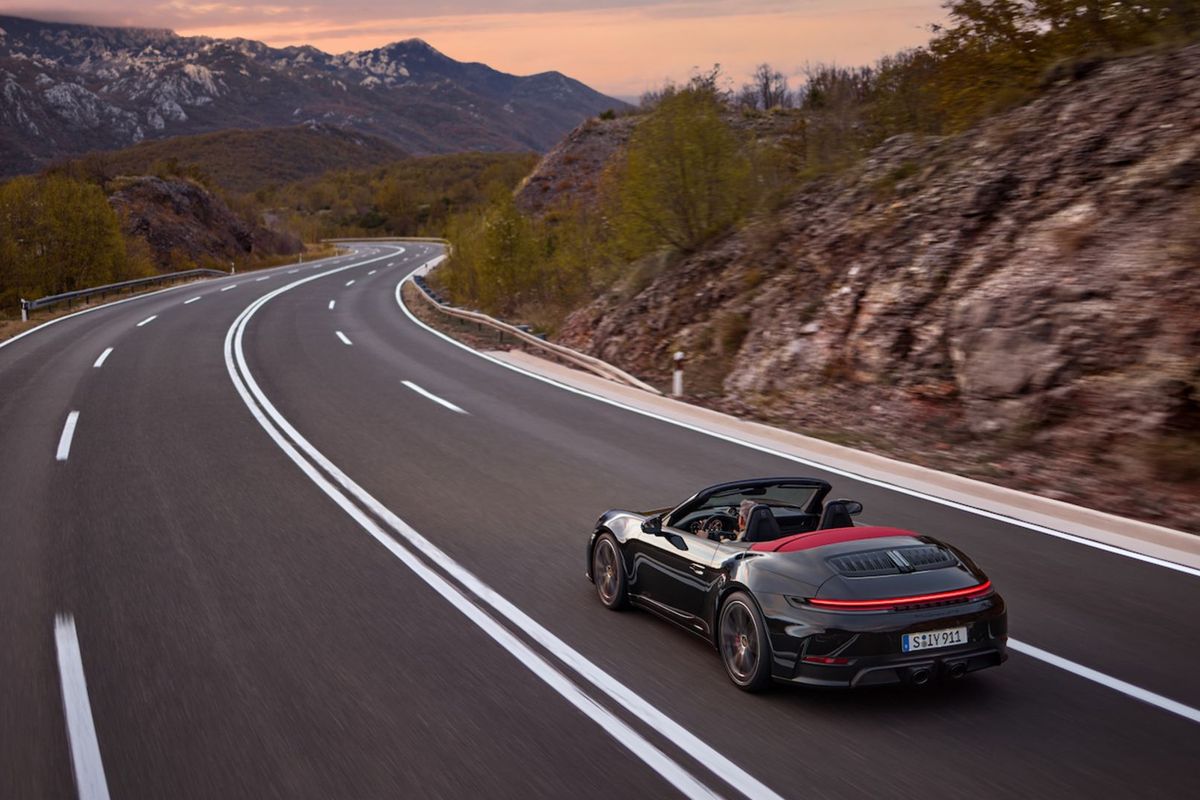
Here’s the Porsche 911 facelift which now features hybrid technology and it’s confirmed for SA. Here’s pricing and early details.
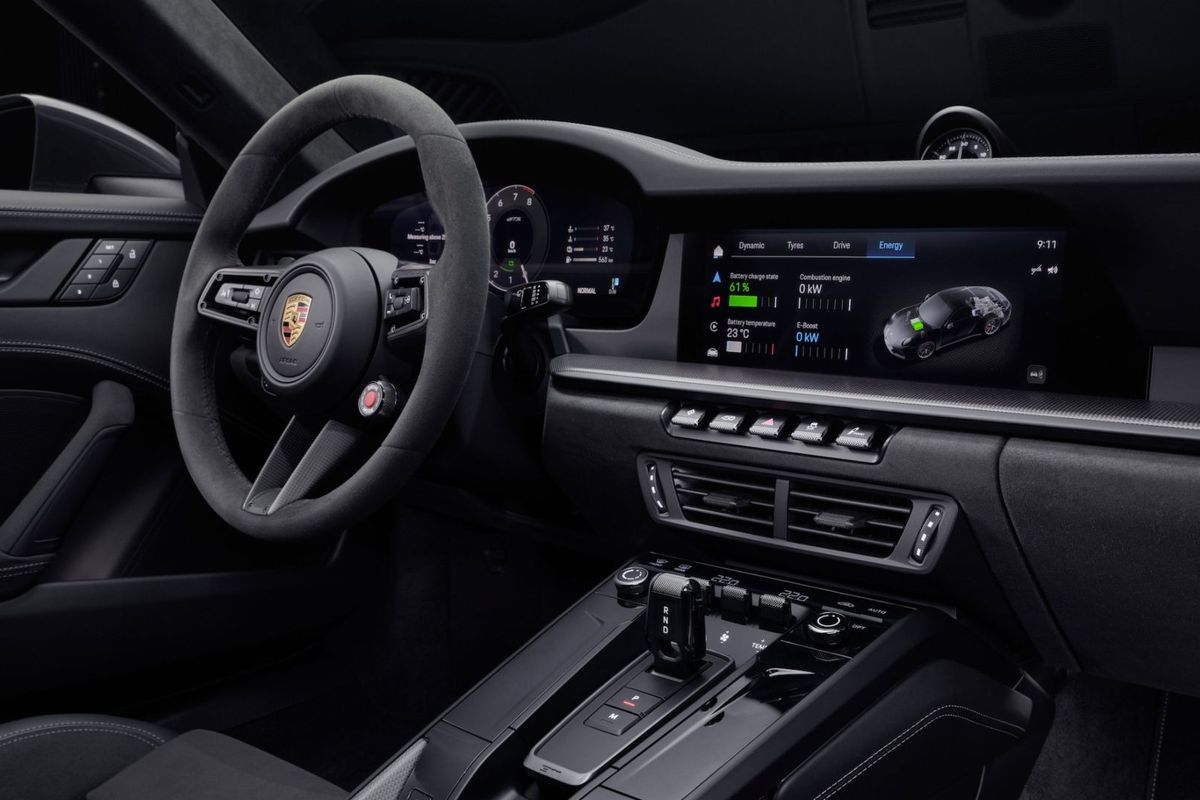
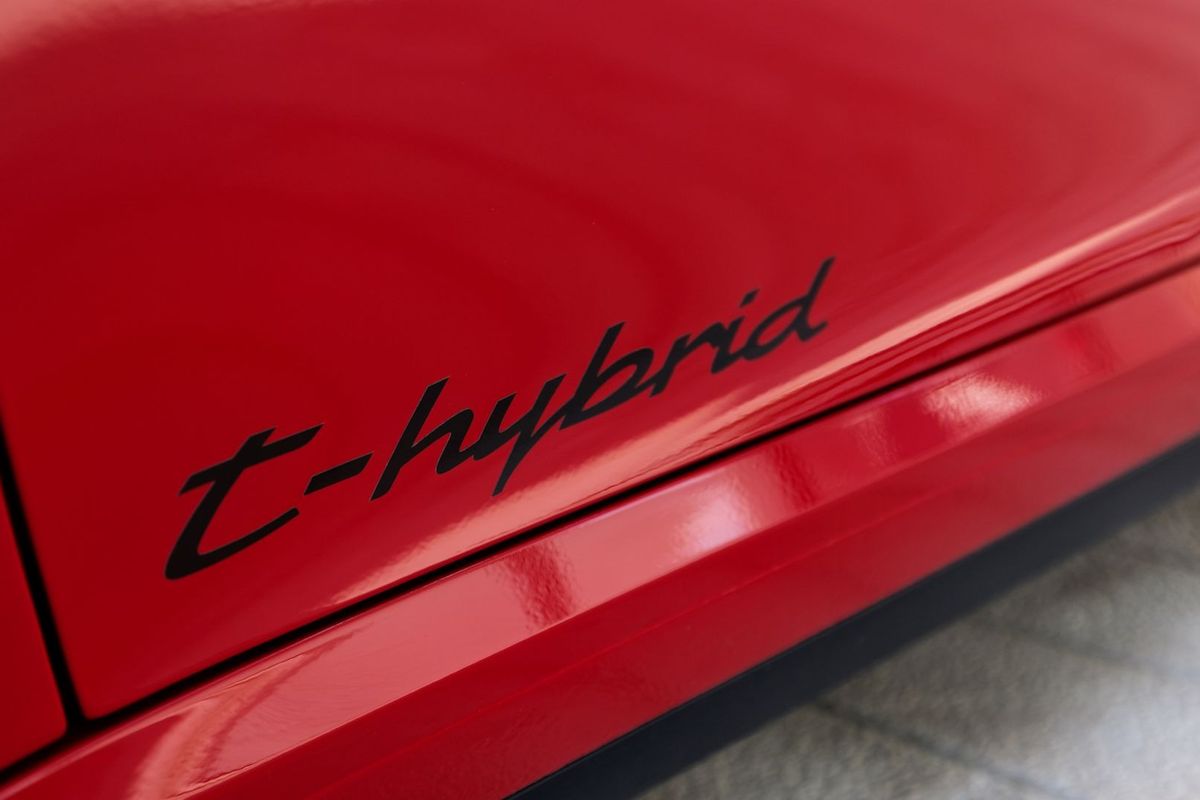
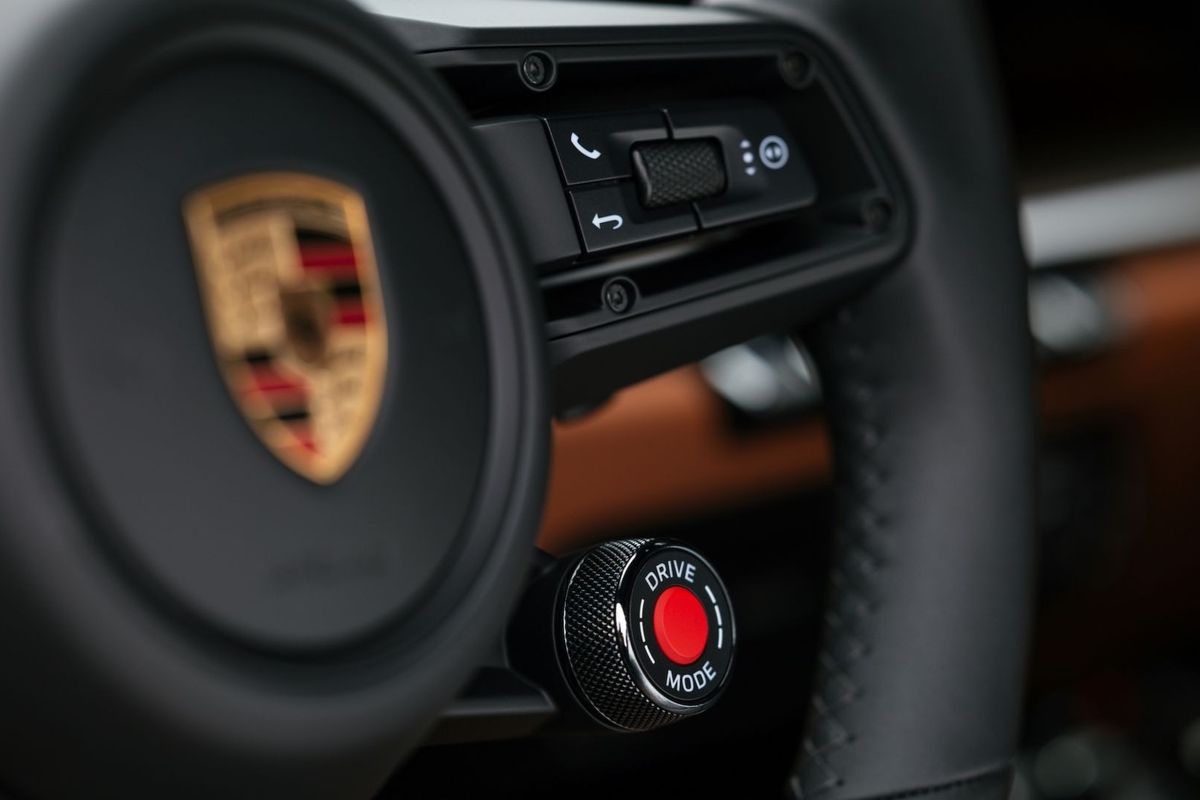
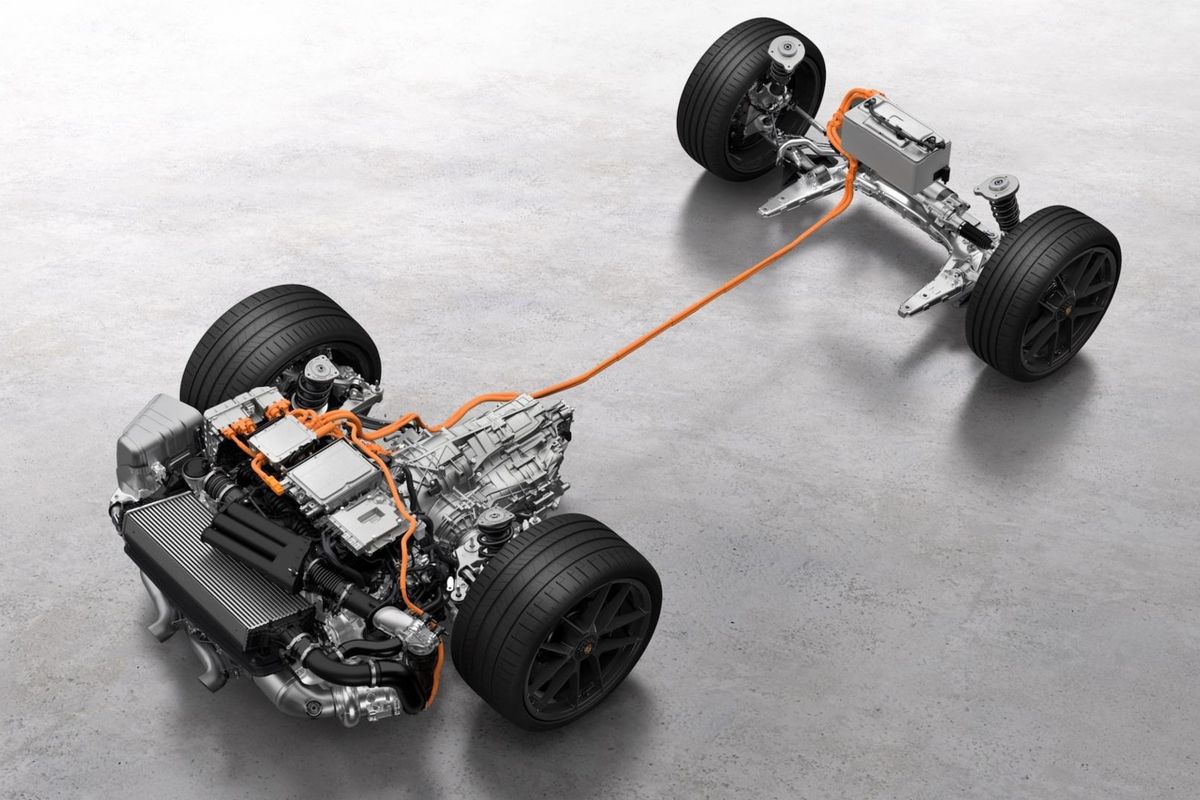
This is the 992.2-generation Porsche 911 and it brings a few changes to the iconic sportscar. The headline news is the new Carrera GTS powertrain. Badged as the T-Hybrid, this 3.6-litre engine sees the introduction of electrification to the party. In goes a 1.9 kWh 400-volt battery and the twin-turbo setup has been replaced by an electrically-assisted single turbo that’s said to be lag-free.
There’s a single electric motor positioned within in the 8-speed PDK ‘box and it makes 49 kW and 149 Nm on its own. In total there’s 398 kW and 610 Nm, which is 45 kW and 40 Nm more than the outgoing version. Impressively, the new Porsche 911 facelift GTS is able to dash to 100 kph in just 3.0 seconds, which is 4-tenths quicker. The electric hardware adds around 50 kg to the overall mass and offers a reduction in emissions on top of the additional shove.
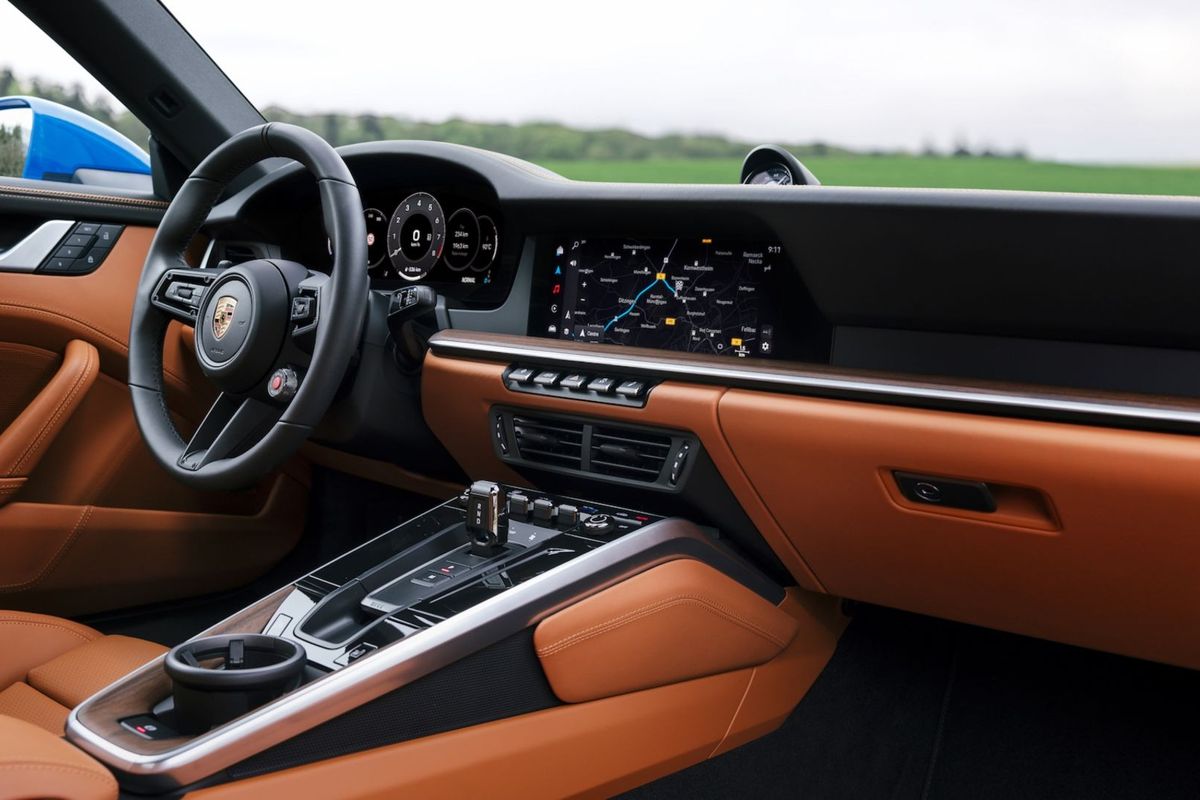
The GTS will sold with a sports exhaust with twin pipes, rear-wheel steer, 20-inch front/21-inch rear wheels, adaptive dampers and there are revisions to the cabin too. A fully-digital 12.6-inch digital instrument cluster makes it debut, with different themes and the new setup has apps like Spotify and Apple Music.
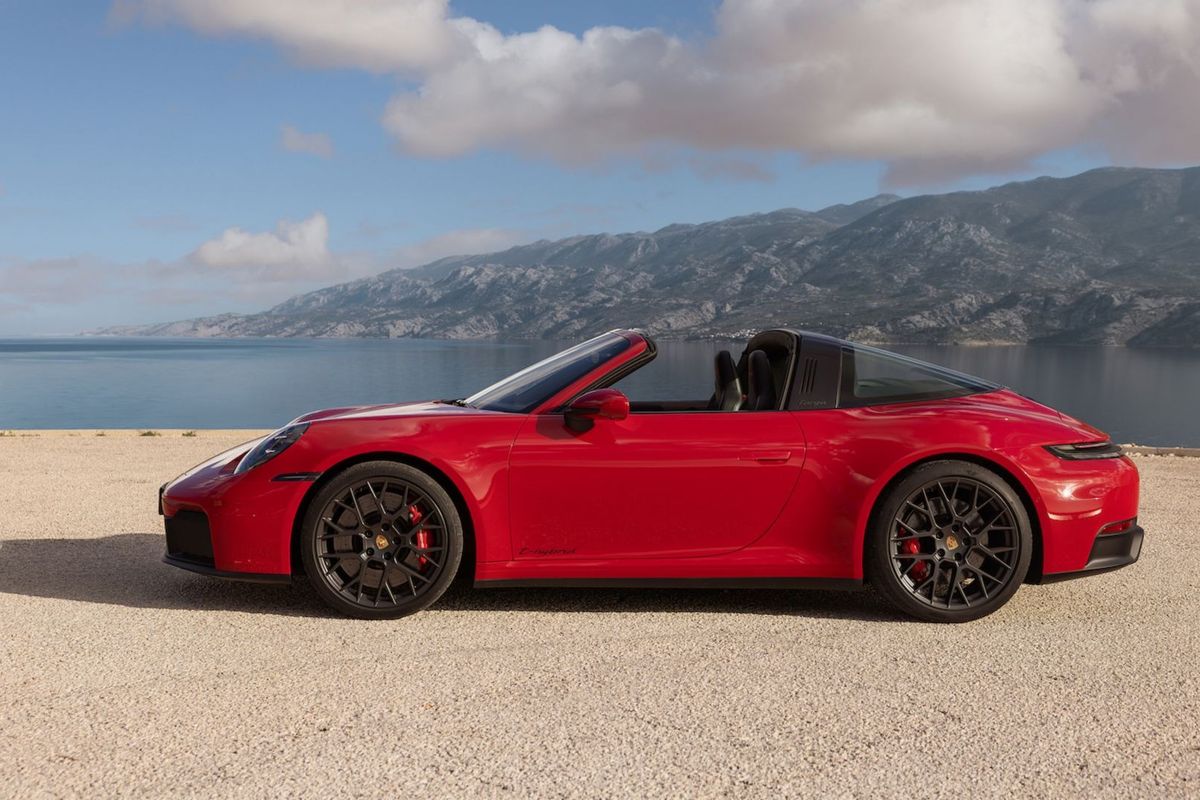
The entire GTS range (coupe, convertible, Targa) will get this T-Hybrid powertrain and customers will be able to choose from either rear-wheel drive and all-wheel-drive setups.
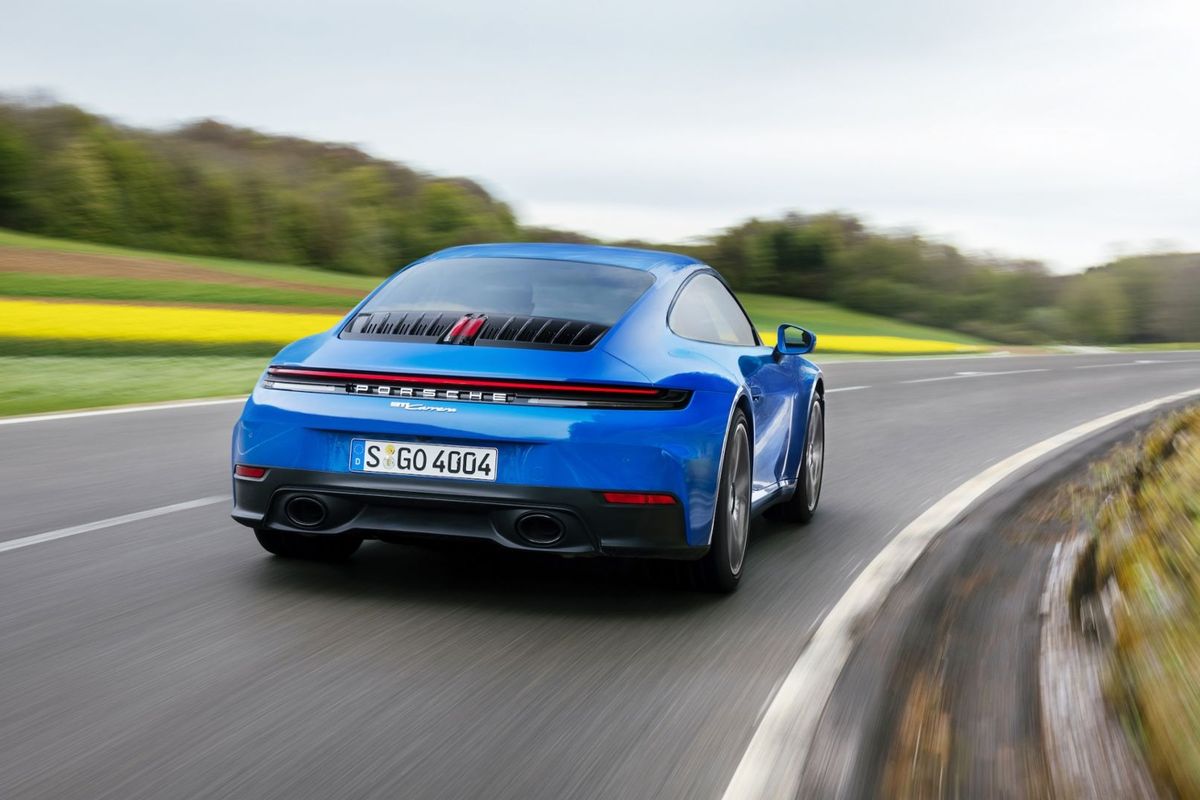
Visually, the Porsche 911 facelift can be spotted with its subtle updates like the 4-point LED Matrix headlights, new rear decklid grille, the word ‘Porsche’ is now illuminated and there’s aerodynamics galore, with new front air ducts, reworked front bumper and tweaked diffuser at the rear.
Rest of the Porsche 911 Facelift range?
Right now, the facelift range comprises just this GTS and the base-model Carrera. Customers will have to wait until late 2025/2026 for the new-spec Carrera S and other derivatives, like Turbo, Turbo S, GT2 and so on.
The Carrera is only available with the PDK dual-clutch ‘box and comes with a 3.0-litre twin-turbocharged 6-cylinder which receives uprated turbochargers and bigger intercooler. Outputs of 290 kW and 450 Nm are enough to see it sprint to 100 kph in just 4.1 seconds (quicker if you opt for the Sport Chrono pack).
How much does the Porsche 911 Facelift range cost in South Africa?
The 944 Cabriolet has never been enthusiasts’ most loved Porsche – but are they underestimating the drop-top? We head to the Free State to drive a prime example.
IMAGES: Kian Eriksen
When most motoring enthusiasts think about topless Porsches, visions of V10-engined Carrera GTs, rare 550 Spyders, 356s and G-Series (1973 – 1989) 911 models tend to pop into their heads first.
However, those cars are rare (except perhaps G-Series 911s) and, suffice it to say, one needs a healthy bank balance and the patience of a saint to source and acquire one of those revered models. So wouldn’t it make sense to see what is available at the opposite – more realistically priced – end of the market?
Prevailing classic car market conditions
At the bottom end of the Porsche cabriolet range are early Boxsters and 996-series 911 Cabriolets. Each of these models holds an appeal of its own, but much older Porsche 944 Cabriolets (produced from 1989 to 1991) now trade for roughly the same price as early Boxsters and, in some cases, even more.
Although some enthusiasts frown when you mention investment value, most will quietly admit they don’t want to lose money on a car. Fortunately, many classic cars are safe bets nowadays (that pertains to 944 Cabriolets as well). It is unlikely that they will appreciate much over the coming years and because their values seem to have bottomed out, you are unlikely to lose money on one (provided you get a good one).
Specifications
Model: Porsche 944 S2 Cabriolet
Engine: 3.0-litre, 4-cylinder, petrol
Power: 155 kW at 5 800 rpm
Torque: 280 Nm at 4 000 rpm
Transmission: 5-speed manual, RWD
Weight: 1 340 kg
0-100 kph: 7.1 sec (claimed)
Top speed: 240 kph (claimed)
Details of this Porsche 944 Cabriolet example
As we parked the white 944 Cabriolet to conduct static photography on a warm spring day in Bloemfontein, I asked the Porsche’s owner about their car’s history.
“I bought this 944 about 5 years ago. At first, the previous owner didn’t want to sell it to me, but the second time I approached him, he still had the 944 as well as a Mercedes-Benz SLK (the Three-pointed Star’s now discontinued compact roadster), so I offered him a price for both cars, which he accepted.
I particularly like the colour combination, the white body colour with the dark blue soft top and the purple interior. What’s more, the car’s overall condition was very good – that was initially the drawcard for me.”
Upon closer inspection, it is clear that the car has indeed been lovingly cared for. The paint finish looks in good condition, and the interior shows only a few signs of wear, which is in keeping with the odometer reading of 223 541 km.
The colour of the interior might polarise opinions, but having said that, if you appreciate a bit of pizzazz, this 944’s cabin will surely appeal to you. The seats, carpets, sun visors and tonneau are a very rich dark purple, which not only highlights and contrasts with the white exterior paintwork, but imbues the interior with a sense of luxury. It looks so much more welcoming than a standard 944’s plain black interior.
The only item that deters from the otherwise original state of the interior is the aftermarket radio, which is a modern necessity seeing as motorists now prefer to enjoy their choice of music in digital formats.
I open the bonnet and find the engine bay tidy, which shows little evidence that the 944 Cabriolet has indeed covered its indicated mileage. As is usually the case, the discoloured (yellowy) plastic of the fluid containers gives the car’s age away.
I find the car’s chassis number to the left of the engine, positioned against the firewall. According to The Porsche Book by authors Jürgen Barth & Gustav Büsing, this particular car was one of 1 864 examples manufactured in 1991. For curiosity’s sake, I also have a peek at the luggage compartment. It has the same purple hue as the interior and the carpets and trim are in near-perfect condition.
The rear deck lid features a neat rear brake light. Having seen and looked at several 944 Cabriolets, this is the first one I’ve seen with such a brake-light configuration. I’m not sure if it was an OEM, country-specific item, or an aftermarket addition. Lower down you can also spot the diffuser, first seen on the later S2 models, which wraps itself around the bottom edges of the car’s rear fenders.
The Porsche 944 Cabriolet variant only went into production towards the end of the model’s production cycle, in January of 1989, which means all Cabriolet models featured the updated cabin and exterior facelift. The Cabriolet was based on the 944 S and, as was the case with the Zuffenhausen-based brand’s entire 4-cylinder range, was assembled at Neckarsulm in Germany (the home of Audi Sport).
However, before 911 purists frown upon those who adore Porsche’s early 4-cylinder sportscars, keep in mind that the assembly of the 944’s powertrain was completed at Porsche’s plant. The convertible roof was installed by the American Sunroof Corporation (ASC) at its Weinsberg plant in Germany.
However, in June 1991, the 944’s entire assembly was moved to Zuffenhausen. The 944 Cabriolet’s launch price was DM76 700, slightly higher than the DM58 950 for an equivalent 944 S coupe.
Today, these cars’ prices depend on mileage and condition, of course, but expect to pay more for a good drop-top than a coupe… and a pretty penny for the much rarer (around 500 built) 944 Turbo Cabriolet.
Behind the ‘wheel of a Porsche 944 Cabriolet
Then, I got behind the 944 Cabriolet’s ‘wheel and shut the driver’s door. Thunk! For the record, fewer rattles and vibrations emanated from the car’s doors – and cabin – than I thought would be the case.
You sit low in the car, more so than in a Mercedes-Benz SL of the same era (then the 4th-gen model, known as the R129), and the dashboard and instrument panel will be very familiar to any 944 owner.
Everything falls easily to hand; the gear lever, in particular, is perfectly positioned, as is the feel of the steering wheel, which was shared across Porsche’s range of transaxle cars, as well as the 911.
Compared to those of some modern sportscars, including new 911s, the 944’s steering wheel has a notably thinner rim, which feels perfect in your hands, and allows you to grip it firmly. This is rather important during parking manoeuvres, as the steering wheel does need proper input from the driver.
By modern standards, the Porsche 944 Cabriolet’s cabin is a simple, almost spartan space: there are 2 stalks attached to the steering column and the ventilation buttons are situated below the centre air vents; even the analogue dials seem slightly lost in the large instrument binnacle. Apart from the speedometer and rev counter, you also have oil pressure, battery voltage and coolant temperature gauges.
Twist the ignition key (positioned to the right of the steering wheel) and after a turn or two of the crank, the engine starts undramatically. As expected, there is less fanfare than in the 944’s contemporary 911 siblings, but this is, after all, one of the most useable boulevard cruisers Porsche has ever built.
Still, as the Porsche pulls away, I slot the gear lever into 2nd, then 3rd; the gearbox has a lovely, relatively direct shift quality. The ride quality is good, I have a perfect view through the windscreen and across the bonnet. Moreover, the 4-pot engine is all too happy to potter around in the first 3rd of the rev band.
For a car that has clocked many kilometres, the cabin panels still feel tight; I don’t detect notable rattles or creaks. The previous and current owners have done an excellent job of keeping the interior preserved, especially taking into account that it is a Cabriolet and has spent its life under the harsh African sun.
The Porsche 944 Cabriolet offers ample performance
As I start to increase my pace, the weight of the car is noticeable. It is, after all, the Cabriolet is between 50 and 80 kg heavier than the coupe, depending on the exact specification and model year of the car.
However, no test drive would be complete without making the engine rev to its redline. So, I select 2nd gear and give the accelerator pedal a solid prod. The revs rise gradually to around 4 500 rpm, but once the needle swings past this mark, the engine evidently gets its second breath and spins up eagerly to 6 000 rpm. I did this quite a few times and every time the engine obliged and cantered to the red line.
Even though the motor does so willingly, the engine is similarly well-suited to leisurely driving. As the maximum torque of 280 Nm is already delivered at 4 100 rpm, it means that you don’t need to wring the engine’s neck to make the 944 gallop. In the end, that means it is an ideal propulsion unit for a cabriolet.
Not unlike 911s, the moment you use all the available performance, the nose lifts ever so slightly, and the rear ducks a smidge. I felt little need to hustle the car through corners. I’m not saying it shouldn’t be, but if that is the kind of thrill you’re after, a 996-series 911 Cabriolet or 986 Boxster would be a wiser choice.
I let the Porsche 994 Cabrioloet’s revs drop to about 2 000 rpm in 4th gear, and then flatten the long pedal. The revs start to rise and then, past 4 500 rpm, the needle further awakens. A peak output of 155 kW at 5 800 rpm is not a lot of power, especially in a relatively hefty cabriolet, but it’s enough to entertain and make things exciting when you want to string a few corners together or use all the available revs.
As this area of Mzansi receives minimal rain or wind, and the afternoon sky gave way to a near-perfect sunset, I never had the urge to raise the roof – a wonderful luxury to have when you own such a car!
However, should you wish to change that because of, say, the onset of inclement weather/a sudden drop in temperature, or to store the car with its roof up, bear in mind the top is manually operated. There is some evidence of scuttle shake in general driving conditions, but, again, it’s nothing out of the ordinary.
Summary
After spending several hours in the company of the Porsche 944 S2 Cabriolet, my opinion of the drop-top changed somewhat. It’s not a 911, but it IS a true Porsche, albeit not the most dynamic one.
If you’re going to drive mostly on your own and seek an engaging experience, consider one of Porsche’s other cars, BUT if someone is going to be joining you for the trip, and you’re going to be driving at “7 tenths” most of the time – and enjoy the manual gearbox – it’d make a worthy addition to your garage.