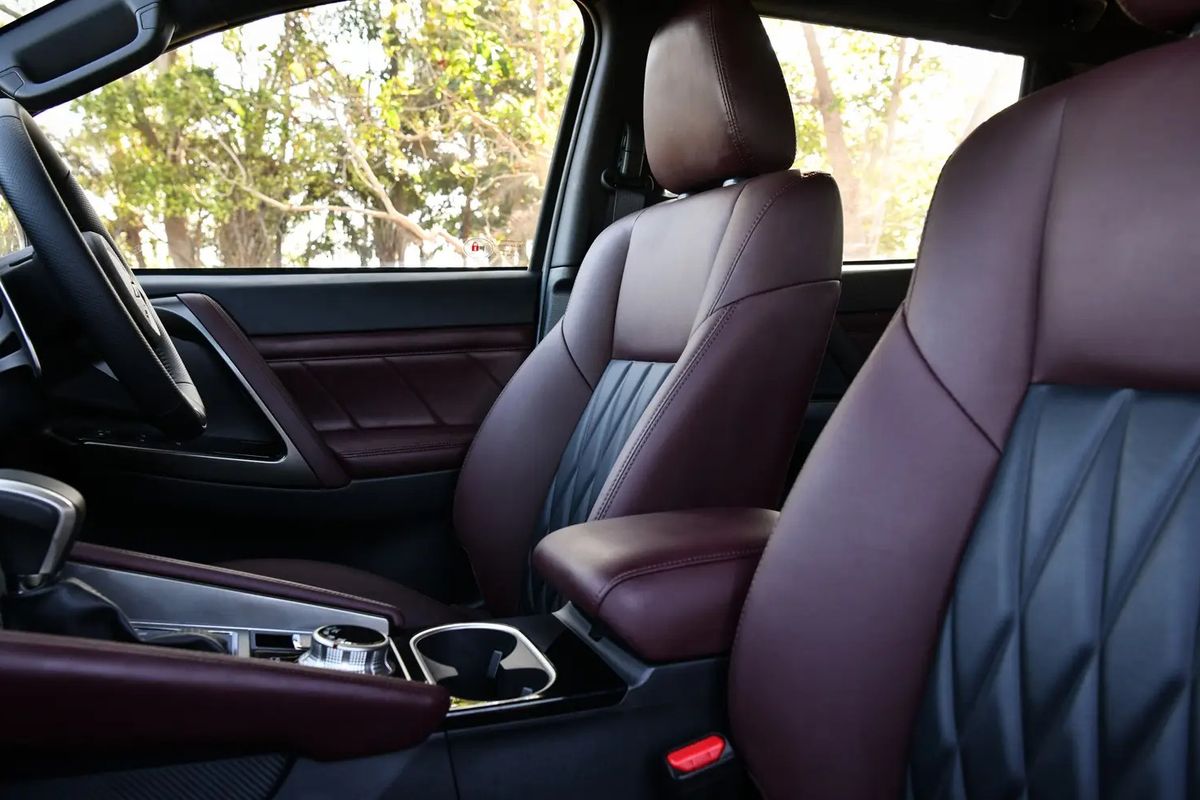
This prototype is the 2025 Audi Q9, which will be launched as a rival to the BMW X7 and Mercedes-Benz GLS.
Picture credit: S. Baldauf/SB-Medien. We have paid for these photos and at the photographer’s request, have watermarked them.
Audi is forging ahead with its electric-only strategy and from 2026, the Ingolstadt-based brand will no longer launch any new vehicles with internal combustion engines. What you see here is potentially one of the last few petrol-powered vehicles from Audi.
The 2025 Audi Q9 will be positioned as a flagship, three-row luxury SUV that will be trying to snatch some sales away from the BMW X7 and Mercedes-Benz GLS. With primary target markets identified as the USA and Asia, the Q9 will have a high-end cabin and luxury appointments for all three rows of passengers.
When it comes to engines, Audi can draw upon the vast array on offer from the parent Volkswagen Group. A cursory look at the soon-to-be-locally-launched Audi Q8 shows a turbocharged petrol V8 and turbocharged diesel V6 motors. We’d assume there would be plug-in assisted hybrid models and potentially a powerful flagship V8 to take the fight to the respective AMG and M equivalents.
We’re still early in the development phase of the 2025 Audi Q9 and we expect a formal reveal towards the end of 2024. As soon as we have more information, we’ll update this article.
No E30 M3 in South Africa? No problem, you can build your own!
South Africa never got the BMW E30 M3, but that didn’t stop one petrolhead from creating his own!
South Africa was one of the countries that missed out on the original BMW E30 M3. It was such a sore point for our local BMW enthusiasts and division that they went on to make their own special editions like the E30 333i and the iconic 325IS Evo I and Evo II.
But what if you could make your own E30 M3? That would be extremely rare in South Africa.
That’s what the owner of this custom E30 M3 decided to do when he partnered with the team at Big Boss Auto in order to create something that is almost indiscernable from the original E30 M3. A lot of detail and custom fabrication had to go into the build and this is the result. Tell us what you think of the build in the comments below.
The popular family SUV from the Korean brand has been given enhancements and upgrades. Here’s your first look at the 2024 Hyundai Creta.
The 2024 Hyundai Creta has just been revealed in India and there are considerable changes. Before we get stuck into the details, it is important to remember that Hyundai South Africa sources its Creta units from Indonesia. It is fair to assume these Indian-spec upgrades will be rolled out to the Indonesian market and then onto us during the course of the year.
Upon its introduction in South Africa in 2017, the (then 1st-gen) Hyundai Creta was one of the first “upsized” compact family cars to bridge the gap between small crossovers and family cars (medium SUVs). Since the 2nd-gen model arrived in 2020, followed by a new-look version in 2022, the sub-segment has grown to include the Grand Creta, Kia Seltos, Toyota Corolla Cross and others.
2024 Hyundai Creta Changes
The front-end styling of the updated Creta (to reiterate, only confirmed for the Indian market at this stage) incorporates an upright bonnet design, full-width LED DRLs, quad-beam LED headlamps (with rhombus-shaped surrounds), sequential indicators and redesigned bumpers with squared-off dark grey garnishes. The tailgate is bisected by an LED light bar, and the taillamp clusters have a blocky lighting signature.
As far as engines and transmissions are concerned, the 2024 Hyundai Creta will be offered with three options. There’s been a continuation of the 1.5-litre naturally-aspirated petrol and 1.5-litre turbocharged diesel engine from the predecessor, but this update sees the introduction of a new 1.5-litre turbocharged petrol engine making 118 kW and 253 Nm.
Hyundai will be offering a six-speed manual, a six-speed automatic, a CVT, or a seven-speed DCT automatic, depending on the engine.
The features list is comprehensive, at least for the Indian market. Convenience and comfort features like a powered driver’s seat, dual-zone climate control, onboard air purifier, electronic parking brake, two-step adjustable rear seat backrest, pillows for the rear seat headrests and rear sunshades are standard.
There’s a crisp-looking 10.25-inch digital display, new 360-degree camera, Bose sound system, e-Sim connectivity, as well as the ability to connect to services like Amazon Alexa. The interior trim quality has been upgraded too and there are smart-looking front driver and passenger seats.
Will this updated Creta come to South Africa?
Although we anticipate that the new Kona boutique crossover will arrive in South Africa sooner rather than later, these updates to the Creta will probably be applied to the Indonesian-built (and therefore SA-delivered) model at some point during 2024.
We’ll update this article as soon as new local market information becomes available.
The Lexus LC nameplate has returned to SA after the briefest of breaks, though is now offered exclusively in hybrid form (farewell, V8!). Here’s how much the LC500h costs…
They promised us it would return and here it is. After a (very) brief hiatus, the Lexus LC nameplate is back in South Africa, though it’s now available exclusively in hybrid form. Yes, that means the free-breathing V8 has officially exited the Lexus SA range.
While the previous LC line-up – which was quietly removed from the Lexus SA range, along with the RC F sports coupé (likewise offered with the 8-cylinder motor) and LS luxury sedan at the end of 2023 – comprised the LC500 coupé and LC500 convertible, the revised portfolio features only the LC500h coupé.
The LC nameplate has returned to Mzansi after a brief interlude.
As such, the 351 kW/540 Nm naturally aspirated 5.0-litre V8 petrol engine is no longer offered locally in any Lexus model, since the LC500h instead employs a hybrid powertrain consisting of a 3.5-litre V6 petrol engine, a small electric motor and an 84-cell lithium-ion battery pack. Total system power stands at 264 kW, while Lexus quotes a torque (of 350 Nm) only for the petrol engine.
According to the Toyota-backed luxury firm, the obligatory 0-100 kph sprint takes 5.0 seconds, while top speed is listed as 250 kph. The LC500h’s claimed combined fuel economy, meanwhile, comes in at 6.7 L/100 km. As a reminder, this powertrain employs a continuously variable transmission (CVT) that drives the rear axle.
The LC500h drops the old V8 in favour of a 3.5-litre V6 hybrid powertrain.
The price? Well, the Lexus LC500h starts at R2 542 800. For the record, before they were put out to pasture at the end of last year, the LC500 coupé had kicked off at R2 515 400 and the LC500 convertible at R2 666 600. The colour palette for the new hybrid model comprises as many as 10 hues.
Standard features include Alcantara seat trim, electrically adjustable (and heated) front seats, a heated 3-spoke steering wheel, a 13-speaker Mark Levinson sound system, a panoramic-view monitor, a 12.3-inch multi-information display and a head-up display. Lexus SA’s flagship sports coupé runs on mixed-sized tyres measuring 245/40 R21 up front and 275/35 R21 at the rear.
Distinctive exterior styling and packed with standard kit.
The LC500h furthermore ships standard with bi-LED headlamps (including an auto high-beam feature), a carbon-fibre roof, a retractable rear wing, adaptive variable suspension, a limited-slip differential and a raft of safety and driver-assistance features (from as many as 8 airbags and blind-spot monitoring to a lane-keeping system, adaptive cruise control and active cornering assist).
How much does the Lexus LC500h cost in South Africa?
Lexus LC500h – R2 542 800
The Lexus LC500h ships standard with a 7-year/105 000 km warranty (8 years or 195 000 km for the hybrid battery pack) and a maintenance plan of the same duration.
We visit Museo Della Passione, which is situated on the picturesque Lourensford Wine Estate in Somerset West. It’s a new motoring museum that recently opened to the public and should be on any alfista’s – or petrolhead’s – must-visit list.
A new museum doesn’t open in Mzansi every day – especially not a car museum. Most of us are aware of the Franschhoek Motor Museum outside Franschhoek, and we’ve featured several private collections on SentiMETAL, but now there is a new, very professionally-curated car museum in Somerset West.
The Museo Della Passione(Italian for “Museum of Passion”) is owned and curated by Lynton Hilliard-Lomas. The exhibit will be rotated every quarter; there’s a good reason to visit it more than once a year!
The Museo Della Passione is housed in a freshly constructed building that combines a concrete structure with large wooden doors, making it an ideal place to house precious cars. And, seeing as it is situated on the Lourensford Wine Estate, there are several activities that you can enjoy before or after visiting the museum. There is also a market on weekends; it offers a variety of food and sometimes even live music.
The Museo Della Passione collection
As I walk into the museum (the entrance fee is a very reasonable R60) I am immediately greeted by an Alfa Romeo SZ (pictured below) – which is a rare sight indeed. Currently, the entire museum’s exhibit focuses on Alfa Romeo models, and from the get-go, I must mention that all these cars look immaculate.
Each car has a neat information board (including technical specs) displayed next to it… so you can test your knowledge about each vehicle – or learn something new. The SZ, for instance, is the only SZ that was converted to right-hand drive and is fitted with the larger 3.5-litre engine, tuned by Autodelta.
As I walk down along the 2 rows of cars, there is a group of four late-70s and 80s Alfettas and GTVs. It starts with the Guigiaro-designed 1976 Alfetta GT 1.8. Powered by a 90 kW 1.8-litre, 4-cylinder engine, it offered a 50:50 weight distribution, weighed only 1 050 kg and had a claimed top speed of 185 kph.
Further along the exhibit, I find the 1983 GTV6 2.5. This car marked the arrival of the “Busso”-powered GTV and, according to the info board, the first 100 GTVs to arrive in South Africa were all numbered. The 2.5-litre, V6 engine developed 142 kW and the 1 210-kg GTV6 2.5 could reach a top speed of 205 kph.
On the other side of the room are several earlier Alfa Romeo coupes in the shape of the 105-series cars. The one that stood out for me, might not appeal to collectors, but it’s cool nonetheless. It is a 1975 2000 GTV (97 kW, a 195 kph top speed and kerb weight of 1 028 kg) that formed part of the last cars of this Bertone Coupe range; it’s painted in a rare “Prugna” (Italian for prune) hue and has an auto transmission.
Further down the hall is a small BMX collection and a number of classic on- and off-road motorcycles placed among the cars that fit in perfectly with the collection.
Along the end of the hall is one of only a few Alfa Romeo 147 GTA race cars that competed in South African production car racing in the mid-2000s. One of these cars achieved the first Alfa Romeo victory at Kyalami since 1984. Closely parked to this car is a modern Giulia Quadrifoglio super sedan.
Make your way back to the start, and there are even more classics to peruse on the other side of the building. A great example is the 1976 Alfa Romeo Giulia “Introzzi” Wagon (pictured below). It is said to be one of only 4 units that were imported into South Africa and was “used as a service and parts delivery vehicle”. These cars also served as race and rally support vehicles. Further information on this car indicates that it is 1 of only 2 examples left in South Africa and that it has been lightly restored.
One of the earlier cars in the collection is a 1963 Giulietta Ti, featuring a 1.3-litre, 4-cylinder engine developing 54 kW and weighing only 915 kg.
In terms of performance, no one can miss the smooth design that is the 1961 Giulietta Sprint Speciale (pictured below). At the time this car stood out in terms of its aerodynamics and technology.
There are also several convertibles in the collection. This includes a 1963 Giulia Spider Normale and a row of 105- and 115-series Spiders. The last in this specific row is 1984 Spider Aerodinamica. Fitted with the 2.0-litre engine and featuring aerodynamic improvements, it was the fast 105/115 Spider.
You will leave this collection inspired to acquire a classic Alfa Romeo or at least with a deeper understanding of this fabulous Milanese-based brand. The website also confirms that the collection features BMWs, Porsches, Ferraris, Renaults, Lotuses, heritage Minis and even Japanese cars.
We can expect a lot more from this museum in the future. For more info, visit the Museum’s website or Facebook page.
2023/24 CarsAwards Finalists: Best Compact Family Car in SA
Meet the 3 finalists in the Compact Family Car category of the 2023/24 Cars.co.za Consumer Awards, sponsored by Absa. The winner of this #CarsAwards category will be announced on 29 February 2024.
The 2023/24 Cars.co.za Consumer Awards, sponsored by Absa is the 7th iteration of SA’s definitive consumer-driven automotive awards programme that aims to identify the best new vehicles on sale in Mzansi across 13 categories.
Judges first compiled a list of 65 semi-finalists – then trimmed it to 39 finalists. Following that, all #CarsAwards finalist vehicles were subjected to a rigorous 2-day test at Gerotek at the beginning of November 2023, after which they starred in the Cars.co.za Consumer Awards Roadshow at the Mall of Africa where, for the first time, the public could experience the cars – and meet the judges – in the flesh.
With household budgets stretched to breaking point, a reasonably affordable family car needs to wear many hats – it has to excel at being a compact urban runabout, a sufficiently spacious school-run vehicle and, on occasion, a source of transport for weekend getaways. Practicality and spaciousness are important considerations, but so are safety, technology, fuel efficiency and load-carrying flexibility.
This category is guided by both eligibility factors and pillars of success.
Eligibility factors include a list price between R400 000 to R500 000 at the time of semi-finalist voting (September 1, 2023), an anti-lock braking system (ABS) and electronic stability control (ESC), a minimum of 4 airbags, split-folding rear seats, air conditioning and a service plan.
Pillars of success for this category include powertrain flexibility, fuel economy, space and practicality, design and quality appeal, comfort and safety.
Compact Family Cars: CarsAwards Finalists
Haval Jolion S Super Luxury
Haval has rapidly become one of the most popular brands in the South African new-vehicle market and the primary reason for the Chinese brand’s success is the Jolion, which ticks nearly all the boxes for a modern, connected, practical and resolved compact family car. At this price point, the Jolion comes with a long list of standard features, a cabin that feels upmarket, a 5-year warranty and a 5-year service plan.
The Renault Duster looks rugged and, fittingly, ready to take some of Mzansi’s less-than-well-maintained roads in its stride. It boasts commendable cabin space, a large load bay, and several in-car entertainment features. The ace in its deck is its turbodiesel motor, which offers excellent fuel economy to complement a pliant ride quality. What’s more, the raised ride height makes it quite capable of traversing gravel roads.
Toyota took its time to enter the small crossover market but now offers several models in that segment. The locally-assembled Corolla Cross is the crowning achievement in that line-up; by going the raised body route with the Corolla platform, the nameplate has captured a new audience. The Corolla Cross offers the best of Toyota: spaciousness and comfort, allied with excellent reliability, service and backup.
The winners of the 2023/24 Cars.co.za Consumer Awards, sponsored by Absa (as well as the recipient of the prestigious Brand of the Year title) will be named on 29 February 2024.
The offroad focused Tank range gets a performance model, armed a petrol turbocharged V6. Here are some early details of the muscular 2024 Tank 330.
Thanks to some images and details from the Chinese Ministry of Industry and Information Technology, the 2024 Tank 330 is all but officially revealed.
The headline act is the addition of a 3.0-litre turbocharged V6 punching out 265 kW and 500 Nm, comfortably outgunning the rest of the Tank range which makes do with 4-cylinder petrols. Mind you, the Tank 300 hybrid does have more torque at 648 Nm. While there are no performance figures yet, we expect the V6-powered Tank 330 to be some way quicker than its brethren.
To separate the Tank 330 from the lesser models, the vehicle comes accessorised with goodies like a body kit and a roof spoiler. We suspect there’ll be special paints for it too.
When will the 2024 Tank 330 come to South Africa?
If you’re hoping to see the 2024 Tank 330 in SA showrooms, hold your horses as its still quite early in the launch process. We’ve yet to see the official specifications and photographs from parent company Great Wall Motors (GWM). We are hoping to see an official reveal at the Beijing Motor Show which takes place in April, and we’ll be in attendance.
As a reminder, the South African lineup has the 2.0-litre turbo with 165 kW and 380 Nm, as well as the hybrid with 255 and 648 Nm. Official sales of these two derivatives are about to commence.
We’re looking forward to driving the new Tank range on SA soil. We’ve already had a preview taste in Australia, where the Tank’s impressive interior and offroad ability shone.
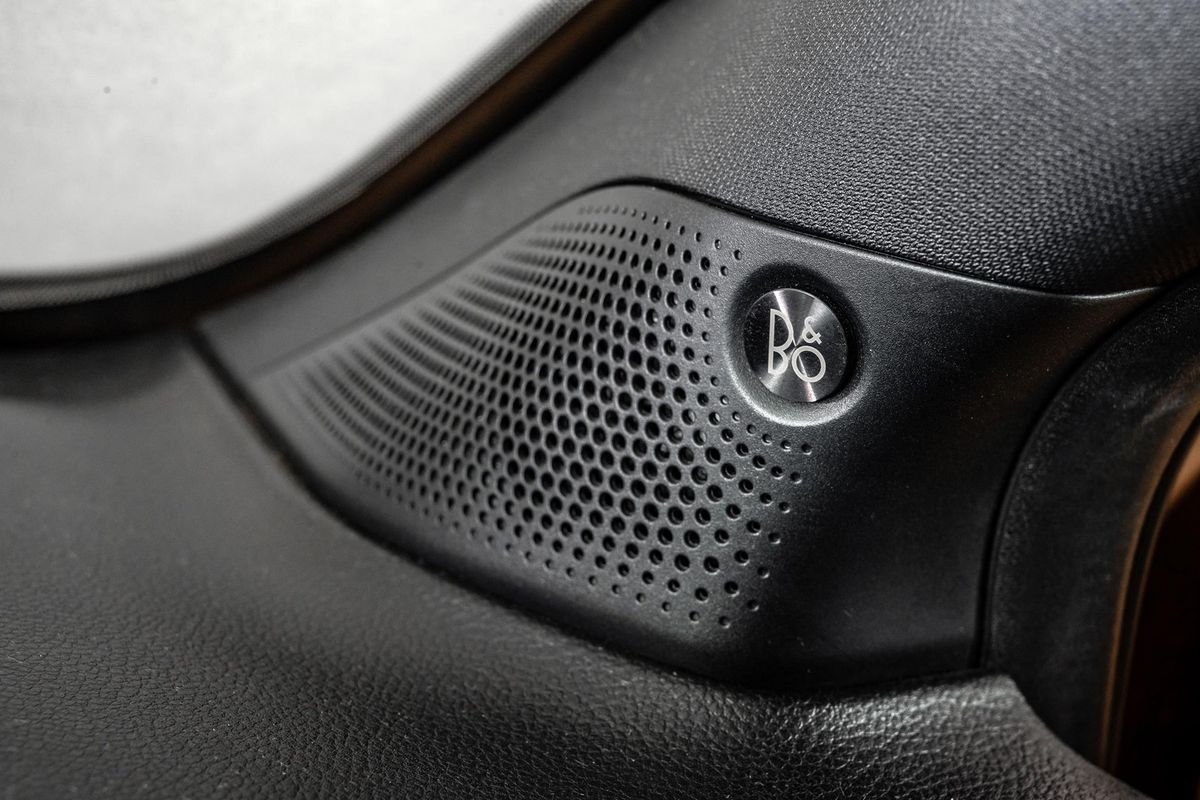
Lexus South Africa has confirmed to Cars.co.za that the RC F coupé and LS sedan are no longer available locally. The LC, too, has vanished, though the company promises it will return soon…
The Lexus stable has lost a couple of steeds, with the Toyota-backed luxury brand confirming to Cars.co.za that the RC F performance coupé and LS luxury sedan are no longer available in South Africa.
At the start of 2024, we noticed that the RC, LS and LC were all missing from the freshly overhauled Lexus SA website. So, we asked the local division whether or not these 3 nameplates had officially exited the Mzansi market.
The LS luxury sedan is no longer offered in South Africa.
Interestingly, while Lexus SA confirmed that the RC and LS were “discontinued at the end of 2023”, the firm’s local division added the LC “will make a reappearance soon with a different derivative”. We’re guessing that will be a hybrid version of this model (likely badged as the LC500h), offered in either coupé or convertible form – or perhaps both.
Prior to the LC’s current sabbatical, the range had included both of the above body styles, with the LC500 coupé starting at R2 515 400 and the LC500 convertible kicking off at R2 666 600. In either case, power came from a naturally aspirated 5.0-litre V8 petrol engine. Peak outputs of 351 kW and 540 Nm were directed to the rear axle via a 10-speed automatic transmission as standard.
The LC is also gone for now, though Lexus SA says this nameplate will be back soon.
Meanwhile, before it quietly exited South Africa, the rear-wheel-drive RC coupé line-up had comprised RC F and RC F Track Edition derivatives, with these likewise atmospheric V8-powered models (351 kW/530 Nm) priced from R1 713 400 and R2 736 200, respectively. The RC nameplate debuted in SA back in 2015, while RC350 and RC200t derivatives were also available during its circa-8-year local lifecycle.
And the LS flagship sedan portfolio, which had competed against the likes of the BMW 7 Series and Mercedes-Benz S-Class? Well, before this rear-driven luxury saloon was axed locally, there was the naturally aspirated 3.5-litre V6 hybrid LS500h (making listed outputs of 264 kW and 350 Nm, and priced from R2 678 900) as well as the LS500 (R2 753 500) and LS500 F Sport (R2 543 600), with the latter 2 offering 310 kW and 600 Nm courtesy of a twin-turbo 3.5-litre V6 petrol mill.
The RC F was powered by a free-breathing 5.0-litre V8 petrol motor.
Tellingly, in 2023, these 3 nameplates were the Lexus brand’s least popular offerings. Just 8 units of the LC were registered in South Africa last year, along with 4 examples of the RC F and a single unit of the LS sedan. The NX was the brand’s strongest seller with 355 units, followed by the RX (153 units), LX (152 units), ES (137 units), UX (90 units) and IS (27 units).
An all-new Ford Mustang may be on its way to Mzansi, but we recently spent 3 months evaluating the 5.0 GT California Special Fastback variant of the outgoing model, mainly to answer 1 question… Is it special enough to become a modern classic?
Unveiled in December 2013 (and entering production a year later), the 6th-gen Ford Mustang was the 1st iteration of the Blue Oval’s muscle car to be produced in right-hand-drive guise, which, of course, made it viable for introduction to the South African market. It was a sales success from the word go, also here in South Africa (from late 2015), where it has consistently been the Republic’s favourite sportscar.
When GM left our market, we lost the chance of getting a new Corvette, but the Mustang is here to stay, baby.
There are plenty of Mustangs on the road, but it never ceased to amaze me how much attention this Ford test unit commanded from fellow road users during its recent 3-month test (sure, it’s a tastefully detailed and sonorous example – but still). It is one of those rare cars that seems universally loved – it elicits thumbs-ups, joyous waves and pointed fingers that are usually reserved for far more exotic machinery.
Indeed, South Africans seem to love the Mustang; previous limited-edition variants, such as the Bullitt and Mach 1, were snapped up eagerly. This 5.0 GT California Special Fastback, of which only 100 have been imported into South Africa, is likely to be high on the wishlist of Mustang fans. At the time of writing this review, 50 new units of the current model were left in stock; 20 of those were California Specials.
But what’s the Ford like to live with, and once you get used to its novelty factor, does it retain appeal?
The quad exhaust system and prominent rear wing are part of the GT Performance Package.
What we like about the Mustang 5.0 GT California Special
The Looks
The basic design of the 6th-gen Ford Mustang may be about a decade old, but in California Special trim, it turns heads like few other contemporary cars can. Finished in Atlas Blue paintwork and riding on striking grey 5-spoke 19-inch wheels (that remind us much of those fitted to the Bullitt), the California Special also features numerous visual upgrades to distinguish it from “lesser” Mustangs…
These include a broad, blacked-out honeycomb grille with a small red GT/CS logo, a purposeful front splitter, Shelby-inspired side scoops and a prominent rear wing from the GT Performance Package. At the rear, four 4.5-inch exhaust outlets signal the fitment of an Active Valve performance exhaust system.
The side-scooped California Special looks just distinctive enough to stand out from its standard siblings.
There are no “shouty” go-faster stripes on this Fastback’s bonnet or roof and an absence of extreme aero addenda… in fact, the California Special looks quite stealthy, but suitably “macho” nonetheless.
Inside, the changes are not as obvious, although we did appreciate the heated and ventilated front seats, which are partially upholstered in Miko suede – a synthetic material made from recycled polyester. Red stitching and GT/CS badging on the seats and floor mats are specific to this derivative and the fascia is finished in Carbon Hex aluminium trim. A California Special badge on the dashboard is the final touch.
The interior detailing of the California Special is quite subtle, but the heated and ventilated seats are a plus.
If you’ve been in a 6th-gen Ford Mustang, then the rest of the California Special’s cabin will be familiar, with decent build quality (seems better made than the earlier Mustangs we tested) and the Sync3 touchscreen infotainment system with Apple CarPlay and Android Auto. The dashboard design has definitely aged in areas, as is to be expected, but comfort levels are good (more on that later!).
The sound
Under that long bonnet sits the familiar naturally-aspirated “Coyote” 5.0-litre V8 that pumps out 330 kW and 529 Nm of torque. Starting the car is always an event – it barks into life quite loudly before settling into a steady idle. I only found out about the Quiet Start or so-called “Good Neighbour” mode after the fact… It limits the exhaust sound upon start-up, something that my neighbours would have appreciated!
The California Special’s motor is mated exclusively with Ford’s 10-speed automatic transmission and drivers can toggle between several drive modes; they are: Normal, Sport, Track, Drag and Snow/Wet.
The Mustang produces an evocative soundtrack, but a Quiet Start mode is available when discretion is required.
It is important to bear in mind the purpose of the Mustang and, in particular, this California Special’s market positioning. If you’re looking for a sportscar with which to dissect a mountain pass with scalpel-like precision, this is not the car for you. Don’t think of it as a more affordable alternative to models such as the BMW M4 and Jaguar F-Type. It is sufficiently fast, certainly, with a 0-100 kph time of 4.8 seconds and a 250-kph top speed, but delivering precise responses to steering inputs, lively throttle responses and ferocious traction (as the world’s best driving machines do) fall outside of the Mustang’s skill set.
As the name suggests, this is a car for cruising the strip with the windows down, so that you can revel in the burble that emanates from the quad exhaust tips and positively lap up the envious looks from those who ogle your, um, steed. If you mash the accelerator pedal to the floor, however (provided you’re in the right mode), the Mustang will certainly, well, giddy up… and with a mighty roar too, but the transmission is easily flummoxed. If you leave it to its own devices, the ‘box can take too long to find the right gear.
The 5.0 GT California Special Fastback rewards drivers who are willing to learn how to get the most from its package.
Having said all that, if you choose to actuate ‘shifts manually, you may end up sending too much power to the rear wheels, and lose traction – it’s tricky when there are so many gears to choose from! Even though the power is developed fairly high up in the rev range, the California Special is nevertheless a car that can easily break traction on pull-away. No, this is a car that takes time to learn to drive fast, and it rewards a smooth driving style that acknowledges the limitations of vehicle weight, traction and gearing.
If, however, you are interested in a car that looks and sounds great, and offers decent straight-line performance when required, then this Mustang is highly unlikely to disappoint you.
Cruising Comfort
To reiterate, the Mustang is not the sharpest driving tool, even though it features a limited-slip diff and the firm’s MagneRide continuously adjusting damping system. But, for what it lacks in cornering poise, it makes up with a surprisingly comfortable ride quality on just about any surface you’re likely to encounter.
Considering that it’s a well-seasoned sportscar, the California Special delivers a forgiving ride quality.
The fantastic seats help, of course, but the supple ride aids the Mustang’s role as an effective cruiser. We undertook several longer journeys in the test unit, and with 2 occupants (well, and a “compact” 3rd one in the back) on board and a boot full of luggage, the Ford was a very pleasurable mile muncher.
The boot is of a decent size (it has a claimed capacity of 382 litres) and, seeing as the rear seats are pretty much token items (unless used by small kids) you can also stash a few soft bags back there.
Oh, and suffice it to say, the open road flatters the California fuel consumption – around town, you are likely to achieve returns in the region of 18 L/100 km, but if you add some more open-road driving to your journey, you should get it down to around 14 L/100 km. Still, not great, but remember this is a big ol’ V8!
Watch Ciro De Siena and Ashley Oldfield agree to disagree about the California Special
Any Dislikes?
This is one of those cars you either get – or don’t. If the idea of owning a classic American muscle car appeals to you, but you don’t want to forego features such as adaptive cruise control and a potent B&O sound system, you can’t go too wrong with a Mustang, which is a less sophisticated machine (in terms of powertrain tech) than other sportscars – that should bode well for mechanical reliability in the long run.
Plus, if you do intend to cherish your purchase for quite a while, then one of these limited-edition Mustangs could repay you not only in terms of “smiles per mile”, but also financially (to some degree).
If we had to nit-pick, okay, the option of a manual gearbox would have been welcome, seeing as the 10-speed automatic transmission does limit the level of driver involvement such a visceral car could offer.
Because only 100 units of the 5.0 GT California Special will be sold in South Africa, it has guaranteed exclusivity.
Verdict
With a price tag of just over R1.2 million, the 5.0 GT California Special Fastback costs less than R100k more than the standard 5.0 GT Fastback (January 2024)… and we’re confident that the former justifies the extra outlay. Besides the obvious visual enhancements, there is also the matter of exclusivity.
To reiterate, this sportscar is not for everyone, but even the purists on our team (except for Ash) had to agree that there was something deeply charming about a sunset cruise with this Mustang.
Is the California Special a modern classic? Well, find another naturally-aspirated V8 with rear-wheel drive that looks this good for R1.2 million. It is the very antithesis of the template of a modern sportscar: flawed and wonderful in equal measure. And we (well, most of us) miss it. So, that’s probably a “yes”, then.
The Volvo EX30 will be launching in South Africa soon. Here’s a detailed look at specifications and pricing of this all-electric compact SUV.
The new Volvo EX30 will be the smallest vehicle from the Swedish carmaker, sitting below the XC40 and C40 crossover. Assembled in China currently and sharing quite a few common elements from the Smart #1 and Zeekr X, the EX30 comes to the South African market in a 5-model lineup.
Powertrain and Performance
The all-electric Volvo EX30 will be sold with single motor and rear-wheel drive and dual-motor, all-wheel drive configurations. The entry-level model features 200 kW and 343 Nm, and it’ll hit 100 kph in 5.7 seconds. Thanks to a lithium-ion phosphate battery with 51 kWh, a range of 343 km is possible based on the WLTP cycle.
You can go for the Single Motor Extended range model that replaces the 54 kWh battery with a 69 kWh unit that increases the performance (down to 5.3 seconds) and a range of 480 km.
EX30 arriving in SA! Image shared on social media by Greg Maruszewski, MD of Volvo Car SA
If you’re wanting some serious performance, then the EX30 Twin Motor Performance should be your port of call. With 315 kW and 543 Nm driving all four wheels, a 0-100 kph of 3.4 seconds is possible. You’ll be penalised for the performance as the additional power, performance and weight reduces the battery range down to 460 km based on the WLTP cycle.
As a reminder, the Volvo EX30 infotainment system is powered by Google
Standard Equipment
Core
18-inch alloy wheels
Adaptive cruise control
Google services
Rearview camera + rear sensors
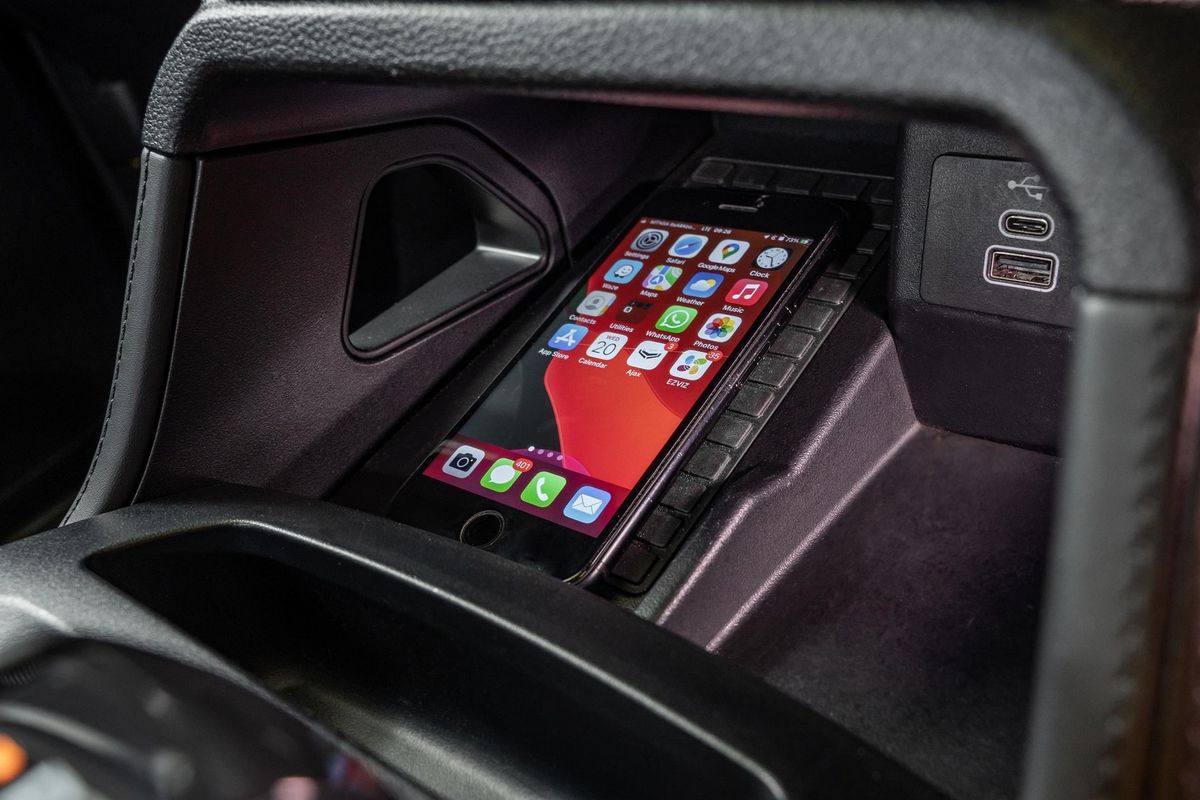
11 kW Onboard charger
Heatpump
Heated seats and heated steering wheel
Driver profile
Thor signature daytime running lights
LED headlights
2 NFC cards
Volvo Safe Space
Mid Illumination
Plus (the above content plus the following)
19-inch alloy wheels
Harmon Kardon audio
Digital Key
High level illumination
Power operated tailgate
Advanced lighting
Ultrasonic front parking sensors
2-Zone climate control
Pilot Assist
Wireless phone charger
Ultra (the above content plus the following)
20-inch alloy wheels
Fixed panoramic roof
360-degree camera including side sensors
Power seats with memory function
4-way lumbar adjustment
Park Assist Pilot
How much does the Volvo EX30 cost in South Africa?
EX30 Core Single Motor
R775 900
EX30 Plus Single Motor Extended Range
R865 900
EX30 Plus Twin Motor Performance
R935 900
EX30 Ultra Single Motor Extended Range
R965 900
EX30 Ultra Twin Motor Performance
R995 900
The new Volvo EX30 is sold with a 5-year/100 000 km vehicle and 8-year/160 000 km battery warranty.