10 interesting facts from SA’s February 2024 new-vehicle sales
We’ve combed through South Africa’s new-vehicle sales figures for February 2024 and pulled out 10 interesting facts. Here are your bite-sized new-vehicle nuggets…
February 2024 was another fascinating month for South Africa’s new-vehicle market. Overall, it was the industry’s 7th consecutive month of year-on-year decline, with total registrations falling 0.9% to 44 749 units. But dig a little deeper into the sales statistics and there are plenty of interesting facts to be found.
Yes, while we’ve already covered the big news – such as the fact Suzuki Auto SA cut the gap to the 2nd-placed Volkswagen Group to a mere 112 sales, while the Toyota Hilux continued its domination of the bakkie space – it’s now time to unearth a few fascinating nuggets. Let’s dive right in…
1. GWM sold 8 units of its Ora electric car
With a starting price of R686 950, the GWM Ora – which launched locally in November 2023 – is currently positioned as South Africa’s least-expensive full-sized electric vehicle (EV). In February 2024, the Chinese firm’s local division sold 8 units (7 through the dealer channel and a single example registered to the company itself). As a reminder, EVs accounted for 931 sales in Mzansi last year.
2. New Elevate added 57 sales for Honda
Honda Motor Southern Africa surely has high hopes for the new Elevate, which has the potential to become its main driver of volume. In February 2024, the Japanese firm’s local arm registered 57 units of the new Ballade-based crossover (13 for its own use), despite the fact the market launch took place with less than a week of the month to go. Another interesting titbit: as many as 60 examples were registered in the opening month of the year, well ahead of the launch.
3. Hyundai i30 N edged Mégane RS 300 Trophy
Hyundai Automotive SA sold 7 units of the i30 N – which is set to be pulled from European markets in the near future – last month, which made the Korean automaker’s hot hatch slightly more popular than fellow C-segment screamer, the Renault Mégane RS 300 Trophy (5 units). Still, with just 55 examples of the latter set aside for South Africa, the French firm must surely be running out of stock. Bonus interesting facts? The Volkswagen Golf 8 GTI and R together managed 97 sales in February 2024, with 7 sold to government and 8 registered by VW for its own use.
4. Nissan NP200’s sales spike before demise
Yes, production of the Nissan NP200 is scheduled to end at Rosslyn this month (March 2024). Since there’s no half-tonne bakkie alternative on the local market, sales of the NP200 spiked in February, with the 16-year-old contender climbing back into 4 figures for the first time since November 2023, to end on 1 276 units. Fascinatingly, 4 of those were sold to government, with 260 purchased by the rental industry. Meanwhile, Nissan South Africa registered 10 units of the NP200 for its own use.
5. Ferrari SF90 outsold Honda Civic (and others)
Considering the Italian firm’s low-volume production strategy, Scuderia South Africa had a bumper month in February 2024, registering as many as 12 units. The most popular Prancing Horse in Mzansi last month was the SF90, with 5 registrations. That means the SF90 outsold the likes of the Honda Civic (3 units), Subaru WRX (3 units), Alfa Romeo Stelvio (2 units) and Audi A6 sedan (2 units) in the year’s 2nd month.
6. Government boosted Isuzu D-Max sales
The Isuzu D-Max put in a strong showing in February 2024, with its tally of 1 740 registrations proving enough for the Struandale-manufactured bakkie to jump 2 positions overall to 5th place (while retaining 3rd place on the list of South Africa’s best-selling bakkies). Intriguingly, the Japanese bakkie topped the table of vehicles sold to government last month, receiving a useful boost of 416 sales via that channel.
7. Toyota’s full-fat GR models hit 10 units
From what we understand, it’s no easy task getting your hands on a brand-new version of any of Toyota’s full-fat GR products, with only a limited number of each coming into the country every month. In February 2024, the Japanese company’s local division registered 6 units of the GR86, along with a pair of GR Supra examples and a single unit of each of the GR Yaris and GR Corolla all-paw hot hatches.
8. Grand i10’s best effort in over a year
February 2024 saw the Hyundai Grand i10 put in its best performance for more than a year, ending the month on a healthy 1 313 units (including 50 sales in the light-commercial vehicle segment) and thus grabbing 8th position overall. As many as 517 of those registrations came via sales to the rental industry, where the Grand i10 topped the charts last month. As a reminder, the range was refreshed in the 3rd quarter of 2023, gaining sedan derivatives at the same time.
9. No Alfa Romeo Giulia sales in February
Yes, Alfa Romeo failed to register a single unit of the Giulia sedan in February 2024 … having sold just one in January. Though the Veloce derivative is still up on the Italian company’s local configurator, it’s interesting to note that the vehicle-information specialists over at duoporta.com currently list only the high-performance Quadrifoglio version, suggesting the Veloce may well be on its way out. For the record, Alfa registered 6 units of the Tonale and 2 examples of the Stelvio last month.
10. VW Polo (again) led the export charts
Though the Volkswagen Polo hatchback fell from the top 10 in February 2024 (ending up in 11th with 988 registrations), the Kariega-built model was again at the very top of the export charts. Indeed, a whopping 12 715 units of the Polo hatch were shipped overseas last month, putting the B-segment hatch miles ahead in the export race. Interestingly, February also saw the 1.5-millionth vehicle (in this case, a GTI destined for a customer in the United Kingdom) built for export at Kariega rolling off the line.
Does the Volkswagen Up represent a compelling used car purchase? Let’s examine this classy little city car’s strengths and weaknesses, and find out what you can expect to pay for a good 2nd-hand example…
Though the Volkswagen Up went into production way back in 2011, the German firm’s diminutive city car touched down in South Africa only in early 2015. What was the reason for the delayed local introduction?
Well, the Wolfsburg-based firm’s division in Mzansi was understandably cautious of treading on the toes of its locally produced Polo Vivo. In fact, when the Volkswagen Up finally did make local landfall, the top-spec version was positioned a mere R3 300 below the base Vivo 5-door hatchback.
The Up made a late arrival to the South African market.
To make matters worse, the Up – which VW stylised as “up!”, dispensing with capitalisation of the initial letter and adding an entirely superfluous exclamation mark – jumped headfirst into what was an ailing A-segment, with many buyers instead turning to (larger but similarly priced) sub-B-segment options such as the Toyota Etios, Ford Figo, Renault Sandero and indeed Volkswagen’s very own Polo Vivo.
During its 5-year lifecycle in South Africa – and its 12-year global production run at the VW Group’s Bratislava factory in Slovakia, ending in 2023 – the boutique city car was available in both 3- and 5-door body styles. Interestingly, the Volkswagen Up won the World Car of the Year title in 2012, beating fellow top-3 finalists the F30-generation BMW 3 Series and the 991-series Porsche 911 to the award.
Volkswagen Up model line-up in South Africa
The Club package became available locally in August 2015.
Previewed by a 2007 concept, the production version of the Volkswagen Up was unveiled in August 2011, just ahead of the Frankfurt Motor Show. It’s thought this lengthy gestation period was thanks to the Wolfsburg-based manufacturer’s decision to switch from the show car’s rear-engine configuration to a conventional (not to mention more economical-to-build) front-engine layout.
After much deliberation from VWSA, seemingly owing to concerns of a potential overlap with the Polo Vivo, the Up officially arrived in Mzansi in February 2015 (though, likely in a bid to minimise any such sales cannibalisation, the city car was initially offered exclusively in 3-door form). At launch, buyers had the choice of 2 trim levels, but just a single engine-and-gearbox combination was available:
1.0 MPI Take Up 5MT 3-Door (55 kW/95 Nm)
1.0 MPI Move Up 5MT 3-Door (55 kW/95 Nm)
The local line-up gained the option of a special-edition Club package in August 2015. Available for Move derivatives finished in Pure White, Blueberry or Dark Silver exterior paint, the kit added items such as 15-inch “Ravenna” alloy wheels, leather trim for the steering wheel, a painted dashboard panel, silver-hued side-mirror caps, tartan cloth upholstery and plenty of “Club” branding.
The 5-door body style (seen here in Colour Up form) arrived in SA in May 2016.
In May 2016, by which time around 3 500 examples of the 3-door variant had been sold in South Africa, VW decided to introduce the 5-door body style. Like its 3-door sibling, the 5-door Up was offered in Take and Move trim levels, though Volkswagen further expanded the range with the addition of Colour and Cross derivatives at this point.
The Colour Up – offered in either Dark Silver or Pure White – was billed as the flagship variant; it rode on 17-inch “Polygon” alloy wheels (finished in either Fortana Red or Sandstorm Yellow) and was fitted with side-mirror caps painted the same hue. The Colour specification further included tinted windows, a stripe down each flank and yet more vibrant tones inside.
The Cross Up boasted an additional 18 mm of ride height.
Meanwhile, the Cross Up brought the usual array of SUV-inspired styling cues, including black plastic body cladding, anodised silver roof rails, branded scuff plates and 18 mm of extra ride height (taking ground clearance to 162 mm). In addition, the Cross version’s side-mirror caps were painted silver, while it sported model-specific 16-inch rims and chrome-effect bezels for its front fog lamps. Inside, there was a leather-trimmed tiller, special seat fabric (offered in red or grey) and a dash pad finished in Deep Black Pearl (or, optionally, in Tornado Red).
Then, in November 2016 – by which time about 4 800 units had been registered locally – the facelifted Up was introduced to South Africa. The exterior changes were subtle, led by revised headlamps, updated taillights, redesigned bumpers, as well as new side mirrors and fresh wheel designs. Inside, VW rolled out new materials and lengthened the list of standard features.
In Mzansi, the subtly refreshed Up was offered only in 5-door guise.
Interestingly, VWSA opted to cull the 3-door body style at this point, instead offering the Take and Move derivatives in 5-door form only. By the opening quarter of 2017, the updated Cross had joined the range, along with the new Beats variant. Though the latter boasted several extra features, it was defined by its uprated 300W sound system, which comprised an 8-channel amplifier, a digital signal processor, a pair of A-pillar tweeters, 2 front-door woofers, a duo of rear-sited broadband speakers and a subwoofer positioned in the spare-wheel well (the full-size spare was thus binned in favour of a mobility kit).
By around August 2020, Volkswagen’s local division had quietly stopped importing the Up, though production for many other markets continued until the final quarter of 2023. According to VWSA, as many as 12 047 units of the Up were sold locally.
What are the advantages of a VW Up?
Cabin quality was the Up’s strong point.
Cabin finishes and packaging: Despite playing in the A-segment, the materials used on frequent touchpoints in the Up’s cabin were anything but “budget” (bar the steering wheel, which was initially polyurethane as standard). In fact, we’d wager the finishes were far closer in quality to “premium”, while also going as far as to say the diminutive Volkswagen was class-leading for fit and finish, besting even the impressive TA-generation Kia Picanto in this department.
Outward visibility was exceptional, while the 251-litre load bay – expandable to 951 litres in the 3-door variant and 959 litres in the 5-door (though note that Take derivatives were saddled with a single-piece folding rear bench) – was above class average.
Luggage space was slightly above average for the segment.
Moreover, with a wheel pushed to each corner, the designers managed to squeeze a surprising amount of passenger space into compact exterior dimensions (the 5-door version measured just 3 600 mm long). Ingress and egress were, of course, far simpler in the case of the 5-door.
Featuring integrated headrests, the slim front seats freed up valuable knee room in the rear, while the fascia layout was ergonomically sound (though some taller drivers complained that the steering wheel obstructed their view of part of the speedometer). Note, however, that the Up was technically a 4-seater since the centre of the rear bench did without a headrest or seatbelt.
Only the 1.0 MPI engine was available in SA.
Refined, fuel-efficient engine: Though other motors (including a TSI unit) were offered in certain overseas markets, the Up was available in South Africa with just a single engine option: the atmospheric 1.0-lite 3-pot from the EA211 family. While its peak outputs of 55 kW at 6 200 rpm and 95 Nm from 3 000 rpm might appear meagre on paper, they were more than sufficient in the real world, since all derivatives weighed well under 900 kg.
Perhaps more pertinent is the fact this willing little engine was also pleasingly refined (despite the inherently unbalanced nature of 3-cylinder mills) and capable of returning wallet-friendly fuel economy, with Volkswagen claiming combined figures of 4.6 or 4.7 L/100 km, depending on the derivative.
We should point out the 1.0 MPI engine used a timing belt rather than a chain and the Volkswagen dealer we spoke to recommended that it be changed at either 8 years or 120 000 km (and further suggested the condition of the belt should be “monitored” from 90 000 km).
The Up rode with the comfort and refinement of a larger car.
Ride comfort and stability: Despite employing a conventional small-car suspension arrangement comprising MacPherson struts up front and a torsion beam at the rear, the Up was endowed with the on-road stability and ride comfort of a larger, more expensive vehicle.
Most derivatives ran on high-profile tyres (for instance, the steel wheels of the base models were wrapped in particularly chunky 165/70 R14 rubber), which helped soak up road imperfections. For the record, the lowest-profile tyres offered locally were the 195/40 R17 items fitted to the Colour Up.
What are the disadvantages of a VW Up?
At launch, the Up was missing a few key features.
Spec anomalies (mostly pre-facelift): When the Up was launched in South Africa, its list of standard features seemed short of a few items. Both derivatives rode on steel wheels, while the city car initially did without any form of smartphone integration and lacked a USB port (Volkswagen did, however, offer a rudimentary aftermarket Bluetooth system via its dealers). In fact, the entry-level Take grade didn’t even feature a radio at launch, while also settling for manually adjustable side mirrors (with black rather than body-coloured housings) and window winders up front.
The Up’s infotainment shortcomings were partly remedied at the facelift, when the Take derivative gained an audio system run through a 3.1-inch monochrome display (but still sans Bluetooth and USB), with other variants upgrading to a 5-inch colour display. Volkswagen also offered a “Maps + More” dock for more comprehensive smartphone connectivity, though this was optional on all versions bar the Beats.
Some spec anomalies were addressed at the facelift.
While ABS, 4 airbags, ISOfix child-seat anchors, remote central locking and an electronic immobiliser were standard across the range from launch, the Up made do with drum brakes at the rear and gained electronic stability control only at the facelift (along with an indirect tyre-pressure monitoring system).
Lack of auto gearbox option: In South Africa, the VW Up was available only in 5-speed manual guise, with no option of an automatic transmission. Those who required a 2-pedal vehicle thus had to look elsewhere in the segment. An automated manual gearbox was offered in some other markets, but it was decidedly clunky in operation, by all accounts.
The Up GTI sadly didn’t ever make it to South Africa.
No Up GTI for South Africa: Yes, the Wolfsburg-based brand did develop an Up GTI, but the little warm hatch unfortunately never made it to South Africa. The cheekily styled baby GTI employed a 1.0-litre, 3-cylinder turbopetrol engine sending 85 kW and 200 Nm of torque to the front wheels via a 6-speed manual cog-swapper, resulting in a claimed 8.8-second dash to 100 kph and a top speed of 197 kph.
VWSA blamed the Rand’s poor exchange rate for the Up GTI’s no-show on local shores, suggesting the tiny tyke’s would-be pricing would have seen it competing with far larger models in the range. In addition, the South African market didn’t ever receive the option of an R-Line package for the Up, while the fully electric e-Up likewise failed to materialise in Mzansi.
How much is a used VW Up in South Africa?
A panoramic sunroof was available.
Though the Up was covered by a 3-year/120 000 km warranty, it did without a standard service plan in South Africa. So, when shopping for a used model, make sure there’s evidence that the vehicle has been regularly serviced (VWSA’s recommended intervals were 1 year or every 15 000 km).
Somewhat unusually for an A-segment car, the Up was available with many optional extras, including a panoramic sunroof and various equipment packages. Early versions of the Take grade could be specified with a comfort package (which added front electric windows and a height-adjustable driver seat), while the Move trim level could be bolstered with a driver package (adding cruise control, rear parking sensors and a multi-function display) and a winter package (with heated seats and front fog lamps).
Almost 70% of listings were 5-door models.
Of the used Volkswagen Up examples listed on Cars.co.za at the time of writing, 69% were 5-door models. The mid-tier Move grade was the most widespread, accounting for 51% of listings, followed by the entry-level Take specification (28%). Cross and Beats derivatives each made up around 10%, with the remaining 1% representing the seldom-seen Colour and Club variants.
The most common model year was 2016, followed by 2018. Mileages varied from just 23 000 km to a lofty (for a city car, anyway) 268 000 km, with the latter achieved by a 2015 3-door in Move trim. White was the most popular colour at 43% of all listed Up models, followed by silver (24%) and red (12%).
Below R100 000: Units listed for 5 figures were in short supply, but most were predictably early model years with mileages above 150 000 km. We also found a 2019 Beats variant here, though it was heavily modified (featuring components such as large aftermarket alloys and air suspension).
From R100 000 to R125 000: Pickings are slim below R125 000 as well, with most vehicles listed here being pre-facelift examples in 3-door guise. Interestingly, the Move trim level was still easily the most popular grade between these pricing bookends.
From R125 000 to R150 000: At the time of writing, this was the most densely populated pricing bracket, with nearly half of all listings positioned here. All model years but the final one were represented, while we found a small number of Cross and Beats examples in this space.
R150 000 and up: Spending upwards of R150 000 would get you into a facelifted 5-door Up, potentially with well under 100 000 km on the clock. Most of the few Cross and Beats variants on offer were found here, too. The most expensive Up we uncovered was a 2018 Cross with 39 000 km on the odometer (and fitted with a few factory options) for R199 900.
Which Volkswagen Up should I buy?
We’d recommend searching for a facelifted model.
So, which derivatives should be on your radar? Well, unless you have your heart set on the 3-door body style, we’d recommend sticking to examples of the facelifted model, since these gained extra standard equipment, including the much-improved infotainment- and all-important stability control systems.
While the Take grade gained some kit at the mid-cycle update, we’d argue the Move spec still offers slightly better value today (however, we’d suggest trying to find an example fitted with the optional 15-inch alloys). Naturally, the Beats derivative is best suited to audiophiles, while the plucky little Cross will hold broad appeal with buyers keen on the extra ride height and those SUV-inspired looks.
Is the VW Up a smart used purchase?
A look at the cabin of the pre-facelift Cross Up.
During its 5-year run on the local market, the Volkswagen Up had to contend with various similarly sized rivals, from the TA-series Kia Picanto and BA-generation Hyundai i10 to a trio of platform siblings in the form of the 2nd-gen Toyota Aygo, AB40-series Citroen C1 and Peugeot 108 (the under-appreciated latter model boasting segment-leading levels of safety kit).
Other traditional – but more “cheap and cheerful” – city-car options included the Honda Brio and the underwhelming A00-series Mitsubishi Mirage, as well as Suzuki’s FE-gen Celerio and the high-roofed (though short-lived locally) Splash. In addition, the VW Up was pitched against a few more upmarket competitors, with the 3-door version fighting the Fiat 500 and Opel Adam, and the 5-door variant taking on the W453-gen Smart ForFour (the latter featuring a rear-engine, rear-wheel-drive configuration).
The Up had to contend with a multitude of rivals.
That said, the Volkswagen Up’s eminently solid build quality helped set it apart from its more obviously built-to-a-budget mainstream rivals, endowing it with a sense of sophistication that was out of the ordinary for the segment. In short, it didn’t feel like a small budget car, whether from a driving perspective, or simply in terms of its cabin structure.
So, why didn’t this charming little car sell in greater volumes in South Africa? Well, that was largely down to the tremendous popularity of the Polo Vivo, which was so strong that it almost prevented the Up’s local introduction altogether. And it’s also why the Volkswagen Up remains a somewhat overlooked – yet still entirely compelling – option on the used market today.
Because electric vehicles require notably less maintenance than cars with internal combustion engines, legacy car brands and their dealers sacrifice future revenue whenever they sell a new EV. What does that mean for your car ownership future?
Do you buy a new car every 3 years? Probably not. Very few people do. However, 3 years is an important marker: that’s when most new-car warranties end and car maintenance can become rather expensive.
Even with the most intriguing lease or guaranteed future value finance deals, most drivers will keep a car for 5 years or longer. The latest data supports the reality that it’s more a case of “longer than 5 years”.
The United States is the world’s most developed car market (where owners are also daily drivers) and Americans are keeping their vehicles longer than ever due to the new-car affordability crisis. Suffice it to say, that if consumers in the ‘States are struggling to buy new cars, all global car buyers are struggling.
In America, where prices and lease deals are many times more attractive than in South Africa, average car ownership has edged towards 10 years. That’s a telling statistic that helps to explain why electric vehicle (EV) uptake is so low. And it has less to do with price, and a lot to do with how car companies and dealerships make money from car buyers and owners.
For the record, EV uptake in South Africa is very low. Much lower than most people think, because BEVs (battery-electric vehicles, also known as fully-electric vehicles) are cleverly clustered with hybrids, and reported as NEVs (new-energy vehicles). And that’s sneaky, because only 267 true EVs were sold in South Africa – a market that recorded slightly more than 500 000 new car sales – last year.
Cars are produced to make money, not aid mobility
A winged M4. Build to be desired, not needed.
Look, the car industry’s mission is not to provide affordable transport… That’s supposed to be the role of public infrastructure, such as trains and other shared transport options. Most carmakers produce models that appeal to fulfil the desires of specific types of customers – but they’re usually wants, not needs.
High-performance cars aren’t necessary, but they have a considerable safety margin when overtaking slower traffic on the N1 or during emergency braking and collision avoidance. Same with luxury SUVs. Nobody needs ’em, but they serve a purpose when you want to undertake the most comfortable journey when and to where you like – from home to an exclusive lodge or venue at the end of an untarred road.
And for car companies to finance all of the diversity they provide the market in models and derivatives, they need to make money – lots of it. Despite the high purchase price of new vehicles, the profit margins aren’t as phenomenal as you assume, especially on affordable cars, which have the lowest margins.
Most car companies rely on specialist suppliers and contract engineers to develop and produce the necessary technology, creating vehicles that meet regulatory standards and trigger customer interest regarding features. But those technology suppliers take a primary profit, reducing the end profit for car companies, from the price you pay their dealers.
But why is that important, and what does it have to do with the issues around EV adoption and pricing? It’s about where the real profits happen in the car business and how more EV sales, which can only happen when carmakers introduce smaller, better and more affordable electric cars, is an existential threat to many car companies and their business models.
How car companies prefer to make money
The workshop is where a lot of cost in the car industry value chain, is billed from customers.
Some companies control their own technology and vertical integration (Tesla, for example) or manage the balance between internal R&D and external suppliers brilliantly (such as Porsche and Toyota), but most car companies rely heavily on services and maintenance for dealership profitability.
OEM-guaranteed parts are a significant part of a car company’s revenue stream; most dealerships would never survive purely on new-car sales margins. The service centre/workshop is where the real money is made because many drivers keep their cars well after their service- (from 2 to 5 years) or maintenance plan (usually 5 years) has expired. The cost of maintaining a modern car beyond its initial service plan can become significant for owners and is wonderfully profitable for car companies and their dealerships.
With a new-car affordability crisis in most markets, the longer duration of car ownership and extended wear period means a tidy business in parts and servicing for the automotive parts supply chain.
EVs and evaporated service revenue
Engine servicing is a proven revenue source for dealers and car companies.
But what happens when the cars that a brand is retailing through its dealerships no longer require servicing or at least need only a fraction of the servicing a legacy petrol or diesel vehicle would? That’s the promise that EV advocates have been championing for years, but it’s very bad business for OEMs, parts manufacturers and dealerships.
EVs have so few moving parts compared to petrol or diesel-engined vehicles and, because they are devoid of complex lubrication-, cooling- and gearbox systems, their servicing costs are minimal.
Car companies speak publically about their willingness to create more EVs and be part of a global effort to decarbonise transport. But the truth is that for every new EV they sell, they lose the future servicing revenue on a petrol or diesel car – and that’s not great business.
EVs can be heavy on tyres. Good news for tyre companies and fitment centres.
The only people not complaining about more EVs are tyre manufacturers. Due to their sheer weight and generous torque delivery of EV motors, tyre wear has become an unexpected maintenance factor for battery-powered cars. But all those tyre profits aren’t being earned by the car companies who make EVs.
Tyre purchasing and fitment are services that vehicle owners can access without going to an official dealership. The revenue of EV-induced tyre wear is ringfenced beyond traditional car companies and their dealers – again, not great for business.
EVs, data and in-car service revenue
Car companies dream of a future in-car entertainment revenue stream. But they aren’t Apple ir Netflix.
EVs are expensive to build and offer manufacturers and their dealers none of the downstream revenue sources of petrol and diesel cars. That begs the question: why would carmakers want to sell more EVs?
Surely revenue substitution planning must be happening at legacy car companies? With vast R&D resources, brilliant market research and laser-focused product development, car companies must have a solution for the issue of EVs diluting traditional revenue streams, right? But, what if they don’t?
If EVs are the future, and governments keep incentivising people to buy them, will many traditional car brands falter because their dealerships might go out of business without conventional servicing revenue?
Chinese car companies are best positioned to make money from EVs.
Clever consultants with impressive PowerPoint presentations and slide decks promise legacy car companies that data harvesting and in-car services are the future.
EVs are designed to be more software-integrated and offer impressive driver- and passenger-centric UX, which should stimulate higher customer demand for in-car data services. Drivers are also familiar with large screens and menus because digital interfacing is omnipresent in our lives. But there are issues…
Privacy laws make data harvesting contentious, and you must have the best UX and flawless software deployment to deliver in-car services that people are willing to pay for. And the truth is that traditional car companies have made a mild disaster of software development and in-house UX.
Who will profit from in-car services?
The car industry is structured to train people to make money from servicing mechanical cars. Not EVs.
But what about data services, streaming video, and those proximity venue/retail suggestions as you drive? Are those services you expect and trust from Apple and Google, or your car’s operating system?
A car company data-service platform with menu lag, software bugs and poor UX cannot compete with that of an established tech company (even if “over-the-air” online updates have become ubiquitous). That is why most brands make their infotainment systems compatible with Android Auto and Apple CarPlay; it’s a tacit acknowledgement that there’s no way that they could develop a superior interface.
The question of mobility risk isn’t unfamiliar to South African drivers… Any VIP protection specialist will admit that people are most vulnerable when they enter or exit a vehicle. Do you want all your vehicle movement and associated personal routine data to be available and potentially hackable? No, you don’t.
Simply put, car companies and their dealers can’t make money from affordable EVs and future data and in-car service revenue will be pocketed by Big Tech, not legacy car companies. Traditional servicing costs create revenue for the car industry, and increased EV uptake is too much of a risk to that business.
10 best-selling bakkies in South Africa: February 2024
The numbers are in! Here your monthly look at South Africa’s best-selling (as well as least popular) bakkies, this time for February 2024…
In February 2024, South Africa’s new-vehicle market endured a marginal year-on-year decline of 0.9% to end on 44 749 units. Bucking the industry trend yet again, the light-commercial vehicle (LCV) segment experienced some growth, improving 2.5% to 13 306 units.
So, what happened on the list of South Africa’s best-selling bakkies? Well, while every single contender in the top 10 enjoyed some sort of month-on-month growth, there wasn’t all that much movement on the table, with only one bakkie climbing the ranks.
Sales of the Toyota Hilux grew to a pleasingly round 3 100 units in February 2024, giving the Prospecton-produced bakkie range – which will soon welcome both 48V mild-hybrid derivatives (see pricing for the Hilux MHEV here) and a new widebody GR Sport variant – the monthly crown once more.
That meant the Silverton-built Ford Ranger (2 187 units) – with the high-Performance Raptor version fresh off winning the Leisure Double Cab title at the 2023/24 Cars.co.za Consumer Awards – again had to settle for 2nd position, ending the month 913 units off the pace. The Struandale-made Isuzu D-Max (1 740 units) completed the podium, with its tally lifted by 416 sales to government.
In its penultimate month of manufacture at Rosslyn, the Nissan NP200 (1 276 units) surged back into 4 figures to retain 4th place, boosted by 260 sales to the rental industry. Meanwhile, the KwaZulu-Natal-assembled Mahindra Pik Up ended February 2024 on 715 units, its best monthly showing in almost a year.
The Rosslyn-made Nissan Navara was the only bakkie to climb the top 10 in February.
The only bakkie to move up the table last month was the Rosslyn-produced Nissan Navara (449 units, including 114 sales to government), which climbed a single spot to 6th. That saw the GWM P-Series (378 units) fall a ranking to 7th, though the Chinese-built contender remained the highest-placed imported bakkie.
While sales of the Volkswagen Amarok improved to 324 units, the Ford-built bakkie stayed in 8th position. The refreshed Toyota Land Cruiser 79 (now available in 4-cylinder guise, complete with an automatic transmission), meanwhile, wasn’t far behind in 9th on 315 registrations. Finally, the GWM Steed (146 units) completed the table.
Best of the rest in February 2024: bakkies outside top 10
JAC’s T-Series range (which includes the T9) was again the best of the rest in February.
So, which bakkies didn’t crack the top 10 in February 2024? Well, the JAC T-Series – the Chinese automaker unfortunately reports only a combined figure for its T6, T8 and T9 line-ups – was next on 143 units, finishing ahead of the Mitsubishi Triton (88 units) and Mahindra Bolero (39 units).
Then came the Peugeot Landtrek, with a total of 24 units. As a reminder, this Stellantis-backed bakkie is expected to go into production in Coega (near Gqeberha in the Eastern Cape) by early 2026. Meanwhile, the Mazda BT-50 repeated its January 2024 effort of 15 units, meaning it has accumulated 30 sales so far this year (compared with just 69 over the entirety of 2023).
That meant the Jeep Gladiator (a facelifted version is scheduled to launch in Mzansi only towards the end of this year) again brought up the rear, ending the 2nd month of 2024 on 8 registrations.
10 best-selling bakkies in South Africa for February 2024
Suzuki runs VW Group close! SA’s best-sellers in February 2024
South Africa’s new-vehicle market suffered its 7th consecutive month of year-on-year decline in February 2024. But it wasn’t all bad news. Here’s your full overview, including Mzansi’s most popular brands, best-selling cars and more…
February 2024 represented the South African new-vehicle industry’s 7th consecutive month of year-on-year decline. That said, it certainly wasn’t a substantial fall, with the market’s total of 44 749 units reflecting a marginal drop of just 0.9% compared with the same month in 2023.
Furthermore, February 2024’s final tally represented a month-on-month improvement of 7.5% compared with January’s relatively subdued effort of 41 636 units. Exports, meanwhile, recorded what industry representative body Naamsa described as a “sound” year-on-year increase of 27.5% to 39 517 units. So, there’s certainly some positive news, too.
SA shipped off 39 517 units last month, including a Polo GTI that was VW’s 1.5-millionth vehicle exported from Mzansi.
Out of the total reported industry sales in February 2024, Naamsa estimated that 37 913 units (or 84.7%) represented registrations via the dealer channel, while 9.6% were sales to the vehicle-rental industry, 3.4% to government and 2.3% to industry corporate fleets.
In February 2024, Mzansi’s new passenger-vehicle market registered a year-on-year decline of 3.1% to end on 28 857, with rental sales accounting for 12.9% of that total. The country’s light-commercial vehicle segment, meanwhile, once again bucked the industry trend, enjoying a 2.5% year-on-year gain to end on 13 306 units.
Meanwhile, Brandon Cohen, Chairperson of the National Automobile Dealers’ Association (NADA), described February as “another challenging month” for the industry as “economic pressure and political uncertainty” continued to impede growth. Cohen further pointed to recent fuel-price hikes, “further strained consumer pockets”, the “looming” general election and recent Reserve Bank statements on interest rates.
“Despite these challenges and passenger-car sales dipping by 3.1%, there are some positive aspects. Light-commercial vehicles experienced 2.5% growth. The heavy truck market showed robust demand with a 14% month-on-month increase. Dealer sales accounted for 37 913 units, or 84.7% of total sales, indicating some consumer appetite, supported by dealership incentives,” said Cohen.
Lebo Gaoaketse, Head of Marketing and Communication at WesBank, said the year’s 2nd month sales were “significantly improved” over January in volume terms, “providing some hope” for an industry that has been down year on year for 7 straight months.
“February sales were the smallest decline in sales over the past 7 consecutive months of negative growth. The month also represented a fairly robust volume, which was slightly higher than the average monthly sales last year,” Gaoaketse added.
New-vehicle sales summary for February 2024
Aggregate new-vehicle sales of 44 749 units decreased by 0.9% (413 units) compared to February 2023.
New passenger-vehicle sales of 28 857 units decreased by 3.1% (925 units) compared to February 2023.
New light-commercial vehicle sales of 13 306 units increased by 2.5% (328 units) compared to February 2023.
Export sales of 39 517 units increased by 27.5% (8 526 units) compared to February 2023.
10 best-selling automakers in South Africa in February 2024
Nissan climbed to 4th place, driven by strong sales performances from Magnite and NP200.
As you’ve probably guessed, Toyota (including the Lexus and Hino marques) was once again South Africa’s best-selling automaker last month, fresh off winning the prestigious Brand of the Year title at the 2023/24 Cars.co.za Consumer Awards. In February 2024, the Japanese firm’s local division sold as many as 11 524 units, representing a 6.2% increase over January’s effort.
The Volkswagen Group (5 333 units, including both the VW and Audi brands) was again 2nd, though the 3rd-placed Suzuki (5 221 units) narrowed the gap even further, finishing a mere 112 units behind the German firm after being just 287 registrations off the pace in the previous month. That represented a near-record sales performance for the Hamamatsu-based automaker’s local division, beaten only by January’s tally.
Meanwhile, Nissan (2 739 units) climbed a position to grab 4th, ending February 2024 just 7 units ahead of Ford (2 732 units), with the Blue Oval brand thus relegated to 5th. The rest of the top 10 was unchanged, with Hyundai (2 512 units) again having to settle for 6th, ahead of Isuzu (2 101 units) in 7th and Haval (1 656 units) in 8th. Chery (1 504 units) retained 9th position, cracking the 1 500-unit mark in the process, while Renault again closed out the table, though its total slid to 1 316 units.
Fascinatingly, Naamsa’s figures suggested the BMW Group (1 194 units) moved up to 11th place, meaning Kia (1 157 units) ranked a lowly 12th last month. Meanwhile, Mahindra made it into 4 figures, finishing the 2nd month of 2024 on 1 058 units and thus grabbing 13th place ahead of Mercedes-Benz (with a Naamsa-estimated 527 units).
1. Toyota – 11 524 units
2. Volkswagen Group – 5 333 units
3. Suzuki – 5 221 units
4. Nissan – 2 739 units
5. Ford – 2 732 units
6. Hyundai – 2 512 units
7. Isuzu – 2 101 units
8. Haval – 1 656 units
9. Chery – 1 504 units
10. Renault – 1 316 units
15 best-selling vehicles in South Africa in February 2024
Hyundai’s Grand i10 put in a strong showing in February, finishing 8th overall.
Yet again, the Toyota Hilux range – which will soon expand with fresh 48V mild-hybrid derivatives (be sure to check out our pricing scoop story on these new Hilux MHEVs) – was South Africa’s top seller, with a considerable 3 100 units of the Prospecton-built bakkie registered in February 2024.
The Silverton-produced Ford Ranger (2 187 units), meanwhile, climbed a ranking to grab the runner-up position, while the likewise locally built Toyota Corolla Cross (1 959 units) completed the podium, also moving up a place compared with January. That meant the Kariega-manufactured Volkswagen Polo Vivo (1 861 units) slipped a couple of spots to 4th. The Isuzu D-Max enjoyed a strong showing in February 2024, with its tally of 1 740 registrations (including 416 sales to government) proving enough for the Struandale-produced bakkie to jump 2 positions to 5th.
The Indian-built Suzuki Swift (1 627 units) – Mzansi’s highest-ranking imported vehicle once more – thus fell a place to 6th, though managed to keep its nose ahead of the likewise Suzuki-made (but Baleno-based) Toyota Starlet, which ended on 1 481 units in 7th. The Hyundai Grand i10 (1 313 units, 50 of which were registered in the light-commercial space) made a return to the table in 8th, almost doubling its January effort. In its penultimate month of manufacture, the Rosslyn-built Nissan NP200 also re-appeared in the top 10, ending on 1 276 units, while the Toyota Hi-Ace (1 167 units) dropped 2 places to close out the table.
What about the vehicles just outside the top 10 in February 2024? Well, the Kariega-made Volkswagen Polo hatchback (988 units) was pushed off the table again, having to settle for 11th place last month. The Chery Tiggo 4 Pro (964 units) remained in 12th and the Nissan Magnite (847 units) in 13th, while the Prospecton-built Toyota Fortuner (722 units) slipped 4 spots to 14th. Finally, the KwaZulu-Natal-assembled Mahindra Pik Up (715 units) snaffled 15th.
Tough trading conditions are expected for the new few months at least.
So, what awaits South Africa’s new-vehicle market for the remainder of the year? Well, Naamsa says February 2024’s performance was “in line with industry expectations of an anticipated tough first half of the year”, suggesting the market’s in for yet more pain in the next few months.
“The persisting economic strain remain[s] a real concern for household income and the weak new-vehicle market reflects that middle-income households are restricting big financial commitments for items such as vehicles at present,” the industry representative body says, before adding the “ripple effect of higher interest rates, higher fuel prices and no relief for personal income tax payers” will continue to impact household incomes for the “foreseeable future”.
“Brands and dealerships are currently offering enticing incentives to prospective buyers, but it is anticipated that only once the interest-rate cutting cycle commences, likely during the second half of the year, along with easing inflation, [that] some upward momentum will be sparked in the new-vehicle market,” Naamsa explains.
Meanwhile, NADA’s Cohen points to a trend of consumers “downsizing and conducting extensive research into pricing and financing options”. He adds that affordability “remains a crucial factor in purchasing decisions”, saying South Africans are “increasingly turning to more budget-friendly vehicles due to economic challenges, high interest rates and escalating fuel costs”.
In addition, Cohen believes the local market is becoming “increasingly competitive, with a growing number of Asian participants”, saying Chinese brands are making a “significant impact in both the passenger-car and overall truck markets”. He believe this trend is “reshaping the competitive landscape, posing challenges for traditional premium dealerships”.
“Some loyal premium brand customers extend maintenance plans, but the majority are either buying down, waiting or transitioning to pre-owned vehicles, leading to significant growth in the pre-owned car market compared to new cars. Market dynamics, influenced by economic conditions and changing consumer preferences, are causing a re-evaluation of traditional brand loyalty,” explains Cohen.
Finally, WesBank’s Gaoaketse echoes Naamsa’s concerns, saying first-half sales are likely “to trade in tough conditions, meaning the sector shouldn’t expect any form of sustainable growth over the next 4 months”.
“Those tough first-half trading conditions are impacted by consumer and business uncertainty in the lead-up to elections, continued economic headwinds of high interest rates and fuel prices, and inflation that has edged more towards the upper end of the target scale,” warns Gaoaketse. Still, he notes that despite these seemingly “unfavourable conditions”, applications for finance at WesBank are up 8.4%, indicating a “robust level of demand”.
“The optimistic view of the market for 2024 would consider February sales as a reassuring volume despite the conditions enjoying higher levels of demand than performance during the first half, which would allow improved market growth during the second half,” says Gaoaketse.
“If the currency, inflation and fuel prices could come under control, interest-rate cuts could be expected later in the year, stimulating growth and meeting those levels of demand. That would be good news for the overall economy and new vehicle sales,” he concludes.
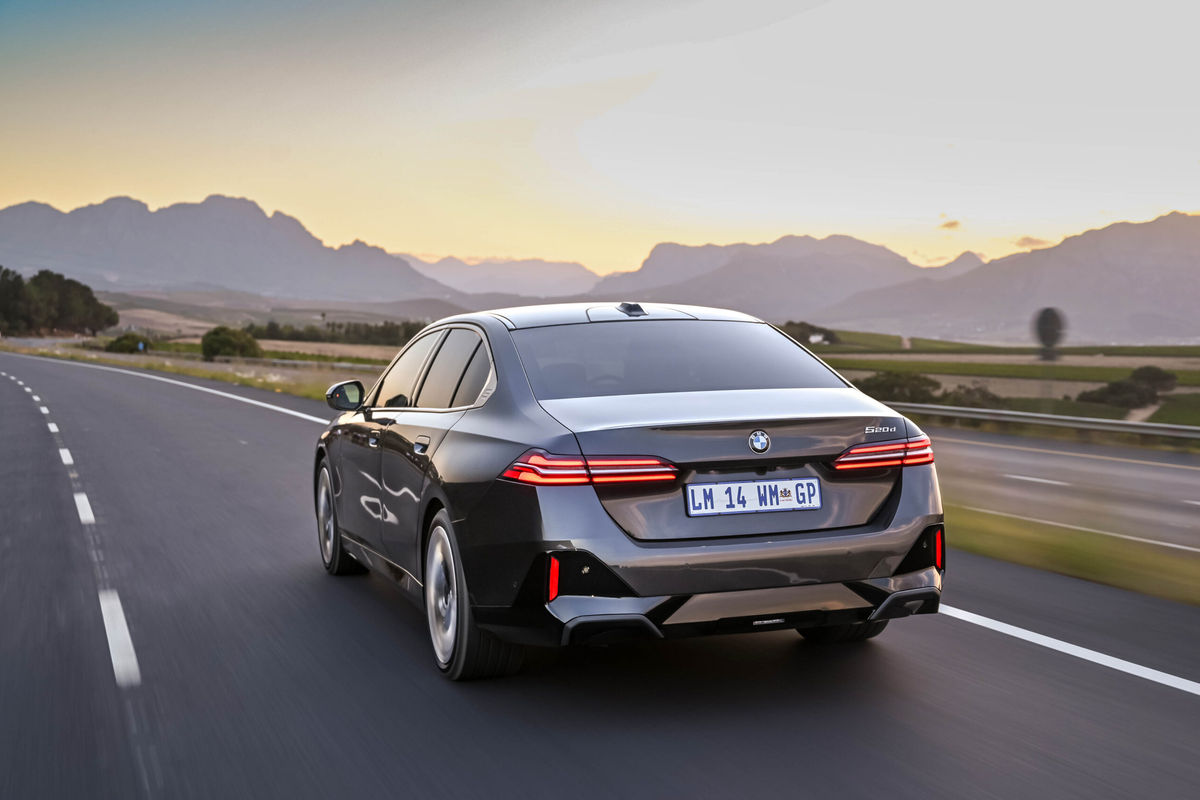
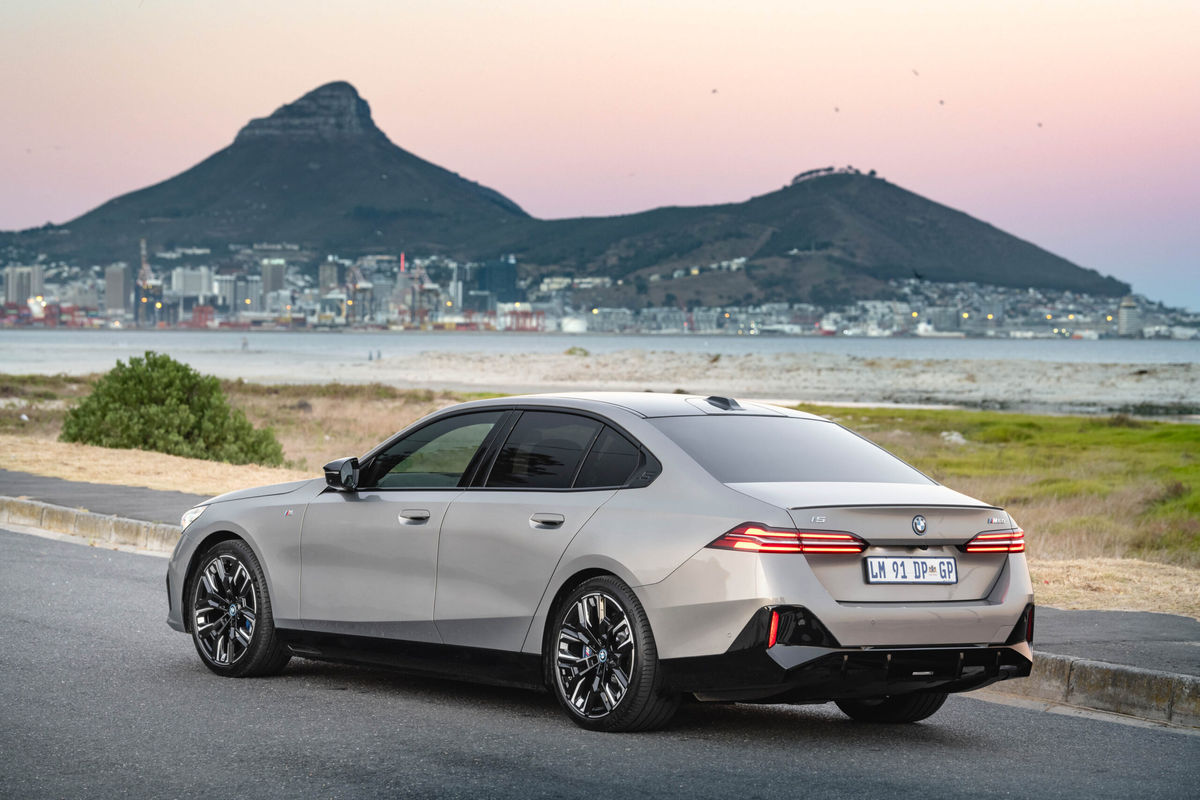
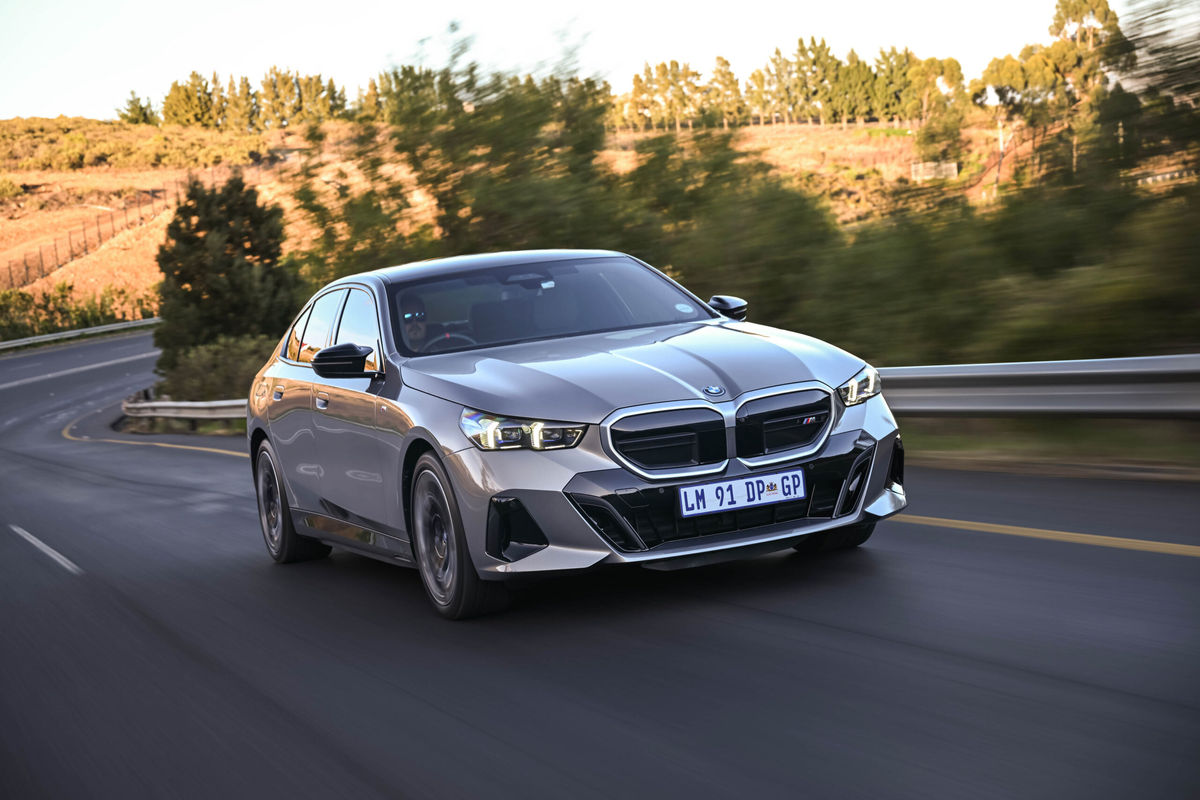
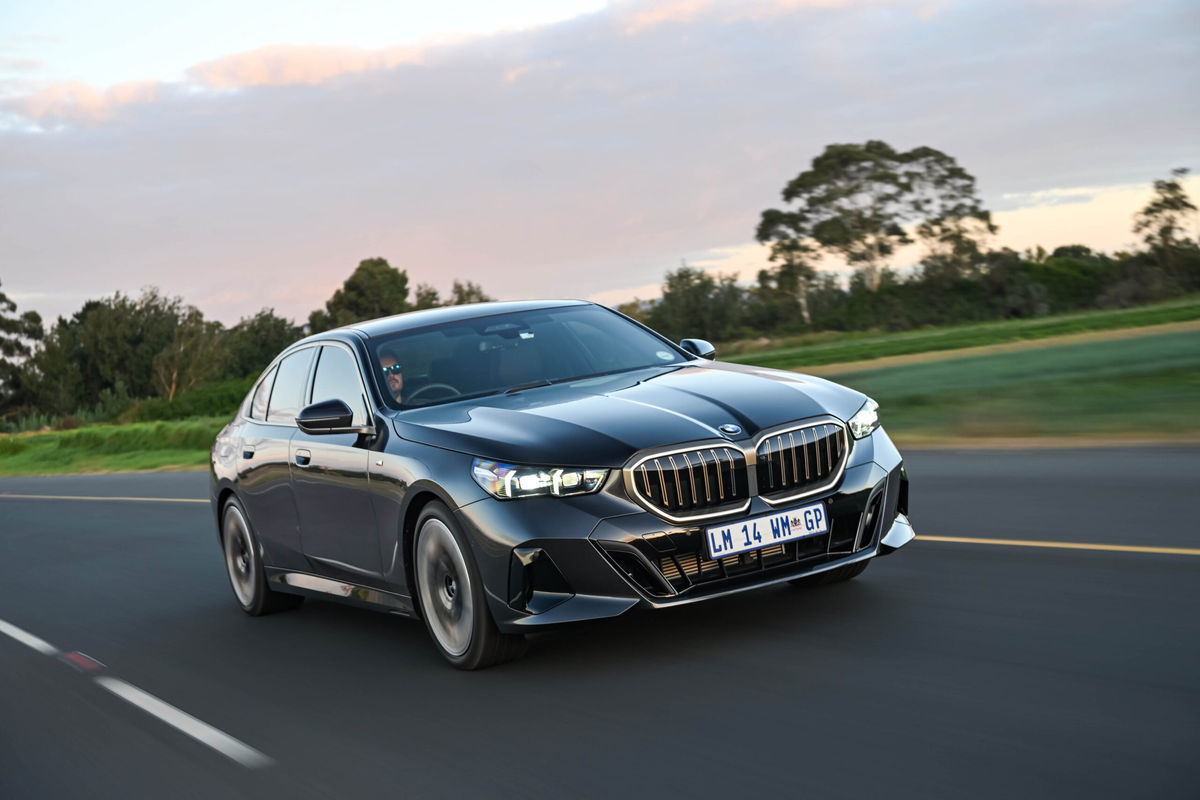
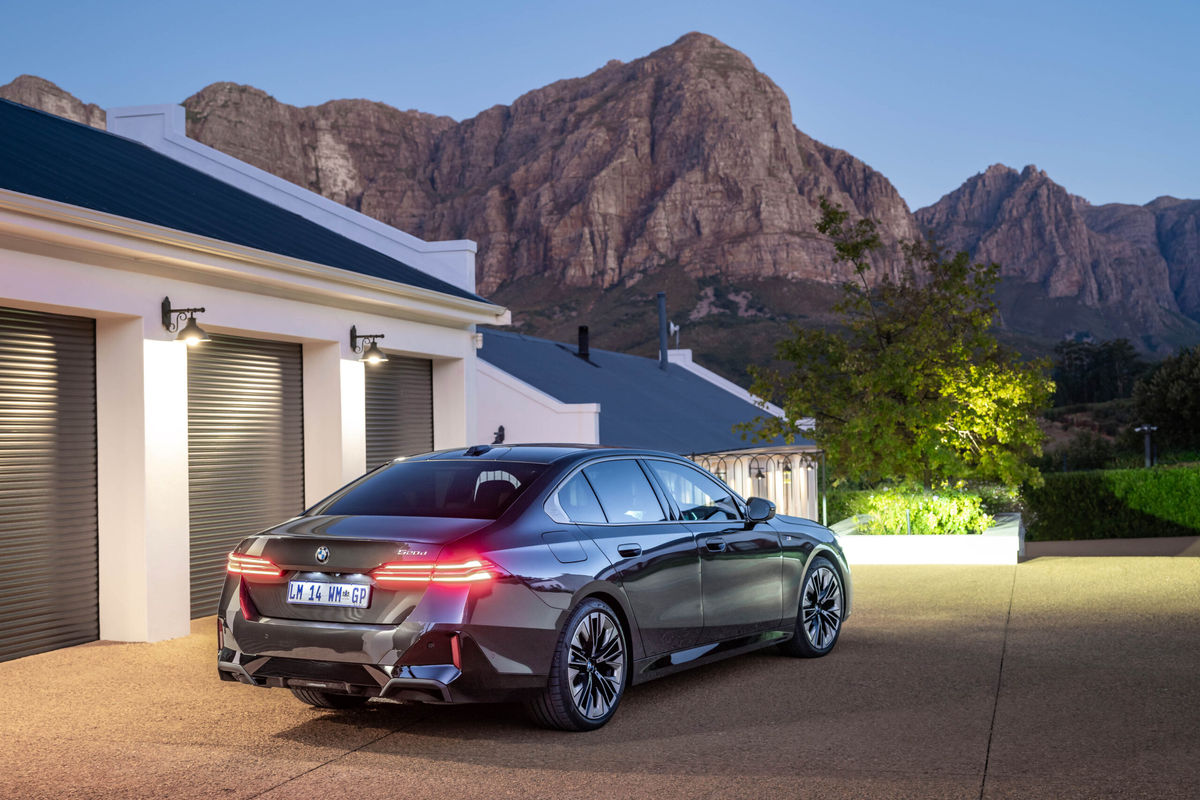
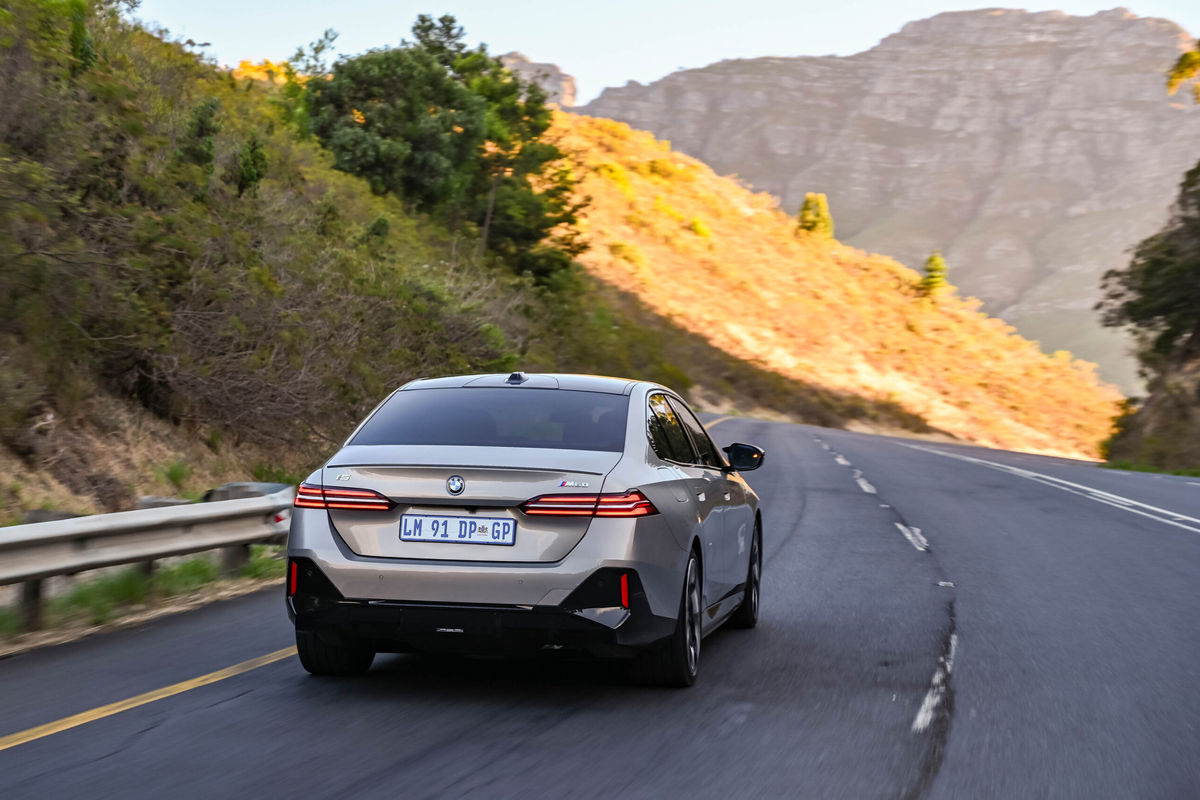
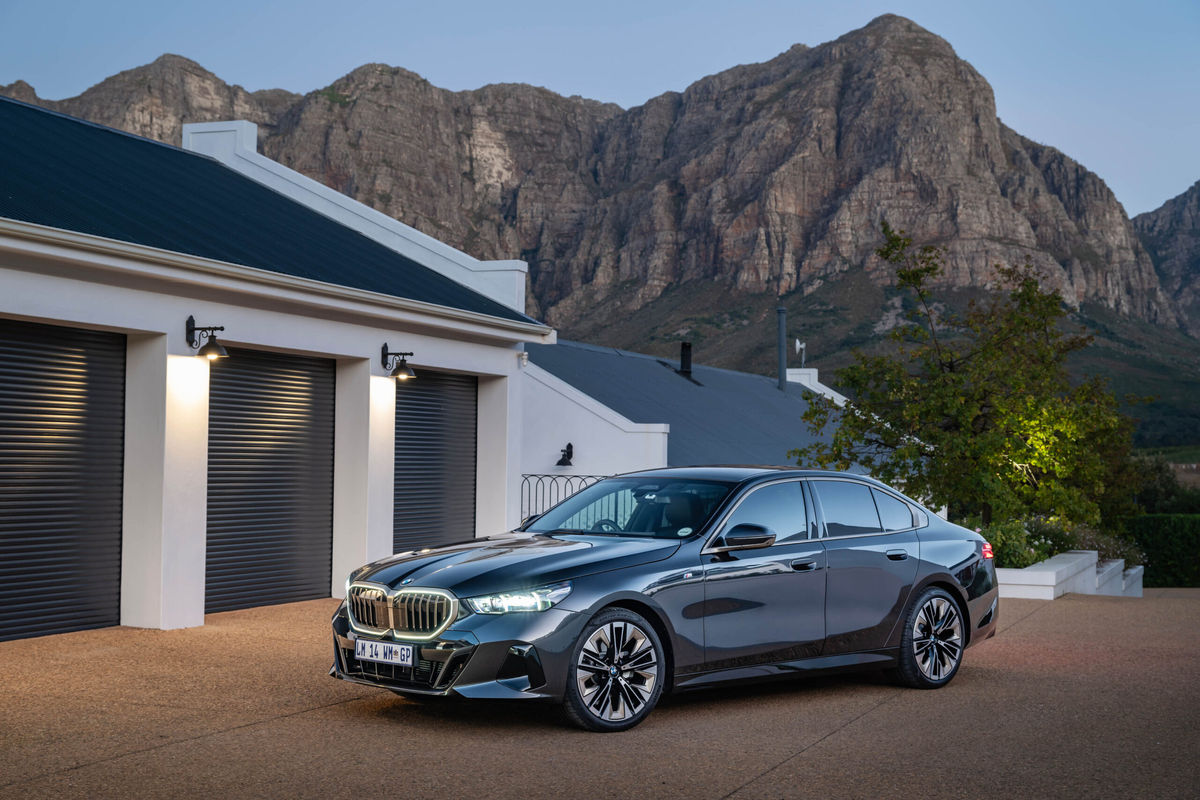
Like its 7 Series sibling, the 8th-gen BMW 5 Series is now available in Mzansi in internal combustion engine (ICE) and electric vehicle (EV) guises. Does the range cater equally well for traditionalists and EV converts, or is the German brand “actively steering” buyers towards buying battery-powered derivatives? Calvin Fisher investigates.
When we descended upon the West Coast, our mission was clear: evaluate BMW’s new 5 Series (G60), which would be available in 2 distinct flavours on the day: electric and that which burns the dark stuff.
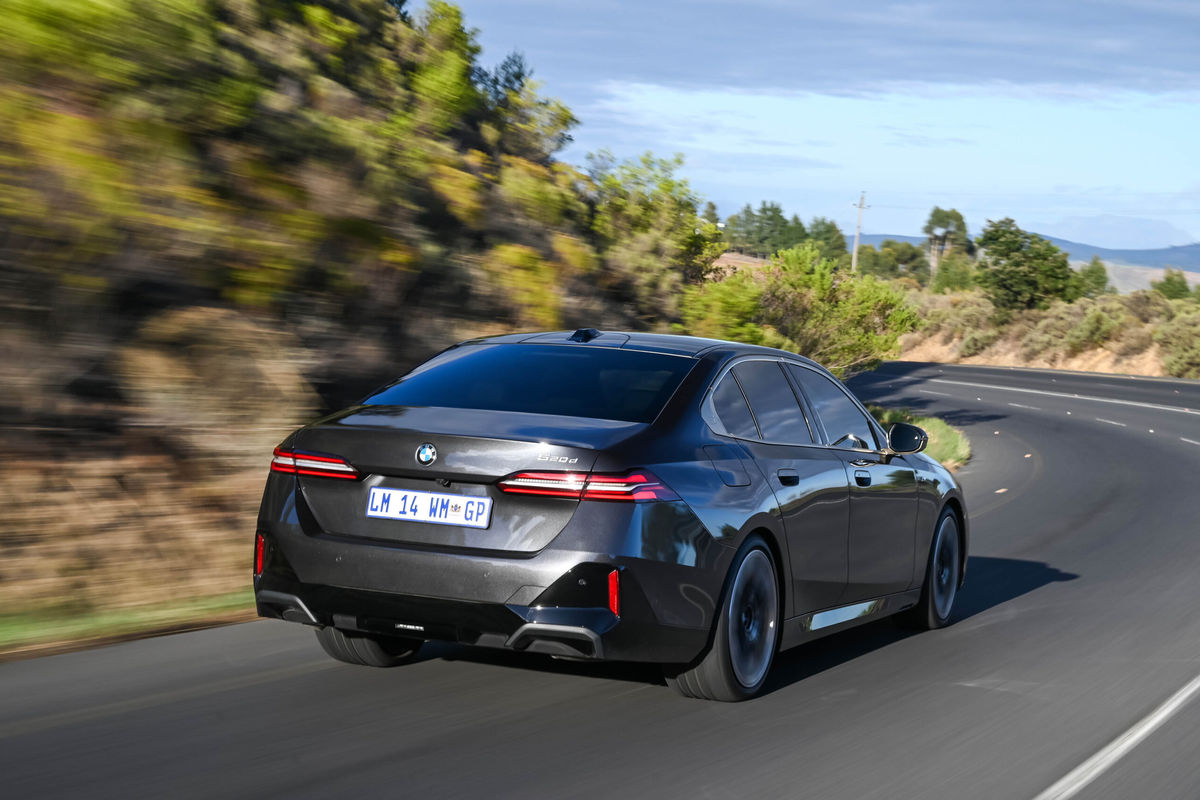
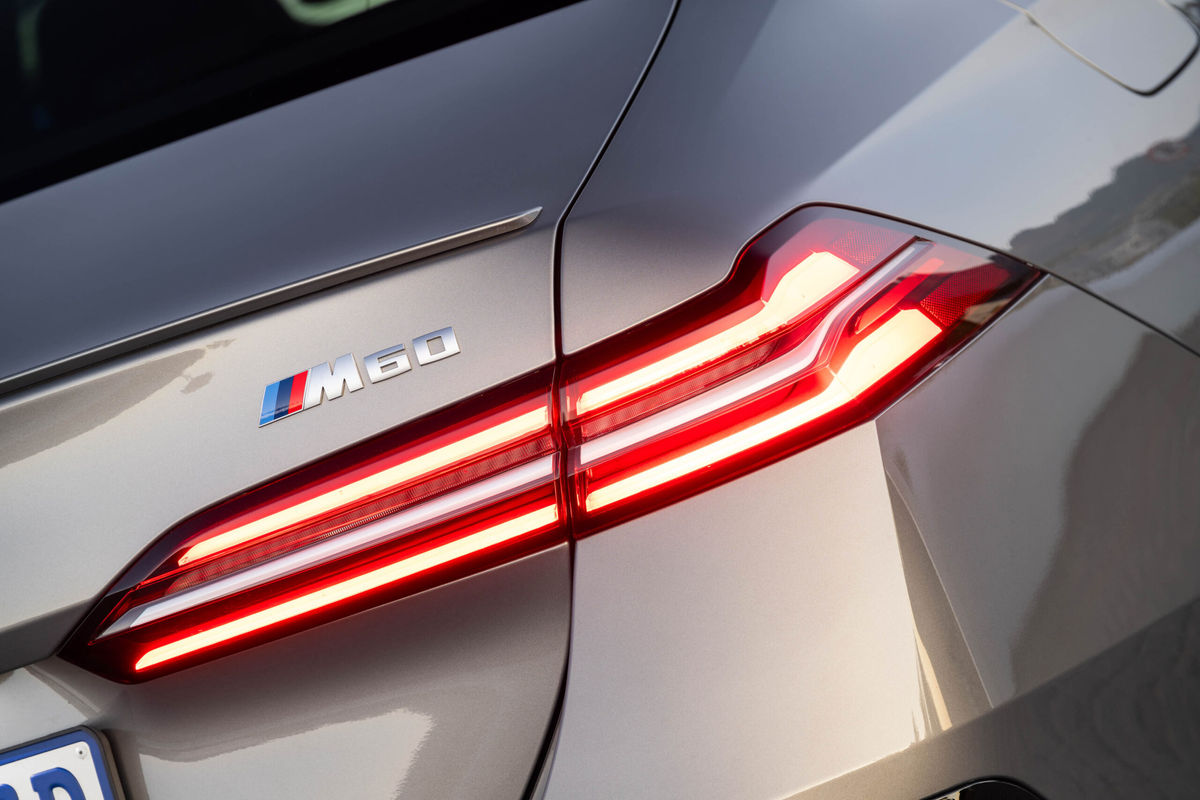
To be clear, on offer on this sunny Cape day was the potent i5 M60 and 520d – the pragmatist’s choice. With grippy palms and feverish forearms, I wrestled the key fob to the nearest Five. My mantra of “take the diesel, it’s the responsible choice” went right out the window the moment I settled in the i5 M60’s plush cabin. Real talk, I regret nothing… albeit only at this point in the launch itinerary, more on that later.
This marks the 8th coming of the 5 Series, which makes it the most storied model in BMW’s portfolio. It is purported to be the consummate full-sized sports sedan – and family saloon, if you’d like it to be that.
Despite being a family man myself, I quickly checked in my Dad Card and chose to drive the battery-electric whip first, not because I wanted to save Mother Earth, but because I had selfish aspirations to render her glorious backdrops a wicked blur. I mean, I wanted to go fast since I had 442 kW and 820 Nm of torque at the disposal of my right foot… and that doesn’t happen every day.
I’ll have one with BOOST, please
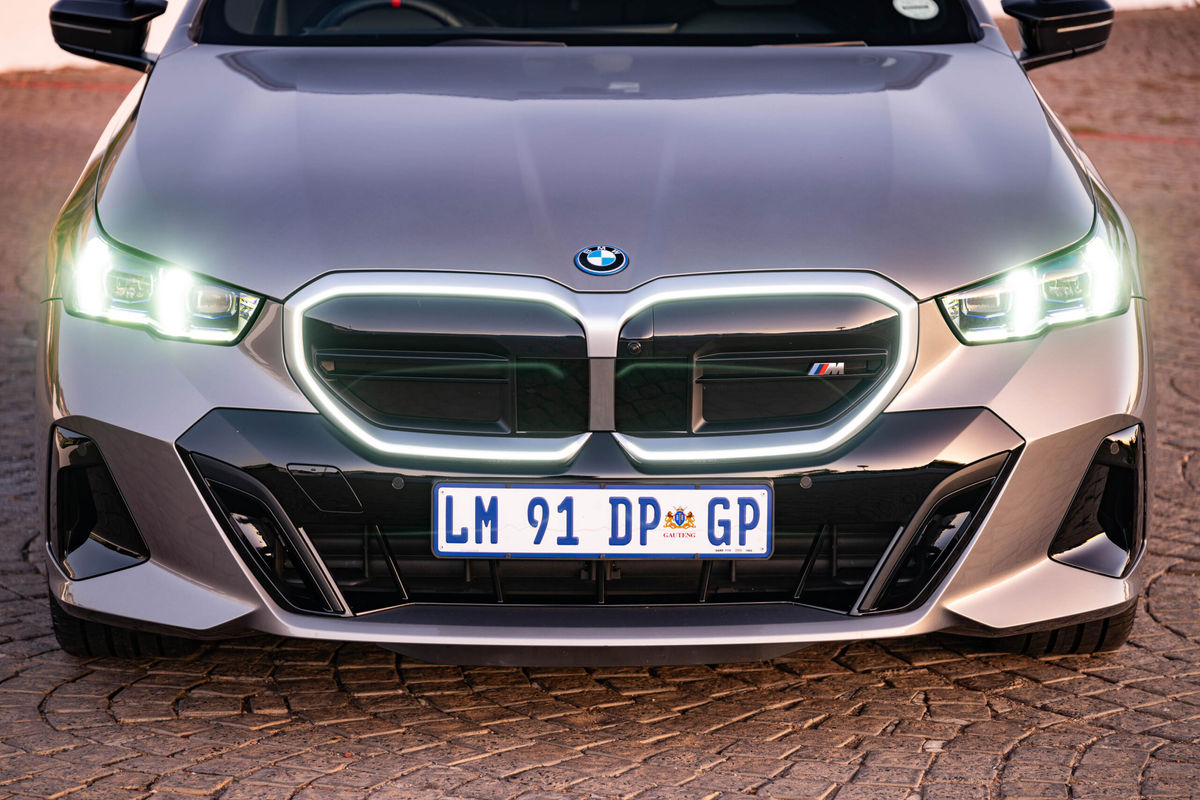
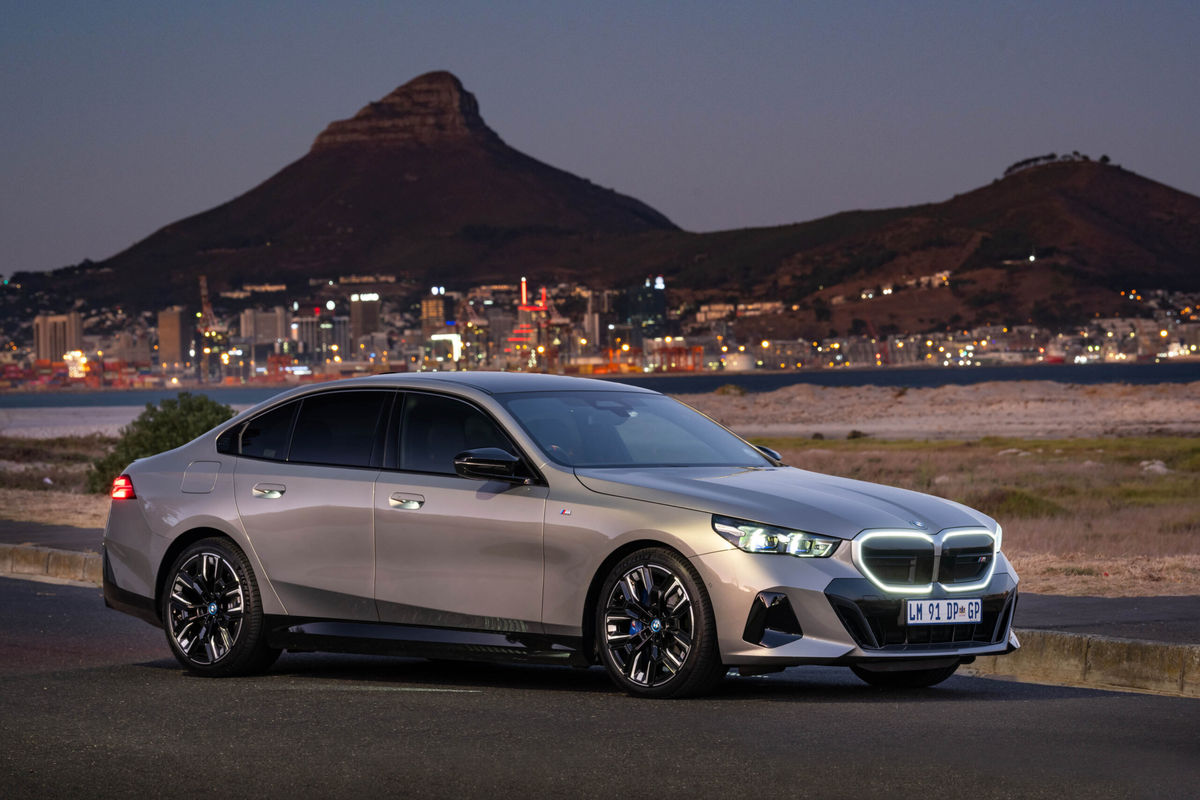
There’s a lot to report, such as how the new BMW 5 Series’ aesthetics, when viewed online, probably lack something – perhaps that “hewn from granite” presence you only truly appreciate when up close with the metal. The new Five is handsome, well-proportioned and, thanks to clever ground effects (blackened diffusers, sills, and such), manages that low-slung styling that begs for a sleeper build.
Except, there’s no need when you’re wearing that i5 M60 badge because performance lives here – and in spades. Let’s review the stats, shall we? A properly ballistic 0-to-100 kph sprint time of 3.8 sec and a top speed of 230 kph, all of which are achievable thanks to the electric powertrain’s lofty peak outputs.
For that, thank “Boost mode”, which gives you 10 glorious seconds of maximum acceleration (I imagine it has a similar effect to F1’s drag-reduction system, which dials overtaking manoeuvres up to eleven). But how often will you need it? In the default drive mode, the i5 M60’s driver has access to 795 Nm of torque (just 25 Nm less than in Boost mode), which should be sufficient to pass anyone not named Verstappen.
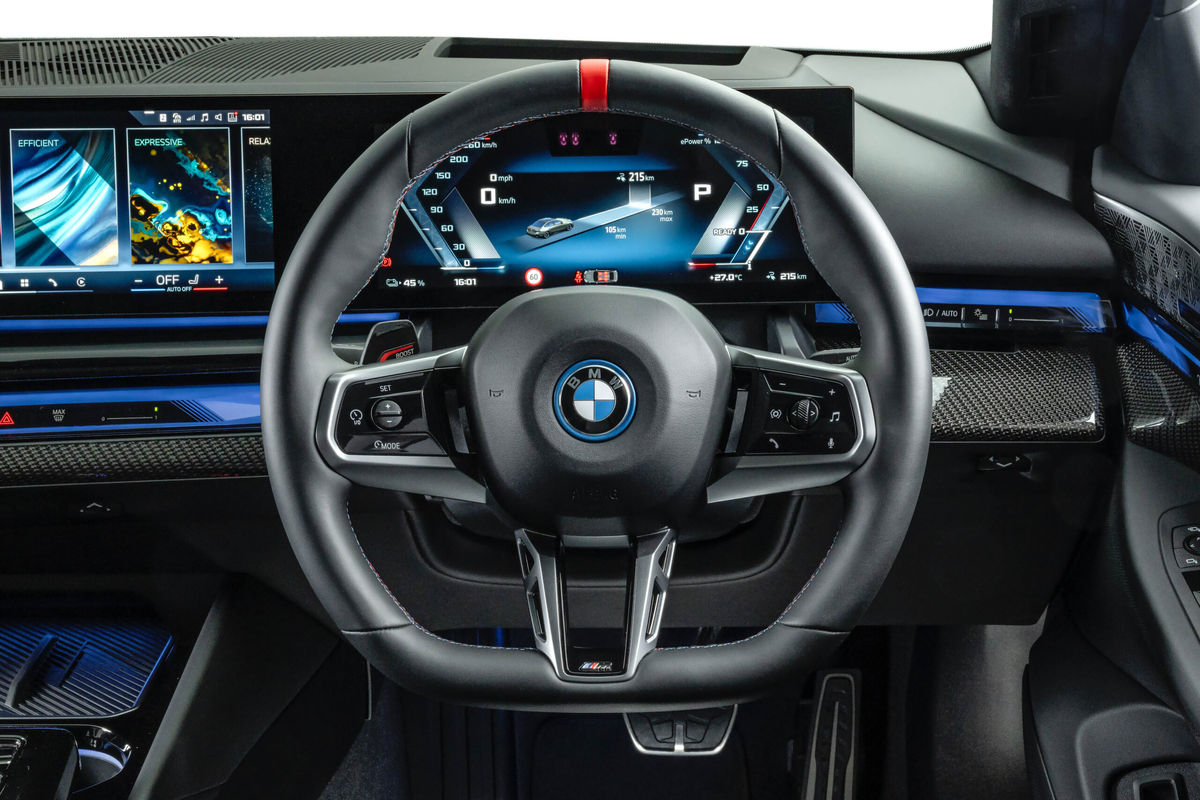
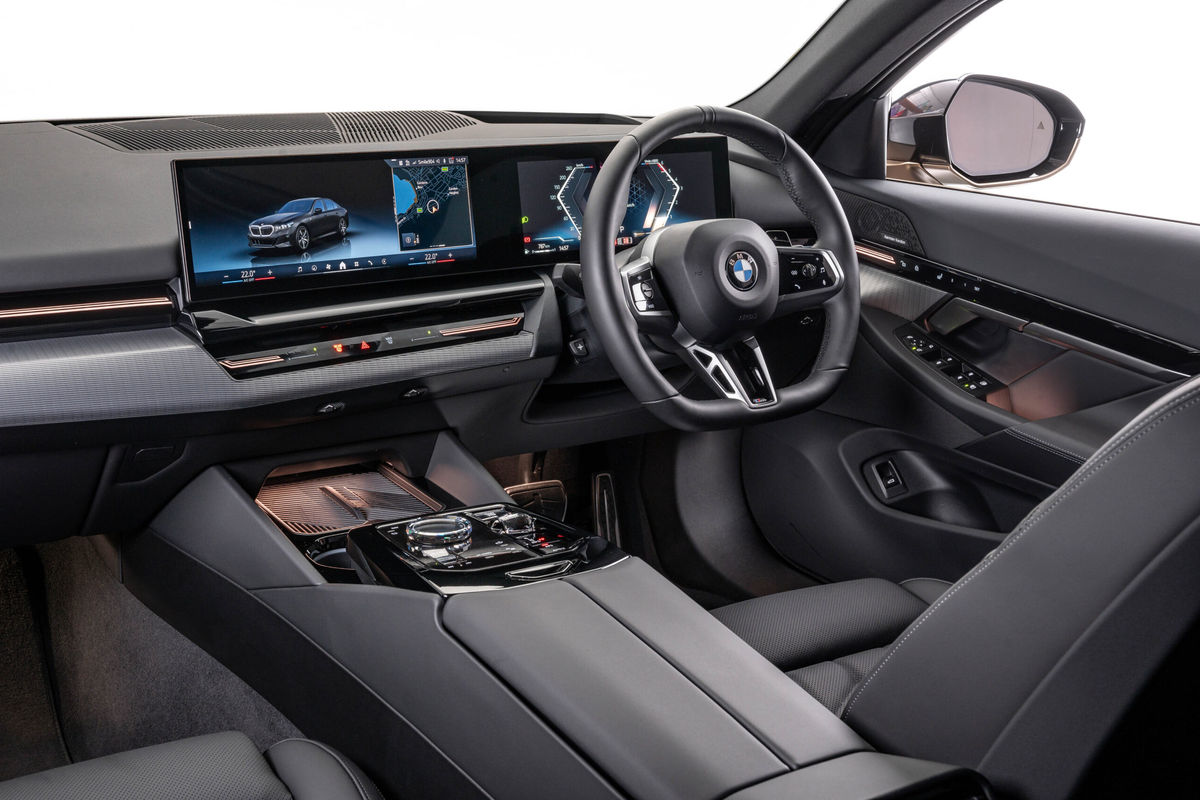
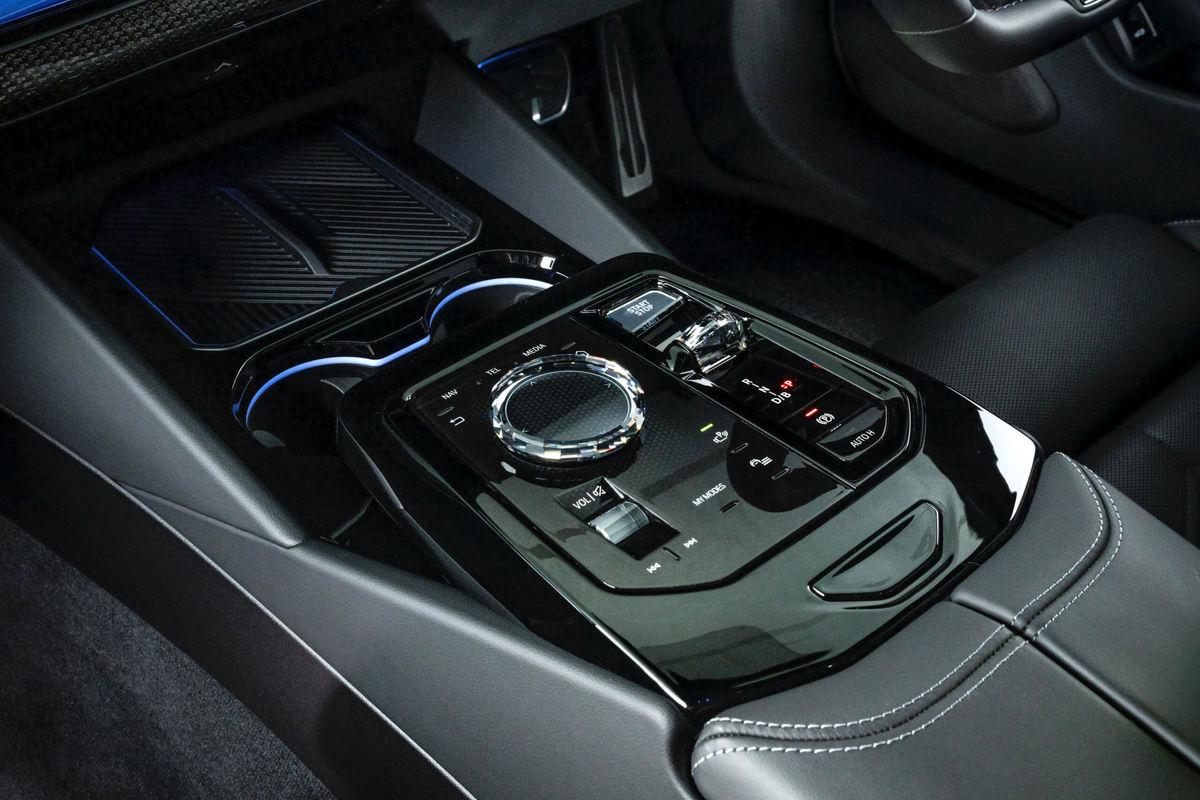
But before we discuss the all-electric 5 Series’ neck-twerking acceleration, it is probably an opportune moment to discuss the model’s groovily-appointed cabin. You know you’re in one of the Munich-based brand’s futuristic EVs when the interior resembles a light show with tactile surfaces that complement a powerhouse of an infotainment screen, itself dominating the dashboard because of its sheer presence.
You don’t require the full list of abbreviations and acronyms for the safety and techno features, do you? It’s a contemporary BMW model, dear reader, you’ll want for nothing here. There are more than 40 driver-assistance technologies at work in the new 5 Series and, with the aid of a high-res 8-megapixel camera, the G60 Five benefits from augmented views for turn-by-turn navigation and a more detailed park-assist function. Harman Kardon audio system? Check. Anthracite headliner? Sure, why not?
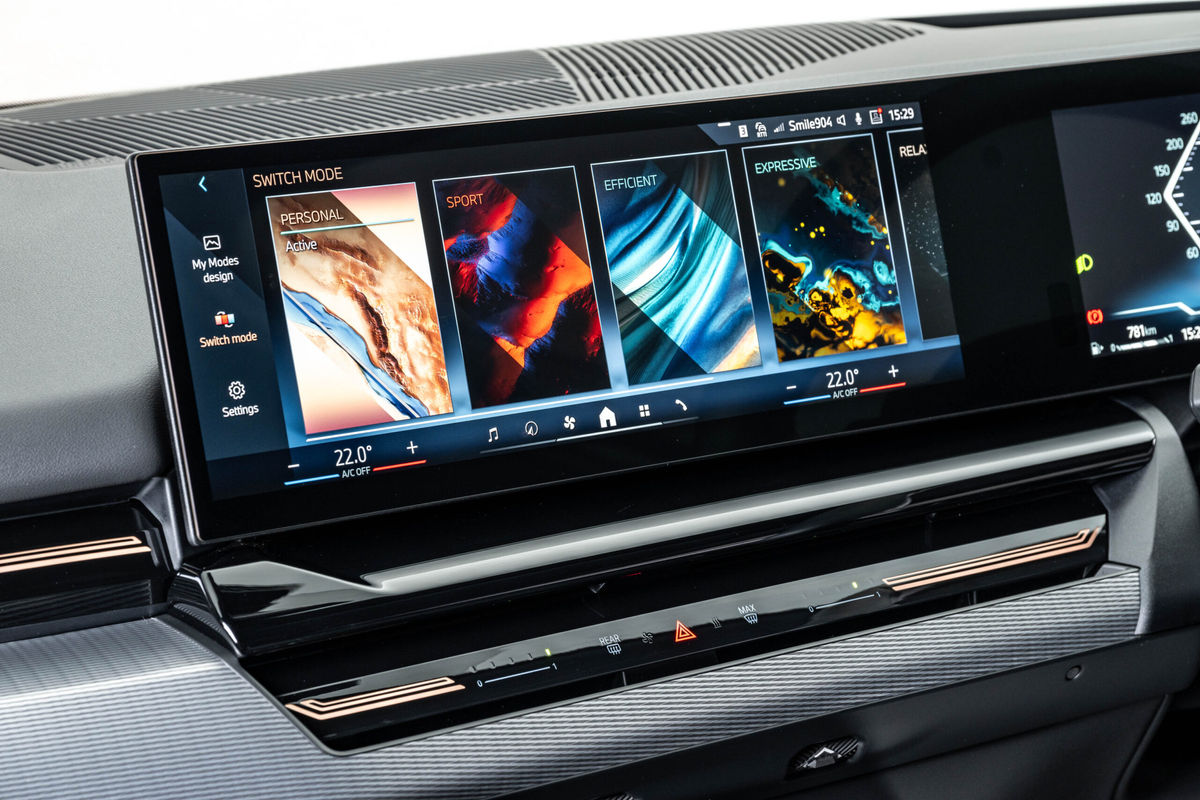
Today, more than 20 million vehicles are connected to BMW Cloud and 10 million users utilise the BMW app on their phones. For its digital brain, the new Five utilises BMW Operating System 8.5, which means it incorporates more controls and augmentation than ever before, with a heavy bias towards navigation, entertainment and the obligatory (and simplified) climate control settings. These 3 facets function as pillars for the operating system and represent the most commonly used features on the home screen.
Drive modes and mood lighting make for a dynamic ambience, but BMW’s business-like demeanour prevents the experience from feeling cheap or chintzy. This remains an executive sedan at its very core.
Sportiness is also in its makeup, so perhaps there’s still a kernel of truth in the Five’s unofficial ethos of “luxurious like a Seven, sporty like a Three”. It shines through in the i5 M60, especially thanks to the Adaptive M Suspension Professional including active roll stabilisation and active rear-wheel steering.
These matter little when the new BMW is surging down the highway, where Boost mode and its Hans Zimmer noises make flattening the loud pedal precisely that – voluminous and otherworldly, like an alien brandishing a space trumpet, accompanied by the kind of rush only 800+ Newton metres can provide.
Before we get to the twisties, let’s unpack the i5 M60’s spec a little more. The M Package, which comes standard on the M60, can be summed up as mainly a series of visual hop-ups, such as the 8-mm lower stance, slipperier exterior mirrors, M Sport pedals, diffusers, a rear spoiler and the horizontal slats on the kidney grille (distinct on the M). Plus, it comes fitted with 21-inch alloys, instead of 19s. What is, however, standard across the range is the red stripe at 12 o’clock on the tiller, even in the turbodiesel version.
So, let’s discuss the 520d. Climbing aboard the ICE version of the 5 Series feels much the same as it does in the i5 M60. But there are differences – the non-M spec is wholly noticeable from the start. Even the Boost mode, similarly assigned to the left paddle (the only paddle in the EV) feels ironic here.
Tugging on it certainly doesn’t elicit the same sense of exhilaration as in the EV, but how can it? Earlier, we had beyond 800 Nm to exploit, now there was no more than 400 Nm on tap. That is NOT a meagre torque output but… I had been spoiled by the i5 M60. I should have driven the sensible turbodiesel first.
Even bereft of the maniacal e-drivetrain, there’s much to love about the 520d. This car feels wholly BMW, a classic executive sedan that has some shove and rides pliantly. It’s more softly sprung than the i5 M60, but almost as pointy and full of steering feedback. More BMW, less occasion? Yes, you could say that!
Whereas the i5 M60 has a frankly ludicrous 442 kW at its disposal, the 520d goes into battle with a more modest 145 kW, but remember it is about R940k more affordable than the former. A clever mild-hybrid 8-speed transmission that pitches in with 13kW/200Nm makes for quick gear changes with minimal loss of momentum – it’s seamless. Thus, equipping the 520d with a 0-100 kph time of 7.3 sec. It’s no slouch.
And that’s good, because the 520d remains the only ICE offering in the G60 5 Series line-up. There’s a performance midpoint in the form of the i5 40 with 250 kW, but I’d be telling you a barefaced lie if I said that I don’t miss the 3.0-litre inline-6 turbopetrol engine in this line-up; it is conspicuous by its absence.
The electric derivatives’ pricing includes a wall box for home charging, which we reckon is mandatory for EV owners in Mzansi. On that note, charge times have gone down and claimed ranges have gone up, so that’s a win-win. Specifically, you have a 500 km range in the i5 M60 and a 580 km range in the i5 40.
How much does the new BMW 5 Series cost in SA?
BMW 520d
R1 247 894
BMW i5 40
R1 842 500
BMW i5 M60
R2 190 000
All derivatives come with a 2-year/unlimited km warranty and a 5-year/100 000 km maintenance plan.
Last year, just over half of the total EV sales in South Africa were BMW products (including the Mini SE). With the i5, the marque continues to drive electrification forward. To earn its xDrive badge, this i5 M60 derives 192 kW from the front motors, plus 250 kW from the rear (hence AWD) and, due to its low centre of gravity (thank you lardy batteries) handles like it sits on rails, whilst delivering flavourful feedback from the steering wheel. It’s a near-perfect flagship for the G60 5 Series… well, at least until the M5 debuts.
As an EV, the i5 M60 charges quicker than before and somehow boasts a physics-defying drag coefficient of just 0.23 despite that formidable profile. It achieves this with an optimised underfloor design, aggressive use of air curtains and active air vents with alloy wheels designed with aero in mind. BMW wanted to make sure that the all-electric version of its longest-serving model would turn heads…
Well, it does. The result is sublime – a classic BMW driver’s car with enough torque through the chassis to affix a permanent smile on your face. Understandably, the entry-level 520d is merely a well-resolved offering by comparison – the more prudent choice at a saner price point – and the lack of a turbopetrol version, let alone an inline-6-powered one, speaks volumes for BMW’s long-term plans for the 5 Series.
With the G60 5 Series line-up (as it stands), BMW has made its position in the ICE versus EV debate abundantly clear. It’ll keep offering ICE variants for as long as they’re viable (probably longer than the staunchest environmentalists would like), but the all-electric derivatives are likely to hog the limelight.
Ford’s smash-hit new Ranger finally brought the Blue Oval #CarsAwards glory when it emerged victorious in the hotly contested Leisure Double Cab Bakkie category of the 2023/24 Cars.co.za Consumer Awards, sponsored by Absa.
In this immensely popular and fiercely contested vehicle category, the search is on for the ultimate all-rounder. From luxurious touring vehicle, to hardcore off-roader, capable carry-all, family do-all and lifestyle activity machine, the 2024 Best Leisure Double Cab Bakkie cannot be too utilitarian and/or rough around the edges (as its predecessors have tended to be) – it should be a highly sophisticated offering.
The Leisure Double Cab Bakkie category
This category is guided by both eligibility factors and pillars of success.
Eligibility factors for this category include a list price above R800 000 at the time of semi-finalist voting (September 1, 2023). The vehicle must be a double-cab (four-door) pick-up/bakkie with four-wheel-drive, an automatic transmission and a minimum ground clearance of at least 200 mm.
Pillars of success for this category include performance, space & practicality, in-car entertainment, comfort, all-surface ability and safety. Towing ability is also tested.
2024 Best Leisure Double Cab Bakkie: CarsAwards WINNER
Ford Ranger 3.0 V6 EcoBoost Raptor 4WD
If you’re looking for the most performance-oriented double-cab bakkie in the new-vehicle market, then look no further than the Ford Ranger Raptor. With a bespoke off-road racing suspension, muscular looks and a howling twin-turbo petrol V6, the 2nd-gen Ranger Raptor makes an unequivocal statement. Inside, the Raptor boasts comprehensive safety tech and connectivity, and an appropriately themed cabin.
If you want the most luxurious locally-assembled double-cab bakkie – one that is as accomplished at transporting your family in comfort as conquering an off-road trail, the new Ford Ranger Wildtrak ticks all the boxes. Not only does it look the part and wear a desirable badge, it also sports an extensive features list. A brand-new 3.0-litre turbodiesel V6 gives it impressive performance and towing capability too.
The 2nd-generation Volkswagen Amarok is also built right here in South Africa, alongside the Ranger in Ford’s Silverton plant. While it does share quite a few mechanical and trim components with its American cousin, the Amarok has a distinct identity and initial sales figures for the model look promising. It features the Ford-sourced 3.0 V6 TDI, giving it commendable performance, both in terms of driving and towing.
The winners of the 2023/24 Cars.co.za Consumer Awards, sponsored by Absa (as well as the recipient of the prestigious Brand of the Year title) were named on 29 February 2024.
BMW’s iX1 was crowned as South Africa’s Best Electric Vehicle when it took the trophy in this new category of the 2023/24 Cars.co.za Consumer Awards, sponsored by Absa.
Electric vehicles (EVs) are considered as future mobility solutions in an evolving motoring landscape. While they are expensive in our market, due to high material costs and additional taxes levied by the Government, demand for these types of vehicles is increasing gradually. Plus, as brands increase the number of EVs in their line-ups, consumers have an ever-growing number of models to choose from.
What do we look for in an electric vehicle?
The 2024 Best Electric Vehicle must represent the best value EVs in this rarefied segment, with enough range to confidently complete the average daily commute, while providing a blend of modern design, interior practicality, adequate performance and up-to-date tech and connectivity features.
This category is guided by both eligibility factors and pillars of success.
Eligibility factors for this category include a list price below R1 300 000 at the time of semi-finalist voting (September 1, 2023). Eligible vehicles must be all-electric (which is to say battery-electric vehicles) and offer a minimum range of 300 km when fully charged. This category excludes hybrids and plug-in EVs.
Pillars of success for this category include power and range, luxury and technology, value for money, design and quality appeal.
2024 Best Electric Vehicle: CarsAwards Winner
BMW iX1 xDrive30 M Sport
Like most legacy premium brands, BMW offers a blend of internal-combustion engine-based models, which are adapted to utilise all-electric drivetrains, and all-electric cars built on dedicated EV platforms.
The Munich-based brand has family-friendly SUVs and performance sedans in its electric vehicle line-up, but the iX1 appears to be the “Goldilocks model” for an all-electric raised-body city slicker. It’s competitively priced, boasts impressive levels of tech and its range is adequate for the daily commute. BMW SA has an extensive dealership footprint as well as a reputation for strong after-sales support.
Chinese brand Ora (which, like Haval, is a sub-brand of Great Wall Motor) offers one of SA’s most affordable electric cars with its cute-looking 300 (which is named the Cat in other markets). Photos don’t do it justice – it’s actually a larger vehicle than it looks, and can easily accommodate four adults.
The claimed range and performance figures are good, plus the standard specification and build quality are impressive for a vehicle at this price point. Who said electric cars all have to cost over R1 million?
Volvo is forging ahead with its electric-car strategy (it plans to offer only EVs by 2030) and its line-up of battery-electric compact SUVs – including the C40- and XC40 Recharge derivatives are very impressive.
With the Twin Motor setup, the XC40 Recharge is one of the quickest offerings in Volvo’s line-up and its claimed range (500 km) is admirable, considering its punchy performance. Inside, you get that typically classy cabin that looks and feels premium, and let’s not forget Volvo’s stellar safety credentials either.
Find out which cars were winners in the 2023/24 Cars.co.za Consumer Awards, sponsored by Absa (as well as the recipient of the prestigious Brand of the Year title).
Finding a hardcore performance car priced under R1 million is increasingly tough, but these three CarsAwards finalists certainly get the blood pumping. In the end, it was Toyota’s GR Yaris that took the chequered flag in the Performance Car category of the 2023/24 Cars.co.za Consumer Awards, sponsored by Absa.
While owning supercars and other “exotics” is bound to remain a pipedream for most car buyers, there are new cars that are priced under the R1-million mark that offer near-supercar thrills and performance.
The Performance Car category
In this category, we are not only looking for sizzling performance but also driver engagement, whether driven on the track or on the road. This category is guided by eligibility factors and pillars of success.
Eligibility factors for the 2024 Best Performance Car title include a list price below R1 000 000 at the time of semi-finalist voting (September 1, 2023). As in previous #CarsAwards programmes, we institute a price cap to ensure the category doesn’t become dominated by extravagant and unattainable exotics.
Pillars of success for this category include drivetrain engagement, handling, sensory appeal and standard features.
2024 Best Performance Car: CarsAwards WINNER
Toyota GR Yaris Rally
The GR Yaris is the result of Toyota’s Gazoo Racing arm developing a car for motorsport homologation and, if you were to enter a racing series, you wouldn’t have to do much to convert this mighty mite into a championship-winning race car. All the elements are there: a revvy turbocharged 3-pot motor, all-wheel drive and a sweet-shifting 6-speed manual ‘box. If ever a car epitomises this category, it is this one.
The Honda Civic Type R is a revered hot hatch. Every iteration of the Type R has delivered driving thrills and performance in abundance, and this new-gen model is no different. It may lack the outrageous styling of the predecessor, but it makes up for it with an even more focused driving experience.
The Japanese hatchback’s grip levels are staggering; its 2.0-litre 4-cylinder turbopetrol develops a stonking 235 kW/420 Nm and the sheer level of driver engagement it offers serves as a reminder that rip-snorting front-wheel-drive hot hatches such as these won’t be around for all that much longer.
Toyota’s GR division took its learnings from the world rally championship-inspired GR Yaris, applied them to the Corolla and turned up the wick. The 1.6-litre 3-cylinder turbopetrol motor now delivers 221 kW and 370 Nm, combined with all-wheel-drive grip that feels out of this world. With a notable feel-good factor and head-turning looks, there’s nothing quite like the GR Corolla.
The winners of the 2023/24 Cars.co.za Consumer Awards, sponsored by Absa (as well as the recipient of the prestigious Brand of the Year title) were named on 29 February 2024.
The Premium SUV segment features some of the most sophisticated and luxurious cars in the new vehicle market. This category of the Cars.co.za Consumer Awards has been dominated by German luxury brands, but in the 2023/24 #CarsAwards, it had a surprise winner… The all-electric BMW iX defeated its traditional ICE rivals!
Premium SUVs may primarily appeal for irrational and emotional reasons such as design and status, but at their core, they are some of the most sophisticated and capable vehicles on the market. Apart from sheer desirability, the 2024 Best Premium SUV must be spacious, have a high-tech all-wheel drivetrain, a powerful engine and a luxuriously trimmed cabin (let alone with a prestigious badge on the grille).
The Best Premium SUV category
This category is guided by eligibility factors and pillars of success.
Eligibility factors include a list price between R1 300 000 and R1 800 000 at the time of semi-finalist voting (September 1, 2023). It must be a large SUV of the BMW X5/Mercedes GLE category (coupe-inspired variants are also considered). It goes without saying that all-wheel-drive capability is a must.
Pillars of success for this category include powertrain technology, luxury, brand strength, design and quality appeal, driving dynamics, as well as space and practicality.
2024 Best Premium SUV: CarsAwards WINNER
BMW iX xDrive40
For the first time, an all-electric model was selected as a finalist in a category that’s not focused on EVs, and it won! The new BMW iX has been quite the revelation, with its polarising design, impressive levels of tech and superb build quality. Because the iX is based on a dedicated electric-vehicle platform – not that of a conventionally engined model – it’s very spacious, too!
The recently revised BMW X5 makes yet another appearance in one of the most established categories of the CarsAwards, but it’s easy to understand why this vehicle is an almost permanent fixture… With a potent 3.0-litre inline-6 turbodiesel powerplant that balances impressive on-road performance with good fuel economy, the xDrive30d M Sport also offers generous passenger room and cargo-carrying capacity.
Although it’s a far cry from its utilitarian progenitor, the new Defender is a kingpin in Jaguar Land Rover’s stable. In terms of sheer versatility, it blows the opposition away – that’s why there’s a waiting list for the Landy. The Defender 110 blends luxury, practicality and off-road ability in an eye-catching package and the D250 SE County derivative is powered by a 3.0-litre inline-6 turbodiesel that makes 183 kW/570 Nm.
The winners of the 2023/24 Cars.co.za Consumer Awards, sponsored by Absa (as well as the recipient of the prestigious Brand of the Year title) were named on 29 February 2024.