A fresh report out of Brazil suggests Toyota plans to put a unibody pick-up into production by 2027, reviving speculation that a Corolla-based bakkie is indeed on the horizon…
Back in August 2023, news emerged that Toyota was mulling the development of a Corolla-based bakkie. Though there’s been little fresh information on that front for a while, a new report out of Brazil now suggests the seemingly global project is indeed going ahead.
According to AutoData, the Metalworkers’ Union of Sorocaba in Brazil has confirmed that negotiations to build a new Toyota bakkie at the Sorocaba factory in São Paulo are underway. Interestingly, this facility already produces the Corolla Cross and is expected to add the Yaris Cross to its assembly line by the end of 2024.
Toyota is likely to leverage the Corolla badge.
Pointing out that it usually takes a couple of years to prepare a production line for an all-new model, the union told AutoData that it expects manufacturing of the fresh-faced unibody bakkie to start only in 2027 (lining up neatly with the timing mentioned in the earlier report, which tipped Mississippi in North America as another potential production site).
Furthermore, the Brazilian publication claims the as-yet-unnamed small bakkie will be available in hybrid form and pitched against the likes of the Fiat Toro, Chevrolet Montana and Renault Oroch (though the latter will almost certainly have been replaced by 2027).
The EPU Concept could provide styling hints.
Despite the fact this latest report doesn’t specifically mention the Corolla nameplate, it’s thought Toyota will leverage the famous badge on this upcoming bakkie, while also likely basing it on the TNGA-C platform used by the hatch, sedan and Corolla Cross. Perhaps the newcomer will draw some styling inspiration from the fully electric EPU Concept pictured above and unwrapped in October 2023.
Of course, this rumoured unibody bakkie project is entirely separate from the since-revealed Hilux Champ, which is a ladder-frame contender that shares its underpinnings and engines with the current Hilux. And it’s the latter model that seems most likely to eventually go into production at Toyota South Africa Motors’ Prospecton plant in KwaZulu-Natal.
Here are the 7 cheapest hybrid cars in South Africa! If you are considering buying a hybrid vehicle, you now have some options to consider!
In recent years, hybrid cars have typically been a pricy proposition for new car buyers and as such the technology hasn’t really taken off in South Africa and Internal Combustion Engine (ICE) cars remain dominant. However, hybrid cars are now becoming more popular as buyers seek to bridge the gap between ICE cars and EVs.
Global demand for hybrid cars, including micro-hybrid, mild-hybrid, full-hybrid and Plug-in hybrids, is on the increase. China and the Asia Pacific region is leading in terms of hybrid adoption and hybrid uptake is currently surging in Europe too alongside Electric Vehicles (EVs).
Globally, the top hybrid car brands include Toyota, Nissan, Honda and Kia.
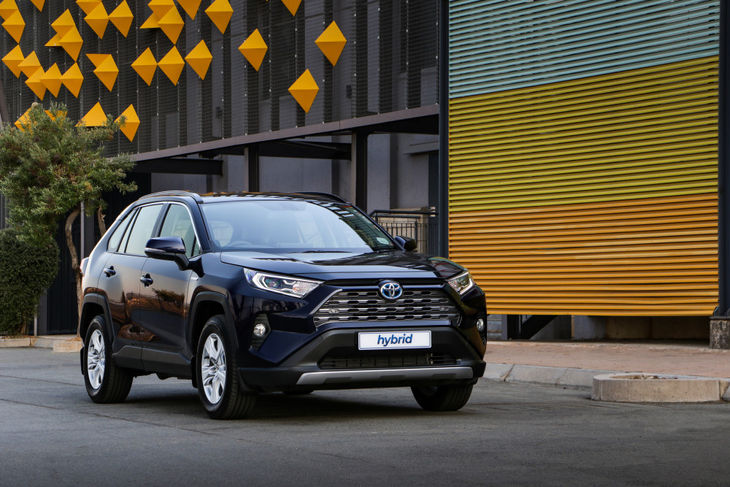
Earlier in 2020, Toyota announced that its Prospecton assembly facility in KZN would produce the Corolla Cross, including the Corolla Cross Hybrid, which is currently South Africa’s cheapest hybrid car. More so, with fuel prices surging, demand for more efficient vehicles (including hybrids) has risen sharply and Toyota will look to capitalise on that demand with additional hybrid products such as the Corolla Hybrid and the RAV4 Hybrid. Toyota is also testing the feasibility of introducing the RAV4 PHEV in South Africa.
Sadly though, Toyota experienced a major setback in 2022 with the floods in KZN causing massive destruction at its Prospecton facility, temporarily halting production and disrupting the supply of vehicles for both local and international markets. Earlier in 2023, Toyota announced a New Energy Vehicle (NEV) strategy that will seek to increase local hybrid uptake from 3% to 20% by 2030.
Prior to the above developments, the now discontinued Toyota Prius was once one of the cheapest hybrid cars you could buy in South Africa, but with the recent hybrid introductions from Toyota as well as the arrival of the Haval Jolion Hybrid, H6 Hybrid and the new Honda Fit, buyers have more choice now than ever before.
With fuel prices remaining high and with most electric vehicles positioned out of financial reach for most consumers, many are turning to hybrids as a way to reduce fuel consumption.
Note that pricing is accurate as of February 2024.
6 Cheapest Hybrid Cars in South Africa
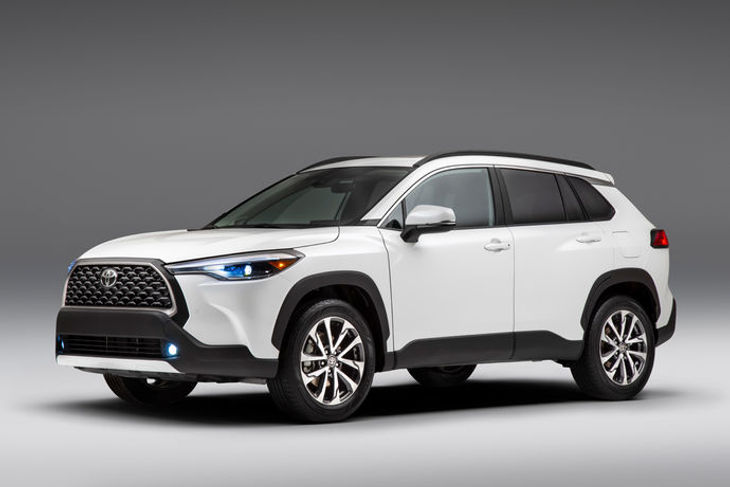
1. Toyota Corolla Cross 1.8 Hybrid XS – From R486 100
The Corolla Cross 1.8 Hybrid XS is priced from R486 100, making it the cheapest hybrid car in South Africa. A range-topping XR hybrid derivative can also be had for R527 200.
The Corolla Cross Hybrid makes use of a 72 kW/142 Nm 1.8-litre Atkinson-cycle engine in combination with an electric motor and battery. The electric motor provides a supplementary 53 kW and 163 Nm of torque (at full capacity) to boost the overall system output to 90 kW (the combined figure is not an aggregate of the two power sources, due to transmission reduction losses). A Continuously Variable Transmission (CVT) is fitted as standard across the range.
Toyota claims a fuel consumption figure of 4.3 L/100km for its Corolla Cross Hybrid.
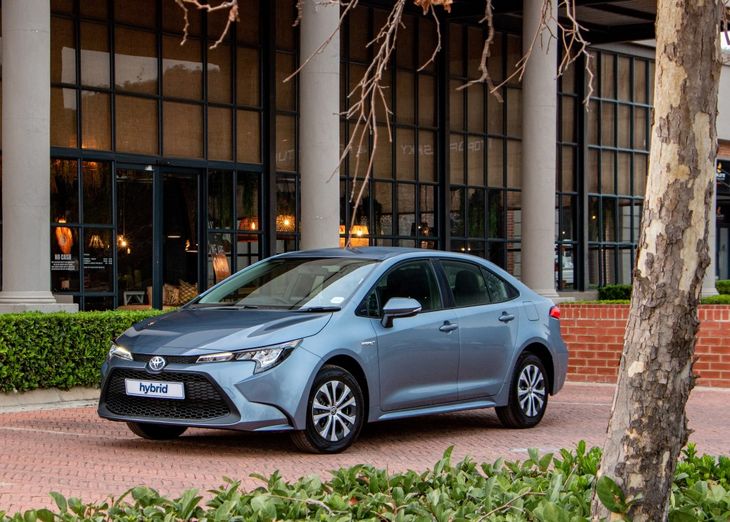
The Corolla Hybrid comes equipped with an Atkinson-Cycle 1.8-litre petrol engine combines with an electric motor to offer 103 kW and 142 Nm of torque and is paired with a CVT. The hybrid system is also supported by a lighter, newly developed 18.1 kW lithium-ion battery. Fuel consumption is claimed at 4.0 L/100km.
The Toyota Corolla Hybrid Hatchback can be had in base XS guise priced from R536 500 or you can opt for the XR trim priced from R577 600.
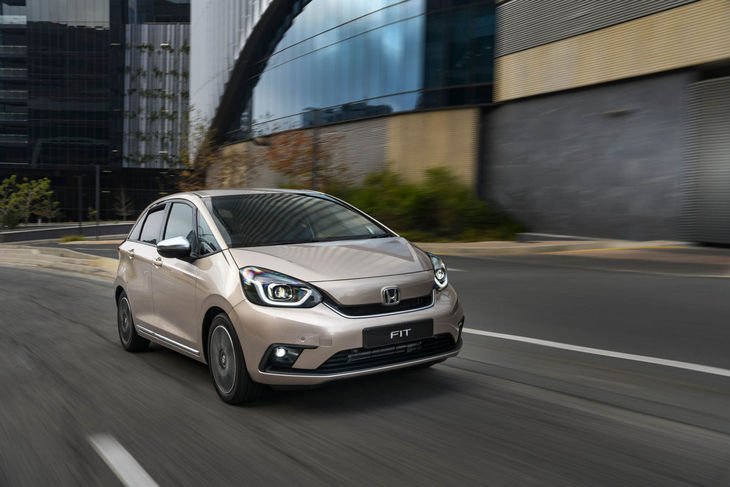
The new Honda Fit (also known as the Jazz) is perched at the top of the local range and is priced from R544 900.
The Fit Hybrid combines a 1.5-litre petrol motor with a battery and electric motor to produce combined outputs of 80kW and 253Nm of torque. The hybrid’s claimed fuel consumption figure is just 3.7L/100km. With the hybrid system, most of the fuel consumption benefits are reaped in town when the electric motor can do most of the propulsion work. A fixed-gear continuously variable transmission (CVT) with ‘simulated shifts’ is fitted.
That means it employs the same 72 kW/142 Nm Atkinson-cycle 1.8-litre petrol 4-cylinder petrol engine and an electric motor (that produce 53 kW and 163 Nm) in combination with a nickel-metal hydride (Ni-MH) battery and a continuously variable automatic transmission (CVT) that drives the sedan’s front wheels. The derivative’s overall system output is 90 kW (note: the combined figure is not an aggregate of the 2 power sources, due to transmission reduction losses).
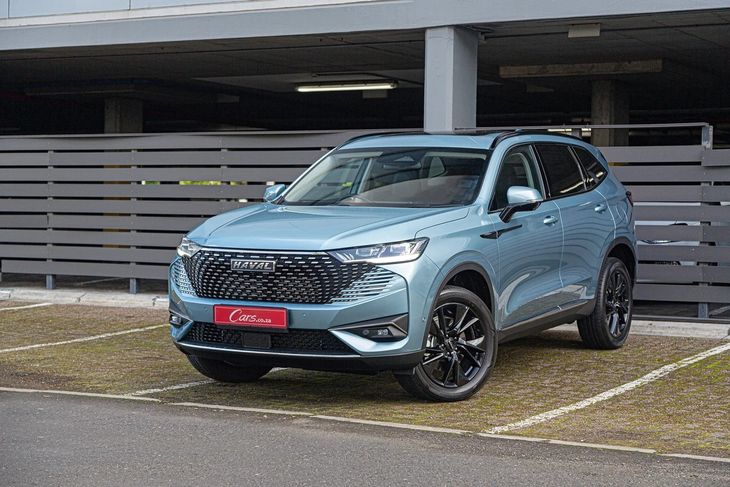
The Haval H6 is hugely popular in South Africa and the Chinese firm recently welcomed the H6 Hybrid to the local market. Equipped with a 1.5-litre turbopetrol engine which pairs up with an electric motor and self-charging hybrid battery, the H6 Hybrid produces 179 kW and 530 Nm of torque. Haval claims an average fuel consumption figure of 5.2 L/100km. Watch the video below to see how the new Haval H6 Hybrid performs out on the road.
Launched in conjunction with the above-mentioned Corolla Hybrid, the RAV4 Hybrid features a larger 131 kW/221 Nm 2.5-litre Atkinson-cycle petrol engine which combines with a pair of electric motor-generators (that can produce up to 88 kW/202 Nm) in combination with a nickel-metal hydride (Ni-MH) battery. Total power output is pegged at 160 kW. The RAV4 Hybrid is also equipped with a CVT and Toyota claims a fuel consumption figure of 4.8 L/100km.
In this video, a Volkswagen Amarok gets a straight-6 BMW engine transplant. Watch the video to see the final result!
The Volkswagen Amarok is normally used as a commercial vehicle for business or for leisure to get to faraway locations.
But this Amarok is a little different as the owner wanted more speed from his diesel bakkie.
Werner decided that the best way to do that was to swap out the original engine with the 3.0-litre straight-6 engine from a BMW 330d packing a mighty 295 kW and 900 Nm of torque!
Check out the video of everything Werner has done to make this incredible build.
South African motorists can expect significant fuel price increases in March 2024 according to unaudited mid-month fuel price data released by the Central Energy Fund (CEF). See the fuel price forecast below!
The latest fuel price data is spelling doom for March 2024 as significant fuel price increases loom.
The current data points to a R1.35 per litre increase for 95 octane petrol while the price of 93 octane petrol could see increases of R1.31 per litre. The diesel forecast is worse with increases between R1.43 and R1.58 on the cards.
The increases are predominantly driven by higher international product prices during the period while the Rand-Dollar exchange rate has played a more marginal role.
The Automobile Association (AA) has provided comment, “We remain concerned about these expected increases which will undoubtedly put more pressure on already stretched consumers. These hefty increases also reaffirm our belief that a review of the fuel price is necessary to establish if any components within the current pricing model can be revised by the Department of Mineral Resources and Energy (DMRE) to mitigate against rising costs, especially for diesel as higher input costs will be recovered through higher prices at the till.
“In addition, we again call on the Minister of Finance to strongly consider not increasing the General Fuel and Road Accident Fund levies in his Budget Speech on 21 February. Any relief – even in the form of non-increases – would be welcome to a consumer base already reeling from economic hardship,” the AA concludes.
Fuel Price Forecast in South Africa for March 2024
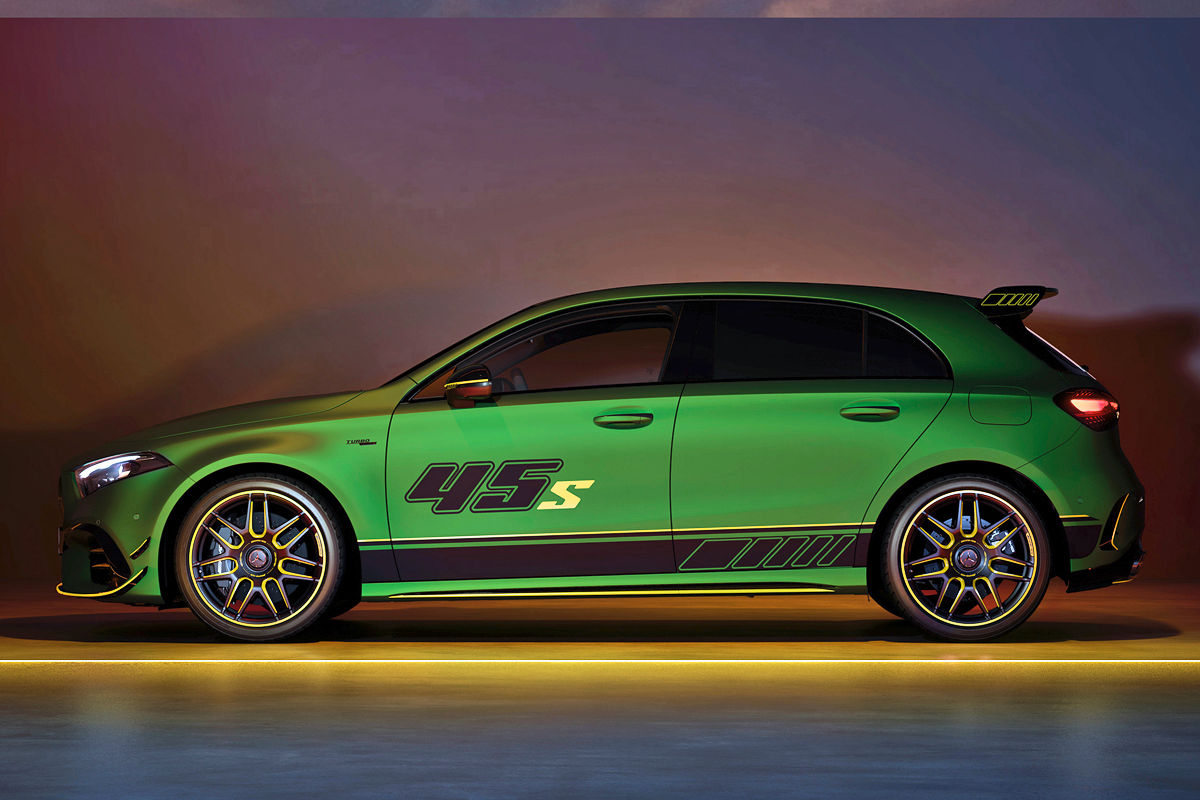
Mercedes-AMG A45 S Limited Edition scores ‘Green Hell’ paint
Meet the new Mercedes-AMG A45 S Limited Edition, a special version of Affalterbach’s hyper hatch finished in the distinctive AMG Green Hell Magno hue and crammed full of extra kit…
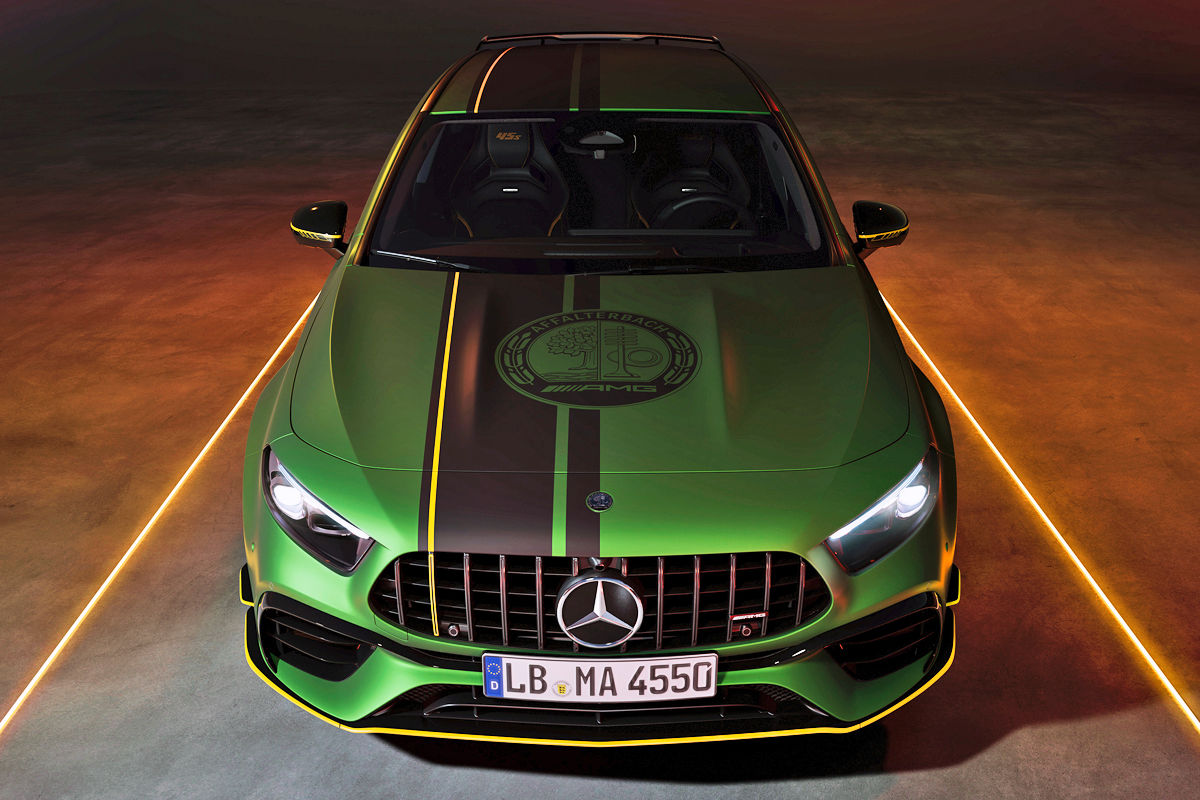
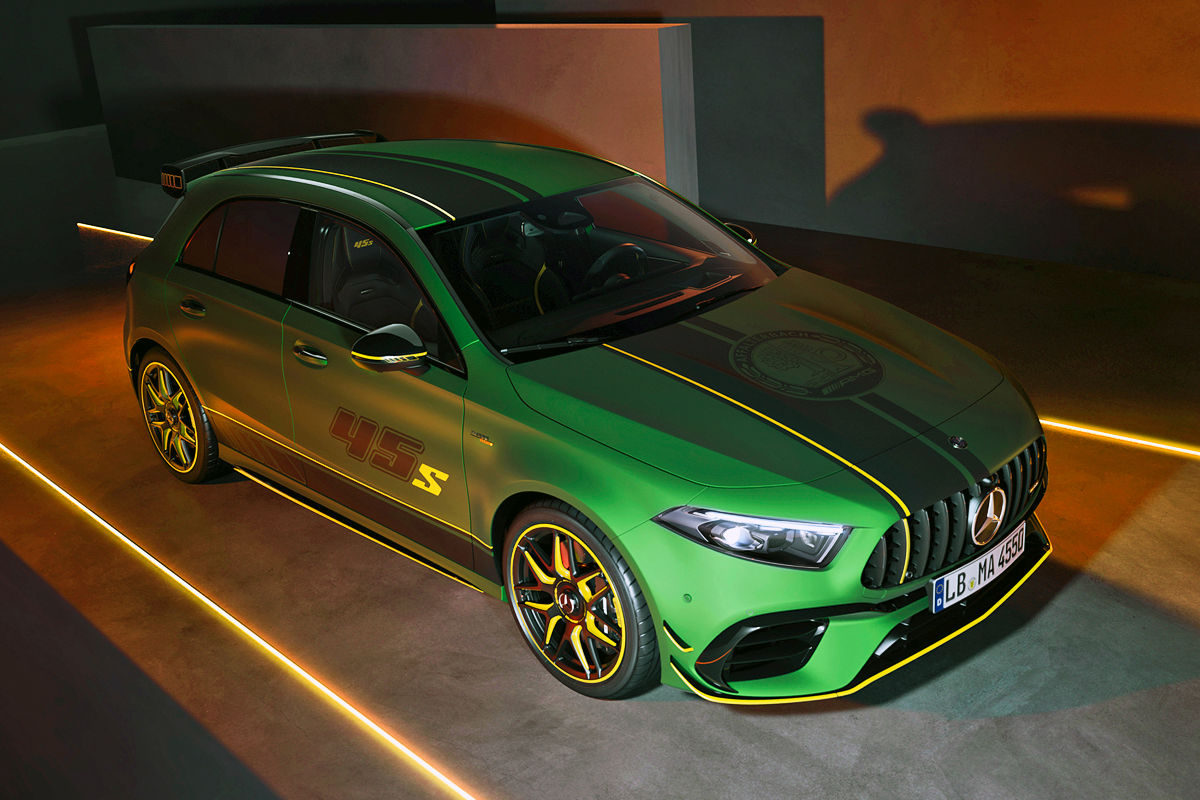
It may not be particularly imaginatively named, but the freshly revealed Mercedes-AMG A45 S Limited Edition is anything but subtle. Yes, the limited-run version of Affalterbach’s hyper hatch comes finished in the distinctive AMG Green Hell Magno paint, a hue previously not available for Mercedes-Benz’s compact models.
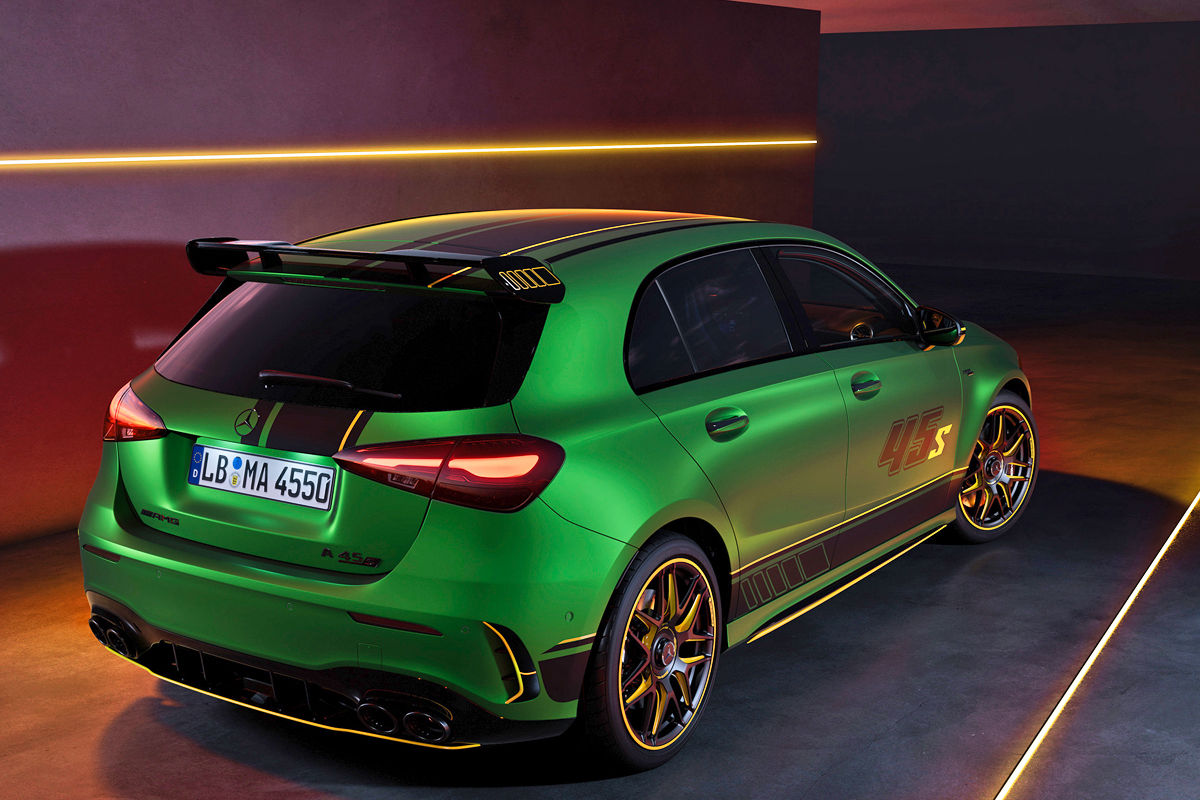
In addition, the A45 S Limited Edition ships with black stripes along its flanks (bearing the AMG logo), black stripes along the bonnet and roof, oversized “A45 S” lettering on the front doors and a large AMG crest on the bonnet. As you’ve no doubt noticed, there are also all manner of contrasting yellow accents, including for the matte-black 19-inch AMG forged wheels in a 7-twin-spoke design.
To match the colour of the rims, the AMG high-performance brake system’s callipers are finished in gloss black, complete with white AMG logos. Other details include an “exclusive” fuel cap bearing the AMG insignia and light projectors that shine Affalterbach’s coat of arms onto the tarmac when a door is opened.
As standard, the A45 S Limited Edition is fitted with a trio of familiar equipment packages: the AMG Night Package, the AMG Night Package II and the AMG Aerodynamics Package (the latter including that fixed rear wing).
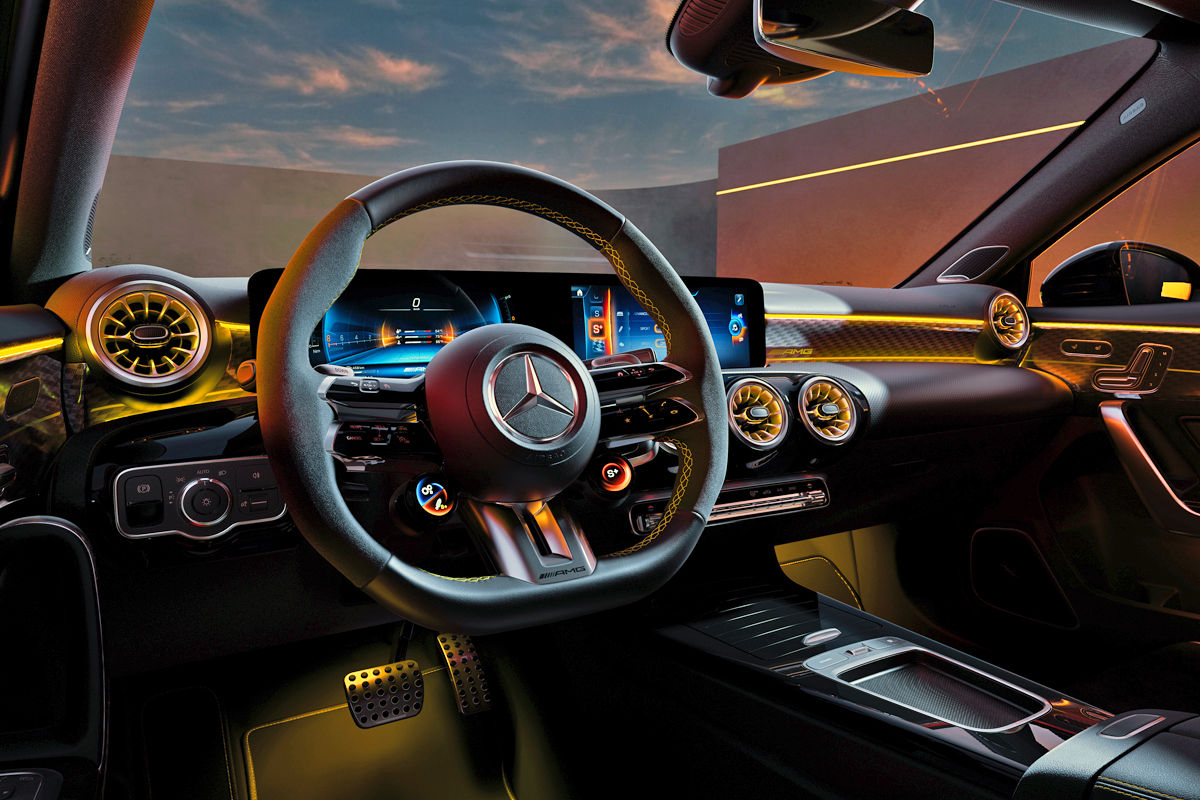
Inside, the AMG performance seats are trimmed in a combination of Artico man-made leather and Microcut microfibre, while yellow stitching has been applied to the seats (the front headrests furthermore each gaining a “45 S” badge, a treatment also handed to the floor mats), door panels and instrument panel.
The AMG steering wheel likewise scores yellow stitching, with this bright hue repeated on the AMG lettering applied to aluminium-trim facia. Meanwhile, the AMG logo on the door sills illuminates in yellow.
As a reminder, the A45 S is powered by a turbocharged 2.0-litre, 4-cylinder petrol engine sending a whopping 310 kW and 500 Nm to all 4 wheels via an 8-speed dual-clutch transmission. The obligatory sprint from zero to 100 kph takes a claimed 3.9 seconds, while top speed is limited to 270 kph.
The Mercedes-AMG A45 S Limited Edition has yet to be confirmed for South Africa, though Mercedes-Benz in Europe says the market launch on that continent will take place in April 2024 and run through to the end of the year. For the record, the standard A45 S is currently priced from R1 440 693 here in Mzansi…
Toyota’s diesel drama, forklifts and Japan’s engine testing history
Toyota is worth R5.5 billion. Mercedes-Benz? Only R1.4 billion. So, what led to the world’s biggest car company committing a… diesel-engine testing error?
Anything you do is deeply newsworthy when you are the leading global and local car brand. This is why Toyota’s recent engine certification issue has been hotly debated throughout the motoring world.
Toyota and Tesla are 2 very different, but arguably the most influential, car companies. One is the world’s most successful car company by sales, and the other is the world’s most valuable car company by equity valuation. Both are wildly successful, but very dissimilar in their approach to technology and R&D.
Toyota prides itself on producing ultra-reliable vehicles in staggeringly high numbers.
Engineers at Tesla are challenged to innovate with secondary considerations to R&D budget ceilings and potential regulatory issues. At Toyota, the development principle is conservative – to create and produce vehicles that are not the fastest, most powerful, or feature-laden, but certainly among the most reliable.
But perhaps the most remarkable difference between the world’s 2 most important car companies is their position on powertrains. Tesla is, quite obviously, the preeminent electric vehicle (EV) innovator. Toyota? It is widely criticised for a hawkish view on EVs, a bias toward petrol-electric hybrids and the reality of its enormous production of diesel engines.
The irony is that although they are the most opposing car companies imaginable, Toyota and Tesla both do things very well – and have terrifically loyal customers. The Model Y is the world’s best-selling passenger car, despite only being available in a limited distribution of markets. Toyota? You can’t argue with its ranking of 2nd and 3rd in passenger cars.
Tesla swung for the fences with the Model X’s “falcon wing” rear doors, but the concept did not carry over to the Model Y.
But what happens when Toyota gets it wrong? The story of this year, thus far, is Toyota’s diesel-engine certification failure. And it is an incident that is of significance to South Africans, because the Toyota 2.8-litre turbodiesel (GD-6) engine is locally produced and sold in many Hilux bakkies and Fortuner SUVs.
Even the venerable Land Cruiser 70-Series, more symbolic of durability than virtually any other Toyota model, now features a 2.8-litre engine option; in conjunction with an automatic transmission, no less…
What went wrong for Toyota?
Like the VW emissions issue of 2015 (commonly referred to as Dieselgate), it’s all about software and engine control parameters. And importantly, the problem is not at Toyota Motor, but rather at Toyota Industries. What’s the difference? Toyota Industries is an industrial vehicle specialist (mostly forklifts) and, since the early 2000s, it has also developed diesel engines for Toyota passenger vehicles.
Toyota Industries produces more forklifts than anyone else. And Toyota’s diesel engines.
You know those Toyota forklifts you see in warehouses? That’s Toyota Industries’ main business, not passenger cars. However, given the sustained growth of the Aichi-based manufacturer’s bakkie and SUV business, the pressure on Toyota Industries has only escalated due to the need for more diesel engines.
Its experience with heavy-duty diesel engines and commercial customers makes Toyota Industries an obvious choice to develop diesel engines for Toyota bakkies and SUVs. But the volumes that Toyota passenger vehicle customers now demand have become problematic for an entity accustomed to producing smaller batches of forklift engines.
The issue is that Toyota Industries engineers and product managers used software to reduce the variance in sampled power across test unit engines, including the popular 2.8-litre turbodiesel. That list of Toyota engines also includes 2 other powerplants of particular importance to Toyota bakkie and SUV customers: the 2.4-litre “2GD” turbodiesel 4-cylinder and 3.3-litre “F33A” twin-turbodiesel V6.
The 2.8GD-6 has not only given the Land Cruiser 70 Series better fuel efficiency – it’s facilitated the launch of automatic variants.
Toyota’s official position speaks of diesel-injection adjustments. “It was discovered that upon conducting the tests, there was such conduct as adjusting the fuel injection amount to make the data better-looking with respect to output values and torque curve,” the company said in a statement.
Power variance and certification issues are not something new for the Japanese car industry. There are several examples of claimed power outputs differing from the engines that are bolted into customer cars. Markets have different certification testing methods, depending on many variables, including fuel quality.
But how much should a process error in software methodology during testing matter to consumers?
The Japanese history of power-rating ‘interpretation’
The R33 Skyline made 206-kW on certification, but in reality, it was a LOT more powerful than that…
During the late 1980s, when the Japanese car industry was building towards global dominance, powertrain engineers realised that small gains for high-performance engines would become very expensive. To preserve the Japanese car industry’s R&D resources, instead of diluting them with an intra-brand power war, car companies in Japan agreed to an “engine power truce”.
For a long time, the Japanese car industry adhered to a peak power ceiling of 206 kW. The Japanese automotive agreement on an engine power limit started in 1989 and ended in 2005. But although it prevented Japanese supercars from being produced officially, the product history was very different – and telling of how vague the idea of “certification” became for Japanese engine-power testing.
Porsche’s 6-cylinder boxer engines are the stuff of legend, but Subaru put “flat-4” engines on the map.
The fact is that despite a 206-kW handicap during the 1990s, Japanese car manufacturers still managed to produce models with real-world performance the measure of, and at times superior to, the best European rivals with vastly more “certified” power. Clearly, the power ratings of Japanese performance cars were being significantly underreported.
The R33-generation Nissan Skyline GT-R’s real-world performance never correlated to a 206-kW peak power output. The same was true for Mitsubishi’s Lancer Evos and Subaru’s Impreza WRX STis of the late 1990s. For a decade and a half, when the German car industry was weak, Japanese brands allegedly limited themselves in terms of agreed power output – but it was theoretical.
And as with any agreement between rivals, its integrity depends on self-policing, which, if you compare any of the 1990s Japanese performance cars with their American or European rivals, was quite “casual”.
Power ratings don’t equal durability – or do they?
Software was the issue in testing, will a software update be the fix for customers?
A Toyota engine is very rarely the most powerful in its class. For many years, Ford’s Ranger and VW’s Amarok have offered more powerful engines in their bakkies than those from Toyota in the Hilux.
For all the braaiside arguments about a few kilowatts or newton-meters of torque, the reality is that people don’t buy bakkies based on perceived power ratings and claimed performance. Pre-owned Hilux prices prove that, as Toyota’s diesel-powered bakkies still command an unrivalled premium in the market.
What is the implication for Toyota engines?
Bakkies are chosen on the merit of their engine durability. Toyota engines, especially the 2.8-litre 4-cylinder turbodiesel (such as the GD-6), are well-proven. Millions of kilometres devoid of mechanical maladies by South African farmers, field technicians, and weekend adventurers are evidence of that.
Sceptics will say that if Toyota made a certification error with power output, does that imply other certification tests are also in doubt? The irony of it all is that in a world where Toyota is criticised for its lack of EVs, the enormous demand for diesel vehicles has created pressures that triggered a breakdown of discipline in the powertrain division.
VW Udara? Trademark filing hints at new small bakkie’s name
Volkswagen has applied to trademark the Udara badge, which may well end up being used on the firm’s long-awaited new small bakkie. Here’s what we know so far…
German automaker Volkswagen has filed a trademark application for the “Udara” badge, a fresh nameplate that rumours suggest will be used on the company’s long-awaited small bakkie.
The eagle-eyed folks over at CarBuzz uncovered VW’s latest trademark application, which was filed with the German Patent and Trademark Office as recently as 8 February 2024. A quick Google search suggests Udara has multiple meanings across many languages, from “exalted” in Sanskrit to the name of the African star apple fruit (chrysophyllum albidum) in the Nigerian language of Igbo. Interestingly, Udara is also a genus of butterflies.
So, what makes it likely that the Udara name will be applied to the upcoming unibody bakkie rather than another as-yet-unrevealed model? Well, back in November 2023, Brazilian publication Automotive Businessreported that Volkswagen’s São José dos Pinhais factory would produce a new small bakkie internally known as “Project Udara”. The report furthermore claimed the new bakkie would likely be launched in Brazil in “early 2026”.
Why is this news potentially of significance to South Africa? Well, VW’s Volkswagen’s local division plans to build a mystery “SUV-ish” model – based on the MQB-A0 architecture and positioned below the imported T-Cross – at its Kariega facility in the Eastern Cape. And Martina Biene, chairperson and managing director of Volkswagen Group SA, revealed to Cars.co.za back in April 2023 that “there is hope” an SA-built bakkie would be spun off this newcomer, hinting at a “bigger than half-tonne” model with a 750 kg payload.
Biene furthermore told us that the mystery SUV (which subsequent reports suggested could wear the “Yeah” moniker) “is kind of in partnership with Brazil”, so there’s at least a chance the new Udara unibody pickup could also be the small bakkie that VW hopes to eventually produce at Kariega. Of course, if that indeed ends up being the case, there’s no guarantee the Udara badge would be used in Mzansi.
Interestingly, reports out of Brazil suggest the sub-Amarok Udara will be larger than the long-in-the-tooth Saveiro, a model that has technically never been on the table for South Africa as it’s produced only in left-hand-drive form. Indeed, some publications make reference to the Tarok concept of 2018, which measured 4 914 mm from nose to tail.
It’s worth noting that VW has offered a small bakkie in SA before in the form of the Mk1 Golf-based Caddy, which traced its origins all the way back to 1978. Volkswagen’s facility in Uitenhage (which has, of course, since been renamed Kariega) produced this model from 1981 until 2007. In addition, the German firm currently has an SA-built bakkie in its range, since the 2nd-generation Amarok is manufactured by Ford alongside the Ranger at the Blue Oval brand’s Silverton factory.
The facelifted Mercedes-Benz GLE incorporates a more powerful GLE450d turbodiesel derivative. This week, we drove the new addition to the premium SUV line-up on the Garden Route to see what the revised Three-pointed Star has to offer!
Mountain passes are best traversed in low-slung sportscars, but not always…
At the foot of the Robinson Pass in the Garden Route, I found myself comfortably ensconced in the facelifted Mercedes-Benz GLE. This latest iteration of Benz’s premium SUV – and its Coupe variant – arrived in local showrooms in November 2023 with a mildly revised grille and bumpers (“a light nip and tuck”, as they say). This week, we finally had the opportunity to experience the changes in the metal.
The latest Mercedes-Benz GLE SUV and GLE Coupe are lined up and ready to drive!
While the GLE retains a dapper, oh-so-sophisticated appearance, perhaps the most significant update pertains to the model’s powertrains. All turbodiesel and -petrol powerplants are now supplemented with 48V mild-hybrid technology (including an integrated starter generator). As a result, Mercedes-Benz engineers have been able to squeeze more performance and, supposedly, efficiency from its engines.
The range starts with the turbodiesels: the 3.0-litre GLE300d now develops 198 kW and 550 Nm, while the outgoing GLE400d has been superseded by a more powerful GLE450d that produces 270 kW and 750 Nm from its enhanced 2.9-litre 6-cylinder engine. The turbopetrol-powered GLE450 offers 280 kW and 500 Nm. All variants are paired with Mercedes-Benz’s 9-speed automatic transmission.
For performance enthusiasts, the updated Mercedes-AMG GLE53 and -63 can be expected in local showrooms later this year!
What’s the Mercedes-Benz GLE like to drive?
With an updated front end, the latest GLE has a commanding presence.
Our launch route started at Ou Baai Golf Estate in George and, after setting the GLE300d’s drive mode to “Comfort”, we began driving towards Oudtshoorn via the Robinson Pass.
The GLE’s chunky, well-bolstered seats were particularly comfortable and our route was loaded into the large 12.3-inch infotainment system featuring the firm’s MBUX Augmented Reality Navigation, which is optional. The leather-wrapped steering wheel features a comprehensive control stack that allows you to control both the infotainment system and the configurable 12.3-inch instrument cluster with ease.
The updated GLE features a plush interior with a large digital interface.
I was pleasantly surprised by the 2024 Mercedes-Benz GLE’s forgiving ride quality and responsive steering feel. More so, with peak outputs of 198 kW and 500 Nm of torque on offer, the GLE300d wasn’t short of pulling power – the “starter GLE” could accelerate up to highway speeds with minimal effort.
In the twisty corners of Robinson Pass (and with the Sport drive mode engaged), the GLE hid its heft remarkably well. The ‘Benz’s kerb weight is no less than 2 165 kg… and yet it could comfortably tackle corners at pace – and with minimal body roll. Driver engagement is enhanced with gearshift paddles mounted behind the steering wheel and we found the transmission responsive and well-calibrated.
With the outside temperature nearing 41 °C near Oudtshoorn, the GLE’s automatic aircon (climate control) system worked hard, but quite effectively to keep us cool and content.
After a quick coffee stop at the Tall Goose in Oudtshoorn, we switched to the newly introduced GLE450d derivative and were soon back on the road.
With mild-hybrid technology, the updated GLE offers stronger performance.
The performance hike was immediately noticeable! The GLE450d pulled strongly towards the horizon and piled on the pace quickly and effortlessly. Mercedes-Benz reckons this derivative can accelerate from 0 to 100 kph in 5.6 seconds, which is mightily impressive for a car that weighs close to 2.2 tonnes.
The extra performance, however, takes its toll on fuel efficiency. While ‘Benz claims 7.5 L/100km, you’ll likely see figures closer to 10 L/100 km – and above. Our trip computer was indicating 11.5 L/100 km.
The Outeniqua Pass was the highlight of our drive back to George; the burly GLE450d made light work of the sweeping bends, proving that a sizeable premium SUV can indeed deliver impressive dynamism.
Mercedes-Benz GLE prices in South Africa
Mercedes-Benz GLE300d 4Matic
R1 964 600
Mercedes-Benz GLE 300d 4Matic 7-seater
R1 984 000
Mercedes-Benz GLE450 4Matic
R2 075 400
Mercedes-Benz GLE450 4Matic 7-Seater
R2 094 800
Mercedes-Benz GLE450d 4Matic
R2 041 500
Prices include a 2-year/unlimited km warranty and a 5-year/100 000 km maintenance plan.
Summary
The Mercedes-Benz GLE competes against the likes of the BMW X5, Audi Q7 and Range Rover Velar, but none of the V167’s rivals offers a turbodiesel powertrain that can match that in the GLE450d. However, the GLE is a pricier proposition with pricing starting from R1 964 600 for the GLE300d 4Matic, while the GLE450d 4Matic is priced from R2 041 500. Remember, Mercedes-Benz does offer a wide range of optional equipment which will inevitably bump up the final purchase price.
As for the pick of the range, the Mercedes-Benz GLE450d 4Matic is the one to have! The GLE can be had in both standard SUV or Coupe body shapes with the former being the more practical option. A 7-seater option is also available for buyers who need a premium SUV with more people-carrying ability.
While this was a fairly short drive, we will hopefully have the facelifted Mercedes-Benz GLE on test soon for a thorough evaluation.
In the latest instalment of our Street Smart series, brought to you by Absa Vehicle and Asset Finance, Jacob Moshokoa explains how the interest rate affects your car loan repayments and how you can be prepared to deal with financial upheavals.
PARTNERED CONTENT
Finance is scary and, let’s face it, a contract can feel like something that your ex’s divorce lawyer drew up. So, before you buy something that you may end up having to sleep in, let’s investigate a little more.
So, you have your eye on a sexy new car – great. But before you make a shortlist, visit showrooms and go for test drives it’s important to take a long, hard look at your finances.
Everything has become so expensive and costs add up. Now, very few people (apart from the smartest ones of all) know why stock markets react like an insane border collie with ADHD every time a coconut falls off a tree on some small island, but the reality of the world is this: it’s a financially volatile place.
While there are some events that we just can’t plan for or explain, it’s important to understand how all these things affect your wallet, and the biggest culprit out there is the INTEREST RATE.
How will the interest rate affect your spending power?
When it comes to financing, the interest rate is the difference between eating pre-made schnitzels for dinner at the end of the month – or house-brand baked beans on toast.
The interest rate affects everything… Credit cards, home loans, car instalments, clothing accounts, everything that you must pay off.
In a nutshell, when the interest rate goes up, you pay more for your credit, and when it goes down, you pay less. And, you need to make sure that you are prepared for all the bumps and scrapes.
There are so many factors that affect the interest rate: inflation, wars, financial markets, the value of the dollar, what the Kardashians wore last Thursday etc. Honestly, there’s nothing you can do about it.
But you can prepare yourself for interest rate fluctuations, because your financial life could get as bumpy as a ride in the back of a beat-up jalopy as it bounces its way over a road full of potholes.
Some points to bear in mind about the interest rate
The type of interest rate that you choose is important. A fixed rate gives you the security of paying a set amount for the loan without having to ride the rollercoaster interest rate hike cycle on which most of South Africa finds itself now – great. But, a linked interest rate will benefit you when the interest rate comes down again and your buddies are stuck paying a higher fixed interest rate.
Save. Save. Save. You need to aim at saving at least 20% of your earnings. Do whatever it takes. You don’t need to subscribe to so many streaming services. Also, stop buying lattés every morning and get a flask. Save as much as you can. There is no way around this. The more you save, the less money you’ll need to borrow. The less interest you pay, the quicker you pay off your stuff.
Have a budget; know exactly where your money goes. Keep track of what your bank fees are, the costs of food, electricity, petrol and so on – everything that you habitually spend money on. Budgeting is the one surefire way to get control of your finances. Do it… budget every single cent.
Stop trying to save money now and again in the hopes of being prepared for “a rainy day.” No, that usually fails – having a firm grasp on your spending and saving habits is the only umbrella you need.
Now you understand how the interest rate affects your car finances. You’re budgeting properly and saving at least 20% of your earnings, or you’re at least a daily coffee shop muffin away from that goal.
Great. So, now ask yourself – can you truly afford the car that you want to buy, or should you lower your expectations a little? Fortunately, your bank could help you find a great car suited to your budget…
Okay, that’s enough scary finance talk for now. Now, go watch that review of the latest and greatest coupe while you try to convince yourself it’d be the perfect family car!
For extra information on how you can become a better consumer, keep a lookout for more episodes from our Street Smart series and be sure to visit the Absa blog.
Earlier episodes in our Street Smart video series:
Absa’s Fulufhelo Mandane discusses what you need to consider before you start shopping for a vehicle, the costs of ownership and your various finance options. Absa First-time Buyer Guide to Vehicle Finance
Absa’s Gordon Wood details how the new Aftermarket Guidelines, which were introduced in the motor industry last year, affect you as a vehicle owner. Absa’s Guide to Responsible Vehicle Ownership
New car pricing has made many sportscars unattainable for motoring enthusiasts, but your dream set of wheels may be closer than you think. Here’s a look at some hard-to-ignore fun used cars for sale from recent model years that we’ve spotted on our site.
The new-car price list makes for a sobering read; it has become difficult for everyday driving enthusiasts to purchase their dream set of wheels. We’ve seen many comments from social media users who say they’d “rather buy a demo- than new model, once prices have come down”, or something to that effect.
Naturally, highly popular models will have price tags closer to what they originally sold for, but given the tough economic climate, some dealers may offer you a good deal to “keep the metal moving”. If a model that was launched in 2022 was listed at a price beyond your reach, what is it priced at now?
Search for your dream car on Cars.co.za!
Using Cars.co.za’s comprehensive Used Car Search Tool, we have identified performance-oriented derivatives from volume brands that are no older than 3 years and still have the balance of the factory-approved warranty and service plan for extra peace of mind. We started by looking at cars that retailed for well under R1 million when new. It’s fascinating to see depreciation and supply/demand forces at work.
Remember that you can save these searches and even set up alerts on Cars.co.za, so the moment a vehicle matching your filters is loaded, you’ll get an email.
Finally, if these vehicles are still priced beyond your reach, check out our detailed Buyer’s Guides, which focus on popular models with high mileage, what to pay for a good example and common faults.
There are some cracking used fun cars for sale on Cars.co.za right now!
Used Car Bargains: Used Fun Cars for sale on Cars.co.za
Toyota GR Yaris
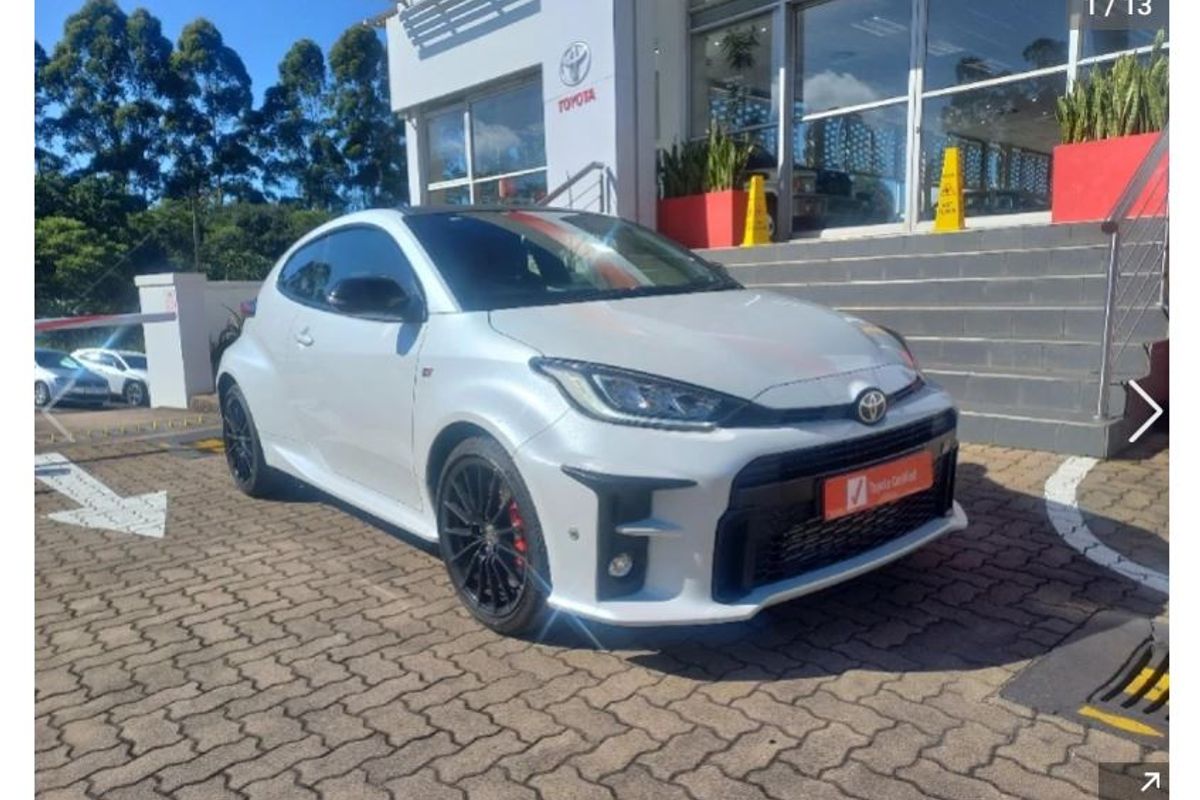
It’s still hard to believe that Toyota – traditionally, a conservative car brand – would produce an all-wheel-driven hot hatch, but the GR Yaris (conceived as a limited-edition model that would enable the Japanese brand to compete in the World Rally Championship) proved that the impossible was, indeed, possible. As one of the most fun-to-drive small hatchbacks of the modern era, the GR Yaris is a pukka enthusiast’s car.
Currently, the GR Yaris has a new-car price of R848 600 (February 2024, thankfully Toyota decided to keep building it) and we’ve all heard the cries of “I am not paying R850k for a Yaris.” So, we went digging and found the above example. There are similar units for similar money with similar mileages. The GR Yaris would make for a brilliant weekend toy… or you can daily it – and win our respect forever.
The Abarth 695 is the creation of zany Italians who thought it wise to shove a rorty 1.4-litre turbopetrol engine into a stylish city car. With a sporty suspension setup and loud exhaust, the 695 is a hoot to drive and a reminder that you don’t need crazy power under your right foot to have fun behind the ‘wheel.
Unfortunately, Abarth’s products are priced for well-moneyed hardcore enthusiasts (as opposed to everyday fun car seekers), but don’t be put off by the dear new-car prices. Our deep dive into the listings highlighted this gem for R419 900. Right now, the Abarth range starts from R579 900.
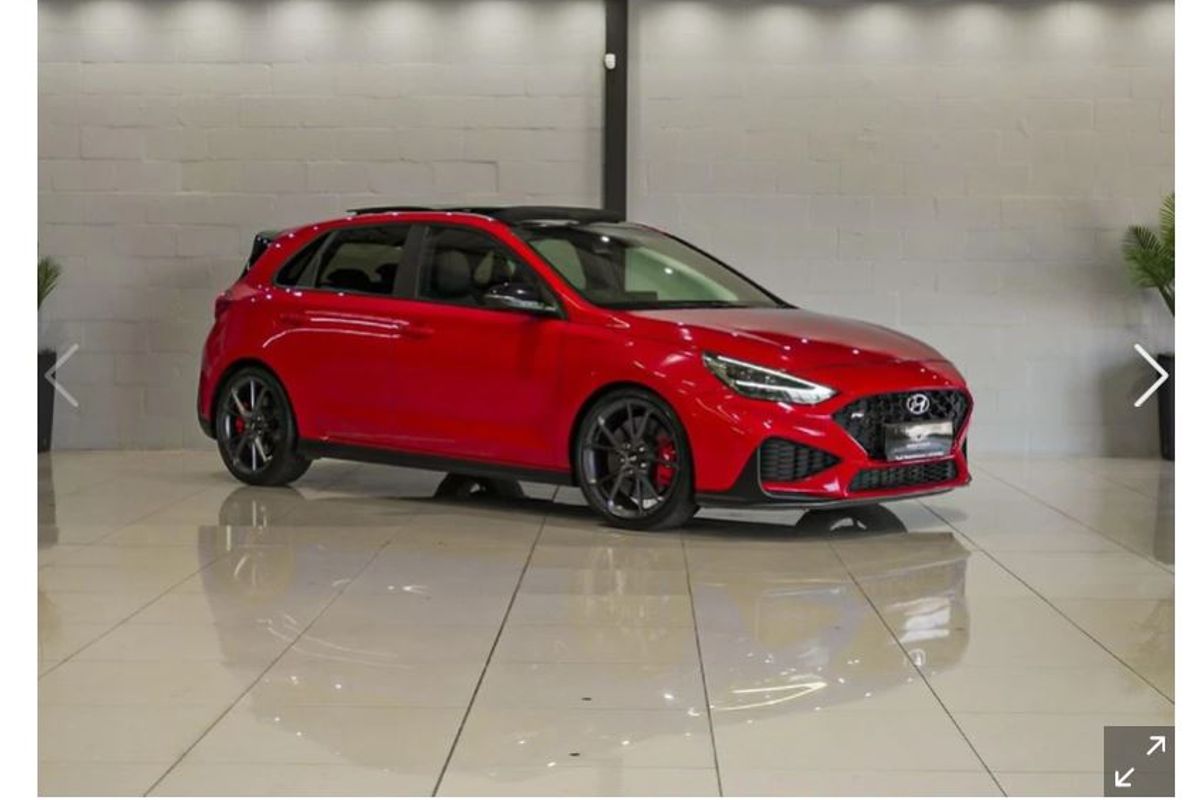
The Hyundai i30 N is one of the very few cars that rival Volkswagen’s iconic Golf GTI as a truly versatile hot hatch. Recently endowed with a dual-clutch automatic transmission, Hyundai’s punchy creation offers genuine day-to-day usability plus brilliant dynamics. However, brand new it costs R848 900.
Given the fact that these are not that popular, there are some bargains to be had. The DCT is preferred, but pre-facelift units with a 6-speed manual gearbox are fetching lower prices. The best part? Hyundai sold the i30 N with a 5-year/75 000 km maintenance plan, plus a 5-year/150 000 km general- and a 7-year/200 000 km drivetrain warranty, much of which will still be available to the buyer of a used example.
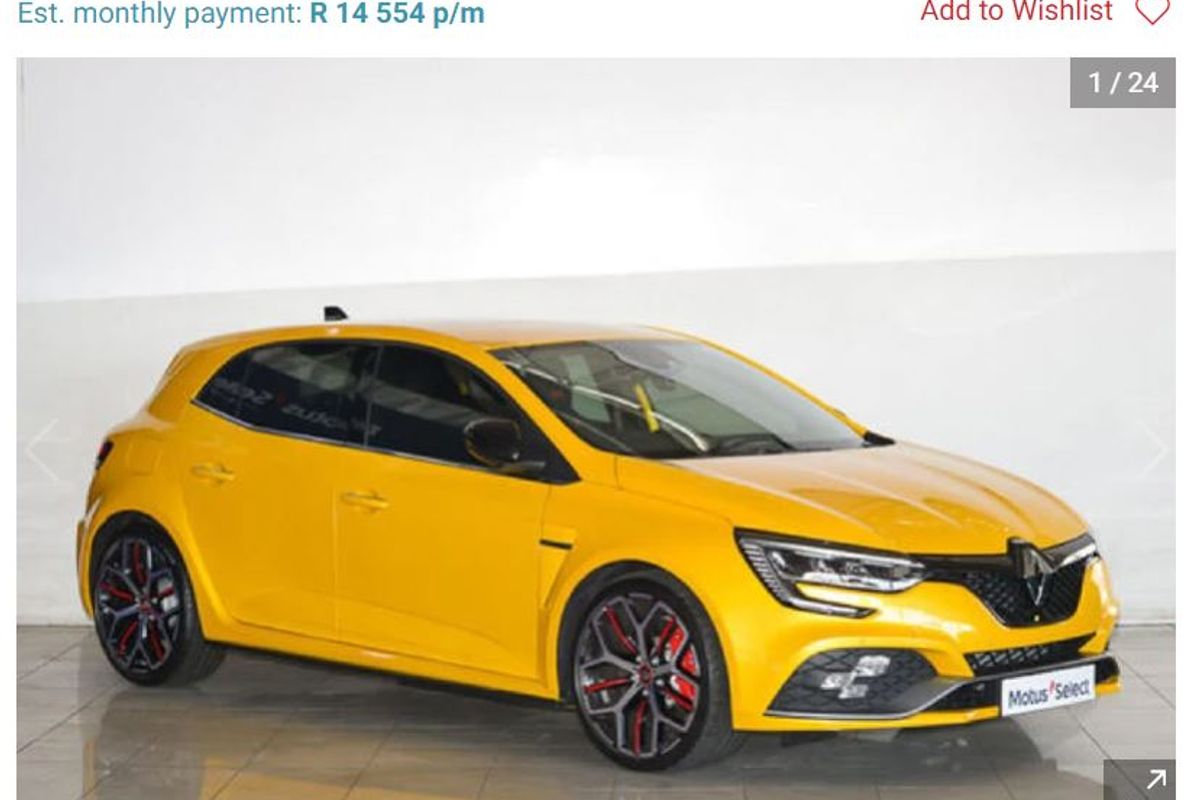
What would you pay to own one of the last of its kind? Yes, the Renault Megane RS hot hatchback era is over. At R949 999, however, the latest and greatest RS300 Trophy is decidedly pricey, even if its handling is some of the finest we’ve ever experienced and that Akrapovic exhaust is what dreams are made of.
Our dive into the listings revealed an assortment of Megane RS units for sale, but if you’re an aficionado you will surely want the latest iteration (identifiable by its solid tail-light clusters). One of those will set you back about the same as a (much milder) new Volkswagen Golf GTI before options. You’re welcome.
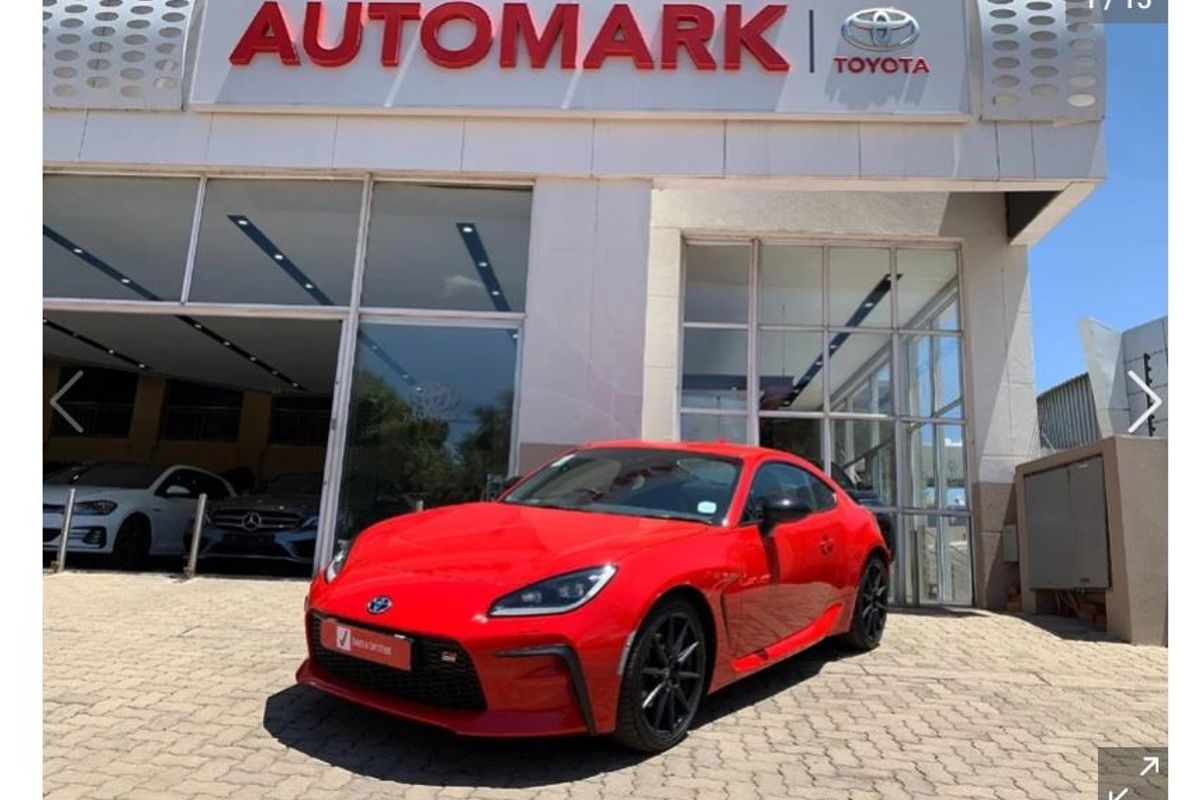
If you crave a rear-wheel-drive sportscar that’s a sheer joy to drive – and don’t want a convertible – the Toyota GR86 should be your first choice (if a roadster’s your bag, consider a demo Mazda MX-5). The model is entirely fit for purpose – that’s why it took Toyota UK only 90 minutes to sell its 2-year allocation of GR86s in 2022. Sadly, the model’s premium pricing means few will get to experience “driving nirvana”.
But, these niche sportscars are slowly becoming more affordable… if you are willing to keep an eye out for an excellent “lightly used” example. Fresh out-of-the-box units cost R763 100, but demo units are popping up priced under R600 000 (with the balances of their warranties and service plans still in play).