We recently broke the news that the Ford Puma was destined for South Africa. Now the Blue Oval brand has released pricing for this subcompact crossover. Here’s how much you’ll pay…
In August 2023, Cars.co.zabroke the news that the Ford Puma was coming to South Africa. Now the Blue Oval brand has finally confirmed this model for a local introduction, while also announcing pricing for the subcompact crossover.
As a reminder, the Puma was revealed for European markets as long ago as June 2019. But, just as our information suggested, this model is scheduled to launch in South Africa in October 2023, with the local line-up comprising 2 derivatives: a 1.0 EcoBoost Titanium and a 1.0 EcoBoost ST-Line Vignale.
The Puma Titanium will be priced from R569 900, while the Puma ST-Line Vignale will start at R613 900. Take note these prices do not include the cost of a service plan, which Ford says buyers “have the option of purchasing”.
In South Africa, the Puma will launch with a single engine option in the form of the familiar turbocharged 1.0-litre, 3-cylinder EcoBoost petrol engine, which here generates peak outputs of 92 kW and 170 Nm. Both the Titanium and ST-Line Vignale variants will ship standard with a 7-speed dual-clutch transmission.
The Titanium grade features black-machined 17-inch alloy wheels, and chrome elements for the grille, side skirts and fog lamps. The rear diffuser and skid plate on this derivative are finished in metallic grey, while the window surrounds are finished in gloss black. Inside, the Titanium boasts a leather-trimmed steering wheel, “wood-effect appliques” for the cluster bezel and instrument panel, and fabric inserts for the door interiors.
Meanwhile, the ST-Line Vignale rides on black 18-inch machined alloy wheels and gains a sports suspension. Up front, the ST-Line grille features matte-black elements and a high-gloss surround, along with glossy foglamp surrounds and a larger rear spoiler. Inside, the ST‑Line Vignale scores a flat-bottomed steering wheel, red contrast stitching, alloy pedals, an aluminium gear shifter and black headliner.
Ford claims the Puma has a luggage capacity of 456 litres, while the so-called “Ford MegaBox” – providing a “versatile storage space that is capable of comfortably accommodating 2 golf bags in an upright position” – will be optional.
Safety features standard on both variants will include ABS with EBD, electronic stability control, hill-launch assist, tyre-pressure monitoring, auto high beams, a lane-keeping system and 6 airbags. An optional Driver Assistance Pack – adding items such as adaptive cruise control, blind-spot monitoring, front parking sensors, a reverse-view camera, active park assist and a driver-impairment monitor – will also be offered. Furthermore, the top-spec derivative will be available with an optional ST-Line Styling Pack.
As a reminder, the Puma measures 4 186 mm long in standard guise (and 4 207 mm in ST-Line form), with a wheelbase of 2 588 mm. Though the Puma is clearly not positioned as a driver of significant volumes, the Dearborn-based company’s local division will nevertheless be glad to add a fresh-to-SA model (even one revealed as long ago as mid-2019) to its passenger-vehicle line-up.
Why? Well, production of the EcoSport has officially ended at both the Chennai facility in India and the Craiova plant in Romania, and local stock is run virtually dry (just 9 units were registered in South Africa in August 2023). Though it won’t serve as a direct successor to the more budget-friendly EcoSport, the Puma will at least bolster a passenger-vehicle line-up that has effectively been reduced to the outgoing Mustang and new Everest. Remember, the Fiesta was discontinued locally in March 2022 (before Ford pulled the plug globally), with the Figo following soon thereafter.
The Puma will be available in a choice of 5 exterior colours: Frozen White, Fantastic Red, Grey Matter, Desert Island Blue and Magnetic.
How much does the Ford Puma cost in South Africa?
Ford Puma 1.0 EcoBoost Titanium – R569 900
Ford Puma 1.0 EcoBoost ST-Line Vignale – R613 900
The prices above include a 4-year/120 000 km warranty, while Ford says customers “have the option” of purchasing service or maintenance plans up to 8 years or 135 000 km (service intervals are 15 000 km).
Europe’s 2024 Car of the Year: 7 finalists revealed
The shortlist of vehicles in the running for Europe’s Car of the Year 2024 title has been whittled down to just 7 contenders. Let’s take a closer look at the finalists…
The organisers of Europe’s 2024 Car of the Year award have announced the 7 finalists in the running for the title.
While as many as 28 nominees were considered from the outset, the jury – which comprises 59 journalists representing 22 countries in Europe – has now whittled down that list to just 7 vehicles.
The winner of the Car of the Year trophy – which has been in existence since 1964 – will be announced on 26 February 2024 at the Geneva International Motor Show. As a reminder, the Jeep Avenger took the 2023 title, while the Kia EV6 triumphed in 2022 and the Toyota Yaris won in 2021.
So, which models made the cut this year? Well, there’s the G60-generation BMW 5 Series and the 2nd-gen Toyota C-HR, along with fully electric models in the form of the BYD Seal, Kia EV9, Renault Scenic, Volvo EX30 and Peugeot e-3008 (though the combustion-engined 3008 is also included).
That means 2 sedans are up for the award, along with 5 crossover or SUV models. Meanwhile, relatively big names that failed to make the cut include the BMW XM, Ford Bronco, Honda CR-V, Mercedes-Benz E-Class and Volkswagen ID.7.
Take a look at the 7 finalists below, in alphabetical order:
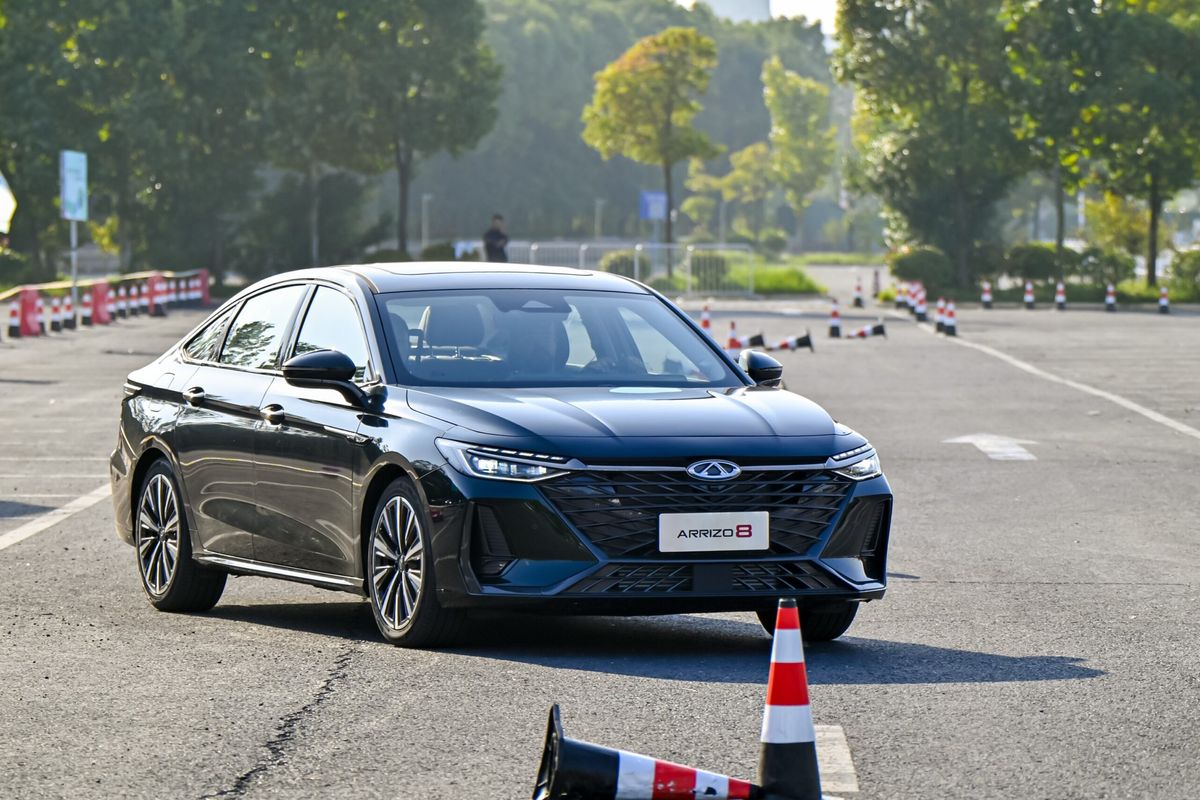
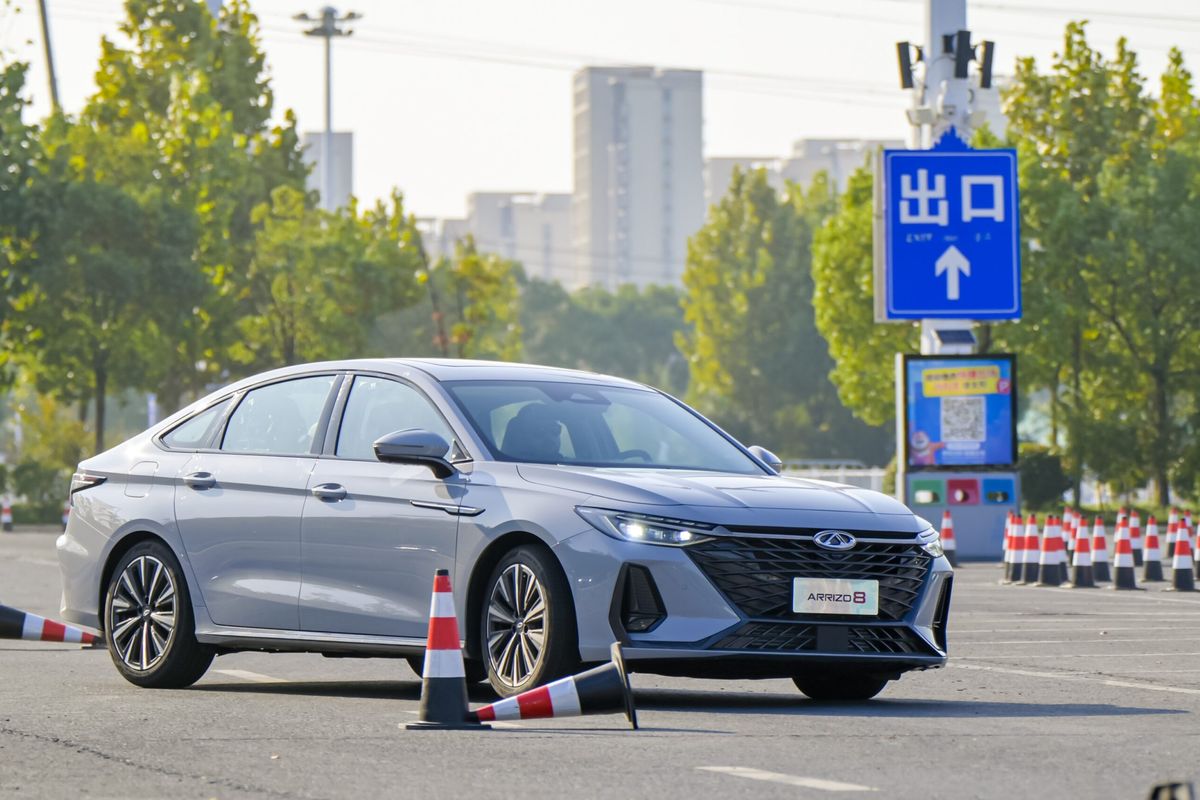
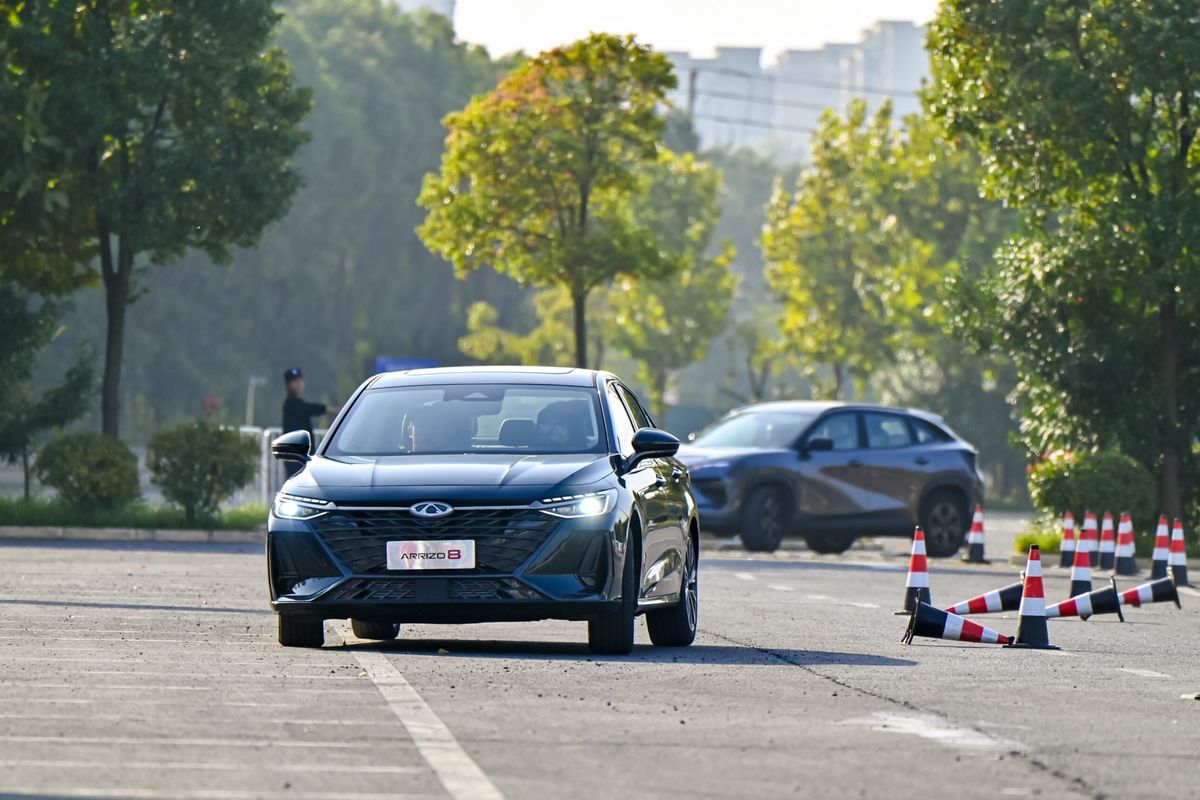
Given its rapidly expanding dealer footprint and product line-up in South Africa, you might assume that Chery South Africa has enough on its plate, but the Chinese brand is also thinking about launching the Arrizo 8 business-class sedan in Mzansi.
The demise of the sedan market in South Africa – and, indeed, most of the world – has largely been attributed to consumers’ love affair with crossovers and SUVs of all shapes and sizes.
The Chinese brands, which are largely free from the shackles of legacy platforms, have been particularly swift in exploiting this trend, and many of their successes in export markets have been built on the back of expansive crossover and SUV ranges. Okay, so why is Chery considering a sedan for South Africa?
The vehicle in question is the new Arrizo 8. Much like Tiggo is Chery’s crossover nameplate, Arrizo is reserved for sedans, and there are a number of different variants on offer in China. The Arrizo 8 is the latest addition and I recently had time to experience the stylish fastback sedan (it looks like it has a liftback, but doesn’t) in China, where I also took it for a short drive.
Size-wise, the Arrizo 8 is about 70 mm longer and 20 mm taller than a BMW 3 Series, but its wheelbase is 60 mm shorter than that of its German counterpart. That’s not to say that it’s cramped in the back – far from it – I could sit very comfortably behind the driver’s seat when it had been set up to my driving position (for context, I am 1.8 metres tall). What’s more, the Arrizo’s boot is capacious and nicely shaped.
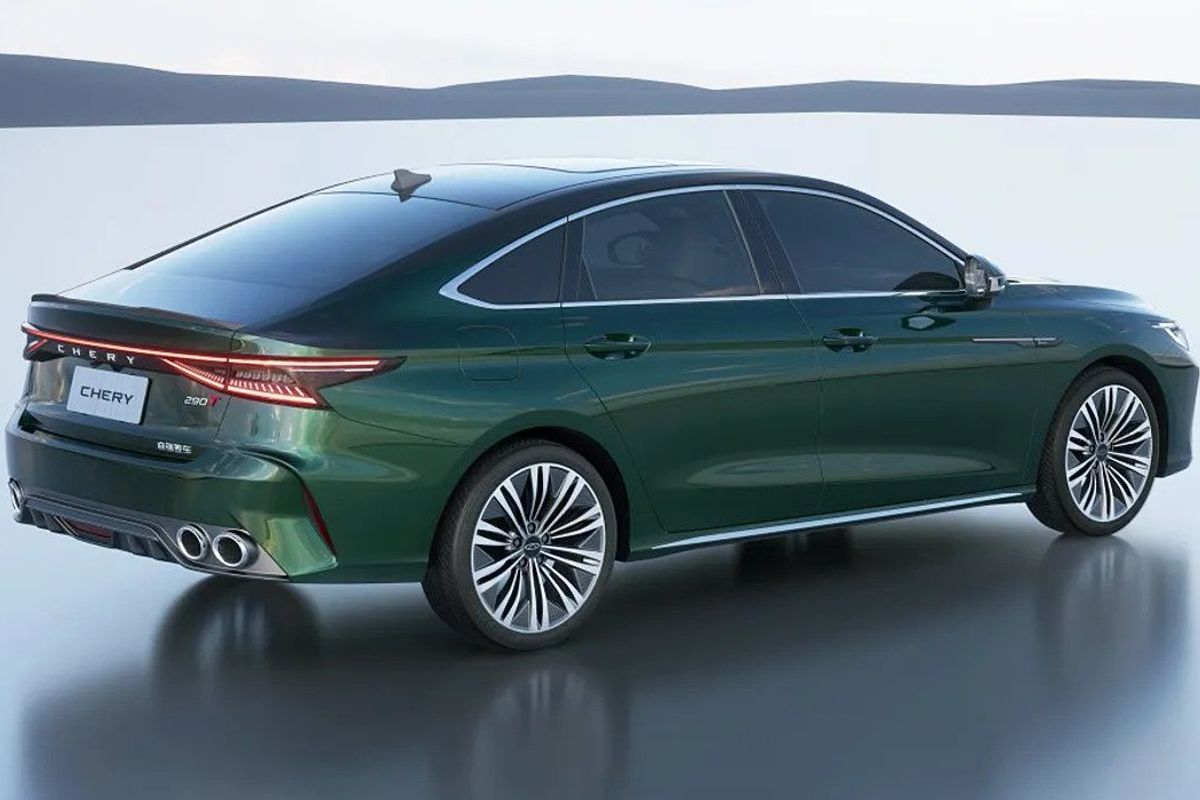
It’s an attractive car with sharp design details; in my opinion, the car’s rear end is particularly attractive.
The 2.0-litre turbopetrol derivative, which uses the same engine as the 2023/24 #CarsAwards category finalist – the Tiggo 8 Pro Max (which produces 187 kW and 390 Nm) – has a quartet of exhaust tips.
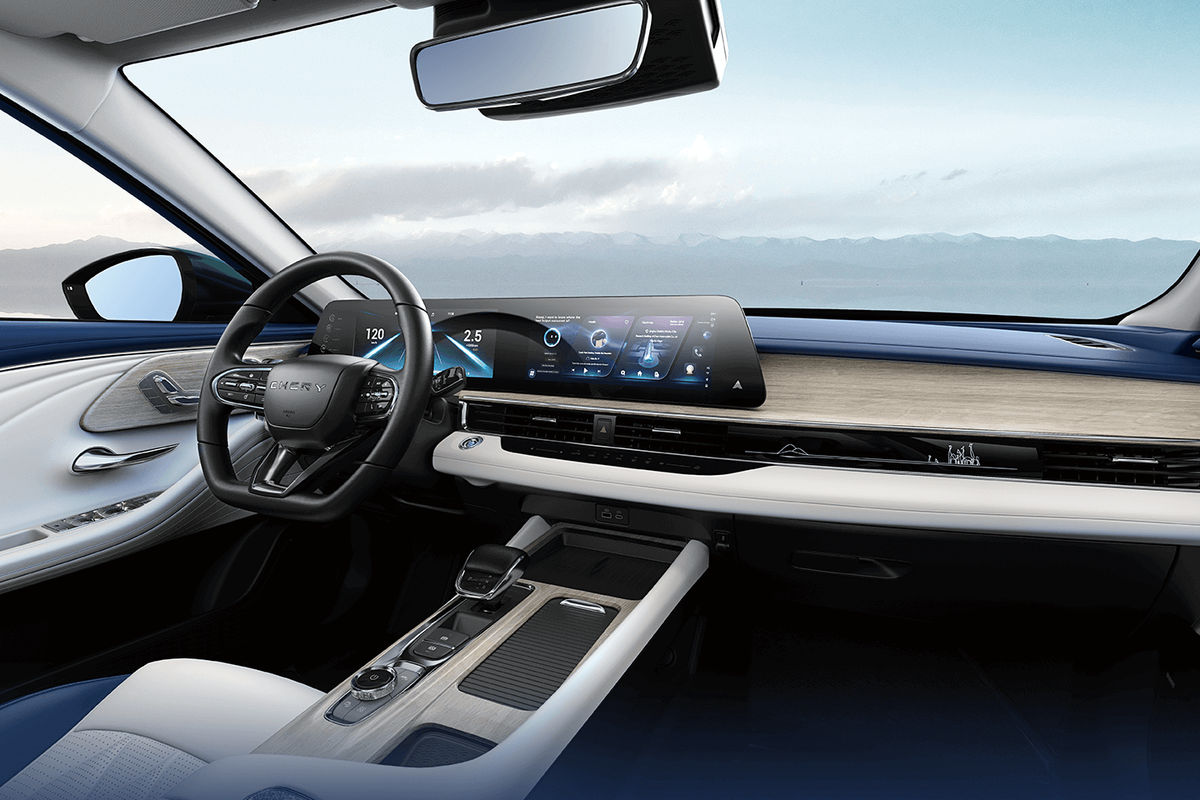
The cabin will really make jaws drop, however. It’s stunningly modern, beautifully crafted and awash with high-quality materials; there is plenty of Mercedes-Benz in some of the design details, but (and I say this with the utmost respect) it feels more solidly made than the Three-pointed Star’s latest offerings.
The drivetrain being considered for Mzansi is the 2.0-litre 4-cylinder turbopetrol mated with a 7-speed dual-clutch automatic transmission and… all-wheel drive! I recently tested the Tiggo 8 Pro Max and was impressed with how much its driveability (and efficiency) has improved (along with the performance).
With its lower centre of gravity, figure-hugging driver’s seat and prompt responses to driver inputs, the Arrizo 8 proved quite impressive during my short stint behind its ‘wheel. No claimed performance figures are stated, but given its drivetrain, the sedan should have a 0-100 kph time of around 6.5 seconds.
But will the Arrizo 8 come to South Africa? And, perhaps more importantly, why? At the moment, Chery South Africa’s official feedback is that chances of the sedan being introduced in the Republic are slim, because it’s still under development and hasn’t been greenlit for production in right-hand-drive guise.
Speaking to a Chery spokesperson in China, however, I got the sense that the Arrizo 8 is, in fact, under serious consideration, even though its pricing may be relatively steep, and sales volume probably small.
The reason I say that is the Arrizo 8 is so well-resolved that it would be a great perception changer (as the Stinger sports sedan was for Kia), even if it doesn’t necessarily sell in great numbers. A loss leader, then… and a loss that Chery is more than willing to absorb – because it wants to make a statement.
Because car insurance can seem like a complex and daunting topic to some motorists, Budget Insurance has compiled a handy car insurance guide that explains the basics of car insurance, including legal requirements, coverage options and terminology.
PARTNERED CONTENT
Is it mandatory to have car insurance?
No, car insurance is not a legal requirement in South Africa, but rather a choice left to drivers’ discretion. However, you may be required to get insurance if you buy your car through a vehicle-finance agreement.
The Automobile Association of South Africa states that there are approximately 11 million registered vehicles in the country, and up to 70% of those are uninsured. That means, on average, that only 3 out of every 10 cars on the road are insured. But that begs the question: If your car is involved in a vehicular collision, how confident are you that you’d be able to recover the cost of repairs from the other party?
Why even bother with taking out cover?
If it’s not a legal requirement to insure your car, why would you need to peruse a car insurance guide? Because it’s important to have a car insurance policy for the sake of financial security and financing.
Remember, if you don’t have any car cover and you’re involved in an incident, such as colliding with another vehicle, object or structure, you are solely responsible for paying for all repairs. You may even need to compensate a 3rd party if you were deemed at fault for damaging their vehicle or property.
Because most people cannot afford to repair their vehicles out of pocket, it’s advisable to safeguard yourself by taking out a car insurance policy and paying its monthly premiums on time. That way, you will be covered financially for a covered event, depending on the type of insurance plan you’ve taken out.
And, if you owe money on your car it’s advisable to take out car insurance because, even if you suffer a total loss of the vehicle (through theft or an accident), you will still have to pay off your debt. Most banks stipulate that you need to purchase comprehensive car insurance when you buy a vehicle through them.
How much is Car Insurance?
The cost of car insurance is multifaceted. An insurance company will usually conduct a risk assessment on each individual application based on a number of different factors, such as the prospective client’s age, driving history, where they park their car, the age, make and model of their vehicle, their geographical location and even the amount of time they spend on the road…
In addition, there are several types of vehicle Insurance policies that will each have different monthly premiums based on the coverage they provide. The more cover they provide, the higher the premiums.
Requirements for car insurance
Applying for a car insurance quote is simple and easy. You will need to supply the following information:
Personal information, including your age, address, ID number and contact details.
Vehicle information: the make, model, year and VIN number, along with the registration details proving ownership.
Driving history: you may be asked to provide information related to your driving record, including car accidents or car insurance claims.
Coverage preferences: you will be asked to select the type of car insurance you want, along with the level of coverage.
Payment information: a method of payment for your insurance premium.
What does Car Insurance cover?
Your coverage will depend on the type of insurance you take out. Your most common options include:
Comprehensive Car Insurance covers loss, theft, and damage to your own car. It also covers fire damage and damage to a 3rd party’s property or vehicle, even if you’re the cause of an accident.
Third-Party Only Car Insurance will only cover damage to a 3rd party’s vehicle or property that results from an accident in which you are deemed to be at fault.
Some insurers, such as Budget Insurance, also offer several add-on insurance policies if you have identified specific risks for which you’d like to receive extra coverage. Plus, you can receive a cashback reward by remaining claim-free for a period of 2 years. So if you’d like to maintain a “clean” record, you can rely on these auto add-on policies to take care of any minor scrapes. Some of the policies include:
Motor Warranty: Vehicles and their parts do not last forever. With a Pre-owned or Extended Motor Warranty, you’re covered for mechanical and electrical problems when your manufacturer’s warranty expires.
Scratch & Dent Cover: You can take care of those small (but annoying) scratches, scrapes, dents, and chips on the body of your car without having to claim on your primary car insurance policy.
Tyre & Rim Guard: To replace a tyre or fix a rim after you’ve hit a pothole or debris on the road.
Auto Top-Up: If your car is stolen or written off, your payout may not fully cover what you owe on your financed car. Auto Top-Up pays the difference.
Want to know more about car insurance?
We hope that you have found this car insurance guide helpful. Remember, if you want to learn more about car insurance or review your car insurance requirements with the help of experts, Budget Insurance’s team is always ready to assist. Contact them on 086 1600 120 or utilise their online car insurance calculator, which gives you an accurate and budget-friendly quote in minutes.
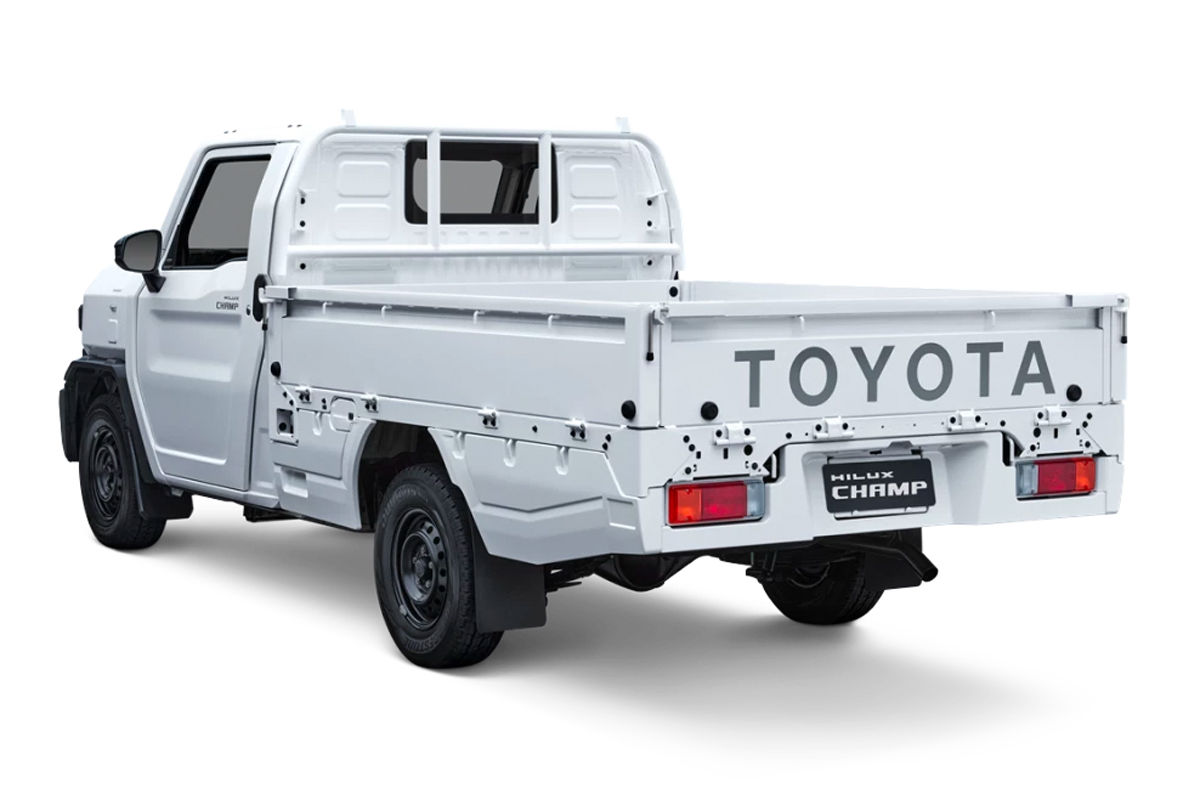
The new Toyota Hilux Champ has officially launched in Thailand, with the Japanese firm confirming the ladder-frame bakkie’s engine options, payload capacity and more…
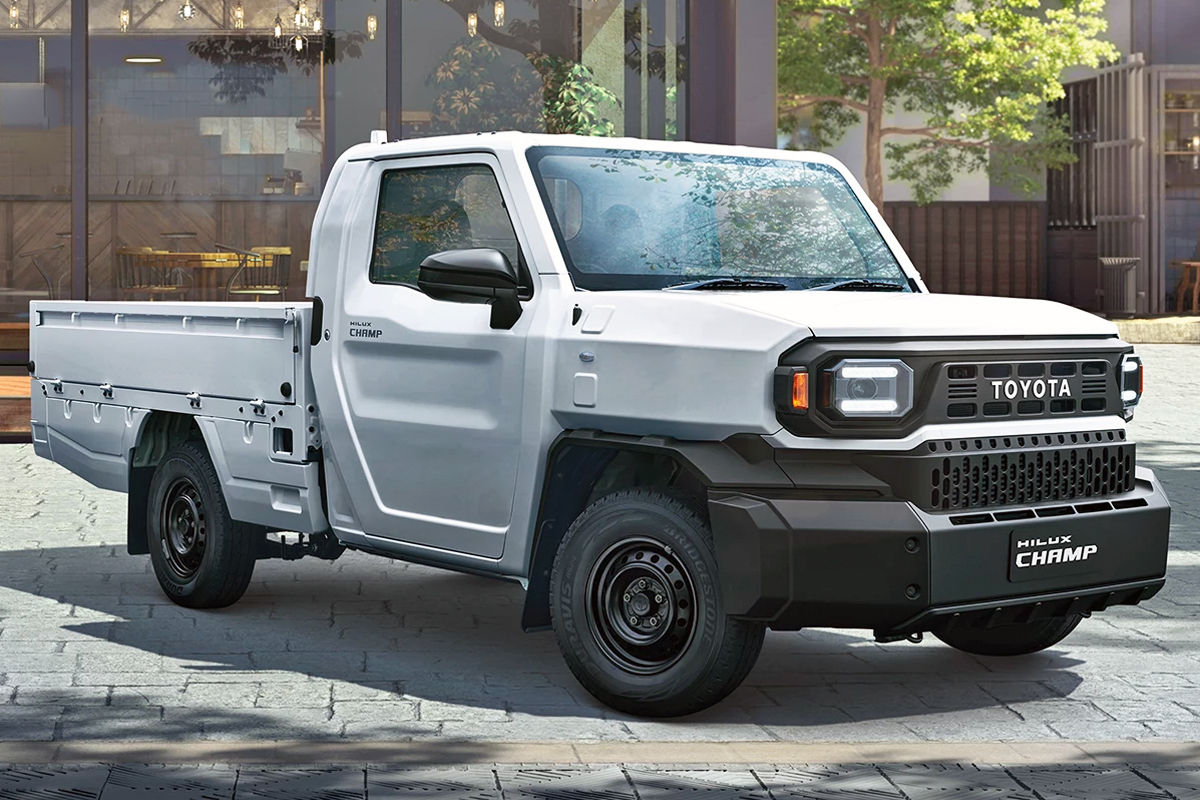
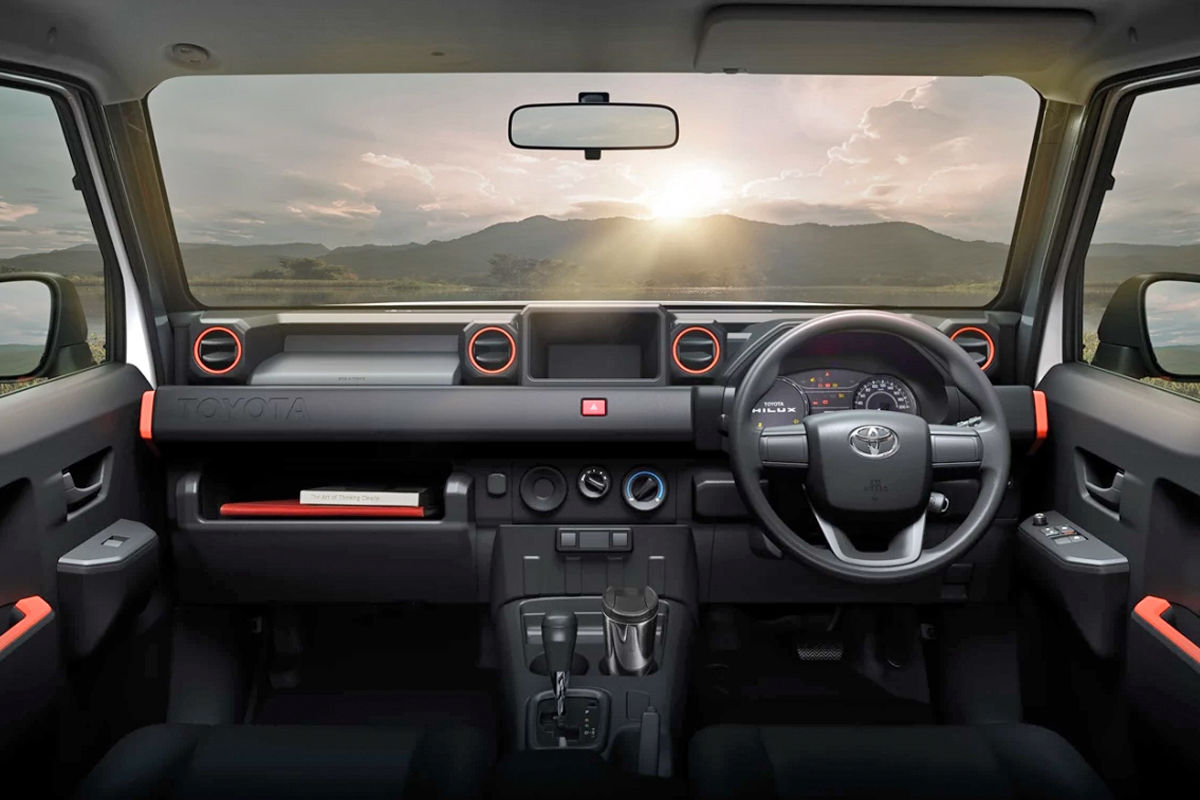
Meet the new Toyota Hilux Champ. Orders for the Japanese firm’s latest ladder-frame bakkie have officially opened in Thailand, with the company also announcing details of the engine line-up and load-carrying capacity.
As a reminder, Toyota revealed the IMV 0 Concept in Thailand towards the end of 2022, before showing off a few interesting applications of the bakkie concept in August 2023. Further iterations were then unwrapped at the Japan Mobility Show 2023, while a production-ready version was spotted wearing the “Hilux Champ” badge earlier in November.
A Hilux Champ customised as a camper.
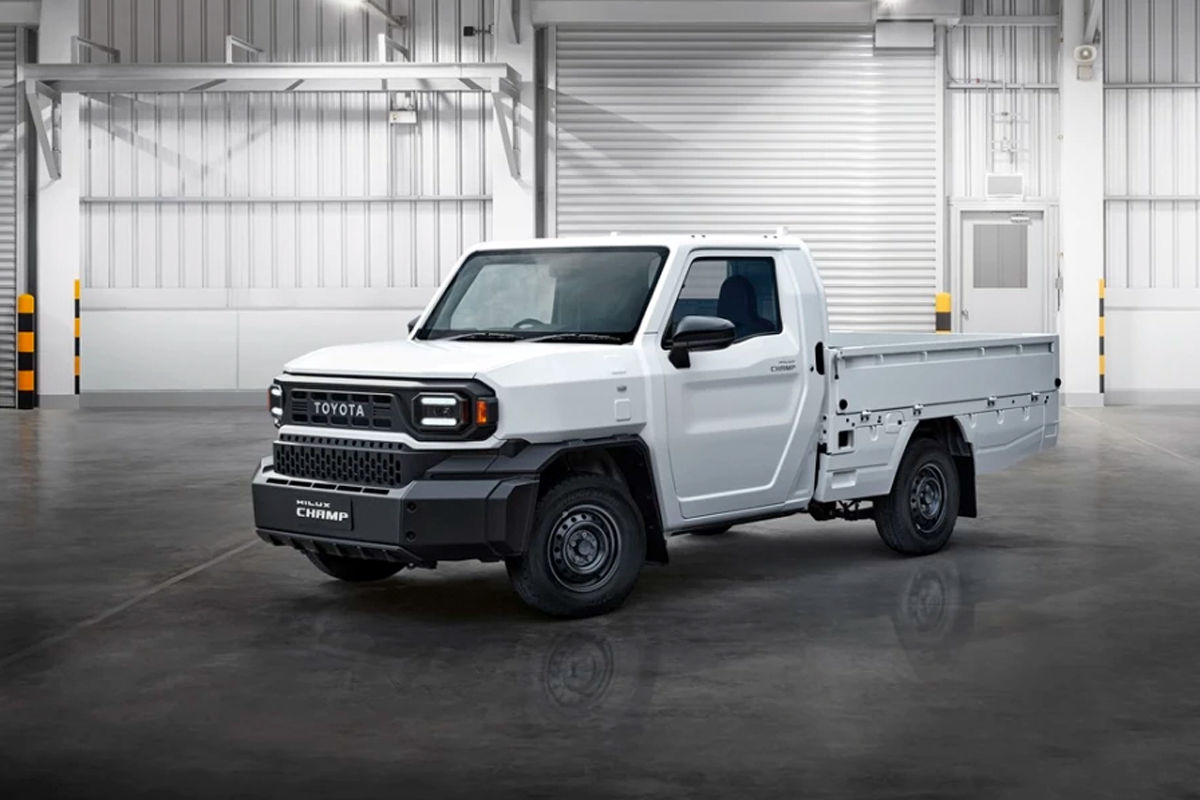
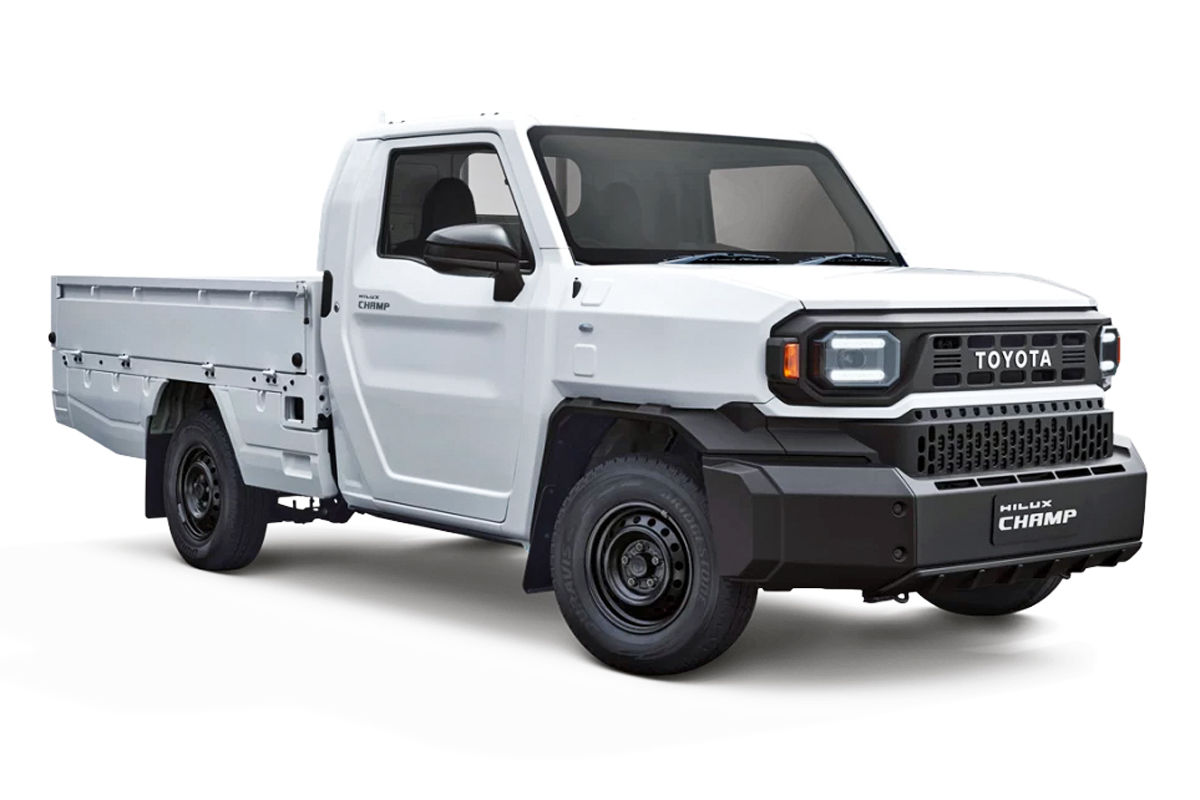
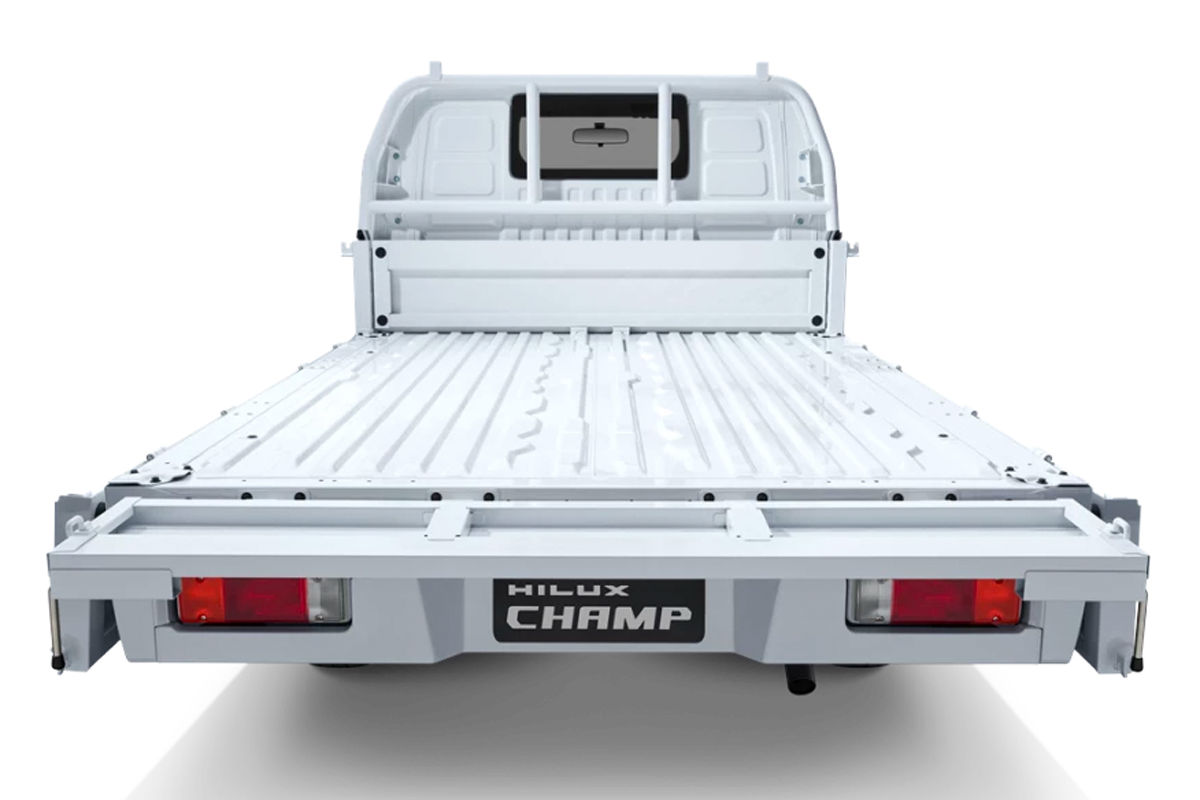
Now, Toyota has confirmed the Hilux Champ nameplate (one that South Africans will associate with the Rosslyn-built Nissan 1400 bakkie that preceded the NP200), offering its new single-cab workhorse in both short- and long-wheelbase form. At launch in Thailand, as many as 8 grades are on offer, while 11 customised models were shown. There is also an “unequipped” version featuring a flat deck with bolt holes at various locations, allowing custom accessories to be attached.
So, what about the engines range? Well, in Thailand, the new 2-seater Hilux Champ will be offered with a choice of 3 powerplants that will be familiar to Hilux buyers here in South Africa. There’s the naturally aspirated 2.0-litre petrol unit (102 kW and 183 Nm), the likewise atmospheric 2.7-litre petrol motor (122 kW and 245 Nm) and the 2.4-litre turbodiesel mill. Initially at least, all drive the rear axle only.
Delivery vehicle, anyone?
The oil-burning motor makes 110 kW and 400 Nm, and will be available with either a 5-speed manual gearbox or a 6-speed automatic transmission (yes, just like in Hilux). The payload capacity for this rear-wheel-drive Champ derivative is listed as 1 000 kg, while the gross vehicle mass (GVM) appears to be somewhere in the region of 2 790 kg.
The long-wheelbase version boasts 3 085 mm between its axles, precisely the same distance between the axles of the current-gen Hilux. It measures 5 300 mm from nose to tail, which is 30 mm longer than a single-cab Hilux but 25 mm shorter than extended- and double-cab versions of Toyota’s big-selling bakkie. It’s 1 785 mm wide (a touch narrower than a standard Hilux) and stands 1 740 mm tall.
In Thailand, the Champ can be fitted with a number of accessories.
In Thailand, prices run from 459 000 to 577 000 baht, which translates to pricing bookends of R244 158 and R306 926 at the prevailing exchange rate (27 November 2023). So, on that note, will we see the new Hilux Champ – which has already gone into production at Toyota’s Samrong Plant in Thailand – in South Africa, too?
Well, that remains to be seen, but it’s worth keeping in mind that earlier in 2023, as reported by IOL Motoring, Toyota SA Motors executives hinted at an upcoming model that could slot in below the Hilux and likely be built at the same factory in KwaZulu-Natal. It’s looking more and more likely the Champ (if it indeed wears that badge here) will be that bakkie, considering it seemingly shares its underpinnings with the current-generation Hilux…
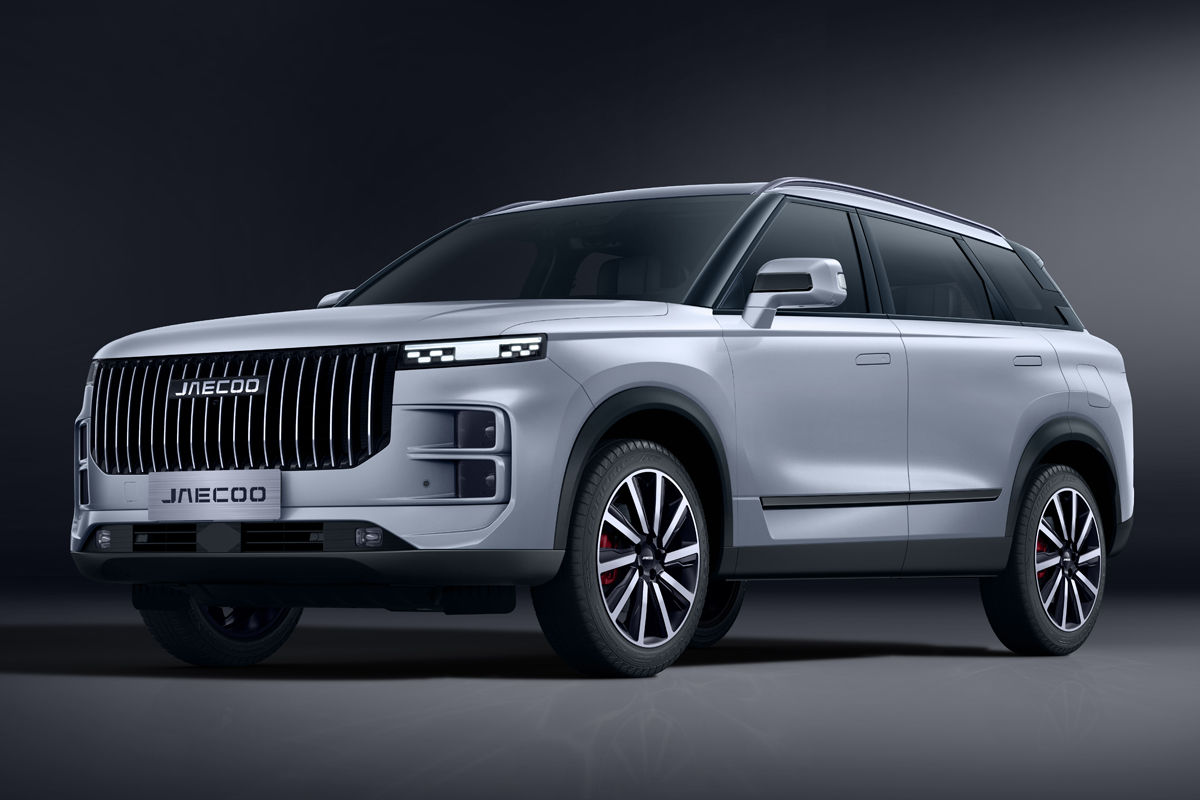
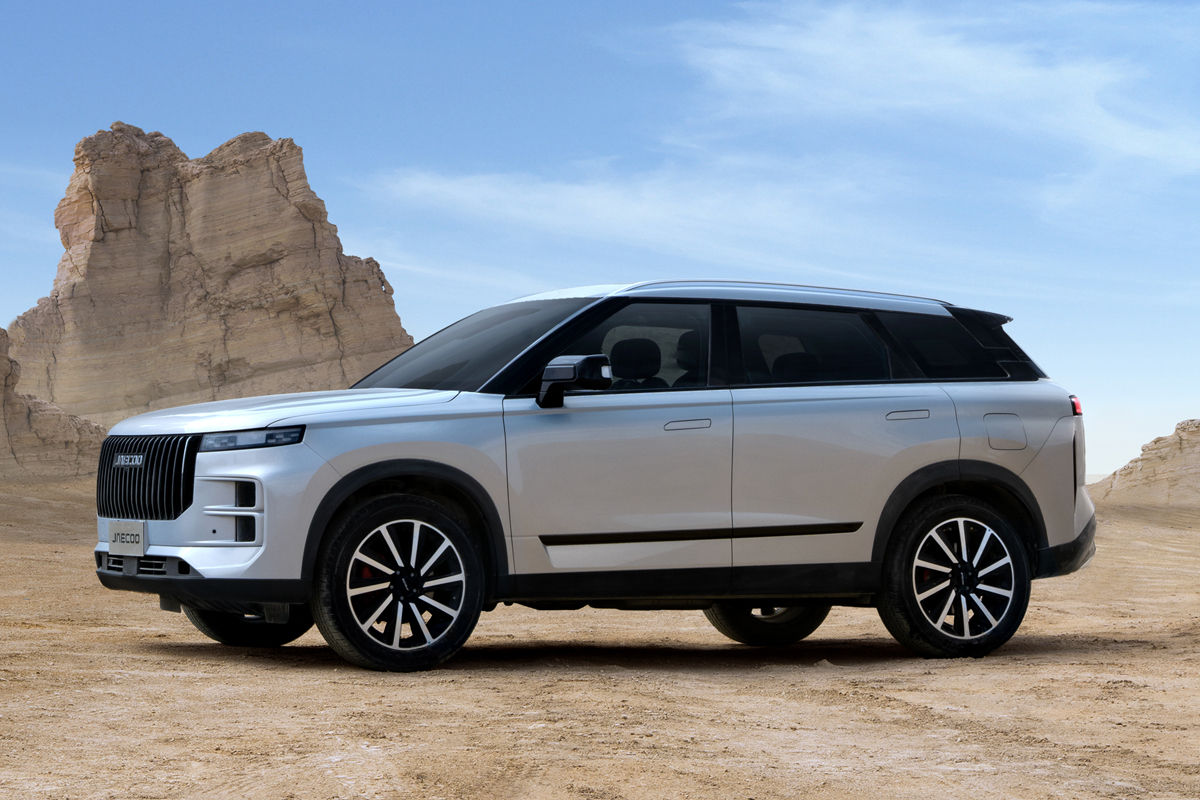
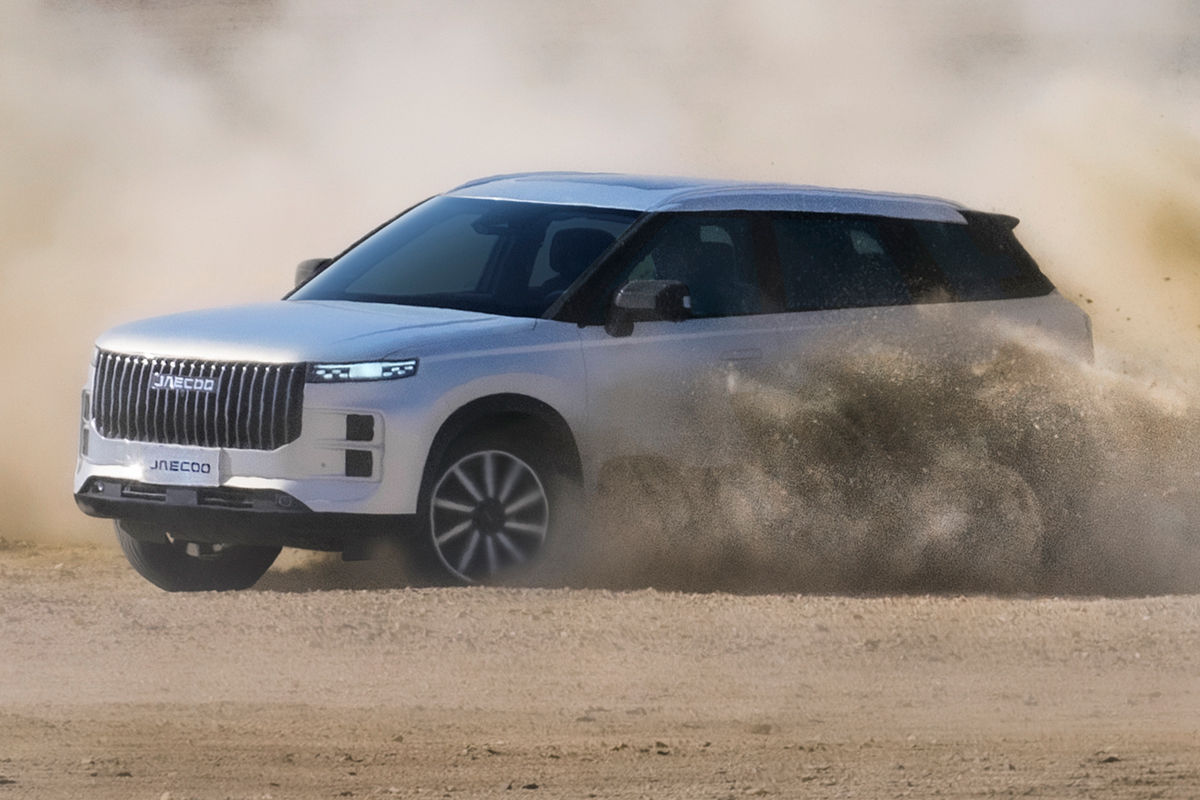
Jaecoo, which, like Omoda, is a sub-brand of Chery, will arrive in the SA new-vehicle market soon, with the J7 premium family car slated for introduction in early 2024.
Cars.co.za recently reported that Chery South Africa would launch a handful of new models in Mzansi next year, including 2 models of the Jaecoo brand, a brace of plug-in hybrids and then, in 2025, a battery-electric vehicle.
Did you know that Omoda, of which the new C9 flagship will be launched imminently, is but one-half of a division that Chery refers to as O&J? The “J” stands for Jaecoo, a portmanteau of “Jae” (a contraction of the German word for hunter Jager) and “cool”.
Styled as an “urban off-road SUV marque”, Jaecoo is – like Omoda – an upmarket marque with a striking design language and a high level of technology; one could say that Jaecoo is for Chery, what Haval and Tank are for Great Wall Motor.
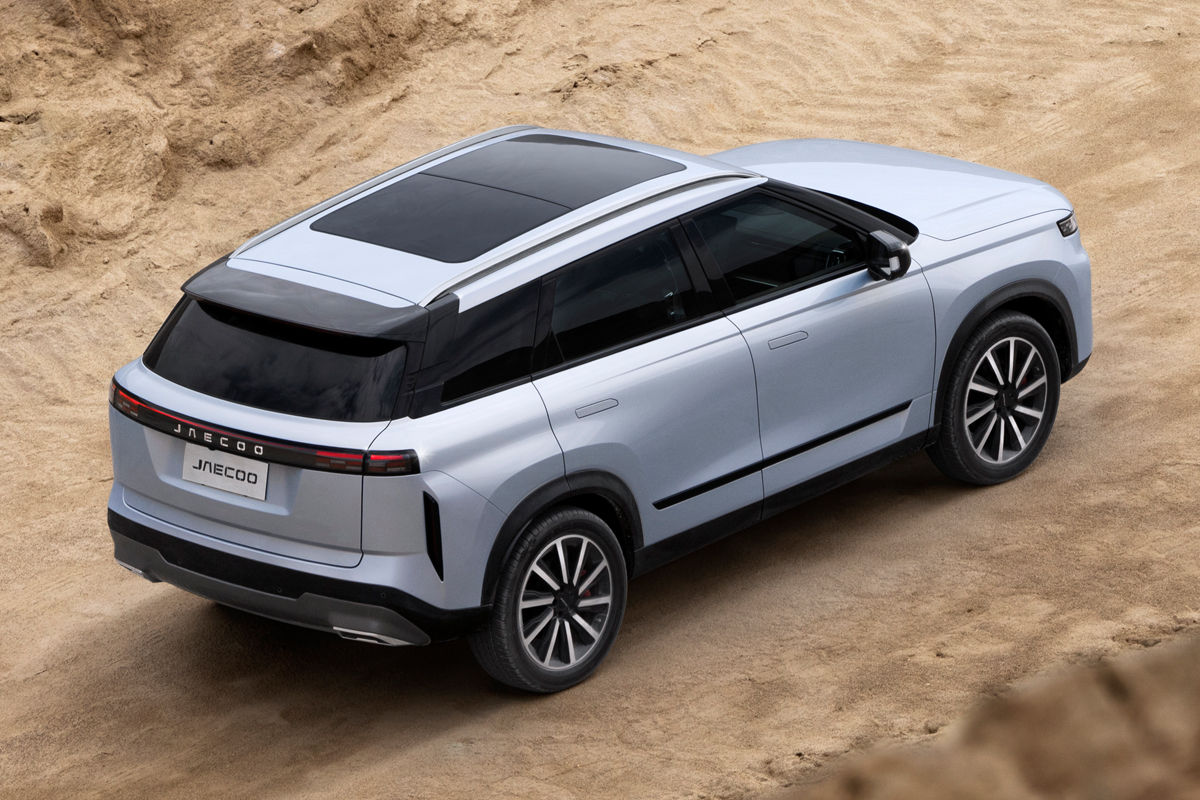
Measuring 4 500 mm in length, 1 865 mm in width and 1 680 mm in height (with a 2 650-mm wheelbase), the Jaecoo J7 is boldly styled, to put it mildly.
The model’s exterior design blends blocky old-school off-roader proportions with slick, modern finishes and is said to embody the brand’s slogan of “From Classic, Beyond Classic”.
“(The Jaecoo J7 is) tougher than typical urban SUVs, but more comfortable than traditional off-roaders,” says Shannon Gahagan, the South African brand and marketing manager for Omoda&Jaecoo (O&J). “(It incorporates) a raft of remarkable safety features, forward-thinking technologies and chic design”.
To your eyes, the Jaecoo J7’s matrix-style grille takes inspiration from Mercedes-AMG’s Panamericana treatment. Slim, technical-looking LED headlamps flank the grille, while the door handles are flush-fitting, and the rear styling is, well, Range Rover-esque, replete with a tailgate-spanning LED bar and spoiler.
The chunky and angular aesthetic continues in the cabin with (ahem) Jeep-style door handles and straight lines perpendicular to one other with a portrait-oriented infotainment screen on the fascia – O&J claims it measures 24.6 inches (diagonally).
Although the local subsidiary of O&J hasn’t confirmed this, we believe the Jaecoo J7 will be powered by a 1.6-litre 4-cylinder turbopetrol engine that develops about 140 kW and 275 Nm of torque (it might match the Chery Tiggo 7 Pro’s 145 kW/290 Nm).
It’s likely that the Jaecoo J7 will be made available in both front- and all-wheel-drive guises in conjunction with a 7-speed dual-clutch automatic transmission. Gahagan said (at least one derivative in the local line-up) will be “endowed with Jaecoo’s proprietary ARDIS intelligent off-roading system (with) as many as 7 drive modes (that allow) it to adapt to a wide variety of terrains.
“While our product rollout in South Africa will commence with the Jaecoo J7 early in 2024, there’s plenty more to come from the brand.
“Later next year, Jaecoo will also launch the new, larger J8 – packed full of more segment-redefining features, from an ultra-smart curved infotainment screen to row-specific climate control,” Gahagan adds.
We saw the Jaecoo 8 in the metal in Wuhan, China earlier this year.
Furthermore, the J7 plug-in hybrid electric vehicle (PHEV) variant is set to be introduced in Q3 2024, before the flagship J8 arrives in Q4 2024. More details, including local pricing and specs, will be released closer to the respective models’ launches in 2024.
The CEO of the Volkswagen brand says he is “very worried” about the future of the German automaker’s manufacturing operations in South Africa…
Thomas Schäfer, global CEO of the Volkswagen brand, has sounded a warning to South Africa, saying he is “very worried” about the future of vehicle manufacturing in the country.
Speaking to Reuters, Schäfer pointed to South Africa’s persistent load-shedding, sustained logistical issues (both on the railways and at the ports) and increasing labour costs as key disadvantages to building cars in the country.
The Kariega plant in the Eastern Cape traces its roots back to 1947.
VW SA currently manufactures the prolonged lifecycle Polo Vivo and the Polo hatchback at its Kariega factory in the Eastern Cape. The facility produces the Polo hatch for all right-hand-drive markets – while also supplementing production for left-hand-drive markets – and is the sole producer of the Polo GTI. However, many key export destinations are shifting towards electric vehicles (EVs), casting doubt on the global future of the Polo nameplate.
That said, back in November 2022, VW SA announced its intention to add a new model to its local production line, confirming the upcoming vehicle would ride on the same MQB-A0 platform as the Polo hatchback with a planned production start in 2026 or 2027. The company has also mentioned the possibility of a small bakkie being spun off the same platform.
Schäfer was once the head of Volkswagen Group South Africa.
But the latest comments from Schäfer – the former head of Volkswagen Group South Africa – suggest the Wolfsburg-based brand is closely examining its local operations as it continues a global cost-cutting drive in a bid to remain competitive in the transition to electric cars.
“Eventually you have to say, ‘why are we building cars in a less-competitive factory somewhere far away from the real market where the consumption is?’. I’m very worried about it… We’re not in the business of charity,” he said, according to the Reuters report.
VW has been building the Polo in SA since 1996.
Schaefer, who was appointed global CEO around the middle of 2022, told Reuters that his local team had made strides in what he termed an “uphill battle” but emphasised it was up to the South African government to solve the various issues facing vehicle manufacturers in the country. According to a Business Day report, however, the VW boss added the Kariega facility was safe “for now”.
So, what about a potential switch to building electric cars? Well, Schaefer echoed the sentiments of Martina Biene, chairperson and managing director of Volkswagen Group South Africa, who earlier this year told Cars.co.za it would likely be more than a decade before the German brand started producing EVs at its Kariega plant.
Interestingly, though, Schaefer added that South Africa – which enjoys proximity advantages when it comes to critical minerals such as lithium and cobalt – could transform itself into an EV battery manufacturing hub, should suitable government policies be put in place.
“There’s a realistic chance that South Africa, with enough focus, with all the raw materials in the neighbourhood, they could be a champion,” he said.
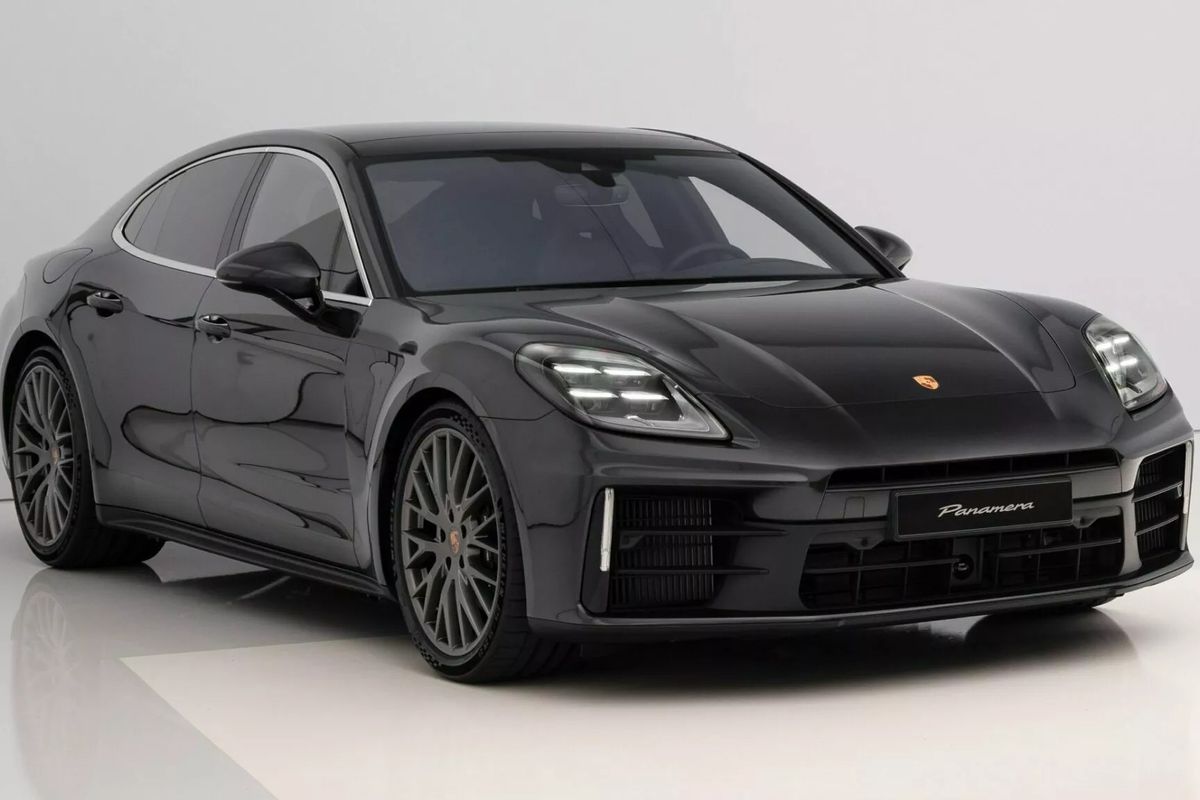
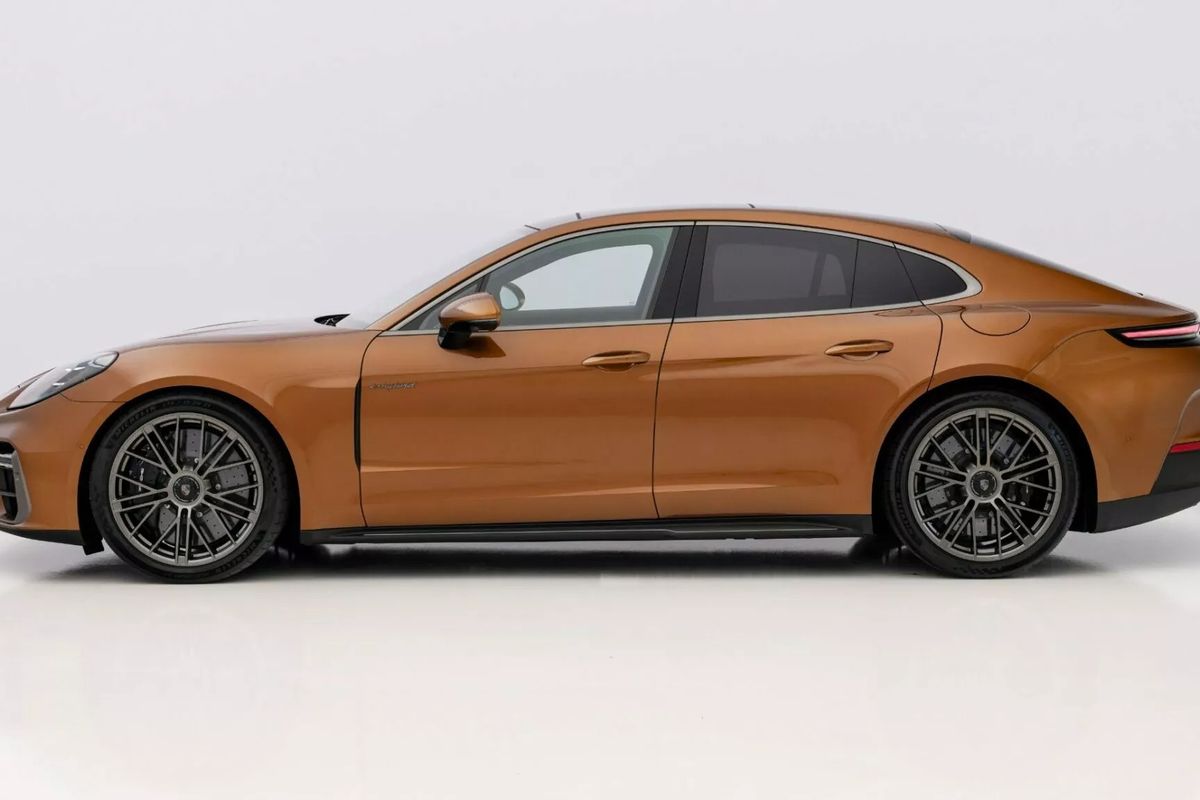
Meet the 2024 Porsche Panamera, the third-generation sedan from the Stuttgart brand. Here’s a look at specs and pricing.
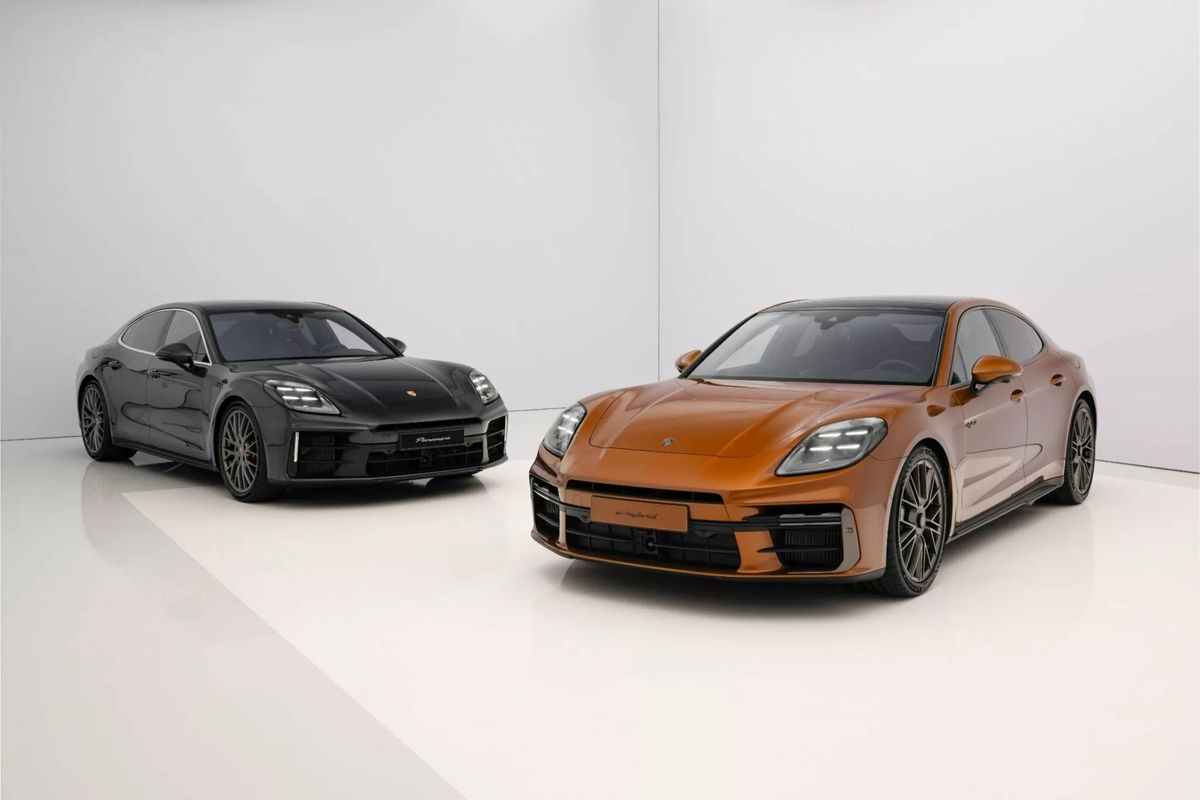
Many would argue the 911 and Cayenne are the more popular models, but the 2024 Porsche Panamera still commands some limelight for those wanting a practical sports sedan. The third-generation model has just been announced, with an updated look, interior upgrade, expanded engine lineup as well as a smart active air suspension setup.
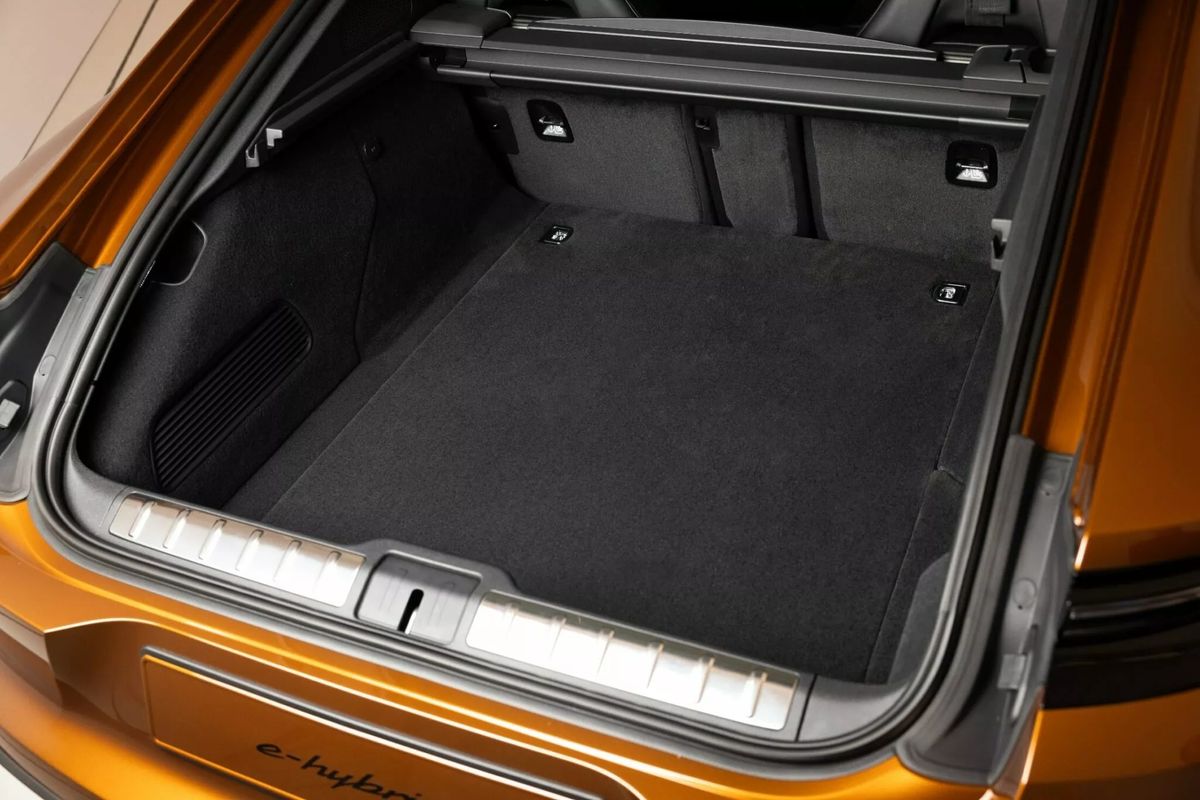
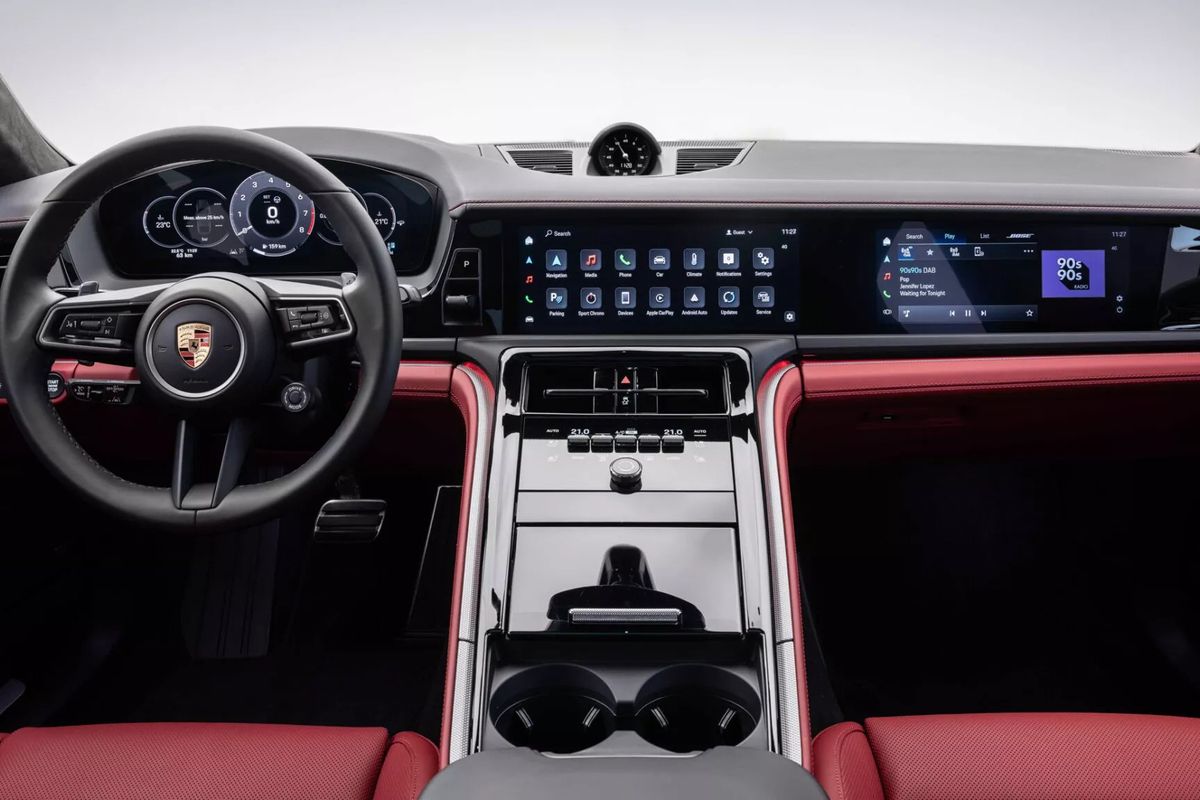
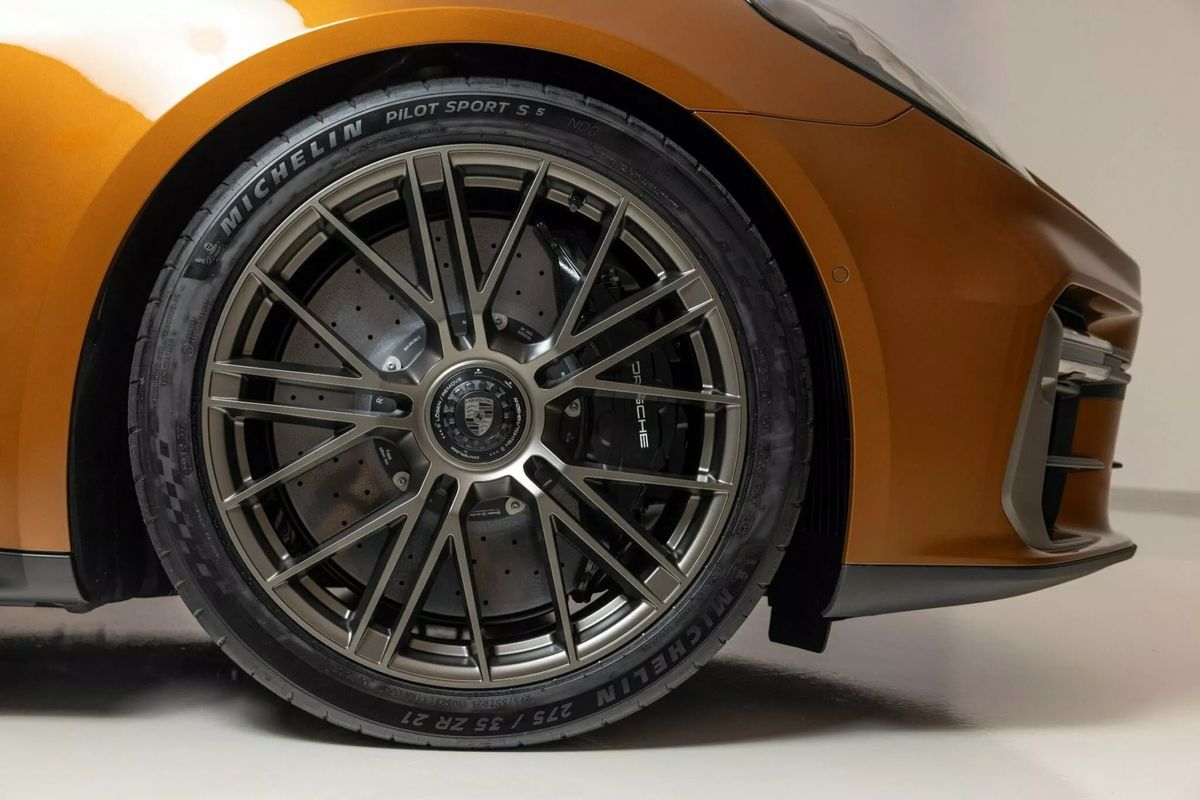
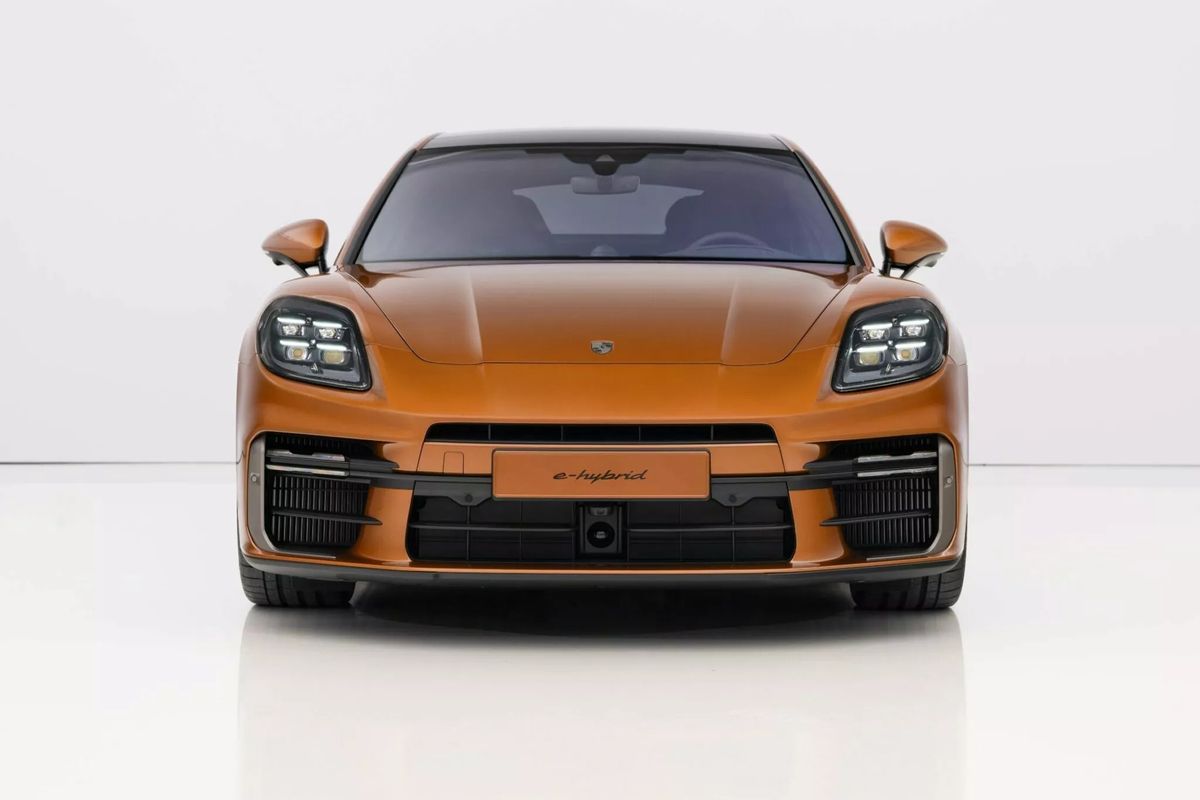
The visual updates are subtle but the biggest change on the 2024 Porsche Panamera is the front, with a new LED Matrix headlight design, new grille and new intakes. There are new colours and wheel designs to choose from, while the rear retains its long LED taillight array and deployable spoiler. Physically, the new Panamera has near identical dimensions other than a 3mm increase in overall length.
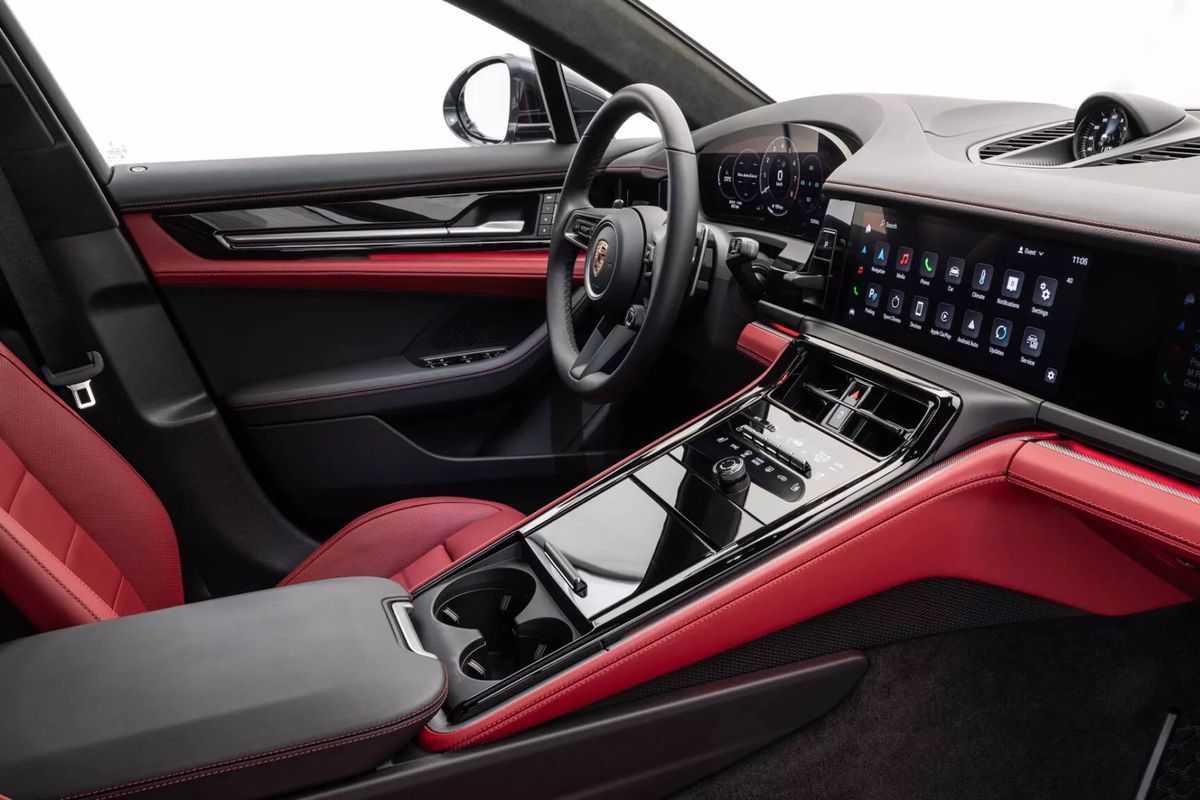
Climb inside and you’ll see the new Panamera has a Taycan-inspired screen setup and for the first time there’s an optional 10.9-inch display for the front passenger. The gear lever has been removed to free up cabin space and this has been replaced by a gear selector on the steering wheel.
Engines and Performance
The 2024 Porsche Panamera will be offered internationally with four E-Hybrid powertrains, which now offer more power, better economy, but Porsche only announced information about the top-spec Turbo E-Hybrid motor for now. The 4.0-litre twin-turbocharged V8 petrol is paired to an electric motor and the result is 500 kW! 0-100 kph is claimed in just 3 seconds and the car will run to 314 kph.
The standard Panamera models are carried over with both the entry-level Panamera and Panamera 4 featuring an upgraded version of the 2.9-litre turbocharged V6 engine. Outputs of 260 kW and 499 Nm are claimed, which is an increase of 17 kW and 50 Nm over the outgoing model. A 0-100 kph of 5 seconds is claimed, with the all-wheel-drive Panamera 4 going quicker with a 4.7 second dash.
When will the 2024 Porsche Panamera arrive in South Africa?
Porsche South Africa says the new Panamera will be available in the first quarter of 2024. The prices below include the 5 year Driveplan.
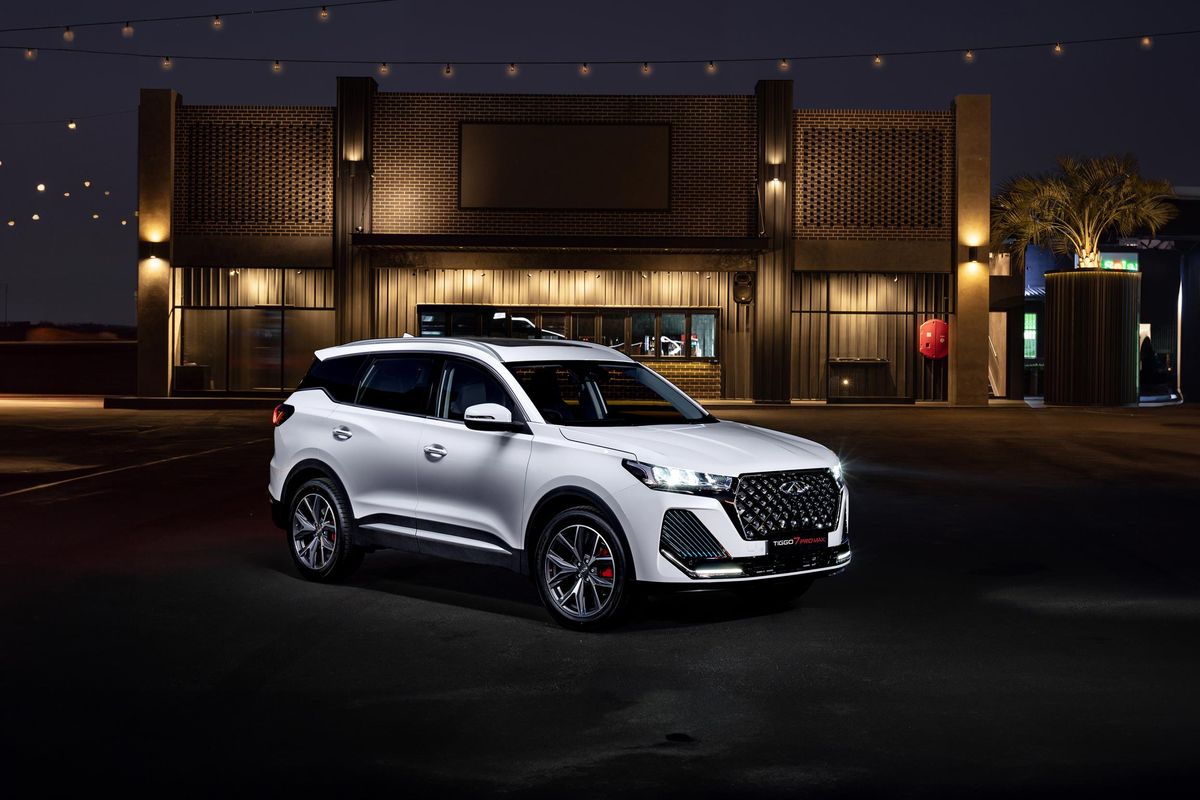
Chery has broadened its 5-seat family car range with the local introduction of the Tiggo 7 Pro Max, which is available in front- and all-wheel drive guises. Here’s a detailed look at the specifications of the 3-derivative line-up.
With global sales of more than 450 000 units under its belt, the Chery Tiggo 7 range has proven very popular, but now the Chinese brand has launched the Tiggo 7 Pro Max, which comes with more features and, in the case of the range-topping Executive AWD derivative, all-wheel drive all-road capability.
The new Tiggo 7 Pro Max derivatives are powered by a 1.6-litre 4-cylinder turbopetrol motor, which produces 145 kW and 290 Nm; it’s paired with a 7-speed dual-clutch transmission. As a reminder, the standard Tiggo 7 has a 1.5-litre 4-cylinder turbopetrol motor with peak outputs of 108 kW and 210 Nm.
Whereas the Distinction 2WD and Executive 2WD are front-wheel drive, the Executive AWD’s all-wheel drivetrain is offered in conjunction with 6 drive modes: Normal, Sport, Eco, Snow, Muddy and Off-road.
Compared with the Tiggo 7 Pro, the Tiggo 7 Pro Max incorporates “20 meticulous optimisations”, Chery says – they extend to the interior and exterior design, body and chassis structure, plus cabin materials.
The newcomer can be distinguished by its diamond-pattern grille, LED headlamps (with an LED DRL starting sequence), a redesigned lower sill and side intakes, as well as a tailgate-spanning LED light bar. Front-wheel drive versions have 18-inch rims, while the range-topper has 19-inch diamond-cut alloys.
The cabin has received various upgrades, including an expansive (24.6-inch) panel that blends a digital instrument cluster and touchscreen infotainment system, the latter of which accepts “Hello Chery” voice commands and supports wired and wireless Apple CarPlay, offline navigation, plus Android Auto.
The centre console is adorned with a short-travel transmission lever and a selection knob for making quick drive-mode changes, while a “stepless” LED ring provides a choice of 64 hues of ambient light.
Other standard features include electrically adjustable heated and ventilated leather-trimmed front seats (with memory function for the driver), an 8-speaker Sony audio system, dual-zone climate control with built-in pm 2.5 air filter (aided by an automatic quality control system in Executive derivatives), 50W wireless charging pad, a 360-degree camera system, a panoramic sunroof and a powered tailgate.
When it comes to safety features, Tiggo 7 Pro Max derivatives are equipped with 8 airbags (2 more than the Tiggo 7 Pro versions), as well as anti-lock brakes (ABS) and electronic stability control.
However, the 2 Executive derivatives also have Level 2.5 advanced driver assistance systems (ADAS), which include adaptive cruise control (ACC), forward-collision warning (FCW), autonomous emergency braking (AEB), blind-spot monitoring (BSM), rear cross-traffic alert (RCTA), rear collision warning (RCW), driver-monitoring System (DMS), multi-collision brake (MCB) and lane-change assist (LCA).
How much does the Chery Tiggo 7 Pro Max cost in South Africa?
Every Tiggo 7 Pro Max comes with a 5-year/60 000 km service plan, along with a 1-million-kilometre/10-year engine warranty.
Tiggo 7 Pro Max Distinction 2WD
R529 900
Tiggo 7 Pro Max Executive 2WD
R559 900
Tiggo 7 Pro Max Executive AWD
R609 900
At the local launch of the Tiggo 7 Prox Max in November 2023, Chery South Africa said that the front-wheel-drive derivatives (Distinction 2WD and Executive 2WD) were “available immediately at dealers across South Africa”, while the AWD version was on pre-order. “Customers who book (the AWD) now will receive R5 000 when they take delivery of their vehicles in January 2024,” the importer announced.
You can no longer buy a Nissan Almera new in South Africa, but you can most certainly acquire a used example. Let’s take a closer look at this budget sedan’s decade on the local market…
The history of the Nissan Almera nameplate in South Africa is fascinating. The badge – of which the roots can be traced back to 1995 – made its local debut in 2001. At the time, the N16-series model, which was built at Nissan SA’s Rosslyn plant, effectively replaced the Sentra, but quietly exited the market in 2006.
The likewise locally produced Tiida was its successor, though the Almera moniker – a name derived from almendra, the Spanish term for a large diamond – returned to the local market in 2013 (incidentally, around the same time that the Sentra was re-introduced), after a 7-year hiatus.
The Almera nameplate returned to the local market in 2013 after an absence of 7 years.
This 3rd iteration of the Almera sedan would soldier on in South Africa for the next decade, despite the fact that a 4th-gen version was revealed for overseas markets in 2019. Towards the end of its product life, it appealed particularly strongly to local rental and fleet buyers because it was priced very keenly.
Known by various names across the globe (including Sunny, Versa, V-Drive and Latio), the N17-series model was built on the same platform as the K13-series Micra. That said, the compact 3-box sedan was considerably larger than its hatchback sibling: 645 mm longer (at 4 425 mm) and 30 mm wider (at 1 695 mm), with an extra 150 mm between its axles (for a generous wheelbase of 2 600 mm).
Nissan Almera model line-up in South Africa
A look at the Almera’s cabin (2013 model pictured).
Revealed in China towards the end of 2010, the 3rd-gen Almera touched down in South Africa only in August 2013. Billed as a “global” car, the SA-spec model was imported from Chennai, India.
At launch, the line-up comprised a pair of front-wheel-drive derivatives, each powered by a naturally aspirated 1.5-litre, 4-cylinder petrol engine paired with either a 5-speed manual gearbox or a 4-speed automatic transmission:
1.5 Acenta (73 kW/134 Nm) 5-speed manual
1.5 Acenta (73 kW/134 Nm) 4-speed auto
Changes to the Almera over the next 10 years were few and far between, but Nissan SA did roll out some styling updates in September 2014, just a year after the local launch. At that point, the sedan gained redesigned headlamps, -grille and -bumpers (fore and aft), along with new-look 15-inch alloy wheels.
The Almera received its only styling update barely a year after being launched in SA.
Inside, the modestly revamped Almera scored fresh seat fabric, an upgraded audio system (now with Bluetooth and USB functionality), revised air-conditioning controls, as well as a new multifunctional steering wheel. Furthermore, rear parking sensors were added to the list of standard features.
So, what else changed over the next decade or so? Well, very little, but we noticed the “Activ” trim name was briefly used interchangeably – rather curiously, we must add – with the more common Acenta grade.
For the record, when the Nissan Almera was discontinued locally towards the middle of 2023, the manual-equipped version was priced at R291 900, while the 1.5 Acenta automatic cost R310 000.
What are the advantages of a Nissan Almera?
The lengthy wheelbase translated to generous interior space.
Cabin room and luggage space: There’s no denying that the Almera’s primary appeal centred on its exceptionally generous interior space. Thanks to that lengthy wheelbase – not to mention thin-profile front seatbacks – the Japanese sedan offered class-leading levels of rear legroom (as well as rear air vents with independent fan-speed control).
Indeed, Nissan claimed a rear knee-space figure of 636 mm, which was enough to put most full-size luxury saloons of the era to shame. That said, it’s worth noting that the Almera lacked a little in the width department; it didn’t offer all that much shoulder room…
The Almera’s luggage compartment could swallow 490 litres, according to Nissan.
Meanwhile, the budget sedan was right at the top of its class in terms of luggage capacity, which came in at a whopping 490 litres (despite the boot housing a full-size spare wheel). However, the rear bench was fixed in place and thus not able to fold down, which saw the Almera lose a couple of points for versatility.
Soft ride and (mostly) quiet engine: Despite making do with a comparatively unsophisticated torsion-beam rear suspension set-up (as opposed to a multi-link arrangement), the Indian-made N17-series sedan – which employed MacPherson struts up front along with relatively long-travel dampers – rode with an impressive degree of pliancy, considering its price point. Note, however, that body roll was pronounced when cornering quickly and the front seats didn’t offer much in the way of lateral support.
Over the Almera’s decade-long lifecycle in South Africa, there was just a single engine choice: the atmospheric 1.5-litre 4-cylinder motor. In everyday driving, this petrol mill is pleasingly refined (thanks in part to clever insulation of the cabin), though accessing peak power of 73 kW required the petrol mill to spin to a heady 6 000 rpm, resulting in a noticeably coarser aural experience.
Both derivatives in the N17-gen Almera line-up employed an atmospheric 1.5-litre petrol mill.
Affordable running costs: When the Almera landed in Mzansi, the HR15DE engine was well-proven, having seen service in the K13-series Micra and a number of other overseas models before that. This chain-driven motor was uncomplicated and thus fairly affordable to maintain. For instance, in the 2019 AA Kinsey Report (which considered a total parts basket price, comprising service, repair and crash components), the Almera placed 3rd in its class, just behind the Toyota Corolla Quest and Corolla sedan.
The daily running costs were also fairly light on the wallet, particularly in the case of the 5-speed manual derivative, which was capable of sipping unleaded at 6.3 L/100 km, according to Nissan (translating to a theoretical 651 km from the 41-litre tank). Specifying the 4-speed automatic transmission – which used a traditional torque converter – pushed that figure to a not-quite-as-frugal 7.2 L/100 km.
What are the disadvantages of a Nissan Almera?
Global NCAP rated the SA-spec Almera’s body shell as “unstable” in 2021.
Mediocre safety kit: The Almera was offered locally with an abbreviated list of safety equipment. While ABS (with EBD), dual front airbags and 3-point seat belts all round were standard fare (as were outer-rear ISOfix child-seat anchors), the SA-spec model unfortunately missed out on stability control and airbags for the rear passengers. Furthermore, it had to make do with drum brakes on the rear wheels.
In 2021, Global NCAP handed the SA-spec Almera a middling 3 stars for adult occupant safety (and 3 stars for child occupant safety) after subjecting it to the standard 64 kph frontal crash test. Worryingly, the sedan’s body shell was rated as “unstable” and “not capable of withstanding further loadings”, while the driver’s seat detached during the evaluation. Global NCAP called on Nissan to “significantly improve the safety features” it offered as standard, but no changes were made.
The N17-series Almera’s styling is – shall we say – an “acquired taste”.
Bland to look at and to drive: Though Nissan SA described the 3rd-gen Almera as having “sporty yet refined styling” – and dropped descriptors such as “sleek” and “muscular” into the press material – most will agree this sedan was saddled with decidedly awkward proportions (and we’re being generous here).
The lack of visual sparkle extended to the driving experience – not that it was something that would have worried the majority of Almera buyers. Indeed, the N17-series model was fuss-free to drive, with controls such as the clutch and steering requiring only the lightest of inputs. Just don’t expect to have much fun behind the wheel (and do expect to be frequently mistaken for an Uber driver).
The updated cabin rolled out in 2014 still featured plenty of hard plastics and polyurethane finishes.
Built to a budget: Although much of the cabin felt relatively well made, hard plastics were the order of the day (as you’d expect from a budget beater), while frequent touch points such as the steering wheel and gear knob had to make do with a low-rent polyurethane finish. The list of standard features reflected the Almera’s budget positioning – items such as cruise control and front foglamps were not fitted.
How much is a used Nissan Almera in South Africa?
Pre-2016 models made do with a shorter warranty and service plan.
The N17-series Almera initially shipped standard with a 3-year/100 000 km warranty and a 3-year/60 000 km service plan, but those plans were extended to 6 years/150 000 km and 3 years/90 000 km, respectively, in 2016. Pay close attention to the maintenance history of a car you’re thinking of buying and make sure it has been serviced according to the manufacturer’s recommendations (in the case of higher-mileage former fleet vehicles, ensure routine servicing was carried out at least every 15 000 km).
At the time of writing, more than half of the 3rd-gen Almeras listed on Cars.co.za were fitted with a manual ‘box. Fascinatingly, the model-year distribution was anything but even, with very few examples from the initial 6 years listed, but almost 40% clustered in 2021 alone (and a further 23% registered in 2022).
Early models appear to be in short supply on the used market.
True to its hire-car reputation, most of the Almeras were finished in white (46%) and silver (37%), though the former hue encompassed both solid and metallic finishes. Indicated mileages ranged from almost nil (on a handful of virtually new vehicles) to 194 000 km, the latter racked up by a 2019 1.5 Acenta manual.
Below R100 000: Slim pickings below this mark, though the few examples available (most looking worse for wear) were interestingly spread quite evenly across model years. As you might expect, mileages were relatively high, while 3-pedal versions dominated.
From R100 000 to R150 000: The number of auto-equipped models in this space almost matched the manual tally, though most listings still showed more than 100 000 km on their respective odometers. Interestingly, 2019 was the most plentiful model year between these pricing bookends.
From R150 000 to R200 000: This was the most densely populated pricing bracket by far, playing host to more than 62% of all 3rd-gen Almeras on Cars.co.za. Most examples were listed with under 50 000 km on their respective clocks, with only a handful of units on the far side of 100 000 km.
R200 000 and up: Unsurprisingly, the listings in this space were heavily skewed towards the final 3 model years, with automatic derivatives outnumbering their manual counterparts. The most expensive example we found was a 2023 1.5 Acenta Auto (with 1 500 km on the clock), which was priced at R320 000 – or R10 000 above what it would’ve cost new…
Which Nissan Almera should I buy?
We’d suggest considering as late a model year as your budget allows.
So, which version should you buy? Well, since just 2 derivatives were on offer over the 3rd-gen Almera’s decade-long run, it all comes down to your cog-swapping preference (though if you don’t mind rowing your own gears, it’s perhaps best to avoid self-shifting examples, because we’ve heard of a few – hopefully isolated – local incidents of automatic transmission failures).
That said, we’d recommend focusing your search on the later model years, since most of these examples would still benefit from the balance of the lengthier 6-year/150 000 km warranty. Zeroing in on the final couple of years of registration would furthermore score you a couple of manufacturer-covered services.
Is the Nissan Almera a good used buy?
The Almera faced varied rivals over its decade on the local market.
Seeing as the Almera was on the market for such a long time, it had to contend with multiple rivals. Early on, there was the original Toyota Corolla Quest, as well as the sedan version of the 4th-gen Hyundai Accent and the Honda Ballade that made local landfall a couple of years before the Almera.
A little later, Nissan’s entry-level sedan faced competition from the likes of the similarly sized (and somewhat under-appreciated) Suzuki Ciaz, while also trading blows with everything from the seldom-spotted Fiat Tipo sedan to the strong-selling 2nd-gen Corolla Quest. More compact contenders, such as the Suzuki DZire, Honda Amaze and Kia Pegas (not to mention the Proton Saga and Hyundai Grand i10 sedan, right at the end of the Almera’s lifecycle), also played in this budget-sedan space.
Fleet buyers will surely miss the N17-series Almera.
In many ways, the N17-series Nissan Almera was a little rough around the edges; today’s Corolla Quest, for instance, is a far more polished, more generously equipped (though pricier) package.
But for buyers who value space above all else – and thus place little emphasis on exterior styling, safety kit or the overall driving experience – this budget-beating sedan still holds appeal. After all, there’s a reason it remained highly popular with fleet buyers right up to its departure from the new-car market.