Kia Picanto (2024) Launch Review

Given that Kia no longer sells the Rio light hatchback in SA, the Picanto must straddle the line between compact and premium more than ever before. Fortunately, the 3rd rendition (2nd facelift) of the 3rd-gen model is the most polished Picanto yet.

The Picanto remains one of those iconic Korean urban runabouts, albeit on the tiny end, that helped turn its marque from humble to loved in our market. The Sportage family car, obviously, also comes to mind, whilst in the sister stable, the Getz and Tucson played similar roles in entrenching Hyundai in Mzansi.

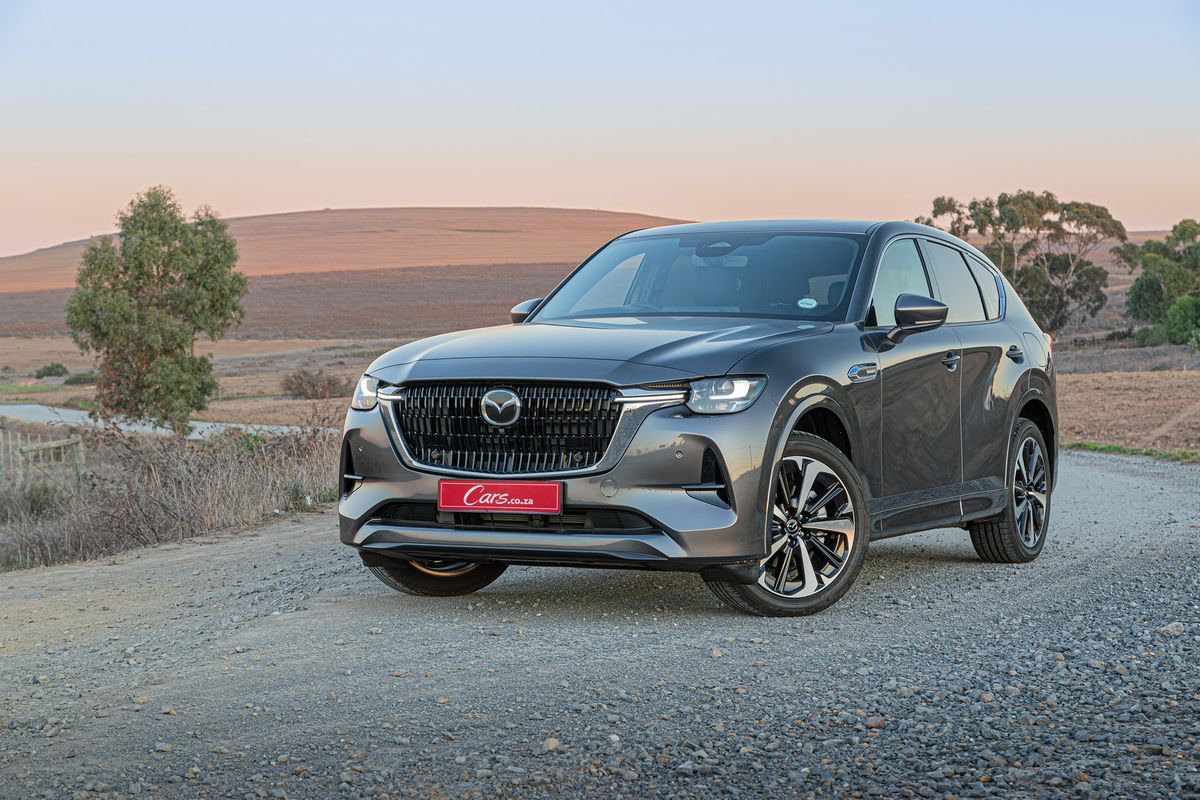
2024 Kia Picanto front three-quarter view.

Kia has sold more than 100 000 units of the Picanto during the model’s 21-year lifetime. But, it’s the rather distinctive 2nd-gen model, which debuted in South Africa in 2011, that leaned on the brand’s iconic Tiger Nose the hardest, thanks to the stylings of ex-Audi designer, Peter Schreyer.

See also: Kia Picanto (2011-2017) Buyer’s Guide

He’d ultimately go on to oversee the designs of everything from both Kia and Hyundai to great success, including the 2nd-gen Picanto’s 2014 update, and this successor (the 3rd-gen model) that debuted in 2017. Since then, this chunkier Picanto has received a facelift in 2020 and now, once again, this year.

2024 Kia Picanto headlamp cluster.

Historically, Kia has reacted to many market moves, such as the favouring of automatic transmissions, a greater need for multimedia and, of course, consumer demand for a pleasantly tactile cabin in a small-car package, all appreciably available here. Still, I found myself at the helm of a 5-speed manual in what remains a fun city car that today plays perhaps in a different segment of the market than it once did.

Perhaps the Picanto’s now-maturer price point (between R260k and R325k) sees it being priced out of the “student-car zone”, but despite inflation, the Korean city car remains universally desirable across all age and cultural demographics (even if the majority of its buyers are between the ages of 26 and 32).

See also: Kia Picanto (2024) Price & Specs

2024 Kia Picanto rear three-quarter view.

And I totally understand why the Picanto has cross-generational appeal. Perhaps South African new-car buyers have adopted a more European outlook, because on “the Continent”, small cars aren’t regarded inferior, but fit for purpose if you live in a city. And, it’s in that respect that the Picanto truly stands out.

But first, how about a grade walk? Kia has ditched the confusing Street, Start and Smart nomenclatures for a simpler LX, EX and EX Plus naming convention, with levels of specification improving as you ascend the price list (as one would expect). Visually, they all benefit from that wide stance enhanced by having the head and tail lamps pushed out to the very edges of the car, with a light bar at the rear.

2024 Kia Picanto cabin.

Similarly, strong horizontal lines make the cabin feel wide and spacious. What’s more, all derivatives benefit from high-quality materials and leather-like (even in the base model) tactile points.

Even entry-level 1.0 LX derivatives are fitted with dual front airbags, ABS (all cars should though), ISOfix points, keyless entry, all-round electric windows (with auto up/down function for the driver), electrically adjustable and -heated side mirrors, remote central locking, alarm and immobiliser, plus (manual) aircon.

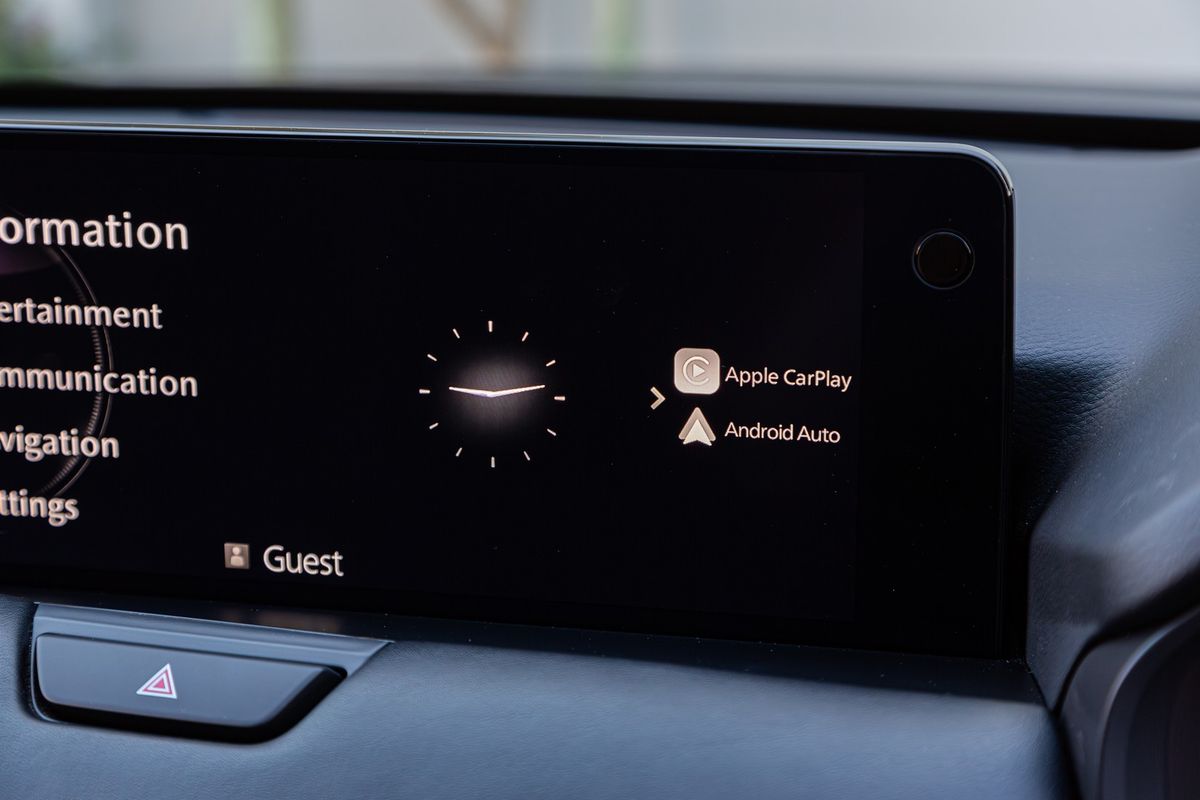
2024 Kia Picanto infotainment touchscreen.

The touchscreen-based infotainment system, as you’d expect, is well-appointed and can be smartly paired with your smartphone, thanks to the provision of Apple Carplay and Android Auto compatibility.

On the mid-tier 1.2 EX, the Picanto’s 14-inch steelies become 14-inch alloy wheels, side repeater lamps are incorporated into the (now electric folding) side mirrors, a storage box is added between the front seats and the safety spec is expanded to include electronic stability- and hill-start assist control.

What’s more, the audio system gets upgraded to a 4-speaker setup with tweeters, the LX’s analogue instrumentation is replaced by a 4.2-inch Supervision TFT cluster and automatic light control is added.

Range-topping EX+ derivatives feature 15-inch alloys and LED taillamp clusters. The cabin is upgraded to include faux leather upholstery, push-button start/stop, rear PDC and high-gloss trims on the fascia.

Each grade comes in your choice of a 5-speed manual gearbox or 4-speed automatic transmission, paired with (in LX derivatives) a 1.0-litre inline-3-cylinder petrol engine (it produces 49 kW and 95 Nm) or, in the EX and EX Plus, a 1.2-litre inline-4-cylinder petrol motor (with outputs of 62 kW and 122 Nm).

How much does the facelifted Kia Picanto cost in SA?

Kia Picanto 1.0 LX 5MTR260 995
Kia Picanto 1.0 LX 4ATR278 995
Kia Picanto 1.2 EX 5MTR284 995
Kia Picanto 1.2 EX 4ATR302 995
Kia Picanto 1.2 EX+ 5MTR307 995
Kia Picanto 1.2 EX+ 4ATR325 995

All prices include Kia’s 5-year/unlimited km warranty and a 2-year/30 000 km service plan.

2024 Kia Picanto rear view.

Summary

Having driven (a manual) 2024 Picanto I can confirm that it still does precisely what it is meant to do – with aplomb. It’s a cheeky little city car that feels big and comfy on the inside but can fit into the tightest of spaces when you need it to. I’m not sure if people still remember what a Tardis is, but this is like that.

A phone box (dear Gen Z and younger, it doesn’t mean what you probably think it does) with all the mod cons you could desire, so long as you don’t mind the fact that travelling far distances will take some time.

Related content:

Hyundai Grand i10 (2023) Launch Review

Suzuki Celerio (2022) Review

Toyota Vitz (2023) Launch Review

Renault Kiger (2021) Review

GWM Tank 300 Hybrid Review: We accidentally sank a Tank

With purposeful off-roader styling, a punchy hybrid powertrain, loads of standard features – and a highly competitive price tag, the GWM Tank 300 has a LOT going for it. The SUV also has the hardware for serious off-roading, which we put to the test.

Following the massive success in South Africa of the Haval brand, GWM SA has launched an entrant into the fiercely competitive Adventure SUV segment: the all-new GWM Tank 300.

The Toyota Fortuner has dominated the Adventure SUV segment (the Ford Everest and Isuzu MU-X are also compelling offerings), but although the Tank 300 is a 5-, not a 7-seat model, it has many strengths.

The asking price of the flagship Tank 300 in South Africa undercuts all of its rivals by some margin and, with handsome looks, a 255 kW/648 Nmpowertrain (a 2.0-litre 4-cylinder turbopetrol engine combined with an electric motor and battery), GWM have given it every chance of gaining notable market share.

GWM Tank 300

In terms of interior features, the model comes with a 12.3-inch touchscreen, seamlessly paired with the driver’s TFT info cluster, a heated steering wheel, plush seats with massaging functions, a sunroof, a 9-speaker Harman Kardon audio system (complemented with wireless Apple Carplay and Android Auto).

At the rear GWM has installed a 220V plug point, a 12V power outlet and 60/40-split seats. All derivatives come with a 7-year warranty and a 5-year service plan, while the HEV has an 8-year battery warranty. 

In this video, our guest presenter – and experienced Cars.co.za Consumer Awards judge – Jacob Moshokoa drives the 2.0T HEV Super Luxury 4×4 on-road and off-road but, unfortunately, the shoot ended rather prematurely when we accidentally sank the test unit in decidedly sticky and deep mud.

But the story doesn’t end there… Watch until the end for our comprehensive summary and verdict.

Find a new/used Tank 300 listed for sale on Cars.co.za

New GWM Tank 300 Specs & Prices in South Africa

Related content:

GWM Tank 300 (2024) Launch Review

All-New 2nd-Generation Haval H9 On the Way

New Mini Aceman small EV confirmed for SA

Meet the new Mini Aceman, a small electric crossover set to be positioned below the Countryman and already confirmed for South Africa…

The new Mini Aceman has been revealed as a fresh-faced small electric crossover positioned below the new Countryman. The EV-only newcomer has already been confirmed for local roads, with the BMW Group announcing that it “will be available in South Africa by the end of 2024”.

Measuring 4.07 metres long and 1.75 metres wide (while standing 1.50 metres tall), the Aceman will slot in above the upcoming new Cooper hatchback but below the almost 4.5-metre-long Countryman. Still, endowed with short overhangs and a 2-box design, the Aceman will offer seating for 5 as well as what Mini describes as a “versatile luggage compartment” adjustable from 300 to 1 005 litres.

The luggage compartment is expandable up to a claimed 1 005 litres.

At launch, the new crossover – which was loosely previewed in mid-2022 in concept form – will be offered in 2 powertrain forms. First, there’s the Aceman E, which employs an electric motor generating 135 kW and 290 Nm. According to Mini, the E-badged model will complete the 0-100 kph sprint in 7.9 seconds and top out at 160 kph. Equipped with a 42.5 kWh battery pack, the Aceman E will offer a WLTP single-charge range of up to 310 km.

Meanwhile, the Aceman SE’s electric motor churns out loftier peak outputs of 160 kW and 330 Nm, which sees the obligatory sprint to 3 figures fall to a claimed 7.1 seconds and the top speed climb to 170 kph. The SE’s battery pack boasts a capacity of 54.2 kWh, improving the WLTP range to a maximum of 406 km.

The Aceman slots neatly between the Cooper hatch and Countryman.

The Aceman’s high-voltage battery pack can be charged via alternating current at speeds up to 11 kW, while fast charging with direct current maxes out at 75 kW in the Aceman E and at 95 kW in the Aceman SE. According to Mini, fast charging will see the battery’s state of charge move from 10 to 80% in “just under 30 minutes”.

In South Africa, the new Mini Aceman is expected to be offered in a choice of 3 equipment levels: Classic Trim, Favoured Trim and JCW Trim. Inside, there’s a central, circular OLED display and a “toggle bar” that pays tribute to the classic Mini.

Unlike the Cooper hatch and Countryman ranges, the Aceman line-up is electric only.

“The Mini Aceman brings a new level of excitement to our all-electric line-up, packed with a truly enjoyable immersive digital experience,” said Stefanie Wurst, Head of Mini.

“The Mini Aceman is perfect for navigating crowded city streets, while maintaining the versatility and functionality of a crossover and the go-kart feeling you can expect from a Mini. I am certain that the sleek design, the performance and the versatility as a 5-seater crossover, will make the Mini Aceman a resounding success.”

Related content

Mini Countryman (2024) Price & Specs

2024 Mini Cooper engine line-up confirmed

Concept Aceman debuts new design language

New Mercedes-Benz G580 debuts as fully electric G-Wagen

Yes, there’s now a fully electric version of the Geländewagen. Meet the new, 4-motor Mercedes-Benz G580 with EQ Technology, boasting a whopping 1 164 Nm…

The famous Geländewagen has gone electric. This is the new “Mercedes-Benz G580 with EQ Technology” (to use its full name), which debuts just 3 weeks after the facelifted G-Class was revealed.

Interestingly, the Stuttgart-based automaker has opted not to apply the expected EQG moniker – which it rolled out for the concept version that premiered back in 2021 – to the battery-powered version of the G-Wagen.

The G580 pictured in blue is a limited-run Edition One derivative.

So, what are the new G580’s headline stats? Well, the all-electric, all-wheel-drive G-Class is powered by 4 individually controlled motors located “near the wheels” (effectively 2 in each dedicated housing at the front and rear axles). According to Mercedes-Benz, these motors are integrated into the modified ladder-frame chassis and develop peak outputs of 432 kW and a whopping 1 164 Nm.

Fans of the brand’s Affalterbach-based performance division will likely have already calculated that the G580 outguns even the Mercedes-AMG G63, which offers 430 kW and 850 Nm from its twin-turbocharged 4.0-litre V8 petrol engine. The electric G-Wagen is, however, a little slower to 3 figures, completing the 0-100 kph sprint in a claimed 4.7 seconds (compared with the G63’s time of 4.5 seconds).

An optional design box on the rear door for storing items such as charging cables.

That’s likely down to the extra heft it’s carrying (the listed kerb weight is 3 085 kg), considering the no-doubt heavy high-voltage lithium-ion battery pack has a lofty (usable) capacity of 116 kWh. According to Mercedes-Benz, this results in a single-charge range of “up to 473 km” (on the WLTP cycle). To protect the 2-tiered battery from water and dirt intrusion, the engineers housed it in what Benz terms a “torsion-resistant casing”. Top speed, meanwhile, is electronically limited to 180 kph.

When topping up the battery with alternating current, the maximum charging capacity is 11 kW. For fast charging with direct current, that capacity increases to 200 kW. In the latter case, Mercedes-Benz claims the charging time from 10 to 80% is “around 32 minutes”.

The G580 boasts a more impressive fording depth than ICE versions of the G-Wagen.

The G580 furthermore features so-called “virtual differential locks” (using torque vectoring), along with selectable low-range off-road gear reduction and an intelligent off-road crawl function. The electric Geländewagen also debuts G-Turn (allowing the vehicle to turn “almost on the spot on loose or unpaved surfaces”) and G-Steering (which ostensibly delivers a “significantly smaller turning circle” when driving off-road).

The German firm says the new model remains stable on sideways slopes of “up to 35 degrees”, while also boasting a maximum fording depth of 850 mm (incidentally outperforming its petrol- and diesel-powered counterparts by 150 mm). The listed approach angle is 32 degrees, while the departure and breakover angles come in at 30.7 and 20.3 degrees, respectively.

“Throughout its more than 45-year history, the G-Class has always used the most modern drive technology available. So, it’s entirely fitting that the innovative drive concept with 4 individually controlled electric motors once again raises the legendary performance of our off-road icon to a new level. It even retains that familiar angular silhouette and is true to the character of our beloved Geländewagen,” said Markus Schäfer, Member of the Board of Management of Mercedes-Benz Group AG, Chief Technology Officer.

Related content

Facelifted Mercedes-Benz G-Class announced

Mercedes-Benz GLE450d (2024) Review

Mercedes-Benz GLS (2024) Launch Review

New Toyota Land Cruiser Prado: SA launch pushed back

The official market launch of the new Toyota Land Cruiser Prado in South Africa was due to take place in April 2024 but has now been pushed back a couple of months…

South Africans itching to purchase an example of the new Toyota Land Cruiser Prado will have to exercise just a little more patience, with the local market launch of the highly anticipated J250-generation SUV having been pushed back by a couple of months.

At its State of the Motor Industry (SOMI) 2024 event in January, Toyota SA Motors announced that the new Prado was scheduled to hit the local market in April. However, the Japanese company’s local division has confirmed to Cars.co.za that the release of the new model to dealers will now likely take place only in June 2024.

The new Prado in First Edition trim.

The reason for the postponement? Well, Toyota SA Motors told us that the “delay was due to homologation processes” (before hitting the market, all new-vehicle models have to be granted approval by the relevant authority, ensuring they comply with local legislation and codes of practice). For the record, the media launch of the new Prado – which was revealed back in August 2023 – is expected to take place in the 2nd week of July 2024.

As an aside, the new Prado has only just gone on sale in its domestic market of Japan, where it’s known as the Land Cruiser 250 (dispensing with the Prado moniker). Meanwhile, the new 7-seater SUV, which is underpinned by the same TNGA-F ladder-frame chassis as employed by the Land Cruiser 300, is set to launch in Australia towards the middle of the year.

Likely similar to what we can expect from the SA-spec VX-R model.

While we don’t yet have official local pricing, Cars.co.za uncovered several details of the local line-up back at the end of January. According to our information, the local Prado range will shrink slightly – from the current 5 derivatives to 3 variants – largely owing to the removal of the naturally aspirated 4.0-litre V6 petrol engine from the line-up. As such, all models will employ the Japanese firm’s familiar 2.8-litre, 4-cylinder turbodiesel engine.

In J250-series Prado form, Toyota’s well-known 1GD-FTV motor will again deliver 150 kW and 500 Nm to all 4 corners, though will switch from the outgoing model’s 6-speed automatic transmission to an 8-speed self-shifting gearbox. Braked towing capacity will remain at 3 000 kg, while all derivatives will ride on 18-inch alloy wheels wrapped in 265/65 R18 tyres.

A look at the Japanese-spec interior.

The Prado 2.8 GD TX will again serve as the entry point to the range, though we understand this derivative will lose its centre limited-slip differential. The TX is, however, in line to score a more comprehensive anti-theft system, as well as added safety features such as tyre-pressure monitoring, parking sensors, blind-spot monitoring, lane-trace assist, adaptive cruise control and extra airbags.

Like all variants in the new range, the 2.8 GD TX derivative will come with a black finish for its front bumper, grille, side-mirror caps, rear bumper and wheel-arch mouldings. Inside, however, it will switch from a leather-and-fabric combination to straight leather (while also dropping its traditional handbrake lever in favour of an electric version).

First Edition headlights on the left, standard headlights on the right.

With the outgoing range’s VX and VX-L trim levels set to be scrapped, the new Prado 2.8 GD VX-R specification is up next. This grade will add items such as a moonroof, a heated steering wheel, a cooler box, wireless smartphone charging and adaptive high-beam headlamps. It appears set to do without adaptive variable suspension but will score a rear and centre torque-sensing limited-slip differential.

Finally, there’s the Prado 2.8 VX-R First Edition. As we understand it, there will technically be 2 versions of the First Edition (1 in monotone form and the other in bi-tone guise), each based on the VX-R specification. First Edition models will be easily recognisable thanks to their circular headlamps.

We’ll keep our eyes and ears open for local pricing as the new Prado market introduction draws ever nearer…

New Toyota Land Cruiser Prado line-up for South Africa

Land Cruiser Prado 2.8 GD TX

Land Cruiser Prado 2.8 GD VX-R

Land Cruiser Prado 2.8 GD VX-R First Edition (also available in bi-tone)

We expect the new Prado to ship standard with Toyota’s 3-year/100 000 km warranty and a 9-service/90 000 km service plan.

Related content

Why Toyota will likely revive ‘Stallion’ badge in SA

New Toyota Starlet Cross: SA details unearthed!

Toyota Hilux GR Sport III: more SA details uncovered

New Kia Tasman bakkie: first official images drop

The first official images of the new Kia Tasman have been released, giving us our best look yet at the Korean firm’s upcoming 1-tonne bakkie (in double-cab form)…

What you’re looking at here are the first official images of the upcoming Kia Tasman, a fresh-faced 1-tonne bakkie due to be fully revealed later in 2024. Kia says the Tasman’s “launch strategy will be phased globally”, including “key markets such as Korea, Australia, Africa and the Middle East”.

While Kia SA has confirmed to Cars.co.za that it’s “conducting all the feasibility studies to see whether or not [the new bakkie] will be a viable product for the South African market”, the brand’s local distributor has so far stopped short of officially confirming the Tasman for Mzansi.

That said, the bakkie is looking increasingly likely to be offered locally. Indeed, as we recently reported, Kia’s head office in Seoul applied to register the “Tasman” name as a trademark in South Africa as early as April 2023. Still, keep in mind that since Australia will be the first market to launch the newcomer in 2025, any local introduction would take place only thereafter.

The new, official images show the Tasman wrapped in what Kia describes as “Australia-inspired camouflage”. The Korean firm’s first stab at a traditional ladder-frame bakkie is, of course, named after Tasmania, an island at the southernmost tip of Australia.

While the various teaser images unfortunately don’t give up a glimpse of the Tasman’s rear end (or indeed its all-important load bay), they certainly provide us with plenty of clues about the bakkie’s side and front-end styling cues. Indeed, we see blocky wheel-arch extensions, with the front items seemingly integrated with the upright headlamp design. In profile, meanwhile, the double-cab variant’s beltline kicks up at the C-pillar.

According to Kia, the camouflage wrap was developed “in collaboration with mixed-media artist Richard Boyd-Dunlop, influenced by the “untamed beauty of Australia’s diverse landscapes” and serving to “underscore the Tasman’s adventurous spirit”.

“Our Tasman pick-up truck embodies Kia’s commitment to design and innovation, as well as its spirit of adventure. Artist Richard Boyd-Dunlop crafted an exclusive camouflage design, with the support of the Kia design team, that depicts a journey and reflects an essence of adventure that is unique to the Tasman,” said Karim Habib, Executive Vice President and Head of Kia Global Design.

Kia has made no secret of the fact it will pitch the newcomer against the segment’s best sellers, such as the Toyota Hilux and Ford Ranger. That said, reports suggest the new bakkie – set to be offered in both single- and double-cab body styles – will launch only with a 4-cylinder turbodiesel engine.

That motor will likely be Kia’s familiar 2.2-litre CRDi unit that’s already employed by the likes of the Sorento and Carnival, where it generates peak outputs of 148 kW and 440 Nm. A V6 is seemingly off the cards, for now.

Of course, Kia SA already has a strong presence in South Africa’s light-commercial vehicle space, where it markets its K-Series workhorse trucks (the K2700 and K2500), which are available in chassis cab, dropside and tipper forms. The Tasman, however, will be its first stab at a traditional bakkie…

Related content

Kia has applied to trademark ‘Tasman’ in SA

Kia explains why Tasman bakkie won’t launch with V6

New Kia bakkie: SA ‘feasibility studies’ ongoing

Porsche Cayenne GTS (2024) Price & Specs

Porsche has completed its revised Cayenne line-up with the reveal of Gran Turismo Sport (GTS) derivatives of its premium SUV and its Coupe variant.  

Powered by an uprated 4.0-litre twin-turbo V8 that produces 368 kW and 660 Nm – which represent increases of 30 kW and 40 Nm over previous Cayenne GTS outputs – the new derivatives are said to accelerate from 0-100 kph in 4.4 sec and go on to a top speed of 275 kph, while the 9-speed Tiptronic S transmission is said to produce more responsive – and quicker – shifts in Sport and Sport Plus modes.

See also: Updated Porsche Cayenne Revealed, SA Pricing ConfirmedNew Porsche Cayenne Turbo E-Hybrid Boasts 544 kW

Chassis tech from Cayenne Turbo GT

The Cayenne GTS and its Coupe equivalent feature variant-specific tuning for all chassis components and control systems, such as Porsche Traction Management (PTM) and the optional Porsche Dynamic Chassis Control. Adaptive air suspension, which works in conjunction with Porsche Active Suspension Management (PASM) and Porsche Torque Vectoring Plus (PTV Plus), is standard, while the ride height has been lowered by 10 mm (compared with other Cayenne derivatives equipped with air springs).

Porsche says that the 2-chamber air suspension gives the Cayenne GTS variants “a highly dynamic spring rate”, while the newcomers’ front-axle pivot bearings and transfer box for the all-wheel-drive PTM system (fitted with an independent water-cooling circuit) are transplanted from the Cayenne Turbo GT.

See also: Porsche Cayenne Turbo GT (2022) Review

While the former increases the negative camber of the wheels by 0.58 degrees compared with other Cayennes to facilitate “notably direct and precise steering and turn-in response”, the Zuffenhausen-based firm says, the latter “stabilises the continuous load capacity” during dynamic driving scenarios.

Exclusive GTS-style design and equipment

The Cayenne GTS and GTS Coupe can be distinguished by dark-tinted HD matrix LED headlamps (with matching taillamps), black “GTS” lettering on the flanks and rear, a bespoke front bumper with bigger cooling air intakes, as well as red brake calipers.

Body addenda, such as the side skirts, front inlays, side-window trims and wheel-arch extensions (they’re all part of the standard Sport Design package) are finished in High-Gloss Black, whereas on previous-gen Cayenne GTS variants, they were body-coloured. The sports exhaust system tailpipes, in turn, are finished in dark bronze, while 21-inch RS Spyder-design alloy wheels are anthracite grey.

The interior of the Cayenne GTS and GTS Coupe features the new Porsche Driver Experience setup with a curved digital instrument cluster (and optional passenger display), a heated GT sports steering wheel, 8-way adjustable sports seats, Bose surround sound and ambient lighting, among a host of features.

Race-Tex fabric abounds

Suede-like Race-Tex fabric covers the roof lining, armrests and door panels, as well as the centre panels of the seats, of which the side bolsters have been further raised to offer even more lateral support. Two alternative, GTS-specific interior packages – Carmine Red or Slate Grey Neo – can also be specified.

What sets the Cayenne GTS Coupe’s spec apart from that of its SUV counterpart, is that it comes fitted with a fixed panoramic roof and an adaptive extending rear spoiler as standard. It can also be specified with a Sports exhaust system (with centrally positioned tailpipes) finished in dark bronze.

The Sports exhaust system, Porsche says, is available as part of 1 of 3 optional weight-reducing sports packages, including a lightweight roof and carbon rear diffuser, as well as reduced insulation. Depending on the spec, the packages can reduce the Cayenne GTS or GTS Coupe’s weight by up to 25 kg.

How much does the Cayenne GTS/GTS Coupe cost in SA?

Cayenne GTSR2 475 000
Cayenne GTS CoupeR2 547 000

The prices include a 2-year/unlimited km warranty and a 5-year/100 000 km Drive (maintenance) Plan.

Search for a new/used Porsche Cayenne listed for sale on Cars.co.za

CONTINENTAL ICONS Part 2: Porsche Cayenne

Related content:

New Porsche Cayenne Turbo E-Hybrid Boasts 544 kW

Rolls-Royce Phantom Limelight Collection: Luxury Drive

We drive the Rolls-Royce Phantom Limelight Collection – a special edition model with added elements that take the meaning of luxury into (what feels like) a new dimension.

When a brand has achieved the level of respect or status where its name is used in a different context, you know they’ve “made it”. Think about terms like Kalahari Ferrari or Hoover, the latter being a brand of vacuum cleaner, but sometimes people will refer to their vacuum cleaner as a Hoover, no matter what brand it happens to be. It is the same with Rolls-Royce; “Oh, that is the Rolls-Royce of watches” or “the Rolls-Royce of yachts” etc. It serves as an adjective that describes something as the finest of its kind.

There is a good reason why that is the case – because the Oxford-based ultra-luxury arm of the BMW Group – Rolls-Royce – deserves that recognition. Since the early days, it has been a car for the elite, the successful and those who want to be seen. It is still arguably the ultimate automotive status symbol.

Must-watch video: Ciro De Siena does silly things in Rolls-Royces

Rolls-Royce Phantom Limelight Collection decorative emblem

This example is a 2015 Phantom Limelight Collection of which only 25 units were produced. It is fitted with a 6.75-litre V12 engine that develops 338 kW and a healthy 720 Nm of torque. But that is only a small part of what makes it special, as this engine has done duty in the Phantom for many years.

Specifications

  • Model: 2015 Rolls-Royce Phantom Limelight Collection
  • Engine: 6.75-litre, V12, twin-turbopetrol
  • Power: 338 kW at 5 350 rpm 
  • Torque: 720 Nm at 3 500 rpm 
  • Transmission: 8-speed automatic, RWD
  • Weight: 2 670 kg
  • 0-100 kph: 6.1 sec (claimed)
  • Top speed: 240 kph
Rolls-Royce Phantom Limelight Collection rear seat adjustment console

In the passenger seat of the Phantom Limelight Collection

I begin my classic drive here because this is where most Rolls-Royce owners will usually find themselves seated when travelling in a Phantom. I’m sitting in the left rear seat with an abundance of space around me. The seats are cossetting, the cabin is eerily quiet and I see the landscape passing by slightly faster when the driver puts his right foot down, making use of the saloon’s combination of torque and power.

You can barely hear the engine, it whirrs oh-so-softly in the background. As the seatback is reclined by 27 degrees, I can comfortably rest my head on the soft, cushioned headrest. The Phantom Limelight Collection has an extended wheelbase, which allows for an even greater amount of occupant space.

Rolls-Royce Phantom Limelight Collection profile view

I look around and notice the cabin’s jewellery, clock and fragrance holders, some of which are situated in the doors. The headliner is studded with tiny lights, to resemble a starry sky; it looks spectacular at night.

When we stop next to the road, I take a closer look at the umbrella that is neatly rolled up and situated in the door. I stand next to the Phantom Limelight Collection and again realise that, in terms of size and height, it will make some large SUVs look more like compact SUVs. It is time to get behind the ‘wheel.

Piloting the Phantom Limelight Collection

Rolls-Royce Phantom Limelight Collection steering wheel and fascia

I open the hefty driver’s door and experience a genuine sense of occasion when sliding in behind the thin-rimmed steering wheel. The front seats are, again, soft and absorbent. Once you close the door – with a simple push of a button – you’re completely insulated from any external noise, including engine idle. Despite its 6.75-litre displacement, you need to concentrate to hear the twin-turbopetrol V12 from inside the cabin, even though I’m now sitting closer to the engine than I did in the rear passenger seat. 

The dashboard is unconventional in the modern sense as there are still a multitude of buttons and “organ pull-stops”. The ambience is utterly luxurious and you feel cocooned in a way I have not experienced in any other car. The thin-rimmed tiller feels light and classy in my hands and serves as a reminder that steering wheels don’t need to be chunky and button-infested, as is the case with most luxury cars today.

See also: Rolls-Royce Ghost Series II (2015) Video Review

Rolls-Royce Phantom Limelight Collection hidden umbrella

On our short drive in the Jonkershoek Valley outside Stellenbosch, the Phantom Limelight Collection simply wafts along the asphalt road. It’s difficult to describe the sensation, but it feels as if the Phantom’s suspension takes advantage of the car’s weight, filtering out unavoidable bumps and body movements with aplomb. You can’t help but be impressed; these are absurdly high levels of comfort and luxury. 

With 338 kW on tap and 720 Nm of torque available at a relaxed 3 500 rpm, I managed to firmly plant the Rolls-Royce’s accelerator pedal when traffic and road conditions allowed. Again, engine and exhaust noises were kept to an absolute minimum (the latter seemed non-existent). That lengthy bonnet gently carries the beautiful Spirit of Ecstasy as a wave of torque pushes the giant machine down the road. 

Rolls-Royce Phantom Limelight Collection engine bay

BMW should be congratulated for its sensitive handling of the Rolls-Royce flagship. Unlike the Ghost and its 2-door spinoffs, you won’t notice any BMW switchgear in the Phantom’s cabin; it all feels bespoke. 

My spell-binding time behind the ‘wheel of this sumptuous grand saloon was unlike any other. But, was I missing the point? Should I not have continued reclining on the enveloping rear bench as I did earlier? Arguably yes, in the same way that the owner of a yacht sits on the deck, soaking up the sun while the captain sails across the bay.

Rolls-Royce Phantom Limelight Collection profile tracking shot

I quite often long for more time to experience the intricacies of a hypercar during these test drives, and the Phantom makes me want to indulge the other end of the spectrum: enjoying the top echelon of luxury and refinement while watching the landscape fly past in near-silence. There are so many little elements, luxuries and features to discover and experience in the car that it could fill another article.  

This Phantom Limelight Collection was supplied by one of Cape Town’s premier vehicle destinations, The Archive.

Find a Rolls-Royce model listed for sale on Cars.co.za

Find exclusive car-themed merchandise at the SentiMETAL Shop

Related content:

Rolls-Royce Spectre Starts EV Era for the Ultra-Luxury Brand

Rolls-Royce’s R380m Boat Tail

Rolls-Royce Neon Nights: Triumph or Tragedy?

Rolls-Royce reveals Dawn Silver Bullet

Rolls-Royce’s puzzling Wraith Kryptos

New LDV D90 7-seater SUV confirmed for SA

Budget Prado, anyone? Chinese-owned company LDV has confirmed that its new D90 7-seater body-on-frame SUV is coming to South Africa…

Chinese-owned brand LDV is scheduled to launch in South Africa in early May 2024. While the first product range to hit Mzansi will be the T60 double-cab line-up, the company has now confirmed that the D90 7-seater SUV will follow.

Interestingly, SA won’t receive the version of the ladder-frame D90 currently sold in markets such as Australia. Instead, LDV South Africa says it will introduce what it describes as a “new-generation” D90, complete with features such as multi-zone climate control, a JBL sound system and 3 differential locks (in the case of 4×4 models).

The LDV D90 destined for SA will be a rebadged version of China’s Maxus Lingdi.

Furthermore, LDV’s local distributor says the SA-spec D90 will be powered by a 160 kW 2.0-litre bi-turbodiesel engine mated to an 8-speed automatic transmission, and equipped with an “intelligent” all-terrain response system. We believe both 4×2 and 4×4 derivatives will be available locally.

From what we understand, this updated D90 will effectively be the as-yet-unrevealed LDV-badged version of the Chinese-market Maxus Lingdi (a name that translates to “Territory”). That Chinese-spec model’s 2.0-litre bi-turbodiesel motor makes 160 kW and 500 Nm, while also benefiting from a 48V mild-hybrid system.

The D90 will ride on a ladder-frame platform.

Measuring 5 046 mm from nose to tail, this 3-row SUV is slightly longer than the outgoing Toyota Land Cruiser Prado. Its wheelbase, meanwhile, comes in at 2 950 mm, while its ground clearance is listed as 230 mm.

Though LDV South Africa hasn’t revealed a launch date for the D90, it does say it’s “gearing up quickly to bring a wide range of new LDV models to our shores”. On that note, the SAIC-backed brand says the G90 MPV will also come to Mzansi (with the choice of 7 or 8 seats), as will the G10+ medium-sized panel van (powered by a 2.0-litre oil-burning engine).

The LDV G90 (aka Mifa) is also coming to South Africa.

According to LDV South Africa, all of these models with be covered by a 5-year/200 000 km factory warranty and a 5-year/100 000 km service plan.

As a reminder, the company traces its roots all the way back to 1896, when it was founded in the United Kingdom. In the late 1980s, the marque transformed into Leyland DAF Vehicles (hence the “LDV” initialism), before becoming a wholly owned subsidiary of China’s SAIC Motor in 2010.

Related content

LDV to launch in SA with T60 double-cab bakkies

New Toyota Land Cruiser Prado: SA line-up uncovered

Ford Everest vs Toyota Fortuner: what to buy?

BMW X2 (2024) Price & Specs

The new BMW X2 has arrived in South Africa. Here’s how much the 2nd-gen coupe-style crossover – including the 233 kW flagship X2 M35i xDrive – will cost you in Mzansi…

Though the new BMW X2 was revealed as recently as October 2023, the Bavarian firm’s 2nd stab at an X1-based coupe-style crossover is now on offer in South Africa.

As expected, the local line-up comprises a pair of derivatives at launch: the X2 sDrive18i M Sport and the flagship X2 M35i xDrive. Interestingly, neither the oil-burning X2 sDrive18d nor the fully electric iX2 variant appear to be on the cards for a local introduction for now.

The new X2 sDrive18i ships standard in M Sport guise in Mzansi.

So, what sort of pricing are we looking at here? Well, the X2 sDrive18i M Sport kicks off at R879 738 (as the name suggests, this derivative ships standard with the M Sport kit in South Africa). For the record, the original F39-series version of this variant was last priced at R740 000 (or R755 500 with the M Sport kit).

The new X2 sDrive18i uses BMW’s turbocharged 1.5-litre, 3-cylinder petrol engine, which now sends 115 kW and 230 Nm to the front axle via a 7-speed dual-clutch transmission, facilitating a 0-100 kph time of 9.0 seconds and a top speed of 213 kph. Various “structured” packages grouping individual options are available for the base X2, including the R30 000 M Sport Package Pro.

SA receives the full 233 kW tune for the new X2 M35i.

What about the M Performance model, which scores M-specific chassis tuning and adaptive M suspension as standard? Well, the X2 M35i xDrive starts at R1 223 935 (up from the old 225 kW previous-gen X2 M35i’s base price of R950 000). This derivative employs a turbocharged 2.0-litre, 4-cylinder petrol engine sending 233 kW and 400 Nm to all 4 wheels via a 7-speed dual-clutch cog-swapper, endowing it with a 0-100 kph sprint time of 5.4 seconds and a top speed of 250 kph.

Interestingly, Europe receives a version detuned to 221 kW, while Mzansi benefits from the full-fat output (resulting in the most powerful M Performance 4-pot yet, with this engine shared with the X1 M35i that currently isn’t on offer in SA). As is the case with the X2 sDrive18i, the M Performance derivative can be specified with extra-charge packages that group together various individual options (in this case, the M Sport Package Pro costs R25 000).

The new model is 194 mm longer than its forebear.

Compared with the original F39-series X2, the new U10-generation version is noticeably larger. Indeed, it’s grown in length by a considerable 194 mm (now measuring 4 554 mm from snout to rump), while also gaining 21 mm in width (to 1 845 mm) and 64 mm in height (to 1 590 mm). Furthermore, thanks to a longer (2 692 mm) wheelbase and wider tracks, BMW claims there is more passenger room inside and extra luggage space.

In addition to the new BMW X2’s almost-hexagonal kidney grille, the roofline defines the newcomer’s exterior design. Unlike the 1st-gen X2, the new model scores an obvious coupé-shaped silhouette with proportions more in line with those of the larger X4 and X6. Round back, you’ll find a Gurney-style spoiler, a chunky rear apron and, in the case of the X2 M35i, 2 pairs of tailpipes.

Inside, there’s the BMW Curved Display running the latest BMW Operating System 9, while a so-called “floating” armrest with an integrated control panel is sited between the front pews.

How much does the new BMW X2 cost in South Africa?

BMW X2 sDrive18i M Sport – R879 738

BMW X2 M35i – R1 223 935

The prices above include a 2-year/unlimited kilometre warranty and a 5-year/100 000 km maintenance plan.

Buy a used BMW X2 on Cars.co.za!

Related content

BMW X6 M60i (2024) Full Review

BMW X1 xDrive30e PHEV (2023) Price & Specs

New-Gen BMW M2 (2023) Full Review