Toyota South Africa Motors has finally introduced the Hilux GR Sport III, replete with a striking widebody kit and uprated suspension that amplifies the bakkie’s off-road capability. Gero Lilleike attended the local launch to put the newcomer to the test.
Even though the 8th-gen Toyota Hilux is now in the twilight of its product lifecycle, it remains a stalwart of the highly competitive leisure double-cab market – and the Hilux GR Sport III is its new halo model.
Nonetheless, Toyota’s widebody GR Sport III has arrived to stamp its authority on the bakkie market! We joined Toyota South Africa Motors (TSAM) at the GR Sport III’s media launch event in George, Western Cape, to experience the locally assembled newcomer in the metal and to put its capabilities to the test.
What sets the Hilux GR-Sport III apart from a standard Hilux?
A bold, purposeful look is backed by notable off-road capability.
The Hilux GR Sport III was conceived, first and foremost, as an off-road-biased double-cab bakkie (it’s only offered in 4×4 guise) and its mechanical enhancements primarily serve that purpose.
But it also looks the part… The new Hilux GR Sport III is distinguishable by its chunky widebody kit, including large over-fenders and a beefy bumper, all of which considerably enhance its visual appeal.
Other styling enhancements include a unique black grille with TOYOTA lettering, a silver underbody bash plate and a tubular sports bar, which is an SA-specific feature (an aero bar is fitted in other markets).
Notably, the widebody Hilux GR Sport III stands 2 020 mm wide, making it 30 mm wider than a standard Hilux (1 900 mm), while also standing some 20 mm higher by comparison.
With its wider footprint and uprated suspension, the Hilux GR Sport III is ready to tackle any challenge.
Moreover, the Hilux GR Sport III’s tracks have been increased by 140 mm (front) and 155 mm (rear) to enlarge the bakkie’s footprint, thereby improving its on-road manners, specifically in terms of handling (but more about that below). The revisions are also said to provide greater stability when the Toyota – fitted with BFGoodrich all-terrain tyres (265/65 R17) as standard – traverses major off-road obstacles.
From a mechanical standpoint, the GR Sport III’s suspension and braking system have been beefed up; Toyota says new monotube dampers offer better off-road performance than the previous twin-tube units.
As far as engine outputs are concerned, Toyota’s familiar but uprated 2.8-litre 4-cylinder turbodiesel produces peak outputs of 165 kW and 550 Nm of torque (compared with the standard 2.8GD-6 engine’s figures of 150 kW and 500 Nm) and is exclusively paired with a 6-speed automatic transmission.
Any changes to the interior?
A few GR-specific details are included but the GR Sport III’s interior is very familiar.
The interior architecture of the Hilux GR Sport III is carried over from the standard Hilux, but the cabin has been enhanced with a combination of suede and leather trim. GR badges appear on the steering wheel (with a red 12 o’clock marker), seat headrests, carpets and of course, on the engine start button.
Red seatbelts add further contrast to the cabin and Toyota has fitted “Technical Mesh” inserts to the dashboard and door cards to further differentiate the newcomer from its standard Hilux stablemates.
In terms of infotainment, Toyota’s Display Audio touchscreen setup features Android Auto and Apple CarPlay functionality, while superb sound delivery comes courtesy of a 9-speaker JBL audio system.
As expected, the perceived build quality of the Hilux’s interior is admirable; it has a level of solidity that buyers will appreciate. Nonetheless, the Hilux’s cabin design/architecture shows its age, especially when compared with the new Ranger. Our biggest gripe is the shortage of USB charging ports in the Hilux – there is only one! So, be prepared to fight other passengers for “charge juice” on those longer trips.
During the launch event, we drove the Hilux GR Sport III on various road surfaces (tar, as well as dirt) and even on dunes, all of which gave us a fairly good opportunity to experience the capability of the bakkie.
The added width of the GR Sport III is immediately noticeable when you’re seated behind its ‘wheel, so much so that you need to be extra vigilant when cornering with – or parking – the double-cab (to avoid incurring unwanted scuffs and bumps). The wider tracks and revised suspension setup do, however, contribute to a more “planted” driving experience; the bakkie’s handling exhibits notably less body roll.
Overall ride comfort, especially when driving on tarred roads, has improved too. Considering that the bakkie is fitted with large all-terrain tyres, we were expecting them to generate higher levels of road noise (compared with the tyres fitted to a standard Hiluxes), but we were pleasantly surprised by the Hilux’s impressive sound deadening, which contributes to a higher level of driving refinement.
Better stability on dirt roads
And, when traversing dirt roads, the Hilux’s improved road holding/stability instils more confidence than before. Having said that, while we applaud the improved suspension setup, the ride quality still degrades markedly over rough and/or uneven dirt roads. When the Hilux is not carrying cargo in its load tray, the bakkie’s rear does become quite jittery, particularly over corrugations, but that’s par for this segment.
On a private beach on the outskirts of Jeffreys Bay in the Eastern Cape, we made the most of an opportunity to test the rugged Hilux’s sand-driving ability. With tyre pressures reduced to 0.8 bar and low-range engaged, the convoy of Hilux GR Sport III units set off into the dunes for some sandy fun.
The Hilux’s off-roading prowess truly came to the fore; it made light work of soft sand and glided along with minimal exertion of the powertrain. The dunes may have been no match for the GR Sport III, but we look forward to putting the bakkie to the test on a technical 4×4 course as part of a more detailed review.
Well-proven engine offers great power/efficiency balance
Toyota’s venerable – but uprated – 2.8-litre 4-cylinder turbodiesel, remains a highlight of the GR Sport III package. Not only is it refined i.e. not as noisy as some other engines in this segment, but in combination with a 6-speed automatic transmission, it delivers meaty performance. Its ability to dish out mid-range acceleration is excellent – and rather useful when you need to execute urgent overtaking manoeuvres. Any off-road vehicle worth its salt needs a strong engine and the Hilux GR Sport III doesn’t disappoint.
Moreover, the “tried and tested” GD-6 motor still strikes an admirable balance between performance and economy. Our GR Sport III unit was given a proper workout during the event, yet its trip computer showed fuel consumption figures of around 10.2 L/100 km. In normal driving conditions, we would expect to see figures of between 9.5- and 10 L/100 km, which would be impressive for any double-cab 4×4 bakkie.
Who should consider buying the new Hilux GR Sport III?
Priced from R999 000, the new Hilux GR Sport III will appeal to Toyota 4×4 loyalists who are looking for a distinctively packaged Hilux with added off-roading capability “fresh from the factory”. Not only does the GR Sport III look purposeful, but its mechanical upgrades have elevated the bakkie’s on-road handling and off-road ability. As for engine performance, reliability and after-sales support, the Hilux is sorted.
The widebody GR Sport III rivals Ford Ranger double-cab derivatives such as the 2.0 BiTurbo Tremor 4WD (R978 600) and 2.0 BiTurbo Wildtrak X 4WD (R1 040 600). Buyers considering these products are best advised to arrange test drives to determine which of the derivatives is most suitable to their needs, as there are styling and specification differences between them that could sway their buying decision.
Overall, the Toyota Hilux GR Sport III is a welcome and competitive addition to the Hilux range – one that is likely to fulfil most of the dyed-in-the-wool 4×4 enthusiasts’ requirements. For just under R1 million, the “Widebody” makes a strong case for itself; even if it’s based on an ageing model, you should add it to your shortlist if you are looking for an off-road-biased double-cab 4×4 with head-turning looks.
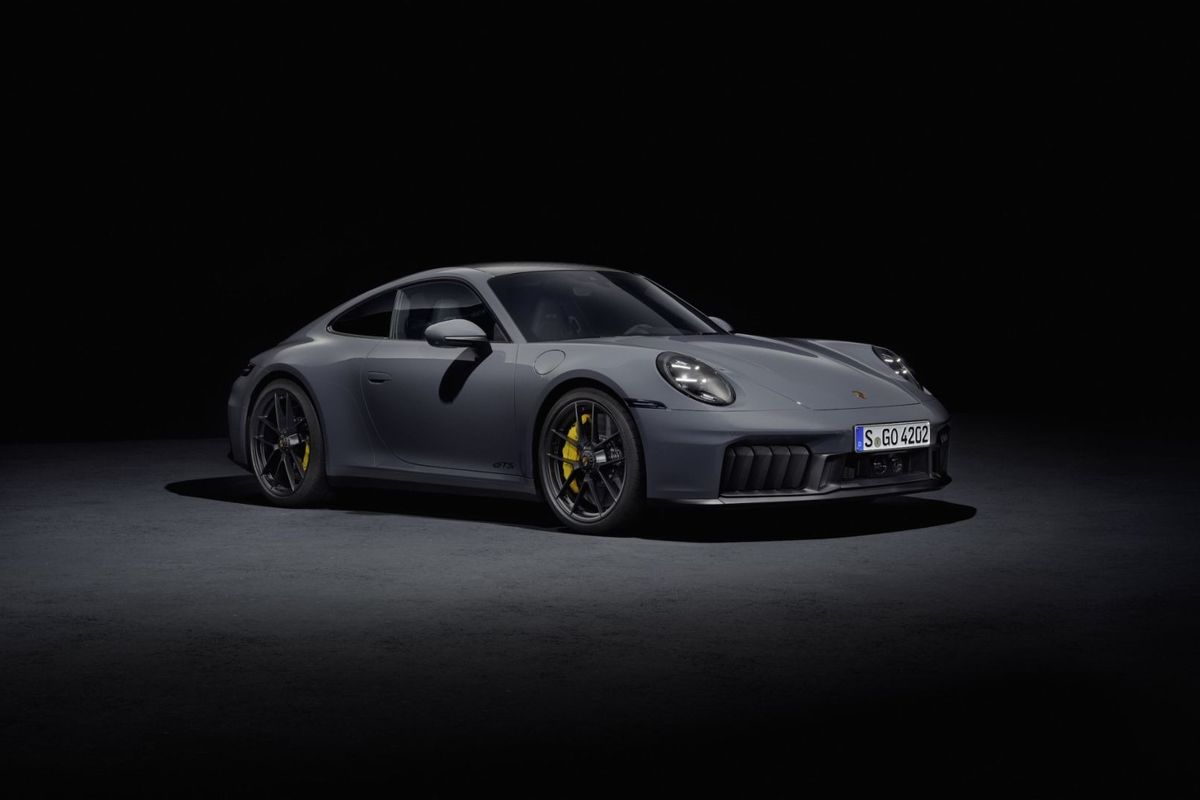
Here’s the Porsche 911 facelift which now features hybrid technology and it’s confirmed for SA. Here’s pricing and early details.
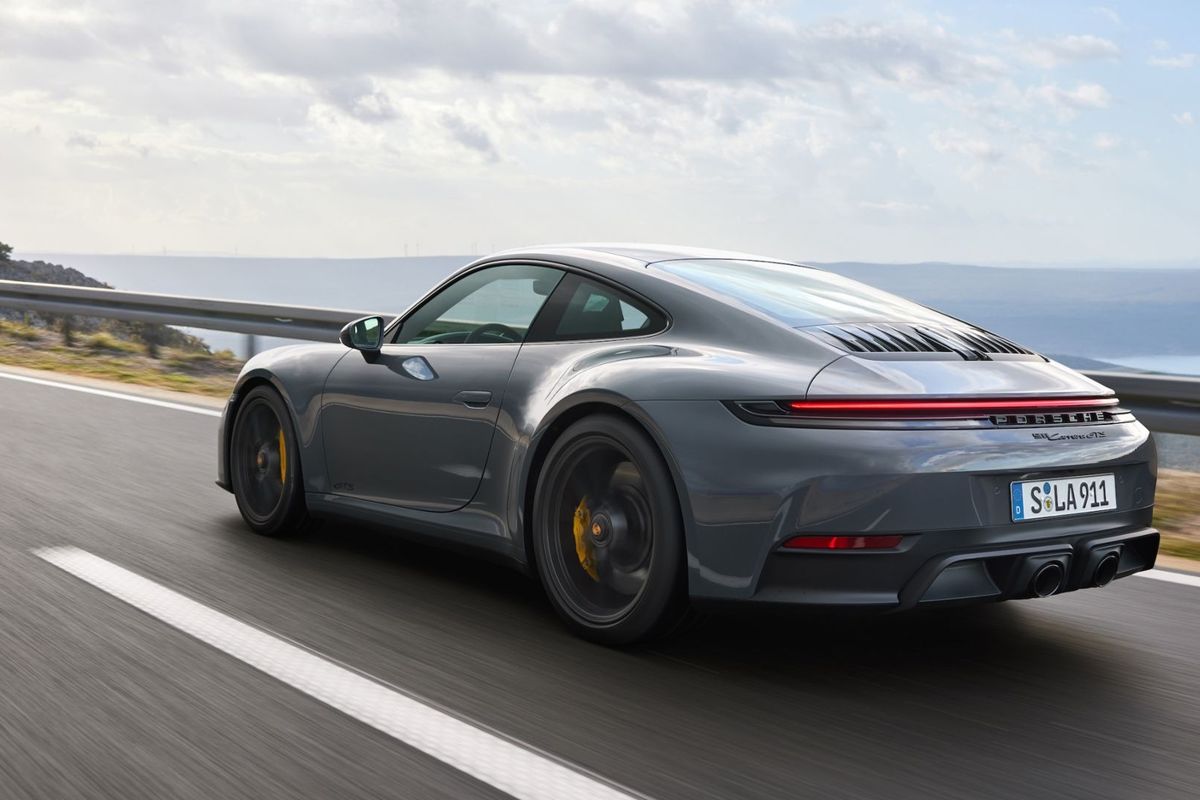
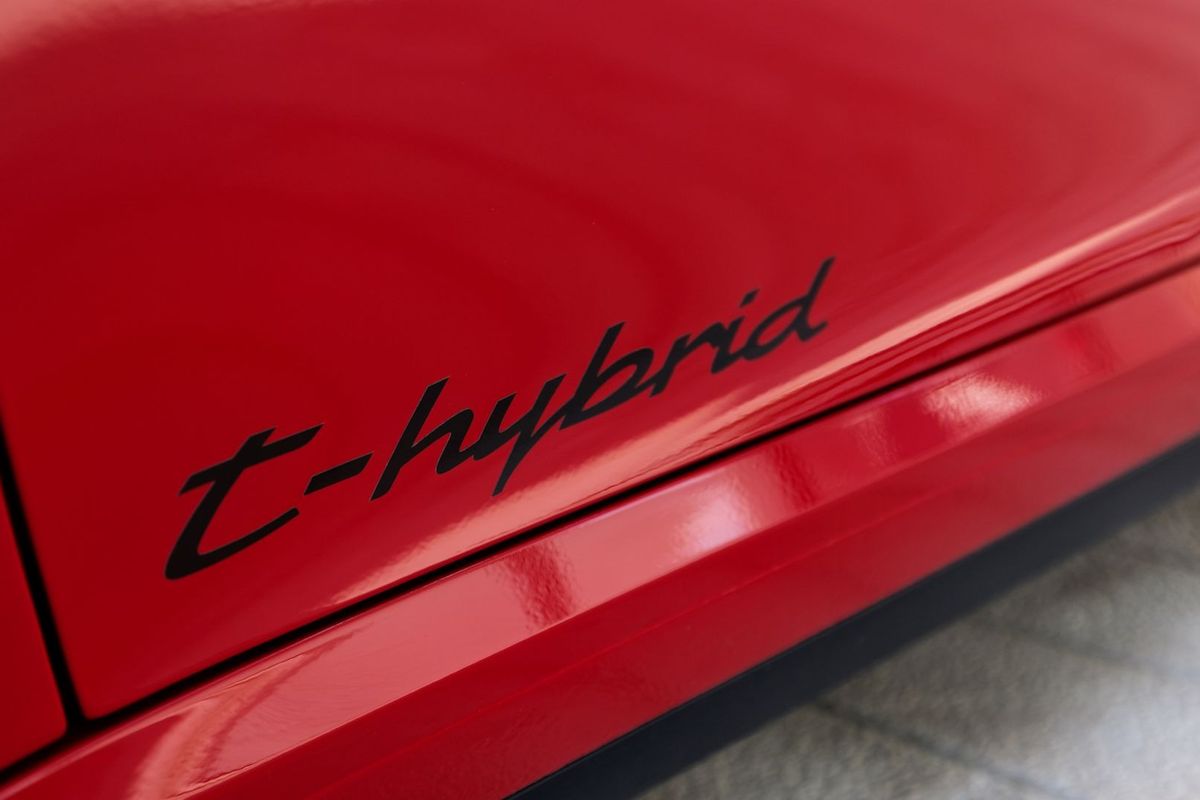
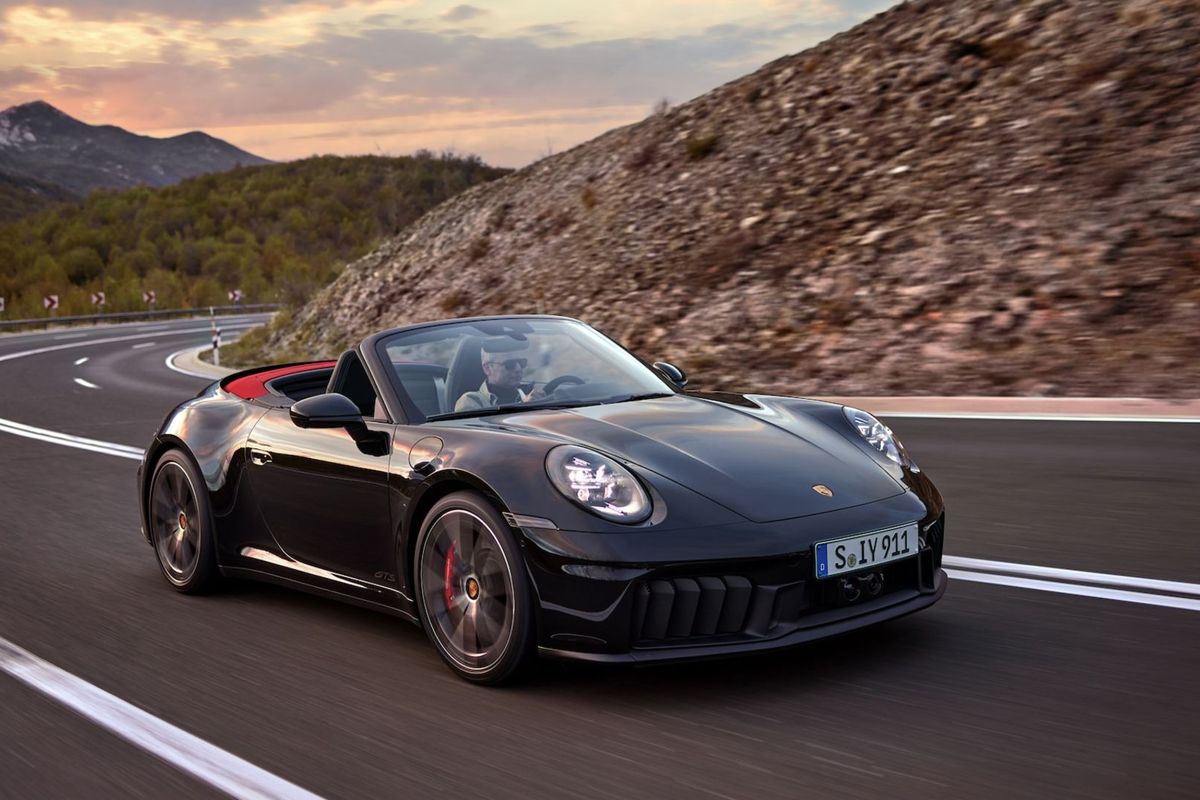
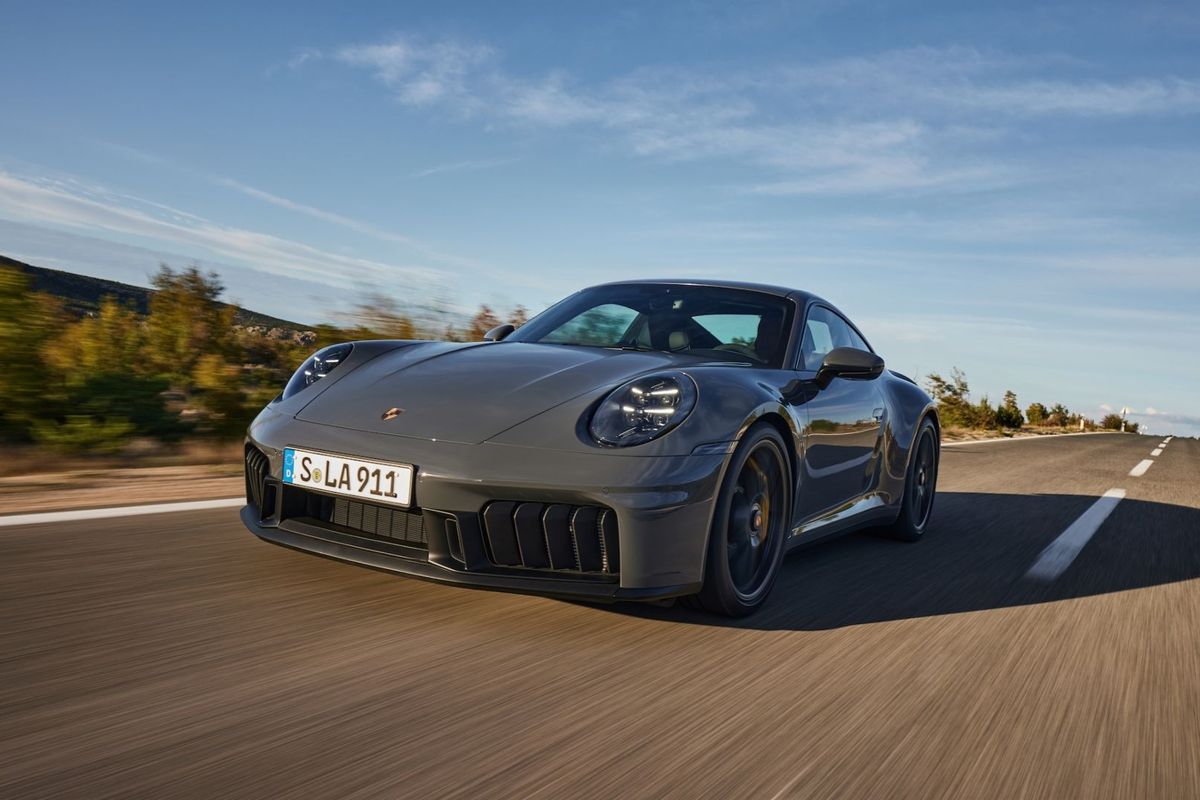
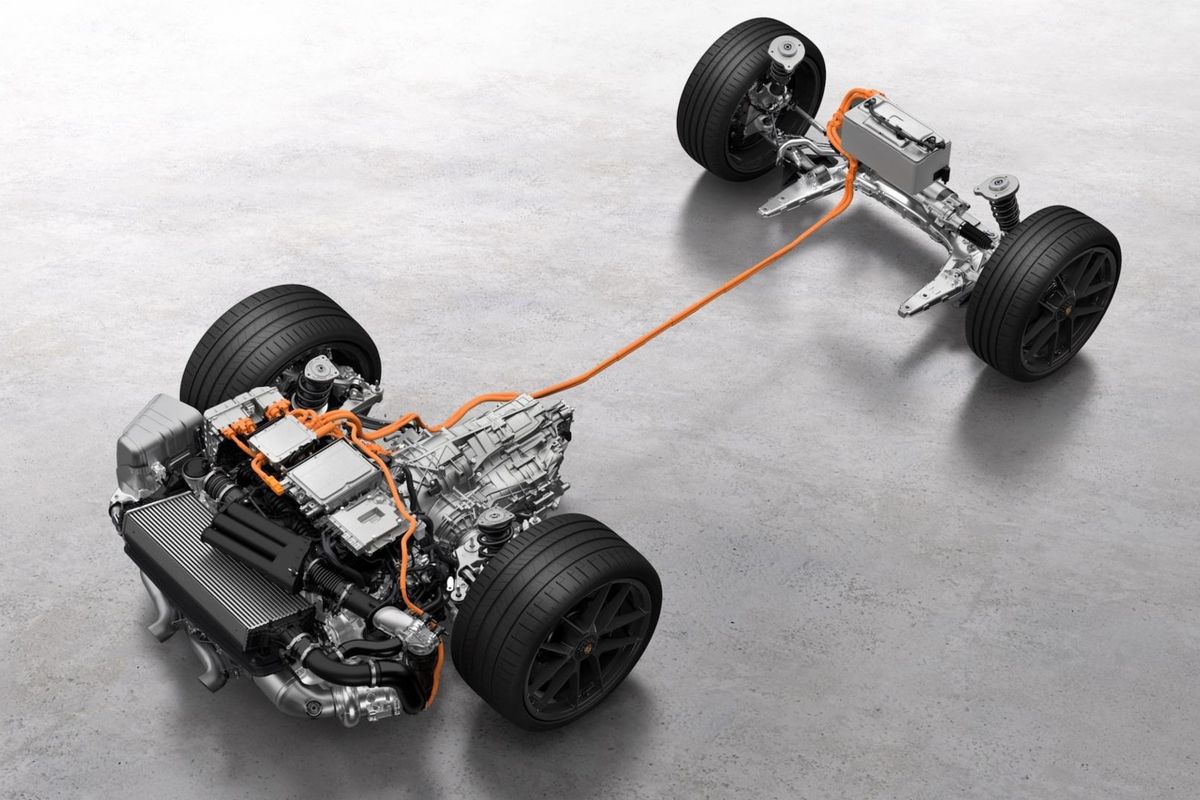
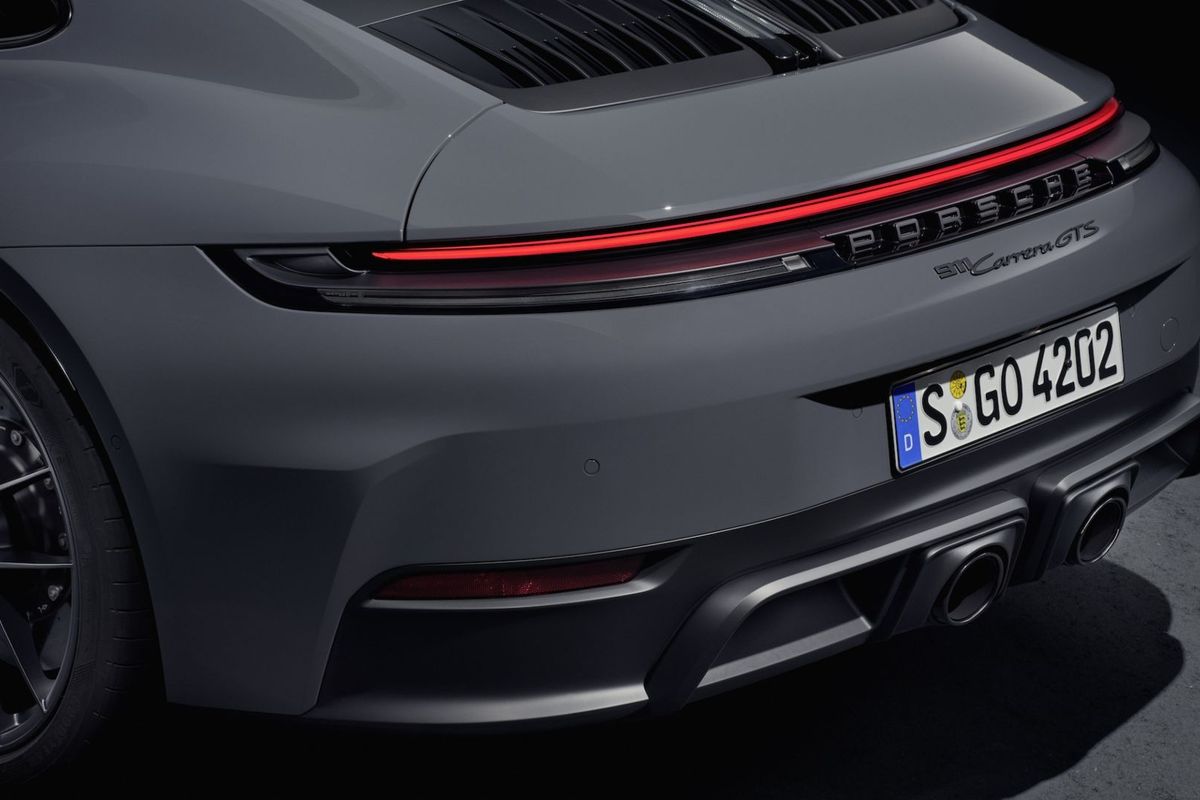
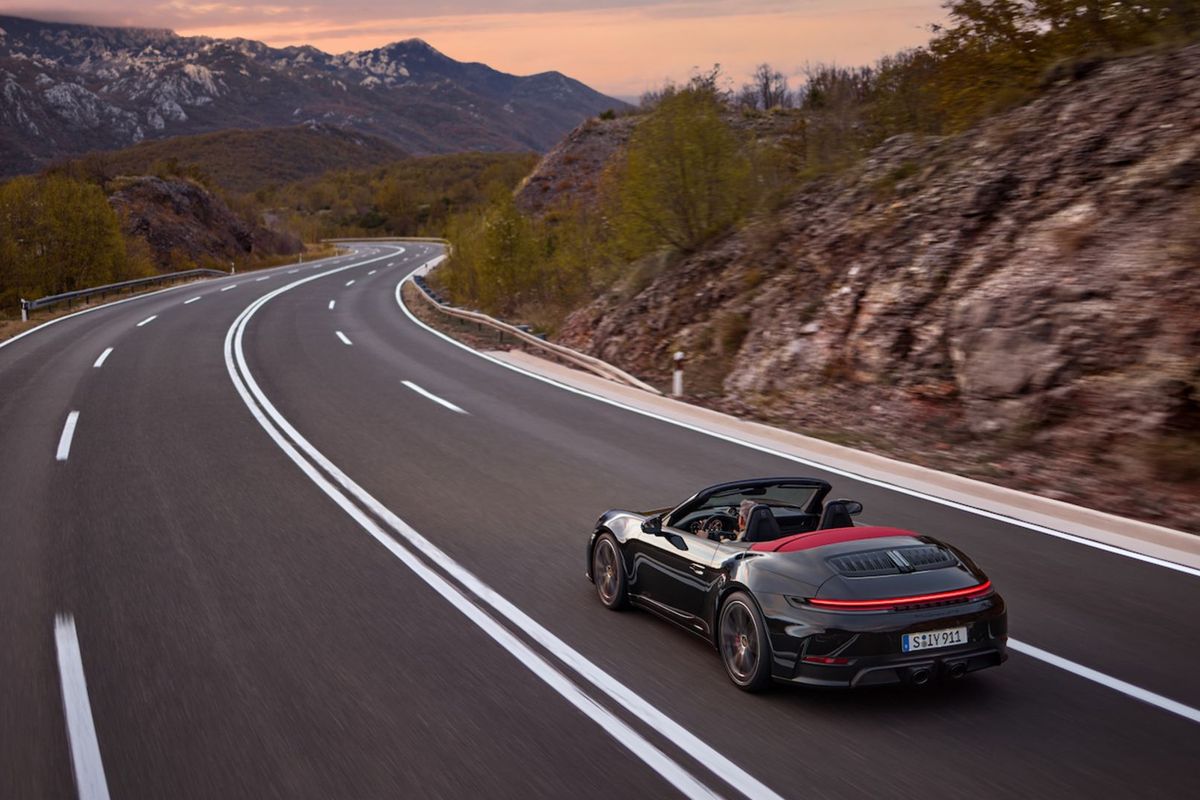
This is the 992.2-generation Porsche 911 and it brings a few changes to the iconic sportscar. The headline news is the new Carrera GTS powertrain. Badged as the T-Hybrid, this 3.6-litre engine sees the introduction of electrification to the party. In goes a 1.9 kWh 400-volt battery and the twin-turbo setup has been replaced by an electrically-assisted single turbo that’s said to be lag-free.
There’s a single electric motor positioned within in the 8-speed PDK ‘box and it makes 49 kW and 149 Nm on its own. In total there’s 398 kW and 610 Nm, which is 45 kW and 40 Nm more than the outgoing version. Impressively, the new Porsche 911 facelift GTS is able to dash to 100 kph in just 3.0 seconds, which is 4-tenths quicker. The electric hardware adds around 50 kg to the overall mass and offers a reduction in emissions on top of the additional shove.
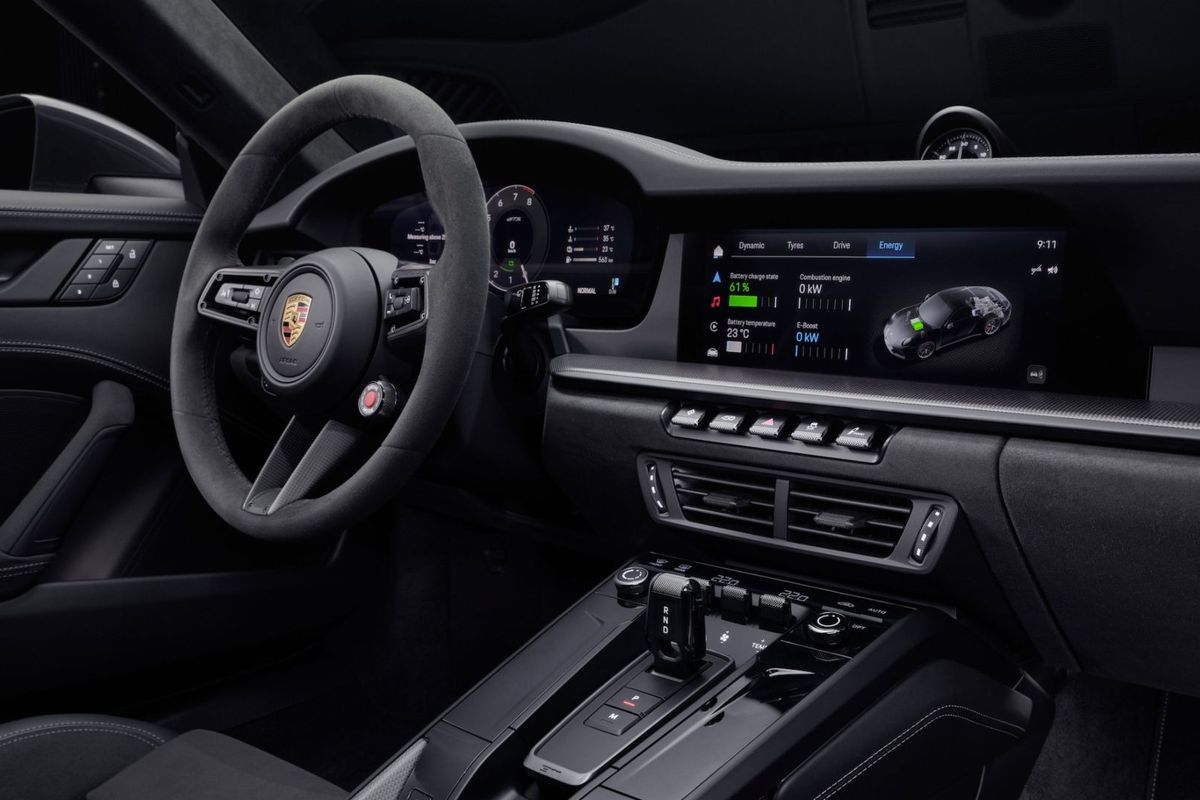
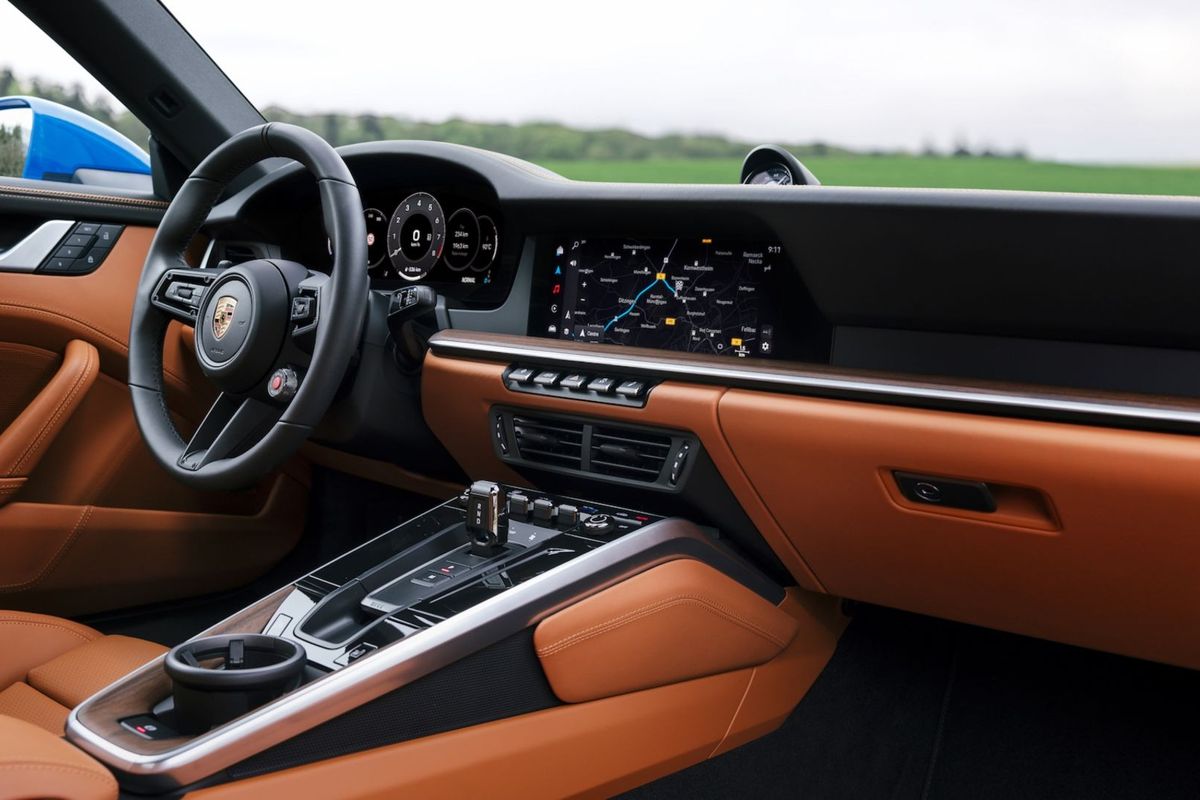
The GTS will sold with a sports exhaust with twin pipes, rear-wheel steer, 20-inch front/21-inch rear wheels, adaptive dampers and there are revisions to the cabin too. A fully-digital 12.6-inch digital instrument cluster makes it debut, with different themes and the new setup has apps like Spotify and Apple Music.
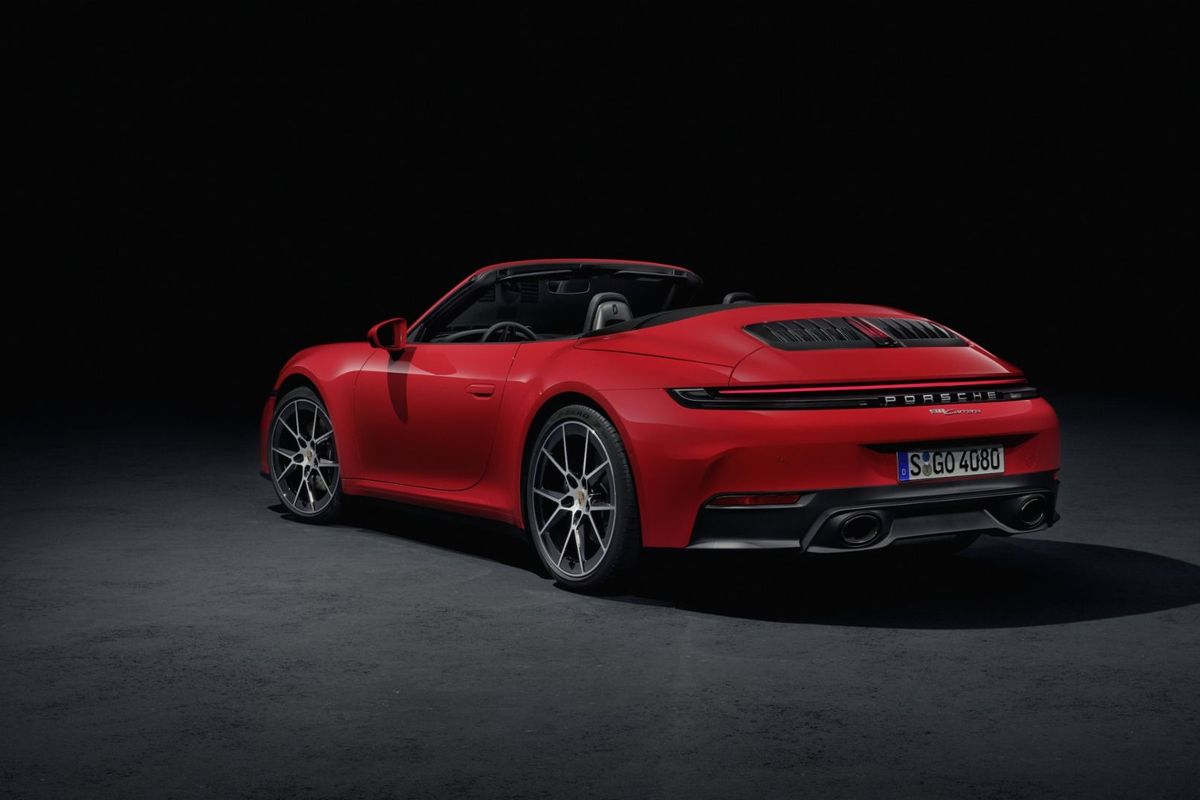
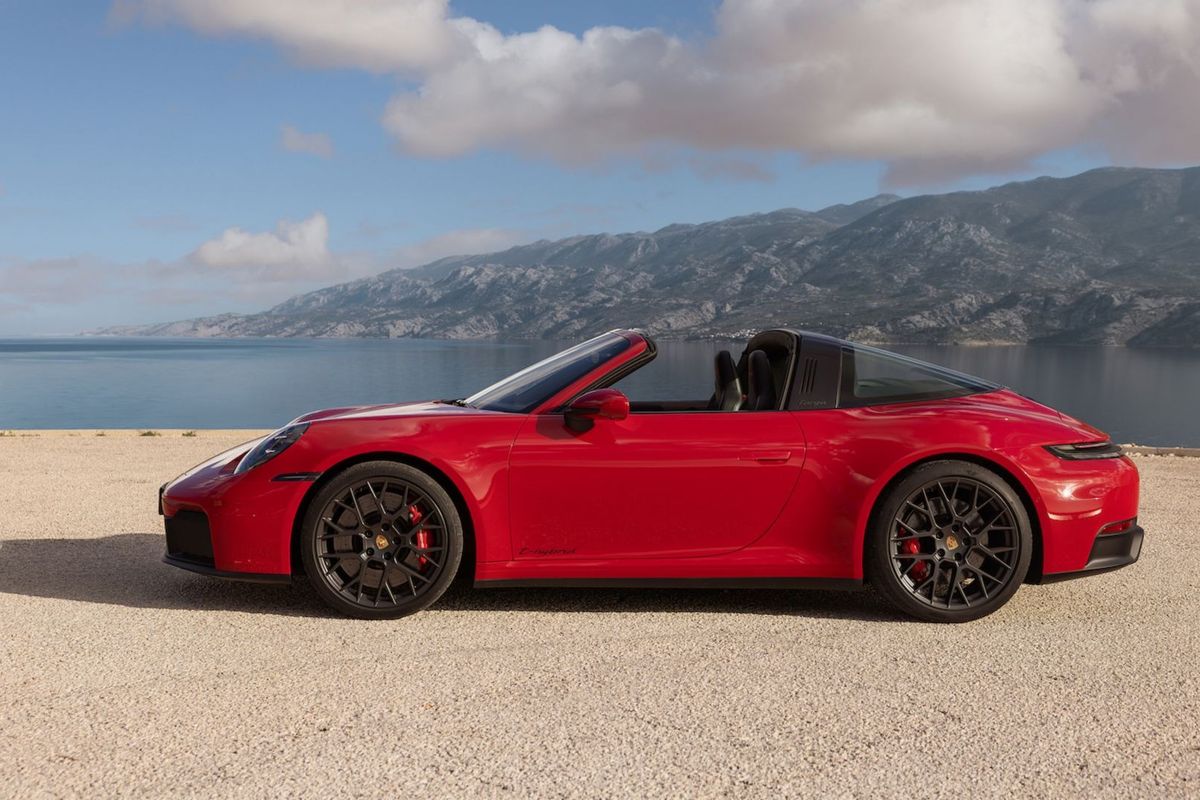
The entire GTS range (coupe, convertible, Targa) will get this T-Hybrid powertrain and customers will be able to choose from either rear-wheel drive and all-wheel-drive setups.
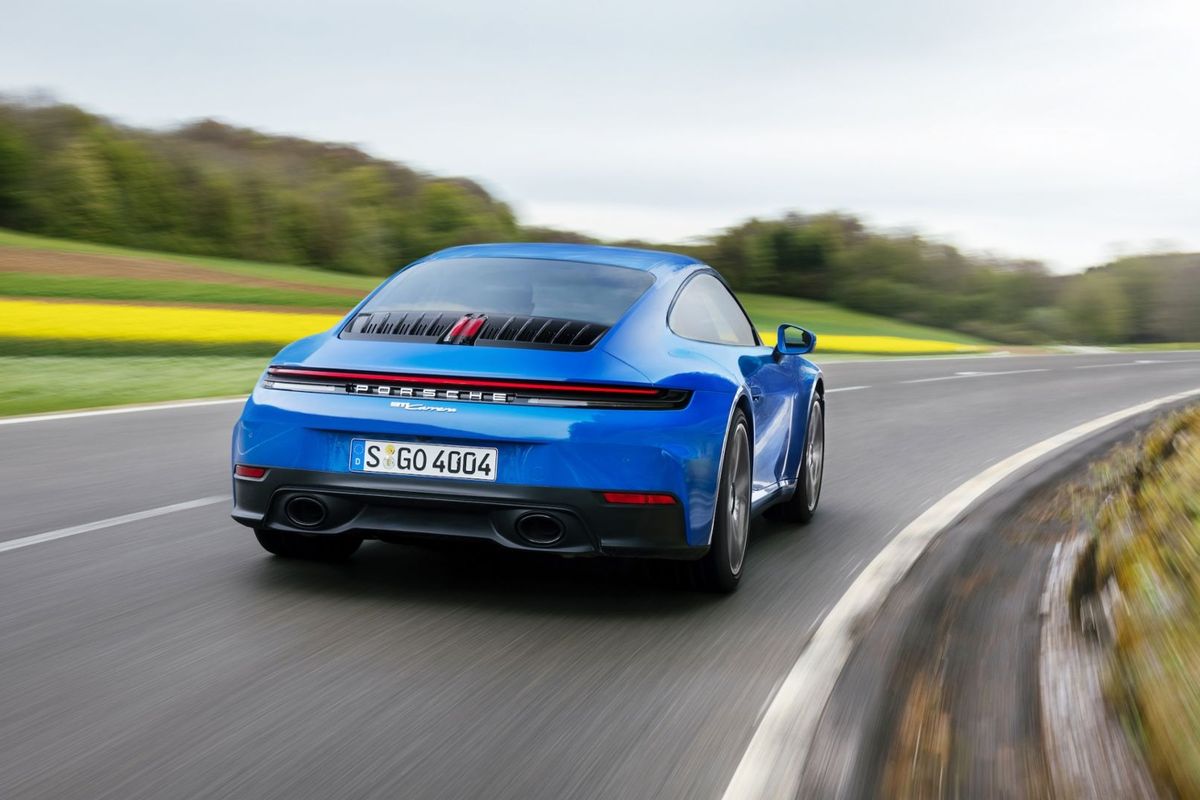
Visually, the Porsche 911 facelift can be spotted with its subtle updates like the 4-point LED Matrix headlights, new rear decklid grille, the word ‘Porsche’ is now illuminated and there’s aerodynamics galore, with new front air ducts, reworked front bumper and tweaked diffuser at the rear.
Rest of the Porsche 911 Facelift range?
Right now, the facelift range comprises just this GTS and the base-model Carrera. Customers will have to wait until late 2025/2026 for the new-spec Carrera S and other derivatives, like Turbo, Turbo S, GT2 and so on.
The Carrera is only available with the PDK dual-clutch ‘box and comes with a 3.0-litre twin-turbocharged 6-cylinder which receives uprated turbochargers and bigger intercooler. Outputs of 290 kW and 450 Nm are enough to see it sprint to 100 kph in just 4.1 seconds (quicker if you opt for the Sport Chrono pack).
How much does the Porsche 911 Facelift range cost in South Africa?
The 944 Cabriolet has never been enthusiasts’ most loved Porsche – but are they underestimating the drop-top? We head to the Free State to drive a prime example.
IMAGES: Kian Eriksen
When most motoring enthusiasts think about topless Porsches, visions of V10-engined Carrera GTs, rare 550 Spyders, 356s and G-Series (1973 – 1989) 911 models tend to pop into their heads first.
However, those cars are rare (except perhaps G-Series 911s) and, suffice it to say, one needs a healthy bank balance and the patience of a saint to source and acquire one of those revered models. So wouldn’t it make sense to see what is available at the opposite – more realistically priced – end of the market?
Prevailing classic car market conditions
At the bottom end of the Porsche cabriolet range are early Boxsters and 996-series 911 Cabriolets. Each of these models holds an appeal of its own, but much older Porsche 944 Cabriolets (produced from 1989 to 1991) now trade for roughly the same price as early Boxsters and, in some cases, even more.
Although some enthusiasts frown when you mention investment value, most will quietly admit they don’t want to lose money on a car. Fortunately, many classic cars are safe bets nowadays (that pertains to 944 Cabriolets as well). It is unlikely that they will appreciate much over the coming years and because their values seem to have bottomed out, you are unlikely to lose money on one (provided you get a good one).
Specifications
Model: Porsche 944 S2 Cabriolet
Engine: 3.0-litre, 4-cylinder, petrol
Power: 155 kW at 5 800 rpm
Torque: 280 Nm at 4 000 rpm
Transmission: 5-speed manual, RWD
Weight: 1 340 kg
0-100 kph: 7.1 sec (claimed)
Top speed: 240 kph (claimed)
Details of this Porsche 944 Cabriolet example
As we parked the white 944 Cabriolet to conduct static photography on a warm spring day in Bloemfontein, I asked the Porsche’s owner about their car’s history.
“I bought this 944 about 5 years ago. At first, the previous owner didn’t want to sell it to me, but the second time I approached him, he still had the 944 as well as a Mercedes-Benz SLK (the Three-pointed Star’s now discontinued compact roadster), so I offered him a price for both cars, which he accepted.
I particularly like the colour combination, the white body colour with the dark blue soft top and the purple interior. What’s more, the car’s overall condition was very good – that was initially the drawcard for me.”
Upon closer inspection, it is clear that the car has indeed been lovingly cared for. The paint finish looks in good condition, and the interior shows only a few signs of wear, which is in keeping with the odometer reading of 223 541 km.
The colour of the interior might polarise opinions, but having said that, if you appreciate a bit of pizzazz, this 944’s cabin will surely appeal to you. The seats, carpets, sun visors and tonneau are a very rich dark purple, which not only highlights and contrasts with the white exterior paintwork, but imbues the interior with a sense of luxury. It looks so much more welcoming than a standard 944’s plain black interior.
The only item that deters from the otherwise original state of the interior is the aftermarket radio, which is a modern necessity seeing as motorists now prefer to enjoy their choice of music in digital formats.
I open the bonnet and find the engine bay tidy, which shows little evidence that the 944 Cabriolet has indeed covered its indicated mileage. As is usually the case, the discoloured (yellowy) plastic of the fluid containers gives the car’s age away.
I find the car’s chassis number to the left of the engine, positioned against the firewall. According to The Porsche Book by authors Jürgen Barth & Gustav Büsing, this particular car was one of 1 864 examples manufactured in 1991. For curiosity’s sake, I also have a peek at the luggage compartment. It has the same purple hue as the interior and the carpets and trim are in near-perfect condition.
The rear deck lid features a neat rear brake light. Having seen and looked at several 944 Cabriolets, this is the first one I’ve seen with such a brake-light configuration. I’m not sure if it was an OEM, country-specific item, or an aftermarket addition. Lower down you can also spot the diffuser, first seen on the later S2 models, which wraps itself around the bottom edges of the car’s rear fenders.
The Porsche 944 Cabriolet variant only went into production towards the end of the model’s production cycle, in January of 1989, which means all Cabriolet models featured the updated cabin and exterior facelift. The Cabriolet was based on the 944 S and, as was the case with the Zuffenhausen-based brand’s entire 4-cylinder range, was assembled at Neckarsulm in Germany (the home of Audi Sport).
However, before 911 purists frown upon those who adore Porsche’s early 4-cylinder sportscars, keep in mind that the assembly of the 944’s powertrain was completed at Porsche’s plant. The convertible roof was installed by the American Sunroof Corporation (ASC) at its Weinsberg plant in Germany.
However, in June 1991, the 944’s entire assembly was moved to Zuffenhausen. The 944 Cabriolet’s launch price was DM76 700, slightly higher than the DM58 950 for an equivalent 944 S coupe.
Today, these cars’ prices depend on mileage and condition, of course, but expect to pay more for a good drop-top than a coupe… and a pretty penny for the much rarer (around 500 built) 944 Turbo Cabriolet.
Behind the ‘wheel of a Porsche 944 Cabriolet
Then, I got behind the 944 Cabriolet’s ‘wheel and shut the driver’s door. Thunk! For the record, fewer rattles and vibrations emanated from the car’s doors – and cabin – than I thought would be the case.
You sit low in the car, more so than in a Mercedes-Benz SL of the same era (then the 4th-gen model, known as the R129), and the dashboard and instrument panel will be very familiar to any 944 owner.
Everything falls easily to hand; the gear lever, in particular, is perfectly positioned, as is the feel of the steering wheel, which was shared across Porsche’s range of transaxle cars, as well as the 911.
Compared to those of some modern sportscars, including new 911s, the 944’s steering wheel has a notably thinner rim, which feels perfect in your hands, and allows you to grip it firmly. This is rather important during parking manoeuvres, as the steering wheel does need proper input from the driver.
By modern standards, the Porsche 944 Cabriolet’s cabin is a simple, almost spartan space: there are 2 stalks attached to the steering column and the ventilation buttons are situated below the centre air vents; even the analogue dials seem slightly lost in the large instrument binnacle. Apart from the speedometer and rev counter, you also have oil pressure, battery voltage and coolant temperature gauges.
Twist the ignition key (positioned to the right of the steering wheel) and after a turn or two of the crank, the engine starts undramatically. As expected, there is less fanfare than in the 944’s contemporary 911 siblings, but this is, after all, one of the most useable boulevard cruisers Porsche has ever built.
Still, as the Porsche pulls away, I slot the gear lever into 2nd, then 3rd; the gearbox has a lovely, relatively direct shift quality. The ride quality is good, I have a perfect view through the windscreen and across the bonnet. Moreover, the 4-pot engine is all too happy to potter around in the first 3rd of the rev band.
For a car that has clocked many kilometres, the cabin panels still feel tight; I don’t detect notable rattles or creaks. The previous and current owners have done an excellent job of keeping the interior preserved, especially taking into account that it is a Cabriolet and has spent its life under the harsh African sun.
The Porsche 944 Cabriolet offers ample performance
As I start to increase my pace, the weight of the car is noticeable. It is, after all, the Cabriolet is between 50 and 80 kg heavier than the coupe, depending on the exact specification and model year of the car.
However, no test drive would be complete without making the engine rev to its redline. So, I select 2nd gear and give the accelerator pedal a solid prod. The revs rise gradually to around 4 500 rpm, but once the needle swings past this mark, the engine evidently gets its second breath and spins up eagerly to 6 000 rpm. I did this quite a few times and every time the engine obliged and cantered to the red line.
Even though the motor does so willingly, the engine is similarly well-suited to leisurely driving. As the maximum torque of 280 Nm is already delivered at 4 100 rpm, it means that you don’t need to wring the engine’s neck to make the 944 gallop. In the end, that means it is an ideal propulsion unit for a cabriolet.
Not unlike 911s, the moment you use all the available performance, the nose lifts ever so slightly, and the rear ducks a smidge. I felt little need to hustle the car through corners. I’m not saying it shouldn’t be, but if that is the kind of thrill you’re after, a 996-series 911 Cabriolet or 986 Boxster would be a wiser choice.
I let the Porsche 994 Cabrioloet’s revs drop to about 2 000 rpm in 4th gear, and then flatten the long pedal. The revs start to rise and then, past 4 500 rpm, the needle further awakens. A peak output of 155 kW at 5 800 rpm is not a lot of power, especially in a relatively hefty cabriolet, but it’s enough to entertain and make things exciting when you want to string a few corners together or use all the available revs.
As this area of Mzansi receives minimal rain or wind, and the afternoon sky gave way to a near-perfect sunset, I never had the urge to raise the roof – a wonderful luxury to have when you own such a car!
However, should you wish to change that because of, say, the onset of inclement weather/a sudden drop in temperature, or to store the car with its roof up, bear in mind the top is manually operated. There is some evidence of scuttle shake in general driving conditions, but, again, it’s nothing out of the ordinary.
Summary
After spending several hours in the company of the Porsche 944 S2 Cabriolet, my opinion of the drop-top changed somewhat. It’s not a 911, but it IS a true Porsche, albeit not the most dynamic one.
If you’re going to drive mostly on your own and seek an engaging experience, consider one of Porsche’s other cars, BUT if someone is going to be joining you for the trip, and you’re going to be driving at “7 tenths” most of the time – and enjoy the manual gearbox – it’d make a worthy addition to your garage.
While the BMW i3 looks like something from the future, you can no longer buy a new one. So, should you consider buying a used example of the Munich-based brand’s pioneering electric car? Here’s what you need to know…
When the BMW i3 whirred into South Africa nearly a decade ago, the only other fully electric vehicle (EV) on the local market was the original Nissan Leaf. By contrast, Mzansi’s new-energy vehicle space now positively teems with battery-powered models, but we’re still waiting for a truly affordable new EV.
Although the I01-generation BMW i3 was hardly a bargain back in 2015, prices on the 2nd-hand market have dipped to a level where one could argue that a lightly used example offers the sort of value still sorely missing from the new-vehicle market’s EV segment. A prospective buyer would, of course, need to be willing to make some compromises concerning i3 derivatives’ range limitations and even a lack of warranty cover on the battery packs of earlier models, but those are topics we’ll delve into later…
Production of the i3 started in Leipzig in September 2013.
Potential value proposition aside, the BMW i3 was nothing short of revolutionary when it arrived on the scene as the Bavarian marque’s 1st series-produced fully electric car. The ground-up design included a carbon-fibre-reinforced plastic (CFRP) passenger compartment (onto which a thermoplastic skin was attached), an all-aluminium platform and an airy cabin trimmed in materials from sustainable sources.
Despite its futuristic styling (and sub-4-metre length), the BMW i3’s exterior proportions whispered “MPV” rather than “hatchback”, with the driver benefiting from a suitably raised seating position. Either way, the Leipzig-built EV’s cruising range was relatively modest by modern standards, although it did score significant battery-pack upgrades throughout its 9-year lifecycle.
A look at the i3’s revolutionary CFRP tub.
A quick note on range; the figures we’ll list in this Buyer’s Guide – chiefly for the sake of comparing the 3 battery-pack capacities that were available during the i3’s time on the market – are based on the New European Driving Cycle (NEDC). Suffice it to say the model’s real-world range was considerably lower.
As a further aside, although the BMW i3 was a single-generation model, the nameplate is fascinatingly still alive and well in China, where it’s used on a battery-powered version of the long-wheelbase 3 Series sedan (the latter bearing the G28 model code). It may well also end up being repurposed for the electric version of the next-gen 3 Series (teased by the BMW Vision Neue Klasse Concept) for global markets.
BMW i3 model line-up in South Africa at launch
The i3 launched in Mzansi alongside the i8 PHEV sportscar (left).
In 2011, shortly after establishing the BMW i sub-brand, the German manufacturer released the first official images of the BMW i3 Concept (itself previewed by sketches of the “Megacity Vehicle” a year earlier). The production version began rolling off the Leipzig assembly line in September 2013.
However, the BMW i3 arrived in South Africa only in March 2015 (with local businessman Nicky Oppenheimer snapping up the first unit), hitting the market alongside the i8 plug-in hybrid sportscar. Initially, only 4 BMW dealerships around Mzansi were appointed to sell and service the i3 model.
The i3 featured some recycled materials inside, though its build quality was top-notch.
The local line-up comprised 2 derivatives, each with a 125 kW/250 Nm electric motor mounted on and driving the rear axle via an integrated single-speed transmission. The high-voltage, 60-Ah lithium-ion battery pack comprised 8 modules (each with 12 cells), offering a usable energy capacity of 18.8 kWh. So, what set the pair of variants apart?
BMW i3 eDrive (125 kW/250 Nm)
BMW i3 eDrive REx (125 kW/250 Nm)
Well, seemingly in a bid to ease the inevitable range-anxiety fears (remember, Eskom was making headlines for all the wrong reasons back in Mzansi back in 2015, too), a so-called “range-extender” derivative was offered alongside the pure-electric variant. Wearing the REx moniker, this pricier, heavier, slower version of the i3 featured a 650 cm3 twin-cylinder petrol engine (with peak outputs of 28 kW and 56 Nm of torque), borrowed from BMW’s motorcycle range and fed by a front-mounted 9-litre fuel tank.
The i3 was offered in both pure-electric and REx form.
Rather than driving the wheels directly, the small, rear-mounted petrol mill acted as a generator that served to maintain the charge of the lithium-ion battery as soon as it dipped below a certain value. While the pure-electric variant’s single-charge range was listed as about 190 km (NEDC), the REx derivative could theoretically travel more than 100 km beyond that.
What about charging? Well, though it was entirely possible to top up the battery pack using a domestic power socket (a time-consuming exercise best performed overnight), BMW Group SA also offered the option of a Wallbox for the sum of approximately R25 000 (including installation, though dependent on the existing electrical infrastructure at the buyer’s home). While limited by the maximum current strength available at the property, this could ostensibly cut the total charge time to under 3 hours.
The SA-spec BMW i3’s Type 2 socket (with 2nd point to accommodate CCS below).
For normal charging, the BMW i3 used the familiar Type 2 plug, while the Combined Charging System (CCS) connector was reserved for rapid charging. As an aside, the charging port was located on the driver’s side rear fender, while REx derivatives additionally featured a petrol flap on the front fender.
BMW i3 upgrades in SA over the years
Over the next few years, the BMW i3 was treated to several updates. But even before its first tweak, this ground-breaking electric car won both the Design of the Year and Game Changer of the Year titles at the inaugural Cars.co.za Consumer Awards, presented in Johannesburg in early 2016. A strong start, then.
At some point in the 2nd half of 2016, the SA-spec i3 became available with an upgraded 94-Ah battery (though the 60-Ah versions remained on the official price list for a short time). Thanks to the higher storage density of the lithium-ion cells, the battery’s dimensions were unchanged, but its usable capacity increased to 27.2 kWh, which hiked the pure-electric version’s NEDC range to approximately 300 km.
The facelifted version of BMW’s first series-produced full EV.
In mid-2018, the facelifted BMW i3 debuted in the local market. Though the model’s powertrains were untouched, the update did include some subtle design changes, such as revised front styling (now with LED headlamps and LED indicators) and a new rear apron, along with a black finish for the A-pillars and updated exterior paint options. Inside, the Munich-based firm upgraded the iDrive infotainment system.
Towards the start of 2019, South Africa’s BMW i3 line-up – again, including the REx derivatives – had the standard battery pack upgraded once more, this time to 120 Ah (now with a usable capacity of 37.9 kWh). As a result, the pure-electric version’s NEDC range climbed to about 360 km.
The i3s boasted slightly higher peak outputs.
Around the same time, the i3s joined the local portfolio in eDrive and REx guises. Also endowed with the 3rd-gen 120-Ah battery pack, the sportier i3s derivatives had slightly higher peak outputs of 135 kW and 270 Nm (though a lower NEDC range of 325 km, in the case of the i3s eDrive). In addition, the variants sported bespoke design cues, sports suspension (10 mm lower than standard) and 40-mm wider tracks.
Production of the BMW i3 ended in July 2022, with more than 250 000 units built for the global market.
What are the pros of a BMW i3?
Running costs fall even further when charging via solar.
Low running costs: With far fewer moving parts than similarly sized petrol- or diesel-powered vehicles, the BMW i3 benefited from considerably lower running costs (theoretically offsetting its relatively high purchase price, over time). For instance, there were hardly any fluids to change, although the ICE component of REx derivatives still required yearly oil-and-filter services…
Thanks to regenerative braking, the friction brakes often lasted ages; in Germany, for example, one particular BMW i3 owner travelled more than 270 000 km on their vehicle’s original pads and discs. Compared with combustion-engined vehicles, “fuel” typically cost quite a bit less, too, particularly if owners charged at home (and especially so if their properties were fitted with solar).
The i3 offered a genuinely fun driving experience.
Genuinely fun to drive: Whereas most modern EVs set the scales creaking, the BMW i3 was relatively lightweight, largely thanks to the clever use of aluminium and CFRP (in the case of the pure-electric model, BMW listed an unladen weight of 1 195 kg at launch).
This, along with a high level of torsional stiffness and a low centre of gravity, meant the quirkily styled German hatchback handled with far more agility and precision than its upright stance might suggest. In fact, the BMW i3 was downright fun to pilot – the electric motor offered immediate access to maximum torque to produce brisk acceleration around town.
The i3s was as quick to reach 100 kph from a standstill as the Fiesta ST.
While the REx variants were a little tardier, the i3 eDrive took a claimed 7.2 sec to complete the 0-100 kph sprint, a figure that fell to 6.9 sec in the case of the slightly more powerful i3s (or just 3.7 sec from 0-60 kph). That made the i3s as brisk to 3 figures (from zero) as the Ford Fiesta ST hot hatch.
Furthermore, the BMW i3 – which boasted a usefully tight turning circle – offered an intuitive, speed-sensitive 1-pedal driving experience. Endowed with a strong regenerative braking effect, there was often no need to apply the brakes at all, with recuperation mode activated the moment a driver lifted their foot off the accelerator pedal.
The rear-hinged back doors and lack of a B-pillar were key design features.
Concept-car styling (inside and out): Though perhaps not to everyone’s taste, there’s no denying the BMW i3’s design was unlike anything else out there. The daring clamshell doors (and consequent lack of B-pillars) played a key role here, with BMW suggesting this design allowed “extremely easy access” to the 4-seater’s cabin. Keep in mind the rear doors’ glass was fixed in place.
Also note that to open the rear portals, the front items first needed to be ajar (and the front seatbelt on that side unbuckled). While this could prove mildly annoying when dropping off rear passengers, having the doors open at least gave the occupants a cheeky glimpse of that exposed carbon frame.
Watch Ciro De Siena’s 2015 video review of the BMW i3
What are the cons of a BMW i3?
Limited range (particularly on highways): Like virtually all EVs, the BMW i3 was best suited to urban environments, since the cruising range tended to plummet once out on the highway. Still, the upside of the original lower battery capacity was a shorter overall charging time. And, of course, higher capacities were offered deeper into this model’s lifecycle.
Of course, those with plans to venture even farther from home also had the option of a range-extender (REx) derivative. Note, however, that the distant, somewhat agricultural hum of the 2-cylinder petrol motor tended to mar the i3’s otherwise largely silent running.
The battery pack comprised 8 modules (each with 12 cells).
Scary battery-pack replacement costs: Though we believe BMW Group SA has yet to be called upon to replace an entire battery pack in an i3 (the battery was developed “to last for the full life of the vehicle”), anyone considering the purchase of a 2nd-hand EV would do well to educate themselves on the cost of this big-ticket component. Ready for the numbers? Well, we don’t think you really are: brace yourself.
Armed with a VIN for a 2015 i3 (60 Ah), we approached a local BMW dealer and were presented with a whopping R432 049 battery-pack replacement cost (even the representative in the parts department was left entirely aghast by this figure). For the record, that price is for all 8 modules but doesn’t include fitment. What about a new 8-module battery pack for a 2019 i3 (120 Ah), again confirmed using a valid VIN? Well, the price here rises to an even more frightening R483 644.
The estimated maximum usable battery capacity can be checked via a hidden menu.
Again, we should reiterate that we’re unaware of any i3 owner in South Africa who has had to go this route (and such an instance would surely result in an insurance write-off anyway). In fact, South African Shaun Maidment, owner of the highest-mileage i3 in Africa, told Cars.co.za that his 2016 60-Ah model is still going strong on the original battery after a whopping 364 000 km.
As an aside, when organising a viewing of a used i3, make sure to request that the battery is fully charged by the time you arrive. That way, you have the option of using a (somewhat convoluted) method of checking the battery’s estimated maximum usable capacity via a hidden menu in the trip computer.
Google “BMW i3 Batt Kapa Max” to learn more, though note this isn’t regarded as a pin-point accurate look at battery health, but rather an approximate snapshot of the potential maximum capacity at that point in time (according to the battery management system’s information, anyway).
Factor in the cost of a Wallbox (or similar charging solution).
Miscellaneous potential issues: What else should you keep in mind when considering a BMW i3? Well, you should certainly factor in the cost of having a home charger installed at your premises (if you don’t already have one) as running an EV without such a device doesn’t quite make sense. BMW offers a Wallbox solution, while various other options are available via 3rd-party suppliers.
On another note, though the CFRP used for the i3’s lightweight frame is essentially corrosion-proof, damage sustained in anything more severe than a minor fender-bender could prove prohibitively costly to repair. In most cases, a specialist would need to cut out and replace the spoiled section of CFRP.
In addition, the i3’s skinny tyres were an unusual size, which suggests they could prove quite costly to replace. As standard, the BEV derivative rode on 155/70 R19 rubber all round, while the REx variant had the same tyres up front but 175/60 R19 items at the rear (this set-up was also optionally available for the BEV). In addition, the optional 20-inch alloys came in 155/60 R20 front and 175/55 R20 rear sizes. Finally, note that the i3 did without a spare wheel, instead relying on a tyre-repair kit.
How much is a used BMW i3 in South Africa?
S-badged models are few and far between on the used market.
In Mzansi, the BMW i3 shipped standard with a 5-year/100 000 km maintenance plan and an 8-year/100 000 km battery warranty. Therefore, early models would no longer enjoy battery-warranty coverage.
At the time of writing, 15 examples of the BMW i3 were listed on Cars.co.za, with just 5 taking the form of range-extender models. Fascinatingly, the overwhelming majority came from the opening 3 model years, with just a single unit falling in 2020 and another in 2022. Indicated mileage spanned from 36 000 km (on a 2017 i3 eDrive) to 114 000 km (on a 2015 i3 eDrive).
Below R350 000: There were just 2 options below this mark at the time of writing, both from the 2015 model year. The first was the 100 000+ km i3 eDrive mentioned above, while the 2nd was a REx derivative with 69 000 km on the clock.
From R350 000 to R450 000: We found most BMW i3 listings positioned between these pricing bookends. However, all were from the opening 2 model years, with most odometers approaching 6 figures. So, the battery warranty was either expired or close to its end in virtually all instances.
R450 000 and up: Spending upwards of R450 000 would get you into a later model-year example, complete with ample battery warranty coverage. Interestingly, all 4 examples positioned in this space were listed by BMW dealers, with 2 even coming with a Wallbox charger. The most expensive model we discovered was a 2022 i3 eDrive listed for R628 500.
Which BMW i3 derivative should I buy?
We’d opt for a BEV over a REx.
Before we dive into our recommendations, we feel obliged to emphasise that the BMW i3 was – and still is – best employed as an urban runabout. On that note, we’d argue the pure-electric version offers the most authentic (not to mention efficient) EV experience, while also pointing out that we’ve heard of issues with injectors and fuel-pump relays on the range-extender variant’s 2-cylinder petrol motor.
Then, it’s largely a case of settling on battery capacity. As a reminder, the i3 launched in 60-Ah form, before the battery pack was upgraded to 94 Ah late in 2016 and 120 Ah late in 2018. If you’re chasing range, later models – though more expensive – would then make the most sense, with the added benefit of a longer balance of warranty cover.
Later models would – in theory – also exhibit lower levels of battery degradation, though our research suggests this isn’t too much of an issue for the BMW i3 on the whole, even when it comes to the early model-year units. Of course, keep in mind that the rate of degradation of any lithium-ion battery can be accelerated by various usage factors, including frequent rapid charging.
What else might you consider instead of a BMW i3?
The i3 had few direct rivals during its time on the local market.
At launch in South Africa, the BMW i3’s only electric rival was the original Nissan Leaf, though it wasn’t all that much cheaper (and the 2nd-gen model didn’t reach local shores). The Mini Cooper SE arrived in Mzansi only in the 2nd half of 2020, featuring the i3s’ 135-kW electric motor, but a smaller battery pack.
While not a fully electric vehicle, the XW50-generation Toyota Prius hybrid was arguably something of a BMW i3 competitor, making local landfall the year after the BMW. Despite being more affordable and not hamstrung by the range-anxiety stigma, the Prius sold slowly in South Africa, before being axed in 2022.
Is a used BMW i3 the sub-R500k EV the market needs right now?
This distinct lack of direct challengers in the EV space only emphasises the fact that the i3 was far ahead of the curve. It was a ground-breaker, even if local sales figures suggested otherwise. Fun to drive and endowed with concept-car styling (which admittedly rendered access to the pair of rear seats somewhat clumsy and boot space a little light), the BMW i3 made an excellent 2nd car for dedicated city driving.
And it remains that today. Since South Africa is still holding out for a genuinely affordable new EV, we’d argue that a sub-R500 000 late model-year example with the 120-Ah battery pack (and plenty of battery warranty in hand) would make a seriously tempting – not to mention utterly charming – alternative.
We’ve unearthed local pricing for the facelifted BMW 4 Series Coupe ahead of its arrival in South Africa. Here’s how much you’ll pay for the updated 2-door model…
The facelifted BMW 4 Series Coupe – revealed as recently as January 2024 – is scheduled to launch in South Africa in the 3rd quarter of this year. However, the Munich-based firm has already added the updated 4 Series to its local configurator, revealing prices in the process.
For now, only the refreshed versions of the 420i Coupe and 420d Coupe have appeared, with no sign yet of the updated M440i xDrive nor M4 Competition. Similarly, no word yet on pricing for the facelifted 4 Series Cabriolet and 4 Series Gran Coupe.
The updated 4 Series Coupe again comes standard with the M Sport kit in Mzansi.
So, to pricing: according to the local configurator, the refreshed 420i Coupe will kick off at R1 015 242 (that’s an increase of R41 175 over the outgoing version), while the updated 420d Coupe will start at R1 062 358 (up R41 481 compared with the pre-facelift version). As before, the M Sport kit will be included as standard on both derivatives in South Africa.
The 420i Coupe will again be powered by a turbocharged 2.0-litre, 4-cylinder petrol engine, which delivers an unchanged 135 kW and 300 Nm to the rear wheels via an 8-speed automatic transmission. As such, the claimed 0-100 kph time remains 7.5 seconds, with top speed again pegged at 240 kph.
Only the 420i and 420d have thus far appeared on the local configurator.
Meanwhile, the 420d Coupe will employ a 2.0-litre, 4-cylinder turbodiesel heart, offering the rear axle 140 kW and 400 Nm, likewise through an 8-speed auto. However, according to the international press material, this oil-burning engine gains a 48V mild-hybrid system generating an additional 8 kW. As such, the claimed 0-100 kph time falls from 7.2 seconds to 7.1 seconds, while maximum speed remains 240 kph.
The LCI (Life Cycle Impulse) version of the 4 Series Coupe will furthermore be available with a few individual options, including larger alloy wheels (measuring up to 19 inches in diameter, for R26 000), various leather upholstery choices (up to R84 000) and several interior trim finishes (up to R12 000).
Note the new infotainment system and steering wheel design.
There’s also a Deluxe Package, priced at R70 000 and including items such as an automatic tailgate, comfort access, a glass sunroof, electric adjustment (with memory) for the driver’s seat and a Harman Kardon surround-sound system.
Buyers will also be able to specify the M Carbon exterior package (R35 000) and the M Sport Package Pro (R30 000), with the latter adding features such as a rear spoiler, red brake callipers, M seat belts and Shadow Line treatment for the headlamps and various exterior trim pieces.
The M Sport Package Pro includes the Shadow Line treatment.
How much does the facelifted BMW 4 Series cost in SA?
BMW 420i Coupe
R1 015 242
BMW 420d Coupe
R1 062 358
The prices above include a 2-year/unlimited km warranty and a 5-year/100 000 km maintenance plan.
VW ‘still investigating’ Golf 8.5 GTI for South Africa
Wondering when the Volkswagen Golf 8.5 GTI will arrive in SA? Well, the German firm’s SA division says it’s “still investigating” local launch timing for the facelifted hot hatch…
The Volkswagen Golf 8.5 GTI – now endowed with a peak power output of 195 kW – was revealed in January 2024. So, when will this facelifted version of the German firm’s hot hatch touch down in South Africa?
Well, we asked Volkswagen Group Africa for an update on the front-wheel-drive Golf 8.5 GTI’s approximate arrival date. However, the company could tell us only that it’s “still investigating this for South Africa”, adding that “nothing has been confirmed for this market”.
In Europe, the Golf GTI’s peak power increases from 180 kW to 195 kW.
Interestingly, order books are open in Europe, while fellow right-hand-drive market Australia looks set to receive its first deliveries towards the start of 2025. Based on an earlier statement from VW Group Africa, it appears the company will release “indicative timing” for a local launch only in the 2nd half of 2024.
By that point, VW Group Africa would likely have a better idea of demand in Europe and other major markets, and thus be able to ascertain exactly where Mzansi falls in the global queue for production allocation at the Wolfsburg factory.
The Golf 8.5 GTI debuts new “Queenstown” alloy wheels.
As a reminder, the pre-facelift Golf 8 GTI – which is currently priced at R804 000 – debuted globally in February 2020, though launched in South Africa only in September 2021 (with the Jacara Edition following in October 2022, before being removed from the line-up at the start of 2024). Of course, a fair chunk of the delay was attributed to the global semi-conductor crisis, which came about as a result of the COVID-19 pandemic.
So, what’s new on the facelifted version? Well, the refreshed Golf GTI again employs the German automaker’s familiar EA888 turbocharged 2.0-litre, 4-cylinder petrol engine, though its peak power output (in European specification, anyway) has been hiked from 180 kW to 195 kW. Maximum twisting force, meanwhile, remains 370 Nm.
Note the physical button (rather than touch-sensitive pads) on the steering wheel.
According to VW, the Golf 8.5 GTI – fitted as standard with a 7-speed dual-clutch transmission – can complete the obligatory 0-100 kph sprint in just 5.9 seconds (compared to the pre-facelift model’s time of 6.4 seconds), while top speed is electronically limited to 250 kph.
Of course, the Golf 8.5 GTI’s exterior design has been suitably tweaked (you’ll notice the revised LED headlamps, redesigned grille, updated taillamps and fresh alloy-wheel designs, for instance), while the steering wheel ditches the outgoing model’s controversial touch-sensitive pads in favour of traditional physical buttons. There’s also a new 12.9-inch infotainment system that stands proud of the facia.
The new Golf 8.5 GTI Clubsport will be fully revealed at the end of May 2024.
In addition, Volkswagen will soon whip the wraps off the new Golf GTI Clubsport, which it bills as “the most powerful Golf with front-wheel drive”. The upcoming Clubsport version of the Golf 8.5 GTI will feature a redesigned front end, along with a large roof spoiler, model-specific 19-inch alloys and a “special” driving profile adapted specifically to the Nürburgring Nordschleife. Whether or not the Clubsport is destined for Mzansi roads, though, remains to be seen…
Used Mercedes-Benz C63 AMG (2008-2011) Buyer’s Guide
Non-turbocharged performance cars are now extremely rare on the new-car market, but if you’re looking for one, you’ll find plenty of pre-owned options. Ciro De Siena may have found one of the most reliable ones in his W204 Mercedes-Benz C63 AMG.
The W204-series Mercedes-Benz C63 AMG marked the moment that the Three-pointed Star’s Affalterbach-based tuning division began stepping up its development of AMG models. Launched in 2008, the AMG-fettled business class sedan was powered by a naturally aspirated 6.2-litre V8 (yes, even though it was badged as “6.3”) that produced peak outputs of 336 kW and 600 Nm – it drove the car’s rear wheels via an AMG Speedshift Plus 7G-tronic ‘box (with an automatic throttle-blipping function).
Apart from its powertrain, the W204-series Mercedes-Benz C63 AMG was distinguished from other high-end C-Class derivatives by, inter alia, its redesigned front axle (with a 35-mm wider track) and -suspension, speed-sensitive AMG sports steering, 3-stage ESP and AMG sports suspension.
In its heyday, the Mercedes-Benz C63 AMG (which later received a Performance Package Plus option and summited with the brutal Edition 507), did battle with the B7-gen Audi RS4, with its 4.2-litre V8 engine, a 6-speed manual gearbox and quattro all-wheel drivetrain, as well as the E90-gen BMW M3, powered by a high-revving 4.0-litre V8 mated with a 6-speed manual or 7-speed dual-clutch ‘box.
Even though the C63 AMG was regarded as a bit of bludgeon, compared with the forgiving, but understeer-prone Audi RS4 and the visceral, if somewhat peaky, BMW M3, today, the ‘Benz stands out for being endowed with the final large-capacity non-turbocharged V8 motor that AMG mass produced.
Its relatively simple engine configuration is a plus, but the W204-series Mercedes-Benz C63 AMG is still a luxury vehicle from the Noughties, which means that it needs thoughtful maintenance and care…
DRAG RACE: Ciro pits his C63 AMG against the latest Mercedes-AMG A45 S
Ciro takes us through some common problems with the M156 engine and what to look for when taking a C63 AMG for a test drive. He also dug up some parts pricing for some of those common problems that you may encounter during ownership, as well as things to make sure of before you buy one.
Kia exec says Tasman bakkie could spawn ‘Everest competitor’
A Kia executive in Australia says he plans to “negotiate hard” for the upcoming Tasman bakkie to spawn a ladder-frame SUV to fight the likes of the Ford Everest…
The new Kia Tasman is set to be revealed later in 2024 as the South Korean firm’s first stab at a traditional 1-tonne bakkie. But could the newcomer also spawn a ladder-frame SUV to battle the likes of the Toyota Fortuner, Ford Everest and other bakkie-based contenders?
Well, Roland Rivero, General Manager of Product Planning at Kia Australia, suggested to CarsGuide that he would “negotiate hard” for a Tasman-based SUV to become a reality.
The Tasman is scheduled to be fully revealed later in 2024.
“We’d love one. But with Mohave already developed, and I know Mohave is a fairly old product now, but at this point in time globally you need a strong global case, not just an Australian business case,” said Rivero.
“So, we’d love to spawn a ladder-frame SUV, like an Everest competitor, out of that same [Tasman] platform. And, theoretically, you could, but it is something that we still have to negotiate hard with headquarters,” added the Australian executive.
Could the Tasman spawn a body-on-frame SUV?
As CarsGuide points out, recent reports from Korea claim that the 3-row Mohave will finally be put out to pasture in July 2024, helping free up production capacity at Kia’s Hwasung Plant for the upcoming Tasman. With Mohave seemingly on the way out, there could certainly be space for a Tasman-based SUV.
Rivero, however, suggested the business case for such a model would require support from various global markets, interestingly including South Africa.
The Tasman bakkie appears to be all but confirmed for South Africa.
“What we need for it to happen is other markets – major markets that source Tasman – to also want to have a ladder-frame SUV. We’re hoping that South Africa or the Middle East would be keen on it, but at the end of the day we need all of the stars to align for something like to happen,” he explained.
As a reminder, though the Tasman’s global unveiling is expected later in 2024, it is likely to go on sale in initial markets only in 2025. While Kia SA has confirmed to Cars.co.za that it’s “conducting all the feasibility studies to see whether or not [the new bakkie] will be a viable product for the South African market”, the brand’s local distributor stopped short of officially confirming the Tasman for Mzansi.
Expect only a 4-cylinder turbodiesel engine at launch.
That said, the bakkie is looking increasingly likely to be offered locally. Indeed, as we reported earlier, Kia’s head office in Seoul applied to register the “Tasman” name as a trademark in South Africa as early as April 2023.
Reports suggest the new bakkie – which looks set to be offered in both single- and double-cab body styles – will launch only with a 4-cylinder turbodiesel engine. That motor will likely be Kia’s familiar 2.2-litre CRDi unit that’s already employed by the likes of the Sorento and Carnival, where it generates peak outputs of 148 kW and 440 Nm. A V6 is seemingly off the cards, for now…
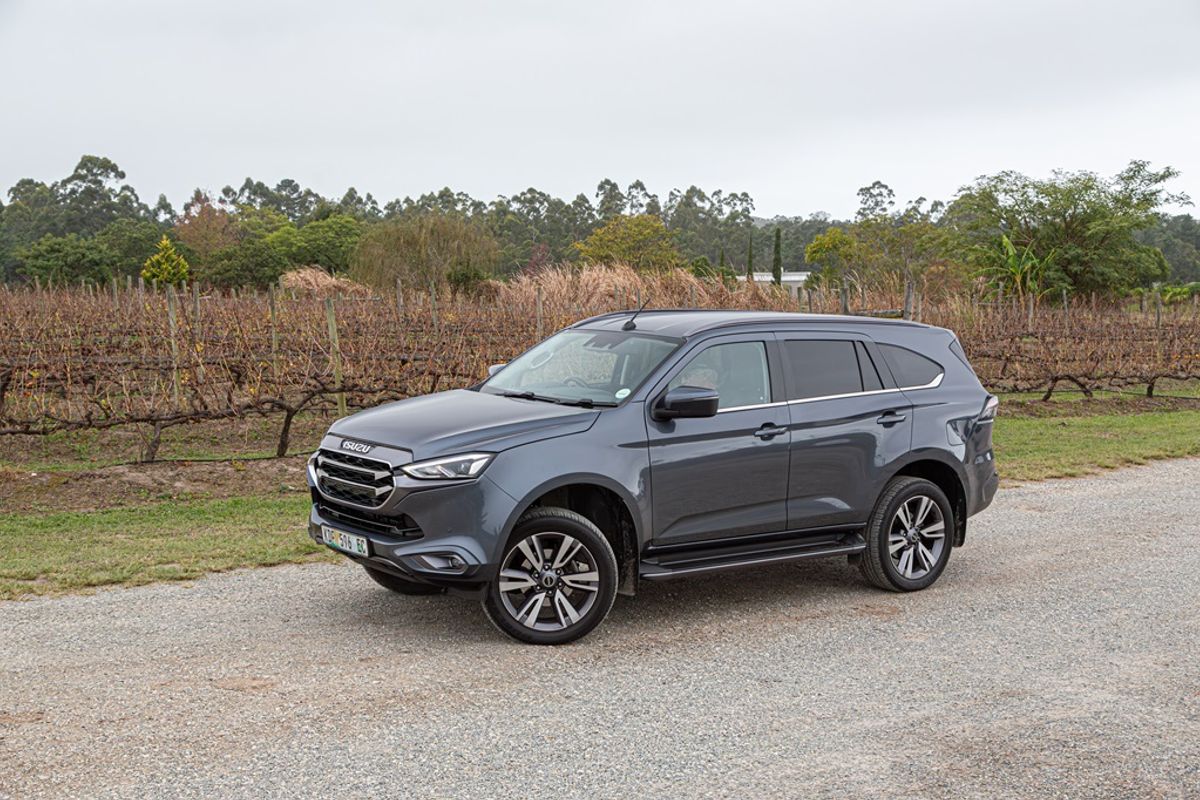
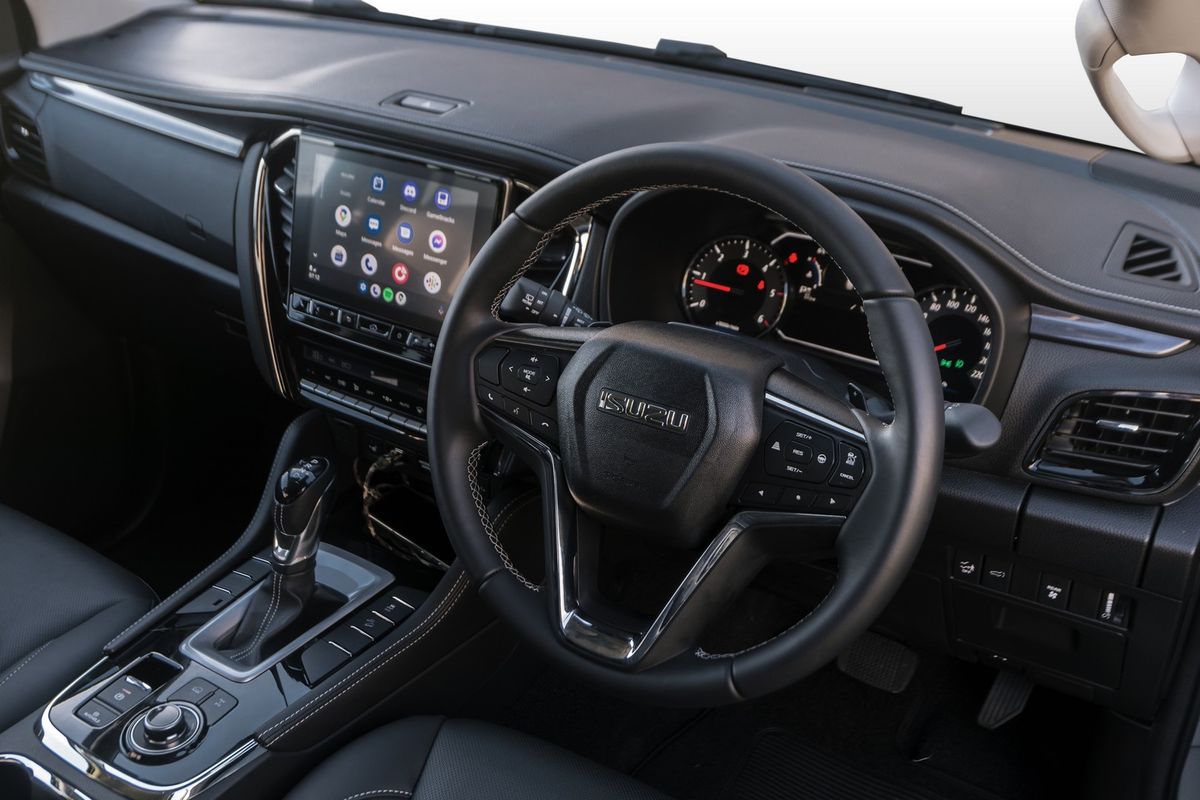
We headed on a 1200-km road trip with the range-topping Isuzu MU-X to the Garden Route. With the family strapped in and the load bay packed to capacity, how did it fare?
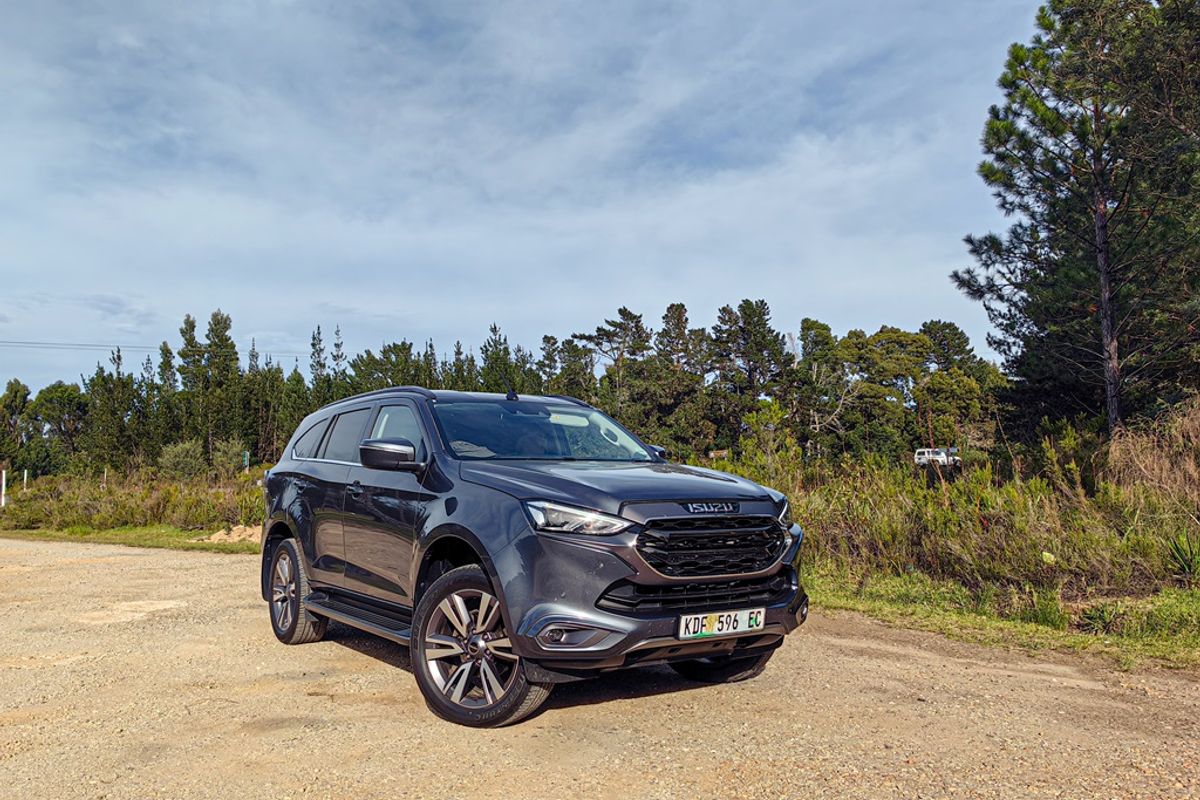
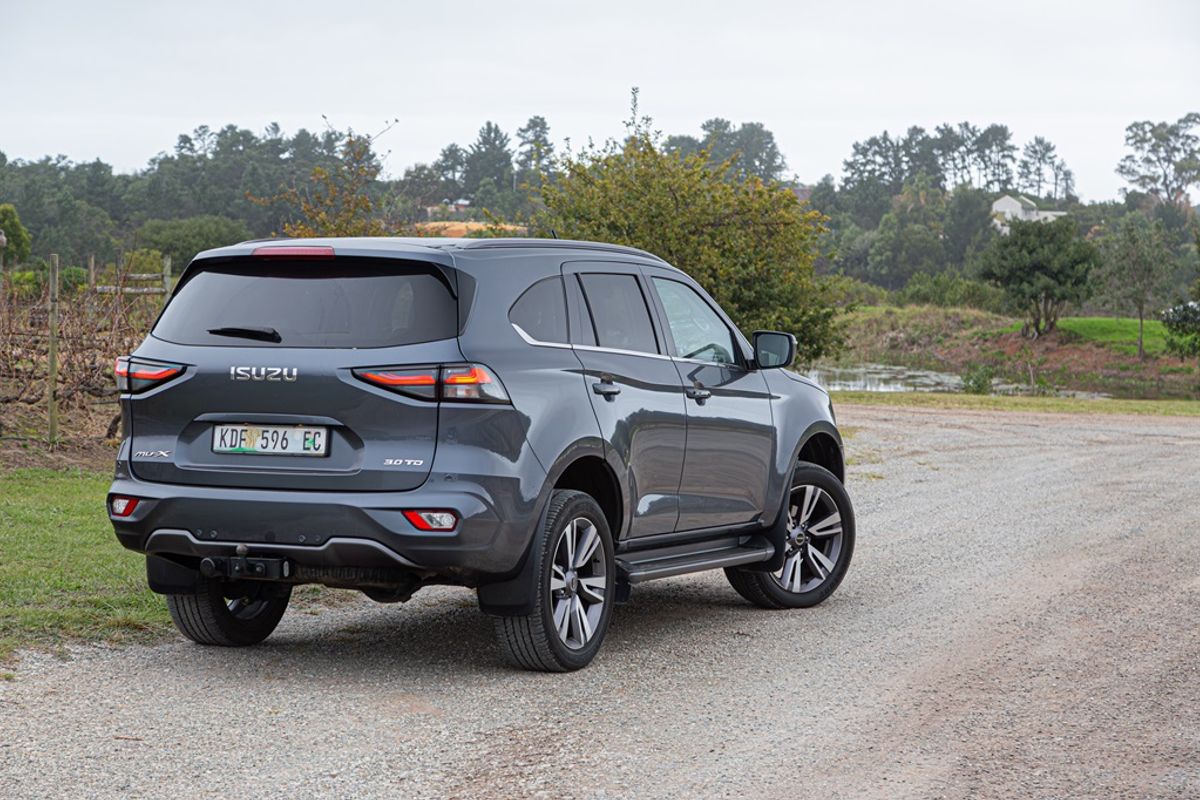
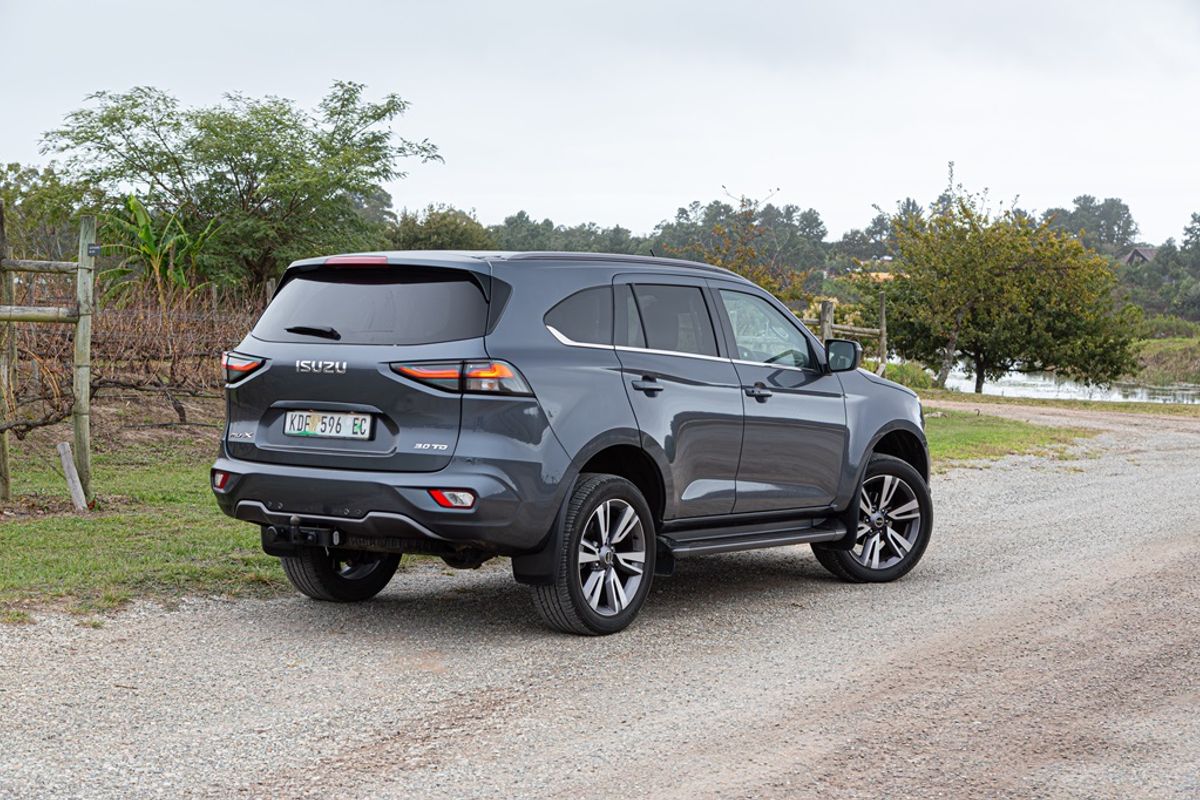
The Isuzu MU-X is a 7-seat bakkie-based Adventure SUV. Isuzu positions it as a rival to the popular Toyota Fortuner, the tech-laden Ford Everest and the long-serving Mitsubishi Pajero Sport.
True to Isuzu’s bakkie roots, the MU-X is not the most sophicated SUV in its class. Unlike the Ford Everest, which has a multi-link coil rear suspension, the MU-X has a live axle with leaf springs. The Isuz’s drivetrain is also part-time 4×4. Not an automatic 4WD, like Ford’s Everest V6s.
Marketers will try to convince you a unibodied SUV powered by a state-of-the-art engine can conquer the bundu, but good luck; there are more reasons, other than price, for bakkie-based SUVs’ popularity.
The Isuzu MU-X is offered with a choice of two turbodiesel engines. A 1.9-litre- or a much larger 3.0-litre, both with 4-cylinders. The 3.0TD Onyx 4×4 produces 140 kW/450 Nm and drives the wheels via a 6-speed auto transmission.
There are genuine off-road credentials here: shift-on-the-fly 4-wheel drive, a low-range transfer case, 235 mm of ground clearance and a rear diff-lock. Even if you’re not planning on taking on anything more serious than your local gravel road, it’s reassuring to know you can tackle tougher routes if you need to.
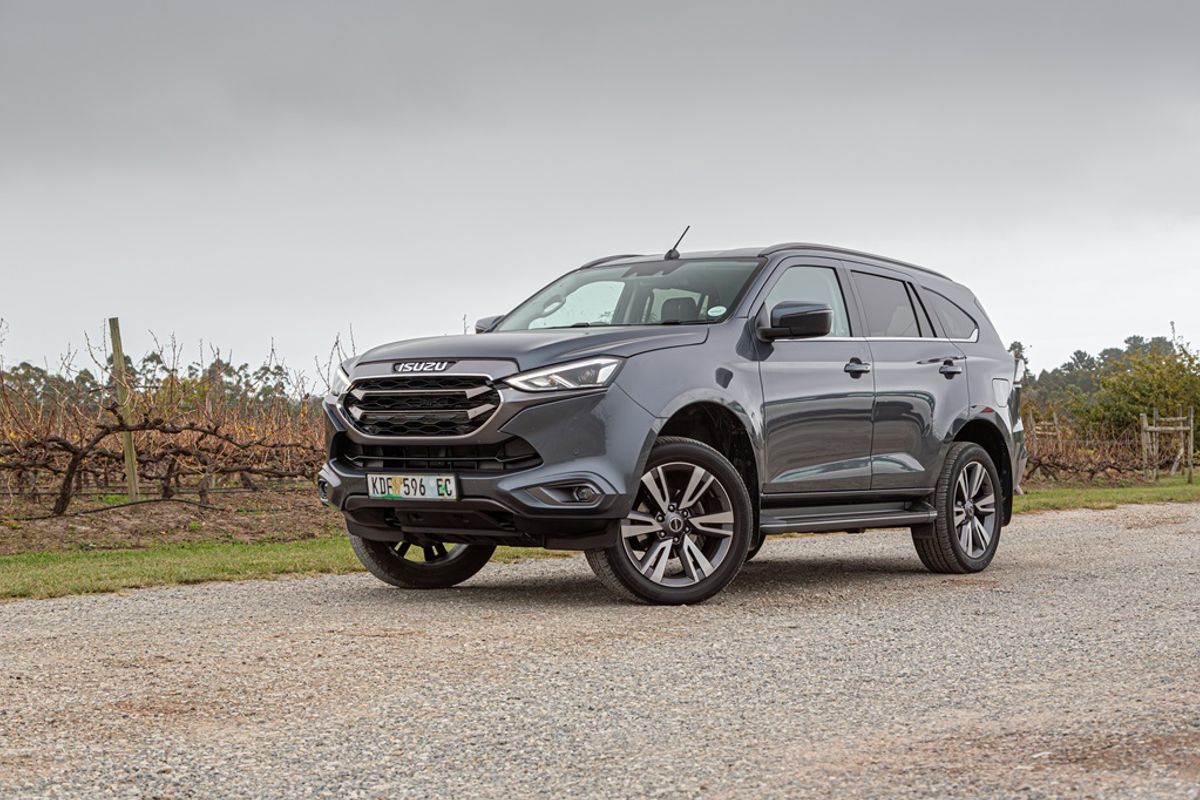
KDF 956 EC (pictured above) was not a brand-new evaluation unit either – it had clocked up just over 30 000 km by the time it arrived at our office. Before joining our test fleet, this MU-X 3.0TD Onyx 4×4 had gallivanted through the sands of the Tankwa Karoo National Park (at the hands of another publication).
Usually, motoring journos assess cars with barely 1 000 km on their odometers, but we appreciated the opportunity to assess a “veteran” test unit because it gave us an indication of how well the MU-X can withstand hard use. If a car can endure motoring media scrutiny, it’s probably going to be brilliant for you.
Things we liked about the Isuzu MU-X Onyx
Powertrain and Economy
Most turbodiesel-powered bakkie-based SUVs have the aerodynamic properties – and mass – of a small house (we guess), and the Isuzu MU-X is no exception. Like any claimed fuel economy figure issued by a brand, it’s more of a suggestion than something to bank on. Isuzu says the MU-X 3.0TD Onyx will consume 7.6 L/100 km, with a full-to-empty range of 1 053 km thanks to its 80-litre tank.
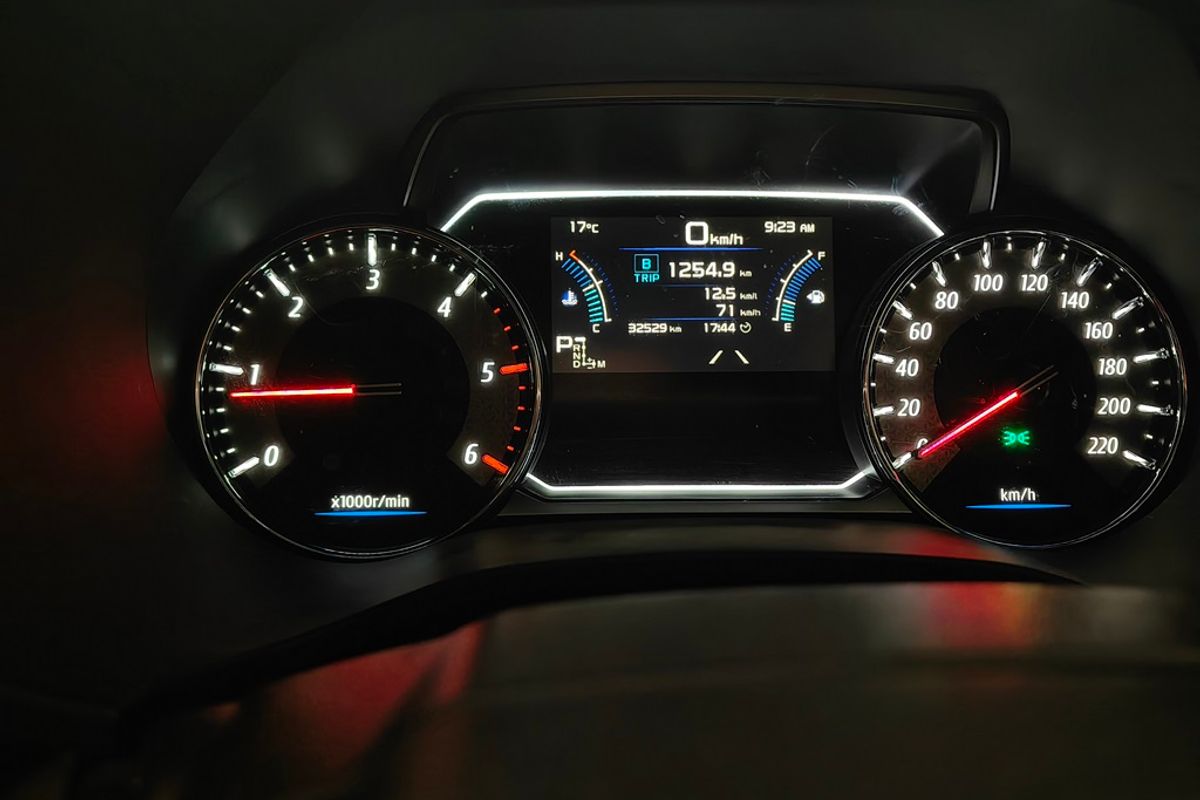
After travelling 1 254.9 km, our Isuzu MU-X test unit indicated 12.5 km/L on its trip computer, which converts to exactly 8 L/100 km. While most of the route comprised driving on the open road, we still think this figure is commendable, considering the additional weight of the passengers and cargo.
Despite being heavily laden, the MU-X 2.0TD Onyx was no slouch, with the auto transmission smoothly selecting the appropriate ratios. If a quick overtaking manoeuvre was needed, a solid stab of the long pedal would see the ‘box quickly summon 450 Newtons, but yes, a bit more shove would be welcome.
Practicality
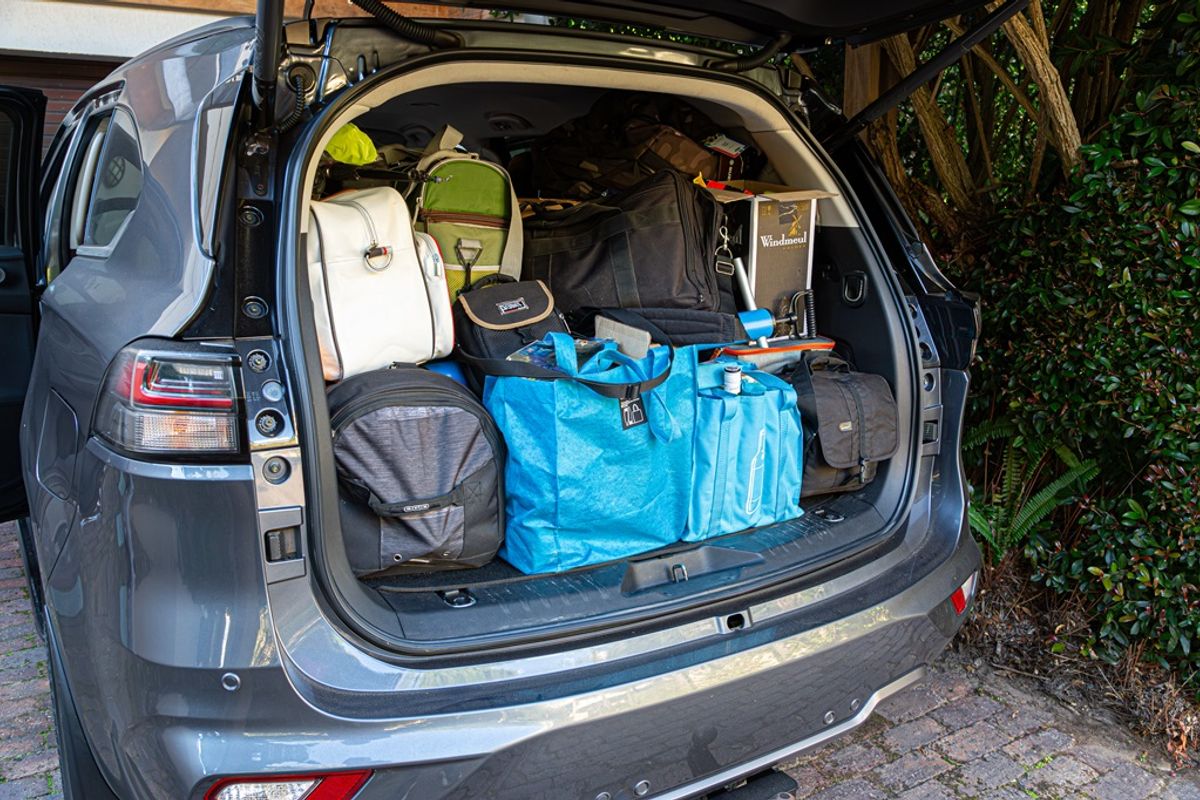
One of the biggest benefits of opting for a 7-seat Adventure SUV is that you’ll have no shortage of cargo space at your disposal… well, provided that you’re not using the 3rd row to accommodate an extra pair of occupants. To be fair, in our experience, those seats are only suitable for small children anyway.
Do you need to jam in enough luggage and supplies to last 4 adults a week? If so, we’re happy to report that the MU-X 3.0TD Onyx can inhale the lot with room to spare for additional purchases made en route.
Cabin Space and Features
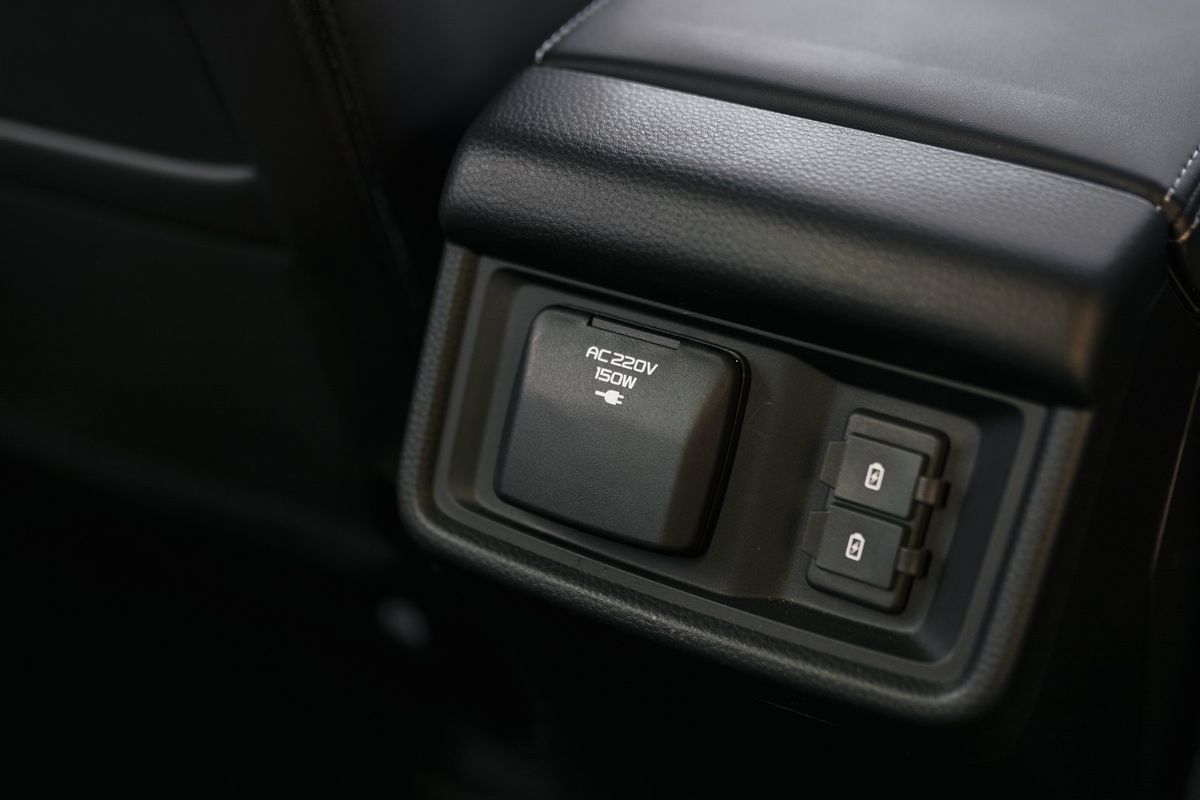
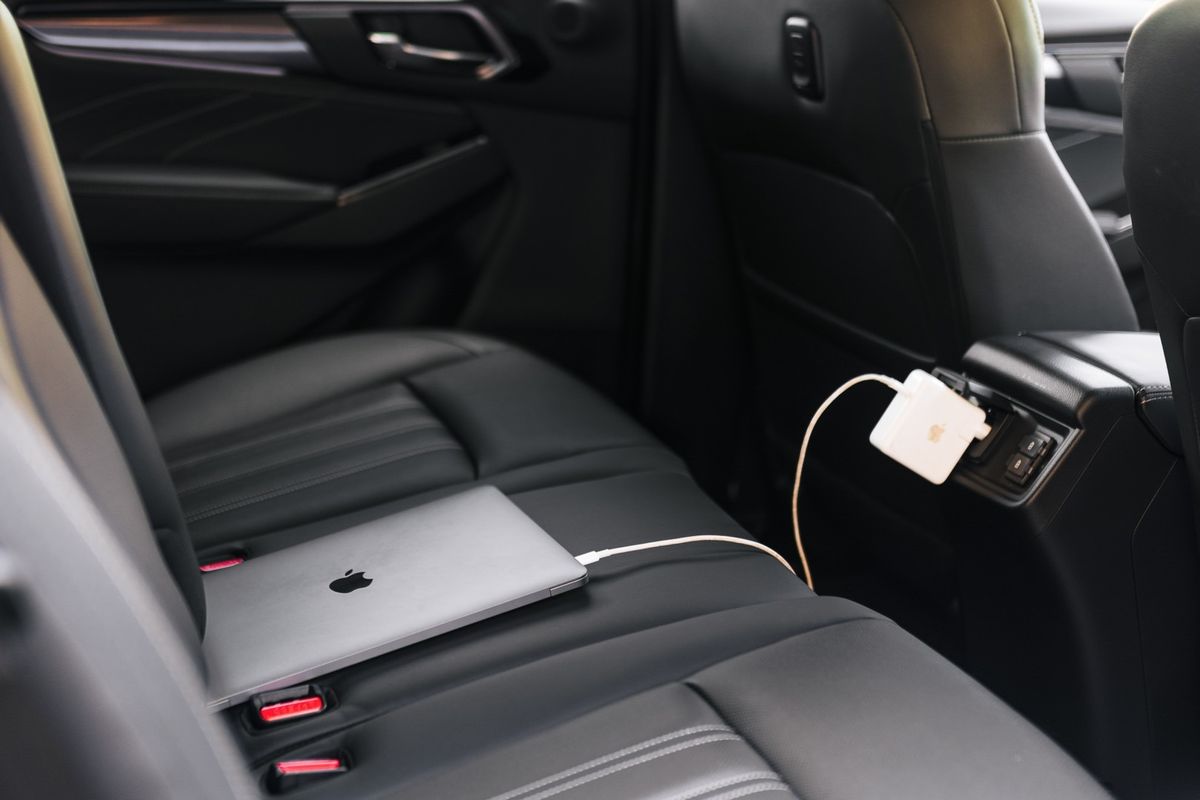
During the road trip, both passengers seated in the 2nd row of the 3.0TD Onyx appreciated the generous leg- and headroom – 1 of them could even cross her legs with ease. The roof-mounted aircon controls are easy to figure out and both USB ports (pictured above) charge devices as needed. For additional convenience, there’s a 220V plug socket too, which should make the remote-working crowd happy.
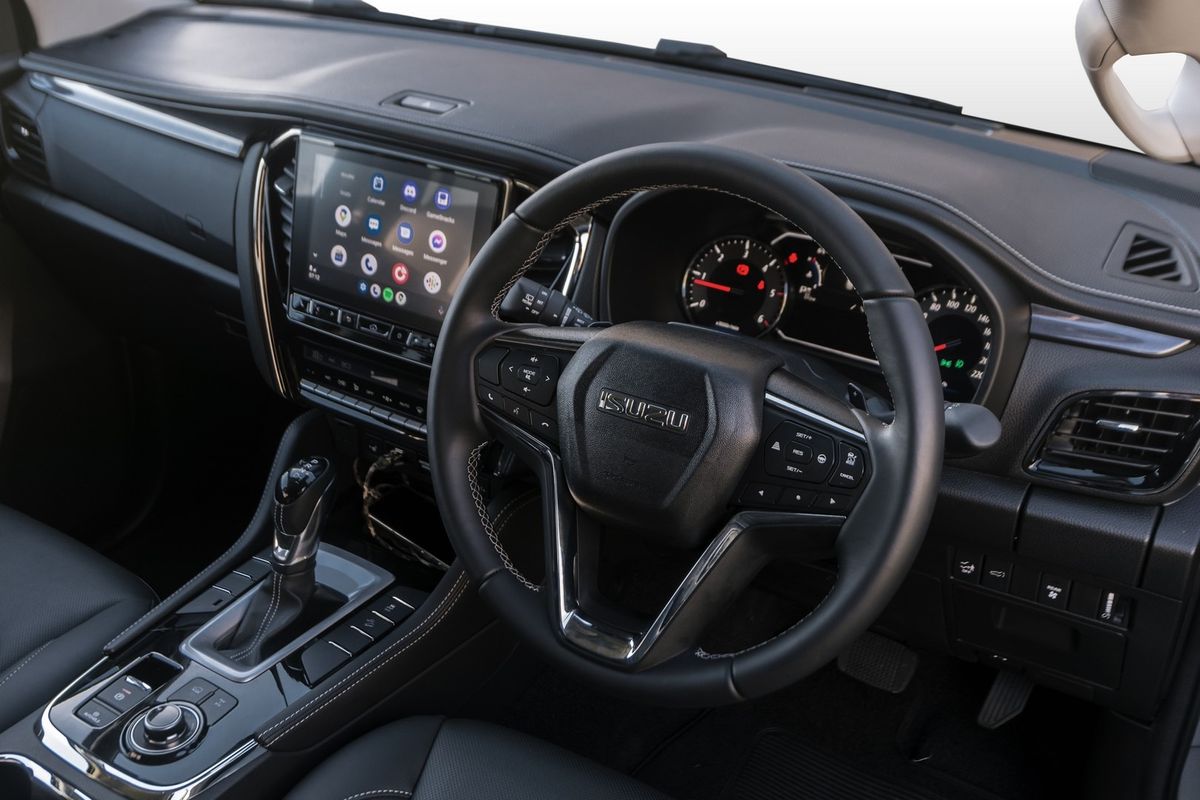
The cabin is generally well laid out and most creature comforts (at least those that buyers expect at this price point) are fitted. They include Apple CarPlay/Android Auto connectivity, autonomous emergency braking, heated seats and climate control. A wireless charging pad would be a very welcome addition and Isuzu’s conservative cabin architecture looks a trifle dull – it’s more functional than aspirational.
What we dislike about the Isuzu MU-X Onyx
The Isuzu MU-X Onyx’s 3.0-litre turbodiesel engine’s performance is adequate, but not class-leading, especially when compared to that of its nearest rivals, both of which produce more power and torque. Having driven all 3 models, you do feel the difference; keep that in mind if you plan to tow trailers often.
Another bugbear was the engine note, which sounds rather agricultural/less refined than we expected. It is particularly intrusive under hard acceleration, but settles down at cruising speeds. Still, despite its coarse note, you get the impression that the MU-X’s powertrain is virtually indestructible.
Then there’s the perceived value. We feel that while the Isuzu is an accomplished product, it’s not quite on the same level in terms of standard features and tech as the 2023/24 #CarsAwards category-winning Everest. The great news is that if you’re unlikely to ever require 4×4 capability, the MU-X range includes the aforementioned rear-wheel-drive 1.9TD – and you can watch a video review of that derivative below.
Isuzu mu-X 3.0TD Onyx 4×4
Toyota Fortuner 2.8GD-6 4×4 VX
Ford Everest 2.0 BiTurbo 4×4 XLT
R970 300
R950 900
R974 800
140 kW / 450 Nm
150 kW / 500 Nm
154 kW / 500 Nm
Summary
The Isuzu MU-X proved an excellent road-trip vehicle and did exactly what we asked of it. It’s a spacious family car that can comfortably transport its occupants over long distances and it’s surefooted on gravel.
Critically, KDF 956 EC was showing minimal signs of wear and tear, and we didn’t pick up any rattles and squeaks in the cabin. Granted, some of the touchpoints, such as the USB ports had some marks, where users hadn’t successfully plugged in the first time, but it was impressive how well the cabin held up.
While it may not feel as state-of-the-art as its rivals – the Everest, in particular – we get the impression that Isuzu has focused on longevity and reliability with the MU-X. We’d happily take it adventuring again!
Related content:
Forget the M3 Touring, you want a Golf R Wagon
Enthusiasts are justifiably excited about the imminent arrival of BMW’s M3 Touring, but why can’t South African buyers have a more affordable rapid station wagon as an alternative to the horde of Performance SUVs? Other markets certainly do…
Cars.co.za recently reported that BMW SA will start delivering the BMW M3 Competition Touring – the Bavarian brand’s 1st station-wagon-bodied M car since the V10-engined E61 M5 Touring – late in 2024. It will go head to head with the iconic Audi RS4 Avant as an undeniably cool, non-conformist option for performance-car buyers. It’s not a coupe, it’s not a sedan and, importantly, not a crossover or SUV.
Believe me, the introduction of the performance SUV is one of the greatest disservices that the motor industry has done to the motoring public. It heralded a period of lunacy where the prowess of all-wheel-driven 3-tonne skyscrapers was pushed and measured with, wait for it – not off-roading capability, but lap times from Germany’s most famed (no prizes for guessing which) race track.
Now, as physics-bending as something like the Porsche Cayenne Turbo GT may seem, an SUV shod with semi-slick rubber and spinning its wheels in almost all of its gears on a greasy road has its practical limits in anyone’s language. Plus, not everybody covets the automotive equivalent of a Timberland boot, even when, in rare cases like the Porsche, it’s breathtakingly fast and eye-wateringly expensive, but also quite hopeless as an off-road vehicle (despite what its large tyres and tall ground clearance may suggest).
The Volkswagen Golf R debuted in ‘wagon guise as an, um, variant of the 7th-gen model.
“Well, hatchbacks don’t have high centres of gravity and are more practical than coupes and sedans”, I hear you say. Yes, the Audi RS3 and Mercedes-AMG A45 S are both excellent, but unless you’re a fan of motoring’s ultimate chastity belt – the Venter trailer (not that there aren’t other brands of waentjies) – you wouldn’t dream of fetching your newly bought washing machine from a retail outlet or undertaking a weekend trip with 4 passengers (and their luggage) on board with one of those performance hatches.
Therefore, those who lust after vehicles that offer spaciousness and tremendous speed – but abhor the knuckle-dragger image of a hot German SUV – are left with precious few practical options…
Audi’s iconic 2.5-litre 5-cylinder is alive and well in the RS3, but the hatchback is hardly a family car, is it?
Allow me to present the performance estate. Prime examples will annihilate traffic light grands prix yet are no less comfortable than the bread-and-butter models they’re platformed on, have an unsurpassed usability factor and, unlike SUVs, can go around corners quickly without their occupants getting seasick.
So, back to the new BMW M3 Touring. It’s bound to be the Bavarian brand’s finest performance estate yet (even if that old M5 probably emits a more soulful soundtrack), but for the privilege of having the newcomer’s 390 kW/650 Nm at the disposal of your right foot, you need to part with R2.2 million. Its rival, the B9-gen Audi RS4 Avant is still a compelling proposition several years after its launch and even seems a bargain at R1.5 million, that’s too rich for most new-car buyers’ blood, as the saying goes.
The latest iteration of the Volkswagen Golf 8 R Wagon/Estate/Variant/SportWagen.
However, there’s a solution – though sadly, only for those living in selected countries other than South Africa. Since 2015, Volkswagen has been selling a stretched version of the VW Golf R, called the Golf R Wagon in Australia, -Estate in the UK, -Variant (remember the eponymous locally-built Type 3 Beetle-based one from the late 1960s?) in Germany and the infinitely cooler-sounding -SportWagen in the US.
With the same mechanical underpinnings save for a 50-mm extended wheelbase as its sibling, what’s not to like about the Golf R Wagon (let’s just call it that for now, even if the Golf 8-based R, um, variant is no longer offered Down Under… it sounds a bit less yeehaw than SportWagen)? There is that sub-5-second 0-100 kph sprint time; 235 kW and 420 Nm of torque delivered through all 4 wheels; a loading capacity of 611-1642 litres and even a 1.9-tonne towing ability. All while sipping a claimed 7 L/100 km.
And because no car company can resist the urge to offer a cash-grabbing optional extra or ten, also on offer is an R Performance Pack, which raises the top speed to 270 kph, introduces a Drift mode as well as a Special mode that turns everything up to 11 (in a nod to the This is Spinal Tap mockumentary?).
With a ‘wagon already a compromise between a van and a hatchback, Volkswagen could have easily made additional concessions by settling for the lesser Golf GTI as a platform, except instead, the Wolfsburg-based brand went all-out with the R. And the product is much, much better for it.
The Mercedes-AMG CLA45 Shooting Brake has more punch than a Golf R Wagon, but it is also a pricier proposition.
Not to be outdone, Mercedes-AMG until very recently offered a rival for the VW in the CLA45 Shooting Brake. The latter’s more powerful, pricier and arguably more elegantly styled than the Volkswagen, but at the cost of less interior space, an aesthetically challenged cockpit and more compromised ride quality.
(But really, any of the two will do.)
For obvious reasons, no self-respecting driver should ever desire a wannabe soft-roading SUV, which is why the Tiguan R won’t do. You can forget about sedans, too, because if you’re lugging loads, they have practical limitations that cannot be overcome without the attachment of image-denting appendages such as trailers and roof boxes. Also, should a hatchback ever be more than a household’s 2nd car?
Octane-infused households tend to split their automotive acquisitions between a van or SUV for one partner and a sportscar for the other. But if you had a Golf R Wagon, you wouldn’t need both, would you?
It so happened that Volkswagen SA offered estate and SV versions of the Golf not that long ago (I found a few examples listed on Cars.co.za), but the popularity of double-cab bakkies and the proliferation of crossovers/SUVs killed off most ‘wagons. BMW, for example, imported only a handful of E61-gen M5 Tourings, but effectively killed off the estate body when the E91 BMW 3 Series Touring’s production ended (here are examples); the brand focused on awkward-looking Gran Turismo variants thereafter.
Sad because you can’t get a Golf R Wagon? Consider these…
Okay, I grant that the Golf R Wagon or the CLA 45 Shooting Brake may still be a little too tame for some performance-car aficionados. Fortunately for them, these super-sledgehammer ‘wagons are all available in the used car market, although, in the case of the ‘Benzes, you may need a bit of luck finding them.
Mercedes-Benz’s Affalterbach-based performance division – AMG – blessed most Three-pointed Star models (even the now-mercifully-defunct R-Class and, of course, several SUVs), but there have been a few rapid estates too, such as the 6.2-litre V8-powered C63 AMG Estate and the ungainly-styled CLS63 AMG Shooting Brake (5.5-litre twin-turbo V8). They’re rare, and unashamedly brutal, beasts.
Avant versions of the B7-based Audi RS4 are rare in our market and, therefore, highly collectable.
Ultimately, the Four-Ringed Emblem reigns supreme in the land of performance station wagons. For at least two decades, Audi has produced S- and RS-badged station wagons (called Avants in the brand’s parlance) courtesy of its Neckarsulm-based quattro – now known as Audi Sport – division.
Highlights include the B7-based Typ 8E 2nd-gen RS4 Avant that debuted in the mid-Noughties with its sonorous 4.2-litre V8 engine, a 6-speed manual gearbox and quattro all-wheel drivetrain. That car was such a landmark that Audi decided to dedicate the RS4 nameplate to the estate body shape for the 3rd- (also 4.2-litre V8-powered) and current, 4rd-gen version (now with a 2.9-litre twin-turbo V6 motor).
The 3rd-gen Audi RS6 debuted with a twin-turbo 4.0-litre V8, complemented by quattro AWD, of course.
Rejoice, wagon-loving petrolheads, because the South African market received all of those models, as well as the Ingolstadt-based marque’s halo ‘wagon – the RS6 Avant. Debuting as the C5-based Typ 4B in the early Noughties, the 1st-gen RS6 Avant was a hairy-chested roadgoing projectile courtesy of its 331 kW/580 Nm bi-turbo 4.2-litre V8 engine, 5-speed Tiptronic auto ‘box and quattro drivetrain.
In 2008, it was succeeded by, wait for it, a 426 kW/650 Nm 5.0-litre V10 turbopetrol-powered 2nd-gen RS6 Avant quattro (Typ 4F), which was made available only in Avant guise in Mzansi (I believe). The same applies to the 4.0-litre twin-turbo 3rd-gen model (Typ 4G) and, finally, the current iteration, of which Jacob Moshokoa recently reviewed the 445 kW/850 Nm Performance version. Watch that video below.