5 Semi-sensible (and non-German) Sports Sedans
If you’re a motoring enthusiast who’s thinking about buying a semi-sensible sports sedan, you will have browsed through Audi, BMW and Mercedes-Benz’s wares by now. But what if you broaden your search to include brands from outside of Germany?
Admit it, if you’re a fiend for speed with a family to transport (which means that you need a car that not only offers evocative performance, but at least a smidge of practicality too), you’ve probably looked at German premium brands’ sports sedans on many occasions during your tyre-kicking endeavours.
And why wouldn’t you? Audi S- and RS, BMW M and Mercedes-AMG models are performance A-listers, well-made, have desirable badges backed up by credible sporting pedigrees and are based on tamer bread-and-butter models, so it’s easier to convince yourself that getting one is a sensible choice.

When shopping for a sports sedan, think laterally
Except that there is life beyond the autobahn. And, over the past 2 decades, there have been credible thinking man’s alternatives to the default options on offer by Audi, BMW and Mercedes, some of which are still on sale today, such as Alfa Romeo’s lesser spotted (but quite spectacular) Giulia Quadrifoglio.
We’ve left the Chevrolet Lumina off this list because while it may have a cavernous interior, a coffin-swallowing boot and a thunderous 6.2-litre V8, it also has a prodigious thirst for fuel… Given the price of unleaded, you’ll be phoning your bank manager regularly to plead for a higher limit on your fuel card.
Today, memories of most of the sports sedan offerings listed below lurk somewhere in the annals of dusty and antiquated internet discussion forums. But provided that they’ve been well-maintained by their former owners, these models can continue to provide unfettered thrills as pocket-friendly powerhouses.
Ford Mondeo ST220 (2002–2007)

Why a 20-year-old Mondeo? Well, no list of hot cars is complete without a fast Ford, even if the closest thing to that in Ford Motor Company of Southern Africa’s new vehicle line-up is the Ranger Raptor.
In the early 2000s, the automotive world was an uncomplicated place, well, compared with today’s motor industry. Car companies were selling hatchback, sedan and estate versions of most of their models; and best of all – the concept of softroading crossovers hadn’t even crossed anyone’s mind yet.

Volkswagen, Peugeot, Renault and Citroen were still churning out 3-box sedans that snapped at the heels of premium-brand models in terms of quality, but offered better value. It was the pre-social media age: a Nokia 9210 Communicator was considered cutting-edge – life was simpler, cheaper… and better.
Especially if you drove a Ford. The 3rd-gen Mondeo, which debuted in October 2000, represented an exponential improvement over its blobby predecessor and became the most popular car in its segment in the UK, where the Blue Oval retailed nearly 750 000 units during the model’s 7-year lifespan.

The range was topped by the ST220 sports sedan, which was powered by a 3.0-litre V6 that developed 166 kW and 280 Nm and drove the front wheels (initially through a 5-speed manual gearbox, then later a 6-speed unit built by Getrag). With a claimed 0-100 kph sprint time of just over seven seconds and top whack tickling 250 kph, such numbers effectively pushed the plucky Ford into BMW 330i territory.
Yet, the best part was its character. Flared wheel arches, 16-spoke 18-inch alloys and a 15-mm lower ride height gave the Mondeo ST220 a man-child-like presence that straddled the seemingly uncrossable chasm between the Max Power centre spread and a multinational’s meeting room for middle managers.

And that was no fluke: the Ford’s interior was comparable with German quality, even featuring heated Recaro seats. Besides hot hatch-humbling performance, the ride quality was also BMW-like (sporty, but not at the cost of long-distance comfort), thanks to an uprated suspension and a quicker steering rack.
Alas, the engine wasn’t quite as playful. The V6 lacked bottom-end performance and the ratio spacing between the 2nd and 3rd gears was too tall. Unsurprisingly, the price of the V6’s aural magnificence was pain at the pumps; and being front-driven, even with its supremely composed handling, Ford’s sports sedan lacked the liveliness of a BMW equivalent – though for much less money and badge baggage.
Browse through the used Ford ST models listed for sale on Cars.co.za
Mazda6 MPS (2005-2007)

When the Japanese stuff powerful engines paired with AWD into humdrum sedan shells, magic happens. Look no further than several dynasties of the Nissan Skyline and GT-R, Subaru Impreza WRX, Mitsubishi Lancer Evo and umm, a single generation of the Mazda6, of which production lasted a mere 2 years.
So, with 191 kW and 380 Nm of torque on tap from its turbocharged, direct-injection 2.3-litre 4-cylinder engine, mated with a rifle-bolt-action 6-speed manual gearbox, it didn’t come as much of a surprise that the automotive media touted the range-topping Mazda6 MPS as a Subaru (then Impreza) WRX STI killer.

Of course, it wasn’t nearly as hardcore or as spartan as the STI, but for those desiring a better-equipped robot-to-robot rocket (but unable to stretch to a quattro-equipped Audi), the MPS was just the ticket.
The ace in Mazda’s handling hole was its active torque-split system (with no selectable drive modes… we’re talking about the Noughties here) and front limited-slip differential, which varied power delivery between 100/0 and up to 50/50 between the fore and aft axles. While grippy and forgiving to drive, the MPS wasn’t conceived as a “rally car for the road” and was no match for its rivals around a race track.

However, the Mazda6 MPS’ appeal lay in its unassuming looks; apart from 18-inch alloys, dual exhaust tips and a subtle boot spoiler, the sedan’s exterior execution gave nothing away about its performance potential. As the most extreme production Mazda then or since, it was the ultimate 6-second sleeper.
Search for a used Mazda MPS model listed for sale on Cars.co.za
Lexus IS-F (2007–2014)

The latter half of the first decade of the 2000s was dominated by just 8 letters: RS4, M3 and C63.
So, you’d be forgiven for seldom, if ever – spotting a Lexus IS-F on our roads. Not having produced a traffic-ticket magnet in years, it was a car that came at a time when Toyota and its premium sub-brand Lexus probably most needed to shake off the Aichi-based motor giant’s reputation for only producing boring cars. And so the 2nd-gen Lexus IS range was chosen to feature a white-knuckle halo model.

The rear-wheel-drive IS-F was fitted with a direct- and port-injected 5.0-litre V8 (co-developed with Yamaha) that kicked out just 2 more kW than the V8 M3 of the time, but also 105 more Newton-metres.
On paper, then, it had the Germans matched or licked (it was said to bolt from zero to 100 kph in 4.6 sec, but when it was tested, the stopwatch showed 4.4 sec), yet the Lexus was let down by a chintzy interior and excessively crashy ride owing to sizeable 19-inch alloys left with little room for suspension travel.

The Japanese contender’s engine is bulletproof – Toyota still uses the same block in the Dakar Rally-winning Hilux – but against its more polished Teutonic contemporaries at the height of their powers – they could call upon several decades’ experience of producing sports sedans – the IS-F fell just short.
Yet there was one thing that the IS-F had that its Audi, BMW and Mercedes-Benz equivalents lacked: personality. The RS4, M3 and C63 diligently did what their creators had intended them to do, with each successive iteration burdened by an ever-higher thrill threshold with less left to prove. Not so with the loud Lexus. Straight out of the box, it was fast, flawed and rambunctious for an expensive Toyota.

A rough diamond if ever there was one, the Lexus IS-F won’t win any prizes or shootouts when compared with its rivals (even considering its superior reliability), yet you can’t help but feel it’ll win over your heart.
Look for a used example of the Lexus IS-F on Cars.co.za
Kia Stinger (2017–2023)

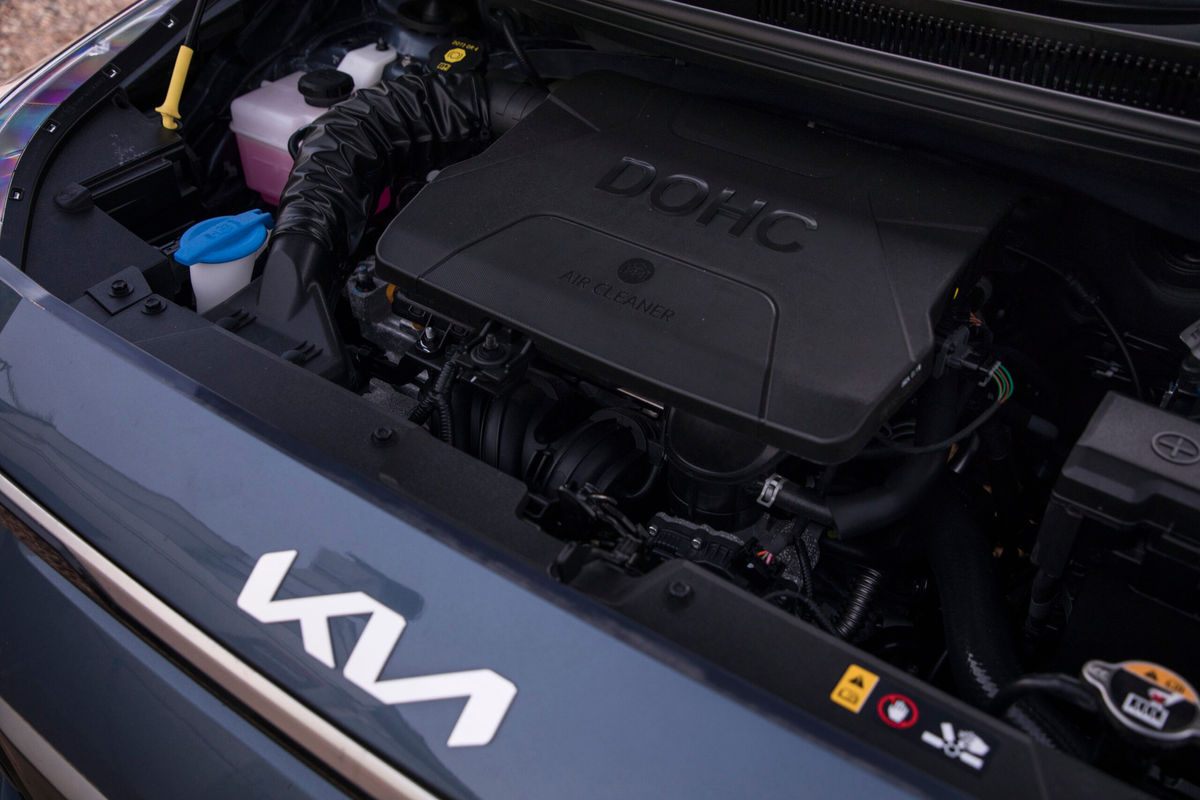
Viewed in profile, it’s hard to tell if the Kia Stinger’s silhouette resembles a BMW 4 Series Gran Coupe or a shrunken Audi A7. All we know is that the rear- or all-wheel-drive (it differed from market to market) and turbocharged 3.3-litre V6 GT was the fastest and craziest production Kia ever made. This might anger Audi and ‘Benz fans, but Kia’s Stinger was the closest thing to a new 440i that money could buy.
Built on a shortened version of the Hyundai Genesis G70 platform, the Stinger came to Mzansi in 2018 in very limited numbers. Kia ultimately discontinued global production of the sports sedan in January 2023.

Locally, it was only available in RWD top-spec GT guise, in which it produced 272 kW and 510 Nm of torque, which powered the Kia from zero to 100 kph in 4.9 sec and on to a maximum speed of 270 kph.
See also: Kia Stinger GT (2019) Quick Review [w/Video]
As for the Stinger’s driving experience, the sports sedan’s rival-besting wheelbase proportions (2 905 mm) and matching rear comfort underline the model’s true raison d’etre: it’s more of a cross-continent cruiser than a Kyalami killer.

For that reason, as far as interior comfort, if perhaps not cabin material, switchgear and trim finishes are concerned, the Kia Stinger could go toe to toe with any comparable German executive sedan.
Kia arguably didn’t make much money from selling the Stinger and it’s a brow-furrowing mystery why the Korean brand chose to target a hyper-niche segment for executive liftbacks, when greater profits could be generated by a conventional 4-door – but not a coupe! Remember the Cerato Koup? Not a high point.

Which leads to the inevitable question: Why would anyone choose this car over an established German equivalent? Alfa Romeo, Jaguar, Infiniti, Lexus and Volvo have all suffered the same disappointment.
But as far as statements of intent go, you’ve got to hand it to Kia. The Korean brand arrived late, saw, and very nearly conquered. Interested? Browse Cars.co.za’s listings for a used example of the Kia Stinger
Volvo S60 Polestar AWD (2015–2017)

Has Volvo ever produced a sports sedan? Yes, but only a few. The model most enthusiasts will remember is the S60 R, which was based on the 1st iteration of the Gothenburg-based firm’s business-class sedan.
Powered by a 2.5-litre 5-cylinder turbopetrol engine good for 221 kW/400 N.m, which it shared with the 2nd-gen Ford Focus ST, the S60 R sported adaptive Öhlins dampers, Brembo brakes, drive-by-wire throttle operation and, most importantly, a Haldex AWD system with a default 90/10 front/rear torque split. In extreme circumstances, its drivetrain could direct up to 70% of its torque to the rear wheels.

In 2015, Volvo released the S60 Polestar, which bears no resemblance to any model in the brand’s present line-up, not least because the 2nd-gen model was the final S60 to be offered in South Africa. It hails from a period when Polestar – today a standalone EV brand – was still operating as Volvo’s in-house tuning division, and car companies had yet to embark on their history-altering path toward electrification.
The first iteration of the S60 Polestar was powered by a sonorous 258 kW/500 Nm 3.0-litre inline-6-cylinder turbopetrol engine in combination with a 6-speed automatic transmission, a Haldex all-wheel drive and Polestar tuned suspension. It was said to accelerate from zero to 100 kph in 4.9 sec.
Inside, it featured sports seats, blue contrast stitching and swathes of Alcantara. While quite docile (even a bit dopey) to drive in its default drive mode, the S60 Polestar well and truly came alive in Sport mode. A firm ride and slightly vague brake-pedal feel were two of our (very few) criticisms. Volvo Car SA imported only 28 units of the model, so you may need luck (and patience) to find one. Read our review from 2016.

This 2nd-gen S60 Polestar, which arrived in Mzansi less than a year after the original, dropped its forebear’s 6-cylinder engine in favour of a modified turbo- and supercharged 2.0-litre unit 4-cylinder (delivering more kilowatts but marginally less torque) also found in the standard S60 and the XC90.
Polestar added the requisite zing to the S60 Polestar “II” by (again) fitting 20-inch alloys, a larger turbocharger, stronger conrods, a harder-boosting fuel pump, more aggressive valve timing and a larger diameter exhaust. This adrenaline injection resulted in a brisker 0-100 kph sprint time of 4.4 sec.
See also: Volvo S60 Polestar (2016) Review

That time matched the benchmarks set by its German opponents, although the milder-mannered AWD Swedish sports sedan did not quite deliver its performance with sufficient snaps, crackles and pops; you have to bear in mind that the M3 and C63 of the period were leash-tugging rear-wheel-drive brutes.
Only 1 500 S60 Polestars were built and sold in 47 countries for the 2017 model year, which makes the Volvo that little extra special. It’s a museum piece – owing to its parent company’s adjusted focus from octane to electrons – and it’s also a rare gem, because you’ll have a hard time tracking one down.
Search for a used Volvo S60 Polestar AWD listed on Cars.co.za
Find exclusive car-themed merchandise at the SentiMETAL Shop
Related content:
Rapid tech advances are bad news for EV owners