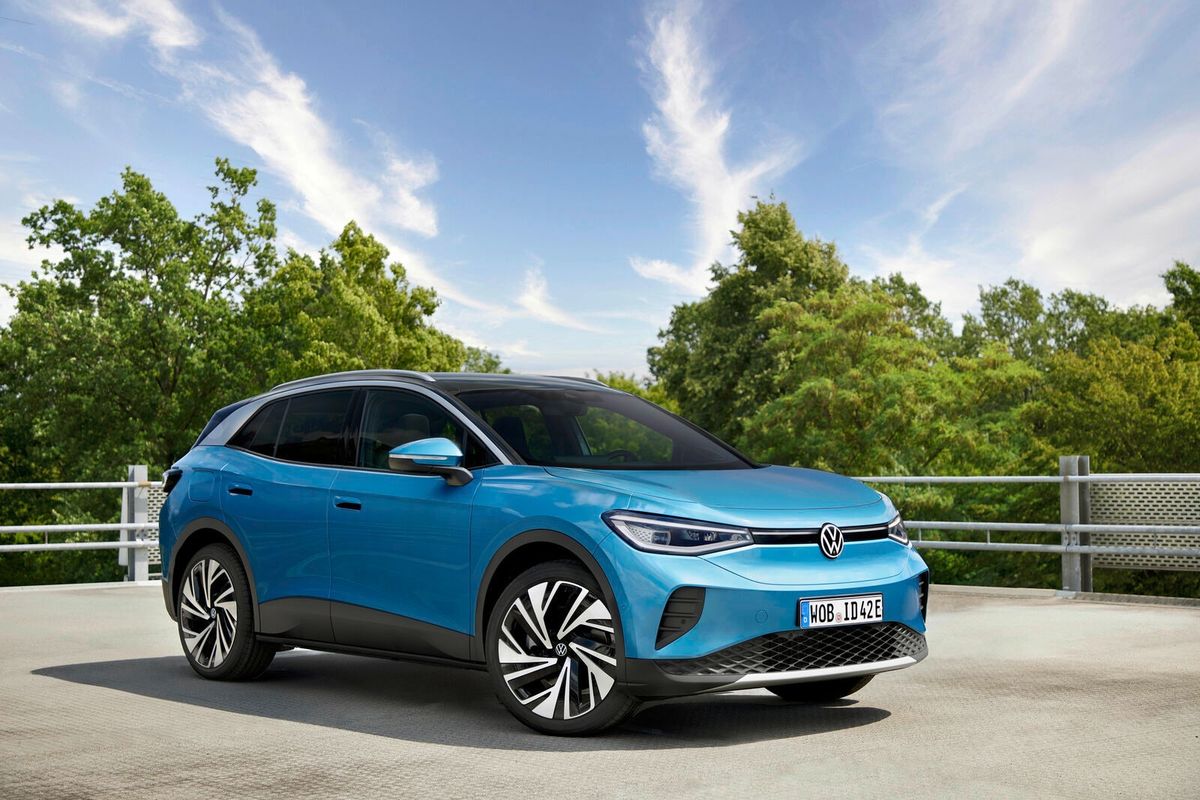
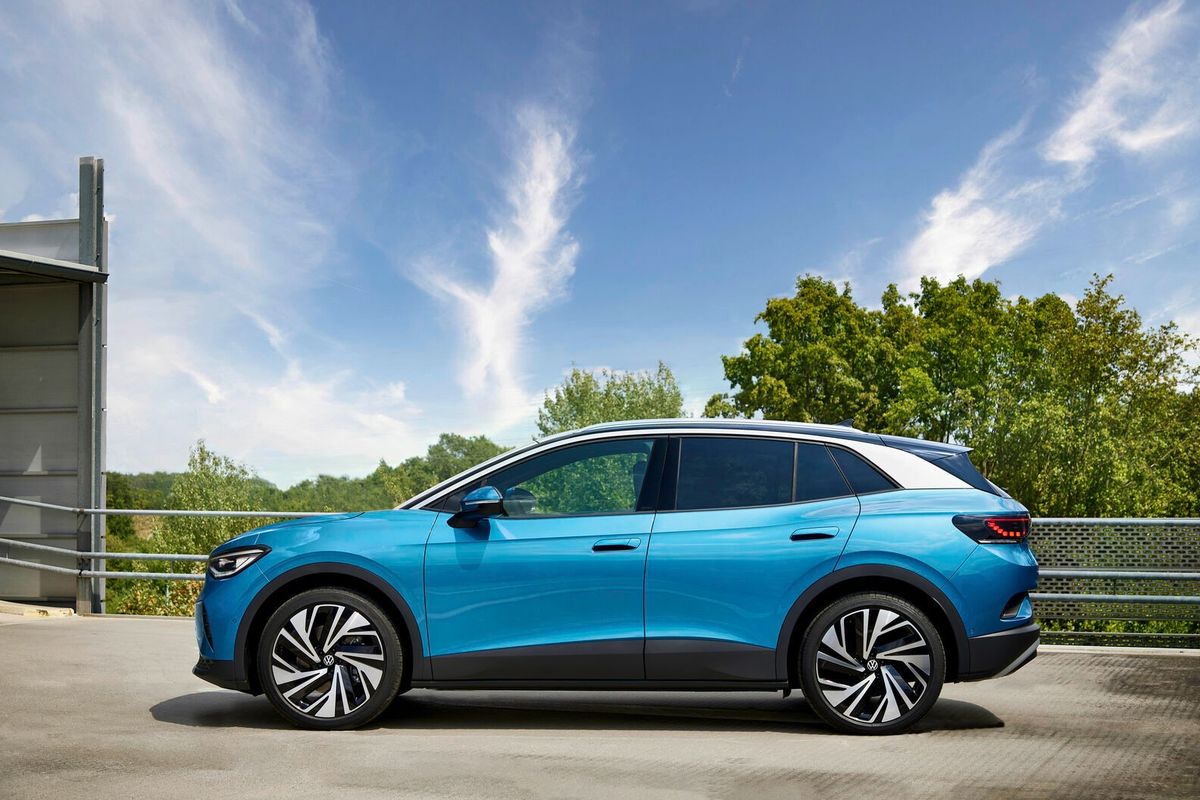
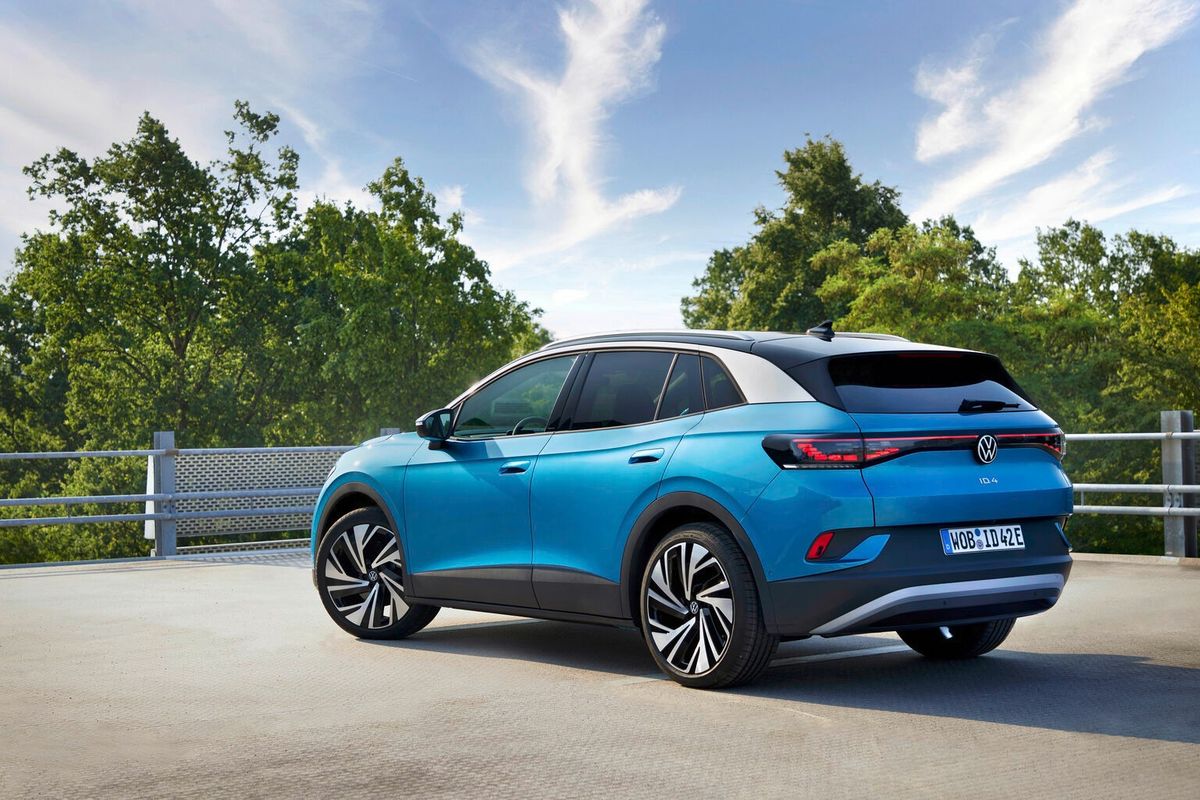
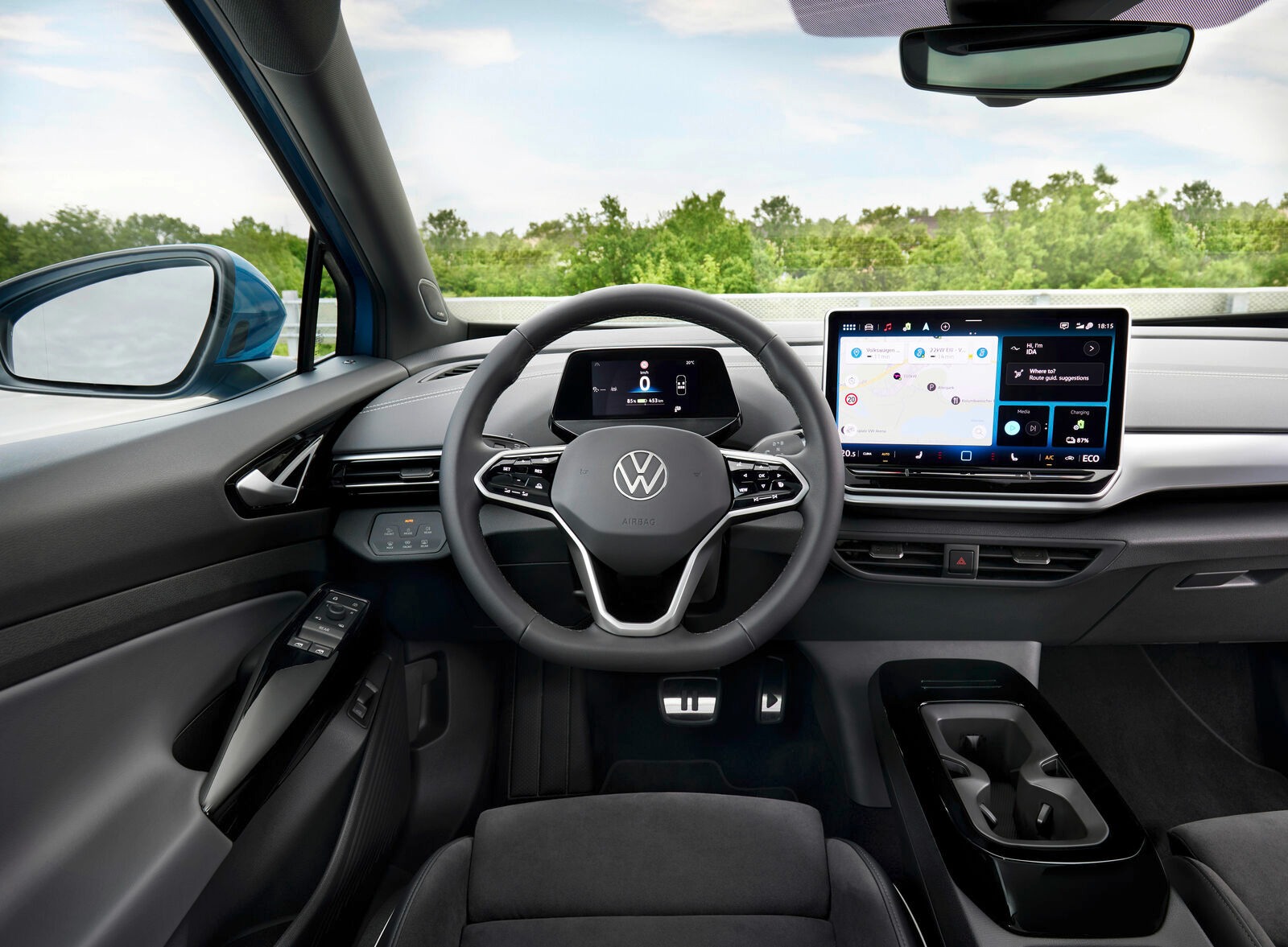
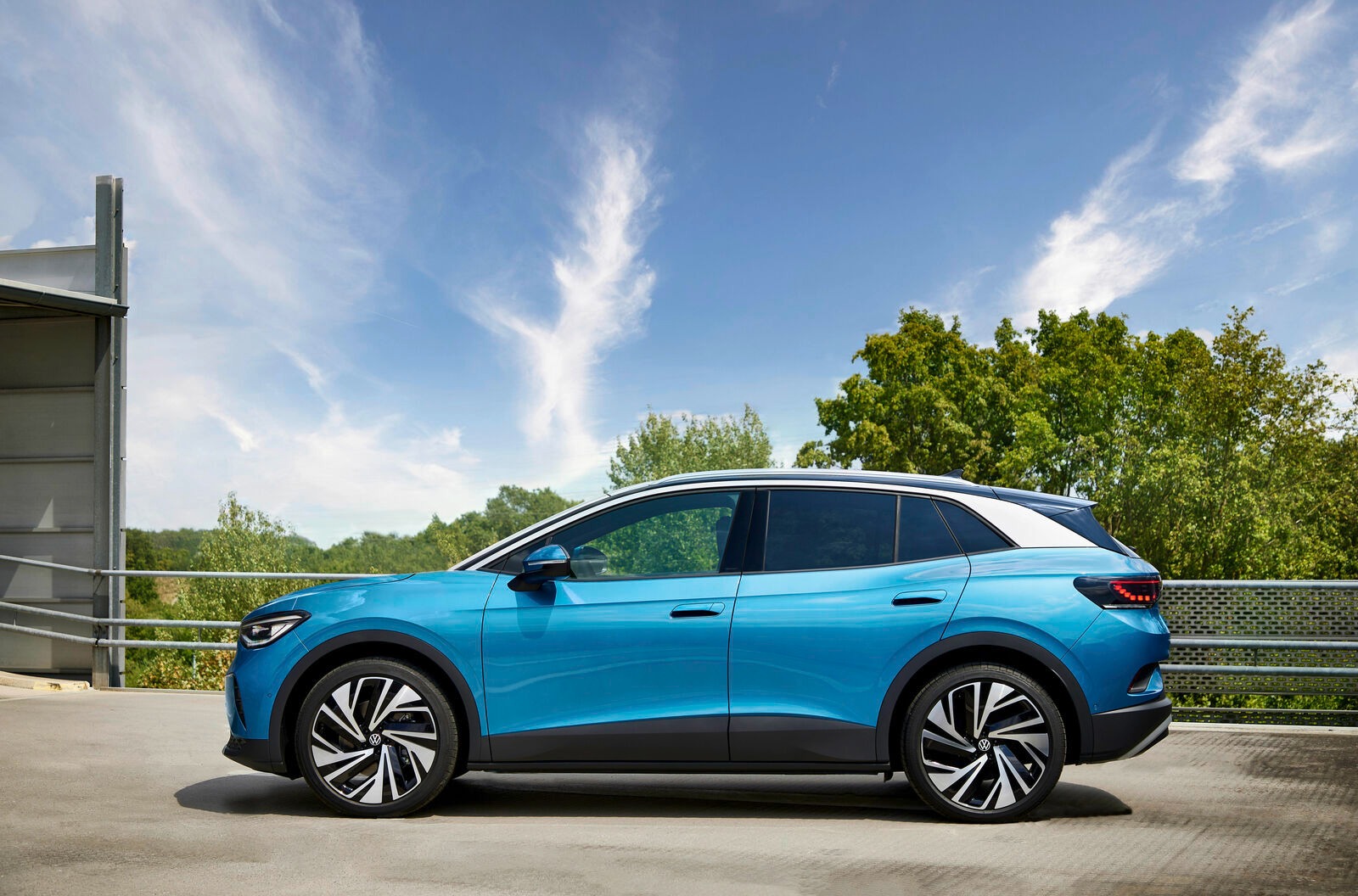
The Volkswagen ID.4 electric car has been given some significant upgrades for 2024. Why does this matter? The ID.4 will be the first EV offered by Volkswagen South Africa. Here’s what’s new.
The Volkswagen ID.4 is the brand’s mid-size electric car. Bigger than the ID.3 hatchback, the ID.4 is hoping to capture that mainstream market who wishes for space, comfort and good range.
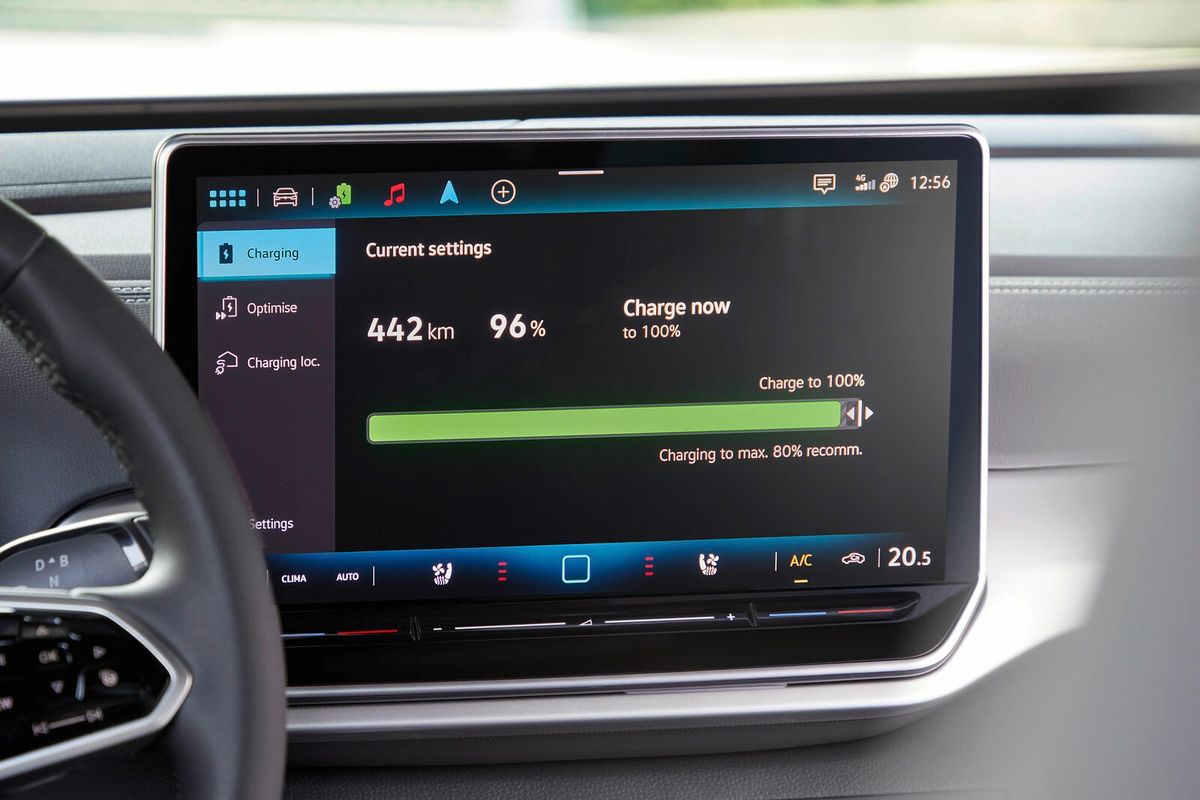
For 2024, Volkswagen has enhanced the ID.4 with a new infotainment system, new battery tech, more standard equipment as well as more power and quicker charging.
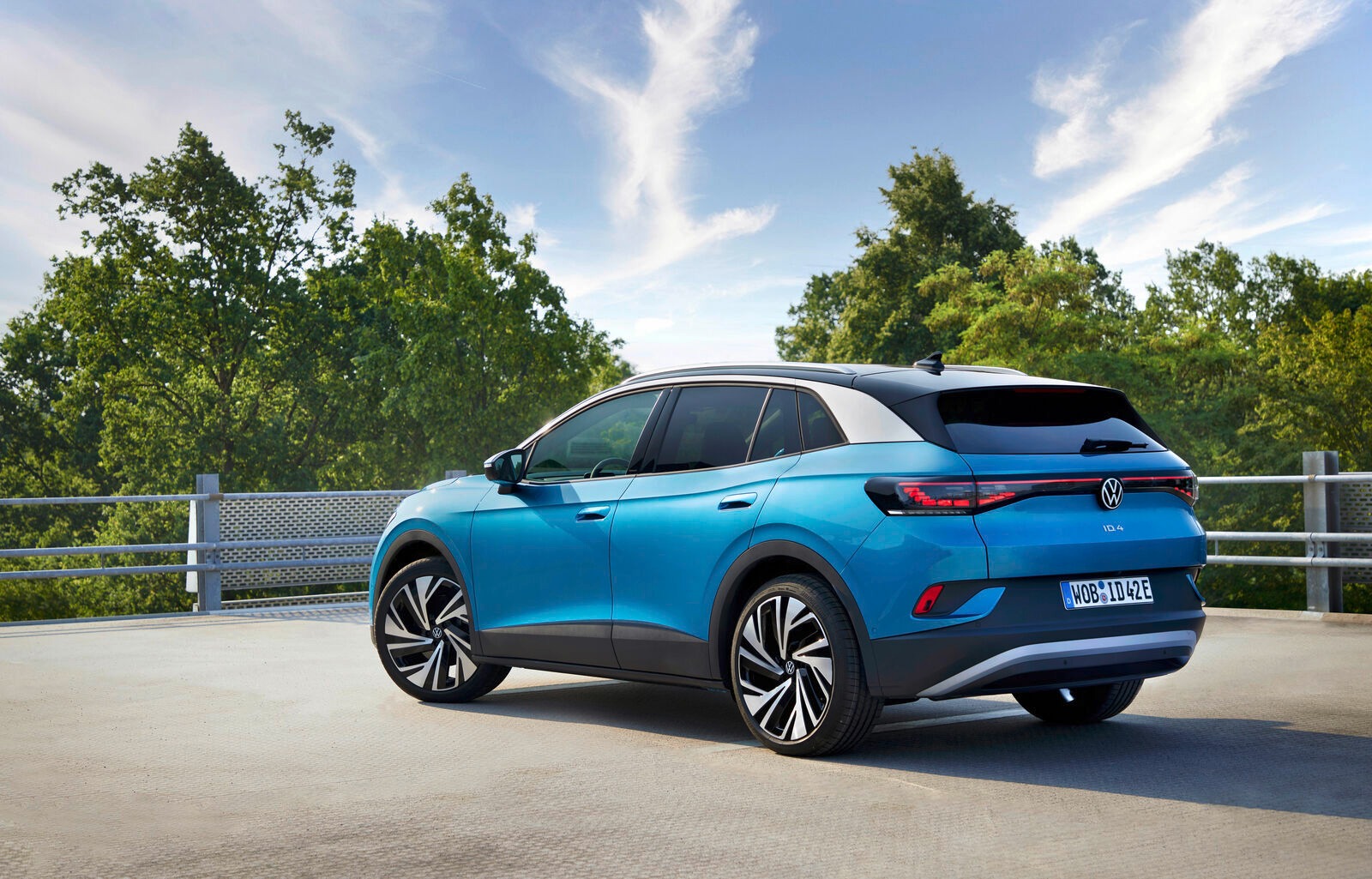
Visually, we can’t see any changes other than the new Costa Azul paint finish, but that’s okay as the under-the-skin enhancements are far more significant. Thanks to the upgraded drivetrain, the claimed range now sits at 550 km, based on the WLTP cycle, which is 17 km more.
Volkswagen ID.4 has more power!
The new 77 kWh battery offers more range and new electric motor on the rear axle results in a power increase, with the rear-wheel drive ID.4 now offering 210 kW and 545 Nm, which are increases of 60 kW and 235 Nm. The all-wheel drive Pro ID.4 gets a power increase of 15 kW, taking it to 210 kW. The all-wheel drive ID.4 models now offer quicker charging too.
Volkswagen has tweaked the chassis, suspension and if the car has it, the adaptive chassis control for additional comfort.
Cabin enhancements
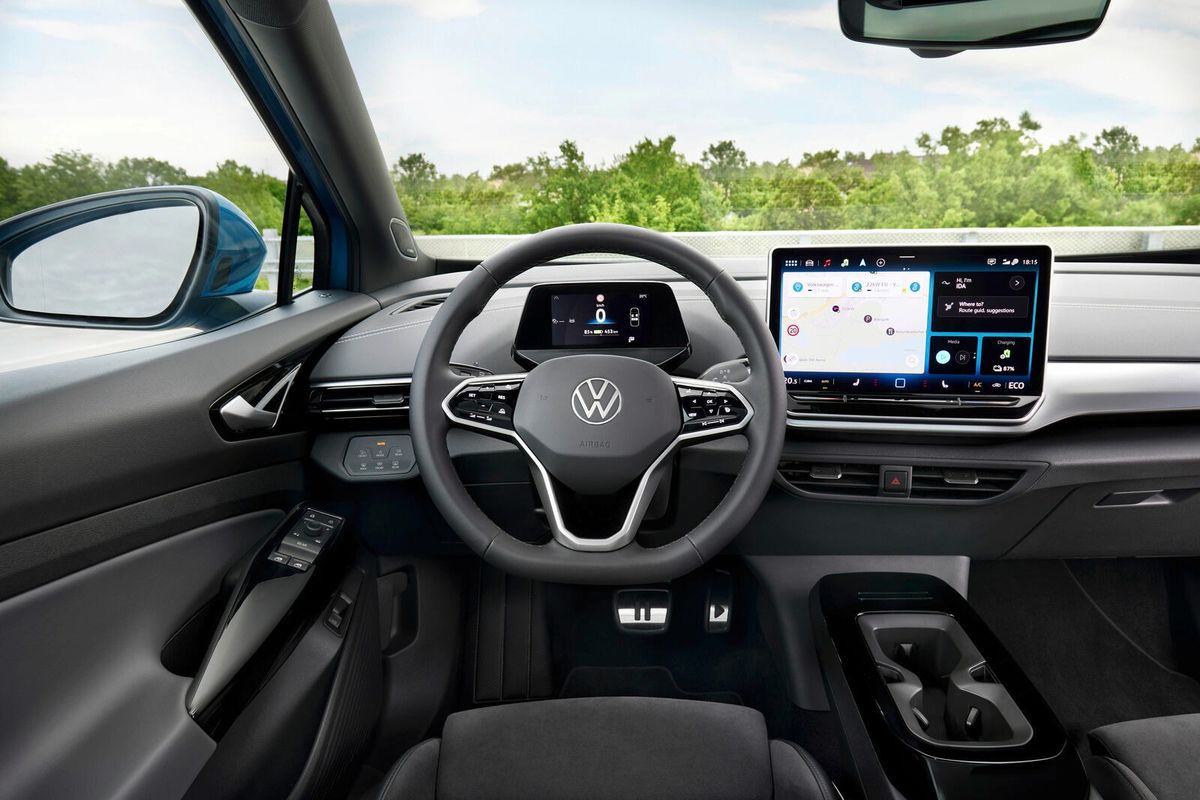
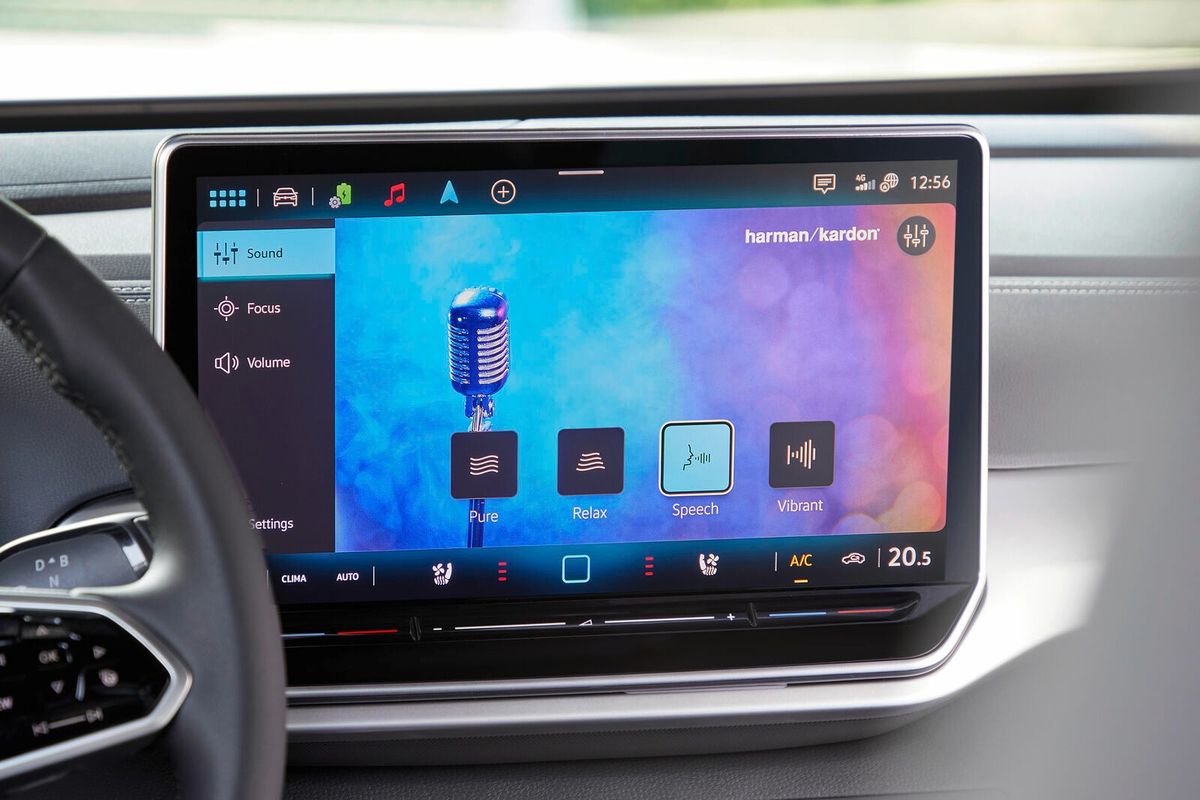
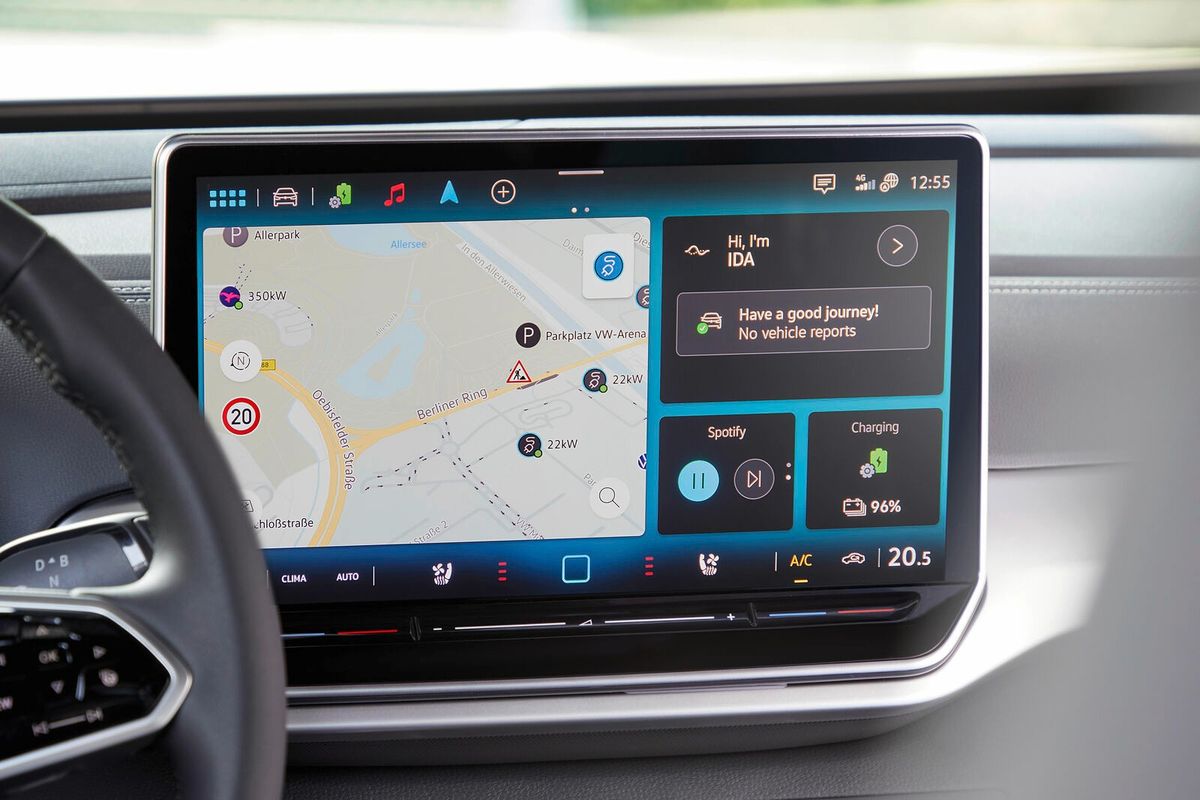
Inside, the upgrades included a new-generation of software that’s more responsive, offers more functionality and there’s a larger 12.9-inch infotainment screen. The sliders for climate control and volume are now illuminated for night operation and there’s an update to the steering wheel functions. The IDA voice assistant is now available and VW is now offering a premium audio system from Harman Kardon as an option.
Impressively, Volkswagen Europe says the upgrades will not result in a price increase with the new models retailing for exactly the same price as the current lineup.
Volkswagen South Africa has already said the ID.4 will be the first electric car offered locally, followed by the ID.Buzz. The question is ultimately when? We understand the car will not be retailed as an outright purchase, but rather offered on a leasing scheme, which should help absorb depreciation. Watch this space.
Final farewell: just 2 units of Jaguar F-Type ZP Edition for SA
Conceived to mark the end of the road for the British brand’s petrol-powered sportscars, just 2 examples of the limited-run Jaguar F-Type ZP Edition are coming to SA…
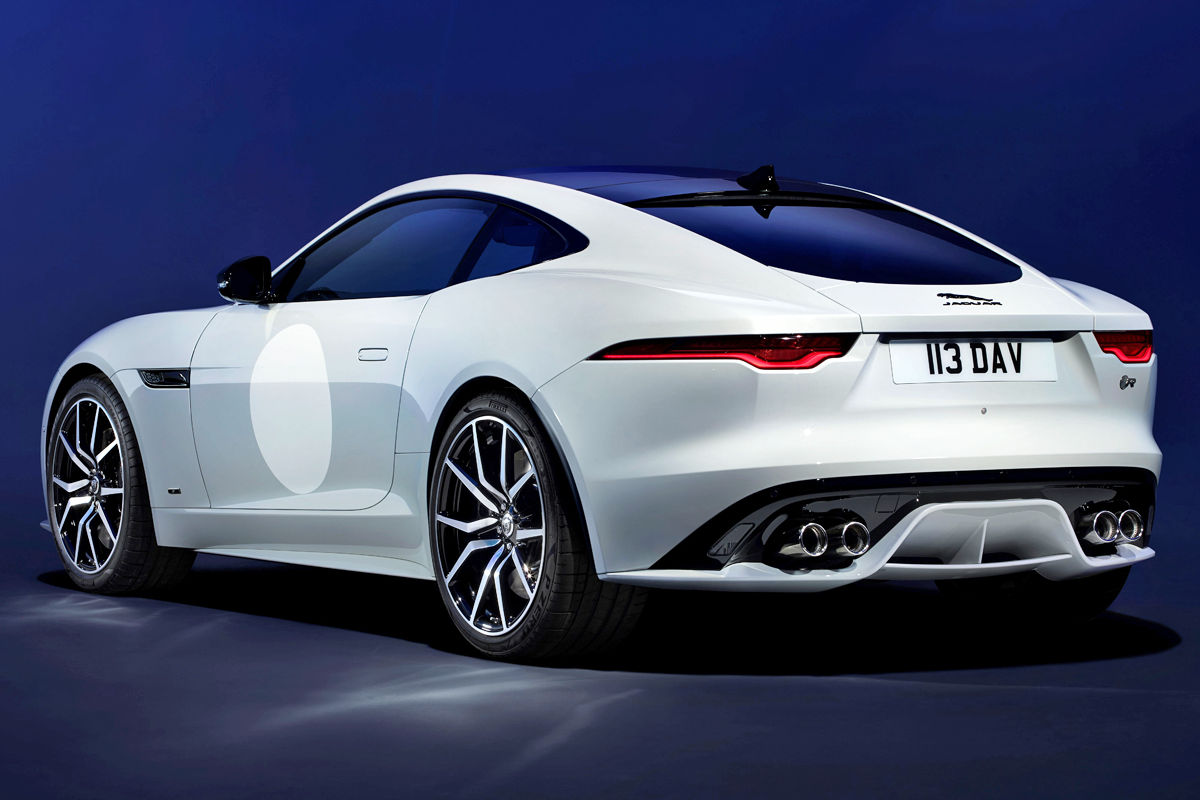
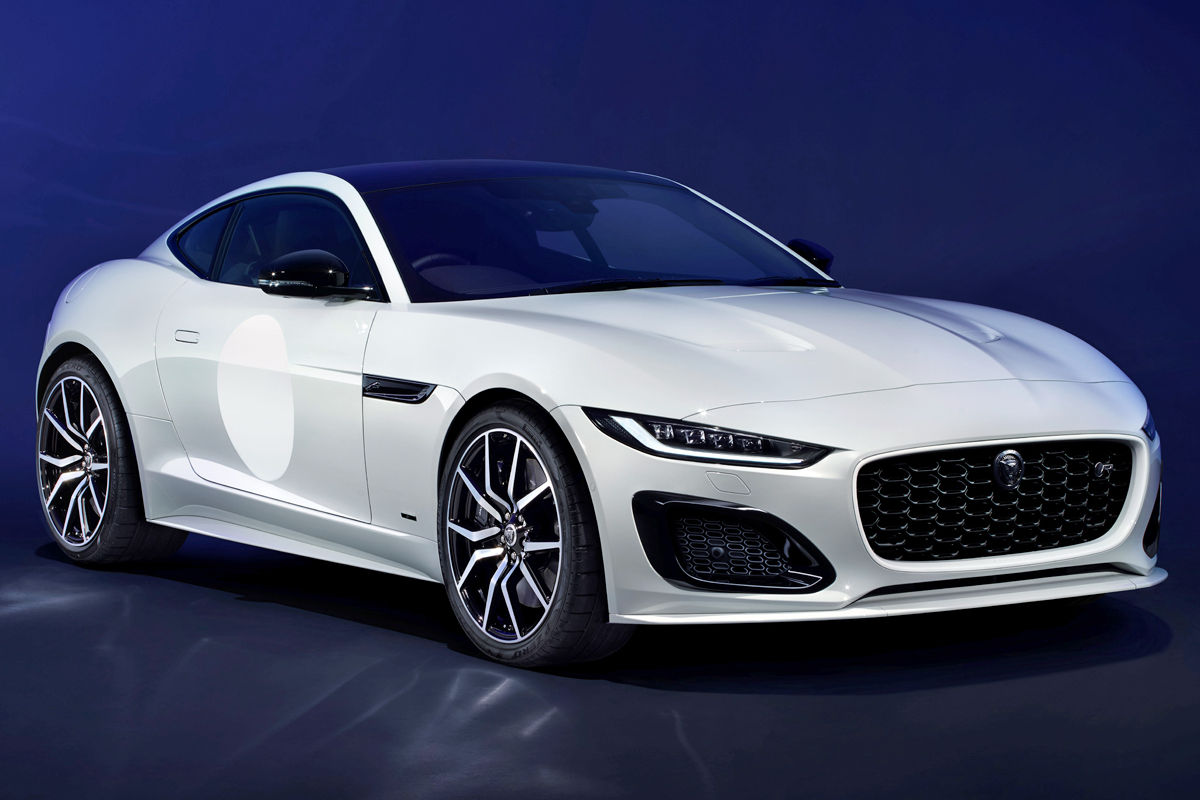
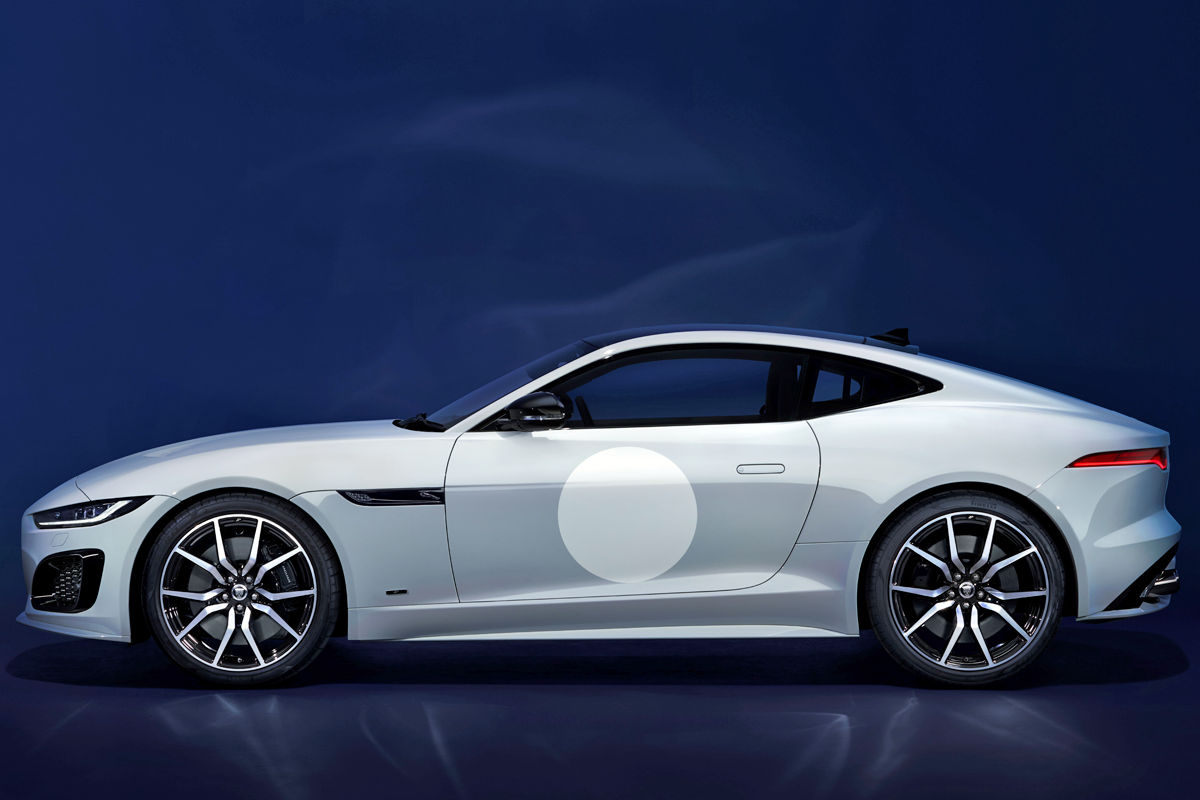
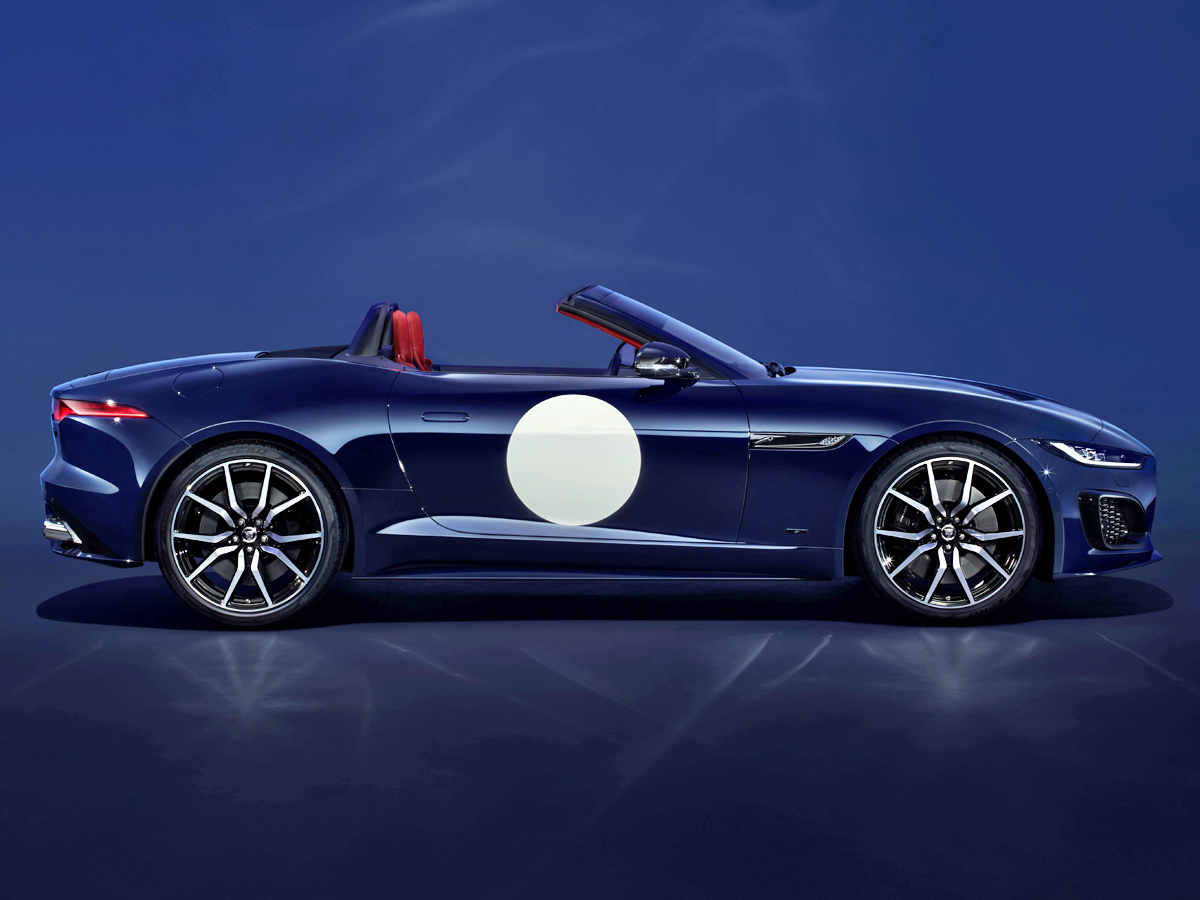
The limited-edition Jaguar F-Type ZP Edition – inspired by racing E-Types from the 1960s – has been revealed to commemorate the end of the line for the firm’s petrol-powered sportscars. And just 2 units have been secured for South Africa.
As a reminder, the Coventry-based automaker plans to transform into an all-electric brand by 2025. The F-Type ZP Edition – which will be produced in 2024, the final year of production for the F-Type – thus marks the end of Jaguar’s long-running petrol-powered sportscar lineage.
The convertible version of the F-Type ZP Edition is not coming to SA.
Just 150 units of the F-Type ZP Edition – recalling the race-winning “Project ZP” E-Type models campaigned shortly after the nameplate’s launch back in 1961 – will be built, offered in either the coupé or convertible body styles (though the examples coming to Mzansi are both coupés).
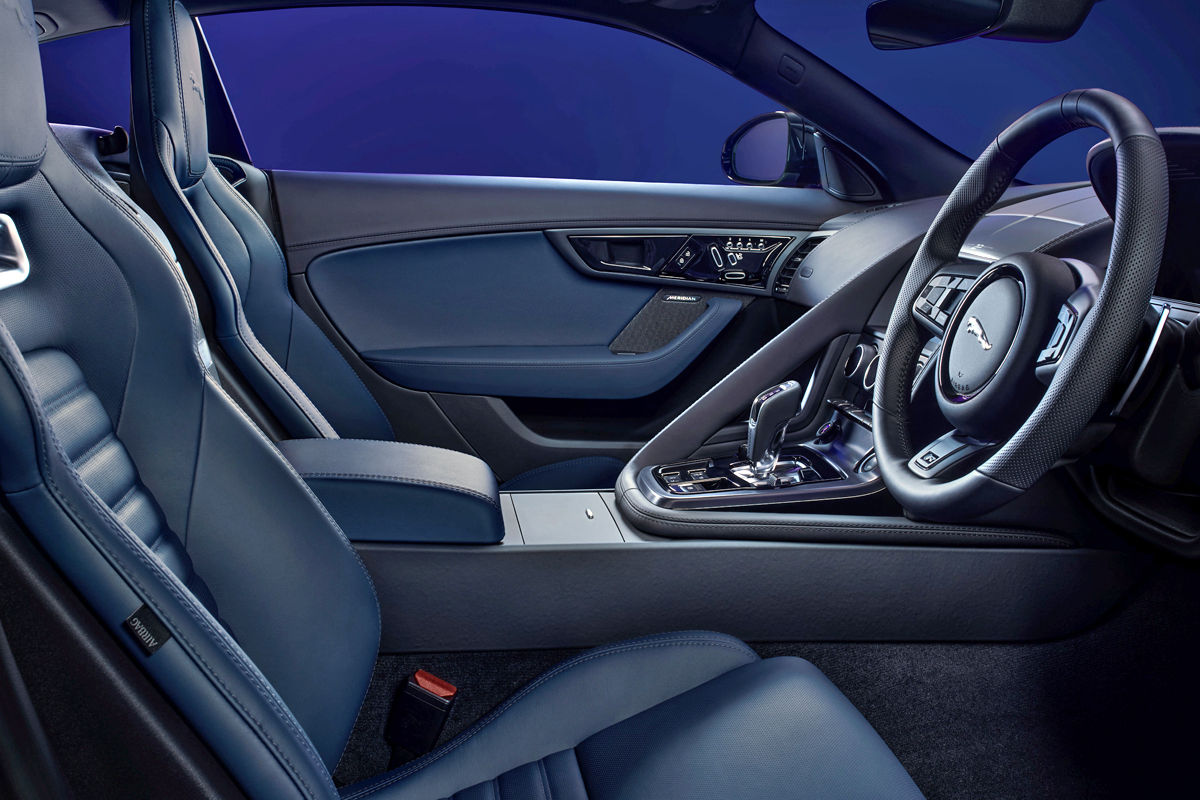
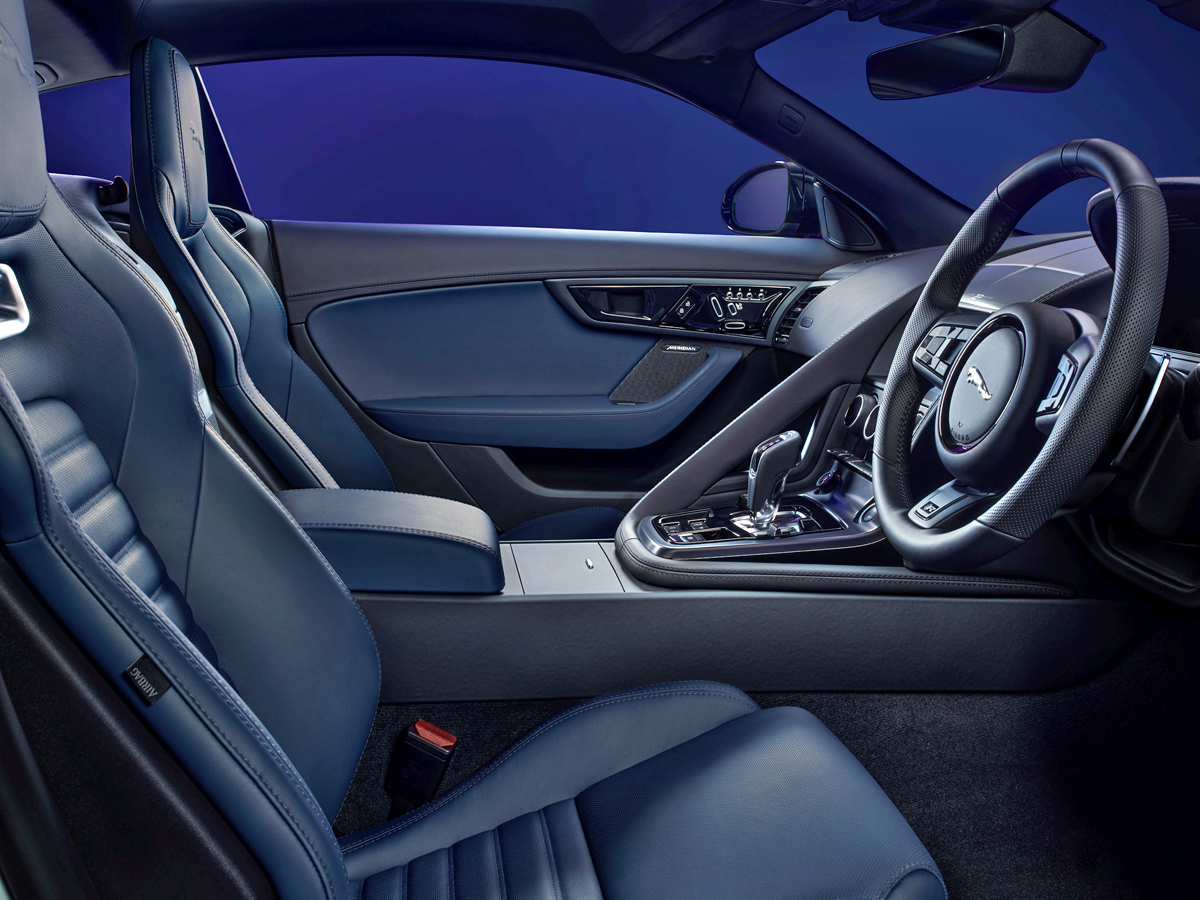
The ZP Edition will be available in Oulton Blue Gloss paint with Mars Red and Ebony 2-tone leather interior, or Crystal Grey Gloss paint with Navy Blue and Ebony 2-tone leather interior. Both feature gloss-white, hand-painted roundels on the doors as well as grille surrounds finished in the same hue.
The interior colour combo was specified by the “personalisation experts” at SV Bespoke.
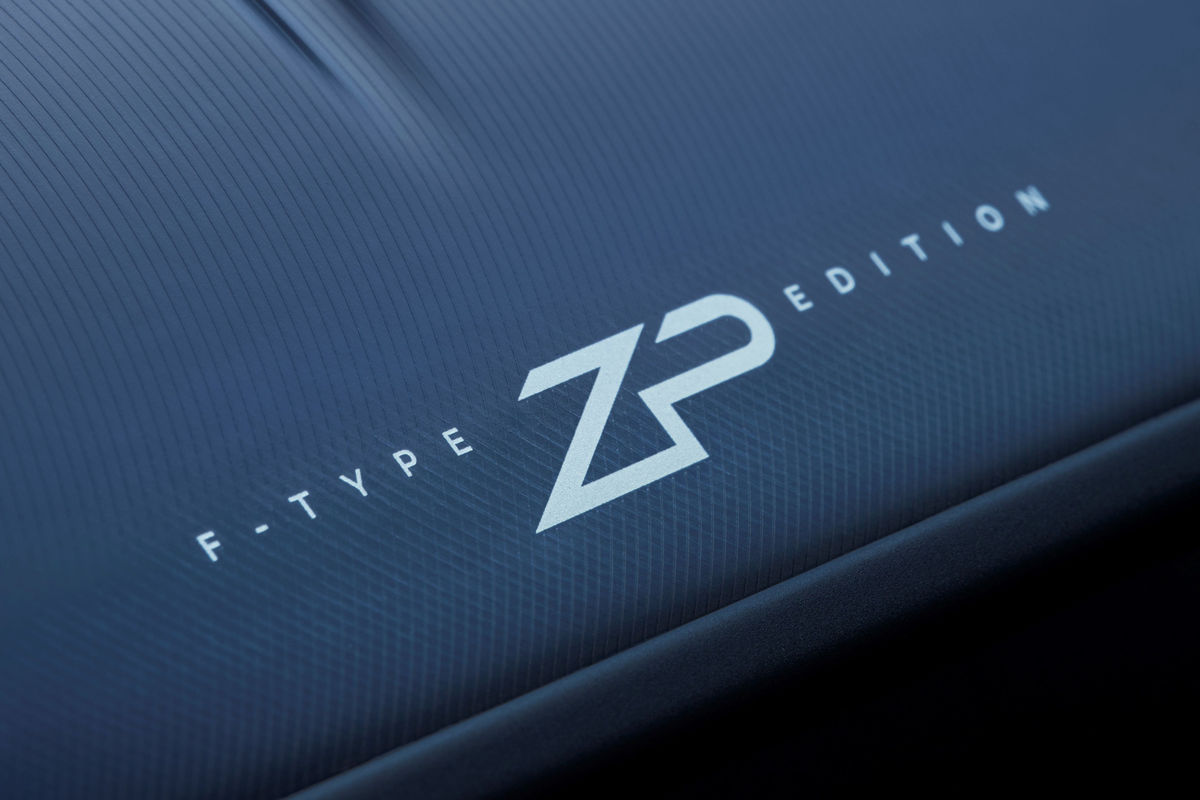
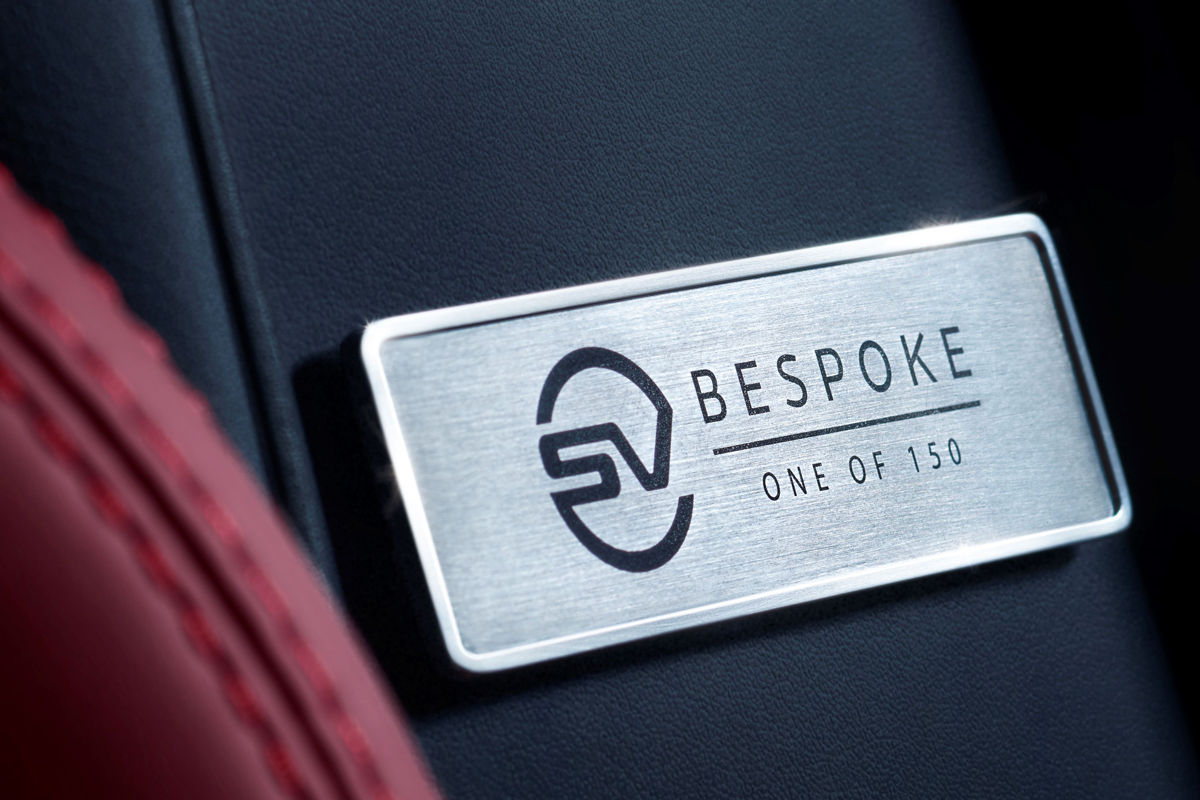
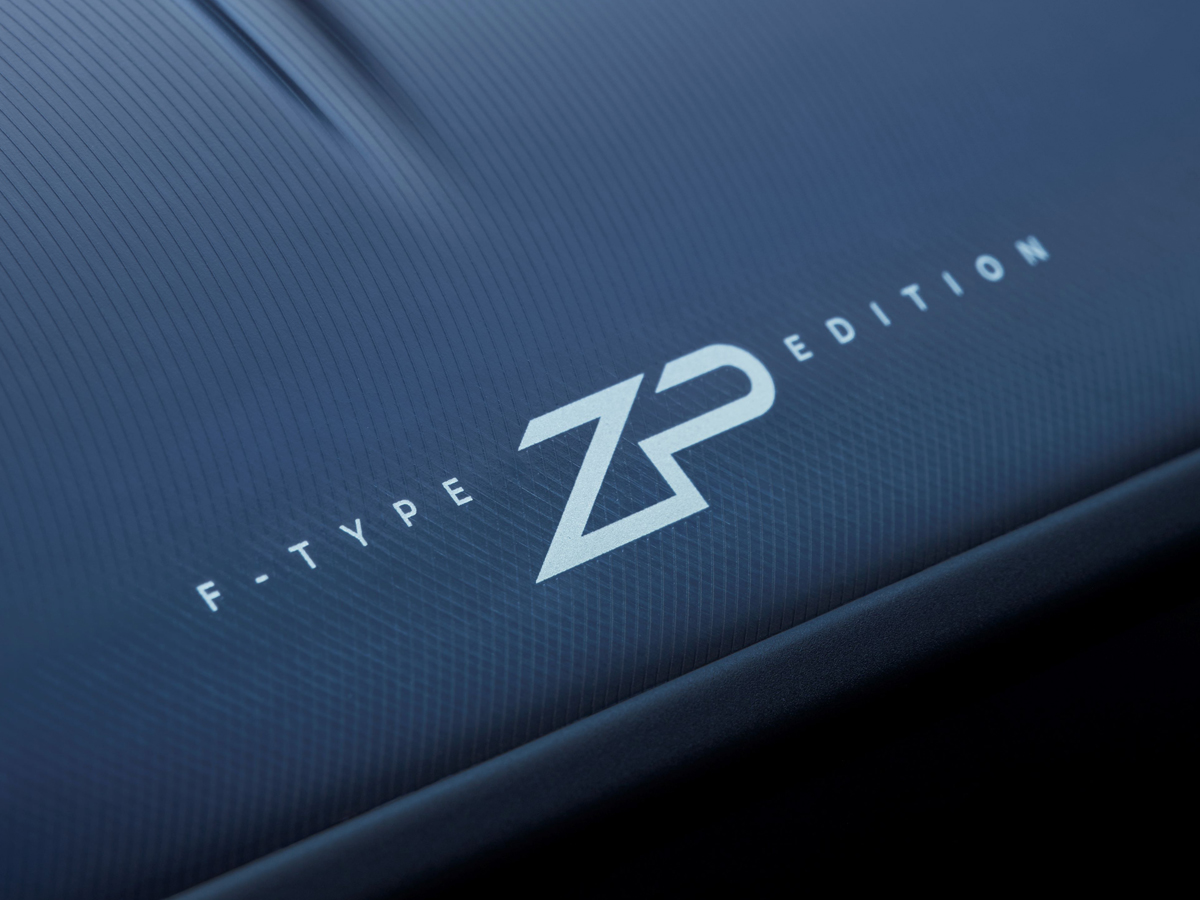
The limited-run model is further set apart by gloss-black exterior detailing and gloss-black brake callipers, along with “ZP Edition” branding on the fenders, 20-inch forged alloy wheels, tread plates and dashboard. Each car furthermore features an “1 of 150” SV Bespoke commissioning plaque.
Fittingly employing the British brand’s supercharged 5.0-litre V8 petrol engine, the F-Type ZP Edition generates the same 423 kW and 700 Nm made by the R75 derivative. Drive is directed to all 4 wheels through an 8-speed automatic transmission, resulting in a claimed 0-100 kph time of 3.7 seconds and an electronically limited top speed of 300 kph.
Plenty of “ZP Edition” branding scattered around the car.
“As Jaguar embarks on the boldest transformation in its history, to become a modern luxury all-electric brand from 2025, this is an unrepeatable celebration of Jaguar’s internal combustion sports car provenance,” said Rawdon Glover, Managing Director at Jaguar.
“F-Type has captivated sportscar drivers for more than a decade, just as the E-Type did 5 decades before it. The ZP Edition is the ultimate celebration of that lineage, joining an illustrious roster of heritage-inspired collector’s editions including the 2015 Project 7 and 2020 Heritage 60 Edition.”
The F-Type has been in production since 2013, arriving in South Africa in the same year. We expect the 2 ZP Edition models to make local landfall at some point in 2024.
Chinese SUV Fight! Haval H6 vs new Chery Tiggo 8 Pro Max (in-depth video comparison)
Join Ciro De Siena and Jacob Moshokoa as they put the Chery Tiggo 8 Pro Max and the Haval H6 SUVs to the test in this in-depth comparison!
Just 10 years ago, when a number of Chinese brands entered the South African market and then hastily retreated, it seemed that the established brands were safe from Chinese competition.
Fast forward ten years and the situation has changed dramatically. Haval is a top 5 brand in SA and Chery leapt into the top 10 within 1 year of trading.
The two SUVs featured here represent the flagship variants of their respective brands (the Haval H6 hybrid notwithstanding) and yet birth are available at a price point below R700 000 (as of October 2023) which in today’s market represents excellent value, especially with the level of tech and comfort features fitted as standard equipment.
We hope you enjoy and find this review useful and we’d love to hear your thoughts in the comments!
Ford’s new Ranger Wildtrak X boasts a wider track, special Bilstein dampers, bespoke exterior styling and more. Here’s what you can expect to pay in South Africa!
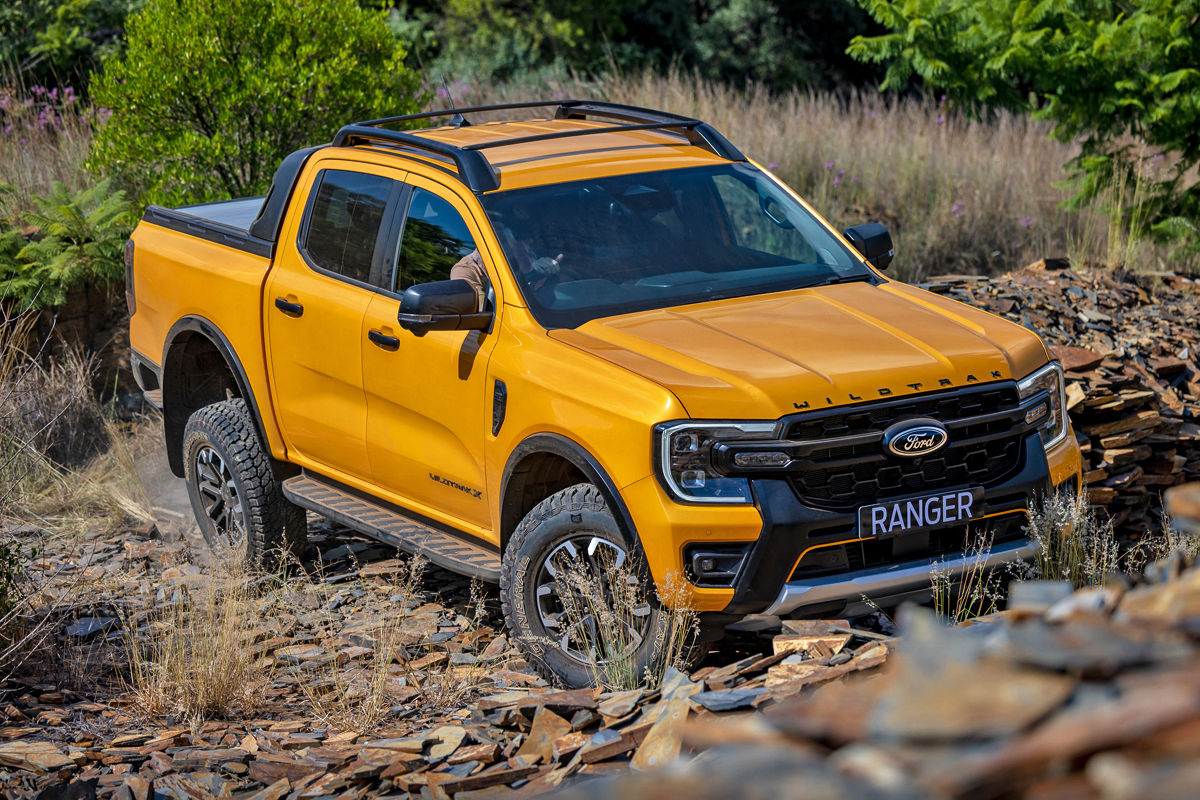
Meet the new Ford Ranger Wildtrak X. Yes, Ford has squeezed a fresh variant into the gap between the Wildtrak and the full-fat Raptor, handing the newcomer a wider track, special Bilstein dampers and a couple of extra off-road goodies.
Of course, the newcomer is produced at Ford’s Silverton facility here in South Africa. For the record, the old Wildtrak X didn’t ever make it to local roads.
“The Ranger Wildtrak range has been immensely popular in South Africa for more than a decade due to its trend-setting style, peerless status, innovative suite of driver assistance technologies and exceptional performance,” said Doreen Mashinini, General Manager for Marketing at Ford South Africa. “With the Wildtrak X we’re giving this prized nameplate a more muscular character and even greater off-road capability, enabling our customers to push the boundaries of an active, outdoor lifestyle.”
And the price? Well, the new Wildtrak X debuts at R1 013 000, which sees it positioned just below the V6-powered Wildtrak (R1 026 400) and 292 kW Raptor (R1 184 100).
What’s the difference between Wildtrak and Wildtrak X?
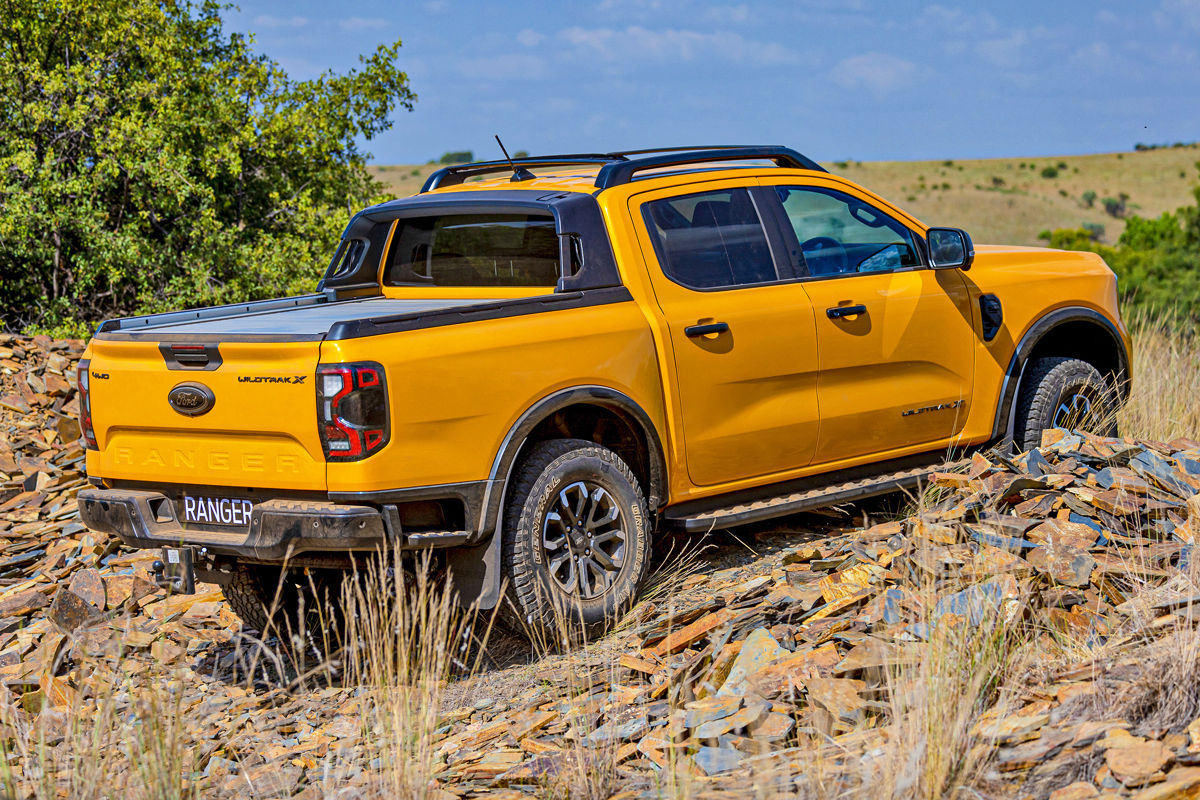
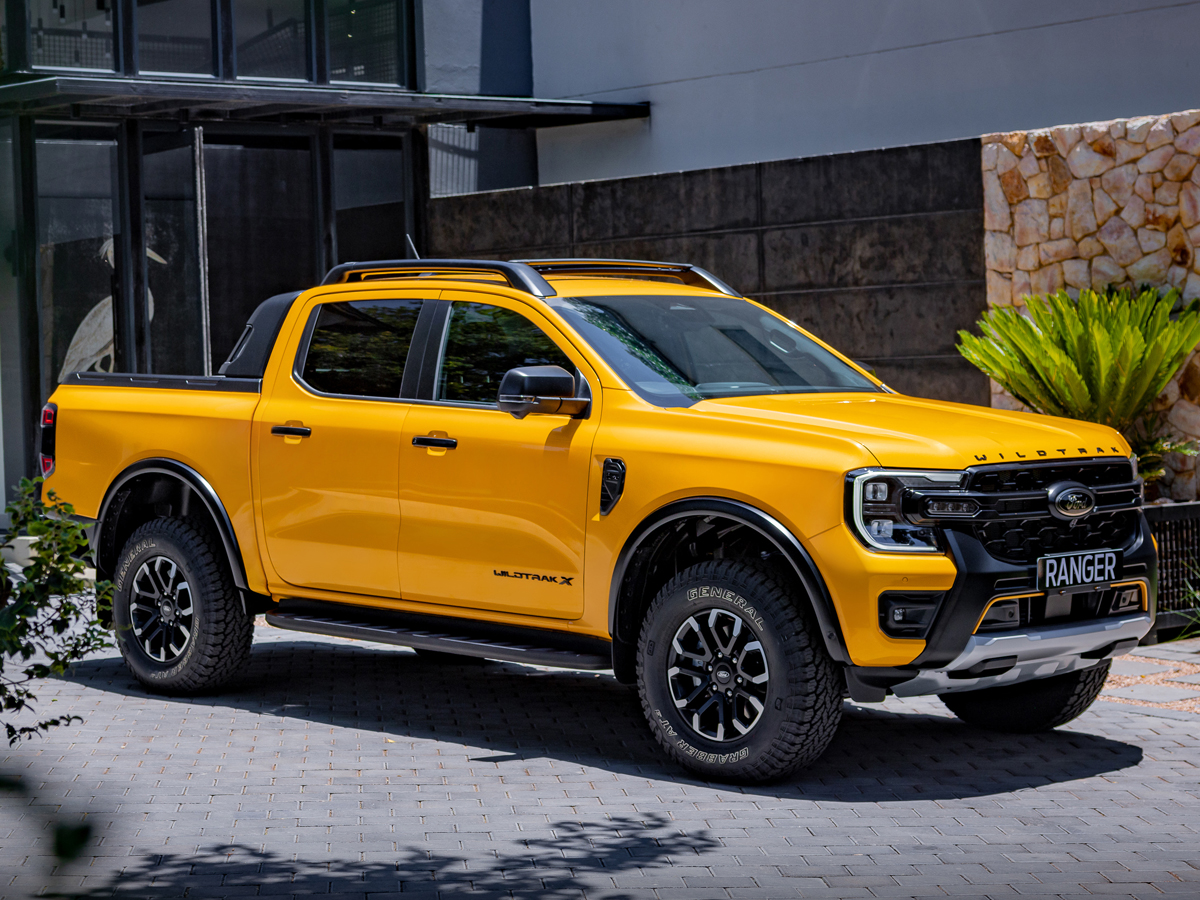
Note the higher ground clearance and all-terrain tyres.
So, what makes a Ranger Wildtrak X? Well, as you might have guessed from its nameplate, the newcomer is based on the Wildtrak, but gains a 30 mm wider stance (providing what Ford describes as “an even more stable footprint off-road”) and an extra 26 mm of ground clearance.
The track-width increase and loftier ground clearance are integrated with new 17-inch alloys (wrapped in 265/70 R17 General Grabber AT3 all-terrain tyres) and special Bilstein position-sensitive dampers. The Dearborn-based firm says “keen off-roaders” thus have no need to upgrade tyres and suspension since they will receive “what they need right out of the factory”. Interestingly, despite the suspension upgrade, this version of the bakkie retains its 3 500 kg braked towing capacity, unlike the Raptor.
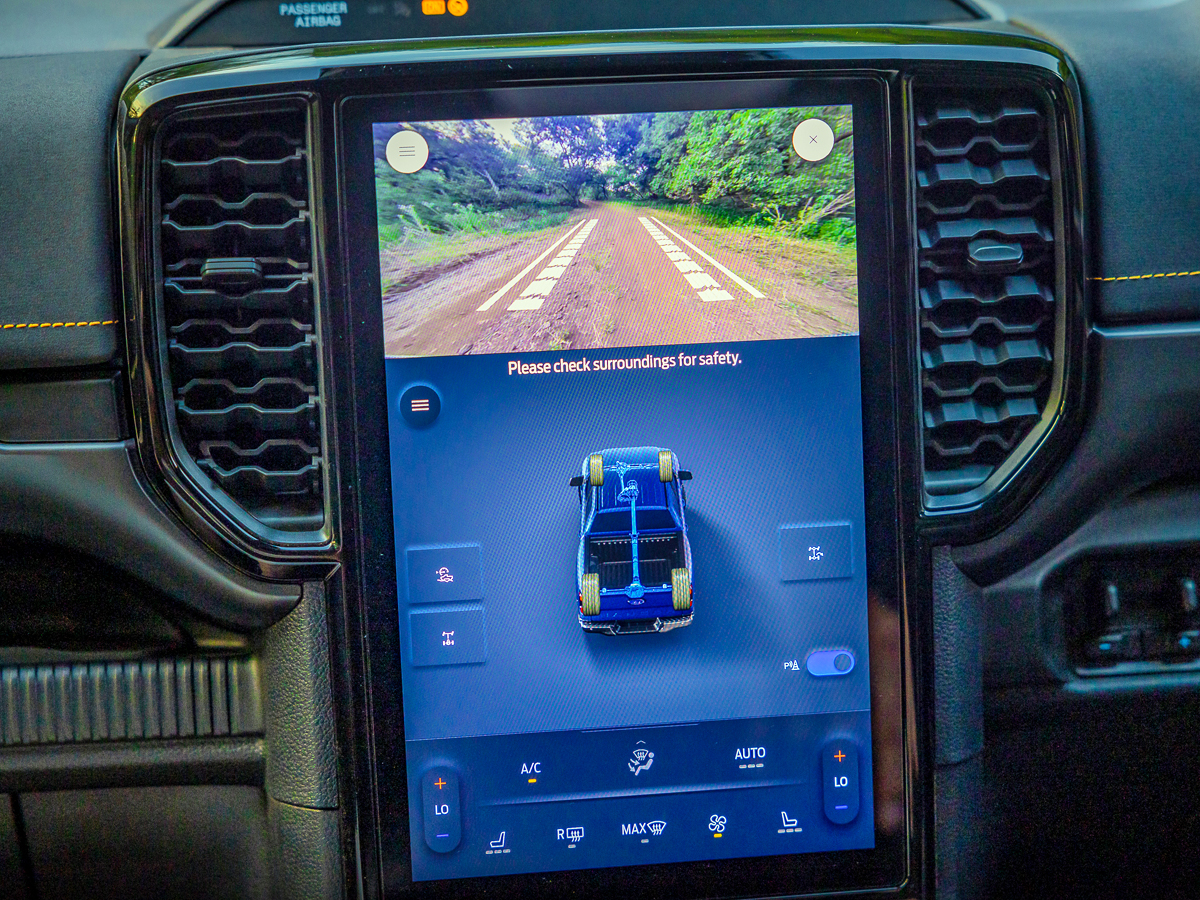
A new Trail Turn Assist feature is also standard, helping the driver to negotiate tight bends on narrow tracks by applying the brake on the inside rear wheel, which Ford promises reduces the turning radius “by up to 25%”. The system can be used at speeds under 19 kph with the bakkie in either 4H or 4L (and with the rear differential unlocked). The Trail Control system from the Ranger Raptor is likewise part of the deal, aiding the driver to maintain constant low speed while off-road.
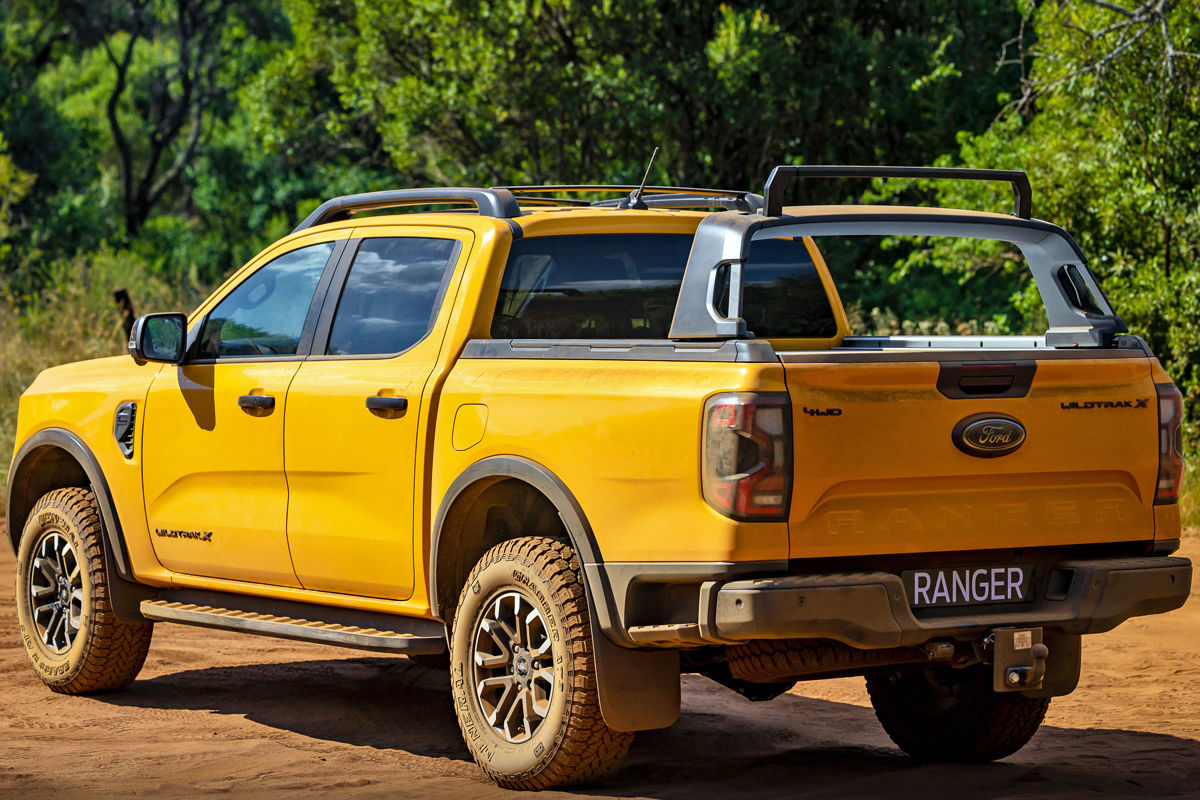
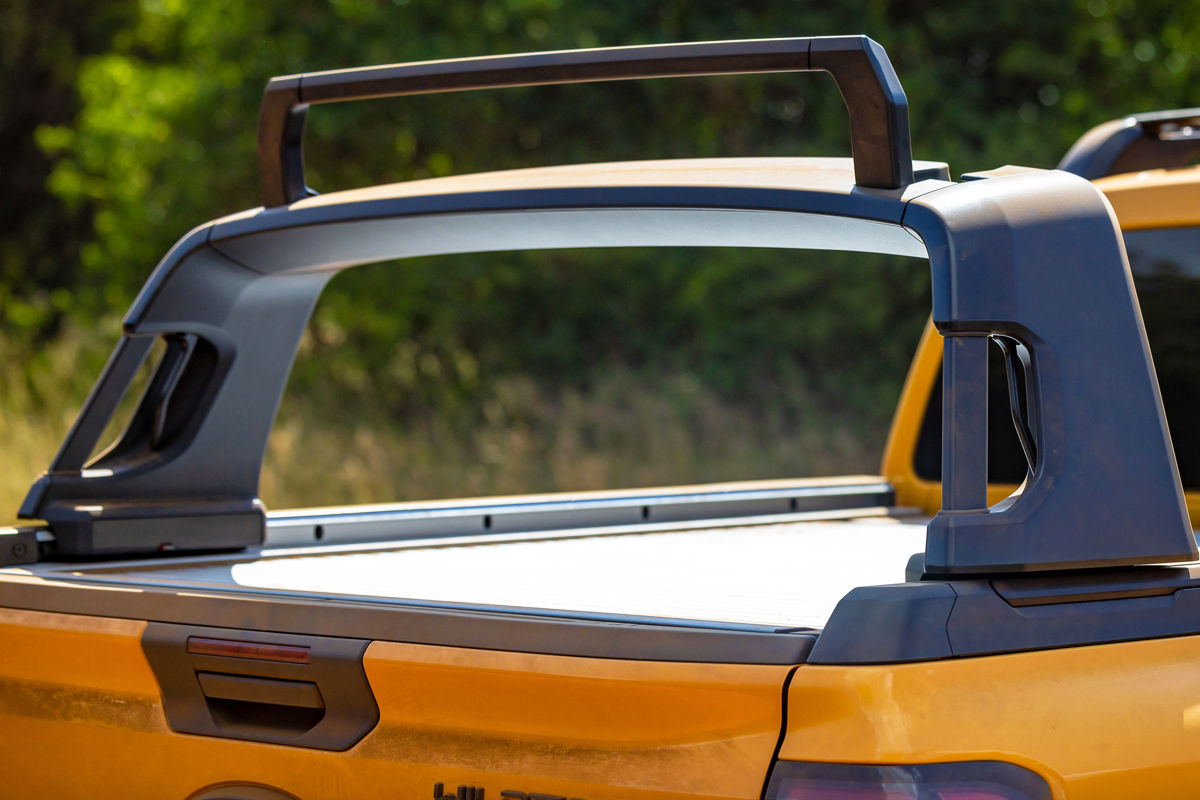
The Ranger Wildtrak X furthermore comes with a new Flexible Rack System, which comprises a sliding load rack that can be locked into 5 positions along the length of the load bay, and folding roof racks that store neatly inside the roof rails when not in use. There’s also the prewired overhead auxiliary switch pack, ready to cater for aftermarket accessories.
The Wildtrak X is available only with the 2.0-litre, 4-cylinder bi-turbodiesel engine (so, no option of the V6 oil-burner), which delivers 150 kW and 500 Nm to all 4 wheels through a 10-speed automatic transmission. In stark contrast, of course, the Ranger Raptor boasts a 292 kW/583 Nm turbocharged 3.0-litre V6 petrol mill.
The Ranger Wildtrak X’s styling and cabin upgrades
Off-road assistance via the 12-inch touchscreen.
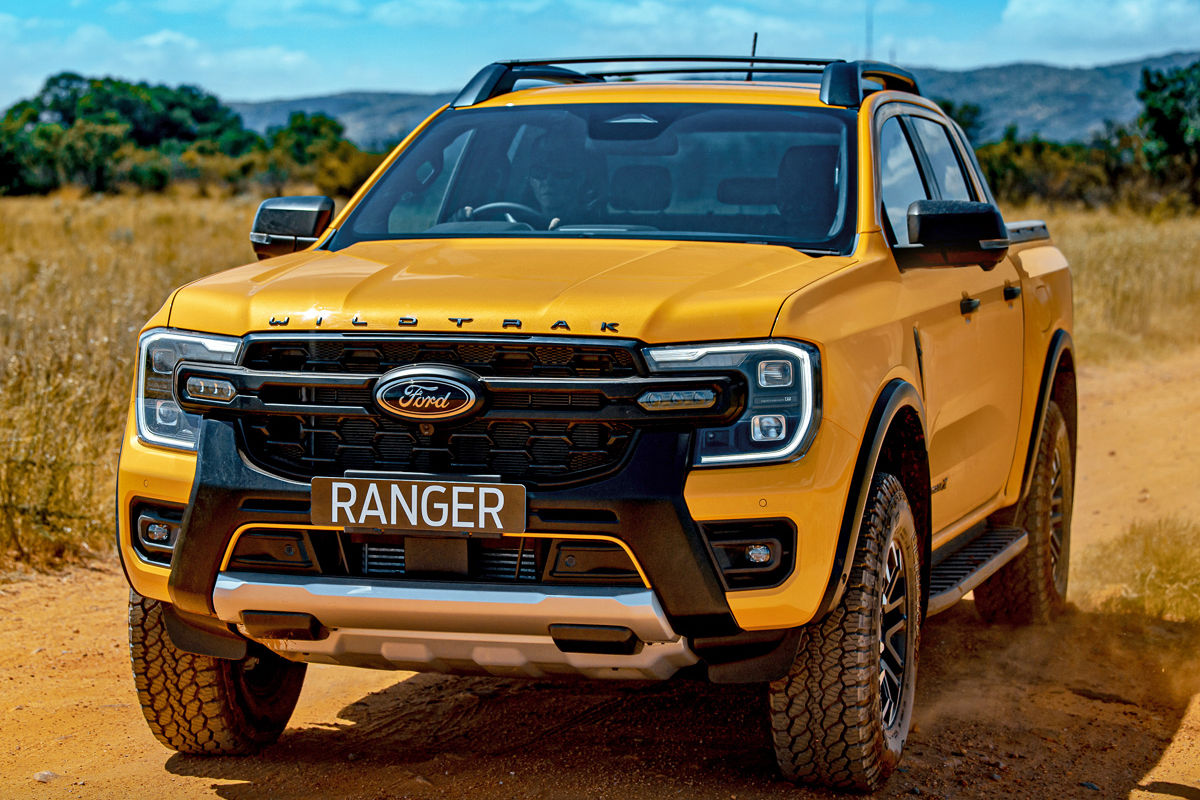
The new derivative is visually set apart by its “off-road grille” (with integrated auxiliary driving lights and Cyber Orange accents), “enthusiast-rated” steel bash plate, cast-aluminium side steps, “Wildtrak X” badges (on the front doors and tailgate), black Ford badges (fore and aft) and distinctive lettering stretched across the leading edge of the bonnet. You’ll also notice the black finish applied to the grille surround, H-shaped front bumper bar, wheel-lip mouldings, fender vents, side-mirror caps, exterior door handles and rear bumper.
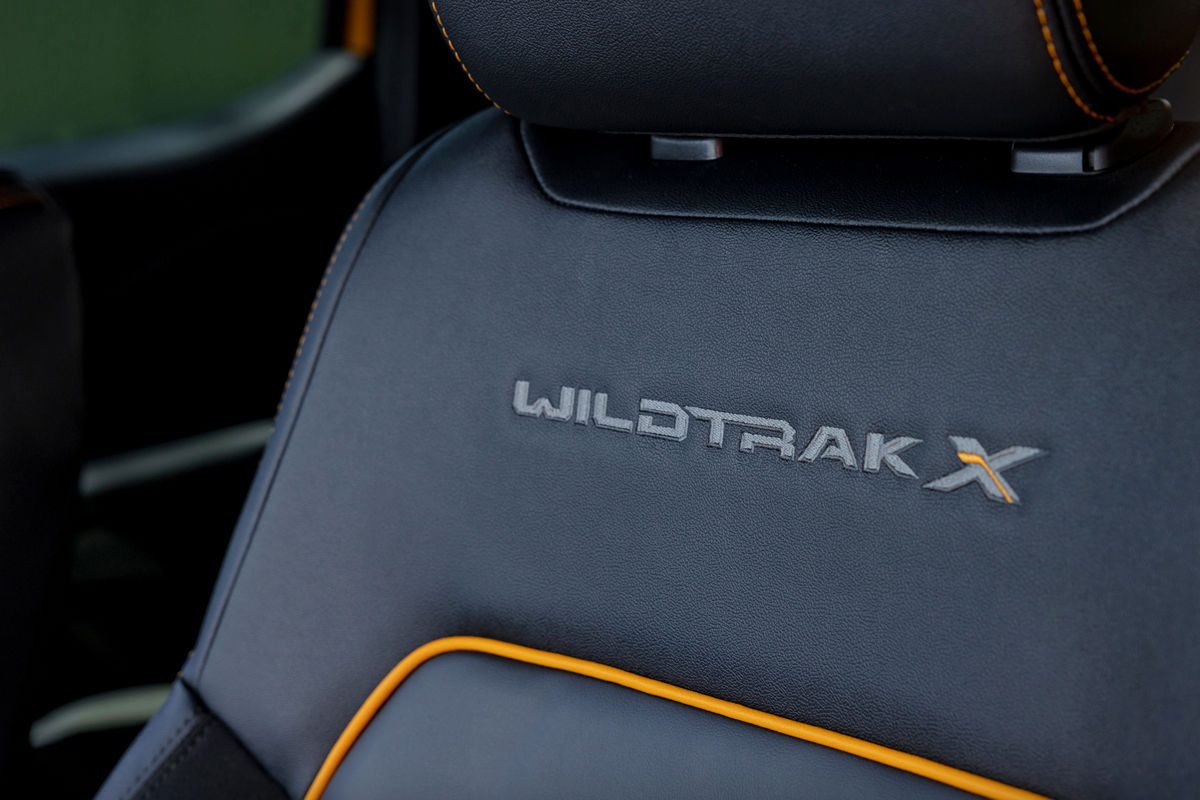
Inside, the Ranger Wildtrak X is fitted with new leather seats featuring Miko suede trim. “Wildtrak X” lettering has been applied to the seat backs, upper glovebox and all-weather floormats. Terra suede wraps the glovebox, instrument-cluster hood and door trim, while distinctive Cyber Orange contrast stitching adorns the seats, steering wheel, gear shifter, doors trim and upper glovebox. There’s also a 12.4-inch digital instrument cluster, a portrait-oriented 12-inch touchscreen and wireless device charging.
How much does the Ford Ranger Wildtrak X cost in South Africa?
Ford Ranger Wildtrak X 2.0L BiT 4×4 – R1 013 000
The Ford Ranger Wildtrak X is sold with a 4-year/120 000 km warranty, 4-year/unlimited km roadside assistance and a 5-year/unlimited km corrosion warranty. Service or maintenance plans up to 8 years/135 000 km are optional, while the warranty can be optionally extended up to 7 years/200 000 km.
The new, larger BMW X2 has been unveiled in X2 M35i and fully electric iX2 guises, though the Bavarian firm says one of those is not on the cards for South Africa…
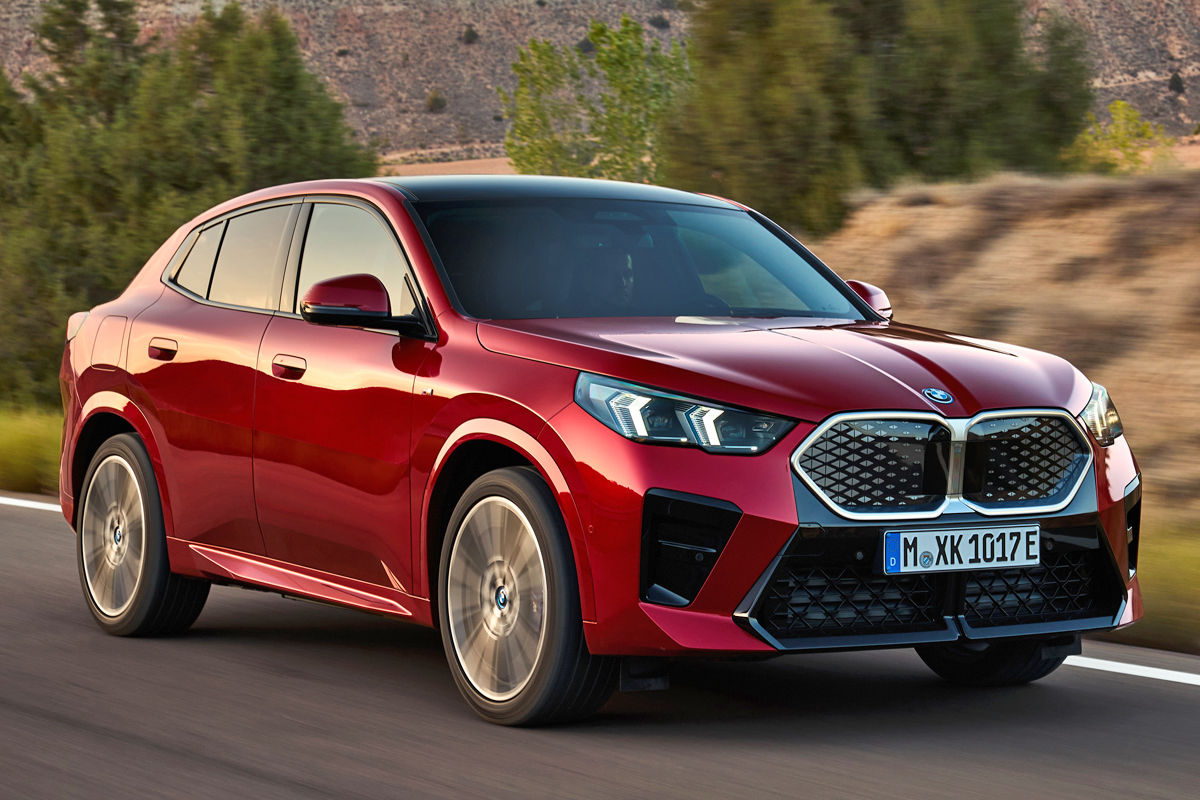
Meet the new BMW X2, the Munich-based firm’s 2nd stab at an X1-based coupé-style crossover.
BMW Group South Africa says the Regensburg-built newcomer will be available locally as early as March 2024, though interestingly adds the fresh-faced fully electric iX2 variant “will not be offered in South Africa”. The flagship X2 M35i xDrive, though, is likely to come to Mzansi, along with the likewise petrol-powered X2 sDrive18i and perhaps also the oil-burning X2 sDrive18d.
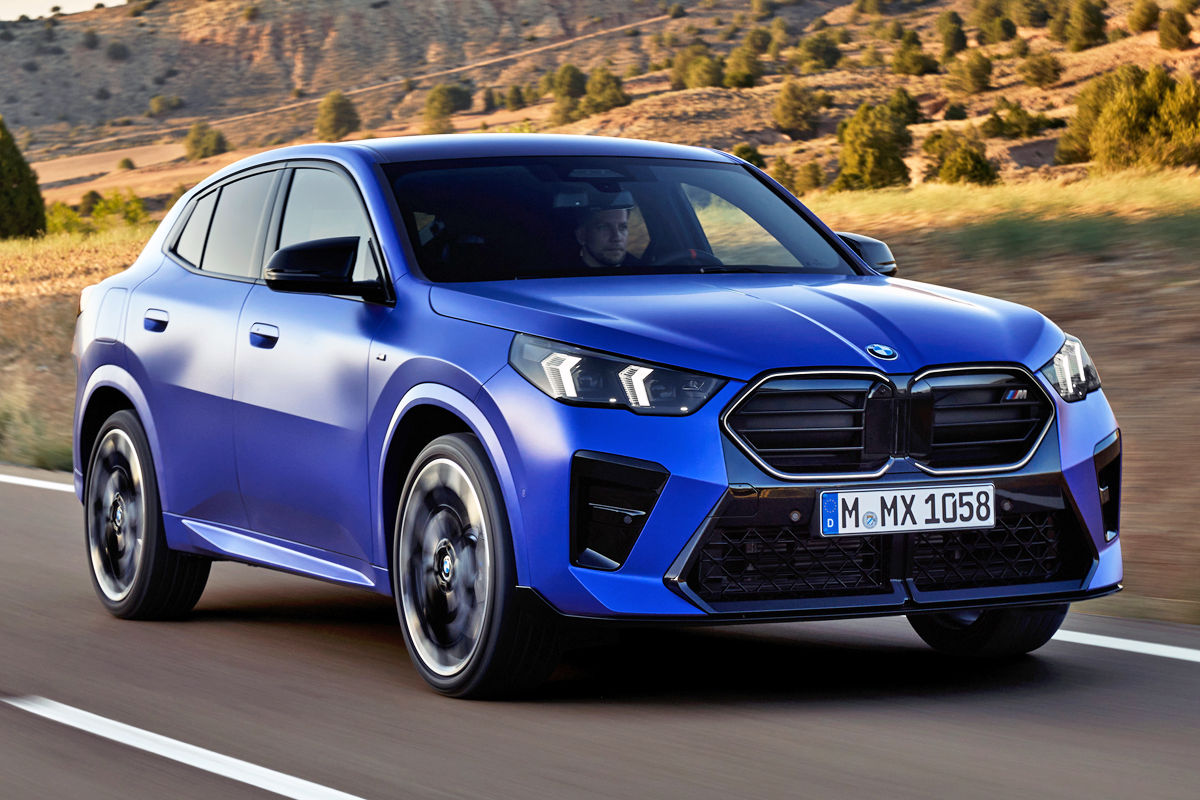
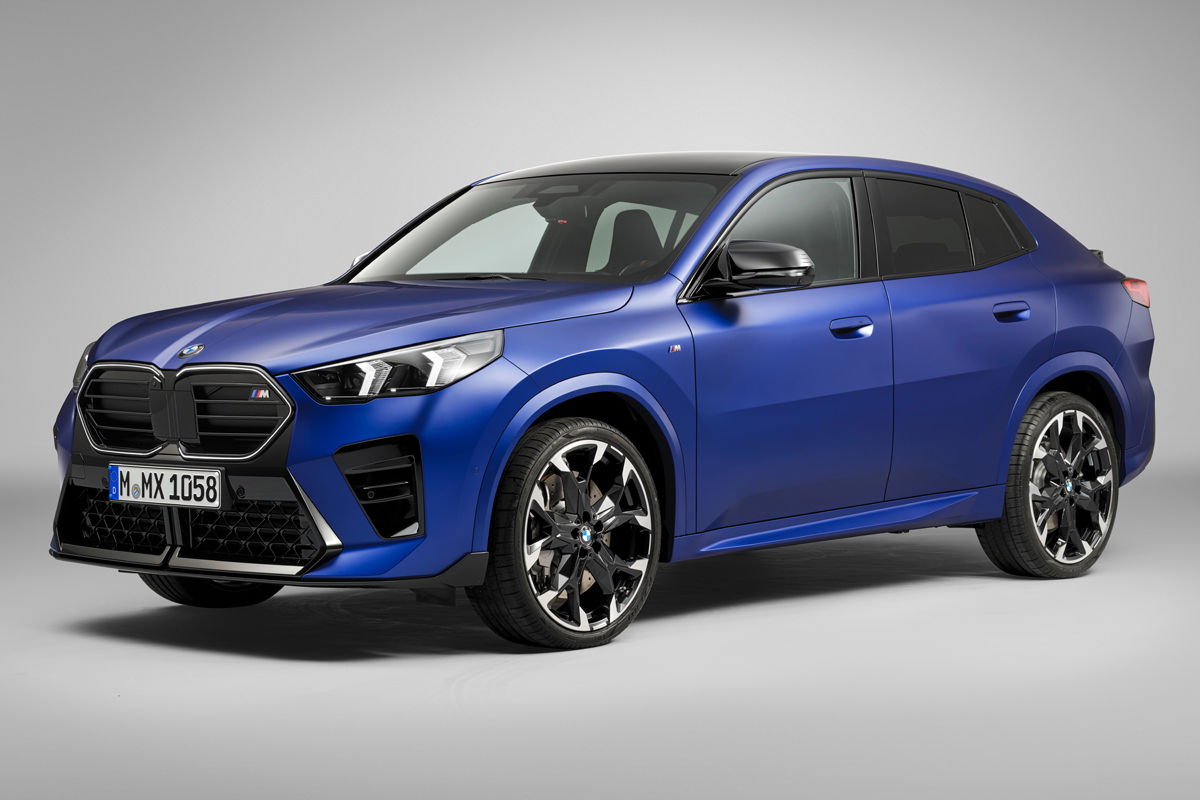
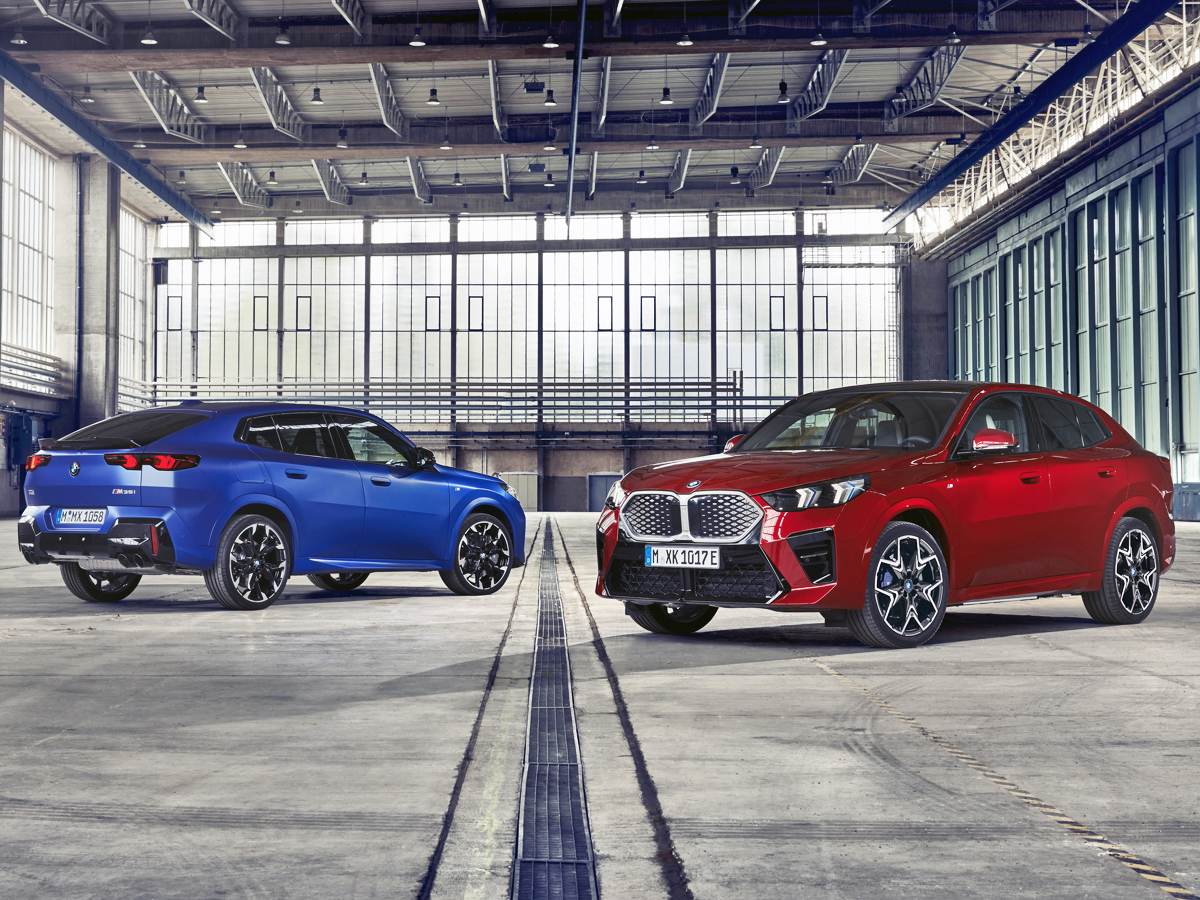
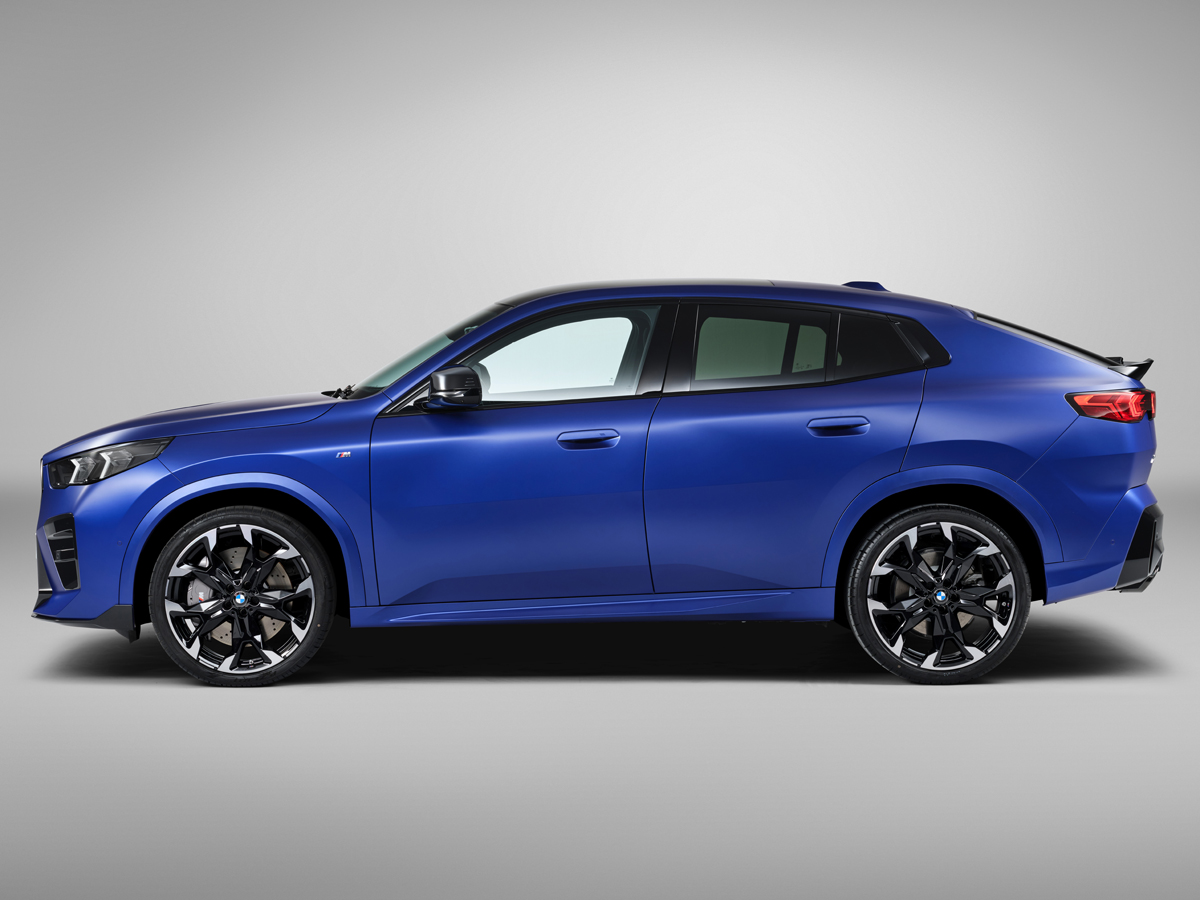
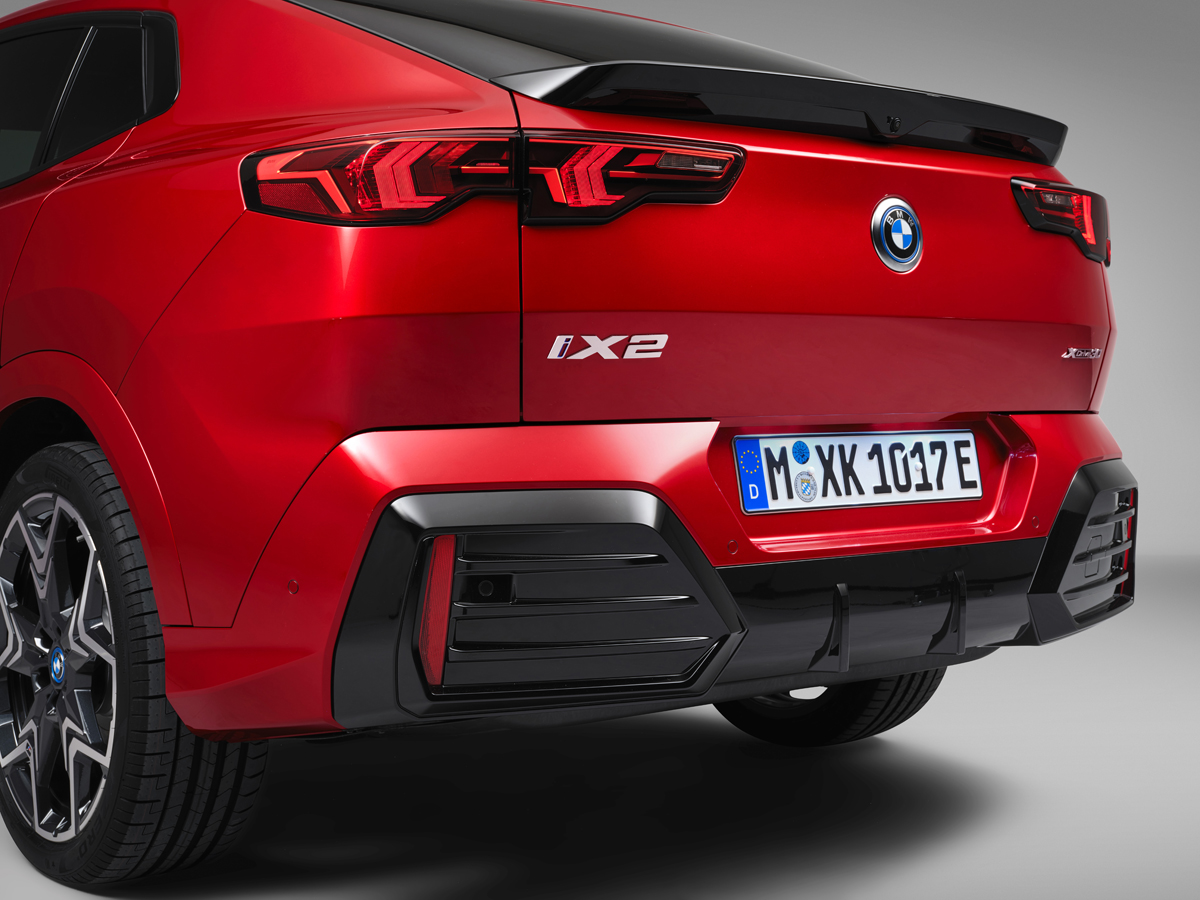
BMW says the X2 M35i (left) is coming to SA but that the iX2 xDrive30 (right) isn’t…
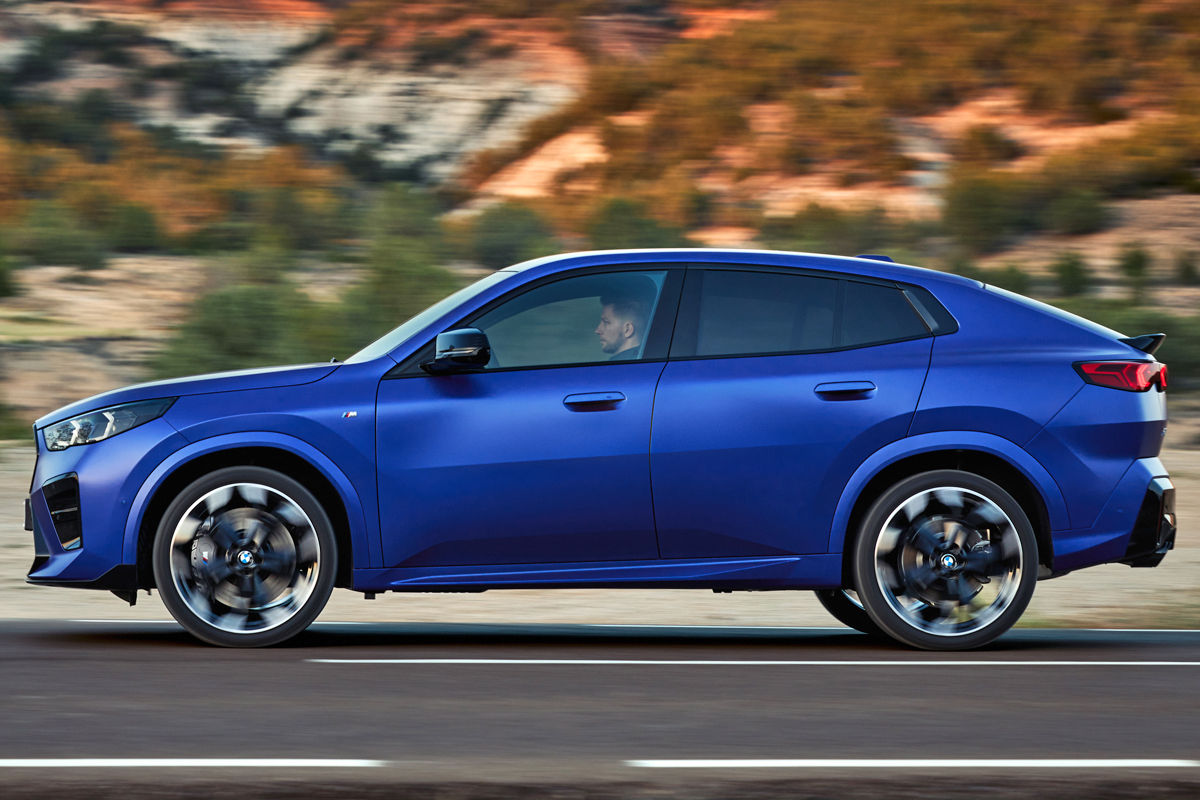
Compared with the original F39-series X2, the new U10-generation version is noticeably larger. In fact, it’s grown in length by a considerable 194 mm (now measuring 4 554 mm from snout to rump), while also gaining 21 mm in width (to 1 845 mm) and 64 mm in height (to 1 590 mm). Furthermore, thanks to a longer (2 692 mm) wheelbase and wider tracks, BMW claims there is more passenger room inside and extra luggage space, too.
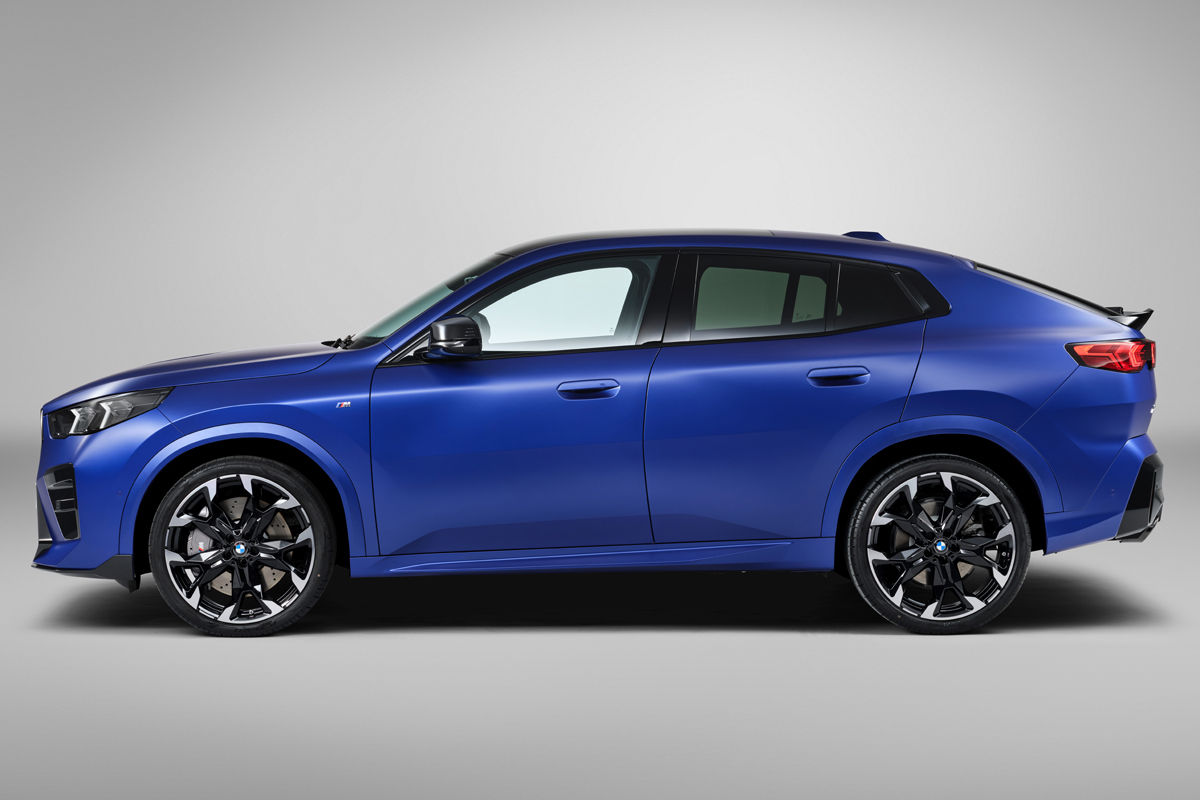
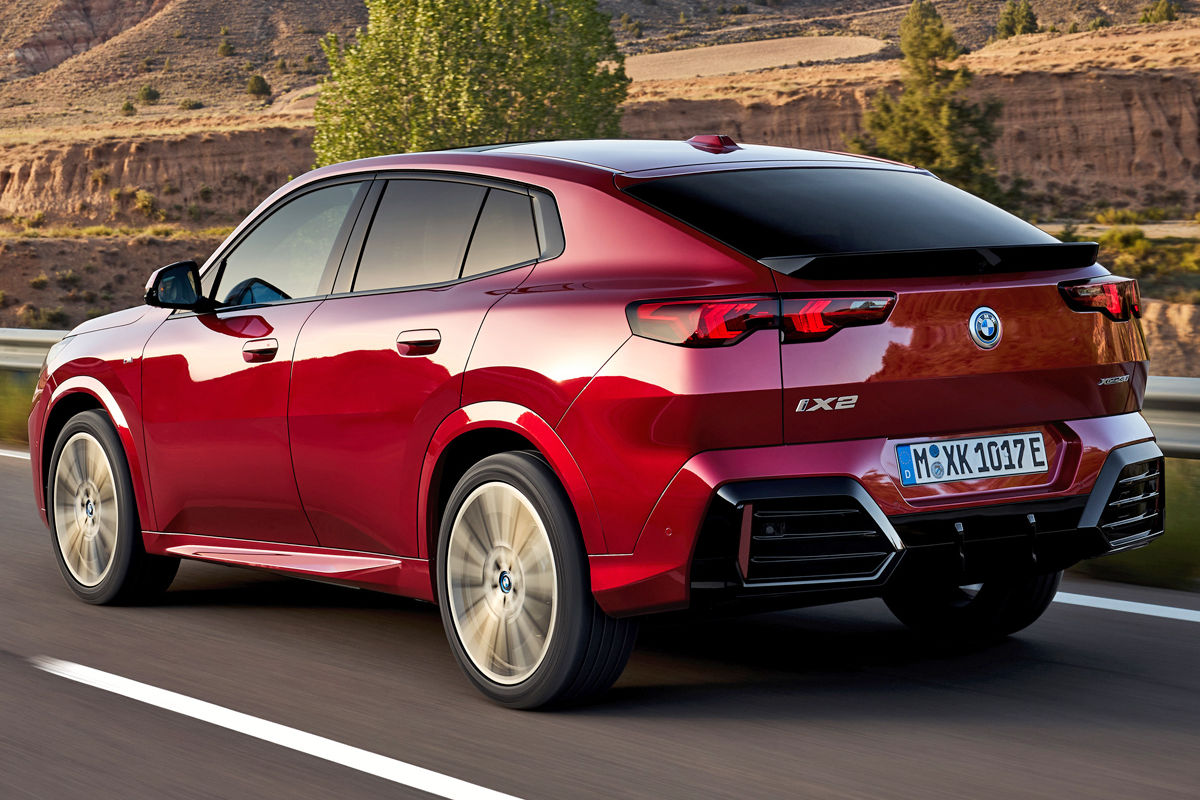
While you may notice the new BMW X2’s almost-hexagonal kidney grille (which can be optionally specified with contour lighting), it’s the roofline that defines the newcomer’s exterior design. Unlike the 1st-gen X2, the new model scores an obvious coupé-shaped silhouette with proportions more in line with those of the larger X4 and X6.
The new X2 is 194 mm longer than its forebear.
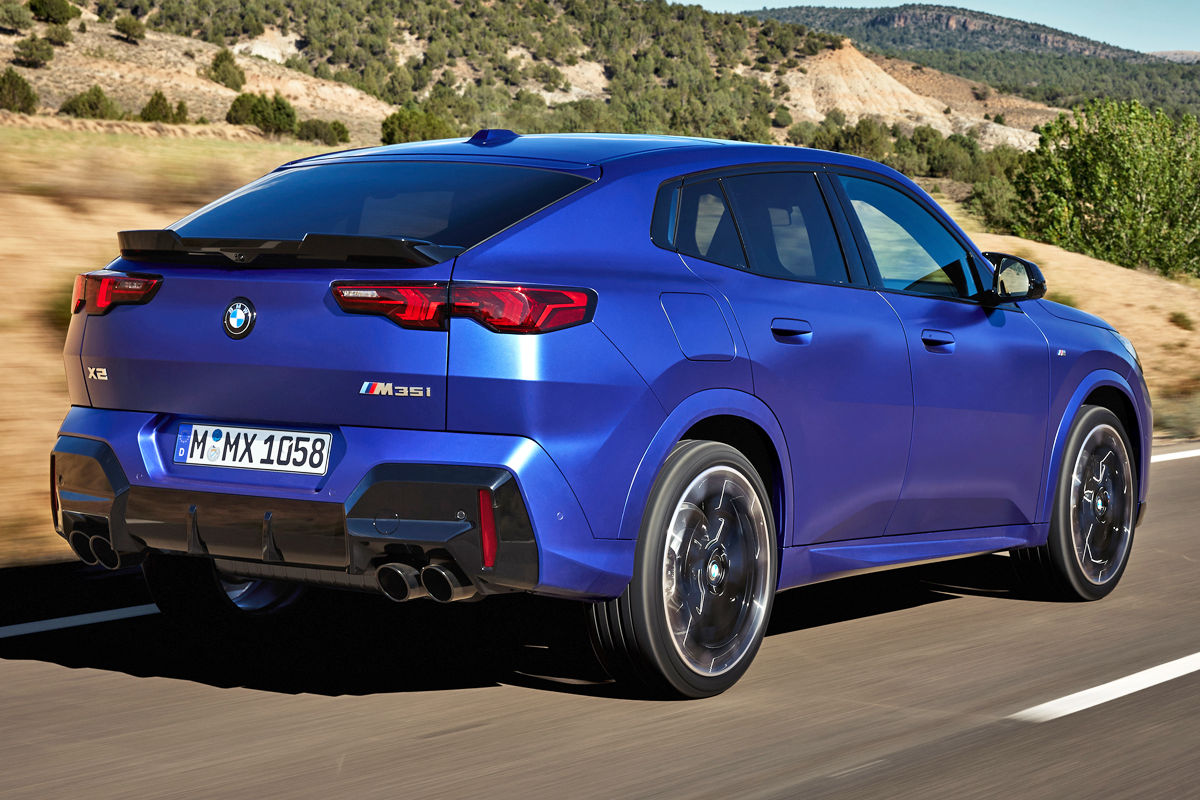
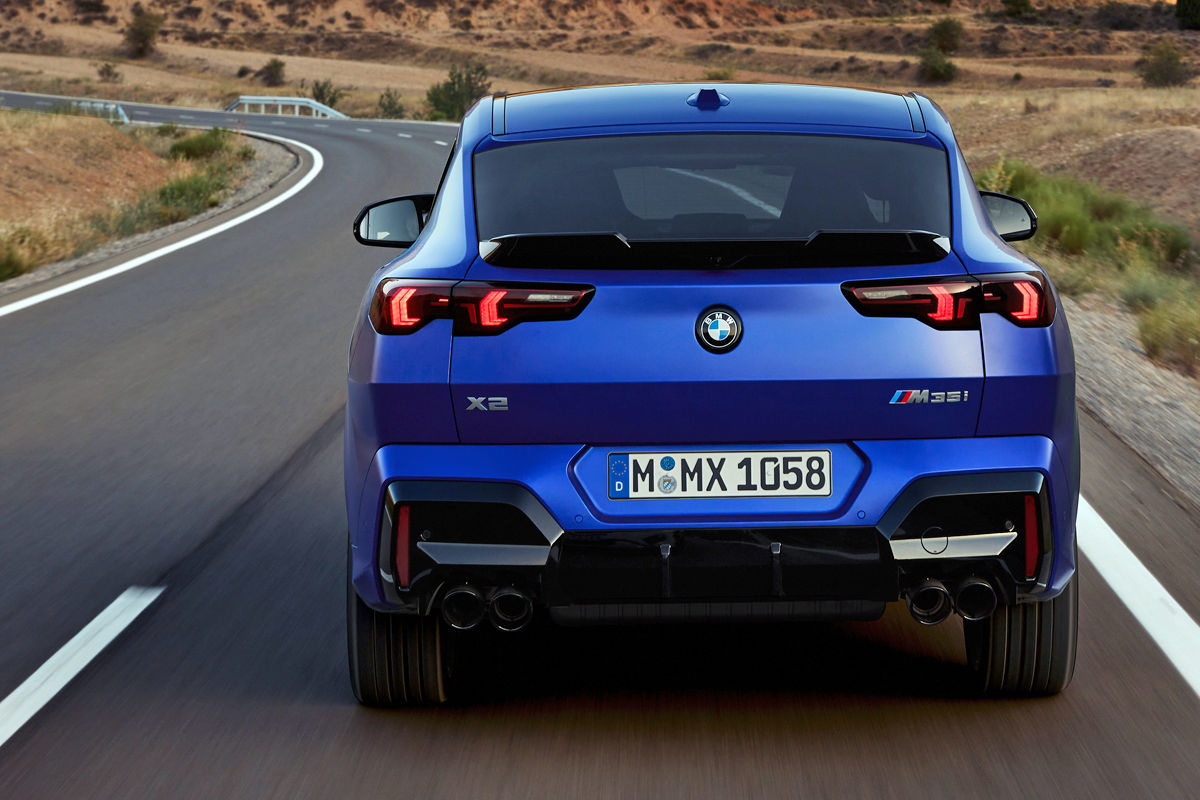
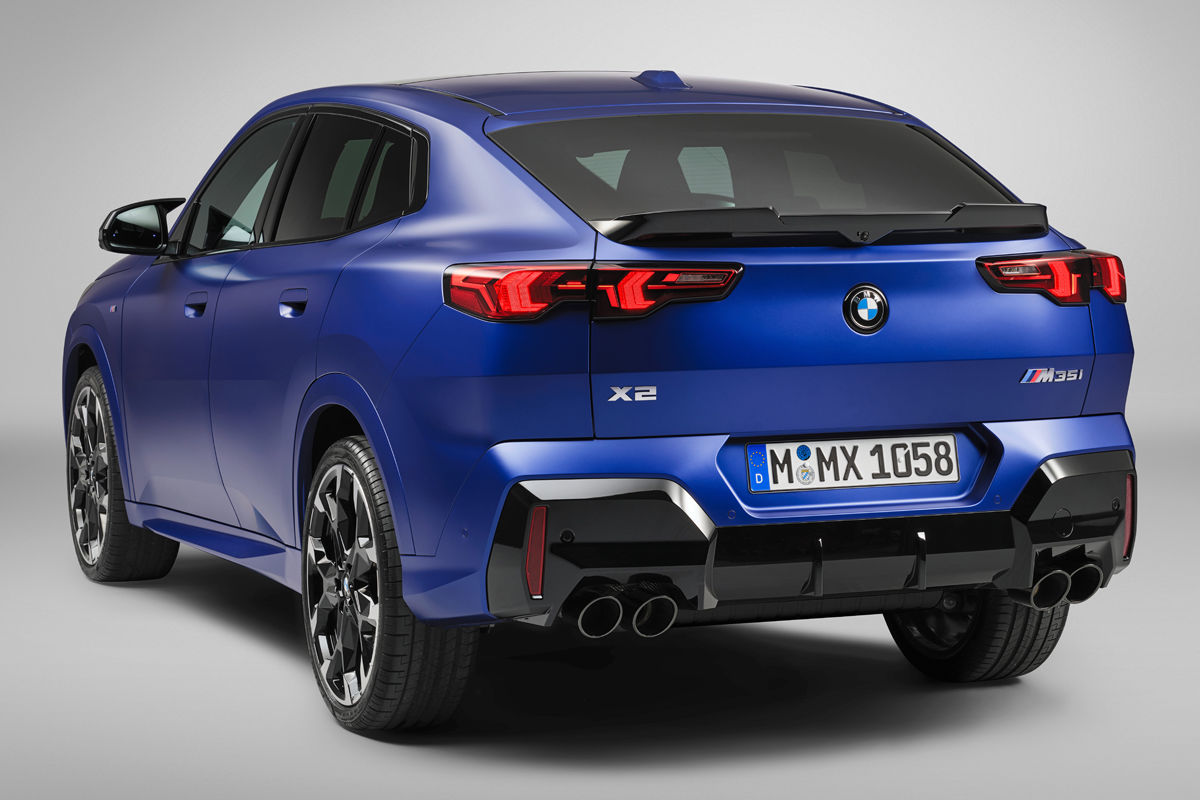
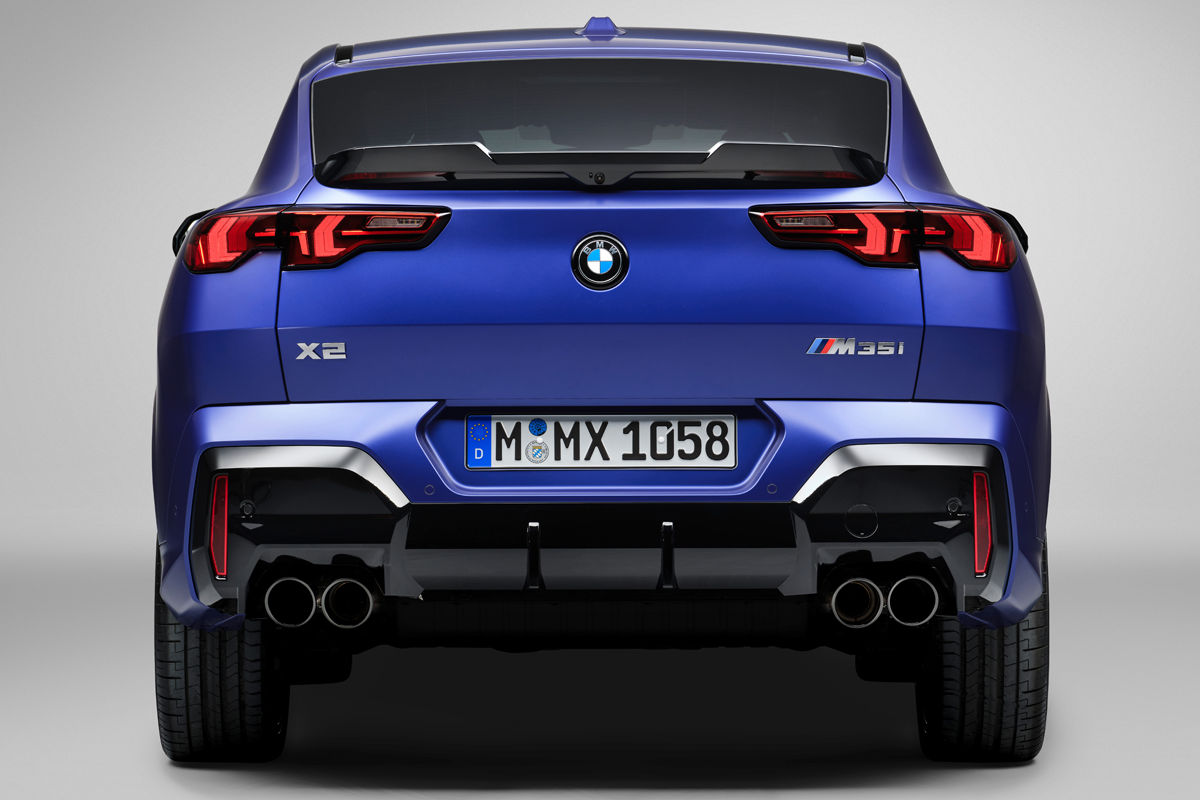
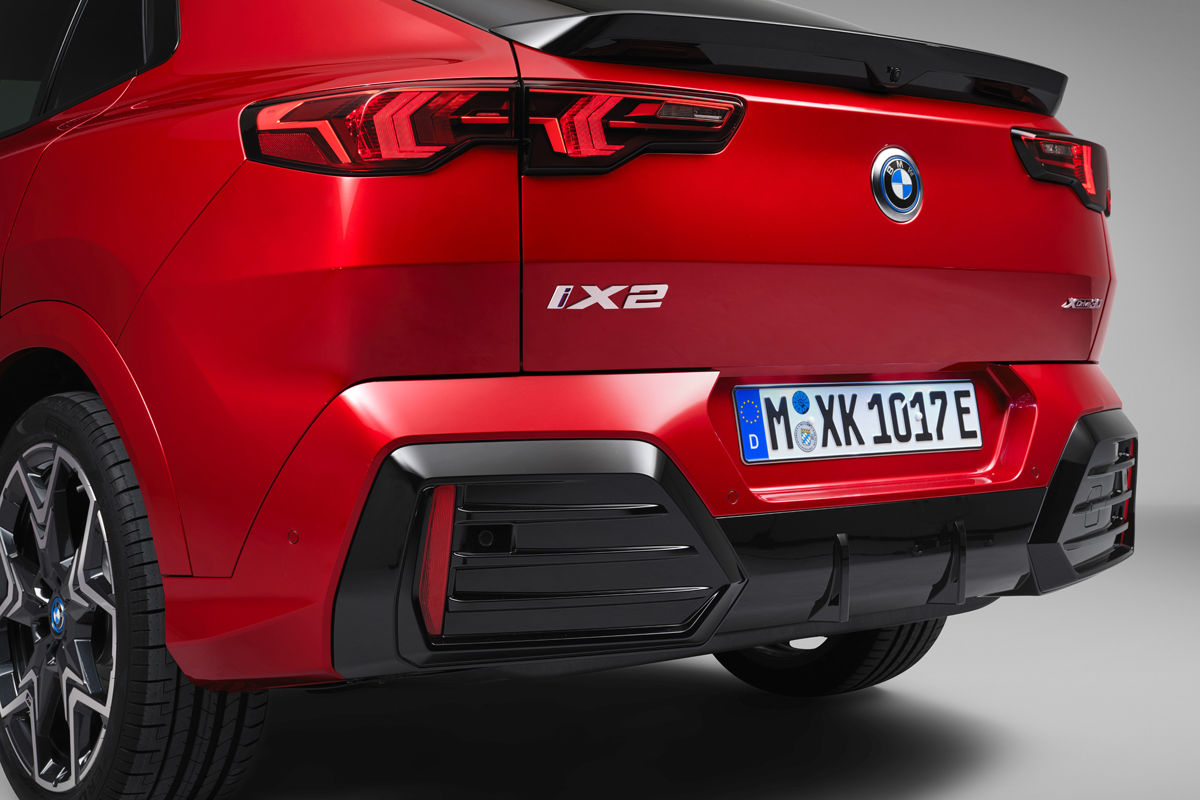
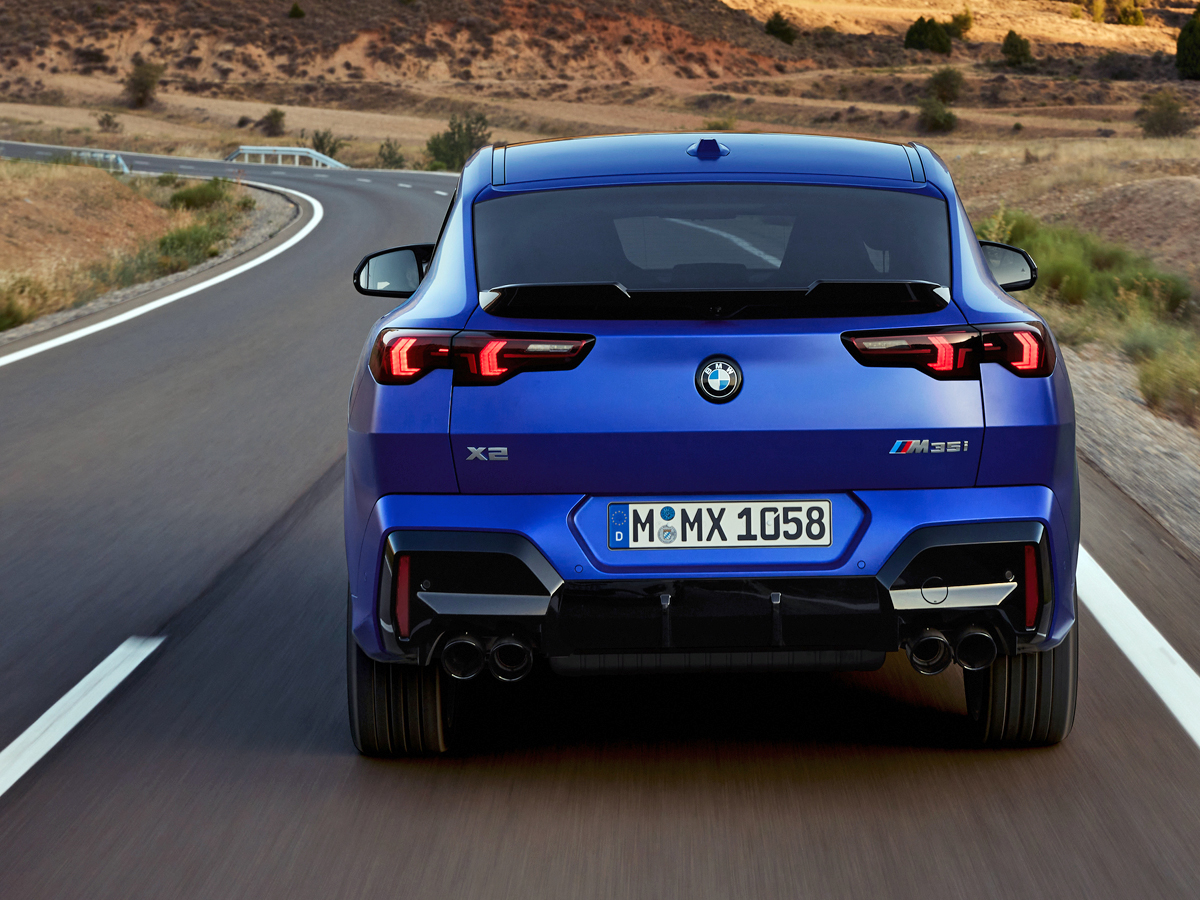
Round back, you’ll find a Gurney-style spoiler, a chunky rear apron and, in the case of the M Performance X2 M35i derivative, 2 pairs of tailpipes. BMW says the M Sport package will be standard on the sDrive18i variant in South Africa, with the M Sport Pro package optional.
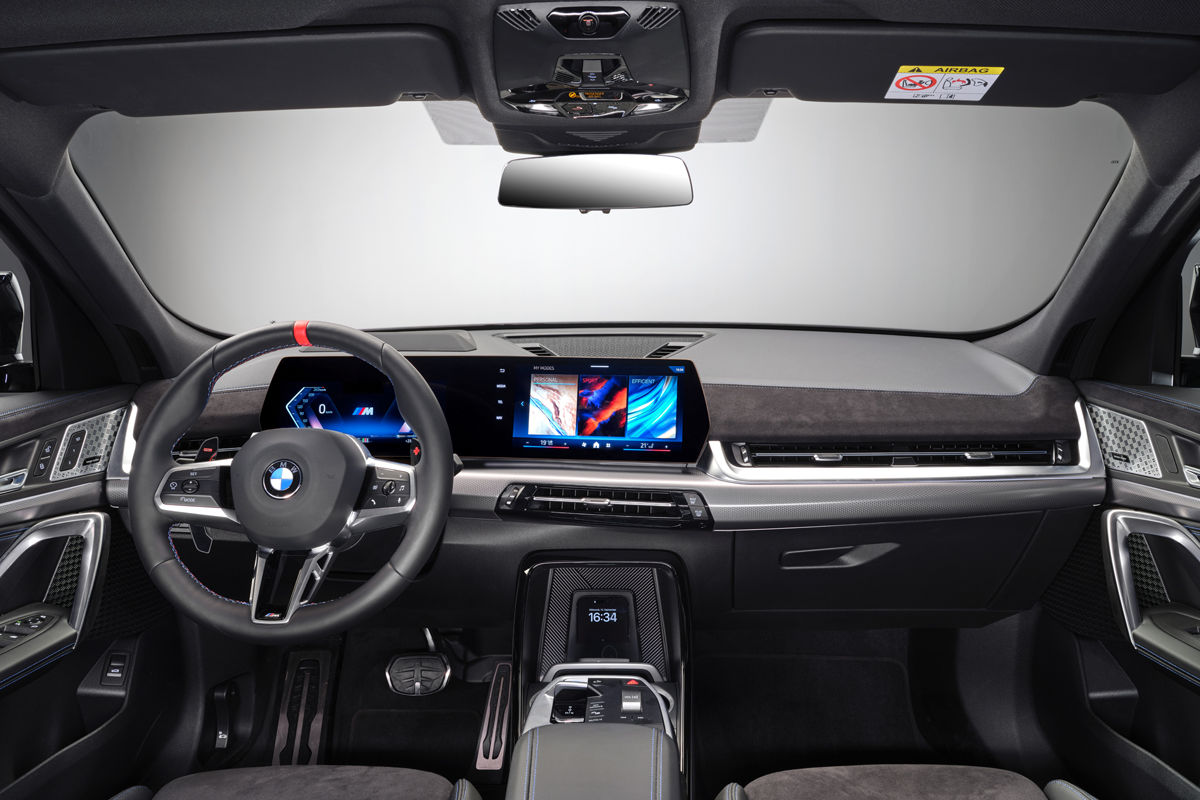
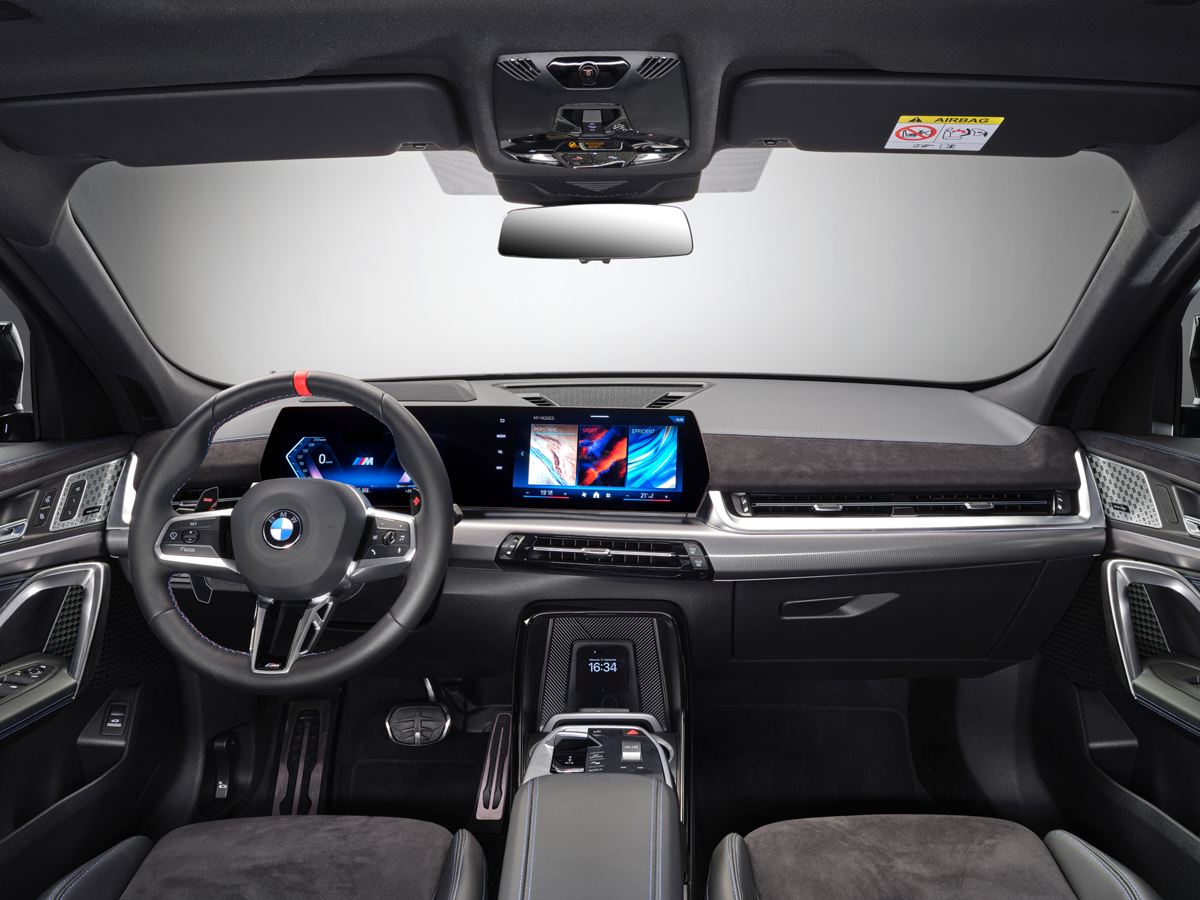
Inside, there’s the BMW Curved Display running the latest BMW Operating System 9, while a so-called “floating” armrest with an integrated control panel is sited between the front pews. The Bavarian firm says the standard front seats are “newly developed” and available in various upholstery finishes, adding that sport seats will be optional.
Note the latest iteration of the curved display.
BMW claims standard features for the new X2 will include items such as 2-zone automatic climate control, the BMW Maps navigation system, leather trim for the sports steering wheel, a powered tailgate and as many as 4 USB-C ports. Of course, various “structured” equipment packages will also be on offer, along with individual options (such as a panoramic glass sunroof and an electrically operated tow hitch).
So, what about the engine options? Well, the new X2 M35i employs a turbocharged 2.0-litre, 4-cylinder petrol engine generating up to 233 kW and 400 Nm, endowing it with a 0-100 kph sprint time of 5.4 seconds and a top speed of 250 kph, according to BMW. Just as is the case with the X1 M35i, Europe will receive a version detuned to 221 kW (though we expect the full-fat model to be offered in SA).
Quad pipes, anyone?
Boasting the most powerful M Performance 4-cylinder engine yet (in combination with a 7-speed dual-clutch transmission), the all-wheel-drive X2 M35i furthermore scores M-specific chassis tuning and adaptive M suspension, with items such as M Compound brakes set to be offered as options. Light-alloy wheels measuring up to 21 inches in diameter will also be available.
Meanwhile, the X2 sDrive18i uses the brand’s turbocharged 1.5-litre, 3-cylinder petrol engine, which makes 115 kW and 230 Nm, facilitating a 0-100 kph time of 9.0 seconds and a top speed of 213 kph. The X2 sDrive18d employs a 2.0-litre, 4-cylinder turbodiesel motor sending 110 kW and 360 Nm to the front axle, also via a 7-speed dual-clutch gearbox. This oil-burning model will hit 100 kph from standstill in a claimed 8.9 seconds, before topping out at 210 kph. The listed combined fuel economy is as low as 5.1 L/100 km.
The iX2 xDrive30 has a single-charge range of nearly 450 km.
Overseas markets will also get the 125 kW/280Nm X2 sDrive20i, along with the fully electric iX2 xDrive30. The latter features an electric motor on each axle, together generating peak system outputs of 230 kW (including a “temporary boost”) and 494 Nm. BMW says the iX2 xDrive30 will accelerate from 0 to 100 kph in 5.6 seconds, with a maximum speed of 180 kph. Thanks to its 64.8 kWh (usable) battery pack, the fully electric model has a listed WLTP range of up to 449 km.
The M1-engined 745i – The secret South African creation – BMW Group SA Chronicles (Ep 3 Video)
Episode 3 of the Official BMW Group SA Chronicles has gone live and this week we feature the incredible 745i, powered by the engine of the M1 supercar.
The BMW 745i was created almost in secret by BMW South Africa. The decision to use the special BMW M1 engine was a bold move, and required some serious custom engineering just to make it work.
Only 255 units of this sports luxury sedan were ever built, and it remains a shining example of the prowess of South African engineering. It also gave birth to the 745 racecar, which became a highlight of the South African race scene, in the hands of the legendary Tony Viana.
Born in the ’80s, a particularly difficult period in South Africa’s history, the 745i also represents a time when BMW worked closely with South African political activists to keep the Rosslyn plant operational, and to contribute positively to South Africa’s history.
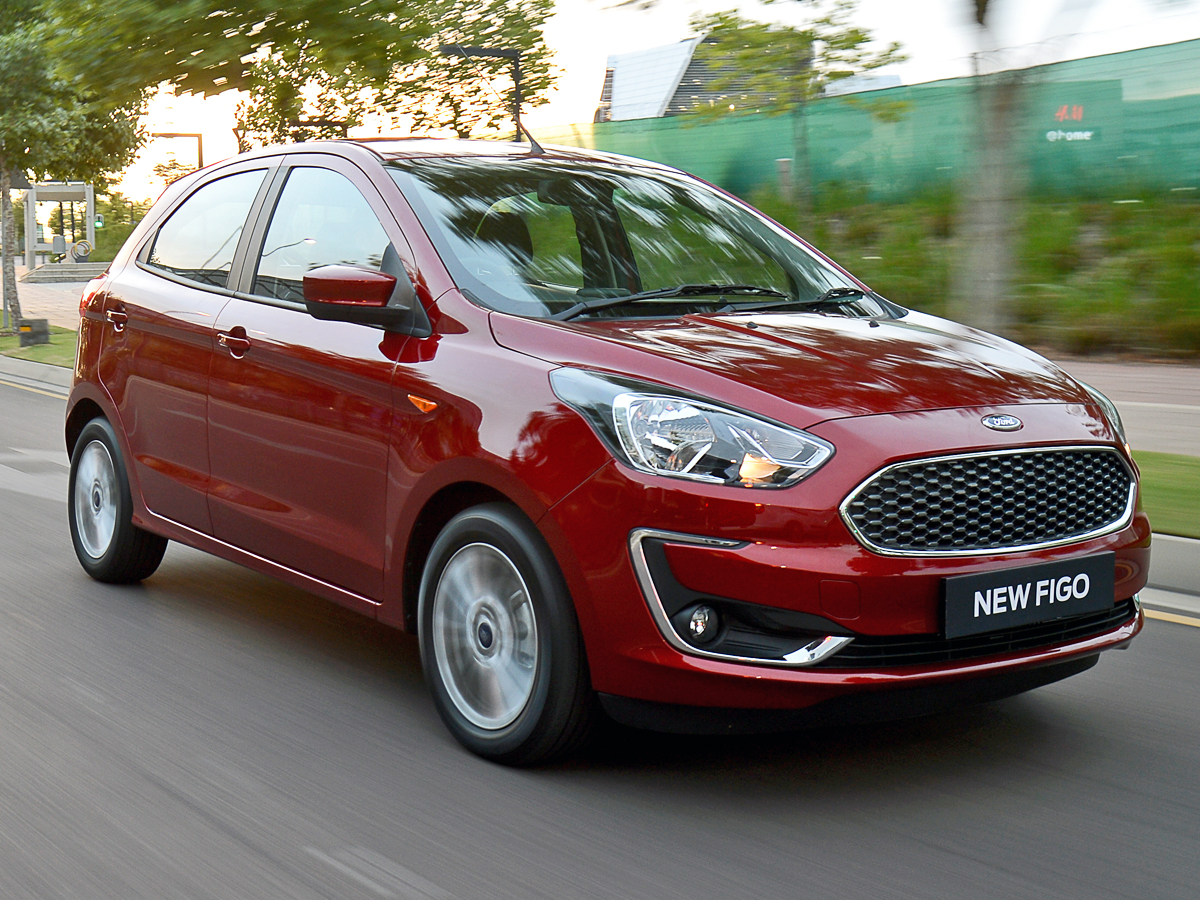
Are you thinking about buying a 2nd-gen Ford Figo? This article lists the Indian-built budget car’s pros and cons, which derivatives were available in South Africa and what you can expect to pay for a good used example of the Blue Oval’s model …
While the original (B517-gen) Ford Figo was a strong seller in Mzansi during its 5-year tenure, there was no denying it was little more than a rebadged 5th-gen Fiesta. However, with the 2nd iteration (which was known internally as the B5620), the Blue Oval brand shifted away from the prolonged-lifecycle approach.
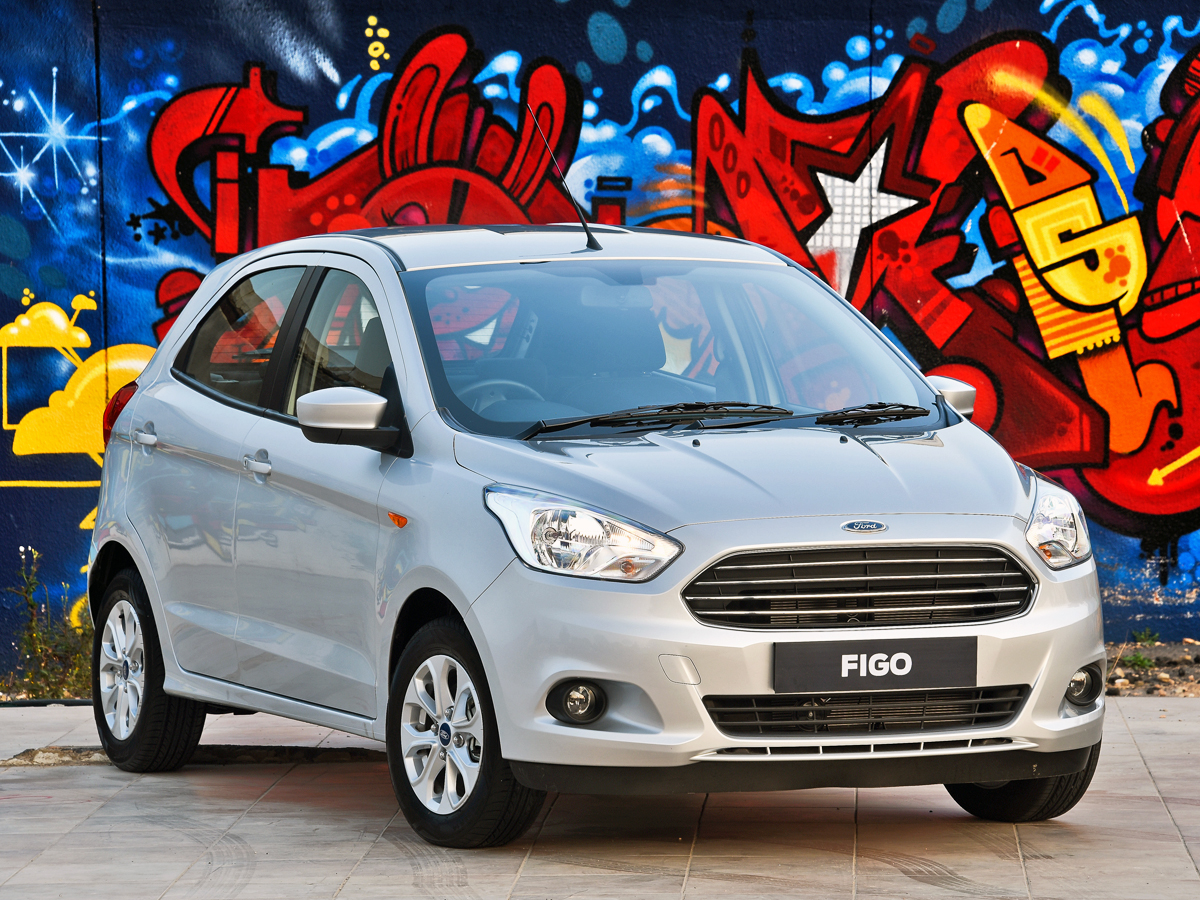
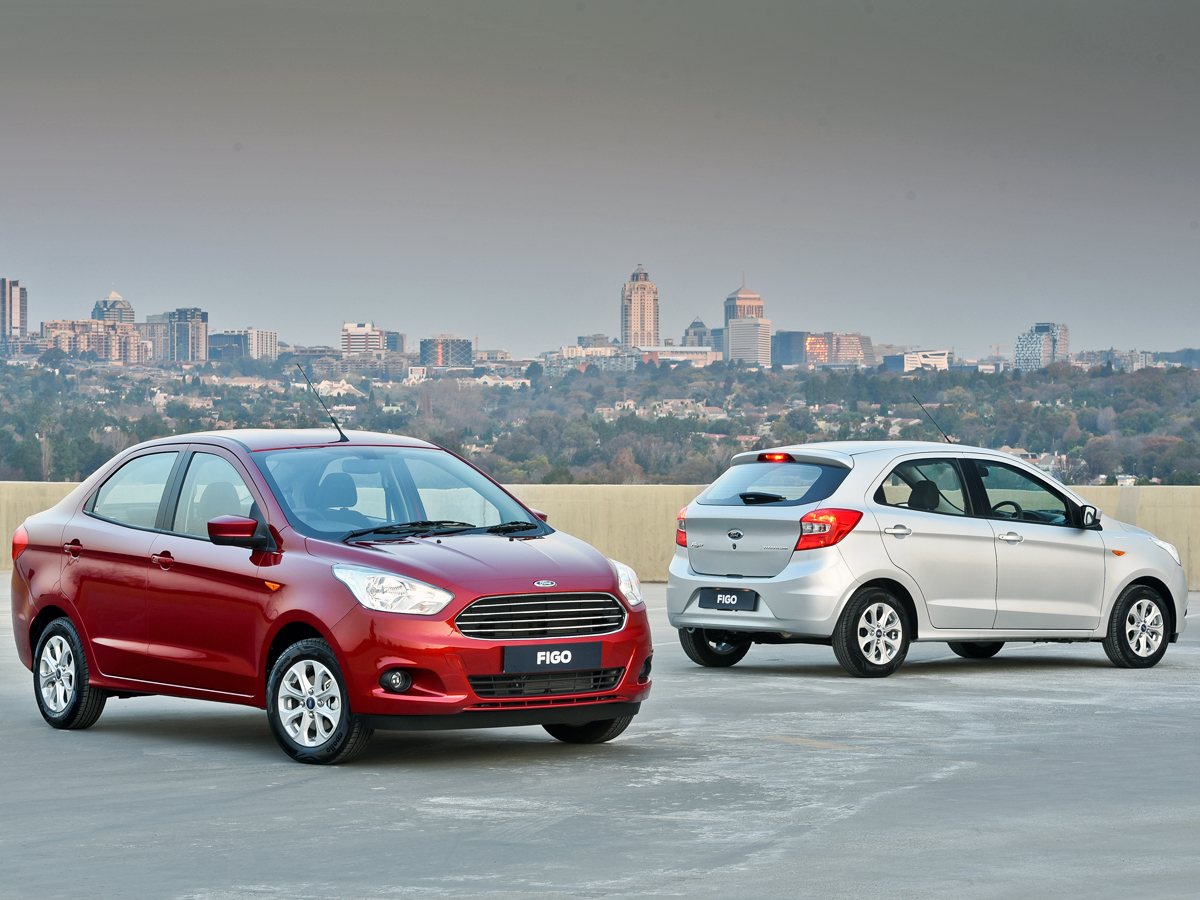
Though it was again based on a platform shared with the Fiesta and also produced in India, this time the Figo range incorporated both 5-door hatchback and 4-door sedan body styles. It furthermore boasted a unique body shell (adorned with a Fusion-inspired grille), more powerful engines and fresh technology.
The 2nd-gen Figo was positioned a little higher than its predecessor.
Bearing in mind that, unlike its predecessor, the 2nd-gen Figo was not a continuation model that the Blue Oval could bring to market highly cost-effectively, the Ford Motor Corporation of Southern Africa (then the country’s 3rd biggest automaker) was compelled to position the model somewhat more upmarket than before. When it debuted, it was thus sited towards the sharp end of the so-called sub-B-segment.
Though the Figo remained the entry point to Ford ownership, there was an appreciable hike in pricing, with the gap to the Fiesta thus narrowing markedly. This, in turn, ultimately saw the base Ambiente trim being dropped from the Fiesta line-up when the 7th-gen model made its local debut in May 2018.
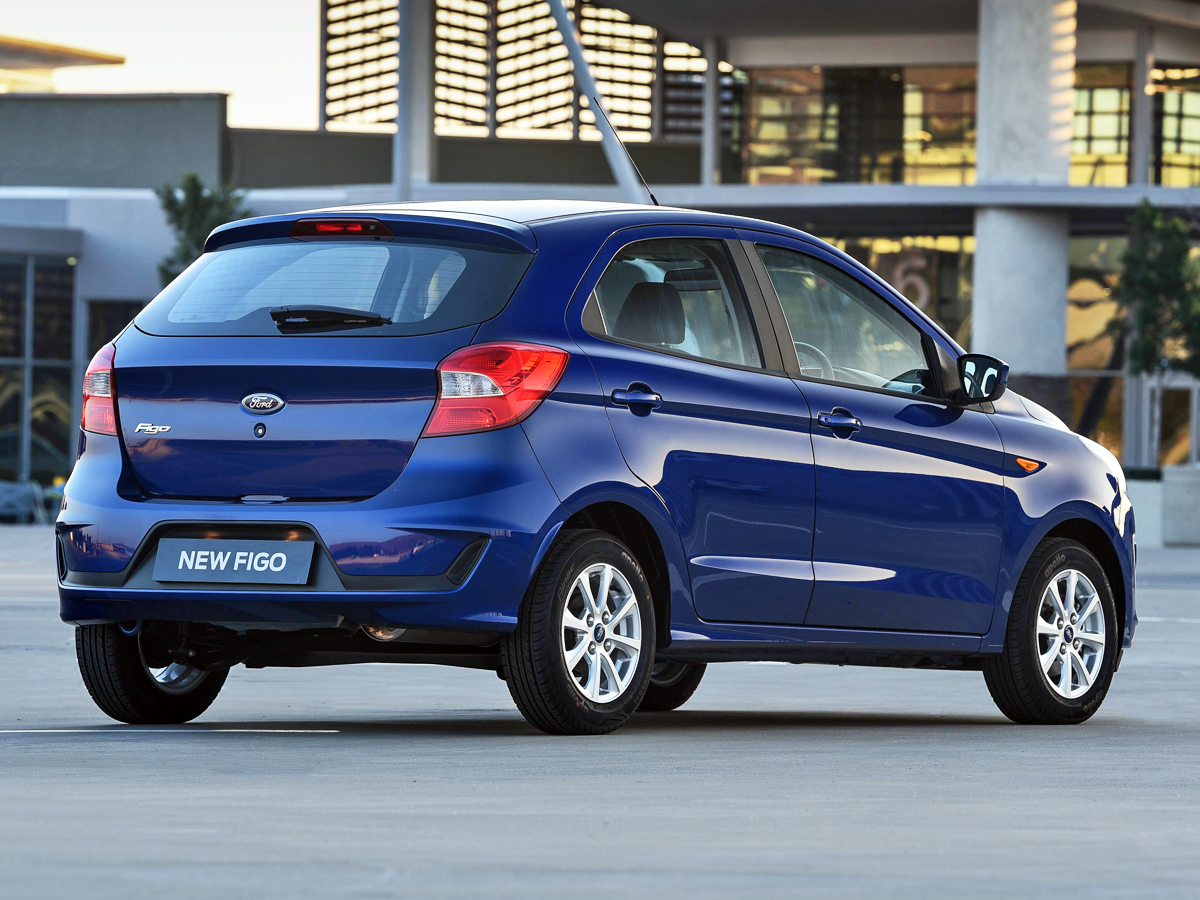
The B562-gen Ford Figo range included hatchback and sedan variants.
Just how popular was this model in the local market? Well, in 2020, the Figo placed 12th on the list of South Africa’s best-selling passenger cars in the new-vehicle market (with 4 906 units registered that year). Although it was not a weak effort, that number put the Ford model behind segment rivals such as the Volkswagen Polo Vivo (19 750 units), Toyota Etios (5 806 units) and Suzuki Swift (5 507 units).
Production of the 2nd-gen Figo ended at the company’s Chennai and Sanand factories in 2021, with stock running dry in South Africa around the 2nd quarter of 2022. The Figo’s local demise followed shortly after that of the Fiesta (with the EcoSport, likewise, being put out to pasture a little later), effectively reducing Ford SA’s passenger-vehicle line-up (at the time) to the Mustang and Everest.
Ford Figo line-up in South Africa
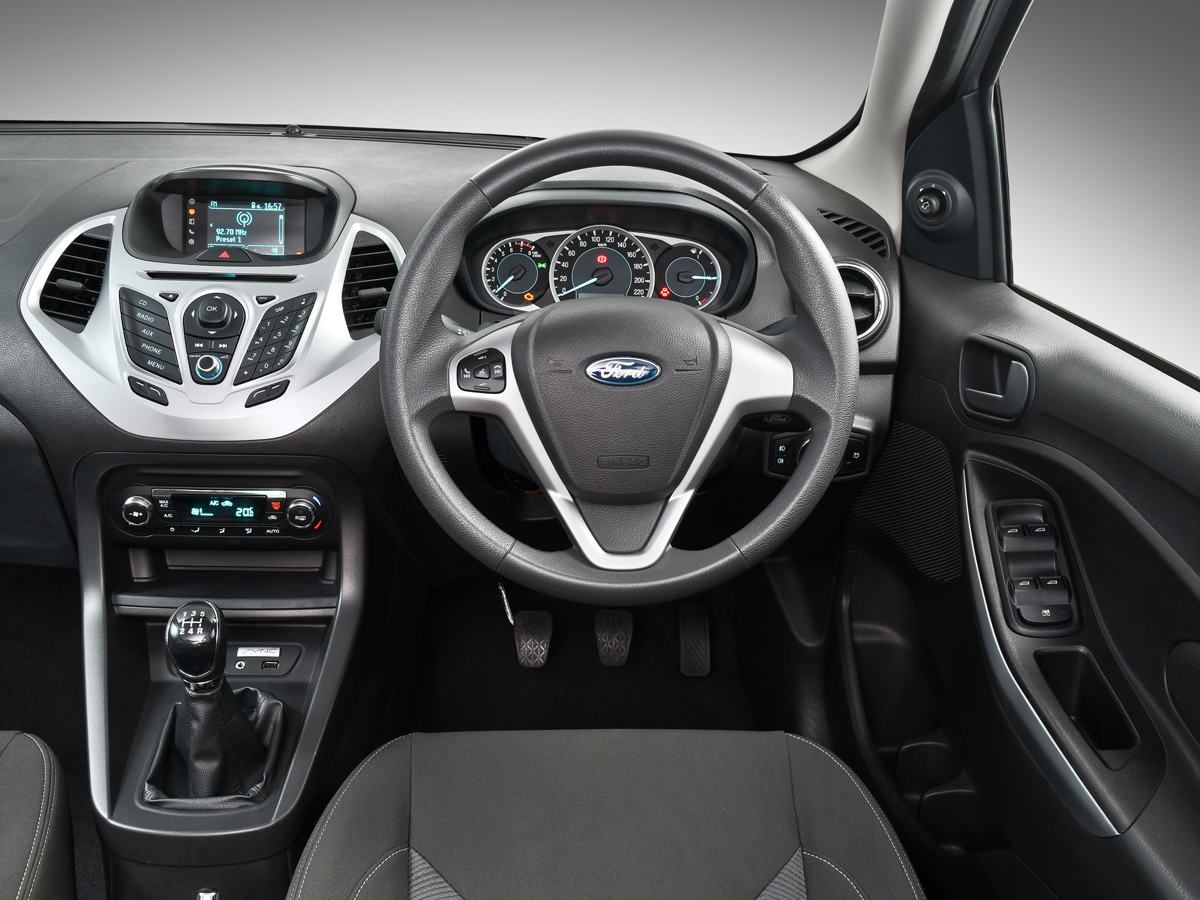
The top-spec Titanium hatchback interior at launch in 2015.
The Figo – which was badged as the Ka or Ka+ in some overseas markets – was revealed in production sedan form (wearing the “Aspire” badge) in India in May 2015, although a hatchback concept had been unwrapped in Brazil as far back in November 2013.
In October 2015, the 2nd-gen Figo arrived in South Africa, with the range comprising 6 hatches and 3 sedans. Buyers had the choice of a pair of 1.5-litre, 4-cylinder engines (a naturally aspirated petrol or a turbodiesel unit, each driving the front axle) and 2 transmissions (a 5-speed manual or a 6-speed dual-clutch automatic). With 3 trim levels on offer, the 9-strong line-up looked like this at launch:
1.5 Ambiente hatch 5MT (82 kW/136 Nm)
1.5 Ambiente sedan 5MT (82 kW/136 Nm)
1.5 Trend hatch 5MT (82 kW/136 Nm)
1.5 Trend sedan 5MT (82 kW/136 Nm)
1.5 Titanium hatch 5MT (82 kW/136 Nm)
1.5 TDCi Ambiente hatch 5MT (74 kW/215 Nm)
1.5 TDCi Trend hatch 5MT (74 kW/215 Nm)
1.5 Titanium hatch 6DCT (82 kW/136 Nm)
1.5 Titanium sedan 6DCT (82 kW/136 Nm)
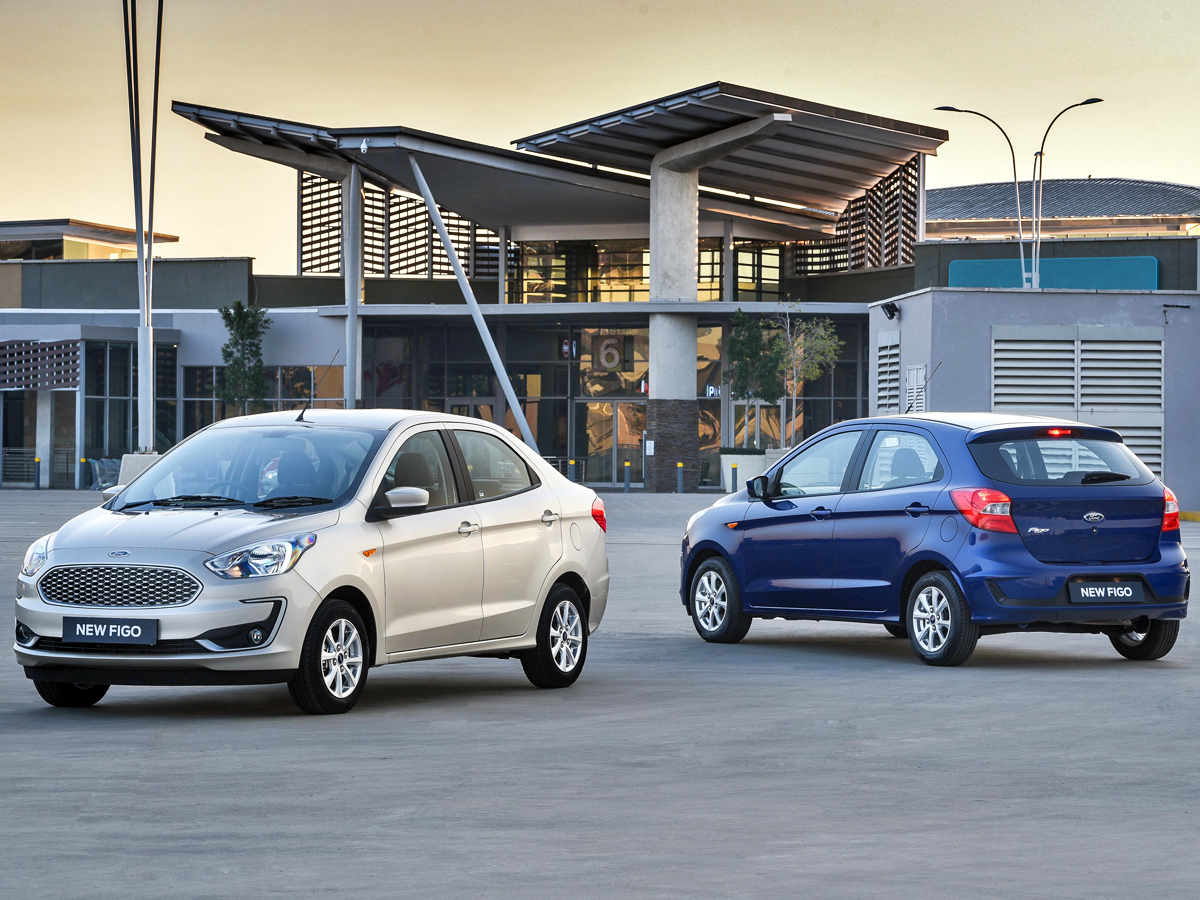
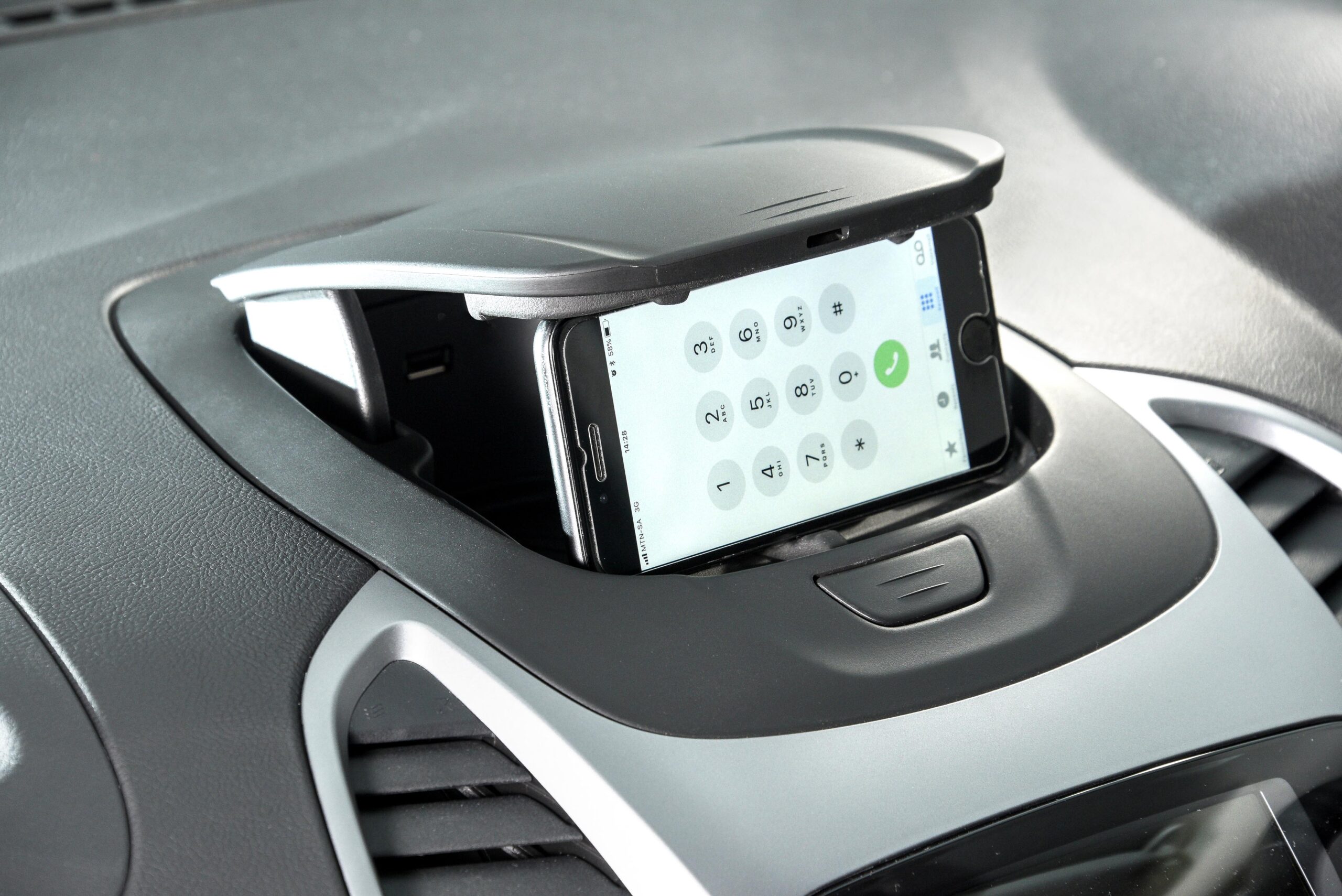
The local Figo range continued unchanged until May 2018, when the Dearborn-based manufacturer’s local subsidiary introduced a refreshed version of the model. The facelift included the requisite styling tweaks and interior upgrades, as well as a longer standard service plan, plus a new engine (used across the range) and automatic transmission. There was also a clever “device dock” positioned in the upper section of the centre console, which could be used to connect and power smartphones.
The facelifted Figo gained a longer service plan as standard.
Interestingly, the fuel-frugal 1.5 TDCi turbodiesel mill fell away at this point, while the 1.5-litre, 4-cylinder petrol unit was replaced by a new (also atmospheric/non-turbocharged) 3-cylinder petrol engine of the same displacement (offering outputs increased to 88 kW and 150 Nm). While the 5-speed manual gearbox was carried over, the problematic PowerShift-branded dual-clutch transmission was ditched in favour of a conventional 6-speed torque-converter automatic. In addition, the range was pared back to 5 derivatives (3 hatches and 2 sedans), temporarily featuring only the Ambiente and Trend grades.
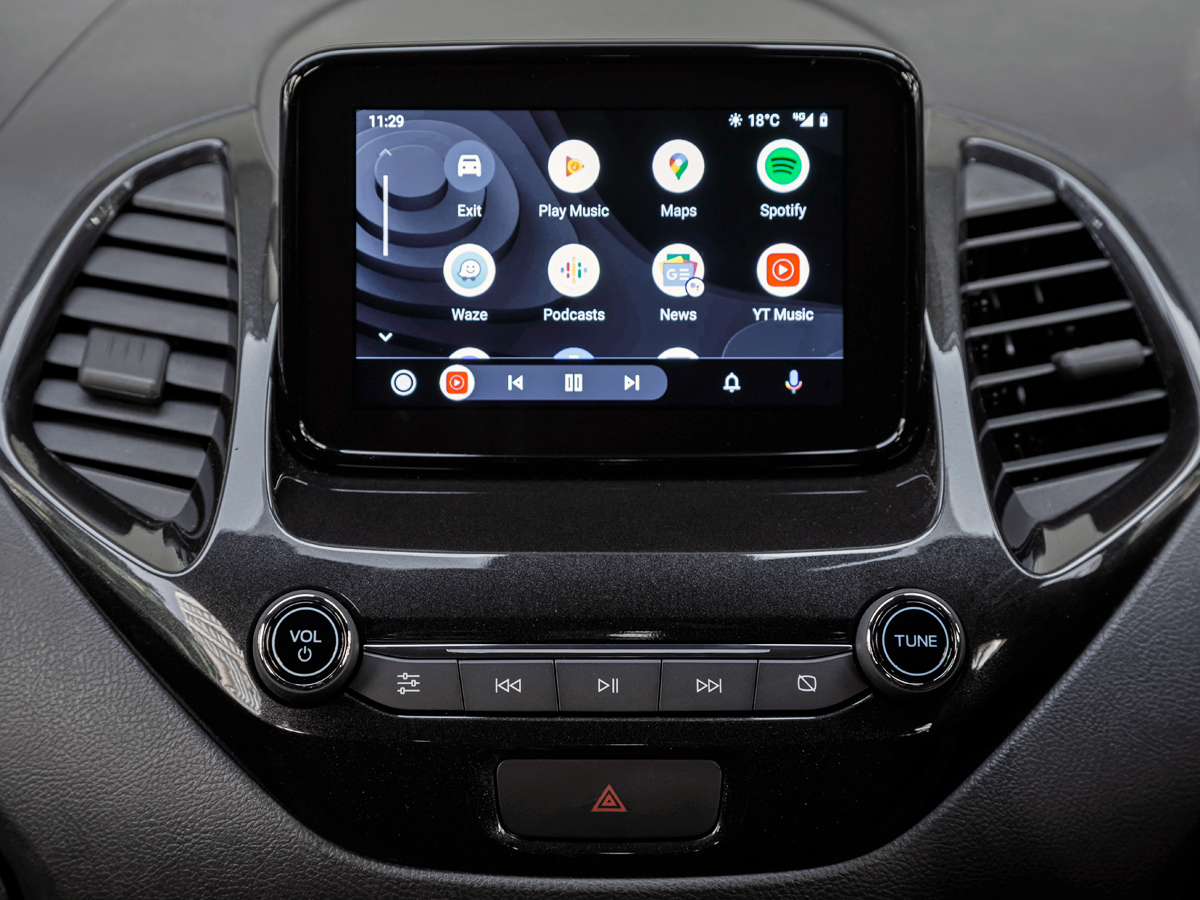
In December 2018, the high-spec Titanium trim returned to the line-up, though it was offered only in conjunction with the hatchback body style and, somewhat curiously, a manual ‘box. Highlights of the flagship included a 6.5-inch touchscreen (running the latest Sync3 software), a reverse-view camera, extra safety kit and Ford MyKey, a feature that allowed owners to programme a key for “younger drivers” to inhibit incoming phone calls, restrict the top speed and reduce the audio system’s maximum volume.
Base and mid-spec facelifted models featured this device-dock solution.
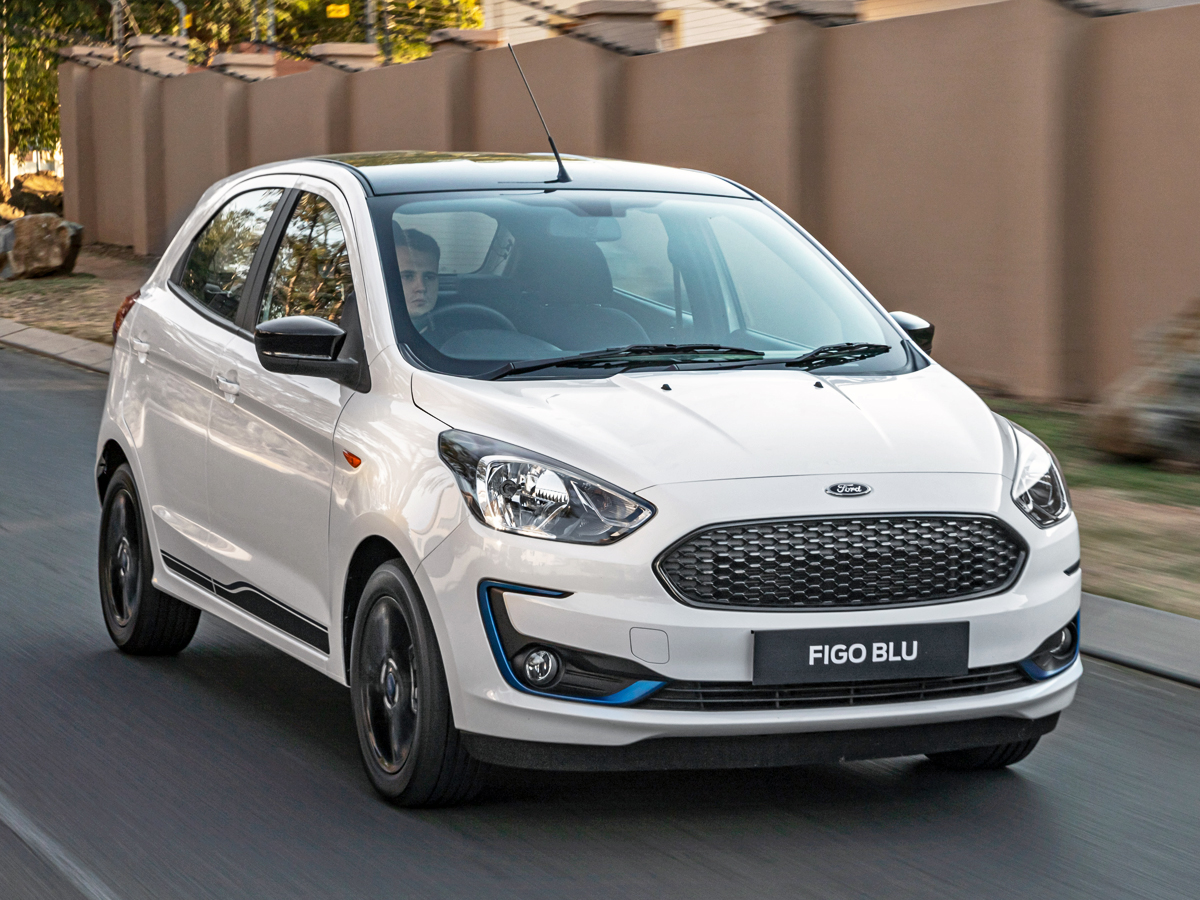
A special-edition Figo Blu appeared in mid-2019, based on the Figo 1.5 Trend hatch and limited to 360 units. It scored a black mesh grille, blue front-bumper trim, black 15-inch multi-spoke alloys, black side-mirror caps, a black roof and stripes down its flanks. Inside, the Figo Blu featured gloss-blue door inserts, blue gearshift-gaiter stitching, embroidered front floor mats and a leather-wrapped steering wheel.
Finally, after Ford had quietly hiked the 1.5 Ti-VCT 3-pot’s maximum power output from 88 kW to 91 kW, the Figo Freestyle cross-hatch slotted in at the top of the line-up in June 2020. Available in mid-tier Trend and top-spec Titanium forms (and exclusively with a manual gearbox), the Freestyle was billed as a “compact utility vehicle”. It featured a 190-mm ground clearance, bigger wheels (15-inch alloys shod with 175/65 tyres) and “SUV-derived” styling cues (including black body cladding, roof rails and skid-plates, fore and aft).
What are the advantages of a Ford Figo?
All facelifted derivatives (Titanium pictured) used the peppy 1.5 Ti-VCT Dragon engine.
Peppy and potentially frugal engines: The 1.5 TDCi (DV5) engine offered in the pre-facelift Figo hatch was a particularly tractable motor – delivering its peak torque (215 Nm) from 1 750 to 3 000 rpm (and thus boasting sprightly in-gear acceleration). Of course, the little turbodiesel unit also had the potential to return impressive fuel economy, with Ford quoting a combined figure of just 4.1 L/100 km.
On the naturally aspirated petrol front, the 1.5 Ti-VCT “Dragon” engine that powered all facelifted Figo derivatives may have been down a cylinder compared with the old 1.5-litre Sigma motor it replaced, but it offered more grunt and felt far livelier (while sipping a claimed 5.7 L/100 km in manual guise; an improvement over the old engine’s stated figure of 5.9 L/100 km). Despite featuring an odd number of cylinders, it was a surprisingly smooth-revving motor.
Freestyle derivatives featured even more ground clearance.
Commendable ride comfort: Since the Figo was set up to cope with India’s notoriously poor road infrastructure, it offered an absorbent ride quality with damping that felt a little more resolved than you might expect from contenders at this end of the market. Featuring a semi-independent twist-beam suspension arrangement at the rear and generous ground clearance of 174 mm, the B562 series furthermore benefited from high-profile tyres (175/65 on all derivatives, regardless of whether 14- or 15-inch alloys were fitted). Freestyle variants, meanwhile, enjoyed an extra 16 mm of ride height.
Pair of body styles (plus a cross-hatch): While the original Figo was available exclusively as a hatchback, the 2nd-generation range also included a sedan option, which offered an appreciably bigger boot with a claimed 445-litre capacity (and stretched a further 368 mm from nose to tail). The addition of the Freestyle cross-hatch later in the model’s lifecycle broadened the Figo’s appeal even further.
What are the disadvantages of a Ford Figo?
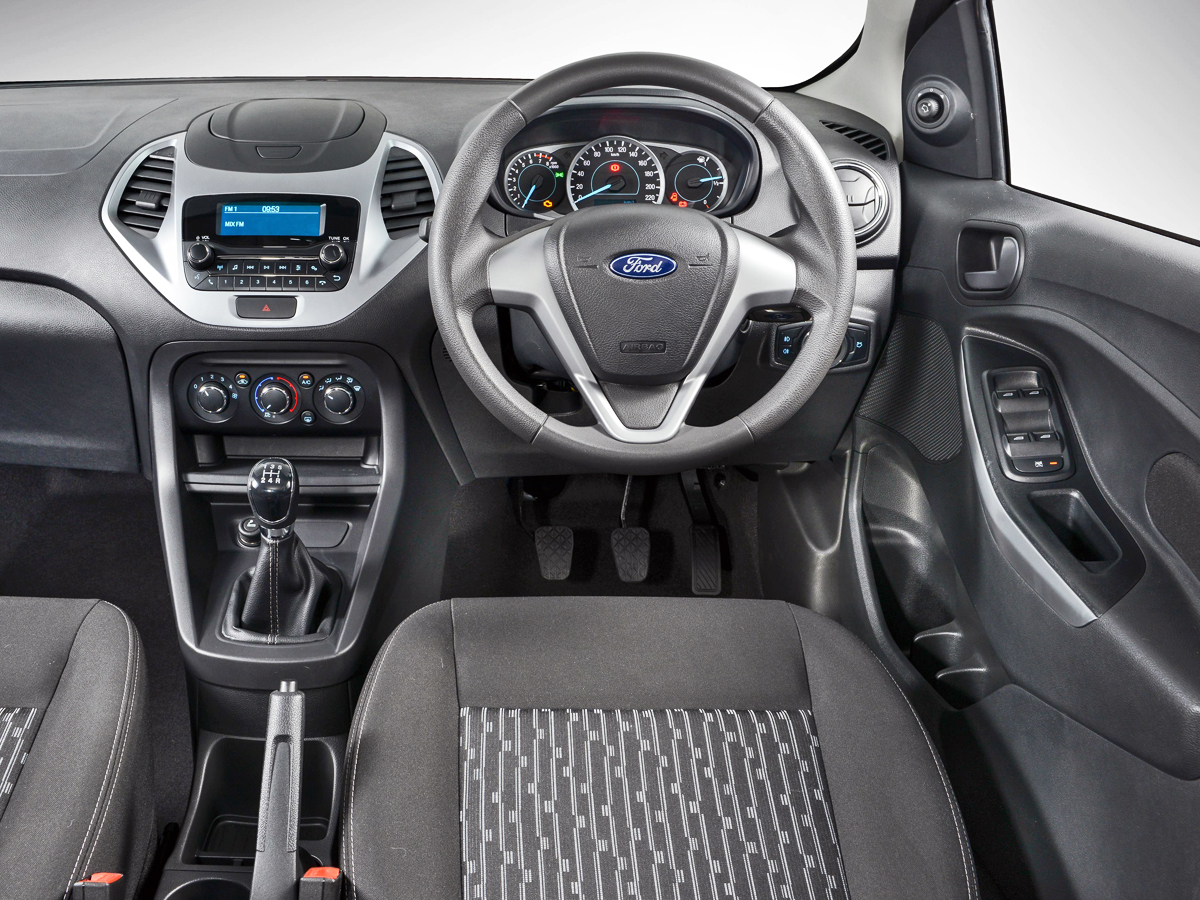
The cabin of the facelifted Figo Trend hatchback.
A few safety anomalies: Budget cars are hardly ever equipped with myriad standard safety features, but the 2nd-gen Figo did lack a few notable items. All derivatives did without ISOfix child-seat anchors, while the centrally seated rear passenger had to make do with a lap belt. In addition, it’s worth noting only Titanium derivatives featured a complement of 6 airbags, with all others settling for dual front items.
What’s more, the only derivatives in the pre-facelift range to score electronic stability control were the auto-equipped Titanium versions, which further featured hill-launch assist. Similarly, in the facelifted line-up, only the self-shifting Trend hatchback came with traction control (and hill-launch assist).
Though specifications varied by market, the Figo’s crash-test results were a mixed bag, with the Indian-built sedan being awarded 3 stars by Global NCAP in 2017 (a score matched by the Ka+ hatch in its Euro NCAP evaluation) and the Brazilian-built version chalking up zero stars from Latin NCAP later that year. The facelifted model, however, redeemed itself with a 4-star rating from Latin NCAP in 2019, although, the version offered in South America at that stage was, interestingly, sourced from India.
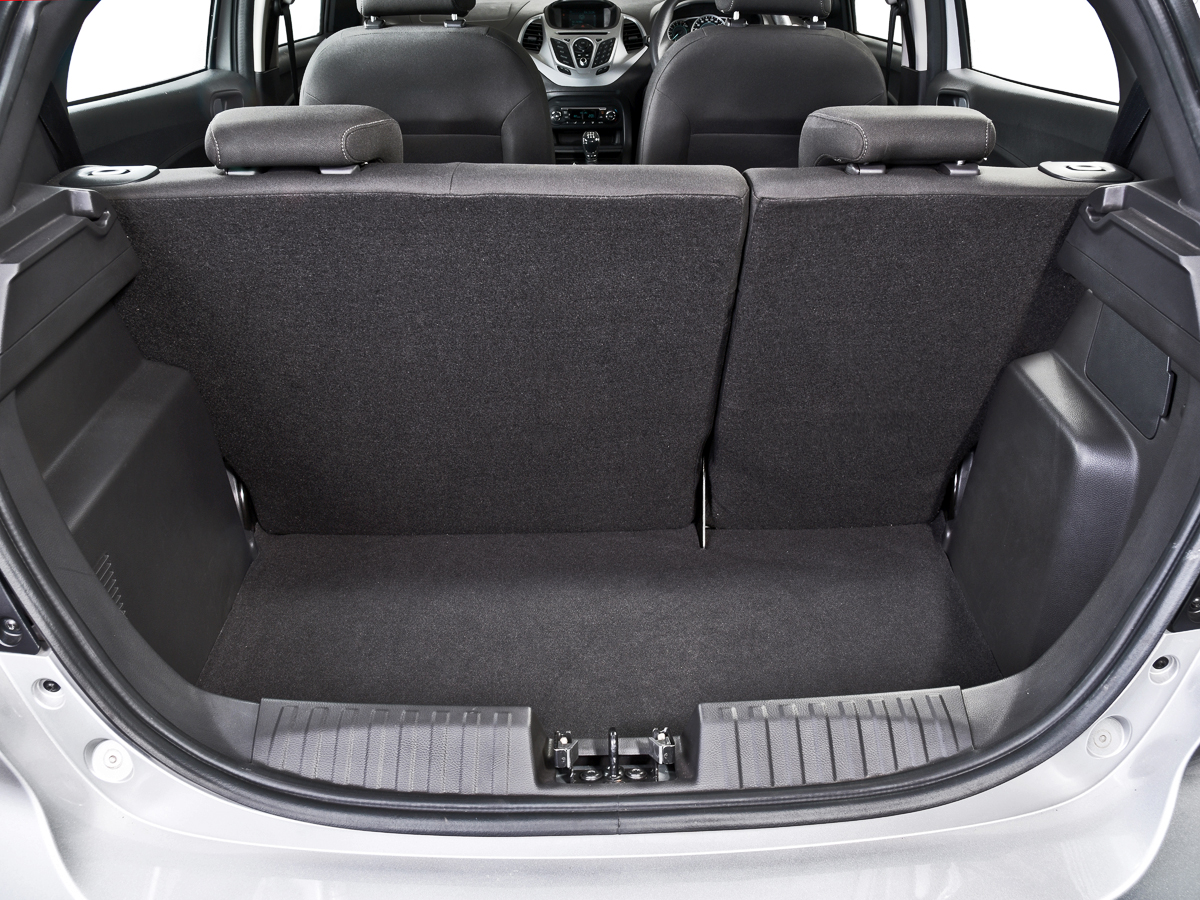
The hatchback’s luggage capacity was below average for the class.
Some ergonomic foibles: Although the Figo was largely enjoyable to drive, there were a few ergonomic issues. For instance, manual versions lacked a footrest to the left of the pedal box, while the clutch had an unusually high biting point. The steering wheel, meanwhile, was devoid of satellite controls (bar on the flagship Titanium derivative) and the steering column could only be adjusted for rake, not reach.
While the rear bench in the Ambiente hatch and all sedan derivatives could fold down, it did without a 60:40-split function, which the more expensive derivatives were equipped with. In addition, since the hatchback maximised rear passenger space at the expense of luggage capacity, its claimed 256-litre load-bay capacity was below the class average (and even tighter than that of the original Figo!).
PowerShift problems (pre-facelift): Titanium versions of the pre-facelift Figo employed the maligned PowerShift dual-clutch automatic transmission, which was known to suffer from leaking seals that led to oil contamination of the dry clutch module (resulting in juddering and jerky acceleration). Thankfully, the Blue Oval switched to a conventional 6-speed torque-converter automatic at the mid-cycle refresh.
For the record, the engines themselves seemed to have few inherent issues – provided they were well cared for, of course. The newer 3-cylinder petrol motor, in particular, would have appealed to buyers wary of going the downsized, turbocharged route. The only other possible issue we discovered was that Figo derivatives built between September 2017 and April 2019 were recalled in India for a potentially defective battery monitoring system (BMS) wiring harness.
How much is a Ford Figo in South Africa?
Just 360 units of the Figo Blu came to South Africa.
Whereas the pre-facelift Ford Figo featured a 2-year/40 000 km service plan, the refreshed model upgraded to a 4-year/60 000 km arrangement. That’s great news for those shopping for a late-model example, which would – at the time of writing, at least – still enjoy some cover. Regardless, always give preference to models featuring a full, verifiable maintenance history.
Of the used 2nd-gen Ford Figo listings on Cars.co.za at the time of writing, a whopping 85% took the form of hatchback variants (10% of which were Freestyle derivatives). More than 96% featured a petrol engine, while just 7% were equipped with an automatic transmission.
Mileage varied from a mere 10 km through to 233 000 km, with the latter achieved by a 2019 1.5 Ti-VCT Ambiente hatch. We found a further 4 examples with more than 200 000 km on their odometers. White (60%) was the most popular paint colour, followed by silver (19%), grey (5%) and red (4%).
Below R100 000: While there were very few options below this point, all were – rather unexpectedly – facelifted models. Still, we’d advise treading particularly carefully here; should a deal appear too good to be true, it probably is.
From R100 000 to R150 000: All model years bar the first and last were represented here, though the most common were 2018 and 2019. We found low-spec, sub-50 000 km facelifted examples in this bracket, along with a higher-than-average distribution of the less-popular sedan body style.
From R150 000 to R200 000: At the time of writing, this was easily the most densely populated pricing bracket, comprising almost exclusively facelifted examples (with the 3-cylinder engine thus dominating). Fascinatingly, though, we discovered very few Titanium-spec vehicles here.
R200 000 and up: Spending upwards of R200k would get you a late model-year Figo, with the choice of the mid-tier Trend or top-spec Titanium grades. This pricing segment was also where we found most Freestyle derivatives, which accounted for nearly 40% of Figo listings above this mark.
Which Ford Figo derivative should I buy?
The Titanium trim level (facelift) was the only to offer this infotainment system.
So, which derivative is the best of the bunch? Well, if you’re in the market for a turbodiesel Figo, you’d be limited to the pre-facelift hatchback. Here, we’d opt for the Trend trim level as Ambiente was perhaps a little too basic for most needs. Of course, bear in mind there aren’t many oil-burning B562-series Figo examples around; precious few of all listings on Cars.co.za (at the time of writing) feature this engine.
We suspect most buyers will be looking for a petrol-fed example and probably favour the hatch over the sedan variant. In that case, we’d recommend searching for a facelifted model, as the 3-cylinder engine offered more poke – not to mention character and, potentially, fuel economy – than the earlier 4-pot.
For the hatch (and Freestyle), the flagship Titanium specification would be first prize considering its lengthier list of standard features, which included a more comprehensive infotainment system, an uprated instrument cluster, automatic headlights, rain-sensing wipers, four extra airbags and more. However, the Trend grade would also be worth considering and would be a bit easier to come by, too.
Is the Ford Figo a good used buy?
If you’re keen on petrol power, it’s worth looking for a facelifted example.
In its day, the Ford Figo had a few tough sub-B-segment rivals with which to contend, from the locally produced and incredibly popular Volkswagen Polo Vivo to the Indian-built Toyota Etios and Suzuki Swift (both the AZG and A2L generations, including the Dzire sedan). The B52-gen Renault Sandero – which has since been replaced by the Kiger in the local market – was another spacious hatchback alternative and the only one here that used a downsized turbopetrol engine.
Meanwhile, the Figo Freestyle competed in an interesting cross-hatch sub-segment that included contenders such as the Volkswagen Polo Vivo Maxx (and even the smaller, classy Cross Up), the Toyota Etios Cross, the Renault Sandero Stepway and perhaps even the little Suzuki Ignis.
So, does the B562-series Ford Figo make a sensible 2nd-hand buy? Well, although the 2nd-gen model wasn’t quite as compelling a value proposition as its prolonged-lifecycle predecessor, there’s no doubt it was a more accomplished product. And, with the nameplate now discontinued, the Figo appears to be clawing back some of that value on the used market, making it an increasingly attractive option.
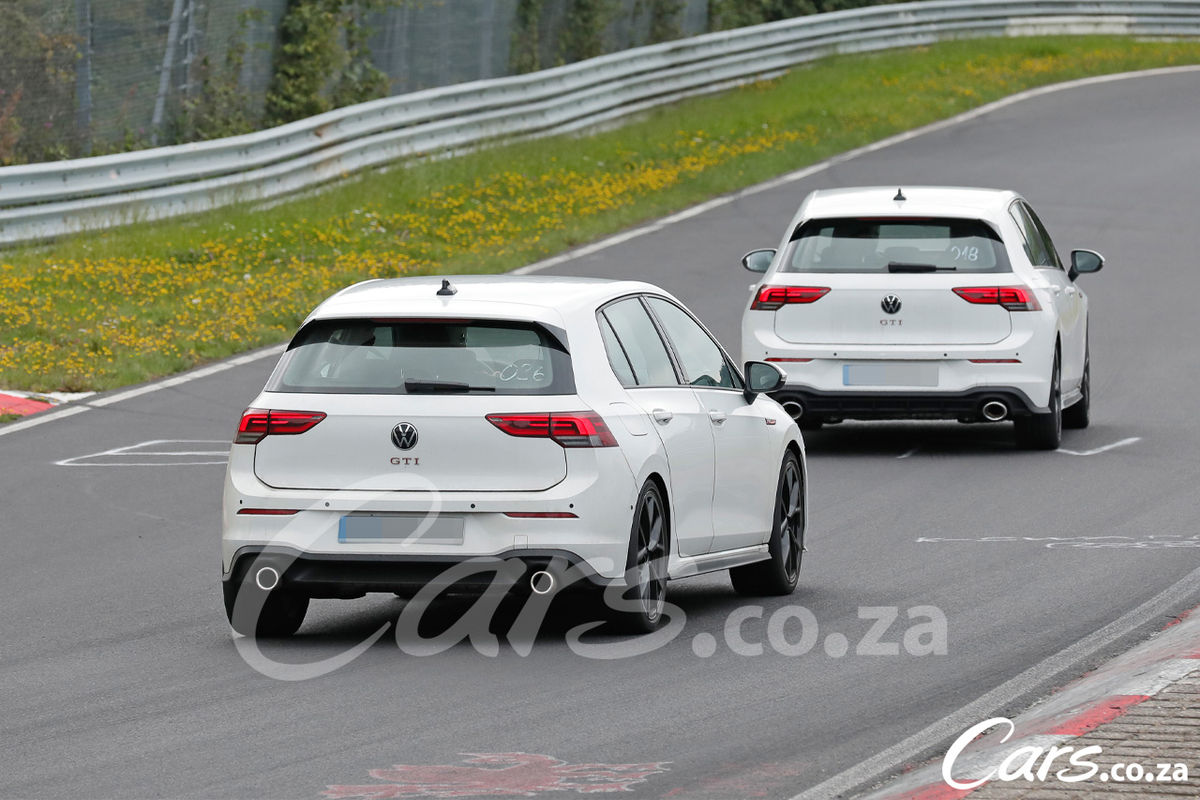
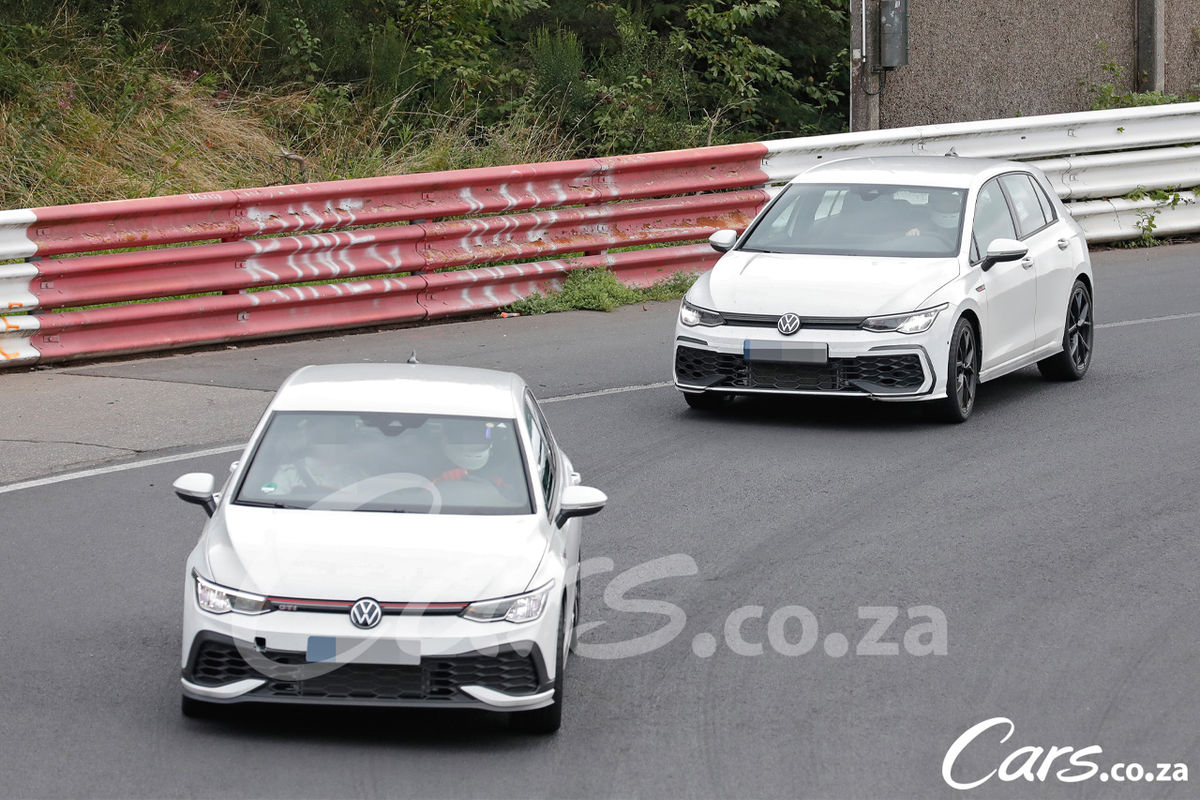
Our spy photographers have snapped the 2024 Volkswagen Golf 8 GTI facelift on the Nurburgring alongside the current shape GTI. Let’s play spot the difference!
Picture credit: S. Baldauf/SB-Medien. We have paid for these photos and at the photographer’s request, have watermarked them.
We’re counting down the days until the reveal of the Golf 8 GTI facelift from Volkswagen as it’s expected to make its public debut in early 2024. Numerous spy shots have appeared prior, but this is the first time we’re seeing both the current car and the new model side by side, giving us some idea of the changes.
Visually, there are not many to speak of, with the smallest changes on the front and rear bumpers, and we spotted a slightly different sized exhaust pipe.
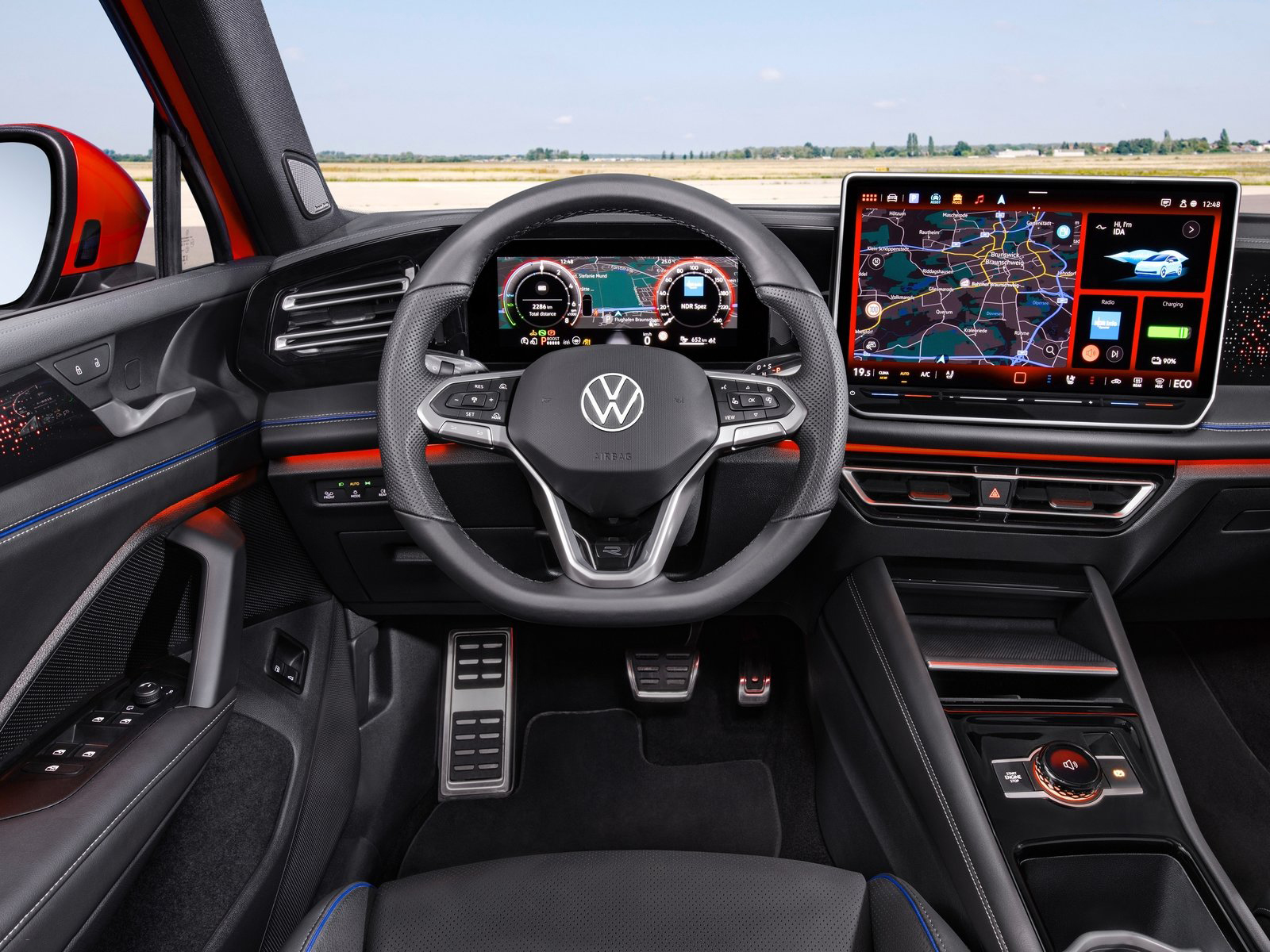
The key changes will be in the cabin and under the skin, with revisions to the infotainment system and car’s computing systems, both of which struggled with bugs and glitches. There will be a repositioning of the infotainment screen which will also grow in size, reportedly up to 12.9-inches and similar to that of the brand-new Tiguan.
The Tiguan’s cabin might be used for the facelifted Golf 8
It appears the touch-sensitive steering wheel buttons have been replaced by more natural physical buttons.
There will be some trim and quality updates, as well as ergonomic tweaks like illumination for the climate control and volume controls too.
We’re not expecting major changes to the 2.0-litre turbocharged 4-cylinder petrol engine found in the GTI. As a reminder, there’s 180 kW and 370 Nm on offer. The vehicle is front-wheel driven and features a 7-speed quick-shifting dual-clutch gearbox. It appears the standard Golf derivatives (which aren’t offered in SA) will gain some new hybrid engines.
We expect the facelifted Golf GTI to reach South Africa during the course of 2024.
Time’s up for the Volkswagen Up. Yes, the German firm has reportedly axed its smallest car – which was once offered in SA – after a production run spanning 12 years…
The Volkswagen Up is no more. According to a fresh report out of Europe, the Wolfsburg-based automaker has stopped manufacturing the diminutive city car at its Bratislava factory in Slovakia after a production run of 12 years.
Autocar reports the Up has finally reached the end of the line. Of course, production of the Up’s platform siblings – the Škoda Citigo and Seat Mii, neither of which was ever offered in SA – ended in 2020 and 2021, respectively.
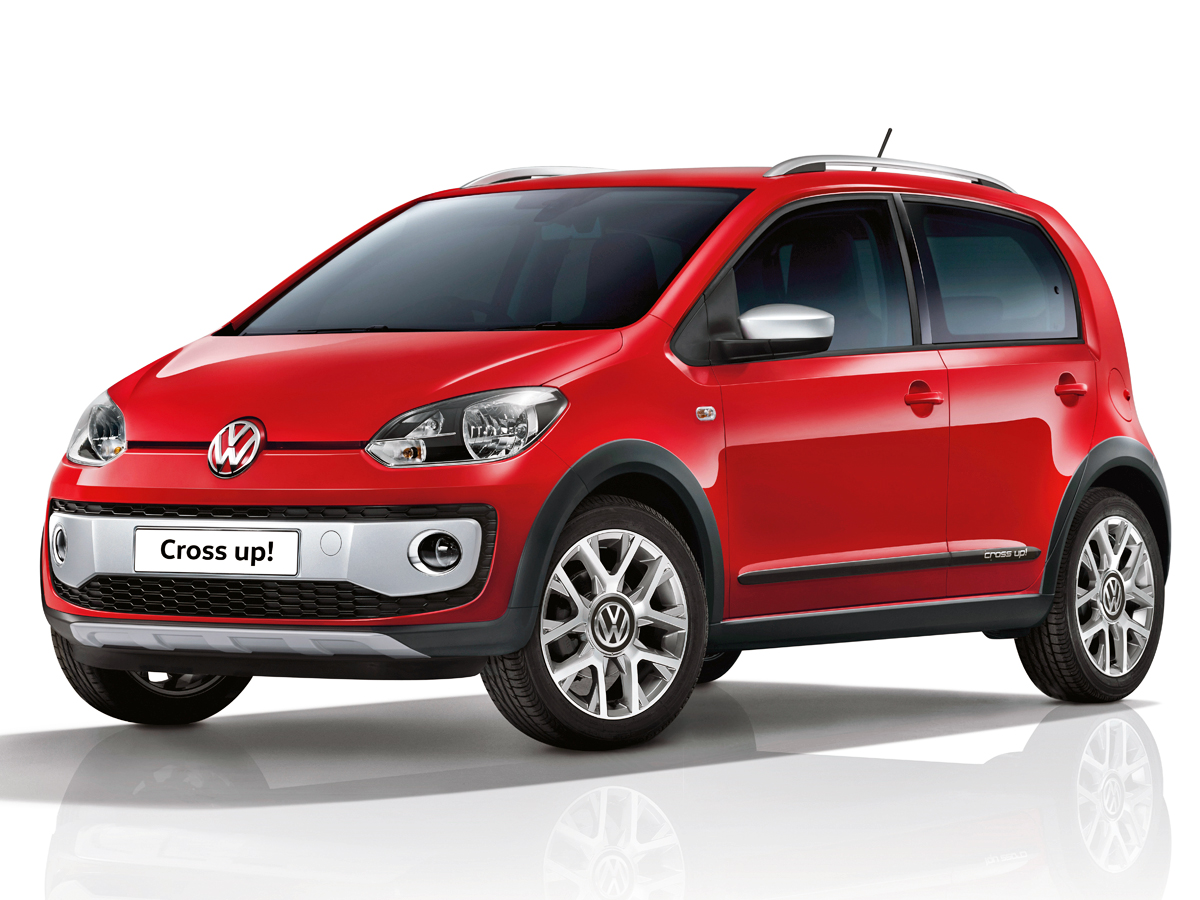
The pre-facelift Cross Up touched down in SA in May 2016.
As a reminder, VW first started building the tiny city car back in 2011, though the nameplate arrived in South Africa (initially in 3-door hatchback form) only in February 2015. The local launch took place after seemingly much deliberation from VW SA, which likely had concerns that the new model would overlap with the Kariega-built Polo Vivo.
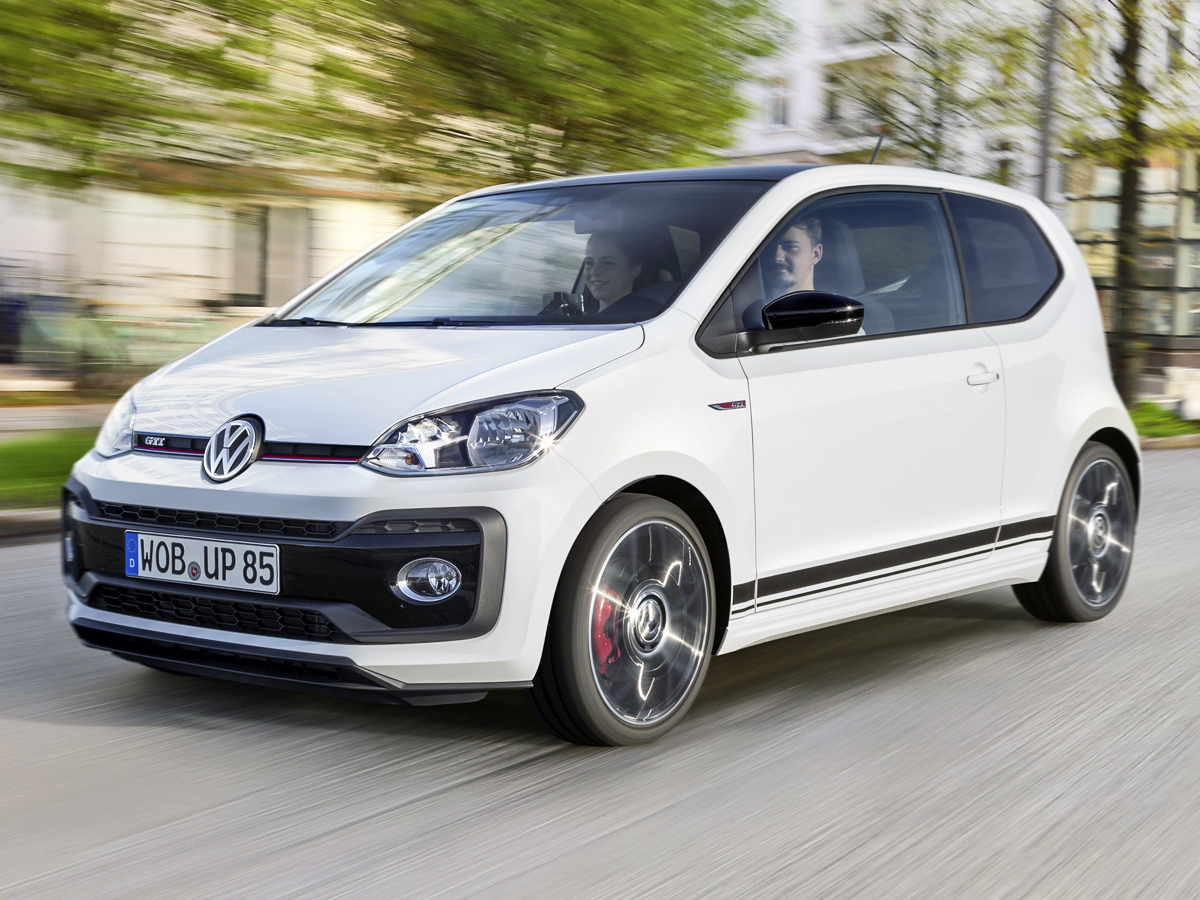
By May 2016, the 5-door version of the classy little Up hatch had touched down in South Africa (including a then-new SUV-mimicking Cross derivative), before the range was handed a subtle facelift in November 2016. At that point, the 3-door derivatives fell away from the local line-up. The Up was then quietly discontinued in Mzansi around the final quarter of 2020, with the fully electric e-Up and the Up GTI warm hatch never making it to local shores.
The VW Up GTI was unfortunately never offered in Mzansi.
In South Africa, the Volkswagen Up was powered by a naturally aspirated 1.0-litre, 3-cylinder petrol engine, which delivered peak outputs of 55 kW and 95 Nm to the front axle via a 5-speed manual gearbox (no automatic transmission was on offer in SA). Locally, the city car was available in the Take, Move, Colour, Cross and Beats trim levels.
The as-yet-unrevealed VW ID.1 – a small, sub-ID.2 fully electric city car – is likely to serve as an eventual replacement for the Up in Europe.
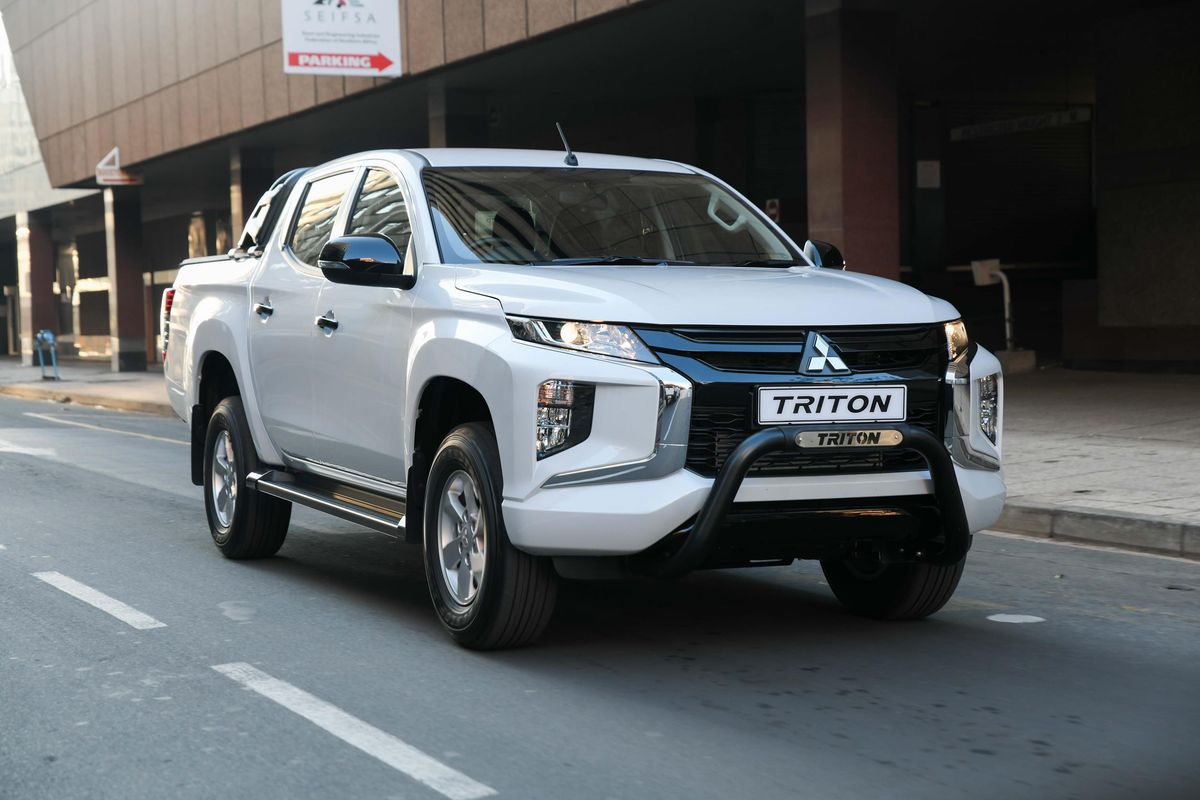
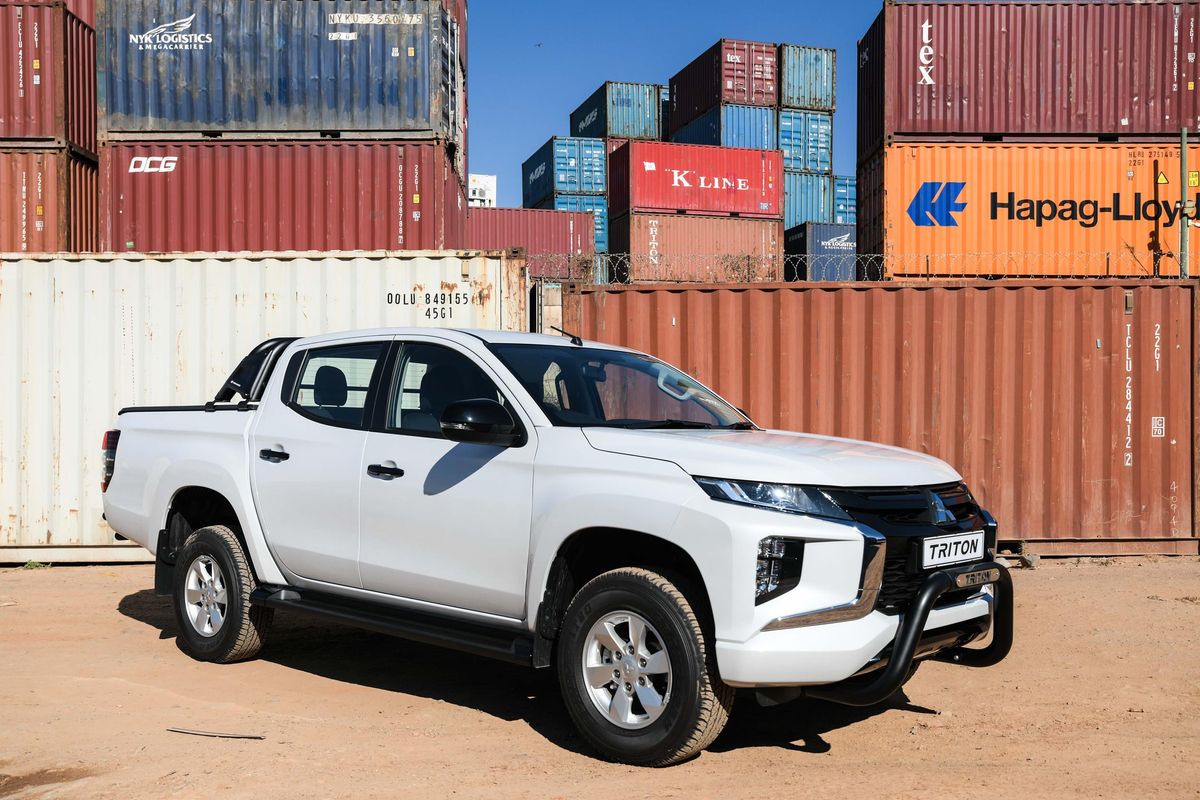
Mitsubishi Limited Edition Triton GLX Goes on Sale
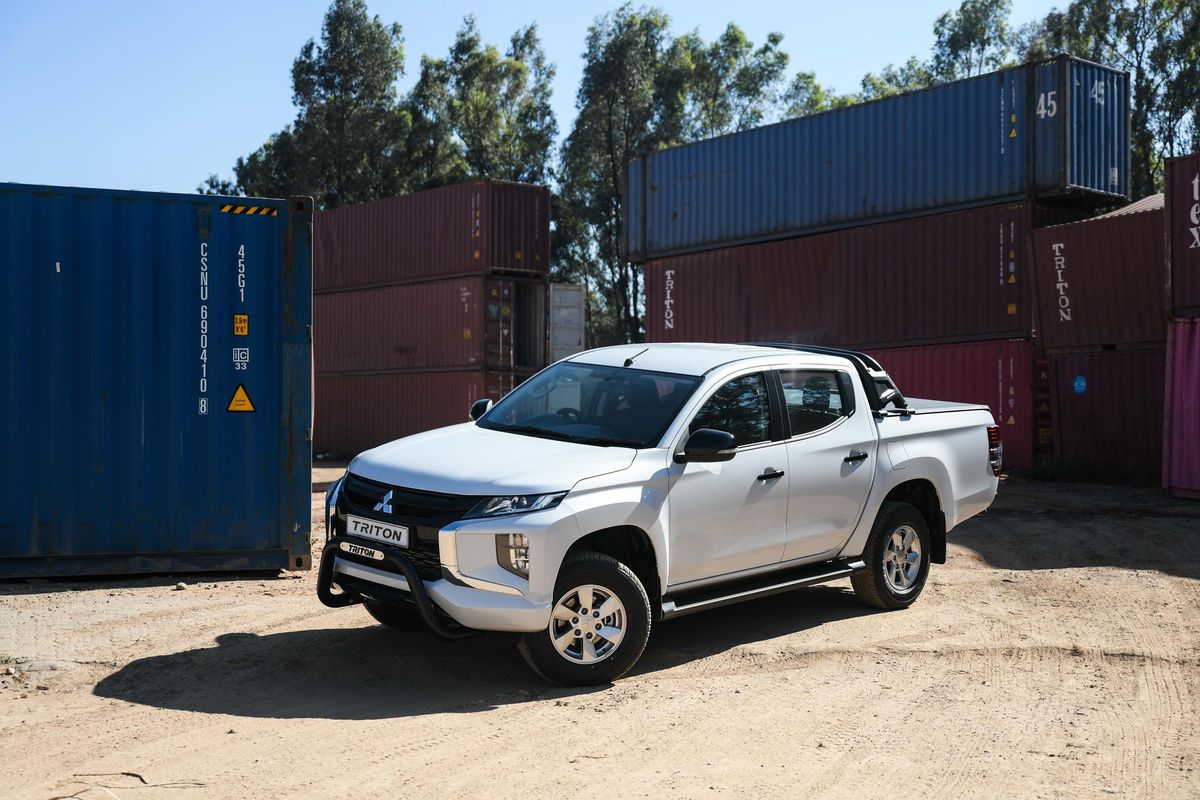
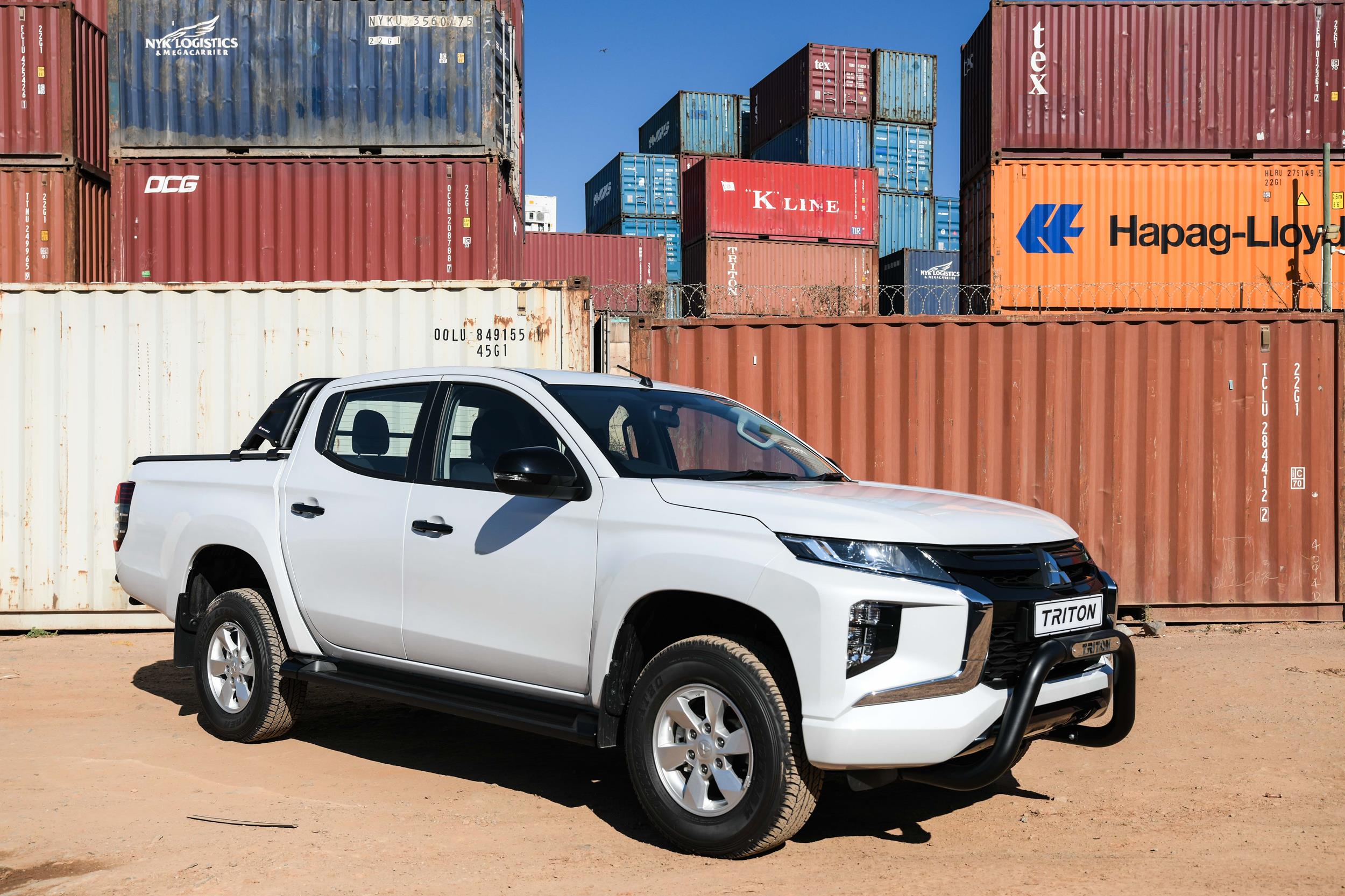
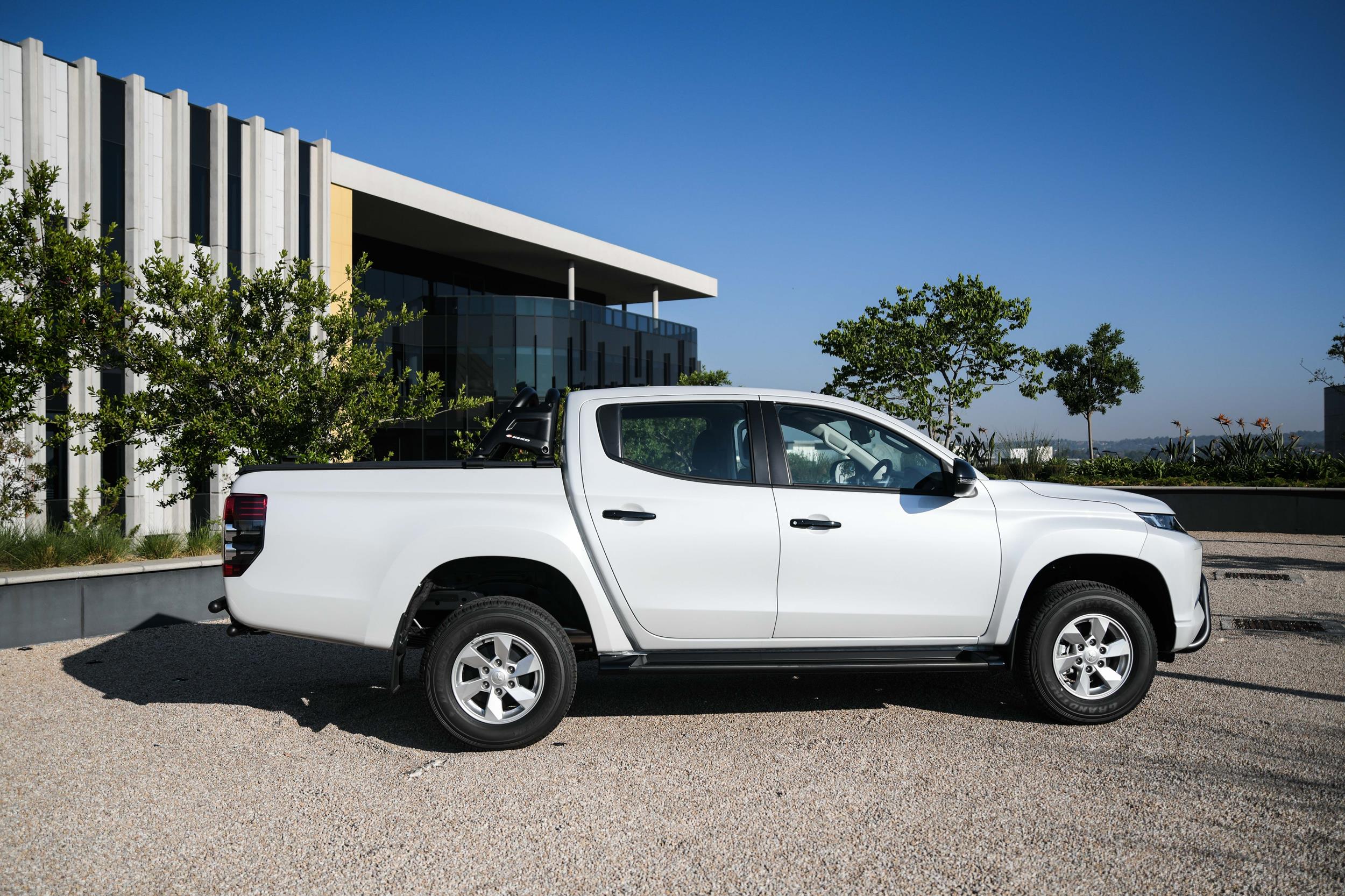
Mitsubishi SA has announced the arrival of a limited-edition GLX Triton. Here are the details, specs and price.
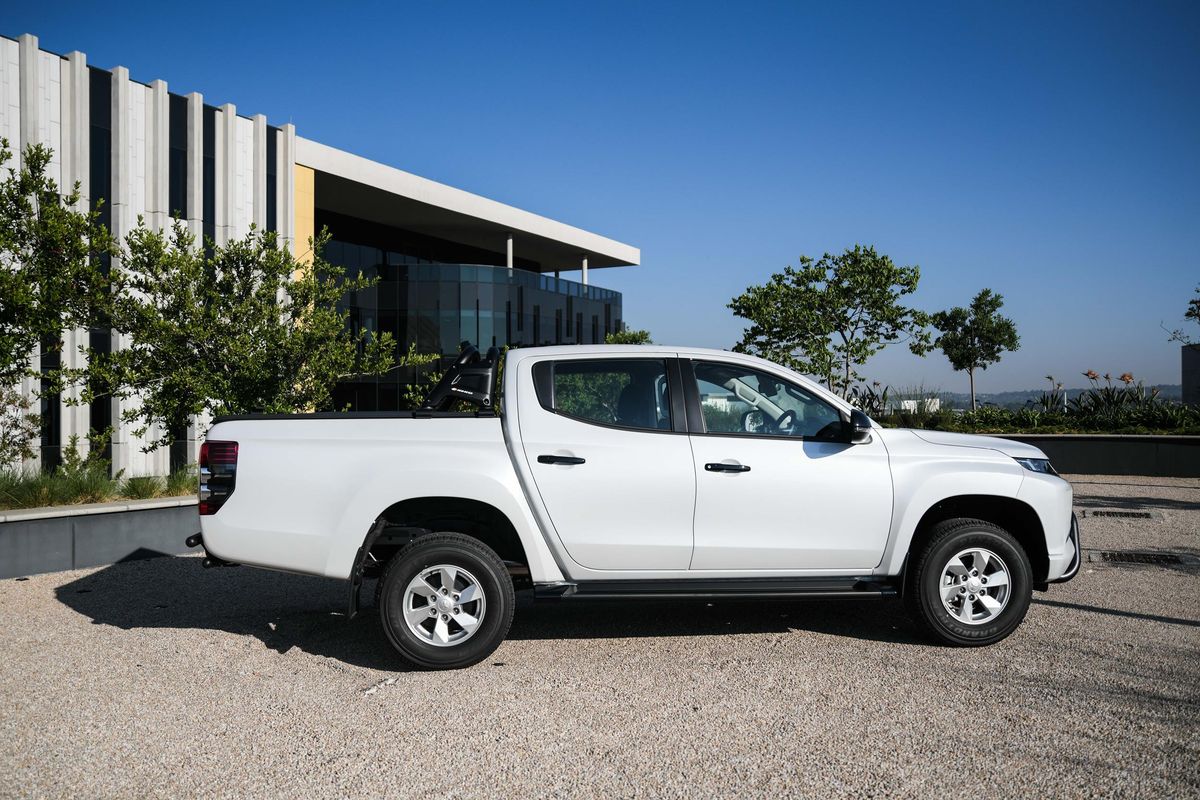
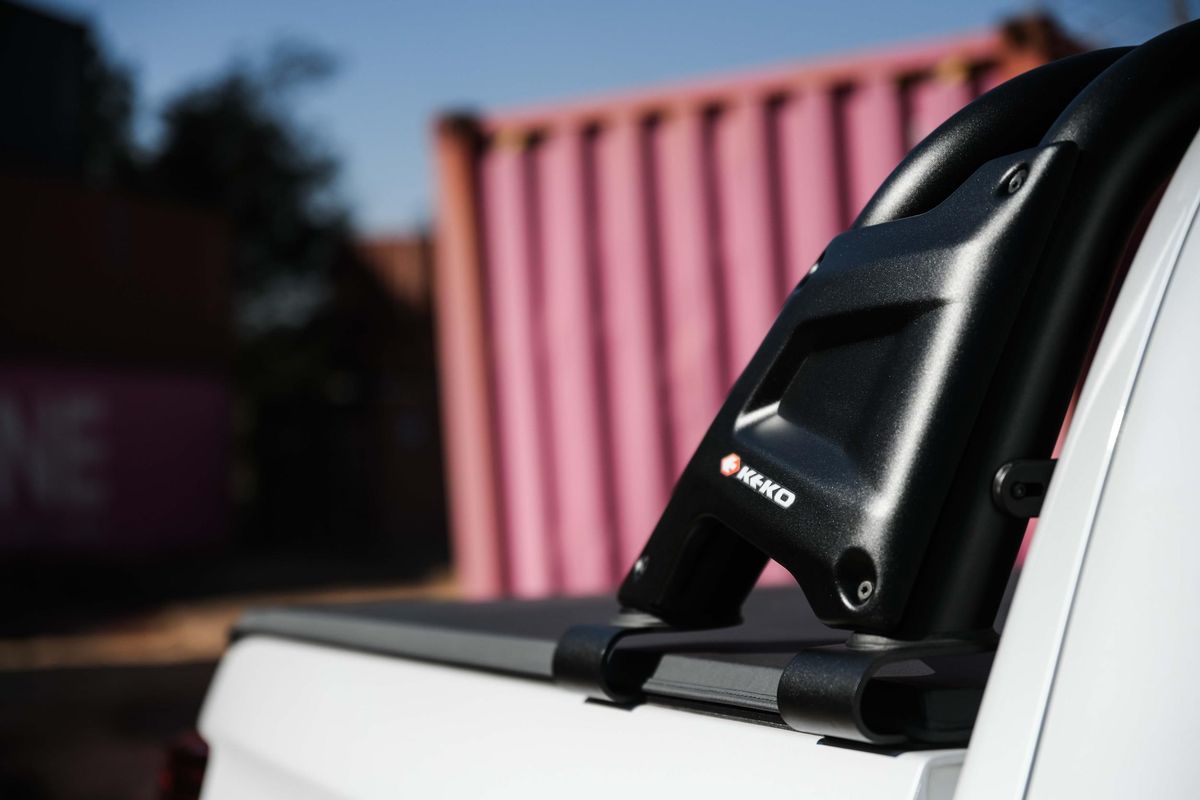
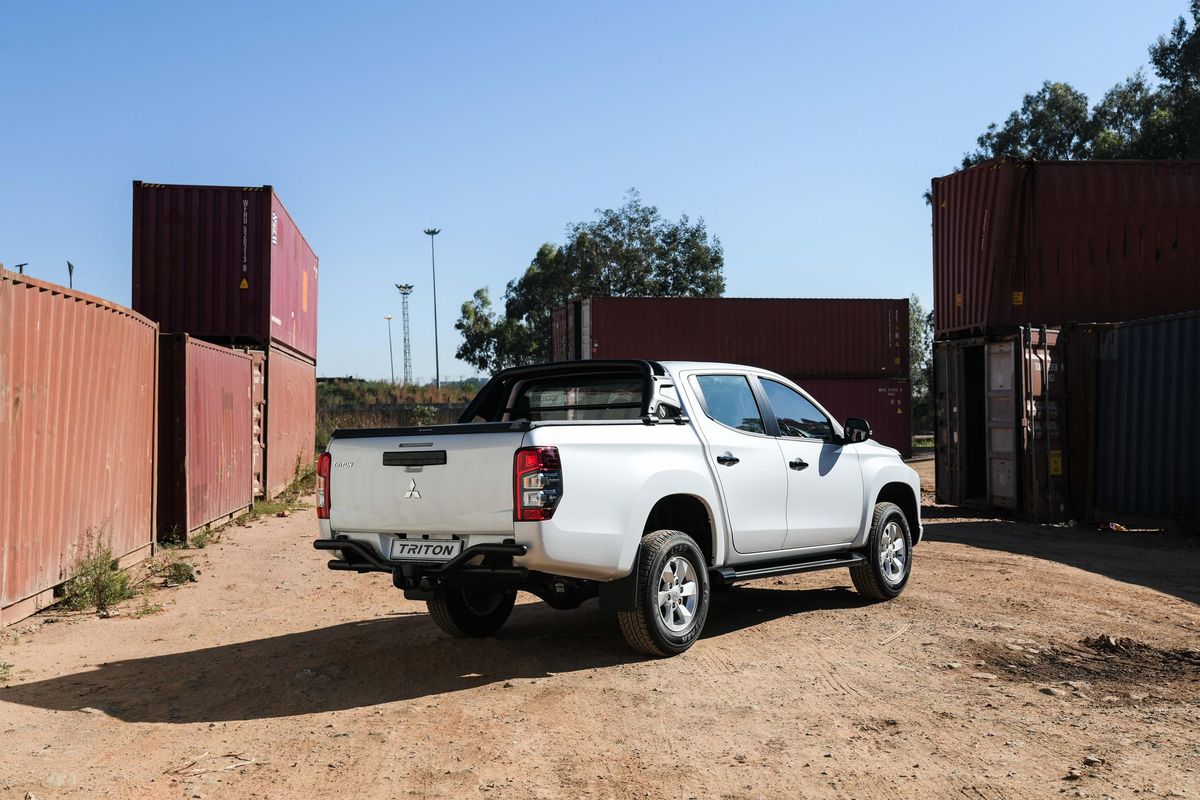
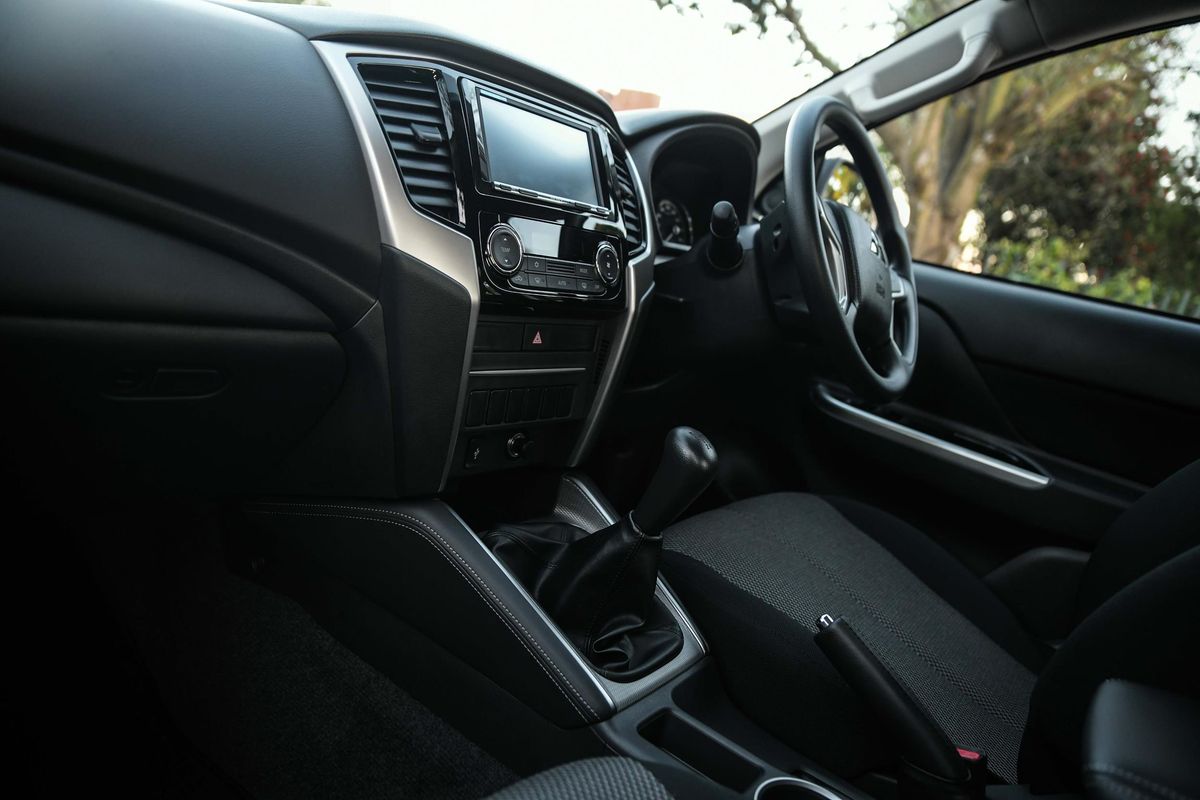
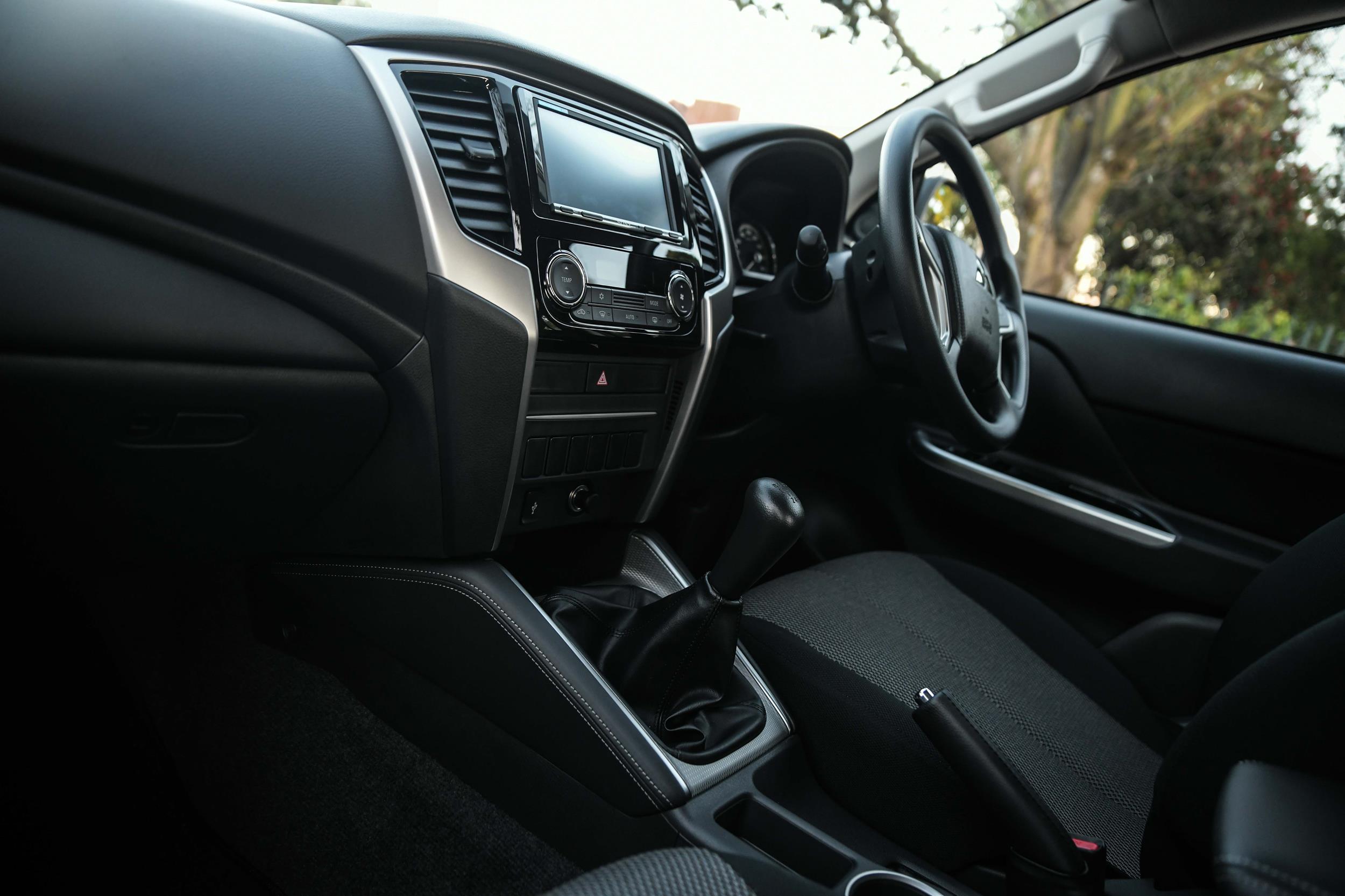
This Triton GLX is R10 000 more than the standard GL upon which it is based, but features additional content like the nudge bar, sports bar, tonneau cover, double-tube tow bar, tailgate lock and a Sony infotainment system.
Mitsubishi Limited Edition Triton Engine and Gearbox
The 2.4-litre turbocharged 4-cylinder turbocharged diesel engine has been in service for some time and in this application develops 100 kW and 324 Nm. The vehicle features a 6-speed manual gearbox and comes with a limited-slip differential.
There’s no 4×4 system here with the GLX utilising a 4×2 setup. On the combined cycle, this Mitsubishi Triton GLX is claimed to consume just 8 L/100 km. The vehicle has a tow rating of up to 1 ton.
The Triton retains its workhorse capabilities and the loadbed measures 1 5250 mm in length, 1 470 mm in width and 475 mm deep. For this model, the tailgate has been upgraded with the Triton Tailgate lock and the contents of the loadbin are covered by a Keko Tonneau cover. For some fun and personality, there’s a Keko Sports bar.
Standard Features
The list of standard features for your R529 990 is decent, with keyless entry, central locking, immobiliser, electric windows, air-conditioning and a touchscreen infotainment system with Apple CarPlay and Android Auto, that’s upgraded as part of this limited-edition derivative.
On the safety front, the Mitsubishi Limited Edition Triton features airbags for the driver and front passenger, ABS brakes with BED and ISOFIX child seat anchors.
How much does the Mitsubishi Limited Edition Triton cost in South Africa?
The Triton double cab GLX is sold with a 3-year / 100 000 km warranty and a 5-year/90 000 km service. Five years of unlimited roadside assistance is included and service intervals are every 10 000 km.