The opening quarter of the year is already behind us. So, which cars and crossovers are leading the charge in South Africa? We’ve tallied up local sales for Q1 2024…
It’s not been an easy start to the year for South Africa’s new-vehicle market. In fact, after the opening quarter of 2024, aggregate new-vehicle sales stood at 131 201 units, representing a 5.3% year-on-year fall. The passenger-vehicle segment suffered even more, with Q1 2024 registrations in this space declining 8.0% year on year to 84 837 units.
Still, we thought it pertinent to examine which cars and crossovers are leading the sales charge in Mzansi after the first 3 months of the year. So, we whipped out our calculators and tallied up local registrations for Q1 2024. Interestingly, 5 of the top 10 vehicles hail from India, while 4 are made-in-SA products, with a single model imported from China. Let’s take a closer look at the numbers…
SA-built favourites continue battle for top spot
VW’s Polo Vivo has kept its nose ahead after the opening quarter.
In 2023, the Volkswagen Polo Vivo edged out the Toyota Corolla Cross for the title of SA’s best-selling passenger vehicle. This close-fought battle continued in the opening quarter of 2024, with the Kariega-built prolonged lifecycle hatchback keeping its nose ahead with 5 828 sales.
Toyota’s Prospecton-produced crossover, however, was in hot pursuit, finishing Q1 2024 on 5 660 units. As the maths addicts among you have no doubt already worked out, that’s a mere 168 registrations off the pace. For the record, the Vivo’s best month was January when it managed 2 034 units, while the Corolla Cross put up 2 041 sales in March.
Swift and Starlet hold steady as Grand i10 climbs
Hyundai’s Grand i10 climbed 3 places to 5th.
As was the case last year, the Suzuki Swift (4 626 units) completed the podium in Q1 2024, while also ranking as South Africa’s most popular imported vehicle. That put the Indian-built Swift – which has already moved into a new generation in some overseas markets – 1 034 units behind the Corolla Cross. The Suzuki-built Toyota Starlet retained 4th position, with its tally of 4 218 units seeing it rank 408 sales behind the Swift.
Interestingly, the Hyundai Grand i10 – which is these days available in both hatchback and sedan body styles – climbed from the 8th position it achieved in 2023 to a strong 5th place in the opening quarter of this year. Likewise manufactured in India, the Grand i10 managed a total of 3 338 sales, a figure that would rise to 3 455 units if we were to include light-commercial vehicle (LCV) registrations recorded by the Cargo-badged van derivative.
Polo hatch and Fortuner slide as Tiggo 4 Pro holds
Chery’s Tiggo 4 Pro was the only Chinese car to crack the top 10.
The Volkswagen Polo hatchback didn’t have the best 2023, with sales falling more than 25%, year on year. The first quarter of 2024 wasn’t much better, with the Kariega-built hatch – having ended the reporting period on 3 026 units – even falling a spot to 6th. The likewise SA-made Toyota Fortuner (2 622 units), meanwhile, dropped 2 rankings to 8th.
The Chery Tiggo 4 Pro was again South Africa’s top-selling Chinese vehicle, ending the quarter on 2 853 units, which put it within touching distance of the Polo hatch. That saw the Tiggo 4 Pro retain the 7th position it achieved in 2023.
Magnite rises as Vitz boots Jolion from top 10
The Nissan Magnite moved up to 9th.
The Nissan Magnite climbed a place to 9th, ending Q1 2024 on 2 339 units. With production of the NP200 – a half-tonne bakkie that accounted for nearly 45% of the Japanese firm’s local sales in 2023 – having ended, Nissan will be relying heavily on the Magnite (along with the Rosslyn-made Navara) for the remainder of this year.
Finally, the Toyota Vitz (1 767 units) completed the top 10, pushing the Haval Jolion (1 630 units) – a Chinese crossover that placed 9th last year – off the table. For the record, the Vitz also far outsold the vehicle on which it’s based, with the Suzuki Celerio ending Q1 on 703 units (down in 31st position).
SA’s 10 best-selling cars and crossovers in Q1 2024
The feat of fitting a W126 560 SEL’s V8 engine into a C124 may usually be accredited to AMG, but here in South Africa, a pair of Mercedes-Benz employees achieved it.
IMAGES: Danie Nel
The appropriate word here is “subtle”. From a distance, even the most seasoned Mercedes-Benz aficionado would spot that this coupe’s bumpers are different compared to those of a standard C124 Mercedes-Benz 300CE Coupe – they’d have no clue that a 5.5-litre V8 was lurking under its bonnet.
When I arrived at the owner’s garage, I was taken on a tour of his classic car collection, but, after an hour of walking through the various marques of cars and exchanging motoring anecdotes, he pointed me in the direction of his C124. “This is, after all, the car you came to see!” he exclaims.
“I was looking for a W124 in the online classifieds about 15 years ago when this car came up for sale,” he said. “The word ‘Hammer’ was mentioned in the advertisement. At the time I didn’t know about the history of the ‘AMG Hammer’, and quickly read up about these special cars”.
This C124 was advertised at a price that was only slightly dearer than 300CEs of its age, but he decided to meet the owner and have a look at the car. To cut a long story short, the car caught his fancy and he bought it. At the time, he had no clue as to how special his purchase was.
Specifications
Model: Mercedes-Benz “560CE” (C124)
Engine: 5.5-litre V8, petrol
Power: 220 kW at 5 000 rpm
Torque: 455 Nm at 3 750 rpm
Transmission: 4-speed auto, RWD
Weight: Between 1450 and 1 750 kg
0-100 kph: under 6.8 sec
Top speed: 295 kph
History of this one-off Mercedes-Benz “560CE”
The history of this car started around 1986, when two Mercedes-Benz employees at Mercedes-Benz South Africa got itchy fingers and wanted to improve the 300CE’s performance – even before the South African buying public officially had access to the 560SEL (W126) and 560SEC (C126) models.
At the time, Peter Lastrucci had a multi-faceted job at the company. He worked in the dealer service department, but, because he was a district manager he was also deeply involved on the technical side of the business. This meant he was well-connected and also had access to the company’s large parts bin.
This car originally belonged to his colleague, Dale Petty, the second Mercedes-Benz employee who played a pivotal role in the birth of this car. After tracking down Lastrucci, I asked him where the idea of the Mercedes-Benz “560CE” came from.
“The root of this project was that typical conversation you have with your colleagues at the time of improving the car, making it faster and better,” Lastrucci explained.
Lastrucci admits that the pair was aware of the AMG Hammer, but, without the Internet, few people at the time knew the exact details and timeline of the Affalterbach programme. However, Lastrucci had visited AMG during those years and, as it happened, got a drive in a Hammer with one of AMG’s bosses.
“We thought we would like to do a local upgrade of the C124 ourselves. You need to remember that Mercedes-Benz was a very conservative company at the time, quite unlike today. You couldn’t even put different hub caps on your car! Mercedes-Benz Germany, however, knew nothing of our plans.
“At the time, during the mid-1980s, South Africa had very high import duties, so the idea was to build a car similar to what AMG was doing in Germany.”
Mercedes-Benz South Africa didn’t quite approve of the “560CE project”, however: “They didn’t stop us, but didn’t give us their blessing either. However, as things progressed, it was the company’s marketing department that showed some interest. They would have liked to see the car being built on home soil. But it would not have been impossible, as there was a lot of development happening in South Africa on the commercial vehicles, but nothing on the passenger car side.
“Passenger car development was a much more closed environment, which was managed by Mercedes-Benz in Germany. In the late-1980s the market also changed completely and everyone had to tighten their belts, which didn’t help the prospects for these types of cars.”
Needless to say, Lastrucci and Petty continued tinkering with the cars, after hours, in their garage.
“We had access to a lot of information, but in terms of building these cars we had no assistance from Mercedes-Benz. We were total enthusiasts, so we made it happen,” he says, adding that the fact that they both had an engineering background certainly helped their cause.
“The first car we built was a four-door, and a lot of development was required. This included the rear axle, which needed a new limited-slip diff that had to be hand-built with off-the-shelf parts. Other updates included the brakes. Most of the parts were official Mercedes-Benz parts, however.”
Next up was the coupe and then another 4-door was built, the latter was converted and stripped out for racing purposes. Unfortunately, the history of the other two cars is unknown.
“Dale managed to purchase the W126 560SEL running gear from Mercedes-Benz management in South Africa. That was even before any 560SEL units were delivered in South Africa (lesser derivatives of the W126 were assembled locally). This drivetrain (engine and transmission) came directly from Germany.”
Muscular performance
The 132 kW 3.0-litre in-line-6 engine was replaced with a 560SEL’s 220 kW 5.5-litre V8, sportier bumpers were fitted fore and aft, while the flat, five-spoked wheels further show the sporty intent of the car together with the twin exhaust pipes. Bear in mind that, apart from the additional power and torque, a C124 300CE tips the scales around 350 kg less than a 560SEC.
The interior is stock standard, except for one item. The analogue speedometer has been swapped from the standard 260 kph version to a 320 kph unit, the latter also from a W126. If you look at an angle you will also be able to note that the finish of the black speedometer is just ever so slightly different to the other black dials. Even installing this, what would seem like a simple task, took some effort as the W124 and C124’s speedometer used a mechanical system, and the W126 used an electronic system.
Behind the wheel of the Mercedes-Benz 560CE
From the moment you turn the ignition key of the Mercedes-Benz 560CE, the motor emits a deeper mechanical rumble compared to that of a 6-cylinder engine. Blip the throttle, and there’s deep-chested audible confirmation that a power unit of note has been installed under the coupe’s flat bonnet.
As I pull away in the Mercedes-Benz 560CE, there is a level of urgency from the car that’s more associated with more modern AMG models, meaning that under part throttle there is enough torque to allow the car to almost leap forward with small bursts of acceleration.
Even though this C124 has over 173 000 km on the odo, the car still feels solid, and there are no serious or annoying rattles emanating from any part of the car.
I press the throttle down further and watch as the rev needle quickly passes 4 000 and then, eventually, 5 000 rpm. Shortly thereafter at 6 000 rpm, the transmission selects the next gear. The transmission does takes its time – compared with modern transmissions – to change gears, but you don’t expect it any other way.
It is the same with the car’s rather vague steering feel, but when you want to string a few corners together with enthusiasm, you simply pre-calculate your inputs to the steering system on the approach to every corner. The stiffer suspension limits body movement in a manner you would expect it to, but overall the CE still has a wonderfully pliant and comfortable ride.
There is enough mechanical grip, but you also sense that the Mercedes-Benz “560CE” is a hefty coupe, and that an over-exuberant corner exit is likely to have a less-than-ideal outcome. However, the fact that this car is equipped with a special limited slip differential – unlike any other standard C124 – allows you to trust the car as you accelerate out of a corner.
Every time you press the Mercedes-Benz 560CE throttle pedal, there is the corresponding burble from the exhaust as well as a rumbling from the engine, as ever, making its presence felt.
Mercedes-Benz 560CE indicates 310 kph
I wonder how fast this car can go in a straight line and, fortunately, the owner has the answer: “I’ve seen 260 kph on the GPS”. I imagine it would have probably indicated around 270 kph on the speedometer. However, in the owner’s manual of this car the following is written: “Mr P. Lastrucci especially prepared the vehicle which was tested on the Gerotek track and rewarded a speed of 310 kph”.
I asked Lastrucci about these tests: “I wasn’t part of those tests, but yes, they were certainly conducted. You have to remember that they played with different differential ratios and also used other fuels, including aviation fuel”. Adding to this car’s provenance is the fact that none of these tests were ever conducted on the other two cars, only on this specific one.
Even if you look at it conservatively, if the car indicated 310 kph, it still achieved a remarkable true speed of around 295 to 300 kph (the C124’s drag coefficient was also lower than that of the W126 sedan – and probably its C126 2-door equivalent – which further contributed to the “560CE’s” higher top speed).
Throughout the past few years, the owner’s interest and enthusiasm for this Mercedes-Benz has, as expected, increased. This C124 is now regularly taken to club outings and has won several prizes at these events.
Summary
I find it fascinating that Mercedes-Benz never built such a performance-oriented C124. Yes, we did see the likes of the limited 500E/E500, but in a car such as this coupe you would have had an even sportier alternative.
Given where Mercedes-Benz is today, thanks to its integration with AMG, we cannot begin to imagine a world without a fast AMG sedan or coupe. Already several decades ago, a number of engineers, both in Affalterbach and even here in South Africa, had foresight of how much more these cars had to offer.
The upcoming Kia Tasman bakkie is looking more and more likely for South Africa, with the Korean firm having earlier applied to trademark the badge in Mzansi…
Will the upcoming Kia Tasman be sold in South Africa? Well, the signs increasingly suggest that a local launch for the Korean firm’s as-yet-unrevealed 1-tonne bakkie is very much on the cards, with the automaker having earlier filed to trademark the badge in Mzansi.
Yes, Cars.co.za can confirm that Kia’s head office in Seoul applied to register the “Tasman” name as a trademark in South Africa as long ago as April 2023. Interestingly, this was just 2 weeks after a similar filing was made in South Korea and around the same time applications were made in other global markets, including Australia, New Zealand, Uruguay and France.
Picture credit: S. Baldauf/SB-Medien. We’ve paid for these spy images and, at the photographer’s request, have watermarked them.
In South Africa, the trademark application was accepted in November 2023, though the badge has technically not yet been registered locally. Kia has, however, followed the requisite protocol of advertising the trademark in a Patent Journal (in December 2023). Provided no party objects, we believe the trademark certificate will be issued soon.
Of course, we should point out that a trademark application is by no means a guarantee the automaker will use the badge in question. Indeed, Kia holds the local rights to numerous nameplates it has yet to employ in South Africa. However, considering the sheer popularity of the bakkie body style in Mzansi, the upcoming Tasman is surely on the cards.
The new bakkie is listed on Kia Australia’s website as “coming soon”.
As a reminder, the ladder-frame bakkie is scheduled to be revealed in fellow right-hand-drive country Australia towards the end of 2024, with an expected launch in that market at some point in 2025. Kia has made no secret of the fact it will pitch the newcomer against the segment’s best sellers, such as the Toyota Hilux and Ford Ranger.
In March 2024, Kia’s local distributor confirmed to Cars.co.za that it was “conducting all the feasibility studies to see whether or not [the new bakkie] will be a viable product for the South African market”. However, Kia SA told us “no timing of possible introduction is available as yet”.
Kia’s familiar 2.2 CRDi engine (seen here in the Carnival) seems the most likely engine bet.
Of course, Kia SA already has a presence in South Africa’s light-commercial vehicle space, where it markets its K-Series workhorse trucks (the K2700 and K2500), which are available in chassis cab, dropside and tipper forms. The Tasman, however, would be its first stab at a traditional bakkie.
Reports suggest the new Tasman – set to be offered in both single- and double-cab body styles – will launch with a 4-cylinder turbodiesel engine, likely in the form of the familiar 2.2-litre CRDi motor already employed by the likes of the Sorento and Carnival (where it generates peak outputs of 148 kW and 440 Nm). A V6 unit is seemingly off the cards, for now.
10 best-selling bakkies in South Africa: March 2024
Brace for a surprise in 2nd place! Here’s your monthly look at South Africa’s best-selling (and least-popular) bakkies for March 2024…
Note: this story earlier included what Naamsa described as “erroneously reported sales figures”, specifically for the Nissan Navara and NP200. According to Naamsa, this was due to a “corrupt process system”. We’ve updated the table below to the corrected figures and amended the text accordingly.
In March 2024, South Africa’s new-vehicle market suffered its 8th consecutive month of year-on-year decline, with total sales falling 11.7% to 44 235 units. Even the usually robust light-commercial vehicle (LCV) space wasn’t spared, with registrations here dropping 5.9% year on year to 14 626 units.
So, what happened on the list of South Africa’s best-selling bakkies? Well, the Prospecton-built Toyota Hilux range – which recently welcomed 6 new mild-hybrid derivatives, with the widebody GR Sport III waiting patiently in the wings, too – was yet again the country’s most popular bakkie line-up, with 3 104 units sold.
Intriguingly, the Nissan NP200 put in its best showing in recent memory, which secured it surprise 2nd position (up 2 spots from February 2024). Nissan reported a whopping 2 679 sales of the half-tonner in March 2024, representing a month on month increase of 110%. While production of the NP200 has already wrapped up, the company’s local division recently confirmed to Cars.co.za that it had managed to manufacture some “additional” stock, perhaps accounting for this spike.
But back to the sales table. The Isuzu D-Max (2 095 units, 542 of which represented purchases by the government) again completed the podium, with the Struandale-manufactured range having recently been bolstered by fresh single-cab derivatives. That meant the Silverton-built Ford Ranger line-up – which recently gained both Tremor and Platinum derivatives – had to settle for a fairly unfamiliar 4th position in March 2024, with 1 954 units sold.
The local D-Max range recently welcomed new single-cab derivatives.
Meanwhile, the KwaZulu-Natal-assembled Mahindra Pik Up (744 units) held steady in 5th place. China’s GWM P-Series (591 units) moved up to 6th place, while the Rosslyn-manufactured Nissan Navara (467 units) dropped a spot to 7th.
The updated Toyota Land Cruiser 79 range – which now includes the option of 4-cylinder power and an automatic transmission – climbed a position to 8th, with 454 registrations. The SA-built Volkswagen Amarok (421 units) thus slipped a ranking to 9th, while the GWM Steed (76 units) again closed out the table.
Best of the rest in March 2024: bakkies outside the top 10
Peugeot sold 60 examples of the Landtrek last month.
So, which bakkies didn’t crack the top 10 in March 2024? Well, the JAC T-Series – the Chinese automaker unfortunately reports only a combined figure for its T6, T8 and new T9 line-ups, so we can’t place it in the top 10 – managed 131 units, finishing ahead of the Peugeot Landtrek (60 units), Mitsubishi Triton (53 units) and Mahindra Bolero (25 units).
Though the Mazda BT-50 has been discontinued in South Africa, the Japanese firm’s local division sold 12 units in March 2024. That meant the Jeep Gladiator (a facelifted version is set to launch in Mzansi only towards the end of 2024) again brought up the rear, ending the 3rd month of the 2024 on 5 registrations.
10 best-selling bakkies in South Africa for March 2024
Nissan Qashqai e-Power: still on the cards for SA?
The Nissan Qashqai e-Power was scheduled to arrive in SA over a year ago. So, is this unique electrified powertrain still coming to Mzansi? Well, we asked Nissan exactly that…
When the 3rd-generation Nissan Qashqai launched in South Africa in September 2022, the Japanese firm’s local division said it would add its unique e-Power powertrain to the range “in early 2023”. Since we’re already into the 2nd quarter of 2024, where are the Qashqai e-Power derivatives?
Well, we asked Nissan SA exactly that. While the company unfortunately couldn’t give us a new launch date, it did at least confirm that e-Power – which it earlier described as a gateway technology to fully electric vehicles – “remains a part of our strategy” for the local market. However, a number of other African markets are ahead of us in the queue.
Nissan has already rolled out e-Power derivatives to African markets such as Morocco and Egypt.
“We have devised a strategic plan to introduce our e-Power technology in key markets on the continent over time. Our rollout commenced with the launch of e-Power models in Morocco last year, starting with the Qashqai, and in Egypt this past February with the X-Trail,” Nissan SA told Cars.co.za.
“Next in line is Tunisia, where we plan to launch the Qashqai [e-Power]. As for South Africa, it remains a part of our strategy; however, we are unable to provide a precise timeline at this moment.”
Unlike traditional hybrids, the turbocharged 1.5-litre, 3-cylinder petrol engine in Nissan’s Qashqai e-Power system is used only to generate electricity, which is then transmitted via an inverter to the battery pack, the electric motor or both, according to the driving scenario. That’s right; the petrol engine doesn’t directly drive the wheels.
A representation of the e-Power system’s energy flow (from an X-Trail cluster).
In short, what sets this powertrain apart is the fact that the electric motor is the sole source of power for the wheels, resulting in an “EV-like” driving experience (without any range anxiety or the need to plug in). Though Nissan doesn’t use the H-word to describe this powertrain, it’s technically a series hybrid (as opposed to a parallel hybrid, like most of Toyota’s dual-powered models).
In the Qashqai, the electric motor provides the front wheels with peak outputs of 140 kW and 330 Nm. Nissan claims a combined fuel consumption of 5.3 L/100 km. In some markets, a 150 kW version of this front-wheel-drive powertrain is available in the X-Trail, alongside a flagship model with a dual-motor system (resulting in Nissan’s so-called “e-4orce” all-wheel-drive system).
Nissan says the e-Power system results in an EV-like driving experience, without the need to plug in.
As a reminder, the current Qashqai line-up in South Africa comprises 3 derivatives, each powered by a turbocharged 1.3-litre, 4-cylinder petrol engine generating 96 kW and 240 Nm in base Visia (manual) form, and 110 kW and 260 Nm in mid-tier Acenta (CVT) and top-spec Acenta Plus (CVT) guise.
The current Qashqai range is priced from R568 200 to R670 600. Considering electrified powertrains typically come at quite a premium over more traditional engine configurations, perhaps pricing remainsthe stumbling block to the local introduction of the Qashqai e-Power…
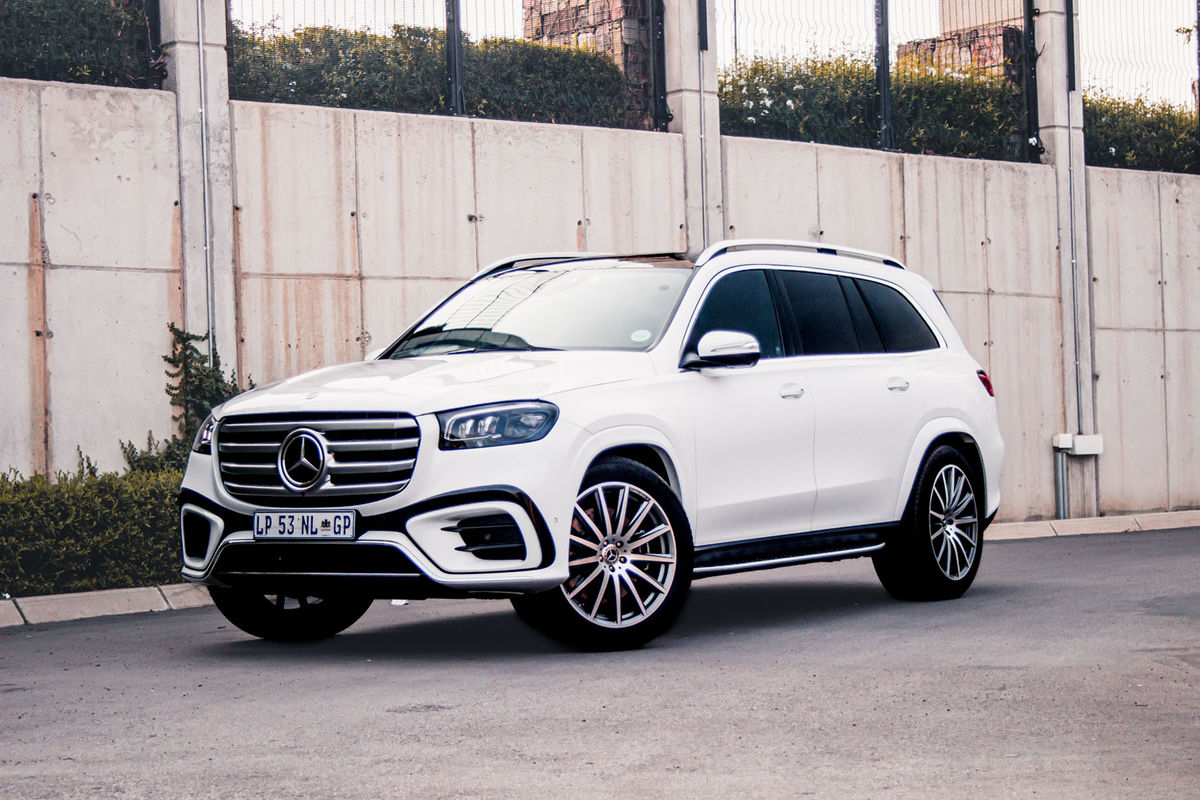
Mercedes-Benz has introduced the subtly facelifted GLS to the local market and we recently put the Three-pointed Star’s revised 1st-class SUV through its paces.
For much of the history of the motorcar, the Mercedes-Benz S-Class has been the benchmark 1st-class sedan (or saloon). Ditto for innovation, new technologies and, of course, the successful packaging of it all into a sublime slab of sophisticated metal from the German marque that quite literally started it all.
So, when the Three-pointed Star’s marketers suggest that the 2024 Mercedes-Benz GLS is to the SUV, what the S-Class is to the sedan – well, that’s a bold claim. I’ll skip to the end and concede near the top of this write-up that the GLS is just so – a masterclass of luxury, albeit an extra metre off the ground.
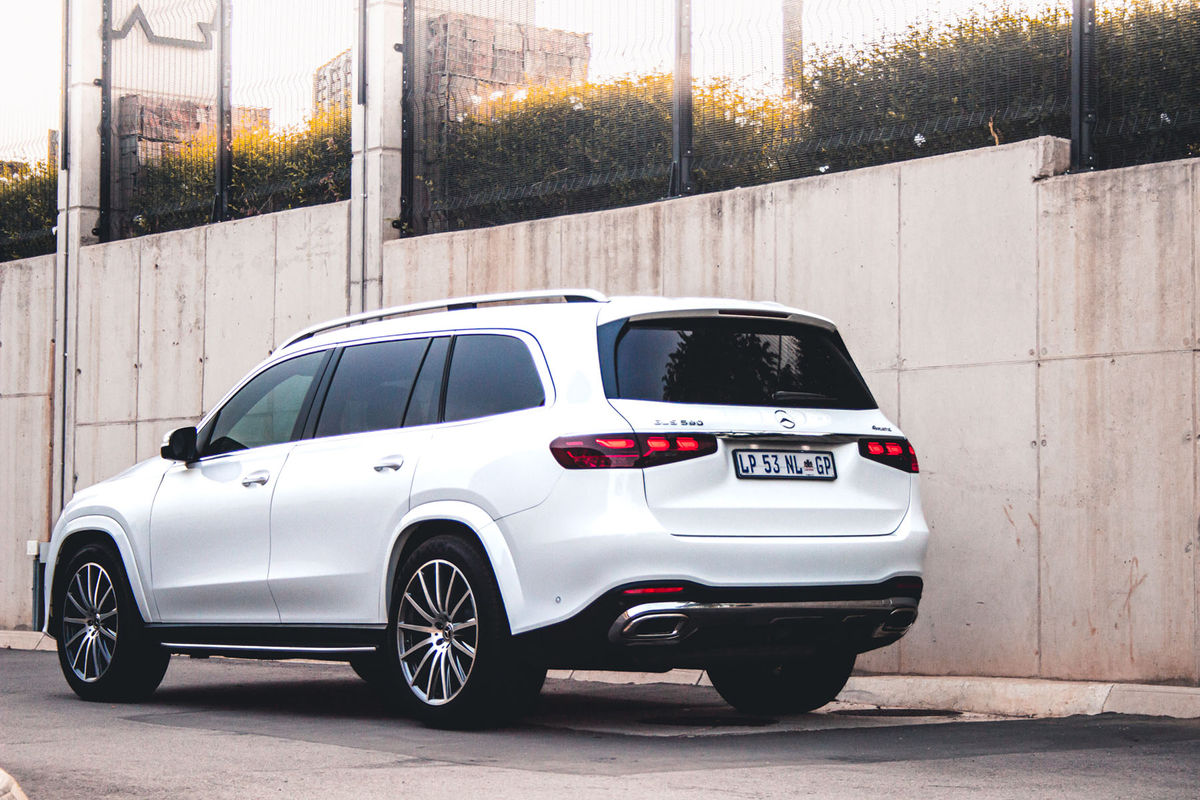
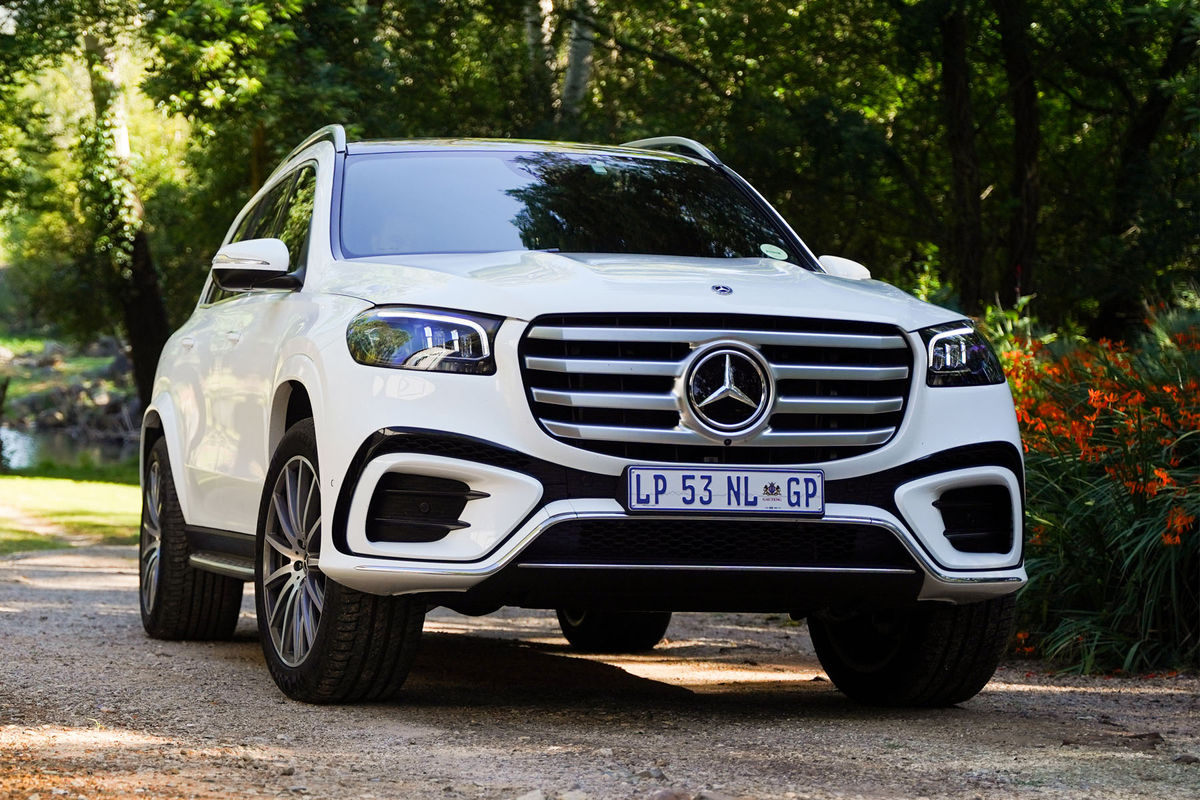
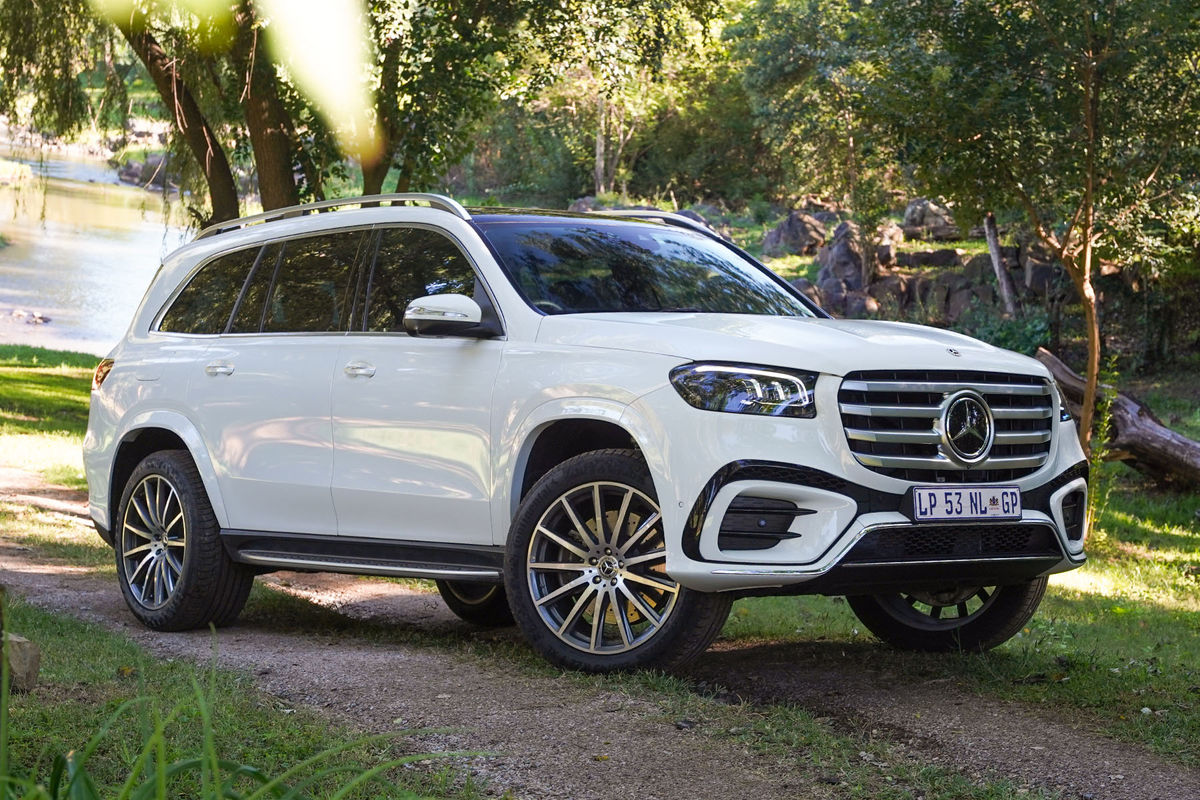
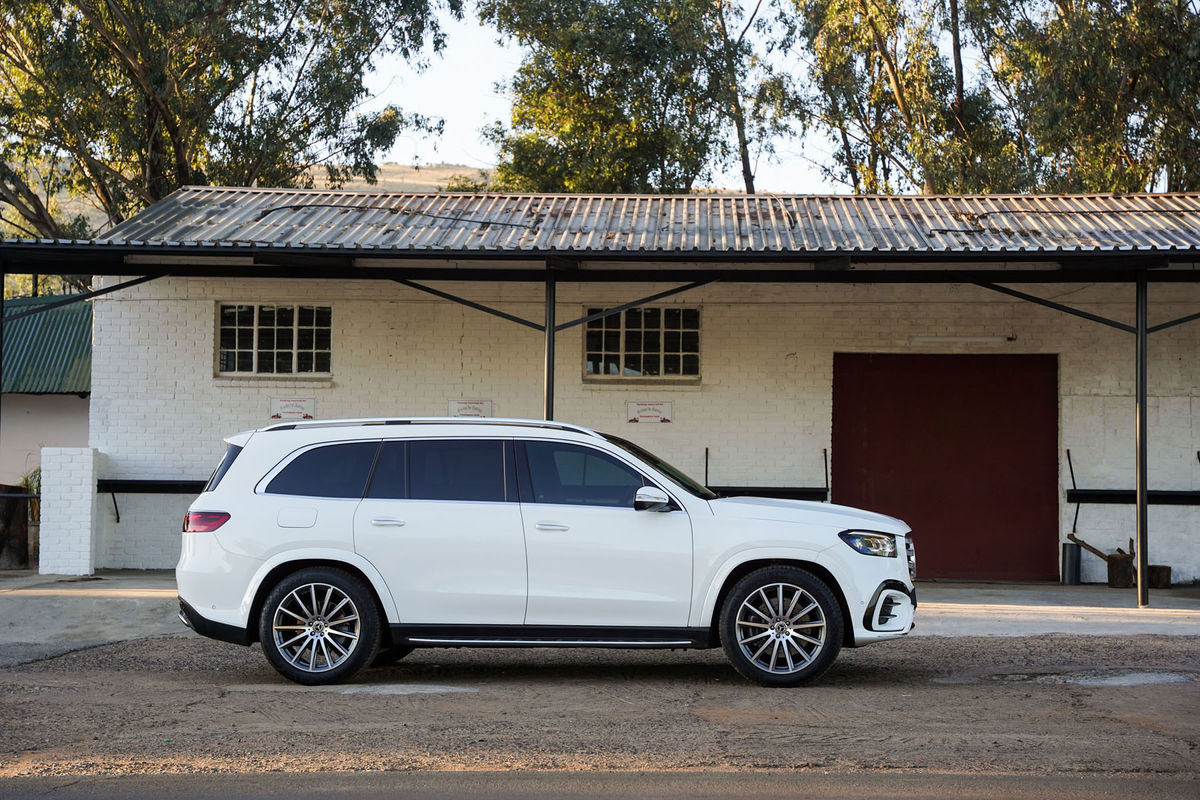
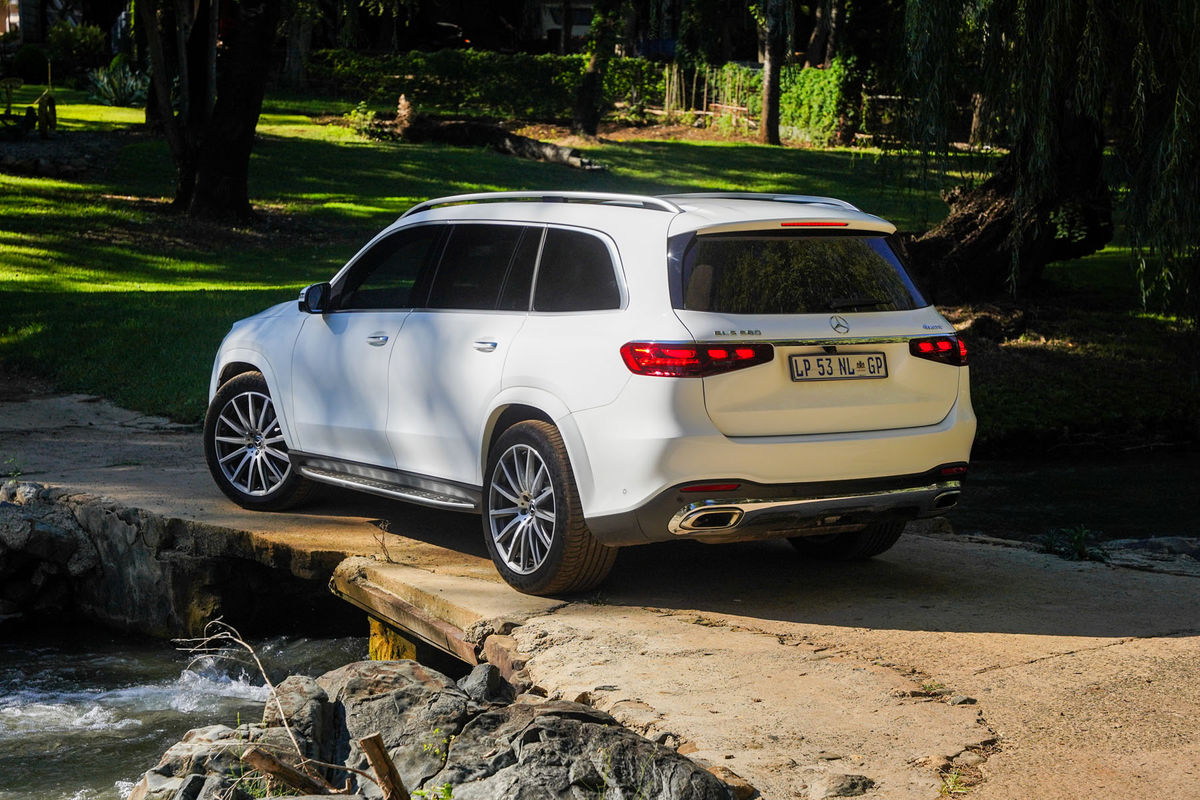
My test unit was a GLS 450d 4Matic covered in Polar White paint, and lots of it was required because the GLS is mega; it is more than 5.2 metres long, over 1.8 metres tall and 2.03 metres wide. The juggernaut’s turbodiesel engine is a 3.0-litre inline-6-cylinder capable of producing 270 kW and 750 Nm of torque.
As a result, it will sprint from zero to 100 kph in just 6.1 secs before maxing out at a governed 250 kph. It’s quicker than a 7-seater, um, cathedral on wheels has any right to be, but when piloted by a church mouse, it will reportedly consume an average of just 9.1 L/100 km (with CO2 emissions of 206 g/km).
For the privilege of owning a GLS 450d, Mercedes-Benz requires you to hand over around R2.3 million, but if that’s less than what you planned to spend, the range also includes the mightier GLS 580 for nearly R2.9 million. Then there’s the flagship of the flagship, the Mercedes-Maybach GLS 600 at R4.5 million, but for the sake of brevity, I’ll focus on the modest 450d I actually got to commandeer for the day.
Mercedes-Benz SA has had a busy 2024; it recently released the GLE and GLE Coupe, mere months after the new GLC made its local debut. But now comes this whip that veritably overshadows its lesser siblings, both in terms of kerb presence and spec list; sure, a GLE is grand, but the GLS is just extra.
Visually, there’s not a raft of new items on the 2024 Mercedes-Benz GLS, but what has been tweaked only adds to a well-proportioned mega-SUV. Upfront you’ll encounter a more imposing grille than before, comprised of 4 galvanised louvres echoed in the gaping airdams at each end of the bumper. At the rear, the lamps are illuminated as a trio of horizontal bars, giving the tail a discreet modern update.
Also new to the range, Himalayas Grey 20-inch multi-spoke alloy hoops – visually joined to one other by the chrome accents and garnishes along the bumper diffusers and running boards. In white, the overall result feels restrained and understated despite the smattering of silver along the GLS’ elongated profile, (Mercedes-Benz managed somehow to find the Goldilocks-zone aesthetic between flashy and tasteful).
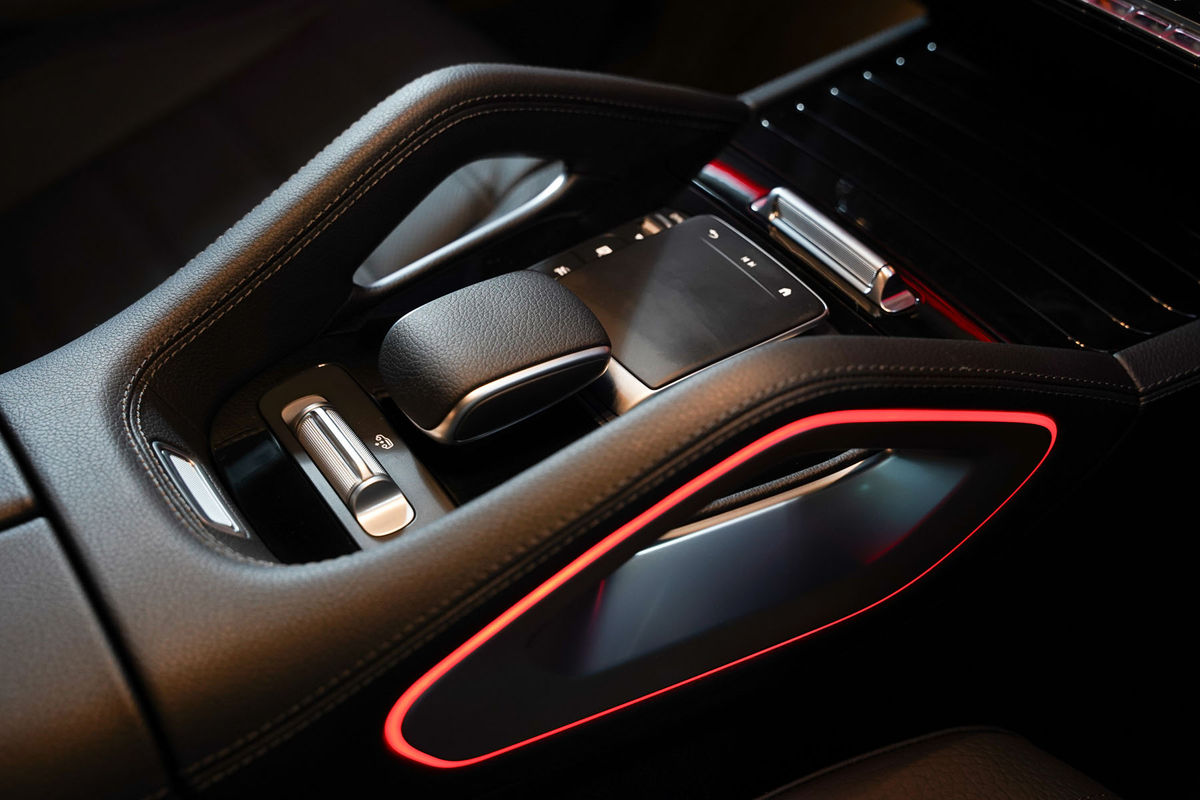
Slip aboard the 2024 Mercedes-Benz GLS’ technology-laden cabin, allow yourself to be gripped by its leathery embrace and you’ll encounter an elegant living space that is peak modern ‘Benz.
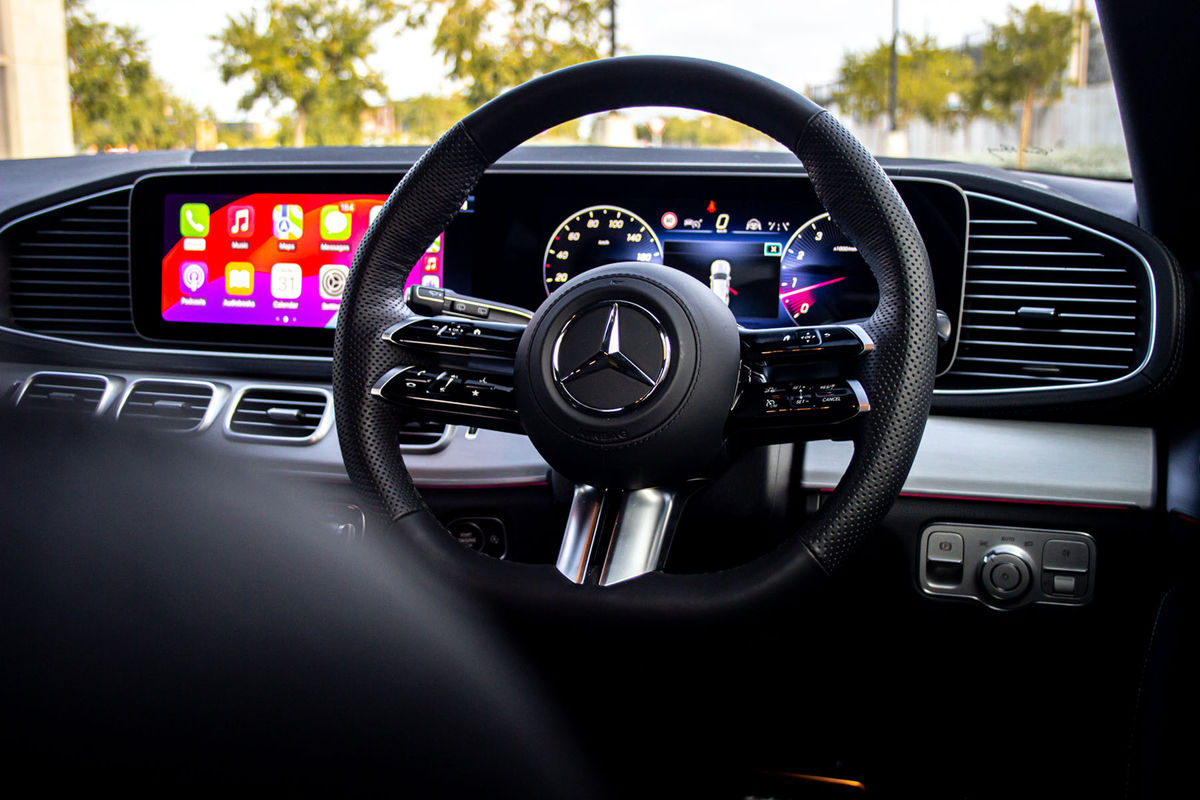
At the forefront sits the MBUX, the user interface that drives the integrated digital instrument cluster touchscreen display and connects you to the GLS’s multitude of systems and features. It’s also the gatekeeper to your smartphone and with it, all the connectivity the contemporary driver requires.
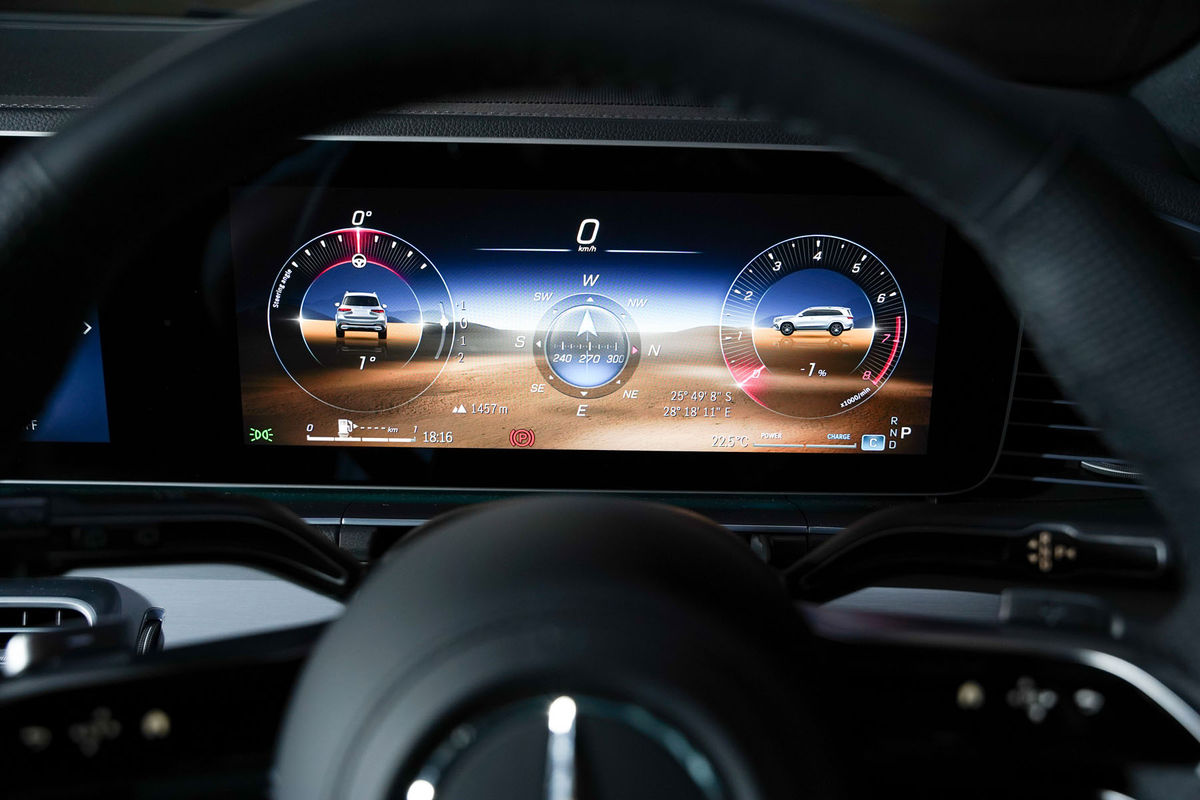
The restyled MBUX infotainment system can be personalised in a trio of styles (Classic, Sporty and Discreet) and 3 modes (Navigation, Service and Assistance). I started in Classic (as one does, of course) and flirted with the more minimalistic Discreet mode before settling on the fierce, red Sporty setting, where I remained for the next hundred or so kilometres.
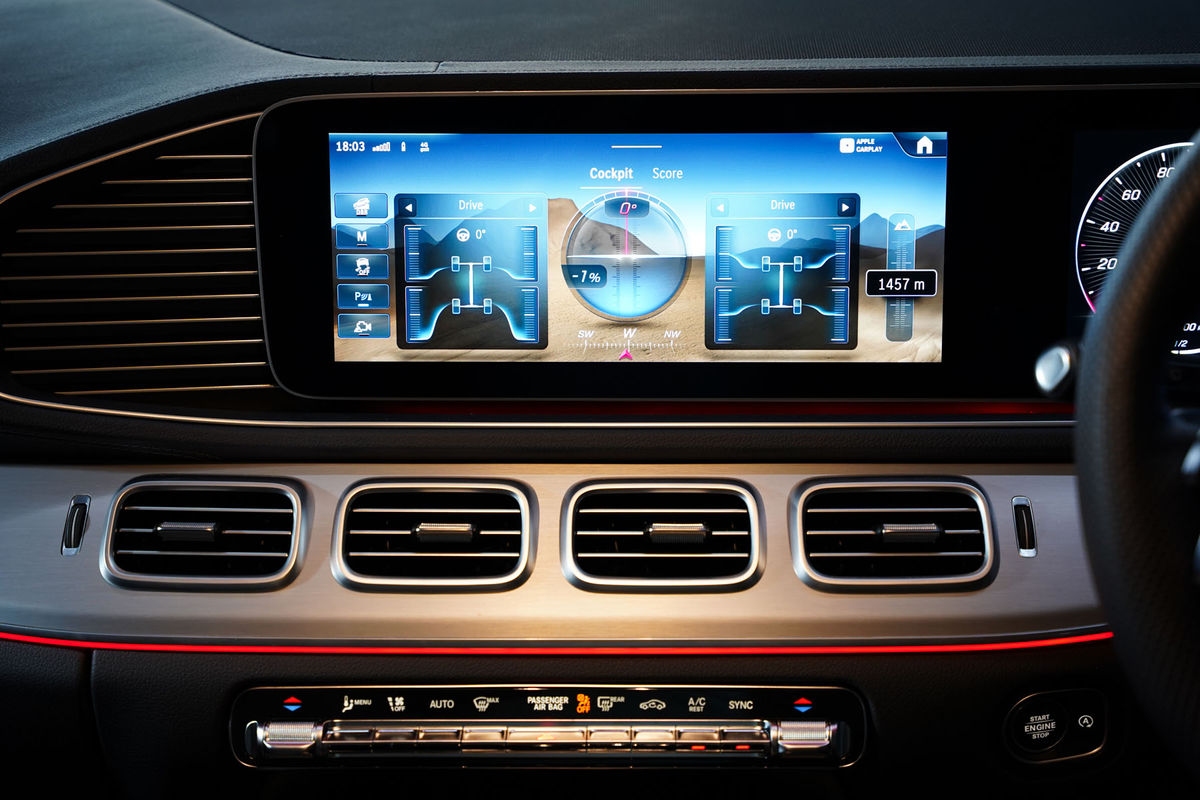
There’s also an Off-Rode Mode with useful info to pore over, such as gradient, lateral inclination and steering angle. When combined with the standard Parking Package (which includes a 360-degree camera system), it also benefits from that feature’s “transparent bonnet” trick, so that’s fun!
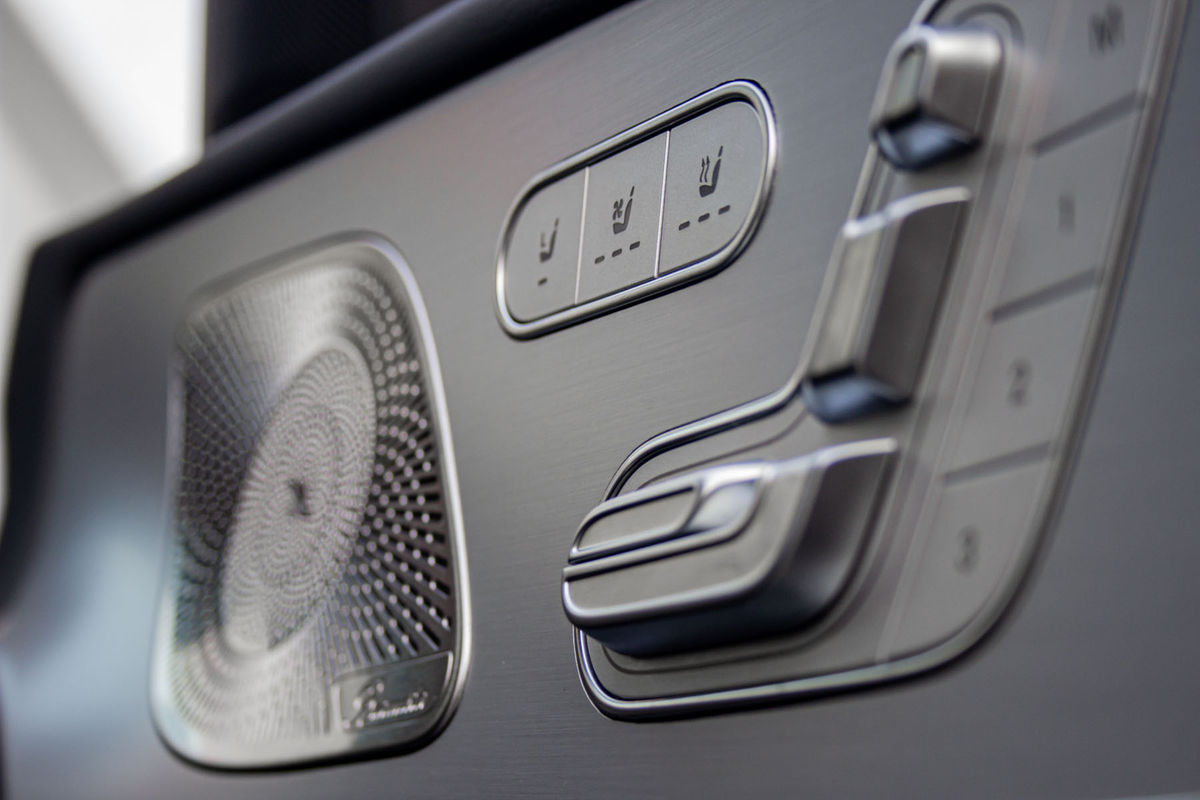
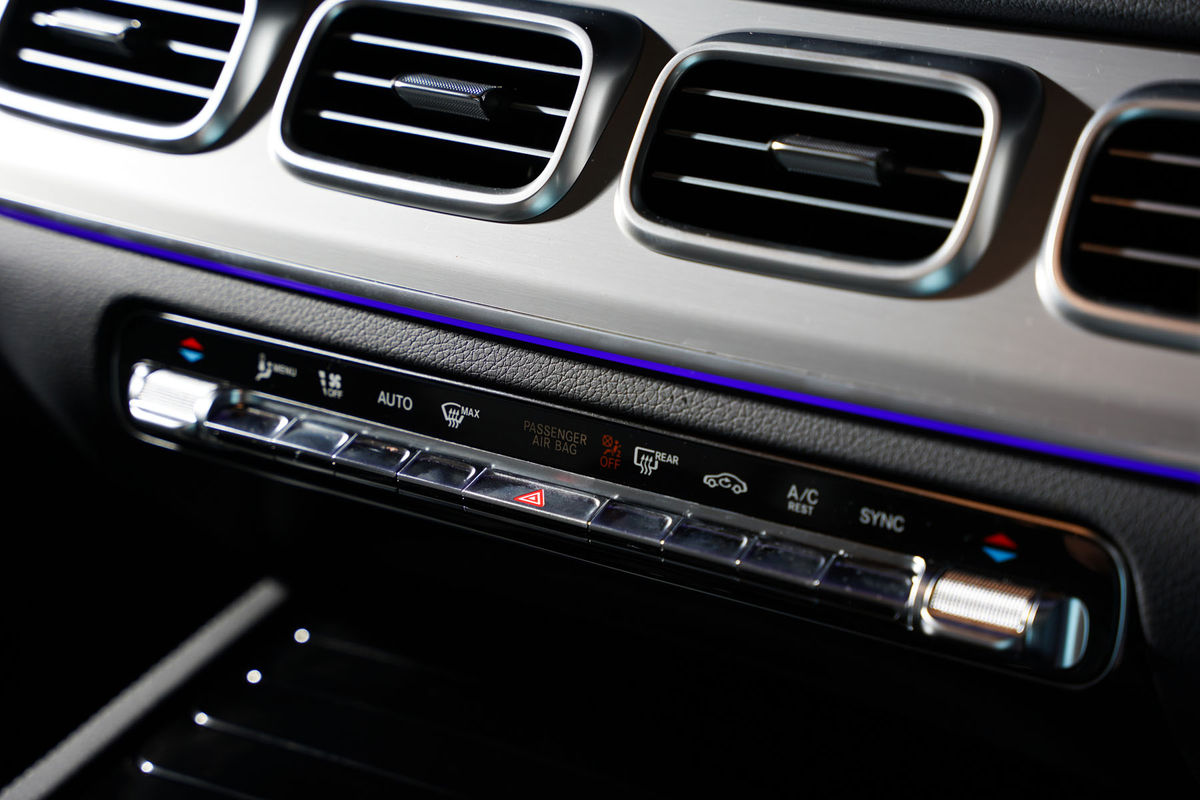
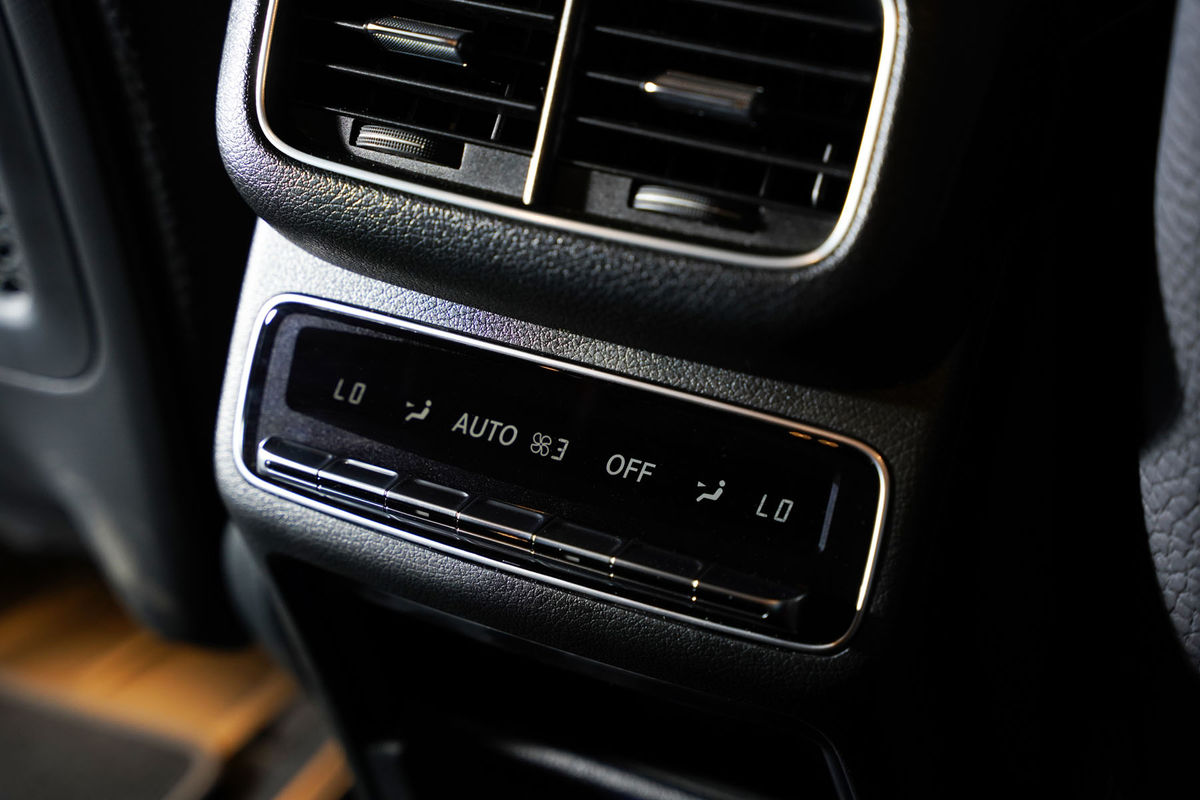
Look, I’m not even going to attempt to rattle off the entire list of mod-cons on offer here – being well-appointed is the GLS’ raison d’etre. But suffice it to say, climate control, USB ports, high-end audiophilic sound system – the gang’s all here, and at your disposal quicker than you can say “Hey Mercedes”.
And when you do, eventually, get around to shunting off, know that there are 2 particularly privileged vantage points from which to enjoy the facelifted GLS. Naturally, the front seats, but also when stationed on the pew behind them, thanks to a sumptuous rear bench and sheer acreage of legroom that it offers.
I, however, spent the bulk of my time at the helm, in command of the GLS 450d 4Matic’s boosty, torquey 6-cylinder turbodiesel heart. The claimed 6-second zero to 100 kph time is hot-hatch-like performance, but filtered through so much refinement that you’d be forgiven for forgetting the spectacle that you’re creating as you bomb along the highway and scythe this blunderbuss through mountain roads.
Despite its bulk and, undoubtedly, hefty kerb weight, the GLS feels nimble, produces a likeable rumbling soundtrack from its pipes and, as a result, was nothing short of an absolute joy to, yes, commandeer.
How much does the 2024 Mercedes-Benz GLS cost in SA?
Prices include a 2-year/unlimited km warranty and a 5-year/100 000 km maintenance plan (April 2024).
Summary
I can see the appeal of the larger engines on offer in the 2024 Mercedes-Benz GLS range, and with those the extra line items and exclusivity that come with them, but at circa R2.3 million there is very little that can touch this GLS 450d when it comes to stature, features and sheer “premium-ness”.
Just be wary of optioning too many of those extras, because you may find yourself spending Mercedes-Maybach levels of money. But then, when you’re shopping in this bracket, nothing but the best will do, so perhaps it’d be expedient to just buy a GLS 600 so you can upstage “those Bentayga drivers” properly.
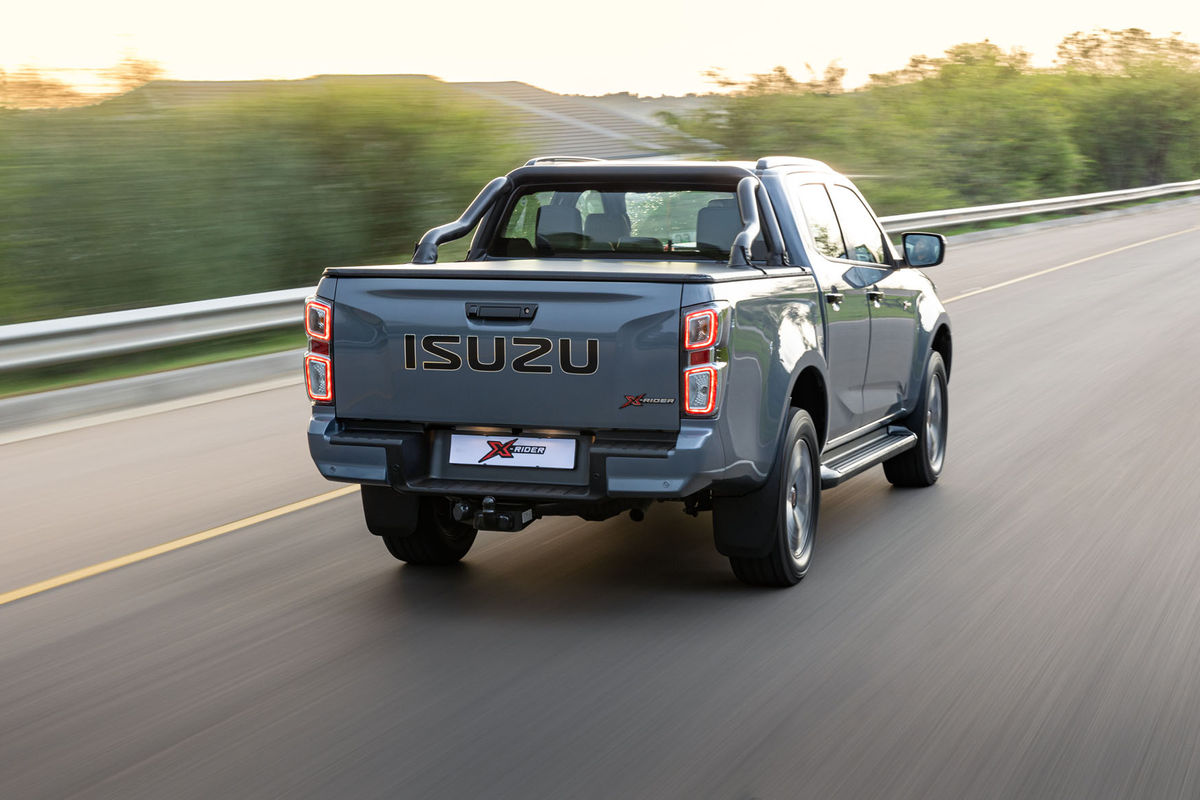
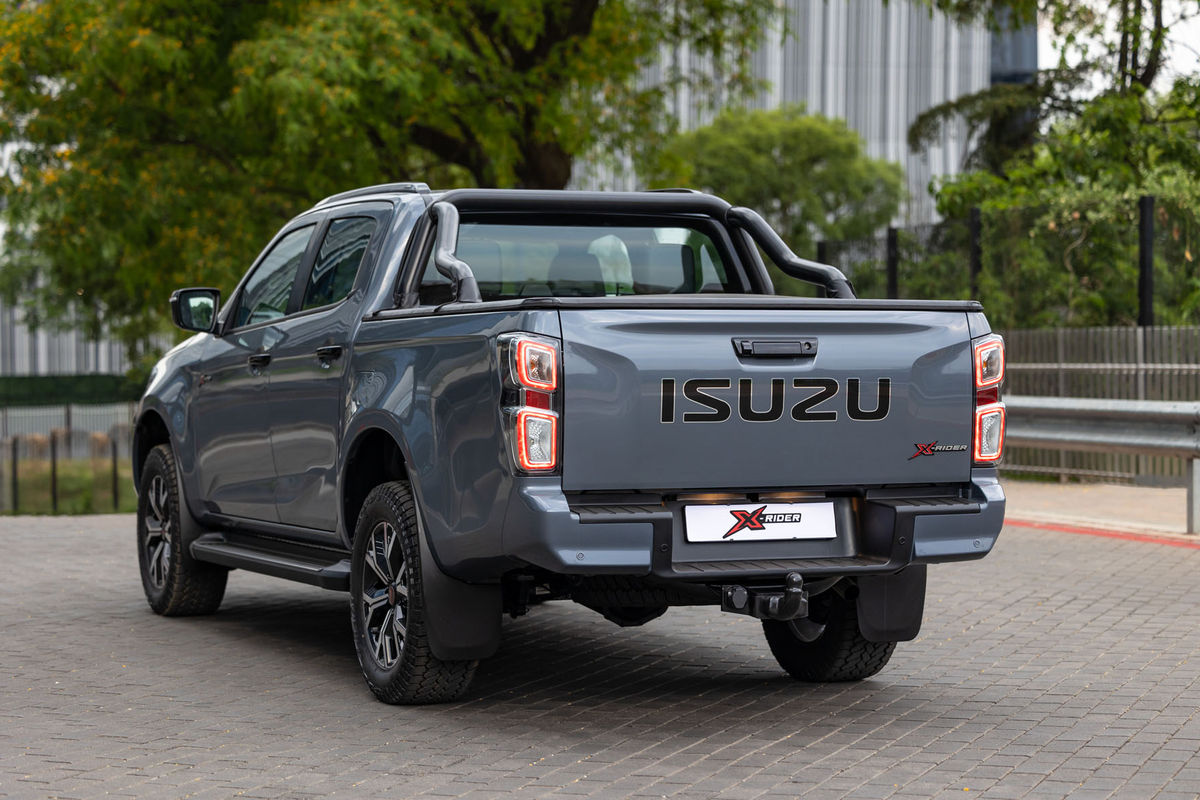
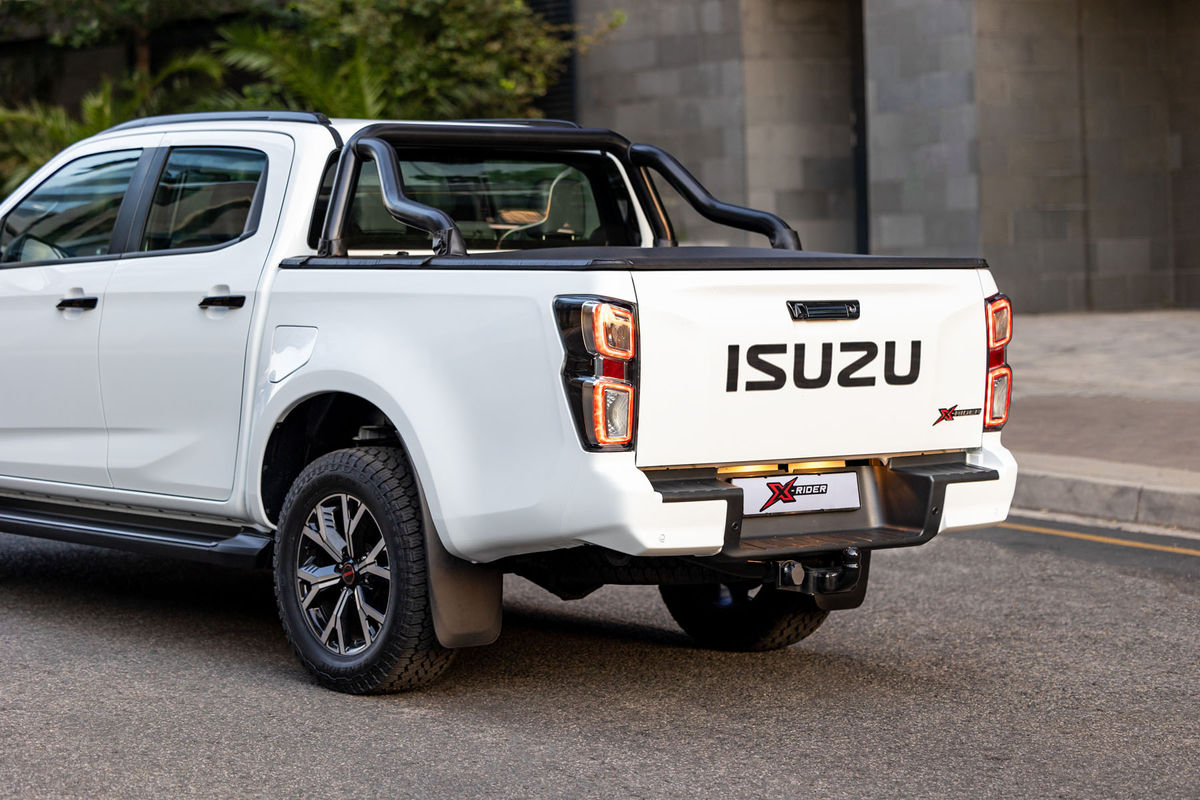
In the South African bakkie market, the Isuzu D-Max X-Rider is synonymous with power, versatility and style. The latest version, based on the 7th-gen bakkie, blends modern technology with renowned reliability in a highly distinctive package.
PARTNERED CONTENT
Let’s take a deep dive into what makes the Isuzu D-Max X-Rider a standout choice in its segment.
Power and Performance
Whether it’s navigating through city streets or tackling rugged off-road adventures, the D-Max X-Rider produces robust performance. Its 1.9-litre 4-cylinder common-rail and intercooled turbodiesel engine delivers peak power of 110 kW at 3 600 rpm and maximum torque of 350 Nm from 1 800–2 600 rpm.
The 1.9 Ddi engine is available in conjunction with a 6-speed manual gearbox, known for its precise and direct gear shifts, or a 6-speed automatic, which is tuned for swift gear changes and enhanced fuel efficiency. Customers can choose between the manual ‘box and automatic transmission on the 4×2 version, while the top-of-the-range 4×4 derivative is exclusively equipped with a 6-speed automatic.
The D-Max X-Rider‘s off-road capabilities are in sync with its rugged aesthetics. It offers a maximum wading depth of 800 mm, improved underbody protection, enhanced aerodynamics for better airflow and cooling, and, on the 4×4 version, a quick-engaging shift-on-the-fly 4-wheel-drive system.
Equipped with advanced technology, the 1.9 Ddi enables the D-Max X-Rider to make light work of heavy loads while maintaining excellent fuel economy. Earlier this year, in Isuzu’s One Tank Challenge, the 1.9 Ddi achieved a remarkable fuel economy figure of 5.58 litres per 100 km over 1 452 km of varied terrain.
Whether you’re towing equipment for a weekend getaway or hauling supplies for a DIY project, this bakkie will be well up to the task…
Versatility redefined
The Isuzu D-Max X-Rider epitomises versatility; it seamlessly transitions between various roles to cater to the diverse needs of its customers… Whether it’s conquering challenging terrain with its robust performance capabilities, effortlessly towing heavy loads for work or leisure, or simply providing a comfortable and refined driving experience for daily commutes, the X-Rider excels in every aspect.
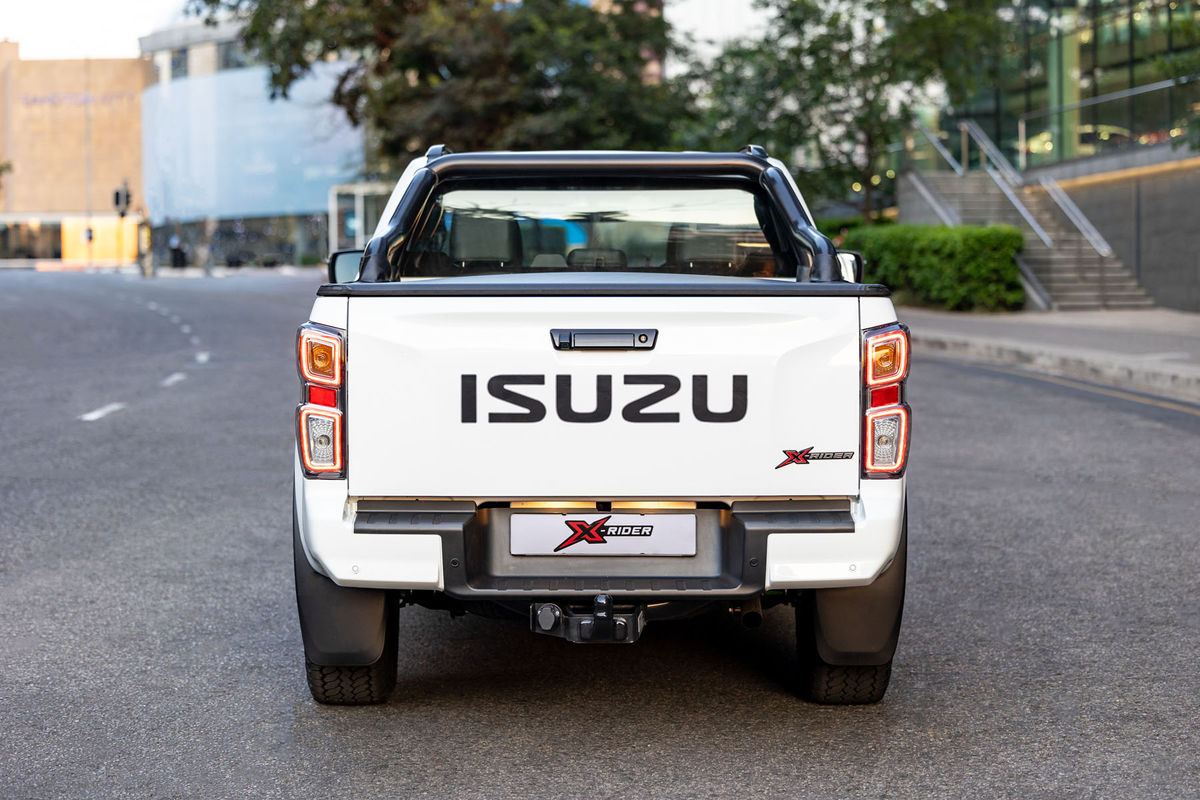
Whether you utilise its capacious load tub or towing capability (you can tow trailers of up to 2.1 tonnes with the towbar, which is fitted as standard), the D-Max X-Rider is ideal for hauling cargo, while its comfortable interior ensures that every journey is enjoyable for all occupants. Additionally, the bakkie’s modern design and advanced tech make it equally at home in urban settings or off-road adventures.
Suffice it to say, from weekday duties to weekend escapades, the D-Max X-Rider adapts effortlessly to any situation, making it the ultimate versatile companion for drivers seeking a bakkie that can “do it all”.
Style that turns heads
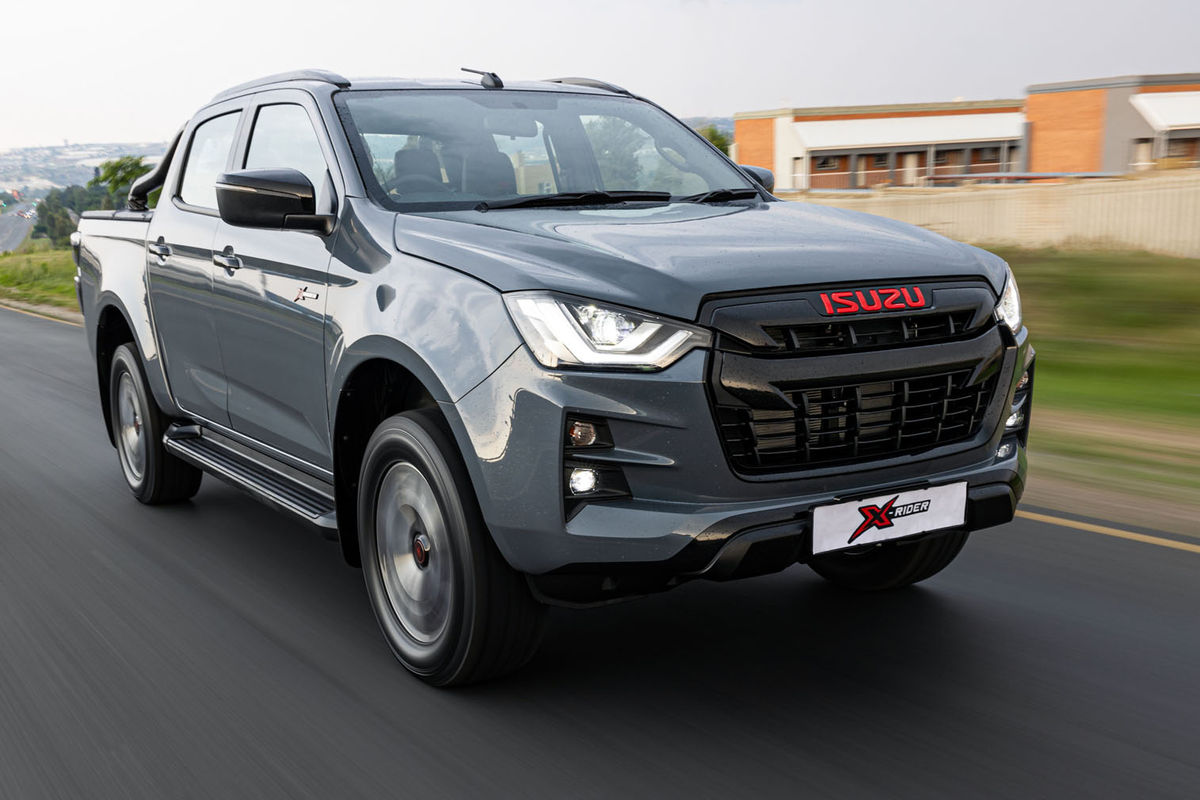
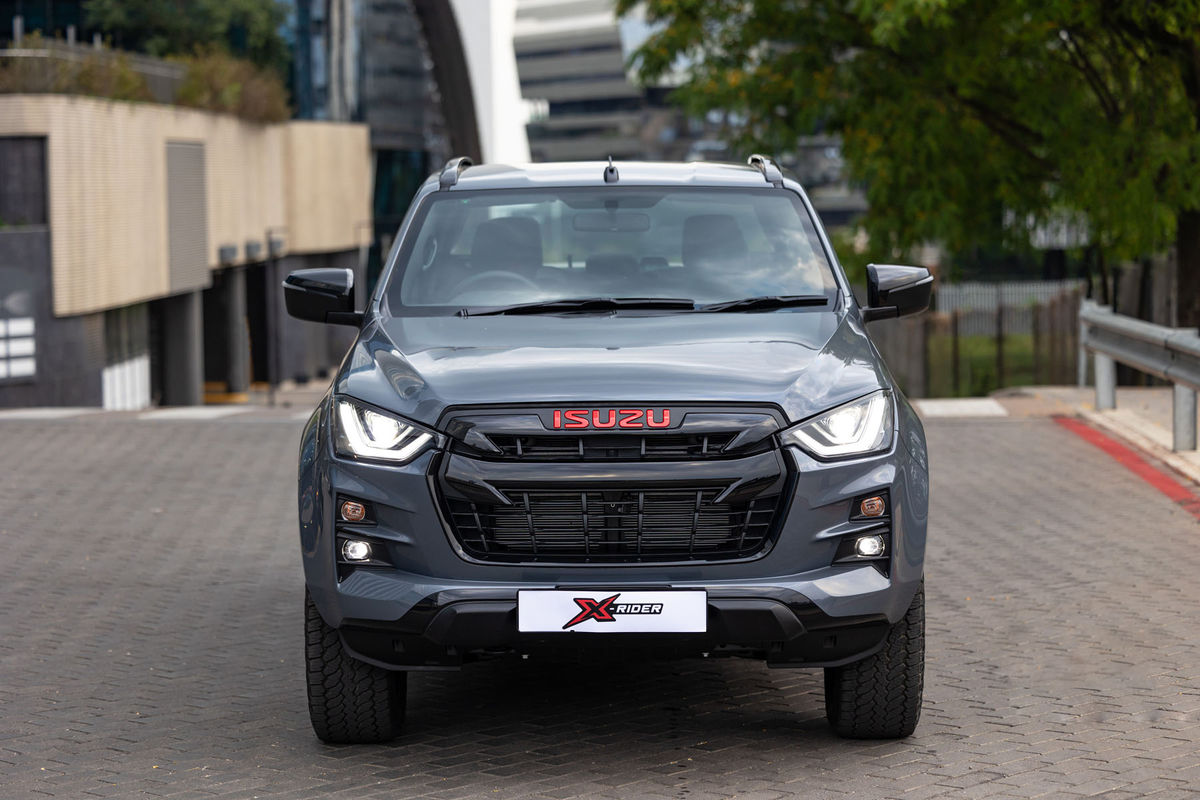
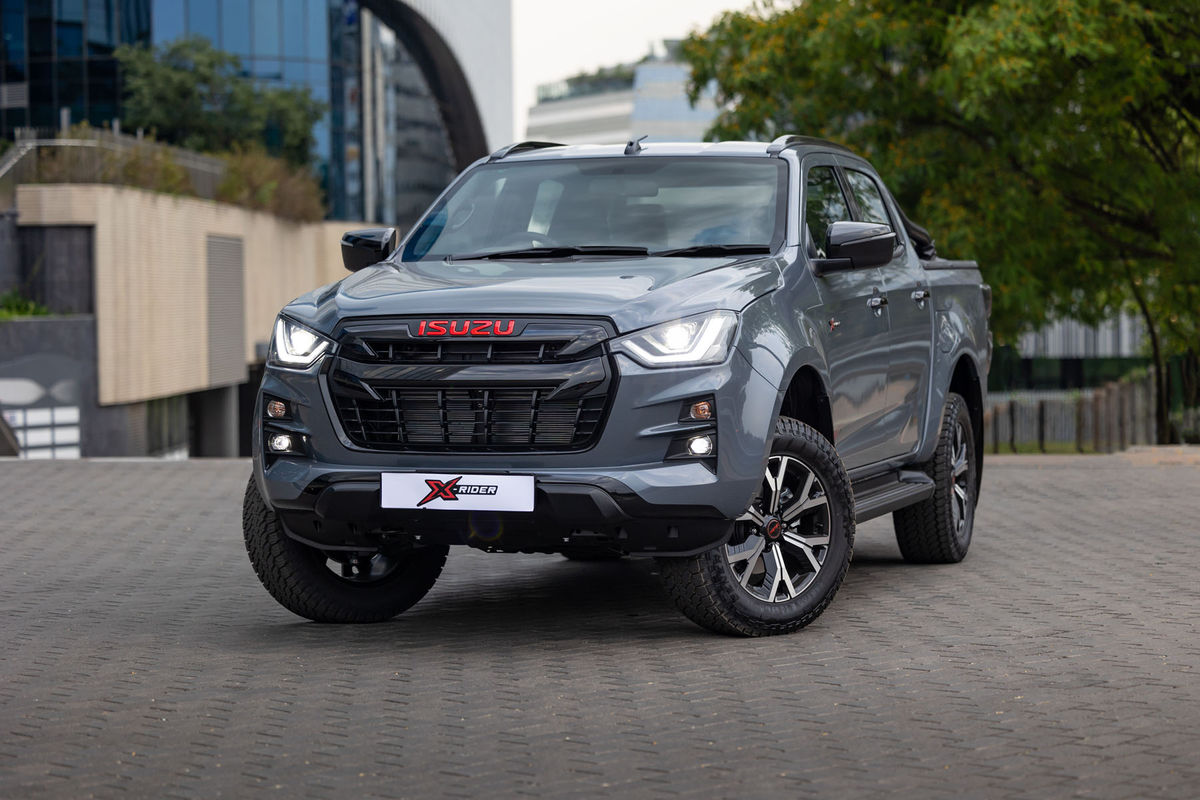
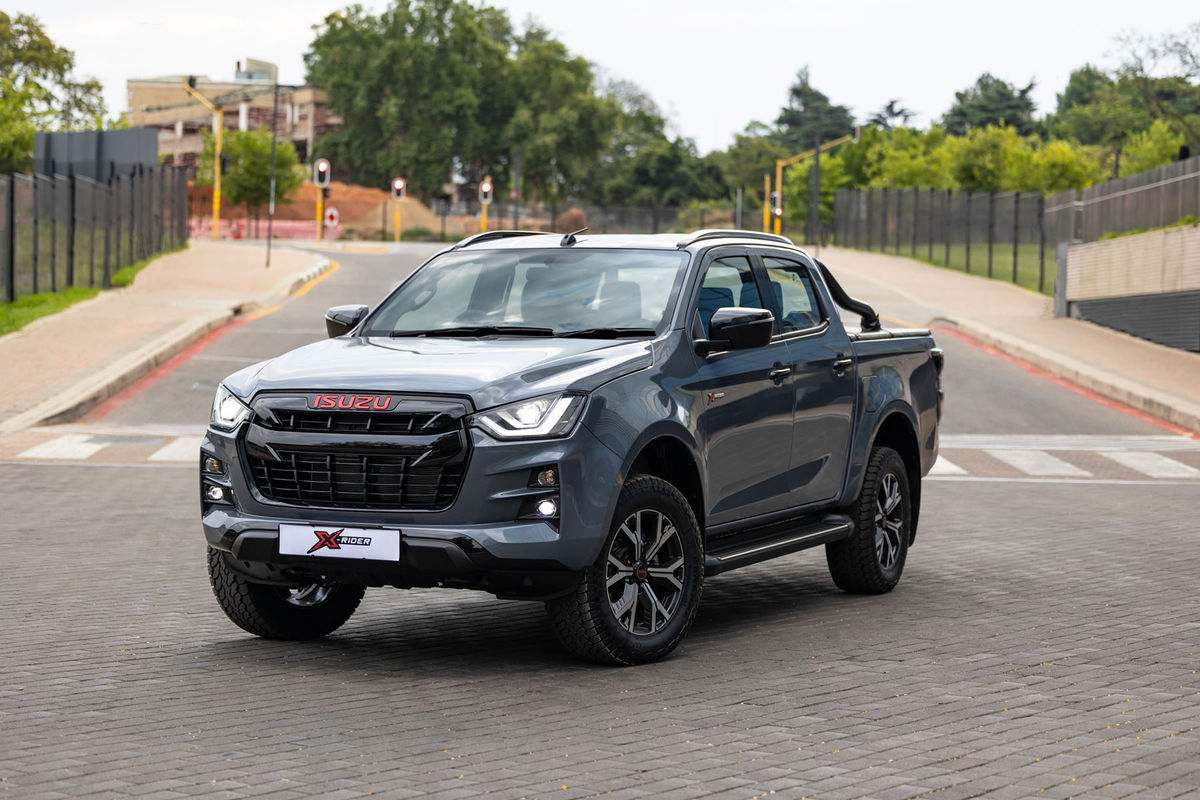
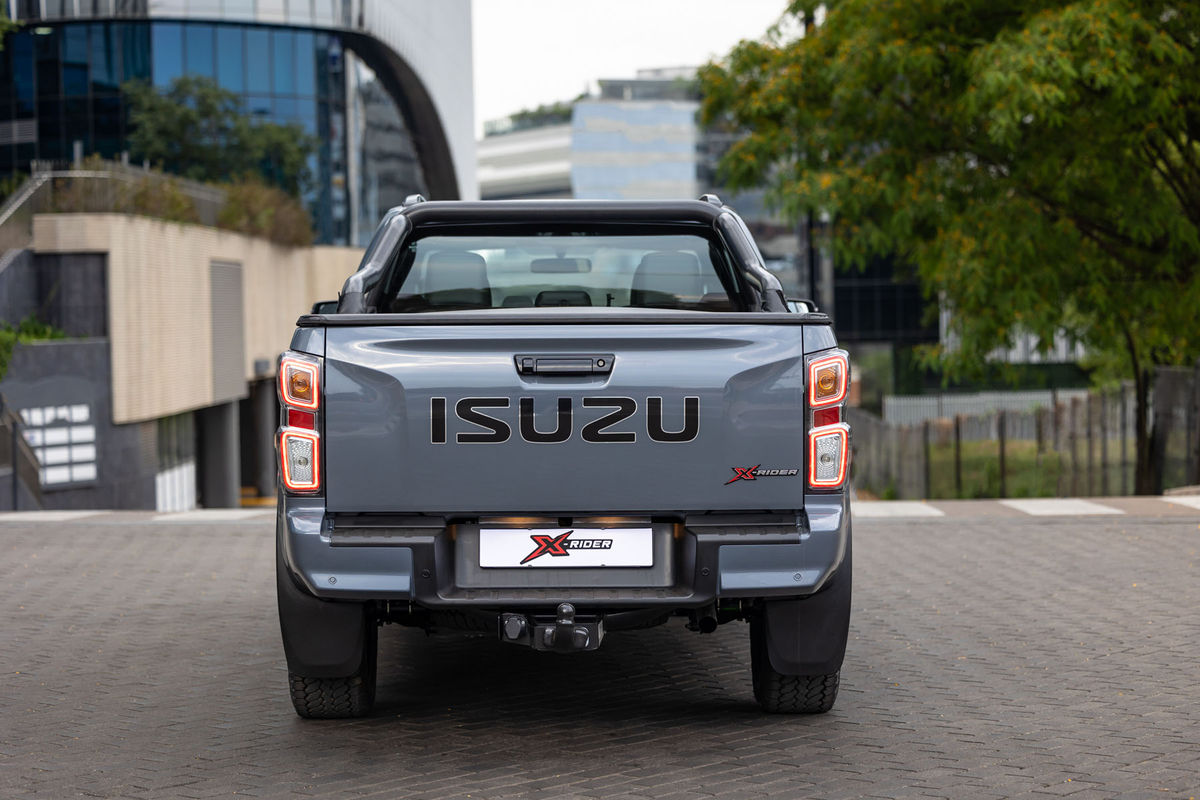
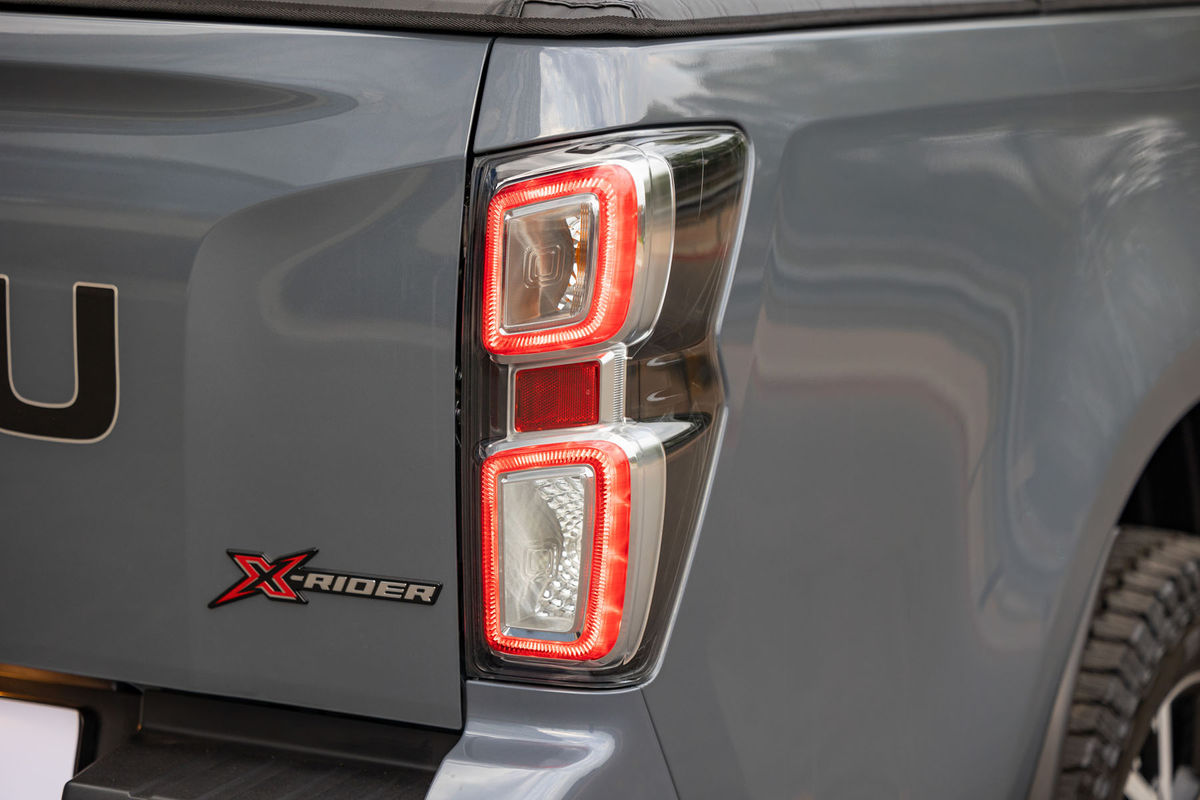
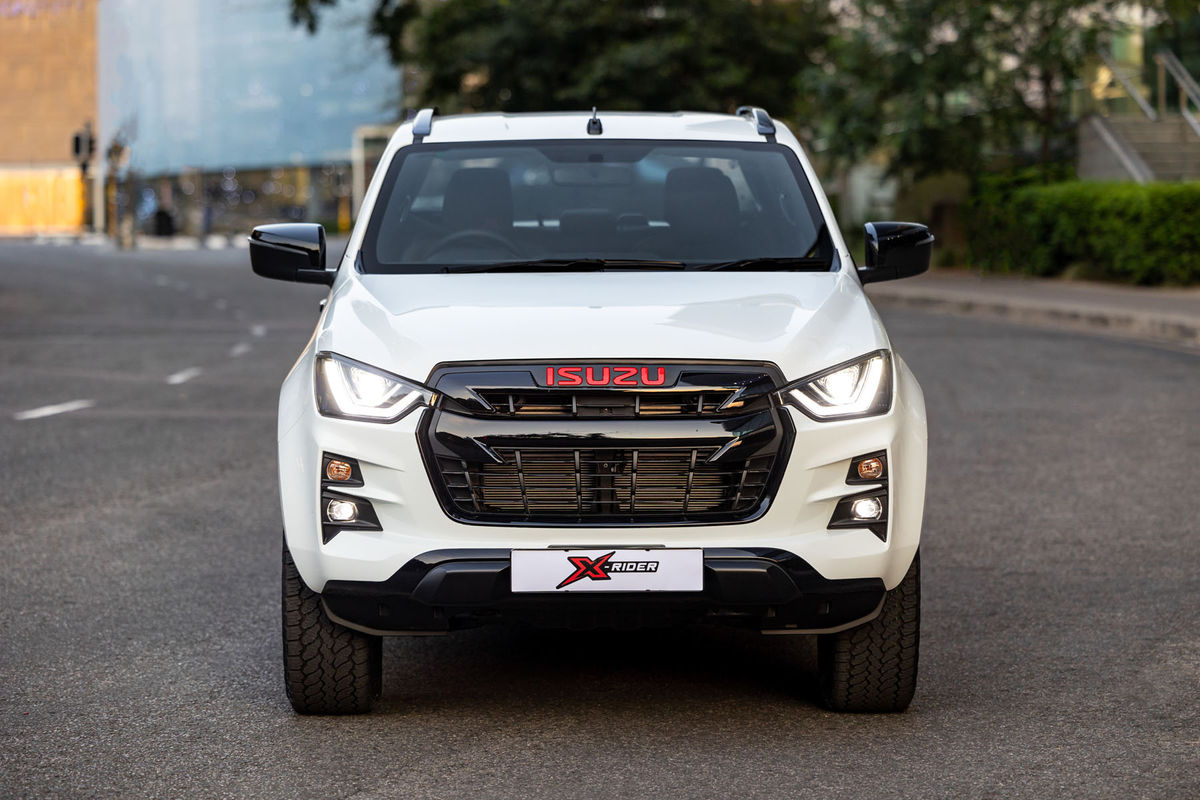
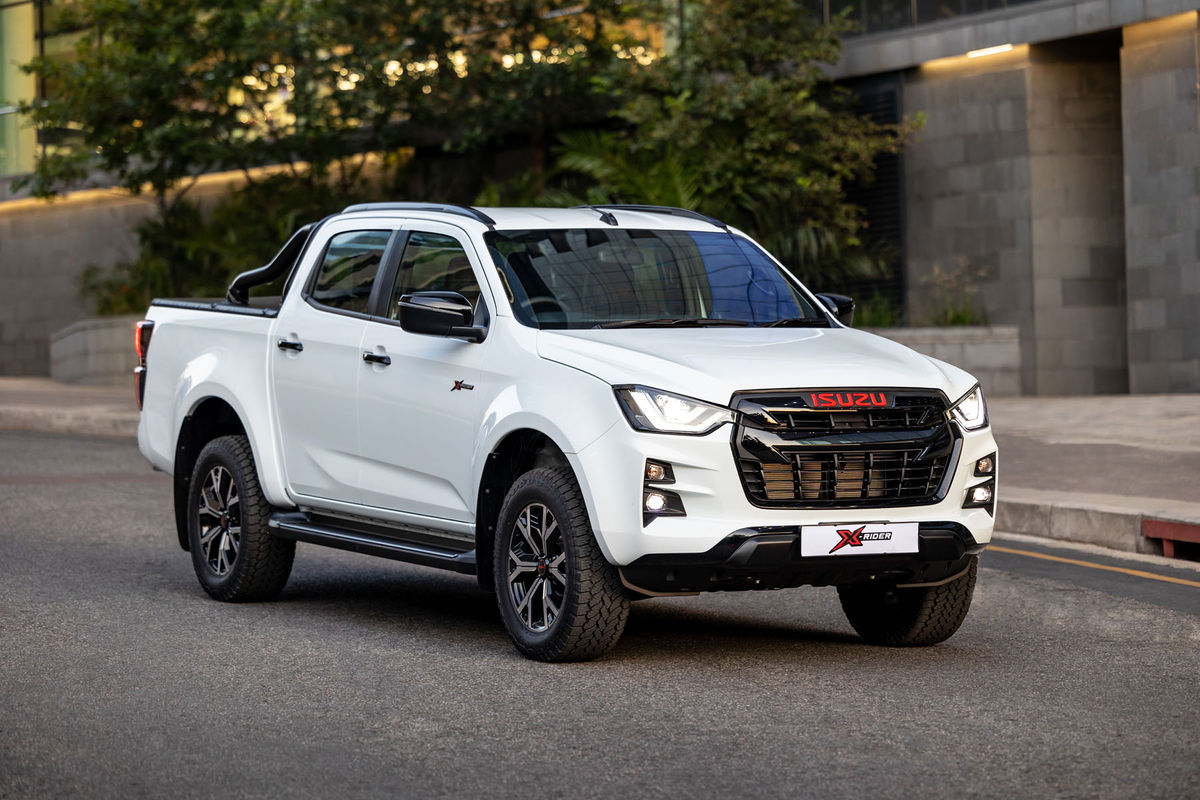
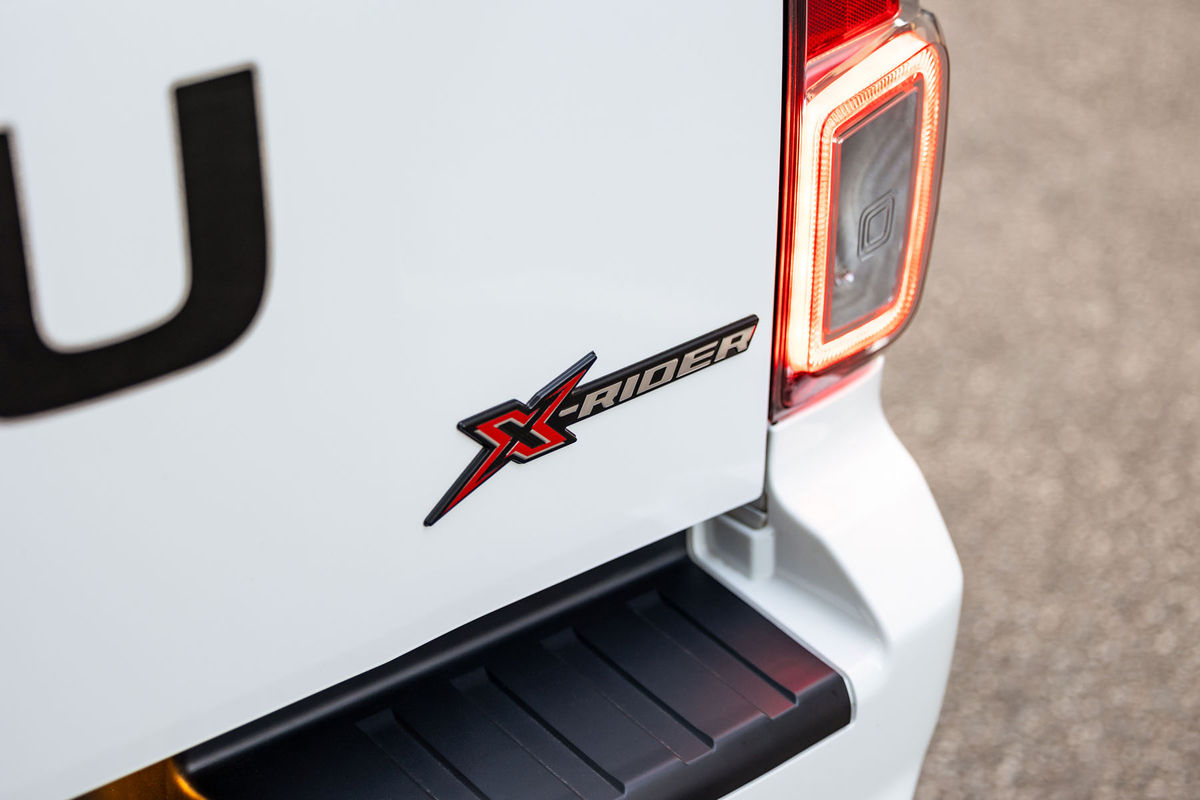
This bakkie has plenty of kerb appeal! Indeed, much of the D-Max X-Rider‘s allure can be attributed to its assertive exterior design. The gloss black grille (adorned with bold red ISUZU lettering sets the tone), while X-RIDER badges on the front doors and tailgate emphasise its exclusive status. LED headlamps, fog- and taillamps not only enhance the aesthetics, but also ensure optimal visibility day and night.
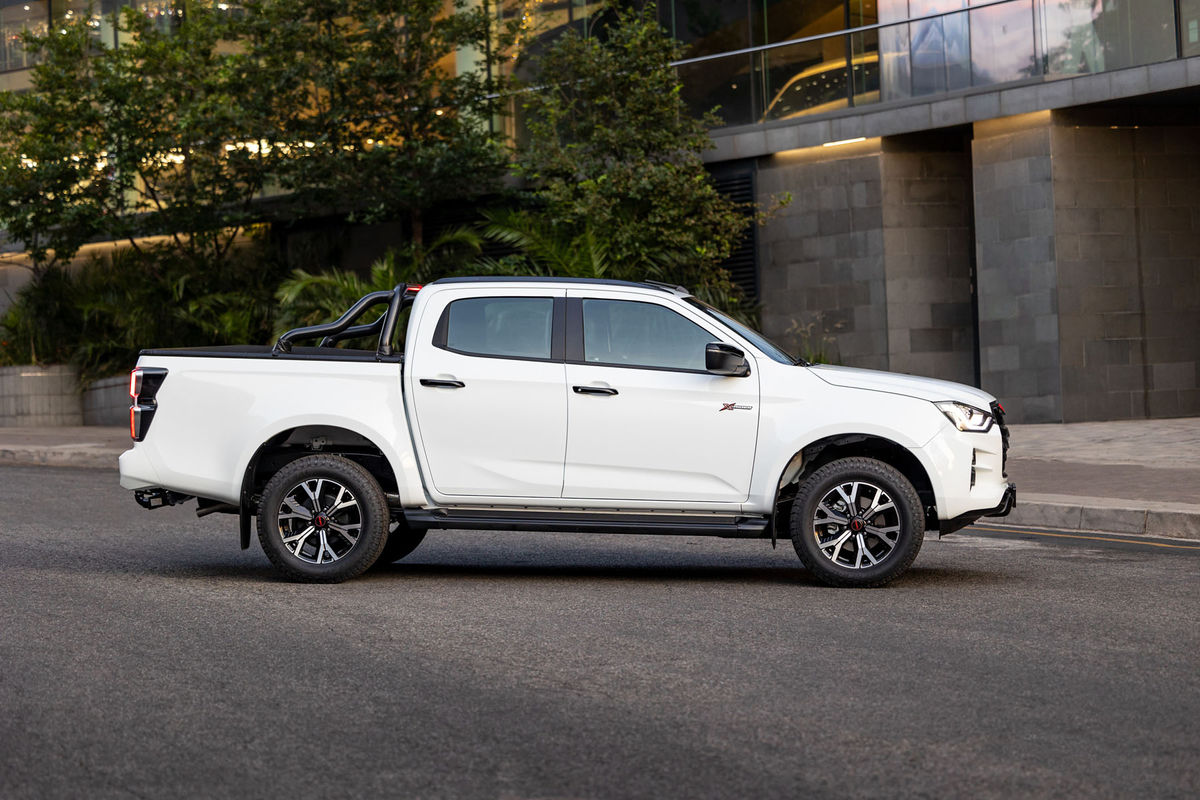
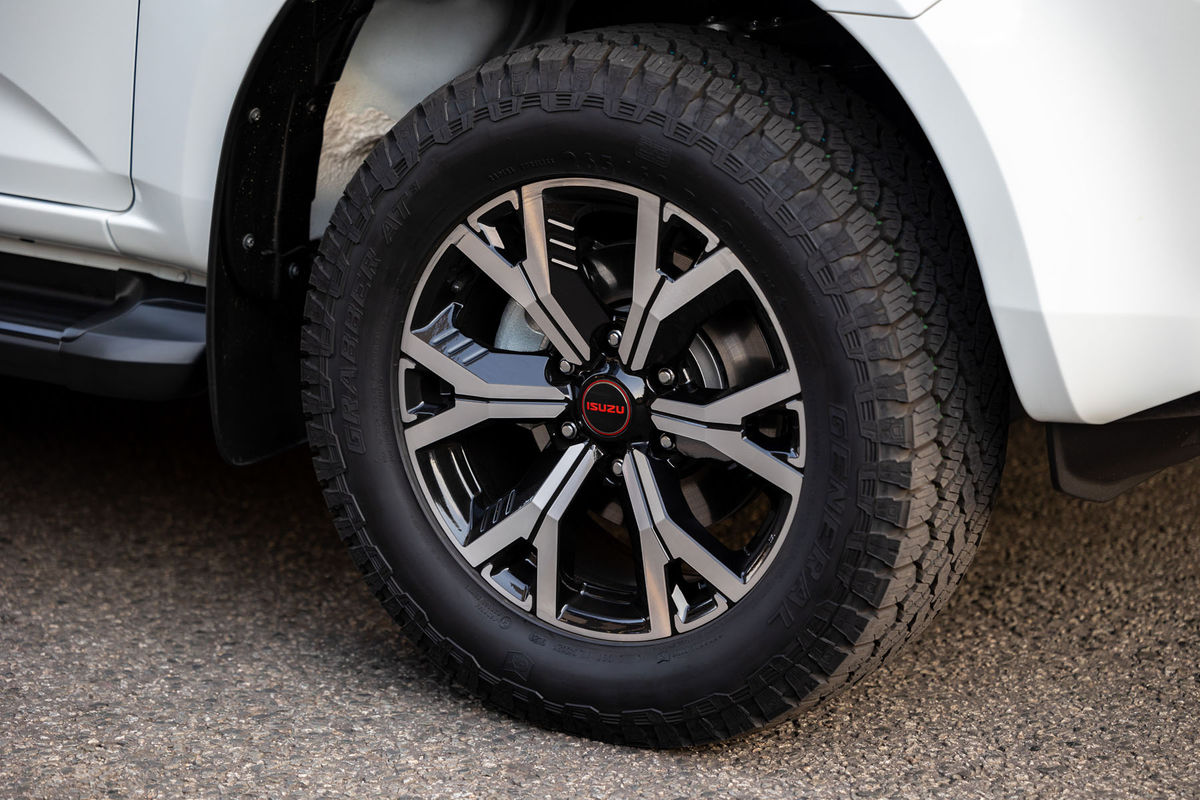
Further enhancing its dynamic appeal are 18-inch diamond-cut alloy wheels – complemented by stylish black accents on door handles, B-pillars, side-mirror covers, and the curved sports bar behind the cab.
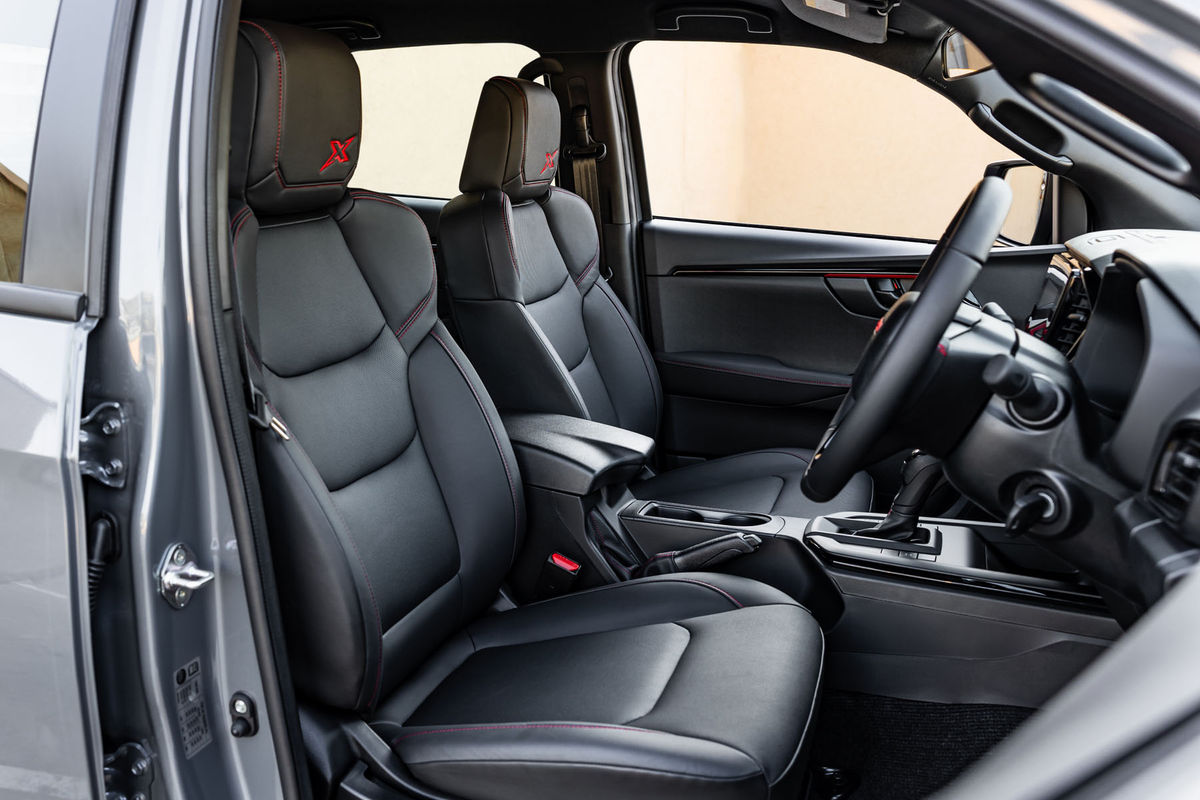
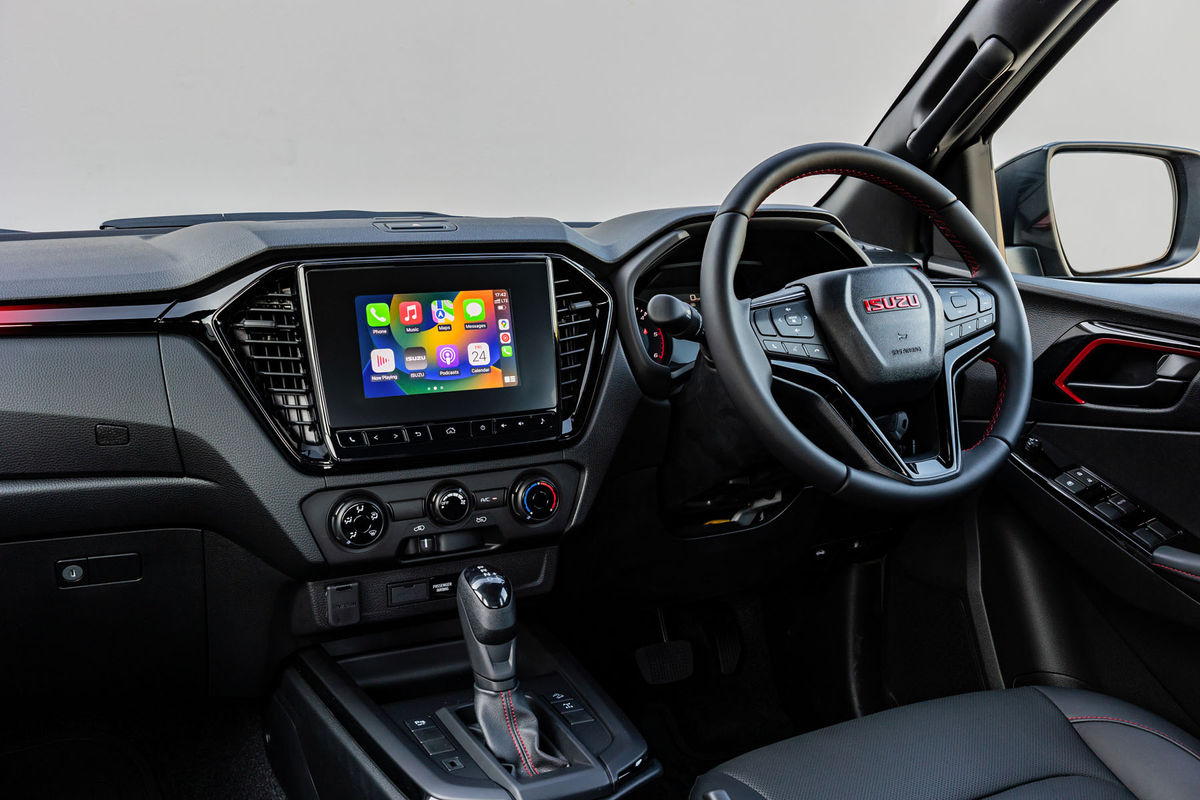
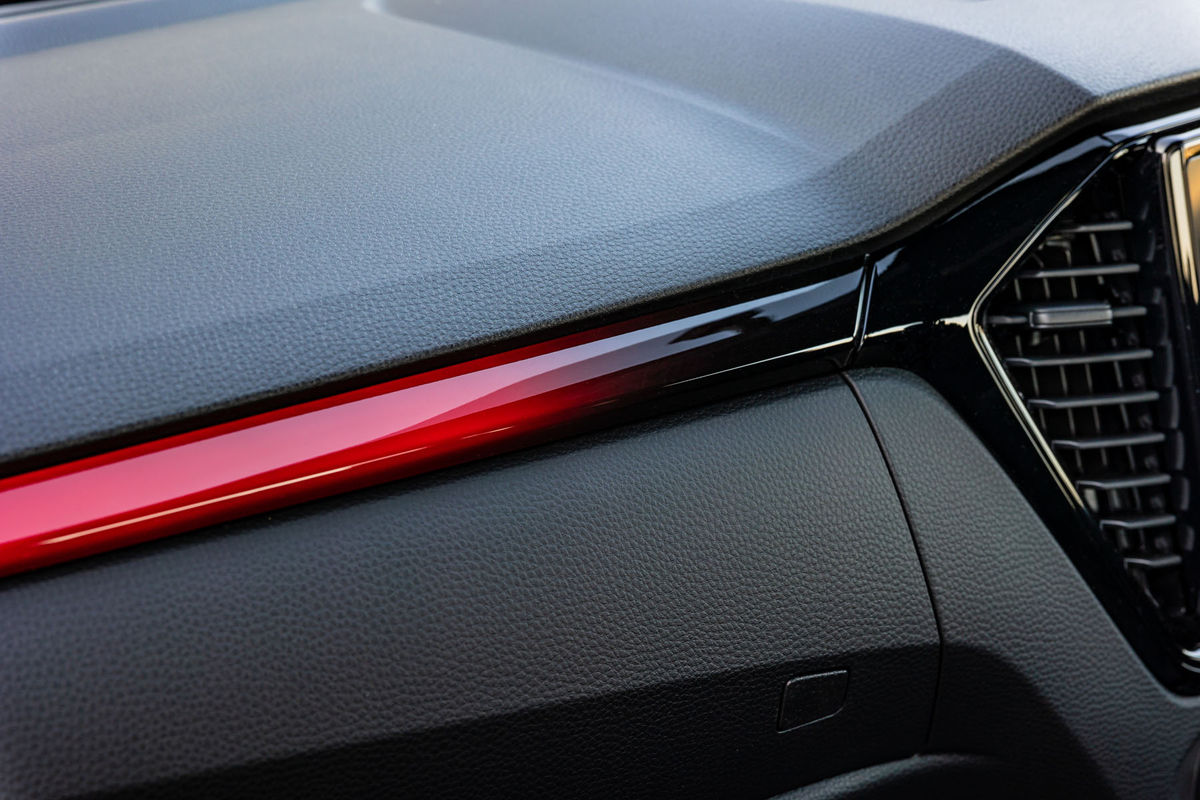
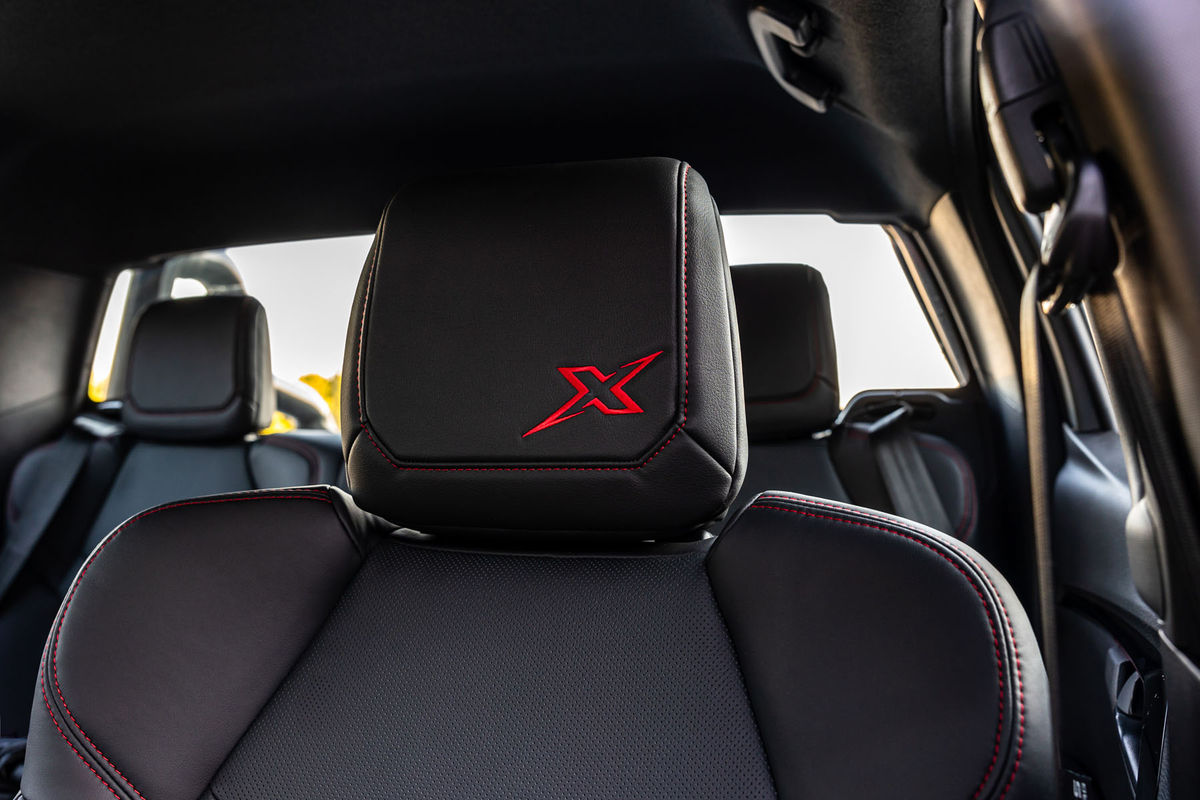
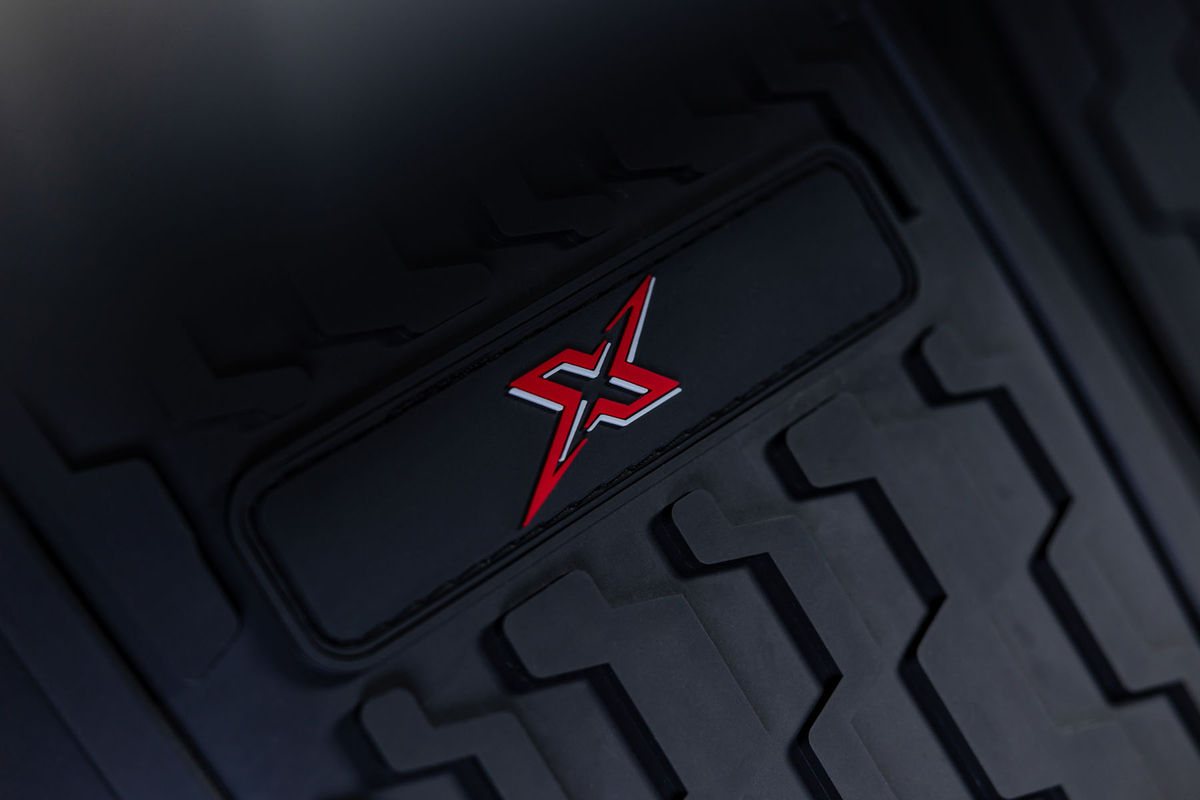
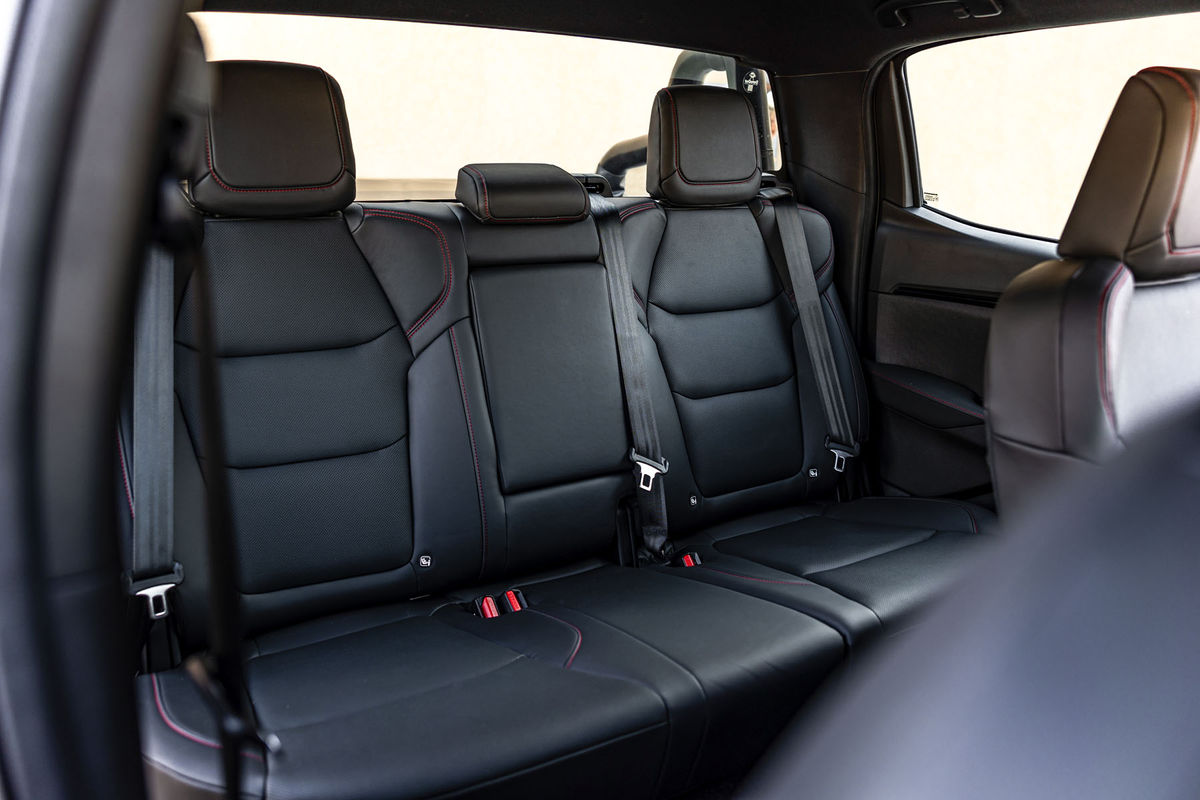
The D-Max X-Rider‘s unique personality is also reflected in its tasteful interior execution. Subtle red accents throughout the cabin, including red stitching on leather seats and door trims, create a sporty yet refined atmosphere. The X logo, prominently featured on the headrests and dashboard, adds a touch of exclusivity, while dark interior surfaces and X-RIDER floor mats complete the premium look.
Cutting-Edge Technology
In today’s digital age, technology plays a crucial role in enhancing the driving experience, and the Isuzu D-Max X-Rider doesn’t disappoint in this regard. Packed with innovative features, this double-cab bakkie offers a range of cutting-edge technologies to keep you connected and informed on the road.
From advanced infotainment systems to driver-assist technologies, the D-Max X-Rider ensures a safe and enjoyable driving experience. Whether it’s navigating unfamiliar roads or staying entertained during long journeys, you can rely on the intuitive technology onboard to make every drive more enjoyable.
All D-Max X-Rider variants are equipped with cruise control, a 7-inch infotainment screen with Apple CarPlay and Android Auto compatibility, a 6-speaker audio system, wi-fi compatibility and a rear USB port (to name just a few of its features). Additionally, rear park assist and a rear-view camera are fitted.
Plus, in terms of standard safety features, the D-Max X-Rider comes fitted with an anti-lock braking system (ABS), electronic brake-force distribution (EBD) and brake assist (BAS), electronic stability- (ESC) with traction control, hill-start assist (HSA), hill-descent control (HDC) and trailer-sway control.
Reliability you can trust
When it comes to choosing a vehicle, its reliability is of primary importance; Isuzu has a long-standing reputation for building vehicles that last and the D-Max is renowned for its durability and dependability.
Based on the latest 7th-gen D-Max range, which is proudly made at Isuzu Motors South Africa’s Struandale plant in Gqeberha, the new X-Rider exemplifies the stand-out character, bold design and distinctive features that have made this unique model revered amongst bakkie owners in Mzansi.
Isuzu D-Max X-Rider line-up & prices
The D-Max X-Rider line-up consists of 3 variants, all in LS trim grade and available exclusively in double-cab configuration. The latest iteration of the model retains its focus on the same target audience as its predecessor: customers who want a double cab with distinctive looks, heightened refinement, notable safety and comfort features, as well as unwavering performance and reliability. While style and image hold significance, accessibility is a top priority, and it’s here where the D-Max X-Rider excels.
Isuzu D-Max 1.9 Ddi 4×2 X-Rider
R640 500
Isuzu D-Max 1.9 Ddi 4×2 X-Rider LS A/T
R659 200
Isuzu D-Max 1.9 Ddi 4×4 X-Rider LS A/T
R740 700
Isuzu Complete Care, which embodies the band’s commitment to aftersales service and customer satisfaction, comes standard with every D-Max X-Rider. A comprehensive 5-year/120 000 km warranty and roadside assistance, as well as a 5-year/unlimited km anti-corrosion warranty, are included.
In addition, a 5-year/90 000 km service plan is included in the purchase price, with service intervals scheduled every 15 000 km or annually, whichever comes first.
Through Isuzu Mobility, customers have the option of extending the standard service plan up to a maximum of 6 years or 200 000 km. The service plan can also be upgraded to a full maintenance plan that covers the vehicle for planned and unplanned maintenance up to 6 years or 200 000 km.
The Nissan X-Trail was one of the models that helped to establish the medium SUV segment. Following the (relatively recent) local introduction of the 4th-gen model, we got behind the ‘wheel of the flagship 2.5 Acenta Plus 4WD 7-seater.
We like: Refinement and ride quality, cabin space, fuel economy, fit and finish.
We don’t like: Lacks in-gear power, the 3rd-row seats limit luggage space.
FAST FACTS
Model: Nissan X-Trail 2.5 Acenta Plus 4WD
Price: R810 900 (April 2024)
Engine: 2.5-litre 4-cylinder naturally-aspirated petrol
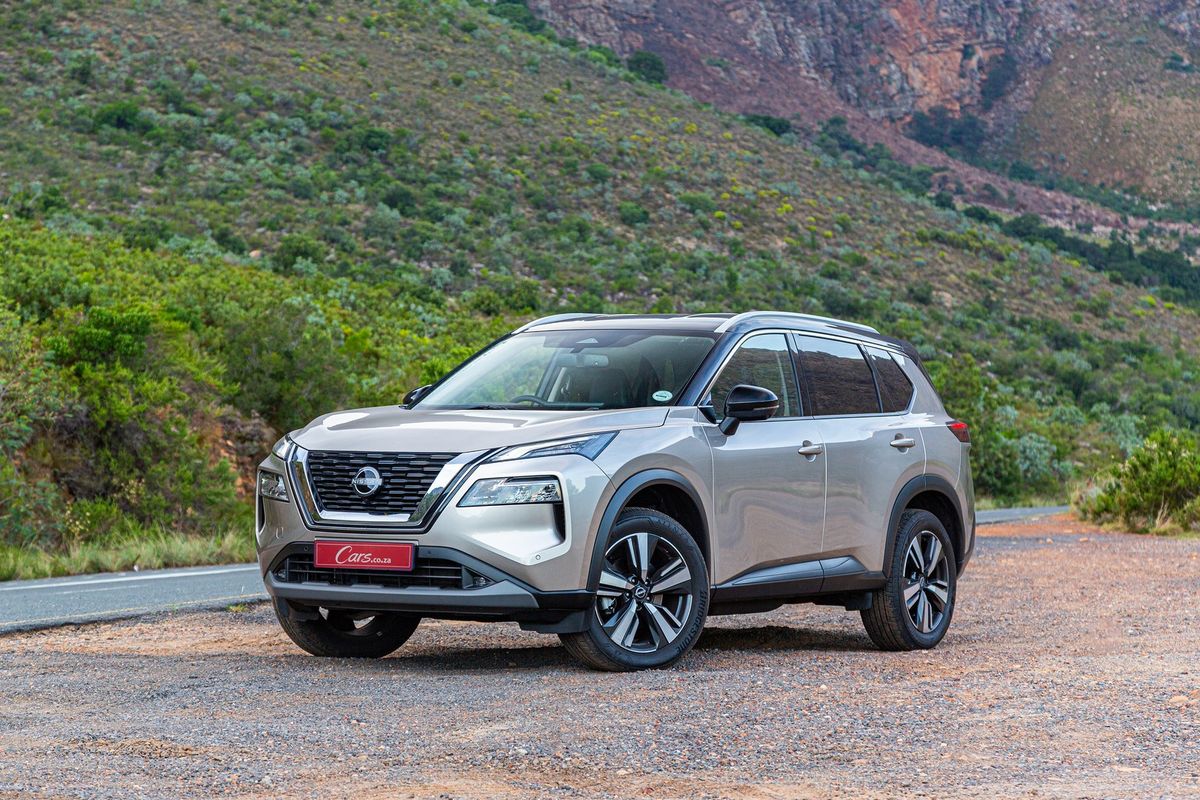
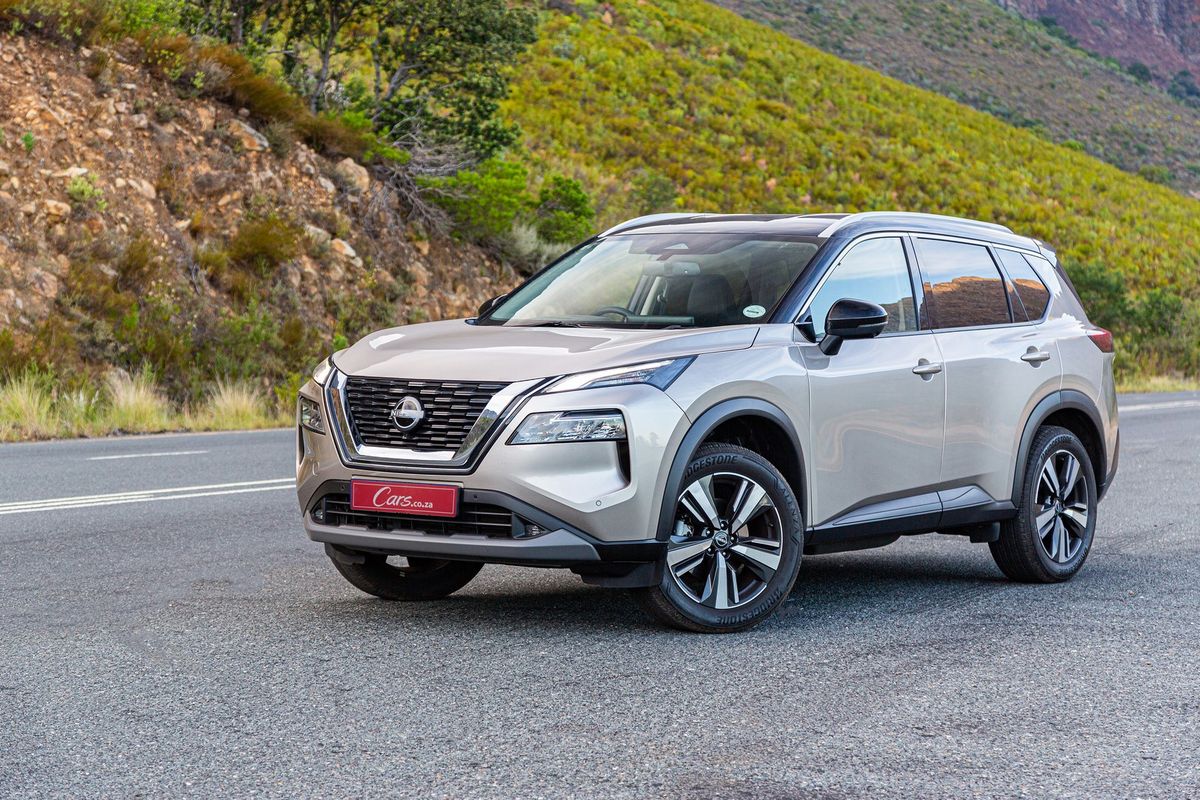
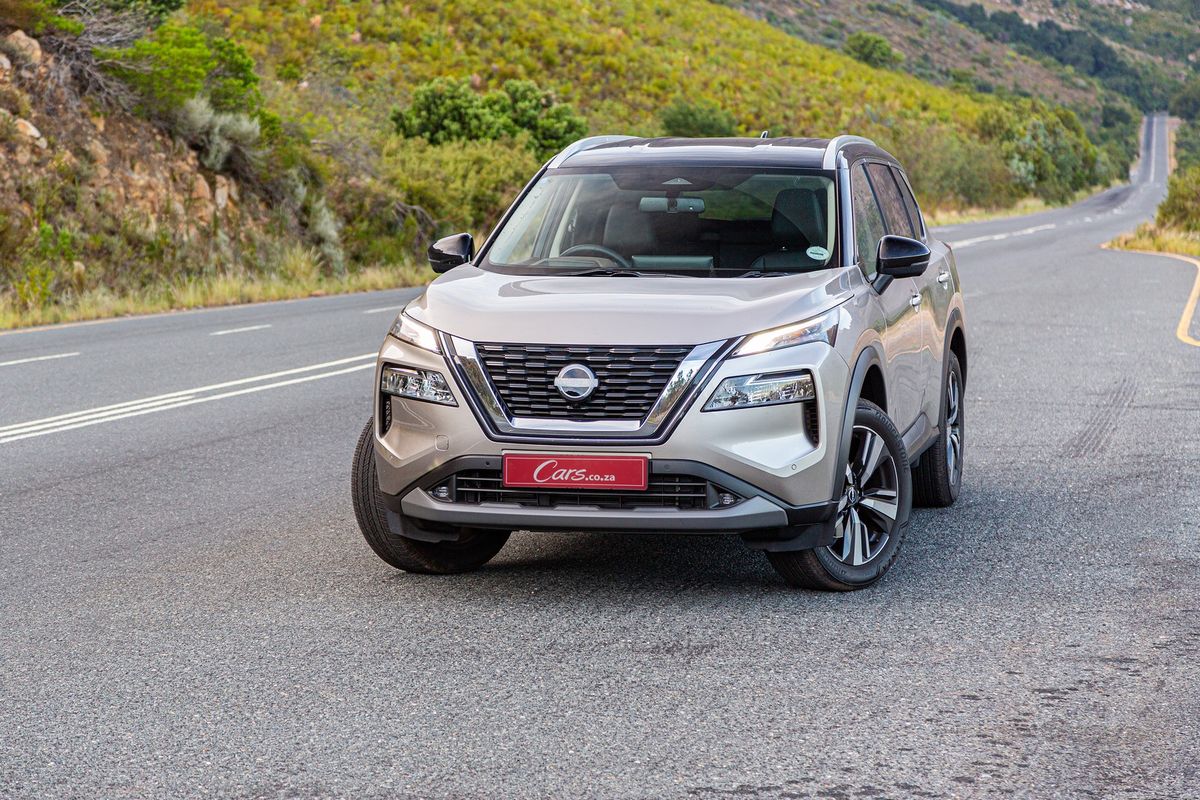
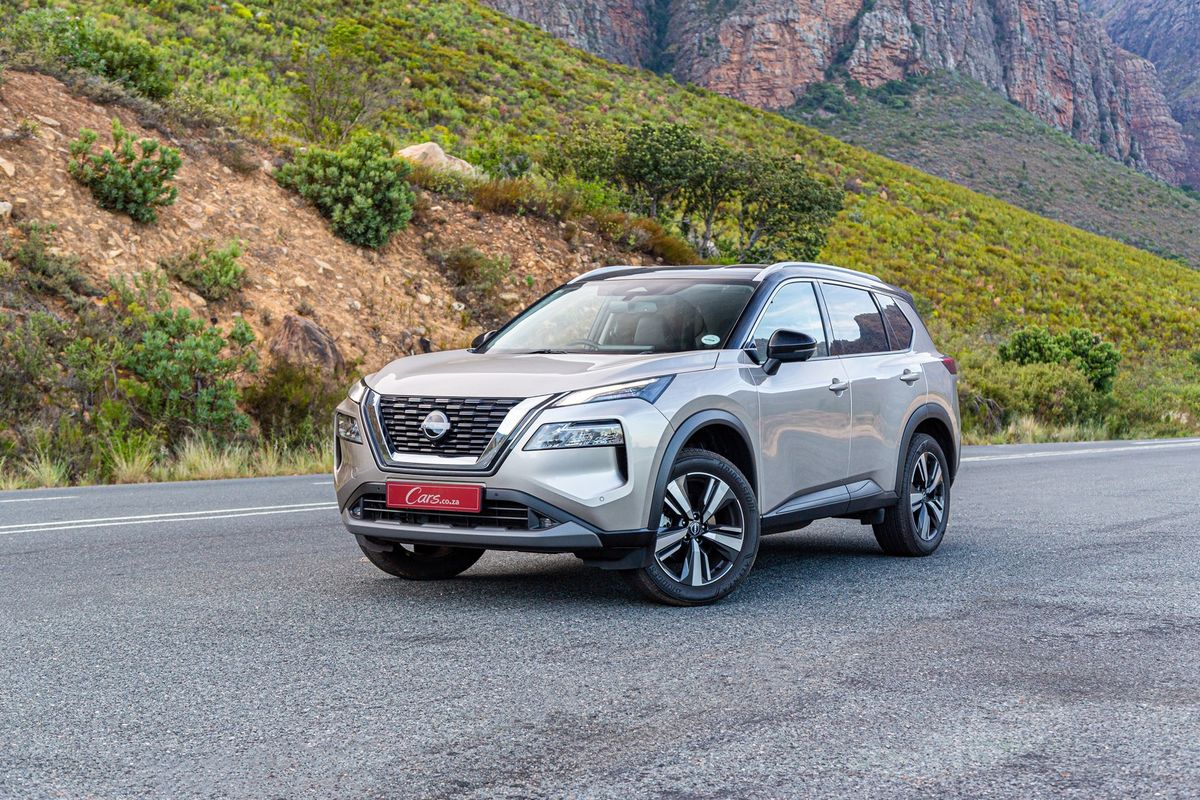
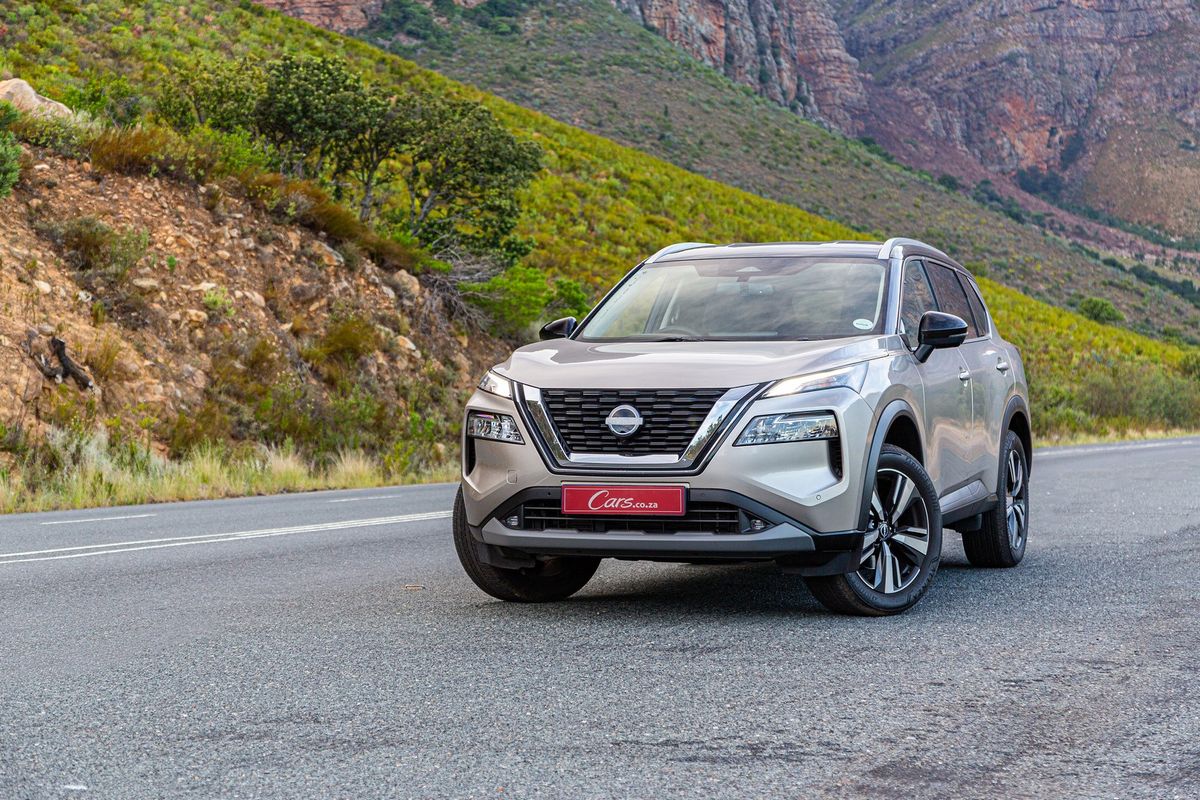
The 4th-gen Nissan X-Trail sports a bold front visage.
The 4th-gen Nissan X-Trail is new to SA’s family-car market (it arrived in April 2023), but it was launched in Japan in 2022 and debuted in North America (as the Rogue) in 2020. Nonetheless, the T33-series X-Trail’s styling still looks fresh and the model incorporates many improvements over its predecessor.
Compared with previous iterations of the X-Trail, however, it competes with a multitude of medium SUVs in the new-vehicle market. If you’re shopping with a budget of R800 000 and want a family car that is appreciably spacious and loaded with features, you’re spoilt for choice. The allure of premium marques’ entry-level crossovers may be strong, but the volume-selling brands offer better value for money…
Nissan offers its X-Trail in 5- as well as 7-seat configurations, so if a 3rd row of seats is required, the newcomer’s rivals are the Chery Tiggo 8 Pro AWD and Volkswagen Tiguan AllSpace 132kW 4Motion:
If you seek something with low mileage and are prepared to sacrifice some ride quality, then why not consider a demo Ford Everest? It has a powerful turbodiesel engine, all-wheel drive and seating for 7.
How the Nissan X-Trail 7-seater fares in terms of…
Design and Packaging
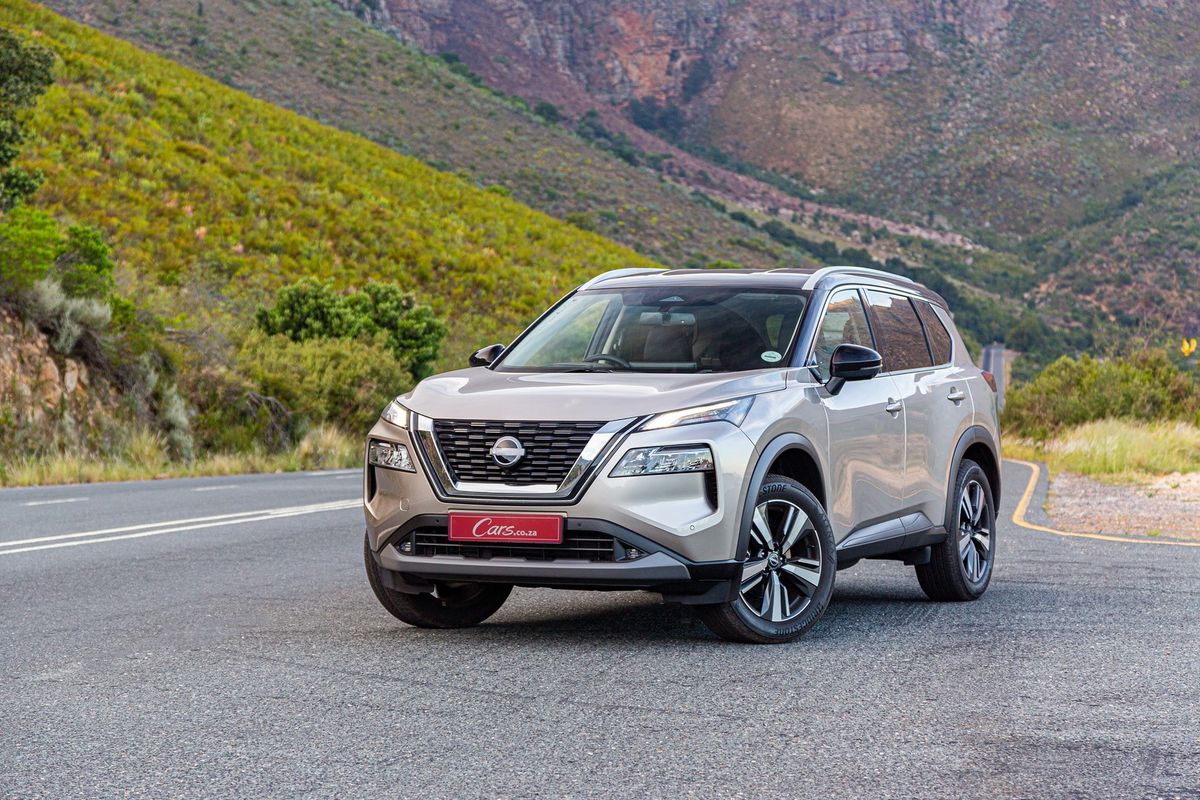
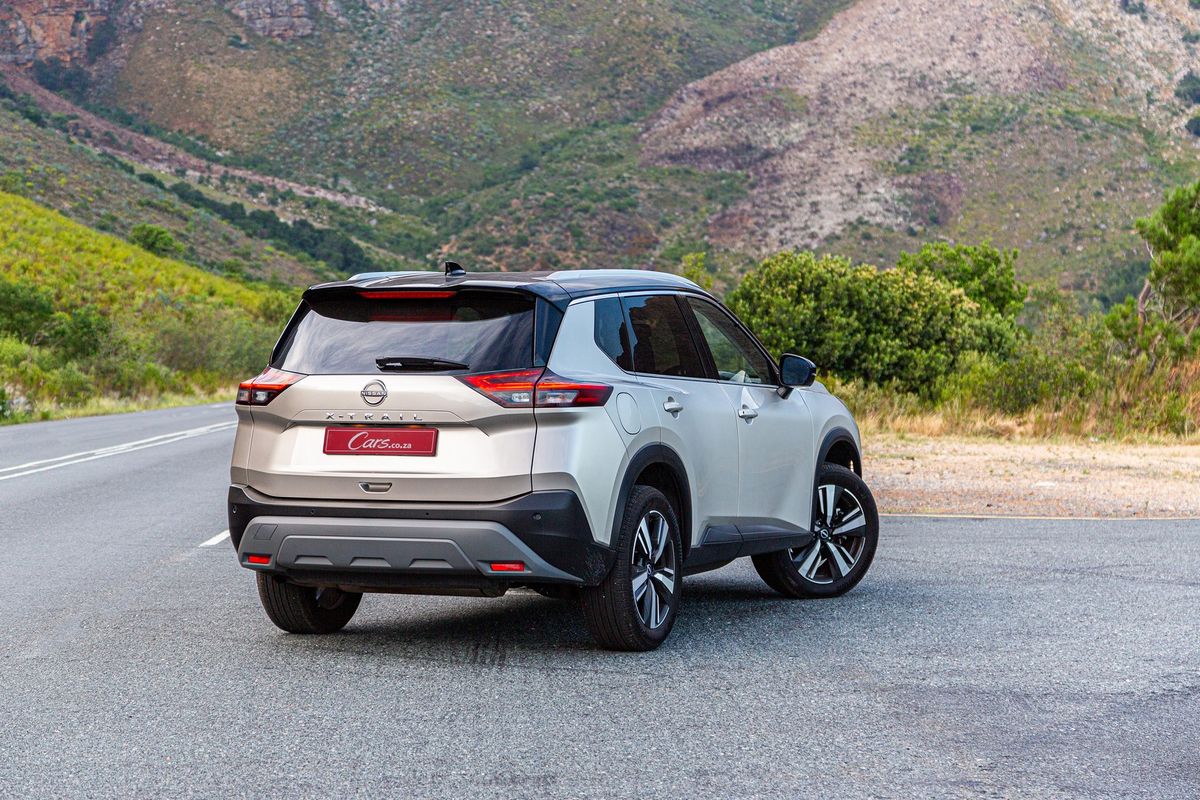
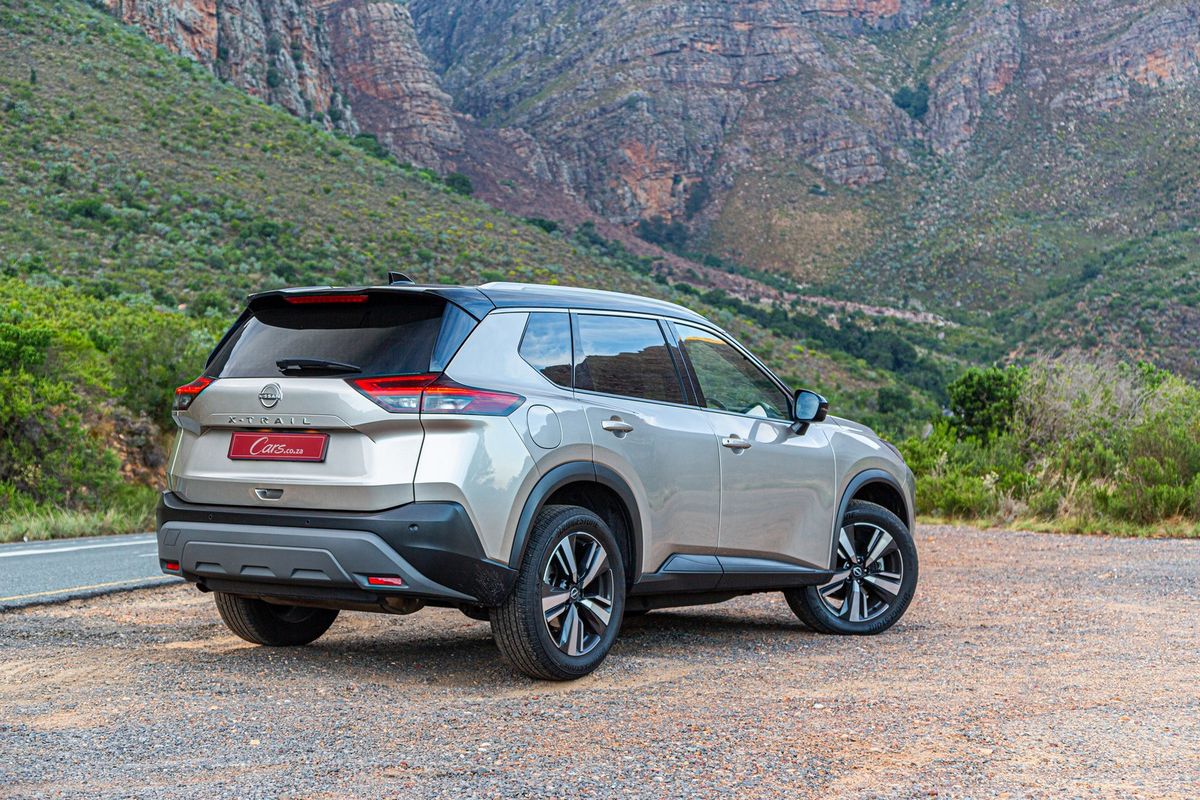
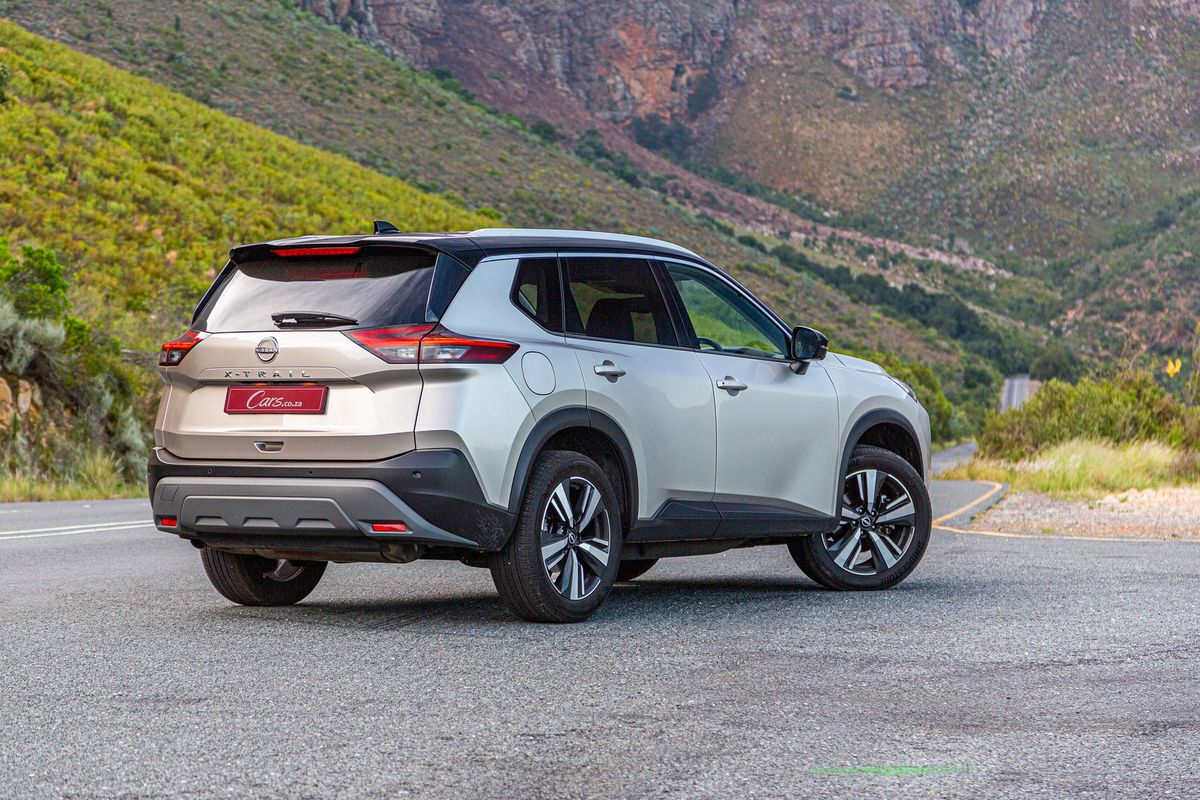
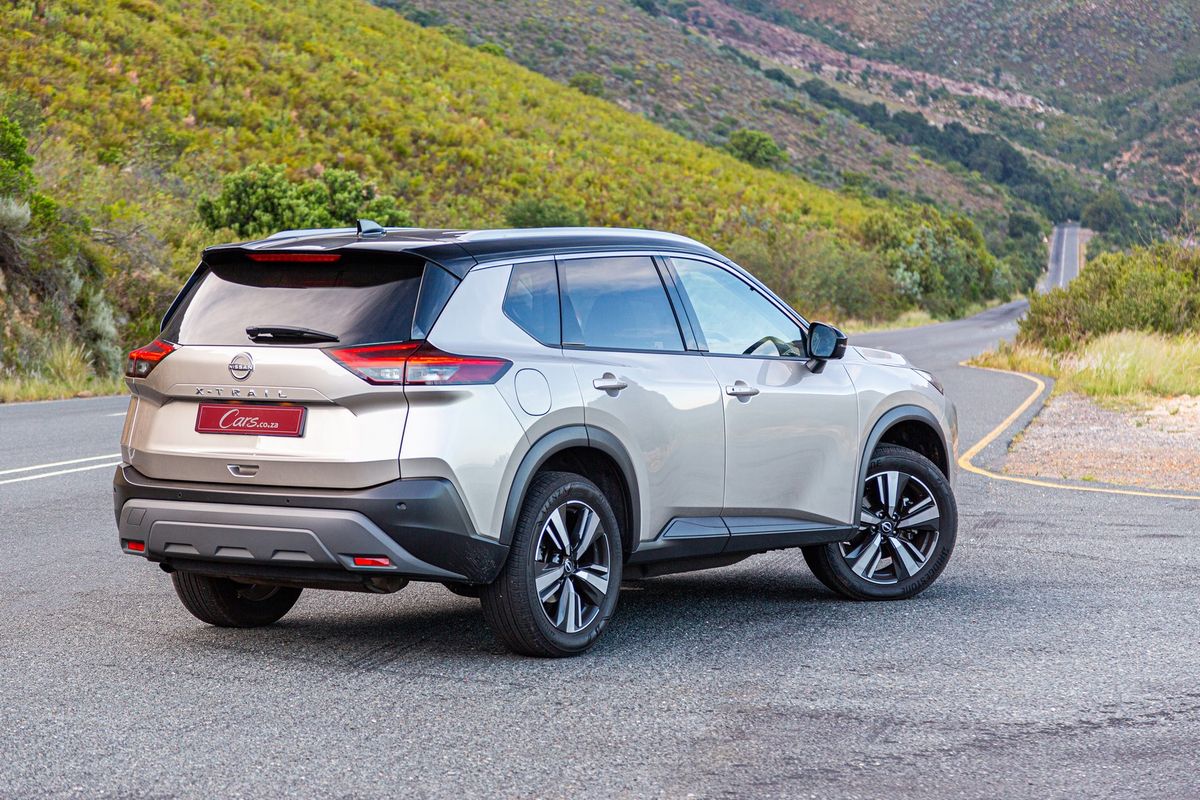
The Champagne Silver finish of the Nissan X-Trail 7-seater test unit contrasted nicely with its black roof.
When the 4th-gen (T33) Nissan X-Trail was introduced in Mzansi, the model’s price list ranged from R649 900 to R759 900, but a year later, it has crept up to R685 900 to R810 900. The line-up comprises a pair of 5-seaters and the 2.5 Acenta Plus 4WD, which is a 7-seater – and the subject of this review.
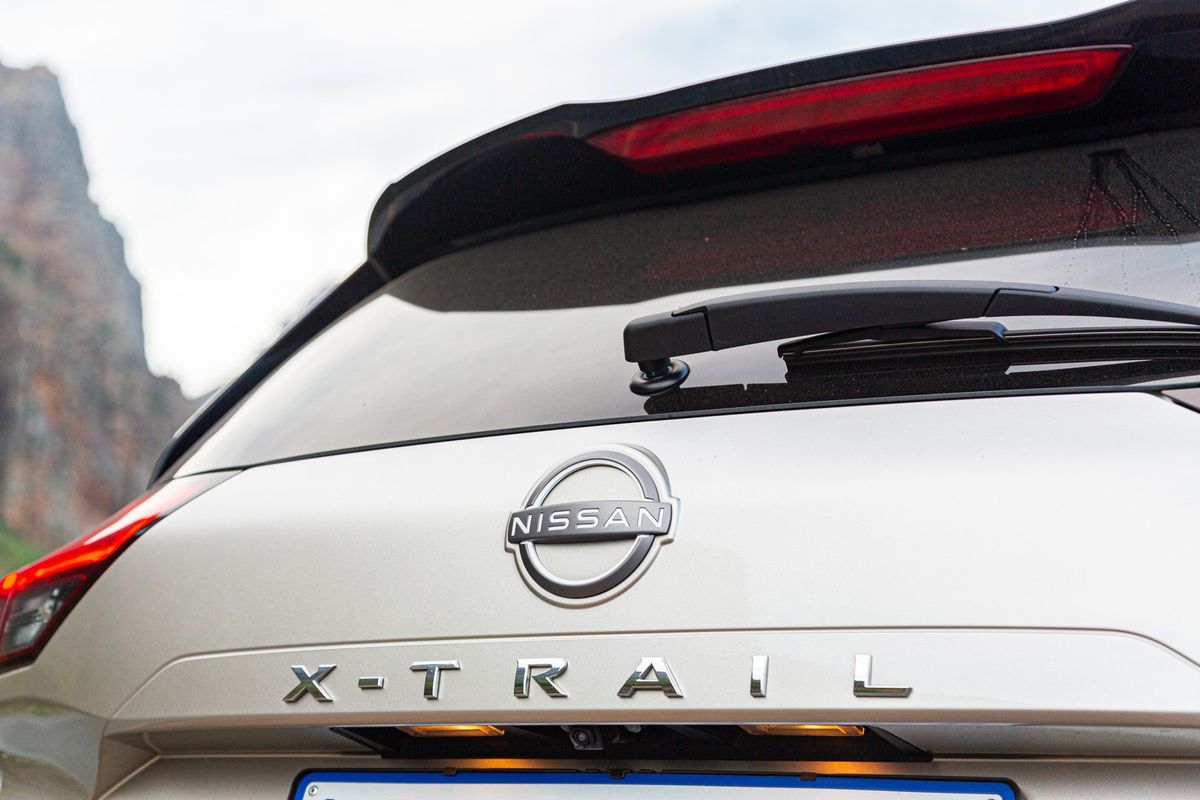
The model looks much more distinctive and impactful than its predecessor. Whereas the outgoing model was inoffensively styled (a kind way of saying “generic-looking”), the T33 embodies Nissan’s new design language, which we first experienced with the Qashqai. It looks bold, fresh and radical and the test unit’s Champagne Silver finish added to the premium image; if you look closely, you’ll spot Nissan’s new logo.
The new Nissan logo features on the tailgate of the Nissan X-Trail 7-seater.
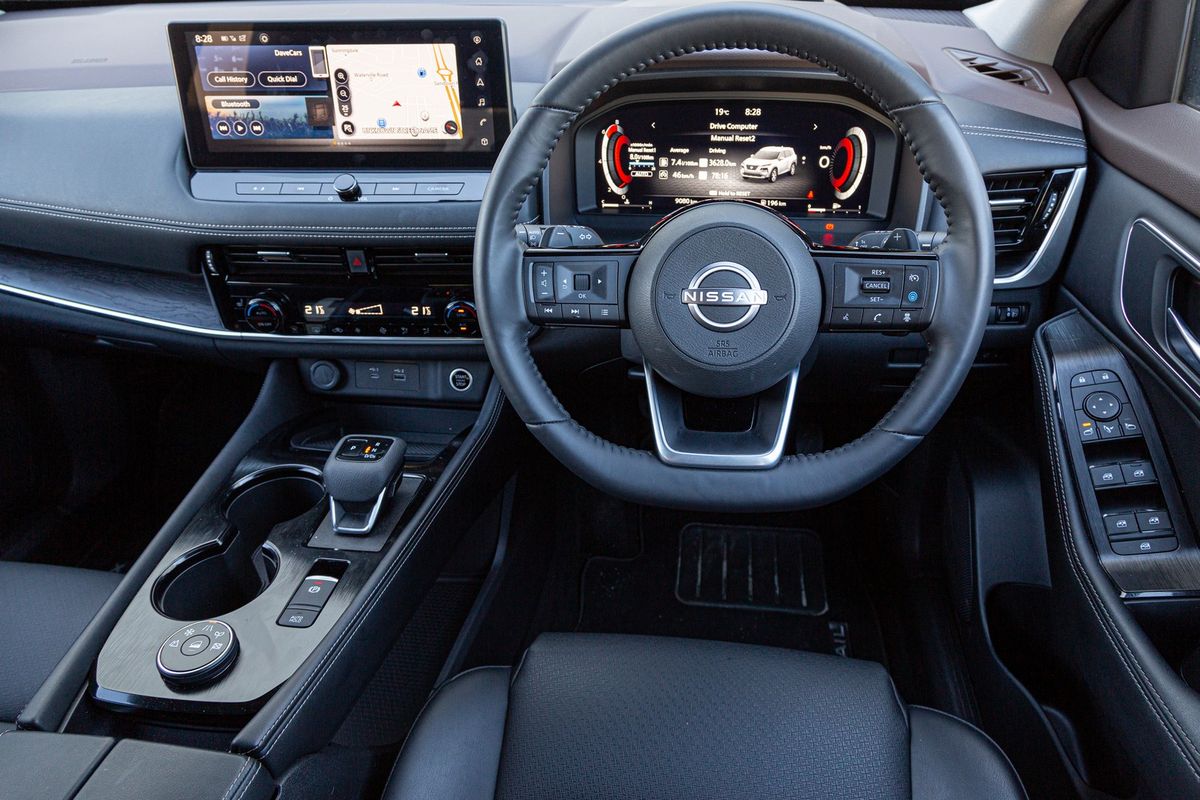
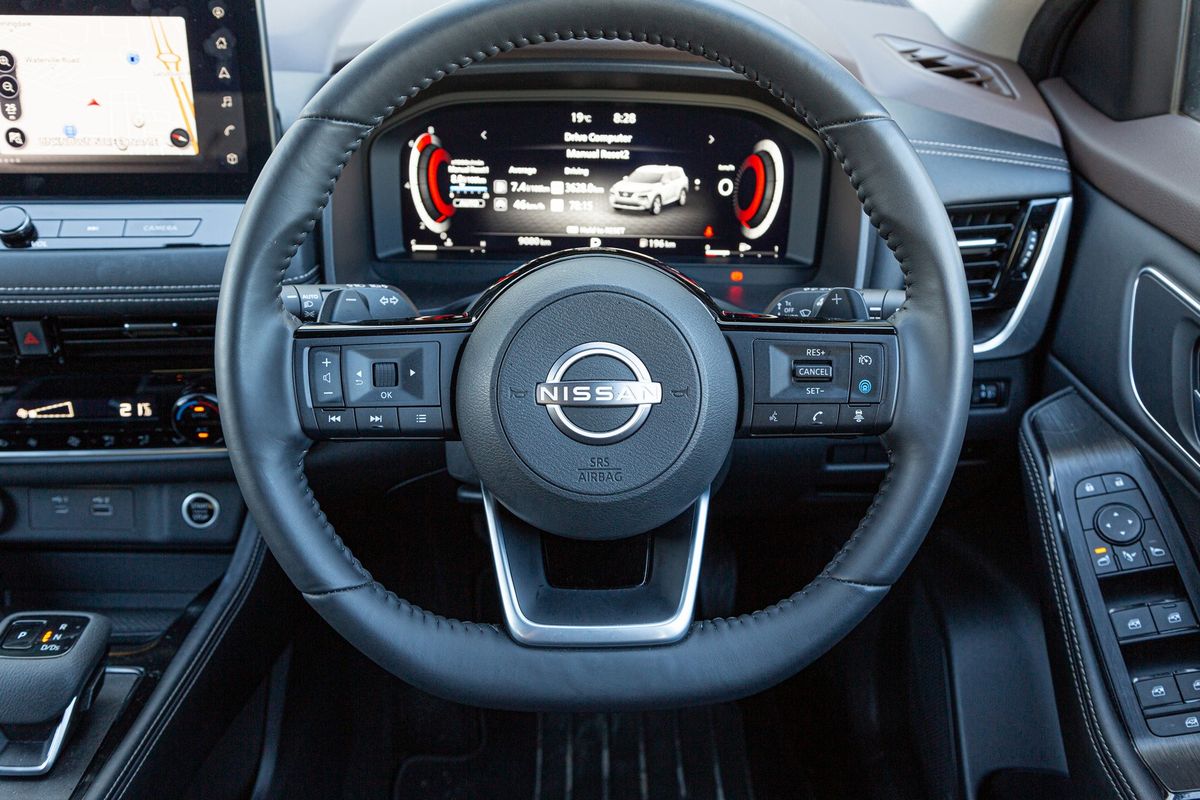
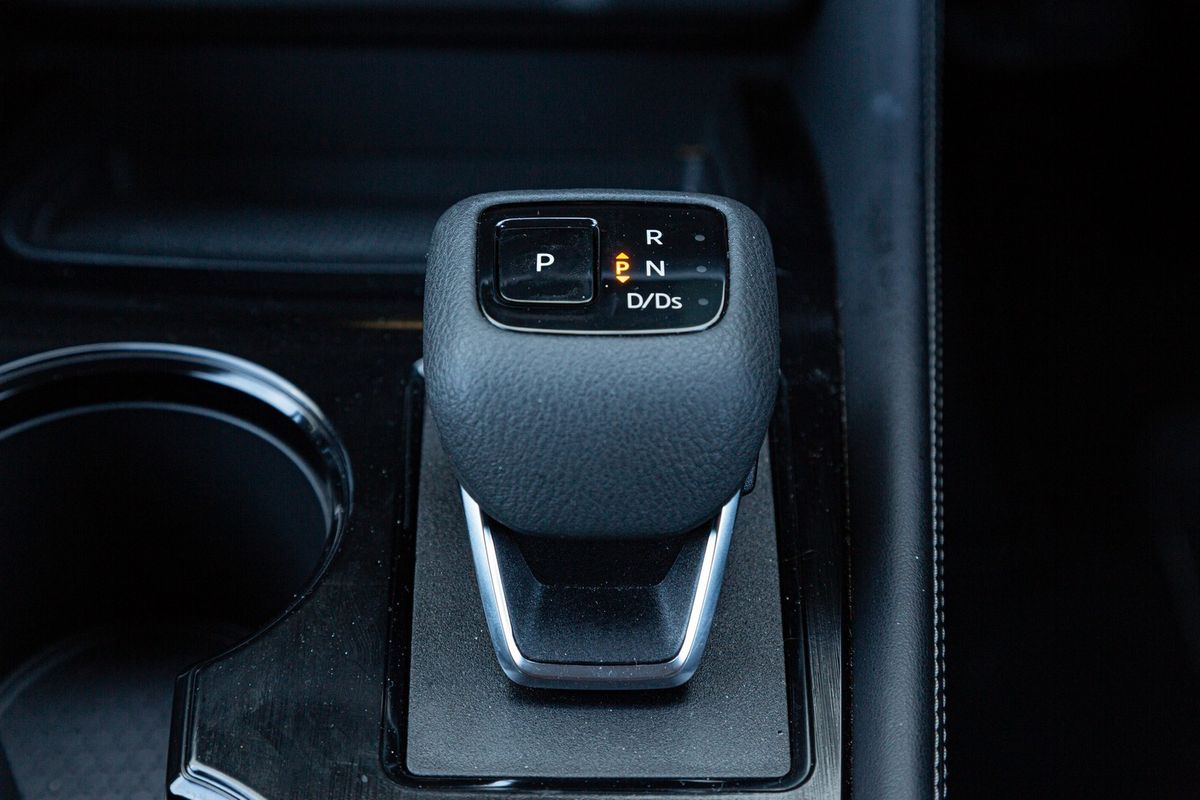
When you climb inside, you’re greeted by a cabin that’s premium and plush, both in look and feel. The interior of the 4th-gen X-Trail represents a huge leap forward for Nissan’s family car. It’s as modern and tech-laden as you’d expect at this price point, and everything is laid out in a clean, ergonomic manner.
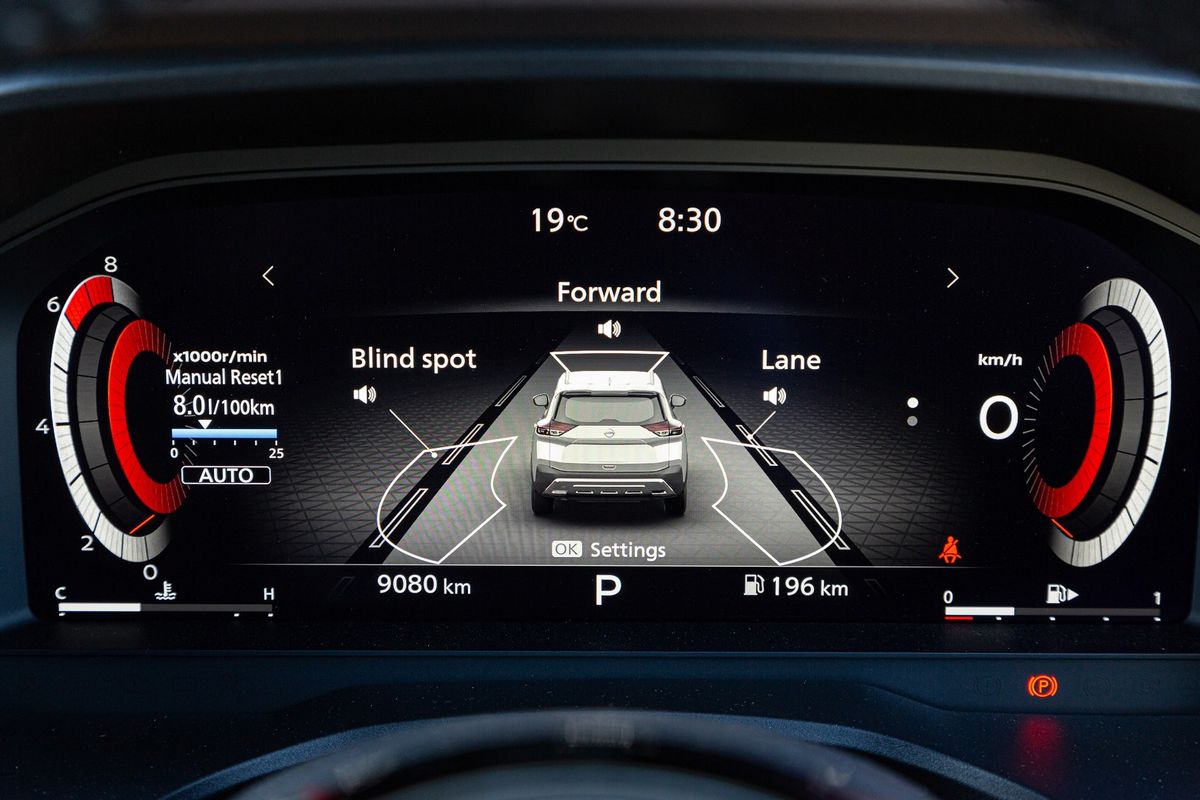
More impressively, the interior creates the impression of being “well screwed together”; the touchpoints all feel weighty/substantial and we liked the digital instrument cluster, which is exclusive to this derivative.
A conservatively styled, but genuinely well-finished, cabin.
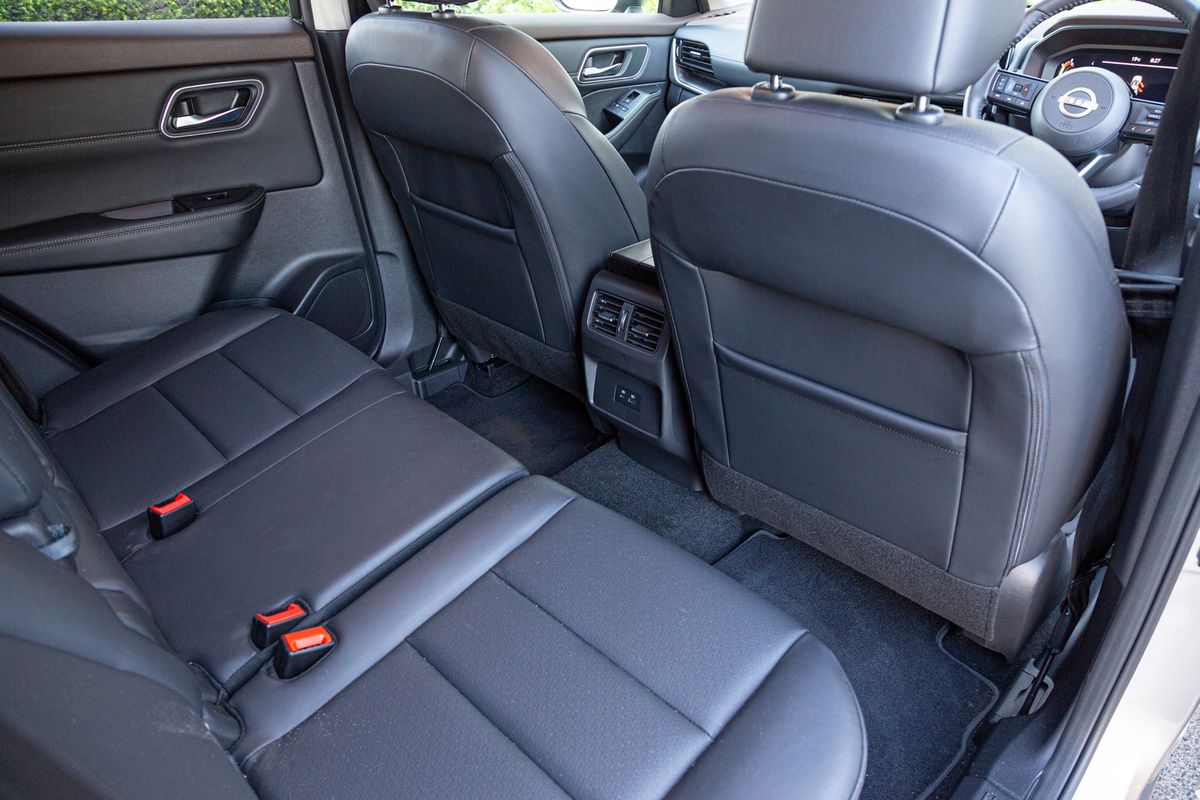
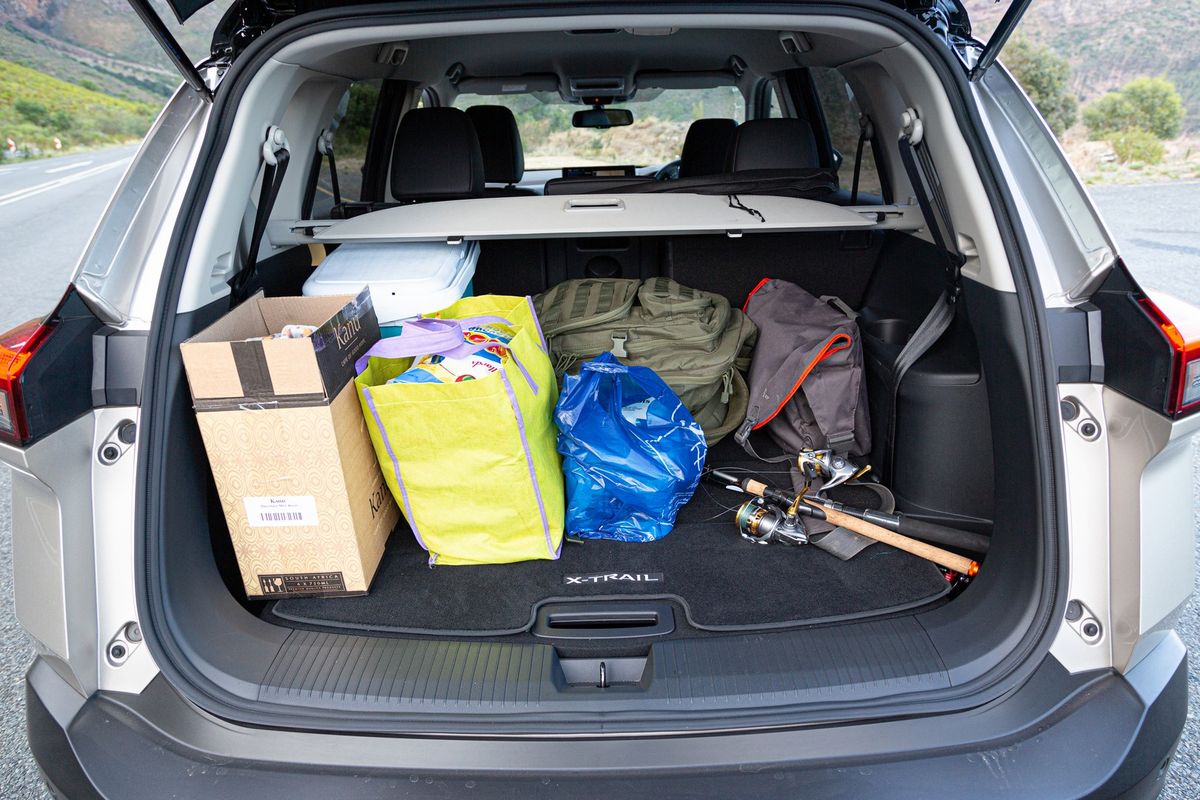
The front seats are notably comfortable, yet supportive too (the author didn’t feel fatigued after driving for 3 hours non-stop) and, as for the 2nd row, it offers reasonable head- and legroom. As expected, the 3rd row of seats is only suitable for accommodating small children (on account of limited legroom) and when they’re being used, the X-Trail’s luggage capacity is rather limited (to 485 litres, Nissan claims).
In the X-Trail’s defence, its compromised packaging (“using all seats means that you have minimal load-bay space) is a hallmark of most 7-seat medium SUVs. If you must carry 7 and as much cargo as you can fit in the load bay, the vehicle has a 750 kg unbraked tow rating. On the other side of the coin, if you keep that 3rd row stowed, you can load up 651 litres, but the X-Trail’s rivals offer more utility space than that.
When the 3rd row of the Nissan X-Trail 7-seater is not in use, luggage capacity is reasonably good.
Performance and Efficiency
As before, the X-Trail utilises a naturally aspirated 2.5-litre 4-cylinder petrol engine (even though the brand should have access to turbocharged powerplants courtesy of its alliance partner Renault). The engine now produces mildly improved peak outputs – 135 kW and 244 Nm of torque (the latter at 3 600 rpm). Torque is directed to the wheels via a continuously variable automatic transmission (CVT).
That 3-letter abbreviation may make petrolheads and driving enthusiasts groan, but in a volume-selling family car, a CVT is a prudent choice because it optimises cruising refinement and, ultimately, economy.
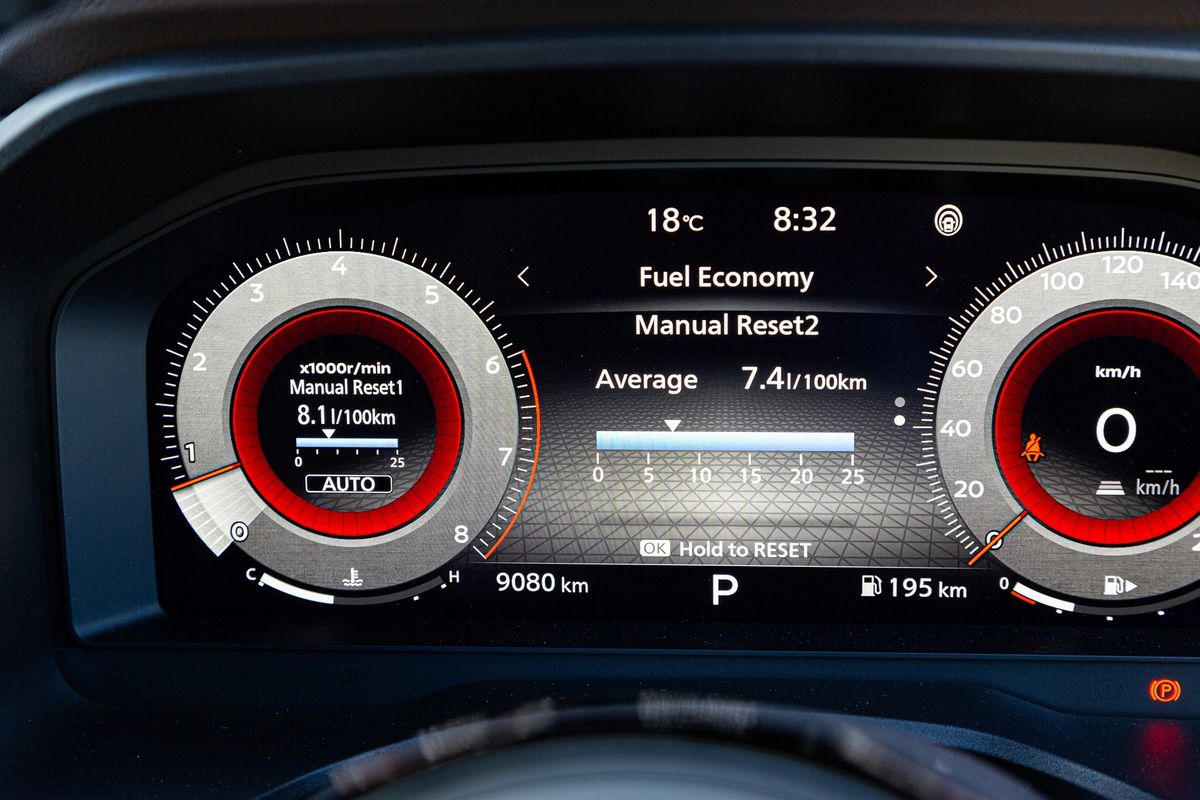
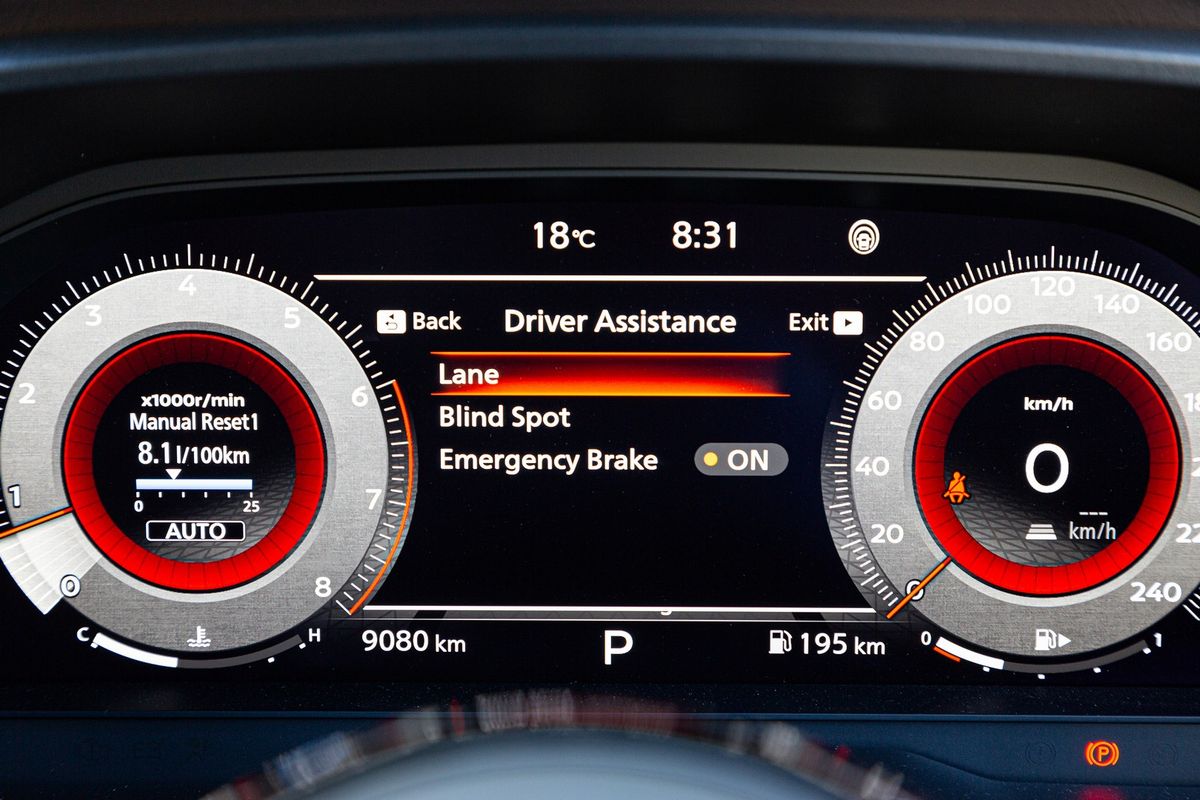
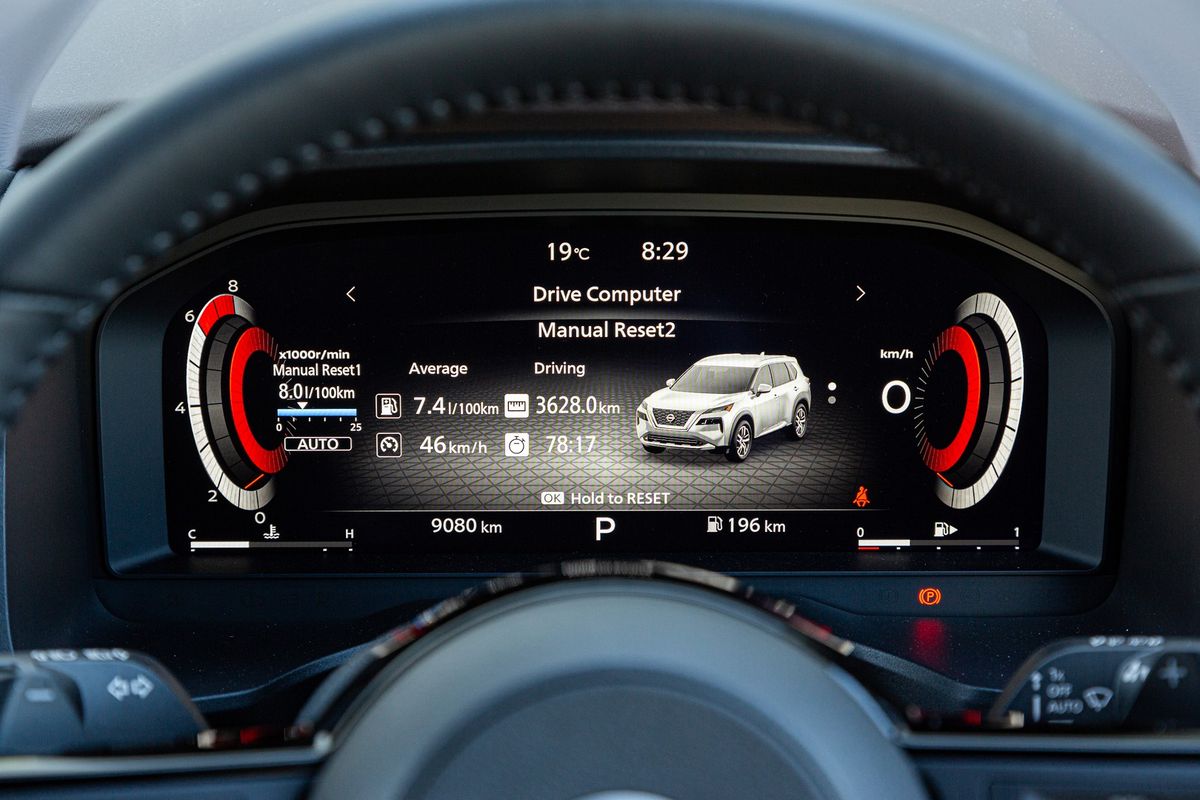
During our road trip across the Western Cape, we achieved an average fuel economy figure of 7.4 L/100 km, which was impressive for a 7-seater… and better than the manufacturer’s claim of 7.8 L/100 km.
Admittedly, much of the road trip involved travelling on the national highway, so if you’re likely to spend the majority of your time driving the Nissan in congested traffic, expect to see figures closer to 9 L/100 km. The X-Trail has a 55-litre fuel tank, so this derivative’s theoretical full-to-empty range is 705 km.
The overall average fuel consumption of the car is shown on the left, with our road-trip figure in the centre.
There are several (and well-documented) reasons for turbodiesel engines being phased out of brands’ passenger car line-ups, but that does not make the development any less of a disappointment. Previous-gen Qashqai and X-Trail derivatives utilised 1.5- and 1.6 dCi engines (one of them still does duty in the outgoing Renault Duster), and one certainly feels the absence of a turbodiesel in the 4th-gen X-Trail.
You see, a turbocharged diesel engine would produce a generous wad of torque (from low rpm), which would enable the X-Trail to overtake traffic with reasonable ease. The 2.5-litre petrol motor, by contrast, doesn’t deliver enough in-gear shove to facilitate brisk overtaking manoeuvres at freeway speeds.
On balance, the Nissan’s overtaking ability is just about adequate, but bear in mind that our road test was conducted at sea level, with just the driver and some luggage aboard. The X-Trail may labour upcountry (where the altitude saps about 15% of engine power) when it’s fully laden with passengers and cargo…
The CVT is supposed to optimise the powertrain’s fuel efficiency and, in our experience, it does.
Even with its sportiest drive mode activated, the test unit mustered a 0-100 kph time of 9.64 sec, which is considerably slower than its turbopetrol rivals; they’d struggle to match the X-Trail’s efficiency, though.
As is the case with most vehicles that utilise CVTs, if you treat the 2.5 Acenta Plus 4WD’s accelerator pedal like an on/off switch, the engine will groan loudly (ostensibly in protest), but to be fair, an X-Trail is unlikely to be calibrated for cut-and-thrust driving. If you adopt a restrained/relaxed driving style, you will probably come to appreciate how quiet and smooth (refined) the “old school” powertrain can be.
Ride and Handling
These 19-inch wheels look great and facilitate a refined and quiet ride quality.
When it comes to ride quality and driving experience, Nissan tends to prioritise comfort and ease of use in its passenger cars. And, right on cue, when you drive the X-Trail around town or in the city, its pliant suspension, aided by 19-inch wheels shod with higher-profile tyres, delivers a soft, gentle ride quality. Indeed, it impressively absorbs speed bumps and irons out tar roads rippled by tree roots under them.
It’s refreshing to pilot an SUV that doesn’t emphasise the sport in Sport Utility Vehicle. Not everyone wants a family SUV with dynamic handling ability… comfort, features and safety are more important. Thanks to a cabin that’s well insulated from tyre rumble and wind noise, the X-Trail is an excellent open-road or freeway cruiser. Unsurprisingly, its steering setup is on the light side with minimal feedback.
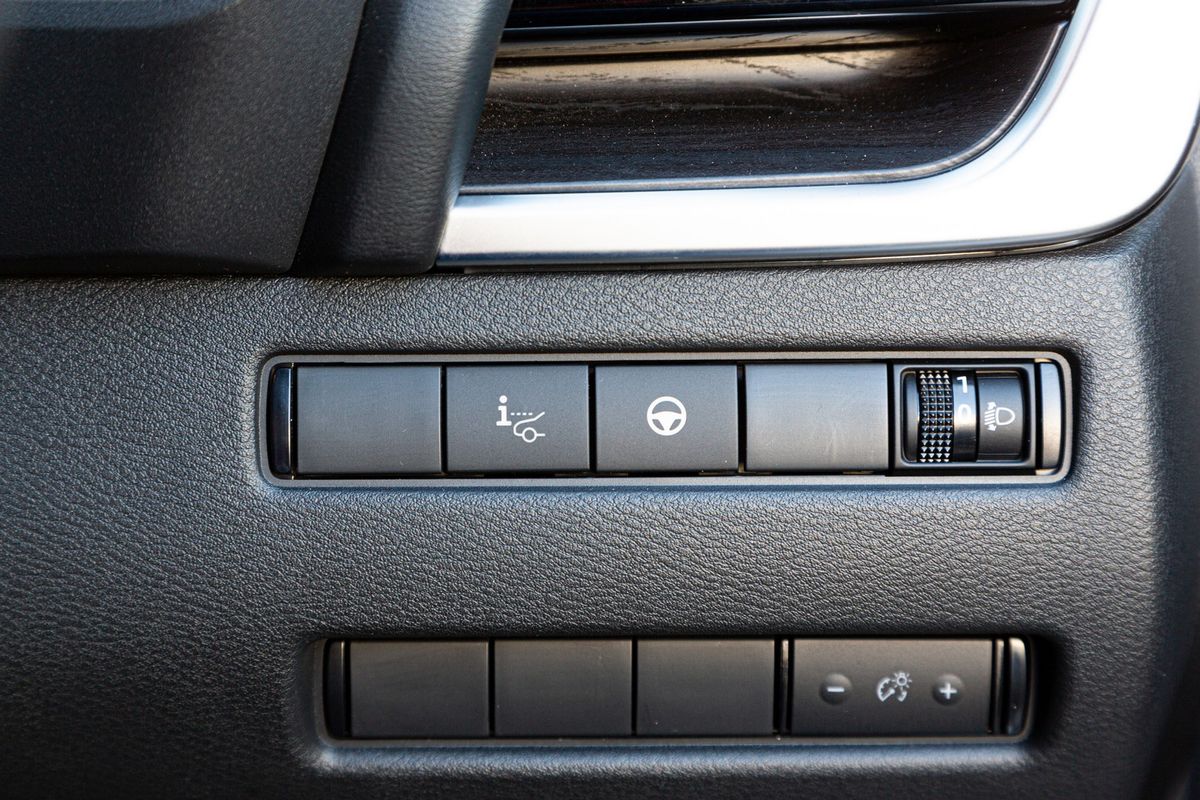
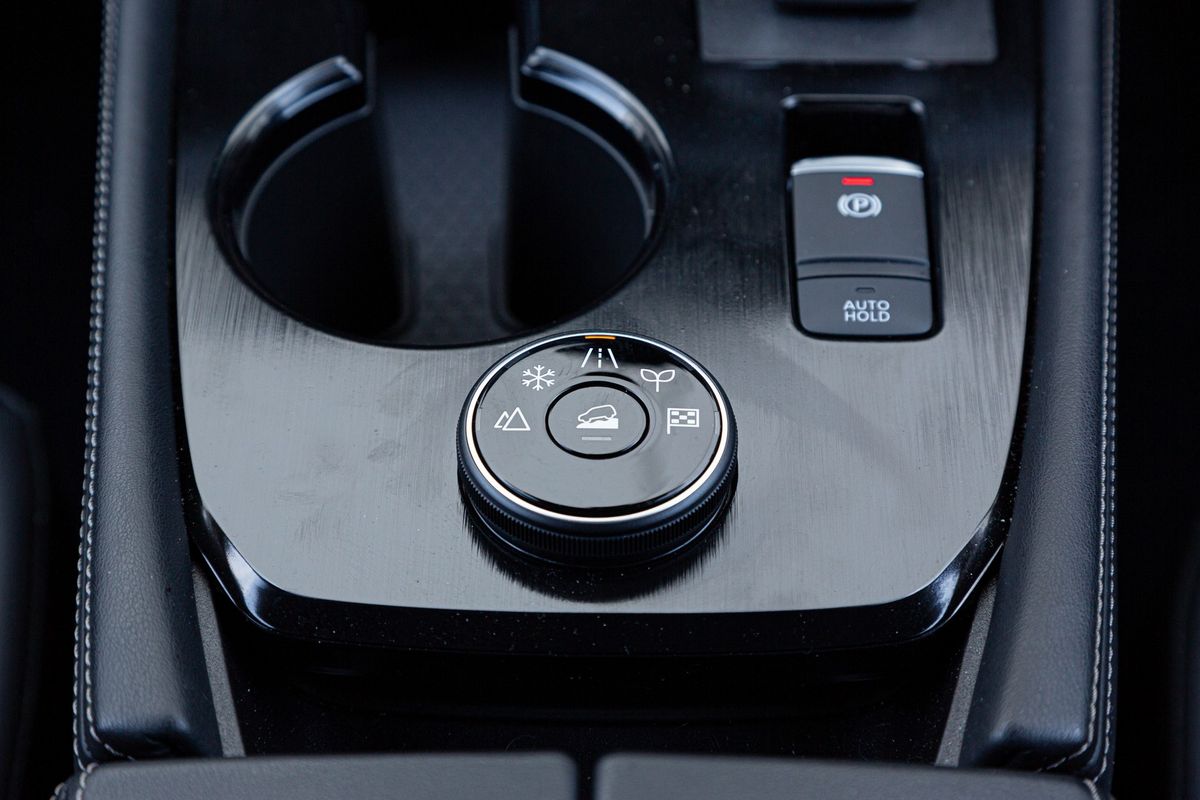
The drive-mode selector with Rocks, Snow, Normal, Eco and Sport programs. Hill Descent Control is available too.
Given the flagship X-Trail’s 4WD suffix, you may be wondering about the extent of the family car’s off-road ability. Can you venture further down your local gravel road than in a front-wheel-driven X-Trail?
Yes, certainly. With 211 mm of ground clearance, all-wheel drive and various off-road modes, the X-Trail is more than capable of traversing dirt- or farm roads. Critically, having all-wheel drive helps with grip and stability on slippery road surfaces, so the tech will come in quite handy during the rainy season.
Comfort and Features
When you’re in the market for a family car (medium SUV) at this price point, it’s not unreasonable to expect that it will offer myriad convenience features and gizmos… and the X-Trail does not disappoint.
To reiterate, the leather-trimmed seats are very comfy. The front ones are well-bolstered, have a heating function and the driver’s seat is 8-way electrically adjustable. Rear passengers get separate USB ports.
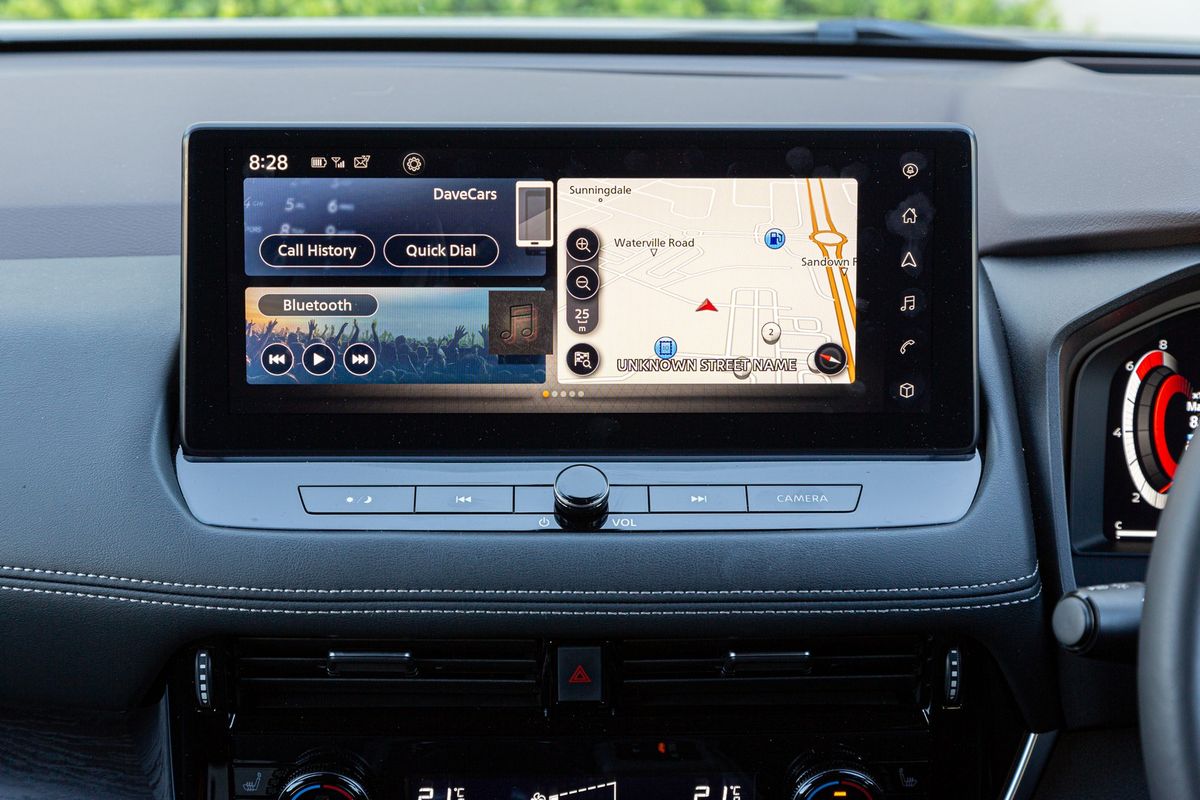
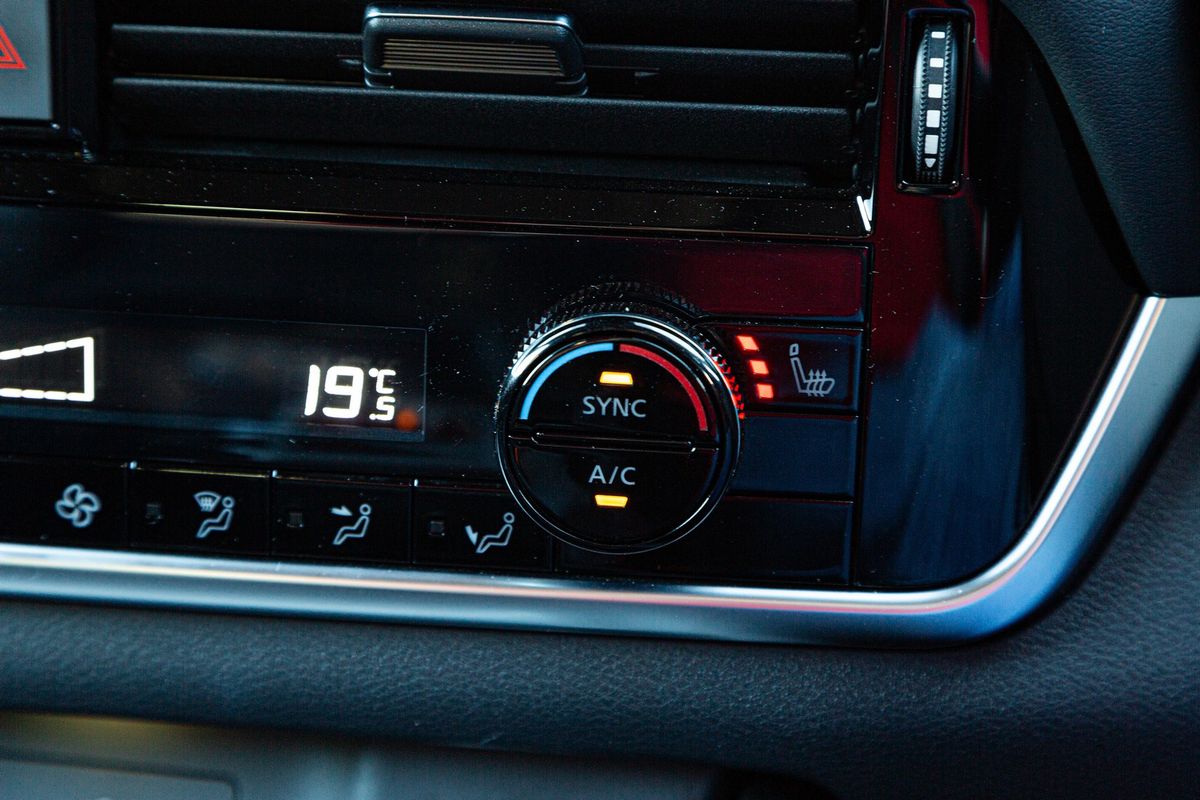
The 6-speaker touchscreen infotainment system includes satellite navigation, is compatible with Apple CarPlay/Android Auto – and augmented with USB-A and USB-C ports. We appreciated the dual-zone climate control, but the spec would have benefited from the provision of a wireless charging pad.
Furthermore, the 2.5 Acenta Plus 4WD comes equipped with safety features such as parking sensors, tyre-pressure monitoring, ProPilot+ semi-autonomous driver assistance, 360-degree camera, intelligent forward collision warning, pedestrian/cyclist detection with emergency braking, and lane-keep assist.
This infotainment system featured a high-quality screen and was easy to use.
Nissan X-Trail price and After-sales support (April 2024)
Every 4th-gen X-Trail is sold with a 3-year/90 000 km service plan and a 6-year/150 000 km warranty.
X-Trail 2.5 Visia
R685 900
X-Trail 2.5 Acenta
R749 900
X-Trail 2.5 Acenta Plus 4WD
R810 900
Verdict
The Nissan X-Trail 7-seater knows its target market well, but the flagship is a pricey proposition.
While there’s no doubt that Nissan has made huge leaps forward in the development of its 4th-gen X-Trail model, the lack of a more powerful engine is a big letdown. The rest of the package is admirable, thanks to excellent road manners, solid build quality and an abundance of standard features.
Should you buy one? Well, the X-Trail 2.5 Acenta Plus 4WD 7-seater is a good, as opposed to great, car. If you’re shopping in this price bracket, Chery’s Tiggo 8 Pro Max offers better value, more performance, as well as a superior (longer) service plan. Alternatively, if 7 seats and AWD aren’t must-have features on your shopping list, you could save R60k by opting for the X-Trail’s mid-spec 2.5 Acenta derivative.
Here’s what Toyota will likely call the Taisor in SA…
Toyota says the new Urban Cruiser Taisor will wear a different badge in SA. We’ve done some digging and unearthed what might just be the newcomer’s name in Mzansi…
The new Toyota Urban Cruiser Taisor is coming to South Africa, but the Japanese firm’s local division says it will be launched in our market “under a model name yet to be announced”. What could that name be? Well, Cars.co.za has spent some time digging, eventually unearthing what might just turn out to be the Taisor’s local moniker.
As a reminder, the Urban Cruiser Taisor was recently revealed in India, where it will be produced by Suzuki. Yes, this new coupé-style crossover is indeed based on the Suzuki Fronx (set apart by minor styling revisions, such as a new grille and fresh lighting signatures) as the latest product of the firms’ wide-reaching global alliance.
The Fronx-based newcomer is known as the Urban Cruiser Taisor in India.
So, what have we found? Well, according to our information, there’s an exceedingly strong chance that Toyota SA Motors will call the Taisor the “Toyota Starlet Cross” in our market. In fact, Toyota Motor Corporation applied to register “Starlet Cross” as a trademark in South Africa (along with some other African markets, such as Algeria and Mozambique) as long ago as June 2022, the very same month it filed to trademark “Taisor” in India.
Interestingly, the “Starlet Cross” trademark has technically not yet been fully registered in South Africa, with the current status (in early April 2024) listed as “accepted with conditions”. This includes agreeing to disclaim the word “Cross” from the application, which means Toyota would (logically) not be able to prevent other companies from using this portion of the mark.
The Starlet nameplate already has strong value in South Africa.
While a trademark application is by no means a guarantee that an automaker will indeed use the badge in question, the Starlet Cross moniker appears perfectly suited to the Urban Cruiser Taisor. After all, the Taisor is based on the same platform as the Starlet. In addition, the Starlet nameplate – which traces its roots back to the 1970s – is well known in Mzansi, with this Baleno-based hatch having sold up an absolute storm since arriving in September 2020.
Furthermore, Toyota SA Motors has used the “Cross” suffix on established nameplates before (with great success), with the Prospecton-built Corolla Cross being both the most obvious recent instance and the only example in the current line-up. Other cases include the now-defunct Etios Cross and Yaris Cross. As an aside, the Fronx was initially expected to be called the Baleno Cross, but Suzuki eventually went with an amalgamation of “Frontier” and “X” (with “Fronx” fascinatingly having been trademarked in SA way back in 2014).
The “Cross” suffix is also used on Toyota’s high-riding version of the Corolla.
When will we see the new Toyota Starlet Cross (if it indeed ends up wearing that badge here) in South Africa? Well, Toyota SA Motors has yet to announce a launch date, though we certainly wouldn’t be surprised if the newcomer started rolling into Mzansi dealerships before the end of 2024.
Like the SA-spec Fronx (which made local landfall back in August 2023), we expect the Toyota-badged version to be offered locally with Suzuki’s ubiquitous K15B naturally aspirated 1.5-litre, 4-cylinder petrol engine, sending 77 kW and 138 Nm to the front axle via either a 5-speed manual gearbox or a 4-speed automatic transmission. That’s despite the fact the Indian-spec model will be available with an atmospheric 1.2-litre, 4-cylinder petrol motor or a turbocharged 1.0-litre, 3-cylinder engine.
The SA-spec Fronx offers clues to the Toyota version’s powertrain and pricing.
Though local pricing has yet to be released (the company says “further details about the SA version of Urban Cruiser Taisor will be made closer to launch timing”), it’s all but certain the new model will slot in at the foot of Toyota’s local crossover line-up, below the likewise Indian-manufactured Urban Cruiser (which now starts at R342 500).
That would, of course, make it the Japanese firm’s most affordable crossover locally (for the record, the Fronx currently kicks off at R288 900, so we may well see the new Starlet Cross priced just above that). As such, it could turn out to be yet another significant Suzuki-built volume driver for Toyota SA Motors, potentially picking up where the old Urban Cruiser left off…
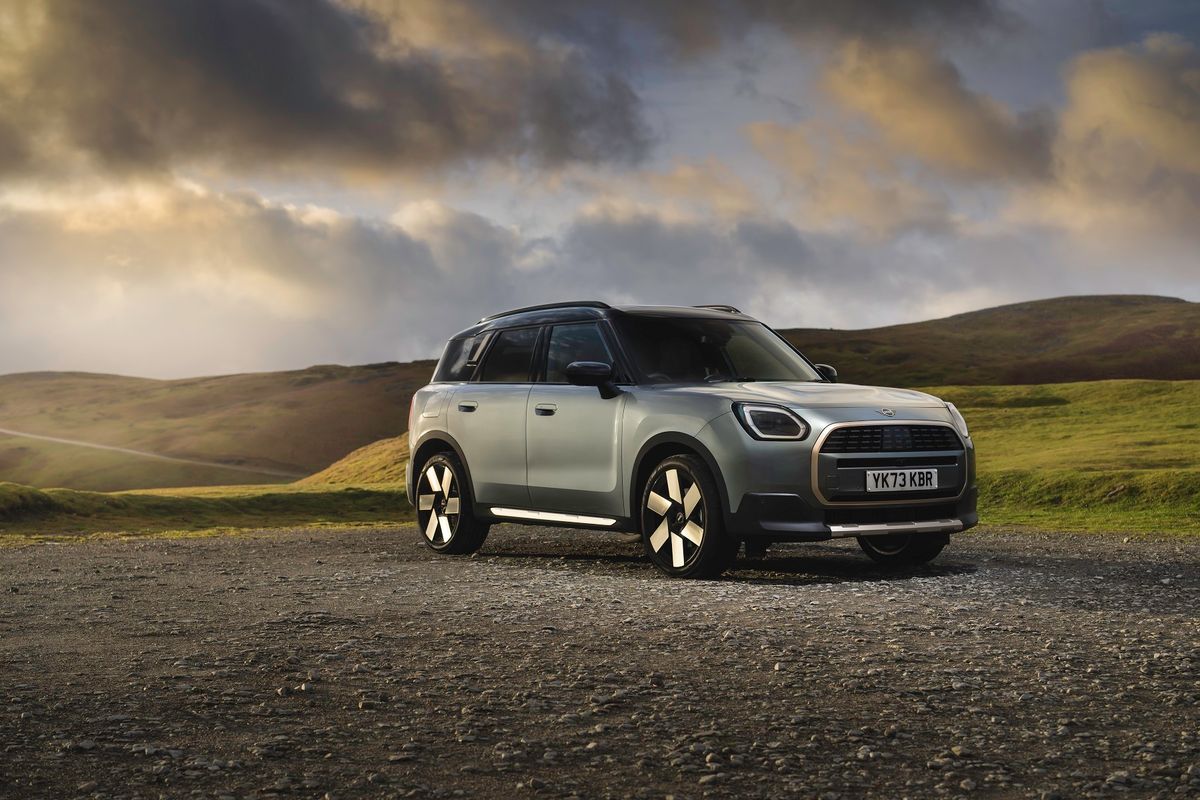
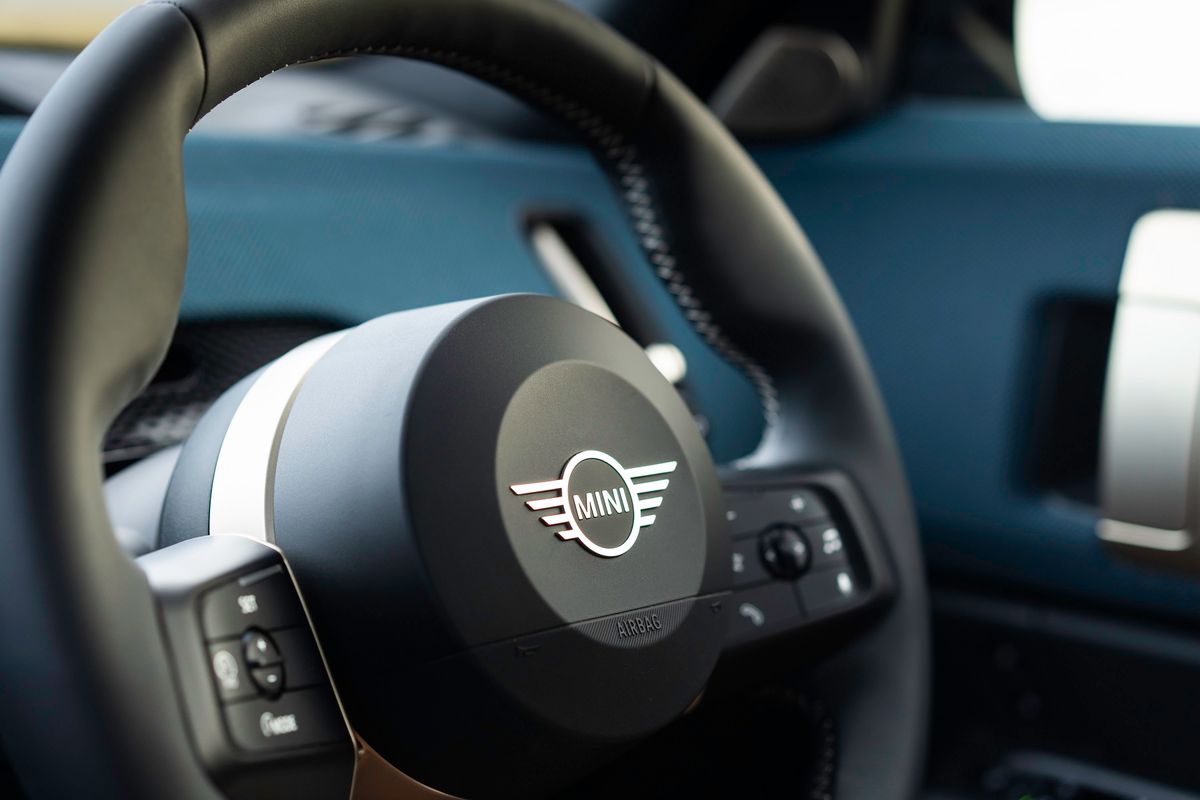
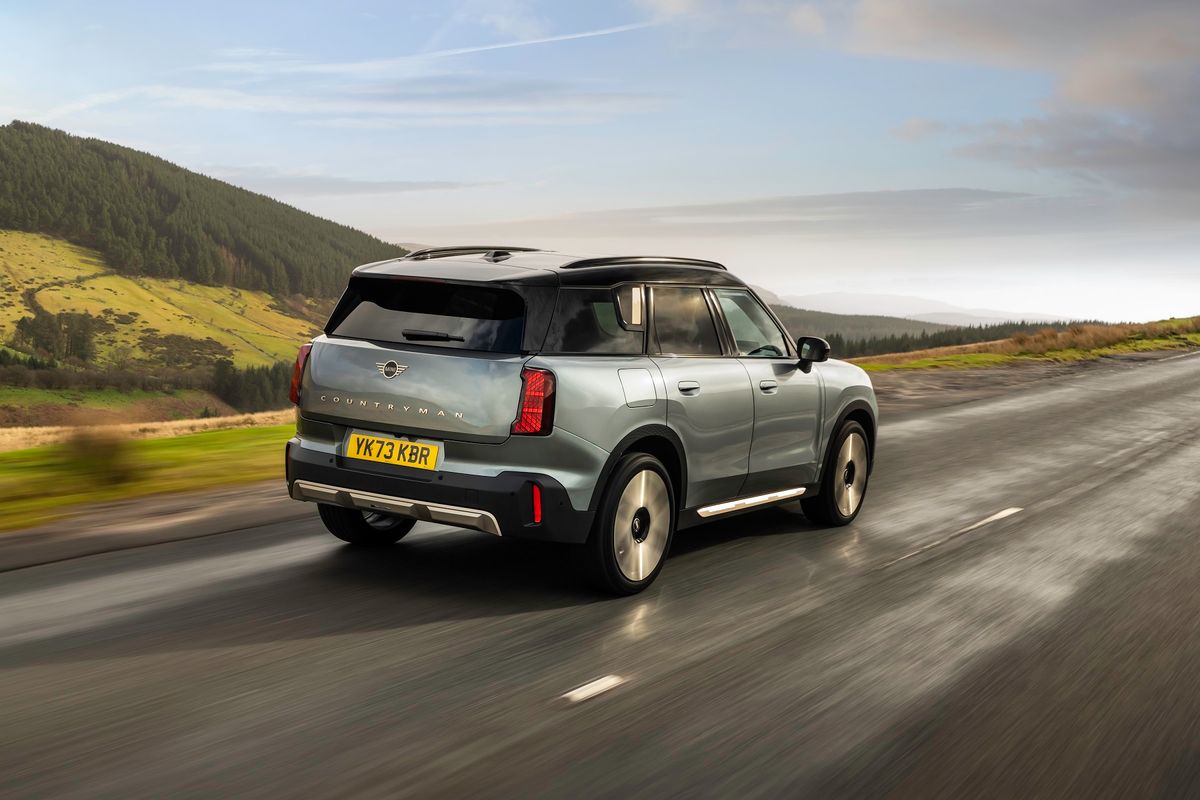
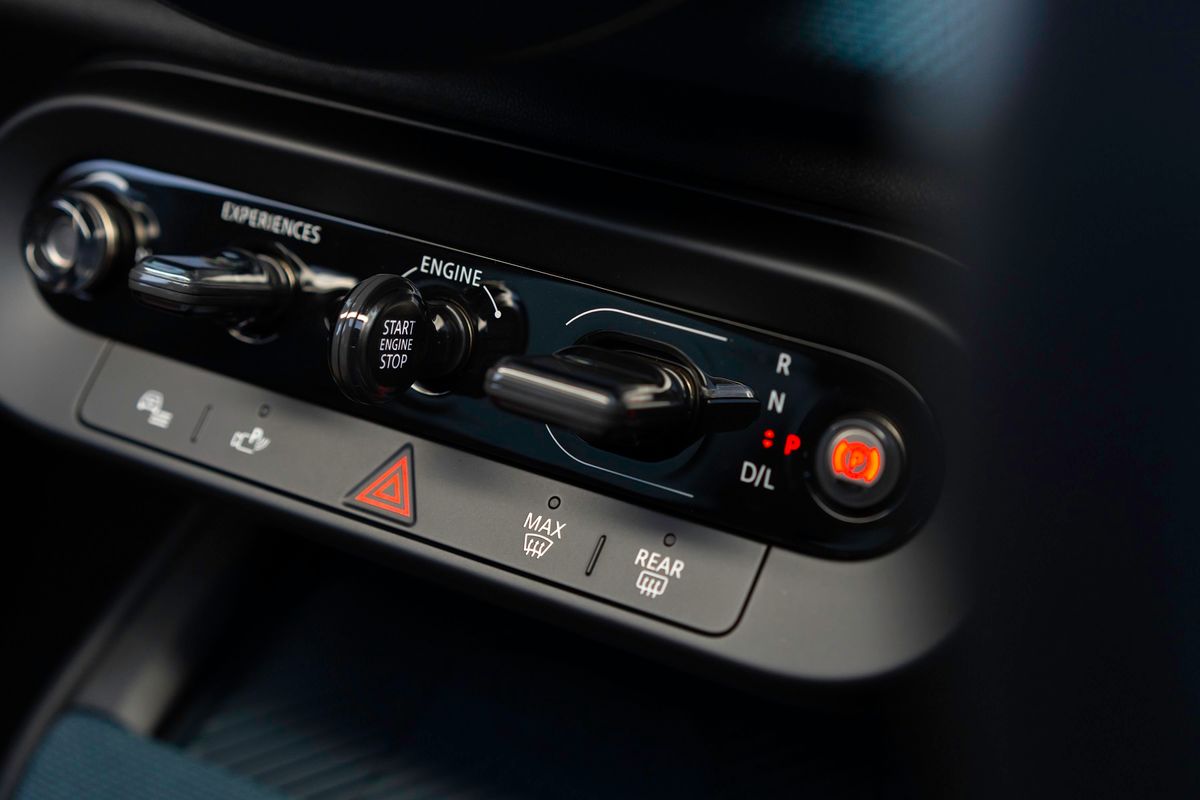
The all-new Mini Countryman is on its way to South Africa and we’ve uncovered pricing, specifications and engine details ahead of its showroom debut.
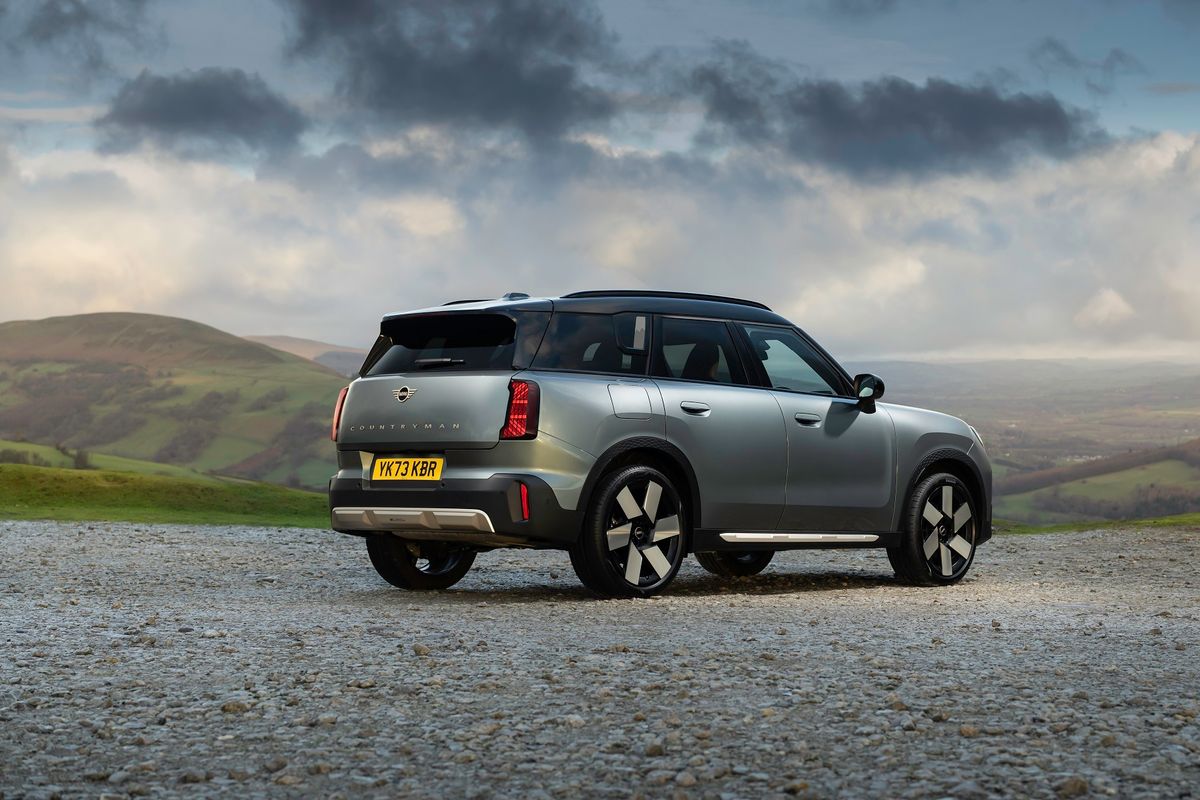
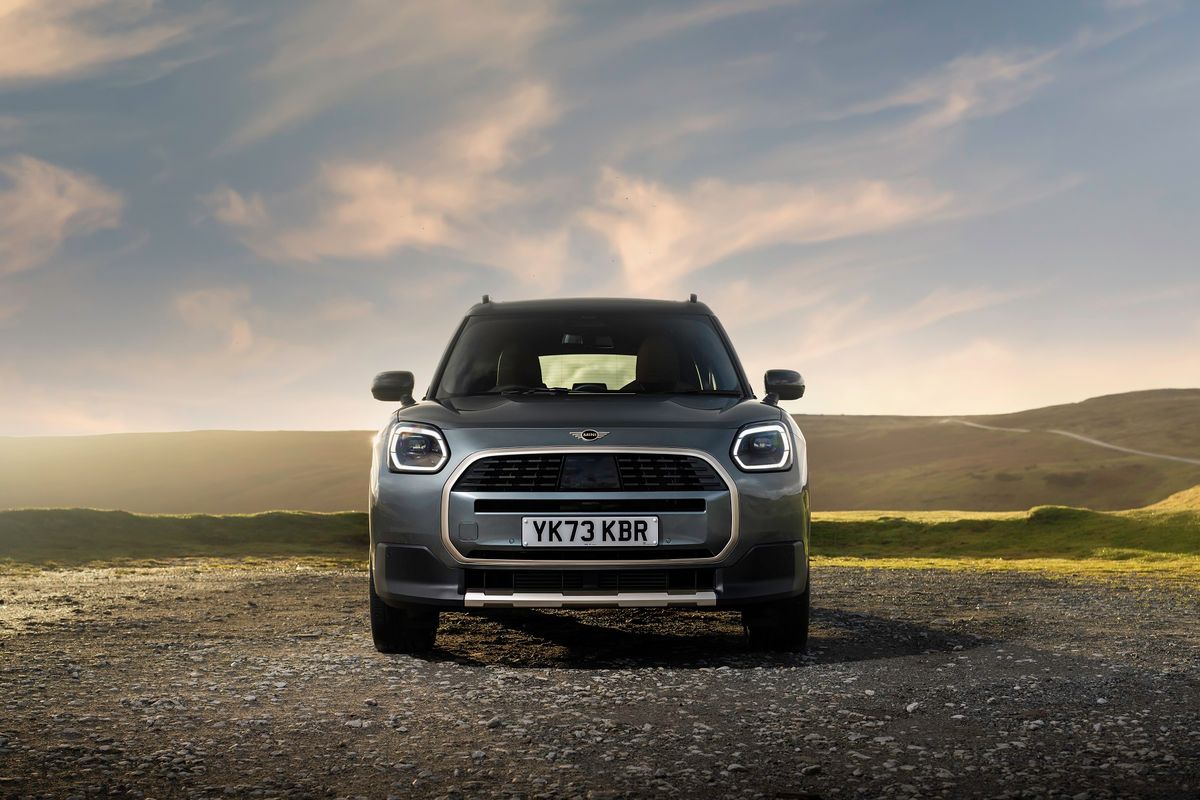
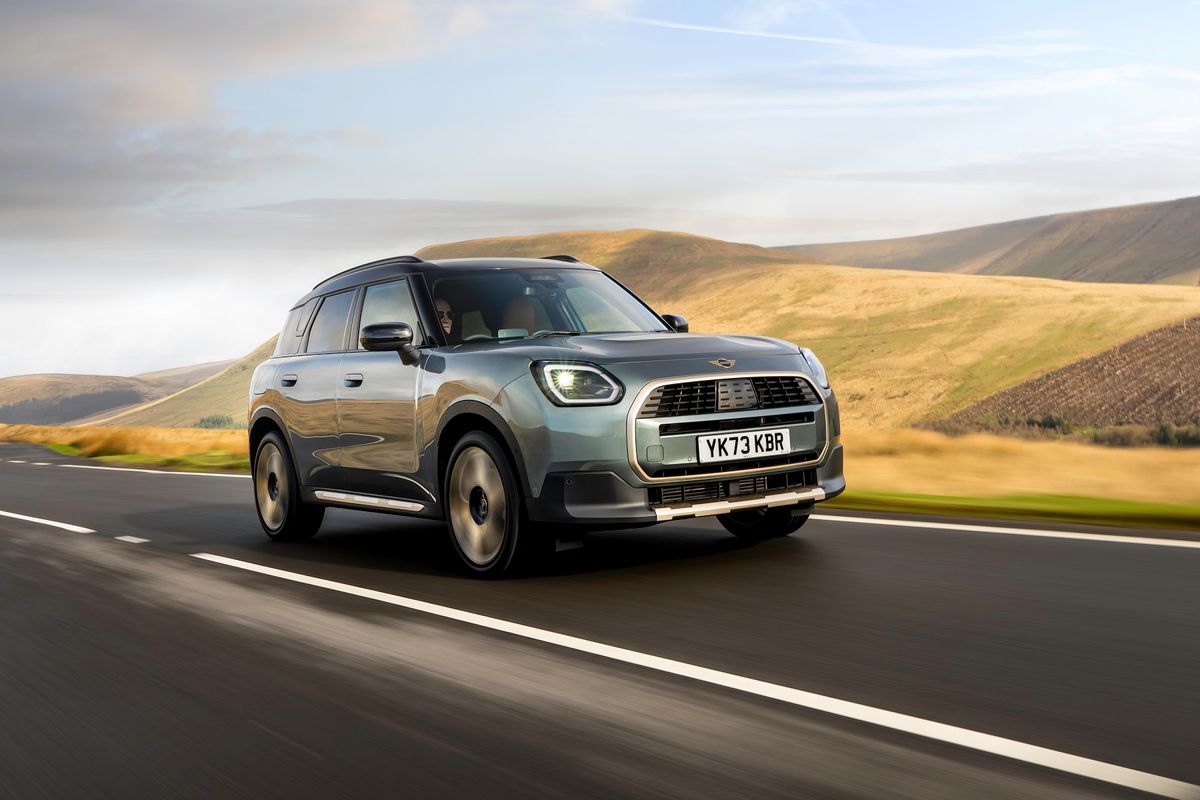
Underpinned by an enhanced and updated version of the Group’s UKL platform, the 3rd-generation Countryman is said to be the biggest and most advanced yet. It’s just over 4.4 metres long, almost 2 metres wide and the design is radical and almost concept-like.
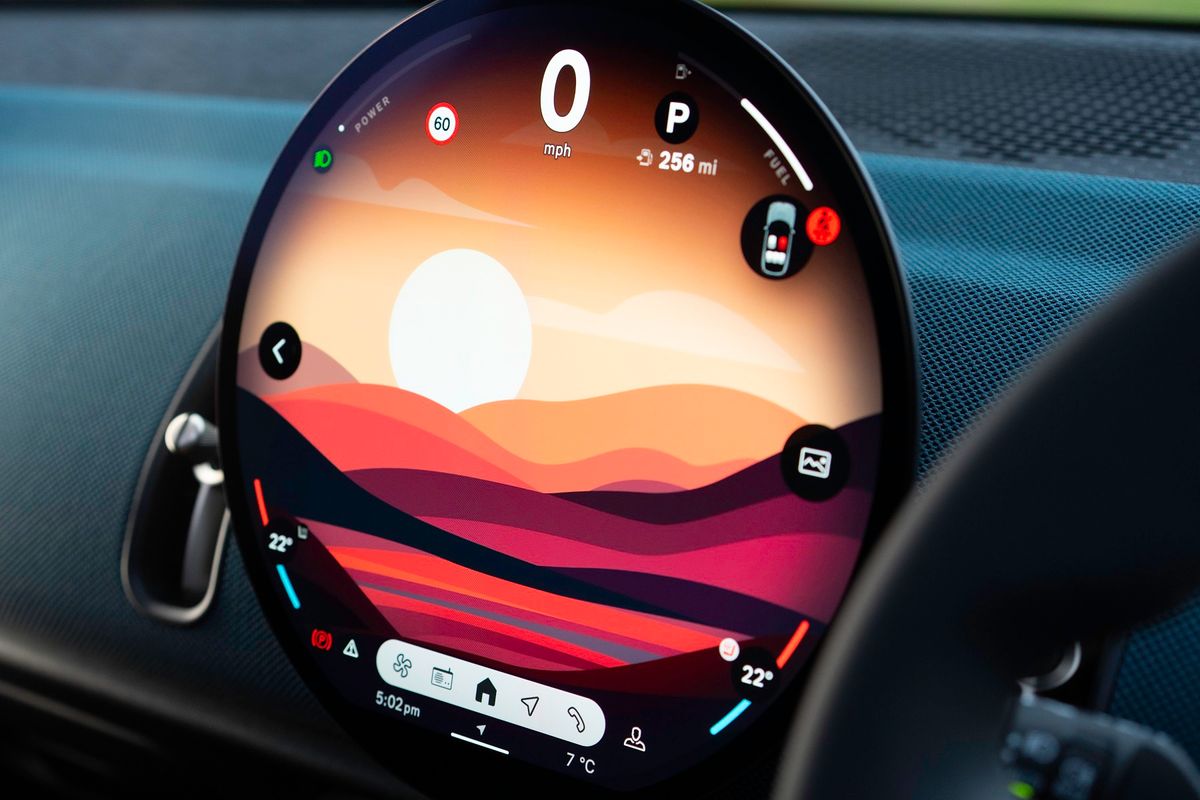
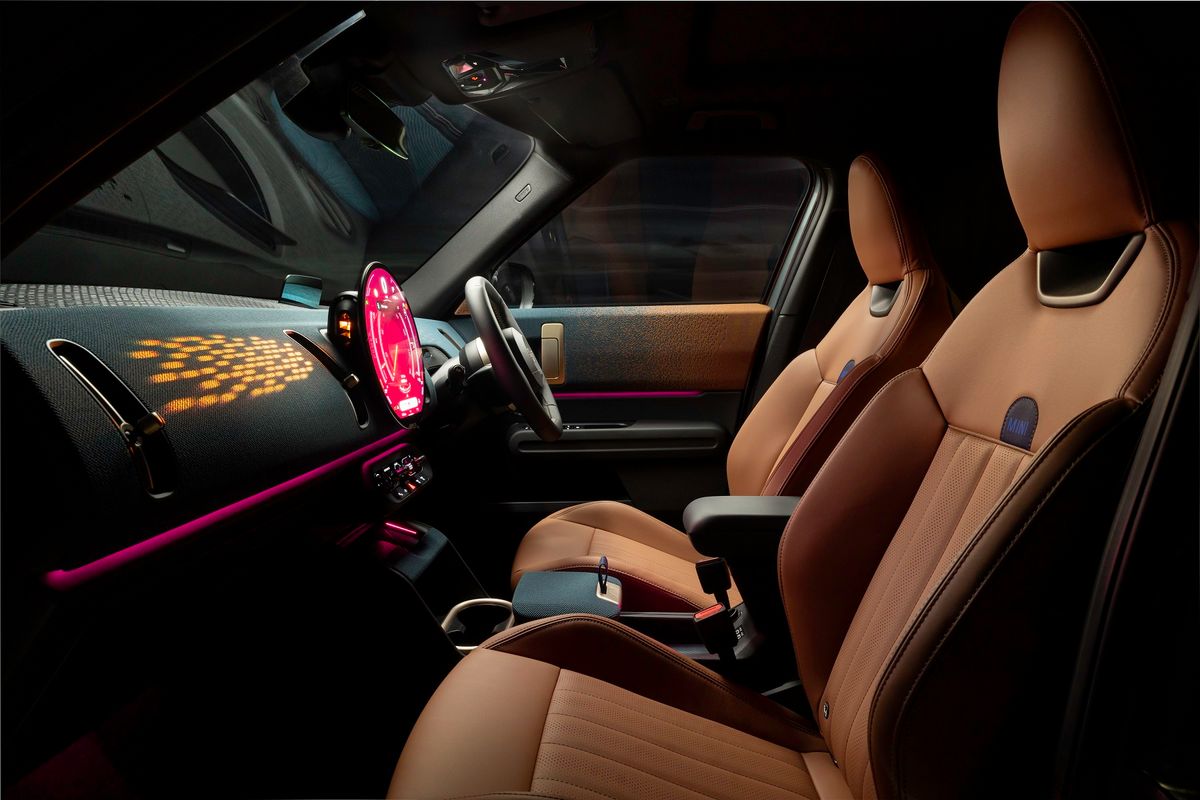
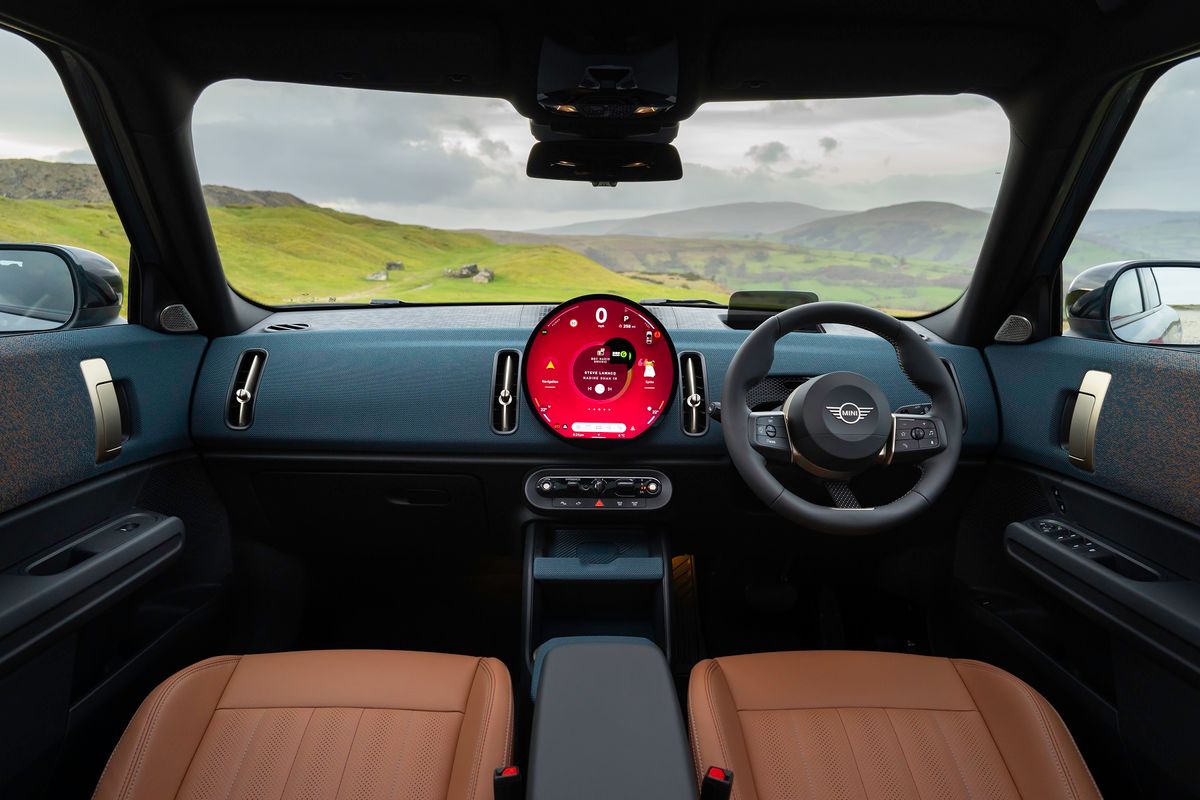
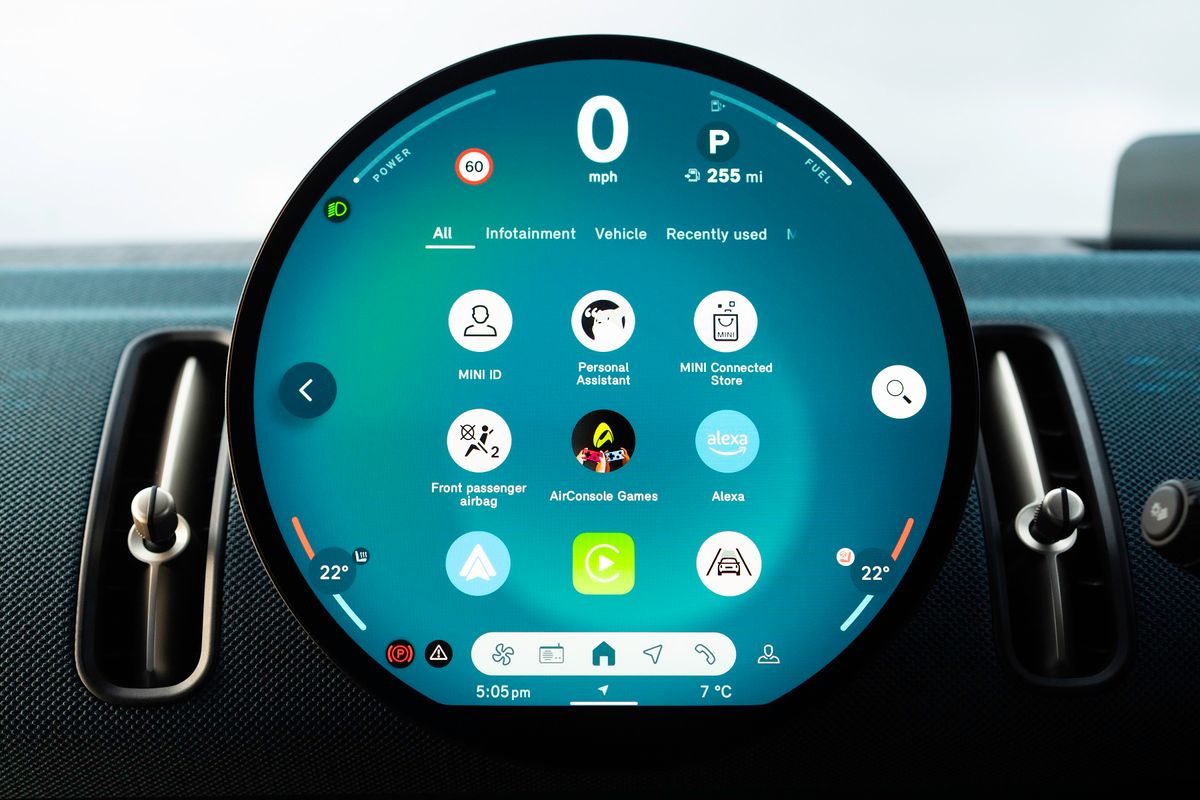
Climb inside and you’re greeted by a cabin that’s dripping in high-quality materials and premium appeal. Your eyes will be drawn to the new-look circular infotainment screen which is thinner and better integrated. It features the new BMW Group Operating System 9 and it looks incredible with slick graphics and fun interface.
Engines and Performance
The new Countryman will be offered with turbocharged petrol and electric engines. As a reminder, Mini has said that it will be electric-only from 2030 so this generation and its Life Cycle Impulse facelift will likely be the last Countryman to feature internal combustion engine power.
There will be three petrol engines, with the electric powertrains following a little later. Badged as Cooper, Cooper S and John Cooper Works, the Countryman lineup covers all the bases.
The Cooper kicks off the range with a 1.5-litre turbocharged 3-cylinder which produces 115 kW and 240 Nm. It’s claimed to sprint to 100 kph in just 8.3 seconds and consume 6.1 L/100 km.
Next up is the Cooper S, which brings a 2.0-litre turbocharged 4-cylinder motor with 150 kW and 280 Nm. It’s a touch quicker, with a 0-100 kph claimed time of 7.1 seconds and a claimed economy figure of 7.4 L/100 km. Both derivatives feature front-wheel drive as well as 7-speed automatic gearboxes.
John Cooper Works
For the performance fans, the new Mini Countryman John Cooper Works has a 2.0-litre turbocharged packing 233 kW and 400 Nm. Power goes to all four wheels via an 8-speed automatic gearbox, and with launch control is active, a 0-100 kph time of 5.4 seconds is claimed.
Prospective owners will face numerous options and packages to personalise their Countrymans and a glance at the pricelist shows an array of choices. The packages vary in price based on the derivative, but add niceties like Harmon Kardon uprated audio, wireless mobile phone charger, panoramic sunroof, and additional semi-autonomous safety tech.
How much does the new Mini Countryman cost?
The new Mini Countryman is sold with a 5-year/100 000 km maintenance plan. The below prices do not include CO2 tax, which is R7 219, R10 074 and R13 767 for the Cooper, S and JCW respectively.