5 fascinating facts from SA’s 2023 new-car sales figures
We’ve combed through South Africa’s new-car sales figures for the whole of 2023 and pulled out 5 fascinating bite-sized facts. Here’s what you need to know…
With South Africa’s new-car sales figures for 2023 tallied up, our focus has naturally fallen on the vehicles that led the sales charge. Indeed, we’ve already covered South Africa’s most popular passenger cars as well as examined Mzansi’s best- and worst-selling bakkies. Now, it’s time to turn our attention to a few fascinating morsels of information we’ve extracted from the 2023 figures.
Yes, we’ve combed through SA’s new-car sales statistics (as provided to Naamsa) – with a specific focus on the passenger-vehicle market – and selected 5 interesting titbits that jumped out at us. Let’s take a closer look…
1. Audi RS4 Avant as exclusive as Ferrari 296 GTB
Over the course of 2023, Audi registered 23 examples of its RS4 Avant. Technically, that makes the Ingolstadt-based firm’s 331 kW performance wagon just as exclusive as the Ferrari 296 GTB, which ended the year on the same tally. Interestingly, Ferrari’s R6.8-million V6-powered coupé peaked with 7 registrations in October 2023, while the RS4 Avant’s top effort was 3 units (a number reported in January, February and July). For the record, the Renault Mégane RS 300 Trophy likewise closed 2023 on 23 sales.
2. New Toyota Urban Cruiser took a tumble
In 2022, the previous-generation Toyota Urban Cruiser placed on the passenger-vehicle podium, taking 3rd position overall with a whopping 16 992 units sold. With stock of the old model running dry, the Japanese firm’s local division switched to the new, larger (and consequently somewhat more expensive) Urban Cruiser in the 2nd quarter of 2023. However, the fresh version couldn’t match its predecessor’s almost overnight success, with the nameplate’s total sales thus declining 64.7% year on year to 5 992 units, resulting in a 16th-place finish.
3. Ford Everest almost cracked the top 30
Despite a delay in the arrival of new Ford Everest stock early in the year (and the local line-up expanding only in April), the Blue Oval brand’s adventure SUV finished 2023 on a total of 3 112 units. That was enough to see it take 31st position as the highest-placed Ford passenger vehicle, with the since-discontinued EcoSport ending on 1 365 units, the new-to-SA Puma (which was marketed only in the final 4 months of the year) on 368 units and the outgoing Mustang on 244 units.
4. A single Haval H2 unit was somehow registered new
Remember the Haval H2? Well, this model was discontinued in South Africa way back in the opening quarter of 2021, when the Jolion arrived as its replacement. But somehow the long-since-departed H2 made a brief return to the sales charts in 2023, when a single unit was registered as new somewhere in Mzansi. For the record, the Jolion has proved eminently more successful than its predecessor, finishing 10th on the list of SA’s best-selling passenger vehicles last year with a total of 8 604 registrations.
5. Volkswagen Golf 8 twins almost cracked 1 000 units
Sales of the Volkswagen Golf 8 range – which locally comprises the Golf GTI and Golf R – picked up markedly in the 2nd half of the year, with the hot-hatch twins moving from 303 registrations in H1 to a final tally of 949 units (or an average of 79 sales a month). For the record, March 2023 was the low point (just 16 units were registered), while October represented the peak (149 units). Of course, it’s worth keeping in mind that the all-paw Golf R officially went on sale only at the end of April 2023.
2023/24 CarsAwards Finalists: Best Budget Hatch in SA
Meet the 3 finalists in the Budget Hatch category of the 2023/24 Cars.co.za Consumer Awards, sponsored by Absa! The winner of this #CarsAwards category will be announced on 29 February 2024.
The 2023/24 Cars.co.za Consumer Awards, sponsored by Absa is the 7th iteration of SA’s definitive consumer-driven automotive awards programme that aims to identify the best new vehicles on sale in Mzansi across 13 categories.
Judges first compiled a list of 65 semi-finalists – then trimmed it to 39 finalists. Following that, all #CarsAwards finalist vehicles were subjected to a rigorous 2-day test at Gerotek at the beginning of November 2023, after which they starred in the Cars.co.za Consumer Awards Roadshow at the Mall of Africa where, for the first time, the public could experience the cars – and meet the judges – in the flesh.
In these cash-strapped times, almost everyone is on a tight budget. Does buying an affordable new car therefore mean that you have to compromise on safety, technology and quality? No, not necessarily. The winner of this important #CarsAwards category must represent “as much new car as you can get for your money”. Value for money is important, as are running costs and other “common sense” considerations.
This category is guided by both eligibility factors and pillars of success.
Eligibility factors for this category include a list price between R250 000 and R350 000 at the time of semi-finalist voting (September 1, 2023). What’s more, eligible vehicles in this category must have an anti-lock braking system (ABS), dual front (or more) airbags and a service plan.
Pillars of success for this category include fuel economy, value for money, practicality and brand strength.
Best Budget Hatch in SA: CarsAwards Finalists
Renault Clio 1.0 Turbo Zen
The latest iteration of the Renault Clio took its time to get to South Africa and while some suggest the B-segment hatch segment is no longer that relevant, the Clio (and the other finalists) represent great value. The Clio is powered by a small-yet-punchy turbopetrol engine, boasts a modern cabin and has all the “bells and whistles” considered essential at this price point. Luggage space is surprisingly generous too.
It’s a delight to find a spacious, well-thought-out and generously equipped budget hatchback that doesn’t cost a fortune to buy or own. Although it still utilises the underpinnings of its predecessor, the 2nd-gen Baleno remains one of very few “oversized” small hatchbacks that offer good rear legroom; it’s well-made, suitably comfortable, has a proven, fuel-frugal powertrain and is renowned for its reliability.
While it may be a clone of the Suzuki Baleno, the Starlet has a few tricks up its sleeve, such as Toyota’s renowned after-sales backup, a strong resale proposition and the support of the widest vehicle dealer network in Mzansi. The latest iteration of the model incorporates more obvious aesthetic differences to the Baleno, but the Toyota also impresses with its abundant cabin space, great engine and good value.
The winners of the 2023/24 Cars.co.za Consumer Awards, sponsored by Absa (as well as the recipient of the prestigious Brand of the Year title) will be named on 29 February 2024.
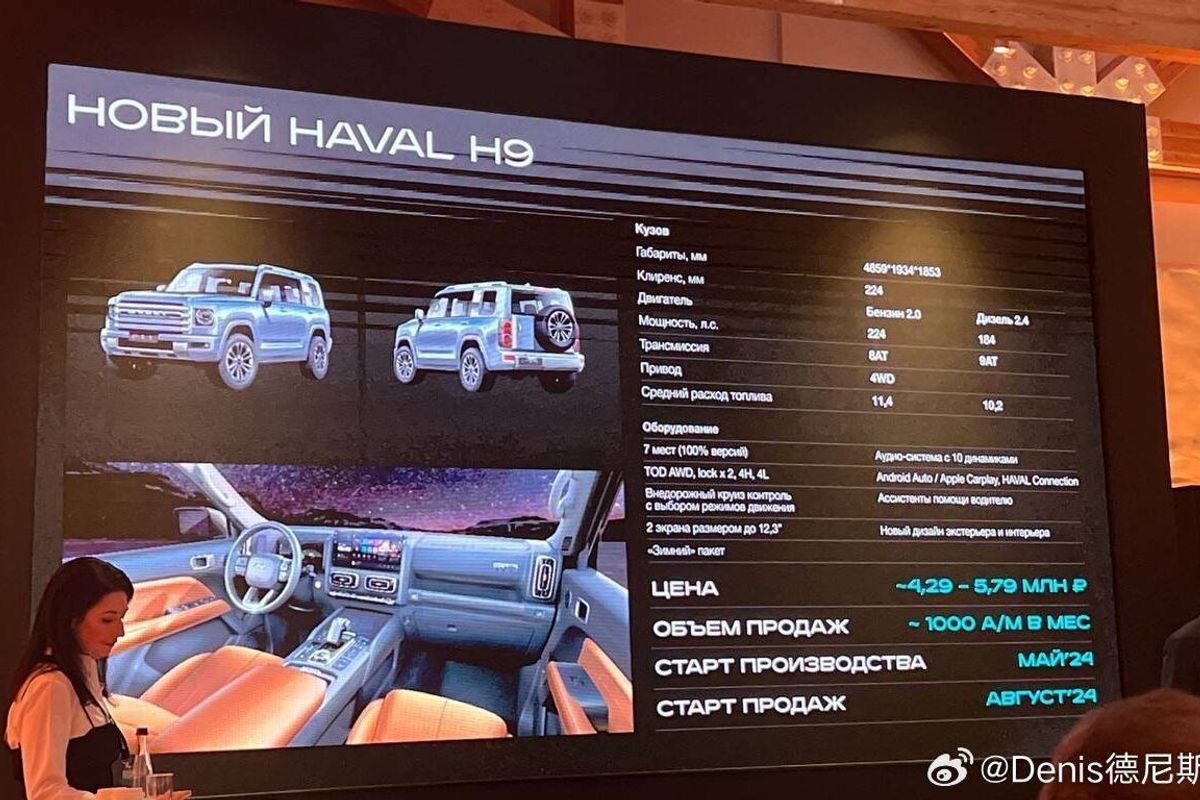
Reports out of China say a 2nd-generation Haval H9 will be revealed in the first quarter of 2024. Here’s what we know about the 7-seater family SUV.
The report from Chinese publication Autohome shared some extensive details about the new model. As a reminder, the first-generation Haval H9 arrived in South Africa back in 2018, priced at a competitive R599 000. While other Haval products enjoyed credible sales, the H9 never really troubled the established 7-seater bakkie-based rivals like the Toyota Fortuner and Ford Everest, and it departed after a few years, despite a facelift being announced in 2021 which never came to SA.
Autohome has shared information on an all-new 2nd-generation Haval H9 that’s in development and going into production as soon as March 2024. The image below was taken at a dealership briefing in Russia that shows some design elements, powertrain information and trim levels. One of the big criticisms of the first-gen H9 was the lack of a diesel engine as the punchy turbocharged petrol engine was on the thirstier side.
The good news is there will be a 2.4-litre turbocharged diesel 2-wheel drive model and a 2.0-litre turbocharged petrol all-wheel drive derivative. Both engines are four-cylinder units and outputs of 137 kW and 180 kW are claimed for the diesel and petrol engines, respectively.
The petrol-powered 4×4 model will have an on-demand all-wheel-drive system complete with front and rear differential locks as well as a low-range transfer case. Offroad modes like Mud, Snow and Sand are expected. The 2nd-generation Haval H9 is expected to be built on a ladder-frame chassis and given the Tank sub-brand’s rising popularity, there should be some overlap in terms of design and interior appointments.
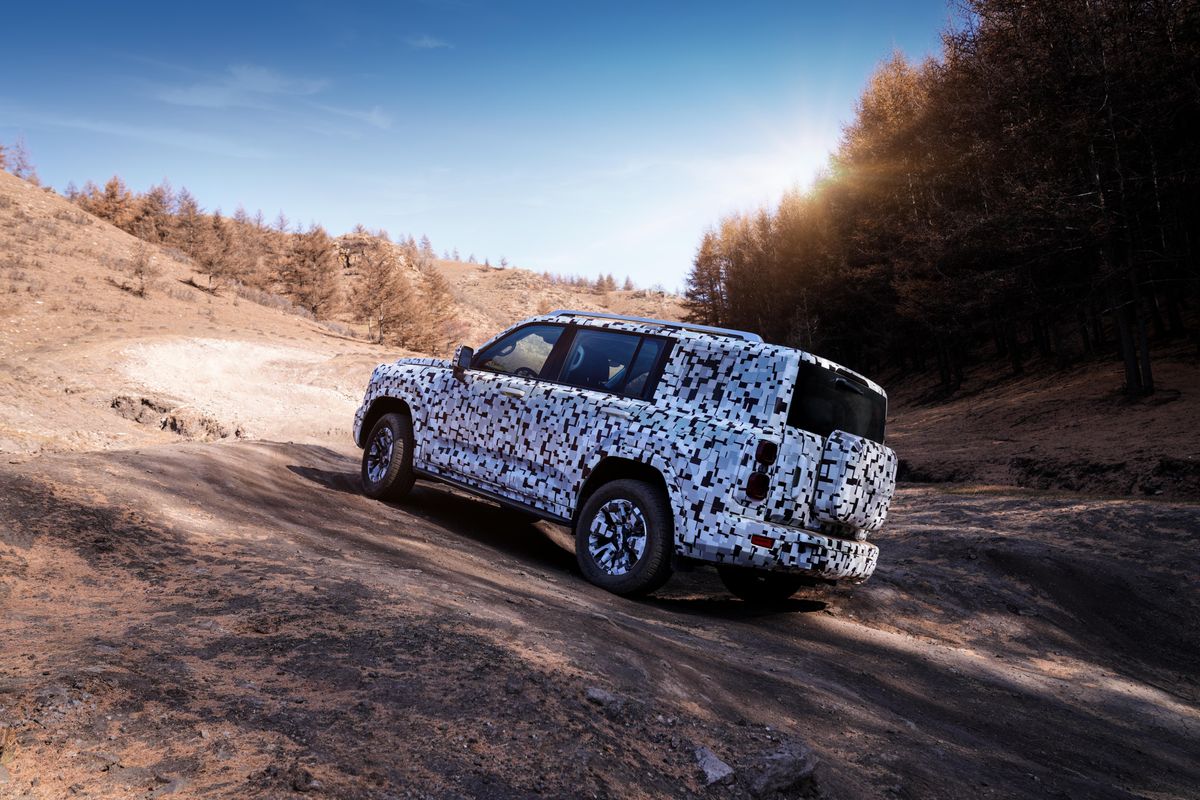
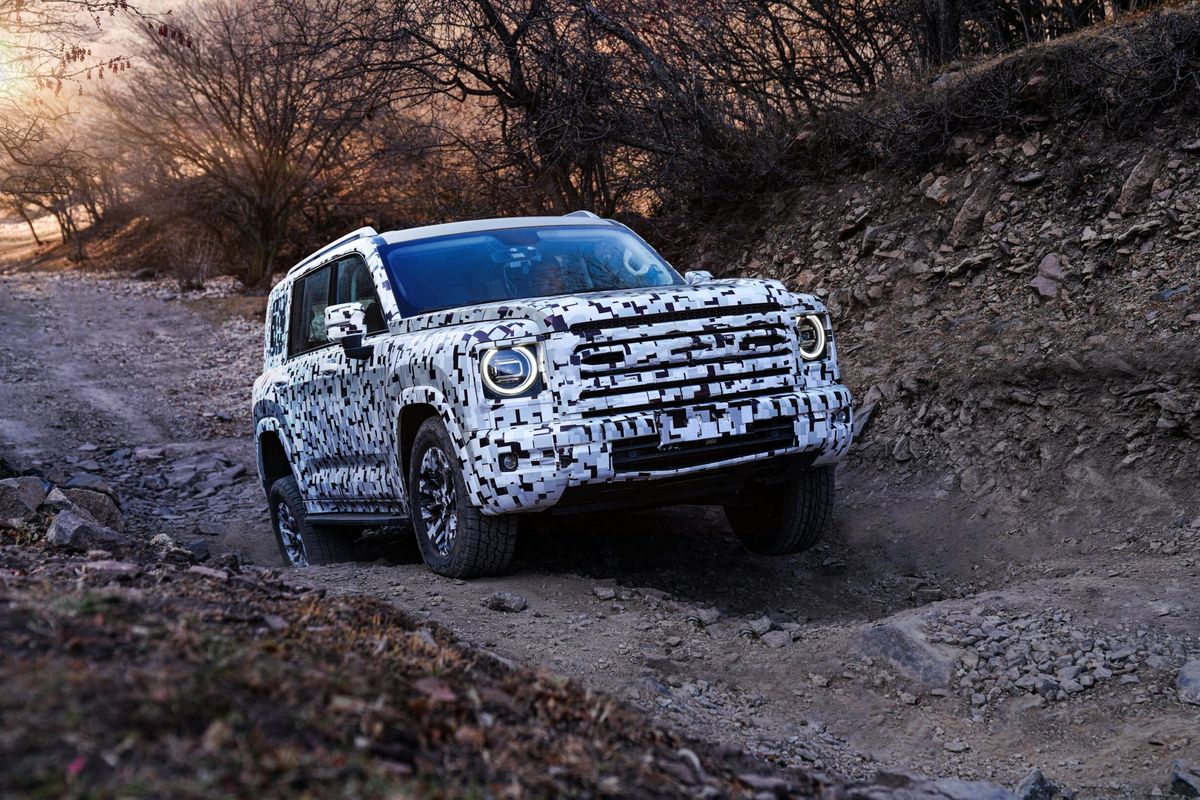
There are no official photographs of the new 2nd-Generation Haval H9 yet. Instead, Autohome has managed to secure some official-looking pictures of a still-camouflaged prototype, showing off some details like the headlights and offroad capabilities.
Will the 2nd-Generation Haval H9 come to South Africa?
At this stage it is too early to confirm anything as there’s no sign of other right-hand drive markets like Australia securing some units for retail. However, given South Africa’s appetite for Haval’s products, we would not be surprised if this new H9 was to arrive in SA showrooms.
How to deal with vehicle finance repayment challenges
In a new instalment of our Street Smart series, brought to you by Absa Vehicle and Asset Finance, Jacob Moshokoa explains what you can do if you find yourself in a financial slump and battling to make your monthly vehicle finance repayments.
PARTNERED CONTENT
For us South Africans, car finance is an essential service and after our houses, probably our biggest expense. That said, South Africa’s economy has been facing some challenges, which has caused many of us to tread carefully when making big financial commitments, like buying a house or a car.
One of the challenges we face is: What happens if we can’t make our vehicle loan repayments? You don’t want to find yourself in a situation where you are struggling to make ends meet, you’re thinking about selling some of your valuables and your stress level is rising like the pile of those loan re-payment statement letters you keep avoiding.
Being in a financial slump can be quite scary, but this is the time to face your problem head-on and not resort to ignoring it. Meaning, GET PROACTIVE! So, how do you do that?
Call your bank about vehicle finance repayments
Firstly, call the bank. You can ask for lower vehicle finance repayments (for some breathing room), to put money in arrears back into the loan amount or even extend the repayment term so that your instalments are smaller. Banks like Absa are run by people who get the landscape of our economy and how one can fall on hard times, so call and state your case so they can try and work out a solution for you.
Secondly, sell the car. If you are an Absa Vehicle and Asset Finance customer and find yourself in financial distress, the bank can help you register your car on its FASTBuy platform, which gives you access to over 400 dealers looking to buy cars. You can start this process by sending an email to [email protected] and an Absa agent will call you to kick-start this process.
Another option is voluntary surrender, meaning considering giving the car back to the bank. Giving your car back to the bank may feel like a defeat or loss, but remember that in the long run, it may be a smart move because downgrading can save your credit record and it’s less embarrassing than a sheriff repossessing it.
A retreat is not the same as a defeat
Just keep this famous quote (apparently made by a military general many, many years ago) in mind: “You’re not retreating, but merely advancing to a more tactically advantageous position.”
Now that wasn’t so scary was it? Remember, if your car is not fully paid off, the bank owns it. And these options only work if you follow the advice well ahead of when the problem arises.
In a more positive light, banks will always do their very best to assist you in resolving the issue since they genuinely care about their customers’ financial security. By ignoring repayment notices, you’ll only end up wasting your money on additional legal fees and, honestly, you may end up without a car.
Buying a car need not be a fear-based decision, but you need to assess your finances and weigh up the pros and cons. When looking at buying that luxury SUV that you’ve always dreamt about owning, ask yourself: “Do I really need an SUV, when maybe an affordable little budget or compact car will do?”
The goal with all financial decisions should be to keep a clean sheet. Always protect your credit score by paying your accounts on time and putting your hard-earned money towards paying off your loans, act responsibly now and enjoy your car without having vehicle finance repayments keeping you up at night.
For extra information on how you can become a better consumer, keep a lookout for more episodes from our Street Smart series and be sure to visit the Absa blog.
Absa’s Fulufhelo Mandane discusses what you need to consider before you start shopping for a vehicle, the costs of ownership and your various finance options. Absa First-time Buyer Guide to Vehicle Finance
Absa’s Gordon Wood details how the new Aftermarket Guidelines, which were introduced in the motor industry last year, affect you as a vehicle owner. Absa’s Guide to Responsible Vehicle Ownership
SA’s top 10 automakers: 2023’s winners & losers by market share
We’ve crunched the numbers and calculated market share to see which of South Africa’s top 10 automakers grew and which ones shrunk in 2023. Here are your winners and losers…
South Africa’s new-vehicle market was flat in 2023, with sales increasing just 0.5% year on year to 532 098 units. But which of the Mzansi’s mainstream automakers outpaced the broader industry in terms of sales growth? And which ones actually shrunk (and lost market share) compared with their performances in 2022?
Well, we’ve consolidated the sales figures for South Africa’s 10 best-selling automakers of 2023 – and calculated market share, too – allowing us to compare these latest numbers with 2022’s statistics. As such, we’ve identified the winners and losers out of the top 10 companies last year.
As always, we should point out a couple of caveats. For instance, Toyota’s figures include sales under the Lexus and Hino brands, while the Volkswagen Group incorporates Audi registrations. BMW and Mercedes-Benz, meanwhile, don’t consistently communicate full sales figures to Naamsa, though – according to the industry body’s estimates – both German firms finished outside of the top 10 anyway.
So, here’s your comprehensive overview of the respective performances of the main players in South Africa’s new-vehicle market. Scroll to the bottom of the story to see the full top-10 list.
4 automakers in the top 10 increased sales in 2023
The Hilux was again Mzansi’s best-selling vehicle, helping Toyota hit a record market share.
In 2022, as many as 8 of the top-10 automakers registered year-on-year improvements in sales, but that figure fell to just 4 in 2023. Toyota was again at the very peak in pure volume terms, growing its tally by 8.0% to a whopping 142 612 units (26.2% of which were Hilux sales) in 2023. Having now led South Africa’s new-vehicle market for 44 years straight, the Japanese giant’s market share surged to 26.8% (yes, that’s more than 1 in 4 vehicles sold), the highest on record.
Suzuki retained 3rd place overall by improving its performance by 4.8% year on year to end on 49 438 units. For the record, this translates to a market share of 9.3%, up from 2022’s measure of 8.9%. The Indian-built Swift (SA’s best-selling imported model) was again the brand’s most popular nameplate, with its 15 974 units representing 32.1% of Suzuki’s total registrations.
Ford sales in SA jumped 16.6% in 2023, largely thanks to the Ranger.
But it was Ford that enjoyed the strongest year-on-year growth in the top 10, increasing its sales a healthy 16.6% to 30 710 units. As a result, the Blue Oval brand climbed 2 rankings to 5th, with its market share rising from just under 5% in the prior year to 5.8% in 2023. As you might have guessed, the Silverton-built Ranger was the main driver of this upturn, accounting for 80.2% of Ford sales.
And the final brand to ramp up registrations in 2023? Well, Isuzu ended the 12-month reporting period on 23 273 units (81.5% of which were D-Max sales), which represents a 9.4% year-on-year improvement. As such, the Japanese company made the largest jump in the top 10 rankings, skipping up 3 positions to snaffle 7th (and boosting its market share from 4.0% to 4.4% in the process).
The 6 automakers in the top 10 that shed sales in 2023
Renault suffered the largest year-on-year sales decline (in percentage terms) in the top 10.
What about the automakers that suffered a decline in sales in 2023? Well, though the Volkswagen Group held steady in 2nd place, its sales dropped 3.4% year on year to 67 456 units. That, in turn, saw the German automaker’s market share slip from 13.2% to 12.7%, despite the fact the Kariega-produced Polo Vivo was again Mzansi’s best-selling passenger car with 23 904 units (or 35.4% of all VW sales).
Similarly, Hyundai retained 4th position despite its tally dropping 11.4% year on year to 31 952 units (and its market share falling slightly to 6.0%). Meanwhile, Nissan – which reported a 4.4% reduction in sales to 29 158 units – slid a spot to 6th, seeing a marginal dip in its market share at 5.5%. With production of the NP200 half-tonne bakkie (which made up a heady 43.6% of the firm’s registrations in 2023) set to end in March 2024, it will be intriguing to see where Nissan lands up by the time the year is over.
But it was Renault that endured the sharpest year-on-year decline in the top 10, with the French firm’s sales tumbling 20.4% to 21 703 units; its market share sliding from nearly 5.2% to 4.1%; and its overall ranking dipping from 6th to 8th. Interestingly, the Kiger (7 725 units) and Kwid (6 222 units) together accounted for 64.3% of the brand’s sales last year.
Fascinatingly, Haval also experienced a noteworthy drop off in sales – losing 12.1% year on year to finish on 19 904 units – though the Chinese automaker held onto 9th place (with its market share slipping to 3.7%). Finally, Kia sunk 2 spots to 10th, with its final tally of 19 086 units representing a 16.2% drop over 2022’s effort. The Korean automaker’s market share, meanwhile, fell from 4.3% to 3.6%.
Where did these ‘dropped’ sales go in 2023?
Chery found itself just outside of the top 10 in 2023.
Although it’s impossible to tell exactly where these “lost” sales went (besides to the 4 automakers – Toyota, Suzuki, Ford and Isuzu – in the top 10 that grew last year), it’s certainly worth highlighting the performance of the 11th-placed Chery. Unfortunately, since the Chinese firm started reporting local sales figures to Naamsa only in July 2022, we can’t calculate its year-on-year improvement for 2023.
Still, Chery’s total for 2023 was significant at 16 319 units (note that this figure excludes Omoda sales, which are not currently reported to Naamsa), putting it just 2 767 registrations behind Kia. That translates to a market share of around 3.1%, a percentage all the more impressive considering the company currently has just three model lines in the passenger-vehicle segment (and none at all in the light-commercial vehicle market). We’re keen to see where this Chinese automaker ends up in 2024…
The 1st-gen Volkswagen Amarok was on the South African market for more than a decade. What should you look out when shopping for a used example? Let’s take a closer look…
When the original Volkswagen Amarok touched down in South Africa in 2010, the Wolfsburg-based manufacturer’s local division billed it as the “world’s most fuel-efficient 1-tonne bakkie”, predicting that the 2.0 BiTDI powertrain would “revolutionise the segment”.
But, by the time the curtain fell on this generation some 13 years later, the Amarok would instead be remembered for the most powerful (and least efficient) engine in the line-up: the 3.0-litre V6 TDI.
The original Amarok was revealed early in 2010.
Yes, for quite some time in Mzansi, the Amarok was the only bakkie in its class to be offered with a brawny 6-cylinder turbodiesel, lending VW’s 1-tonner a distinct unique selling point. And, when a V6-powered alternative finally did arrive in the form of the now discontinued Mercedes-Benz X350d, it proved to be a short-lived rivalry.
Of course, there’s more to the German firm’s 1st real stab at a 1-tonne bakkie (the Taro that preceded it by a couple of decades was just a rebadged 5th-gen Toyota Hilux, after all) than a single powertrain option, particularly since this engine was offered only after the facelift. In fact, at launch, Volkswagen described the ladder-frame Amarok as the “most technically advanced bakkie in South Africa”.
Walter de Silva was responsible for the Amarok’s design.
Designed by Walter de Silva – the man responsible for penning the Alfa Romeo 156, 1st-gen Audi A5 and R8 models, Volkswagen Up, and many more – the 1st-gen Amarok was an important model for Volkswagen in regions such as South America and Australasia, with South Africa likewise categorised as a “key market”. We’re going to focus on the double-cab body style here, since the 2-door version wasn’t particularly popular with local buyers (and even fell away entirely at the facelift).
Once the 2nd-generation model – based on the Ranger and built by Ford in South Africa – came online in early 2023, around 830 000 examples of the original Amarok had been sold globally, with more than 42 000 of those registered locally (around 29 000 in pre-facelift form). Fascinatingly, although production of the original Amarok has ceased for global markets, the 1st-gen shape will technically soldier on in Argentina as a prolonged-lifecycle model – or Amarok Vivo, if you will.
Volkswagen Amarok model line-up in South Africa
Sales in Mzansi commenced in September 2010.
While the project dates back to at least 2005, we had an early glimpse of the Amarok in concept form in 2008. The global reveal followed in January 2010, before the bakkie made its local debut at the annual Nampo Harvest Day in Bothaville in May 2010. It was then displayed at select shopping centres around South Africa in June and July of that year, with the official market arrival taking place in September 2010.
Initially, the Amarok was offered exclusively in double-cab form, with a choice of “clean, high-tech” 2.0-litre turbodiesel engines: a 90 kW single-turbo unit (which technically arrived shortly after launch) and a 120 kW bi-turbo motor. Drive was sent to either the rear axle or all 4 wheels via a 6-speed manual gearbox, while Trendline and Highline grades were on offer:
2.0 TDI Trendline DC 4×2 (90 kW/340 Nm)
2.0 TDI Trendline DC 4Motion (90 kW/340 Nm)
2.0 BiTDI Highline DC 4×2 (120 kW/400 Nm)
2.0 BiTDI Highline DC 4Motion (120 kW/400 Nm)
In July 2011, VW added 6 single-cab derivatives to the local range, with South Africa being the 1st country in the world to receive this body style. The oil-burning engines and manual transmissions from the double-cab line-up were carried over (as was the choice of 4×2 or 4Motion configurations), though the automaker offered the single cab in 2 basic variants and 4 Trendline derivatives.
SA was the 1st market in the world to offer the Amarok in single-cab guise.
By the final quarter of that year, Volkswagen had slotted a new petrol-powered Amarok Trendline 2.0 TSI 4×2 model in at the foot of the double-cab range. Linked to a 6-speed manual cog-swapper, this 4-cylinder unit generated 118 kW and 300 Nm, facilitating a 0-100 kph sprint in “under 10.0 seconds”.
Around the midpoint of 2012, the BiTDI engine employed by Highline derivatives was handed an extra 12 kW, pushing its peak power to 132 kW (maximum twisting force was unchanged at 400 Nm, though was now on tap over a slightly wider rev range). Claimed fuel economy remained 7.9 L/100 km, while the listed 0-100 kph times fell to 10.3 seconds for the 4Motion and 10.6 seconds for the 4×2.
The Amarok gained the option of an 8-speed auto early in 2013.
In January 2013, the Wolfsburg-based company expanded the Amarok double-cab range with the addition of a new 8-speed automatic transmission, which it described as the 1st of its kind in the class. The self-shifting gearbox was offered in conjunction with the 132 kW BiTDI engine, with peak torque increasing to 420 Nm (available from 1 750 r/min).
While the manual 4×4 models came with selectable 4-wheel drive, the auto-equipped version featured permanent 4WD and a Torsen differential. It was a mite slower to 3 figures than the 3-pedal equivalent, while also sipping at a slightly higher 8.3 L/100 km. By April of that year, BlueMotion technology was rolled out to the Amarok range, adding items such as a stop-start system and regenerative braking in a bid to improve fuel consumption.
The special-edition Amarok Ultimate touched down in 2016.
Early in 2015, the automatic version of the Highline double-cab became available in 4×2 guise, before the special-edition Amarok Ultimate – based on the range-topping 2.0 BiTDI 132 kW 4Motion Highline 8AT derivative – touched down a year later.
VW billed the Ultimate as the 1st bakkie “in the local market with bi-xenon headlights with LED daytime running lights as standard”, while also fitting it with chrome grille bars, a silver-coloured underbody guard, silver-painted side-mirror caps, darkened taillamps, 19-inch “Cantera” alloy wheels, a styling bar, “Ultimate” decals and other extras.
Amarok receives a facelift (and that V6)
The bakkie’s mid-cycle refresh came in 2017.
In April 2017, nearly 7 years after the Amarok’s local debut, the facelifted version finally arrived in South Africa. Though VW SA opted to cull the single-cab variants at this point, the local range still comprised as many as 12 double-cab derivatives. Revised grades on offer included Comfortline, Highline, Highline Plus and Extreme, while the 2.0 TDI unit now made 103 kW and 340 Nm, with the BiTDI motor unchanged.
But the big news was the arrival of the 3.0-litre V6 TDI unit. Developed by Audi and pilfered from none other than the 1st-gen Porsche Cayenne Diesel, the 6-cylinder engine generated 165 kW and 550 Nm (the latter from 1 400 to 1 750 r/min), with these outputs rising briefly to 180 kW and 580 Nm on overboost. Fitted as standard with the 8-speed automatic transmission and permanent 4WD, this version of the Amarok V6 completed the 0-100 kph sprint in a claimed 8.0 seconds, before topping out at 193 kph.
The facelift saw the cabin become even more car-like.
Meanwhile, the bakkie’s exterior was treated to a few subtle design revisions, led by a new front bumper, updated grille, fresh front foglamps, new alloy-wheel designs and the addition of a 3rd brake light employing LED technology. Inside, the Amarok’s cabin became even more car-like, gaining a revised dashboard design featuring a modular infotainment system (the touchscreen system used depended on the chosen trim level).
In December 2018, another special-edition Amarok – again using the BiTDI engine and 8-speed auto – joined the line-up. Badged as the “Dark Label”, this variant scored a locally sourced matte-black styling bar, while also featuring a black finish for items such as the exterior door handles, side-mirror caps, B-pillars and side sills. Tinted rear windows, smoked taillights, 18-inch “Rawson” rims and decals were also included, along with black headlining, Vienna leather seats and embroidered floor mats.
The Canyon was the 1st special-edition Amarok to use the V6 engine.
September 2019 saw the 165 kW 3.0 TDI V6 engine extended to a special edition for the 1st time, with the Amarok Canyon set apart by its “Honey Orange” metallic paint, matte-black exterior door handles, black-and-chrome grille, part-chrome side-mirror caps, black widened wheels arches, matte-black styling bar, matte-black side steps, 17-inch “Aragua” alloy wheels and the requisite “Canyon” decals. Inside, this model featured partial-leather upholstery with orange stitching, a hue that was repeated on the seatbelt seams.
Finally, the V6 engine was gifted even more grunt in December 2020, when it was updated to produce 190 kW (or 200 kW on overboost) and 580 Nm, with peak twisting force now available from 1 400 to 2 750 r/min. The result was a hot-hatch-like 7.6-second sprint to 3 figures and a maximum speed of 207 kph, according to VW.
The Amarok’s V6 engine was uprated to 190 kW at the end of 2020.
With the Mercedes-Benz X-Class (including the 190 kW X350d) having been discontinued earlier that year, the updated Amarok V6 thus became the most powerful, fastest-accelerating and indeed most expensive double cab on the local market.
The original Amarok was finally discontinued in the opening quarter of 2023, with the new Ford-built model hitting the SA market in March.
What are the advantages of a VW Amarok?
The V6 used in the Amarok was developed by VW Group brand Audi.
The mighty V6 engine: Whether justified or not, VW was on the receiving end of some serious criticism when it launched the Amarok with only 2.0-litre, 4-cylinder engines. After all, most rivals of the era employed motors displacing at least 3.0 litres. The German company’s eventual response? To use the bakkie’s mid-cycle update as an opportunity to drop a smooth-revving, Audi-developed 3.0-litre V6 turbodiesel mill (EA897) into the engine bay.
As detailed above, the torque-rich 6-cylinder unit was offered in both 165 kW and 190 kW form, in each case exclusively in conjunction with an 8-speed automatic transmission. Though it came with a hefty price tag, all that grunt endowed the Amarok V6 with rapid off-the-line acceleration as well as immense overtaking ability. The lower-output version had a braked towing capacity of 3 300 kg, while the 190 kW iteration pushed that number to 3 500 kg.
This bakkie’s cabin was anything but agricultural.
Double cab’s SUV-like cabin: Arriving at a time when most bakkies still featured largely utilitarian cabins, the double-cab version of the Amarok offered an interior more akin to that of an upmarket SUV, both in terms of ergonomics and quality of materials. At launch, VW claimed its 4-door bakkie boasted “exceptional interior dimensions” that made it “the most spacious in its class”. Wide-opening doors, good outward visibility and impressive shoulder space in the rear quarters were all highlights, though the Amarok would be overtaken in the rear-legroom department by newer rivals in the years to come.
Back in 2010, Volkswagen claimed the Amarok had established a “new level of safety in bakkies”, since Highline double-cab derivatives were fitted as standard with items such as electronic stabilisation control (with a trailer-stabilisation system on models featuring towbar preparation), ABS with EBD, anti-slip regulation and hill-descent assist.
The Amarok came with plenty of safety kit (though lacked rear airbags).
In addition, there were airbags for the driver and front passenger, along with head/thorax airbags, though the Amarok unfortunately didn’t ever receive rear airbags. Models fitted with 4-cylinder engines made do with drum brakes at the rear, while the V6 derivatives scored discs back there (as well as 17-inch items – an inch larger than on other variants – up front).
Comfort and refinement: The 5 254 mm-long bakkie not only looked like a well-sorted SUV inside but it drove like one, too. While employing leaf springs at the rear (as opposed to the multi-link configuration used by the D23-generation Nissan Navara and thus the closely related Mercedes-Benz X-Class), the Amarok rode with a degree of comfort and refinement that was anything but agricultural. Note the bakkie was specified as standard with a “2+1” leaf-spring set-up to optimise comfort, though a heavy-duty “3+2” version was also available.
The Amarok’s load bed was surprisingly spacious.
Double cab’s large load-bed: While the lifestyle-oriented Amarok may not be the 1st double-cab bakkie that springs to mind when thinking of load-lugging duties, there’s no denying this model’s credentials. At launch, VW claimed the load bed was “best in class” in terms of its overall dimensions (measuring 1 555 mm long and 1 620 mm wide) as well as the maximum load width between the wheel wells (1 222 mm), the latter ostensibly making it possible to load a standard Euro pallet sideways.
Over the course of its 13-year lifecycle, the double-cab bakkie’s standard payload capacity varied from 838 kg to 1 010 kg, depending on the powertrain (with the top-end figure attributed to the V6). The optional heavy-duty rear suspension set-up, meanwhile, saw certain 4-cylinder derivatives rated to carry up to 1 150 kg.
What are the disadvantages of a VW Amarok?
That V6 badge comes at a premium.
Hefty price for the V6: When the 165 kW version of the Amarok V6 arrived in SA in the 2nd quarter of 2017, the flagship Extreme derivative was priced from R748 600. By the time the 190 kW iteration had made local landfall towards the end of 2020, the price had grown to R996 000, making it SA’s most expensive bakkie (yes, eclipsing even the X350d Power, although technically the latter had already been discontinued by that point). Ultimately, it settled on a heady R1 118 200 right at the end of the original Amarok’s lifecycle. That pricing premium extends to the used market today.
Clunky manual ‘box (early models): At the start of the Amarok’s life, there were a fair few reports of issues with the 6-speed manual gearbox. In addition to this transmission’s long throw, some owners complained of a clunky gearshift, which tended to be accompanied by a difficulty in selecting reverse. However, we should point out manual-equipped models (which, of course, came with part-time 4×4) featured a low-range transfer case, a feature missing from the self-shifting derivatives.
Ground clearance couldn’t match most rivals.
Modest ground clearance: Though most examples would likely not be pressed into service as hardcore off-roaders, it’s worth keeping in mind the Amarok’s modest (by class standards, anyway) ground clearance meant it was hamstrung slightly when tackling seriously jagged terrain. In the case of the double-cab derivatives, ground clearance under the front axle was listed as just 192 mm, though VW at least included robust underbody protection.
Miscellaneous potential issues: Early versions of the 4-cylinder turbodiesel engines were known to suffer from issues with a fast-wearing serpentine belt. Exposure to dirt sometimes saw these belts fail prematurely, at which point they could be dragged into the timing belt, potentially leading to catastrophic engine failure. VW quietly fitted a revised timing-belt cover to these early models as part of a general service campaign (as opposed to a full recall).
Early 2.0 TDI models were recalled for potential fuel-line leaks.
Other relatively common possible problems with these smaller-capacity TDI motors included exhaust gas recirculation (EGR) valve failures and premature clogging of the diesel particulate filter (DPF). In addition, 15 500 units of the 2.0 TDI (in both single- and double-cab form) built from the start of production to June 2013 were recalled in South Africa late in 2013 for “potential fuel-line leaks” in the engine compartment.
Finally, though the Amarok’s petrol-flavoured 2.0 TSI mill was widely used across the VW and Audi passenger-car range, it still suffered from maladies such as timing-chain tensioner faults, water-pump failures, high-pressure fuel pump malfunctions and excessive carbon build-up.
How much is a used VW Amarok in South Africa?
The V6 was the most commonly listed powertrain, though Canyon models were in short supply.
At launch, the Amarok shipped standard with a 3-year/100 000 km warranty and a 5-year/90 000 km service (with intervals of 15 000 km), arrangements that remained unchanged throughout the 13-year lifecycle. As always, closely examine the maintenance history of any used bakkie you’re considering buying and simply walk away should any scheduled services have been skipped.
At the time of writing, the 3.0 V6 was the most popular engine, accounting for 46% of all 1st-generation Amarok listings on Cars.co.za. That said, the 2.0 BiTDI motor wasn’t far behind on 44%, while the 2.0 TDI (9%) and 2.0 TSI (a mere 1%) made up the numbers. Overall, 72% of listed models featured an automatic transmission, while 70% were fitted with 4Motion.
More than 70% of listed models had an automatic transmission.
Indicated mileage varied from just 16 km on a virtually new 2023 Amarok 2.0 BiTDI Highline Plus 4Motion to a whopping 310 000 km achieved by a 2013 Amarok 2.0 TDI Trendline double cab. Moreover, we found a further 53 models showing in excess of 200 000 km on their respective odometers.
Below R300 000: Every Amarok listed below this mark was predictably a pre-facelift model, with most showing high mileage. There were, however, a few of the final single-cab derivatives in this space, too. Beware examples fitted with aftermarket accessories (think bonnet vents, oversized wheels, etc.) that didn’t come from VW’s official list of factory-backed items.
From R300 000 to R500 000: This pricing bracket served up a far broader selection, with options including low-mileage pre-facelift 2.0 BiTDI Highline double cabs, higher-mileage facelifted versions and even V6-powered models in the 165 kW state of tune.
From R500 000 to R700 000: The V6 engine dominated between these pricing bookends (including a few examples with the full-fat 190 kW output), while 2019 was the most common model year here. We also discovered several late model-year, very low-mileage 2.0 BiTDI Highline double cabs in this space, along with the only few Canyon units listed.
R700 000 and up: Spending more than R700 000 would put you in a late model-year Amarok double cab, either in 2.0 BiTDI or 3.0 V6 form (with the latter again dominating this space), likely with well under 100 000 km on the clock. The most expensive 1st-gen model we could find was a 2023 Amarok 3.0 TDI Extreme (with just 100 km on its odometer) going for a heady R1 149 000 – yes, that’s more than VW’s recommended retail price when it was registered.
Which Volkswagen Amarok should I buy?
V6 models did without low range.
So, which Amarok double cab should be on your shortlist? Well, while the other engines were all more fuel efficient (and the 132 kW BiTDI hardly short of grunt), we’d argue the lusty V6 was the motor that made this generation so very special. Bear in mind, of course, opting for the 6-cylinder unit – in either of the 2 tunes available locally, both in conjunction with the 8-speed automatic transmission as standard – would mean you’d have to do without low range.
Thankfully, this is the powertrain that’s in greatest supply on the used market. Still, it’s worth noting that you’d have to spend at least R400 000 to get into a V6 model at the time of writing (and likely more than R600 000 if you have your heart set on a 190 kW version). In terms of trim levels, Highline Plus should cover most needs, though the choice would again depend on your budget.
Is the Volkswagen Amarok a good used buy?
The V6 played a significant role in making the original Amarok feel special.
Since both bakkies harboured premium aspirations, the Amarok’s chief foe was the Mercedes-Benz X-Class – though that rivalry didn’t last very long at all. Other contenders in the leisure-bakkie space included high-spec versions of the strong-selling 8th-gen Toyota Hilux, P375-series Ford Ranger and Isuzu D-Max (both the RT and RG generations, including KB-badged versions of the former) as well as the D23-gen Nissan Navara on which the X-Class was based.
Less-popular choices in this segment included the Mazda BT-50 (both the Ranger-based UP generation and the D-Max-based TF series) and the 5th-gen Mitsubishi Triton, as well as the seldom-spotted Fiat Fullback that pilfered the latter’s platform.
In its day, the original Amarok was arguably the segment’s most well-rounded leisure bakkie.
Ultimately, however, if VW’s intention was to create a practical double-cab bakkie that could pull off a remarkable impression of a relatively upmarket family SUV, it nailed the brief (bar the lack of rear airbags, that is) – particularly in V6 form. In fact, we’d go as far as saying the original Amarok was at the very top of the leisure-bakkie (as opposed to workhorse) pile.
And the 3.0 TDI V6 – despite its hefty price tag – was very much the Amarok’s defining feature.
Volkswagen Tiguan AllSpace to be replaced by Tayron
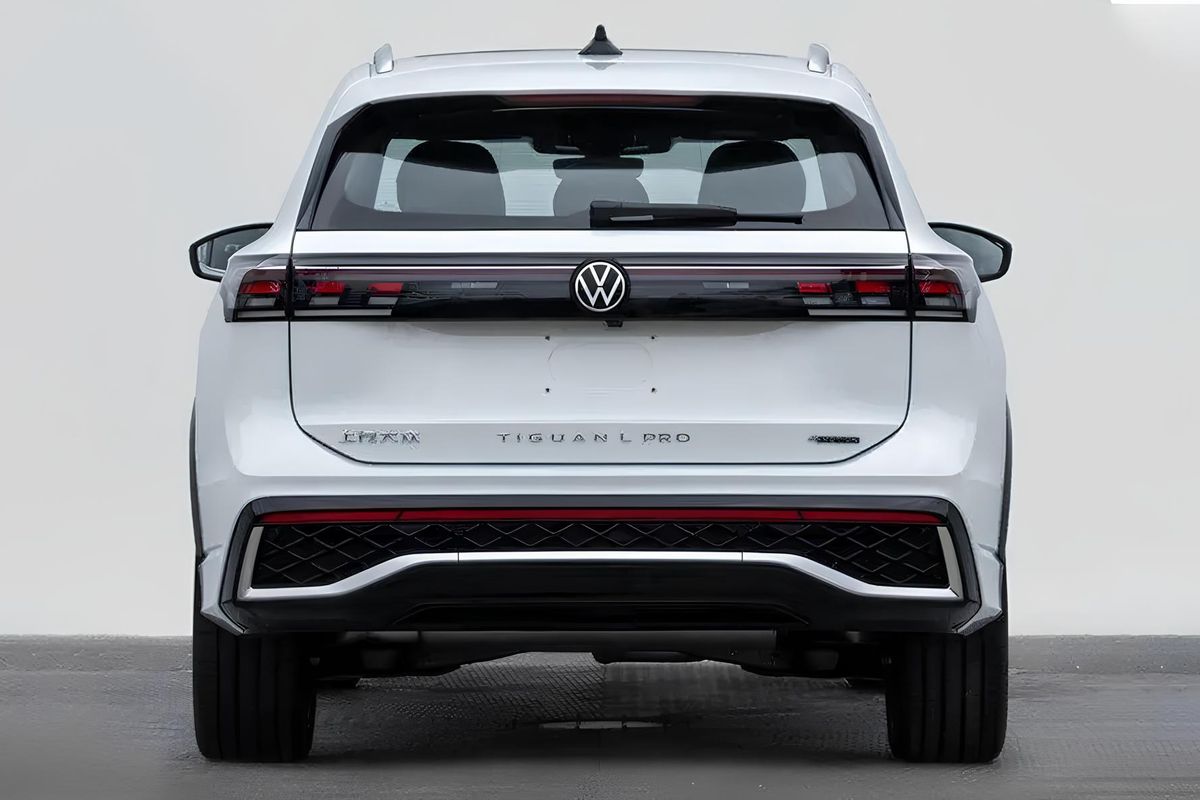
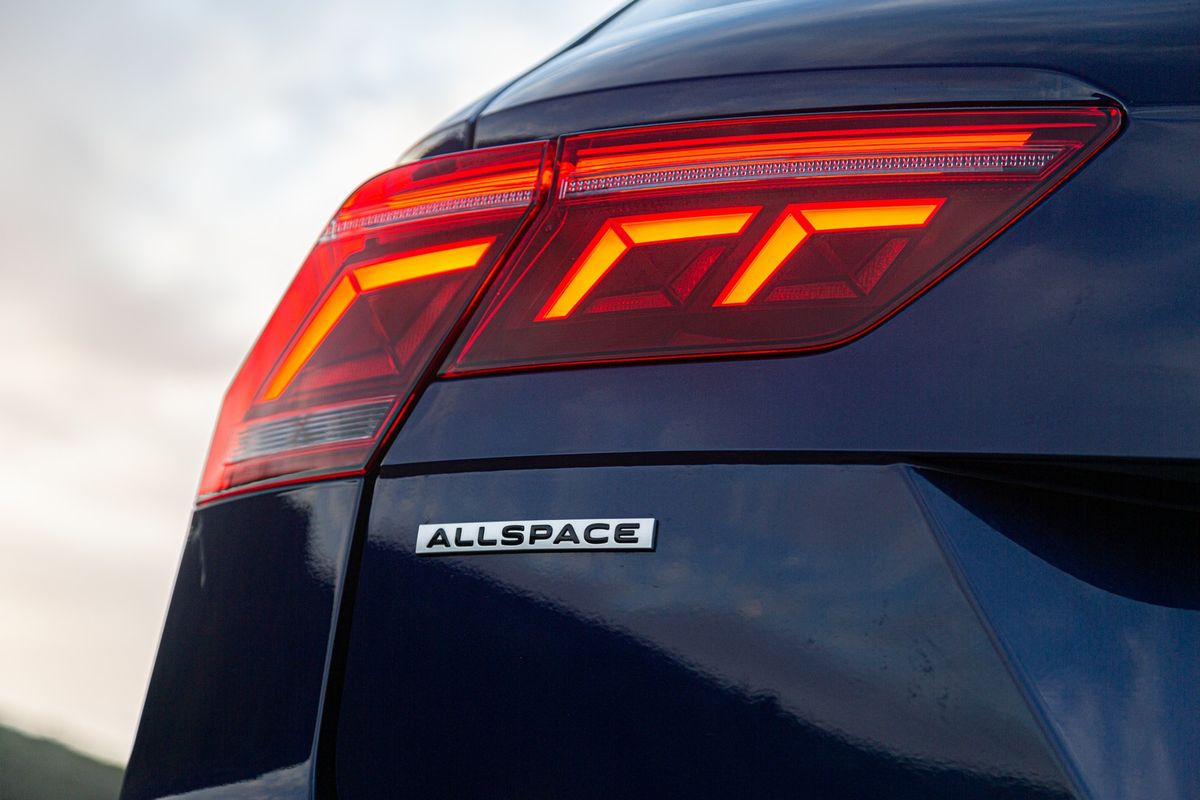
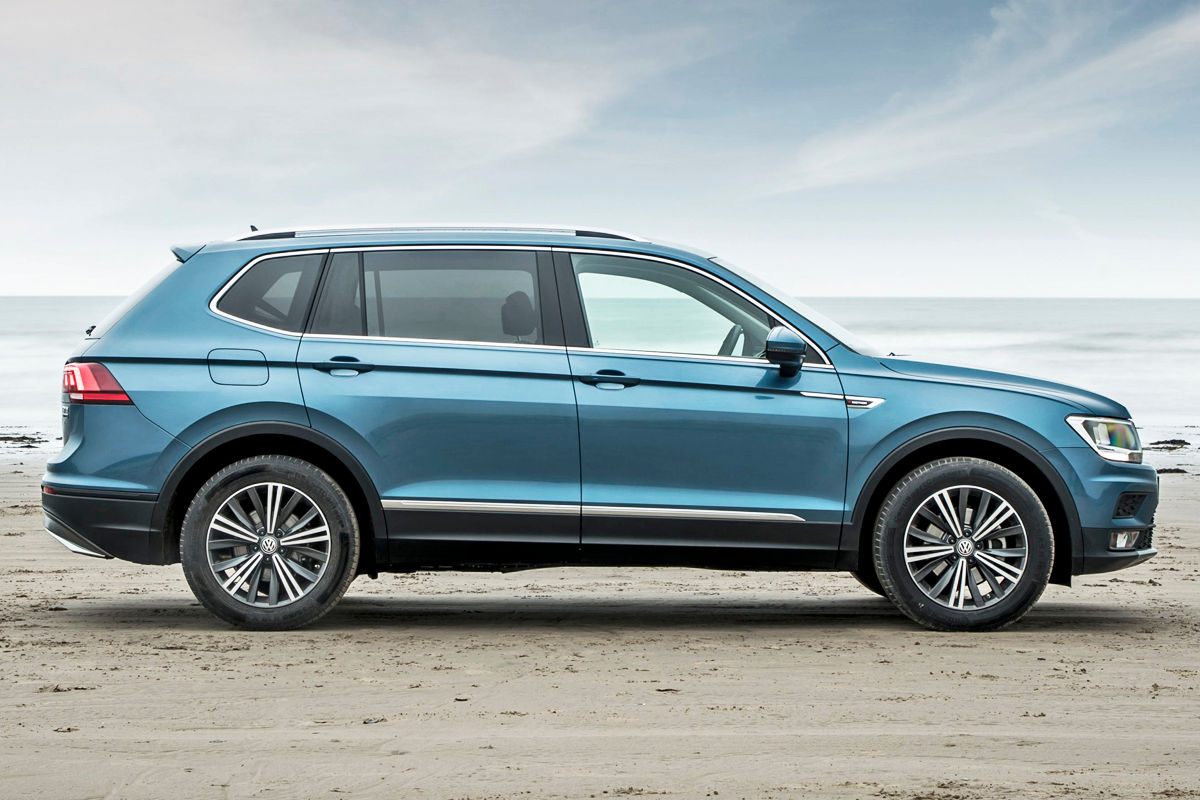
It’s the end of the road for the 7-seater Tiguan Allspace as Volkswagen rationalises its vehicle lineup. It will be replaced by the new-gen Tayron and here are some early images ahead of its official reveal in 2025.
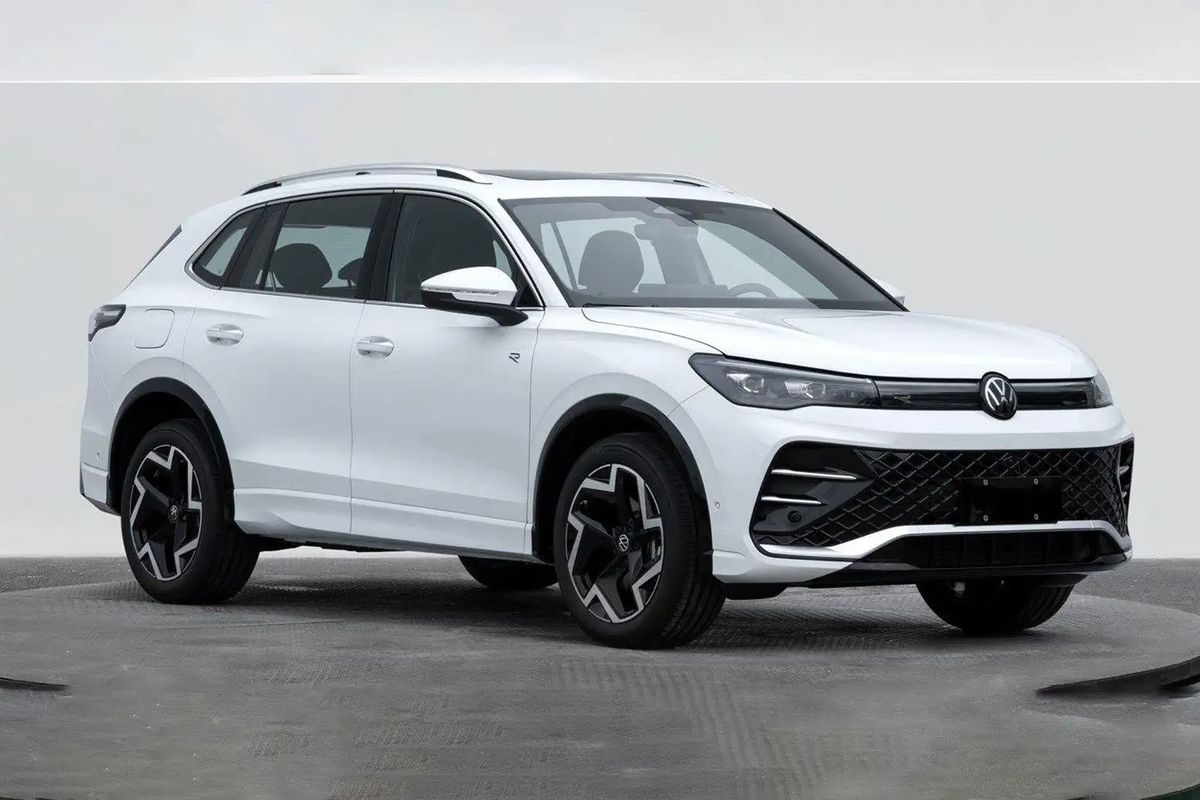
The vehicle you see here is the brand-new Volkswagen Tayron and these images come from recent Chinese patent filings. It is important to note that this vehicle will be badged as the Tiguan L Pro for that market. The rest of the world gets the 7-seater Tayron and it will be manufactured globally for multiple markets.
Tiguan L Pro badge reserved for China
Much like the new 3rd-generation Volkswagen Tiguan, the Tayron will be underpinned by the VW Group’s MQB-Evo platform. The patent fillings highlighted some dimensions too, with the Tayron being longer, wider and higher than the new 3rd-gen Tiguan by 197 mm, 17 mm and 43 mm respectively. The wheelbase is also 111 m longer than the standard Tiguan, which bodes well for both cabin space and a 7-seater configuration.
According to the UK-based publication Autocar, the 2nd-gen Volkswagen Tayron will ride on the latest version of the MQB platform and feature extensive mechanical updates to increase performance, comfort and refinement. The usual engine lineup of 4-cylinder turbo petrol and diesel motors are expected, but upgraded with mild-hybrid tech and 4Motion all-wheel drive will be available on certain derivatives.
Bye Allspace
Volkswagen is in the process of re-looking at its current lineup and evaluating profitability for the future. As part of its ACCELERATE FORWARD | Road to 6.5” global performance program which was announced in the middle of 2023, Volkswagen will be “streamlining and accelerating administrative processes, increasing efficiency in development and production, streamlining the model range, and at the same time reducing the number of equipment variants and further improving product quality.”
This quote comes from current Volkswagen CEO Thomas Schäfer, who used to be in charge of Volkswagen South Africa. There are a few vehicles in the crosshairs and one of which is the 7-seater Tiguan Allspace. While there’s nothing much wrong with the standard Tiguan 5-seater model, the 7-seater derivative never really took off in terms of sales, so it makes logical sense to bin it.
The all-new Tiguan is coming to SA in 2024
However, there’s an opportunity to bridge the gap between the current Volkswagen Tiguan midsize family SUV and the flagship Touareg. In the South African context, the current Tiguan range is priced from around R625 000 to R843 000 (excluding the niche R performance model) and the Touareglarge luxury SUV starts from R1 365 000 (with a facelift due in the first half of 2024). We’re still yet to see pricing of the new 3rd-gen Tiguan, but that’s confirmed for our market at some point this year.
Is there space for a luxury smaller SUV priced from R950 000 to R1.2 million? We think so and so does Volkswagen who have confirmed that the gap will be plugged by the Volkswagen Tayron. “We will extend our existing SUV line-up on a global basis with the second-generation Tayron, which is already under development and will go on sale by the middle of the decade,” said Karl-Heinz Hell, head of engineering for Volkswagen’s mid-to-full-size models in a chat to Autocar.
Will the new Volkswagen Tayron come to South Africa?
Expect to see a global reveal of the Volkswagen Tayron by early 2025. Given the fact that the vehicle has been confirmed for some right-hand drive markets like the UK already, we expect to see this 7-seater offering make an appearance in South African showrooms.
In the meantime, the Volkswagen Tiguan Allspace will remain on sale in South Africa, so if you feel the standard Tiguan doesn’t offer enough practicality, then consider reading our assessment of the vehicle.
Tank is coming! GWM’s luxury off-road SUV brand will arrive in South Africa soon and the Fortuner-sized Tank 300 will be its first model. What rivals will the new Tank 300 have to beat to win the hearts and minds of South Africans? Let’s take a quick look…
The South African offroad market is robust and not only do we love to explore but our terrain is demanding for even the toughest offroaders. So, how then will the forthcoming Chinese-built Tank 300 fair in a market that’s typically dominated by tried-and-trusted brands such as Ford and Toyota?
Only time will reveal the answer to that question but it’s worth laying down the gauntlet for the Tank 300 by examining what rivals it will have to face when it arrives in showrooms soon.
Before we delve into the Tank 300’s rivals, let’s just quickly recap what the Tank 300 has to offer.
The Tank 300 is a luxury offroad SUV that measures 4 760 mm long, 1 930 mm wide and has a wheelbase of 2 750mm. Ground clearance is claimed at 224 mm and its offroad credentials are backed up with a low-range transfer case as well as front and rear differential lock.
In top-spec guise, the Tank 300 brings formidable hybrid power to the road with a 180 kW/380 Nm 2.0-litre 4-cylinder turbopetrol engine working in combination with a 78 kW/268 NM electric motor and 1.75 kW battery. With total outputs of 258 kW and 615 Nm reaching all four paws using a 9-speed automatic transmission, power-hungry buyers are bound to be wooed by the newcomer.
The Tank 300 is also expected to be offered with a 2.0-litre turbopetrol engine with 162 kW and 387 Nm and mated with an 8-speed automatic transmission. Note that there’s no option for a diesel engine.
As far as luxury and comfort features are concerned, the Tank 300 is generously equipped with standard features and some of the niceties include a 12.3-inch digital instrument cluster, a 12.3-inch touchscreen infotainment system with Apple CarPlay/Android Auto, USB-A and USB-C ports, a wireless charging pad, Nappa leather seats (heated/cooled with a massage function), heated steering wheel and an Infinity 9-speaker sound system, to name but a few.
It’s also worth noting that local pricing for the Tank 300 has yet to be confirmed, however, in May 2023 indicative pricing of “between R685 900 and R851 900” was publicly communicated but those figures will most likely be adjusted upwards when it finally arrives in Mzansi. The Tank 300 is strictly a 5-seater adventure SUV but due to its expected pricing, it’s also likely to compete with traditional 7-seater SUVs. With this in mind, this list focuses on offerings below the R1-million mark.
So, what competition will the new Tank 300 be up against when it arrives?
The entry-level Fortuner 2.4 GD-6 4×4 is currently priced at R733 100 while the Fortuner 2.8 GD-6 4×4 is priced from R901 700.
The Tank 300’s cabin architecture is more sophisticated than that of the Fortuner and while its offroad performance will need to be proven on local soil, the Tank 300 is likely to steal a few sales from would-be Fortuner buyers.
Unlike Toyota, however, the Tank brand lacks the legacy factor which means that many buyers might approach Tank with caution.
The new Ford Everest is larger than the Tank 300 and it’s moved more upmarket in its latest guise.
Pricing for the Everest BiTurbo 4×4 XLT starts from R973 100 with outputs of 154 kW and 500 Nm on offer. The Everest might be outgunned in power but the new model is leaps and bounds better than its predecessor and for its size, will prove to be one of the Tank 300’s most formidable rivals, especially in terms of its interior styling and technology offering.
The Isuzu MU-X might lack the interior wow factor against the incoming Tank 300 but it remains a hugely capable and solid adventure SUV.
Pricing for the MU-X LS 4×4 starts from R885 000 while the range-topping MU-X Onyx 4×4 is priced from R960 600. The MUX’s 3.0-litre turbodiesel engine produces 140 kW and 450 Nm which means that it too will be outgunned and outmuscled by the incoming Tank 300.
The underrated and slow-selling Mitsubishi Pajero Sport is likely to be crushed by the Tank 300 on all fronts.
The Pajero Sport 4×4 pricing is competitive though with pricing starting at R854 990. The Pajero Sport makes use of a 2.4-litre turbodiesel engine producing 133 kW and 430 Nm which is no match for the beastly hybrid powertrain in the Tank 300.
The Jeep Wrangler is a proven rugged SUV and with pricing starting at just below R1-million which makes it a distant rival (in terms of price) to the incoming Tank 300.
The Wrangler’s 3.6-litre petrol engine does offer a heady 209 kW though with 347 Nm of torque. As far as fit and finish is concerned, the Wrangler won’t be able to compete with the modern and tech-laden interior of the Tank 300 but it will definitely compete in terms of outright offroad ability.
Based on the list of rivals on offer below R1 million, we suspect that the Tank 300 will be in a strong position to lay claim to significant market share in this segment. Apart from the new Ford Everest and the Isuzu MU-X, all the other products are relatively old and dated in comparison.
From what we have seen from GWM and Haval in recent times, Tank will likely enter the market with aggressive, hard-to-ignore pricing that will ultimately attract buyer attention and translate into sales. More so, if all goes well, Tank could even be the leading offroad SUV brand in South Africa within 3 years… Watch this space!
Polo Vivo or Corolla Cross? SA’s 10 best-selling cars of 2023
It was a tight race for the title of South Africa’s best-selling passenger vehicle in 2023, but the winner has been crowned. Here are Mzansi’s 10 top sellers from last year…
In 2023, South Africa’s new-vehicle sales were flat, with the industry experiencing just 0.5% year-on-year growth to end on 532 098 units. We’ve already looked at Mzansi’s best-selling bakkies for last year, so now it’s time to turn our attention to the most popular passenger vehicles.
For the record, the country’s passenger-vehicle segment experienced a year-on-year decline of 4.4%, with 347 695 units registered in 2023, according to Naamsa. That said, just 3 of the models that placed inside the top 10 suffered a fall in sales, with the remaining 7 all reporting (varying degrees of) growth.
Polo Vivo edges out Corolla Cross
So, which nameplate took the title of South Africa’s best-selling passenger car in 2023? Well, the Kariega-built Volkswagen Polo Vivo retained its crown, growing its registrations 14.6% year on year to 23 904 units. That translates to a monthly average of nearly 2 000 units, with the prolonged-lifecycle model hitting a high of 2 698 units in September.
That said, the Toyota Corolla Cross wasn’t far behind, placing 2nd on 22 592 units – or just 1 312 units off the pace. It’s worth noting national sales of the Japanese firm’s locally built crossover (which looks likely to receive an update in 2024) surged 42.5% year on year, helping the Corolla Cross climb 2 positions to claim the runner-up spot. Of course, production of this model stuttered in 2022 owing to the KwaZulu-Natal floods that damaged Toyota’s Prospecton plant.
Swift slips while Starlet climbs
In 2023, the Suzuki Swift dropped a spot to 3rd, with sales of the Indian-built hatchback – which was again South Africa’s best-selling imported vehicle overall – slipping 7.6% year on year to 15 974 units. That said, it’s worth keeping in the mind this performance came off an extremely high base, with Swift sales having more than doubled in 2022 (compared with 2021).
Interestingly, another Suzuki-built product narrowly missed out on a podium position. Yes, the Baleno-based Toyota Starlet moved up 2 places to 4th, with registrations increasing 21.6% to 15 713 units in 2023 (or just 261 sales fewer than the Swift). For the record, the closely related Baleno (6 004 units) placed 15th.
Polo sales drop but hatch retains 5th
Although registrations of the Kariega-manufactured Volkswagen Polo hatchback fell 25.2% year on year (an even more significant decline than the B-segment contender suffered in 2022), it nevertheless managed to retain 5th position with a total of 11 748 units.
In 2023, the Polo hatchback hit a high of 1 235 units in October, before bottoming out at 708 units in December. At the end of the reporting period, this model’s monthly average came in at 979 units, while it managed to breach the 4-figure mark only 6 times during the year.
Fortuner rebounds and Tiggo 4 Pro surges
The year 2022 wasn’t the best for the Toyota Fortuner, but the Prospecton-made ladder-frame SUV – which benefited from a facelift in February – bounced back impressively in 2023, climbing 5 places to 6th position and finishing on 10 385 units. That represents a year-on-year increase in sales of 33.1% for Mzansi’s most popular adventure SUV.
Meanwhile, the Chery Tiggo 4 Pro was the highest-placed Chinese vehicle at 7th, with sales of this crossover soaring 117.5% year on year to 10 054 units. Though the smallest member of Chery SA’s Tiggo family failed to crack 4 figures in a single month, its performance was incredibly consistent through the year, with more than 800 registrations reported in 8 of the 12 months.
Jolion sandwiched by rising Indian-built models
The Hyundai Grand i10 range – which was facelifted and expanded to include not only hatchback derivatives but also sedan variants in 2023 – climbed 10 places to snaffle 8th, with sales improving more than 50% year on year to 9 829 units (note this figure excludes the few Cargo-badged panel-van units registered in the light-commercial vehicle space, since we’re concentrating on the passenger-vehicle segment here).
While sales of the Haval Jolion dropped 5.1% year on year, the Chinese vehicle’s tally of 8 604 units was enough to see it hold steady in 9th place. The Indian-built Nissan Magnite, however, was close behind on 8 580 units, having enjoyed a 41.5% increase in sales to climb 9 rankings and secure the final spot in the top 10.
South Africa’s 10 best-selling passenger cars in 2023
2024 will see exciting new cars coming to South Africa! What new cars are you looking forward to most? Let’s take a closer look!
The year 2023, for the most part, was a year of recovery for the automotive sector in South Africa following a lengthy period of supply challenges, production setbacks, chip and parts shortages and delivery delays, to name but a few of the major challenges faced by car manufacturers.
Some of these challenges still remain but 2024 is shaping up to be a “smoother ride” for the industry. More so, 2024 will see new car brands launching in South Africa as well as a wide range of new cars and updated cars coming to market including budget cars, compact SUVs / crossovers, family cars, executive SUVs, premium SUVs, sports cars, supercars, bakkies, electric cars and more!
Please note that this new car list is generated based on feedback from manufacturers as well as from what has been reported publicly by either by Cars.co.za or elsewhere. We have tried our utmost to make this list as accurate and as definitive as possible. We will update this list regularly as we receive relevant information from manufacturers.
It’s also worth mentioning that arrival timings for new cars are tentative and are subject to change due to ongoing changes and delays in the global supply chain.
Let’s take a look at what new cars are coming to South Africa in 2024!
Meet the new Aston Martin DB12, a grand tourer the Gaydon-based automaker promises will deliver “a quantum shift” in character and dynamic ability compared with the DB11 it replaces. In fact, the British firm describes the newcomer as the “world’s first super tourer”, insisting the traditional “grand tourer” label is simply not sufficient.
The new DB12 foregoes the turbocharged 5.2-litre V12 petrol engine used in the DB11 and instead employs a high-powered twin-turbo 4.0-litre V8 motor sourced from Mercedes-AMG but “tuned by Aston Martin engineers” to deliver 500 kW and 800 Nm, along with a top speed of 325 kph! Aston Martin claims the newcomer will complete the 0-100 kph sprint in 3.6 seconds. Power is fed through a ZF-sourced 8-speed automatic transmission.
The new Aston Martin DB12 is due to arrive in South Africa in the second quarter of 2024 and the order books are open. Note that the Aston Martin DB12 Volante will also be offered.
The Q8 e-tron was supposed to arrive locally in 2023 but Audi South Africa has now pencilled it in for 2024.
The Q8 e-tron will be available in both SUV and Sportback body styles with 3 powertrains and 2 battery sizes to choose from. The range will be headlined by the Audi S Q8 e-tron which boasts 3 electric motors which combine to produce 370 kW and 973 Nm along with a 104 kWh battery and a claimed electric range of up to 513 km (Sportback). Pricing details will be announced closer to the launch of the Q8 e-tron.
The new second-generation BMW X2 is due to arrive early in 2024. The new X2 has a larger footprint than its predecessor and it will feature BMW’s Operating System 9 embedded in the firm’s latest curved infotainment display.
The X2 range will be headlined by the X2 M35i with a turbocharged 2.0-litre, 4-cylinder petrol engine generating up to 233 kW and 400 Nm, allowing for a 0-100 kph sprint time of 5.4 seconds! Buyers can also expect to see the X2 sDrive18i with a turbocharged 1.5-litre, 3-cylinder petrol engine with 115 kW and 230 Nm, facilitating a 0-100 kph time of 9.0 seconds. But that’s not all, a diesel-powered X2 sDrive18d is also expected and it employs a 2.0-litre, 4-cylinder turbodiesel motor with 110 kW and 360 Nm and will hit 100 kph from standstill in a claimed 8.9 seconds.
Exact specifications and pricing details will be revealed closer to launch.
Following the launch of the Atto 3 electric vehicle in South Africa in 2023, sources at the Chinese firm have confirmed the intention to welcome a second model to its local portfolio — the Dolphin.
The Dolphin is an electric compact crossover that measures 4 290 mm in length, 1 770 wide, 1 570 high and has a wheelbase of 2 700 mm.
Built on BYD’s e-Platform 3.0 dedicated to electric vehicles, the Dolphin is equipped with either a 44.9 kWh or 60.4 kWh battery that allows for up to 340 km or 427 km range respectively. The top-spec Dolphin offers 150 kW and 310 Nm of torque and can accelerate from zero to 100 kph in 7 seconds.
The interior boasts a 12.8-inch rotatable touchscreen, 5-inch TFT instrument panel and a wireless smartphone charger. Exact specifications and pricing will be communicated closer to launch.
Will the BYD Dolphin become SA’s cheapest EV in 2024? Time will tell…
Chery plans to expand its Tiggo 7 Pro and Tiggo 8 Pro range with the introduction of Plug-In Hybrid Electric Vehicle (PHEV) derivatives in the final quarter of 2024.
The Tiggo 7 Pro e+ PHEV, features a 1.5 turbopetrol engine combined with two electric motors for a total system output of 180 kW and 510 Nm of torque with a pure electric driving range said to be 75km. The same powertrain is expected to feature in the larger Tiggo 8 Pro e+. More details will be revealed in due course.
The new Ferrari Roma Spider is heading to South Africa to effectively replace the Portofino M as the entry point to open-top Prancing Horse ownership. The new Roma Spider features a fabric soft-top design (as opposed to the retractable hard-top arrangement used by the Portofino M and the California T before it) able to deploy in 13.5 seconds and at speeds up to 60 kph.
power comes from Ferrari’s twin-turbo 3.9-litre V8 engine, which is sited up front, spins to 7 500 r/min and delivers 456 kW and 760 Nm to the rear axle through an 8-speed dual-clutch transmission.
The Roma Spider will complete the 0-100 kph sprint in 3.4 seconds, before reaching 200 kph at the 9.7-second mark. Top speed is listed as being in excess of 320 kph. For the record, the Roma Spider’s dry weight is 1556 kg (with certain “optional lightweight content” boxes ticked, that is), which makes it 84 kg heavier than the coupé.
The new Ford Mustang has been confirmed for introduction in South Africa in early 2024. The Mustang has proven to be hugely popular in Mzansi (and the world) and the new model is sure build on the nameplate’s success story.
The updated 5.0-litre Coyote V8 engine with at least 362 kW and 567 Nm is likely to make to our market while Ford has also confirmed that a more powerful 373 kW Mustang Dark Horse (Q2 2024) will also be offered locally boasting a supercharged 5.2-litre V8 engine. Pricing will be confirmed closer to launch.
The GWM Shanhai Cannon double-cab bakkie is positioned as a bigger and more luxurious offering in comparison to the P-Series … and it’s looking likely to come to South Africa.
While there are up to 3 engines available for the Shanhai Cannon in China, we’re hoping that GWM introduces its brand-new turbocharged 3.0-litre petrol V6 engine producing a punchy 260 kW and 500 Nm to take on the likes of the Ford Ranger Raptor.
However, GWM has told Cars.co.za that a hybrid P-Series is due to arrive in 2024 and this may very well be the hybrid Shanhai Cannon featuring a 2.0-litre turbocharged petrol hybrid engine with 180 kW and 380 Nm of torque on offer.
Exact arrival timings have yet to be confirmed but we will keep you updated.
A new, larger and more stylish Honda CR-V didn’t arrive in 2023 but is likely to make landfall in 2024. Local specification and pricing details have yet to be confirmed but it’s likely that the current 1.5-litre turbopetrol engine will forge on in revised form to offer 140 kW and 243 Nm (+3 Nm over predecessor) while a 2.0-litre dual motor hybrid-electric CR-V with 150 kW and 335 Nm of torque is also a possibility which will serve as a rival to the Toyota RAV4 Hybrid.
The new 5th generation Santa Fe is vastly different to the current model and not only does it look radically different, it’s larger too. In fact, it’s 45 mm longer and its wheelbase has grown by 50mm to 2 815 mm. The 7-seater Santa Fe also boasts a larger load area of 725 litres (up by 91 litres) as well increased legroom in both the second and third rows.
Engine options for South Africa have yet to be confirmed but a naturally-aspirated 2.5-litre petrol engine with 143 kW and 246 Nm is likely. Other potential engines include a 2.5-litre turbopetrol engine with 207 kW and 422 Nm in conjunction with an 8-speed dual-clutch transmission or a turbocharged 1.6-litre petrol hybrid powertrain with 132 kW and 265 Nm paired with a 6-speed automatic transmission might also be under consideration. A 118 kW / 265 Nm 1.6-litre turbopetrol PHEV derivative is available in European markets but it remains to be seen if Hyundai will offer it in South Africa.
We will confirm specifications and pricing details closer to launch in 2024.
The Ineos Grenadier officially came to market in 2023 to tap into the robust local 4×4 segment and in 2024, the firm will expand its local offering with the introduction of the Ineos Quartermaster. The Quartermaster will rival the Toyota Land Cruiser 79.
Order books for the Ineos Grenadier Quartermaster opened back in August 2023 and we expect local availability in the first quarter of 2024. The familiar BMW-sourced 3.0-litre turbocharged petrol and diesel engines with 210 kW / 450 Nm and 183 kW / 550 Nm respectively in conjunction with an ZF 8-speed automatic transmission will be available to local buyers.
The D-Max X-Rider nameplate will make its return to South Africa early in 2024 with a few notable styling and equipment enhancements over the standard D-Max offering. When it goes on sale, buyers will be able to choose from three D-Max X-Rider double-cab derivatives in both 4×2 and 4×4 guise. We’ve got pricing details!
The D-Max X-Rider will be powered by Isuzu’s robust 1.9-litre, 4-cylinder turbodiesel engine offering 110 kW and 350 Nm of torque and will be paired with either a manual or automatic transmission.
Chery will launch its Jaecoo premium sub-brand in South Africa in early 2024 and the first model to arrive is the Jaecoo 7 premium family SUV. It stands 4 500 mm in length, 1 865 mm in width and 1 680 mm in height and has a wheelbase of 2 650 mm.
Buyers can expect a 1.6-litre 4-cylinder turbopetrol engine that develops about 140 kW and 275 Nm of torque (engine specs to TBC) with both front- and all-wheel-drive derivatives available to buyers. Inside, buyers will be treated to a thoroughly modern interior fitted with premium surfaces and a large vertically-orientated infotainment touchscreen and digital instrument display.
Pricing will be confirmed closer to launch but you can expect the Jaecoo 7 to be aggressively priced.
Jeep South Africa has confirmed that the updated Gladiator bakkie will reach South Africa but only later in 2024 or as the firm puts it, “from Q3 2024 onwards”.
The Gladiator is a formidable off-roader and the changes include a mild styling revision as well an interior update with a new 12.3-inch touchscreen, 12-way power-adjustable front seats, a smattering of added soft-touch surfaces and a pair of extra airbags.
The current 3.6-litre Pentastar V6 petrol engine remains unchanged with 209 kW and 347 Nm and is paired with an 8-speed automatic transmission in South Africa, sending power to all 4 wheels.
Pricing and local specification details will be confirmed closer to launch.
The Kia Picanto is one of the best budget cars money can buy and the Korean firm will be bringing the updated Picanto to market in 2024 to build on its success.
The Picanto has gained a styling revision while the interior has also received an update with an 8-inch touchscreen infotainment system and digital dashboard adding some flair to the cabin. The current 1.0-litre and 1.2-litre petrol engines are expected to be carried over, albeit with efficiency enhancements. Local pricing and specification details will be confirmed closer to launch in 2024.
Lamborghini will unleash its first-ever hybrid Revuelto in South Africa in 2024. Local pricing comes in at around R12.8-million but you get a whole lot of bang for your buck with a naturally aspirated 6.5-litre V12 petrol engine making 607 kW at 9 250 r/min and 725 Nm at 6 750 r/min with those outputs delivered to the rear wheels with a trio of electric motors and a new 8-speed dual-clutch transmission. A 3.8 kWh lithium-ion battery pack feeds a pair of electric motors (each generating 110 kW and 350 Nm) sited at the rear as well as a 220 kW front-mounted e-motor. Total system power output is 747 kW!
As you can imagine, acceleration is earth-shatteringly fast with Lamborghini claiming 2.5 seconds from zero to 100kph and with a top speed of 350 kph.
This is the Lotus Eletre, an all-electric sports SUV packing 447 kW and a claimed 0-100 kph time of under 3 seconds!
The Eletre generates its power from 2 electric motors, one over each axle, making this an all-wheel-drive SUV. Equipped with a 100 kWh battery and fast-charging capability, the Eletre will offer up to 600 km of range on a single charge. Driving performance is further enhanced with air suspension with active ride height adjustment, rear-axle steering and active anti-roll bars.
If you want a sexy topless Maserati, perhaps the MC20 Cielo will pique your interest. While the MC20 coupe is currently available in South Africa, the MC20 Cielo features a retractable glass roof, which employs Polymer-Dispersed Liquid Crystal technology that allows it to be transformed from clear to opaque at the touch of a button and it can be opened and closed in 12 seconds.
The 2-seater MC20 Cielo employs the same mid-mounted, twin-turbo 3.0-litre V6 Nettuno petrol engine as the coupé, producing a whopping 463 kW and 730 Nm. With drive delivered to the rear axle through an 8-speed dual-clutch transmission, the spyder boasts a claimed 0-100 kph time of just 2.9 seconds (matching that of the coupé) and a top speed in excess of 325 kph.
Mazda will introduce a new powerful CX-60 Takumi flagship in South Africa in the first quarter of 2024. Unlike the naturally-aspirated 2.5-litre derivatives currently on offer, the CX-60 Takumi employs Mazda’s mild hybrid 6-cylinder, 3.3-litre turbodiesel engine with 187 kW and 550 Nm of torque which is sure to satisfy local buyers. An 8-speed automatic transmission will be standard.
The Mazda CX-60 Takumi is stylistically differentiated with a unique front bumper design, distinct piano black bar grille, chrome detailing and 20-inch alloy wheels.
Exact specifications and pricing will be confirmed closer to launch.
The McLaren 750S is due in South Africa in 2024 and it’s sure to excite performance enthusiasts with its lightweight design and powerful powertrain. With a dry weight of just 1 277 kg, the 750S with its 552 kW / 800 Nm twin-turbocharged 4.0-litre V8 engine delivers notable performance with McLaren claiming 2.8 seconds in the sprint from zero to 100 kph while zero to 200 kph takes just 7 seconds. The 750S isn’t for the faint-hearted…
Pricing will be confirmed closer to its arrival in 2024.
Mercedes-Benz is in for a busy year in 2024 with a slew of new and updated products coming to market.
The new, locally-assembled Mercedes-AMG C63 foregoes its previous V8 powertrain and in its place is a hybrid powertrain that produces a mighty 500 kW and 1 020 Nm of torque! The system includes a 350 kW / 545 Nm 2.0-litre turbocharged engine which combines with a powerful 150 kW / 320 Nm electric motor driving the rear axle and coupled to a 400V electrical system and 6.1 kWh lithium-ion battery. This powerful hybrid powertrain is mated with a fast-shifting 9-speed Multi-Clutch Transmission (MCT).
The new range-topping C-Class is heavier (2 111 kg) than the model it replaces but with more torque and virtually no turbo lag, the newcomer is faster than its predecessor. Merc says that the new AMG C63 will run from zero to 100 kph in 3.4 seconds before reaching a limited top speed of 280 kph with the AMG Driver’s Package! A fully-variable all-wheel-drive system includes a Drift Mode and active rear-axle steering is standard. The driver has up to 8 drive modes to choose from including, Electric, Comfort, Battery Hold, Sport, Sport+, Race, Slippery and Individual. Fuel consumption is claimed at 6.9 L/100km.
Pricing will be revealed closer to the launch in 2024.
The new generation electric Mini Cooper is offered in 2 guises, the base Cooper E or the range-topping Cooper SE which offers more power and range. The Cooper E offers 135 kW and 290 Nm from its electric motor with a claimed range of 305 km using a 40.7 kWh battery, which is a marked improvement over its predecessor’s 215 km claimed range.
Step into the Cooper SE and power increases to 160 kW with a range boost of up to 402 km using a 54.2 kWh battery.
Local pricing and specifications will be confirmed closer to launch.
An all-new Mitsubishi Triton is expected to reach South Africa in 2024 to take the fight to the new Ford Ranger, Toyota Hilux and Isuzu D-Max.
Featuring bold styling and a modernised interior, the new Triton will seek to build on its reputation as a bulletproof double-cab offering. Power will come from a newly developed 2.4-litre turbodiesel engine that will offer up to 150 kW and 470 Nm of torque and will be paired with either a 6-speed automatic or 6-speed manual transmission.
The new Triton continues to use Mitsubishi’s so-called “Super Select 4WD-II” and “Easy Select 4WD” systems. That means it’s equipped with a centre torque-sensing limited-slip differential capable of distributing driving force at a ratio of 40:60, front to rear. Drivers will have the option of selecting 2H, 4H, 4HLc or 4LLc, while as many as 7 drive modes will be on offer.
Local specifications and pricing details will be communicated closer to launch.
Omoda’s flagship C9 SUV will arrive early in 2024, joining the seemingly popular Omoda C5 in its local lineup. Featuring a sleek and modern design, the C9 should be well-received by local buyers.
The all-wheel-drive C9 is powered by a turbocharged 2.0-litre petrol engine offering a healthy 193kW and 400Nm of torque and is paired with an 8-speed automatic transmission. The C9’s cabin is thoroughly modern and true to Chinese form, it will be packed with tech and features. Pricing, however, has yet to be confirmed but we’ll keep you updated as soon as more information becomes available.
The third-generation Porsche Panamera will arrive in South Africa early in 2024 boasting a new design and powerful powertrains. More so, the interior has been enhanced with the Taycan’s interior architecture, which is a good thing.
The new Panamera will be offered internationally with four E-Hybrid powertrains, which now offer more power and better economy. The top-spec Turbo E-Hybrid powertrain with its 4.0-litre twin-turbocharged V8 petrol engine paired with an electric motor offers 500 kW! Zero to 100 kph is claimed in just 3 seconds and the car will run to 314 kph.
The Renault Duster has been a huge success for the French carmaker and a new model is on the way! The bad news is that the praised 1.5-litre turbodiesel engine has been discontinued and the new Duster will now draw its power from a pair of electrified engines.
There’s a 1.6-litre 4-cylinder naturally-aspirated petrol engine with 70 kW, paired to two electric motors (37 kW and a starter generator). This derivative features an electric automatic gearbox as well as a 1.2 kWh battery, and Renault claims this powertrain will be in all-electric mode up to 80% of the time in cities.
The next engine is a new-generation 1.2-litre turbocharged petrol 3-cylinder with 96 kW that runs on the Miller cycle and uses a 48V mild hybrid electric motor that helps the combustion engine during acceleration. This model is available in 4×2 and 4×4 configuration will be offered with a 6-speed gearbox.
You can expect to see the new Duster in South Africa in the second half of 2024.
The Rolls-Royce Spectre is the brand’s first production electric vehicle, and the first units will be reaching customers by the end of 2023. The Spectre makes use of 2 electric motors with a combined output of 430 kW and 900 Nm of torque and an estimated electric driving range of 420 km. More technical details, specification and local pricing will be revealed closer to launch.
The Suzuki Swift has been a huge success for the Japanese brand and it’s one of the most popular passenger cars on sale in South Africa. The good news is that an all-new Swift is in the making and Suzuki used the recent Japan Mobility Show to give us a first look of what to expect with the reveal of the Swift Concept (pictured above) which looks very close to production ready.
Exact powertrain details have yet to be officially confirmed but reports are pointing to a mild hybrid, 1.2-litre, 3-cylinder engine making its way into the new Swift. Official details are expected to be revealed early in 2024 with the Swift’s local arrival expected in the second half of 2024.
GWM’s Tank sub-brand will officially launch early in 2024 with the arrival of the Tank 300, followed by the larger Tank 500 later in the year.
The 5-seater Tank 300 measures 4 760 mm long, 1 930 mm wide and has a wheelbase of 2 750 mm, which makes it similar in size to a Toyota Fortuner. Built on a ladder-frame chassis similar to that of the GWM P-Series bakkie, the Tank 300 is said to offer “serious off-road credentials”. The SUV has a ground clearance of 224 mm, an approach angle of 33 degrees and a departure angle of 34 degrees.
The SA-spec Tank 300 will be powered by a turbocharged 2.0-litre, 4-cylinder petrol engine, which sends 162 kW and 387 Nm to all 4 corners via an 8-speed automatic transmission. A hybrid powertrain option is also a possibility. Take a look at our first impressions of the Tank 300 here!
A new Prado is imminent and not only does it boast a new look but also it’s also been beefed up mechanically to ensure that the Prado lives up to its reputation as a formidable luxury off-roader. The new Prado is larger than the outgoing model (95 mm longer and wider, 10mm taller and has a 60mm longer wheelbase).
In South Africa, the “250” or Prado is likely to be powered by a 2.8-litre 4-cylinder turbodiesel engine that produces 150 kW and 500 Nm of torque and drives all four of the vehicle’s wheels via a new Direct Shift-8AT 8-speed automatic transmission (although the current 6-speed auto ‘box is also a possibility).
Inside, the Toyota Land Cruiser Prado or “250” retains its 7-seat layout, but employs a clean, stylish and functional interior design with dual digital screens for the instrument cluster and multimedia system. The model is expected to be offered with a full suite of Toyota Safety Sense active safety technologies.
We will keep you updated as soon as pricing and local specification is confirmed.
The new third-generation Volkswagen Tiguan will arrive in South Africa in the second half of 2024 boasting a new look, a larger footprint and a thoroughly modernised interior featuring Volkswagen’s new 15-inch infotainment system with the firm’s latest MIB operating system with OTA capability and a large 10.3-inch digital instrument cluster.
In terms of powertrains, the new Tiguan will offer 2 mild-hybrid 1.5 turbocharged petrol engines, as well as a 2.0 diesel unit. Outputs range from 95 kW to 110 kW for the two petrol-hybrid derivatives while the diesel engine offers 110 kW. The all-wheel-drive Tiguan 4Motion will be powered by an updated 2.0-litre turbopetrol engine with either 148 kW or 192 kW while a 2.0-litre turbodiesel engine will offer 140 kW, mated with a 7-speed dual-clutch transmission. Two Plug-in Hybrid (PHEV) variants will also be offered in certain markets. A high-powered Tiguan R is also in the making using the same 2.0-litre turbocharged petrol engine found in the new Golf 8 R.
South African specification and pricing will be confirmed closer to launch.
The EX30 is Volvo’s most compact SUV offering yet and it will slot in below the XC40. Much like its larger sibling, the all-electric EX30 will be offered with either a single electric motor (rear-wheel drive) or a a dual electric motor setup (all-wheel drive).
The entry-level model features 200 kW and 343 Nm, and it’ll hit 100 kph in 5.7 seconds. Thanks to a lithium-ion phosphate battery with 54 kWh, a range of 344 km is possible based on the WLTP cycle. You can also opt for the Single Motor Extended range model that uses a 69 kWh battery that increases the performance (down to 5.3 seconds) and increases range to 480 km.
If you’re wanting some serious performance, then the EX30 Twin Motor Performance with 315 kW and 543 Nm driving all four wheels is a good bet, with a claimed zero to 100 kph of 3.4 seconds. You’ll be penalised for the performance as the additional power, performance and weight reduces the battery range down to 460 km based on the WLTP cycle.
Pricing will be confirmed ahead of the EX30’s local launch.