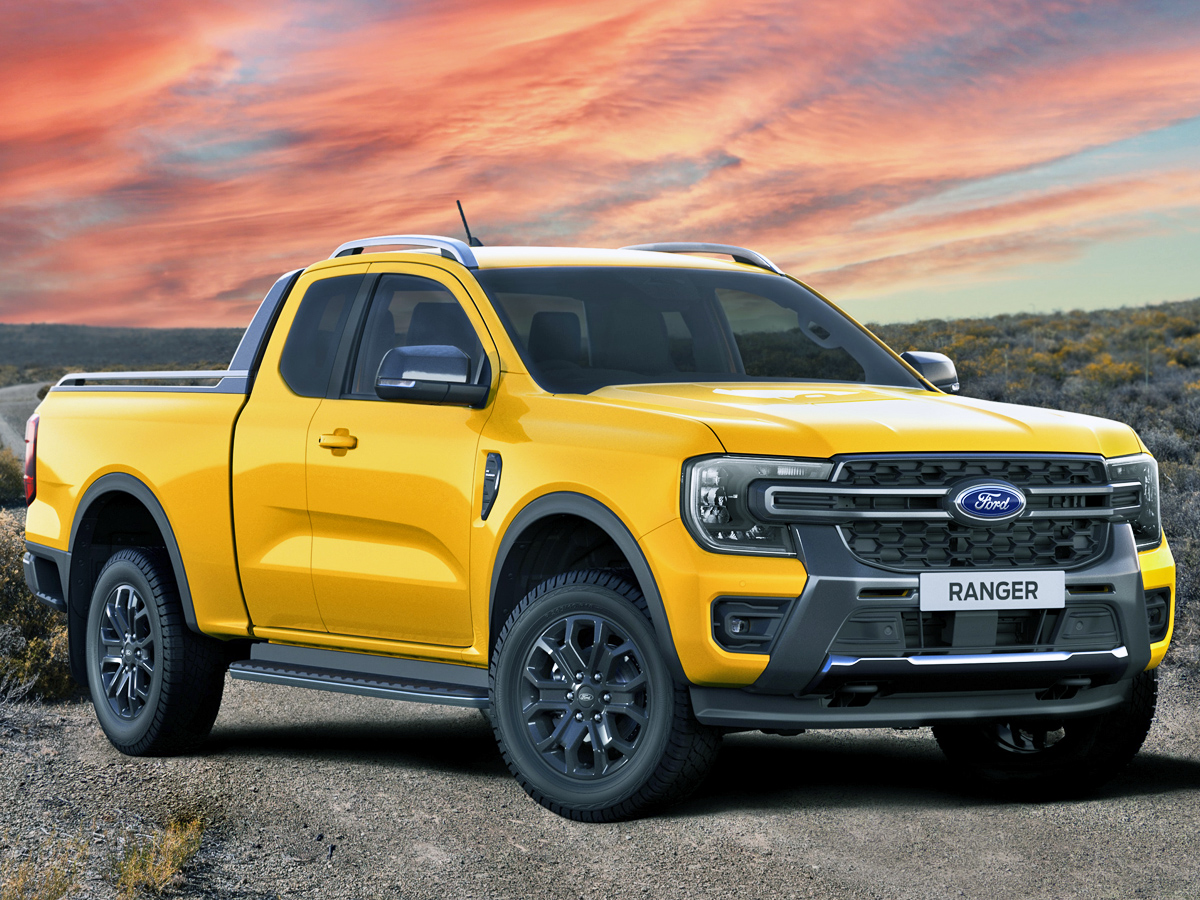
Mahindra Scorpio-N (2023) Launch Review

The Mahindra Scorpio-N – a new 7-seat adventure SUV with a value-for-money price tag – has arrived in South Africa. We headed to the West Coast to sample the model.

Now sporting “N” badging, the all-new body-on-frame model ramps the Scorpio concept up to the, um, Nth degree. In other words, all of the rugged off-roader’s good traits have been enhanced further.

The Scorpio name is legendary in its domestic market (India), where more than 800 000 units have been sold since 2002, and in South Africa, more than 6 000 units have found homes. Plus, there’s a lot of buzz about this new model; when Mahindra India revealed it, it received 100 000 orders in the first 30 minutes.

Mahindra SA has an interesting strategy right now… If you want a modern, stylish and well-appointed medium SUV (with a 7-seat configuration, no less), then you can look to the XUV 700, which this author assessed during the 2022/23 holiday season. However, if you’re the adventurous type and want to go “off-grid”, traverse 4×4 trails or simply explore the bundu, then the Scorpio-N could be your port of call.

A body-on-frame setup with low-range capability: that’s a recipe for adventure.

What’s New?

The Mahindra Scorpio-N looks familiar, but it’s all-new from the ground up. Again, it’s based on a body-on-frame configuration but, impressively, it was the first vehicle of its kind to score 5 stars in Global NCAP crash testing, which suggests the brand invested substantially in improving the model’s structural rigidity. There’s a double wishbone suspension up front and a Pentalink (Watt’s linkage) setup at the rear.

Mahindra claims the Scorpio-N offers best-in-class cabin space (but does not state a claimed luggage capacity), with generous equipment and feature levels across the range. Some of the highlights include the excellent Sony audio system, a sizeable infotainment touchscreen that’s Android Auto/Apple CarPlay compatible, a wireless charging pad, USB ports (front and rear), and a mercifully potent climate control system that dealt ably with the searing temperatures (beyond 40°C) we experienced on the West Coast.

MORE: Mahindra Scorpio-N Price and Specifications

Customers can choose between 6 exterior colours, while the cabin trim is a rich chocolate brown/black combination, with imitation leather seats on the higher trim levels. While it may not appeal to all tastes, the colour scheme is certainly more interesting than a plain black or beige interior. There is seating for 7.

The cabin is well-appointed with plenty of luxury features.

What’s on Offer?

From launch, there’s a solitary powertrain for the 4×2 and 4×4 derivatives, with 3 trim levels to choose from. The engine is an updated version of Mahindra’s mHawk 2.2-litre 4-cylinder turbodiesel, which produces outputs of 128.6 kW/400 Nm and is mated with a 6-speed automatic transmission. Mahindra claims a consumption figure of 6.9 L/100 km, but it’s unclear for which version (4×2 or 4×4) that is.

All derivatives have selectable drive modes, cutely named Zip, Zap and Zoom, while the 4×4 derivative we drove additionally featured off-road settings called 4EXPLOR, which incorporates self-explanatory modes such as Normal, Grass/Snow, Mud/Ruts and Sand. The Scorpio-N is primarily rear-wheel driven, but drivers of all-paw versions can switch between two-wheel drive (2H), 4 high (4H) and 4 low (4L).

Although its predecessor was a rough-as-guts off-roader, the Scorpio-N looks much more upmarket.

What’s the Mahindra Scorpio-N like to drive?

First impressions count for a lot and while the Scorpio-N’s overall design suggests a “generic boxy 4×4”, we liked the imposing and premium stance of Mahindra’s newcomer. Those daytime-running lights at the front are eye-catching and, when clad in the right colour (we might add), the vehicle really looks the part.

When you climb inside, you’ll find the cabin looks and feels reasonably well assembled, although there are some cheap materials, like the tops of the seatbelts. For what’s essentially a 4×4 adventure vehicle, the Scorpio-N has flashes of luxury and comfort, such as a sunroof – a virtual “must-have” in our market.

On-road refinement is acceptable for a ladder-frame-based vehicle.

Our launch route took us into the Western Cape’s West Coast region, towards the seaside town of Port Owen. There’s no shortage of power from the Scorpio-N’s tried-and-trusted 2.2-litre turbodiesel motor, with eager throttle responses and reasonably smooth gearshifts. The driver’s seat is comfortable and commanding – you get an excellent view of your surroundings, which is just as well, because the quality of the front and rear camera isn’t great. The rest of the features and trim quality are pretty good, though.

However, like most tall body-on-frame SUVs, the Mahindra Scorpio-N’s ride quality was a little on the jittery side on urban roads (especially poorly maintained ones), but it improved/settled once we hit triple-digit speeds on the open road. Overall, the new model’s on-road demeanour is markedly better than that of the outgoing Scorpio, which we would best describe as, well, agricultural. Refinement and comfort have clearly been improved; while there is still a bit of body roll, it’s nowhere near as wallowy as before.

The Scorpio-N is at its happiest off the tar.

The steering setup is surprisingly light and direct for this kind of vehicle. We’re accustomed to quick and pointy steering setups in hatchbacks and sportscars, so it took a while to get used to it in the Scorpio-N.

We also spent some time riding in the back of the vehicle, where we were impressed with the generous legroom afforded to passengers in the second row, who also get their own climate control dial and a USB-C port to charge their devices. As for the rearmost row, it’s comfortable enough to accommodate adults on short trips and perfectly suited for 2 kids; but, as to be expected, luggage space is limited, and the 3rd row doesn’t fold totally flat (as it does in the XUV 700), so that’s a drawback of the Scorpio-N…

Okay, but what about the newcomer’s off-road capabilities? Well, Mahindra was not going to let us drive on the open road only; we were sent to the Klein Tafelberg training facility! It’s not your average 4×4 trail and features some challenging climbs, descents and what feels like more sand than in Namibia. Only the toughest, dedicated 4×4 vehicles are able to traverse such terrain, and yet, the Mahindra Scorpio-N was able to complete the course, despite having only 187 mm of ground clearance and road-biased tyres.

The key factors at play were the clever automatically-locking diff and the selectable off-road modes. When its low range was engaged, the Scorpio-N performed admirably; it impressed even the 4×4 course instructors, some of whom admitted they thought they’d be recovering stricken Mahindras on the day.

The Scorpio-N is accomplished in off-road conditions – certainly more than we thought it would be.

How much does the Mahindra Scorpio-N cost in South Africa?

The new Scorpio-N derivatives are sold with a 5-year/100 000 km service plan and a 5-year/150 000 km warranty. It’s interesting to note that the prices below will only be valid until the end of March 2023.

Scorpio-N 2.2D Z4 6AT 4×2R465 000
Scorpio-N 2.2D Z8 6AT 4×2R510 000
Scorpio-N 2.2D Z8 6AT 4×4R560 000
Scorpio-N 2.2D Z8L 6AT 4×4R590 000

Summary

The Scorpio-N is far more capable than its family looks suggest.

Following hot on the heels of its impressive XUV 700 sibling, the Mahindra Scorpio-N seems destined to resonate with local consumers. In the South African market, the high-end derivatives of legacy brands are in real danger of losing their relevance due to rapid new-car price inflation; car buyers are crying out for rugged, dependable and family-orientated vehicles that do it all, but don’t cost the earth to buy.

We recently spent a month driving the stylish, comfort-focused XUV 700, so the Scorpio-N felt a tad unrefined by comparison, but our minor gripes with it can be easily forgiven when you experience the latter’s off-road prowess and consider its keen price tag. You simply won’t be able to purchase an automatic, 4×4-capable, 7-seat SUV for under R600 000 unless you shop for a used/demo vehicle. Given its 5-year warranty and service plan, the Scorpio-N looks to be one of the bargains of 2023.

Related content:

Mahindra XUV700 Review: Living with it

GWM Ora (2023) International Launch Review

Haval Motors SA, which only recently added hybrids to its line-up, will soon take the huge step to offer an all-electric brand in South Africa. Could the GWM Ora be our market’s first truly affordable battery-electric vehicle? We drove the model in Australia.

Haval Motors SA – the local subsidiary of Chinese automotive giant Great Wall Motors (GWM) – looks on course to have a bumper year in 2023. S- and Hybrid (HEV) versions of the Jolion small crossover have reached showrooms and luxury off-roader brand Tank is coming soon, with the 300 model pencilled in for a mid-year arrival. Also in the product pipeline: an all-electric car… meet the oh-so-cute GWM Ora.

MORE: What’s next for Great Wall Motors / Haval in South Africa?

What is a GWM Ora?

Rear three-quarter view of the GWM Ora.
The South African new-vehicle market is crying out for an affordable BEV.

Now, there’s been some confusion regarding the newcomer’s name. Ora has existed as the all-electric sub-brand of the GWM group since 2018 and it has produced a variety of models; in other markets, the hatchback you see here is known as the Good- or Funky Cat, while a retro-inspired (think New Beetle-like) variant is named Punk- or Ballet Cat, and the fastback version bears the moniker of Lightning Cat.

At the time of writing, the naming convention for our market wasn’t finalised, but we reckon Mzansi will follow the Australian market’s example – the hatchback will be called the GWM Ora (effectively make, model and derivative rolled into one), while the sportier-looking fastback will bear the Ora Sport badge.

In images, the GWM Ora looks like a cute little city car, but it is, in fact, more of a compact model: 4 235 mm long, 1 603 mm wide and 1 825 mm high, with a smallish 211-litre load bay. Those dimensions make it roughly the same size as a Volkswagen T-Cross! If you’re comparing like-for-like, the Ora is bigger than its natural rival, the Mini Cooper SE. The rear styling is quirky and, indeed, funky – a great talking point.

The GWM Ora has a plush interior with luxury appointments, including quilted leather on the seats.
The comfortable partial leather seats in the GWM Ora.

The GWM Ora produces peak outputs of 126 kW and 250 Nm and is available with either a 48-kWh or 63-kWh lithium-ion battery. Naturally, one of the most important questions concerns the model’s range.

The 48-kWh Ora is claimed to have a range of 320 km based on WLTP, while the 63-kWh version is said to travel 100 km further (420 km). Performance? Ora reckons you’ll be able to zip from 0 to 100 kph in 8.3 sec and, as for charging, you can go from 10-80% in 41 minutes (when using an 80-kW DC charger).

Comparisons with the Mini Cooper SE are inevitable; the Oxford-based brand’s battery-electric vehicle (BEV), which we reviewed last year, produces 135 kW/270 Nm and has a 33-kWh battery, which gives it a theoretical range of 215 km. The Mini’s range is notably shorter than what’s claimed for the GWM Ora, although it’s a second quicker from 0-100 kph (7.3 sec). The cars’ stated luggage capacity is identical(!) and the Cooper SE can be recharged from nearly 0% to 80% in 35 minutes (when using a DC charger).

MORE: Browse the latest Haval prices and specs here.

Front three-quarter view of the GWM Ora travelling on a inner-city road.
Photos disguise the GWM Ora’s size… it’s bigger than it looks.

First impressions of the GWM Ora

To reiterate, photos really don’t do the (adorable) GWM Ora justice. It’s a far bigger car than I expected and, courtesy of its dedicated electric-car platform, it has superior interior packaging to a similarly sized car with an internal-combustion engine (ICE) or a BEV based on a car that is usually powered by an ICE.

When I climbed inside the GWM Ora, I was immediately impressed with its head- and shoulder room, as well as its spacious rear bench. I’m 1.91 metres tall and was able to sit comfortably behind the driver’s seat that had been set up for my driving position – this a genuinely family-friendly compact hatchback!

The GWM Ora offers plenty of space for occupants, including at the back.
The GWM Ora not only has 5 doors – it has enough space to accommodate 5 occupants.

There’s a plush, modern and upmarket feel to the GWM Ora’s cabin. The seats are trimmed in diamond-stitched leather and faux suede – a classy touch, even if some of the plastics are, well, a bit plasticky. All in all, fit-and-finish is great; the transmission dial and some of the switchgear are from Haval models.

While the standard features list of SA-spec vehicles has yet to be confirmed, the Australian-spec GWM Oras we drove came fully loaded. Features included 18-inch alloy wheels, a 10.25-inch infotainment touchscreen and digital instrument cluster combo, USB ports front and rear, a wireless charging pad, selectable drive modes, LED lighting, climate control (auto aircon) and 60/40-split folding rear seats.

There’s a pleasant minimalist feel to the infotainment system, which has a crisp, clear display. Thanks to its simple and uncluttered menu layout, its user experience feels similar to that of a high-end smartphone.

The dashboard and fascia design of the GWM Ora is sleek and uncluttered. Note the combined instrument and infotainment panel.
A clean and simple instrument cluster, flanked by a neat infotainment touchscreen.

What’s more, the cars were fitted with an abundance of semi-autonomous safety features, including adaptive cruise control, traffic-jam assistant, lane-departure warning, lane keeping- and smart collision avoidance assist, rear cross-traffic alert with auto emergency braking, fully auto parking, a reverse-view and 360-degree cameras, plus traffic-sign recognition. The Ora has a 5-star Euro NCAP safety rating.

What’s the Ora like to drive?

The GWM Ora delivers an effortlessly smooth driving experience.

Our test drive took place at the Anglesea Automotive Research Centre in the State of Victoria, southwest of the city of Geelong, and it was conducted on a test track that simulated an open road. I know, I know, it sounds like a rather boring course, but at least there were a few corners towards the end of the route…

One of the coolest things about the GWM Ora is that it has no start button. You simply climb in, close the driver’s door, put your seatbelt on, engage Drive and away you go. Like most city-biased BEVs, the car’s handling is light ‘n’ easy at lower speeds, but if you make it corner at a brisk pace, it tends to lean a bit.

Rear three-quarter view of the GWM Ora hatchback driving on a test track.
The GWM Ora doesn’t excel at driver involvement; the ride quality is firm, but the steering’s a bit lazy.

In fact, it was surprising to experience so much body roll in the GWM Ora, because one would expect the BEV’s relative heft and ultra-low centre of gravity to negate such a top-heavy feeling; it feels quite tall.

The steering could be a bit quicker and more responsive, but we appreciated that the ‘wheel needed little effort to twirl – this car is primed for city driving! As for the ride quality, it felt on the firm side of pliant, but our test route consisted of very smooth roads, which didn’t reflect real-world conditions. We also noticed quite a bit of road noise, but we’ll look out for this again when the model makes its local debut.

Again, we didn’t spend much time at the ‘wheel of the GWM Ora (not enough to get to know it well), but it was a good chance to get a preview and early understanding of what’s coming to Mzansi later in 2023.

Summary

Side profile of the GWM Ora battery-electric vehicle.
The GWM Ora vs the Mini Cooper SE: which one will be the most affordable?

Given South Africa’s unreliable electricity supply, the announcement that a new electric-car brand is coming to our market may seem, well, ill-timed – and we expect the news to be lambasted on social media – but if you think deeper, the market needs a well-priced and nicely-packaged BEV hatchback.

There are now many more public charging stations available (in our major metro areas) than you might realise and some of them even have solar backup. BEV customers know exactly what they’re getting into and most will have adapted their lifestyles accordingly (to have some form of alternative power solution).

The infotainment screen of the GWM Ora shows info pertaining to the all-electric drivetrain, including battery charge level.
Expect to see the GWM Ora arrive in the 2nd half of 2023.

Of course, if the GWM Ora is to succeed, its local pricing and, to a lesser extent, its range will be key factors. As long as (already expensive-to-make) BEVs are subject to higher import duties in South Africa (whereas they’re subsidised in developed countries), affordability is always going to be a sticking point.

However, Haval Motors SA will have a golden opportunity to steal the title of “South Africa’s cheapest all-electric car” from the Mini Cooper SE which, at R742 000, has a claimed range that is some way off the Ora’s stated figure. If GWM could bring Ora in for, say, closer to R700k, it’d be an intriguing proposition.

The GWM Ora does have its quirks, but its novelty and cuteness factors are undeniable – we can’t wait to drive it on local roads. Despite the negativity around electric cars in South Africa, Haval Motors SA may reap the benefit of joining Mini in the compact BEV market sooner rather than later. Watch this space!

Related content:

OPINION: GWM’s Ora Cat EV could offer 500 km range for only R600k

What’s next for GWM/Haval in South Africa?

Mini Cooper SE (2022) Review

Volvo C40 Recharge for SA in 2023

Order books for the Volvo C40 Recharge are now open with first customer deliveries expected in the third quarter of 2023. Take a look at what you can expect from the newcomer. 

Volvo’s EV footprint is growing in South Africa and the Swedish firm is planning to introduce its electric C40 Recharge crossover in the first half of 2023. 

Volvo’s current crop of electric vehicles includes the XC40 Recharge and XC60 Recharge and the firm recently revealed its new EX90 flagship SUV which is expected to reach South Africa at some point in the future. 

The Volvo C40 Recharge crossover will be the smallest EV in Volvo’s current lineup and will, according to Volvo Car South Africa’s Managing Director, Greg Maruszewski, prove popular with local buyers who are looking to make the switch to fully electric vehicles.

“Our initial allocations of both the XC40 Recharge and XC40 Recharge Twin were snapped up in double-quick time. We expect the new C40 Recharge to resonate just as strongly with South Africans looking to switch to battery-powered vehicles,” said Maruszewski.

What powers the Volvo C40 Recharge? 

The Volvo C40 Recharge will be the third electric Volvo to be offered in South Africa.

The Volvo C40 Recharge is powered by 2 electric motors, one over each axle, and supplemented with a 78 kWh lithium-ion battery pack that offers up to 444 km on a single charge (WLTP). The C40 Recharge offers outputs of 300 kW and 660 Nm and is capable of accelerating from zero to 100 kph in 4.7 seconds. 

The C40 Recharge is also the first Volvo to be free of leather and the model carries a 5-star Euro NCAP safety rating. 

Volvo aims to be an all-electric brand by 2030 and by 2025 it’s expected that more than half of the firm’s worldwide sales will be attributed to electric vehicles. 

How much does the Volvo C40 Recharge cost in South Africa?  

Volvo C40 Recharge – R1 285 000

Buy a Volvo on Cars.co.za 

Related Content 

Volvo XC40: Is this SA’s best electric car?

Volvo XC60 (2022) Review

Renault Clio: Living with a hatchback in 2023

Hatchbacks like the Renault Clio used to be the lifeblood of South Africa’s new-vehicle market, but now, small crossovers are all the rage. Is a compact hatch still a feasible everyday car? We spent an extended period with the Clio 1.0 Turbo Intens to find out.

When I was starting out in the motoring journalism game (oh, about 15 years ago), one of my editors told me: “Never start a story with a history lesson, because it immediately bores every reader that’s not a car anorak.” Suffice it to say, I’ve done my utmost to stick to that rule without ever questioning it.

Nevertheless, I still struggle to fathom how the B-segment hatchback (or “supermini”) went from being the default option for young professionals – with a plethora of models to choose from – to a segment that launched a mere 4 models last year (facelifted Volkswagen Polo, new Renault Clio, Toyota Starlet facelift and Toyota Corolla Hatch) and that’s the entire spectrum – from premium- to budget offerings.

Renault Clio 1.0 Intens profile view.
Of the 5 generations of the Renault Clio, South Africa has experienced every one since the 2nd model.

Of course, many of those Clio rivals are still available (such as the Hyundai i20, Kia Rio, Suzuki Baleno, Citroen C3, Peugeot 208, Honda Fit (Jazz), Mazda2 and Opel Corsa), but in very reduced ranges. What’s more, a look at the latest sales charts suggests the venerable Polo and Starlet (a clone of the Baleno) account for most of the sales. Compare that to the wide range of small crossovers/compact SUVs that are now available (and the depth of their ranges) and you’ll quickly see that “softroaders” are in vogue.

So where does that leave the venerable compact hatchback? Well, after a month of driving the Clio 1.0 Turbo Intens, I can’t say I preferred it any less than an SUV (or pseudo-SUV, as cynics would say).

Read our full review of the 1.0 Intens here

FAST FACTS

  • Model: Renault Clio 1.0 Turbo Intens
  • Price: R364 999 (February 2023)
  • Engine: 1.0-litre turbopetrol 3-cylinder
  • Power/Torque: 74 kW/160 Nm
  • Transmission: 5-speed manual
  • Fuel consumption: 5.7 L/100 km (claimed)
  • Luggage space: 391–1 069 litres

Serious about buying/selling?

Some dealerships regularly offer great deals. See our New Car Specials!

Looking to sell your car? You can sell your car to SA’s biggest dealer network

Search for a new or used Renault

What’s to like about the Renault Clio?

Renault Clio 1.0 Intens front three-quarter view.
The Clio’s design shows a more premium and modern design.

The Renault Clio’s design has always resonated with me and the 5th-gen model looks the part too; it is immediately distinguishable on the road. The pair of large C-shaped LED daytime-running-light clusters are integral to Renault’s contemporary design language, but you’ll either love or loathe them. Isn’t it a bit of a risk to add divisive elements to a model that is supposed to appeal to as many buyers as possible?

But, as I said, the Renault Clio 5 is distinctive and its silhouette is stylish and sleek. In typical Clio style, the rear door handles are hidden neatly away in the rear passenger window surrounds. In other words, you get the benefit of coupe-like styling without losing access to the hatchback’s 5-door practicality.

Renault Clio’s new engine   

Renault Clio 1.0 Intens wallpaper.
Renault’s compact hatchback now puts out more power and torque from its 1.0-litre turbopetrol motor.

This generation of the Renault Clio still uses a 1.0-litre 3-cylinder turbopetrol engine, but it’s a more powerful unit that produces 74 kW and 160 Nm and is mated exclusively with a 5-speed manual gearbox. I found the 1.0 Turbo Intens suitably nippy off the mark and its power delivery was quite smooth.

If you’ve never driven a car with a small turbocharged engine before, its powertrain tends to require a bit of familiarisation. You don’t want to rev it too hard because there isn’t much “kick” available after around 3500 rpm; after that point, it sounds (and, frankly, performs) like a wheezy hairdryer. You want to keep the revs low and use the torque to build momentum – that’s also how you get the best fuel economy.

Manufacturers used to claim ambitiously low fuel efficiency figures for their compact hatchbacks (with small turbo motors) and that’s partly why global fuel-economy tests were changed in recent years (that’s a story for another time). The Clio’s updated motor is said to consume 5.7 L/100 km (based on the new WLTP test standard) and, after travelling 1 000 km (of entirely inner-city driving), the 1.0 Turbo Intens indicated a consumption figure of 6.2 L/100 km, which was impressive! However, we anticipate that if you do more freeway driving (in the fast/er lanes), that number may rise due to the Clio’s lack of a 6th gear.

Infotainment and connectivity in the Renault Clio

Renault Clio intens interior
The cabin is well-specced with a feature-rich infotainment system.

Renault has always done a good job of offering up-to-date connectivity options in its models. The user-friendliness of those systems has gradually improved through the years and, given the proliferation of touchscreens, most people with smartphones can work their way around modern infotainment setups.

All the specs of the Renault Clio

The Clio’s portrait-oriented infotainment touchscreen is nicely positioned in the centre of the fascia and it has a crisp display, replete with easy-to-access functions. Android Auto and Apple Carplay connect with a single press of a button and you can quickly zip in and out of those systems to access the radio/car settings functions without needing to tap multiple times to exit applications.

The screen could be a little more sensitive, because it requires a solid prod at times to make selections. It’s also nice to have 2 USB ports up front, as well as a wireless charging bay for quick battery top-ups.

The Renault Clio’s practicality

Renault Clio boot trunk
At 391 litres, the Clio has a larger load bay than most competing compact SUVs.

It might seem odd to add practicality under the “likes” section of a review of a compact hatchback, but the Renault Clio’s load bay is decidedly large for its segment. The load bay’s stated capacity is 391 litres and, if you compare it to that of a similarly priced crossover, you’ll find the French hatchback’s “boot” is larger than favourites such as the Toyota Urban Cruiser, Volkswagen T-Cross and Hyundai Venue.

The amount of occupant space in those vehicles (which is to say leg-, shoulder- and headroom) is quite similar to that of the Clio as well, so it’s something to consider if practicality is high on your priority list.

It was also a cinch to find a driving position that suited me to a tee. The steering column offers plenty of range of rake- and reach adjustment, plus the driver’s seat can be adjusted for height. Unlike some of the compact SUVs that may be considered Clio rivals, the Renault offers excellent lateral seat support. 

What’s not to like about the Renault Clio

Clio from the rear
The Clio range currently offers no auto – only a 5-speed manual.

While I like the Renault Clio’s engine – and its fuel efficiency – the lack of an automatic derivative in the range is a drawback. We understand the lack of an auto version is due to the unavailability of stock, so hopefully, Renault South Africa will be able to acquire some autos (if it sees value in bringing them in). 

The manual ‘box could also do with a 6th gear, even just for the sake of better cruising refinement. When travelling at the national speed limit on the highway (120 kph), the engine’s revs hover around 3 300 rpm and I think if the 1.0 Turbo Intens had a 6th gear, that number may drop 400 rpm – and save some fuel.

Driver involvement

I can live with the manual gearbox, because I don’t often have to sit in traffic and generally do my best to navigate via Google Maps or Waze to avoid congestion… However, I imagine that I’m constantly in a race against the navigation app’s expected time of arrival; I know it’s a bit silly, but that indicated ETA is like a target that I have to beat! Now, while the Renault Clio – with its spirited engine and manual ‘shift – eggs you on to have a bit of fun, it doesn’t quite deliver that pocket rocket thrill that previous-gen models did.

Yes, the engine is better and it’s a decidedly nippier car than its predecessor, but it’s not as fun to lean on as the older models that cemented the Clio’s reputation for characterful handling. I’d say it’s more like the VW Polo now than the cheeky, playful hatch it was – more refined, comfortable and business-like. 

VW Polo vs Renault Clio: which should you buy?

To be fair, if Renault wants to sell loads of Clios globally, it’s probably advisable to produce a model that’s a little more forgiving and sedate, but the new hatchback feels like a departure from the Clio heritage.

Summary

Renault Clio hatchback
If you don’t absolutely need a crossover, the Clio is a well-rounded product now.

There’s a lot to like about the flagship Renault Clio, considering its price tag. When you consider its rivals in the hatchback and compact SUV segments, the 1.0 Turbo Intens is both feature-rich and competitively priced. The new-gen car is also more upmarket than the model it replaces – the cabin’s switchgear is more substantial and it feels better made, thanks to the application of nicer grades of trim materials. 

For those who don’t seek the added ground clearance of a compact SUV, the Clio 5 is quite a practical car with a big load bay and more than enough occupant space. There’s no shortage of connectivity options and, on road, it feels comparatively composed compared with its small-crossover competitors.

Most buyers may desire an automatic transmission in a new car at this price point, so until Renault South Africa is able to furnish us with one (again, it is coming), the Clio’s a bit hamstrung in that regard.

Search for a new/used Clio here

Sell you car for free on Cars.co.za

10 Top-Selling Vehicles to SA’s Rental Industry in January 2023

Which vehicles benefitted most from sales to South Africa’s rental industry in January 2023? Let’s take a look at the fleet favourites…

While a sale is a sale, it’s worth noting some models rely more heavily on new-vehicle registrations in the rental industry than others. For the record, the rental channel represents a considerable portion of South Africa’s monthly new-vehicle sales, accounting for 12.1% of the total reported figure of 43 509 units sold in January 2023.

The influence of rental-fleet buyers is even more significant in the passenger-vehicle space, with sales through this channel accounting for 16.2% of 31 072 registrations in the opening month of the year. In short, there are sizeable volumes to be had in this part of the market.

So, which vehicles were most popular with SA’s rental industry in January? Well, we’ve sorted through Naamsa’s sales statistics and picked out the 10 top-selling vehicles to rental companies last month. Interestingly, Suzuki had 3 models in the top 10 … or 4, if you count the Starlet the company builds for Toyota.

Having placed 3rd on the list of South Africa’s best-selling vehicles overall in January with a figure of 2 037 registrations, the aforementioned Baleno-based Toyota Starlet was the strongest-selling model through the rental channel, where 777 units (or 38% of its total) were reported. Next came the 10-year-old Nissan Almera sedan, with 511 units (or a whopping 65% of its 785-unit total).

The Suzuki Swift (456 units out of a total of 1 499) took 3rd place, just ahead of the locally built Toyota Corolla Cross (425 units out of 2 042), which grabbed the title of SA’s best-selling passenger vehicle for the month. The Renault Kwid (342 units out of 657, or 52%) slotted into 5th position, while the Volkswagen Polo finished 6th, with 283 units (out of its total of 1 144 units) sold to rental buyers.

The Kia Picanto (256 units out of 640) placed 7th, a mere 4 registrations ahead of the Volkswagen Polo Vivo (252 units out of 1 054). The 2nd sedan on the list was the 9th-placed Suzuki Dzire (250 units out of 510), while the Suzuki Celerio (170 units out of 285) closed out the table, relying on the rental channel for 60% of its sales.

10 top-selling vehicles to SA’s rental industry in January 2023

1. Toyota Starlet – 777 units (out of 2 037)

2. Nissan Almera – 511 units (out of 785)

3. Suzuki Swift – 456 (out of 1 499)

4. Toyota Corolla Cross – 425 units (out of 2 042)

5. Renault Kwid – 342 units (out of 657)

6. Volkswagen Polo Hatch – 283 units (out of 1 144)

7. Kia Picanto – 256 units (out of 640)

8. Volkswagen Polo Vivo – 252 units (out of 1 054)

9. Suzuki Dzire – 250 units (out of 510)

10. Suzuki Celerio – 170 units (out of 285)

Related content

SA’s best-selling vehicles in January 2023: VW Polo Vivo slips

3 passenger cars that leapfrogged VW’s Polo in SA in 2022

Toyota Corolla sales in SA: Cross saving an ailing badge?

Toyota RAV4 PHEV (plug-in hybrid): Living with it

Toyota South Africa Motors (TSAM) is thinking about introducing the RAV4 PHEV (plug-in hybrid) in our market. Ciro De Siena reviews a TSAM evaluation unit and contributor Ian McLaren reports about his extended time behind its ‘wheel.

As each of the world’s established (legacy) car manufacturers grapple with how best to sell the idea of all-electric motoring to their respective customer bases, several brands (especially those that hail from Germany) appear mandated to adopt a “rip off the Band-Aid” approach by boldly announcing respective cut-off dates for when each will no longer sell models powered by internal-combustion engines. 

Plug-in hybrids offer a phased approach to full-electric eventuality.

Toyota – a champion of hybrid technology since the introduction of the Prius in 1997 – has adopted a New Energy Vehicle (TNEV) strategy that is notable for the fact that it includes various “electrified” (as opposed to all-electric) offerings, which are aimed to ease the transition to a “zero-emissions future”. 

That um, hybrid approach allows Toyota’s ever-popular RAV4 medium SUV to be powered by an internal-combustion-engine drivetrain, a petrol-electric hybrid setup (like that of the RAV4 2.5 Hybrid E-Four) or, indeed, a plug-in hybrid system that ostensibly offers the best-of-both-worlds driving experience. Ahead of the anticipated introduction of the Aichi-based firm’s first all-electric model (the bZ4X) in 2023, TSAM is investigating the viability of expanding its RAV4 line-up through the introduction of a PHEV derivative.

These days, I review hybrid and all-electric cars very often, so here’s what I thought of the RAV4 PHEV…

FAST FACTS

  • Model: Toyota RAV4 2.5 Plug-in Hybrid E-Four
  • Price: N/A
  • Powertrain: 2.5-litre 4-cylinder petrol engine plus 2 electric motors 
  • Power/Torque: 225 kW (total system output)/227 Nm+e
  • Transmission: e-continuously variable transmission (e-CVT) 
  • Fuel consumption: 4.55 L/100 km (source: Toyota Global) 
  • Luggage/Utility space: 580 litres

Serious about buying/selling?

Browse the latest Toyota RAV4 specification and pricing

Some dealerships regularly offer great deals. See our New Car Specials!

Looking to sell your car? Sell it on Cars.co.za for free

How the RAV4 PHEV is packaged

The plug-in RAV4 has signature 19-inch wheels and a very healthy 225 kW of total system output.

The RAV4 PHEV is based on the brand’s comprehensive GX-R specification and its most distinguishable exterior upgrade (compared with other derivatives in the range) is a set of striking 19-inch alloy wheels.

In its 5th generation, Toyota’s top-selling model across the globe has grown from its plucky beginnings to have notable kerb appeal (the medium SUV measures 4 600 mm in overall length), which is allied with an impressively versatile (and broadly comfortable) interior, including 580 litres worth of luggage space. 

I’ve grown to loathe piano-black exterior bits on a vehicle and, as I feared, the application of this material on the rear bumper of a family-focused SUV proved troublesome. Within the first week that the RAV4 was in my custody, I managed to scratch the black trim while loading up one of my children’s bicycles. 

How the RAV4 PHEV’s drivetrain performs

Toyota Raav4 Plug-in hybrid energy monitor
The flow of ICE power and electric power can be displayed on the infotainment system.

If you navigate through the RAV4’s comprehensive infotainment menu to the colourful screen that shows the dynamic workings of the PHEV drivetrain, it becomes evident: there is, indeed, a lot going on here. 

In its default setting, unlike the RAV4 2.5 Hybrid and its Prius, Corolla- and Corolla Cross Hybrid siblings, the PHEV setup favours electric mobility; it will rely on the efforts of its 2.5-litre 4-cylinder petrol engine only once there is no longer enough battery charge available for the motors to sustain the SUV’s speed. 

Featuring an 18.1 kWh battery (positioned below the passenger compartment), the RAV4 PHEV is said to offer “up to 80 km” of all-electric driving range via a pair of electric motors (when this component is fully charged). There is a motor on each axle; the front one produces 134 kW/270 Nm and rear 40 kW/121 Nm.

For the record, that’s comfortably more than the average distance that most South African motorists drive on a weekday (statistically, no more than 30 km). That means that a diligent owner could, in theory, rely solely on electric mobility during their daily commute with “spare charge” left over for the school run and a trip to the shops. By diligent, I mean someone with (sufficient) electricity to recharge the RAV4…

Using a standard home charger, the battery takes around 3 hours to replenish.

When using my 7.4 kW (single phase) wall plug at home, I was able to charge the RAV4 PHEV’s battery to full capacity, after a typical day’s driving, in just under 3 hours. So, no, it does not have to take all night.

As for the lifestyle change it requires, apart from plugging in the Toyota once you’ve parked in your garage (or near a suitable power outlet), it’s not unlike charging your smartphone when you turn in for the night. Plugging the car into a standard household plug at bedtime (to receive an overnight charge) will also work. When the hybrid battery’s virtually depleted, a complete recharge will take up to 8 hours to complete and it will be billed at the current per-kWh rate for electricity flowing into your home. 

How cost-effective is it to operate RAV4 PHEV?

The interior remains the same as the ICE models in GX-R trim.

At an average of R2.00/kWh – and assuming the battery was depleted by the time I arrived home (more about this a little later) – it cost me R36 to gain an indicated 75 km of available EV range by morning. 

As in the Prius (and the already locally available RAV4 2.5 Hybrid E-Four), the battery pack in the RAV4 PHEV (plug-in hybrid) can be recharged “on the fly” via regenerative braking. That said, once its level of charge has been depleted and the vehicle’s petrol motor has been engaged (near seamlessly!), there’s still every chance that you’ll enjoy a level of supplementary electric performance along your journey.

While I evaluated the RAV4 PHEV, its powertrain’s energy recovery and electric assistance helped to lower the 2-tonne medium SUV’s average fuel consumption to below an indicated 6.0 L/100 km. 

More pertinently, the presence of this instantly available boost helped the car’s drivetrain feel altogether sprightlier around town compared with non-electrically assisted products that make use of an otherwise lazy CVT. As an aside, Toyota claims a 0-100 kph sprint time of just 6.0 seconds for this derivative. 

Which drive modes does the RAV4 PHEV offer?

Toyota Rav4 Plug-in Hybrid engine bay
The 2.5-litre petrol engine pairs adequately with the electric motor to save on running costs.

Apart from when using its hybrid battery exclusively (EV), the RAV4 PHEV offers various drive modes that are tailored to optimise efficiency. The HV (hybrid) mode works in the same way as it does in the Prius by favouring the internal combustion engine (ICE) while extracting as much performance from the electric drivetrain as possible. Auto EV/HV is available only when there is sufficient charge in the hybrid battery; it prioritises e-propulsion and activates the 136 kW/227 Nm petrol engine only when required. 

A “charging” mode is also available. Here the vehicle’s ICE can be made to provide propulsion and simultaneously recharge the hybrid battery to a point where “pure EV” driving can be resumed. In this mode, it felt as though the RAV4 was “creating drag” in order to charge up the hybrid battery optimally.

It gets the job done, but at the cost of driving enjoyment. It was the only time in the month-long review period that the PHEV appeared to sacrifice a level of (otherwise considerable) refinement for the cause. 

Summary  

Toyota Rav4 Plug-in hybrid main image
Despite several levels of load-shedding, we were still able to get the RAV4 PHEV to full capacity overnight.

The Toyota RAV4 is a relatively conservative model, but a “safe bet” within its segment, which explains its popularity. The PHEV version, however, transforms the RAV4 package into one of the most complete medium-SUV packages I’ve experienced. Even with the spectre of Stage 6 load-shedding, which erodes our confidence in being able to charge electric appliances/devices in our homes whenever we want, the concept of plugging your car into a garage’s wall socket for an overnight charge doesn’t seem alien.

Like an all-electric car, the RAV4 PHEV offers a more than useful range when travelling purely on electric power, but unlike the former, the Toyota has its combustion engine to fall back on if, for whatever reason, its hybrid battery cannot be recharged sufficiently. Besides, after a few years of enduring load-shedding, we have become quite adept at managing the battery charges of our smartphones in between outages. 

Performance potential aside, the fact that a fully-charged and fuelled Toyota RAV4 PHEV (plug-in hybrid) can offer a potential range of more than 1 100 km – while continuously working to recover energy and utilise electric propulsion whenever possible – makes it a particularly compelling proposition.

But, there’s a but. With the current top-of-the-range RAV4 2.5 Hybrid VX E-Four already priced at a heady R785 400, at what price point might this potential new flagship derivative come to market? 

Related content:

Toyota ‘testing’ 225 kW RAV4 plug-in hybrid in SA

Toyota RAV4 Hybrid E-Four – Video Review

Toyota RAV4 vs Haval H6: Which is the better hybrid?

2023 World Car Awards: Top 10 Finalists Revealed

The top 10 finalists in the running for the 2023 World Car Awards title have been announced. Let’s take a look at which vehicles made the cut, as well as those in the competition’s 5 sub-categories…

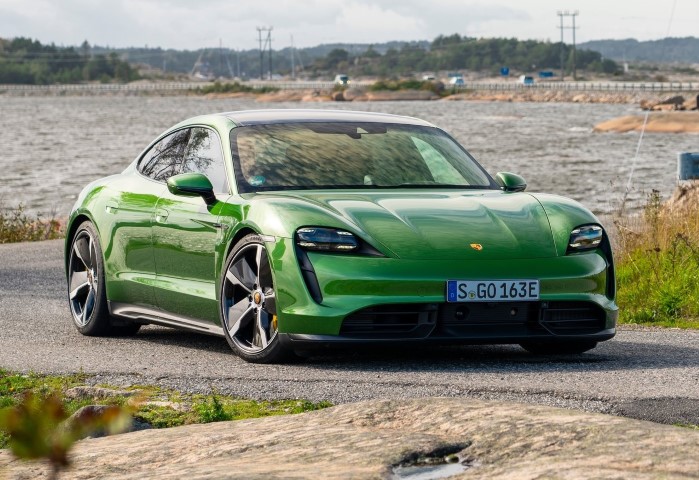
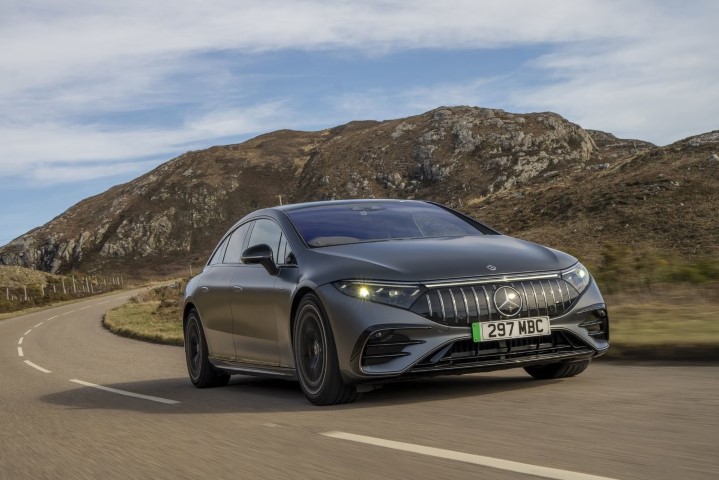
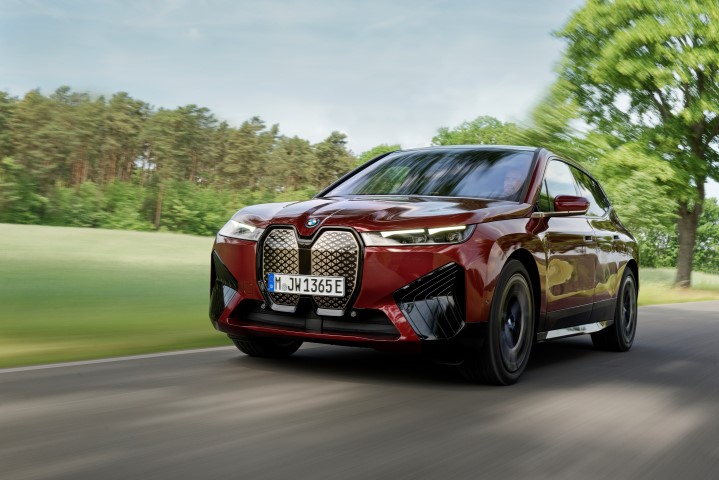
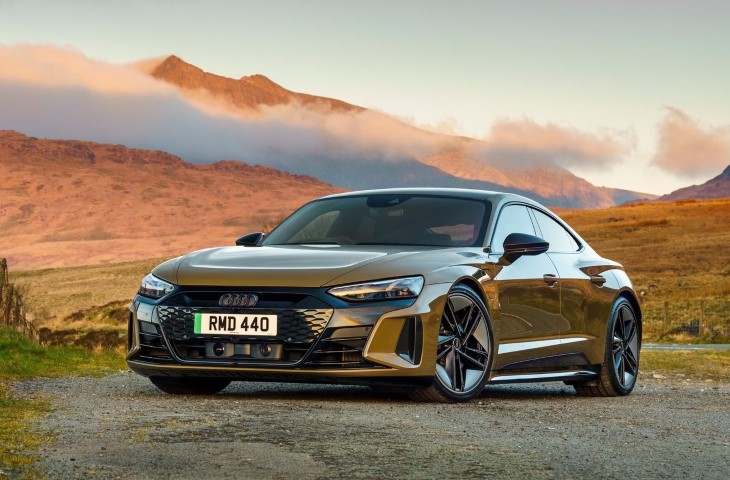
The 2023 World Car Awards jury has whittled down the initial 30-strong list of vehicles in contention to win the overall title to just 10 finalists. In addition, the top 5 finalists in each of the competition’s 5 sub-categories (electric vehicle, luxury car, performance car, urban car and design) have also been confirmed.

A jury of 100 distinguished international automotive journalists from 32 countries selected the finalists by secret ballot, based on their respective evaluations of each eligible vehicle as part of their professional work. Cars.co.za’s very own Hannes Oosthuizen, who is South Africa’s longest-standing representative on the World Car of the Year jury, has also had his say.

“With so many electric vehicles in the running, it has become almost unnecessary to have a separate category for them, but having recently tested the BMW i7, I expect that vehicle to win its category quite easily. Hopefully, I get to drive a few more finalists before the next round of voting, including the Ora Funky Cat, which might spring a surprise for a Chinese vehicle in this competition,” Oosthuizen said.

The top 3 finalists in each of the categories will be revealed on 7 March, before the winners are announced on 5 April at the 2023 New York International Auto Show. Meanwhile, the World Car Person of the Year 2023 will be revealed on 21 February, selected from the following list of contenders:

  • Wang Chuanfu, Chairman and President of BYD
  • Dr. Stella Clarke, Research Engineer Open Innovations at BMW Group
  • SangYup Lee, Executive Vice President, Head of Hyundai and Genesis Global Design Center, Hyundai Motor Company (HMC)
  • Peter Rawlinson, CEO and CTO at Lucid Motors
  • Naoyuki Sakamoto, Chief Engineer, GR Corolla, Gazoo Racing Company, Toyota

As a reminder, the Hyundai Ioniq 5 won the overall gong in 2022, with the Volkswagen ID.4 having claimed the trophy in the previous year. The Kia Telluride came out on top in 2020, with the Jaguar I-Pace placing first in 2019 and the Volvo XC60 triumphing back in 2018.

So, which vehicle will finish first in 2023? Check out all the finalists in below…

World Car of the Year finalists

World Electric Vehicle of the Year finalists

  • BMW i7
  • Genesis GV60
  • Hyundai Ioniq 6
  • Kia Niro EV
  • Lucid Air

World Luxury Car of the Year finalists

The World Performance Car of the Year finalists

World Urban Car of the Year finalists

World Design Car of the Year finalists

Related content

405 kW BMW M4 CSL coming to SA in limited numbers

Alfa Romeo Tonale (2022) Launch Review

SA’s top 10 automakers: 2022’s winners & losers by market share

Nissan South Africa ‘Evaluating’ NP200 Replacement

Nissan South Africa says it is “evaluating” a replacement for the NP200 after the Renault-Nissan-Mitsubishi Alliance confirmed plans to develop a new half-tonne bakkie…

Nissan South Africa has confirmed to Cars.co.za it is in the process of conducting a “product feasibility study” on a possible replacement for the locally built but long-in-the-tooth NP200 half-tonne bakkie.

The news comes after the Renault-Nissan-Mitsubishi Alliance – which is in the process of completing a global restructuring – confirmed it has plans to develop a new half-tonne bakkie.

In a broad statement issued by its global press office, the Alliance references various plans for Latin America, including an intention to launch a “new half-tonne pick-up, developed by [the] Renault Group and shared with Nissan in Argentina”. Of course, Renault already offers the Oroch – which has long been in the planning for a South African introduction, with the latest information suggesting a 2023 launch – in certain South American markets.

Whether the new (likely unibody) model will serve as a direct replacement to the Oroch remains to be seen, with the statement not including any information on the project’s timeline (nor the planned body styles, for that matter). Regardless, the new Renault and Nissan bakkie twins will surely be pitched against the likes of the Fiat Strada and Volkswagen Saveiro sold in that part of the world.

While the statement makes absolutely no mention of Africa, it’s certainly not inconceivable the Nissan-badged version of the new bakkie could serve as a replacement for the NP200, which is produced at Nissan’s Rosslyn factory here in South Africa and has been on the local market for a whopping 15 years. That is, of course, if Nissan South Africa gets the green light to produce a successor. So, we asked the firm’s local division for a statement on the future of the NP200.

The NP200 has been in production since 2008, when it replaced the Nissan 1400 bakkie.

“As part of normal business, the replacement model for NP200 is being evaluated in line with Nissan’s ongoing product feasibility study for Africa. We will share more updates upon the conclusion of the study,” Nissan SA told us.

When production of the Nissan 1400 ended in 2008, the Japanese firm’s local division started building the NP200. Based on the Dacia Logan Pick-Up and sharing much (including a production line) with the first-generation Sandero, the little Nissan has survived to this day, outlasting every single local rival (remember the Chevrolet Utility and Ford Bantam?) and thus having the half-tonne segment all to itself over the past few years.

Despite the range having been whittled down to just a pair of petrol-powered derivatives (currently priced at R212 500 and R230 900), the single-cab-only NP200 remains popular, with the 12 859 units registered around the country in 2022 proving more than enough for it to secure 4th place on the list of SA’s best-selling bakkies for the year (a ranking it retained in January 2023).

Interestingly, the Alliance statement also confirms the Navara-based Renault Alaskan will “continue” (seemingly suggesting a 2nd-generation Alaskan is on the cards, based on the upcoming new Navara, which itself is set to share much with the next-generation Triton), with the Renault Group set to build both versions in Argentina.

In India, for both that domestic market and for export, Renault and Nissan plan to “collaborate on several new vehicle projects”, including new SUVs and a “new Nissan car derived from the Renault Triber”. The companies are furthermore considering “common A-segment electric vehicles”.

Related content

10 best-selling bakkies in South Africa: January 2023

Winners & losers: SA’s best- and worst-selling bakkies of 2022
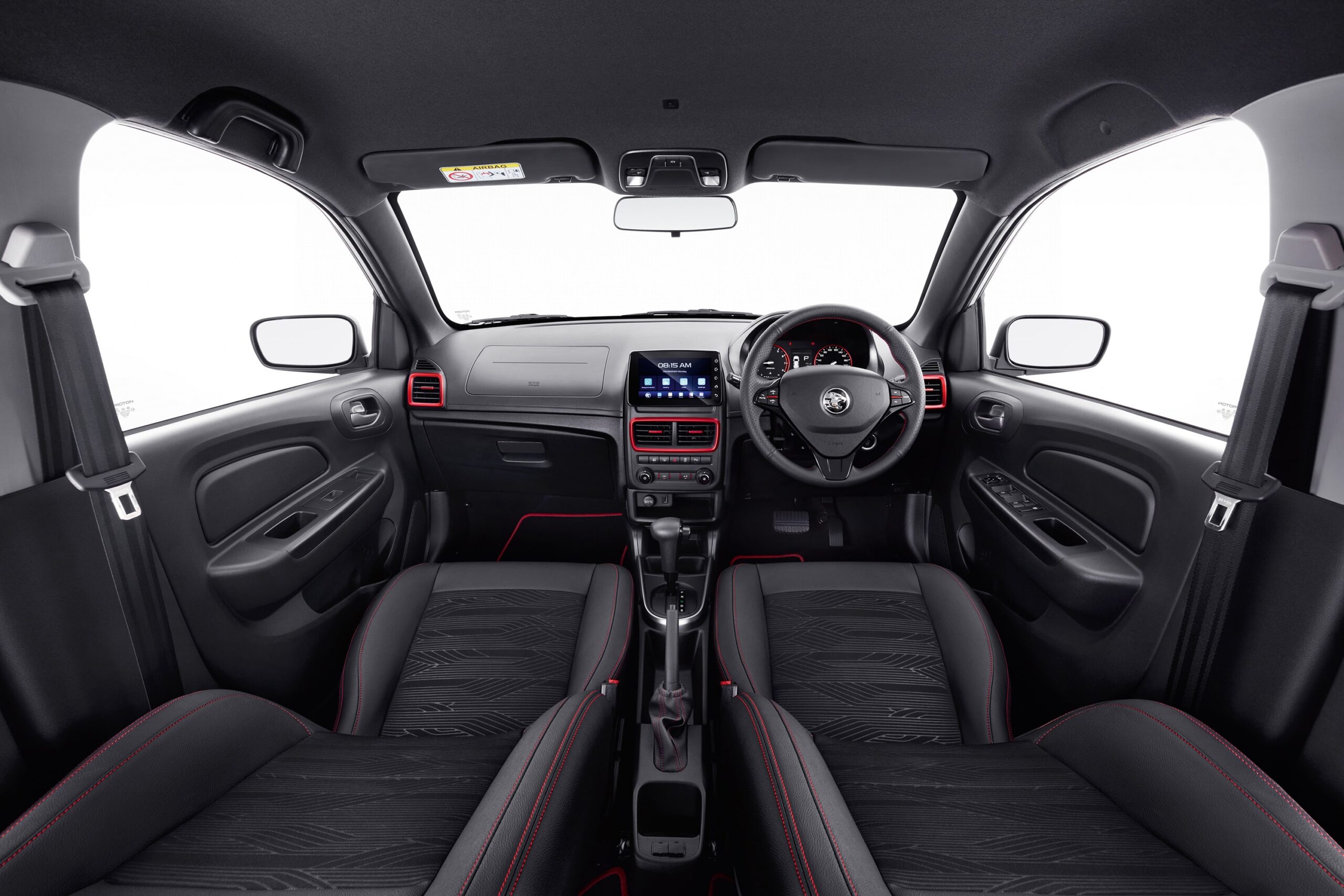
Refreshed Renault Oroch bakkie debuts with turbo power

Mahindra Scorpio-N in South Africa (2023) Price & Specs

This is the all-new Mahindra Scorpio-N, a brand-new SUV that’s now available in South Africa! Take a look at specifications and local pricing details below!

The Scorpio-N is Mahindra’s new ladder-frame midsized SUV offering. The Scorpio-N is quite the step up from the rugged, but ageing Scorpio which is currently available in both bakkie and SUV form, and interestingly, is assembled at the brand’s CKD facility in Kwa-Zulu Natal. It has proven popular with its value-for-money proposition, ruggedness and list of standard features.

The design of the new Scorpio-N was penned by the Mahindra Design Studio in Mumbai and Pininfarina, Italy, while the engineering took place at the Mahindra Research Valley (MRV) near Chennai and Mahindra North American Technical Center (MNATC) in the USA .The new Scorpio-N is therefore a  global product and is produced at the firm’s state-of-the-art facilty in Chakan, Pune, India.

The Scorpio-N is a modern take on a family offroading SUV. There are some aerodynamic and muscular touches, as well as the bold new grille and badge. Speaking of the badge, Mahindra used the simultaneous global unveiling of the Scorpio-N back in 2022 to introduce the firm’s new “Twin Peaks” visual identity which will be applied to its SUVs and bakkies, including the recently-introduced XUV700 SUV. The new visual identity was designed to evoke the emotion of freedom and embellishes the statement “Unleash the Explorer in You”. 
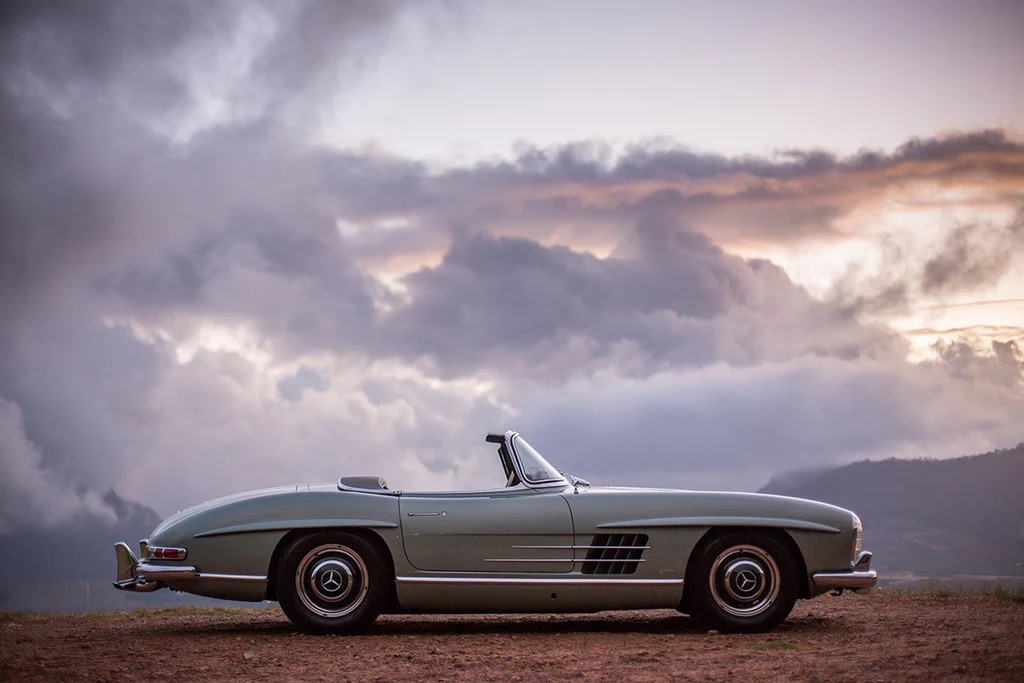
What engines are offered with the Mahindra Scorpio-N? 

Mahindra Scorpio-N drive
The South African market gains a 2.2-litre diesel powertrain.

In South Africa, the Scorpio N will be powered by a 2.2-litre turbodiesel mHawk engine that offers 129 kW and 400 Nm of torque. The diesel-powered Scorpio-N will be offered in both rear-wheel and 4×4 guise and is paired with a 6-speed automatic transmission. Mahindra claims fuel consumption at 6.9 L/100km.

In other markets, a 2.0-litre turbopetrol mStallion engine produces 149 kW and 380 Nm of torque but this engine has not been earmarked for South Africa.

The Scorpio-N 4×4 is equipped with a 4XPLOR terrain management system with a shift-on-the-fly dial to change from 2WD to 4WD and 4LO. In addition, the driver can also select terrain modes such as Normal, Grass Gravel Snow, Mud Rut and Sand to match the driving conditions. The driver will also be able to choose from 3 oddly-named drive modes including Zip, Zap and Zoom. Zip is said to be ideal for smooth driving in traffic (city driving), Zap for performance driving (enthusiastic driving) and Zoom for “more engaging and exhilarating ride quality”, says Mahindra.  

Mahindra Scorpio-N Gets Modern, Connected Interior 

Mahindra Scorpio-N Interior
Mahindra’s Scorpio N goes upmarket with a modern, tech-focused cabin.

The interior exhibits an upmarket execution with a two-tone colour scheme with brushed aluminium trim exuding a more premium look and feel. The instrument cluster also features a larger central multi-information display flanked by analogue dials while the new 8-inch touchscreen offers Android Auto and Apple CarPlay connectivity as well as a Multivision surround camera. A Sony 3D sound system is also fitted with 12 speakers as well as wireless charging. The Scorpio-N will be offered exclusively as a 7-seater in South Africa.
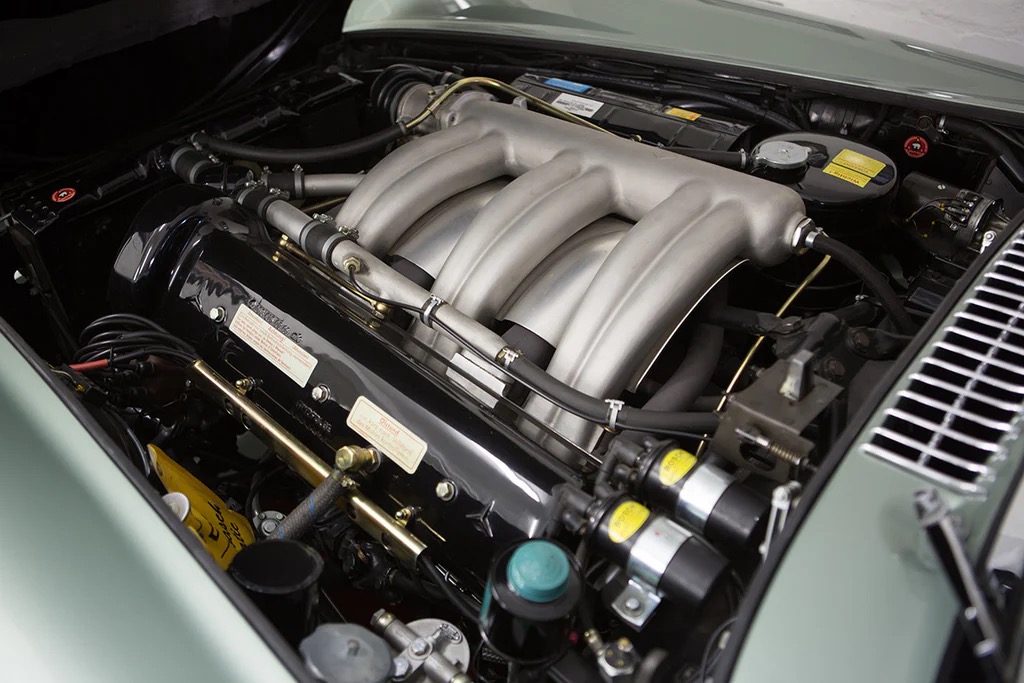
A total of 3 trim levels are available including the Z4, Z8 and Z8L.

What standard features are available for the Scorpio-N?

Mahindra Scorpio-N
The Scorpio-N adopts Mahindra’s new “Twin Peaks” visual identity. 

Standard features for the Mahindra Scorpio-N Z4 include:

  • 17-inch steel wheels
  • Rear spoiler
  • Ski rack & side steps
  • Silver skid plates
  • Fabric upholstery
  • Cooled glovebox
  • Driver seat with height adjustment and lumbar support
  • Cruise Control
  • 6 airbags, ABS with EBD, electronic stability control with traction control, trailer sway mitigation, roll over mitigation
  • Hill hold control
  • Hill descent control

Standard features for the Mahindra Scorpio-N Z8 include the above and add the following features:

  • 18-inch alloy wheels
  • 4XPLOR Intelligent 4×4 System
  • LED headlights + LED taillights
  • LED sequential turn indicators
  • Chrome door handles
  • Signature metallic Scorpio-tail element integrated into beltline
  • Push button start
  • Keyless entry
  • Dual-tone dashboard
  • Coffee Black leatherette upholstery
  • Leather-wrapped steering wheel + gear lever
  • Power-folding mirrors
  • Tyre Pressure Monitoring System

Standard features for the range-topping Scorpio-N Z8L include all of the above and the following features:

  • 12-speaker Sony sound system with twin-channel subwoofer
  • Front camera
  • Front assist sensors
  • Electronic driver’s seat

Look out for our launch review of the new Mahindra Scorpio-N coming to Cars.co.za this week!

How much does the Mahindra Scorpio-N Cost in South Africa?

  • Mahindra Scorpio-N Z4 4×2 Automatic – R465 000
  • Mahindra Scorpio-N Z8 4×2 Automatic – R510 000
  • Mahindra Scorpio-N Z8 4×4 Automatic – R560 000
  • Mahindra Scorpio-N Z8L 4×4 Automatic – R590 000

The new Mahindra Scorpio-N comes with a 5-year/150 000 km warranty and a 5-year/100 000 km service plan.

Want to buy a new or used Mahindra? Browse stock for sale here.

Further Reading

Mahindra XUV700 – Here’s the latest

Why no more Akio Toyoda at Toyota?

Under Akio Toyoda, Toyota evolved from a trustworthy brand that produces good cars to one that appeals to enthusiasts. Koji Sato, who will succeed him as the firm’s CEO, is also a car nut – but he’ll accelerate the electrification of TMC’s product line-up.

It’s not fun being number one. We live in an age of unprecedented data availability; an era in which statistics reign supreme. And when you lead the rankings, be it as the world’s biggest car company or the team that tops the PSL table, it’s a double-edged achievement. You inadvertently become a target.

In terms of sheer sales volume, Toyota Motor Corporation (TMC) is the world’s largest car company. It’s a title that it has held for the past 3 years. At its core, Toyota also remains a thoroughly Japanese company. That makes Toyota a challenge to understand for analysts, investors and rivals. But not for customers.

The Aichi-based company enjoys tremendous customer loyalty across many segments in diverse markets, yet, not to be too unkind, it doesn’t produce truly class-defining vehicles. Good vehicles? Yes. Highly reliable vehicles? Absolutely. And, on those 2 traits, Toyota has built its brand around the world.

Akio Toyoda stands in the centre of a a room full of Toyota concept models.
 Akio Toyoda in an impressive room of concept models. Toyota’s global automotive influence is inarguable.  

The problem with being number one

When you are the world’s biggest car company, everything you do and say is scrutinised. And Toyota’s reticence towards battery electric vehicles (BEVs), has been leveraged by rivals as a potential weakness. The fact that Toyota markets a vast portfolio of “new energy” vehicles is curiously disregarded by many.

When Maserati gets a new boss, the global car industry hardly takes notice. It’s a Friday afternoon e-mail or tweet. But the announcement that Akio Toyoda is vacating his role as Toyota CEO – that’s huge news.

If Toyota is generating significant profits and enjoying immense customer loyalty in most markets, why is its boss leaving? Toyota’s corporate critics – and there are many of them – say that it’s because of Akio Toyoda’s well-publicised indifference to battery-electric vehicles (BEVs). But, as with corporate changes of this magnitude, there’s much more going on in the background…

Toyota Motor Corporation CEO Akio Toyoda stacks champagne glasses on the bonnet of a Lexus LS derivative.
Quotable, characterful, fun – and a car guy. They couldn’t have recruited a better CEO if they tried.

Was Akio Toyoda the right boss for Toyota?

All of the world’s greatest car companies started as – and grew from – family businesses (that means the firms were affected by sometimes messy family politics and had unusual management structures, such as powerful board positions reserved for family members). But that’s changed due to the industrial might of China, where the Beijing government’s shareholding and influence nix car-company family legacies.

Toyota, however, is unique among the world’s most influential car companies because the founding family remains powerfully involved. And not only involved – in control. BMW’s Quant family are silent shareholders. And members of the Porsche/Piech dynasty don’t serve in CEO roles at any VW Group entities – Audi, Bentley, Bugatti, Lamborghini, Porsche, Seat or Volkswagen. Mercedes-Benz? It has been a purely corporate company for decades.

Honda? No Hondas as the CEO. Ford? Founder Henry Ford’s grandson, Bill, serves in a ceremonial role. But Toyota has been run by Akio Toyoda since 2009. And Toyota has done well, very well, ever since.

The driver’s CEO

In South Africa, Toyota dominates the new-vehicle market and has done so for longer than most of us can remember. Globally, of the top 10 best-selling vehicles, 3 are Toyotas. And these are global platforms that serve many customers in diverse markets. Toyota builds everything from rugged off-road vehicles to hybridized crossovers and attainable low-centre-of-gravity sportscars. And it’s a very profitable pursuit.

Akio Toyoda isn’t an engineer. He’s a business and finance graduate. But what made him such a perfect CEO for Toyota, is that his financial awareness was always subservient to an authentic love of cars.

Design. Driveability. Attainability. Akio Toyoda understood and lived these concepts more truthfully than many car company CEOs, most of whom are merely high-level managers and cost optimisers. Such execs tend to be rather disinterested in products, but obsessed with balance sheets and graphs.

Toyota Motor Corporation CEO Akio Toyoda presents the Toyota GR Supra.
Supra remains Toyota’s most storied sportscars nameplate. Akio loves them all – naturally.

He steered Toyota through a crisis

When Akio Toyoda became TMC’s CEO in 2009, it was a year after the global financial crisis and a year before Toyota would face a bizarre “unintended acceleration” mistrust campaign in the United States. The Japanese earthquake and Tsunami would follow in 2011. Despite facing these difficult challenges during the early phase of his CEO tenure, Akio Toyoda demonstrated his value as a product person.

He established Gazoo Racing, very much to the benefit of Toyota South Africa Motors’ (TSAM) Dakar racing efforts. That is something that TSAM’s product managers have expertly leveraged to create the Dakar trim level for Hilux. Under Akio Toyoda’s guidance, some of the best Japanese cars in history have been conceived, developed and brought to market, including the LF-A, GR 86, GR Supra and GR Yaris.

It can be argued that Akio Toyoda is the 2nd-best family-member car-company CEO of all time, behind the legendary Ferdinand Piech, who built Volkswagen AG into the empire it has become. But if Toyoda-san has been so good for Toyota, why did he make the sudden decision to vacate his position as CEO?

Toyoda could do the suit and corporate smile. But he was even better behind the wheel of prototypes and “living the product”.

Why is Akio Toyoda leaving?

A car company CEO can listen to consultants, designers, product people and brand architects all day, but there’s no substitute for driving. Akio Toyoda would get out of the boardroom to spend time behind the ‘wheels of a nascent Toyotas and his love of driving manifested in the brand’s product portfolio.

The low-volume GR Yaris was evidence that the world’s biggest car company was run by a CEO who would rather be clipping apexes at a test track, than approving track changes in a strategic document.

As a genuine driving enthusiast and sportscar fan, Akio Toyoda was always going to be unimpressed with BEVs’ drawbacks (such as their weight and diluted driving experience, given current battery densities).

Despite a nearly unrivalled portfolio of petrol-electric hybrid vehicles, initially marketed through Prius and the Lexus brand channel, Toyota isn’t selling a million BEVs a year – but Tesla is.

Toyota knows how expensive the transition to BEVs will be: not only regarding manufacturing costs, but retail pricing for customers. TMC controls many Japanese suppliers and is headquartered in a country with much deeper advanced-battery-production knowledge than any American or European car brand.

Unlike many other car company bosses, automotive-market analysts and industry observers, who believe a global BEV fleet can be brought to fruition simply and easily, Akio Toyoda has been transparent about the discrepancy between pure-electric/battery-car aspirations and immediate deliverables.  

Akio Toyoda (left) will be succeeded as CEO of Toyota Motor Corporation by Koji Sato.
Akio Toyoda and Koji Sato – both are obsessed with fun-to-drive Toyotas.

Who is the new CEO of Toyota Motor Corporation?

Koji Sato. And he’s young (53), at least for the CEO of the world’s biggest car company. With Sato’s appointment, Akio Toyoda wants to ensure his legacy of creating driver’s cars and product excellence survives. This is why Sato, who owns an AE86, was chosen ahead of a Toyota finance executive.

Sato’s appointment is a significant change for Toyota. Some feel that Akio Toyoda was damagingly conservative in his attitude towards BEVs, but many of Toyota’s most profitable models (the bakkies and large SUVs) serve customers who have little to no desire for battery-electric powertrains.

Toyota’s new CEO must counter Tesla in the US and in Europe while reshaping Toyota’s powertrain R&D, without disrupting its legacy profit flows from the global bakkie and large SUV businesses.

Sato is an engineer and currently serves as Toyota’s brand manager. That means he has an expertly informed global view of the company’s customers – including those in South Africa. But it’s where Sato worked from 2016-2020 that really matters. During this timeframe, he served in senior engineering and management roles at Lexus, a brand which has served as Toyota’s stealth battery-development entity.

The BEV Sport concept was signed off during Koji Sato’s tenure at Lexus.
The BEV Sport concept was signed off during Sato’s time at Lexus.

Timing the battery market

Having dealt with challenging hybridisation/electrification choices at Lexus, Sato has a strong overview of battery chemistry trends – something of immeasurable value for any car company executive in 2023.

Sato’s advanced engineering literacy should help him to find solutions for the scalability issues of some battery technologies. It’s worth noting that a Japanese battery supplier, Panasonic, was Tesla’s enabler.

Toyota has the cash and proximity access to Japan’s advanced battery industry. To secure the best battery chemistries, scale matters. This is where Toyota’s ordering magnitudes and healthy cash position can make a big difference.

Car CEOs and the software issue

Of course, the advantage of Sato’s age is that he appreciates software. Coding development and UX integration have been massive cost issues for legacy car companies. Volkswagen has struggled hugely with it. Tesla does it better than anyone else because its CEO, Elon Musk, is a computer scientist at heart.

Japan remains the world’s most digitally connected and advanced nation, with deep coding competency at all levels. But digital awareness is a factor of youth.

If Elon Musk was a decade older, would he have been as tech-immersed during his teens, which laid the groundwork for his later career breakthroughs? Probably not. And that’s why Sato, at 53, is the ideal age to understand and network better strategic software outcomes for Toyota. Hopefully, Sato-san will help TMC to circumvent the software and UX issues that have bedevilled Volkswagen in the recent past.

Koji Sato is an inspired choice to succeed Akio Toyota as CEO of Toyota. At a time when fantastically complex powertrain choices must be understood, would you rather have a finance-minded CEO, or a proven automotive engineer, making decisions about the next-generation Hilux’s engines? Exactly…

Related content:

Why Tank 300 matters so much for GWM

Can Jaguar save itself – or not?

Why your next bakkie shouldn’t have side mirrors

Will Chinese cars stay cheap forever?

Stage 6: A major threat to SA’s auto industry

GWM’s Ora Cat EV could offer 500 km range for only R600k