Fuel prices in South Africa could rise further in October 2023 based on unaudited mid-month fuel price data released by the Central Energy Fund (CEF).
Motorists in South Africa (and the economy) are taking a beating after significant fuel price increases came into effect in early September but unfortunately, the fuel price forecast for October 2023 isn’t looking good and motorists must prepare for another round of increases.
Rising oil prices (now trading above $90 per barrel) and weak Rand (currently at R19 to the US Dollar) are the major contributing factors for the potential fuel price increases looming in October.
According to unaudited mid-month data released by the Central Energy Fund (CEF), the fuel price outlook is as follows:
Petrol 93 increase of R1.15 per litre
Petrol 95 increase of R1.22 per litre
Diesel 0.05% increase of R2.03 per litre
Diesel 0.005% increase of R1.93 per litre
With 2 weeks of September remaining, the forecast is likely to change. Official fuel price adjustments will be announced in early October 2023. If the above forecast becomes a reality, the price of inland petrol and diesel will breach the R25 per litre mark.
Predicted Fuel Price for October 2023
Fuel Type
Sept ’23 Inland
Sept ’23 Coast
Oct ’23 Inland*
Oct ’23 Coast*
Petrol Unleaded 93
R24.14
R23.42
R25.29
R24.57
Petrol Unleaded 95
R24.54
R23.82
R25.76
R25.04
Diesel 0.05%
R23.82
R22.33
R25.85
R24.36
Diesel 0.005%
R23.29
R22.58
R25.22
R24.51
*October figures are forecast figures and not official.
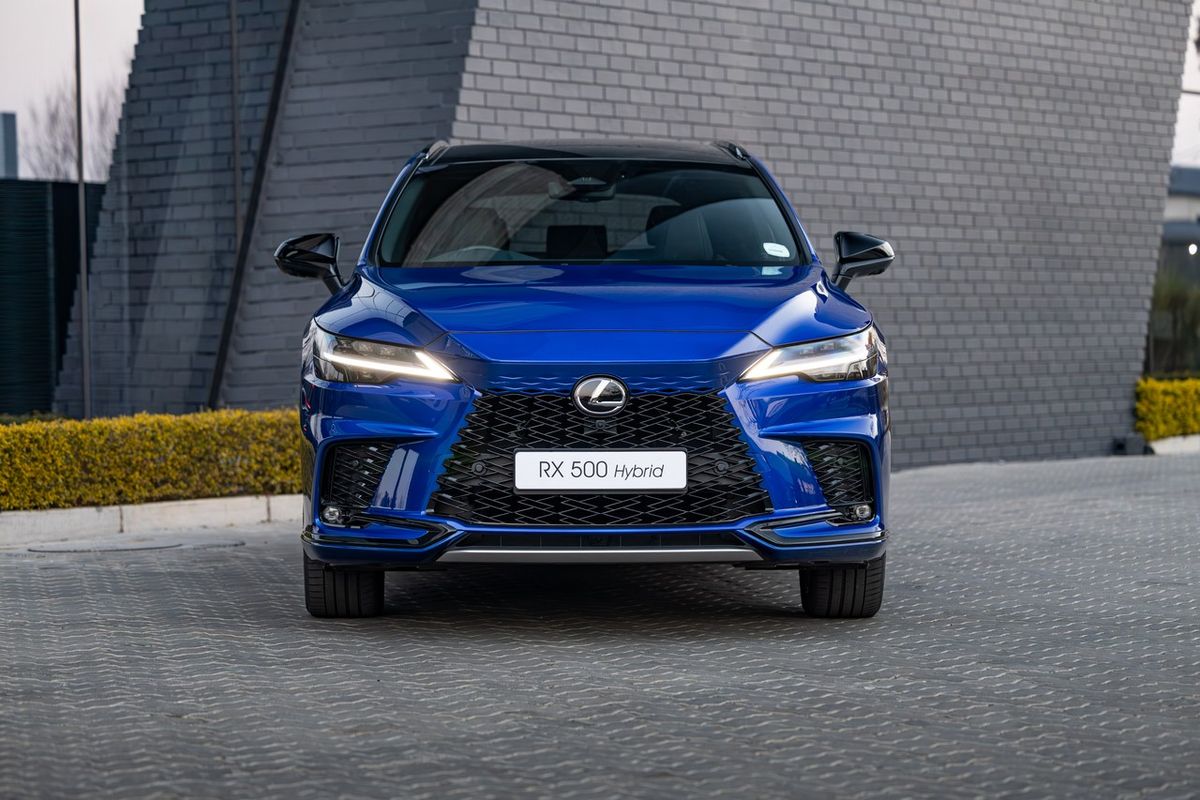
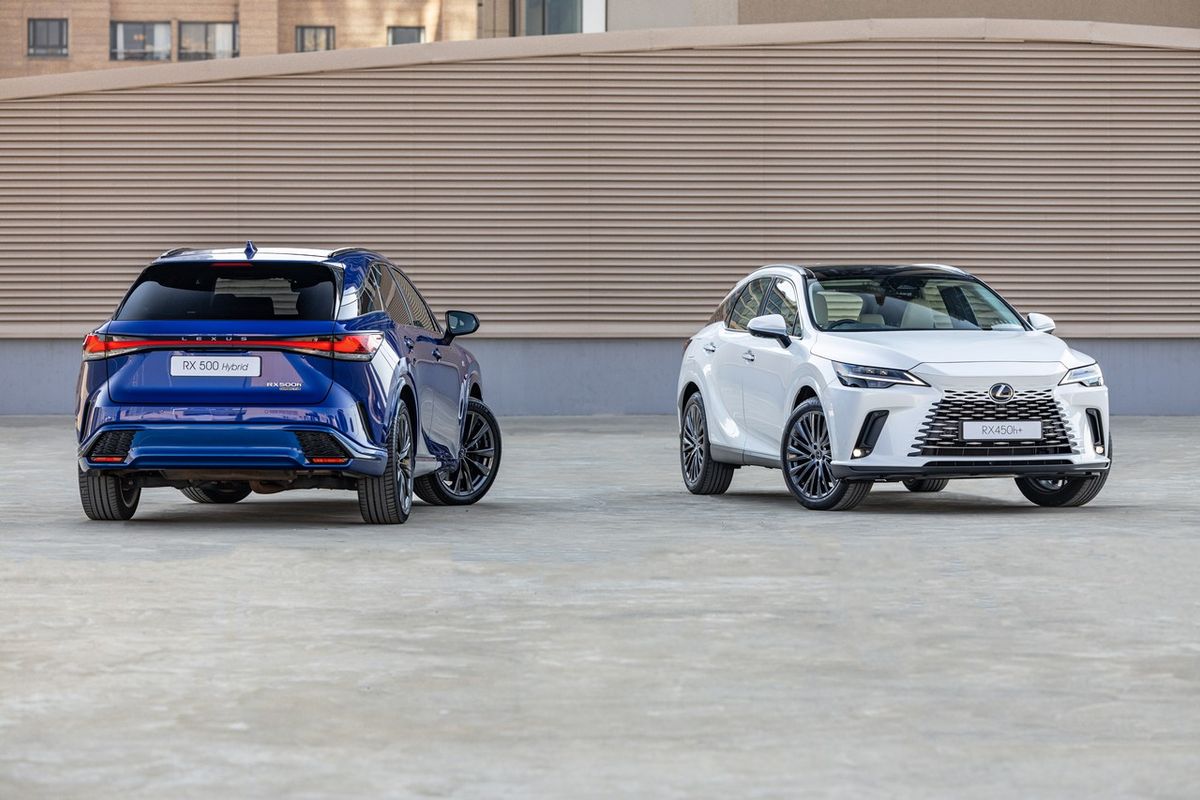
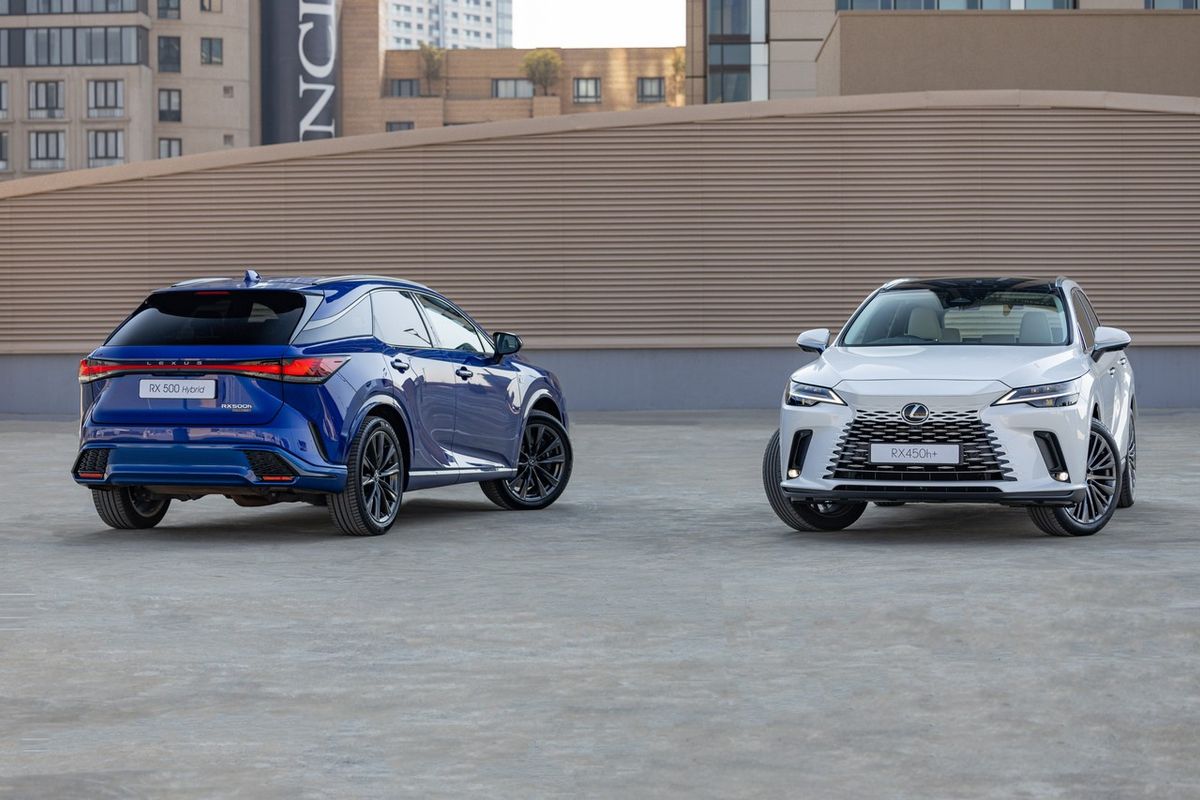
Lexus SA recently expanded the line-up of its RX, which gave us a chance to drive the new premium SUV. What is the Lexus RX like, are the hybrid versions worth a look and has the tech become more user-friendly? We drive the model in the Cape to find out.
What’s new on the Lexus RX?
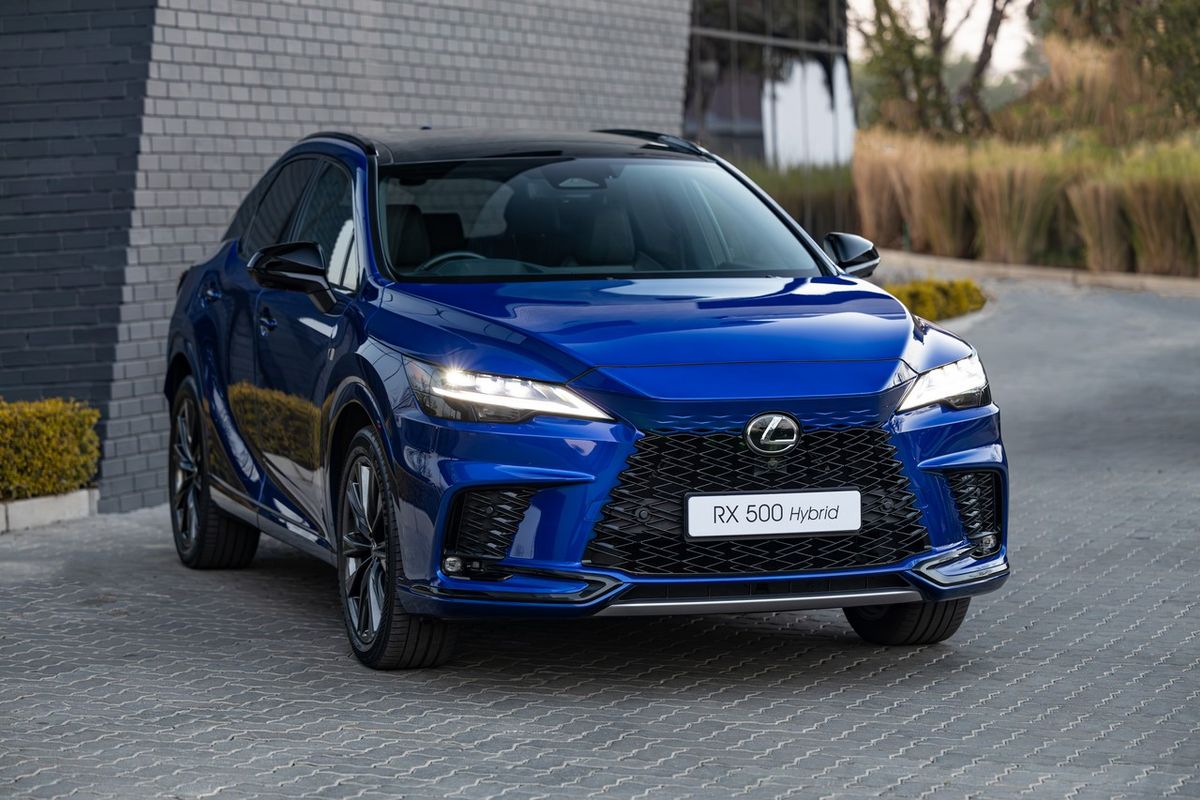
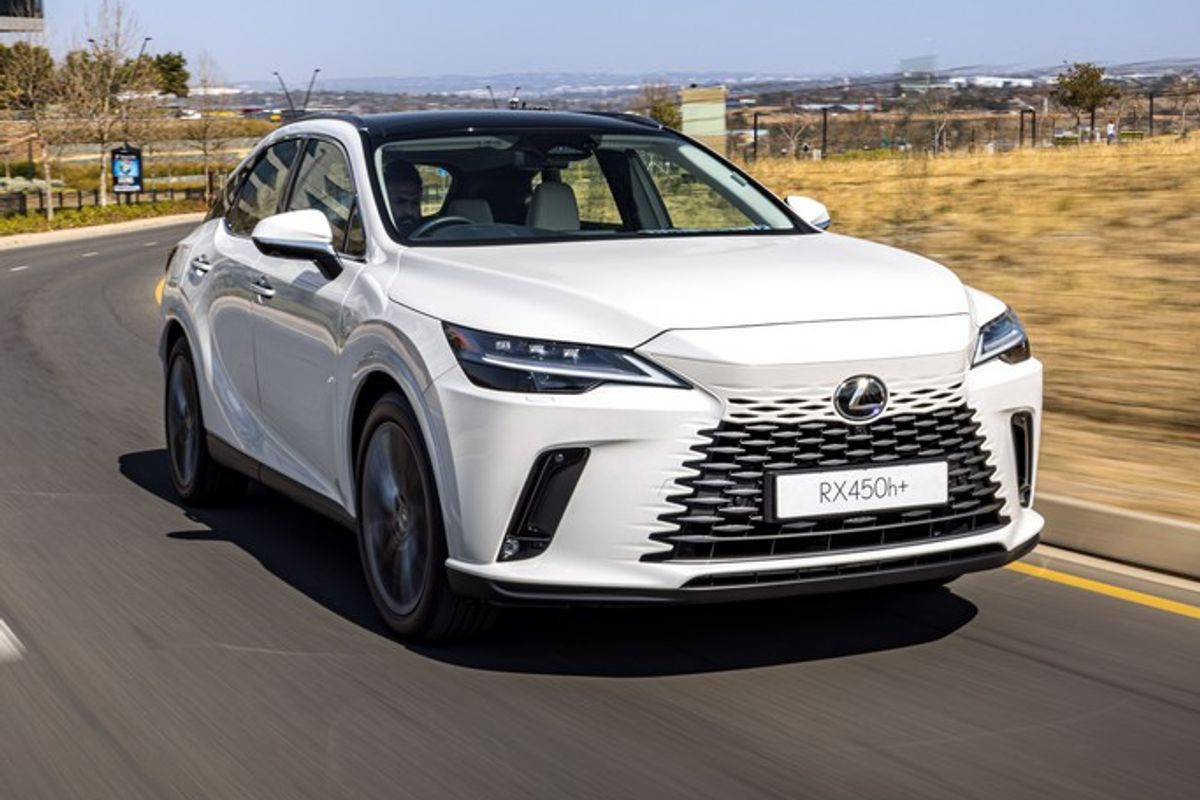
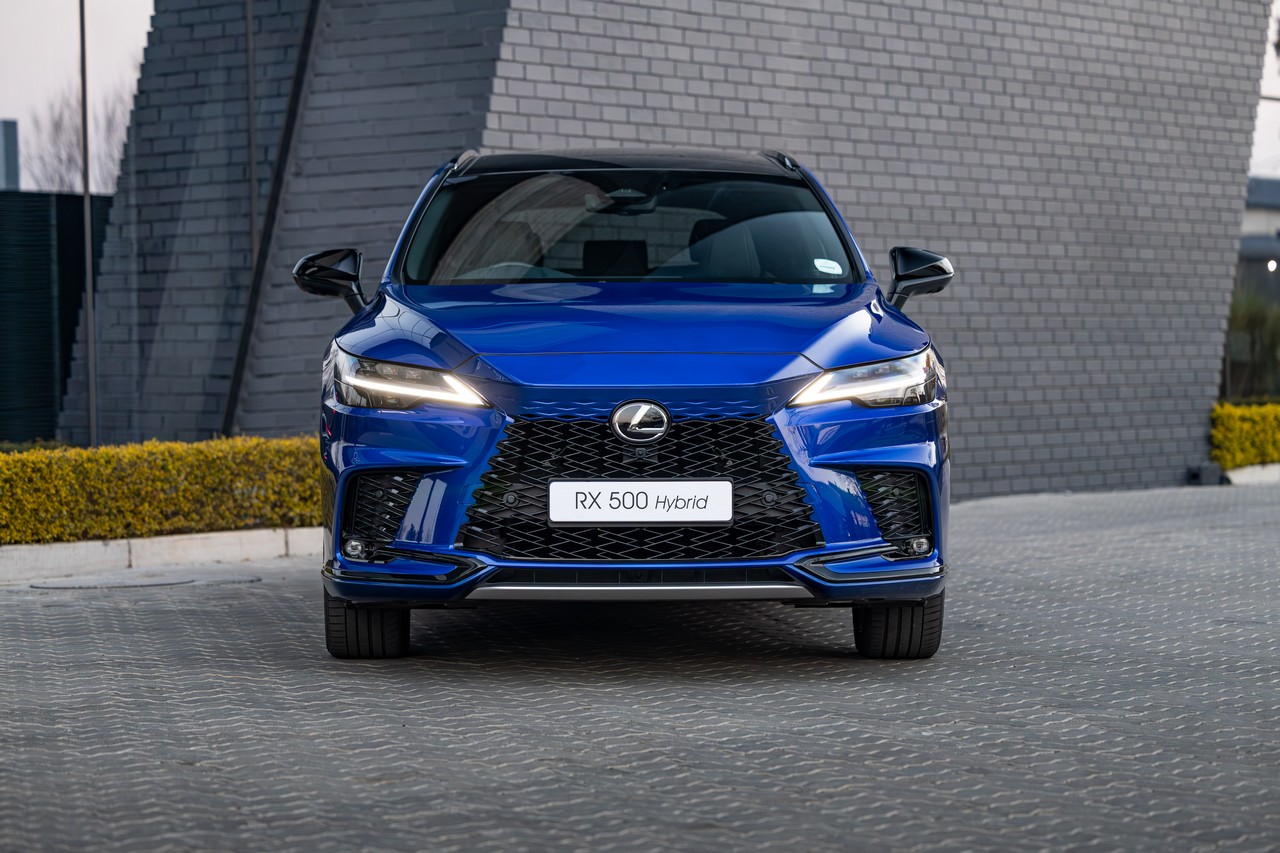
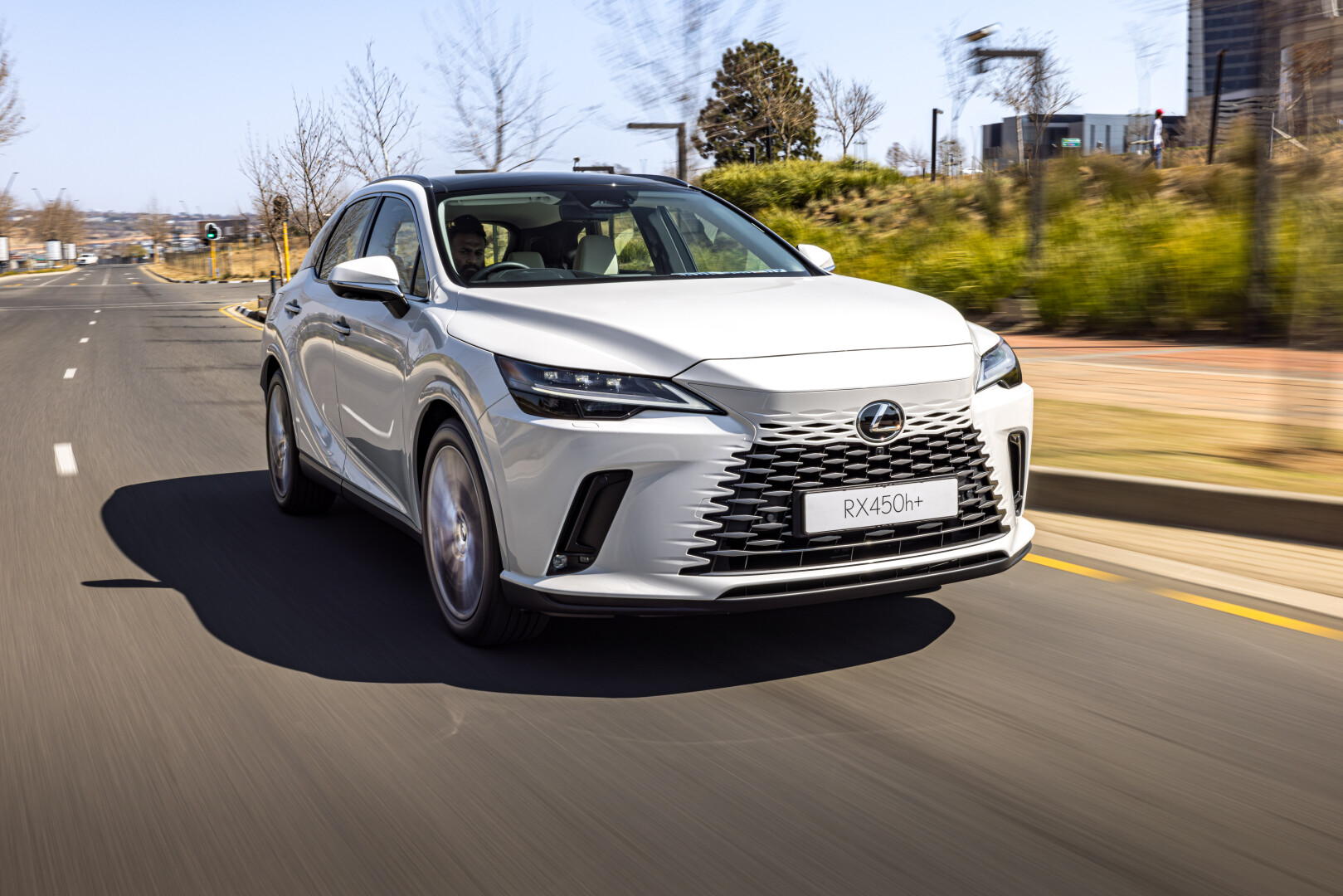
The new RX has a subjectively more likeable face than the previous generation.
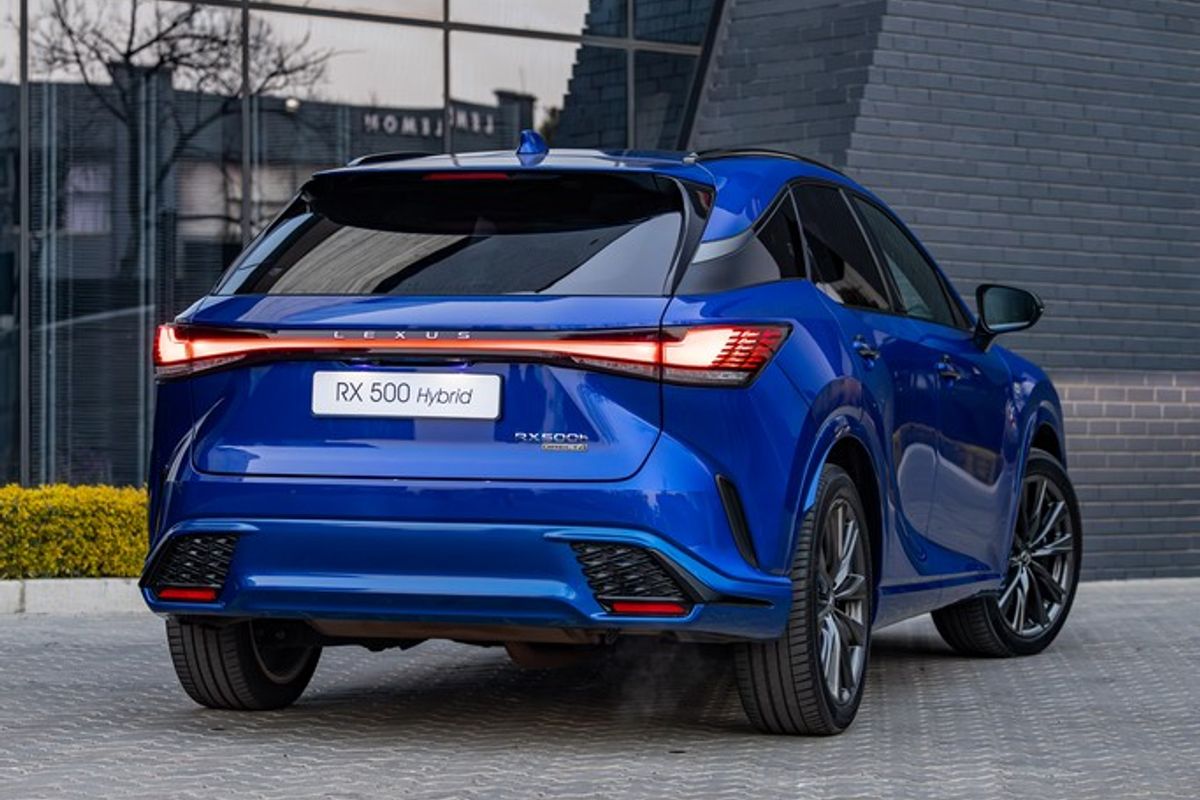
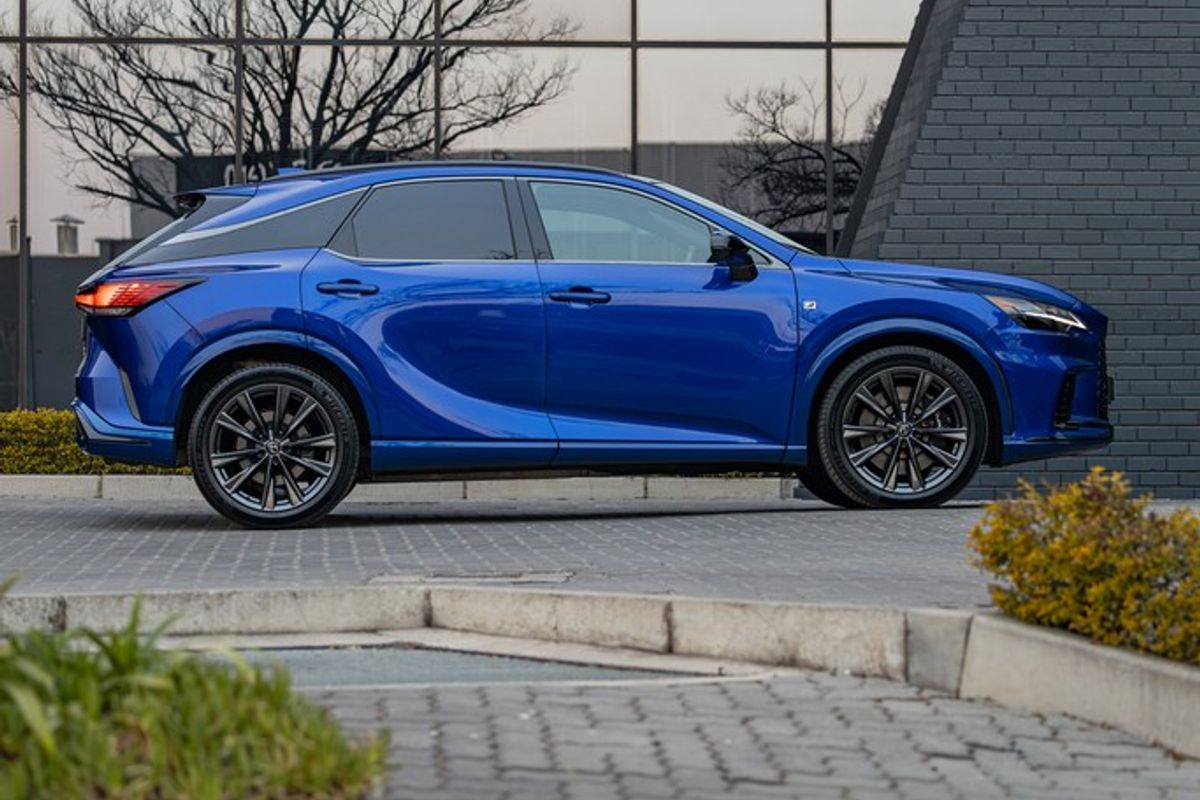
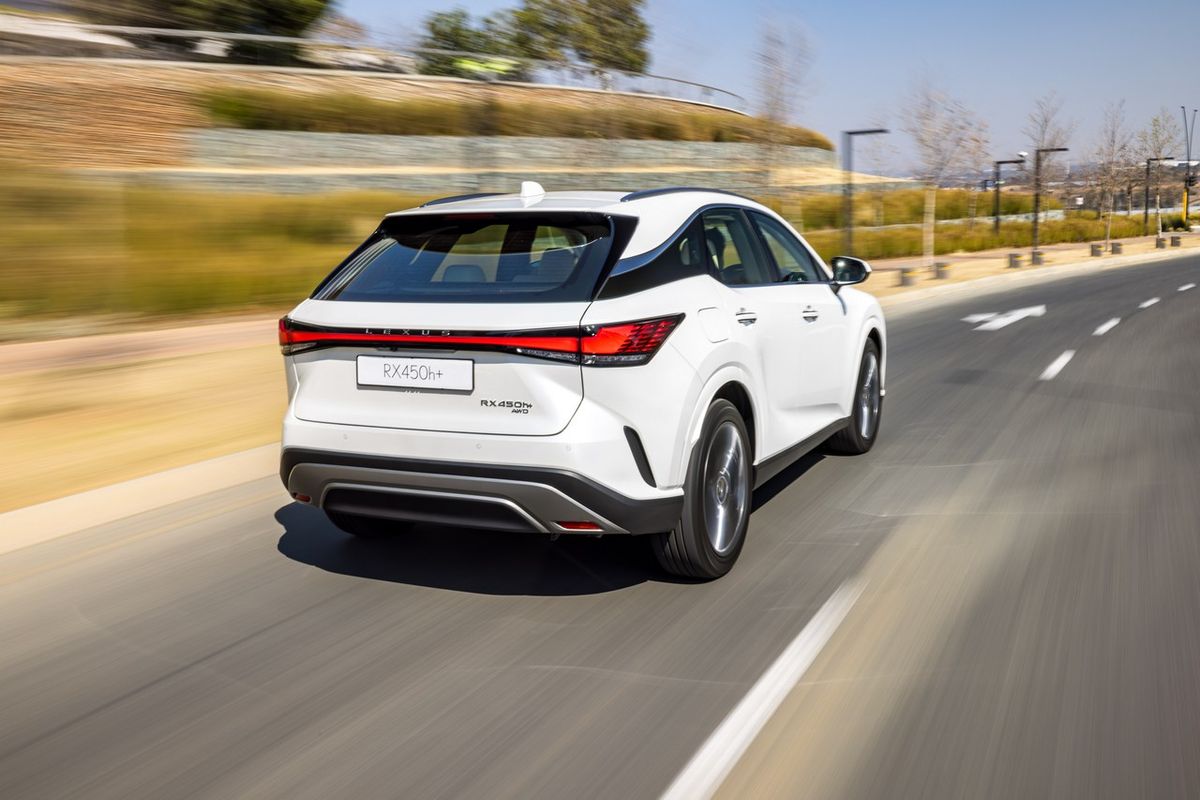
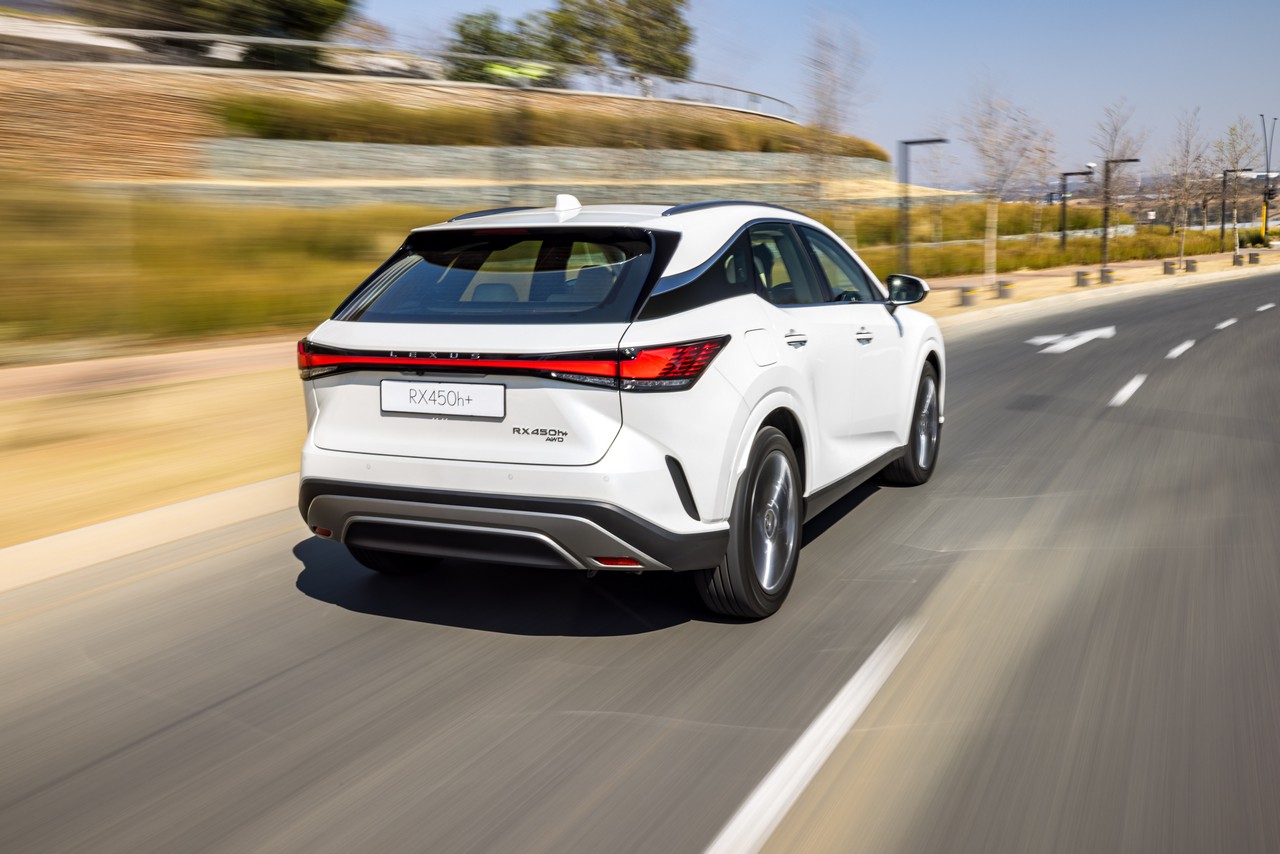
This is the 5th-generation Lexus RX and the 3rd iteration of the model to be sold in South Africa. It has been entirely redesigned with modern premium SUV buyers in mind. The design stands out, features LED light signatures and runs surprisingly low to the ground for a family car with dual-purpose capabilities.
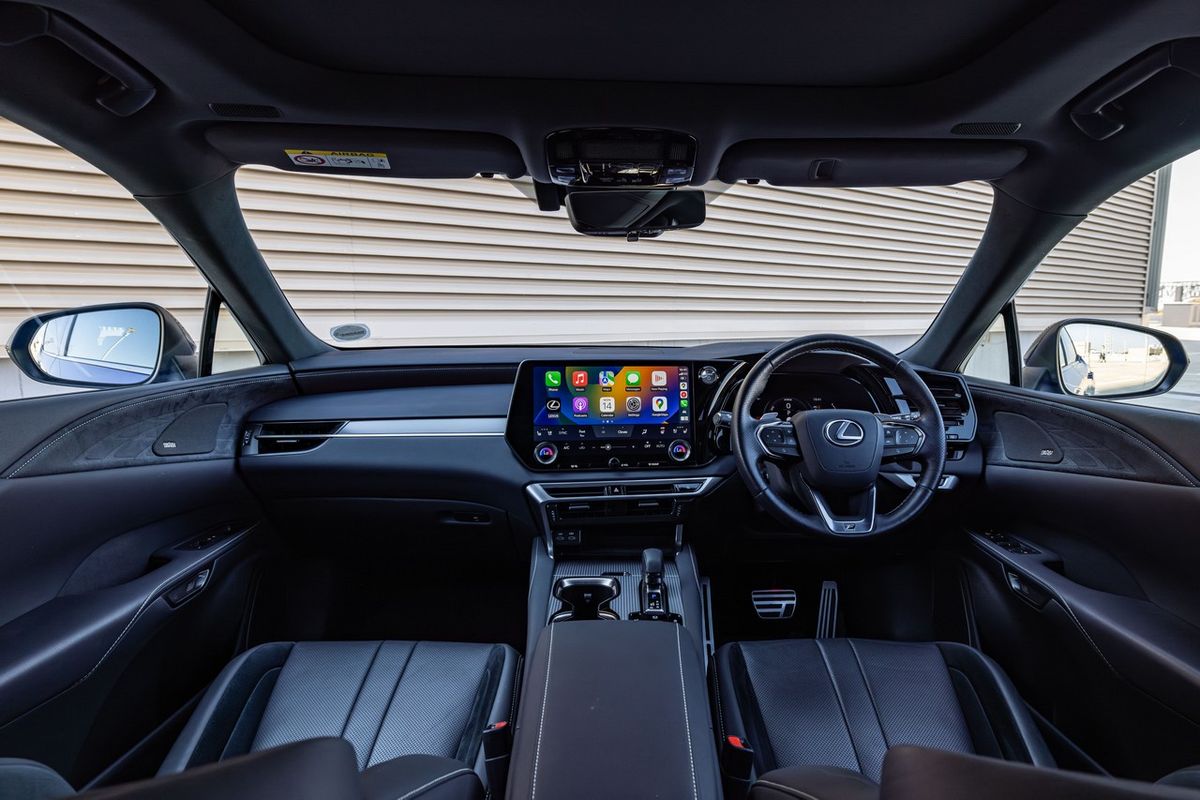
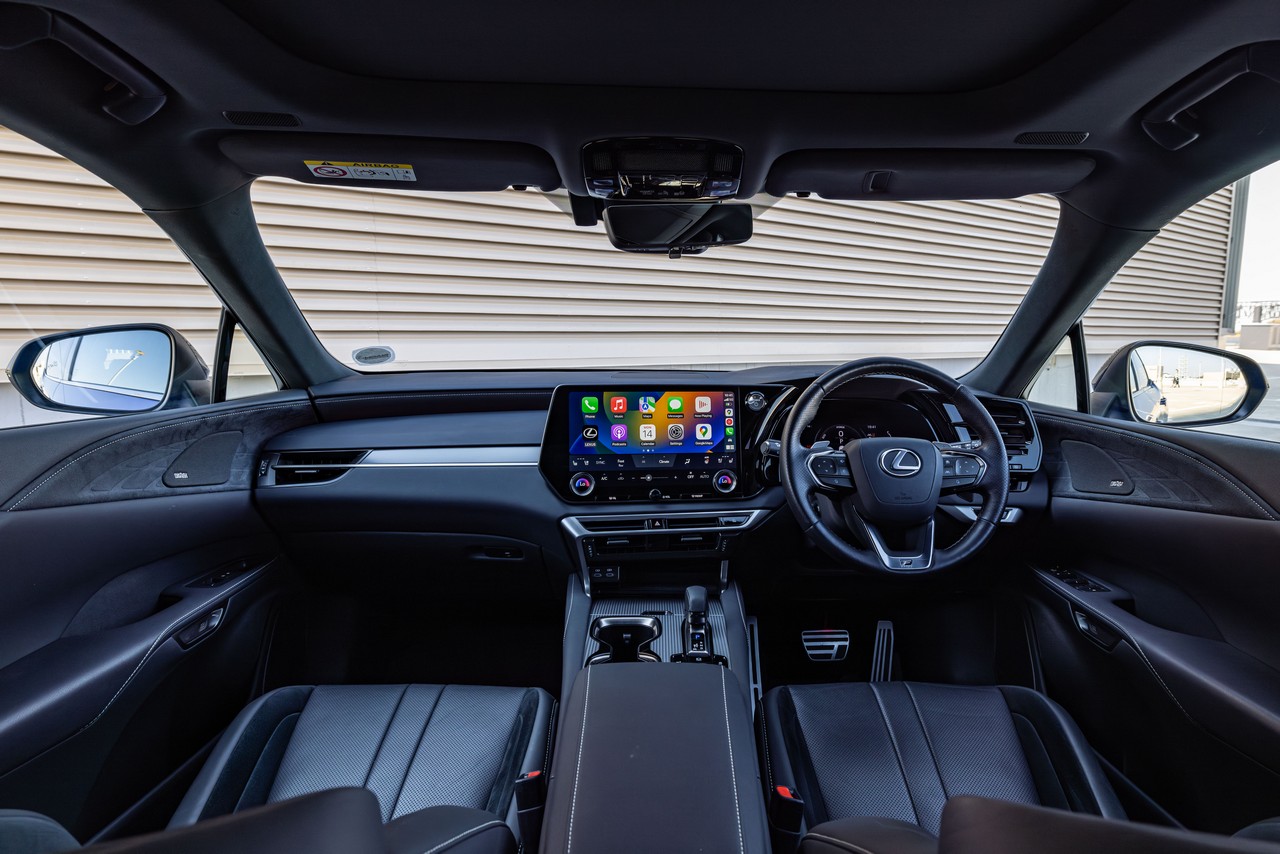
The interior has fewer Lexus quirks (no more silly touch/trackpad with which to navigate the infotainment system menu!) and appears to align with the modern age of connectivity, safety and screen technology.
Until now, the RX has tended to be an “also ran” in Mzansi’s premium SUV segment. Indeed, European and British brands dominate this space by virtue of buyers’ lingering brand perceptions, but this version of the RX has a much stronger chance of finding homes in Mzansi than those that have come before it.
Lexus RX uses hybrid and plug-in power units
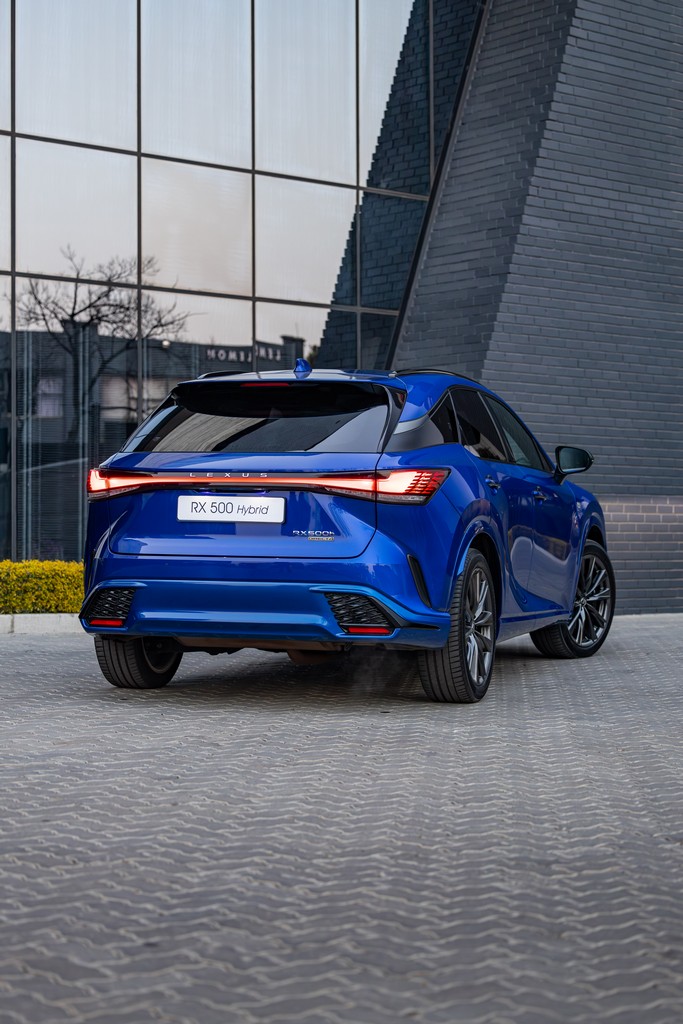
F-Sport models get bigger wheels and different front- and rear bumper designs.
The array of engines in the RX range is quite vast for a model that isn’t pushing big volumes. In the past, we may have said that some of the petrol engines in the RX are “unlikely to excite”, but that seems to have changed thanks to the Toyota Motor Corporation championing new energy petrol-electric engines.
The RX has an all-petrol lineup (with or without electric assistance). It begins with the RX 350, which has a 2.4-litre 4-cylinder turbopetrol engine. We drove this unit for a short stint in Camps Bay and the inner City bowl out to the airport, taking in a mix of freeway and city driving. In this range’s line-up, the numbers in the derivatives’ nomenclature go up in line with the asking prices (not the power outputs).
For its part, the RX 350 offers the most “conventional” driving experience; no hybrid trickery and battery tech here: just 205 kW and 430 Nm of turbocharged petrol power. It’s also the thirstiest derivative in the line-up… Lexus claims an average fuel consumption of 8.9 L/100 km, but although the test unit indicated closer to 11 L/100 km, in average (day-to-day) driving conditions, that figure will probably be lower.
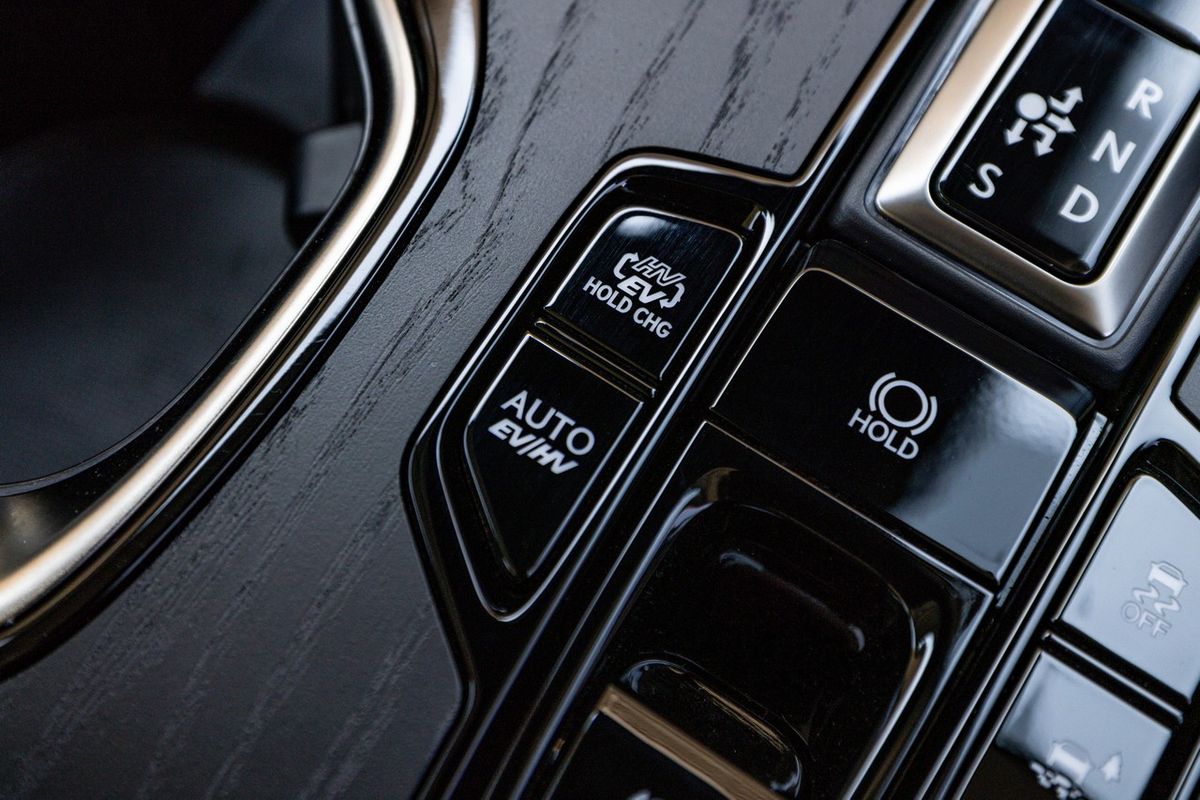
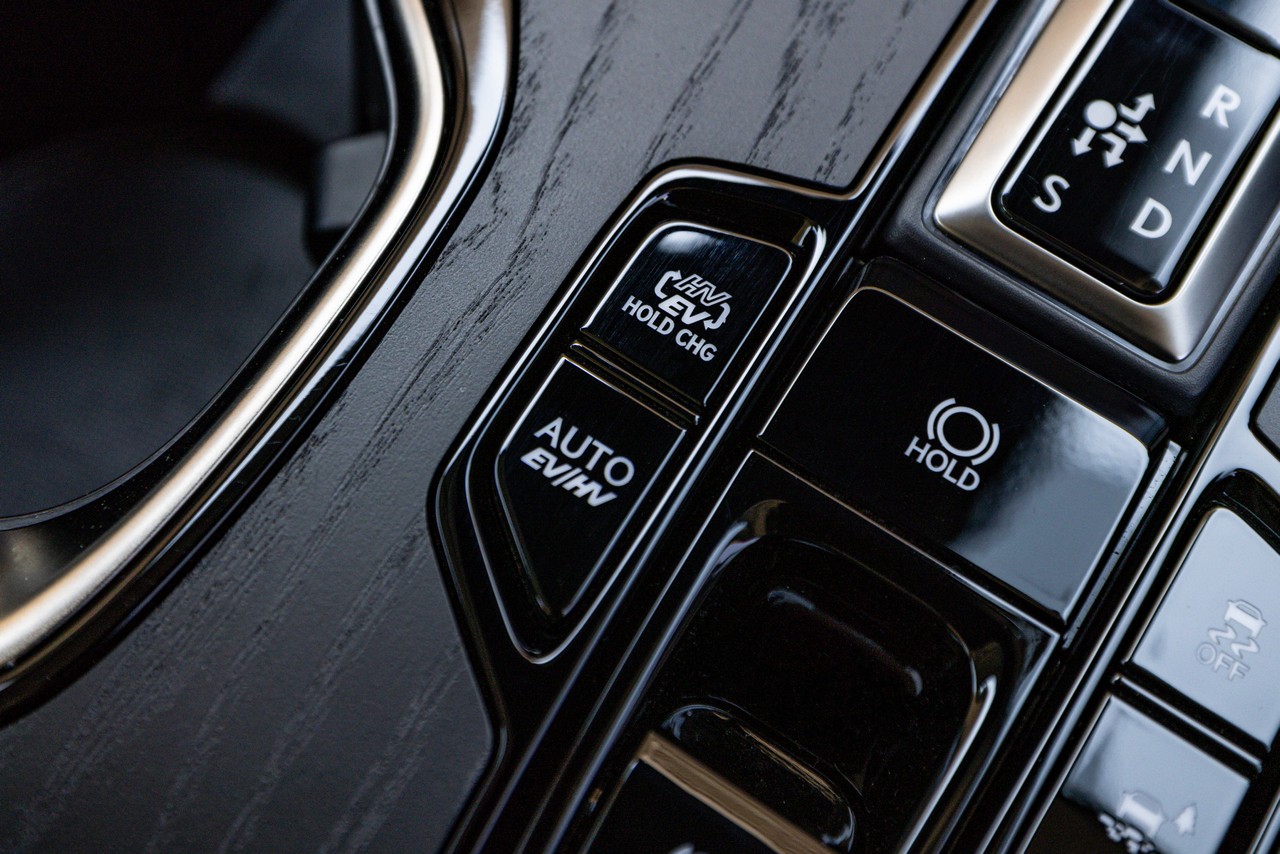
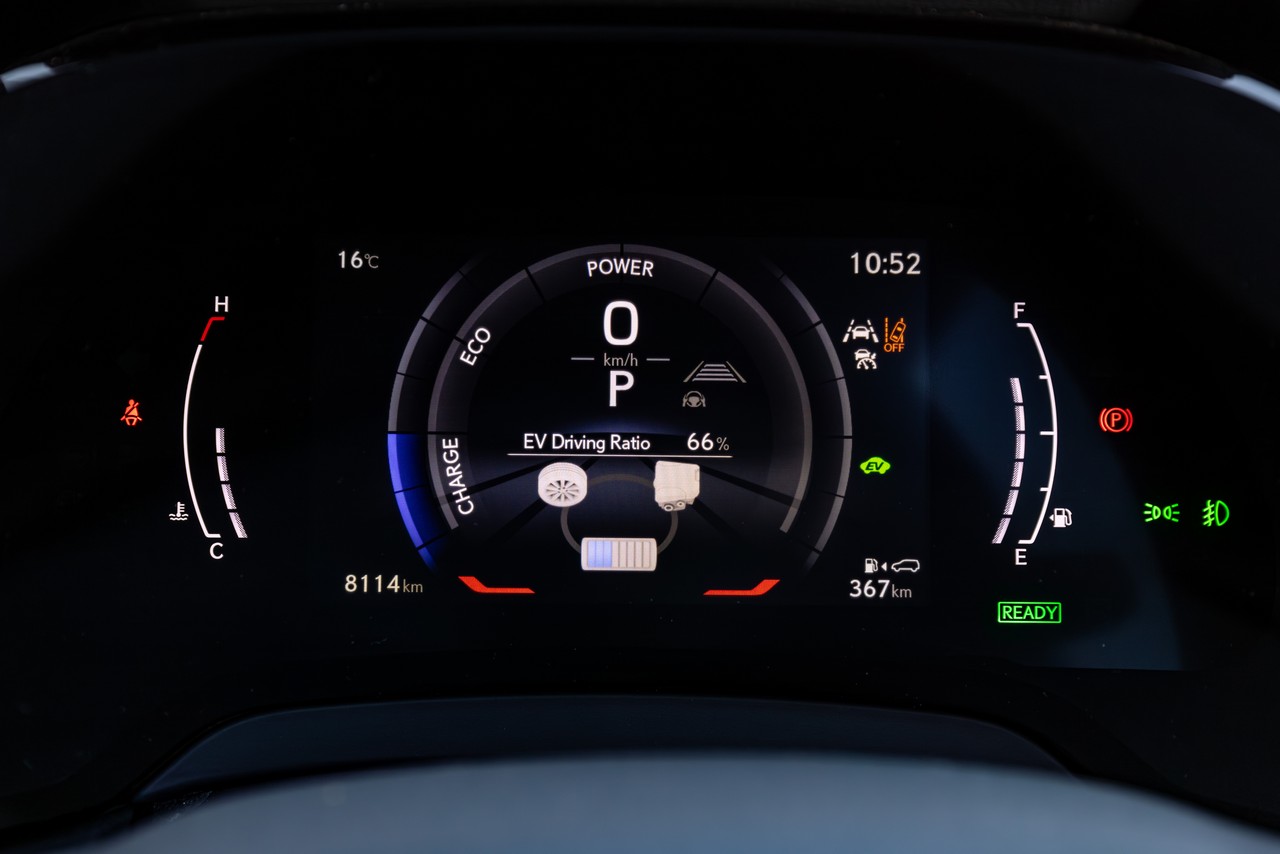
The plug-in hybrid RX 450h+ comes with a few extra buttons in the centre console.
The RX 350h, in turn, has a 2.5-litre naturally aspirated petrol engine that works in conjunction with a hybrid system to reduce emissions and produce the most economical driving experience. The power unit has stated outputs of 184 kW and 239 Nm; if you want a spirited driving experience, the RX 350h is not the derivative to buy, but we averaged 7 L/100 km in this unit, quite close to the claim of 5.4 L/100 km.
We hopped into the RX 450h+ for a short stint. The derivative will only be available from November 2023 and features a plug-in hybrid setup that combines a 2.5-litre petrol motor with an 18.1-kWh hybrid battery to produce 227 kW with a pure electric range of 65 km. It can be charged from a standard wall socket at up to 6.6 kW, which means you can charge the battery from empty to full in just under 3 hours.
This version of the RX made quite a positive first impression; the RX 450h+ uses an EV-first system whereby it will always use full-electric mode when there is sufficient capacity in the battery – no matter how firmly you step on the accelerator pedal. It can run in EV mode up to a speed of 130 kph.
Finally, the RX 500h combines a 2.4-litre turbopetrol engine with a hybrid system to develop 273 kW and 460 Nm. It certainly has all the grunt you would want from an SUV that isn’t performance-oriented. The RX 500h is fun to drive but also returns decent consumption when you get the most out of the hybrid.
Lexus claims the derivative will use 6.5 L/100 km, which compares well with the average consumption figures of 6-cylinder turbodiesels it might compete with. It is also equipped with slightly bigger brakes and rear-wheel steering for added manoeuvrability at low speeds and more stability at high speeds.
Updated Lexus RX interior
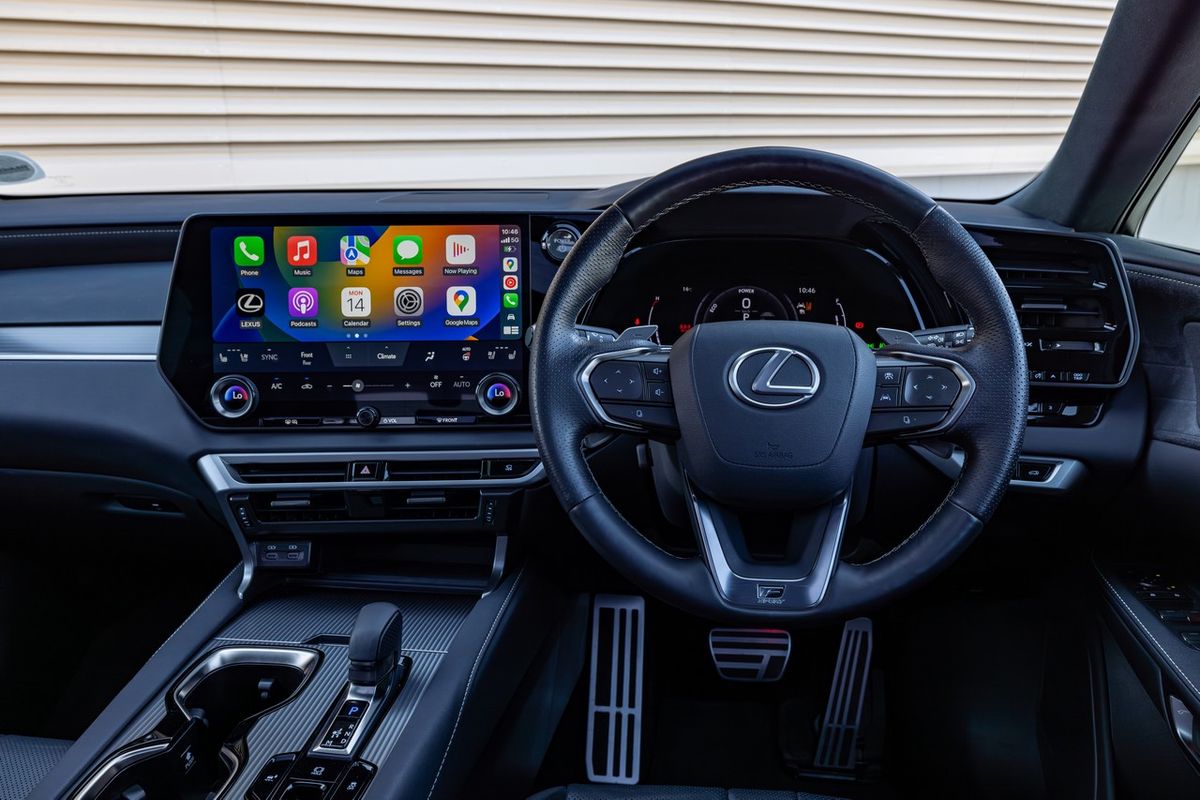
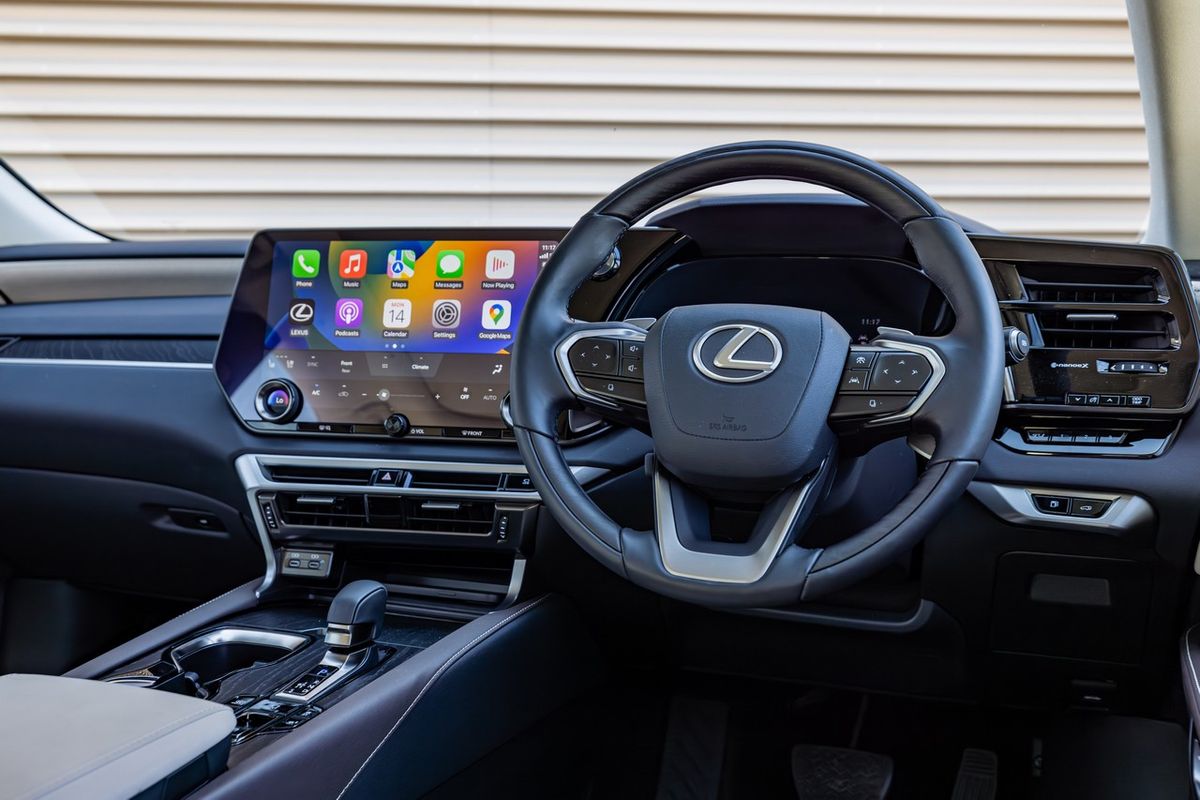
The car’s dashboard features a sizable 14-inch touchscreen that showcases high-quality graphics.
There is a lot to like about the new Lexus RX’s cabin. Gone are the days when Lexus models’ interior layouts and user interfaces seemed dated. The 14-inch touchscreen has a clear and beautifully high-res display and, while it can be a bit of a stretch to reach its farmost corners from the driver’s seat, because the screen is so big, the icons are also chunky, which makes them easy to press while you’re driving.
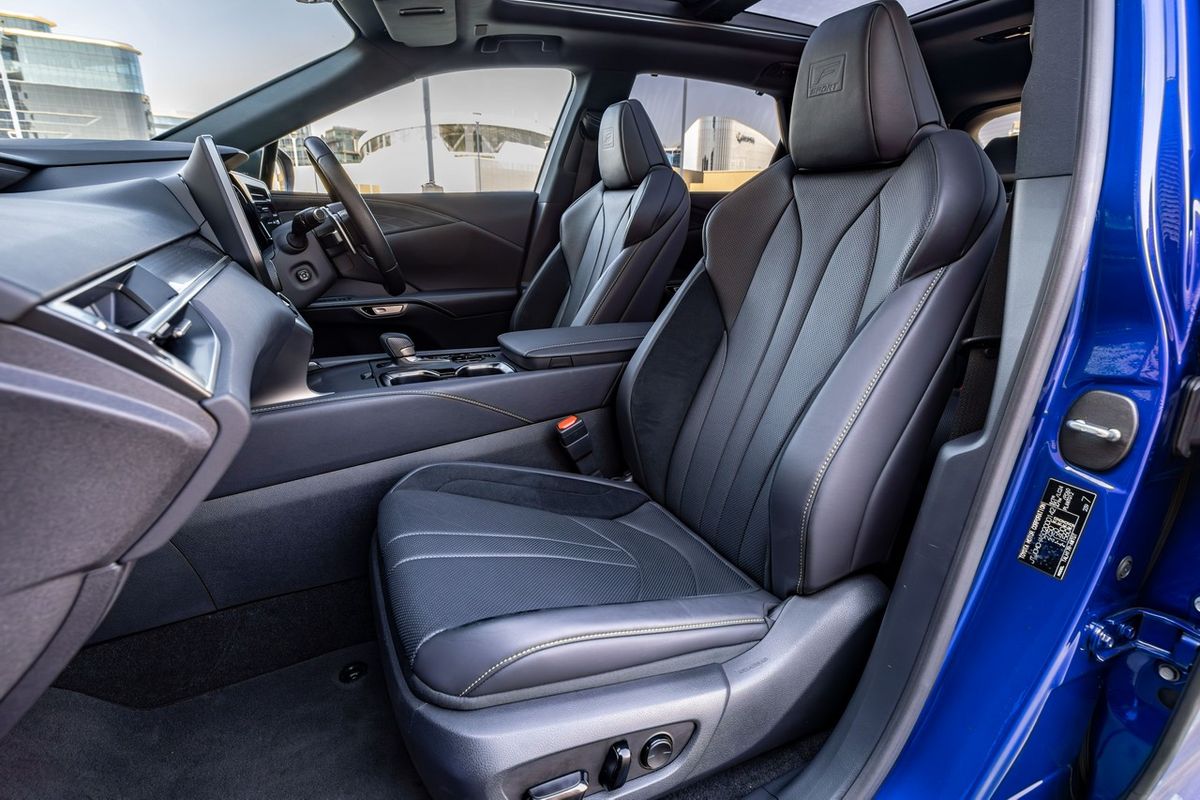
The heated and ventilated seats are perfect for all the seasons of the Western Cape (especially when they occur on the same day) and if you’re really cold, you can fire up the heated steering wheel too.
The luxurious seats are all electrically adjustable (including the rear seats, which can recline) and they’re quite cossetting (suitably softly padded) – there are no body-hugging bucket seats to be found here. It’s the quintessential lap of luxury when you step inside the RX. Nothing is over the top, like you’d see in a crystal-levered BMW, plus the material selection makes Mercedes-Benz look like a Tupperware maker.
It’s beautifully crafted and refined inside and the wrap-around dashboard with an “edge” reminds me a lot of the Jaguar F-Pace design.
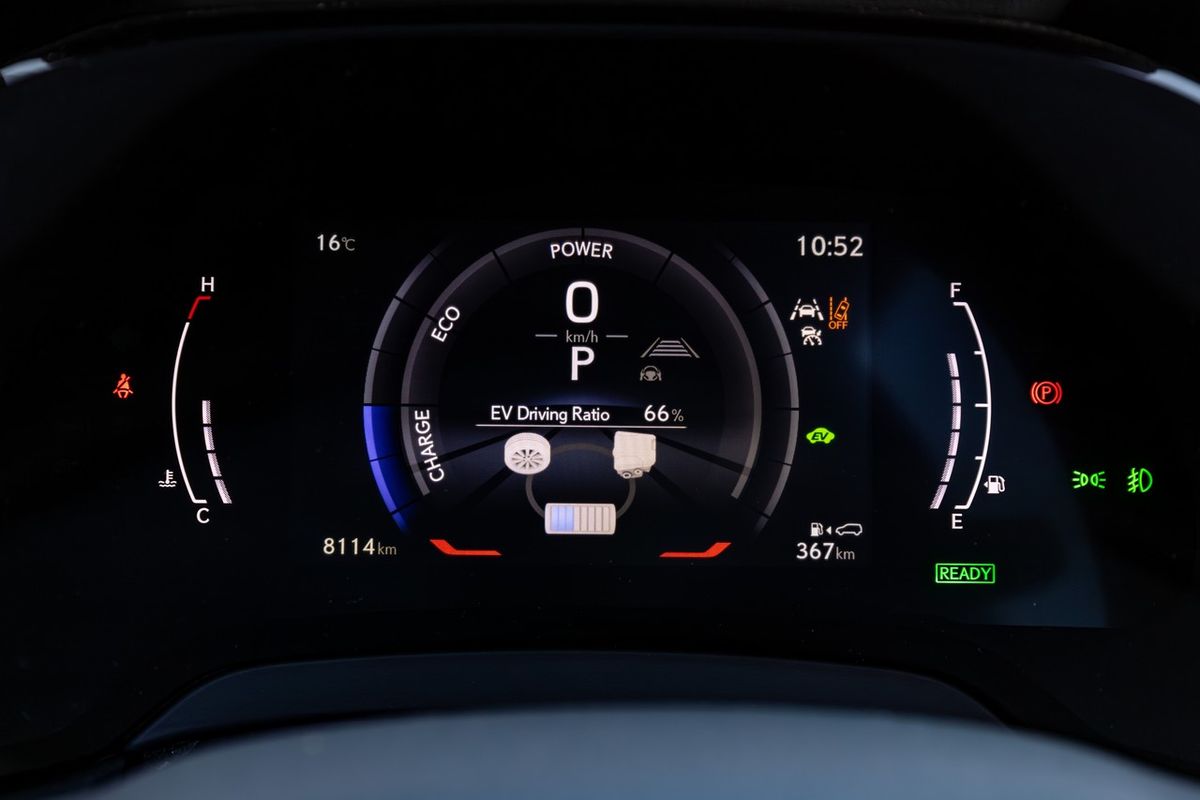
Simple graphics for the hybrid control make it easier to get the best out of the tech.
There are 4 USB ports up front (3 USB-C and 1 USB-A), as well as a wireless charging pad. There’s wireless Apple CarPlay, if you need it, but strangely, Android Auto requires a cable connection.
As with all Lexus derivatives in the South African market, there are no options to consider – every car is fully specced with adaptive cruise control, 360-degree cameras, pre-crash safety (warning if the driver is not paying attention and an accident is imminent), lane departure alert and blind-spot monitoring.
For those who like sunroofs, all versions of the RX are specced with a full-length panoramic sunroof.
What’s the RX like to drive?
The RX 450h+ plug-in hybrid will be available from November 2023.
For the RX’s driving experience, Lexus has clearly favoured comfort over any hint of sportiness or firmness. The ride quality is smooth and plush, a stark contrast from what every other brand appears to be doing in the premium SUV segment. The 20-inch wheels (21-inch on F-Sport derivatives) do have their limits when it comes to absorbing harsh road “features” such as potholes or deep manhole covers. The occasional knock or clunk intrudes into the cabin, but for the most part, all jitters are kept at bay.
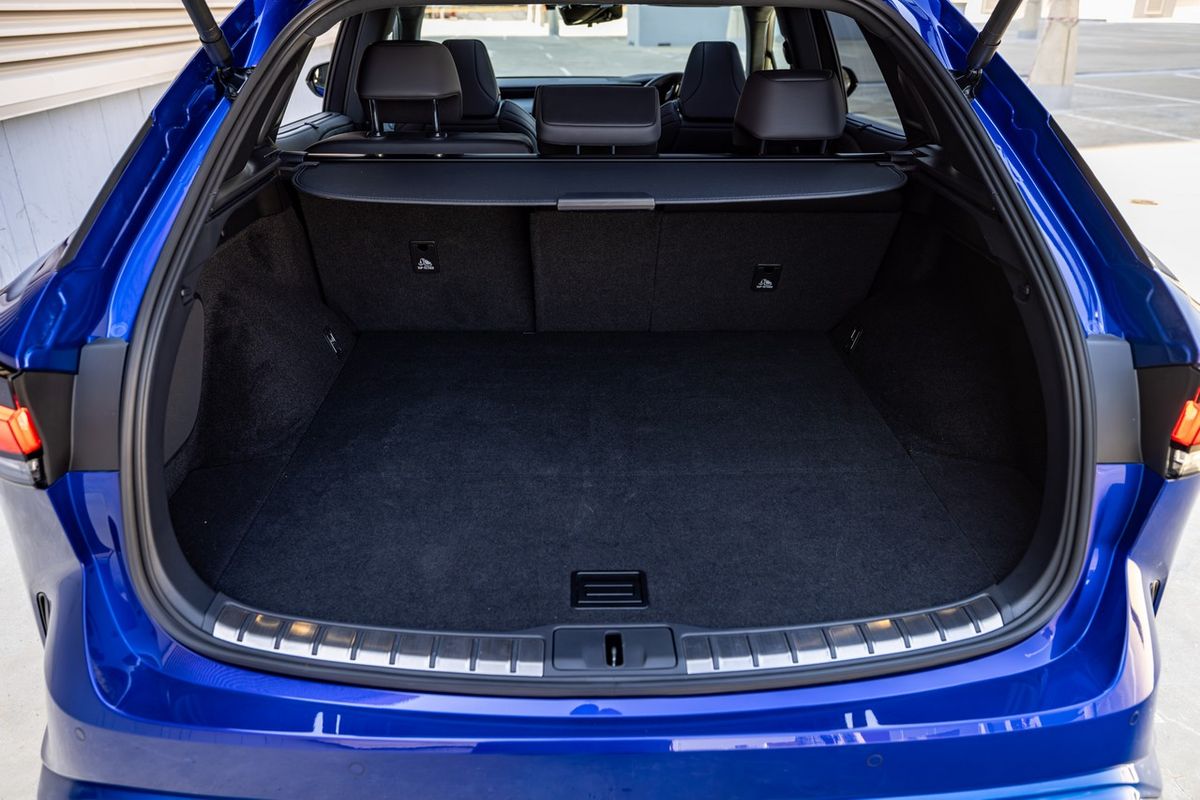
The sizeable Japanese premium SUV, which has a 612-litre load bay, never feels cumbersome to pilot, even in the confines of the city. Yes, it’s a little smaller than something like a BMW X5, but space inside is plentiful and I doubt a few extra millimetres is likely to make that much of a difference at this price point.
What to pay for a new Lexus RX?
Lexus models are fully equipped, so there’s no need to select additional options.
Lexus has a big local warranty and service plan attached to its cars, thanks to its large dealership footprint supported by market leader (and multiple CarsAwards Brand of the Year winner) Toyota.
For the standard petrol models, an RX comes with a 7-year/105 000 km warranty and on hybrid derivatives that is upped to 8 years/195 000 km. The standard service plan is 7-services/105 000 km.
The new Lexus RX removes some of the elements that dissuaded buyers before, such as a quirky and behind-the-times infotainment system and lethargic petrol engines. The new hybrid and turbopetrol powerplants deliver levels of performance that compare better with those of competitor offerings, with the bonus of fuel efficiency gains in the hybrid derivatives, of which the RX 450h+ is a real highlight.
The newcomer’s interior is much more up-to-date thanks to the massive touchscreen that has a significantly simpler (and slicker) user interface. Excellent safety tech, -ride quality and -standard specification are all part and parcel of making the RX a very comfortable – and modern – premium SUV.
Jeep Grand Cherokee (2023) Review
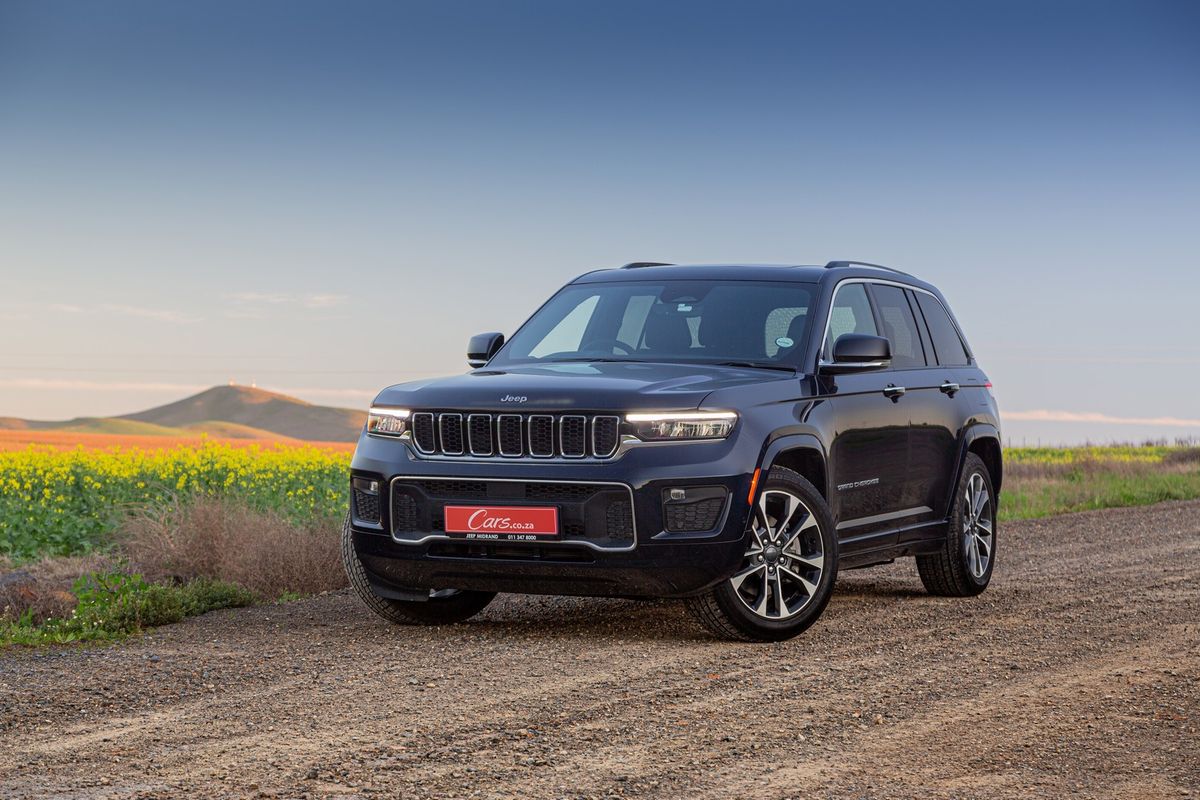
The Jeep Grand Cherokee – now in its 5th generation – recently became available as a 5-seater. With a mere R20k price difference between this variant and its “L” 7-seat counterpart, does the “smaller” Grand Cherokee make sense as a full-sized family car?
We like: Design, ride/handling balance, well-built, comfortable cabin and loads of features
We don’t like: Quite thirsty, for an extra R20k you can have 7 seats…
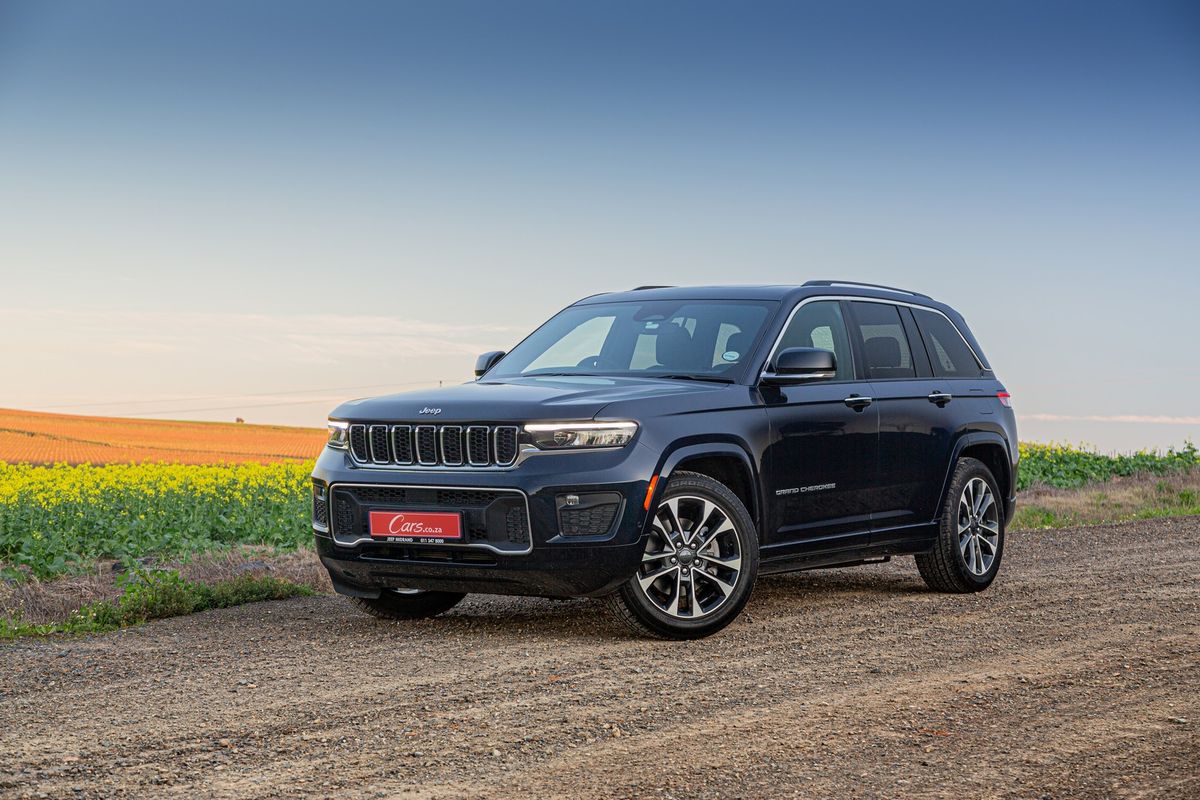
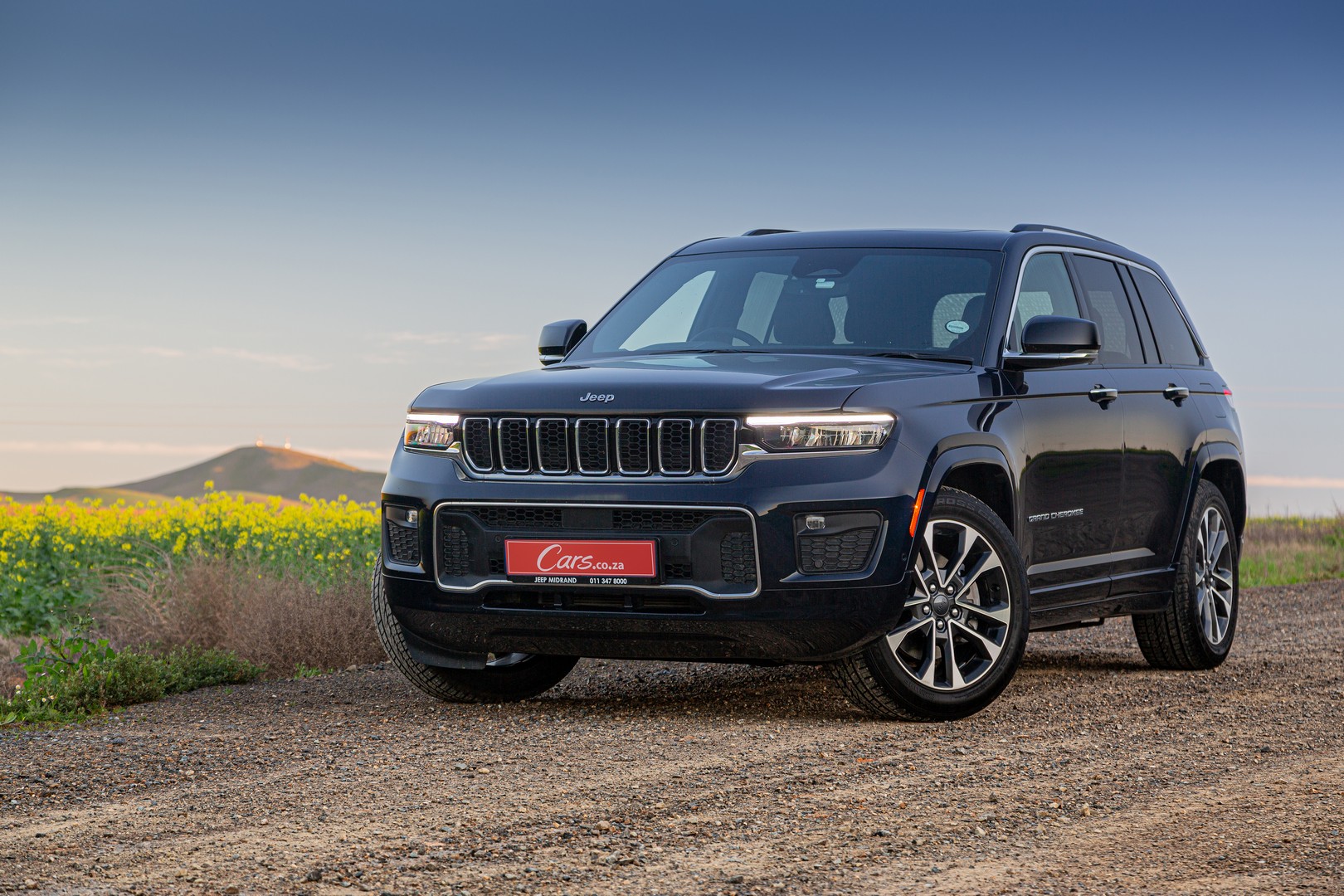
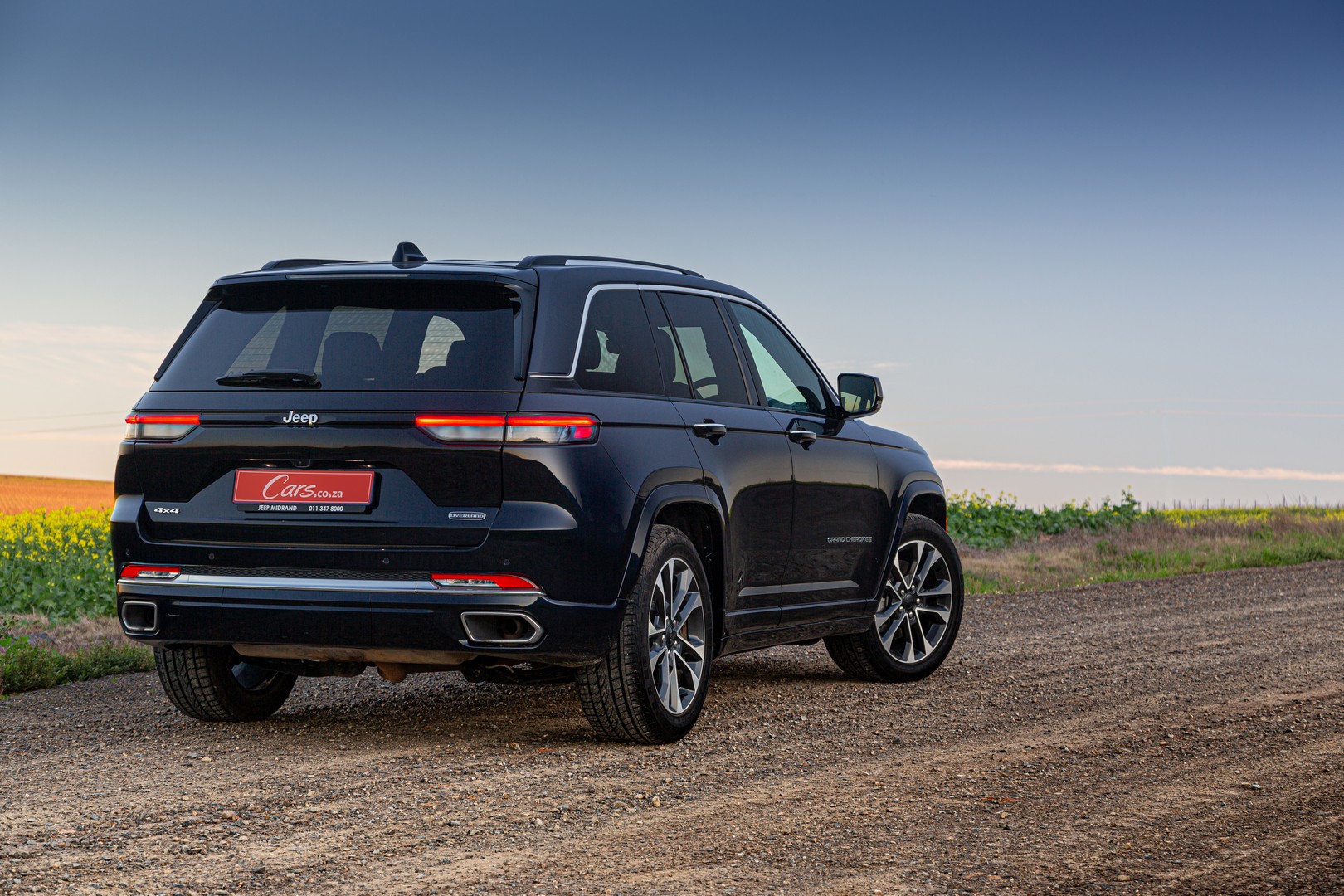
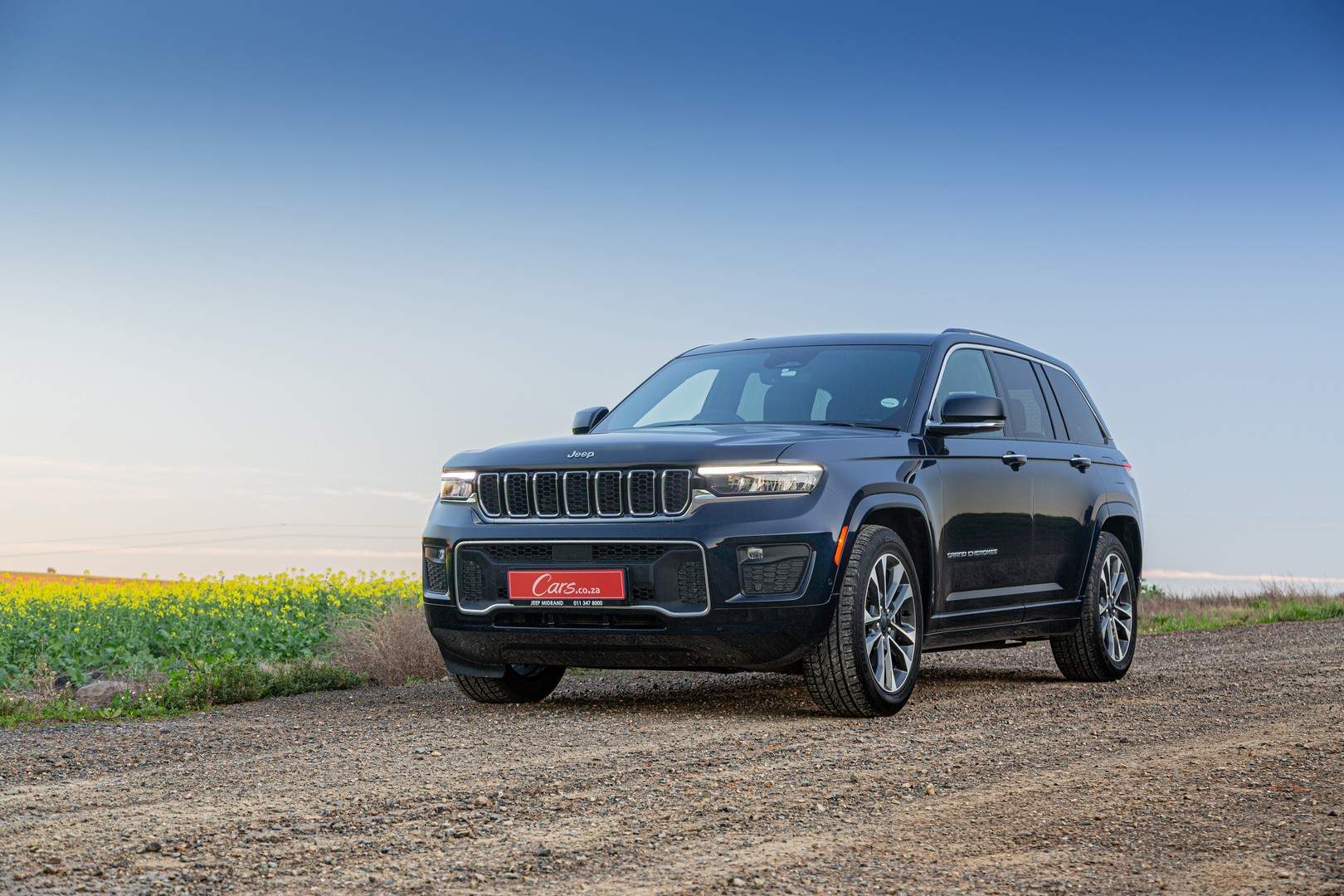
The “smaller” Grand Cherokee somehow looks more muscular and broad-shouldered than the “L”.
Where does the 2023 Jeep Grand Cherokee fit in?
When the 5th iteration of Jeep’s successful Grand Cherokee premium SUV arrived in Mzansi last year, it did so exclusively in 7-seat “L” form – the first time that a Grand Cherokee was offered with a 3rd row.
More recently, in May, Stellantis expanded the line-up by introducing 5-seater derivatives, powered by the same 3.6-litre V6 engine, and offered in the same trim lines: Limited, Overland and Summit Reserve.
With only R20 000 separating a 5-seat Grand Cherokee Overland from the 7-seat “L” of the same specification, one has to wonder who would specifically opt for the “smaller” vehicle…
How the 2023 Jeep Grand Cherokee fares in terms of…
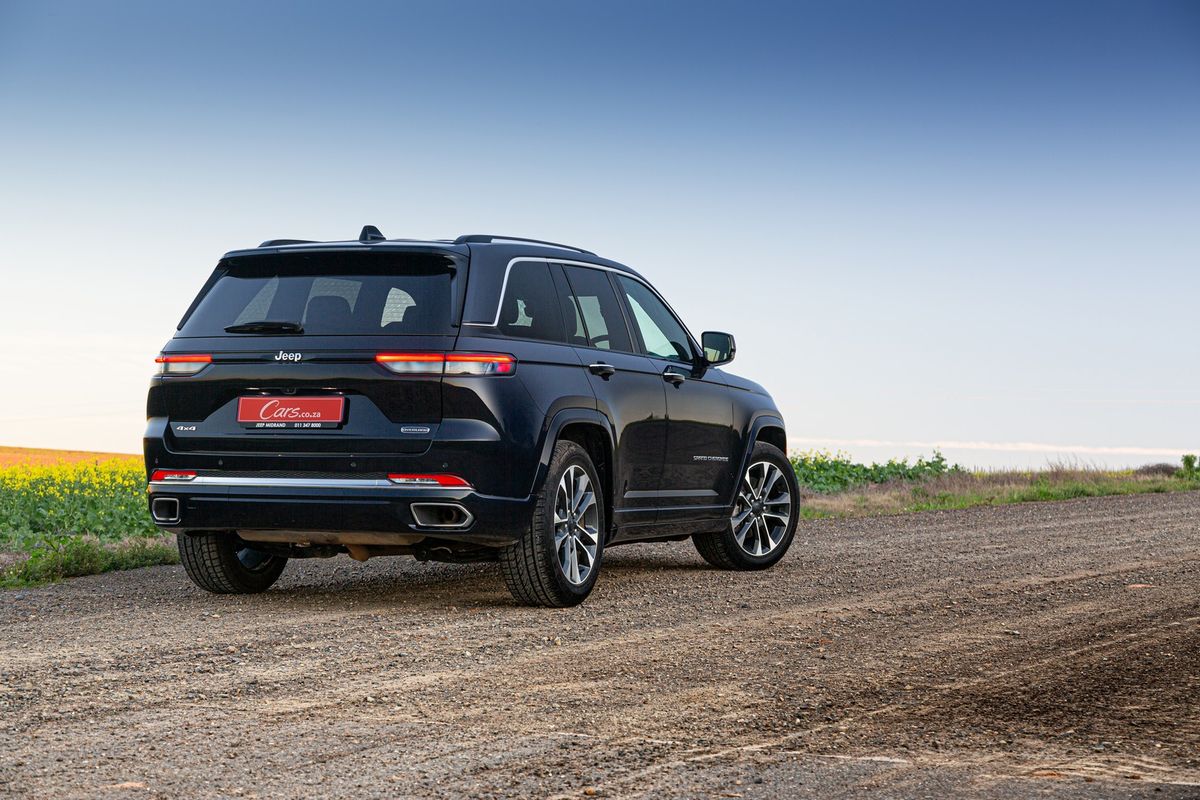
The 5-seat version of the Grand Cherokee is 292 mm shorter than its 7-seat counterpart.
Design and Packaging
The difference between the Jeep Grand Cherokee 5-seater and the 7-seat “L” is immediately obvious when you view the former in profile or from a rear three-quarter angle. This variant rides on a wheelbase that is 127 mm shorter than the 7-seater and, bumper-to-bumper, it’s a substantial 292 mm shorter. This alone might be significant for some customers, who may find that the “L” doesn’t fit into their garage!
Furthermore, the new 5-seat variant retains the same width as the “L”, but is slightly lower (by 15 mm) even though it has an identical ground clearance of 276 mm. The overall result is that the “smaller” Grand Cherokee actually looks more muscular and broad-shouldered than its “L” counterpart, the latter of which can appear somewhat ungainly from some angles.
The Jeep Grand Cherokee’s interior is smartly finished and well-made; it emits no rattles or squeaks.
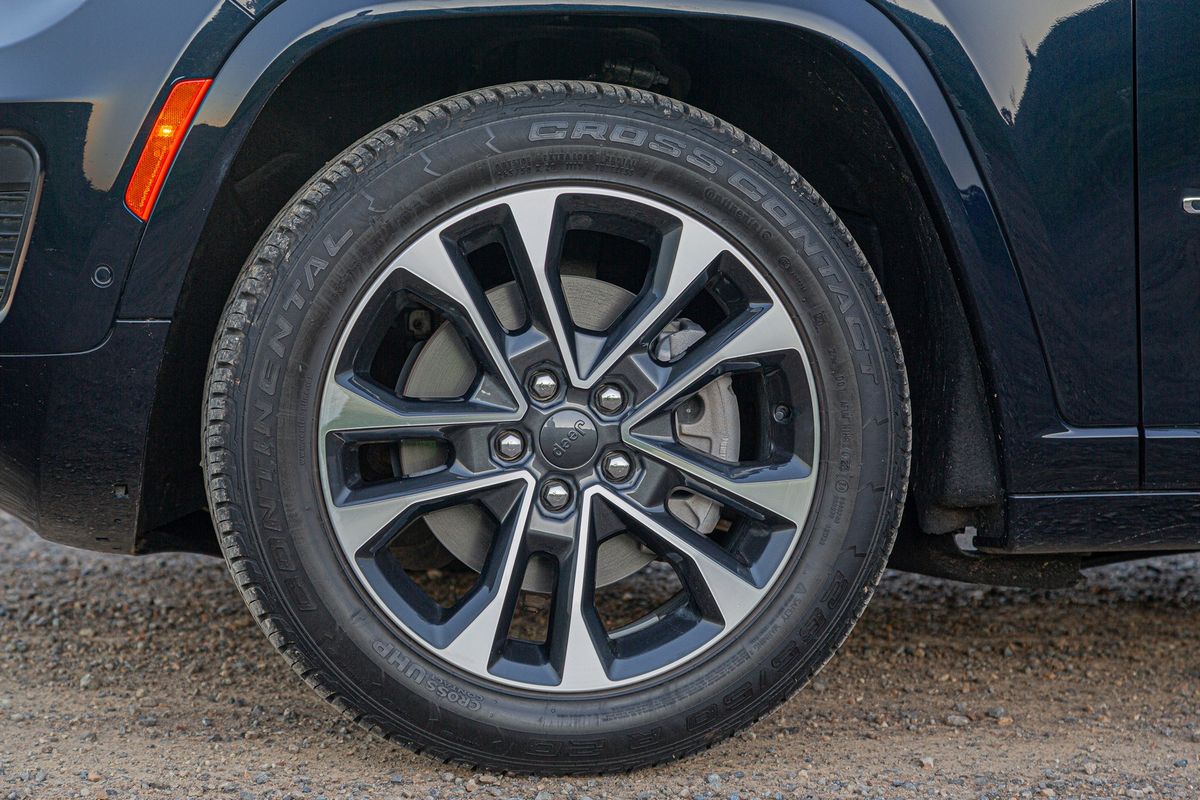
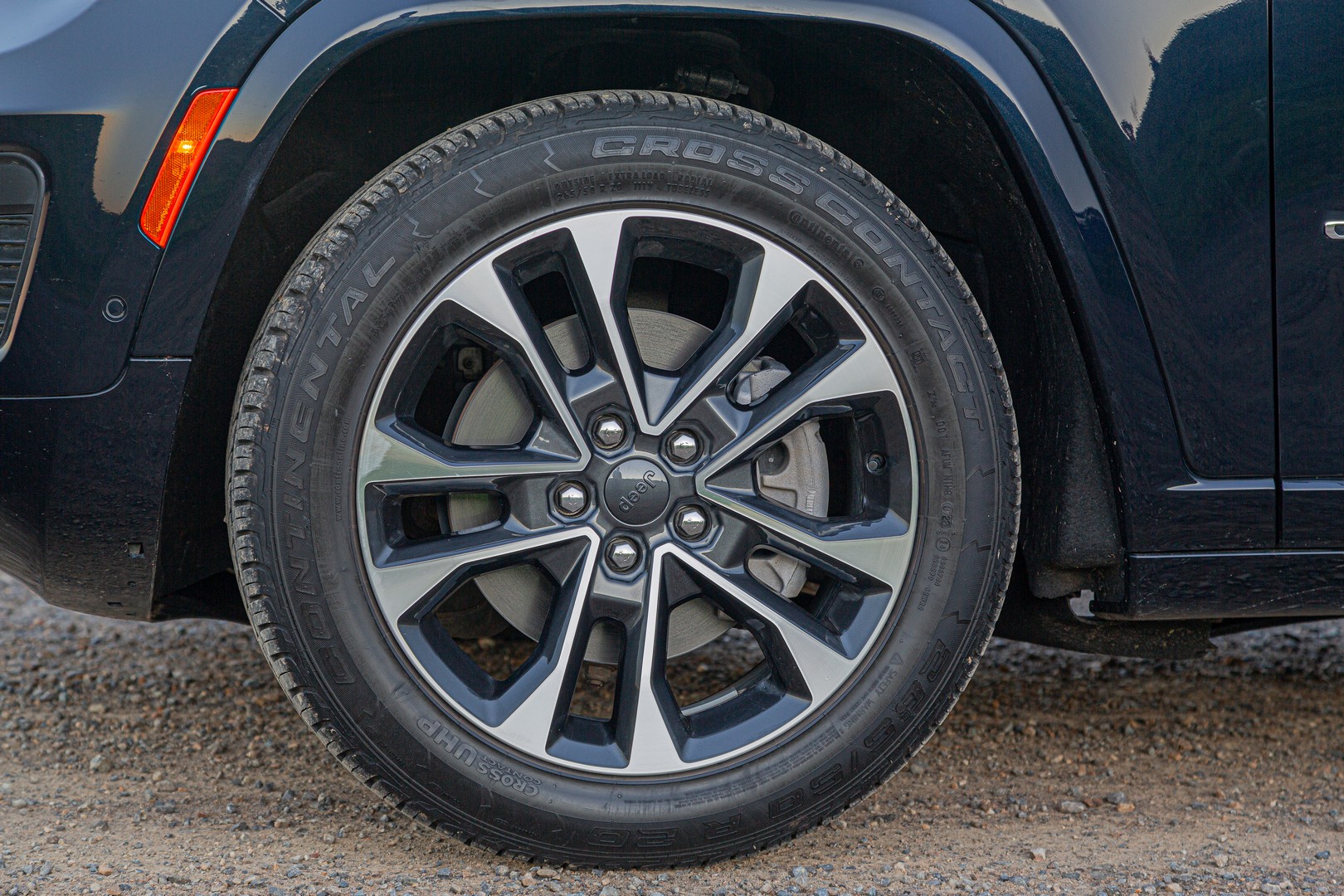
Like the L variant we tested last year, the test unit sported Overland trim, which endows it with just enough bling to make it worthy of its premium SUV designation; to its credit, the look isn’t over the top. The wheels are big, glossy 20-inch items, and there are striking LED lighting signatures fore and aft.
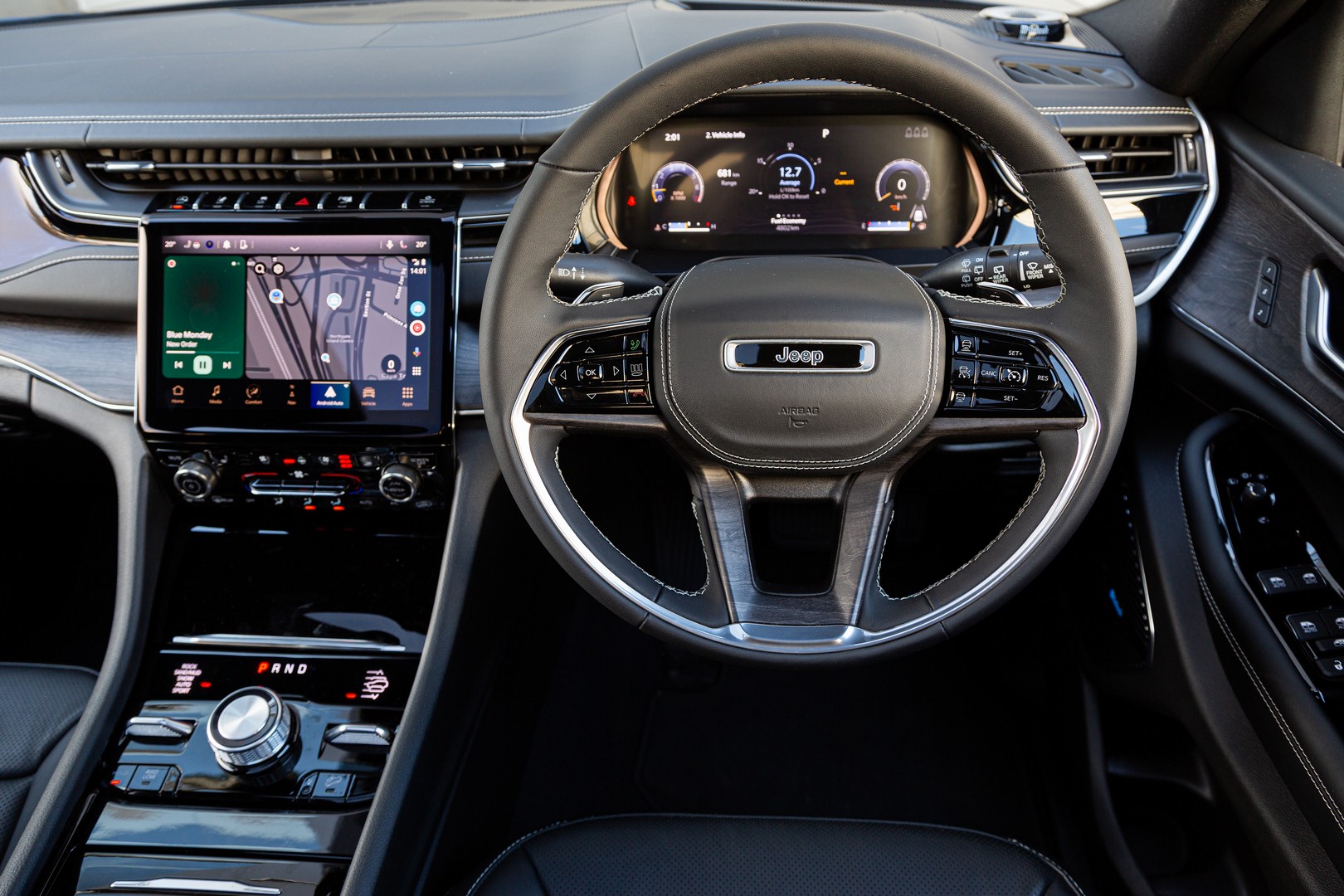
Inside, you’ll find what is arguably the best Jeep cabin ever. The finishes have a premium look, and even when the Grand Cherokee traversed uneven surfaces, its interior panels emitted no rattles or squeaks. This Jeep seems well-screwed together – which isn’t something that could be said of all its forebears.
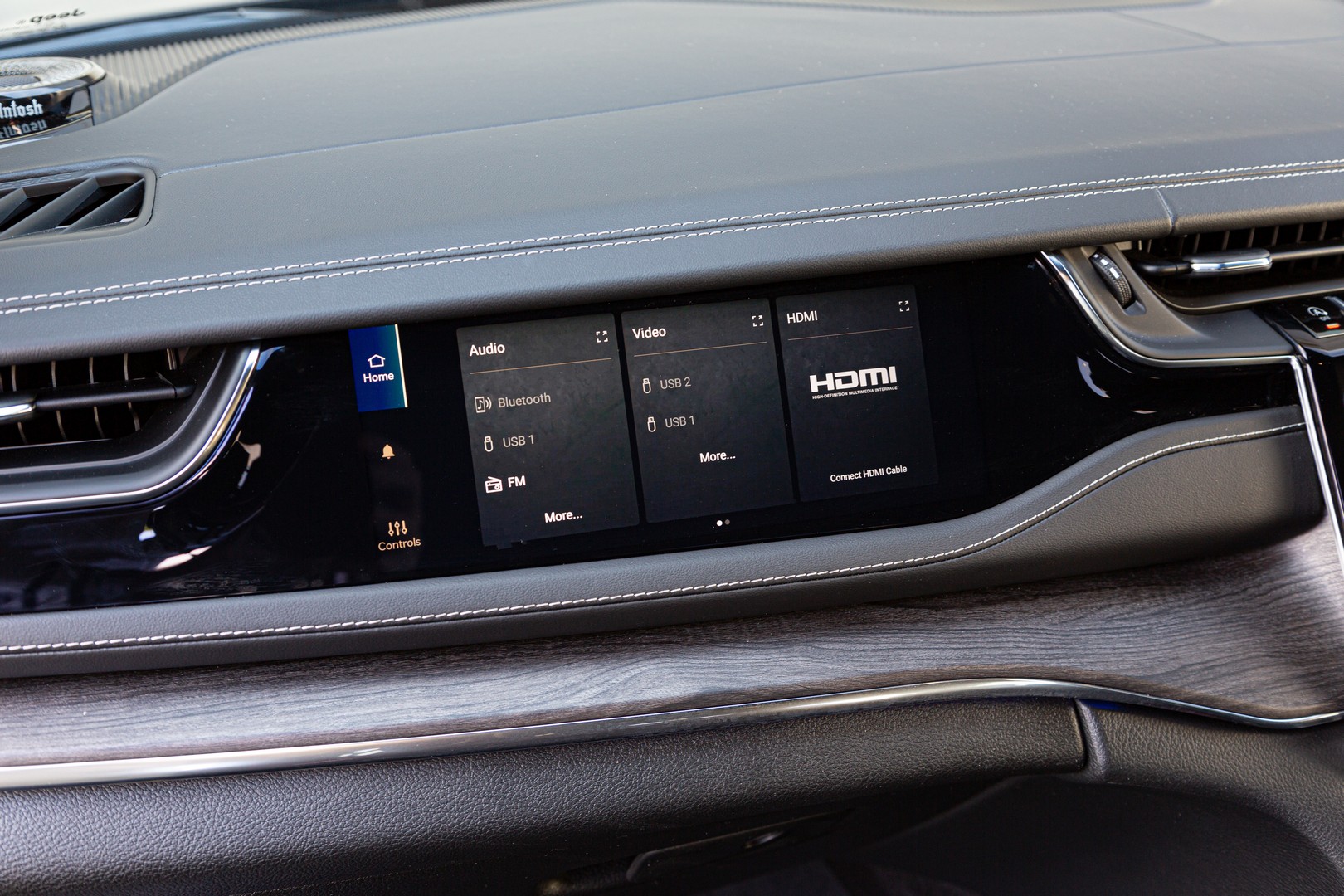
The secondary touchscreen, positioned ahead of the front passenger, is novel; it certainly keeps teens entertained.
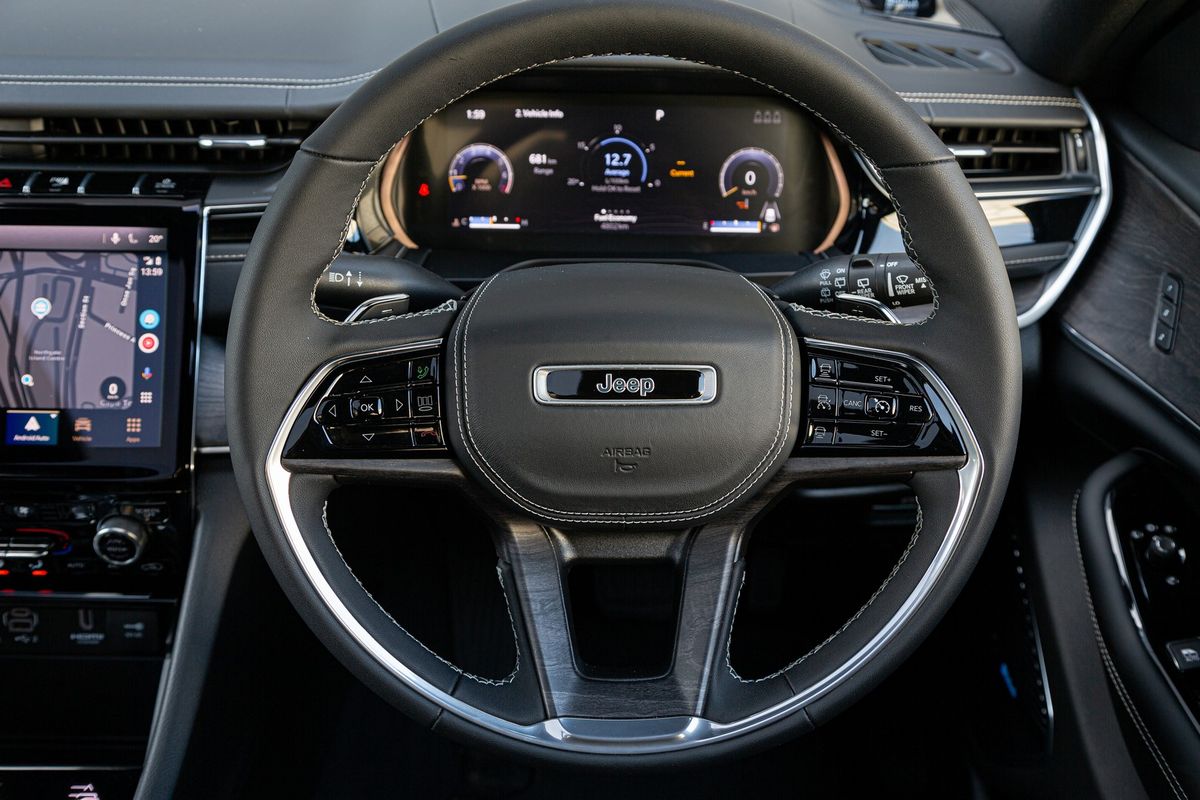
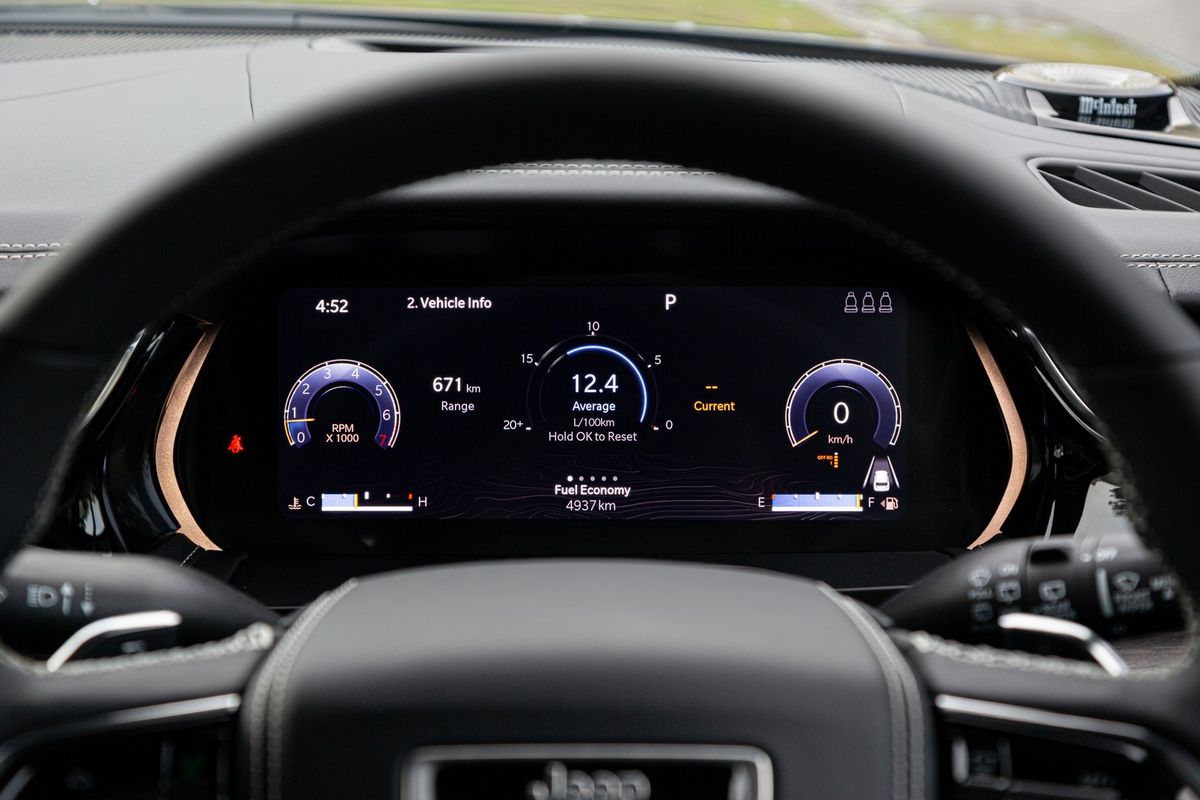
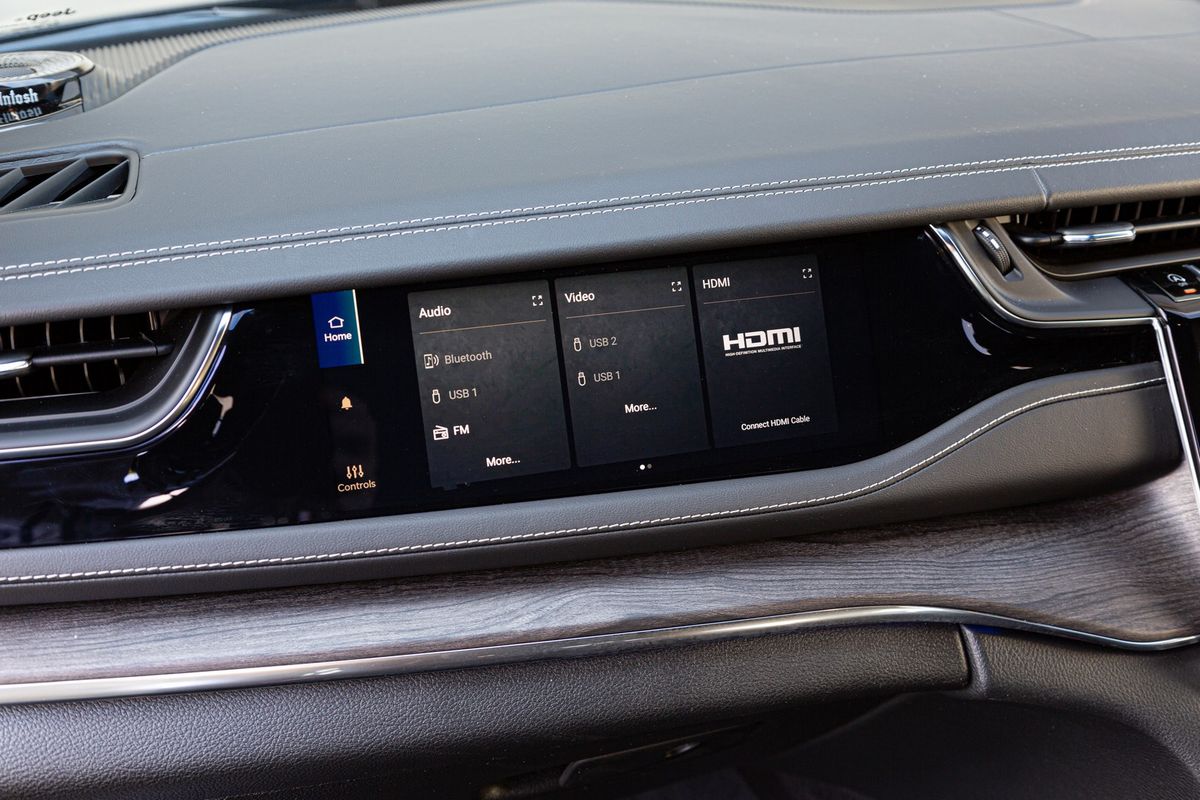
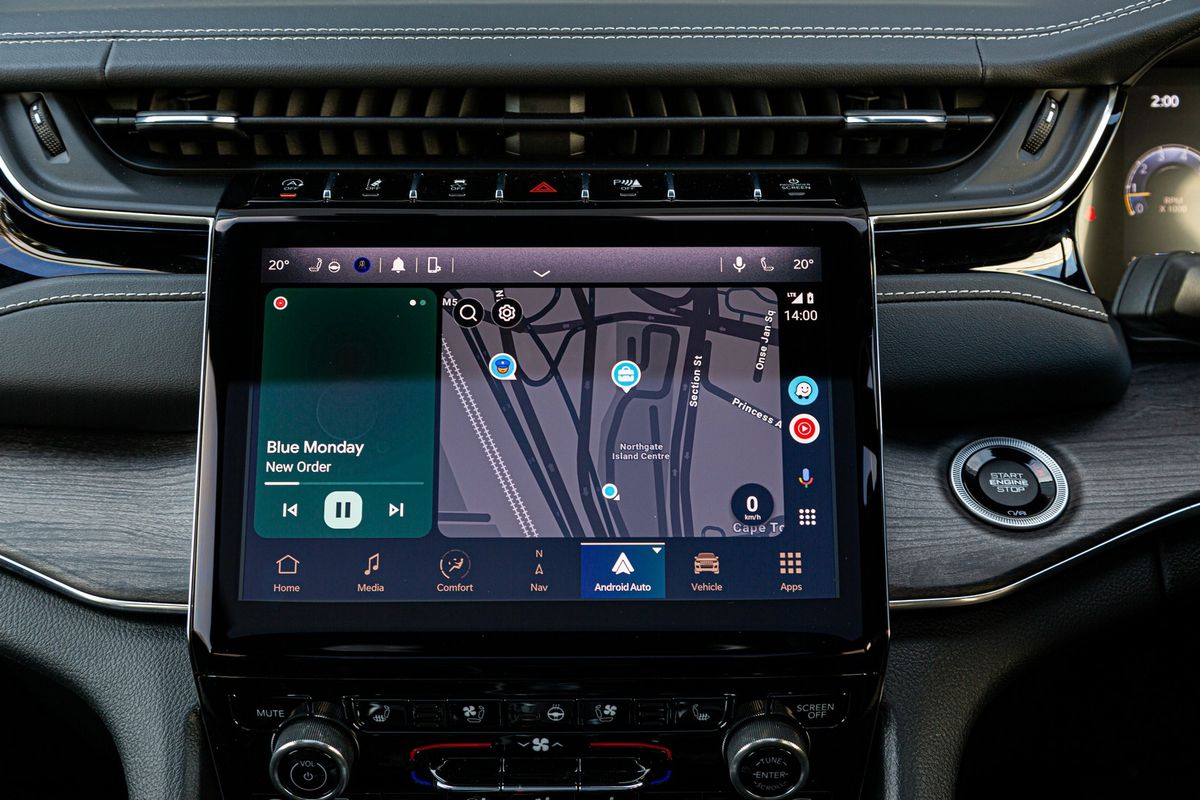
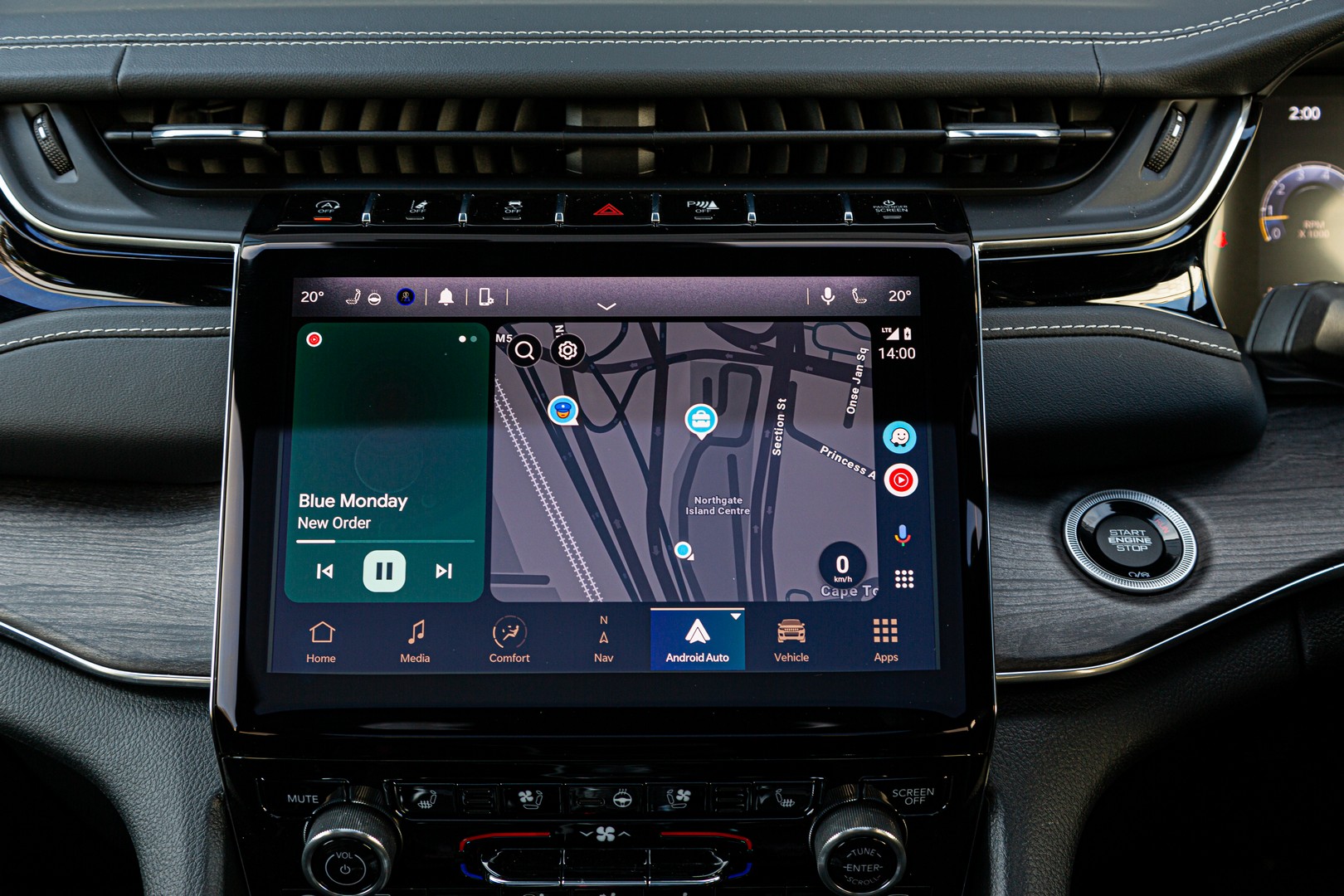
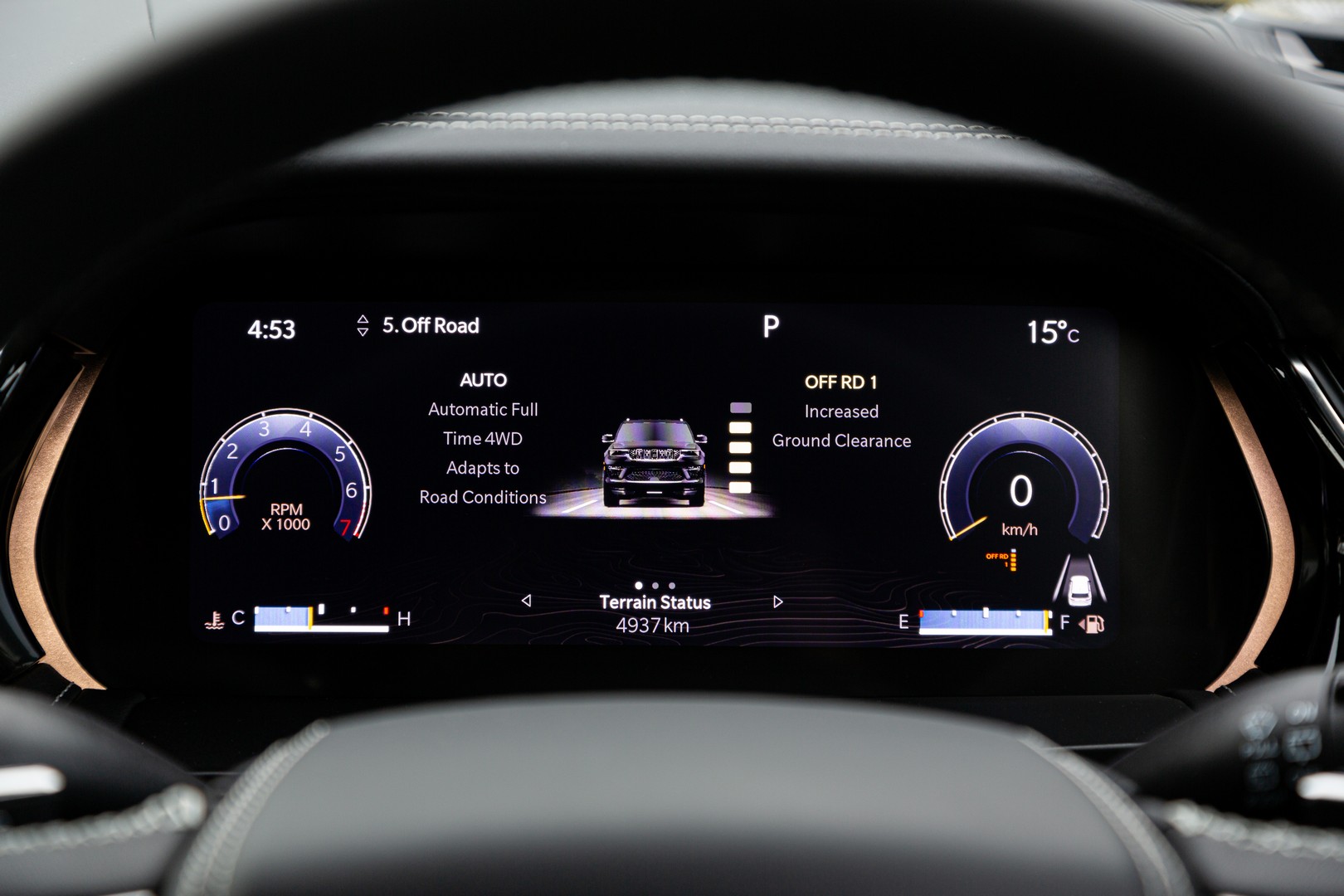
Overland specification means that the 3.6 4×4 derivative comes equipped with a number of rather nifty features. Fronting the driver is a digital instrument cluster that can be adjusted to display information in a variety of layouts. The grand fascia is dominated by an impressive-looking and high-resolution 10.1-inch touchscreen that is integral to the Uconnect 5 system. Of course, wireless Apple CarPlay/Android Auto compatibility is included and, overall, the built-in Uconnect system is intuitive and performs slickly.
A quirky feature – and it’s one that will inevitably become a talking point whenever someone enters the Jeep’s cabin for the first time – is the touchscreen positioned ahead of the front passenger. Designed in such a way so as to be invisible (and therefore not distracting) to the driver, it gives the front passenger access to navigation info, camera views and visual entertainment; it certainly keeps teenagers engaged.
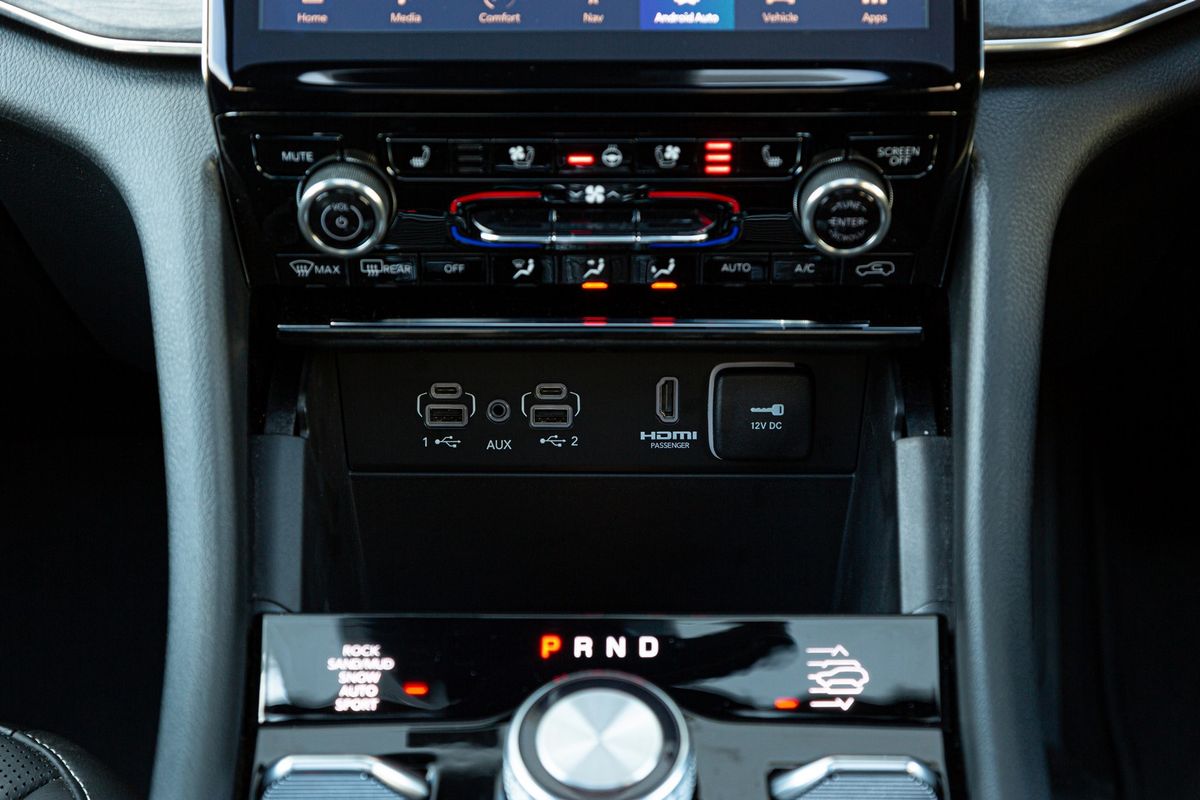
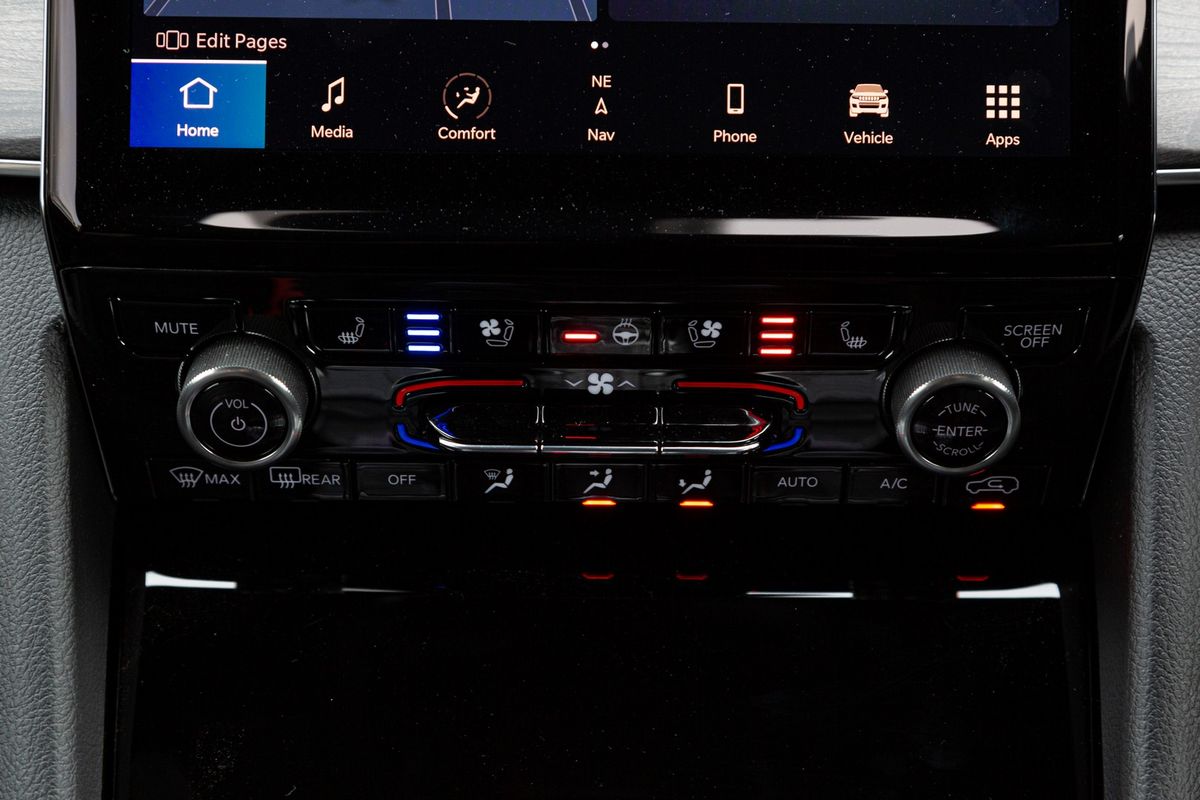
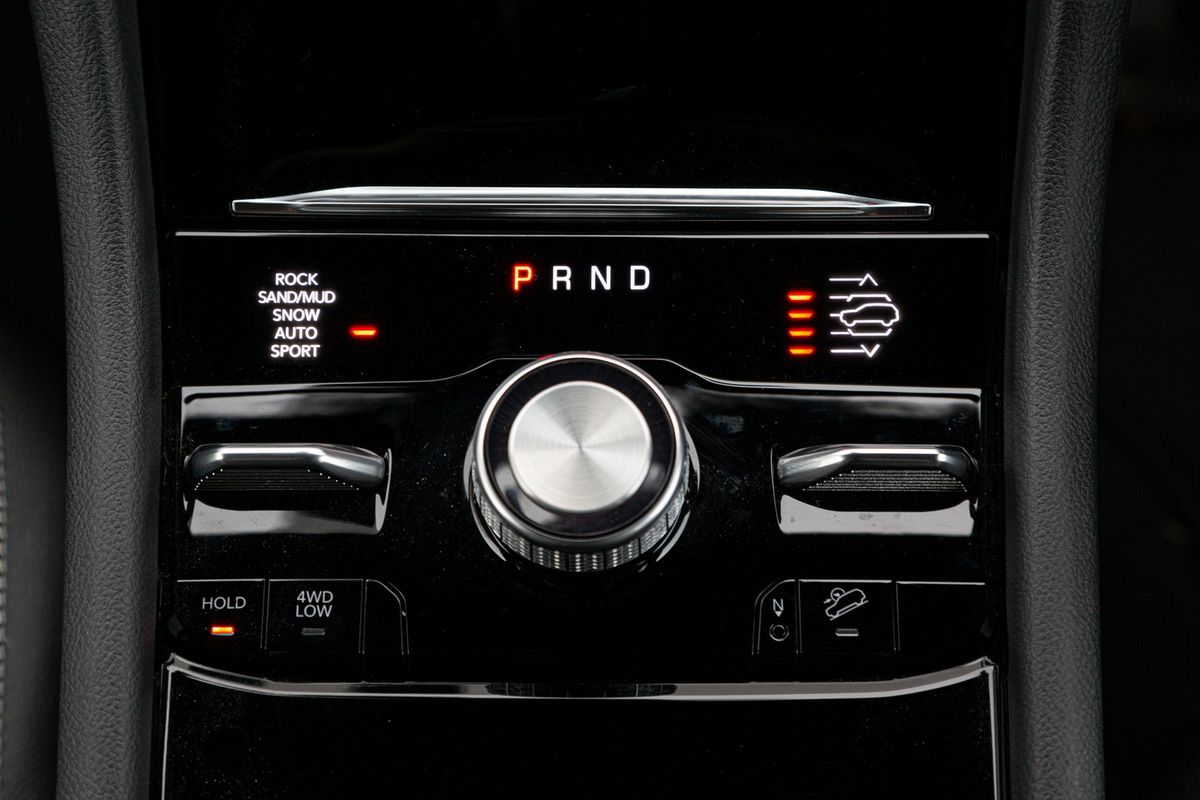
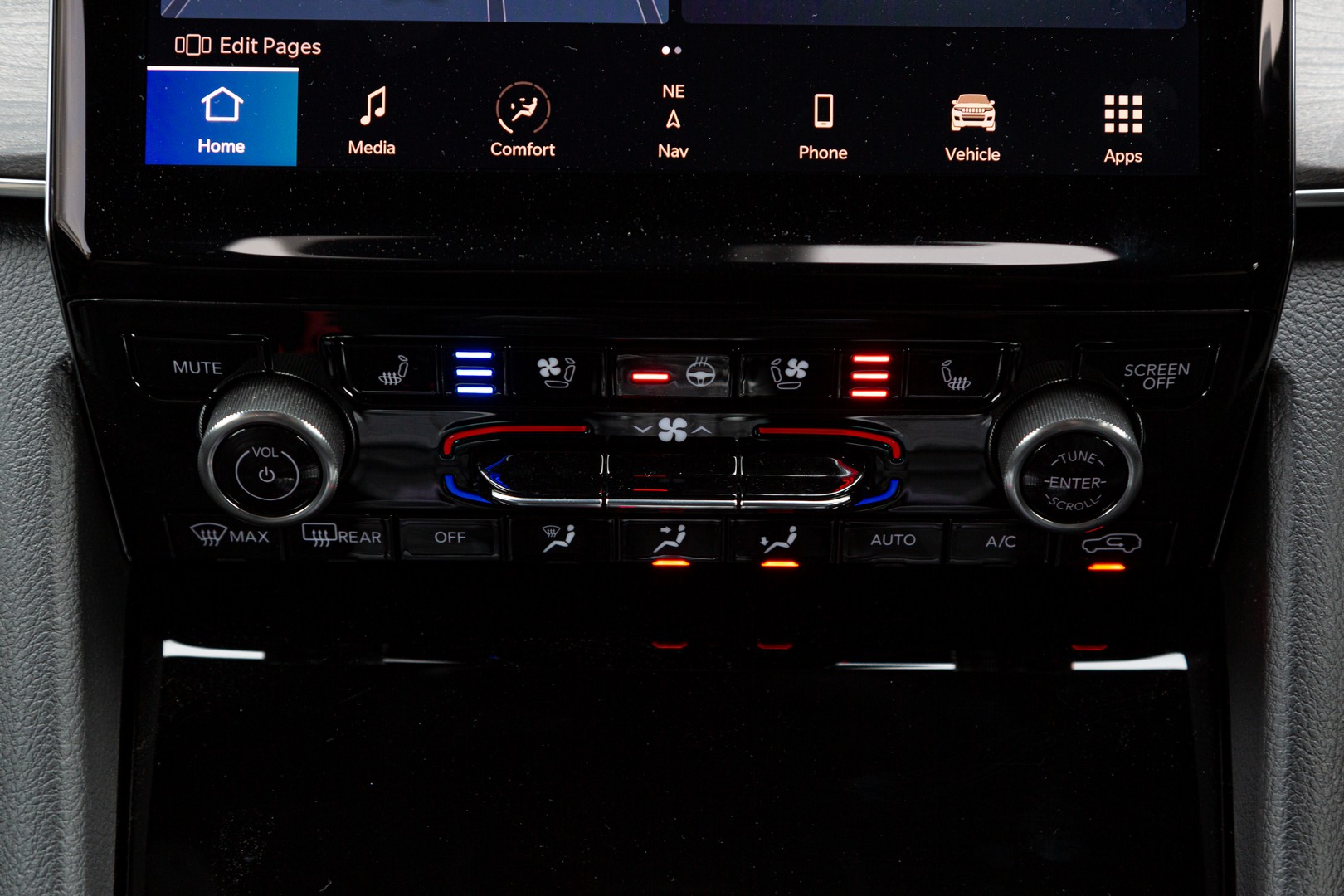
The console under the touchscreen looks a trifle busy, but it provides quick access to the audio and HVAC controls.
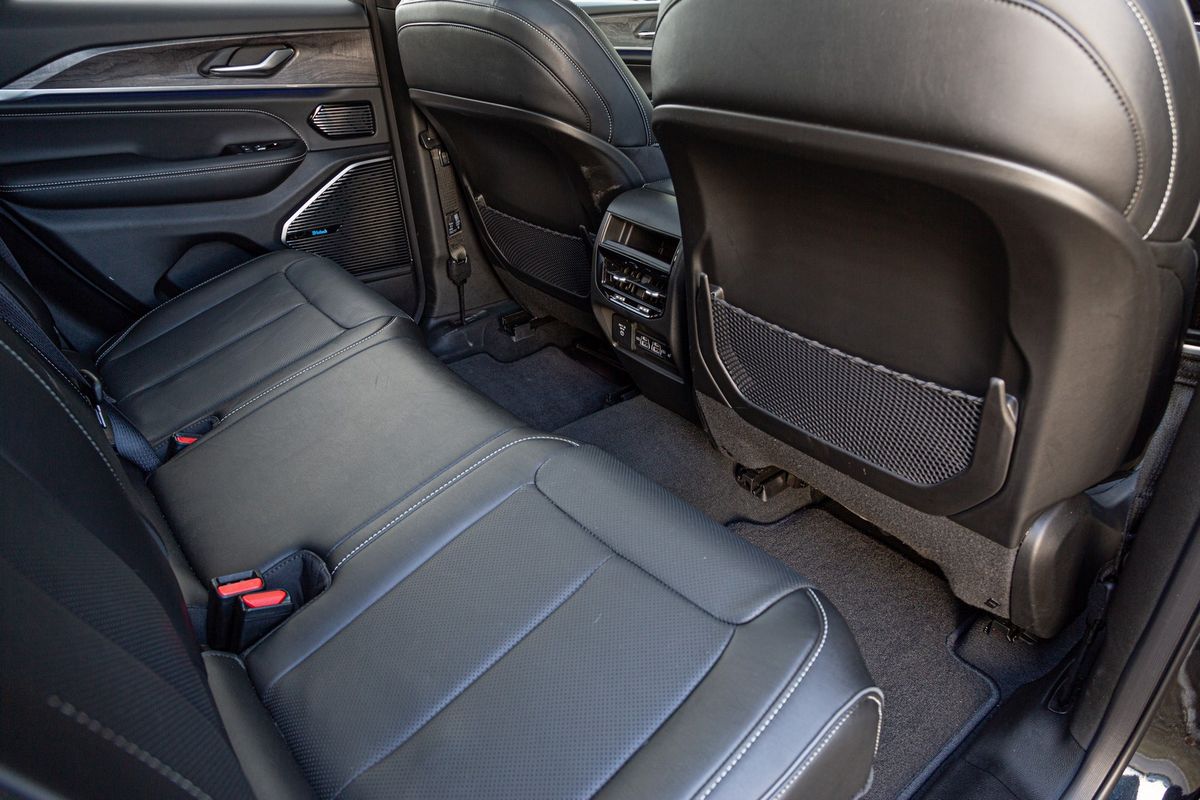
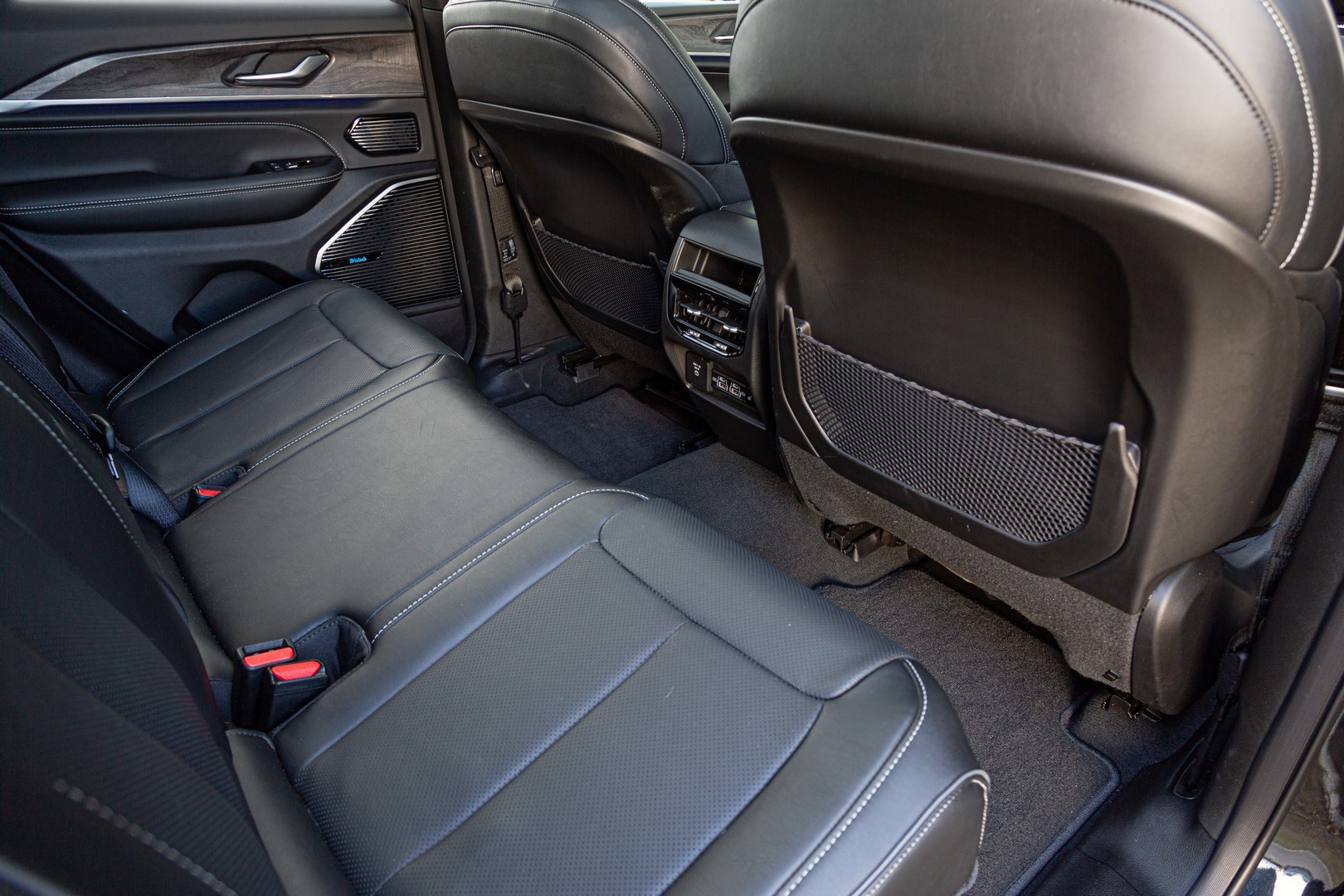
For the most part, the Grand Cherokee 5-seater’s cabin is identical to that of the “L” variant, particularly at the front. Towards the rear, however, the slightly shorter wheelbase and reduced overall body length are hard not to notice. The “L” is a genuine 7-seater that even offers some luggage space when the 3rd row is occupied, so for families who might need that, the choice is simple – pay R20k more and get the “L”, but if you don’t, then there’s still plenty of rear occupant space and a sizeable luggage compartment.
Jeep claims a load capacity of 1 068 litres, but we’re unsure whether that figure was achieved by packing the bay to the roof – or the parcel shelf. Still, this model’s load bay is one of the bigger ones in its class.
Also worth noting is that the 5-seat Grand Cherokee has the same tow rating as its “L” sibling (2 813 kg).
Performance and Efficiency
Under the bonnet of the test unit was exactly the same naturally aspirated (non-turbocharged) 3.6-litre V6 petrol engine that does duty in the entire Grand Cherokee line-up; it is said that Jeep’s oil-burning engines can’t handle our 50ppm diesel, unfortunately. The V6 delivers 210 kW and 344 Nm, but both its power and torque outputs are bested by those of the Land Rover and BMW (they’re both turbopetrols). It’s also worth noting that the peak torque is developed quite high in the rev range (at 4 000 rpm).
The 8-speed automatic shifts smoothly and makes most of the engine’s old-school power & torque delivery.
The engine is coupled with a smooth-shifting 8-speed automatic transmission that does well to hide the V6’s relative lack of grunt at low revs, but it often needs to click down 2-, 3- or even 4 gears to achieve the necessary oomph to execute brisk overtaking manoeuvres. It does emit a lovely snarl when doing so, however. This Jeep is definitely fleet of foot, though: we recorded a 0-100 kph time of 7.9 seconds.
Of course, smaller also usually means lighter. Indeed, the 5-seat Grand Cherokee is a notable 100 kg (or so) lighter than its “L” 7-seater sibling. Still, that 3.6-litre powerplant has never been known for delivering exceptional fuel efficiency and, while Jeep claims an average consumption figure of 9.9 L/100 km for this derivative, our real-world average worked out to a less-than-impressive 12.5 L/100 km. Gulp!
Comfort and Features
Priced at R1 570 900, the 3.6 V6 4×4 Overland comes comprehensively equipped and still undercuts models such as the Land Rover Defender 110 (by more than R200k) and the most affordable BMW X5, which would need some option boxes ticked to come close to matching the American offering.
The uConnect 5 infotainment system is intuitive to use and impressively responsive.
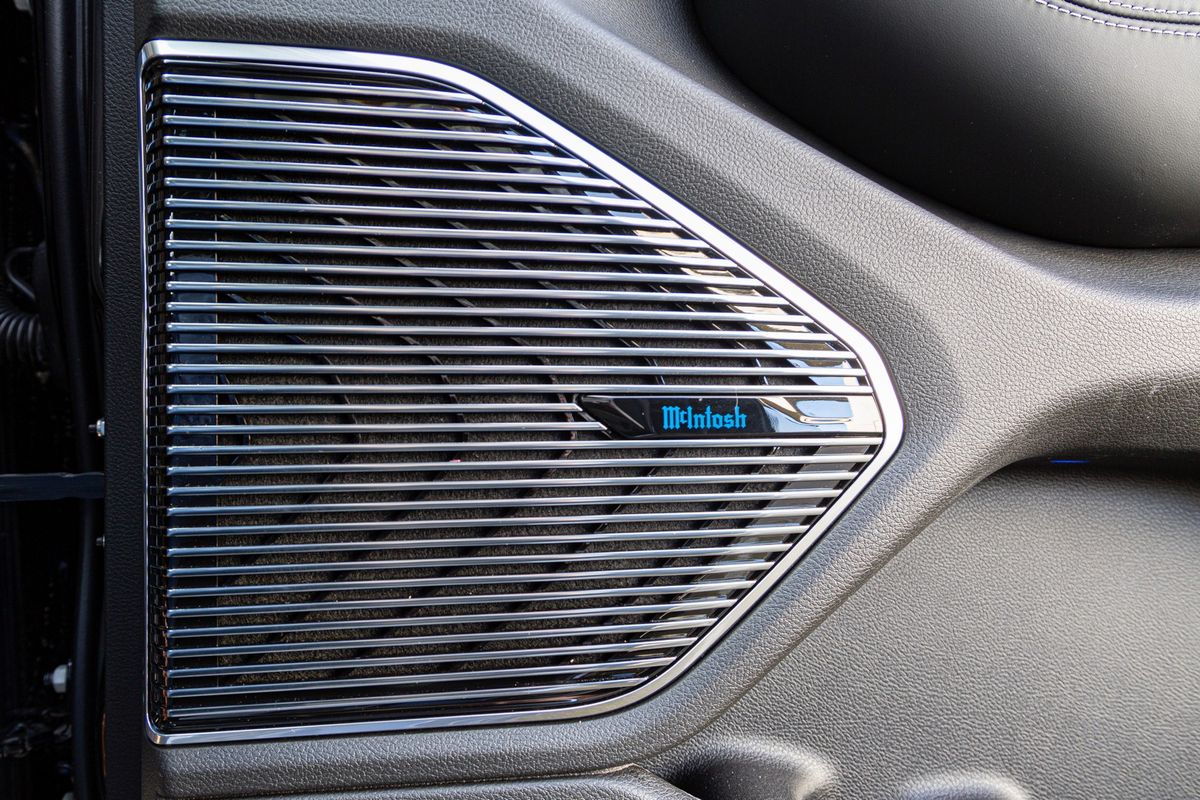
We’ve already mentioned the advanced and impressive uConnect 5 infotainment system. Also fitted to the Overland is a McIntosh high-performance audio system that features a 17-channel amplifier with a maximum output of 950W and 19 speakers. The system produces excellent sound quality.
Meanwhile, the Jeep’s front seats offer a wide range of electric adjustments, as well as heating and cooling functions, while the outer pews of the 2nd-row also feature heating. The multifunction steering wheel also features heating, which was a welcome feature in the heart of a particularly cold Cape winter.
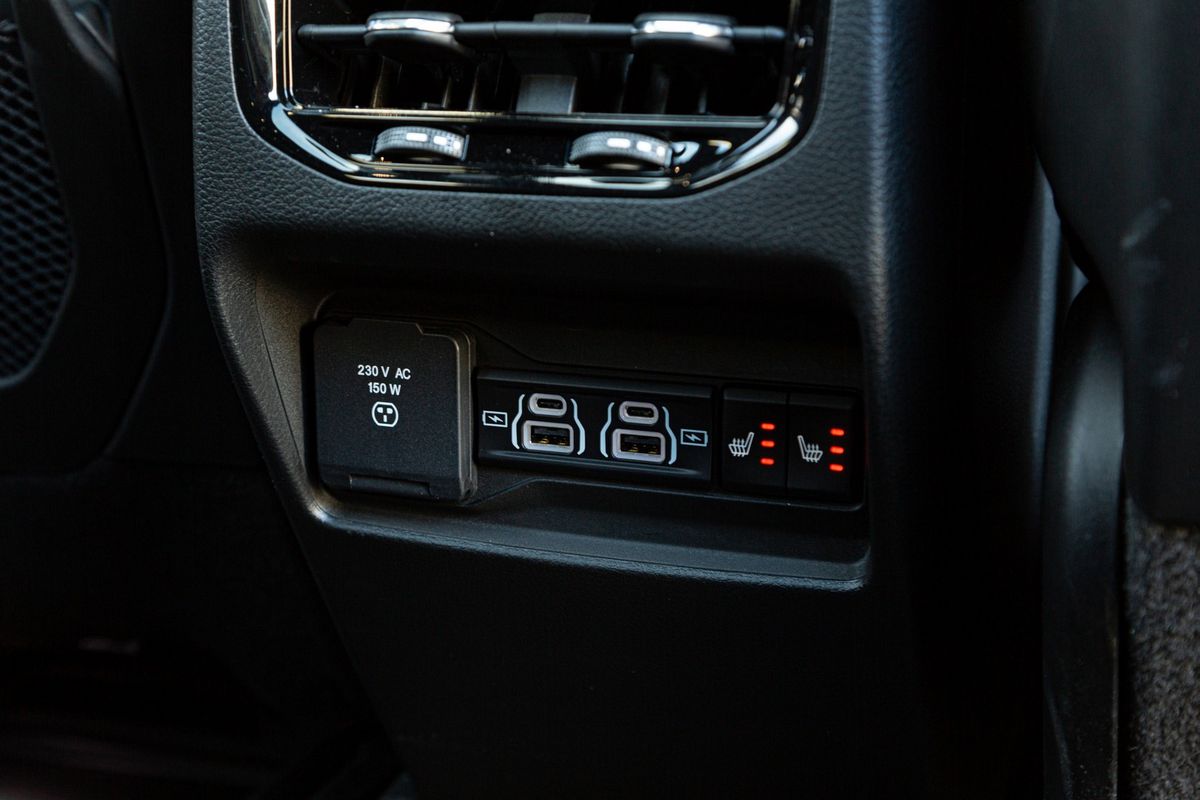
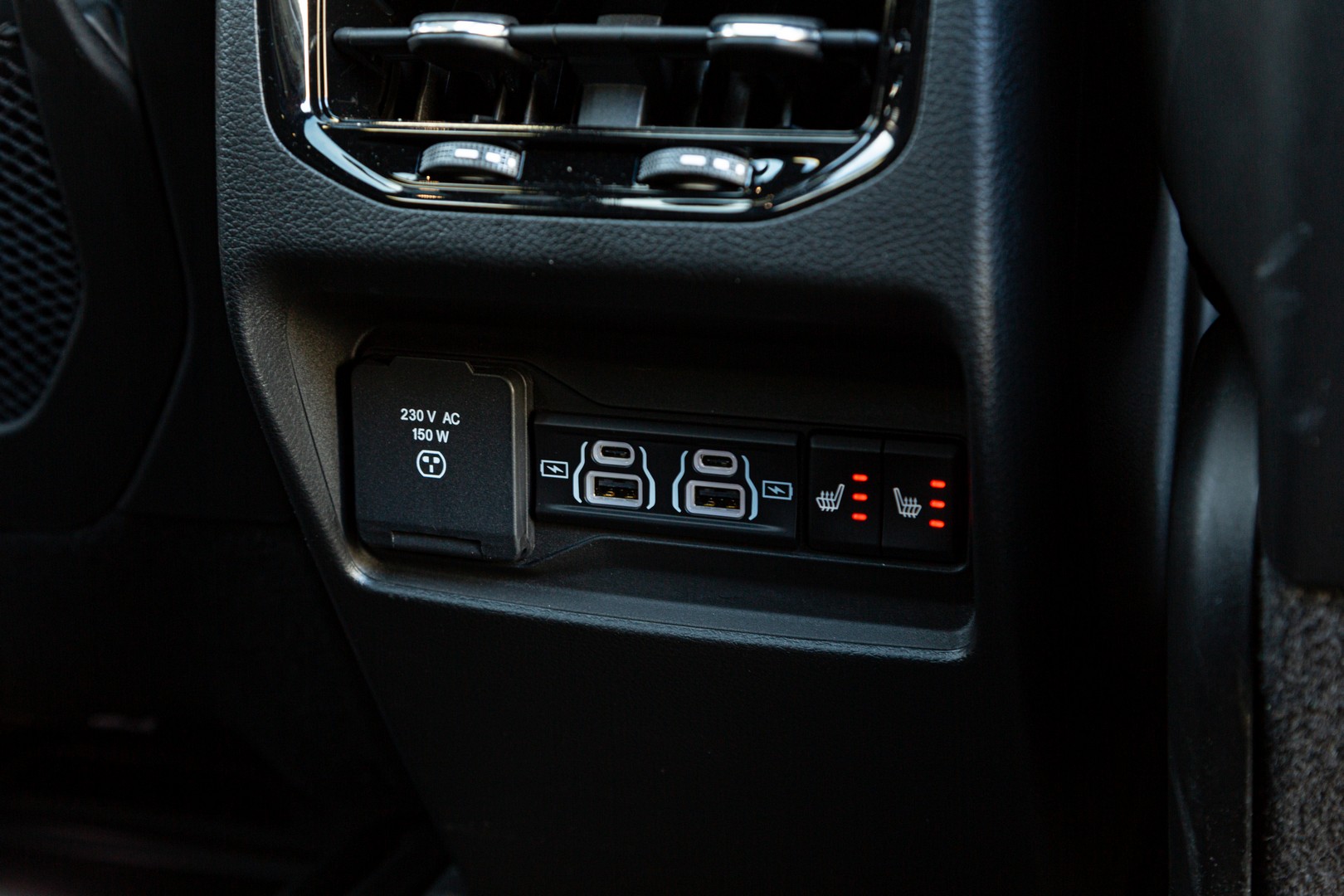
Second-row occupants are availed of a variety of recharging options, as well as seat heating.
Other noteworthy features include a digital rear-view mirror (pioneered by Land Rover) and simultaneous Bluetooth connectivity for 2 smartphones. There is also no shortage of charging solutions: at the front, a wireless charging pad is complemented by two USB-A and two USB-C charging ports. As for the rear passengers, they can utilise two USB-A and two USB-C ports, as well as a 3-pin 230V power outlet.
In addition to the usual active safety features, the Overland also features collision warning with active braking and pedestrian/cyclist detection, parallel and perpendicular park assist, rear cross-traffic alert, active lane management, adaptive cruise control, a drowsy-driver detection system and much more.
The Grand Cherokee 3.6 4×4 Overland comes fitted with 20-inch alloys, but its ride quality is quite pliant.
Ride and Handling
In Overland specification, the Jeep Grand Cherokee is fitted with attractive dual-tone 20-inch alloy wheels (shod with 265/50 tyres) and rides on adaptive air suspension as standard. Much of the Grand Cherokee’s architecture is related to the rear-wheel-drive Grigio platform that also underpins the Alfa Romeo Stelvio and Maserati Grecale – two of the more fun-to-drive premium SUVs on the market.
The Grand Cherokee’s suspension set-up is obviously softer, and it does an admirable job around town and out on the open road to deliver a supple ride quality which, in combination with good noise, vibration and harshness control, results in a very relaxed cabin ambience. At higher speeds, the suspension will automatically adjust to a lower position to aid the vehicle’s aerodynamic- and, therefore, fuel efficiency.
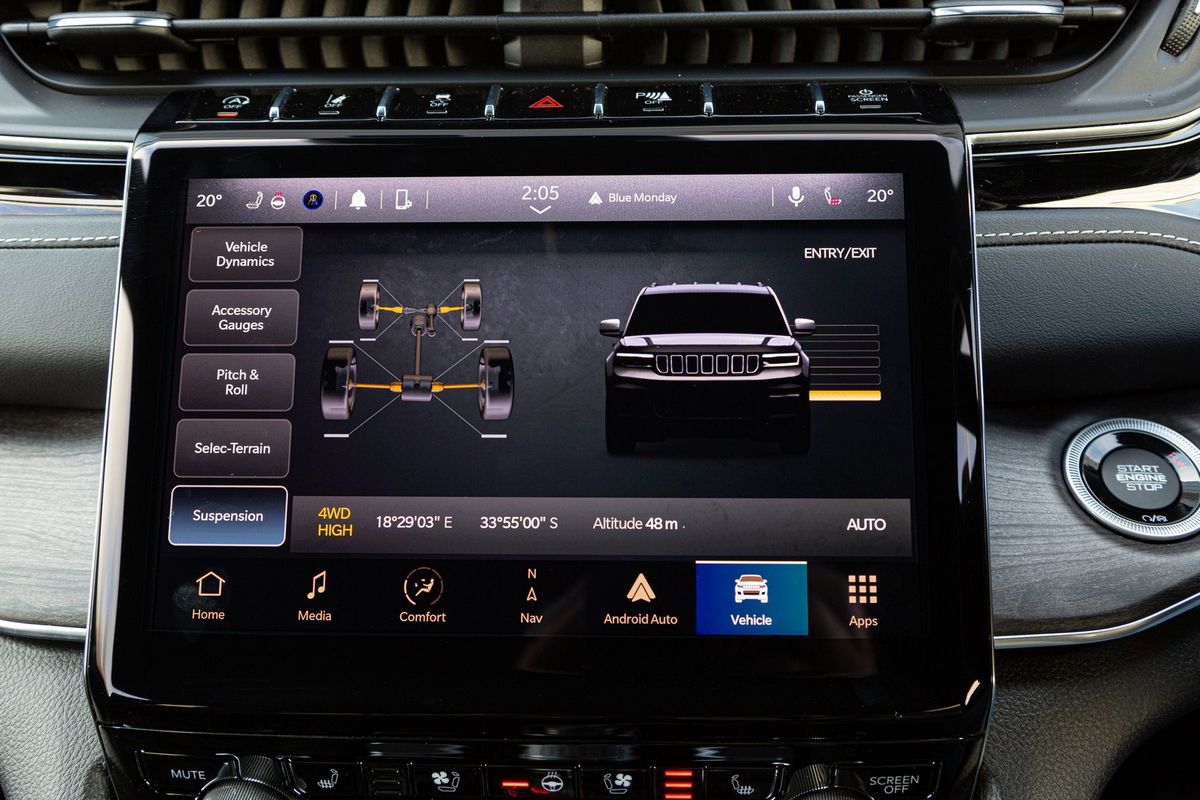
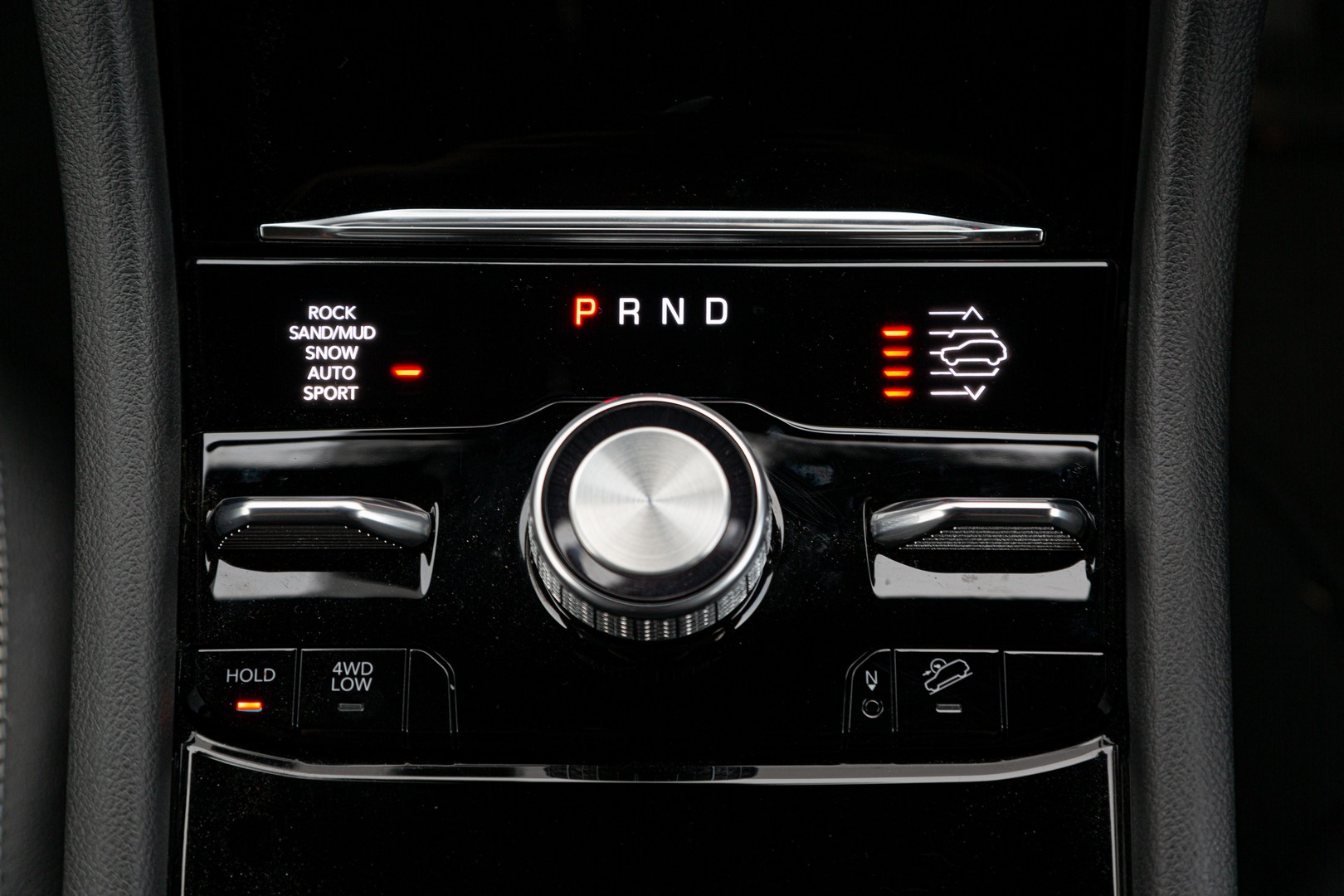
Ultimate off-road ability is not the Grand Cherokee’s focus, but a variety of off-road modes are available.
The Jeep badge still has plenty of off-road “cred”, but, as we found with its bigger “L” sibling, some of the Grand Cherokee’s off-road ability has been sacrificed for on-road comfort – and wisely so. Still, the shorter 5-seat version has superior approach and departure angles to its “L” counterpart, so based on simple geometry alone, the shorter Grand Cherokee should be able to venture a little further off-road.
It still features Jeep’s Quadra-Trac II off-road system, lockable low range and selectable off-road modes. If you really want to tackle the rough often, then the Summit Reserve derivative is the one to go for.
The 5-seat variant does not seem a bargain compared with the “L”, but it’s quite affordable compared with its rivals.
Price and After-Sales Support
The 2023 Jeep Grand Cherokee 3.6 V6 Overland costs R1 570 900 (before options, September 2023). The price includes a 5-year/100 000 km vehicle warranty and a 5-year/100 000 km comprehensive maintenance plan. Note that service intervals are relatively short (12 000 km).
Verdict
Although the most obvious purchasing decision here appears to be “spend another R20 000 and get the extra flexibility that the Grand Cherokee L 7-seater offers”, the 5-seat model nonetheless has its merits.
Slightly lighter on fuel, easier to manoeuvre and park and less compromised in terms of its aesthetics, it offers quite a lot of value for money, considering the price tags attached to its British and German rivals.
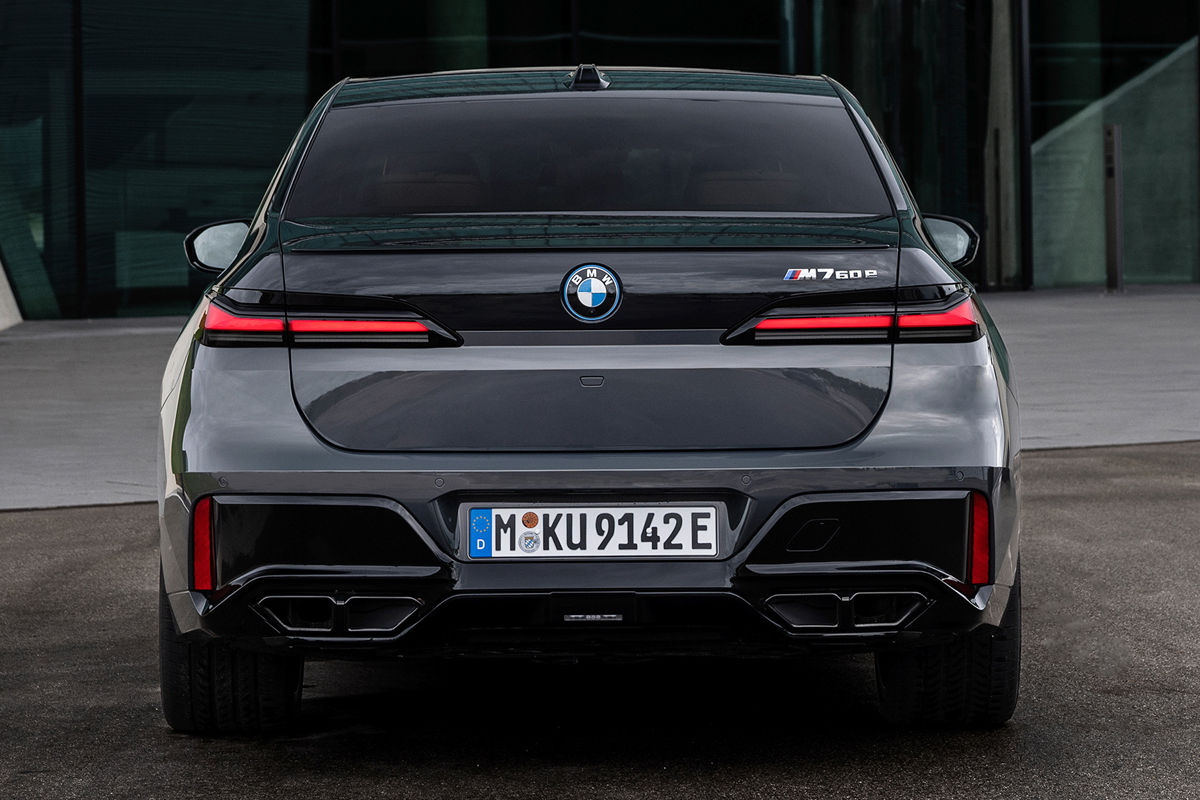
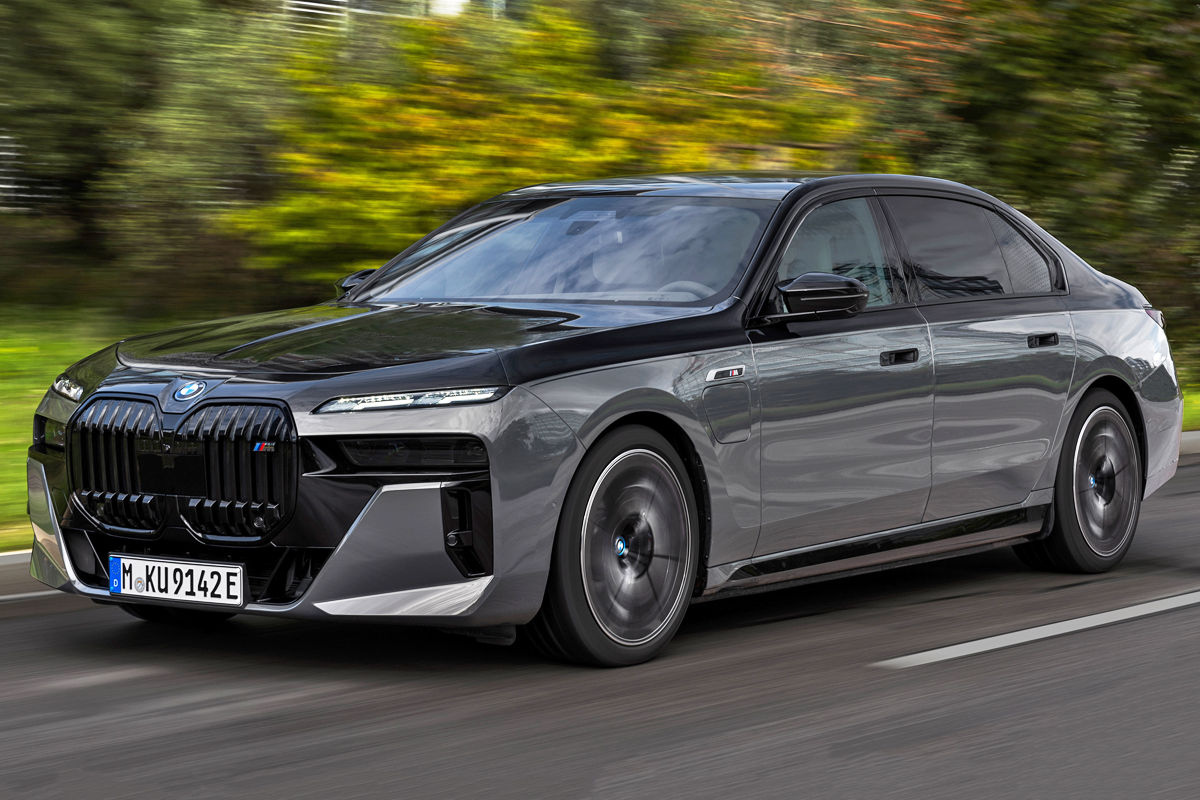
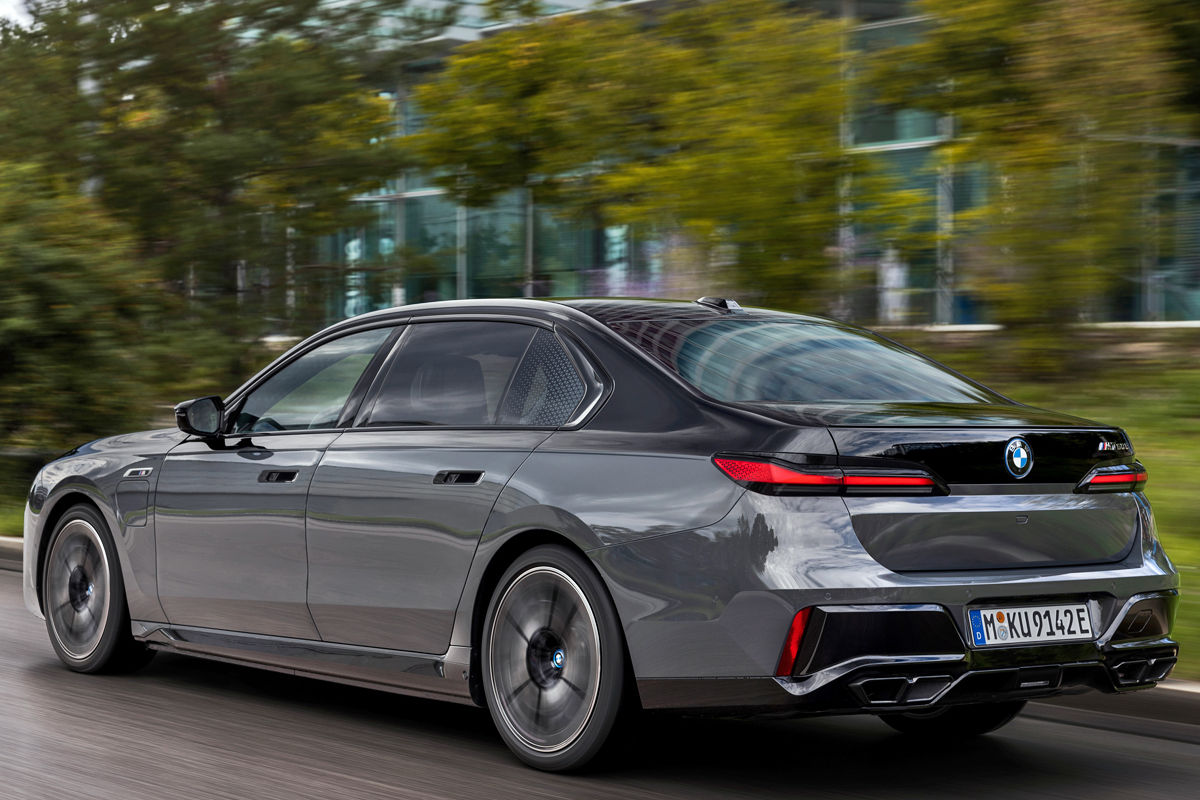
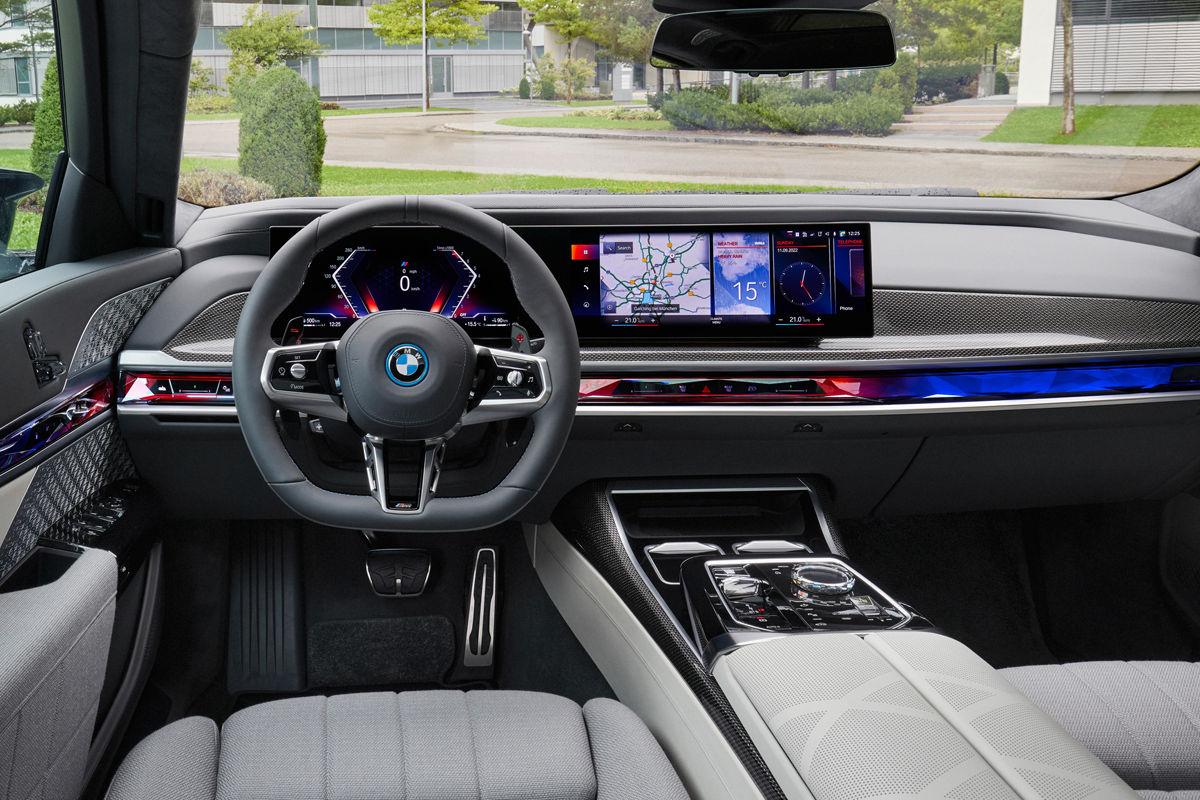
The M760e xDrive – endowed with up to 420 kW – has quietly joined the BMW 7 Series range in SA. Here’s how much this plug-in hybrid derivative from the M division costs…
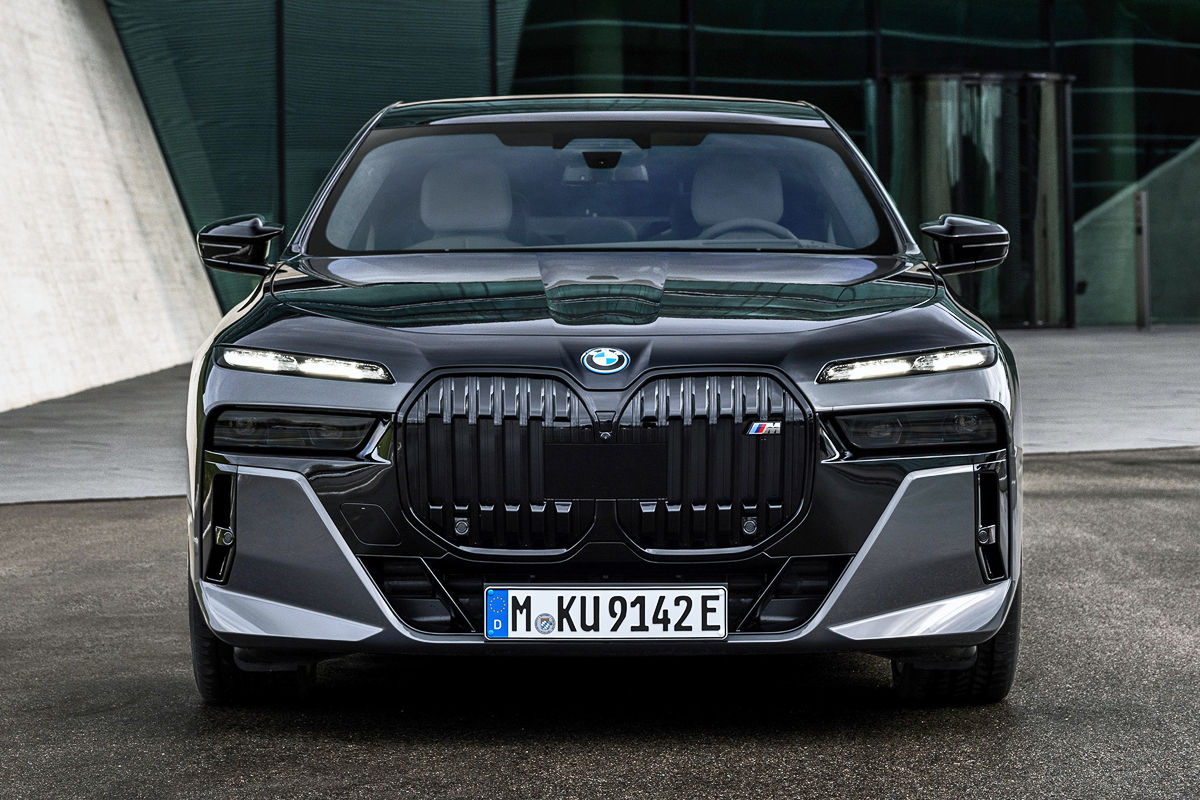
When the 7th-generation BMW 7 Series line-up – including petrol, diesel and fully electric powertrains – touched down in South Africa near the end of 2022, the Bavarian firm’s local division made no mention of the M760e xDrive derivative. Now, however, this plug-in hybrid electric vehicle (PHEV) variant has quietly joined the range.
Thanks to the eagle-eyed folks over at duoporta.com, we know the M760e xDrive is priced from R3 090 000 before options, which sees it positioned at the very summit of the G70-generation luxury saloon range, where it slots in just above the battery-powered i7 xDrive60 M Sport (R3 010 000). As a reminder, the V8-powered 760i xDrive and fully electric i7 M70 xDrive are currently not offered in Mzansi.
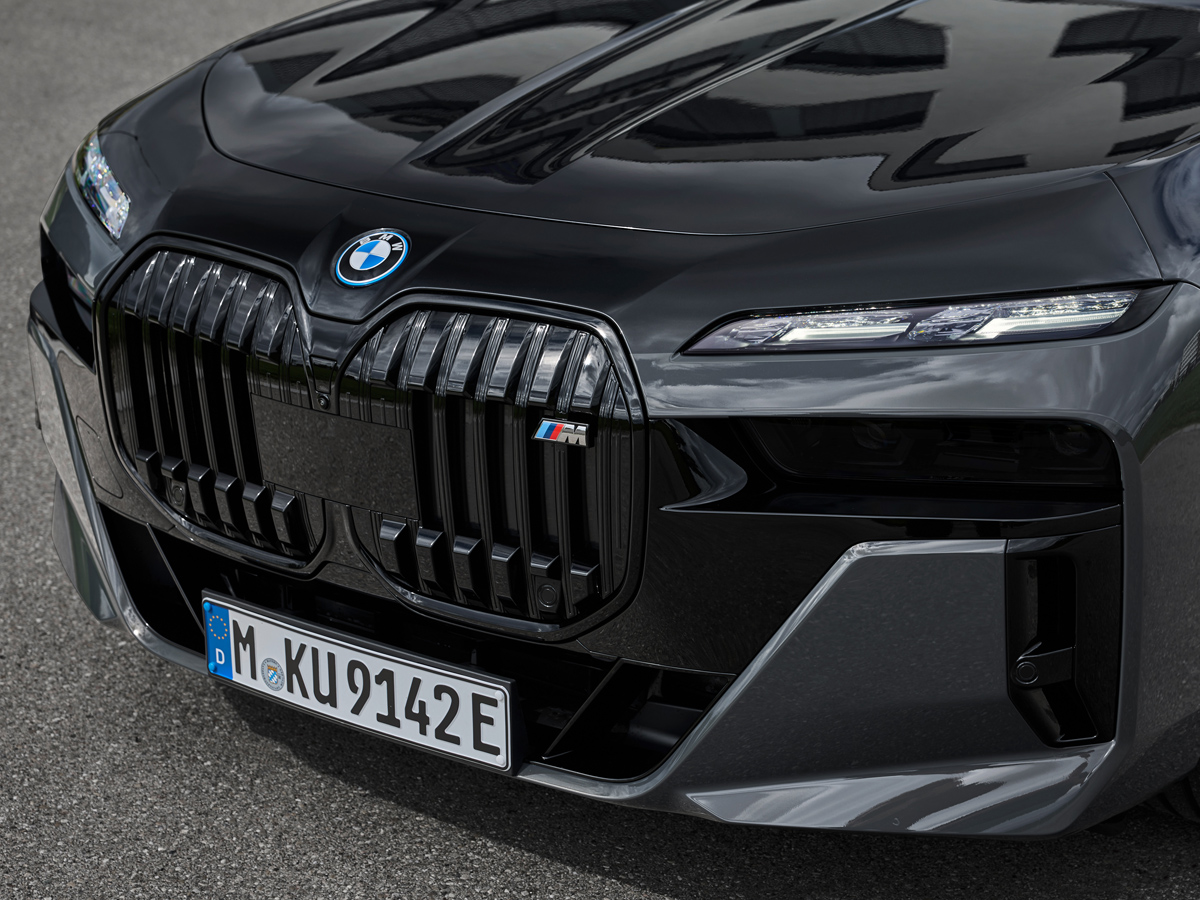
Still, though not quite a full-fat M car, the M760e xDrive is technically the 1st M Performance vehicle from BMW M to feature a plug-in hybrid powertrain (while the XM is the 1st pukka M car with PHEV technology). A 280 kW/520 Nm twin-turbocharged 3.0-litre, straight-6 petrol engine combines with a new 145 kW electric motor (integrated into the 8-speed automatic transmission) to generate peak system outputs of 420 kW (accessed via a temporary boost “when particularly invigorating acceleration is the order of the day”) and 800 Nm.
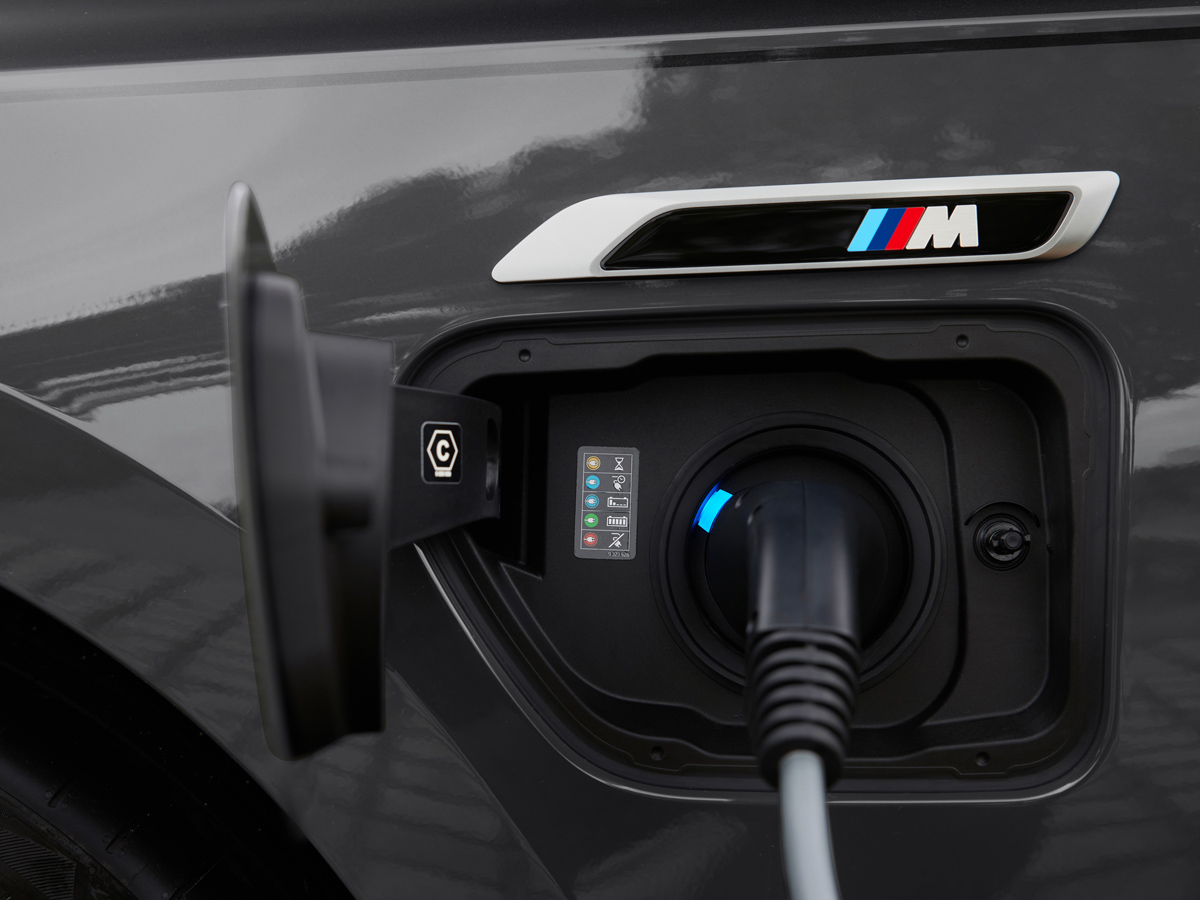
As a result, the all-wheel-drive M760e – which has a listed kerb weight of 2 525 kg – completes the 0-100 kph sprint in a claimed 4.3 seconds before topping out at 250 kph. Thanks largely to a claimed all-electric range of up to 90 km (with an electric top speed of 140 kph), the PHEV version of BMW’s flagship luxury sedan boasts a WLTP-cycle fuel-consumption figure as low as 2.2 L/100 km (and a corresponding CO2 output of only 49 g/km). The lithium-ion battery is installed in the vehicle floor and has a useable capacity of 18.7 kWh, while maximum AC charging power comes in at 7.4 kW.
Specifying the R40 000 M Performance package adds items such as a black rear spoiler, M Sport brakes and gloss-black finishes for components such as the grille frame, rear trim strip and tailpipe finishers. BMW Group SA also offers the Luxury Package (R173 400), which comprises automatic doors, a Bowers & Wilkins Diamond surround-sound system, heat-reflecting laminated glass, the heat comfort package and a massage function for the front seats.
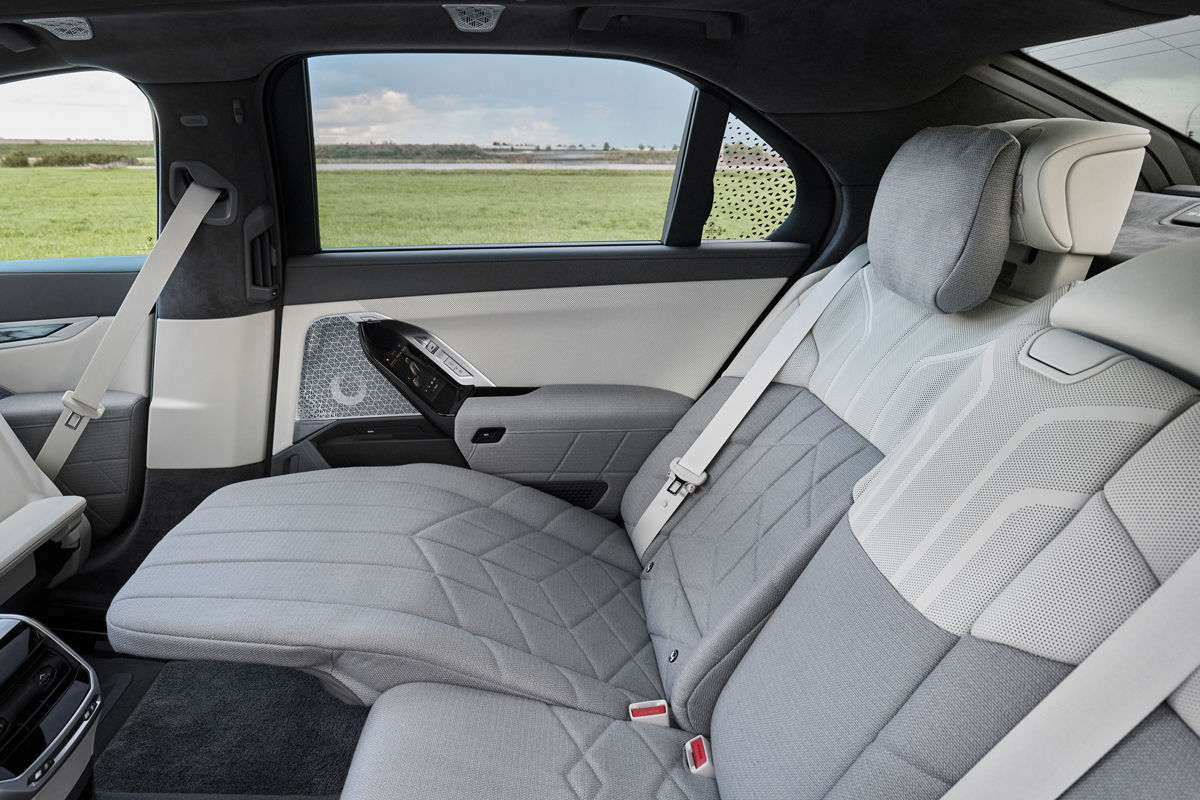
The Executive Package adds R68 600 to the price and includes features such as a special rear console, a massage function for the (now-multifunctional) rear seats and ventilation/heating for the rear pews. Upgrade to the Executive Lounge Package (R97 000) and you’ll also score uprated rear seats and the so-called “Professional” rear-seat entertainment system, complete with iDrive control. Finally, the BMW Individual Gran Lusso interior package – with all manner of “exclusive” materials and trim – will set you back a further R131 000.
How much does the BMW M760e cost in South Africa?
BMW 740i Design Pure Excellence – R2 237 751
BMW 740i M Sport – R2 312 751
BMW 740d xDrive Design Pure Excellence – R2 358 207
BMW 740d xDrive M Sport – R2 433 207
BMW i7 xDrive60 Design Pure Excellence – R2 935 000
BMW i7 xDrive60 M Sport – R3 010 000
BMW M760e xDrive – R3 090 000
The prices above includes a 5-year/100 000 km maintenance plan, though BMW says the buyer “may elect to opt out” of this arrangement at the point of purchase.
Hyundai Kona N to bow out but there’s ‘still stock’ in SA
Hyundai SA has confirmed production of the 206 kW Kona N has ended, though says there’s “more than enough” stock in Mzansi to meet local demand for some time…
Production of the 206 kW Hyundai Kona N has officially ceased, with no official confirmation the world will see a 2nd-generation version of the high-performance crossover.
A spokesperson from Hyundai Automotive South Africa confirmed to Cars.co.za the Kona N was no longer being built but added there was “more than enough stock” in Mzansi – considering this flagship derivative’s “niche” standing – to satisfy local demand for some time.
So, for the moment, the Kona N remains on Hyundai Automotive SA’s official price list. The Kona N joined the local line-up as recently as April 2022, launching alongside the facelifted i30 N hot hatch with which it shares a powertrain.
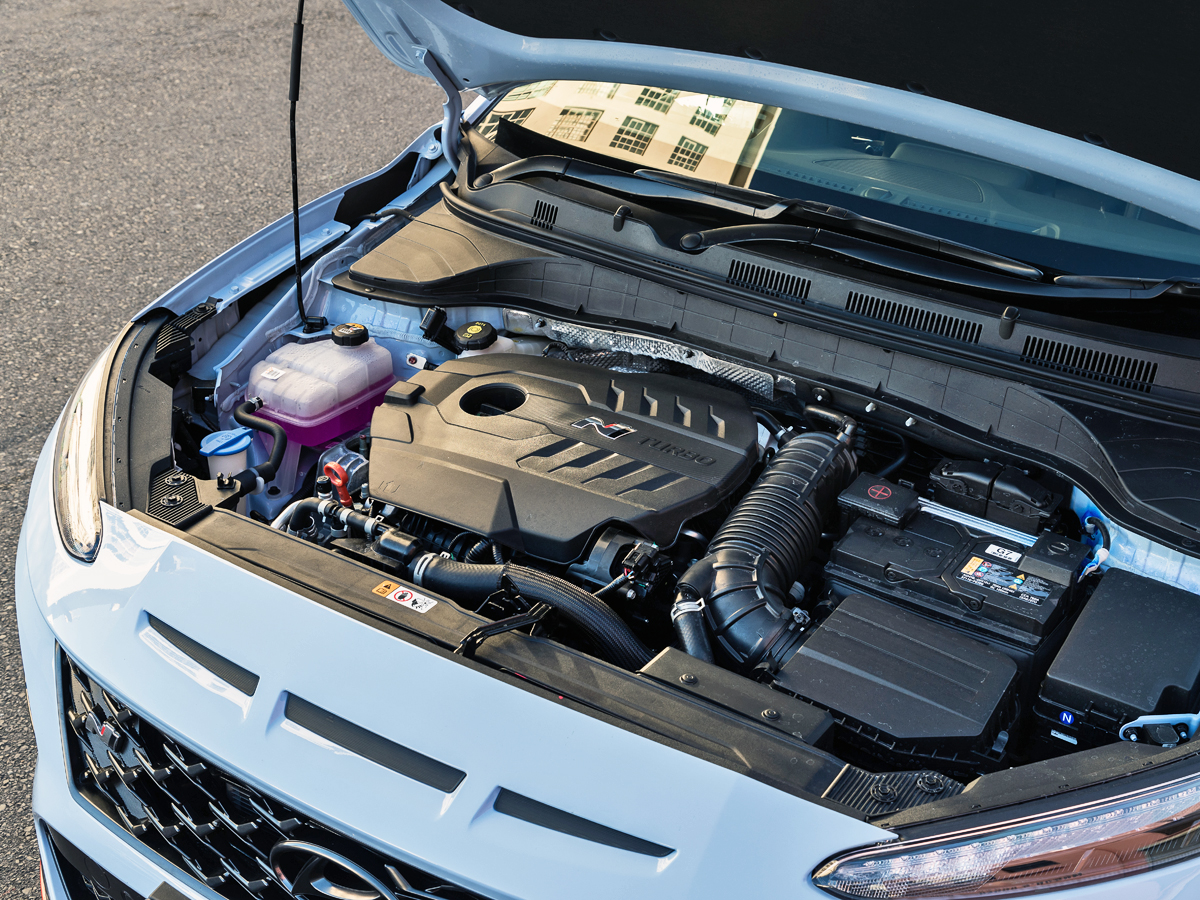
Currently priced at R811 900, the Kona N’s turbocharged 2.0-litre, 4-cylinder petrol engine sends 206 kW and 392 Nm to the front axle via an 8-speed dual-clutch transmission as standard. As a result, the 0-100 kph sprint takes just 5.5 seconds, according to the South Korean firm, while top speed comes in at 240 kph.
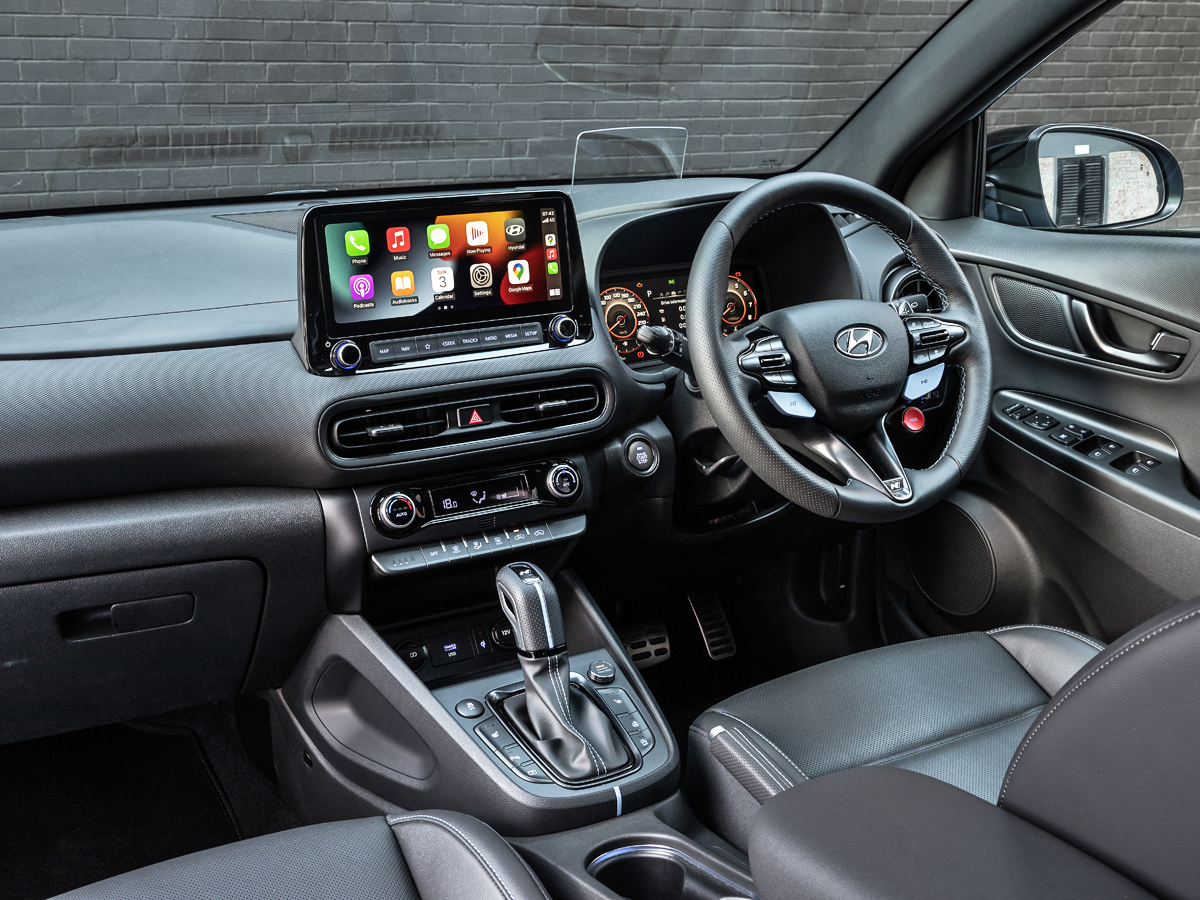
Highlights include an aggressively styled body kit (including a double-wing rear spoiler), lightweight 19-inch forged alloy wheels, red brake callipers, an electronic limited slip differential, launch control, a head-up display, a 10.25-inch touchscreen system, a raft of driver-assistance features and as many as 5 driving modes.
As an aside, the 2nd-generation Kona range was initially due to arrive in South Africa in the 4th quarter of 2023, though Hyundai Automotive SA now says this model introduction has been “put on the back-burner”. If it receives the green light for a local launch, expect that to happen only in 2024.
For the record, 259 units of the Kona – including the full-fat N derivative – have been registered in South Africa over the opening 8 months of 2023. This nameplate’s best month of the year so far was February with 50 units, while registrations slowed to 15 units in August.
Hyundai Grand i10 Review (2023 Facelift) – Specs and pricing, features, rivals comparison
In our latest video, Ciro De Siena gets behind the wheel of the Hyundai Grand i10. Is it still the pocket-friendly champ?
Hyundai’s i10 has always been a decent seller for the brand, finding many homes in South Africa and also proving their longevity too, with many units still running around with very high mileage on the clock.
The Grand i10 is the latest iteration of that formula, but the price has certainly crept up over the years. The Hyundai now finds itself in a segment with stiff competition, chiefly in the name of the Suzuki Swift.
In this review, our video guy Ciro De Siena takes us on an in-depth tour of the updated Grand i10, with a thorough overview of the specs and pricing, the boot area, backseat comfort, tech features and overall feel of the vehicle.
It’s official: Stellantis to assemble 1-tonne bakkie in SA
Stellantis has confirmed a R3-billion investment to develop a manufacturing facility in South Africa, with local assembly of a 1-tonne bakkie set to commence in early 2026…
Back in March 2023, multinational automotive group Stellantis signed a Memorandum of Understanding (MoU) with the South African government to “develop a manufacturing facility” in the country. Now, more details have been released, including the fact the company plans to assemble a 1-tonne bakkie at the site.
The Netherlands-based corporation – which was formed in early 2021 with the merger of Fiat Chrysler Automobiles and the PSA Group – says it has now “confirmed its intention to develop a greenfield manufacturing facility in Coega in South Africa” in co-operation with the Industrial Development Corporation (IDC) and the Department of Trade, Industry and Competition.
Stellantis says it “continues to work closely” with the IDC to develop a “viable joint venture (JV) partnership that will be evaluated by appropriate credit committees”.
The manufacturing plant is due to be built in the Special Economic Zone (SEZ) in Coega situated near Gqeberha in the Eastern Cape, with a planned completion date near the “end of 2025”. Stellantis says it expects to assemble a 1-tonne bakkie at the site from “early 2026”, with volumes expected to reach “up to 50 000” completely knocked down (CKD) units annually, including export. Furthermore, the company says the plant will be “predisposed in terms of space and painting” to reach up to 90 000 units a year.
So, which bakkie will the company assemble in SA? Well, that’s not yet clear. As a reminder, as many as 16 automotive brands fall under the Stellantis banner: Abarth, Alfa Romeo, Chrysler, Citroën, Dodge, DS, Fiat, Fiat Professional, Jeep, Lancia, Maserati, Mopar, Opel, Peugeot, Ram and Vauxhall. Marques with a presence in Mzansi include Alfa, Citroën, Fiat, Jeep, Maserati, Opel and Peugeot.
Currently, Stellantis offers just a pair of bakkies in South Africa: the (Chinese-built) Peugeot Landtrek and the Jeep Gladiator (though the latter seems an unlikely choice). A further option for local assembly might be the upcoming Fiat Titano, which will be closely related to the aforementioned Landtrek. A right-hand-drive version of the unibody Ram Rampage is another outside possibility, since some variants are technically classified as 1-tonne bakkies.
According to Stellantis, direct employment to support the first capacity step is “expected at 1 000 jobs”, while the company – which is “targeting a localisation rate over 30%” – will also “be massively investing in over 500 000 hours in training and skills to develop and support the local teams to the level of global standards”.
“It is a wonderful day for all South Africans when a global company of Stellantis’ proportions decides to expand its manufacturing footprint in South Africa, to assemble completely knocked down units,” said Ebrahim Patel, Minister of Trade, Industry and Competition.
“South Africa currently has the capacity to produce close to 700 000 vehicles annually. This will add considerable additional capacity, just as we prepare to implement the African Continental Free Trade Area.
“The country remains a great investment destination and this commitment from Stellantis to invest in our local motor industry highlights the success of our manufacturing sector policy, its capability and potential. We look forward to welcoming Stellantis to South Africa and sharing in the detailed plan for employment and investment,” concluded Minister Patel.
Volkswagen ID X Performance concept hints at future fun EVs
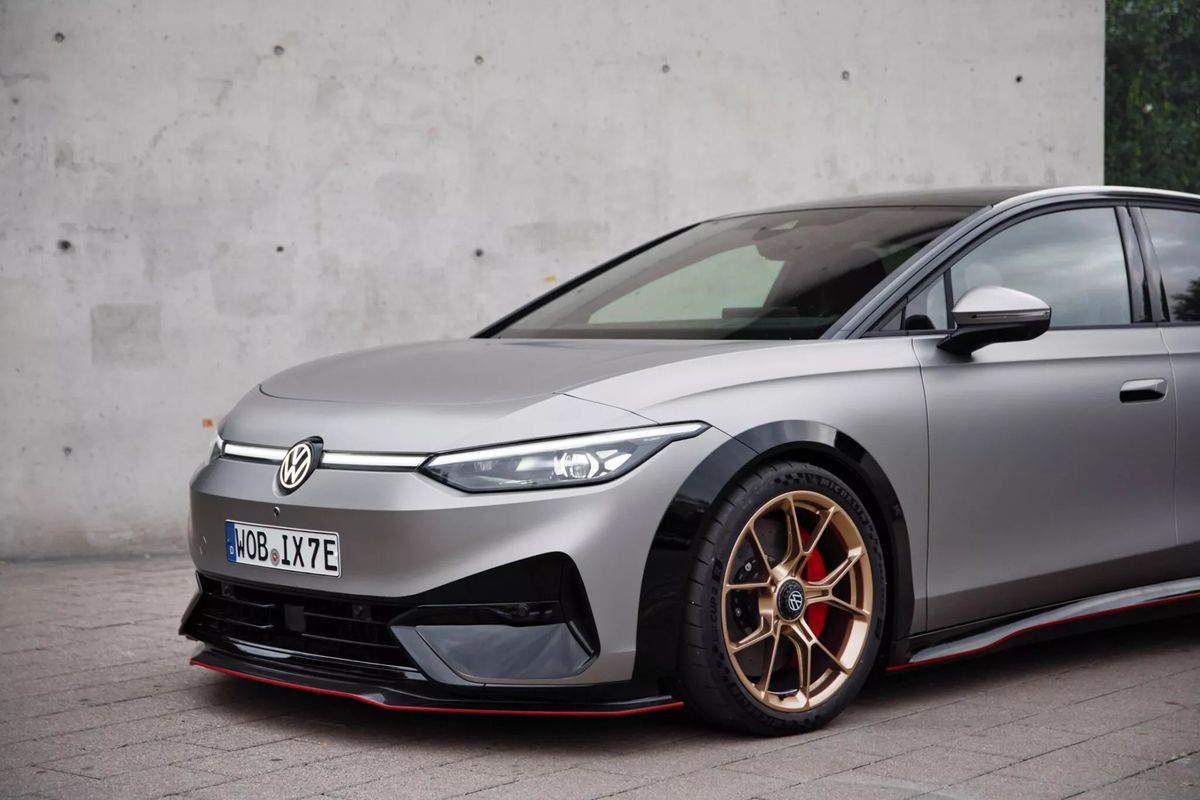
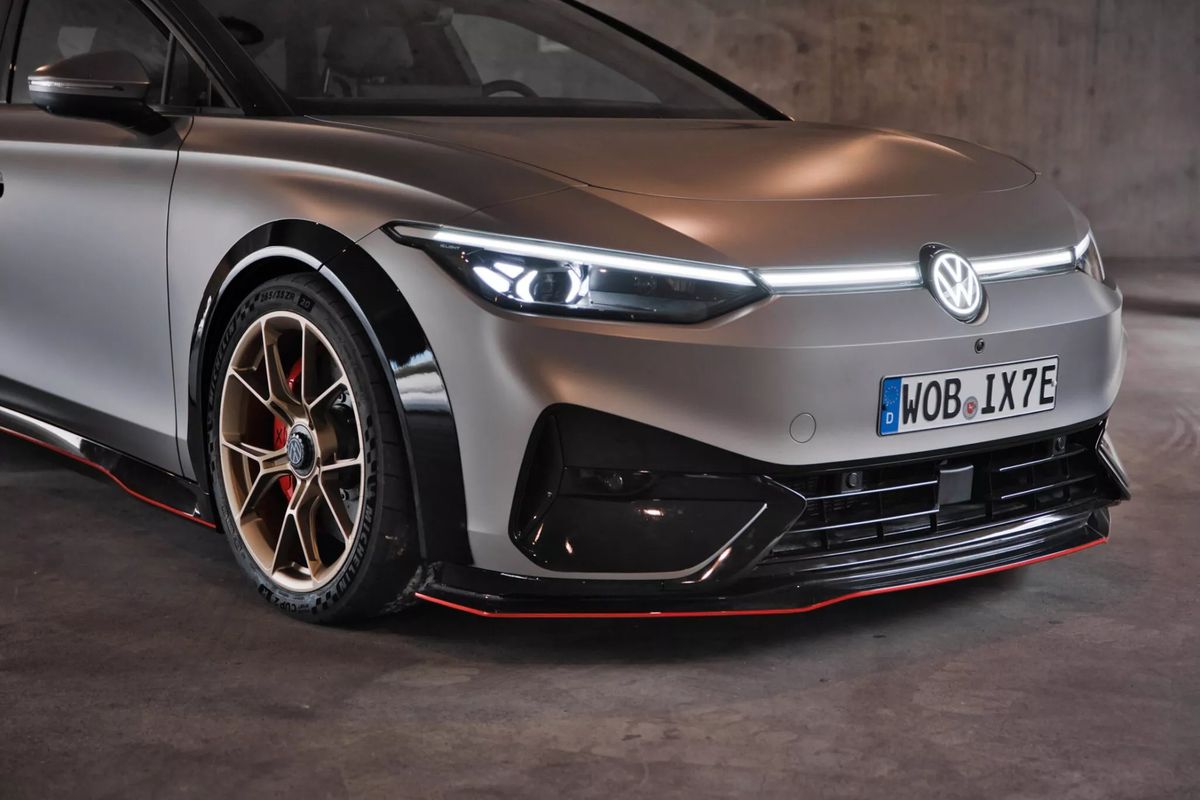
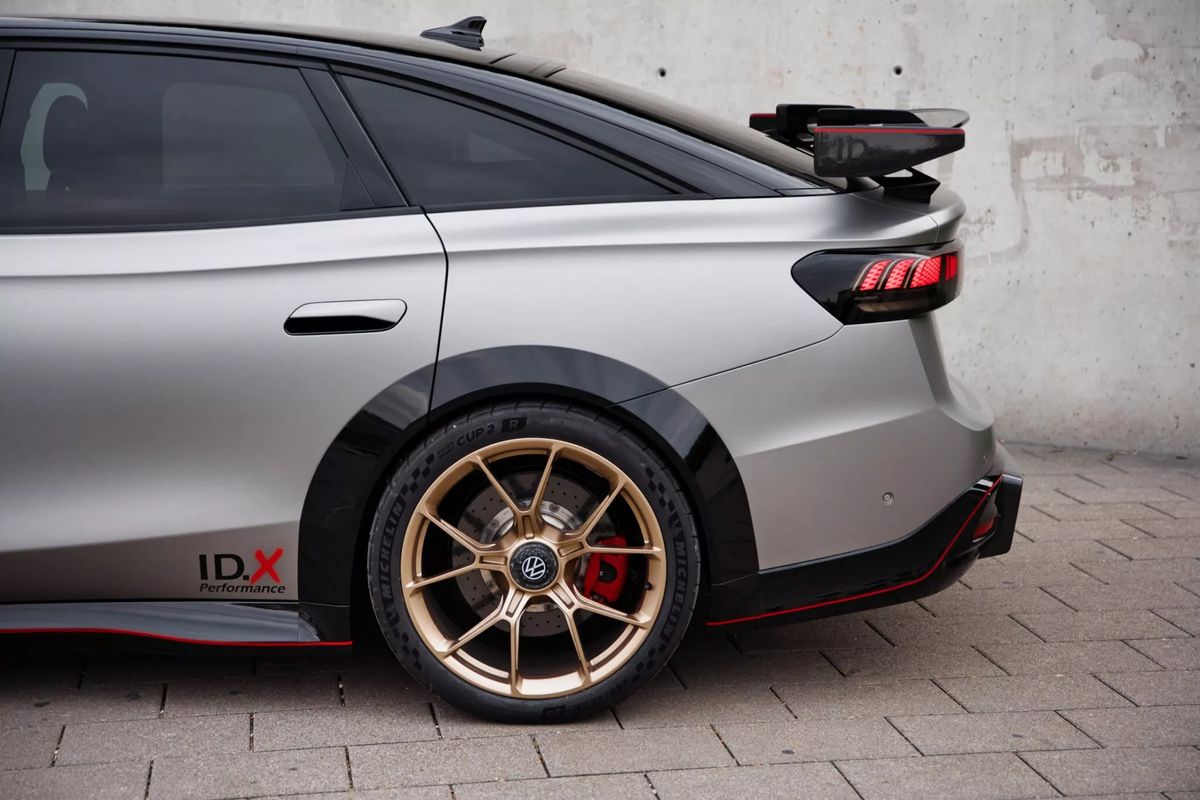
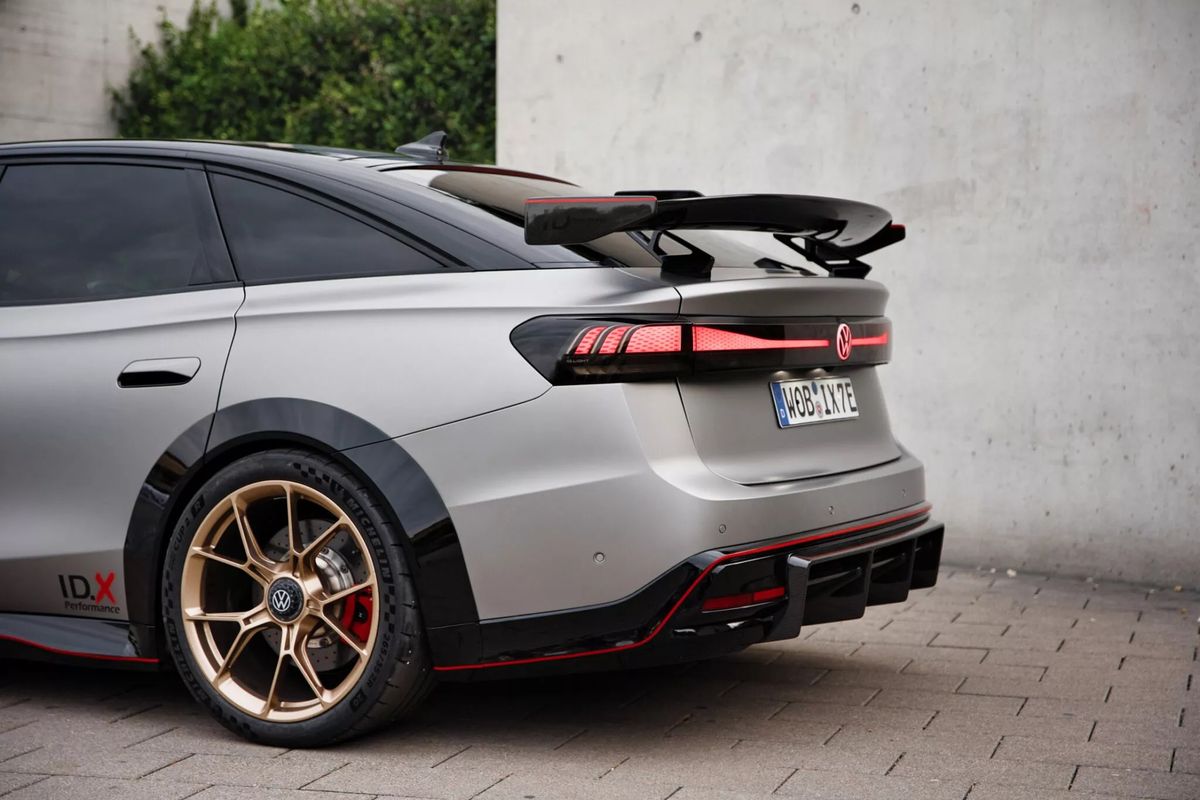
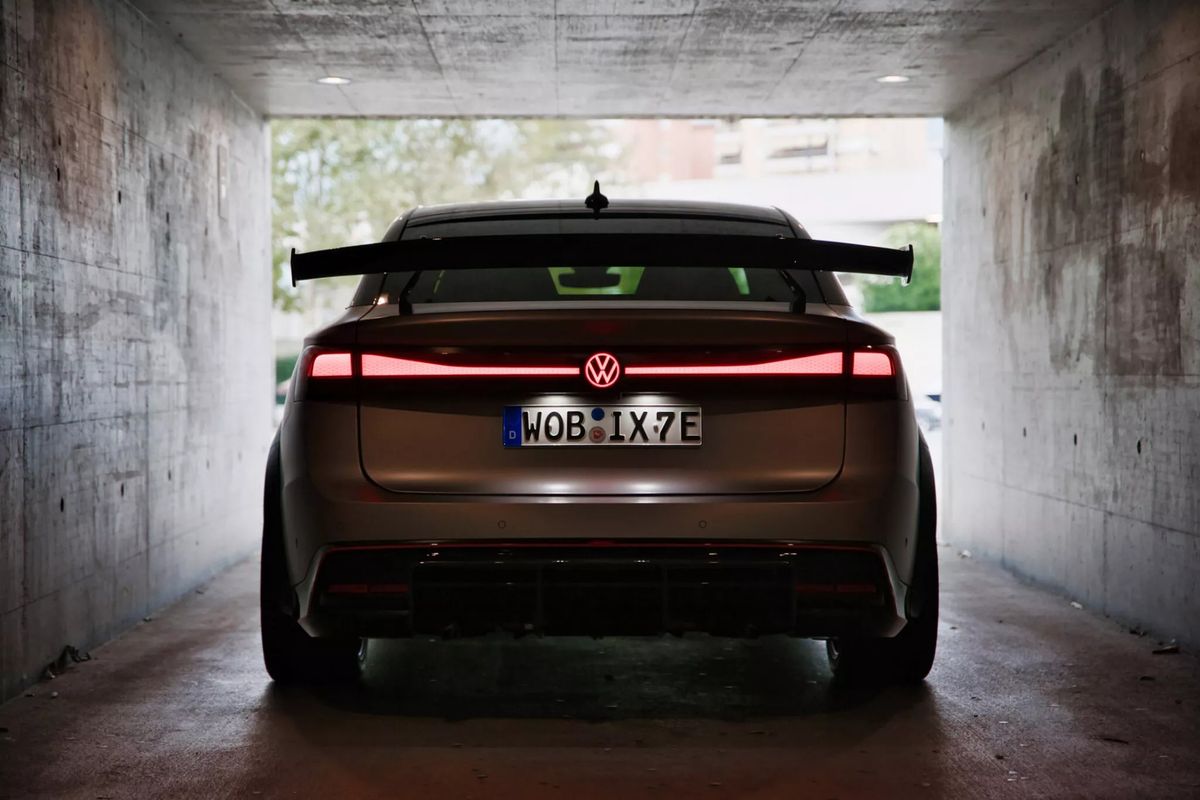
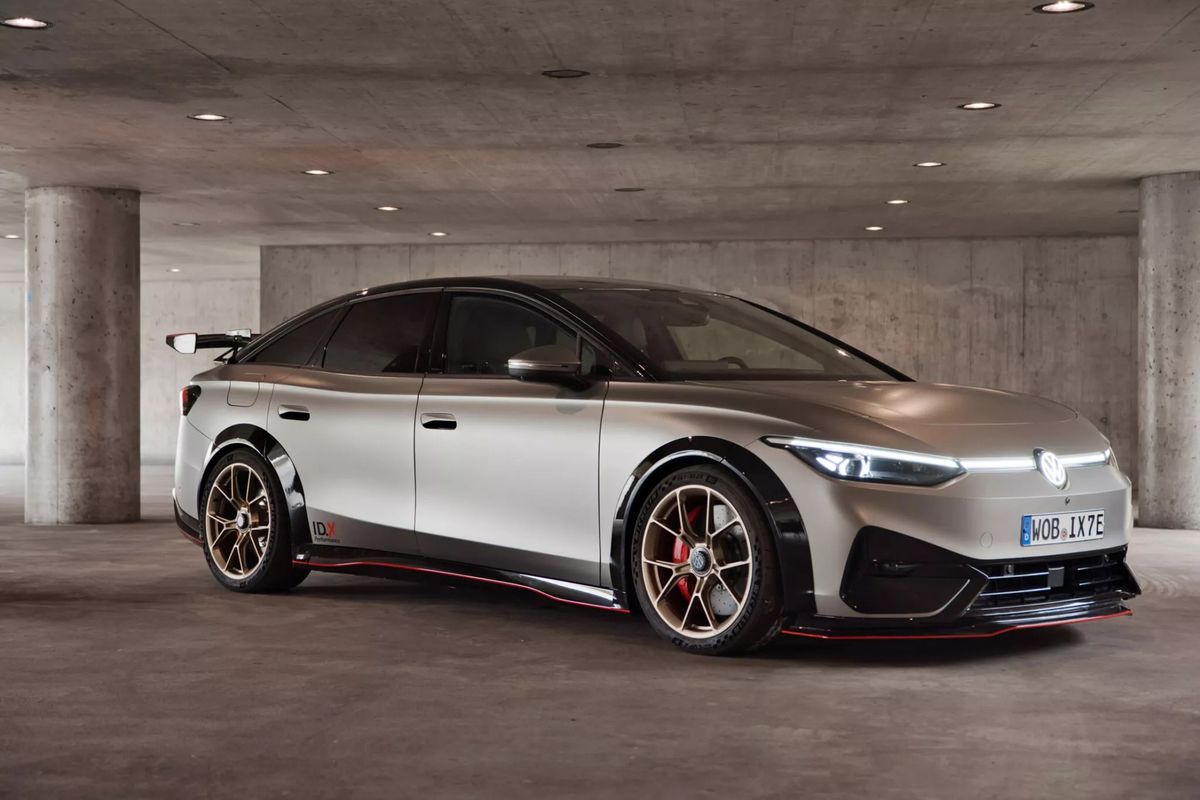
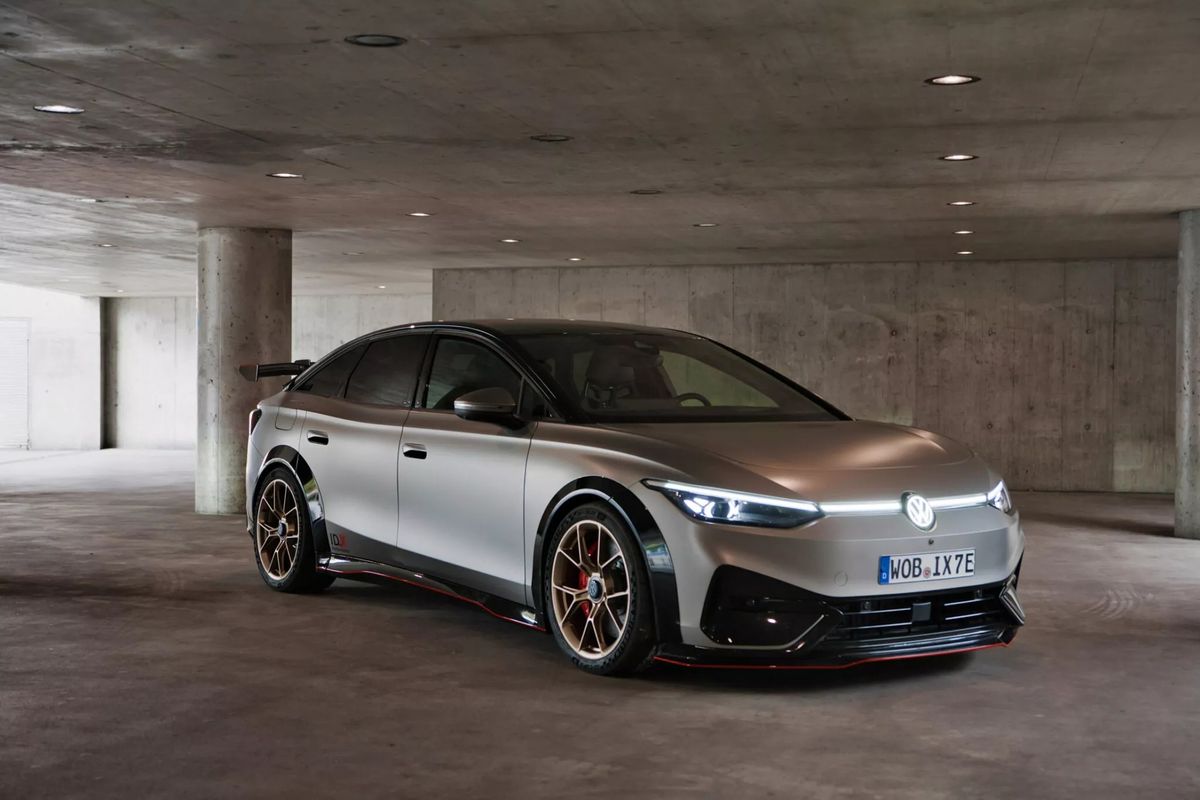
This wild-looking ID X Performance concept from VW hopes to win over enthusiasts.
If there’s one brand that’s trying to make up ground in the electric car race, it’s Volkswagen. Right now, the firm is on a rapid expansion with its MEB EV platform forming the basis of many products to come. What’s glaringly missing is something for the performance enthusiasts.
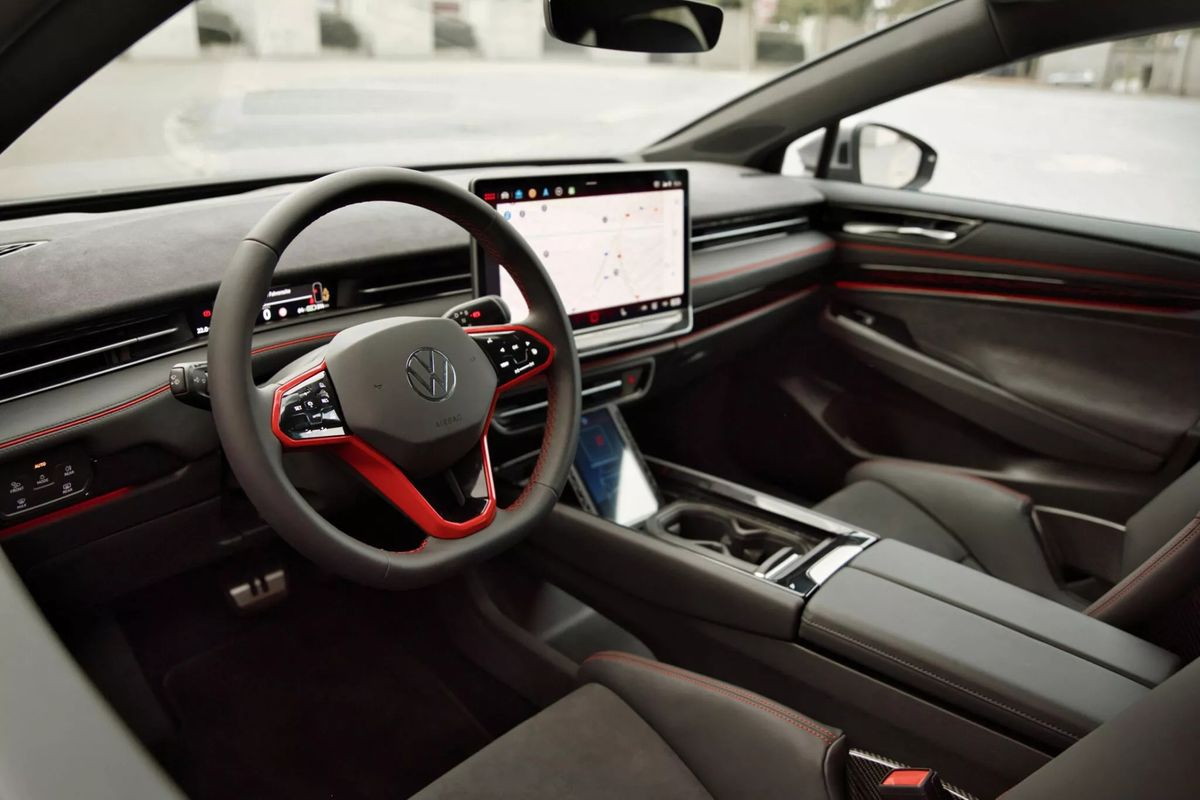
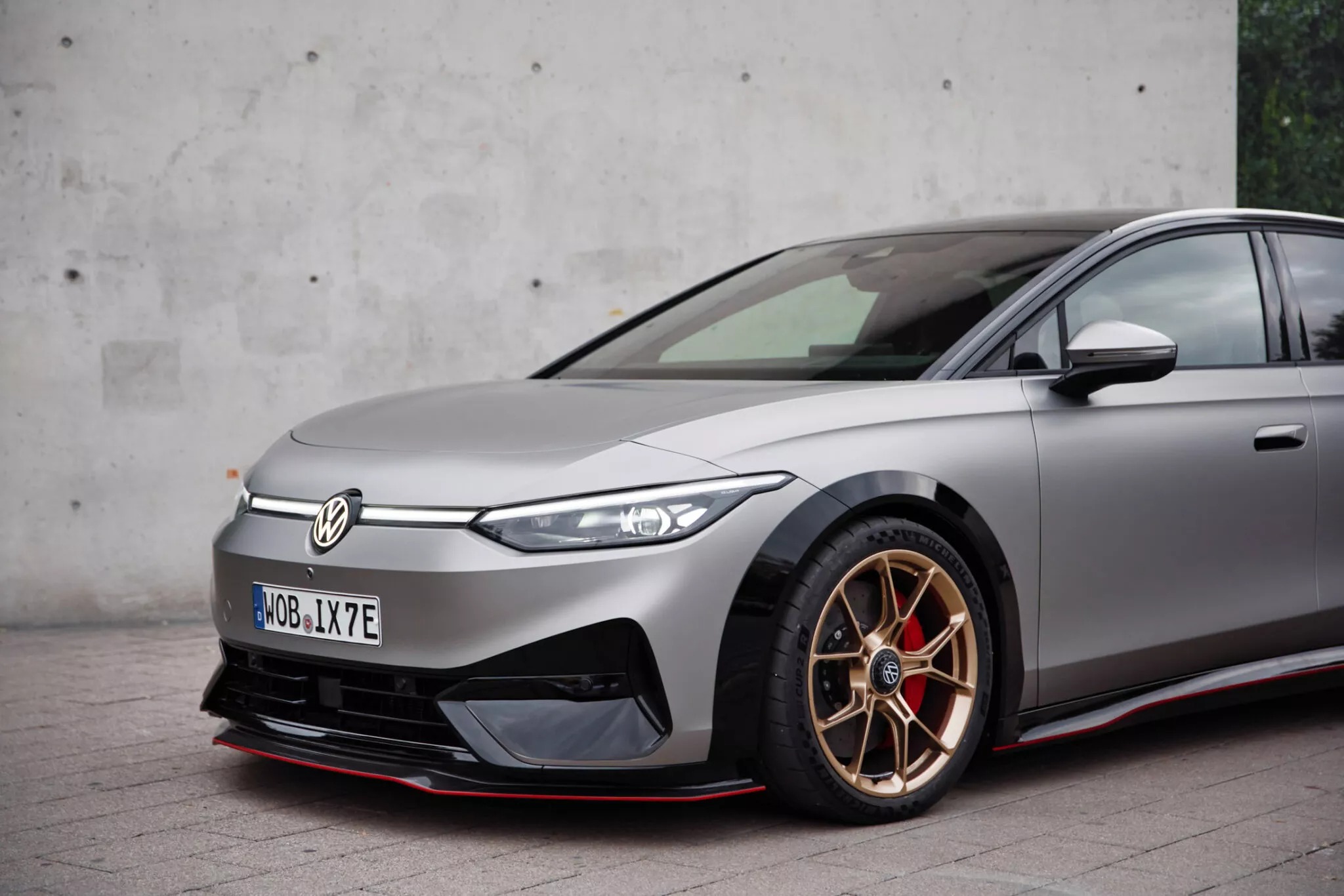
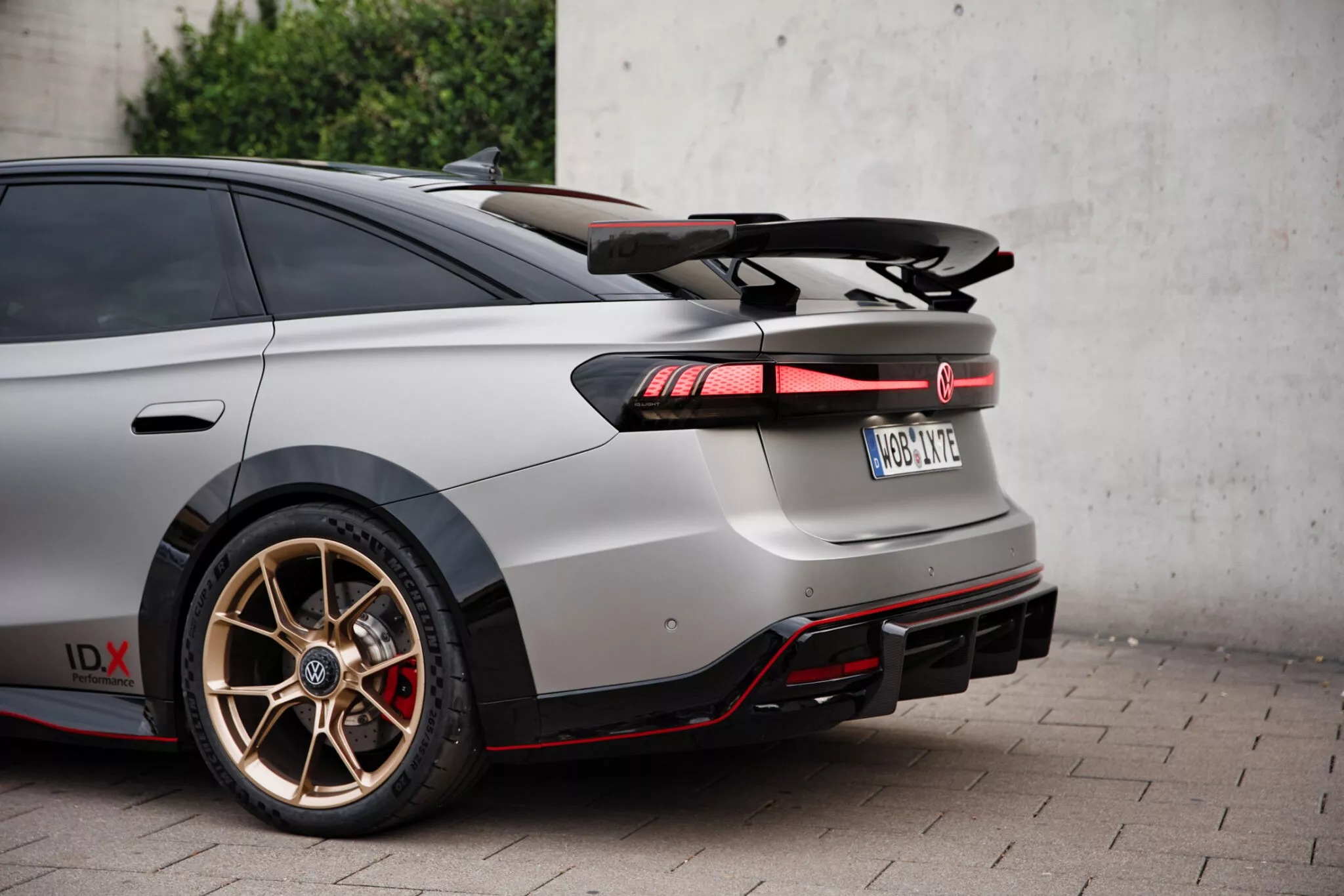
We’ve already had a GTI-branded concept unveiled, but what you see here pushes the envelope even further. It’s called the Volkswagen ID X Performance concept and it takes the ID.7 sedan to another level. Visually, it looks like something from the Fast and the Furious franchise with its ostentatious aerodynamic aids. We could swear those 20-inch gold wheels wrapped in performance Michelin Pilot Sport Cup rubber are straight from Porsche too.
This concept doesn’t just look fast, it is fast. It features a dual-motor all-wheel drive setup delivering around 416 kW. That’s higher than BMW M’s first performance EV, the i4 M50 with 400 kW. Volkswagen says the setup is perfect for bursts of power and while there’s no 0-100 kph claim, we reckon this concept is good for a sub-4 second run.
Will Volkswagen put it into production? Right now, there’s no definitive answer, but we now that VW Group will be keen to leverage its MEB platform for as many models as possible. Right now, most segment offerings are covered with hatchbacks (ID.3), crossovers (ID.4 / ID.5), MPV (ID.Buzz) and sedan (ID.7), as well as brand siblings from Skoda and Cupra.
As it stands Volkswagen SA has confirmed it will be launching its ID.4 and ID.Buzz vehicle locally in 2024, with timings, pricing and specification to be confirmed.
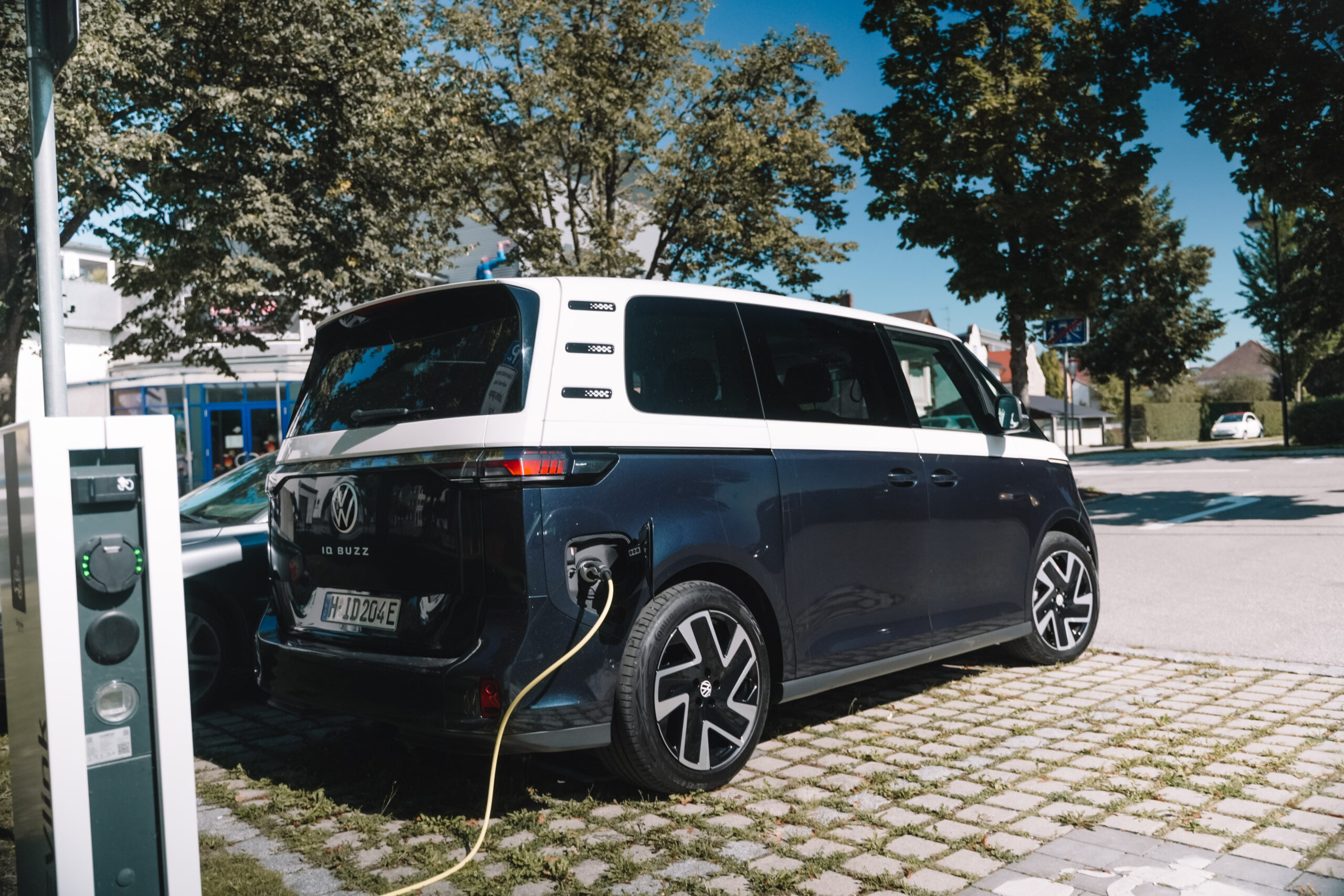
While he was in Germany, Calvin Fisher took a road trip in the evocative VW ID.Buzz, which is the 2nd battery-electric vehicle that Volkswagen will launch in South Africa.
It’s 7.30 am, I’m in a hotel in Munich and trying to concentrate on my breakfast. However, I am fixated on a Volkswagen key fob that’s resting (next to my coffee) on the table. Gleaming with potential, it belongs to a shiny new VW ID.Buzz and, with it, the freedom to go anywhere its 77-kWh battery pack will take us.
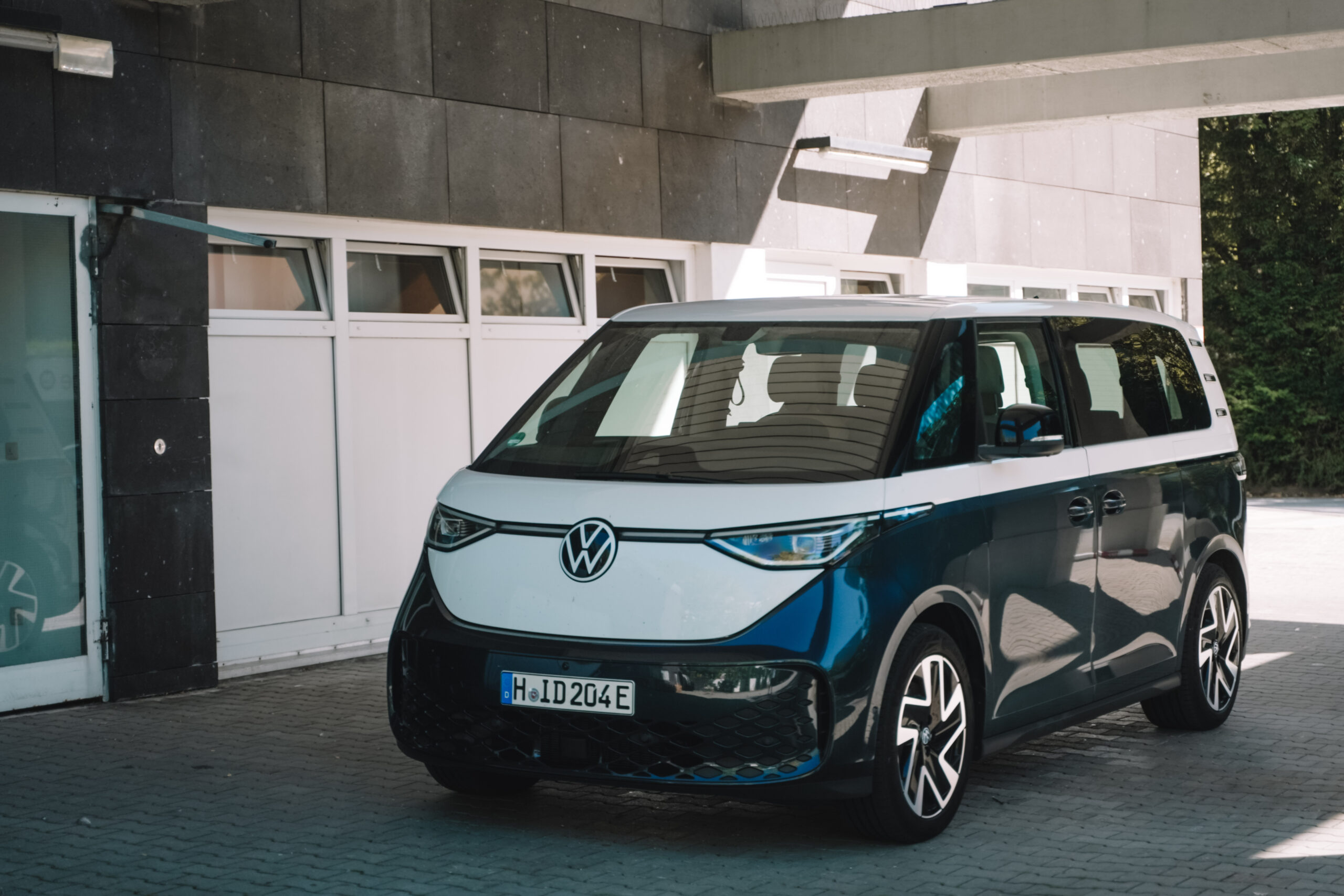
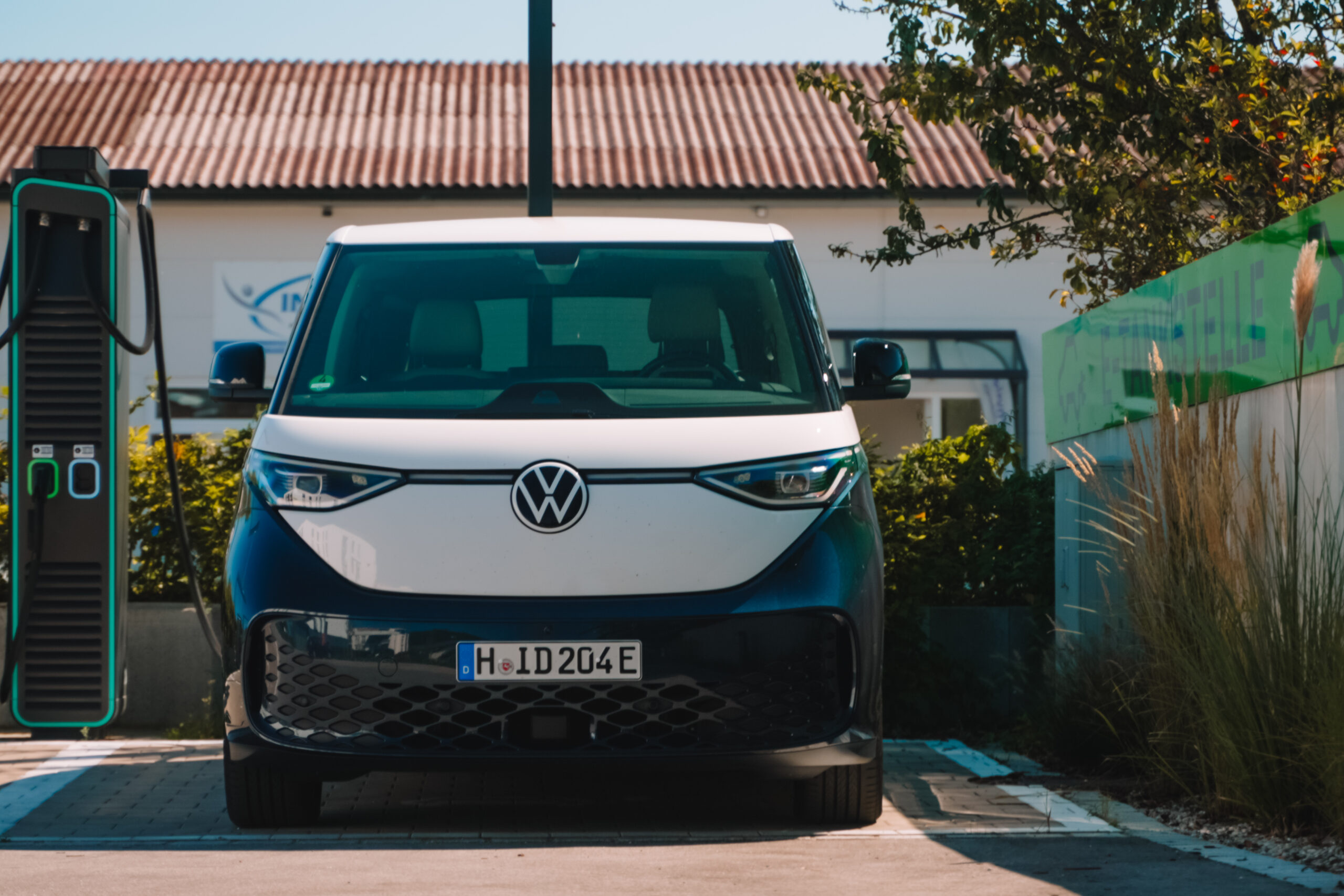
The author found instant rapport with the VW ID.Buzz, courtesy of the BEV’s “smiling face”.
On paper, the model that’s said to be an all-electric re-imagining of the Microbus/Kombi/Caravelle should be good to travel 415 km on a full charge – keep that distance in mind; it will become important later.
Being a South African, I found the prospect of a road trip very exciting. We’re travellers at heart, but in 2023, we want at least climate control and cupholders at our disposal, plus the modern conveniences of our era – navigation, smartphone connectivity and wireless charging. Thus, the ID.Buzz is the bus for digital nomads, like us. With our pastries dutifully consumed, the trip could commence – we were off!
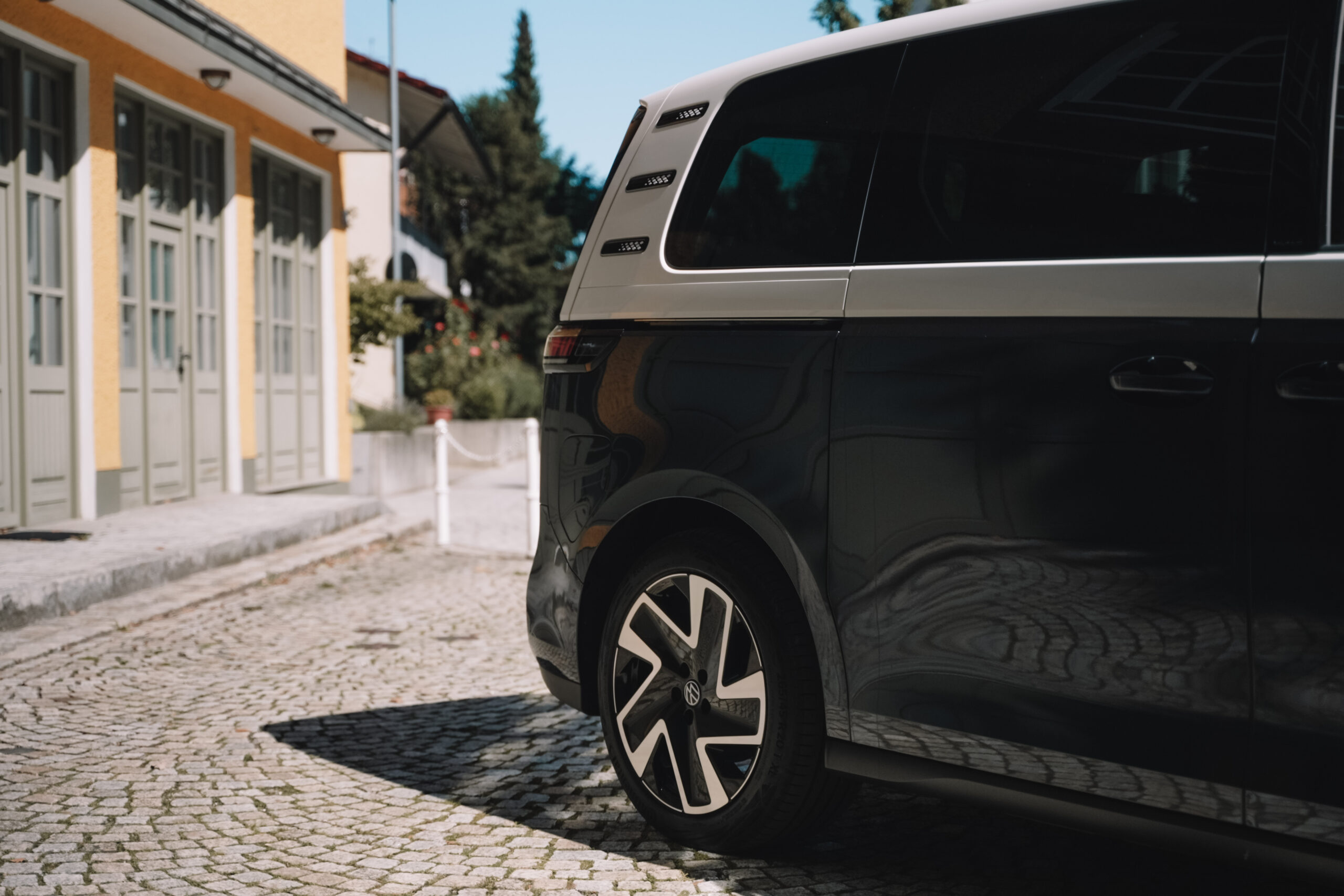
The trio of ventilation inlets on the VW ID.Buzz’s C-pillars are stylistic nods to the T3-generation model.
Unlike anything else, yet instantly familiar
Finding the Volkswagen ID.Buzz that was assigned to us in the hotel’s parking lot was not difficult whatsoever. It’s both bigger than you imagined, yet smaller than you’d guess – occupying that space between large expectation and compact stature. I walked around it several times before declaring, like Goldilocks, that it was just right – making the Renault panel van alongside it look archaic and utilitarian.
I was beaming with “this one is mine” pride and energy, even though my custodianship of the bus would be fleeting and… what’s the word? Electric! I hopped aboard and immediately initiated a relationship between my ‘phone and the ID.Buzz’s brain and began navigating to a little Alpine town in Switzerland.
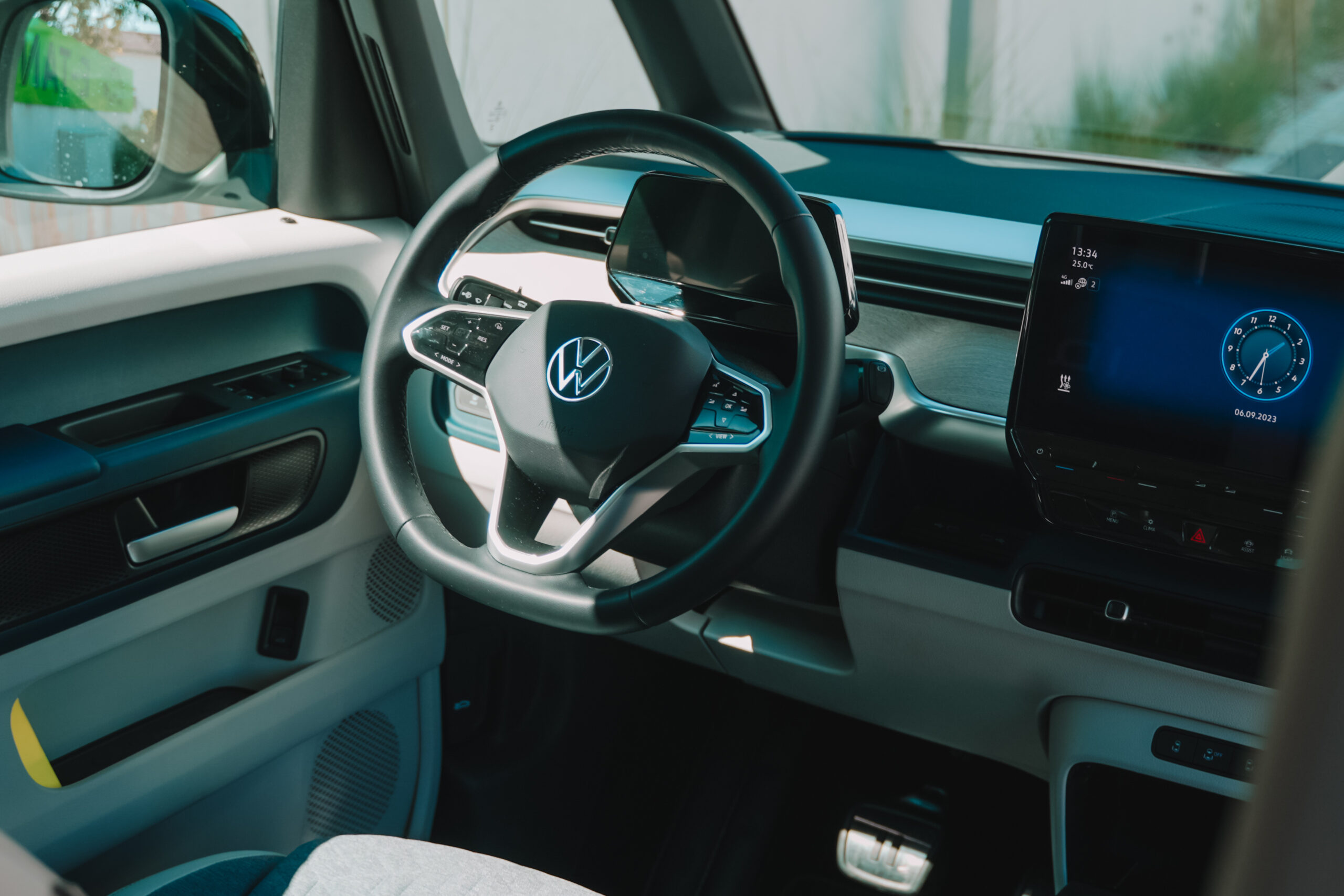
The ID.Buzz cabin is a study in minimalism, but anything but short on creature comforts.
This would be a 200-km trip each way but, “Hey! What’s this?” Our bus indicated it only had 79% of its range left, which would transport us 228 km. More probing revealed a lack of a charge card to replenish our reserves, but no matter – we had Visa. And this was Europe. Still, it wouldn’t hurt being cautious, so we opted to travel to a small town in Austria, which was endowed with a handful of EV chargers. Sorted.
What’s the VW ID.Buzz like to drive?
With the admin taken care of it was time for the fun part – the actual road trip. We left the city of Munich, meandered through the suburbs and then pointed the VW ID.Buzz’s bonnet (which has very little to obscure) towards the Autobahn. Not having an engine up front (much like the original Volksiebus) means that the MPV boasts an enviable turning circle of just 11.1m, so it was a pleasure to negotiate tight turns.
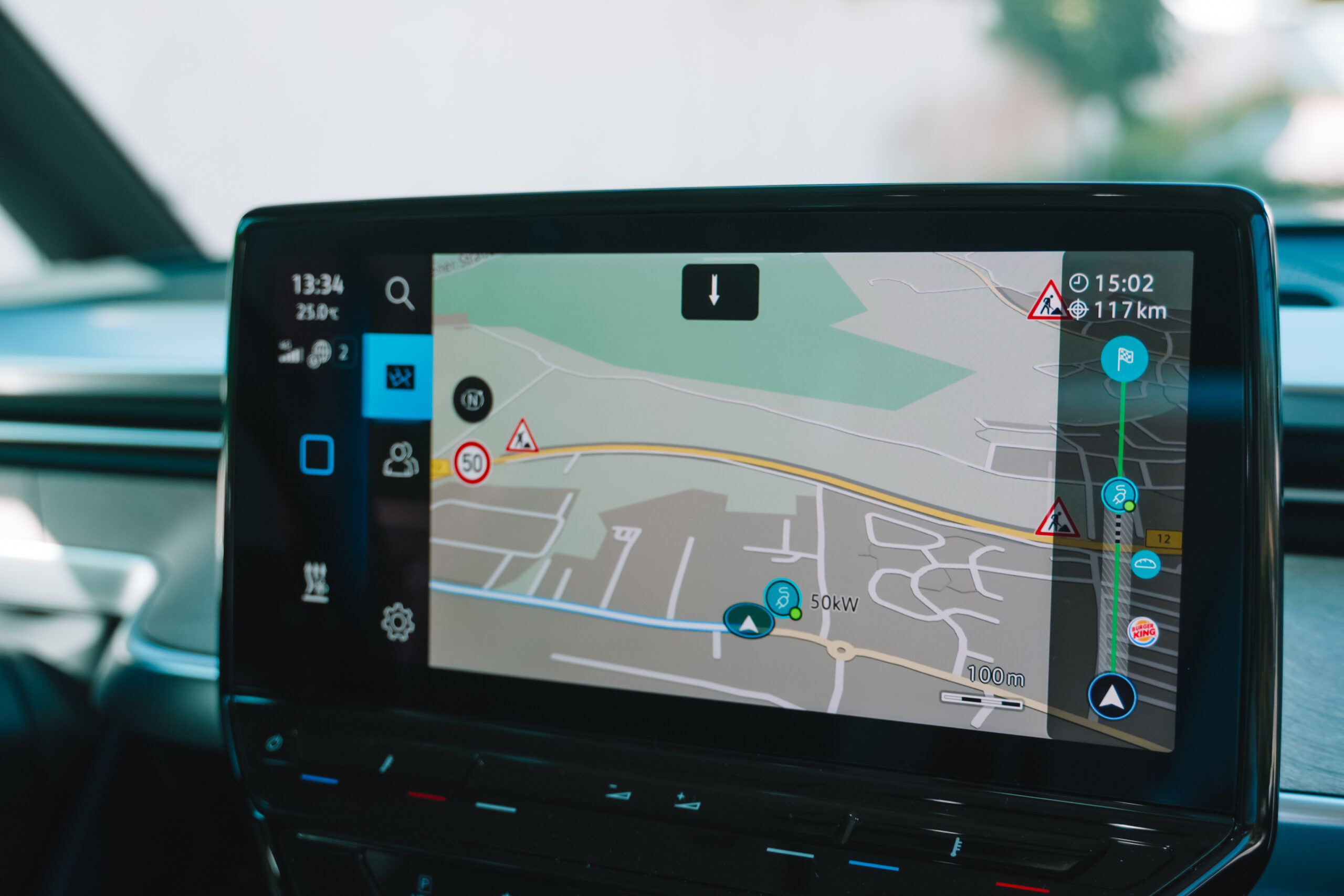
If you’re travelling in an unfamiliar area, the nav system is very handy… when you are looking for a charging station.
The VW ID.Buzz already felt quite special, but seeing locals rubberneck as it passed by was something to experience – the bus felt beloved. The original bus was only the second passenger car that Volkswagen ever produced, and in parallel, this model is shaping up to be the second ID product in VW South Africa’s portfolio, after the ID.4 Pro, which will be launched soon. Read Cars.co.za’s launch review of the ID.4.
The electrobus’ neat aesthetics carry over quite sweetly into the cabin. There’s no “retro for retro’s sake” embellishments here, it’s all very contemporary, practical and bathed in sunlight. Did I mention that that part of Germany reached a peak of 27 °C that day? No matter, we had technology to take care of that.
We also had technology on board to tell us how far we could drive and where we’d be able to “fill up” (so to speak) – very pertinent information, as our stint on the Autobahn was quickly diminishing our range. And the closer we got to the German border, the fewer charging points were sprouting from the map.
The ID.Buzz’s interior trim consists of recycled materials, such as polyester, as well as animal-free leather.
A common complaint regarding BEVs (battery-electric vehicles) is their excessive kerb weights and, as a consequence, lacklustre dynamics. But in a van, that extra weight and the resulting ride and handling characteristics are a feature – not a bugbear. The VW ID.Buzz seems confidently planted to the road; its helm feels notably substantial and the 150 kW output of its electric powertrain complements it.
Having a floor pan comprising heavy batteries means that it has a low centre of gravity; after we left the highway (after crossing the border) we scythed through farm roads and village centres. We had covered 128 km to get to the town of Braunau am Inn, Austria – with 38% charge or 118 km of range remaining.
That’s when we got the ‘wake-up call’
We tried to hook up our VW ID.Buzz to the first EV charger we could find but alas, no luck. I suspect that if we had a dedicated “charge card”, the process would have been easier, if not seamless. But we could not find a way – or app – that could help us purchase the “juice” we needed to make it back.
Once the author arrived in Braunau am Inn, the ID.Buzz’s range was insufficient for the return trip.
It was such a pity, because the town was quite picturesque. A quick Google search on the town’s history, however, inspired me to find another locale on the other side of the border; I won’t expand on the reason.
Ten minutes later we were hooked up to a 12-kWh charger, which thankfully communicated with our credit card, in quaint Simbach am Inn, Germany. Hardly a downgrade, Simbach is often named one of the loveliest towns to visit in Germany; I’d love to see it one day… when I’m not experiencing range anxiety.
The author recharged the ID.Buzz for an hour in Simbach am Inn, Germany.
No, a 12-kWh charger does not recharge quickly, and we needed quite a lot of electricity “in the tank” to make it back home. So, no fancy restaurants for us – having a supermarket Pretzel and Cola on a bench (while we stared at the ID.Buzz) had to suffice. And you know, as far as scenery goes, I didn’t hate it. After an hour of charging (and some sour candy later), our range crept north of 53%. We could go home.
Summary
On the route back to Munich we did our best to avoid the highway for as long as we could and enjoyed seeing the German countryside as we travelled along back roads. As we did so, fast chargers (50 kWh, 150 kWh and even 200 kWh) blipped into view on our nav map and I couldn’t help pondering the efficacy of electrification. This article is no condemnation – far from it. The VW ID.Buzz is one of the most exciting cars I’ve driven this year. As a vehicle, it is wholly seductive – South Africans are going to adore it.
BEV ownership isn’t something one should wade into uninformed, but it could be a very satisfying experience.
Look, our BEV charging infrastructure needs work, including significant investment from Government (which says it’s serious about reducing carbon emissions from automotive vehicles). Wider efforts to educate potential BEV buyers about ownership experiences they’re likely to have would be welcome too.
On a positive note, the “Electric-car Challenge” isn’t unique to South Africa, with its wide open spaces – even in Germany, which is the VW ID.Buzz’s home country, a road trip in a BEV requires planning, so it’s hardly spontaneous. If you’re serious about adopting this new tech, you’ll want a wall box at home.
You need to do your homework – take note of which chargers are on your routes, further investigate which ones actually work – and plan accordingly. I thought I’d come away saddened by the experience but instead, I’m more hopeful than before; perhaps that was partly because the VW ID.Buzz wears such an optimistic “face” that you can’t help but love it. These challenges are not insurmountable – we live in a world where we’ve found a way to keep all our devices, most notably our smartphones, charged up and connected all the time. And it will be the same for our cars. Yes, even with load shedding.
Which model is Kia’s best-seller in South Africa? The answer used to be the Picanto, but another of the Korean firm’s vehicles has quietly overtaken the little hatchback…
Back in 2022, Kia South Africa’s best-selling model was the Picanto, followed by the Rio hatchback. However, over the opening 8 months of 2023, a different nameplate is leading the passenger-car sales charge for the Korean firm’s local division.
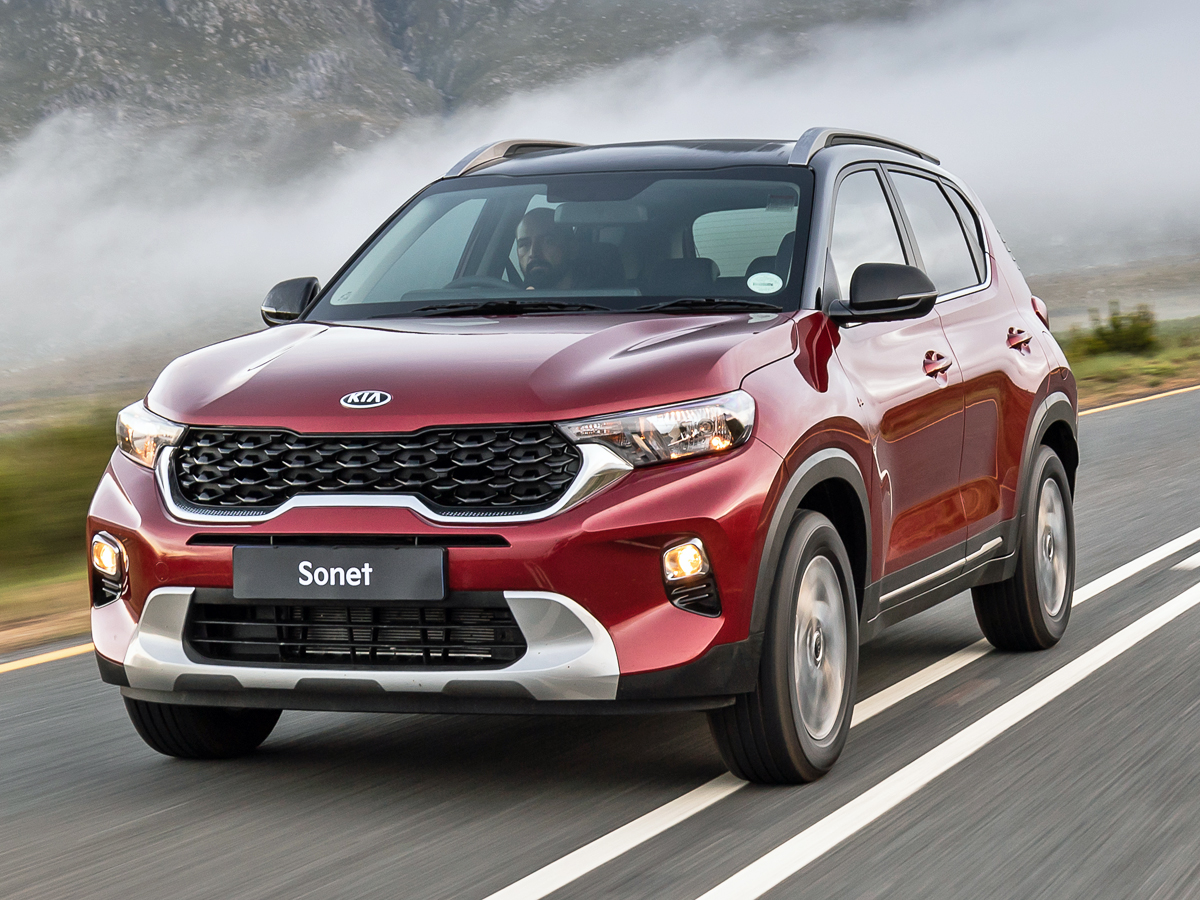
Yes, as many as 3 964 examples of the Sonet have been registered across Mzansi year to date (end of August 2023), putting the Indian-built baby crossover some 857 units ahead of the Picanto. The latter finished the reporting period on 3 107 passenger-vehicle units, excluding Runner-badged panel-van sales, which are registered in the light-commercial vehicle segment (along with the K2500 and K2700).
The Sonet arrived in SA back in May 2021.
That means the Sonet is already well ahead of its 2022 tally of 3 319 units. The Picanto, meanwhile, looks unlikely to reach the heights of last year, when it attracted 7 137 new sales. Of course, a facelifted version of the Picanto was revealed in July 2023, though there’s no indication of timing for a local introduction just yet.
As a reminder, the Sonet line-up comprises 6 derivatives (offered with either a naturally aspirated 1.5-litre, 4-cylinder motor or a turbocharged 1.0-litre 3-pot), currently priced from R338 995 to R431 995. Meanwhile, the 12-strong Picanto passenger-car range (plus the 2 Runner variants in the LCV space) runs from R219 995 to R283 995.
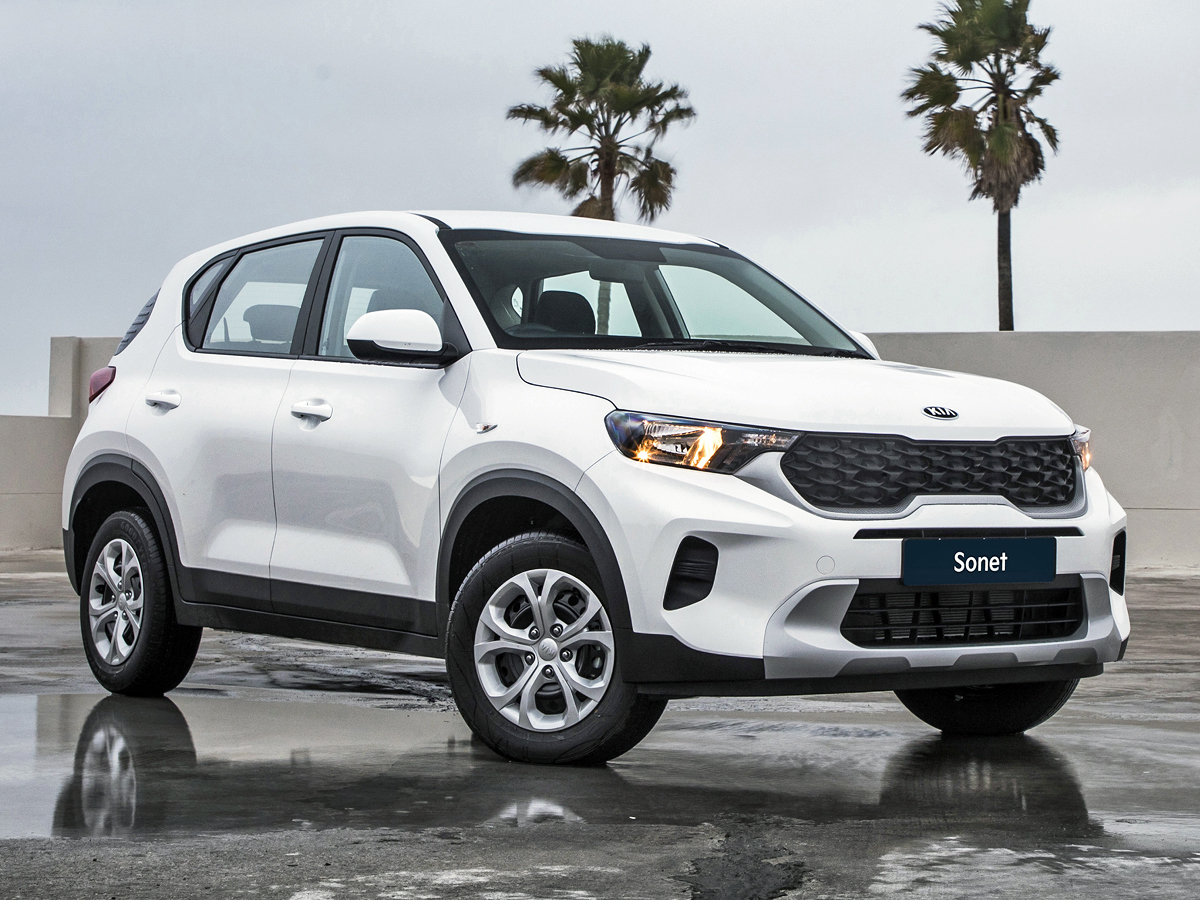
LX derivatives provide the entry point to the Sonet range.
For the record, the Seltos (1 519 units) was next on the list of Kia’s strongest sellers year to date, followed by Rio hatchback (1 380 units). We expect a facelifted version of the Seltos to arrive in South Africa in the relatively near future, while the Rio nameplate is due to exit Mzansi towards the end of 2023, after some 22 years on the local market.
The Chinese-produced Pegas sedan totalled 687 units year to date, closely followed by the Sportage (676 units). Next came the Carnival (215 units) and Sorento (170 units), while Kia SA also registered 4 units of the Niro, 2 examples of the Carens and a single unit of the EV6 (seemingly all for “consideration” rather than sale purposes).