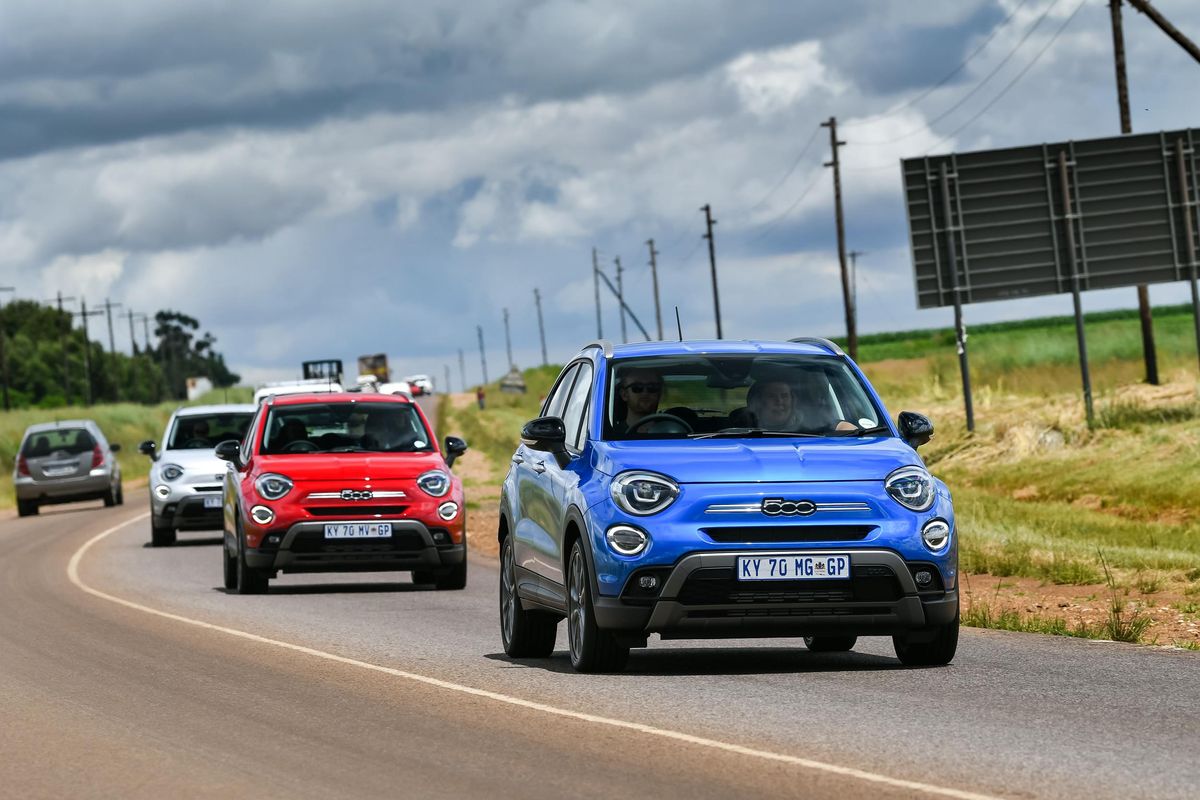
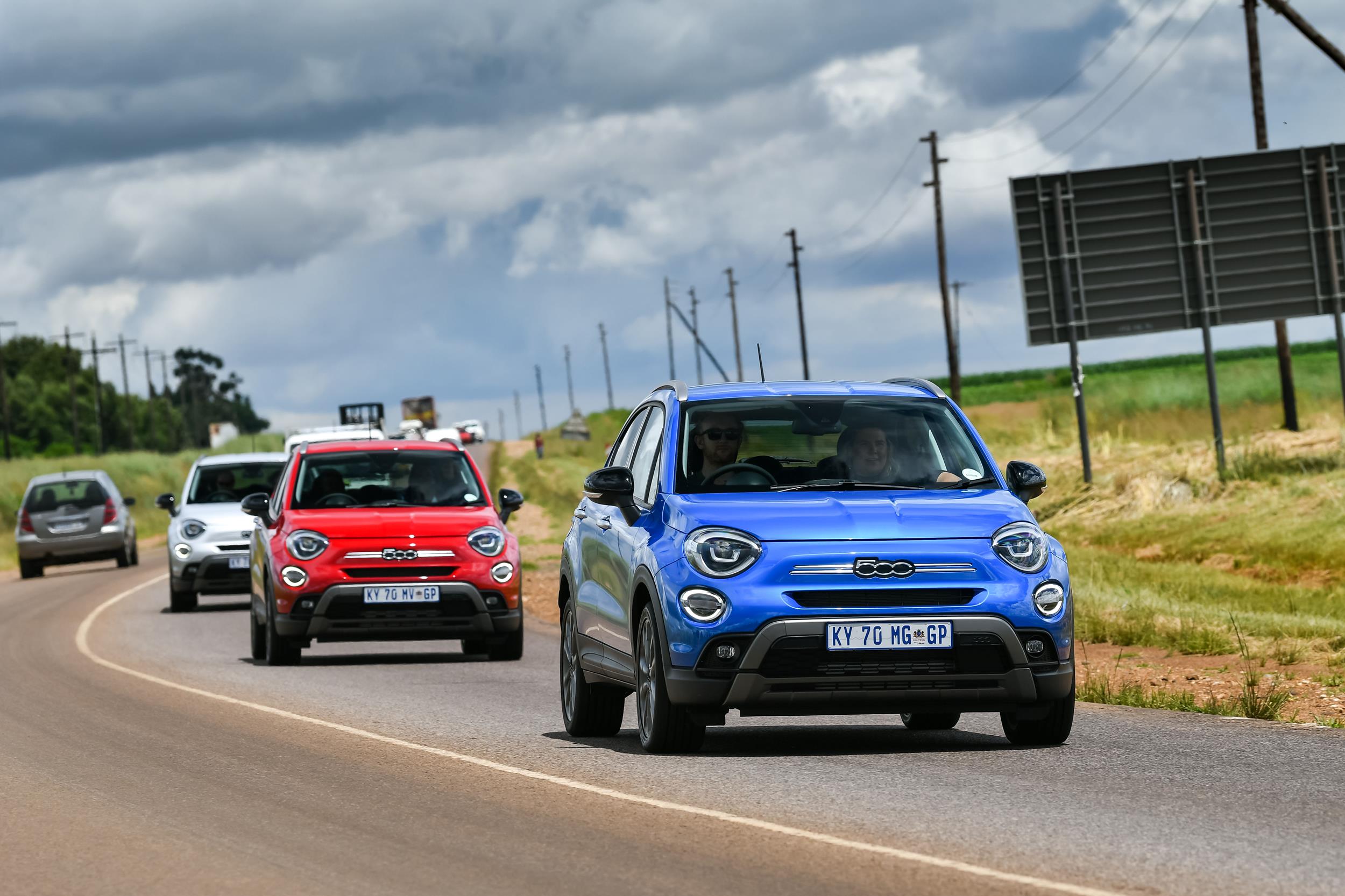
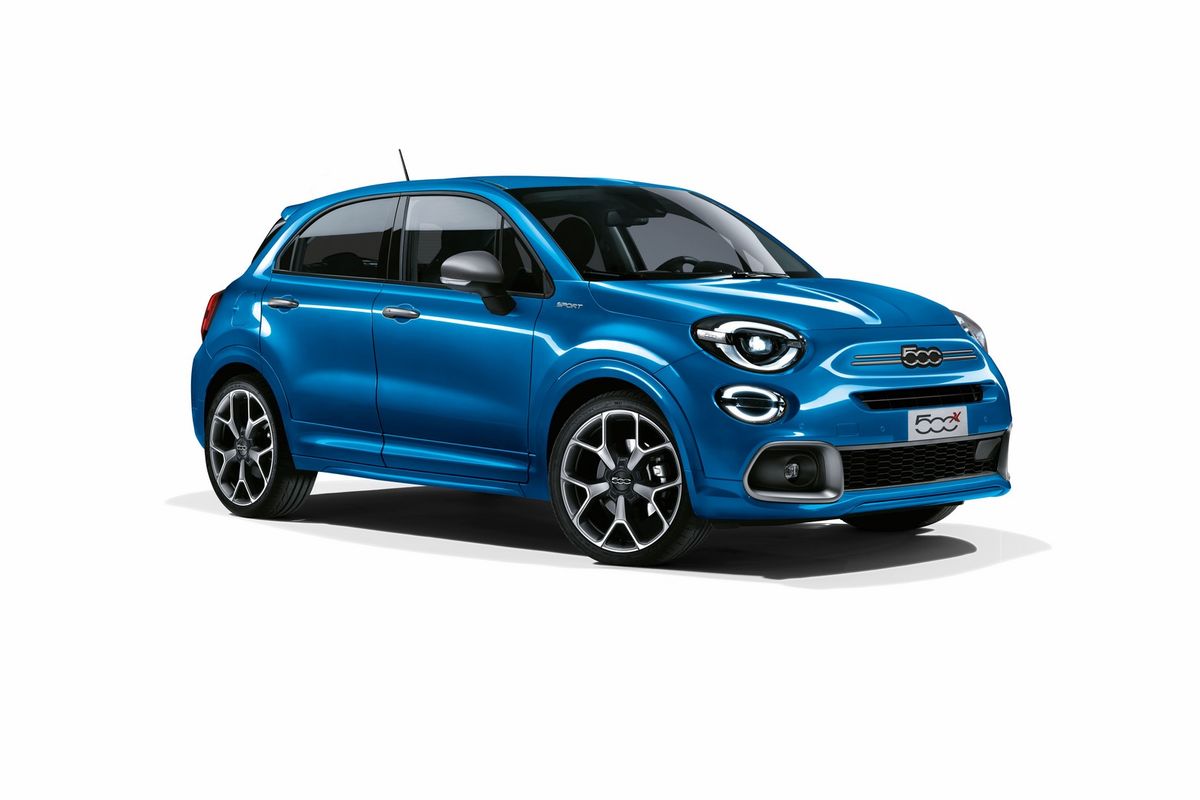
The Fiat 500X has been updated for 2023 and its line-up now includes a novel semi-convertible derivative. We drove the latest iteration of the small crossover in Gauteng.
When the small crossover craze was in its infancy (about a decade ago), Fiat sought to reinterpret its adorable – and perennially popular – 500 city car as a compact family car. Given the packaging limitations of the diminutive 500, it stood to reason that the 500X would come to market as a fashionable “baby SUV” that appealed to those who have families and/or lifestyles that require additional loading space.
The Fiat 500X is not based on the 500, however – it shares a platform with its Stellantis-group cousin, the Jeep Renegade. Following its local debut in 2015, the Fiat 500X has received numerous revisions in an effort to keep it fresh; our market received such an update just 2 years ago (in September 2021).
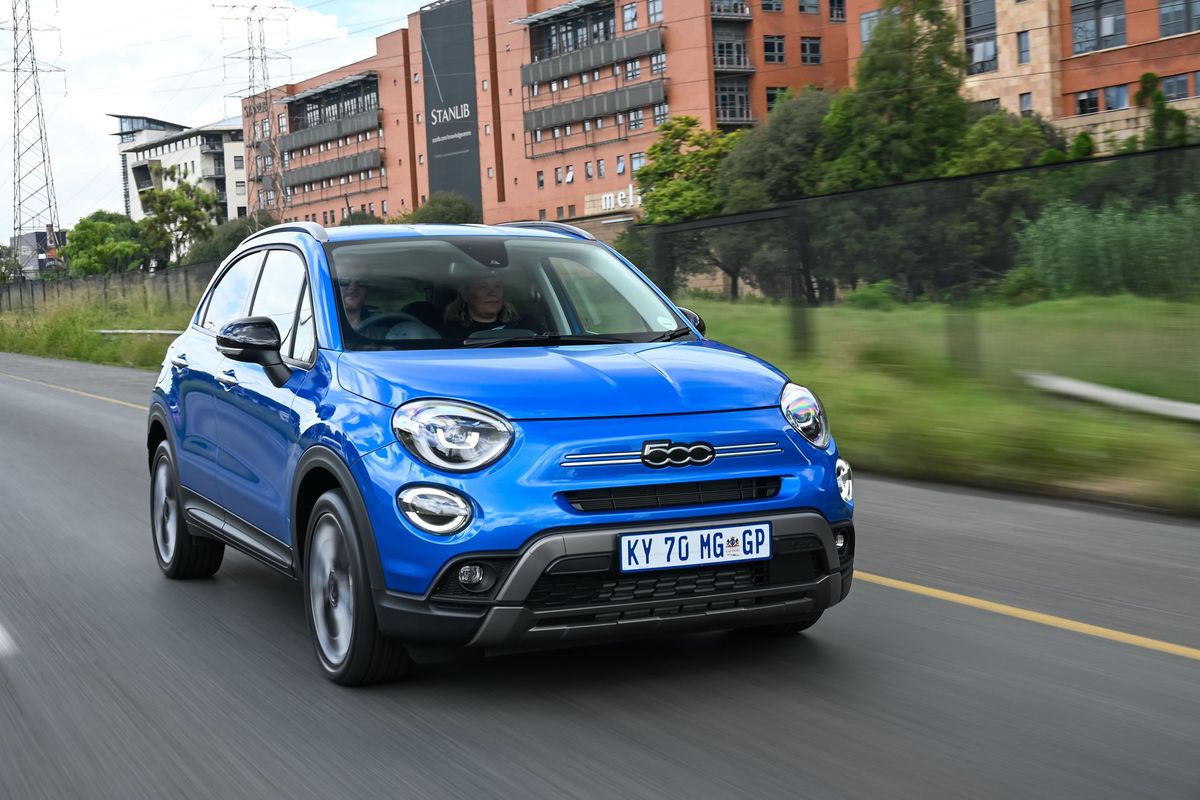
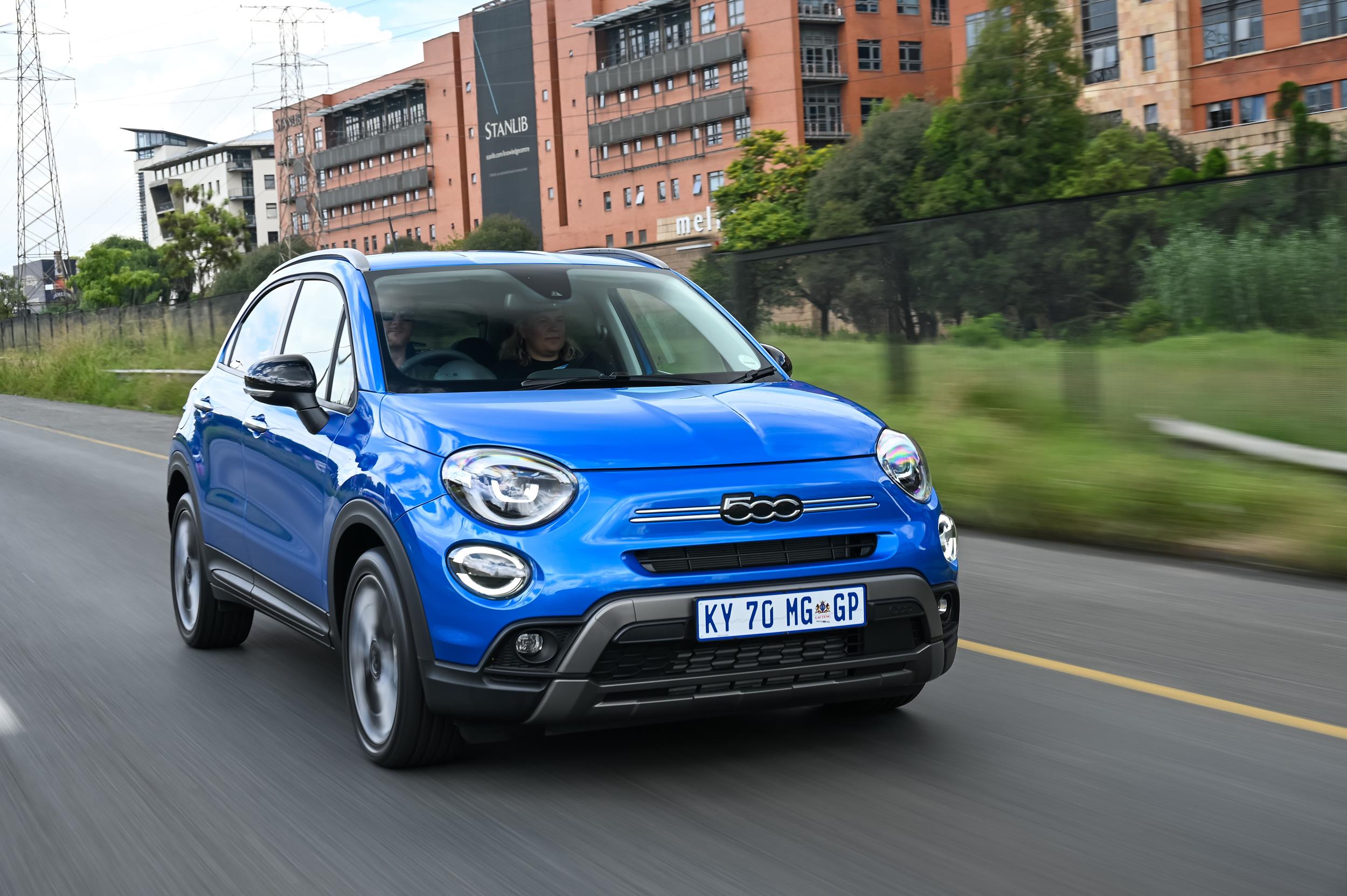
The 500X in Cross trim
What’s on offer?
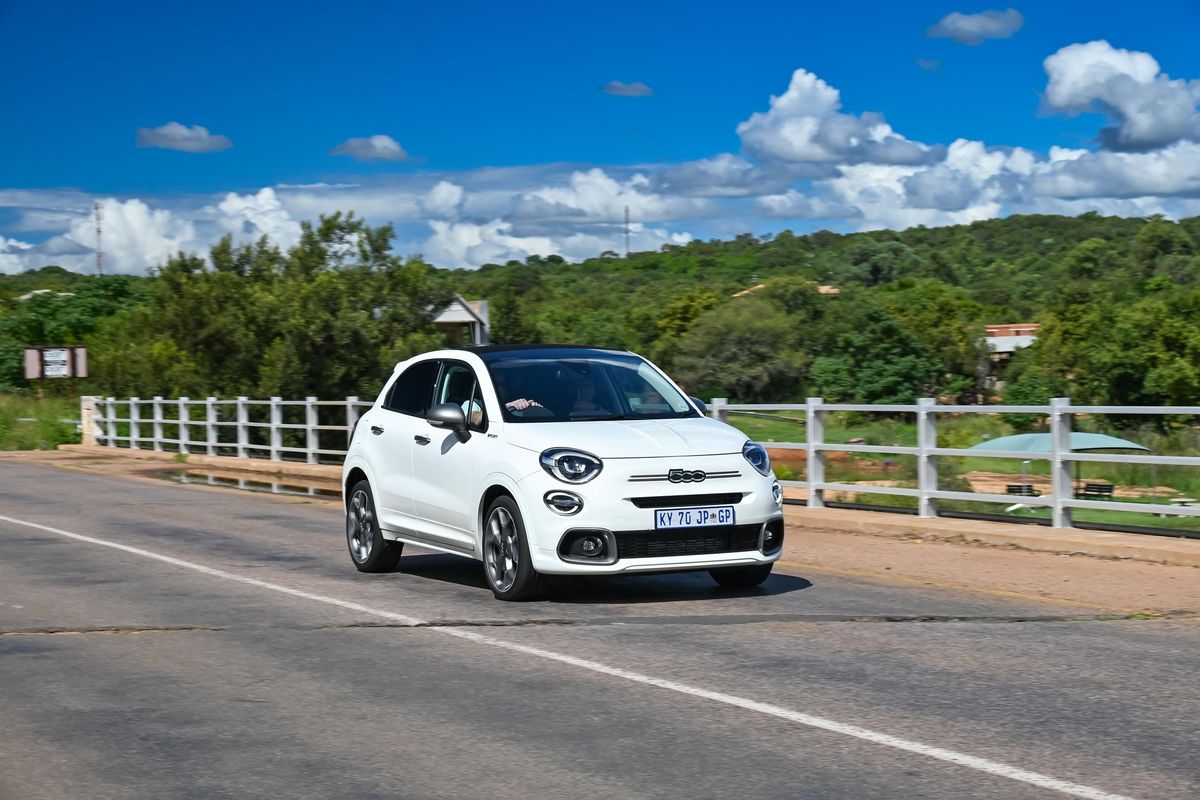
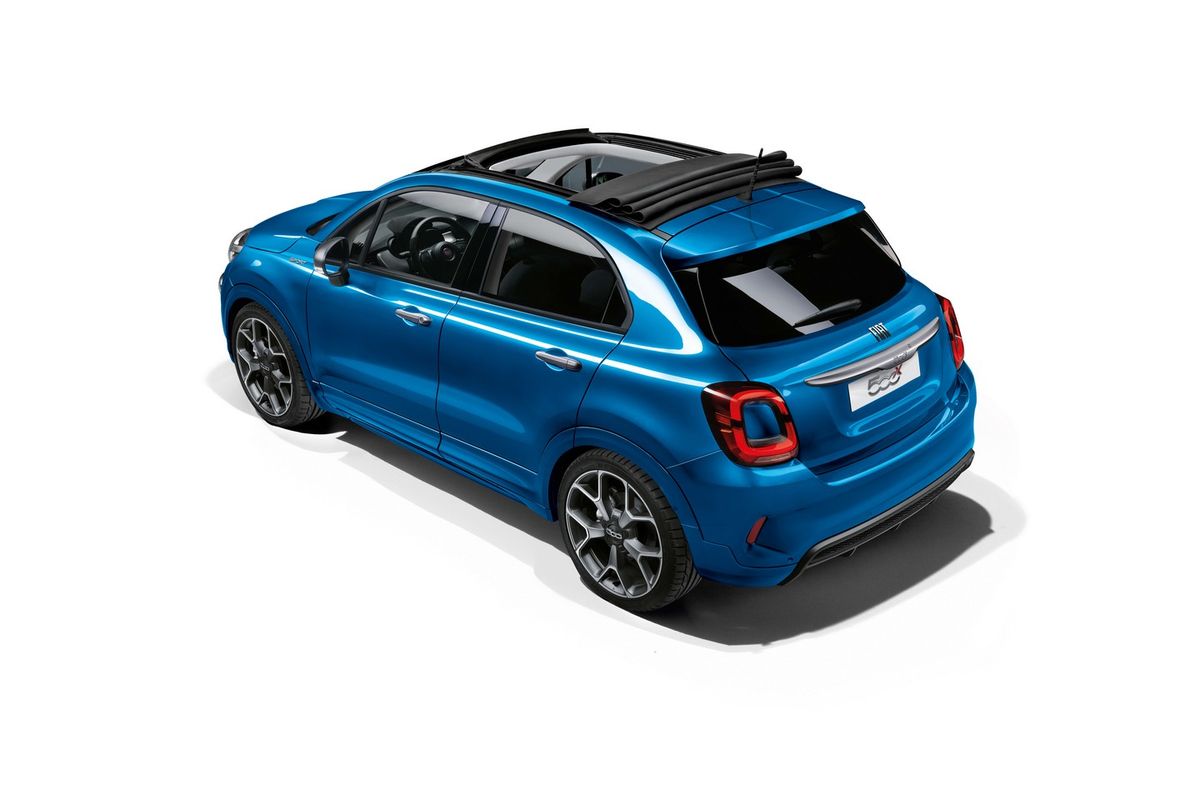
The Cult and Connect trim levels have been removed from the 2023 Fiat 500X range. The line-up now comprises the Cross, Sport and a new addition, the Extended Soft Top (EST). Essentially, the flagship EST offers a convertible-like experience, with a canvas roof that opens the entire length of the cabin.
The fabric roof can be opened in just 15 seconds when the vehicle is stationary or travelling at up to 100 kph. It genuinely covers almost the entire roof area; while most models at this price point offer either a sunroof or a panoramic roof, the fully-opening roof certainly is certainly novel (and an acquired taste).
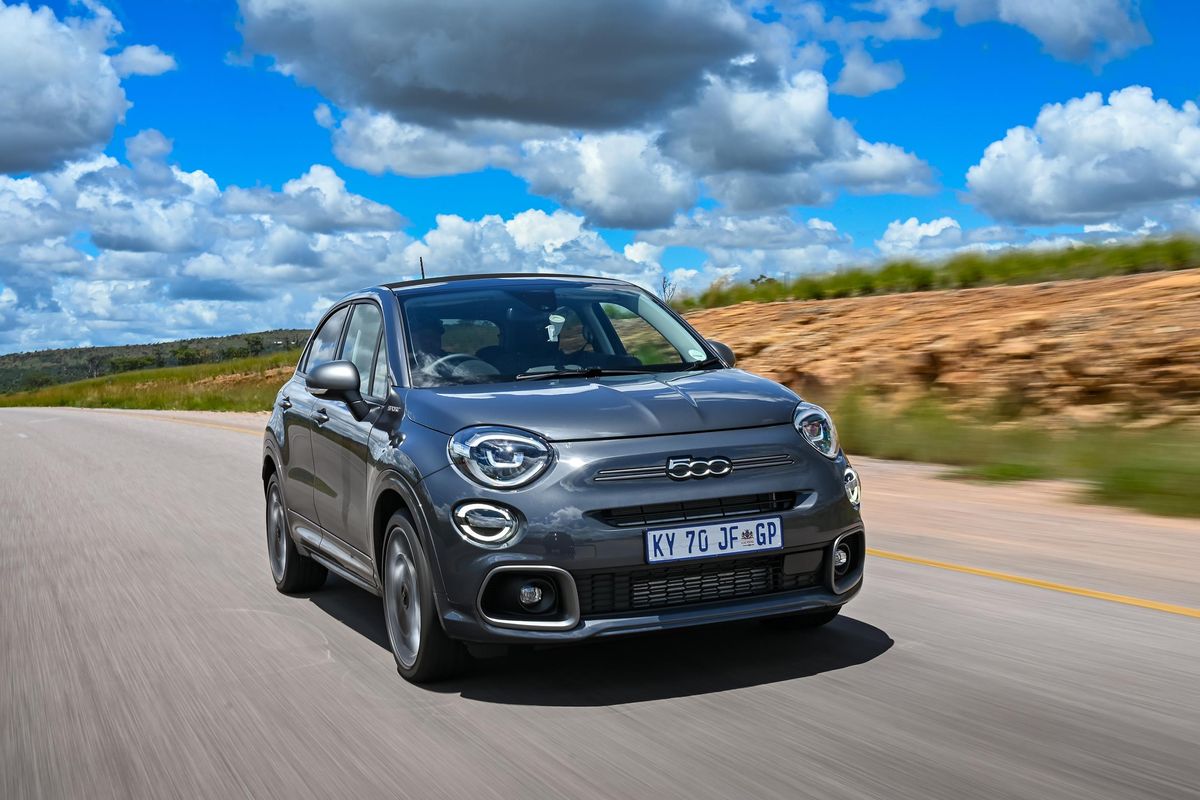
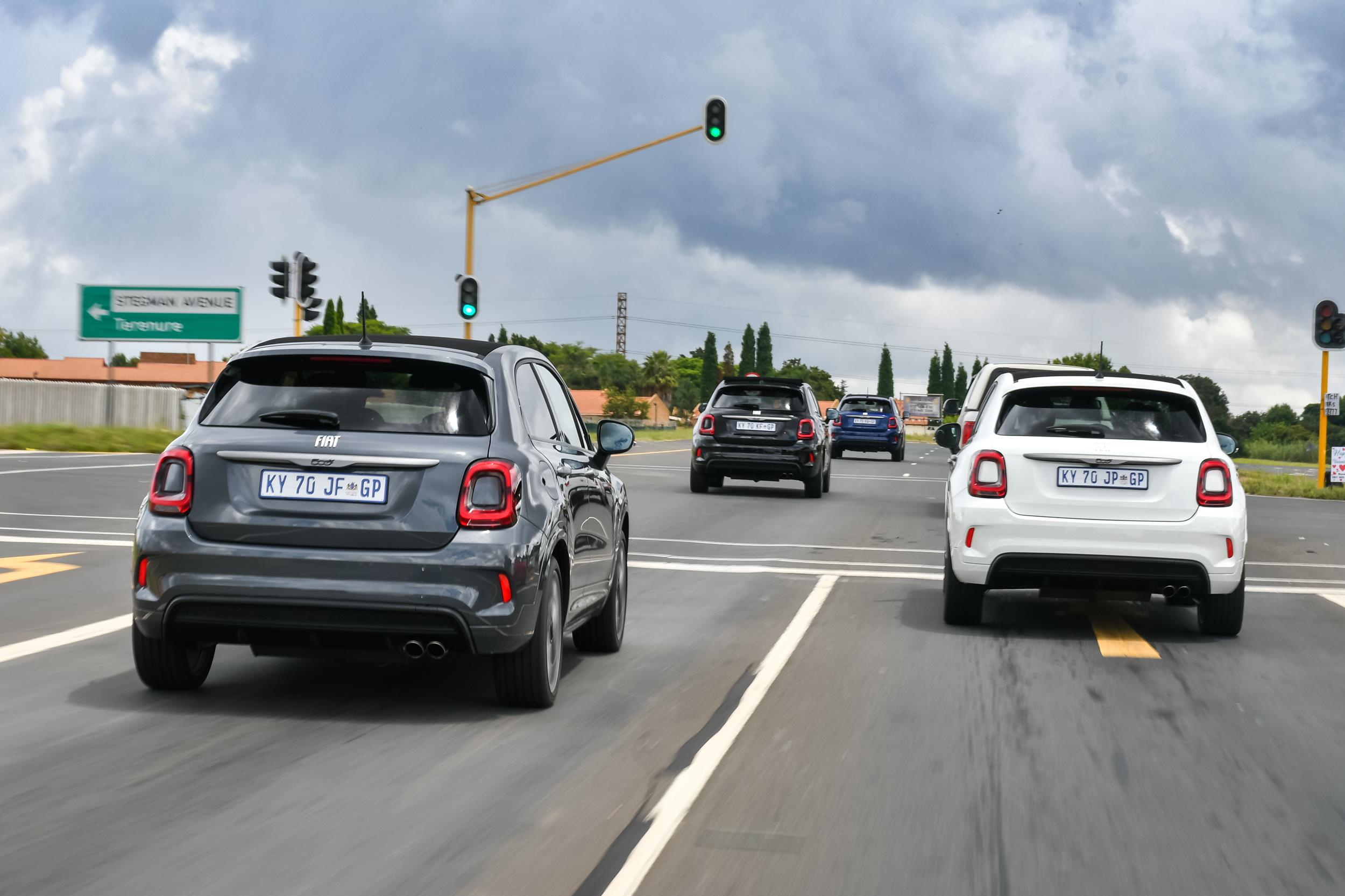
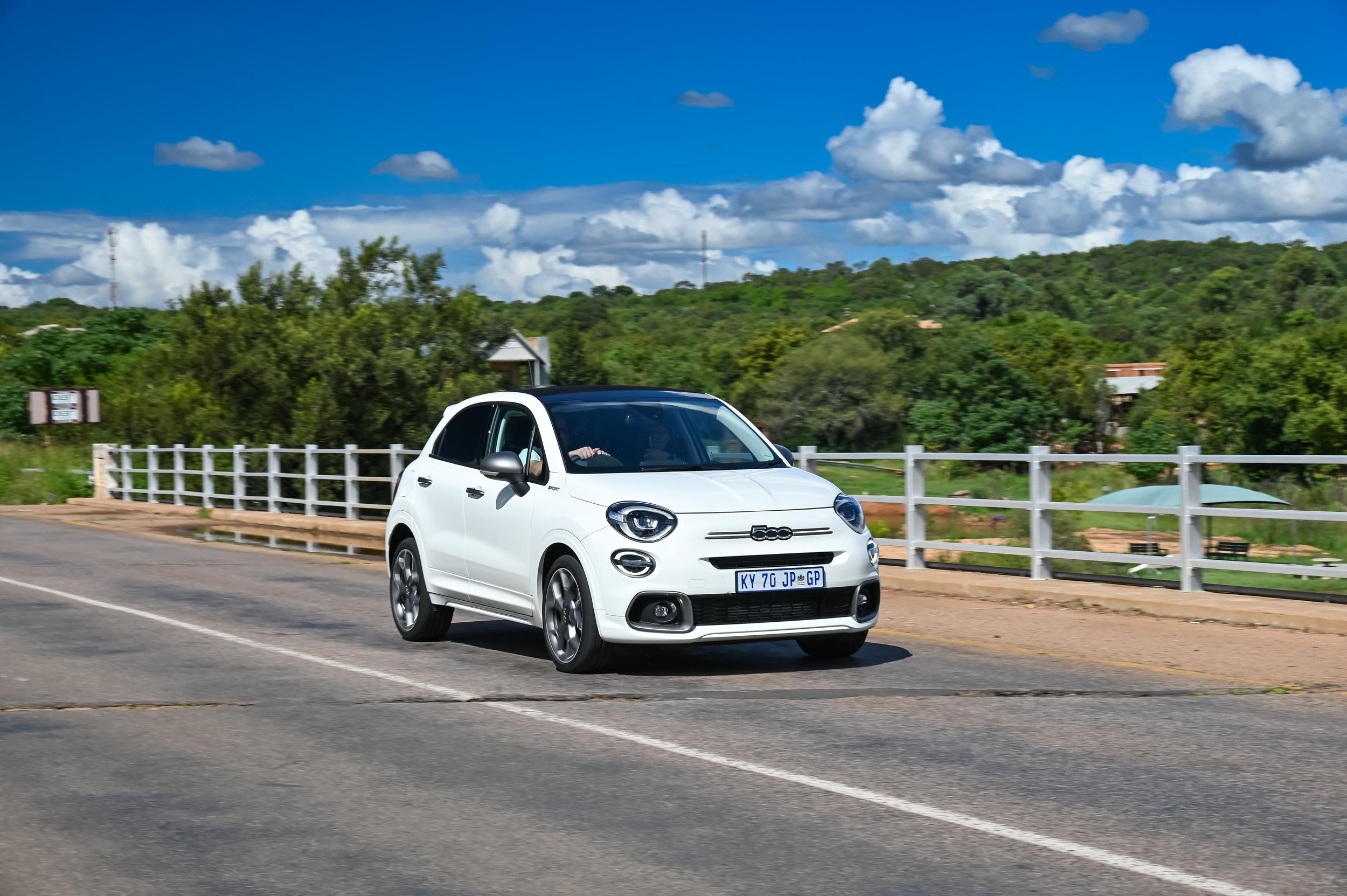
It’s still a great-looking vehicle after all these years
The entire range is powered by the tried-and-tested 1.4-litre 4-cylinder turbopetrol engine, which has peak outputs of 103 kW/230 Nm and is paired with a 6-speed automatic transmission. The model is front-wheel driven and Fiat claims that 500X derivatives will, on average, consume 5.7 L/100 km.
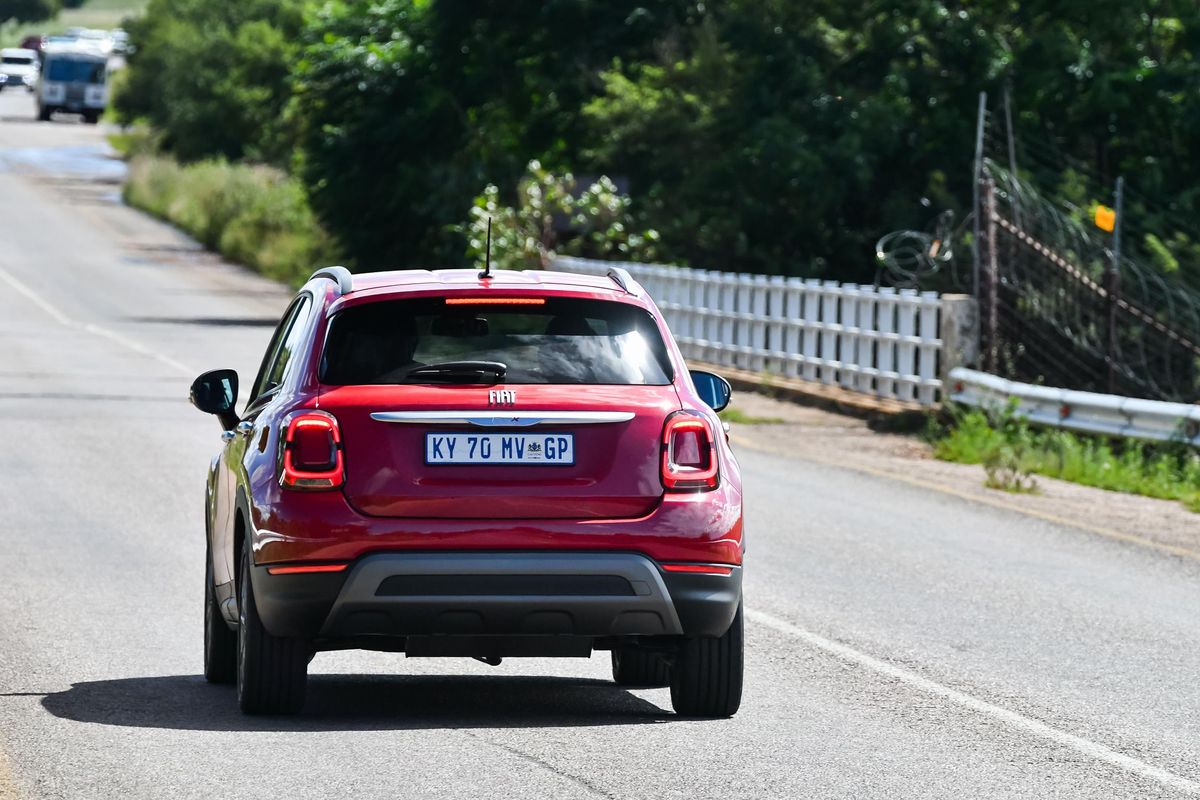
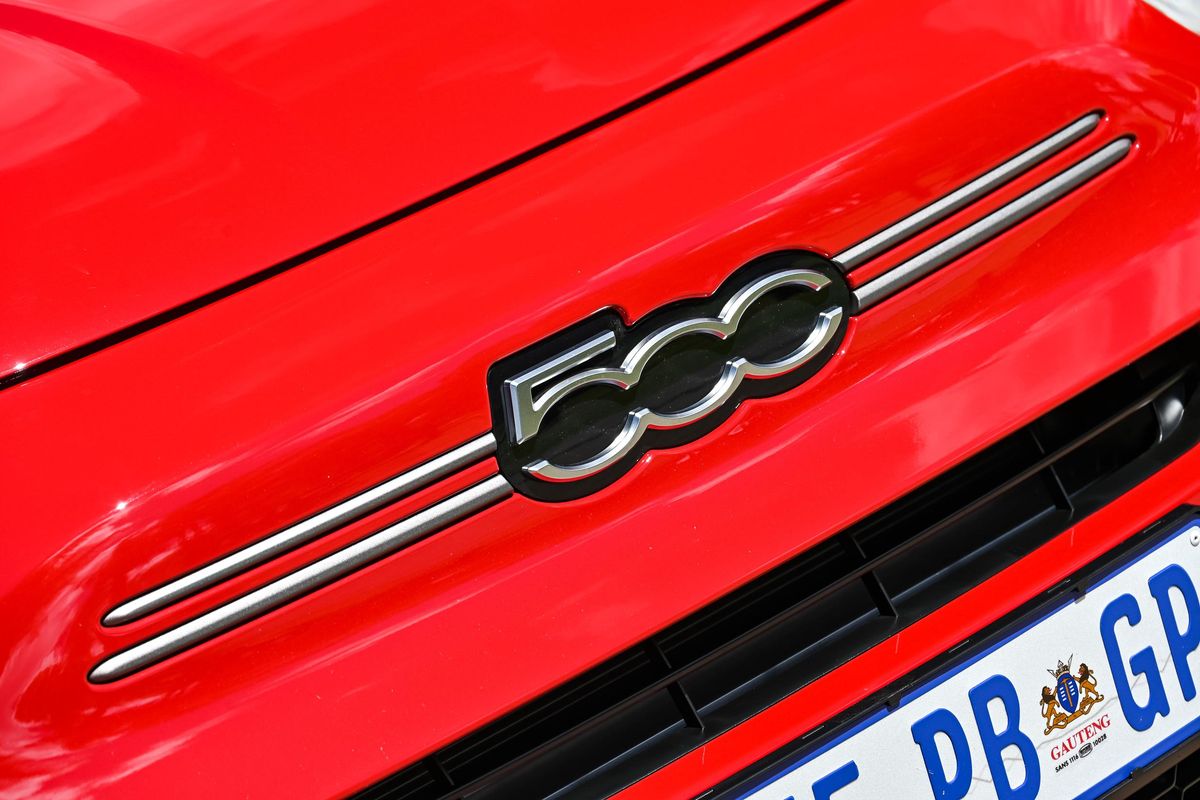
You can distinguish the latest-spec Fiat 500X from its predecessors by its revised front-end execution – the Fiat badge has been replaced with a bold 500 logo. Given the rich heritage of the Fiat 500, there’s certainly merit in suggesting that “500” (like Land Cruiser) is strong enough to be a standalone brand.
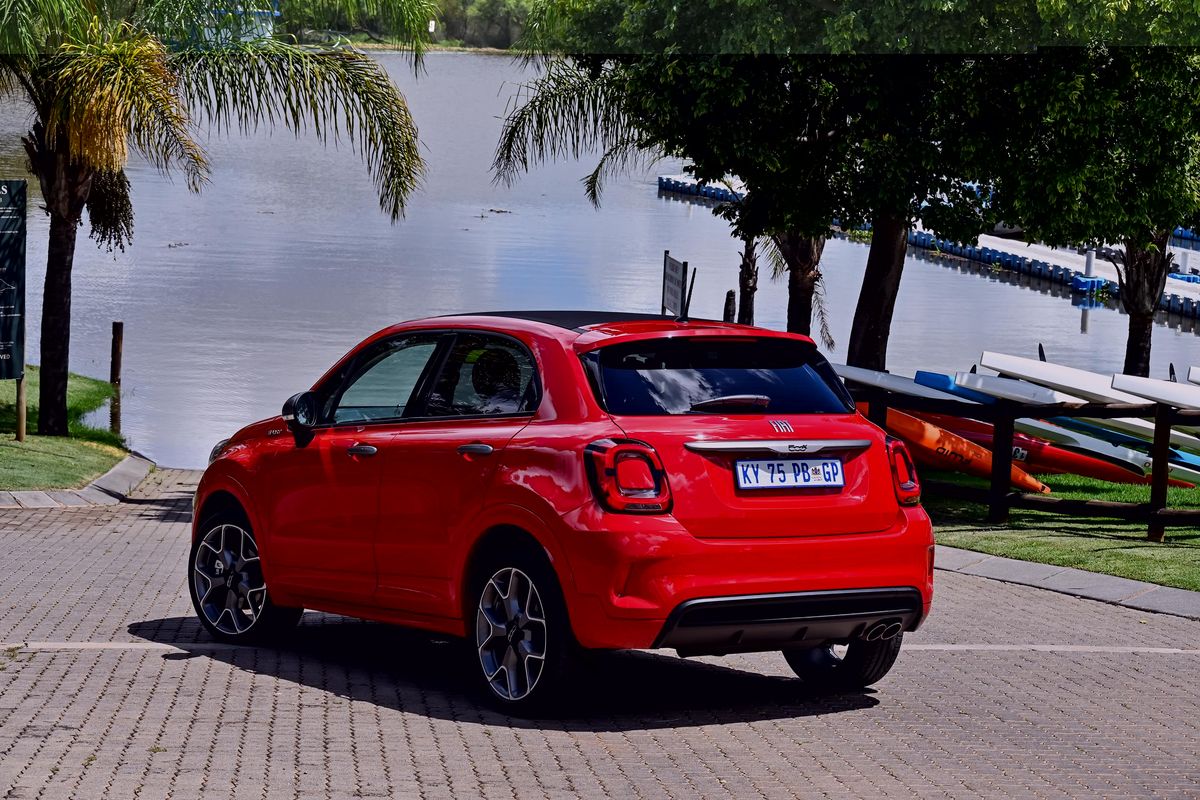
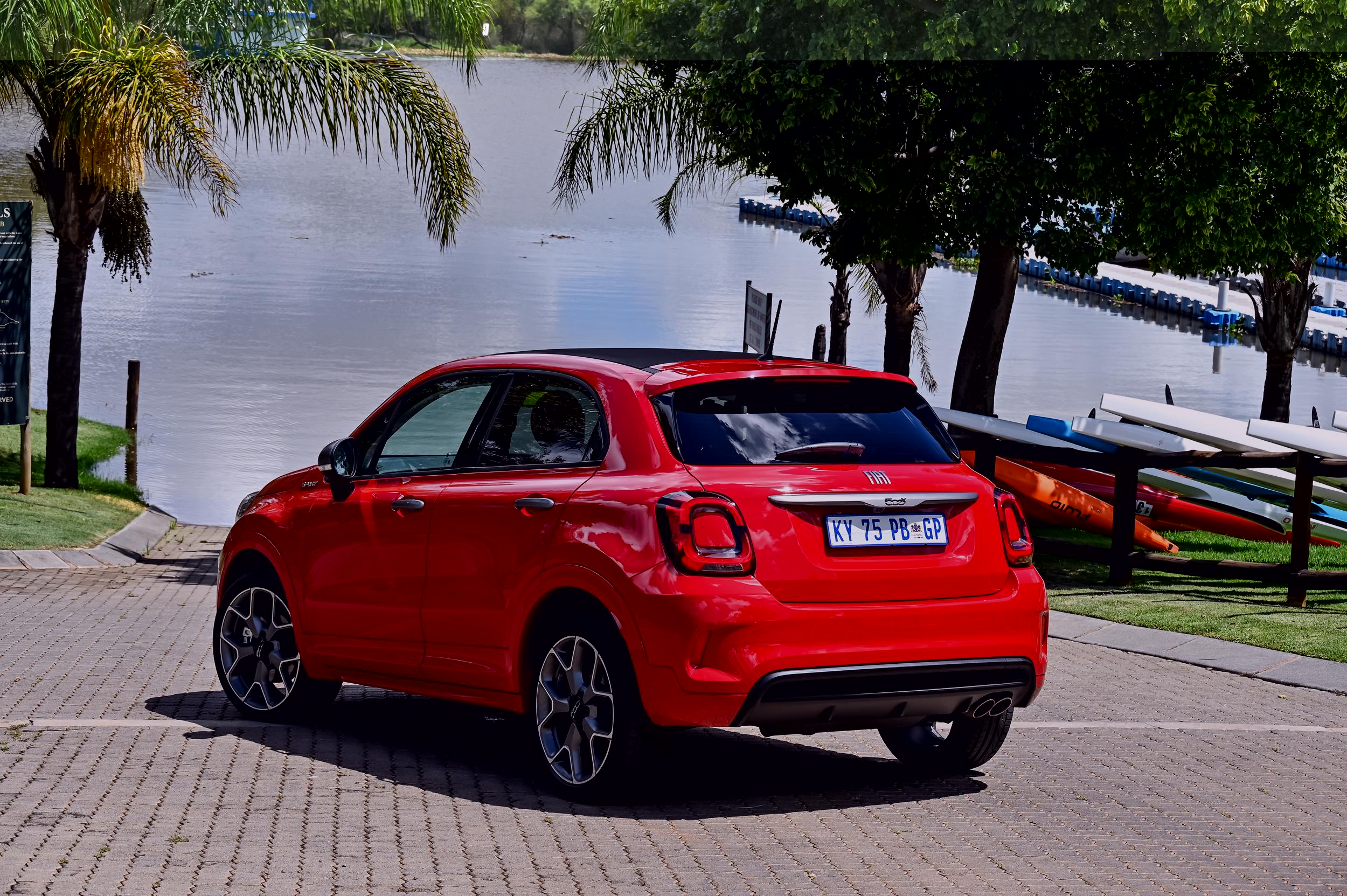
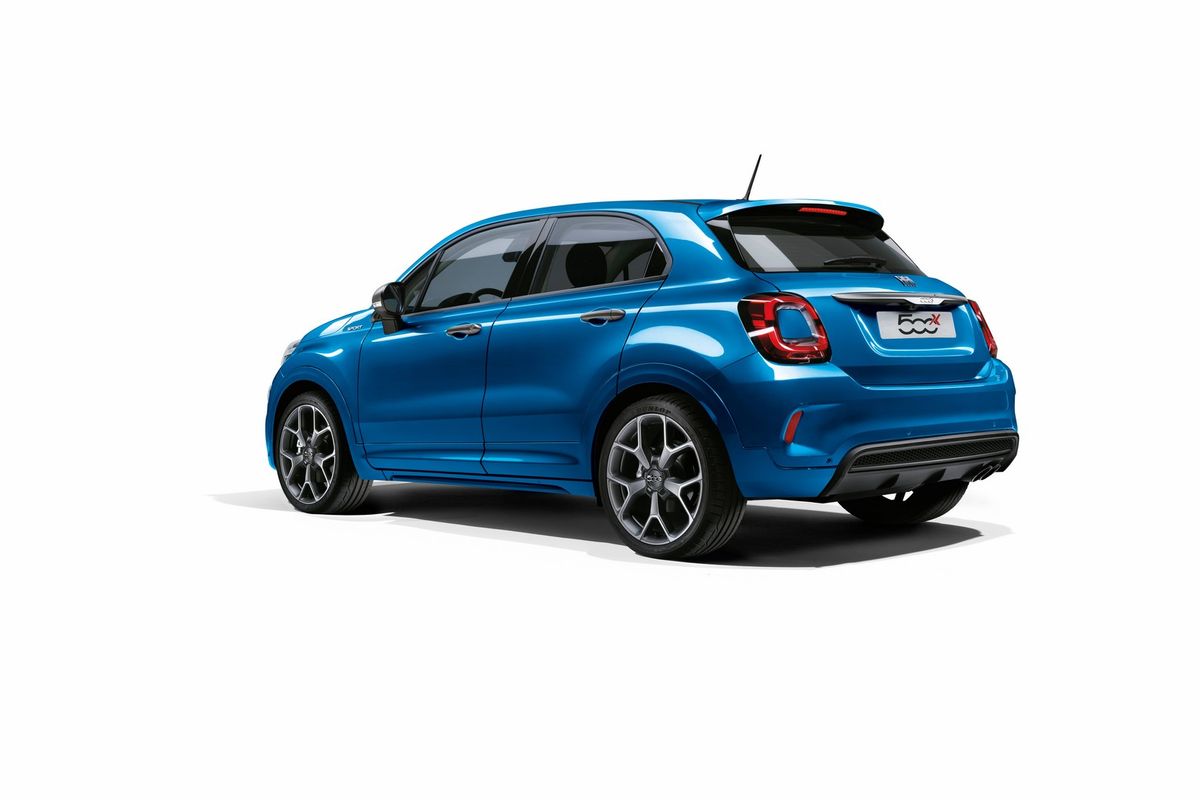
The Sport features 19-inch wheels and a matching body kit
What’s it like to drive?
First impressions count for a lot and the Fiat 500X still looks fantastic, especially when clad in a bold paint finish. In Sport trim, the car looks especially purposeful, replete with colour-coded bodywork.
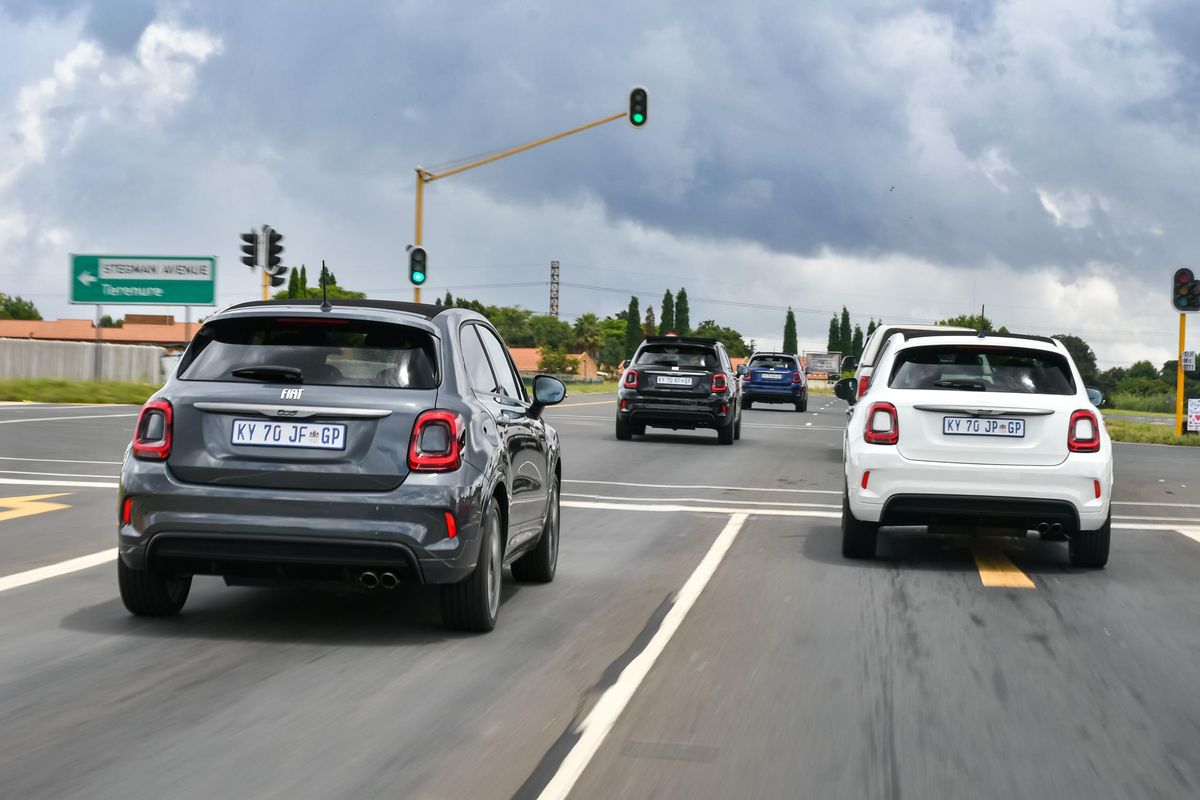
Our launch route incorporated various road surfaces, which ranged from a reasonably well-maintained highway to some horrendously potholed back roads that were, frankly, barely fit to support mechanised transport. Most of the potholes resembled wells; if we hit one, there was a genuine risk of cracking a rim.
Suffice it to say, we needed to execute a number of evasive driving manoeuvres to keep the venerable Italian small crossover out of harm’s way, so we were thankful for the Fiat’s steering setup. Although it’s not the most direct – in fact, it’s a bit vague – it was responsive and light enough to make the 500X quite darty. The lightness is great for round town, where narrow streets and tight parking spaces are common.
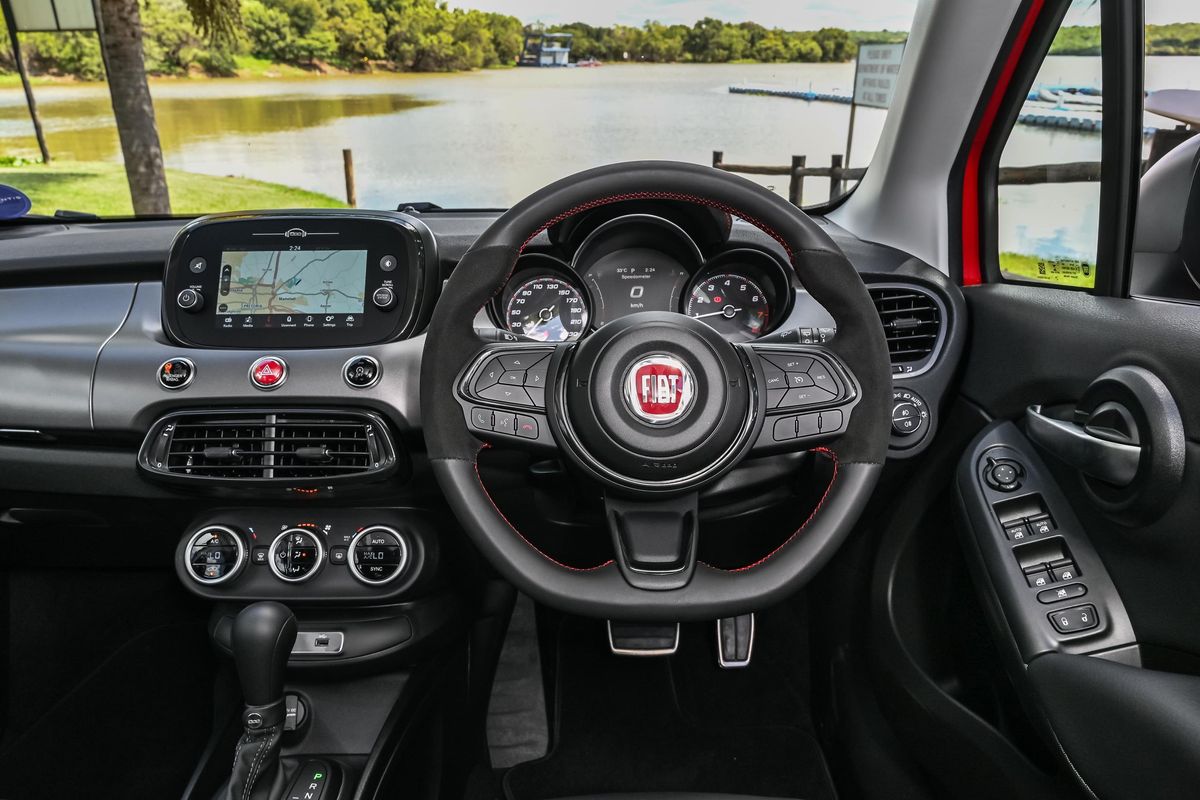
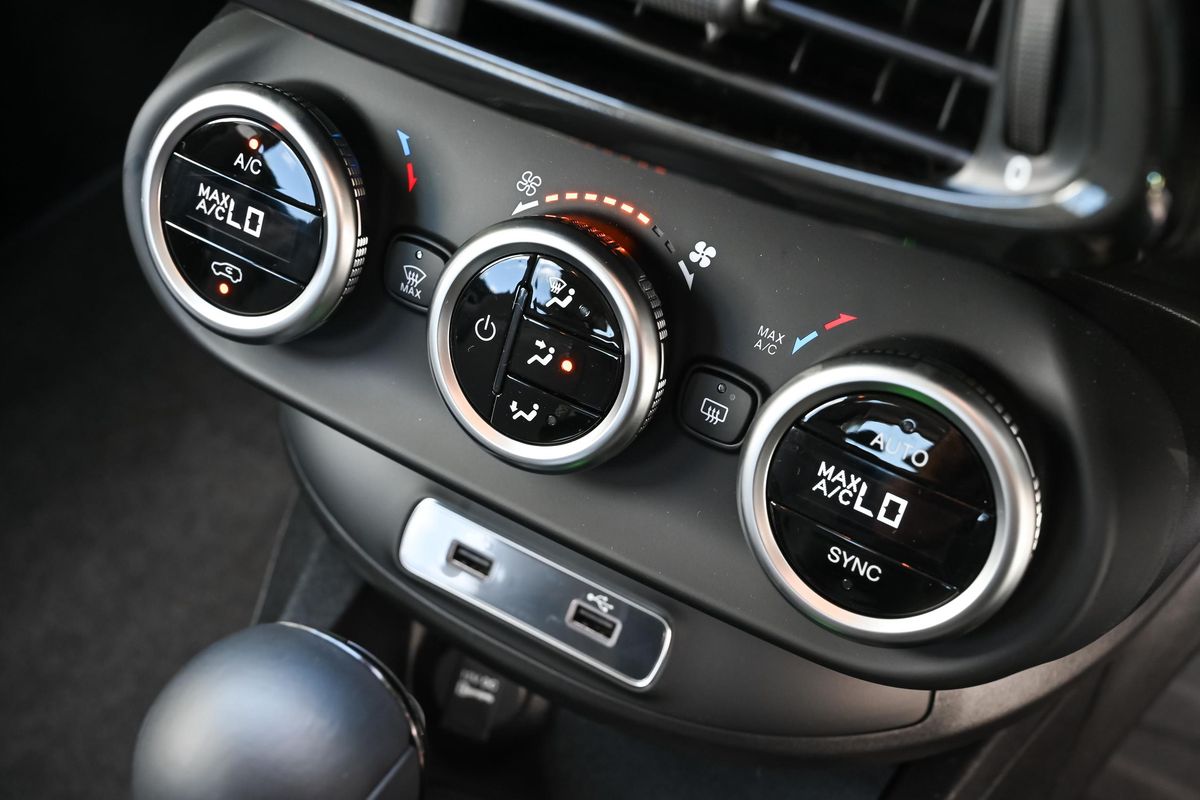
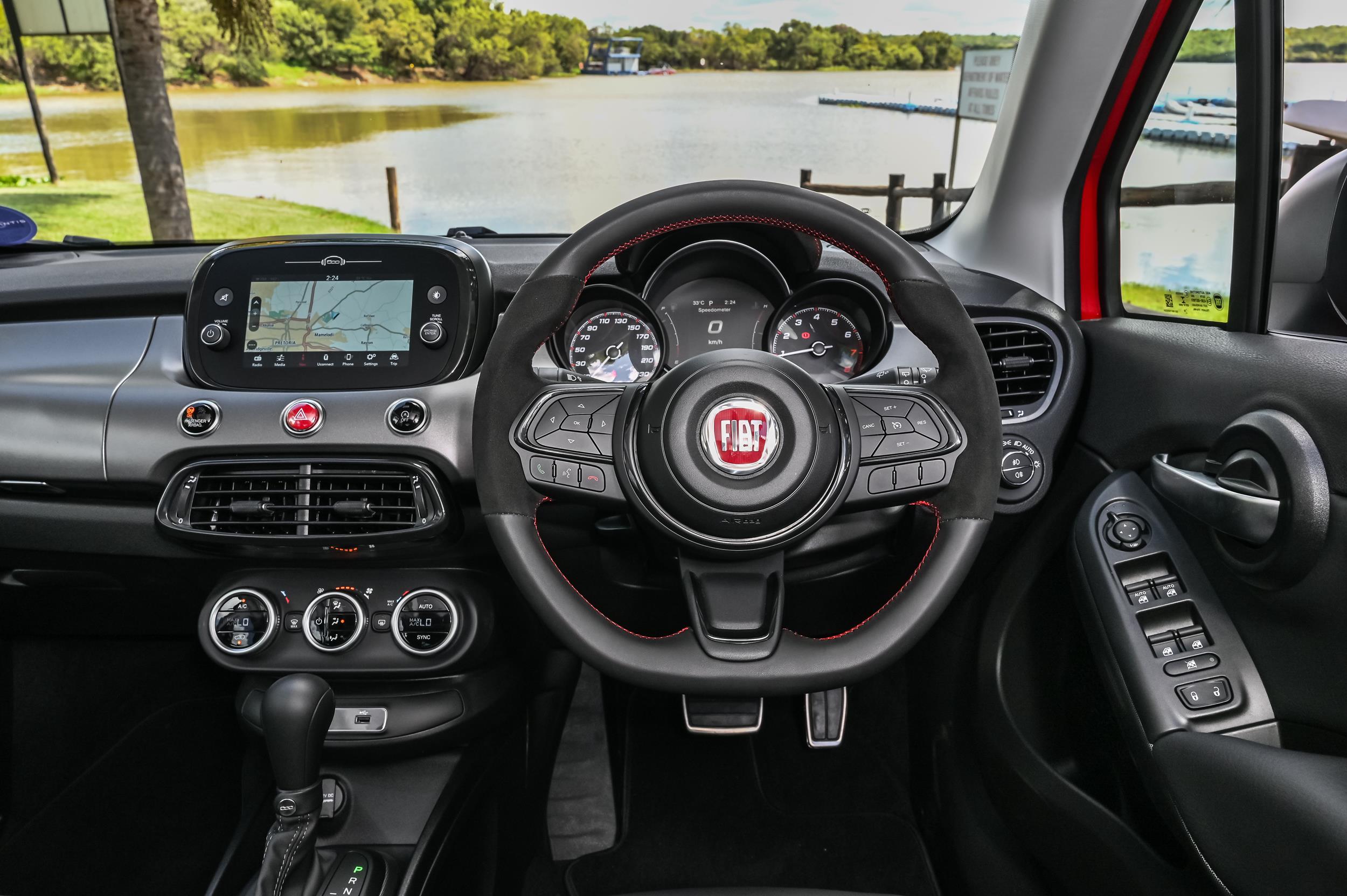
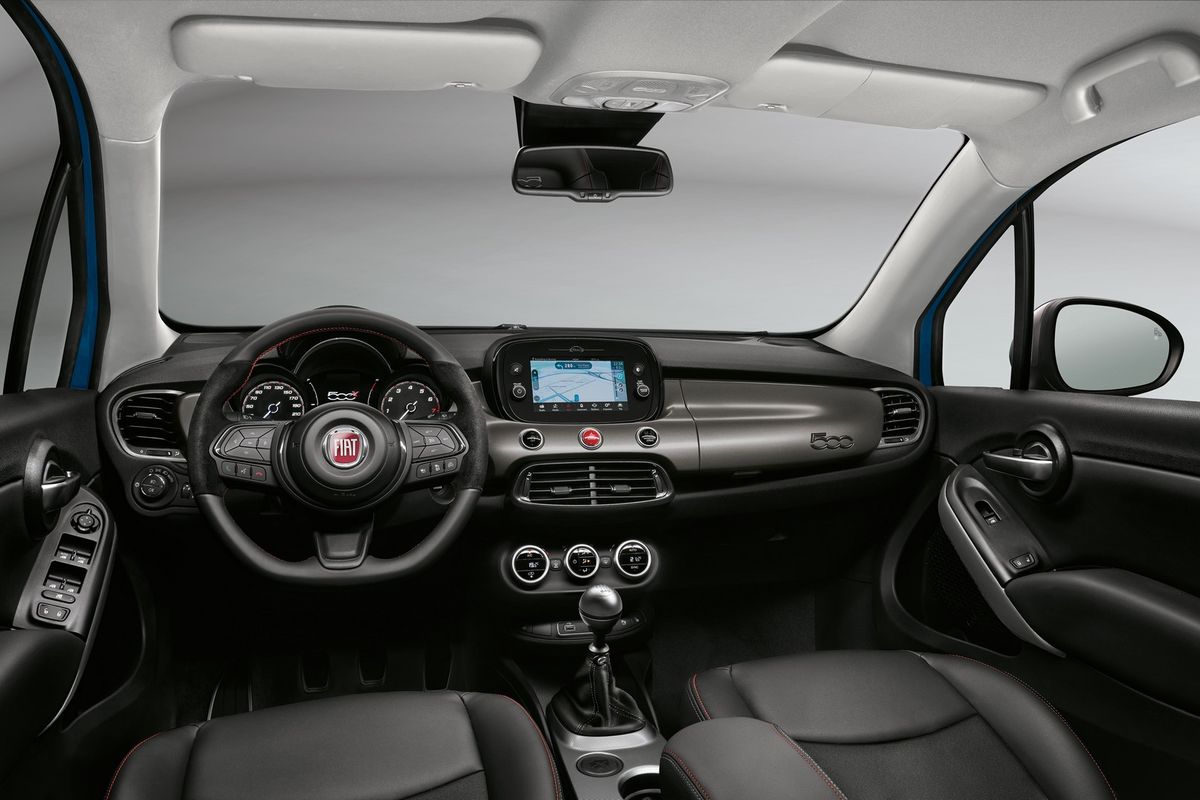
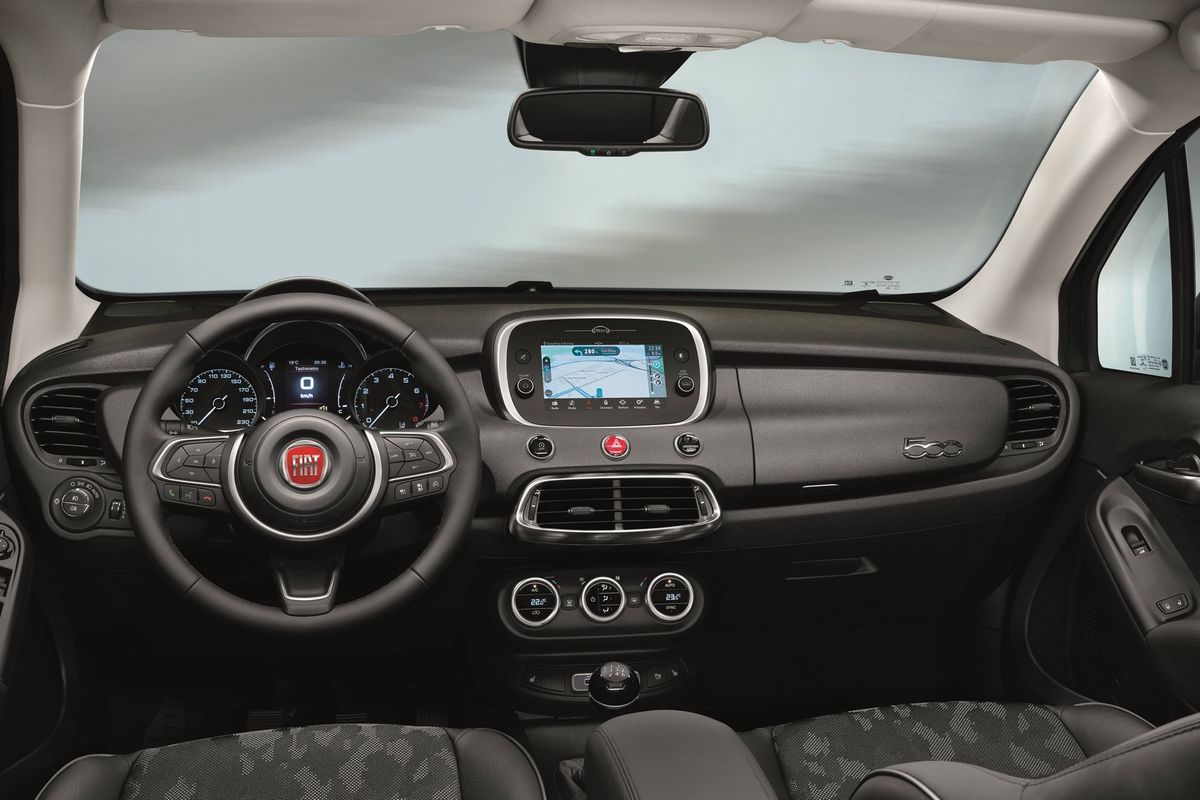
The interior has some personality and feels reasonably well assembled
If you’re looking for a sporty-ish driving experience, the Fiat 500X isn’t the best in its class. Granted, models in this segment don’t prioritise driver engagement, but the Mazda CX-30 and Volkswagen T-Roc are nicer to drive. The latter’s drawback is that you need to spec it up, which further inflates its price.
The Fiat 500X’s ride quality is a mixed bag. In Cross trim, the vehicle rides on 18-inch alloy wheels, while the Sport version wears 19-inch units. While the suspension is relatively pliant on the open road and should facilitate easy long-distance cruising, it tends to fidget and never absorbs road imperfections entirely. Plus, the Sport rides harder than what we’d deem as acceptable for this class of vehicle.
The powertrain’s figures seem quite adequate. We drove both Cross and Sport derivatives, but their odometres had very low kilometre readings. Consequently, the brand-new cars’ powertrains felt a trifle lethargic, which was surprising – we recall that the 1.4-litre turbopetrol can be quite energetic when it needs to be. We’re keen to drive the 2023 Fiat 500X again, once the test units have been “run in” more.
Trust us, once its 103 kW/230 Nm mill hits its straps, the Fiat 500X can deliver a solid turn of pace, but be mindful that the forced-induction engine’s note will get coarse when you rev it beyond 4500 rpm.
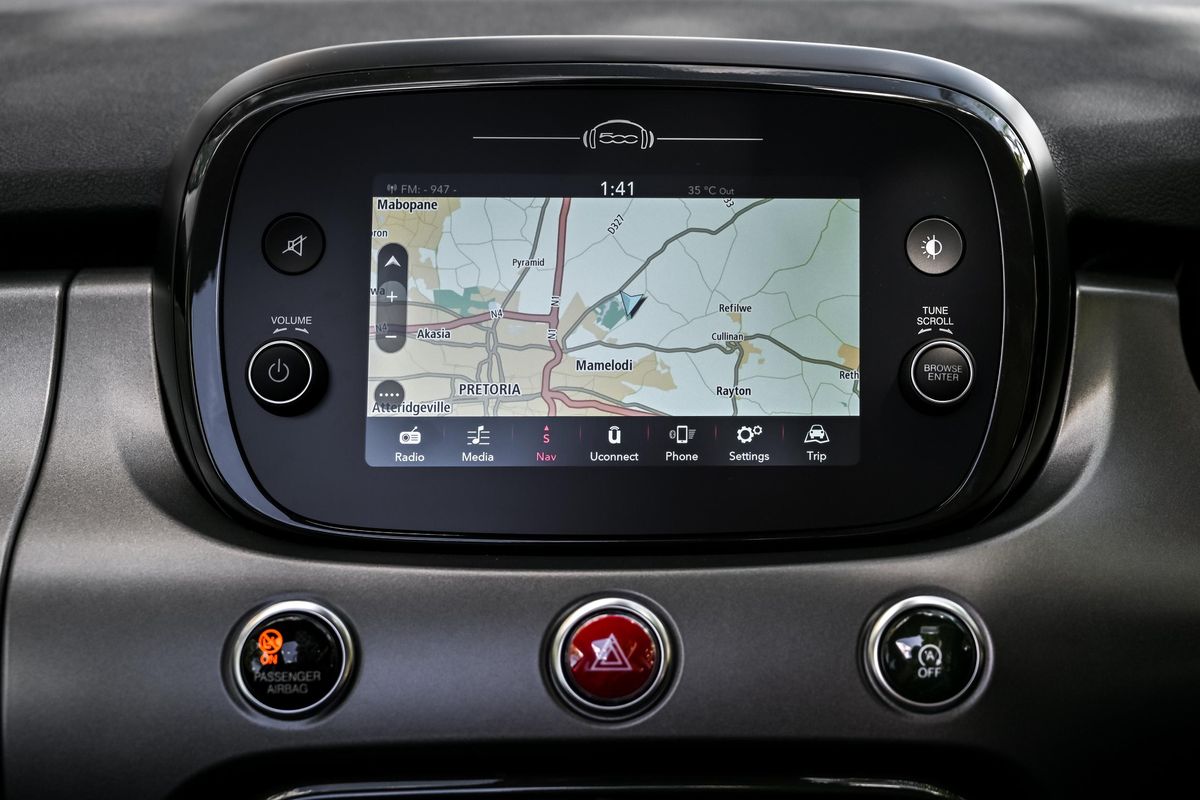
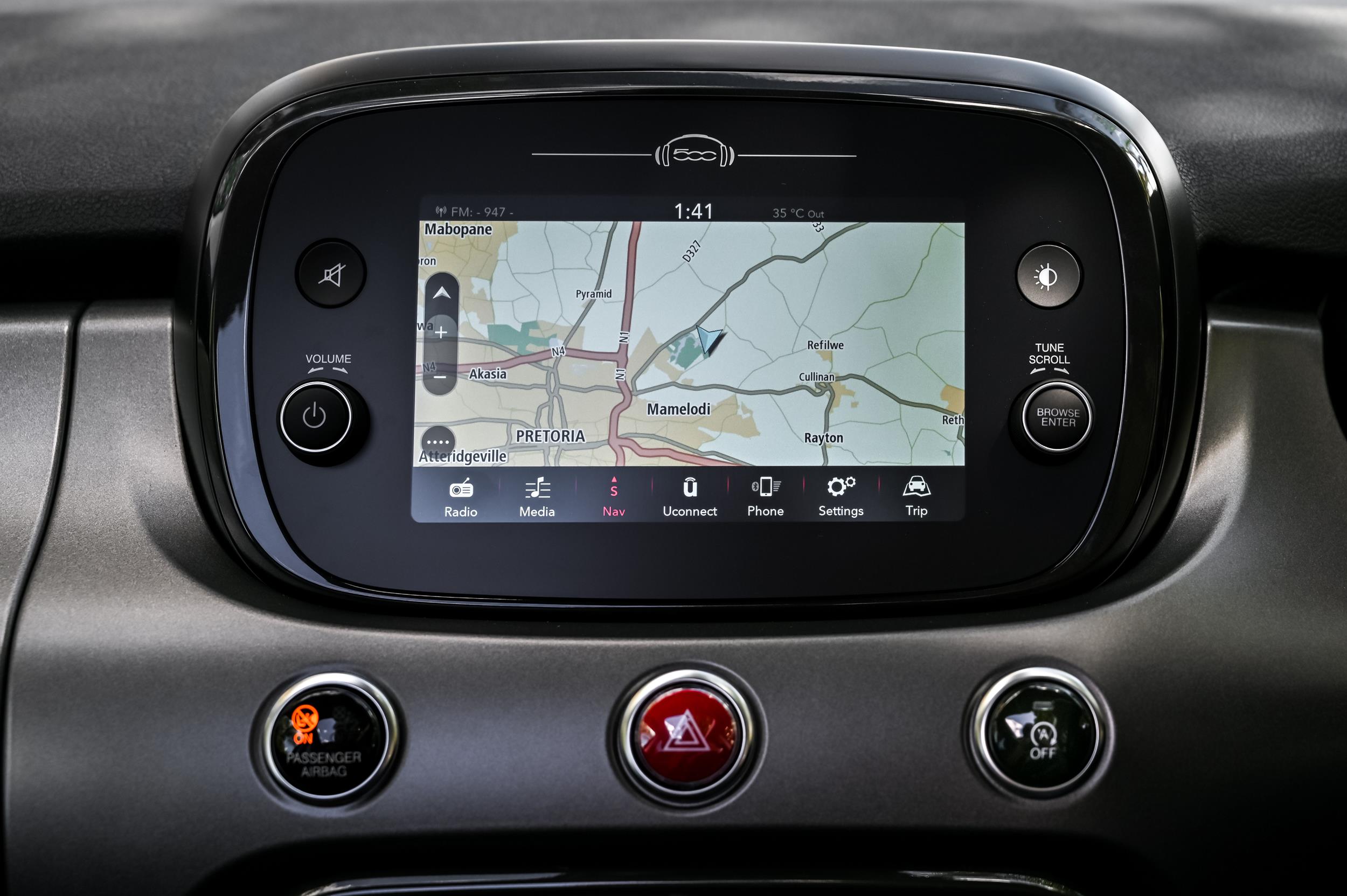
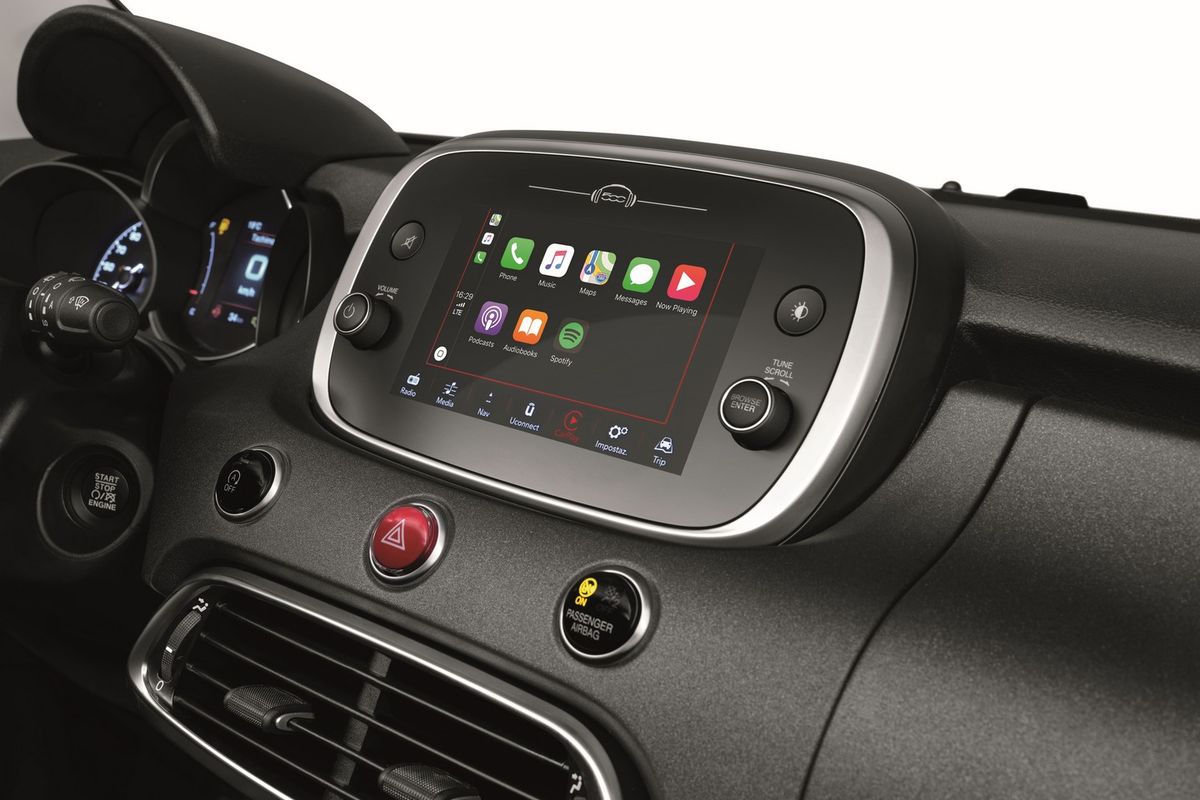
Another gripe is that while the cabin looks acceptably attractive, feels reasonably well-made and is fitted with virtually all the features that one may expect to find at the price point, the Fiat’s fascia is equipped with a tiny infotainment touchscreen. Yes, it’s functional and usable, but a 7-inch screen is laughably small by modern standards; it takes the pleasure out of Apple CarPlay and Android Auto functionality.
The infotainment system has all the mod cons, but the screen is too small
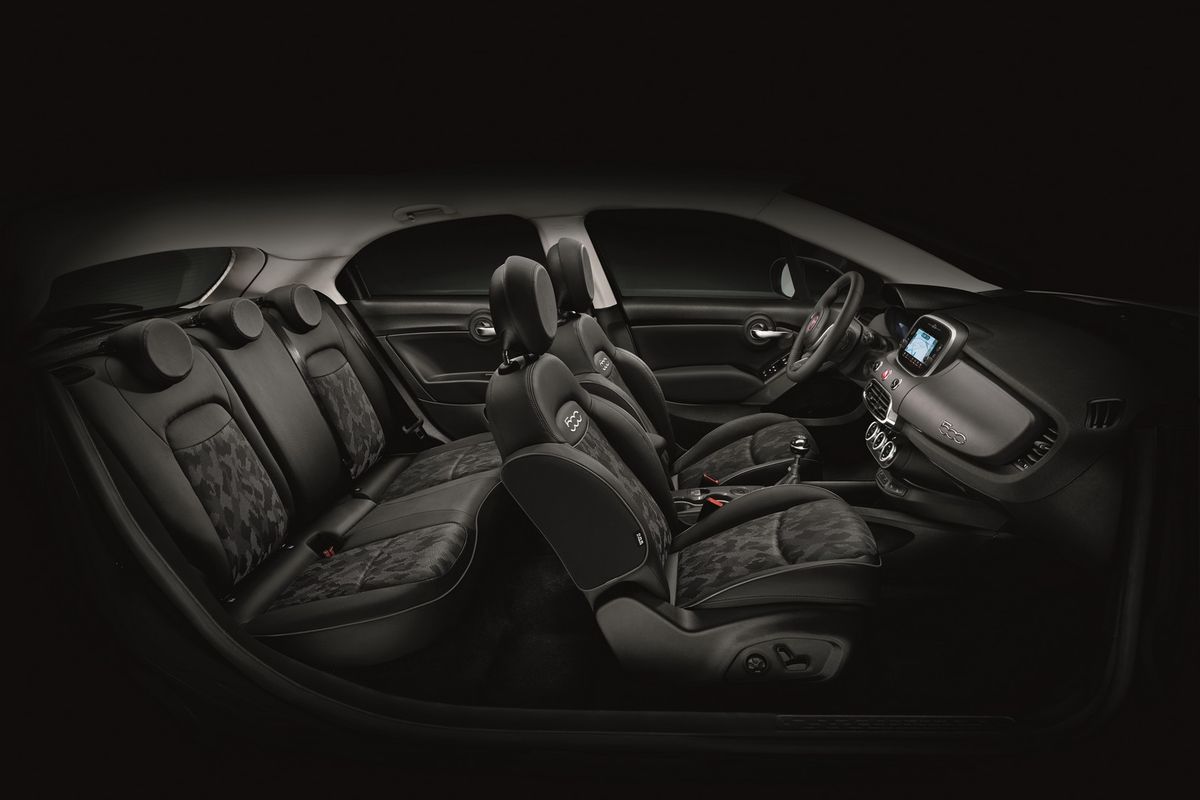
Practicality is not the 500X’s strong point either – there aren’t enough cupholders or storage spaces for phones and keys. As for space in the 2nd row, adults will find the leg- and headroom severely limited.
How much does the Fiat 500X cost in South Africa?
Fiat 500X Cross
R509 900
Fiat 500X Sport
R560 900
Fiat 500X Sport EST
R580 900
The Fiat 500X is sold with a 5-year/100 000 km warranty, 5 years’ roadside assistance and a 3-year/60 000 km service plan.
Summary
Minor revisions and the novelty of a pseudo-convertible experience (courtesy of the folding roof on the newly introduced flagship EST derivative) have helped keep the Fiat 500X in the news, but in reality, it’s a middle-of-the-pack offering. Despite the tweaks, one can’t help but notice that the Italian brand’s small crossover is showing its age; by modern standards, a 9-year-old passenger car model is a dinosaur.
It’s certainly a great-looking vehicle, which helps, but sadly, the new-vehicle market is cutthroat at this price point and the Fiat 500X falls short in several respects. Those looks can only carry you so far, and there are many rivals that offer more space and features, in more modern packages, at better prices.
Audi TT Final Edition Not for SA
After 25 years, the end of the road is approaching for the Audi TT, with the Ingolstadt-based automaker having revealed the fittingly named Final Edition…
The Audi TT nameplate has been around for 25 years, but its time is fast coming to an end. Yes, the German company has confirmed production of this model is drawing to a close, while also revealing the TT Final Edition.
UPDATE: Audi South Africa has confirmed to Cars.co.za the Final Edition is specific to the United Kingdom, saying “in South Africa, we’ve chosen to keep the TT offering to the most exciting versions, the S and RS models. With the RS offering a very high level of specification, exceptional performance and excellent value, it’s understood why the RS model is the preferred model in the range. For this reason, there are no plans to introduce a run-out edition of the TT. The final year of sales for this model will be 2024, with the end of production being in October this year [2023]”.
The badge was introduced to the world at the 1995 Frankfurt Motor Show in the form of the Audi TT concept. Around 3 years later, the production version of the Mk1 model (codenamed Type 8N) was unveiled, marking the start of a run that would last a quarter of a century.
In 2006, the 2nd-generation model (Type 8J) hit the market, before the current Mk3 TT (Type FV/8S) made its debut in 2014. All 3 generations of the 2-door model – which is offered in coupé and roadster guises – were available in South Africa.
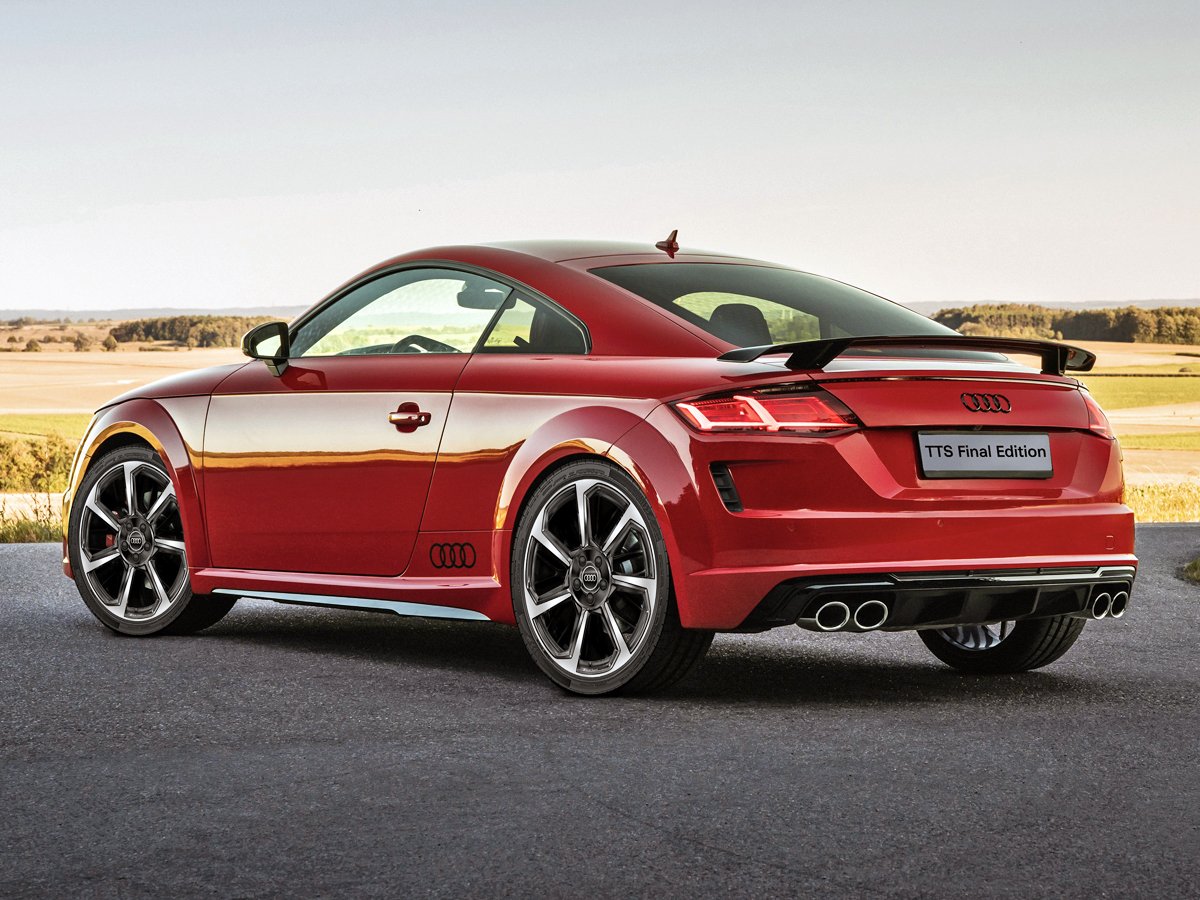
Final Edition models feature a black finish for items such as the badging and rear spoiler.
The current local range comprises a trio of derivatives (the TT S coupé, TT RS coupé and TT RS roadster), with prices running from R894 100 to R1 267 100. As a reminder, the TT S employs a turbocharged 2.0-litre, 4-cylinder petrol engine sending 228 kW and 380 Nm to all 4 wheels through a 6-speed dual-clutch transmission. The RS, meanwhile, uses Audi’s turbocharged 2.5-litre, 5-cylinder petrol mill, which delivers 294 kW and 480 Nm to all 4 corners via a 7-speed dual-clutch cog-swapper.
In 2022, 106 units of the TT were registered in South Africa, with November proving the strongest month of the year (with 14 sales). January 2023 saw a further 11 units added to the TT’s local tally.
So, what makes a Final Edition? Well, available in Europe in TT and TT S form (in the coupé and roadster body styles), the special-edition is distinguished by what Audi describes as a high standard specification along with “exclusive design touches”.
As standard, the Final Edition features the Ingolstadt-based automaker’s black styling pack, comprising a dark finish for items such as the badges, side-mirror caps, tailpipes and fixed rear spoiler. Roadster derivatives furthermore benefit from rollover bars and a wind diffuser finished in black.
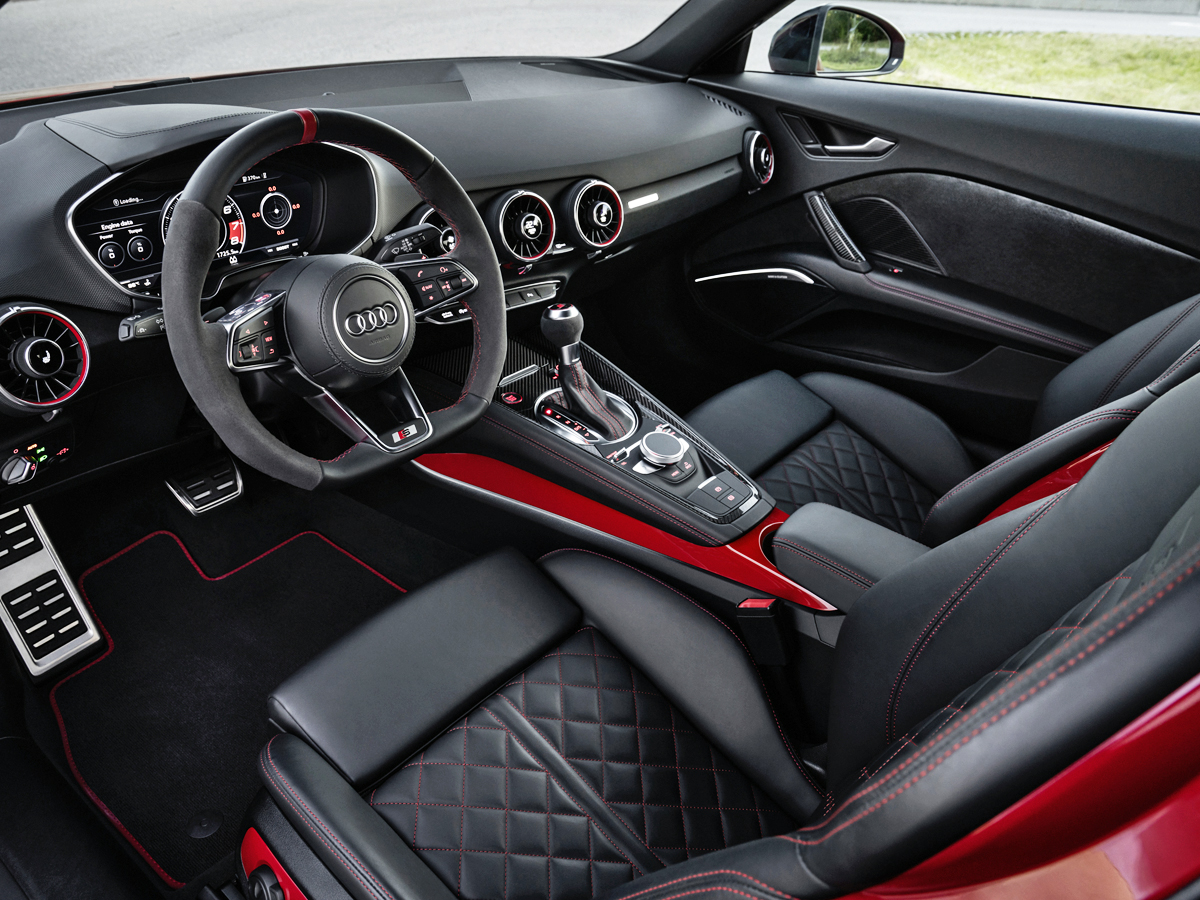
Note the Alcantara-trimmed steering wheel, complete with red stitching and a red 12 o’clock marker.
On TT versions, the red brake callipers are framed by 20-inch 5-spoke Y-style matt-grey diamond-cut alloy wheels, while TT S variants ride on Audi Sport 7-spoke rotor anthracite-black alloys with a gloss turned finish. Buyers in Europe have the choice of Tango Red, Glacier White and Chronos Grey metallic paint.
Inside the Euro-spec models, you’ll find a leather finish for the door armrests, pull handles and trim on the centre console, while the model-specific Alcantara-trimmed steering wheel comes with red stitching and a red 12 o’clock marker. The seats, too, have Alcantara elements and feature red stitching, echoed by the red piping adorning the floor mats. The coupé body style furthermore gains Tango Red inserts on the seats, air vents and centre console.
In addition, the Technology Pack comes standard on TT Final Edition models in Europe, adding MMI Navigation Plus with MMI Touch and Audi Connect Infotainment Services. TT S versions also score the Comfort & Sound Pack, bringing a Bang & Olufsen sound system, advanced key, reversing camera and a full suite of parking sensors.
We’ve asked Audi South Africa if there are plans to bring any TT Final Edition models to local shores and will update this story once we hear back.
Toyota Urban Cruiser Hyryder: Here’s what you can expect
The outgoing Toyota Urban Cruiser will be replaced by the larger Hyryder in South Africa, though it won’t wear that badge in the local market. Here’s a look at what we can expect…
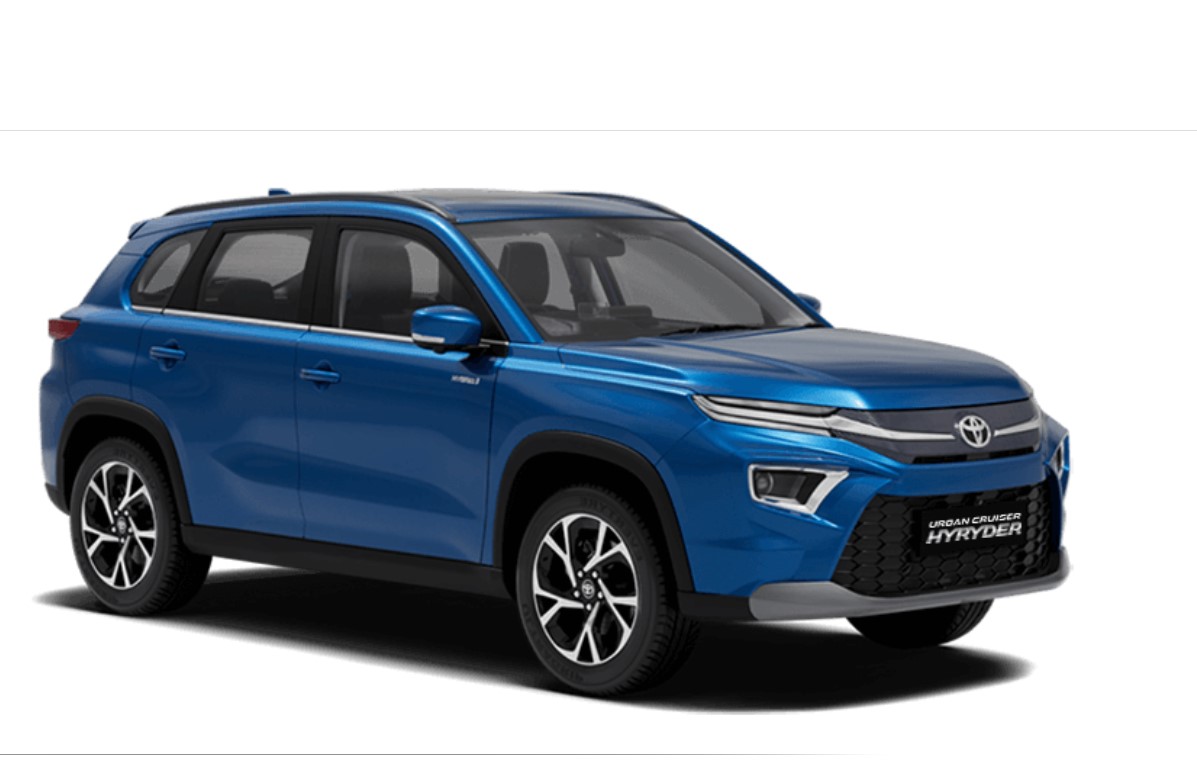
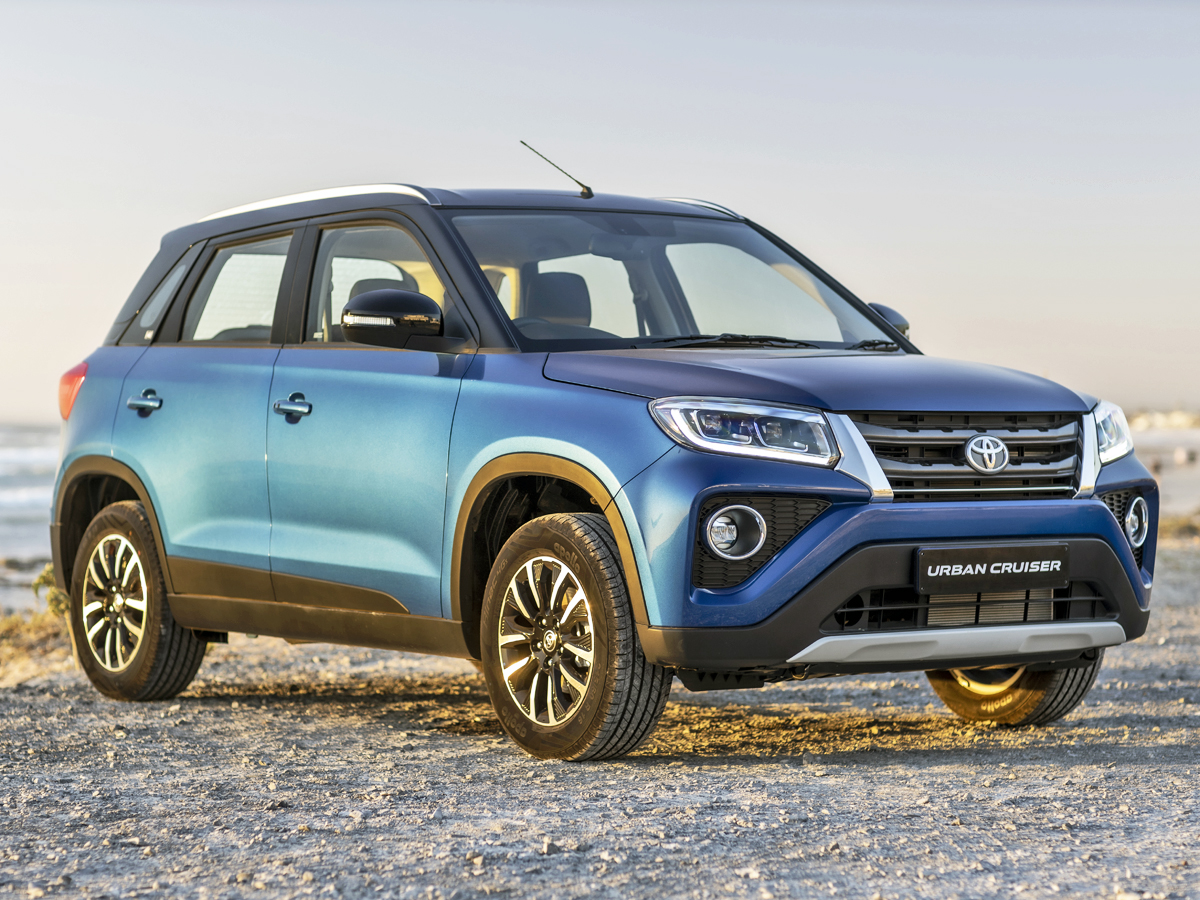
Toyota has finally confirmed our suspicions that the Hyryder is coming to South Africa, announcing the latest Indian-built crossover will replace the outgoing Urban Cruiser (and indeed inherit its predecessor’s name) in the local market.
The Japanese firm’s local division made the announcement at its 6th annual State of the Motor Industry (SOMI 2023) event, held at Kyalami in Gauteng. The new vehicle was displayed on stage at the event, where Toyota SA Motors also revealed its new Vitz, a rebadged Suzuki Celerio set to replace the Agya.
The Hyryder will be badged simply as the new “Urban Cruiser” in South Africa, despite the fact it’s considerably larger than its forebear (and wears the Hyryder suffix in India). Toyota SA Motors plans to release the fresh-faced model in the 2nd quarter of 2023.
As a reminder, news of the Urban Cruiser’s shock axing first emerged in November 2022. Despite this, it achieved 3rd place on the list of SA’s best-selling passenger vehicles in 2022, with a total of 16 992 registrations.
As we pointed out in our earlier story predicting the Hyryder’s eventual arrival on local soil, the newcomer is yet another product of Toyota’s global alliance with Suzuki. It was developed by Suzuki alongside the closely related new Grand Vitara but is produced by Toyota Kirloskar Motor at its Bidadi plant in India. The outgoing Urban Cruiser, of course, was built by Maruti Suzuki at its Gurgaon facility and based on the Vitara Brezza.
Family clash?
You may be wondering where the popular Toyota Corolla Cross fits into the scheme of things and at face value, you may think the two products are potentially rivals. Expected pricing suggests otherwise.
At the time of writing (February 2023), the locally built Corolla Cross range started from R371 200, while the outgoing Toyota Urban Cruiser retailed for just R283 200.
Measuring 4 365 mm from bow to stern, the Hyryder is 370 mm longer than the outgoing Urban Cruiser, while its wheelbase is 100 mm lengthier at 2 600 mm. That puts the Hyryder fairly close in size to the locally produced Corolla Cross which is 4 460 mm long and has a wheelbase of 2 640 mm.
However, we expect Toyota SA Motors to be particularly shrewd with the new model’s engine options and specification list to minimise any overlap.
Features and powertrains
That means it won’t (at first, that is) employ the relatively expensive hybrid powertrains that do duty in the Indian-spec Hyryder. Instead, we’d speculate the new Urban Cruiser will again use Suzuki’s K15B naturally aspirated 1.5-litre petrol mill to power the front axle.
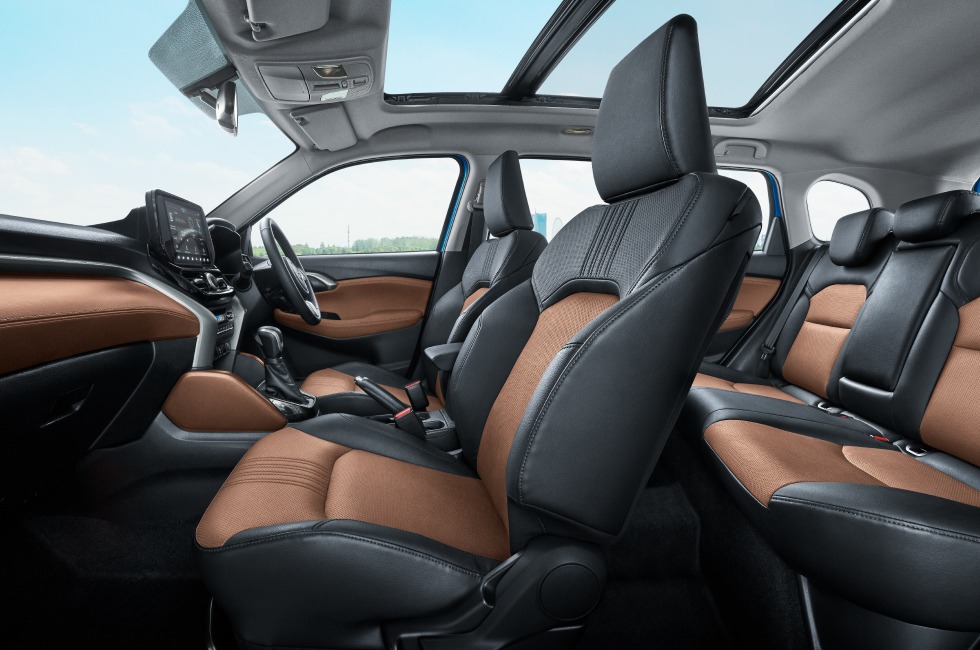
Toyota SA Motors says the new model will feature a “an all-new SUV design, a larger body with more space, increased safety specification, climate control, cruise control and a reverse camera”.
In India, the Hyryder is electrified thanks to Toyota’s 4th-generation hybrid system. Peaks of 68 kW and 122 Nm from the 1.5-litre motor combine with an electric motor, giving a total system output of 85 kW and 141 Nm. Impressively, Toyota India claims it has a pure electric range of up to 25 km.
Another engine offered in that market is the 1.5-litre mild-hybrid petrol, which features an integrated starter generator. This powertrain produces 75 kW and 137 Nm. As far as transmissions go, the full hybrid gets what Toyota calls its “e-drive” CVT, while the mild-hybrid features either a 5-speed manual or a 6-speed torque converter. All-wheel drive is offered, too.
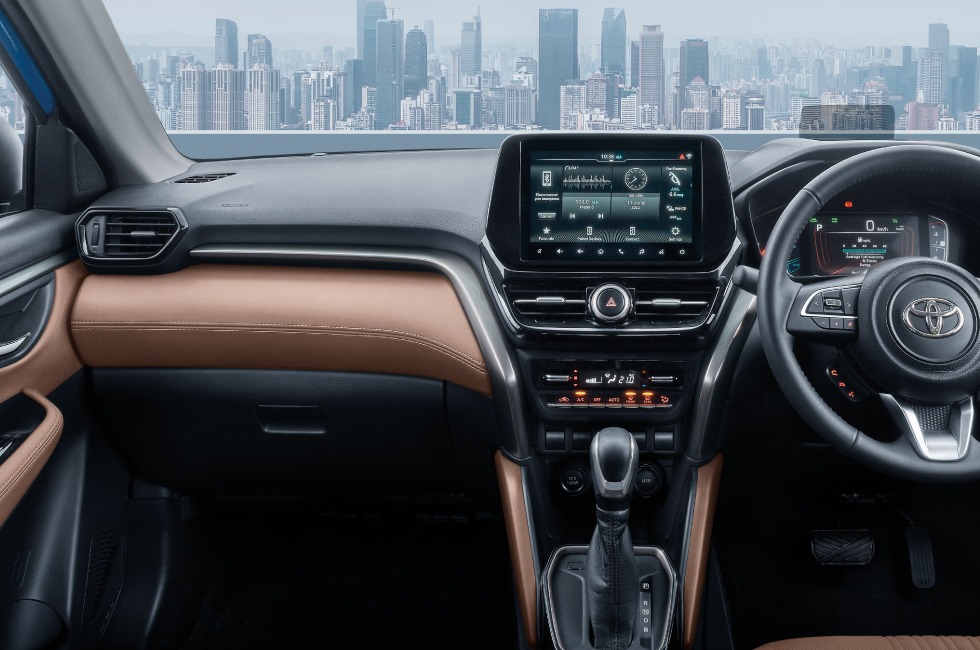
Some of the features on offer in India include niceties such as a panoramic sunroof, 17-inch alloy wheels, wireless smartphone charger, head-up display, 360-degree parking camera and the ability to activate certain remote functions like climate control through your smart device.
A source closed to Cars.co.za suggests our local derivatives could lose some features in order to prevent the new Urban Cruiser overlapping too much with the locally built Corolla Cross. In addition, the hybrid derivatives won’t be available initially, surely in an effort to keep the price competitive.
If the company manages to keep the price down while offering similar or better levels of standard kit (and appreciably more space) than the outgoing model, it will surely have another impressive volume driver on its hands.
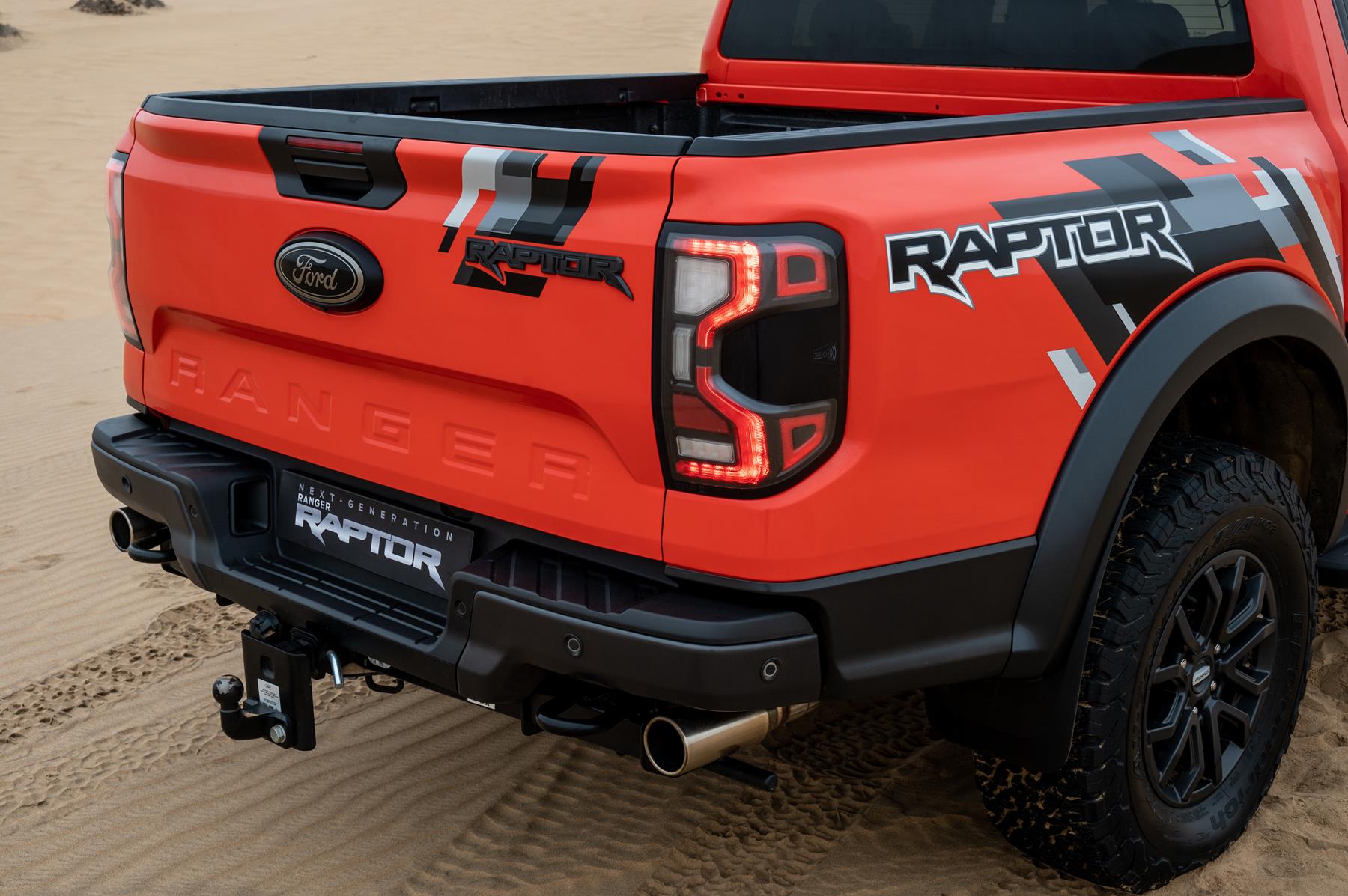
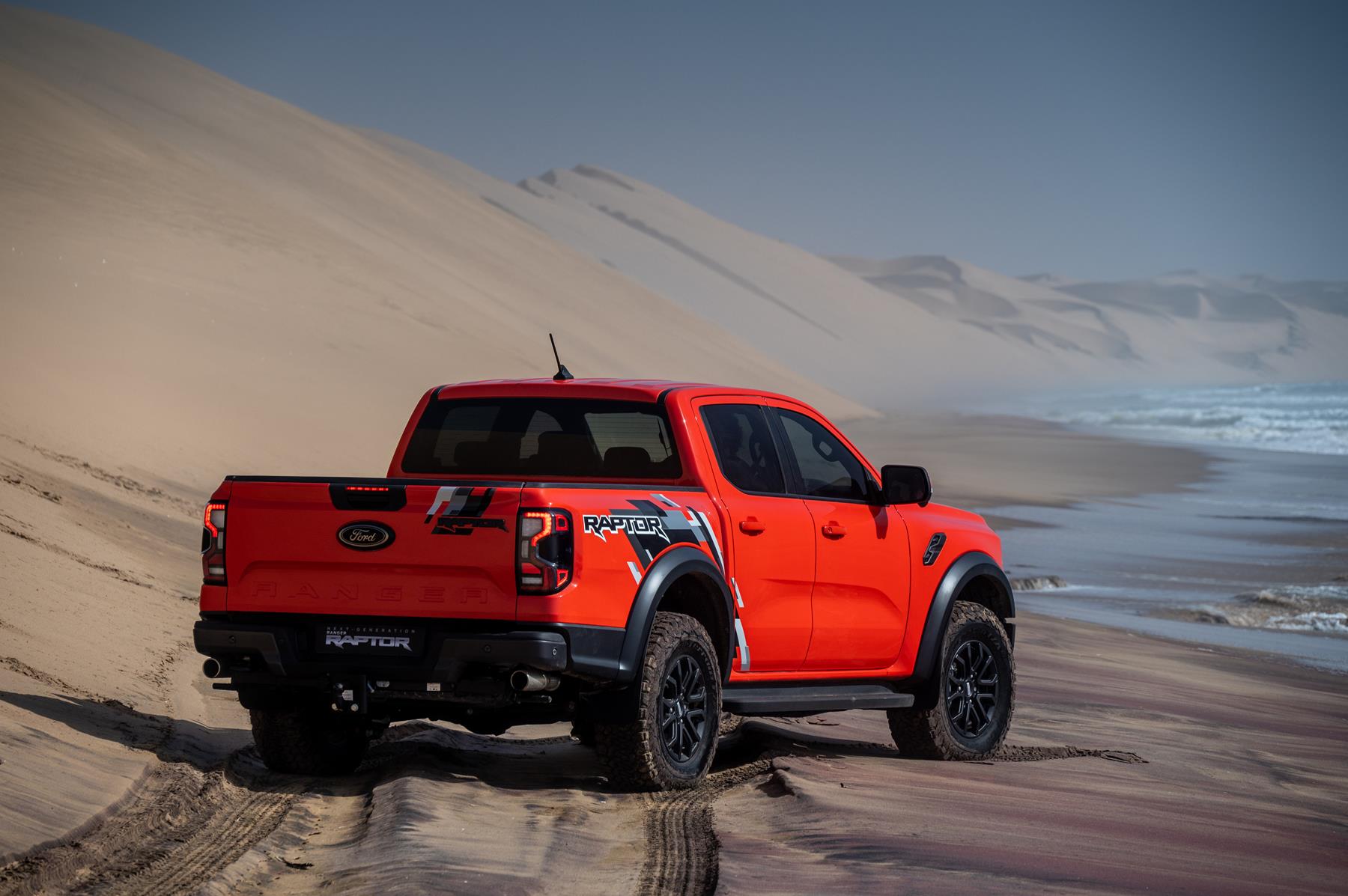
The highly-anticipated new Ford Ranger Raptor has arrived in South Africa! Let’s take a look at 6 cool features that set the Raptor apart from other offerings in the double-cab bakkie segment.
As I write this, I’m preparing to travel to Namibia to drive the new Ford Ranger Raptor in the Namib Desert. To say that I’m excited is an understatement!
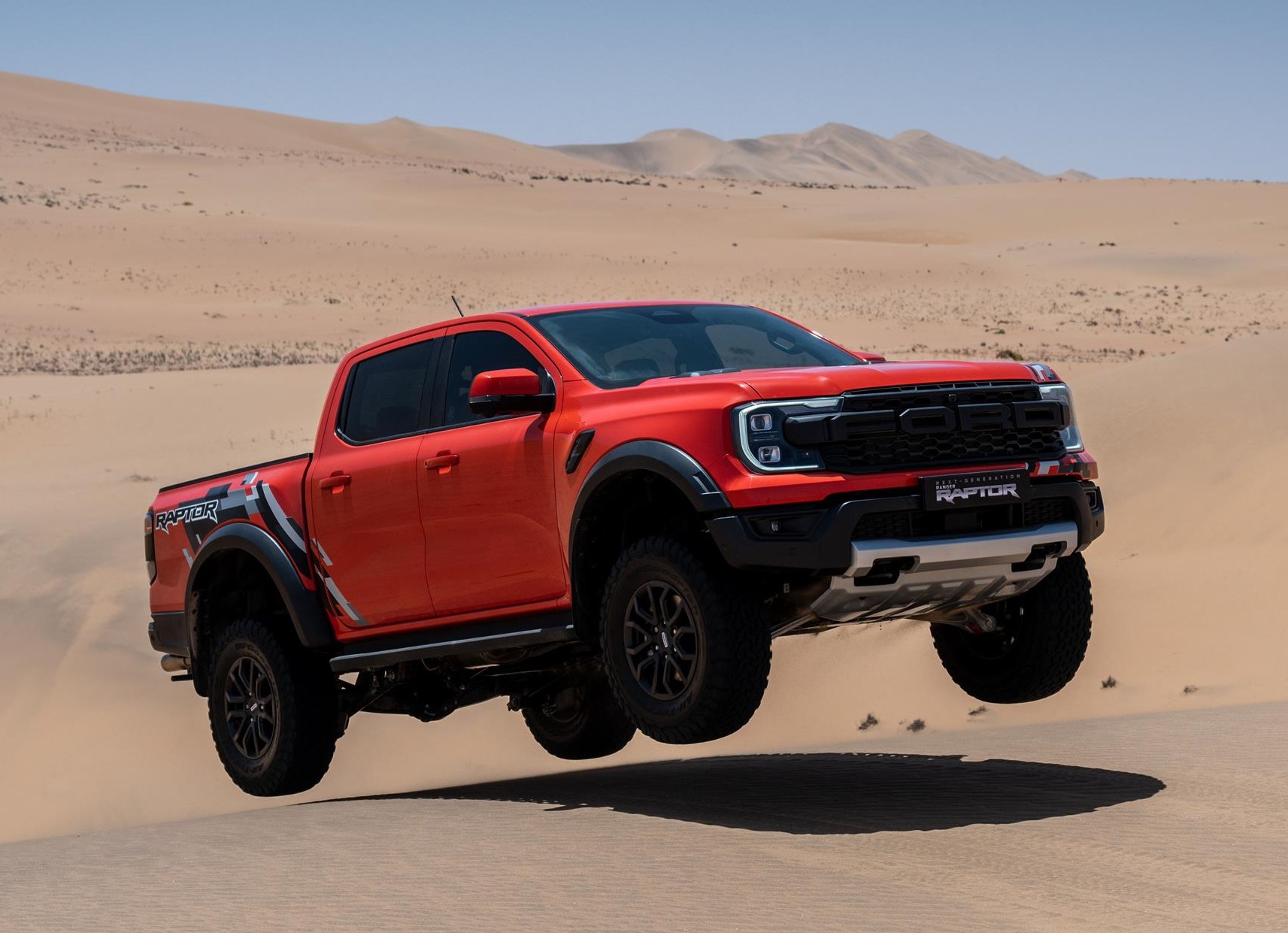
The new Ranger Raptor is one of the most anticipated new car introductions for South Africa in 2023.
Now, Ford has upped the ante with the next-generation Ranger Raptor and we are keen to put the newcomer to the test in Namibia as well as on South African roads in the near future.
Let’s take a quick look at 6 Cool Things To Know about the new Ford Ranger Raptor!
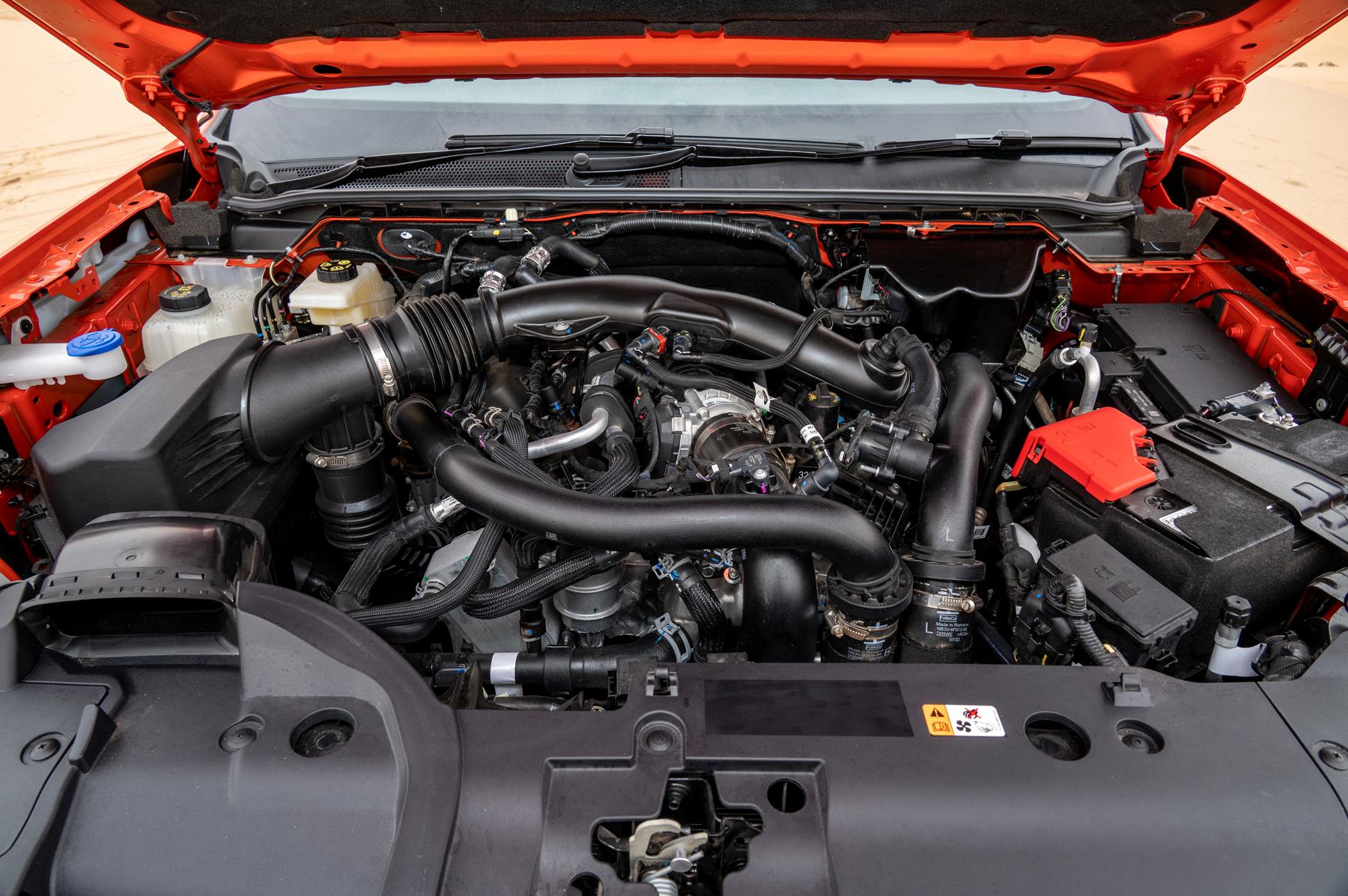
The Ranger Raptor draws power from a 3.0-litre twin-turbocharged petrol V6 engine that delivers 292 kW and 583 Nm of torque and makes use of a 10-speed automatic transmission. That’s 135 kW and 80 Nm more than the outgoing Ranger Raptor!
2. Hardcore Offroad Suspension
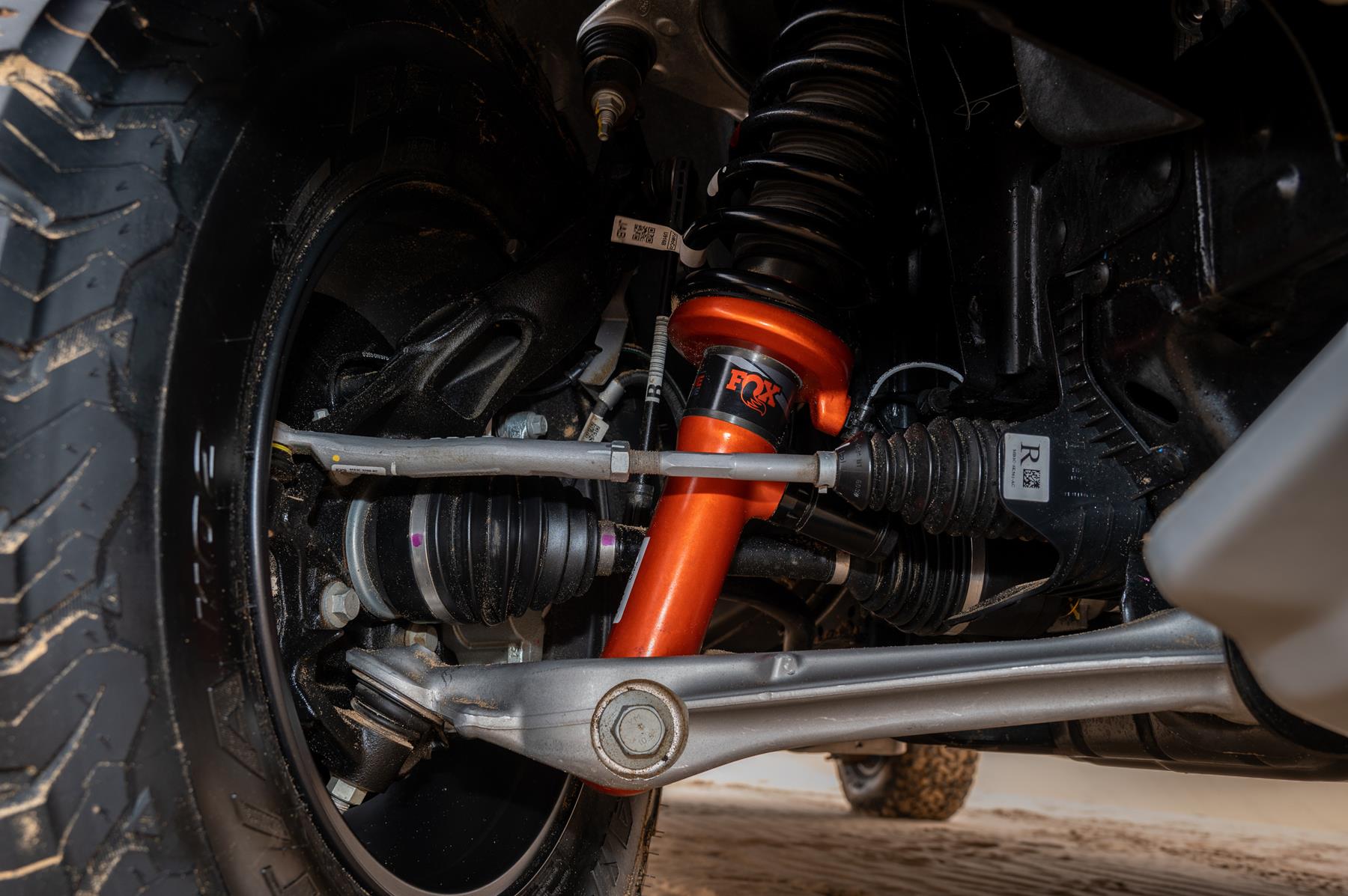
Apart from the Raptor’s enhanced and strengthened chassis, perhaps the most important component in the Ranger Raptors offroad arsenal is indeed its redesigned suspension setup which includes rear Watt’s link coil springs and FOX 2.5-inch Live Valve Internal Bypass shock absorbers with electronic damping that ensures composed and controlled high-speed offroad performance and maximum levels of comfort when driving on tar.
In addition to the suspension, the new Ford Ranger Raptor is, for the first time, equipped with a permanent 4-wheel-drive system with an electronically-controlled 2-speed transfer case as well as a front and rear differential lock. Together with a ground clearance of 272 mm, the Ranger Raptor is ready to tackle any terrain.
3. Driving Modes For All Conditions
The above-mentioned rapid and continuous damper adjustments are linked to the 7 drives modes offered in the Ranger Raptor which include Normal, Sport, Slippery, Rock Crawl, Sand, Mud/Ruts and Baja.
Depending on the drive mode, adjustments are automatically made to the engine, transmission, stability and traction control, exhaust valve actuation, steering and throttle response to achieve the desired result and each mode has its own “theme” shown in the digital displays. Baja mode is the most high-performance mode you can select and this mode primes the Ranger Raptor’s systems for the most hardcore high-speed offroading you can throw at it!
4. Active Exhaust System
If you want to wake up your neighbours early on a Sunday morning, you can with the Ranger Raptor’s new electronically controlled active exhaust system!
The system allows you to adjust the exhaust note to your preference with 4 settings to choose from including Quiet, Normal, Sport and Baja, the latter of which is the loudest and most pronounced. Baja is only intended for off-road use.
5. Performance- and Tech-enhanced Interior
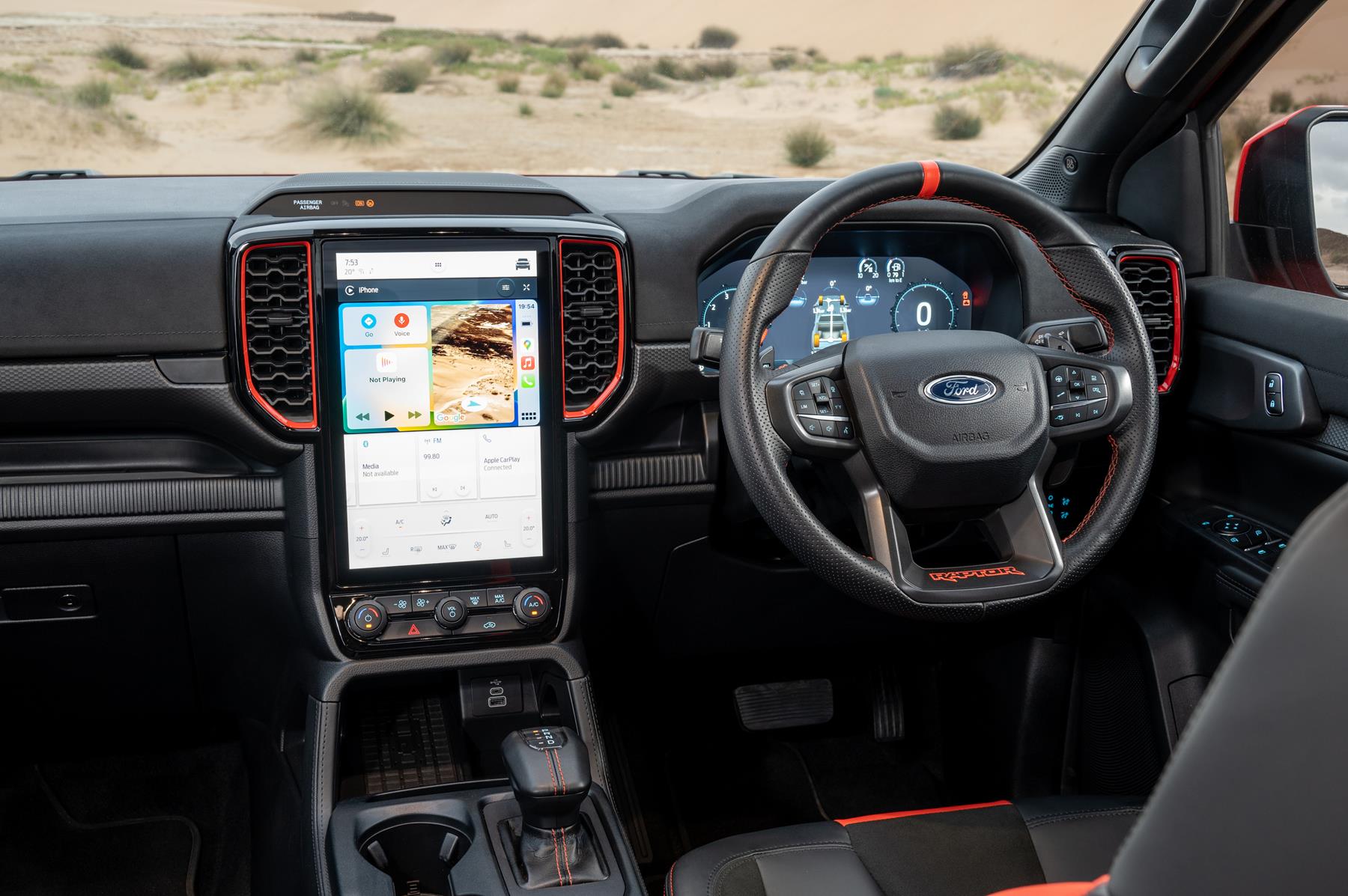
The Ranger Raptor’s interior features fighter jet-inspired leather seats that are heavily bolstered to provide maximum support and comfort to the driver during demanding offroad driving.
A 12-inch, vertically-orientated touchscreen with the latest SYNC4 operating system is fitted with wireless Android Auto / Apple CarPlay and wireless charging. The driver is also treated to a 12.4-inch all-digital instrument cluster that can be configured using the mounted controls on the steering wheel. A powerful 10-speaker 660W Bang & Olufsen sound system is also fitted as standard.
6. Nice Price in South Africa
If you consider how much power and offroad capability the new Ford Ranger Raptor has to offer then its asking price of R1 094 900 seems to be fairly reasonable. However, it must be noted that the price excludes a service plan which can be purchased as an option (up to 8-years / 165 000 km). A 4-year/120 000km warranty (can be optionally extended up to 7-year/200 000km), 4-year/unlimited distance Roadside Assistance and 5-year/unlimited distance corrosion warranty is standard.
Even so, the Ranger Raptor is still cheaper than the outgoing 190 kW Volkswagen Amarok Extreme (R1 118 200) and R235 000 cheaper than the Jeep Gladiator (R1 329 900) which is currently the most expensive double-cab bakkie available in South Africa.
Look out for our impressions of the new Ford Ranger Raptor on Cars.co.za soon!
The updated 2024 Volkswagen Touareg is due for reveal in May 2023, and is confirmed for South Africa.
In the luxury big SUV segment, the Germans reign supreme with Audi, BMW, Mercedes-Benz and Porsche all vying for a slice of the pie. However, there’s another German that’s often forgotten. Remember the Volkswagen Touareg? Exactly.
With its rivals all currently recently being updated (BMW X5, Mercedes-Benz GLE) or in the process of facelift final testing (Audi Q7, Porsche Cayenne), the Volkswagen Touareg needs to keep pace.
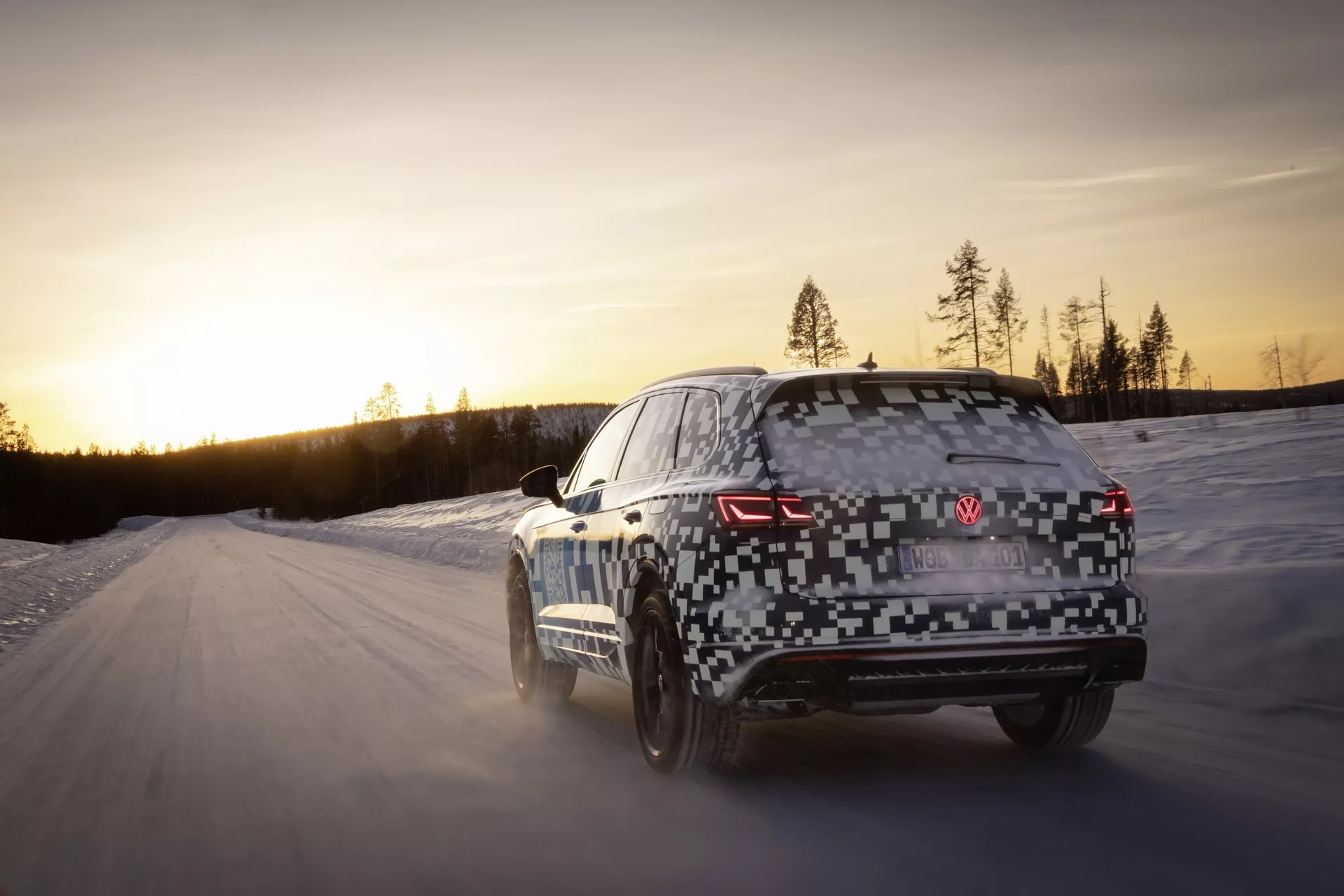
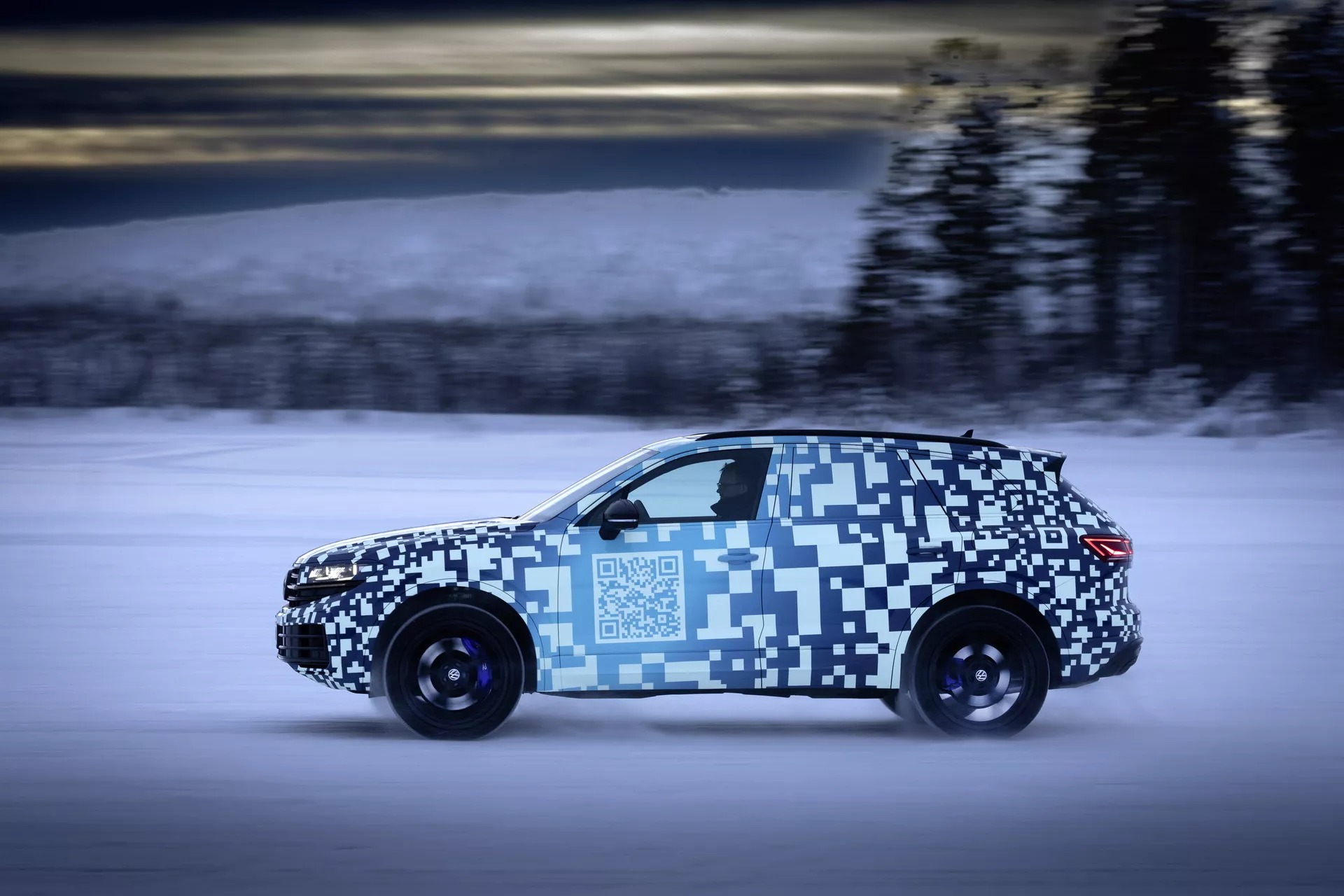
The good news is the 2024 Volkswagen Touareg is happening. Volkswagen released some official teaser images and details of the updated model undergoing final testing in the frozen north and the great news is that this model is confirmed for SA.
2024 Volkswagen Touareg coming to South Africa?
Yes, that’s right. The updated Touareg is earmarked for a local market introduction in the 4th quarter of 2023, following on from its global reveal in May 2023.
The current iteration was launched locally back in September 2018 priced from R999 800. Right now at the time of writing in February 2023, the Touareg is listed from R1 331 800.
While what you see here is a camouflaged prototype vehicle, there are some interesting design elements if you look closely. The easy ones are the lights, and the new style of Volkswagen’s lightbar on the front grille makes its debut on this model. The rear has an illuminated rear Volkswagen badge, which if carried through to the production model, will cause quite a stir.
An illuminated badge is already available in China and the USA, and this will be the first time we’re likely to see it for the European and SA markets. Upon closer inspection, there’s the new IQ Light technology, new-look grille and much larger air intakes. The tail light array has been tweaked too.
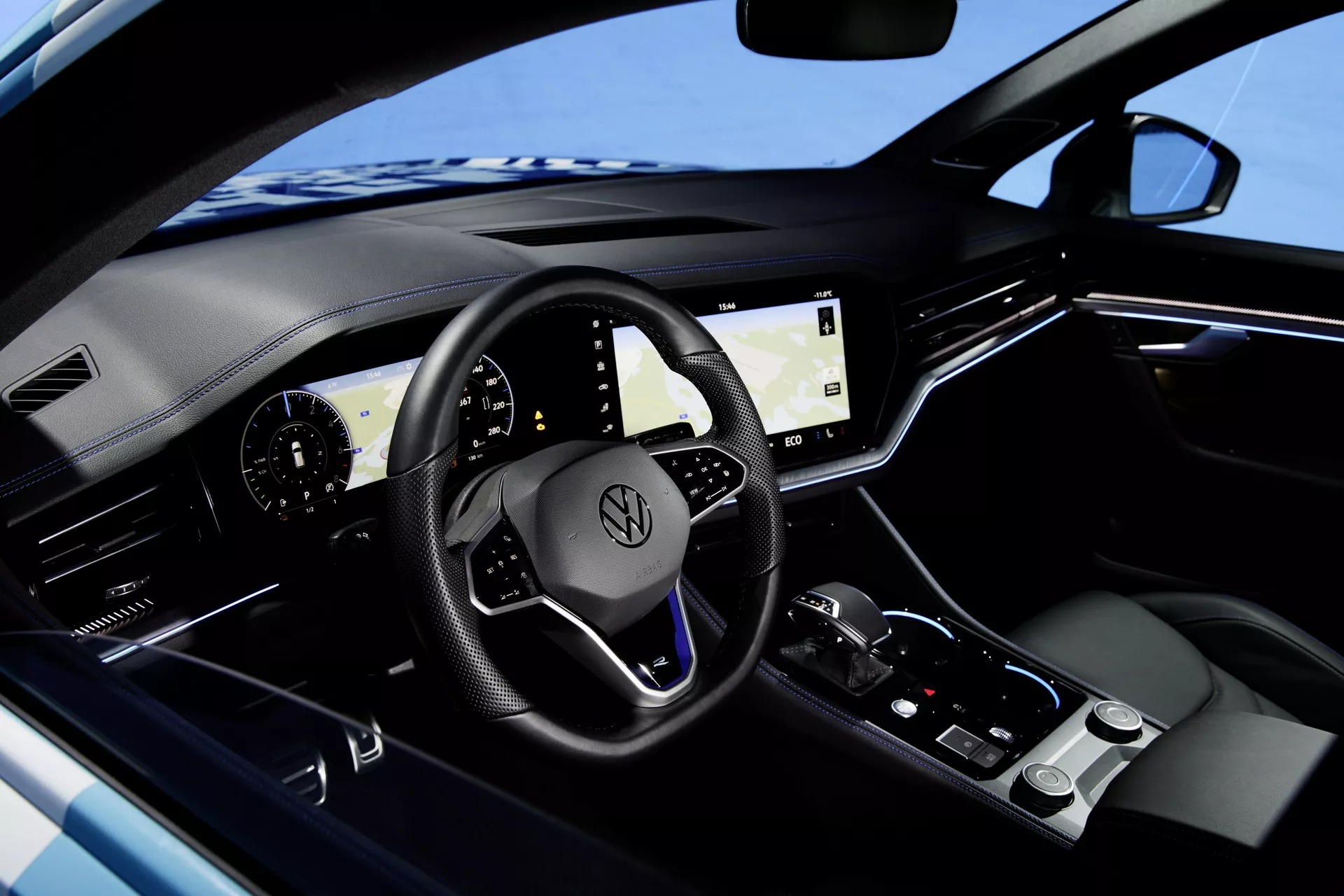
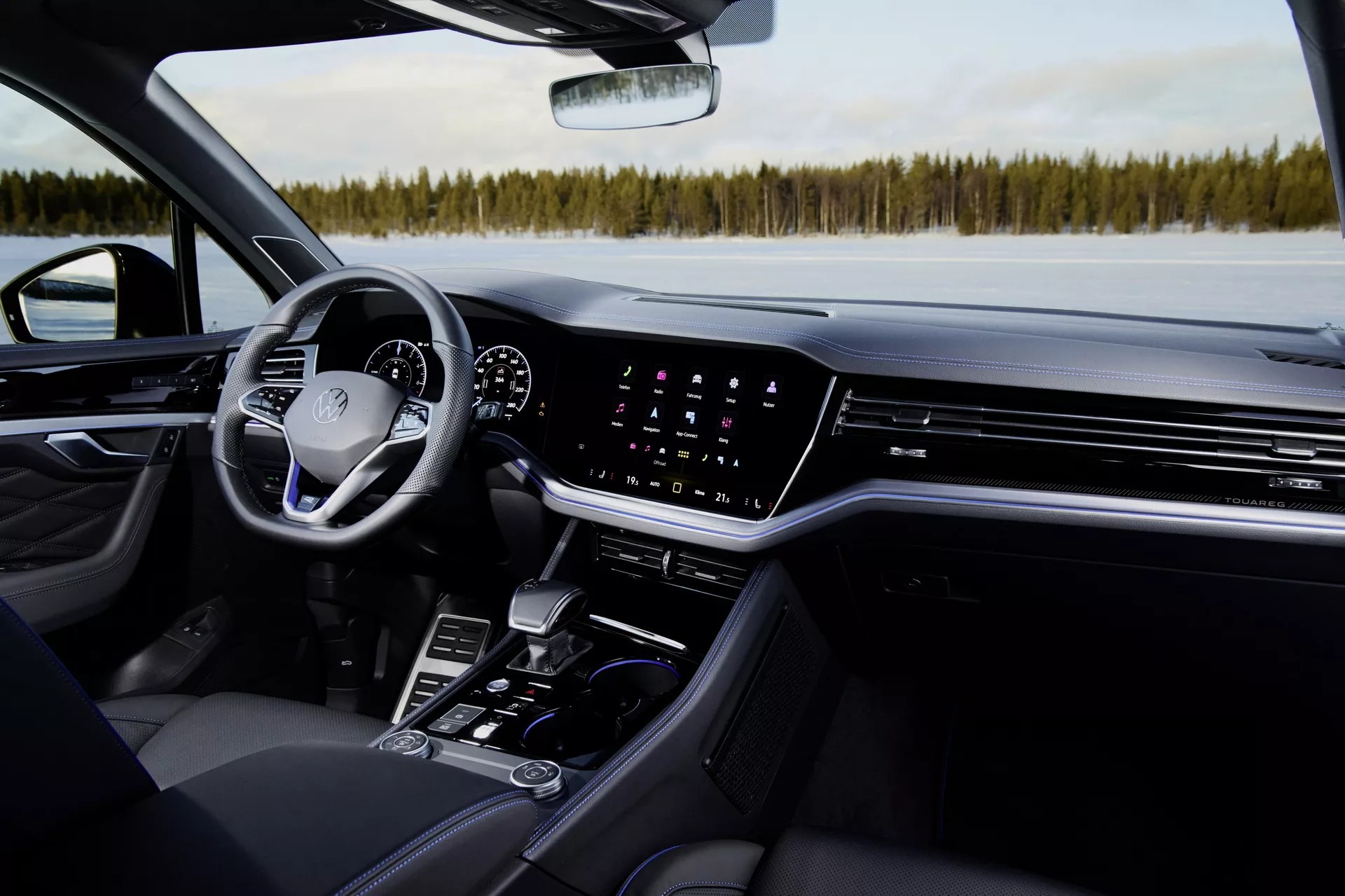
Some interior cabin details have also been shared and the Innovision Cockpit features a 15-inch infotainment system and digital dashboard has been carried over, but there’s new software. Voice control, wireless Apple CarPlay and Android Auto have been introduced, but the controversial touchpads are present on the steering wheel. Volkswagen has said it will be doing away with these in the future, but we reckon the production of the Touareg facelift was too far along to justify such a radical change.
Thanks to customer feedback, the interior fit and finish of the trim has been upgraded, so things like the armrests and the center console panels are softer meaning more comfort.
Under the skin, the MLB platform and chassis has been tweaked for additional comfort, while the optional air suspension has been enhanced to provide a greater difference between the comfort and the sport settings. A roof sensor has been installed, meaning the car will take into account the fitment of a roofbox and adjust things like the stability control and other assistance systems.
There was no mention of the engines and transmissions, but we’d think its fair to assume that the current engine line-up will be carried over. Overseas markets get the option of a 3.0-litre V6 TSI petrol, a 3.0-litre V6 TDI diesel, a plug-in hybrid as well as a performance hybrid with R badging. In South Africa, we got the diesel V6 which offered up 190 kW and 600 Nm, going to all four wheels via an 8-speed automatic transmission.
Be on the look out for the 2024 Volkswagen Touareg, which will be revealed in May 2023.
Hybrid or EV: Why our motoring future is electric
In the latest instalment of our Street Smart series, brought to you by Absa Vehicle and Asset Finance, Jacob Moshokoa explains the differences between a hybrid- and fully electric vehicle, plus why you should consider an EV when shopping for your next car.
PARTNERED CONTENT
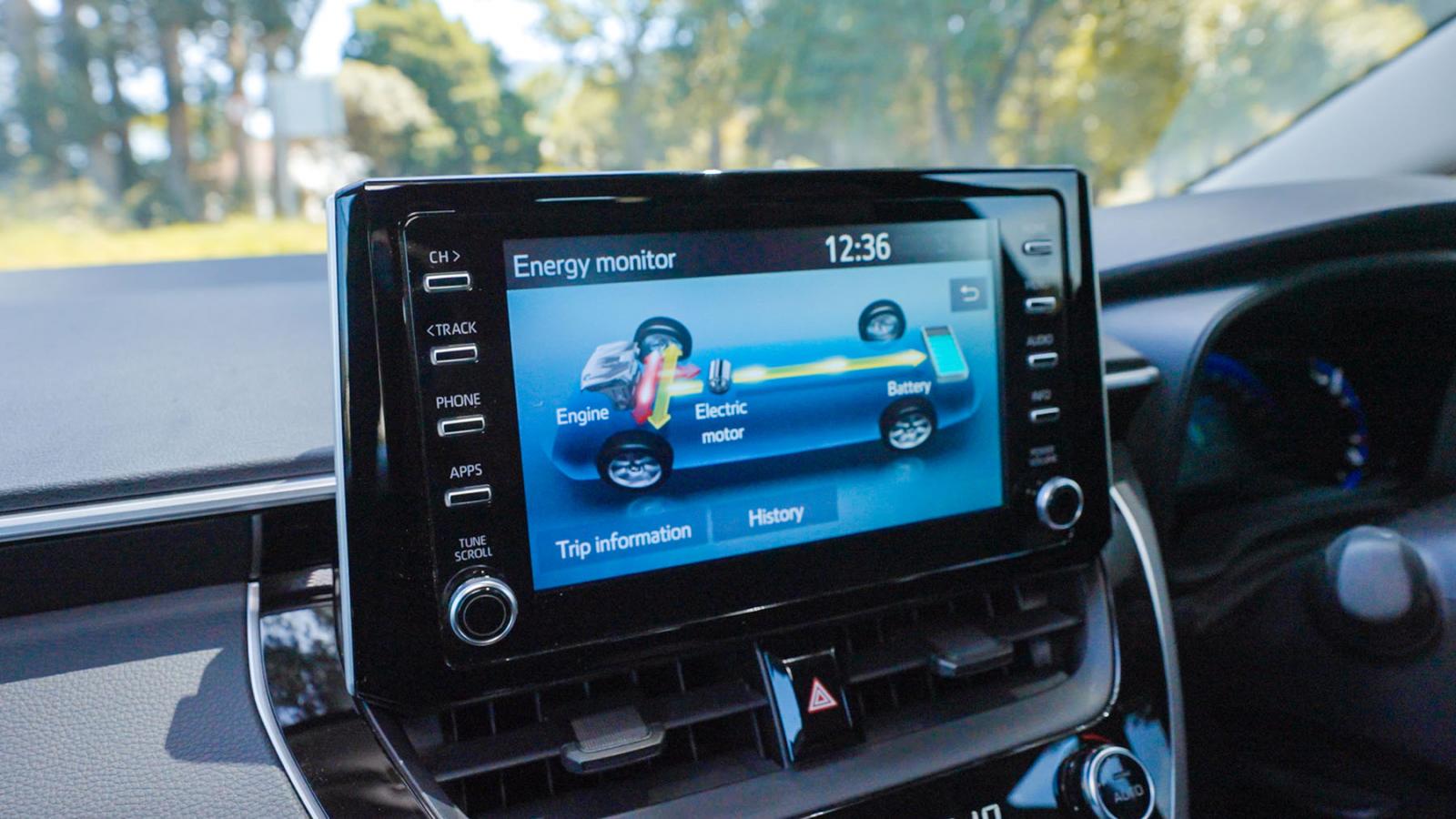
Isn’t it time to switch to an electric car? Don’t gasp in disbelief – the motoring world has slowly but surely embraced new energy vehicles in a bid to minimise mankind’s impact on the environment and reliance on non-renewable energy sources. Hundreds of thousands of consumers have traded in their purely internal combustion engine (ICE) cars to benefit from the optimised efficiency of hybrid or fully electric vehicles.
For many South Africans, ICE cars are the norm, but if you’re eager to learn more about the advantages of hybrid, plug-in hybrid and fully electric vehicles, you’ll find out how appealing new-energy cars are!
Although they tend to be more expensive than non-electrified models of similar size because of their relative complexity (not to forget higher Government taxation on battery-assisted or -driven vehicles), hybrid and electric cars are greener and better for the environment. Compared with their petrol-driven cousins, they require less maintenance (in the case of EVs) and offer notably lower daily running costs.
Despite South Africa’s energy challenges (let’s just call it by its name: load shedding) and still-developing network of charging stations (most are situated in the major metro areas), electric cars are here to stay.
Let’s help you understand the different types of electric vehicles
Let’s start with the (petrol-electric) hybrid, which has been on the local market for quite a while. It’s exactly what it sounds like – a hybrid runs on petrol as well as electric power, which means that it should achieve notably better fuel consumption than a comparable ICE vehicle without electric assistance.
You get regular as well as plug-in hybrids – “plug-ins” have larger hybrid batteries, can be recharged by being plugged into power outlets and, therefore, run for longer on battery power compared with hybrids.
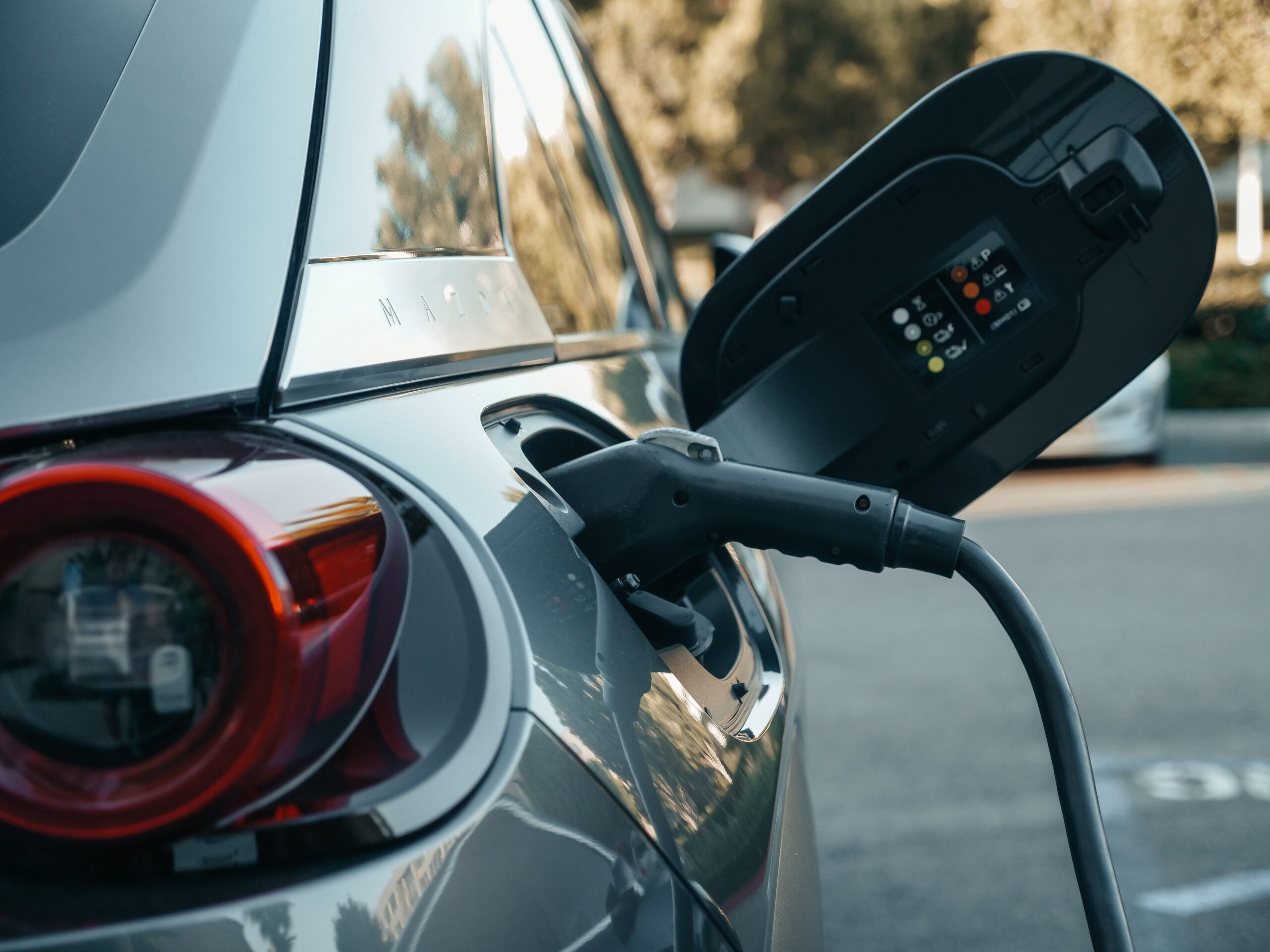
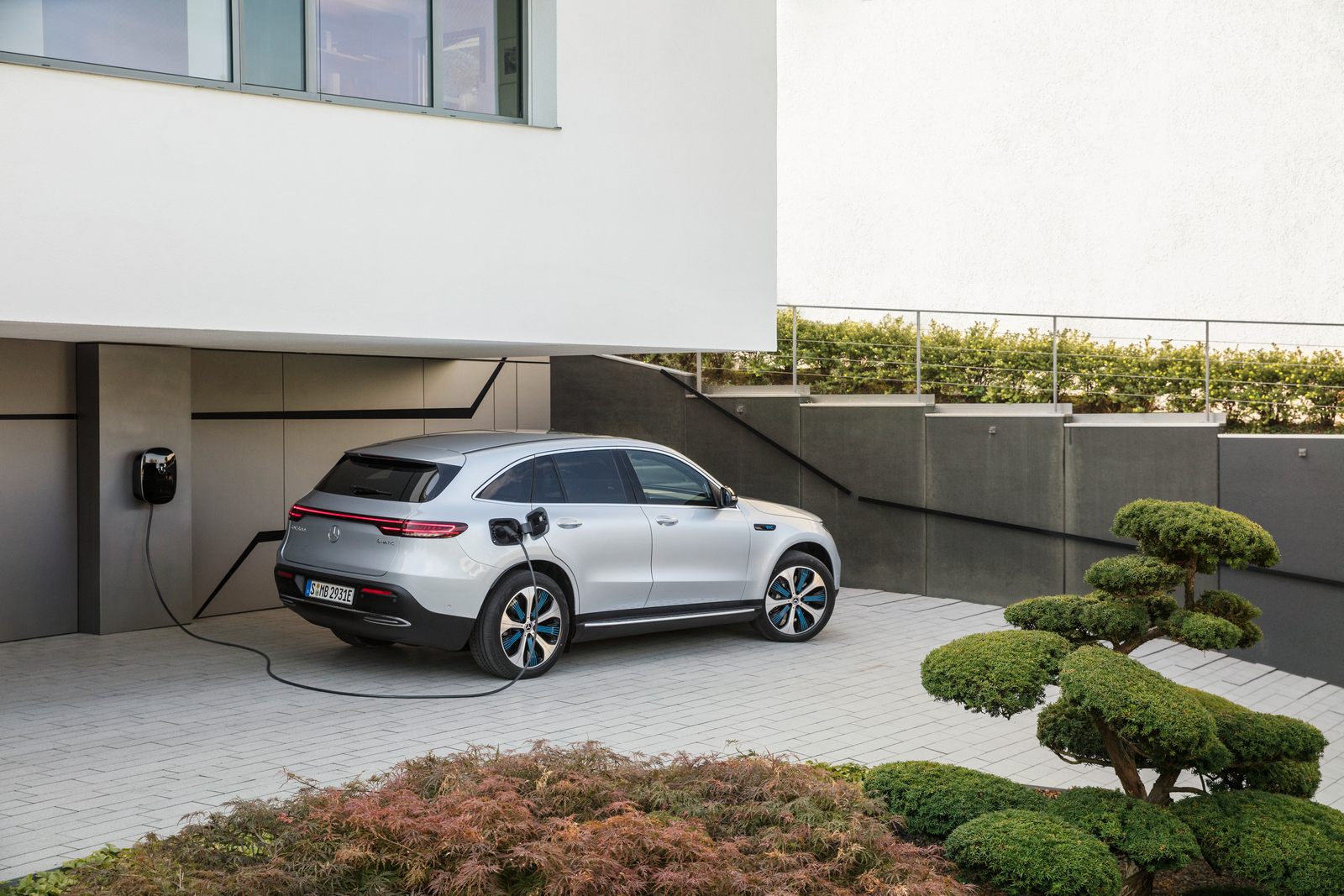
Another option is a battery-electric (also known as a fully-electric) vehicle. A vehicle commonly referred to as an EV has no combustion engine, just a battery-driven motor under its bonnet. The amazing part is that it produces zero emissions while you drive it, which may earn you a Noddy badge in some circles!
However, EVs are even pricier than their hybrid counterparts; prices start around R700k. Still, consider that while it costs about R55 to charge an EV to travel 100 km, an ICE vehicle would consume about R228 worth of fuel to travel 100 km. On top of that, EVs require way less maintenance than ICE cars.
South Africa’s public charging infrastructure is growing steadily; there are more than 400 private and public charging stations across the nation, with plans in place for many more. As the charging network expands, the relatively low travel range of most EVs will eventually not be of concern for most drivers.
And, at around R200 to recharge a battery with a range of about 400 km, an EV seems a pretty attractive proposition, considering that owners of large SUVs spend a mini mortgage every time they fill up!
Electric vehicles are here to stay, so make the transition to “electric” easier with Absa Vehicle Finance.
For extra information on how you can become a better consumer, keep a lookout for more episodes from our Street Smart series and be sure to visit the Absa blog.
Earlier episodes in our Street Smart video series:
Absa’s Fulufhelo Mandane discusses what you need to consider before you start shopping for a vehicle, the costs of ownership and your various finance options. Absa First-time Buyer Guide to Vehicle Finance
Absa’s Gordon Wood details how the new Aftermarket Guidelines, which were introduced in the motor industry last year, affect you as a vehicle owner. Absa’s Guide to Responsible Vehicle Ownership
Driving my Subaru Prodrive up Franschhoek Pass – This is the joy of motoring
The Subaru Prodrive is not a car you see every day and it’s considered to be a bit of a South African special. Ciro De Siena has just bought one and had to send it over Franschhoek Pass, so we filmed it.
Our video guy, Ciro De Siena, has a longstanding love affair with a special South African edition of the Subaru Impreza, known as the Prodrive. Built and sold locally in 2006/07, the Prodrive has become something of a cult classic. In this video, Ciro takes his new car to a dreamy mountain pass outside Cape Town called Franschhoek Pass, for its first proper shakedown since he bought it late in 2022.
In our next video on the Prodrive, Ciro will take us through his cost of ownership and maintenance on the vehicle so far, and what some of his concerns are.
But in the meantime, enjoy some beautiful footage of what must be one of the most beautiful roads in the world, with a blue machine streaking across the landscape, and Ciro inside talking nonsense.
Fiat has given its 500X crossover an update and it’s now available in South Africa with 3 derivatives to choose from! Take a look at specification and pricing details below!
Fiat has rationalised and updated its 500X offering in South Africa. Local buyers can now choose between 3 derivatives including 500X Cross, 500X Sport and the 500X Sport EST (Extended Soft Top).
All Fiat 500X derivatives are powered by a 1.4-litre turbopetrol engine with 103 kW and 230 Nm of torque and equipped with a 6-speed automatic transmission. Fiat claims 5.7 L/100km.
What standard features are on offer?
Fiat 500X Cross
Front and rear cross bumpers
Black mirror caps
Satin chrome handles
LED Daytime Running Lights
Fog lights
18-inch alloy wheels
Cloth and leather combination upholstery
Leather-wrapped steering wheel
7-inch infotainment touchscreen with Apple CarPlay / Android Auto
6-speaker radio
3.5-inch digital TFT instrument cluster
Cruise control with speed llimiter
Traffic sign recognition and Speed Adviser
Lane Assist
Dusk sensor
Automatic dual-zone air conditioning
6 airbags / ABS with EBD / ESC / Hill Hold Assist
Fiat 500X Sport
The 500X Sport derivative adds the following features:
Body-coloured wheel arches
Side skirts
19-inch wheels
Sport badging
Dual chrome exhaust tips
Leather upholstery
Alcantara steering wheel and binnacle
Titanium finish dashboard trim
Fiat 500X Sport Extended Soft Top (EST)
The 500X Sport EST adds the following features:
Electronic folding soft-top roof (775 mm x 730 mm) opens in 15 seconds at speeds up to 100 kph.
How much does the Fiat 500X Cost in South Africa?
Fiat 500X Cross – R509 900
Fiat 500X Sport – R560 900
Fiat 500X Sport EST – R580 900
The Fiat 500X is sold with a 5-year/100 000 km warranty and roadside assistance. A 3-year/60 000km service plan is also included.
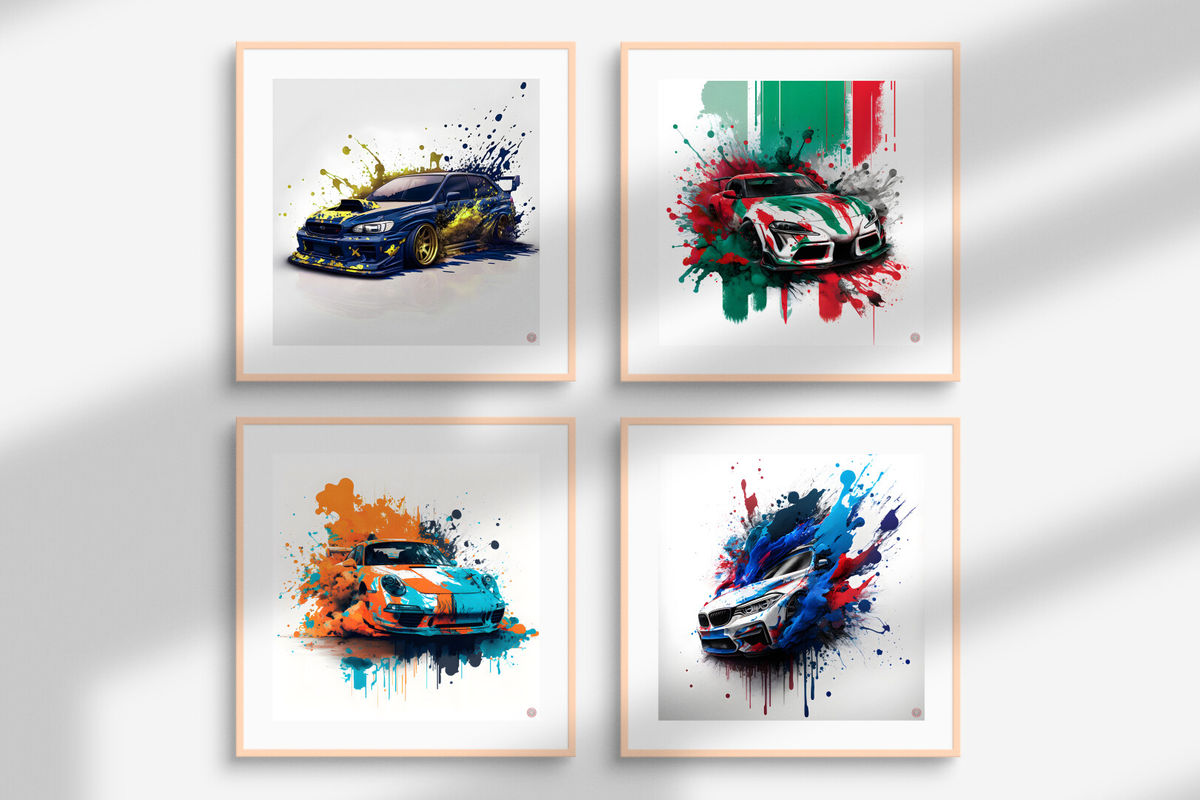
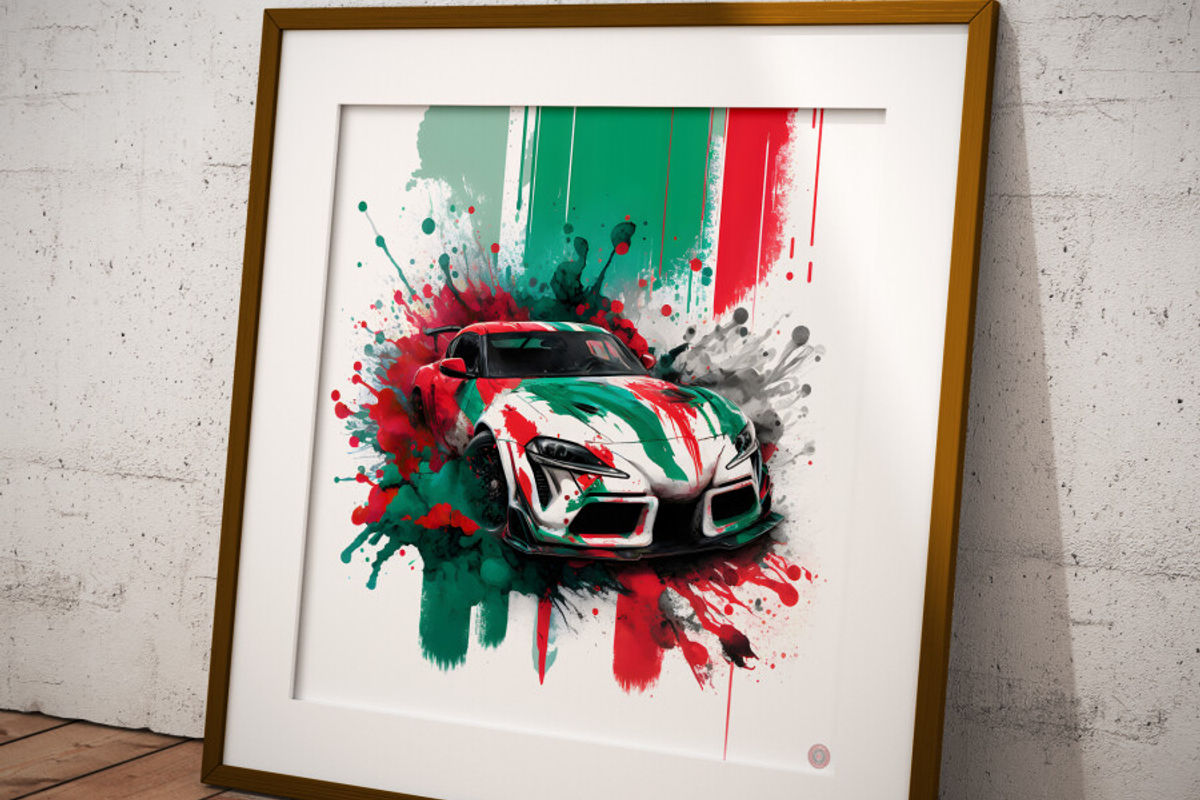
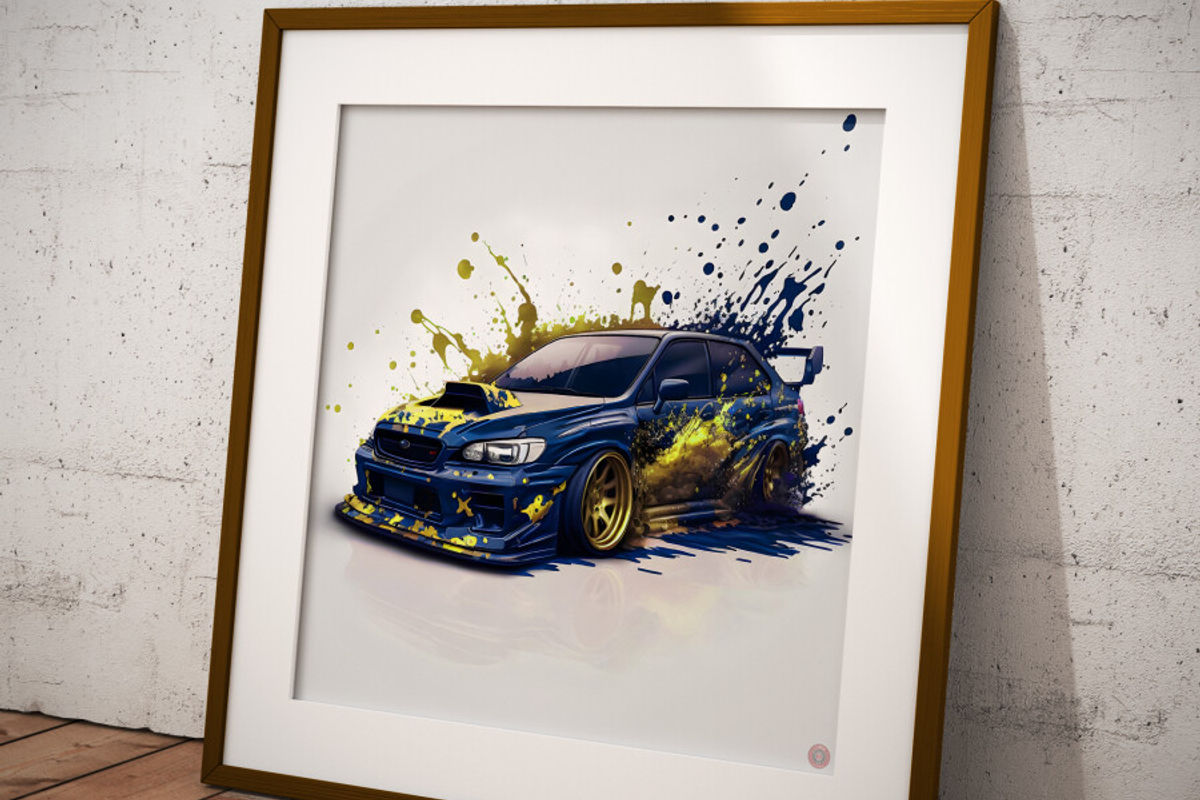
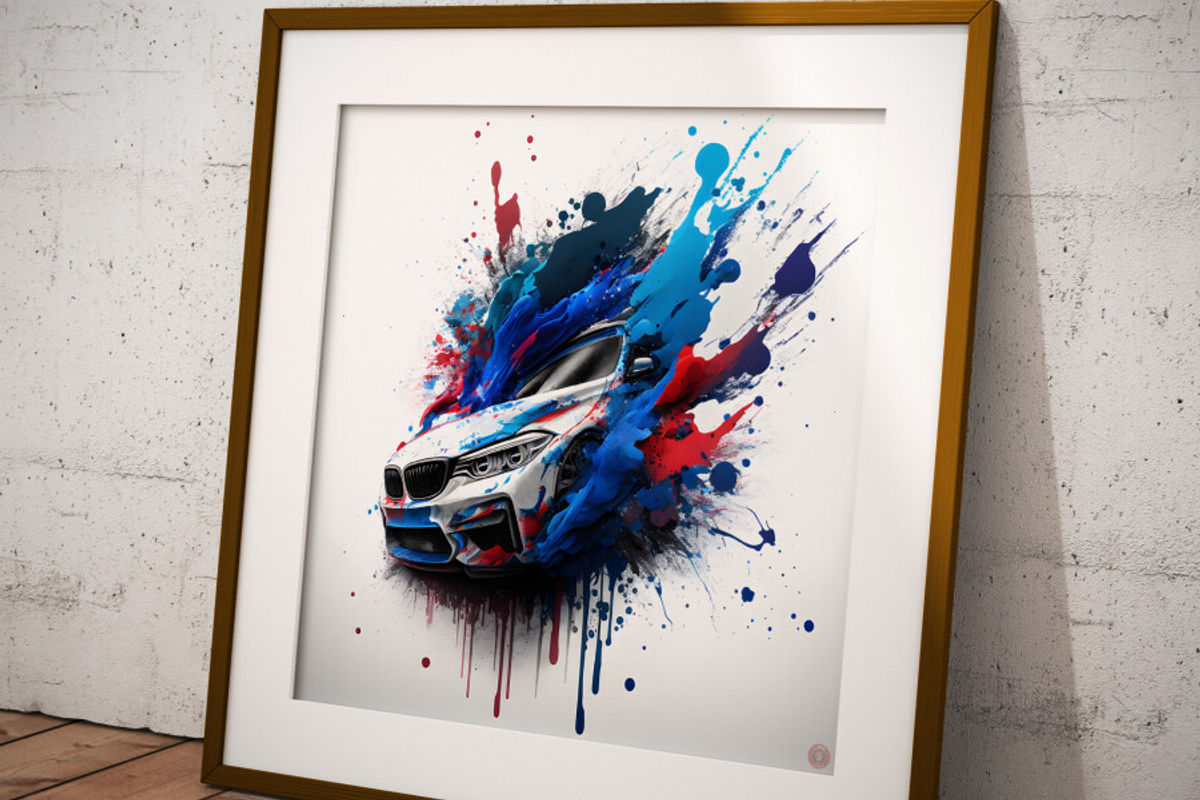
See how we used AI tech and human interaction to create some rather cool pieces of art, which you can get your hands on now.
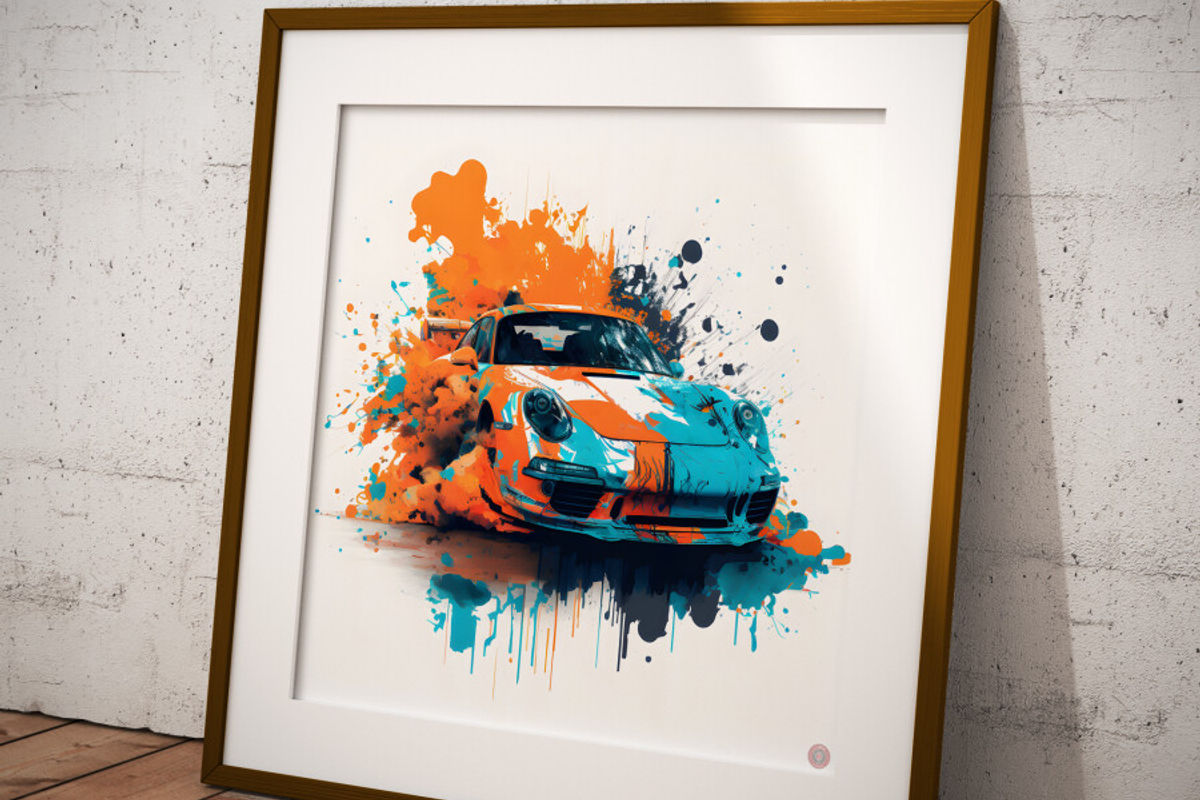
This appears to be the year in which AI (artificial intelligence) goes mainstream; with its new “Paint & Power” series of prints, SentiMETAL (a Cars.co.za sub-brand that’s aimed at motoring enthusiasts) vividly showcases the power of combining new technologies with a human touch.
“Diving headfirst into the world of AI art creation is a journey of perplexity and wonder, and something that I had been hugely keen to explore for our store,” Andrew Crawford, the Head of Creative at South Africa’s leading automotive platform, explains. “For the ‘Paint & Power’ series, I embarked on the journey with a combination of MidJourney and Photoshop as my trusty tools.
“During the creative process, I visualised famous car colour schemes coming to life in a veritable explosion of paint. With MidJourney’s assistance, I was able to generate unique designs that I then meticulously refined and tweaked using Photoshop,” Crawford adds.
The “Paint & Power” series features four artworks that measure 420 mm by 420 mm and retails for R150 apiece (which excludes shipping). The line-up consists of the following vehicles/colour schemes: Subaru WRX/555 Blue&Gold, BMW M3/BMW Motorsport Blue/White/Red, Porsche 911/Gulf Orange&Blue and Toyota GR Supra/Castrol Red/White/Green.
“I’m very proud of the outcome. We’re ready to embrace the world of AI and all that it can offer, but, let’s not forget that the human element is also crucial in this entire process. The artist’s creative input and decision-making remain vital in crafting pieces such as these,” he concludes.
The “Paint & Power” series of prints is available exclusively at www.sentimetal.shop
Kia Rio (2011-2017) Buyer’s Guide
Marking a turning point in Kia’s story, the 3rd-gen Kia Rio was streets ahead of its predecessor. Keen to buy one on the used market? Here’s what’s available, what you should look out for and which variant you should consider…
This Buyer’s Guide will provide you with all you need to know if you’re looking for a third-generation Kia Rio in South Africa.
The global B-segment of today is a shadow of its former self. Subcompact hatchbacks and sedans have fallen out of favour in key markets thanks to the rapid worldwide shift first to crossovers and now increasingly towards electric vehicles. Inconceivable just a few short years ago, big-name players like the Ford Fiesta – a nameplate spanning seven generations and more than 46 years – are being put out to pasture.
In South Africa, we’ve also seen the demise of once-popular models such as the Nissan Micra and Toyota Yaris (not counting the manic GR, that is). Even the 4th-gen Kia Rio is due to exit the market at the end of 2023. Though there’s clearly still a market for the locally built Volkswagen Polo, sales of this model and rivals continue to dwindle as local buyers pivot towards small crossovers (and requirements in Europe change). It’s all very doom and gloom.
But back in 2011, when the 3rd-generation Kia Rio – which was known as the Pride in its home country and the K2 in China – hit the market, the B-segment was one of the most hotly contested of all. And such was the all-round competence of the Korean firm’s 3rd attempt at the Rio that a number of its more established rivals were caught well and truly off guard.
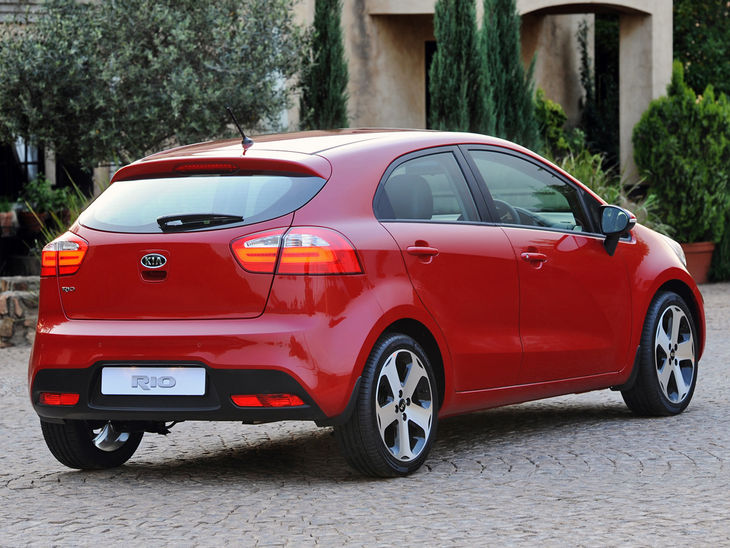
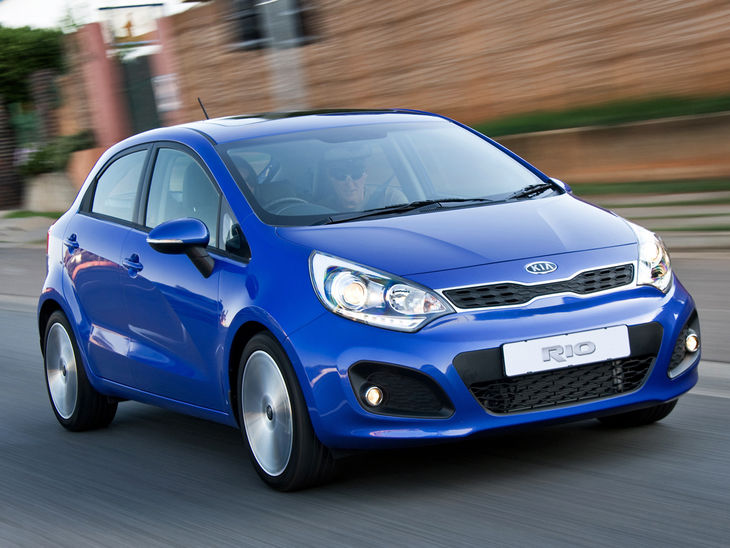
The 3rd-generation Rio was a massive step up from its predecessor.
Yes, the Kia Rio Mk3 signalled a turning point for the Korean firm, not only over in Europe but also here in South Africa. It was sharply styled (thanks to the design influence of a certain Peter Schreyer), but perhaps more importantly a far cry better resolved than its frankly underwhelming predecessor in virtually every way. As a result, it soon found itself duking it out with the segment’s best.
At the time of its launch, the market was experiencing something of a buying-down trend as motorists grappled to beat rising fuel costs (sound familiar?). The Rio was shrewdly positioned to take advantage of this, offering added space and the sort of features buyers would expect from a car in the segment above. When all was said and done, the UB-generation Rio enjoyed a strong run in South Africa, while also serving to introduce many new customers to the Kia brand and ultimately help to take it truly mainstream.
Kia Rio model line-up in South Africa
The sedan body style launched locally in the 2nd quarter of 2012.
The 3rd-gen Rio was revealed – in 5-door hatchback form – at the Geneva International Motor Show in March 2011, with the first units rolling off the Sohari assembly line in South Korea shortly thereafter. By September of that year, it was already on display in South Africa at the 2011 Johannesburg International Motor Show.
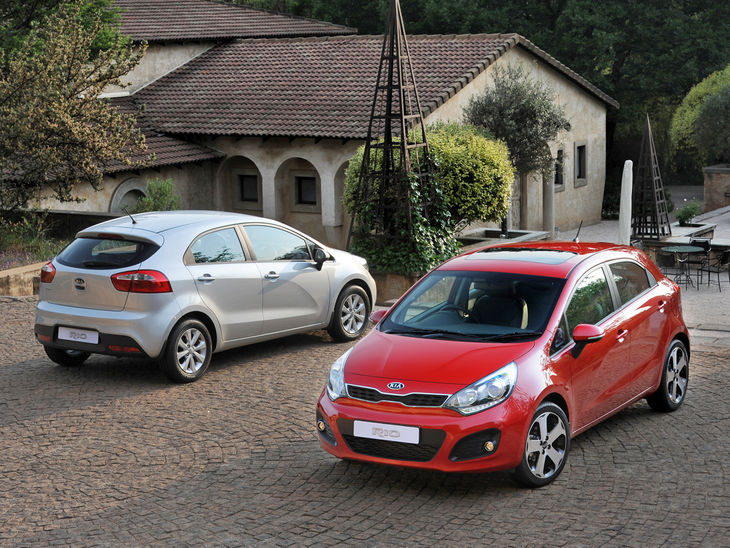
The 5-door hatchback officially launched locally in November 2011, while the 4-door sedan version followed in April 2012. Each body style was available with a choice of 2 transversely mounted, naturally aspirated, 4-cylinder petrol engines driving the front wheels via a 5- or 6-speed manual gearbox or a 4-speed automatic transmission. All models shipped standard with a 5-year/100 000 km warranty, which was considered quite lengthy cover at the time. At launch in South Africa, the following powertrain variants were available (note the 1.4-litre models were also offered in flagship Tec trim, thus taking each of the 2 body style ranges to 5 variants):
1.2 (65 kW/120 Nm) 5-speed manual
1.4 (79 kW/135 Nm) 6-speed manual
1.4 (79 kW/135 Nm) 4-speed auto
When the 3rd-gen Rio first hit the market in South Africa, Kia admitted the outgoing model had kept a “relatively low profile” in the segment, but was confident the new version would appeal to a far wider audience. That’s exactly what happened, with the Rio quickly graduating to the position of Kia Motor SA’s best-selling vehicle, a role it was likewise playing on the global stage at the time.
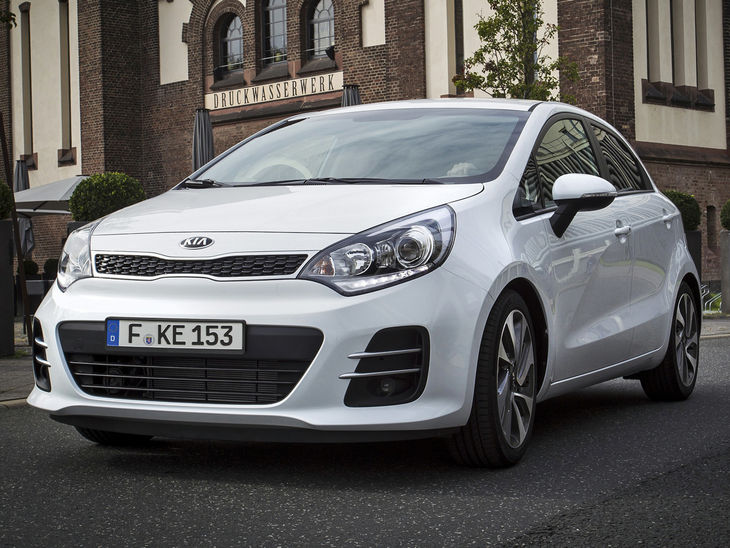
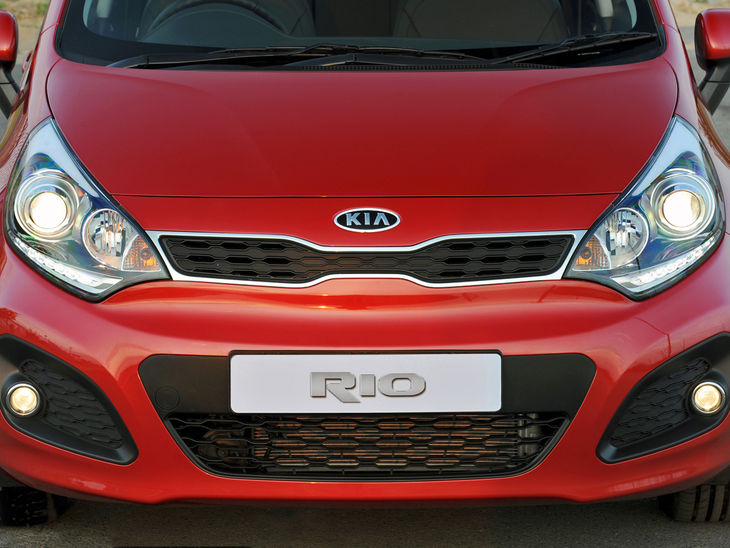
Note the new bumper treatment of the facelifted Rio, introduced to SA in early 2015.
The 10-strong line-up continued virtually unchanged until February 2015, when the facelifted version – unveiled in Paris in September of the previous year – touched down on local soil. While the engines carried over unaltered, styling tweaks included an updated version of the so-called tiger-nose grille, along with refreshed bumpers (fore and aft) and new alloy wheel designs. Inside, the mid-cycle update brought a smattering of chrome-effect accents and a redesigned centre-stack around the audio system, complete with piano black trim.
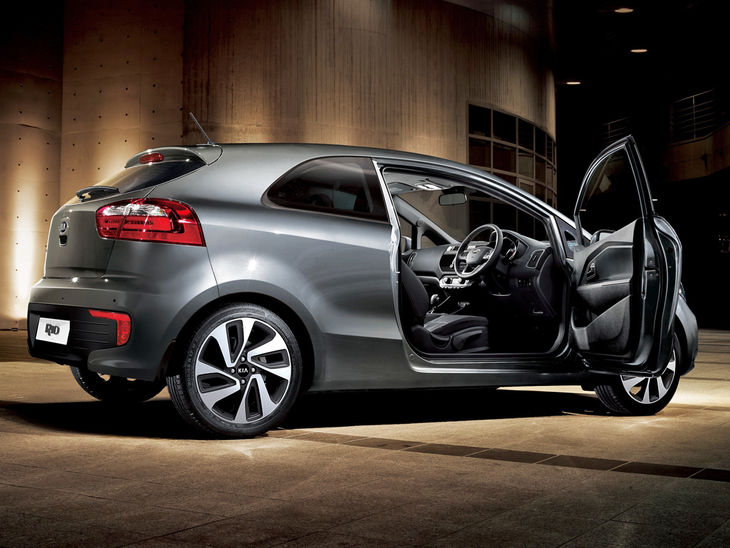
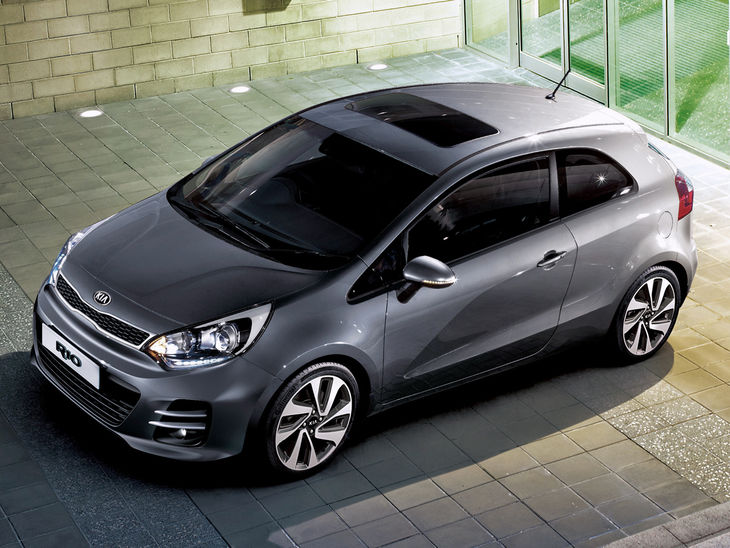
In January 2016, the local Rio range expanded to 12 derivatives with the arrival of the 3-door body style, which was offered exclusively with the larger engine (and either gearbox) and in flagship Tec specification. The newcomer was further set apart by the fact it boasted a sunroof as standard; at the time, this was a R7 000 option for the Tec versions of the 5-door hatch and saloon.
The 3-door version arrived in South Africa late in the 3rd-gen Rio’s life.
Though the 4th-gen Rio was revealed in 2016, it made landfall in South Africa only midway through 2017, effectively closing the 3rd-gen model’s highly successful local chapter. The sedan, though, technically soldiered on to the end of 2018.
Kia Rio: Product strengths
Improved practicality: The UB-generation Rio hatchback was 20 mm longer, 25 mm wider and 15 mm lower than the model it replaced, boasting an additional 70 mm between its axles. It’s the latter than resulted in a marked increase in both rear passenger space and cargo capacity. The boot could handle a claimed 288 litres (expandable to 923 litres, with the rear bench folded down) while also housing a full-size spare wheel.
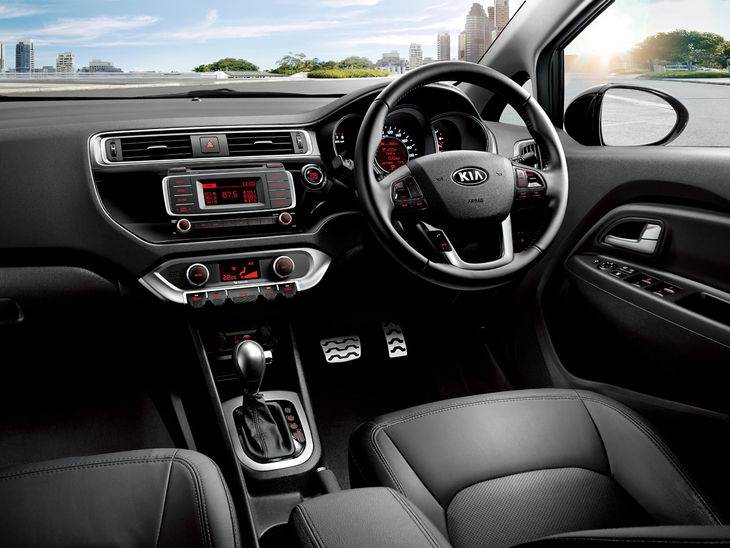
The perceived build quality and overall practicality represented big steps forward for the UB-gen Rio.
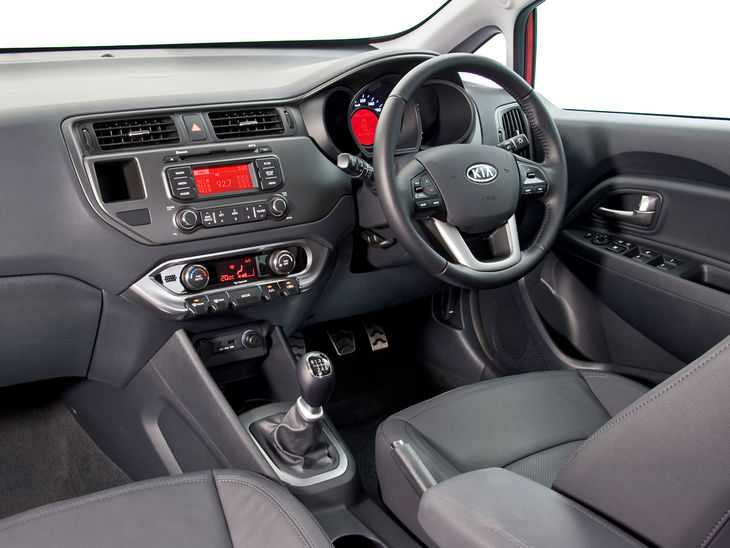
The Rio sedan, meanwhile, boasted a 389-litre luggage compartment (representing a 14.4% improvement over that of its predecessor), while the rear seat’s backrest could also fold down to create an almost flat-floored area. Both body styles furthermore featured a wealth of cabin storage areas, including a 1.5-litre cubbyhole, a 3.0-litre centre console and door pockets capable of housing a 1.5-litre bottle up front and a 0.5-litre item at the rear. The perceived build quality was also a noticeable step forward, with the flagship version’s cabin even bordering on premium.
Generous standard specification: While the 1.2-litre derivatives made do with basic items like 15-inch steel wheels (with hubcaps), even these entry-level models were generously equipped for the money, shipping standard with features such as a height-adjustable driver’s seat, tilt-and-telescopic adjustment for the steering column, electrically adjustable side mirrors, electric windows all round, air conditioning, a Bluetooth hands-free system and a 4-speaker sound system. The main safety features, meanwhile, were dual front airbags and ABS with EBD.
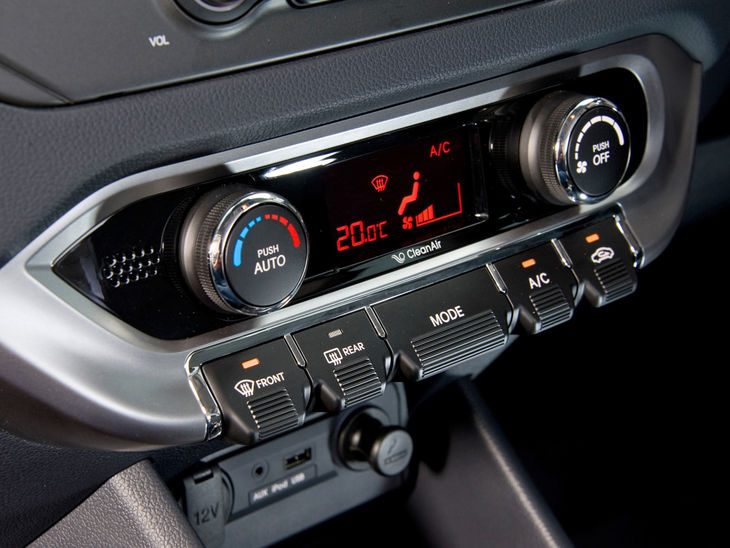
The flagship Tec trim level featured this classy climate-control arrangement.
Upgrading to the 1.4-litre version added 15-inch alloys (or 17-inch items as an option), front foglamps, power-folding side mirrors, automatic headlights, an uprated instrument cluster, a centre console armrest, a pair of audio tweeters and leather trim for the steering wheel and gearshift knob. Finally, the 1.4 TEC flagship furthermore scored 17-inch alloys, projection-type headlamps, LED positioning lights, LED rear lamps, rain-sensing wipers, rear parking sensors, climate control, a cooling function for the cubbyhole, leather upholstery for the seats, faux-leather interior door trim panels, alloy pedals, and side and curtain airbags (for a total of 6). Note, however, no models in the Rio range featured stability control.
Proven engines: While rivals such as the facelifted Volkswagen Polo Mk5 made the switch to downsized turbocharged engines, Kia opted to stick with proven – and fairly straightforward – naturally aspirated mills in the form of the 1.2-litre (Kappa G4LA) and the 1.4-litre (Gamma G4FA) units. The latter proved its mettle in the previous-generation Rio and an example that’s been properly maintained should provide many years of reliable service. Both powerplants used so-called lifetime timing chains rather than belts.
Kia Rio: Product weaknesses
The atmospheric powerplants in the Rio range offered little in the way of low-down pulling power.
Lack of low-down grunt: Although the Rio scores points for potential reliability thanks to its relatively uncomplicated atmospheric engines, the downside is a distinct lack of low-down torque compared with turbocharged alternatives. Indeed, the 1.2-litre mill’s peak twisting force of 120 Nm arrives only at 4 000 rpm, while the 1.4-litre unit makes its maximum figure of 135 Nm at an even loftier 4 200 rpm. Naturally, this necessitates frequent gear changes. While neither engine is averse to being revved, working them in this way will, of course, have a negative impact on fuel economy.
Dashboard rattles: Fairly early in the UB-generation Rio’s life, Kia issued a technical bulletin in some markets over a “squeaking, rubbing or creaking noise” coming from the dashboard (and often more prevalent in cold temperatures). Unfortunately, the fix required the complete removal of the facia and the fitment of insulating material to four offending contact tabs. Though we know of no official action being taken in South Africa, our country’s models were clearly also impacted as we’ve heard of a number of complaints of such from local Rio owners. Make sure to listen out for any odd noises coming from the dashboard during your test drive.
The updated Rio didn’t seem to suffer from the same dashboard rattles as early versions of the pre-facelift model.
Fairly bland to drive: Though dynamic ability is likely nowhere near the top of a potential Rio buyer’s list of priorities, it’s worth noting the Korean hatchback wasn’t the most thrilling to drive (and was far off the pace of more dynamically gifted rivals such as the Ford Fiesta). In addition, as was the case with many Korean products of the era, the electric power steering felt excessively artificial and tended to require constant small corrections around centre.
Still, the Rio made the grade in other areas likely more pertinent to the average buyer, including rolling refinement, ease of use and overall ride comfort (on 15-inch wheels, that is). That said, we should again point out the SA-spec Rio did without stability control, a safety feature offered by many rivals of the era.
What to pay for a Kia Rio?
Used UB-generation Rio stock in South Africa is dominated by the 5-door hatchback body style.
Take note all 3rd-generation Rio models offered in South Africa came with a 5-year/150 000 km warranty and a 4-year/60 000 km service plan. Scrutinise the service history of any potential buy, with a particular emphasis on the recorded maintenance history from 4 years after registration.
At the time of writing, 80% of the used UB-generation Rio units listed on Cars.co.za were hatchbacks (though only 2% featured the 3-door body style), confirming the saloon version wasn’t nearly as popular as its 5-door sibling. The 1.4-litre engine dominated (accounting for 79% of all listings), while only 20% were equipped with the 4-speed automatic transmission.
There aren’t many Rio 3-Door models on the used market.
We found a pair of 1.4-litre hatchbacks with more than 200 000 km on the clock, as well as a 1.2-litre model showing in excess of 300 000 km. White was the most popular exterior paint colour, followed by silver and red.
Below R100 000: Options with 5-figure price tags were limited, as only 6 percent of all listings fell below the R100 000 mark. Predictably, a number of these units featured high mileage. Be particularly wary of too-good-to-be-true mileage claims in this ballpark.
From R100 000 to R150 000: A little more than half of all listings fell between these pricing bookends, suggesting this is where most buyers will be shopping. There were plenty of examples with well under 100 000 km on the odometer (always make sure typical wear points match the mileage claims).
From R150 000 to R200 000: We found 38% of models were listed for between R150 000 and R200 000, many of which were later model-year 1.4 and 1.4 TEC derivatives. Mileage varied from just 26 000 km through to 167 000 km.
Above R200 000: The handful of units listed above R200 000 were all facelifted models, many featuring the flagship TEC specification and an automatic transmission (with the highest asking price coming in at R230 000). Interestingly, we found only one saloon in this section.
Pick of the range?
Note the large alloys on the Tec variant and the smaller wheels (with higher-profile tyres) on the cooking version.
As illustrated by its popularity, the 5-door hatchback is the body style most buyers prefer, so we’ll concentrate on that here. In terms of engines, we’d recommend the larger-capacity 1.4-litre unit over the somewhat more breathless 1.2-litre mill (which, incidentally, also did duty in the Picanto of that era), while likewise vouching for the slick-shifting 6-speed manual gearbox over the relatively lethargic 4-speed torque-converter automatic transmission. The larger-engined models furthermore come with the full complement of airbags.
Owing to its attractive list of standard features – with highlights in the form of rain-sensing wipers, rear parking sensors, full climate control, leather upholstery and extra airbags – it’d certainly be tempting to spring for the flagship 1.4 TEC derivative. However, it’s important to consider how much value you place on ride comfort, as this variant’s 17-inch alloys and low-profile tyres conspired to deliver a noticeably harsher ride. Should that be an issue for you, opt for the standard 1.4 model instead.
Since the differences between the pre-facelift model and the updated version were relatively minor (effectively limited to cosmetic treatments inside and out), choose whichever fits your budget best.
Verdict
The 3rd-gen Rio’s styling has aged particularly well.
Which hatchback alternatives should you consider in this segment? Well, the most obvious rival comes from within the same family in the form of the closely related PB-generation Hyundai i20. The Rio’s cousin used the same 1.4-litre unit (and gained the 1.2-litre motor later in life) and was initially available with a larger 1.6-litre petrol engine, too. There was even the option of a 1.4-litre turbodiesel mill.
If you’re shopping towards the lower end of the UB-series Rio hatchback range, also look at the original (Fiesta-based) Figo and the first Volkswagen Polo Vivo. Specific rivals for the Rio Sedan, meanwhile, include the Chevrolet Sonic Sedan, Hyundai Accent and Volkswagen Polo Sedan.
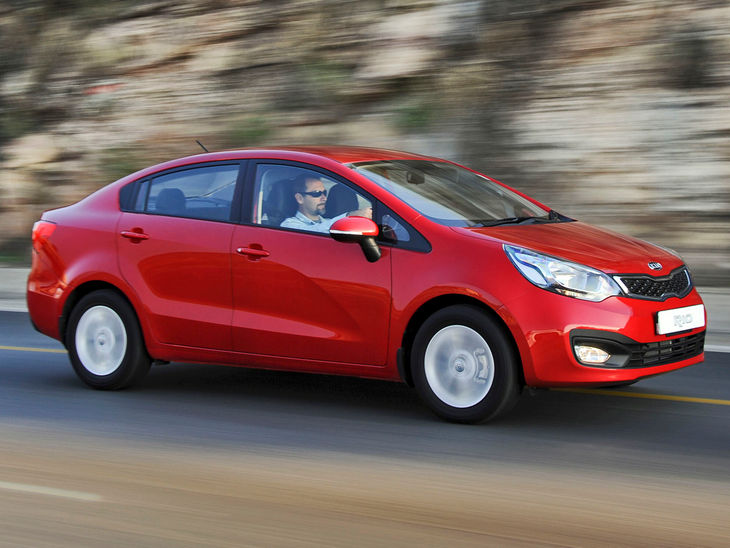
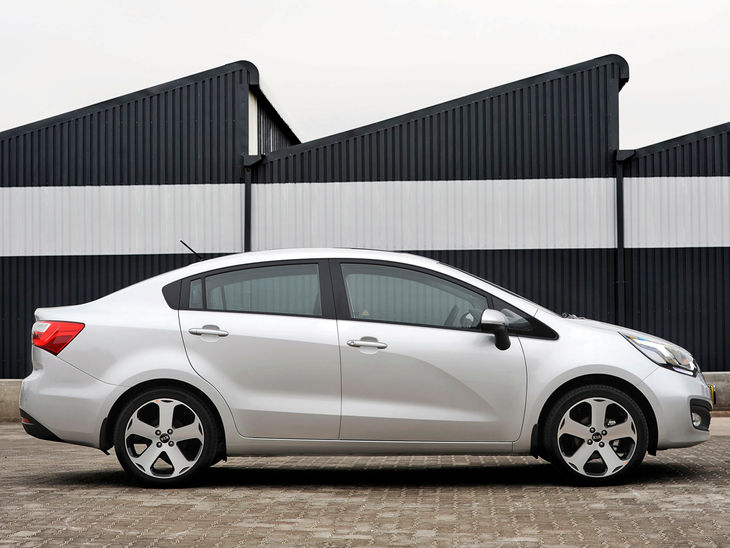
This iteration of the Rio Sedan is one of the better-proportioned B-segment saloons of the era.
The 3rd-generation Rio represented a coming of age for the nameplate. Though the engines weren’t the punchiest – and the range-wide lack of stability control unfortunate – the Rio nevertheless featured solid perceived build quality plus an attractive design … which, we might add, has aged quite well.
While sales in today’s B-segment have dwindled compared to years gone by, there’s certainly still a market for a generally well-equipped, keenly priced used hatchback (and, to a lesser extent, sedan). And that’s exactly what this iteration of the Rio still offers.
No, the Kia Rio was discontinued in South Africa in the first quarter of 2024. The 4th-generation model’s production did not include a right-hand-drive version for the South African market. It is now only available as a used vehicle.
What engines were available in the Kia Rio in South Africa?
The Kia Rio in South Africa was sold with two naturally aspirated petrol engine options: a 1.2-litre (62 kW, 120 Nm) and a 1.4-litre (73 kW, 135 Nm).
Is the Kia Rio a good used car to buy in South Africa?
The Kia Rio has a reputation for being a reliable and economical choice, making it a popular option on the used car market. Many late-model examples may still have the balance of a 5-year/unlimited-kilometre warranty, which provides extra peace of mind for buyers.
What are the main alternatives to the Kia Rio?
Direct competitors and similar alternatives to the Kia Rio in South Africa include the Volkswagen Polo, Hyundai i20, and Ford Fiesta.