Toyota Vitz for SA! Rebadged Suzuki Celerio to Replace Agya
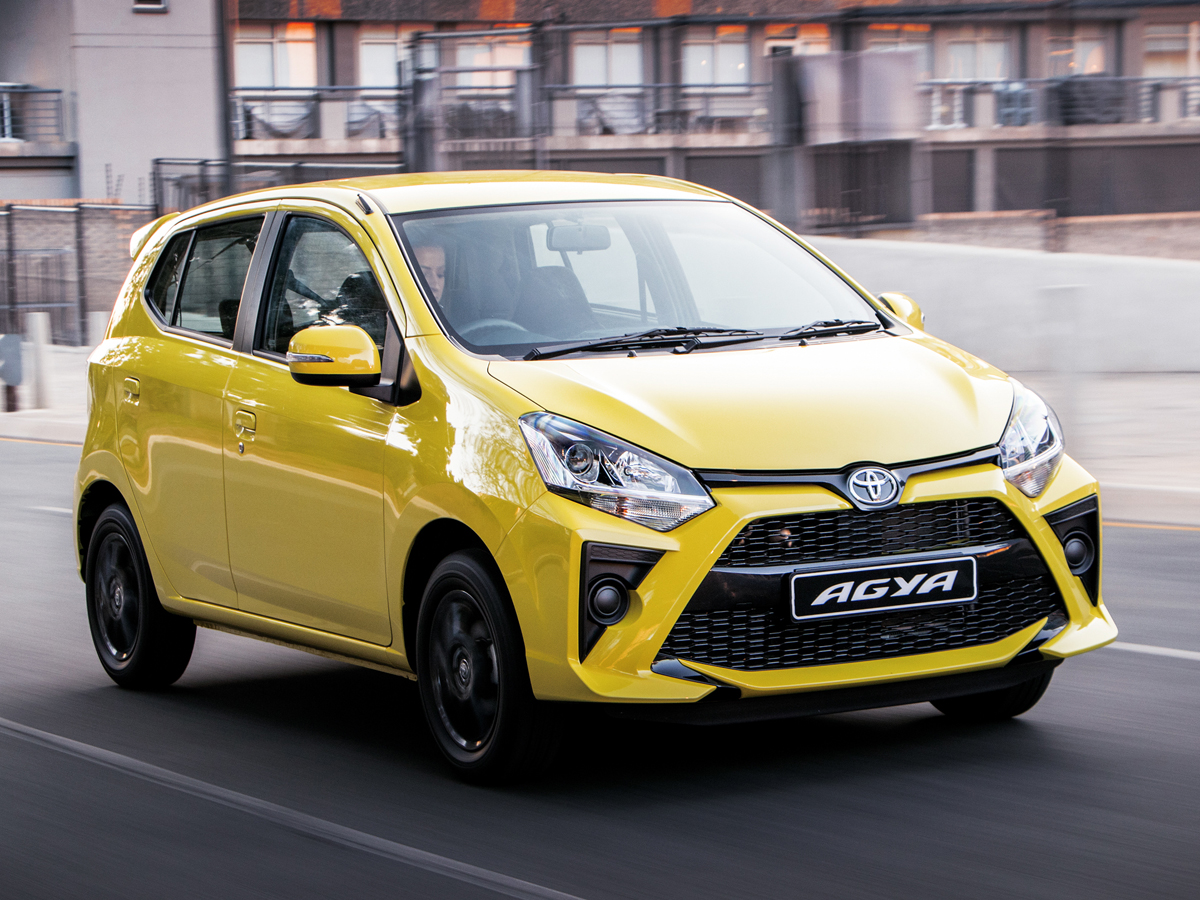
Toyota SA Motors will kill off the Agya budget hatch later in 2023, replacing it with a rebadged Suzuki Celerio called the Vitz. Meet what will be Toyota’s new cheapest car…
Toyota South Africa Motors looks set to reap the rewards of yet another vehicle collaboration with alliance partner Suzuki, with the Celerio-based Vitz confirmed for a local introduction in the 2nd quarter of 2023.
The Japanese firm’s local division made the announcement at its 6th annual State of the Motor Industry (SOMI 2023) event, held at Kyalami in Gauteng. The vehicle – which from what we understand is not yet offered with a Toyota badge in any other market – was unveiled on stage at the event.
Reviving a nameplate that has roots stretching back to 1998 and was once applied to the Yaris offered in the automaker’s domestic market of Japan, the Vitz will replace the Agya in South Africa. For the record, the latter model (itself based on the Daihatsu Ayla) hit local roads at the end of 2020, replacing the Aygo.
The Toyota Agya arrived in SA in November 2020.
At first glance, the new Vitz – which will surely be sourced from Maruti Suzuki in India – is little more than a rebadged Celerio. We’d thus speculate it will use the same K10C naturally aspirated 1.0-litre, 3-cylinder petrol engine as the little Suzuki, delivering 49 kW and 89 Nm to the front axle through a 5-speed manual gearbox or an automated manual cog-swapper with the same number of gears.
Prices and specifications will be announced closer to the local launch, though judging by Toyota SA Motors’ strategy with other Suzuki-built products – such as the Starlet, outgoing Urban Cruiser and Rumion – the Vitz may well be positioned slightly above the Celerio’s current pricing bookends of R178 900 and R213 900.
For the sake of comparison, the Agya is currently Toyota’s cheapest car, starting at R200 000 and topping out at R219 900. The Vitz will thus by default become the brand’s least-expensive passenger car.
We’ll keep our eyes and ears open for more information on the new Vitz in the coming weeks…
W205 Mercedes-Benz C-Class Sedan (2014-2021) Buyer’s Guide
Eyeing a previous-gen, 2nd-hand Mercedes-Benz C-Class sedan? Here’s everything you need to know, from which W205 variants were available in SA to what you should look out for and how much you can expect to pay…
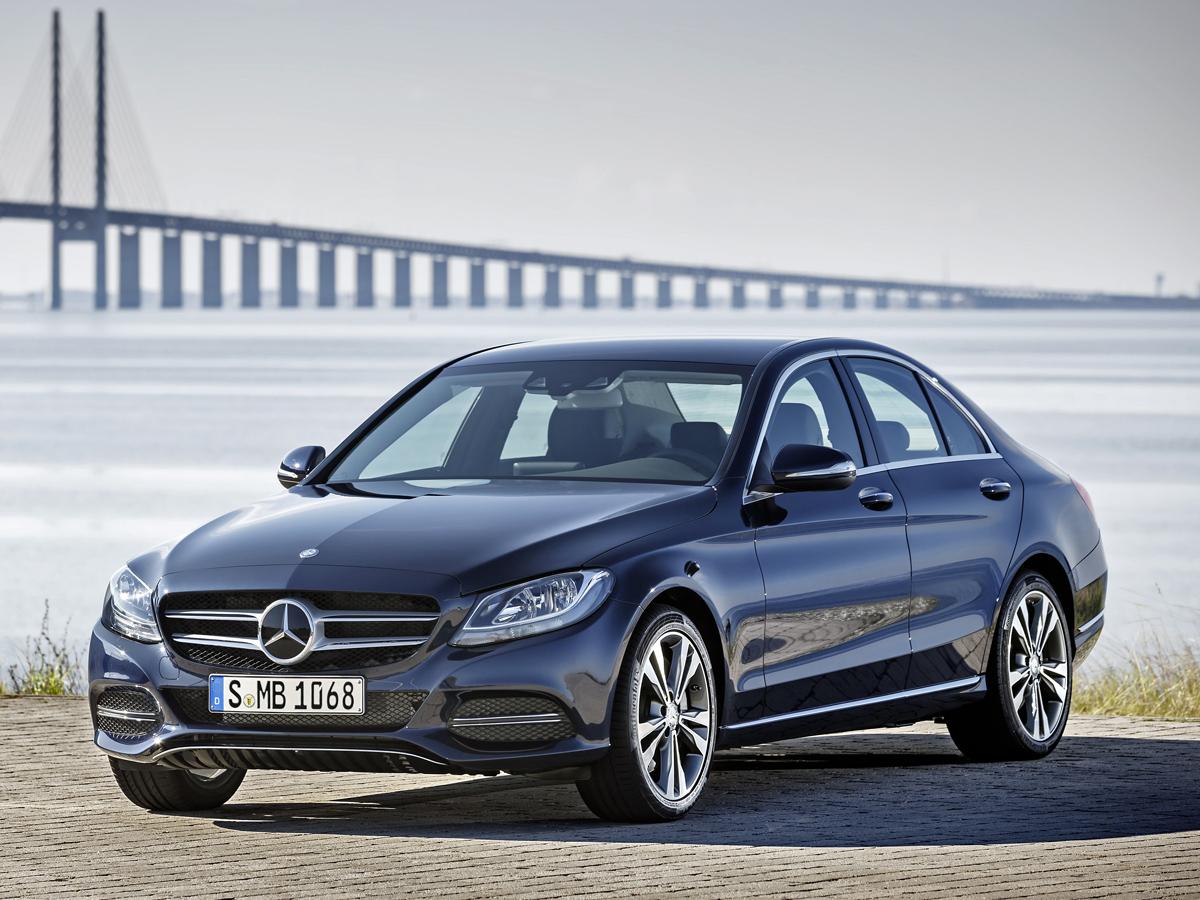
While previous iterations of the C-Class saloon played the role of entry point to the world of Mercedes-Benz sedan ownership, all of that changed with the W205 generation. Yes, as the swoopily styled 4-door CLA had gone into production in 2013, the Stuttgart-based firm had the opportunity to “grow” its C-Class.
And grow the 4th-generation C-Class sedan most certainly did. At 4 686 mm from bow to stern, the W205 measured a considerable 95 mm longer than its predecessor, while the wheelbase increased a full 80 mm to 2 840 mm. In addition, the vehicle’s width grew some 40 mm. Space on the rear bench was thus improved, as was luggage space, which ranged from 335 litres in the plug-in hybrid version to around 480 litres.
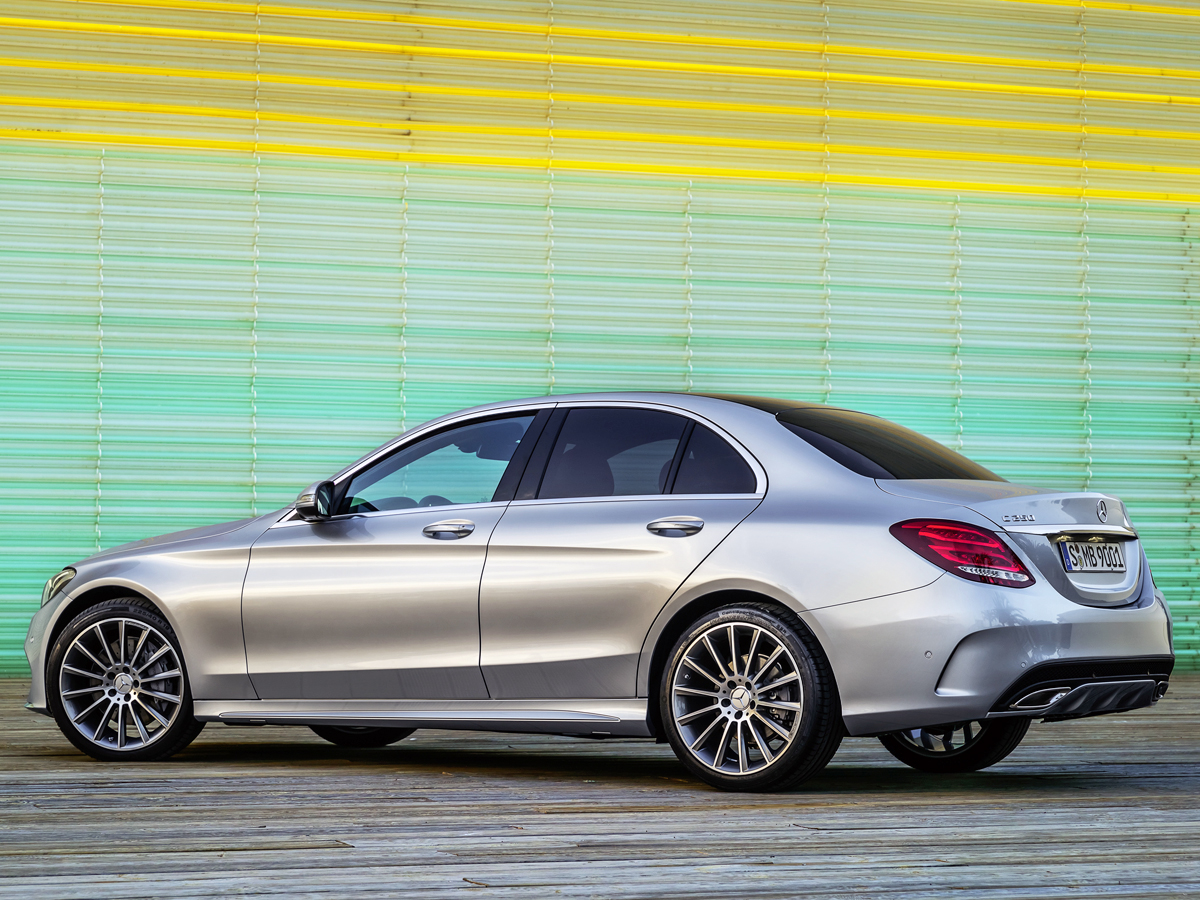
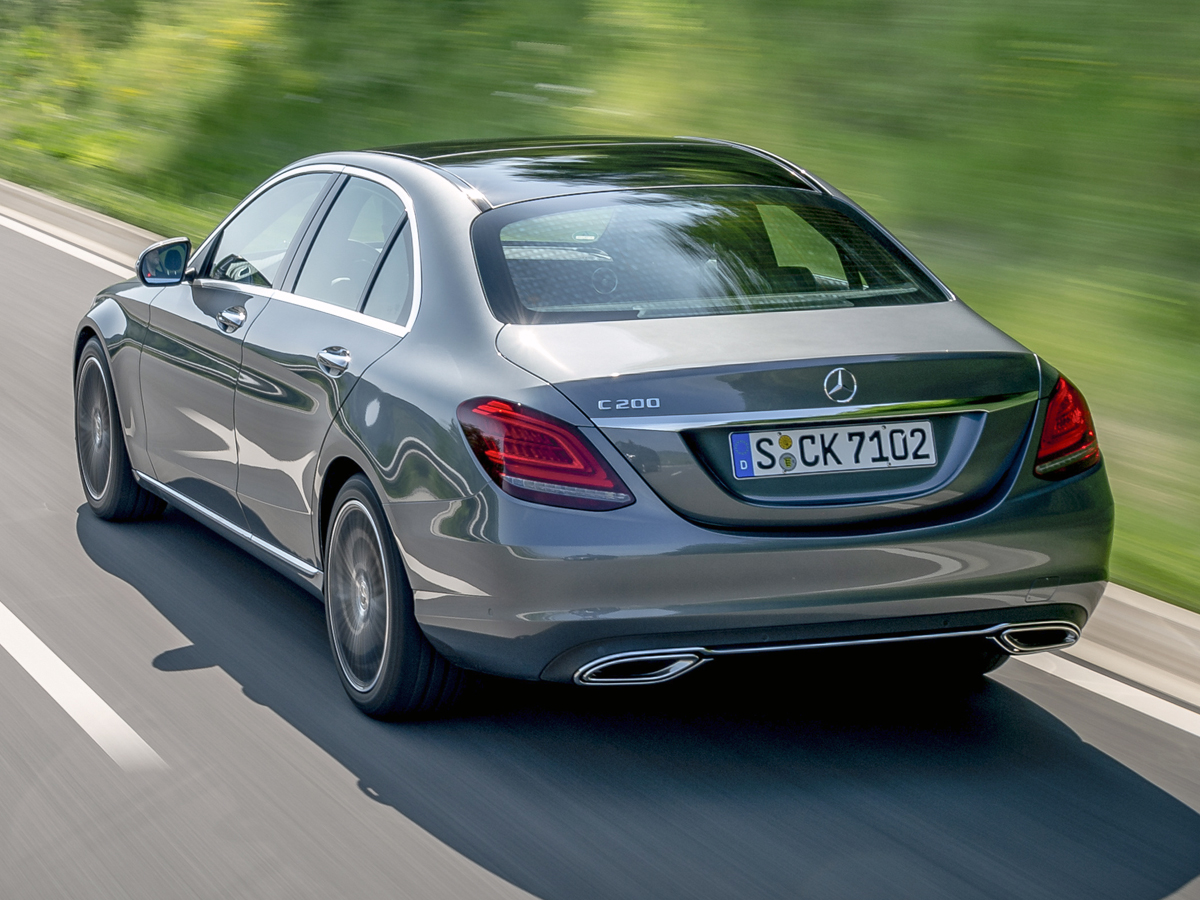
The 4th-generation C-Class sedan, seen here in AMG Line guise, was considerably larger than its predecessor.
Owing to the switch to the then-freshly minted Modular Rear Architecture (MRA) platform, the Mk4 C-Class was also significantly lighter than the more compact W204 that came before it, benefitting from the extensive use of aluminium. That helped make the base models more efficient and the AMG-fettled performance flagships even more rapid.
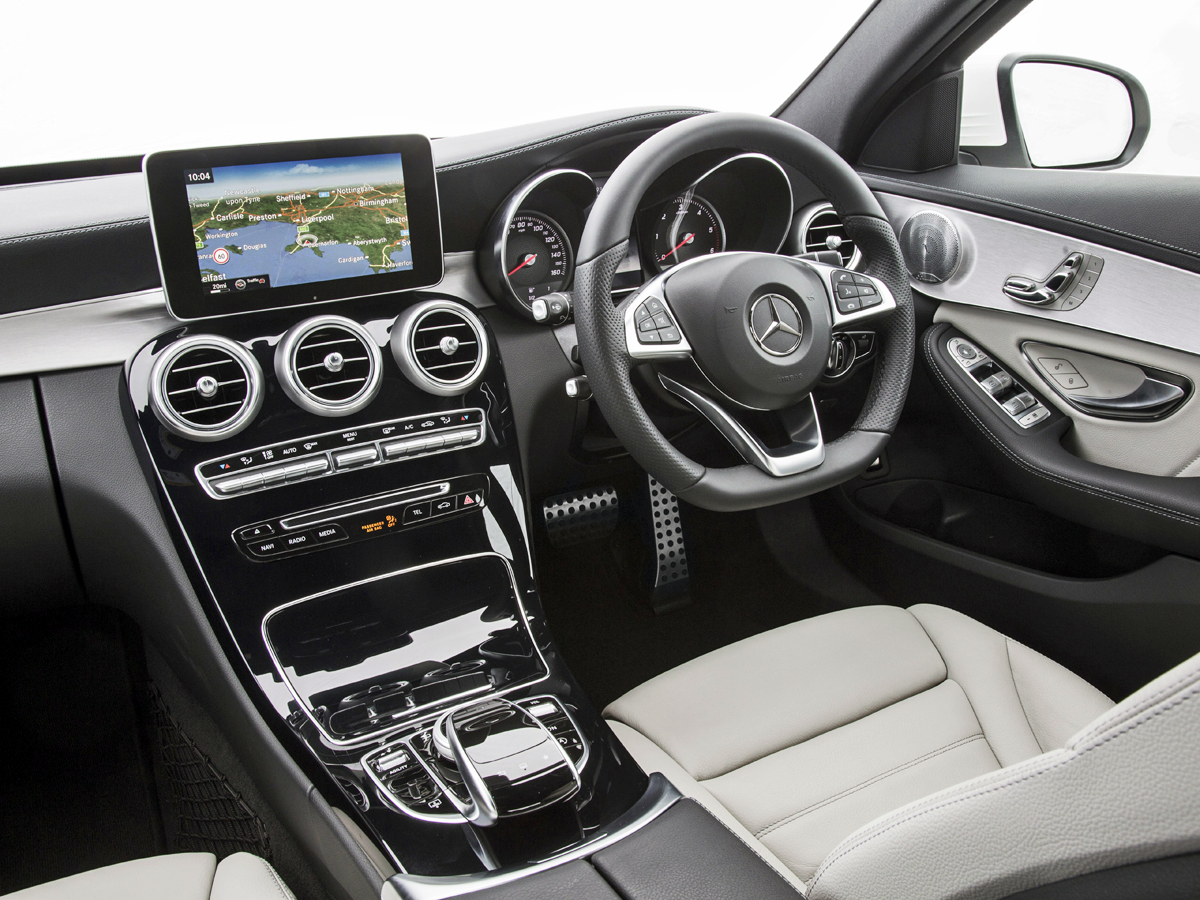
Furthermore, the Stuttgart-based firm’s designers opted to lend the compact executive sedan more than a hint of S-Class styling, both inside and out. This model also took a significant step forward in terms of technology (most obvious with the facelifted version, which sported a new electronic architecture), gaining all sorts of on-board gadgets.
Though the broader C-Class line-up also included estate, coupé and cabriolet body styles, here we’ll concentrate on the strong-selling sedan, which was produced by Mercedes-Benz South Africa at its East London plant in the Eastern Cape.
Mercedes-Benz C-Class Sedan (W205) model line-up
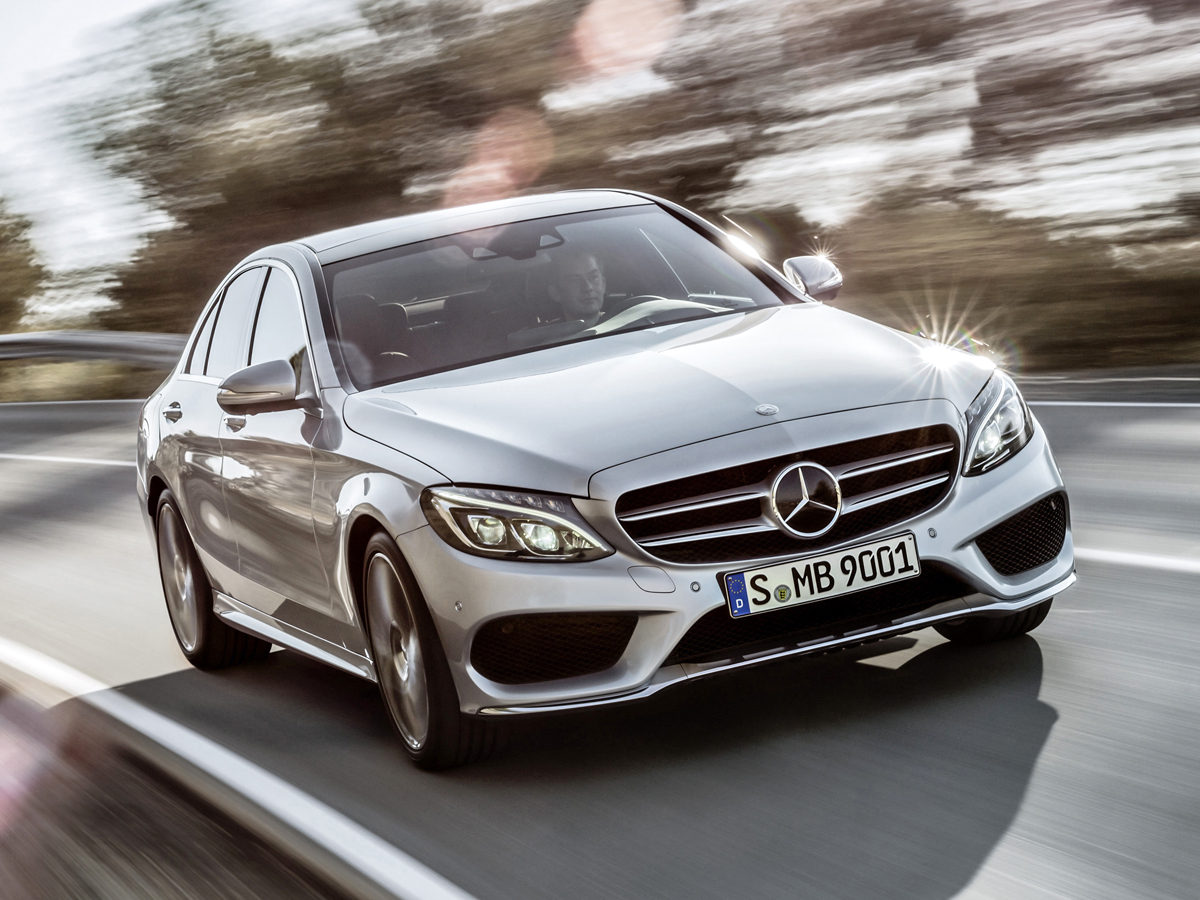
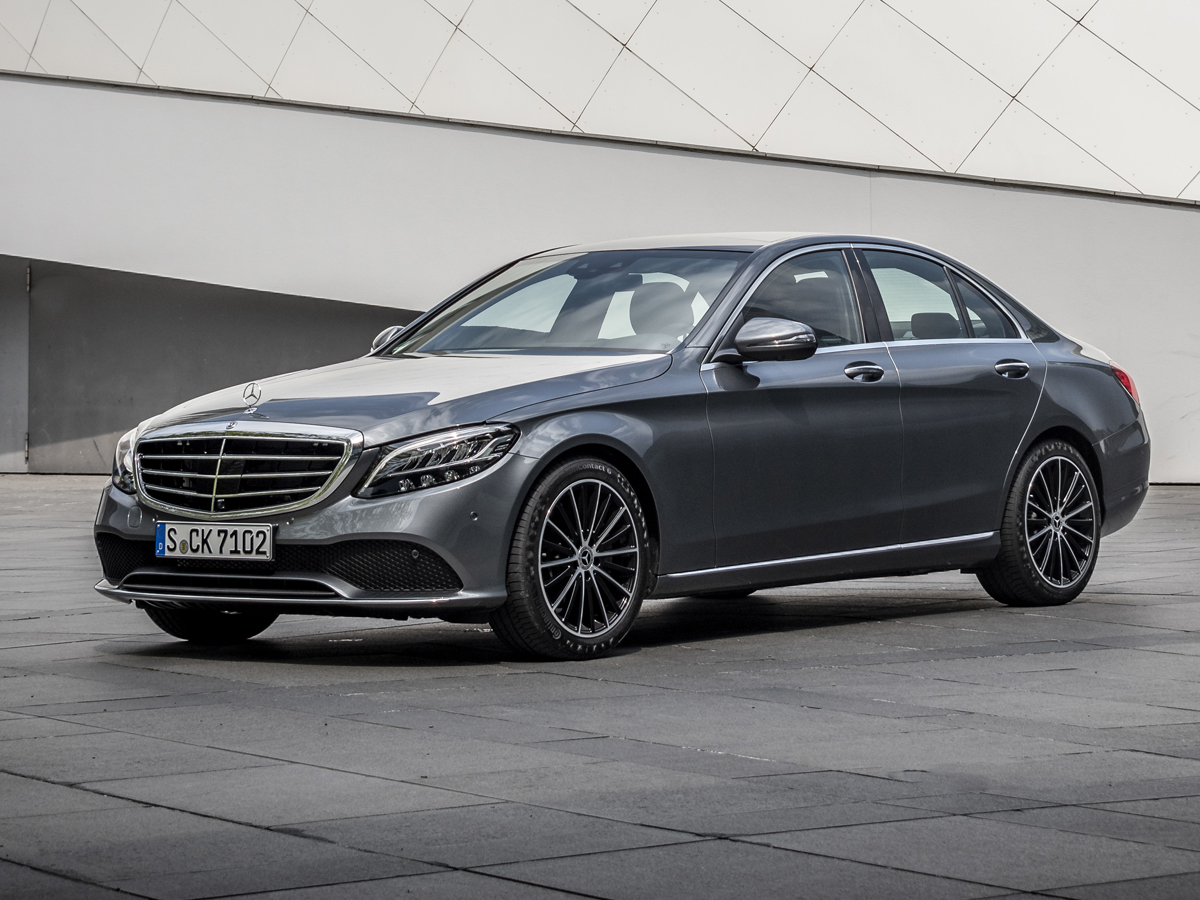
Note the classic grille design and bonnet-mounted star reserved for the Exclusive specification.
The 4th version of the C-Class sedan was officially revealed in December 2013, though enjoyed its world premiere at the 2014 North American International Auto Show in Detroit a month later. Soon thereafter, local order books opened, before the saloon finally hit the market in South Africa in June 2014. It was offered with the choice of 2 front-end designs: one with a prominent Mercedes-Benz star and one with a classic grille and a smaller star on the bonnet (the 2nd reserved for the Exclusive trim level).
Initially, the local range comprised 4 turbocharged 4-cylinder derivatives: a single diesel and 3 petrols. The oil-burning model shipped standard with a 7-speed automatic transmission, which was optional on the petrol variants (these models otherwise came with a 6-speed manual gearbox). The following powertrain variants were offered at launch:
The local C-Class sedan range expanded in the latter half of 2014 with the arrival of a 2nd, more potent oil-burning option. The C250 BlueTec used the same 2.1-litre 4-pot as the C220 BlueTec, though here it was tuned to deliver 150 kW and 500 Nm.
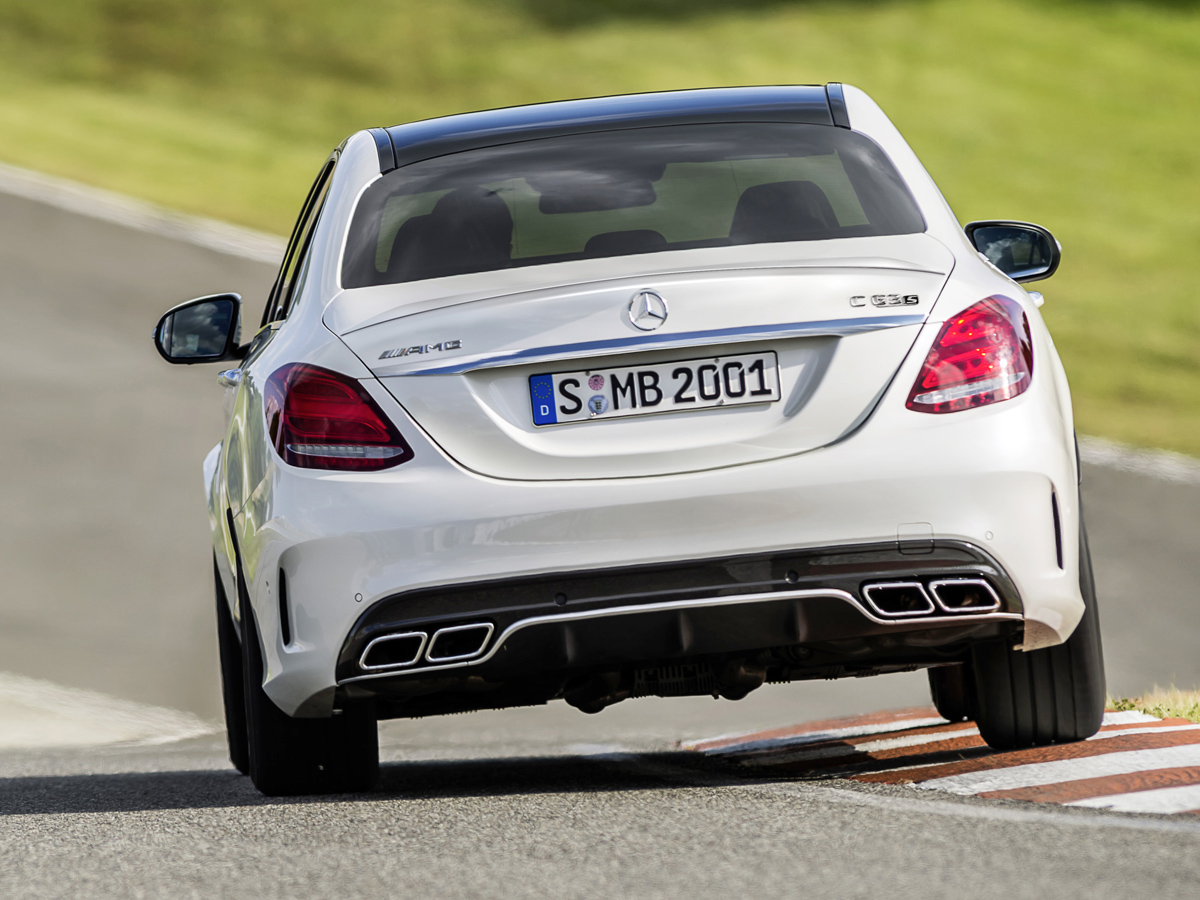
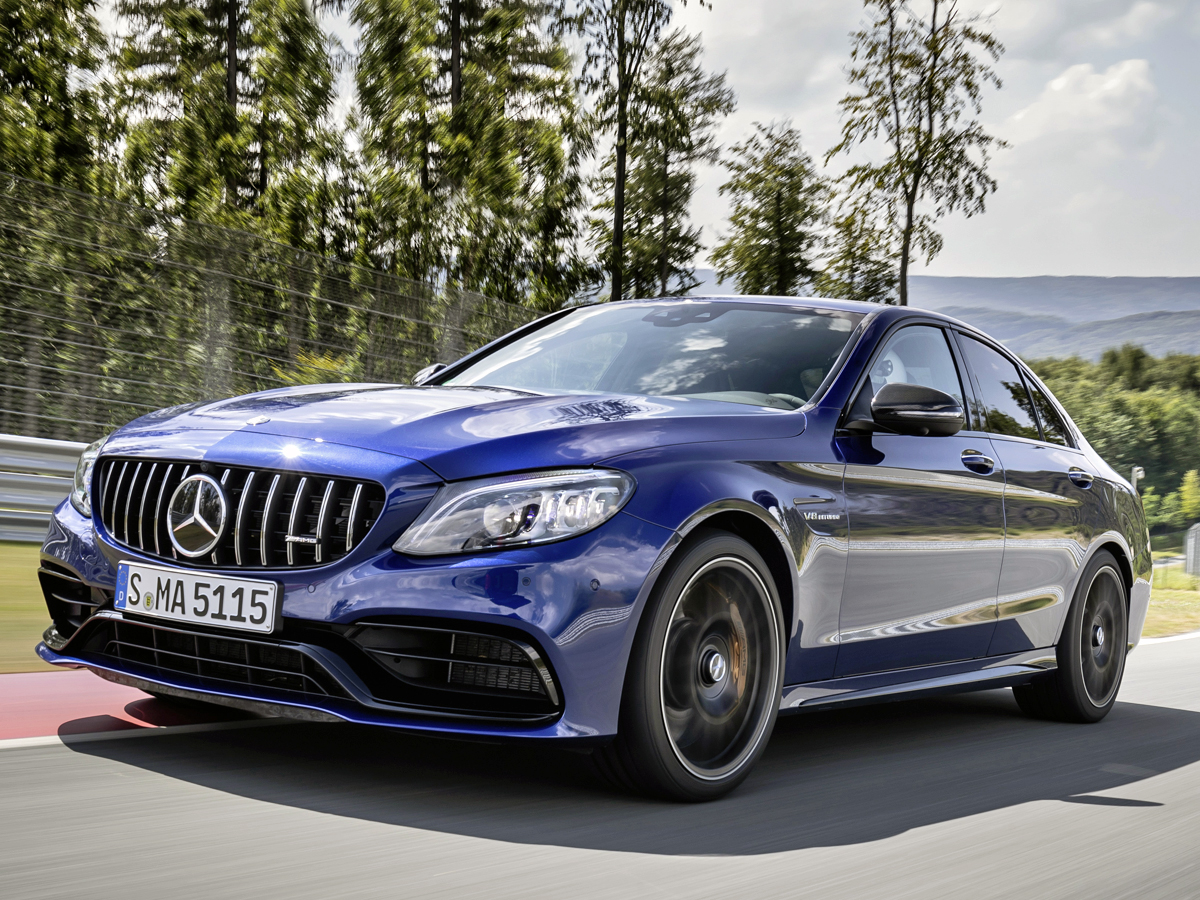
The V8-powered Mercedes-AMG C63 (including the S pictured here) thundered into SA in the first half of 2015.
In the 1st half of the following year, the Mercedes-AMG C63 and C63 S saloon models touched down, each boasting a twin-turbo 4.0-litre V8 petrol heart, replacing the naturally aspirated 6.2-litre 8-cylinder unit employed by the preceding versions. The new engine generated 350 kW/650 Nm in standard guise, while pumping out 375 kW and 700 Nm in “S” specification. A 7-speed automatic transmission shipped standard, sending all of that oomph exclusively to the rear axle.
Around the middle of 2015, the petrol-powered C300 joined the local line-up. Previously, this badge indicated a 3.0-litre V6 engine, but here Mercedes-Benz switched to a turbocharged 2.0-litre, 4-cylinder unit worth 180 kW and 370 Nm. About a year later, the all-paw Mercedes-AMG C43 sedan made its local debut, slotting in below the 63-badged models with a 270 kW/520 Nm turbocharged 3.0-litre V6 engine that drove all 4 wheels through a 9-speed automatic cog-swapper. Interestingly, our market didn’t ever receive the similarly configured C450 AMG that came earlier in this generation.
Mercedes-Benz SA also introduced a plug-in hybrid version of the C-Class saloon, badged as the C350e, towards the mid-point of 2016. Manufactured alongside the cooking models in East London, the C350e combined a 155 kW/350 Nm turbocharged 2.0-litre petrol engine with a 60 kW/340 Nm electric motor, a 6.2 kWh lithium-ion battery pack and a 7-speed automatic transmission. With a claimed pure electric range of 31 km, the company said the C350e was capable of consuming just 2.1 litres per 100 km, though could also reach 100 kph from standstill in 5.9 seconds.
The C350e featured a plug-in hybrid powertrain, but not many units were sold in South Africa.
By September 2017, the C-Class sedan was available locally in Edition C guise, which fused the AMG Sports exterior design with the Avantgarde interior equipment line. The Edition C configuration could be ordered with any of the 4-cylinder powertrains, bar the 350e PHEV.
At the start of 2018, the 1st locally produced C63 rolled off the production line in East London (though its V8 heart was still built in Affalterbach), after the company had already produced a number of C43 units for both the local market and export. In order to produce these Mercedes-AMG models in South Africa, the company had invested an additional R200-million in its manufacturing facility.
C-Class sedan gains 2018 facelift and fresh engines
The biggest changes with the C-Class saloon facelift came under the skin.
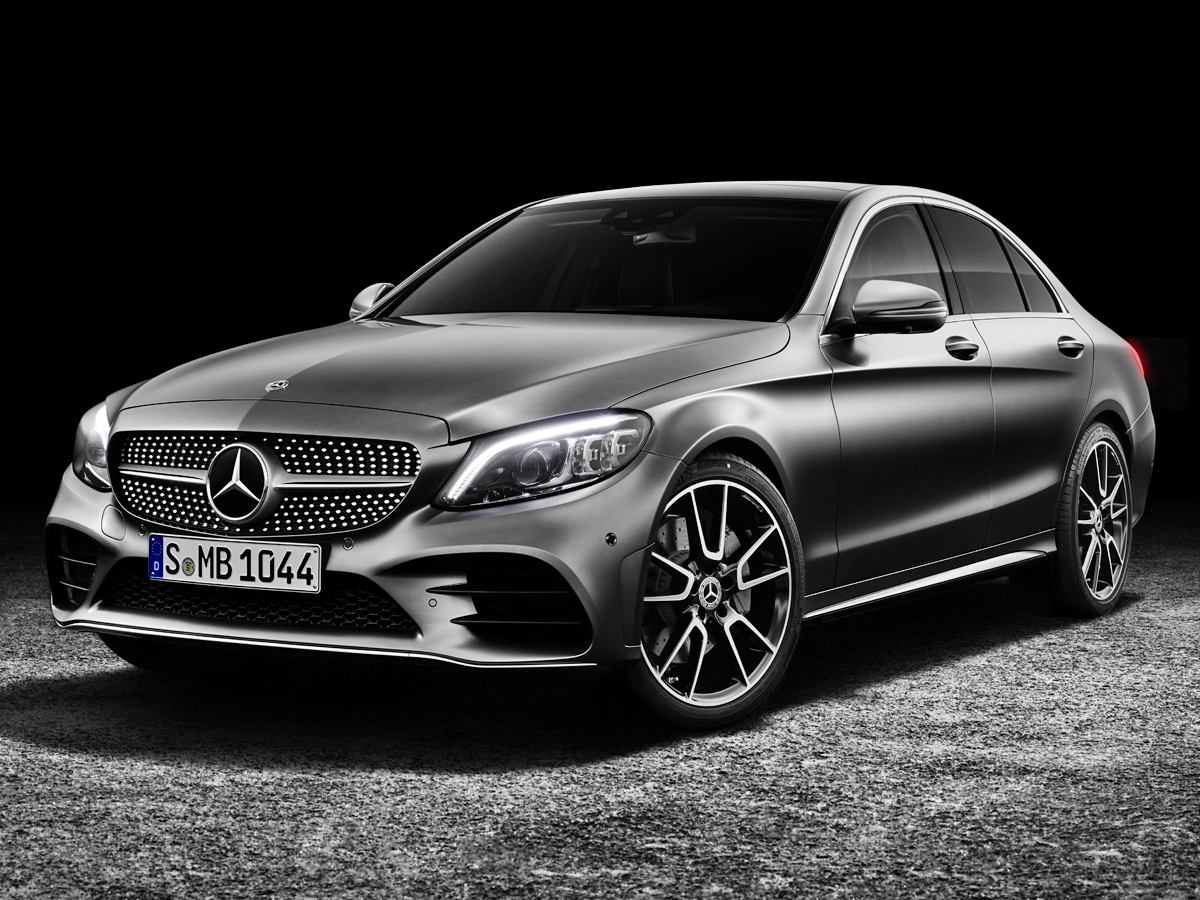
In July 2018, with the front-driven A-Class Sedan very much on the way as a new base 3-box option, the facelifted C-Class saloon hit the market in South Africa. It featured mildly revised exterior styling, a new electronic architecture (facilitating the addition of various driver assistance systems from the S-Class) and a thoroughly upgraded cabin, including a fresh infotainment system and somewhat divisive touch-sensitive controls on the new steering wheel.
But perhaps the most noteworthy of the many significant changes happened beneath the bonnets of certain variants. The C200, for instance, became a mild hybrid, switching to a 135 kW/280 Nm turbocharged 1.5-litre engine supplemented by a 48 V system with an integrated starter-generator that produced an additional 10 kW and 160 Nm under acceleration. The C300’s new turbocharged 2.0-litre mill boasted peak outputs of 190 kW and 370 Nm, while the C220 BlueTec became the C220d, exchanging its gruff old 2.1-litre unit for a far smoother 143 kW/400 Nm 2.0-litre turbodiesel unit in the process.
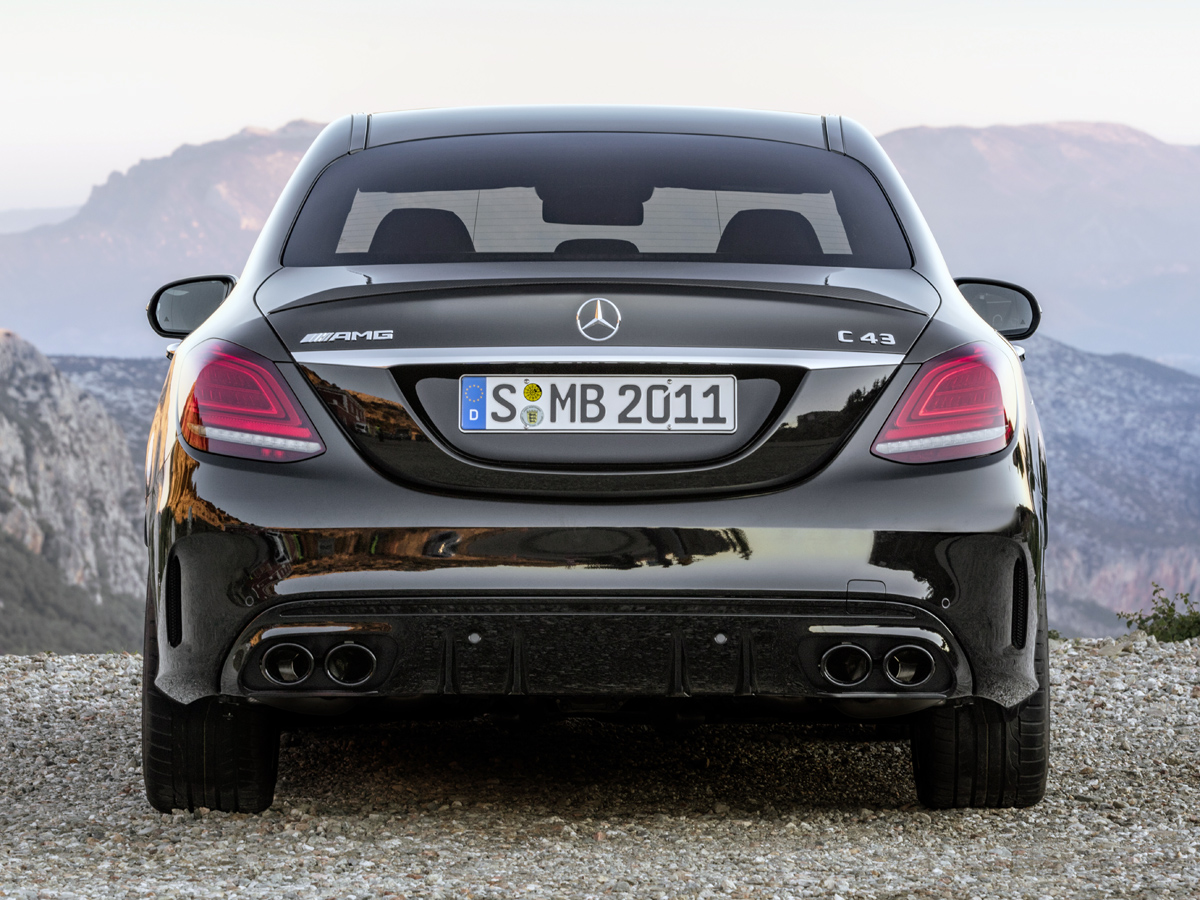
Finally, the C43’s V6 scored an extra 17 kW for a maximum figure of 287 kW. Interestingly, the manual gearbox was discontinued from the C-Class portfolio at this time, with a 9-speed automatic transmission thus becoming standard across the range.
The Mercedes-AMG C43’s peak power was boosted to 287 kW with the facelift.
In mid-March 2019, the 500 000th W205 C-Class – a C200 painted in Obsidian Black and destined for the United Kingdom – rolled off the local production line. Just 2 months later, the refreshed C63 launched in South Africa, now available only in full-fat “S” form and sporting the new Panamericana grille. Though the V8’s outputs were unchanged, the updated model shipped standard with a faster-shifting 9-speed MCT automatic gearbox as well as a new 9-stage traction control system.
Production of the W205 in East London came to an end in May 2021, before the factory began producing the W206 the following month.
Product strengths
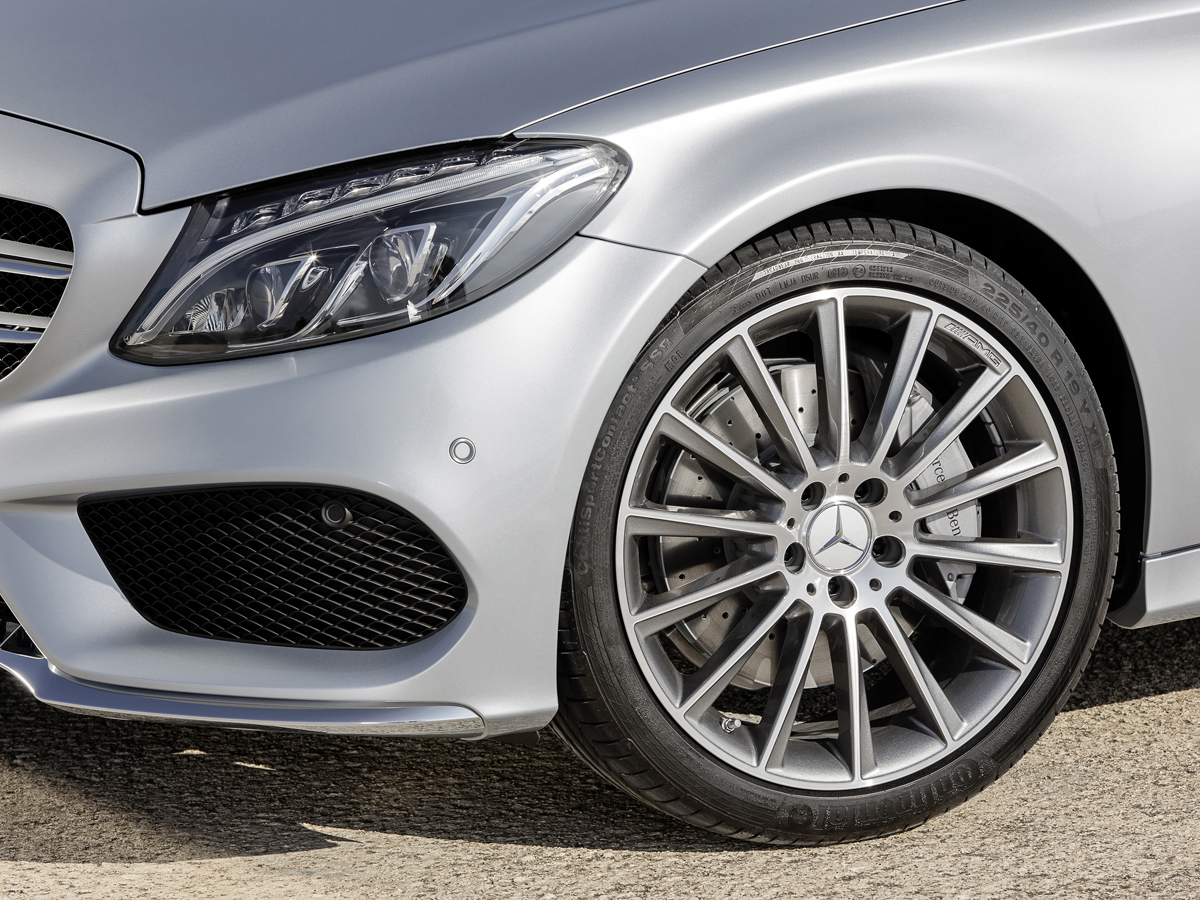
Note the AMG Line package included larger alloys and firmer suspension, impacting the ride quality.
Ride comfort: Non-performance versions of the C-Class sedan have long prioritised ride comfort over pin-sharp dynamics. That was again the case with this 4th-generation model, which was more cruiser than corner carver (despite the somewhat comfort-robbing runflat tyres). Still, be aware models specified with the AMG package featured larger alloy wheels and firmer sports suspension, adding an admittedly minor degree of crashiness to the ride and increasing road noise.
The W205 was also the 1st vehicle in its segment to be offered with air suspension on both axles. Though certainly tempting, we’d argue this was an unnecessary option when it came to lower-spec steel-sprung models with their smaller wheels. Buyers of used vehicles should also be a little wary of air suspension as such a system would be costly to repair or replace when the inevitable day comes.
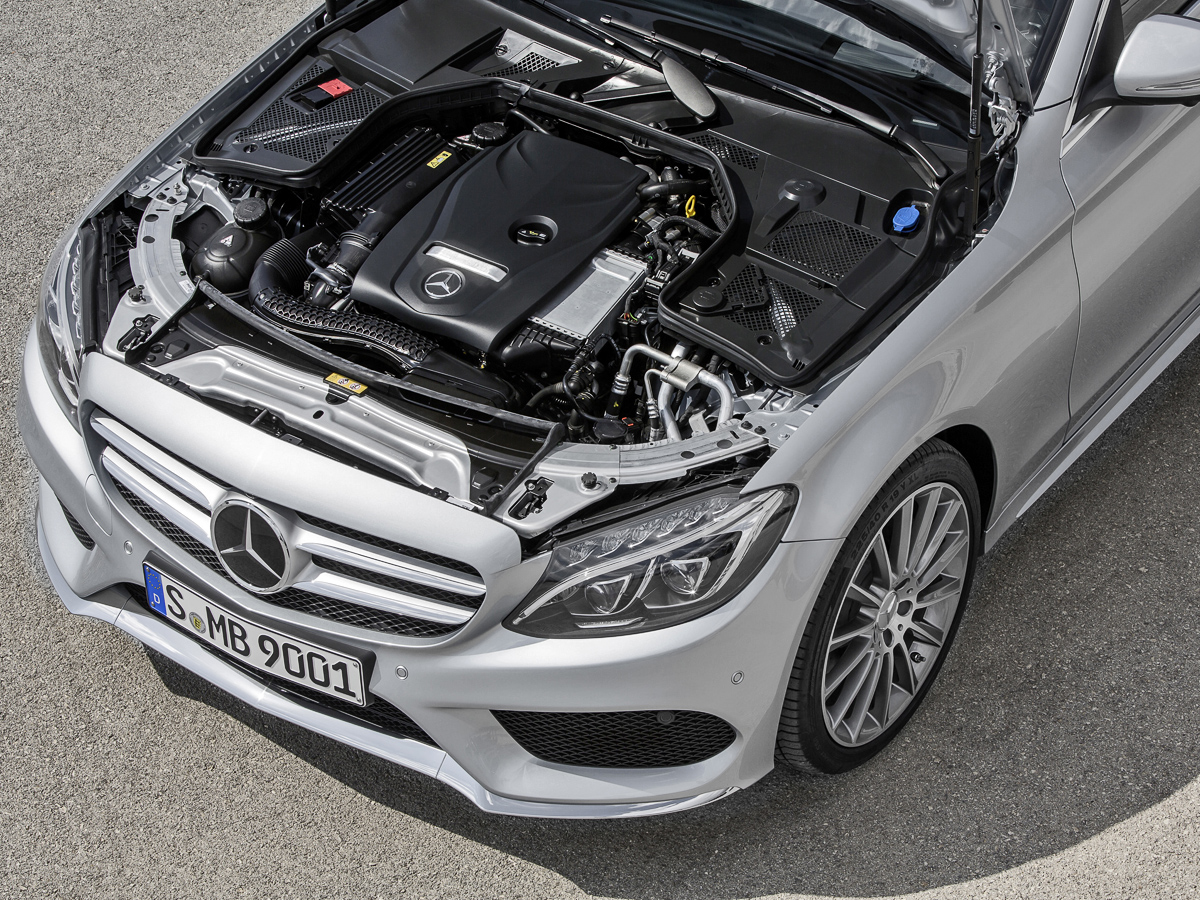
Breadth of powertrain line-up: Over its 7-year run on the local market, the W205 range certainly wasn’t lacking variety in the engine department (unlike the current W206, which features only 4-cylinder units), even if all engines were turbocharged. The powertrain portfolio ranged from frugal petrol- and diesel-flavoured 4-pots to a plug-in hybrid, a mild hybrid, a V6 and that stonking V8. Of course, the latter 2 are particularly significant in that they likely represent the final instances of 6- and 8-cylinder power for AMG-badged C-Class models, further boosting their desirability on the used market.
The W205 C-Class range included a multitude of engine options (C250 pictured here).
Lengthy maintenance cover: All models in the Mk4 C-Class sedan range came standard with Mercedes-Benz’s 6-year/100 000 km PremiumDrive contract. It’s also worth noting buyers had the option to extend this maintenance plan up to 8 years or 180 000 km. Since W205 production ended as recently as mid-2021, facelifted models should still have at least half of their cover firmly in place, which is great news for those shopping on the used market.
Standard safety equipment: Tested in 2014, the C-Class sedan was awarded a full 5-star safety rating from Euro NCAP, scoring particularly highly for adult and child protection (with results of 92% and 84%, respectively). In South Africa, even the pre-facelift model was crammed full of safety kit as standard, including Collision Prevention Assist Plus, the Attention Assist system, adaptive brakes (with a brake-drying function for wet-weather driving), a brake-wear indicator display, stability control, tyre-pressure monitoring and 6 airbags. Of course, plenty more advanced driver-assistance features were available as either individual options or as part of a broader package.
Product weaknesses
W205 units (particularly pre-facelift versions) have been known to experience a range of electronic gremlins.
There’s not much data on the long-term reliability of the newer engines introduced with the W205 facelift, though even the earlier motors appear to be fairly dependable (when maintained properly, of course).
Indeed, the only truly widespread issue we found related to the pre-facelift C300’s engine, which sometimes throws a P052E error, meaning the crankcase pressure sensor has detected an incorrect degree of pressure. Though this seems to be a common complaint in overseas markets such as the United States, we interestingly found very little evidence of the issue in SA. Still, there are some other potentials problems we’ll outline below.
Electronic gremlins: W205 models had the potential to suffer from a range of issues with the electronics. We’ve heard of unresponsive infotainment screens and frozen navigation systems, though software updates may help in this regard. Other complaints include CD-drive problems, keyless entry issues and touchpad failures, along with early-to-fail LEDs in the door handles.
Plastic trim in the C-Class cabin is unfortunately prone to creaks and groans.
Creaking cabin trim: Despite a seemingly decent level of build quality, many W205 units suffered from creaking cabin trim, which isn’t something buyers of this sort of vehicle would expect. From what we can tell, this was most evident on pre-facelift models, though even the later versions were prone to presenting the odd squeak. Before setting off on a test drive, give the plastic trim on areas such as the centre console a firm prod and note any unfortunate noises. Seals around the doors and the sunroof were also culprits in this regard.
Steering mechanism recall: In 2014, a number of W205 units already on the road in South Africa were part of a worldwide recall relating to a potentially incorrectly installed steering-column coupling lock. Affected vehicles exhibited a strange noise when the steering wheel was rotated and could even resist turning, potentially leading to a loss of control. While most vehicles would have been corrected, it’s worth listening carefully for any odd noises during test drives.
What to pay?
At the time of writing, there were more C63 units than C43 examples on the used market.
Pay close attention to any potential buy’s maintenance records – there should be no reason to settle for a vehicle with anything less than a full service history – and make sure the car in question still has a valid PremiumDrive contract. In addition, keep in mind the specified model line (standard, Exclusive, Avantgarde or AMG) as well as any chosen options will have an impact on value.
At the time of writing, nearly 85% of all W205 sedans listed on Cars.co.za were of the petrol variety, while 97% employed an automatic transmission. Unsurprisingly, the base C180 was the most widespread engine derivative, accounting for 46% of all listings, followed by the C200 with 25%. The least common variant was the C350e plug-in hybrid, with just a single example on offer. Fascinatingly, there were more C63 units listed than C43 units.
Indicated mileage varied from just 3 000 km through to 310 000 km (the latter achieved by a 2015 C220 BlueTec). In addition, we found a further 8 examples with more than 200 000 km on the odometer.
Below R300 000: As you might expect, all of the admittedly limited options below this mark were pre-facelift vehicles. Tread carefully here, particularly as the early model-year examples would be heading out of their respective motorplans (with some already expired). We also found a few C180s wearing aftermarket Panamericana-style grilles, which we’d strongly suggest avoiding.
From R300 000 to R450 000: There was a fair selection in this price bracket, though interestingly only up to the 2019 model year. The C180 and C200 dominated even more here, though this was also where we unearthed the single C350e available.
From R450 000 to R800 000: This is where most would likely be shopping as it’s between these pricing bookends we found the bulk of W205 sedan stock, covering the full spectrum of powertrain options. It’s interesting to note the vehicles with the highest mileage in this section were all pre-facelift C43 and C63 models.
Above R800 000: Buyers in the market for low-mileage, later model-year AMG derivatives would likely have to push their search beyond this price barrier. Limit yourself to a facelifted C43 and you’d be looking at more than R900 000, while netting a likewise-refreshed C63 S would mean swallowing 7-figure list prices. Indeed, we found a couple of 2020 C63 S models going for R1.9-million apiece.
Pick of the range?
The AMG Line package applied to a facelifted C-Class sedan.
So, which one should you buy? Well, as we so often point out, that depends largely on your requirements and budget. Still, when considering only the cooking variants, we’d put forward the C220d as the pick of the bunch since its OM654 turbodiesel engine is both sufficiently punchy and pleasingly frugal (and also works neatly with the 9-speed automatic transmission).
The 2.0-litre turbodiesel unit – which incidentally these days does duty in the W206 range, albeit now with mild-hybrid additions – is furthermore considerably smoother and more refined than the 2.1-litre oil-burner that preceded it in the C220 BlueTec. Avoid the undeniably alluring AMG Line package (or, more specifically, the larger wheels and sports suspension that came with it) should you wish to maximise ride comfort.
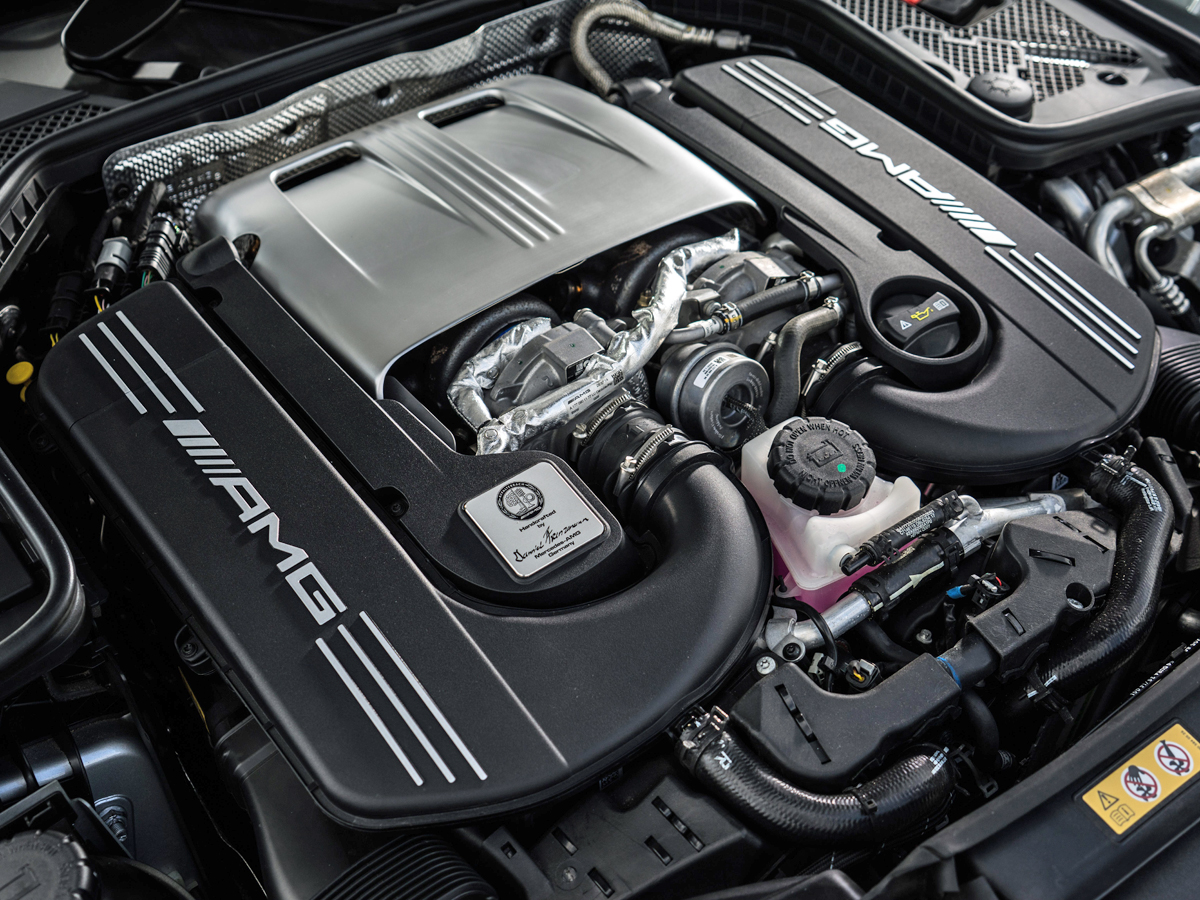
The W205 Mercedes-AMG C63 S is the final C-Class to boast a V8 engine.
Opting for a C220d would obviously restrict you to a facelifted model, though we’d view that narrowing of focus as overwhelmingly positive – in all but price, that is. After all, the W205’s mid-cycle update brought significant under-the-skin changes and afforded Mercedes-Benz the opportunity to iron out any minor issues. Buying a later model-year example furthermore brings the benefits of an active maintenance plan.
What about the performance models? Well, the C43 and C63 are remarkably different beasts, each appealing to a distinct buyer. Whereas the V6-powered C43 is relatively understated in its exterior design yet still brutally quick (and utterly surefooted, owning to its 4Matic system), the rear-wheel-drive, V8-driven flagship is a downright hooligan that can quite frankly be a bit of a handful. Still, the latter boasts a stonking V8, which is an engine configuration that was central to the AMG sub-brand until a short while ago. Either way, we’d again suggest concentrating on facelifted models.
Verdict
The W205 mixes style and substance, with a healthy dose of badge cachet thrown in.
The W205 from Stuttgart was a wildly popular choice among buyers of compact executive sedans in South Africa, and that means there’s an abundance of stock on the used market today.
Of course, there are a few alternatives in the premium space also worthy of your consideration. The likewise rear-driven BMW 3 Series – in both F30 LCI form and pre-facelift G20 guise – would appeal to buyers who place high importance on handling, with the 340i/M340i and M3 taking on the C43 and C63, respectively.
The front-wheel-drive Audi A4 (B9), meanwhile, is for those who rank cabin build quality over all else. In this line-up, the S4 would compete with the C43, while the RS4 Avant would technically line up against the M3, even with its estate body style and all-wheel drive.
Outside of the Teutonic Trio, somewhat left-field picks in this segment include the under-appreciated XE30-generation Lexus IS as well as another pair of driver’s cars in the shape of the Jaguar XE and Alfa Romeo Giulia (including the sublime Quadrifoglio Verde). Unfortunately, the 3rd-generation Volvo S60 didn’t ever make it to local shores, so the Swede is off the table.
Still, for many South African buyers at least, there’s little in this corner of the market capable of beating the C-Class on pure badge cachet. Thankfully, there’s plenty of substance behind the style, which makes the W205 sedan an especially compelling choice, particularly in facelifted form.
New BMW M3 CS Breaks Cover With Extra Power, Less Weight
The new BMW M3 CS sedan has been revealed, boasting extra oomph from its twin-turbo inline-6 engine and a raft of weight-saving measures. Here’s what you need to know…
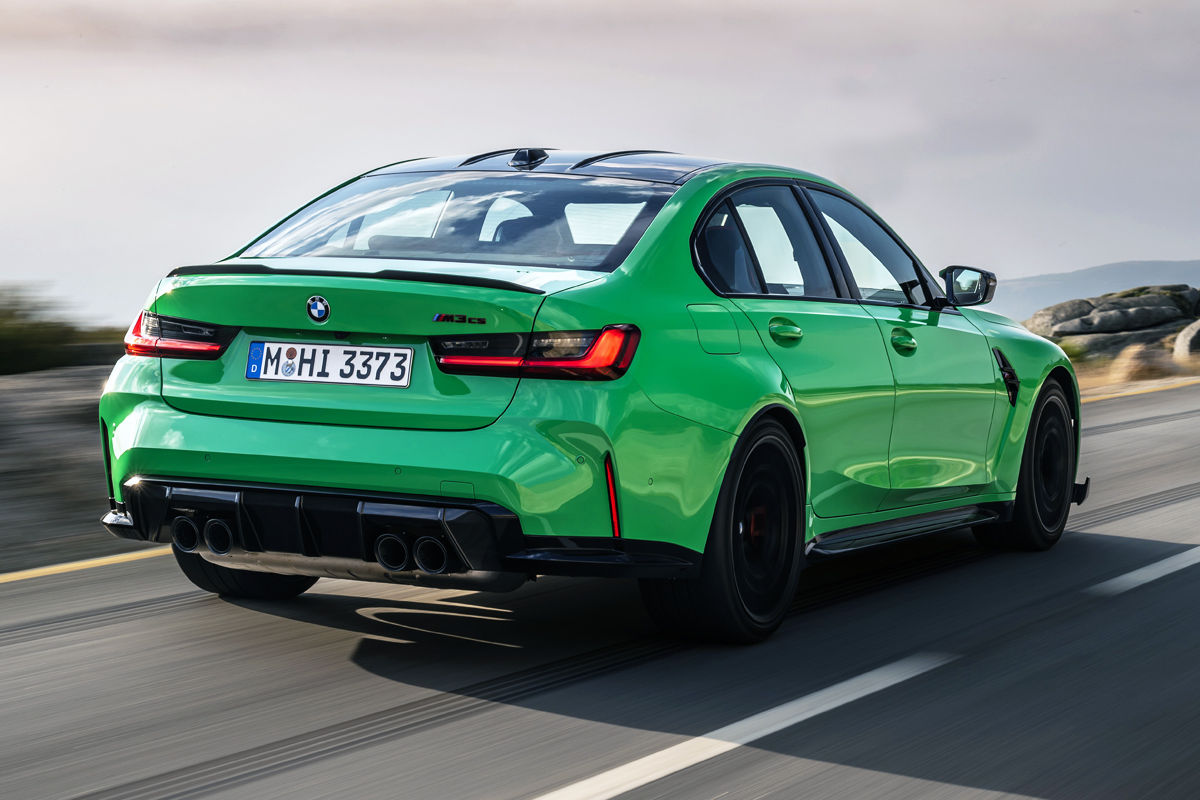
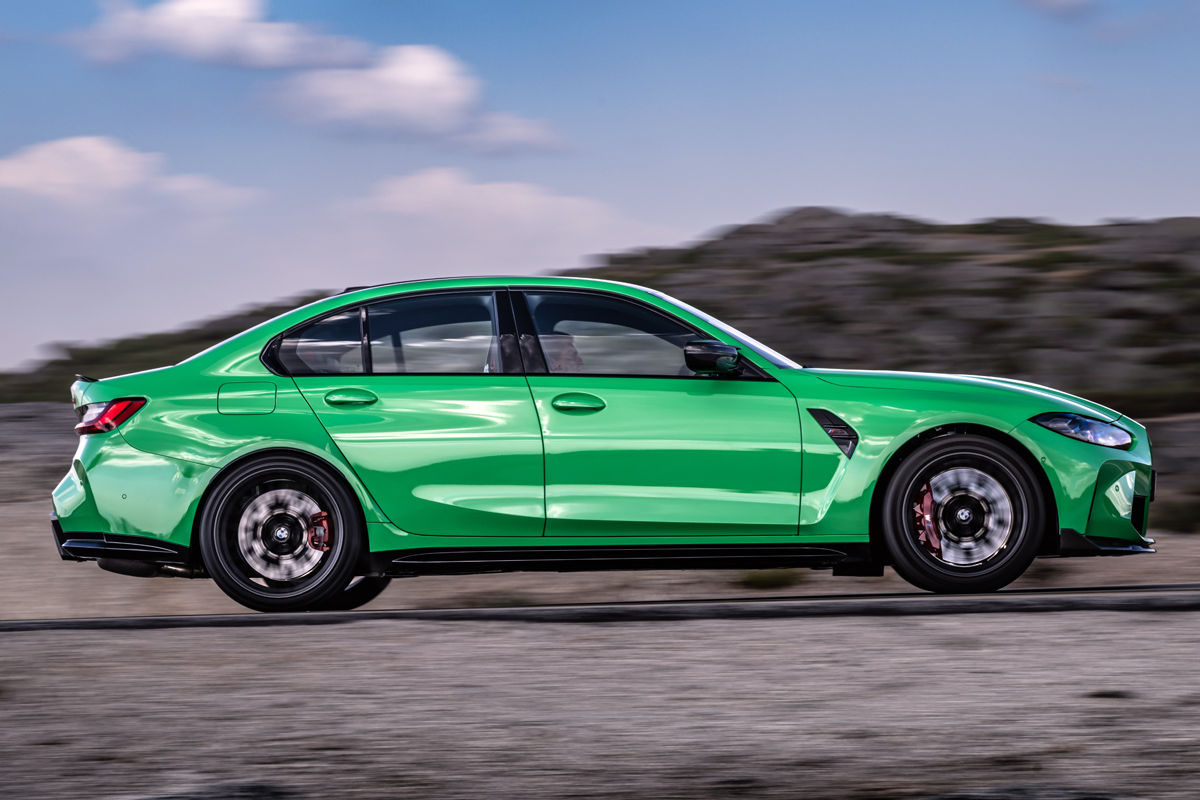
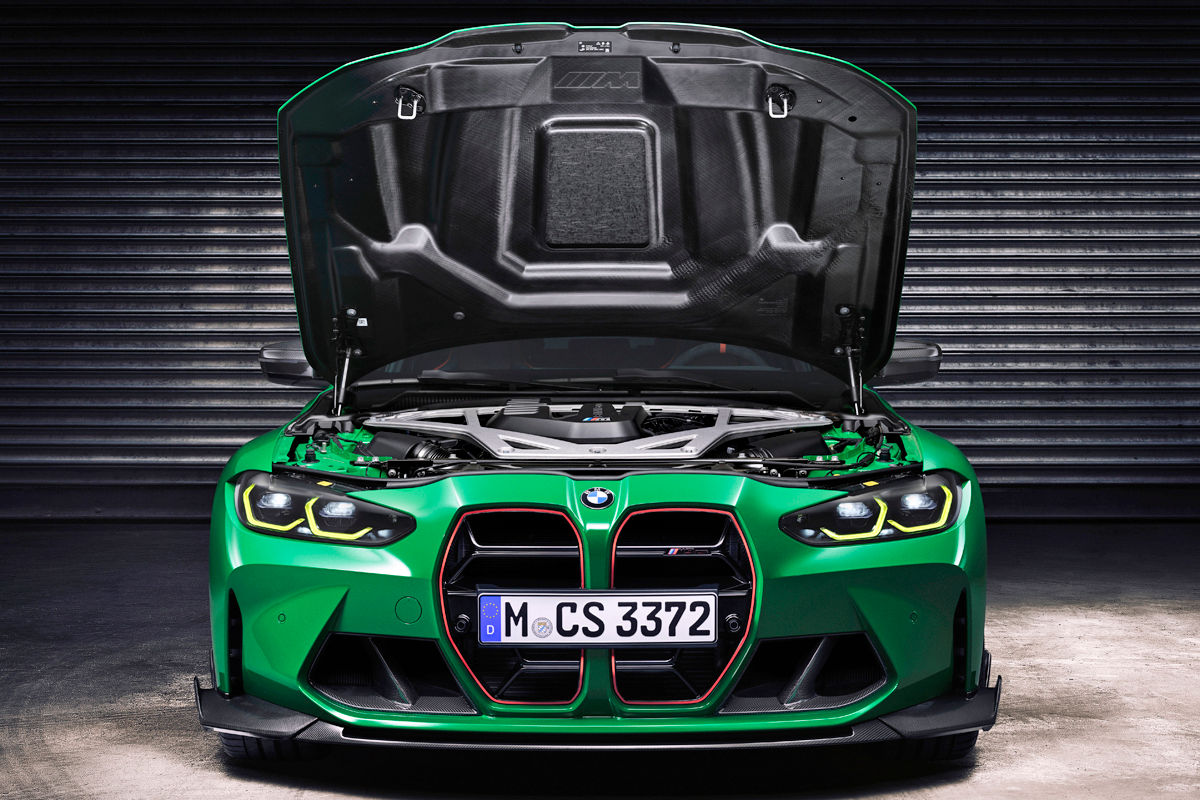
The wraps have finally come off the new BMW M3 CS special edition, which benefits from extra power and less weight.
Described as a “limited-run” model, the fresh-faced M3 CS sedan is set to go into production in Munich from March 2023. BMW Group South Africa has yet to confirm whether we’ll see the latest version of the high-performance saloon on local roads, though the international press material lists the United States, Germany, the United Kingdom and Japan as the “most important sales regions for the new special-edition model”.
[UPDATE: BMW Group SA has since announced 20 units of the M3 CS will be available in South Africa from the 3rd quarter of 2023].
Like the M4 CSL, the new M3 CS features a version of the twin-turbo 3.0-litre, inline-6 engine developing 405 kW (30 kW more than the M3 Competition xDrive, but not quite as much as the 3.0 CSL) and an unchanged 650 Nm. However, while the M4 CSL’s 8-speed automatic transmission drives the rear wheels, the M3 CS will be offered exclusively in all-wheel-drive form, complete with a fully variable active M differential at the rear.
As a result of tweaks that include an increase in charge pressure and “model-specific” updates to the engine-management system, the CS-badged 4-door model will complete the 0-100 kph sprint in a claimed 3.4 seconds (a tenth quicker than the M3 Competition). BMW claims the newcomer will reach 200 kph in 11.1 seconds, while the fact the M Driver’s Package ships standard results in an electronically limited top speed of 302 kph.
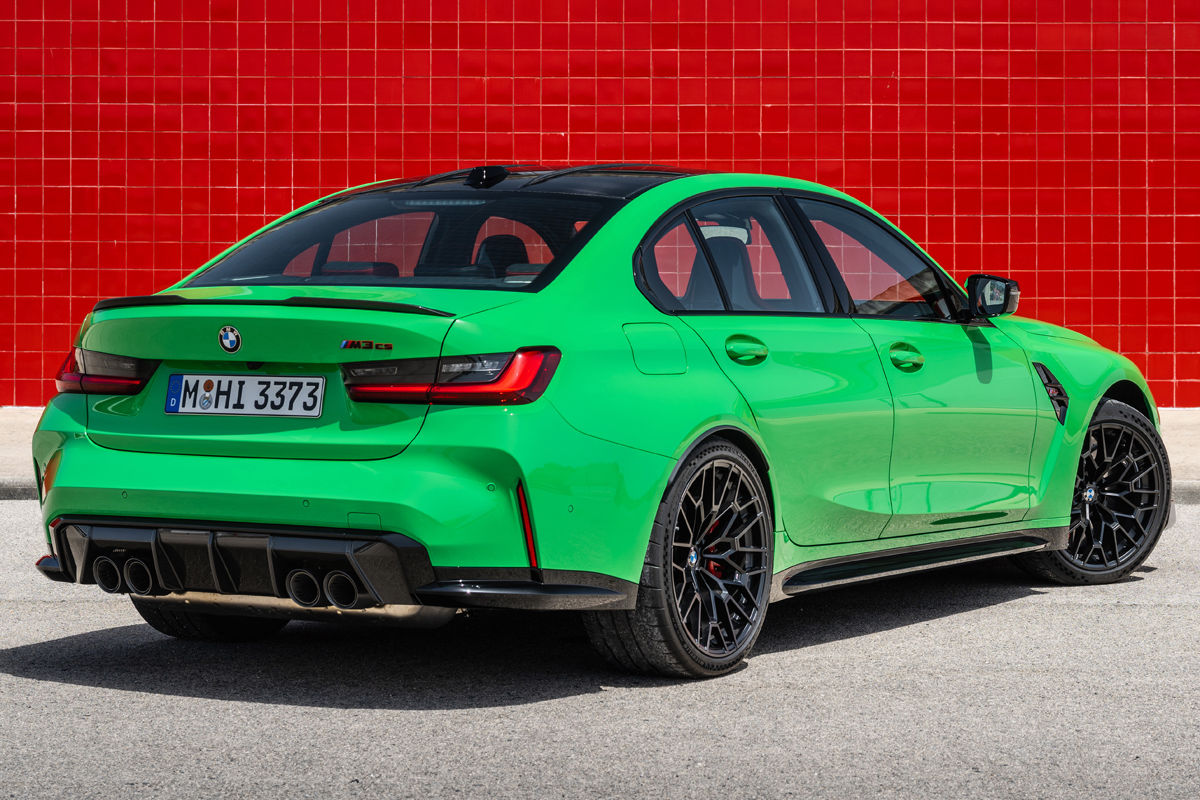
The German firm has furthermore added a specially designed engine mounting with increased spring rates, which it claims provides “even sharper engine response”. There’s also a dual-branch exhaust system with electrically controlled flaps, a titanium rear silencer and 4 tailpipes painted in matte black. BMW says this set-up creates an “emotionally stirring soundtrack” with distinct “racing car undertones”, injecting “real aural drama” into proceedings.
Here’s how the BMW M3 CS went about losing weight
According to the Munich-based automaker, the M3 CS is around 20 kg lighter than the likewise all-paw version of the M3 Competition, with the official spec sheet listing an unladen weight of 1 765 kg. Much of this weight saving was achieved through the use of carbon fibre-reinforced plastic (CFRP), both inside and out.
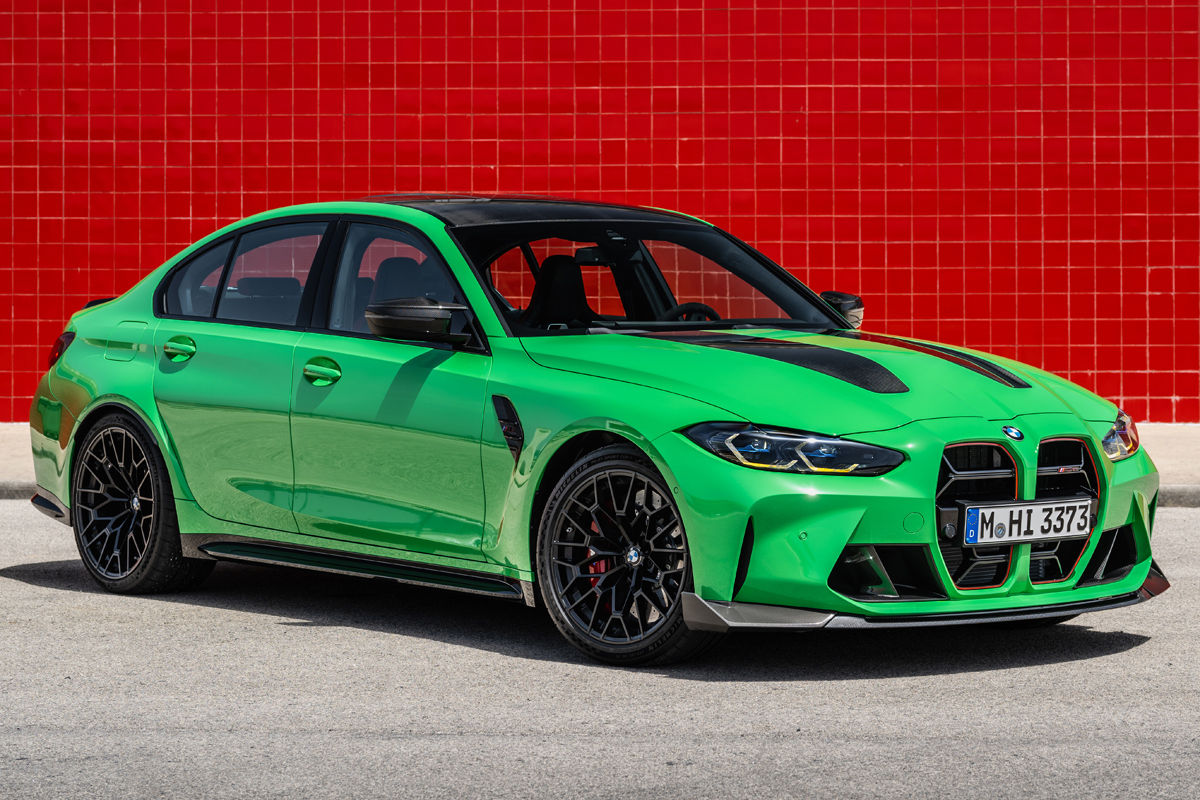
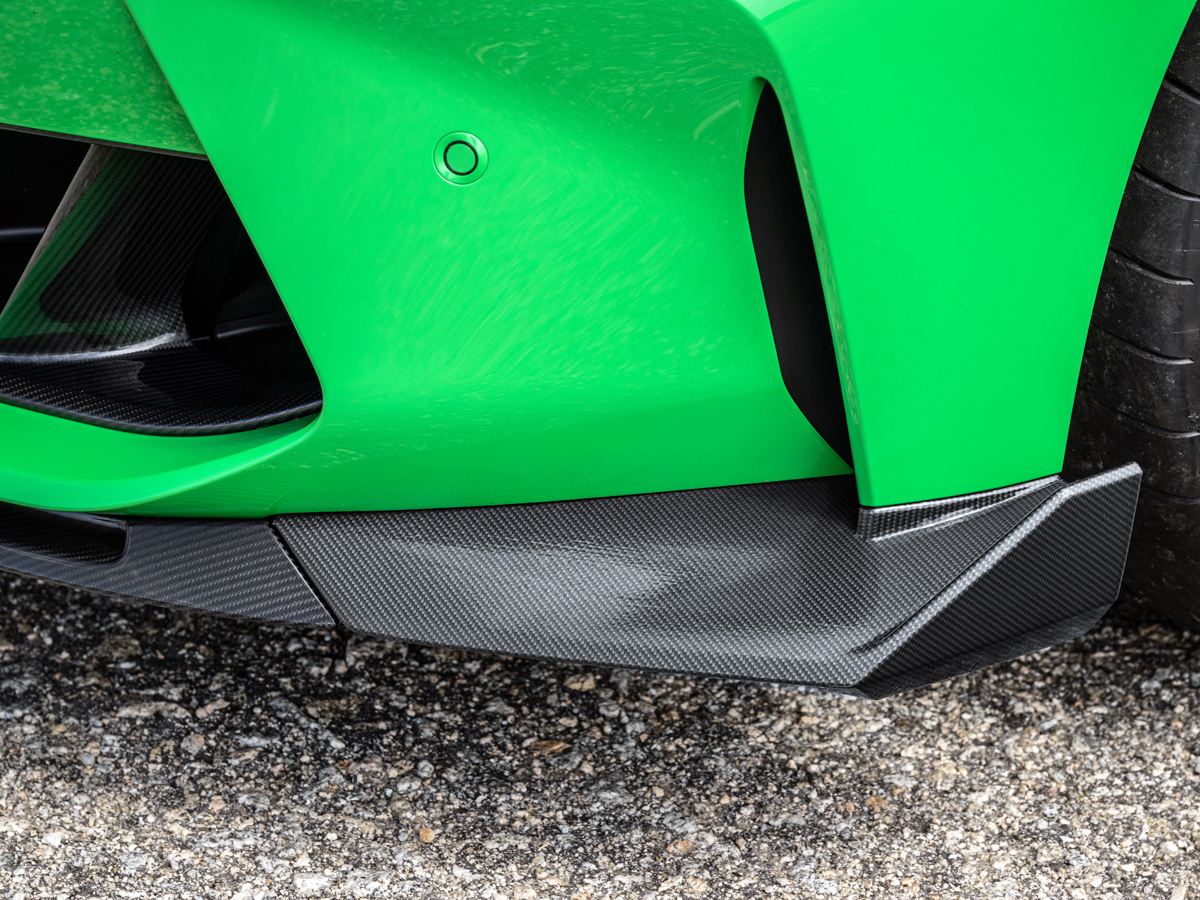
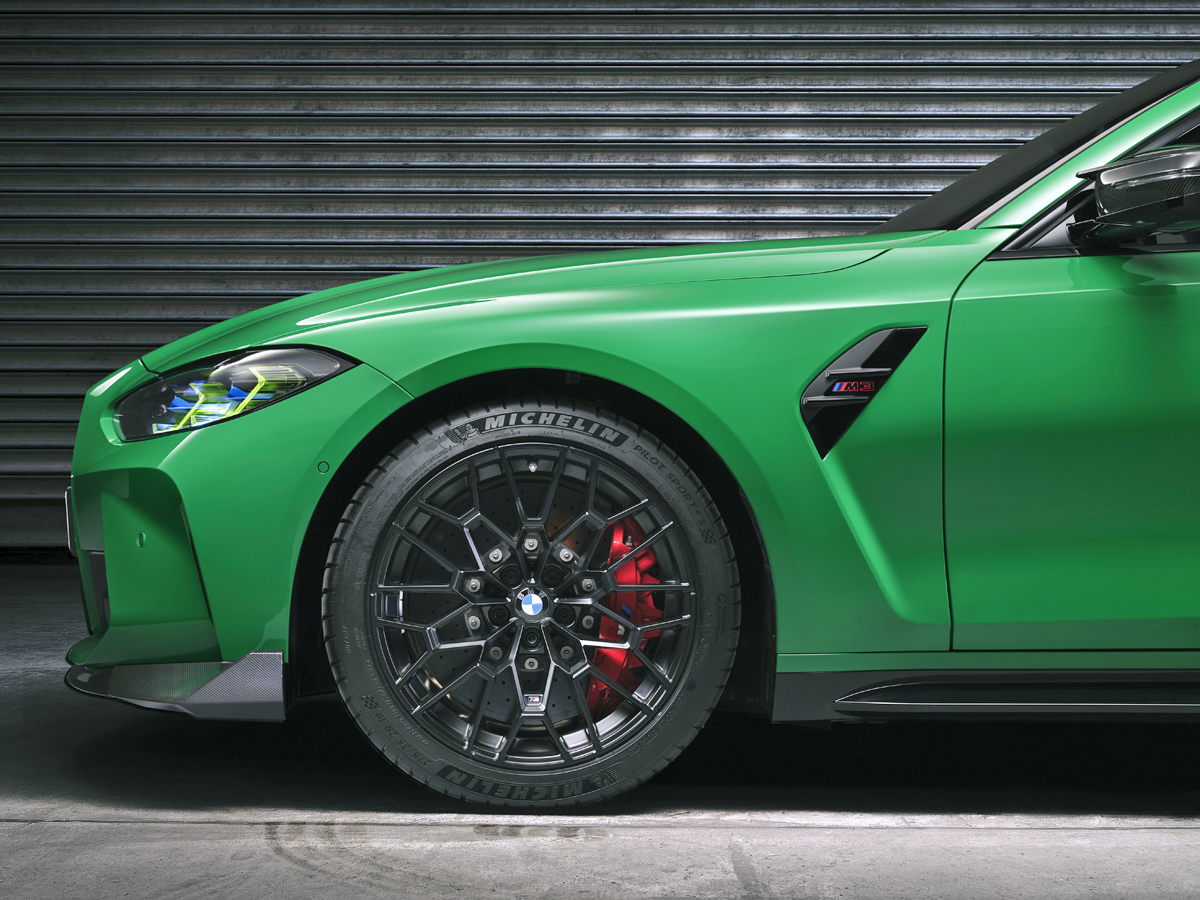
The roof, bonnet, front splitter, front air intakes, side-mirror caps, rear diffuser and rear spoiler are all fashioned from the lightweight material, as are the centre console, shift paddles and various interior trim strips. The standard M Carbon bucket seats also do their bit to keep weight down, along with the aforementioned titanium silencer.
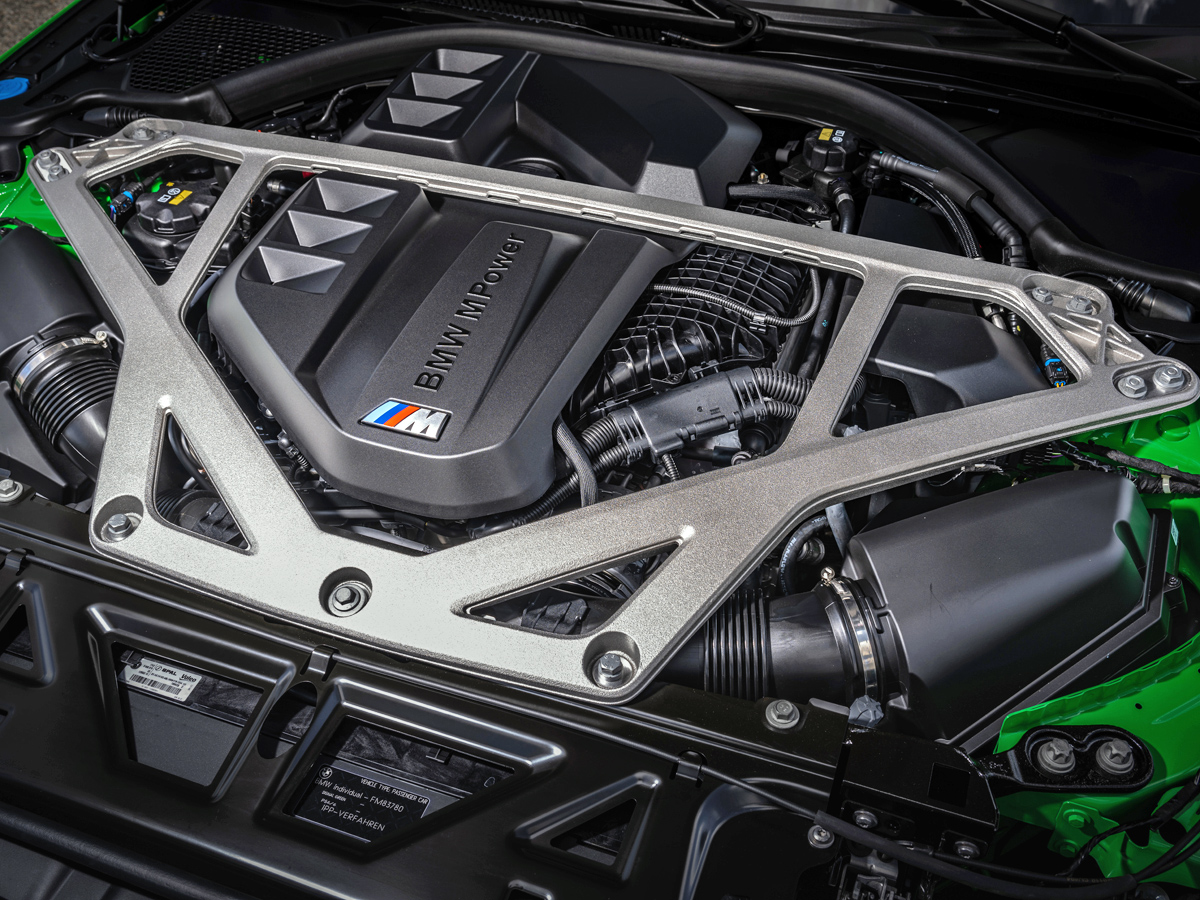
Should further body rigidity be required, BMW says buyers can specify a package of high-precision strut braces for the engine compartment that have also been engineered for lightness. The cast aluminium elements connecting the spring strut towers to the front end feature a “weight-optimised geometry” that has been “precisely matched” to the forces applied in various driving situations.
What else goes into the making of an M3 CS?
BMW says the M3 CS furthermore gains model-specific settings for its dynamic stability control system and M Dynamic Mode, catering to the “demands of high-speed circuit driving”. Meanwhile, the individually tuned axle kinematics and bespoke wheel-camber settings, dampers, auxiliary springs and anti-roll bars serve to optimise response.
In addition, the special model’s adaptive M suspension system comes in a model-specific set-up, as does its electromechanical M Servotronic steering with variable ratio and its integrated braking system.
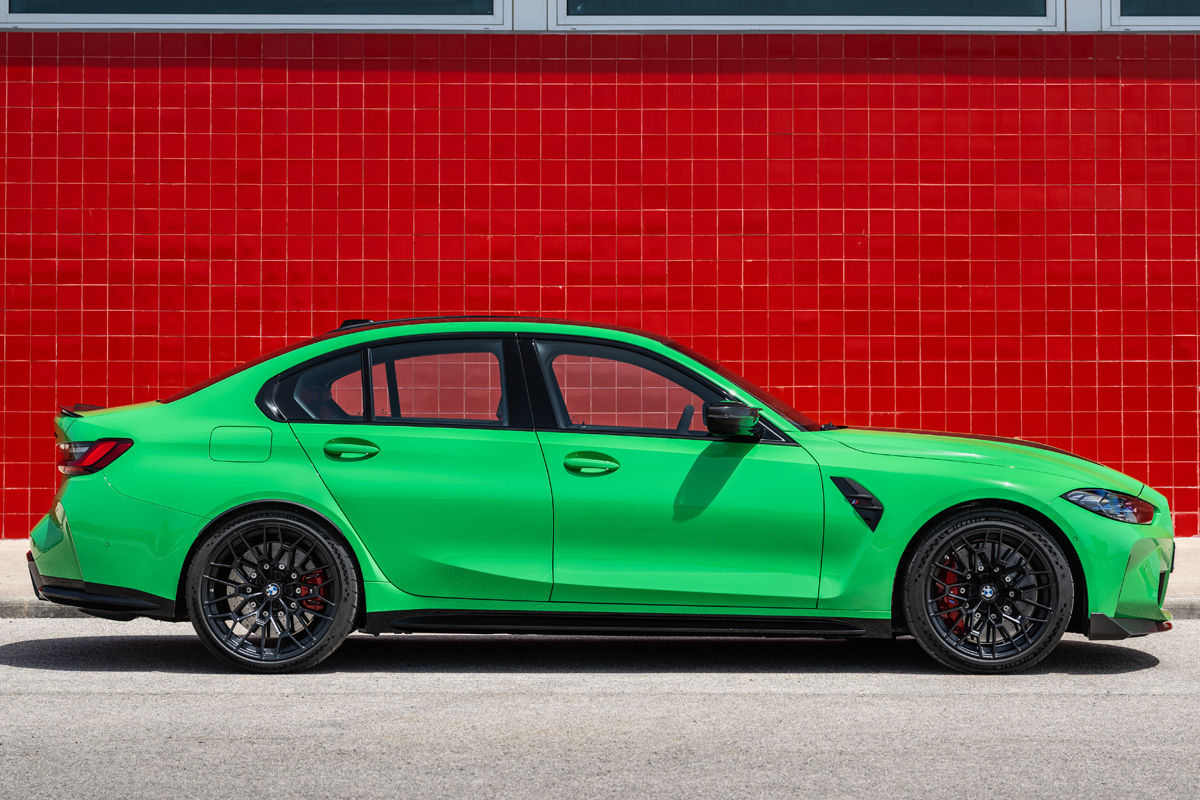
Other standard features include M Carbon ceramic brakes (with callipers in either gold or red), forged M light-alloy wheels (measuring 19 inches fore and 20 inches aft) in a V-spoke design and purpose-developed track tyres (measuring 275/35 ZR19 at the front and 285/30 ZR20 at the rear).
How will you identify the M3 CS out on the road?
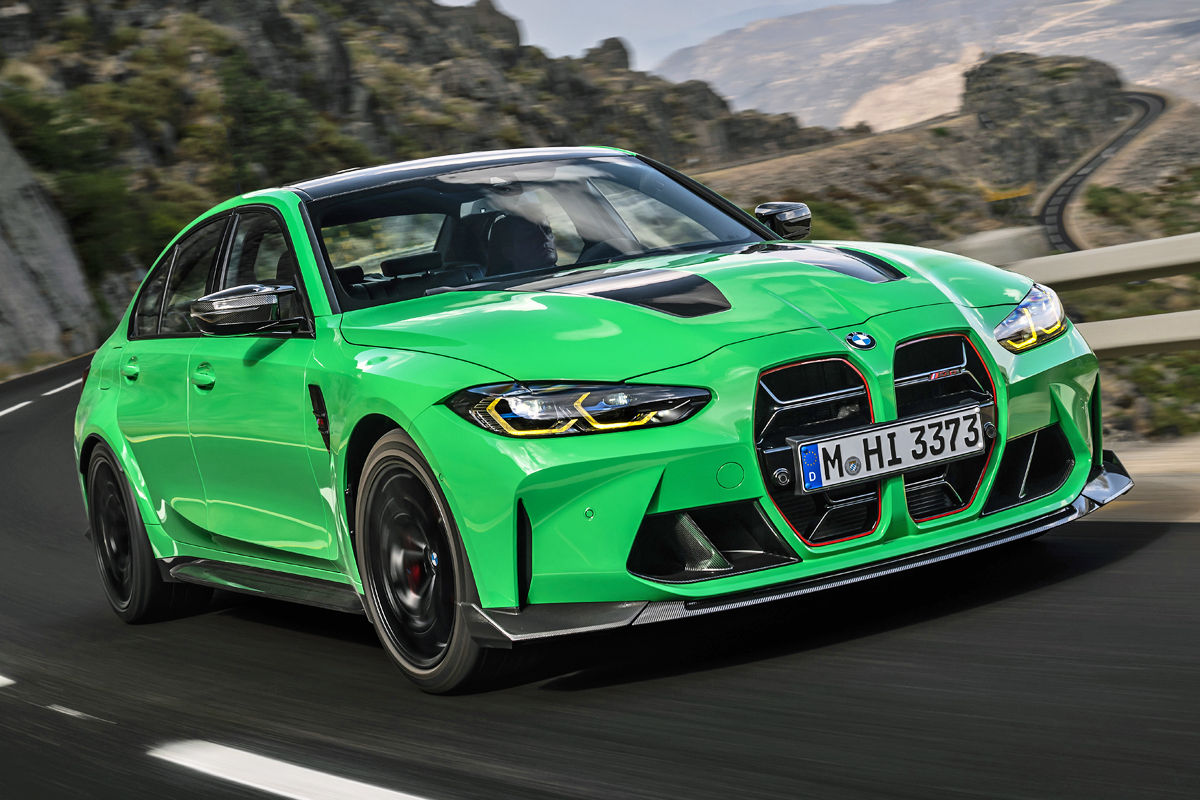
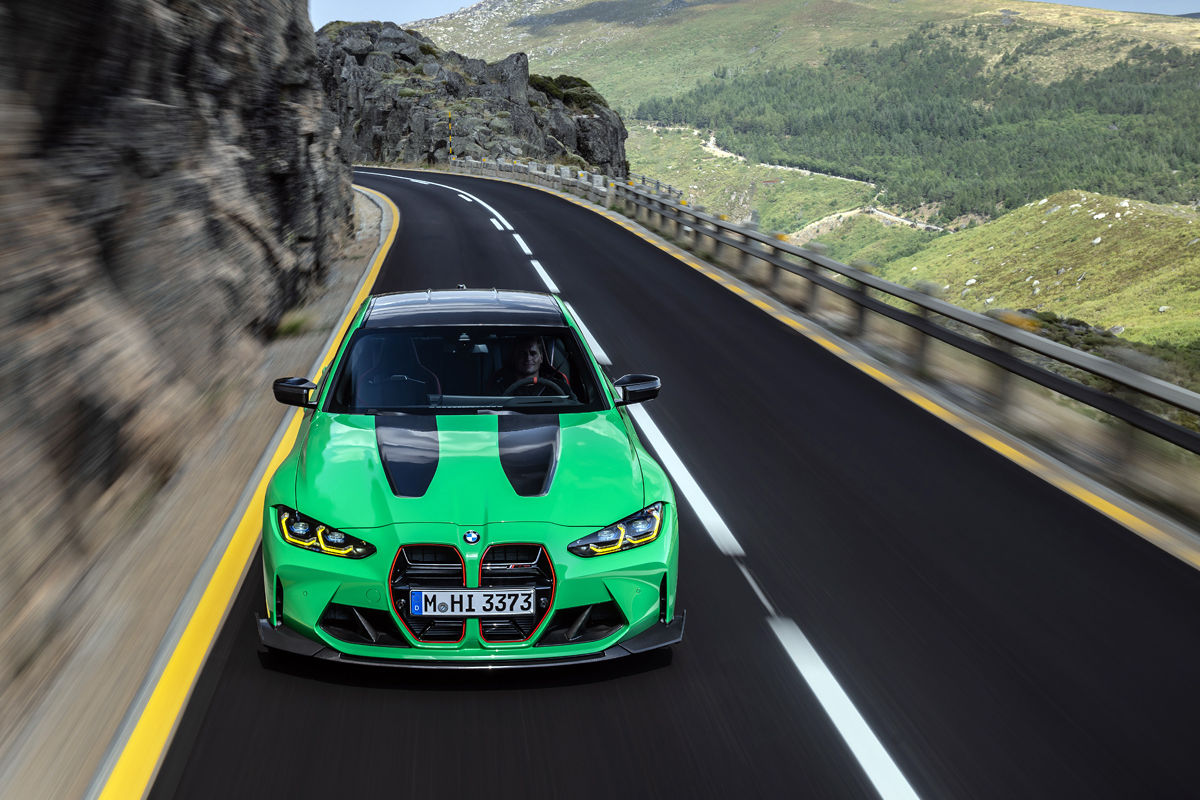
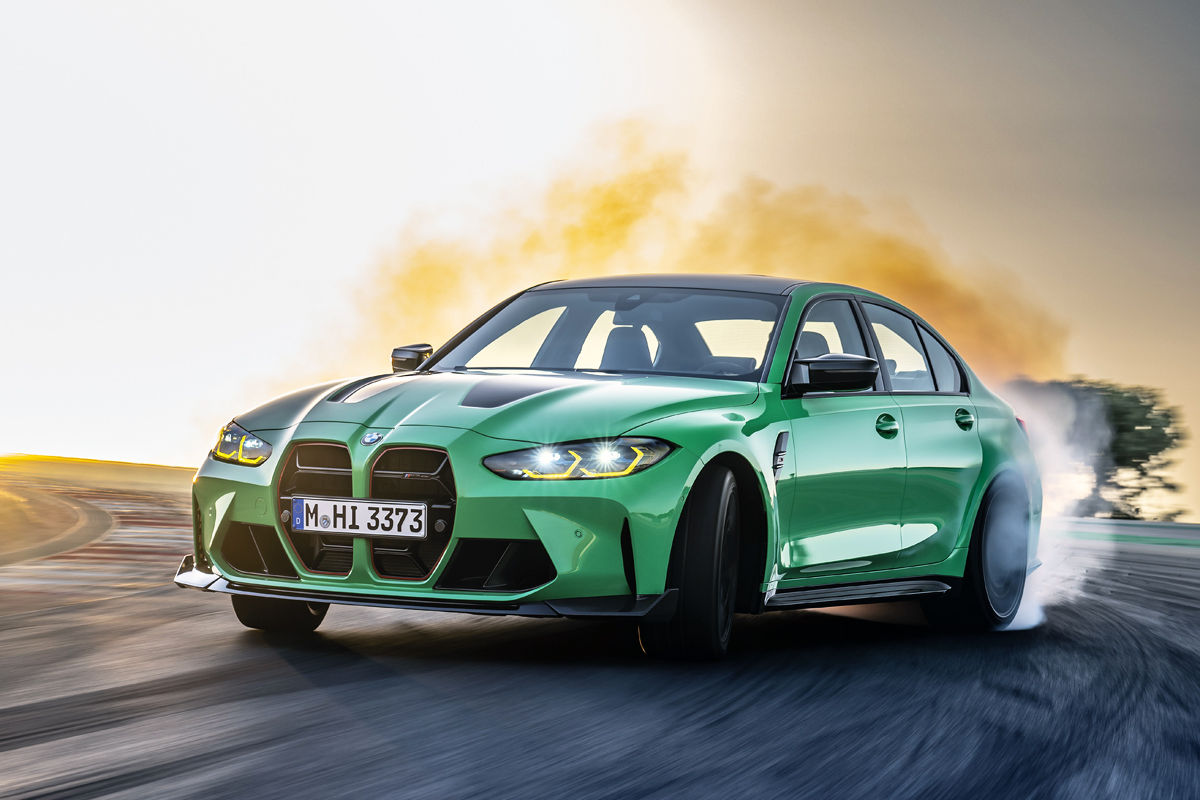
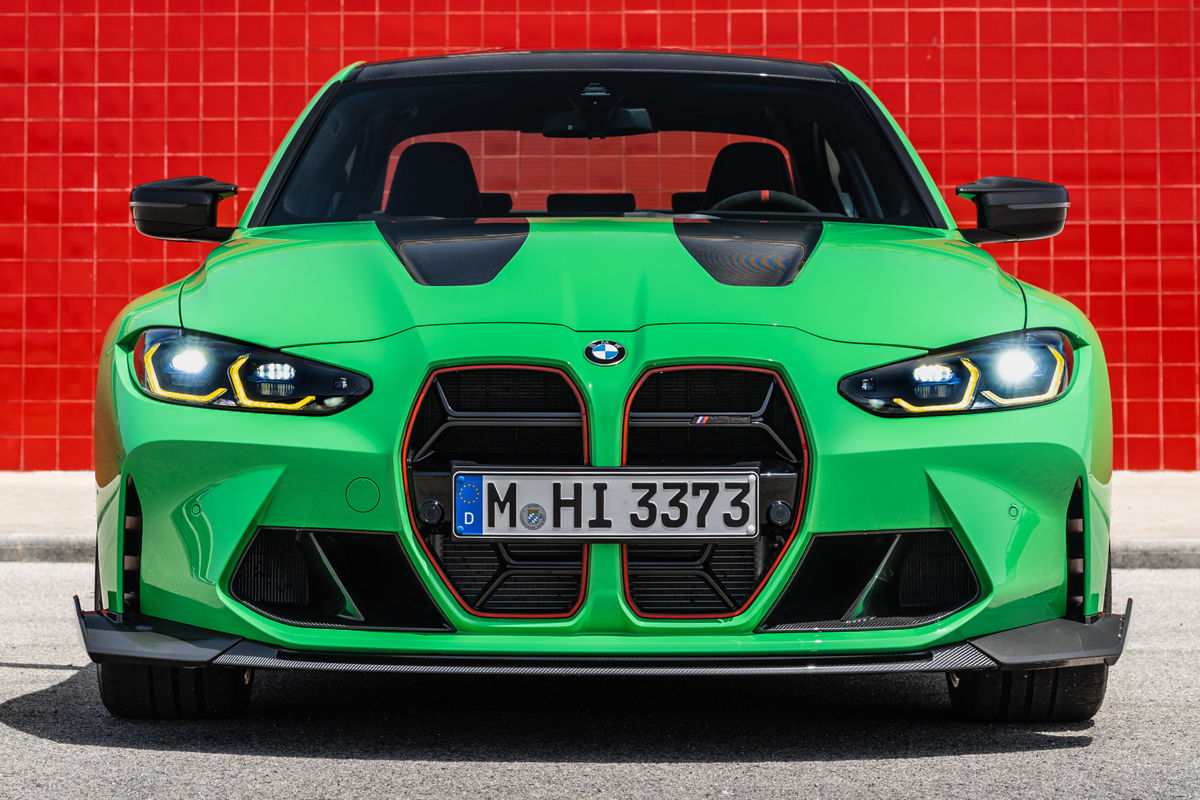
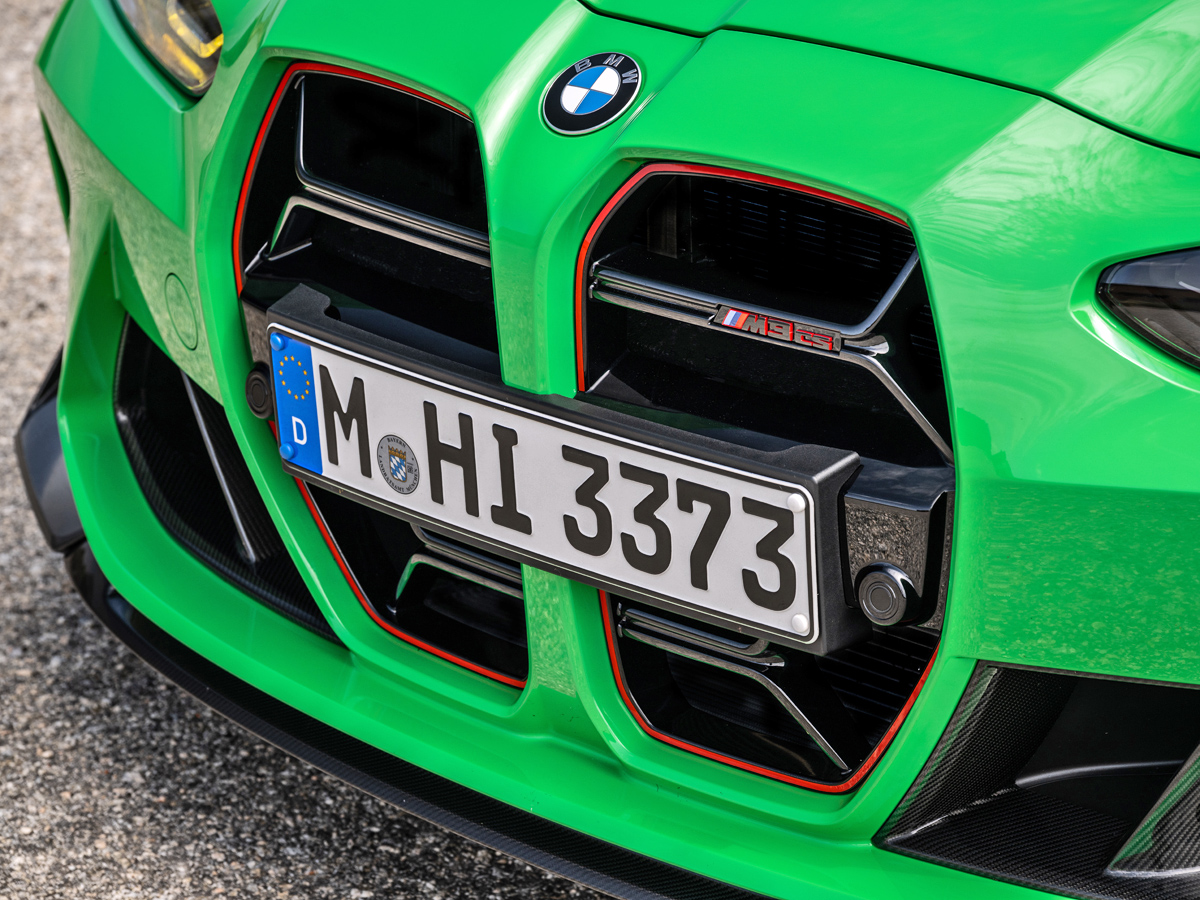
It shouldn’t be too difficult to spot the new M3 CS out on the road, thanks to a raft of design updates. There’s the pair of carbon indents set into the bonnet, as well as the various carbon elements mentioned above. Signal Green (a solid paint hue), Brooklyn Grey metallic and Sapphire Black metallic will be offered as exterior colours, while Frozen Solid White metallic will be exclusive to the M division’s latest special-edition model.
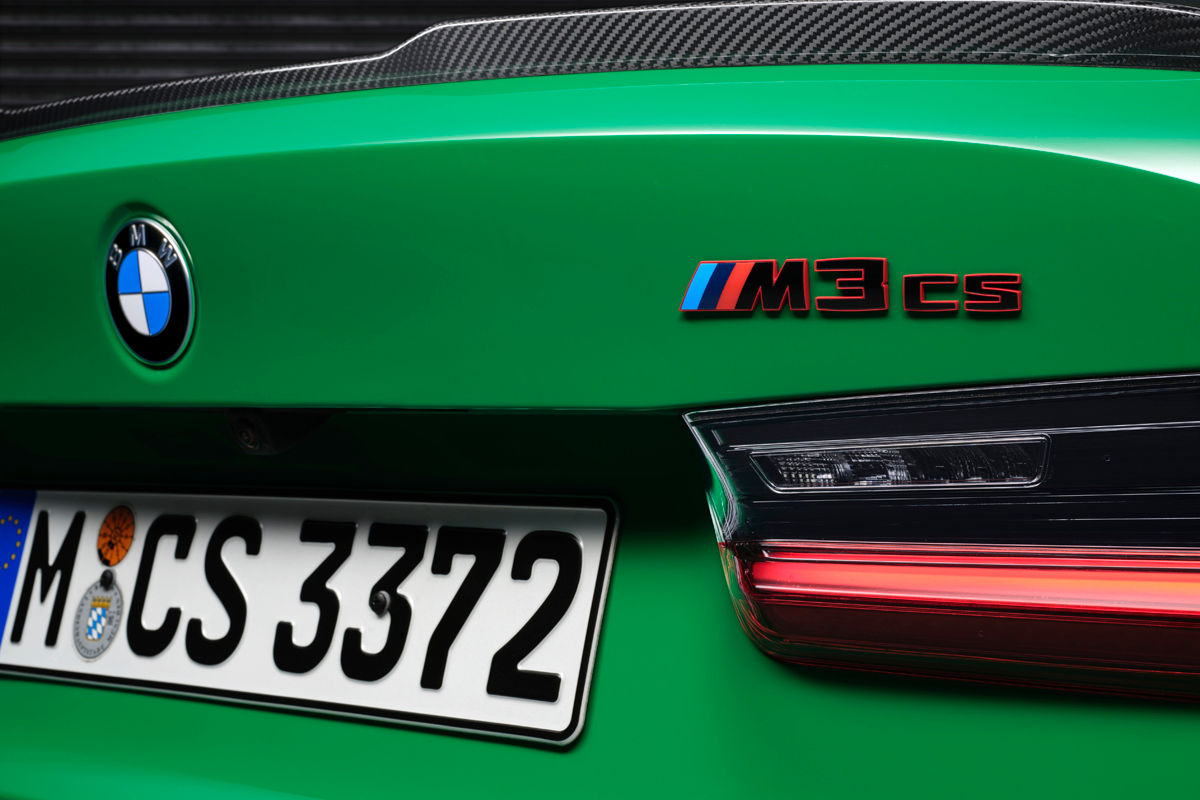
The large grille, meanwhile, is frameless and designed especially for this model, complete with red contour lines and “M3 CS” badging on the upper of the two horizontal bars. Both the model badge at the front and its counterpart on the boot lid have black surfaces with a red border, while the standard BMW Laserlight headlights illuminate yellow rather than white.
Let’s take a look inside the CS-badged M3 sedan
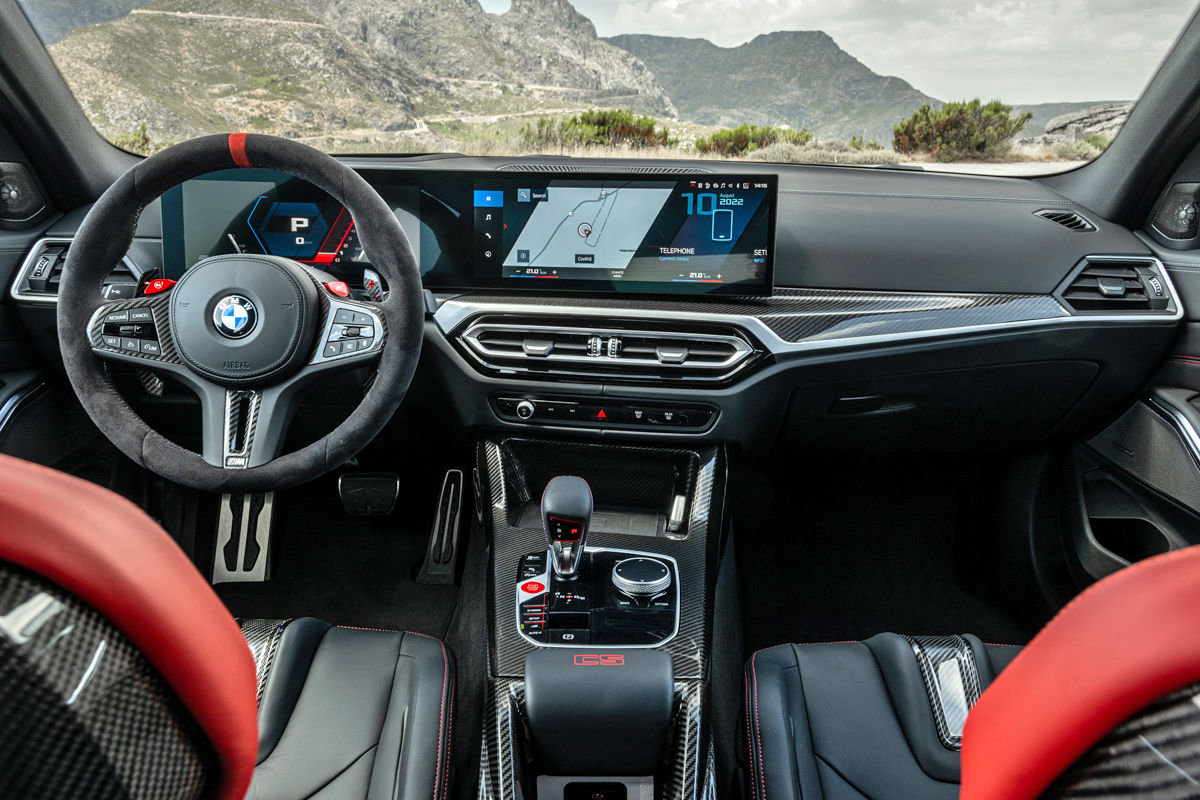
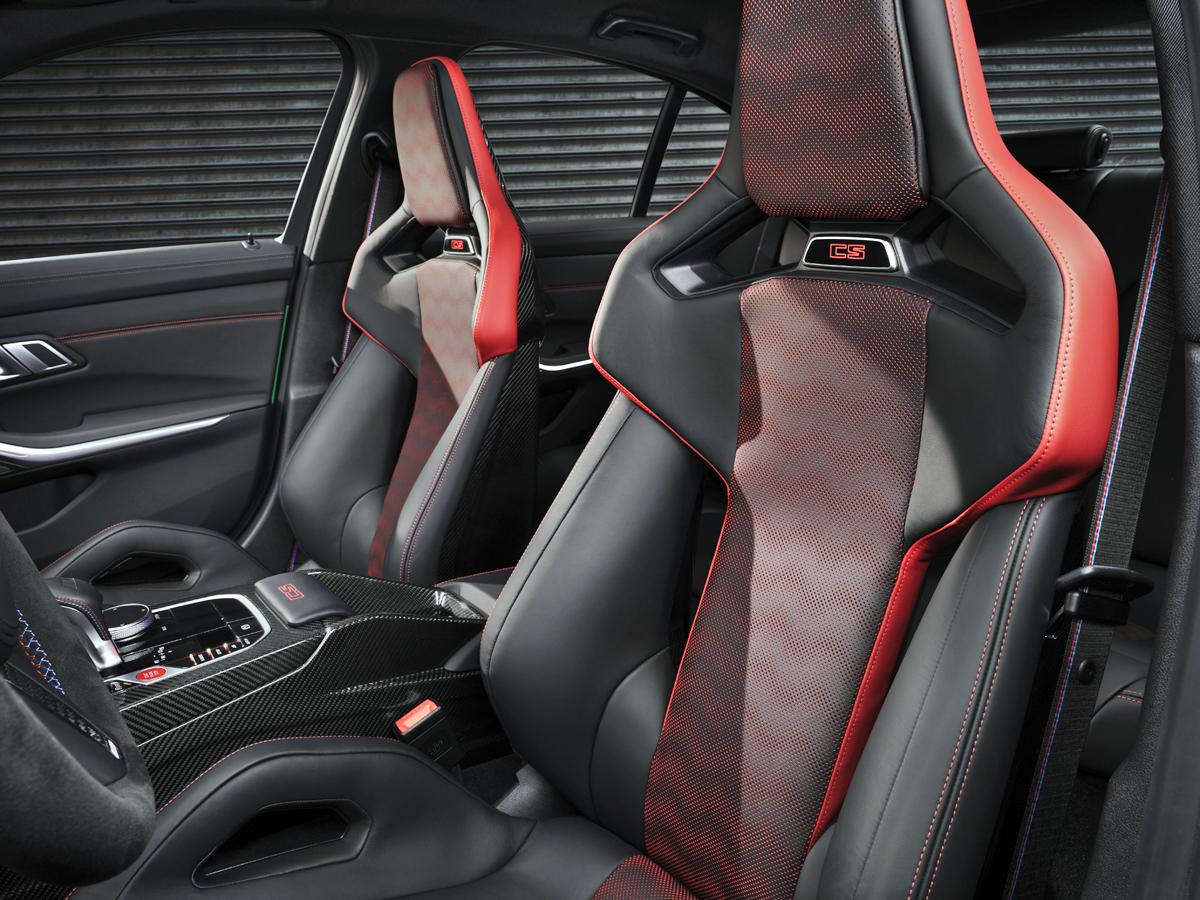
Inside, you’ll find electric and heated M Carbon bucket seats with integral head restraints and an illuminated model badge. These special pews are upholstered in Merino leather with a black-and-red colour scheme and contrast stitching. This 2-tone finish is repeated on the pair of seats in the rear, while the door panels are trimmed entirely in black leather.
Red “CS” lettering adorns the lightweight centre console, while M seat belts (with a woven stripe pattern in the trademark M colours), branded door-sill plates, Anthracite-coloured headliner and an M Alcantara steering wheel with a red centre marker are also included. The new BMW M3 CS boasts the latest-generation iDrive system (based on the BMW Operating System 8), which includes a curved display formed by the joining of 12.3- and 14.9-inch screens under a single piece of glass.
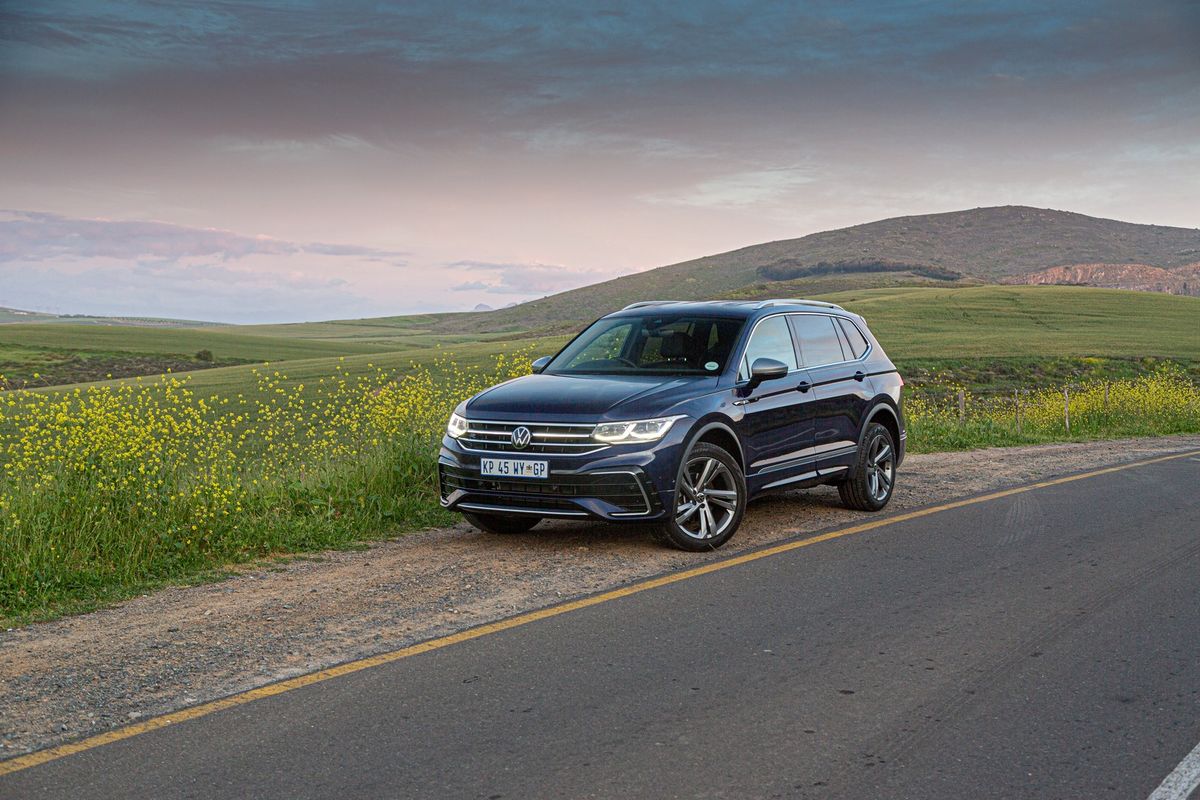
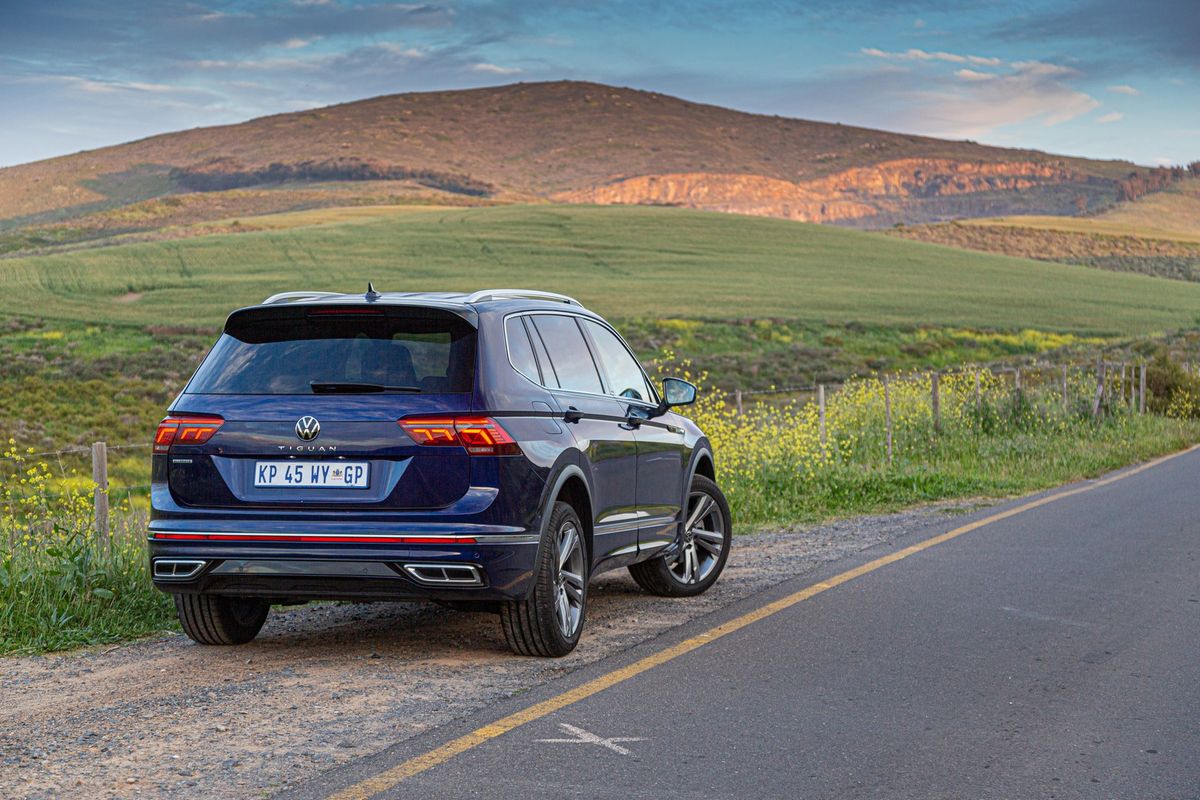
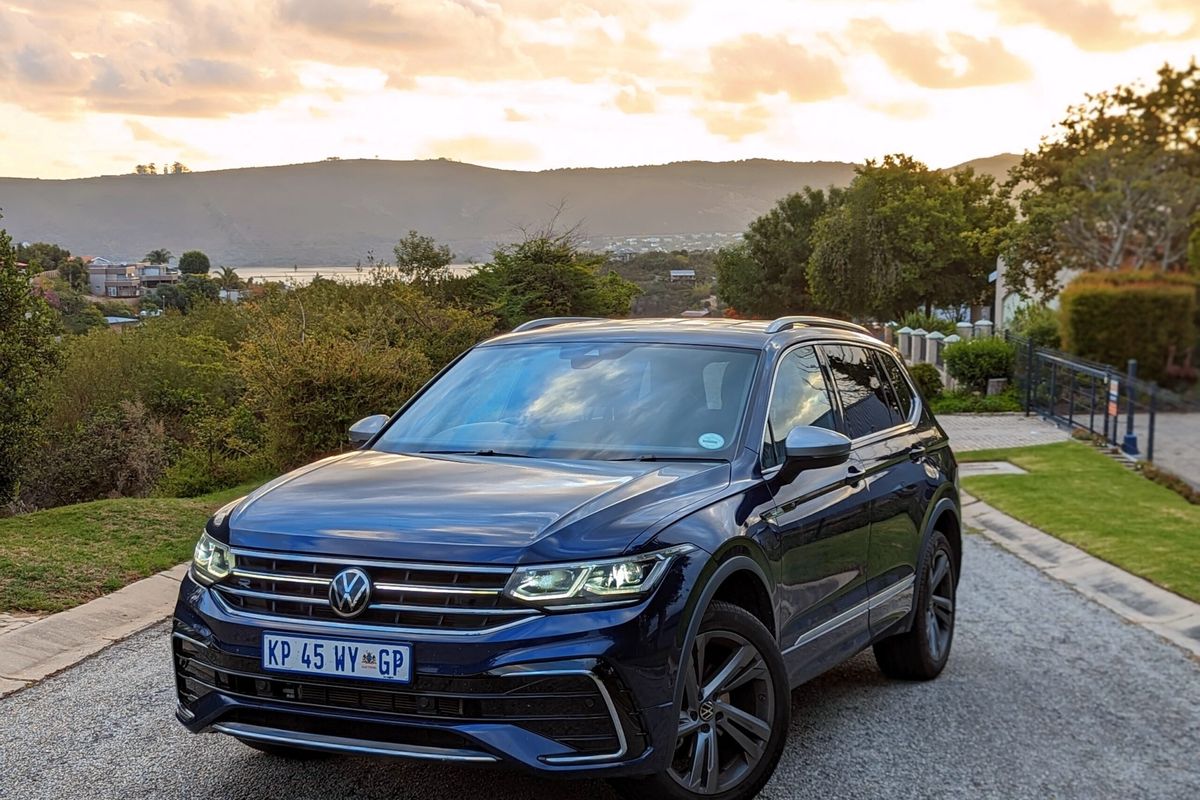
The Allspace represents the most practical variant in the VolkswagenTiguan line-up, thanks to its 3-row, 7-seat layout. We spent a month with the 1.4 TSI R-Line derivative to gain a deeper understanding of the popular medium SUV’s pros and cons.
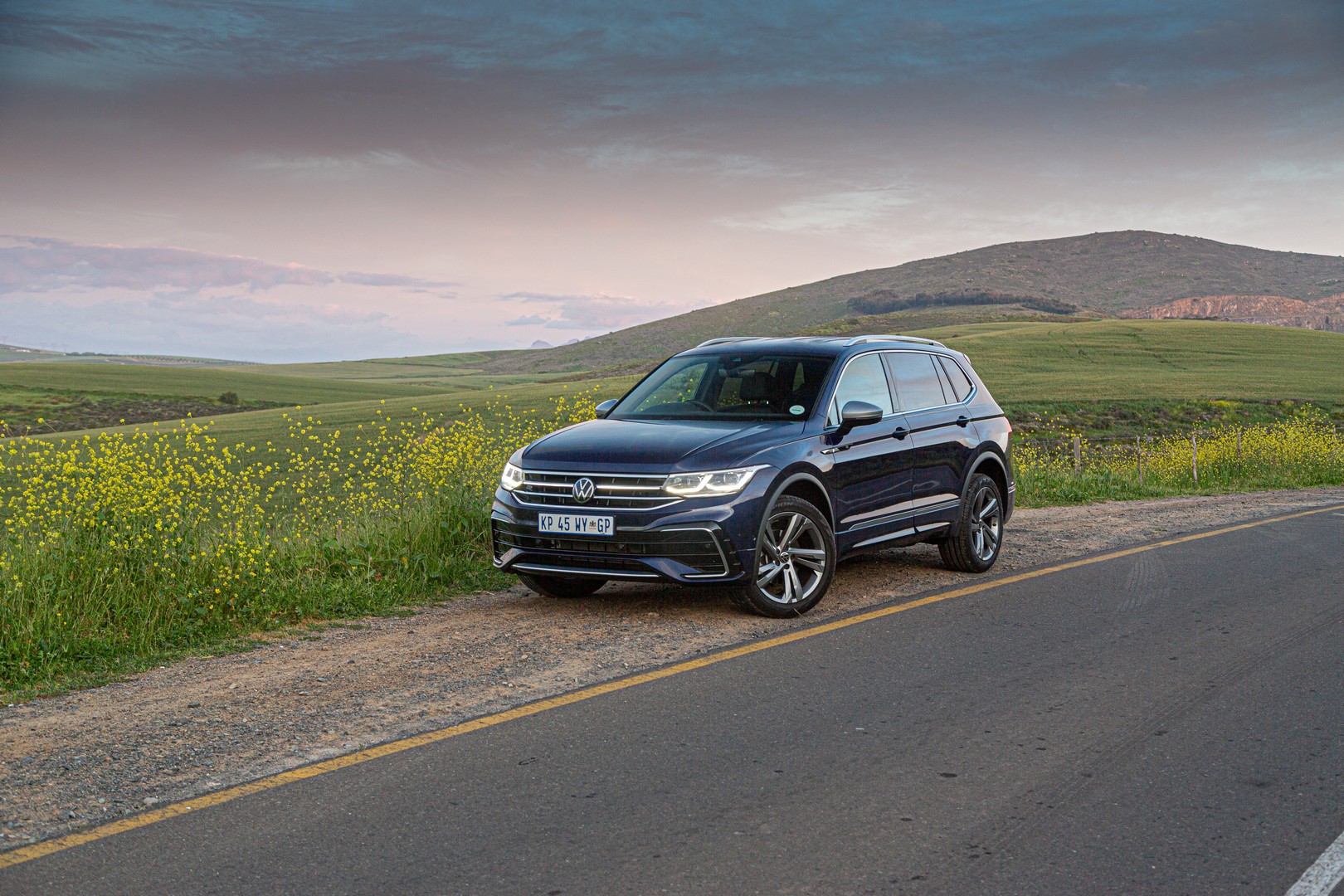
The Volkswagen (VW) Tiguan has long been a favourite of South African car buyers, many of whom crave a practical family car that offers excellent build quality, upmarket cabin finishes and, most of all, a premium badge on its grille. All in all, the facelifted 2nd-gen model is an accomplished (and acclaimed) product; it’s little wonder the Tiguan is also the Wolfsburg-based brand’s best-selling model globally.
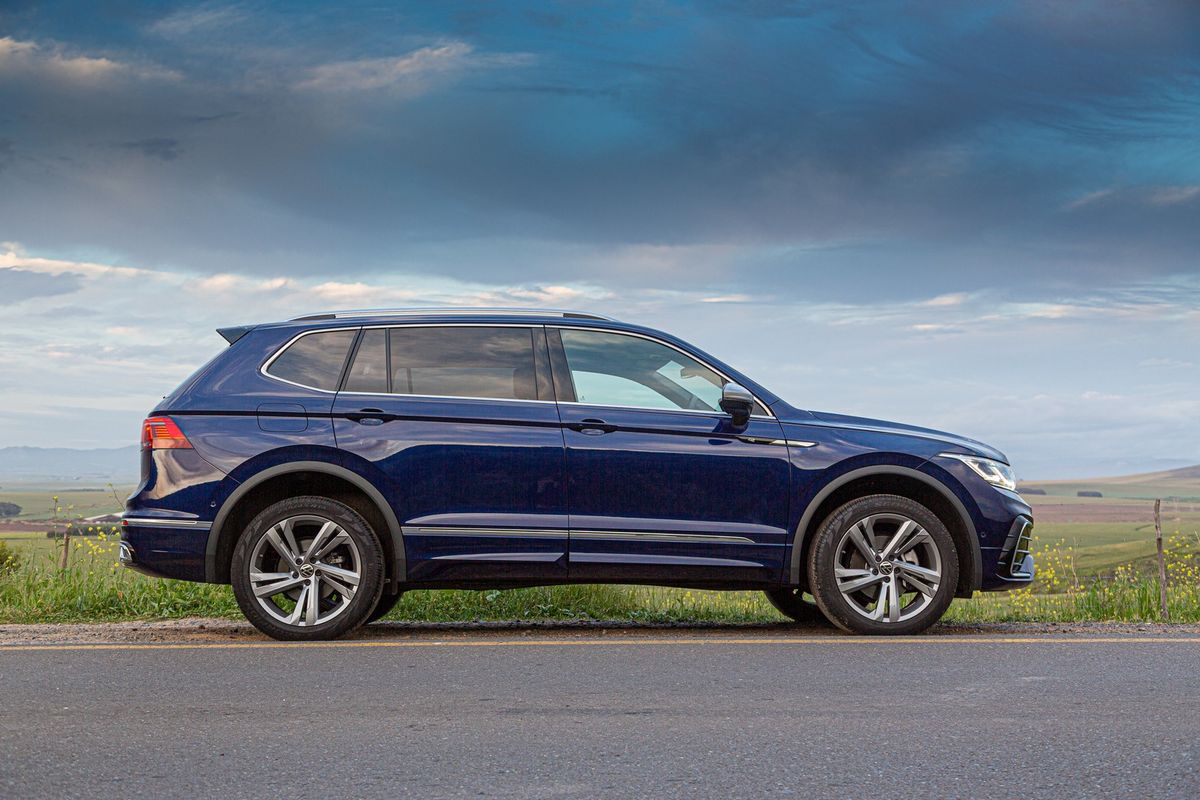
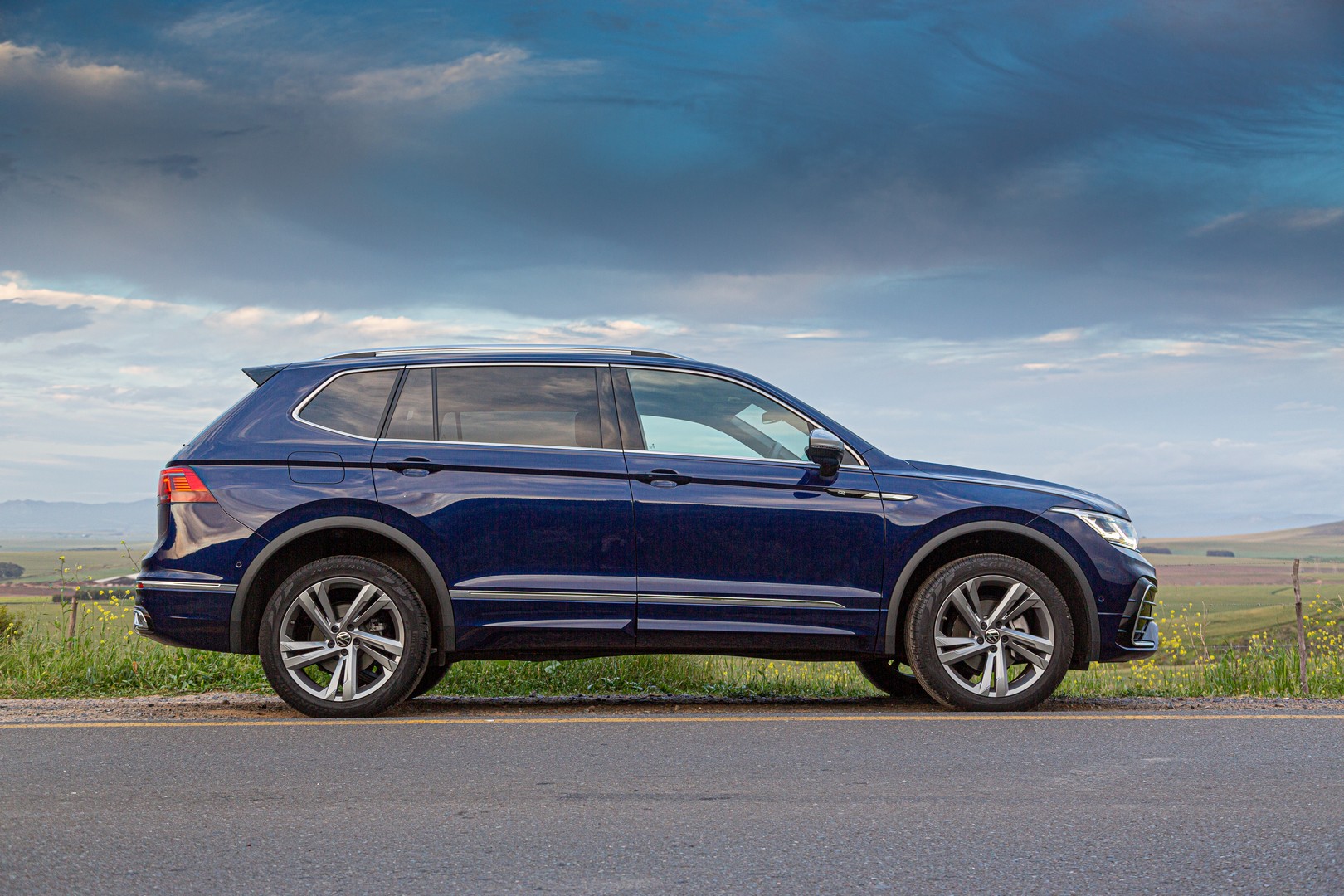
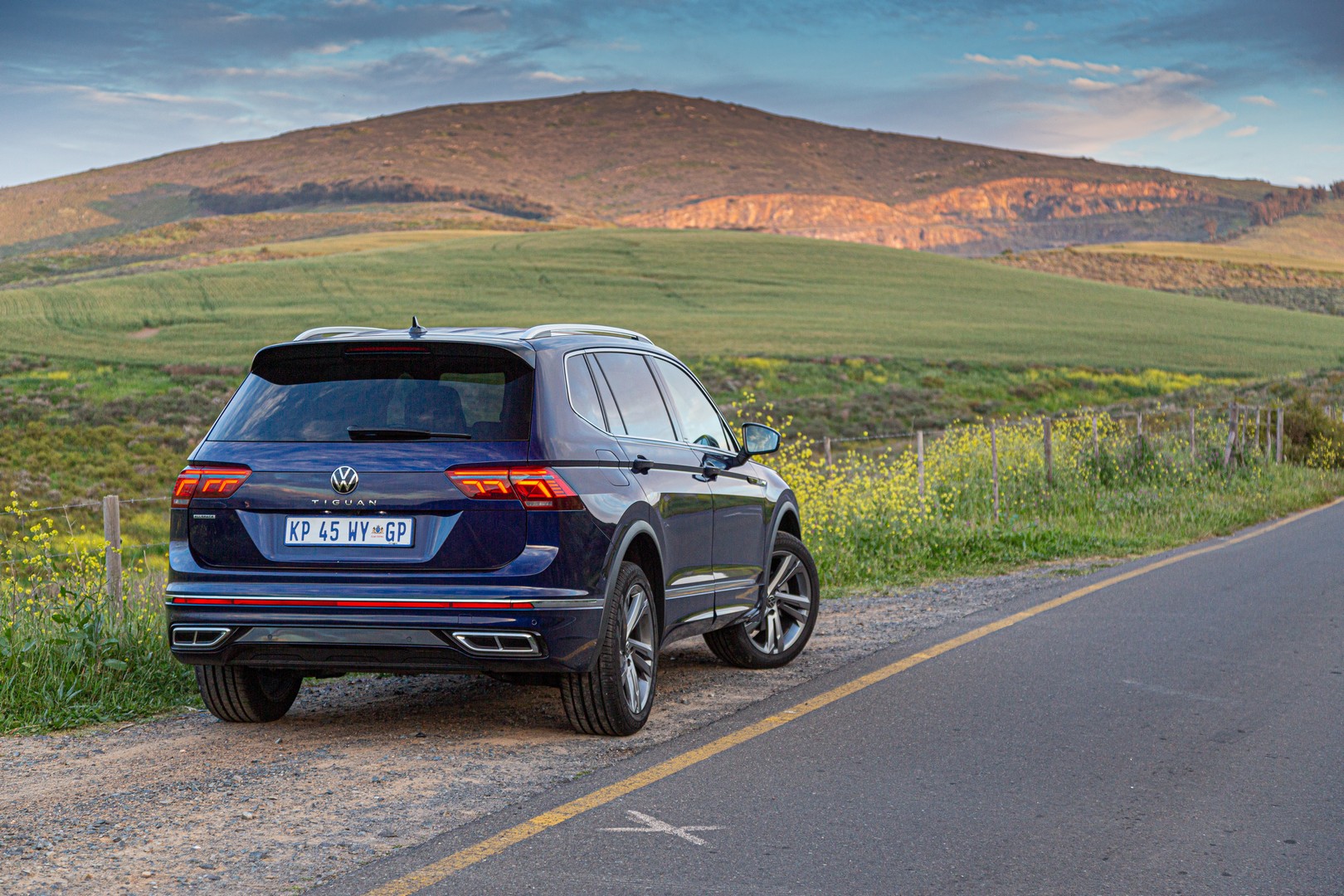
The Tiguan Allspace is longer and has a longer wheelbase than the standard Tiguan.
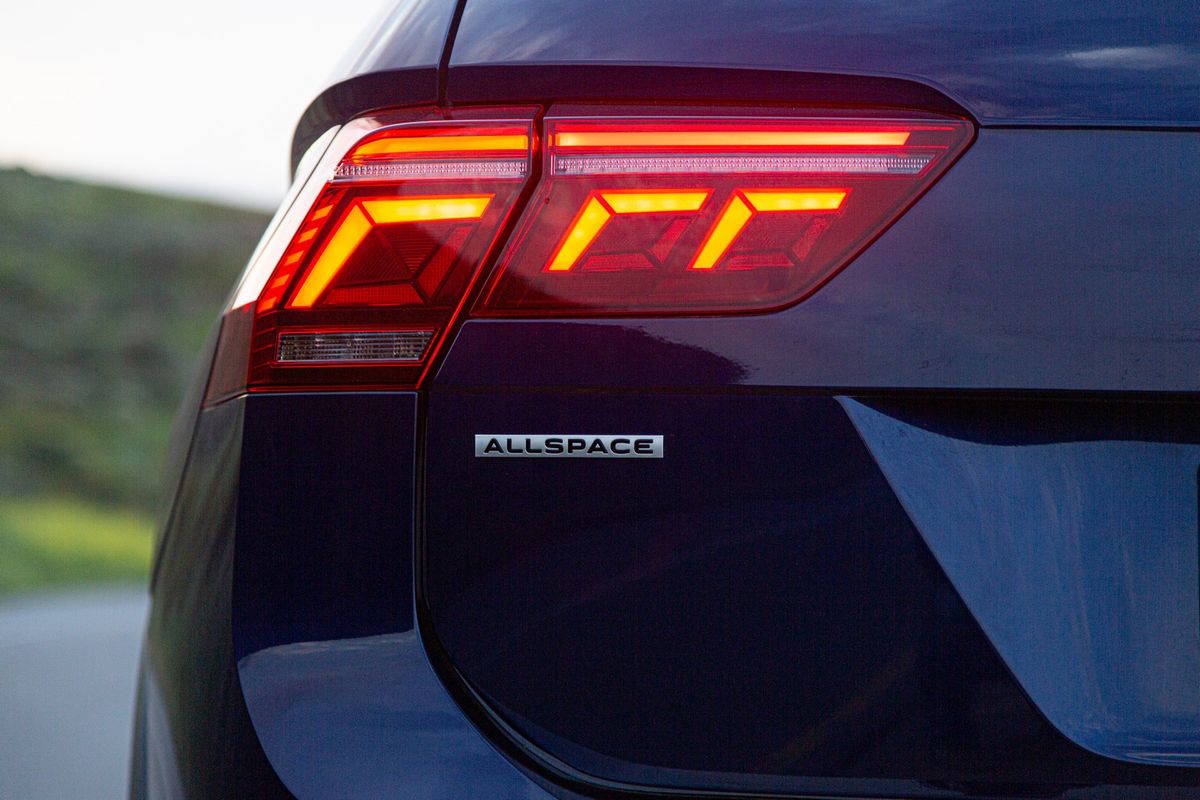
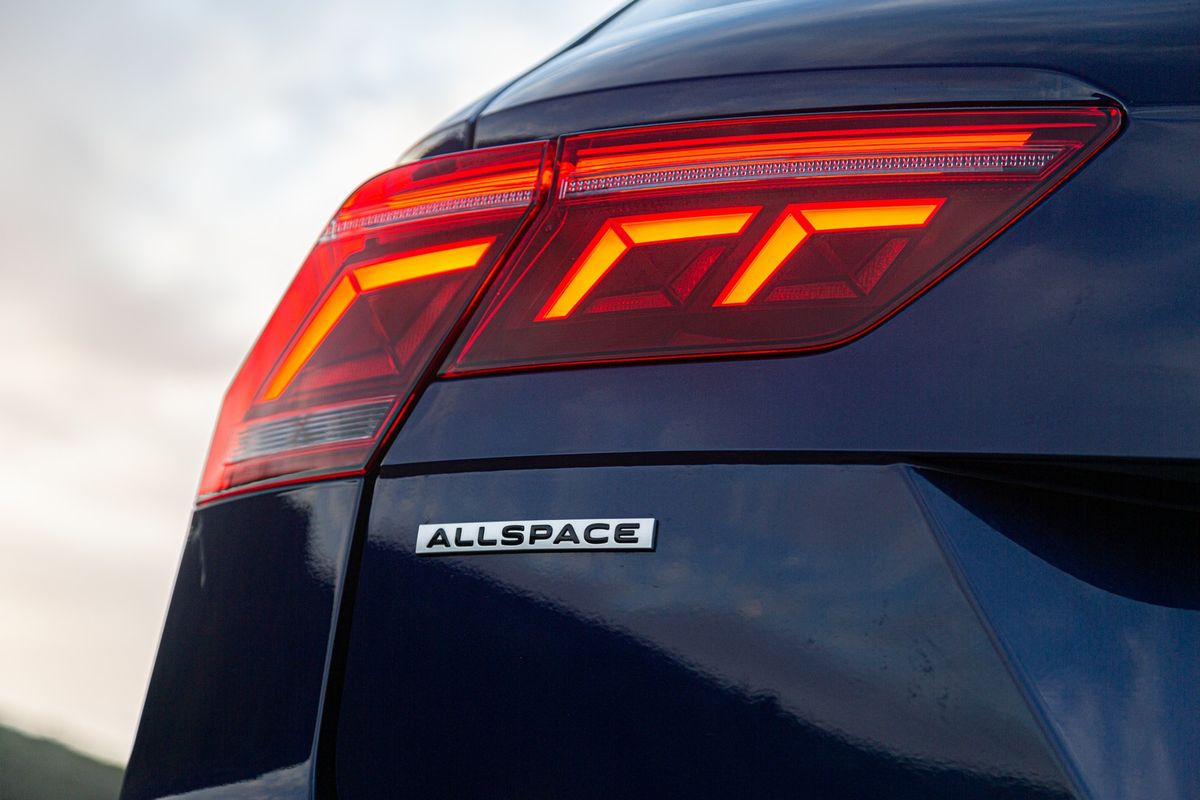
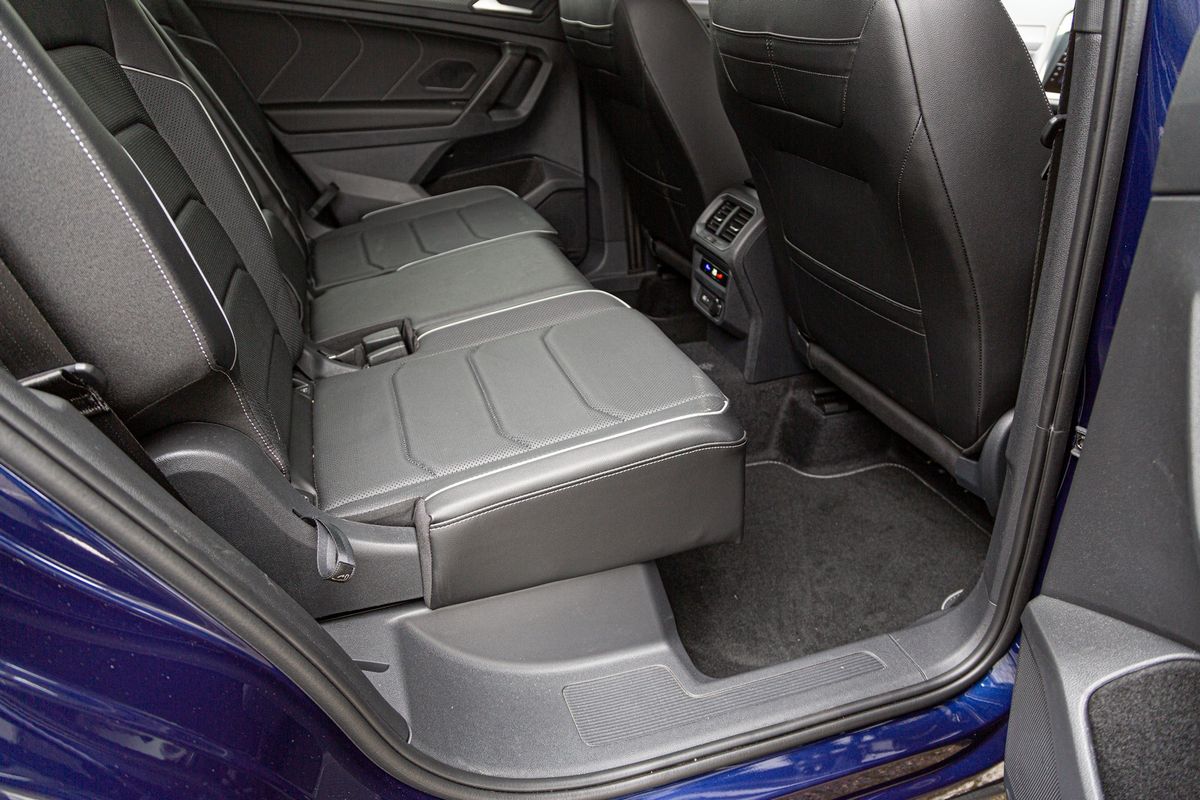
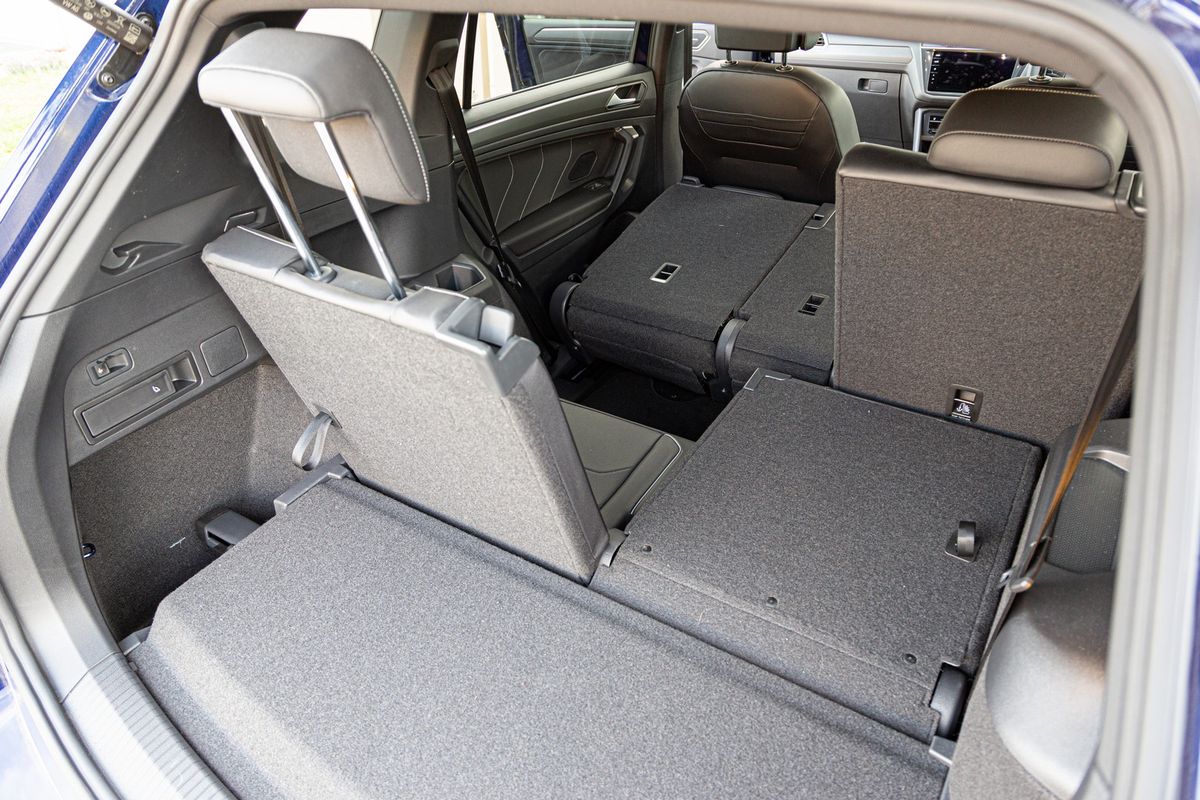
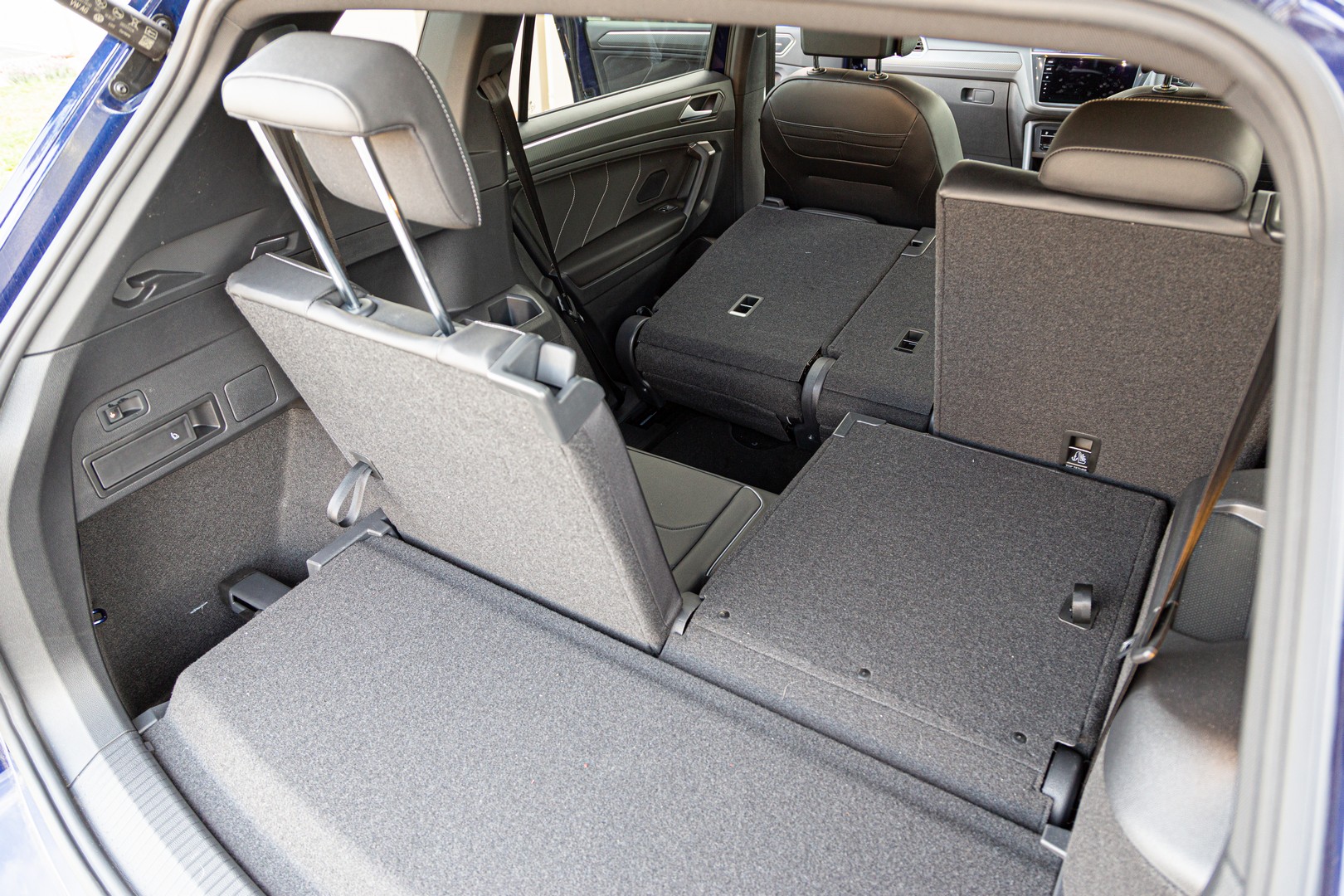
Compared with the standard Tiguan, the Allspace variant offers owners 2 extra seats at the back, as well as more loading space (when the rearmost row is not occupied). In fact, the Allspace is 217 mm longer, 2 mm higher and has a 111-mm longer wheelbase than the 5-seat Tiguan. This means there is more room for passengers in the front 2 rows and, in 5-seat configuration, you have 145 litres more luggage space in the load bay. The premium for this extra capacity is around R45k at today’s prices (January 2023).
The annual December migration (from the nation’s land-locked provinces to its coastal regions) plays an inordinately large role in car buyers’ purchasing decisions. Yes, they base their decisions on roles their vehicles will perform for only about 2 or 3 weeks a year, at least that was what a CEO of a prominent car brand told me. That means a model like the Tiguan Allspace ticks several boxes for prospective buyers.
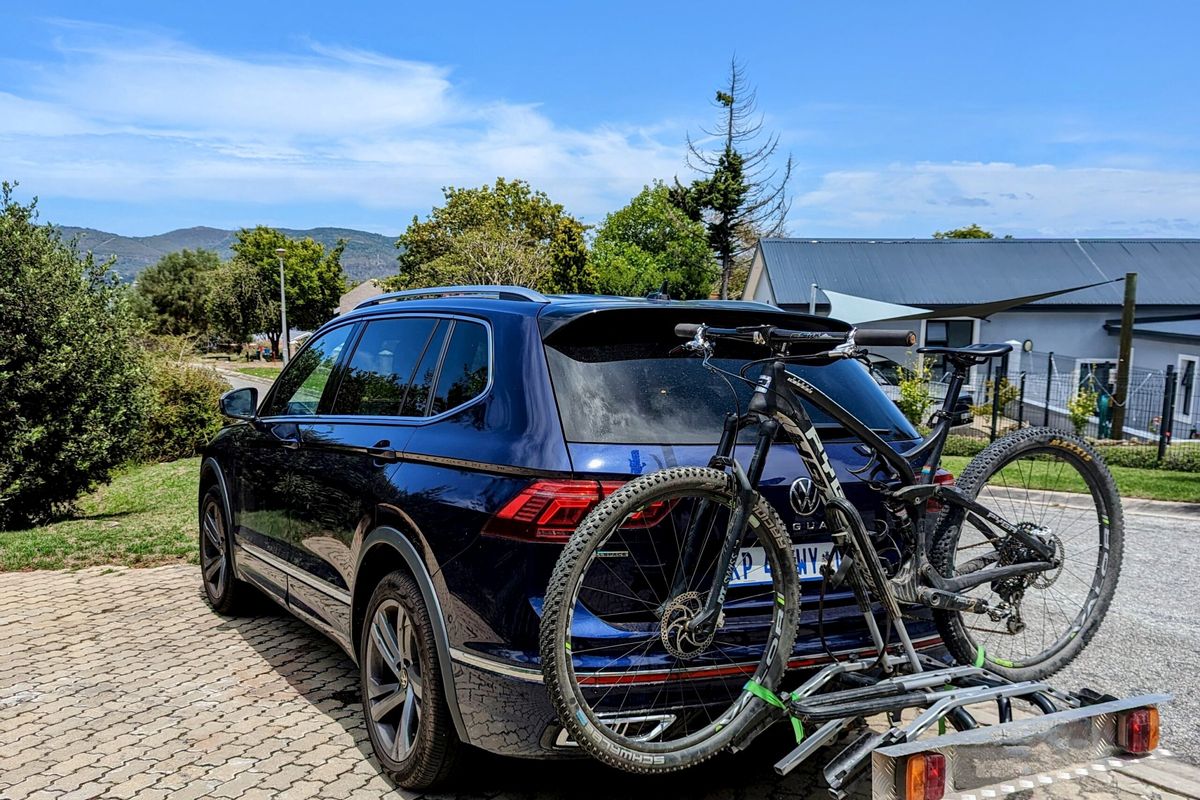
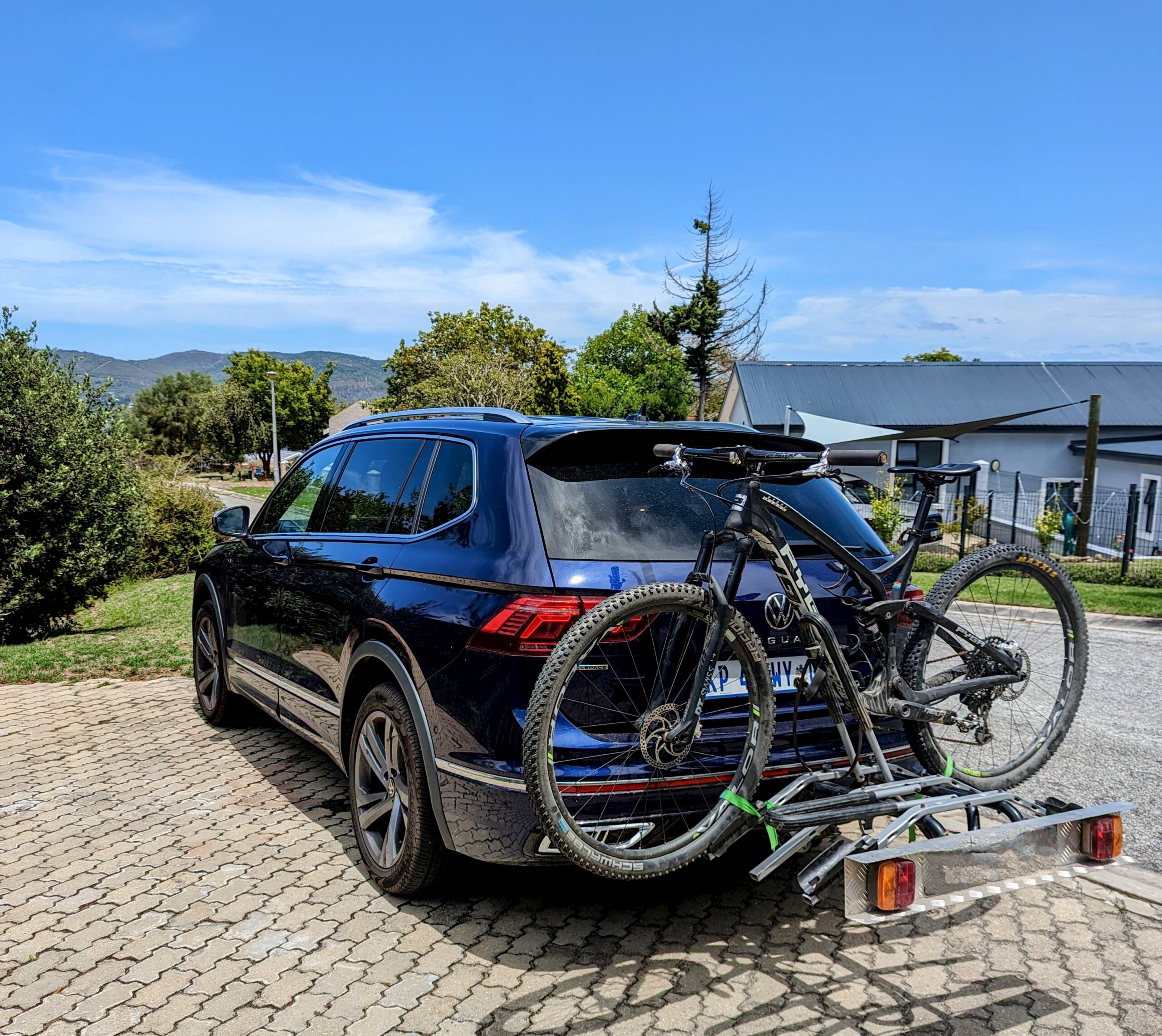
The Tiguan Allspace’s primary task during the end-of-year break was to transport 4 adults, along with their luggage and a mountain bike (sitting on a rack mounted on the deployable towbar – one of my favourite features), from Cape Town to Knysna via the scenic – but rather congested – Garden Route.
The electrically deployable towbar allows you to keep that R-Line look until you need to tow.
I tend to make this 550-km trip a couple of times a year, but this particular journey presented me with an interesting comparison of turbopetrol and -diesel fuel efficiency, because about 3 weeks before the trip, I completed the same route in a 2.0-litre turbodiesel Mercedes-Benz GLB (with a comparable payload).
The Tiguan Allspace’s 1.4-litre 4-cylinder turbopetrol produces a reasonable amount of power and torque and, even when the medium SUV is transporting 4 occupants and their detritus, the VW can cruise comfortably at the national speed limit with enough shove in reserve to perform brisk overtaking manoeuvres when required. I did find the test unit’s long-haul fuel consumption higher than expected, however; after the 1 100-km round trip, the VW returned 8.2 L/100 km (at an average speed of 100 kph).
The Mercedes-Benz only consumed 5.4 L/100 km, so there’s still something to be said for a turbodiesel’s efficiency on long trips, but they tend to cost more upfront and raise environmental issues, which is why many manufacturers plan to stop making diesel-powered passenger cars before the end of the decade.
The Allspace averaged just over 8.0 L/100 km while loaded with 4 passengers and all their luggage.
I found that the Tiguan Allspace’s fuel economy improved to around to a more sober 7.5 L/100 km when it was just me in the car, which suggests that the VW’s 1.4-litre turbopetrol engine laboured harder than I realised when it needed to haul the added weight of passengers and gear. For those who want a bit more power, however, VW South Africa recently added 132-kW and 162-kW versions to the line-up for 2023.
The Tiguan Allspace’s extra load capacity
It’s tight in the 3rd row, but worth it just for the convenience of having a 7-seater.
The availability of 7 seats (standard in the Allspace) does have its perks when you have to quickly shuffle 6 or 7 people around to say, a restaurant for dinner, or a sports stadium. The 3rd row of seats is tight, but okay, for 2 adults (if the journey is short) or for 2 children, if you want them seated safely and securely.
There’s only a sliver of luggage space when all 7 seats are in use, but that is to be expected in a medium- SUV-based model. The real positive is the extra load capacity you get when the VW is in 5-seater mode. The extended wheelbase/added length of the Allspace allows for quite a lot more luggage space, in fact.
The good bits on the Tiguan Allspace
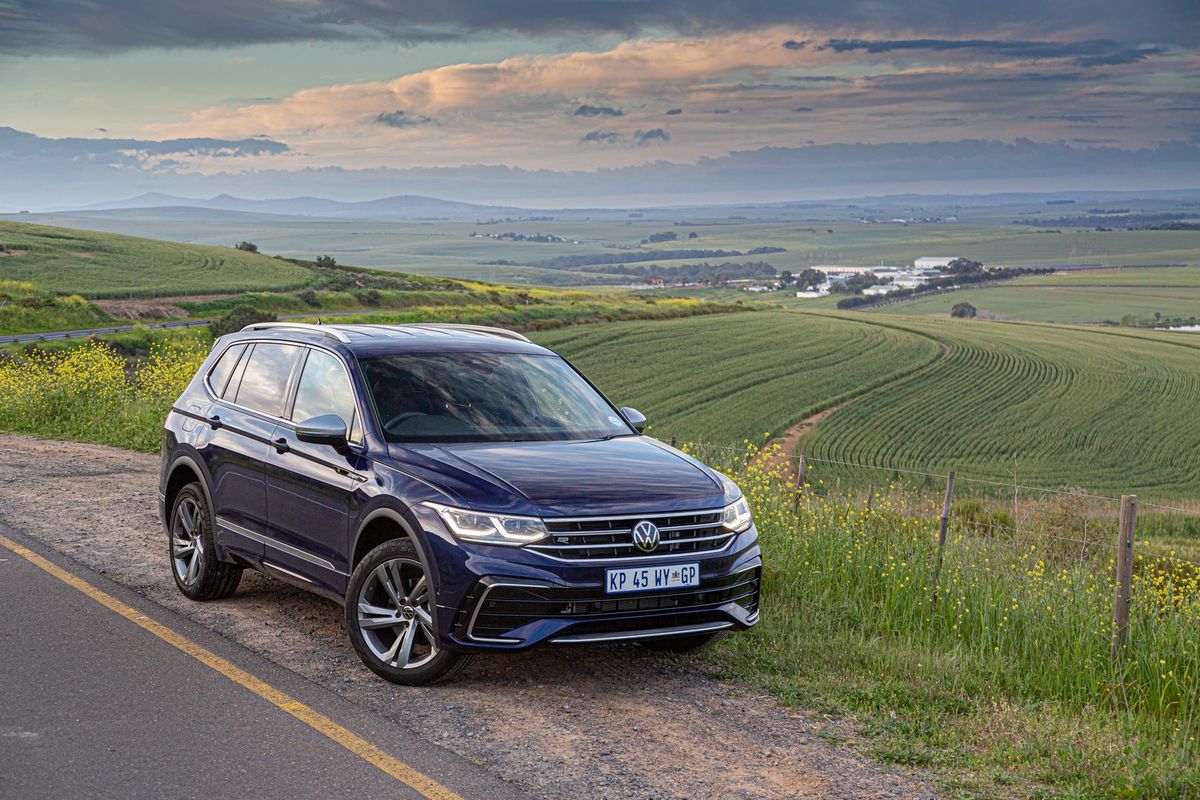
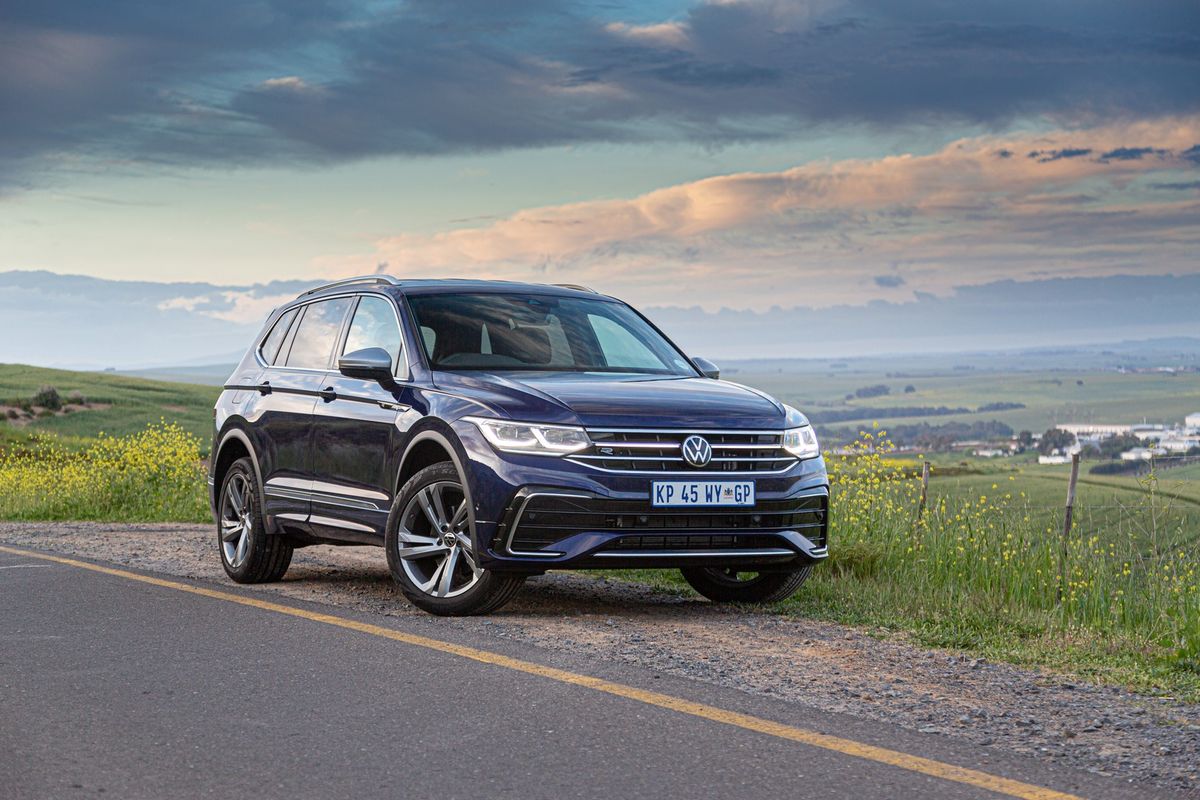
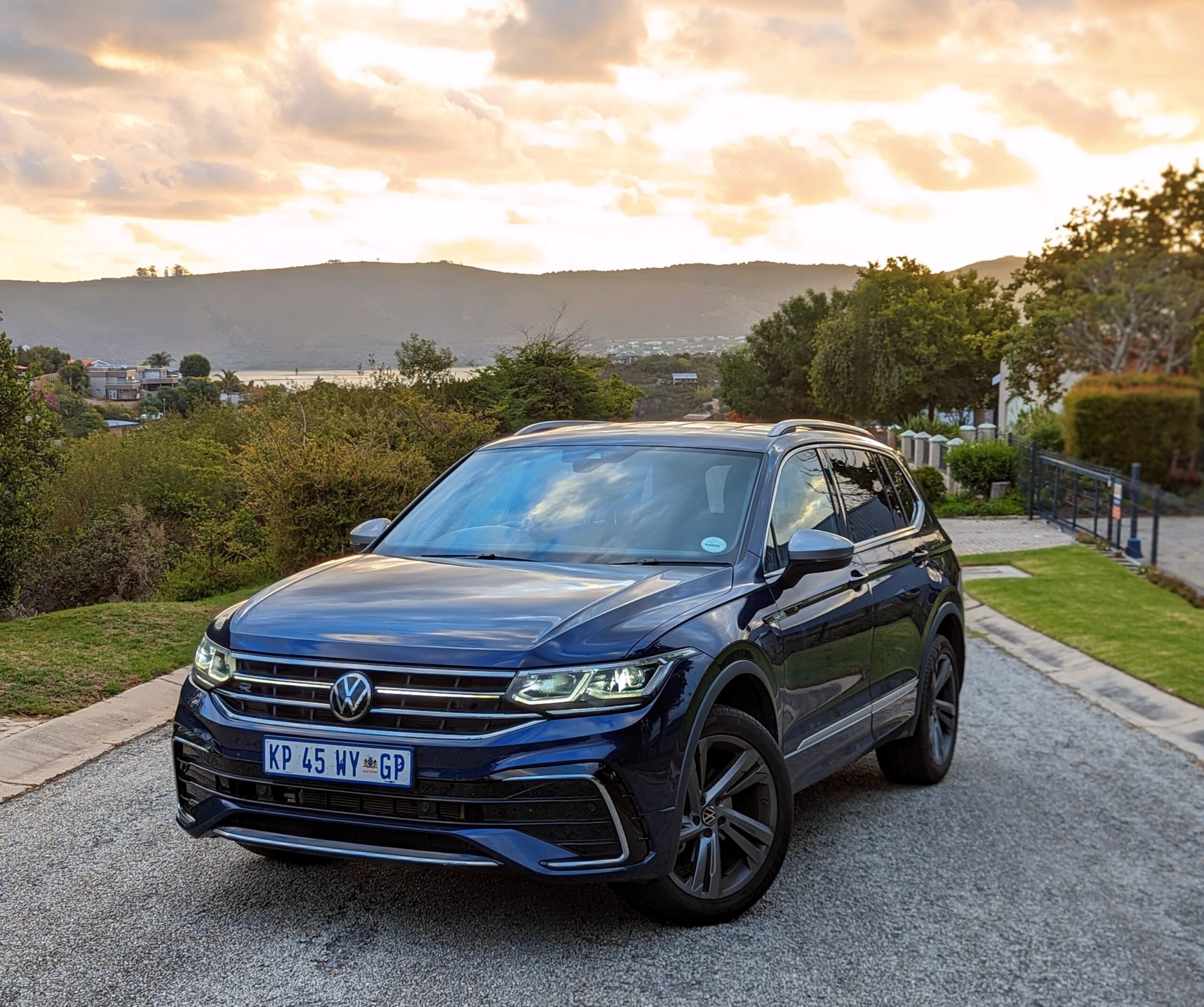
The 2023 update to the Tiguan Allspace endowed the German 7-seater with a better-looking front end in my opinion; it looks more purposeful and less round and, not to be too unkind, frumpy. This derivative’s R-Line kit and 19-inch wheels certainly add to the look and make the VW look upmarket on the road.
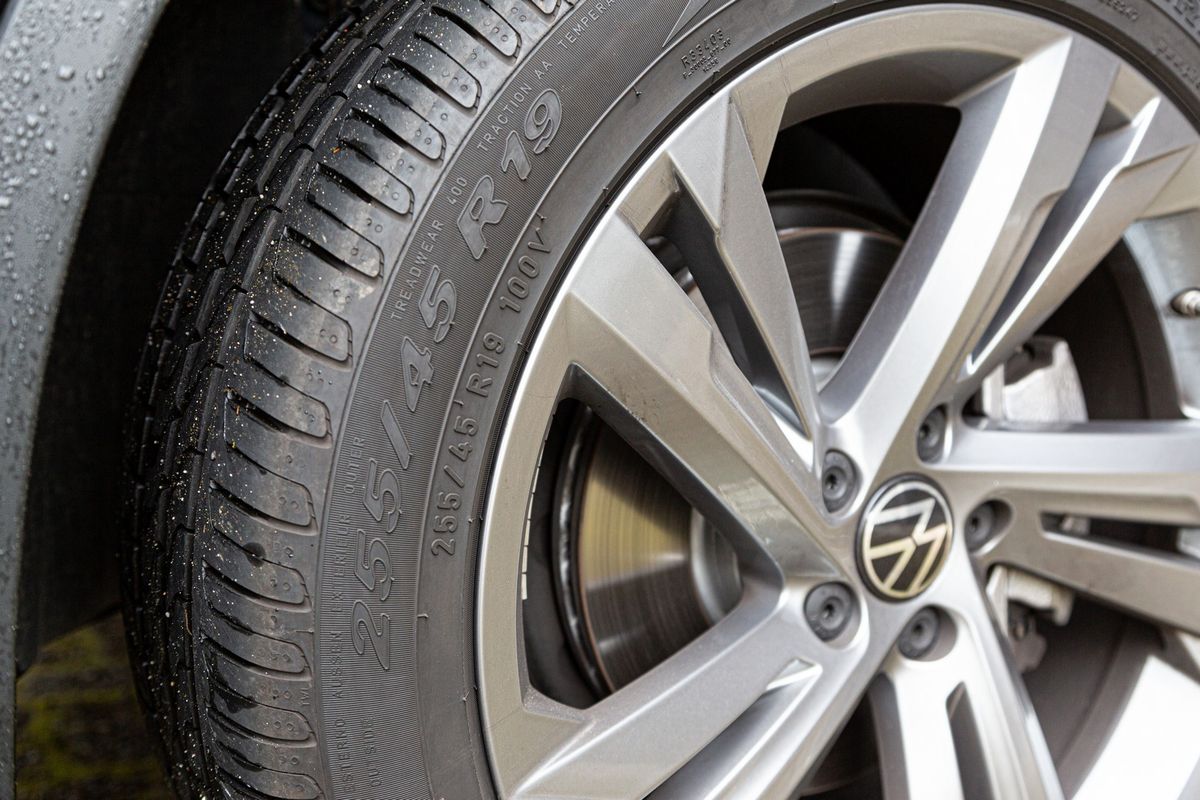
The test unit’s ride quality and overall driving experience proved impressive, but I certainly wouldn’t opt for the 20-inch wheels (shod with 255/40 tyres), because they are likely to make even small road bumps thump through into the cabin. The 1.4 TSI 110 kW R-Line rode composedly on its 255/45 R19 tyres when we traversed dirt roads – more than the GLB did when I tested it late last year – with little body shake and interior rattles (aside from one of the sunglass holders in the roof lining, which occasionally buzzed).
Stick with the standard 19-inch wheels; the optional 20-inch ones may ruin the ride quality.
The engine and transmission are well calibrated, which facilitates quick, barely noticeable transitions between gears. There’s an ever-so-slight laggy throttle response when pulling away that might frustrate you if you’re in a hurry, but I suggest selecting a sportier drive mode to exact pacier response times.
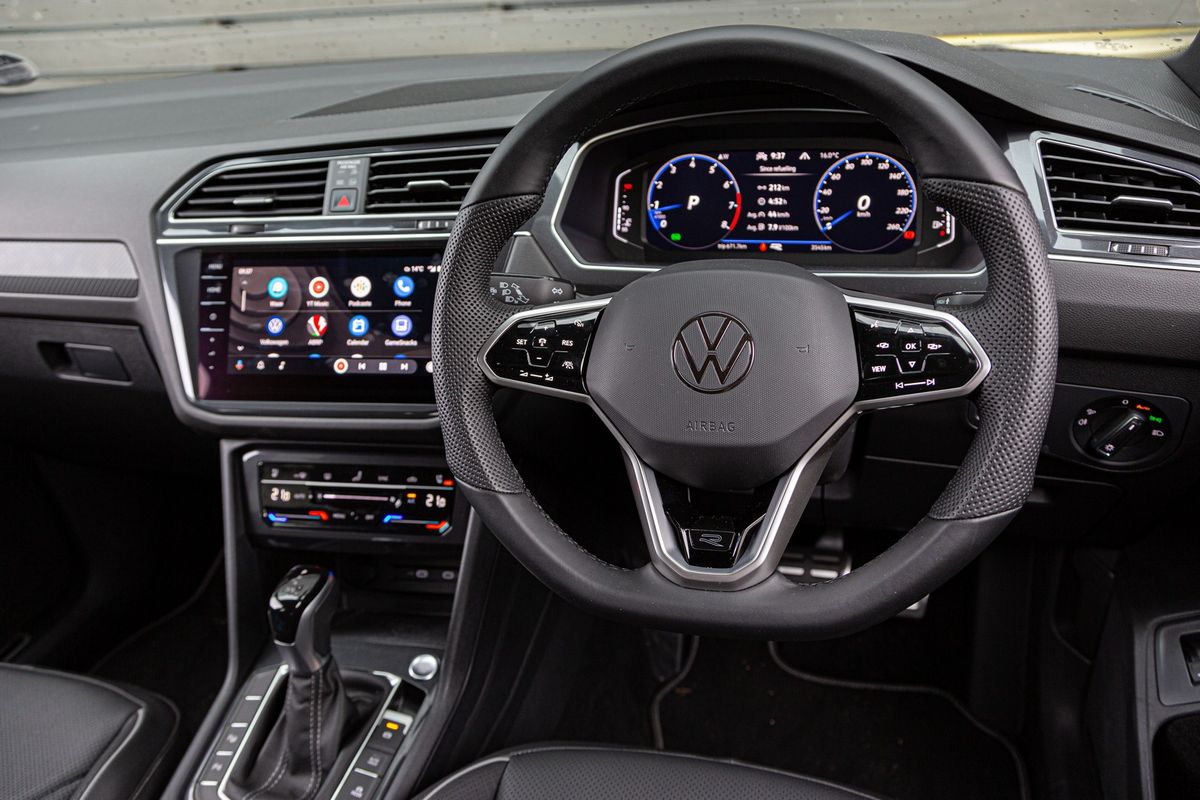
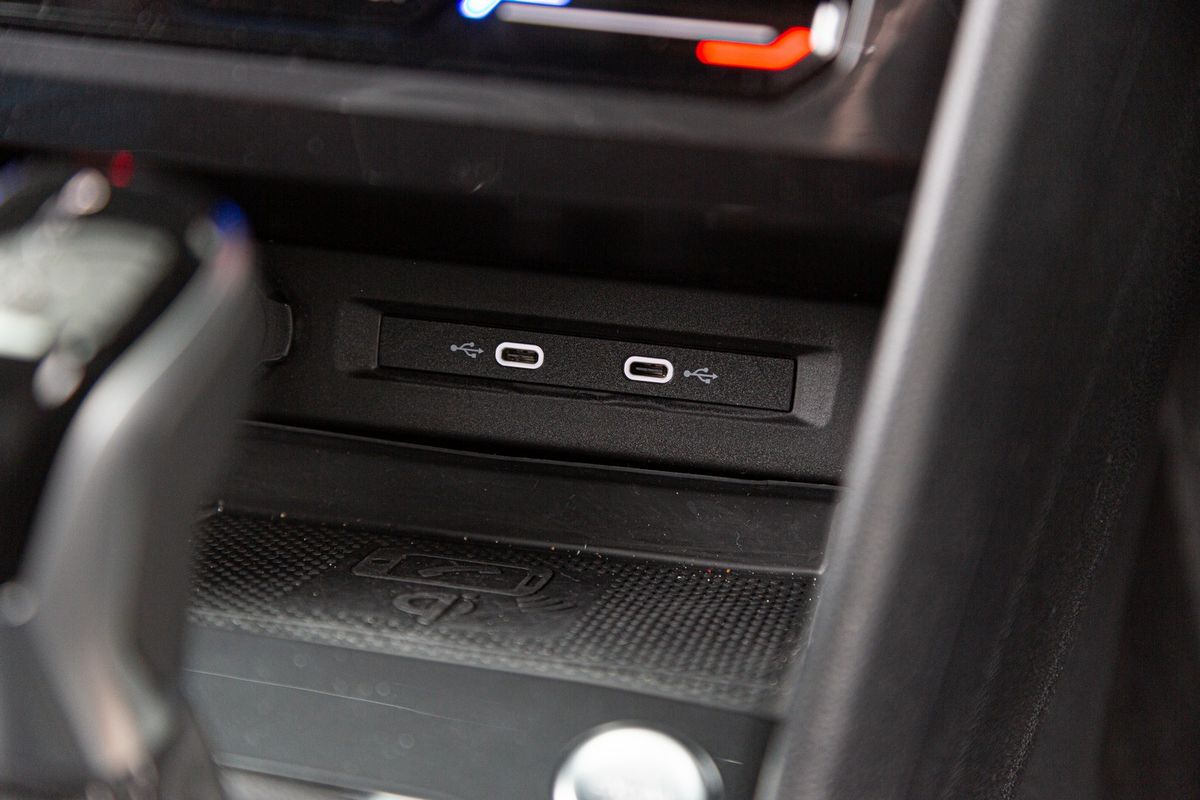
The Tiguan Allspace’s interior is very comfortable (in terms of seat comfort) on long journeys and this derivative’s spec level is satisfactory, but VW South Africa may want to consider offering AppConnect and a wireless charging pad as standard (considering what the competition offers at lower price points).
Lastly, with the optional IQ lights fitted, there is nothing you can’t see in the road when driving the Tiguan Allspace at night! They adapt automatically to oncoming traffic, turn with the vehicle and provide brilliant illumination. I highly recommend these if you struggle with night driving or often travel in the dark.
The Tiguan Allspace’s not-so-good aspects
Software glitches seem to be prevalent in the infotainment system.
Software glitches appear to be a bit of a bugbear for many manufacturers. Most new vehicles seem reasonably reliable, from a mechanical standpoint, but the software that underpins models’ myriad onboard functions can be finicky and require trips back and forth to dealer workshops to sort out.
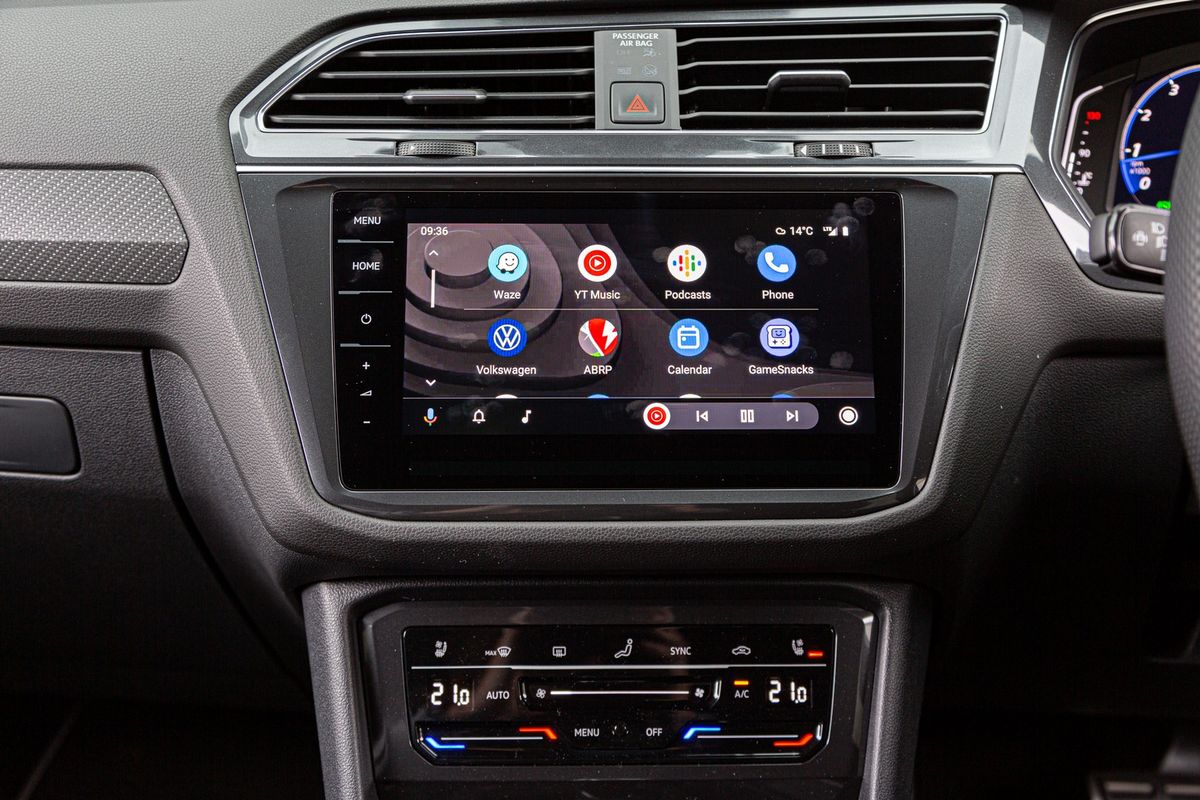
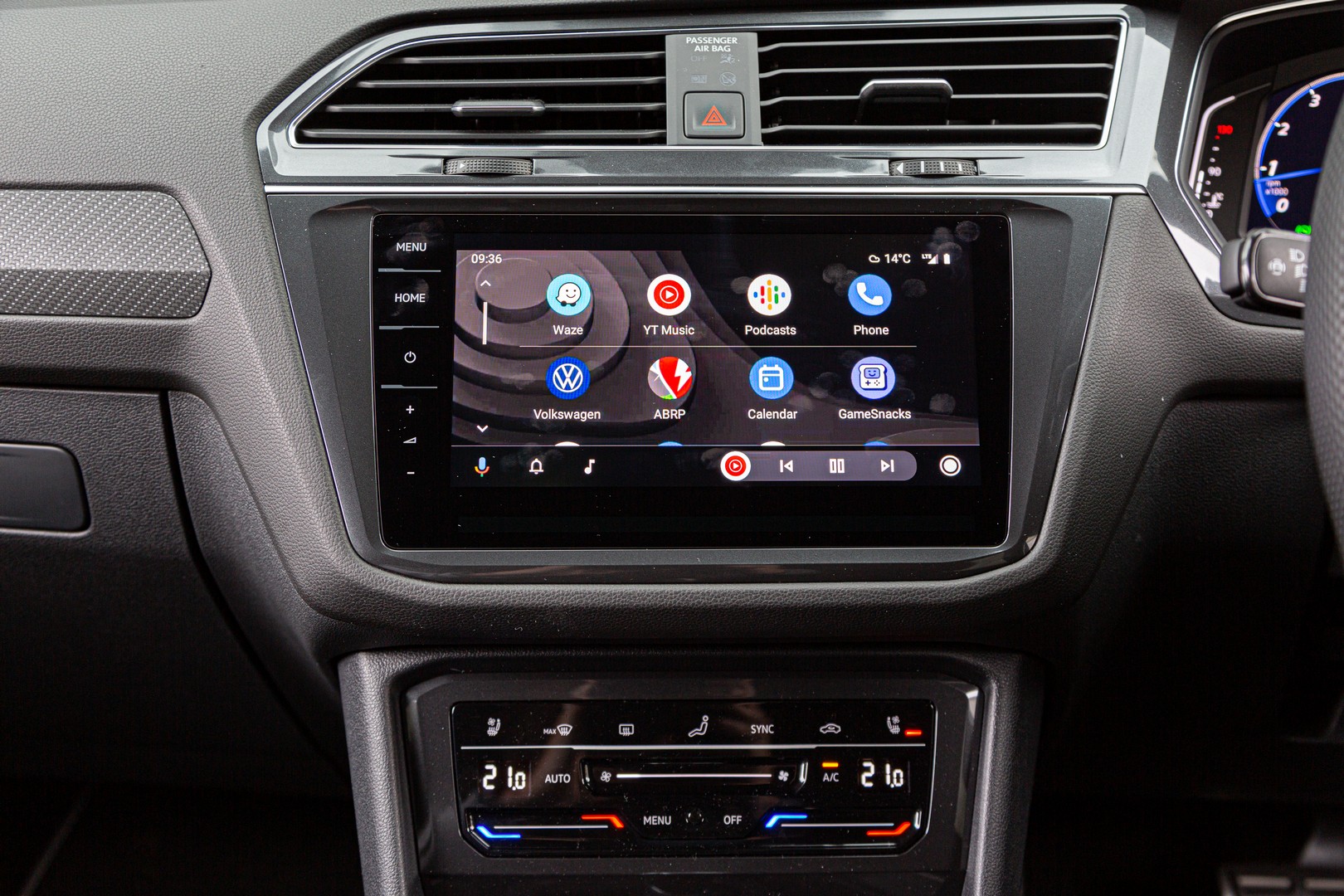
The Tiguan Allspace’s infotainment screen got the shakes (the display kept flickering) a few times, but a simple restart “remedied” the problem. The wireless Apple Carplay and Android Auto tended to cut out and reconnect several times during trips, so we made sure to always connect via a cable when possible.
It’s also probably time for VW South Africa to start considering which items it can remove from the Tiguan Allspace’s options list – and offer as standard features instead. Extra-cost equipment such as the Discover Pro infotainment screen (with App Connect) is exactly the kind of tech feature that most buyers demand… they consider it almost as essential for everyday driving as a modern automatic transmission! Other optional items I’d like to see VW make standard include the reverse-view camera and park assist.
Summary
Brand strength plays in the favour of the Tiguan in spite of its asking price.
The Tiguan Allspace 1.4 TSI 110 kW R-Line is an excellent family SUV. It’s notably more practical than the standard model when it comes to loading things in for the annual migration to the coast (or wherever you may be headed for your holiday). The engine and drivetrain are adequate, but fuel economy takes a bit of a hit when the vehicle’s loaded up. Still, the drive is markedly refined and it rides well over most surfaces.
What’s more, the 7-seater’s interior is comfortable, well-equipped and spacious, but be careful how many options you tick as it can make quite a pricey proposition (R767 400 in January 2023) even pricier.
When you compare the Tiguan Allspace with other 7-seater medium SUVs (not that there are many on the market), the Volkswagen looks less competitive. The Peugeot 5008 is an obvious rival, although it isn’t particularly popular in South Africa. Models such as the Chery Tiggo 8 Pro and the new Mahindra XUV700 are markedly less expensive than the VW and offer more standard features by comparison.
One thing you will always get with the Tiguan Allspace is peace of mind; VW’s local dealer network is expansive and the brand offers a good product that has proved itself on the market time and again.
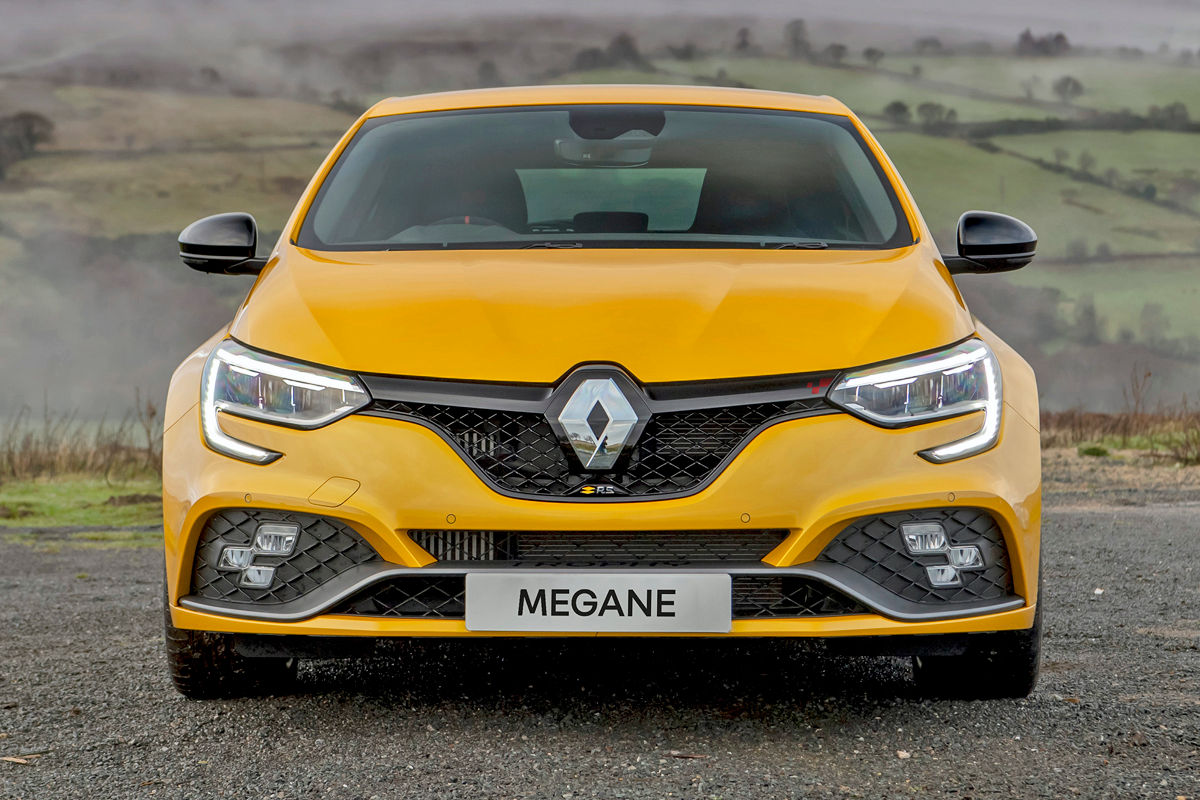
The Renault Mégane RS 300 Trophy has – rather unexpectedly – returned to SA, though only 55 units will be available. Here’s what you need to know, including pricing…
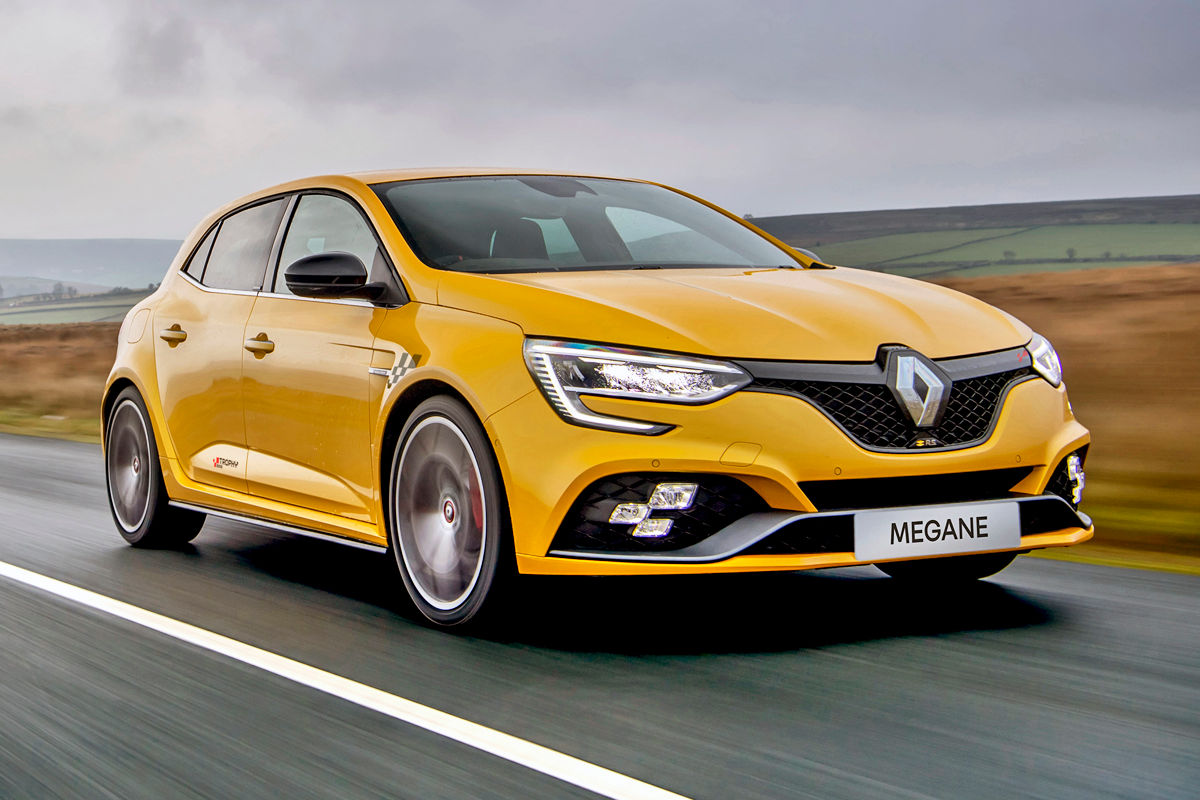
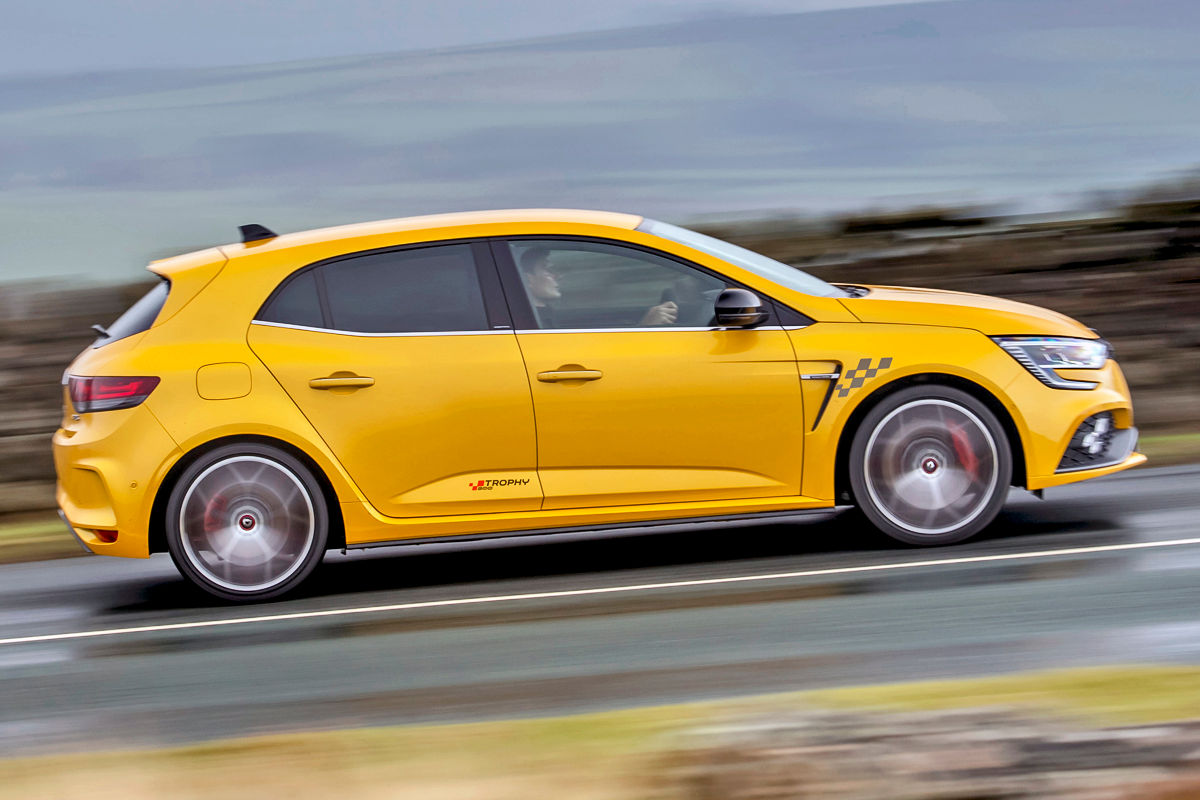
Back in mid-2020, the Renault Mégane RS 300 Trophy officially touched down in South Africa, though with only 7 units available, it soon quietly left the local market. Now, somewhat unexpectedly, a mildly updated version of the French hot hatch is back, this time limited to 55 units.
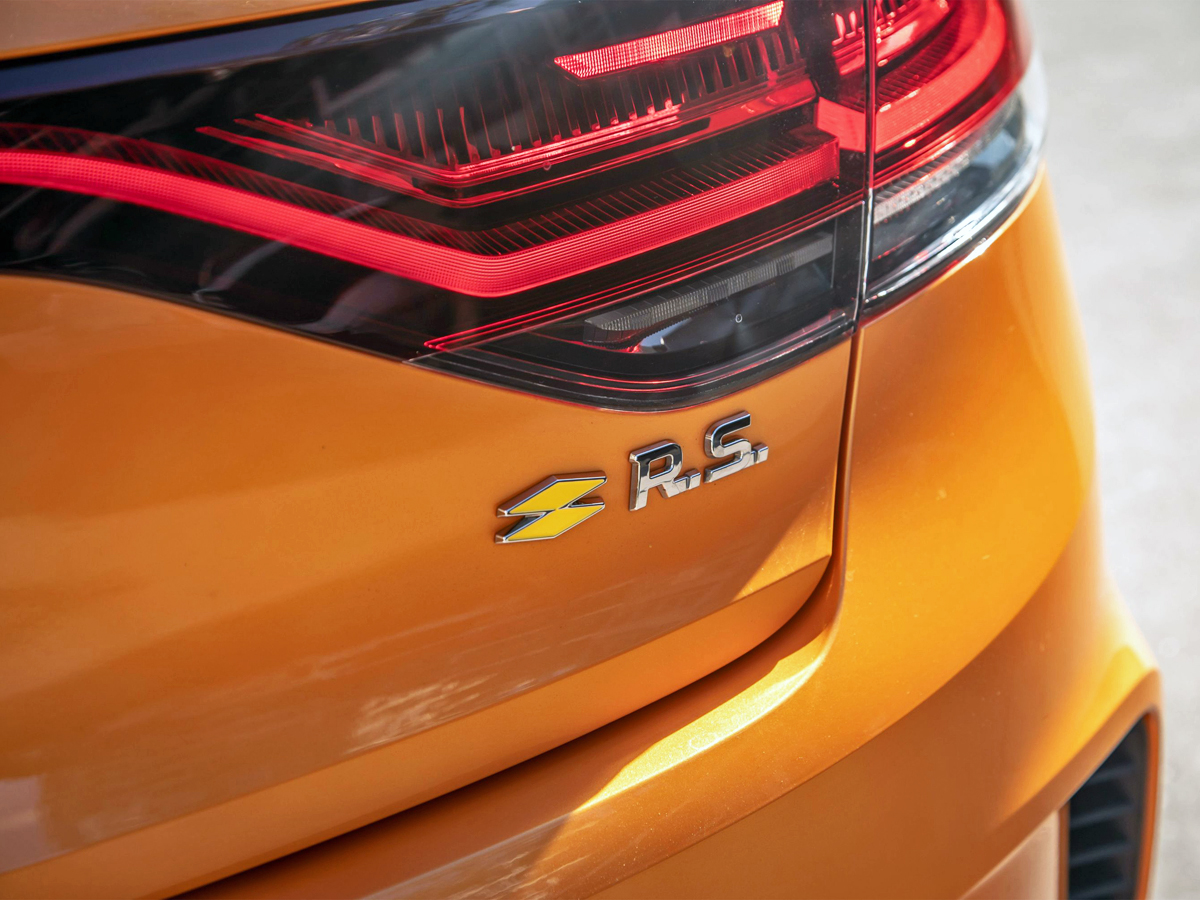
Of course, we already know the end is near for the Mégane RS (and indeed the Renault Sport name as a whole), as the Boulogne-Billancourt-based automaker further shifts its focus towards electric vehicles. Indeed, the new Ultimé edition – based on the RS 300 Trophy – is the official swansong, with Renault SA previously saying the special version would hit local roads at some point in 2023. Now, however, the brand’s distributor tells us it is “unable to confirm” the Ultimé for a local launch.
Production of the Mégane RS 300 Trophy is set to end later in 2023.
Anyway, back to the RS 300 Trophy. How much does it cost in South Africa? Well, every 1 of the 55 units set aside for SA will feature the 6-speed dual-clutch transmission (and thus not the 6-speed manual version), with pricing set at R899 900. For the record, that’s exactly R100 000 more expensive than the EDC model that arrived in June 2020. For the sake of comparison, the 180 kW Volkswagen Golf GTI is currently priced at R744 200 (or R727 500 in Jacara form), while the 206 kW Hyundai i30 N starts at R779 900 and the outgoing 228 kW (and manual-equipped) Honda Civic Type R at R857 500.
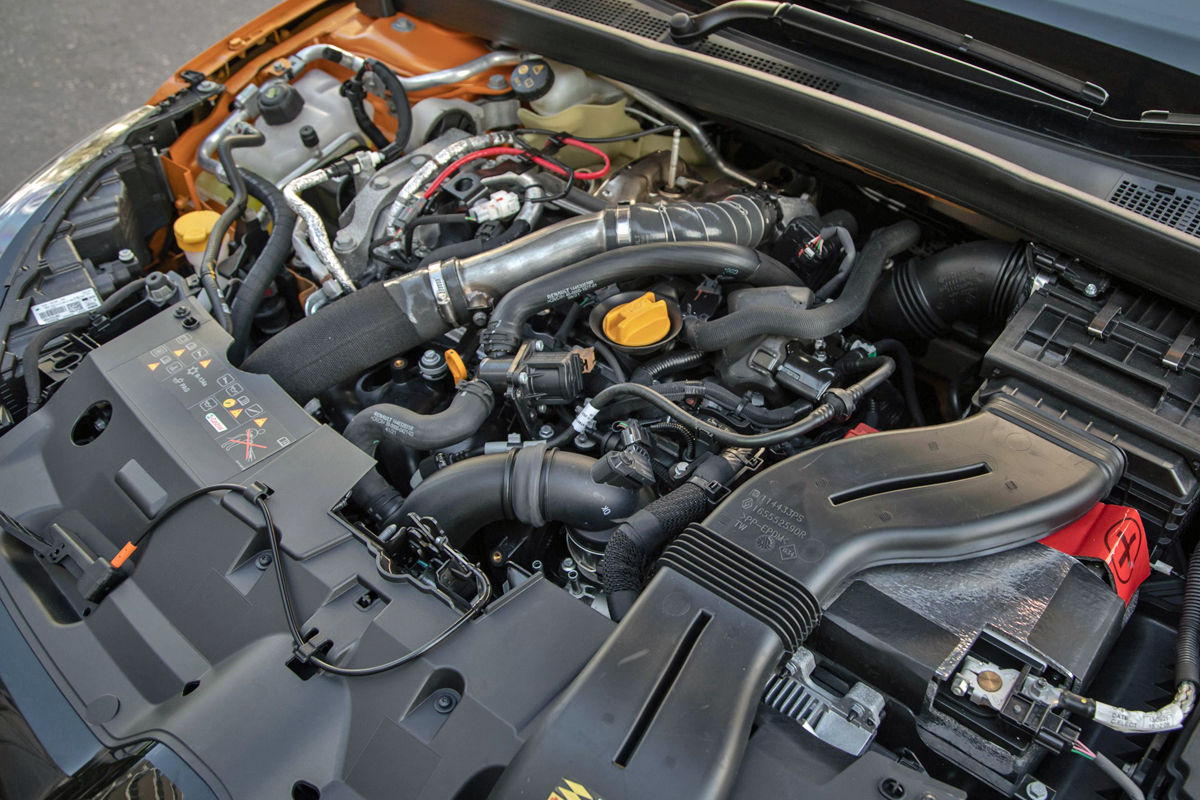
As a reminder, the Mégane RS 300 Trophy employs a turbocharged 1.8-litre, 4-cylinder petrol engine sending an unchanged 221 kW and 420 Nm to the front axle through the aforementioned dual-clutch gearbox. The obligatory 0-100 kph sprint takes a claimed 5.7 seconds, with the maximum speed limited to 255 kph (according to the official spec sheet, though a figure of 260 kph is mentioned elsewhere in the press material).
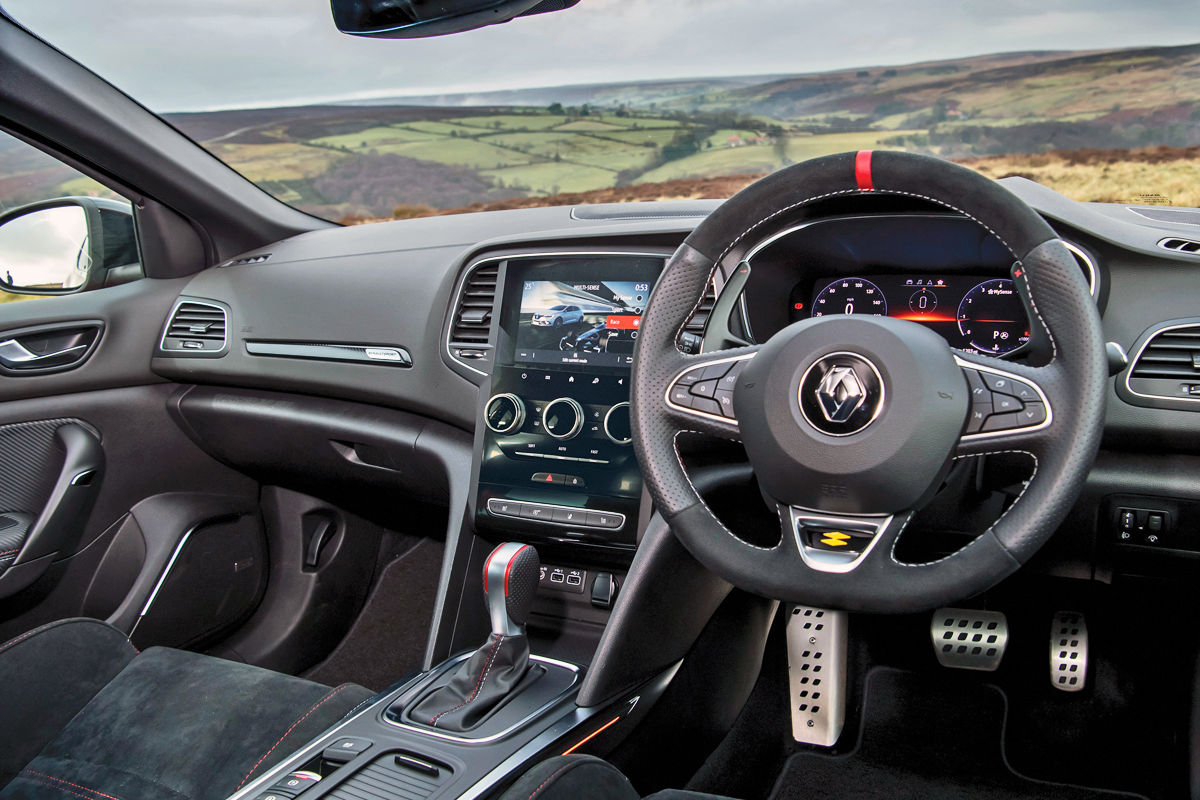
Standard features include the (stiffer) Cup chassis, a Torsen mechanical limited-slip differential and 4-wheel steering. Inside, you’ll find a 7.0-inch touchscreen (complete with Apple CarPlay and Android Auto functionality), along with items such as Alcantara seats (with red stitching) and a sporty leather-trimmed steering wheel. Buyers will have the choice of 3 exterior colours: Pearl White, Liquid Yellow or Orange Tonic.
How much does the Renault Mégane RS 300 Trophy cost in SA?
Renault Mégane RS 300 Trophy EDC – R899 900
The French hot hatch ships standard with a 5-year/150 000 km mechanical warranty, 6-year anti-corrosion warranty and a 5-year/90 000 km service plan (with intervals of 10 000 km).
Made in SA? Haval and GWM Mulling Local Production
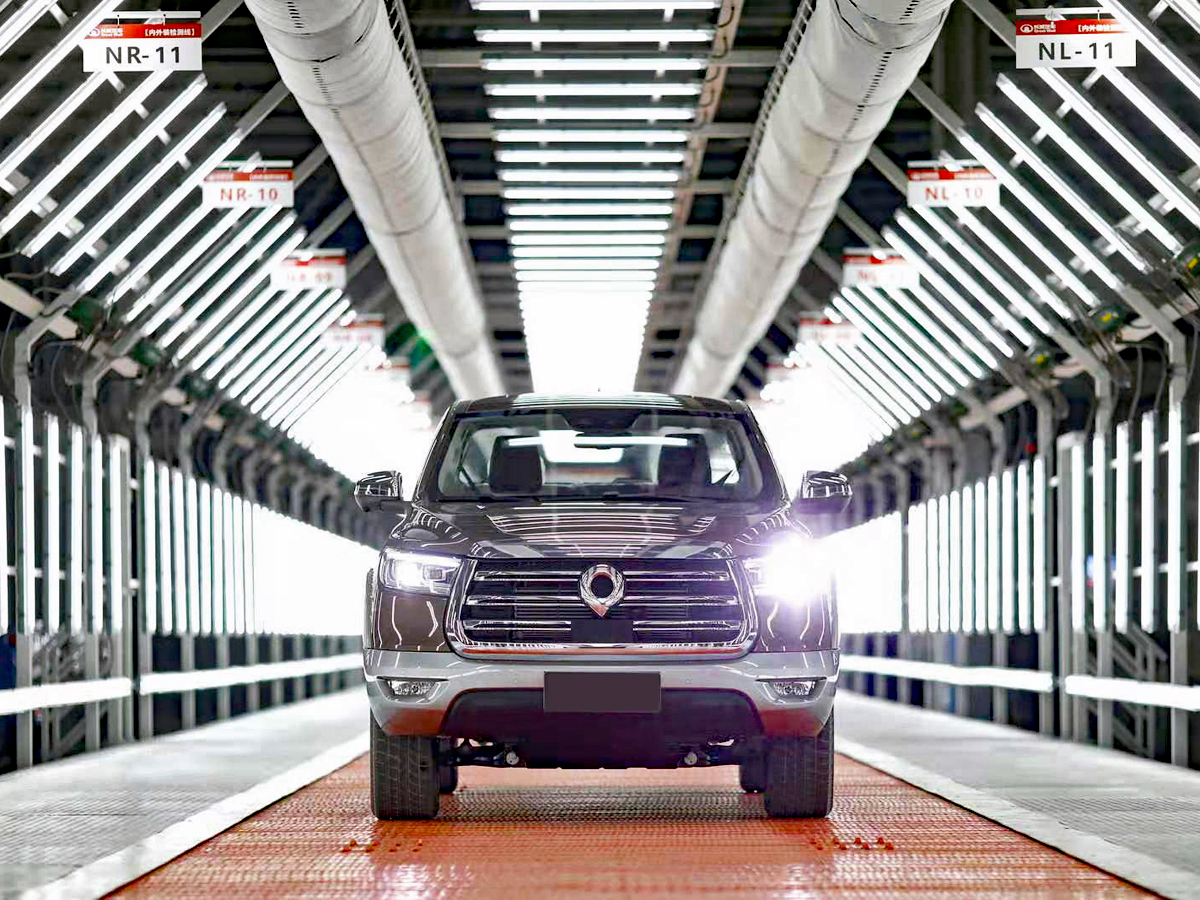
The head of Haval Motors South Africa has revealed the Chinese firm is considering the possibility of producing vehicles locally…
After just 5 years in the local market, Haval is easily the most successful Chinese automotive brand in South Africa. So, what’s next for the fast-growing firm? Well, the company’s boss – who oversees Haval and GWM operations in SA – says it would be a “wasted opportunity” not to pursue the possibility of local production.
Conrad Groenewald, Chief Operations Officer of Haval Motors South Africa, made the comments when speaking to Cars.co.za video journalist, Ciro De Siena, in an exclusive interview.
“If you look at the government policies in the automotive [sector] in South Africa, I think it’s a wasted opportunity not to pursue it,” Groenewald said, when asked whether GWM and Haval products could one day be produced on local soil.
“It is something that we’re engaging with the stakeholders at the moment to look at the possibilities of producing locally in South Africa. When that will happen, I can’t tell you at this point in time,” added Groenewald, who has been in the role since July 2022.
Currently, 7 major automakers run full manufacturing plants in South Africa: BMW, Ford, Isuzu, Mercedes-Benz, Nissan, Toyota and Volkswagen. Indian brand Mahindra, meanwhile, has an assembly facility in KwaZulu-Natal and Chinese firm BAIC one in the Eastern Cape.
Though GWM’s main manufacturing plants are in China, it has a number of KD assembly facilities around the world.
Groenewald, who was with Ford for nearly 20 years (including a 3-year stint in China and, more recently, almost 5 years as director of sales operations at Ford Motor Company of Southern Africa), admits setting up manufacturing facilities locally would require a “big investment”, but appears hopeful the idea will come to fruition.
“It does take a lot of time to get that done, but it is something that we’re not blind to. It is an opportunity that we’re looking at pursuing and hopefully we can capitalise in a way that the other OEMs [original equipment manufacturers] are doing with export business into other markets.
“I think as GWM Global is growing their footprint outside China, the South African market and our manufacturing capabilities in South Africa can play a greater part in their global strategy,” he added.
In addition to its several full-scale manufacturing plants in China (and latterly Thailand), GWM also owns KD factories (which assemble vehicles using “knocked-down” kits) in countries such as Ecuador, Malaysia, Pakistan, Tunisia and Bulgaria.
Haval Motors SA’s sales performance in 2022
Regardless of whether or not local production becomes a reality, Haval Motors SA has lofty ambitions in terms of its sales volumes in South Africa. In 2022, the Chinese group posted total local sales of 22 644 units, an improvement of 18.79% compared with 2021. It thus climbed a place to 9th overall, while also pushing its market share from 4.10% to 4.28%.
“To be blatantly honest, we would like to be in the top 5 brands in South Africa in the not-too-distant future. We’re going to work towards that road presence and then a national sales company that can represent the expectations of customers of what they can see or want to see from a top-5 player in South Africa,” Groenewald concluded.
As a reminder, Haval Motors SA was founded as a wholly owned subsidiary of the Chinese group in 2017, replacing GWM South Africa (which had instead acted as a local distributor).
Chinese brand, Haval, has been on a roll with its Haval Jolion and H6 selling up a storm locally and the SUV brand is now addressing fuel consumption concerns with the introduction of the Jolion HEV hybrid model. Watch his video review!
Haval continues its onslaught on the new car market in South Africa with this, the Haval Jolion HEV! Is it worth the extra spend? Watch our video review for insight!
Join our video journalist, Ciro De Siena, as he takes us on a thorough tour of the brand new Jolion Hybrid. The Jolion is now one of the most popular passenger cars on our roads and it’s a best-seller for Haval.
Haval is hoping that rising fuel prices might drive more motorists to consider new energy alternatives, such as this Jolion HEV Hybrid.
What powertrain does the Jolion HEV have?
The Jolion Hybrid utilises the familiar 1.5-litre turbopetrol engine that’s used in the rest of the Jolion range but in this case is paired with an electric motor to generate 140 kW and 375 Nm of torque with a claimed fuel consumption figure of 5.1 L/100km.
But at a significant price premium, is it worth the extra spend? And how does it compare to its key rival, the Toyota Corolla Cross Hybrid, which is quite a lot cheaper?
Watch the video!
How much does the Jolion cost in South Africa?
Model
Price
Jolion 1.5T City
R347 950
Jolion 1.5T City Plus DCT
R372 950
Jolion Pro 1.5T Premium DCT
R391 150
Jolion Pro 1.5T Super Luxury DCT
R427 950
Jolion Pro 1.5T Ultra Luxury DCT
R464 950
Jolion Pro S 1.5T Ultra Luxury DCT
R498 950
Jolion Pro 1.5 HEV Ultra Luxury DHT
R519 950
Standard models come with a 5-year/100 000 km warranty and a 5-year/75 000 km service plan, with the Jolion Pro models upgrading to a 7-year/200 000 km warranty (with the hybrid derivative furthermore scoring 8 years or 150 000 km of coverage for the battery).
According to Cars.co.za, the Haval Jolion is considered a good car to buy as it is a popular choice in the compact SUV segment. It offers an appealing blend of style, standard features, practicality, and value-for-money.
Is the Jolion a fuel-efficient car?
While Haval claims a fuel consumption range of 5.1-8.1 L/100km, the article notes that the car has been criticised for higher-than-expected fuel consumption in real-world driving situations.
Is the Haval Jolion all-wheel-drive?
No, the article specifies that the Haval Jolion is offered exclusively as a front-wheel-drive car.
The new Volkswagen Polo GTS revealed in South America looks very much like the GTI built here in South Africa but is missing much of the performance…
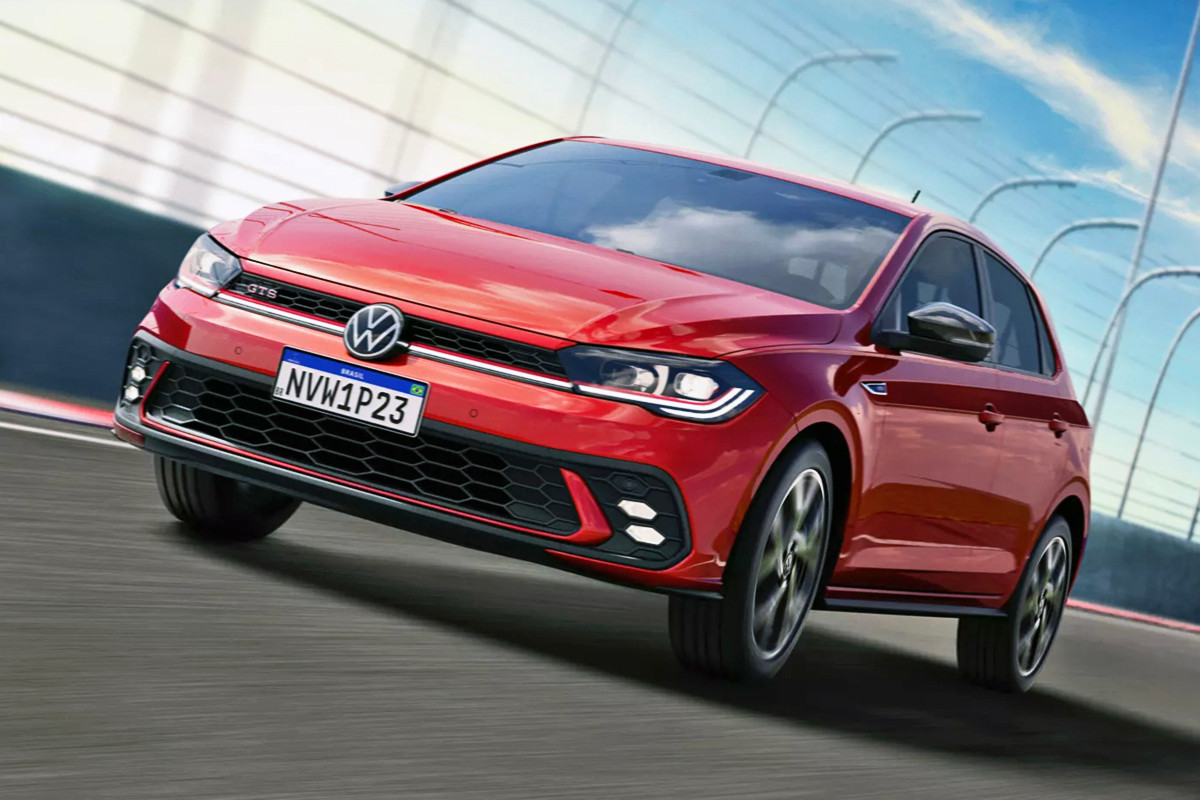
Volkswagen in Brazil has taken the wraps off the new Polo GTS, a so-called “warm hatch” boasting the looks of the full-fat GTI but without much of the extra oomph.
While the Polo GTS that has just debuted in South America is not expected to launch in South Africa, it’s nevertheless an interesting understudy to the GTI (a derivative incidentally not offered in Brazil) built exclusively at VW’s Kariega facility in the Eastern Cape.
As a reminder, the SA-spec Polo GTI makes 147 kW and 320 Nm courtesy of a turbocharged 2.0-litre, 4-cylinder petrol engine, which drives the front axle through a 6-speed dual-clutch transmission as standard. The B-segment hot hatch will complete the 0-100 kph sprint in a claimed 6.7 seconds, before topping out at 238 kph.
The Polo GTS, meanwhile, employs the VW Group’s familiar 110 kW/250 Nm turbocharged 1.4-litre petrol unit, which here interestingly drives the front wheels via a 6-speed torque-converter (rather than dual-clutch) automatic gearbox. The obligatory dash to 3 figures takes a claimed 8.3 seconds, with maximum speed pegged at 206 kph.
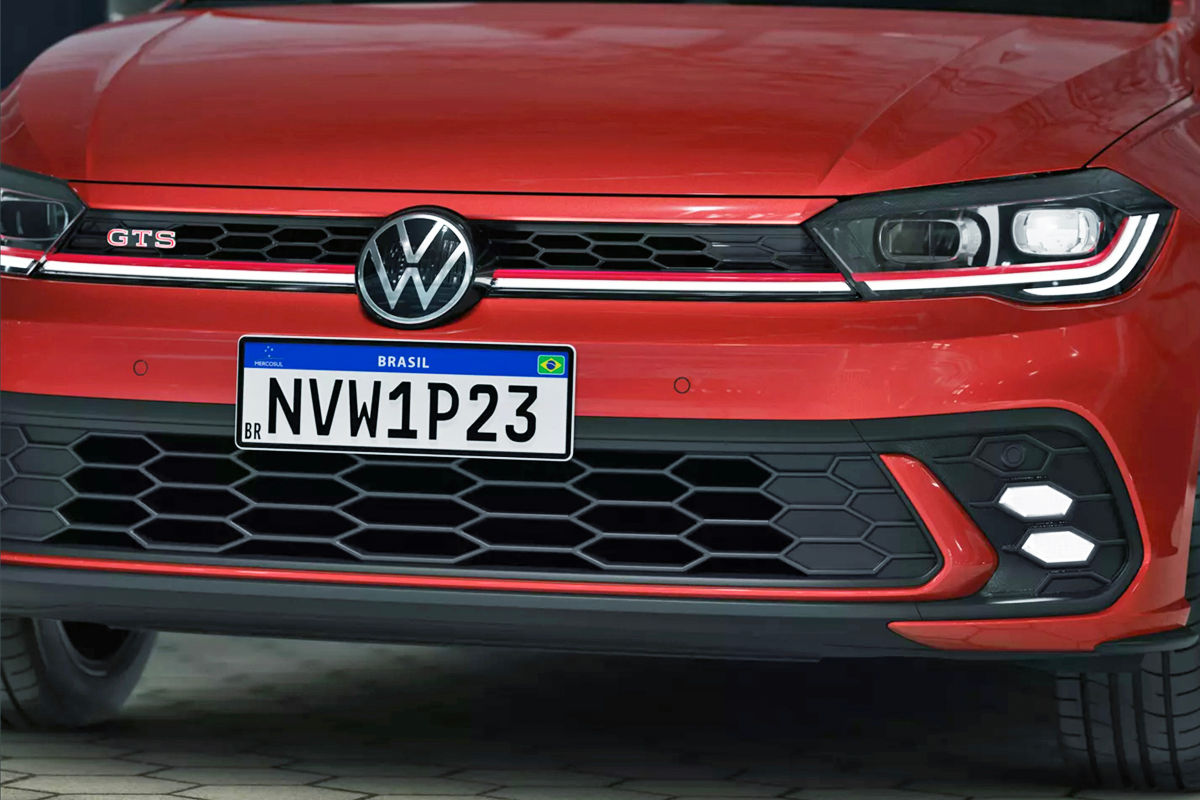
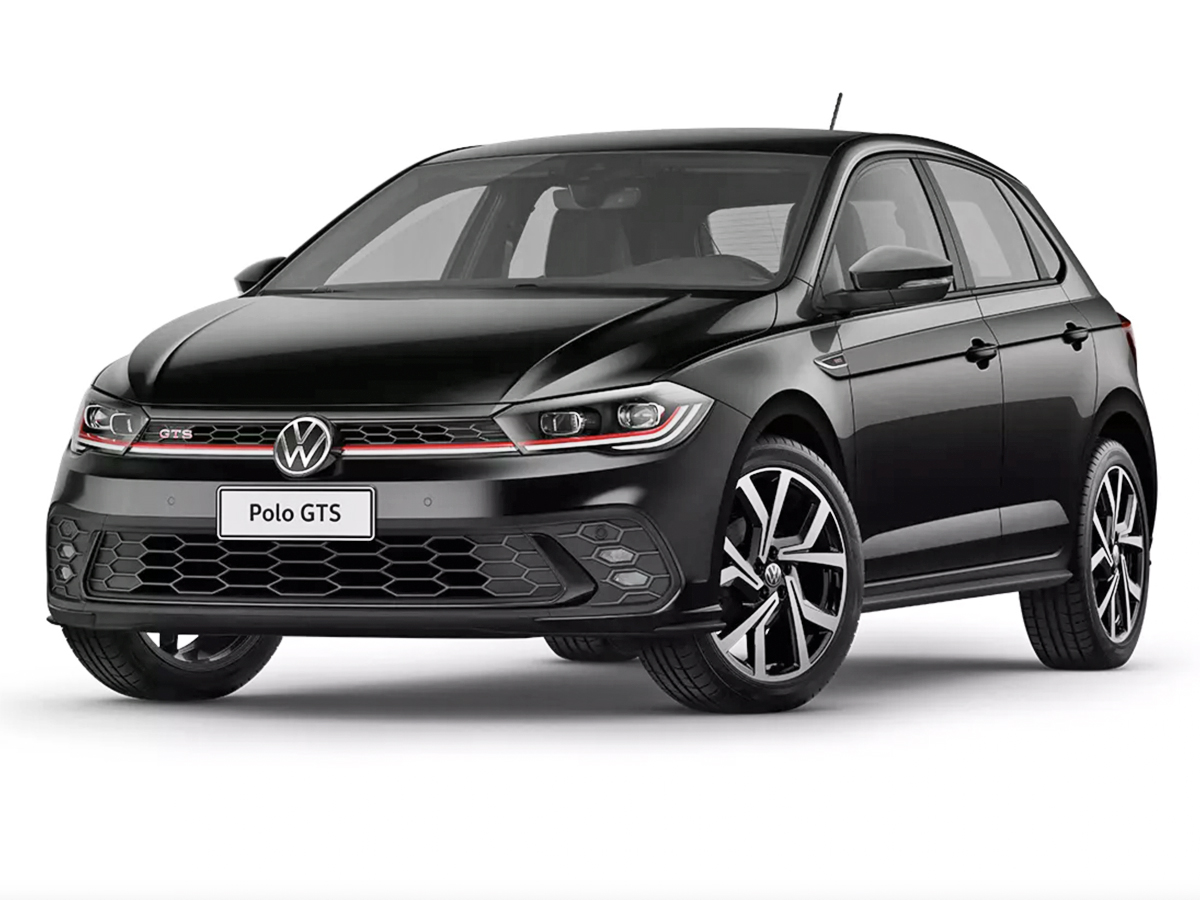
Though the powertrains are certainly distinct, the GTS looks very much like the GTI, borrowing signature styling elements such as the red detailing line (and lighting element) that runs the width of the grille and into each Matrix LED headlamp. Indeed, the front end – including the bumper, air intakes and even the honeycomb-style daytime running lights – appears to have been lifted directly from the hot hatch, with just the badge switched from “GTI” to “GTS”.
The new Polo GTS does a good impression of the SA-built GTI…
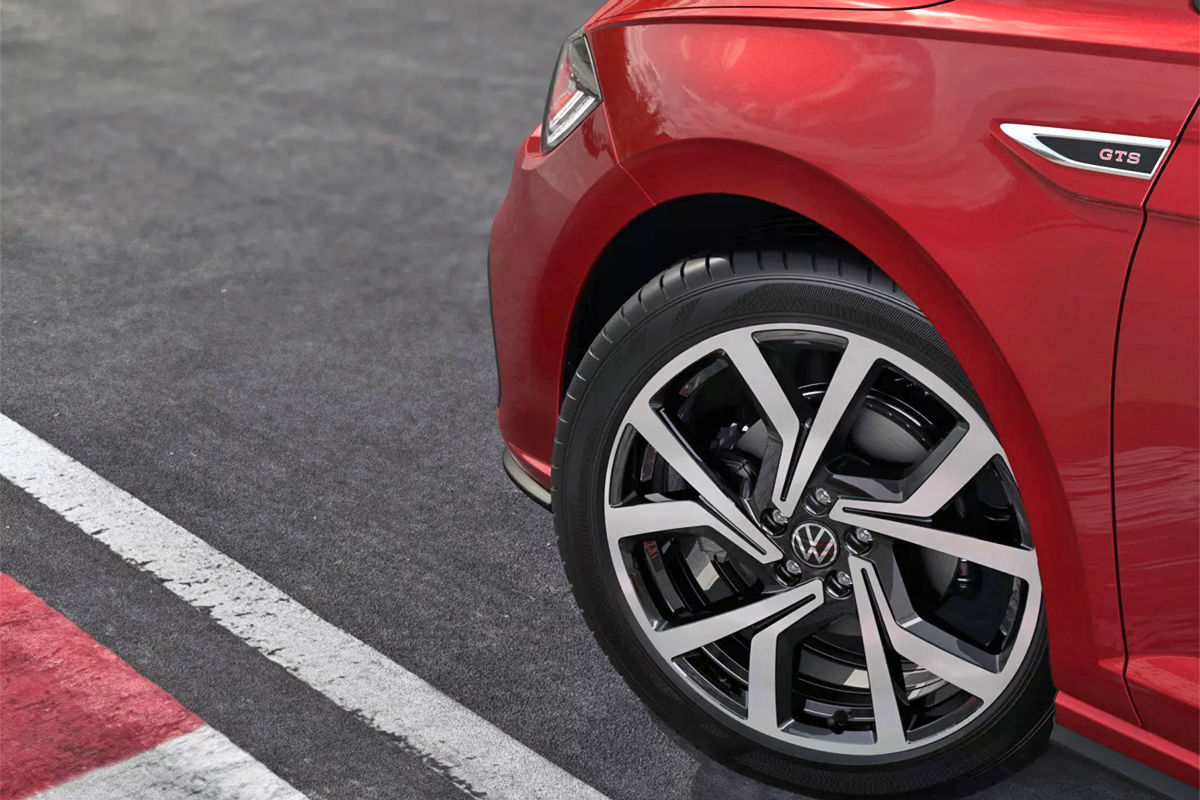
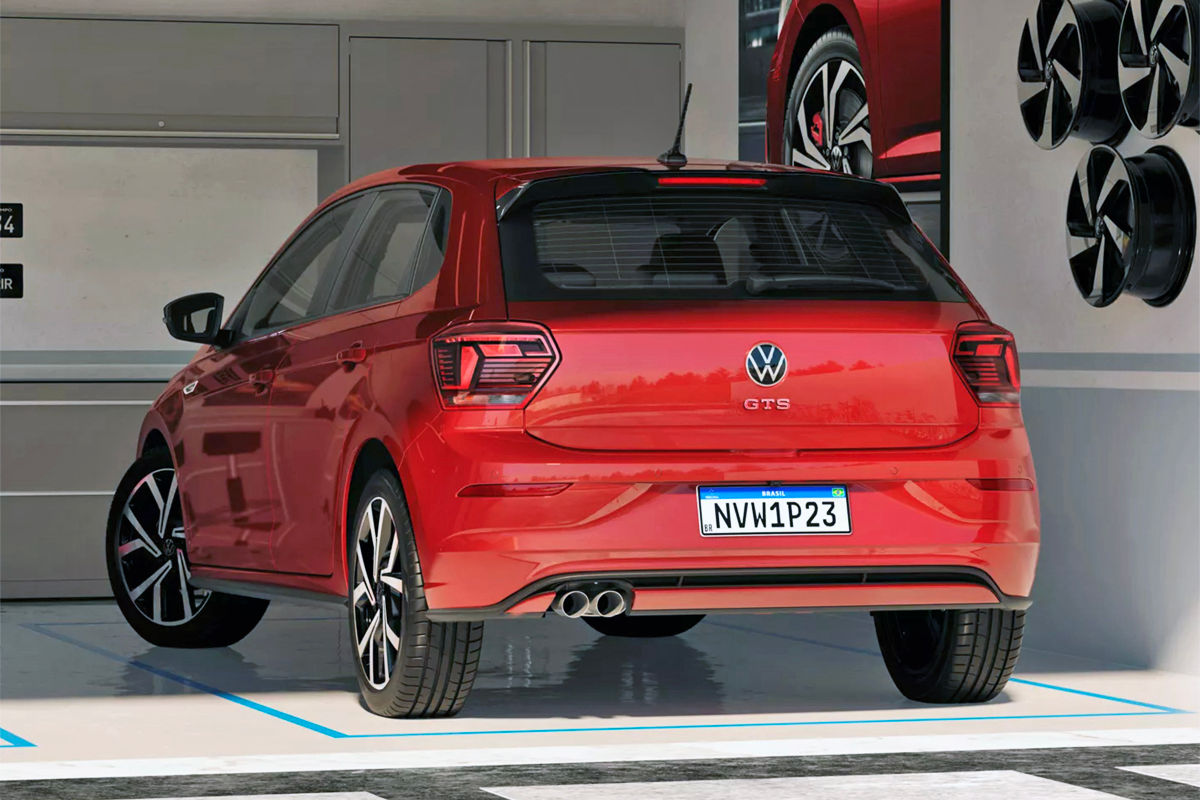
It’s a different story round back, however, as the Polo GTS features an older taillamp design still used in some South American markets. That said, Brazil’s top-spec Polo does score a more aggressive rear diffuser (with body-coloured detailing), a rear spoiler and a dual exhaust outlet. The “GTS” emblem is centred below the brand logo, while the side-mirror caps are finished in black, a hue also applied to the 18-inch alloys (featuring a wheel design used on the pre-facelift Polo GTI).
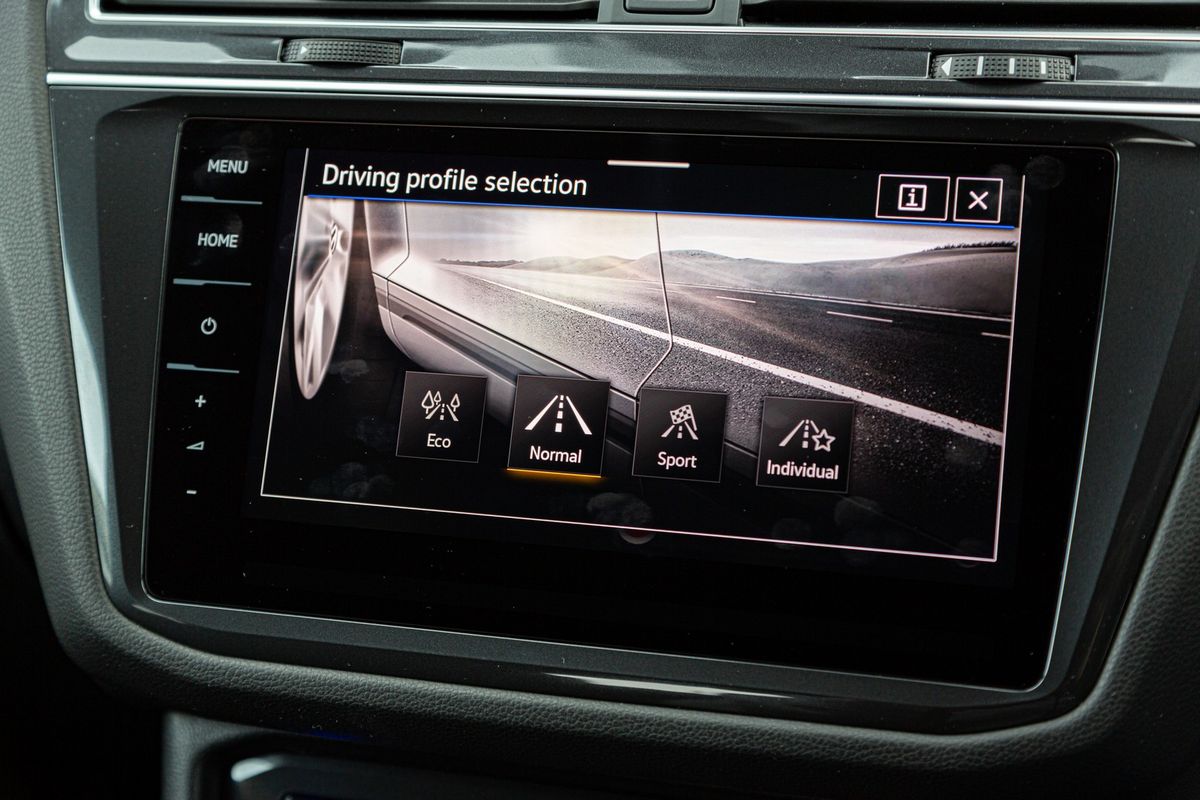
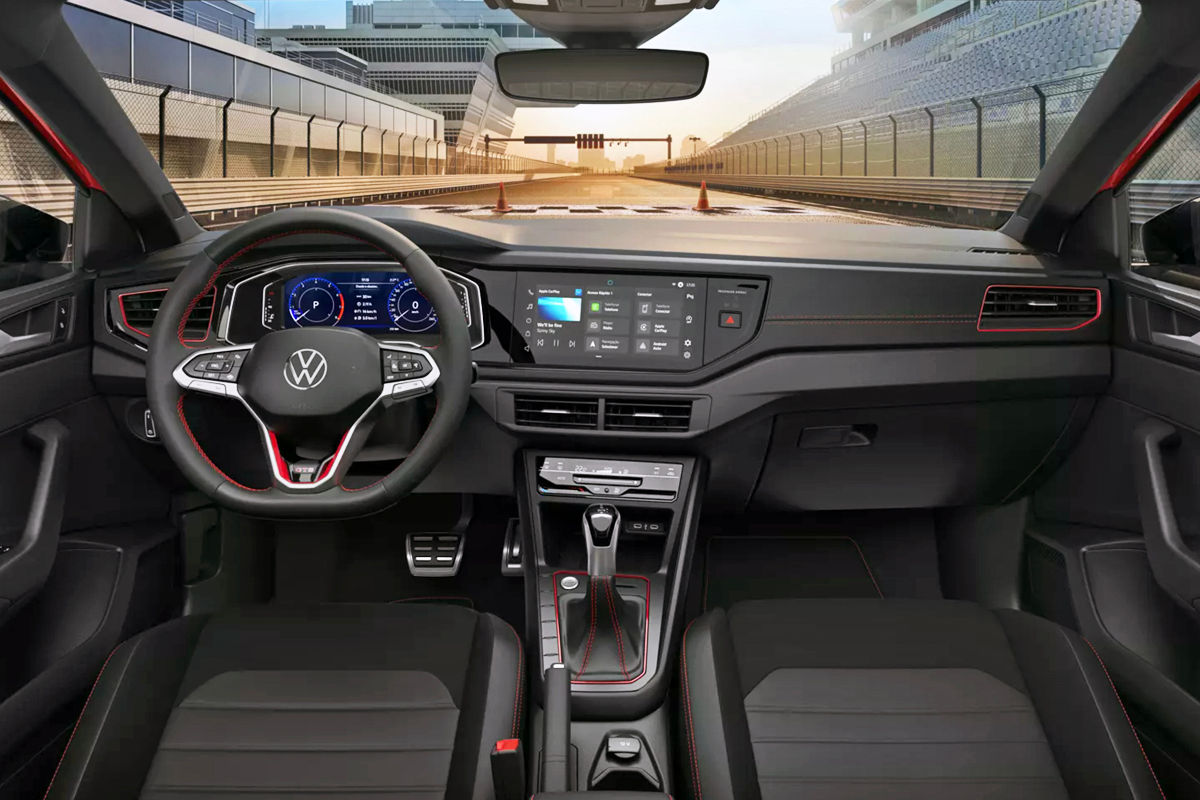
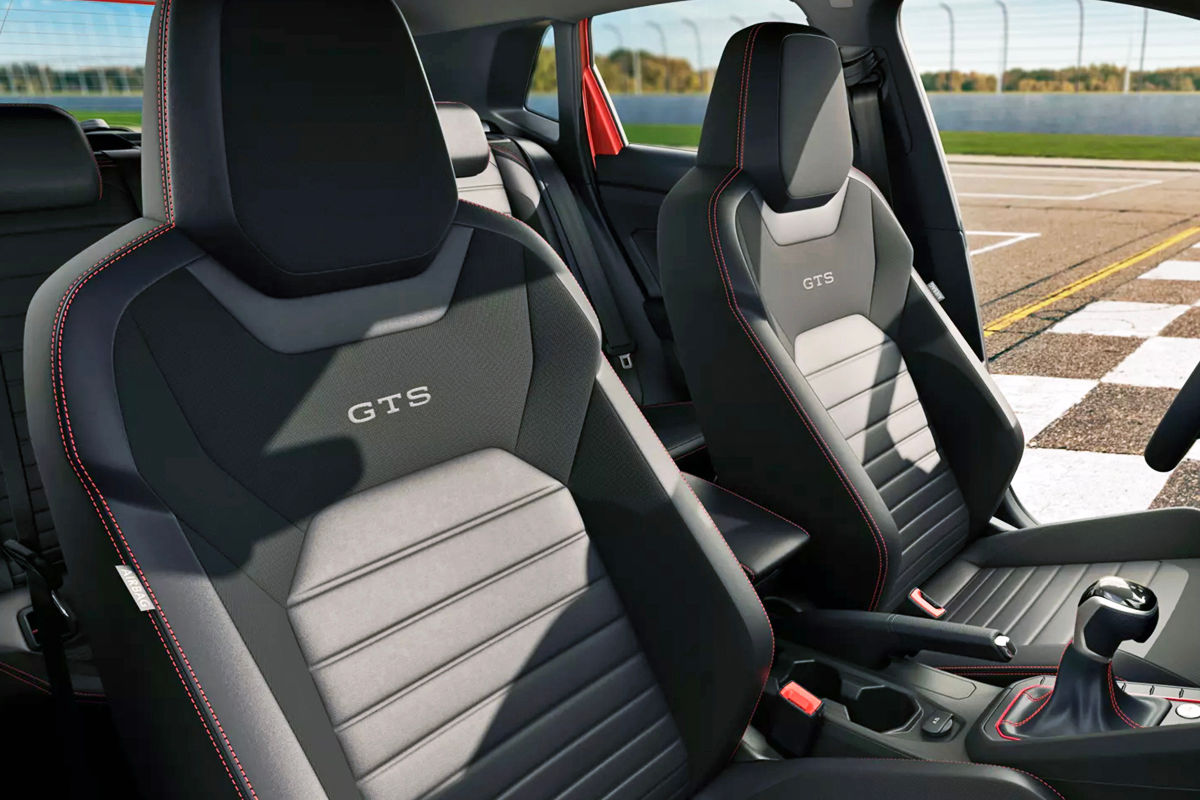
Inside, the Polo GTS boasts red stitching on the steering wheel as well as on the single-piece sports seats (complete with the “GTS” emblem) and the leather-trimmed dashboard detail. In addition to the use of Eco, Normal, Sport and Individual driving modes, the GTS driver also has the option of deactivating the traction control system.
While we don’t expect to see the Polo GTS hit local roads, it’s worth noting Volkswagen South Africa does offer the Polo Vivo GT, which makes 81 kW and 200 Nm from its turbocharged 1.0-litre, 3-cylinder heart. This locally built Vivo GT is scheduled to receive an update in 2023, though details have yet to be announced.
As an aside, the GTS badge was used in South Africa not that long ago, when it was applied to the previous-generation Vivo in 2016.
We chat with the Chief Operating Officer at GWM Haval South Africa to see what the brand has in store for the future and if there are any surprises up ahead.
SPONSORED CONTENT
GWM and particularly the company’s sub-brand, Haval, has been an incredible success story in our market. We sat down with COO Conrad Groenewald to discuss the future of these brands in South Africa.
In this wide-ranging interview with our video journalist, Ciro De Siena, Conrad Groenewald reveals that Ora and Tank will be introduced to South Africa in 2023, which are two very exciting launches for the company, the likes of which will almost certainly disrupt the market.
Groenewald was quite vague on the future of the P-Series and GWM’s bakkie offering in general, but it seems that there will be some new products introduced in that segment too.
Mercedes-Benz SA has kicked off its 2023 product offensive with the introduction of the new all-electric EQE business sedan, which is due to go on sale in March 2023. Our long-standing journalist, Gero Lilleike, attended the launch event in Johannesburg where he also had the chance to sample the German firm’s latest electric wares…
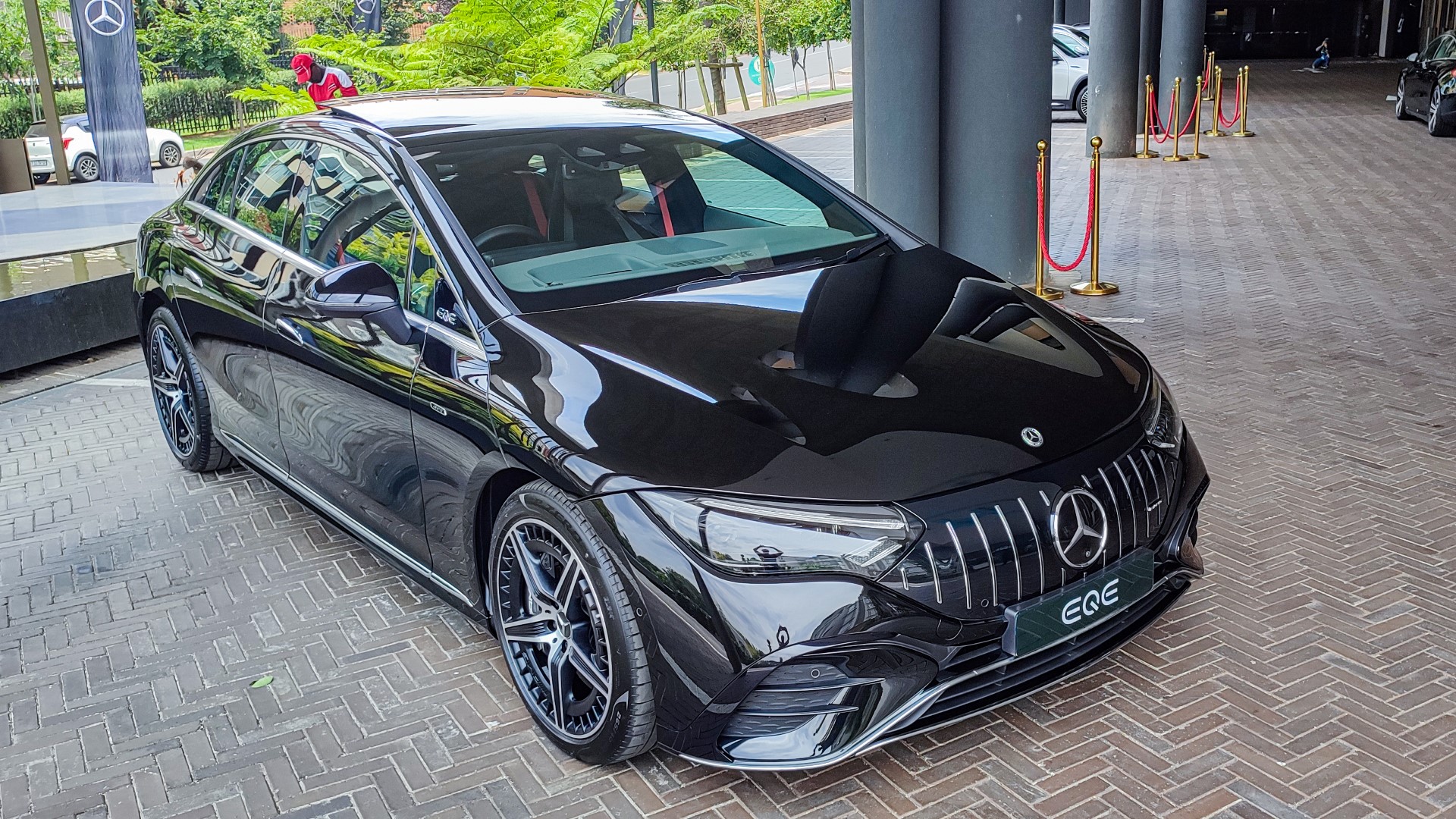
Mercedes-Benz South Africa is broadening its Electric Vehicle (EV) offering on local soil with the arrival of the new svelte EQE business sedan which is scheduled to go on sale towards the end of the first quarter (March 2023).
The German firm’s local EQ range consists of the EQA, EQB, EQC and the pinnacle EQS. The incoming EQE will be offered with 2 derivatives for local buyers to consider including the EQE 350+ with 215 kW and 565 Nm, as well as the Mercedes-AMG EQE 43 4MATIC with 350 kW and 858 Nm. Range is claimed at 645 km and 535 km respectively.
The Mercedes-Benz EQE is the latest addition to Merc’s growing EQ range.
Mark Raine, Co-CEO of Mercedes-Benz South Africa and Executive Director of Passenger Cars unveiled the EQE with local media in attendance while also presenting the firm’s intention of further entrenching its customer-centric business approach while also enhancing its operation through investment and digitisation in an effort to drive its luxury strategy into 2023 and beyond.
What’s it like driving a Mercedes-Benz EQ electric car?
Sadly, we didn’t get a chance to sample the new EQE on the road but Mercedes-Benz, with the help of the AMG Driving Academy, provided us with a brief opportunity to sample the latest-generation EVs from the brand. This was a good opportunity to drive the EQA, EQB and EQS back-to-back. Here are some of the takeaways from the experience.
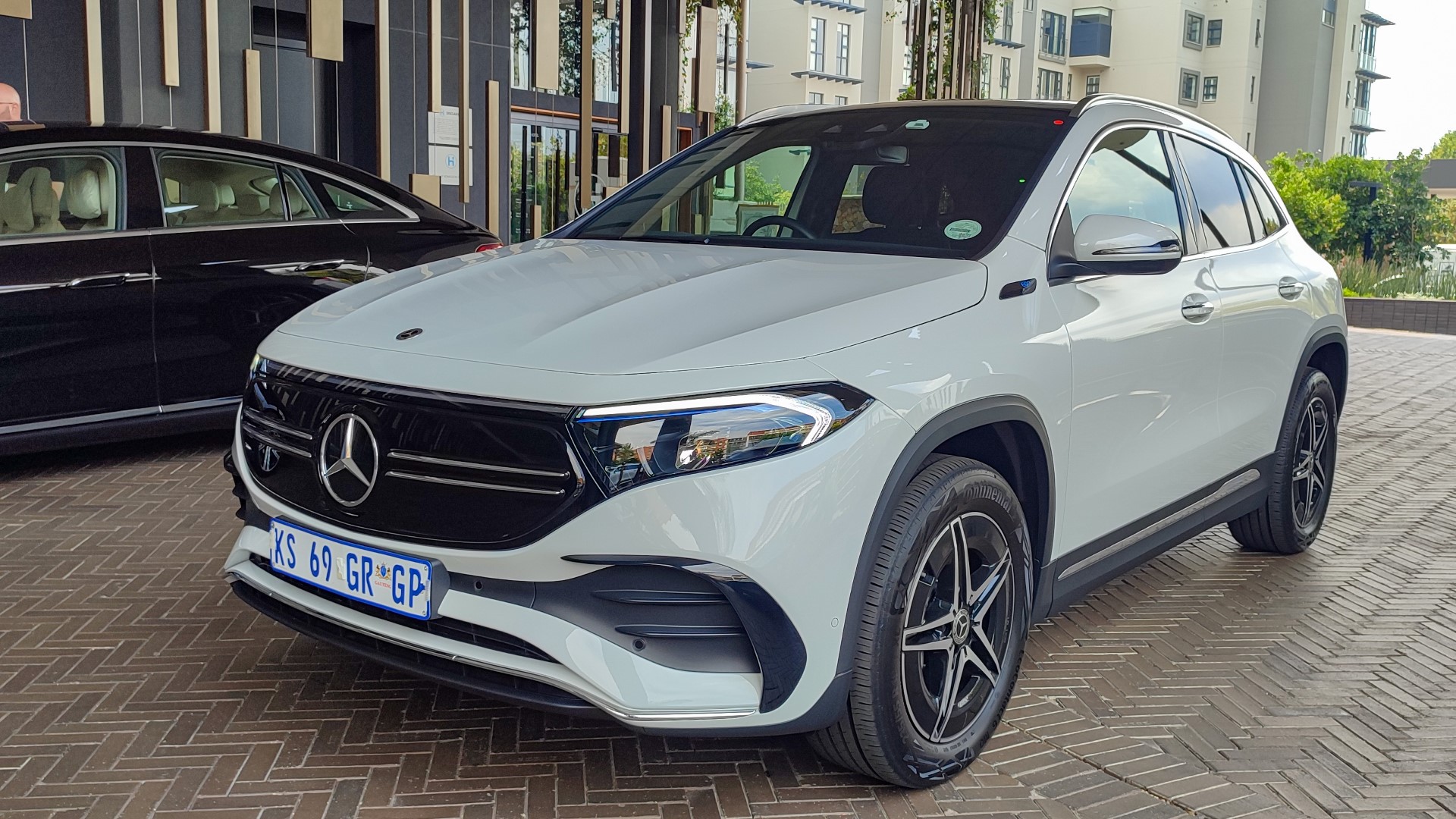
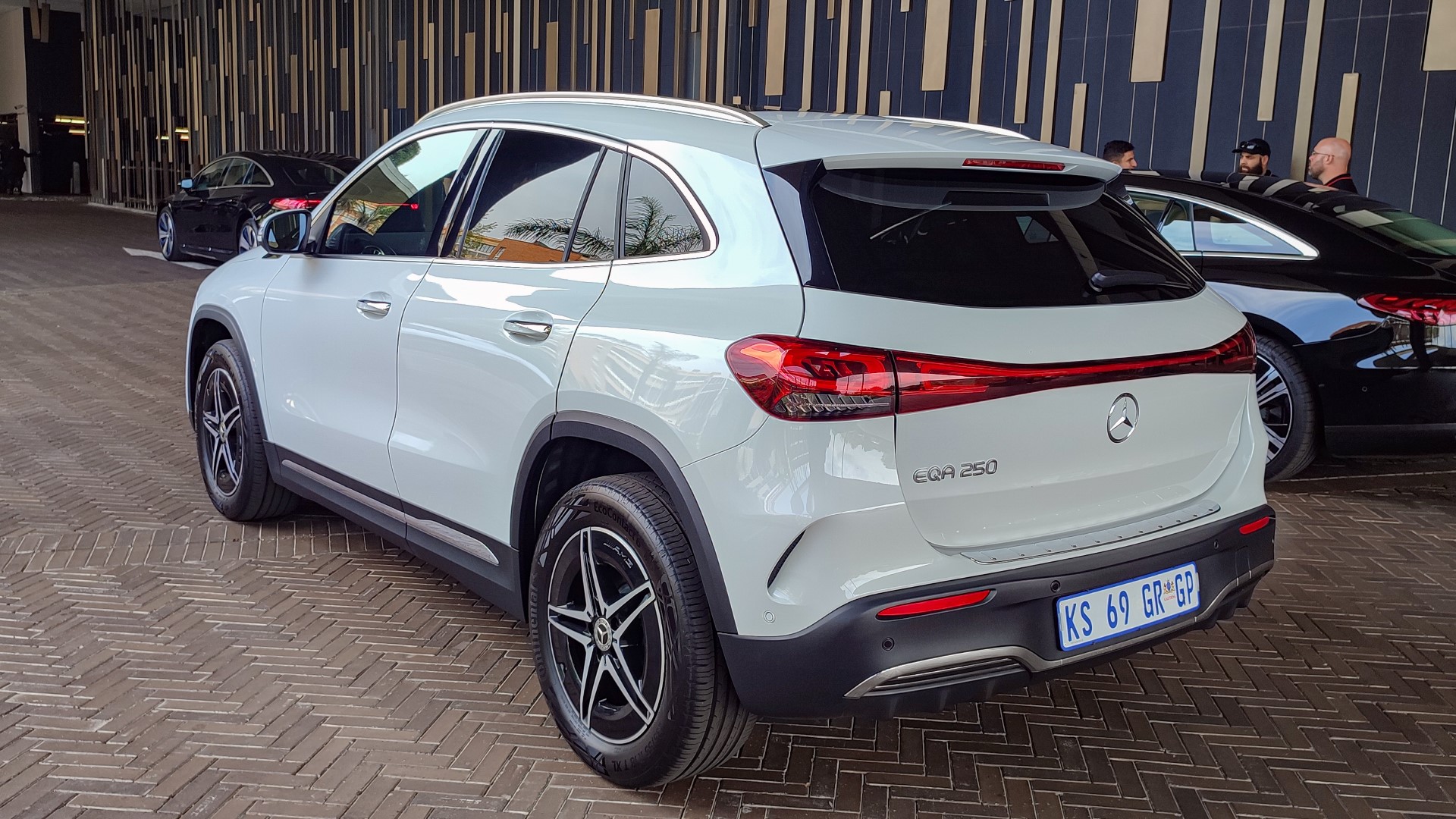
Mercedes-Benz EQA
I thought it best to start at the entry point into the EQ range with a short stint in the EQA.
Both are powered by an electric motor over the front axle with 140 kW and 385 Nm of torque on offer and it uses a fixed-ratio automatic transmission and is fitted with a 66.5 kWh lithium-ion battery range claimed at between 402 and 429 km.
With a 0-100 kph sprint time of 8.9 seconds and a top speed of 160 kph, the EQA is perhaps the more pedestrian EV offering from Merc but its performance in an urban environment is impressive. The EQA feels very nippy from robot to robot and its overtaking prowess on the highway is notable. Our quick drive in the EQA also highlighted its comfortable and resolved ride quality on Johannesburg’s generally poor and deteriorating road surfaces.
Mercedes-Benz EQB
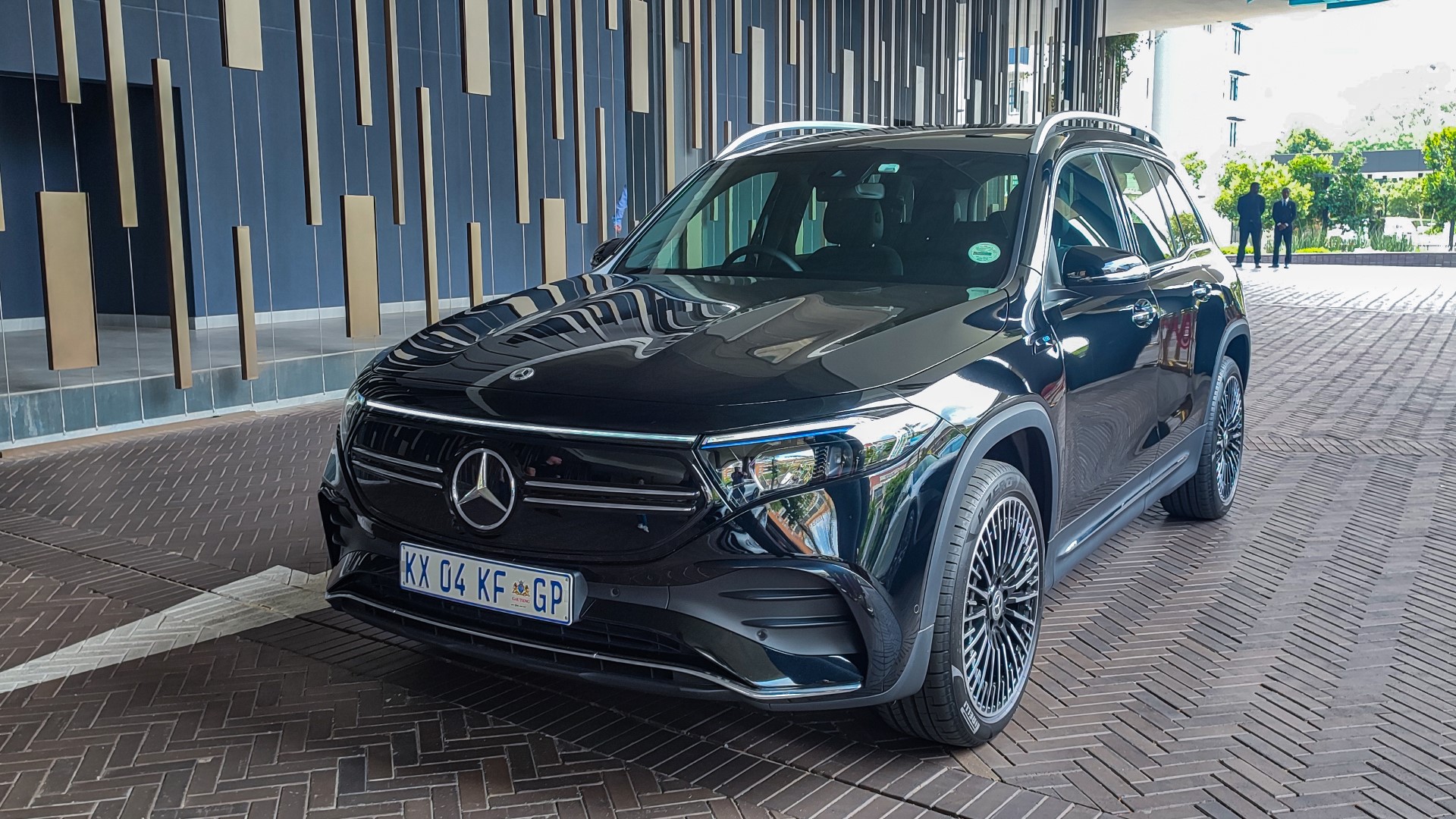
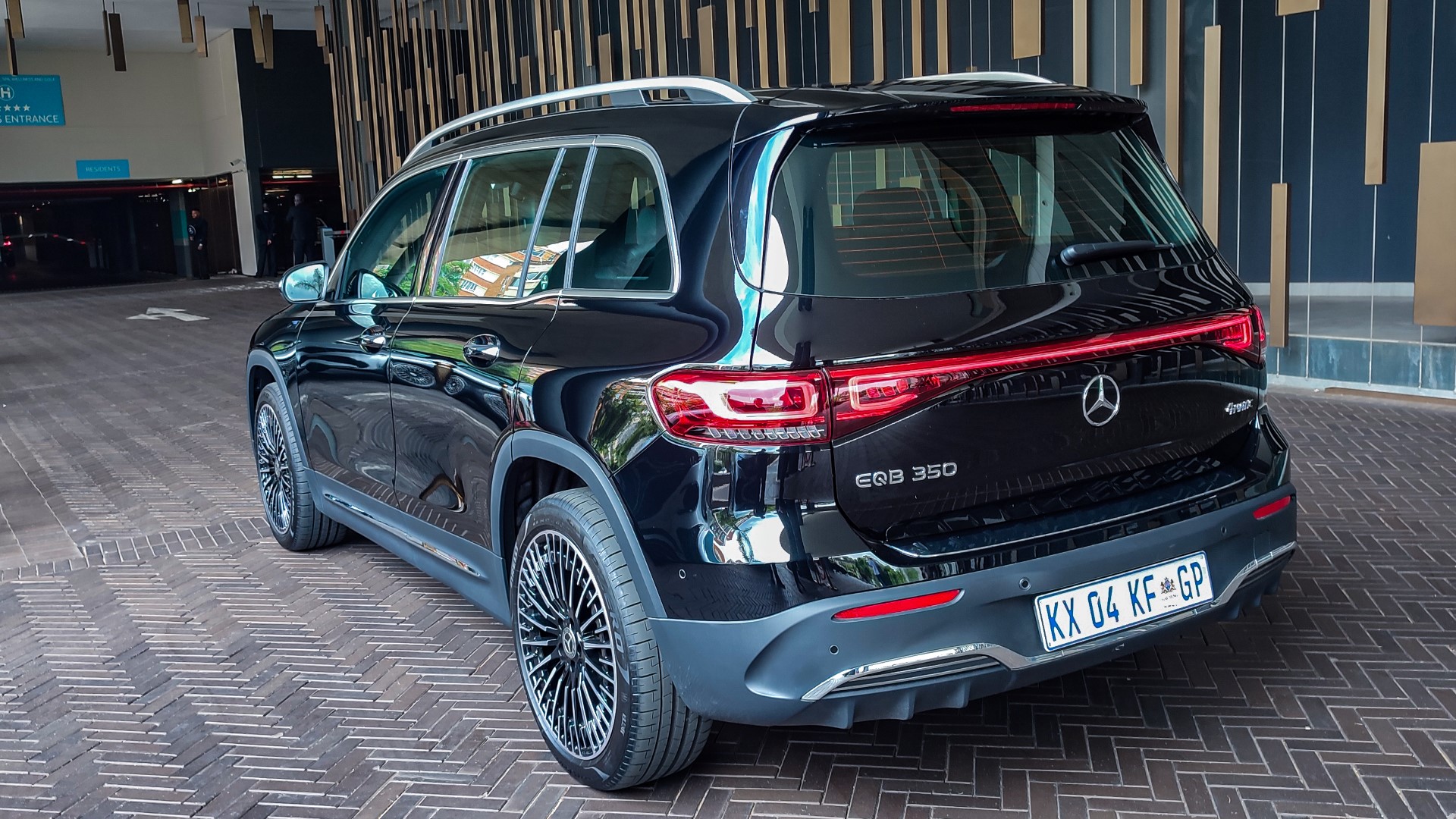
After driving the EQA, I hopped into the larger EQB SUV which arrived locally in December 2022. The EQB will appeal to buyers looking for something more practical and more powerful than the EQA.
The EQB is offered with 3 trim variants to choose including the EQB Progressive (R1 379 000) , EQB AMG Line (R1 432 000) and EQB Edition 1 (R1 523 400).
Unlike the EQA, the EQB is powered by 2 electric motor, one for each axle, producing total outputs of 215 kW and 520 Nm of torque. Power is directed to all four wheels via an automatic transmission.
Its acceleration is notably quicker and Mercedes-Benz claims 6.2 seconds in the sprint to 100kph but note that the EQB’s top speed is also 160 kph. The EQB is fitted with a 66.5 kWh lithium-ion battery and Mercedes-Benz claims a range of between 395 km and 423 km.
Range can be “farmed” through adjustable regenerative braking and with more power at the driver’s disposal, overall performance for a vehicle of this size is more than sufficient and overall ride quality is equally impressive with a smooth and highly-refined driving experience.
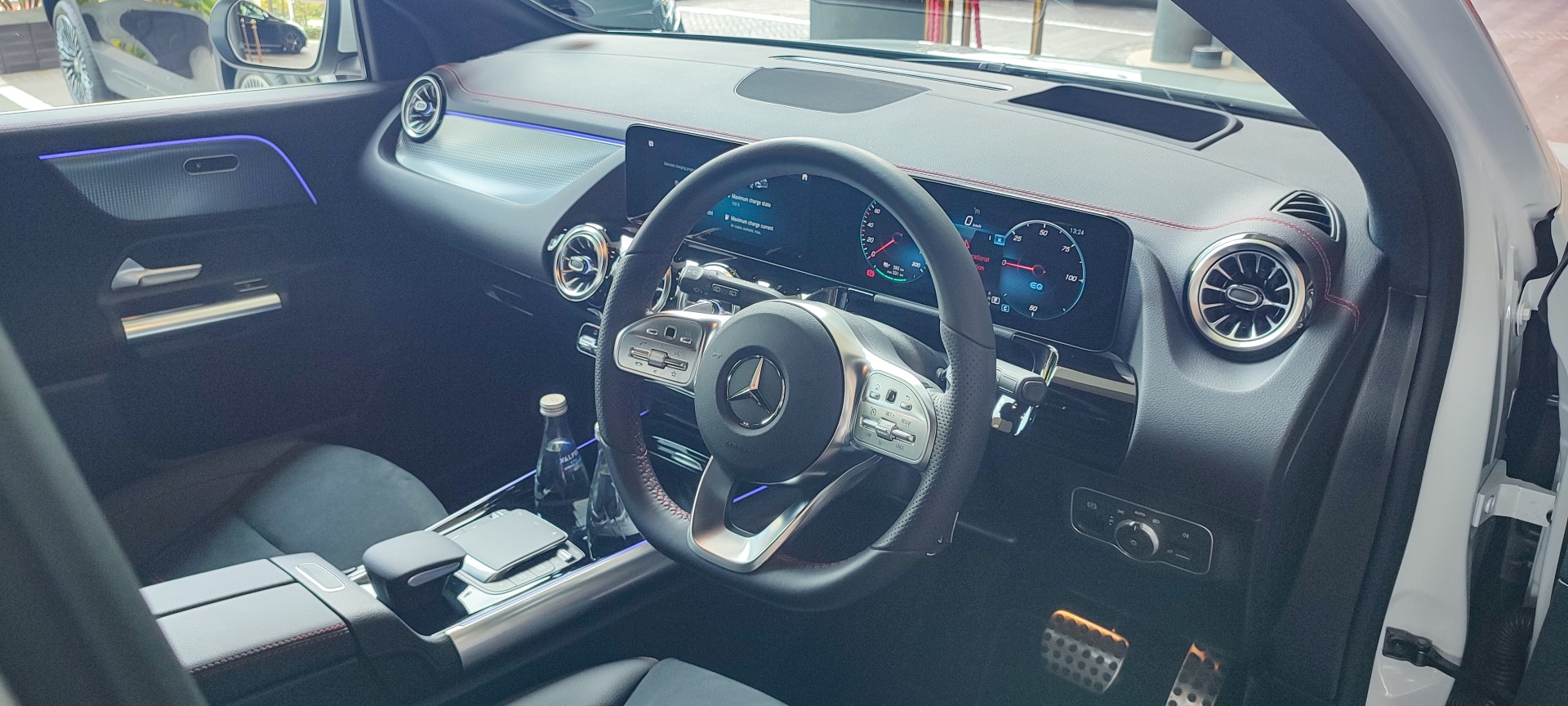
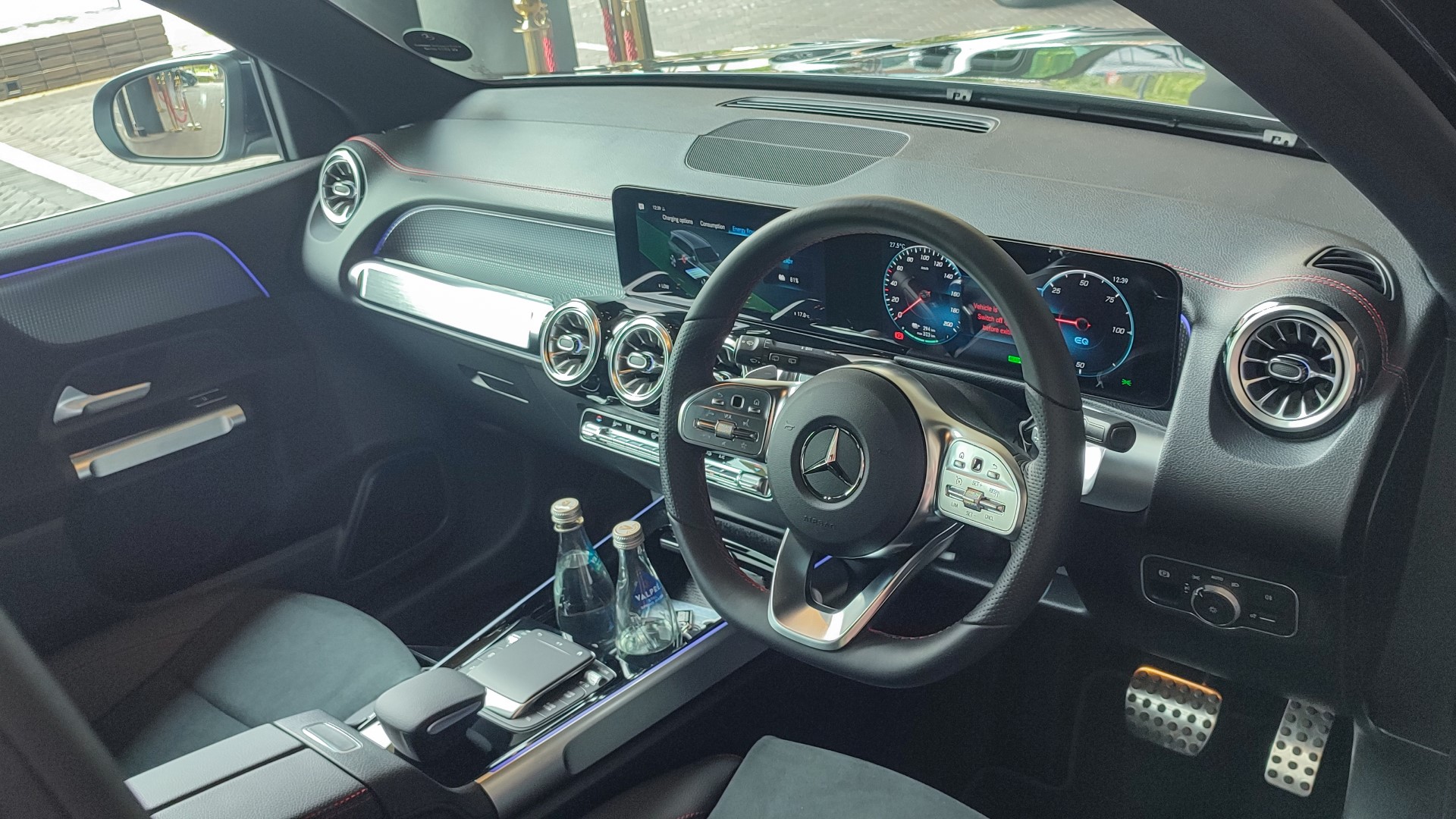
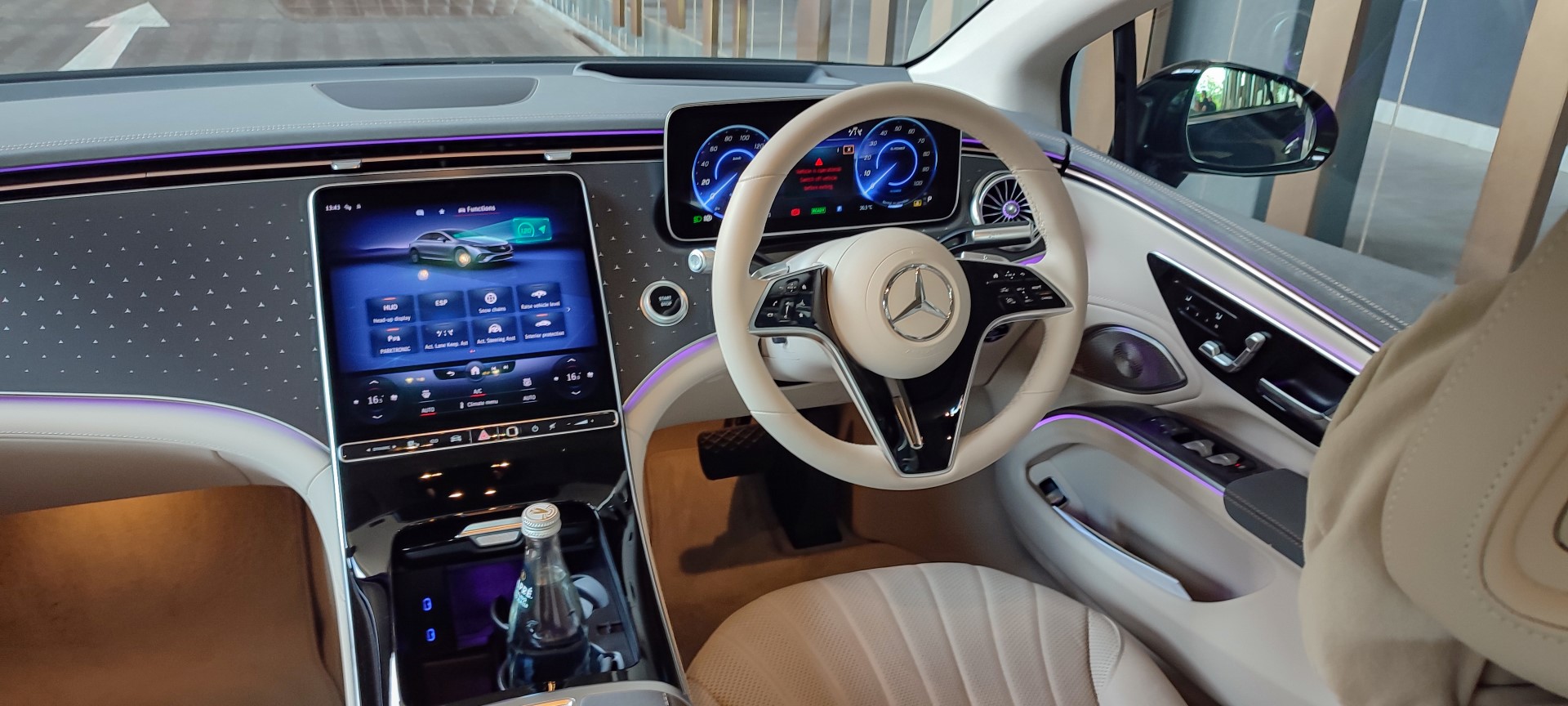
It’s worth mentioning that Merc’s interior design and perceived interior build quality across its EQ range deserve praise and live up to the firm’s promise of delivering a luxurious and technologically advanced cabin and driving experience. This fact is personified in the pinnacle of the EQ range, the EQS…
Mercedes-Benz EQS
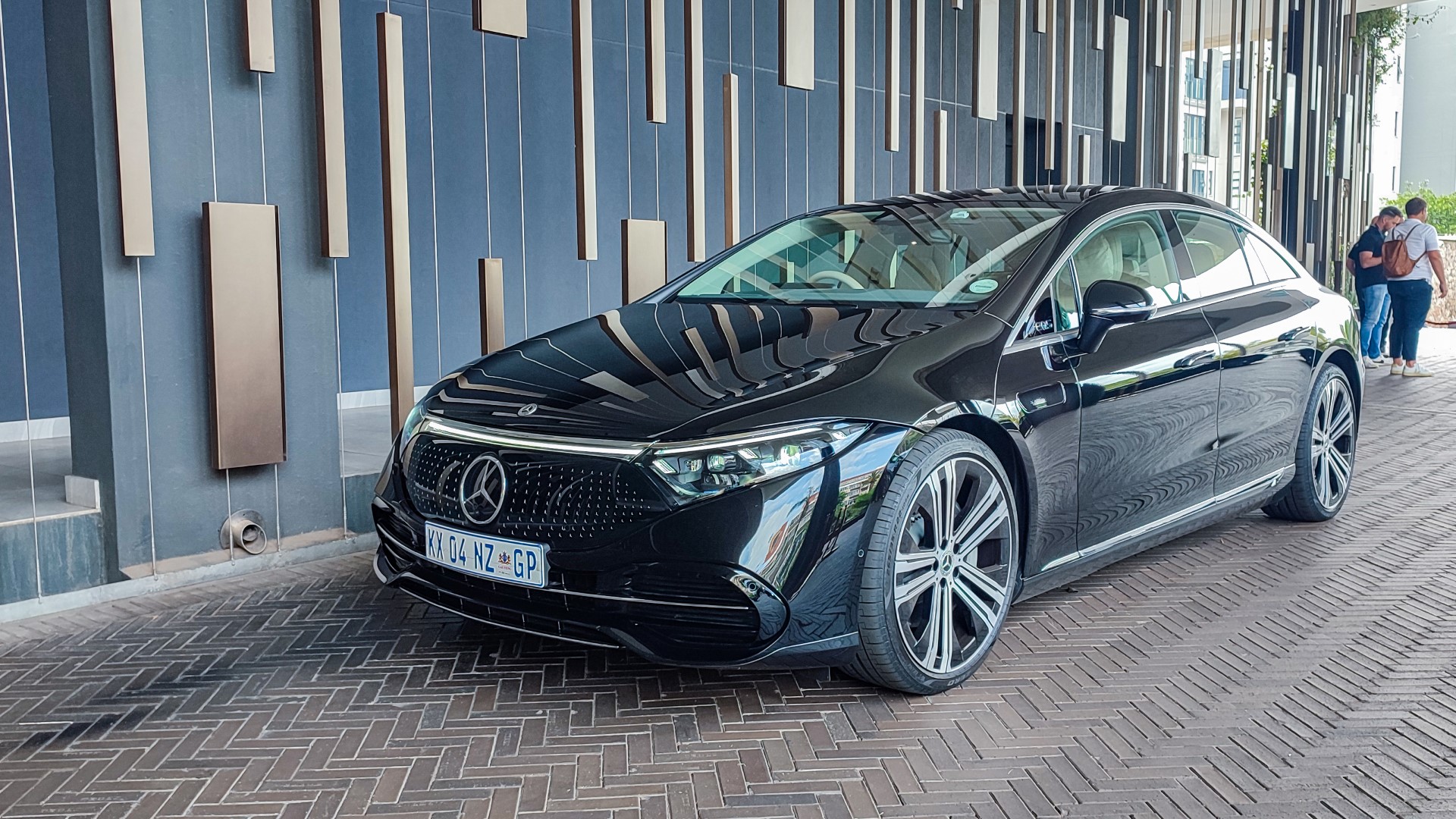
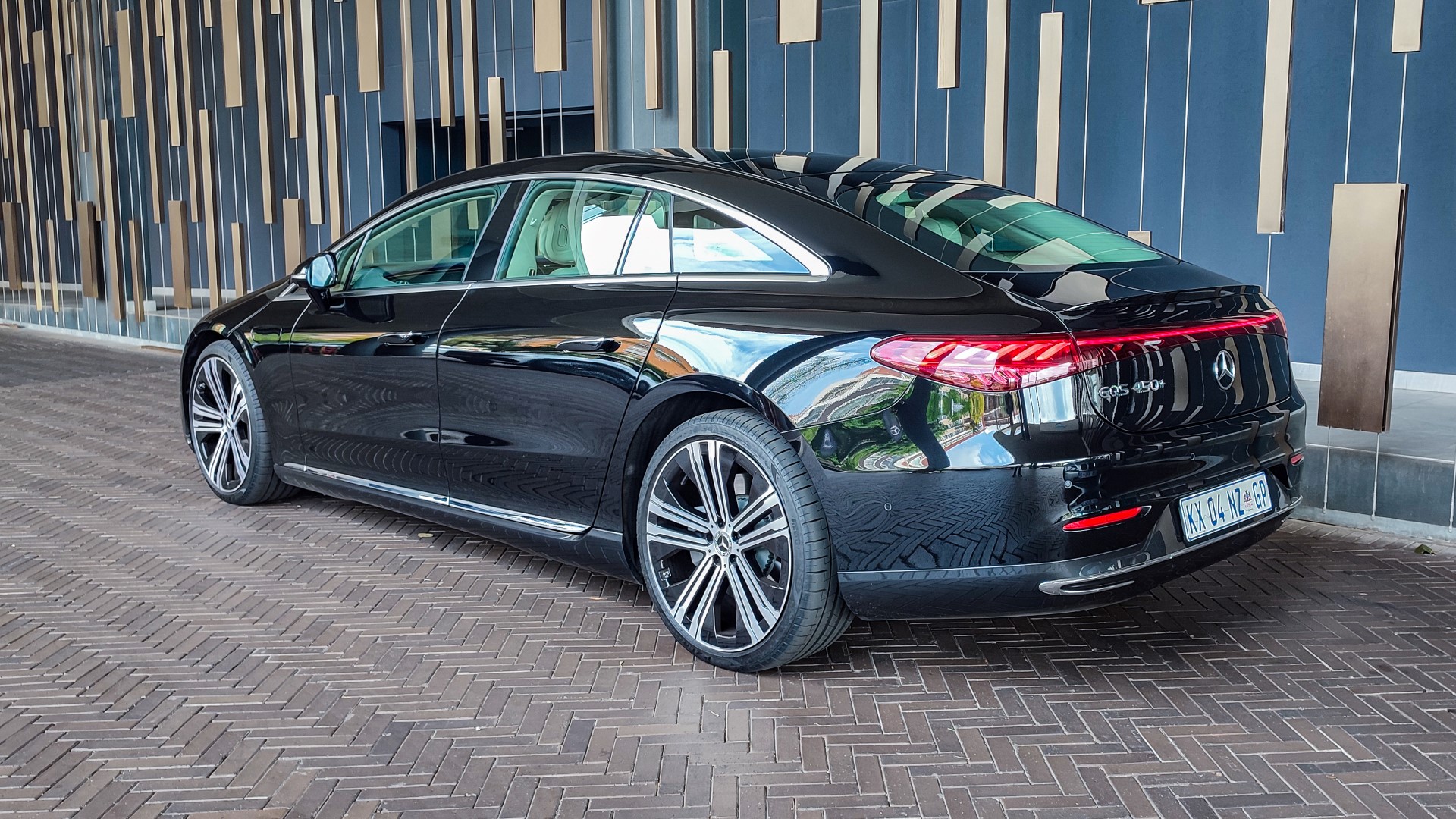
The EQS is a technological tour-de-force and my drive in the EQS 450+ (from R2 620 500) was both an overwhelming and exquisitely comfortable and luxurious driving experience.
The EQS 450+ makes use of a rear-mounted electric motor that develops 245 kW and 565 Nm. Merc claims a zero to 100 kph time of 6.2 seconds and an electronically limited top speed of 210 kph. A high-voltage, 107.8 kWh battery pack is fitted and offers a claimed range of between 631 km and 782 km. That gives the EQS the longest claimed range of any electric vehicle (EV) currently on the market in South Africa!
Ride quality in the EQS is just superb, as it should be and just about every luxury and comfort feature you will ever need is present and at your service. While the acceleration of this electrified luxobarge is fast, smooth and stately, it’s not overtly brash.
That description can rather be attributed to the more potent Mercedes-AMG EQS 53 4Matic (R3 415 250) which was on hand for sampling too.
This brute of an EV produces a hefty 484 kW and 950 Nm from its 2 electric motors and is significantly faster with a claimed zero to 100 kph sprint time of 3.8 seconds and a top speed of 220 kph. You can, at additional cost, ramp power and torque up to 560 kW and 1 020 Nm respectively by opting for the Dynamic Plus Package. Insane! If you do that, you will rocket to the horizon from a standstill to 100kph in 3.4 seconds!
It uses the same 107.8 kWh battery pack as the EQS 450+ but range is claimed to be slightly less at between 529 km and 586 km.
The launch in the AMG EQS 53 is brutal and comically accompanied by gaming-themed sound effects that add some drama to an otherwise mute acceleration process. Artificial electric sounds are fed into the cabin to create a more entertaining soundtrack too.
Our brief driving experience in Mercedes-Benz’s latest EQ products was not only enjoyable but eye-opening too. The level of technology, luxury and comfort on offer across the EQ range is simply staggering and those buyers who are able to splash out and buy any one of these EQ products are in for a proper treat!