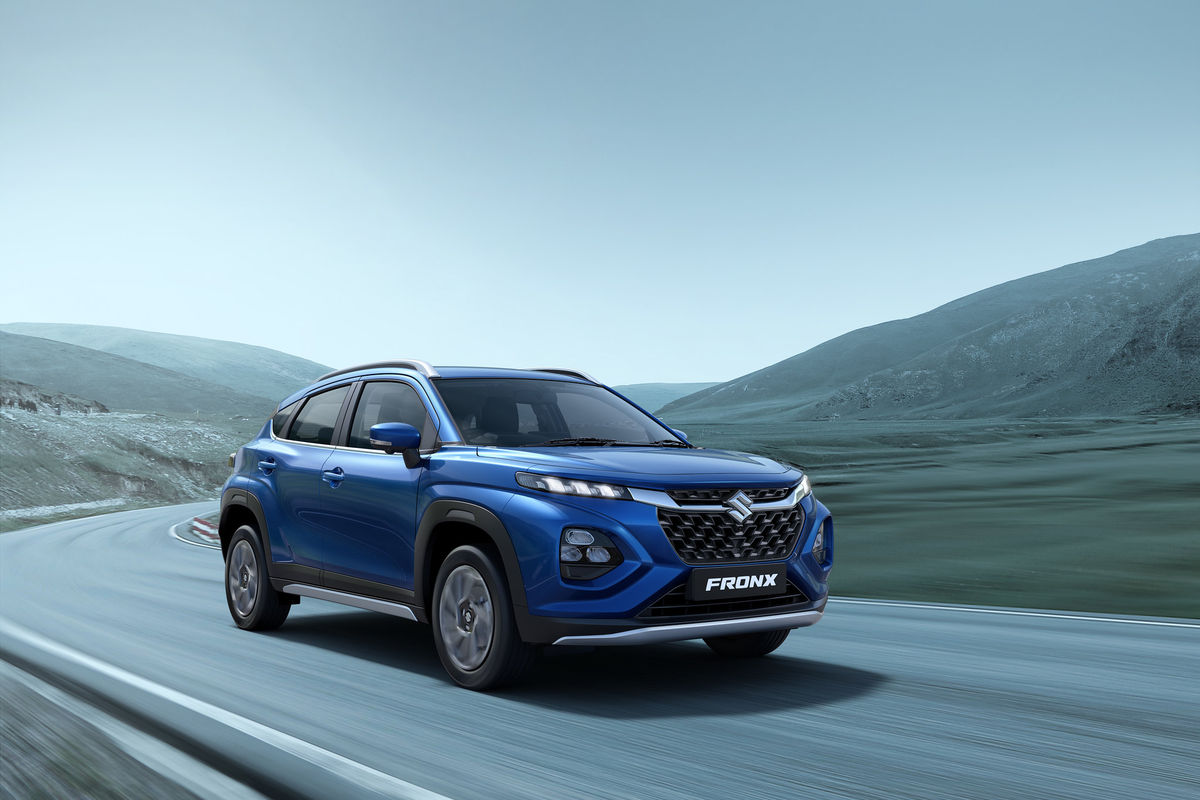
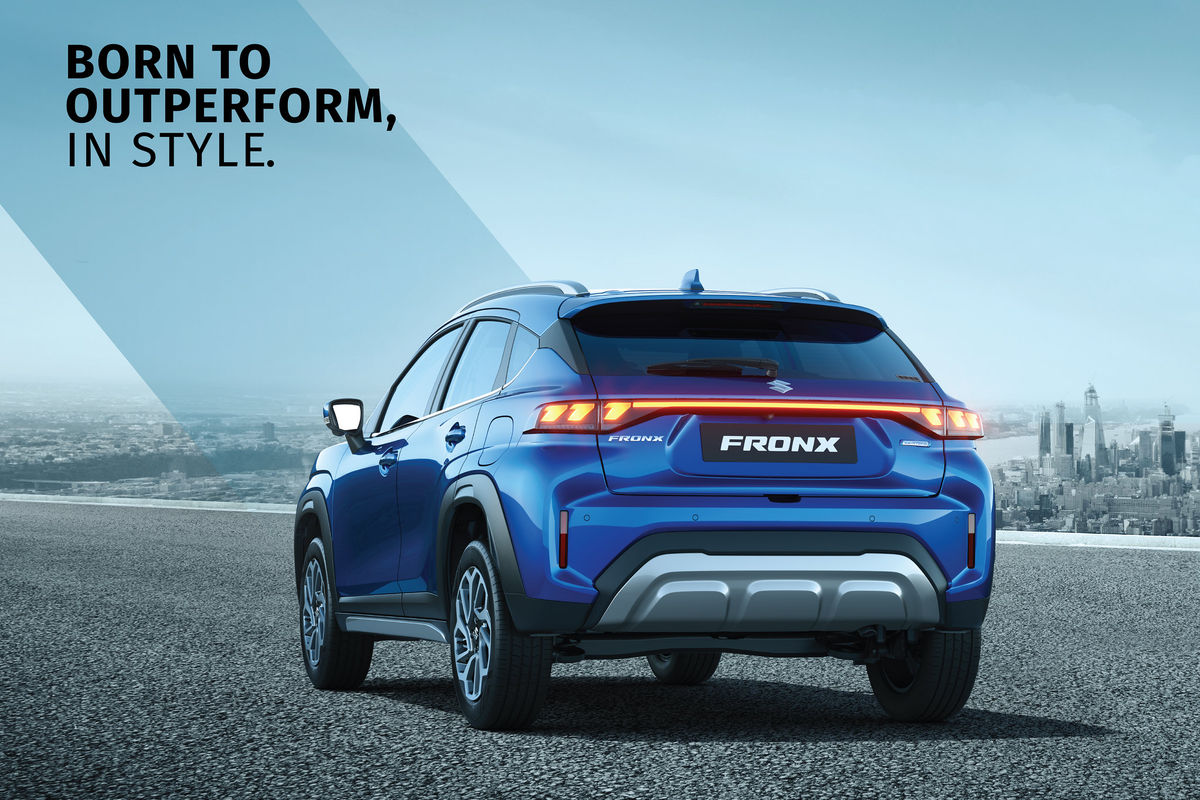
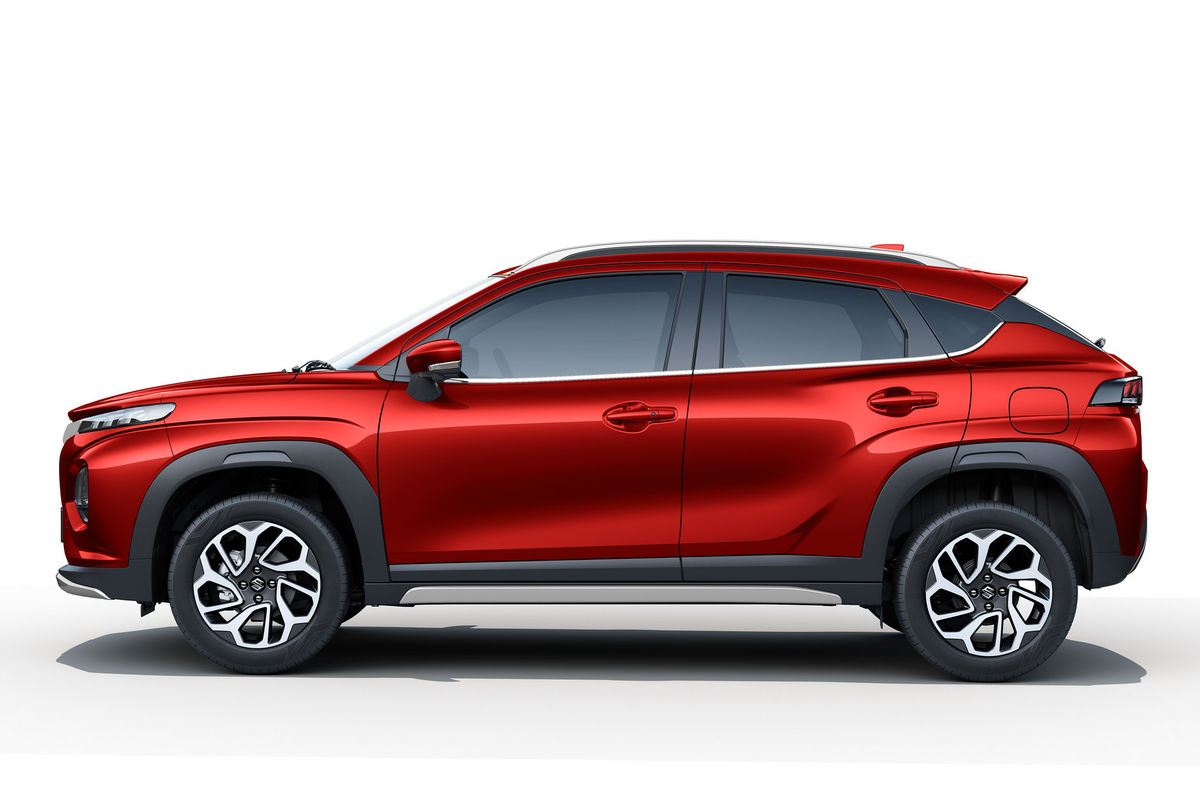
The Suzuki Fronx is one of two important reveals this week at the Auto Expo taking place in India. Here’s all you need to know about this new model that’s likely to come to SA.
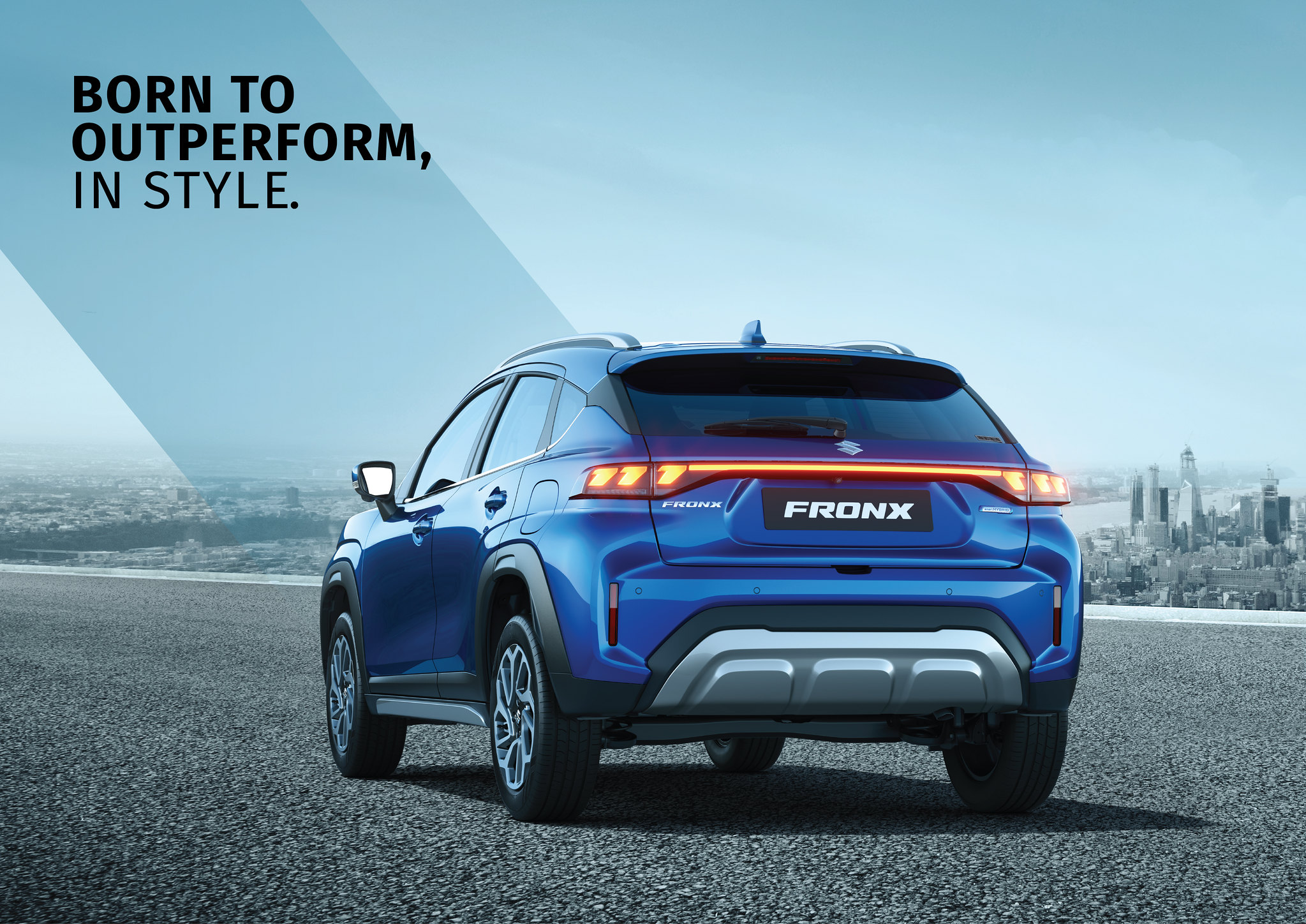
Based on the Suzuki Baleno/Toyota Starlet, the Suzuki Fronx is said to be an ‘SUV with coupe style’, but we reckon its closer to being a hatchback on stilts. Visually, it looks fresh and modern, taking quite a few of the current fashionable design elements like the LED bar at the rear and narrow daytime running lights/headlights. There’s also a similarity at the front to the confirmed-for-SA Suzuki Grand Vitara.
At 3 995 mm long and with a wheelbase of 2 520 mm, the Suzuki Fronx is almost identical in size to the Suzuki Baleno. There’s no mention of ground clearance, but given its positioning, it’s fair to assume that it will be higher than the Baleno’s 150 mm.
Under the bonnet, there will be two engines offered in the Suzuki Fronx. First up is a turbocharged 1.0-litre mild hybrid Boosterjet which develops 75 kW and 147.6 Nm. Customers will have the option of either a 5-speed manual or 6-speed torque converter auto with paddle shifters.
The second engine is the tried-and-tested 1.2-litre K-series naturally-aspirated petrol engine and that’s available with either a 5-speed manual gearbox or an AMT automatic transmission. Outputs of 67 kW and 113 Nm are quoted. It’s interesting to note that the SA-spec Baleno comes with a 77 kW/138 Nm 1.5-litre 4-cylinder naturally-aspirated petrol.
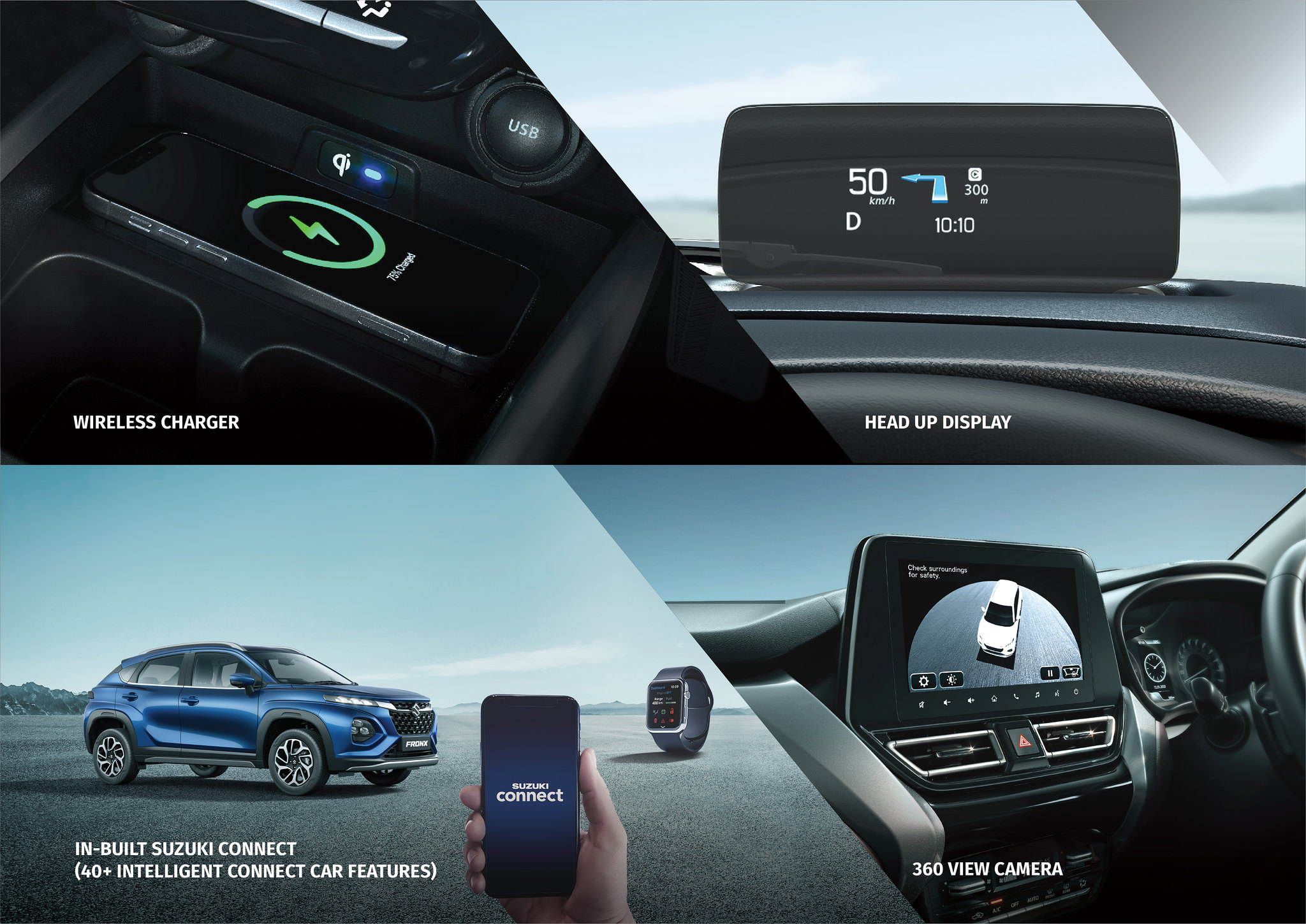
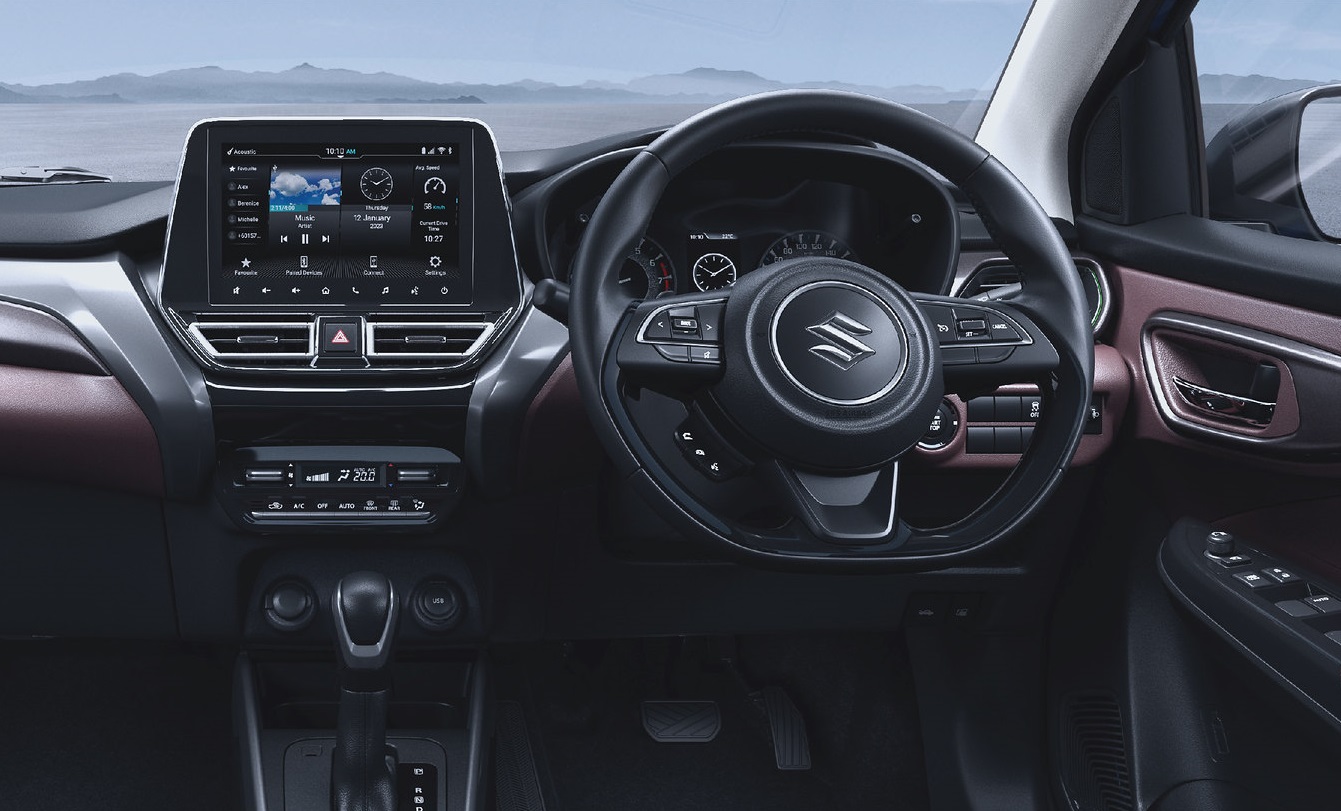
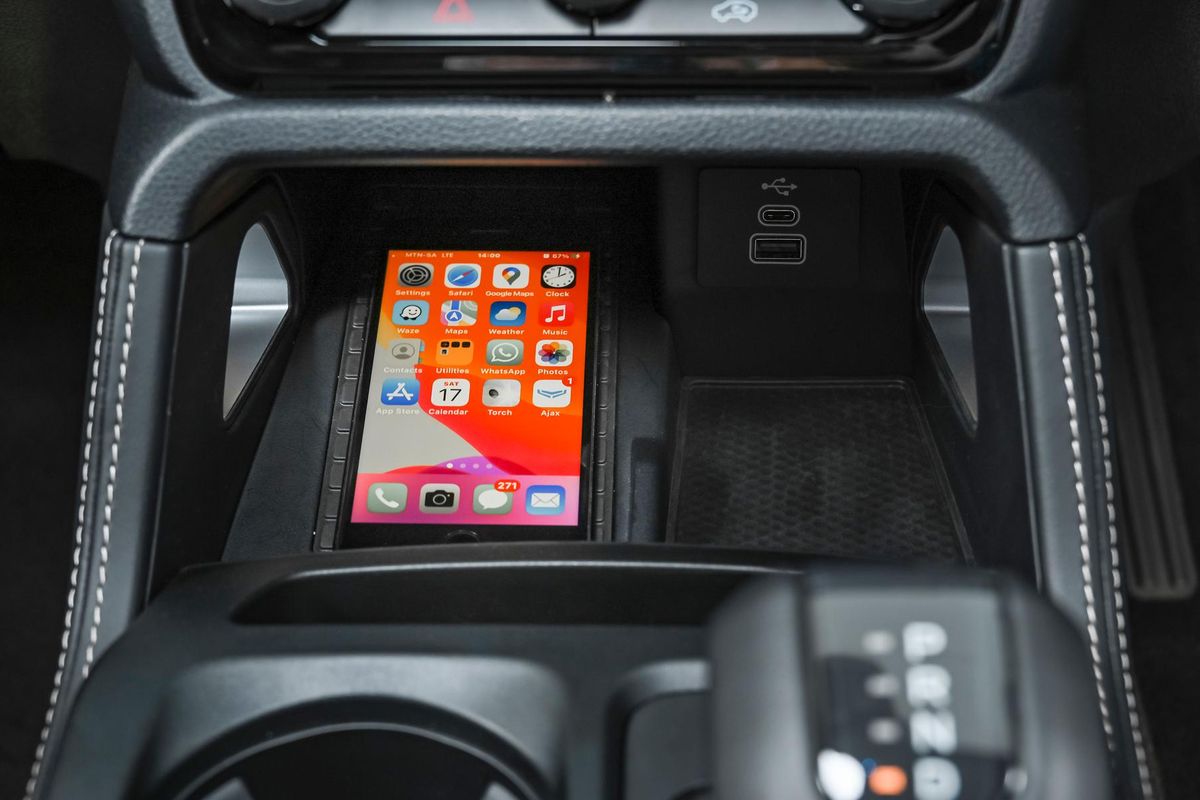
Standard specification looks to be similar to that of the Baleno, with niceties like wireless phone charging, heads-up display, mobile phone connectivity and climate control.
It will be interesting to see if there’ll be a Toyota-badged model based on this. While we don’t have any official confirmation yet, we do know that Toyota Taisor has been trademarked.
The Suzuki Fronx will be going on sale in India in April, and we expect Suzuki South Africa to bring it in during the course of 2023.
3 passenger cars that leapfrogged VW’s Polo in SA in 2022
Traditionally right at the sharp end of South Africa’s passenger-vehicle sales charts, the Volkswagen Polo hatch fell to 5th in 2022. These are the 4 vehicles (3 of which leapfrogged the German supermini) that finished ahead of it…
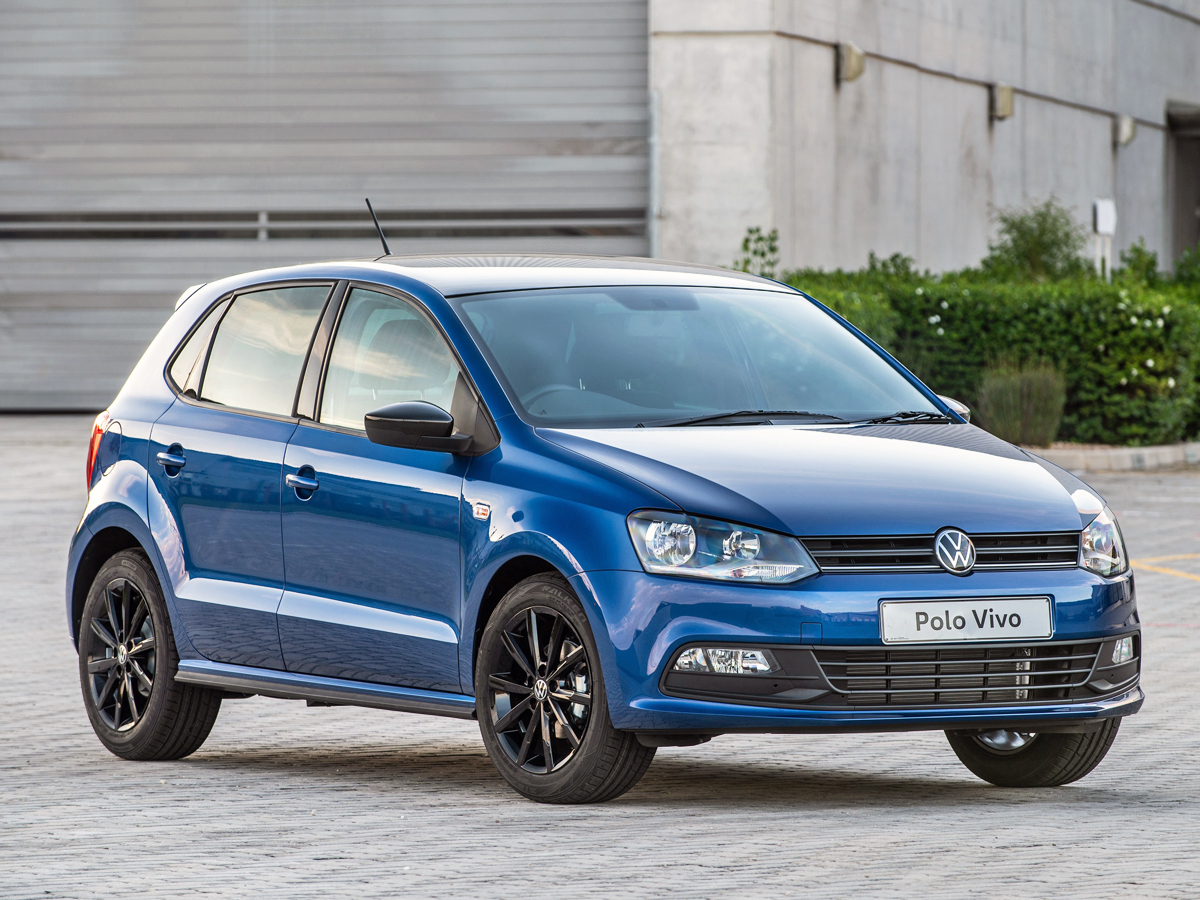
In 2021, the Volkswagen Polo hatchback was South Africa’s 2nd best-selling passenger vehicle, bettered only by the Polo Vivo produced in the same Kariega factory. The German supermini was runner-up behind its sibling in the 2 prior years as well, and even claimed the top spot back in 2018.
In 2022, however, the Polo hatch failed to make the podium. In fact, now we’ve tallied up the sales, we see the 6th-generation hatchback was forced down to an unfamiliar 5th place on the list of SA’s top-selling passenger vehicles (and 8th overall, including light-commercial vehicles). We won’t go into the multitude of potential reasons behind the Polo’s apparent fall from grace in 2022 – we’ve covered those extensively in our earlier feature detailing the model’s slide down the sales charts – so we’ll instead focus on the raw numbers here.
Though the Polo hatchback’s final effort of 15 697 units is certainly not a figure to be sniffed at (translating to a monthly average of 1 308 units), it represents a near-14% fall when compared to 2021’s tally of 18 235 units. Tellingly, this decline came in a total new-vehicle market that grew 13.9% year on year, from 464 122 to 528 963 units, allowing other passenger vehicles to leapfrog the Polo.
So, which passenger vehicles outsold the Polo hatch in 2022? Let’s take a closer look at the stats…
Volkswagen Polo Vivo still reigns supreme in SA
VW’s Polo Vivo was 2022’s best-selling passenger car, beaten in the overall standings only by Toyota’s Hilux.
It’s certainly not all bad news for VW, of course, as the Polo Vivo quite comfortably retained its title in 2022, a year that kicked off with the 100 000th example of the current-generation model rolling off the production line in the Eastern Cape. Still, with 20 866 units registered over the past 12 months, the prolonged-lifecycle model’s total fell 5%, year on year.
Though its monthly average came in at 1 739 units, the Vivo’s strongest single showing was in September 2022, when as many as 2 473 examples were registered. Its weakest effort, meanwhile, came in May 2022, with a still-convincing 1 179 units sold around the country. This latest yearly performance means the Vivo has been SA’s top-selling passenger car for 4 cycles on the trot.
Indian-built Suzuki Swift rockets up to 2nd place
Year-on-year sales of Suzuki’s Swift grew a mammoth 108% in 2022.
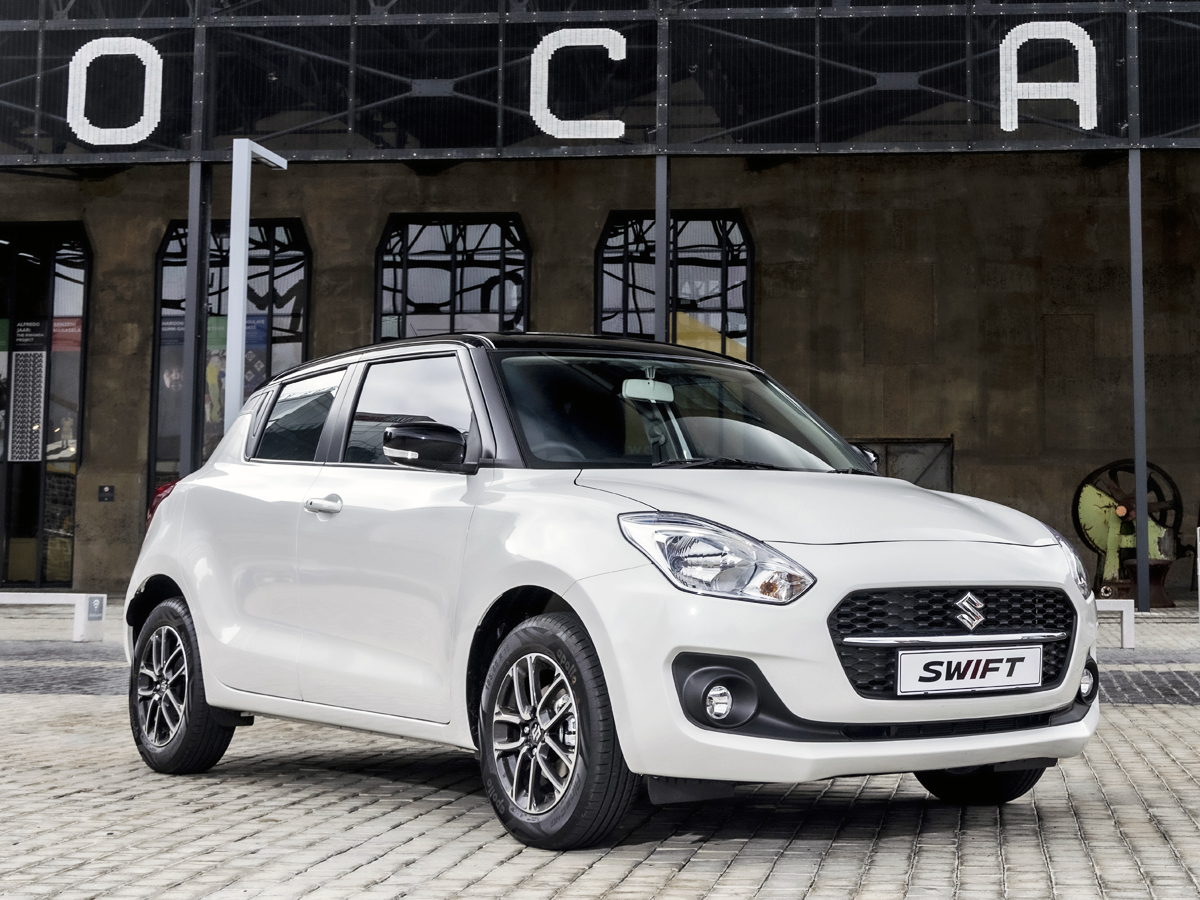
Suzuki Auto SA enjoyed a fantastic 2022, regularly breaking monthly sales records and making 3rd place on the list of the country’s best-selling automakers (behind Toyota and the VW Group) very much its own. The Swift – which is imported from the Japanese firm’s Maruti division in India – played a pivotal role in that success.
With 17 282 units registered in 2022, the Swift grabbed the title of SA’s 2nd best-selling passenger car from the Polo, rocketing up the table from 6th place in 2021. In fact, local sales of the budget hatchback more than doubled (from 8 332 units) last year, with the official year-on-year increase sitting at a whopping 108%. At least some of the Swift’s success can be attributed to its growing popularity with rental-fleet buyers in 2022 (for example, in its best month of June, as many as 675 of the 1 925 units sold came via that channel).
Toyota’s (Suzuki-built) Urban Cruiser slots into 3rd spot
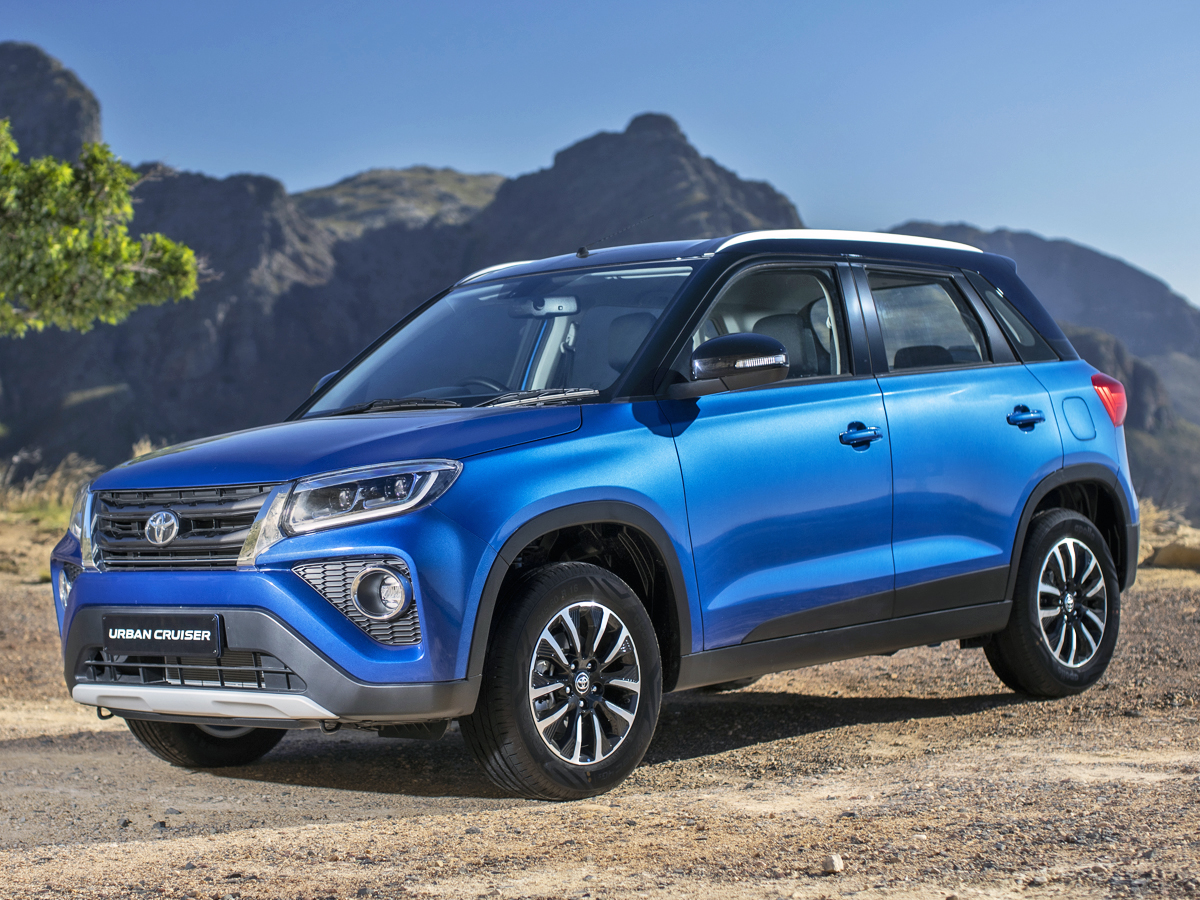
Despite nearing the end of the road, Toyota’s Urban Cruiser was the top-selling crossover in 2022.
The Toyota Urban Cruiser narrowly missed out on 2nd spot, ending 2022 a mere 290 units behind the Swift. The small crossover – which is based on the Vitara Brezza and likewise produced by Maruti Suzuki in India – soared to 16 992 units, which was more than enough for it to secure the title of SA’s best-selling SUV (grabbing the crown from the mighty Fortuner).
In 2021, the Urban Cruiser was the 5th strongest-selling passenger vehicle in the country with 8 887 registrations, though it launched locally only in March of that year. Of course, news of this model’s impending axing emerged in November 2022, so we expect it to quietly exit the market within the first few months of 2023. What will replace it? Well, our intel suggests Toyota SA Motors will launch the larger Urban Cruiser Hyryder as its successor (and perhaps also find space for the rumoured new Taisor).
Toyota Corolla Cross grabs 4th … but what might have been?
Were it not for the KZN floods, Toyota’s Corolla Cross would surely have been in contention for top honours.
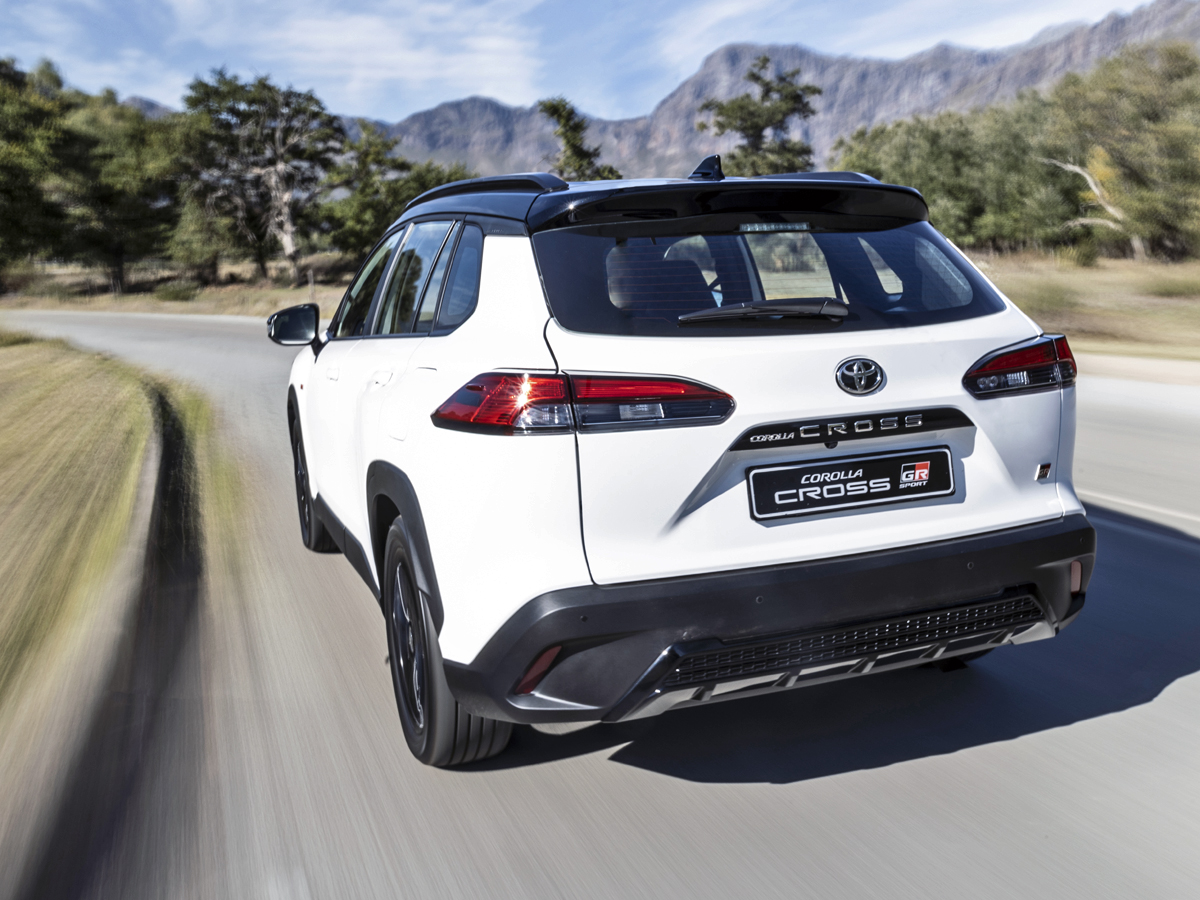
Though Toyota’s Corolla Cross didn’t quite manage to crack the podium in 2022, its effort of 15 855 units was a remarkable one. Why? Well, production of this model – as well as that of the Hilux, Fortuner, Corolla Quest and Hi-Ace Ses’fikile – ground to an abrupt halt at the Prospecton facility in mid-April (right after a bumper month of 2 384 sales in March) owing to damage caused by the devastating KwaZulu-Natal floods.
The on-the-spot shuttering of the factory outside Durban ultimately resulted in 3 consecutive months (May, June and July) of Corolla Cross sales dipping below the 200-unit mark. Had the floods never happened, the shrewdly positioned crossover would surely have finished ahead of the Urban Cruiser and Swift, and perhaps even given the Polo Vivo a run for its money…
South Africa’s 5 best-selling passenger vehicles of 2022
Customers have had to wait patiently for stock of the new, 3rd-gen Ford Everest to arrive in Mzansi; we spent a month with the range-topping 3.0 V6 AWD Platinum derivative to find out whether it’s been worth the hype (and wait)!
We like: Design, more powerful engine, balance of occupant comfort and surefooted handling, generous spec, long-distance comfort
We don’t like: Fuel thirst, “low-res” display of camera system
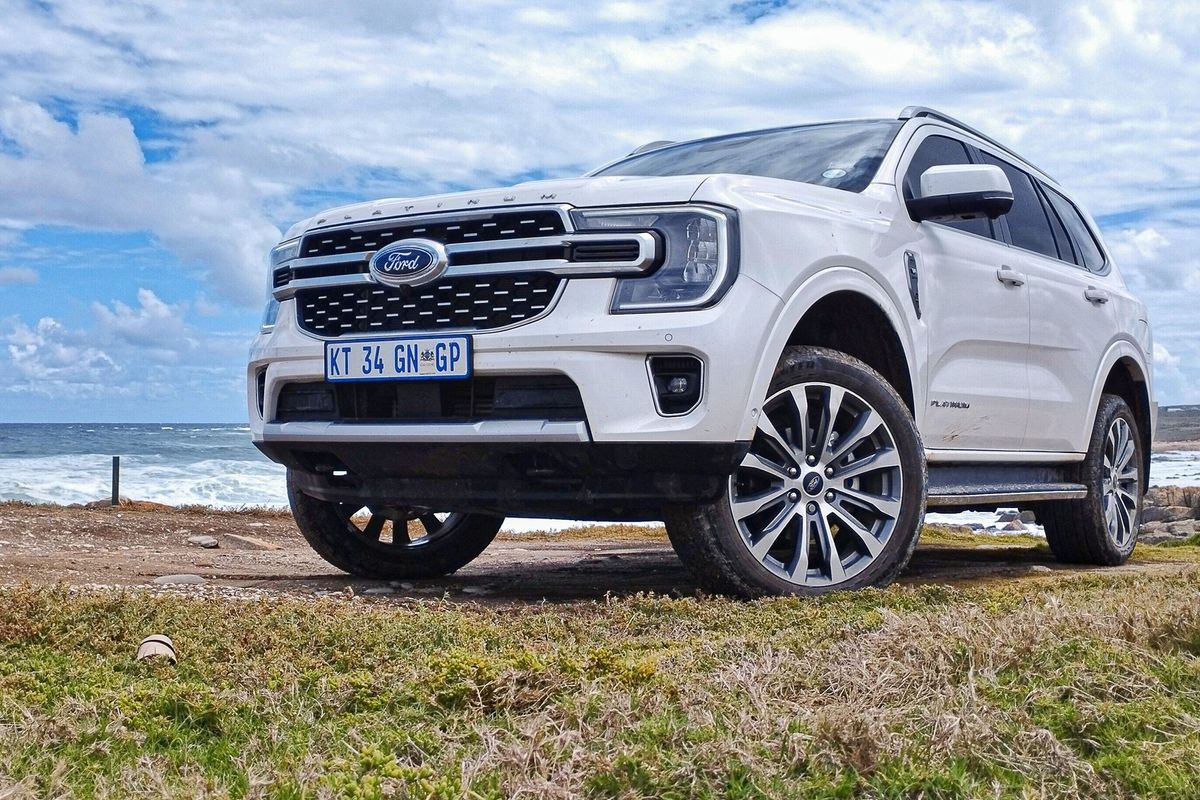
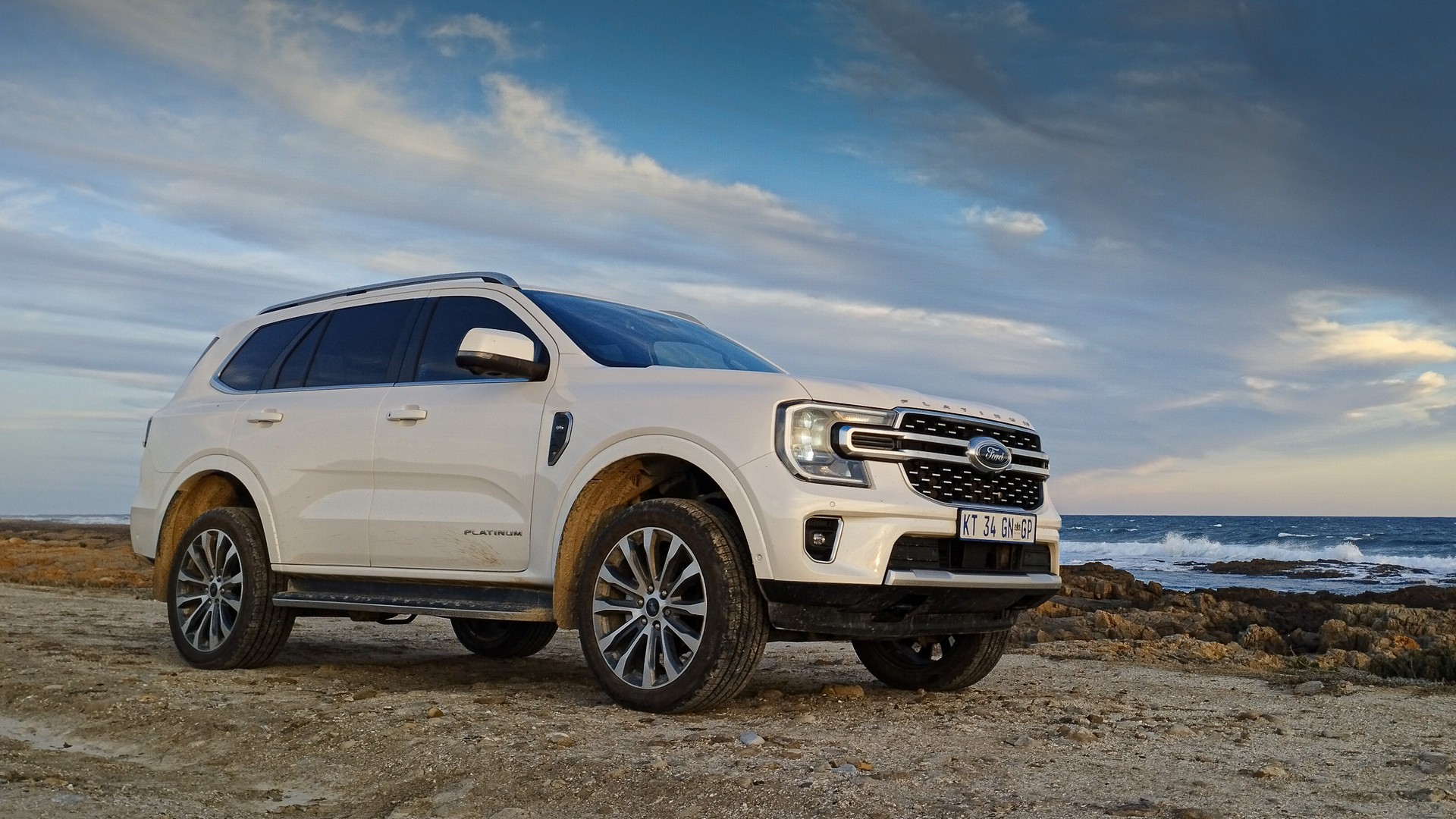
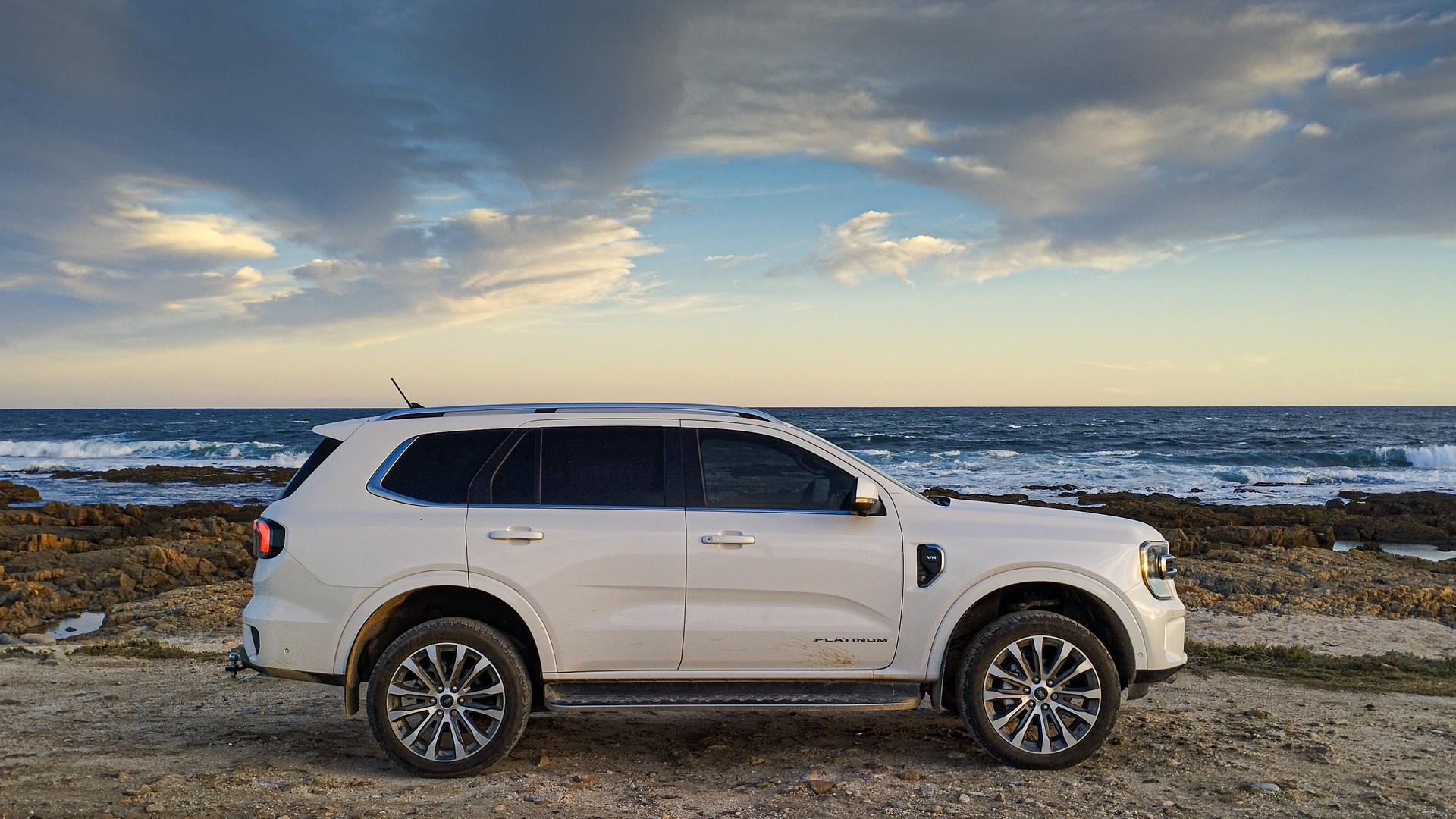
The 3rd-gen Everest resembles a square-jawed North American SUV. Its front end is very distinctive.
Where does the 2023 Ford Everest fit in?
Motoring journalists are accustomed to driving cars that turn heads. After all, we test the overwhelming majority of new passenger vehicles and, for observant road users, the sight of a media fleet (test) car may be their first in-the-metal glimpse of a new model. Suffice it to say, the new Ford Everest attracted a bewildering level of interest from countless onlookers during our extended test period!
Then again, we did not see another new-generation Everest along the Garden Route, so for most people in the Southern Cape, this vehicle would have provided them with a first (or closer) look at Ford’s highly-anticipated new 7-seat adventure SUV. And boy, did they want to have a look… and ask many questions!
Late last year, the Ford Motor Company of Southern Africa raised eyebrows when it suggested that the new Everest had moved beyond the “Fortuner” category of bakkie-based SUVs, and should rather be considered an alternative to the Toyota Land Cruiser Prado… Figuring out whether the Blue Oval’s claim was just marketing talk (to justify the model’s significantly higher price compared with its predecessor), was one of the major items on the agenda of our extended evaluation. If you click on the link below, you can see for yourself how well the Everest stacks up against the highly-regarded (but long-serving) Prado and the new Jeep Grand Cherokee. It looks like Ford may have a point – on the face of it, anyway…
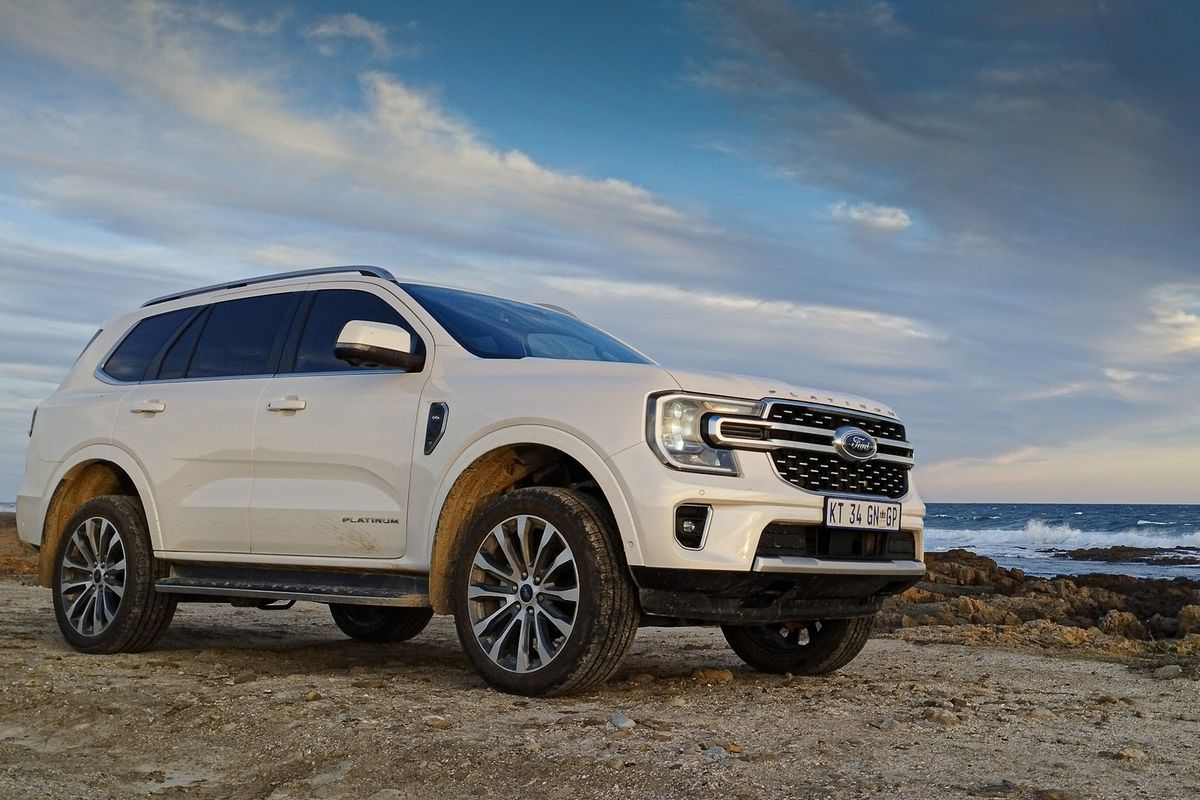
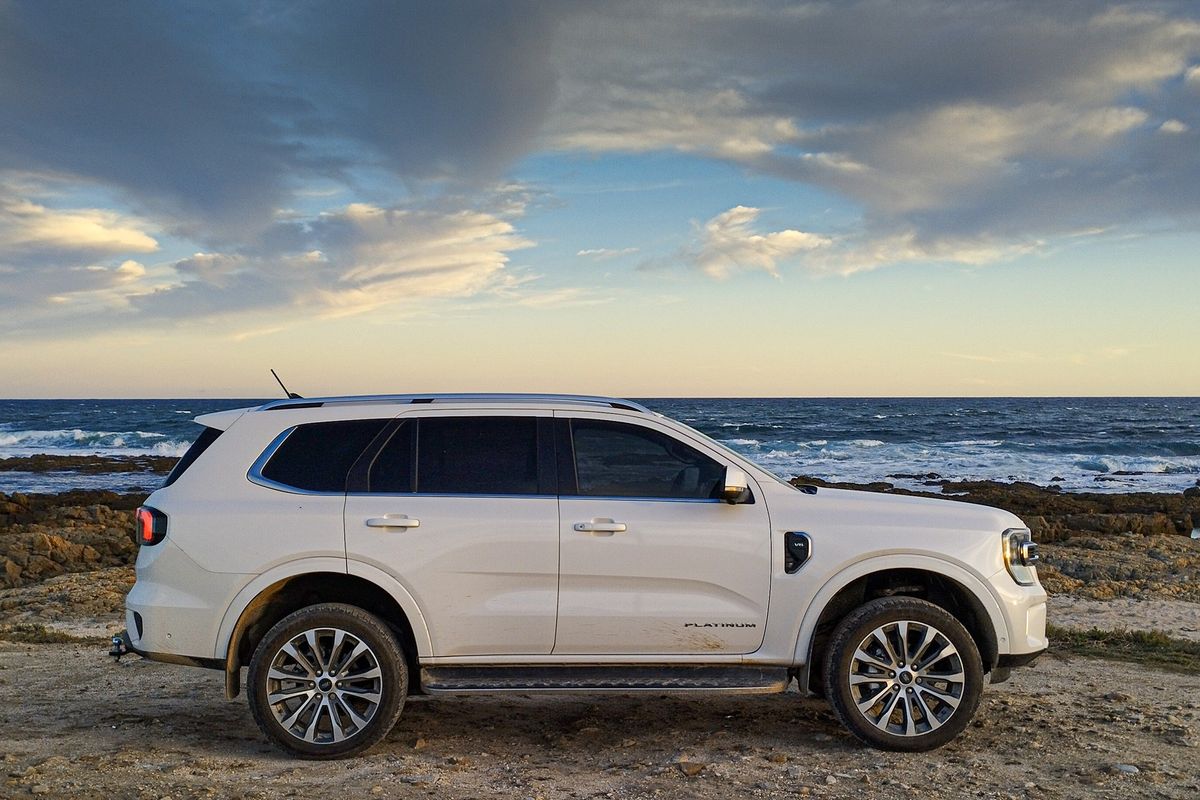
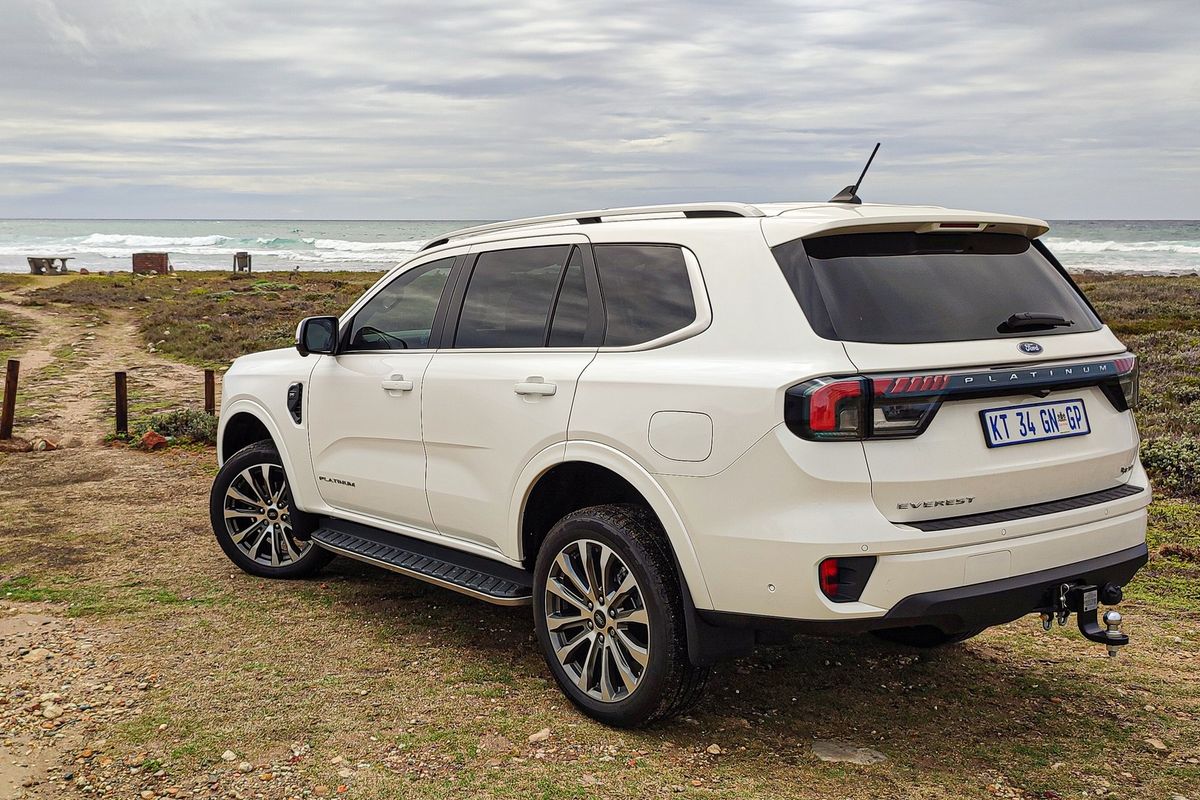
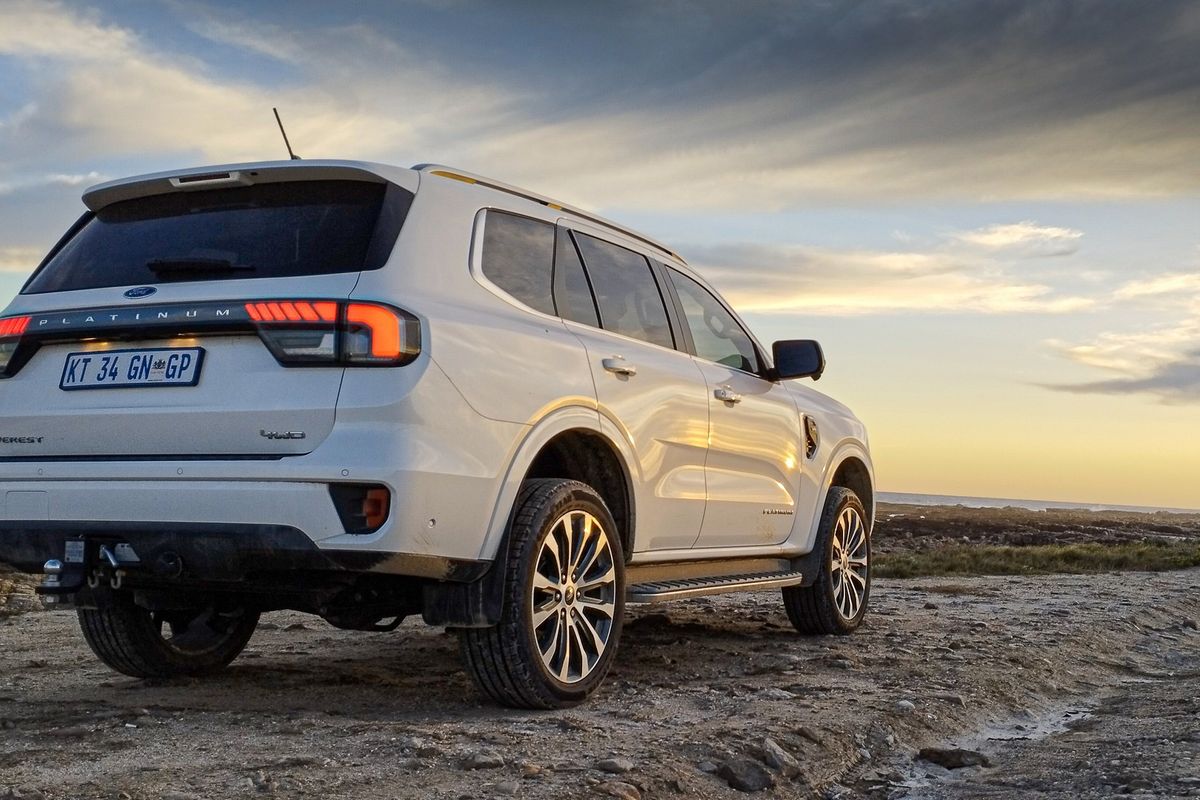
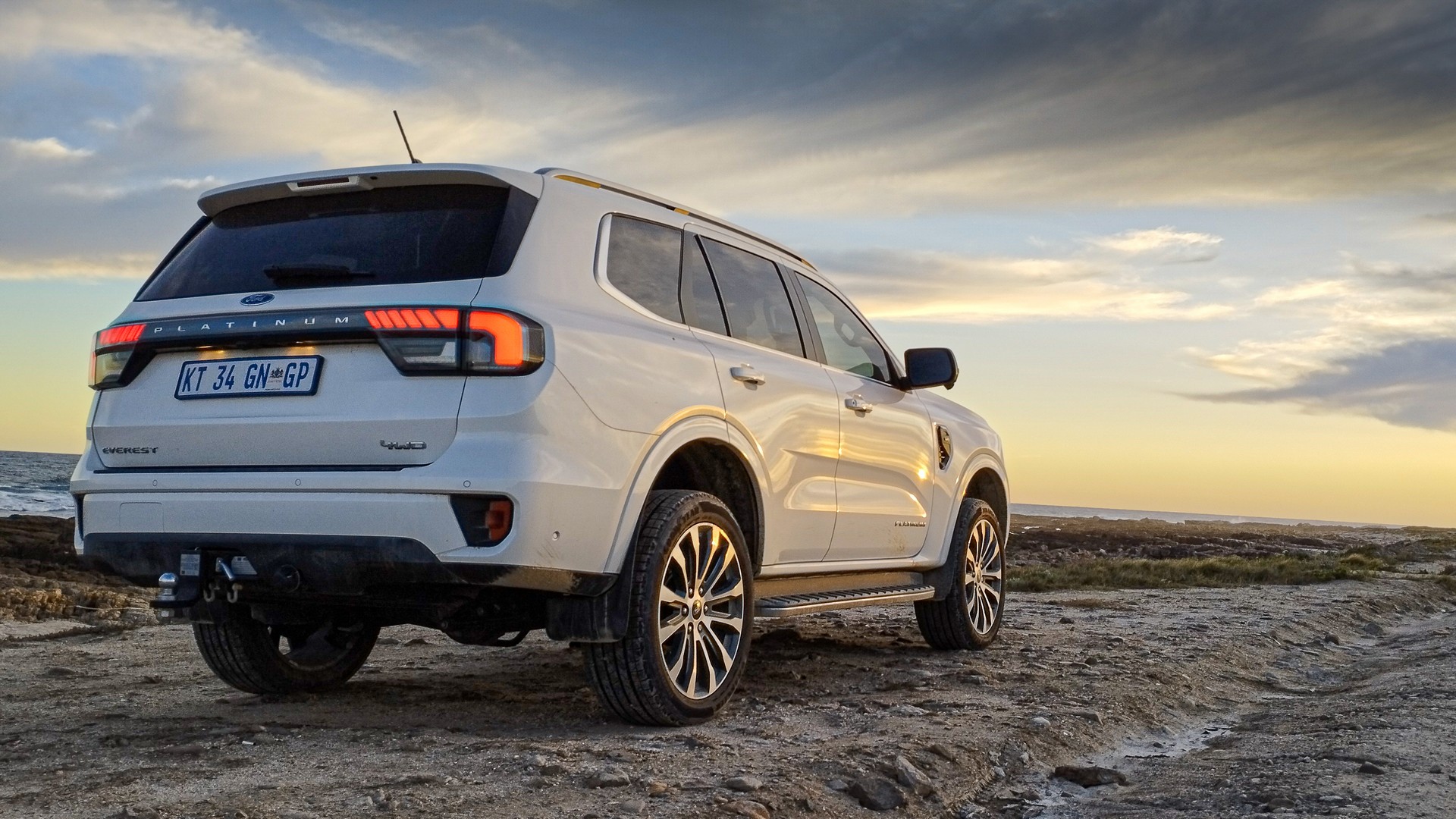
The flagship derivative comes fitted with 21-inch wheels, LED light clusters and smart-looking side steps.
How the 2023 Ford Everest fares in terms of…
Design and Packaging
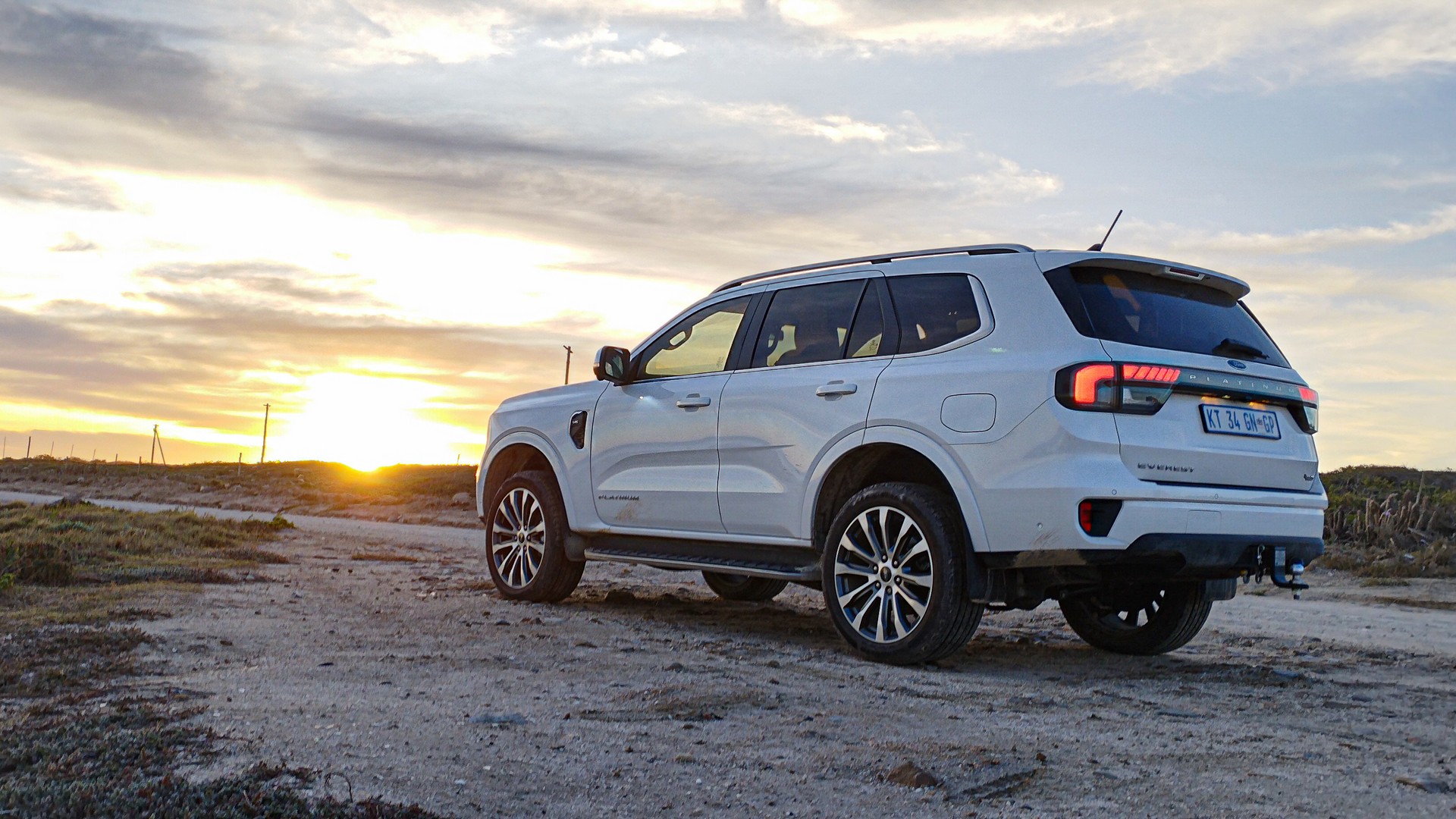
Riding high on its massive (21-inch) multi-spoke wheels and brandishing a bold, upright front-end design distinguished by distinctive “bracket”-shaped LEDs, the new-generation Everest is certainly a looker. As indicated by the presence of numerous Platinum badges on the vehicle – there are so many of ‘em, in fact, that some people thought the car had been renamed the “Platinum” – this is the flagship derivative. As such, it features significantly more shiny bits than the 2.0 BiTurbo 4×4 Sport derivative. You can make up your own mind about the design, but for what it’s worth, onlookers (almost all of them) adored it.
The Everest is a humongous vehicle, even by contemporary adventure-SUV standards. It is 4 940-mm long (including the towbar), has a 2 900-mm wheelbase, stands 1 837 mm high and its width (including side mirrors) is 2 207 mm. These dimensions make it a good match for the Prado (remember the Toyota carries its spare wheel on its tailgate), although the Jeep is a significantly longer proposition.
The Ford’s ground clearance is a decent 226 mm (the expansive side steps do look vulnerable, though) and that is notably higher than the claimed figures for the Toyota and Jeep. The new Everest can also wade deeper (800 mm) than its rivals and its roof is sturdy enough to carry a 350-kg (static) load.
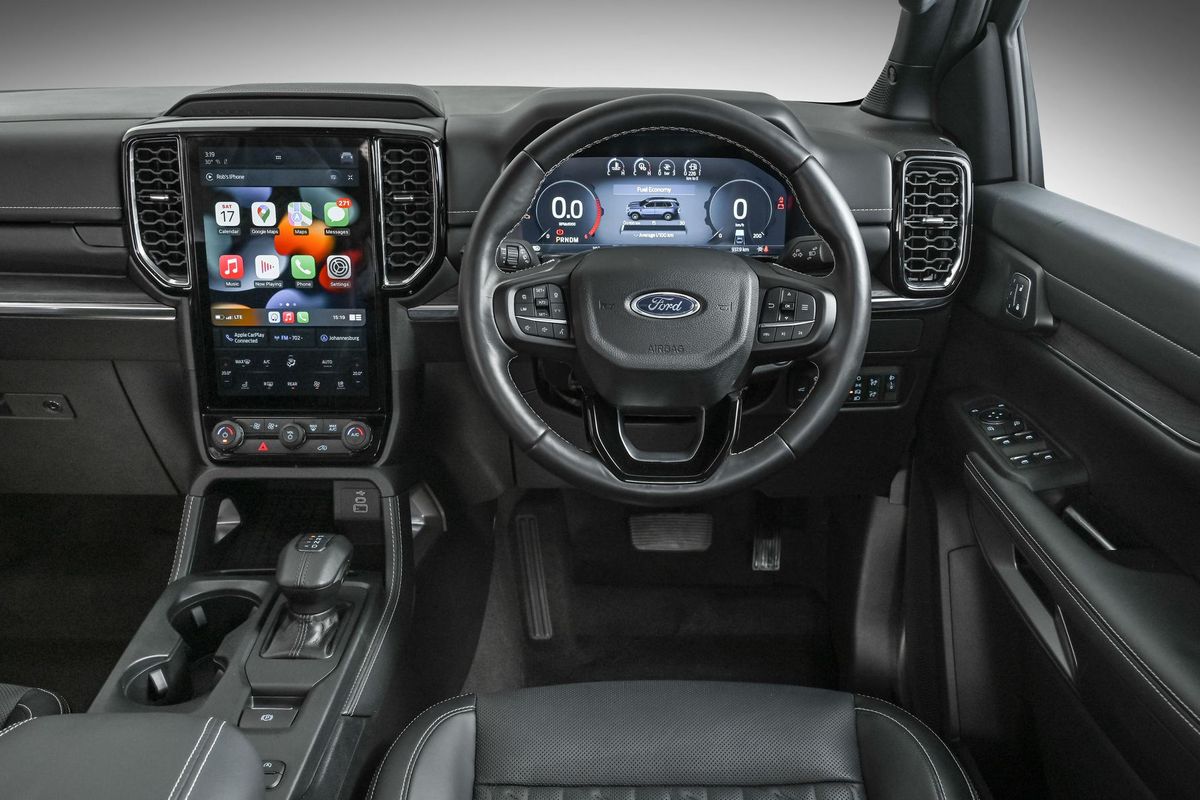
The Everest may still be a bakkie-based vehicle, but its interior is tech-laden and has high-quality finishes.
The newcomer’s capacious cabin is equally impressive, with top-notch finishes and fine attention to detail. We love the way the door handles are elegantly integrated into the door pulls, for example, and the stitched leather upper section of the fascia lends a welcome touch of “premium-segment class” to the model’s interior. Overhead, a vast panoramic sunroof is fitted as standard.
It’s hard to believe that the Everest’s smart interior essentially comes out of a bakkie (the new Ranger). Satin silver detailing, dark “wood” trim – and a minimalist approach to design – make the cabin appear worthy of a R1-million-plus vehicle, and well beyond the reach of the Fortuner, MU-X or Pajero Sport.
We’ll get to the comfort and luxury features later in this review, but in terms of packaging, the Everest leaves precious little to be desired. The front seats are electrically adjustable (including lumbar support) and the driver’s seat has memory settings as well. That, combined with a generously adjustable steering column, makes a comfy driving position easy to achieve.
The 2nd row is easy to slide and fold forward, plus the seats’ backrests can recline for extra comfort.
Oddment storage up front is provided by a double glove box, large door pockets, pop-out drink holders in addition to those in the centre console, and a sizeable bin between the seats.
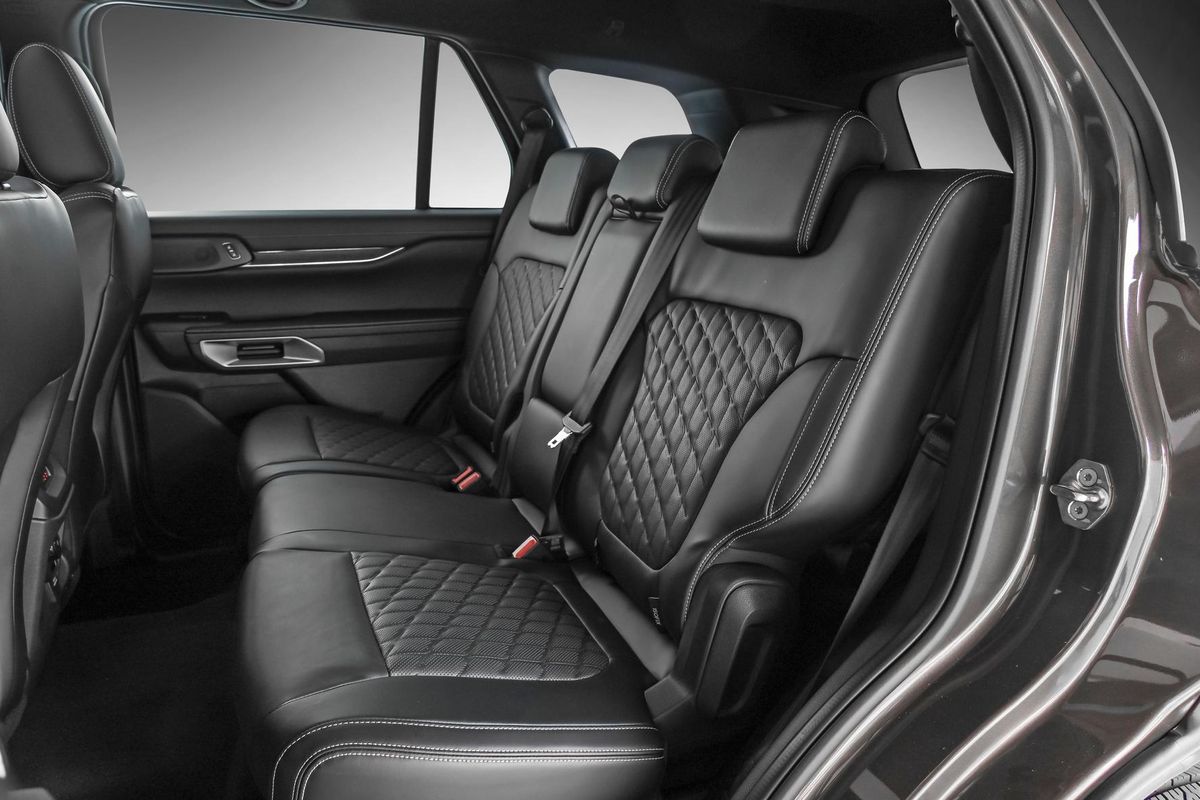
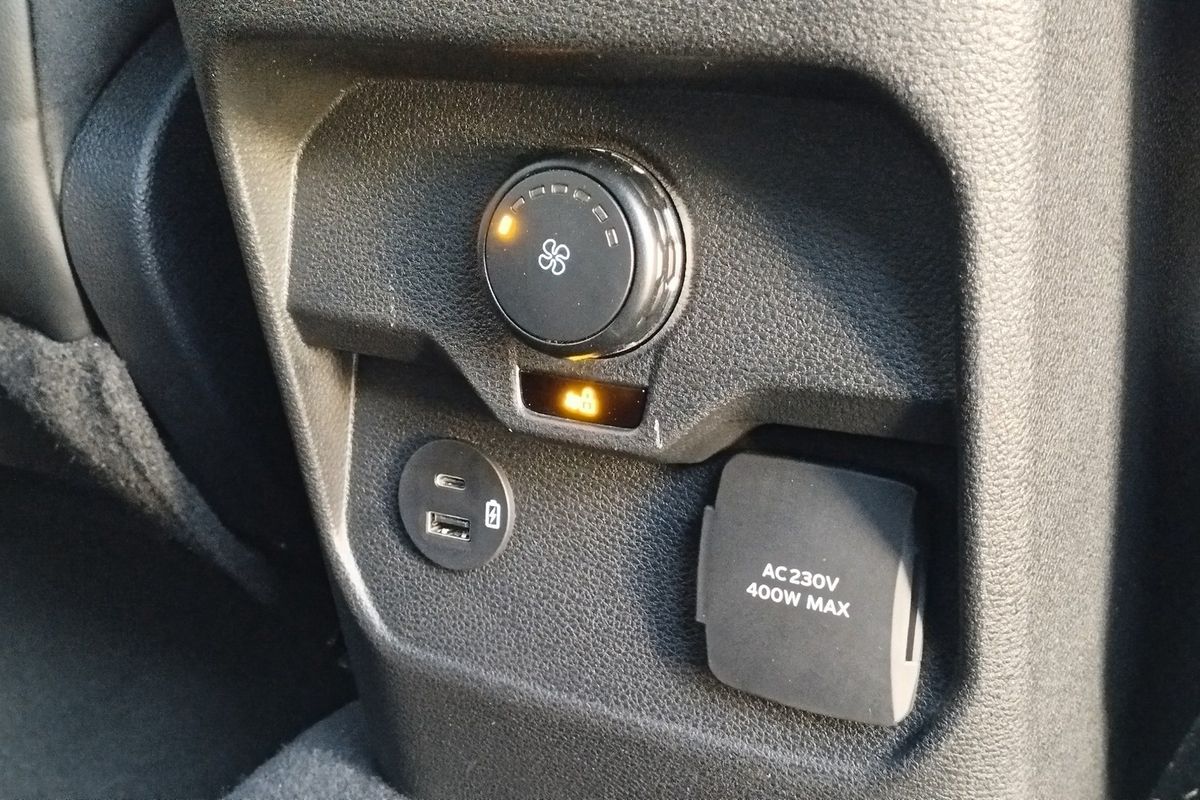
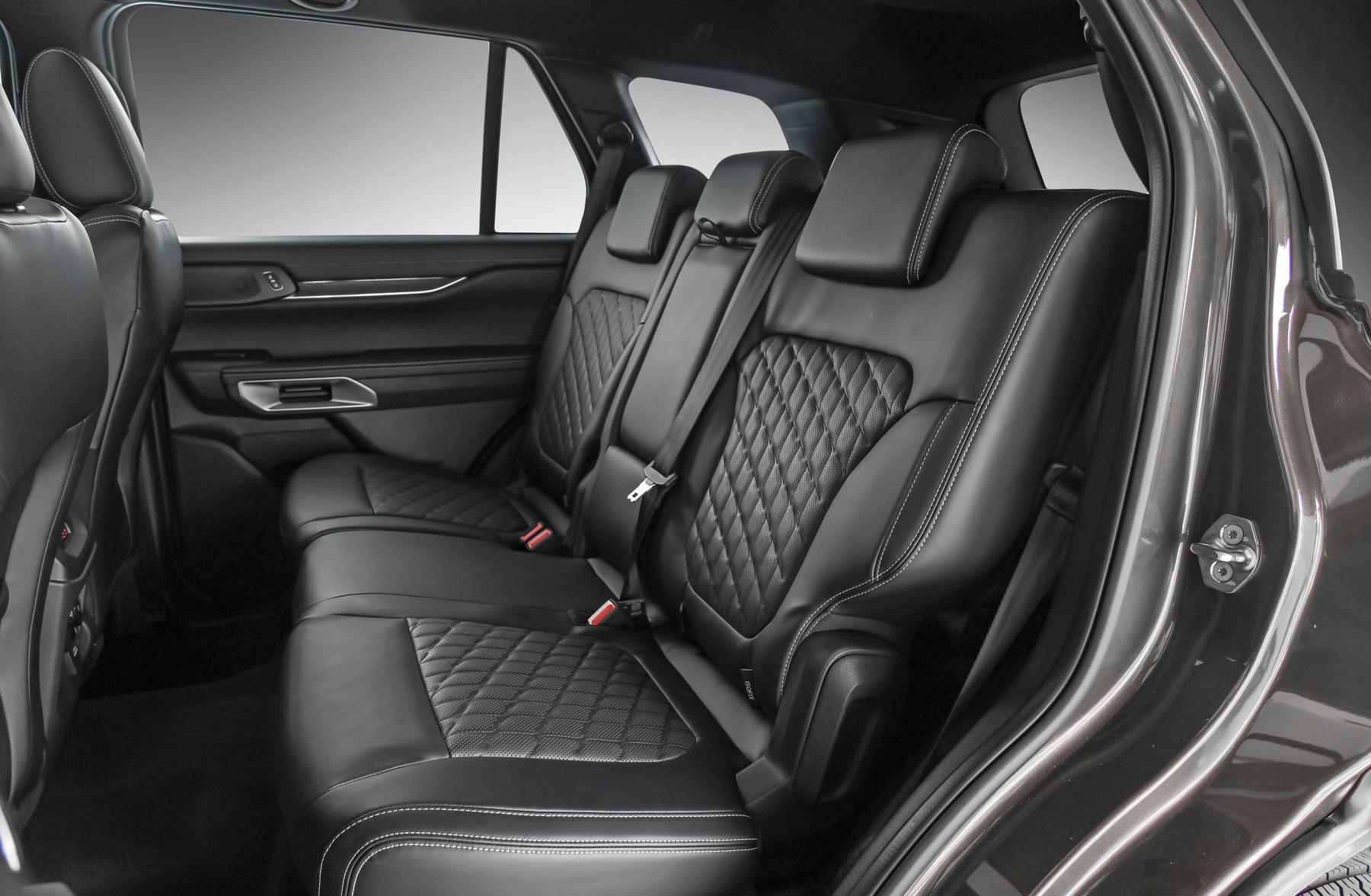
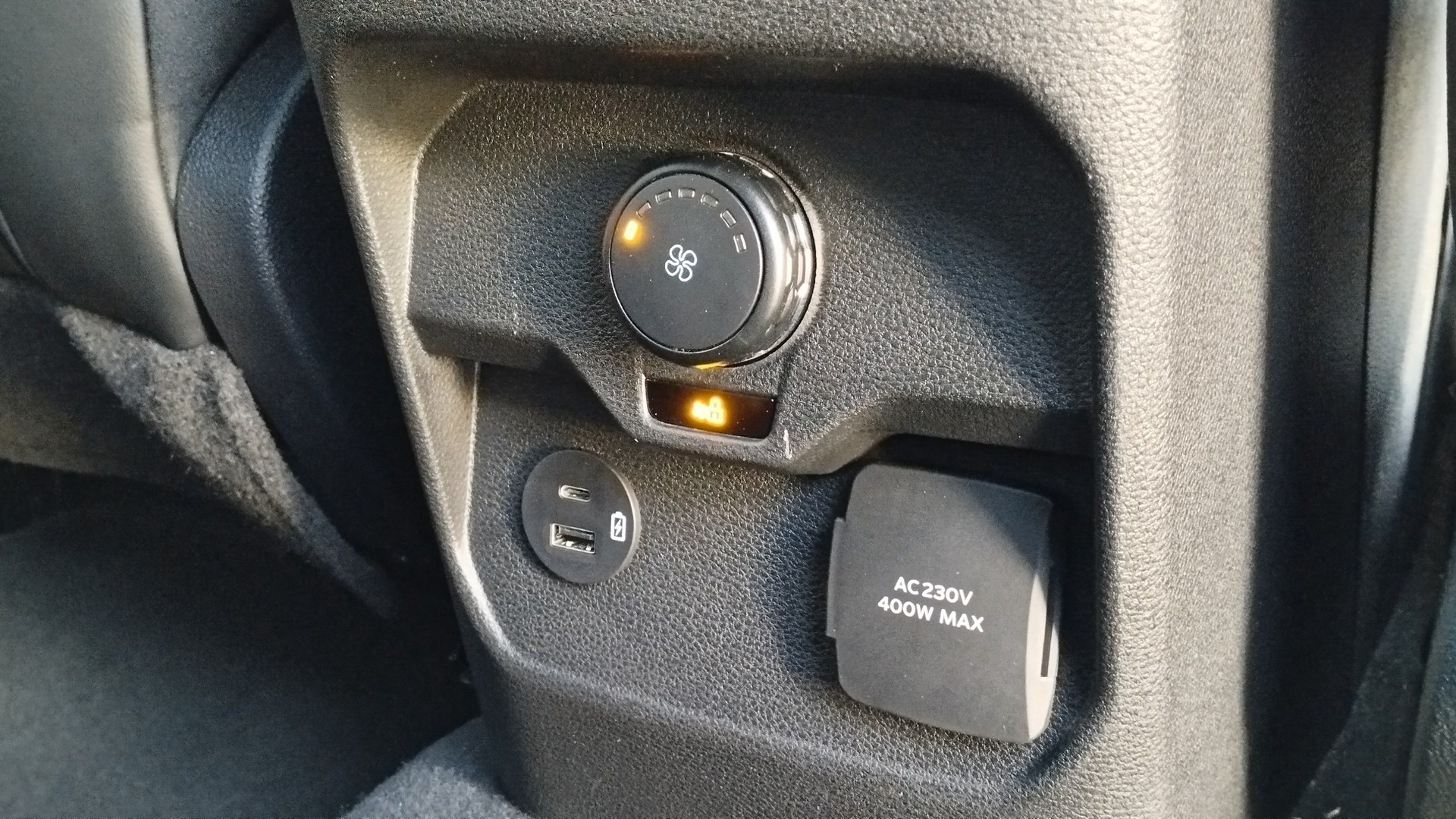
The fine attention to detail continues in the 2nd row. The bench is split 60:40, can slide fore or aft (as required), affords a measure of backrest angle adjustment – plus it’s heated! Second-row passengers have access to a pair of USB ports (USB-A and USB-C), as well as a 3-pin 400W inverter for powering laptops and other devices (you may need to use an adapter, though).
Second-row occupants can charge their devices and set their preferred ventilation (fan) speed.
A rotary dial allows middle-row passengers to adjust fan speed of the rear climate control system (which can, of course, also be controlled via the front touchscreen). Ventilation outlets are mounted on the roof lining. Note that the bench is mounted quite high (to provide nice “stadium” seating and a good view out for kids), but that may leave too little headroom for taller adults.
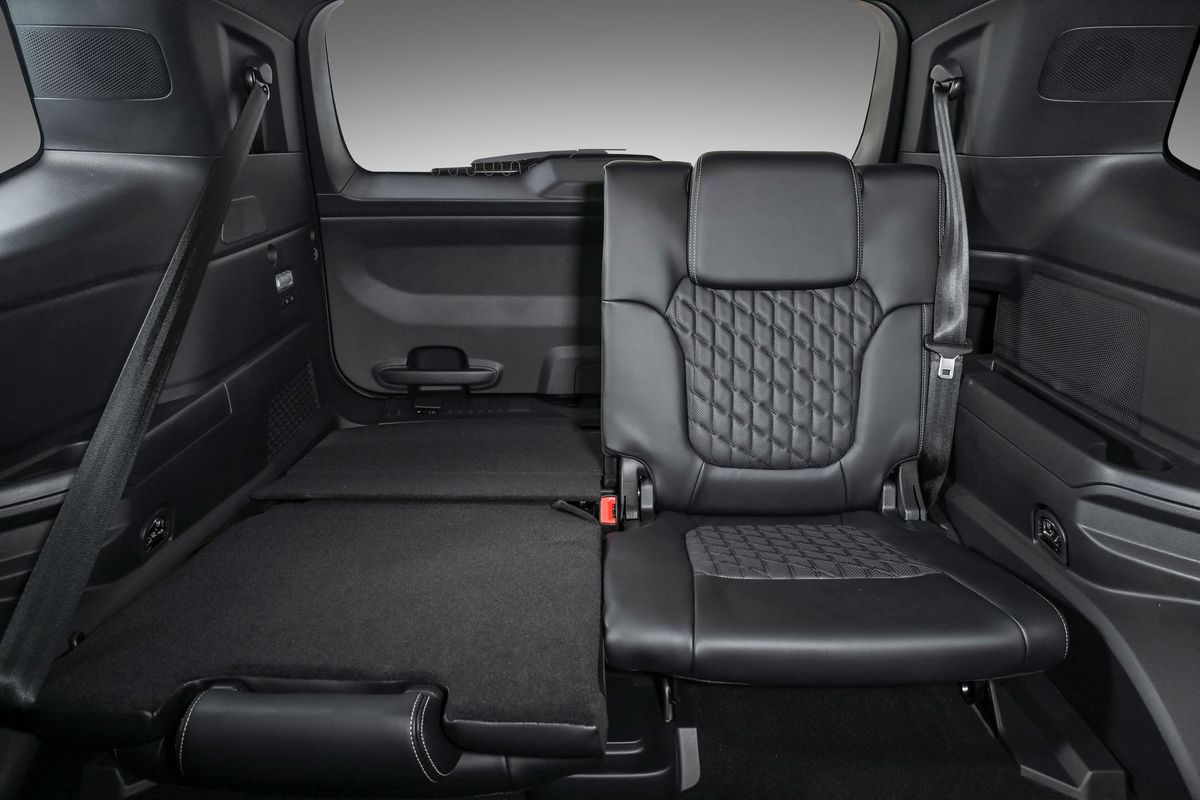
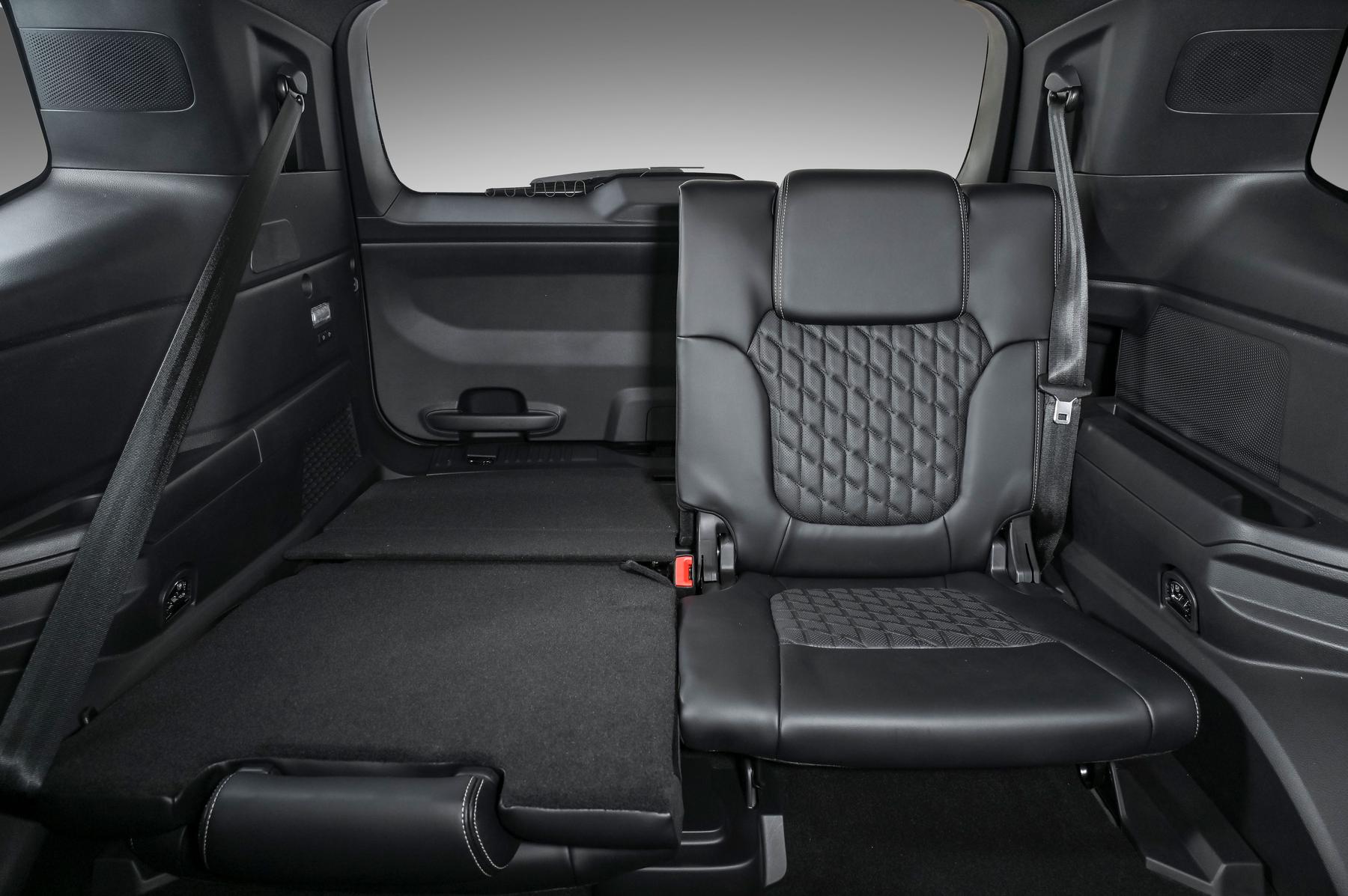
If you slide and tilt the 2nd row forward, it’s relatively easy to access the 3rd row. However, as is the case with most 7-seat bakkie-based SUVs, there isn’t much space for the occupants of the rearmost seats – headroom, in particular, is rather limited. A 1.8-meter-tall passenger could sit in the 3rd row when they were seated behind a driver and 2nd-row occupant of a similar height.
It was a squeeze, though; the 3rd-row passenger’s knees touched the seatback of the 2nd-row. At least the Everest offers ventilation outlets for those in the 3rd row, as well as a power outlet.
The Everest’s 3rd row is less than roomy, but its occupants are afforded a few conveniences.
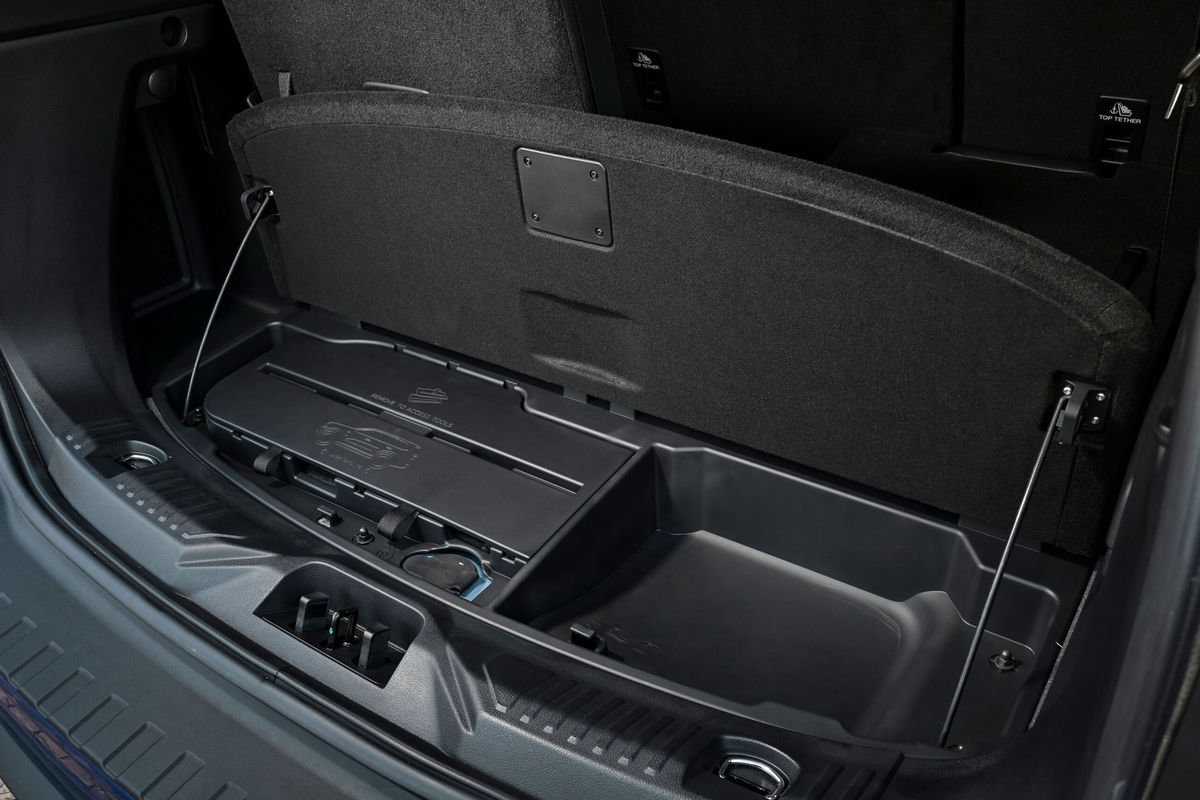
And what about luggage space? Obviously, when all 7 seats of the Everest are occupied, there isn’t too much load-bay capacity, even if the quoted figure (259 litres) is relatively good. The boot floor lifts up to reveal access to the tools and there is a small compartment for a few odds and ends as well. If you fold the 3rd row down (electrically, by pressing buttons mounted on the side of the load bay), the Everest’s utility space grows to 898 litres (which is voluminous, but not quite Prado-sized).
Finally, it’s worth noting that the tailgate is electrically powered and that the Everest 3.0 V6 AWD Platinum comes fitted with a detachable tow hook as standard. Also bear in mind that the Ford’s (braked) tow rating has increased by 400 kg compared with the previous model (its maximum rating is 3 500 kg).
Ford has further improved the 10-speed auto transmission, which dovetails brilliantly with the V6 turbodiesel.
Performance and Efficiency
One of the main talking points of the Everest is its brand-new 3.0-litre V6 turbodiesel engine. It delivers a whopping 184 kW at 3 250 rpm and peak torque of 600 Nm from a pleasingly low 2 500 rpm.
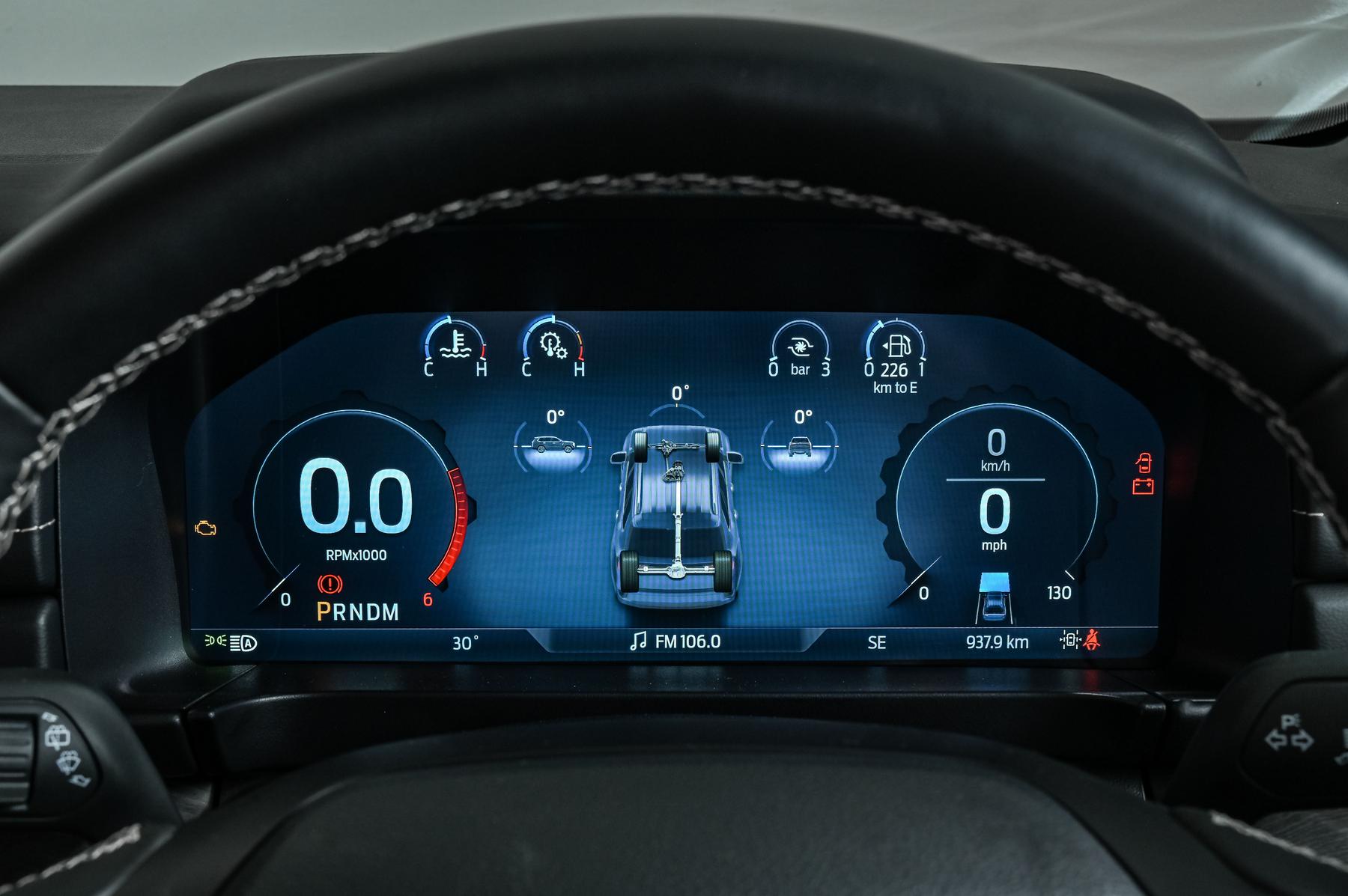
The powerplant is mated with an updated 10-speed automatic transmission that drives the flagship’s permanent 4-wheel-drive system, although most on-road driving will take place in 2H mode. Ford doesn’t quote performance figures, but we can confirm that the powertrain performs spiritedly.
Even when loaded with a full complement of passengers (with as much crammed into the cabin as possible), as well as surfboards strapped to the roof and bicycles mounted on a rack at the back, the top-rung Everest made easy work of our long-distance trips during the holiday season.
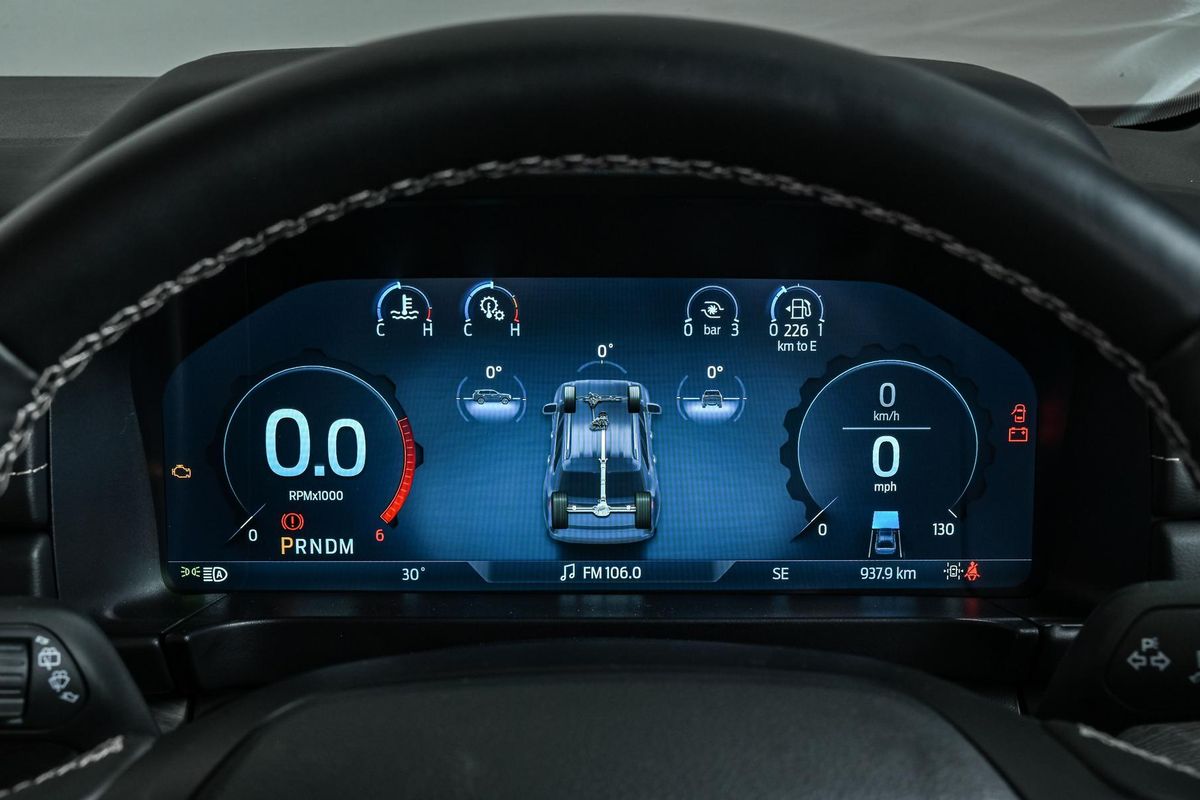
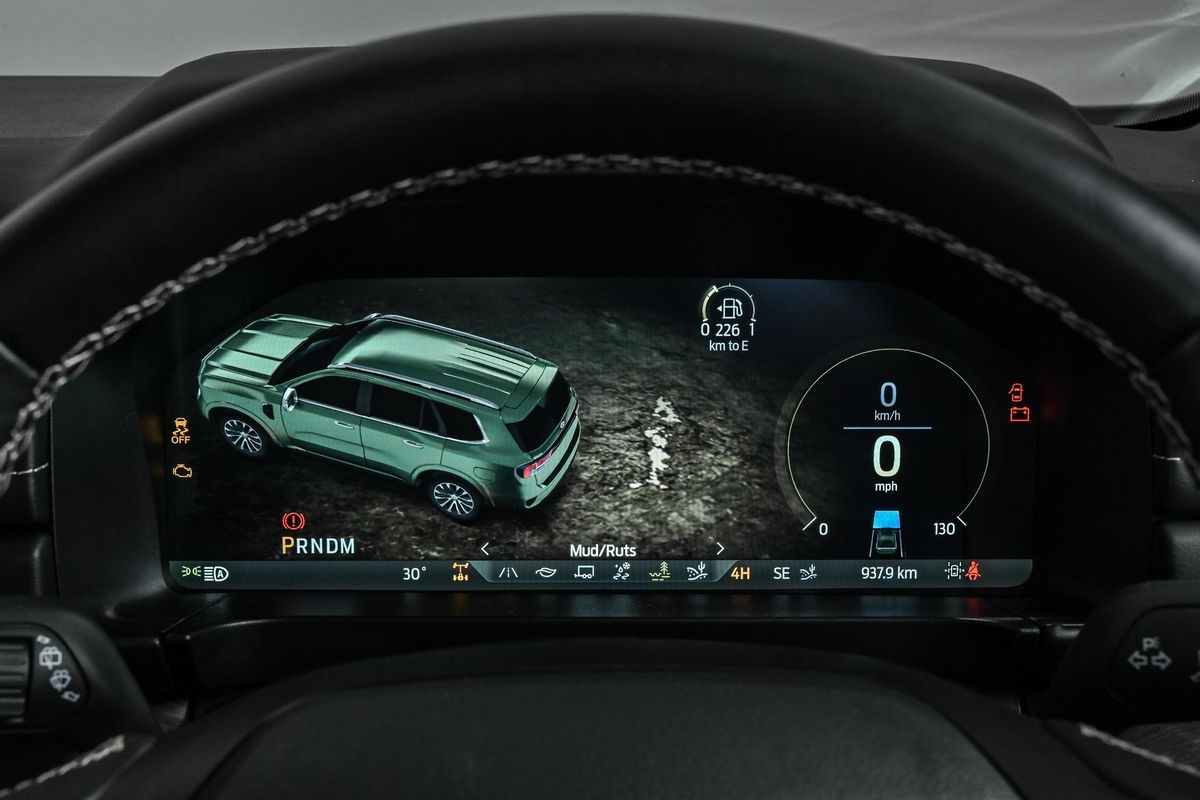
The impressive digital instrument cluster offers a host of display schemes to choose from.
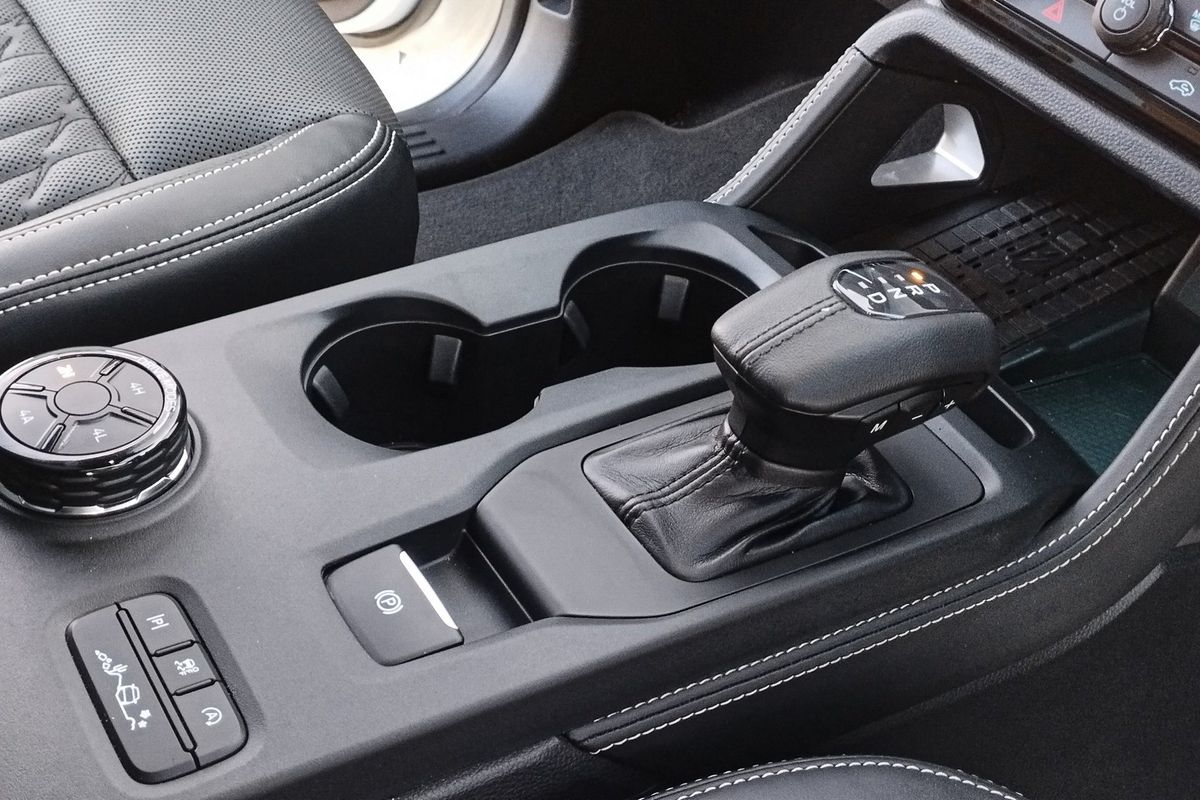
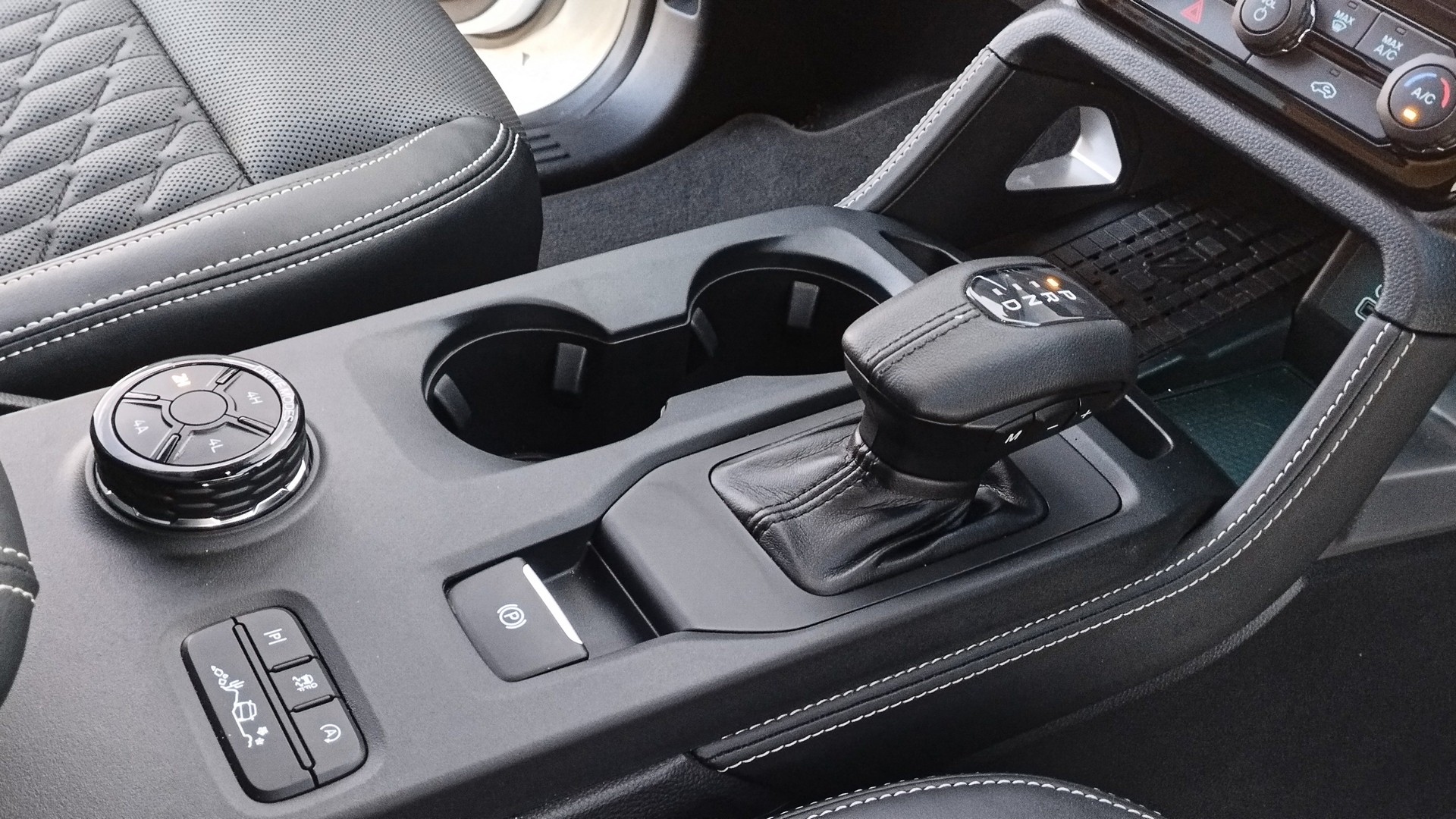
Not only did the Ford provide strong overtaking acceleration when required; its 10-speed ‘box was superb – the Everest never felt flat-footed or “laggy”. There are no flappy paddles behind the ‘wheel, but you won’t miss them – the transmission is THAT good (well-calibrated). If you really, really want to shift manually, you can do so by using buttons mounted on the side of the transmission lever.
Predictably, the downside to the 3.0 V6 AWD Platinum’s punchy performance is disappointing fuel economy. Ford claims a hilariously optimistic average consumption figure of 8.5 L/100 km, but, even when driven with an efficiency-minded driving style (in Eco mode), a more realistic consumption figure is about 10.5 L/100 km. This means you are looking at a range of 723 km, at best, from the 76-litre tank.
If you plan to make regular long-distance journeys “into the unknown”, then the fact that the Prado offers a pair of tanks (that total 150 litres) may be a deciding factor.
Ford’s adventure SUV comes well-equipped to serve the plugged-in/always-connected generation.
Comfort and Features
To mention all the standard features fitted to the Everest 3.0 V6 AWD Platinum would take a very long time (rather use our handy compare tool); we will point out the highlights, however. In its launch literature Ford describes the Everest’s cabin as a “sanctuary” for its occupants… Well, it’s quite an apt description, because the Everest boasts class-leading NVH (noise, vibration, harshness) control, which is a great foundation on which to build a comfortable cabin. Road and engine noises or vibrations, in particular, are impressively suppressed, and only a slight rustle tends to emanate from around the massive side mirrors. Again, details such as these elevate the Everest’s cabin refinement beyond those of its traditional rivals.
We’ve already mentioned the superb seats (heated and cooled at the front, plus a heated multifunction steering wheel), but, on top of that, Ford has fitted a banging B&O branded audio system, dual-zone climate control and a staggering number of driver assistance or safety systems, including adaptive cruise control, forward collision assist, rear cross-traffic alert with braking (very useful on a big vehicle such as this), lane-keep assist and even active parking. Of course, as with many modern vehicles, some of these systems can be a little intrusive at first, but you can delve into the various menus (using the massive 12-inch portrait-style touchscreen) and either deactivate some of them, or adjust them to be less sensitive.
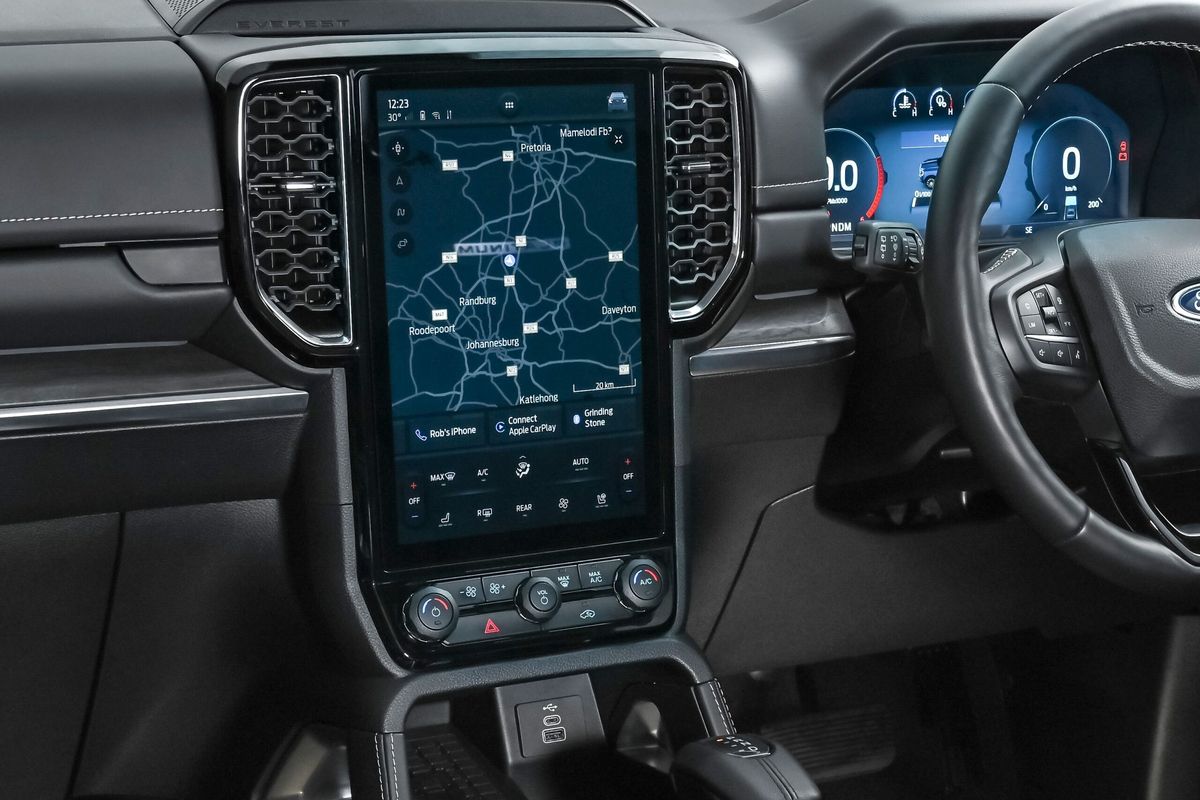
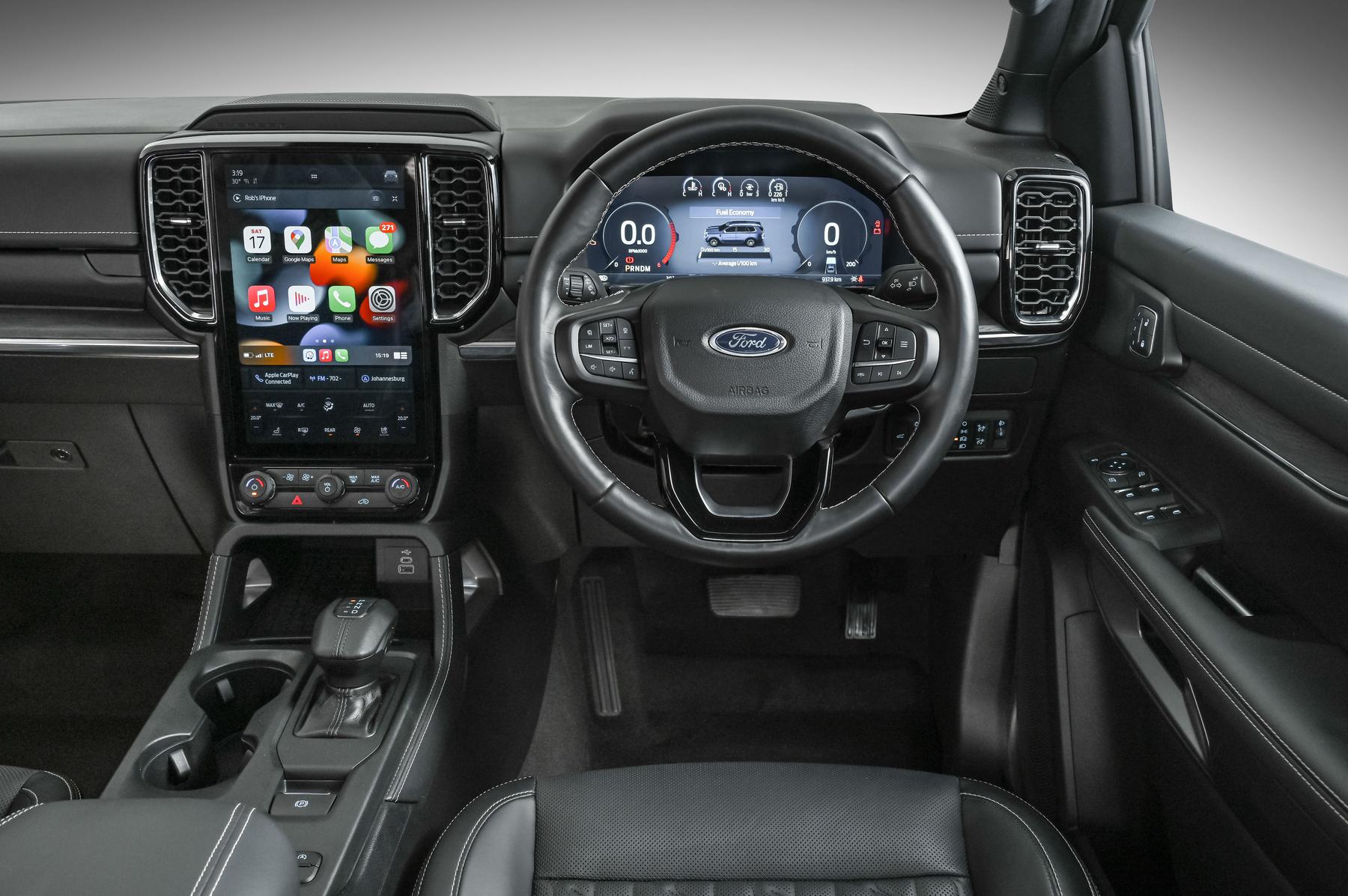
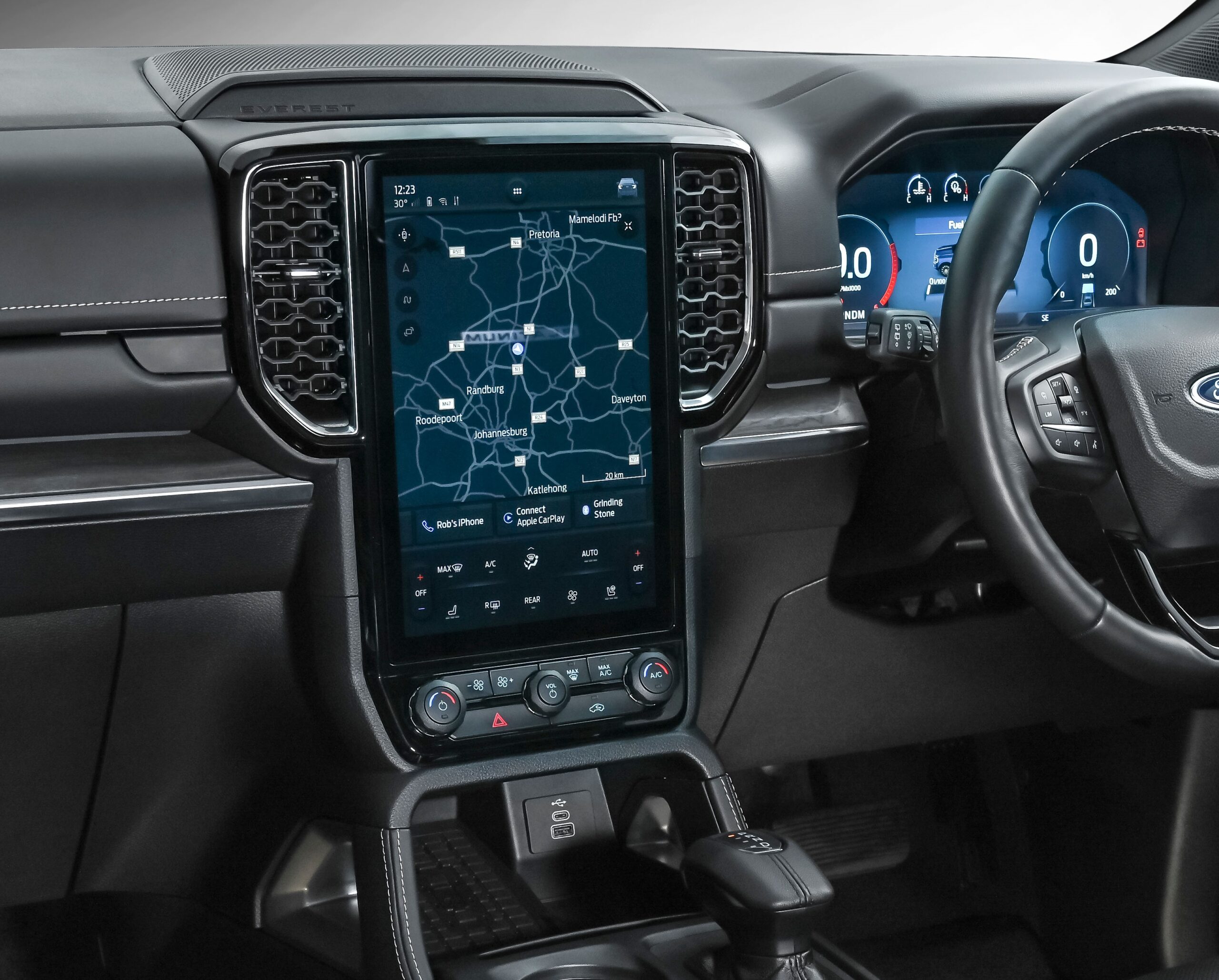
The giant, SYNC4-powered touchscreen is impressive, but might it be overkill in a bakkie-based product?
And so, we get to another big talking point. Themassive touchscreen looks very smart, but some folks have raised concerns that the elaborate setup takes things too far (particularly for a bakkie, or a variant thereof). However, it feels very much at home in this R1-million-plus SUV, and allows for fine-tuning of features that would have required myriad buttons. Thankfully, the controls that you will use most often (fan speed, temperature control, volume etc.) can still be accessed using physical buttons/knobs.
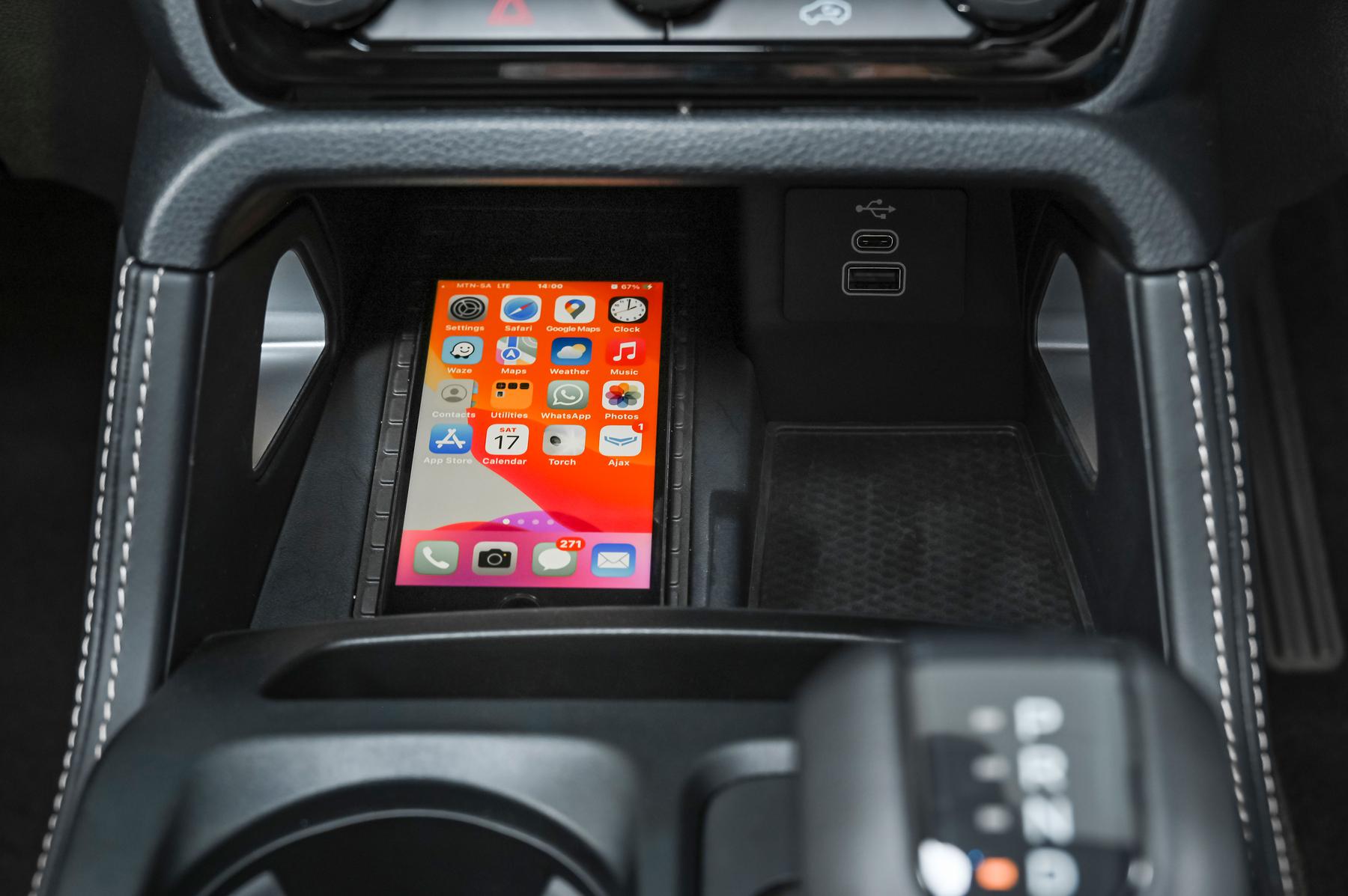
We enjoyed the intuitive nature of the SYNC4 system and its menu layouts. Bluetooth, Android Auto and Apple CarPlay are all supported and a wireless charging pad is provided. Up front, occupants have access to a trio of USB ports (one being windscreen mounted – you can use it to power a “dash cam”, for example) and, specifically, USB-A and USB-C sockets – they’re located in front of the ‘charging pad.
If we had to nitpick, we’d say we were somewhat disappointed with the Ford’s surround-view camera system. It does offer a 360-degree perspective, and you can zoom in on the corners of the vehicle, but the resolution isn’t as crisp as we’ve seen on vehicles costing half the price, and there is no 3D mode, which would have been particularly helpful in off-road conditions.
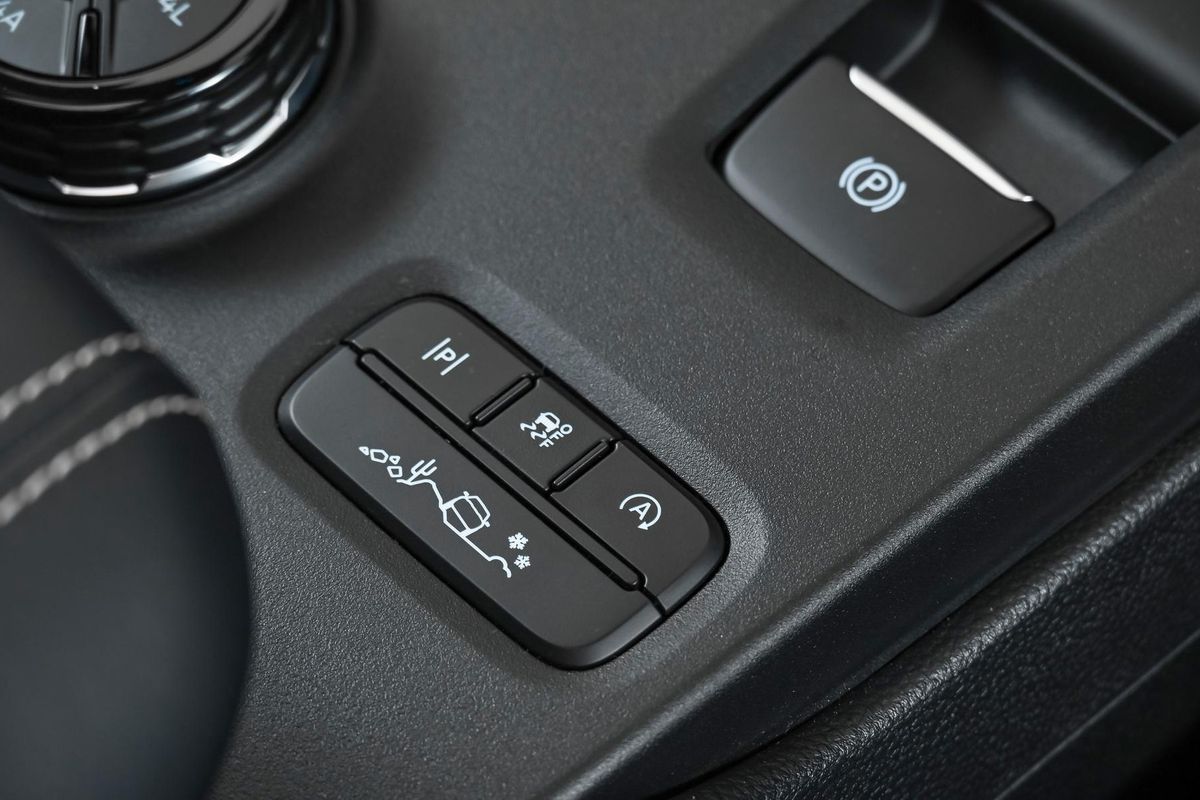
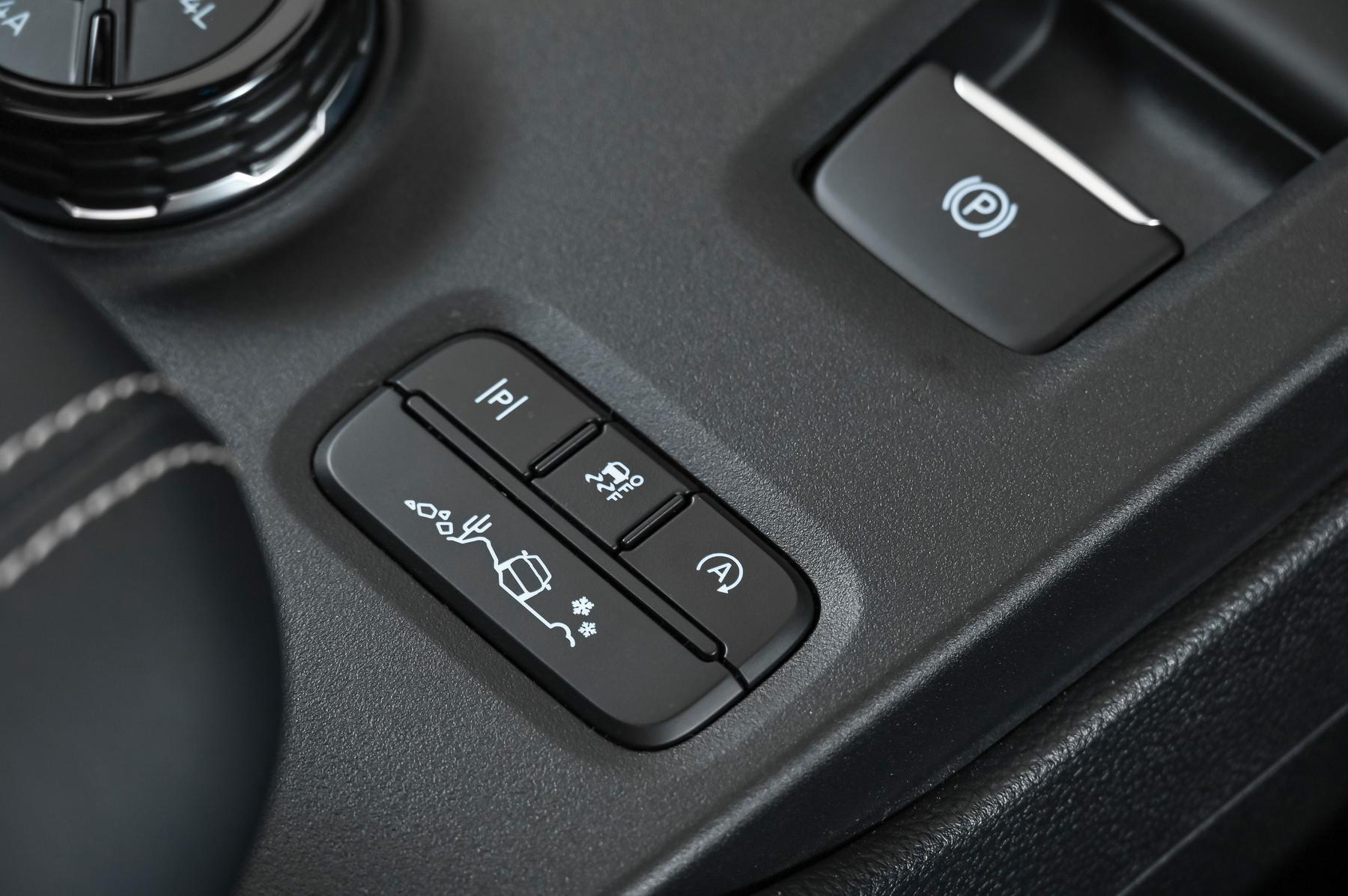
Apart from automatic all-wheel-drive, the Everest offers a plethora of selectable off-road drive modes.
On the road, and off it…
Courtesy of its wider tracks (up by 50 mm front and rear, compared with its predecessor), and upgraded suspension, the Everest feels the most “un-bakkie-like” of all the ladder-frame-based 7-seat SUVs on the market (in January 2023). This Platinum-spec derivative is arguably more road-biased than ever before, with its large (21-inch) wheels wrapped in relatively low-profile 274/45 rubber.
As an option, you can fit 18-inch wheels – shod with more suitable all-terrain tyres – if you intend to traverse challenging off-road terrain, such as technical 4×4 courses, quite often.
But, as it stands, the Everest’s ride is slightly on the firm side (although it’s far from jarring), and sharp, sudden jolts will remind you that there’s a bakkie chassis underneath it all. Having said that, 99% of the time, the Blue Oval’s adventure SUV just feels planted, secure and safe… Overall, it seems significantly less “wallowy” than its predecessors, older rivals, and miles better – on tar – than the ageing Prado.
The Platinum-spec Everest has eye-catching accoutrements that may get bashed and dinged during off-road jaunts.
To match the Prado off-road, however, is another story… Due to the tyres fitted to our test unit, we elected to stay clear of conditions that could inflict damage to the Ford’s pretty rims or pronounced side steps, but we did do a lot of gravel road driving, as well as some rock climbing and gully exercises.
The Everest is a close match for the Prado in terms of its approach and departure angles (just mind the towbar!) and, in addition to the automated four-wheel drive setting, you can manually select 4H or 4L, and then further fine-tune the vehicle settings using a dial on the centre console. Normal, Eco, Tow Haul, Slippery, Mud&Ruts and Sand modes are available, and the rear diff lock can be activated electronically.
On gravel roads, we found the Everest’s driving experience quite superb and, when we did some off-road driving in trickier conditions, it was abundantly clear that even when rolling on road-biased tyres, the combination of stonking torque and clever off-road systems make the Everest a true Adventure SUV –not a show pony. Oh, and tyre pressure monitors are also fitted, as is specific underbody protection.
Ford’s claims that the new Everest is “Prado-rivalling” are founded; other adventure SUVs pale in comparison.
Ford Everest Price and After-sales Support
The Ford Everest 3.0 V6 AWD Platinum sells for R1 113 100 (before options – January 2023) and comes standard with a 4-year/120 000 km warranty, 5-year/unlimited distance corrosion warranty, as well as 4 years’ (unlimited distance) roadside assistance. Customers can buy service or maintenance plans as required (of up to 8 years or 135 000 km). The warranty can also be extended to 200 000 km.
Verdict
With the new Everest, Ford has indeed elevated its flagship SUV beyond the reach of its traditional rivals. In one move, it has left the still-relatively new Isuzu MU-X feeling decidedly dated, and provides a heady new benchmark for Toyota to aim at with its next-generation Fortuner, which will undoubtedly also shift upmarket. As it stands right now, however, this is the finest bakkie-based SUV that you can buy now; it combines true adventure ability with premium, luxurious on-road motoring and the latest technology.
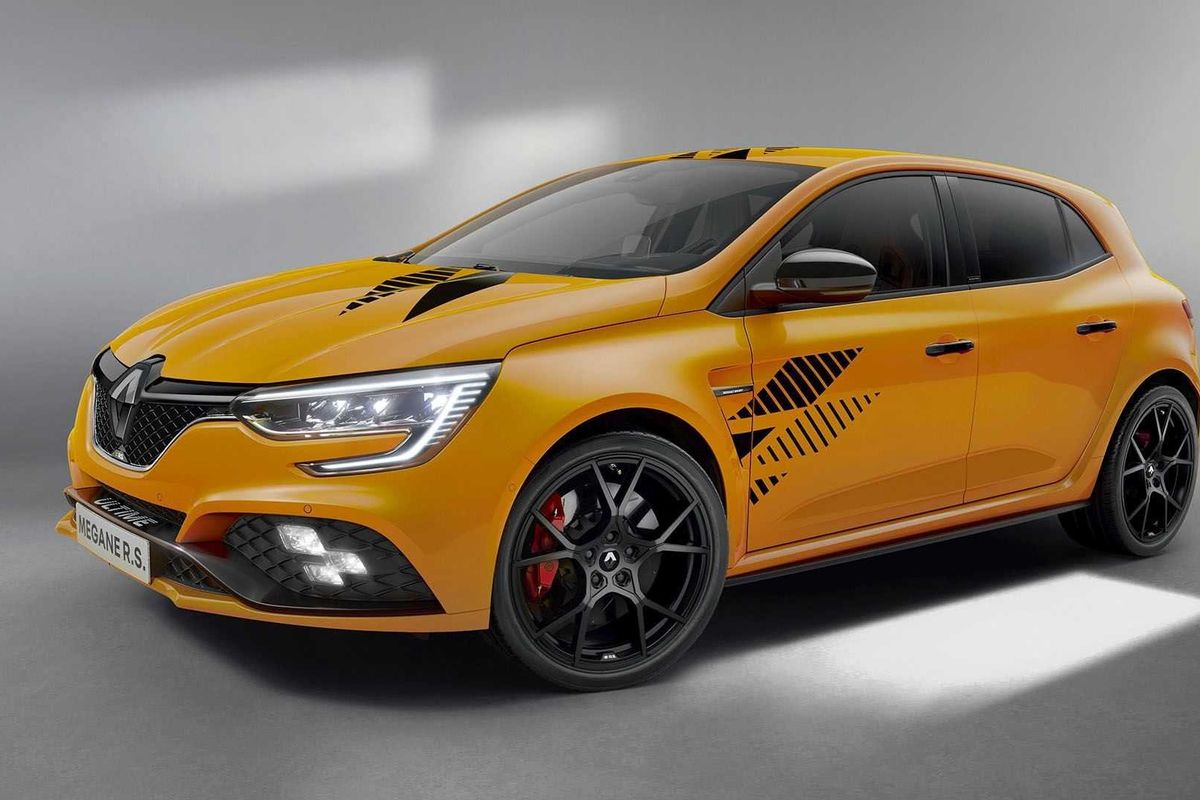
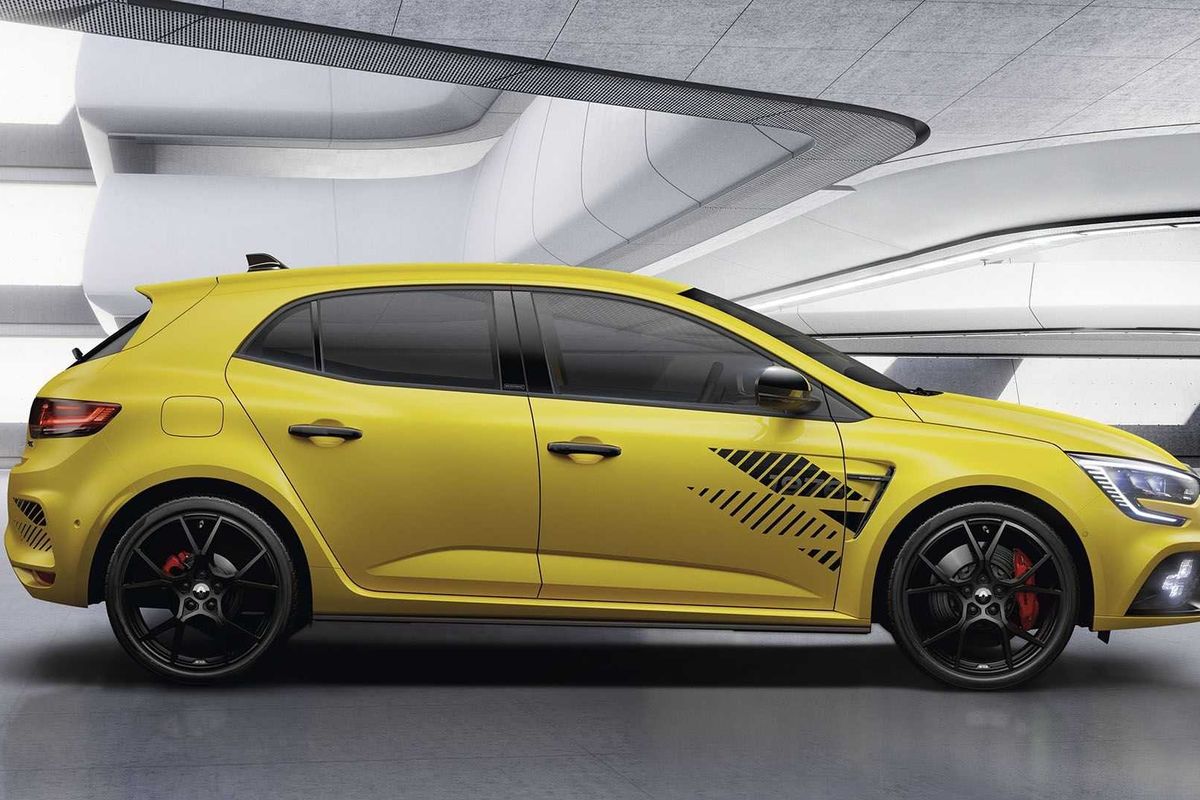
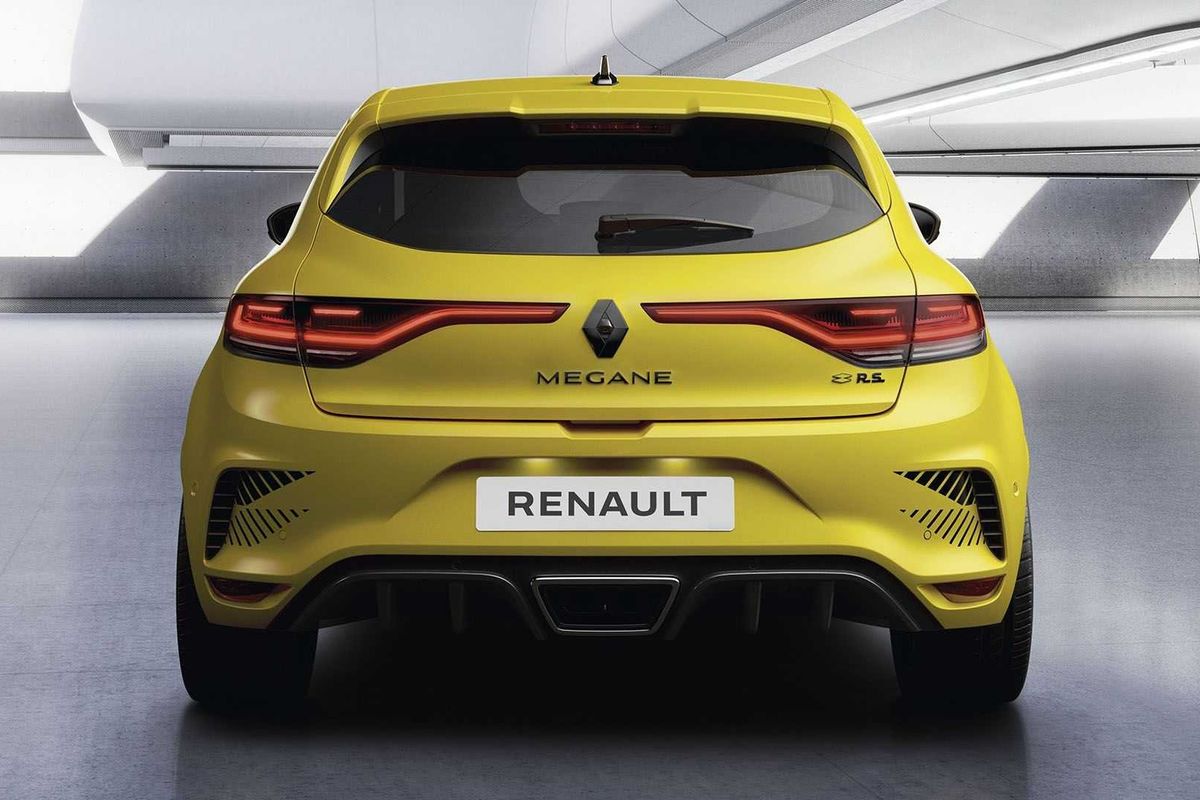
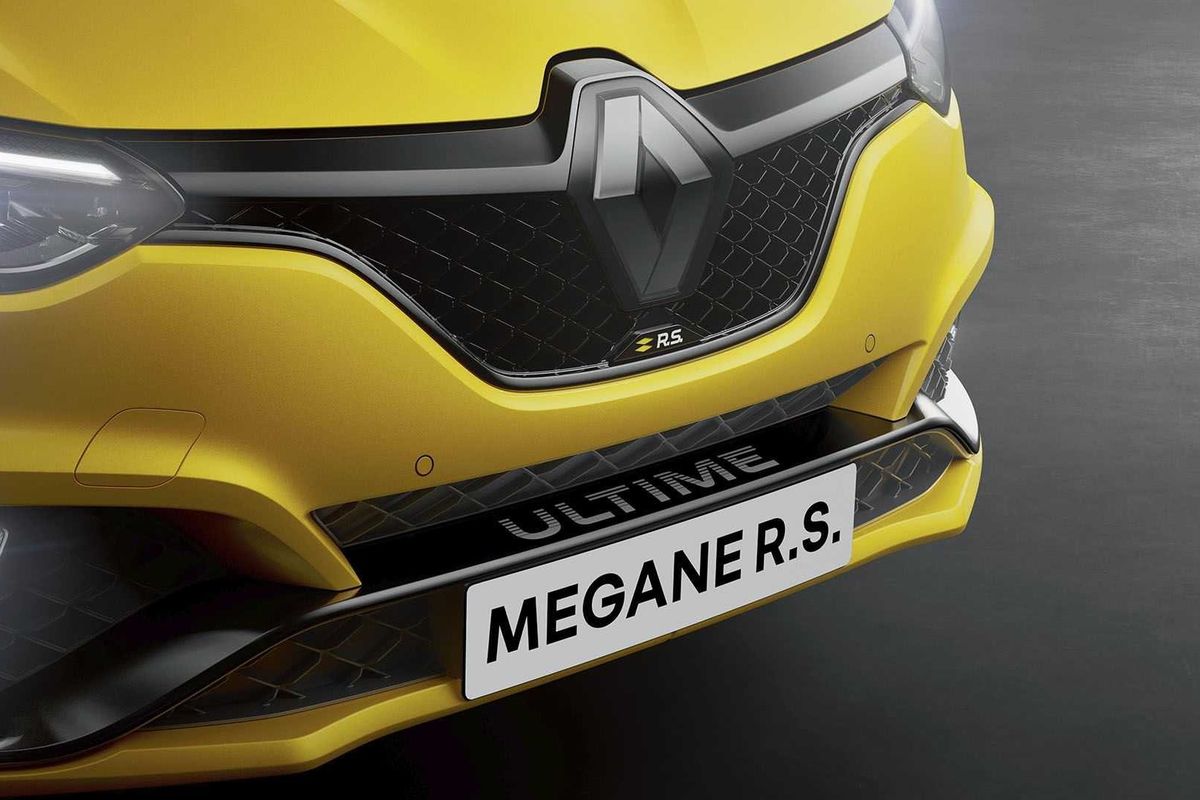
Renault Megane RS Ultime is the last ICE Renault Sport model
The Megane RS Ultime is the farewell to the incredible history of the French performance hot hatchback. Good news, as limited numbers will be coming to SA in 2023.
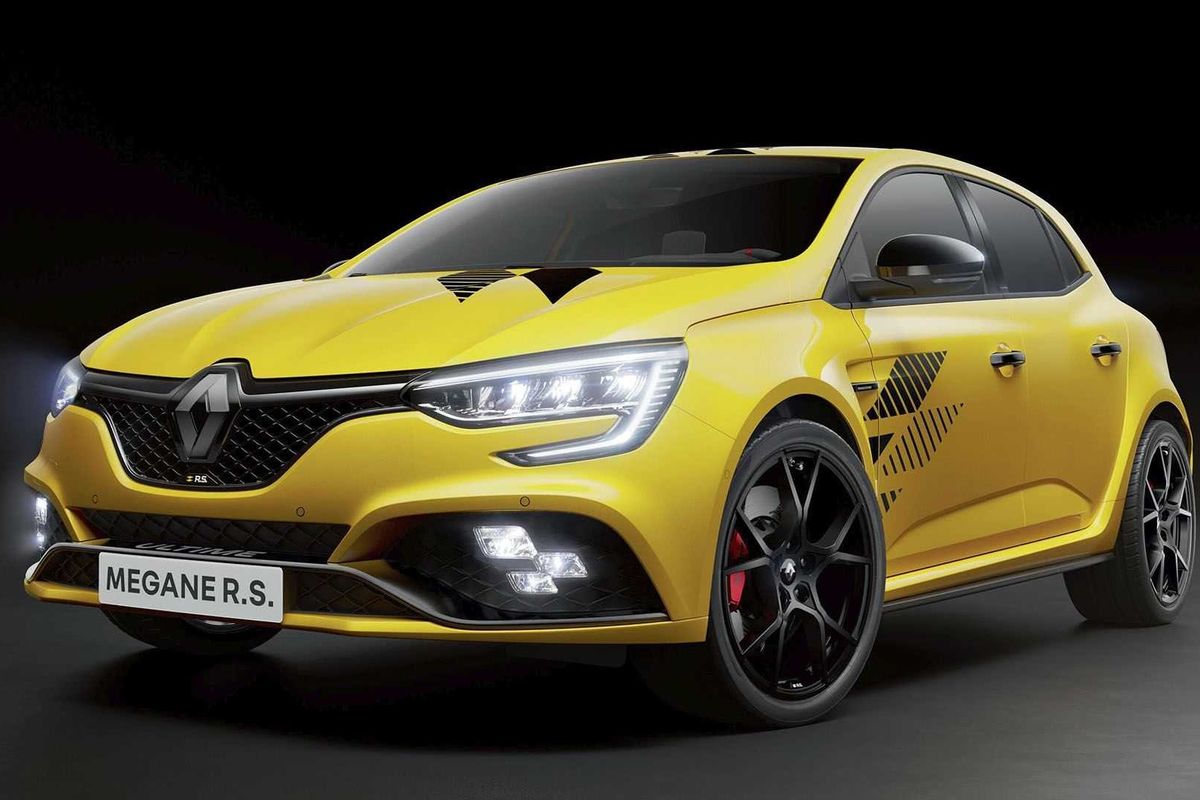
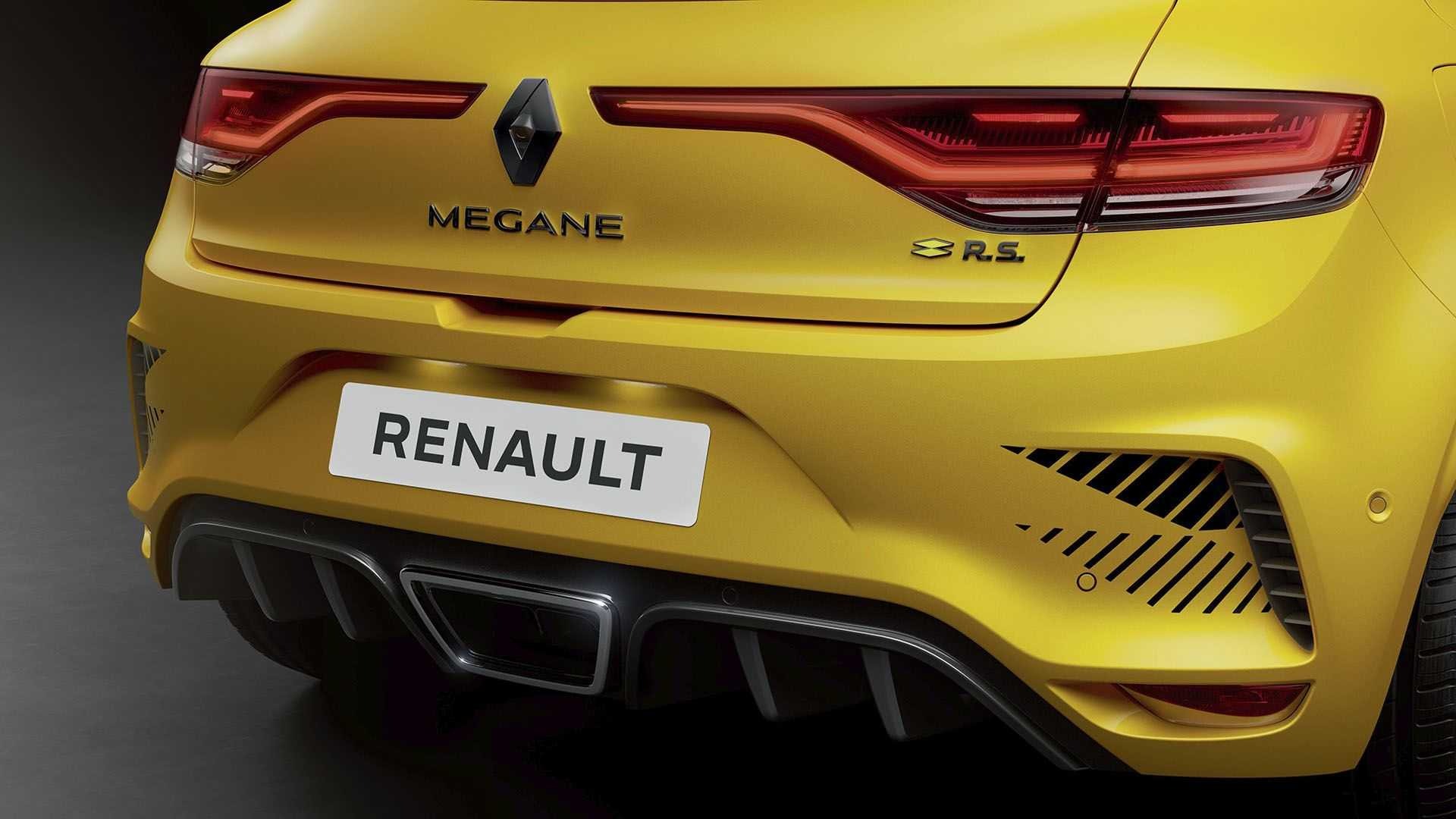
At the 2023 Tokyo Auto Salon show in Japan, French carmaker Renault revealed the Megane RS Ultime – essentially a limited-edition collector model that’s said to crown a saga that began back in 2003.
It will be the last Megane RS and the last model to have Renault Sport badging, as Alpine will be carrying on the performance story.
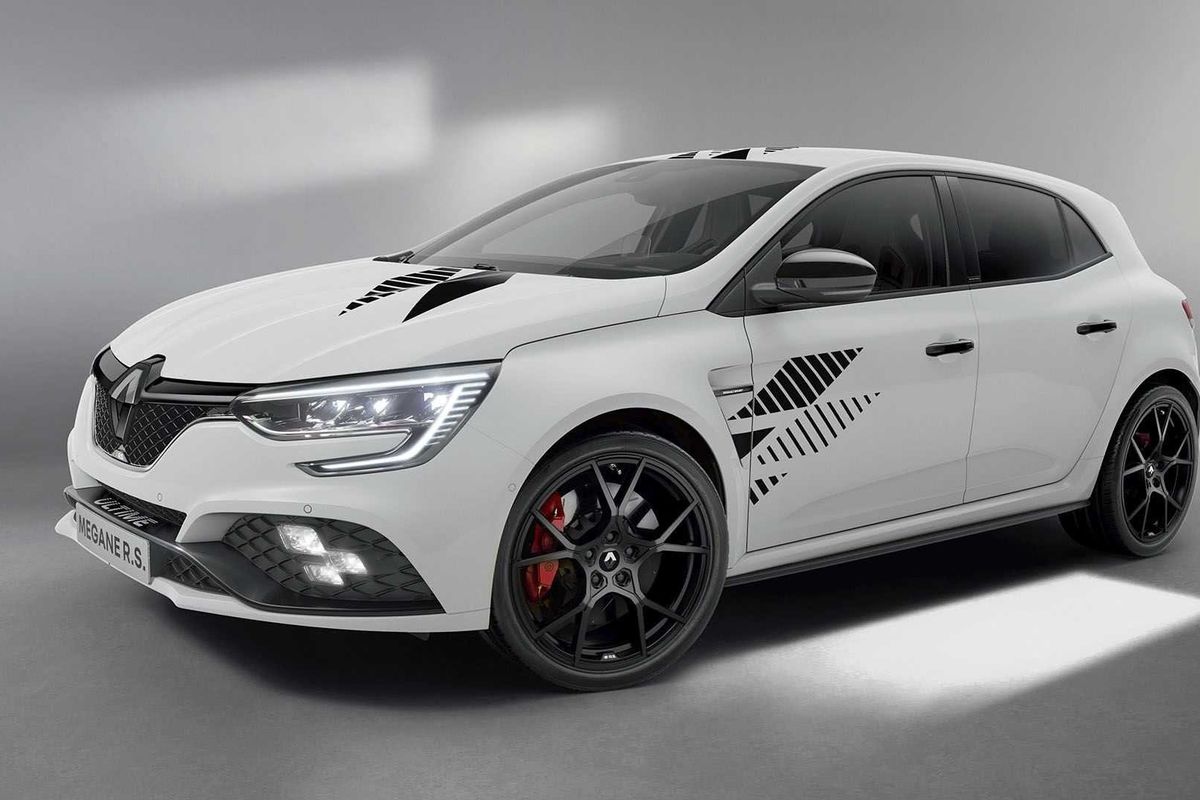
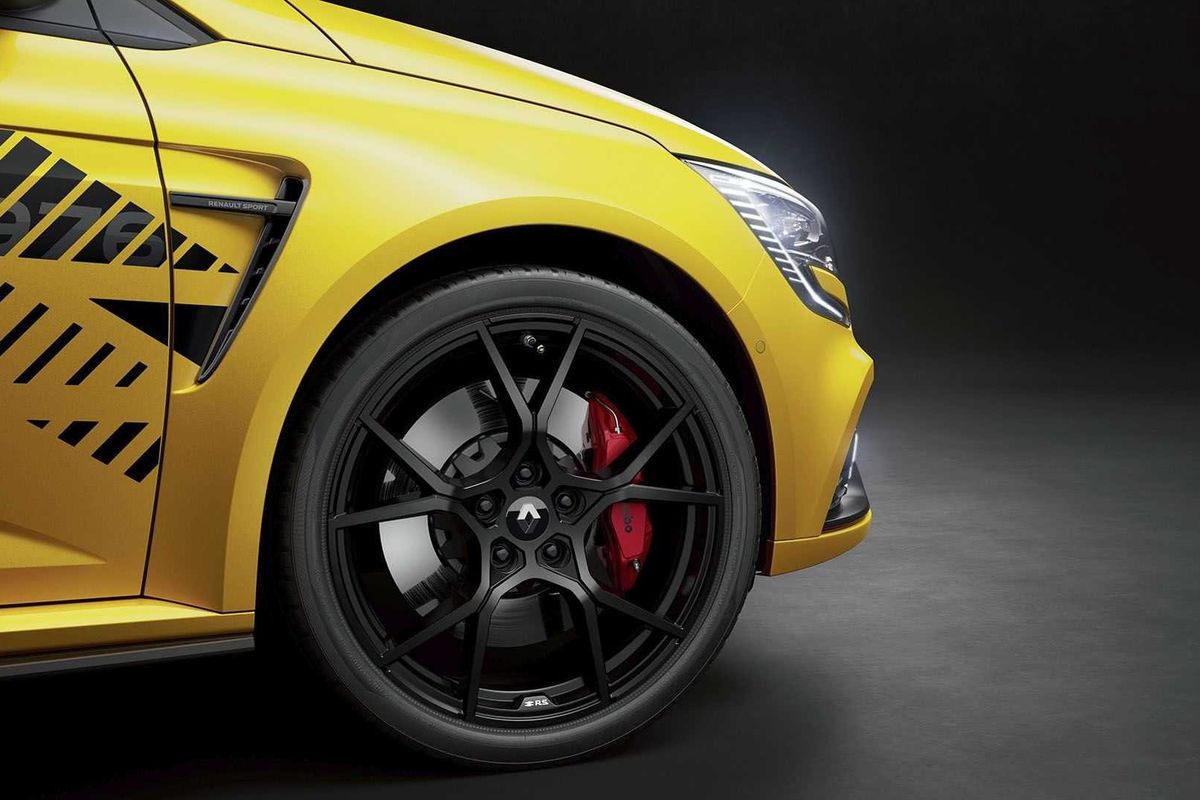
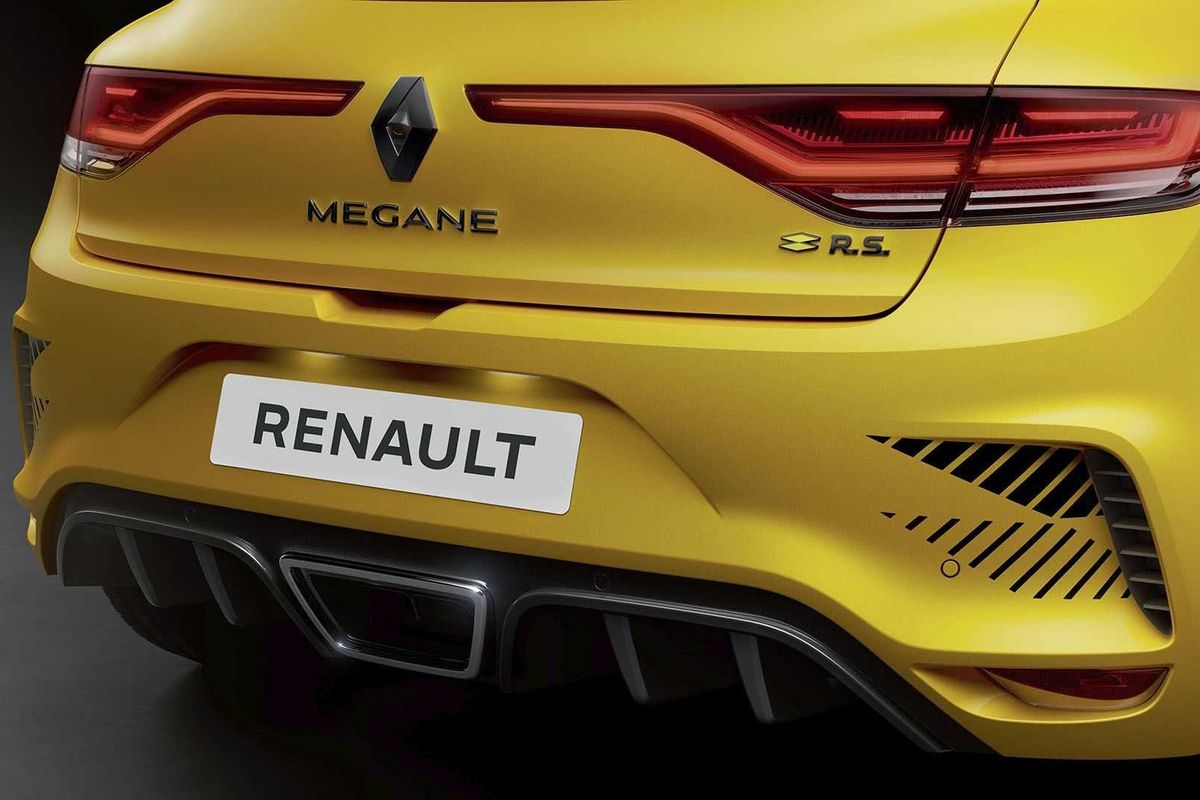
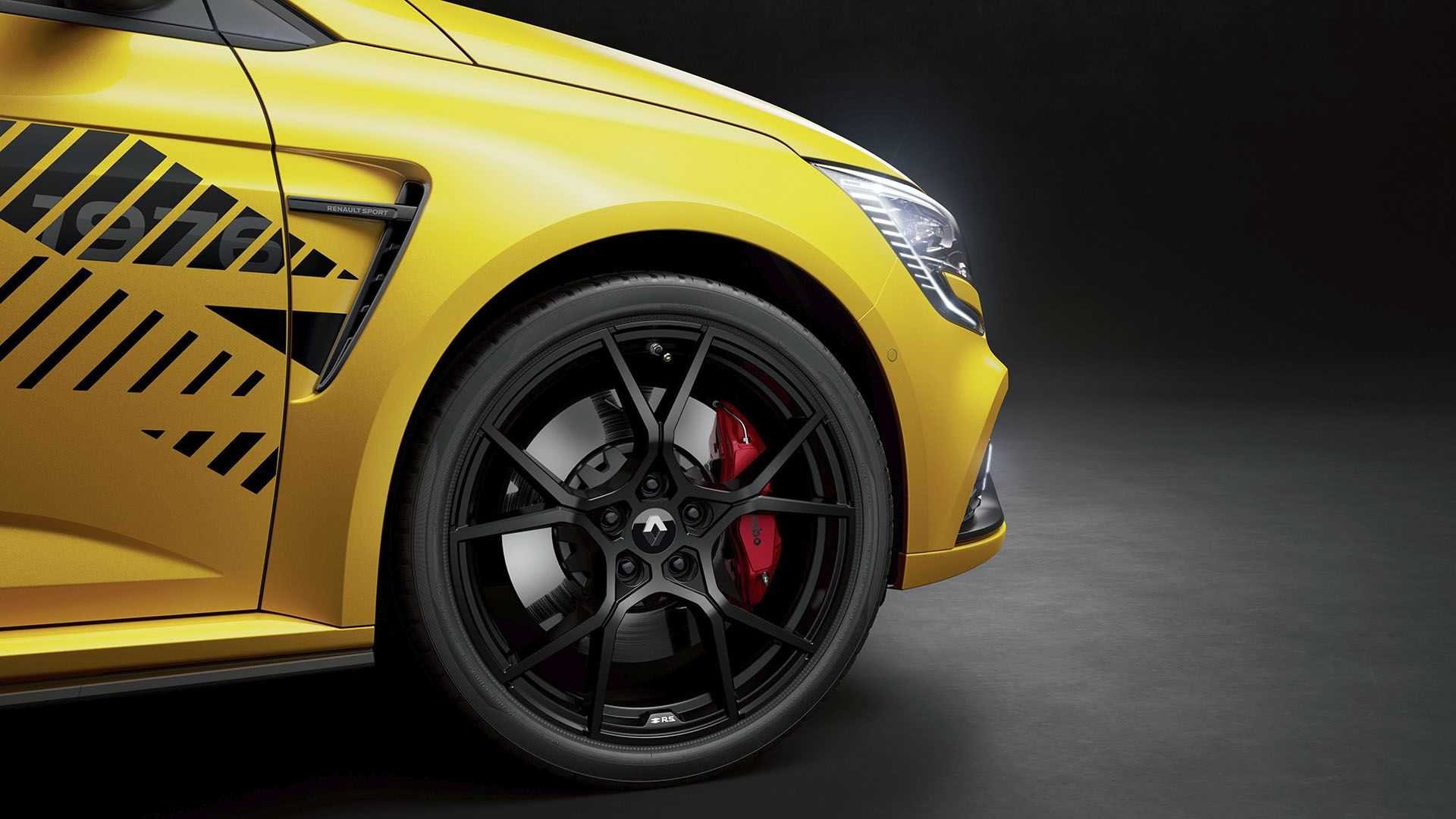
The Megane RS Ultime features unique graphics, like the year Renault Sport was established in 1976, there are four exterior colours (Pearl White, Tonic Orange, Star Black, and Sirius Yellow). The front is 60 mm wider, the rear 45 mmm wider and there are RS Vision LED headlamps complete with fog lights that are in the shape of the RS logo.
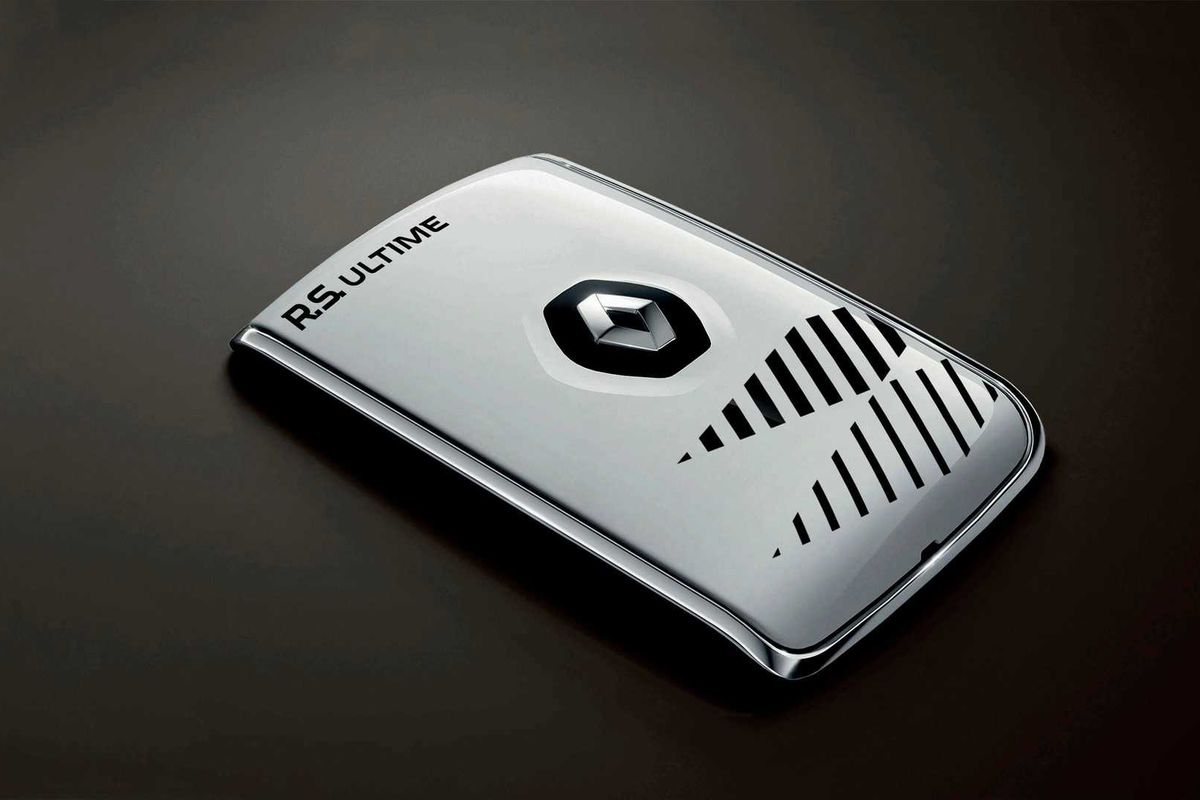
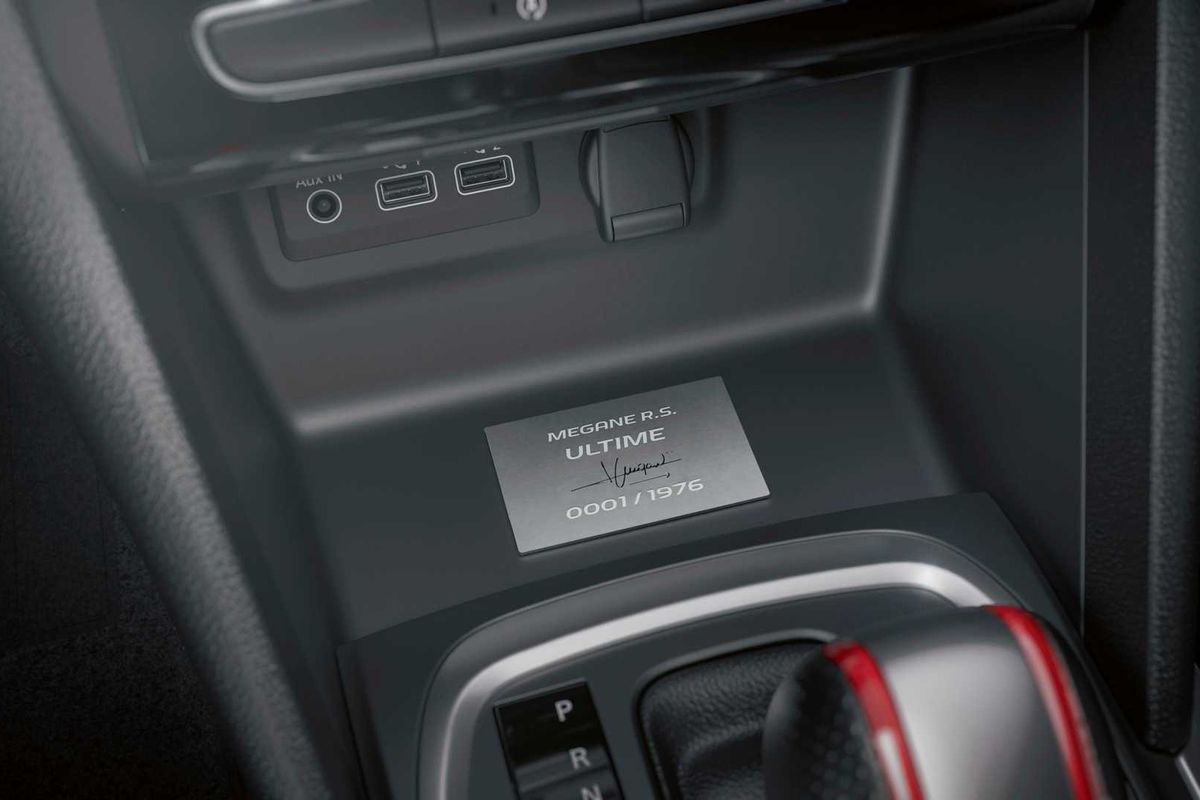
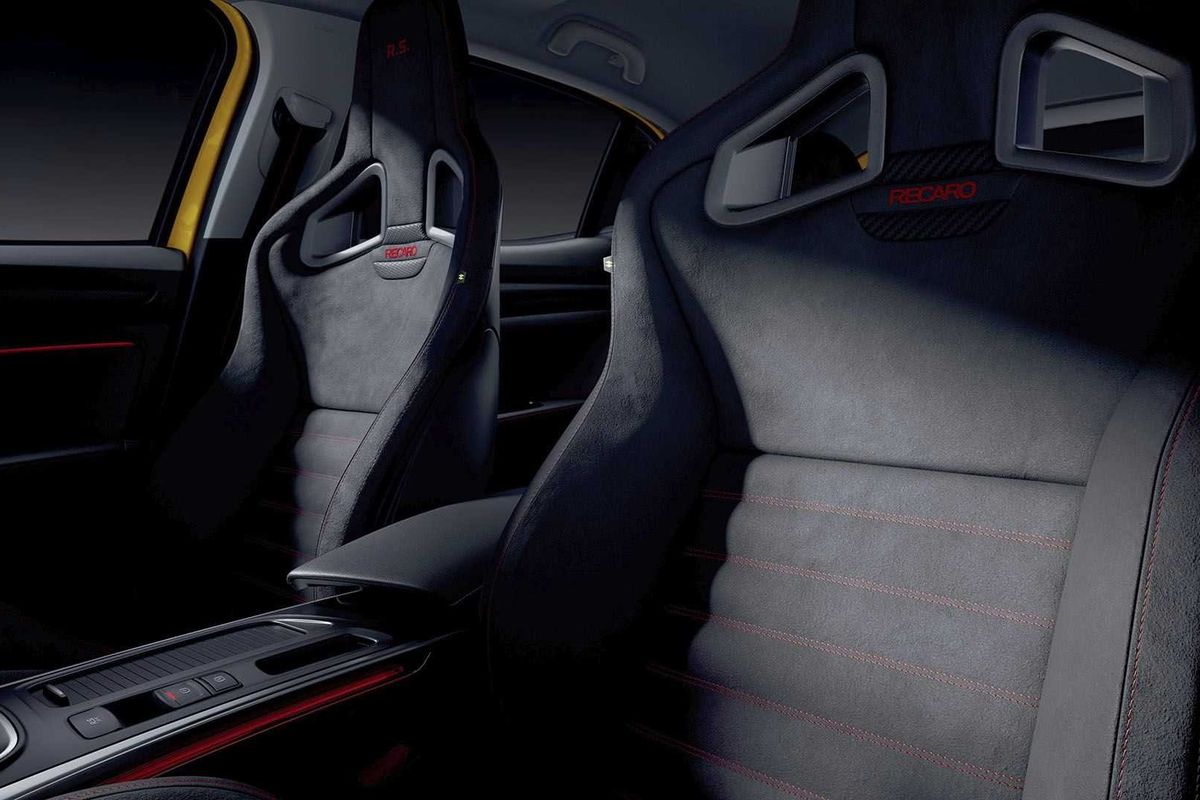
Inside are Recaro bucket seats in titanium black Alcantara upholstery and features RS embroidered logo. The key has Ultime branding on it, and each car features a metal plate with the car’s unique number. Just 1976 units will be built and at this stage it is unclear how many will be coming to SA. Given Renault SA’s past record with limited edition hot Meganes, there won’t be many.
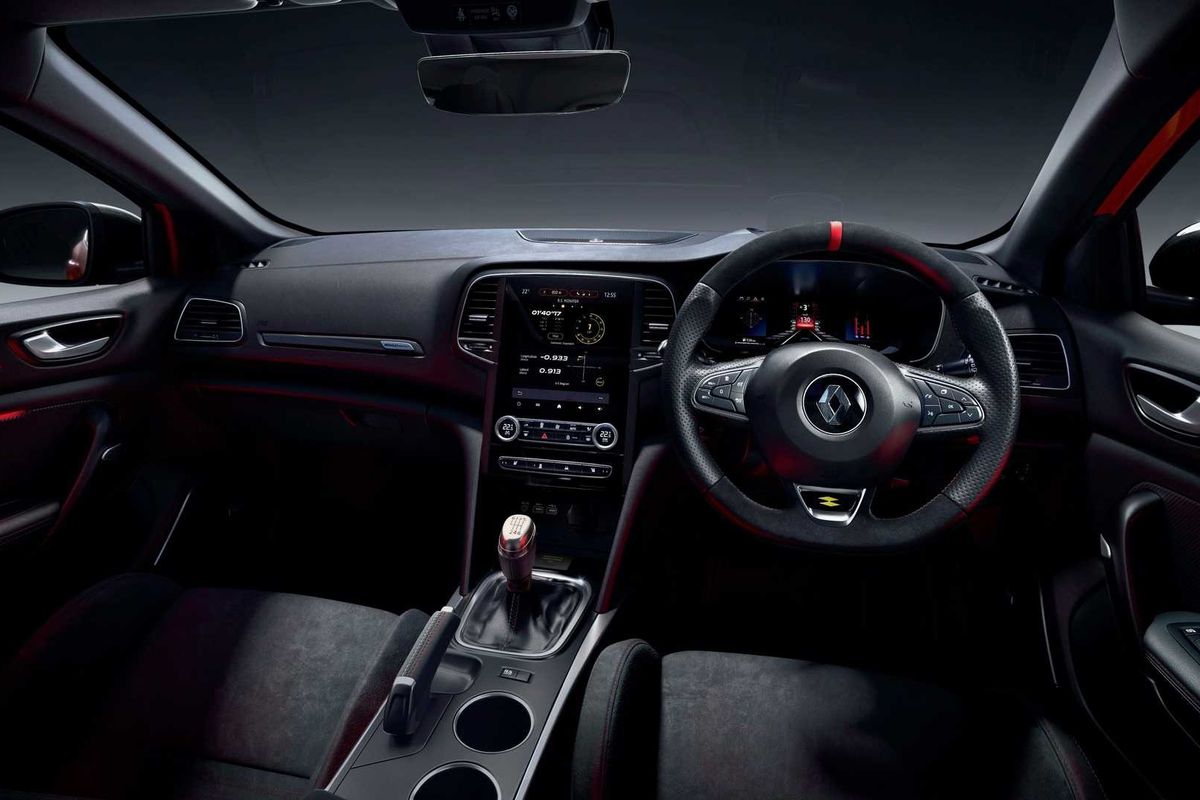
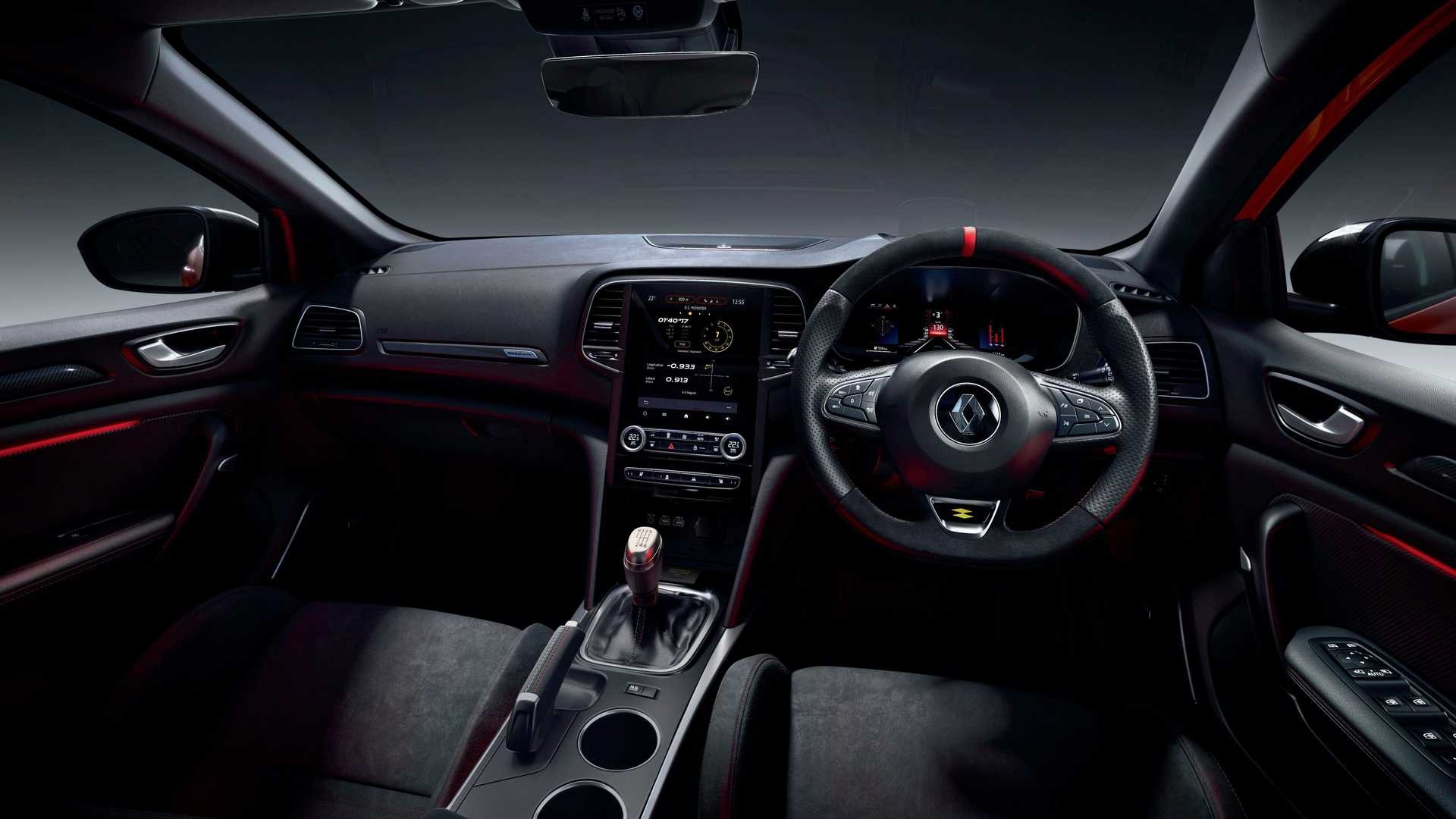
Standard specification is impressive with a 9.3-inch navigation screen, Bose audio, 10-inch digital display, on-board telemetry system, adaptive cruise control, 360-degree camera. Options are for left-hand drive cars only, which is strange, but they range from a heads-up display to a sunroof.
Under the bonnet is a 1.8-litre turbocharged 4-cylinder petrol engine with 224 kW and 420 Nm, driving the front wheels via a dual-clutch transmission. A claimed sprint time of 5.7 seconds to 100 kph makes it impressive for a front-wheel drive performance car. On the corners are 19-inch wheels wrapped in Bridgestone Potenza semi-slick tyres.
For the handling fanatics, there’s a lowered Cup chassis with hydraulic compression stops, 4-wheel steering, Torsen mechanical differential and Brembo brakes. Interestingly, there’s no mention of an Akrapovic exhaust – usually a standard feature of RenaultSport products.
The Megane RS Ultime is confirmed for a South African market introduction at some point in 2023.
Updated Jaguar I-Pace Confirmed for South Africa
Jaguar has announced some updates to its all-electric I-Pace and the good news is it’s confirmed to land in SA in the middle of 2023.
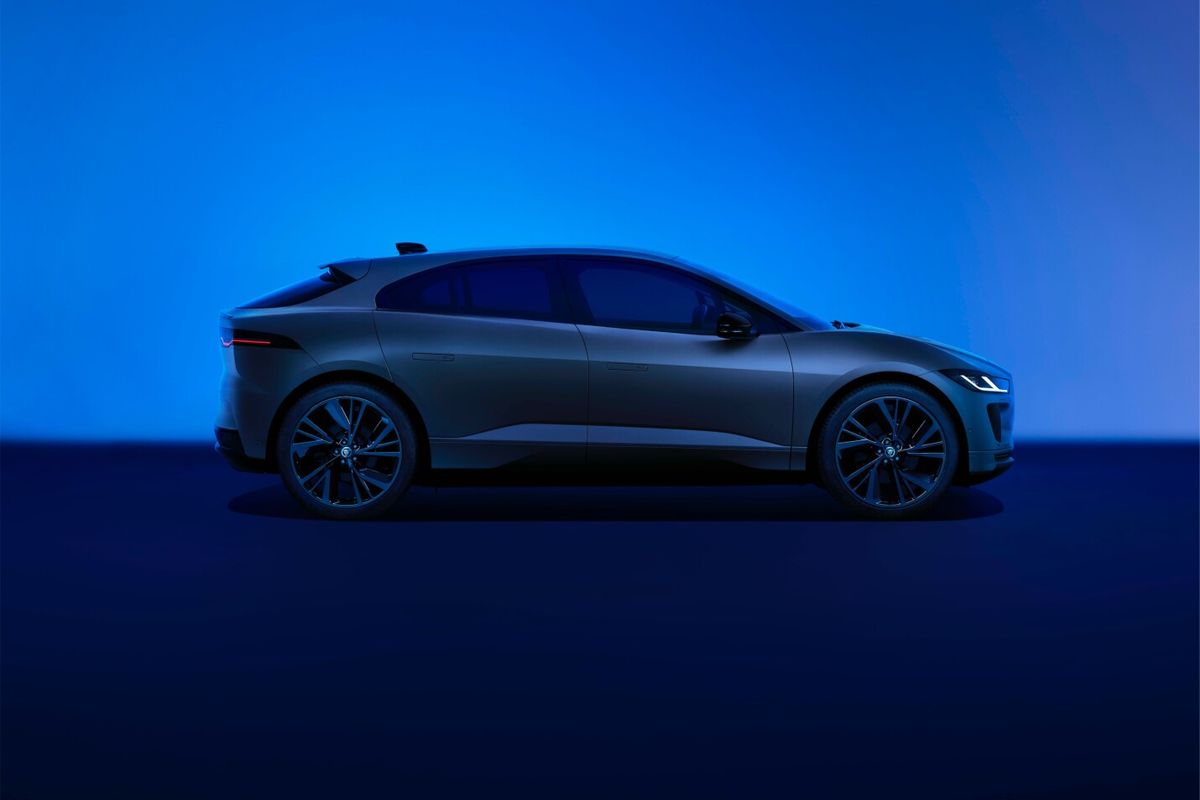
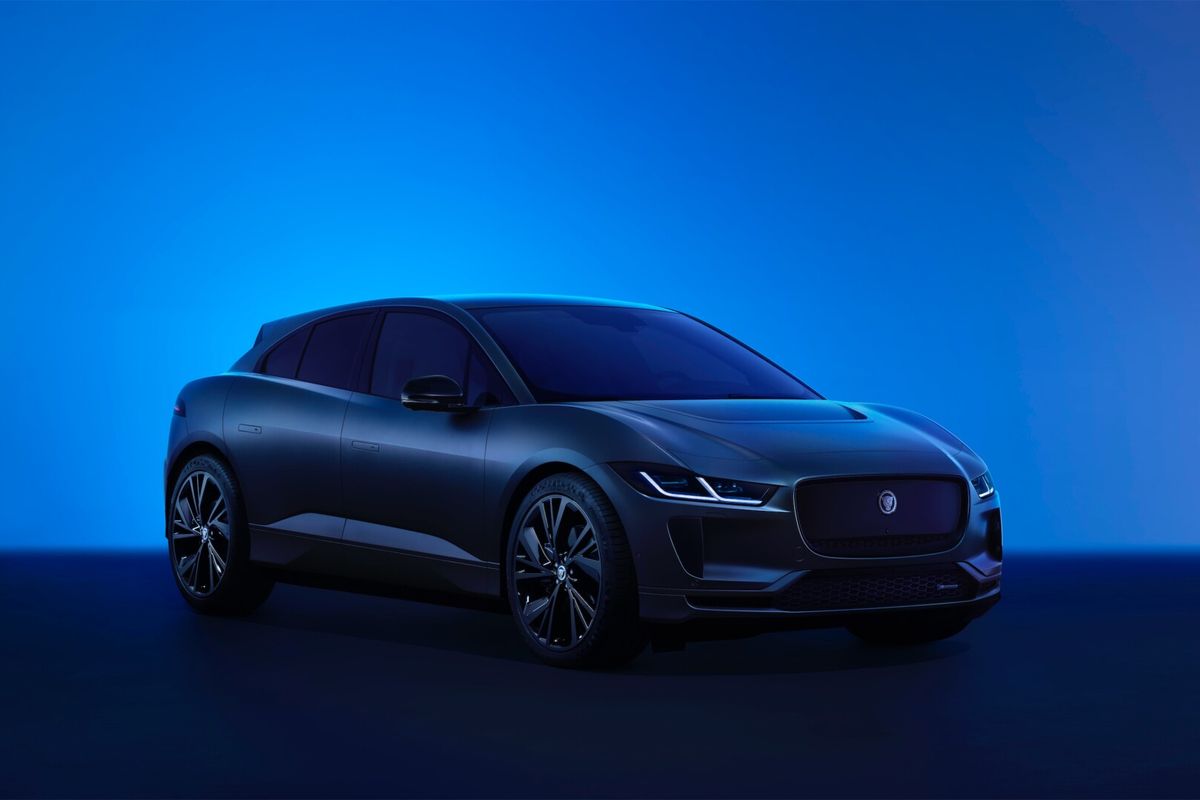
The Jaguar I-Pace was the British brand’s effort at offering an all-electric performance SUV and some would say that it did a good job of being first to market from the legacy brands. It’s won numerous awards across the globe, but in the era when technology moves exceptionally fast, it needs to be kept relevant.
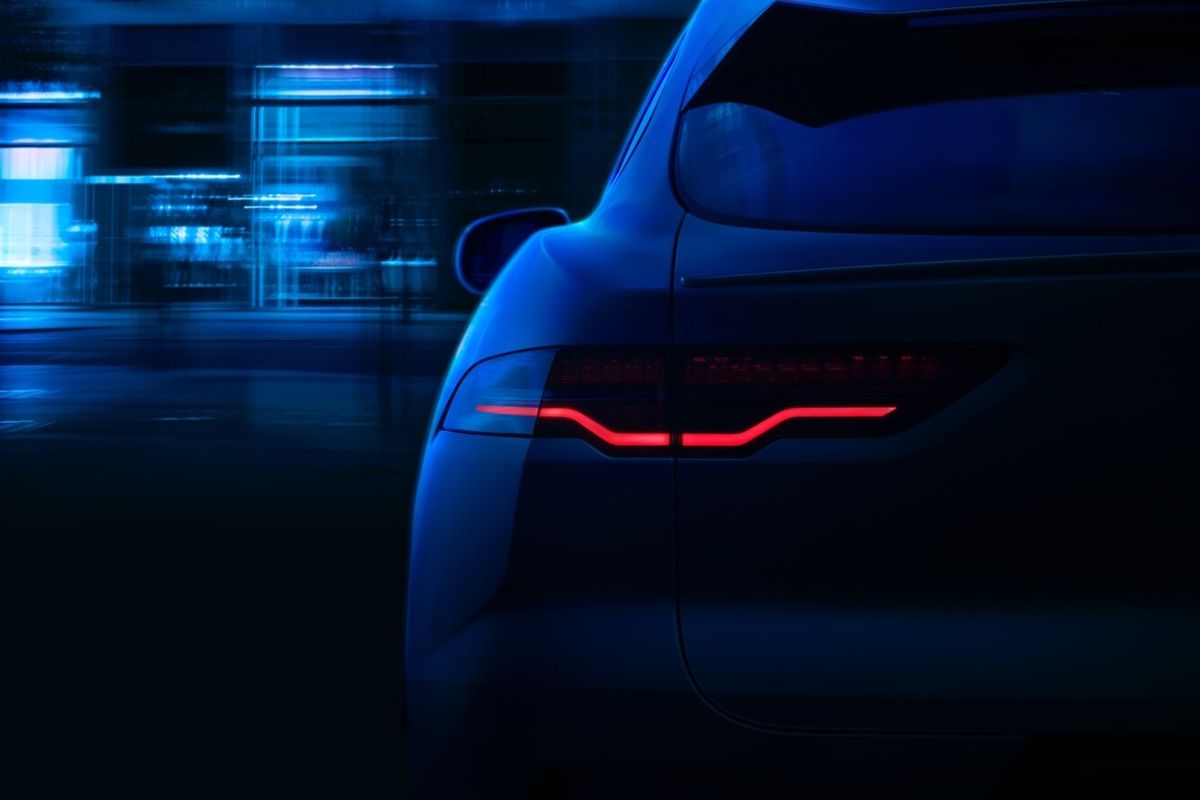
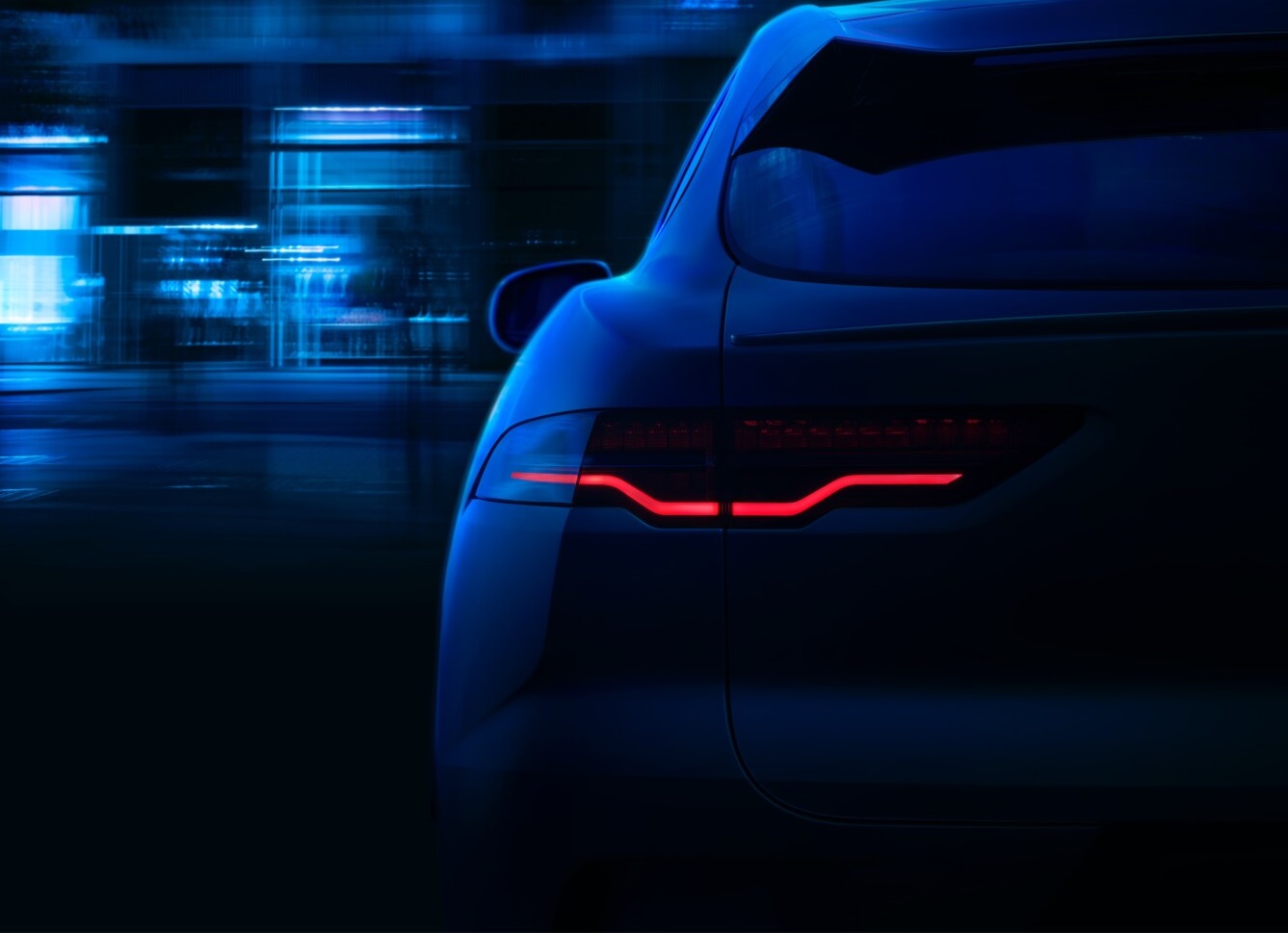
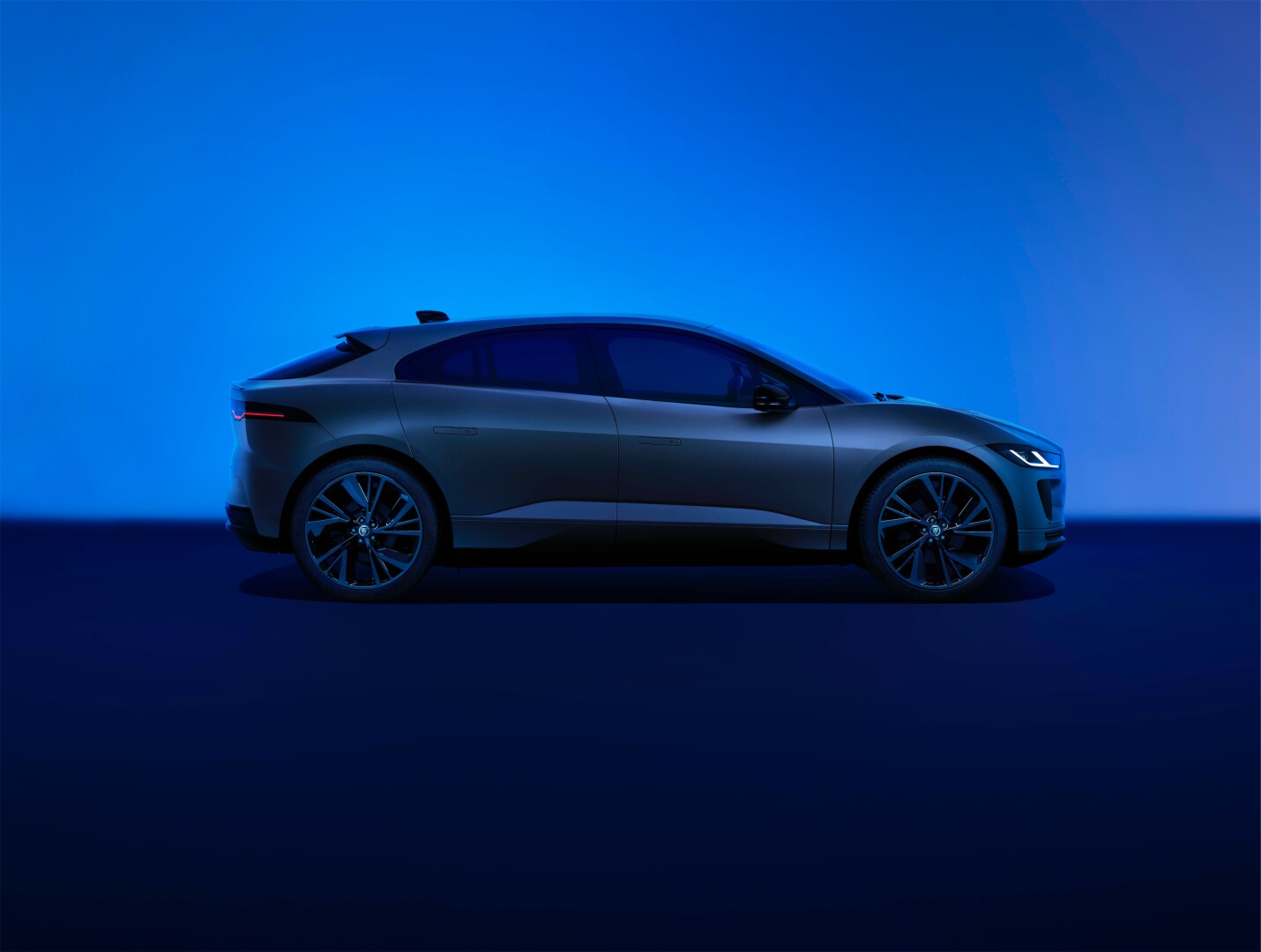
Which is why Jaguar has just announced updates to it. The updated 2023 Jaguar I-Pace gets some small visual updates. You can spot the newer model with its new-look front grille, body-coloured lower door finishers and diffuser and there’s now the option of a contrast panoramic roof. Jaguar is also offering some satin paints and R-Dynamic trim.
There’s a 90 kWh lithium-ion battery that powers a motor on each axle and the I-Pace is good for a 0-100 kph in just 4.8 seconds. A range of 470 km is claimed based on the WLTP cycle. It can be charged using a 100 kW DC box that will give it a range of around 127 km in just 15 minutes. SA customers with 3-phase supply and the 11 kW home wall box will get around 53 km per hour, and a full charge takes 8.6 hours. Single-phase customers on a 7 kW home wall box get 35 km per hour and a full charge in 12.75 hours.
Inside, the 2023 Jaguar I-Pace features the brilliant Pivi Pro infotainment system and wireless Apple CarPlay and wireless Android Auto is now standard across the range. Over-the-air updates are standard too.
Updated Jaguar I-Pace SA ETA
The updated Jaguar I-Pace is confirmed to land in South Africa in the middle of 2023, but the order books are open now. Pricing will be confirmed closer to the time, but for the record, the current model retails at R2 074 700.
10 best-selling bakkies in South Africa: December 2022
Let’s look at December 2022’s sales figures and pick out South Africa’s best- and worst-selling bakkies for the final month of the year…
South Africa’s new-vehicle market grew 16.2% year on year to 41 783 units in December 2022, while the light-commercial vehicle segment (where volume is driven primarily by bakkies) ended the final month of the year on 10 438 registrations, representing similar year-on-year growth of 16.1%.
For the record, December’s light-commercial figure is 22.5% down on November’s effort, which was clearly reflected in the individual model sales figures, with only one bakkie managing to improve its tally month on month.
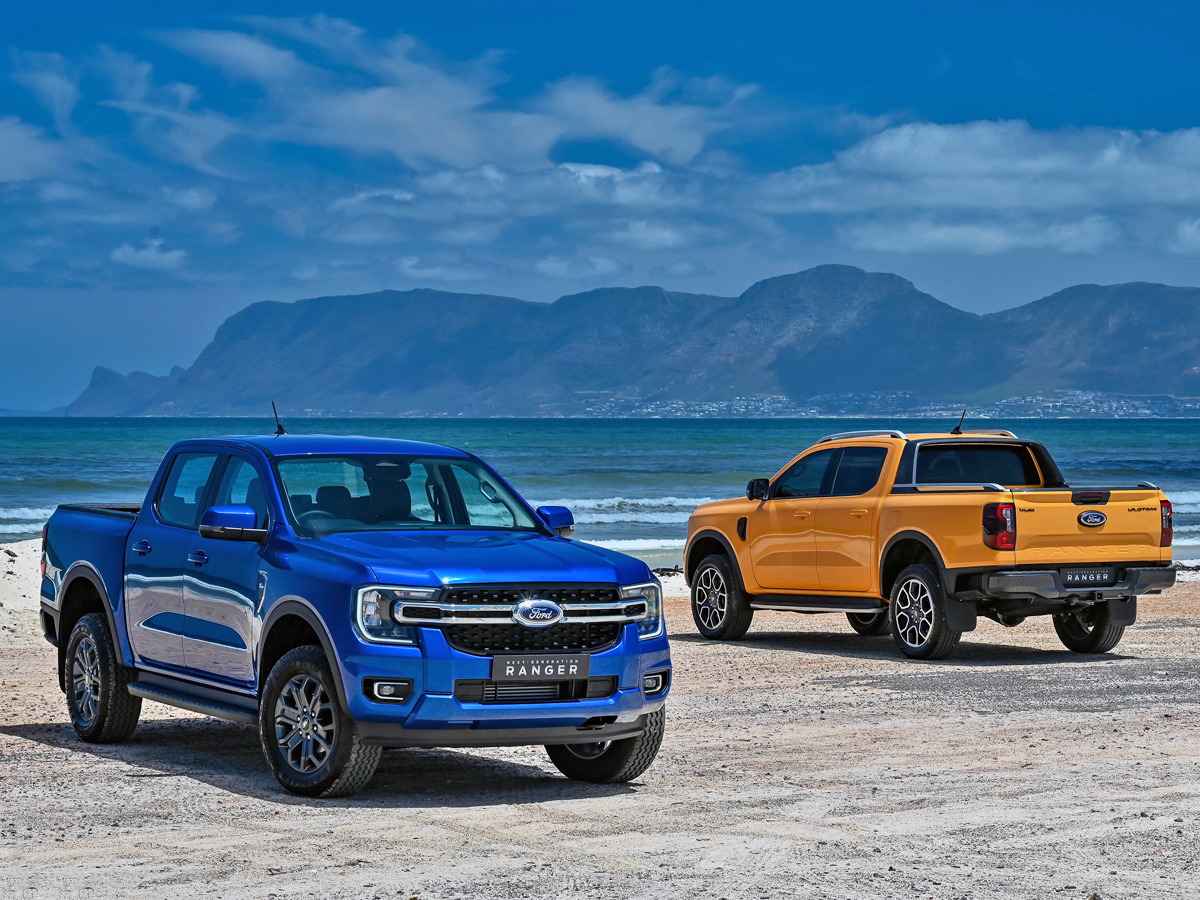
The Prospecton-produced Toyota Hilux retained its position at the sharp end of the list of South Africa’s best-selling bakkies, with 2 556 examples registered in December 2022. Despite the Silverton-built Ford Ranger’s transition to a new generation (and the fact only double-cab variants of the fresh-faced model became available locally in December), the Blue Oval bakkie hung onto second place with 1 495 units, well ahead of the Struandale-manufactured Isuzu D-Max (1 183 units).
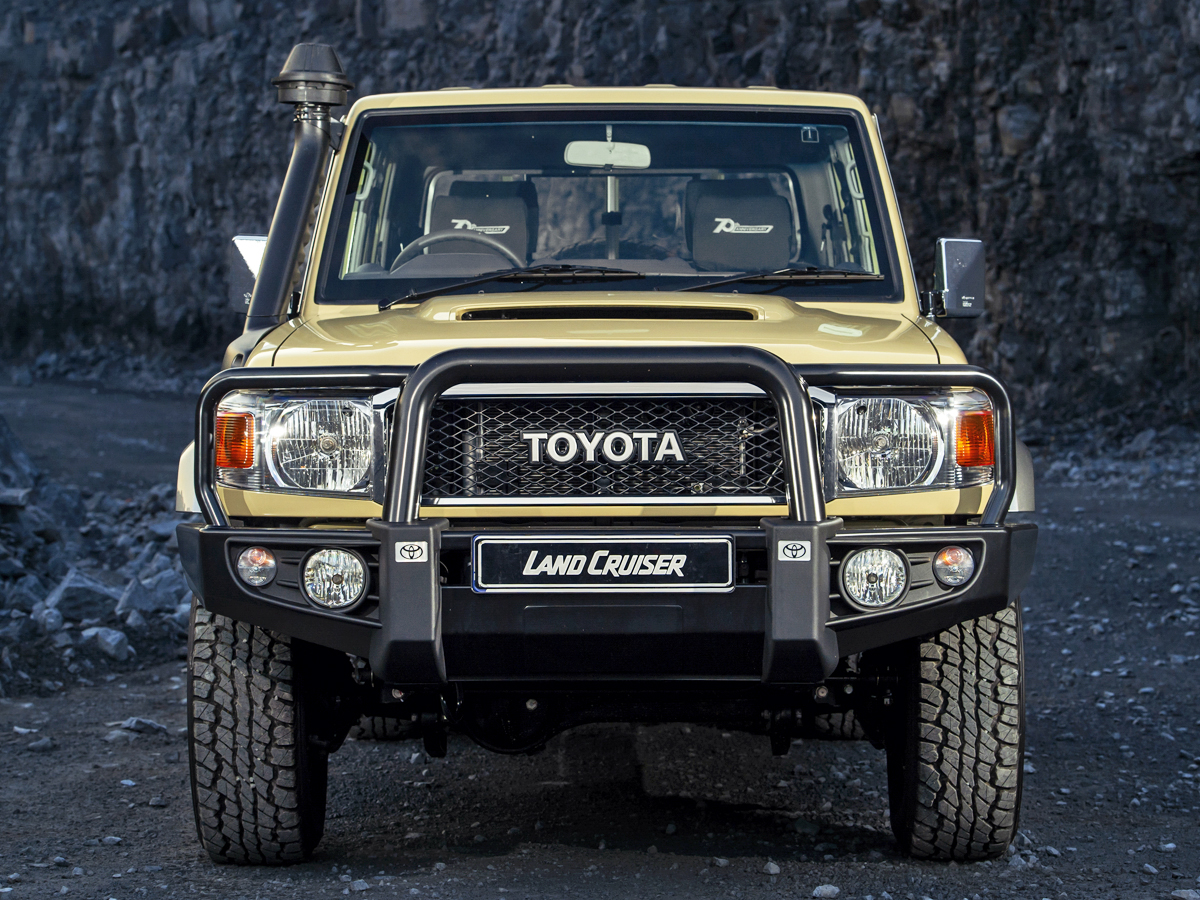
Despite its advanced age, demand for Toyota’s Land Cruiser 79 remains strong.
Though the Nissan NP200 (718 units) dropped into three figures, the Rosslyn-built half-tonner retained fourth place. The Mahindra Pik Up (460 units) and Nissan Navara (356 units) likewise held steady in fifth and sixth, respectively.
As the only bakkie to grow its sales tally compared with November’s effort, the evergreen Toyota Land Cruiser 79 (314 units) climbed two positions to seventh, meaning the GWM P-Series (292 units) and GWM Steed (279 units) each fell a spot to eighth and ninth, respectively. With 115 units registered, the outgoing Volkswagen Amarok again completed the top 10.
Best of the rest in December 2022
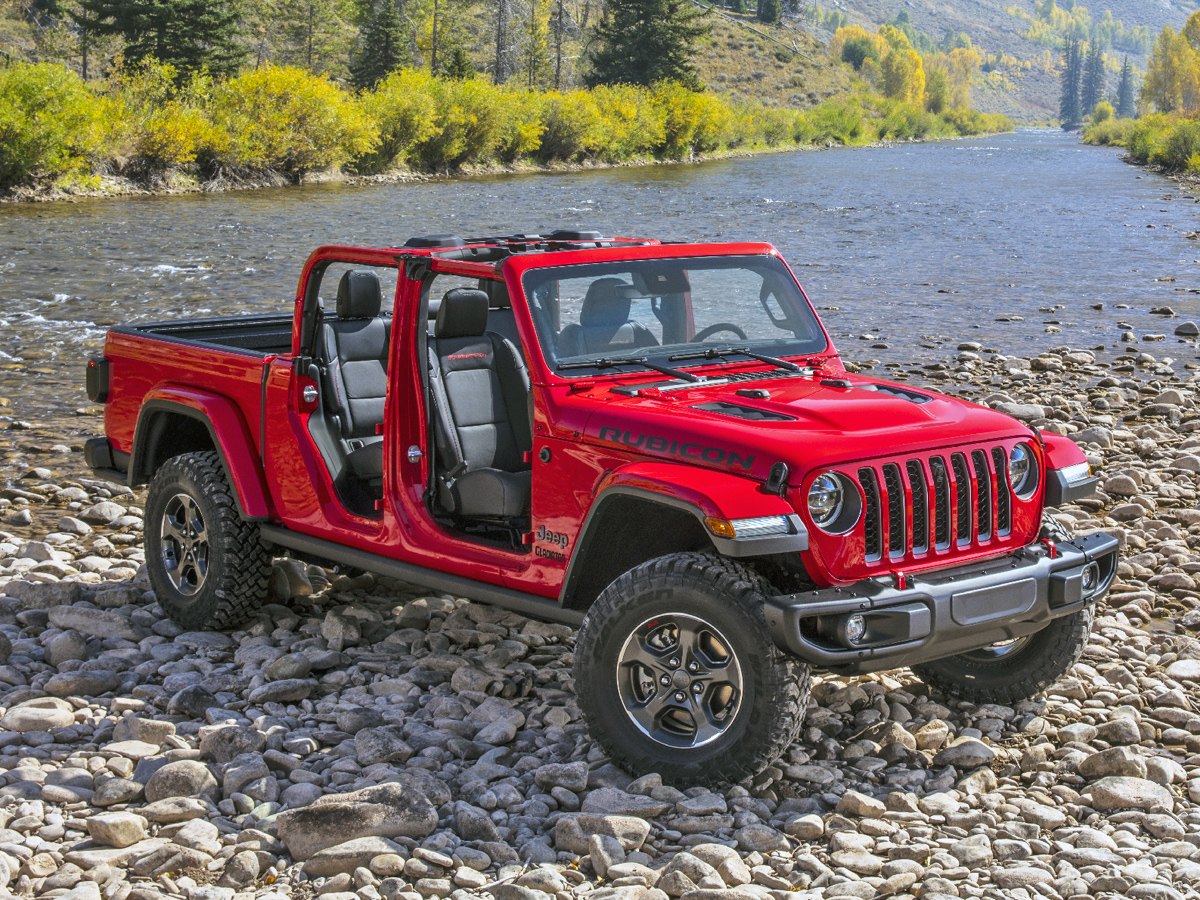
Jeep’s Gladiator improved from just a single sale in November to 20 registrations in December.
So, what about those models that didn’t manage to crack the top 10? Well, the Mitsubishi Triton was again the best of the rest in December 2022, with 77 units registered. Next came the Mahindra Bolero (32 units) and Peugeot Landtrek (28 units), followed by the Jeep Gladiator (20 units).
JAC’s T-badged bakkies (the Chinese automaker reports a combined figure for the recently expanded T6 and T8 line-ups) grew to 56 units, while Mazda could find homes for a mere four new examples of the BT-50.
Export winners in December 2022
After playing second fiddle to the Hilux on the export charts in November, the Ford Ranger returned to the top spot in December 2022, with 5 553 units shipped from local shores. The Hilux (3 152 units) was next, with the Nissan Navara (328 units), Isuzu D-Max (188 units) and Nissan NP200 (94 units) making up the export numbers.
Interestingly, the official Naamsa report shows 74 examples of the Mitsubishi Triton were also exported from SA in the final month of 2022 (nearly as many as were registered locally), along with 14 units of the likewise imported GWM P-Series and a single example of the Steed.
10 best-selling bakkies in South Africa for December 2022
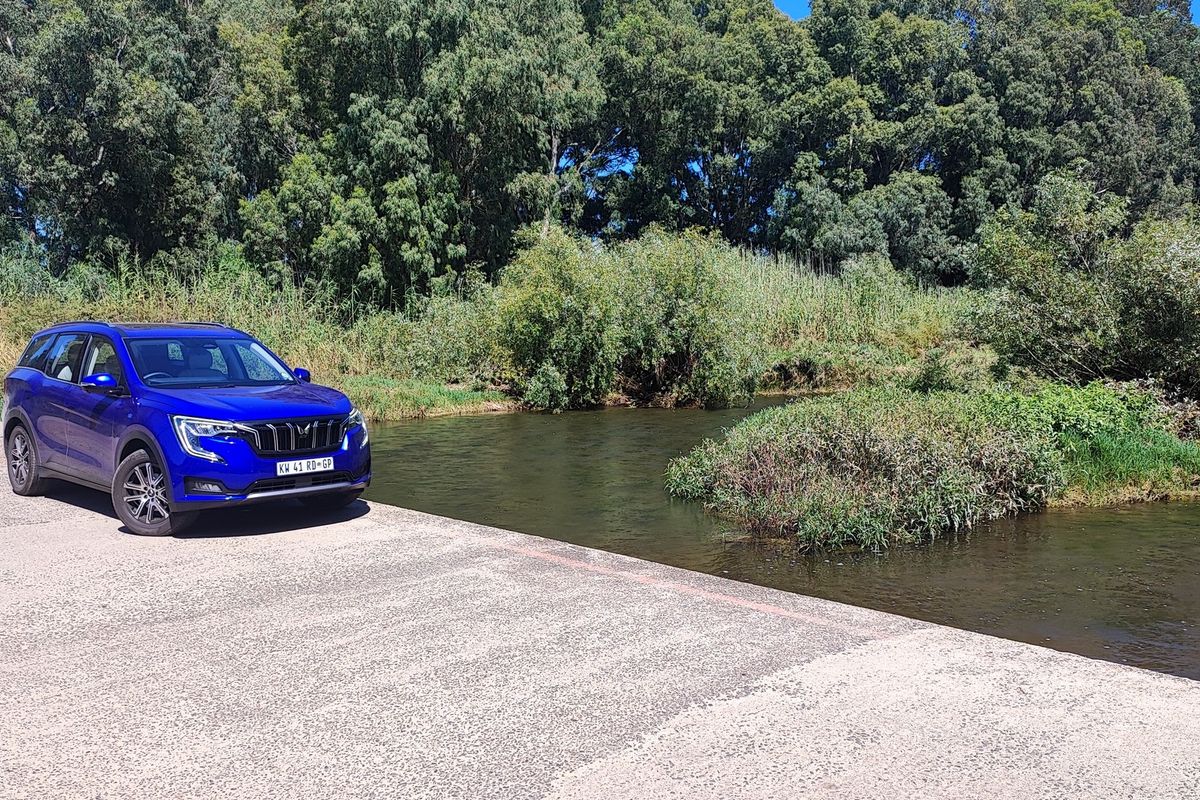
Mahindra’s new medium SUV – the XUV700 – joined our fleet just before the recent end-of-year break. Is the fresh offering from the brand any good? Let’s hit the road.
The best thing about conducting an extended test is that it provides an opportunity to form a more in-depth understanding (and, sometimes, appreciation) of a new model. Our usual 10-14 day tests are quite thorough, but because all testers need to have a chance to drive test cars during the rest of the year, individuals may not necessarily get enough seat time to notice all of a vehicle’s quirks and talents.
While most motoring journalists prefer to test products from established brands (so that they can have benchmarks on which to base their evaluations), I chose to veer off the established path this year and sampled the new Mahindra instead. Due to calendar clashes, we were unable to attend the local debut of the XUV700, but, when I had a small taste of a homologation unit of the model back in July 2022, I was quietly impressed with it. December, then, proved the perfect opportunity to assess the newcomer.
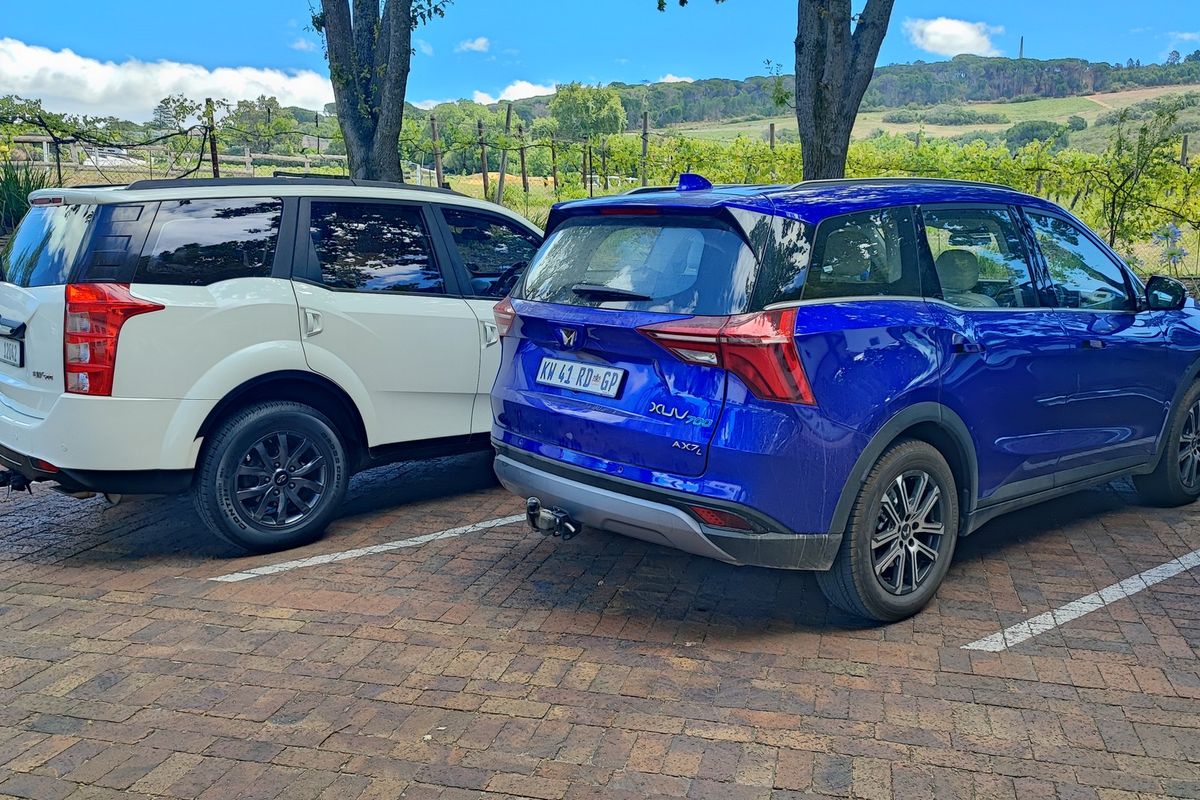
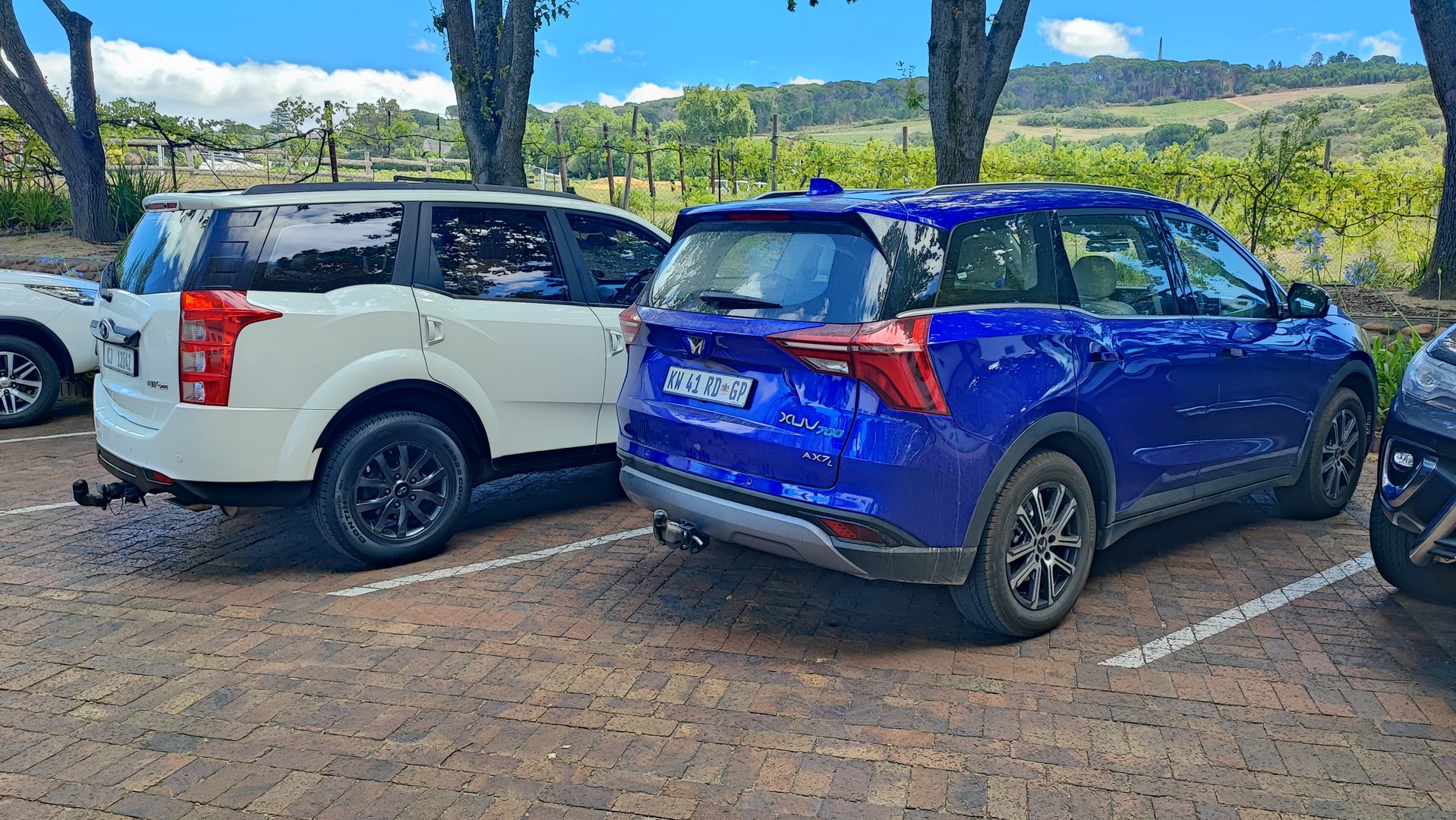
An older XUV500 meets its “successor”, the new XUV700.
The middling and (not to be too unkind) plain-Jane Mahindra SUV range from years ago is gone; it has been replaced by a line-up of thoroughly modern, well-equipped and nicely finished family cars. The Indian brand is on the up; first, it launched the underrated XUV300 (one of the safest models in its class) and now the XUV700. Clearly, Mahindra, which recently adopted a new logo, has done something right – the XUV700 has been voted Car of the Year in its home country, where the waiting list for one is long.
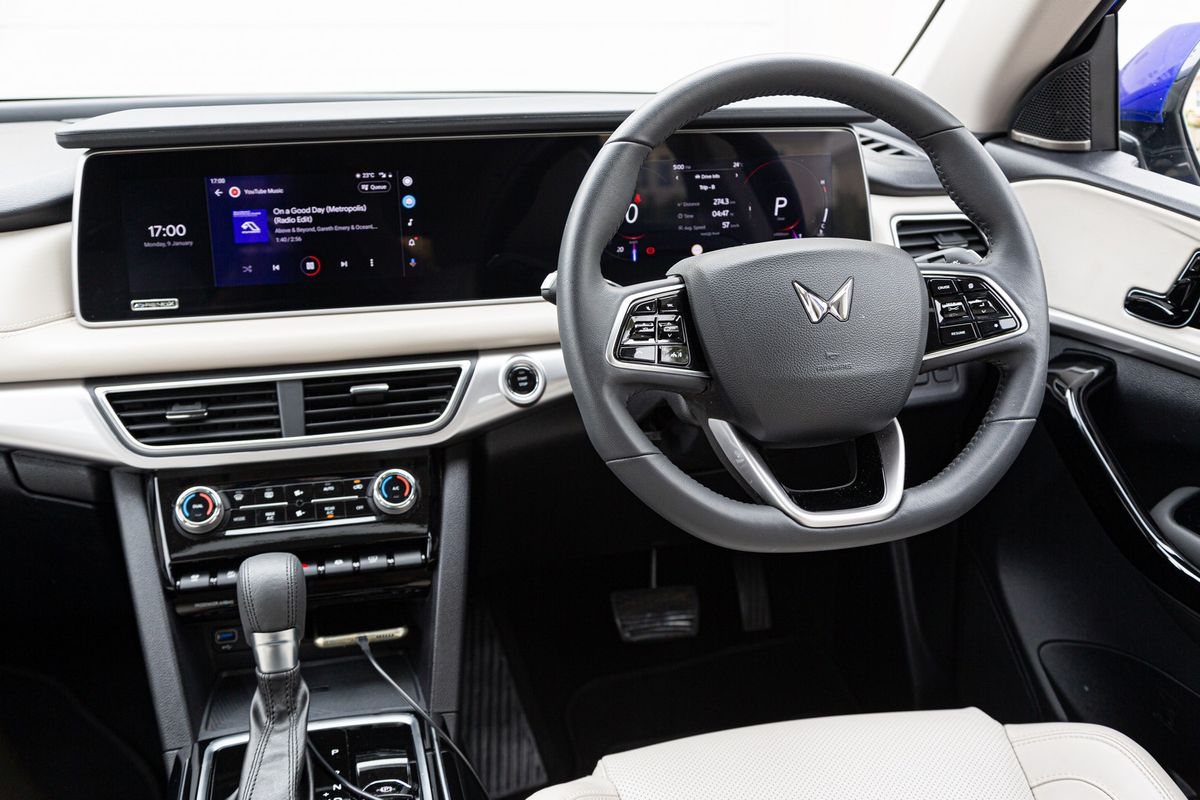
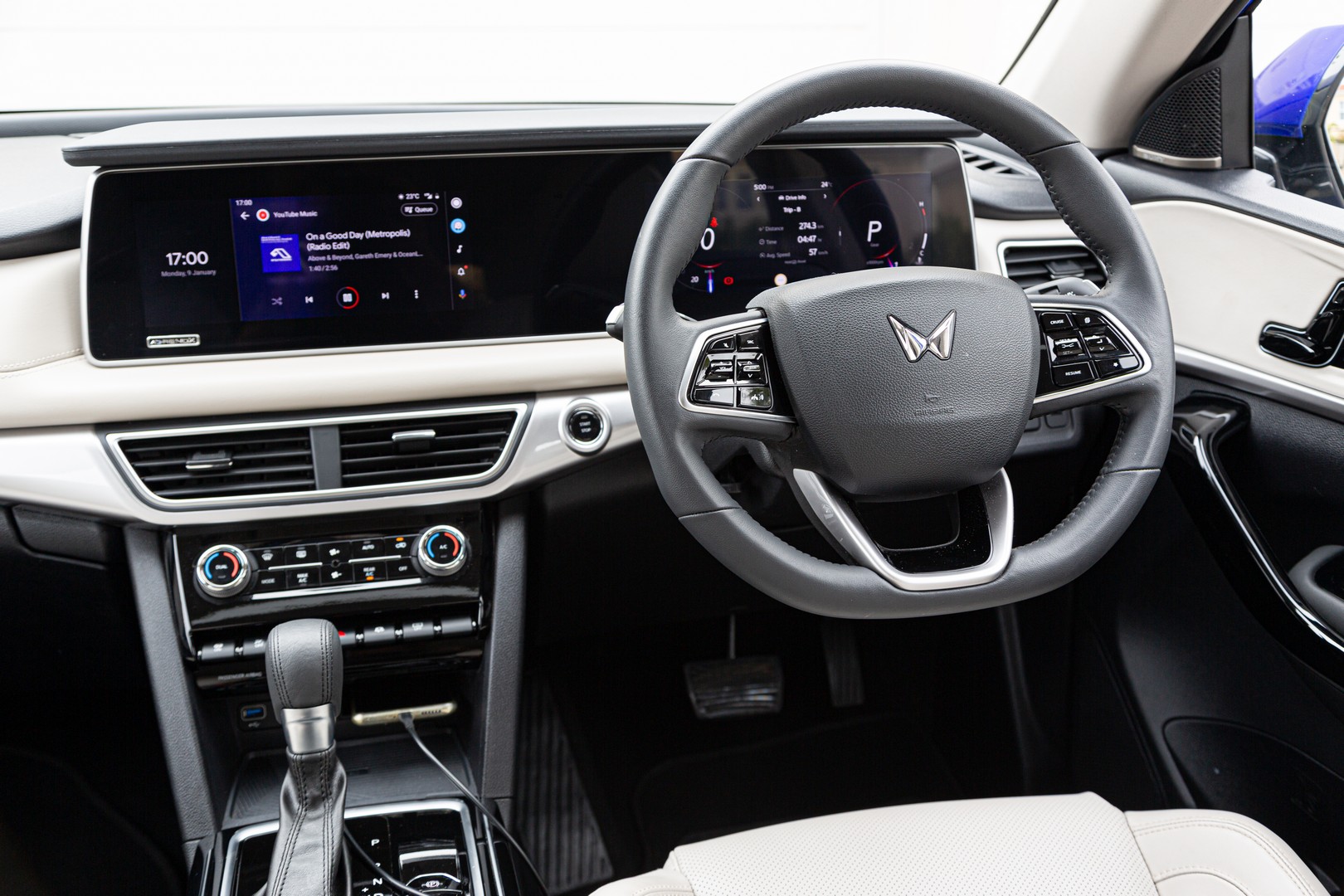
The cabin looks and feels modern and upmarket.
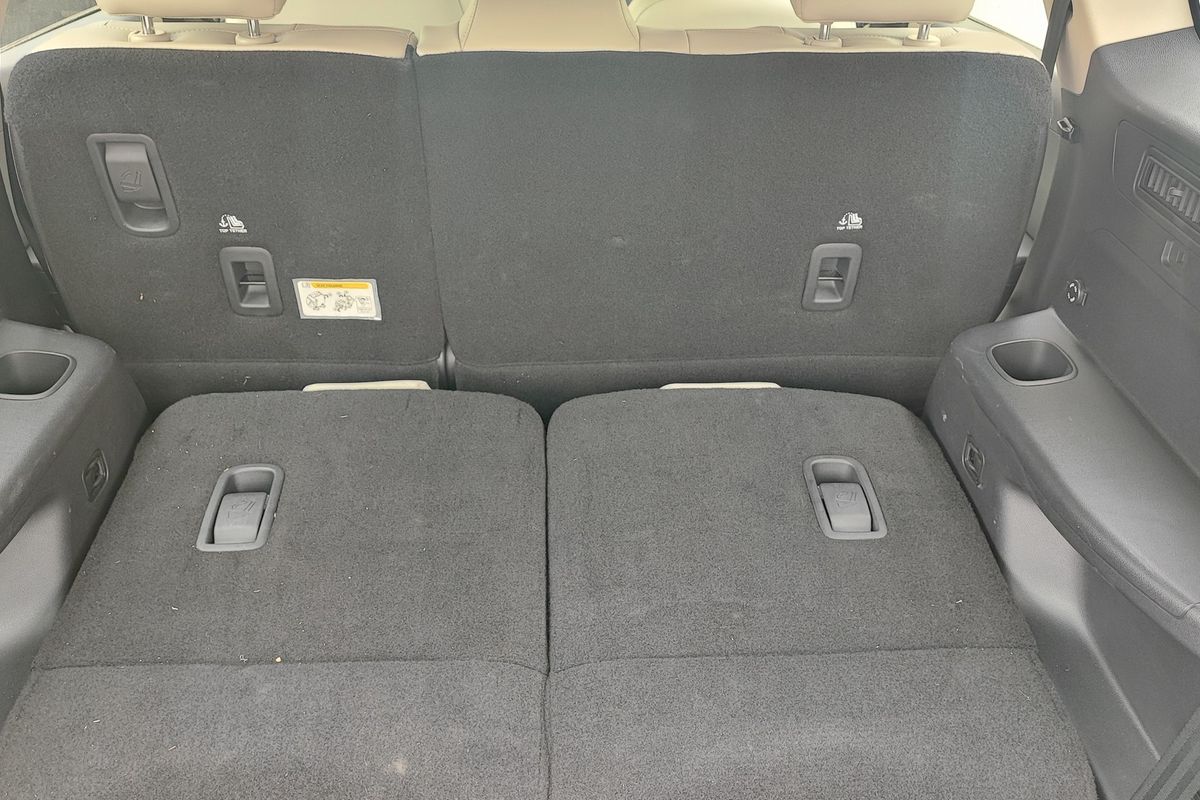
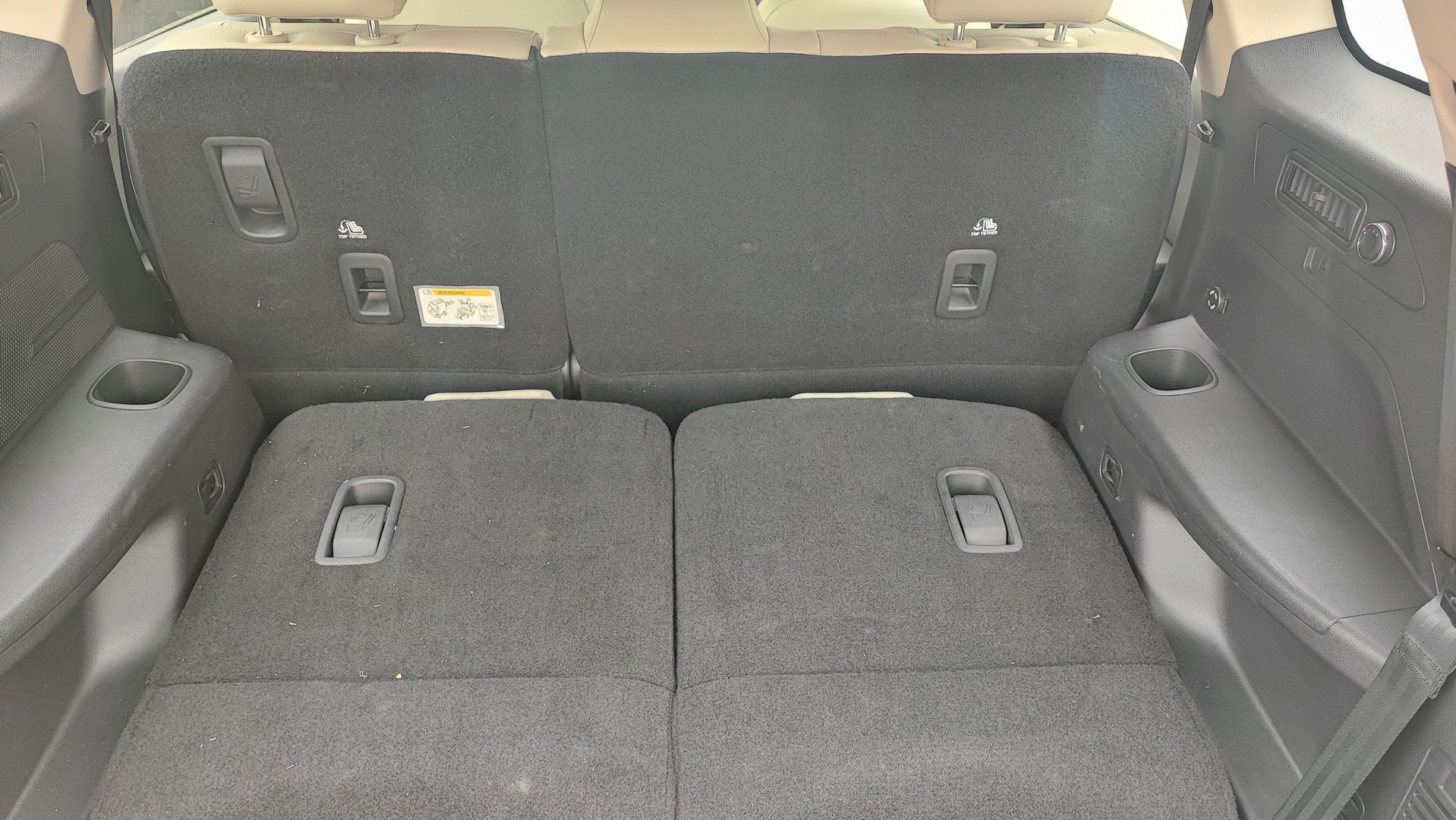
There are 3 derivatives in the XUV700 range and our test unit was the top-of-the-range 2.0T AX7 L. The entry point to the new range is a 5-seater, with the middle and top versions being 7-seaters. Like virtually all medium SUVs that offer 3rd-row accommodation, the Mahindra’s luggage space is limited when all seats are in use. Fortunately, we didn’t need to utilise the additional seats, so they stayed folded flat.
The third row of seats neatly folds away. Note the ventilation controls for rearmost occupants.
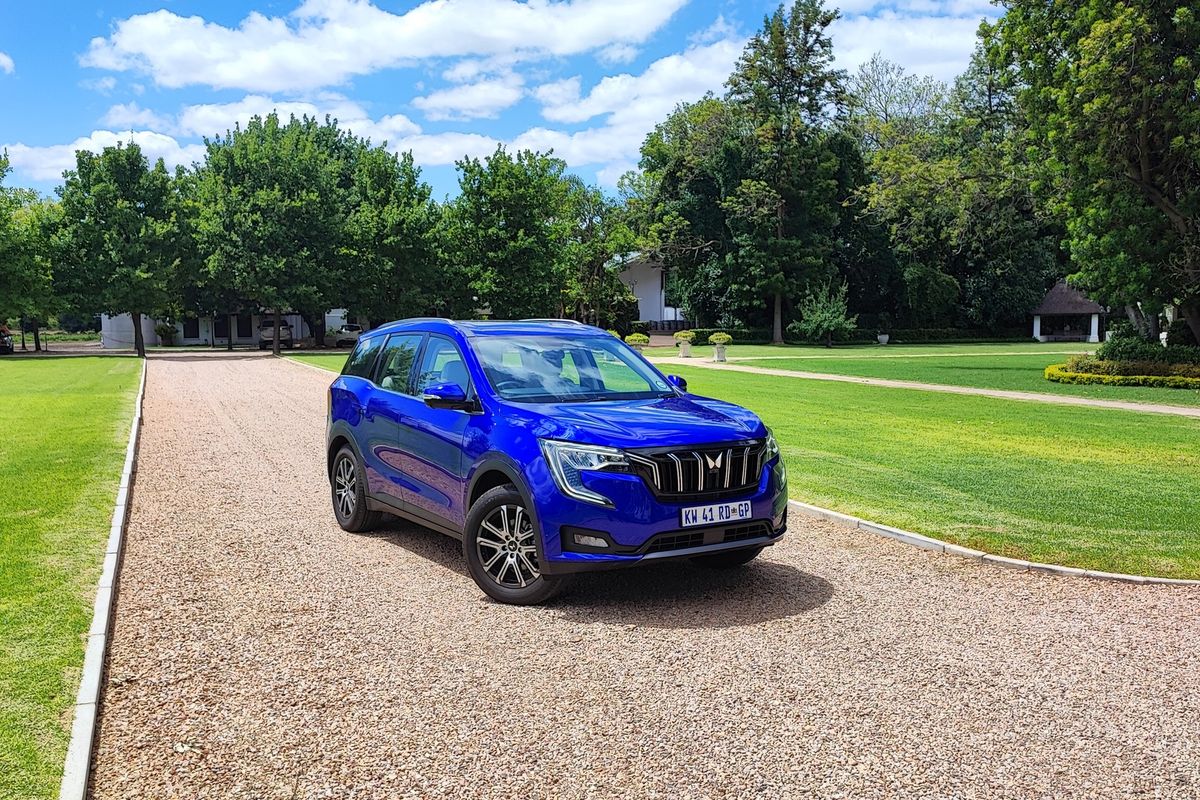
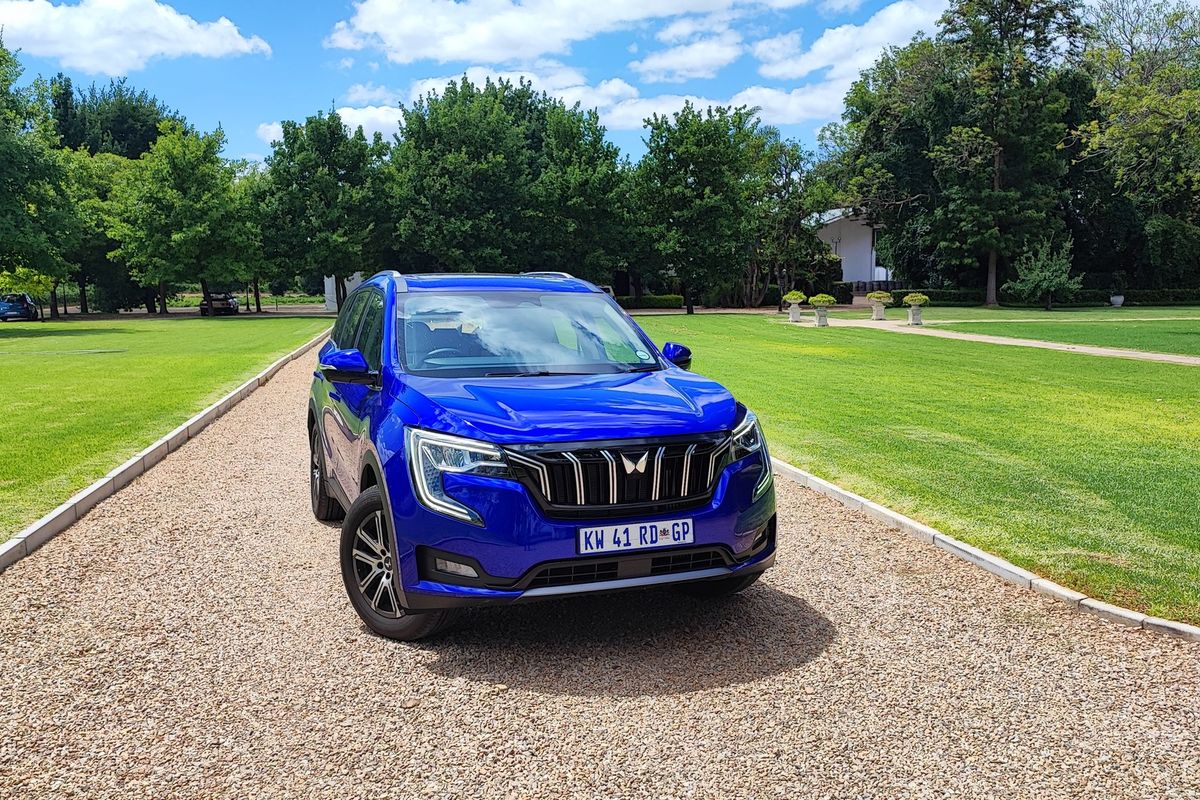
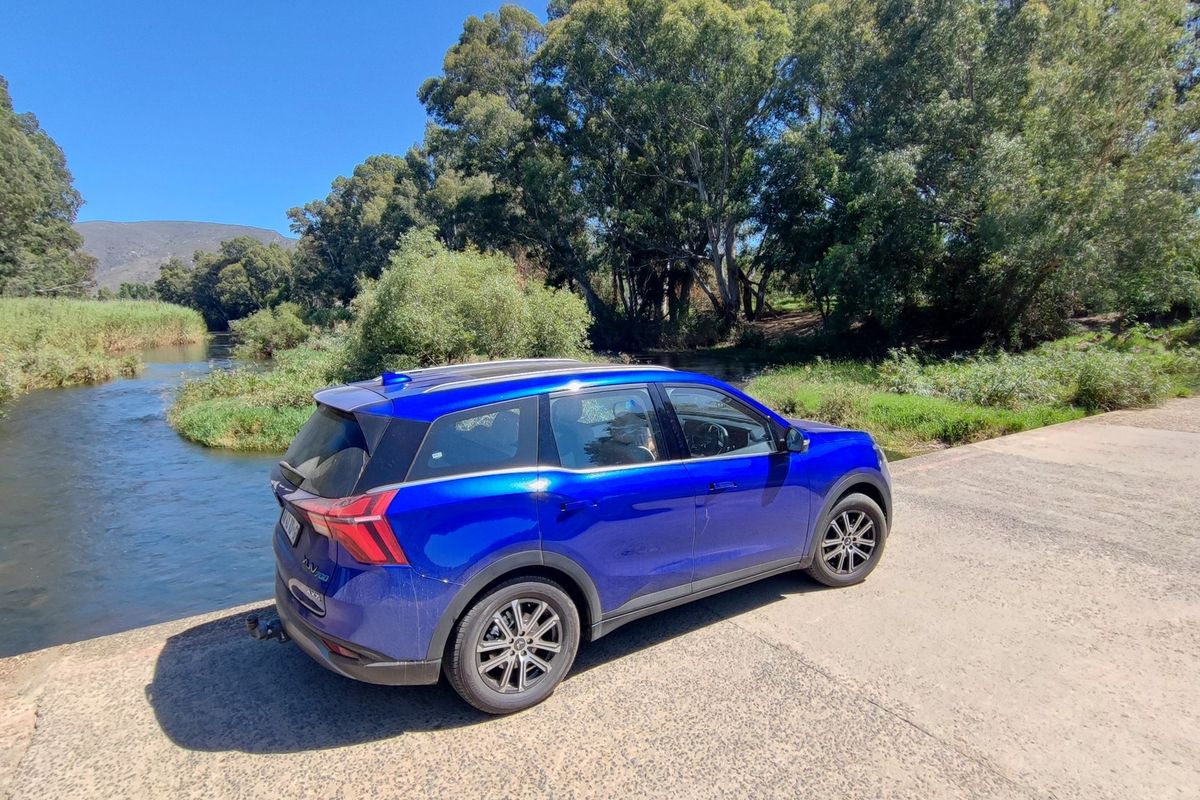
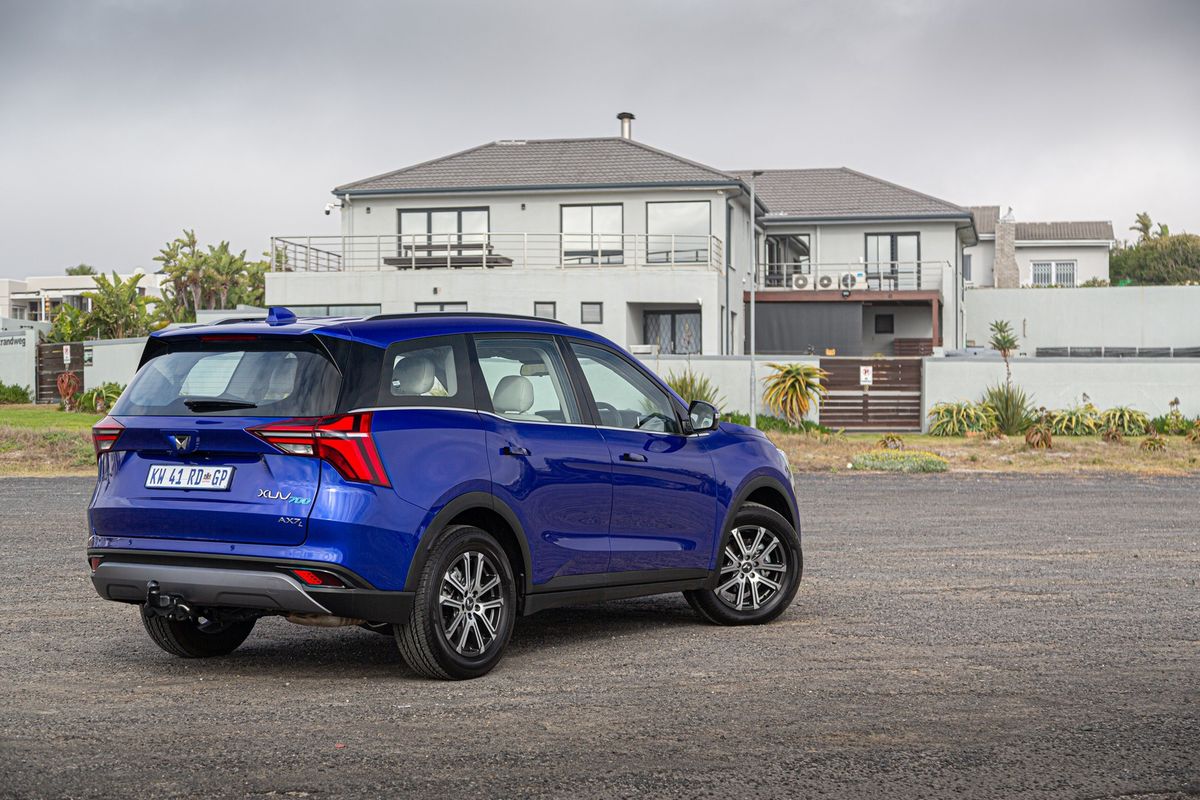
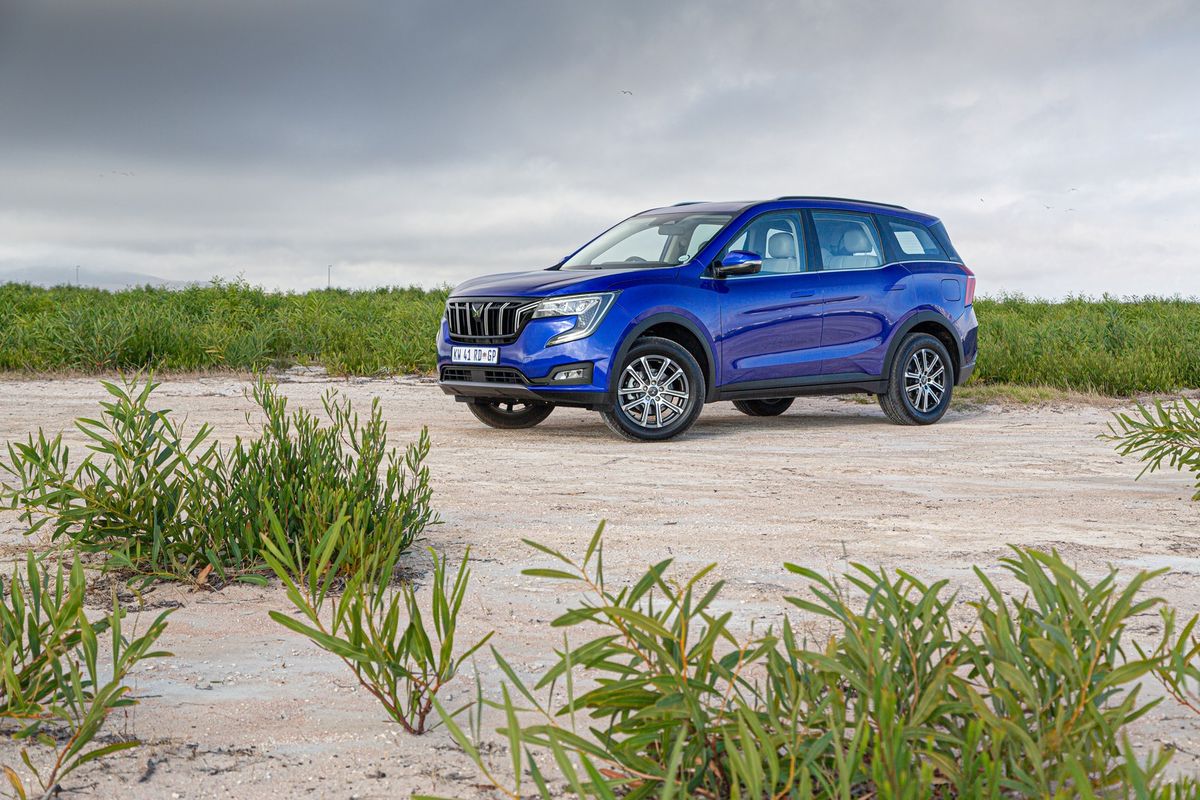
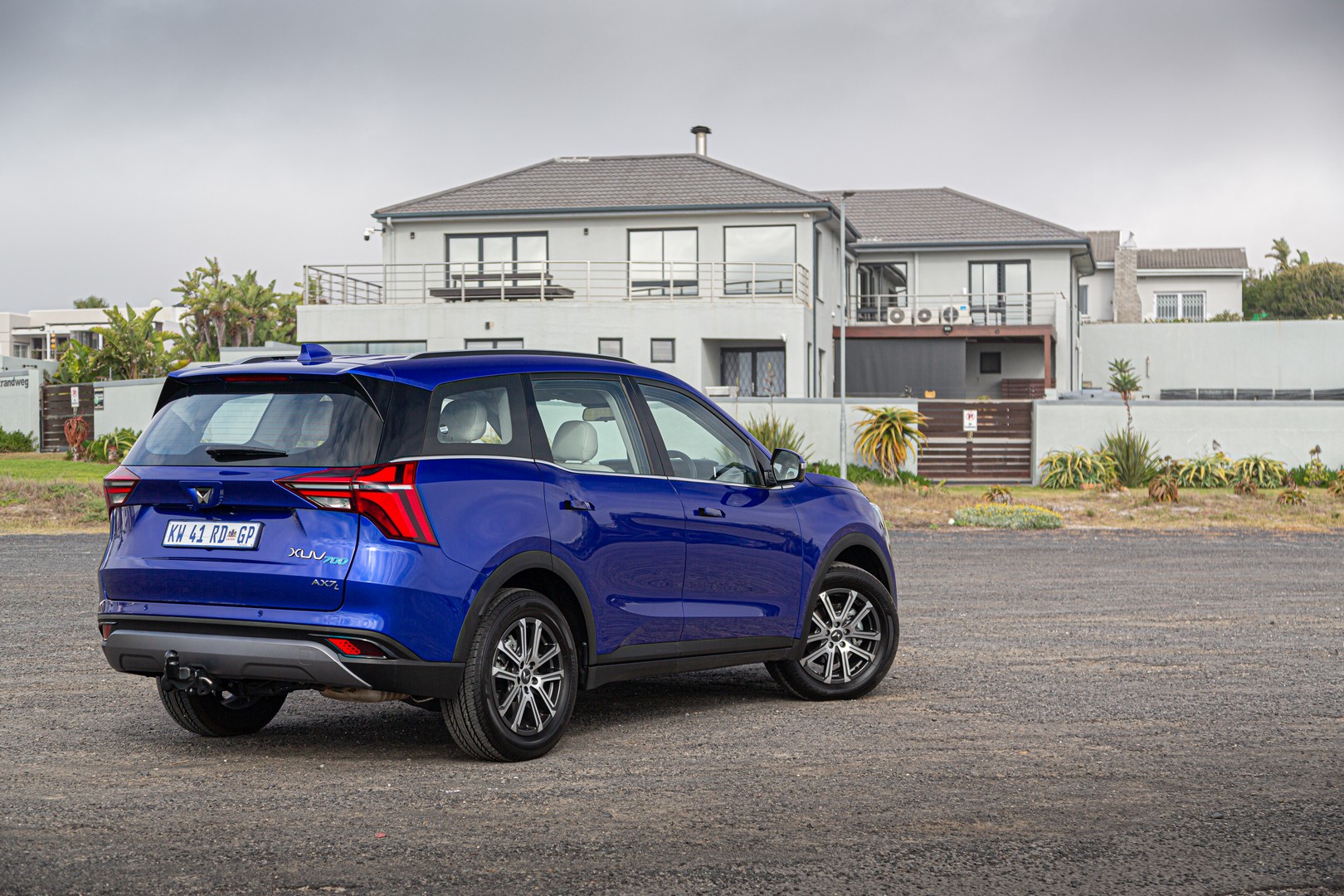
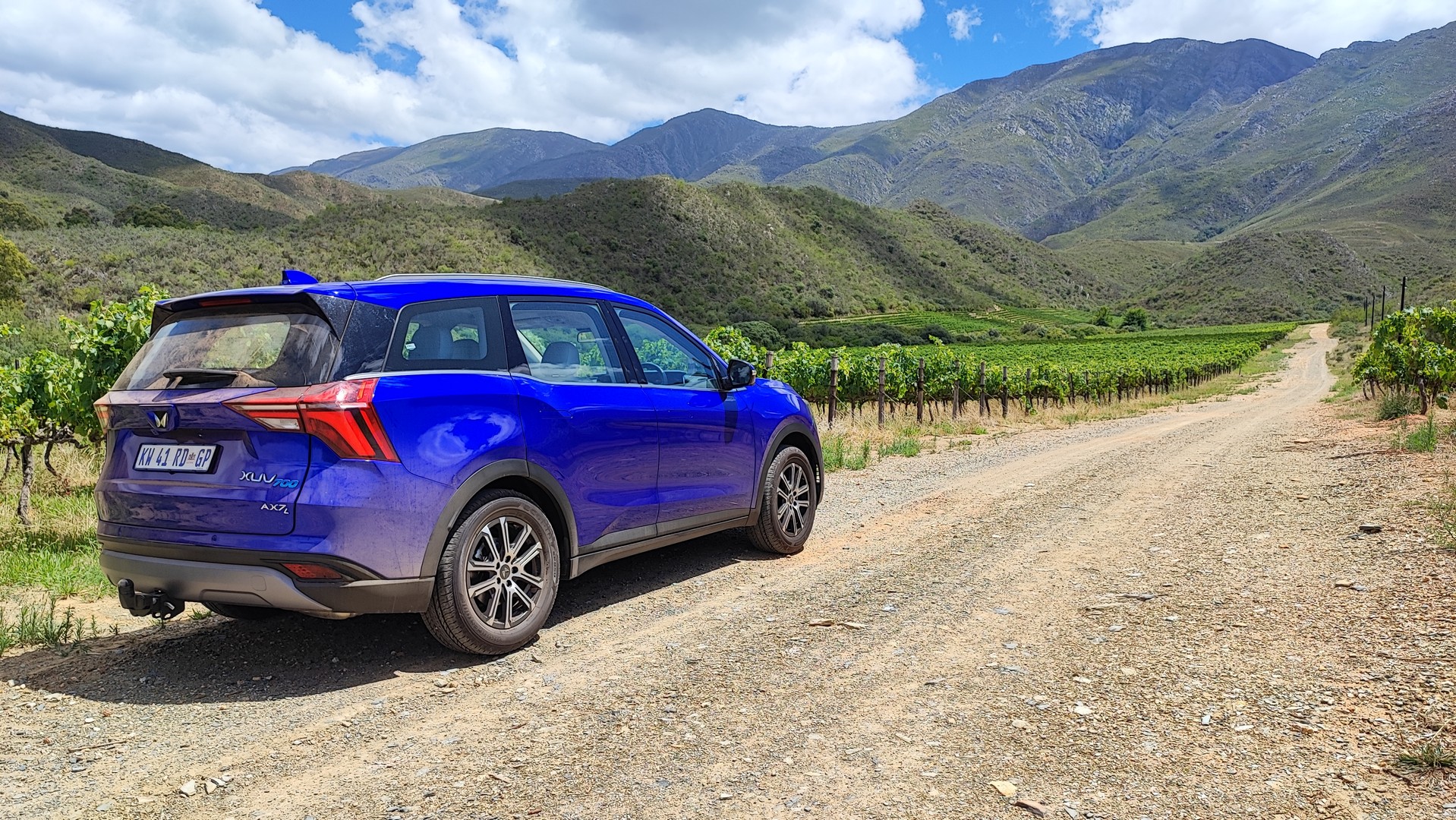
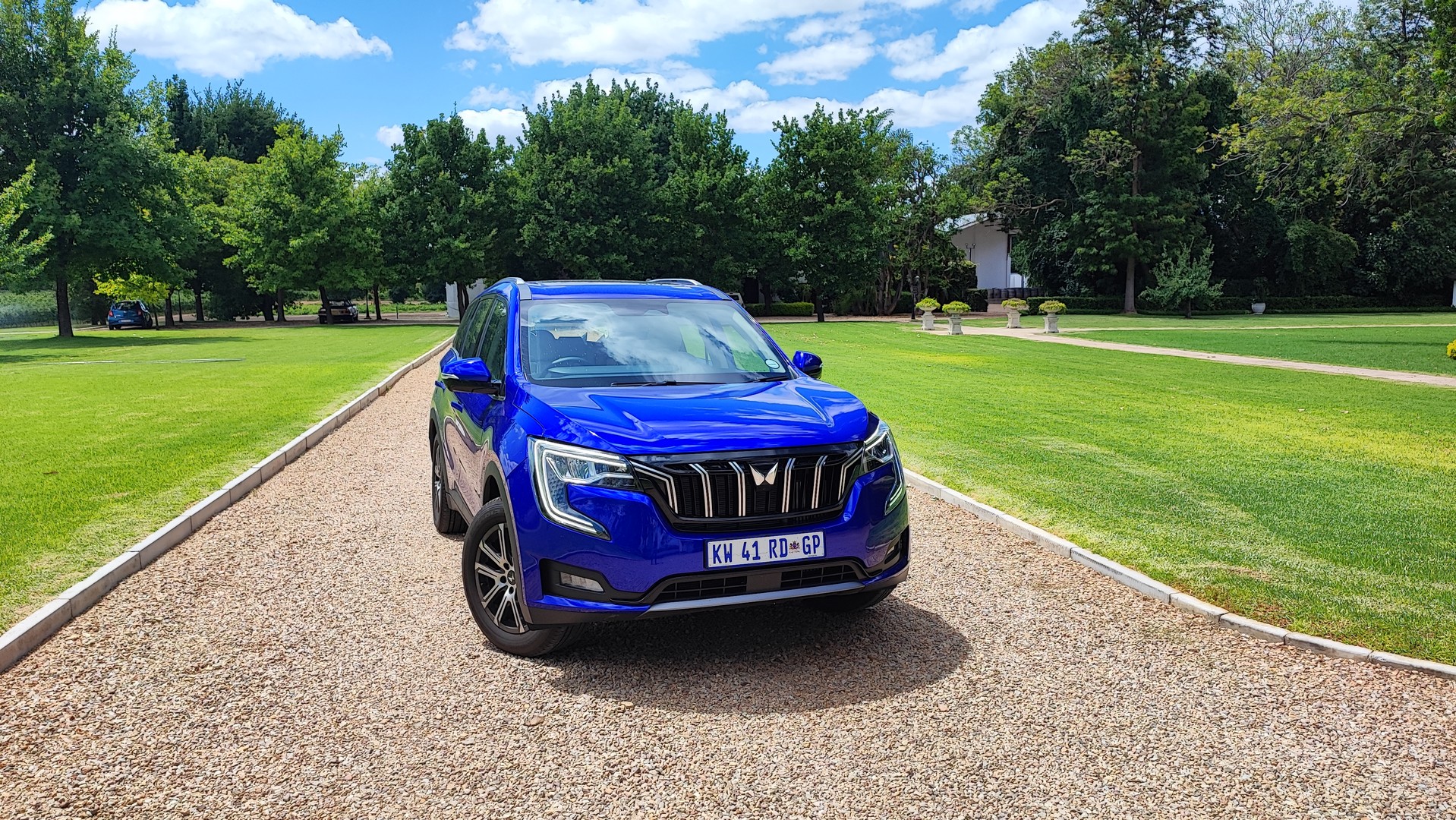
Our test unit (finished in the signature Electric Blue hue), ticked many boxes in the design stakes. The XUV700 features a variety of contemporary visual elements, such as bold – and bright – daytime running lights, sweeping LED indicators, attractive wheels, flush-fitting door handles and wrap-around tail lamps.
When you step inside, you’ll soon discover that the cabin’s visual appeal and build quality represent a huge leap forward for Mahindra products. Gone are the days when cheap-feeling scratchy and poorly-fitting plastics, and the overwhelming smell of adhesive, dominated the ambience. The interior has a reassuring solidity and it has all the gadgets and gizmos you’d expect at the price (just over R550k).
3 Things To Like about the Mahindra XUV700
Powertrain
The headline act is the new 2.0-litre 4-cylinder turbopetrol engine, which is nicely matched with a 6-speed automatic transmission. The powertrain’s peak outputs (149 kW and 380 Nm) translate into effortless performance, both from a standstill and in gear (it produces brisk overtaking acceleration). The ‘box’s mapping software is intuitive enough to know when to kick down and when to hold onto gears.
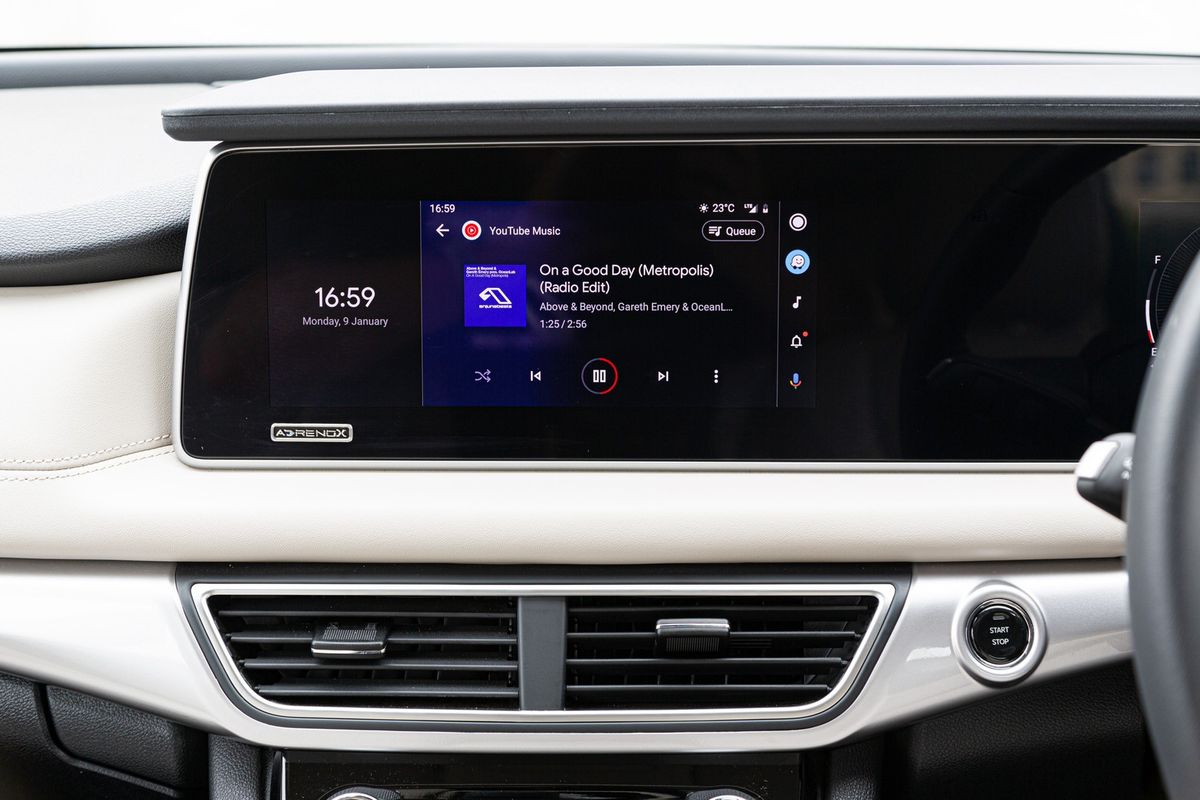
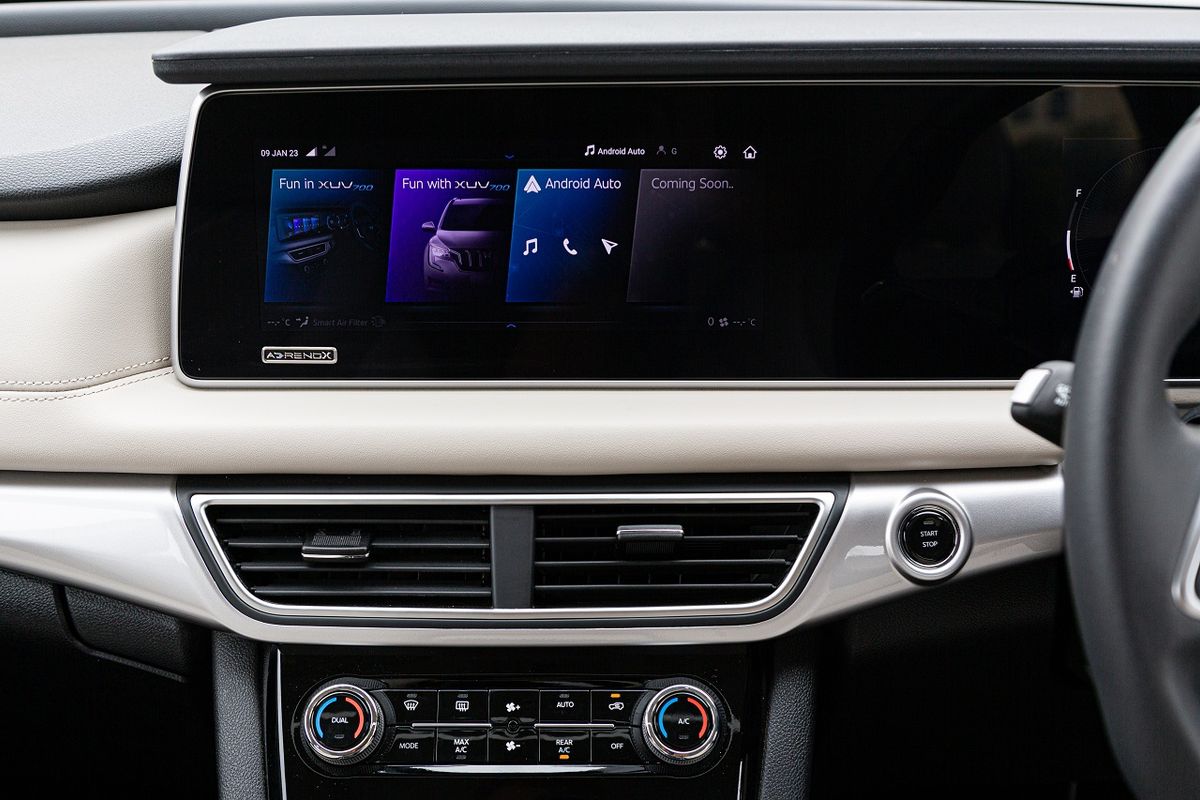
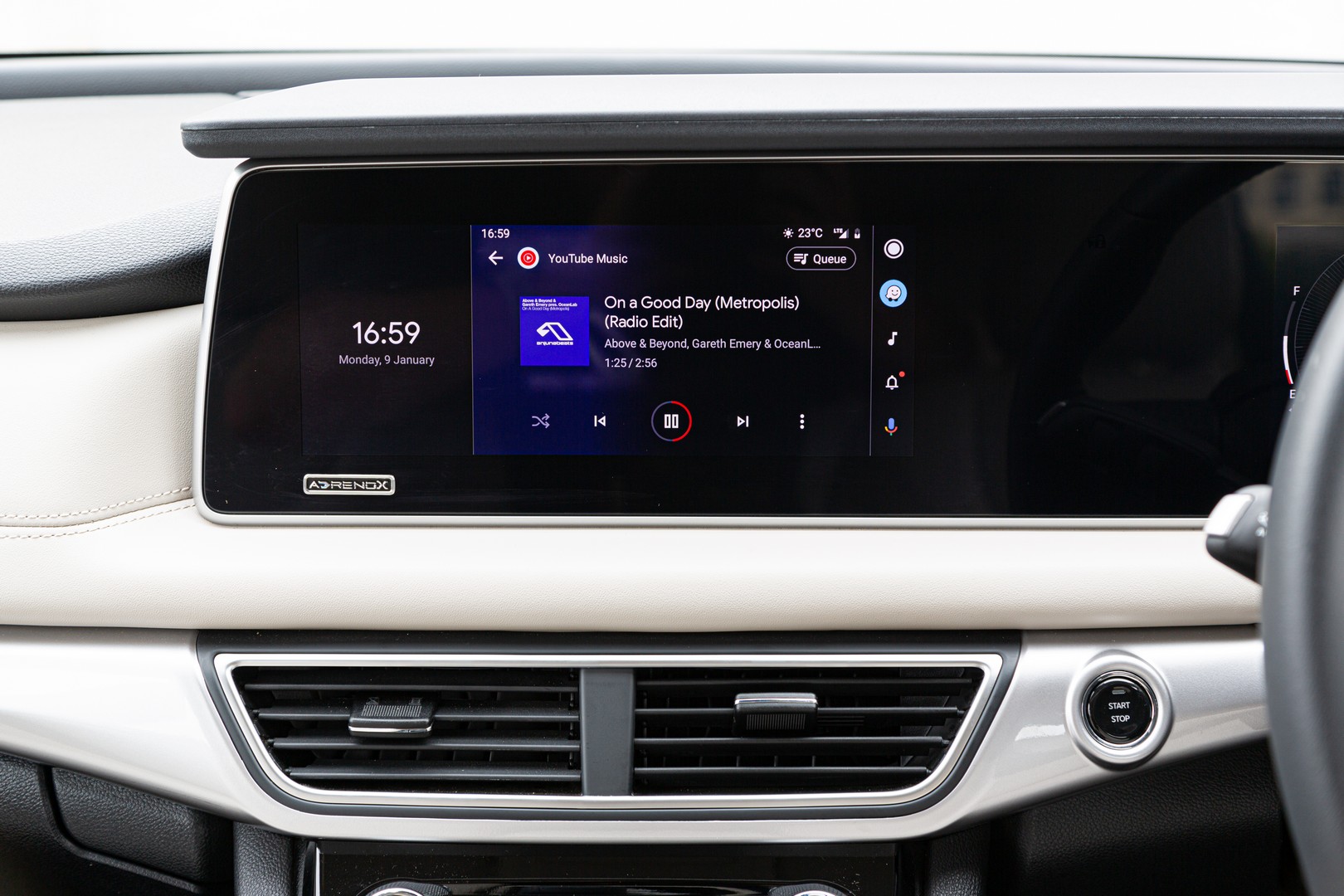
Wireless Android Auto and Apple CarPlay compatibility is standard.
No official performance figures are stated for the XUV700, but our test equipment revealed that 0-100 kph was dispatched in just 9.28 sec; it confirmed our suspicion that the model’s quicker than expected.
But this is not what the XUV700 is about. Instead, you (like me) will be impressed with just how quiet the model’s powertrain is at the national limit. It’s a pity the tyres generate notable noise when they traverse coarser road surfaces, but the grumbling can be easily drowned out by the excellent Sony audio system.
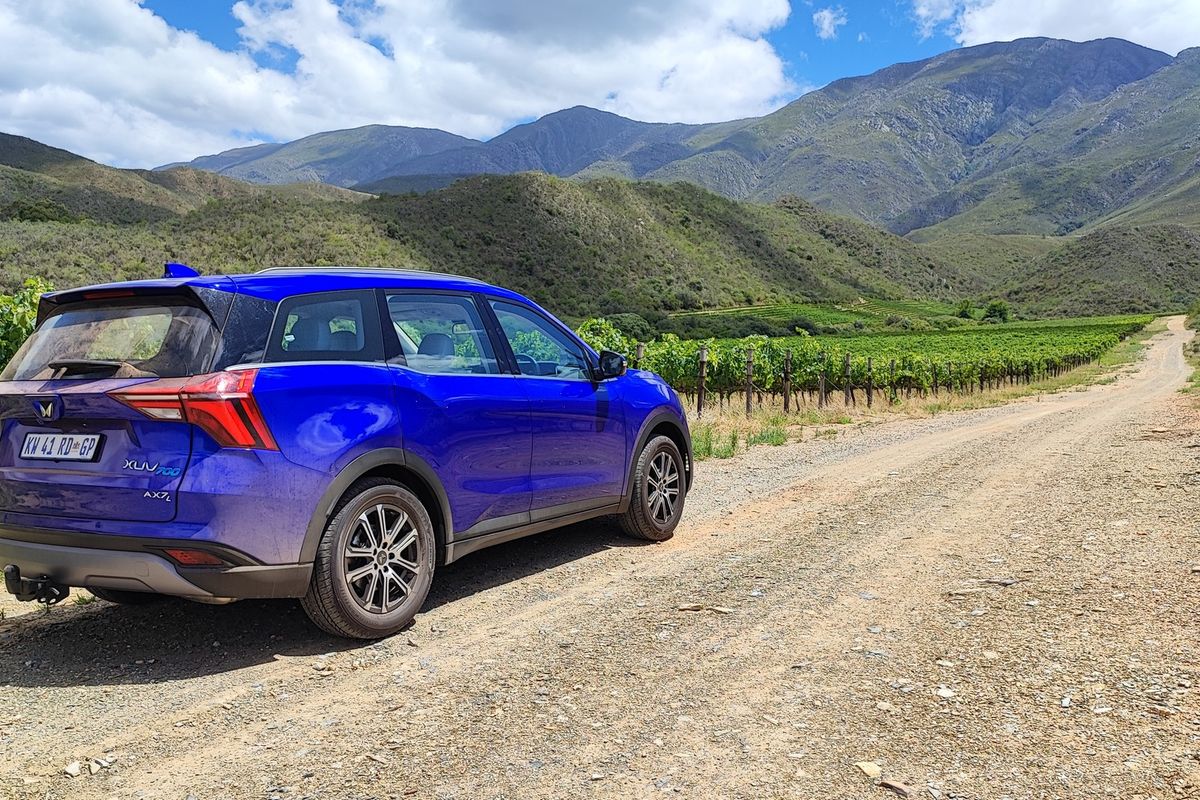
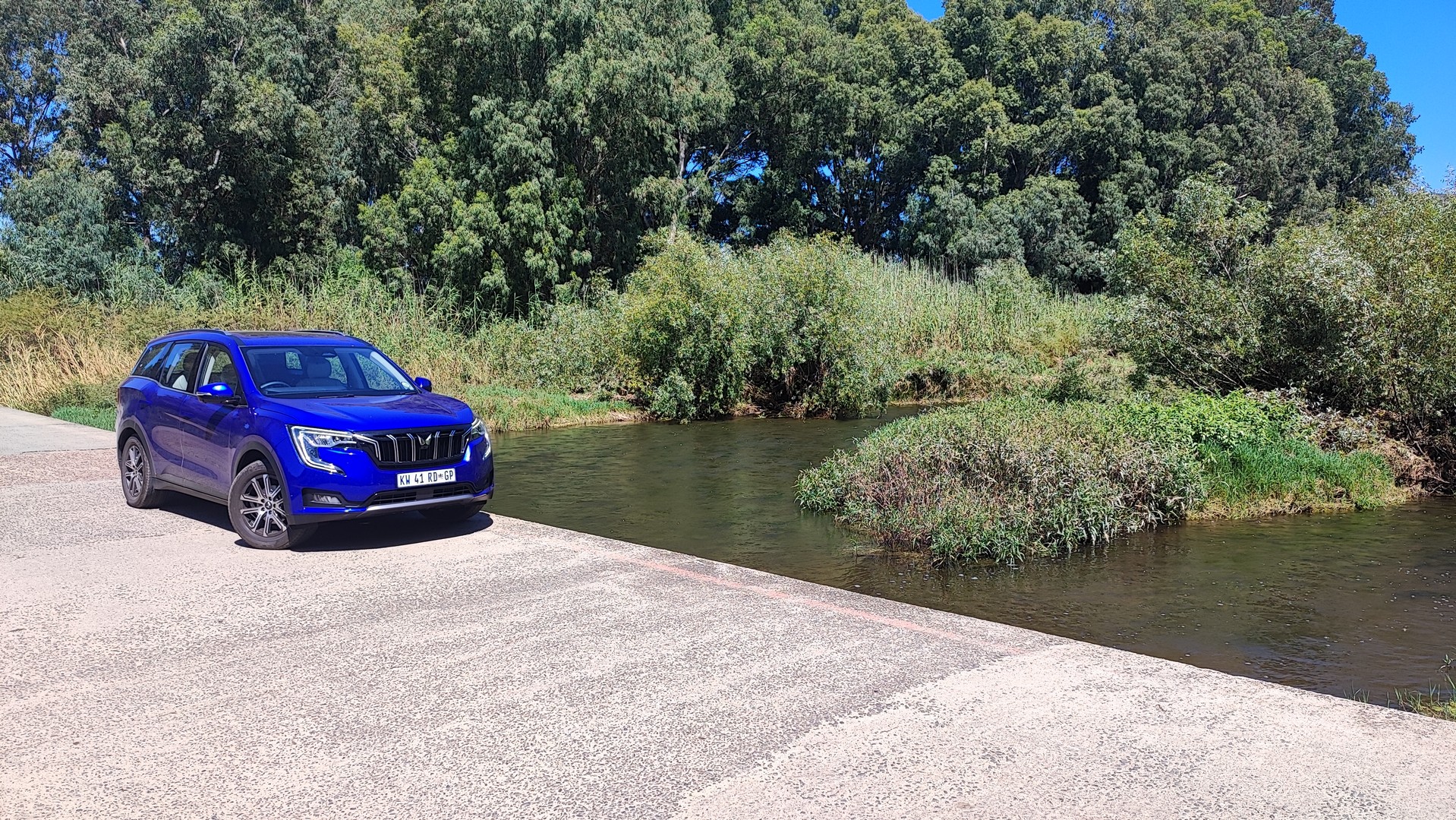
The Mahindra XUV700 meets the Breede River at Bonnievale.
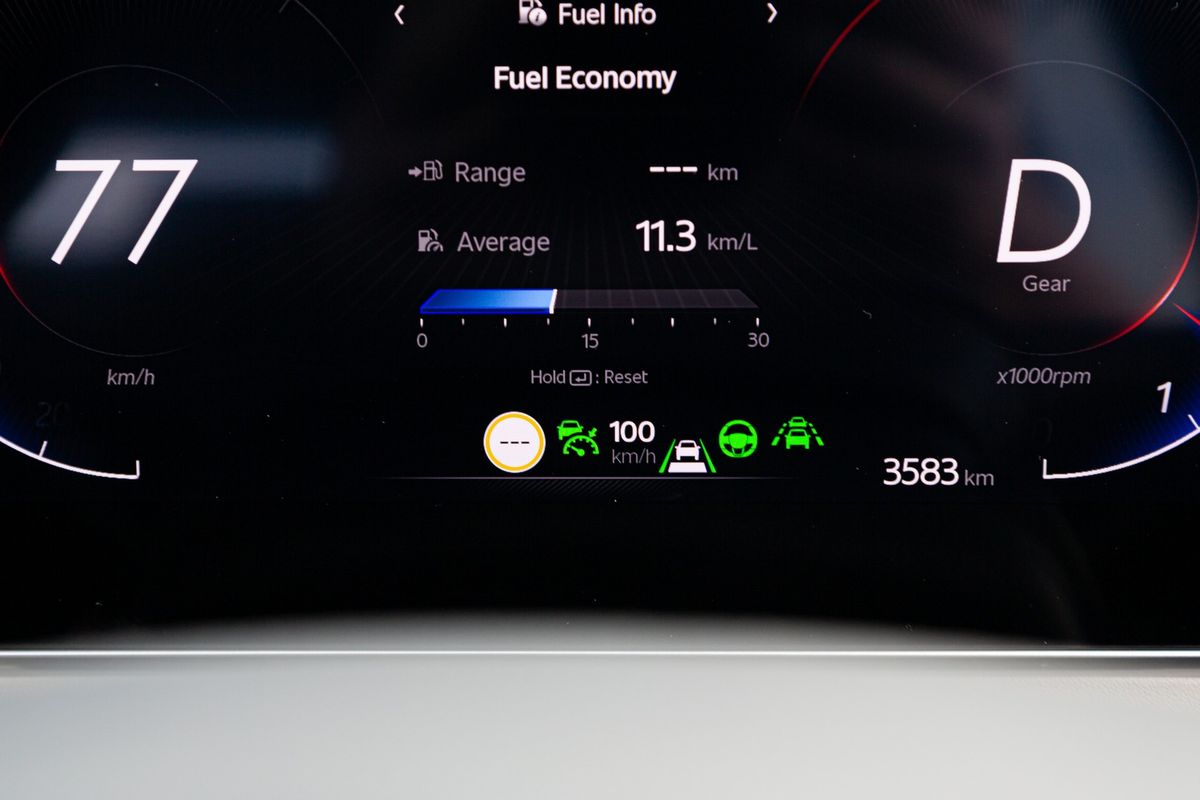
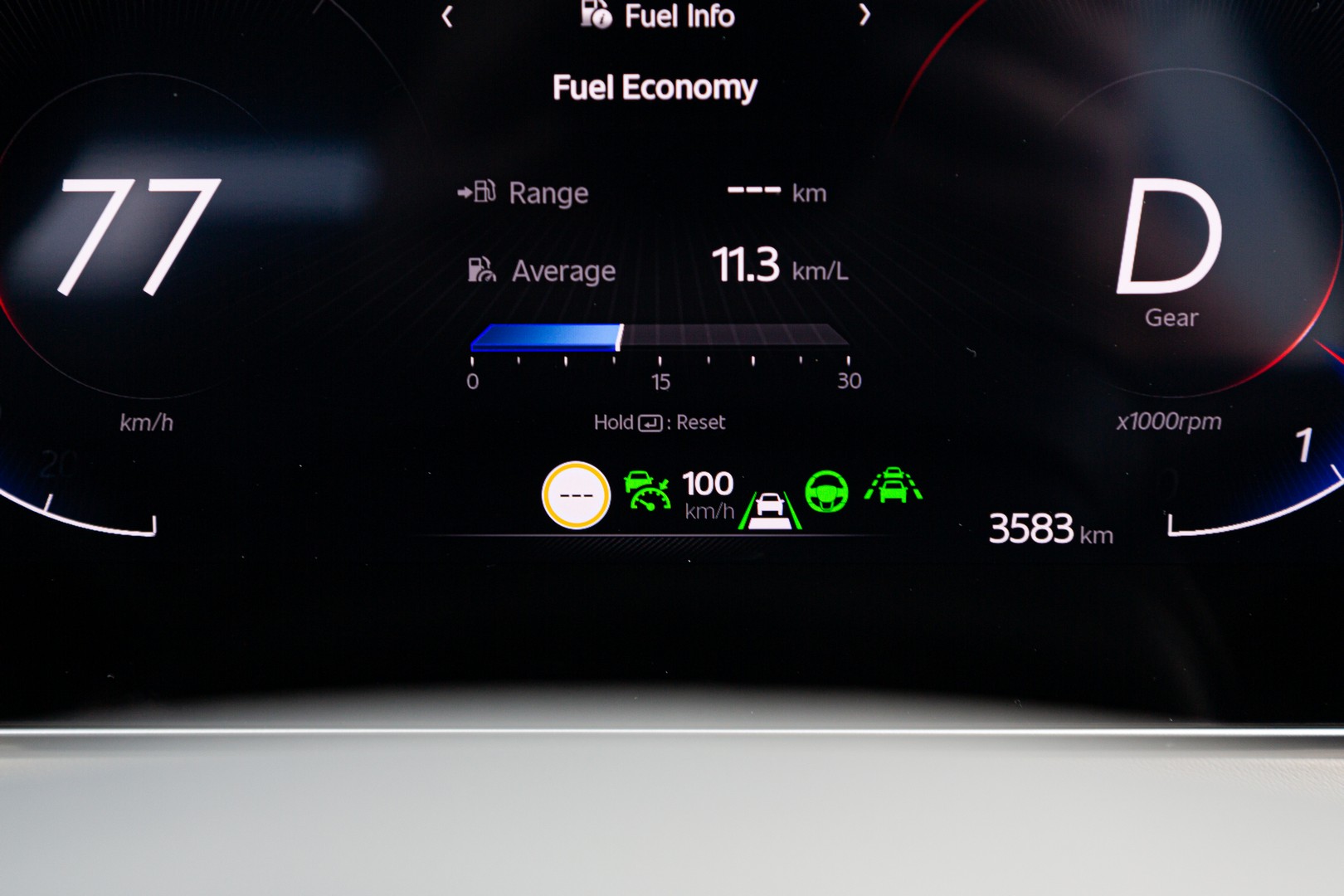
The vehicle arrived with the trip computer readout at 9.8 km/L (10.2 L/100 km) and after our long, open-road journey out to the magnificent Breedekloof Valley, the Mahindra indicated 12.1 km/l (8.2 L/100 km). Yes, the consumption does appear to be a bit heavy, but the XUV700 does offer punchy performance, plus it tips the scales at 1960 kg – so, that’s acceptable in my book. The vehicle has a 60-litre fuel tank.
Sadly, there’s no diesel engine in the local XUV700 line-up, but Mahindra will be launching an off-road-biased variant of this vehicle (the Scorpio-N) later this year; that should include a turbodiesel derivative.
Comfort and Practicality
In our line of work, we get to drive almost every new model from each brand in the market and my wife definitely raised her eyebrows when I announced the new XUV700 would be our chariot throughout the December holiday. See, her last taste of the brand came with the Mahindra Quanto in 2015, which, well, failed to impress her. After the first hour of travelling in the XUV700, however, she exclaimed: “It’s SO comfortable” and “this aircon is saving my actual life” (the temperature reached a baking 35°C at one point).
Exploring the remote farms around Robertson.
The quality of the seats is excellent – they’re neatly trimmed and offer plenty of support; once you have found your ideal driving position, you’ll be hard-pressed to think of a medium SUV (yes, from mainstream brands) that is as comfortable and well-thought-out at this price point. Drawbacks? Well, the steering feels extremely light and it’s not the sharpest (most accurate). While this is a bonus within the confines of a tight parking lot or a narrow street, we often needed to make tiny steering inputs on the open road.
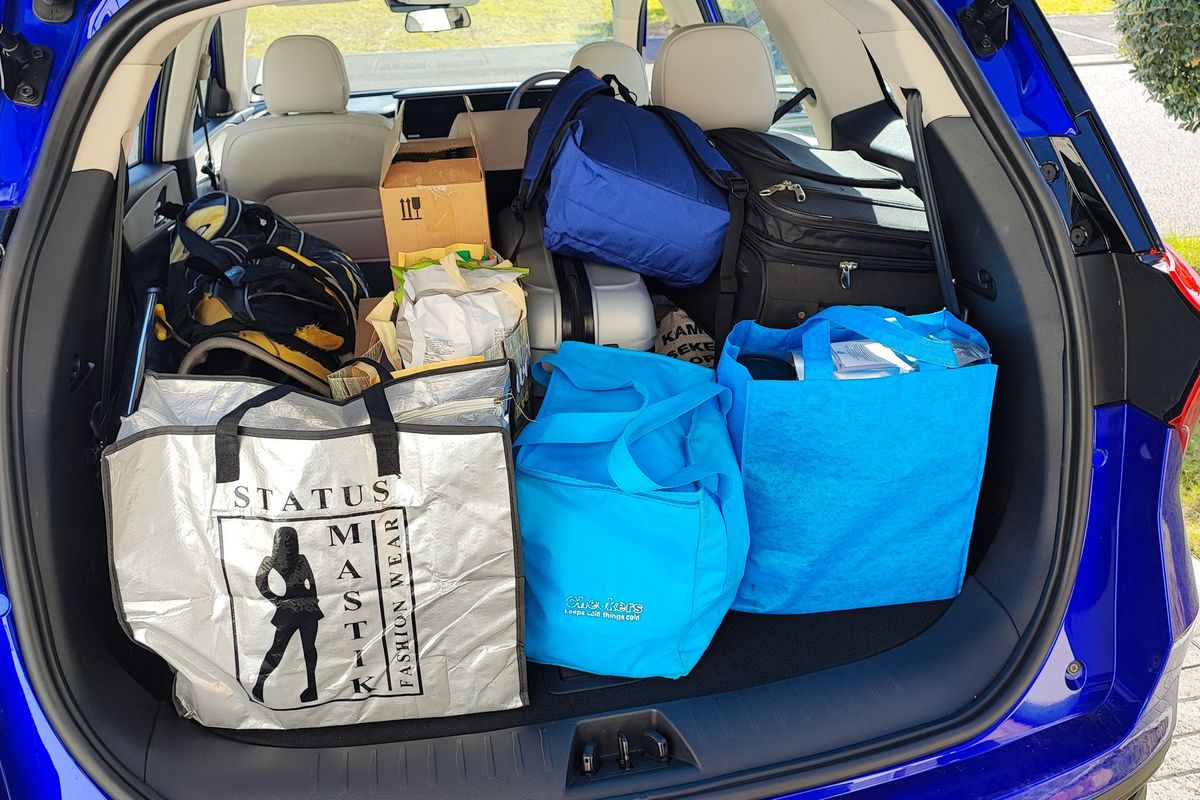
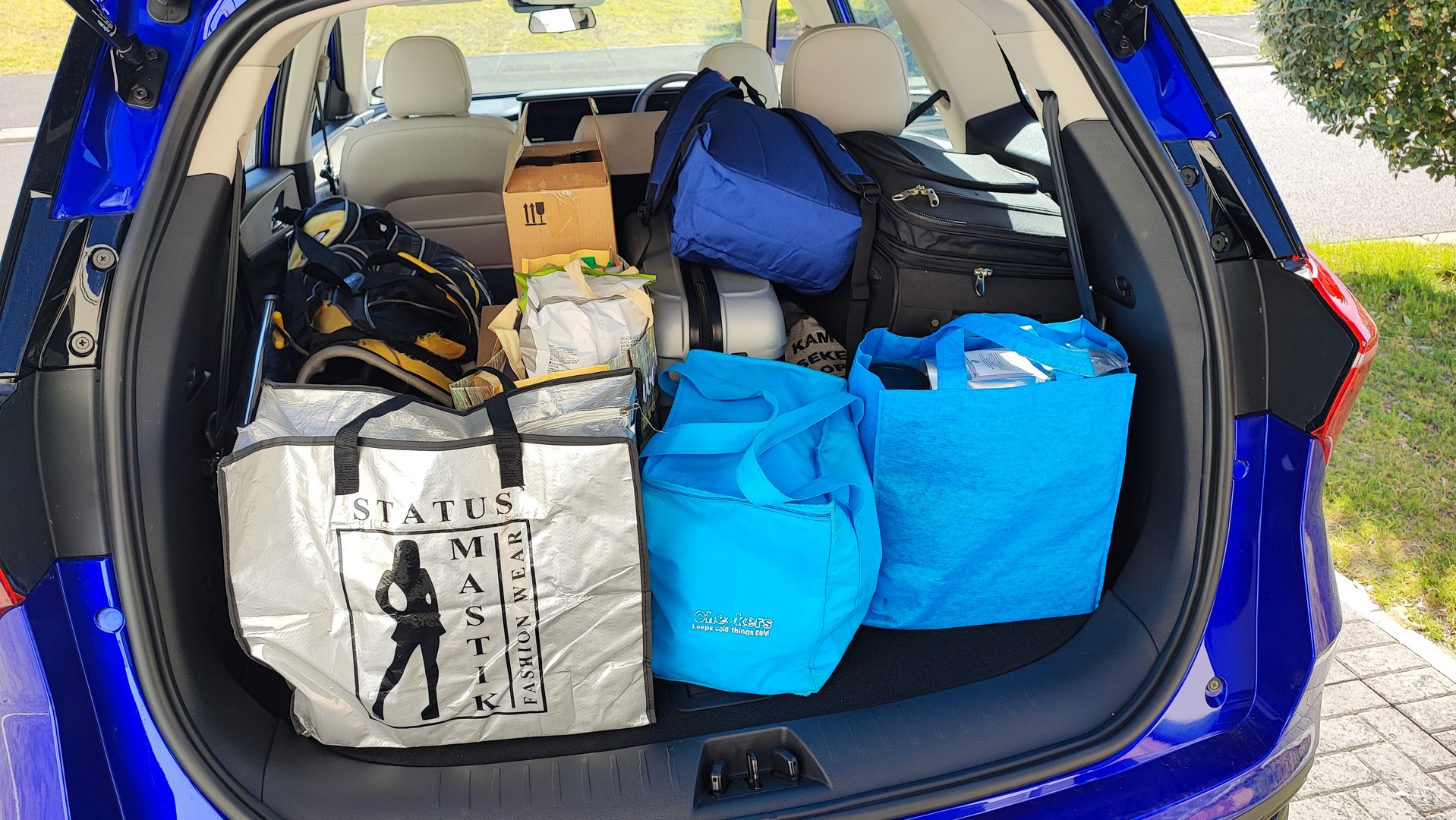
Golf clubs, fishing gear, food, clothes – and there’s room for more
When undertaking long-haul journeys with the family, space and comfort are priorities and, when in 5- (as opposed to 7-seat) configuration, the XUV700’d load bay comfortably swallowed all the things you’d need for a few nights away, as well as golf clubs and fishing gear. The 2nd row of seats is easily foldable (if you need extra cargo space), but if you’re carrying passengers, the seats can be reclined for comfort.
Inside, there’s plenty of oddment space, with 2 cupholders in the centre and a large storage bin (big enough to hold a 1-litre bottle) – in every door. The bin in the central armrest is also impressively deep.
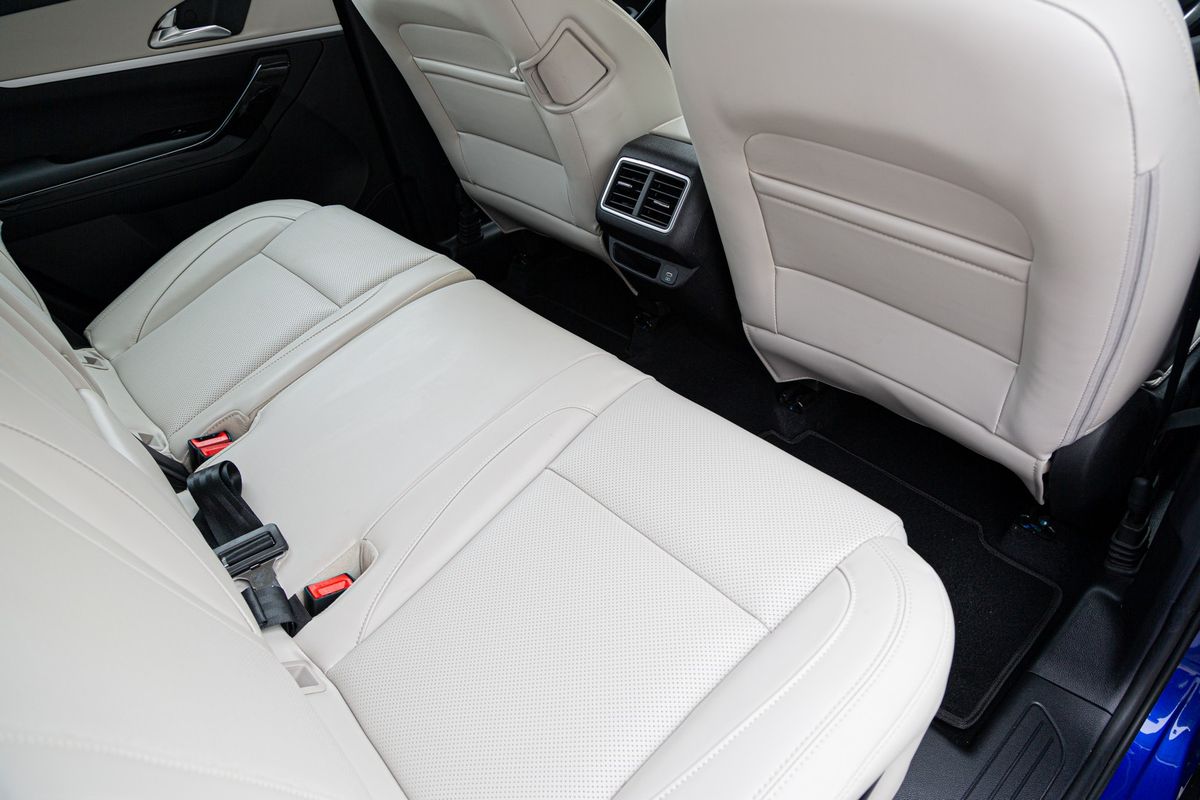
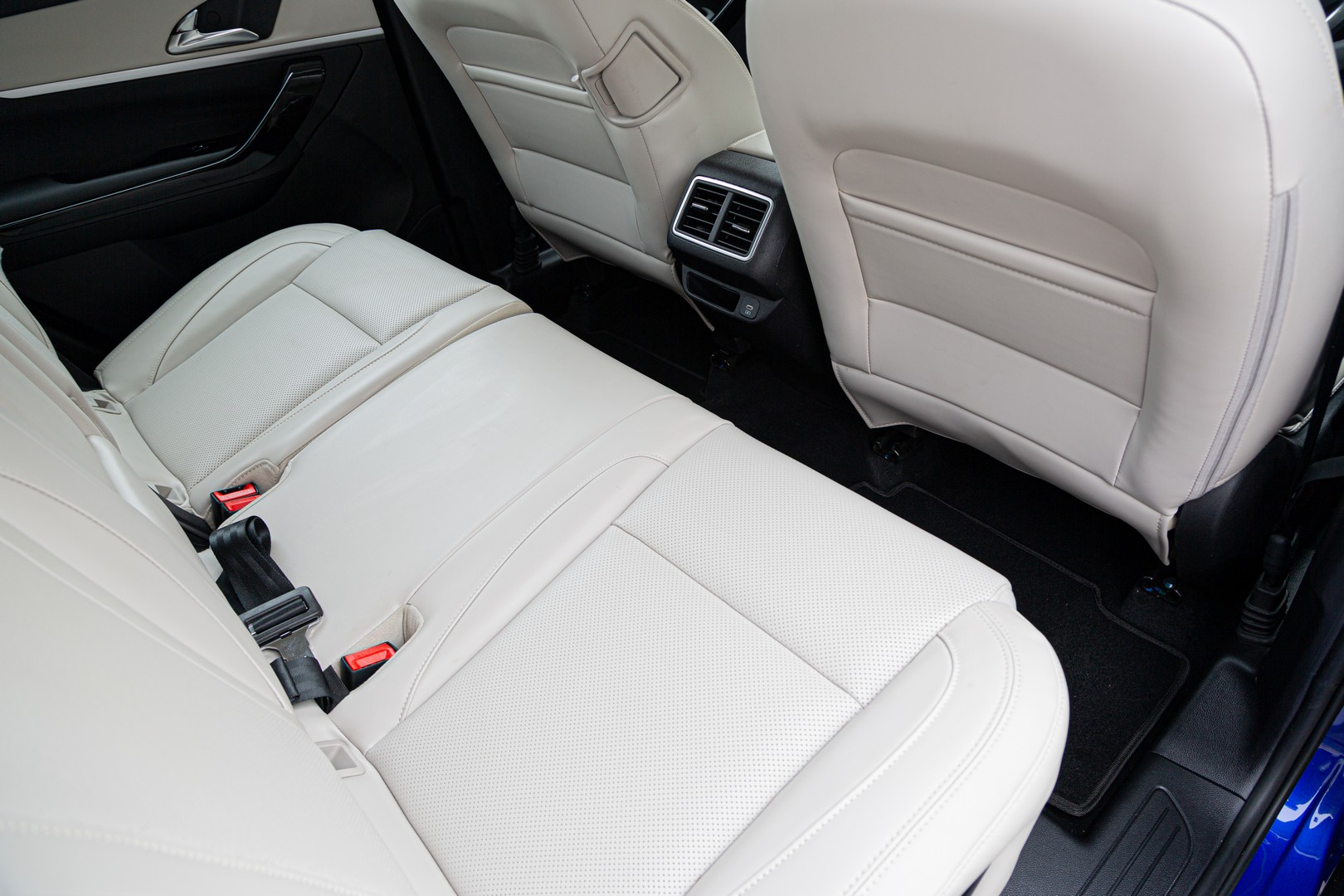
Rear legroom is generous, plus a USB-C charging port is provided.
Safety and Tech Features
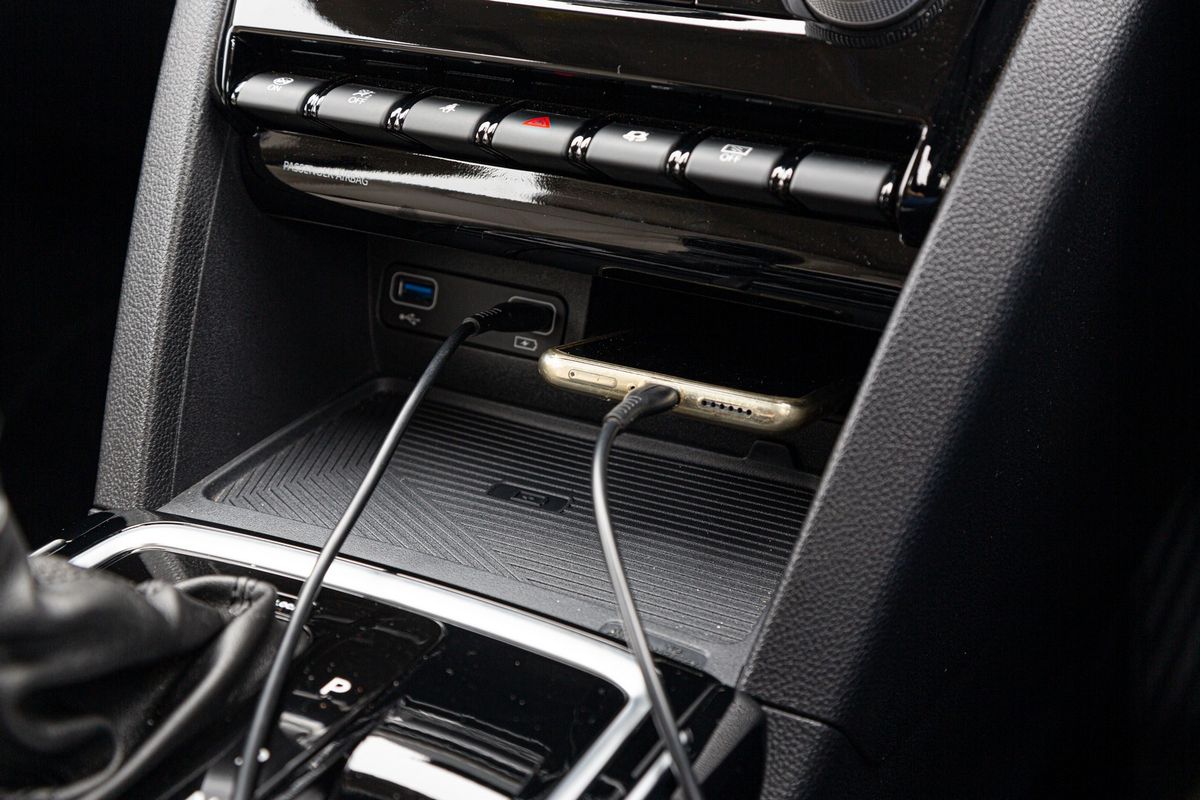
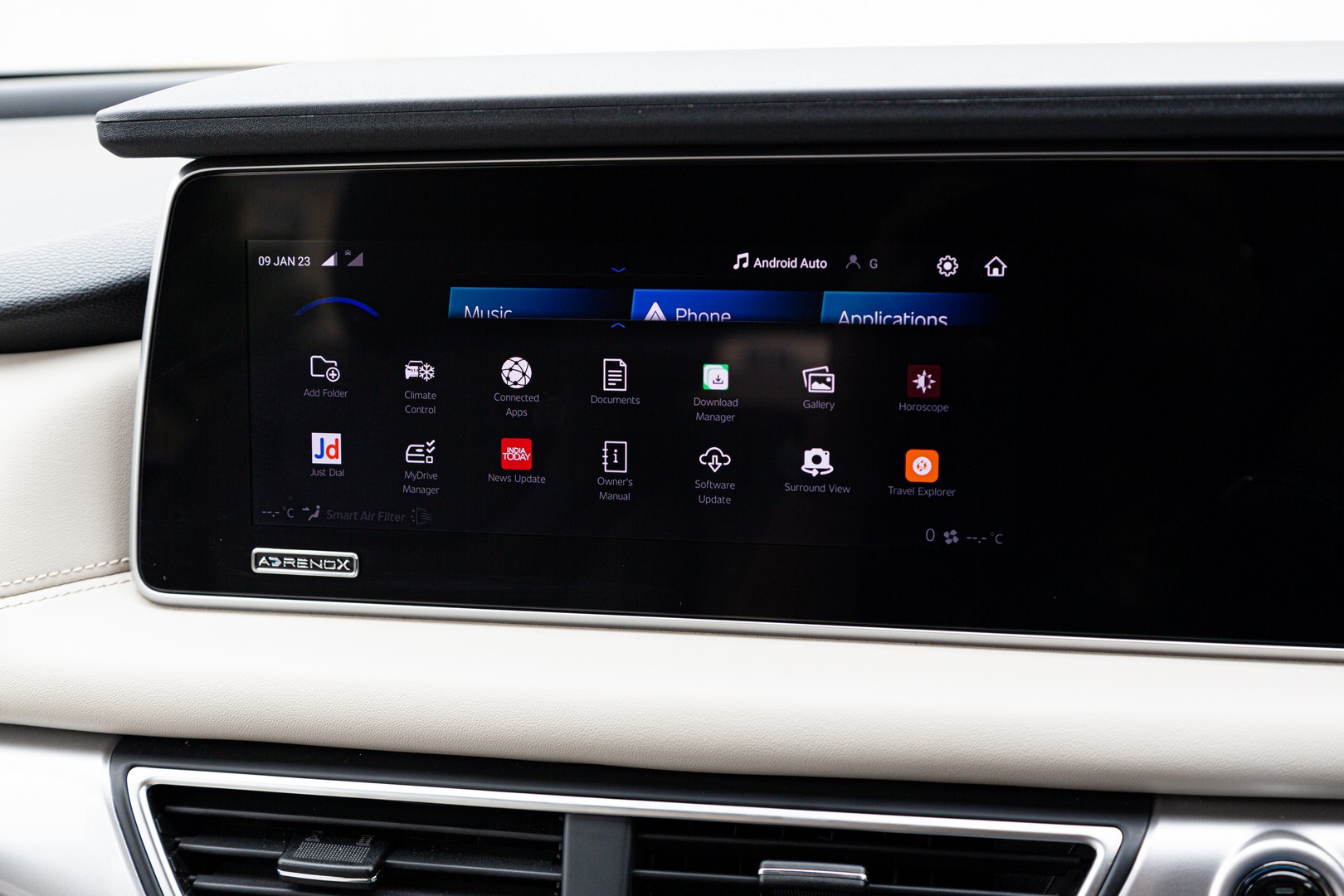
The standard spec is impressive across the range; the 2.0T AX7 L comes with a large panoramic roof, wireless Android Auto/Apple CarPlay and fancy-looking digital displays. We appreciated the 2 USB ports and the wireless charging pad that kept our devices topped up, because they were constantly streaming music and running navigation apps (Waze and Google Maps). There’s even Amazon Alexa functionality.
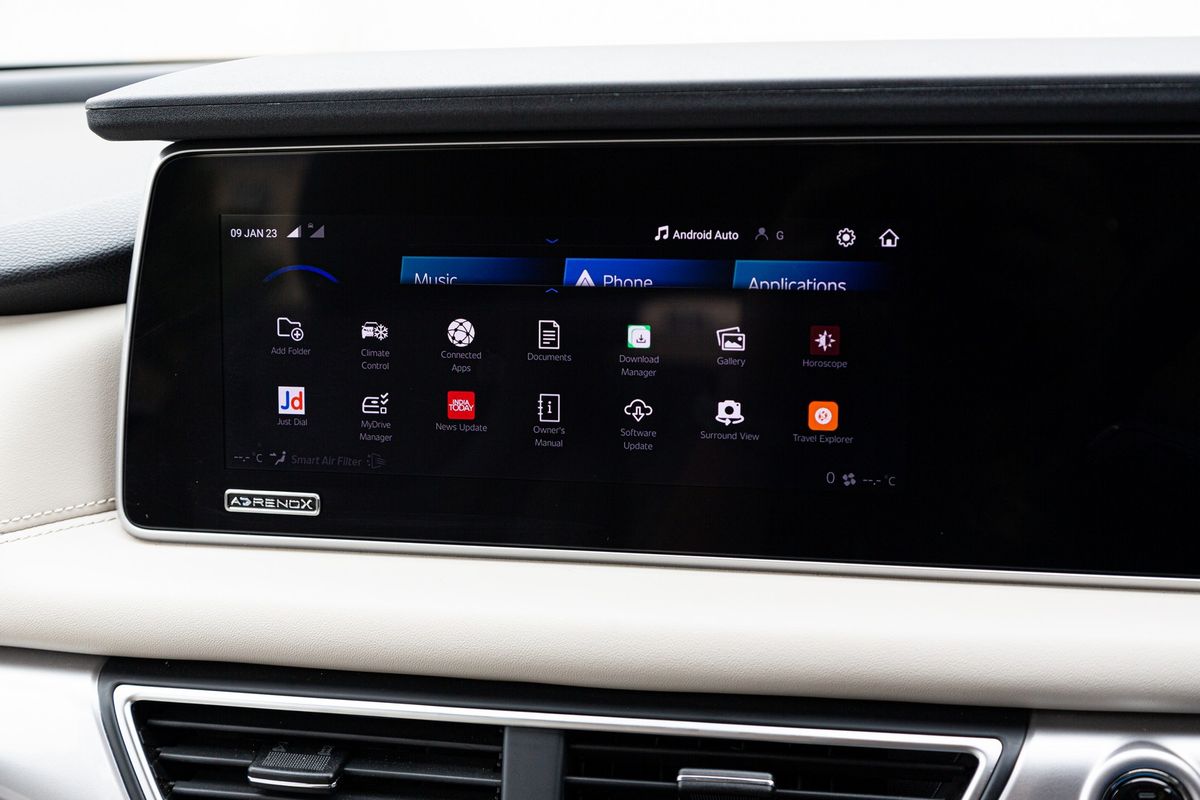
Alexa and an assortment of apps are available.
The AX7 L is distinguished from the AX7 derivative by high-end features such as a 12-speaker 3D audio system from Sony (which is very good, by the way), keyless entry and start, reach adjustment for the steering column, wireless charging pad, 360-degree cameras and additional safety equipment, including a knee airbag, blind-spot monitor and stop&go functionality for the adaptive cruise control system.
It’s great to see this level of assisted driving fitted as standard.
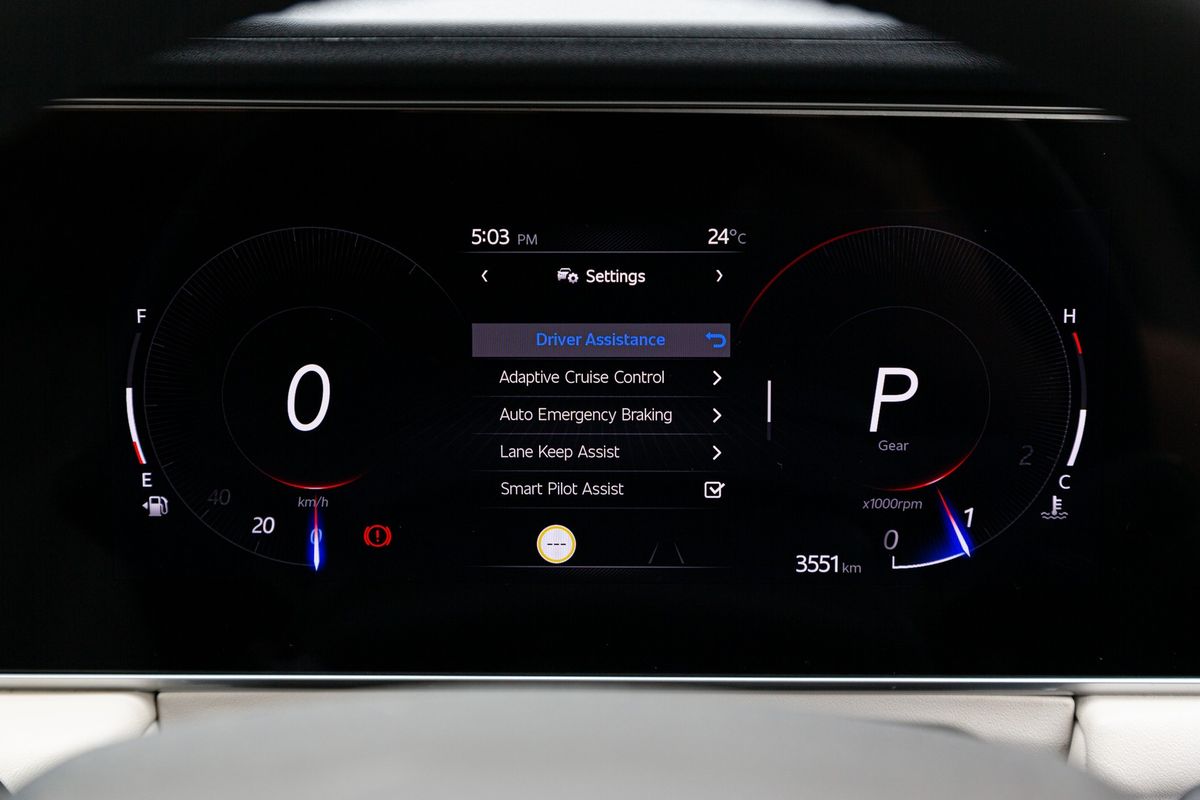
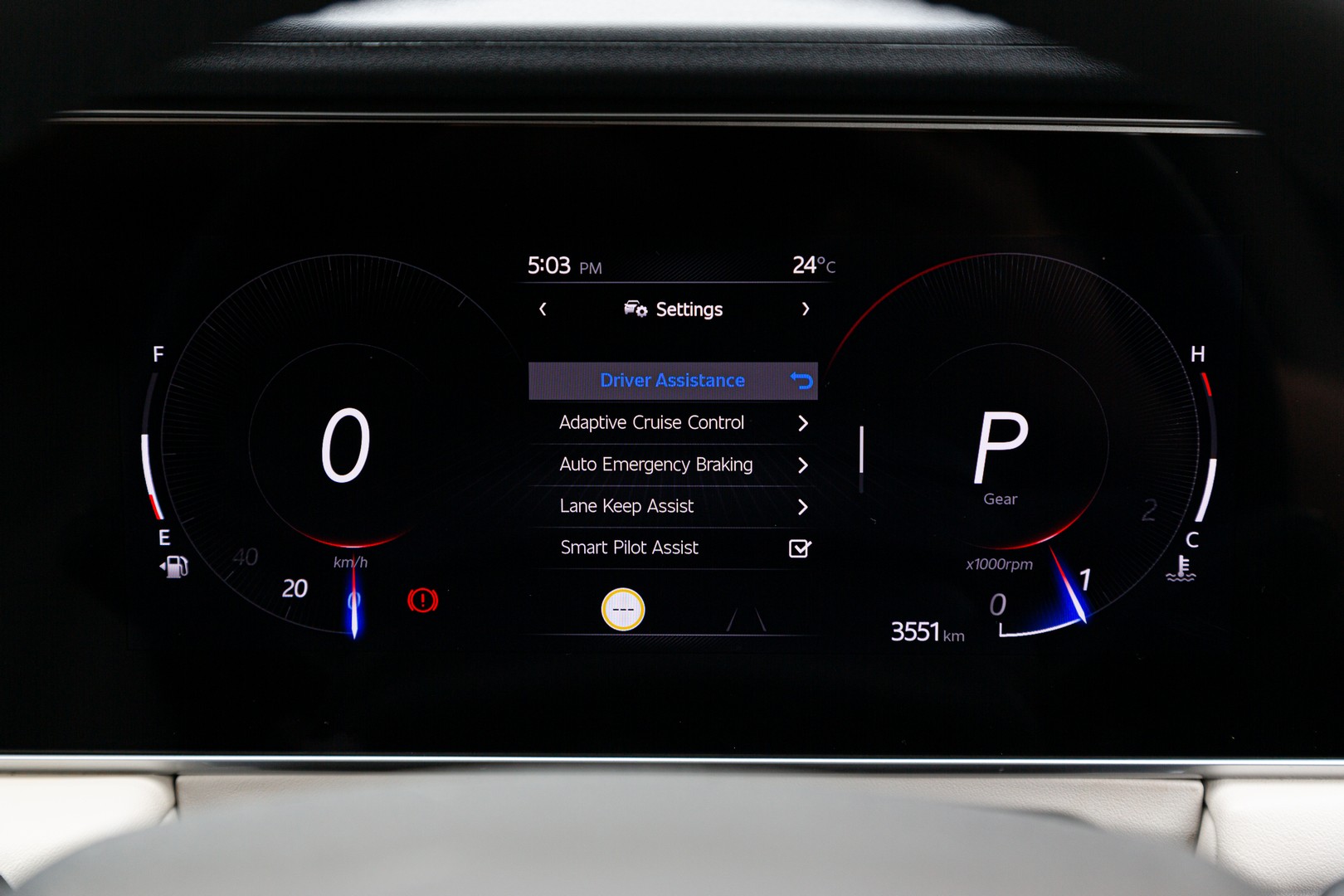
Speaking of safety, the Mahindra was fitted with 7 airbags, automatic emergency braking, lane departure warning and -keep assist, traffic-sign recognition, tyre pressure sensors and smart pilot assist. Mahindra claims Level 1 autonomy – that’s impressive! – and we experienced the emergency autonomous systems in action when a vehicle ahead of us turned at the last minute, which prompted the XUV700 to alert us of an imminent collision. Had we not braked immediately, the car would have stepped in milliseconds later.
Dislikes?
Despite the many advances that the XUV700 incorporates, there were a couple of niggles that blotted its copybook. We encountered an electronic error on the fuel trip computer – it simply would not display a distance-to-empty figure, so we had to estimate a range based on consumption and tank size.
The list of assisted driving technology features is extensive.
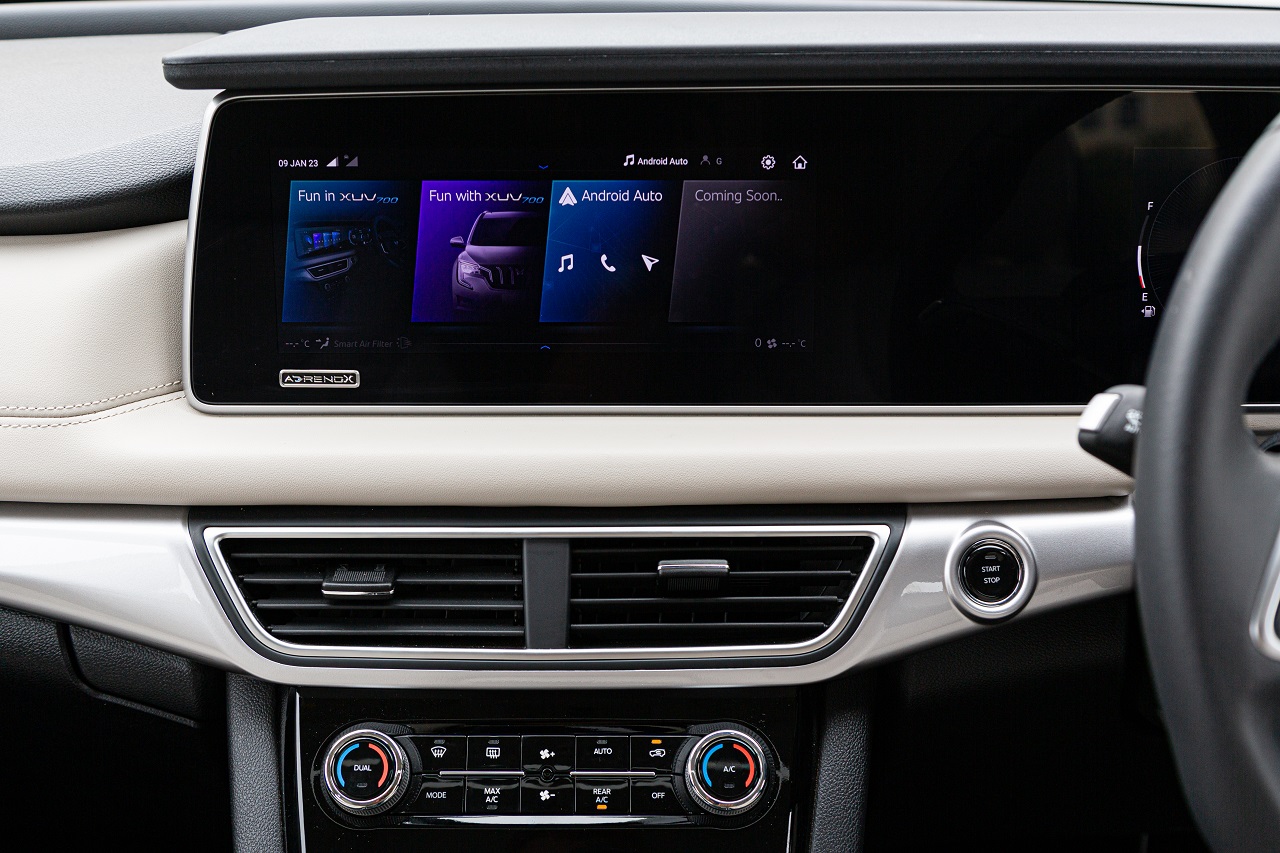
Secondly, the infotainment screen would lag upon start-up and, on a few occasions, it remained off until the vehicle was switched off and back on again. The digital dashboard also refused to boot up once, but nothing a quick off/on couldn’t resolve. We hope that a software update will root out these tech gremlins.
The standard infotainment user experience isn’t the most intuitive, at least initially.
Other gripes concerned the infotainment system’s user experience – its interface requires a bit of familiarisation (it’s not what we’d call user-friendly). Also, the rearview mirror vibrated constantly – even on the smoothest roads – and we reckon that could be fixed by the installation of a sturdier mounting.
Summary
Good-looking, well-priced, comfortable and more – Mahindra has done a good job here.
The evidence in its favour is overwhelming – the XUV700 is a massive step up for Mahindra; it brings new levels of build quality, refinement and comfort to the brand. The timing’s good too, because many consumers are switching from established brands (that are now priced beyond the reach of the average buyer) to up-and-coming brands that offer “more car, for less money”. Haval and Chery are 2 examples!
If the pre-order success is anything to go by (over 1 100 units of the XUV700 had been reserved by the end of December 2022), Mahindra has got a winner on its hands. If you want something that’s a bit more off-road-biased, the XUV700’s more outdoorsy Scorpio-N brother will be launched quite soon…
As of January 2023, the Mahindra XUV700 is priced from R474 999, with the flagship model going to R559 999.
South Africa’s new-vehicle market ended the year on a positive note, with sales in December 2022 growing 16.2%. Here’s what you need to know, including a look at the country’s best-selling vehicles and most popular brands…
In December 2022, South Africa’s new-vehicle industry registered its twelfth consecutive month of year-on-year sales growth, capping a year defined by its steady recovery to just short of pre-pandemic levels. The final month of 2022 saw total new-vehicle sales in the country grow an encouraging 16.2% year on year to 41 783 units, according to Naamsa.
Though this figure is down around 15% compared with November 2022’s effort of 49 413 registrations, it nevertheless represents a sound showing in a month traditionally shortened by public holidays and year-end closures (and thus fewer trading days).
Out of the total reported industry sales of 41 783 vehicles, an estimated 37 479 units (or 89.7%) represented dealer sales, while 7.3% went to the vehicle-rental industry, 1.5% to government and another 1.5% to industry corporate fleets. Both the new passenger-vehicle and light-commercial vehicle markets reflected year-on-year increases, with the former growing 15.4% to 28 793 units and the latter 16.1% to 10 438 units. Meanwhile, December 2022’s export sales grew 24.2% year on year to 26 302 units.
For the record, South Africa’s new-vehicle sales for the full year of 2022 recovered by 13.9% to 528 963 units, though this was still 1.4% below the pre-pandemic 536 612 units sold in 2019.
Gary McCraw, Director of the National Automobile Dealers’ Association (NADA), said the sustained growth in SA’s new-vehicle sales “continues to confound forecasters”, before describing December as a “bumper” month.
“We are particularly pleased that the retail sales channel was responsible for delivering 37 479 units or 89.7% of the total vehicles sold in December, which is excellent for the health of these dealers, who are still recovering from the lengthy COVID-19 lockdowns,” McCraw explained.
New vehicle sales summary for December 2022
Aggregate new-vehicle sales of 41 783 units increased by 16.2% (5 839 units) compared to December 2021.
New passenger-vehicle sales of 28 793 units increased by 15.4% (3 840 units) compared to December 2021.
New light-commercial vehicle sales of 10 438 units increased by 16.1% (1 449 units) compared to December 2021.
Export sales of 26 302 units increased by 24.2% (5 130 units) compared to December 2021.
10 best-selling car brands in South Africa for December 2022
Renault was the only brand in the top 10 to grow its sales month on month.
There were no surprises at the very top of the pile, with Toyota (11 250 units) again way out in front, more than double the effort of the again second-placed Volkswagen Group (5 331 units). Suzuki, meanwhile, held steady in third place with 3 058 registrations, finishing what has been an incredibly strong year for the Japanese firm’s local division.
Meanwhile, Hyundai moved up a place to fourth, pushing Nissan down one to fifth. Ford managed to hang onto sixth spot, while Renault climbed three places to seventh (and was the only brand in the top 10 to improve on its November showing). Chinese brand Haval thus fell one to eighth, with Kia again securing ninth and Isuzu sinking two positions to tenth. For the record, Chery found itself in twelfth place, with 1 359 units sold in December 2022.
1. Toyota – 11 250 units
2. Volkswagen Group – 5 331 units
3. Suzuki – 3 058 units
4. Hyundai – 2 770 units
5. Nissan – 2 144 units
6. Ford – 1 948 units
7. Renault – 1 868 units
8. Haval – 1 735 units
9. Kia – 1 650 units
10. Isuzu – 1 607 units
10 best-selling vehicles in South Africa for December 2022
Toyota’s SA-built Corolla Cross was again the best-selling passenger vehicle of the month.
No prizes for guessing the Toyota Hilux again topped the best-selling vehicle charts, with 2 556 examples of the locally produced bakkie sold across the country in the final month of the year. The likewise Prospecton-built Corolla Cross (1 834 units) found itself in a comfortable second place once more, while the Hi-Ace (1 539 units) moved up one to third, resulting in an all-Toyota podium in December 2022.
Amid its switch to a new generation, the Ford Ranger (1 495 units) moved down a position to fourth, while Volkswagen’s Kariega-produced twins, the Polo Vivo (1 421 units) and Polo hatchback (1 365 units), each climbed a place to fifth and sixth, respectively. The Struandale-manufactured Isuzu D-Max (1 183 units) was up one to seventh and the Toyota Starlet (1 036 units) two to eighth, with the latter the highest-placing imported model.
The Toyota Urban Cruiser (945 units) retained ninth, while the Chery Tiggo 4 Pro made its first appearance in the top 10, with 857 units registered in the month. Despite taking fifth place in November, sales of the Suzuki Swift interestingly more than halved month on month to 806 units. Other vehicles just outside the top 10 in December 2022 included the Hyundai Grand i10 (780 units), Renault Kwid (780 units), Nissan Magnite (771 units), Haval Jolion (734 units) and Nissan NP200 (718 units).
Top 10 vehicles exported from South Africa in December 2022
The Ford Ranger topped the export charts in December 2022, according to Naamsa’s official figures.
In December 2022, the Ford Ranger reclaimed the top export spot (having placed third the previous month), with 5 553 units shipped from its Silverton facility. The Volkswagen Polo hatchback (5 447 units) wasn’t too far behind in second, with the Toyota Hilux (3 152 units) likewise dropping a spot, to third. With the Munich-based firm reporting detailed sales figures to Naamsa again in December, the Rosslyn-built BMW X3 (1 748 units) managed to crack fourth.
The Nissan Navara, Isuzu D-Max, Nissan NP200, Toyota Corolla Quest, Toyota Fortuner and Toyota Corolla Cross made up the numbers. It’s also worth noting Mercedes-Benz did not submit detailed figures to Naamsa, so it’s not clear how many new C-Class sedan units were exported from SA last month. For the record, however, Naamsa’s estimate stands a whopping 9 405 units.
1. Ford Ranger – 5 553 units
2. Volkswagen Polo (hatch) – 5 447 units
3. Toyota Hilux – 3 152 units
4. BMW X3 – 1 748 units
5. Nissan Navara – 328 units
6. Isuzu D-Max – 188 units
7. Nissan NP200 – 94 units
8. Toyota Corolla Quest – 52 units
9. Toyota Fortuner – 39 units
10. Toyota Corolla Cross – 16 units
Sales outlook
So, now that 2022 has come and gone, what’s next for South Africa’s new-vehicle market? Well, Naamsa points to the fact the country’s consumer price inflation reached a 13-year high in July 2022, with the South African Reserve Bank raising the interest rate seven consecutive times since November 2021 to its highest level since 2016. It also notes the loftier stages of load-shedding “seemed to have an amplified negative impact” on the South African economy as a whole.
However, the organisation believes the domestic new-vehicle market’s performance will “remain resilient despite weakening domestic economic indicators and a deteriorating global growth outlook”. Naamsa’s concerns include global stagflation, the continued economic impact and disruption of supply chains resulting from the Russia-Ukraine war, and the current pace of tighter monetary policy in major markets. These factors all point to the possibility of a global recession.
In addition, Gross Domestic Product (GDP) growth in South Africa continues to be adjusted downwards and is now expected to be as low as 1.1% for 2023. In view of the close correlation between new-vehicle sales and the GDP growth rate, Naamsa predicts single-digit growth in new-vehicle sales for 2023 as the market “returns to pre-pandemic levels in sales and exports”.
NADA’s McCraw largely echoed Naamsa’s prediction that growth would continue in 2023, though “maybe not at the rate anticipated previously”. He noted many of the factors that “hobbled the motor industry in 2022” would likely still be encountered in 2023.
“The South African retail motor industry has had to face challenges for several years now and [is] proving very resilient and innovative in keeping sales volumes running at a reasonable rate,” concluded McCraw.
It’s official! Mazda has announced the rebirth of the rotary engine, though it won’t be the high-revving screamer you may remember from years gone by…
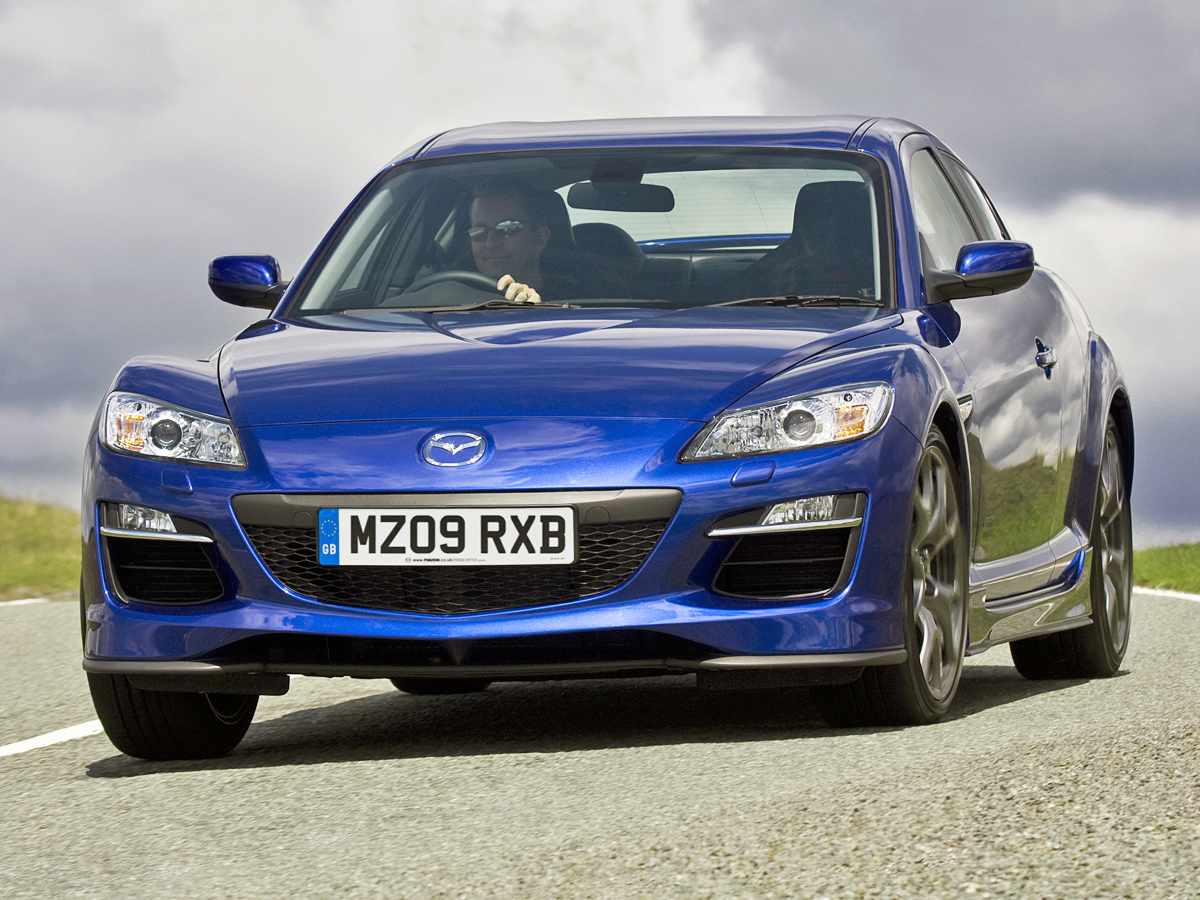
Mazda was the automaker that took the rotary engine mainstream, though this complex flavour of powertrain was effectively killed off when the RX-8 went out of production in 2012. Now, more than a decade later, the Japanese firm has announced the rotary engine will be “reborn for the electric age”.
But rather than directly powering the wheels, this fresh version of the Felix Wankel’s engine design will power an electric generator in a new MX-30 derivative set to go on sale in Europe.
“Faithful to its multi-solution approach to the global challenges of reducing greenhouse gas emissions, Mazda will introduce a new powertrain option for its MX-30 at the Brussels Motor Show 2023,” Mazda said in a statement, which was accompanied by an image of a new rotary badge.
The RX-8 was the last Mazda to feature a rotary engine.
Described as a “unique plug-in hybrid powertrain”, this version of the MX-30 will feature an electric generator powered by a “newly developed” rotary engine. Mazda has released no other official details as yet, though we expect more information to be provided on 13 January, once the covers have come off in Brussels. In short, it seems the rotary will function as a range extender.
What led to the demise of the rotary engine and why wasn’t it embraced by other automakers (considering it tended to offer strong performance for its given displacement)? Well, the recurring problem was scratching on the inner surface of the engine casing caused by apex seals on the triangular rotor juddering (rather than sliding smoothly) against the inner casing.
Still, Mazda’s engineers believed they solved the problem with a special graphite-aluminium-alloy seal, which they said would also cure excessive oil consumption and a lack of low-down torque. However, after a production run of nearly 50 years (having debuted in the Cosmo Sport in 1967), the rotary was eventually put out to pasture in 2012.
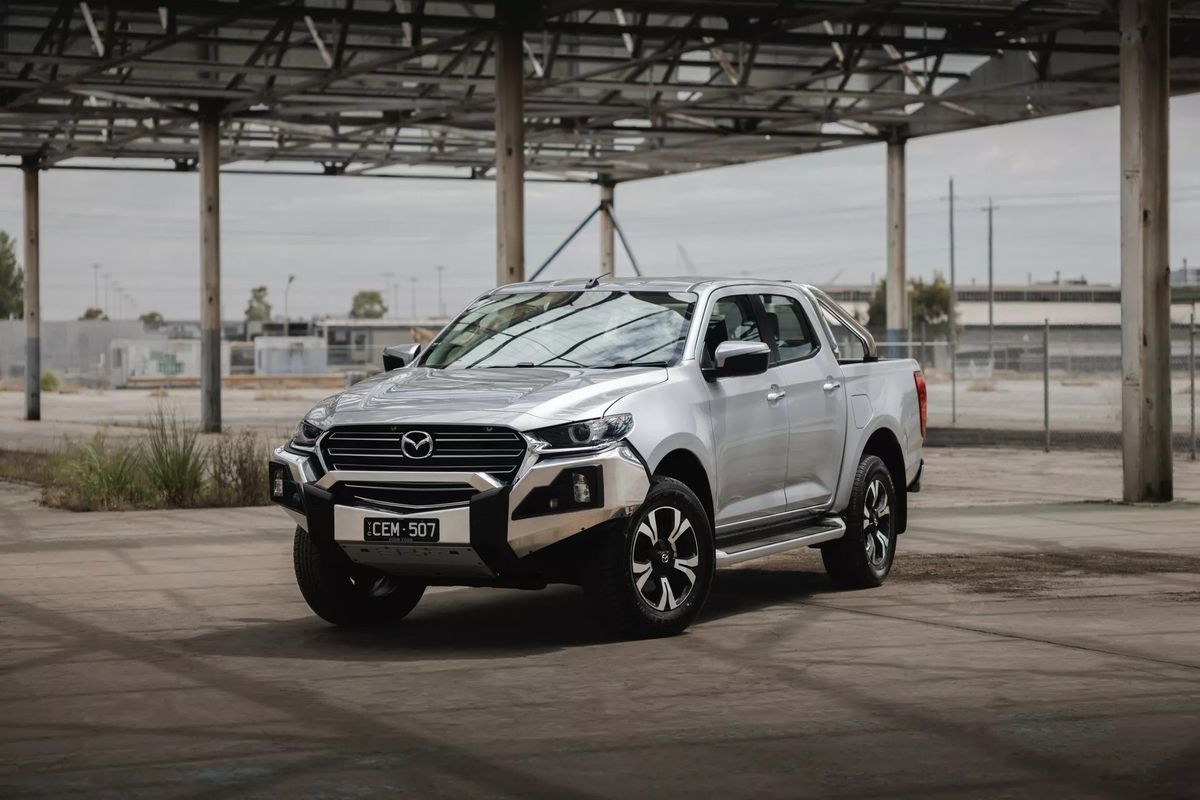
Mazda is due to introduce a number of updated models in South Africa in 2023, including a revised BT-50 double-cab bakkie. Across the pond in Australia, a more rugged BT-50 LE has been introduced. Will we get it in South Africa?
Does the Mazda BT-50 lack rugged appeal in South Africa?
The new Mazda BT-50, based on the new locally assembled Isuzu D-Max, has been on sale since 2021.
Current offerings in the double-cab bakkie segment are decisively rugged in appearance and the Mazda BT-50 bucks that trend with a look that’s far more sophisticated and “upmarket”. This facet might very well be a contributing factor to the BT-50’s lacklustre sales performance in South Africa since its arrival on local soil.
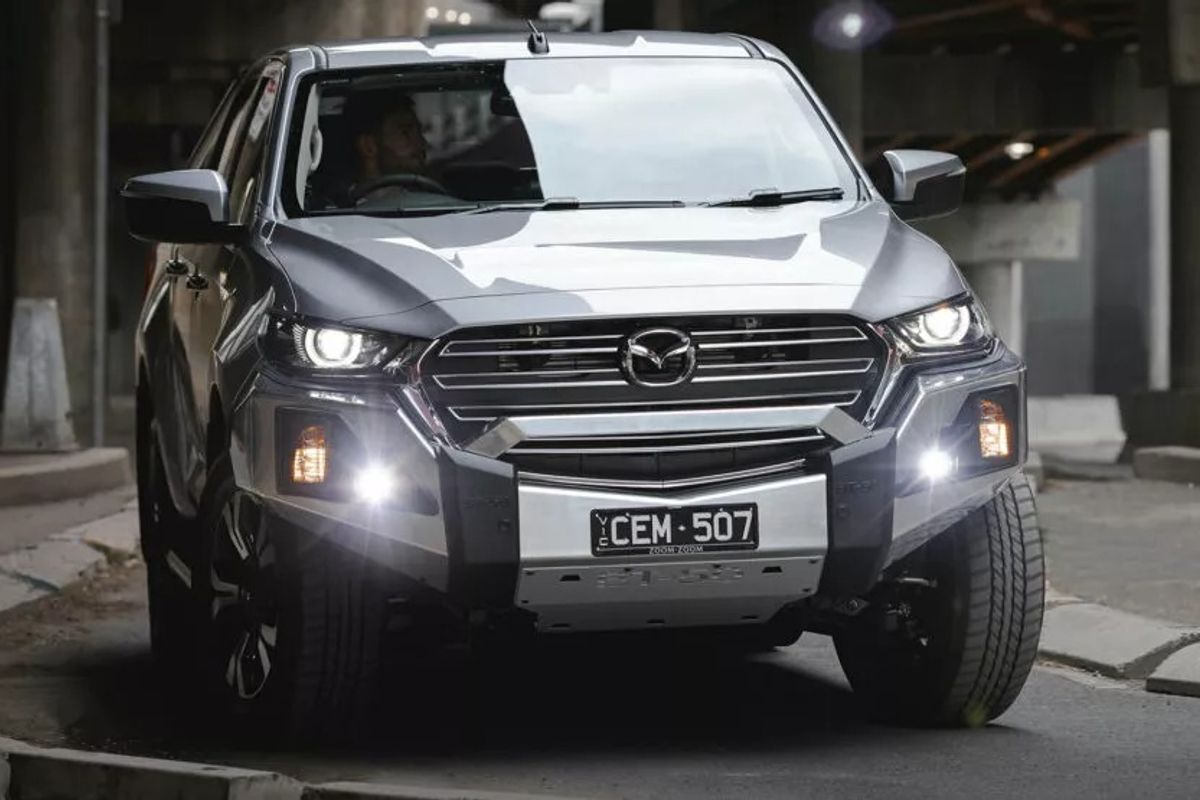
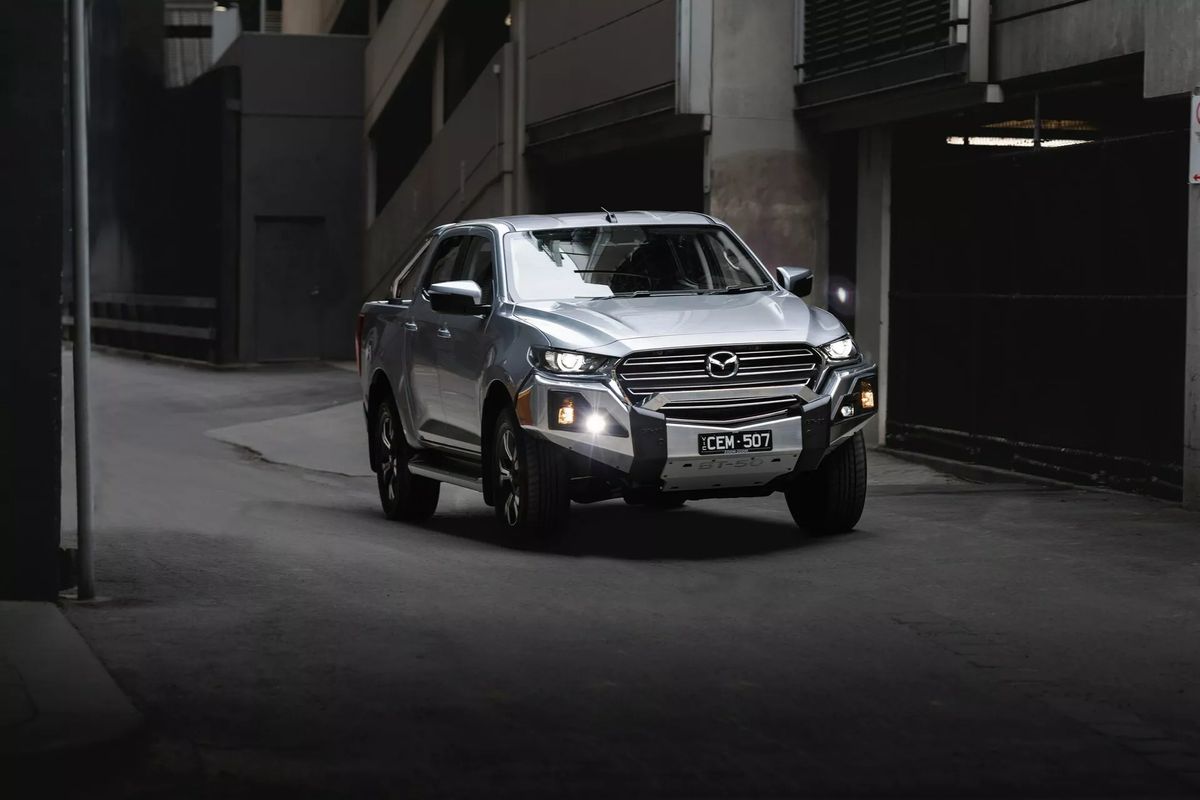
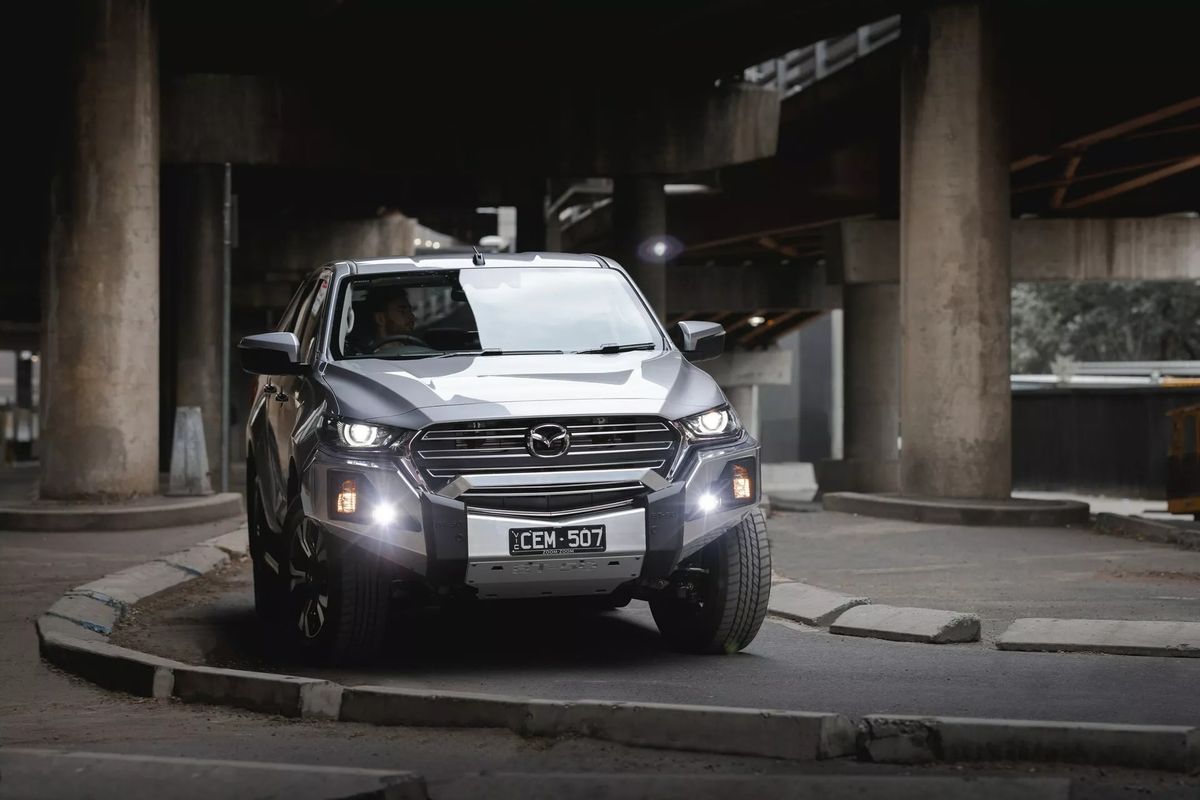
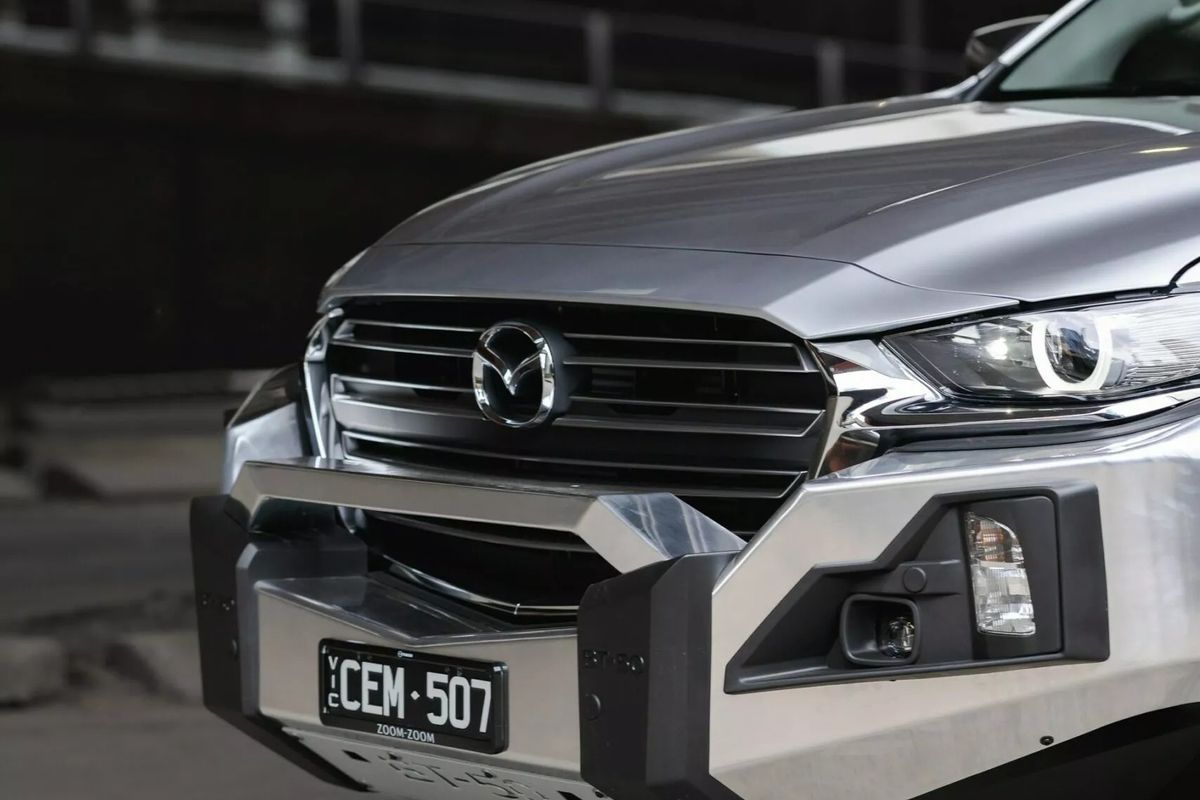
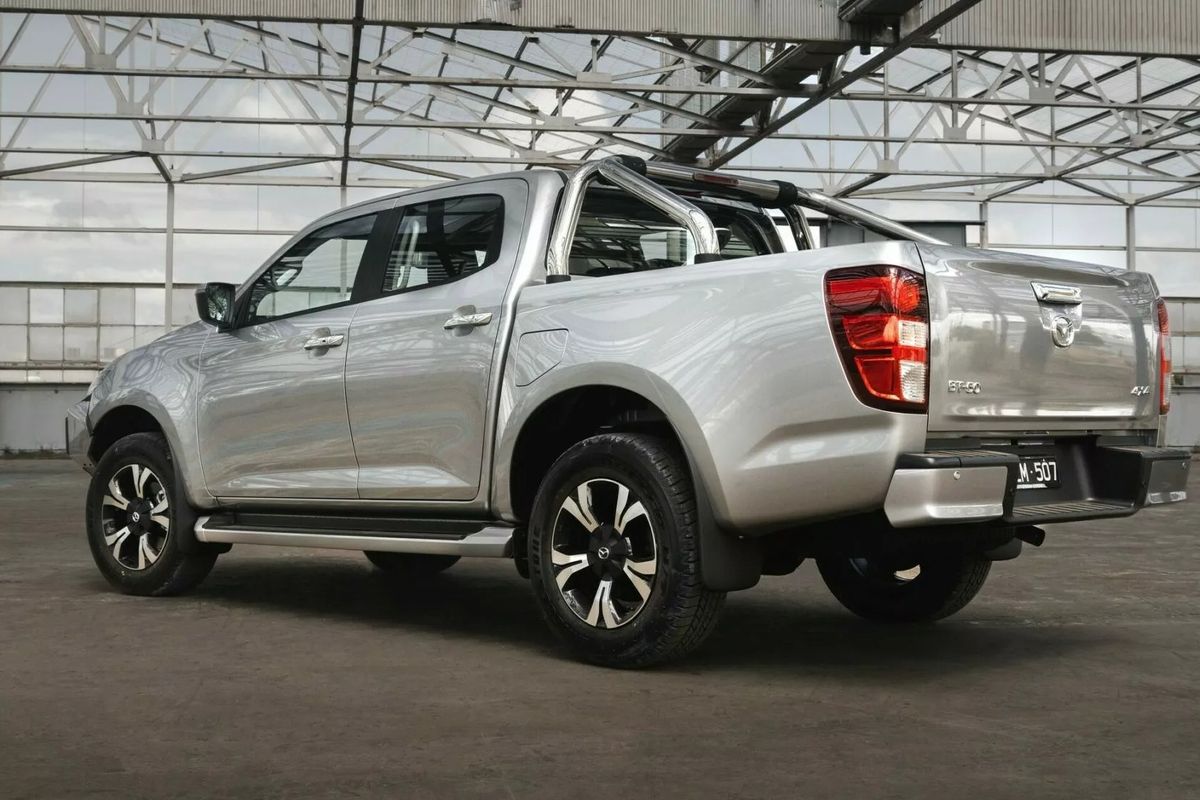
Mazda in Australia has made an effort to close this apparent gap in the BT-50’s skill set with the introduction of a new range-topping LE specification that adds a few more functional offroad addenda that afford the Japanese double-cab with a more rugged appearance.
The most prominent modification for the BT-50 LE is the specially-designed, integrated front bull bar as well as a stainless steel sports bar. The BT-50 LE is only offered in Ingot Silver body colour.
Under the bonnet, the familiar 3.0-litre turbocharged diesel engine does duty with 140 kW and 450 Nm of torque available and comes paired with a 6-speed automatic transmission.
Will the BT-50 LE be offered in South Africa?
We hope so! However, Mazda South Africa has yet to confirm exactly what updates will be issued for the BT-50 on local soil.
In our big bakkie comparison undertaken in 2021, the Mazda BT 50’s strong performance took us by surprise and we think that a more offroad-focussed and rugged BT-50 will likely appeal to more buyers looking for a capable offroad double-cab as opposed to an urban bakkie queen.
Time will tell and we will certainly keep you posted as local information becomes available!