Hoping Hyundai will build a direct successor to the petrol-powered i30 N? Well, it seems the Korean hot hatch won’t make it to a second generation…
If fresh comments from Albert Biermann are any indication, Hyundai’s first hot hatch – the i30 N – will not make it to a second generation.
Biermann, the executive who masterminded the Hyundai N performance sub-brand and who still serves as an executive technical advisor to the group, suggested to Australian media outlets the petrol-powered i30 N hot hatch would likely be a single-generation model.
The reason? Well, as you may well have already guessed, ever-tightening emissions regulations in Europe mean the writing is on the wall for a wide range of combustion-engined vehicles, including hot hatches like the i30 N. The closely related Kona N as well as the smaller i20 N are seemingly facing a similar fate.
Interestingly, however, the former BMW M boss indicated the Elantra N – which is badged as the i30 N in Australia but not offered here in South Africa – had a strong chance of surviving, though it would be limited to markets where regulations weren’t quite as strict.
“At least for Australia, they can always be – not always, but for quite some time – there can be combustion [petrol] cars out there. At least one. It’s a pretty safe bet,” Biermann said, according to Drive.
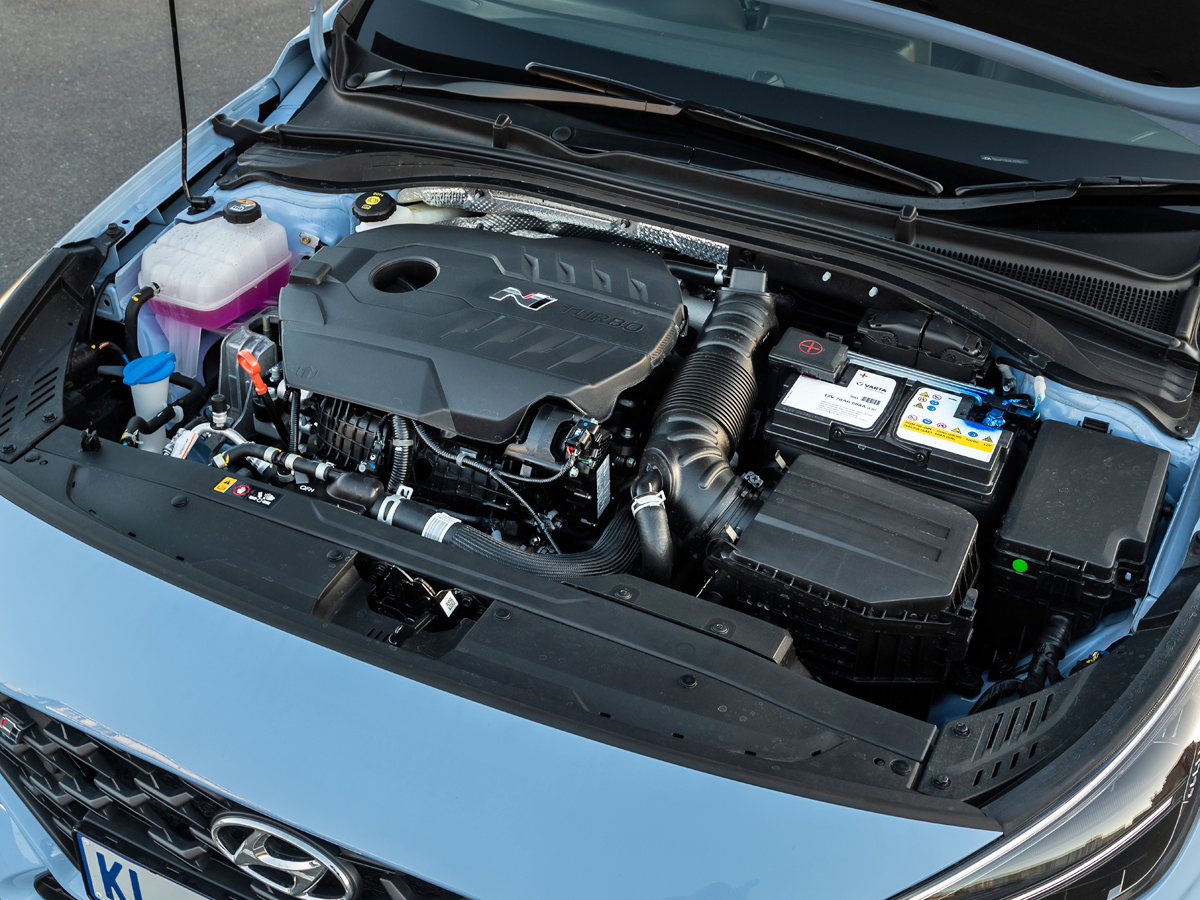
The turbocharged 2.0-litre engine from the i30 N is expected to be phased out over the next few years.
“In other areas, it’s not so easy. With Euro 7 regulations, you can imagine it’s a little bit more challenging. But for Australia, we can clearly see something like a next-generation Elantra N – you call it i30 Sedan N – that can survive.”
According to carsales.com.au, the turbocharged 2.0-litre, 4-cylinder petrol engine used by the i30 N (as well as the Kona N) will be phased out over the next few years and replaced by an uprated version of the Hyundai group’s turbocharged 2.5-litre unit. It’s worth noting the Elantra N employs a different platform to the i30 N hot hatch, with the former seemingly capable accepting this larger mill.
“At least when I checked the other engine, everything fits in [the next-generation i30 Sedan] without big drama and [a new i30 Sedan N] is in the long-range plan already,” Biermann told Drive.
When asked whether a fully electric model might eventually replace the i30 N hot hatch as we know it, the German-born engineer didn’t rule out the possibility.
“If we’re talking EVs, then we could very well see an all-electric i30 N in a hatch body with our B- and C-segment plans, but it might take some time to get there; to get it right,” Biermann said, according to CarExpert.
Though it was revealed as long ago as 2017, the i30 N launched in South Africa in February 2020 at a price of R679 900, with its force-fed 2.0-litre engine sending 202 kW and 353 Nm to the front axle via a 6-speed manual gearbox. The facelifted version touched down in April 2022, boasting higher peak outputs (206 kW and 392 Nm), an 8-speed dual-clutch transmission and a starting price of R749 900 (which has since increased to R764 900). Over the past six months, 43 units have been registered locally.
Jaguar South Africa has silently pulled the plug on the XF, meaning the British firm’s local range no longer features a single sedan…
Despite being known for its luxury sedans, Jaguar South Africa’s line-up no longer features this body style. The XF was the last remaining saloon in the local range, but it has now been put out to pasture.
Although production of the X260-generation XF seemingly continues for some markets, Jaguar SA has confirmed to Cars.co.za the model “is no longer available in South Africa”. We looked back at the sales figures reported to Naamsa and found just four examples of the XF have been registered locally over the past six months.
The news means the local line-up now comprises three SUVs (the E-Pace, F-Pace and electric I-Pace) along with the 2-seater F-Type, which is itself heading into a final year of production. Of course, the Whitley-based automaker has big plans to transform into a fully electric brand by 2025, so its range will change markedly in the next couple of years.
As a reminder, this version of the XF debuted in 2015 before arriving on local shores the following year, where it squared up to the likes of the Audi A6, BMW 5 Series and Mercedes-Benz E-Class. The facelifted version touched down in 2021, before the R-Dynamic Black model joined the line-up later that year.
In South Africa, the refreshed XF range included two 4-cylinder engine options: a 2.0-litre petrol unit (184 kW and 365 Nm) in the P250 and a likewise 2.0-litre turbodiesel mill (147 kW and 430 Nm) in the D200. Before it was discontinued locally, the XF had a starting price of R1 235 600.
What about the Jaguar XF’s sedan siblings?
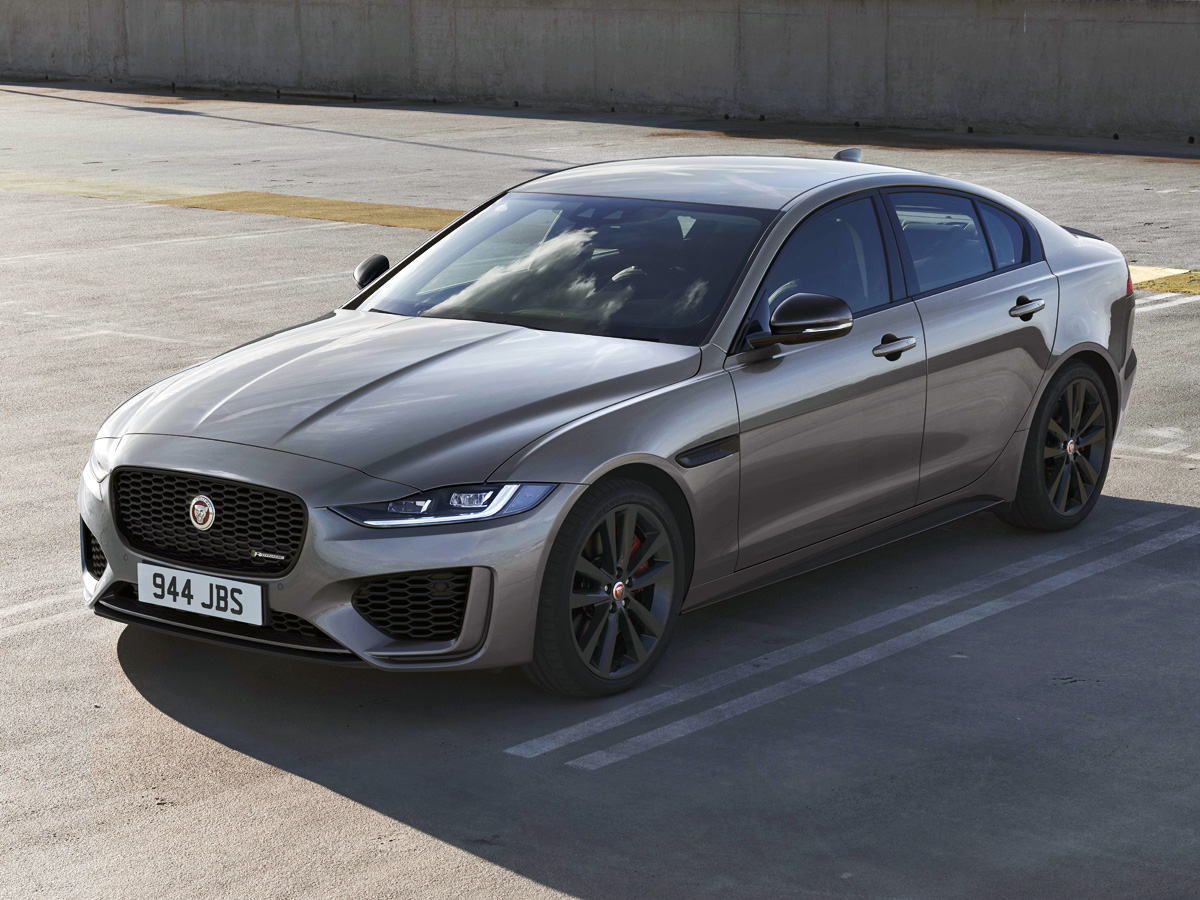
The Jaguar XE was discontinued in SA in 2021.
Of course, other three-box Jaguar vehicles have also been removed from sale in South Africa over the past couple of years. The XE, for instance, made local landfall in 2015, was updated in 2020 but similarly quietly discontinued here in 2021. Production continues overseas for select markets, where the XE battles against the Audi A4, BMW 3 Series and Mercedes-Benz C-Class.
And the XJ? Well, the X351-generation version of the British firm’s full-size luxury saloon went into production in 2010 and was on the market until 2019. Jaguar had plans to replace it with an all-electric XJ – even releasing a teaser image at one point – but ended up scrapping Project X391. Still, it said the XJ nameplate “may be retained”, so we could potentially see it return at some point.
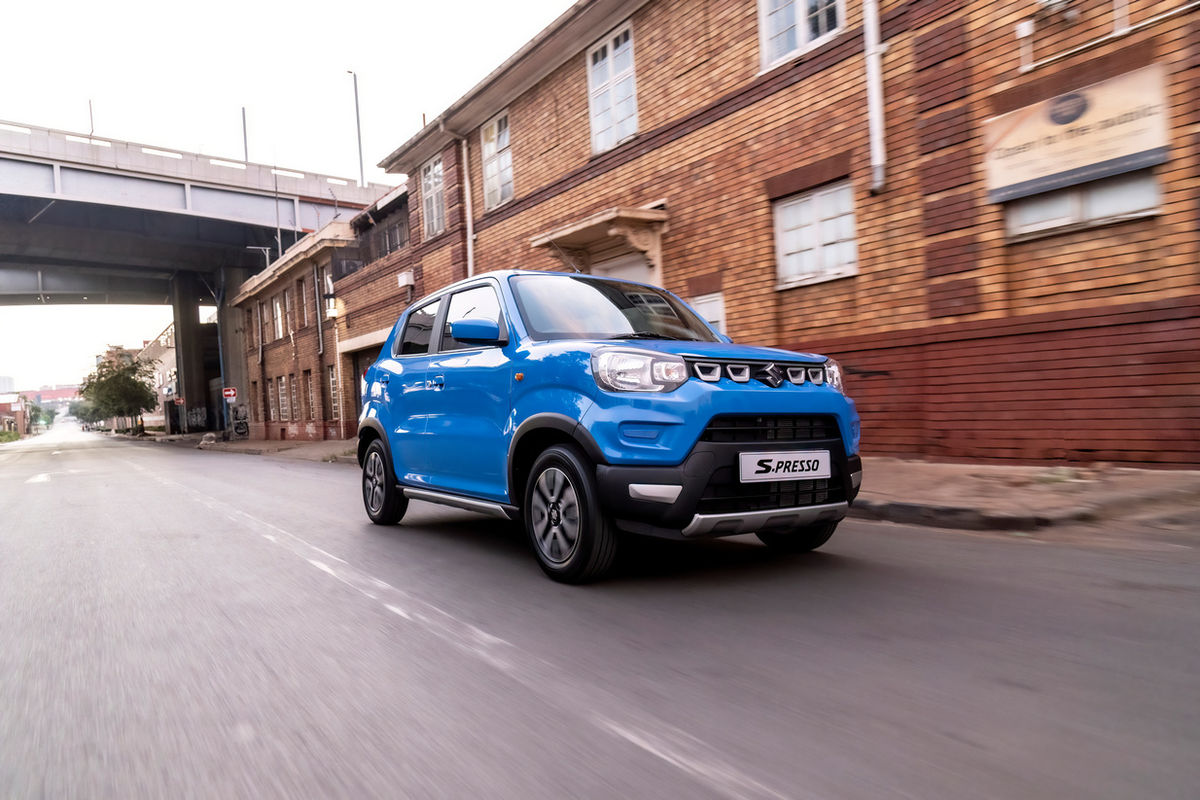
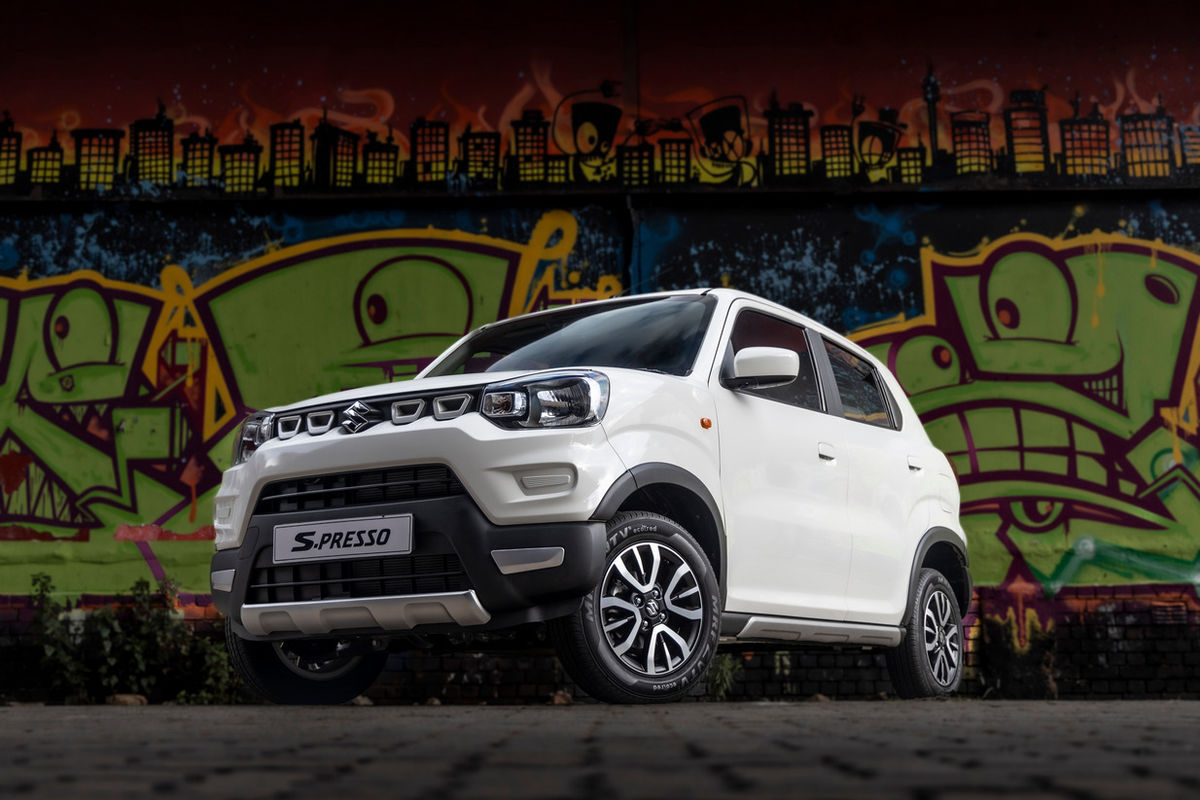
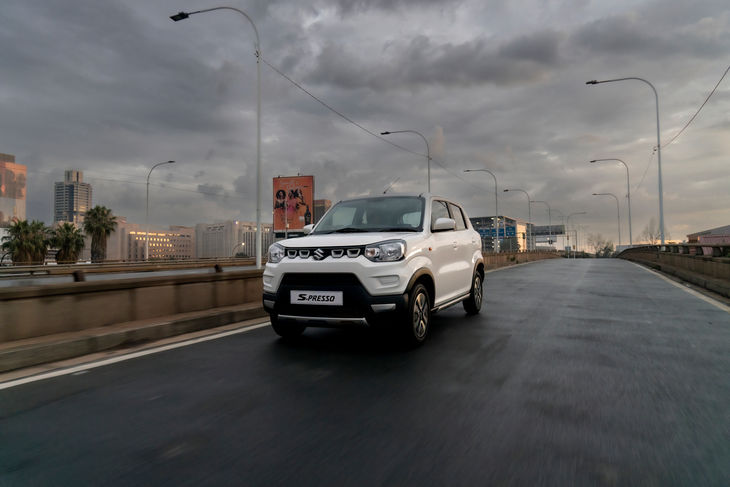
Throughout the past year, Suzuki has become the leading supplier of budget cars in the local new-vehicle market – the Japanese brand currently offers no fewer than 5 models with derivatives that are priced under the R200k barrier. Suzuki recently applied a light update to the S-Presso – its most budget-oriented offering – and we drove the revised hatchback in the Western Cape.
What’s new with the S-Presso?
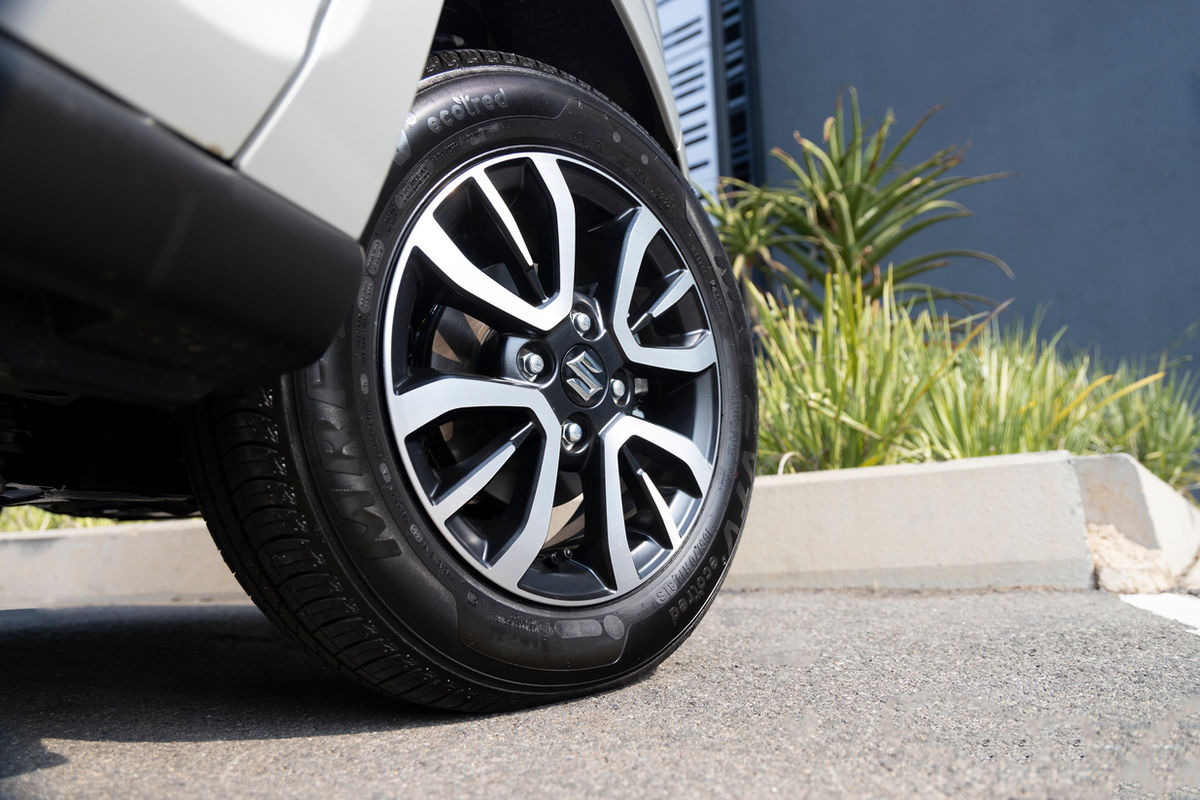
New 14-inch alloy wheels feature on the GL+ and S-Edtion derivatives.
The Suzuki S-Presso was effectively launched during the hard-lockdown phase of the Covid-19 pandemic in 2020. As a result, it didn’t receive nearly as much media attention as a new-vehicle launch would usually get. Nonetheless, the high-riding hatchback has garnered many sales (14 000 units) in the past 2 years. Fortunately, an updated version of the S-Presso has been launched now – under more “normal” circumstances – and we sampled the revised model this week.
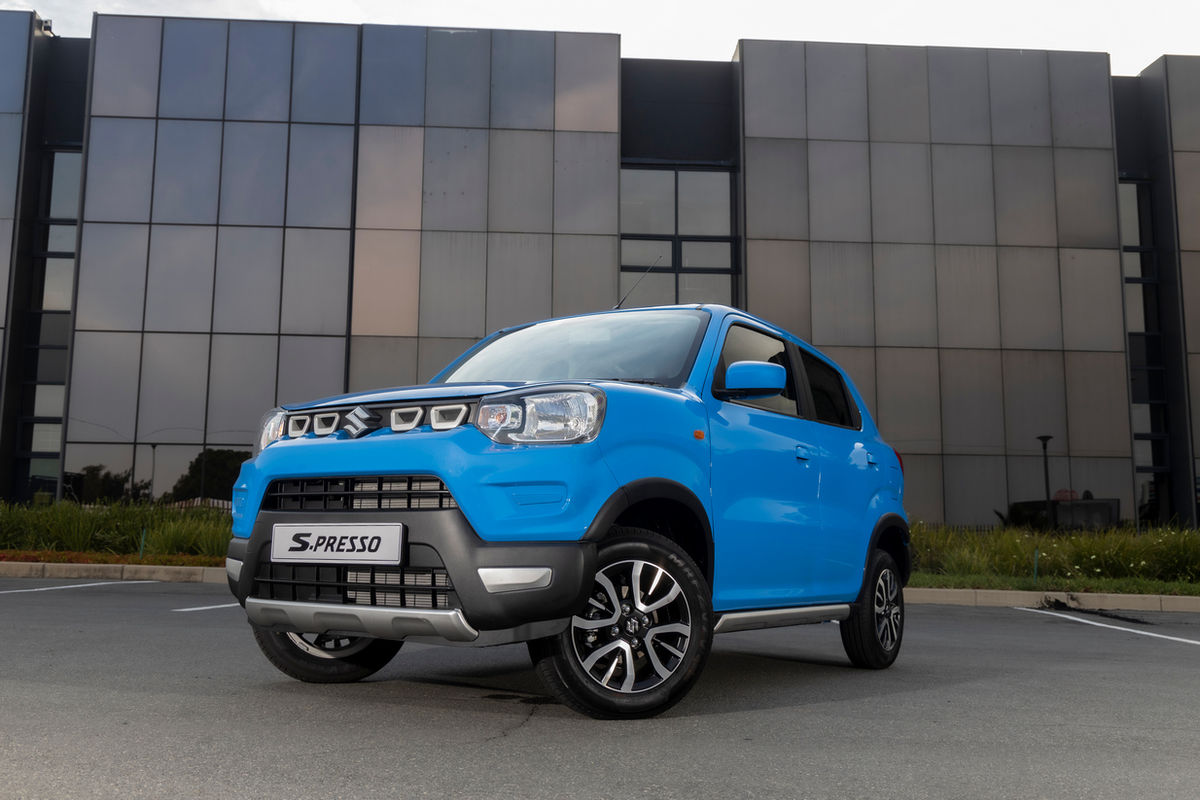
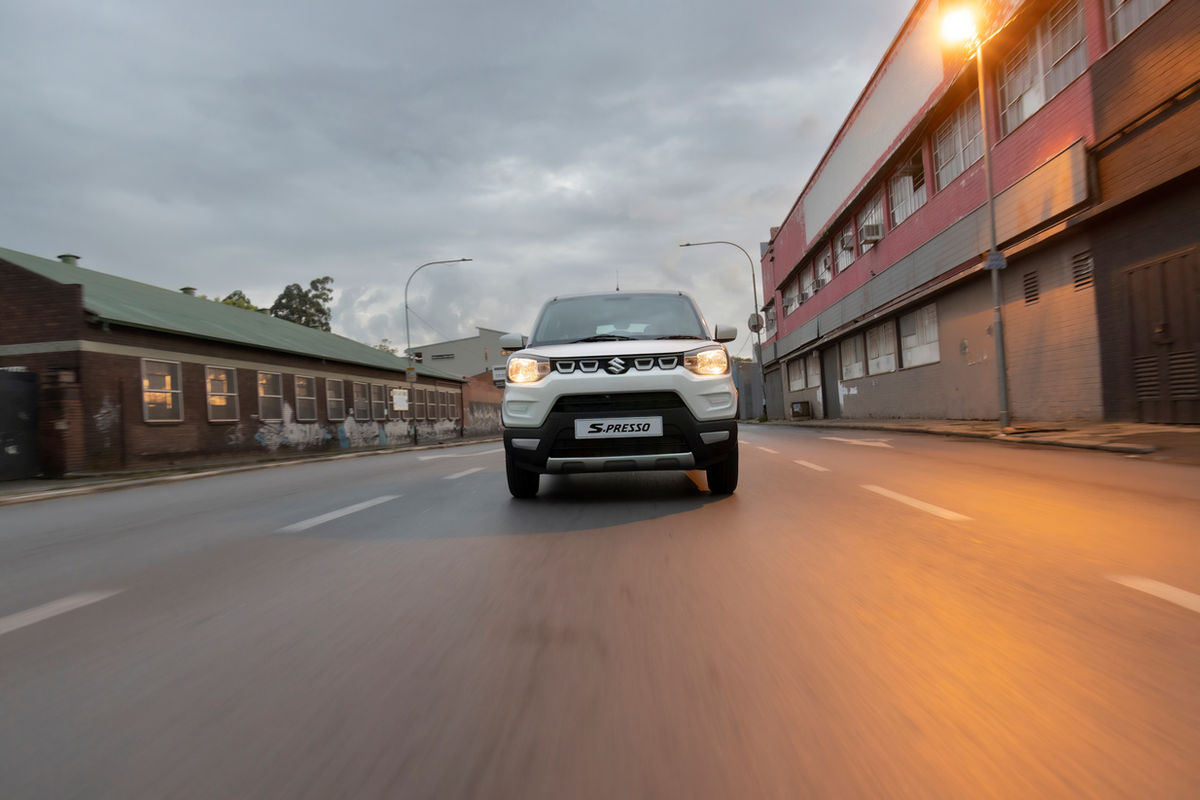
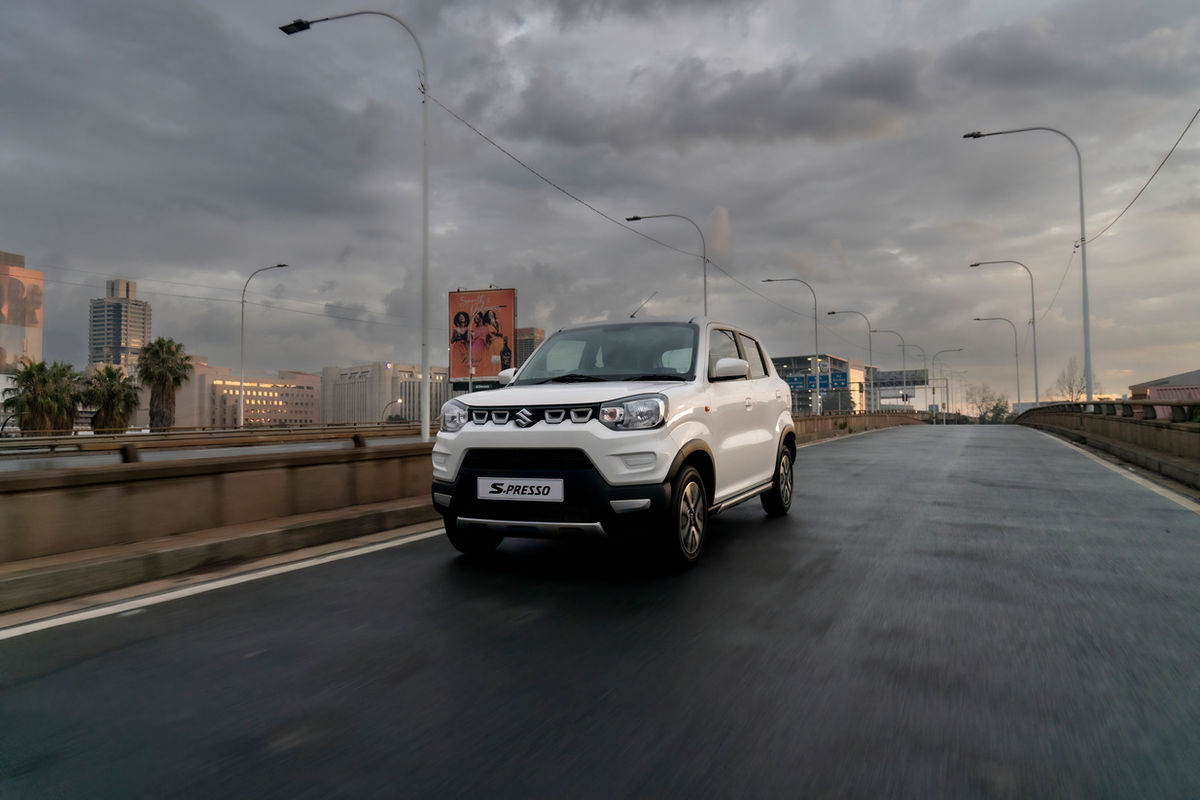
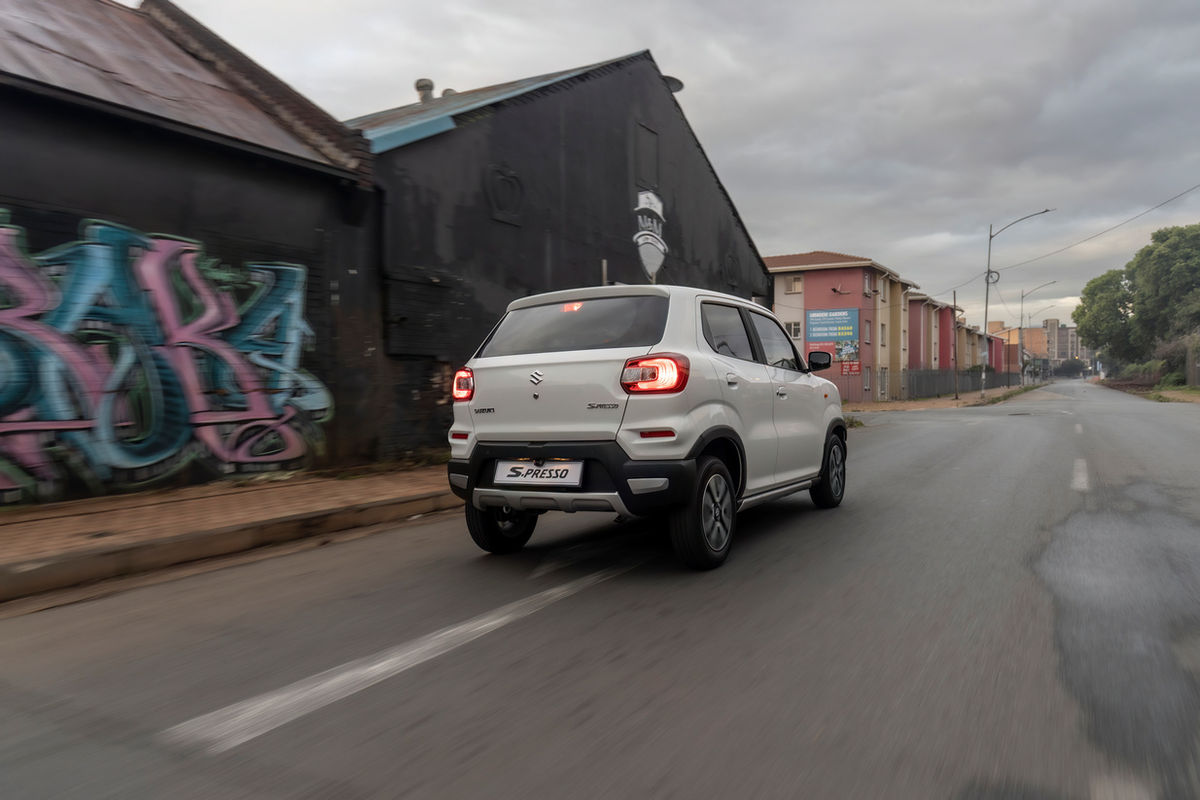
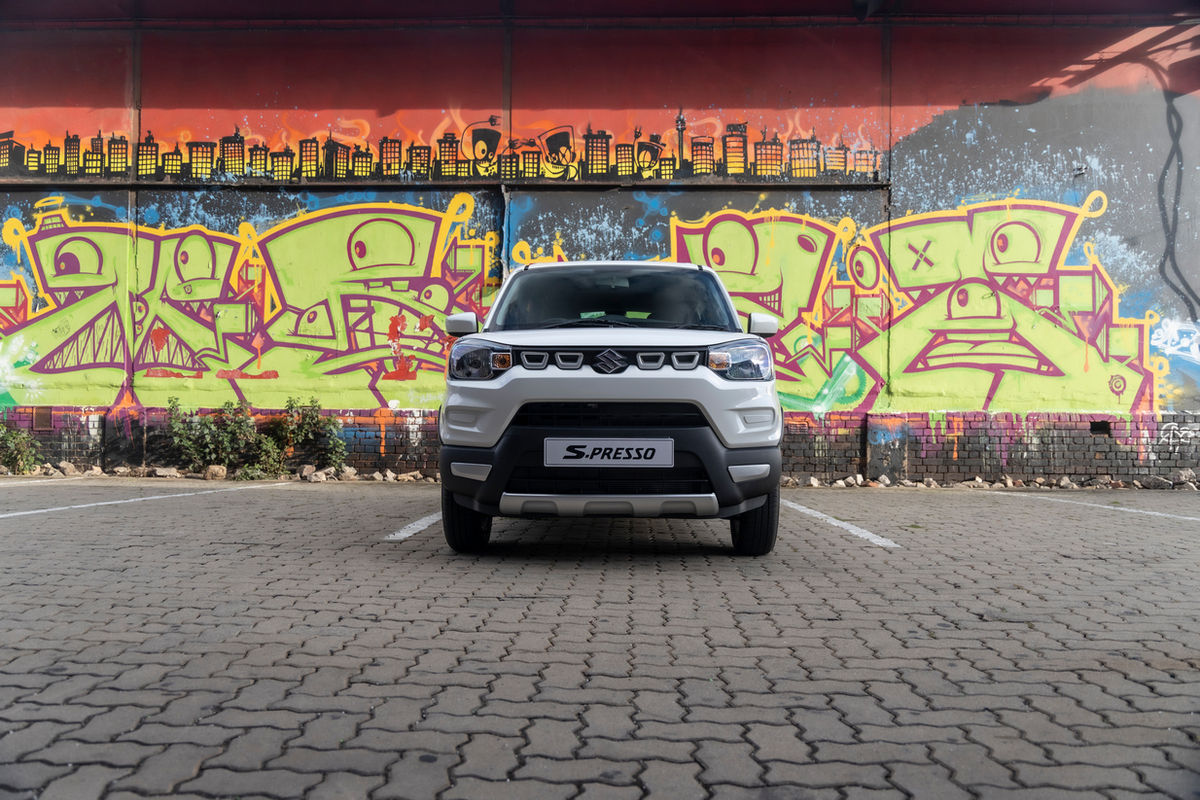
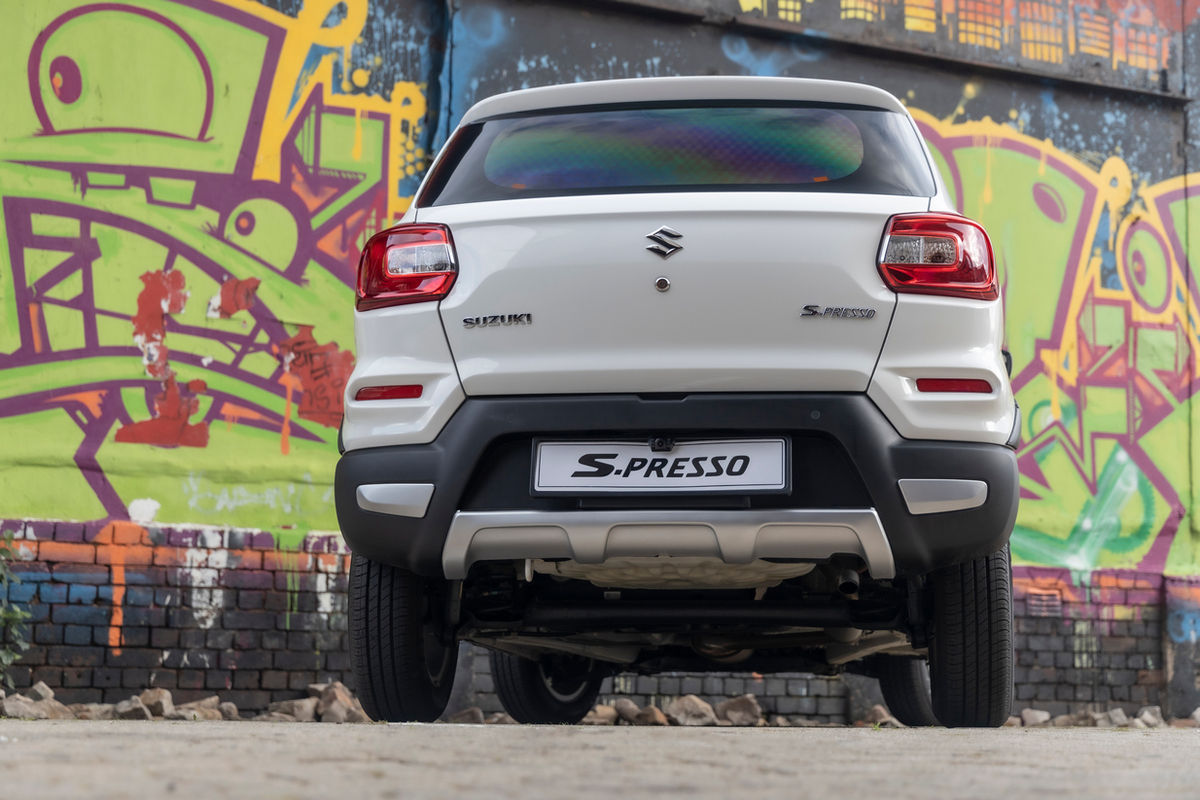
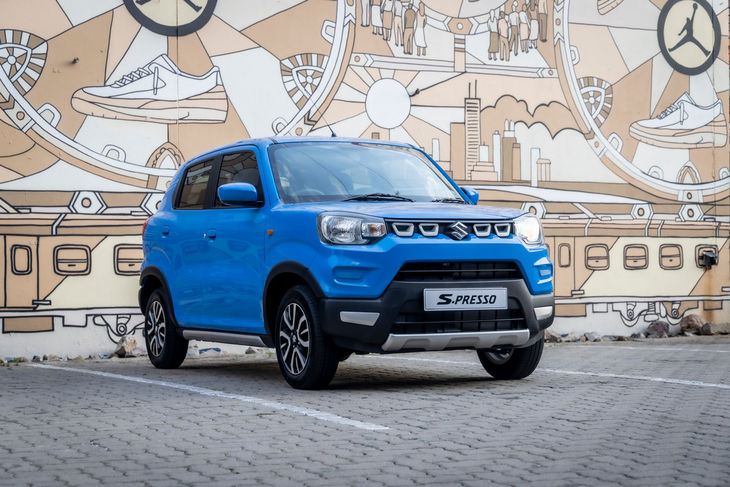
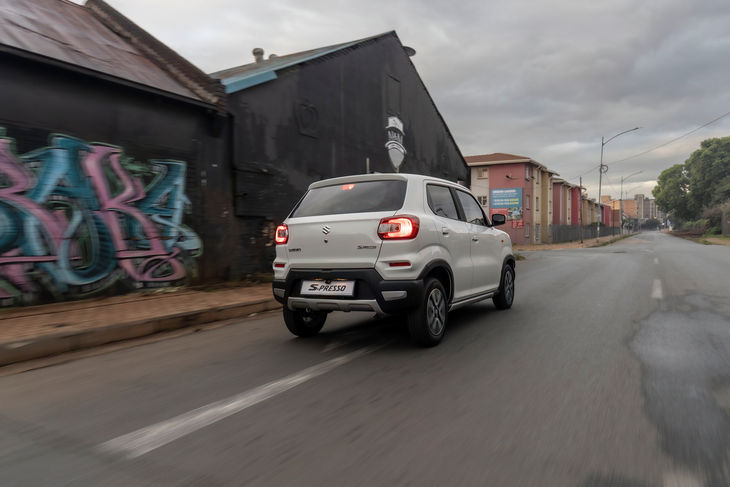
Regarding updates, this is one of the smallest you’re ever likely to see. In terms of the S-Presso’s exterior execution, I can’t tell the difference between the old and new models, but Suzuki says the front and rear designs have been updated.
The GL+ and S-Edition derivatives now feature 14-inch alloy wheels (previously steel wheels with plastic covers/trims were fitted), plus ESP (electronic stability control) has become standard across the range.
The 1.0-litre 3-cylinder petrol engine under the bonnet has now been tuned to return better fuel economy (in both manual and AMT versions); it’s the same unit as in the Celerio light hatchback, which was launched earlier this year.
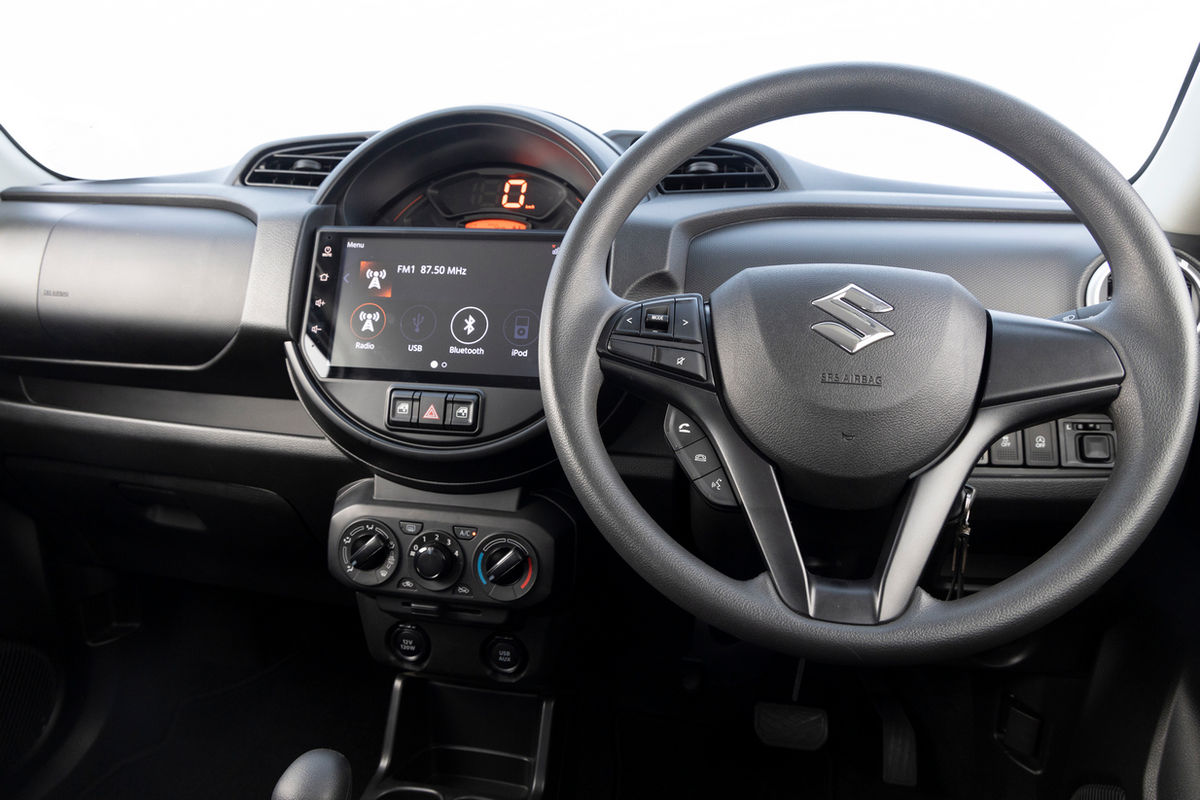
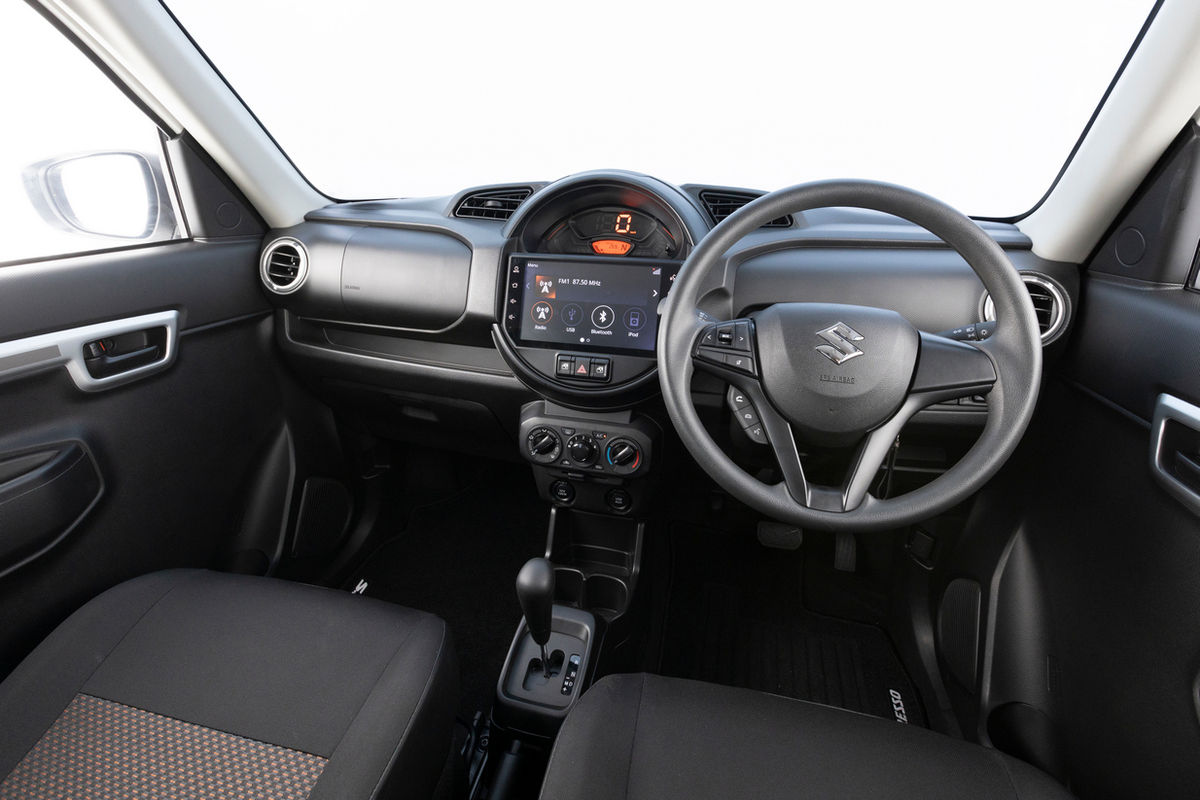
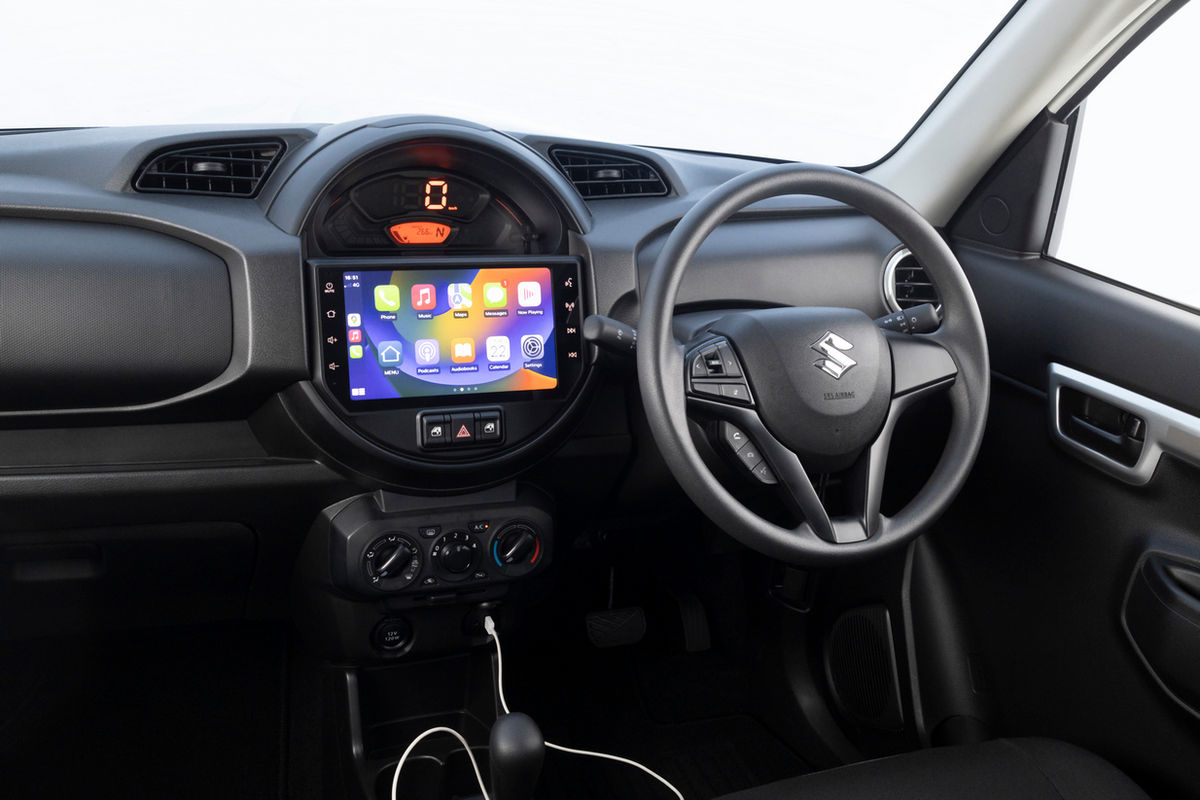
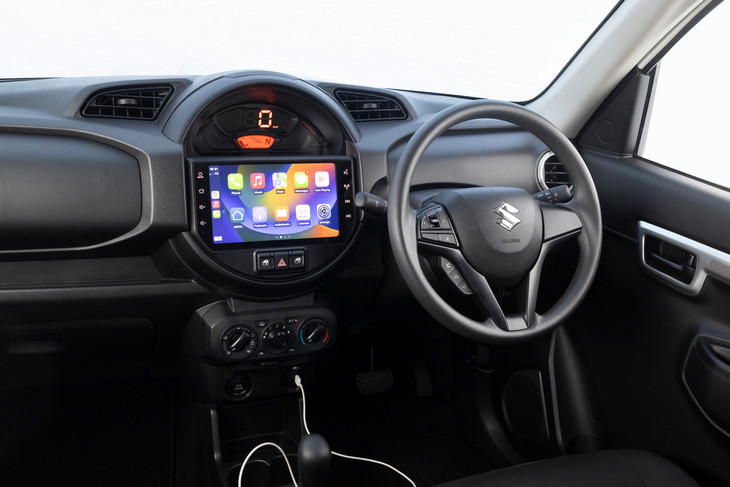
The final addition to the lineup is a larger infotainment screen, which features in the range-topping S-Edition derivatives.
A new car for under R200k
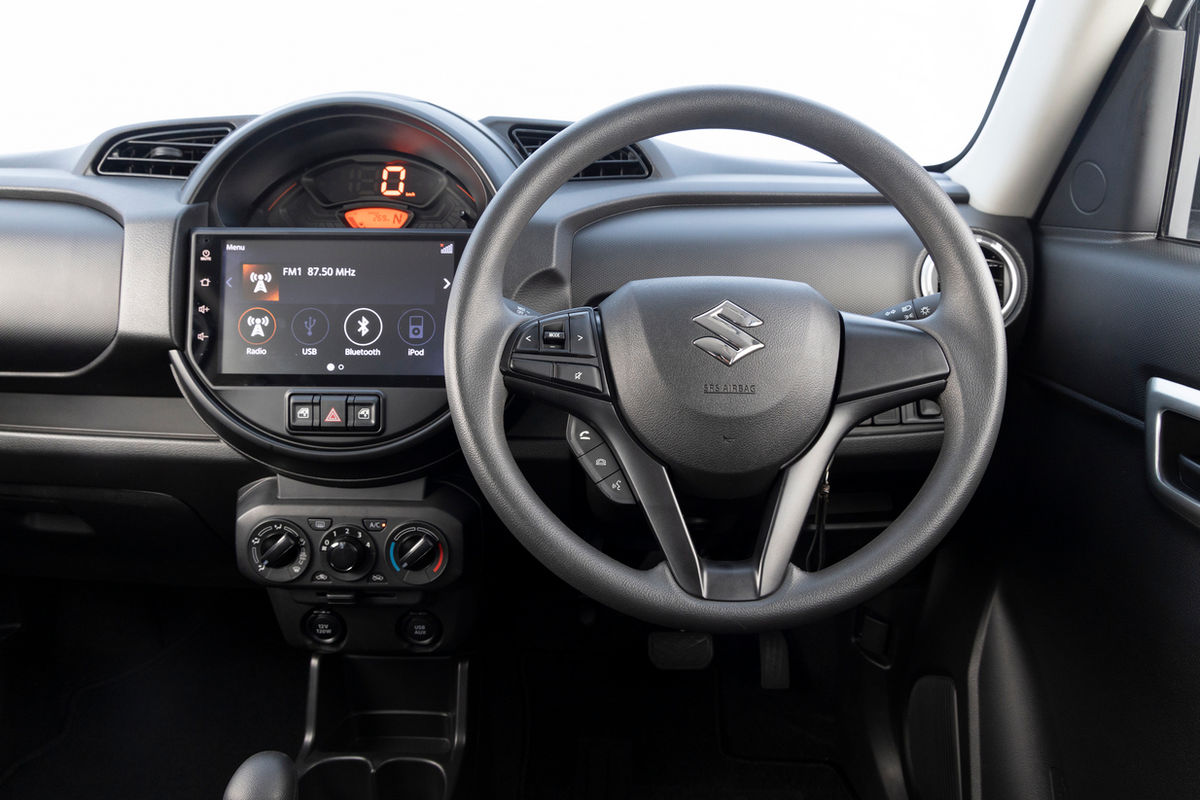
S-Edition derivatives now have a 9-inch touchscreen, while the GL+ has a 7-inch touchscreen.
The entire S-Presso range comes in at under R200k. A few years ago, R200k seemed like a lot of money, but the effect of the weakening Rand, allied with price inflation of so many goods and services in the Republic, has been so pronounced that, in some instances, cars have very nearly doubled in price over an 18-month period. The good news is that the S-Presso still represents pretty good value for your money when you consider all the features that it offers.
Dual front airbags are standard across the range and so is ESP, which is a significant development. If the stats are to be believed, stability control has saved more lives than seatbelts (avoiding an accident is better than mitigating the damage).
GL+ and S-Edition derivatives feature touchscreen infotainment systems, with the latter trim level sporting a larger (9-inch) screen (the GL+ has a 7-inch display). Both systems are Apple Carplay and Android Auto compatible, which is all you really need from a modern infotainment system…
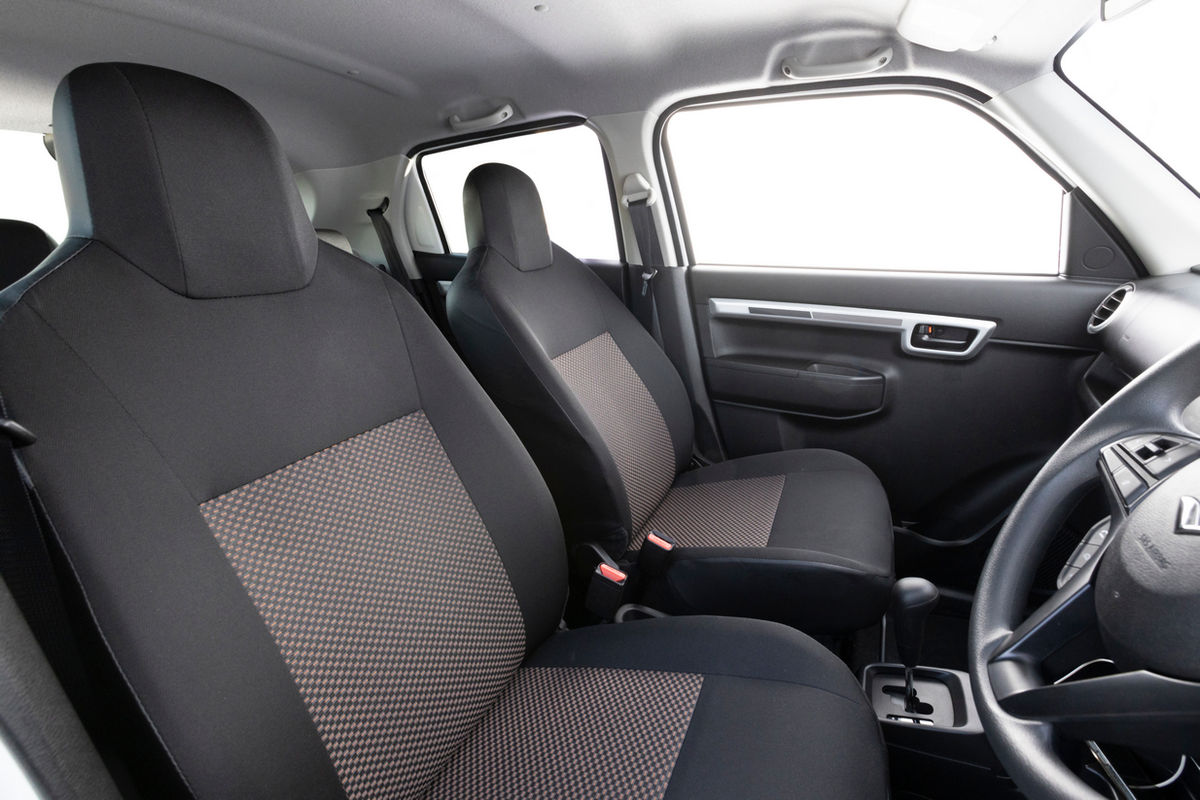
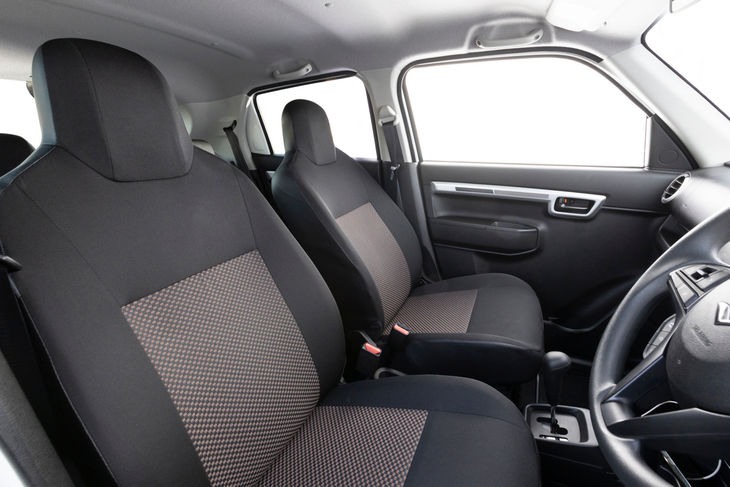
Space-wise, the S-Presso is obviously diminutive, but there is a reasonable amount of room for rear-seat passengers (although the seats feel a bit thin and unsupportive at the sides). Longer journeys are likely to require a few stops along the way so that occupants can stretch their legs a bit.
The load bay is also a little on the small side. With a claimed luggage capacity of 239 litres, the Suzuki’s load bay is about 40 litres smaller than that of its closest rival, the Renault Kwid, but when choosing between “boot size” and stability control (the Kwid doesn’t have ESP), the latter ought to win every time. Also bear in mind that the load bay needs to be opened with a key (there isn’t a tailgate button), but at least an old-school release flap is located on the driver’s side floor.
Is the engine in the S-Presso good enough?
Fuel economy gains have been made with the updated engine.
The updated engine in the S-Presso produces slightly less power and torque than before (nominal reductions of 1 kW and 1 Nm), but the model’s claimed average fuel economy figures are said to have been improved by 0.5 L/100 km (4.6 L/100 km for the manual and 4.4 L/100 km for the AMT), which doesn’t sound like a significant gain, but at least you will make a saving every time you fill up. It works out to around R10-R12 per 100 km saved (December 2022).
Peak outputs of 49 kW and 89 Nm are not a lot to work with, but you also need to consider the S-Presso only weighs around 800 kg, so it has an adequate power-to-weight figure. If you live on the Highveld you’ll lose another 10-16% of that power, so hauling heavier loads will sap the Suzuki of much of its performance – it’s something you need to consider before you purchase an S-Presso.
We drove the cars at the coast (in 5-speed manual guise), where they seemed to cope just fine in their natural habitat of inner-city and back roads. The gearshift has one of the lightest and most natural throws you’re likely to find in the budget-car segment (heck, it’s good by any standard) and that, combined with a light clutch action, makes the S-Presso very easy to drive.
Other things to consider
The S-Presso’s steering column cannot be adjusted for rake or reach.
Concessions need to be made when shopping in this segment of the market. If you only have R200k to spend on a new car, you’re not going to get every luxury feature you’ve read about in reviews of premium cars.
The steering column does not adjust for rake or reach, for example, so your driving position is somewhat compromised. The driver’s seat is not height-adjustable either, so you have to make the best of what fore and aft adjustment is available.
What’s more, the S-Presso doesn’t have the road-holding ability of a hot hatchback, let alone a sports car, and the raised ride height (181 mm) does make the Suzuki feel a little top-heavy when it’s made to corner with haste. The model’s light kerb weight also makes it a bit susceptible to being rocked by strong winds on the freeway – the steering feel could do with a bit more weight to make it easier for drivers to “steady the ship” when the vehicle’s being buffeted about.
Suzuki S-Presso pricing and after-sales
S-Presso 1.0 GL Manual
R162 900
S-Presso 1.0 GL AMT
R176 900
S-Presso 1.0 GL+ Manual
R169 900
S-Presso 1.0 GL+ AMT
R183 900
S-Presso 1.0 S-Edition Manual
R185 900
S-Presso 1.0 S-Edition AMT
R199 900
All S-Presso models are sold with a 2-year / 30 000 km Service Plan and a 5-year / 200 000 km promotional mechanical warranty.
Cars under R200k are few and far between, the S-Presso is a well-specced one.
While the Suzuki S-Presso’s update is particularly light, the inclusion of ESP (electronic stability control) is welcome in this sector of the market. What’s more, the fitment of alloy wheels (rims) will please most buyers, because it seems that, in many parts of the country, wheel covers are being appropriated by some sort of wheel-cover cartel! The fuel economy improvement (if small) will also help reduce running costs, which at this end of the market is all-important.
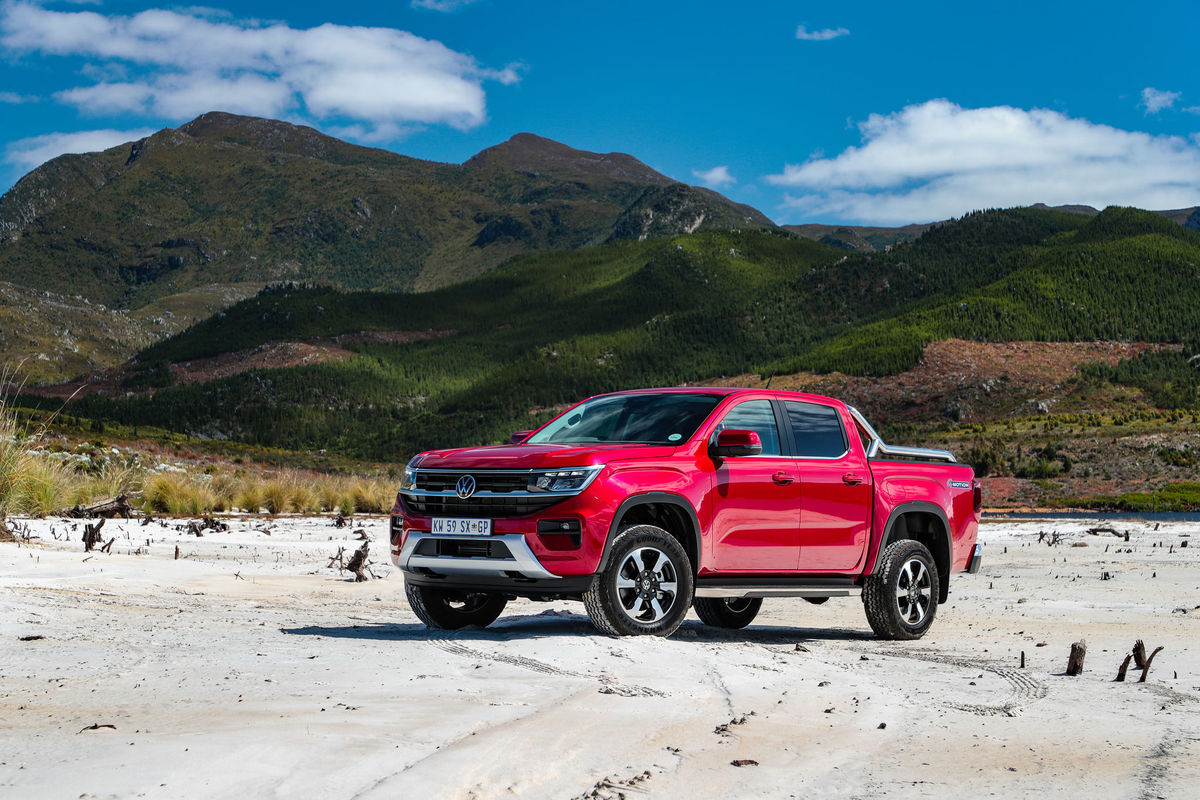
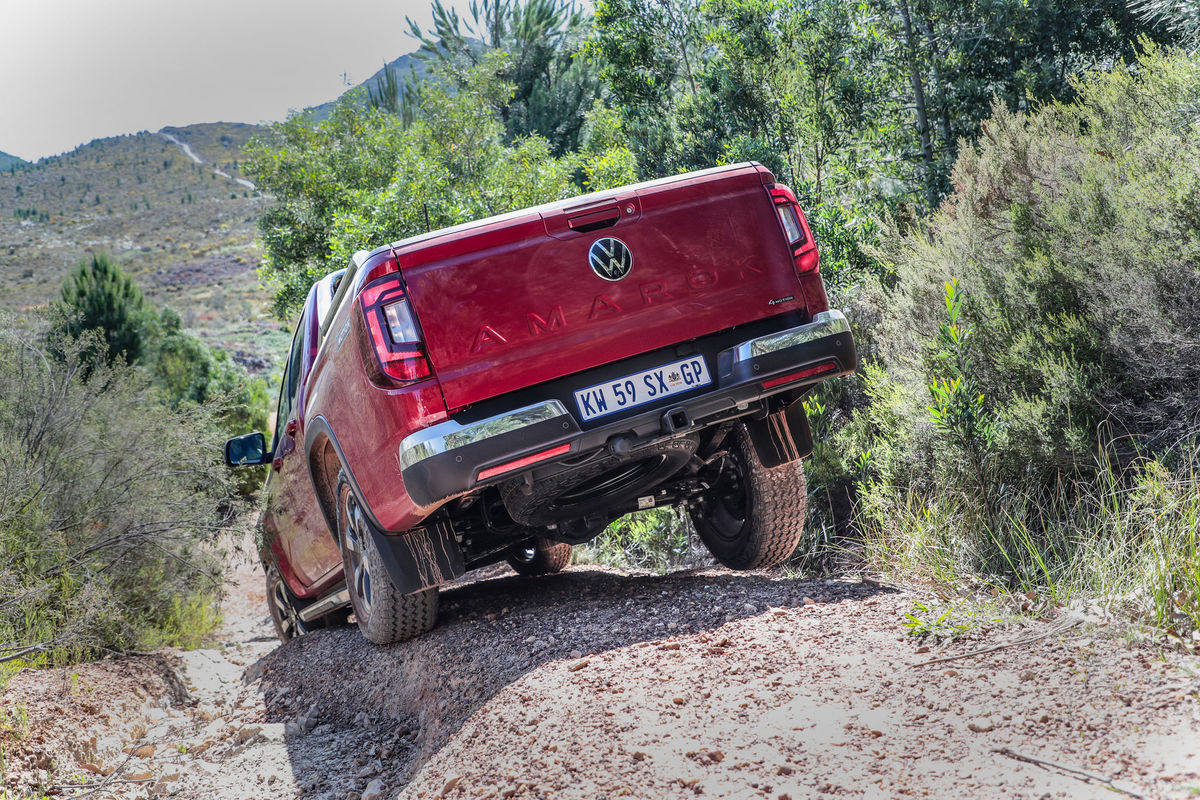
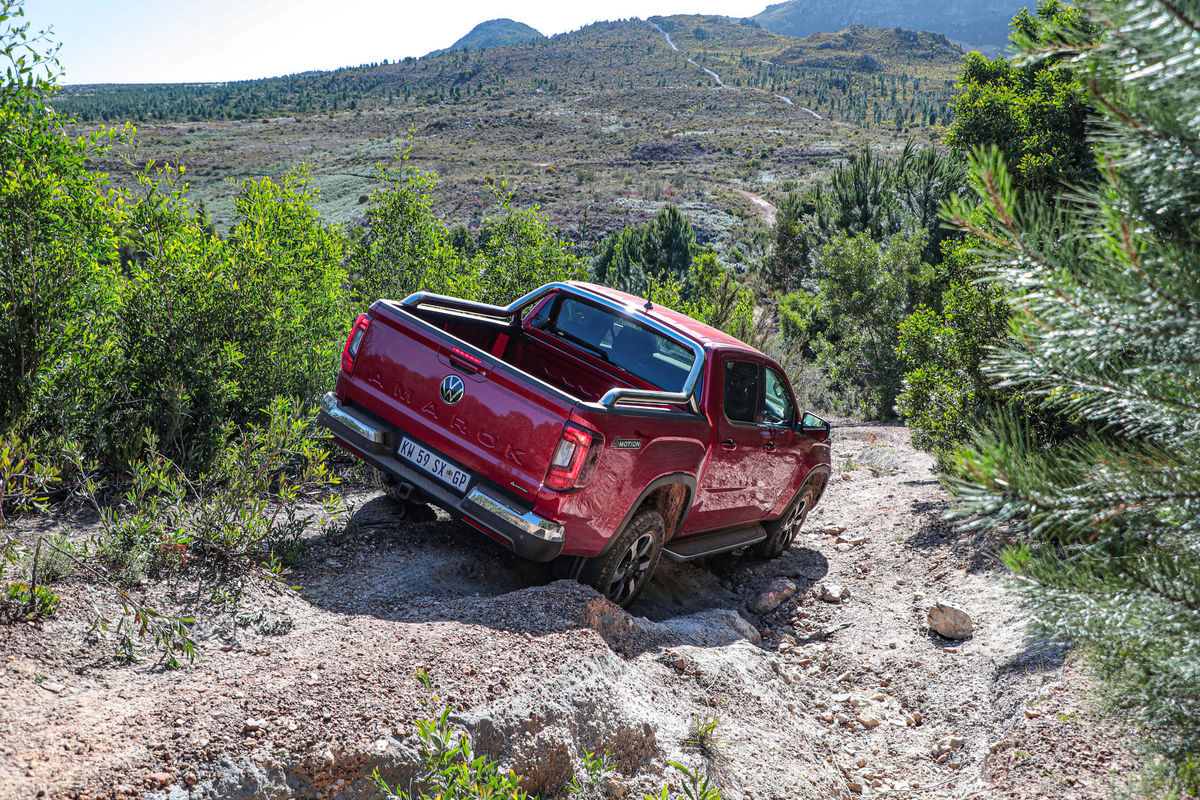
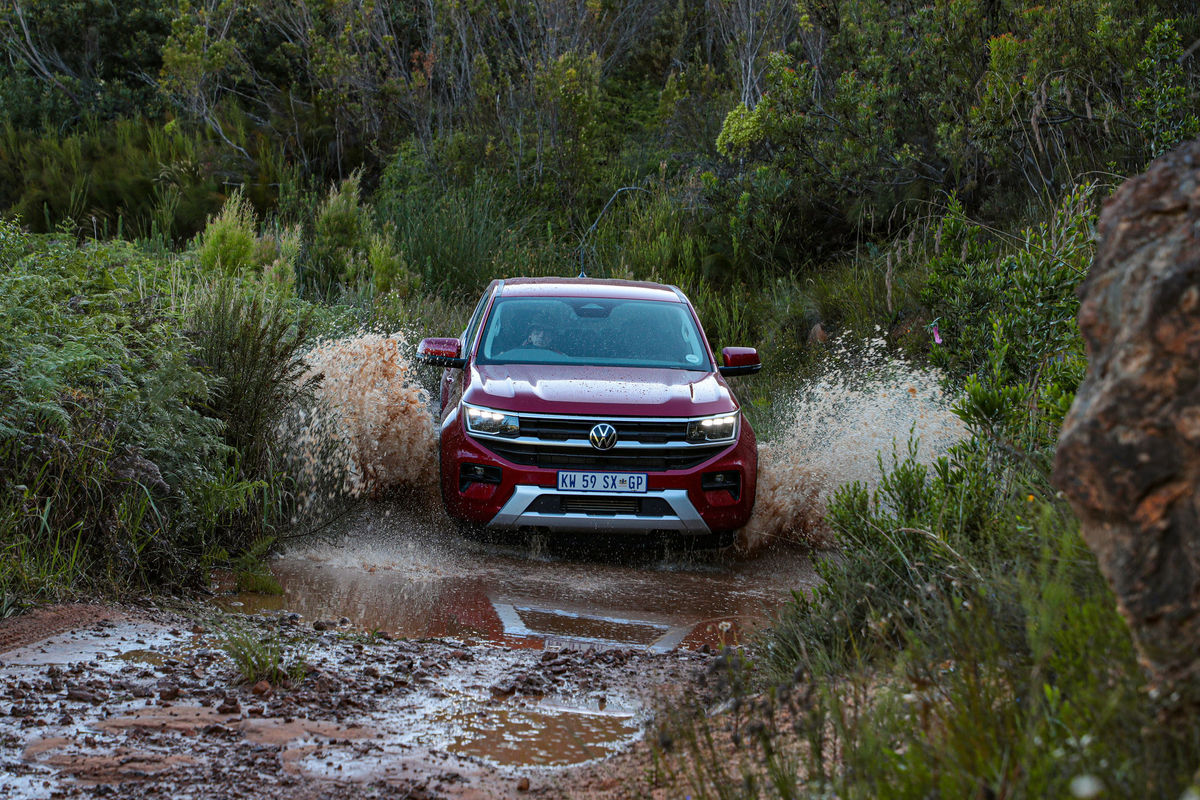
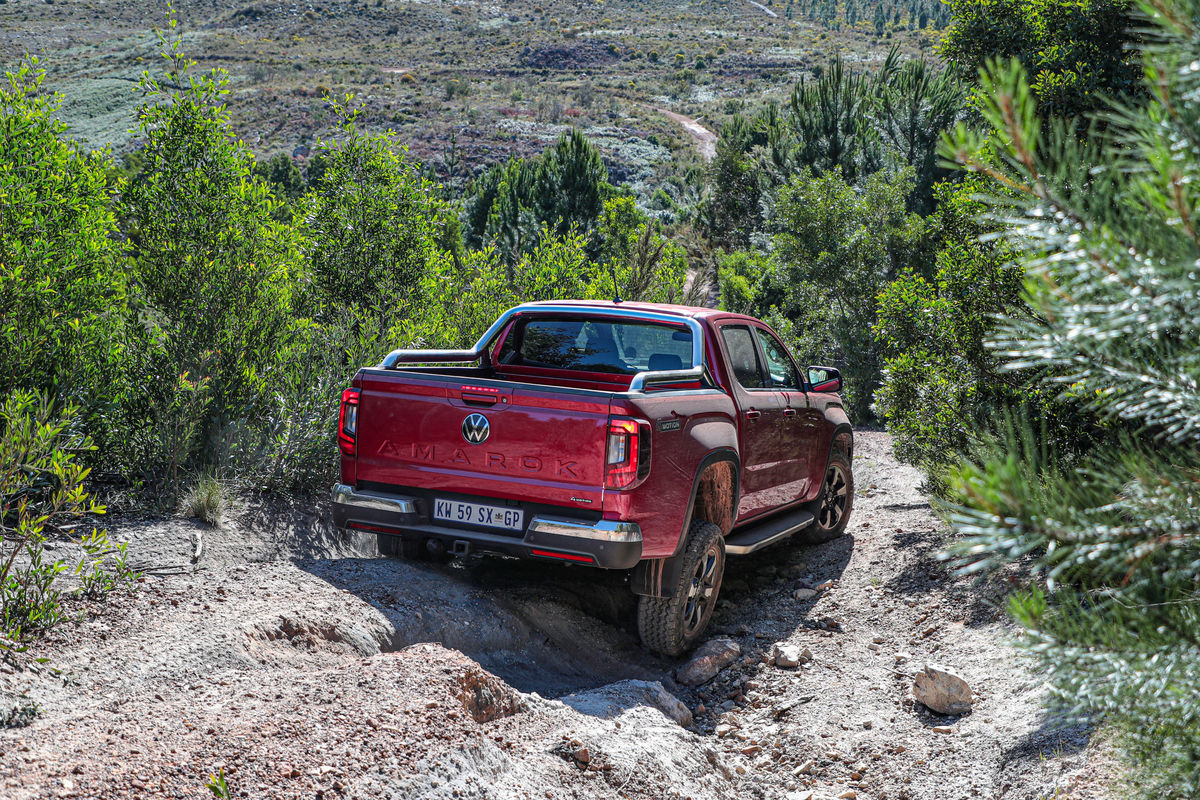
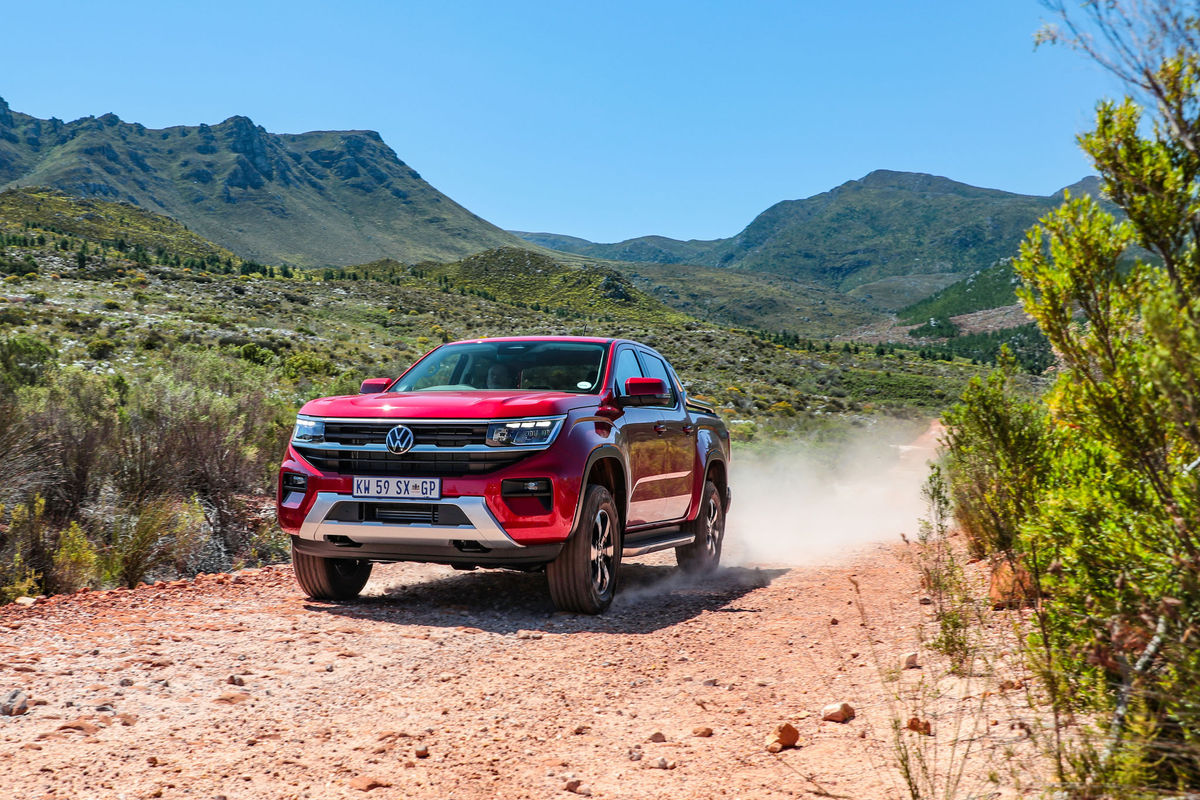
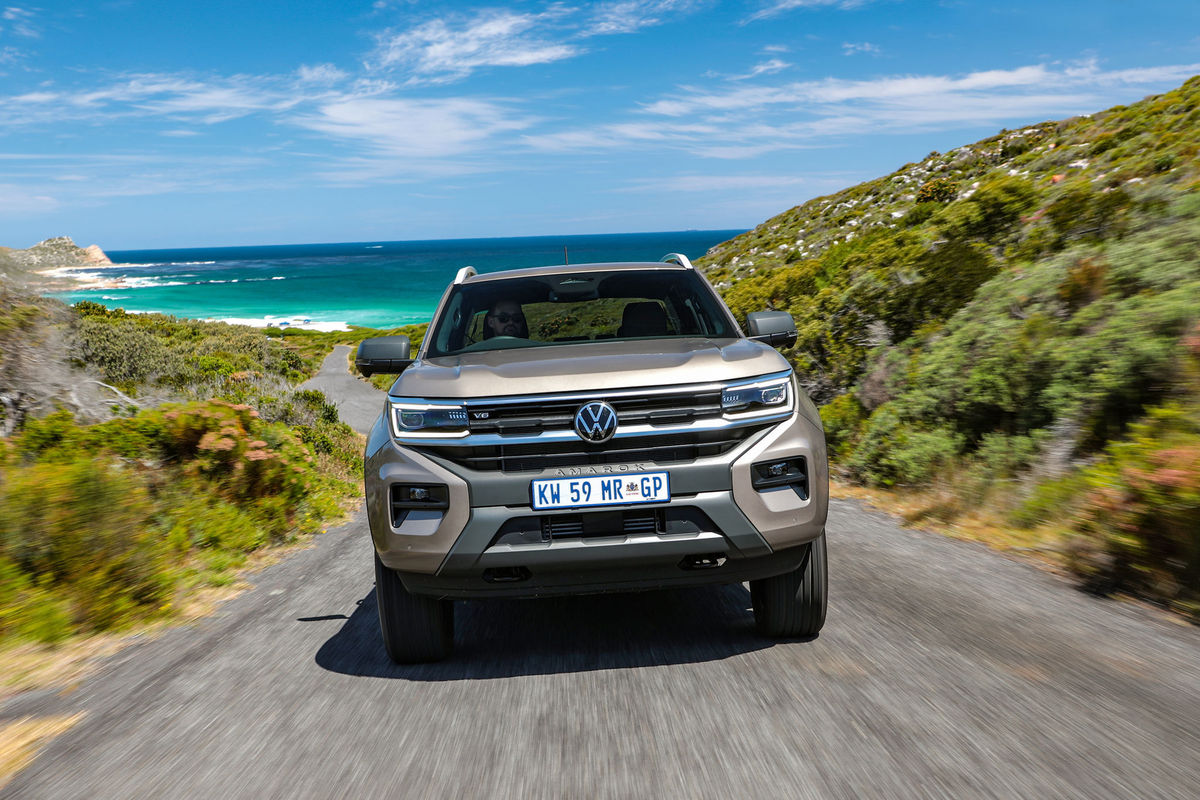
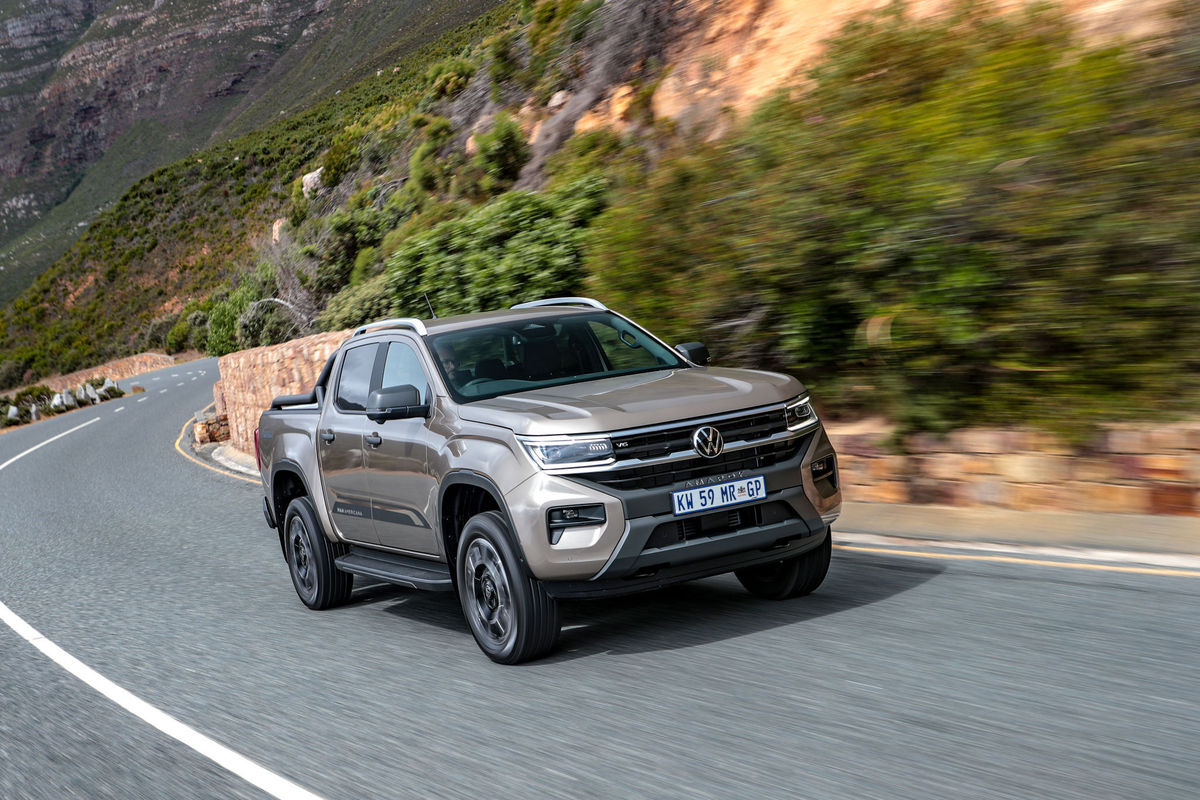
Despite having previously ruled out an Amarok-based SUV, Volkswagen now says it may well need to (eventually) create one. Here’s why…
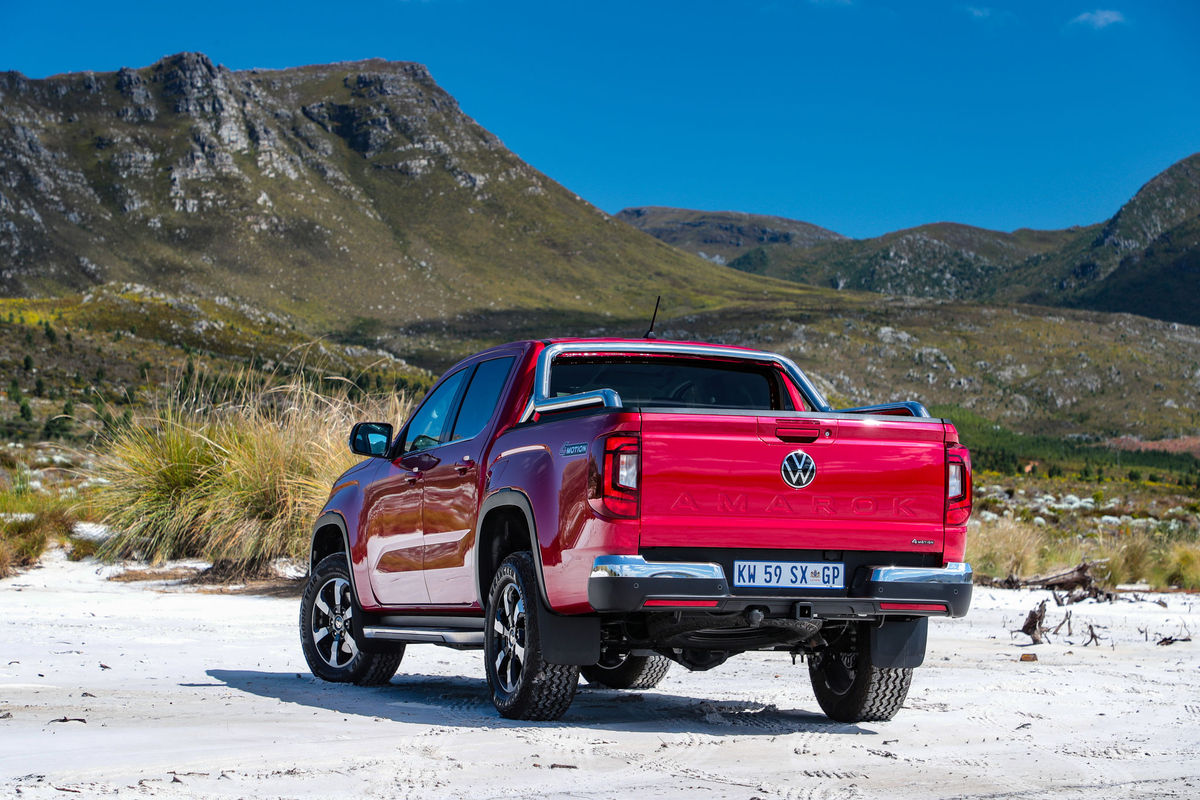
A high-ranking Volkswagen executive says the German company is considering offering an adventure SUV based on the new Amarok at some point further down the line, despite having previously suggested otherwise.
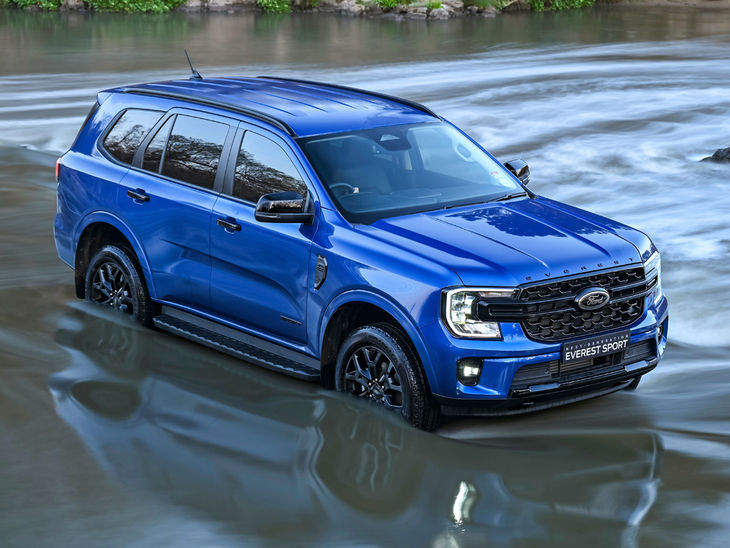
The second-generation Amarok is, of course, based on the latest Ford Ranger, with the platform furthermore underpinning the new Everest. Earlier in 2022, VW was asked whether there were any plans to create its own version of the ladder-frame Everest. The answer? Clearly in the negative.
However, Volkswagen Commercial product manager Petr Sulc intriguingly explained to Australian journalists (including those at WhichCar and CarsGuide) at the Amarok’s international launch in Cape Town that Europe’s upcoming stricter emissions regulations could necessitate a VW-badged version of the Everest.
How? Well, it’s a little complicated, but let us explain. Though Ford has not explicitly stated a fully electric version of the Ranger or Everest is on the cards, it has said the platform is “future-proofed”, suggesting such models will indeed one day come to market. VW is thus also looking closely at a battery-powered version of the Amarok.
The VW exec’s comments suggest a battery-powered Ford Everest is also on the cards.
For a fully electric Amarok to come to fruition, Sulc believes an SUV version would be required to make a sound business case, largely from a sales-volume perspective. The same would surely apply to Ford, meaning an electric Everest could certainly be in the planning.
“[An adventure SUV] was not a scope of the previous negotiations [with Ford], so it was really what we were telling them we are not interested in,” the VW executive told Australian media.
“I can imagine that if we should approach [Ford] for the battery-electric vehicle, that [the SUV version] is having sense. Why? Because you will not be able to fulfil the volume requirement to utilise the investment only with one type of the car,” he explained.
“If you have a look at Everest and Ranger, they are 80% similar. The front and side are the same; the platform is the same. You are having the better scale if you offer two [body styles].”
In May 2022, the VW Group officially revived the Scout nameplate as a sub-brand, confirming plans to build an electric bakkie and a battery-powered SUV wearing this badge, chiefly for the North American market. Sulc pointed out an electric Amarok and Amarok-based SUV would be playing in the segment below these Scout models, meaning there wouldn’t be any overlap or internal competition.
In 2022, we were tasked with turning a Toyota GR Yaris into a race car and then competing in it as part of the national racing series. Find out how our in-house race ace Ash Oldfield coped in our Drive to Revive series.
Welcome back to the third episode of our Toyota GR Yaris race series. In this episode, we cover rounds 2 and 3 of the series as it heads to Zwartkops in Pretoria and Aldo Scribante in Gqeberha.
Things start to go wrong as tempers flare on track between a few of the drivers, barriers are tested as talent levels reach a tipping point and a new winner emerges in the series.
It’s a stark reminder that racing a car in any form can end abruptly if you don’t pay full attention or make even the slightest error of judgement.
How does our Stig that talks, Ash, come out after the 2 rounds? He gives us insight into how it all went down in the latest instalment of Drive to Revive.
It’s finally here! After driving a pre-production unit of the new, locally built Ford Ranger earlier this year, we could not wait for the production version to go on sale in South Africa. Well, has the Blue Oval’s next-generation bakkie been worth the wait? To find out, we embarked on a 2-day adventure across the Breedekloof Valley…
The new Ranger has a lot to live up to. The Blue Oval built no fewer than 875 000 units of the 1st-gen T6 bakkie between 2011 and 2022 (worldwide) and, in the runup to the local introduction of the 2nd-gen T6 bakkie, Ford Motor Company of Southern Africa (FMCSA) invested R15.8 billion in its Silverton assembly- and R600 million in its Struandale engine plants. FMCSA will have the capacity to build 200 000 new Rangers a year, plus it has created an additional 1 200 jobs.
What’s New?
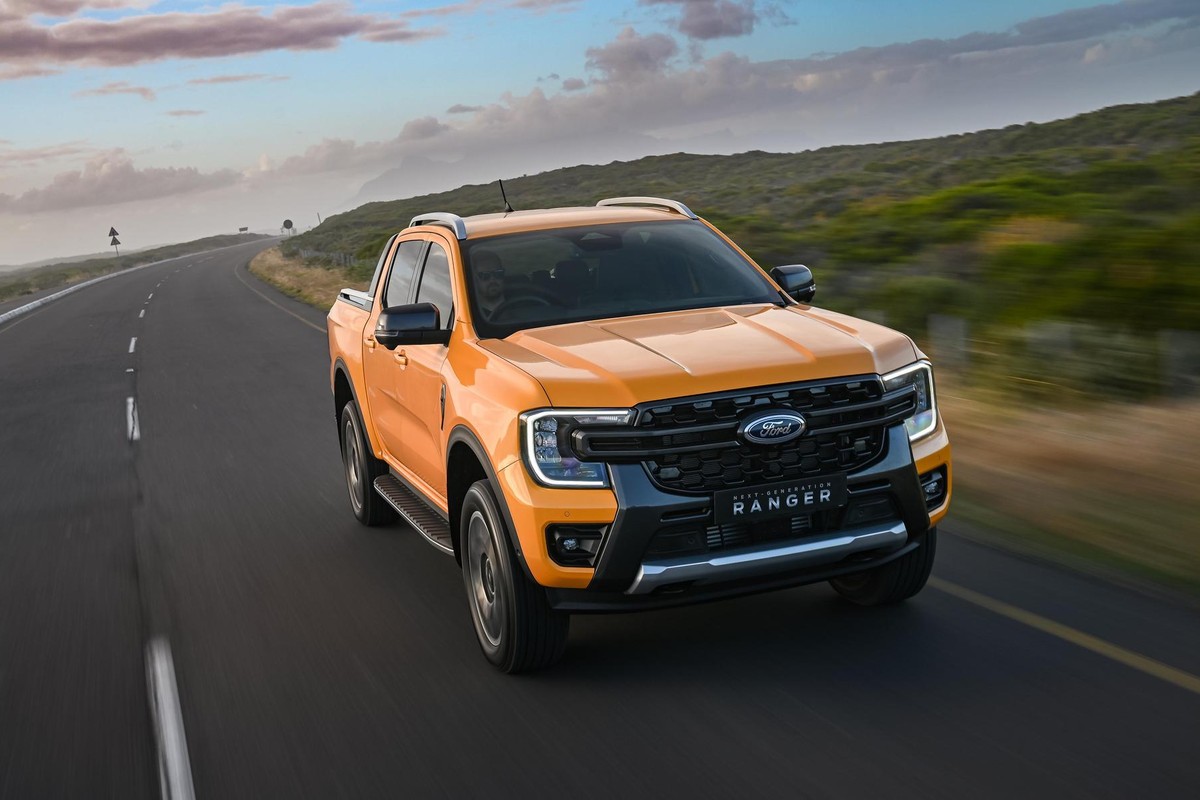
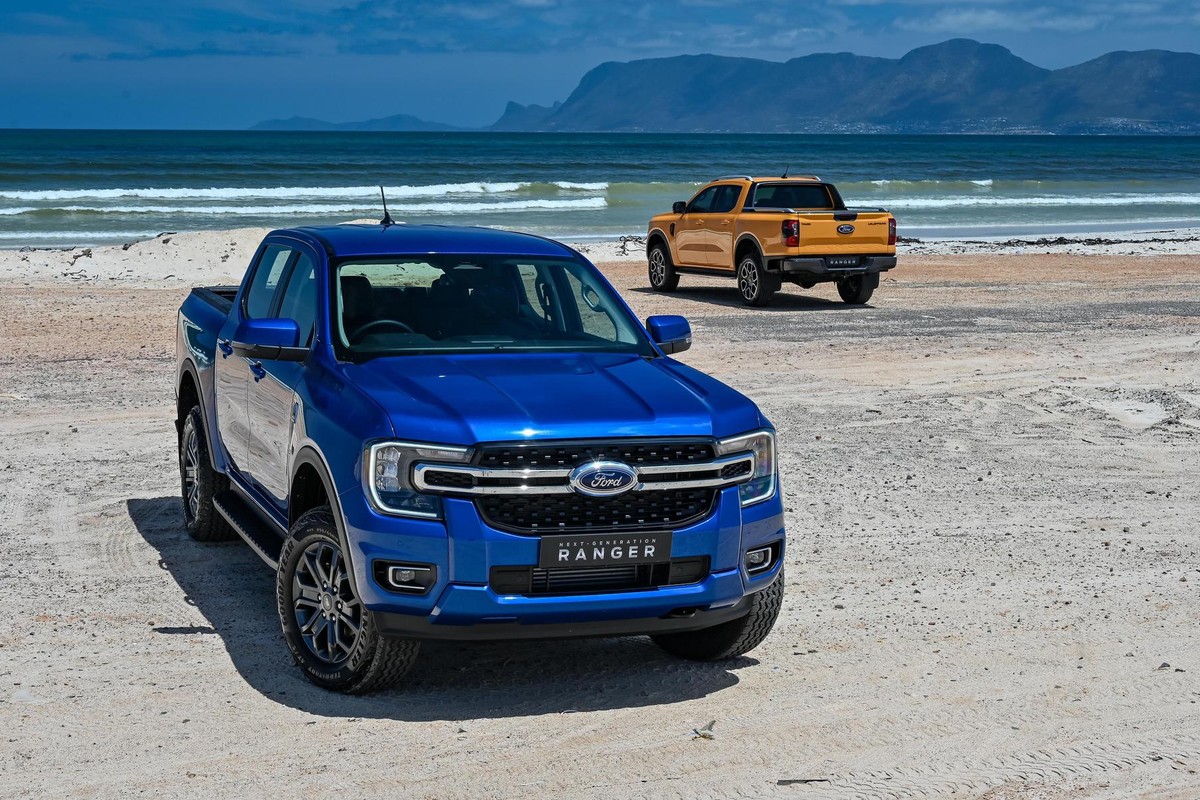
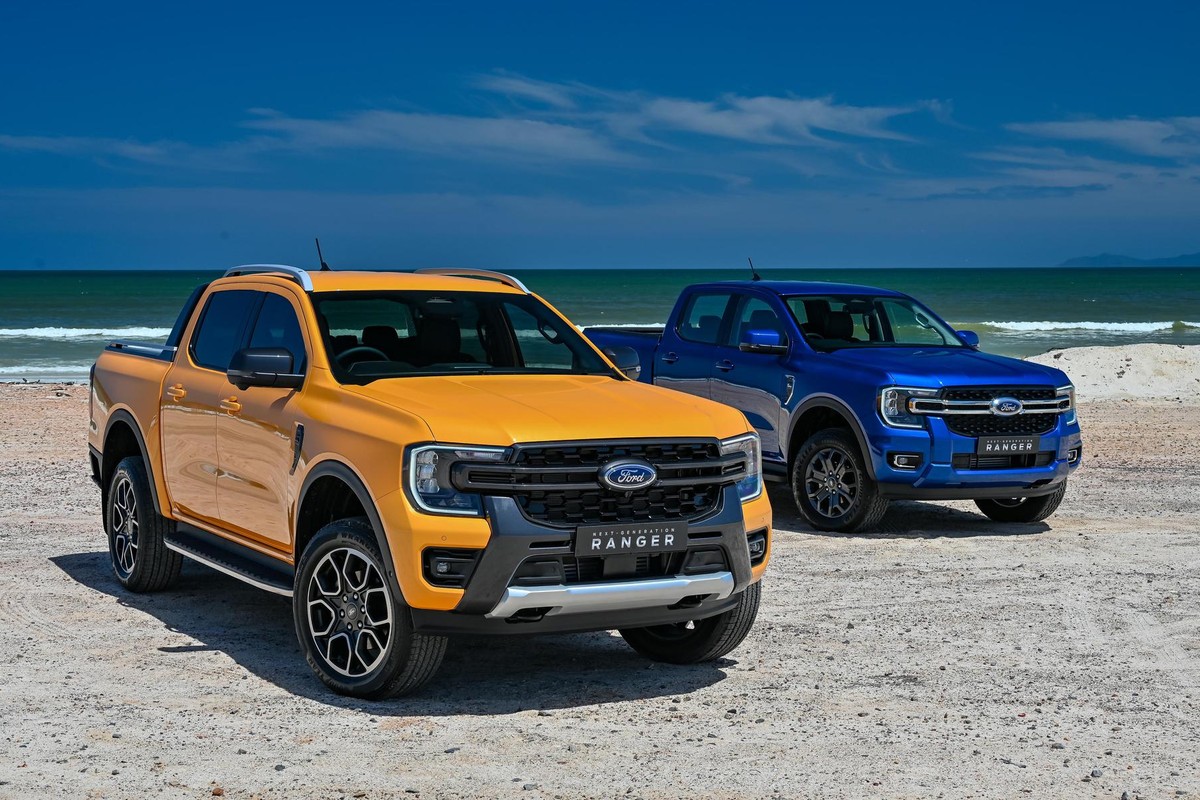
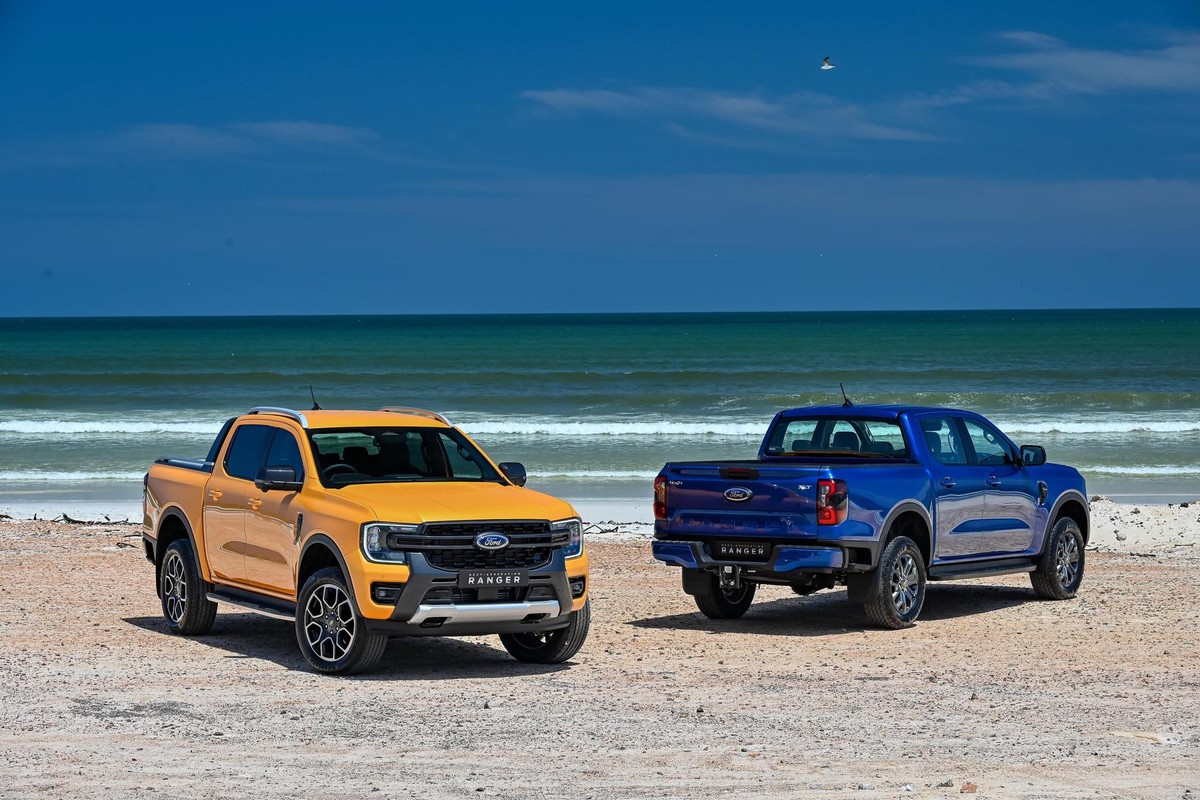
The new Ford Ranger is shown here in Wildtrack (left) and XLT (right) guises.
A lot. The Ford Ranger has changed dramatically – inside and out. The T6 platform has been modernised and the bakkie’s front end optimised to improve airflow and accommodate V6 engines, as well as a secondary battery. Ford claims that it has future-proofed this platform, but would not be drawn on the possibility of producing electrified or hybridised versions. We reckon that’ll happen sooner rather than later and that Ford has already begun laying the groundwork for it.
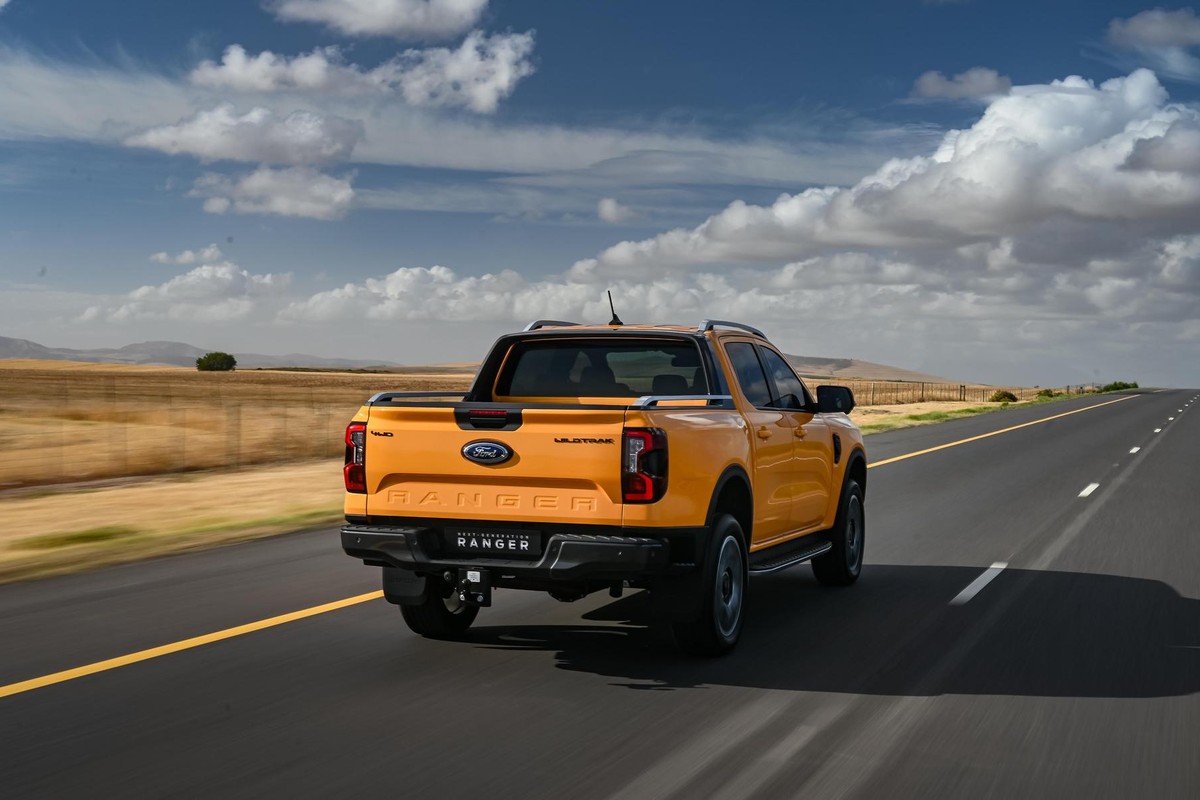
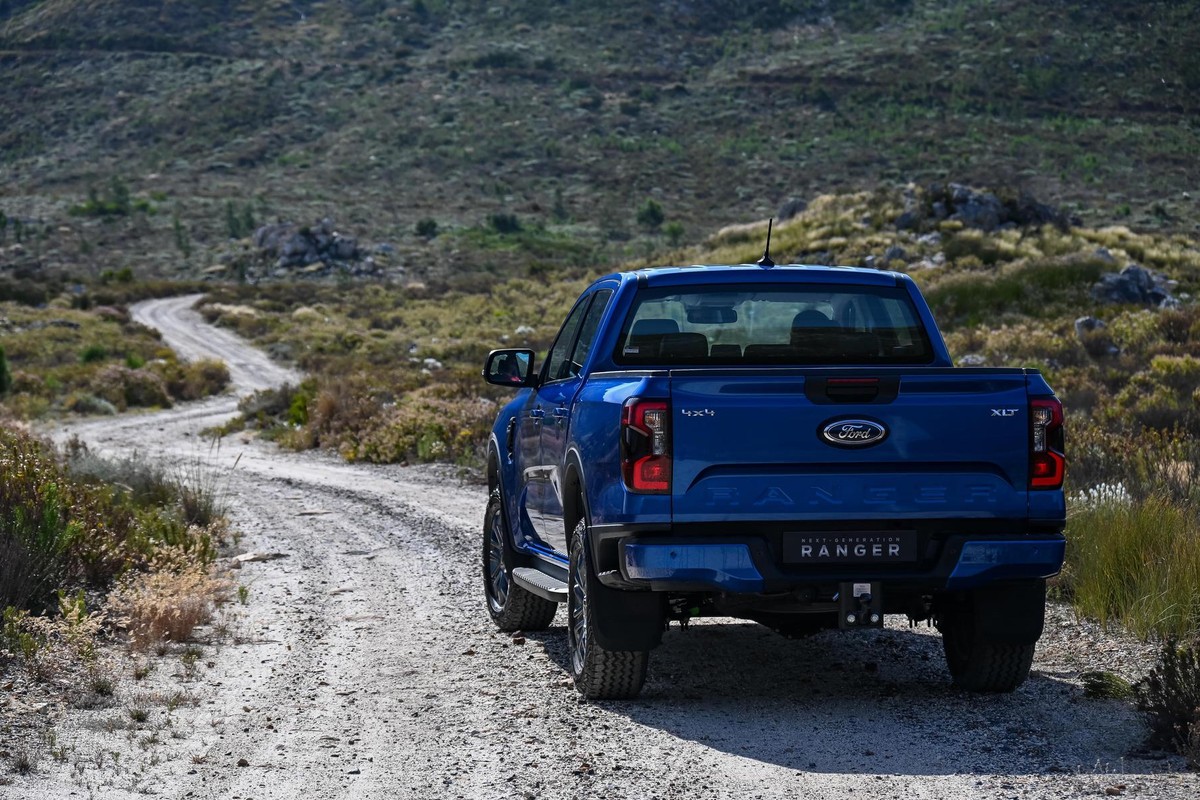
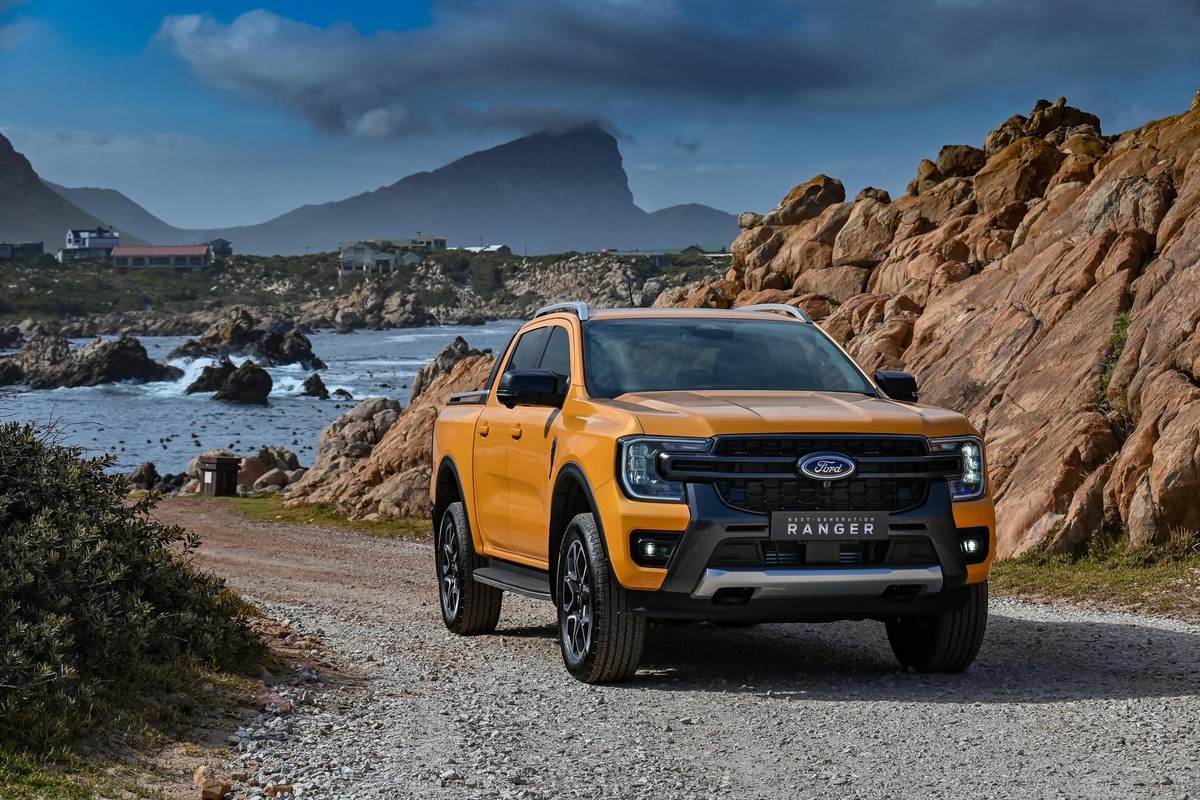
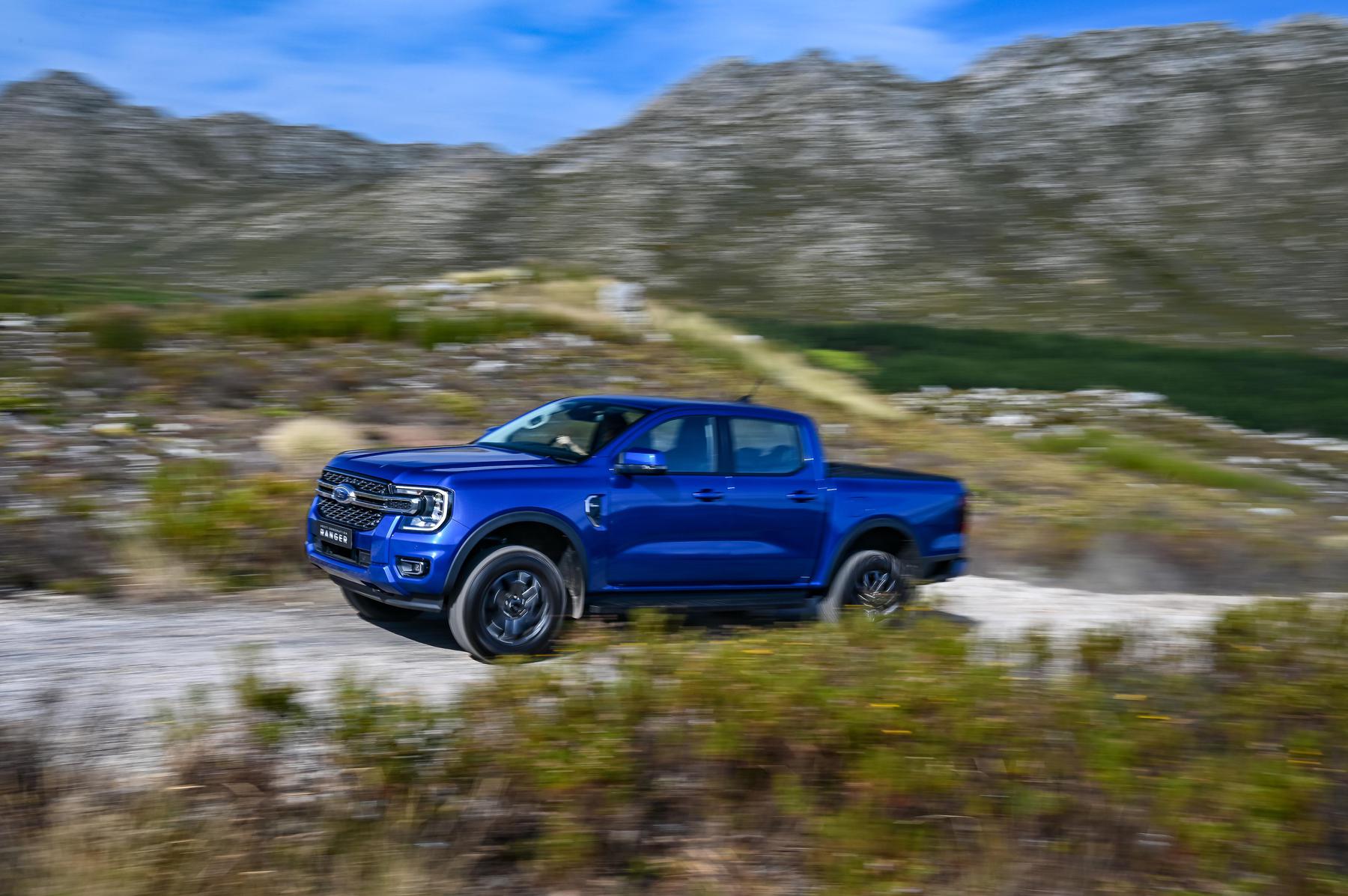
Styling is subjective, but the new bakkie’s exterior execution, which includes cues such as C-shaped daytime running lights and the American pick-up-like tailgate, is undeniably bold and striking. It’s a fantastic take on what a modern bakkie should look like, and the Ranger drew admiring stares everywhere we drove during the launch event. Also, it’s impossible not to notice the Wildtrak’s dazzling Cyber Orange finish!
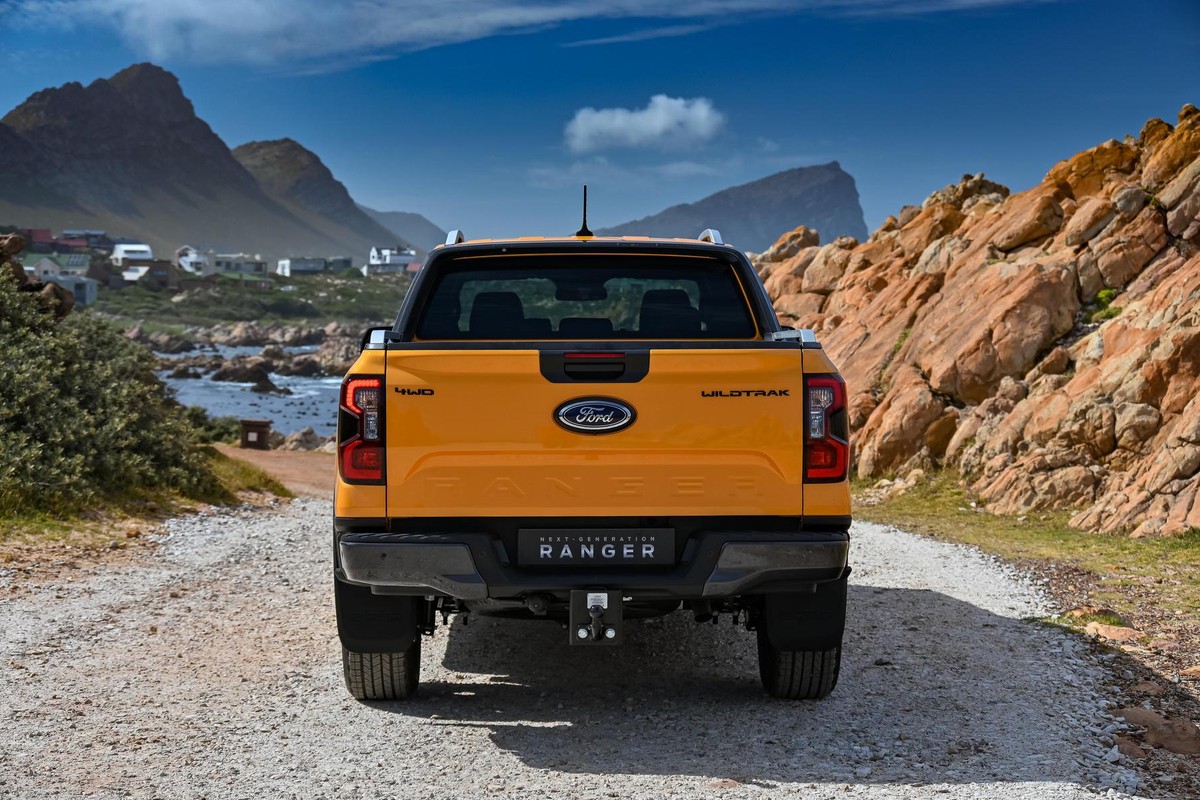
The Ranger’s tailgate design was evidently inspired by those of its American pick-up truck siblings.
Ford has extended the new Ranger’s wheelbase by 50 mm and extensively reworked its suspension in pursuit of a more refined ride quality. The front wheels have been moved more forward and outward (by 50 mm) to shorten the front overhang, as well as improve the approach angle and wheel articulation. Off-road capability also benefits from an improved departure angle.
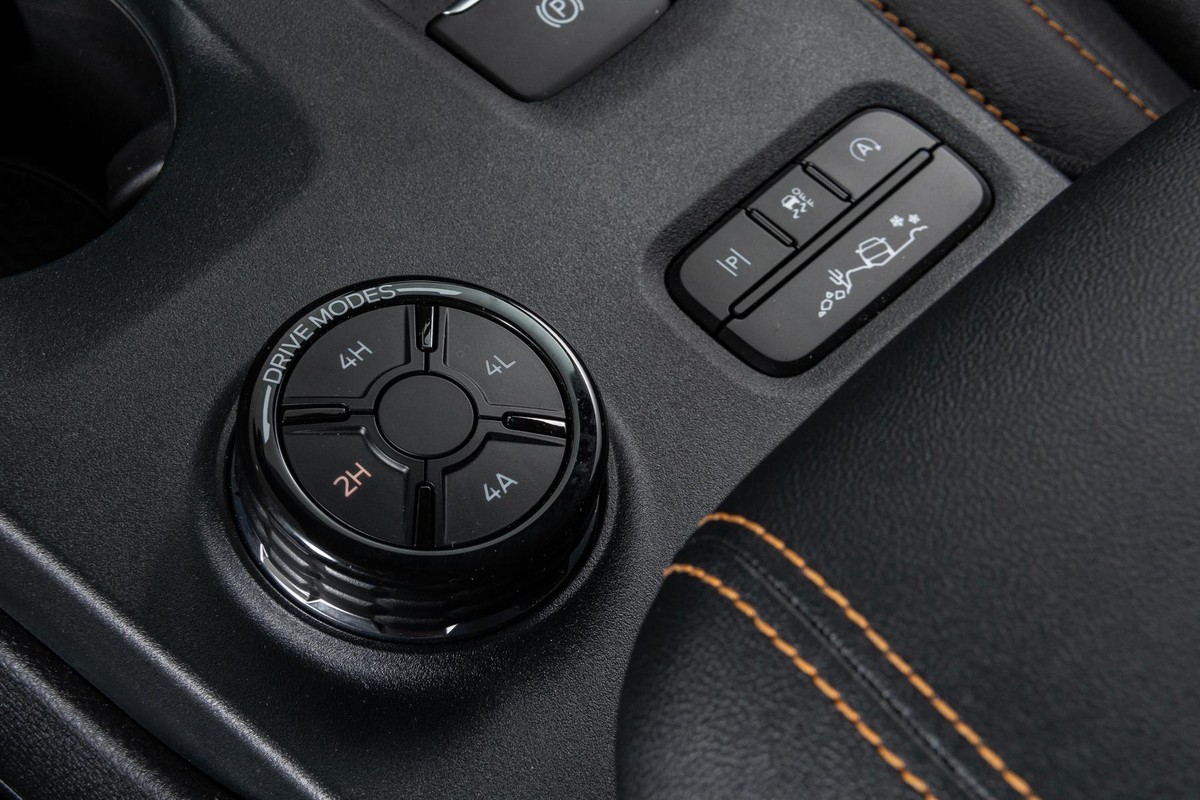
Apart from the usual 2H, 4H and 4L ranges, Ranger 4x4s offer a choice of 6 off-road drive modes, while the Wildtrak comes equipped with an electronically controlled full-time four-wheel-drive system that dynamically apportions drive between the front and rear axles as needed.
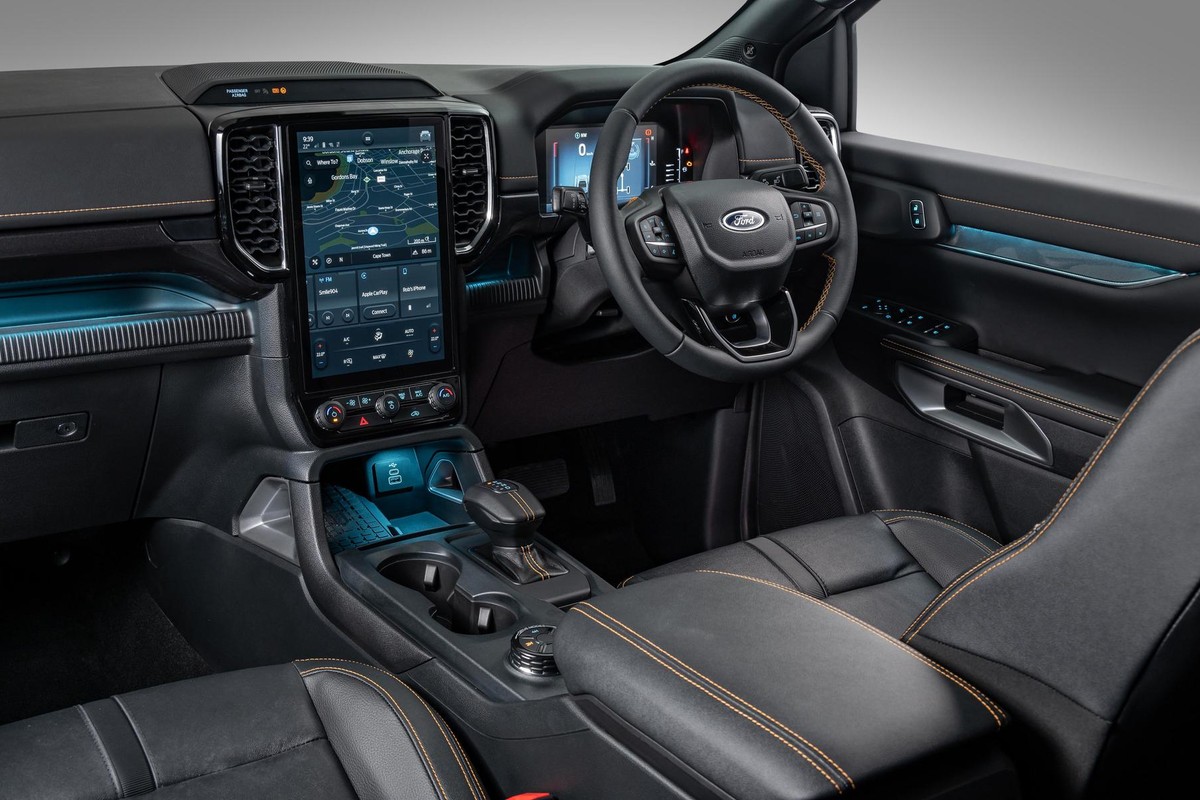
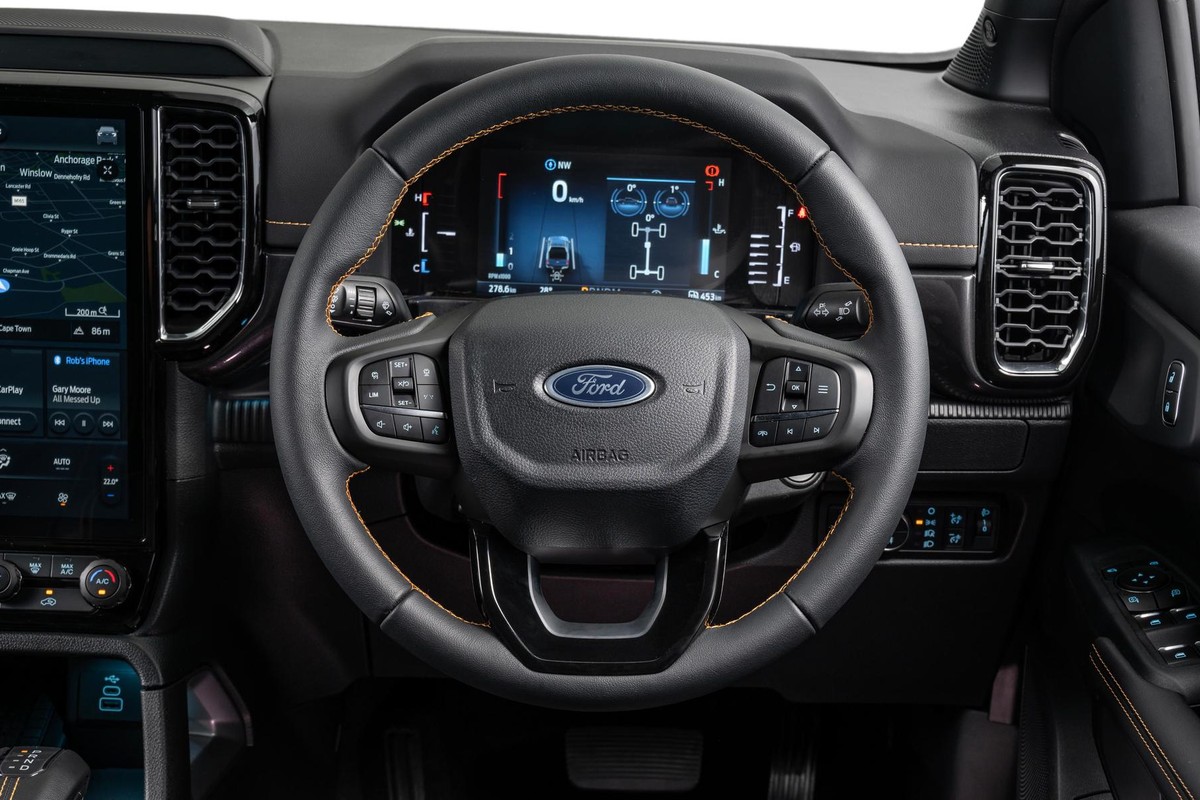
Some of the biggest changes are in the cabin, which is dominated by a portrait-orientated touchscreen infotainment system and a fully digital instrument cluster. These inclusions alone represent a huge step forward for the bakkie segment, because every single derivative in the line-up has these elements (although they aren’t all as expansive or feature-reach as in the Wildtrak).
Bakkie cabins have long been described as “becoming more SUV-like”, but in the case of the Ranger’s interior, it rings true!
There’s nothing analogue about the cabin whatsoever, but it’s great to see there is still some conventional switchgear on the fascia, so you don’t need to fear that you will have to spend your time sifting through the infotainment system’s menu to access (or adjust) basic onboard functions. Yes, there are overlaps, but sometimes it’s just easier to turn the knob that controls the interior fan with just one click, instead of having to prod a touchscreen button.
The system is called SYNC4A and, depending on trim level, it comes with either a 10.1- or 12-inch touchscreen. Its interface is attractive and reasonably straightforward to use. There are some fun touches, such as the sketchpad, plus it’s Android Auto/Apple CarPlay compatible.
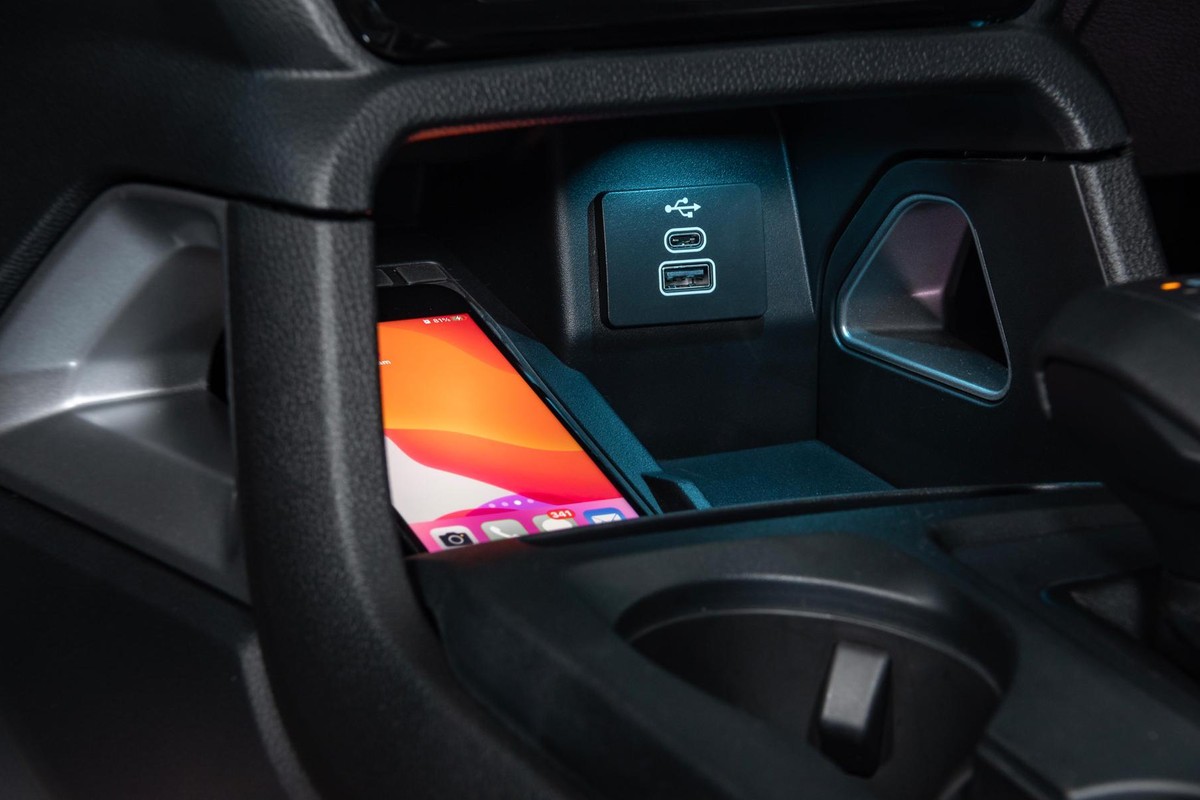
Under the Ranger’s fascia sits USB-A and USB-C ports, as well as a wireless charging pad.
Ford claims there are marked improvements in the Ranger’s interior materials, fit-and-finish, plus cabin refinement (through improved suppression of noise, vibration, and harshness). The Blue Oval is also said to have extensively surveyed its current Ranger customers to better understand product issues, learn about what they expect of their bakkies and so on. The result is a fascinating blend of sensible practicality, nifty little features (that you never knew you needed) and 21st-century digitalisation. The front cupholders, for example, are positioned directly adjacent to the ventilation outlets; that way, your cooldrink/water bottles will stay chilled.
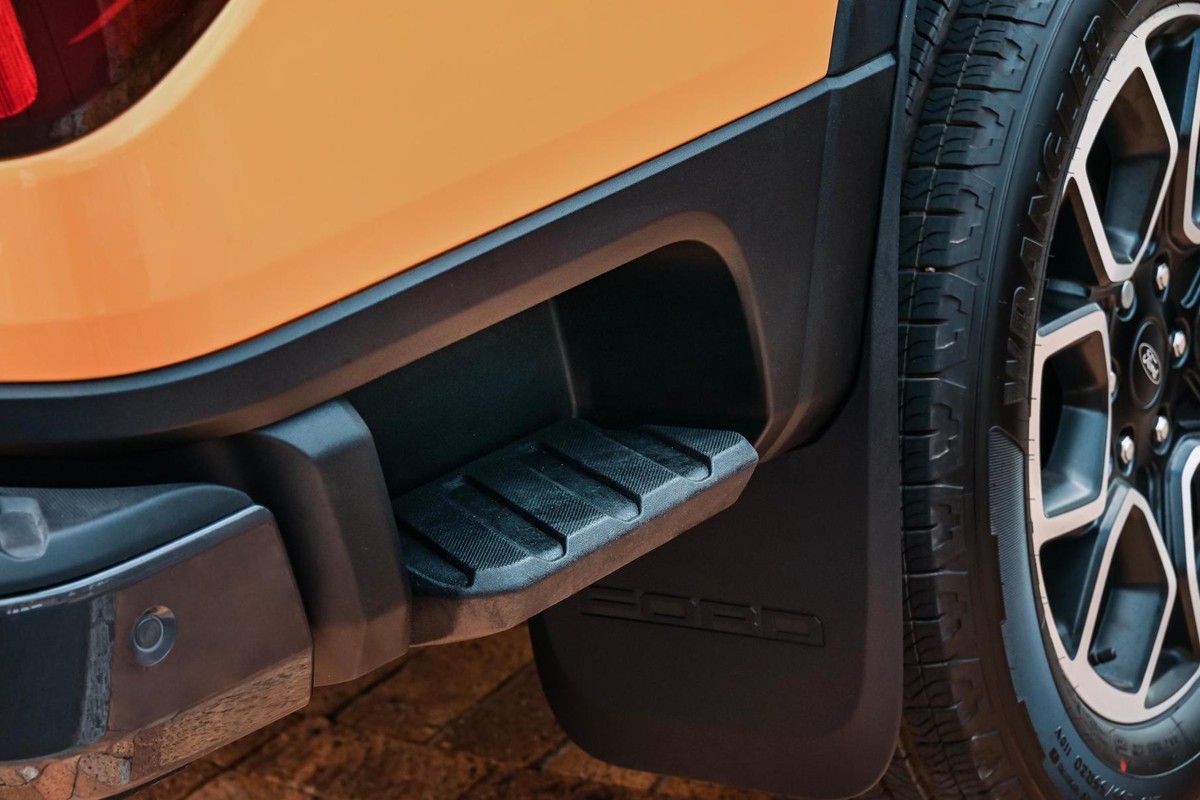
This little step makes a world of difference when it comes to accessing the load tray.
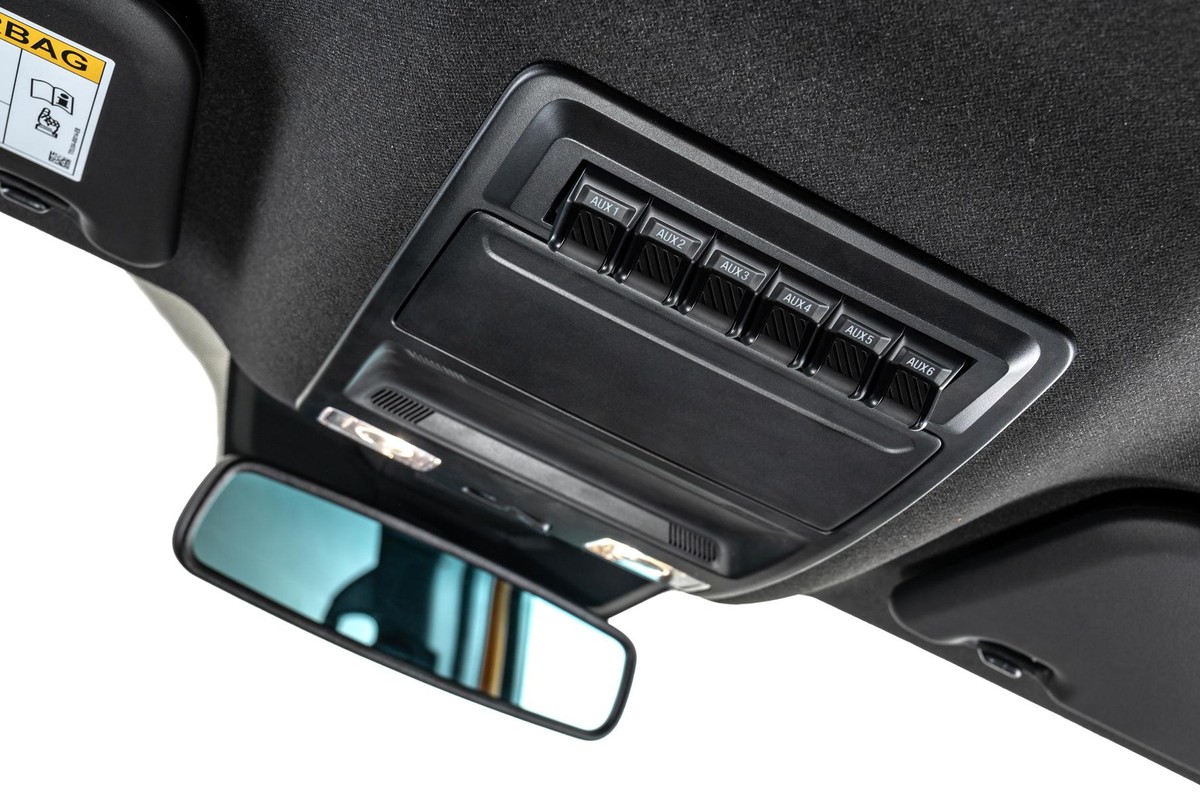
Then there’s a cleverly positioned step behind the rear-wheel arch that facilitates easier access into the load tray; when you deploy the tailgate, it doubles as a workbench, complete with places to clamp items as well as an integrated ruler; for those who want to fit accessories, Ford has availed a bank of cool aircraft-style auxiliary switches behind the roof-mounted sunglasses holder; finally, if you frequent drive-thrus, there’s a place for your French fries – no, we are not kidding.
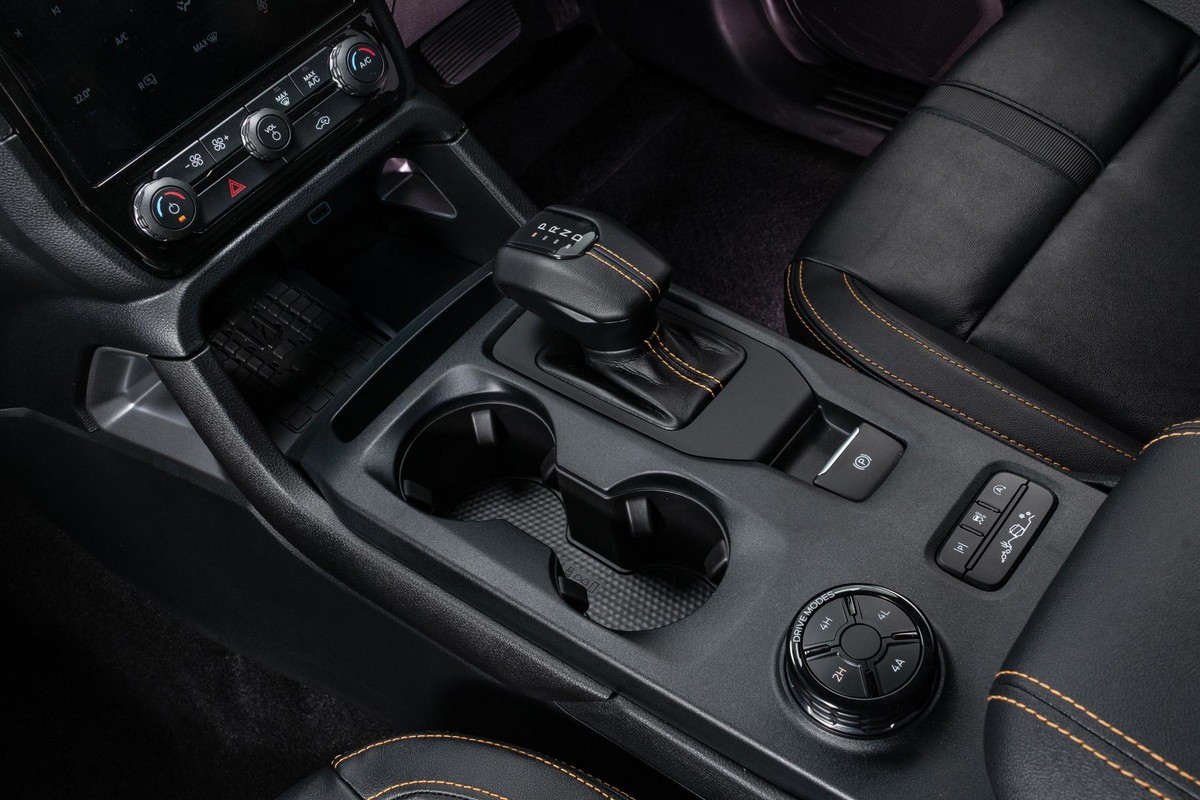
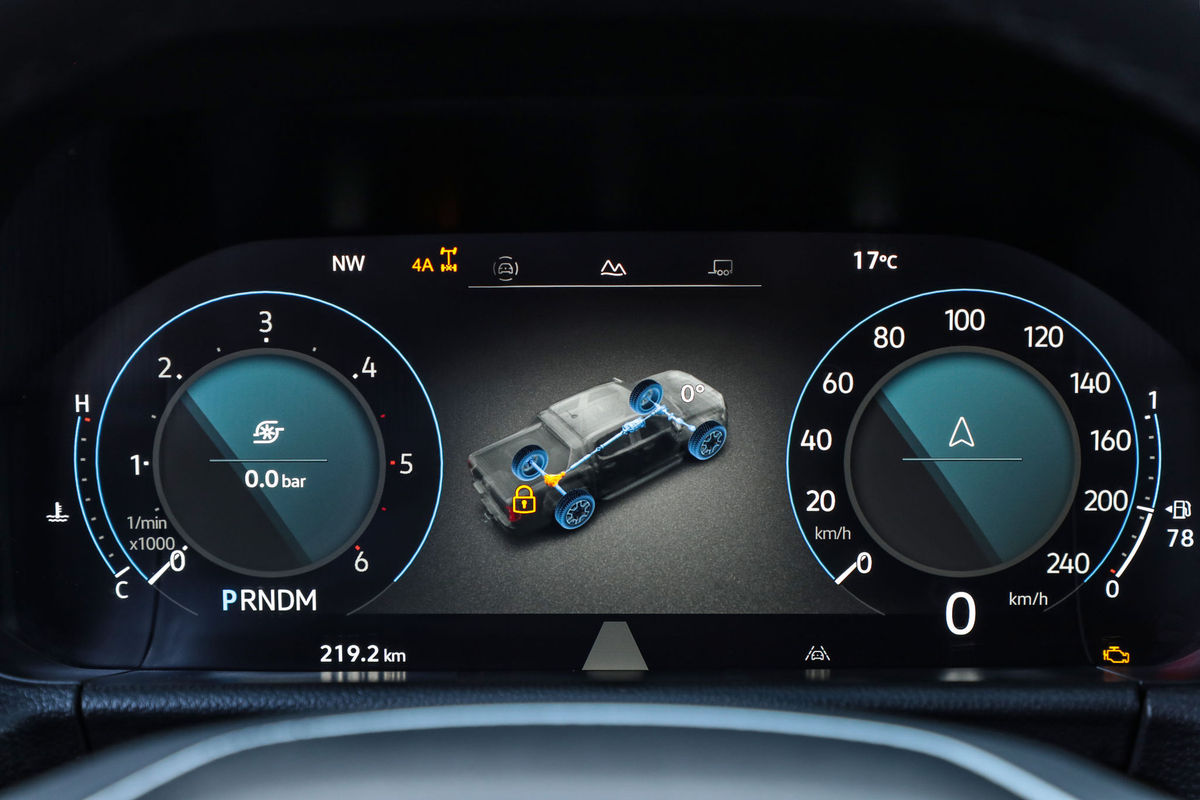
Drivers can switch between 2H, 4H and 4L using a rotary controller on the centre console, but note the 4A setting on the Wildtrak, that’s for engaging automatic four-wheel drive.
What’s on Offer?
To begin with, FMCSA is introducing double-cab derivatives of the new Ranger; the single- and extended-cab variants of the so-called T6.2 will appear in local showrooms in early 2023.
FMCSA says it has a few thousand confirmed pre-orders that it needs to fulfil first – the Silverton facility is currently churning out around 400 units a day. Of course, the plant will have the capacity to produce more bakkies, but it’s busy scaling up, so don’t expect to see many new Rangers delivered until the end of the first quarter of 2023. FMCSA does expect demand to outstrip supply; if you want the range-topping Raptor… you’ll have to wait until February.
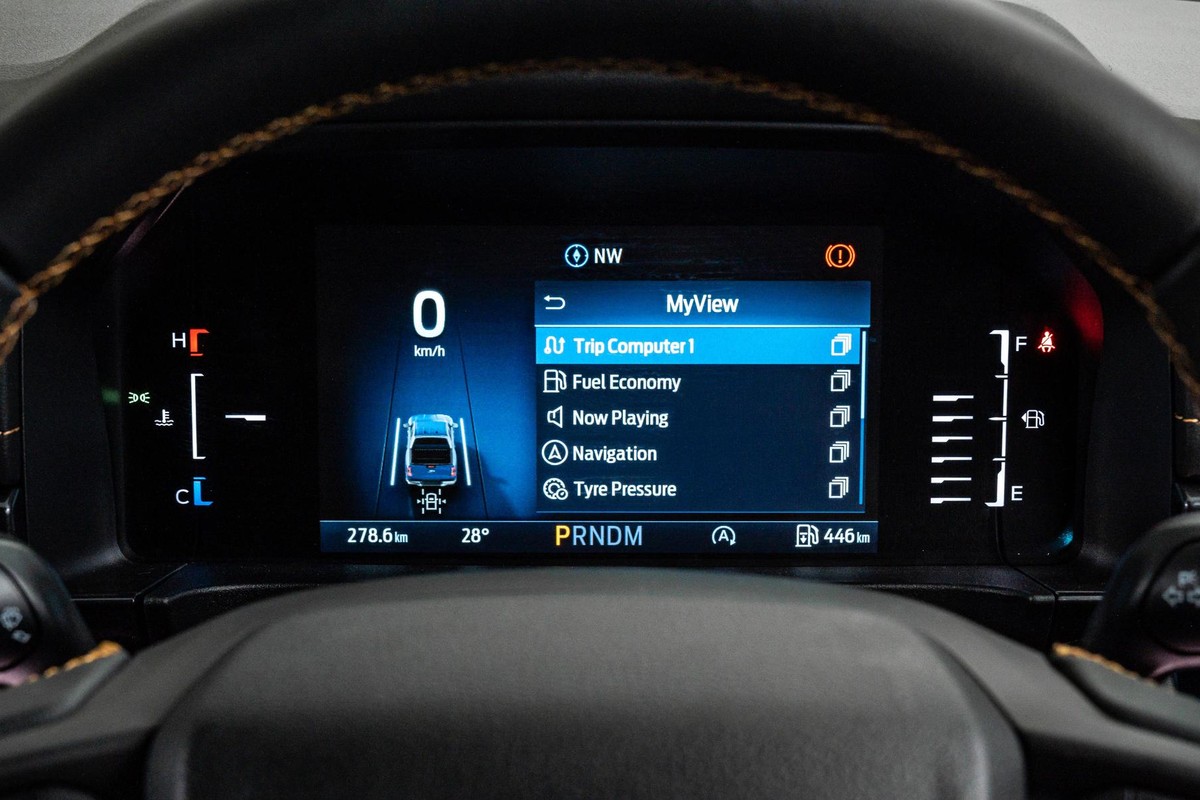
Every derivative in the Ranger line-up is fitted with a digital instrument cluster.
There are 4 trim levels in the new Ranger line-up: Base, XL, XLT and Wildtrak. The base and, to some extent, XL versions are aimed at the workhorse market; they offer business owners value-for-money capability. The XLT and Wildtrak, in turn, cater for the leisure (or lifestyle) bakkie market, but if you need to “get their load trays dirty”, they’re up to the task. Impressively, every derivative gets the portrait infotainment screen; there’s no such thing as a “poverty-spec” Ranger.
Engine-wise, the headline news is the introduction of a 6-cylinder turbodiesel engine. We first experienced the new 184 kW/600 Nm 3.0-litre V6 in the Ranger-based adventure SUV, the Everest, and were impressed with its refinement and punch. The motor’s paired with a 10-speed automatic transmission, which has been upgraded with a new torque converter, as well as revised software.
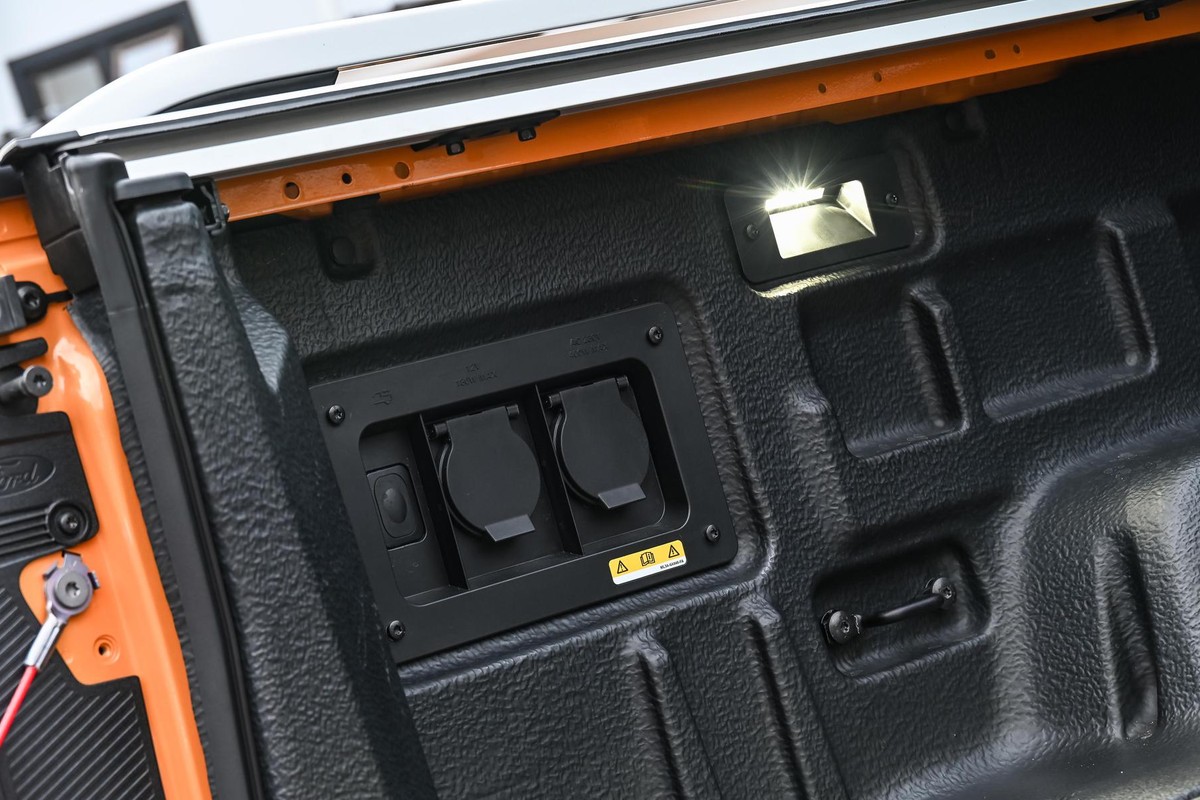
Power sockets are fitted in the side of the Ranger’s load tray.
The 2.0-litre biturbo diesel is carried over. It produces slightly less power than the outgoing model, but we’re told its performance is more flexible; the 154 kW/500 Nm motor also has the updated 10-speed auto ‘box. At the lower end of the range is a 125 kW/405 Nm 2.0-litre single-turbo diesel, which is available in conjunction with either a 6-speed manual- or 6-speed automatic ‘box.
What’s it like to drive?
It’s still a bakkie and its suspension can jiggle over bumps, but the new Ranger arguably offers the best ride refinement in its class.
We had the chance to drive 2.0-litre biturbo XLT and 3.0-litre V6 Wildtrak examples of the newcomer on public roads, as well as some technical off-road sections. By virtue of having driven the new Ranger’s cousin – the Volkswagen Amarok – recently, we were in a good position to see just how much has been done to enhance the driving experience and on-road refinement (especially ride- and occupant comfort) of a humble body-on-frame bakkie.
Our initial impression is that the new Ranger’s suspension setup is slightly firmer than that of the outgoing model, but the characteristic skittishness and body jiggles that affect these types of vehicles when they’re travelling on poorly maintained/uneven asphalt- or gravel roads (especially when they’re not heavily laden with cargo) was remarkably low. A good start, then.
The Ranger offers a host of selectable off-road drive modes.
The 2.0-litre biturbo was admirably responsive, with predictable shifts from the transmission; it pulled strongly. Wind- and road noise levels were indeed lower than expected and, at brisk- to cruising speeds, the Ranger felt surefooted and steady. Cabin comfort was good too – our passenger (an adult of average height) said there was more than enough occupant space at the back.
Meanwhile, the 3.0-litre V6 “Power Stroke” turbodiesel proved a revelation – for the Ranger… and the entire bakkie segment. Yes, there was a passenger-vehicle-derived V6 in the outgoing Amarok, but in that application, it felt more focused on potent on-road performance than pure workhorse capability. Customers who intend to tow large trailers regularly are likely to appreciate the Ford V6’s sheer tractability – it’s brilliantly aided by the smartly-calibrated 10-speed automatic ‘box.
Moreover, the V6 motor seems notably smoother- and quieter running than its 4-cylinder biturbo counterpart, which speaks volumes, seeing as the latter is already pretty good by bakkie standards, especially in terms of its low idling noise. You don’t need to apply the accelerator pedal liberally to get the best out of the V6 either; it delivers significant urge from low down in the rev range and just feels like the more “SUV-like” powerplant of the two.
The Ranger’s ride quality (if perhaps a tad firmer than before) feels more composed on gravel roads.
Both derivatives featured a pleasantly light steering setup, which helps to make the sizeable bakkie manoeuvrable in tight spaces – and on narrow 4×4 tracks. The Wildtrak’s unique selling point is that its 4A (four-wheel-drive automatic) mode automatically provides all-wheel traction irrespective of road surface or -conditions – not only does it make the Ranger instantly more capable on tricky off-road routes in changeable conditions, but it will be of benefit when traversing tar roads in the rain (and snow). Outward visibility is great, but while we were completing the 4×4 course, the 360-degree camera system, which can display numerous views and angles, completely proved its worth.
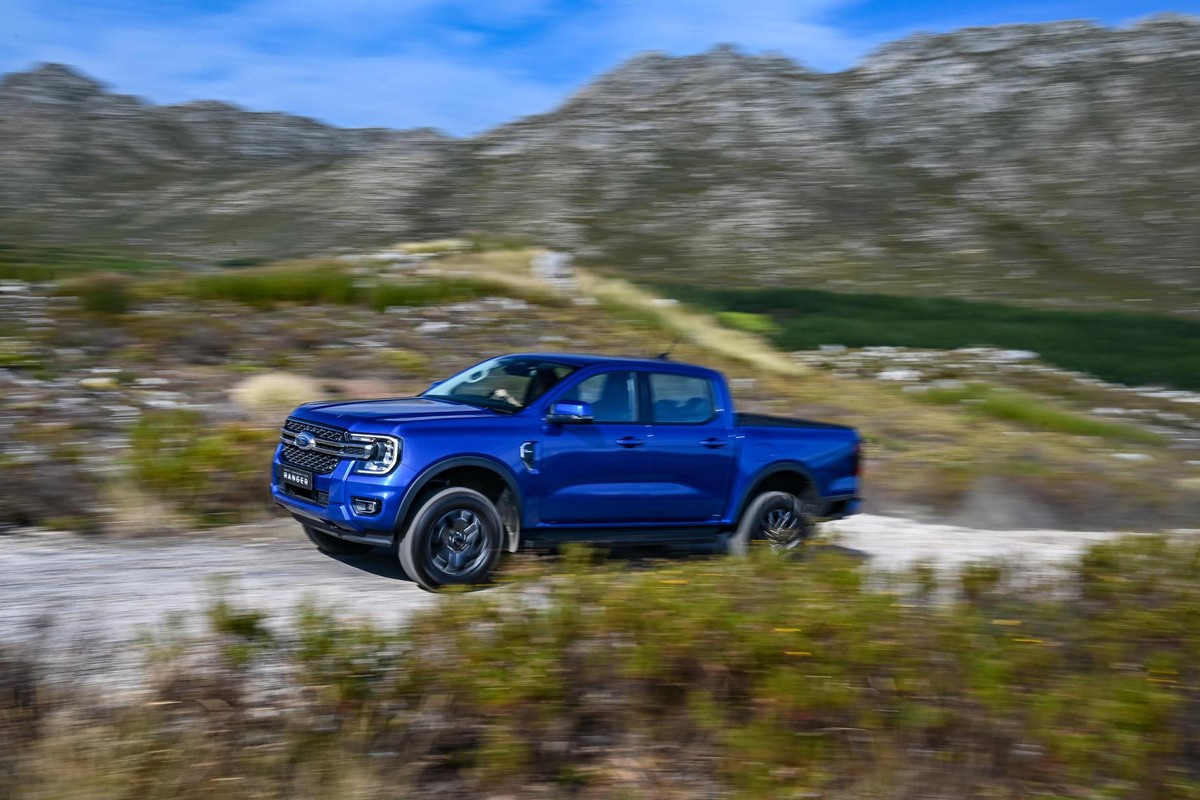
Like its predecessor, the new Ranger is exceptionally capable across all terrain.
We simply selected the appropriate 4×4 mode, engaged low range and let the Ranger do the rest, which it did with aplomb. As was the case with Ford’s previous-generation bakkie, the new Ranger takes much of the stress or fear out of 4×4-ing by virtue of its off-road assistance systems, which is something that inexperienced 4×4 drivers will certainly appreciate.
There are some great-looking animations and graphics on the instrument cluster, but we don’t think it’s wise not to have a physical button for engaging something as important as the diff-lock (you must access it via the touchscreen). With the many ratios of the 10-speed auto ‘box, you can even simulate low-range mode and hill-descent control on less challenging terrain.
The customisable all-digital instrument cluster is new for the segment.
How much does the new Ford Ranger bakkie cost?
The new Ford Ranger is sold with a 4-year/120 000 km warranty, 4 years’ unlimited km roadside assistance and a 5-year/unlimited km corrosion warranty. Services are required every 15 000 km or once a year, while customers have the option of purchasing service or maintenance plans valid for up to 8 years/165 000 km. The warranty can be extended to 7 years or 200 000 km, while the roadside assistance can be extended for up to 2 years.
Ford also offers option packs that add items such as underbody protection, all-terrain tyres, cosmetic bodywork upgrades, and extra features. The list is extensive and detailed – we’d virtually double the length of this launch review if we listed all of them. For example, you can spend R31k on an XLT upgrade pack that adds Wildtrack-level gadgets and convenience features (if your budget can’t stretch to the flagship). Bear in mind, however, that the packs cannot be retrofitted.
We expect the new Ford Ranger to light up the sales charts in 2023.
Does the new Ford Ranger (T6.2) live up to the hype? Yes, it sure does. The Blue Oval’s new double-cab bakkie is significantly more advanced than the outgoing model and brings new levels of refinement and technology to the segment. The newcomer’s pricing looks quite competitive, but bear in mind that Ford’s list prices exclude service plans (at the product launch, FMCSA said that a 6-year/90 000 km service plan for the new Ranger could be purchased for “R18 740”).
However, given the all-around competence of the new Ranger package, its rivals have well and truly been put on notice. Right now, there’s no bakkie on sale that’s as advanced or, well, fresh as the new Ranger. The next-gen Hilux is still a few years away and there’s no doubt that Toyota will be examining the new Ranger in great detail in an effort to produce a credible rival. The new Volkswagen Amarok (a clone of the Ford Ranger) will come to market in the first quarter of 2023, and we suspect that it’ll be priced a bit higher than its Ford cousin. Sadly for Isuzu, its newishD-Max now feels a bit outdated by comparison. In fact, if you go on the visual appeal of the Ford’s interior, every other bakkie’s cabin feels outdated.
Based on our first impressions of the new Ranger, the South African bakkie segment’s goalposts have been moved significantly; Ford’s rivals will have to dig deep to match, let alone eclipse, the newcomer – as a product. The true test will be in years to come, when FMCSA’s claim of new levels of quality and reliability for this new model will be under scrutiny. Suffice it to say, we will directly compare the Blue Oval’s champion with its key rivals in the upcoming months.
Volkswagen Amarok (2022) International Launch Review
One-half of the most anticipated bakkie double team (Ford Ranger and Volkswagen Amarok) has finally been launched. While the latter will only go on sale in South Africa in early 2023, we attended the German double cab’s global launch, right here in Cape Town, to get a taste of the new model. Could Ford and VW succeed where Mercedes-Benz and Nissan faltered?
What’s new on the Amarok?
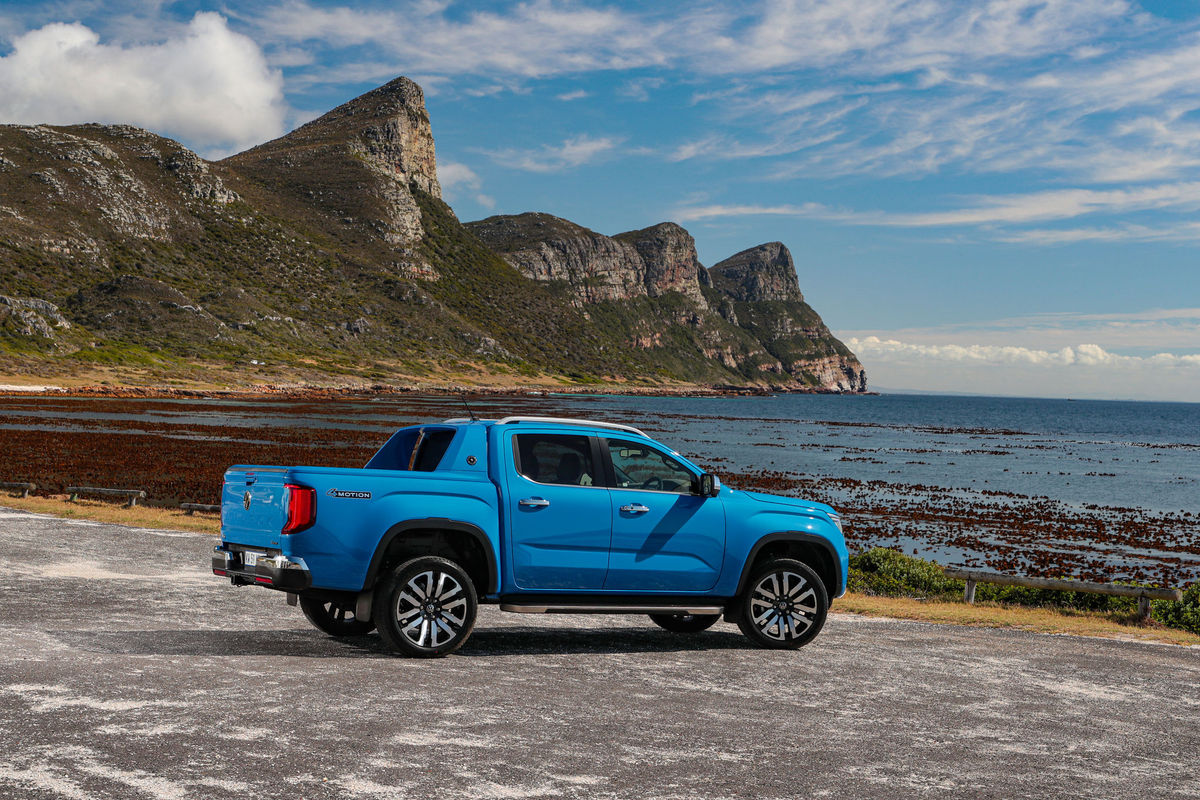
The Amarok is longer and features a much longer wheelbase.
By now, you’re probably well aware that the brand-new Volkswagen Amarok is, in actual fact, built on the Ford Ranger’s platform, utilises engines from the Blue Oval, and is produced right here in SA, at Ford Motor Company of Southern Africa’s plant in Silverton. It’s not uncommon in the bakkie world for a manufacturer to team up with another to improve its scale on (what tends to be) a one-off platform made only for the purpose of underpinning a bakkie and perhaps a ladder-frame-based adventure SUV. In this case, the team-up allows VW to continue selling an Amarok model, while Ford gets access to VW’s van and EV tech. Furthermore, the American and German giants share autonomous driving systems.
From a specification standpoint, the new Amarok is 96 mm longer than the outgoing model, the wheelbase is a massive 173 mm longer and the approach and departure angles have been improved to 30 degrees and 26 degrees, respectively.
The engine line-up has not been confirmed for our market (yet), but there will be a 2.0-litre turbodiesel delivering anywhere between 110 kW and 155 kW and a 3.0-litre V6 turbodiesel pushing out a peak power output of 184 kW. There will be a turbopetrol too, but it will only be offered in markets where petrol is the dominant fuel of choice for bakkies (not here, in that case).
Ford’s 10-speed automatic transmission does the ‘shifting on the V6 and higher output 4-cylinder turbodiesel engines, while on the entry-level diesel derivatives, buyers will have a choice between a 5-speed manual ‘box and a 6-speed auto.
We’ve covered the spec of the new Amarok extensively and you can check that out here.
First impressions of the Amarok
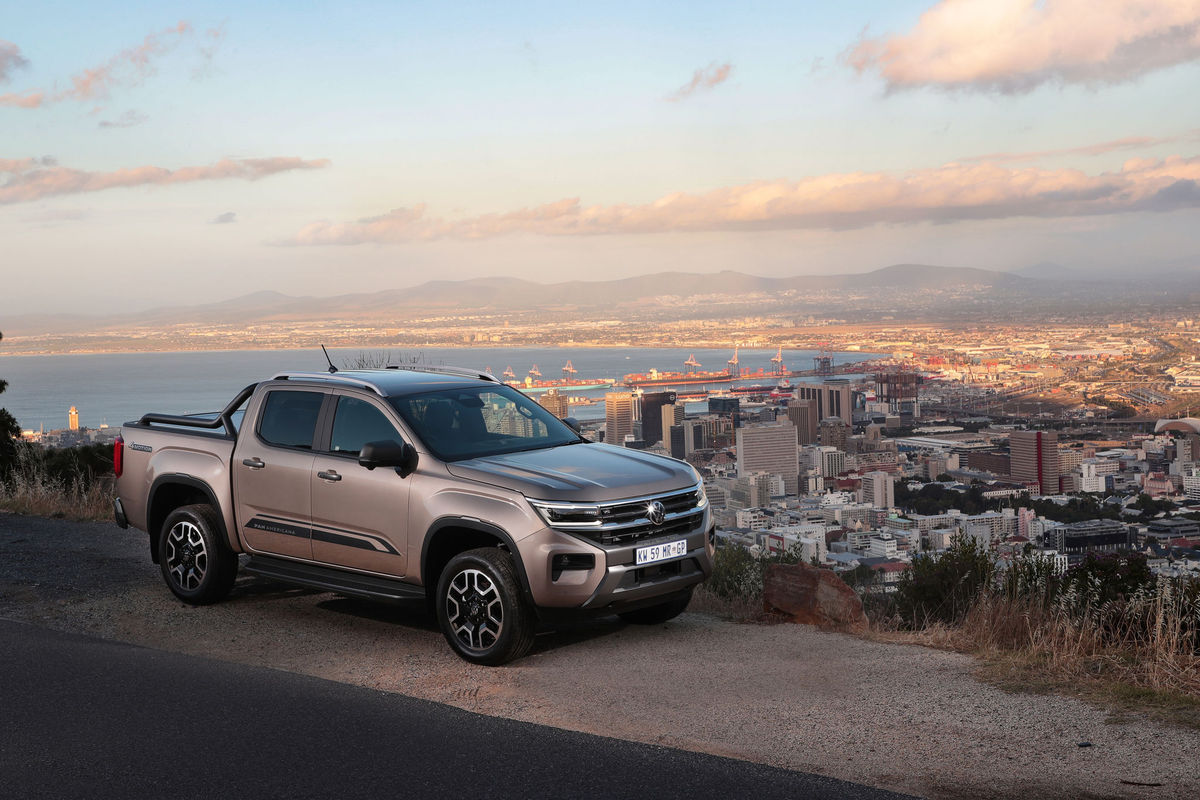
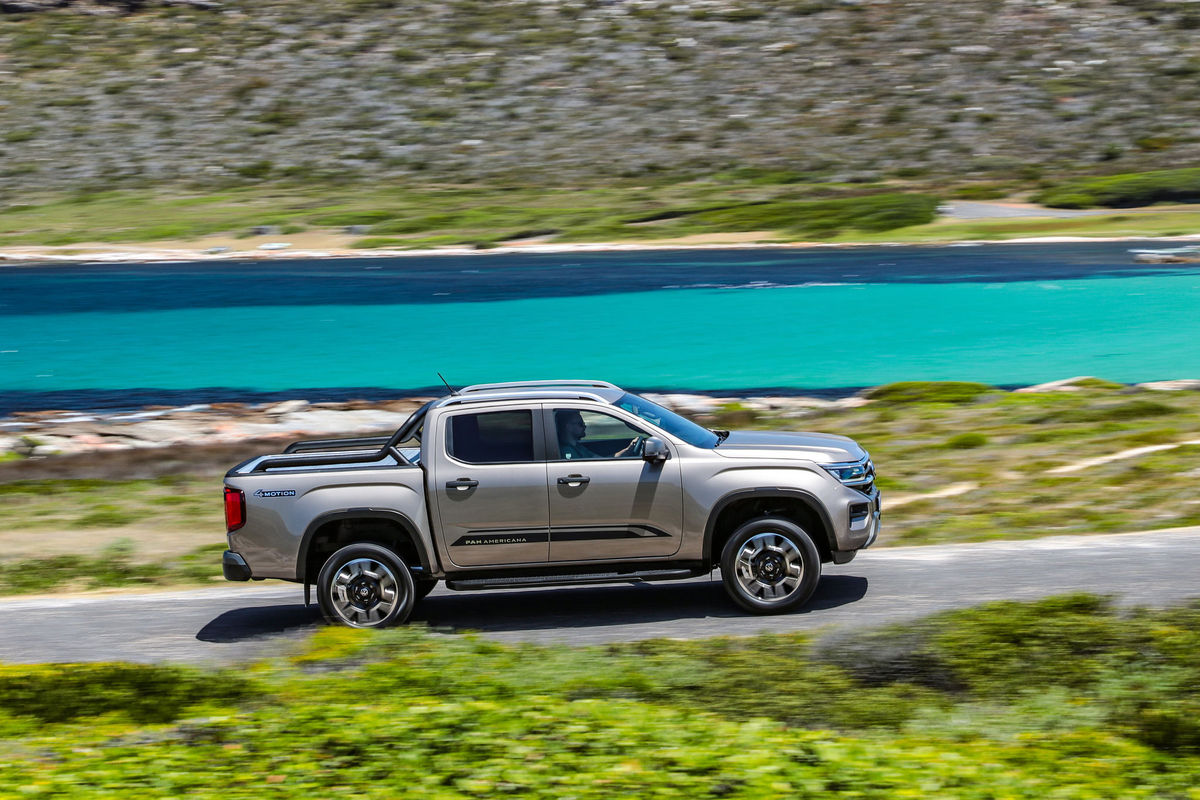
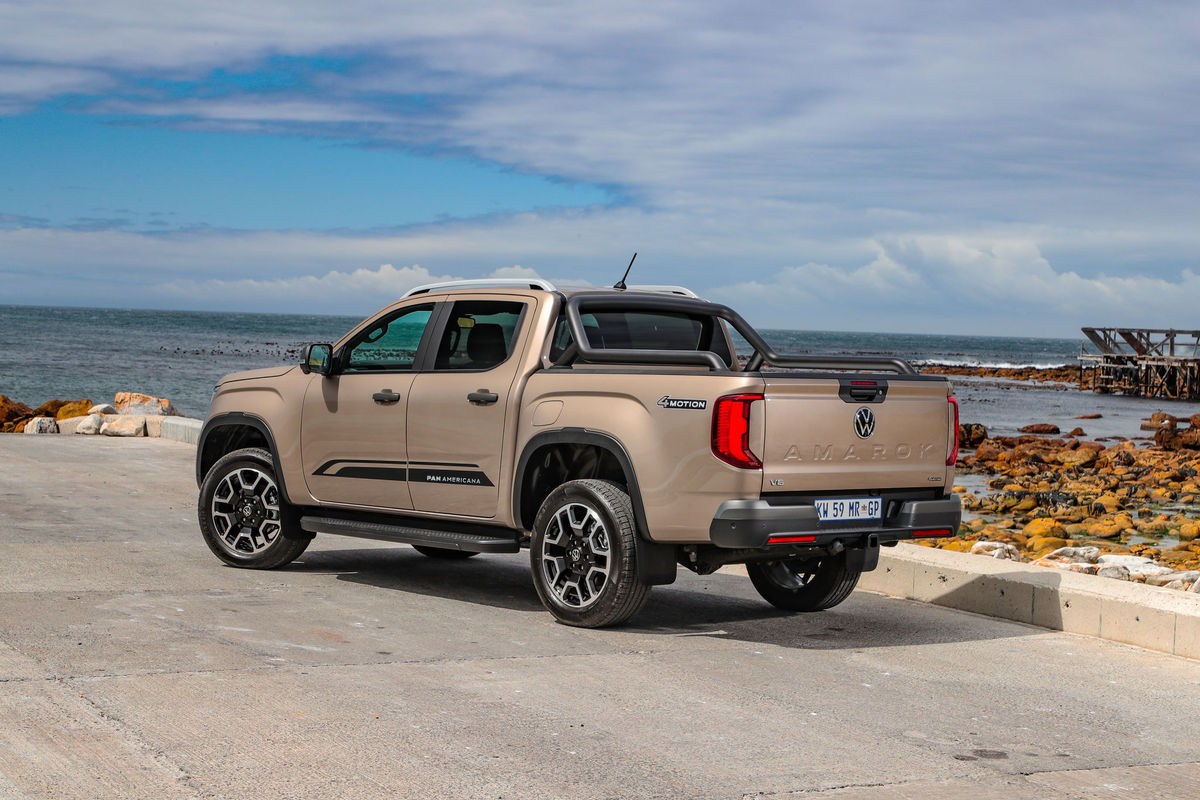
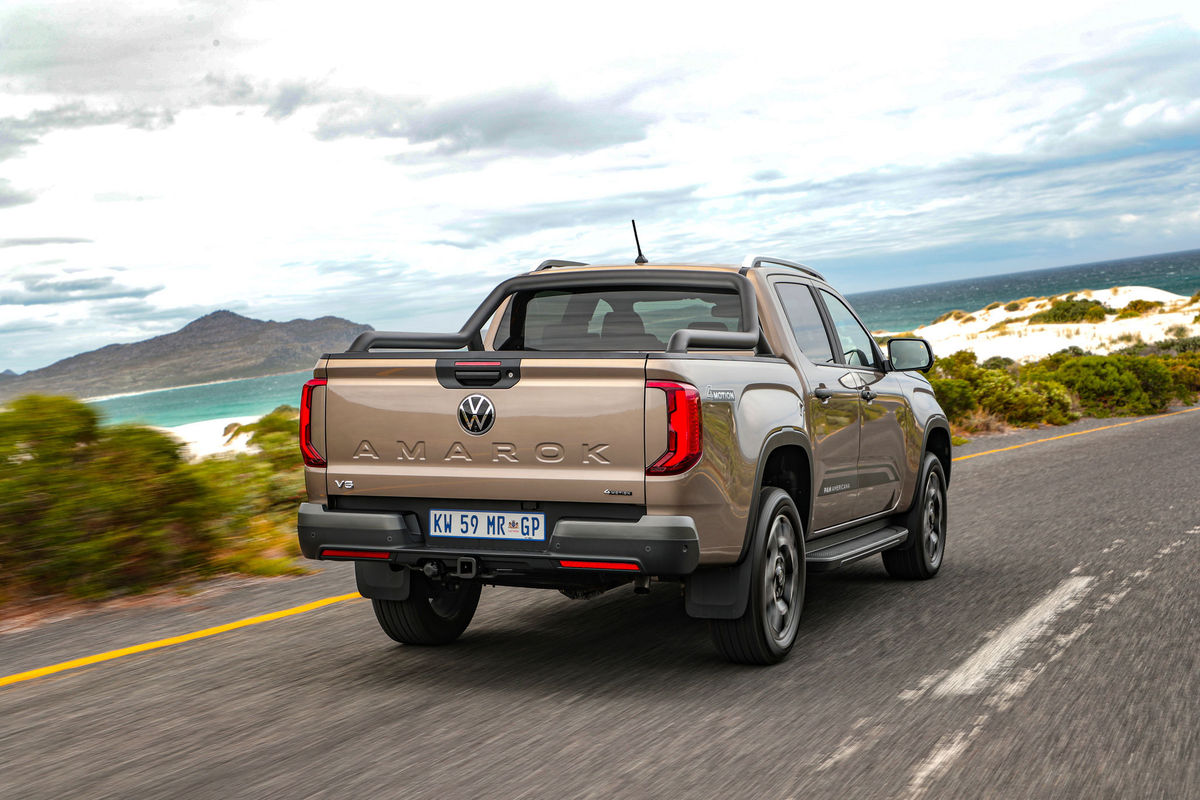
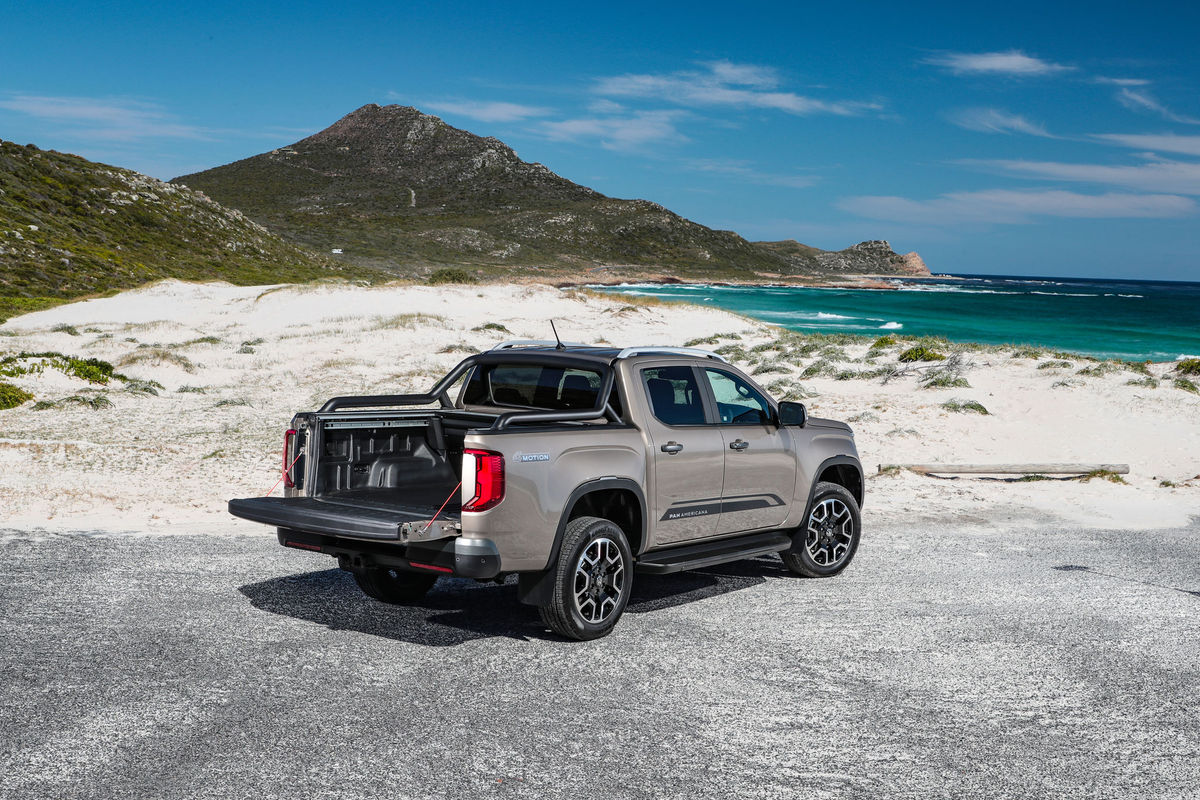
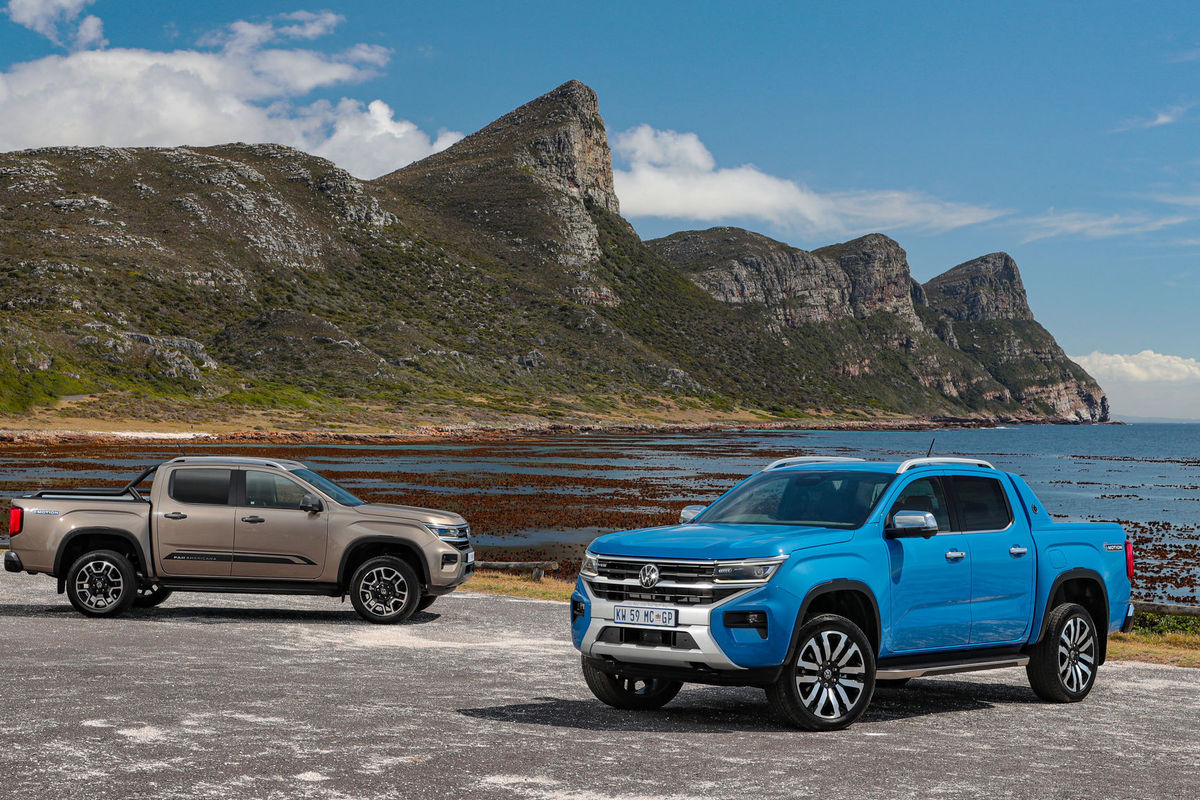
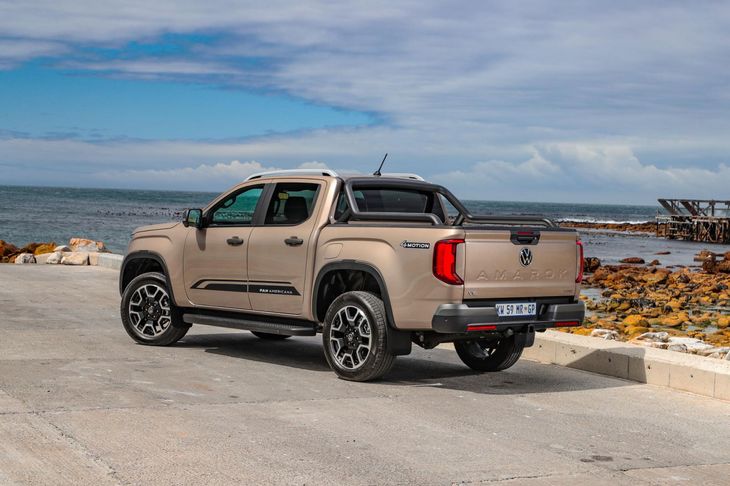
Panamericana specification adds 21-inch wheels to the package.
When I spoke with various heads of Volkswagen’s commercial vehicles division during the launch event, they admitted that a few concessions had to be made in order to continue the Amarok’s line. For example, one of the key touchpoints on a vehicle is the shape and finish of its key fob and, in the case of the German double-cab, it comes straight from a Ford Ranger. We’ve seen this before when Mercedes-Benz’s X-Class rebadged a Nissan key – the move effectively blurred the distinction between a premium brand and a mass-market brand, much to the former’s detriment. It’s not exactly the same here, where Ford and VW are both mass-market brands, but it would have been nice to have a recognisable VW fob.
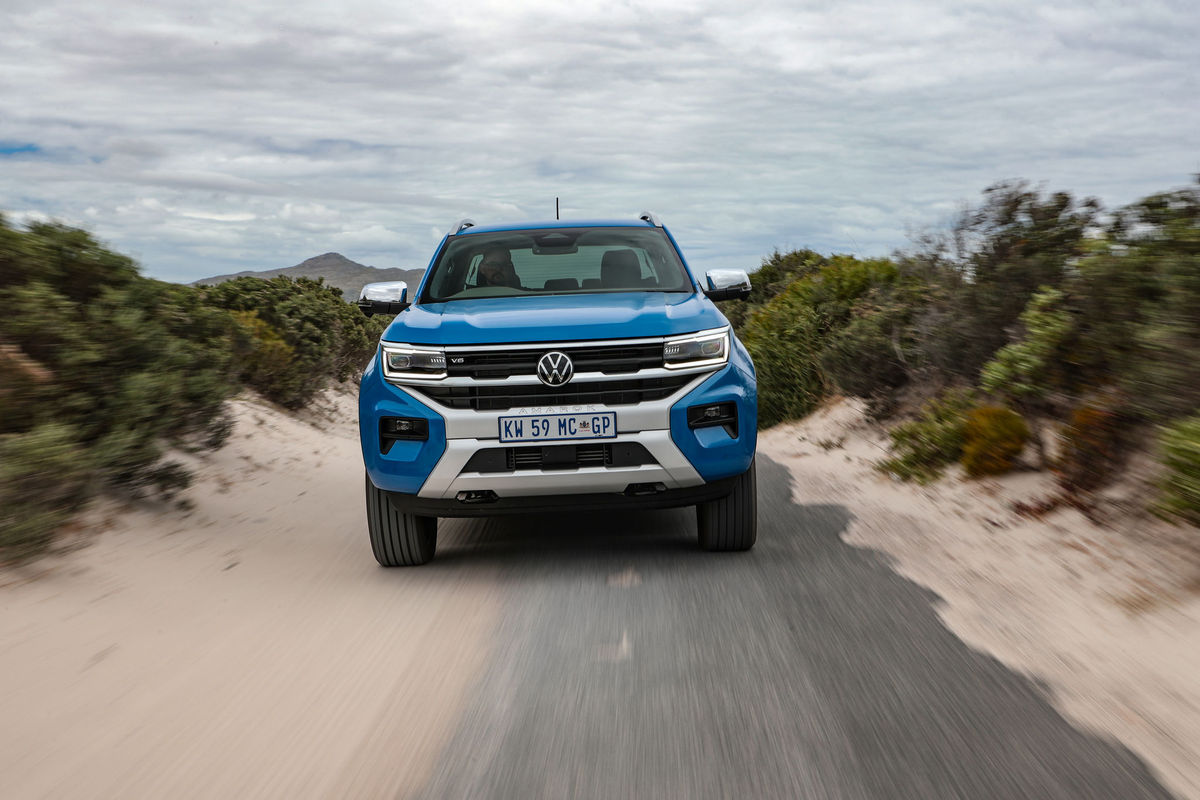
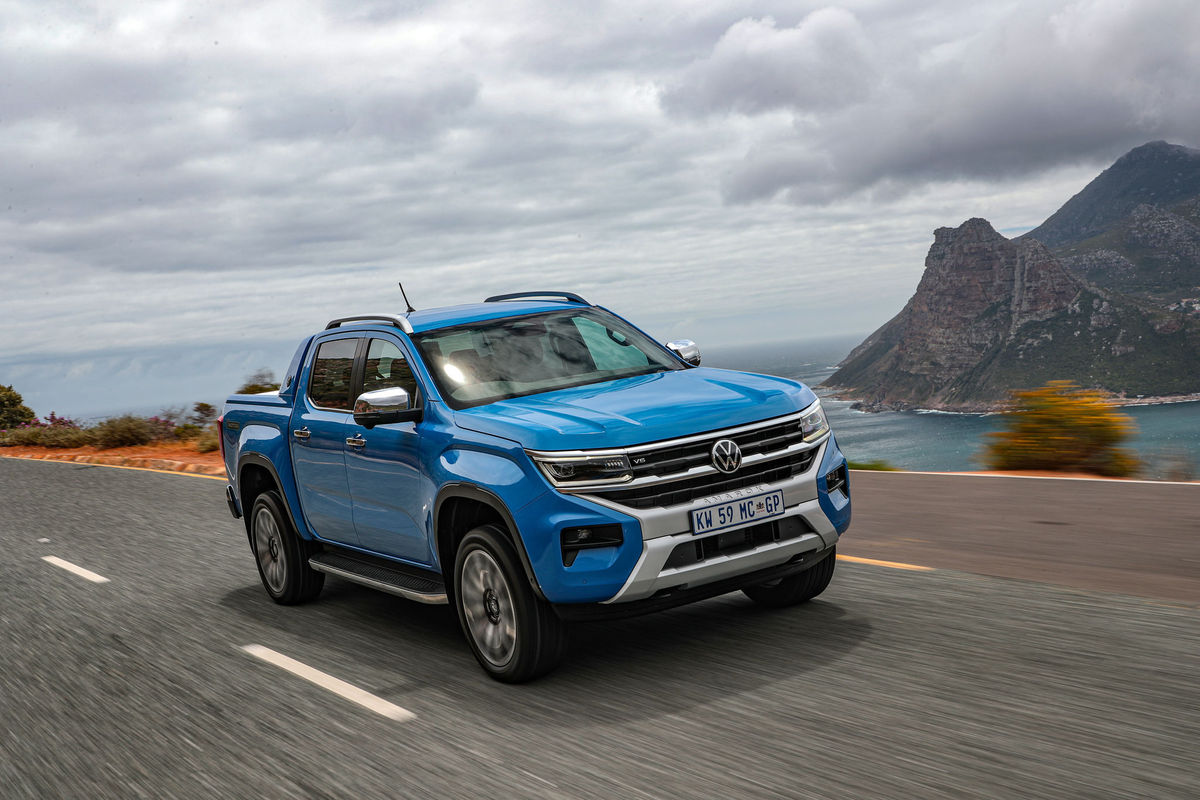
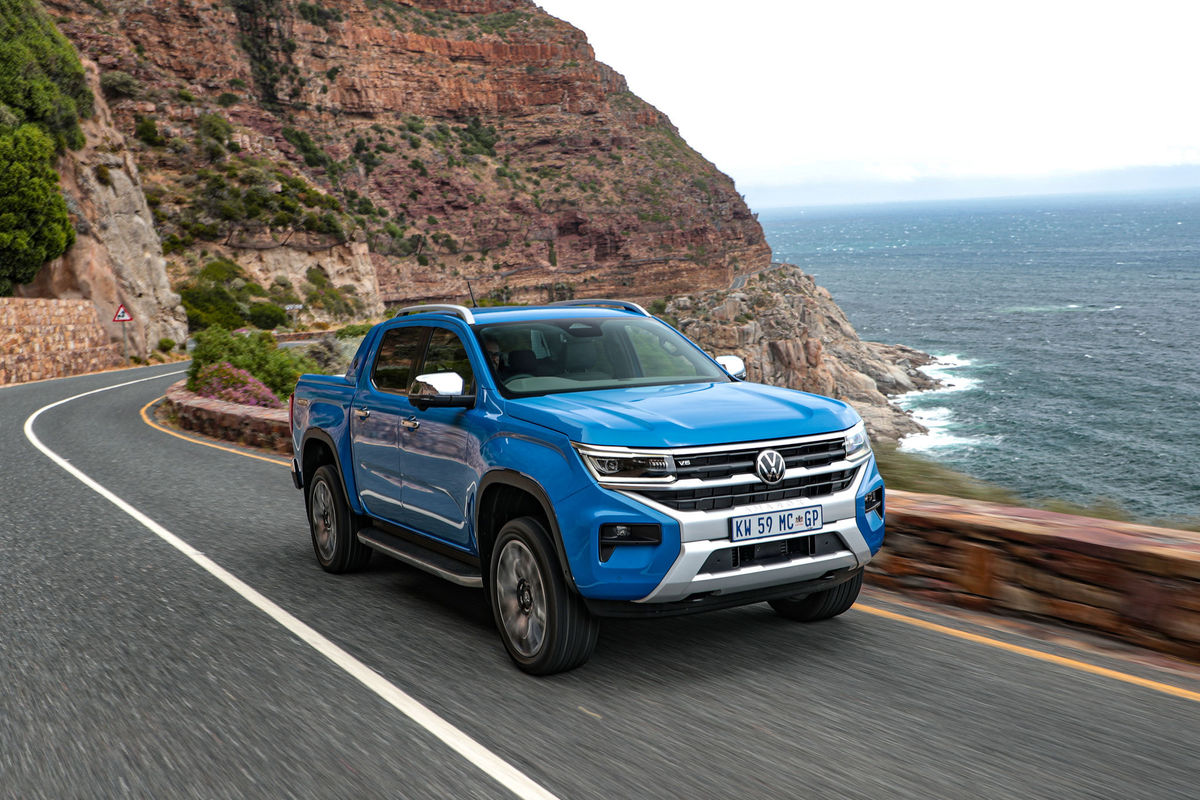
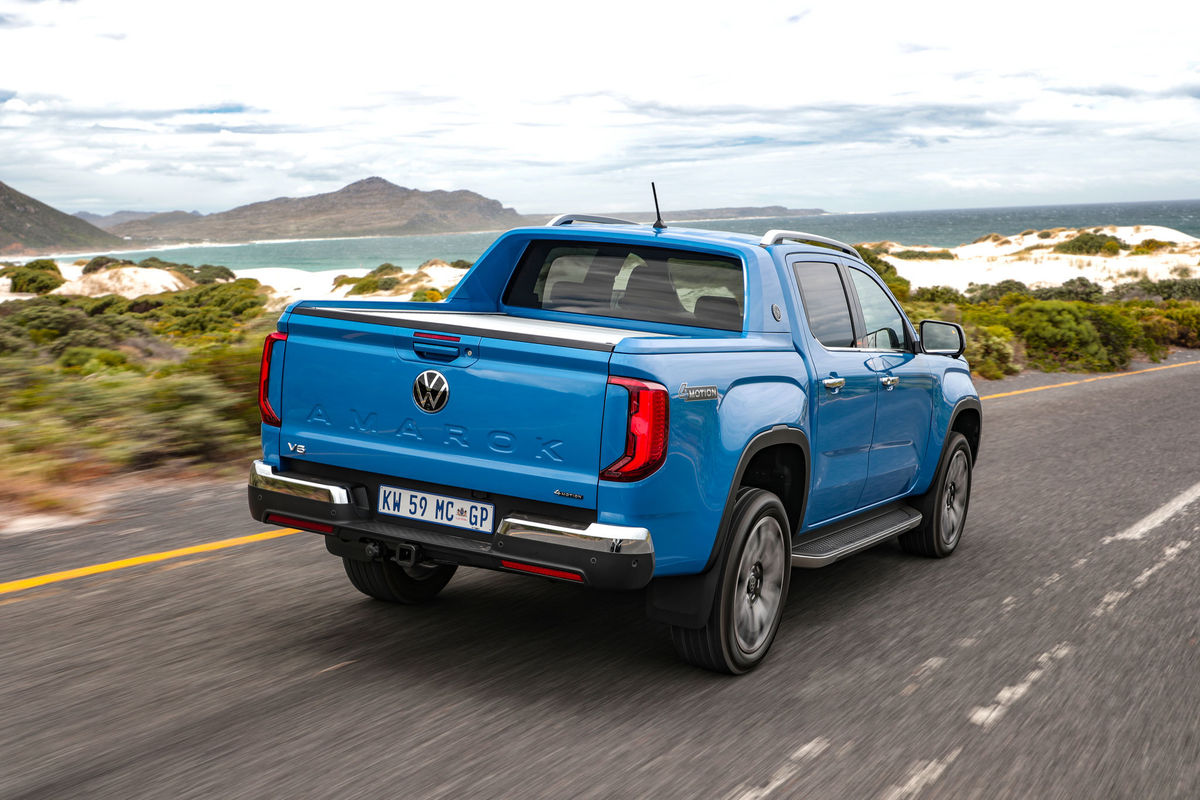
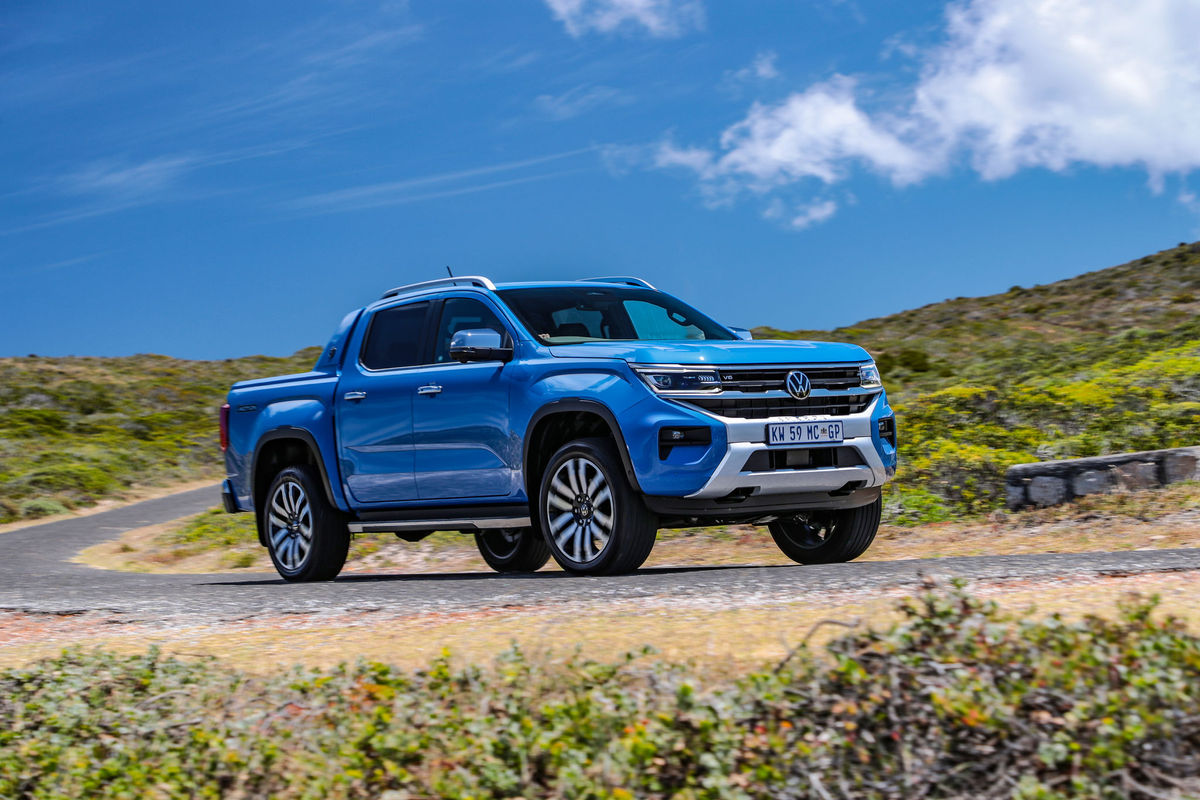
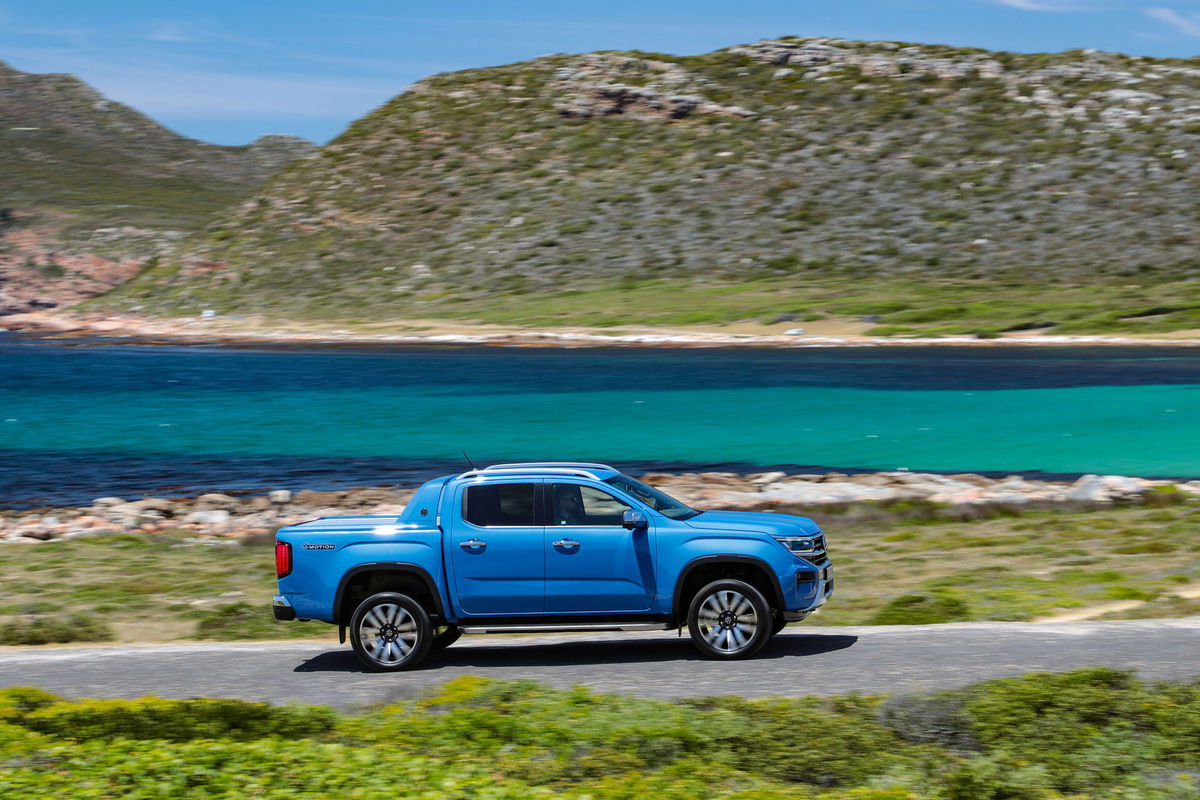
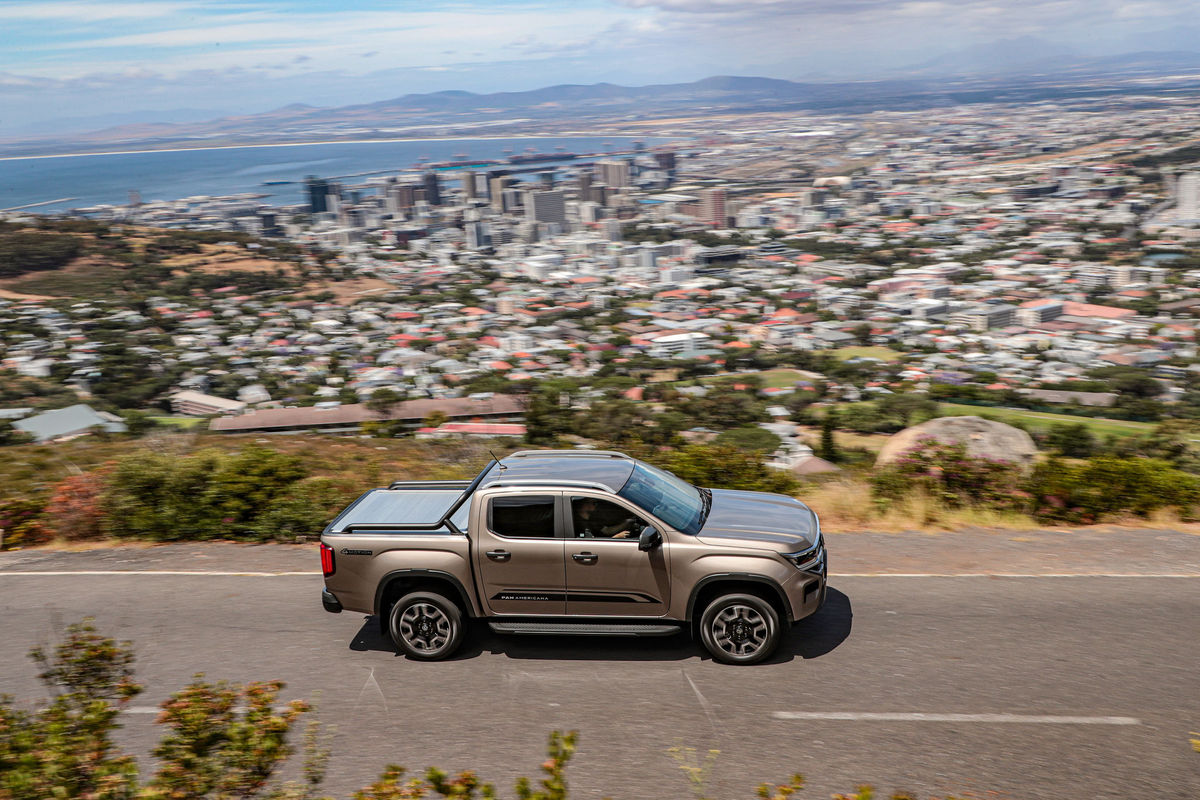
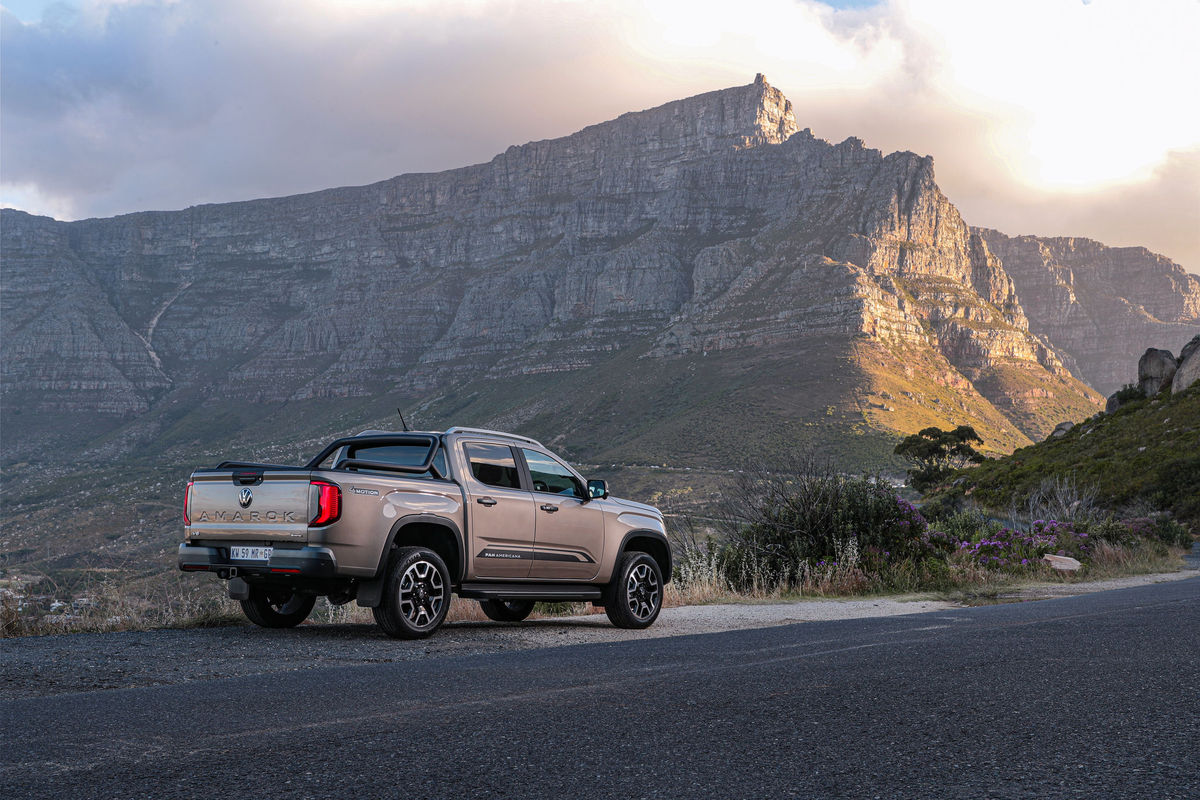
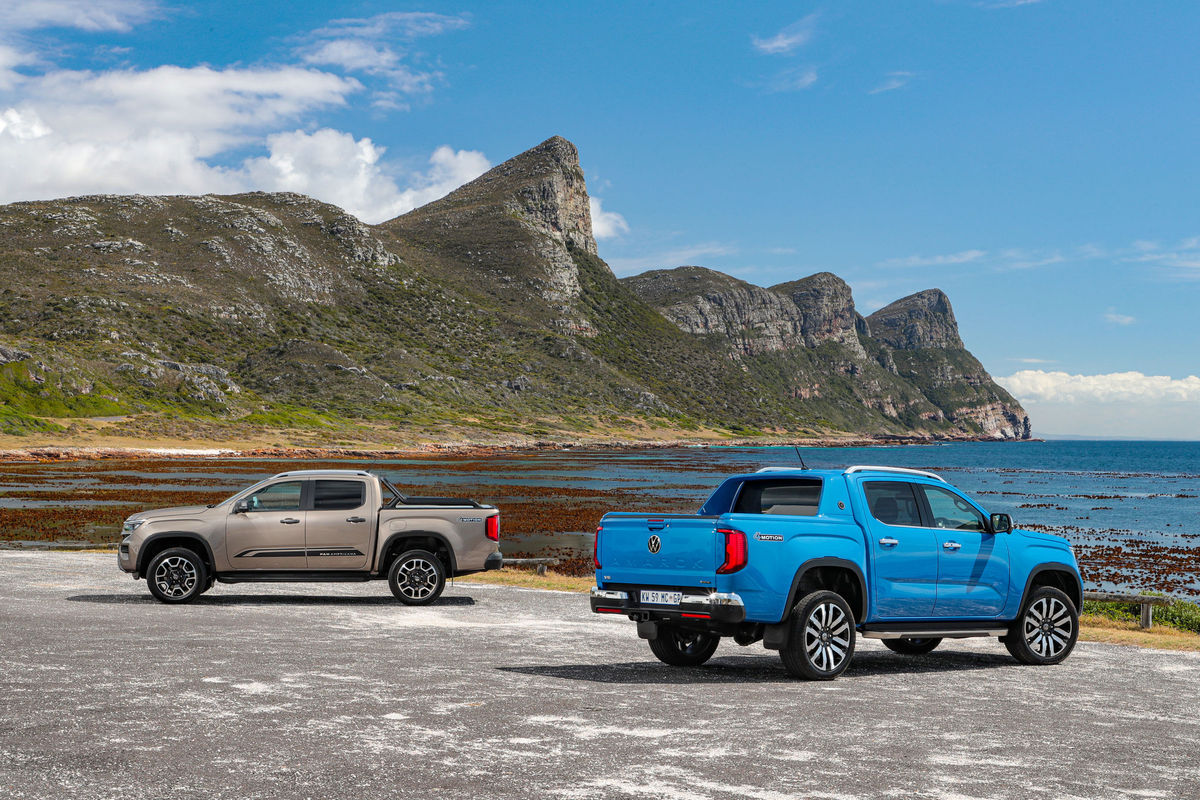
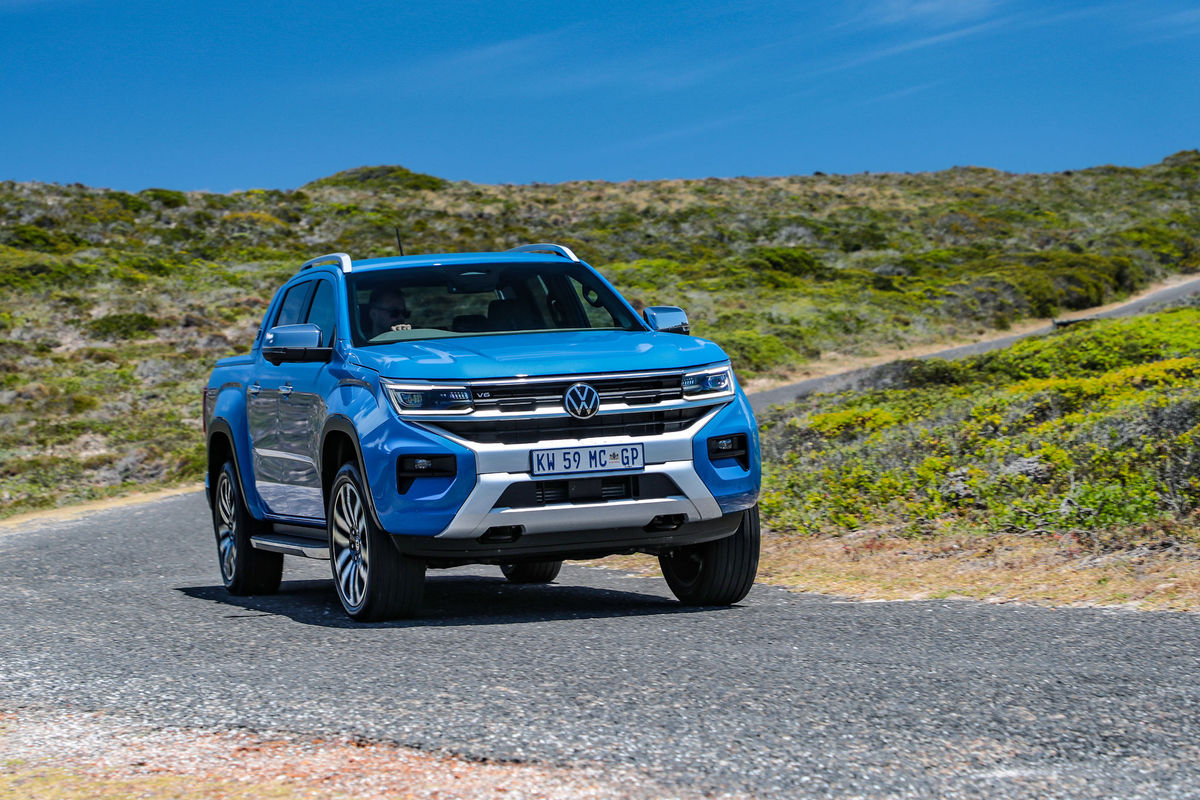
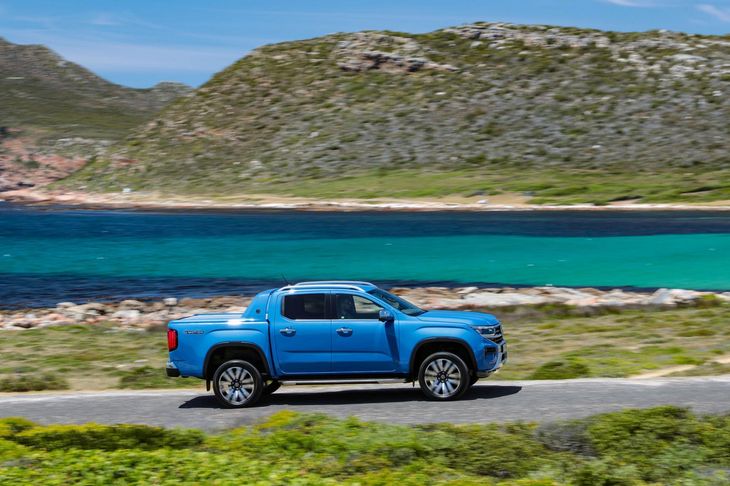
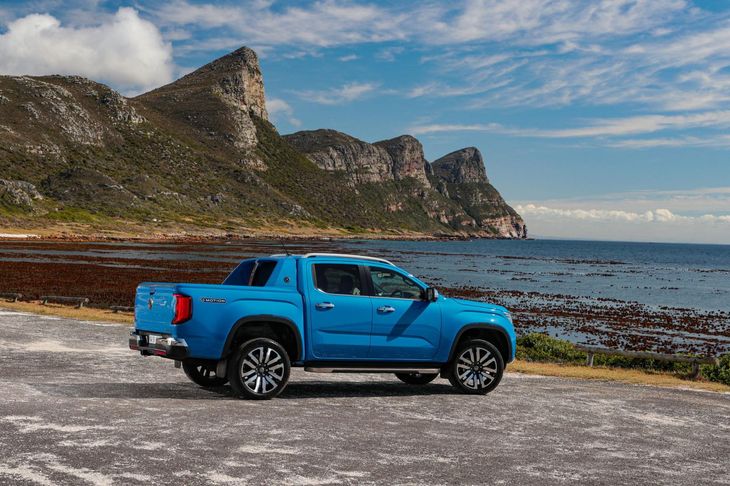
From head-on, the Amarok looks great. It’s muscular, wide-stanced and boxy without any fussy lines. It also looks like a big unit – I would love to see the newcomer alongside a Toyota Hilux and Isuzu D-Max just to see how much longer and bigger it is than the Japanese bakkies. We drove two versions of the Amarok V6: the off-road-oriented Panamericana – the brown bakkie with 21-inch wheels – and the luxurious Aventura – the blue bakkie with a colour-coded sportsbar.
The ride quality of the platform is unparalleled in the bakkie segment.
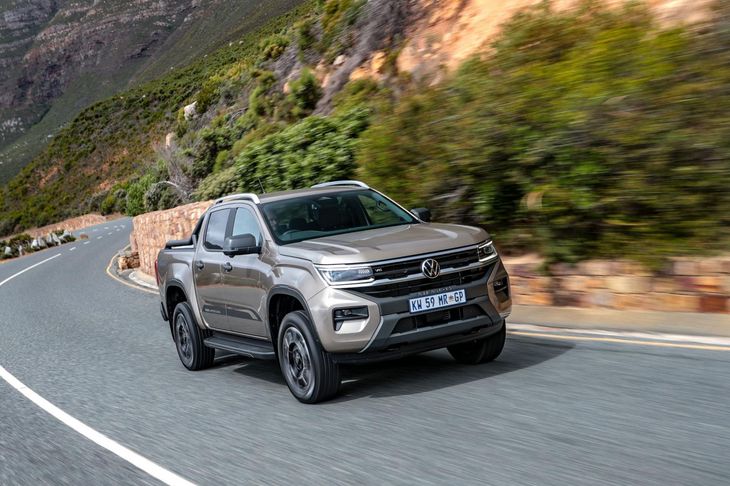
By the time you read this launch review, we will also have experienced the brand-new Ford Ranger, but at the time of writing, this was our first experience with the new platform. It’s immediately noticeable that massive improvements have been made to the Amarok’s chassis to make it more car-like to drive, especially in terms of ride refinement. The ladder-frame chassis’ stiffness is on another level compared to the other bakkies currently on sale. There is far less body roll when cornering and way less shaking from the chassis when traversing bumps or dirt roads. The chassis is taut to a point where it is almost indistinguishable from a monocoque body you get on modern SUVs, such as the Touareg and Tiguan.
The other characteristic that is immediately apparent is the quietness of the cabin. The cab seems well insulated from wind and road noise, even with huge side mirrors that can’t be doing wonders for the fuel economy.
The Amarok now has a low transfer case with Ford’s 10-speed gearbox.
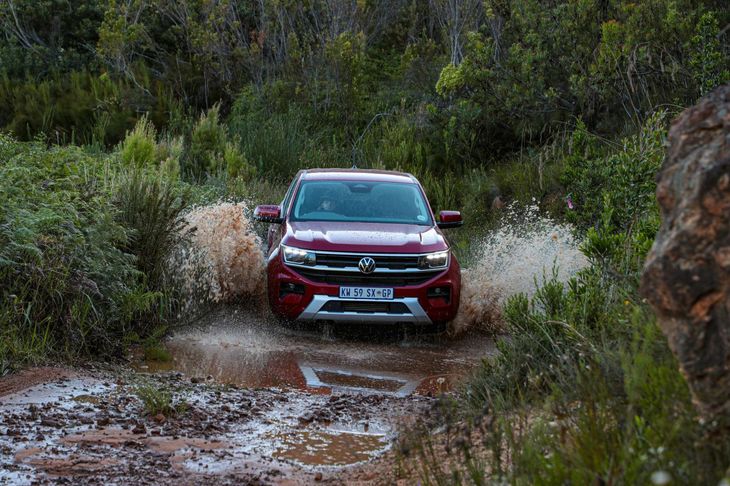
We did get to sample the Amarok on an off-road course in Grabouw. It wasn’t a particularly long or complex course, but the exercise gave us some idea of how well the new bakkie performs on rougher terrain. We were whisked out of the big-wheeled Panamericana into an 18-inch Style derivative fitted with all-terrain tyres. If you plan to do a lot of off-roading or gravel-road driving, definitely opt for the smaller wheels because they add a bit of softness to the initial bump damping; they will also, no doubt, be less likely to get scuffed up – or suffer a worse fate – than the bigger wheels.
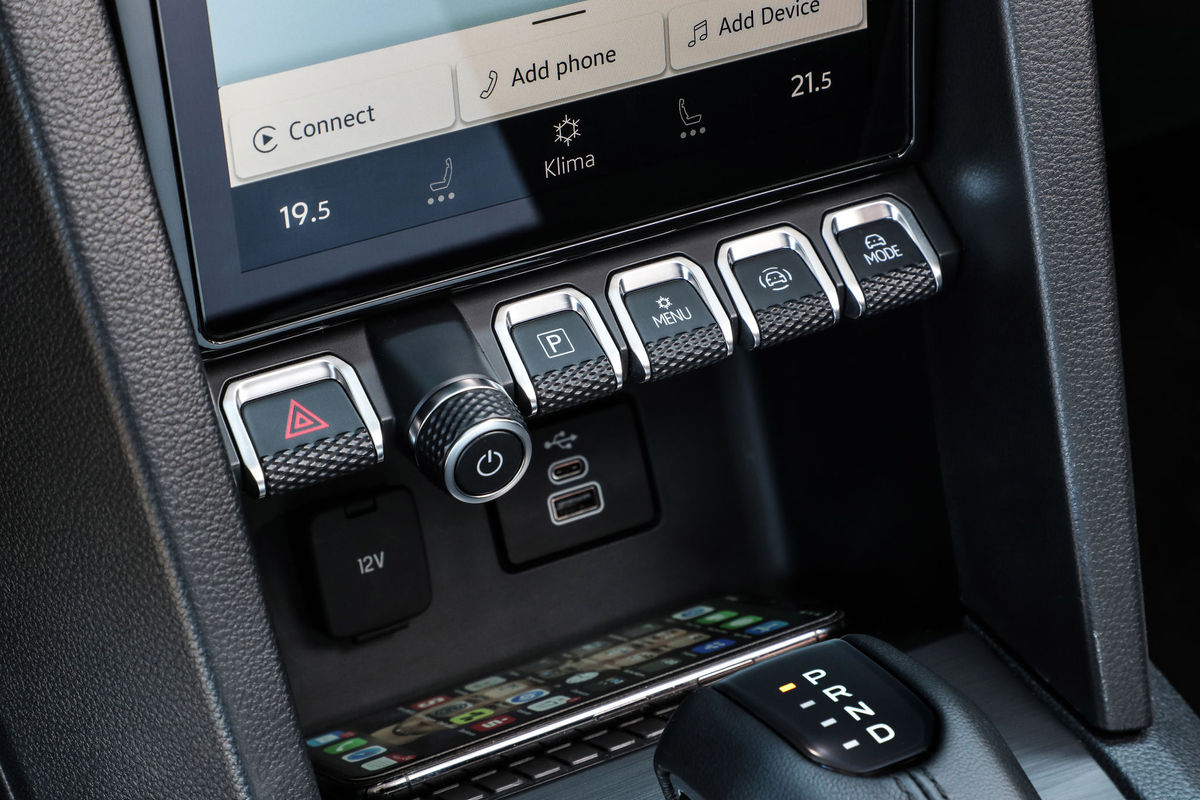
Four H and 4L gears are easily selected via a rotary dial on the centre console and the latter takes about 10 seconds to engage when the bakkie’s stationary (shifting from 2H to 4H can be done on the fly). The Amarok seemed well-composed over the rough stuff and made fairly easy work of the loose gravel climbs in Grabouw. There was a small test to see if the rear differential lock worked; of course, it does – you engage it with a press of a physical button behind the rotary dial.
The images of the bakkie’s interior are of an international-spec car, which shows that 4 drive modes are available (2H, 4A, 4H and 4L). However, the 4A mode is likely to appear only on European market-spec bakkies; it automatically shifts power and torque around via multi-plate clutches. Our models will also get the (more conventional) manually-activated differential lock.
Is the new V6 in the Amarok any good?
The previous V6 has been retired and replaced with a Ford-sourced V6 turbodiesel.
I mentioned concessions Volkswagen had to make to Ford in order to continue selling an Amarok and it appears the other concession was the V6 powerplant. The mighty 190 kW Audi/VW engine has been retired due to emissions requirements and replaced with a 184 kW/600 Nm Ford engine. It marks one of the few times where a replacement engine is, in fact, less powerful than its predecessor.
To be honest, the initial shove (in-gear acceleration) provided by the new motor feels a little underwhelming, at least considering the claimed outputs of the Gqeberha-produced powerplant. It certainly appears to be gentler than the old V6, but its power/torque delivery feels quite linear. It’s definitely fit for purpose – after all, the Amarok’s not meant to be a sports bakkie. The 10-speed ‘box does a decent job of keeping the V6 within its peak torque band (1 750 to 2 250 rpm).
Fuel consumption doesn’t appear to have improved with the new engine and gearbox combo, however. We saw indicated consumption figures in the mid-11 L/100 km range, with results varying among the other journalists from 10 L/100 km to 13 L/100 km. We will be able to put the engine and fuel consumption through a proper test when we get the Amarok back for a full evaluation early next year…
What’s it like inside?
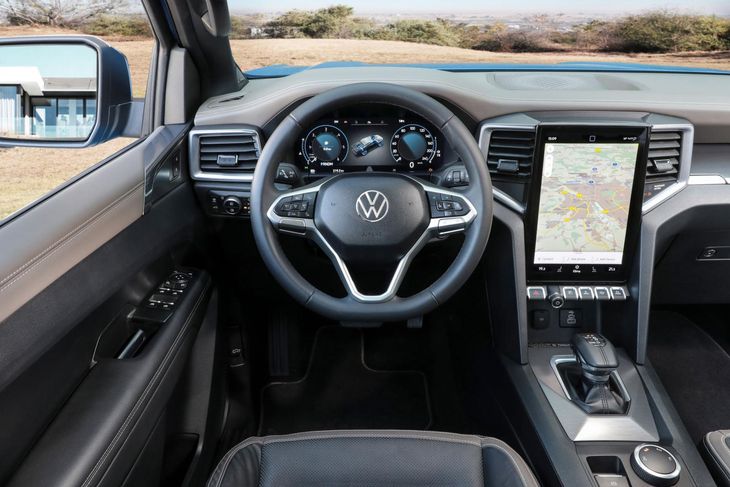
You get a proper VW steering wheel and dials, but it’s easy to spot the Ford content.
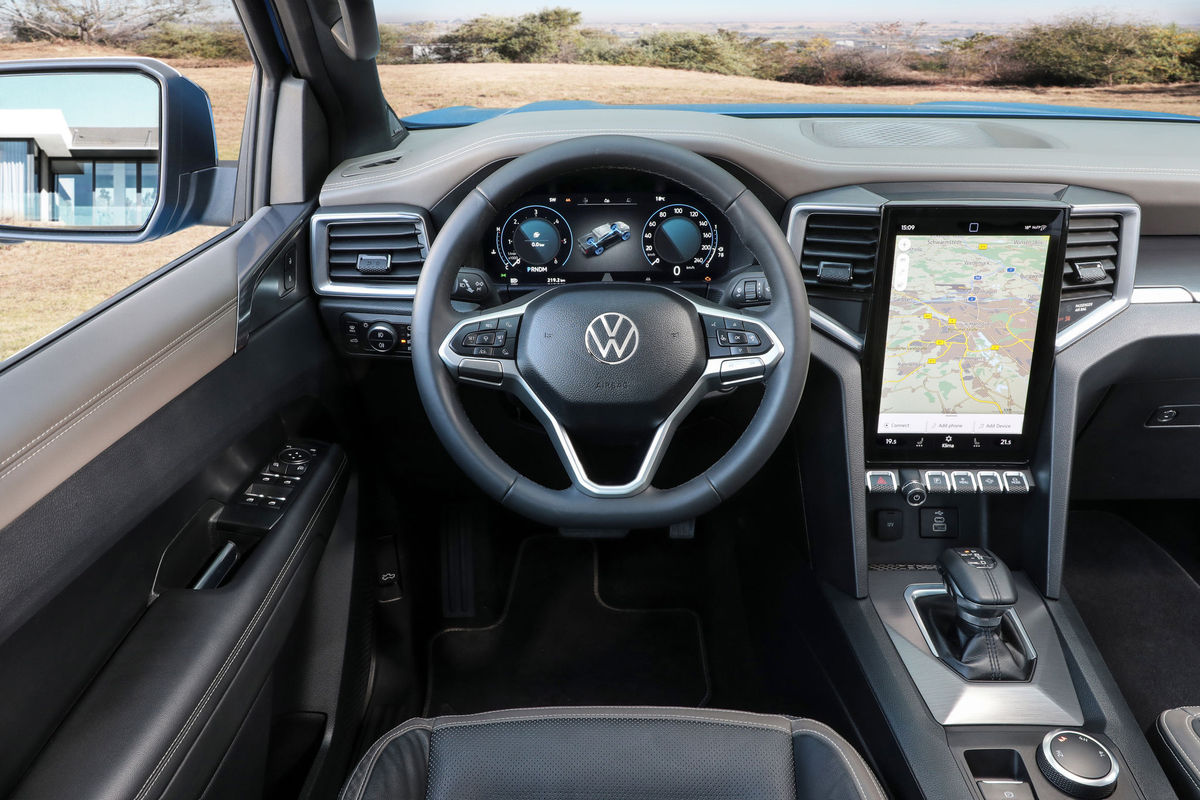
It’s nice to have a proper VW steering wheel equipped with physical buttons instead of the Tiguan and Golf 8 GTI’s haptic stuff (capacitive touchpads). The instrument cluster sports a VW design and fonts; it’s nicely laid out and familiar.
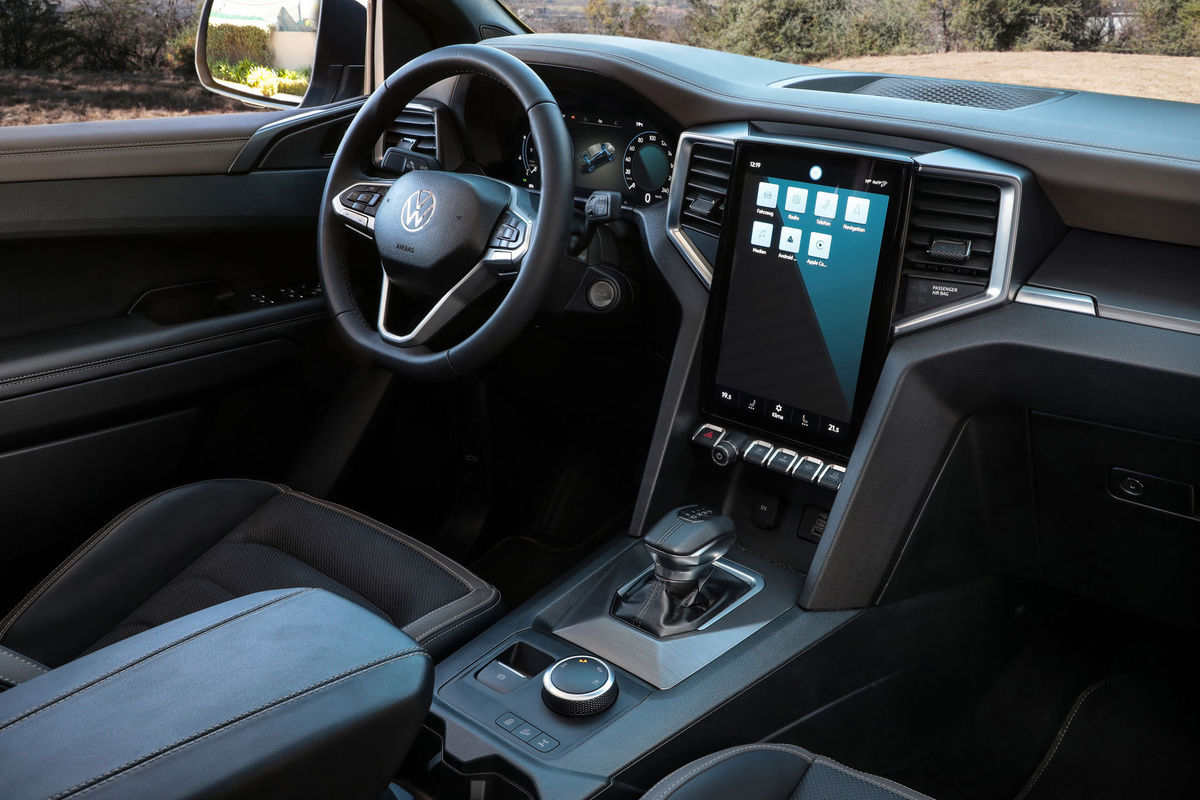
The massive portrait-oriented infotainment touchscreen (let’s call it a tablet) in the centre of the bakkie’s fascia is useful for tweaking several onboard (including climate and navigation) functions, but it can be a little slow to respond at times. I suspect with over-the-air updates, the interface will become slicker/bugs will be eliminated (or squashed). The big display does make it very easy to read what’s going on and Android Auto and Apple Carplay look great on the full-size screen.
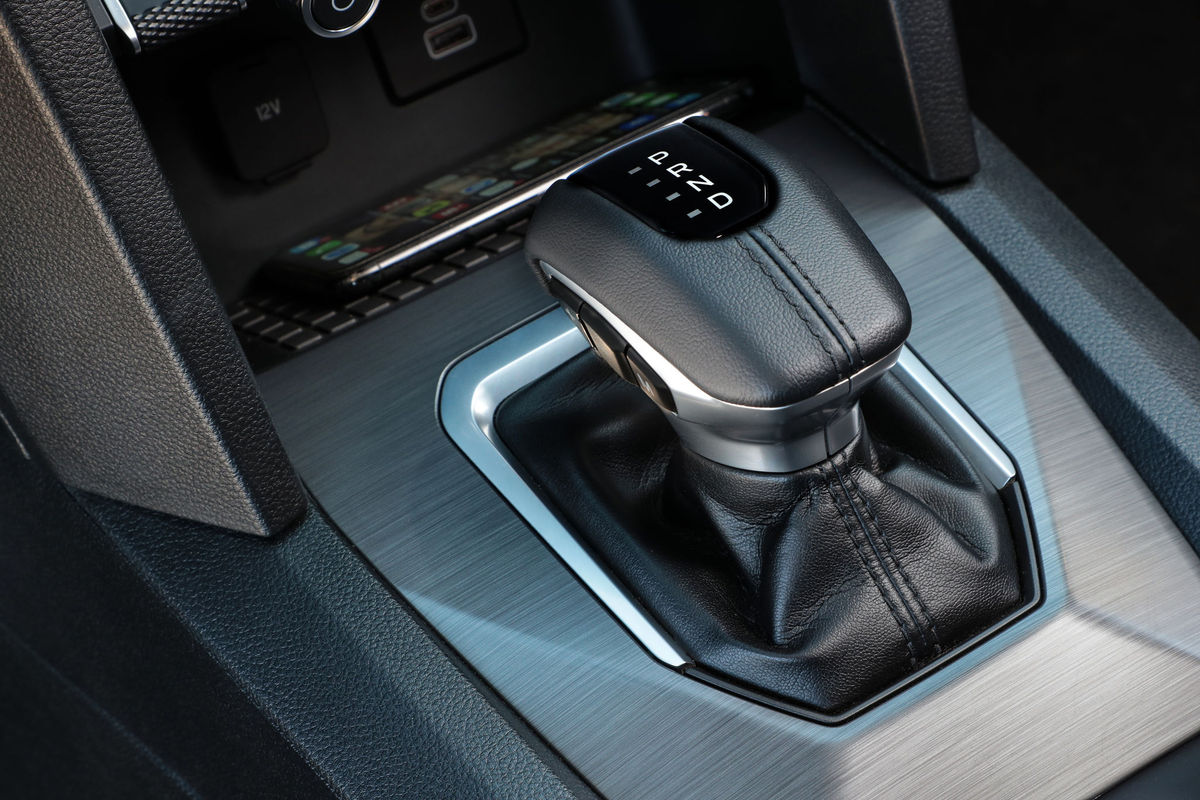
The transmission lever looks really neat but it isn’t the most ergonomically-efficient lever to shift into gear, because the selector is right at the front end of the lever and, when you press it, you inevitably press the buttons (on the side of the lever) that actuate manual shifts – there are no paddles behind the multifunction steering wheel.
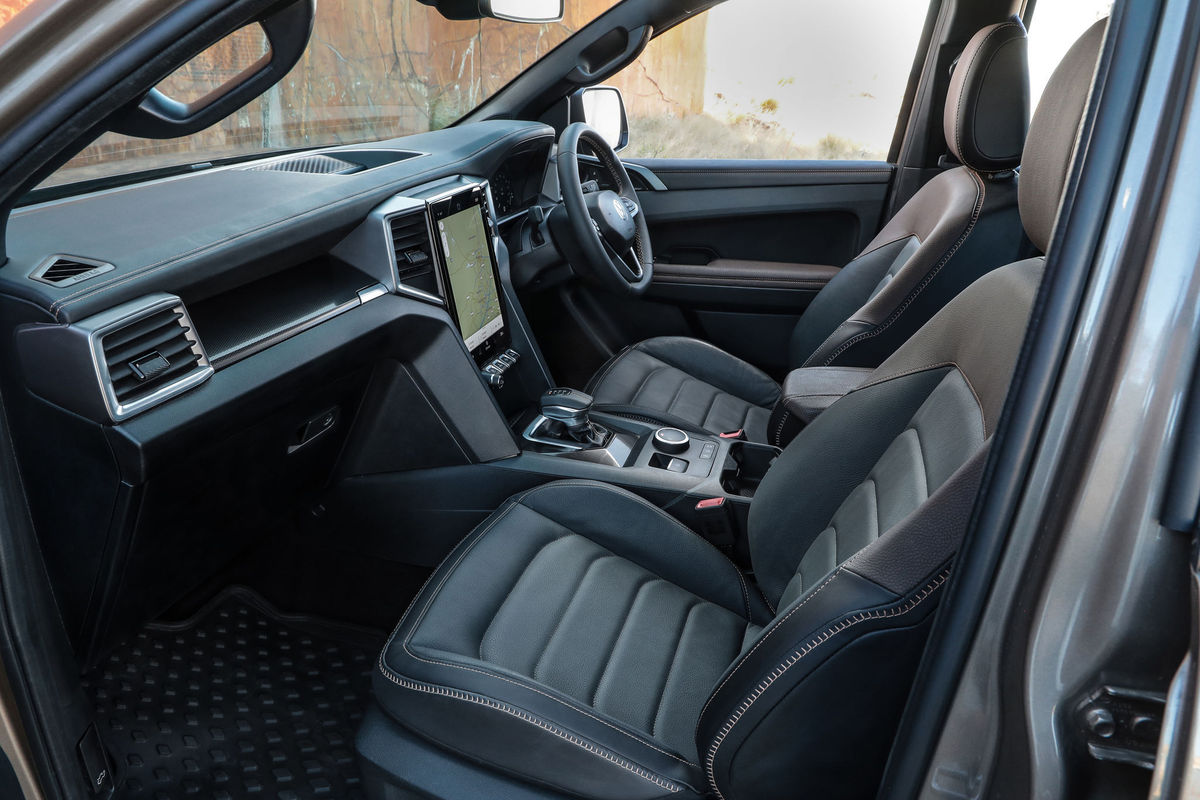
The overall cabin design is very premium and the materials employed are a mix of soft-touch leather and hard-wearing, but not crunchy or shiny, plastic. All the buttons feel substantial, plus there are USB-A and USB-C ports up front.
On that note, I would like to have seen a bit more cabin storage for personal items (oddment spaces). There is space to place a phone ahead of the transmission lever, but beyond that, you just get the dual cupholders and quite a small centre console (it’s deep, but not very capacious). Each of the door pockets is good for accommodating a bottle but then taper into a very thin slit (into which you could perhaps slide a thin magazine).
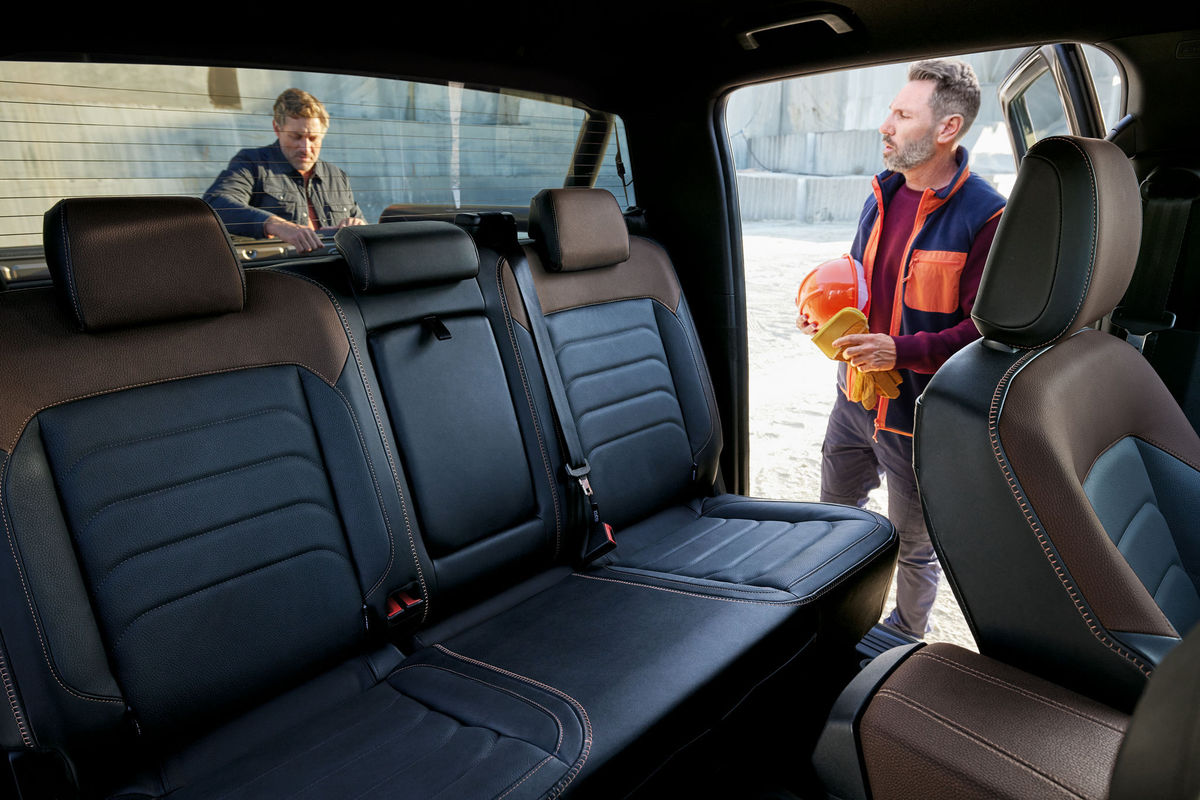
The increase in wheelbase has allowed Ford and Volkswagen to free up more rear legroom in their bakkies. The previous Amarok always fell short in the rear space department, but now the aft occupants have more space to spread out.
The new Amarok shifts the game on in terms of ride quality. How will the competition respond?
The new Volkswagen Amarok shifts the game forward in terms of what one can now reasonably expect from “the ultimate lifestyle bakkie”. The ride quality, ease of use and handling has more in common with an SUV than ever before. It sets a new standard for bakkies in this department, combined with an updated cabin that’s equipped with all the modern tech and safety systems that a modern vehicle needs.
The new, Ford-sourced 3.0-litre V6 engine is adequate for the task and befits a premium lifestyle vehicle with its smooth operation and healthy torque delivery; it should be a boon for those who tow trailers or carry heavy loads now and again.
It’s not perfect, however. There seem to be a few ergonomic issues that have crept into the interior design, but they are not deal-breakers whatsoever. As an overall package, the new Amarok represents a very capable package in every department. Now we just wait to see how well it will be specified – and, of course, how much it will cost – compared with its Ford Ranger sibling.
Petrol Price to Increase, Diesel Down for December 2022
Motorists will pay more for petrol in December 2022, while owners of diesel vehicles will get some relief. Here are the price changes in the fuel price for the last month of 2022.
Official fuel price adjustments for December 2022 have been published by the Central Energy Fund (CEF) on behalf of the Department of Mineral Resources and Energy.
As it stands, the price of diesel will decrease while the price of petrol will be going up.
The price of both Petrol 93 and Petrol 95 will increase by 59 cents per litre.
The price of Diesel (0.05% Sulphur) will decrease by R1.57 cents per litre and Diesel (0.005% Sulphur) will decrease by R1.52 cents per litre.
The price of Illuminating Parrafin will also be slashed by 57 cents per litre.
Recently, the stronger Rand has helped contribute in a positive manner towards better fuel prices, softening the potentially heavy blow that was expected earlier in the month. As reported in the middle of November 2022, motorists were heading towards increases of around R1 for petrol per litre, while diesel’s decrease was going to be just 34c per litre.
Earlier in November 2022, the AA commented, “The decrease to diesel and paraffin prices is encouraging. Diesel is a major input cost in many sectors and the decrease to this fuel cost is positive for all consumers. While positive, the suggested retail price of diesel in December will still be around R6.20/l more expensive than it was in January, which will have resulted in higher prices to goods and services during 2022,” says the AA.
“The Rand’s positive movement is certainly aiding consumers without which the outlook may have been gloomier. Going forward, though, we will continue to call for a re-evaluation of the fuel pricing structure to provide more longer lasting solutions to mitigate against rising fuel costs. A review of the fuel price must examine all the components that comprise a litre of fuel, establish their continued relevance as part of the fuel price, and determine if the calculations used are still correct. As we have said before, we believe such a review is long overdue and the longer government delays in getting this started, the longer it will take to find sustainable solutions,” the AA concludes.
Suzuki has given its S-Presso budget car a mild update. See what’s changed and what you can expect to pay for the quirky hatchback from Suzuki.
What’s changed?
The most notable change for the S-Presso is the fitment of Suzuki’s K10C Dualjet 1.0-litre, 3-cylinder engine and while it still offers 49 kW and 89 Nm of torque, fuel efficiency is said to have improved thanks to 2 injectors per cylinder and smaller combustion chambers which improve thermal efficiency and fuel combustion. New piston cooling oil jets ensure that the engine runs at an optimal temperature.
These changes, according to Suzuki, result in better fuel economy with the manual S-Presso claiming 4.6 L/100km while the S-Presso with an Automated Manual Transmission (AMT) claims a fuel consumption figure of 4.4 L/100km. For reference, the outgoing S-Presso range carried a claimed fuel economy of 4.9 L/100km.
More than this, Stop-Start technology is now standard across the range in an effort to further reduce fuel consumption by switching off the engine when the vehicle is stationary.
Suzuki has also taken the opportunity to bump up the S-Presso’s safety credentials by fitting Electronic Stability Program (ESP) across the entire range while the S-Presso AMT gains Hill Hold Control. All S-Pressos are also fitted with 2 front airbags and ABS as standard as well as ISOFIX child seat mounts. In addition to the above, all S-Pressos feature rear park distance control sensors as well as an immobiliser and rear childproof door locks.
From a stylistic point of view, the S-Presso’s styling has been enhanced with the fitment of 14-inch alloy wheels to the S-Presso GL+ and S-Presso S-Edition derivatives. A full spare wheel is also fitted across the range. As for the base S-Presso, steel wheels with wheel covers are standard. Body-coloured bumpers nad door handles are standard across the range.
The range-topping S-Presso S-Edition gains new silver-coloured bumper inserts and silver detailing seen on the front bumper.
A total of 6 colours, including White, Granite Grey Metallic, Fire Red, Silky Silver Metallic, Starry Blue Pearl and Sizzle Orange are available to buyers.
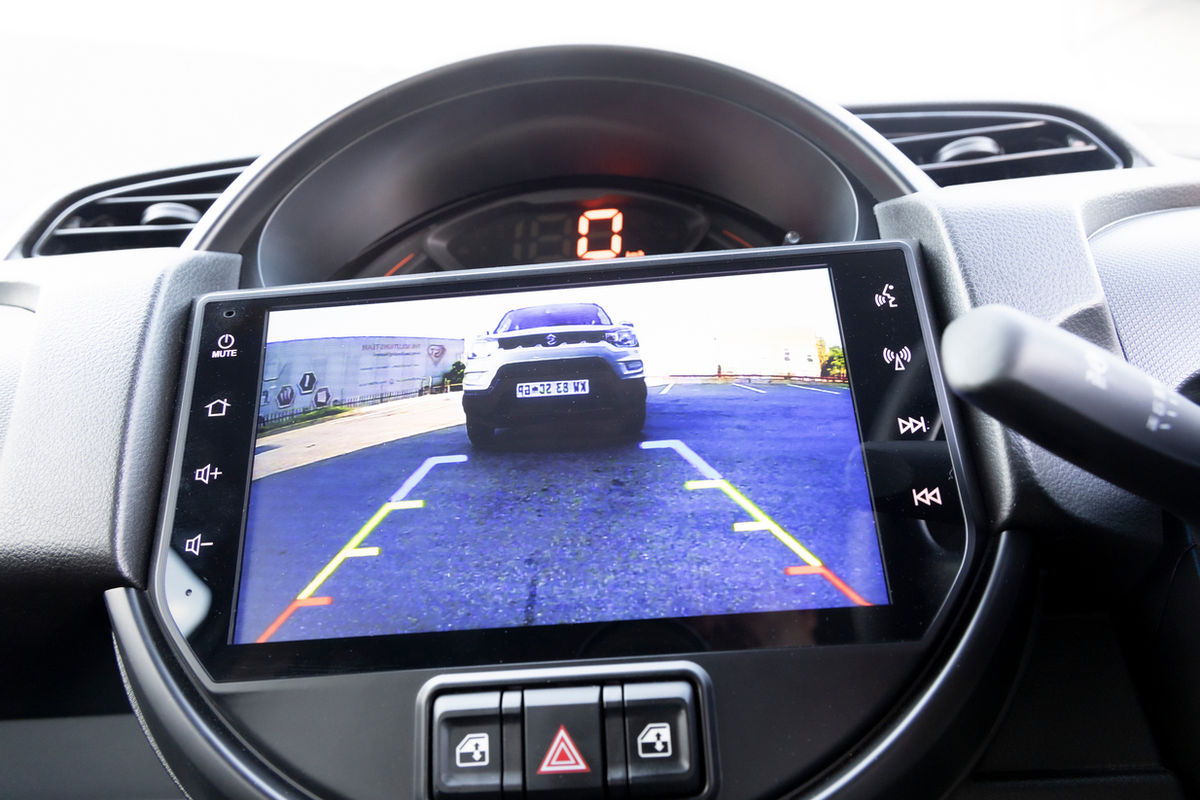
Moving inside, the most notable change is the fitment of a larger 9-inch infotainment screen for the S-Presso S-Edition which now also comes equipped with a reverse camera. The S-Presso GL+ gains a 7-inch infotainment system and both systems are Apple CarPlay and Android Auto compatible.
All derivatives are equipped with Bluetooth connectivity, steering-mounted controls, central locking, front electric windows, air conditioning and power steering.
How much does the Suzuki S-Presso cost in South Africa?
Prices include VAT and are accurate as of December 2022.
S-Presso 1.0 GL Manual – R162 900
S-Presso 1.0 GL AMT – R176 900
S-Presso 1.0 GL+ Manual – R169 900
S-Presso 1.0 GL+ AMT – R183 900
S-Presso 1.0 S-Edition Manual – R185 900
S-Presso 1.0 S-Edition AMT – R199 900
All S-Presso models are sold with a 2-year / 30 000 km Service Plan and 5-year / 200 000 km promotional mechanical warranty and 1-year insurance.
Mercedes-AMG S 63 E Performance Revealed with 590 kW!
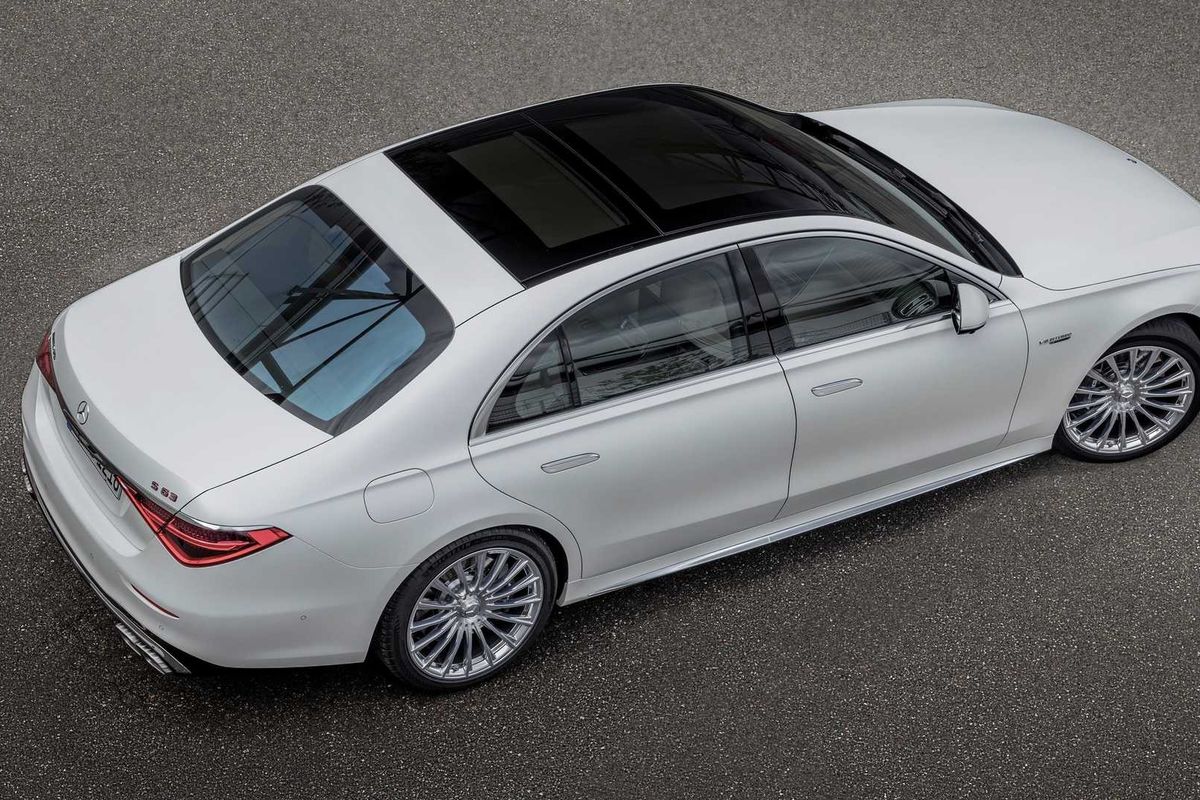
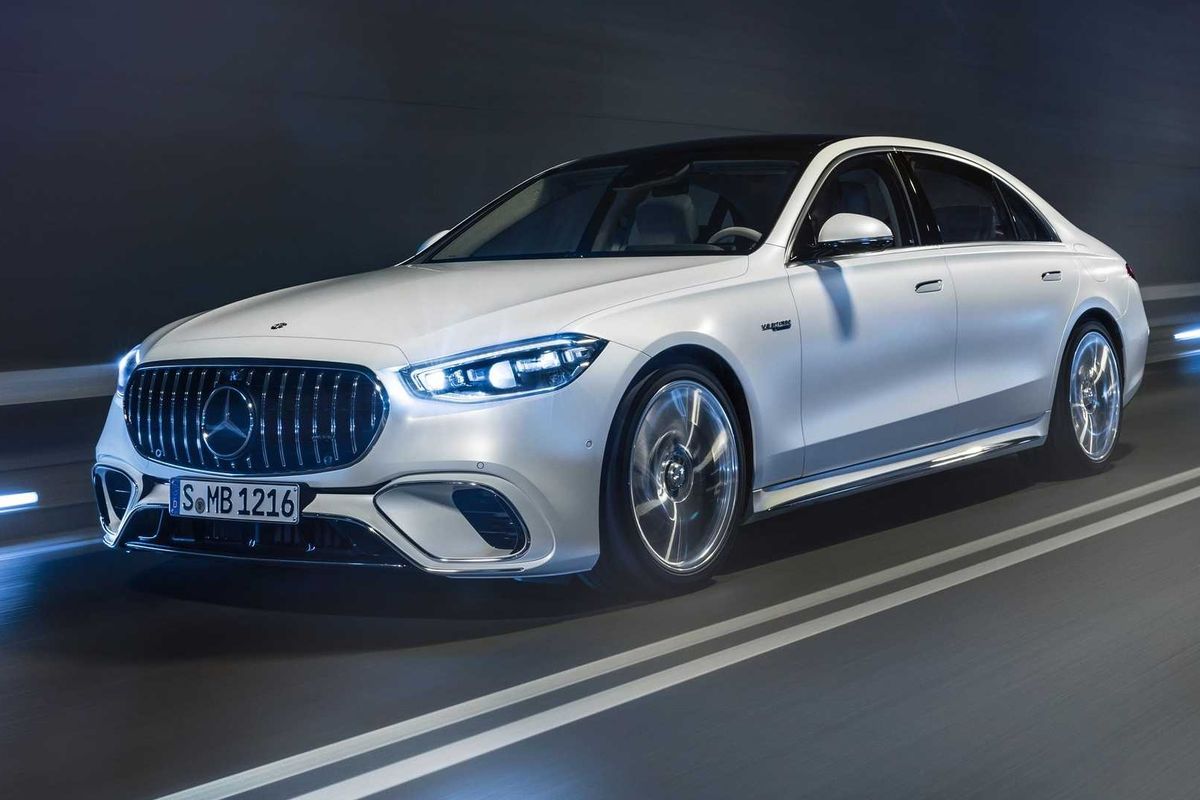
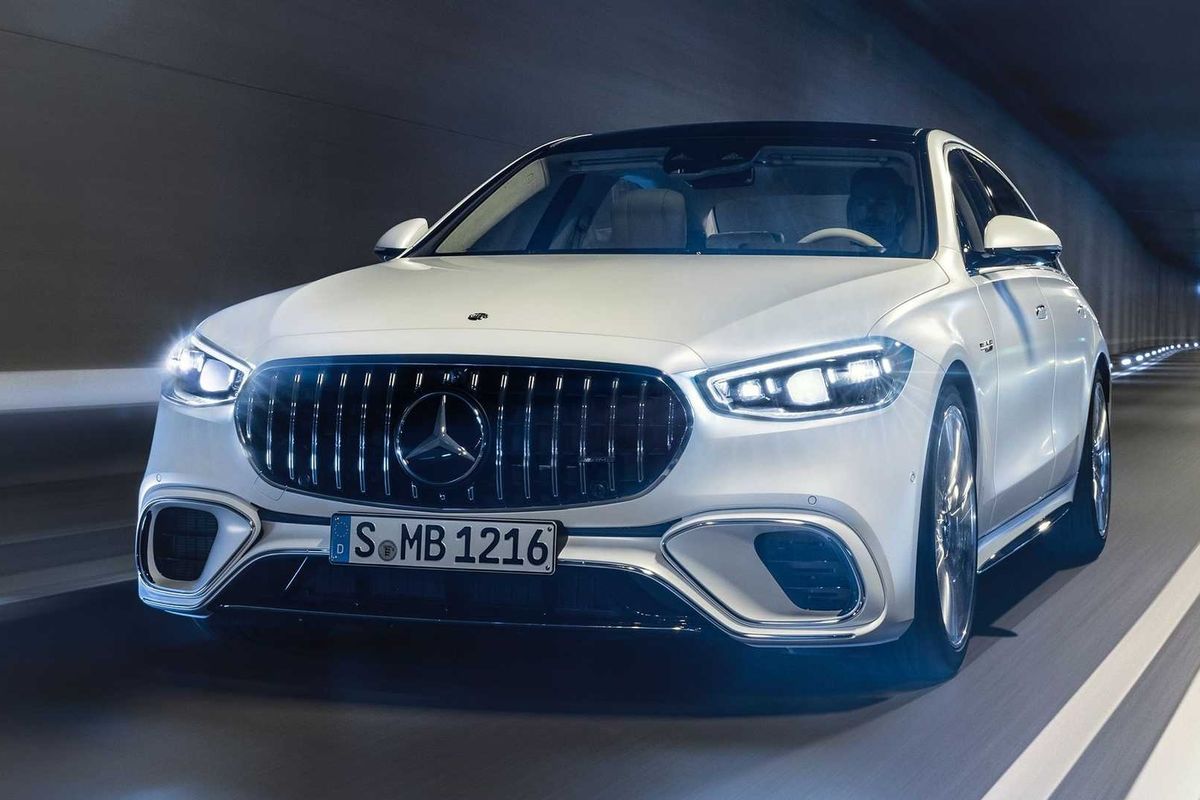
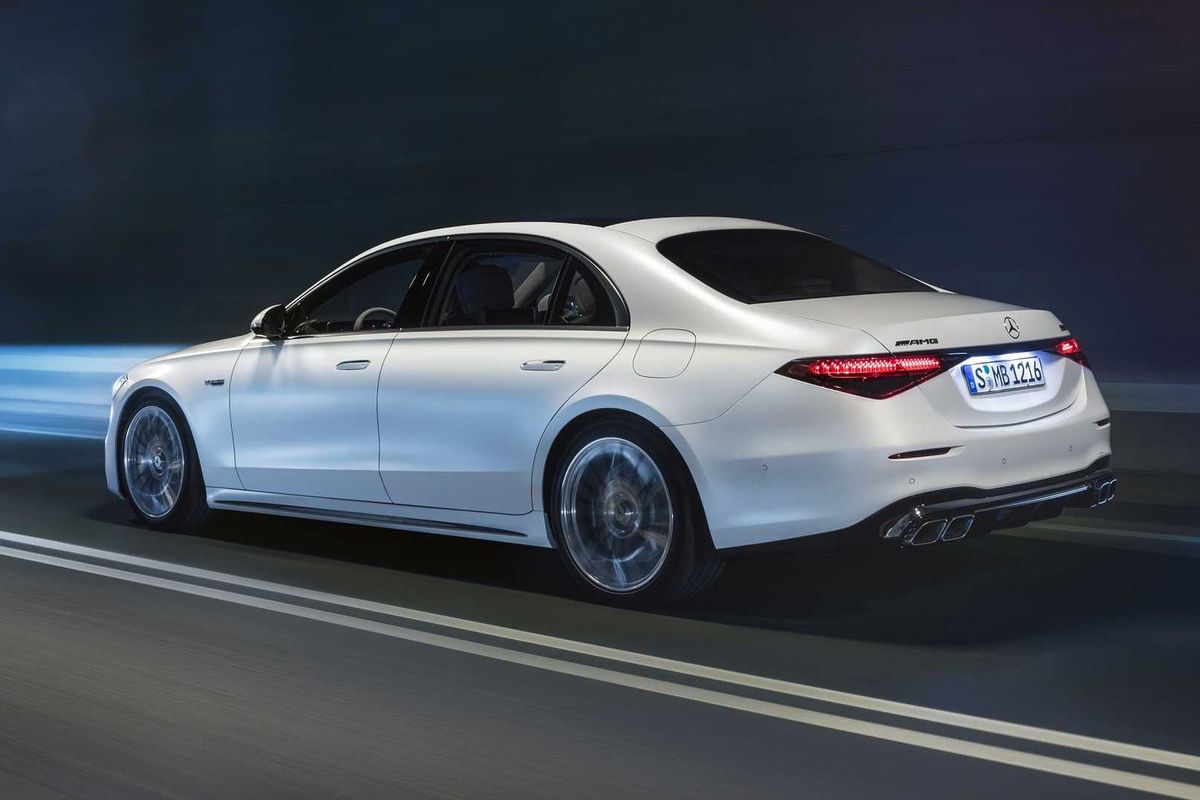
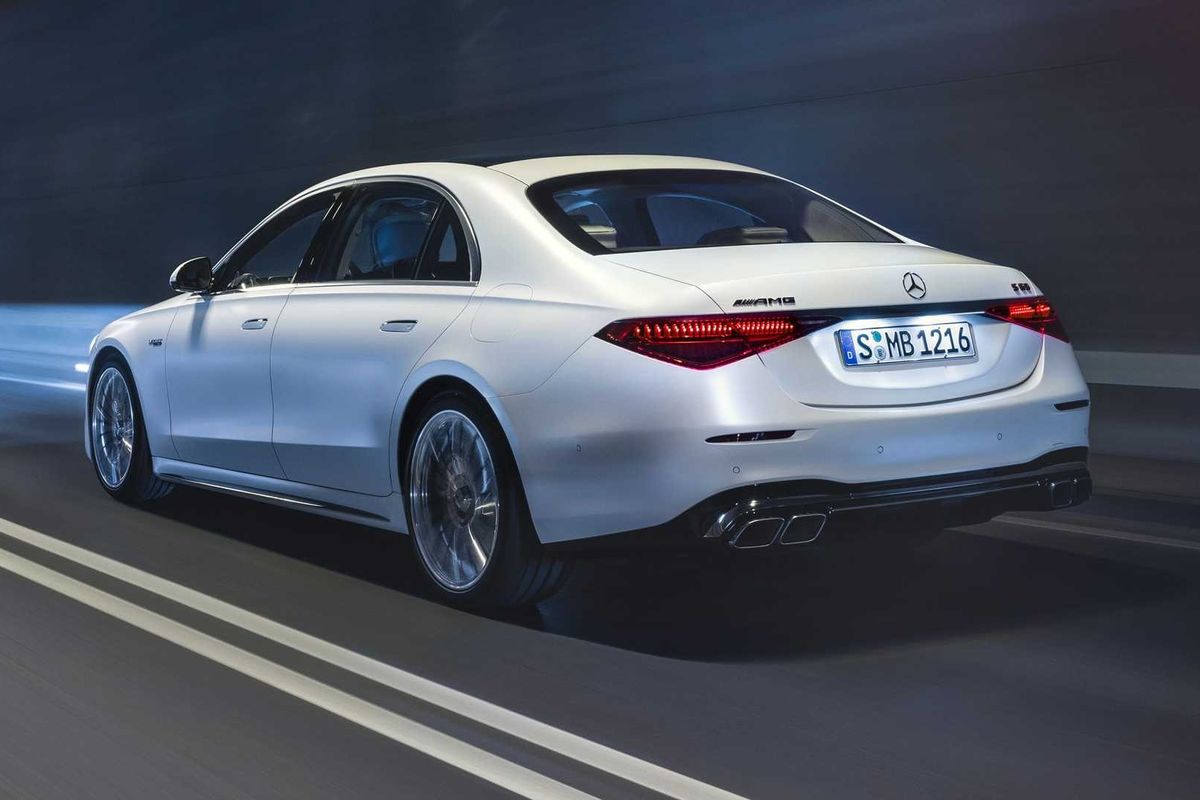
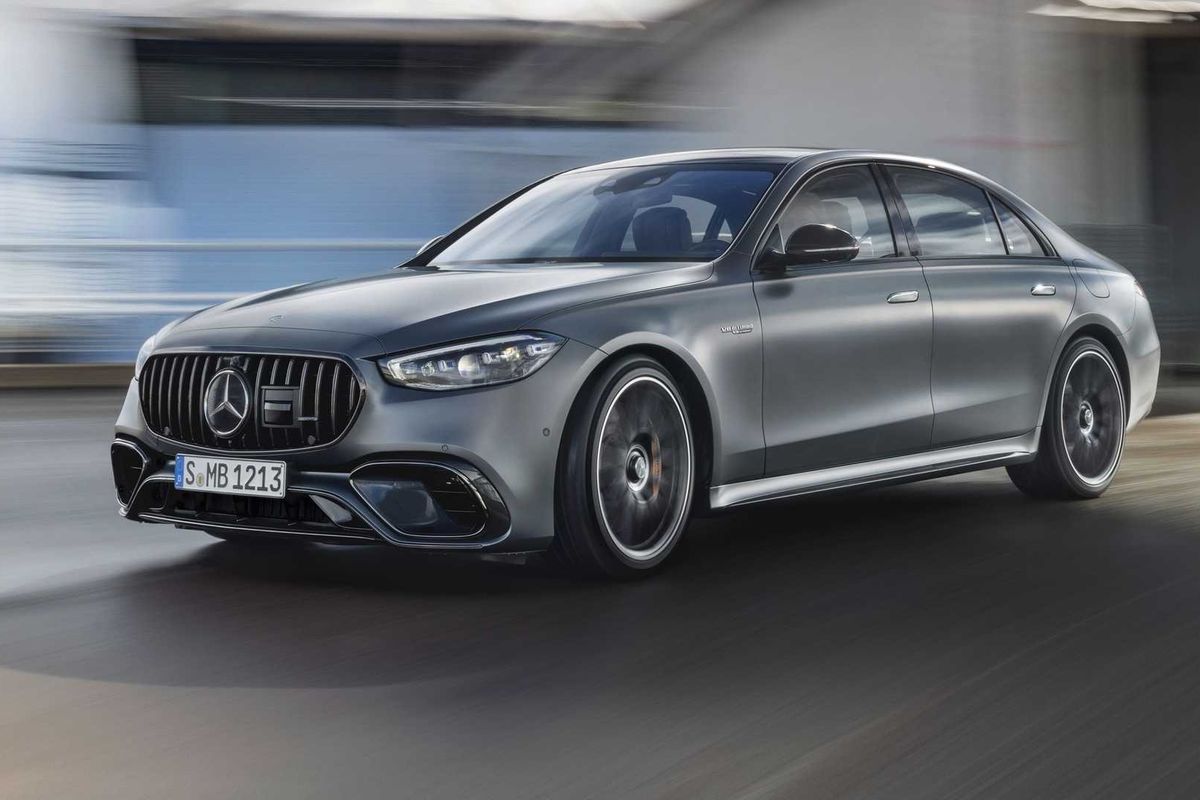
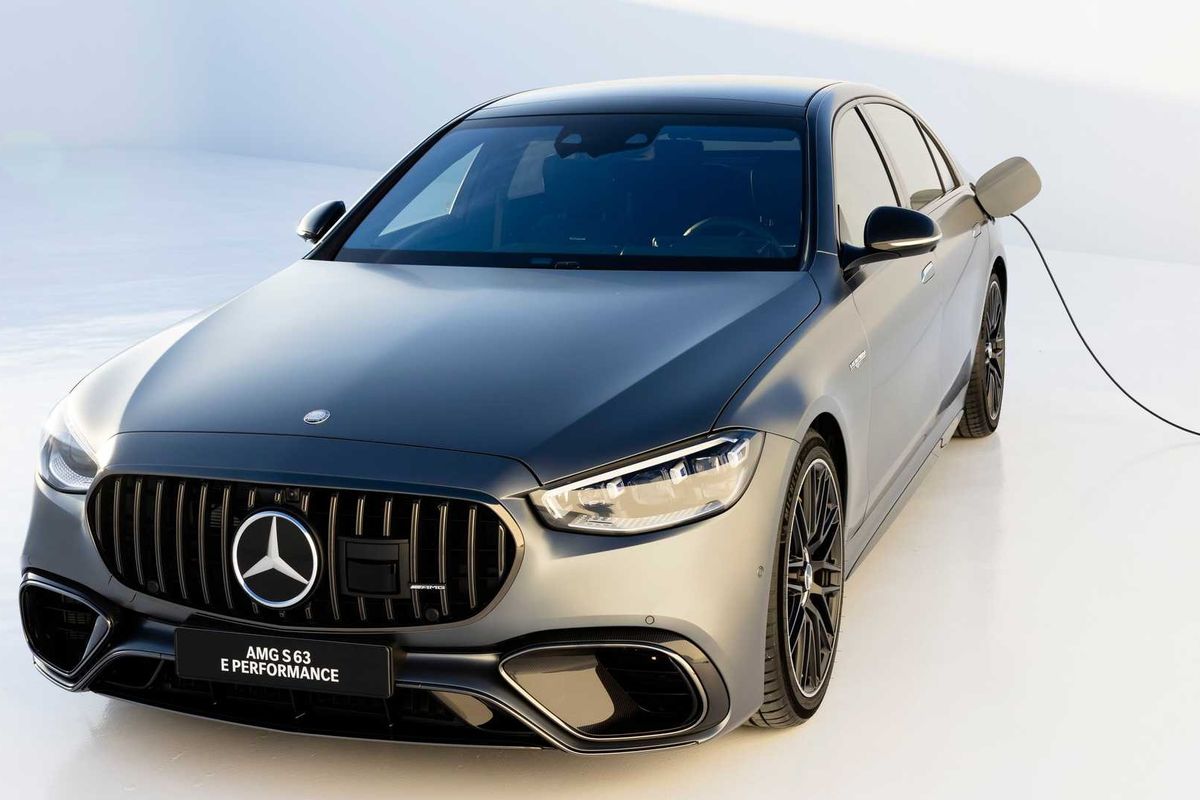
Mercedes-AMG has unleashed its luxuriously potent S63 E Performance PHEV boasting F1-derived hybrid technology with a total power output of 590 kW, making this the most powerful S-Class ever!
Earlier this year Mercedes-AMG revealed its new C63 S E Performance to the world and now, mere months later, the wizards at Affalterbach have unleashed the most powerful S-Class ever, the new S63 E Performance!
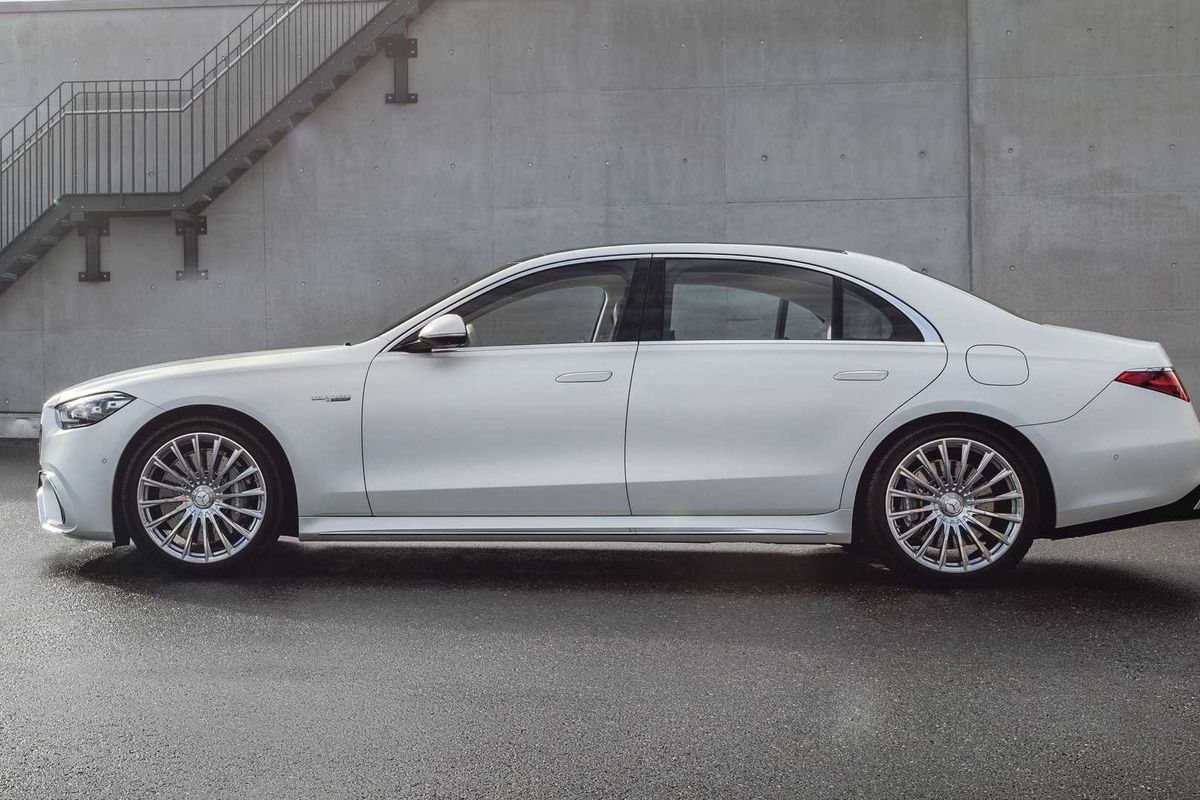
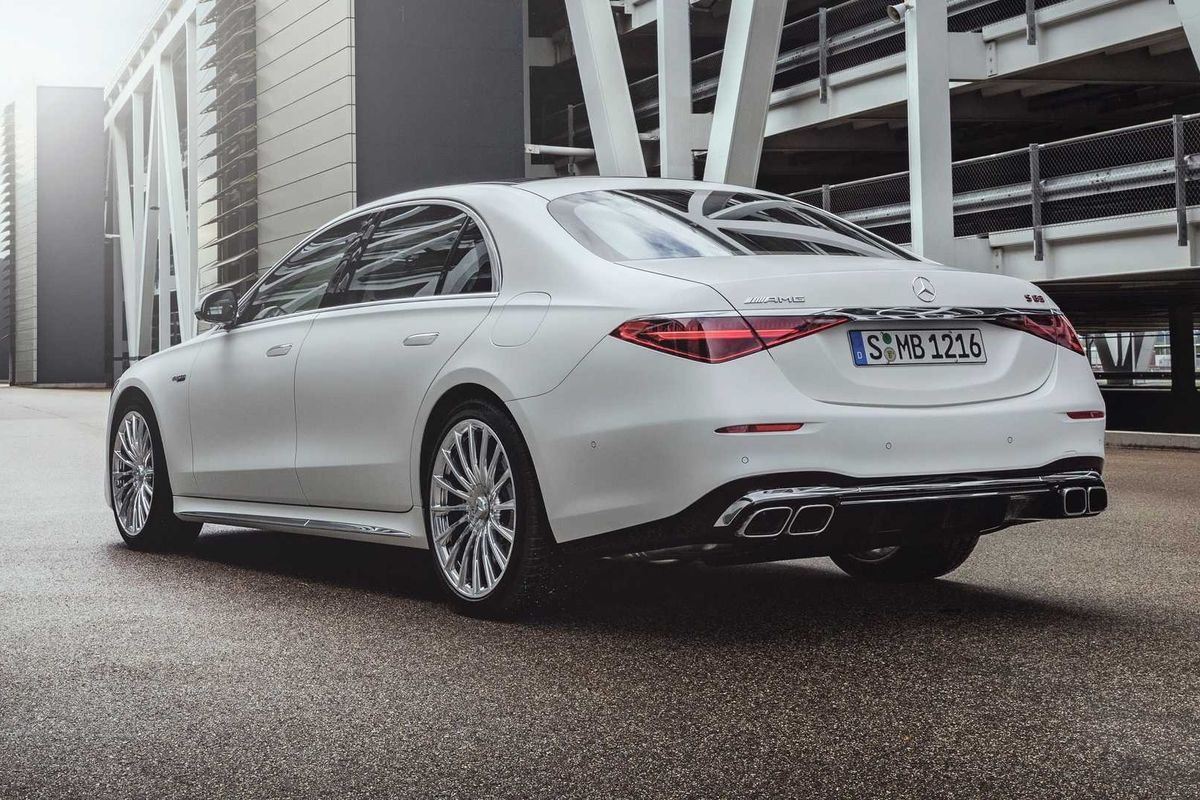
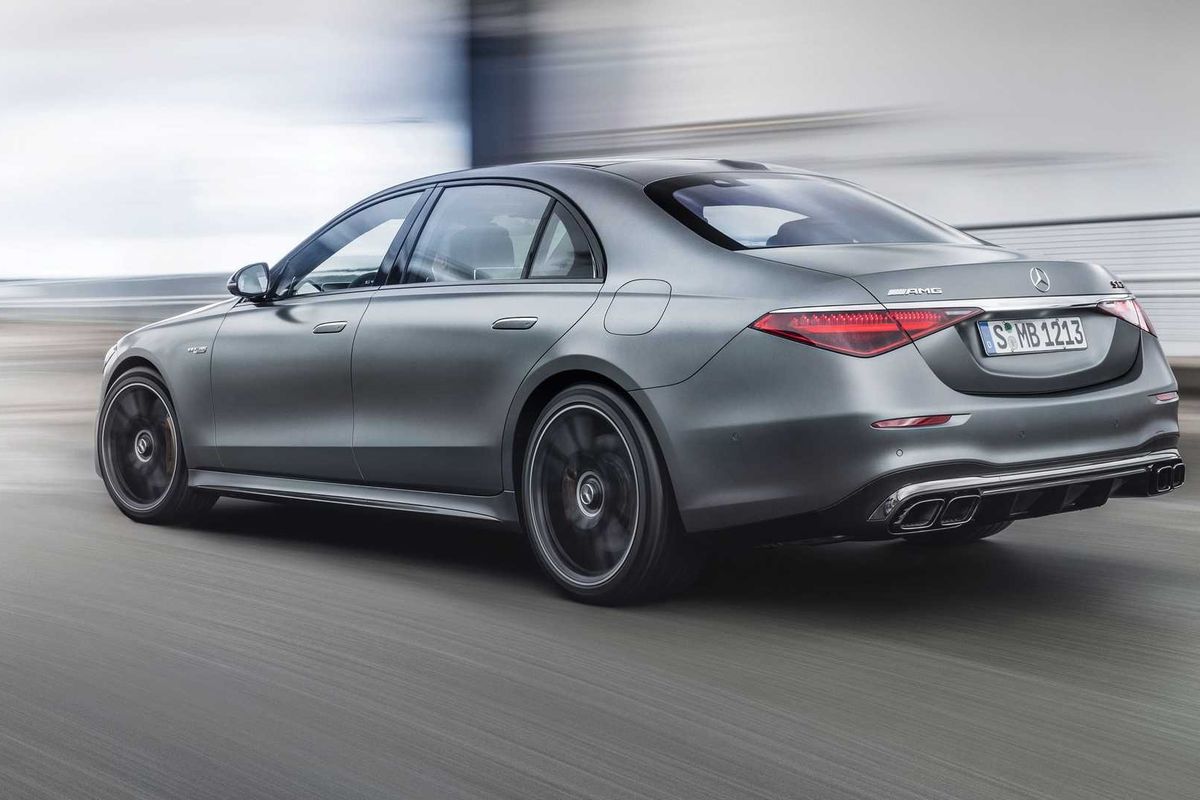
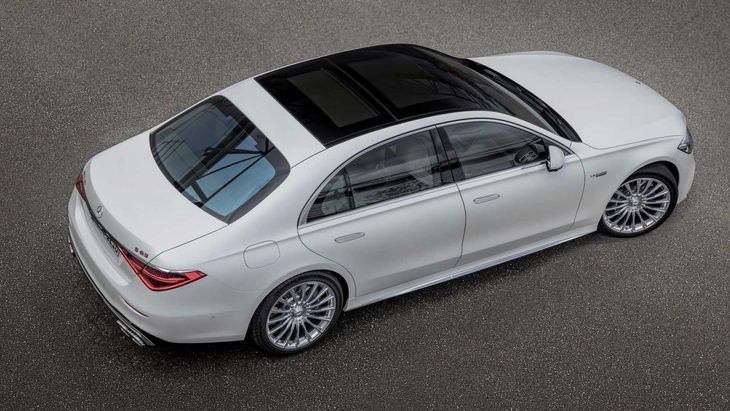
The newcomer rides on forged 21-inch AMG wheels and is distinguished by its AMG-specific radiator grille with vertical louvres and large central star AMG emblem with a chrome and black finish. At the rear, the trapezoidal and fluted twin tailpipes set in a wide diffuser are hard not to notice. Just look at it!
What powers the new Mercedes-AMG S63 E Performance?
With 590 kW and 1 450 Nm developed by its advanced hybrid drivetrain, this is the most powerful S-Class ever!
Unlike its C63 counterpart, the new S63 E Performance combines a bi-turbocharged AMG 4.0-litre V8 engine with a 140 kW rear-axle-mounted electric motor (integrated with a 2-speed transmission and electronically controlled limited-slip rear differential to form a compact Electric Drive Unit (EDU) and 13.1 kWh High-Performance Battery (HPB) to deliver total outputs of 590 kW and 1 450 Nm of torque! The V8 is paired with a 9-speed automatic transmission that directs shove to the all-wheel drive system.
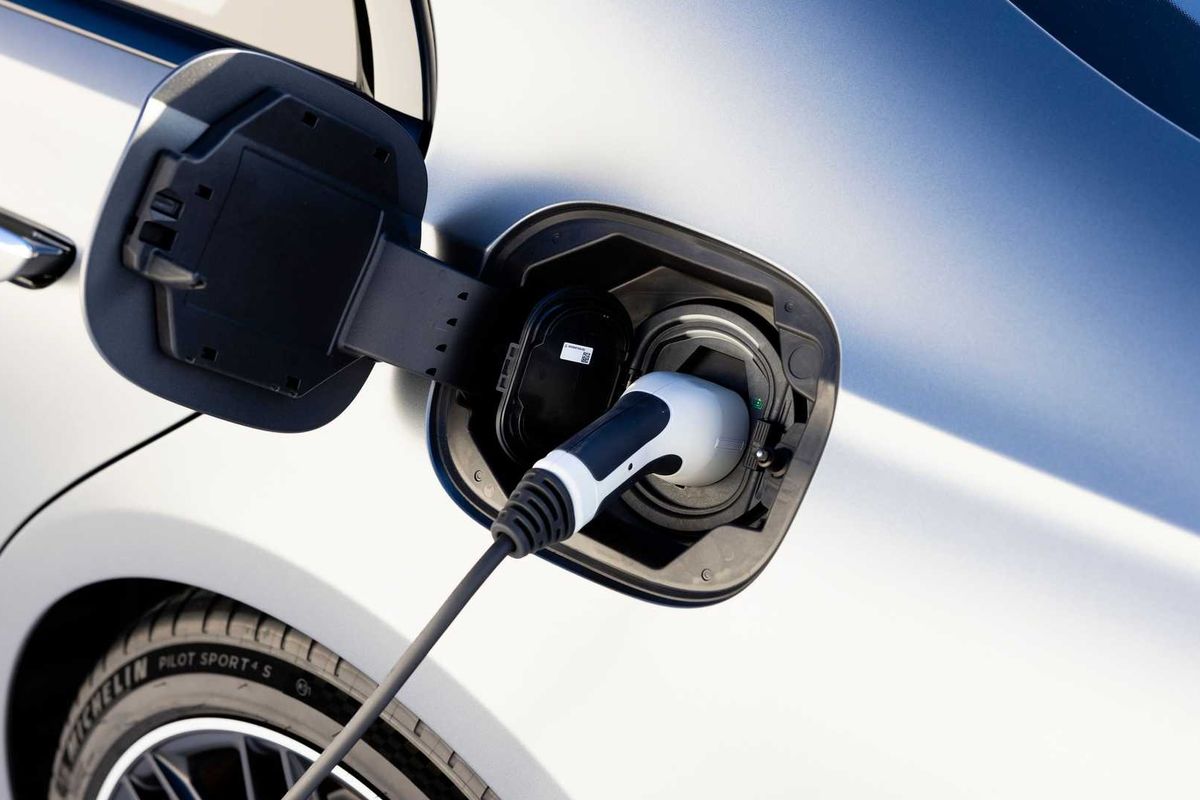
With an electric driving range of only 33 km, the focus is less on electric driving and more on delivering the highest level of performance. The battery can be topped up using a 3.7 kW AC charger.
And boy can it perform! Mercedes-AMG says that the S63 E Performance will accelerate from zero to 100 kph in just 3.3 seconds with an optional top speed of 290 kph.
Being an S-Class, driving comfort is also paramount and as such the AMG Ride Control+ suspension and AMG Active Ride Control roll stabilisation and rear-axle steering ensure impeccable road manners and dynamic handling ability.
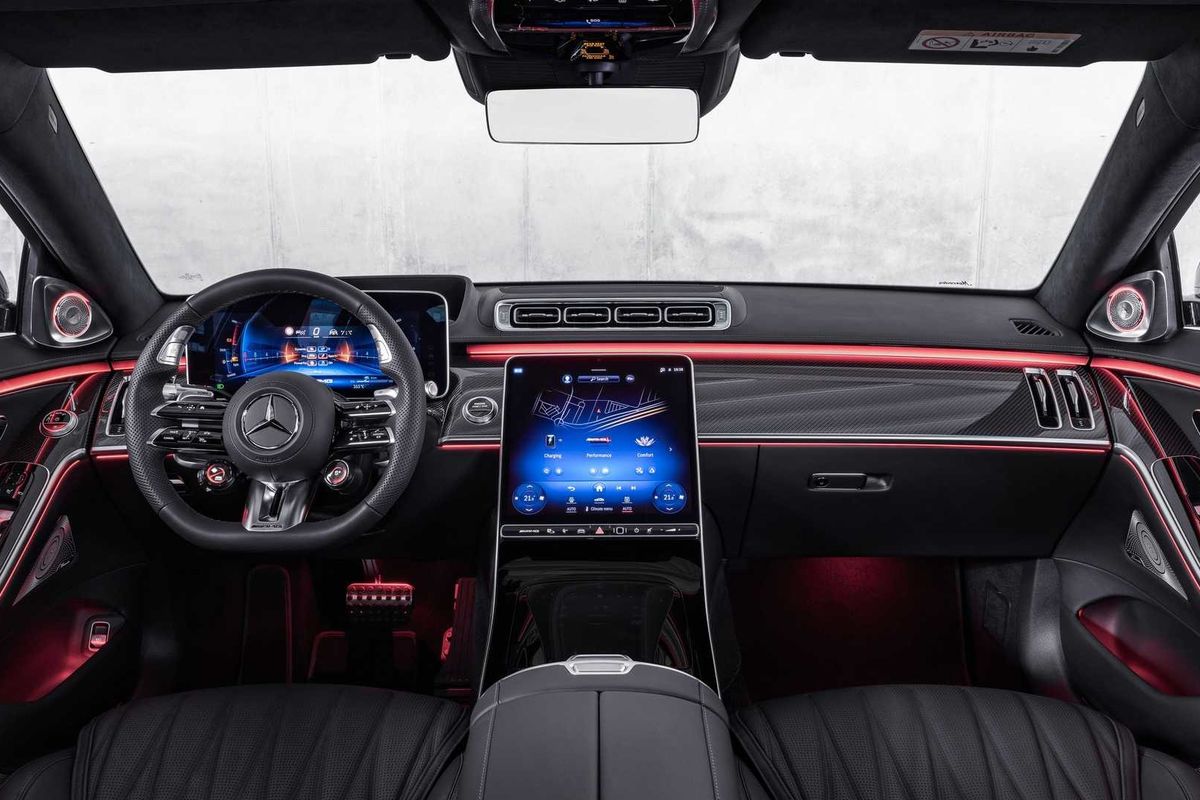
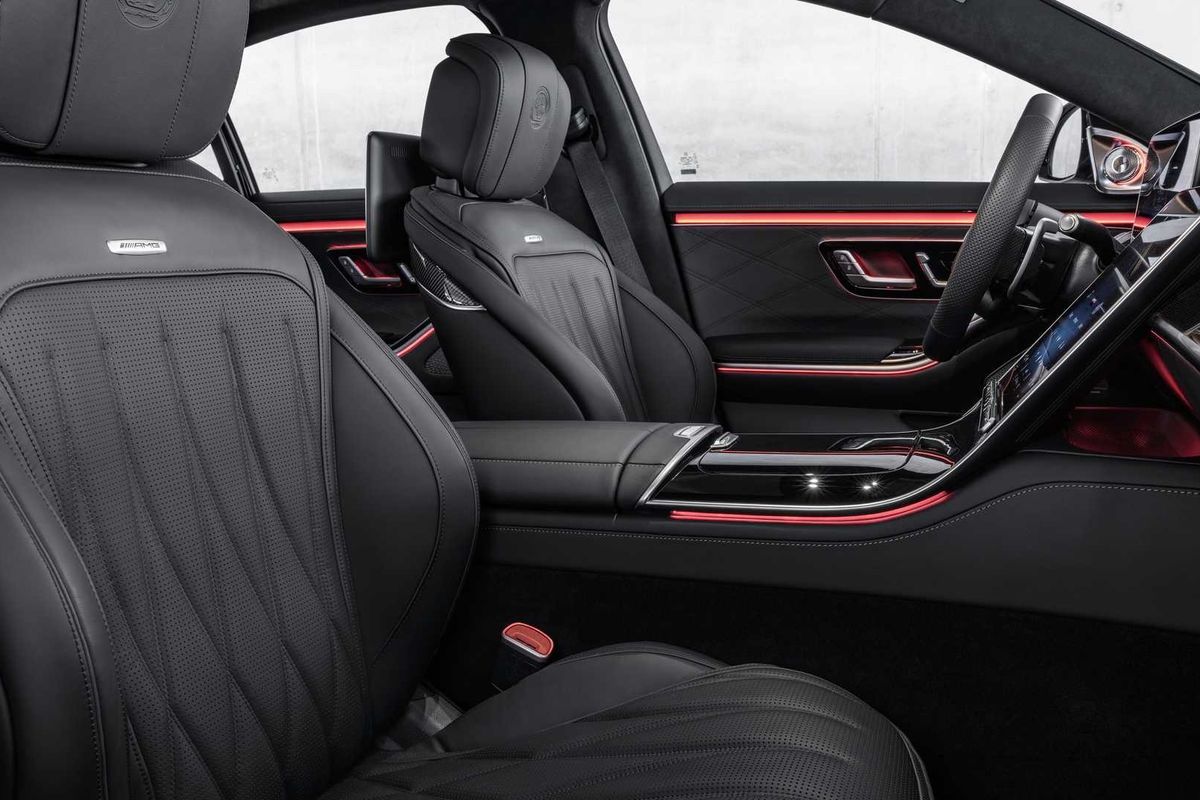
All the luxury, comfort and technology you want can be found inside the new S-Class.
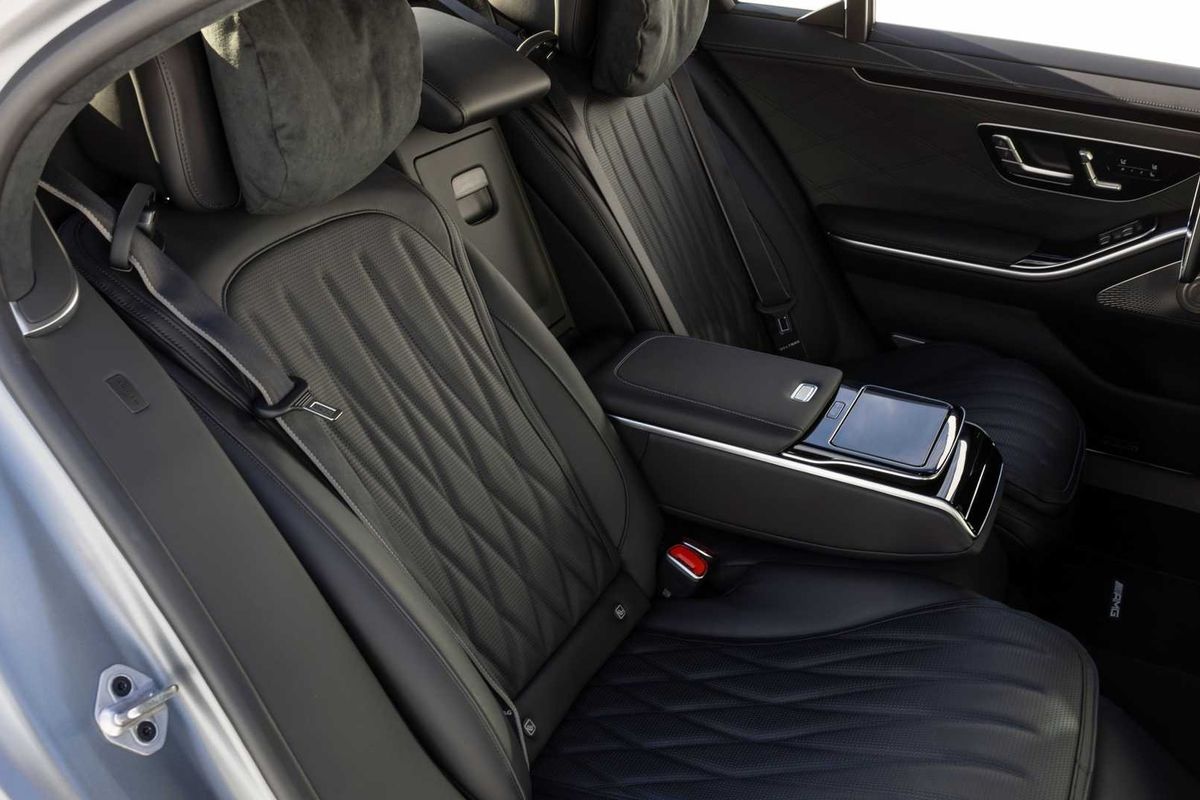
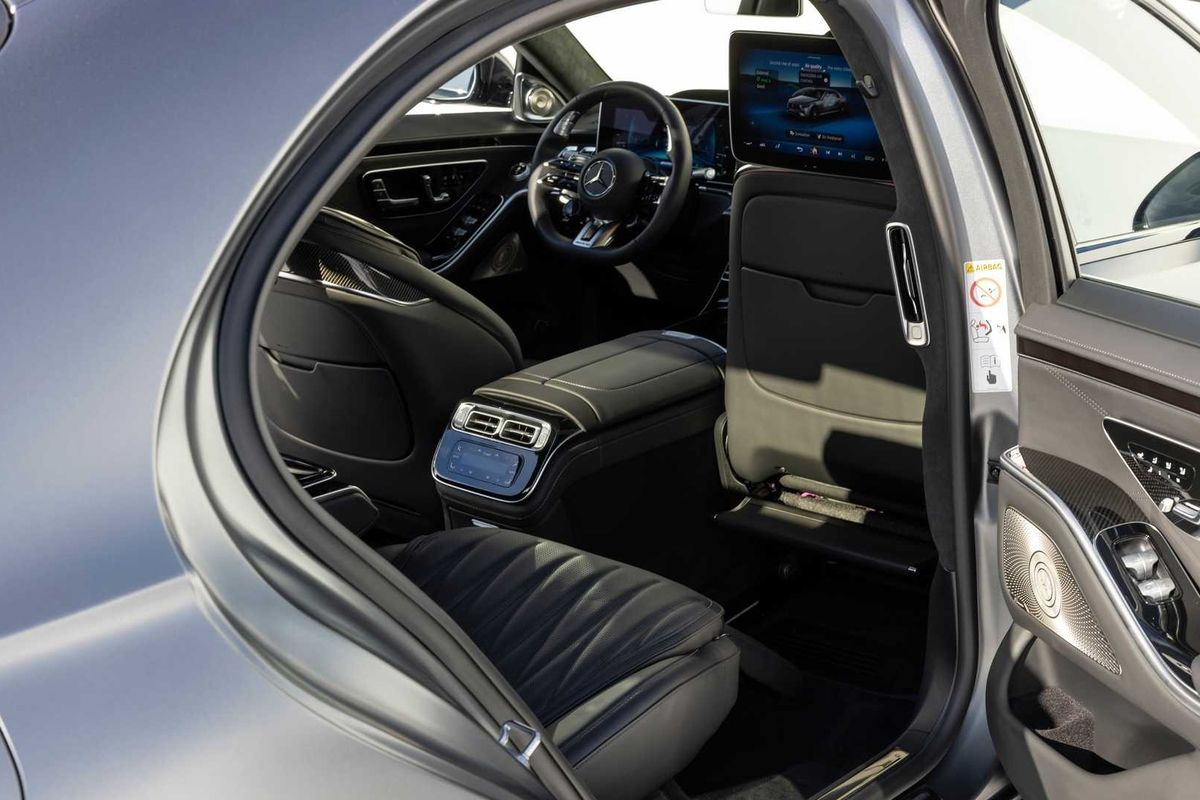
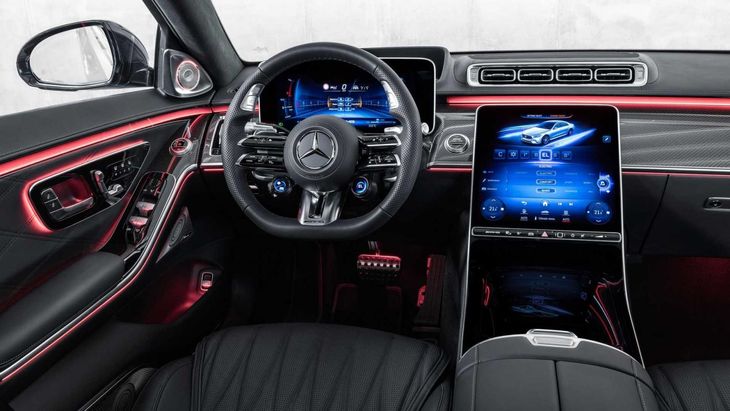
As for the interior, there’s luxurious seating for 4 occupants and the cabin architecture follows from the new S-Class which was introduced in South Africa earlier this year. Suffice it to say, the S-Class is a tour de force in terms of technology and the large tablet-style MBUX infotainment system with hybrid-specific displays is a technological highlight as is the large digital instrument cluster and standard head-up display.
At this stage, Mercedes-Benz South Africa has confirmed that the AMG S63 E Performance is ‘under consideration for introduction in South Africa’. We will keep you updated as soon we are able to confirm its local availability.