Spy Shots: New Suzuki Swift Coming Soon 

Suzuki is developing the new fourth-generation Swift hatchback and these spy shots offer some hints at what the newcomer might look like…

Picture credit: S. Baldauf/SB-Medien. We have paid for these images and at the photographer’s request, have watermarked them.

In recent years, Suzuki’s success in South Africa has been nothing short of phenomenal. Suzuki is currently the third top-selling car brand in South Africa ahead of brands such as Hyundai, Nissan and Ford. 

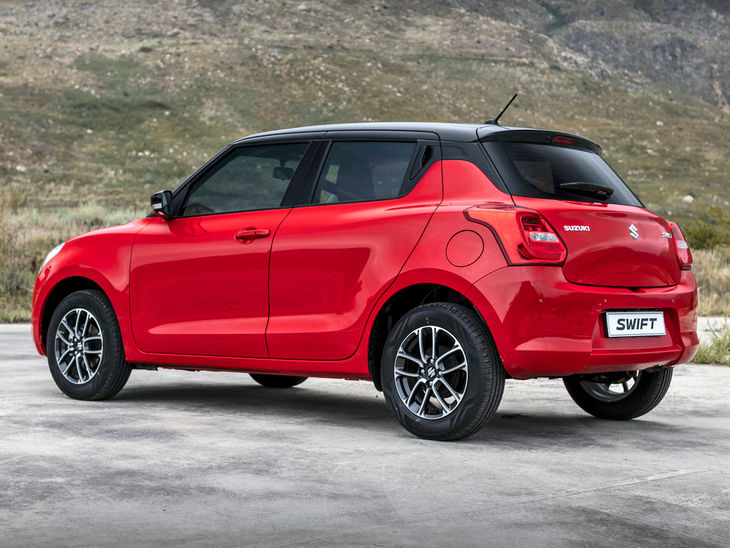
While Suzuki offers a compelling range of budget-friendly cars to suit diverse needs, the Suzuki Swift hatchback has been an important cog in the wheel of Suzuki’s success. The third-generation Suzuki Swift has been around since 2016 and the Japanese firm is developing its successor which you see here in these spy images. 

The new Swift will be underpinned by a modified iteration of the firm’s Heartec platform in an effort to improve the model’s safety credentials. As far as styling goes, the prototype you see undergoing testing here is heavily camouflaged but it’s clear that the new model will wear a notably larger grille (along with a new grille mesh pattern) as well as revised headlights. You’ll also notice that the shape and contour of the bonnet is markedly different from the current generation Swift. 

The sloping roofline gives the new Swift a more dynamic silhouette and you may notice that the rear door handle is no longer hidden in the C-pillar but is now conventionally positioned on the rear door. At the rear, new taillight clusters are likely.  

New Suzuki Swift
A new Suzuki Swift is expected to be revealed in 2023 boasting enhanced styling and safety features.  

As for what powertrain/s will be offered for the new Swift, official details have to be revealed, however, it’s expected that a turbocharged 1.4-litre mild-hybrid setup will be offered as well as a hybrid Swift which will adopt technology from the existing partnership between Suzuki and Toyota. 

A full reveal of the new Suzuki Swift can be expected in 2023 and the Swift Sport will follow thereafter. As soon as more details come to light, we will keep you updated. 

Buy a used Suzuki Swift on Cars.co.za 

Sell your car on Cars.co.za 

Related Content 

Suzuki Jimny Goes 4×4 in Botswana w/Video

Affordable Suzuki EVs On The Way? 

Suzuki Baleno vs Toyota Starlet – Which Offers Better Value For Money? 

Suzuki Vitara Brezza (2022) Review

Petrol and Diesel Increases Predicted for Nov 2022
The AA has said that motorists should brace themselves for a petrol and diesel hike in November 2022, ending the good run of decreases.

The good run of back to back fuel price deductions looks like it is coming to an end as the AA has predicted an increase in both petrol and diesel prices for the month of November 2022. 

Based on the mid-month data from the Central Energy Fund (CEF), the AA reckons that motorists will be subjected to increases across the board. The main reason behind the forecast is the higher-on-average international price of oil as well as a slightly weaker Rand. 

Brace yourself! “The current data shows petrol is expected to increase between 41 and 51 cents a litre but the real concern now is the likely increases to diesel prices. The data is showing diesel will climb by around R1.60/l, a substantial increase to this fuel’s price. The impact of such an increase on ordinary citizens will be significant,” says the Association.

R1.60 increase per litre of diesel will be particularly harsh as any increase here will hurt the average citizen as manufacturers pass the increases down the line. The vast majority of trucks supplying retailers are diesel-powered, and the cost to deliver goods will increase. 

There’s a small glimmer of hope however. This is the mid-month forecast based on the current data and can change before the end of October. However, the converse is also true, and if the oil price increases further, the expected increases will be even more severe. “While these figures may change, we don’t expect a reversal; prices are still likely to go up in November. For now, it’s just the quantum of those increases that is at question now,” concludes the AA.

Related Content 

Most Fuel Efficient Budget Cars in SA

10 Fuel Efficient Used Compact SUVs under R300k

10 Fuel Efficient Used Cars Under R200k in SA

Is it time for South Africa to Switch to EVs? 

5 Ways to Beat the Fuel Price Hike

Most Fuel Efficient Budget Cars in SA

Most Fuel-Efficient Double-Cab Bakkies in SA

5 Fuel-Saving Car Features & How They Work

Most Fuel Efficient Budget Cars in SA

Most Fuel Efficient Diesel Cars in SA

Most Fuel Efficient Petrol Cars in SA

New Mercedes-Benz EQE SUV (Plus AMG Variants) Revealed

Mercedes-Benz has whipped the wraps off its latest fully electric model, dubbed the EQE SUV. And there are suitably rapid Mercedes-AMG versions, too…

Meet the new fully electric Mercedes-Benz EQE SUV, which the Stuttgart-based firm describes as the “multi-purpose variant of the EQE executive saloon”. Of course, Mercedes-AMG is also in on the action, creating what it terms the “most versatile model from Affalterbach with a purely battery-electric drive system”.

So, exactly how big is the newcomer? Well, it measures 4 863 mm long, 1 940 mm wide and stands 1 686 mm tall, with a wheelbase of 3 030 mm (interestingly, 90 mm shorter than that of the EQE sedan). It rides on the same all-electric platform as the EQE-badged sedan, the EQS saloon and the EQS SUV (on wheels ranging in diameter from 19 to 22 inches), and will likewise be produced at the brand’s factory in Alabama in the United States.

Mercedes-Benz EQE SUV

The range comprises three powertrain variants – each using a 10-module, 90.6 kWh lithium-ion battery pack – as well as a further two fettled by Mercedes-AMG (but more on that later). The EQE 350+ is rear driven, with total system outputs sitting at 215 kW and 565 Nm. Claimed range on the WLTP cycle comes in at up to 590 km. Then there’s the all-wheel-drive 215 kW/765 Nm EQE 350 4Matic (with a single-charge range topping out at 558 km) and the 300 kW/858 Nm EQE 500 4Matic (which the German firm claims can travel up to 547 km on one charge).

The EQE SUV employs a 4-link suspension system up front and an independent multi-link arrangement at the rear. Mercedes-Benz claims the newcomer feels “particularly agile and manoeuvrable”, though also offers air suspension with continuously adjustable damping as an optional extra, along with rear axle steering (both standard, though in tweaked form, on AMG variants).

Another extra is the massive MBUX Hyperscreen that debuted in the EQS saloon. Tick this box and three displays merge into one another under a single pane of glass to create a screen band measuring more than 1 410 mm wide. That includes a 12.3-inch OLED display with its own user interface for the front passenger. Joining a growing trend in the luxury segment, the standard interior is free of leather.

Mercedes-AMG versions of the new EQE SUV

AMG emblem

So, what about the variants from Affalterbach we mentioned earlier? Well, billed as the first all-electric performance SUV model from the AMG stable, the go-faster version will be available in two flavours, both using a pair of AMG-specific permanently excited synchronous electric motors and fully variable all-wheel drive. The first is the EQE 43 4Matic, which generates 350 kW and 858 Nm, and will sprint from zero to 100 kph in a claimed 4.3 seconds (before topping out at 210 kph). Single-charge range for this derivative tops out at a claimed 488 km. For the record, kerb weight comes in at 2 600 kg.

Then there’s the EQE 53 4Matic+, which features the same 90.6 kWh battery pack as other models in the line-up, but boasts more powerful electric motors, generating peak outputs of 460 kW and 950 Nm (or 505 kW and 1 000 Nm with the AMG Dynamic Plus package selected). The listed 0-100 kph sprint time is 3.5 seconds, the maximum speed 220 kph (or optionally 240 kph), the range up to 470 km and the kerb weight 2 690 kg.

Other AMG-specific features for both models include a special roll-stabilisation system, suspension tune, braking system (plus a ceramic composite option) and sound animation. From the outside, you’ll notice the black panel grille (with hot-stamped vertical struts in chrome), the AMG emblem on the bonnet and the sportier front apron, painted in the body colour. Inside, you’ll find a flat-bottomed AMG Performance steering wheel (in Nappa leather), silver-coloured aluminium paddles, AMG sports pedals, AMG floor mats and door-sill panels featuring the brand’s lettering.

Mercedes-Benz South Africa says the new EQE SUV will go on sale locally at some point in 2023, with range, specifications and pricing set to be announced closer to the on-sale date. The local Mercedes-Benz EQ line-up already includes the EQA, EQB, EQC and EQS sedan, with the EQE sedan and EQS SUV still on the way.

PROVERB’s first car, his current cars and his views on SA Car Culture


Multi-award-winning artist PROVERB joins us in the #CarCulture studio and chats about his car history, what he drives right now and his perspective on SA Car Culture and its influences.

PROVERB is a stalwart of South African music. Creating music for over two decades now, he is a highly renowned and respected rapper and became a household name through his involvement in the popular reality TV show Idols SA and multiple radio stations.


While his real name is Tebogo Sidney Thabelo Thakiso, mention the name PROVERB to just about any South African and they’ll know exactly who you’re talking about.

In 2005 he released his first album, “Book of Proverb”, followed closely by his second album in 2006, “Manuscript”, and he hasn’t stopped since.


We hope you enjoy this candid car-related interview with PROVERB in our custom-built #CarCulture studio.

If you’ve missed the first 5 episodes of #CarCulture, featuring Lasizwe, DBN Gogo, Chrizz Beats, DJ Speedsta and our very own Ciro De Siena, check out the playlist here!

More about Cars.co.za:

Sell your car on Cars.co.za

Follow Cars.co.za on the socials:

https://twitter.com/CarsSouthAfrica

https://www.facebook.com/CarsSA

https://www.instagram.com/carssouthafrica/

https://www.tiktok.com/@carssouthafrica

Visit SentiMETAL at:

https://www.sentimetal.shop

Follow SentiMETAL on the socials:

https://www.instagram.com/sentimetal_by_cars.co.za/

https://www.facebook.com/SentiMETALProductions

Supercars and Superkids – Creating a magical Supercar experience for ill children 

We caught up with the legends at Supercars and Superkids at their latest event.

Founder of Supercars and Superkids, Brad Ainge, suffered a chronic illness as a child and having overcome the difficulties, he felt he wanted to give back.

He founded this NPO which organises owners of supercars to come together and provide an unforgettable experience to you g children suffering from chronic or terminal illness.

We attended the most recent event, held at the end of September at Melrose Arch in Johannesburg, South Africa, to meet some of these incredible children and hear their stories.

Volvo XC40 (2023) Specs & Pricing

The Volvo XC40 has been updated for 2023 and has made its way to South Africa.

The stylish and popular Volvo XC40 has been given an update and has gone on sale in South Africa. The changes are numerous, comprising new electrified engines,, visual nip and tuck as well as the introduction of the Google Android infotainment system. The latter is of interest as we’ve had a taste in both the Volvo XC40 P8 electric model and the XC60 Plug-in hybrid.

First impressions have been positive thus far, however we understand that Apple users have been frustrated at the lack of CarPlay, which should have been rectified through an update towards the end of 2022. 

As far as powertrains go, the Volvo XC40 updates comprise mild hybrid tech, with the range kicking off with the B3 model with a 2.0-litre turbocharged petrol engine with 48-volt hybrid system and 110 kW and 265 Nm. The B4 packs a bit more power at 145 kW and 300 Nm. Both of these models feature 8-speed automatic transmissions and are front-wheel driven.

For those wanting a bit more performance, the B5 headlines the range with 183 kW and 350 Nm and features all-wheel drive. For those considering full electrification, the XC40 is available in single-motor P6 and twin-motor P8 Recharge derivatives.

The mild hybrid technology is said to reduce tailpipe emissions, increase efficiency and boasts improved on-road performance. The XC40 is the last model in the local Volvo lineup to receive hybrid tech, meaning that every vehicle in the Volvo SA family now has some form of electrification.

Visually, you can spot the new XC40 with its redesigned front and rear bumpers, new-look headlamps, new colours on offer and there are new wheels. Inside, the Android-powered infotainment system makes its debut and you get your popular Google apps like Maps, Waze, Spotify and much more. 

The revised Volvo XC40 lineup sees the traditional trim line-up of Momentum, Inscription, R-Design falling away in favour of Essential, Plus, Ultimate in an effort to make the buying process easier and reduce complexity. Some of the trim-specific features:

Essential

Power tailgate
Google services
Keyless entry
Hands-free tailgate

Plus (R50 715 – Above content, plus:)

Park assist front and rear
Rear camera
Interior illumination

Ultimate (R73 715 – Above content, plus:)

Harman Kardon audio
Powered passenger seat

How much does the updated Volvo XC40 cost in South Africa?

XC40 B3    R678 093

XC40 B4    R718 847

XC40 B5    R840 418

Further Reading

Volvo XC40 Electric: We review it

BMW vs Mercedes-Benz: premium sales race in 2022 so far
BMW and Mercedes-Benz continue their fight for sales dominance in the premium market. But which of these Teutonic foes is winning the race after the first three quarters of 2022?

We’re already three quarters deep into 2022. So, which German automaker is leading the premium sales race at this point of the year? Let’s examine the latest global sales figures from BMW and Mercedes-Benz to find out.

For the period from the start of January to the end of September 2022, the BMW Group – which as a reminder comprises the BMW, Mini, Rolls-Royce and BMW Motorrad brands – reported a worldwide sales figure of 1 747 889 units, representing a year-on-year drop of 9.5%.

Meanwhile, Mercedes-Benz Cars (which includes Smart as well as commercial-based models the T-Class, V-Class and EQV, but seemingly excludes other Mercedes-Benz Vans products) ended the reporting period on 1 518 200 units, or a year-on-year decline of 6%. By our maths, that puts the Stuttgart-based firm nearly 230 000 units behind its Bavarian foe. 

Of course, things aren’t quite that simple, so it’s worth examining the figures a little more closely. For instance, we can see Mini accounted for a healthy 209 271 units of the BMW Group’s tally, while a further 159 333 units came courtesy of the motorcycle division (and another 4 701 units from Rolls-Royce).

We also see it’s a somewhat closer race when we compare how the BMW and Mercedes-Benz brands (as opposed to groups) performed. The Munich-based automaker saw a 9.9% year-on-year decrease to finish the third quarter on 1 533 917 registrations worldwide, while its Stuttgart-based nemesis reached 1 503 100 units (a fall of 6%), around 30 000 units off the pace.

BMW iX3
BMW says its iX3 is helping to drive strong growth in the battery-electric sector.

What about the fight in the all-important all-electric sector? Well, the BMW Group says it registered 128 196 fully electric BMW and Mini vehicles (up 114.8%, year on year) over the first three quarters of the year, while Mercedes-Benz reported year-on-year growth of 126% over the same period, finishing on 75 400 battery-powered sales (interestingly, opting to exclude Smart from this figure).

Unfortunately, Mercedes-Benz did not release Mercedes-AMG sales details for the first three quarters of 2022, so we don’t have a figure to compare with the BMW M division’s 124 459 registrations (note this includes not only full-fat M products but also M Performance models). For the record, the M division says it is “on track for another record year to mark its 50th anniversary”.

We’ll check back in on the premium sales race once 2022 is complete…
Related content

Mercedes-AMG C63 S E Performance vs BMW M3 Competition

2023 BMW M2 finally revealed with a whopping 338 kW

BMW vs Mercedes-Benz: sales race after H1 2022

Spy Shots: 2022 Suzuki Jimny Long Wheelbase

The compact Suzuki Jimny will be growing in size as spy photographers have snapped a longer version testing in Europe. 

Picture credit: S. Baldauf/SB-Medien. We have paid for these photos and at the photographer’s request, have watermarked them.

The charming small 4×4 is currently available in SA in 2-door, 4-seater configuration. As cool as it is, the boot space is laughably small and the rear legroom is only appropriate for small children. Now Suzuki plans to stretch out the Jimny and give it a bit more practicality.

Update: According to Japanese publication BestCarWeb, you can expect the Jimny 5-door / Long wheelbase to be revealed in January 2023 and will feature a hybridised version of the 1.5-litre petrol engine.

What you see here looks identical to what’s currently on offer, but upon closer inspection, you can see the lengthened area behind the driver’s door. Interestingly, there’s still only two doors, but we suspect a 4-door offering will be on the cards too, to make rear passenger access easier. The boot capacity should grow in size substantially, giving it some utilitarian use. You still can’t beat the radical Jimny bakkie customs we’ve seen though.

The real change here will see the introduction of some tweaked engines as the European CO2 emissions have become stricter and stricer and Suzuki Europe was forced to convert the Jimny into a 2-seater commercial vehicle as that segment’s EU fleet emissions targets are not as tough as the passenger car segment. Will we see new engines though? While there’s nothing wrong with the current 1.5-litre 4-cylinder mill, Suzuki can call upon its force-fed Boosterjet range, available in 1.4 and 1.0 applications.

We should see some production Jimny derivatives being revealed sometime in 2021.

Suzuki-Jimny-rear

Further Reading

Suzuki Jimny 5-door coming in 2021 – report

Suzuki Jimny Celebrates 50 Years of Cool

Suzuki Vitara Brezza (2021) Launch Review

Suzuki Jimny Commercial Announced

Suzuki New Zealand Makes Jimny Bakkie

Isuzu KB and D-Max (2013-2021) Buyer’s Guide

Though Hilux and Ranger are likely the first nameplates to spring to mind when talking bakkies these days, the Isuzu KB – latterly known as the D-Max – has a strong following in SA. Here’s what to look out for on the used market.

Isuzu Motors first began producing vehicles in South Africa way back in 1972 as part of its capital alliance with General Motors. Though the company’s first one-tonner built in the Eastern Cape was actually badged as the Chevrolet LUV, the bakkie became known as the Isuzu KB by the end of that decade.

Fresh versions of Isuzu’s bakkie – which quickly gained a loyal fanbase thanks to its rock-solid reputation for durability – punctuated South Africa’s bakkie timeline over the next few decades. Interestingly, the KB badge was retained for the local market during almost all of that time, even when most other countries shifted to the D-Max moniker.

In this buyer’s guide, we’ll focus on the RT-generation model (and particularly the double-cab versions), which was introduced locally in 2013 and finally switched to the D-Max nameplate in 2018. Around the end of 2021, production technically ended at the company’s factory in Gqeberha (formerly Port Elizabeth) as the new-generation model came online, though the RT lives on today as the prolonged lifecycle D-Max Gen 6.

Isuzu KB model line-up at launch

2013 Isuzu KB
This generation of the KB hit the local market at the end of the first quarter of 2013.

The RT-generation bakkie was revealed in Japan back in 2011 after being conceived in collaboration with General Motors as a sibling to the Chevrolet Colorado (though it’s widely thought the American firm led the development process for this particular model). It hit the market in South Africa as the Isuzu KB nearly two years later in March 2013.

As many as 26 derivatives were available at launch. The range comprised the three familiar body styles (single, extended and double cab) as well as 4×2 and 4×4 configurations, while specification grades included Base, Fleetside, LE and LX. Interestingly, just one variant – the flagship KB 300 LX double cab in 4×2 guise – was available with an automatic transmission at launch. The initial engine line-up consisted of the following 4-cylinder options:

  • 2.4-litre petrol (112 kW/233 Nm) 5-speed manual
  • 2.5-litre turbodiesel (58 kW/170 Nm) 5-speed manual
  • 2.5-litre turbodiesel (85 kW/280 Nm) 5-speed manual
  • 3.0-litre turbodiesel (130 kW/380 Nm) 5-speed manual
  • 3.0-litre turbodiesel (130 kW/380 Nm) 5-speed auto

Of course, the locally produced KB benefitted from a smattering of updates over the next eight years or so. In June 2013, for instance, Isuzu gave buyers of the top-spec KB 300 LX double-cab derivatives the option of downgrading from leather upholstery to cloth, lopping R9 500 off the price in the process.

August 2014, meanwhile, saw the announcement of the first special-edition version of this KB, celebrating the fact more than 20 000 units had been sold locally in just short of 18 months. A mere 500 units of the Midnite Edition double cab were built, each employing the top-spec 3.0-litre D-TEQ engine and boasting darkened exterior components, including a black sportsbar with decals.

Isuzu KB Serengeti
Note the Serengeti Special Edition’s silver-accented bumper guard, blacked-out B-pillar and chrome sportsbar. 

The following month, Isuzu rolled out a few minor cosmetic and practicality updates, while also taking the opportunity to “streamline” the KB range to 18 derivatives. The Serengeti Special Edition followed in June 2015 (again based on the flagship KB 300 LX double cabs), before yet more running changes were introduced in September of that year. These included the addition of a 4×4 version of the self-shifting KB 300 LX double cab and the range-wide upgrade from the 85 kW/280 Nm 2.5-litre oil-burning engine to a version generating 100 kW and 320 Nm. In addition, all but the base single cabs now shipped with stability control.

By July 2016, the X-Rider hit the market for the first time. Unlike previous special-edition models, the X-Rider was based on the KB 250 Hi-Rider 4×2 and available in both extended- and double-cab form. Isuzu described it as a “special value model” and around 700 units rolled off the assembly line when all was said and done.

Isuzu KB 250 X-Rider
The X-Rider nameplate debuted in 2016 on the KB 250, billed as a “special value model”. 

By April 2017, however, the dual-cab version of the X-Rider had become a permanent fixture in the line-up, but not before the KB gained a new face, fresh tailgate styling, a revised instrument cluster and suspension tweaks (in October 2016).

Things then went quiet for the KB for a while, with General Motors – the distributor of Isuzu in South Africa at the time – pulling out of the local market at the end of 2017. Isuzu’s global division jumped in to purchase the company’s light-commercial vehicle operations in Struandale and Isuzu Motors South Africa was officially born as a wholly owned subsidiary. By May 2018, it was back to business with the arrival of another special edition in the form of the KB X-Rider Black.

A facelift (and a name change!) for Isuzu’s bakkie in 2018

Isuzu D-Max
Isuzu Motors SA finally switched to the D-Max nameplate with the bakkie’s refresh in 2018.

In October 2018, Isuzu launched the facelifted model in South Africa, also taking the opportunity to officially rename it the D-Max “in line with international markets”. For the range-topping 3.0-litre LX derivatives, the refresh included cosmetic updates such as a new chrome-effect grille, revised headlamps and upgraded cabin trim, as well as the transition from the old 6.5-inch touchscreen to an 8.0-inch item.

While all engines were unchanged, 3.0-litre LX variants dropped the old 5-speed manual and automatic transmissions in favour of fresh 6-speed versions. Safety upgrades for the top-spec models came in the form of a brake override system (restricting accelerator input if the brake pedal was applied simultaneously) and the addition of trailer sway control. At this point, the D-Max line-up ballooned to 30 derivatives.

Isuzu D-Max AT35
The D-Max AT35 (with its Fox suspension) conversion took place at Isuzu’s Struandale facility.

By May 2019, the high-riding D-Max AT35 (based on the double-cab version of the D-Max 300 4×4 LX auto) was added to the local range. Developed in “close collaboration” with Arctic Trucks but built in South Africa, the special model slotted in at the very summit of the line-up. A new version of the X-Rider Black, meanwhile, arrived later in 2019, before select high-output versions of the D-Max 250 finally gained the option of a 5-speed automatic gearbox in early 2020.

In August of that year, Isuzu extended the increasingly popular X-Rider nameplate to the 3.0-litre double-cab model (in self-shifting guise) for the first time, before finally rolling out minor cosmetic changes to the remainder of the range. Three more X-Rider Limited Edition derivatives followed at the end of 2021, effectively seeing off the RT-generation model.

Product strengths

Isuzu engine
Isuzu engines (such as this 2.5-litre D-TEQ unit) tend to be under-stressed, which boosts reliability. 

While the RT-generation KB (and the D-Max that followed with the facelift) certainly wasn’t class-leading in areas such as cabin finish, infotainment technology or rolling refinement, very few people would argue any bakkie from that era was more durable. Unsurprisingly, then, that’s the basis for most of this vehicle’s strengths.

Renowned durability: As a bakkie (and truck) specialist, Isuzu was able to dedicate a hefty chunk of its resources to extensive durability testing of the KB. In fact, the company said its rigorous test and development programme for this generation was equivalent to four million kilometres of driving in a wide range of conditions, with a “significant portion” conducted in Southern Africa. In the years since, the KB has earned a reputation for being as tough as nails.

Proven engine reliability: At launch in 2013, the only technically “new” engine in the KB range was the 2.4-litre 16-valve petrol mill (though it replaced a similar 8-valve unit). The low- and high-output versions of the 2.5 turbodiesel were carried over virtually unchanged from the previous generation, while Isuzu’s famous 4JJ1-TC 3.0-litre turbodiesel engine was massaged only slightly to free up a little more oomph. In short, the engine range was entirely proven.

Isuzu KB rear
The 4JJ1-TC engine used in the KB 300 has a long history of durability.

In addition, all were fairly low stressed engines (especially the 58 kW 2.5-litre unit), operating at peak power and torque outputs far below their respective potentials. Provided such engines are properly maintained, that means they’re far less likely to break. There were also some small changes made to aid convenience; on the D-TEQ engines, for instance, the oil filter was relocated to the top of the block to make servicing simpler.

Lengthy warranty: Throughout this generation’s lifecycle, a 5-year/120 000 km warranty – generous compared with those of most rival bakkies at the time – was included in every derivative’s purchase price, along with a 5-year/unlimited kilometre anti-corrosion warranty and a 5-year/90 000 km service plan (with intervals of 15 000 km). So, if you’re shopping in the “nearly new” category, you’ll have the benefit of potentially lengthy aftersales cover.

We should also mention the dealer network here. Before General Motors pulled out of the country in 2017, Isuzu vehicles were serviced at the Detroit-based firm’s local dealers. Once GM had left, Isuzu Motors SA took over many of those sites, with the number of dealers in Southern Africa now standing at a healthy 100.

Product weaknesses

2013 Isuzu KB 300 LX cabin
Here’s what the flagship KB 300 LX’s cabin looked like in 2013. Not as premium as those of its major rivals.

Considering just how robust the KB and D-Max have proven to be over the years, we struggled to uncover any major reliability weaknesses with this generation, despite extensive digging (the problem of cracked inner guard body panels, for instance, is well known in Australia but appears to be peculiar to vehicles built by the Thailand factory). That said, our investigations did unearth a few potential niggles we believe are worth looking out for.

Weak CV joints: We’ve heard of a few complaints of weak constant velocity (CV) joints, though this is admittedly an accusation that can be levelled at many off-roading vehicles with independent front suspension arrangements. Even if the bakkie you’re considering has seemingly never gone off tarmac, make sure to turn the steering to full lock (both left and right) during your test drive and listen out for the distinctive clicking sound that tends to accompany worn CV joints. A quick inspection of the rubber CV boots wouldn’t hurt, either.

Fairly low-rent cabin: Though this generation of KB and D-Max offers generous interior space, the finishes in the cabin are quite utilitarian (or, to put it more charitably, “functional”) compared with those of more polished competitors. For example, there’s precious little in terms of soft-touch surfaces, while the steering column frustratingly lacks reach adjustment. Whether you regard such foibles as weaknesses depends entirely on your requirements, though here we’re writing mostly for leisure-bakkie buyers, and they would generally prefer more in the way of creature comforts.

What to pay?

X-Rider Black
The double-cab body style accounted for just over half of all listings at the time of writing.

As we always advise those considering a vehicle that is in healthy supply on the second-hand market, it’s worth simply walking away from a deal should there be even the slightest concern. Since there are plenty of options out there, you can afford to be picky, after all.

When viewing a potential buy, make sure you inspect the bakkie’s undercarriage closely for any damage sustained during off-roading activities. It’s also crucial to always request evidence the bakkie was diligently maintained.

Of the used Isuzu bakkie stock (2013-2021) listed on Cars.co.za at the time of writing, the split between the earlier KB models and the later D-Max versions was close to even. The double-cab body style, meanwhile, accounted for 55% of all listings, while just short of 99% were diesel-powered. Interestingly, 4×4 models were in relatively short supply, with 86% featuring a rear-wheel-drive configuration, while just 19% used an automatic transmission.

  • Below R200 000: Predictably, shopping at this sort of price level means you’d be largely restricted to single- and extended-cab KB models. Many of the clearly hardworking examples we found here had in excess of 300 000 km on the clock (with one close to 500 000 km!), which is testament to the KB’s durability, if nothing else.
  • From R200 000 to R350 000: We found the majority (just over 54%) of used stock nestling between these price brackets. There was something for most tastes here, ranging from almost-new D-Max single cabs to older KB 250 X-Rider and early model-year KB 300 double cabs. Mileage varied greatly, though considering how under-stressed these engines were, there’d be nothing wrong with considering a vehicle with a reading north of 150 000 km (at the right price, that is) should a reliable service history be presented.
  • From R350 000 to R600 000: Unsurprisingly, most Isuzu bakkies listed between these bookends wore a D-Max rather than KB badge, with those at the upper end of the pricing range taking the form of the popular D-Max 250 X-Rider and the high-spec D-Max 300 LX. If you’re in the market for a leisure bakkie, this is where you’d likely be shopping as the majority of auto-equipped double cabs were found here.
  • R600 000 and up: There were very limited options above the R600 000 mark, with most of the few examples priced here being top-spec D-Max 300 LX models with self-shifting transmissions. Interestingly, there was just a single example of the AT35, priced at a lofty R850 000…

Pick of the range?

Isuzu D-Max X-Rider
The 3.0-litre unit in the flagship D-Max LX (or X-Rider, as above) is our engine of choice. 

So, which one should you buy? Well, seeing as the range is fairly broad, the answer would depend largely on both your intended usage (leisure versus workhorse) and budget. Still, since the powertrain line-up is not nearly as varied as that of, say, the P375-generation Ford Ranger, it’s easier to nail down what we believe represents the best engine.

Since we’re writing primarily for lifestyle-oriented buyers shopping towards the top of the market, we’d select the D-Max 300 LX double-cab and the closely related D-Max 300 X-Rider as the picks of the bunch, since this 3.0-litre engine offers a pleasing mix of brawn and reliability, while the cabin gains some extra standard equipment that accompanied the mid-cycle refresh.

That said, should your budget not quite allow, there’s also the option of the KB 300 LX, though note this model uses the older 5-speed gearboxes. It’s likewise worth pointing out only KB 300 derivatives boasted a braked towing capacity of 3 500 kg, with this figure interestingly dropping to 2 900 kg with the move to D-Max badge. The X-Rider versions of the KB 250 and D-Max 250, meanwhile, also offer attractive value if you’re content with the lower power and torque outputs.

Verdict

Isuzu D-Max X-Rider Black cabin
Though an improvement over earlier efforts, the D-Max cabin (here in X-Rider Black form) is by no means luxurious.

It’s important to reiterate here that Isuzu’s RT-generation model – even in its later guises – doesn’t stand out in the leisure bakkie crowd. It simply lacks the sophistication and refinement of many of its rivals, instead majoring in practicality over luxury, for the most part.

That said, if you’re the type of bakkie owner whose vehicle is expected to work hard and play hard, the Isuzu starts to make sense as something of a middle ground. Though the engines are all rather coarse, the trade-off is virtually bulletproof reliability (when properly maintained, of course). And while the cabin is by no means the last word in luxury and technology, it’s certainly hardwearing and space in the rear of the double cab is appreciable.

Naturally, the big-name alternatives here are the likewise locally built Toyota Hilux and Ford Ranger, but you’d pay far more for those on the used market (particularly in the case of the Hilux). There’s also the somewhat underappreciated Nissan Navara, while the Volkswagen Amarok offers the allure of V6 turbodiesel grunt and SUV-like driving manners (but, again, it will cost you considerably more to purchase). We’d also be remiss if we didn’t mention the highly capable but often-overlooked Mitsubishi Triton here.

Isuzu KB single cab
Is there a trustier one-tonne workhorse than a well-maintained Isuzu single cab? We think not.

Those seeking a single-cab workhorse already know the KB and D-Max are arguably the best choices out there. But it’s not nearly as cut and dried for this generation of Isuzu bakkies when it comes to double cabs in the leisure space. Yet, as we’ve outlined above, there are significant potential advantages – chiefly in the reliability department – that come with sacrificing some powertrain refinement and a handful of premium touches. In that respect, the Isuzu is as honest and straightforward an offering as you’ll find in this space. And there’s certainly a market for that.

Looking for an Isuzu KB or D-Max to buy?

Find one on Cars.co.za here and here.

Or, sell your car here, for free

Related content

Double-Cab 4×4 Bakkie Buyer’s Guide (2022)

Isuzu D-Max Double Cab 4×4 (2022) Review

Old Isuzu D-Max soldiers on alongside new bakkie 

Fully Electric Lexus UX 300e ‘Under Study’ for SA

Lexus has revealed an upgraded version of its fully electric UX 300e, which boasts an improved claimed range of 450 km and is currently “under study” for a local introduction…

Lexus has revealed an updated version of its UX 300e, with the Japanese firm’s South African division confirming the fully electric model is “under study” for a local introduction.

We can furthermore expect a significant specification change to the local UX range “before the end of the year”, according to the local arm of Toyota’s luxury brand. Whether or not the battery-powered model forms part of that updated line-up, though, remains to be seen.

So, what do we know about the refreshed UX 300e, which Lexus describes as “a significant evolution” of the brand’s first fully electric production model? Well, the big news is the adoption of a higher-capacity battery pack, which boosts the vehicle’s claimed cruising range by 40%.

Lexus UX 300e battery
The updated UX 300e gains a battery pack with a significantly higher capacity.

The newly developed battery pack features a capacity increased from the original 54.4 kWh to a healthier 72.8 kWh, resulting in a claimed cruising range of 450 km. Peak system outputs from the electric motor come in at an unchanged 150 kW and 300 Nm.

Lexus says the UX 300e’s low centre of gravity (created by the underfloor placement of the aforementioned battery pack) gives the model a “natural performance advantage”. It furthermore benefits from performance dampers at the rear, along with increased body rigidity and model-specific tunes for the electric power steering and shock absorbers.

In addition, the UX 300e inherits the refinements made to the broader UX range, including the expanded functionality of active safety technologies and the latest multimedia system (incorporating a 12.3-inch touchscreen).

Other new-energy Lexus (and Toyota) vehicles on the horizon for SA

Lexus RZ
The Lexus RZ has already been confirmed for South Africa.

Toyota South Africa Motors has plans to introduce a few more new-energy vehicles over the coming months, despite having recently pulled the plug on the Prius. The Lexus range, for instance, is due to receive the new RX early in 2023 in hybrid form, while the LC Hybrid is also set for a local introduction next year. We can furthermore expect to see a plug-in hybrid version of the NX at some stage, while Lexus SA said in July 2022 the all-electric RZ would arrive on local roads “in the next year or so”. 
Under the Toyota banner, the company will soon launch a hybrid version of the Corolla Hatchback, while also rolling out a specification change for the Corolla Sedan Hybrid. The crossover version of the new Crown, meanwhile, is likely to touch down in the first quarter of 2023, complete with a traditional hybrid powertrain, while the fully electric bZ4x is also still on the cards. In addition, Toyota is currently testing a few units of the RAV4 PHEV in local conditions.

Related content

New Lexus RZ electric crossover fully revealed

Farewell, Prius! Toyota SA calls time on hybrid pioneer

Hybrid and electric vehicle interest soars in South Africa