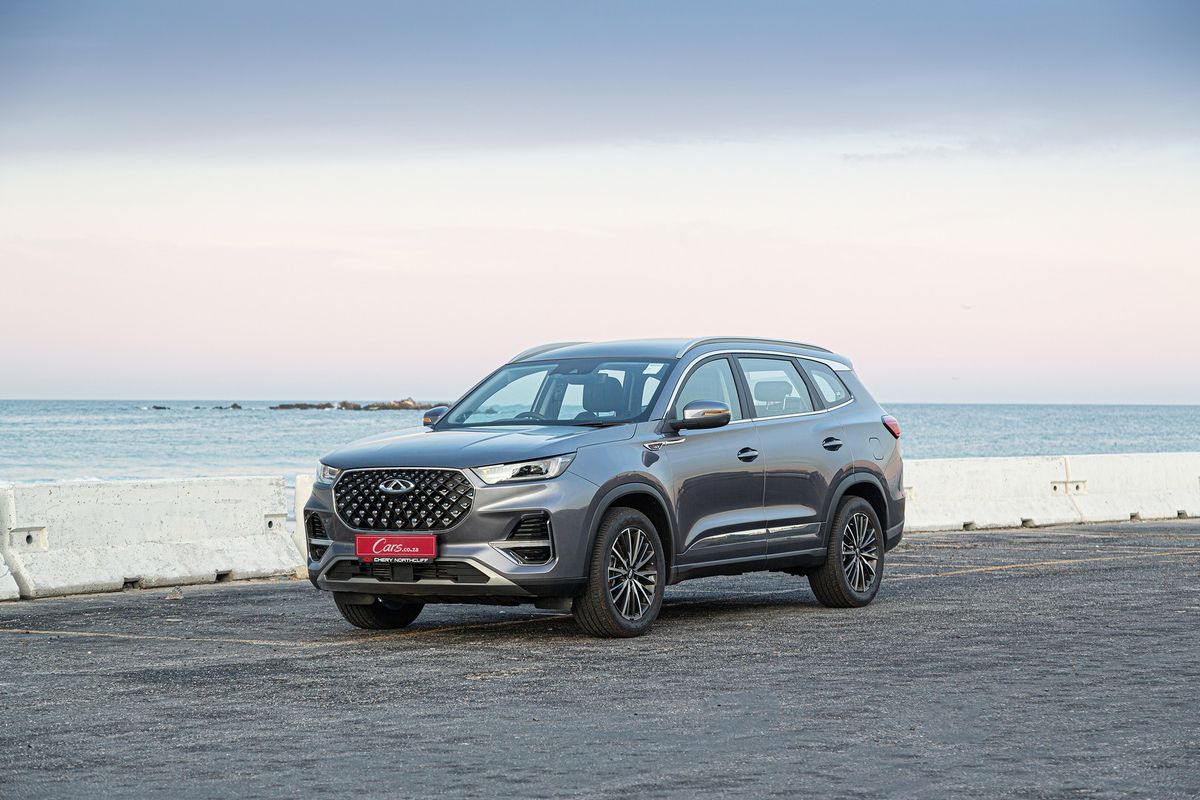
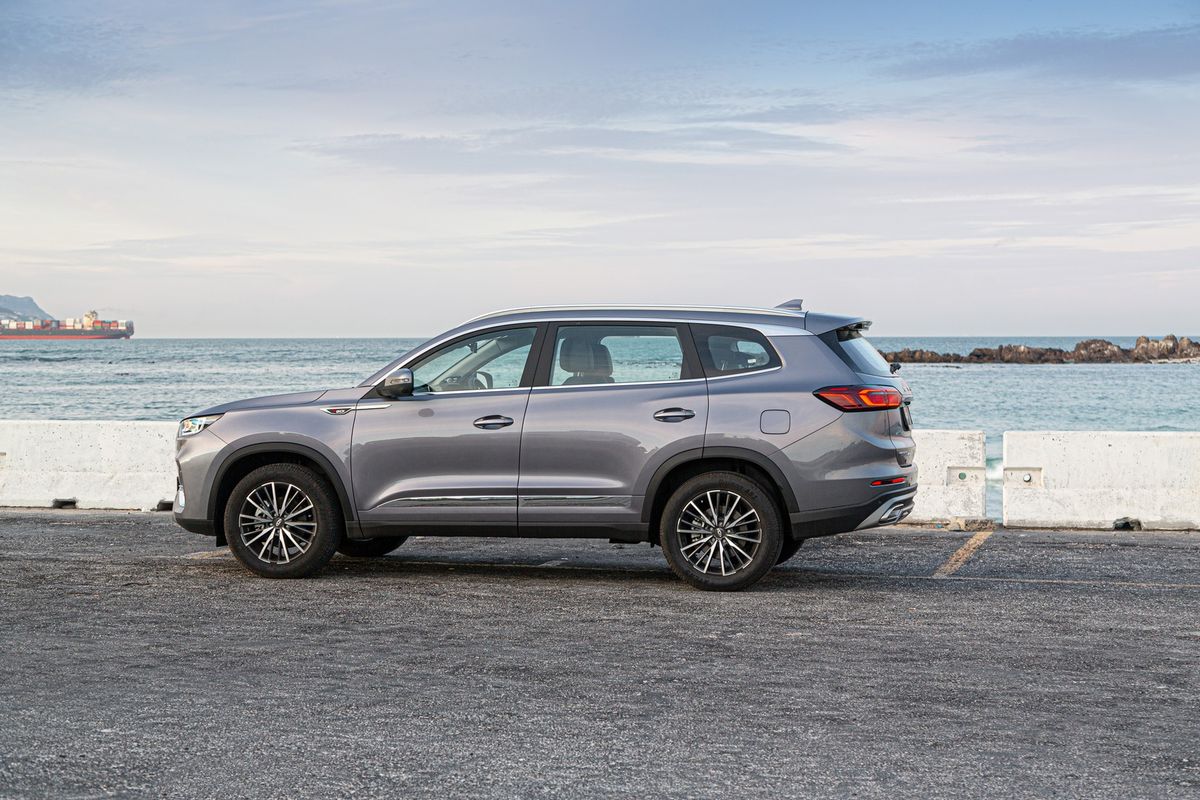
Haval H6 GT Review – The Superstar SUV that every brand on our roads should be worried about
Join Ciro De Siena for an in-depth look at the Haval H6 GT, a car which has caused a stir in the South African market since the moment it arrived.
We know Haval has achieved sales success in South Africa, but is success the same as desirability? With the H6 GT, it seems Haval has solved that particular conundrum.
The H6 GT has undoubtedly caused a stir on the local market, and with you, our audience. There haven’t been many cars which you’ve requested from us as much as the H6 GT.
So, here we go! You asked and we delivered, our in-depth review of the Haval H6 GT. There will also be a written review on Cars.co.za, so be sure to check that out for a second perspective on the H6 GT.
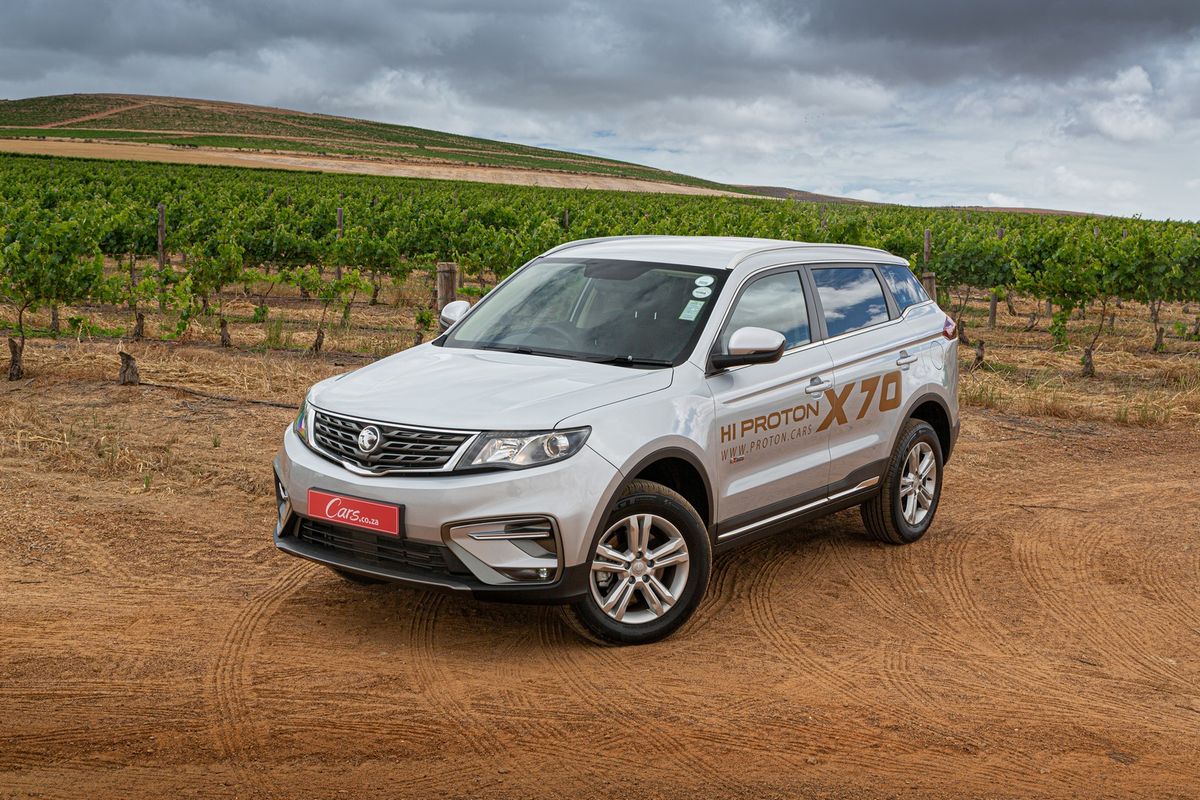
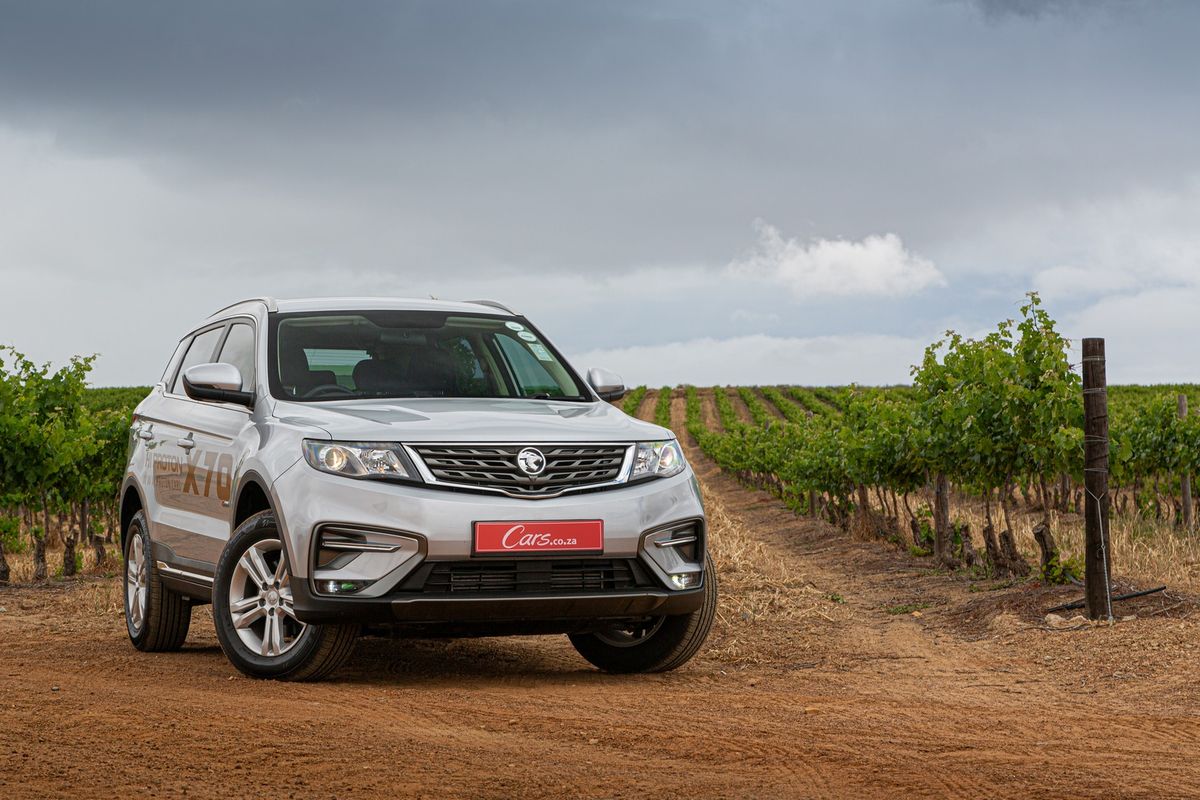
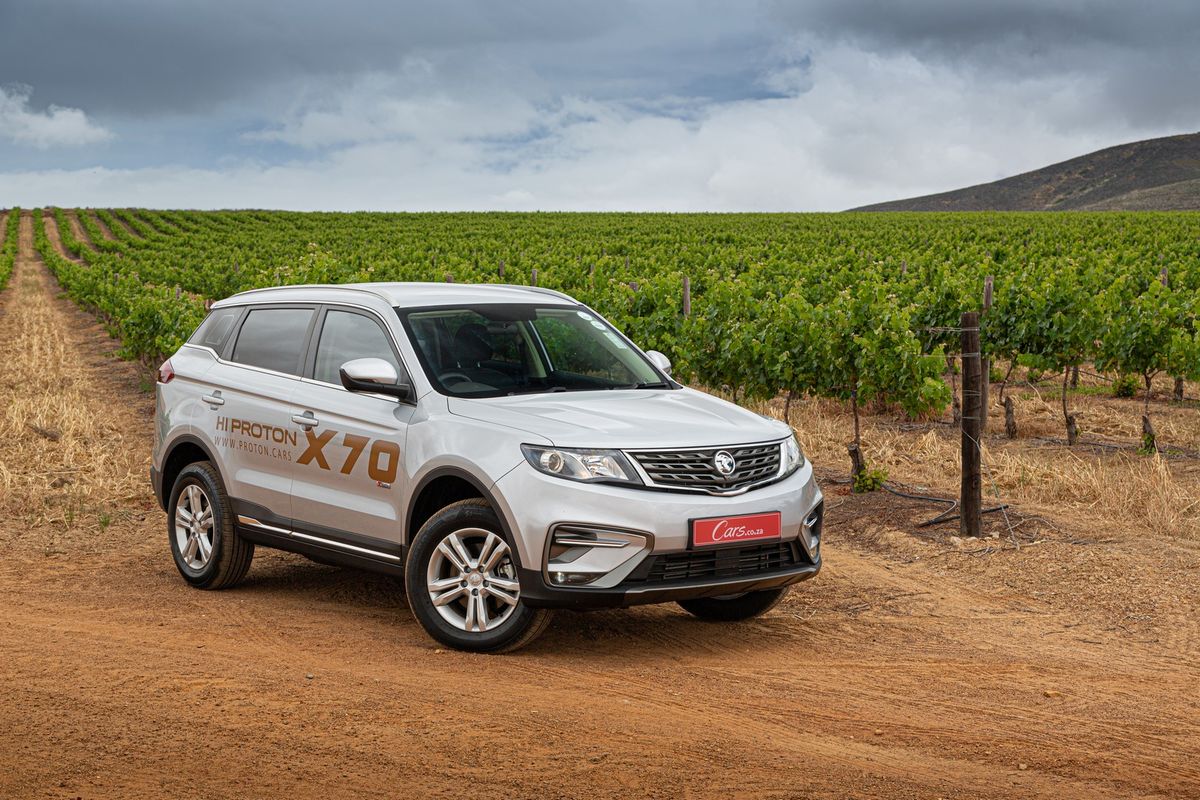
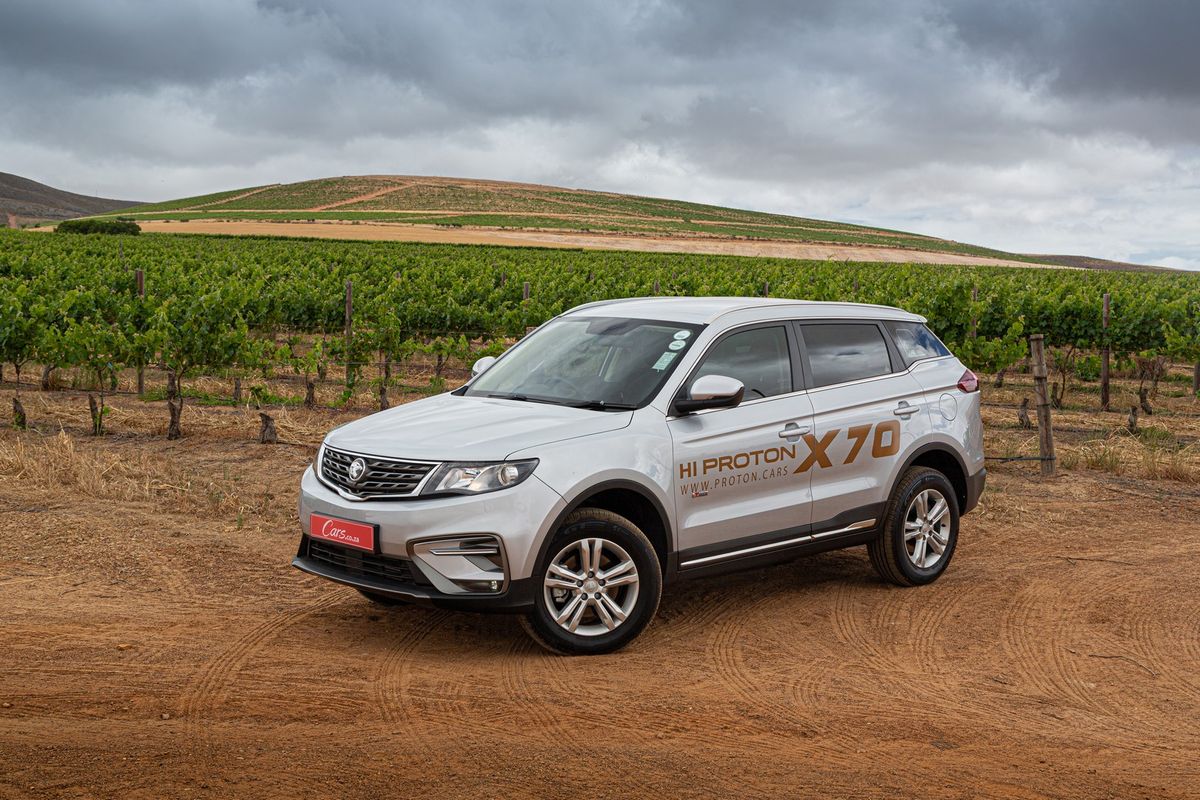
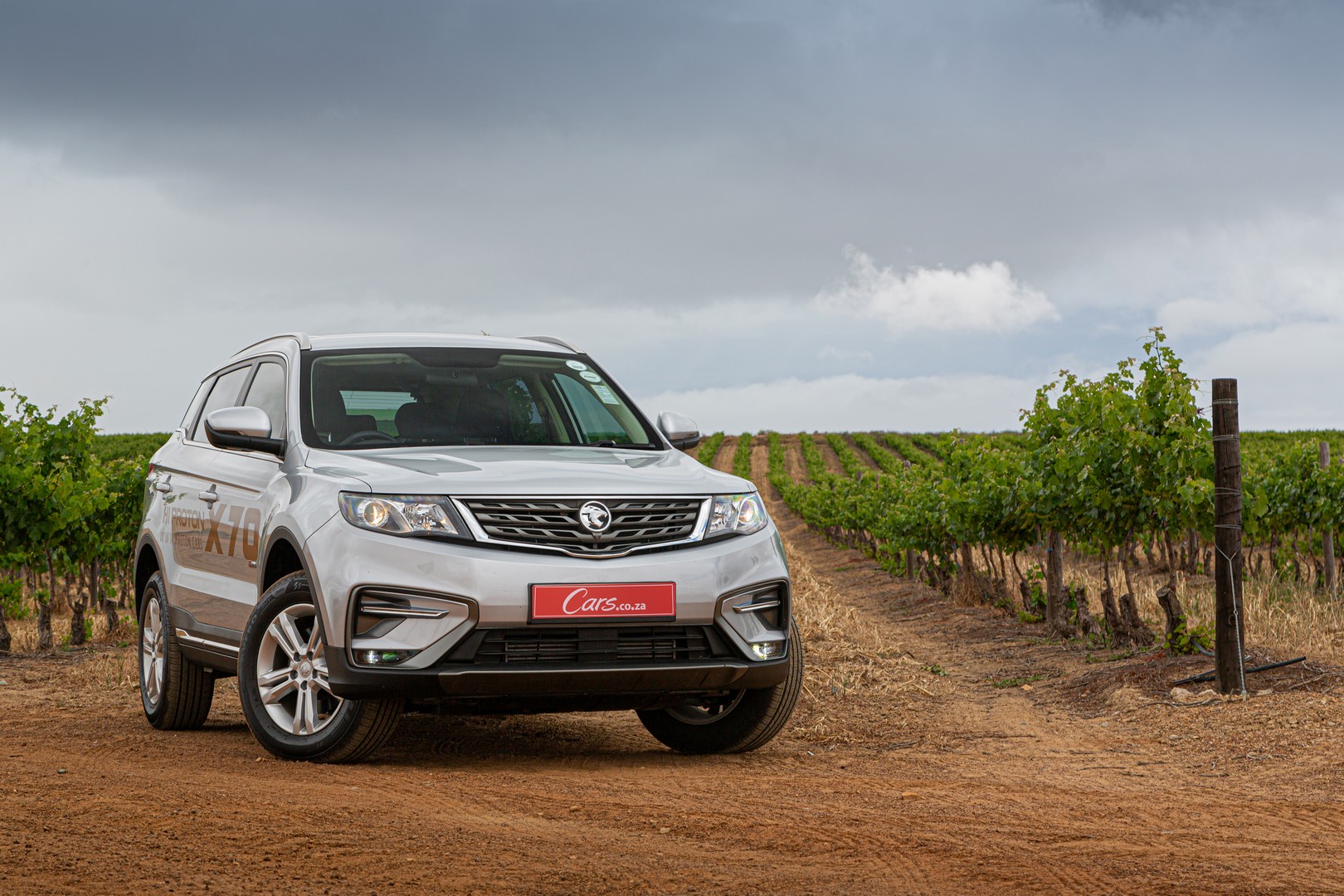
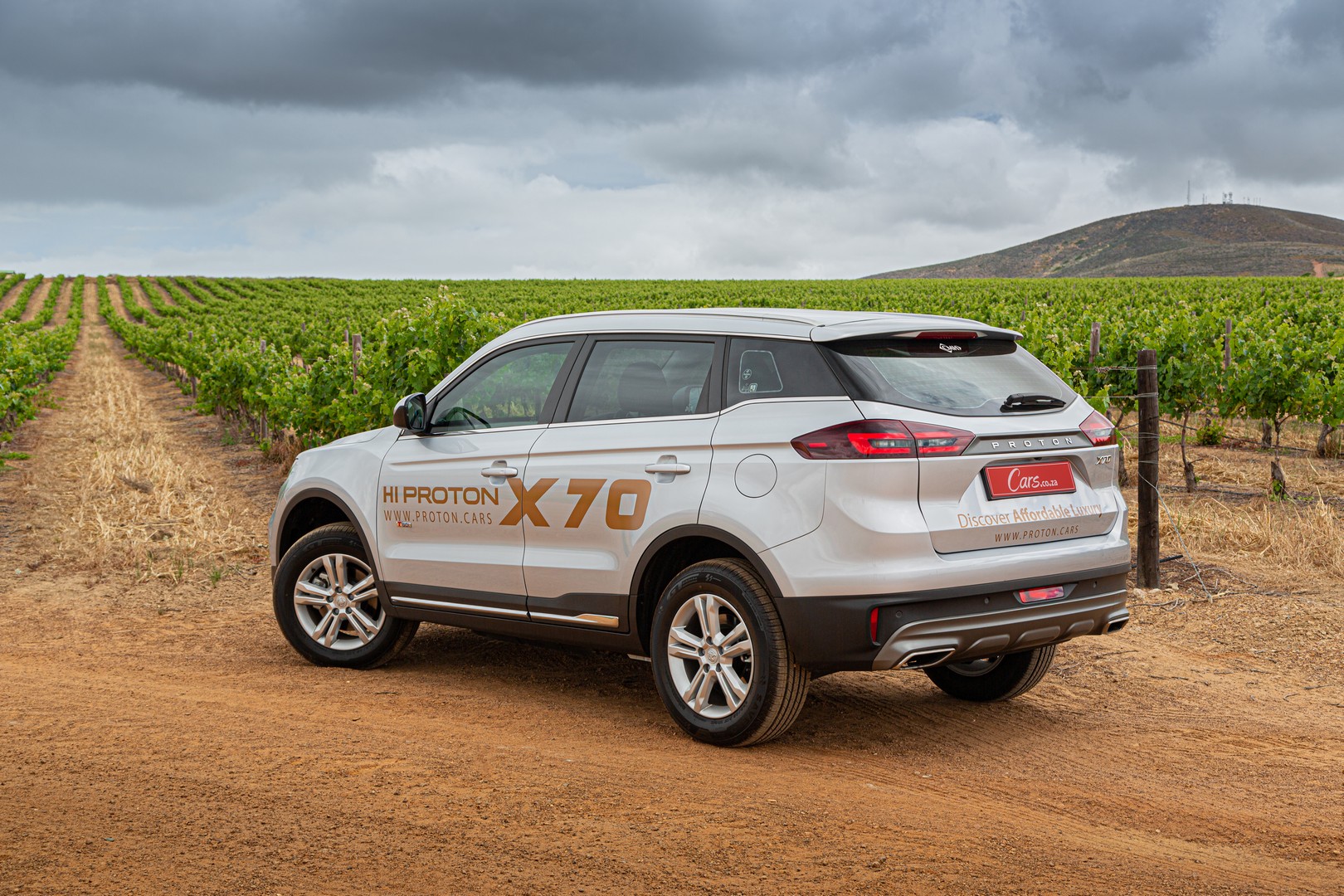
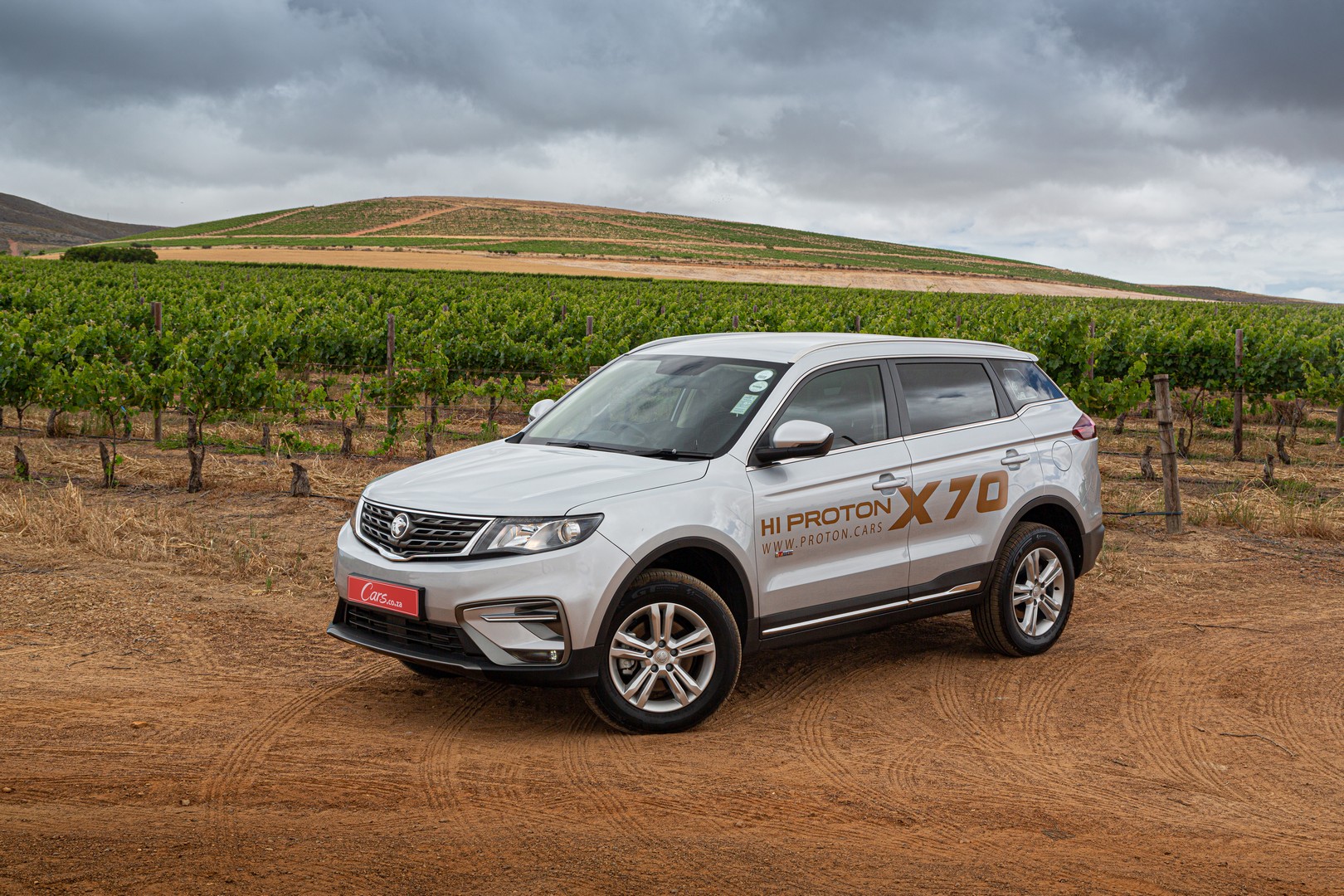
The Proton X70 is one of two models that have spearheaded the (now Chinese-owned) Malaysian brand’s return to South Africa. Backed by Geely, the new Protons compete in the hotly contested crossover/SUV space. We get behind the ‘wheel of the larger (of the two) X70 in entry-level 1.5 Standard guise.
We like: Exceptional ride quality and comfort, punchy powertrain, refinement
We don’t like: Dated cabin, no modern connectivity, fussy ergonomics and infotainment-system user experience
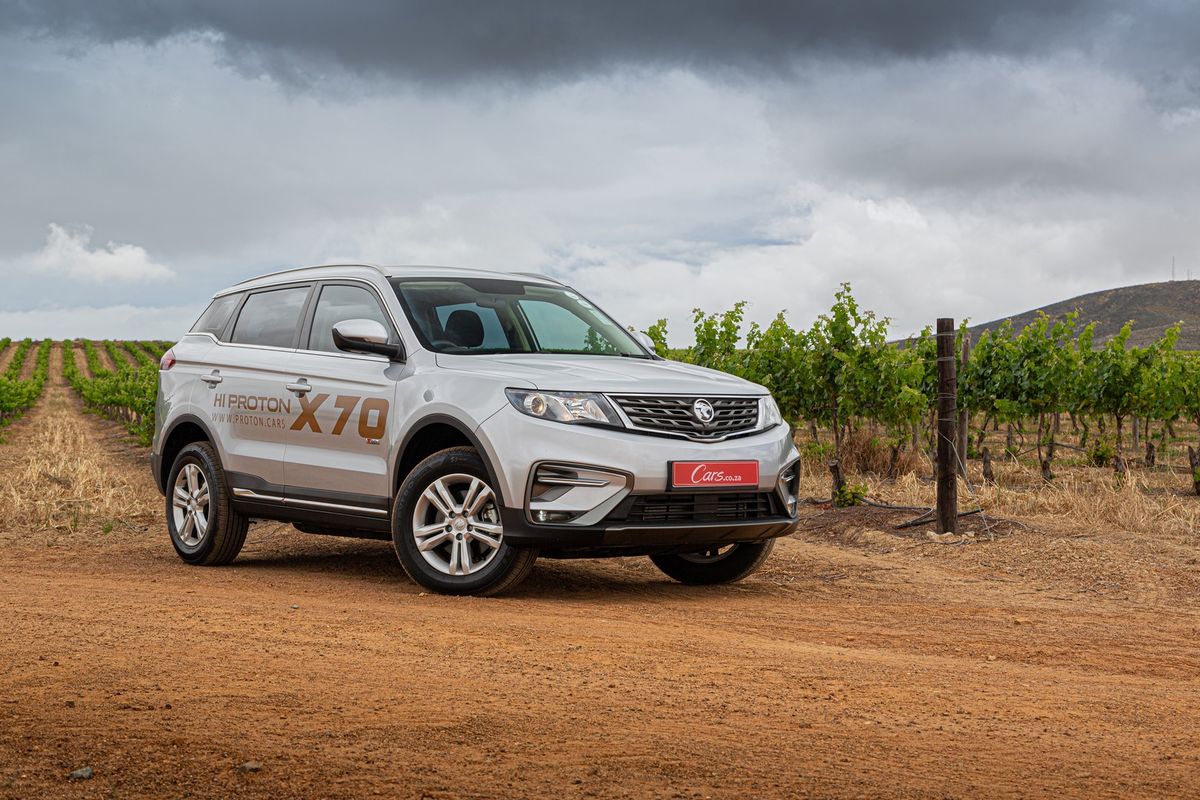
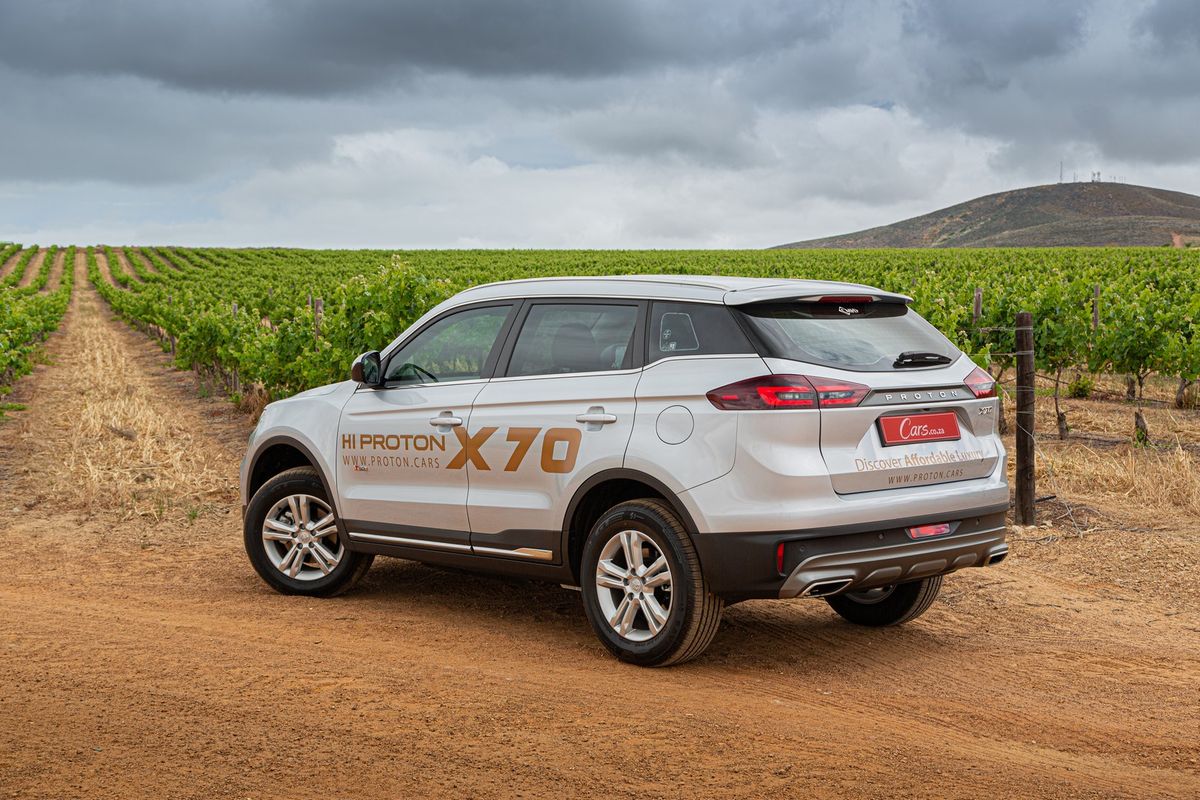
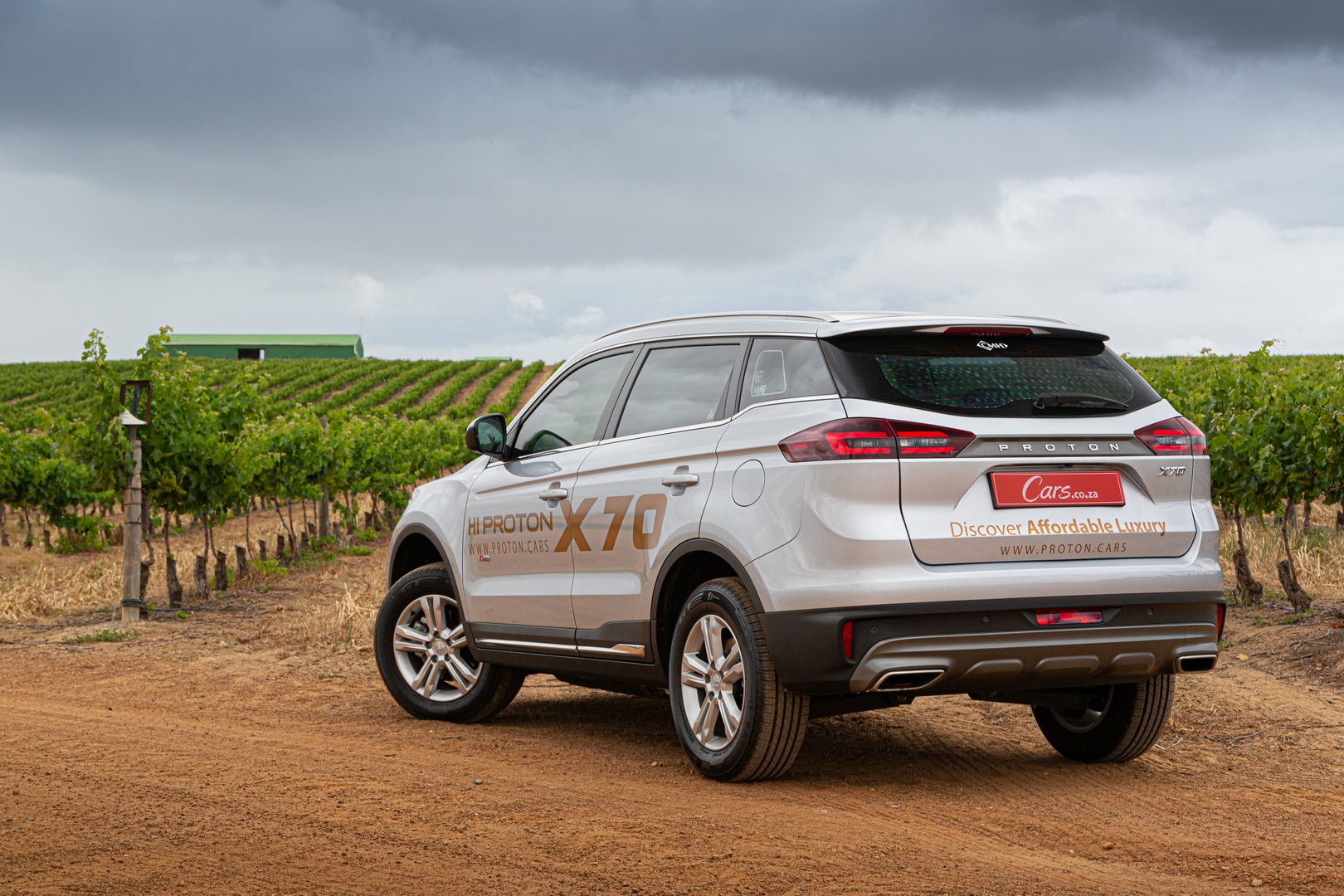
The X70 is one of two models in the new Proton line-up.
Do you remember Proton? Before it departed the local market in 2015, the brand offered hatchbacks, such as the Gen2, Savvy and Satria Neo (with a ‘handling by Lotus’ sticker), as well as the Arena small bakkie in South Africa. Speaking of Lotus, Proton owned the British marque until 2017, when both were acquired by Geely, which also has Volvo in its portfolio.
The numerous brands that are under Geely’s control share many technologies; that way, the Chinese automotive giant doesn’t need to develop brand-specific platforms and engines – at great cost – and it can bring models with high component commonality to market a lot faster.
Earlier this year, Proton returned to the Republic with the X50 and X70. While we’re well acquainted with the X50 – watch the video review – this is our first encounter with its bigger sibling, the X70. There are 4 derivatives (in 3 trim levels) and all of them are powered by a 3-cylinder turbopetrol engine. The Executive is also available in all-wheel-drive guise.
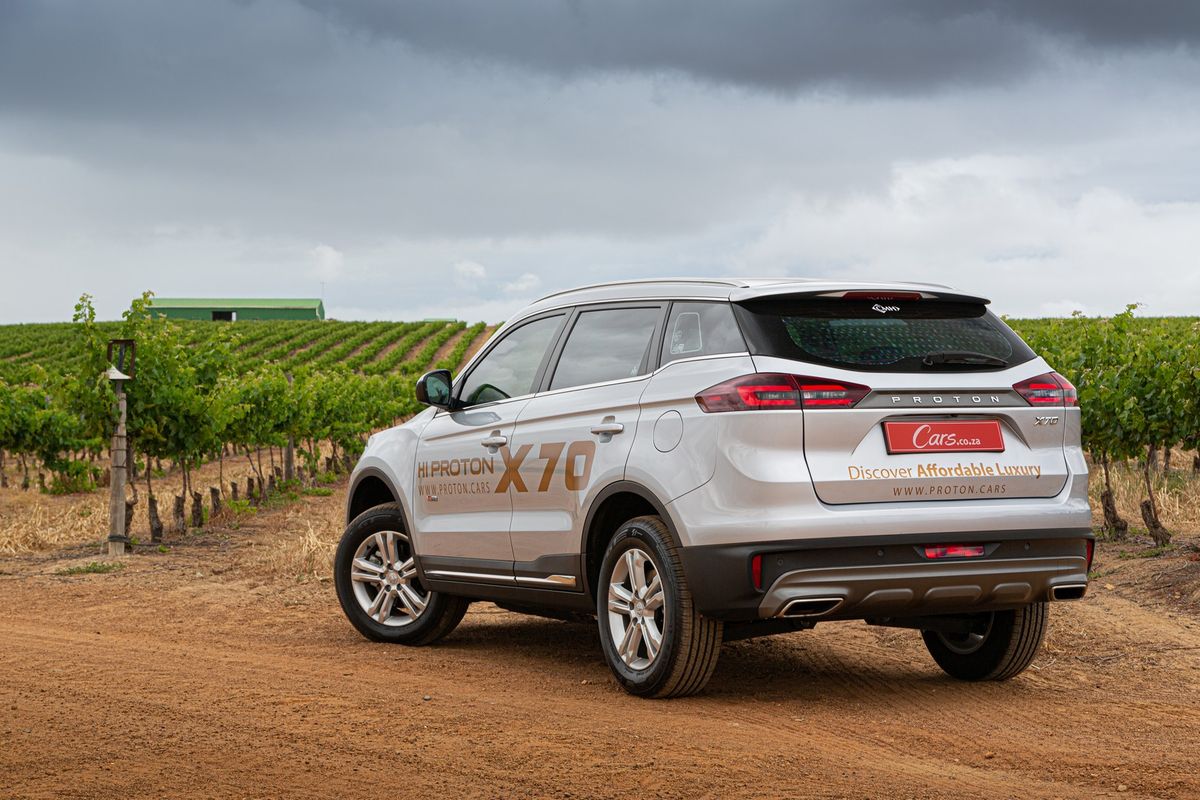
The X70’s exterior styling is pretty generic, but that can be said of many medium SUVs in the market.
How the X70 fares in terms of…
Performance and economy
One of the advantages of being part of the Geely family is that Proton gets its powertrains from Volvo. The X70’s 1.5-litre turbopetrol motor produces 130 kW/255 Nm and is paired with a 7-speed dual-clutch transmission. Those peak outputs seem quite sufficient, but how well does the 1.5 Standard perform in reality? According to our test equipment, the test unit accelerated from 0 to 100 kph in 9.56 sec, which was fractionally quicker than Proton’s claimed figure. Better yet, the front-wheel-driven X70 maintained impressive traction
The X70 is powered by a Volvo-sourced 3-cylinder engine.
Unlike most 3-cylinder motors, which tend to vibrate more than their 4-cylinder counterparts, the Proton’s engine is impressively refined, although it still emits that characteristic 3-pot thrum. The sound is surprisingly pleasant/purposeful… as if the engine’s purring merrily.
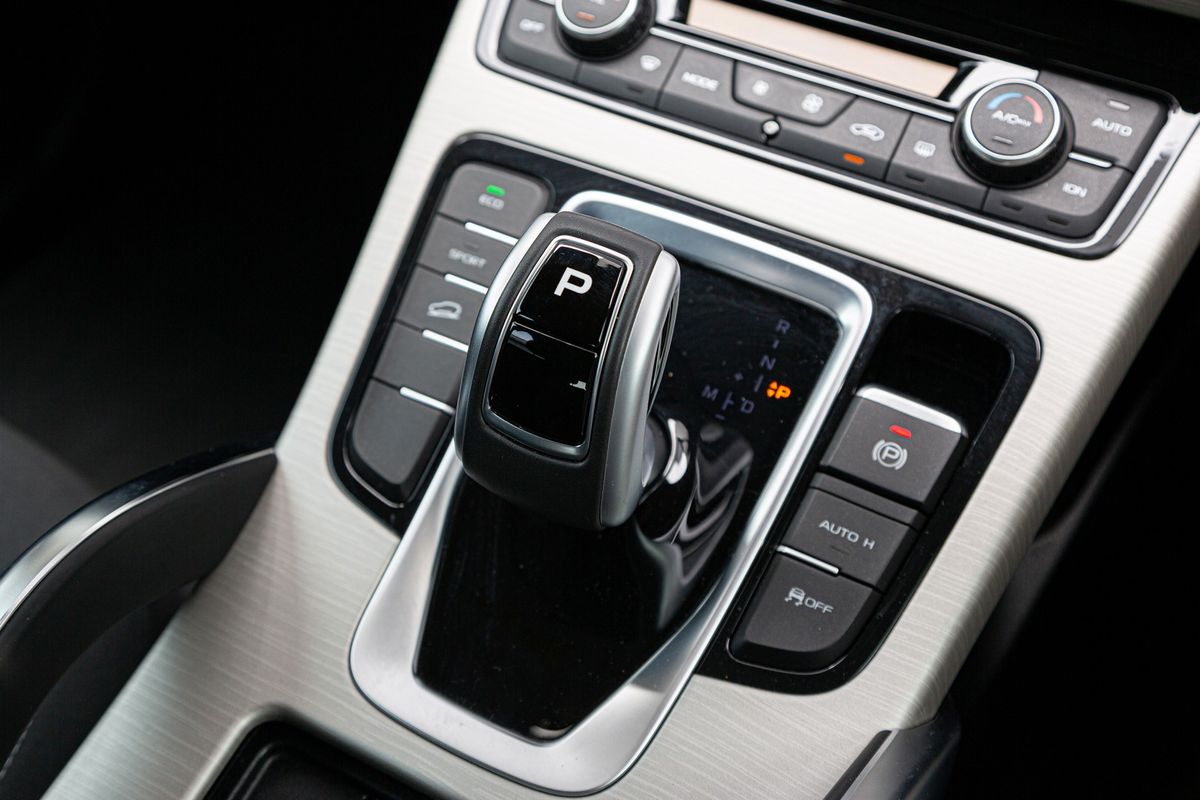
The 7-speed dual-clutch (automatic) transmission is well-calibrated to the performance characteristics of the engine and delivers quick, but smooth, gearshifts. As a result, the X70’s in-gear acceleration is punchy, which is a boon when overtaking vehicles at freeway speeds.
The dual-clutch automatic transmission shifts smoothly and is well-calibrated to the engine’s performance characteristics.
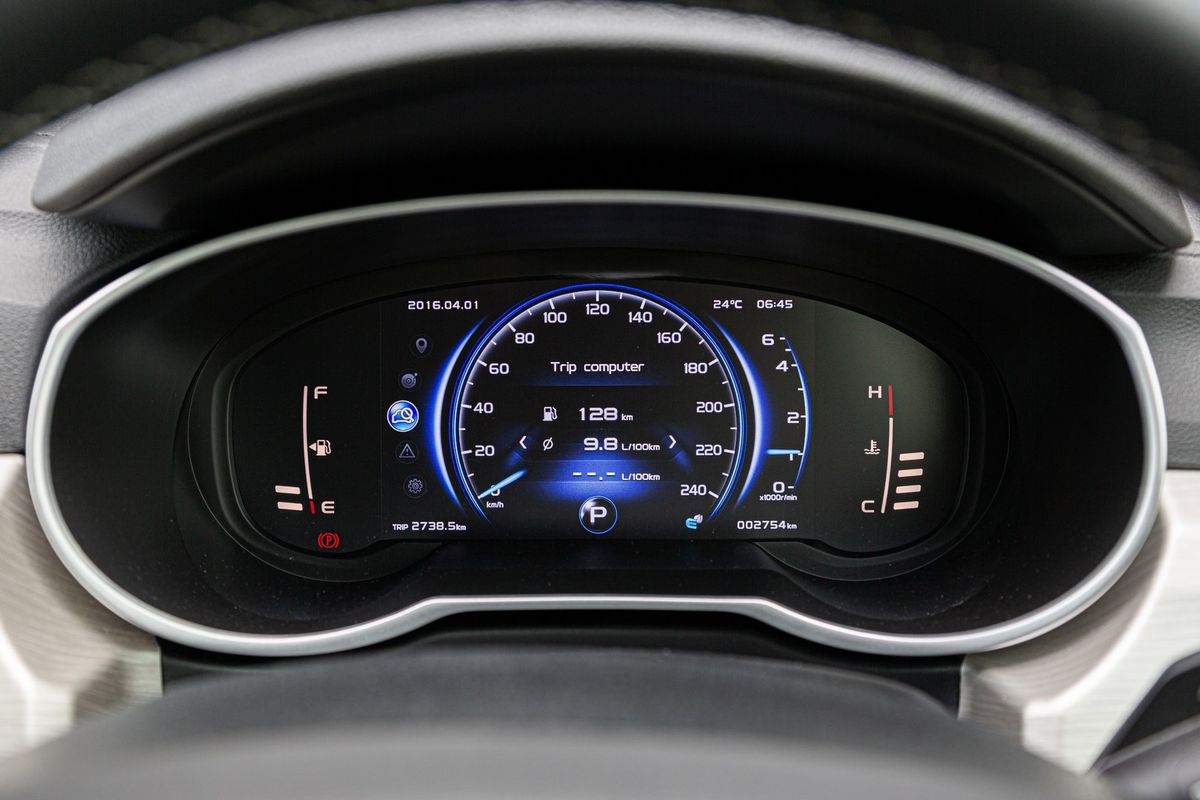
The downside to that peppiness is poor fuel economy. The X70 is no lightweight (it weighs just over 1 600 kg), so its 1.5-litre engine must work hard to propel that heft at a reasonable pace. Proton claims the X70 will, on average, consume 7.8 L/100 km, but even when we adopted a conservative driving style, we couldn’t achieve better than 9.8 L/100 km (indicated).
Ride and handling
The great thing about driving a product of an all-new brand (or, in Proton’s case, one that is lightyears removed from the brand we knew) is that you don’t have any preconceived notions about the model. When we review a new product from an established player in the market, we tend to have (usually high) expectations of that vehicle. This case was different – we had no idea what to expect. Did we, for example, expect the X70 to ride exceptionally well? No!
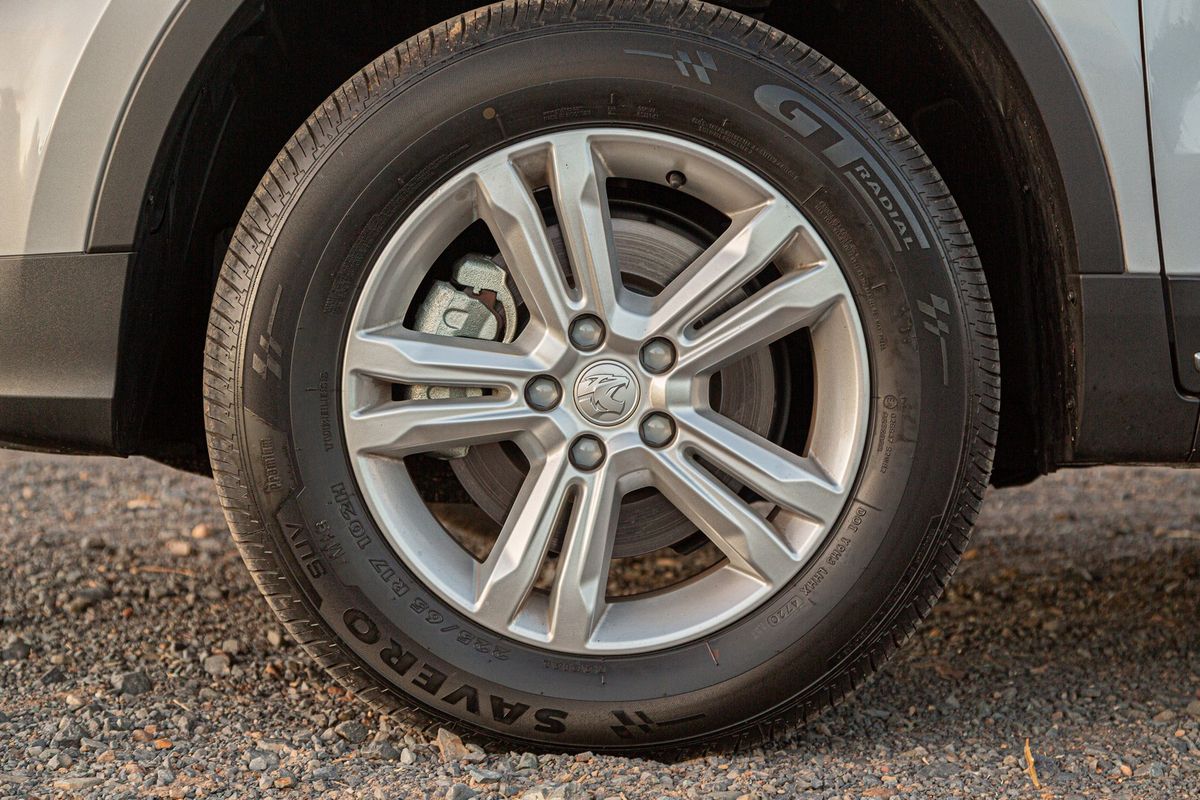
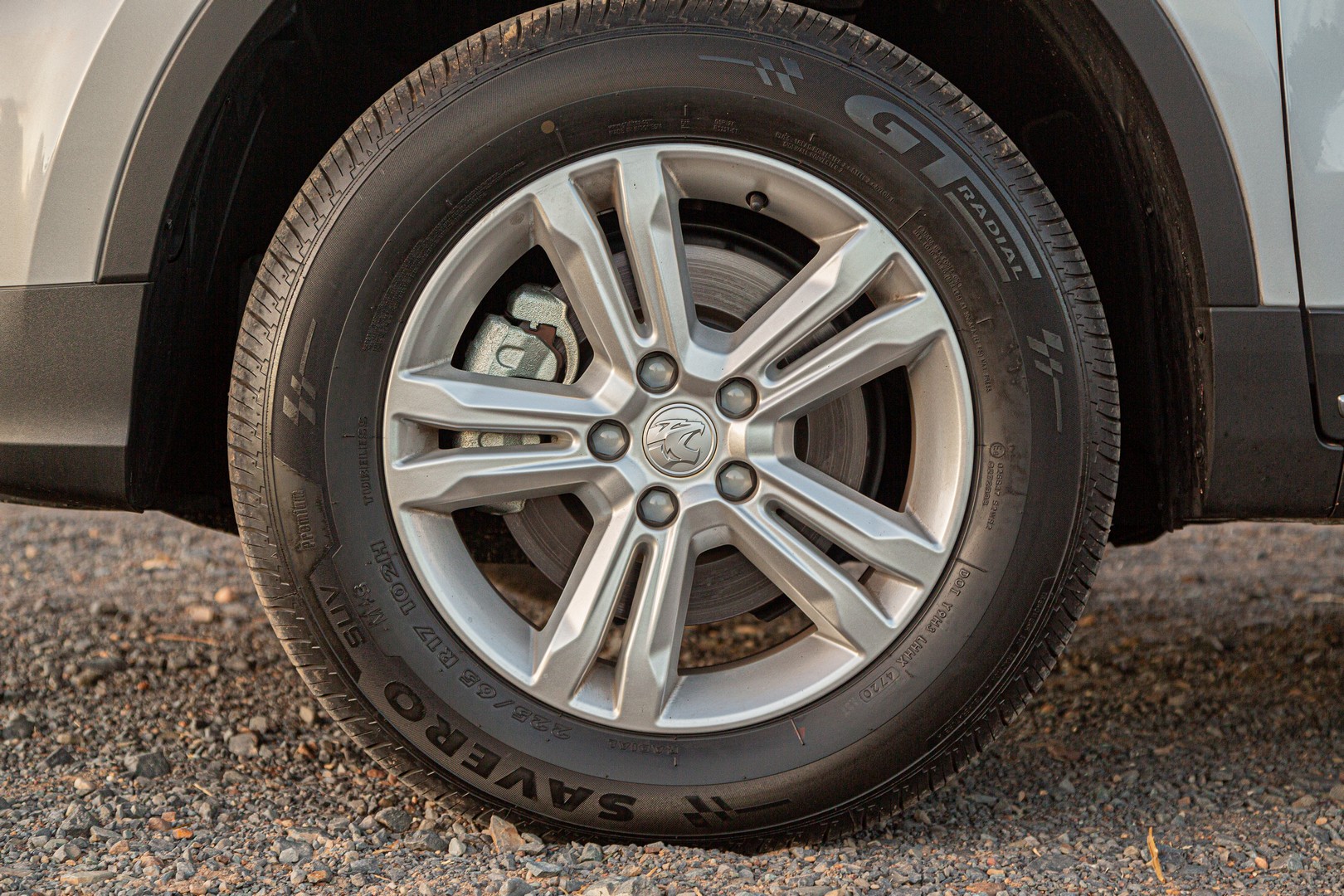
High-profile tyres contribute to the Proton’s exceptional ride quality.
But somehow, the Proton “came out swinging” and delivered a superbly comfortable ride quality. Even when we traversed particularly poorly maintained roads, the Malaysian newcomer’s suspension was pliant – not once did it jolt and jar over road imperfections.
It’s great to see that Proton has prioritised on-road comfort and not tried to imbue the X70 with a modicum of sportiness (as if to suggest that the model has dynamic handling ability, which is certainly not expected of a family car); it does help that the 17-inch alloy wheels are wrapped in high-profile tyres. The cabin is well insulated from road noise too – we got the impression that the Proton would provide particularly relaxed transport on long(er) trips.
The excellent ride quality does come at the cost of some on-road poise and sharpness when cornering. The X7’s steering is set up for comfort and neither accurate nor very direct, but we’re not going to complain about that – you rarely get ride quality and crisp handling in abundance. There is a sporty steering mode, which adds some artificial heft to the ‘wheel.
Features, tech and safety features
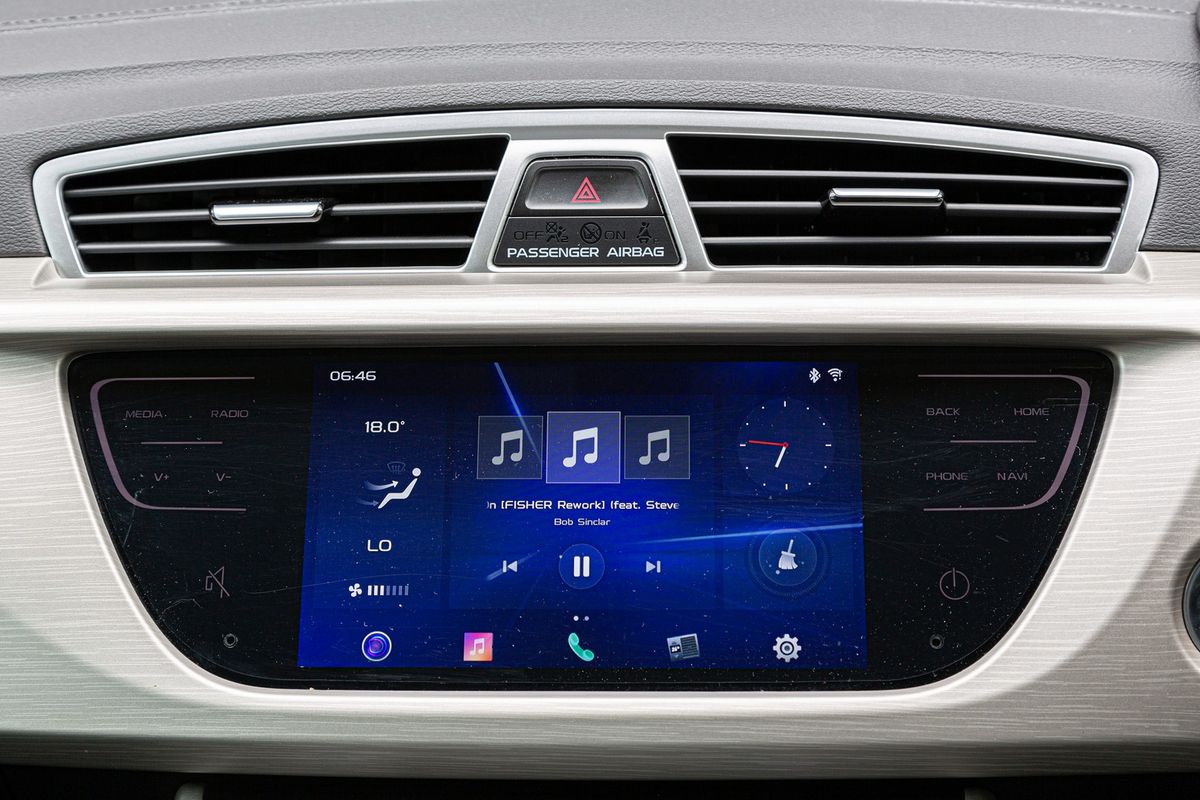
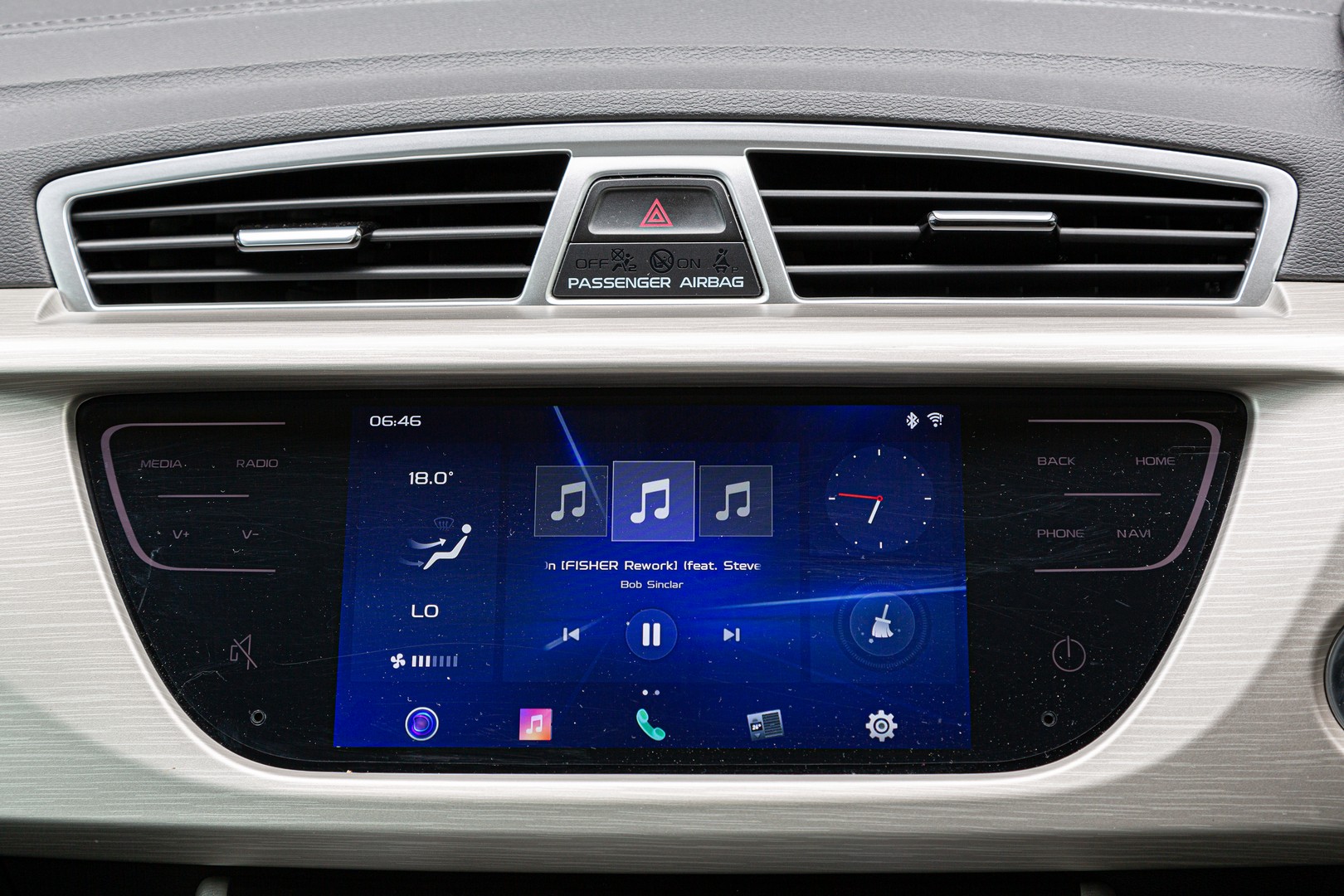
The infotainment system is not compatible with Android Auto and Apple CarPlay.
The 1.5 Standard is the entry-level X70 derivative, but it still comes (fairly) well-equipped. Standard features include, but are not limited to, a leather-wrapped steering wheel with cruise- and audio control buttons, fabric seats, LED foglamps, auto lights, Eco mode, keyless access with push-button start, dual-zone climate control, an 8-inch touchscreen infotainment system, 6-speaker audio, USB connectivity, rear parking sensors, as well as a reverse-view camera.
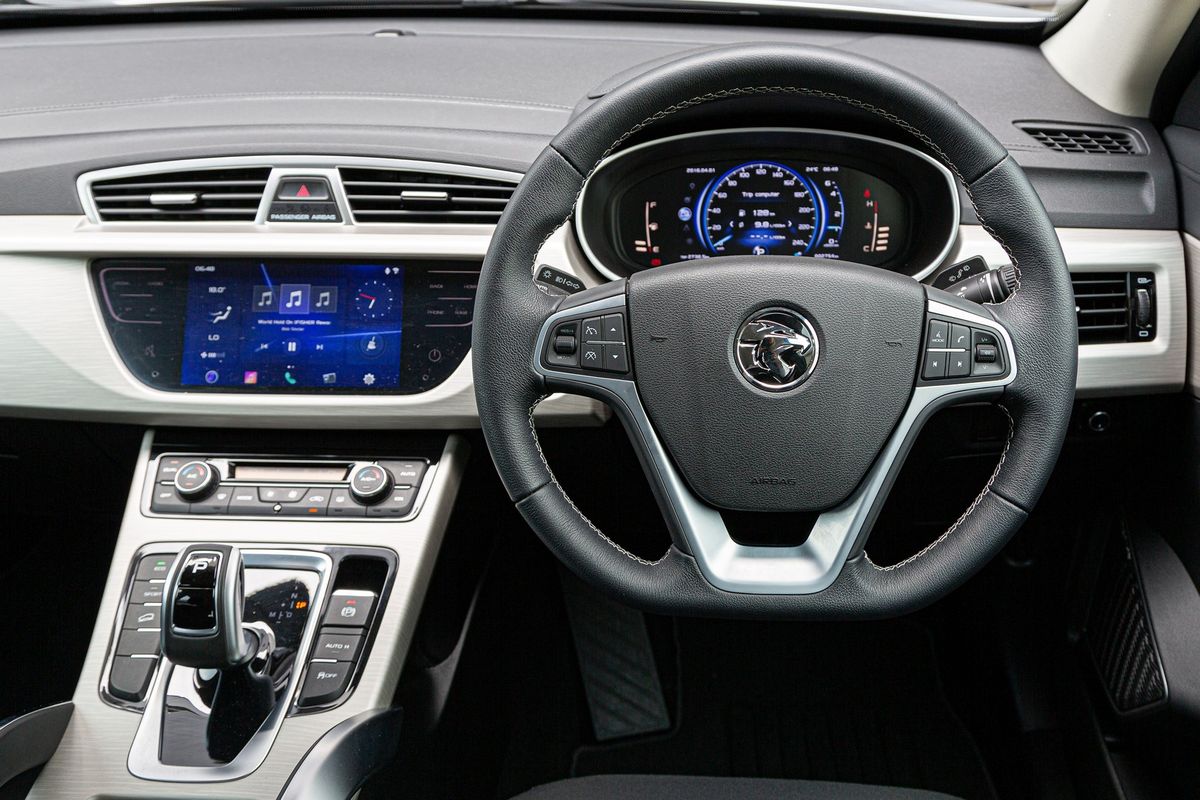
There are a few drawbacks. While the Proton is equipped with a digital instrument panel, its presentation and display resolution feel outdated compared with those of its rivals. The central infotainment system is also not the most modern of units either… It offers Bluetooth connectivity but does not support Apple CarPlay and Android Auto, plus you won’t be able to access convenient apps such as Maps, Waze and full streaming service functionality.
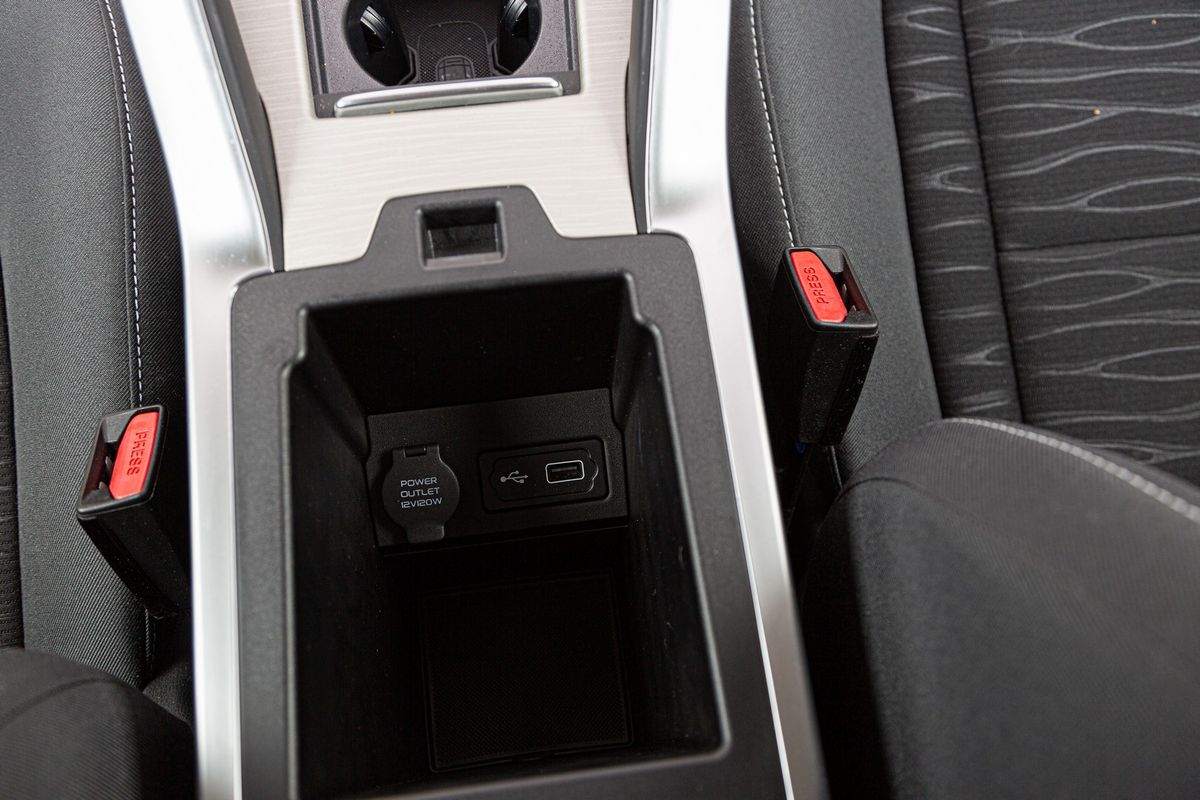
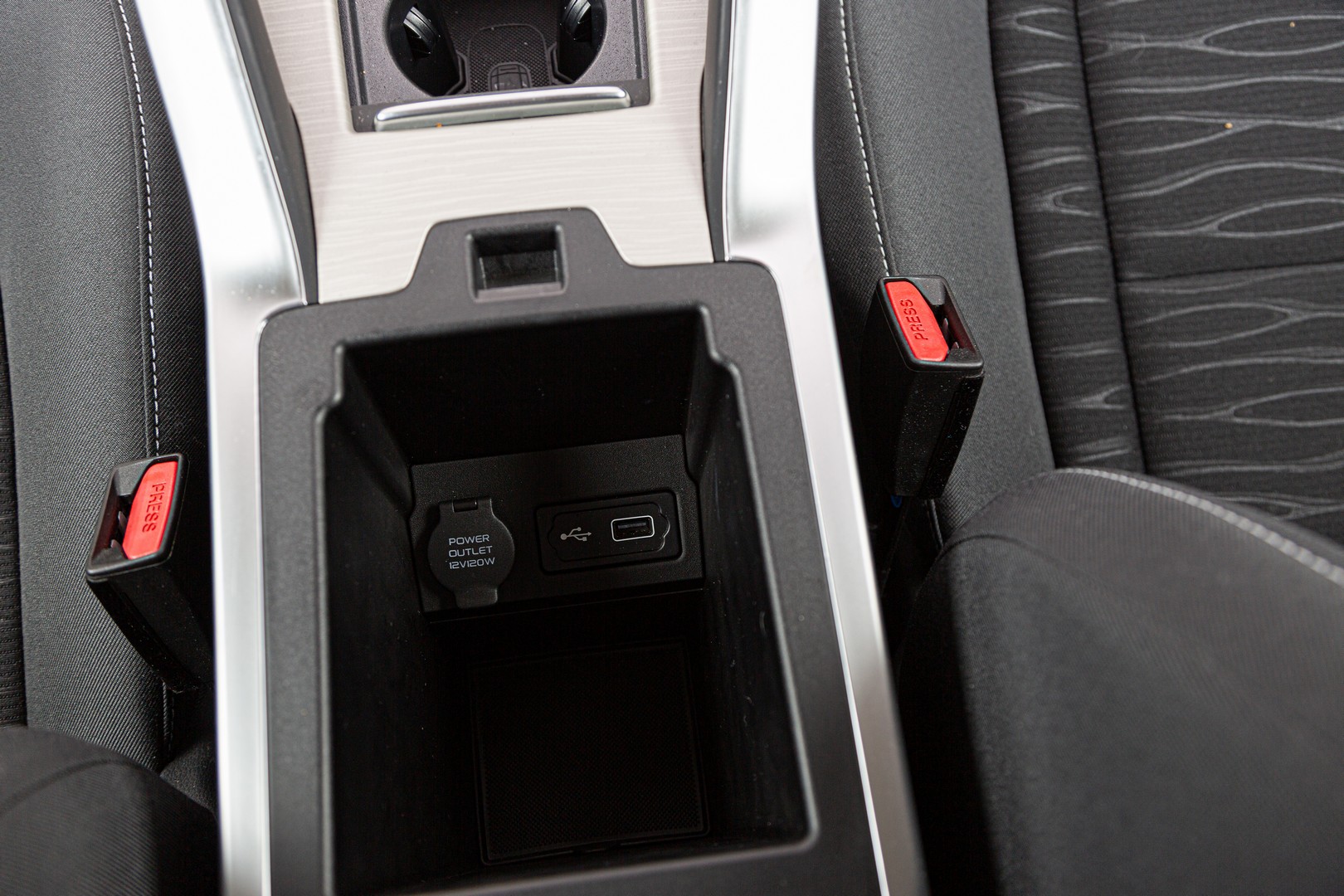
A USB charging port is located inside the centre armrest.
As far as safety features are concerned, the 1.5 Standard comes with 6 airbags, anti-lock brakes, electronic stability control, traction control and, for those who venture up and down steep roads, hill-hold assist and hill-descent control. Other derivatives in the X70 range, however, feature semi-autonomous driving technology, such as emergency city braking.
Packaging and Practicality
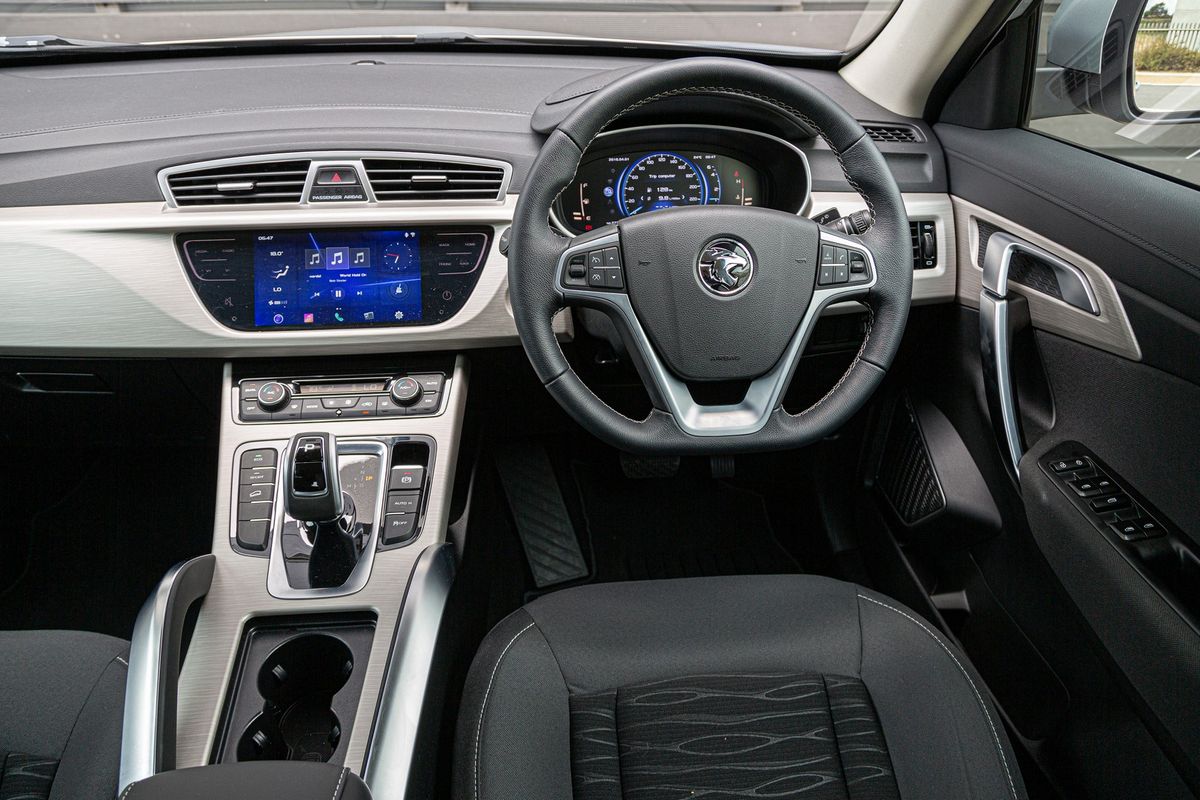
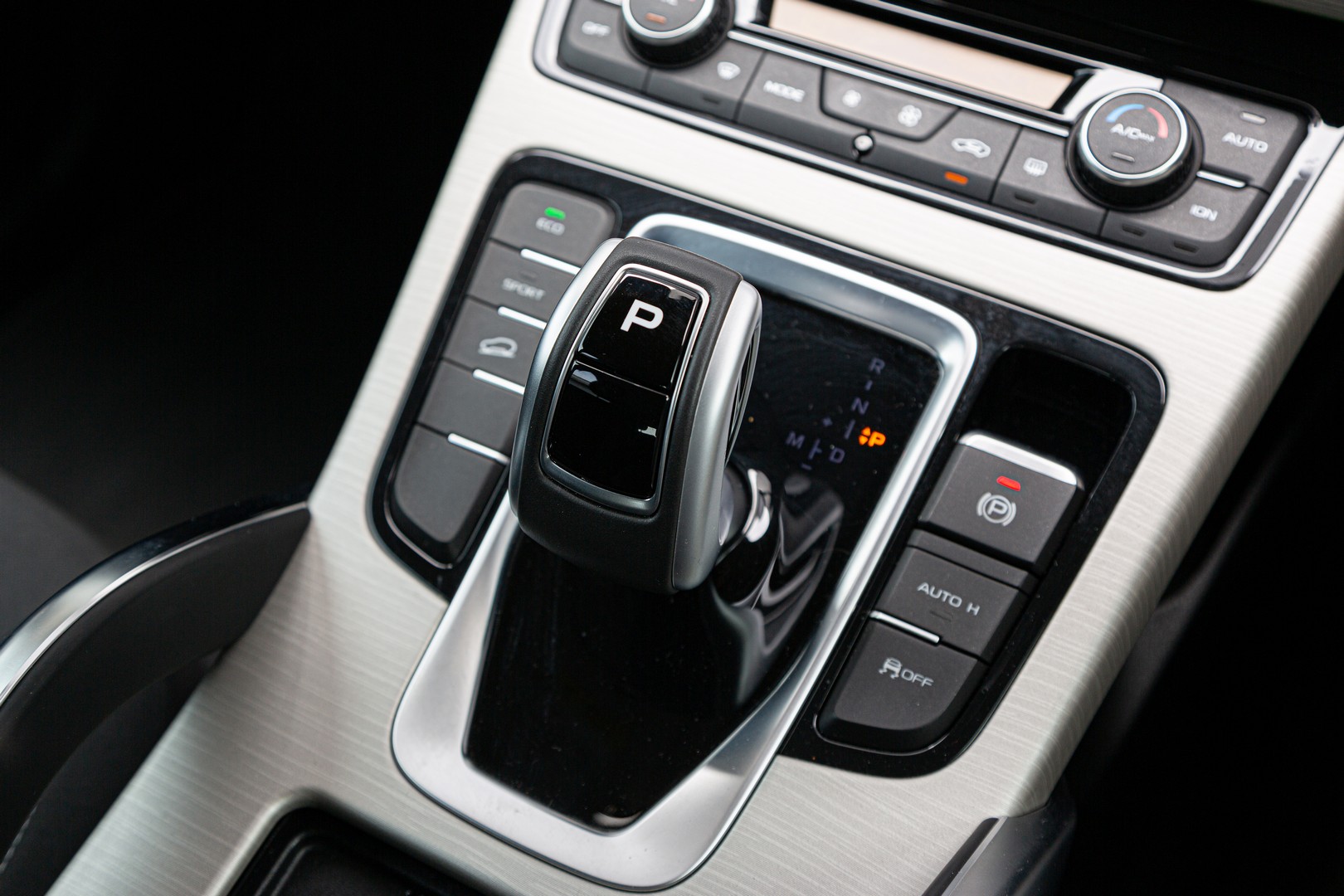
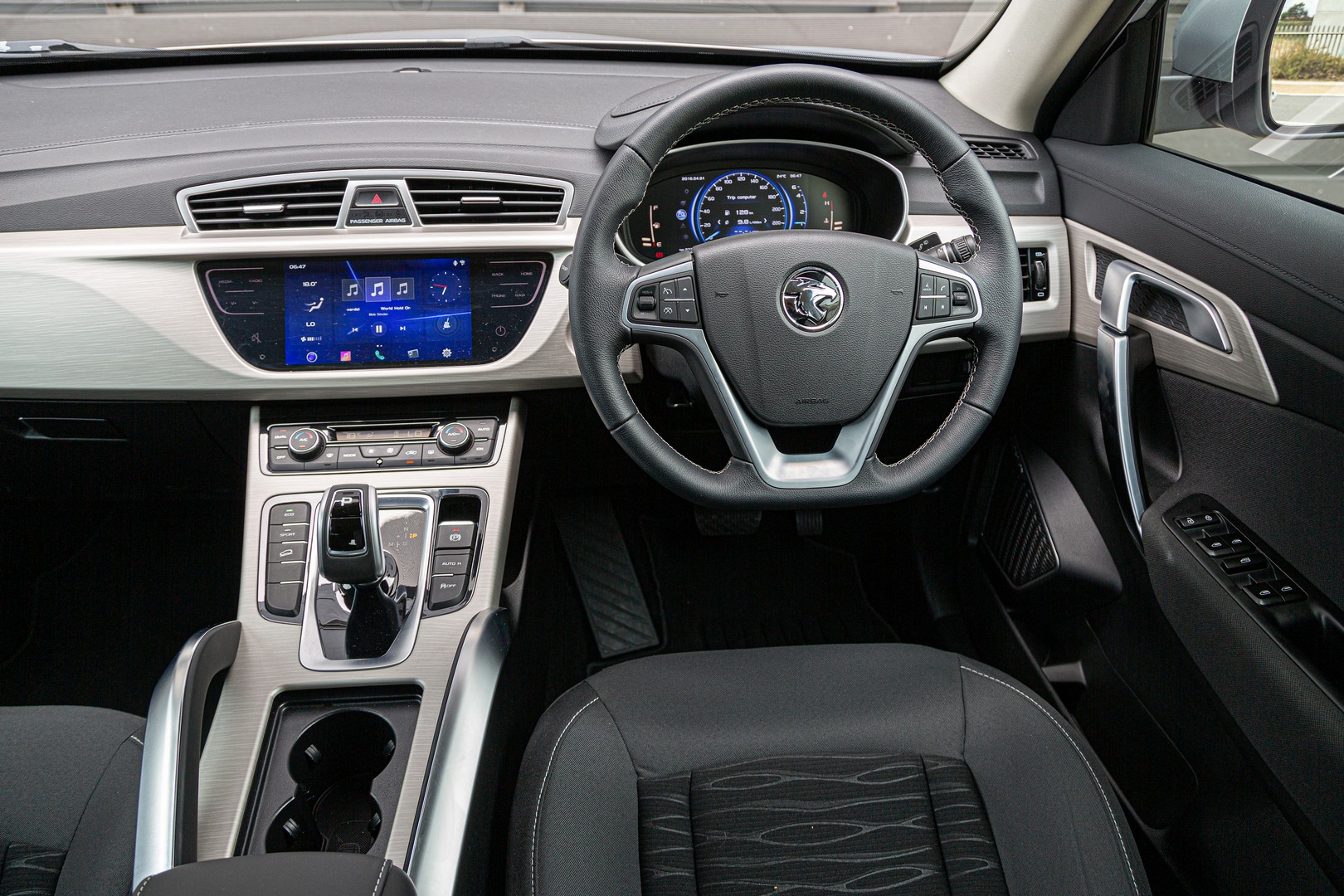
The cabin design looks dated, but it feels solidly made.
The Proton X70’s cabin is a roomy and pleasant space to occupy; the seats are comfortable and supportive. However, the interior does feel a little dated. Perhaps it was a sign that the test unit’s internal clock had not been set correctly – it indicated April 2016. If we reviewed the X70 in 2016, the cabin would be perfectly contemporary, but throughout the past few years, big strides have been made in terms of cabin quality and tech at this price point.
The cabin materials feel reasonably premium, but if you look closely, you’re likely to spot a few cheap-looking elements, such as the surrounds of the infotainment screen. The system’s menu is not presented particularly clearly – we struggled to see its buttons in bright sunlight.
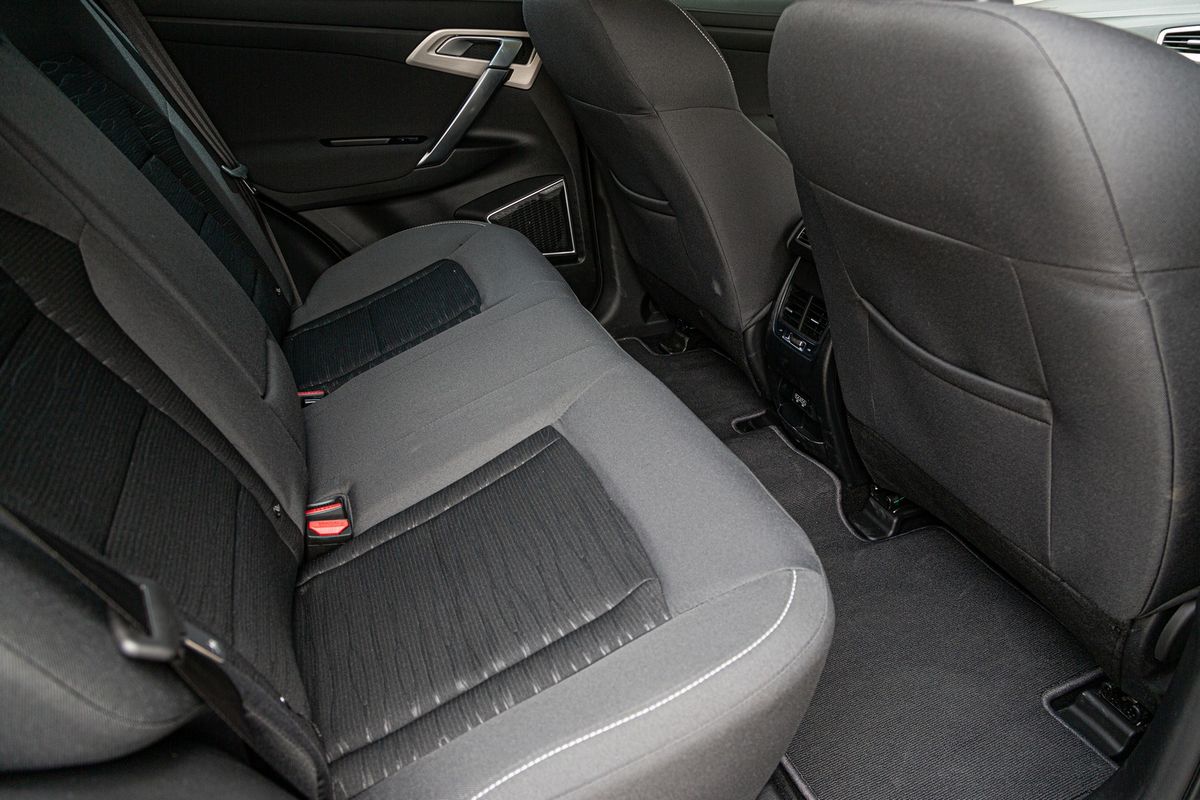
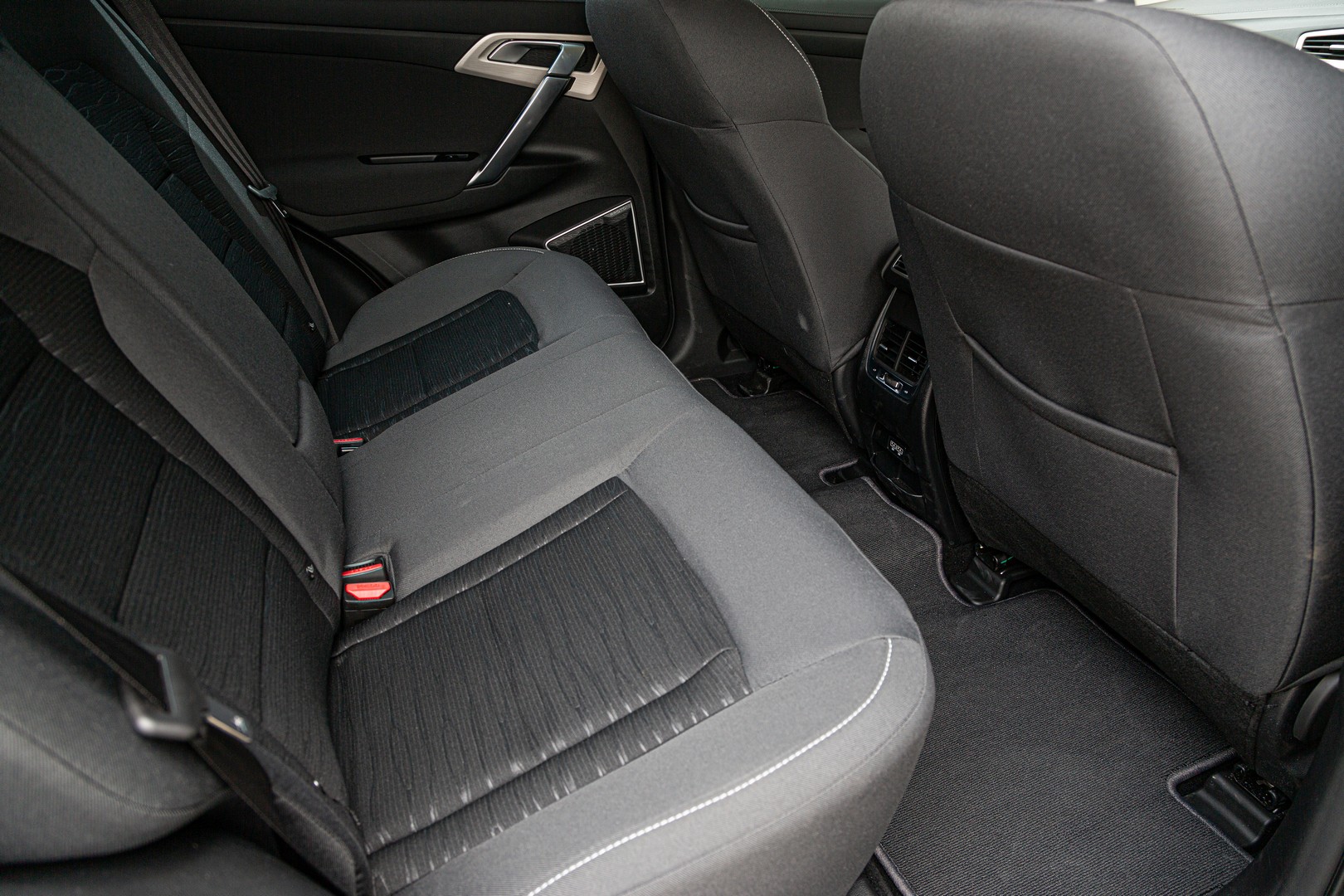
Rear legroom is acceptable, but the load-bay capacity is on the smaller side.
What’s more, the dashboard’s functionality requires a careful combination of button presses to activate (before you can use the audio volume’s scrolling wheel to sift between options). It’s a strangely clunky setup, because most OEMs utilise indicator- and wiper stalk buttons, or even a dedicated button on the steering wheel, to provide users access to such functions.
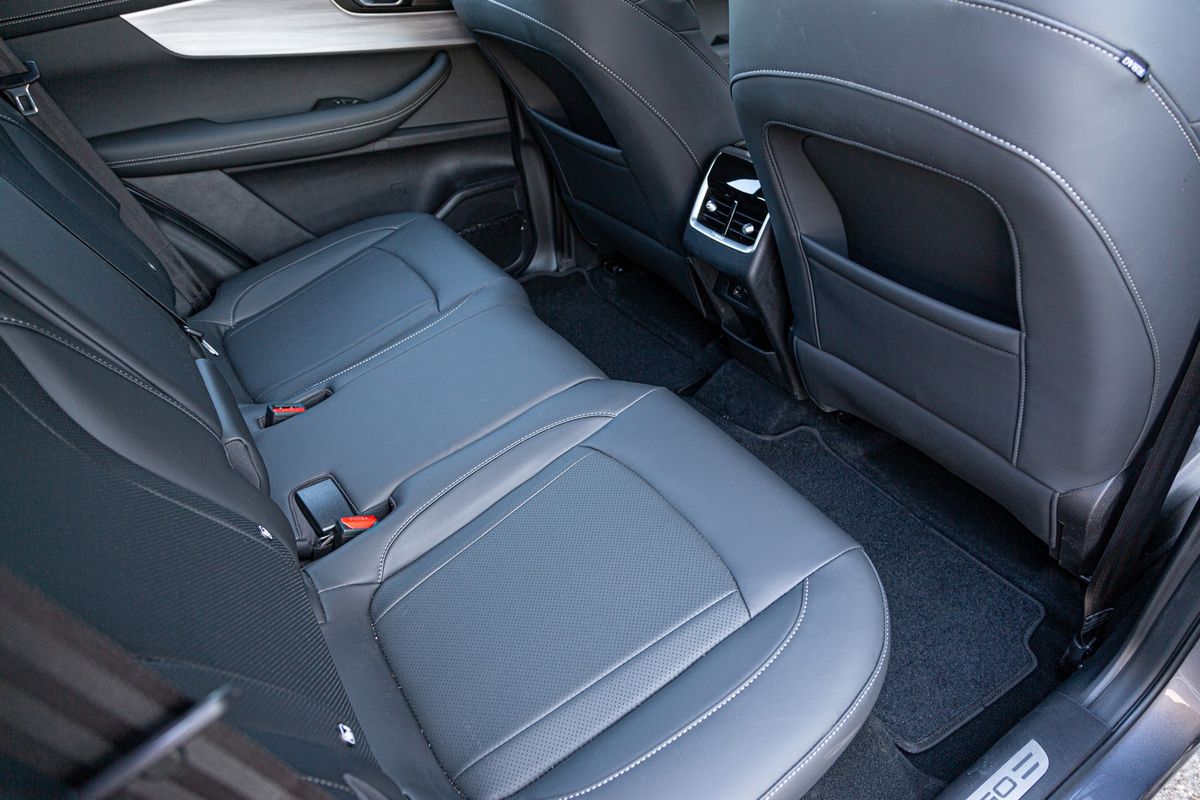
Again, the X70’s cabin is acceptably roomy. The entry-level derivative provides rear occupants with good head- and legroom, a pair of USB ports (for charging devices, as well as dedicated ventilation outlets. The load-bay capacity is rated at 515 litres, which puts the Malaysian offering towards the back of the proverbial grid when it comes to practicality.
The Proton X70 1.5 Standard costs R529 900 and the price includes a 5-year/unlimited km warranty, 5-year/80 000 km service plan, as well as 5 years’ roadside assistance.
The great ride quality and punchy powertrain are let down by a dated and quirky cabin.
Verdict
The Proton X70 makes a good case for itself, particularly if you’re looking for a family car that delivers ride quality and occupant comfort in abundance. The model’s turbopetrol engine is not lethargic (as some entry-level medium SUVs’ motors are) – it’s responsive and punchy (if somewhat thirsty) and mated with a snappy transmission. While we’ve only sampled the bottom-of-the-range version, its standard spec list is quite long and besides, if you want additional features, other X70 derivatives feature more comfort, features and safety tech.
Should you buy one? Given how rapidly the segment has evolved in a short space of time, we can’t recommend a Proton X70 over the brand-new and excellent Kia Sportage or the highly lauded Haval H6, both of which offer more space and performance for a similar price.
Proton SA has confirmed that there’s a new model coming in early 2023, but did not divulge further details. It could potentially be a fresh iteration of the X70, or something entirely different…
New Haval Jolion S Confirmed for South Africa
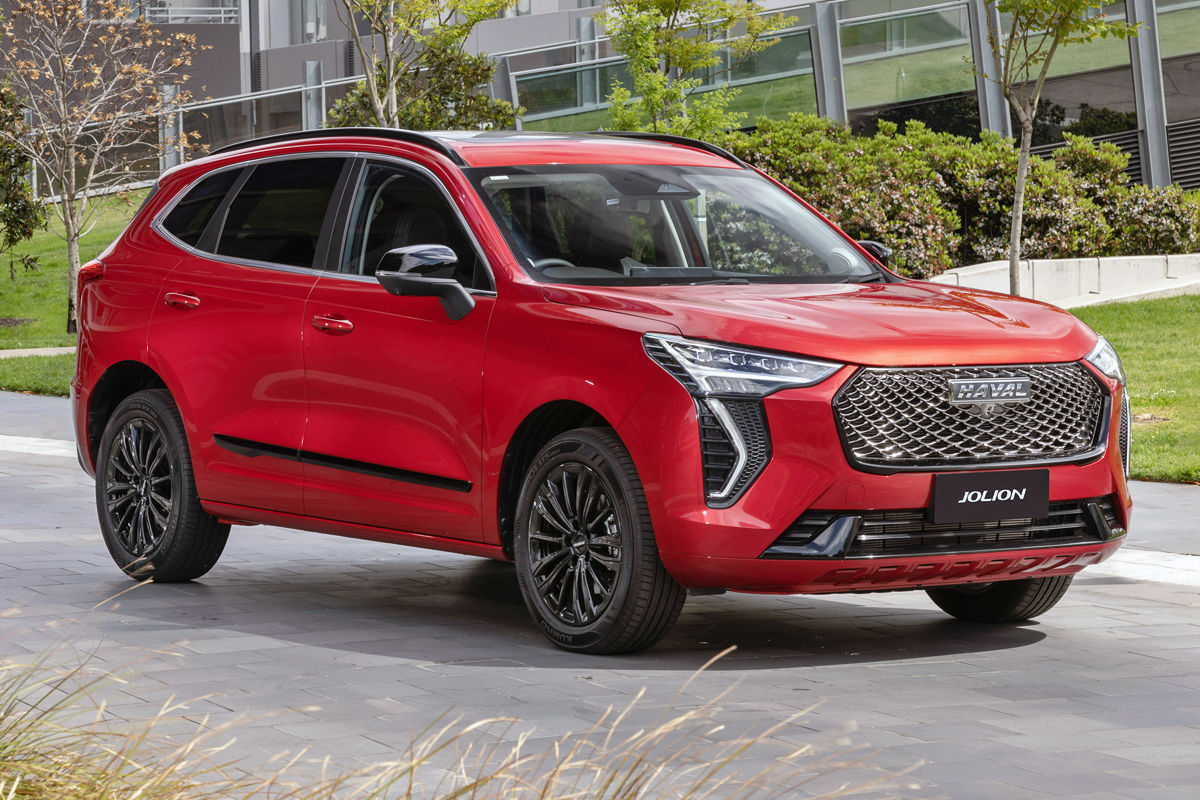
Haval has unwrapped a new Jolion S variant, handing its compact crossover extra power, uprated suspension and sportier styling. And it’s already been confirmed for South Africa…
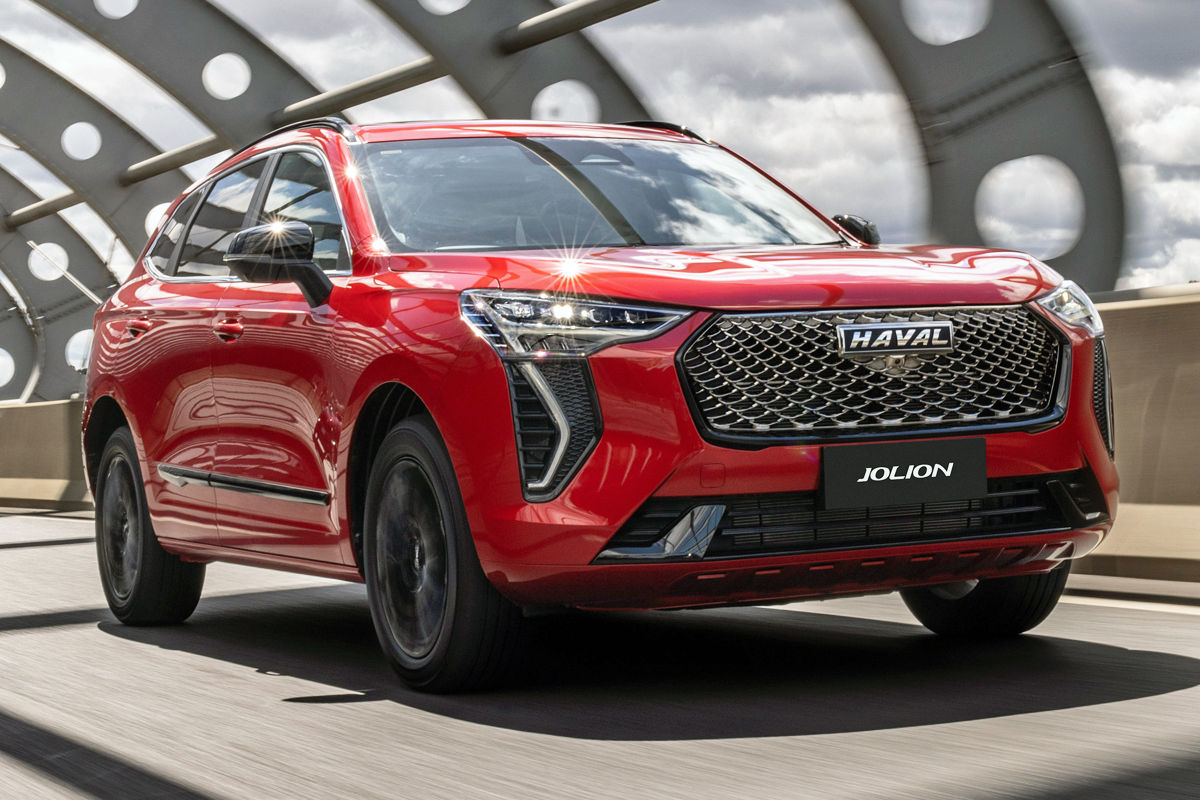
Ever thought the Haval Jolion needed some extra grunt and a more sophisticated rear suspension set-up? Well, meet the new Jolion S, which gains both of those things as well as somewhat sportier exterior styling.
Haval South Africa has confirmed to Cars.co.za it plans to launch the new Jolion S locally in the first quarter of 2023. Announced in Australia, the Chinese automaker’s new variant employs an uprated version of the standard model’s turbocharged 1.5-litre, 4-cylinder petrol engine, which is linked to the front axle via a 7-speed dual-clutch transmission as standard.
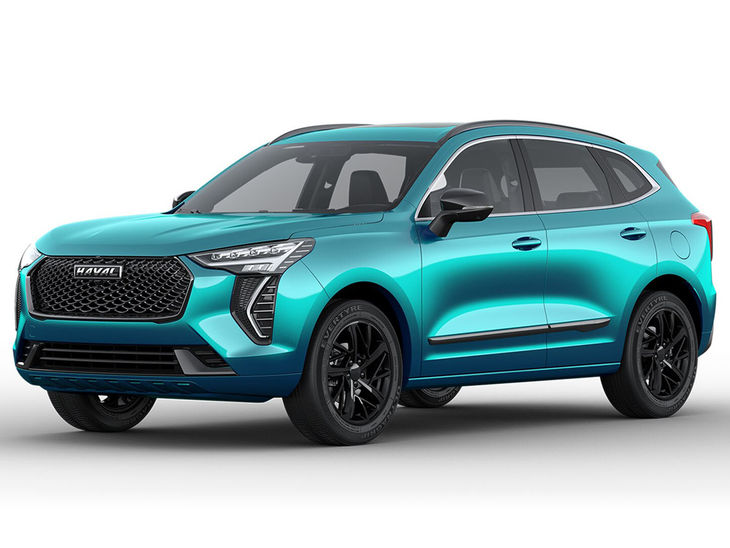
The Jolion S is offered in an exclusive new Tropical Green hue in Australia.
In “S” form Down Under, the motor’s peak outputs come in at 130 kW and 270 Nm – respective increases of 25 kW and 60 Nm compared with the standard SA-spec model. It’s not clear what sort of impact the extra power and torque have on acceleration, since Haval opts not to list a 0-100 kph sprint time. Claimed fuel economy, though, comes in at 7.5 litres per 100 km, interestingly matching that of the standard local model.
In addition to the powertrain upgrade, the Jolion S scores a more sophisticated rear suspension arrangement, ditching the basic torsion-beam set-up used by the standard model in favour of an independent multi-link system. According to Haval, the result is “enhanced ride and handling performance befitting of the S nameplate”.
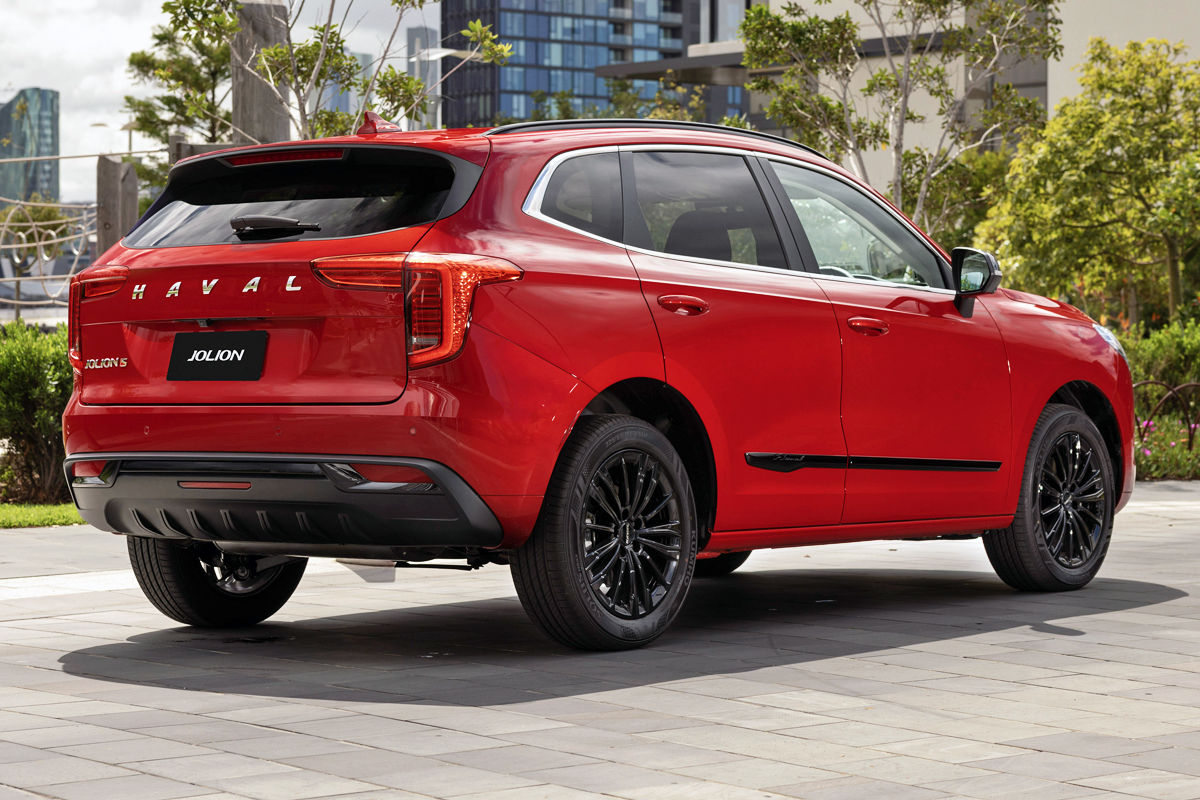
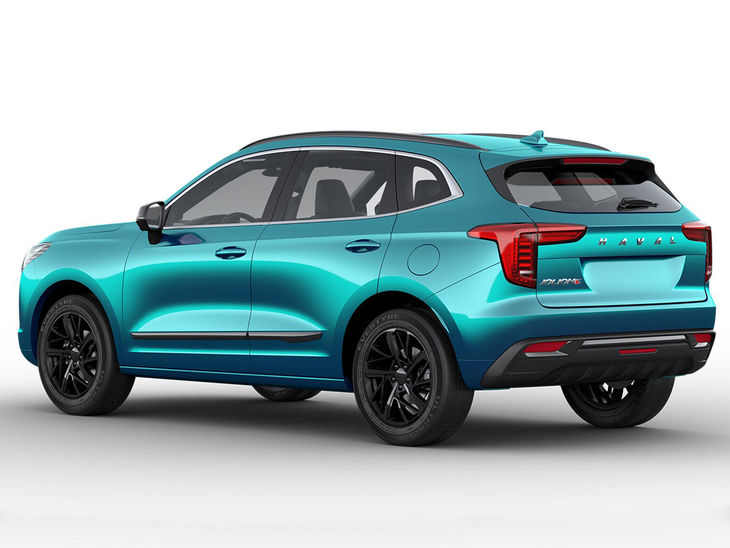
Note the black detailing and subtle red “S” badge.
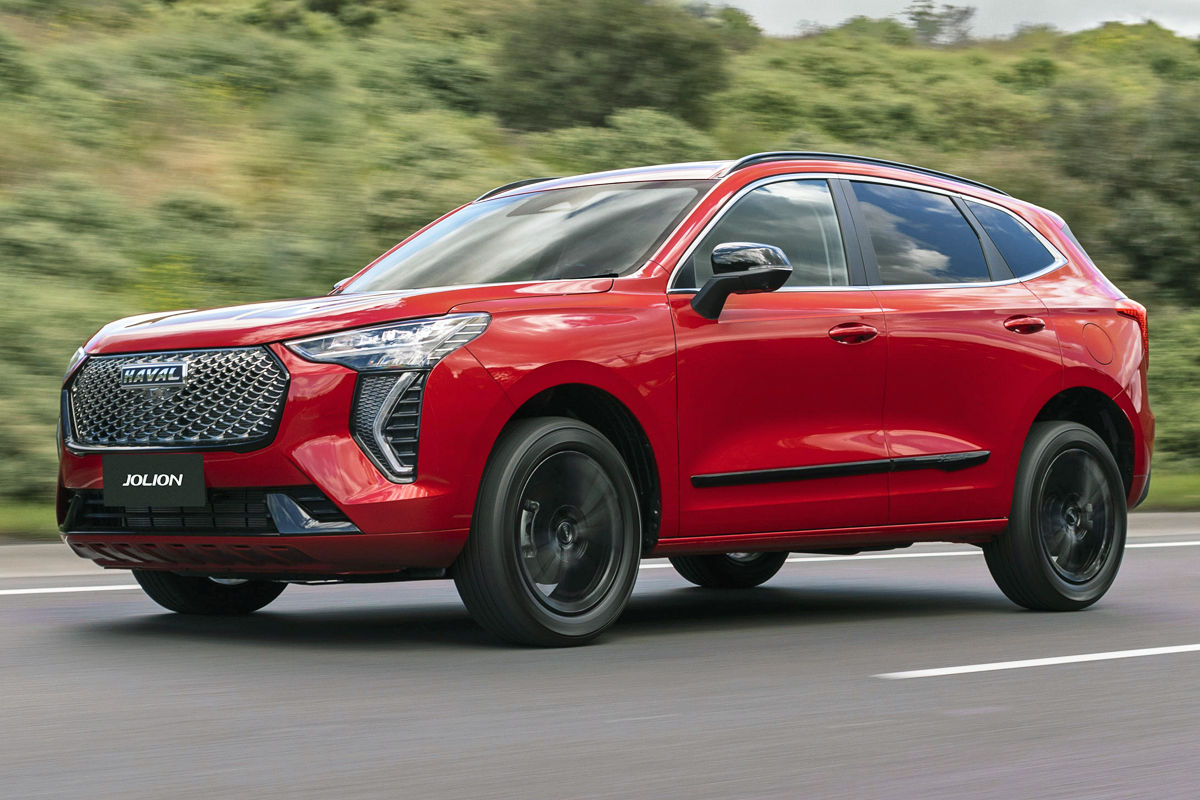
What about the cosmetic changes we mentioned earlier? Well, the “S” treatment includes a black finish for items such as the 18-inch alloys, side-mirror caps and roof rails. Sections of the front and rear bumpers also gain black trim, as do the protective finishing strips running along the crossover’s flanks. In Australia, the Jolion S is furthermore available in an exclusive new Tropical Green paint colour.
While Haval SA has yet to announce pricing details, expect the S-badged derivative to sit right at the summit of the local Jolion range, which currently runs from R342 950 to R446 950.
For the record, the Jolion range is proving particularly popular with South African buyers, with 7 477 examples registered locally in the first 10 months of 2022 (or a monthly average of nearly 750 units).
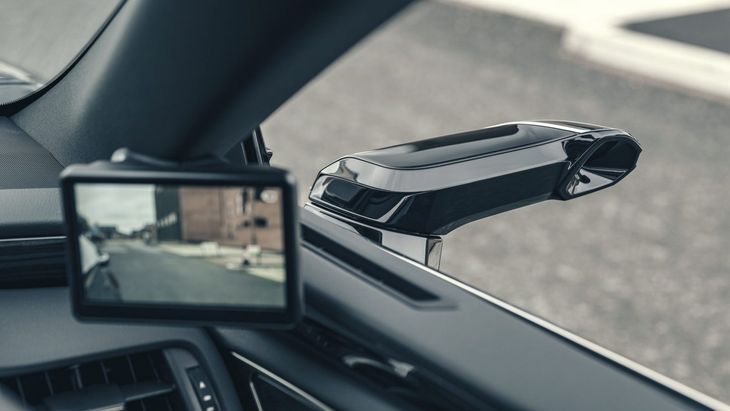
Some contemporary vehicles are already equipped with digital rearview mirrors, but why don’t we see more models – including bakkies – fitted with virtual side mirrors?
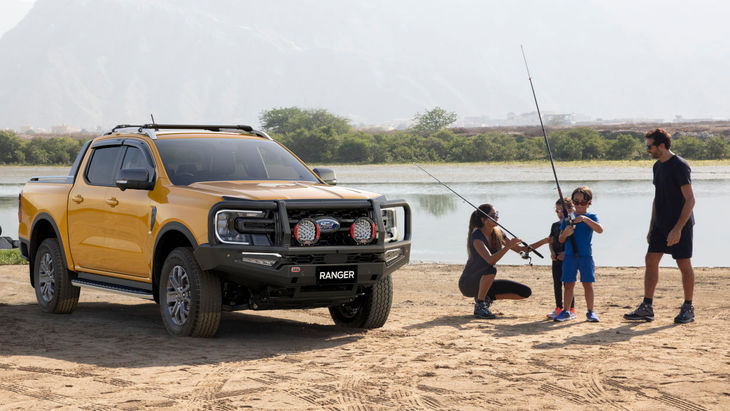
When the price of fuel is relatively cheap, manufacturers love to adorn vehicles with cosmetic addenda; think of roof rails or bull bars on a double-cab bakkie – if they look good, the cost of additional aerodynamic drag – higher fuel consumption – is considered worthwhile.
But now that prices at the pumps are high – a reality that’s unlikely to dissipate soon – isn’t it time that double-cab owners and designs start thinking differently about appearance?
Aero is the final frontier
Any range gain on an electric vehicle is handy. Hence Audi’s move to virtual side mirrors.
Aerodynamics matter. A lot. And not only for achieving irrelevant top-speed numbers. In real-world driving scenarios, excellent aerodynamics reduce wind noise, which improves cabin experiences for passengers that journey long distances.
But aerodynamics has an even more important role. One that directly relates to your monthly motoring cost: drag increases fuel usage.
To prove how much of a difference clever aerodynamics can make to vehicle energy use, consider the Mercedes-Benz EQXX concept EV, which has an amazingly low 0.17 drag coefficient and 1 400 km of real-world range – on a single battery charge. That’s 3 and a half times what most similarly sized and powered EVs can manage, which illustrates the massive influence of aerodynamics.
Any drag reduction matters – a lot
The very slick, and proven, Lexus digital side mirror set-up. A next-generation Hilux option, perhaps?
But how does the aerodynamic debate relate to your double-cab bakkie?
Little can be done about the length, width and height of a double-cab – and 4-door bakkies are only getting bigger from one generation to the next, aren’t they? Vehicles with a smaller frontal area have a correspondingly lower drag coefficient, but double-cab bakkies aren’t going to get any lower, because of the requirement for ground clearance to go off-roading – even if most Hiluxes, Rangers, D-Maxes, Navaras, Tritons etc never do.
Despite the size of double-cab bakkies, there are adaptions and design evolutions that can be hugely beneficial. And they don’t require complex engineering interventions.
One of the easiest wins for improved double-cab aerodynamics is to close the load box, or at least, that’s the theory. But, as with many things in the intangible realm of aerodynamics, everything is not as assumed.
Suppose you have ever left something lightweight in the load box of a bakkie and accelerated up to highway speed. In that case, you’d have witnessed the powerful aerodynamic swirling forces in the open load box.
A tonneau cover or roller shutter not only dramatically reduces wind noise. It can theoretically trim fuel consumption. But what is the actual saving?
The best research states that adding a load box cover will reduce your bakkie’s drag coefficient by 12%. – at best. That percentage is not directly attributable to fuel saving, however – the measurable saving in petrol- or diesel consumption at cruising speeds isn’t enormous. It calculates to about 0.5 L/100 km at 120 kph, or about R12 per 100 km (at current fuel prices). At lower speeds, the fuel you’d save by driving with a tonneau cover in place becomes negligible.
An obvious aero win
All those front-end accessories add drag. Getting rid of the side mirrors would rebalance things (somewhat).
As double-cab bakkies have evolved from off-road- to leisure and lifestyle vehicles, accessorising has boomed. Owners need to scrutinise if the additional drag created by a roof-mounted LED light bar, which is rarely used, might be worth it.
A mystery in all vehicle designs, including double-cab bakkies, is the continued presence of side mirrors. Considering the enormous advances in digital cameras, processors, screen- and streaming technology, it’s amazing that the trusty side mirror has not been widely replaced with much smaller, sleeker digital camera pods.
Japanese brands such as Lexus and Honda have implemented camera pods. Lexus is a market leader in Japan, where its ES300 h has offered digital side mirrors since late 2018. The Lexus system is particularly interesting to South African bakkie owners, as it could justify an intra-brand redeployment, of similar technologies, throughout Toyota’s hugely profitable bakkie business.
Bakkie side mirrors are just too huge
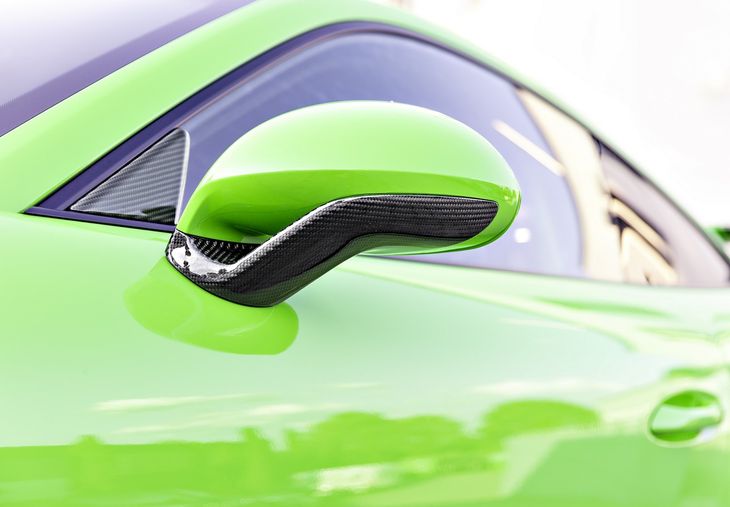
Porsche produces very shapely side mirrors, but replacing glass with a camera pod makes for a much smaller total assembly.
Side mirrors account for a drag coefficient of 2- to 7%, depending on their sizes and shapes. Most bakkies have oversized side mirrors – and they’re not particularly aerodynamic. You’ll hardly see a Porsche 911 GT3 RS type side mirror silhouette on a Hilux double cab; therefore, most bakkies edge towards the 7% side-mirror drag coefficient.
Better fuel consumption is not the only benefit of fitting virtual side mirrors. Vehicles without conventional side mirrors generate dramatically less wind noise, especially at cruising speeds. During those long-distance journeys, less wind noise makes for a more pleasant cabin environment.
The third benefit of virtual side mirrors is increased driver confidence and reduced low-speed vehicle placement anxiety. Have you ever tried to navigate a double-cab bakkie into a very tight parking space, or between two narrow obstacles on a demanding off-road route? What are the outermost contact points risking damage? Exactly. The side mirrors.
If the virtual side mirror is such a win, why haven’t manufacturers introduced them on double-cab bakkies? Cost and vulnerability. The initial integration cost of a digital side mirror system isn’t the issue – the replacement cost is.
Why large side mirrors endure
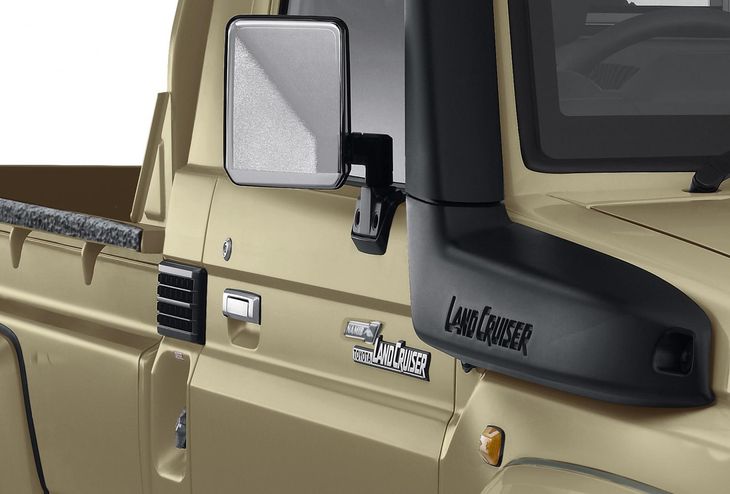
Nineteen-eighties “aero” remains in production on the current ‘Cruiser 70 Series.
Side mirrors are hugely vulnerable contact points on any vehicle; they’re designed to be sacrificial. We’ve all negligently reversed into a pillar at a very low speed and experienced a side mirror “breaking apart”. It is engineered to do that, instead of resisting impact, partly as a pedestrian crash safety requirement.
The sacrificial design of analogue side mirrors means they can be pieced together quite easily if the damage is slight. With a digital side mirror the replacement cost, as with all things automotive and digital, is significant.
Like many lead technologies, virtual side mirrors require scale to be produced at a reduced cost and become a viable design integration for standardisation. But their potential is enormous, especially for double-cab bakkies, where vehicle size and frontal area are problems inherent to the vehicle’s design purpose (off-road driving) – and unlikely to change.
Wouldn’t it be great if your bakkie was quieter at cruising speeds, had better side-mirror reference vision at night, used less fueland was easier to park? Virtual side mirrors would deliver all those solutions in a simple design evolution. And with Lexus being the proven technology leader with real-world digital side mirrors, Toyota’s bakkies might, um, lead the way…
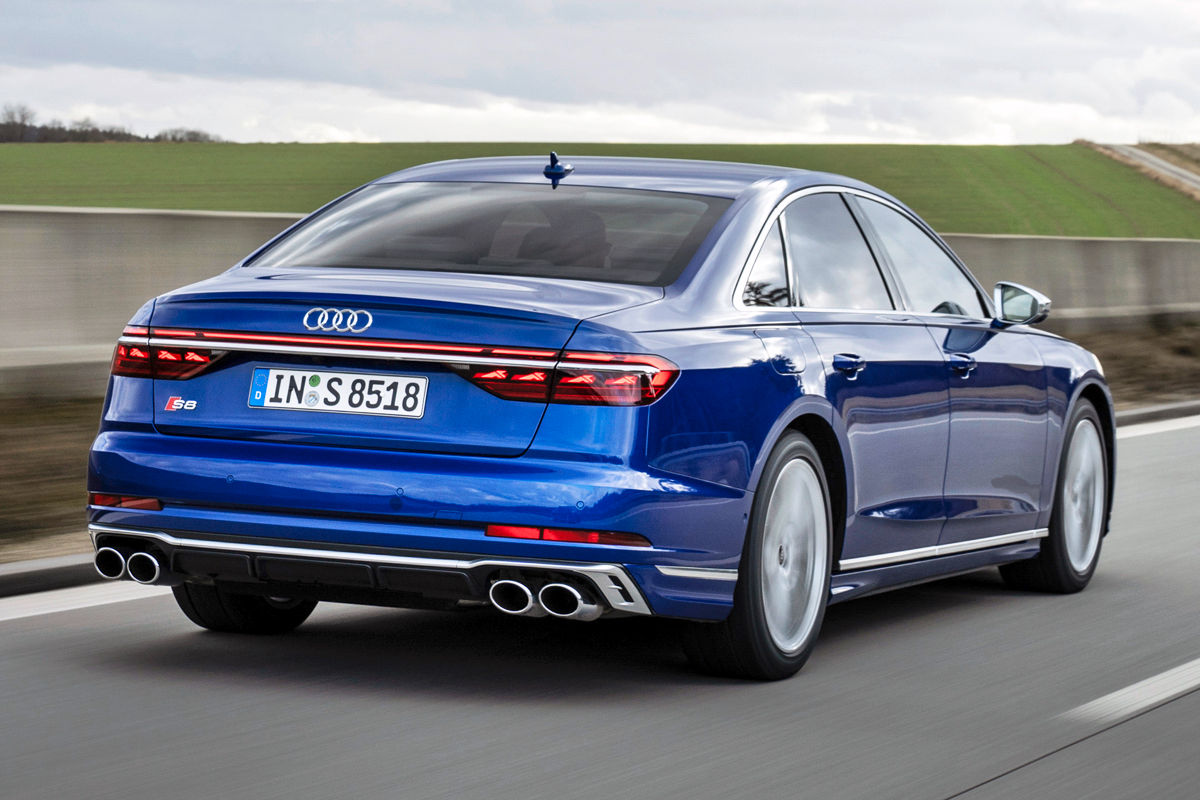
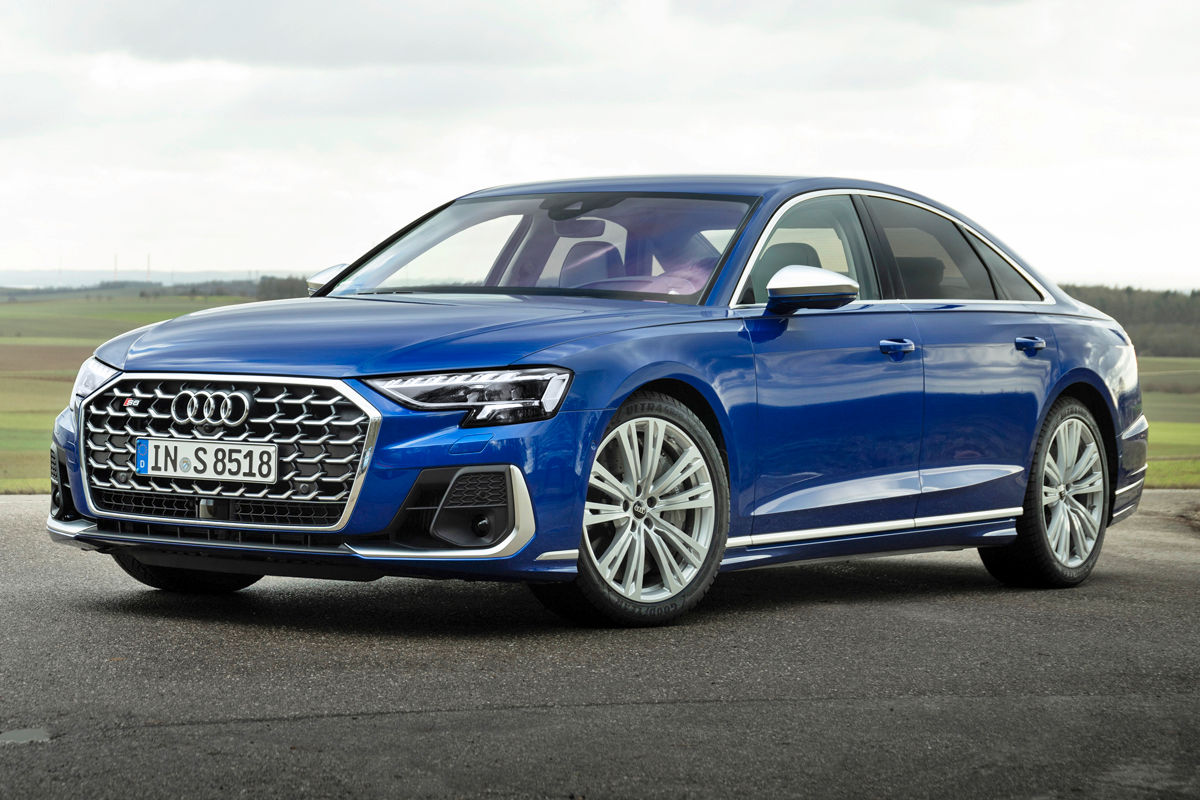
The refreshed Audi S8 has touched down in South Africa, retaining its 420 kW twin-turbo V8 petrol engine. Here’s how much Ingolstadt’s rapid luxury saloon costs…
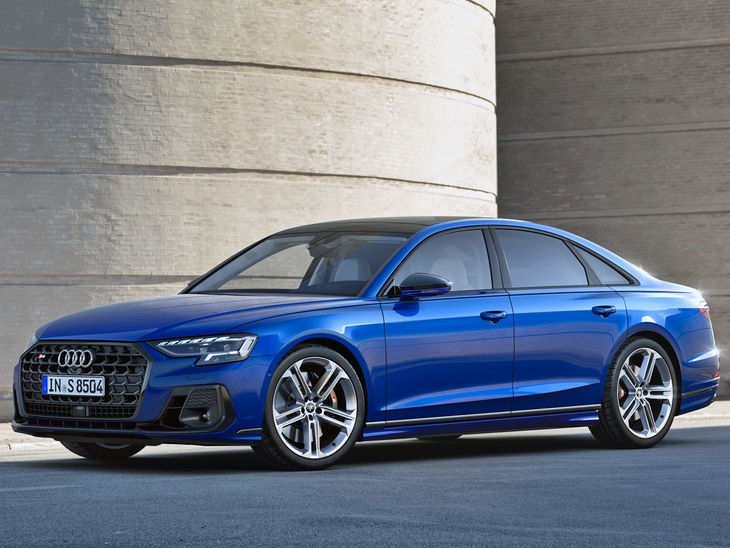
Audi South Africa has announced pricing for its refreshed S8 sedan, which again does duty as the only A8 derivative available locally.
As before, the performance version of the D5-generation luxury saloon draws its urge from a twin-turbo 4.0-litre V8 petrol engine, which generates an unchanged 420 kW and 800 Nm, delivered to all four wheels via an 8-speed automatic transmission. The result is again a sprint from 0-100 kph in a claimed 3.8 seconds.
The price? Well, the updated S8 starts at R2 759 000, which is some R275 000 more than what the pre-facelift version cost at launch in April 2021.
Predictive active suspension – which is able to load or unload each wheel with additional power individually via an electric motor and thereby actively regulate the position of the chassis in any driving situation – is again part of the standard equipment list.
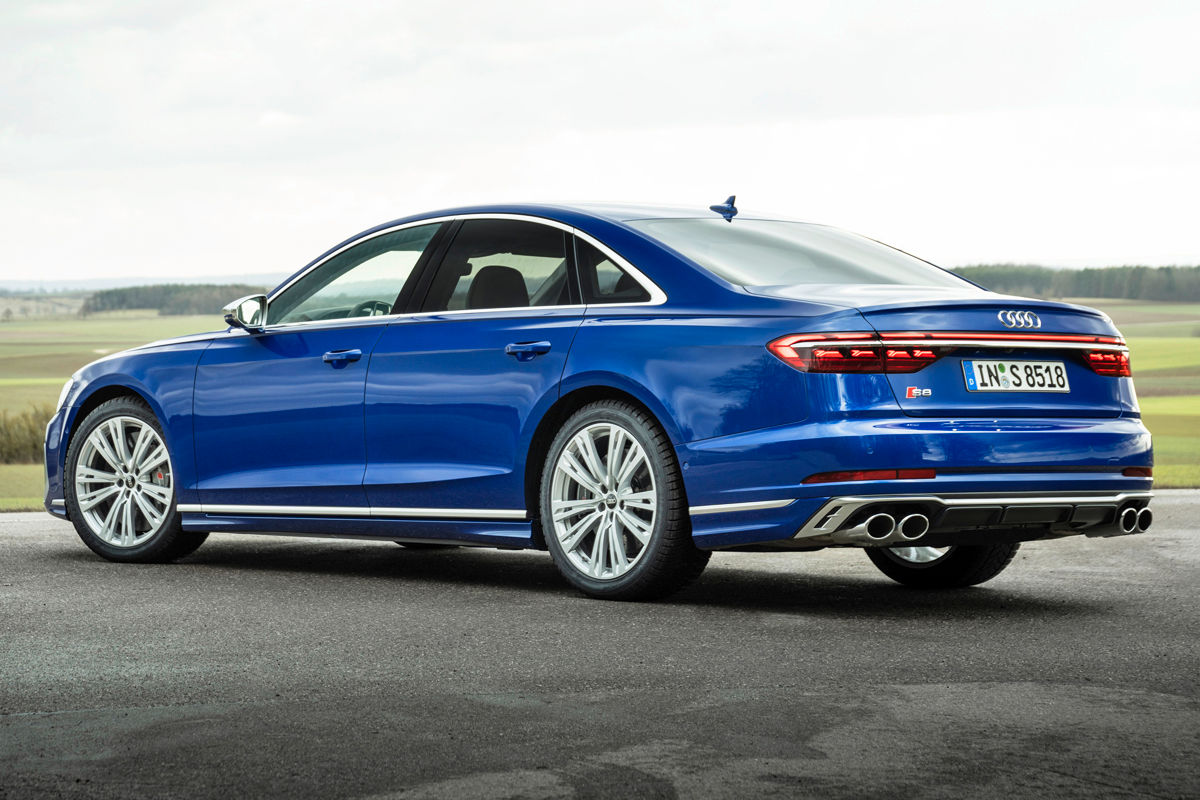
The mild refresh is largely a cosmetic one, with the latest version of the S8 gaining a marginally sharper exterior design. The base of the single-frame grille, for instance, is now wider, while chrome trim pieces that increase in size from bottom to top adorn the grille itself.
The side air intakes are more upright than before, while the headlight design has been tweaked as well. As before, the S8 sports familiar Audi Sport exterior components, from four tailpipes and distinctive blades around the air intakes to digital Matrix LED headlights and OLED taillights.
Audi SA also offers a R20 000 Black Appearance Package for the S8.
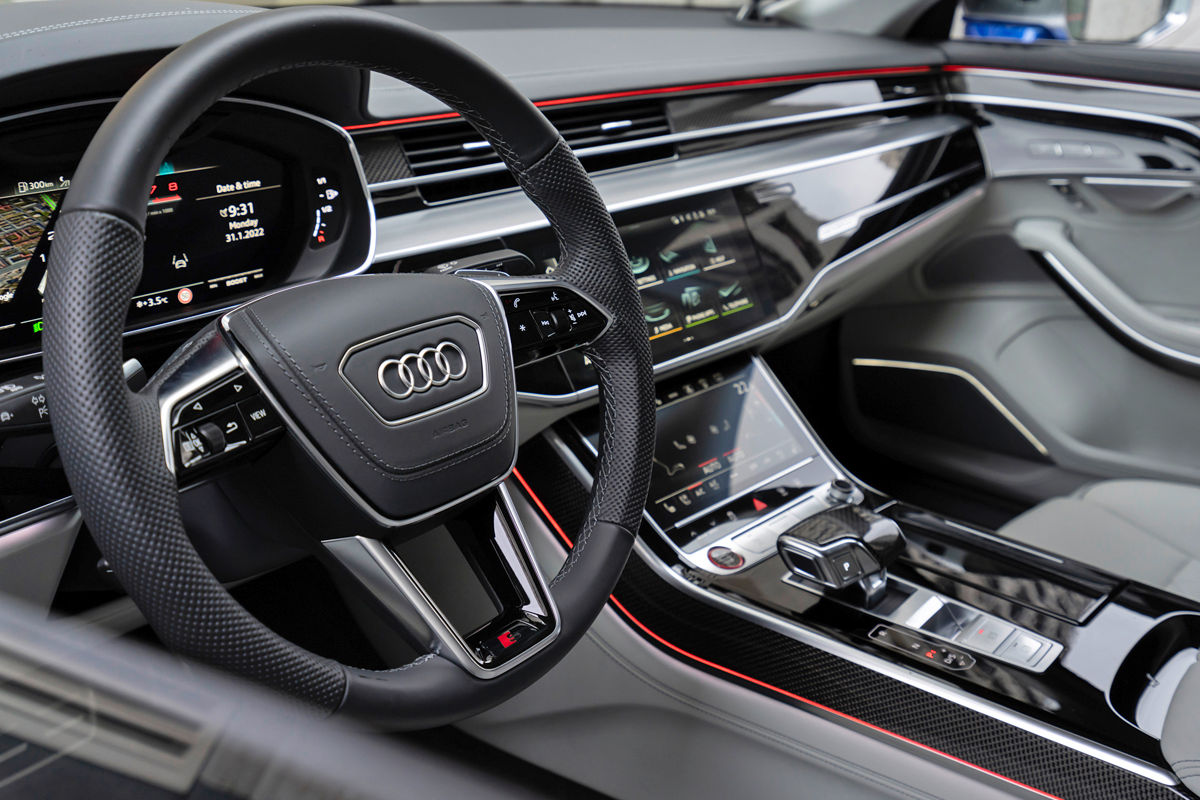
Inside, you’ll find the Ingolstadt-based firm’s Virtual Cockpit Plus as well as the latest MMI Navigation Plus system, while a night-vision assistant system is available as an option. The touch-response operating concept remains in place, relying on a pair of displays (10.1 and 8.6 inches, respectively) and voice control.
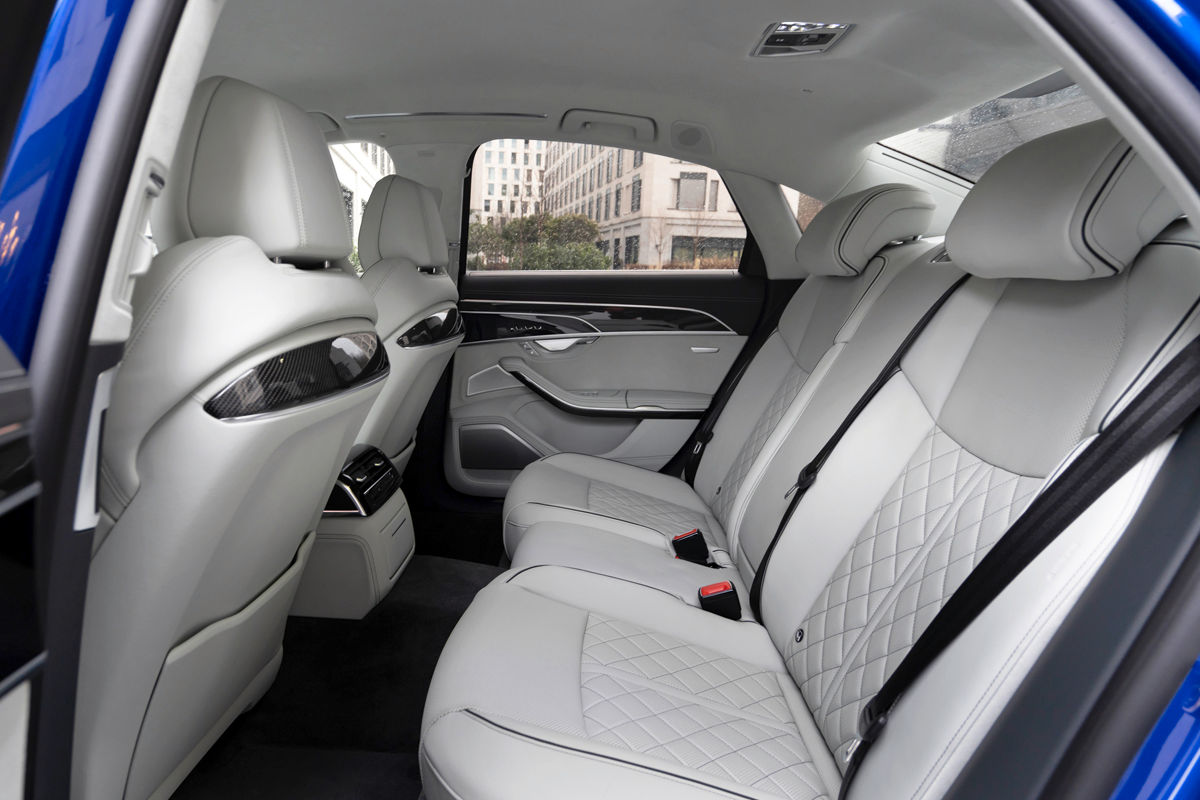
Standard features include 21-inch alloy wheels, all-wheel steering, adaptive cruise control, Valcona leather upholstery (with diamond stitching), seat ventilation (with a massage function) and a Bang & Olufsen premium sound system (though you can upgrade to an “advanced” version for an extra R105 000).
Specify the optional rear seat package (for an additional R60 000) and passengers back there score a 3-seat system including a pair of electrically adjustable individual pews. The latter also gain pneumatic 4-way lumbar support, a memory function and crash protection via side airbags. Infotainment is also available for rear-seat passengers in the form of two 10.1-inch displays, which add R33 500 to the price.
How much does the Audi S8 cost in South Africa?
Audi S8 4.0 V8 TFSI quattro – R2 759 000
A 5-year/100 000 km Audi Freeway Plan is included in the purchase price.
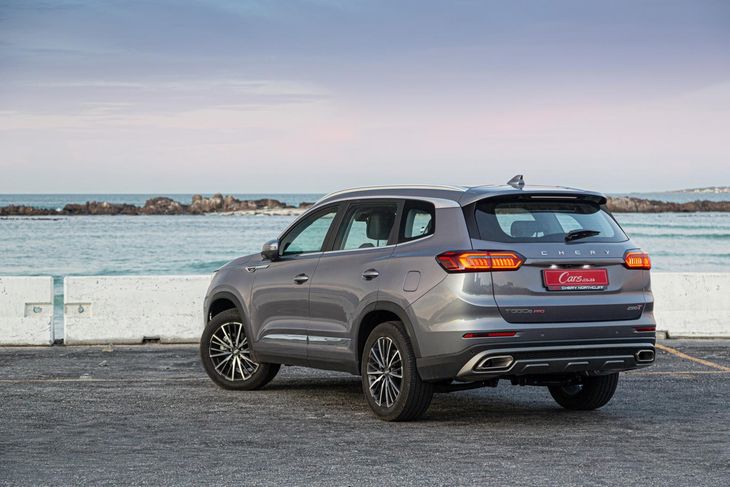
Earlier this year, we tested the flagship version of the Chery Tiggo 8 Pro; we were highly impressed with it, but could the more affordable Distinction derivative be the pick of the line-up?
We like: Myriad standard features, good build quality, seating comfort, value for money
We don’t like: Slightly stiff ride at low speeds, fuel economy
There aren’t many 7-seater medium SUVs in our market, but of those, the Tiggo 8 Pro offers astonishing value for money.
Where does the Chery Tiggo 8 Pro Distinction fit in?
Since its local introduction earlier this year, the Tiggo 8 Pro has become a strong seller for Chery; in fact, based on Naamsa’s monthly sales figures, the resurgent Chinese brand regularly features among the top 10 manufacturers in the South African new-vehicle market. As we mentioned in our review of the flagship Executive, the Tiggo 8 Pro is a deeply impressive product offered at a value-packed price point, so its sales success shouldn’t come as a surprise!
This Distinction derivative, in turn, is priced at just under R500 000 and, at first glance, it appears to offer astonishing value for buyers looking for an upmarket, well-specified medium SUV that can seat 7 occupants. An entry-level VW Tiguan Allspace is priced around R120 000 more (with fewer features), while a new rival – the Mahindra XUV700 – is available as a 7-seater from R524 999. We have yet to review the Indian contender, but it appears well-specced for the price.
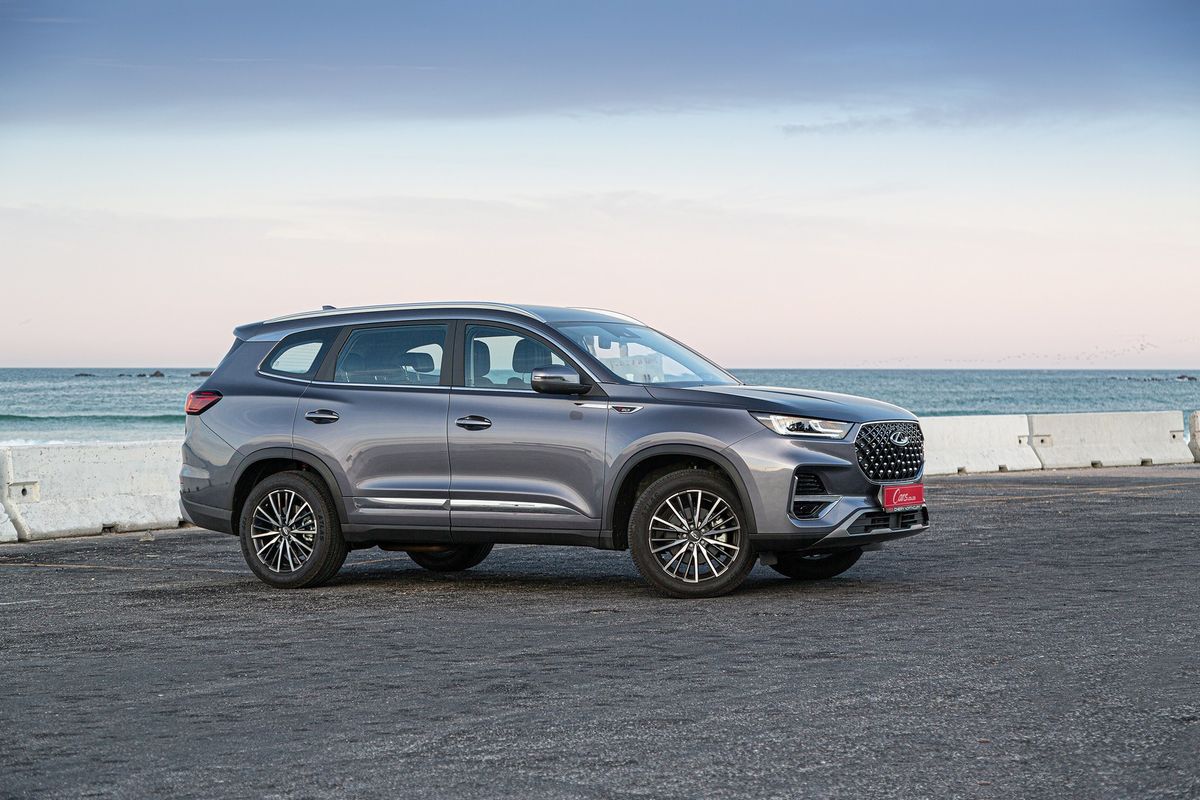
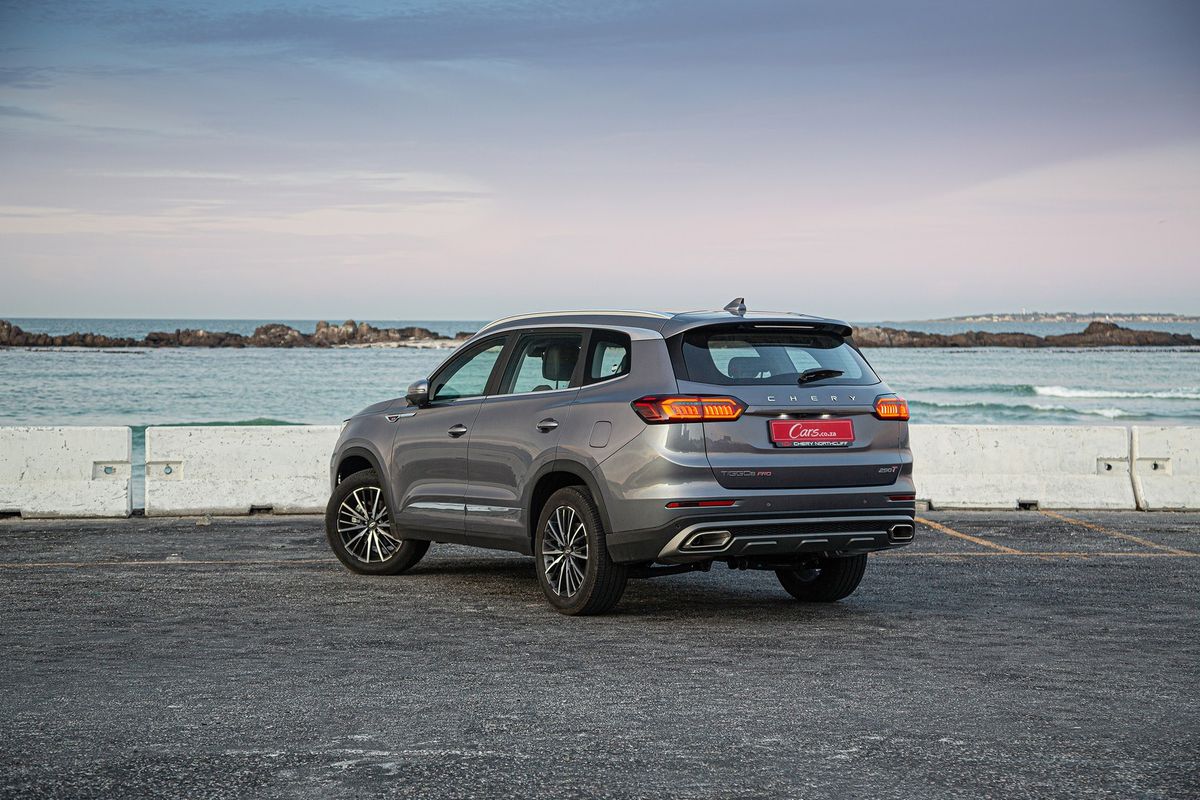
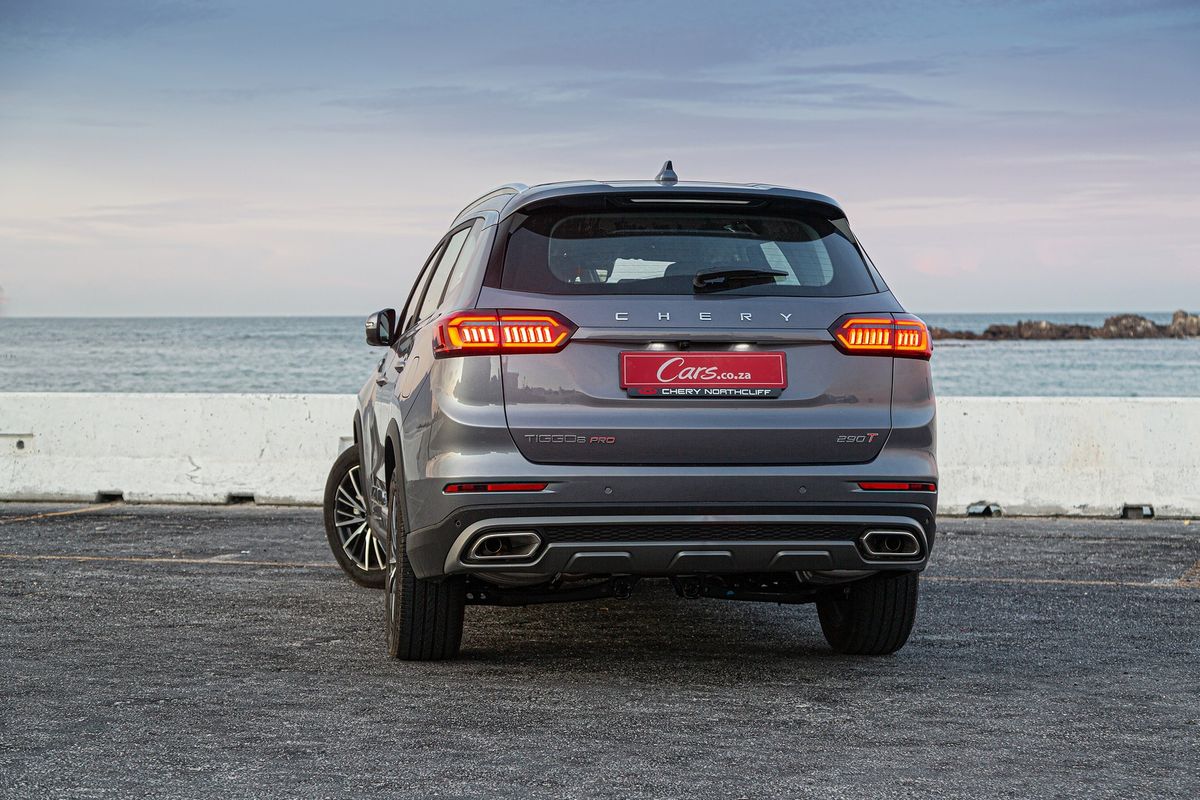
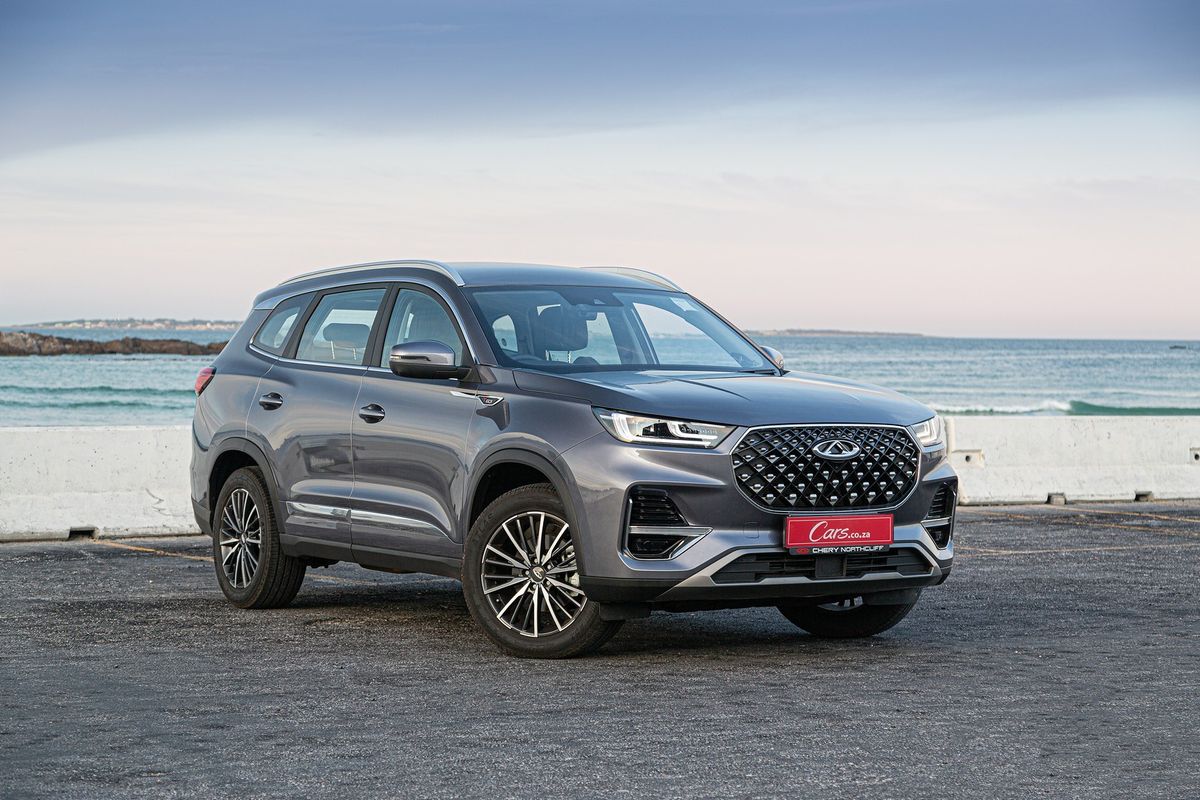
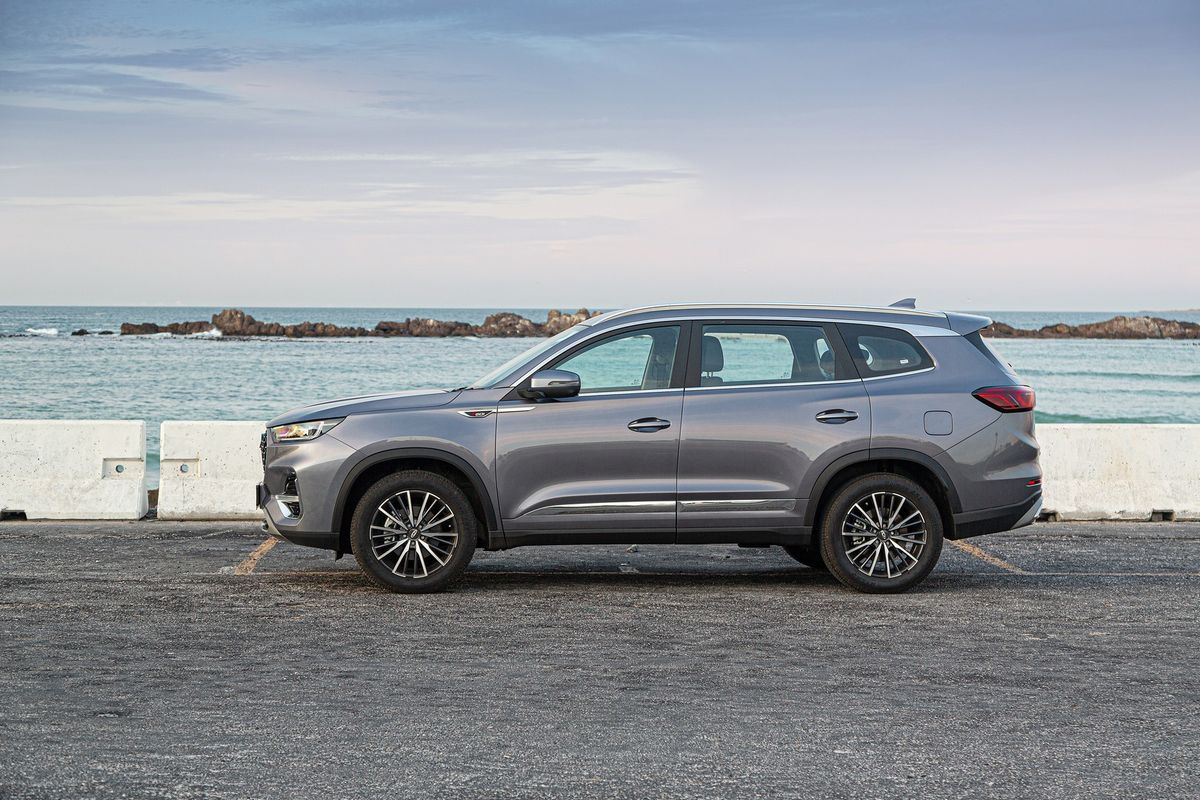
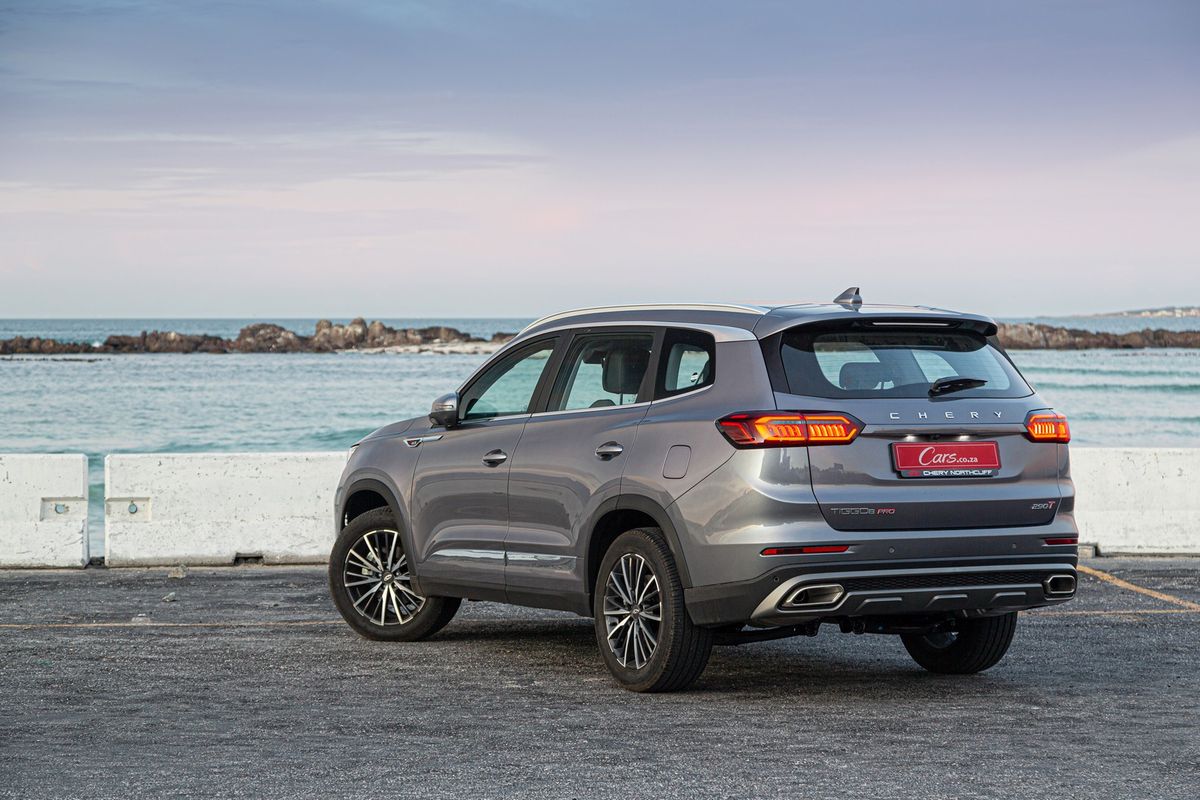
There’s no cosmetic penalty if you choose the Distinction… it looks virtually identical to its top-rung Executive sibling.
How the Chery Tiggo 8 Pro Distinction fares in terms of…
Design and Packaging
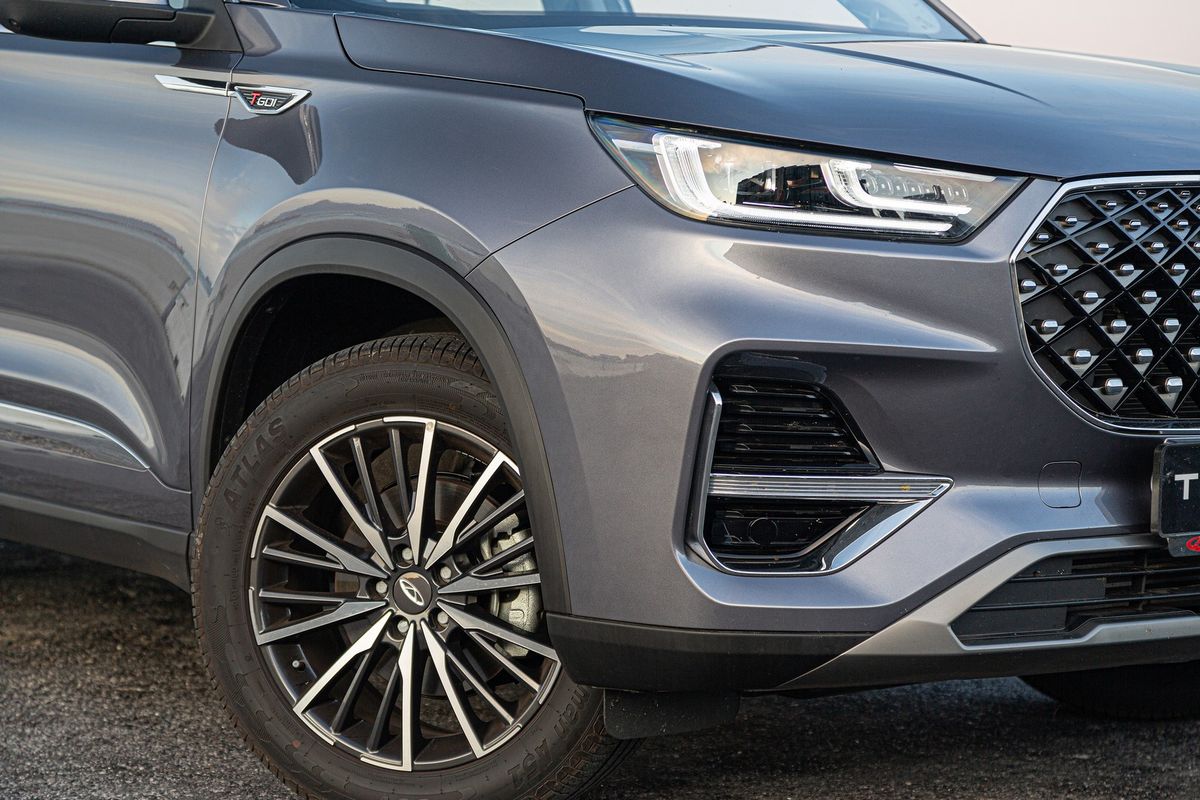
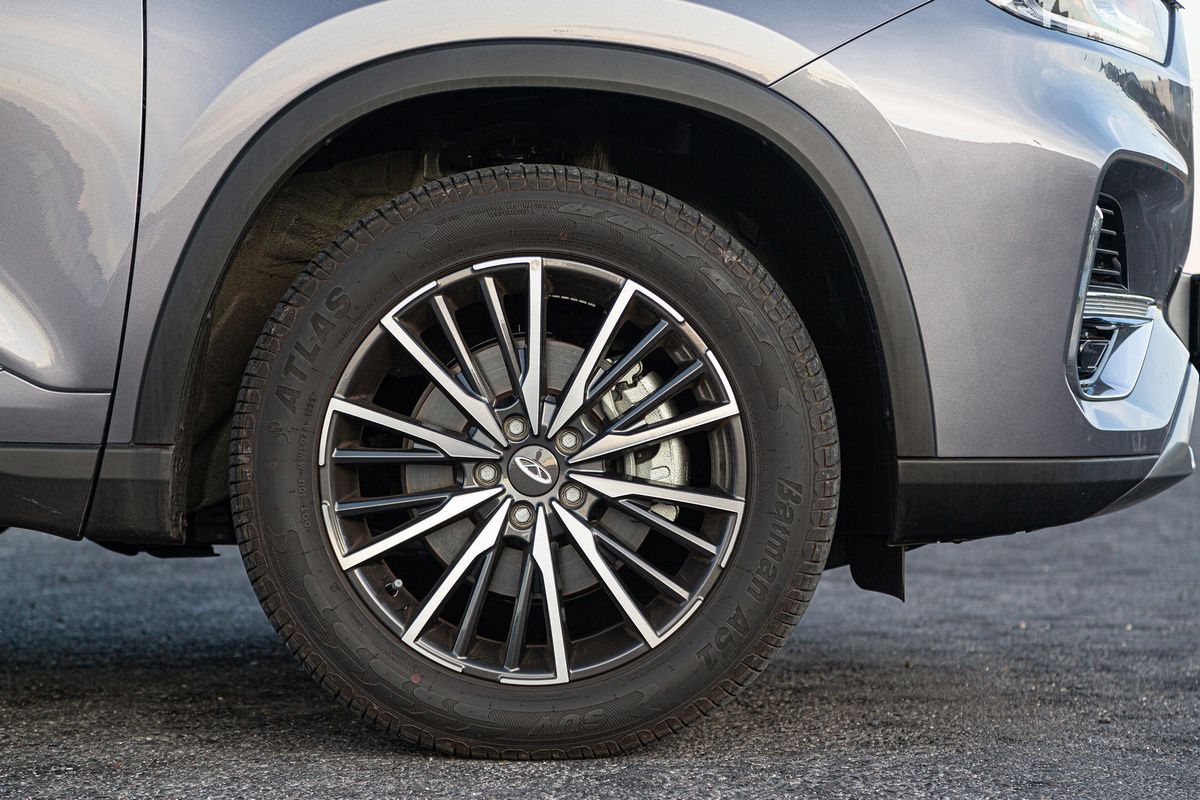
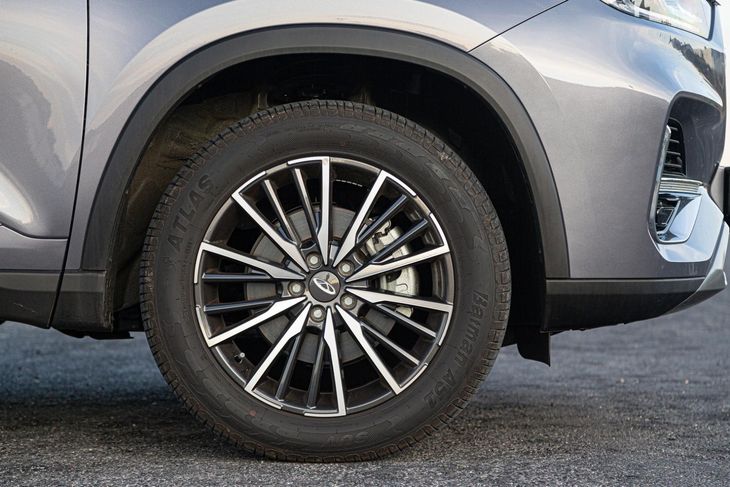
When this test unit arrived at our office, we were hard-pressed to spot the differences between it and the flagship Executive. The Distinction still rides on neat, dual-tone 18-inch wheels, has LED-infused head- and taillamps (that “glow” when you approach the car with the key in your pocket) and the test unit’s dark metallic grey paintwork looked pristine. From the outside, the only real difference is that the pricier Executive has a panoramic sunroof – the Distinction doesn’t.
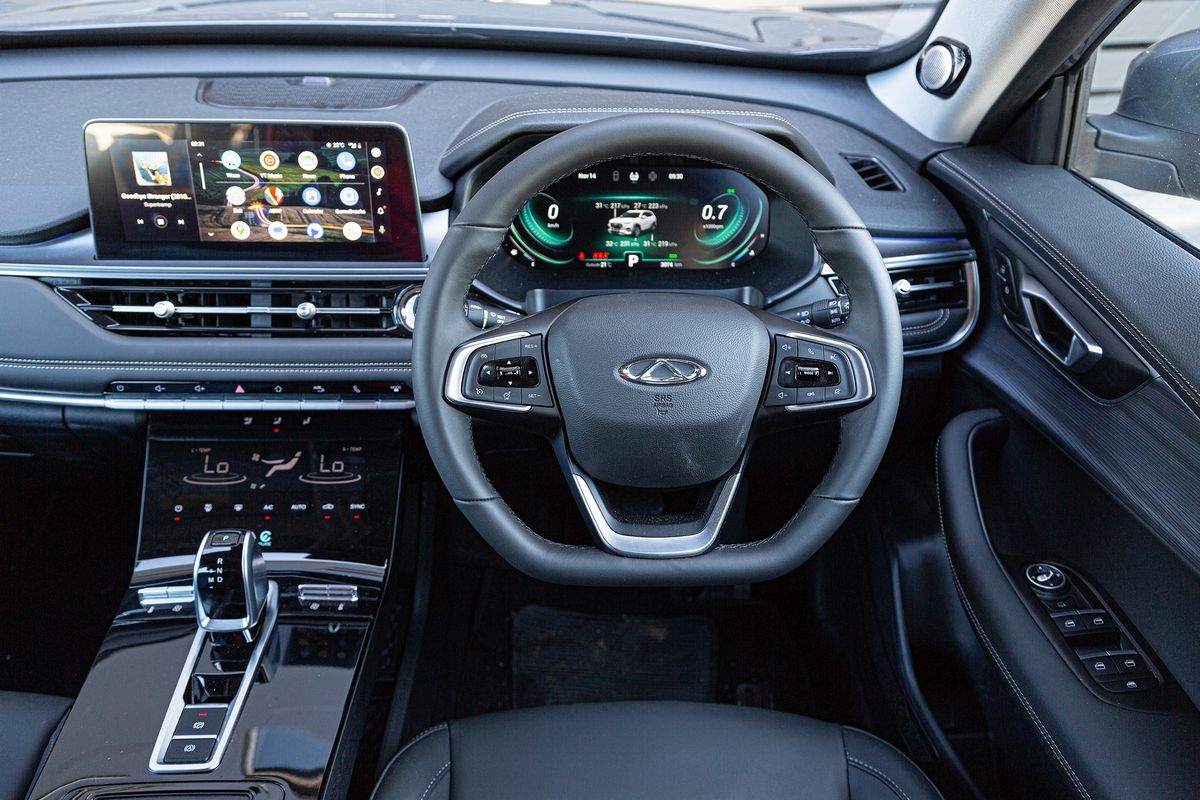
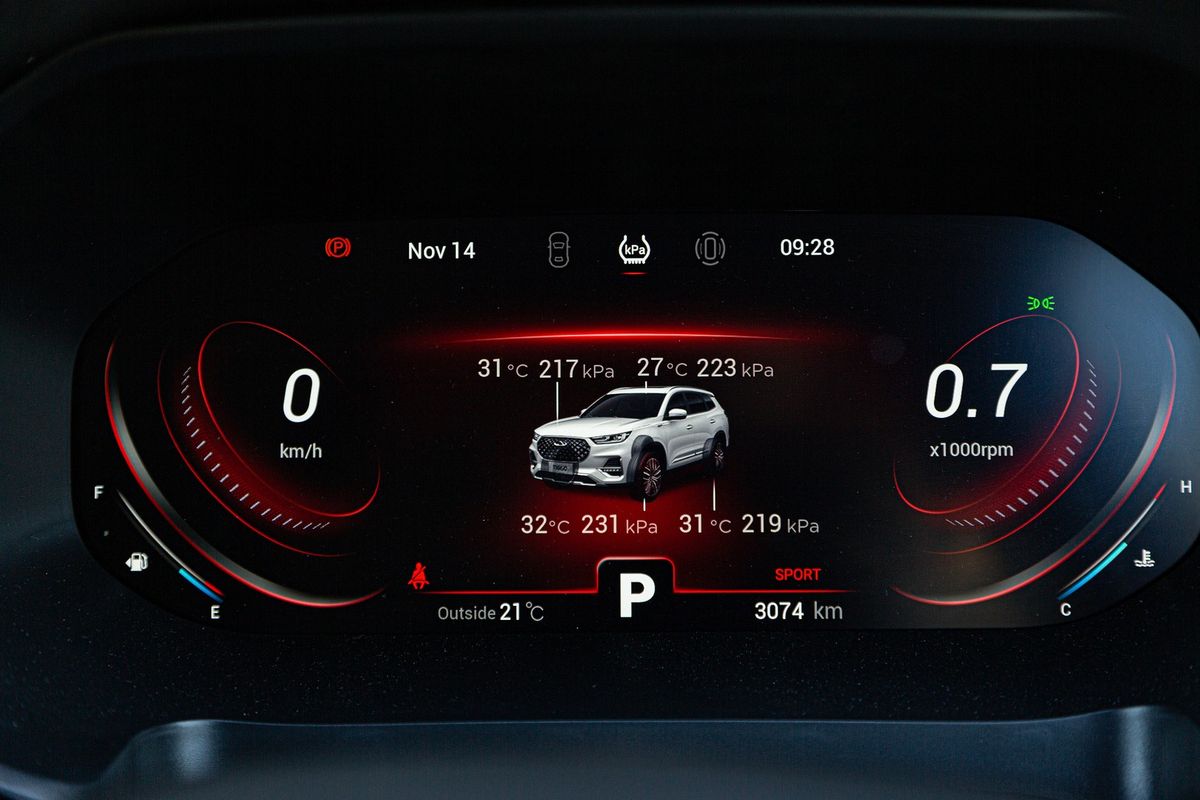
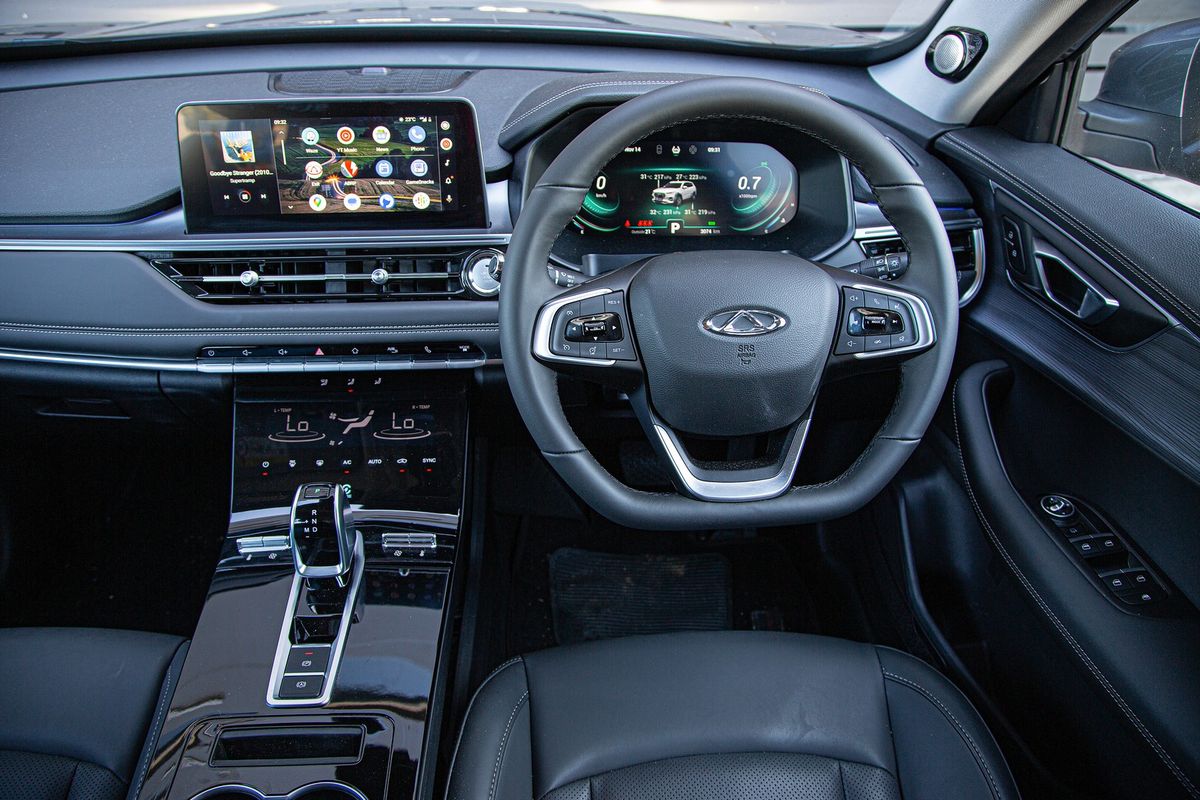
The tech-laden cabin of the Tiggo 8 Pro Distinction is characterised by elegant black trim with high-quality finishes.
The differences between the derivatives are (slightly) more apparent inside. Whereas the Executive has smart light brown, diamond-stitched (artificial) leather, the Distinction has black trim. By “faux hide” standards, the material used in the Tiggo 8 Pro feels particularly smart. The derivatives’ fascia designs are almost identical, but the fiddly secondary touchscreen of the higher-priced Executive is replaced with a non-touch screen to display HVAC settings. We prefer this setup!
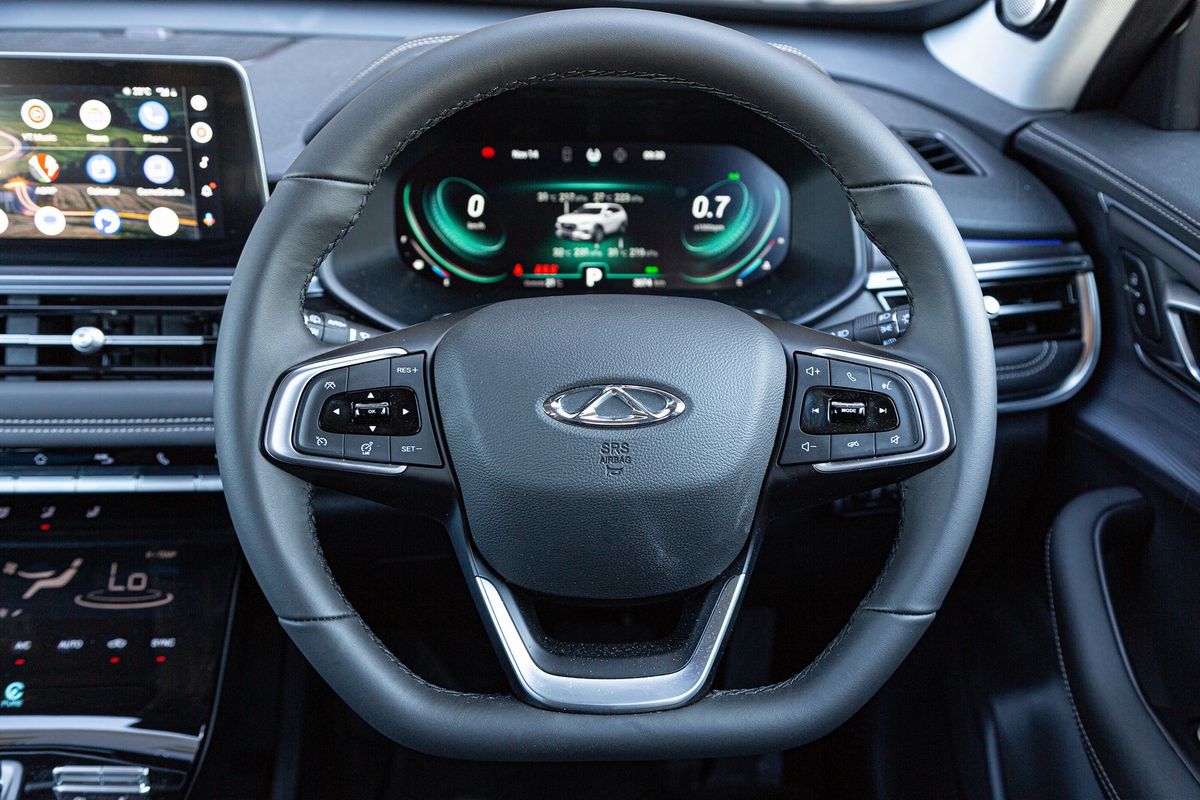
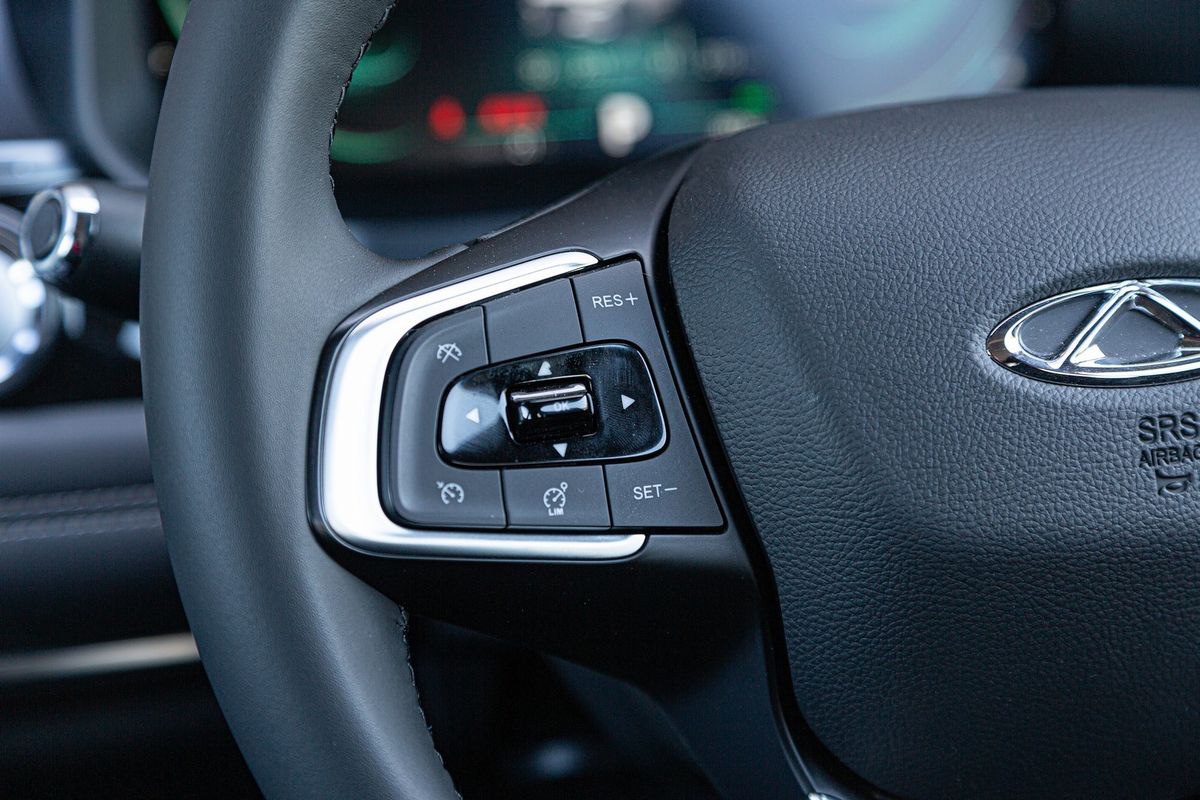
The seats are superbly comfortable, especially the headrests. When seated behind the Chery’s multifunction steering wheel, you should find it easy to find a satisfying driving position, because the steering column offers a wide range of adjustment (both rake and reach). What’s more, the driver’s seat is electrically adjustable, but bear in mind that the Distinction derivative lacks the toggle for lumbar support, which is standard on the Executive.
The fascia’s secondary digital screen only displays info (it does not support touch inputs), but we prefer it that way.
Move to the 2nd row and you can adjust your legroom to either maximise your own stretch-out space or to give the 3rd-row occupants (who’d be seated directly behind you) a little more legroom. Second-row passengers can also adjust their backrest angles, but we found the Tiggo 8 Pro’s cabin a tad narrow for seating adults 3-abreast. It is worth noting that the width of the Chery’s cabin is narrower than that of the new Mahindra XUV700, for example.
Finally, as far as the 3rd row is concerned (accessing it is easy enough – just pull a lever to tilt/slide a 2nd-row seat forward), the Tiggo 8 Pro offers sufficient space for kids (or smaller adults, on shorter trips). A 1.8-metre-tall person’s head will touch the roof lining at the back and, if an occupant of that height needs to be accommodated in comfort, the 2nd row will have to be moved forward by quite a large distance. Still, the Chery’s no worse than its competitors in that regard…
Second-row occupants have plenty of legroom, but they may have to sacrifice some of that for the sake of rearmost passengers’ comfort.
Performance and Efficiency
The Tiggo 8 Pro Distinction is powered by the same 1.6-litre 4-cylinder turbopetrol engine that propels the flagship Executive derivative. It should come as no surprise, then, that the former has identical claimed performance and fuel economy figures to the latter. On paper, the Chery’s engine delivers healthy outputs of 145 kW and 290 kW, particularly when compared with the peak numbers of the Tiguan Allspace’s 1.4-litre turbopetrol mill (110 kW and 250 Nm). However, the new Mahindra XUV700’s 2.0-litre 4-cylinder turbopetrol powerplant delivers both more power and torque (149 kW and 380 Nm).
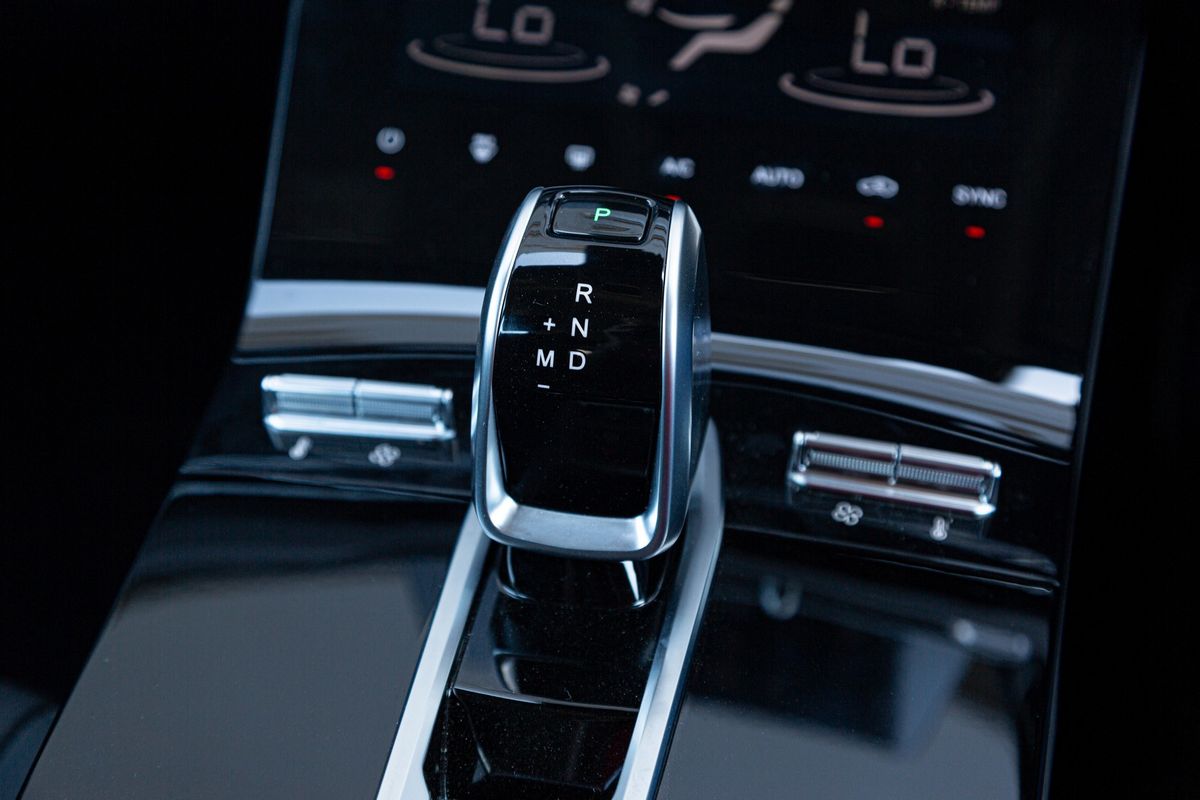
The Chery’s engine is mated with a 7-speed dual-clutch automatic transmission, which drives the vehicle’s front wheels. Chery claims a 0-100 kph time of 8.9 sec, which seems optimistic, but then again, the throttle- and shift-pattern mapping is such that the Tiggo 8 Pro (which is lighter than both aforementioned rivals) feels quite sprightly off the mark. There are, of course, Eco and Sport modes should you wish to tune the car to suit on-road conditions – or your diving style.
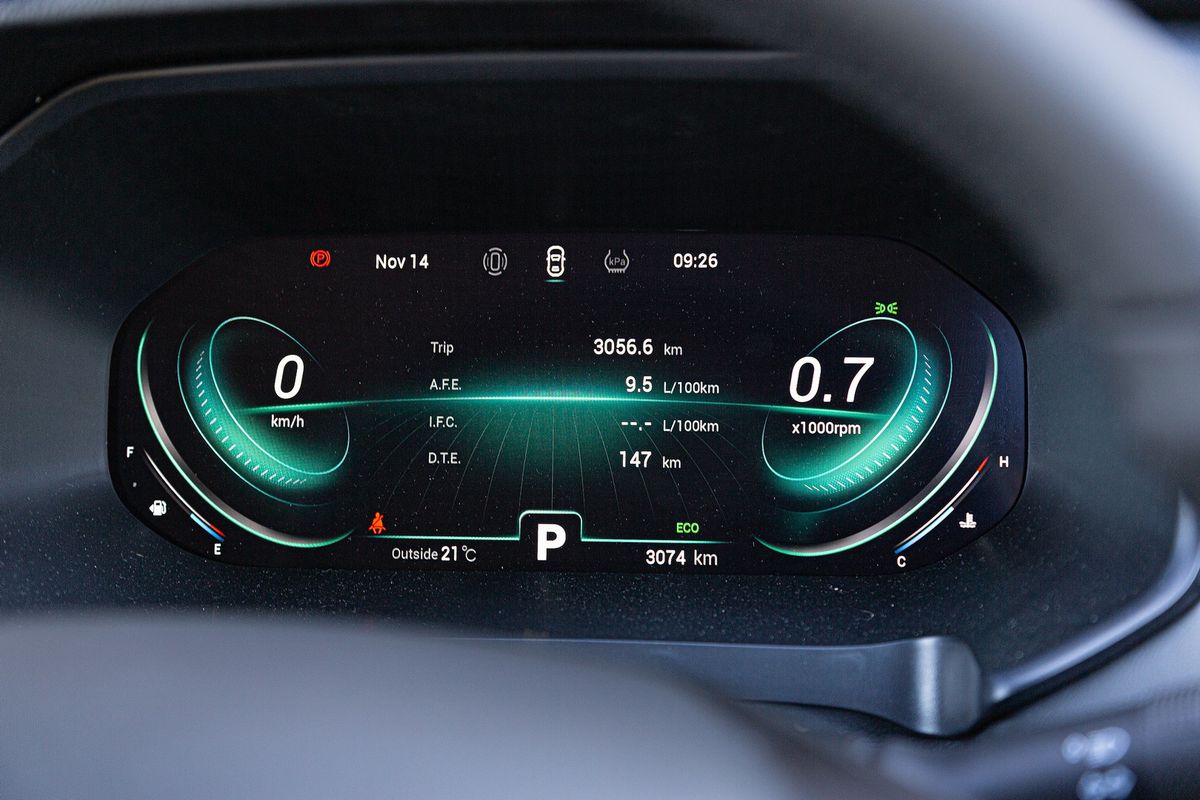
When the Eco drive mode is engaged, the digital instrument cluster adopts a green display scheme, but the numbers don’t lie.
While performance around town is generally very good – and the Tiggo 8 Pro is a fine cruiser – the engine’s relative lack of power is noticeable when you need to exact overtaking acceleration at – or near – the national speed limit (particularly when the vehicle is fully laden with passengers and their goods/luggage).
What’s more, we found that the Distinction’s fuel consumption was on the high side – a characteristic that it shares with several contemporary Chinese vehicles. However, owners of this model have recounted that, after a period of running in the engine, its thirst becomes less intense. For what it’s worth, our average was around 9.5 L/100 km, which translated to 10.5 km/L and a range of around 540 km, because the tank is relatively small (51 litres).
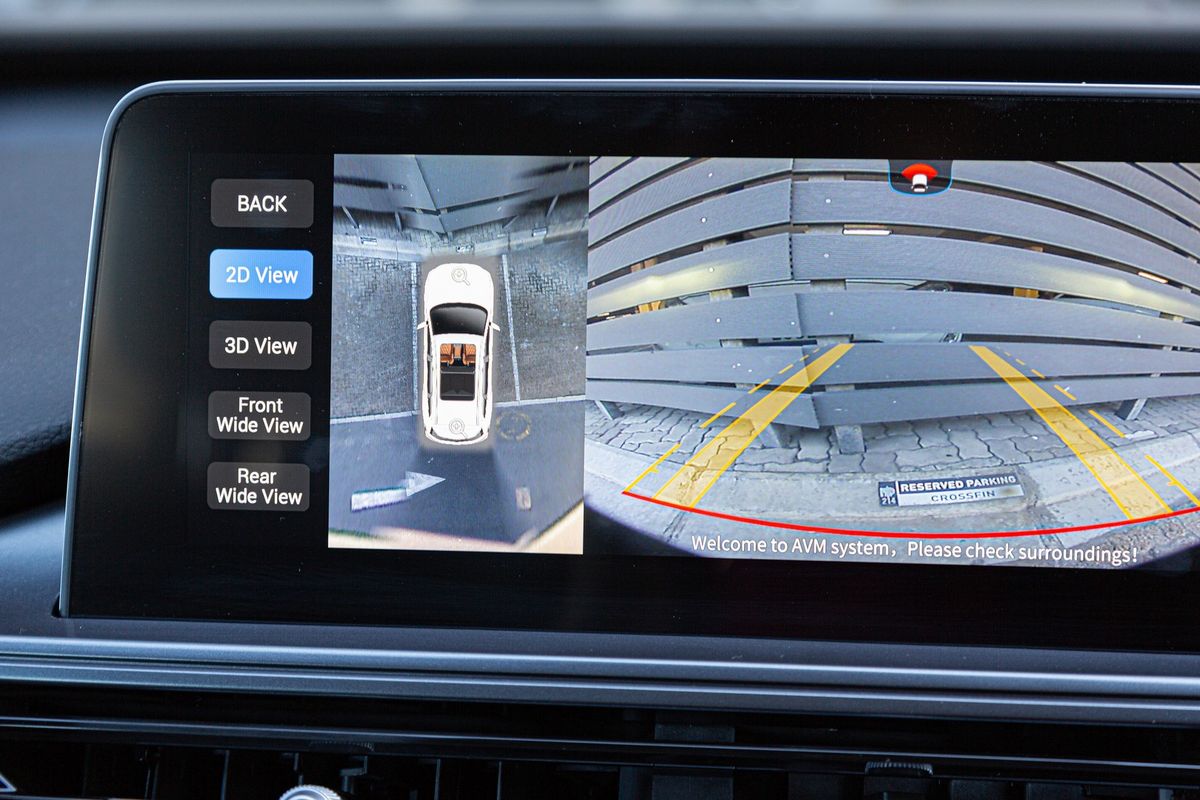
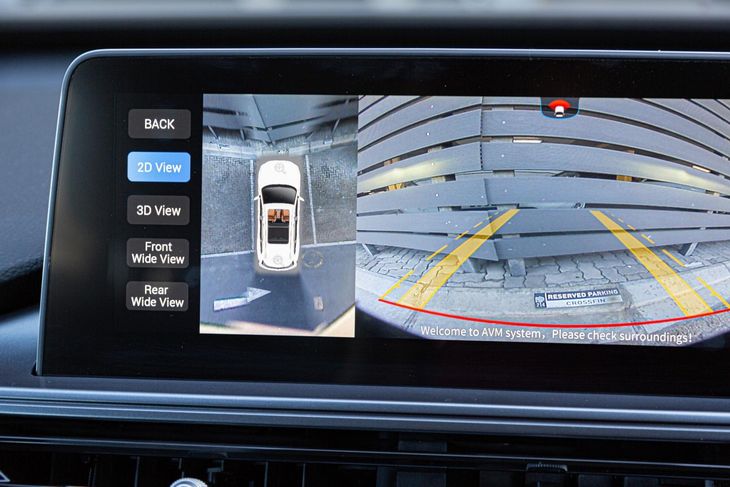
The Distinction’s surround-view camera system takes a lot of stress out of executing parking manoeuvres in tight spaces.
Comfort and Features
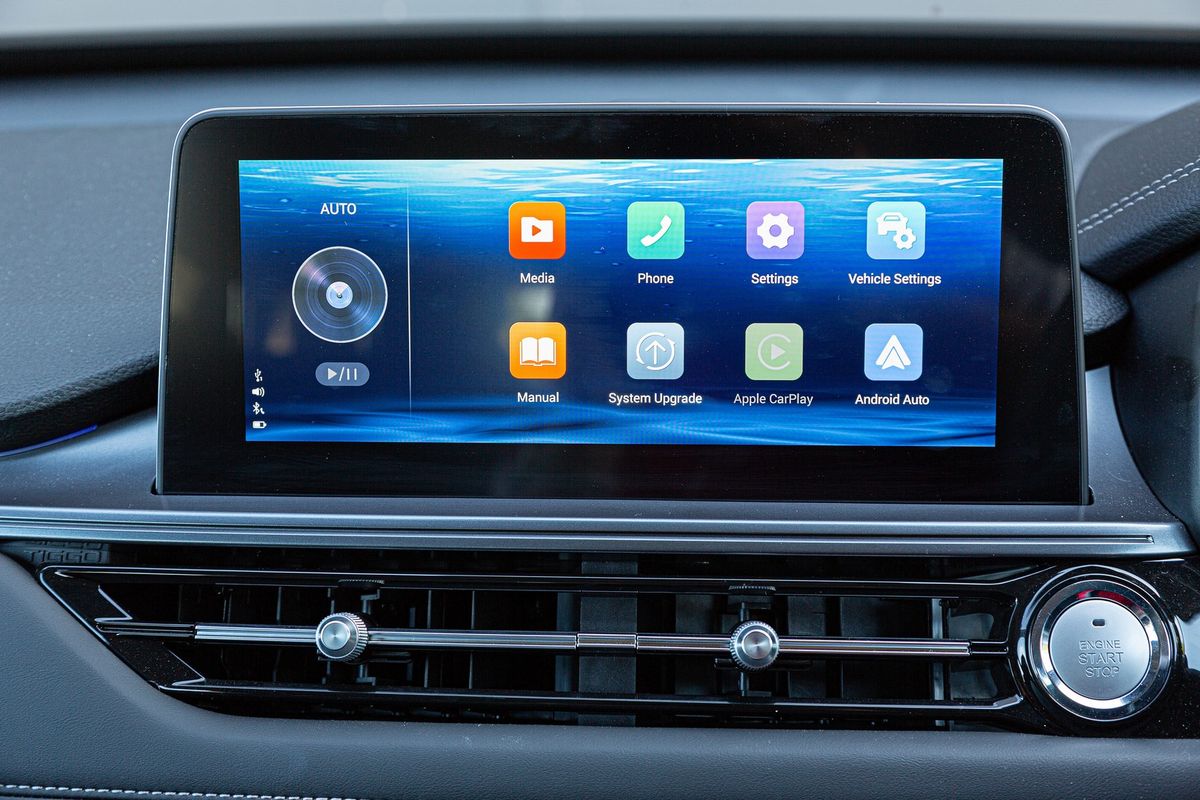
Given the not-insignificant price difference of around R80 000 between the two Tiggo 8 Pro derivatives, you may expect the Distinction to lack some vital features, but it’s anything but a de-specced (or bare-bones) offering… The Tiggo 8 Pro Distinction’s cabin is very premium looking (and feeling) and the fascia boasts a fully digital instrument cluster with neat graphics, as well as a touch-sensitive infotainment screen that is positively laced with apps/features.
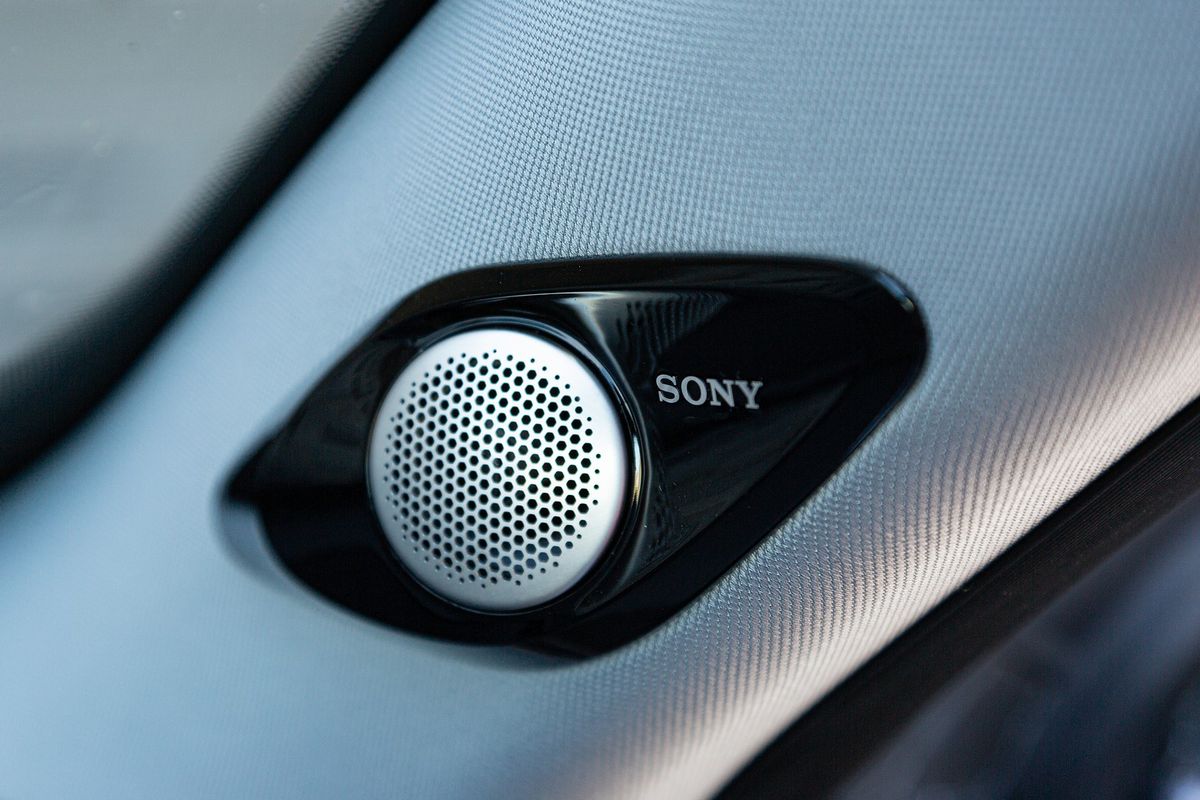
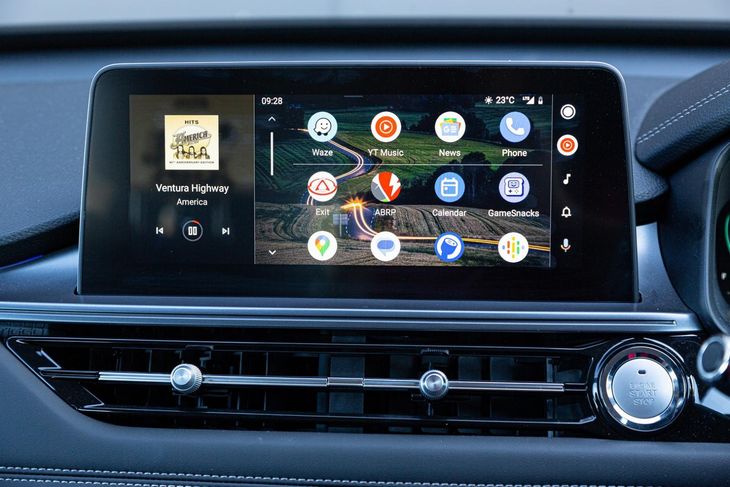
Apart from Apple CarPlay and Android Auto functionality, which is standard, the Tiggo 8 Pro has a pair of USB outlets in the front of the cabin, with another one provided for 2nd-row passengers. The Distinction further features dual-zone climate control, an upmarket Sony audio system, the Executive model’s excellent 2D/3D comprehensive camera system, as well as a power-operated tailgate.
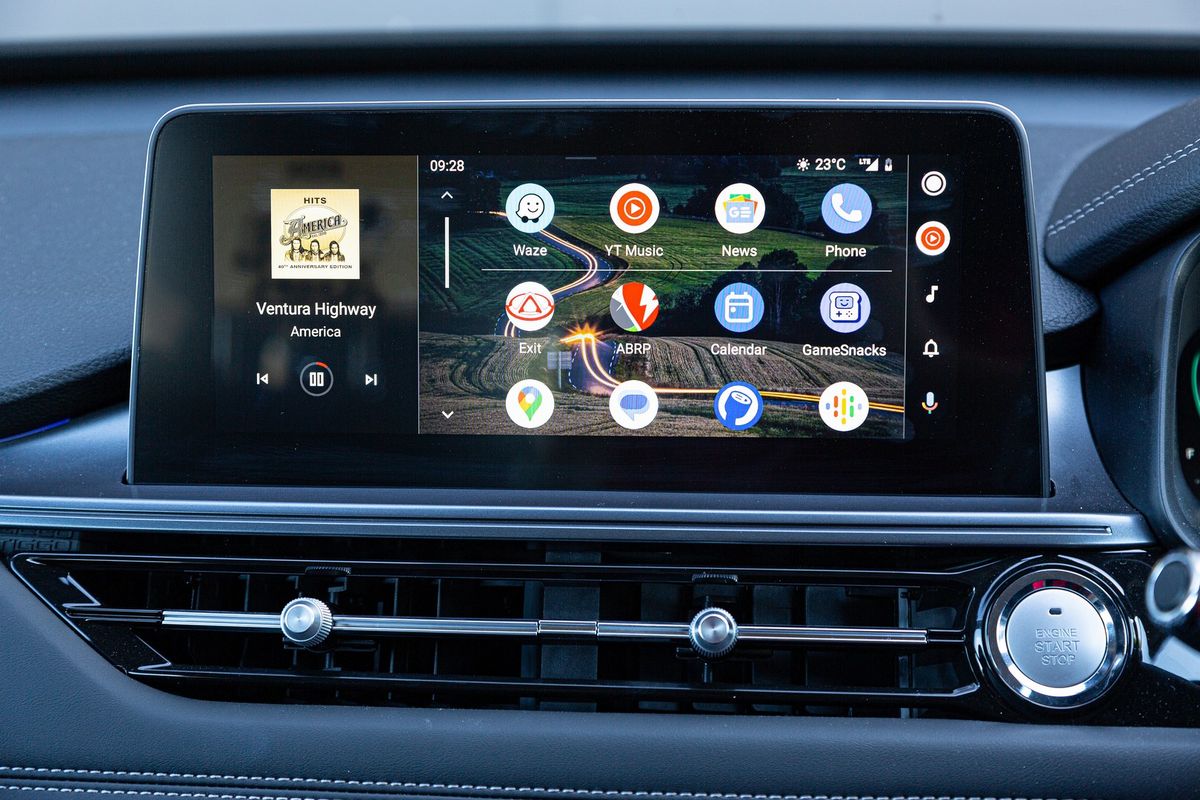
The touchscreen infotainment system offers many features, as well as a host of connectivity options.
Okay, so how has Chery managed to make the Distinction so much more affordable? The key difference is in the active safety features package. The Distinction has cruise control, but it’s not adaptive, plus you also have to forego high-beam assist, lane-departure warning, traffic-sign recognition, blind-spot monitoring and so on. Still, it is by no means poorly equipped on the safety front: it has the same number of airbags (6) and ESP is standard, as are ISOfix child seat mounts.
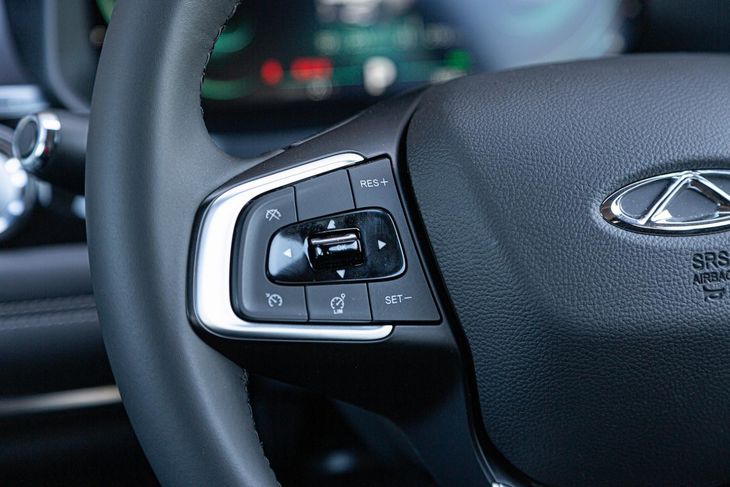
As opposed to the flagship Executive derivative, the Distinction has a non-adaptive cruise control setup.
As mentioned in our review of the Executive, the Tiggo 8 Pro is a relatively firm-riding vehicle and, in our opinion, the suspension’s perhaps a trifle too stiff. On poor surfaces, the ride can feel unsettled, but, as is to be expected, it does improve at speed and when the Chery’s laden with passengers and/or cargo. On the plus side, the firmness makes the Tiggo 8 Pro feel quite poised in the corners, with stable body control and nicely weighted steering imparting a feeling of safety.
The Tiggo 8 Pro Distinction’s ride quality is less than plush, but at least the derivative offers confidence-inspiring handling.
Price and After-Sales Support
The Chery Tiggo 8 Pro Distinction is priced at R496 900 (November 2022) and, to reiterate, there are no option boxes to tick. The warranty (5-year/150 000 km) is excellent, and don’t forget about Chery’s now well-publicised 10-year/1 000 000 km engine warranty (provided you’re the 1st owner and the car has always been serviced by Chery). The service plan itself is a little disappointing – it only covers the first 5 years or 60 000 km (the latter being more likely).
Verdict
If you don’t mind the absence of that extra layer of safety tech that the Executive offers, the Tiggo 8 Pro Distinction is an even better value-for-money offering than its pricier sibling. At under R500 000, it offers a seemingly unbeatable combination of practicality, luxury and family appeal. The new Mahindra XUV700 appears to be a serious new rival though, and it will be interesting to see how the newcomer from India stacks up against this Chery. Watch this space.
Alfa Romeo Tonale (2022) Specs & Price
The new Alfa Romeo Tonale is ready to launch in South Africa and we’ve unearthed local pricing for the Italian firm’s all-new compact crossover…
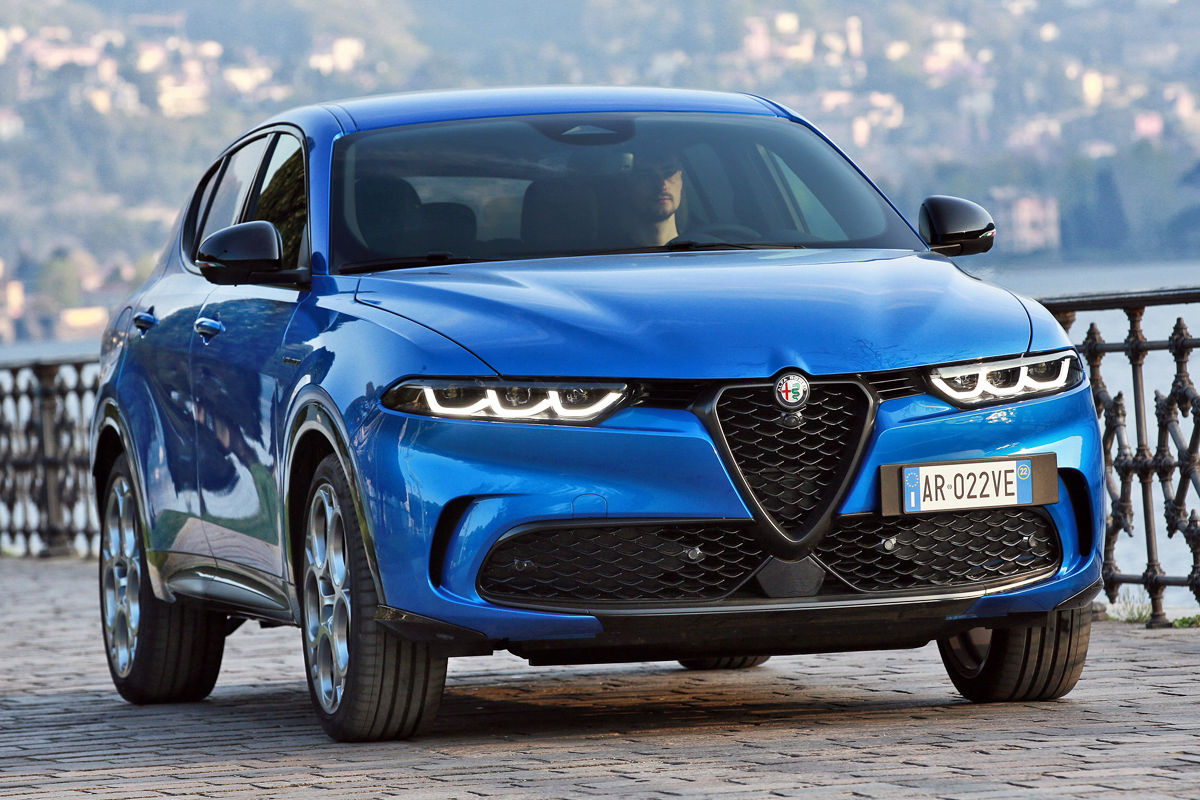
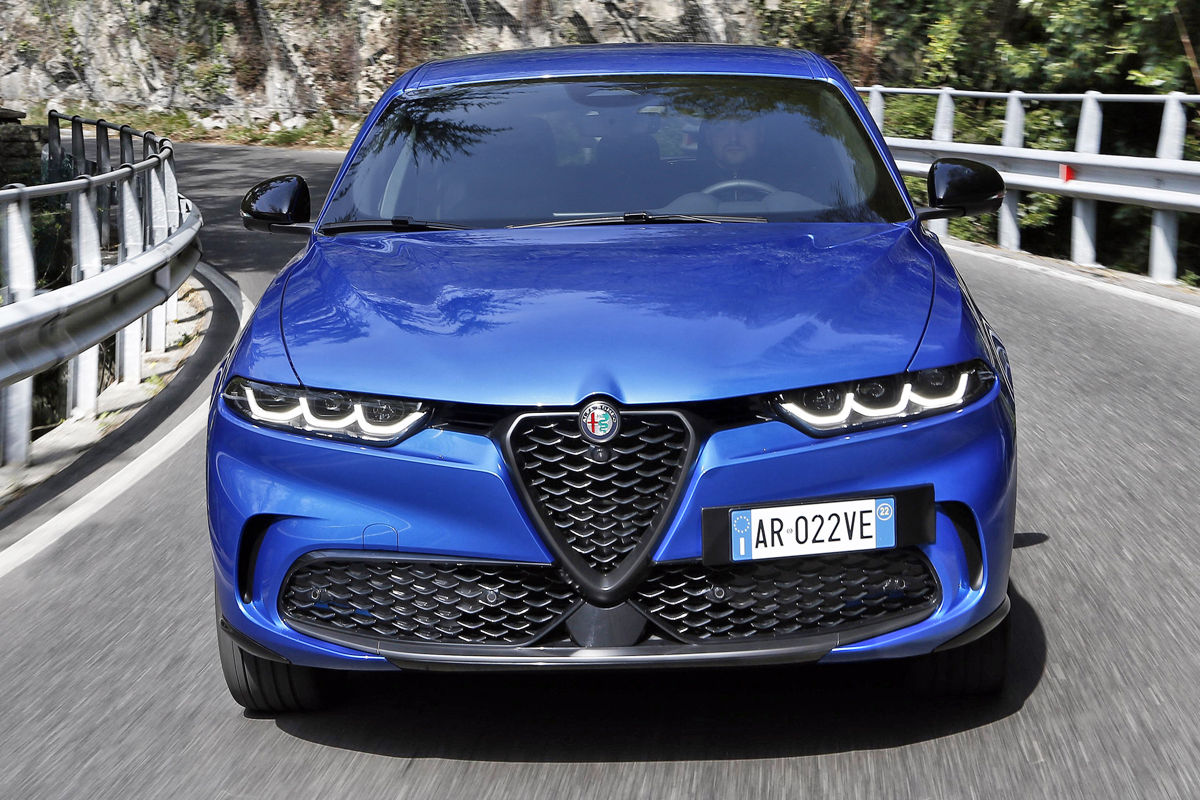
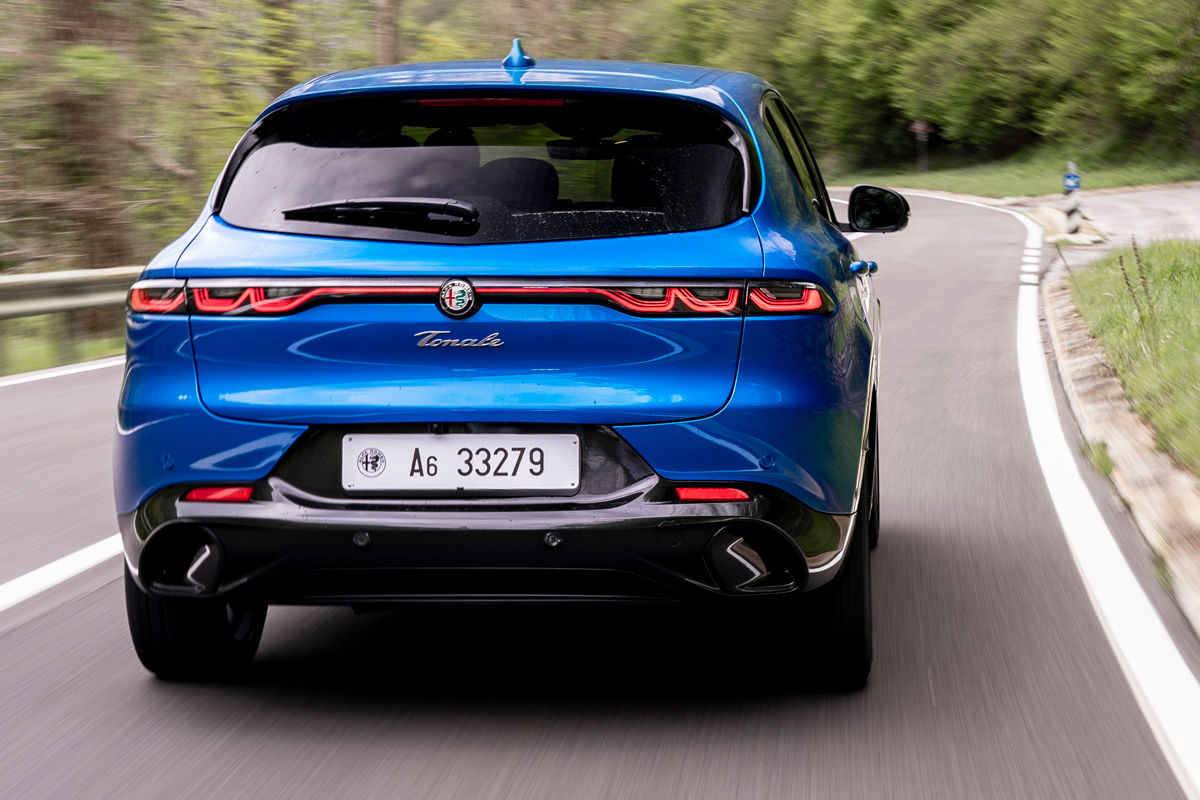
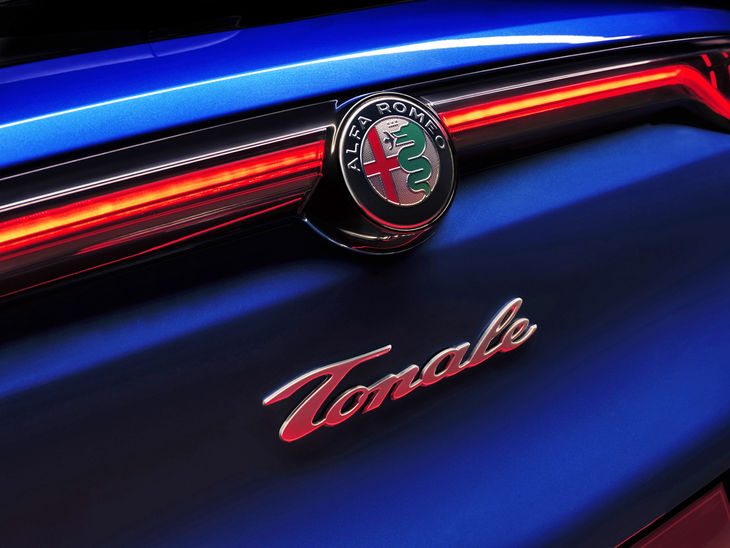
The Alfa Romeo range now includes a compact crossover and it’s primed and ready to hit the market in South Africa. Yes, the Tonale – which will slot in below the Stelvio – is the first all-new model from the Milan-based automaker in quite some time.
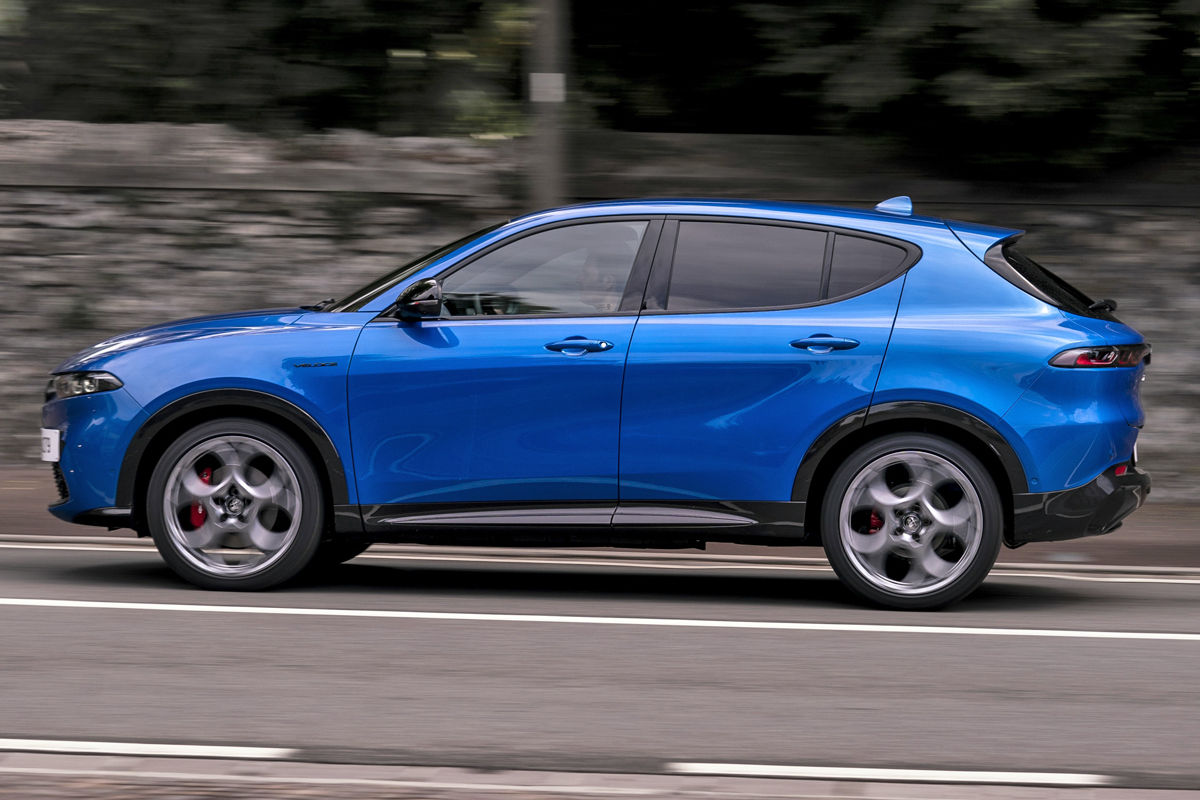
Revealed as recently as February 2022 though previewed by a 2019 concept, the newcomer is named after a mountain pass in Italy and rides on a platform shared with certain Fiat and Jeep products. It measures 4 528 mm long, 1 841 mm wide and stands 1 601 mm tall, with a wheelbase of 2 636 mm, which will see it pitched against the likes of the BMW X1, Mercedes-Benz GLA, Audi Q3 and Volvo XC40.
The Tonale range will comprise three derivatives – differentiated only by trim level – at launch in South Africa, each drawing its urge from a new mild-hybrid powertrain with peak outputs of 118 kW and 240 Nm. All variants feature front-wheel drive as standard. The Tonale Ti will start at R739 900 and the Tonale Speciale at R799 900, while the Tonale Veloce will kick off at R819 900.
The Tonale is the first all-new product from Alfa Romeo in a number of years.
The hybrid gubbins comprise a turbocharged 1.5-litre, 4-cylinder petrol engine, a small lithium-ion battery pack and a 48-volt electric motor (offering 15 kW and 55 Nm) interestingly capable of powering the wheels even when the internal combustion engine is not running. The latter is mated to a 7-speed dual-clutch transmission as standard.
According to Alfa Romeo, the Tonale is able to complete the obligatory 0-100 kph sprint in 8.8 seconds, before topping out at 210 kph. The Italian firm lists a claimed combined fuel economy figure of 5.7 litres per 100 km.
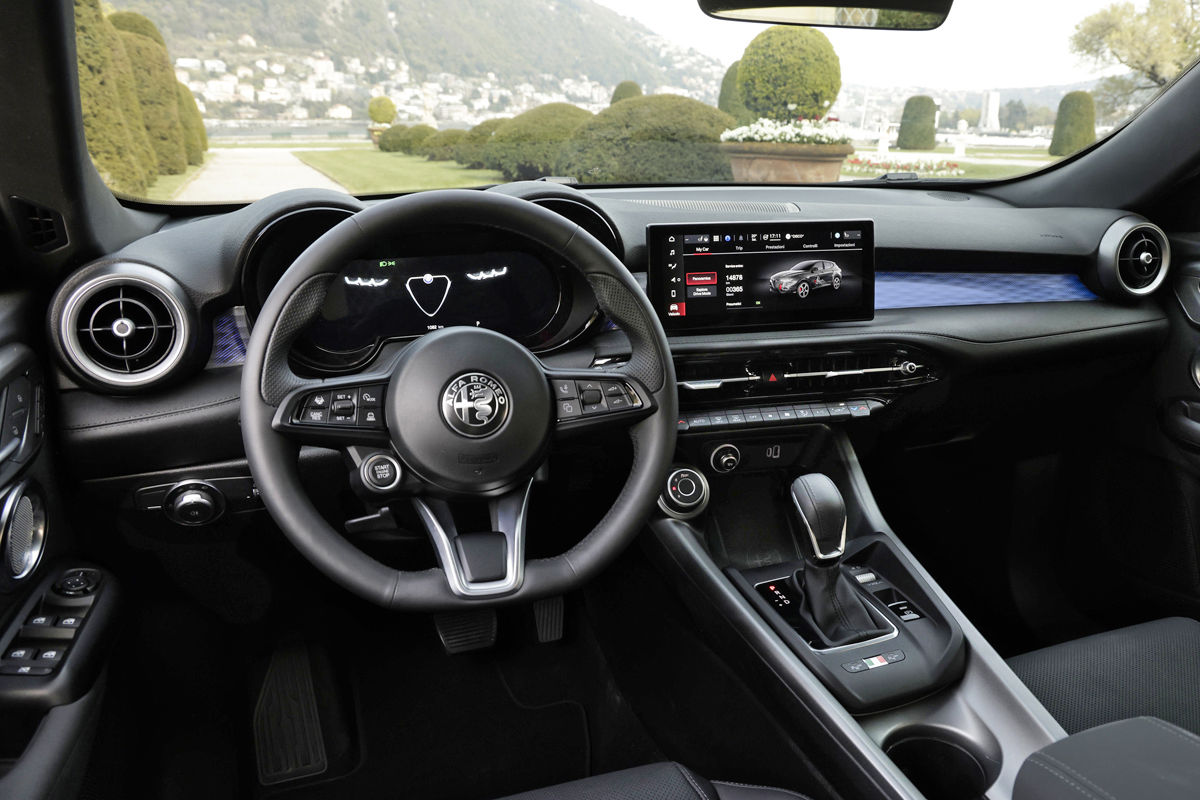
From what we understand, the Ti specification will include items such as a 10.25-inch touchscreen system, a 12.3-inch instrument cluster, full Matrix LED adaptive headlights and 18-inch diamond cut alloy wheels. Black cloth upholstery will ship standard, along with various driver-assistance and safety features.
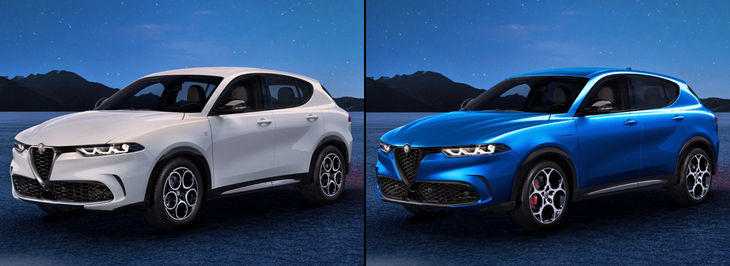
The Ti trim level on the left and the Veloce specification on the right.
The Veloce, meanwhile, adds items such as adaptive suspension, column-mounted aluminium paddle shifters (also included on the Speciale) and 19-inch alloys framing red-painted brake callipers. It furthermore upgrades to Alcantara upholstery, though full leather will be offered as part of an optional R37 000 bundle that also includes power adjustment and ventilation for the front seats, plus a Harman Kardon sound system.
Look out for more details regarding local Tonale specifications – and a full launch review – later this week…
How much does the Alfa Romeo Tonale cost in South Africa?
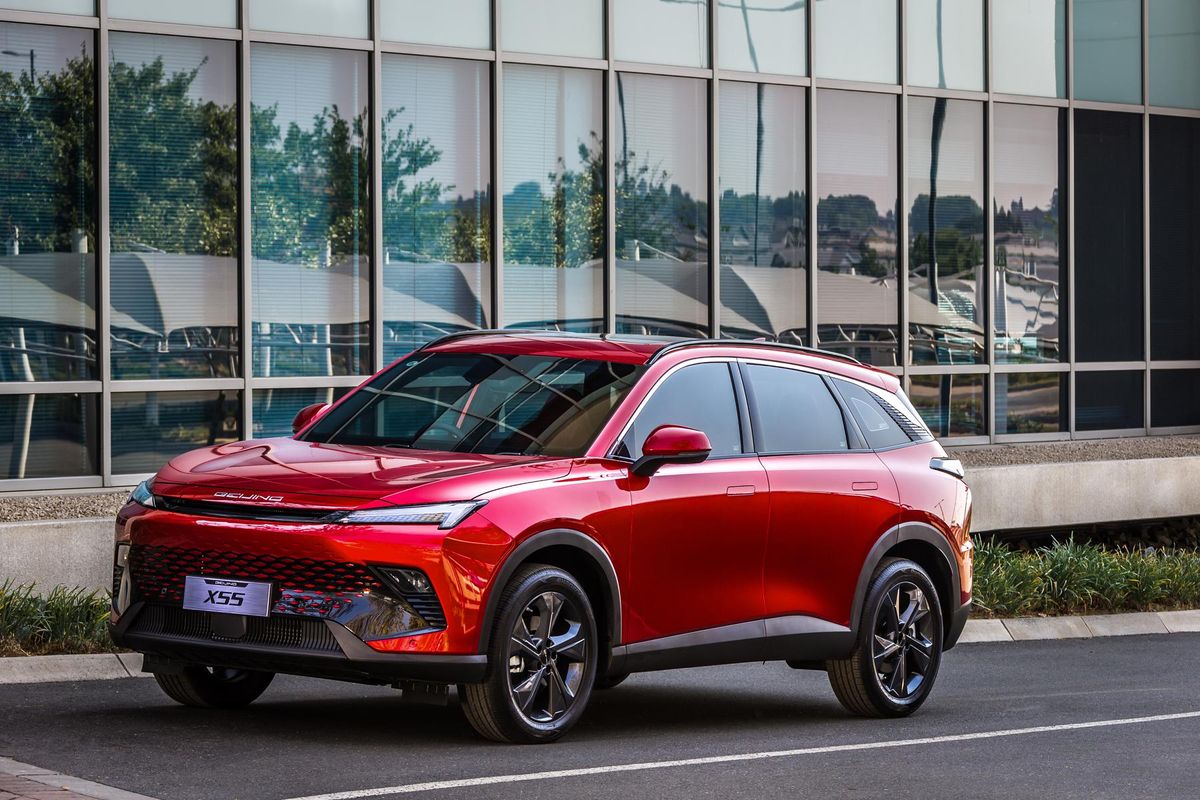
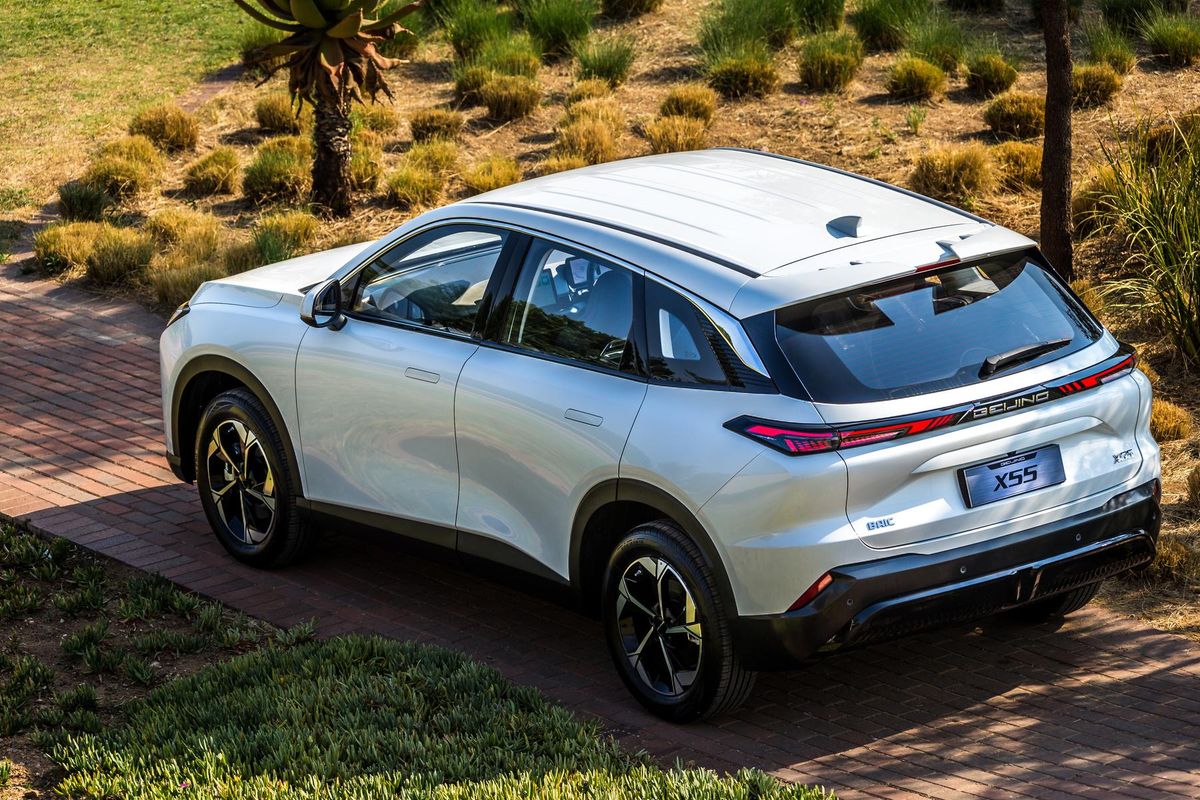
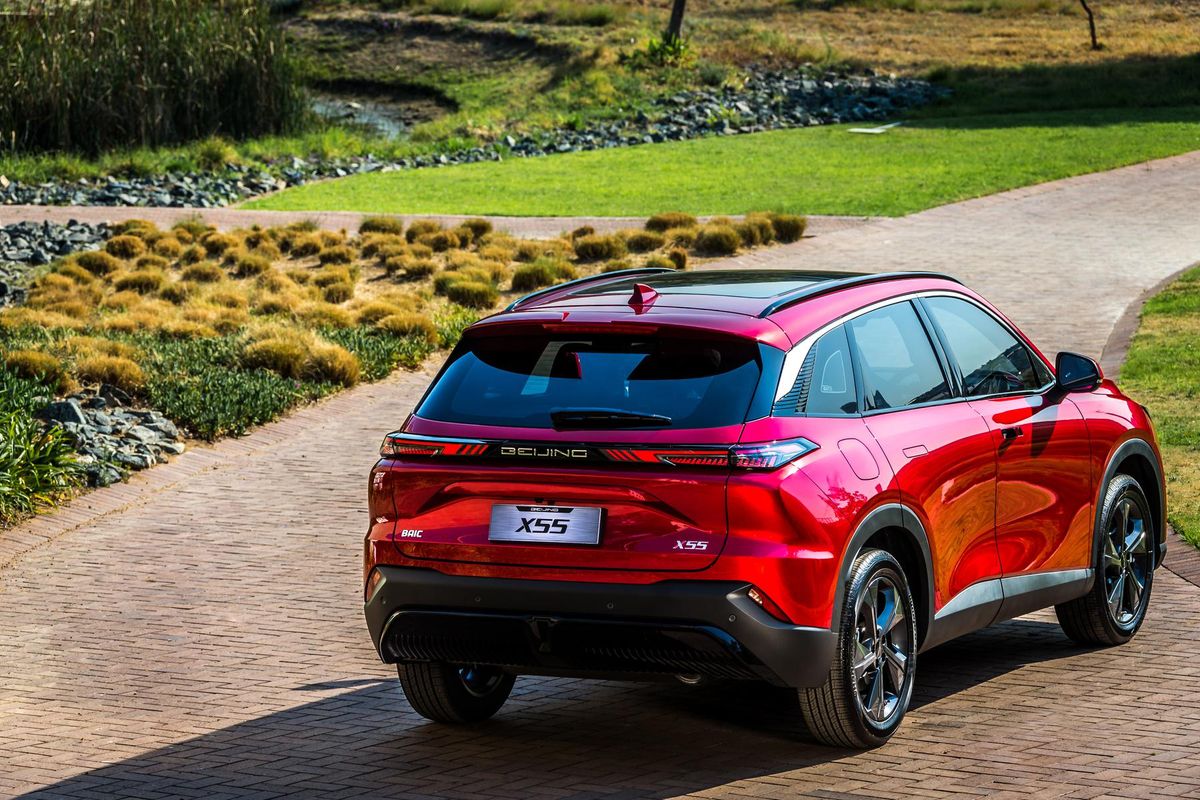
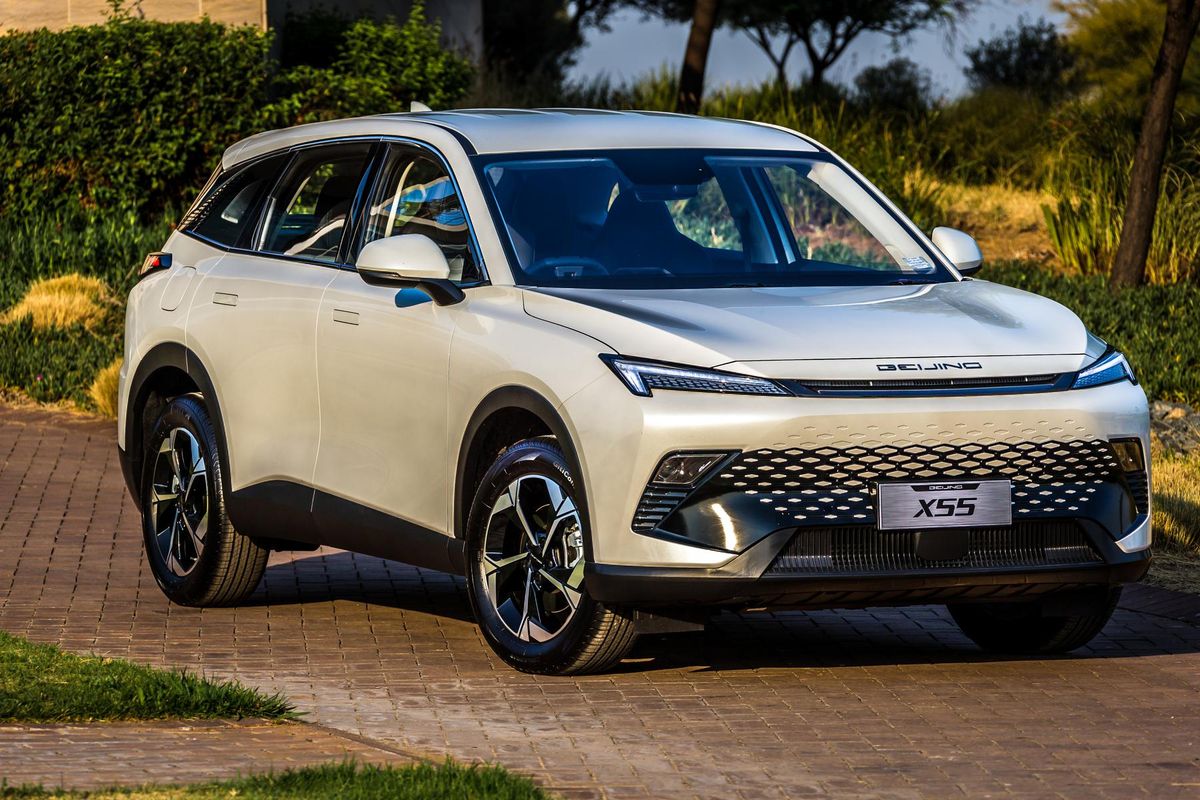
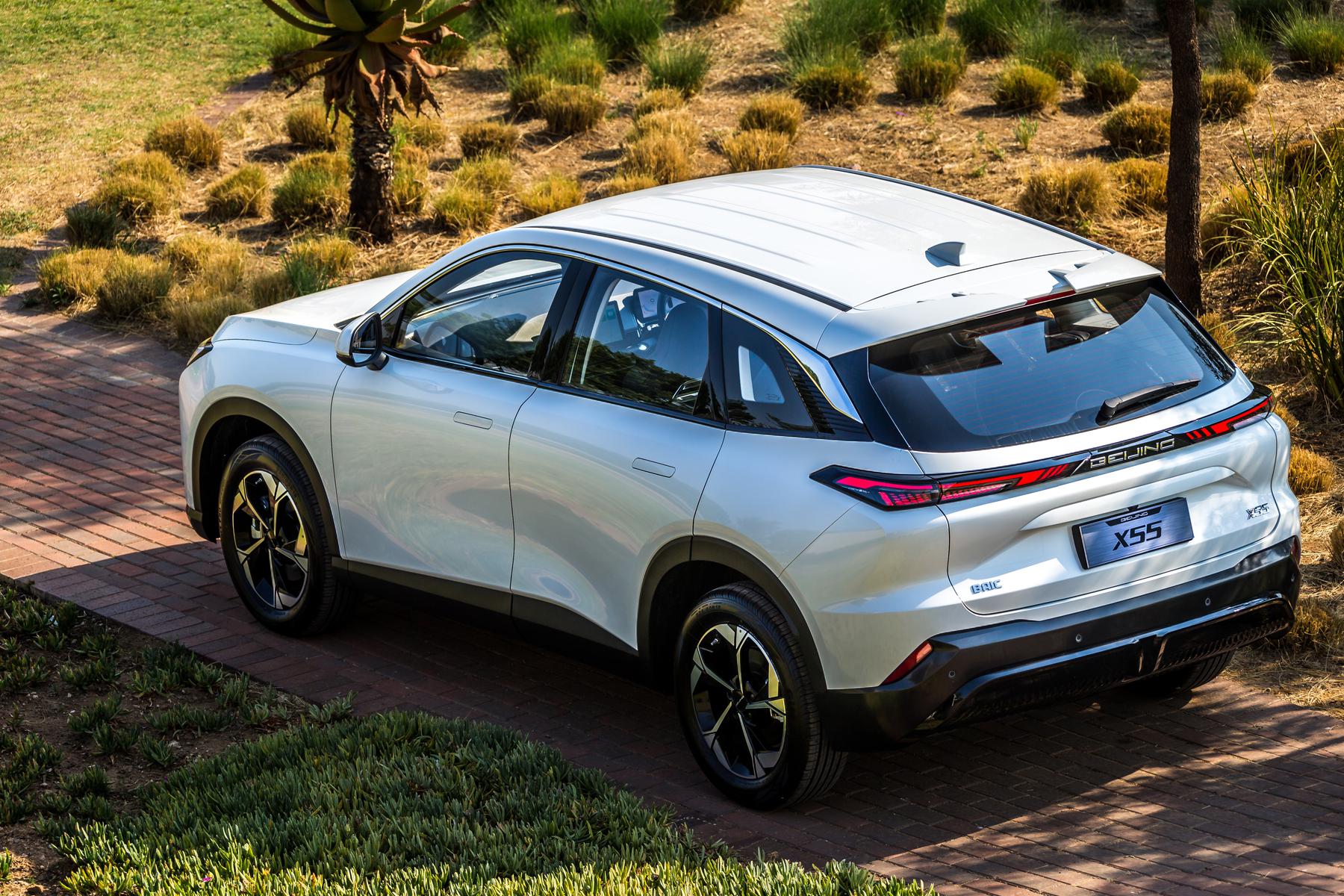
The recently-launched Beijing X55 impressed us when we drove it in the middle of November 2022, but we understand the stylish newcomer will now be assembled right here in South Africa from 2023
We use the word ‘assembled’ loosely as we understand the Coega plant in the Eastern Cape will run complete knockdown (CKD) production of the cool-looking X55 SUV. Right now, this plant currently makes the BAIC D20 and BAIC X25, which have run their course. BAIC’s facility in Coega a fascinating setup as one of the shareholders is none other than the Industrial Development Corporation (IDC) who are trying to get a manufacturing hub estabilished in the Coega Special Economic Zone.
Dealerfloor reported that the facility is currently being upgraded to accommodate production of the newer model and its scheduled to begin production in the second quarter of 2023. Up until then, all Beijing X55 units will be imported directly from China. We understand that electrification is also on the cards.
Beijing Automotive Group Co (BAIC) is the 6th biggest Chinese carmaker and has partnered with Daimler, as well as acquiring almost 10% stake in Mercedes-Benz. As a reminder, for a non-Chinese car maker to assemble and sell vehicles in China, it has to partner with a local company.
BAIC’s luxury arm is Beijing, much in the same way that Haval is Great Wall Motors’ luxury SUV division. Given the notable growth that Haval and more recently, Chery have achieved in the local market (by offering attractively packaged and generously specced cars at reasonable prices), it’s completely understandable that other newcomers want to emulate those brands’ success.
Our first impressions of the X55 were good, with the vehicle sporting upmarket looks both inside and out, refined ride characteristics and generous features, all at a reasonable pricetag. It will be interesting to see if there’s a price difference between the imported X55 units and the locally-assembled ones that go on sale towards the middle of 2023.
EV and hybrid sales in SA: first three quarters of 2022
Are sales of electric vehicles and hybrids picking up in South Africa? Let’s take a closer look at the official registration figures for the first three quarters of 2022…
Wondering exactly how many electric vehicles (EVs), traditional hybrids and plug-in hybrids have been sold in South Africa over the first three quarter of 2022? Well, wonder no more.
In its quarterly review of business conditions for the South African automotive industry, Naamsa has again listed some fascinating sales figures regarding so-called “new energy vehicles” (electric, plug-in hybrid and traditional hybrid).
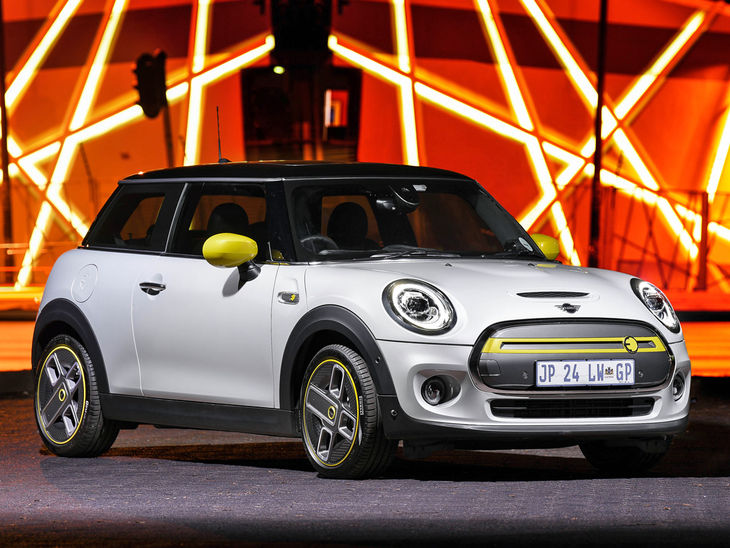
Of course, it’s worth noting the local market is still without a truly affordable electric car, with the least expensive option currently being the 3-door Mini Cooper SE Hatch, which retails for a lofty R723 000. No other full-size, battery-powered vehicle comes in at less than R1-million.
The most affordable EV on the SA market isn’t all that affordable…
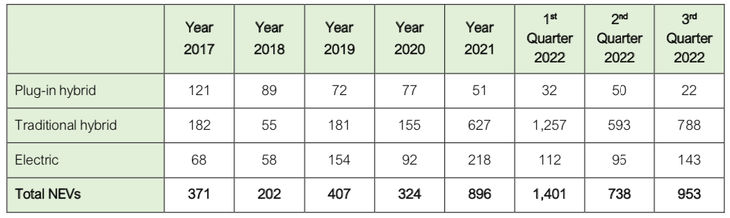
According to Naamsa, 350 electric vehicles were registered in South Africa over the first nine months of 2022 (so, around 39 units a month), translating to just 0.09% of the September 2022 year-to-date industry total of 391 936 units. That figure rises slightly to 0.13% if we consider EV sales as a percentage of total passenger-car registrations instead (271 173 units over the first three quarters of 2022).
Interestingly, the third quarter of the year saw the most EV sales, with 143 units registered across July, August and September. For the sake of comparison, 218 electric cars were sold in South Africa in 2021.
Hybrid and PHEV sales in SA over the first three quarters of 2022
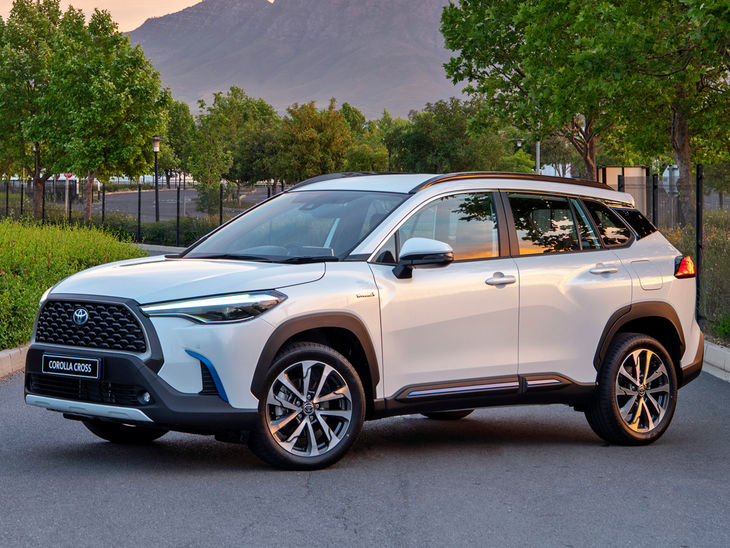
Sales of traditional hybrids picked up quarter three, with the Corolla Cross again rolling off Toyota’s KZN assembly line.
What are the numbers like when it comes to plug-in hybrid electric (PHEV) vehicles? Well, just 104 PHEVs have been registered locally in the first nine months of the year, with the third quarter being the weakest (with 22 units sold) of the three.
Meanwhile, traditional hybrids – including the likes of dual-powered versions of the Toyota Corolla, Corolla Cross and RAV4, various Lexus models as well as the Honda Fit (Haval’s H6 Hybrid arrived just outside the reporting period) – reflected a sales total of 2 638 units up to the end of September 2022. The third quarter saw 788 units registered, a recovery from the 593 units achieved in the second quarter but not quite at the level of the opening quarter (1 257 units).
Of course, that initial quarter-on-quarter decline in traditional hybrid sales was thanks to the KwaZulu-Natal floods that forced Toyota SA Motors to halt production of the Corolla Cross hybrid, among other vehicles.
Looking at all three powertrains combined (electric, plug-in hybrid and traditional hybrid), Naamsa says new-energy vehicle sales from 13 brands increased by 29.1% from 738 units in the second quarter to 953 units in the third quarter of 2022.
In the first nine months of 2022, some 3 092 new-energy vehicles have been registered in South Africa, representing an increase of 245.1% compared with the full year of 2021 (in which 896 units were sold).
Electrified vehicle sales in South Africa from 2017 to Q3 of 2022. Figures courtesy of Naamsa.
The CEO of the Volkswagen brand has confirmed the Polo hatchback – which is built in South Africa – is facing the axe in Europe thanks to upcoming emissions regulations…
Thomas Schäfer, CEO of the Volkswagen Passenger Cars Brand, says there would be “no point carrying on” with small combustion-engined vehicles such as the Polo – a hatchback built in South Africa – in Europe if the impact of the impending Euro 7 emissions regulations is as considerable as expected.
The former head of the Volkswagen Group South Africa, who was appointed global CEO at the start of July 2022 and recently confirmed the Golf and GTI badges would live on, suggested to Autocar it would be too costly to re-engineer small vehicles to meet the upcoming regulations, though added a final decision would be made within a couple of weeks. The news comes on the back of Ford’s recent decision to kill off the Fiesta nameplate by mid-2023.
“We had a very good plan, where we thought EU7 was an insurmountable hurdle that will accelerate electrification. We planned small electric cars that would come in 2025 between Volkswagen, Škoda and Cupra that would be built in Spain,” Schäfer told the British publication, referring to VW’s Pamplona plant, which currently produces the T-Cross and Taigo as well as the Polo.
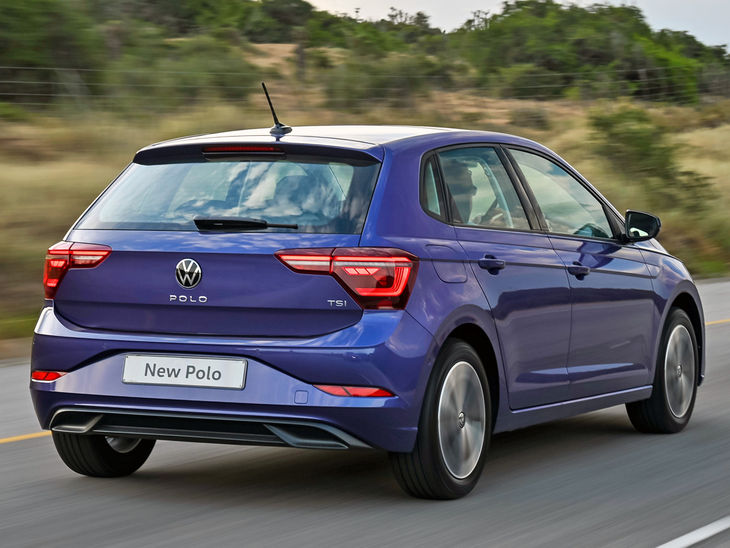
The Volkswagen Polo hatchback appears to be on borrowed time in Europe.
“And that basically replaces the combustion engine in small vehicles like the Polo, as cars become so expensive, there is no point carrying on,” he said, explaining to Autocar how it would make “no sense to go with very small cars beyond EU7” as the regulations would “push the price up of the small cars by £3000, £4000 or £5000 or more, then all of a sudden a small vehicle becomes unaffordable”.
“Then two [or] three weeks ago, word got out that EU7 was coming through and it would be on a reasonable level. And we thought, ‘okay, let’s go’, that might help us transition a little bit [by keeping models such as the Polo on sale]; it doesn’t change the plans, but it helps financially because you can transition a little easier and reinvest at the same time everywhere. But last week, another message came through and we’re back to square one. It’s even worse.
“We need another two weeks. At the moment, we have engineers evaluating what that means. But if that is true [the expected impact of EU7 on the price of cars], we definitely won’t invest anymore and we’ll just keep the plan to electrify as quickly as possible,” Schäfer said.
What does this new mean for the VW Polo built in SA?
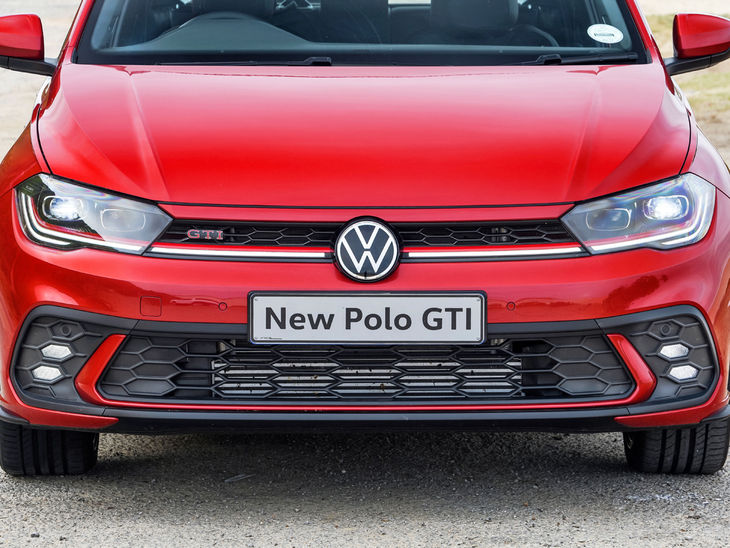
Kariega is the only plant in the world building the Polo GTI.
It’s worth noting South Africa builds the Polo hatch for all right-hand-drive markets – while also supplementing production for left-hand-drive markets – and is the sole producer of the Polo GTI. Considering Europe is the main export market for VW’s Kariega facility, a decision to scrap the supermini on the Old Continent would obviously have major implications for South Africa.
Indeed, as we pointed out in our feature documenting the Polo’s tumble down the list of SA’s best-selling vehicles, such a situation would force a significant change to VWSA’s business model. And that appears to be what’s happening already, with the company’s medium-term solution involving an attempt to reduce its reliance on exports to Europe by adding a third MQB-A0-based model to its production line.
This as-yet-unidentified “SUV-ish” vehicle would likely be exported to emerging markets (in the rest of Africa and perhaps even Latin America) rather than Europe, allowing the Kariega plant to fill at least some of the production capacity that would be lost should the Polo be axed in Europe.
So, will the Polo still be available in South Africa? Well, it seems so, with Martina Biene, the freshly appointed chairperson and managing director of VW Group SA, recently confirming both the Polo and Polo Vivo would continue to be built at Kariega “beyond 2025”.
.jpg?tr=w-800)