Big power E30 with a BMW engine! SA’s iconic 600kW street and drag Beemer lives on
BMW enthusiast, Steven Naidoo, bought his dream car from the legendary Shaheed Essop, a big turbo E30 running with an increasingly rare BMW engine under the bonnet. Watch the video!
On the burgeoning South African drag racing scene, the sight of a BMW running a BMW engine is becoming an increasingly rare occurrence. For Steven Naidoo, the idea of fitting a 2JZ or engine from any other brand to a BMW is just sacrilege!
And so when a hero car of his, who he had been following for years, came up for sale, he jumped at the chance to own a South African legend.
Running a BMW 325 stroker motor (the displacement of which is a secret), in current tune, with 1.6 bar boost, the car is making north of 600kW on the wheels, which makes it quite a handful.
Join Steven on the quarter mile as he attempts to keep the car in a straight line, and tells us all about his pride and joy.
Volkswagen’s CEO says the German firm “would be crazy” to let the Golf badge die, before effectively confirming the ninth generation will go fully electric…
Rumours of the seemingly impending death of the Volkswagen Golf nameplate have been greatly exaggerated, if the latest comments from the head of the German automaker are anything to go by. Yes, a Golf 9 is coming.
Thomas Schäfer, CEO of the Volkswagen Passenger Cars Brand, confirmed to Autocar at the 2022 Los Angeles Auto Show the Wolfsburg-based manufacturer had no plans to kill off the “iconic” name, effectively confirming a Golf 9 is on the way. As a reminder, the Golf 8 debuted in October 2019 and is set for a mid-cycle update relatively soon.
Earlier in the year, Schäfer said a decision on the future of established nameplates such as the Golf had yet to be taken. Now, however, the former managing director of VW Group SA has suggested the moniker will become part of the ID range of electric vehicles.
“There is a connection with VW and ID, and there is no need to cancel [the latter]. We have iconic brand names, Golf and GTI. It would be crazy to let them die and slip away. We will stick with the ID logic but iconic models will carry a name,” Schäfer told Autocar, adding a moniker such as “ID Golf” was by no means out of the question.
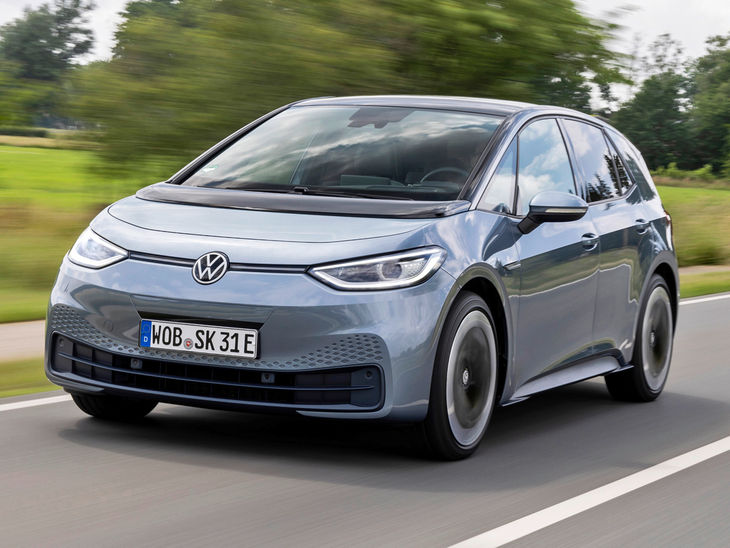
VW’s CEO has suggested an electric Golf will eventually be sold alongside the ID.3.
“We would not let go of the Golf name, no way,” he said, explaining there was space for an electric Golf to live alongside a model such as the ID.3. “The ID.3 has never been a successor to the Golf – it is more a Golf Plus.”
Schäfer’s mention of “GTI” is also significant, seeing as the GTX badge has rolled out to performance versions of VW’s electric cars (such as the ID.4 GTX). Just how Volkswagen plans to use the GTI nameplate as its range becomes increasingly electrified remains to be seen. As an aside, VW’s high-performance R division is set to become fully electric by 2030.
Can we also apply Schäfer’s comments regarding the Golf to the locally produced Polo? Well, it’s perhaps too early to say for sure, though Martina Biene, freshly appointed as chairperson and managing director of VW Group SA, has confirmed both the Polo and Polo Vivo will continue “beyond 2025”.
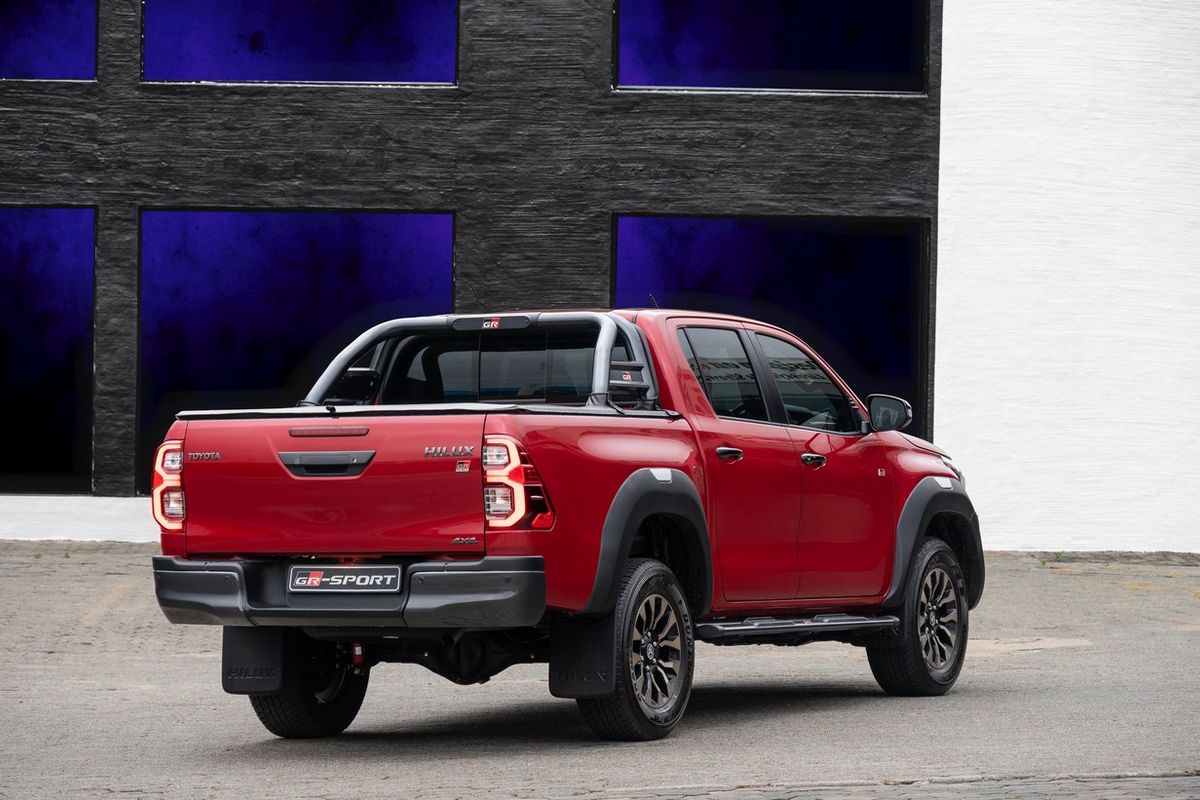
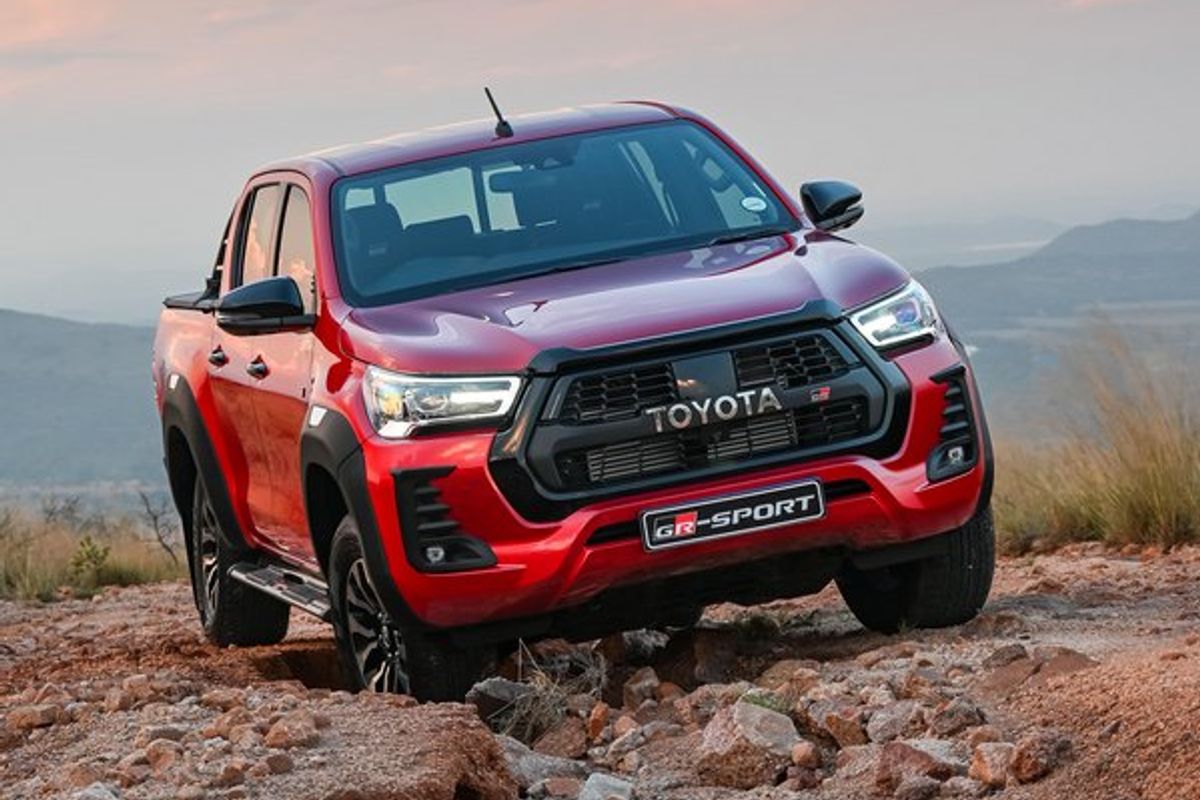
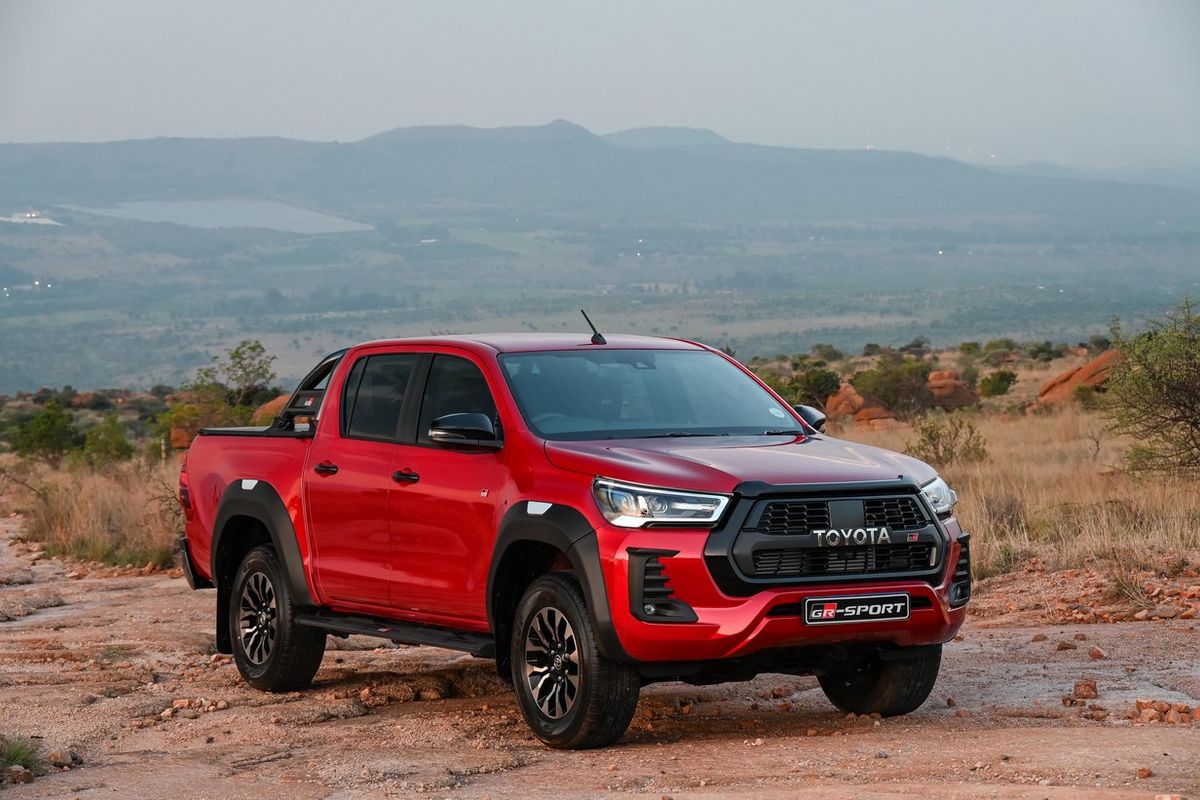
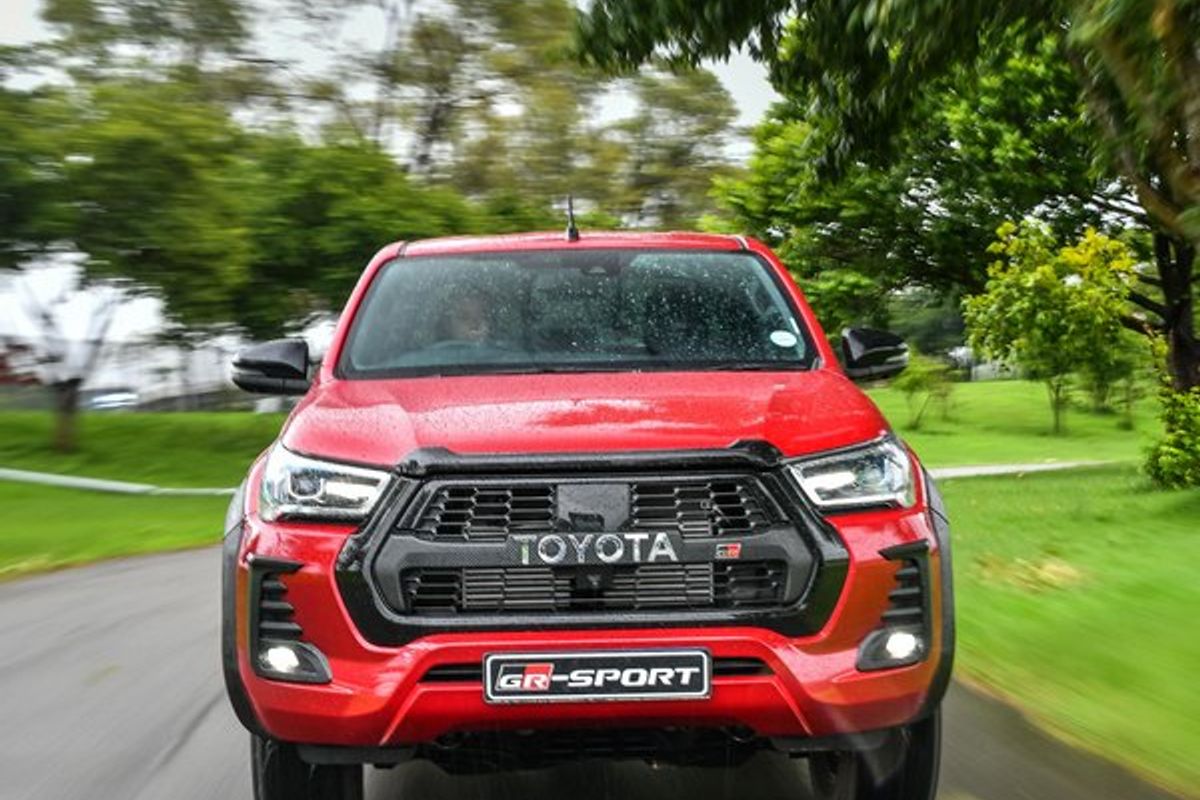
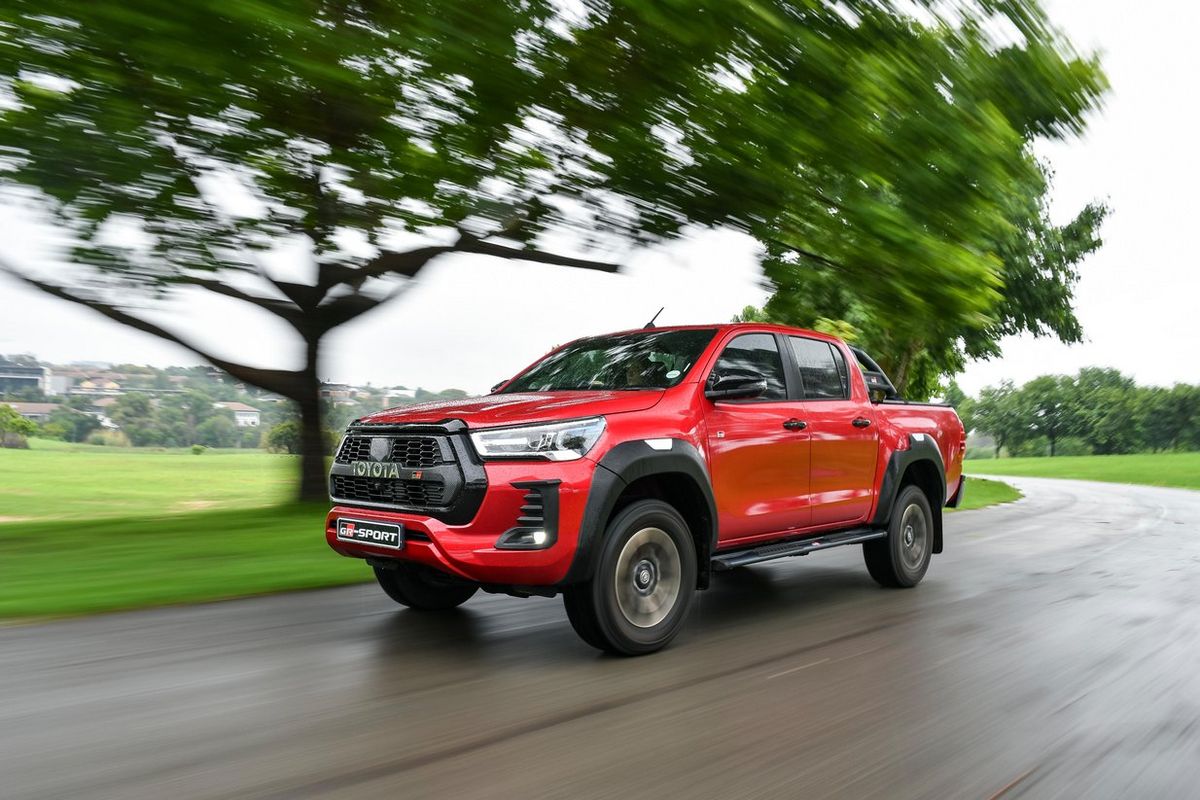
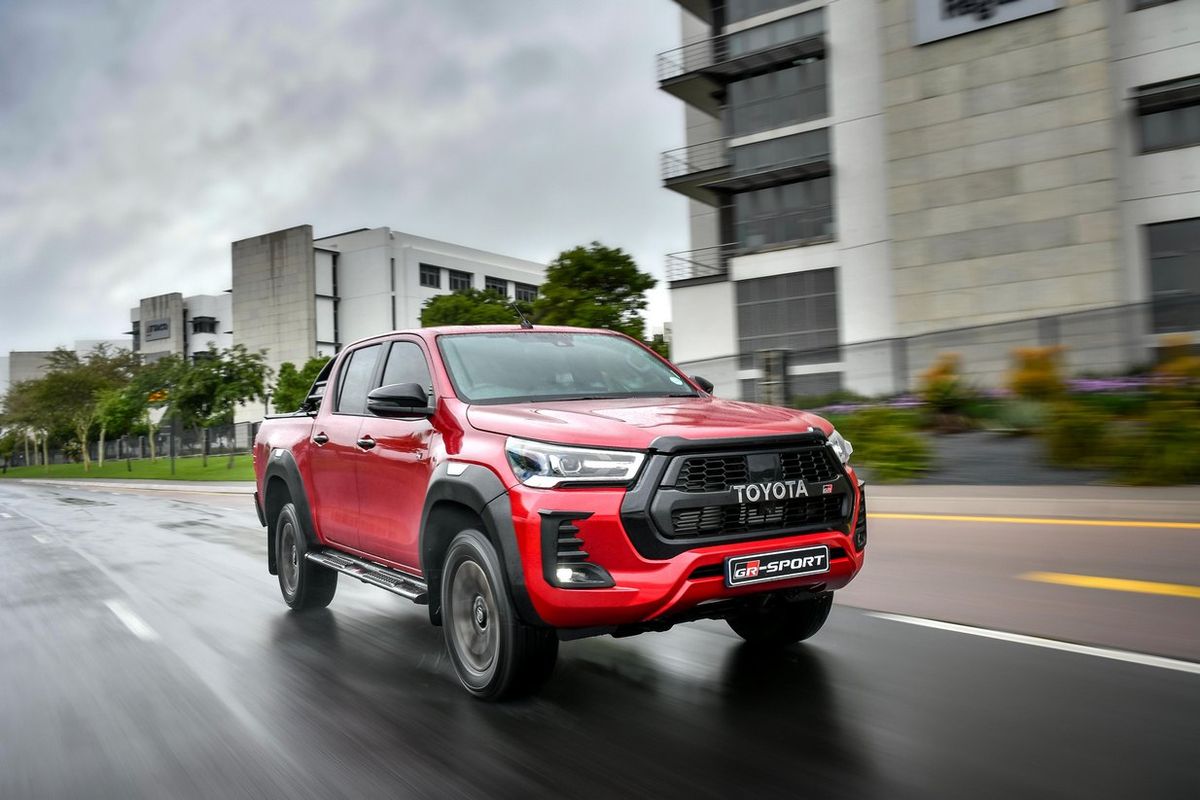
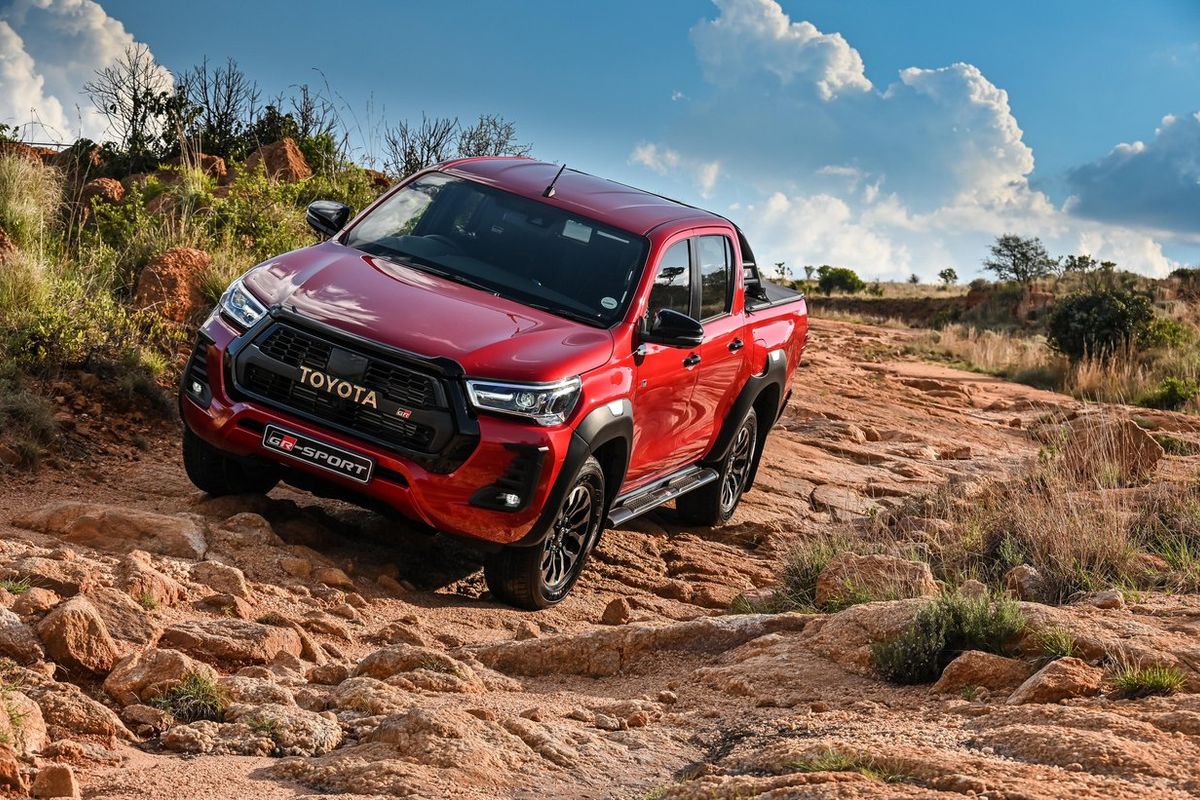
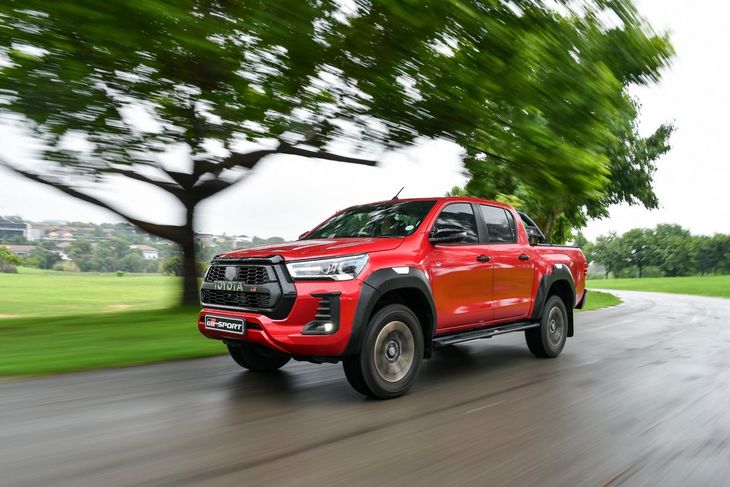
The GR-Sport (GR-S) was a popular addition to the Toyota Hilux range in 2019, but this version joins the fray while Ford and Volkswagen are preparing to unleash all-new bakkies in South Africa. Does the Hilux GR-S give Toyota a crucial head start?
What is a Hilux GR-S?
This is the light decal version of the GR-S – it can be had with more stickers if you prefer.
Most consumers are probably familiar with Toyota’s naming convention and associated parts upgrades that come with Gazoo Racing (GR) badging, but just to refresh your memory (if required), a GR-Sport (GR-S) derivative focuses on an aesthetic upgrade, some minor handling improvements and, in the Hilux GR-S’ case, a power upgrade.
Following the introduction of the first Hilux GR-S, which was produced in very limited numbers a little over three years ago, customer feedback revealed that buyers wanted more power and better safety in their special Hilux, so Toyota obliged.
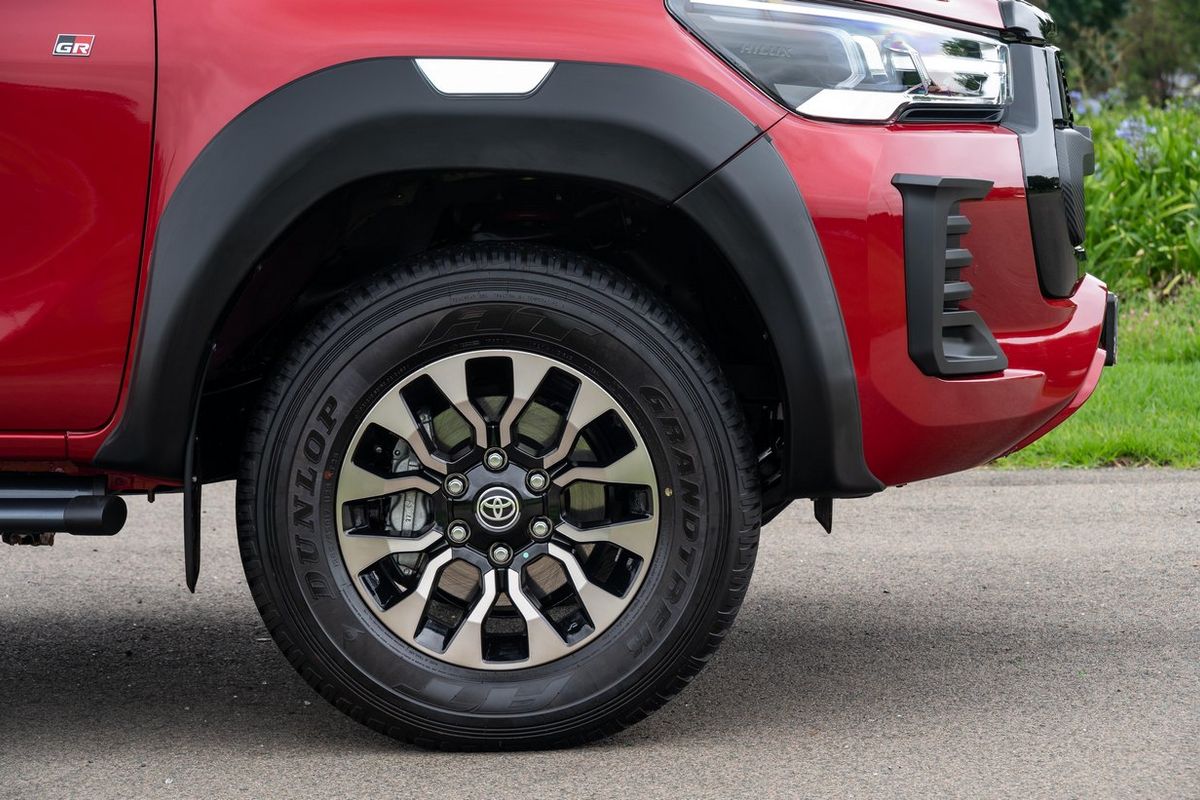
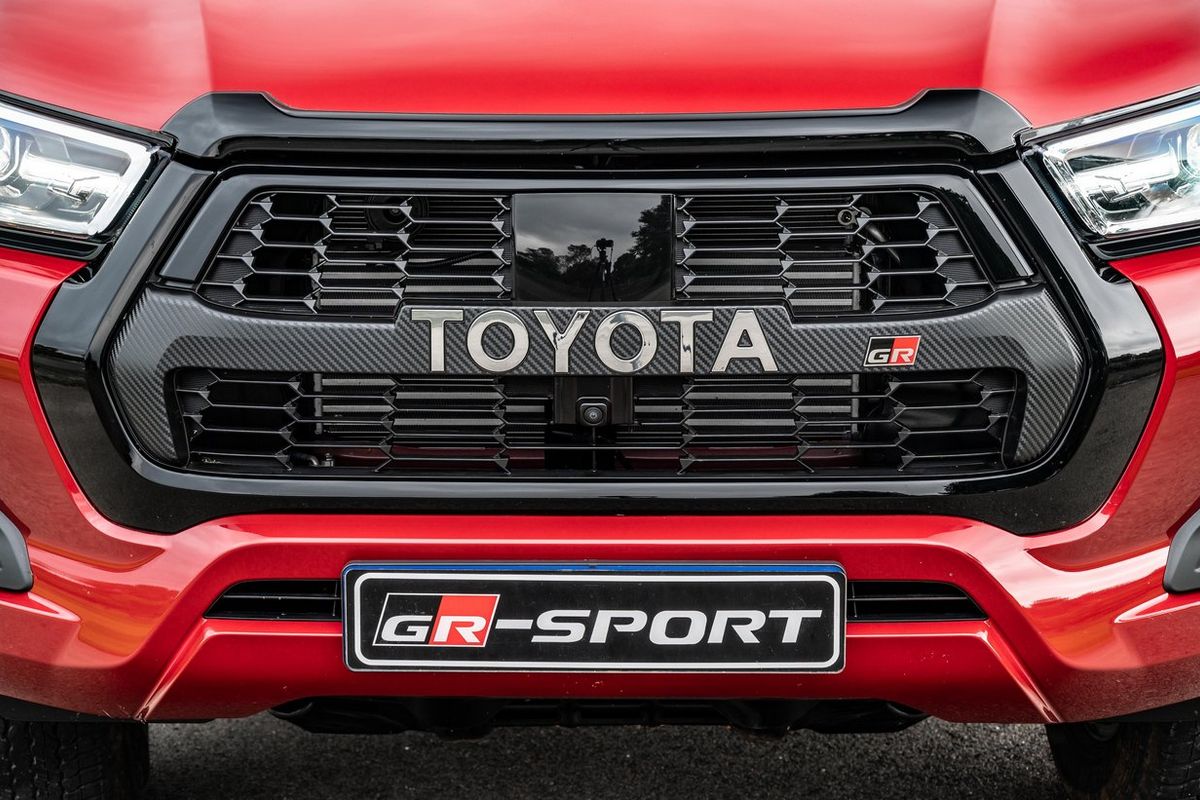
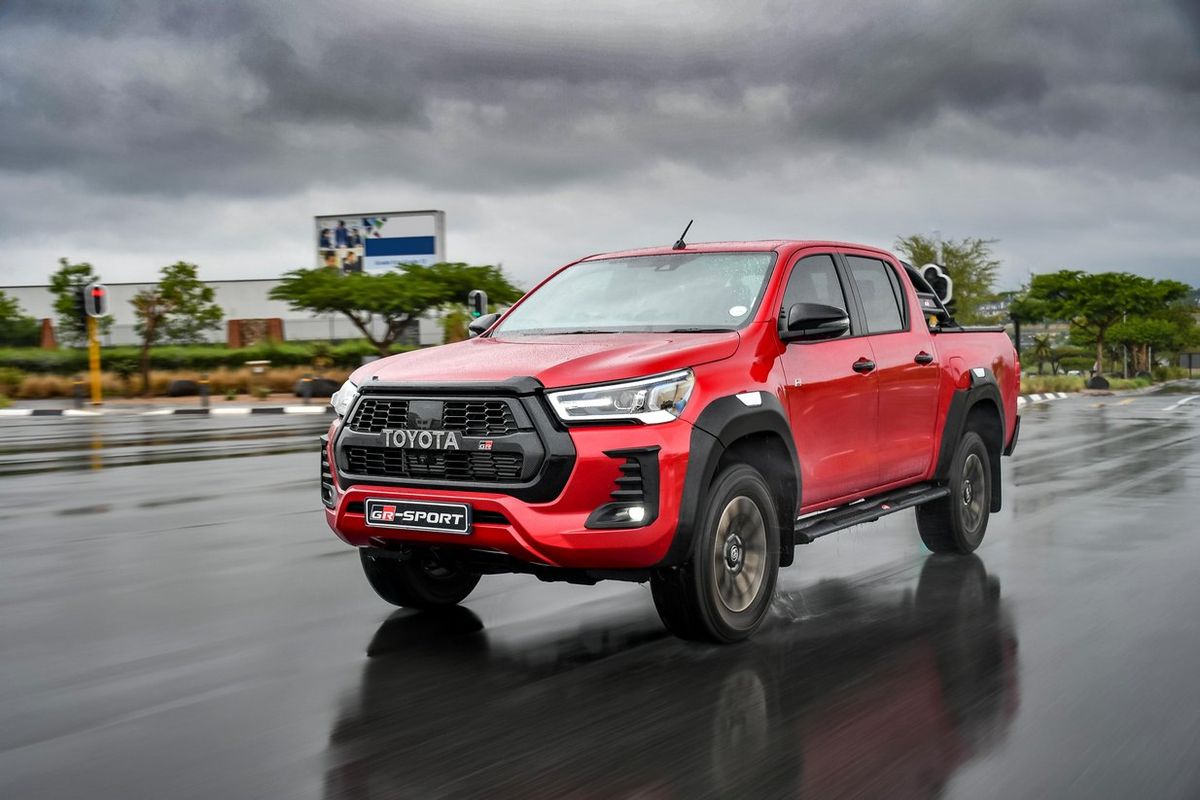
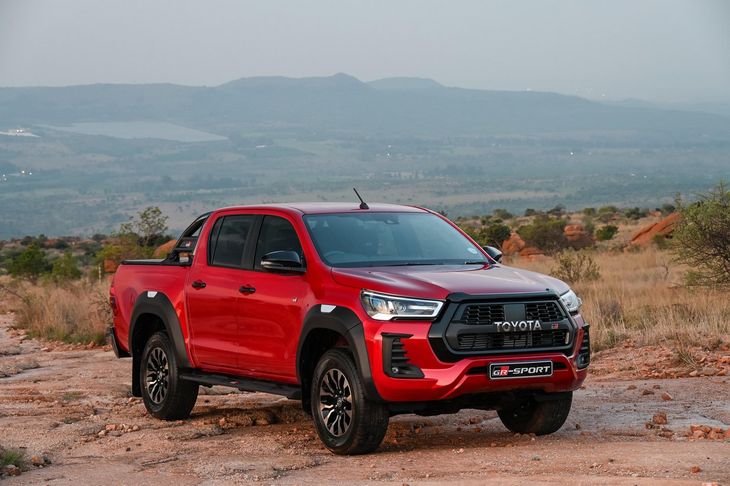
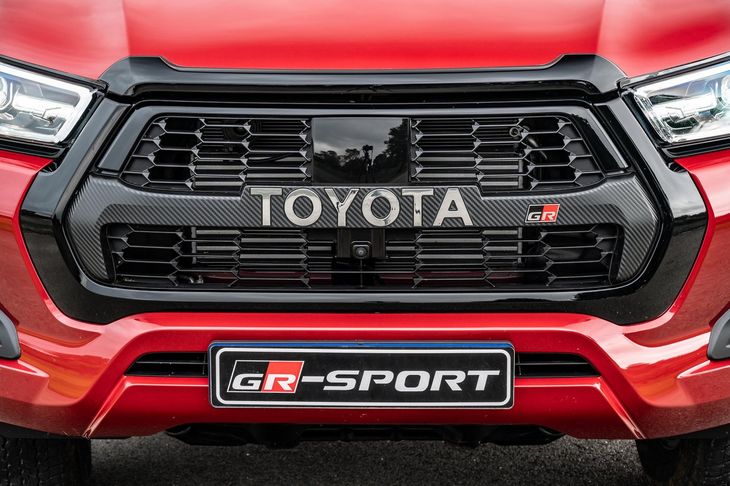
Toyota South Africa Motors (TSAM) has decided to base the GR-S on a Raider-spec Hilux, rather than a Legend version. The front grille is blacked out and, as befitting a GR-S derivative, silver (and all-caps) Toyota lettering is emblazoned on it. What’s more, the mirror caps are blacked out, as are the door handles, while the side steps are a graphite grey colour.
The blacked-out grille finished with Toyota lettering and a subtle GR badge sets the GR-S apart from its brethren.
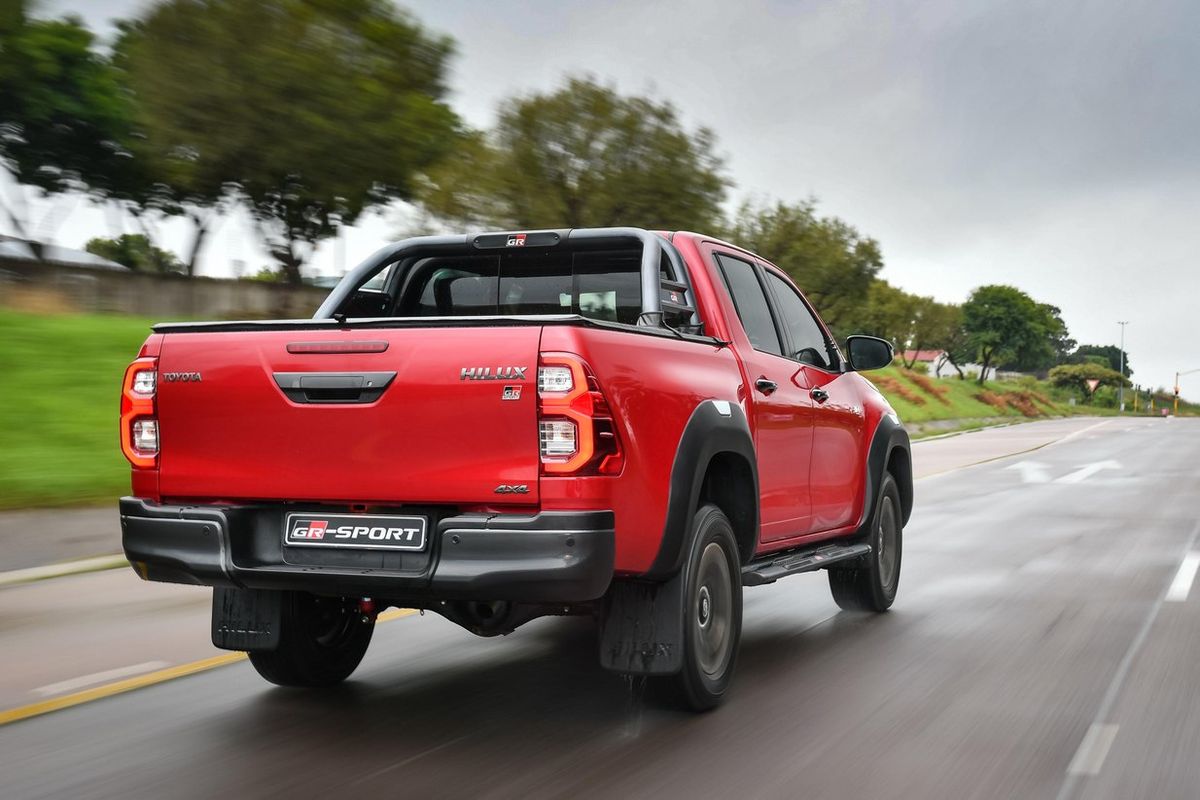
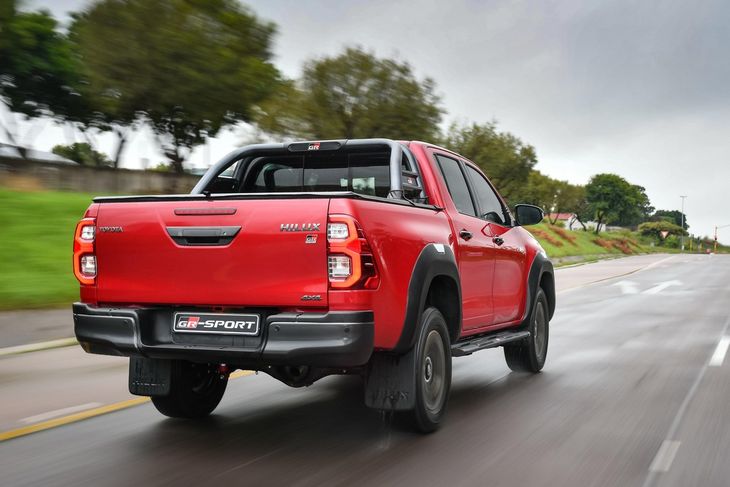
There are a suitable number of GR badges dotted around the exterior and a dash of red and black stickering on the lower section of the doors for the full GR-S effect. You can also order a bolder sticker pack, which adds more prominent red and black flares on the bakkie’s doors.
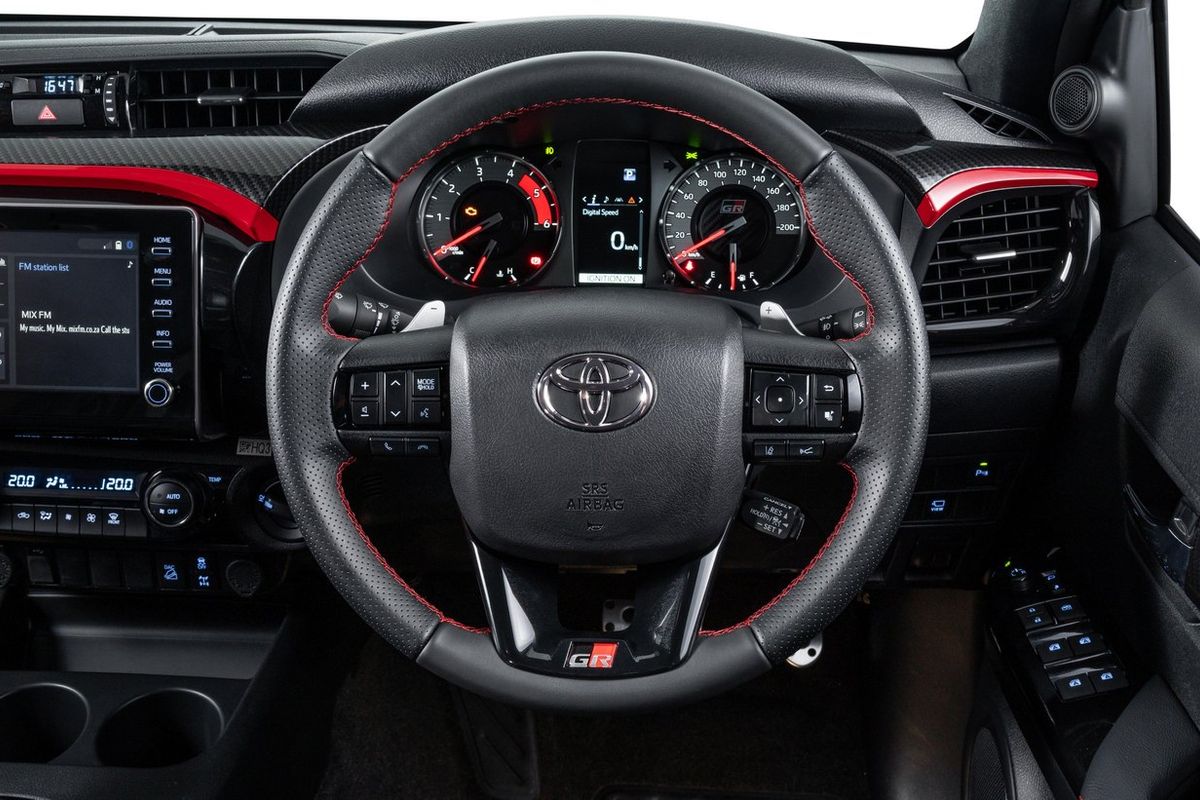
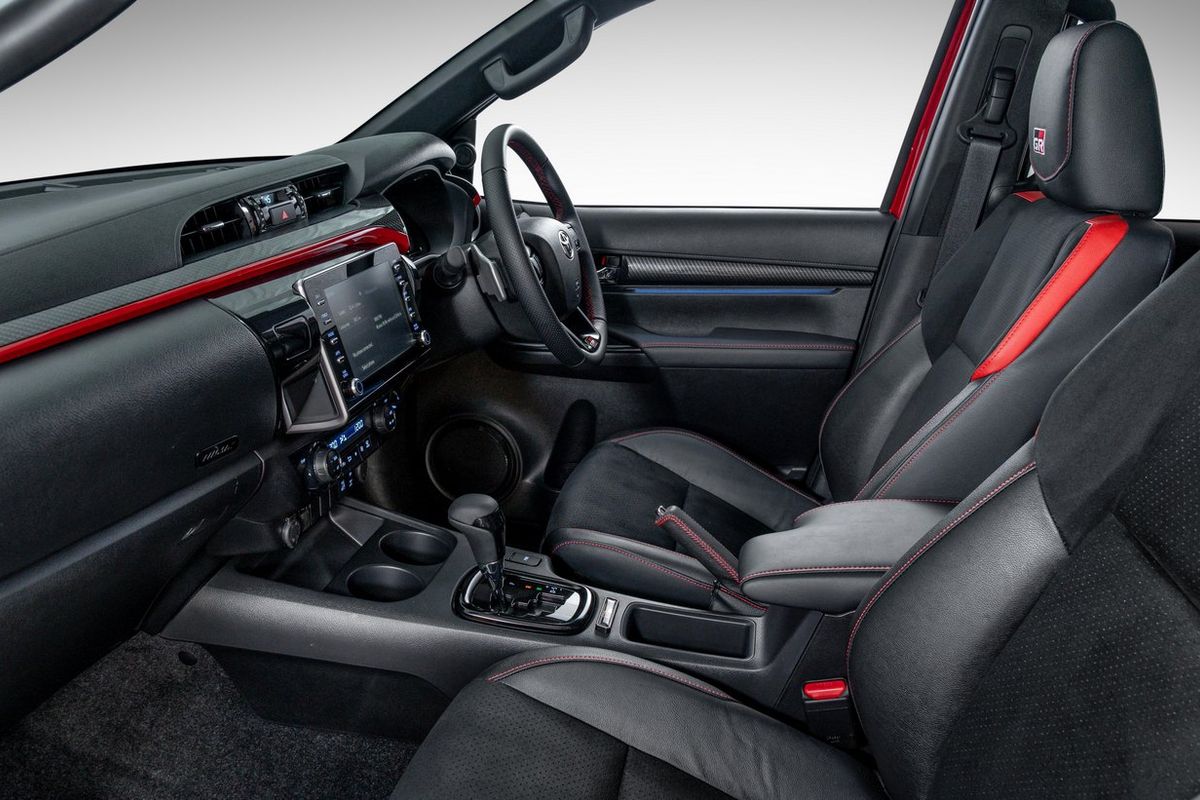
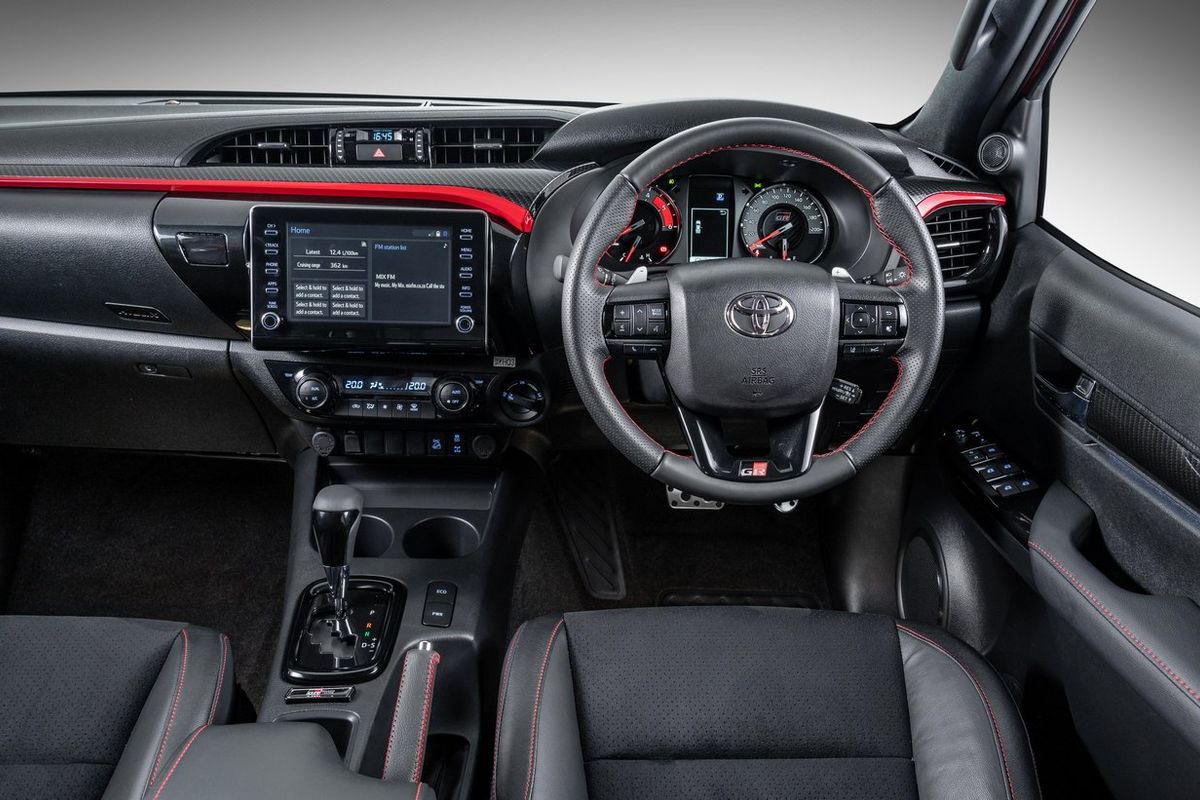
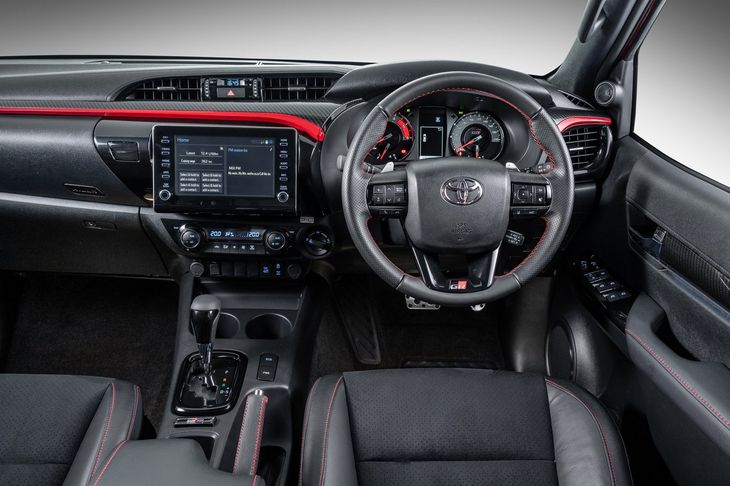
The interior is spruced up too. The GR-S treatment includes suede seats, red surrounds for the air vents and a GR badge on the centre console, while the updated Toyota Safety Suite is included to improve the offering for safety-conscious buyers.
Of most significance, however, is that the Hilux GR-S sports a power increase that’s specific to this derivative. Its 2.8-litre 4-cylinder turbodiesel now produces 165 kW and 550 Nm courtesy of a new ECU (as opposed to a basic software update).
The suspension updates to the GR-S include new monotube shock absorbers and stiffer coil springs, which are intended to deliver a better ride stability at speed and improve the bakkie’s overall handling ability.
165 kW and 550 Nm of torque raise the GR-S above the 2022 Ranger in the power stakes.
Obviously, “around the braai fire” bragging stats are quite important to Toyota as this now shifts the Hilux into a position where it’s more powerful than the equivalent Ford Ranger. The increase in power improves the Hilux’s 0-100 kph acceleration by 0.65 sec, while its better in-gear shove (thanks to the extra torque) makes itself known when you overtake.
The selectable (and self-explanatory) Eco and Power modes vary engine- and gearbox mapping and, in the latter mode, the responsiveness of the powertrain ramps up effectively. The gearbox hangs onto gears longer and shifts down earlier and, if you want, you can now shift using the paddles behind the ‘wheel… although, in truth, they don’t elicit prompt responses.
The Hilux GR-S is exclusively available with a 6-speed automatic transmission and it does, well, an acceptable job. The shorter ratios employed in bakkies, which are designed to compensate for up to a tonne of cargo sitting in the load tray, don’t tend to facilitate the smoothest ‘shifts, but the Hilux doesn’t baulk/make too much of a fuss when changing gears.
The fuel economy didn’t seem to be affected by the GR-S’ added performance either. During the 2 days of driving it through the Lowveld, I saw an indicated average of 10.1 L/100 km, which is similar to what we achieved in the Legend RS.
What’s it like to drive?
The low-speed ride is particularly firm with the new suspension changes.
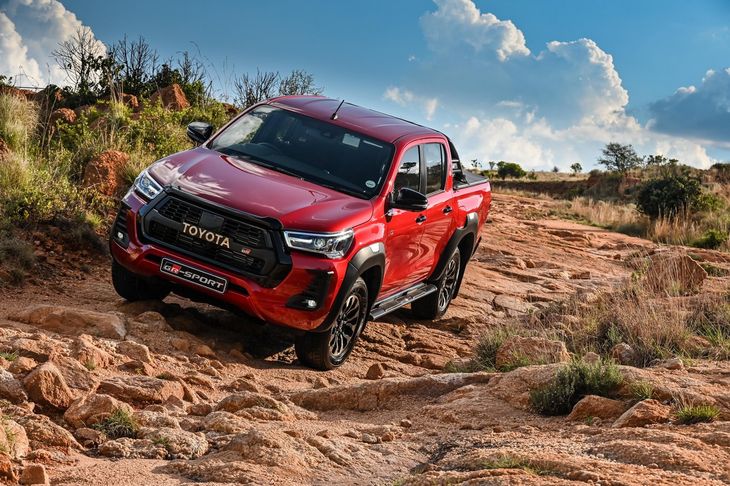
It’s a little confusing to figure out whether the Hilux GR-S is meant to be an off-road performance pack, like the Land Cruiser 300 GR-S or a handling performance pack like you get on a Toyota passenger car, such as the Corolla Cross GR-S small crossover. Toyota says it’s a bit of both, but based on my first impression, it appears to be the latter.
At higher speeds, the suspension improvements seem quite effective. The Hilux GR-S is definitely more stable when traversing fast open roads – it leans far less and adjusts to changes of direction more accurately. The revised steering setup inspires more confidence and, as a result, you don’t have to make as many small steering changes to maintain control.
The negative side of the changes appears to be a poorer low-speed ride quality. The GR-S’ suspension simply feels stiffer and it makes the Hilux’s body jiggle over just about any bump. It can become tiresome over time and, if you’re travelling on a slow dirt road with lots of washboard gravel, you may want to book a dentist appointment soon after the journey.
Some of the bumpiness can be avoided by driving a bit faster (that’s right, the ride quality becomes smoother at higher speeds), but that’s not always an option and – on a dirt road – not the safest way to deal with the problem.
I have no doubt the GR-S would be faster over a handling course or off-road gymkhana circuit than a standard Hilux, but on a family trip to the Tankwa or Drakensberg, dirt roads are going to jolt the bakkie’s occupants a lot more by comparison.
Interior up to date?
The GR-S’ cabin is adorned with red trim and GR logos. The speedo and rev counter are also unique to this derivative.
The red accents and suede seats are clear reminders that this isn’t a regular Hilux. The seats are comfortable too and I always appreciate the premium feel of suede. The faux carbon-fibre insert on the dashboard leaves me cold, but buyers seem to like them; it’s also pretty common across many brands as a way to differentiate the sportiest versions in a range.
Because the Hilux GR-S is based on the Raider specification, it comes equipped with a standard Toyota audio system rather than the JBL upgrade fitted to Legend derivatives. Still, Apple Carplay and Android Auto work well, but it requires a smartphone cable to be plugged into the fascia, which takes up one of the cabin’s USB ports. There are multiple power outlets, so you can always use them to charge equipment, plus owners get access to Toyota’s 15 GB of in-car Wifi.
Toyota Safety Sense is being rolled out across an increasing number of Toyota models and it provides the Hilux GR-S with adaptive cruise control, lane-departure warning and a pre-collision system.
Toyota Hilux GR-S pricing and after-sales
The Toyota Hilux GR-S is sold with a 3-year 100 000 km warranty and 9 services/90 000 km service plan.
Hilux grabs the upper hand for now, but we await the new Ranger and Amarok models to really see where it’s at.
Toyota has dominated the double-cab market throughout the past three years, so I suspect this new GR-S will only reaffirm the Hilux’s status as South Africa’s favourite bakkie. Those that scooped up the previous GR-S will feel satisfied that Toyota has listened to their concerns and improved the key areas of the special version with more power and safety systems.
The Hilux GR-S’ ride quality is admittedly firm, and that might dissuade some buyers, but the upgraded suspension indeed improves the Japanese bakkie’s on-road stability and dynamism. It’s an interesting time to be a bakkie buyer in the segment as the new Ford Ranger and VW Amarok will soon be available and knocking on the door of Hilux owners to “get a foot in.”
Land Rover Defender V8 (2022) Review
What happens when you plant a supercharged 5.0-litre V8 into the cool, all-road-capable Land Rover Defender? Do you get the perfect flagship derivative? We test the sonorous Defender 90 V8.
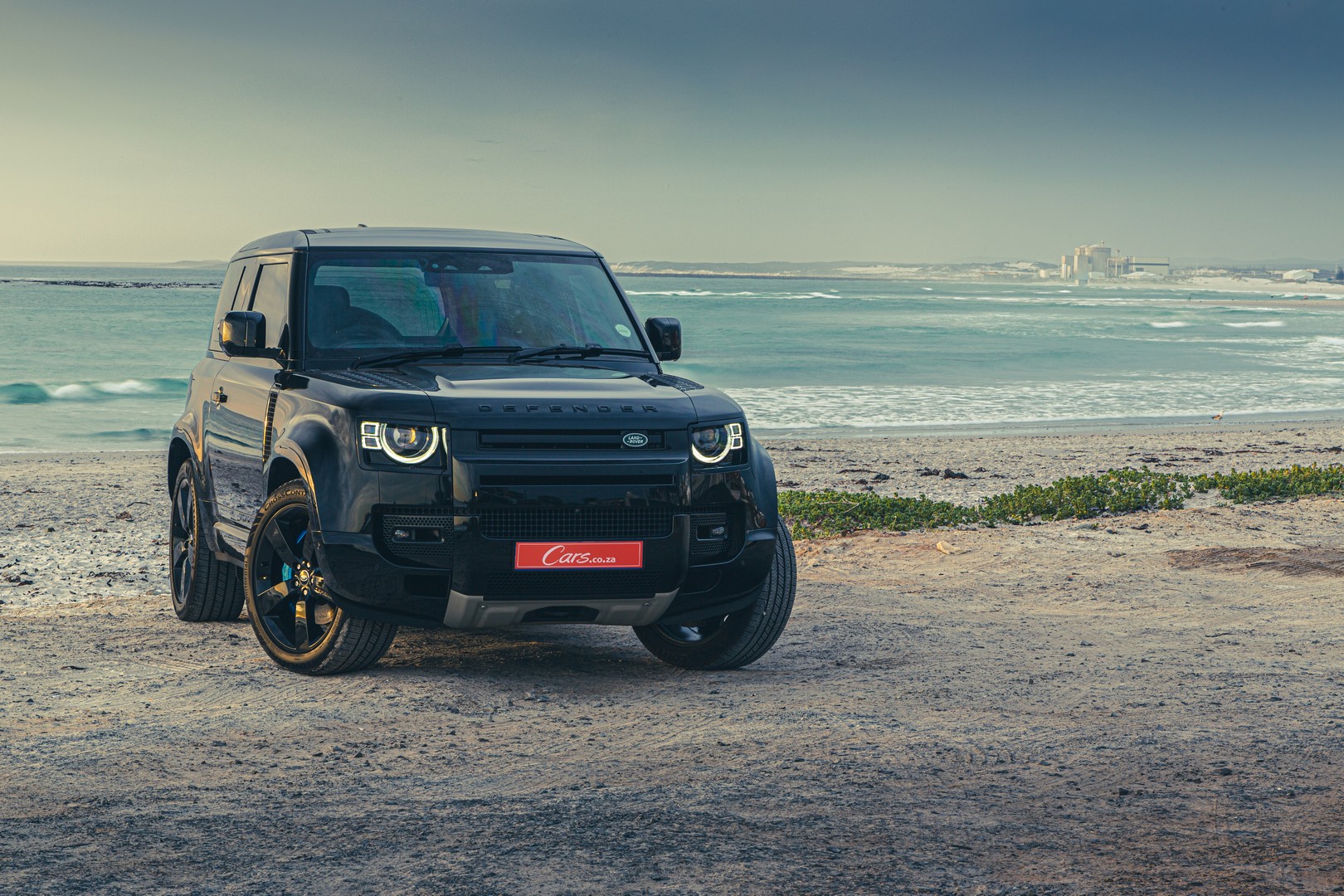
The new Defender has proven extremely popular around the globe, even if it’s more of a luxury than a utilitarian SUV.
The new Defender has been a revelation for Jaguar Land Rover (JLR). Available in petrol, diesel and hybrid guises in 3 variants (90, 110 and 130), the Defender has rocketed up the sales charts around the globe. Land Rover SA’s sales figures suggest the model outsells everything else in the line-up by a comfortable margin. Local dealers say demand outstrips supply and it’s easy to understand why: it’s an attractively packaged, genuinely off-road-capable model with a huge “cool factor” – a grand replacement for the original Defender.
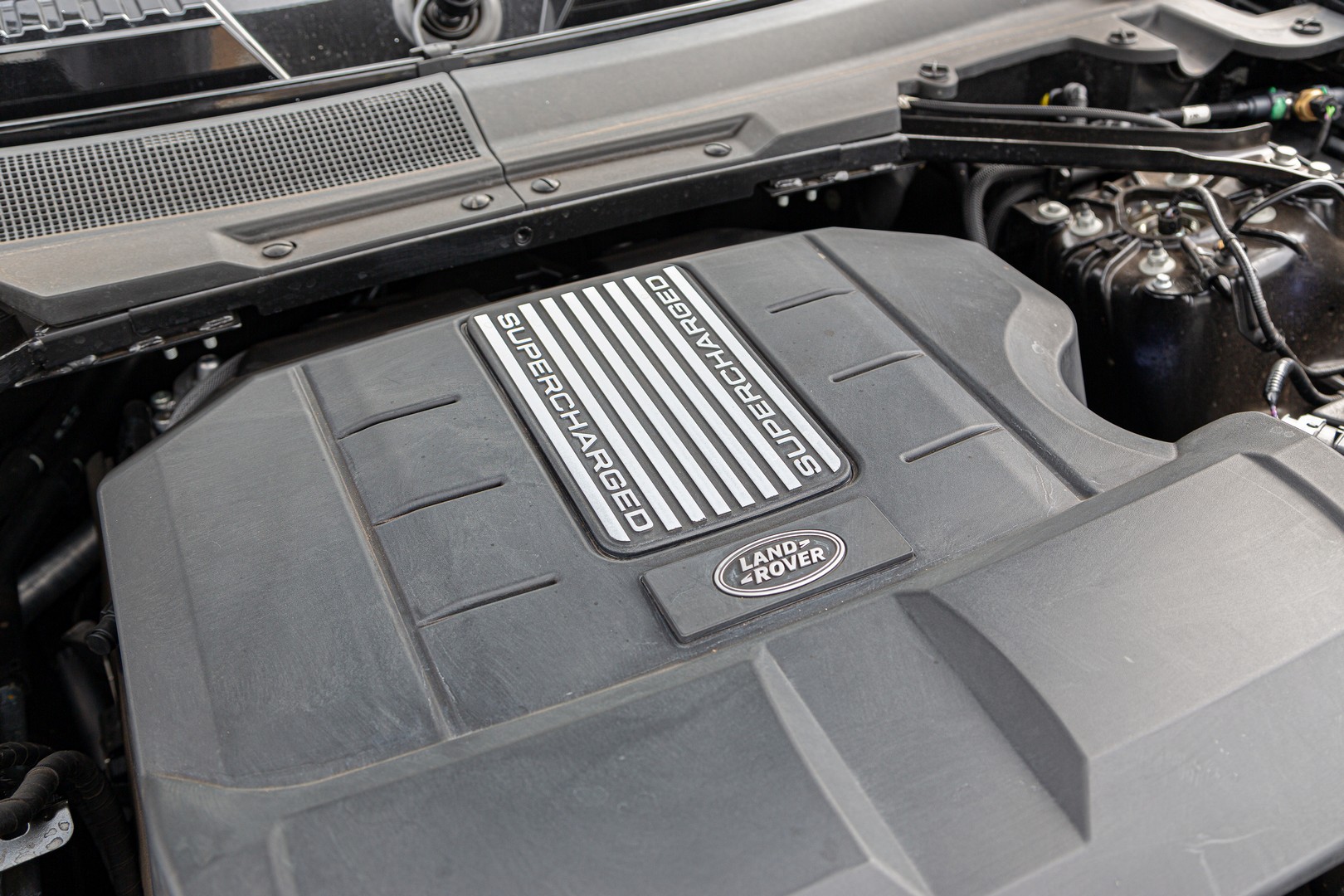
We have considerable experience with the Land Rover Defender (both 90 and 110 versions) and even embarked on a road trip across the Western Cape in one. However, JLR recently added a petrol-powered flagship to the range. Simply named Defender V8, it was ostensibly created to compete with the AMG version of the Mercedes-Benz G-Class and whatever other performance SUVs upper-crust buyers might consider, um, acquiring. Does a supercharged 5.0-litre V8 petrol engine suit a Defender? That’s what we want to find out in this review.
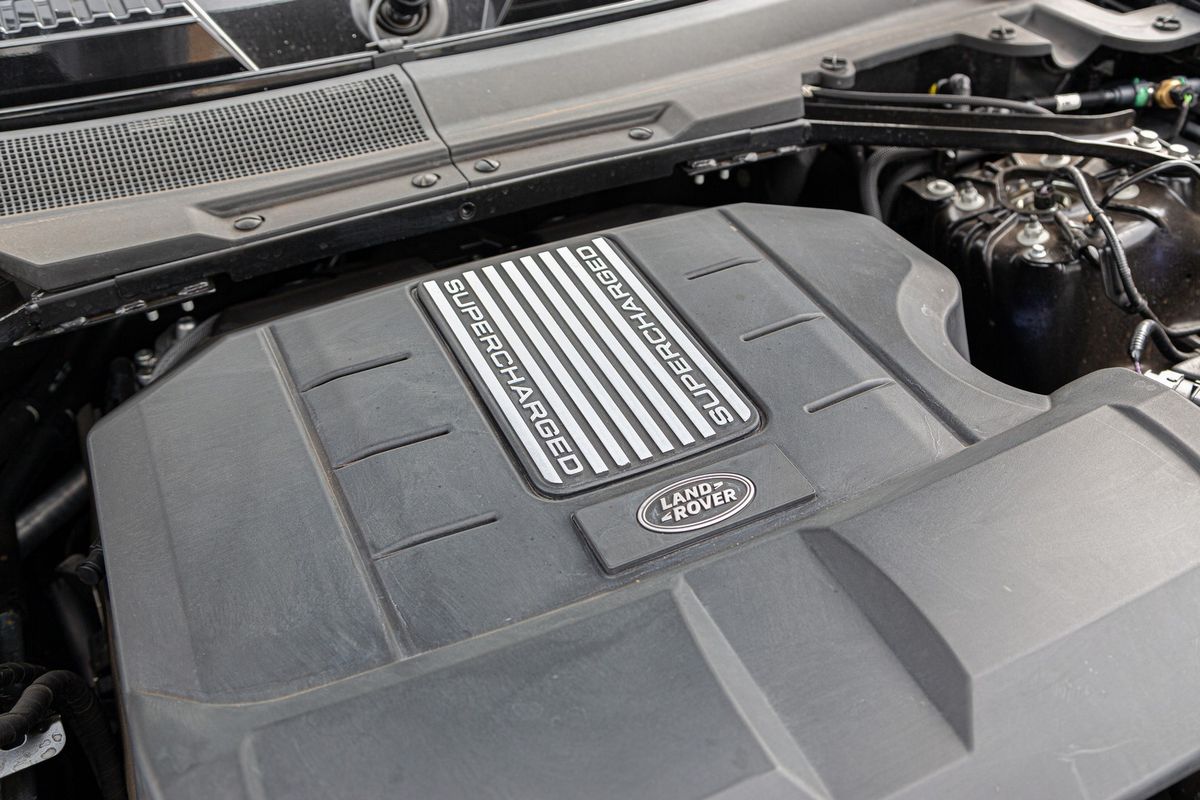
The Defender V8’s supercharged 5.0-litre motor produces peak outputs of 386 kW and 625 Nm.
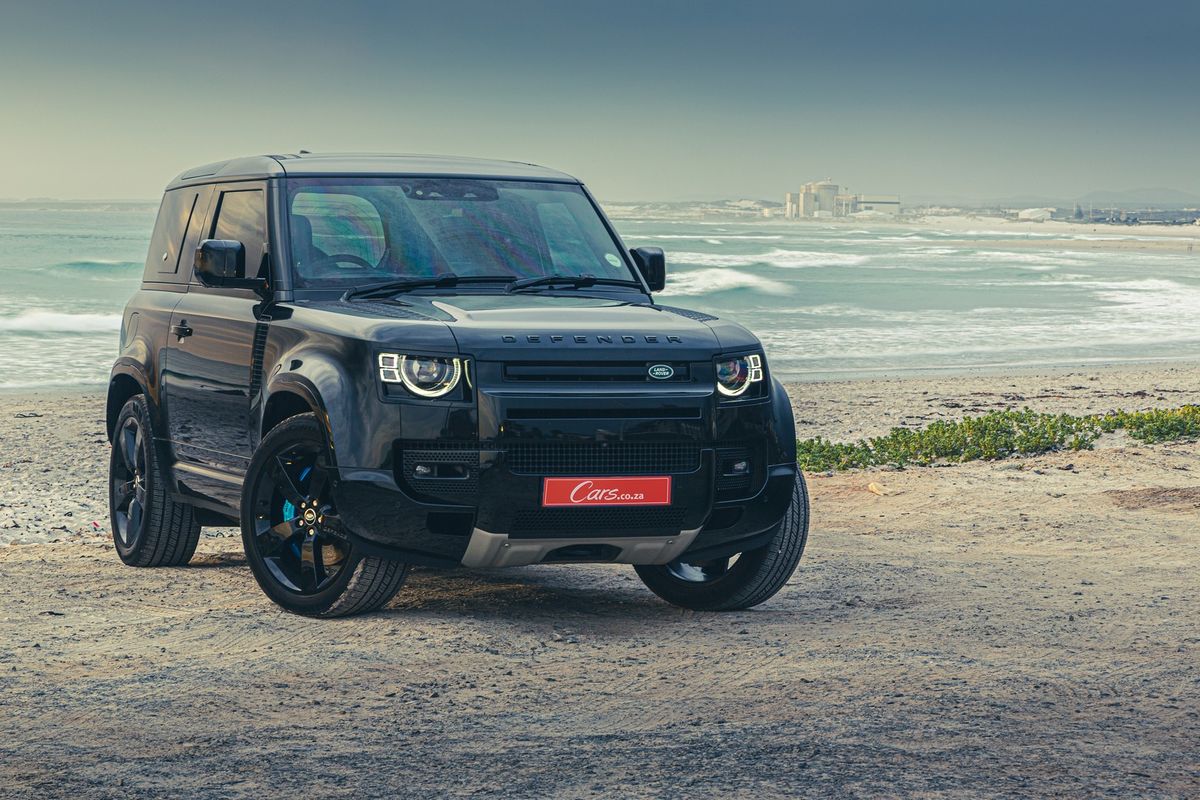
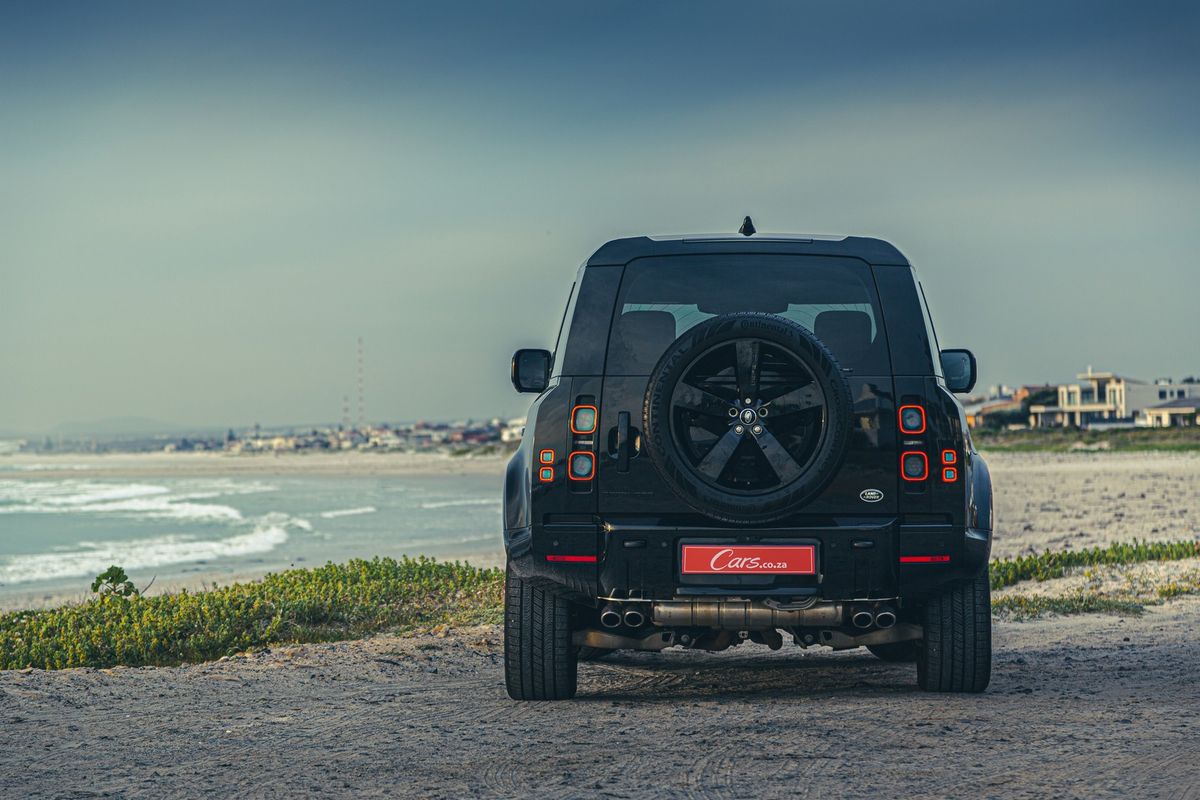
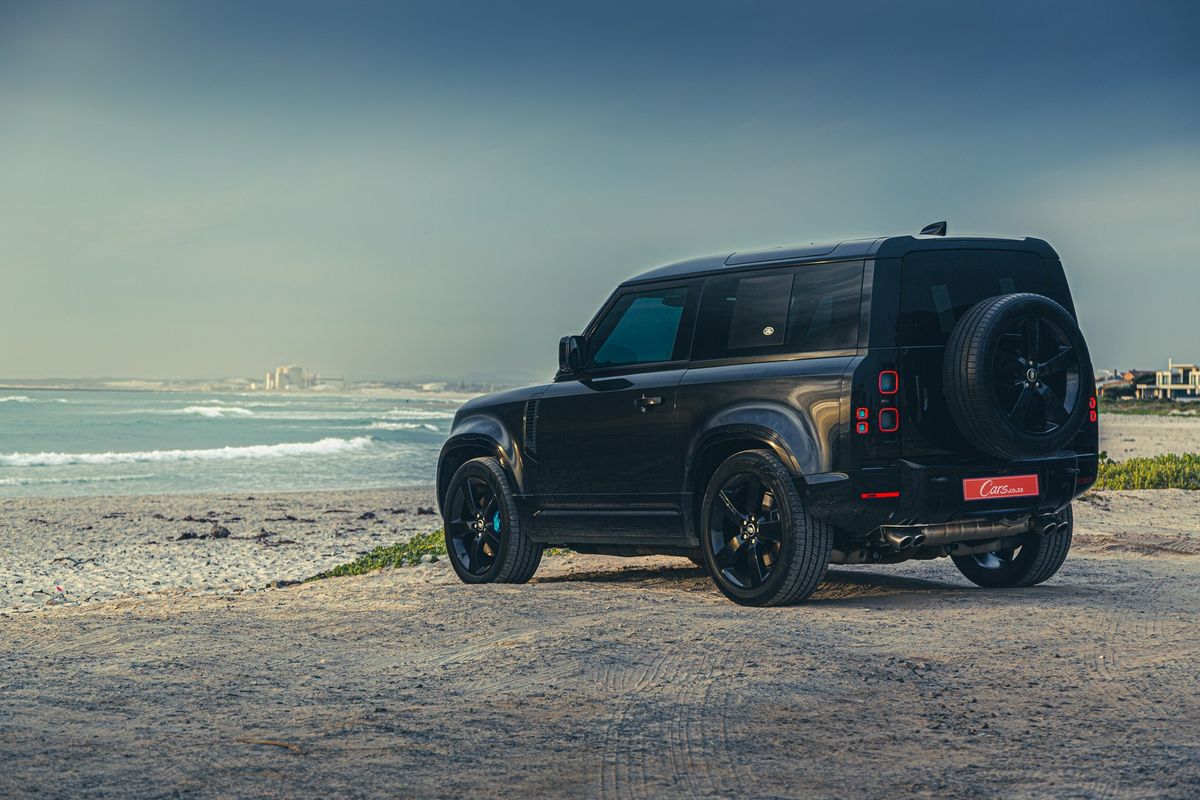
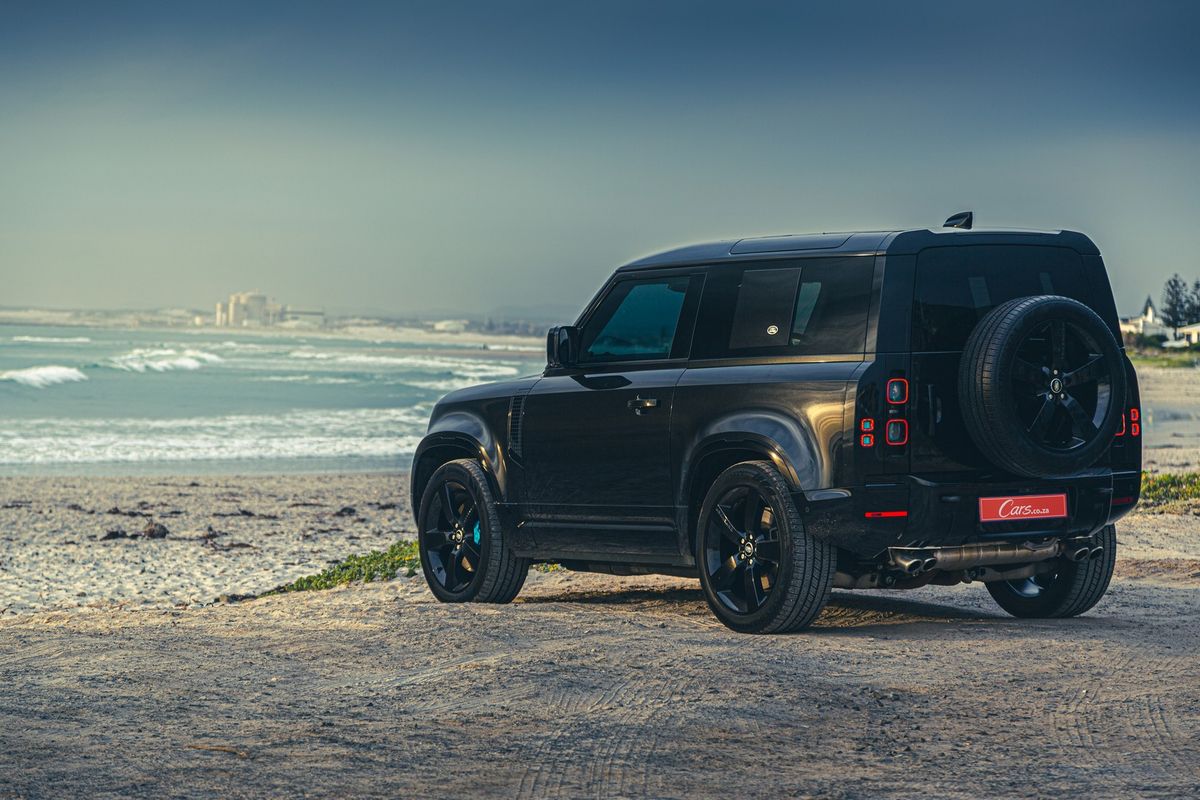
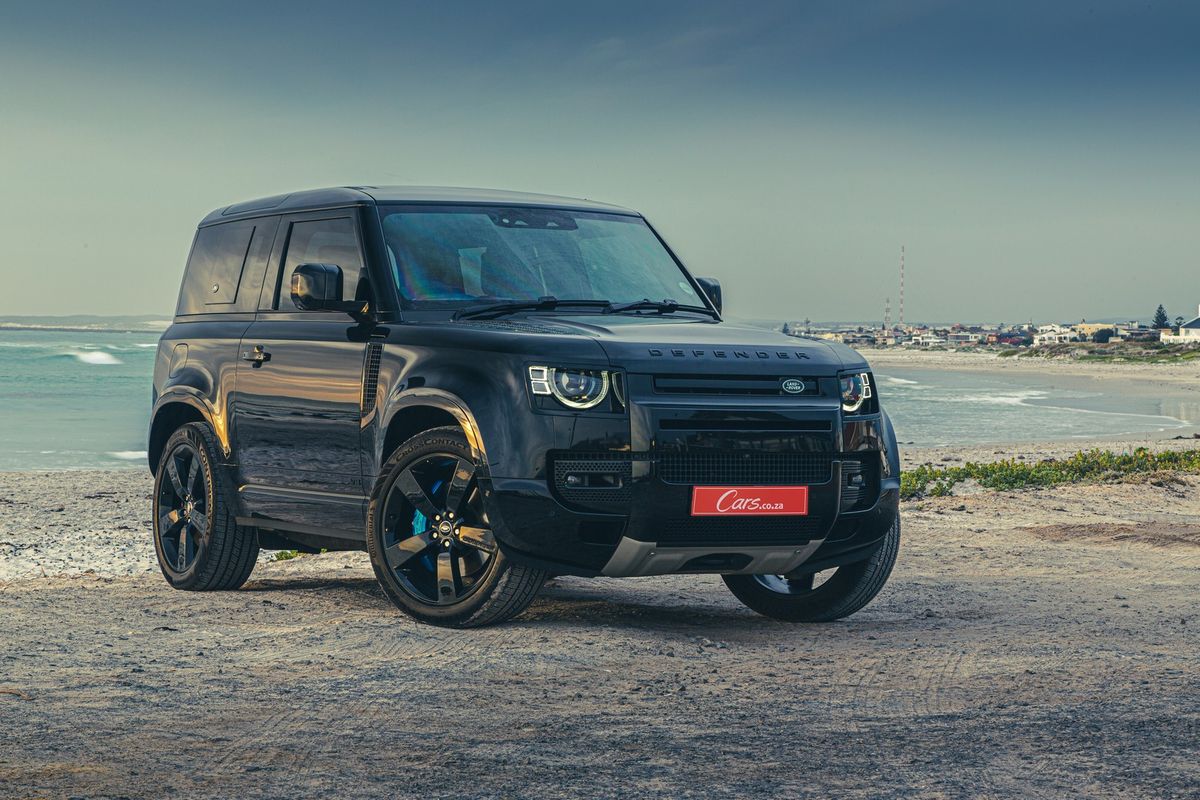
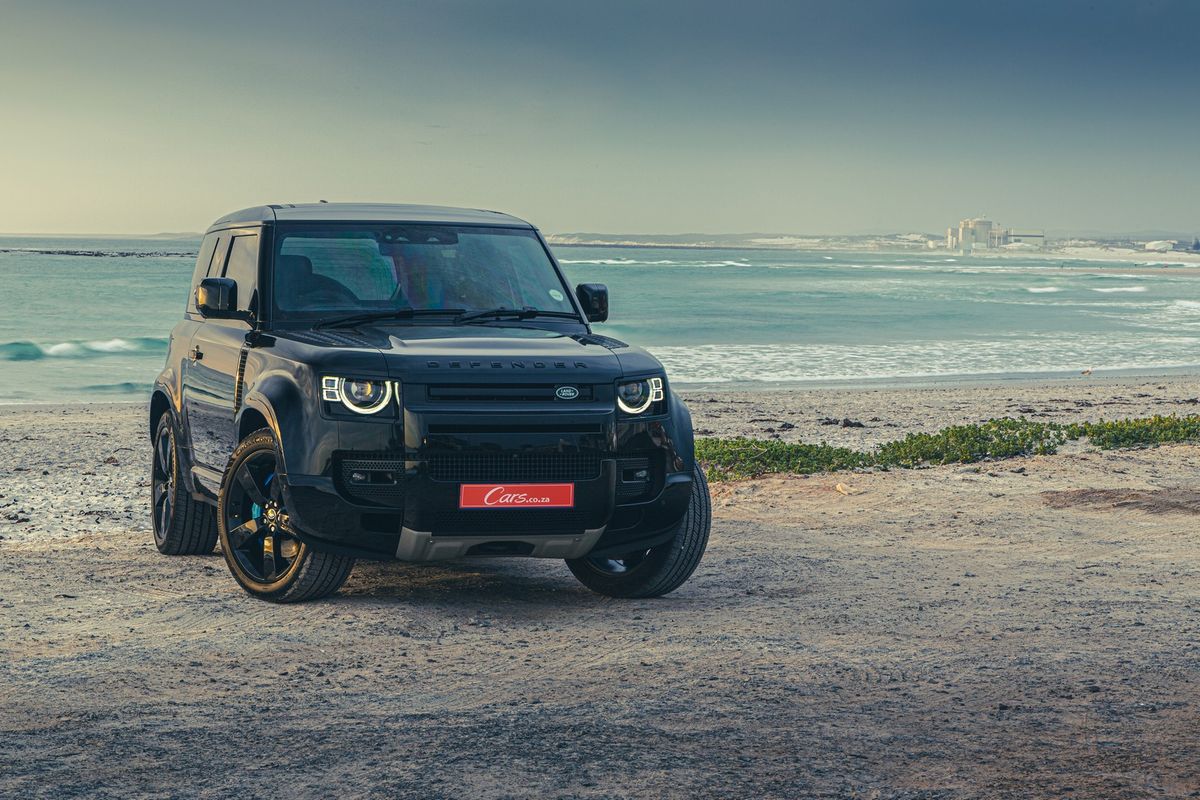
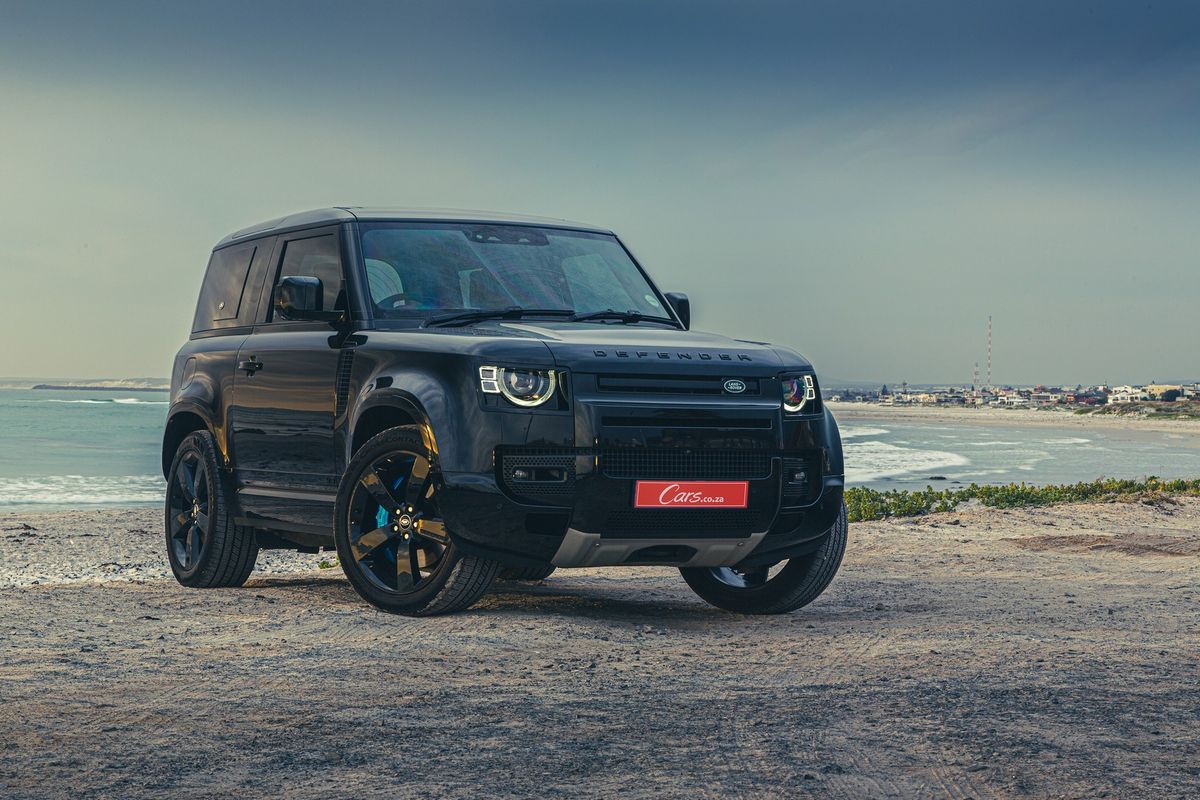
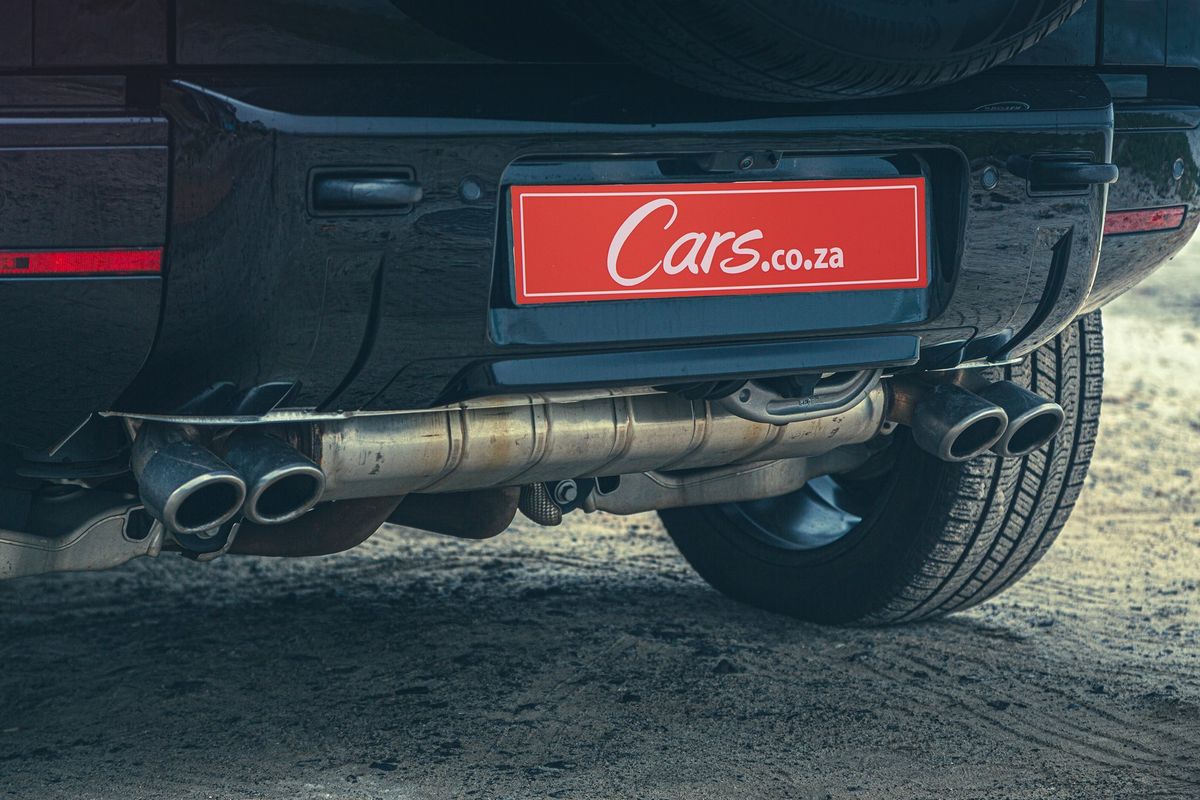
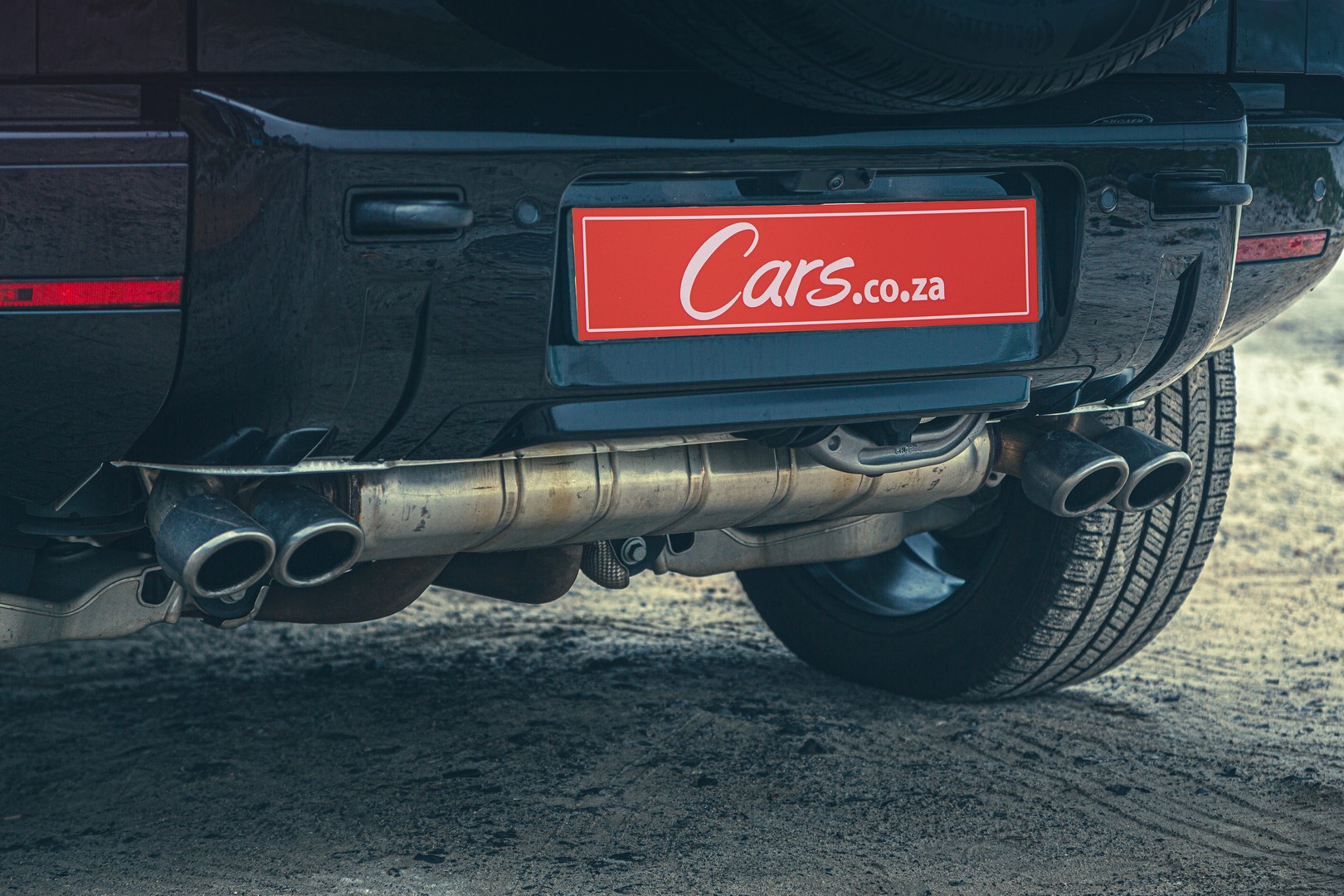
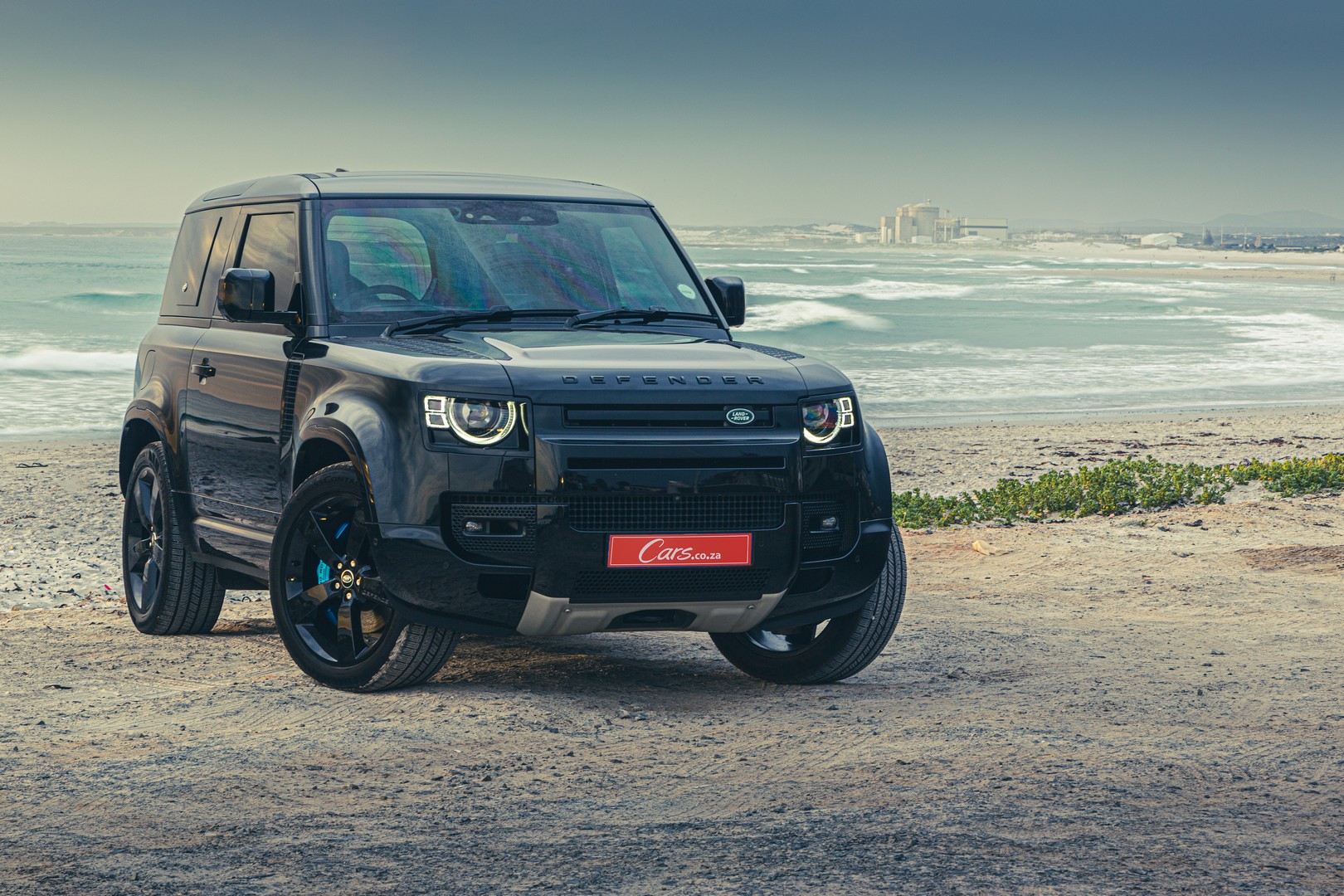
Given the flashy (some would say ostentatious) models it goes up against, the V8 does a good job of blending in with other Defender derivatives; you’ll have to keep your eyes peeled for the quad exhausts, small V8 badges on the flanks, and blue brake callipers to know that this is something special. We’re rather well acquainted with this motor and despite the advent of the electric-car era, the supercharged 5.0-litre V8 has somehow dodged the executioner’s noose.
It’s remarkable how JLR has utilised this engine in a variety of applications and states of tune. The previous-gen Jaguar XFR and current F-Pace SVR will be Cars.co.za favourites forever, as will the mighty Range Rover Sport. Let’s not forget that pocket-rocket F-Type R either.
The V8-powered Defender sits at the top of the 90 line-up and a 110 version’s coming soon.
Rivals? Given the Defender V8’s boxy shape and off-road cred, the Mercedes-Benz G-Class is indeed the first one that comes to mind, but at this price point, you can get only the diesel-powered G400d. If you want the Mercedes-AMG G63 that sits in the R3.5-million bracket! If you’re after a luxurious V8-powered SUV, but willing to accept limited off-road capability, then look to the German marques. The BMW X5 M50i, Mercedes-AMG GLE 63 S and Audi RSQ8 are all priced similarly, but none of them is as distinctive as a Land Rover Defender.
With 386 kW and 625 Nm on tap, the Defender V8 delivers muscular acceleration whenever required. Some may point out that the supercharged motor is capable of higher outputs, but it wouldn’t be in JLR’s interest for a Defender to overshadow its other rapid models, such as the 405-kW Range Rover Velar SVAutobiography. Besides, it would be quite a handful.
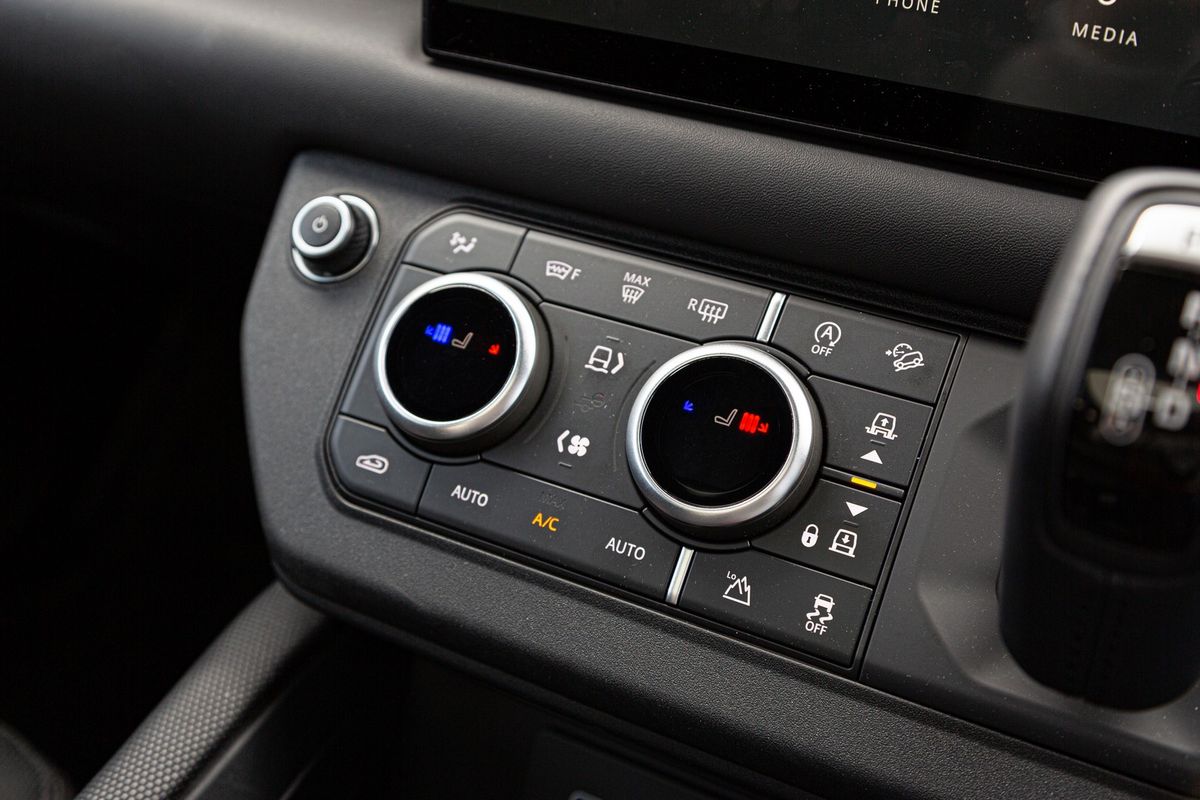
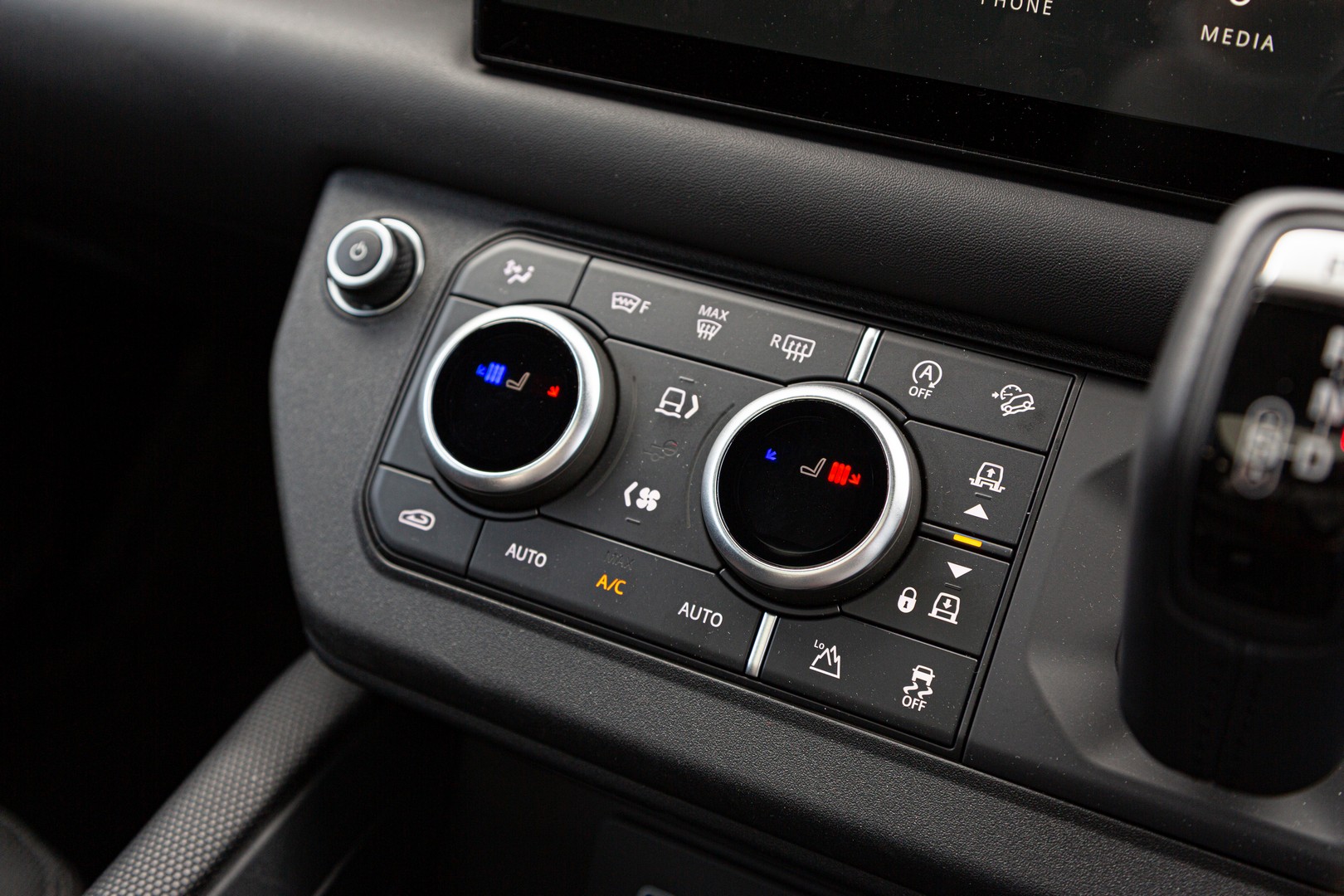
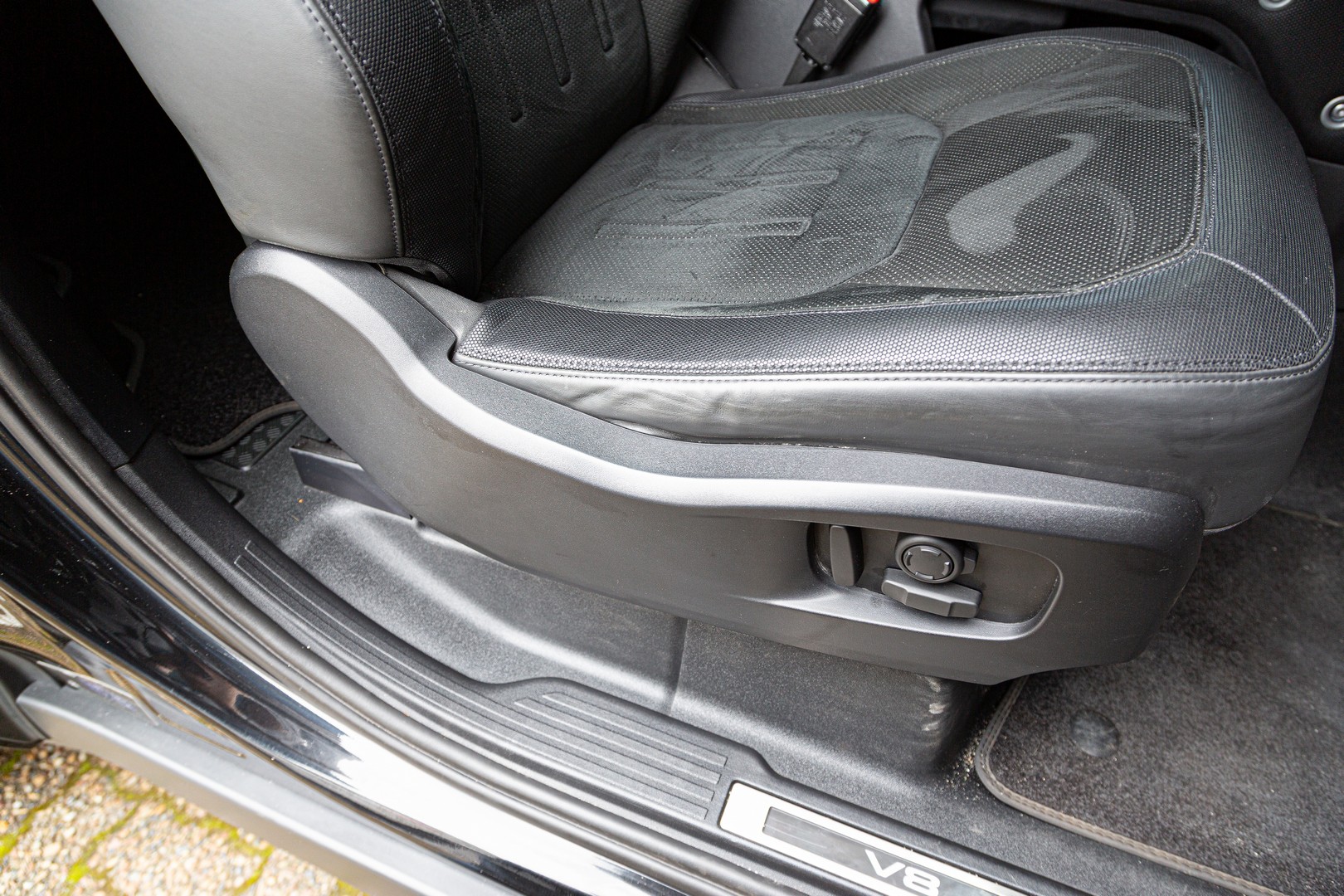
Heated and ventilated front seats should be standard at this price point – and they are!
Still, the flagship Defender 90’s peak outputs and performance figures are sufficiently impressive. Land Rover claims a 5.2-sec 0-to-100 kph time and a top speed of 240 kph, which may not make the V8 the fastest thing around (considering what hyper hatches, such as the Audi RS3 and Mercedes-AMG A45 S, can achieve), but when you consider the Defender weighs around 2.5 tonnes and is shaped like of a maritime cargo container, it’s fast enough.
Then there’s the Defender V8’s evocative soundtrack. The engine has a glorious rumble, with the quad exhausts reminding bystanders that this is no run-of-the-mill Defender derivative. It roars majestically when you stomp on its accelerator pedal, but interestingly, the tailpipes don’t emit pops or crackles on overrun, which we attribute to ever-stricter emissions and noise regulations. If the F-Pace SVR has this function, then why can’t the Defender V8?
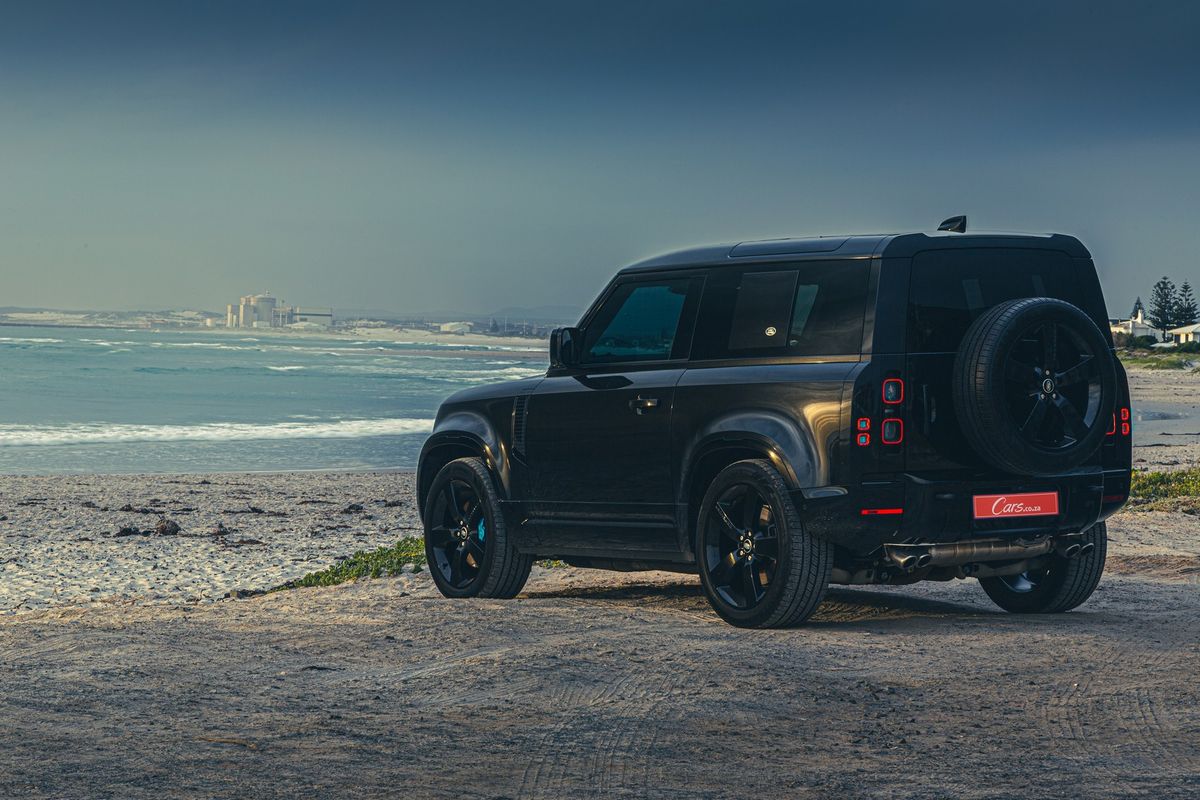
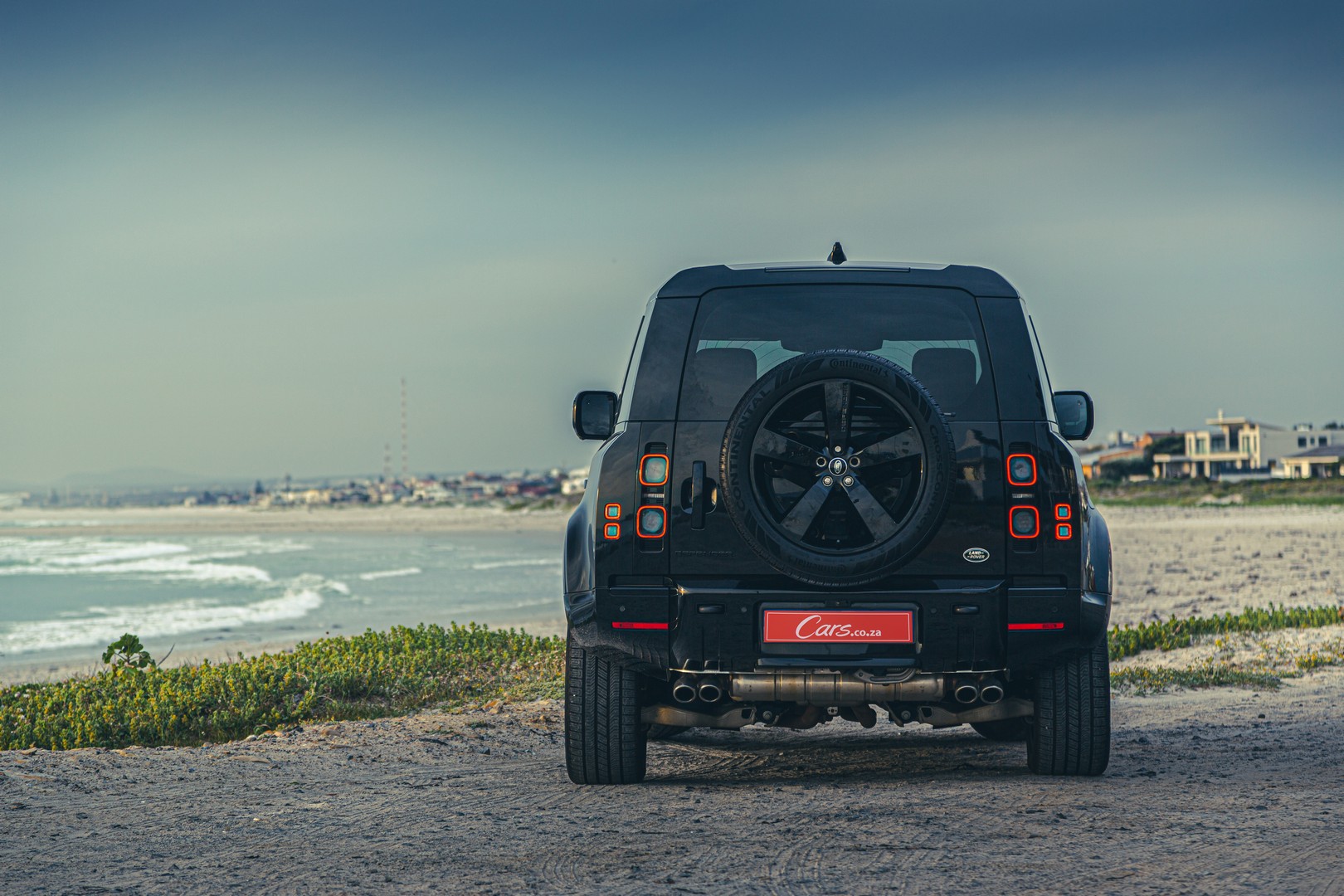
The quad exhausts are cleverly positioned to not diminish the Defender’s departure angle
The supercharged 5.0-litre V8 directs its considerable shove to all 4 wheels via an 8-speed automatic transmission. This gearbox delivers smooth shifts at the appropriate points, which contributes to a relaxed driving experience, but, alas, it’s not very responsive when you need it to produce a salvo of acceleration. We’re not talking about a flat-out sprint, mind you, but when you lean on the accelerator pedal, the ‘box seems hesitant to change down a gear.
When little seems to happen, you apply progressively more force to the long pedal until the transmission suddenly kicks down a few gears, after which the Defender V8 will hurtle towards the horizon as if it is fleeing from the gates of hell. It’s a frustratingly on/off throttle response, but you can avoid such sudden lunges by making use of the gearshift paddles.
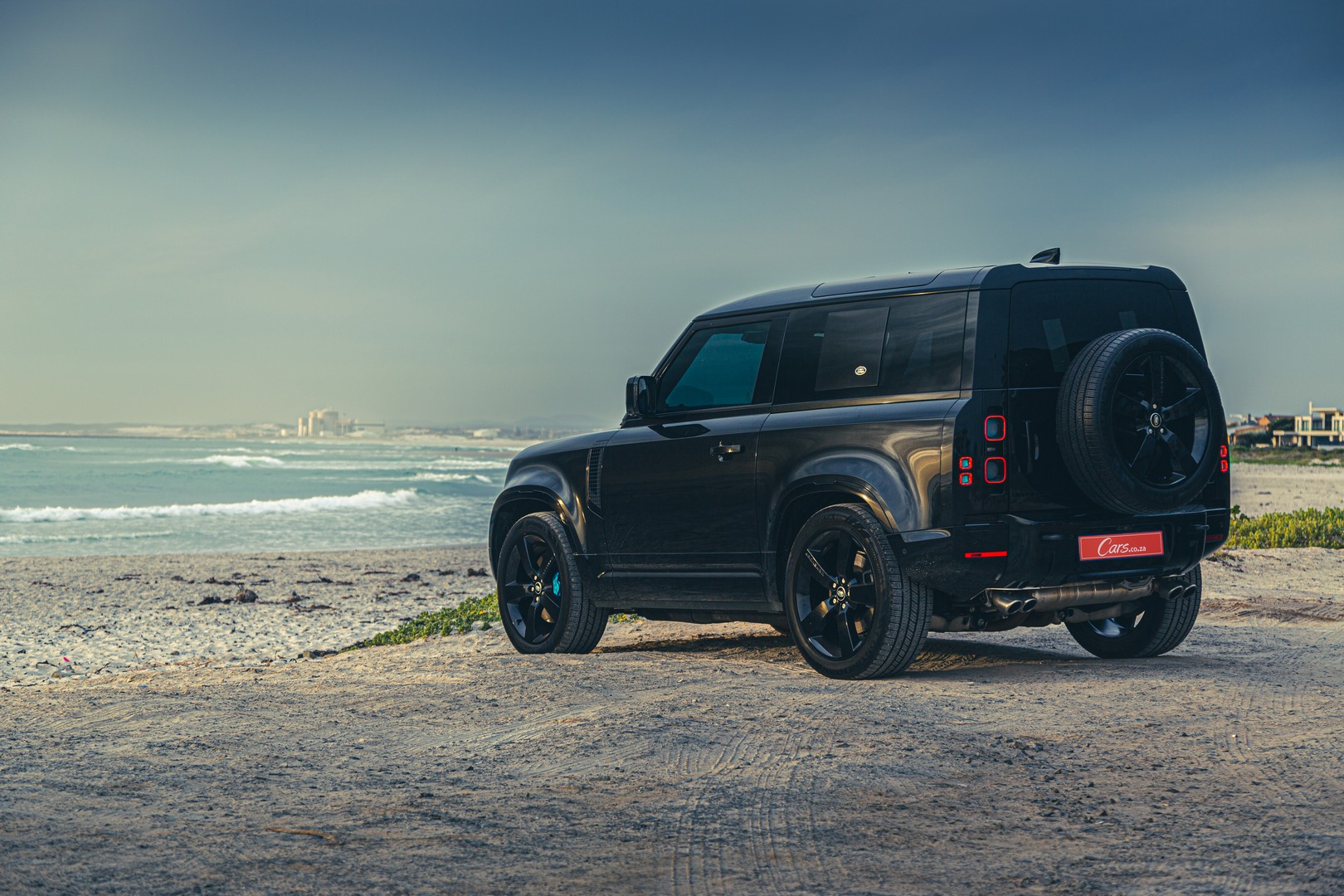
Black on black with blue brake calipers… quite the visual statement.
Fuel economy is probably of little concern when you’re piloting a 5.0-litre V8-powered SUV that costs around R2.4 million (if you can afford this beast, you should be able to feed it too). Officially, Land Rover claims 12.8 L/100 km, but towards the end of the Defender V8’s tenure in our test fleet, it indicated an average consumption figure of 16 L/100 km. Ooph.
Ride and handling
Given that this is a performance-oriented Defender, the engineers in Solihull have tuned the V8’s air suspension to compensate for the heavier engine – and its performance potential. Land Rover says the flagship has bespoke spring and damper rates, with an electronic active rear diff, which is said to provide “more engaging handling and improved body control.”
Does it work? No, sadly not. The Defender V8 indeed feels sporty, but its ride quality has been compromised. One tester noted that the suspension was – somehow – soft/wallowy, but simultaneously crashy. Unless you drive really slowly over speed bumps, expect some jarring inside the cabin, which is odd considering the standard Defender irons them out with ease.
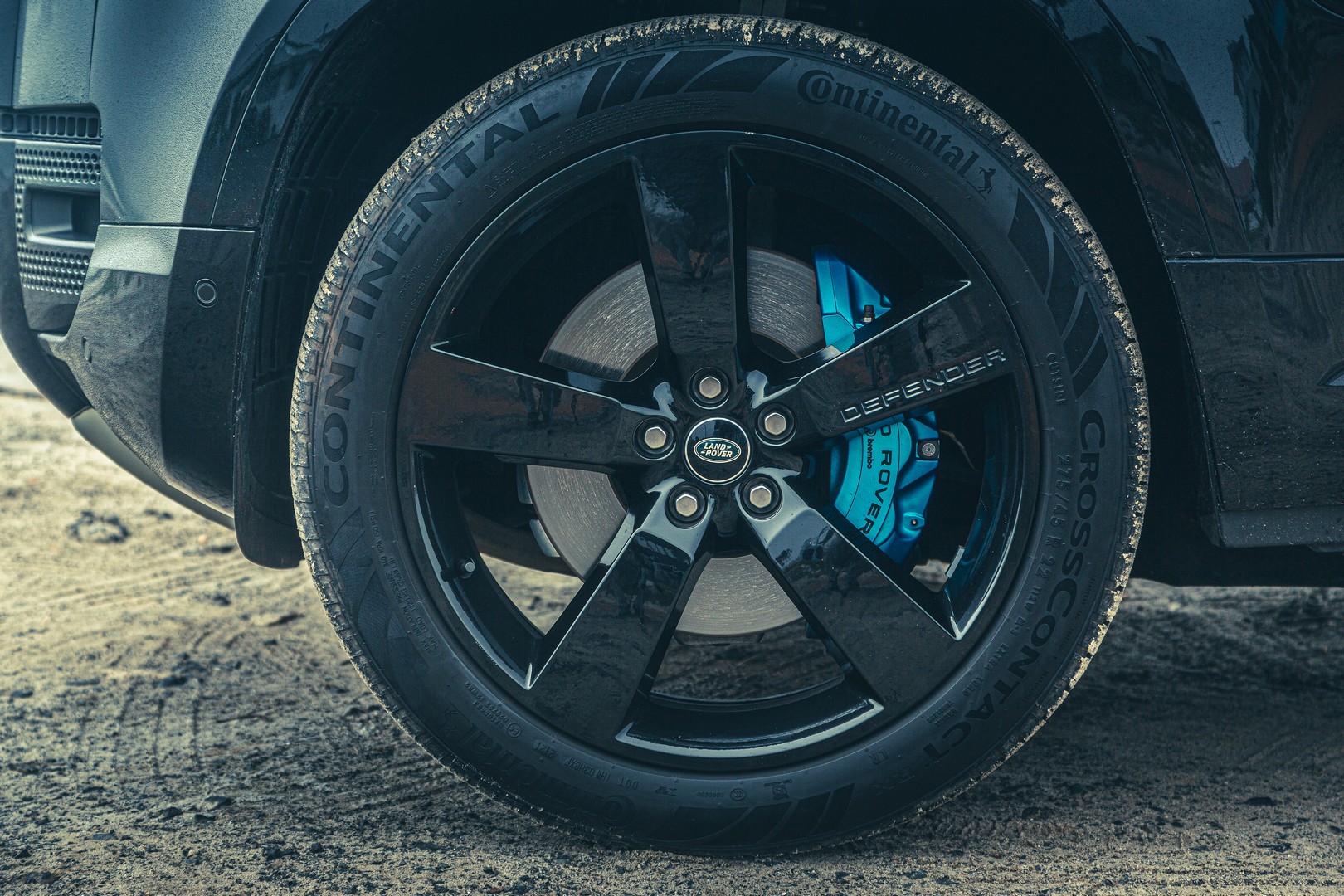
The 22-inch wheels really look the part, but they do nothing for the Defender V8’s ride quality.
It seems as if all of the supple ride comfort offered by standard Defenders has been sacrificed at the altar of “a sportier drive”. Perhaps the short-wheelbase body configuration contributes to the harshness because there’s more vertical movement from the nose than expected…
When you accelerate hard, the V8’s front end rises like a speedboat’s nose and under hard braking, it pitches dramatically. This does happen at the edge of the operating envelope, but given the performance on offer, you’d expect customers to explore the flagship’s limits. We also reckon the massive (22-inch) alloy wheels are not conducive to ride comfort either.
Does the Land Rover handle with a modicum of agility when you make it corner at, let’s say heady, speeds? Yes, the steering setup is impressively direct and accurate. Grip levels are impressive (when you consider the vehicle’s high centre of gravity and sheer heft) and, when you really whip the ‘wheel into an apex, the vehicle’s body roll is less than you may expect.
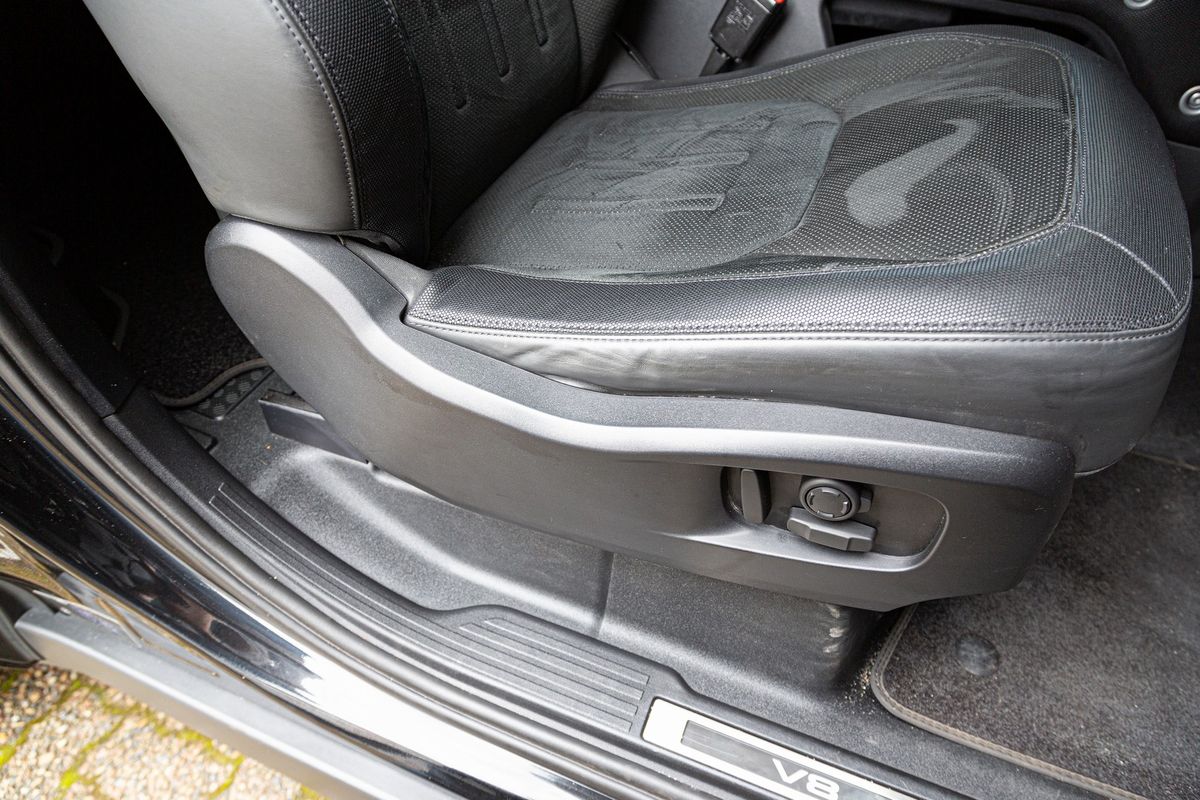
The seats are not the most supportive, plus, in our test unit, the plastic seat base came loose.
The seats don’t offer much in the way of lateral support, so do brace yourself before the Defender V8 barrels into a corner. Don’t expect a sports sedan-like level of dynamism – the laws of physics simply won’t allow it. The Land Rover does feel a bit more engaging to drive and planted than a Mercedes-Benz G-Class, which is probably what JLR was aiming for.
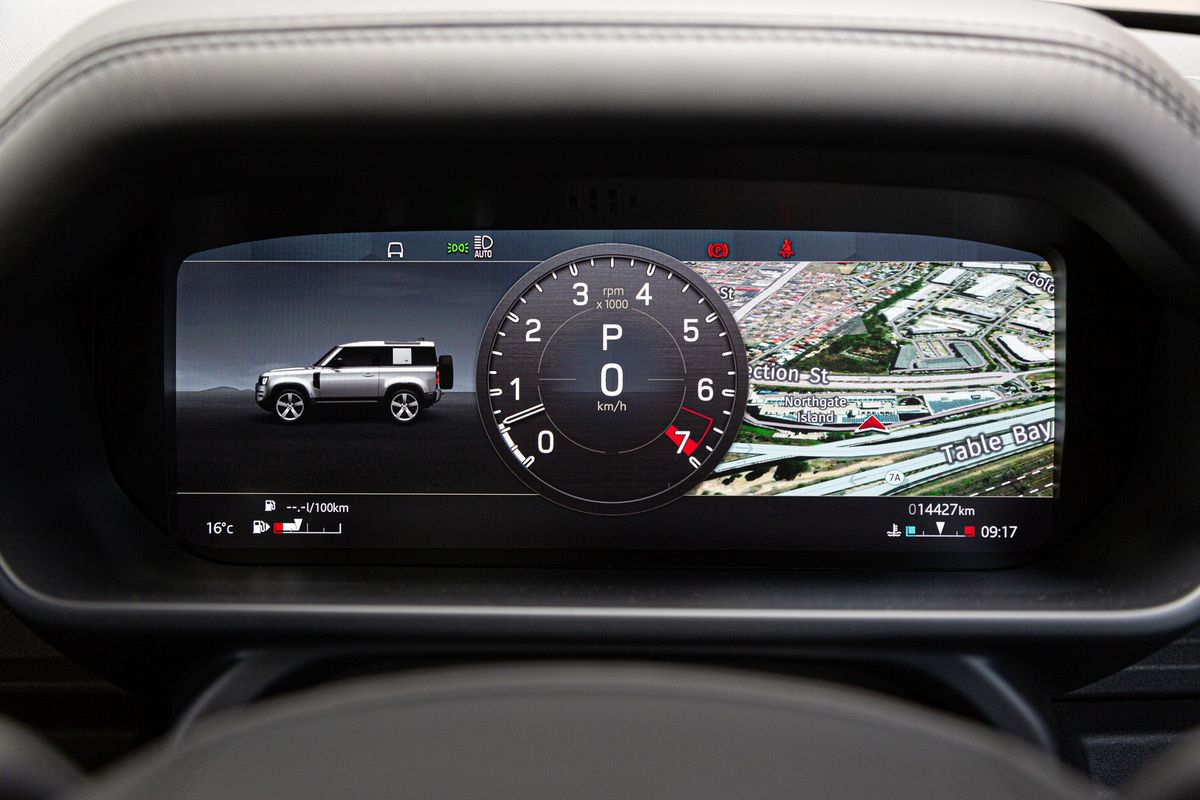
The Defender V8 had about 14 000 km on its odometer, which was a higher mileage than we usually see on test units allocated to the media. Well, perhaps the vehicle had lived a hard life or Land Rover’s quality issues persist – it could be a bit of both, but the Defender V8’s cabin emitted quite a few rattles and squeaks. The seat ventilation fan was annoyingly loud, and when we tried to drown it out with the excellent audio system, one of the speakers rattled.
We also noticed quite a bit of wind noise around the driver’s window and the trim at the base of the driver’s seat repeatedly came loose; such issues are alarming on a R2.5-million car.
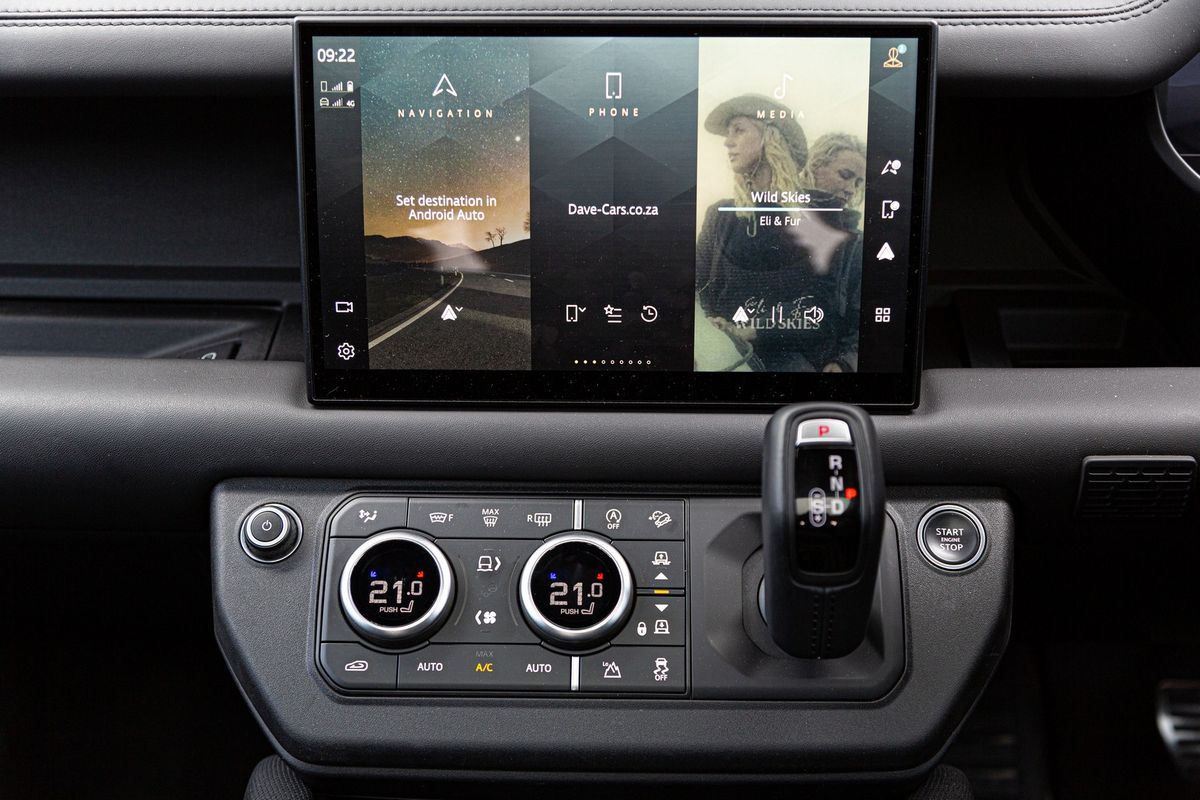
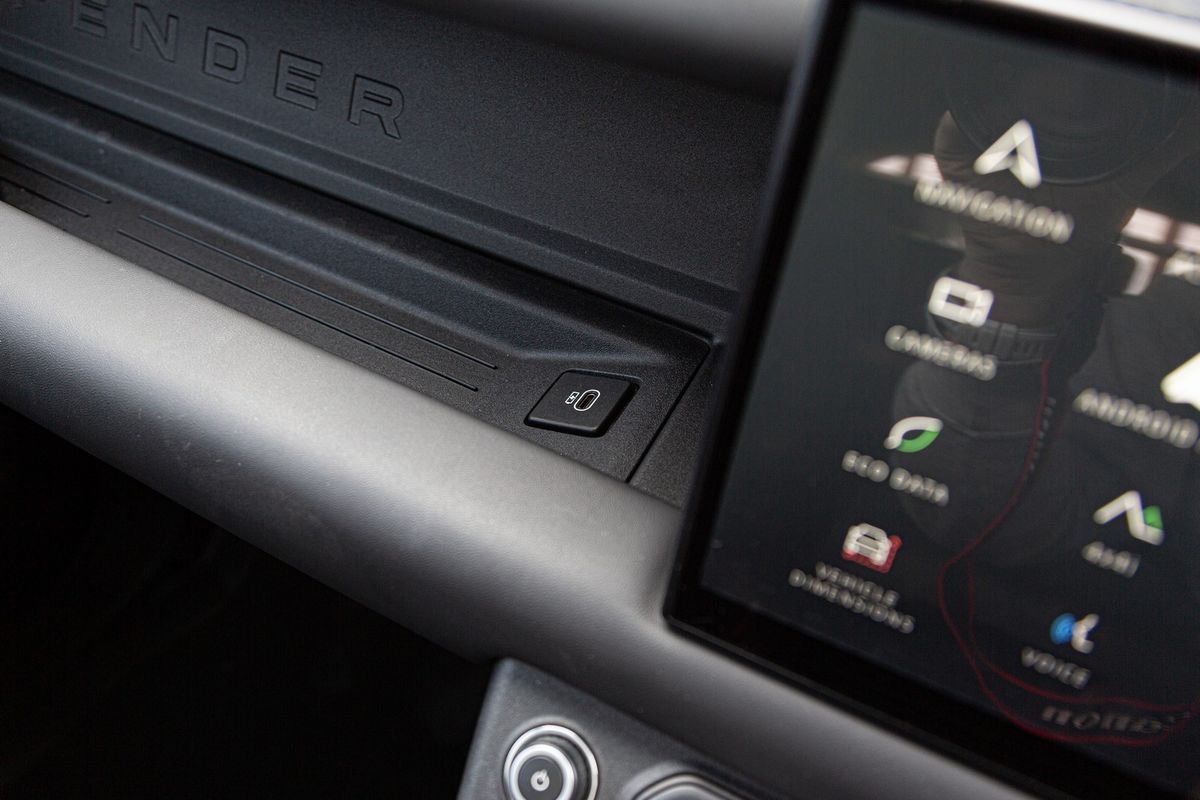
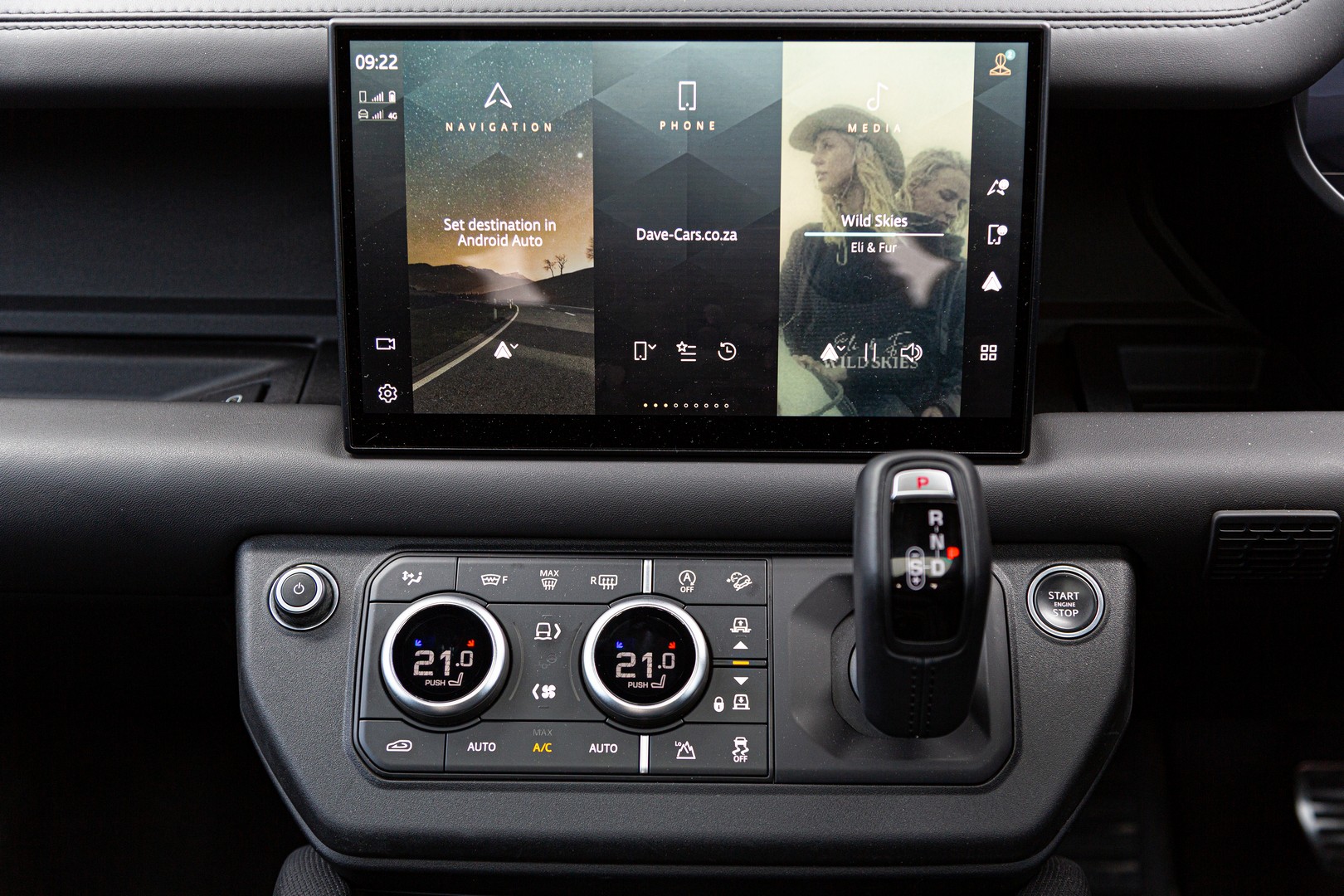
Pivi Pro is one of the best infotainment systems period.
Features, tech and safety
As befitting the flagship of the 90 line-up, the Defender V8 comes generously equipped with standard features; indeed, there are precious few extra-cost options to consider.
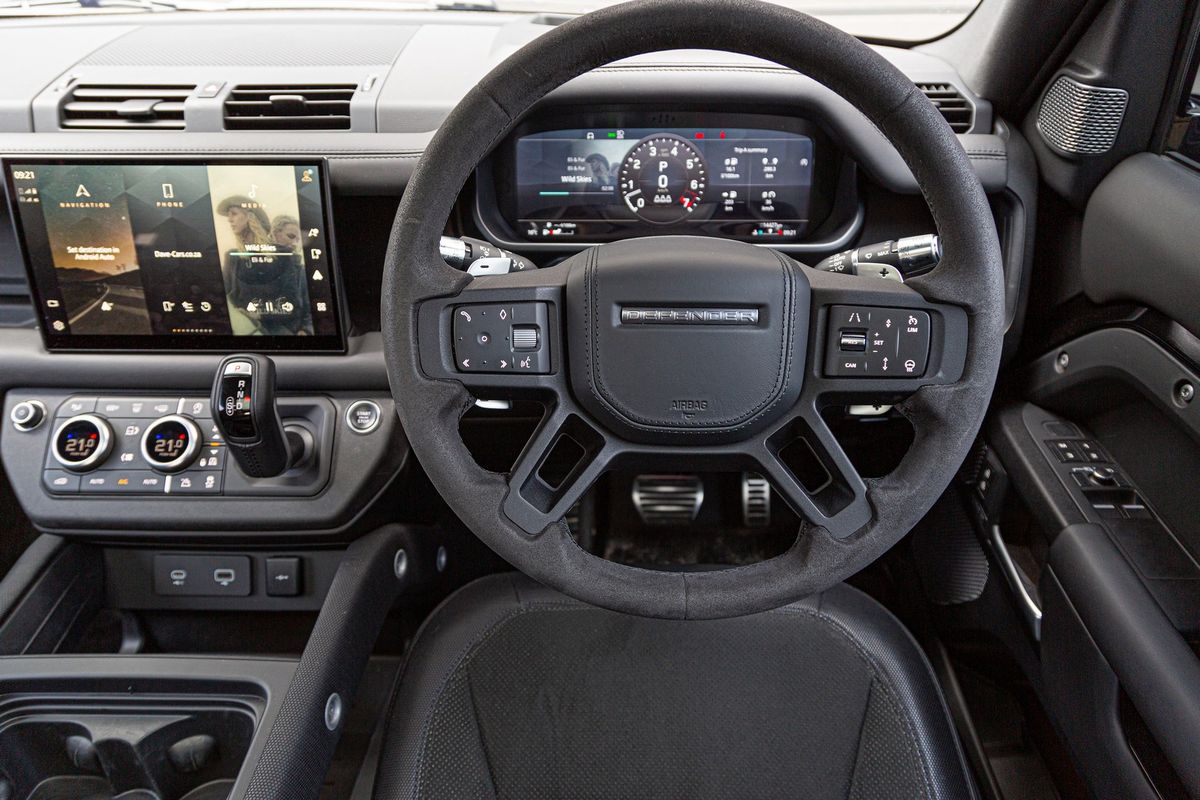
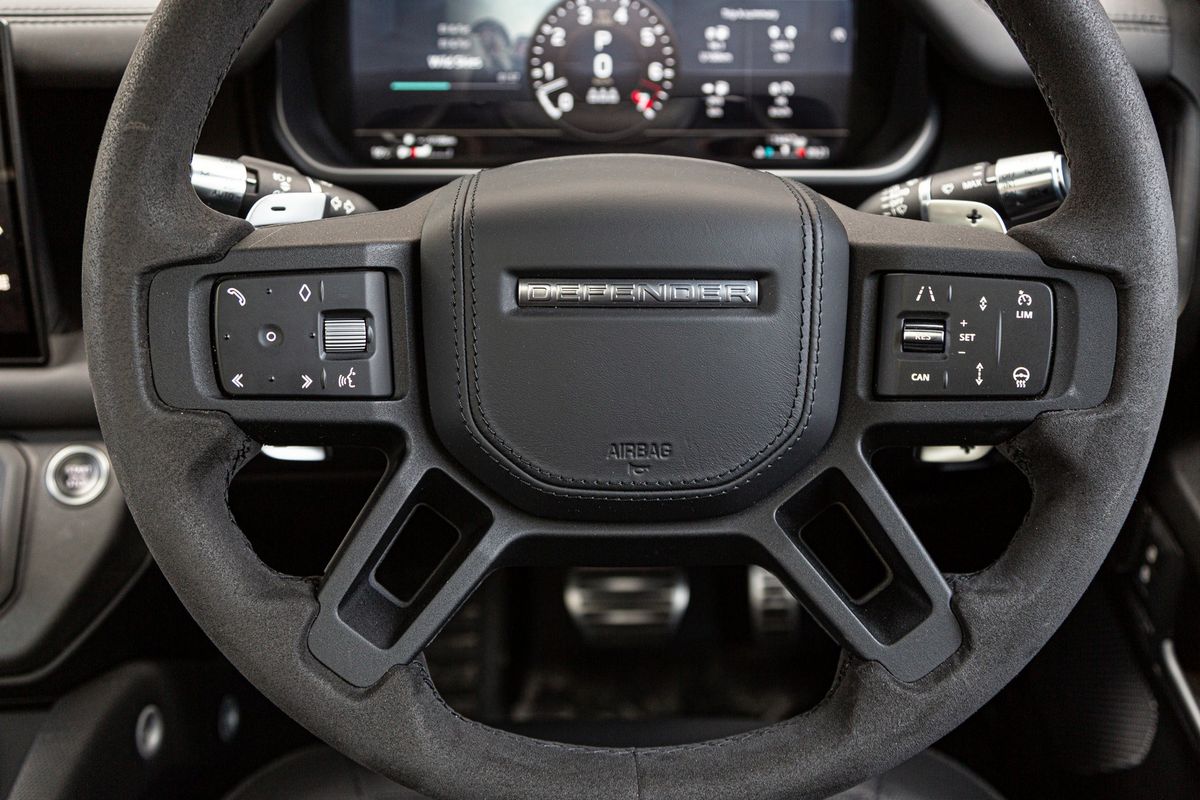
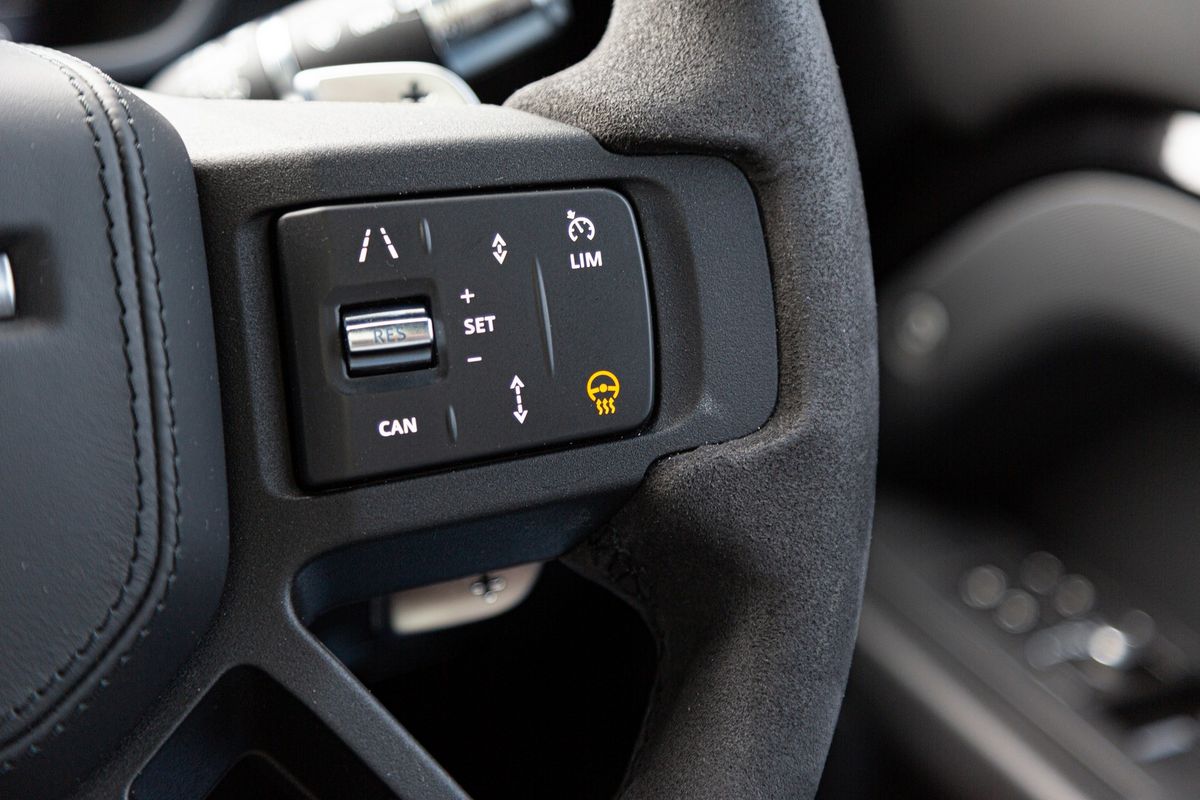
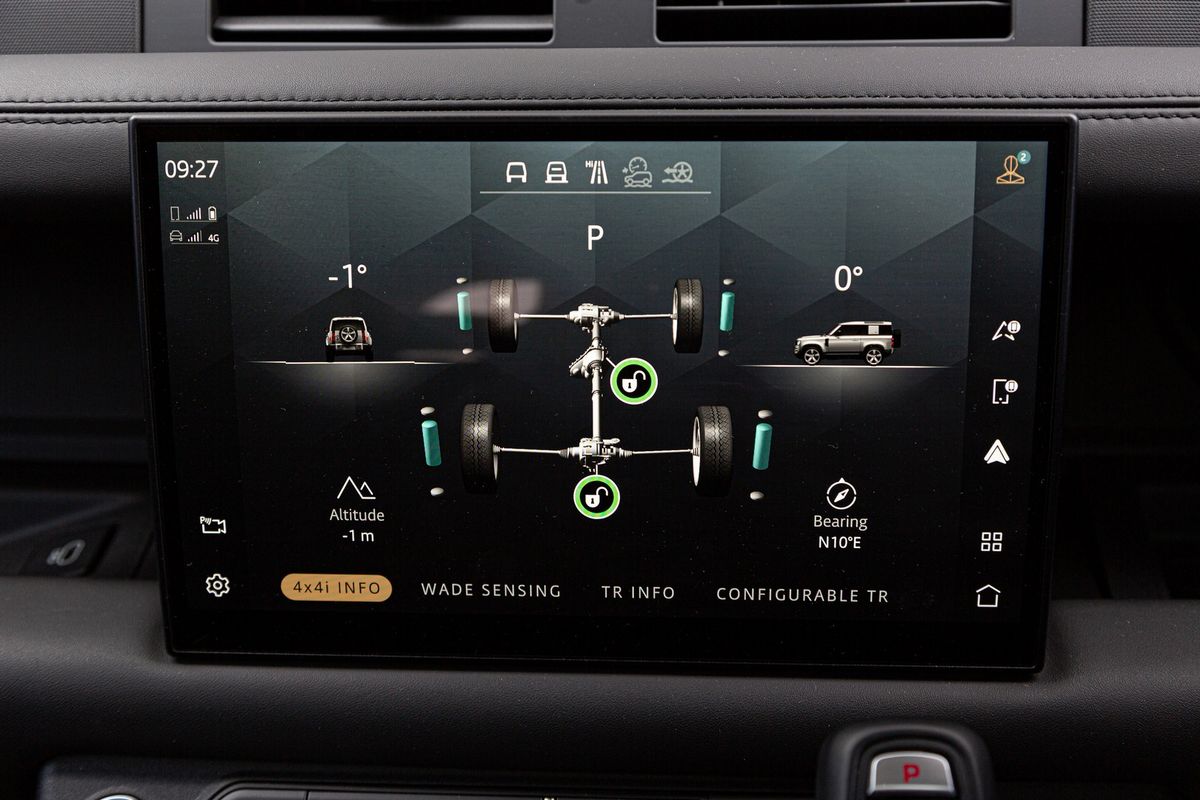
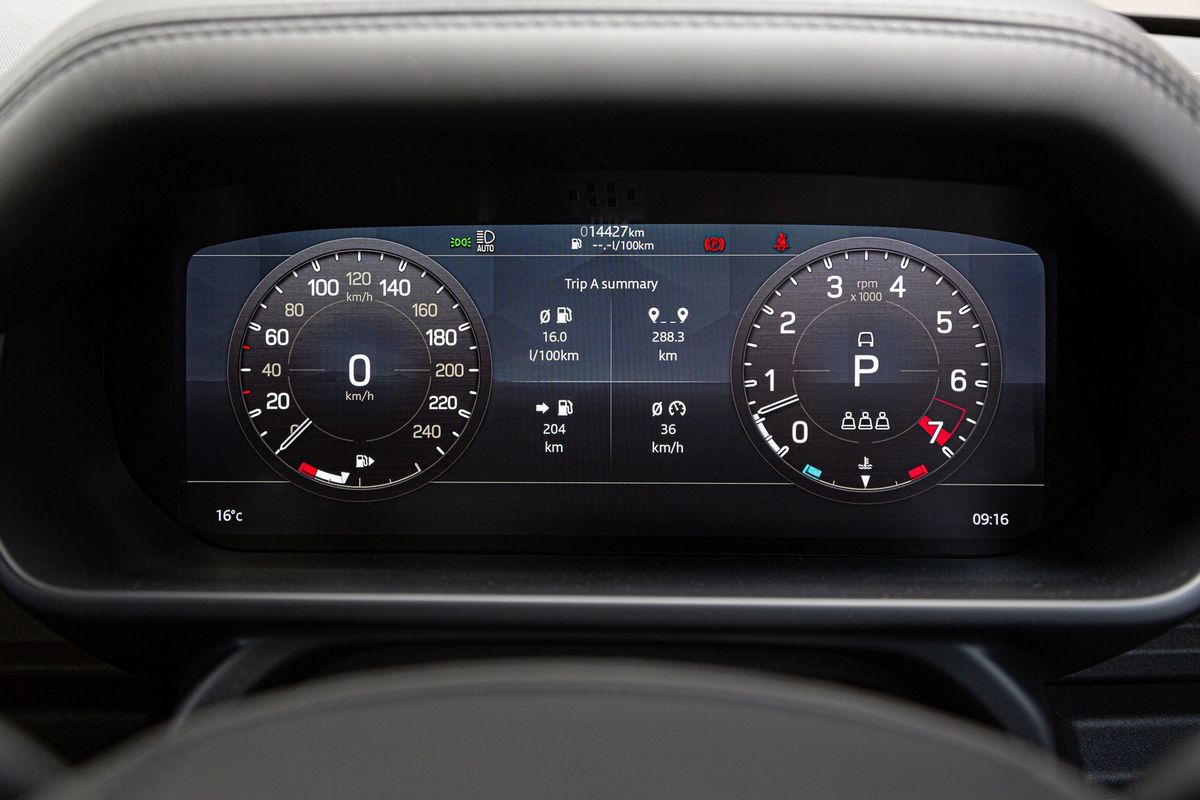
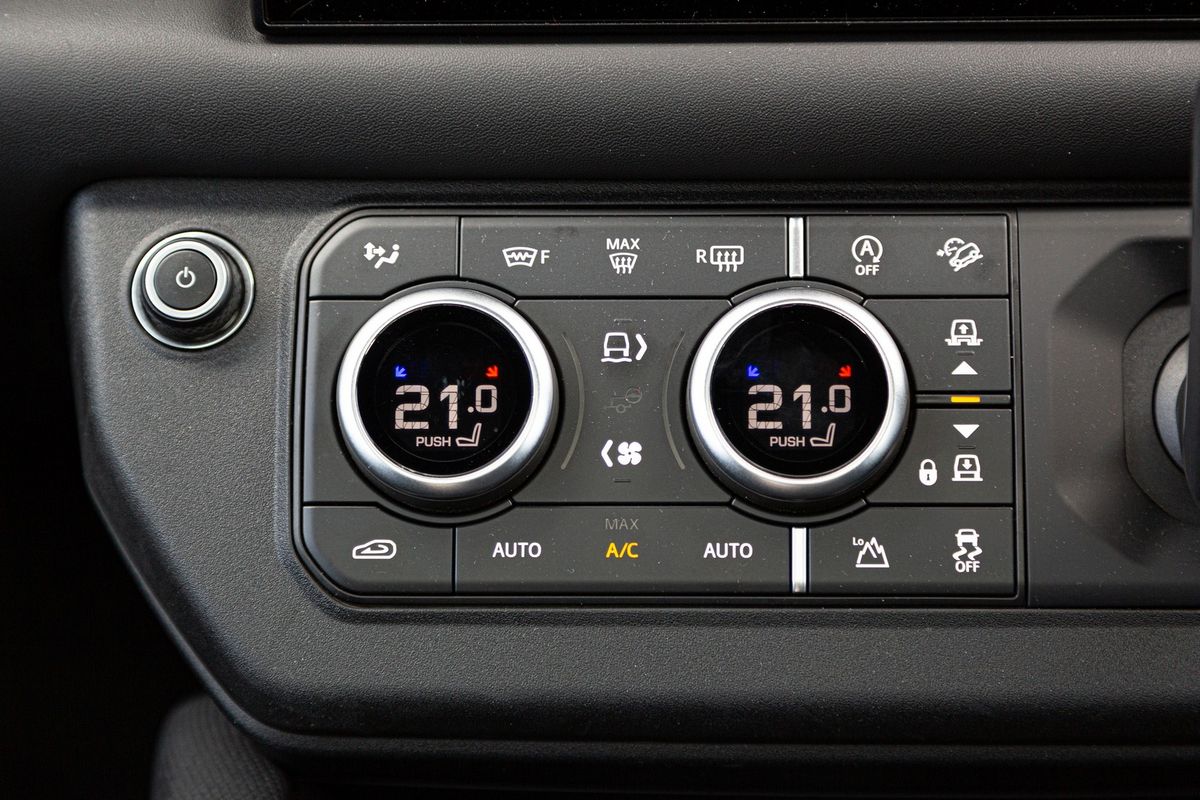
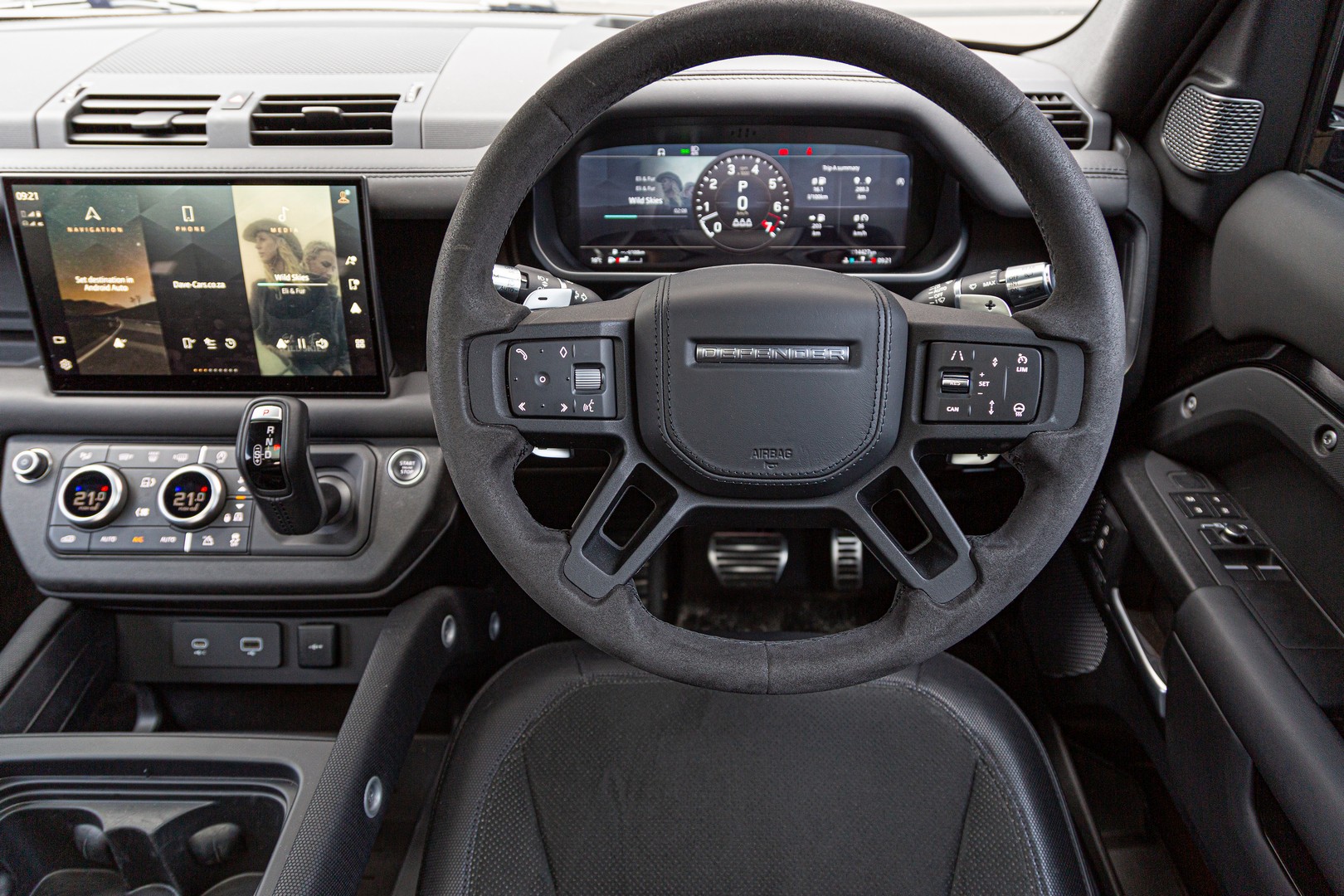
The 14-way electrically adjustable front seats offer heating and cooling, the suede-accented steering wheel is heated, plus you’ll find a drinks refrigerator in the central armrest, tri-zone climate control, a digital instrument cluster (with smart-looking graphics and themes) and, last but not least, the latest Pivi Pro infotainment system that utilises a 10-inch touchscreen.
This Pivi Pro infotainment system is one of the best in the premium SUV segment – it responds to inputs promptly and starts up quickly, because it has a dedicated power supply.
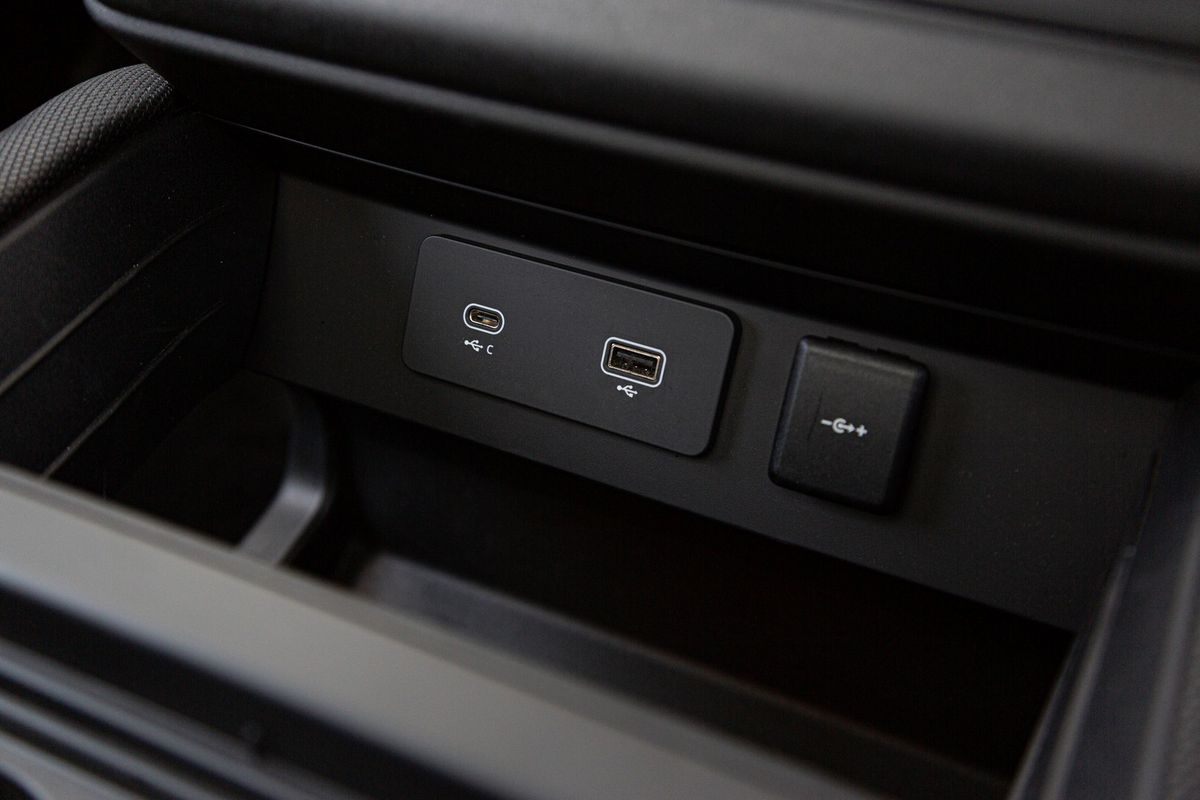
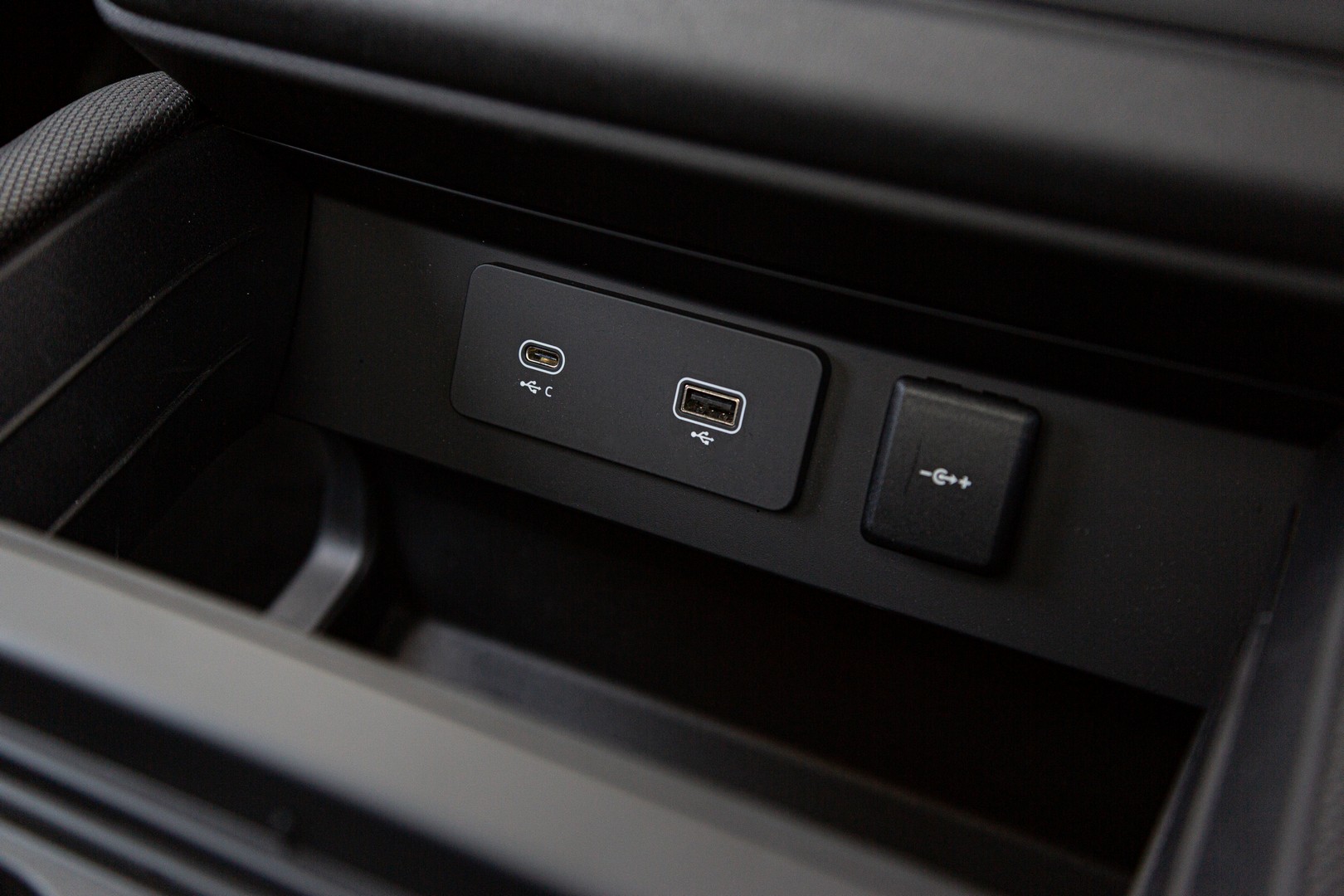
The Defender has more USB ports than you’ll ever need
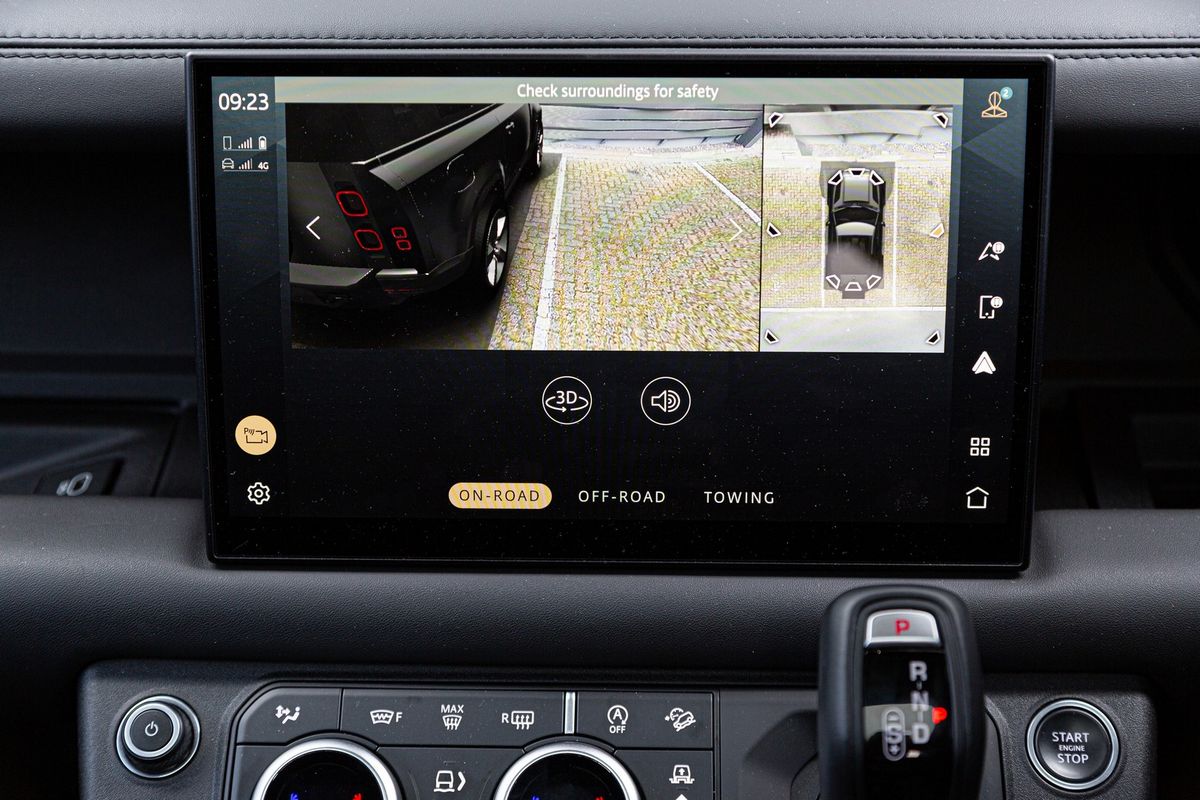
Drivers will appreciate the high-quality Meridian surround sound audio system, heads-up display and Android Auto/Apple CarPlay connectivity. There are numerous USB ports in the cabin and you can charge devices from at least 6 of them. The rear-view mirror also displays the feed from the reverse camera, which is helpful (the 90 does have a few blind spots!).
As for safety- and assistance tech, the Defender V8 has surround-view cameras, half a dozen airbags and emergency autonomous braking. Terrain Response 2 off-road tech is provided (if you ever you decide to venture off-road) and a tow bar with advanced tow assist is standard.
The cabin is nicely laid out and feels reasonably well assembled.
Packaging and Practicality
The Defender’s retro-inspired – and unashamedly boxy – design has won it many fans. The flagship derivative looks particularly brooding with its 22-inch wheels, quad exhausts and matrix LED headlights, in combination with the Santorini black paint finish. If “looking mean” is your thing, then the spec you see here might be worth looking into. It’s also a tall vehicle, so height clearance might be an issue when you drive into underground parking garages. Fortunately, with the adjustable air suspension, you can manually lower the ride height.
Setting the vehicle to access height also eases occupant ingress and egress, especially if you’ve got passengers in the 2nd row. The 2-door configuration hampers practicality, but once passengers have managed to worm their way into the rear seats, they’re availed more room than expected. There’s enough leg- and headroom for tall people, but exterior visibility is limited due to the car’s design… so it does feel like you’re in a dark hole back there.
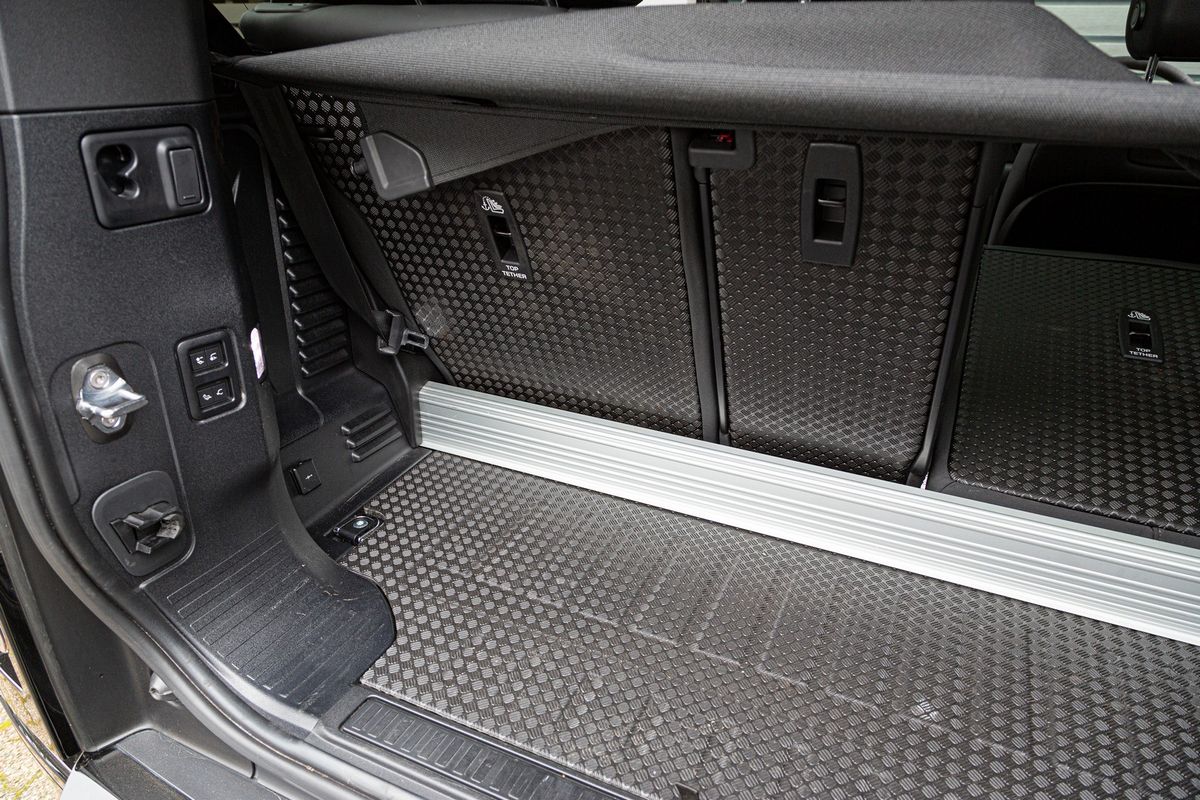
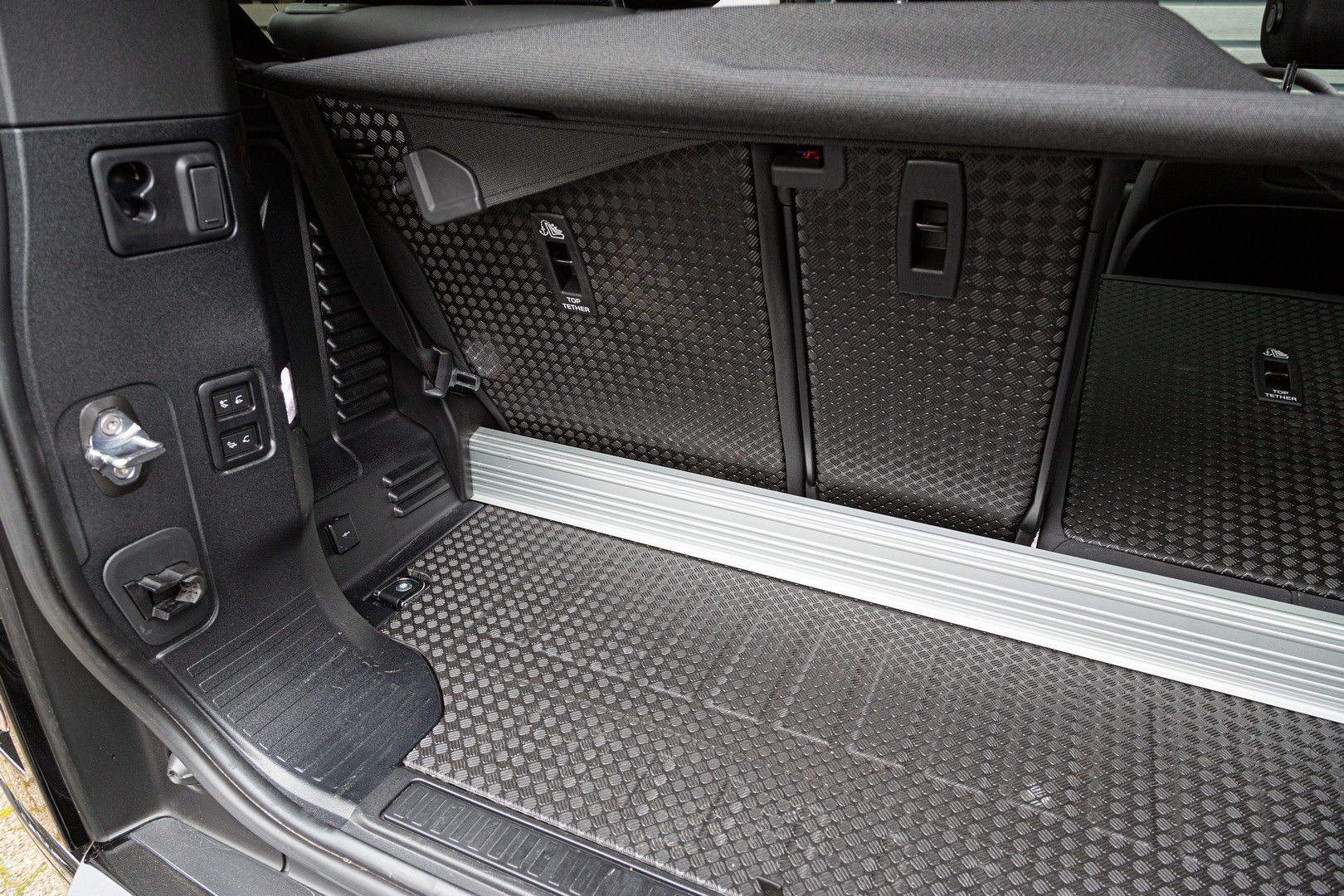
As the Defender V8 is a derivative with the 90 body style, luggage space has been sacrificed for rear legroom.
As we mentioned in our previous Defender review, that comfortable rear accommodation comes at the expense of luggage capacity. Land Rover claims the load bay can hold 297 litres… and you’d be lucky if you could fit 2 full-sized cooler boxes in there (if you fold down the rear seats, you get up to 1 263 litres, however).
Finally, some may find the side-opening tailgate a bit heavy/cumbersome, but bear in mind this derivative is not targeted at family-car buyers, so these two criticisms point out drawbacks; they’re not deal-breakers.
The Land Rover Defender 90 V8 is priced at R2 528 600. There is a bigger 110 version coming in at R2 648 600… if you want the V8 powertrain, but you require more practicality. The vehicle comes with a 5-year/100 000 km warranty and a 5-year/100 000 maintenance plan.
Verdict
The V8 engine is a treat, but the total package could do with more refinement
If you desire a vehicle that projects success and wealth, has a snarling V8 and is undeniably cool, but can’t quite stretch to the Mercedes-AMG G63’s asking price, then the Defender V8 might be just the SUV for you. Interestingly, the G63 is almost impossible to come by (low production volume), which makes the Defender V8 an even more attractive prospect.
What’s more, this is probably the last time we’ll see the supercharged 5.0-litre V8 engine in service, unless JLR’s SVO division decides to up the power and make an even wilder version. It’s not likely, but given SVO’s track record, we wouldn’t rule out the possibility entirely.
Should you buy one, though? Unfortunately, cool cars aren’t always great cars. Yes, the top-of-the-range Defender 90’s performance is hysterical and it produces a delicious racket, but we have a lingering feeling that this Land Rover product isn’t as polished as it could be.
Perhaps it was rushed from the development to the production stage (we’ll never know), but given how high the bar has been set by the other Defender derivatives, the 90 V8 falls a little short. It’s a pity, as it has all the on-paper ingredients to offer an incredible package. Given its lofty price tag, there’s better value and more comfort to be had lower in the Defender range.
Driving every Golf R! From the original VR6 to the Golf 8 R (Video)
It all began with the Vurra, the South African term of endearment for the first 6-cylinder Golf, almost 3 decades ago. Join Ciro De Siena as we assemble and drive every Golf R ever sold in South Africa.
With a lot of help from the good people at Volkswagen South Africa, we networked with a series of Golf owners to put together a dream shoot, featuring every Golf R sold in South Africa.
Missing here is the Golf MkIV R, which was never sold in South Africa, but drove the Golf MkIII, MkV, MkVI, Mk7 and Mk8 R all together on the Aldo Scribante circuit in Gqeberha earlier this year when we filmed our full review on the Golf 8 R, and performed a hot lap shootout against the Toyota GR Yaris.
Join our video journalist Ciro De Siena as he drives every Golf R back-to-back, and tries to get under the skin of what makes the Golf R so loved and respected across the globe.
Have you read and watched our review of the latest Volkswagen Golf 8 R? Click here
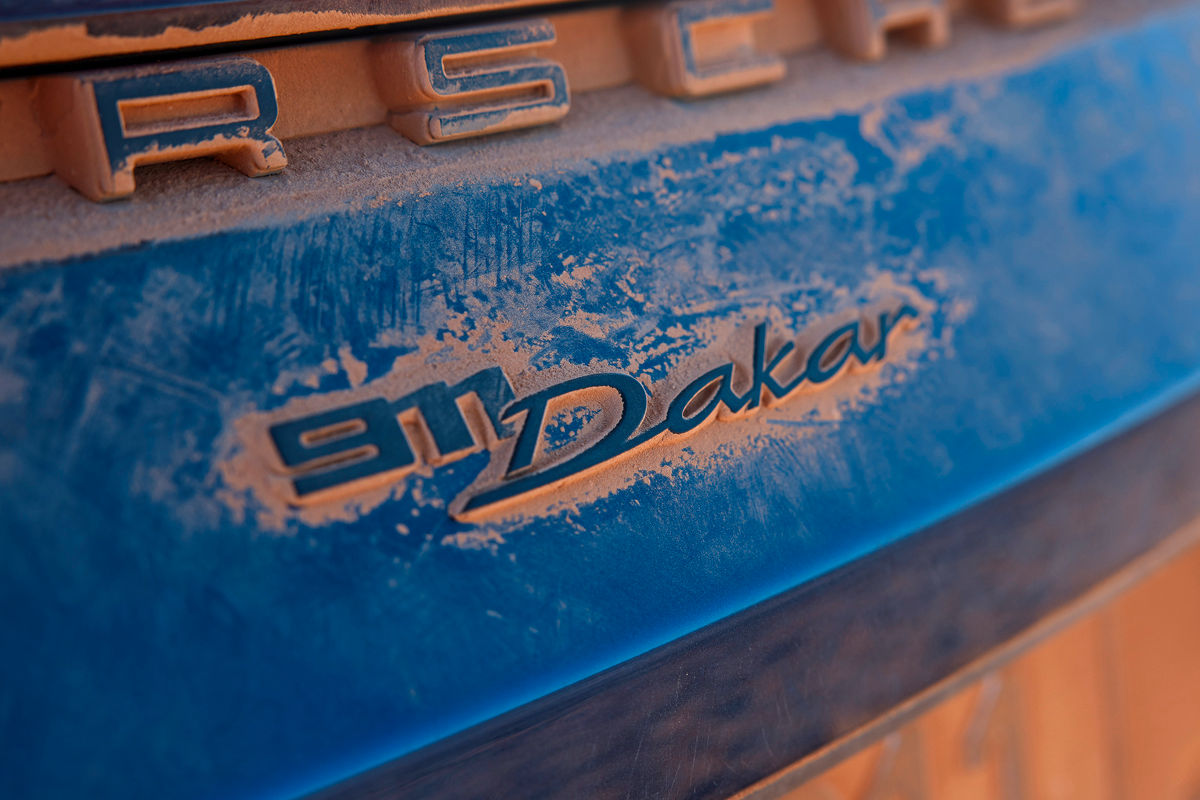
New Porsche 911 Dakar Revealed, SA Price Confirmed
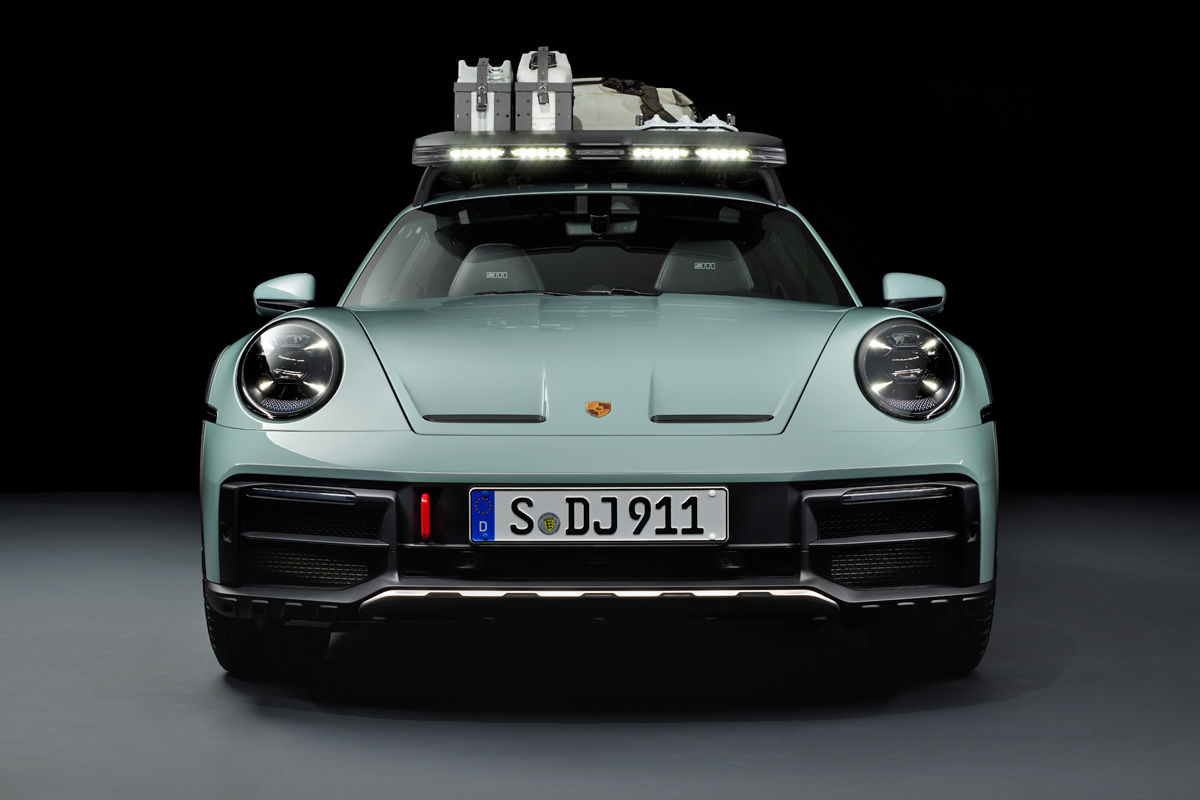
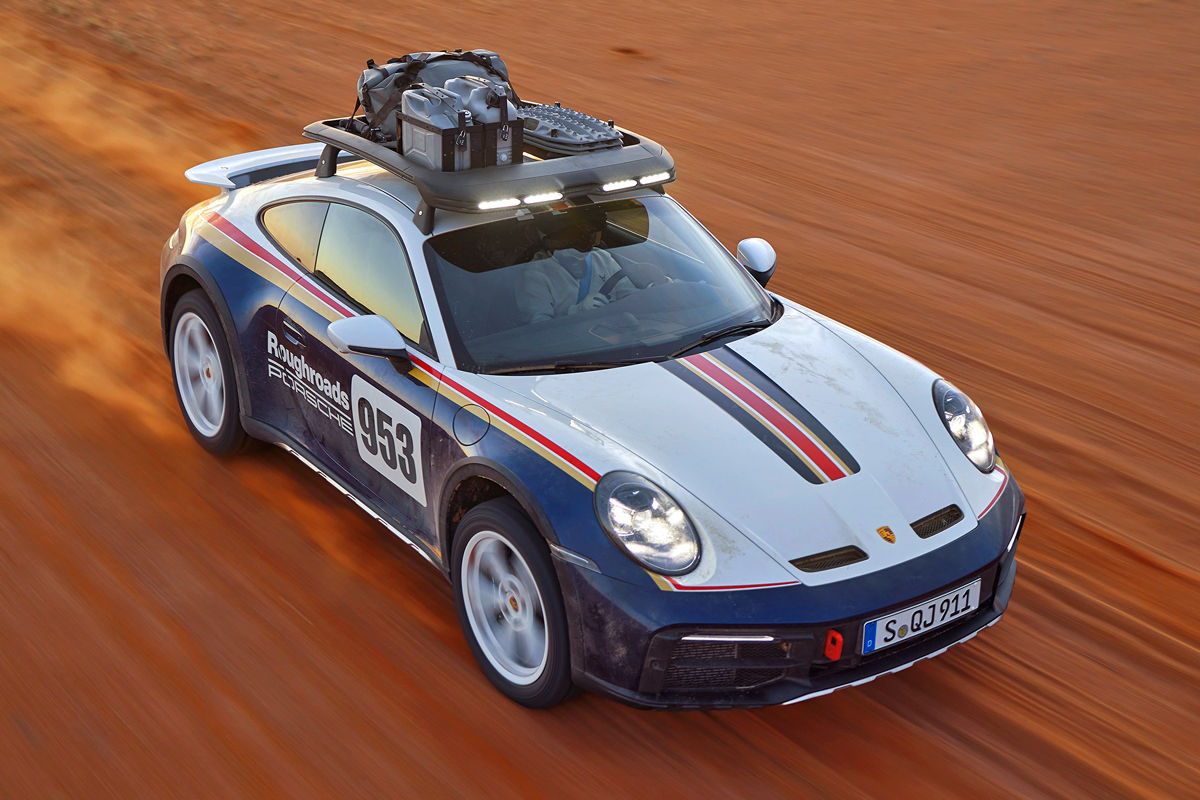
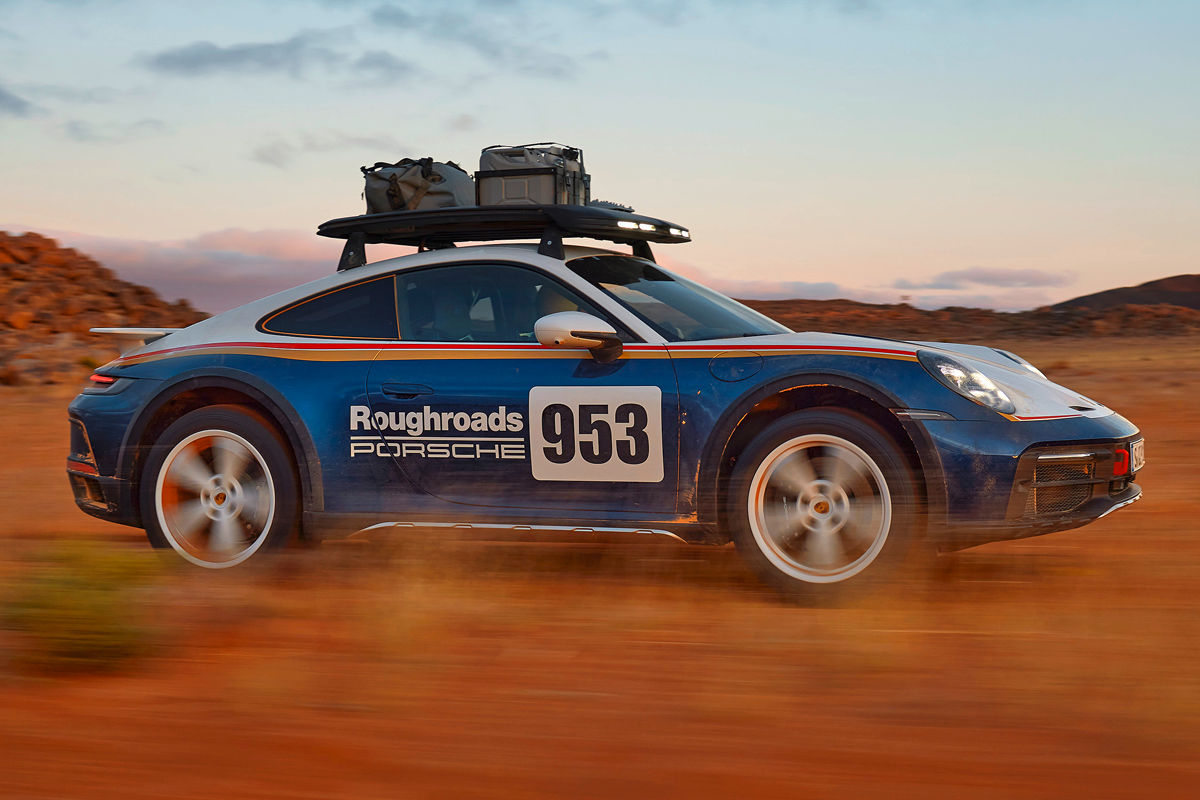
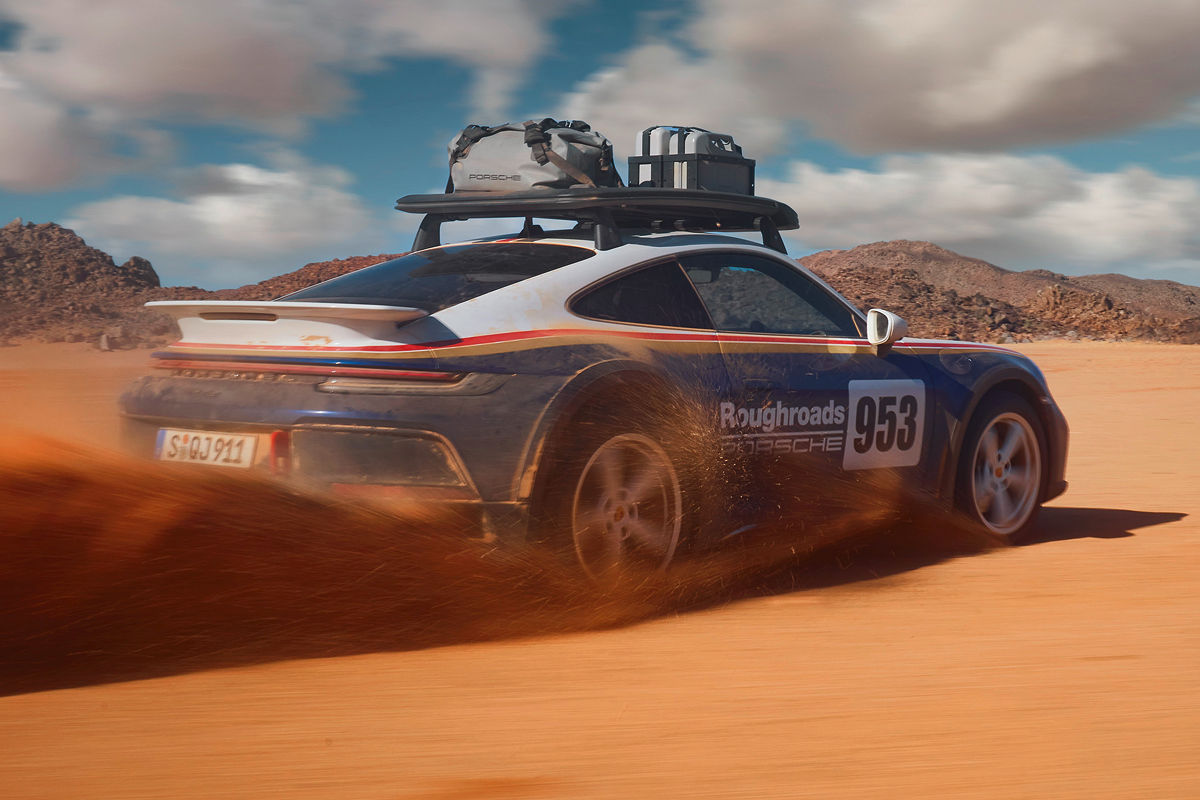
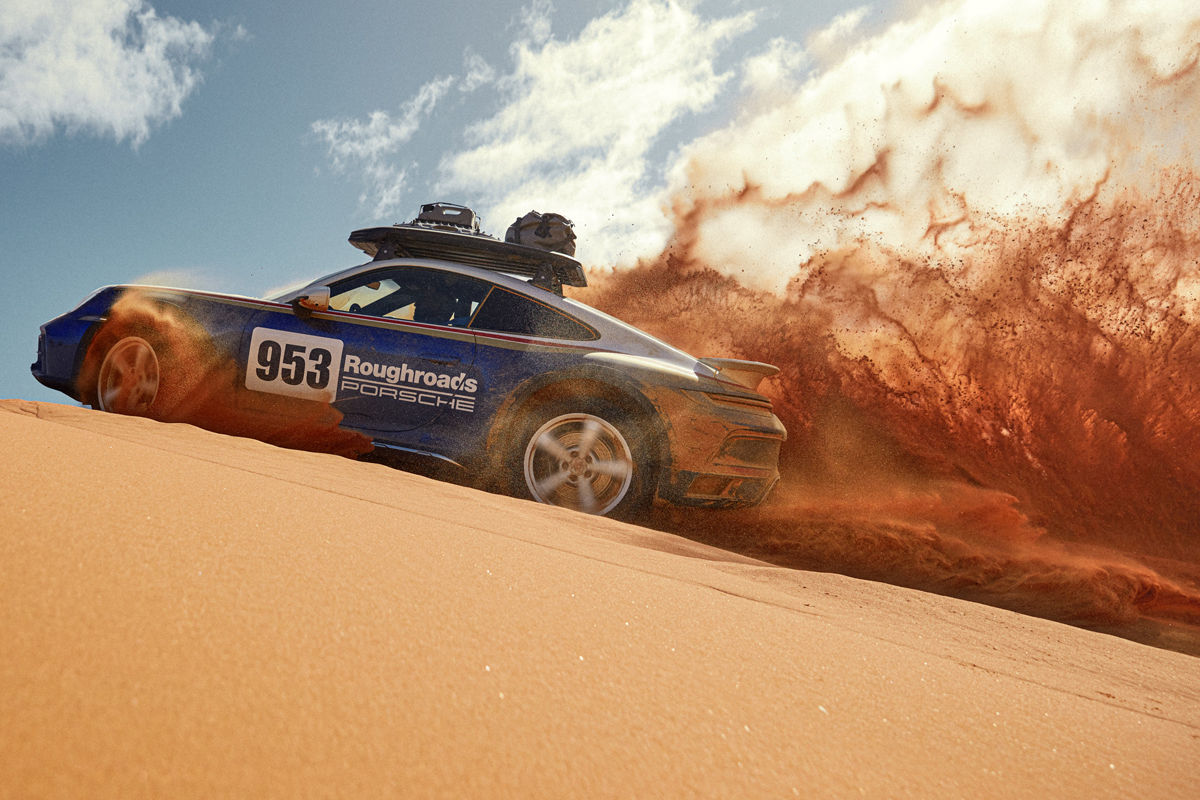
Ever yearned to take your sportscar off road? Well, the freshly revealed Porsche 911 Dakar is for you, though just 2 500 units will be produced…
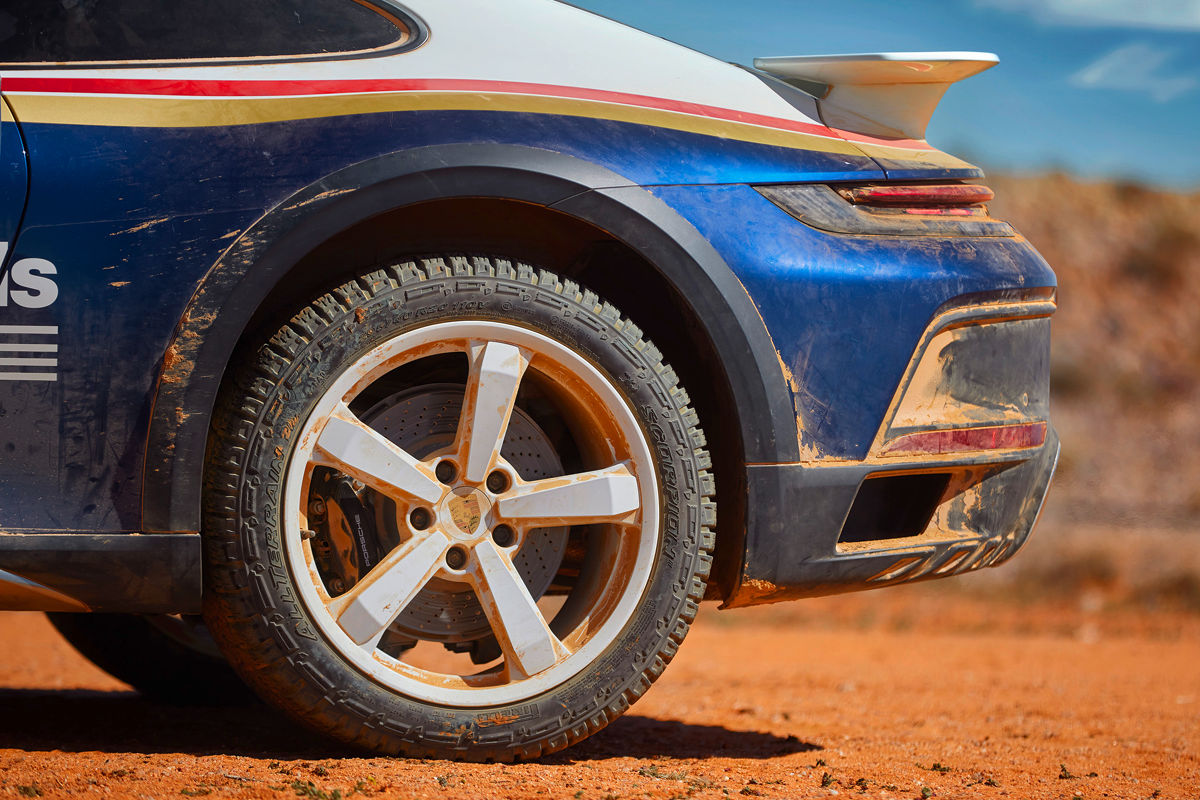
Porsche has whipped the wraps off its new 911 Dakar at the 2022 Los Angeles Auto Show, effectively handing its halo sportscar the ability to head off the beaten path. A limited number of units will be offered in South Africa, with the first examples arriving in the second half of 2023 with a base price of R4 140 000.
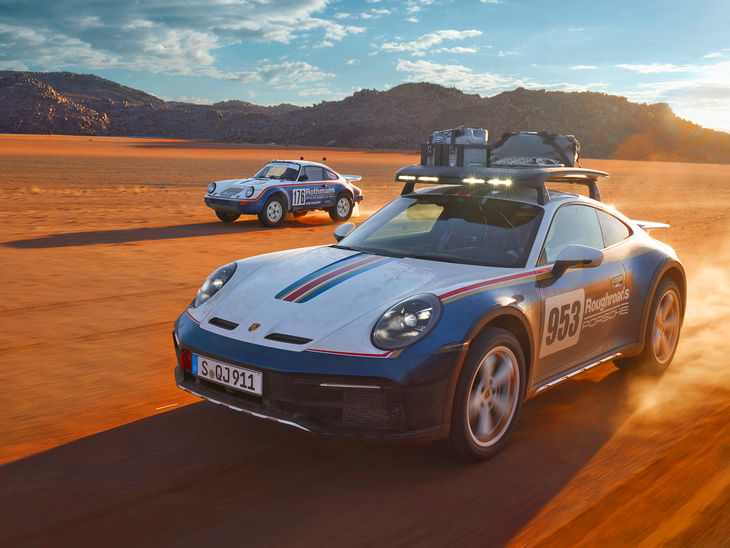
Described as being as “comfortable off road as it is on the highway”, the new all-wheel-drive 911 Dakar was inspired by the Zuffenhausen-based automaker’s first overall victory at the 1984 Paris-Dakar Rallye (a win that incidentally also marked the birth of all-wheel drive in the 911). Just 2 500 units will be produced, each optionally available with the Rallye Design Package that pays tribute to that Dakar-winning car with its two-tone paint finish.
From what we can tell, the 911 Dakar is based on the 911 Carrera 4 GTS coupé and uses the same twin-turbo 3.0-litre, flat-6 petrol engine, which generates heady peak outputs of 353 kW and 570 Nm. Porsche claims its new PDK-equipped all-terrain sportscar will complete the 0-100 kph sprint in just 3.4 seconds, a mere one-tenth behind the likewise all-paw GTS.
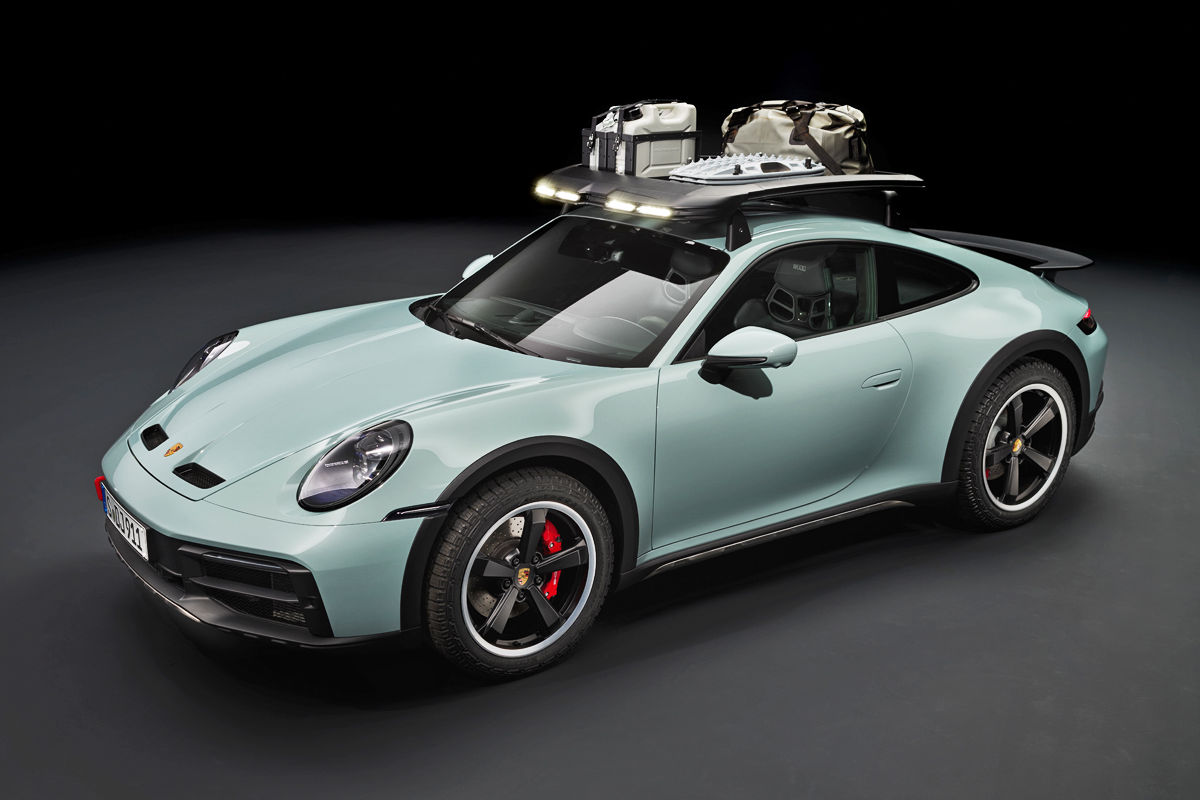
So, what makes a 911 Dakar? Well, the newcomer’s ground clearance comes in at 50 mm more than that of a 911 Carrera (with sports suspension), while the standard lift system can raise the front and rear ends an additional 30 mm. Porsche claims this makes the 911 Dakar’s clearance and ramp angle enough to “rival those of conventional SUVs”. The German firm says the lift system features a “high level” setting available for “ambitious off-road adventures” at speeds of up to 170 kph.
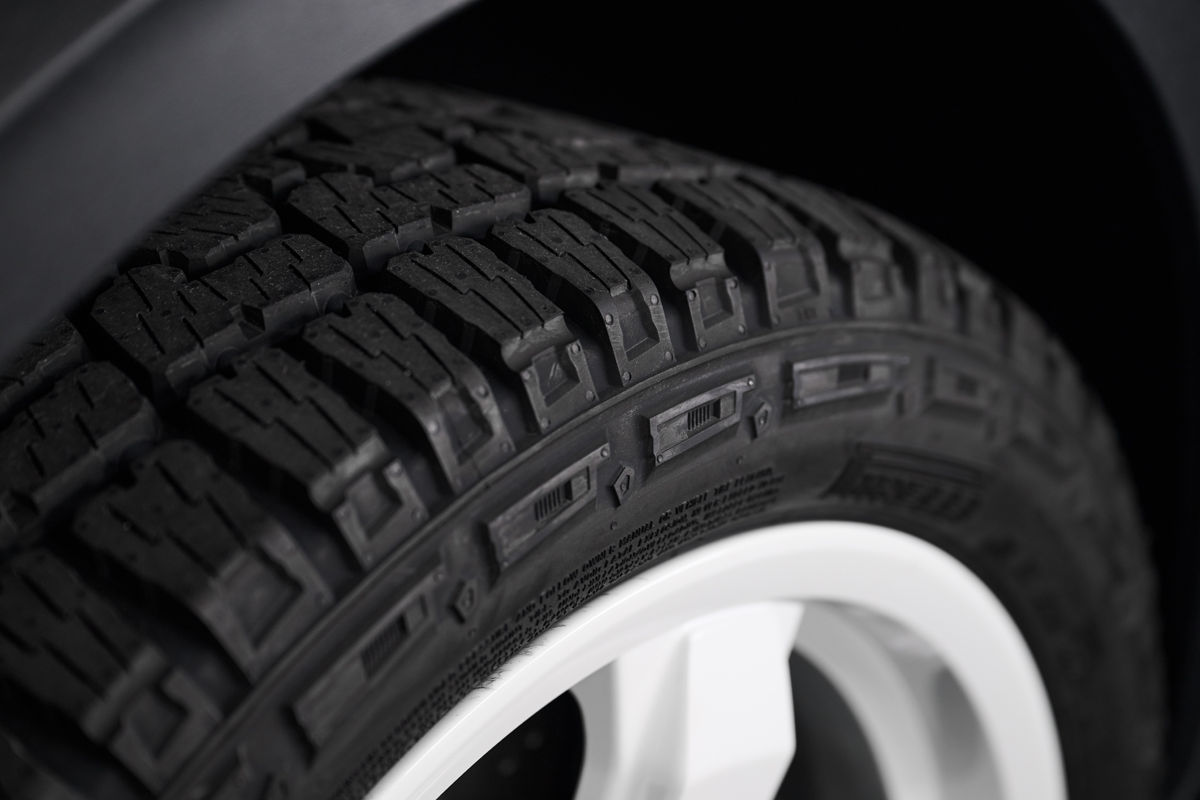
The off-roading 911 rides on specially developed “highly cut-resistant” Pirelli Scorpion All Terrain Plus tyres (sized 245/45 ZR19 fore and 295/40 ZR20 aft) featuring a 9 mm deep tread pattern and reinforced sidewalls. While this all-terrain rubber ships standard (and sees the top speed limited to 240 kph rather than the 309 kph attainable by the PDK-equipped GTS), Pirelli P Zero summer and winter tyres will be available as an option.
The new 911 Dakar (fitted with the Rallye Design Package) along with the vehicle that inspired it.
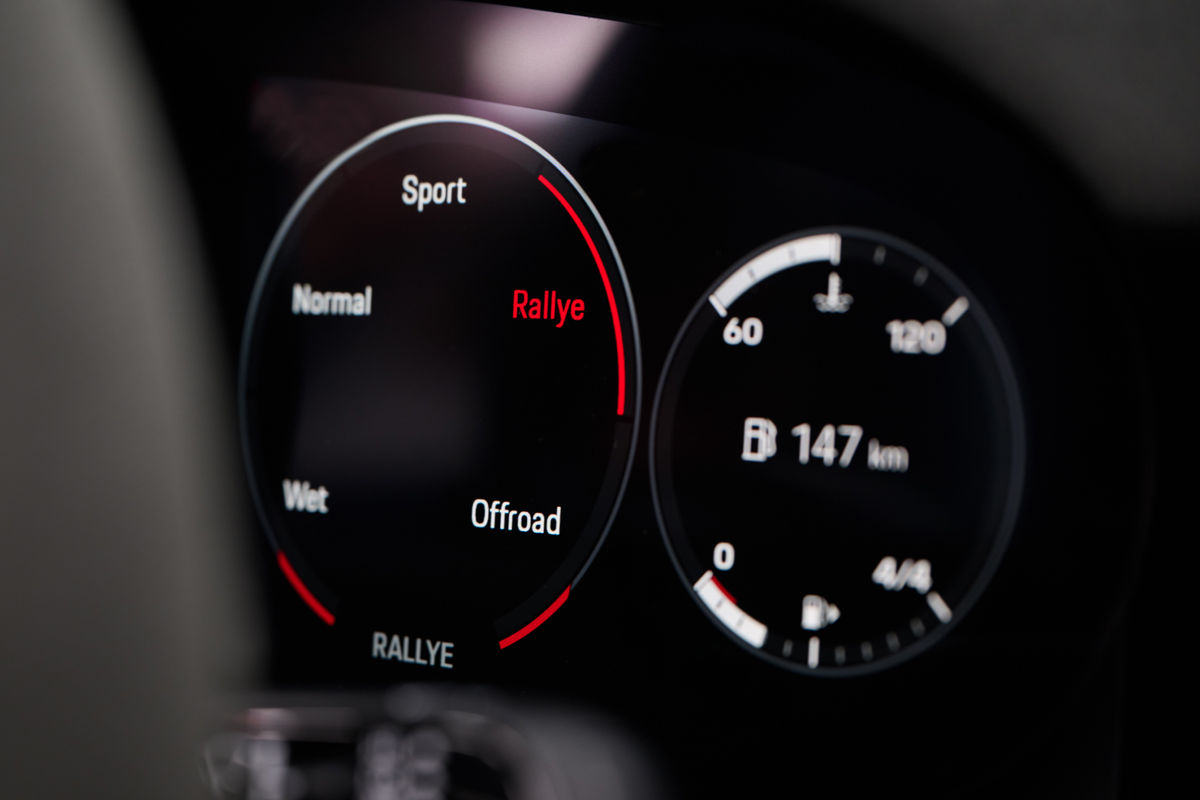
The 911 Dakar also scores a pair of new driving modes. The first is Rallye mode, which is designed for “loose, uneven surfaces” and features a “rear-focused” slant on all-wheel drive. In Off-Road mode, the high clearance is automatically activated. In either setting, there’s also a new Rallye Launch Control system, which Porsche says enables “impressive acceleration” on loose surfaces and allows wheel slippage of around 20%.
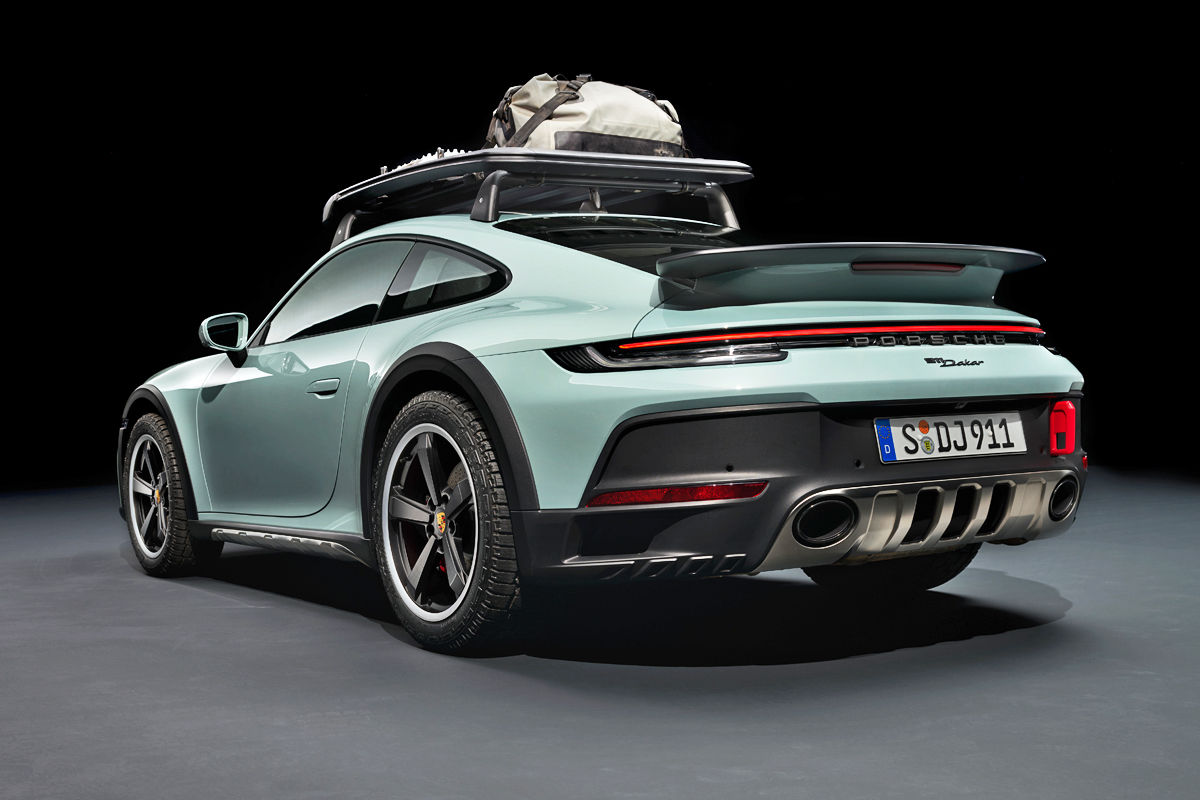
The list of standard equipment includes rear-axle steering, 911 GT3 engine mounts and anti-roll stabilisation. As a result, the automaker says the 911 Dakar is “just as dynamic on sand and loose surfaces as it is on the Nürburgring Nordschleife”. The 911 Dakar furthermore boasts a fixed lightweight rear spoiler fashioned from carbon-fibre reinforced plastic and a front luggage compartment lid (with air outlets pilfered from the 911 GT3) made from the same material.
Off-road details include red aluminium towing lugs at the front and back, widened wheel wells (plus sills) and stainless-steel protective elements on the front, rear and side sills. The side air intakes on the redesigned front end are also protected against flying debris by stainless-steel grilles.
The 911 Dakar’s roof features a visible 12V power outlet for the lights attached to the optional roof rack. With a capacity of 42 kg, Porsche claims the rack can accommodate “rallying equipment such as fuel and water canisters, folding shovels and traction boards”. A roof tent is also available.
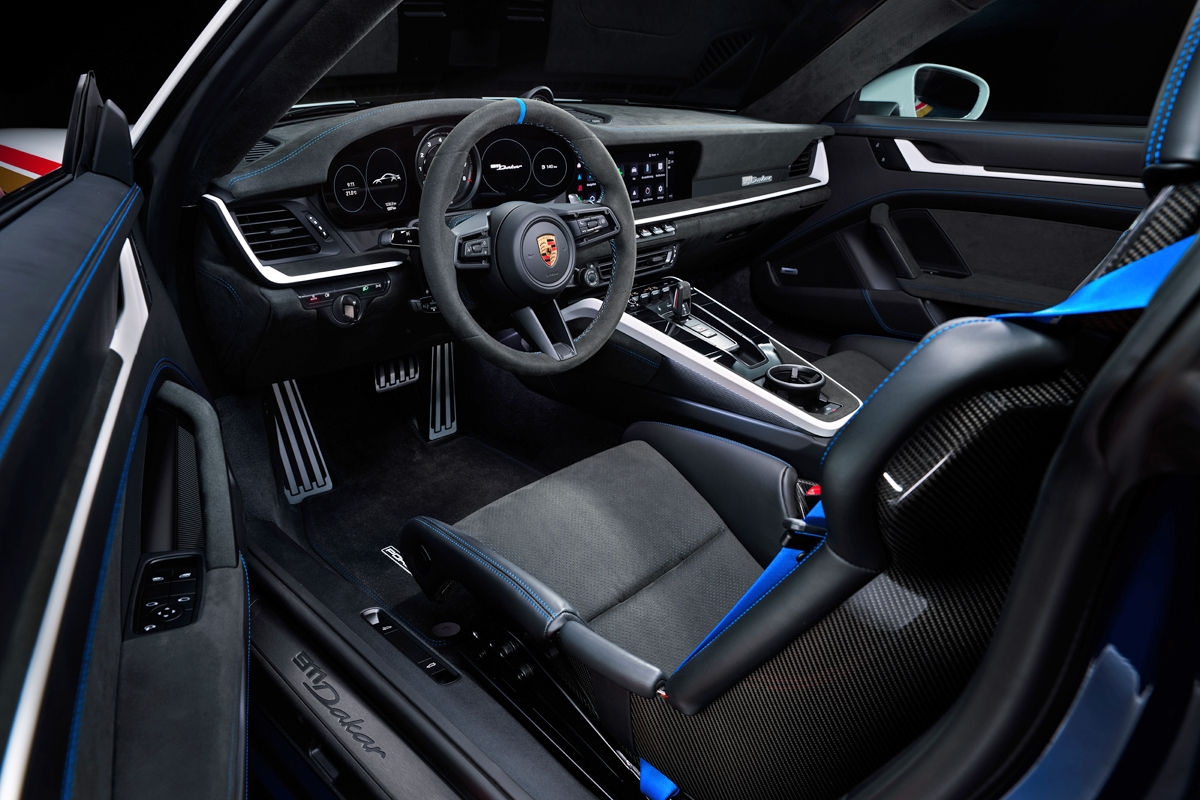
The 911 Dakar’s cabin features Race-Tex surfaces with decorative stitching in Shade Green and ships with full bucket seats, while the rear pews have been deleted. Lightweight glass and a lightweight battery further reduce the vehicle’s mass, which comes in at 1 605 kg (10 kg heavier than the 911 Carrera 4 GTS with PDK). There’s also an optional Rallye Sport Package, which adds a roll-over bar, 6-point seat belts and a fire extinguisher.
How much will the Porsche 911 Dakar cost in South Africa?
Beijing – an upmarket sub-brand of BAIC – has arrived in South Africa and we spent a day behind the ‘wheel of its X55 “boutique” small crossover in Gauteng.
It’s always a good day when you get a chance to experience a brand new manufacturer and its latest wares. See, when you’re attending a legacy carmaker’s product launch event, you have certain expectations based on prior encounters. With Beijing, we were in uncharted territory.
The Chinese marque is under the custodianship of Beijing Automotive Industry Corp (BAIC), of which we’ve already driven the BJ40 off-roader. The Beijing sub-brand, however, caters to a more premium market. Think of the relationship like that between Great Wall Motors and Haval, where GWM is the parent brand and Haval is its fancier SUV offshoot.
Given the notable growth that Haval and more recently, Chery have achieved in the local market (by offering attractively packaged and generously specced cars at reasonable prices), it’s completely understandable that other newcomers want to emulate those brands’ success.
BAIC arrived in South Africa as part of a joint venture back in 2016. The Chinese company has an assembly facility in the Eastern Cape, the establishment of which created 1000 jobs and a few more in the supply chain. BAIC currently has a dealership footprint of 14 outlets.
What’s on offer?
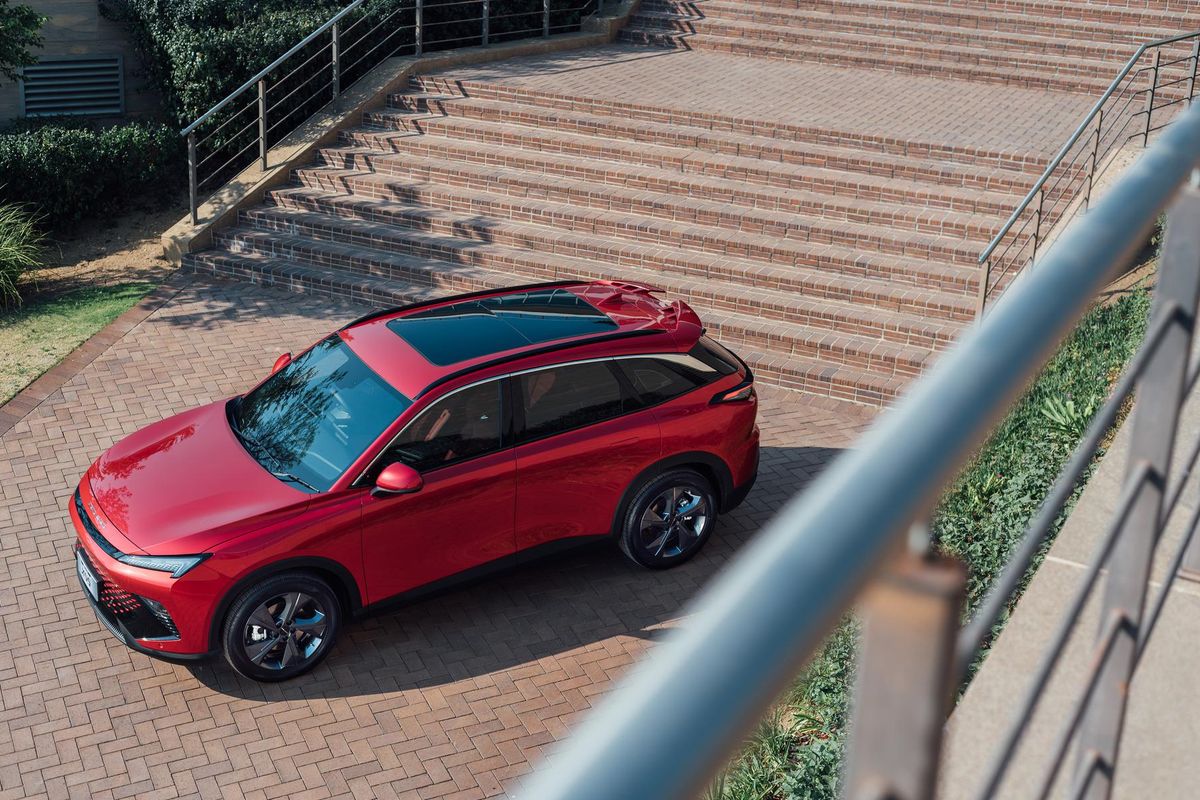
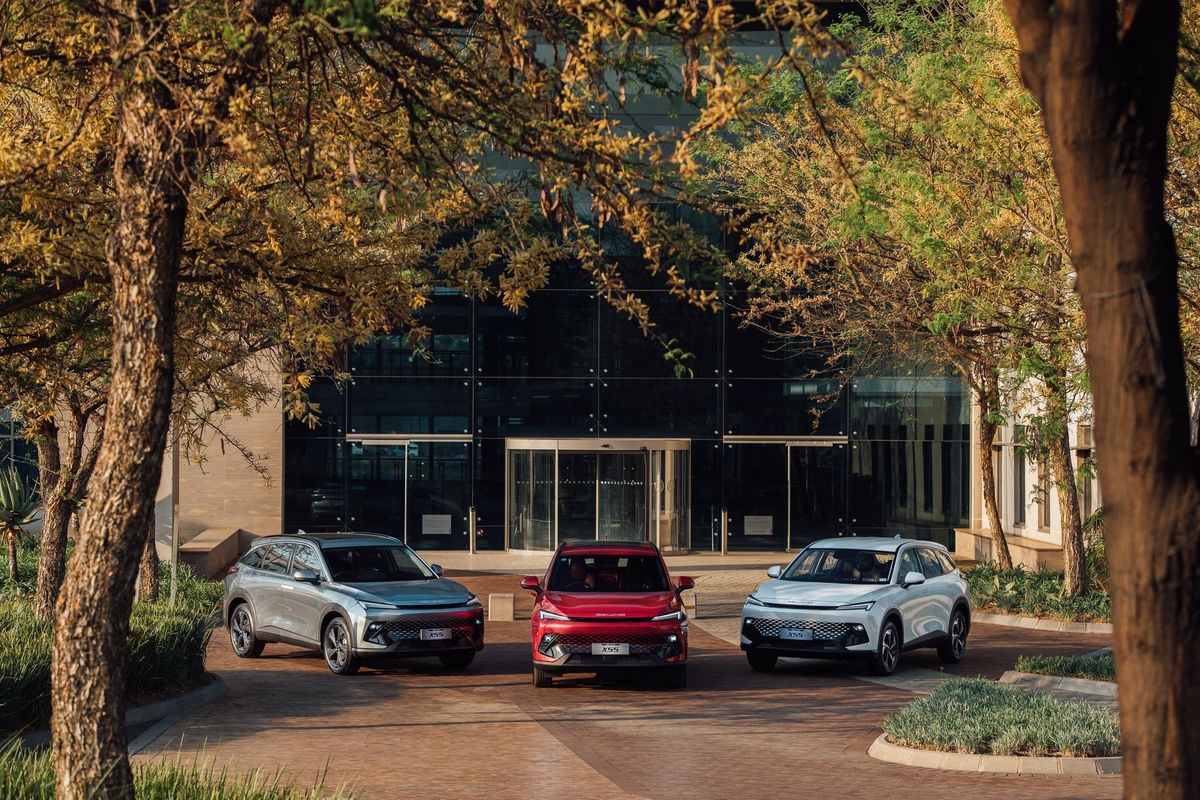
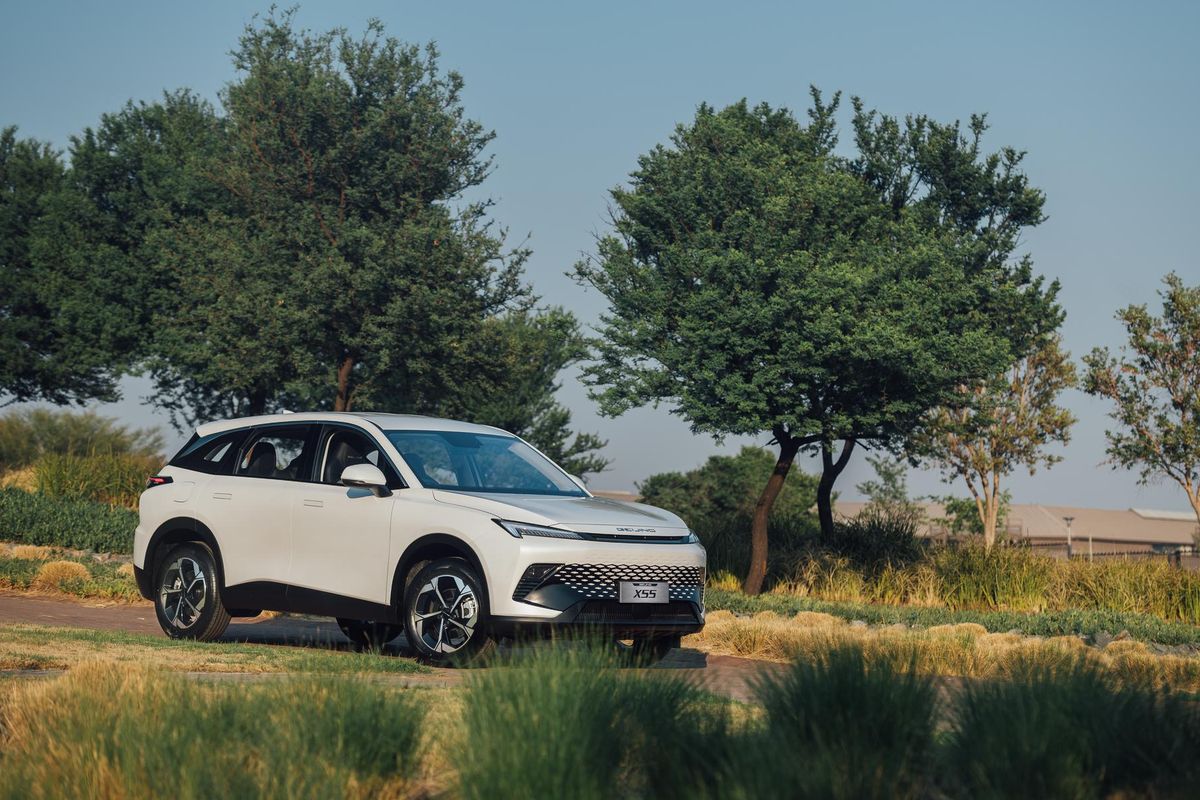
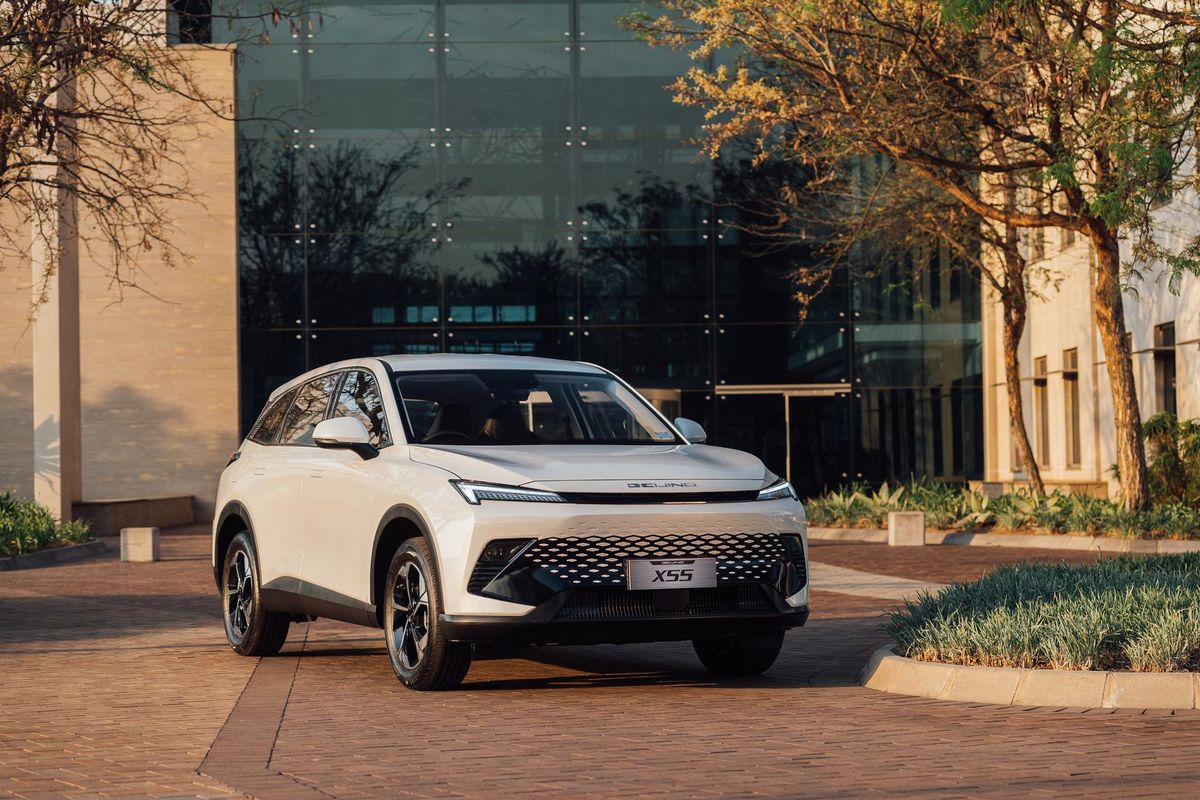
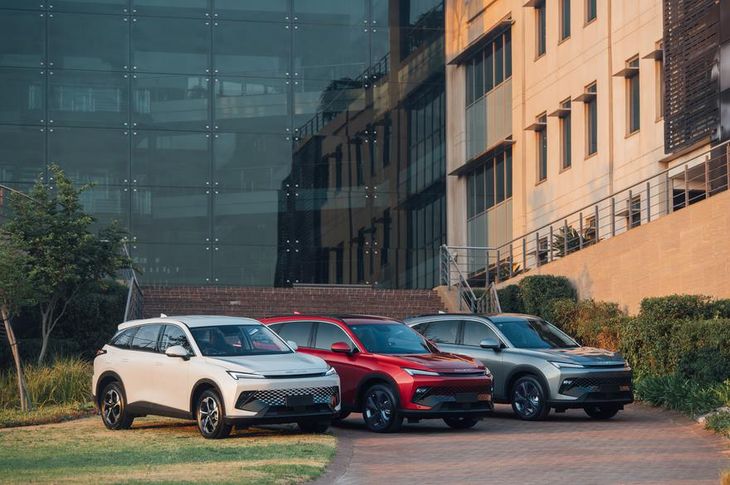
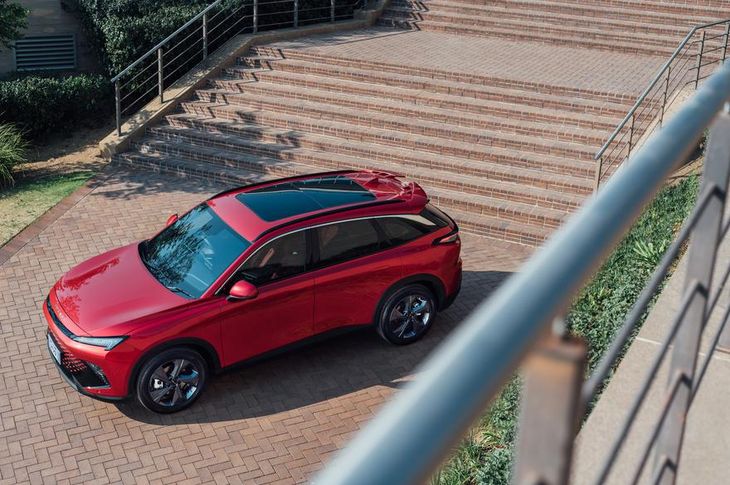
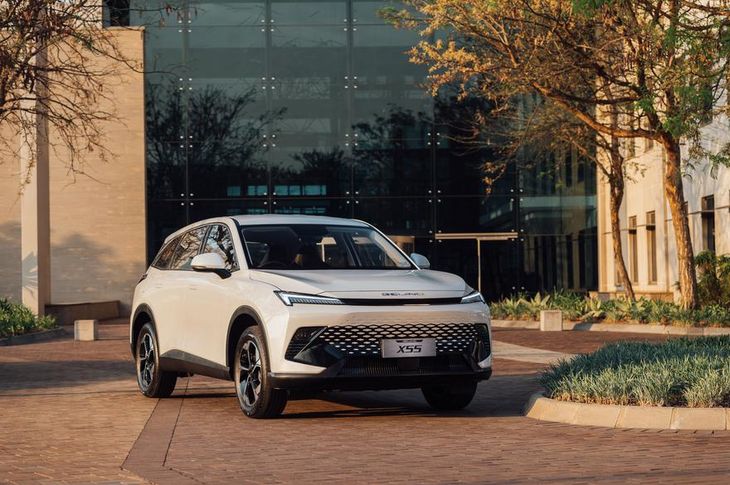
The Beijing X55 may not look glamorous in images, but you need to see it in the metal to appreciate its striking, sharply contoured design; it looks positively futuristic. If it didn’t sport local number plates, it would look perfectly at home on a stand at a European motor show.
In terms of dimensions, it’s tricky to compartmentalise small crossovers these days (there are so many of them and some of the bigger ones aren’t much smaller than medium SUVs); we’d say the Beijing X55 is about the same size as a Volkswagen T-Roc, Peugeot 2008 and Mazda CX-30.
There are 3 trim levels to choose from (Dynamic, Elite and Premium), while all derivatives in the range are powered by a 130 kW/305 Nm 1.5-litre 4-cylinder turbopetrol engine that drives the model’s front wheels via a 7-speed dual-clutch automatic transmission.
Beijing’s claimed performance and economy figures for the X55 (a 0-100 kph acceleration time of 7.8 sec and an average fuel consumption of 7.7 L/100 km) look good on paper.
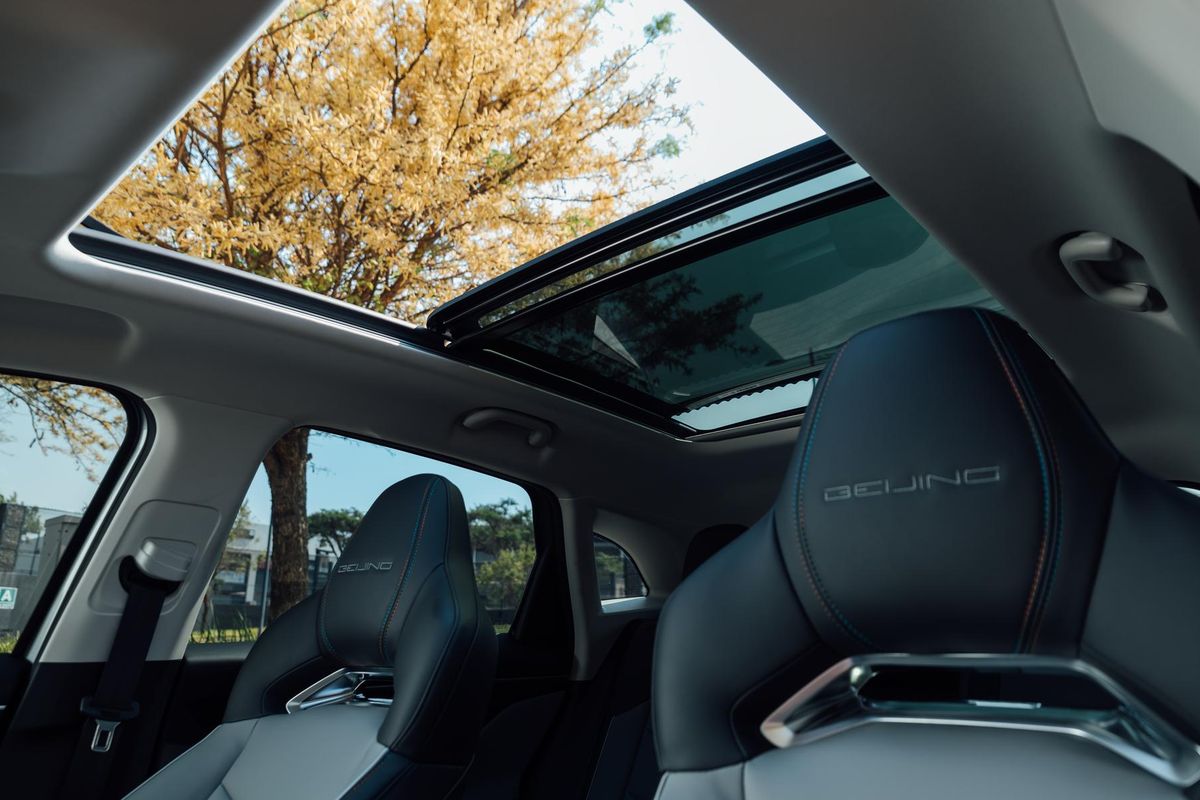
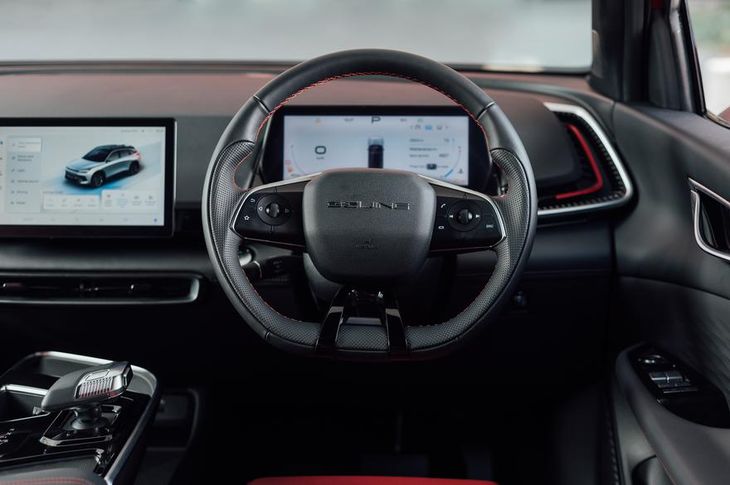
Our launch route, which began and ended in Johannesburg, incorporated country roads in the vicinity of the Magaliesberg. First impressions count and we took an instant liking to the smart appearance, good ergonomics and feeling of solidity of the X55’s attractive interior.
The X55 is not a sizeable car, but its interior is surprisingly spacious, which suggests clever space utilisation on Beijing’s part. We discovered the new model offers generous leg- and headroom for taller passengers (I’m 1.92m tall), and the load bay is sufficiently capacious.
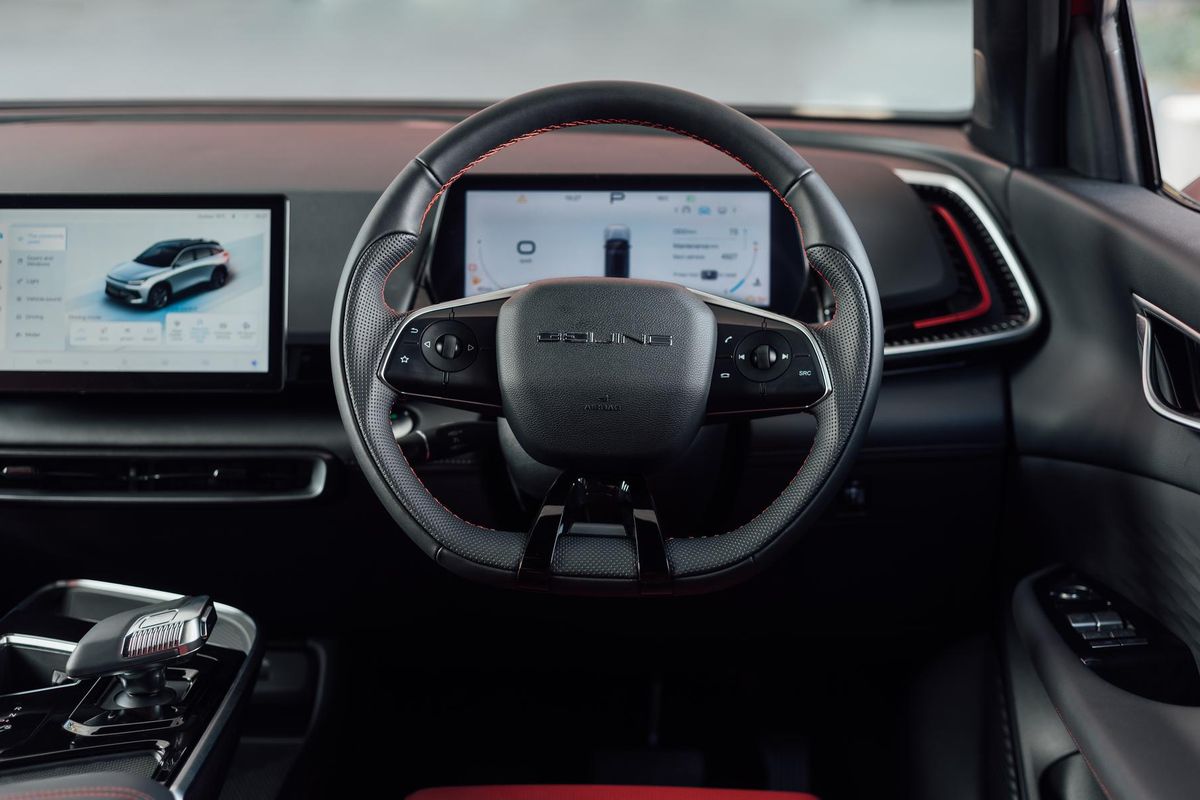
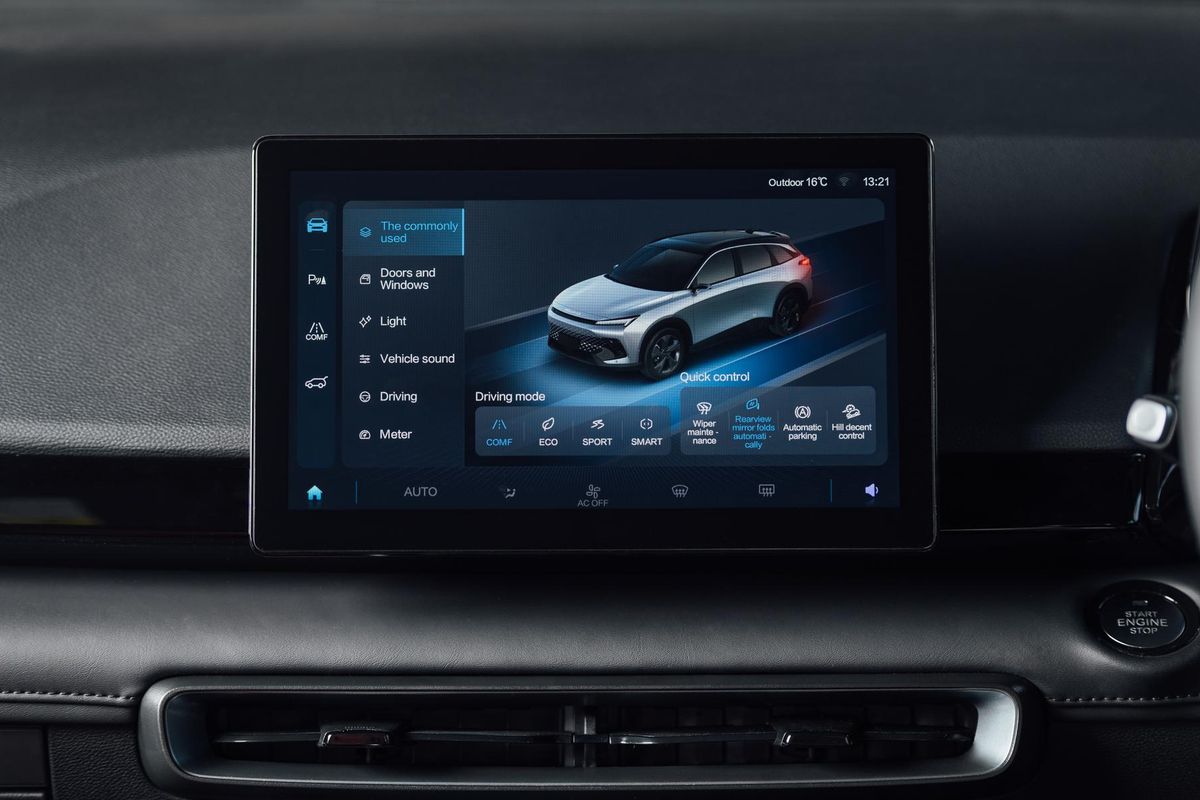
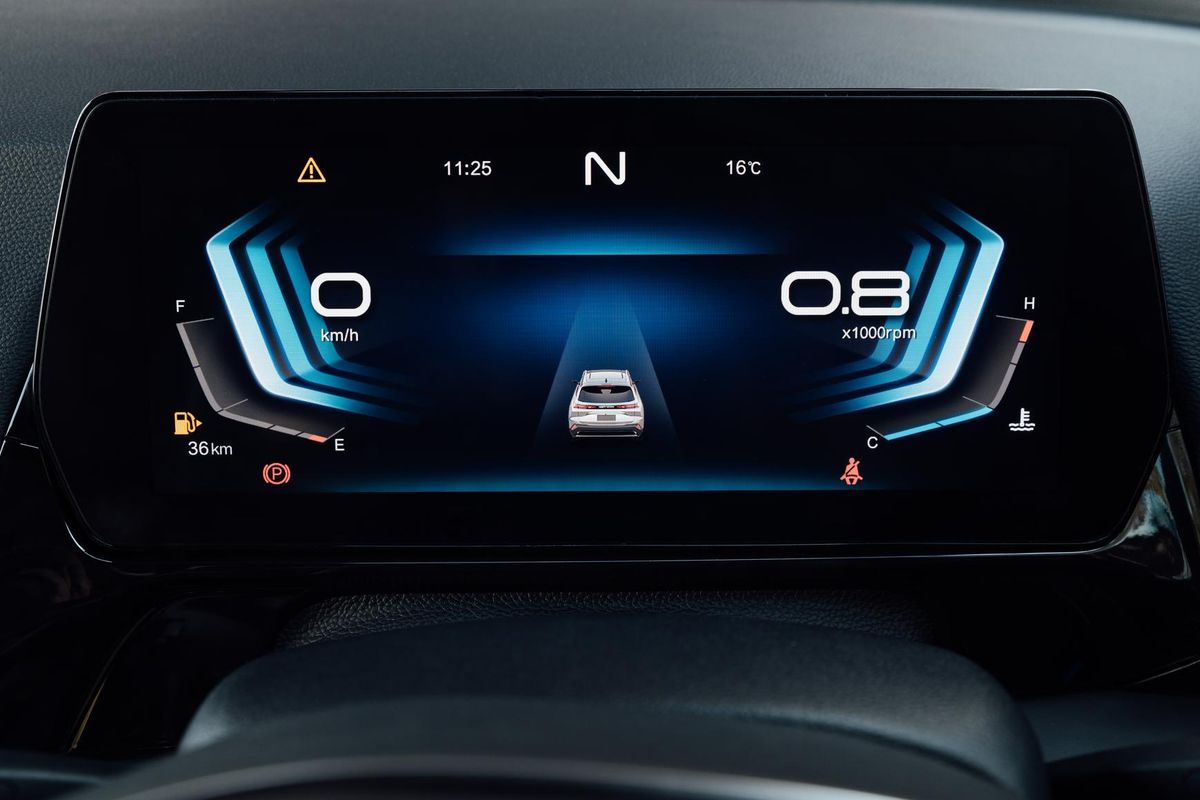
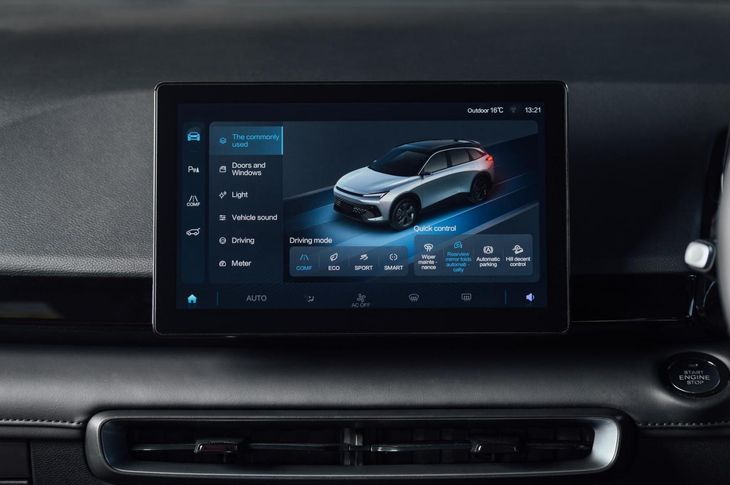
The digital instrument cluster and infotainment touchscreen look minimalist, with the latter adopting a tablet-like user interface – to access its functions, you have to swipe and scroll as you would on an iPad. The infotainment system does require familiarisation and its layout is not the most intuitive. Still, after a few tries, we started to get the hang of it. We would love to see a physical knob for volume control and a button to directly access the climate control.
As for the driving experience, the X55’s engine and transmission combination delivers admirably smooth and refined progress. The box’s upshifts may not be as quick and crisp as those of the best dual-clutch transmissions in the segment, but we’re really nit-picking here.
There’s a good spread of torque available, so the transmission doesn’t need to frantically hunt for the ratio that will deliver the best acceleration. Mechanical noise is kept to the minimum (well, for the most part), indicating good levels of sound insulation. In-gear shove is decent.
The Beijing’s ride quality leans towards the firmer side of pliant, but at no point did it become unbearable, despite the fact that the route was severely rutted/potholed and the test unit rode on 19-inch alloys and tyres. The steering is pleasantly direct and nicely weighted.
There were a few downsides, but the only thing that really bugged us was the fuel economy. Despite using the Smart drive mode, which optimises fuel efficiency (well, until the X55 is required to deliver full performance), the lowest indicated figure we saw was 9.6 L/100 km. It appears heavier-than-expected fuel consumption is still an issue for Chinese car brands…
Our other gripe was connectivity-related. There’s a tremendous array of standard features fitted throughout the X55 range, but it feels amiss to not have Apple CarPlay/Android Auto compatibility on a vehicle that’s likely to be driven by the always-connected generation.
How much does the Beijing X55 cost in South Africa?
The new Beijing X55 comes with a 5-year / 150 000 km warranty, 5-year / unlimited km roadside assistance, backed by the AA. A service plan is separate and for R16 800, you get 5-year’s/60 000 km worth of coverage.
The Beijing X55 could be a poster child for the rapid development and digitalisation of the Chinese car industry. It’s appropriately specified for our market, which suggests the mother company took heed of extensive market research ahead of the model’s introduction. Based on our first impression of the model, we reckon Beijing has got most things right with the X55.
It’s very impressive for a first attempt! While it has a few quirks, we don’t believe they’re deal breakers, especially not at this price. The X55 makes the Haval Jolion look and feel a bit dated and we eagerly look forward to bringing you an extensive assessment of this new product.
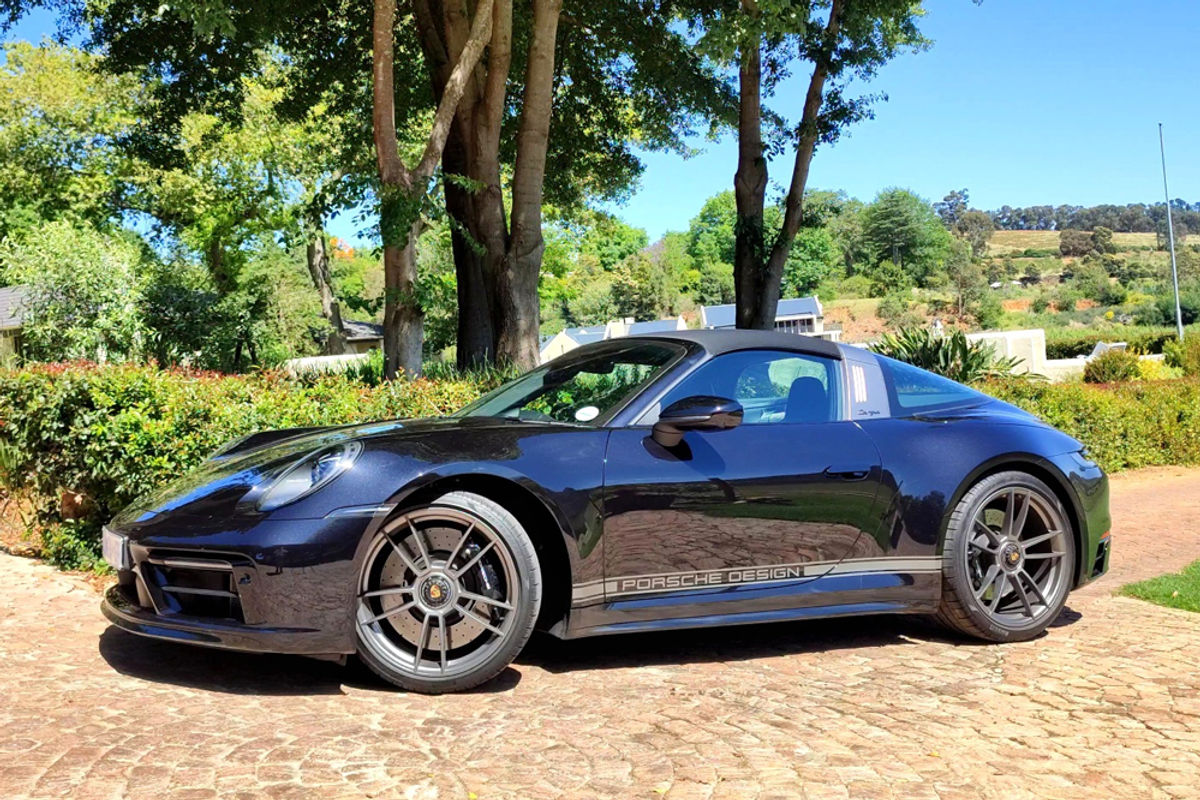
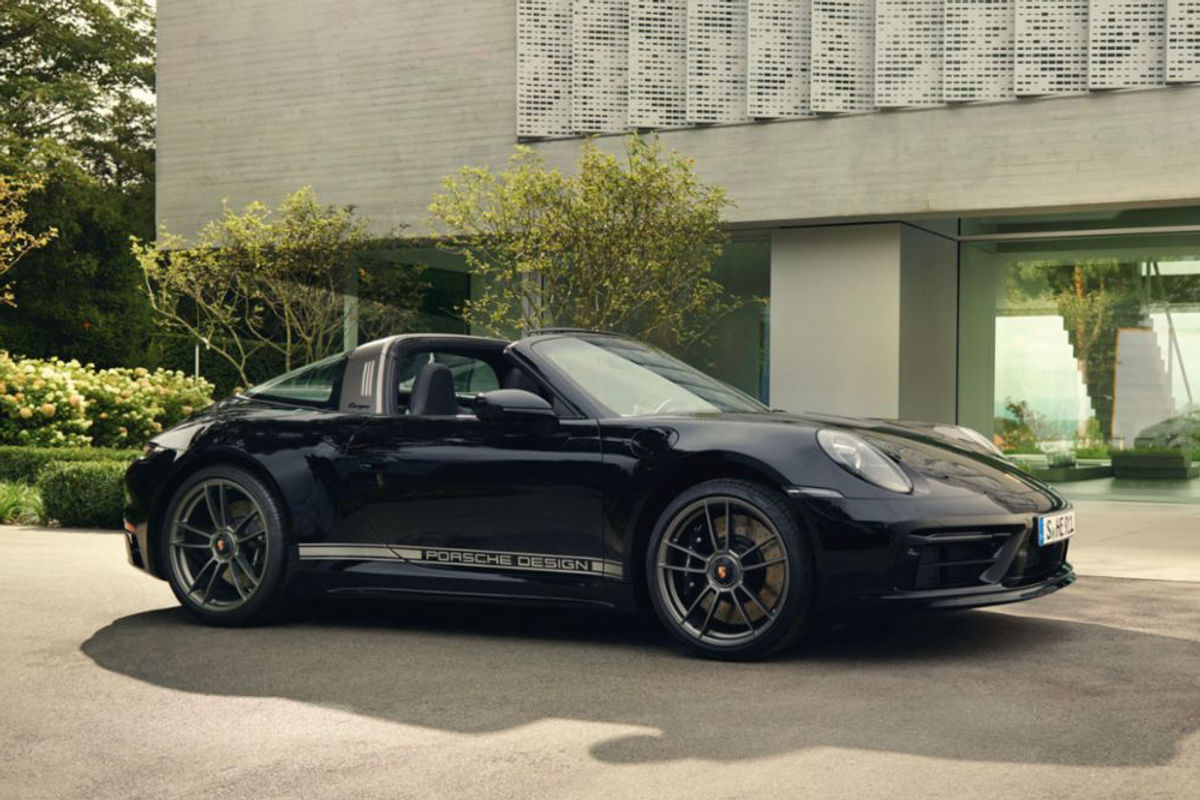
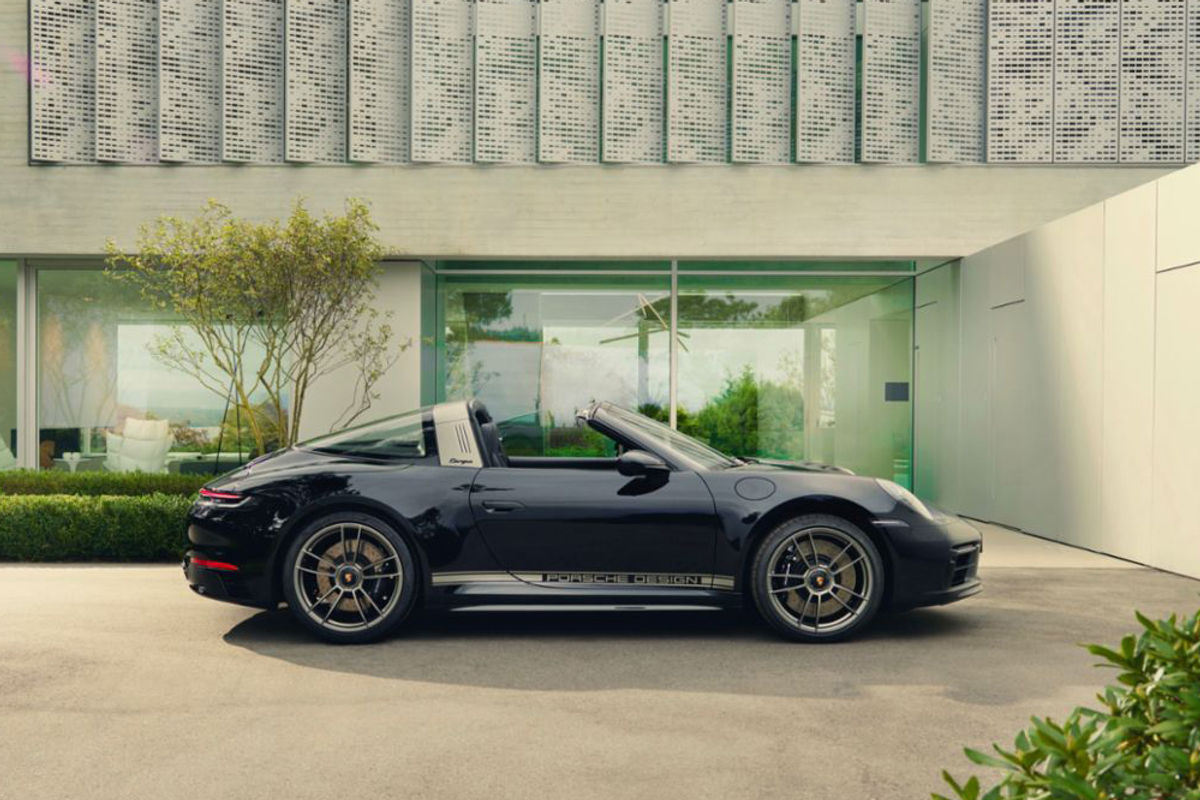
The Targa, which straddles the coupe and cabriolet body styles in the Porsche 911 range, is an acquired taste, but not only has the variant endured… the Zuffenhausen-based firm has created a special edition of the 911 Targa to celebrate 50 years of Porsche Design.
To be honest, I’ve always been somewhat baffled by the presence of the Targa variant in the line-up of the iconic Porsche 911. After all, if you want open-roof motoring, then the cabriolet does it a lot more, um, comprehensively. If you want your 911 to deliver pin-sharp dynamics, then you obviously need a coupe…
Some history first… In the ‘60s, Ferdinand Porsche wanted an open-top 911, but the concern at the time was that safety legislation in America would result in a total ban on traditional drop-tops. And so, the development of the Targa (named after the famous Targa Florio road race) began as a result of Porsche’s intention to bring a “safety cabriolet” to market. Well, it was an immediate hit and sold strongly well into the ‘80s, when you could even, for a short while, buy a Targa Turbo!
However, from the 993-generation 911 onwards, Porsche strayed from the classic formula and the Targa became little more than a 911 with a glorified panoramic roof. Sales of the variant plummeted, and it was only in recent years that the Targa started to regain its classic design elements (such as the prominent roll hoop, etc.).
Targa sales are healthier these days, with most of its buyers choosing this variant (which in most instances costs almost exactly the same as a full Cabriolet) because of its design. To each their own… At least Porsche has variety in the mix.
Compared with the look of the Cabriolet when its roof is in place, I prefer the look of the Targa with its roof up. Watching the Targa roof in operation, which is akin to a beautifully choreographed mechanical ballet, is rewarding in itself!
What is the 911 Targa Edition 50 Years Porsche Design?
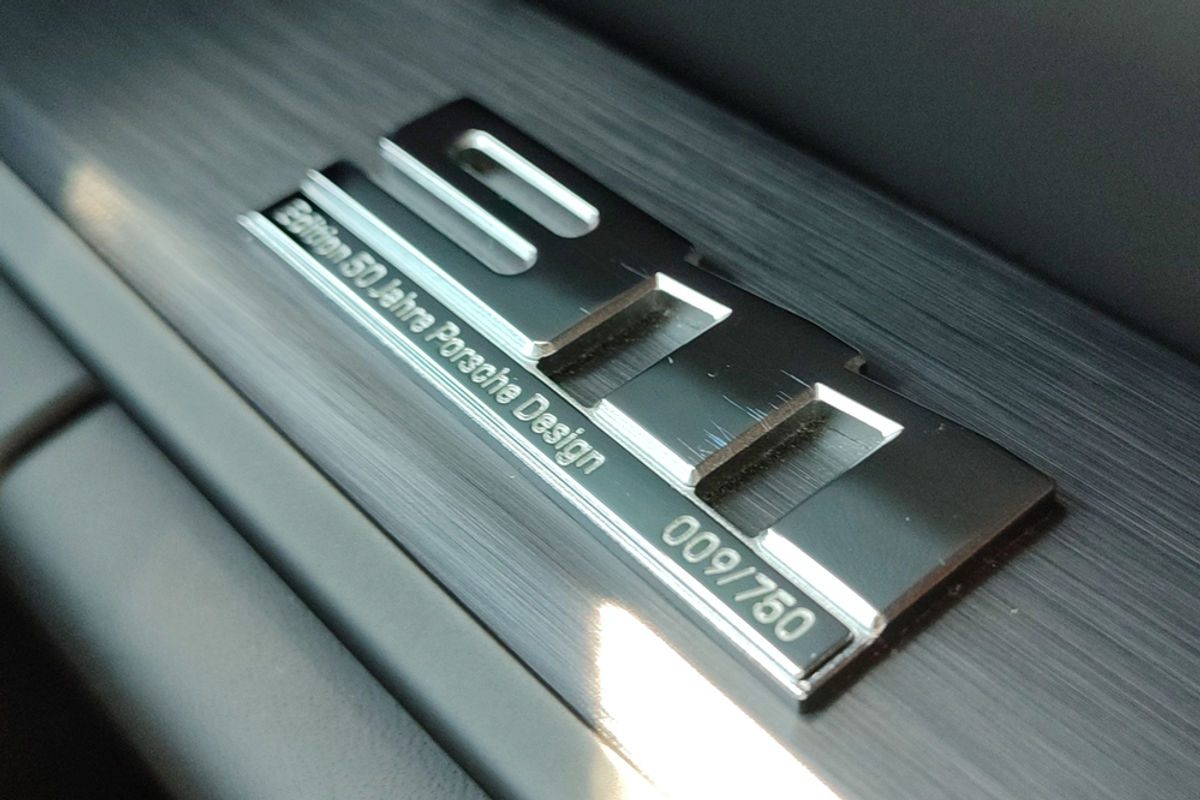
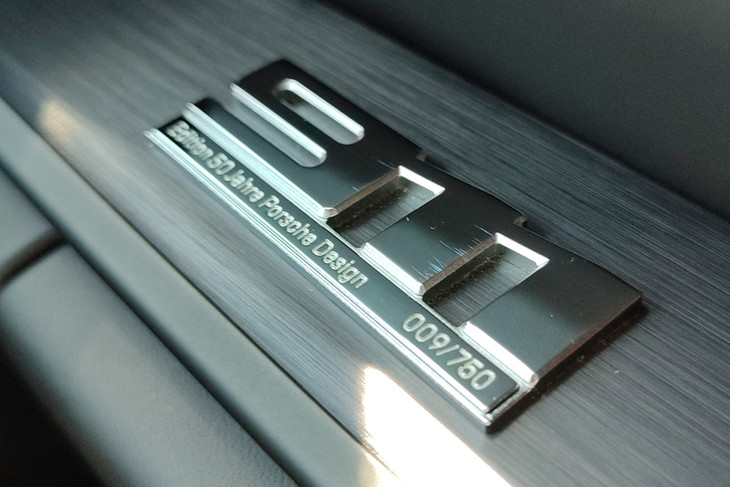
Well, the name is quite a mouthful and should tell you everything you need to know. This special edition is based on the 911 Targa 4 GTS and specced to commemorate the 50th anniversary of Porsche Design. Only 750 were built, and the car made available for the local press launch was #9 (there is a small plaque on the fascia to show each individual car’s number).
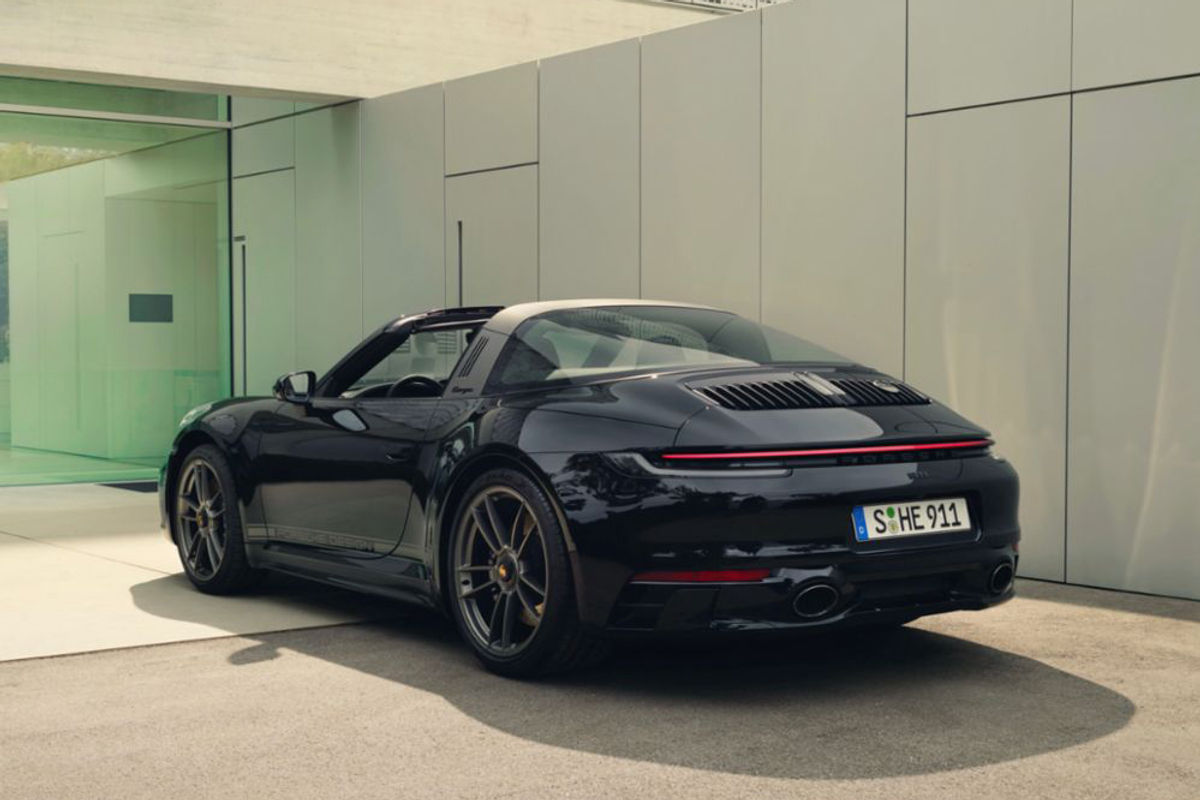
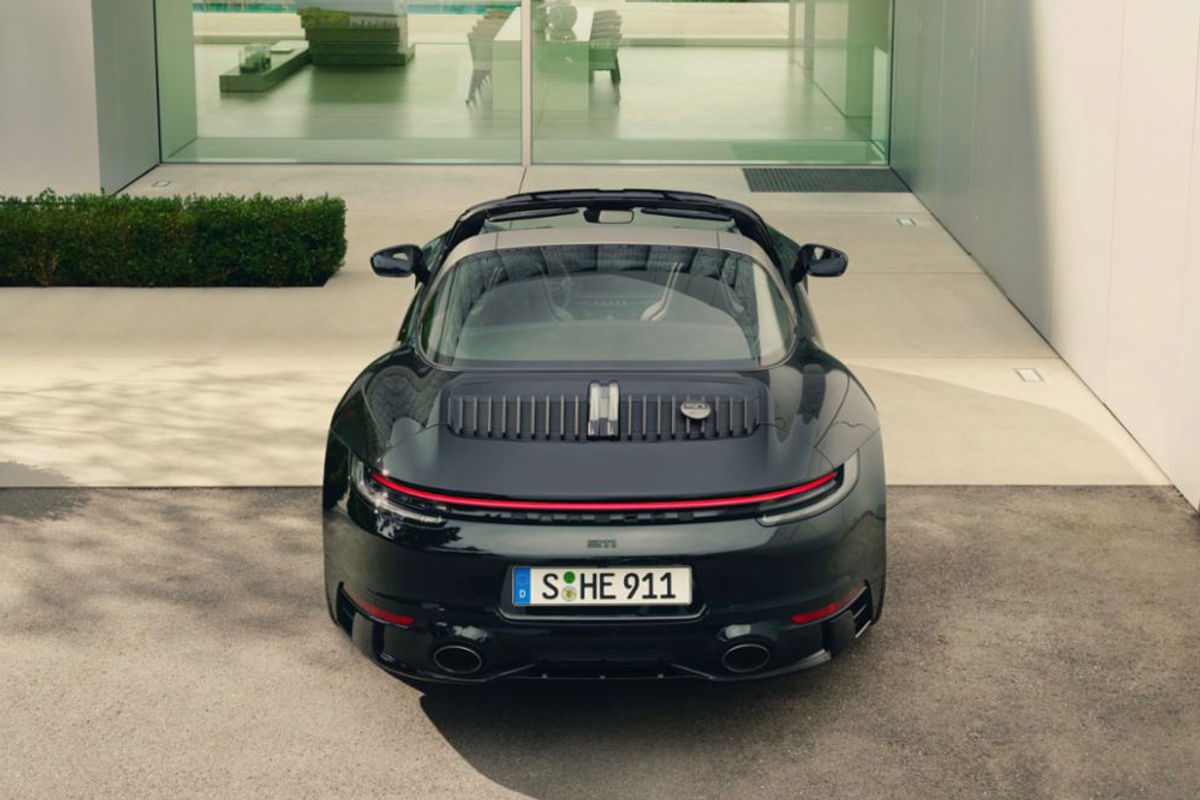
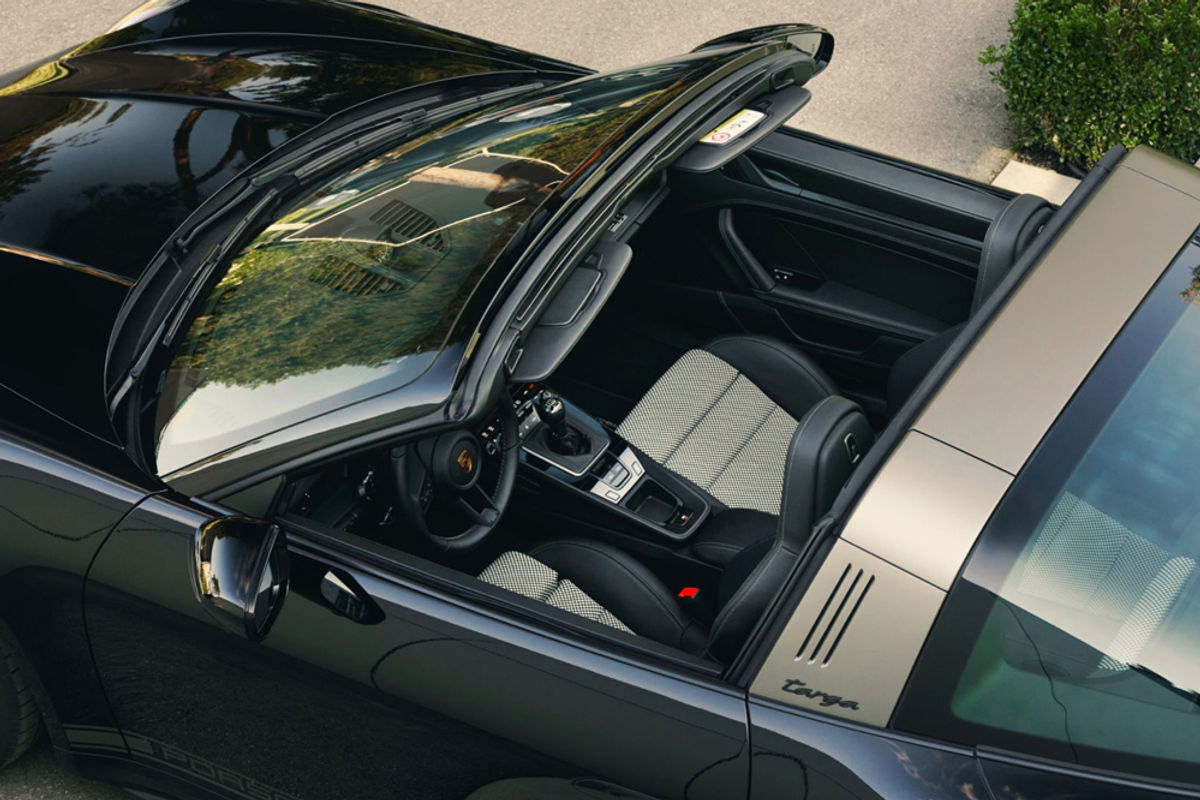
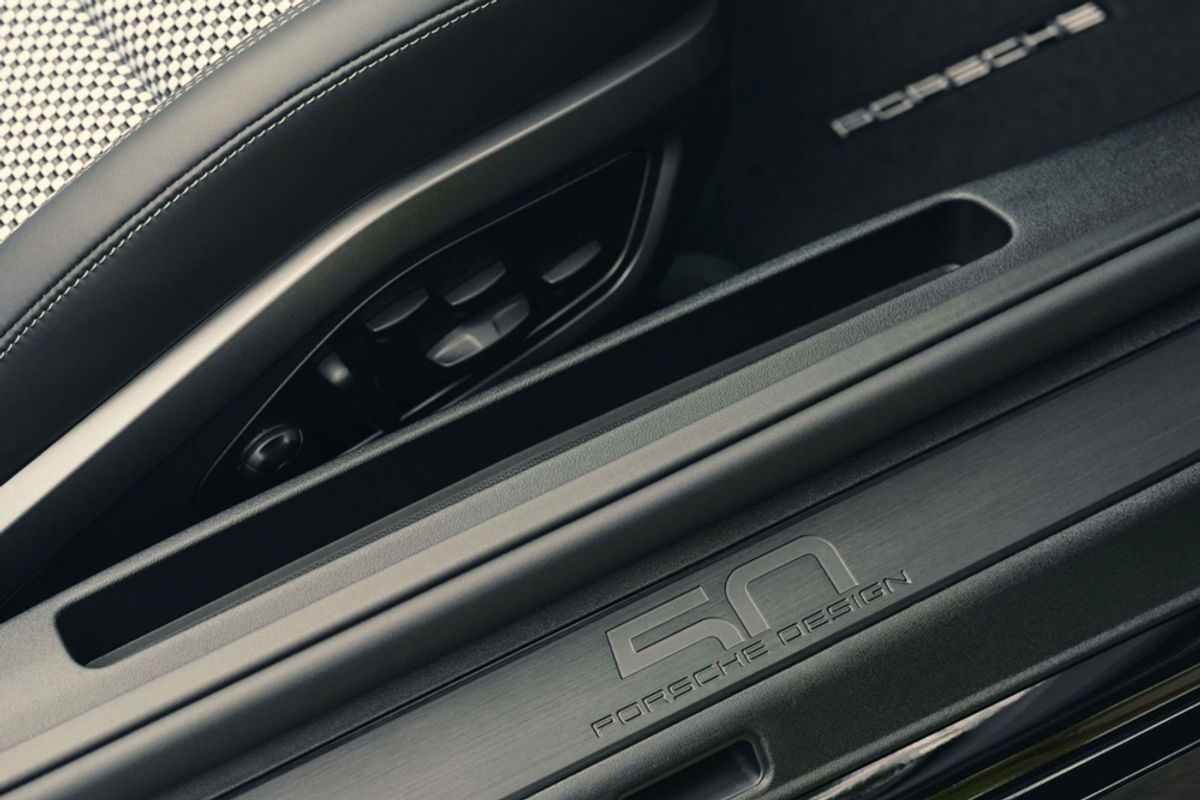
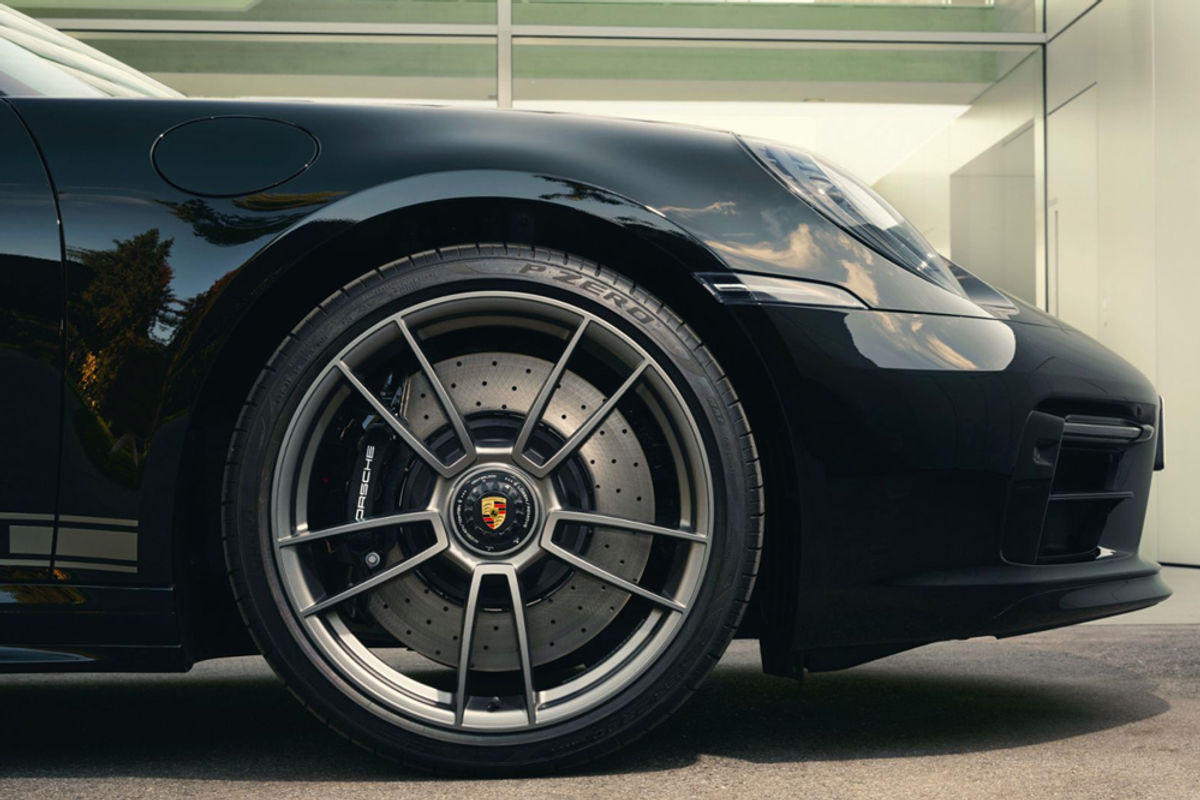
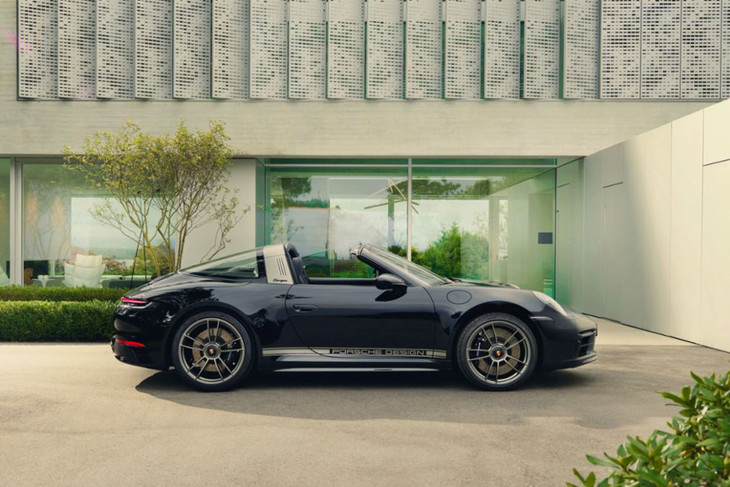
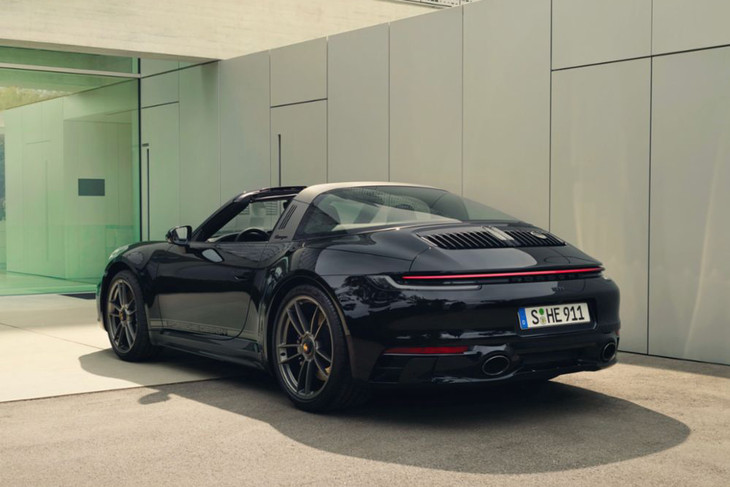
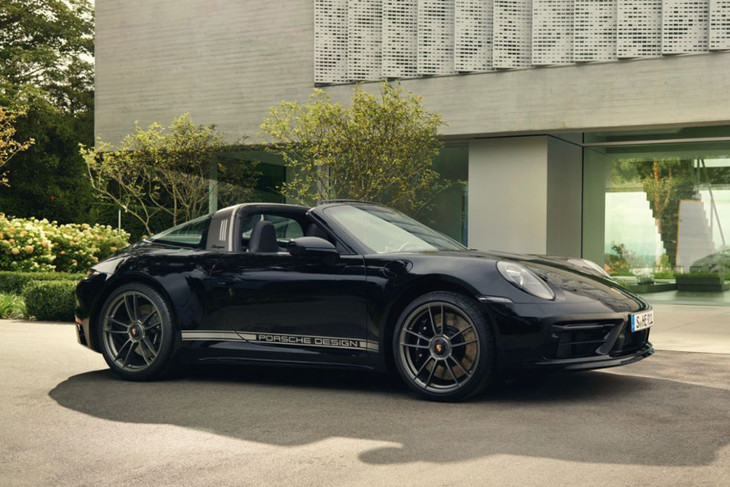
As for the exterior finish, you can have any colour you want as long as it is black – well, “plain” black or Jet Black Metallic, to be precise. Why the emphasis on the colour black? Well, black was the colour of the very first Porsche Design product, the Chronograph 1. Platinum (it resembles a brushed light grey hue) is the accent colour and it features on the Targa bar, the Porsche Design decorative film on the doors, the striking 20-inch front- and 21-inch rear wheels, as well as other elements.
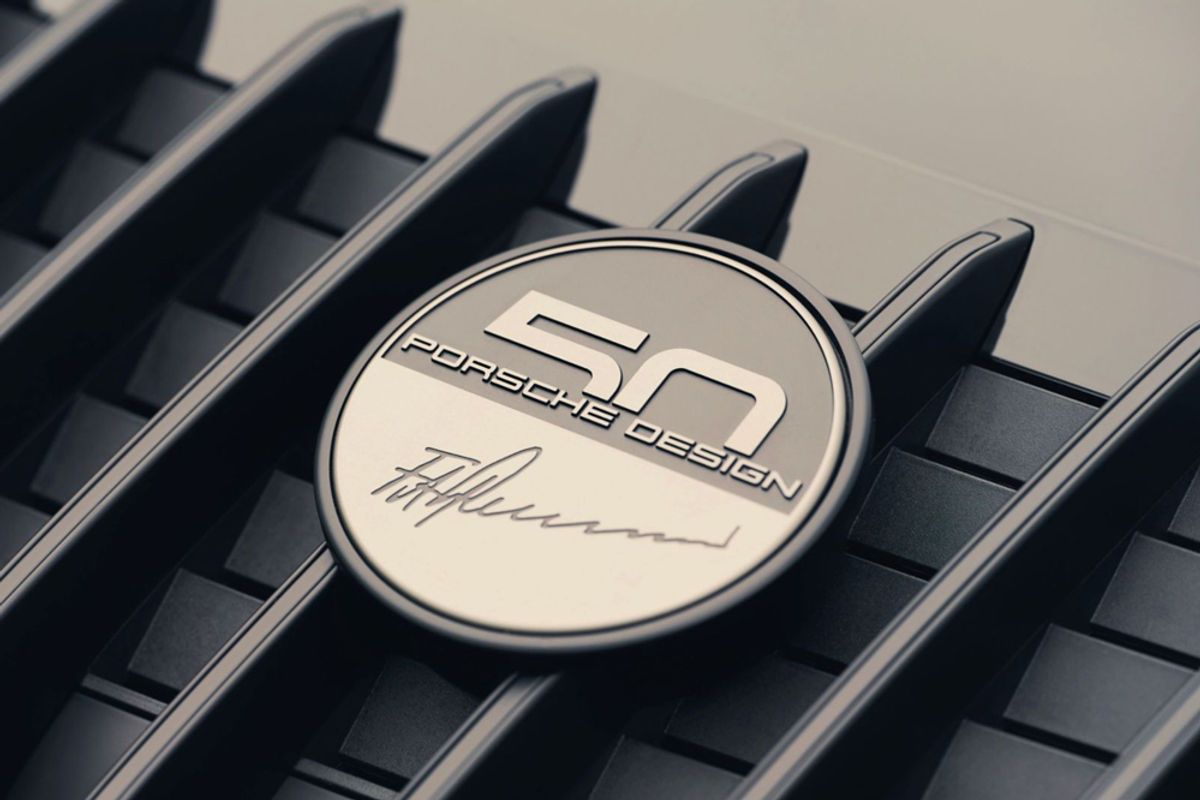
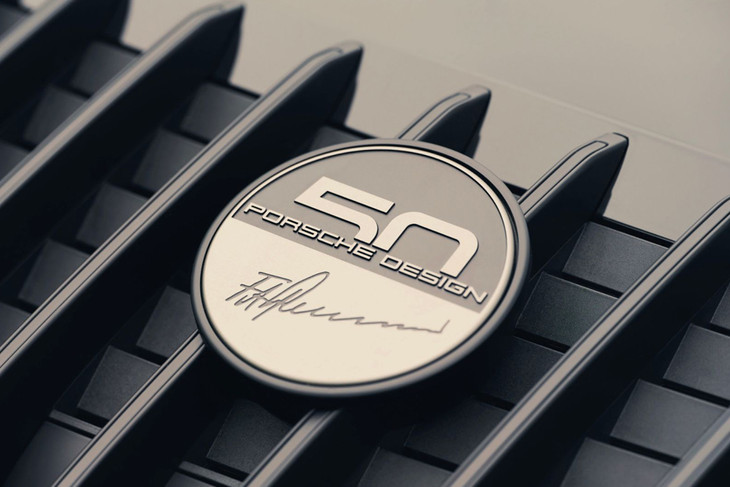
Finally, a special “Porsche Design 50th Anniversary Edition” badge is affixed to the slats of the rear grille.
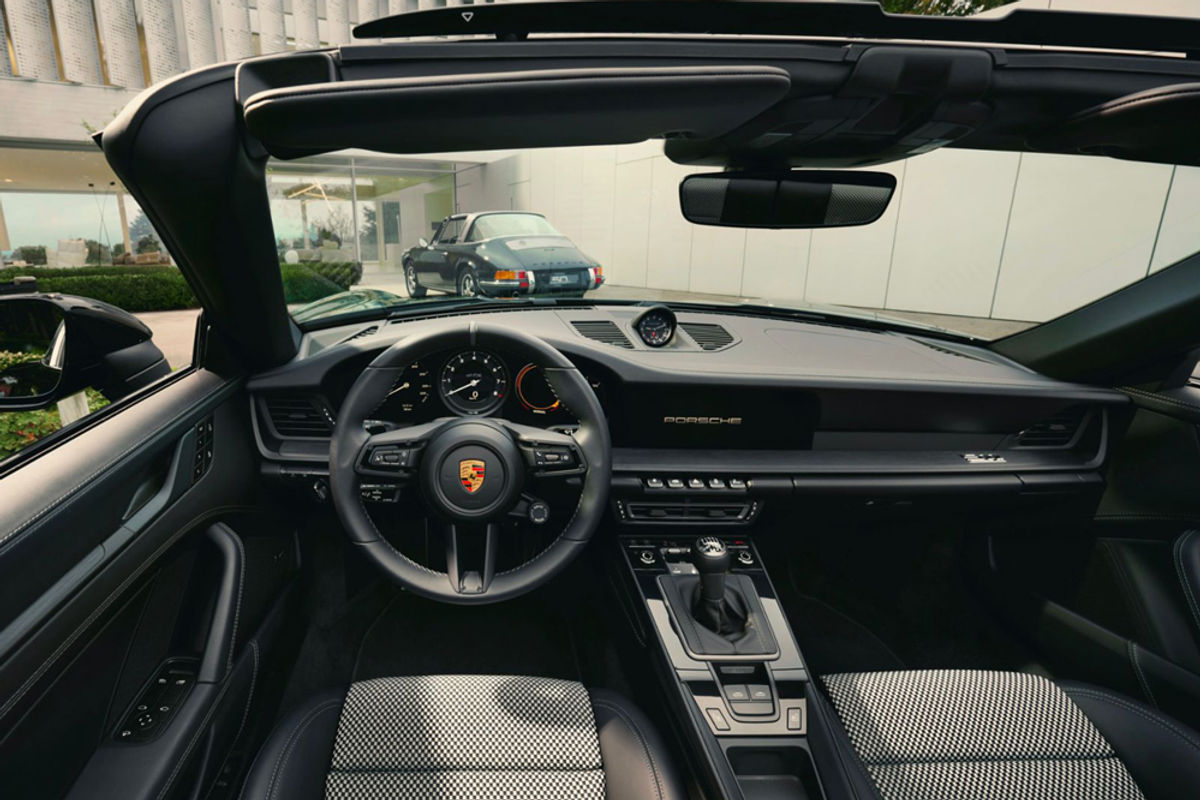
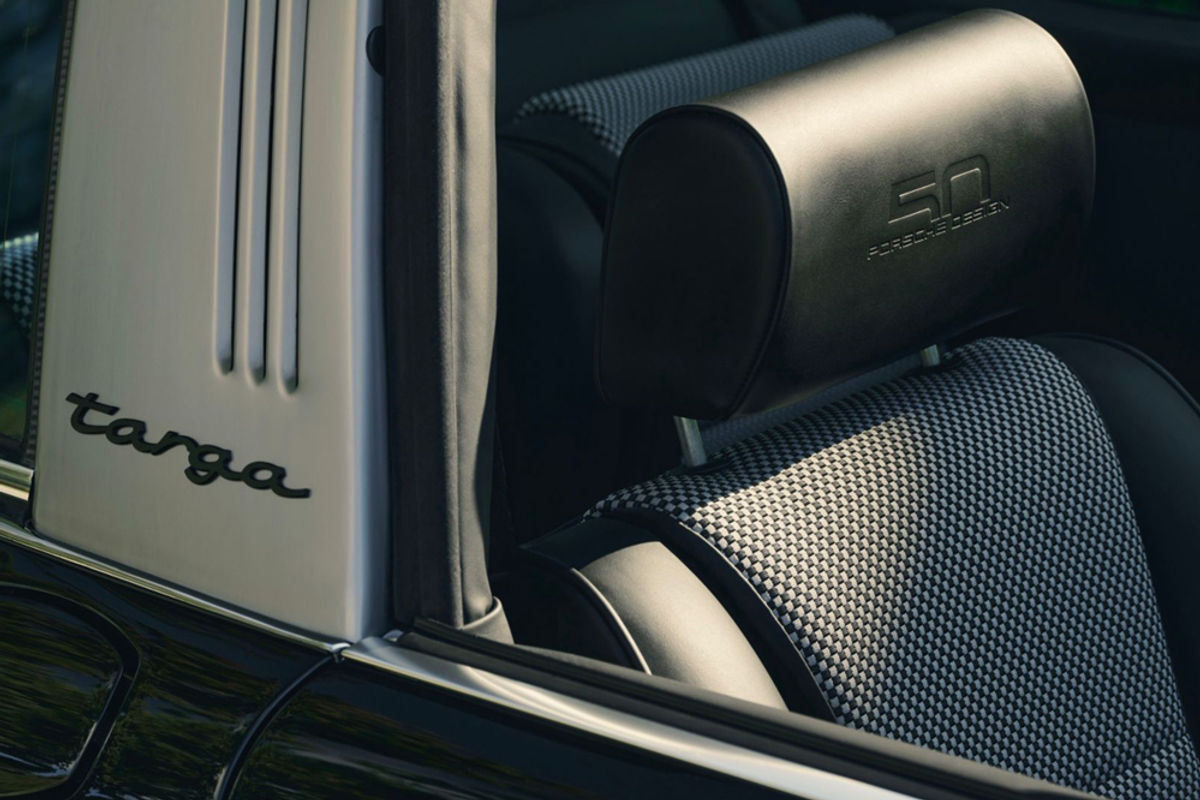
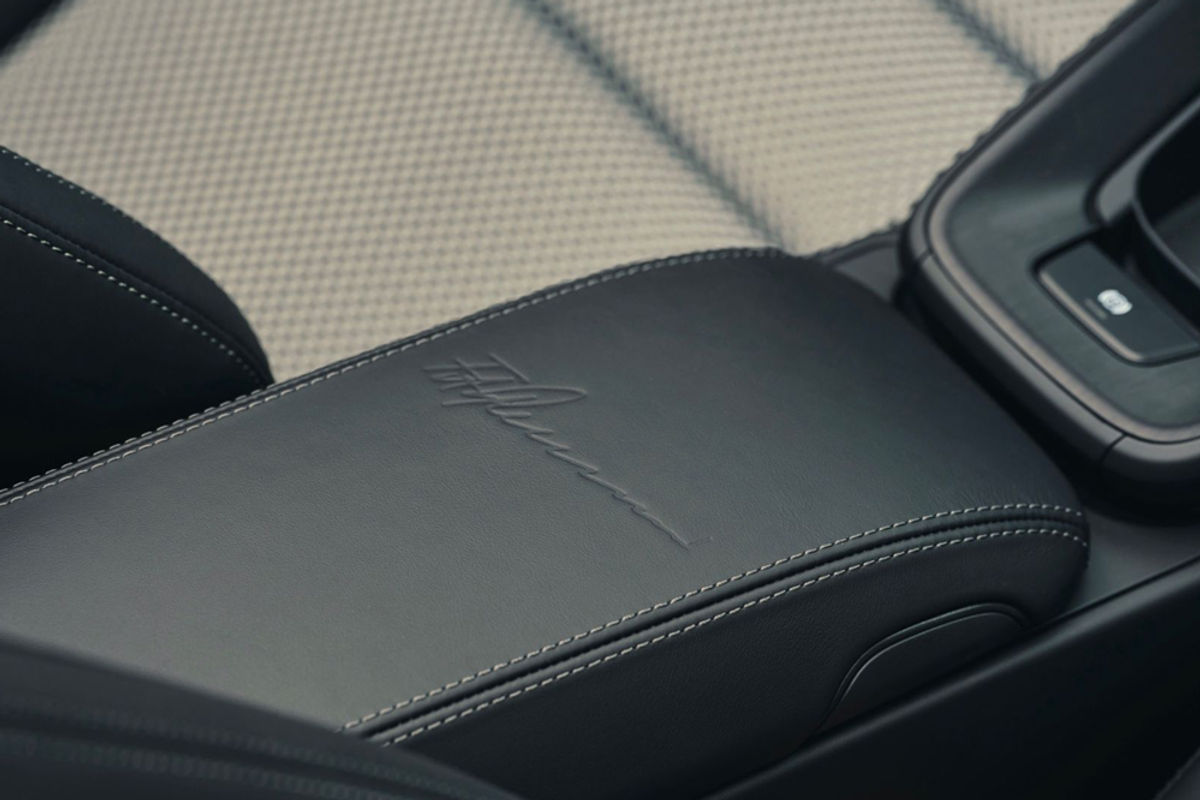
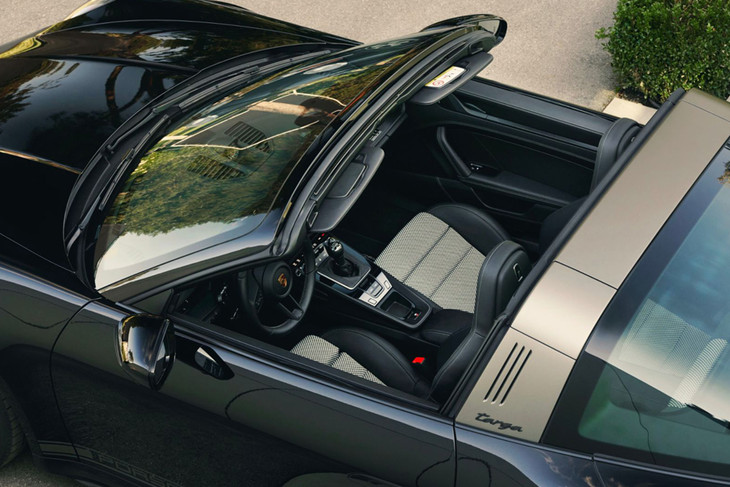
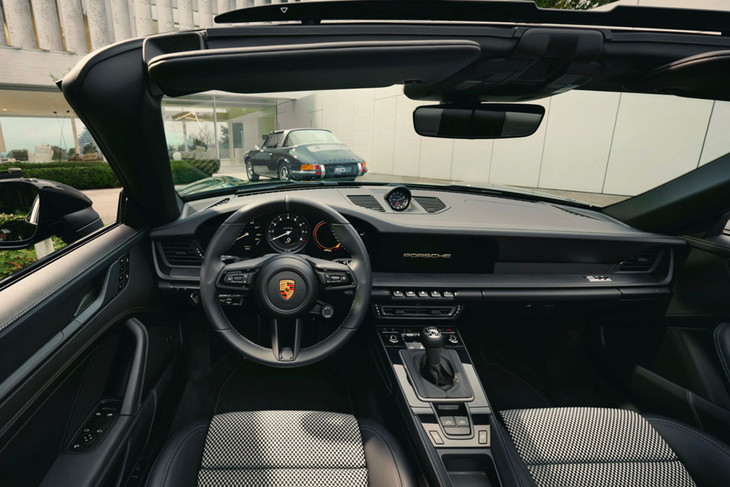
The black theme continues inside, but the Edition 50 Years Porsche Design’s leather-trimmed cabin is far from a sombre place, mostly due to the very cool (retro-looking) checkered pattern on the seat centres and Slate Grey contrast stitching.
Eighteen-way electrically adjustable Adaptive Sports Plus (with a memory package) seats are standard, as is the Sport Chrono Package, but with a special Porsche Design twist – the clock’s small second hand is red, another trait it shares with the Chronograph 1 from 1972. The headrests are embossed with the Porsche Design 50th Anniversary logo.
Powering this special edition model is the twin-turbocharged 3.0-litre flat-six from the 911 GTS, which produces peak outputs of 353 kW and 570 Nm of torque. It is fitted with Porsche’s superb 8-speed PDK dual-clutch transmission as standard, or you can have the marque’s weird 7-speed manual. Porsche’s Active Suspension Management (PASM) system is standard fitment, as are the high-performance brakes (they’re the same as those of a 911 Turbo). You also get the sports exhaust system – and it’s a nice touch, seeing as you can drop the roof and then enjoy the wail of the flat-6 even more.
It looks nice, but what’s it like to drive?
Seeing as there are no mechanical changes or power increases compared with the 911 Targa 4 GTS, this special edition delivers a pleasingly familiar driving experience, to say the least! The 992-gen Porsche 911 is a superb driver’s car and the ‘GTS offers a lovely balance of just enough power, precision and “feel”. Due to its complex roof mechanism, the Targa is slightly heavier (by about 70 kg), but you’d have to drive the cars back-to-back to notice a difference in performance. It blasts from 0 to 100 kph in 3.5 sec (only 0.2 slower than a Carrera 4 GTS Coupe) and has a top speed of 307 kph.
For the test-drive route, Porsche chose the sensational Franschhoek Pass, and it was a treat to hear the Edition 50 Years Porsche Design’s raspy exhaust note bounce off the cliff sides, particularly when driving with the roof down. Purists will, of course, lament the Targa’s extra weight, but in all honestly, it’s still a crisp, pure-feeling sportscar with lovely steering and an excellent transmission. I like a gearbox with a mechanical feel and the PDK certainly delivers that (and quick, precise shifts).
As a follically-challenged person, I’m not a fan of open-top motoring, so I kept the roof closed for most of the route. While parked at our lunch venue in Hermanus, the car looked sensuous and menacing and undoubtedly better-proportioned than a Cabriolet. And yes, I must admit that I do like the little bit of design drama that the Targa bar adds to the package.
Summary
Priced at just under R2.95 million (before options), you may wonder whether this special edition, which is only available in two shades of black, warrants the extra R230k outlay over a standard Targa 4 GTS or even a Targa 4S, which is about R500k cheaper (based on November 2022 prices)… I don’t think anyone can logically say “yes, it can”, so who’d buy this?
Well, this is a numbered Porsche, and that’s always a desirable thing in the 911 community. In the end, however, this is not a vehicle that you would buy with your head – your heart will have the final say. This special-edition 911 Targa reminds me of that Porsche “Dreamer” ad, which questions the appeal of a world where everything has to make sense and be practical.
The 911 Targa Edition 50 Years Porsche Design is one for the dreamers, then.
The current data suggests that the price of petrol will increase, while diesel gets a much-needed price drop.
The data is coming from the Central Energy Fund (CEF) and the Automobile Association of SA (AA). Right now and as it stands, petrol price will increase between 97c/litre and R1.09/litre, but a decrease for diesel of up to 34c/l next month. Illuminating paraffin is also expected to increase by around 30c/litre.
The reasons behind the changes are as follows; international product prices have an average upward movement for petrol, while diesel has gone the other way. Also helping a little is our currency, with the Rand performing slightly better against the US Dollar in daily trading.
“With these expected increases to petrol, the price of a litre of 95ULP, for instance, will climb to just under R24/l which will be way below the high of R26.74/l seen in July, but which will still be higher than September, October, and November prices. The decrease to diesel is, of course, welcome and should, at least, not immediately negatively impact other prices reliant on diesel as an input cost. Of course, the increase to illuminating paraffin remains a concern as it will affect the poor most,” says the AA.
As a reminder, these figures are based on mid-month data and are likely to change before the end of November 2022. “However, increases to petrol prices are almost certain to happen while decreases to diesel are also almost a certainty. Given that many people will be travelling by vehicle in December we advise motorists to carefully plan their budgets now to ensure they have the necessary funds to cover their expenses, which may also include toll fees on certain routes,” notes the AA.
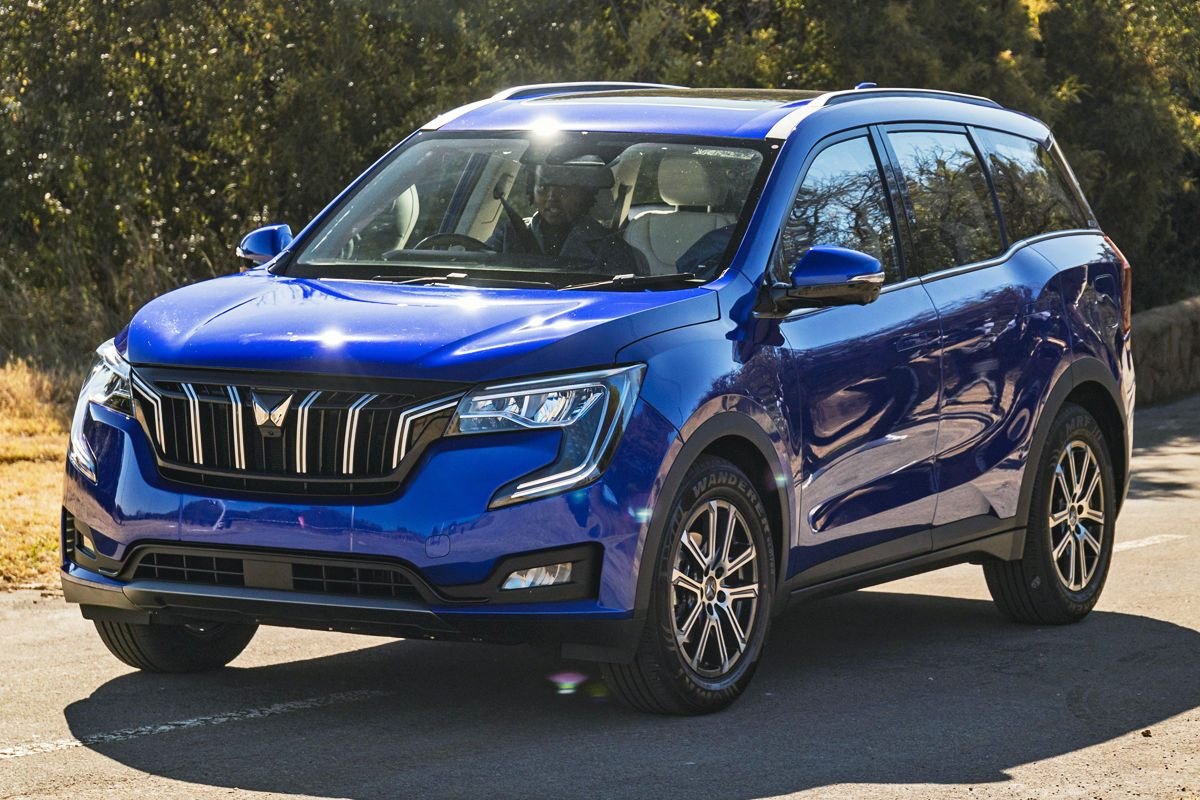
Mahindra South Africa has announced local pricing of its new XUV700 range, which comprises three derivatives at launch. Here’s what you need to know…
The order books for the new Mahindra XUV700 have officially opened in South Africa, with the Indian company finally confirming local pricing.
Serving as the successor to the XUV500 (which will now fall away), the newcomer is interestingly available exclusively in petrol form, with Mahindra SA saying no turbodiesel option will be available for the time being. So, all three variants employ Mahindra’s mStallion turbocharged 2.0-litre, 4-cylinder unit, which drives the front axle.
Peak power comes in at 149 kW (on offer at 5 000 rpm), while maximum twisting force is listed as 380 Nm, available from as low in the rev range as 1 750 rpm. In South Africa, all three versions of the new SUV are 4×2 and fitted with a 6-speed automatic transmission as standard.
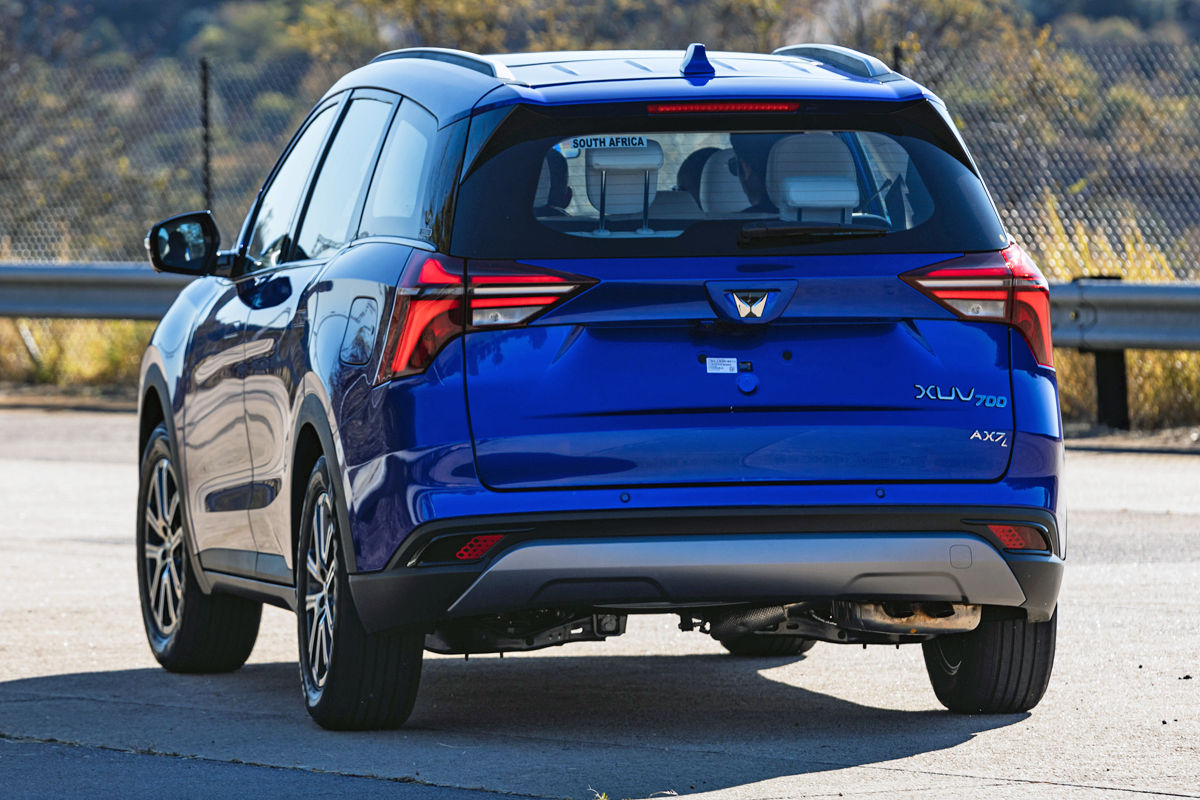
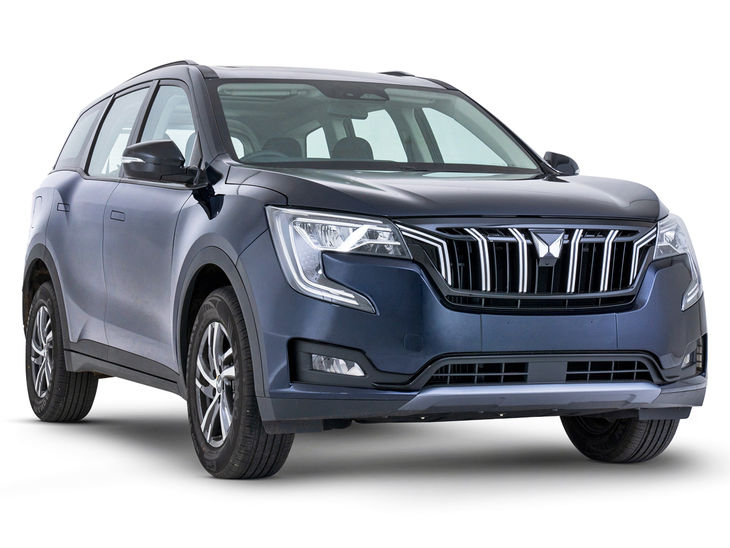
For the record, the XUV700 measures 4 695 mm long, 1 890 mm wide and stands 1 755 mm tall, with a wheelbase of 2 750 mm. The line-up kicks off with the 5-seater XUV700 AX5 (R474 999), with the 7-seater XUV700 AX7 (R524 999) slotting in the middle and the likewise 7-seater XUV700 AX7 L (R559 999) sitting at the summit.
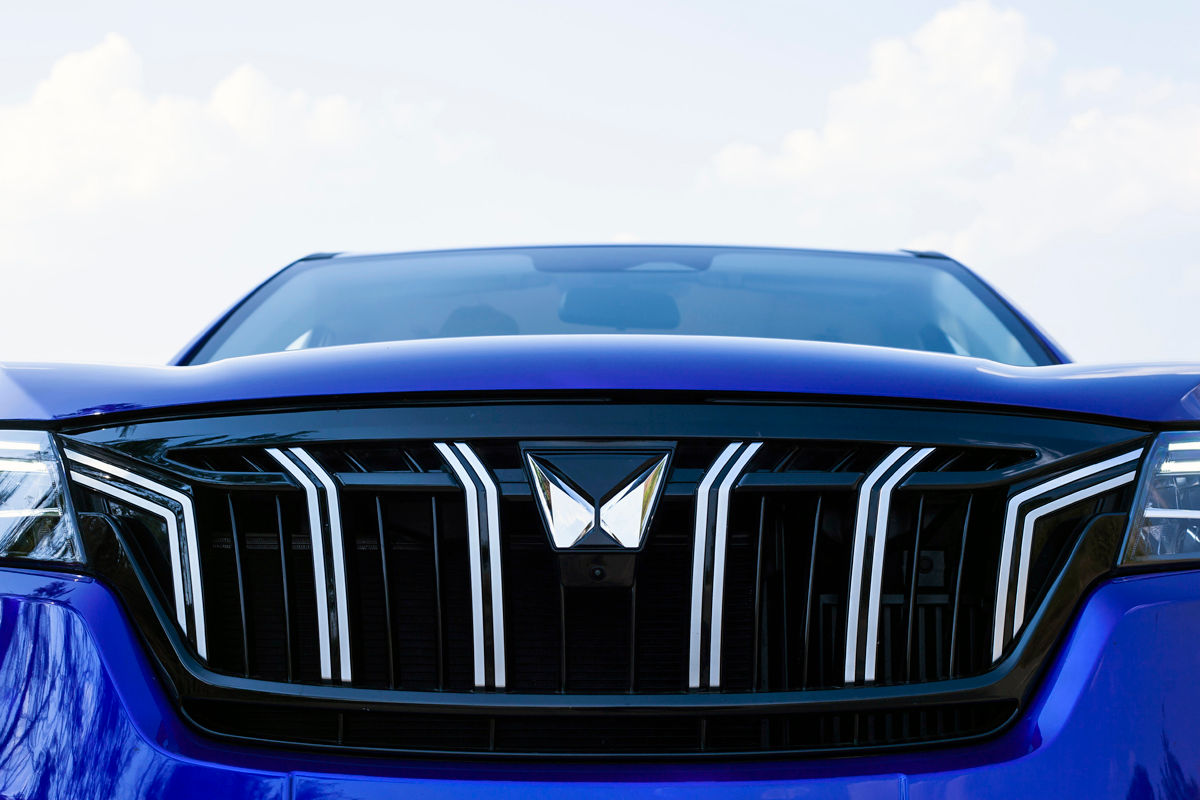
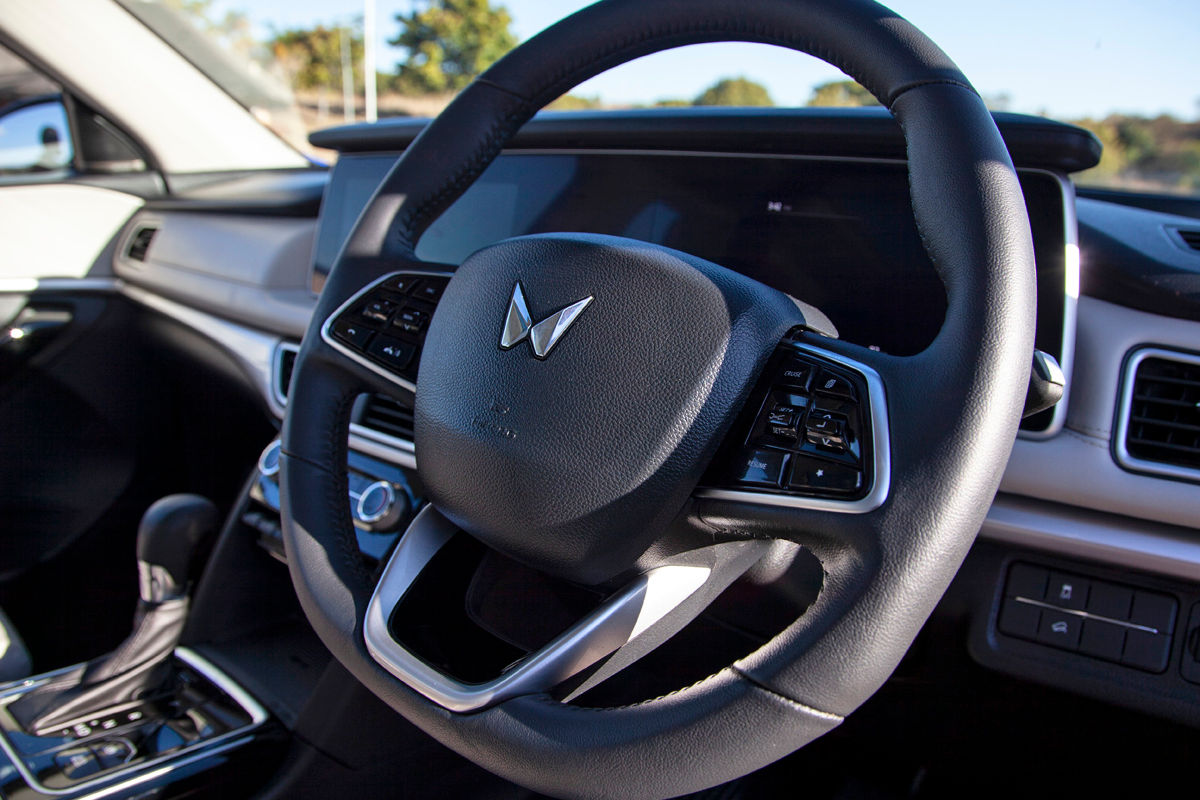
The XUV700 wears Mahindra’s new Twin Peaks logo on its nose.
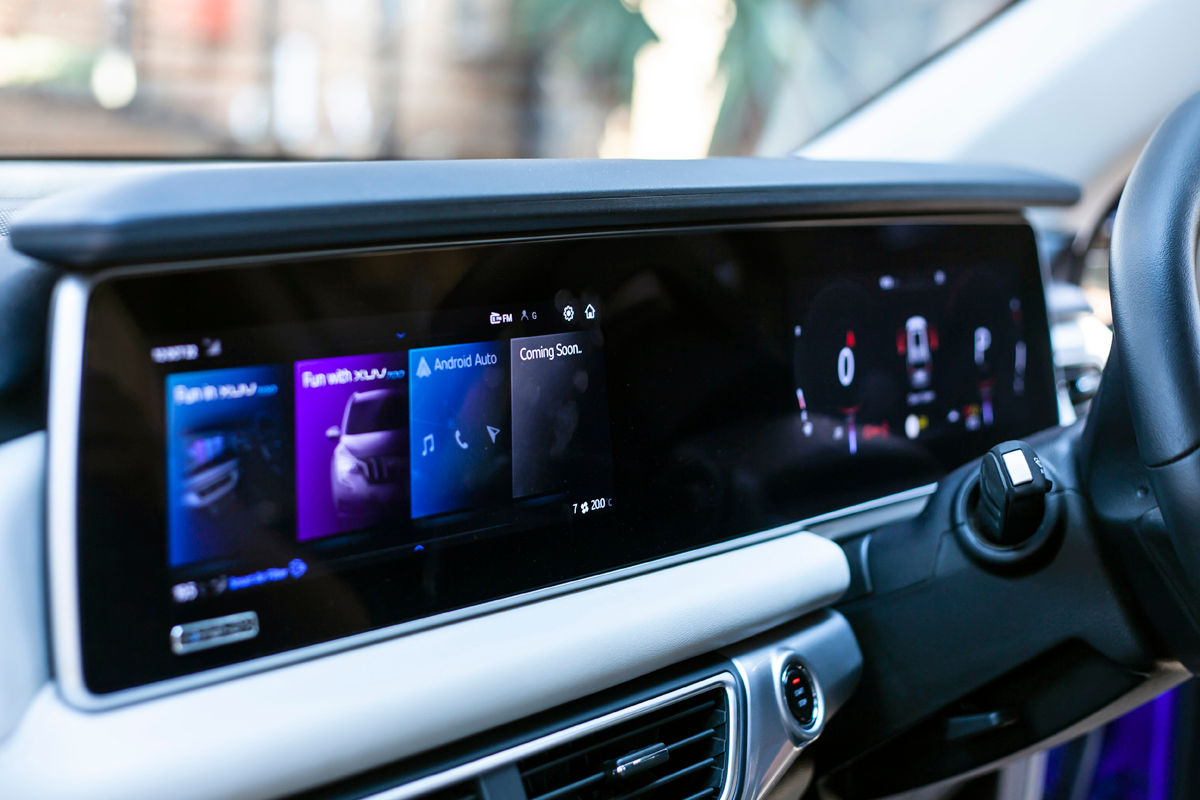
Standard features for the AX5 include a 10-inch infotainment screen connected to a 10-inch digital cluster, a 6-speaker audio system (with wireless Apple CarPlay and Android Auto functionality), LED headlamps, LED daytime running lights, LED sequential indicators, foglamps, 17-inch diamond cut alloy wheels, a panoramic sunroof, 4 airbags and stability control.
The AX7 upgrades to Mahindra’s advanced driver-assistance package, which includes adaptive cruise control, smart pilot assist, forward collision warning, automatic emergency braking, lane departure warning, lane keep assist, traffic sign recognition, high-beam assist and driver drowsiness detection. It also features 6 airbags, a tyre-pressure monitoring system, push-button start, 18-inch diamond cut alloys, faux-leather upholstery, a 6-way power-adjustable driver’s seat, automatic headlamps, rain-sensing wipers, a reversing camera, power-folding side mirrors and dual-zone climate control.
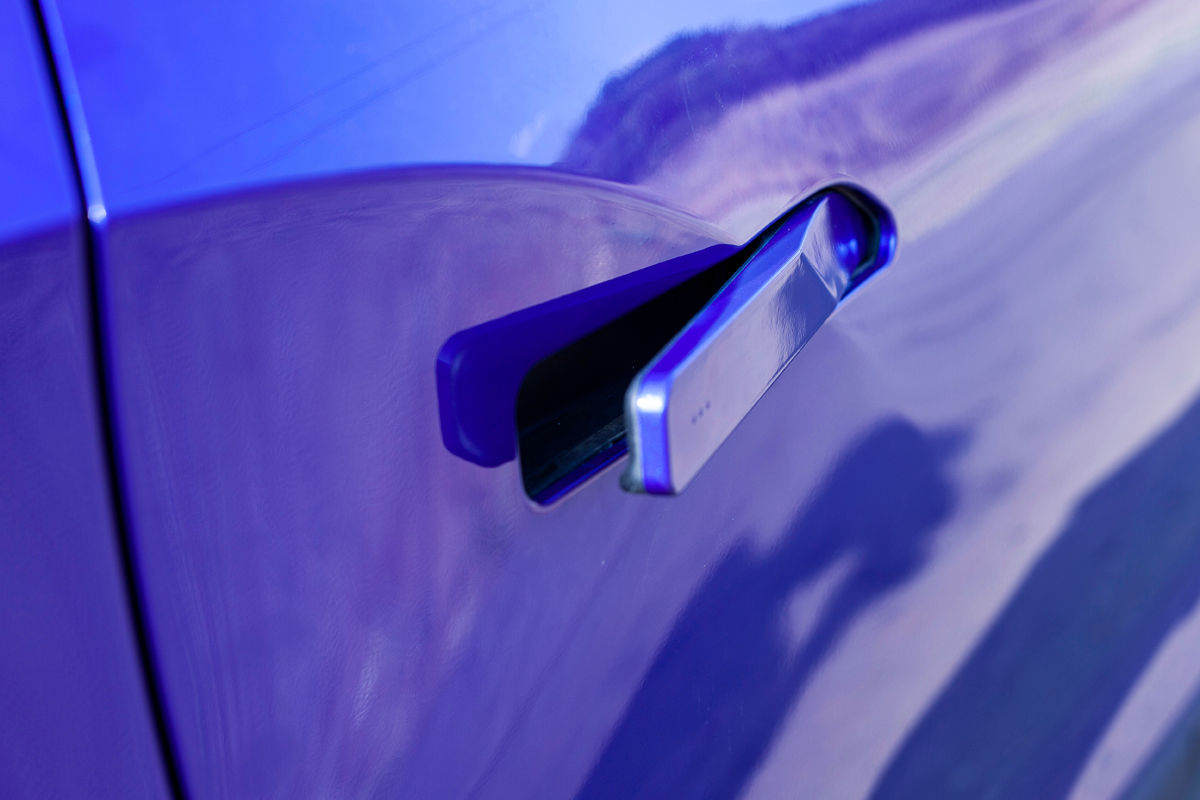
Finally, the AX7L scores a blind-spot monitor, a 360-degree camera system, continuous digital video recording, a 12-speaker Sony audio system, a knee airbag (for a total of 7), passive keyless entry, an electronic parking brake, telescopic steering adjustment, pop-out door handles, wireless charging and a “Stop & Go” function for the adaptive cruise control.
Exterior paint colours include Everest White, Midnight Black, Dazzling Silver, Red Rage and Electric Blue (the global launch colour).
Mahindra SA says pre-orders will be open until the end of November 2022. Each of the first 700 customers to place an order online and complete the pre-order process will receive a unique code. Once the customer pays a fully refundable deposit of R5 000 at a dealer and cites the unique code, they will have the option to choose from a free service plan and warranty extension up to 7 years or a package comprising a R3 000 fuel card, custom-fitted XUV700 side steps and a Mahindra tow bar.
How much does the Mahindra XUV700 cost in South Africa?
XUV700 AX5 4×2 AT – R474 999
XUV700 AX7 4×2 AT – R524 999
XUV700 AX7 L 4×2 AT – R559 999
All derivatives come with a 5-year/150 000 km warranty and a 5-year/100 000 km service plan.