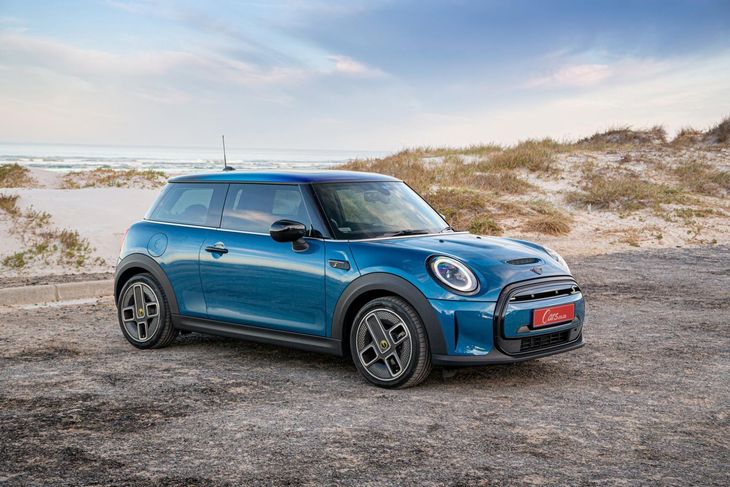
As the world moves towards a future where new energy vehicles will feature heavily, even South African buyers appear to be changing their purchasing habits in favour of hybrids and EVs.
South Africans’ appetite for new-energy vehicles, especially full-electric vehicles (EVs), has increased significantly during the past year. This is based upon in-depth analysis of the used-car data of Cars.co.za, which attracts around 2 million unique users a month (according to Narrativ), and the new vehicle content that have drawn the most user interest on the leading automotive portal.
“To put it simply, the demand for used hybrid or full-electric vehicles on our site outstrips supply,” says Hannes Oosthuizen, Consumer Experience Manager at Cars.co.za. “Finding a pre-owned BMW i3, for example, is no simple task and, when you do find one, expect to pay a premium…”
Pure EV demand has risen 155% year-on-year locally.
“When we compared data from the first six months of 2022 with that of the corresponding period in 2021, we discovered that demand (calculated with the use of several key indicators) for hybrids went up by 67.7% Year-on-Year (YoY), while demand for full EVs increased by a staggering 155.5% YoY,” Oosthuizen says. “It is worth keeping in mind, however, that these increases come off a relatively small base,” Oosthuizen adds.
“Of course, Demand is also stimulated by Supply, and this has been the case in the past year as a result of greater product availability. The introduction of a number of hybrids by South Africa’s most popular brand Toyota, in particular, drove up interest to some extent.
“We have seen tremendous interest in the new hybrid models of Haval as well. Interestingly, when it comes to this Chinese brand in general, we have seen a demand increase of 367.7% YoY, indicating that there is far more demand relative to stock availability.”
The cost of fuel has played a part in creating a demand for new energy vehicles.
“Another very important factor to keep in mind is the rapid increase in the price of fuel, and the fact that fewer turbodiesel models are being introduced – particularly at the affordable end of the market,” Oosthuizen says.
“Of course, we’re still waiting for the arrival of truly affordable EVs in the new-vehicle market, but when we analyse the behaviour of our site visitors who put through enquiries (on any vehicles), we find those people are increasingly researching hybrids and EVs in their purchasing journeys.
“This is a clear indication that consumers who are genuinely in the market for a new car, are considering new-energy vehicles much more strongly than before,” he concludes
October 2022 will see the petrol prices drop but diesel prices will increase, putting further strain on a struggling South African economy. See the details below.
Motorists in South Africa (particularly petrol-dependent motorists) will breathe a sigh of relief in October 2022 as petrol prices have been slashed significantly! The prices of diesel, however, are increasing again, which will impact negatively on the economy.
During September 2022, the average Brent Crude oil price decreased from $94 per barrel to $89.74 per barrel. However, during the same period, the Rand depreciated against the US Dollar from R16.70 to R17.55, ultimately resulting in higher contributions to the Basic Fuel Prices of petrol, diesel and illuminating paraffin.
The fuel price adjustments in South Africa for October 2022 are as follows:
Petrol (93 ULP / LRP) decrease by 89 cents per litre
Petrol 95 ULP / LRP ) decrease by 102 cents per litre
Diesel (0.05% sulphur) increase by 10c per litre
Diesel (0.005% sulphur) increase by 15 cents per litre
Illuminating paraffin (wholesale) decrease by 61 cents per litre
While the petrol price decrease will be celebrated by motorists driving petrol-powered cars, the increase in diesel prices will have a negative impact on the economy as diesel is primarily used in industry, for the transport of goods and food, as well as in the generation of electricity. With a negative global economic outlook over short-to-medium term, future fuel price increases are likely to continue to have an adverse impact on the already inflated cost of living, not only in South Africa, but abroad too.
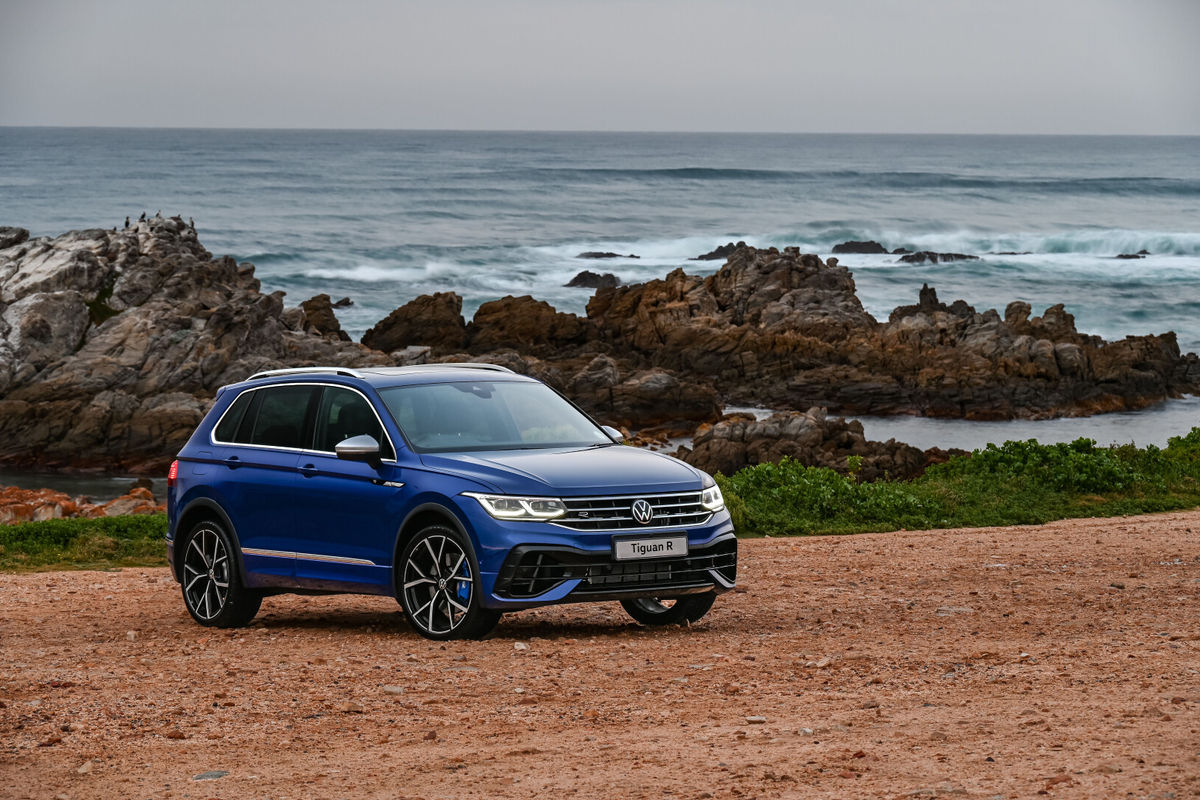
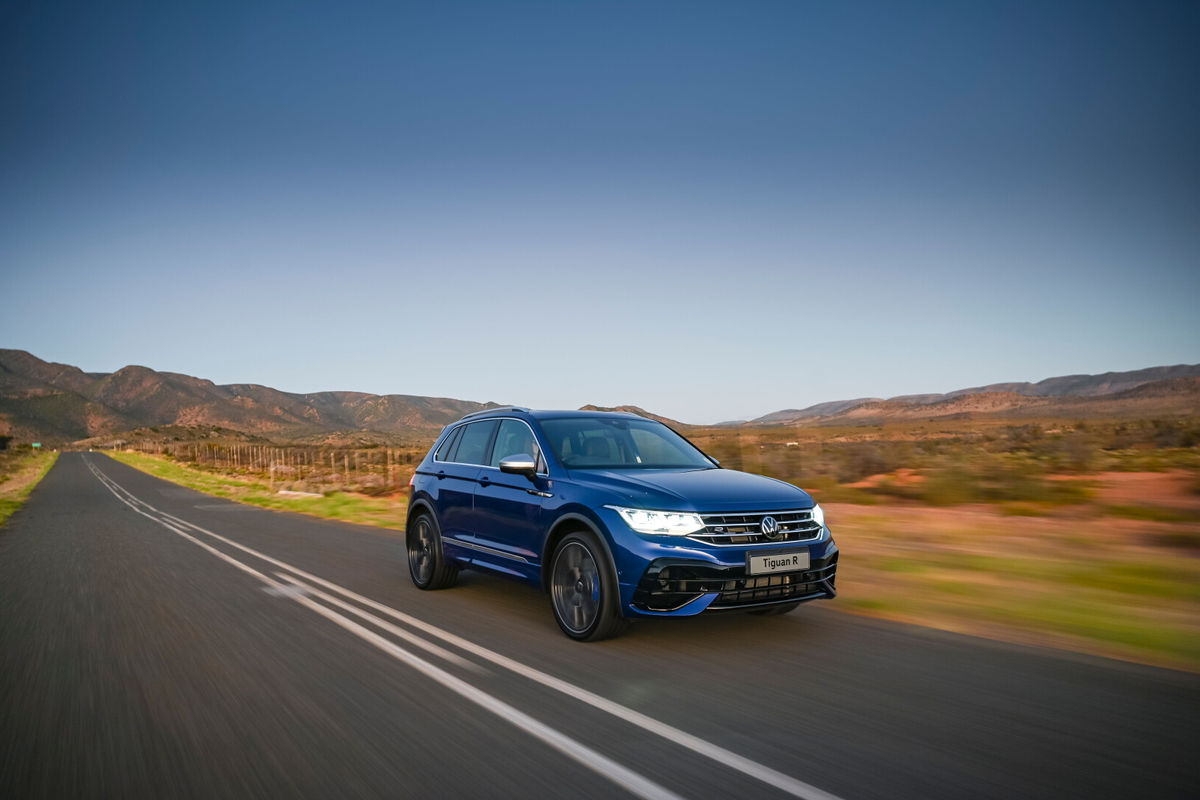
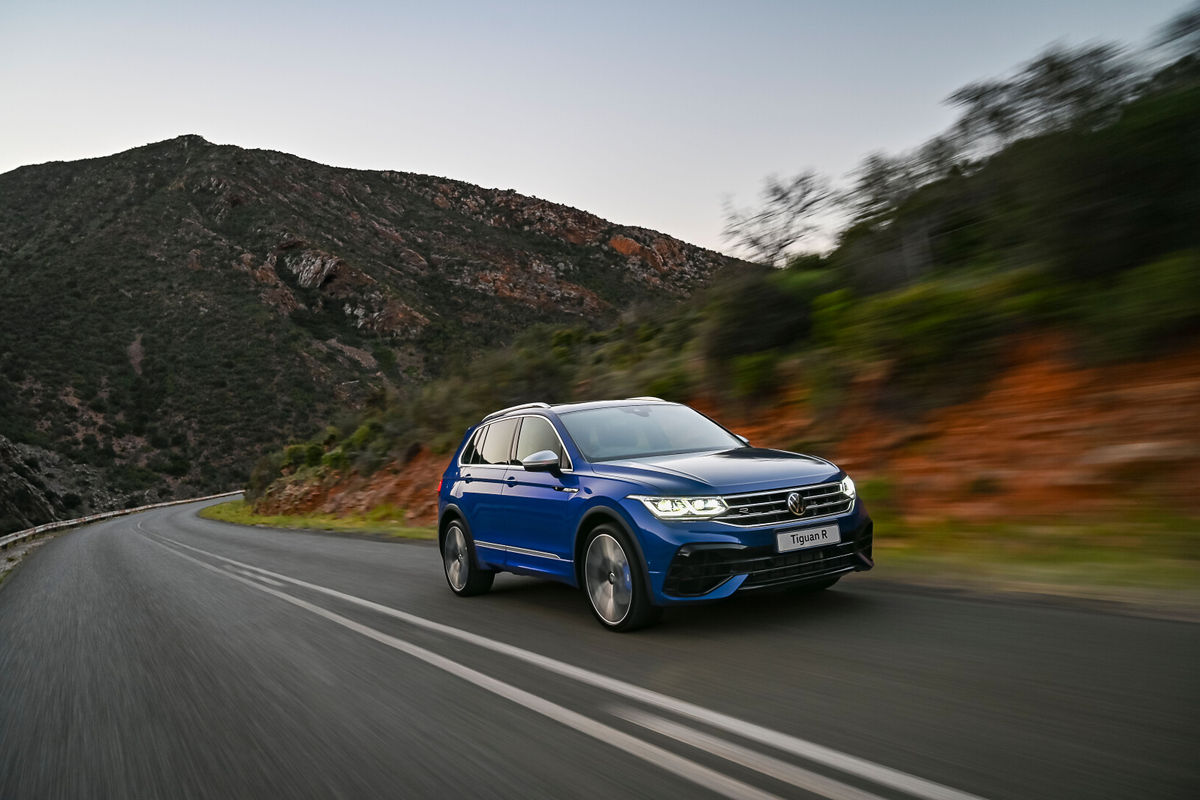
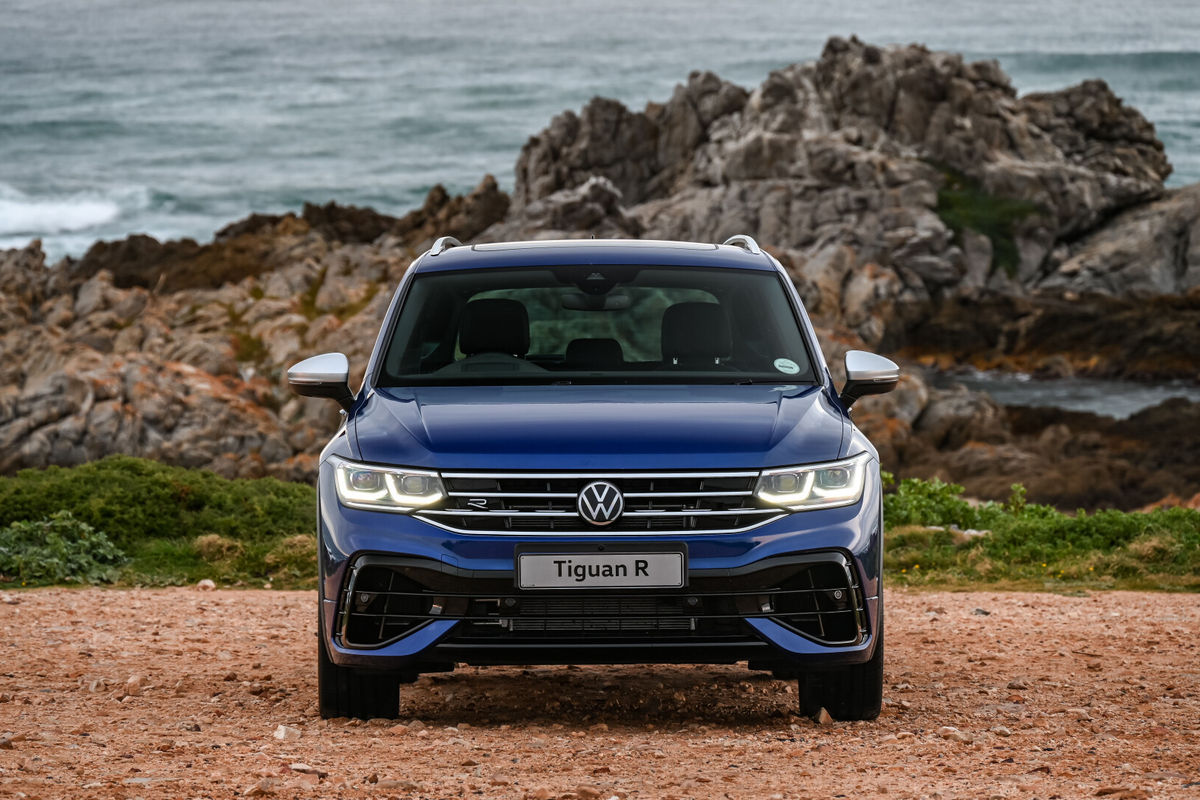
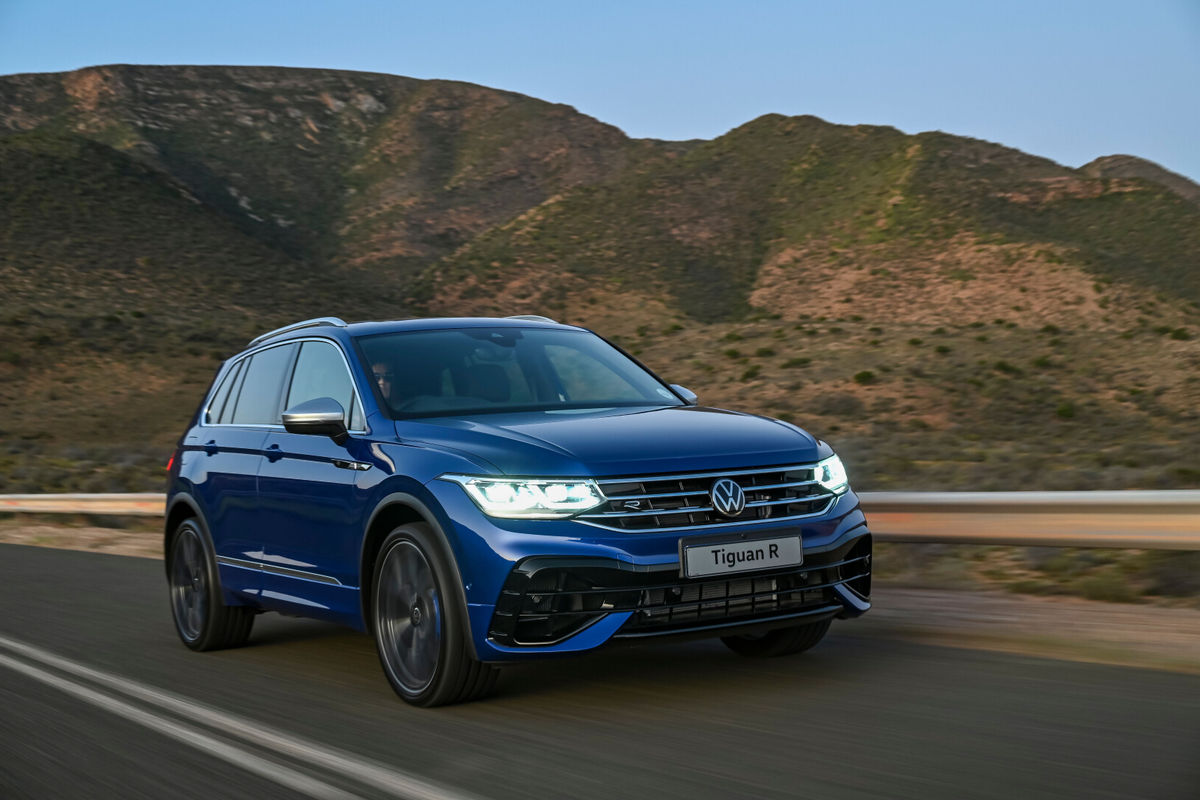
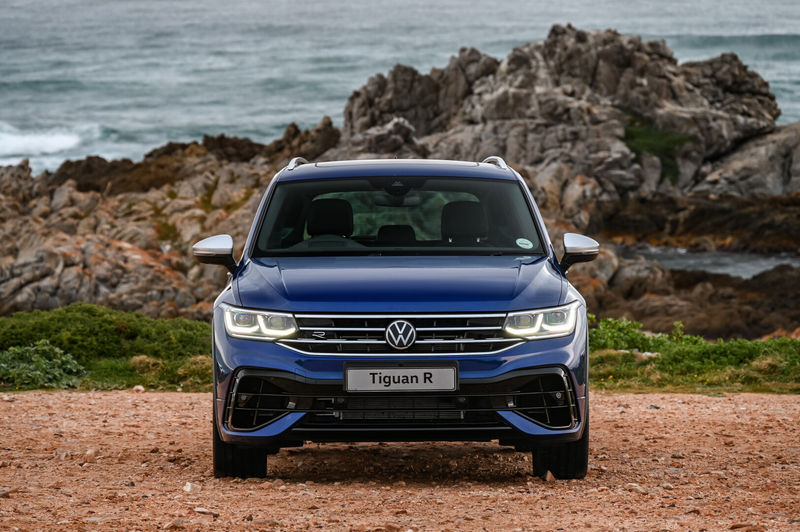
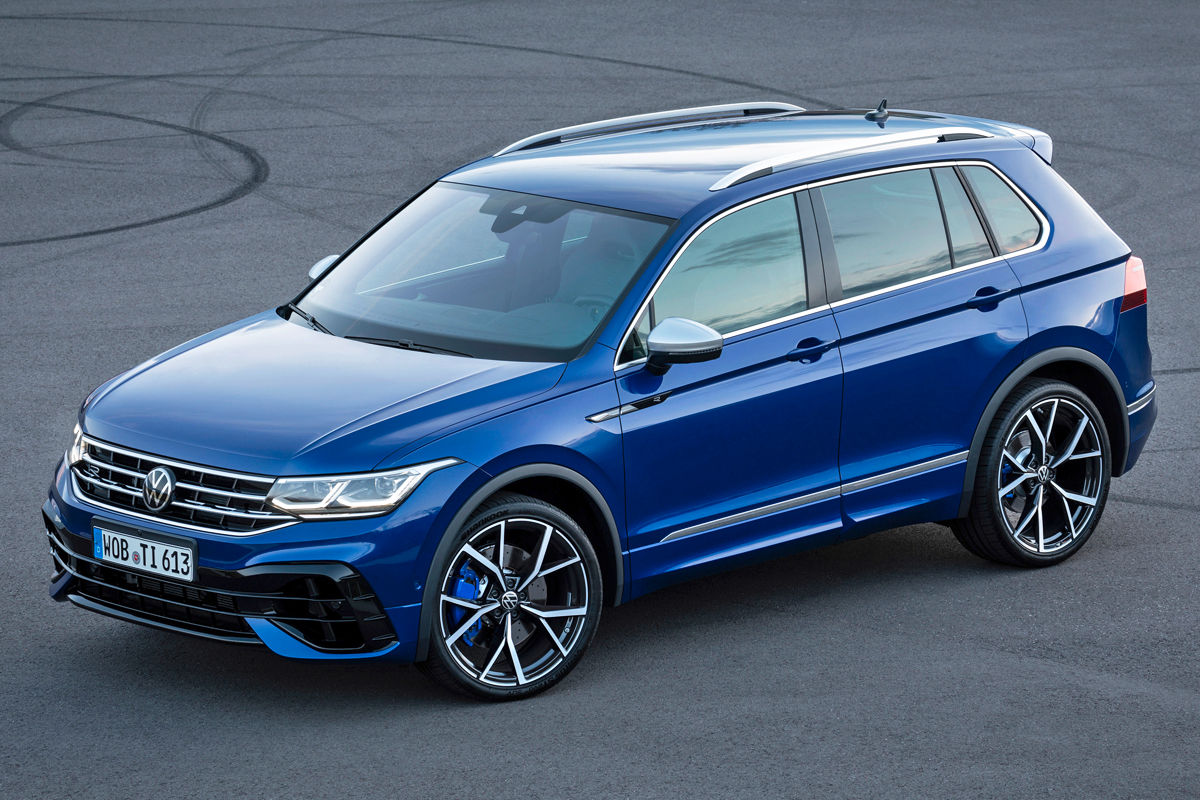
The potent Volkswagen Tiguan R has touched down in South Africa and we’ve had a go in the 235-kW medium SUV, which costs a whisker under R1 million. Is it any good? It should be. Here’s our first drive report from the Western Cape.
The concept of a performance-oriented family car (medium SUV) sounds a bit daft, doesn’t it? However, these types of vehicles have proven highly popular throughout the past few years.
Audi, BMW and Mercedes-Benz offer performance derivatives of their family SUVs and we wouldn’t be surprised if those models comfortably outsell their sedan, hatchback and convertible equivalents. Like it or not, the SUV remains the dominant vehicle body style in the market. Also bear in mind that Volkswagen sells more Tiguans than any other model in its portfolio.
Big wheels. Big brakes. Big performance.
Volkswagen has successfully combined its much-lauded MQB modular platform with the latest iteration of the EA888 2.0-litre 4-cylinder turbocharged petrol engine, a 7-speed direct shift automatic gearbox (DSG) and an all-wheel drivetrain to create the Golf R, T-Roc R (not destined for our market, sadly) and the Tiguan R, the latter of which has now arrived in the Republic and will be hitting local showrooms soon, with the Golf 8 R following in the first quarter of 2023.
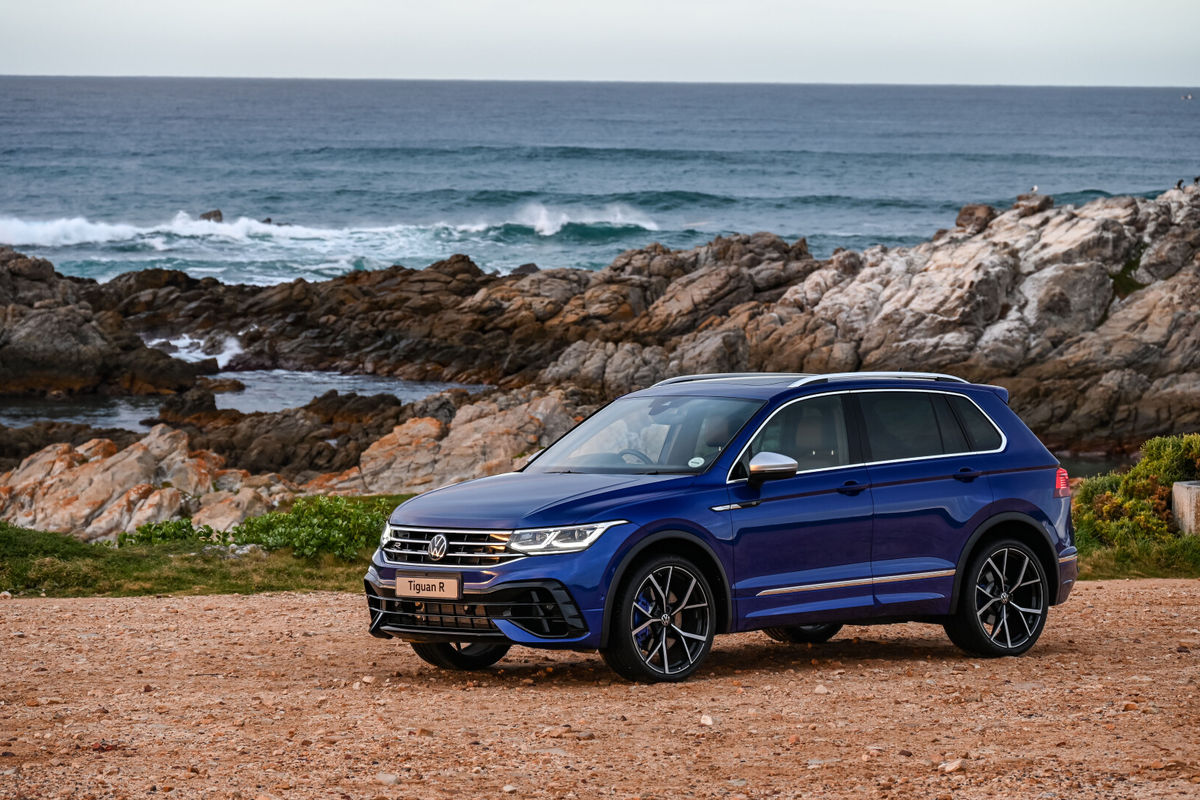
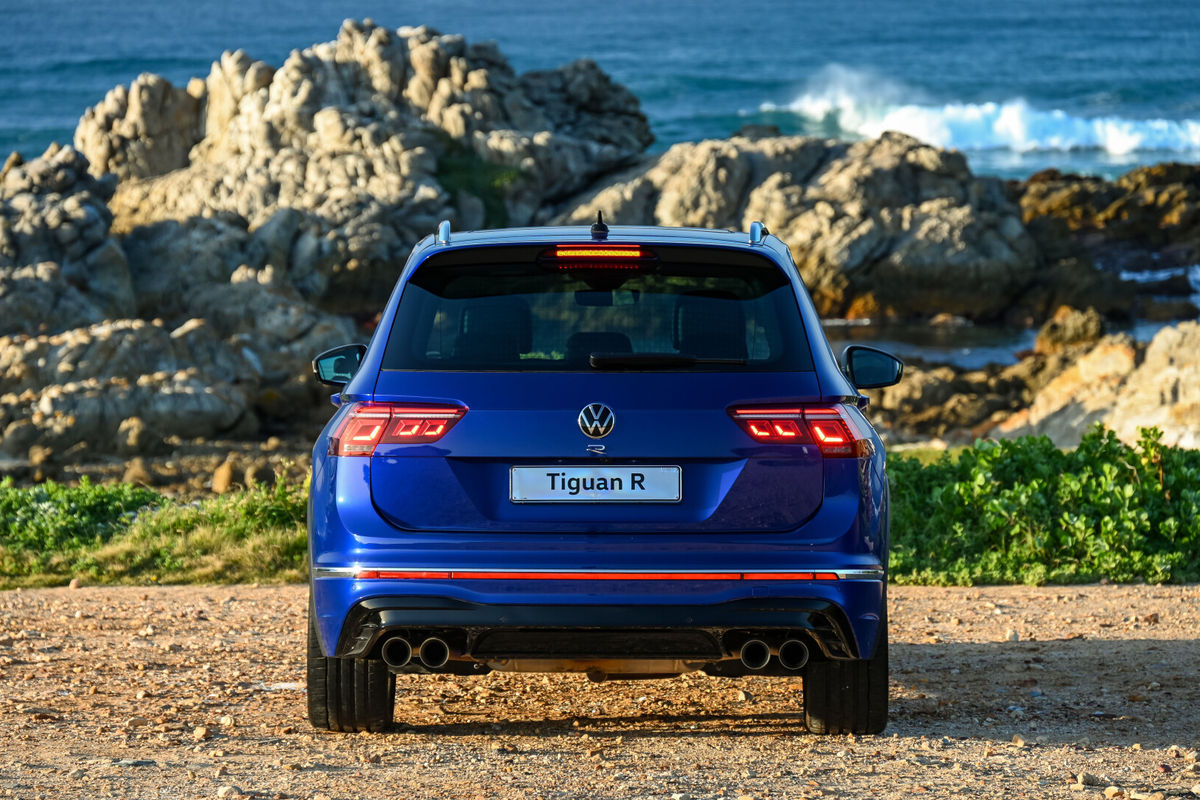
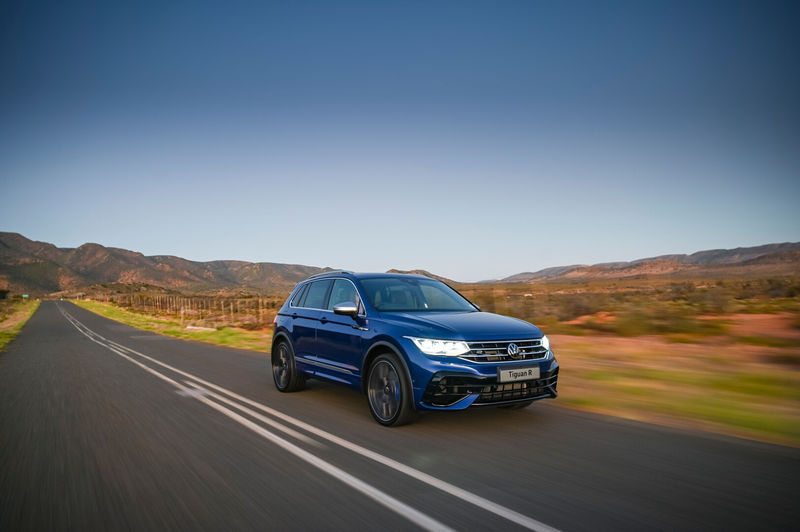
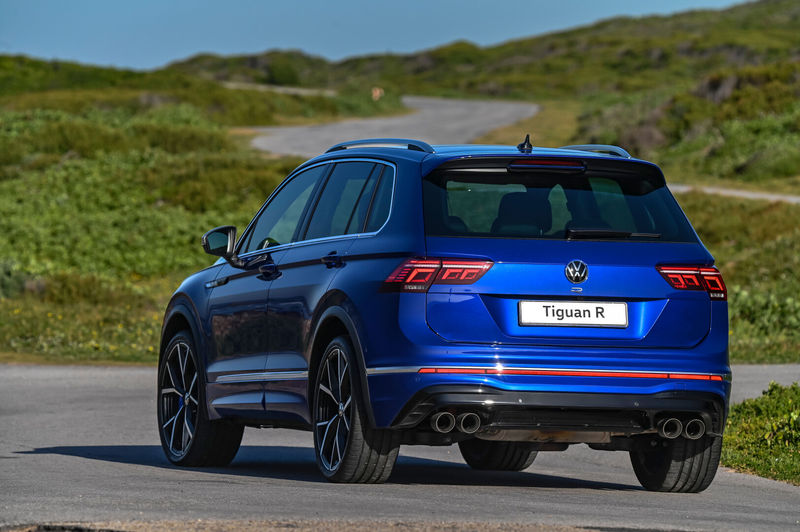
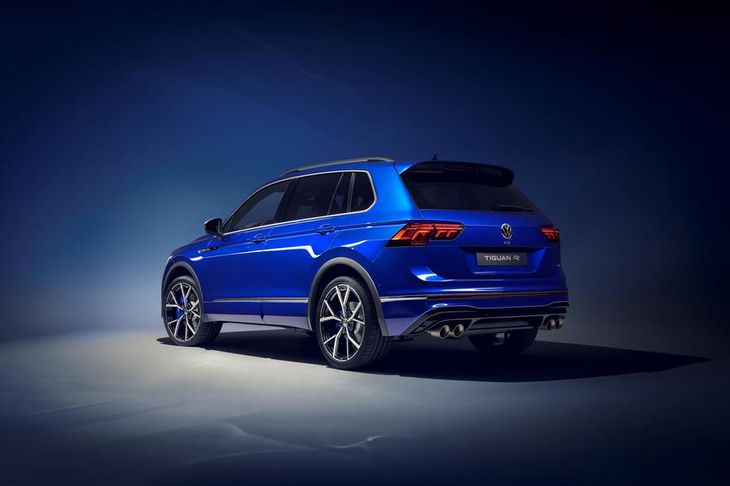
The view of the Tiguan R that you’re likely to see in your rearview mirror… shortly before its shoots past you.
This is the first time that Volkswagen has offered a pukka high-performance Tiguan derivative. The pre-facelift model was offered with the 162 kW 2.0-litre engine from the Golf GTI 7.5 and it had an all-wheel-drive (AWD) setup, but although it was certainly brisk, it was not an R model and didn’t deliver the delicious exhaust pops we’ve come to associate with performance VWs.
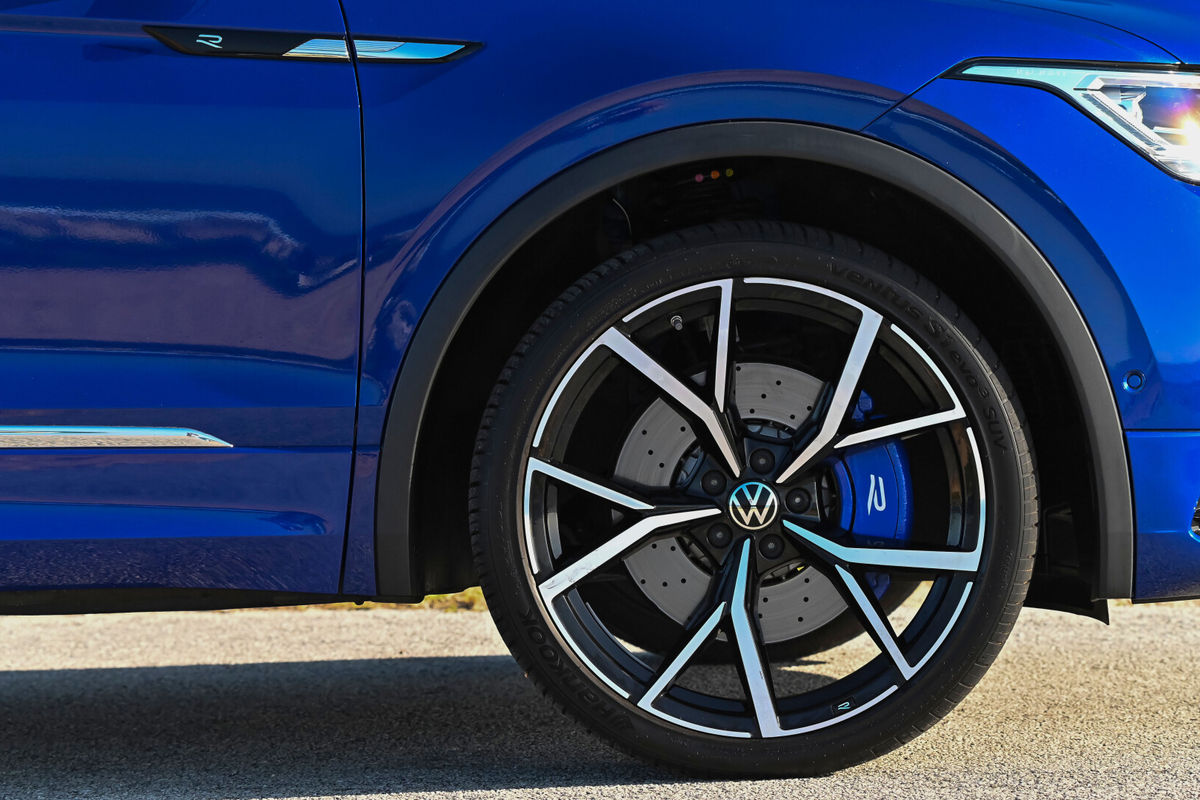
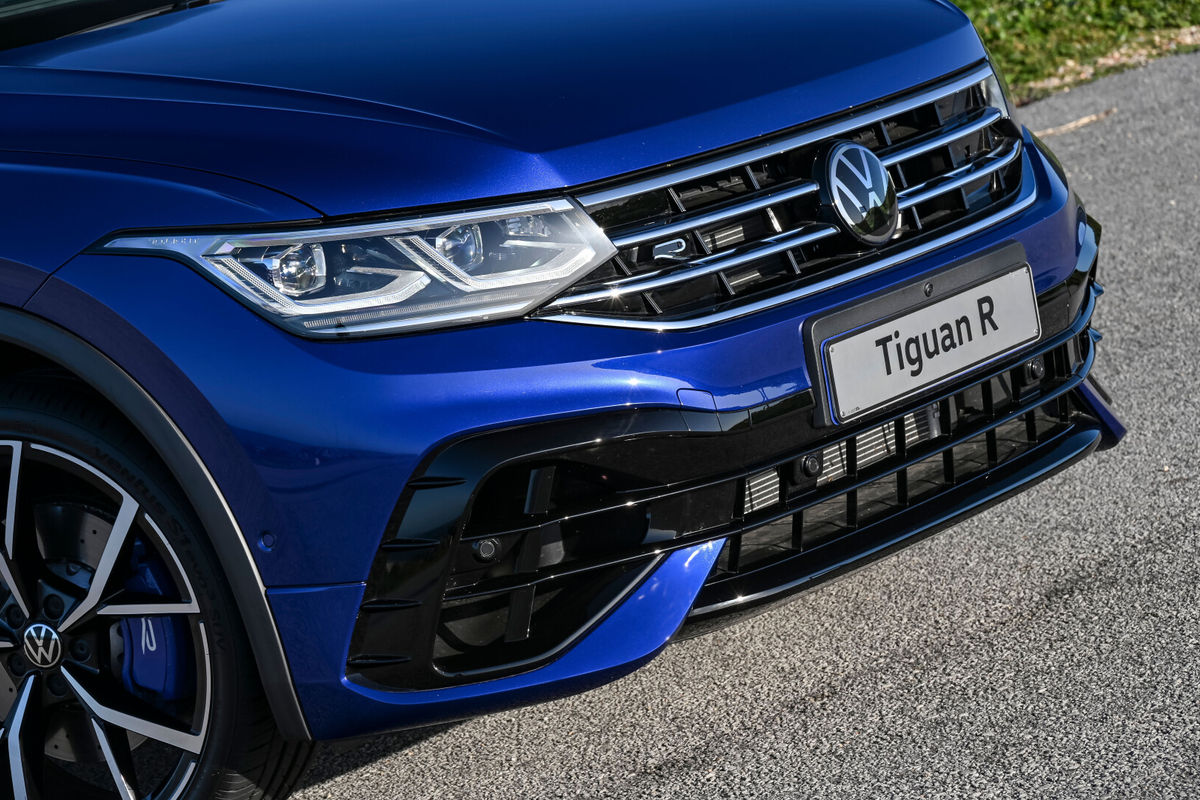
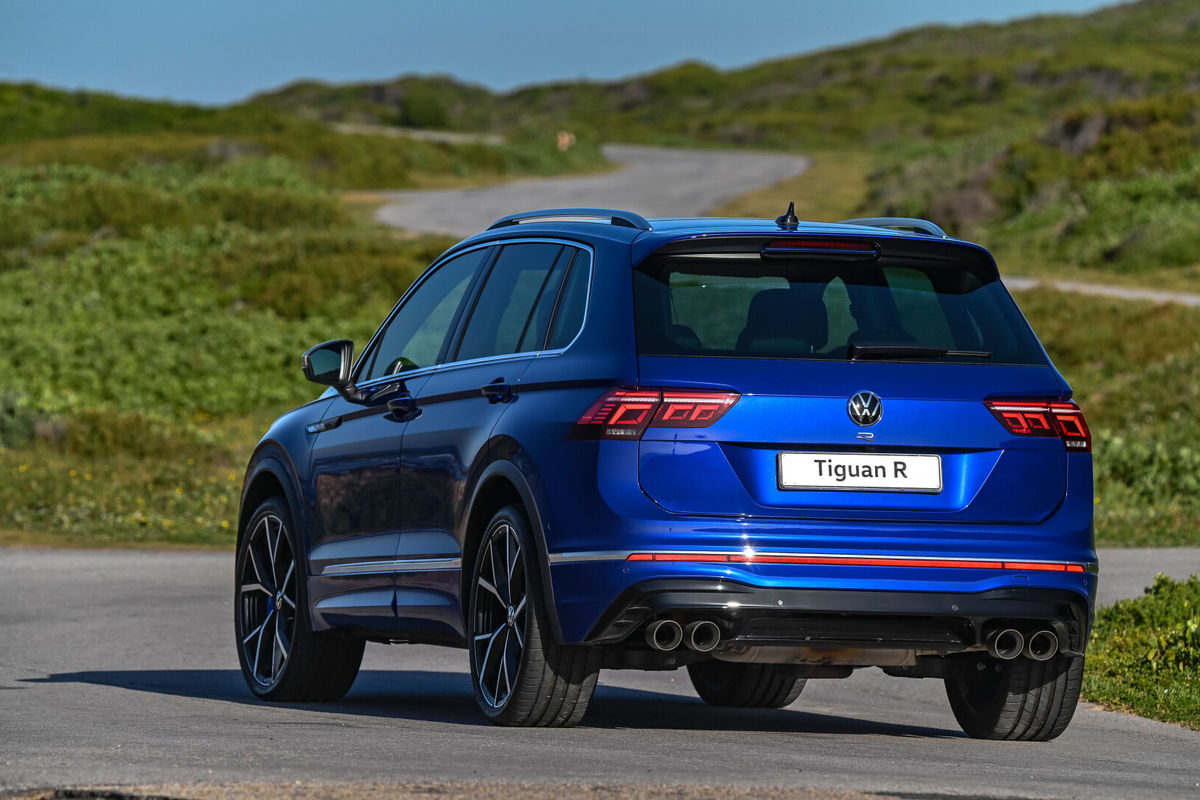
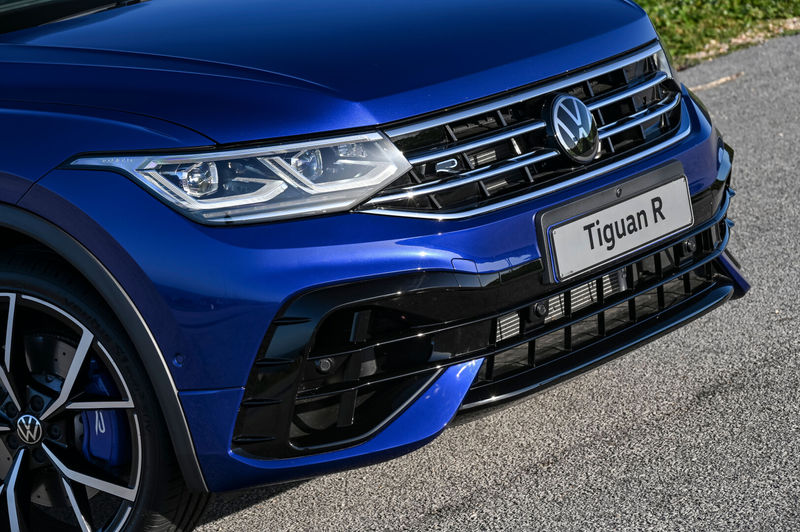
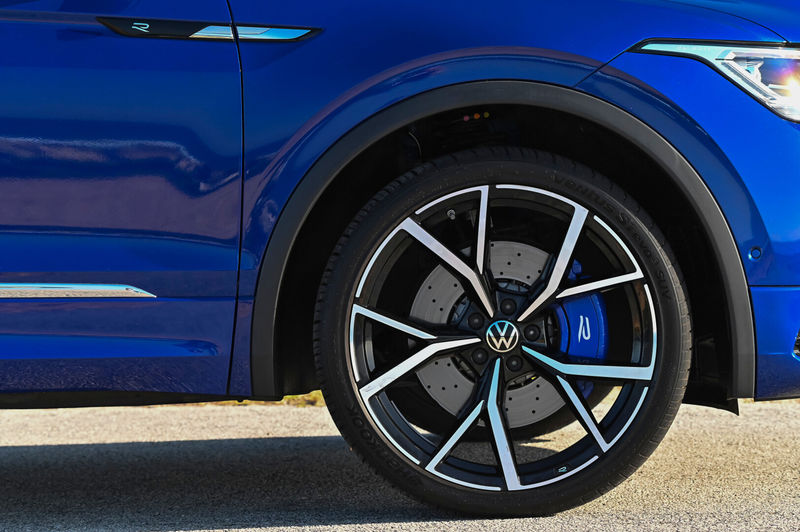
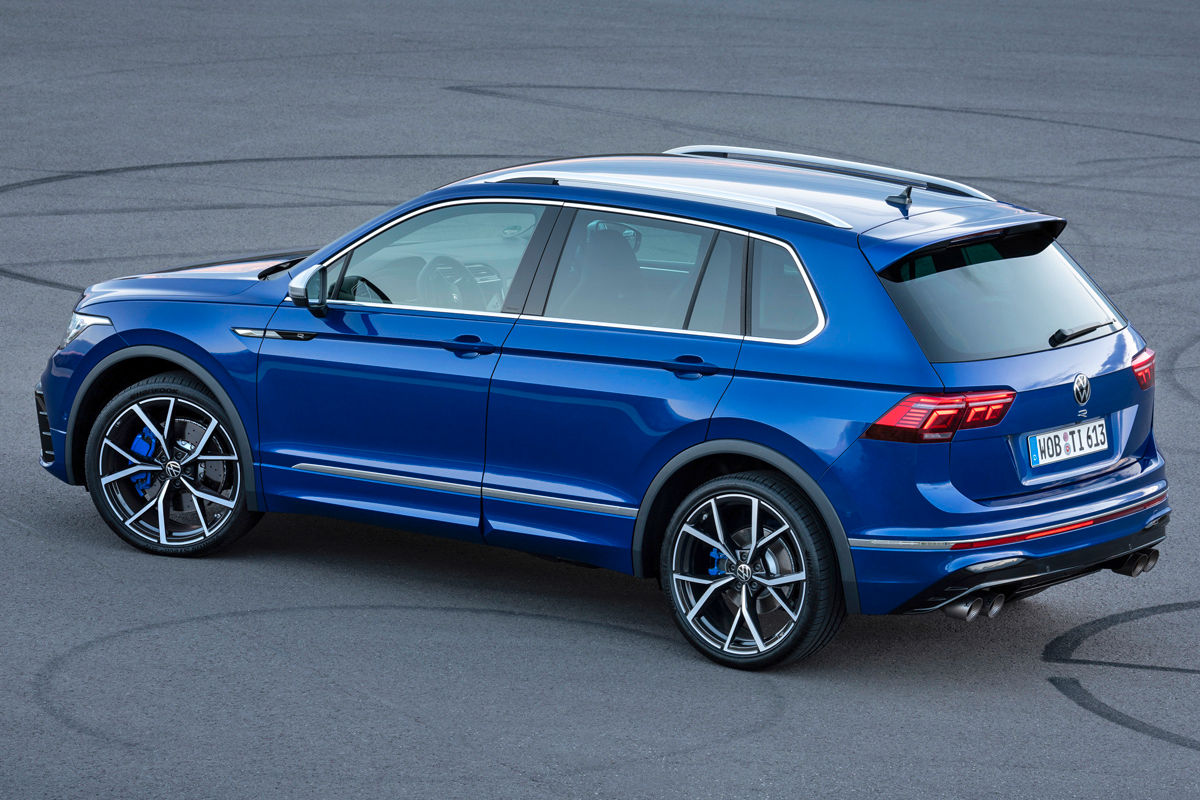
The new Volkswagen Tiguan R is quite the opposite and comes out swinging with the EA888 2.0-litre 4-cylinder turbopetrol motor punching out peak outputs 235 kW and 400 Nm. As in its Golf R sibling, all that grunt is channelled to all four wheels via a quick-shifting DSG. The Wolfsburg-based brand claims a 5.1-second 0-100 kph sprint time and you can distinguish the apex Tiguan by its unique wheels, quad exhaust ends, bold R badging and blue brake calipers.
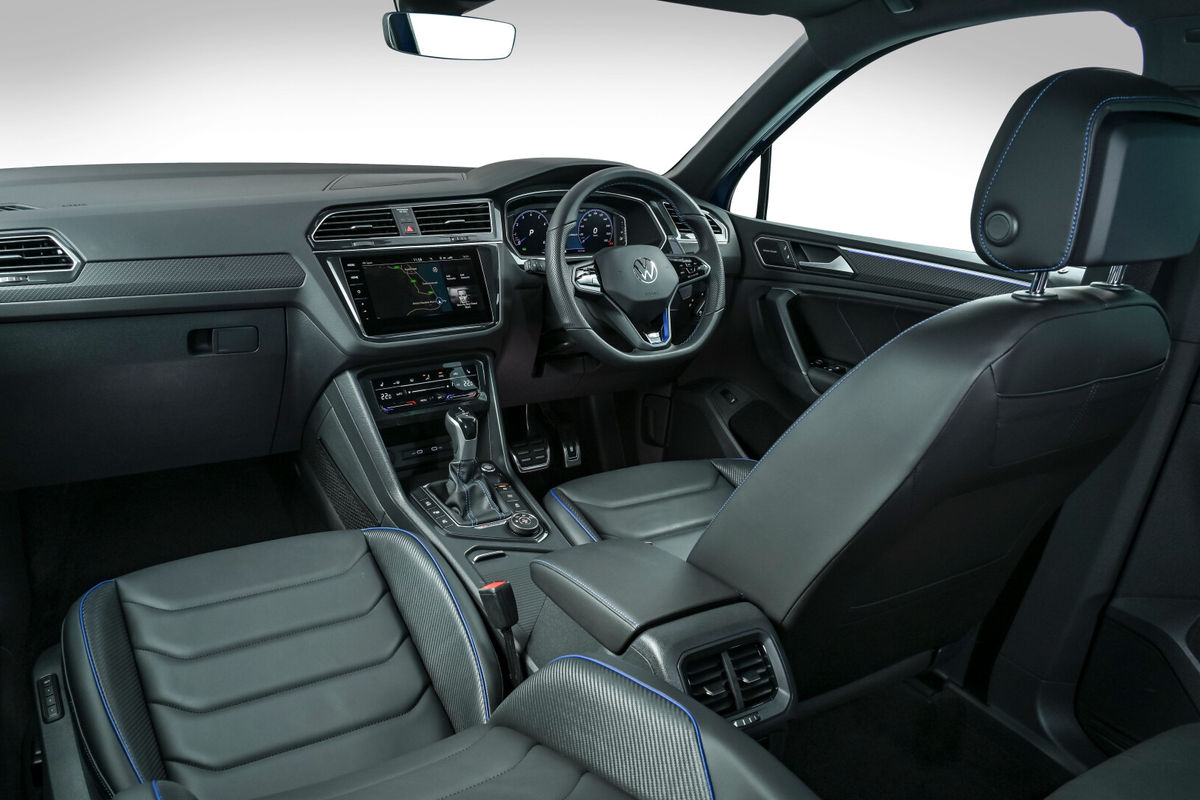
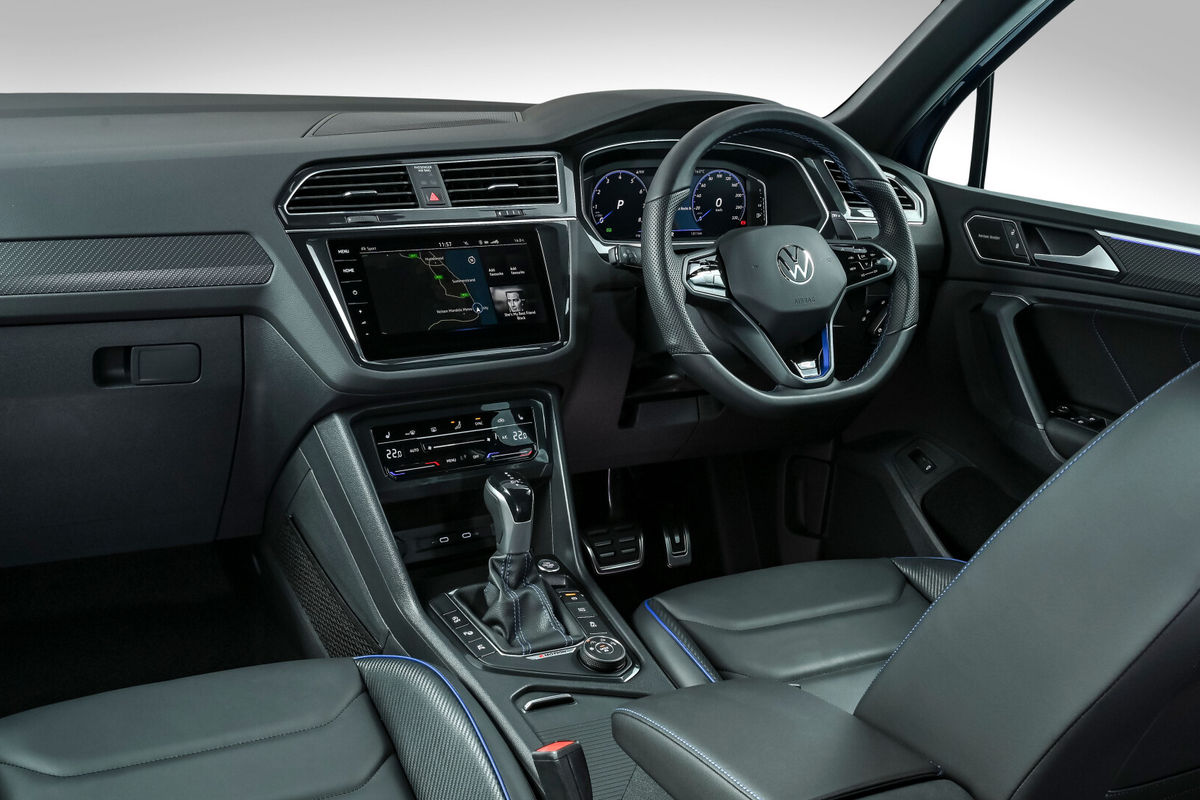
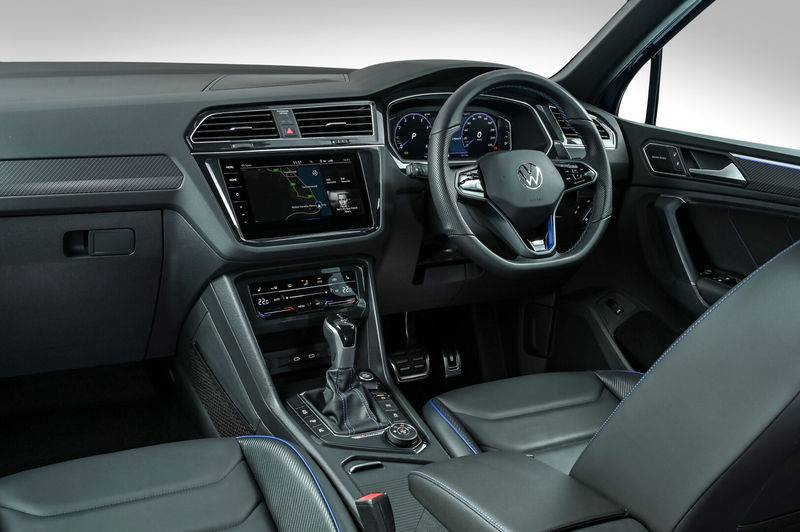
A sporty and well-appointed cabin.
As expected at this price point (R999 900), the Tiguan R’s standard specification is generous – Volkswagen SA has kept the newcomer’s extras list very short. Options include a sonorous Akrapovic performance exhaust system, eye-catching 21-inch alloy wheels, an uprated audio system courtesy of Harman Kardon, as well as additional semi-autonomous safety features.
Standard kit includes 20-inch alloys, a panoramic sunroof, keyless entry, dynamic chassis control, Nappa leather trim, a Discover Pro touchscreen infotainment system with built-in satnav, USB-C ports and a wireless phone charging. Customers can choose from 6 exterior colours.
What’s It Like to Drive?
The Tiguan R packs 235 kW and 400 Nm!
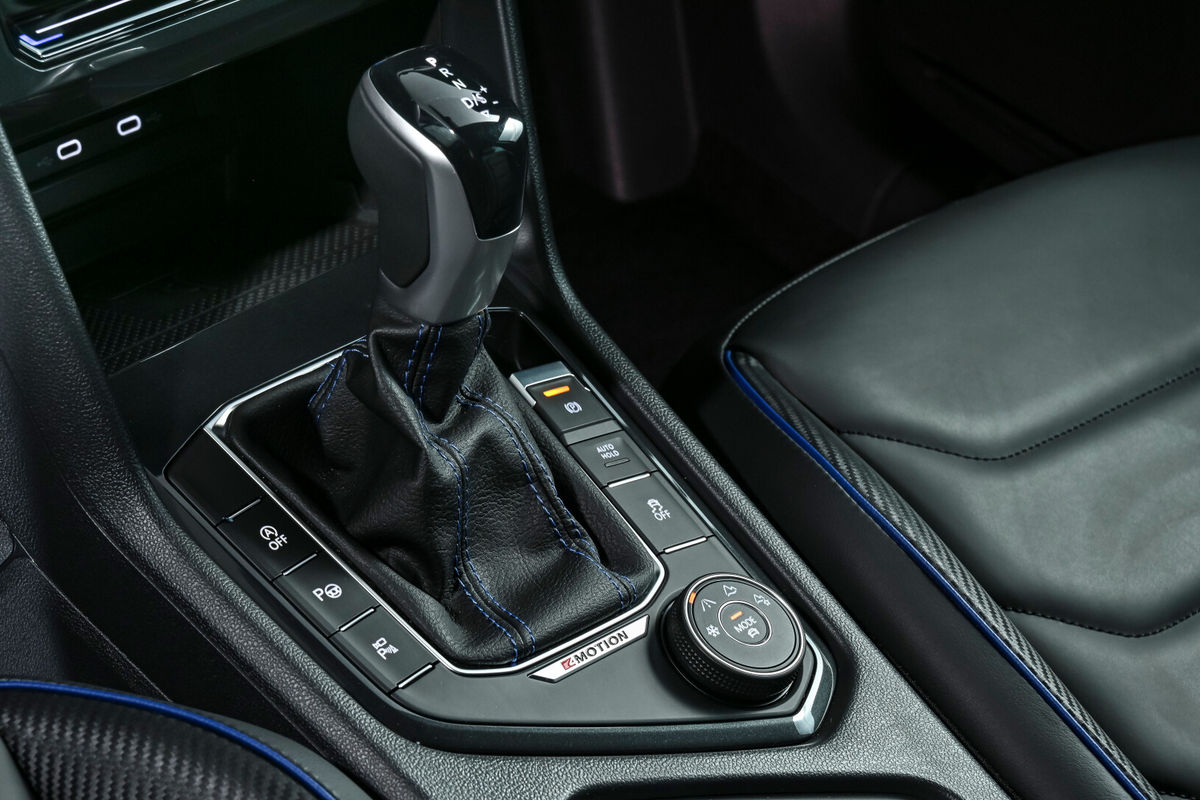
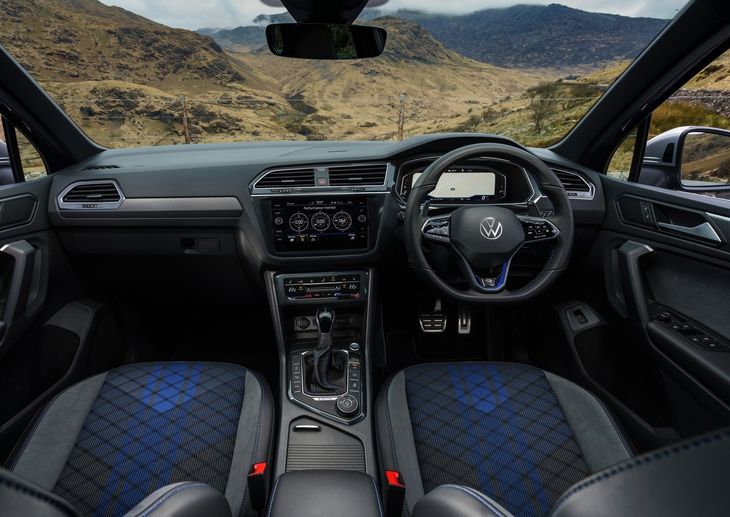
At first glance, the R’s cabin looks much like that of a standard Tiguan derivative, but on closer inspection, you’ll notice subtle performance touches such as the R button on the multifunction steering wheel, the enlarged gearshift paddles and blue stitching on the seats and gear selector.
When you start the engine, it produces a subtle-but-purposeful rumble that sounds far from standard. Our test unit had the Akrapovic exhaust setup, which adds more pronounced gearshift pops and the occasional burble on downshift; it also rode on the optional 21-inch wheels.
The launch event’s test route consisted mainly of long stretches of rural road in the Western Cape’s Swartland region, but rest assured, we carved up a few corners along the way too.
First things first. Just how potent is the Tiguan R “off the line”? Well, once we had found a suitably quiet spot on the open road, we conducted a “mandatory” test of the launch-start system.
Herewith the launch sequence. Hit the R button on the ‘wheel to engage Race mode, set stability control to Sport, keep your left foot on the brake and flatten the accelerator pedal. A message that indicates launch control is active comes up, the engine revs hold steady at 3 500 rpm and, when you’re ready, release the brake. There’s a fraction of hesitation and then the Tiguan R flings itself towards the horizon with gusto, with a lovely bang accompanying each up change.
The straight-line theatrics seem indulgent in a buttoned-up product like the Tiguan, but they’re very entertaining. Launch starts aside, the Tiguan R’s real strength is its ability to muster rapid overtaking acceleration. With 400 Nm on tap from 2 000 rpm via a bolt-action dual-clutch ‘box, it’s never a chore to dispatch slower traffic, even in the non-sporty drive modes. Race opens the exhaust valves and enhances power delivery, so (of course) we used that mode most of the time.
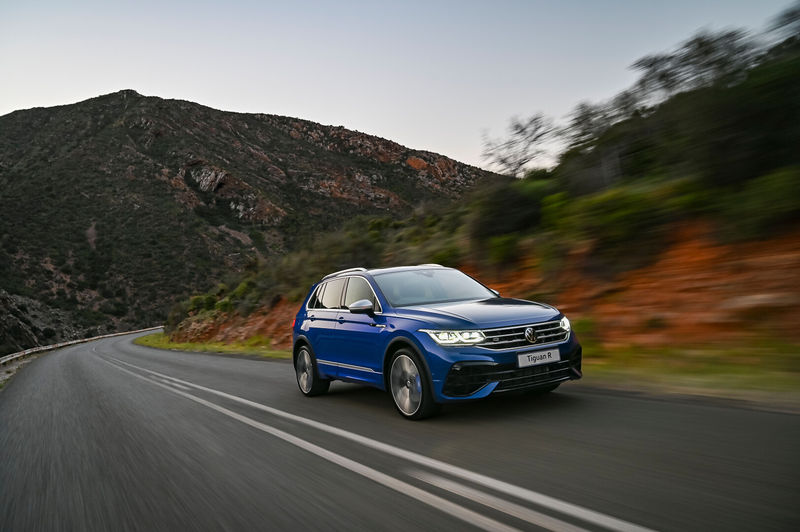
The Tiguan R is fiendishly quick in a straight line, but it can corner quickly and confidently too.
What about cornering ability, though? We’re glad you asked – there’s so much more to performance than a potent engine and raucous exhaust. Volkswagen’s R division has gone to great lengths to make this Tiguan R handle like a performance derivative; the torque-vectoring system directs power to where it’s needed, and monstrous brakes, well, they stop on a dime.
The Tiguan R also sits a bit lower than its sibling derivatives, which lowers its centre of gravity, improves the overall handling balance, and helps to reduce body roll under hard cornering. The steering setup is excellent, with a quick, sharp turn-in (for an SUV) and a light ‘wheel action.
The ride quality is decidedly firm in Race mode.
Any gripes? The larger (21-inch) wheels definitely firm up the ride quality, but thankfully adaptive dampers are fitted to the Tiguan R to decrease the likelihood that you’ll help your chiropractor pay off their holiday house. When traversing poor-quality tarmac while operating in Race mode, the Tiguan R’s suspension thuds (we felt a few impact jolts inside the cabin) – rather use Sport or Comfort instead. Even better, there’s an Individual mode that allows drivers to adjust each of the car’s characteristics, including engine power, noise, suspension setup etc.
We tweaked all the settings to Race but left the suspension in Comfort and the result was near perfect. Anything else? The cabin is a genuinely pleasing space to occupy (the driver’s seat position is excellent), but the Tiguan R suffers the same material and ergonomic issues (such as the fiddly capacitive touchpads on the ‘wheel) that have frustrated us about other VW products.
How much does the Volkswagen Tiguan R cost in SA?
Tiguan R 2.0 TSI 235 kW DSG 4MOTION R999 900
The Tiguan R comes standard with a 3-year/120 000 km warranty, 5-year/ 100 000 km EasyDrive Maintenance Plan and a 12-year anti-corrosion warranty. The service interval is 15 000 km.
Summary
Given the Golf R’s supply constraints, the Tiguan R makes a serious case for itself.
Volkswagen SA wants to ensure that when its Golf GTI and -R customers’ families grow, they won’t leave the brand. With the Tiguan R, Volkswagen hopes to retain some of those young-at-heart petrolheads who still want an engaging driving experience, but with added practicality.
One of the best aspects of the Tiguan R is its dual nature. You could easily drive it daily, when it would excel as a family vehicle (even in its docile drive modes, it offers credible performance). However, if you like to experience a driving thrill now and again, you’ll take delight in hitting that R button for a quick burst of power and noise. The school run has never been this fun.
The Tiguan R retains all of the best elements of Volkswagen’s family car (medium SUV), but it also has a compelling fun-to-drive factor – with minimal compromise as an ownership proposition. Given the limited availability of the Golf 8 R, which will only arrive during the first quarter of 2023, the Tiguan is arguably the more sensible offering of the two R models. Yes, it’s probably a bit more expensive than its hatchback sibling (will be), but critically, it’s available right now.
New vehicle sales in South Africa: September 2022
South Africa’s new-vehicle industry put in a “resilient performance” in September 2022, despite increasingly trying market conditions. Here’s what you need to know, including the country’s best-selling brands and most popular vehicles…
In September 2022, South Africa’s new-vehicle market enjoyed its sixth consecutive month of year-on-year growth, with sales increasing 10.8% to 47 786 units. For the record, that figure also represents a slight improvement on August 2022’s effort.
According to Naamsa, this “resilient performance” came despite a general “despondency about load-shedding” in South Africa, along with other “weakening economic indicators”. As the organisation points out, the pace of SA’s new-vehicle market recovery “has started to slow down”.
Still, September’s showing remains an encouraging one, with an estimated 39 152 units (or 81.9%) representing sales through the dealer channel. Around 14.2% came courtesy of the vehicle-rental industry, with 2.3% of sales going to government and 1.6% to industry corporate fleets.
Out of the industry total of 47 786 units, the passenger-car market accounted for 32 392 sales, representing a year-on-year increase of 9.7%. Domestic sales of new light-commercial vehicles, bakkies and mini-buses, meanwhile, came in at 12 573 units or a gain of 14.9% compared with September 2021’s performance.
WesBank, meanwhile, said the market’s performance showed “reassuring stability in volumes for a number of positive reasons” despite facing “a host of negative economic influences”. Indeed, the credit provider reported its applications volume indicated demand for new vehicles remained “robust” (and out-performed potential pre-owned sales).
“Consumers are clearly looking for value in the new-vehicle market. Despite the demand being in favour of new-vehicle deals, the average deal size has remained consistent year-on-year, indicating that affordability remains a major consideration. Consumers are also making the choice in the face of pre-owned deals that display price inflation of over 20%,” said Lebogang Gaoaketse, Head of Marketing and Communications at WesBank.
Meanwhile, September 2022’s export figure ballooned 104.6% year on year to 41 474 units, though this was off an admittedly low base (owing to the cyberattack on Transnet operations in the corresponding month in 2021).
New vehicle sales summary for September 2022
Aggregate new-vehicle sales of 47 786 units increased by 10.8% (4 639 units) compared to September 2021.
New passenger-vehicle sales of 32 392 units increased by 9.7% (2 855 units) compared to September 2021.
New light-commercial vehicle sales of 12 573 units increased by 14.9% (1 632 units) compared to September 2021.
Export sales of 41 474 units increased by 104.6% (21 199 units) compared to September 2021.
10 best-selling car brands in South Africa for September 2022
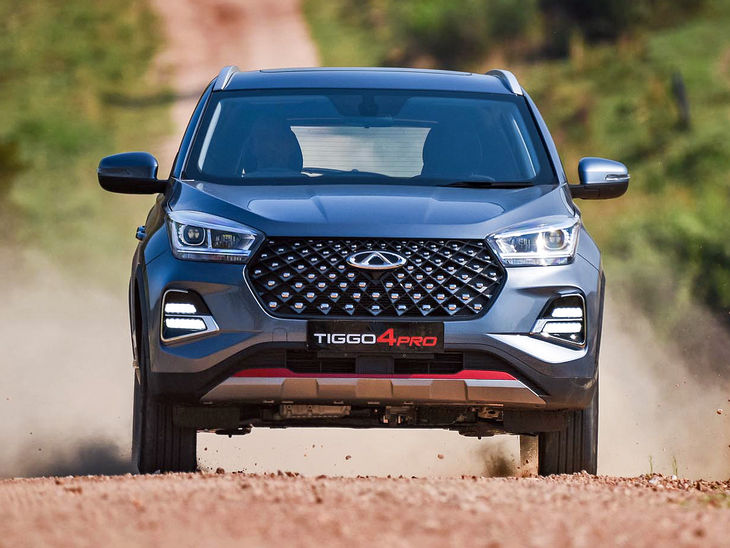
The Tiggo 4 Pro was Chery’s top seller in September 2022, attracting 773 registrations.
Now that Toyota’s plant at Prospecton is very much back online after the devastating KwaZulu-Natal floods of mid-April 2022, it seems it’s business as usual at the top. The Japanese firm’s local division breached the 12 000-unit mark in September 2022, putting it far ahead of the again second-placed Volkswagen Group. Suzuki, meanwhile, continued its string of strong performances by again securing third (a position it has surely now made its own).
So, was there any month-on-month movement in the top 10? Well, Isuzu climbed one place to seventh on the back of improved D-Max sales, pushing Ford down one spot to eighth in the process. The only other change saw Chery cracking the top 10 at the expense of fellow Chinese brand, Haval.
1. Toyota – 12 059 units
2. Volkswagen Group – 6 750 units
3. Suzuki – 4 355 units
4. Hyundai – 3 146 units
5. Nissan – 2 649 units
6. Renault – 2 601 units
7. Isuzu – 2 287 units
8. Ford – 2 212 units
9. Kia – 2 086 units
10. Chery – 1 352 units
10 best-selling vehicles in South Africa for September 2022
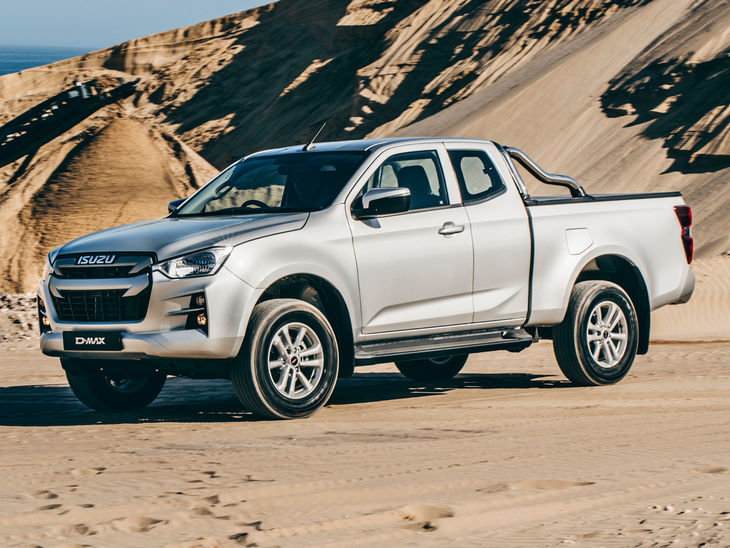
The locally built Isuzu D-Max jumped two places to third in September 2022.
Despite its final tally falling to 2 842 units (from 3 417 units in August), the Toyota Hilux was again South Africa’s best-selling vehicle in September 2022. The likewise locally built Volkswagen Polo Vivo (2 473 units) closed the gap somewhat in second, while the Struandale-produced Isuzu D-Max climbed two positions to snaffle a strong third with 1 968 units registered.
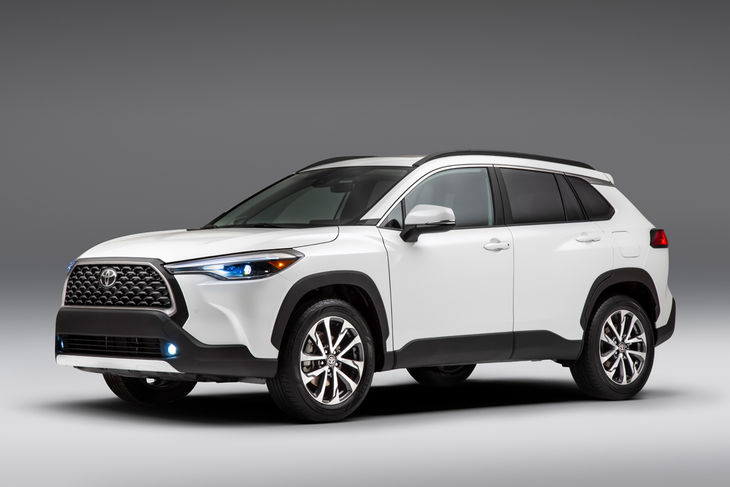
That meant the imported Toyota Urban Cruiser (1 946 units) and outgoing Silverton-built Ford Ranger (1 604 units) each fell a place, to fourth and fifth respectively. Another product of Prospecton, the Toyota Hi-Ace (1 526 units), leapt four spots up the table to sixth, while the Toyota Corolla Cross (1 434 units) gained two places to grab seventh.
The Kariega-built Volkswagen Polo hatch ended September 2022 with 1 371 sales under its belt, meaning it again had to settle for eighth place. The Suzuki Swift (1 332 units) dropped two spots to ninth, while the Nissan NP200 (1 198 units) tumbled four to tenth to close out the table. The Renault Kwid (1 077 units), Kia Picanto (842 units) and Volkswagen T-Cross (814 units) found themselves just outside of the top 10.
Top 9 vehicles exported from South Africa in September 2022
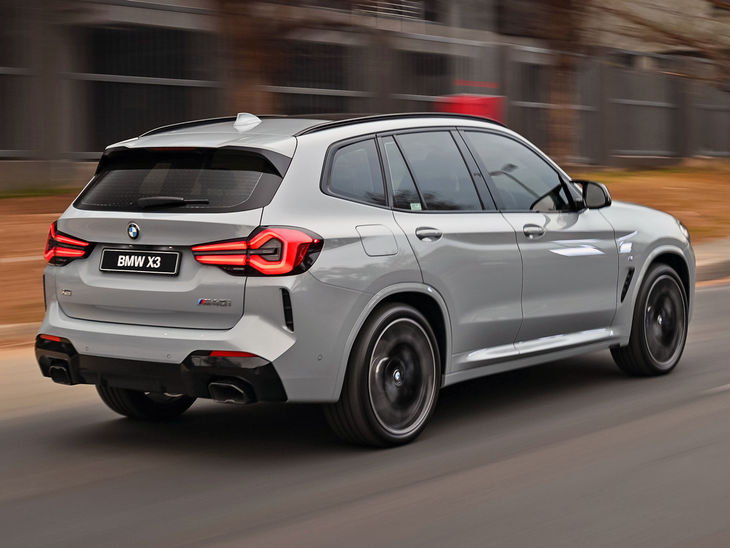
More than 7 000 units of the BMW X3 were exported from South Africa in September 2022.
Despite the Blue Oval brand’s Silverton factory being in the midst of a switch-over to the new-generation model, the Ford Ranger moved up one place to the very top of the exports pile in September 2022, with nearly 10 000 units delivered overseas. Still, the Kariega-produced Volkswagen Polo hatchback wasn’t far behind (9 656 units), while BMW reported figures to Naamsa for the first time in a couple of months, revealing more than 7 000 examples of the X3 were shipped from Plant Rosslyn.
The Toyota Hilux thus found itself in fourth place on the exports chart, though this was far ahead of the Nissan Navara, Isuzu D-Max, Toyota Corolla Cross, Toyota Fortuner and Nissan NP200. As always, we should point out Mercedes-Benz did not submit detailed figures, so it’s unclear exactly how many new C-Class sedan units were exported from South Africa in September 2022 (though Naamsa’s estimate is listed as 6 501 units).
1. Ford Ranger – 9 829 units
2. Volkswagen Polo (hatch) – 9 656 units
3. BMW X3 – 7 014 units
4. Toyota Hilux – 6 820 units
5. Nissan Navara – 595 units
6. Isuzu D-Max – 329 units
7. Toyota Corolla Cross – 238 units
8. Toyota Fortuner – 198 units
9. Nissan NP200 – 65 units
Sales outlook
So, what’s next for South Africa’s new-vehicle market? Well, Naamsa expects the pace of the market’s recovery to continue to slow, thanks to factors that include the latest hike in interest rates and the ongoing load-shedding saga.
“The higher stages of load-shedding seem to have an amplified negative impact on production and the South African economy as a whole. The South African Reserve Bank, at its September Monetary Policy Committee, noted that economic and financial conditions were expected to remain more volatile for the foreseeable future and revised its economic growth outlook for 2022 lower as a result of load-shedding and other weakening economic indicators,” explains Naamsa, before pointing to the latest petrol-price decrease as some welcome “good news”.
The organisation adds the new-vehicle market’s performance year-to-date is 13.4% ahead of the corresponding period in 2021, though again cautions “the pace of growth being experienced in the market is expected to slow down for the balance of the year”.
What does WesBank have to add? Well, it echoed Naamsa’s concerns around “two major detractors” facing the market.
“Load-shedding will continue to impact consumer and business confidence negatively. But it is the second major increase in interest rates of 0.75% that should be expected to bring a more immediate bearing to purchase decisions made on financed deals,” warns Gaoaketse.
Switching focus to the export market, Naamsa believes despite the global economy entering a “period of persistently high inflation and weaker economic growth”, which in turn is impacting demand, growth prospects for domestic vehicle exports “remain optimistic”.
VW Golf 8 R Review – Is the most powerful Golf ever worth the hype?
In this in-depth, South African first video, our video guy Ciro De Siena and our race-ace Ashley Oldfield test the latest Golf 8 R extensively on road and at the famed Aldo Scribante race circuit.
Volkswagen South Africa afforded Cars.co.za an exclusive test drive of the all-new Mk8 Golf R and here is one of three videos we made while we had the car.
The Cars.co.za video team including race-ace Ashley Oldfield travelled to Gqeberha, which very much feels like the Volkswagen Capital of South Africa.
The new Golf 8 R has been significantly delayed in launching in our market. Volkswagen SA tells us they are facing major supply issues, with many woes caused by the war in Ukraine.
As such, the price of the Golf 8 R has not been revealed, and even though the Golf R media launch is taking place today, Monday 3 October 2022, the retail launch has unfortunately been pushed back to March 2023.
So, what is the price of the Golf R in South Africa? Well, we wish you could tell you, but it’s like VW SA hasn’t even settled on a price, given the volatility of world exchange rates and shipping issues. But as soon as we know, we’ll share it with you.
In the meantime, we hope you enjoy this detailed and thorough review of the new Golf 8 R on local South African soil.
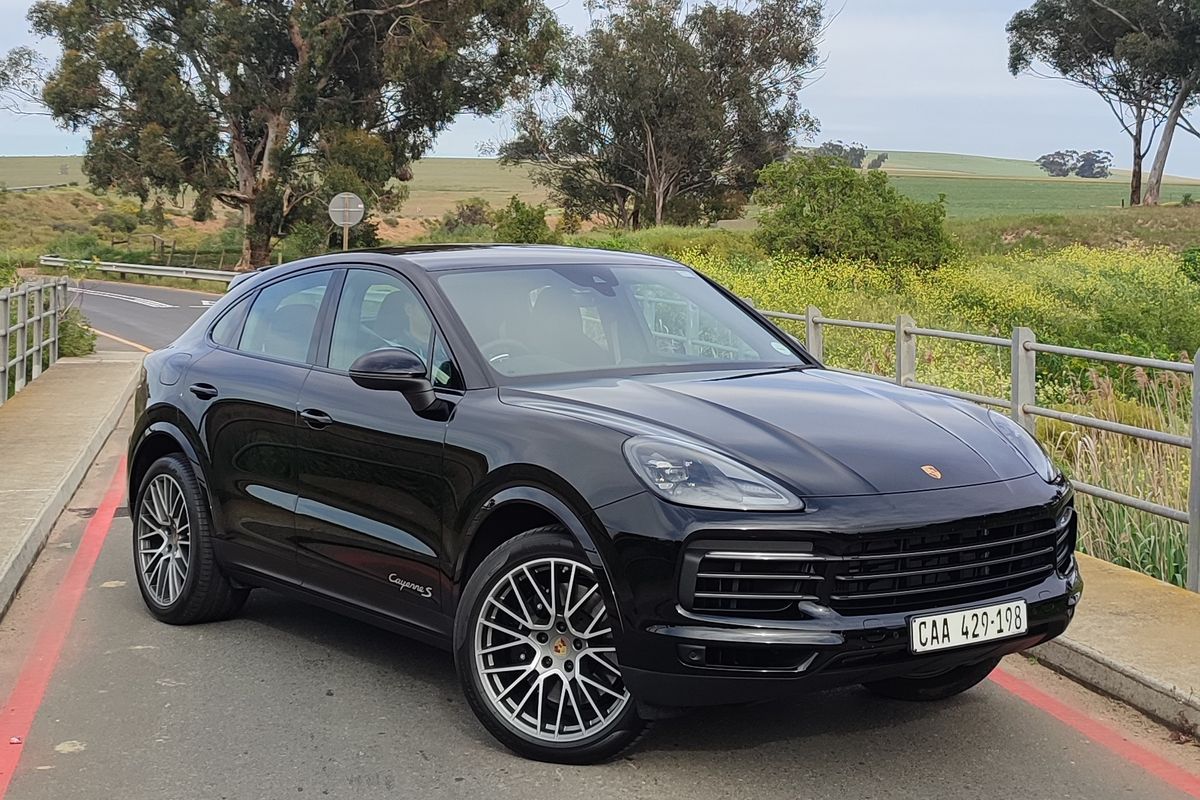
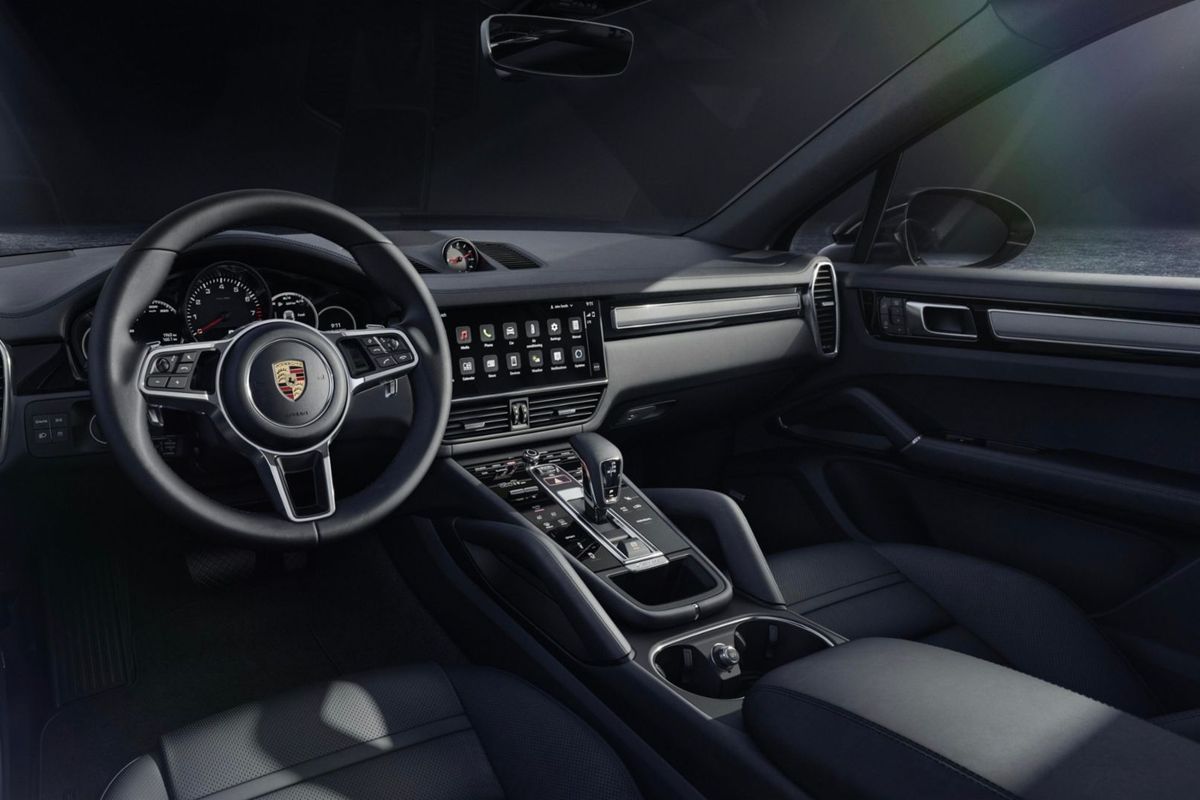
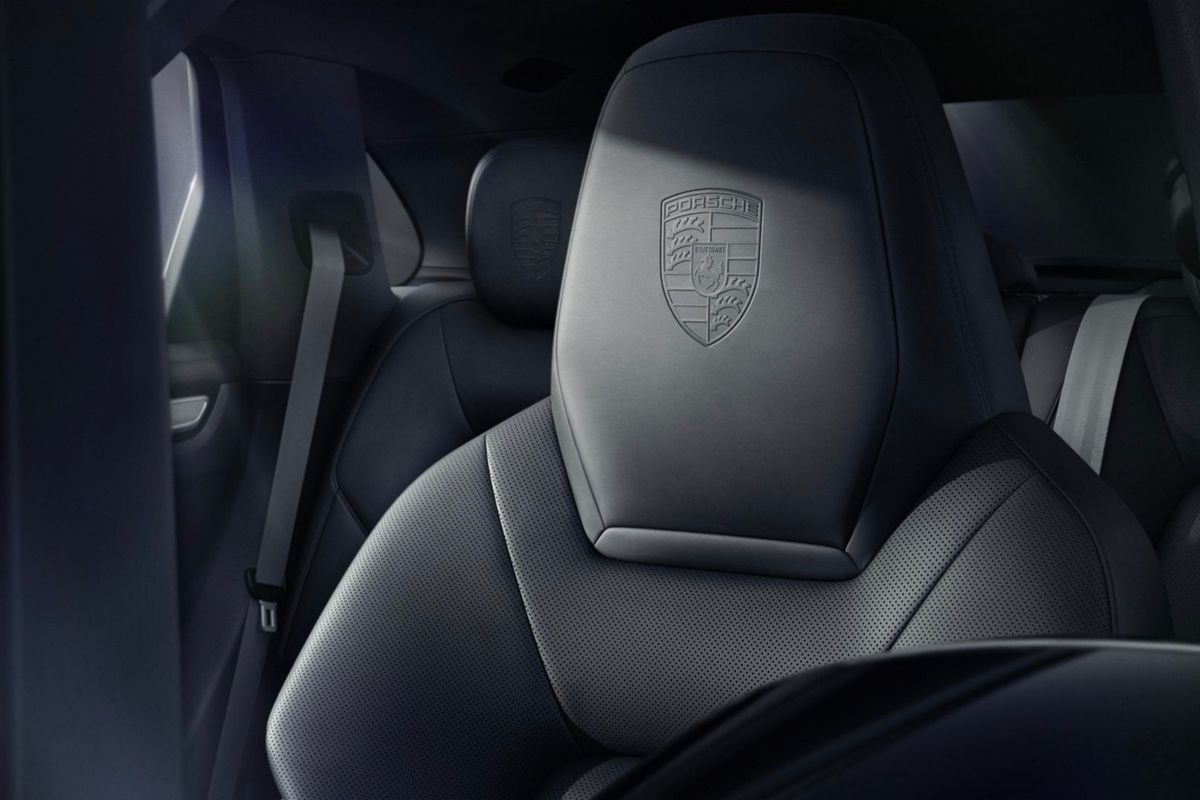
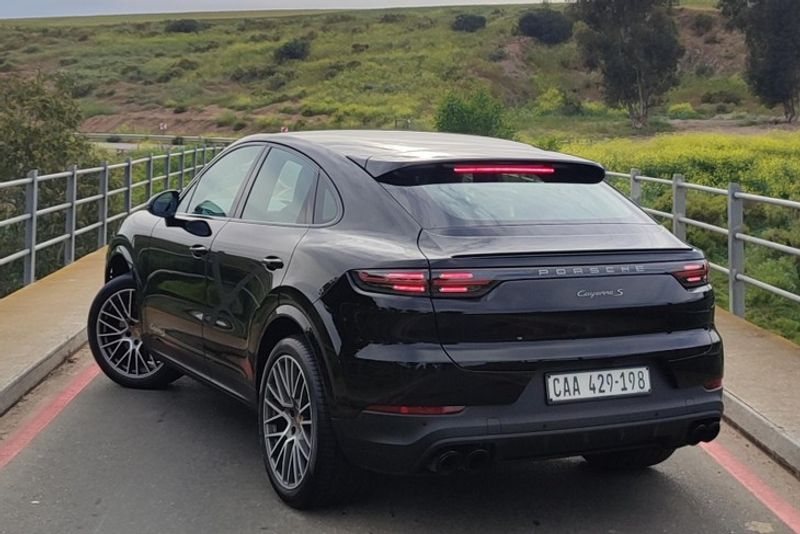
This year is the 20th anniversary of Porsche’s Cayenne and, to mark the occasion, the Zuffenhausen-based brand has introduced special “Platinum Edition” versions of selected derivatives of its premium SUV. We drove an S Coupe example of the Cayenne Platinum Edition in the Western Cape recently.
Since its introduction in 2002, the Cayenne has been a mainstay of the Porsche line-up; it’s raked in big profits and bankrolled the further expansion of the brand’s line-up (and ensured the continued existence of some of its models).
Porsche South Africa has now introduced a special “Platinum Edition” specification line on selected Standard and Coupe derivatives of the 3rd-generation Cayenne, which was launched in our market in 2018. The line-up encompasses variants of the 250 kW/450 Nm Cayenne, 324 kW/550 Nm Cayenne S and the 340 kW/700 Nm Cayenne e-hybrid – prices range from R1 740 000 to R2 228 000.
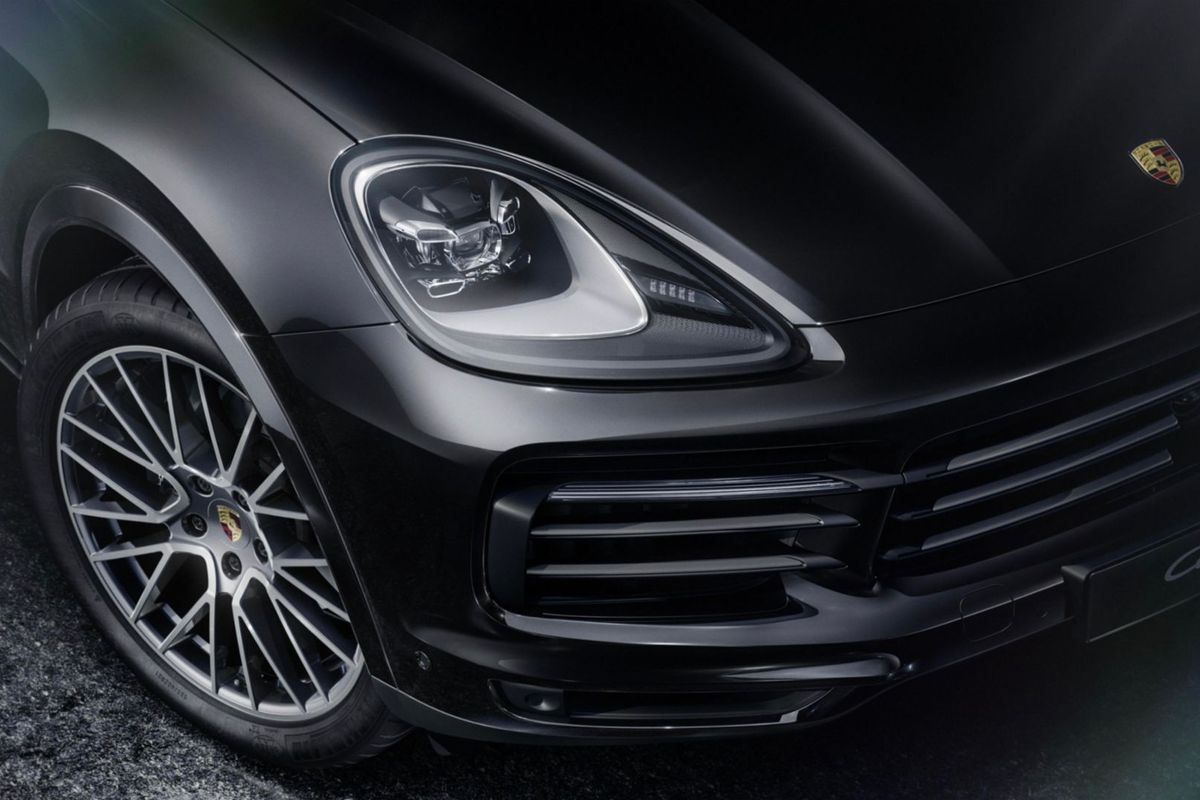
There are no mechanical changes to the Platinum Edition derivatives; the focus of the package is a distinctive, aesthetically pleasing presentation, as well as the addition of a few extra standard features, notably a Bose audio system, 8-way electrically adjustable seats, a panoramic sunroof and LED headlights featuring PDLS (Porsche Dynamic Light System).
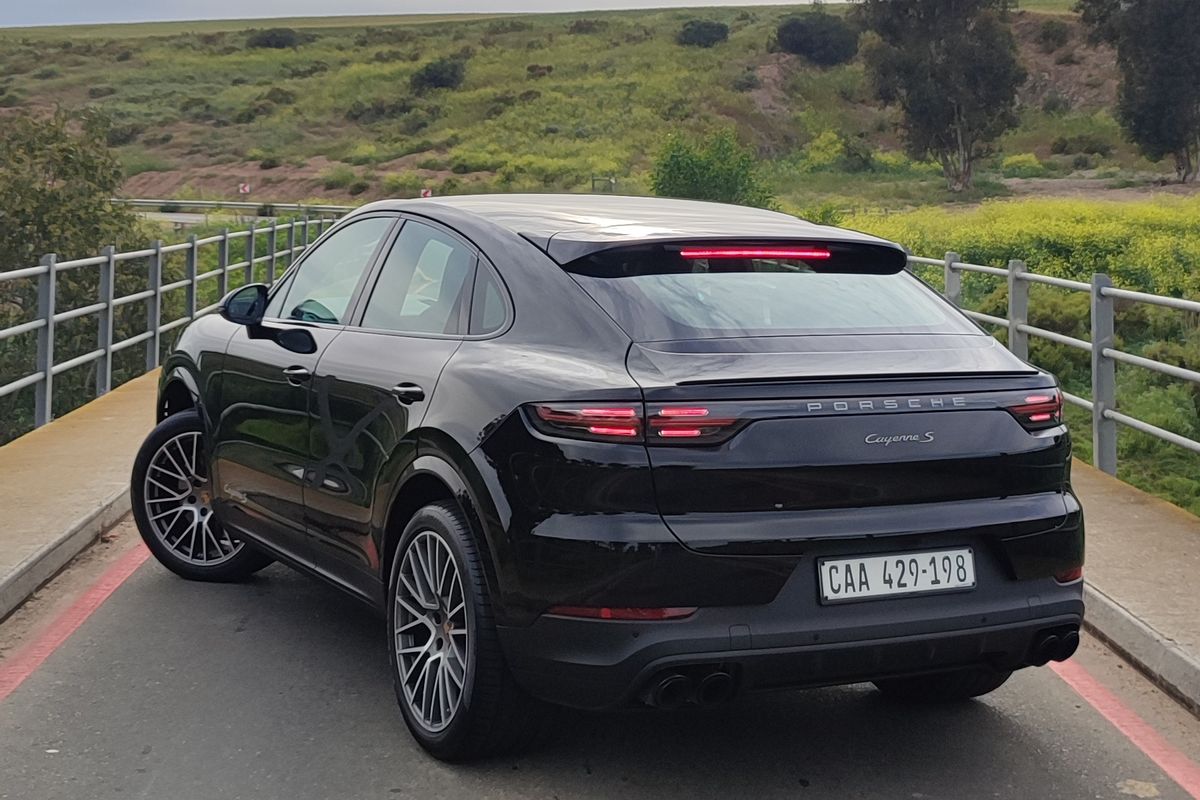
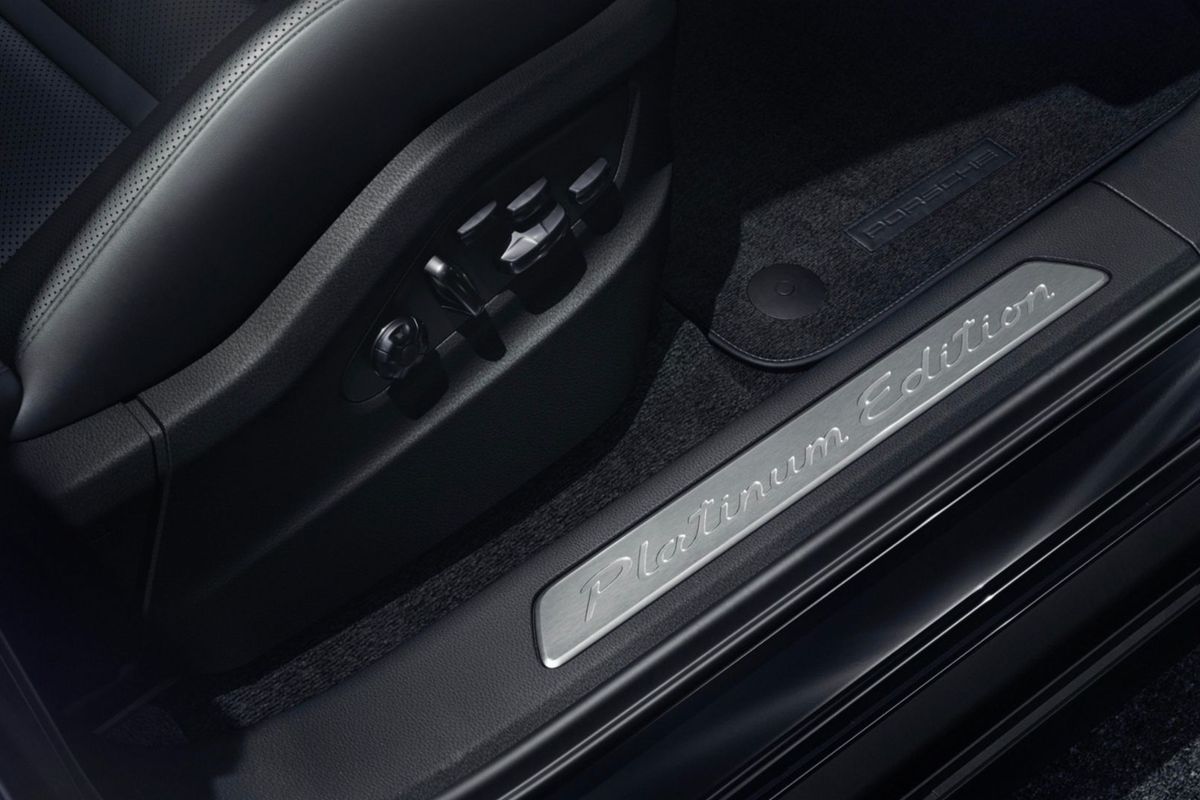
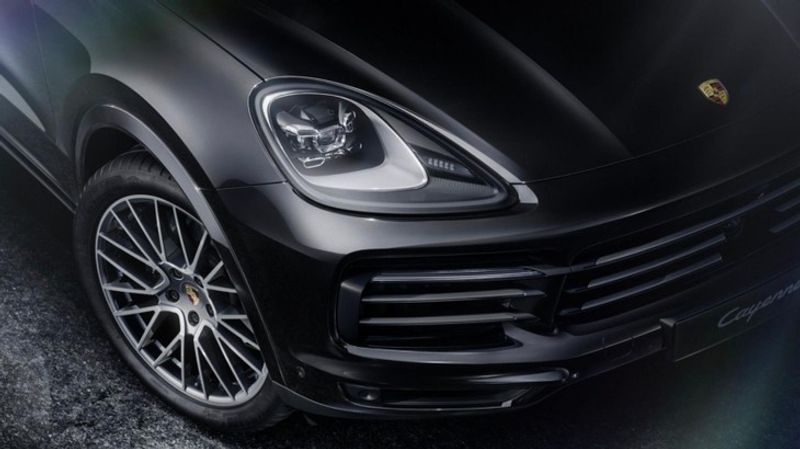
You can distinguish the Platinum Editions from standard Cayennes by their striking (and standard) 21-inch RS Spyder alloy wheels, Satin Platinum finishes for the badges, intake slats etc, black Sport exhaust tips and high-gloss black window trim. A similar theme continues inside, with chalk-coloured seatbelts, special aluminium trim pieces and Platinum Edition door sill guards.
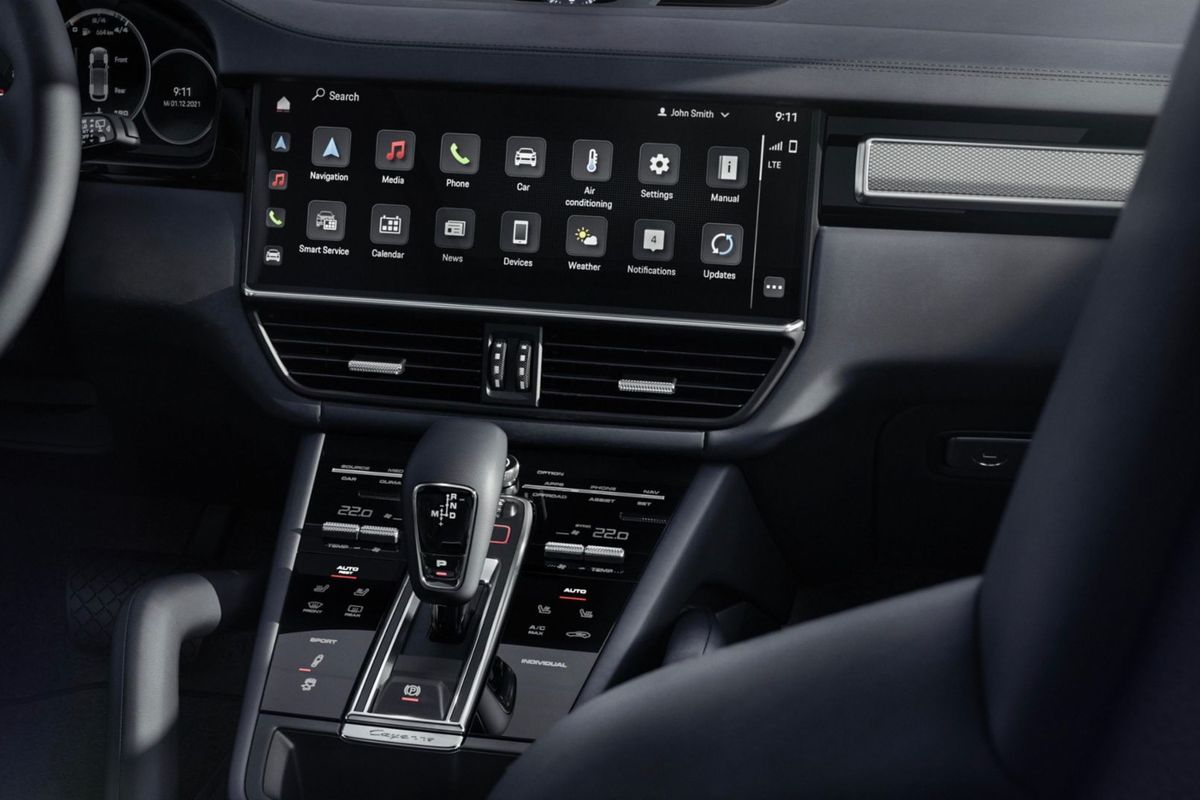
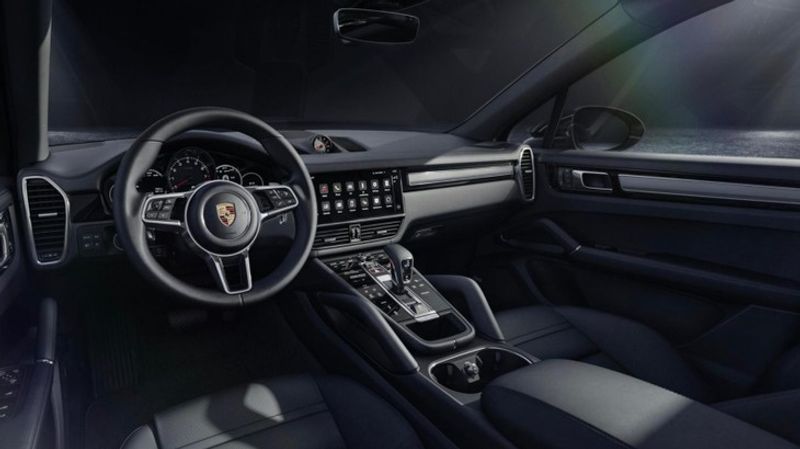
My launch drive was in a Cayenne S Coupe Platinum Edition, which looked striking in a Jet Black finish and adorned with those multi-spoke 21-inch wheels. As is the case with all Cayennes, the cabin is superbly hewn with a solid feeling to all the controls and beautifully detailed finishes. A minor irritation is that the centre vents are positioned quite low, so be wary that your hand may brush the controls beneath the rightmost outlet and activate an onboard function unintentionally.
Despite its rakish lines, the Cayenne Coupe remains a practical car with good rear legroom and even -headroom. The load bay is capacious (625 litres) and its capacity can expand to 1 540 litres if you fold the rear seats down.
Given the Cayenne’s sizeable wheels (shod with ultra low-profile tyres) and its decidedly sporty suspension set-up, the SUV’s ride comfort is impressively supple over all surfaces. NVH (noise, vibration, harshness) levels are also very low.
Under the bonnet is the VW Group’s always-impressive twin-turbo 2.9-litre 6-cylinder engine, which pumps out 324 kW and 550 Nm of torque from 1 800 to 5 500 rpm. The powerplant emits a nice, raspy, sound and is said to propel the 2-tonne-plus Porsche from standstill to 100 kph in 5.0 seconds and on to a top speed of 263 kph.
One of the Cayenne’s most impressive talents is its ability to be a superbly refined, comfortable daily driver, but one that comes alive when driven with verve on a challenging piece of road, such as the Franschhoek Pass. The 8-speed automatic transmission provides slick, fast shifts and there’s just so much grip on offer that the Cayenne never feels nose-heavy – it remains adjustable on the throttle deep into corners. The brakes, too, are superbly confidence-inspiring.
Summary
Of course, the option remains to spec a Porsche Cayenne to your own preferences (there are many options to choose from), but these Platinum Edition derivatives do provide a turn-key solution to putting a distinctively different (without going overboard) Cayenne on your driveway. All Platinum Edition-spec Cayennes come with a 3-year/100 000 km maintenance plan as standard, which can optionally be extended to 5 years.
Volkswagen has confirmed that the Tiguan R is now available in local showrooms, as of October 2022.
What engine powers the VW Tiguan R?
The Tiguan R is due to arrive in local Volkswagen showrooms in October 2022.
The VW Tiguan R features an uprated turbocharged 2.0-litre petrol engine that develops no less than 235 kW and 400 Nm of torque. 4Motion all-wheel-drive with R-Performance Torque Vectoring ensures notable improvements in agility and dynamic handling ability.
In terms of acceleration, Volkswagen says that the Tiguan R will be able to propel itself from zero to 100kph in 5.1 seconds before reaching a top speed of 250 kph using a snappy 7-speed DSG transmission. An R driving mode further sharpens performance and this can be accessed via the multi-function sports steering wheel.
Stopping power comes courtesy of an 18-inch braking system with blue R calipers and the Tiguan R sits some 10 mm lower than the standard Tiguan. An adaptive suspension system is also fitted.
What features are offered on the VW Tiguan R?
The Tiguan R will feature sporty interior finishes to complement its performance.
The Tiguan visually differentiates itself with R design bumpers, matt chrome mirror housings, high-gloss black rear diffuser, black wheel housing extensions and the fitment of 20-inch Misano alloy wheels. Volkswagen offers up to 6 exterior body colours for the Tiguan R.
The Tiguan R is also fitted with a panoramic sunroof, front and rear park distance control and a Lights and Vision Package (with an automatic dimming rear view mirror and rain-sensing wipers).
Moving inside, the Tiguan R gains Nappa leather seats with R logos making a sporty statement as well as Carbon Grey trim and a customisable Digital Cockpit with a lap timer. Volkswagen’s Discover Pro infotainment system with integrated navigation is standard as is Wireless App-Connect, Voice Control, Active Info Display, Keyless Entry and an electronic tailgate.
Optional features available for the Tiguan R include a tow bar, IQ.Light LED Matrix Headlights, Akrapovič Exhaust, 21-inch Estoril alloy wheels, Head-Up Display, Mobile Inductive Charging System, Harman Kardon sound system, area view camera system with Park Assist and Park Distance Control, Rear view camera system with Park Assist and Park Distance Control, IQ.Drive Adaptive Cruise Control with Lane Change System, Park Assist and Autonomous Emergency Braking, IQ.Drive Adaptive Cruise Control with Pedestrian Monitoring and Autonomous Emergency Braking, IQ.Drive Adaptive Cruise Control with Autonomous Emergency Braking and Front Assist as well as the Trailer Manoeuvring System with Park Assist.
How much does the VW Tiguan R cost in South Africa?
Volkswagen Tiguan R – R999 900
The price includes a 3-year/120 000 km warranty and a 5-year/100 000 km maintenance plan.
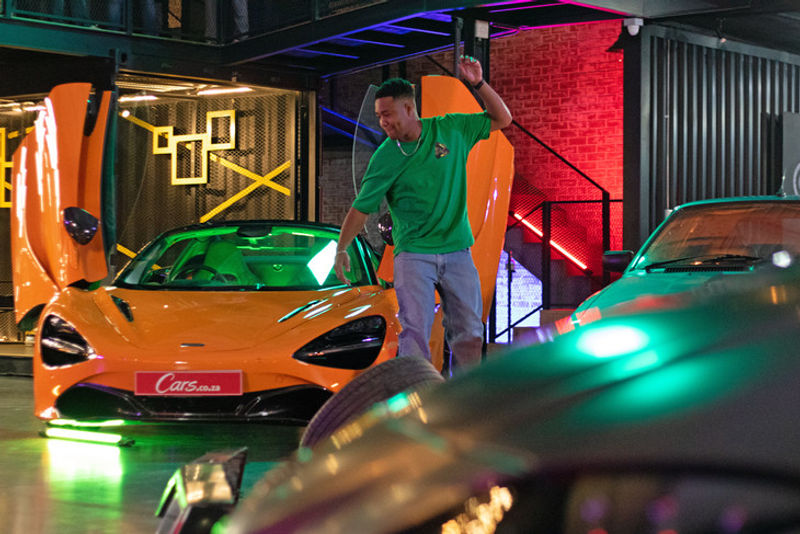
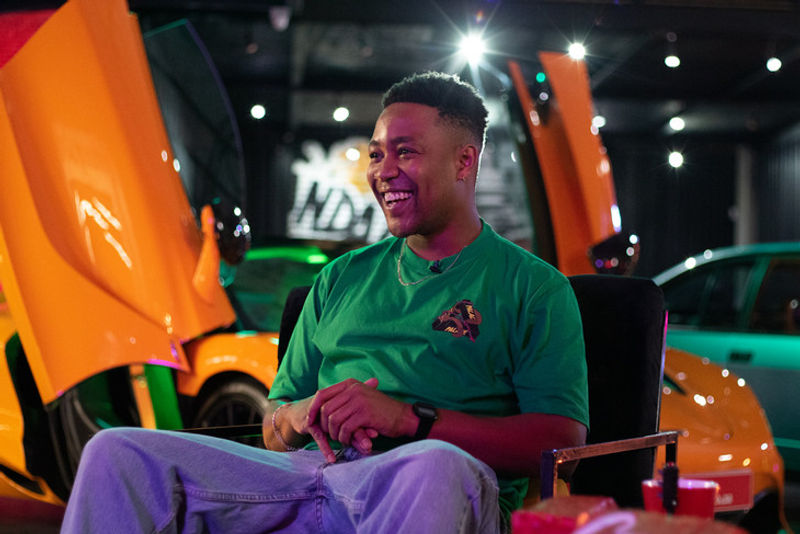
DJ Speedsta on the cars he’s owned, how he taught himself to drive and his craziest car ever
DJ Speedsta – or Speedsta Bro, to his many fans – is a highly regarded South African radio DJ, club DJ, music producer and businessman.
With his laid-back demeanour (he arrived on our set on a skateboard!) mixed with sharp social commentary, he has built an army of fans, with his shows selling out and his singles topping charts.
In this episode, he joins us in the Cars.co.za #CarCulture studio for a chat about his love of cars and South African car culture.
Here’s what Episode 4 of #CarCulture entails: DJ Speedsta looks back on his experiences of meet-ups and park-offs, “going back to the ‘hood”, he and his dad’s shared passion for motoring, how he learnt to drive (clue: it did not involve driving lessons) and the long list of cars he’s owned.
Suffice it to say, you’ll never guess which car is his favourite… and which one he thinks is the craziest car he’s ever owned.
In our latest podcast, Ciro De Siena is joined by Kabelo Rabotho, from Nissan South Africa. What does the future hold for this Japanese brand in SA?
What’s the future of Nissan? Wide-ranging chat with Kabelo Rabotho, Country Director Nissan SA
What do you want to know about the Nissan brand in South Africa? You’ll probably find the answer in this interview.
Join us in the Cars.co.za podcast studio where Kabelo Rabotho joins Ciro De Siena for an in-depth discussion of Nissan’s future both globally and particularly in South Africa.
Kabelo Rabotho was candid in his answers and gave us some exclusive insight into the future of the brand, and what they have planned for South Africa.
Ciro and Kabelo chat about the upcoming launch of the Qashqai ePower in South Africa, which will become a rare new energy drivetrain for South Africans to benefit from. Ciro also asks if we will ever see a hybrid Nissan bakkie and the answer is interesting…
They also discuss Nissan’s electrification strategy, Nissan’s manufacturing success in South Africa and the African continent, and why the new Nissan Z Cars might not come to South Africa, and why the Nissan NP200 has been such a success story.
Yet another one bites the dust. The Nissan Micra has been discontinued in South Africa, with the well-known nameplate quietly riding off into the sunset after 18 years on the local market…
The Nissan Micra has exited the South African market. Yes, the Japanese firm’s local division has pulled the B-segment hatchback from sale, bringing an end to the badge’s 18-year run in the country.
Although Nissan South Africa didn’t respond to our queries on the topic by the time of publishing (though since has; see the statement below), we understand the Micra – which is also known in some markets as the March – was discontinued locally at some point in August 2022. For the record, the nameplate made its debut in South Africa back in 2004 (our market missed out on the first two generations), when the K12 model touched down.
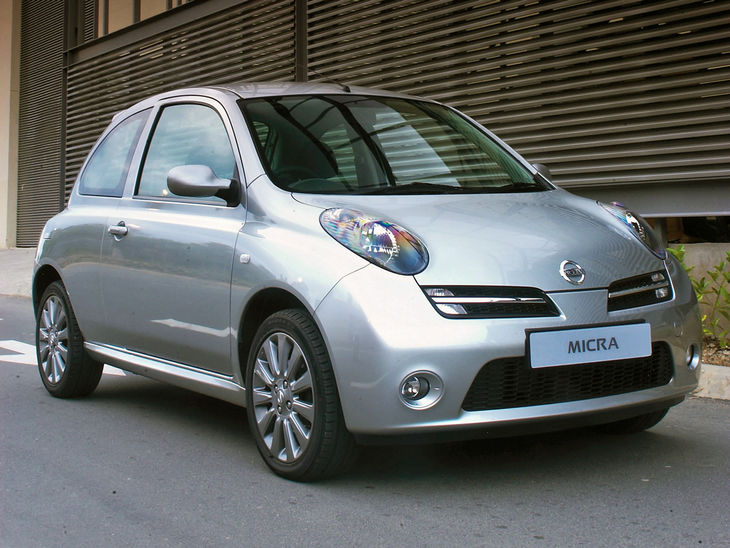
The first Micra to be launched in South Africa was the third-generation (K12) model.
The fourth-generation (K13) Micra followed in 2011, before morphing into the prolonged lifecycle Micra Active in 2017. Finally, the fifth-generation (K14) model – which is closely related to the Renault Clio IV – launched locally in mid-2018, with the Active version continuing to be sold alongside its fresher 66 kW sibling for a couple more years.
At launch, Nissan SA promised the fifth-gen Micra would “revitalise the small car segment in South Africa”, pointing out that it played in “one of the most popular segments in the country”. The range expanded with a new flagship trim level in early 2019, before a more powerful 84 kW engine option arrived towards the end of that year.
However, local buyers didn’t ever really take to the Micra 5, which found itself struggling for scraps in a segment dominated by the Kariega-built Volkswagen Polo hatchback. Though the little Nissan was likely in a run-out phase over the past two months or so, it’s telling that just 95 units were registered in South Africa over the first eight months of 2022.
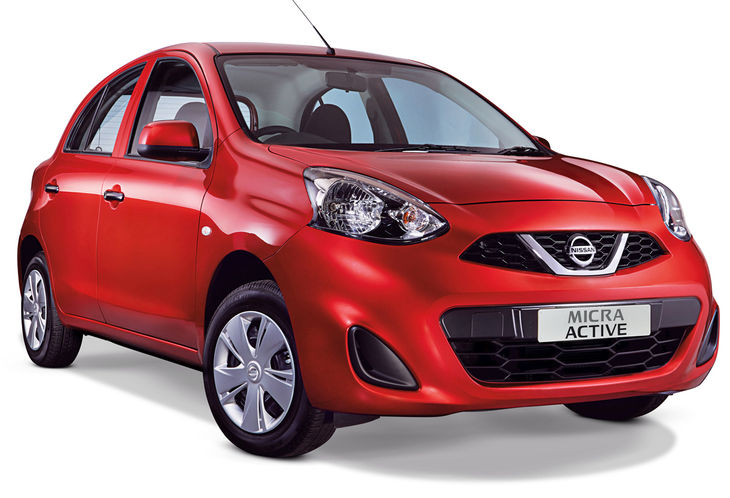
The fourth-gen Micra lived on in South Africa for a couple more years as the Active.
As an aside, the next-generation Micra is expected to be a fully electric vehicle, tipped to borrow the upcoming Renault 5’s platform and be manufactured by the French company alongside that model. However, it’s not yet confirmed this successor will indeed use the Micra badge.
The local demise of the Micra follows that of another once-popular B-segment hatchback, the Ford Fiesta. Back in March 2022, the Blue Oval brand confirmed to Cars.co.za the Fiesta had been discontinued locally. Other Nissan models axed this year include the 370Z, NP300, NV350 and GT-R, while the Japanese firm’s Datsun line-up (comprising the Go and Go+) also exited South Africa in 2022.
UPDATE: Nissan SA has issued a statement from Country Director, Kabelo Rabotho, to Cars.co.za. It reads as follows: “In line with the Nissan Next mid-term plan which focuses on rationalisation whilst maintaining a customer-centric strategy, the Nissan Micra has reached the end of production. This strategy has been supported by the introduction of new products in 2021 which included the globally award-winning Magnite and the locally built Nissan Navara, which won the ‘2022 Car of the Year in the 4×4 Double Cab Segment’.
“In September 2022, the all-new Qashqai re-entered the crossover segment and customers can look forward to the addition of the e-Power version of Qashqai in early 2023, followed by the introduction of the all-new Nissan X-Trail. Nissan is committed to ensuring that Micra customer services needs continue to be met through the availability of service parts after the production of the current Micra ends.”