Volkswagen Golf Mk2 GTI – The iconic 80s hot hatch driven
Our video guy Ciro De Siena gets behind the wheel of the iconic Volkswagen Mk2 Golf GTI, one of the 80’s coolest hatches.
It may have been the Mk1 Volkswagen Golf GTI that started the whole Hot Hatch segment, but it was the bigger, more sophisticated and luxurious Mk2 “Jumbo” Golf GTI that really set the iconic hatch on the path to the sophisticated offering it is today. In Europe the Golf Mk2’s arrival also coincided with such developments as all-wheel drive and even supercharging, but in South Africa we followed our own path. After the 1.8 8v came the most desirable of the lot (the 1.8 16v) and then there was also a 2.0L variant near the end of the car’s production run in South Africa.
As much as the Golf Mk2 GTI was bigger and more luxurious than its predecessor, it was still light compared with today’s hot hatches, tipping the scales at less than 1000kg, and so its engine doesn’t have to work very hard to deliver exciting performance. But most of all, as Ciro De Siena discovers in this video, it is the exciting, planted handling of the car that will still thrill driving enthusiasts today. Will the Mk2 Golf GTI be a future classic? We think it already is! And you? Enjoy the video!
Range Rover Review (2022) Fantastic, but is it worth it?
Got a few million Rands to spend on an ultra-luxurious SUV? Should you spend your money on a new Range Rover? We sampled the new Range Rover P530 Autobiography to find out exactly what you get for your money. Watch our Range Rover video review!
The all-new fifth-generation 2022 Range Rover has arrived in South Africa to once again move the goal posts in the super-luxury SUV segment and this Range Rover review covers everything you need to know about this car.
The new 2022 Range Rover features luxuries such as side-steps that slide into position electrically, massaging seats, a huge panoramic sunroof and even a boot compartment with a flip-up backrest – so that you can sit more comfortably when taking a break out in the wild!
Under the new Range Rover’s bonnet is a 4.4L twin-turbo V8 petrol borrowed from BMW and in P530 guise, it offers 390 kW and 750 Nm. While it delivers strong performance and excellent refinement, let’s not mention the fuel economy, however!
It’s worth noting that the Range Rover is also offered with a 3.0-litre turbodiesel engine as well as a petrol-electric powertrain and buyers can choose between short- and long wheelbase derivatives, the latter of which can also seat up to 7 passengers, if you wish.
As you would expect at this price point, the Range Rover offers a high level of luxury and technology. The drivers cabin is nothing short of a classy tech fest with a comprehensive Pivi Pro infotainment system as well as a 13.7-inch digital display.
Watch the video to see what the new Range Rover has to offer!
How much does the new Range Rover cost in SA?
Note that pricing is accurate as of May 2025.
All Land Rover vehicles come with a standard 5-year/100,000km Land Rover Care Warranty and Maintenance Plans. * Prices include VAT but exclude CO2 tax.
P460e HSE Standard Wheelbase – R3 395 000 P460e HSE Long Wheelbase – R3 498 500 P460e Autobiography – R3 885 400 P460e SV Long Wheelbase – R4 968 900
D350 HSE Standard Wheelbase – R3 419 700 D350 Autobiography Standard Wheelbase – R3 926 200 D350 Autobiography Long Wheelbase – R4 022 900 D350 Autobiography Long Wheelbase (7 seats) – R4 058 100 D350 SV – R4 536 500
P530 HSE Standard Wheelbase – R3 807 700 P530 Autobiography Standard Wheelbase – R4 338 000 P530 Autobiography Long Wheelbase – R4 439 600 P530 Autobiography Long Wheelbase (7 Seats) – R4 476 600
What are the available engine options for the 2025 Range Rover in South Africa?
The 2025 Range Rover offers a range of engines, including a P460e petrol-electric hybrid, a D350 turbocharged diesel, and a 4.4-litre V8 turbocharged petrol engine (P530 and P615 SV).
What are the starting and top-end prices for the 2025 Range Rover in South Africa?
Pricing for the 2025 Range Rover starts at R3,395,000 for the P460e HSE Standard Wheelbase, and goes up to R5,487,700 for the P615 SV Long Wheelbase model.
What are the warranty and maintenance plans for the Range Rover?
All 2025 Range Rover models come with a standard 5-year/100,000 km Land Rover Care Warranty and Maintenance Plans.
What are some of the interior and technology features of the new Range Rover?
The interior features a 13.1-inch Pivi Pro infotainment system with wireless Apple CarPlay and Android Auto, a Meridian sound system, and a 13.7-inch digital driver’s display. It also offers a seven-seat option in the long-wheelbase version and can be configured with a four-seater ‘Signature Suite’ cabin.
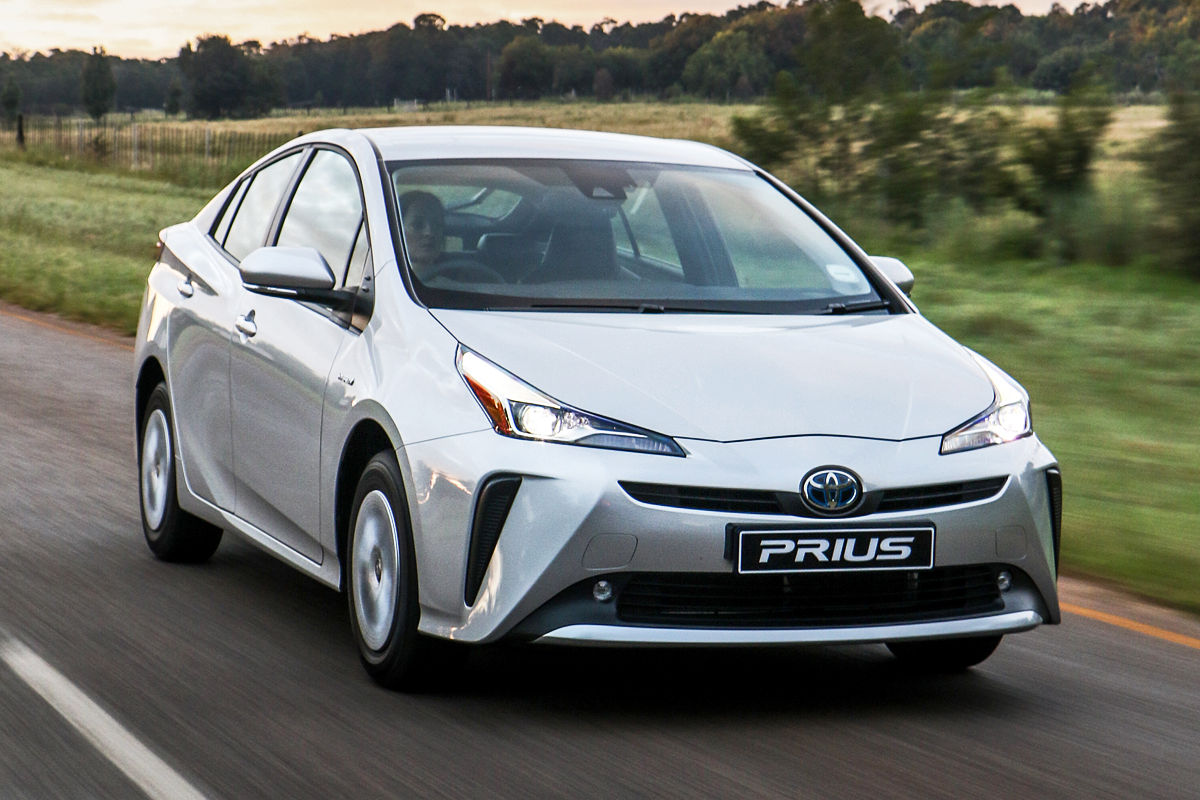
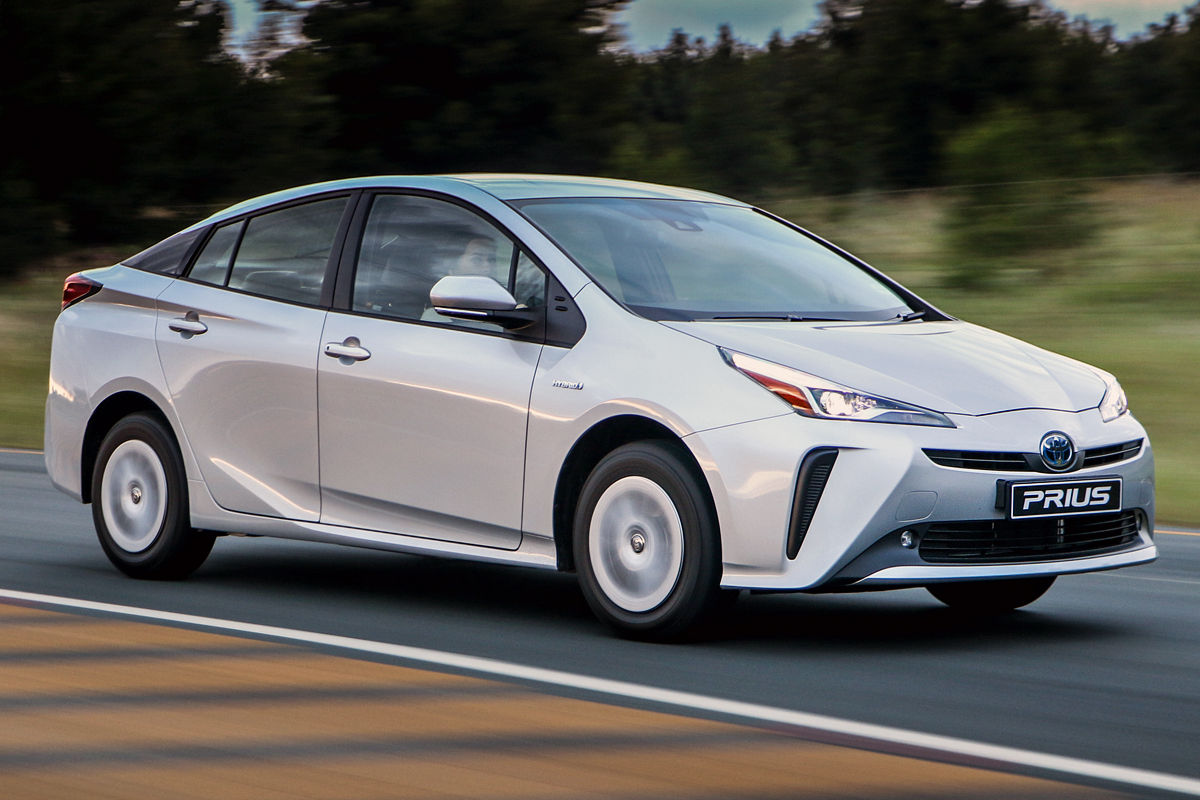
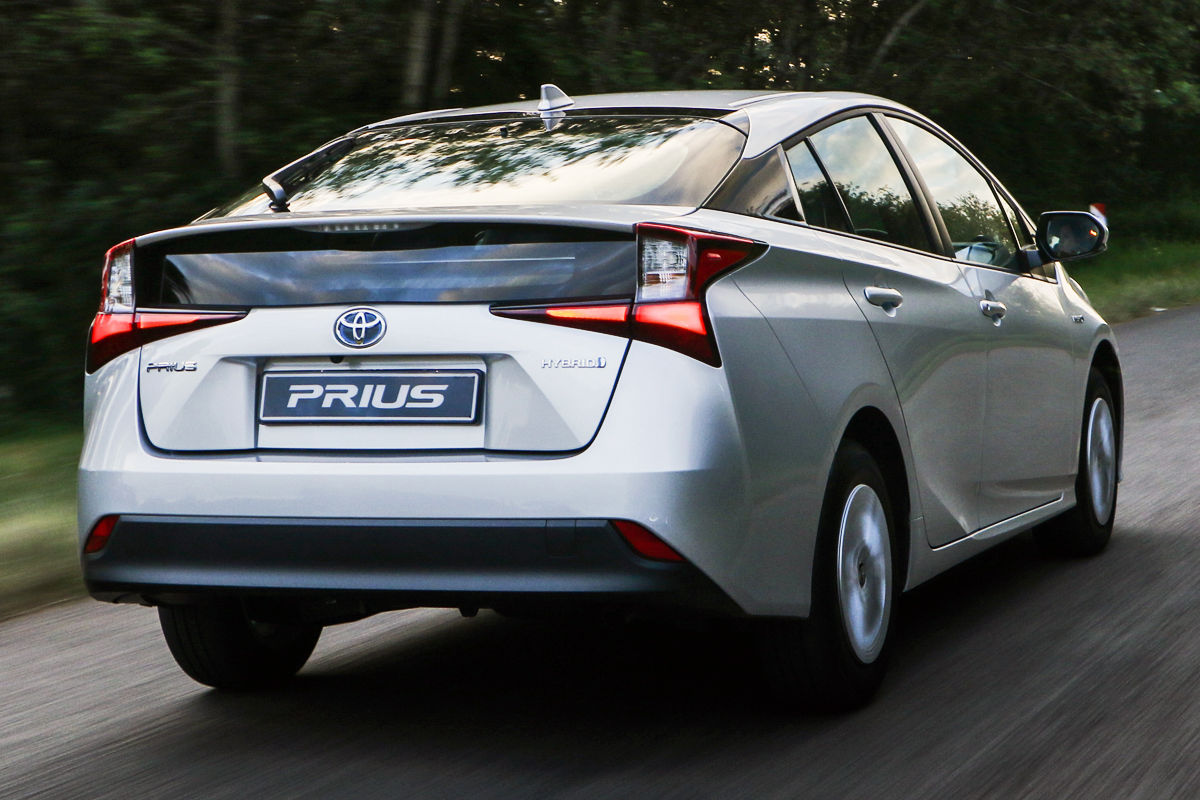
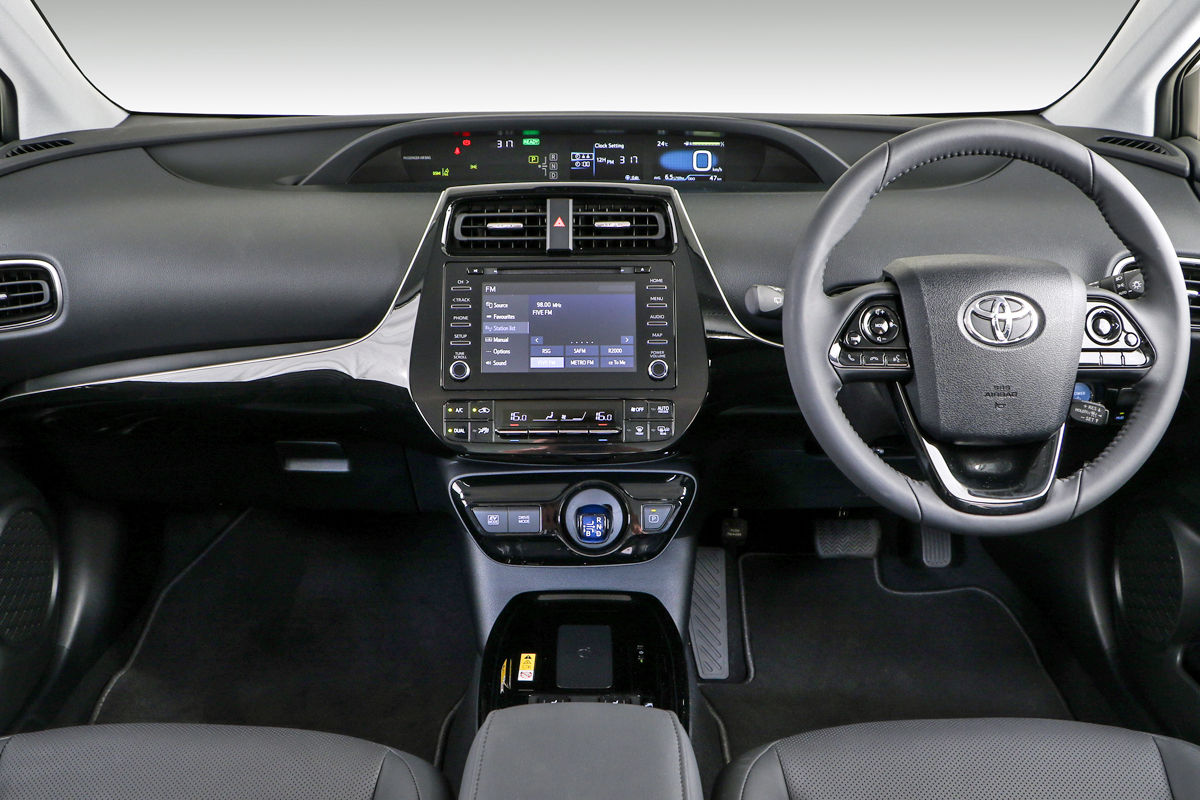
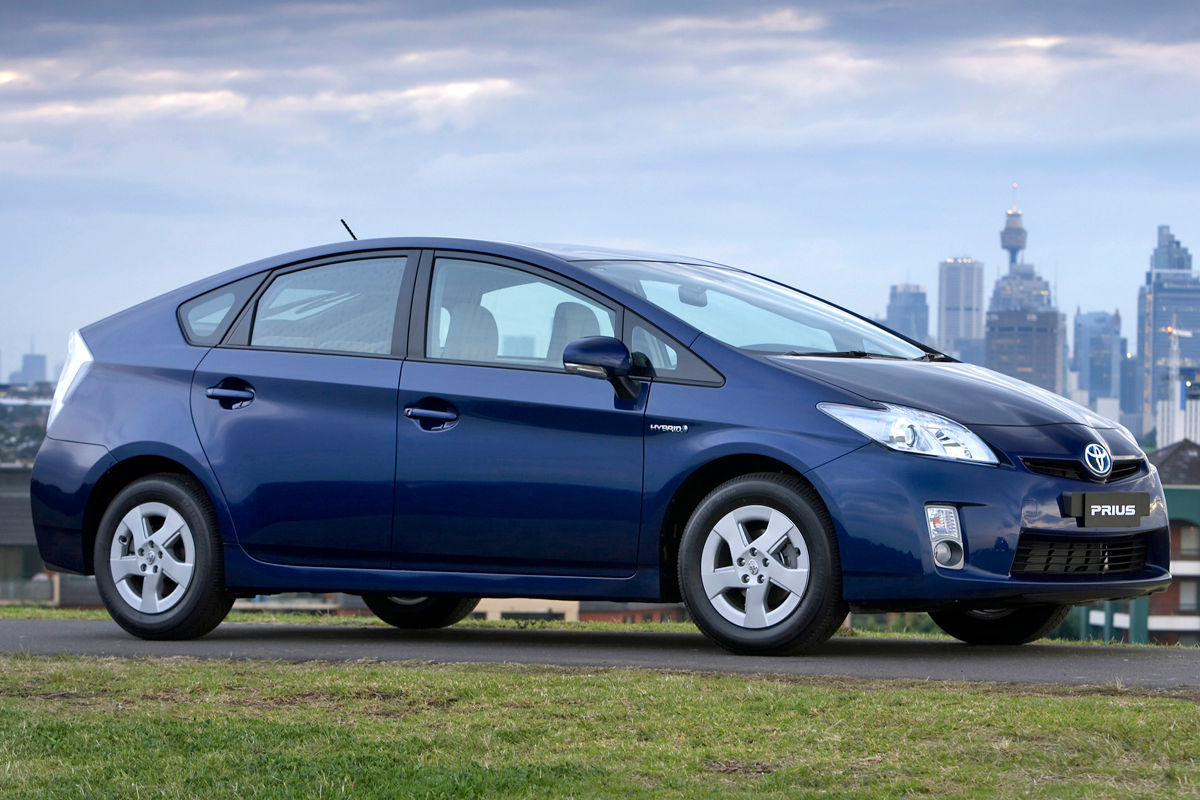
Farewell, Prius! Toyota SA Calls Time on Hybrid Pioneer
Toyota South Africa Motors has quietly axed the Prius from its model range, ending a 17-year local run for the brand’s pioneering hybrid vehicle…
Despite fielding a local line-up with more hybrid options than ever before (including a raft of dual-powered Lexus models), Toyota South Africa Motors has discontinued the vehicle that started it all. Yes, the Prius has quietly exited South Africa after 17 years on the market.
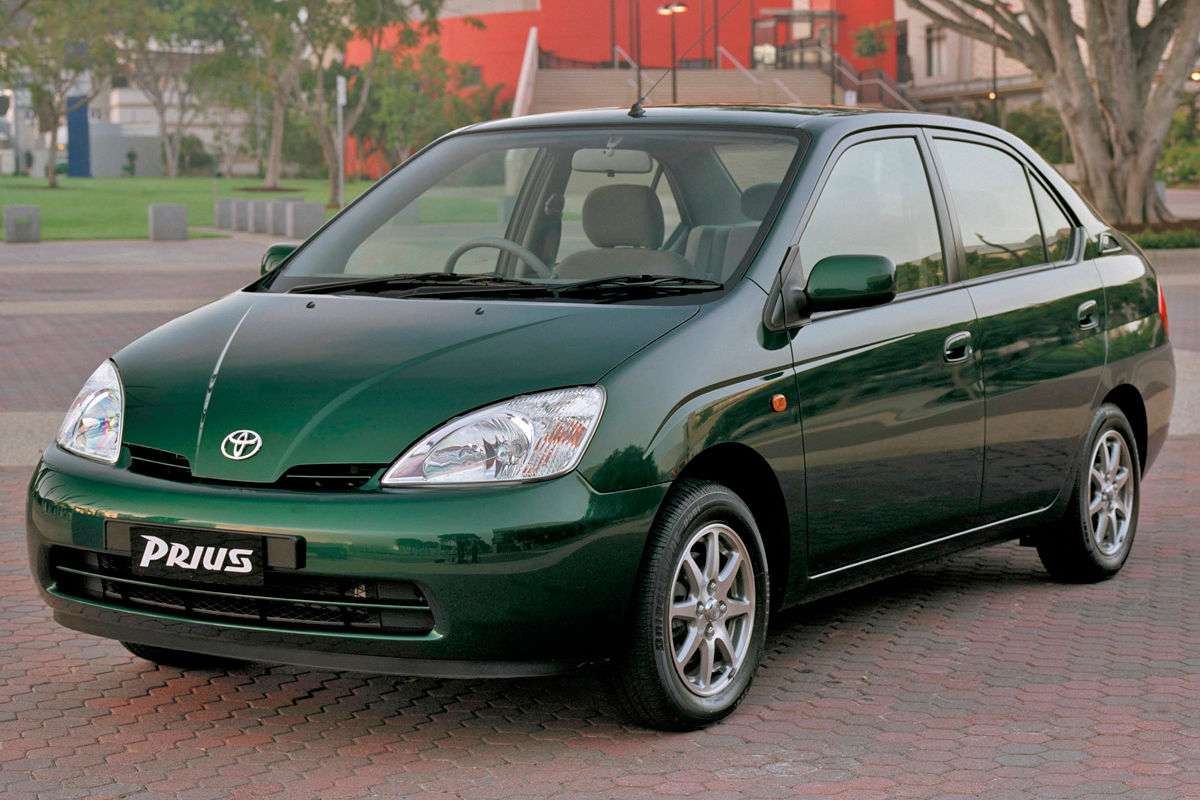
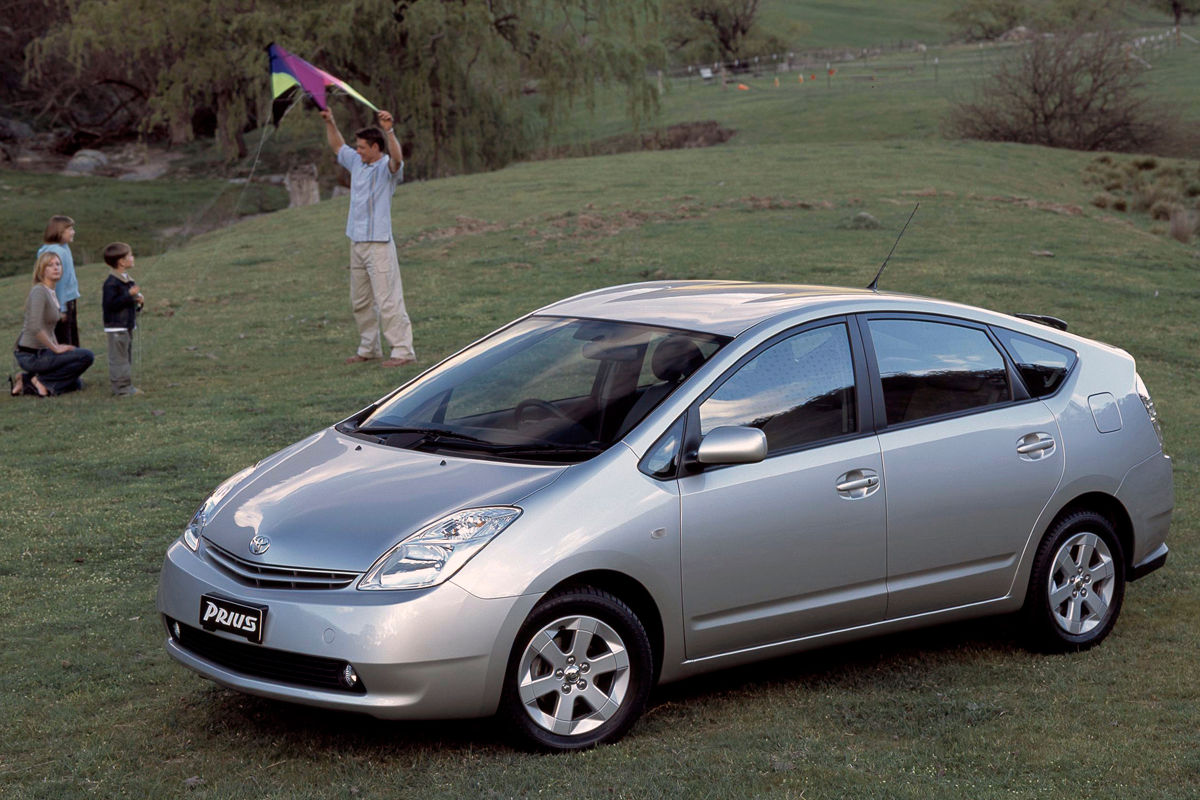
Since the original Prius – billed as the world’s first mass-production hybrid passenger vehicle at its launch in Japan in 1997 – wasn’t officially offered here in South Africa, the second-generation model marked the nameplate’s local debut way back in 2005.
The third generation touched down in 2009, with the fourth iteration following in mid-2016. A facelifted version was launched in South Africa in 2019, before yet more updates (including a generous addition of safety equipment) were rolled out two years later. The last list price we saw for the slow-selling Prius was R604 100.
Of course, in South Africa, this hybrid didn’t ever achieve the level of popularity it enjoyed in markets such as North America, where the original resonated particularly strongly with Hollywood stars keen to display their “green” credentials (a phenomenon that, in turn, influenced many an ordinary buyer in that country).
We sorted through sales figures submitted to Naamsa for the first eight months of 2022 and discovered just 11 units of the Prius were registered in South Africa over that period. While it’s not clear whether there is any remaining stock in Toyota SA Motors’ dealer network, the Japanese brand’s local division has confirmed to Cars.co.za the Prius is no longer being imported.
The Toyota Prius: the outgoing model’s powertrain details
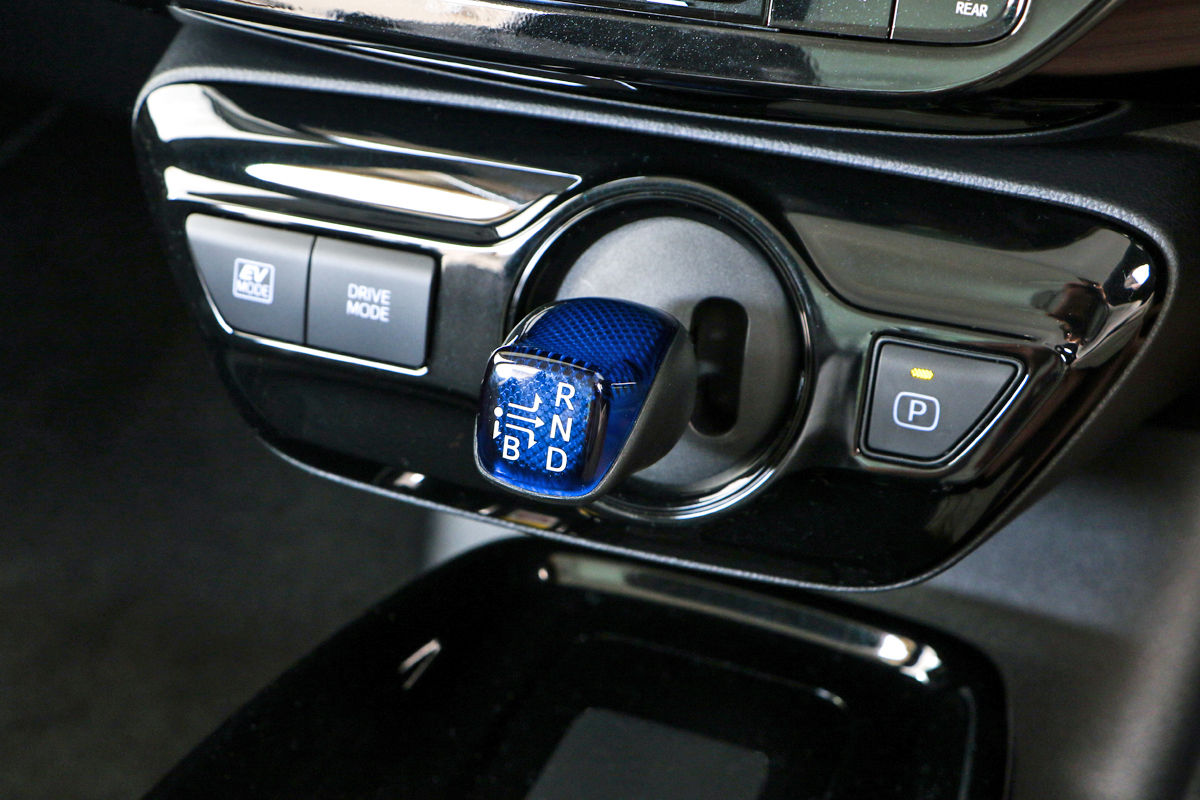
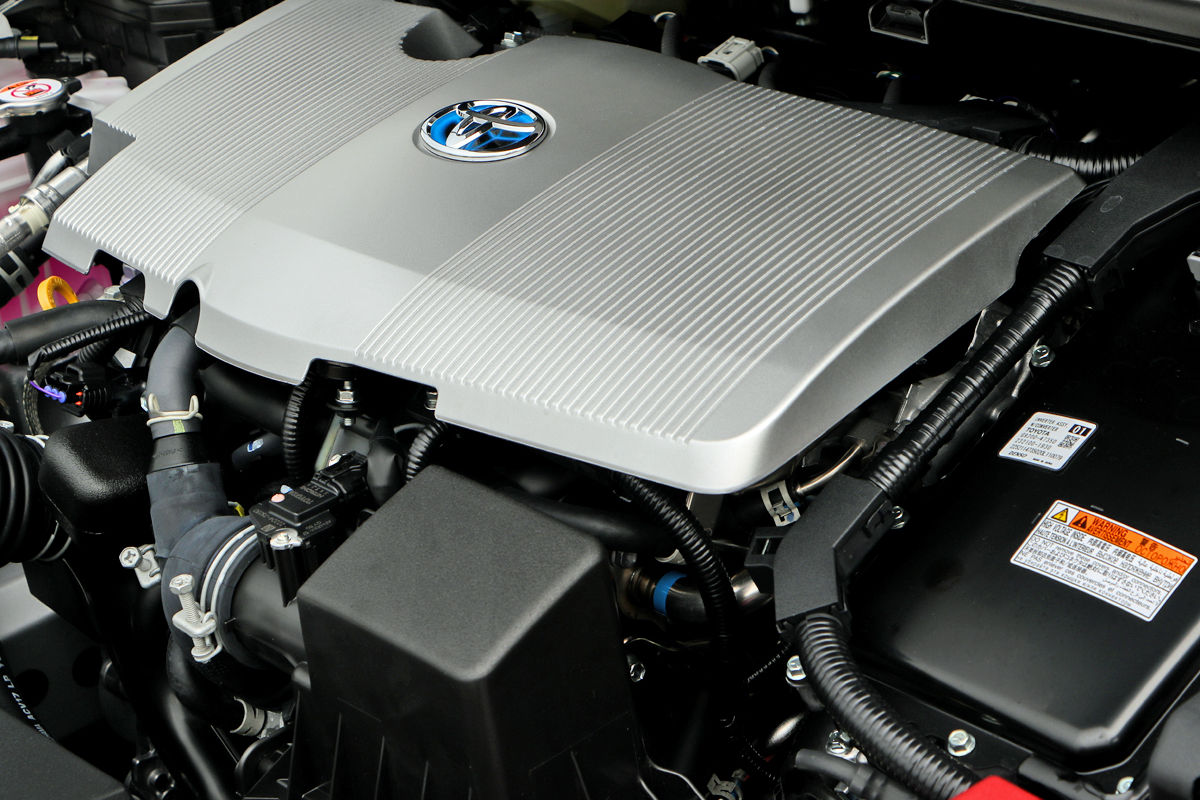
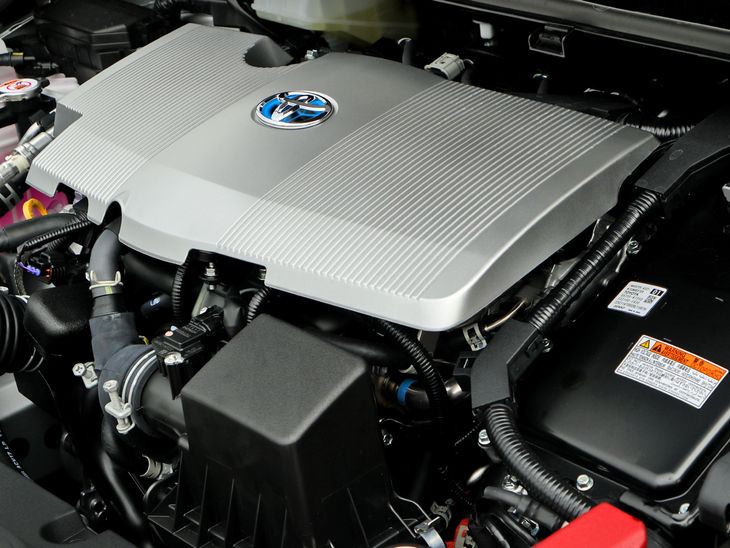
As a reminder, the latest XW50-generation Prius drew its urge from a hybrid powertrain comprising an electric motor, a battery pack and a 1.8-litre, 4-cylinder Atkinson-cycle petrol engine. Total system output stood at 90 kW, while Toyota opted not to list a combined maximum torque figure (though the petrol mill made 142 Nm and the electric motor generated 163 Nm). Drive was directed to the front axle through a continuously variable transmission.
Thanks to a dedicated EV mode enabling the Prius to operate under full-electric power, Toyota was able to claim a combined fuel economy figure of just 3.7 litres per 100 km, translating to a theoretical 1 162 km range from the 43-litre fuel tank.
As a self-charging hybrid, the Prius had the ability to recuperate what would otherwise have been wasted energy during deceleration (including braking), storing it in the battery for later use. In addition, the petrol engine was capable of directly charging the battery pack in the absence of regenerative braking.
Though Toyota SA Motors has called time on the Prius, it still markets a range of hybrid vehicles locally, including the Prospecton-produced Corolla Cross hybrid as well as dual-powered versions of the Corolla sedan and RAV4. From what we understand, yet more hybrid options are on the horizon, too. The local Lexus line-up, meanwhile, includes hybrid versions of the UX, ES, NX, IS, RX and LS.
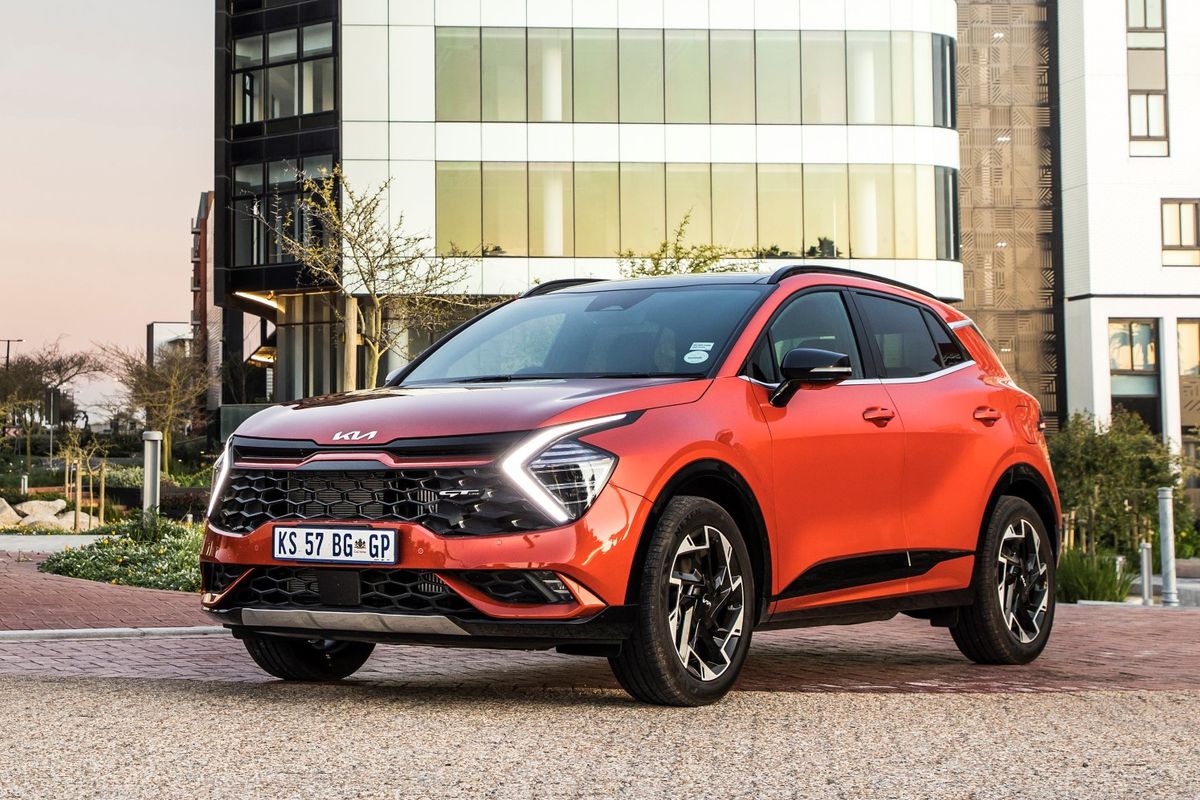
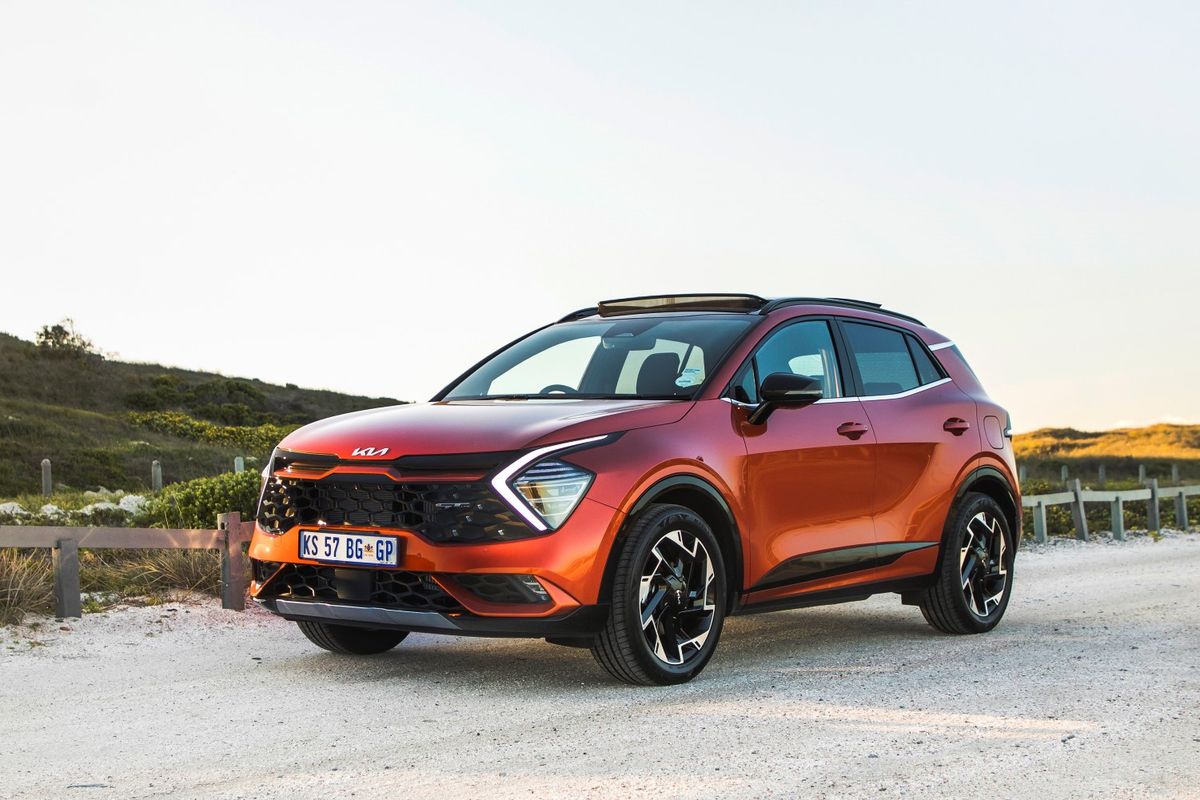
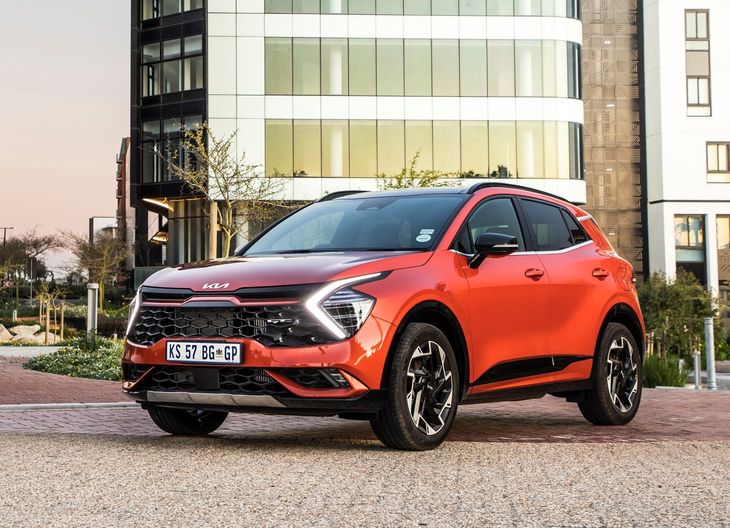
The all-new Kia Sportage has arrived in South Africa, replete with a futuristic design, an impressive array of standard features and more. Given the popularity of previous iterations of the South Korean brand’s family SUV – both here and abroad – much is expected of the 5th-generation model. Should you be adding it to your shopping list?
It’s crazy to think that when the 1st generation Sportage was revealed in 1993 (back then it was a genuine compact off-roader equipped with a low-range transfer case), Kia was perceived as an up-and-coming brand, with lofty ambitions of pinching sales from long-established brands such as Nissan, Subaru and Toyota (the European brands arrived at the SUV party a little later). Now, it’s easy to say Kia is the embodiment of “mainstream” – in some cases, it’s class-leading.
Given consumers’ appetites for high-riding family cars, Kia’s contemporary SUV range is all-encompassing. Kicking off its portfolio is the Sonet, followed by the Seltos, Sportage and Sorento, in ascending price order. The Sportage is a vitally important product for Kia because it’s the Seoul-based carmaker’s best-selling model globally. Suffice it to say, expectations for the 5th-generation model are sky high; at the very least, it needs to replicate the success of its predecessor.
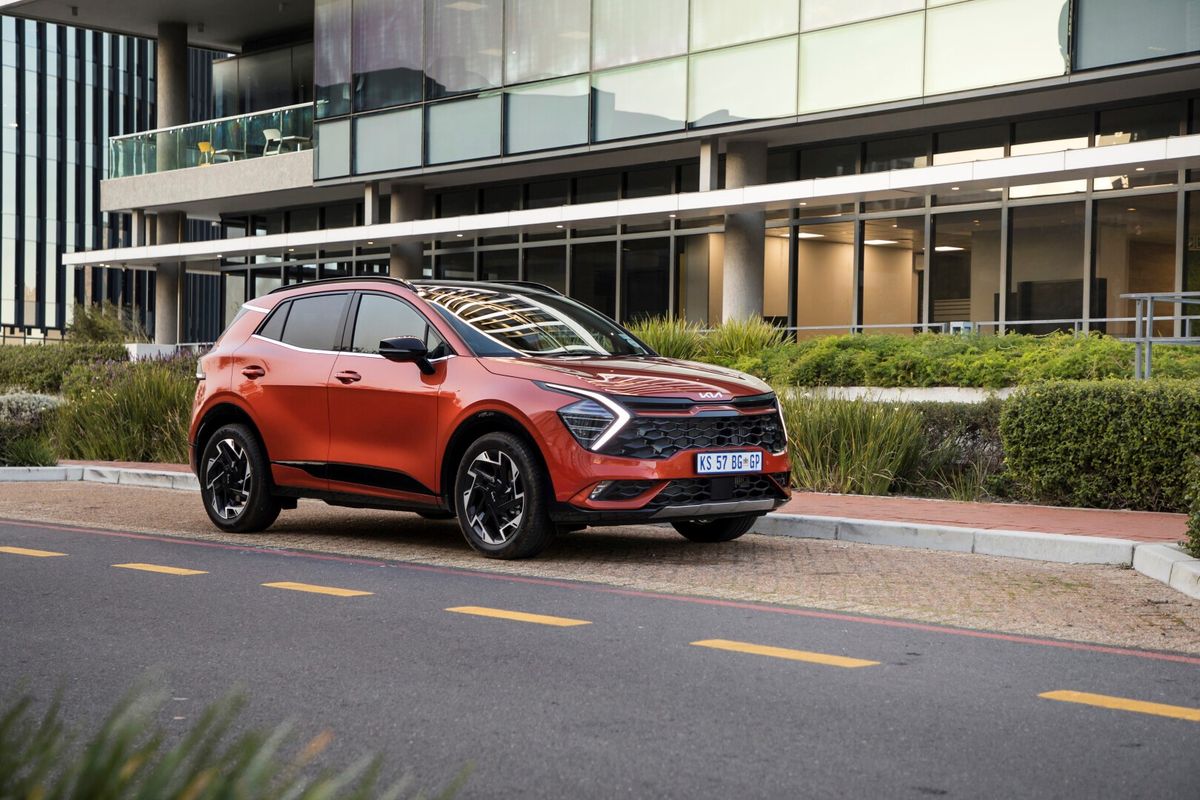
The GT-Line is distinguished by, among other things, discreet badging and large 19-inch wheels.
Kia South Africa offers the all-new Sportage with one engine and transmission combination across the range. The motor on duty is a 132 kW/265 Nm 1.6-litre 4-cylinder turbopetrol unit, which is mated with a 7-speed dual-clutch automatic transmission and directs its power to the front wheels.
There are 5 derivatives in the line-up: LX, EX, GT-Line, GT-Line Plus and GT-Line S. Lower-end derivatives of a model range often lack several creature comforts (to keep their asking prices keen), but Kia asserts that even its entry-level Sportage comes well equipped. All versions feature automatically activated LED headlights and DRLs, fog lamps, selectable drive modes, leather-clad steering wheel and transmission lever, rake- and reach-adjustable steering column, 40:20:40 split-folding rear seatback, reverse-view camera, a curved 12.3-inch touchscreen infotainment system (it supports Bluetooth and is compatible with Android Auto and AppleCarplay), plus USB charging points front and rear.
Customers can choose from various alloy wheel designs between 17- to 19-inches in size, while EX and GT versions additionally feature items such as heated seats, higher-grade upholstery, as well as conveniences such as a powered tailgate, panoramic sunroof, and steering wheel-mounted paddle shifters.
In terms of safety specification, all derivates are fitted with half a dozen airbags, ISOfix child-seat mounts, ABS with electronic brake-force distribution (EBD), electronic stability control, hill-start assist, downhill brake control, blind-spot collision warning and trailer stability assist. Semi-autonomous technologies, including lane-follow assist, lane-keep assist, smart cruise control and forward-collision avoidance assist are available in the higher grades.
You might be wondering where the diesel engines are; Kia SA has not ruled out introducing turbodiesel derivatives entirely, which suggests that they’re on the cards for a later introduction.
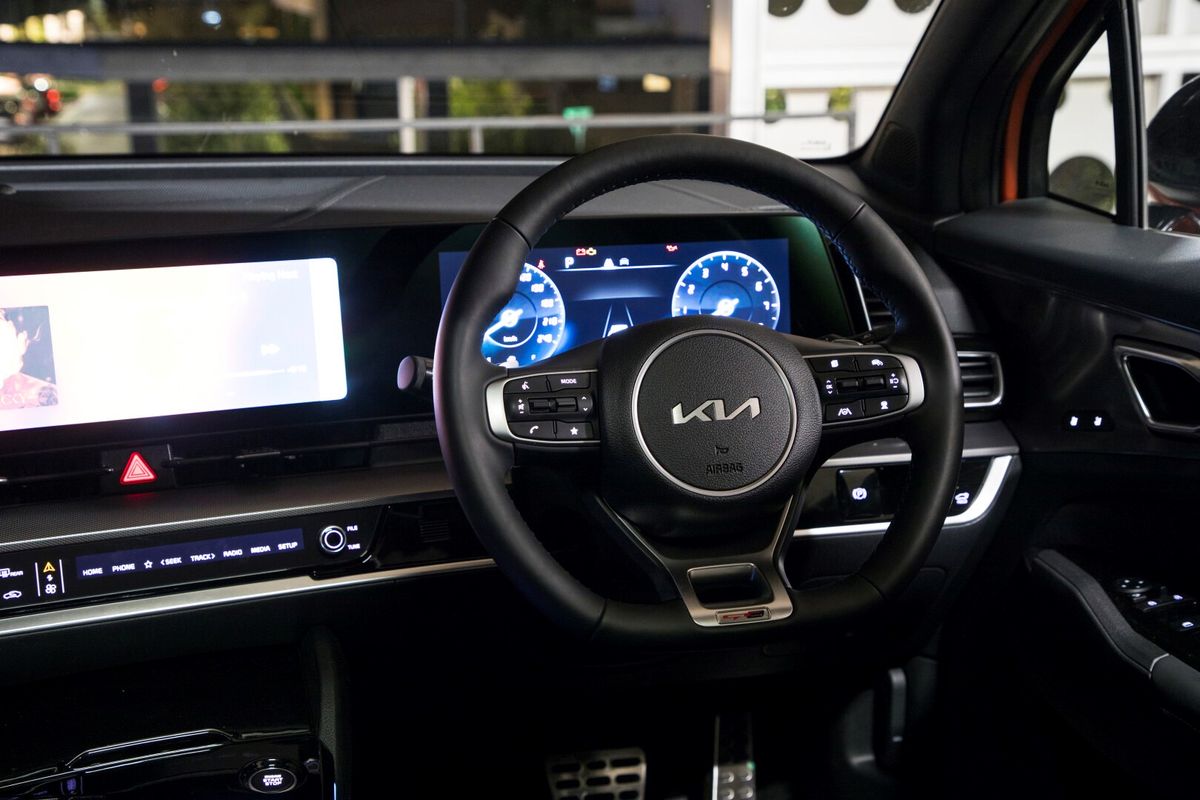
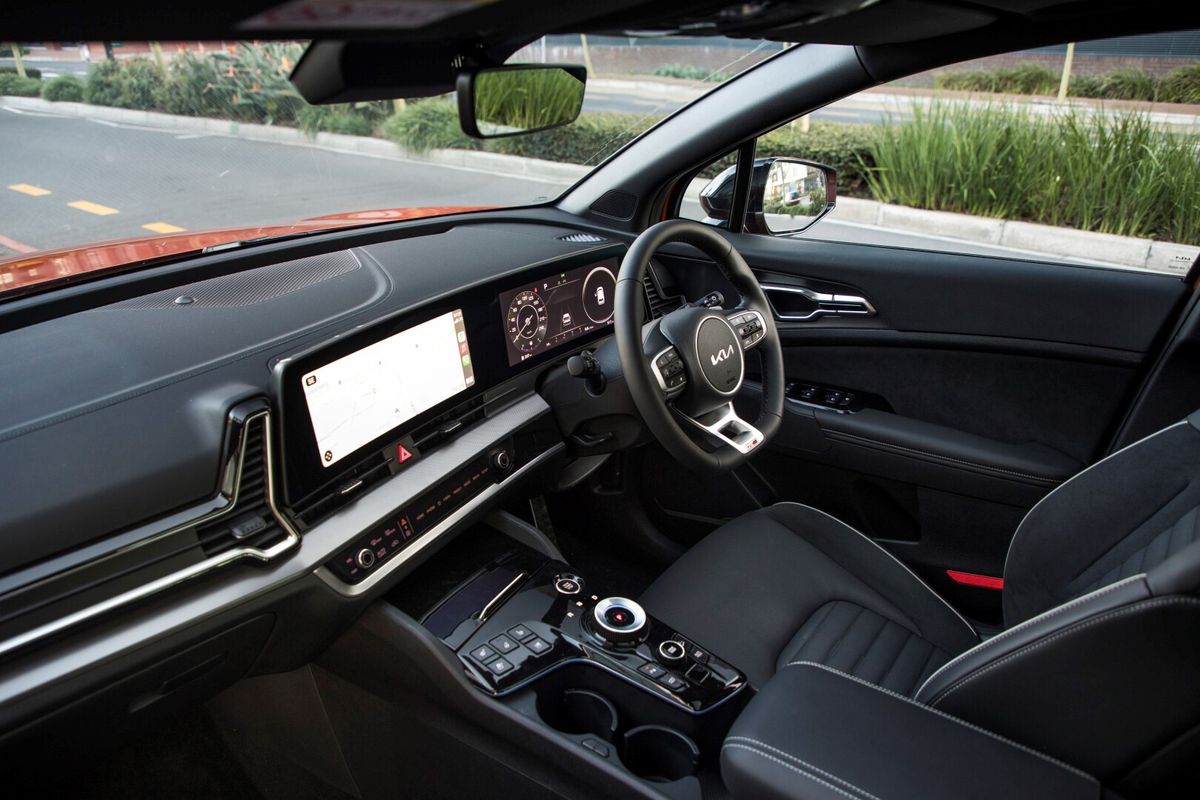
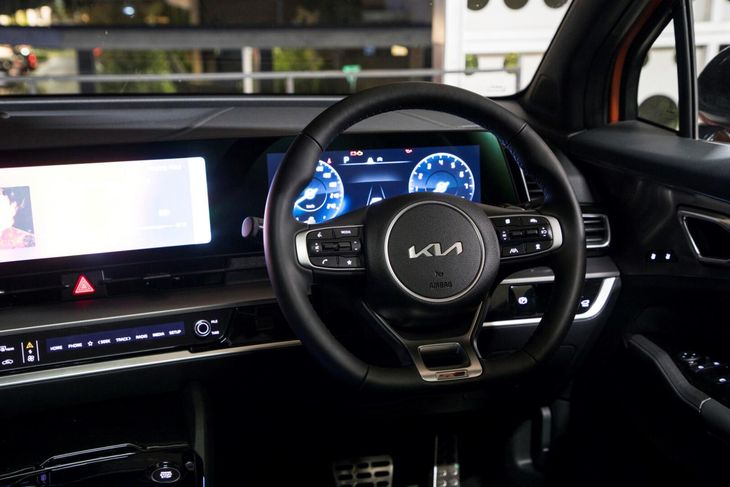
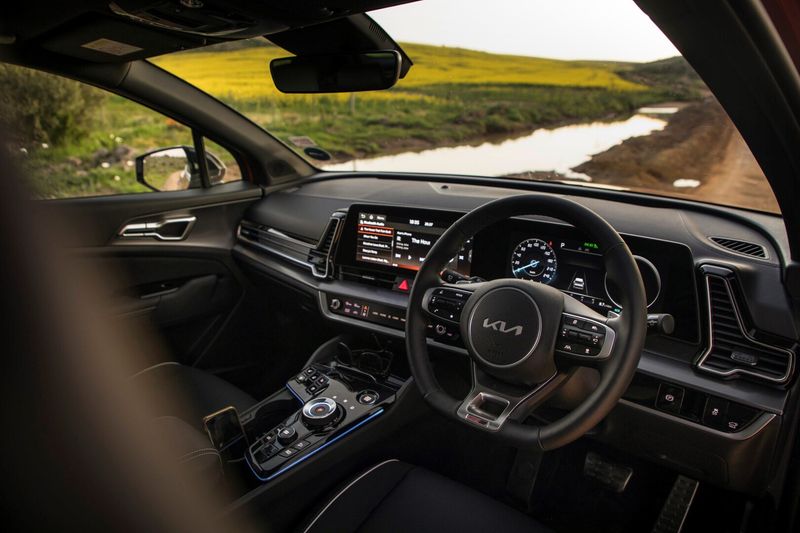
A digitally connected cabin will please all the tech junkies.
What is the new Kia Sportage like to drive?
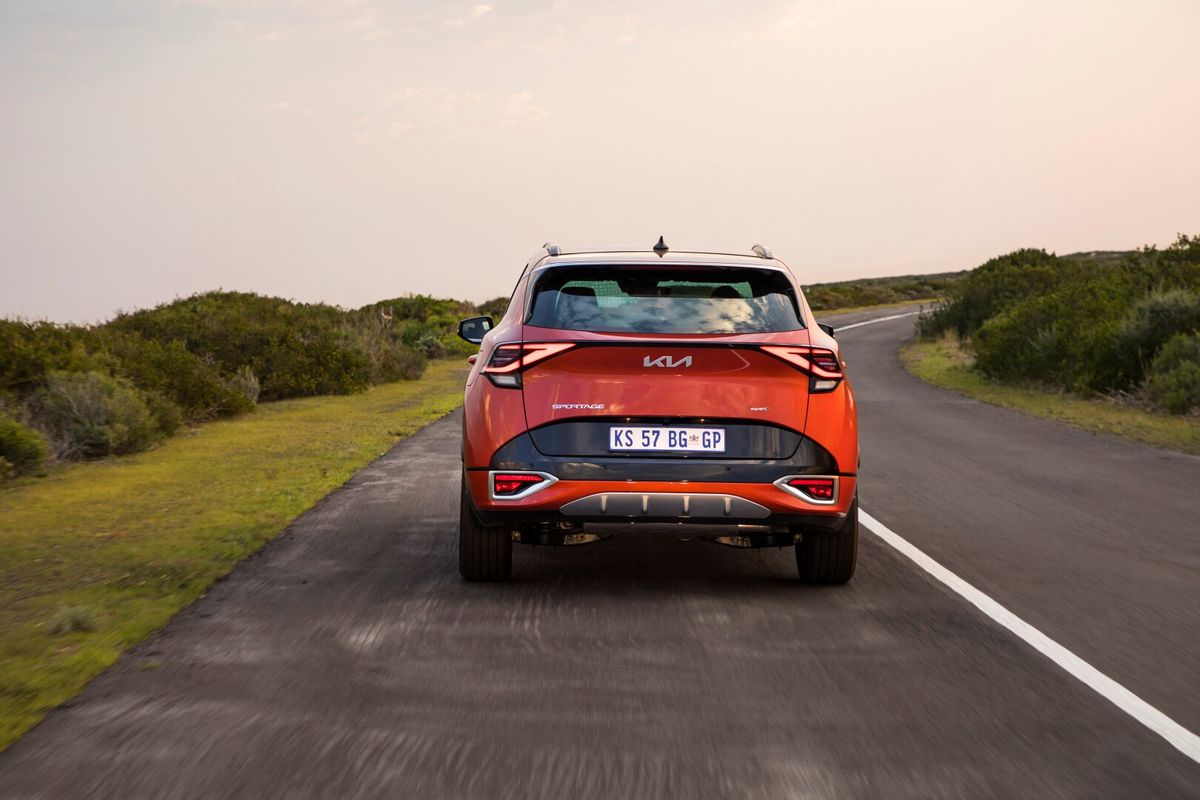
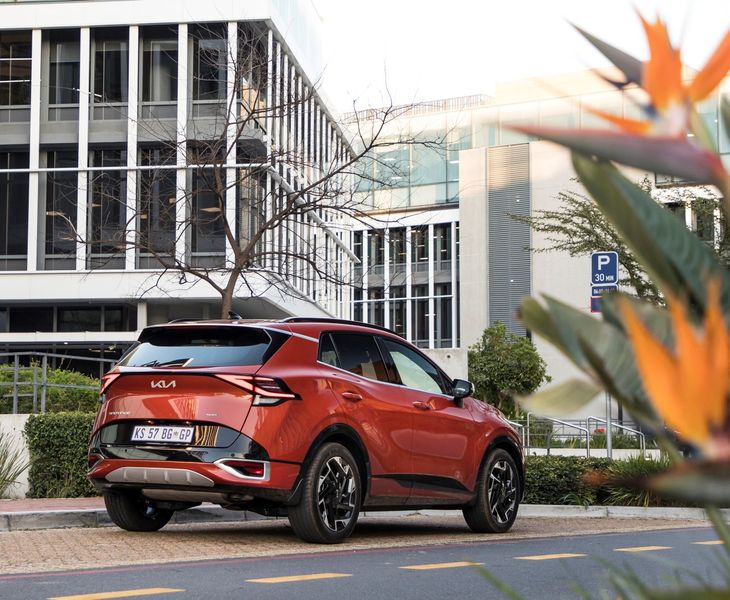
In an era of family-car designs that seem more influenced by the pursuit of aerodynamic efficiency and pedestrian safety than aesthetic excellence, is there still scope for artistic flair? Yes, it would seem so – the Sportage looks striking from almost every angle. It helps to have some vibrant colours to choose from – our test units were clad in Experience Green and Infra Red metallic. Other colours include a wicked Splash Lemon yellow and the hue shown here: Orange Fusion.
Kia states a 0-100 kph acceleration time of 8.8 sec, a top speed of 201 kph and combined-cycle CO2 emissions of 149 g/km – the latter works out as an average fuel consumption figure of 6.4 L/100 km. While we obviously made no attempt to drive at 201 kph, the new Sportage does feel as eager off the line as the “under 9 seconds to 100 kph” claim suggests. After a day’s driving, we were happy to see our EX and GT-Line S test units indicate fuel-efficiency figures in the mid-7s.
A digitally connected cabin will please all the technojunkies
“Surely the newcomer’s cabin can’t match the drama of its exterior design,” I hear you say. On the contrary, if those bold looks don’t make you look twice, the interior of the Sportage (particularly the GT-Line S) certainly will!
Kia’s new family car’s cabin is an instantly impressive space to occupy, with a beautifully curved infotainment touchscreen that wraps the entirety of the dashboard. It looks and feels classy and premium, which is an excellent opening salvo for a vehicle positioned at this price point. We’d say the ambience strikes a fair balance between comfort and sportiness.
Press the start button and the Kia’s 1.6-litre turbo motor fires up quietly. The engine is generally muted – you only become aware of its presence through the intrusion of mechanical noise when you summon up more urgent acceleration through a mild flex of your right foot. The transmission shifts smartly too; it seems to intuitively find the appropriate ratio at the right time, which suggests that Kia has got the calibration of the auto ‘box spot on.
When we drove the top-spec version, we made use of the gearshift paddles behind its tiller. They do feel nice to use, but when you shift manually, the car doesn’t seem quite as composed and refined as it does in its default “self-shift” mode.
Both derivatives that we drove offered good ride qualities. We’d stop short of describing the ride as “excellent” because it is on the firm side, yet there was enough damping to flatten out cat’s eyes and minor bumps and ruts on the tarmac. Even when riding on the bigger wheels (as the flagship version does – on nineteens), the ride quality was impressively forgiving when traversing the smoother patches of tarmac that the Western Cape is thankfully blessed with.
Interesting styling and a well-positioned price package bode well for the Sportage’s prospects.
How much does the new Kia Sportage cost in South Africa?
1.6 T-GDi LX
R539 995
1.6 T-GDi EX
R593 995
1.6 T-GDi GT-Line
R649 995
1.6 T-GDi GT-Line Plus
R677 995
1.6 T-GDi GT-Line S
R734 995
All Sportage derivatives come as standard with Kia’s industry-leading 5-year/unlimited km warranty, which includes roadside assistance, as well as a pre-paid 6-year/90 000 km service plan.
Summary
After a quick stint behind the ‘wheel of the 5th-generation Sportage, we can confirm that the new model comfortably picks up where its predecessor left off. Not only is Kia’s family car a head-turner… it backs up those bold looks with a solid powertrain, excellent fit-and-finish (for the model’s price point) and comes liberally equipped; even the more affordable versions are well-specified. Despite the radical exterior design, the overall package is more evolutionary than revolutionary.
Same old, same old, then? Well, why Kia should mess with what’s clearly a winning formula? The Sportage has ambitious sales targets to meet and the Korean marque couldn’t risk veering off course too radically. If your budget cannot quite stretch to one of the GT-Lines, fear not as the EX derivative represents a compelling purchasing proposition. We look forward to getting behind the ‘wheel of the new model again and comparing it with its Japanese and German rivals.
New Kia Sportage in SA (2022) Specs & Price
The new Kia Sportage has finally arrived in South Africa to woo local family car buyers. Take a look at the specifications and pricing details below!
The Sportage has done brisk business locally and now with the arrival of an all-new 5th-generation Sportage, Kia will look to claim a larger share of the family car segment.
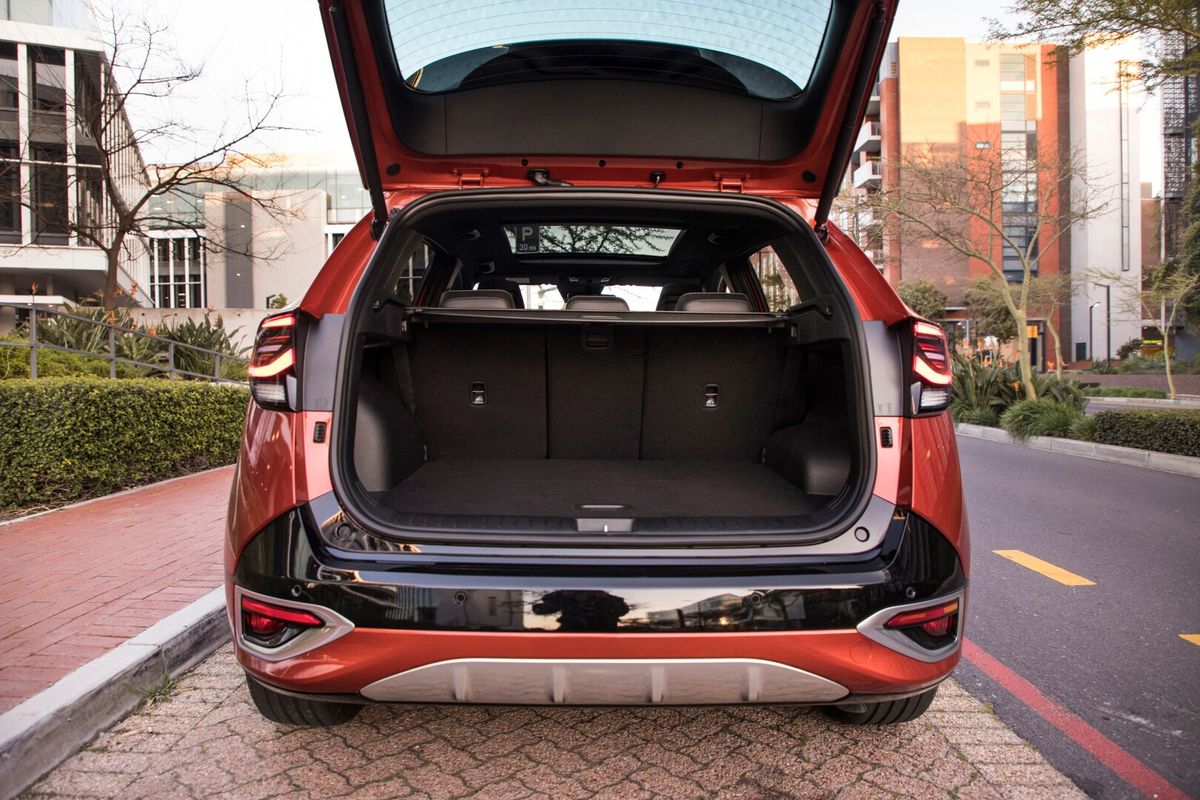
The new Sportage measures 4 515 mm in length, 1 865 mm in width and 1 645 mm in height, while its wheelbase is 2 680-mm long. That makes it larger than the model it replaces and Kia promises a cabin far more generous in terms of legroom (966 mm), headroom (1 000mm) and luggage space (591 litres).
What engine powers the new Kia Sportage?
A single turbocharged engine option is offered with 5 trim levels to consider.
The new Kia Sportage is powered by a turbocharged 1.6-litre petrol engine which is mated with a 7-speed dual-clutch automatic transmission. Total outputs are 132 kW and 265 Nm of torque.
Kia is offering a total of 5 derivatives to choose from including the base LX, mid-spec EX and then 3 derivatives for the range-topping GT-Line trim including the base GT-Line, GT-Line Plus and GT-Line S.
What features are on offer?
A curved 12.3-inch touchscreen display is a highlight inside the new Sportage.
Starting with the base Sportage LX, standard features include 17-inch alloy wheels, LED headlights with LED daytime running lights, cloth upholstery, multi-function leather-clad steering wheel (with rake and reach adjustment), dual climate control airconditioning, electronic side mirrors and windows and a curved 12.3-inch touchscreen infotainment system with a reverse camera, Apple CarPlay/Android Auto functionality, Bluetooth and Voice Recognition and 2 rear USB-C ports.
Safety features include 6 airbags, ABS with EBD, brake assist, electronic stability control, hill start assist, downhill brake control, trailer stability assist, blind spot collision warning and ISOFIX child seat mounts.
The mid-spec Sportage EX includes all the features offered in the LX but adds features such as a gloss black grille, front parking sensors, 18-inch alloy wheels, cloth/leather combination upholstery, electronically adjustable front seats with heating function, heated steering wheel, electronic folding rear 40:20:40 split seats, rear privacy glass and rear heated seats.
Jump into the Sportage GT-Line and the standard specification grows further to include deluxe scuff plates, alloy pedals, electric tailgate, paddle-shifters, artificial leather and suede combination upholstery and additional driver assistance features including lane follow assist, lane keep assist forward collision assist.
The Sportage GT-Line Plus further adds larger 19-inch wheels, gloss black exterior trim, LED interior lighting and a panoramic sunroof.
The range-topping GT-Line S further includes ventilated front seats, interior mood lights, electronic shift-by-wire (E-SBW) with a rotary gear-shift dial, intelligent front lighting system, smart cruise control (adaptive) and forward collision avoidance assist with junction turning function.
How much does the new Kia Sportage cost in South Africa?
Kia Sportage 1.6 T-GDi LX – R539 995
Kia Sportage 1.6 T-GDi EX – R593 995
Kia Sportage 1.6 T-GDi GT-Line – R649 995
Kia Sportage 1.6 T-GDi GT-Line Plus – R677 995
Kia Sportage 1.6 T-GDi GT-Line S – R734 995
All Sportage models are sold with a 5-year/unlimited km warranty, 6-year/90 000 km service plan inclusive of Roadside Assistance.
Proton has been absent from the South African new-vehicle market since 2012, but it’s returning to the Republic – with a different game plan. Why should you consider one of Proton’s new-generation offerings and is the brand likely to achieve more success this time around? We attended Proton’s big media “reintroduction” in Gauteng to find out.
Proton is Malaysian and Chinese
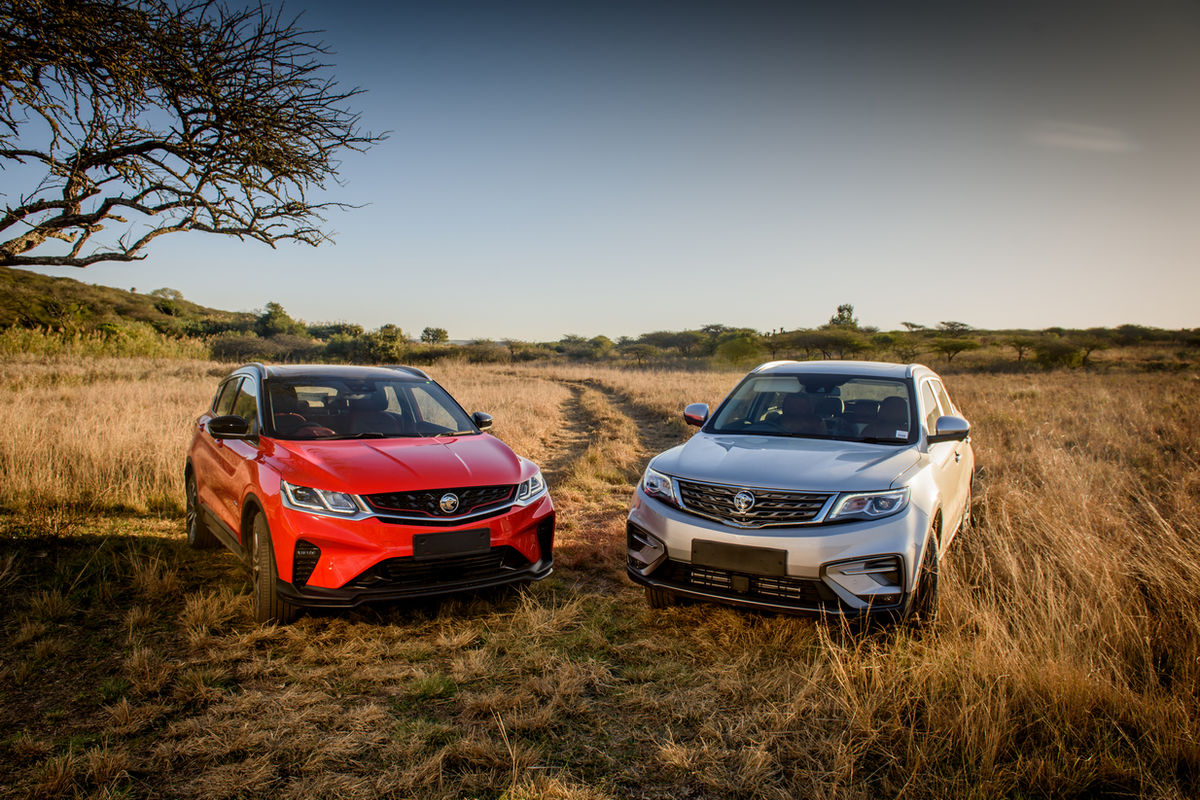
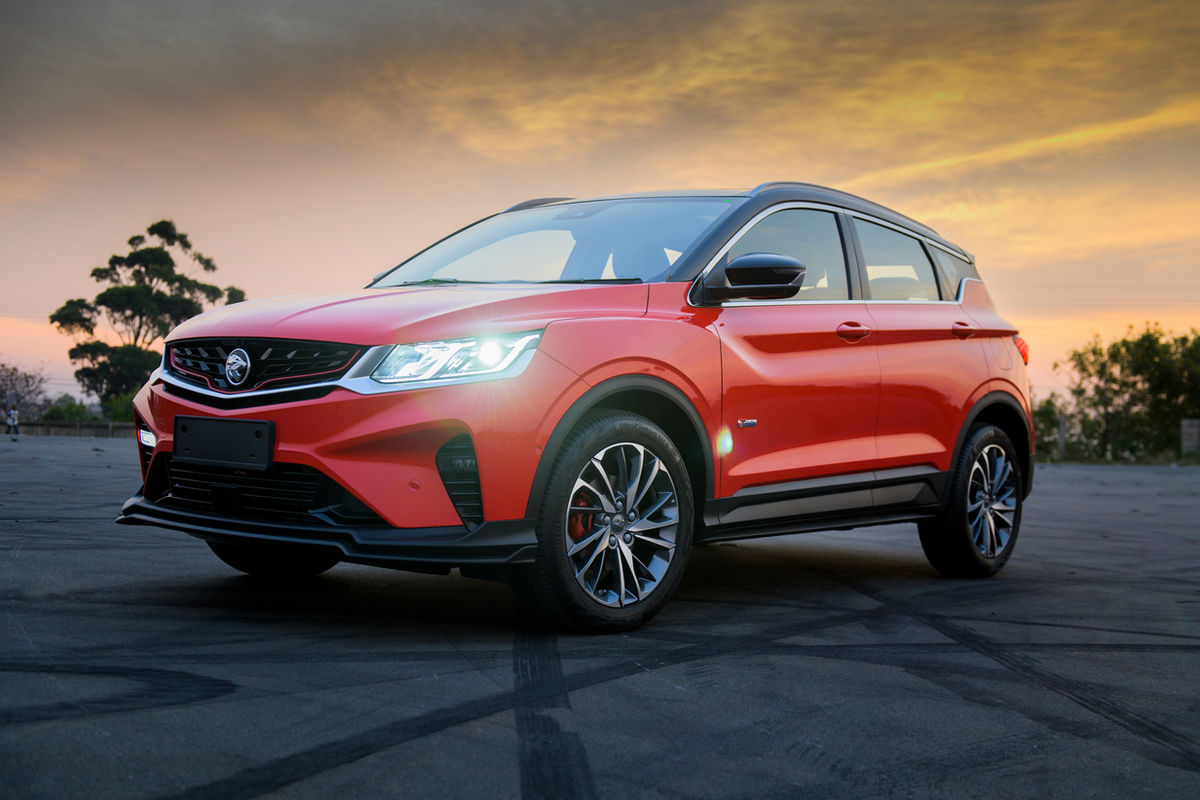
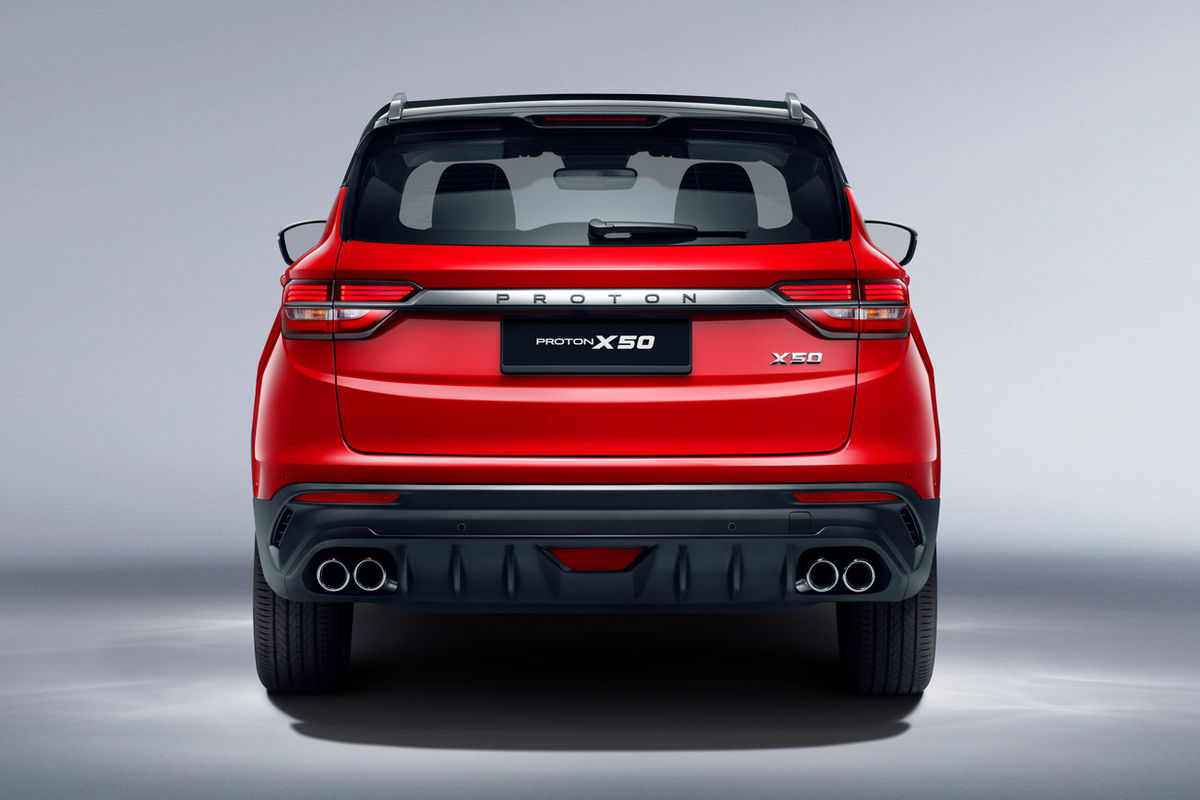
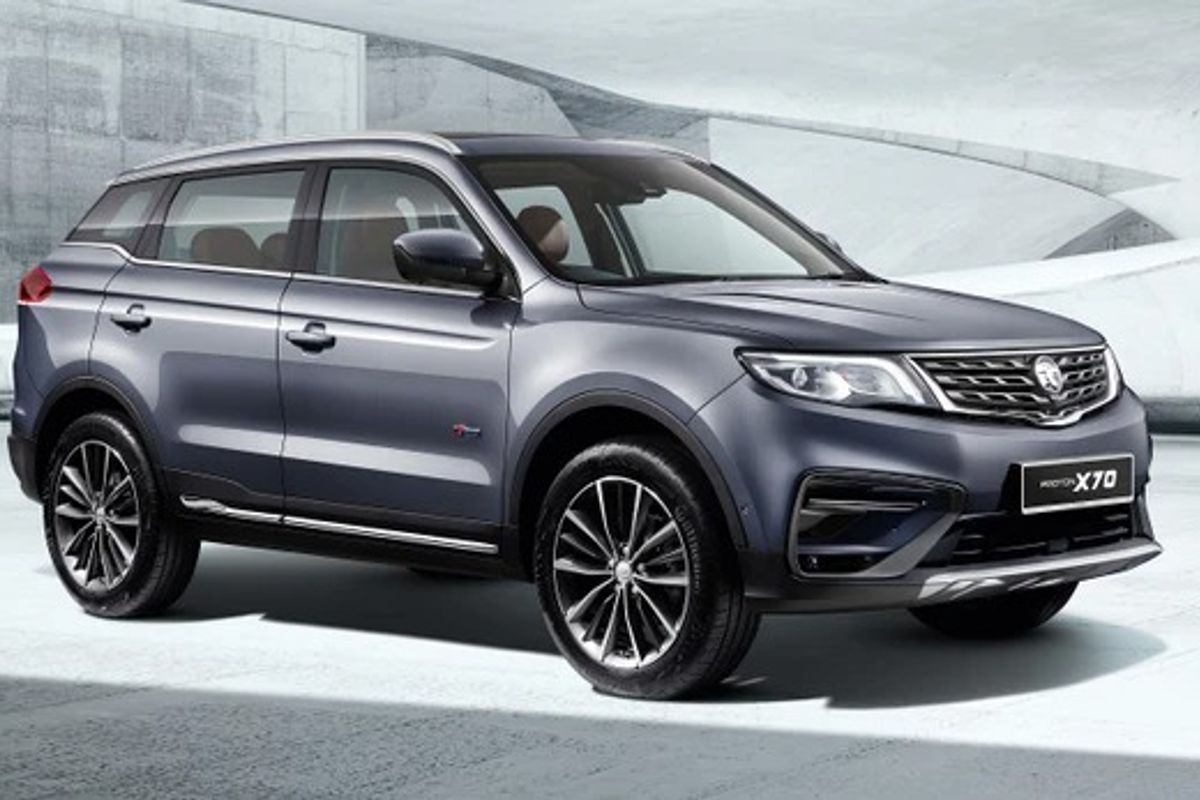
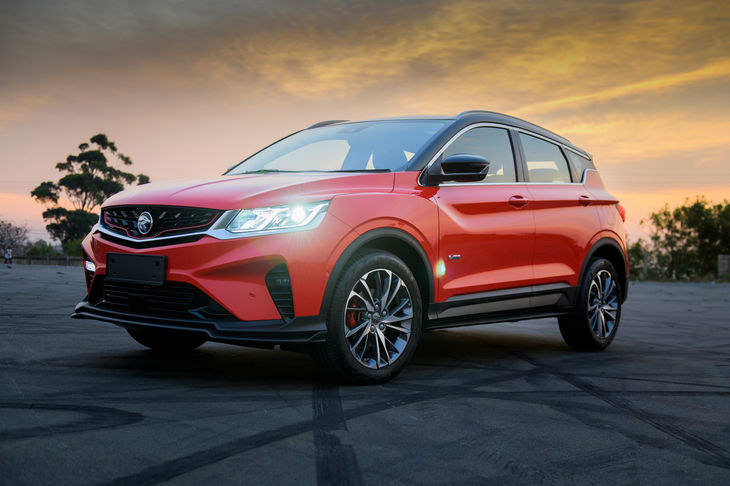
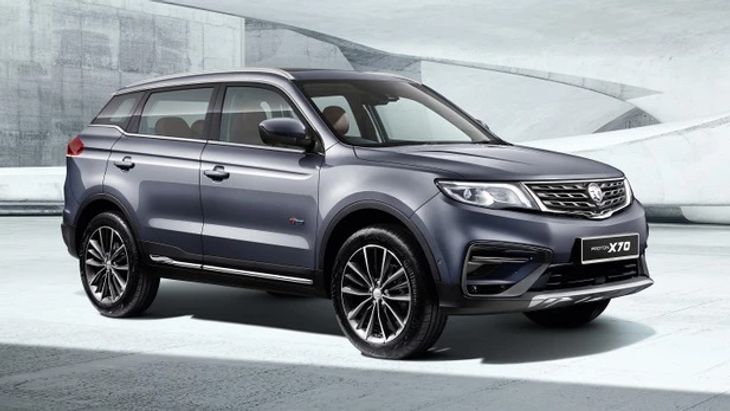
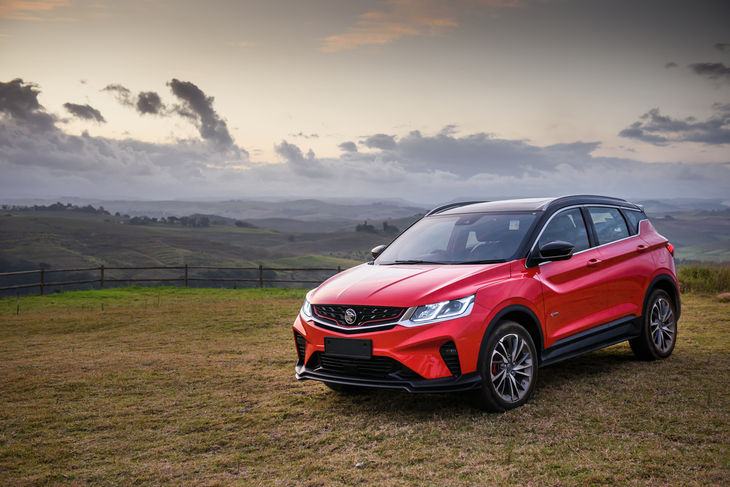
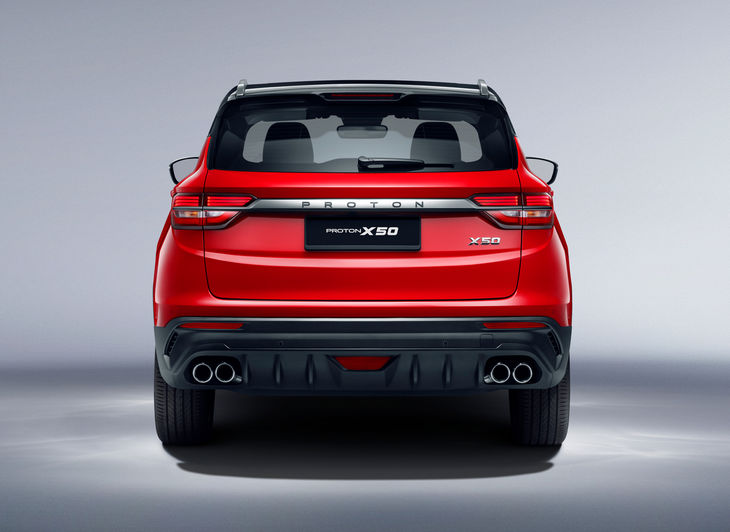
Proton’s X50 uses a Geely platform and a Volvo engine.
There are 2 models that come to mind when I think of Proton in South Africa. The first one is the Gen2 coupe-styled sedan, which immediately grabbed my attention because it wore a badge on its rear that read “Lotus Engineered”. At the time, Lotus was a red-hot brand by virtue of the reputations of its Elise and Exige sportscars; they were known as some of the best-handling cars in the world and, as a gullible young adult, I was genuinely hopeful that under the skin of the affordable Proton Gen2 lurked a handling god that could outmanoeuvre a Volkswagen Golf GTI or Renault Megane RS of the day. Sadly, every review I read convinced me the only Lotus-engineered part of the Gen2 may have been the badge itself.
The other Proton that lurks in my memory banks is the Satria Neo – a Rally-inspired hatch with all the exterior cladding a Fast and the Furious fanatic could ask for but, but endowed with a power output that could hardly match that of a paper plane. Still, certain motoring journalists entertained the idea that the Satria Neo had its place (as some sort of guilty pleasure, because of the smile it put on your face when you looked at it). Hmm.
Forgive my nostalgic musings about Proton’s past; I’m just setting the scene for what Proton used to be and why the modern version of the brand aims to be nothing like its former self.
The Malaysian brand sold 49.9% of the company to Chinese powerhouse Geely (a brand that also came and then left South Africa) and began a massive overhaul of the Malaysian production plant. Geely also donated all its chassis and engine tech courtesy of Volvo (another brand owned by Geely) and has since begun launching Proton in markets where it can focus on right-hand-drive models, while Geely focuses on left-hand-drive products and battery-electric vehicles.
Proton is aiming high in SA
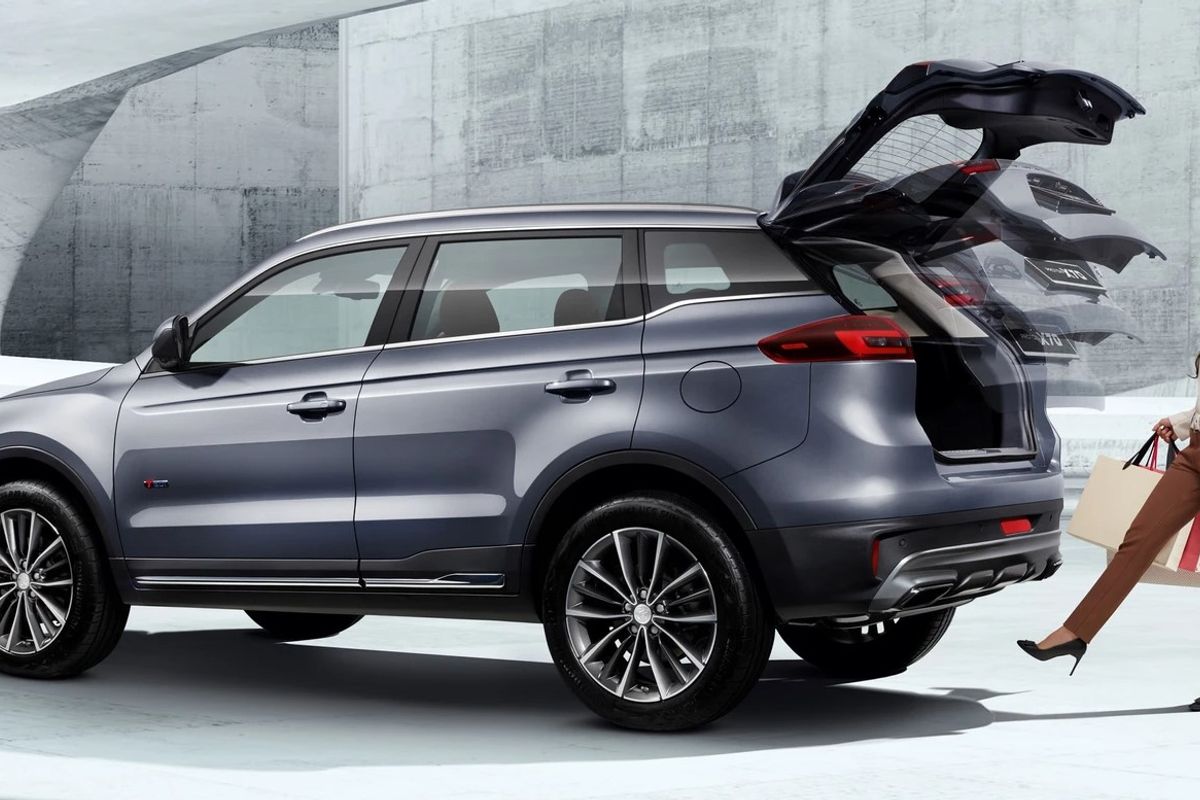
The X70 is a few years older than the X50 and uses the higher-output Volvo engine.
Proton was previously considered an affordable (or entry-level) brand, but that’s not the case anymore. The “new” Proton wants to be synonymous with affordable luxury and it’s targeting buyers that would usually consider mid-premium brands such as Hyundai, Kia, Mazda, Subaru and Volkswagen. No mention was made of the Chinese duo of Chery or Haval, because Proton considers itself more upmarket than those brands and has priced itself according to that “tier”.
The heads at CMH (Combined Motor Holdings – the local distributors of Proton) expect the brand’s pricing to hold for some time to come, which may see the new models come into play as “premium bargains” towards the end of the year (providing the Rand/Dollar exchange rate doesn’t take a massive hit in the meantime).
What are the cars like?
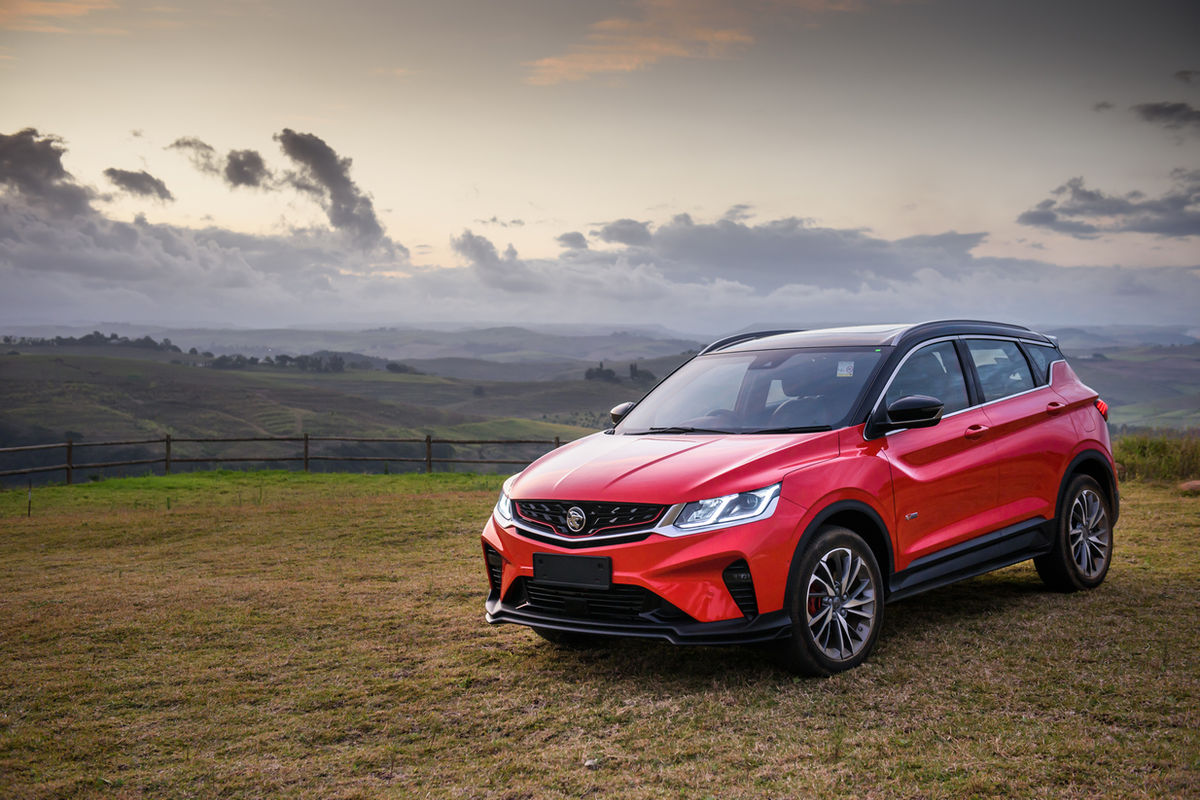
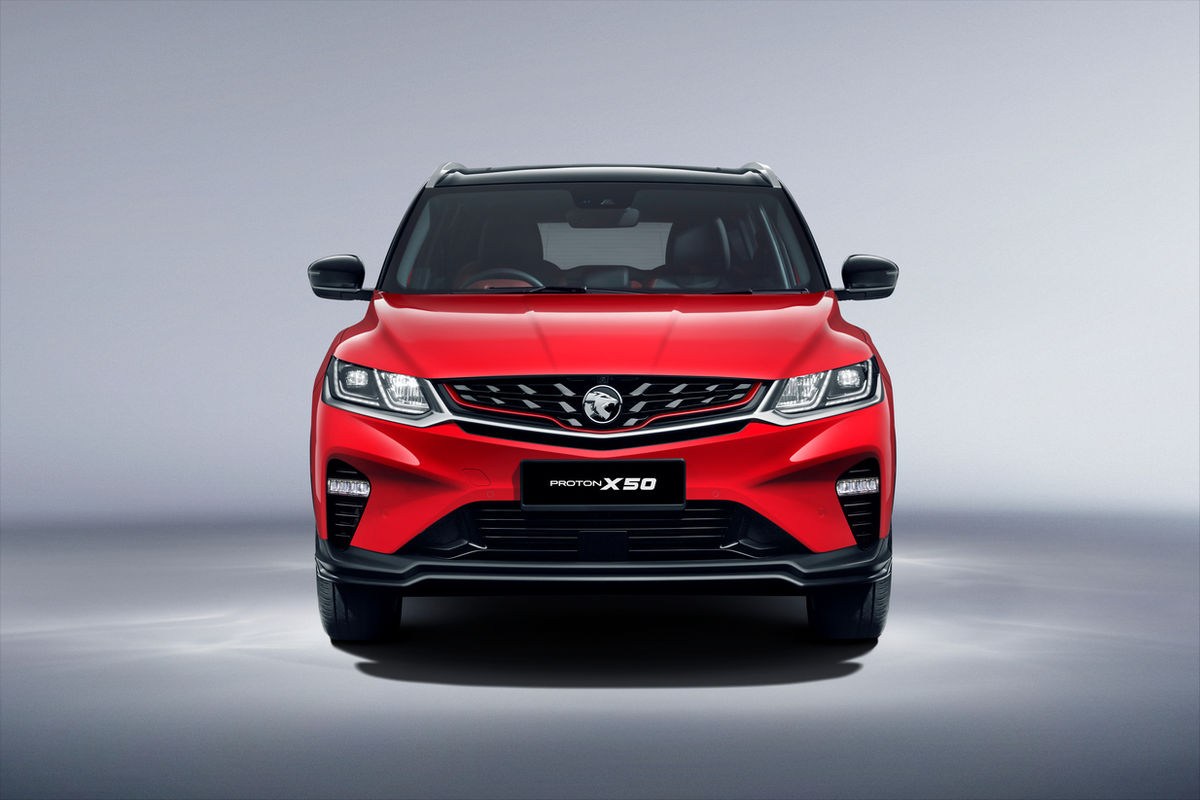
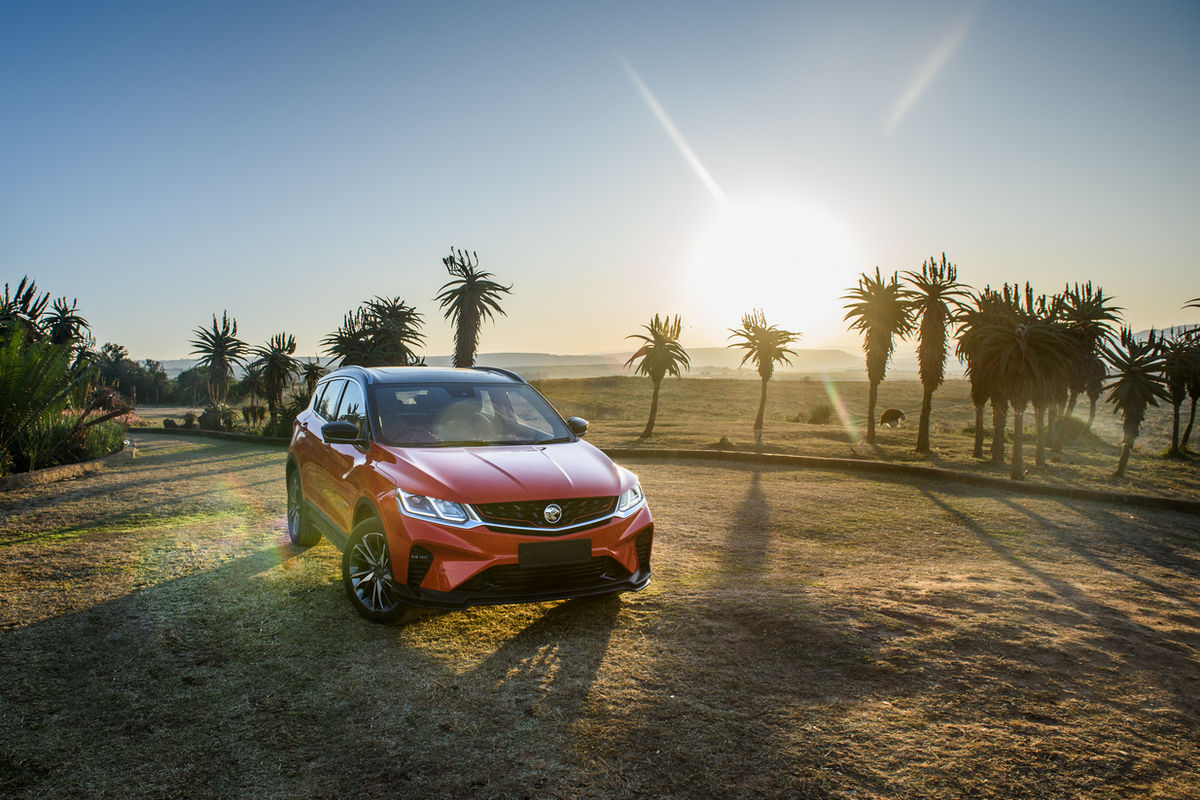
The X50 looks modern and rides well with a very good drivetrain underneath the bonnet.
The brand marks its return by introducing a pair of SUVs, but has also committed to introducing 2 sedans and a 3rd SUV during 2023 – expect one of the sedans to be a Saga – the very first car to roll off the Malaysian line.
Of the 2 models that are available now, the X50 is the more affordable offering. It’s a compact family SUV that is similar in size to a Kia Seltos or Hyundai Creta. The X50 is underpinned by the modular Volvo chassis used by the XC40 and several other Geely products. The engine is also sourced from the Volvo XC40 T3. The 1.5-litre 3-cylinder turbopetrol motor delivers either 110- or 130 kW and 226- or 255 Nm of torque, depending on the grade you choose.
The engine and 7-speed dual-clutch automatic transmissions are the standout features of the Proton X50. We drove it for a few kilometres around the Cradle of Humankind outside Johannesburg and it’s easy to tell that the drivetrain is well-suited to the car and better at managing power delivery than Haval and Chery models. It’s also more efficient than the Chinese models; Proton claims average fuel consumption of 6.5 L/100 km, which does not sound overly optimistic…
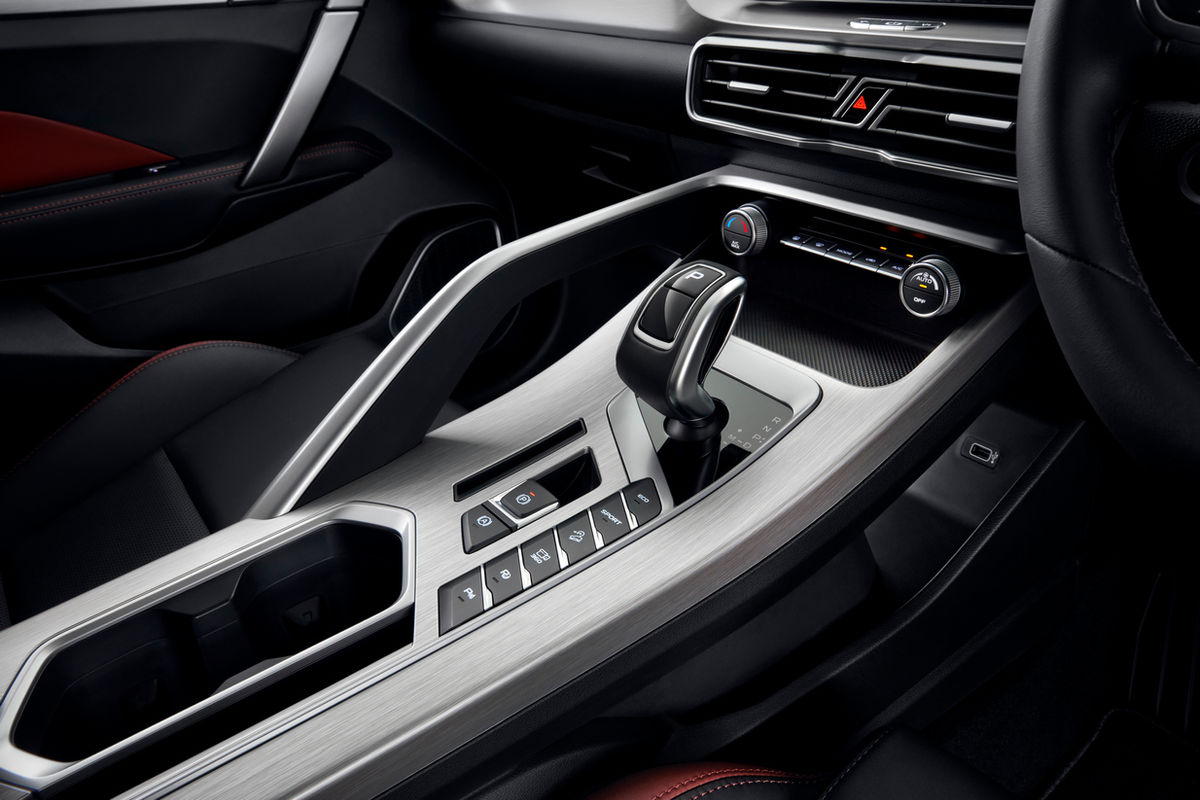
The 2nd model is the X70. It’s a larger SUV (about the size of a Volkswagen Tiguan, Toyota RAV4,Chery Tiggo 7 Pro or Mazda CX-5). The X70 seems like a harder sell in South Africa considering it was introduced abroad as long ago as 2018; while it’s still quite modern, it has elements that betray its age: the touchscreen looks a trifle undersized and there are more physical buttons inside than what modern cars have, although that may be a positive thing for some buyers.
It uses the higher-output 130 kW 1.5-litre turbopetrol and is said to consume 7.8 L/100 km on the combined cycle. Both SUVs ride well and their suspensions seem to absorb larger road imperfections with aplomb. The chassis feels stiff with little side-to-side roll/flex when you corner or roll over a diagonal speed bump. Both cars have quiet cabins (it suggests above-average NVH suppression) and, although we only did a little mileage in them, they appear to be solidly built.
Interior luxury and quality
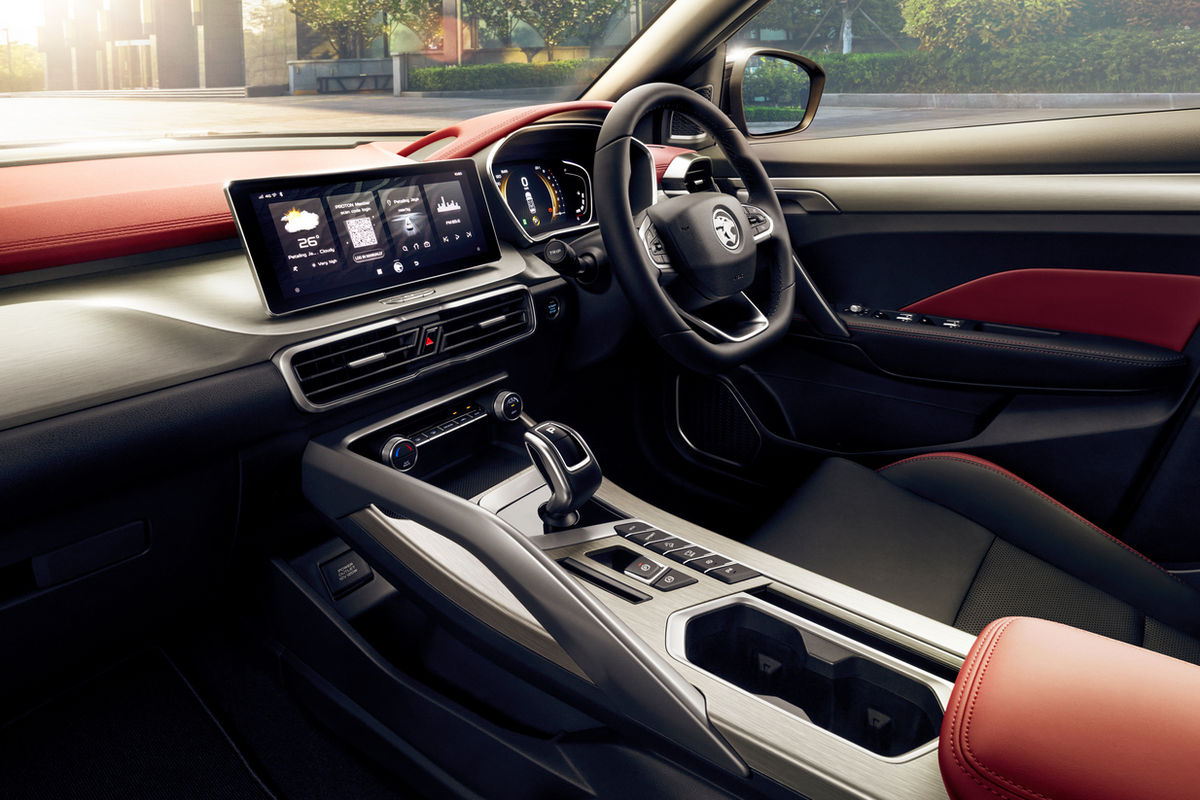
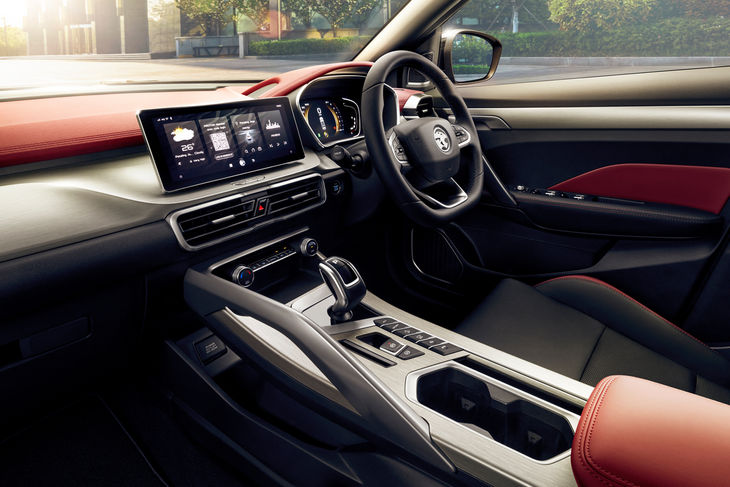
The X50’s interior features Nappa leather for the seats and door inserts.
The models we got to drive (and look through) at the Proton media event were all top-spec versions, so I can’t speak to what lesser derivatives would be like inside or whether they’d be comparatively meagerly- or well equipped, but “new brands” tend to err on the side of the latter and specify cars liberally to make strong showroom impressions/sweeten the purchasing propositions for buyers who are looking for that extra bit of value for money, which is the vast majority of them, nowadays. A large panoramic sunroof in both models will no doubt please South African buyers, while Nappa leather trim is very nice to have – apart from the seats, it features on the door panels and certain areas on the dashboard.
The interior design looks clean and uncluttered with a hint of “fighter jet” design to the side air vents. I could only spot 1 USB port in the front and 1 in the rear, along with a 12C outlet in the X70, but full specs will be revealed at a later date.
Anything the Proton might be missing?
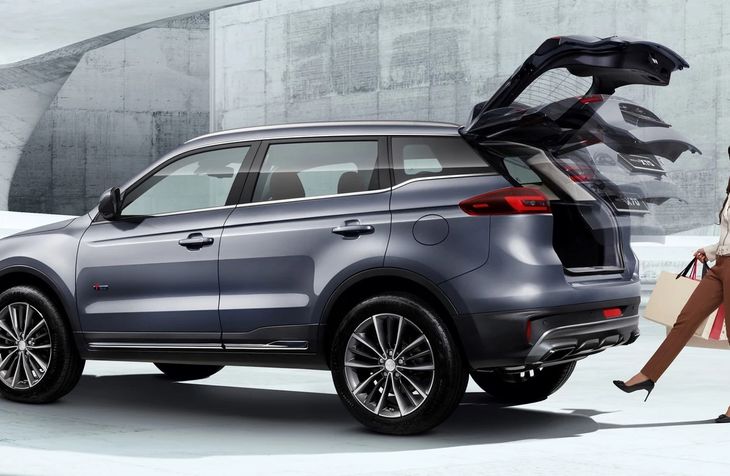
The X70 features an electric tailgate, whereas the X50 does not.
When I had a quick chat with some of the Proton and CMH crew, they noted that there were some updates in the pipeline that would improve the onboard tech in the X50 and X70. Initially, Android Auto is available (apparently), but not Apple Carplay. However, newer software that will enable CarPlay compatibility (and some other features) will soon be available – new Proton owners will be required to visit a dealership to install the update.
I noticed that neither model had a wireless charging bay for a smartphone (although it is on the accessories list), but aside from that, both cars come fully-loaded. The X50 is equipped with semi-autonomous Level 2 features, which means it gets lane-keep assist, automatic parallel parking and adaptive cruise control. There’s also a 360-degree camera, but the X50’s infotainment screen didn’t display a particularly high-res feed; the X70’s display was much clearer…
The after-sales agreement
The Proton models are backed by a good warranty and service plan.
Proton in Malaysia has been very hands-on in launching this project in South Africa and CMH has convinced the manufacturer that it needs to offer excellent service – both pre- and post-sale. They assured us that parts supply would be generous and rapid, with most of the frequently used spares available immediately. CMH has also handpicked 26 dealers to distribute Proton nationally with the intention of increasing that tally to 35 dealers by 2024.
Proton is also offering a decent warranty on its cars. The warranty is valid for 5 years/unlimited km and it comes in combination with a 5-year/80 000 km service plan.
Proton has high hopes for the South African market as it sees the Republic as a major avenue for brand expansion. There was plenty of excitement from the contingent of Malaysians that were sent to Mzansi to help with the local launch and also from the CMH representatives, who are looking to add another successful brand to their stack. It will be an interesting story to follow in the coming months; the sales figures will be the measure of success, but for now, the Saga continues.
As we approach the middle of the month, we can take a look at the available data and make some predictions on the fuel price. As it stands, South Africa will benefit from further price decreases!
Thanks to the data published by the Central Energy Fund on the 13th September 2022, we can start making some predictions on the price of petrol, diesel and illuminating paraffin. There’s good news as the current trajectory indicates a reduction in the price of petrol, but unfortunately the price of diesel could increase.
South African motorists have had a great run of two back-to-back months of price reductions that have helped take the sting out of the cost of living. So, how is October shaping up? Based on the CEF’s release, we’re looking at a petrol 95 decrease of R1.44 per litre, petrol 93 decrease of R1 35 per litre, while diesel may increase by 66 cents and 73 cents per litre for 0.05% and 0.005% respectively. Paraffin is pointing towards a 7 cents a litre increase.
It’s important to note these are predictions based on the current economic factors like exchange rate and price of the product at the global market. Fingers crossed things remain stable and steady over the coming weeks and if this happens, motorists can enjoy some relief at the pumps if they drive petrol-powered vehicles.
We’ll update this article towards the end of September 2022.
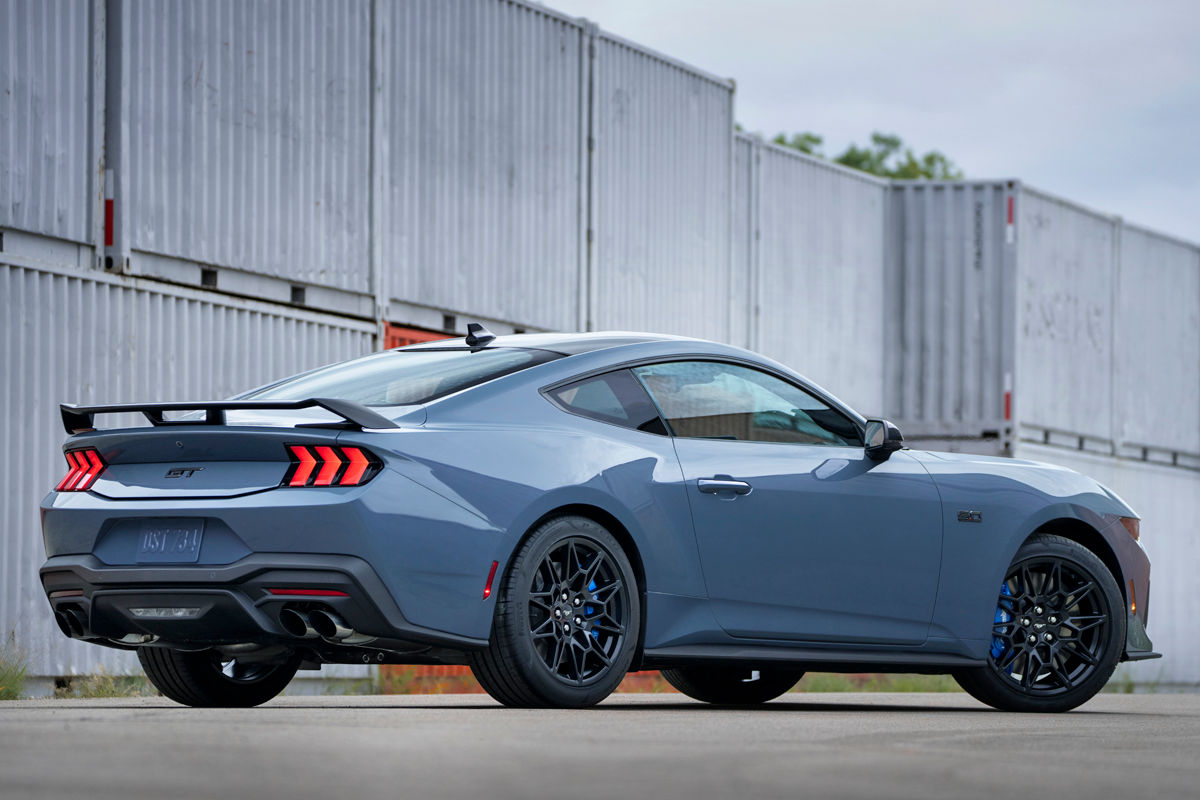
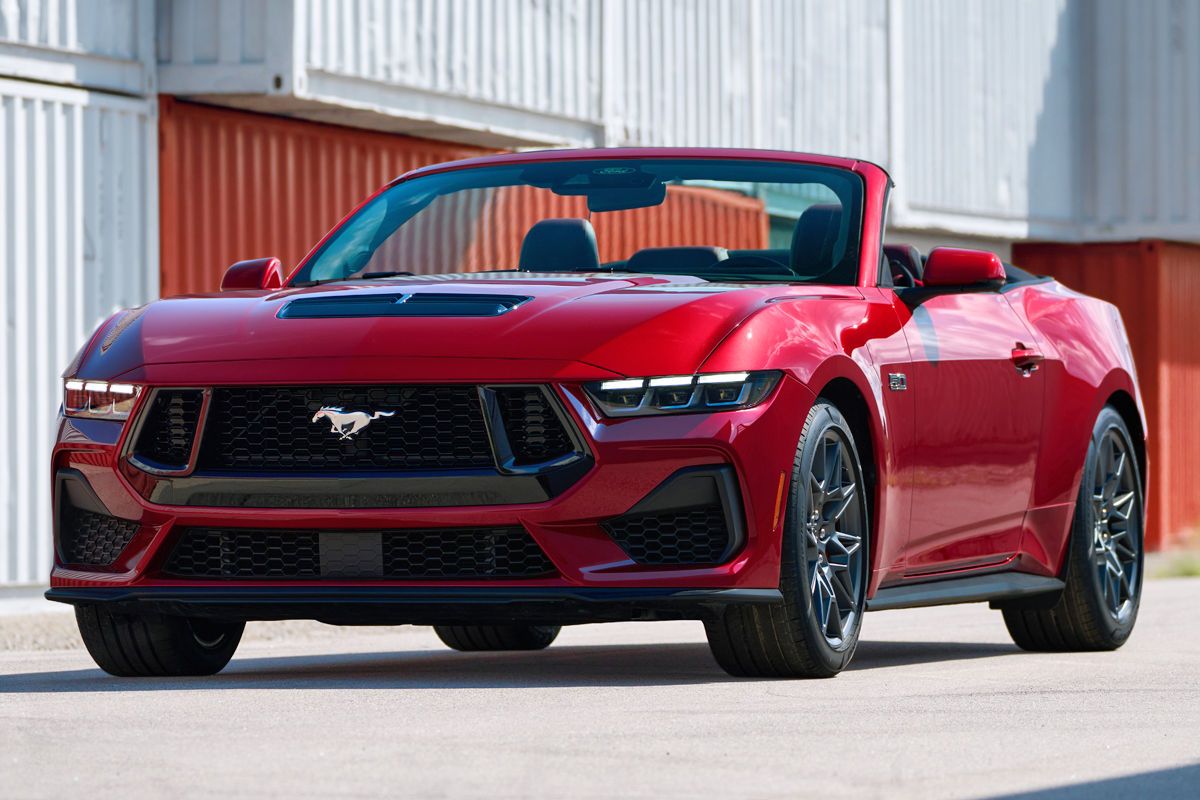
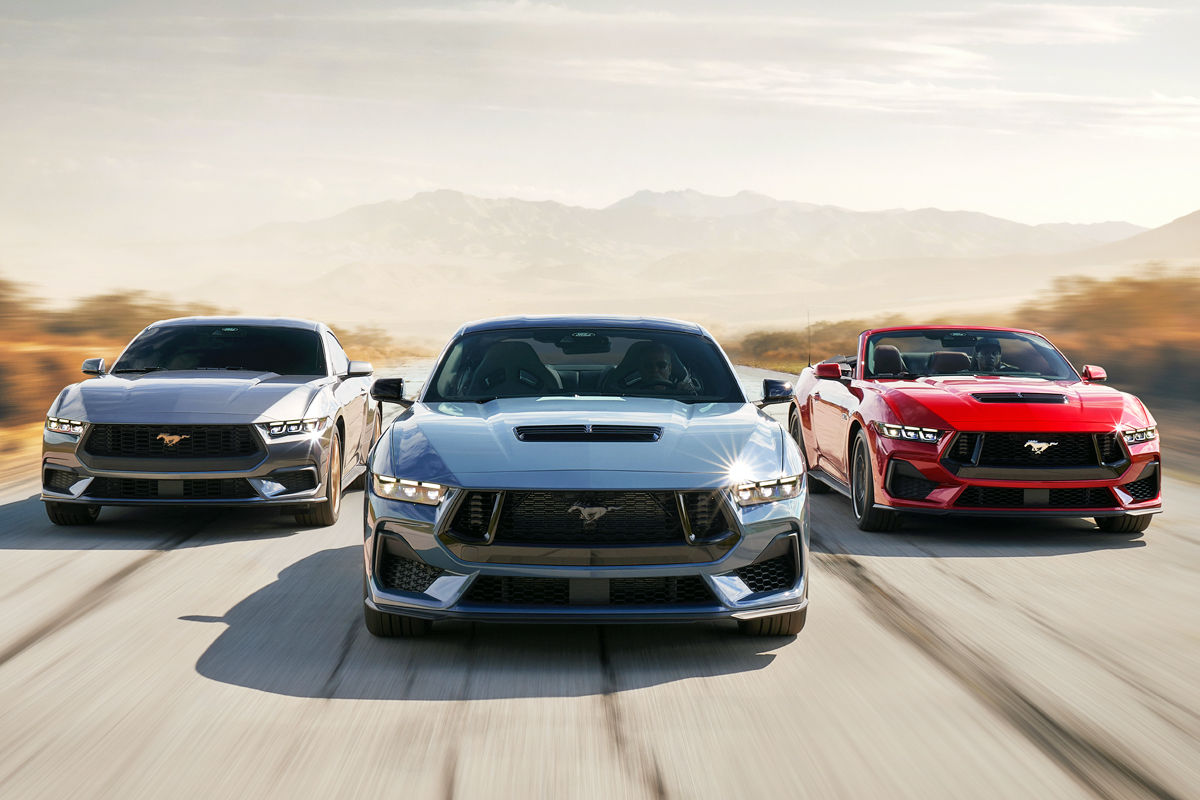
The wraps have come off the new Ford Mustang, with the seventh-generation pony car gaining evolutionary styling changes and an overhauled interior, and thankfully retaining the option of a V8 engine…
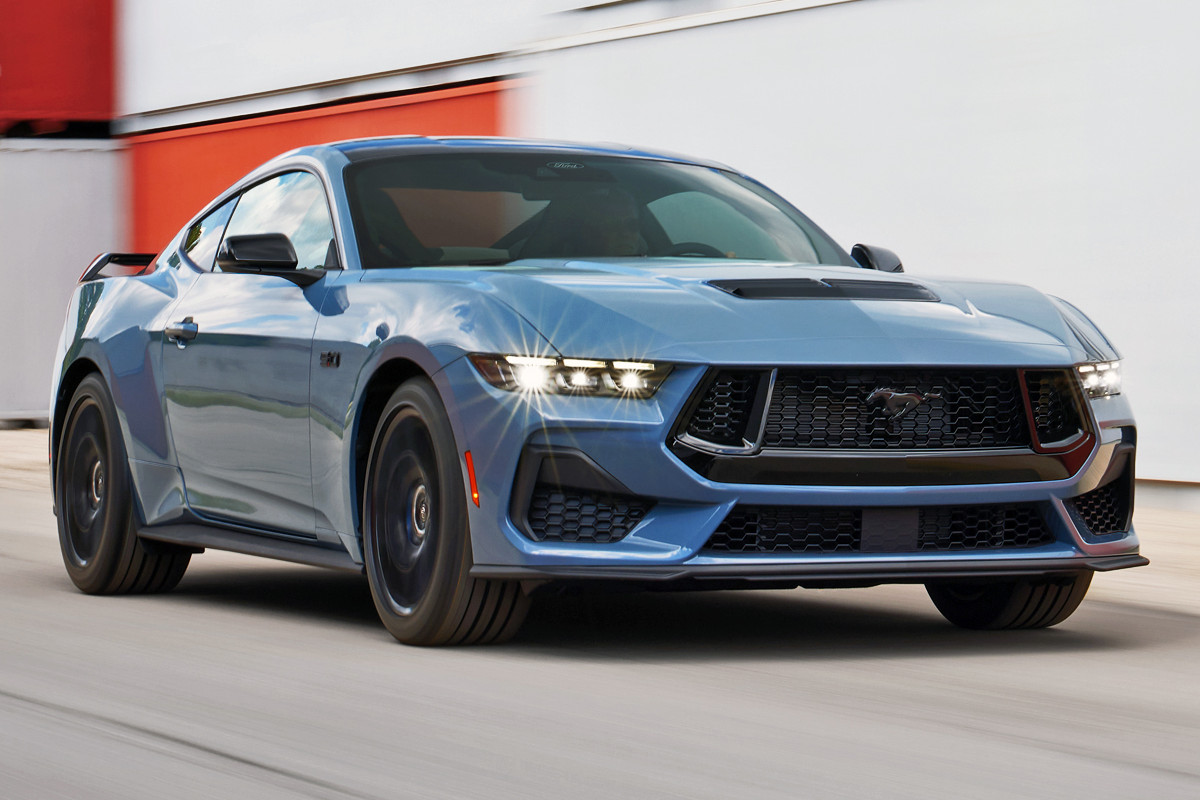
Meet the new Ford Mustang. Seemingly riding on an updated version of the outgoing model’s platform, the seventh-generation Mustang likewise uses tweaked versions of its predecessor’s petrol engines. The big news, of course, is the fact the familiar 5.0-litre V8 powerplant lives on.
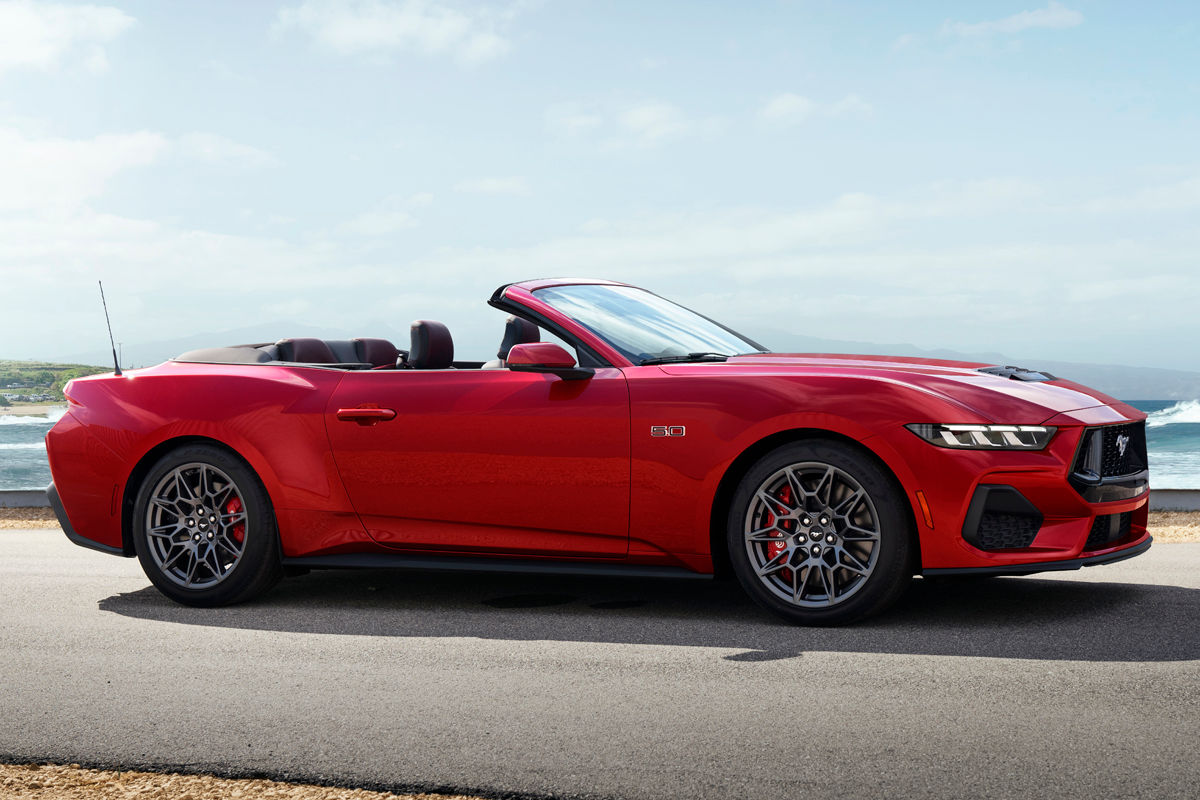
As with the sixth-generation Mustang, the newcomer will be available in coupé and convertible body styles, with the engine line-up again comprising the aforementioned V8 and an updated version of the turbocharged 2.3-litre, 4-cylinder engine. Manual and automatic transmissions will be offered, depending on the market.
Though the Blue Oval brand has yet to confirm peak power and torque outputs of either of the engine options, it does promise the fourth generation of its Coyote 5.0-litre V8 (which, for the record, makes 330 kW and 529 Nm in outgoing SA-spec form) will deliver the “most naturally aspirated horsepower of any Mustang GT” thanks to a new dual air-intake box and dual-throttle body design.
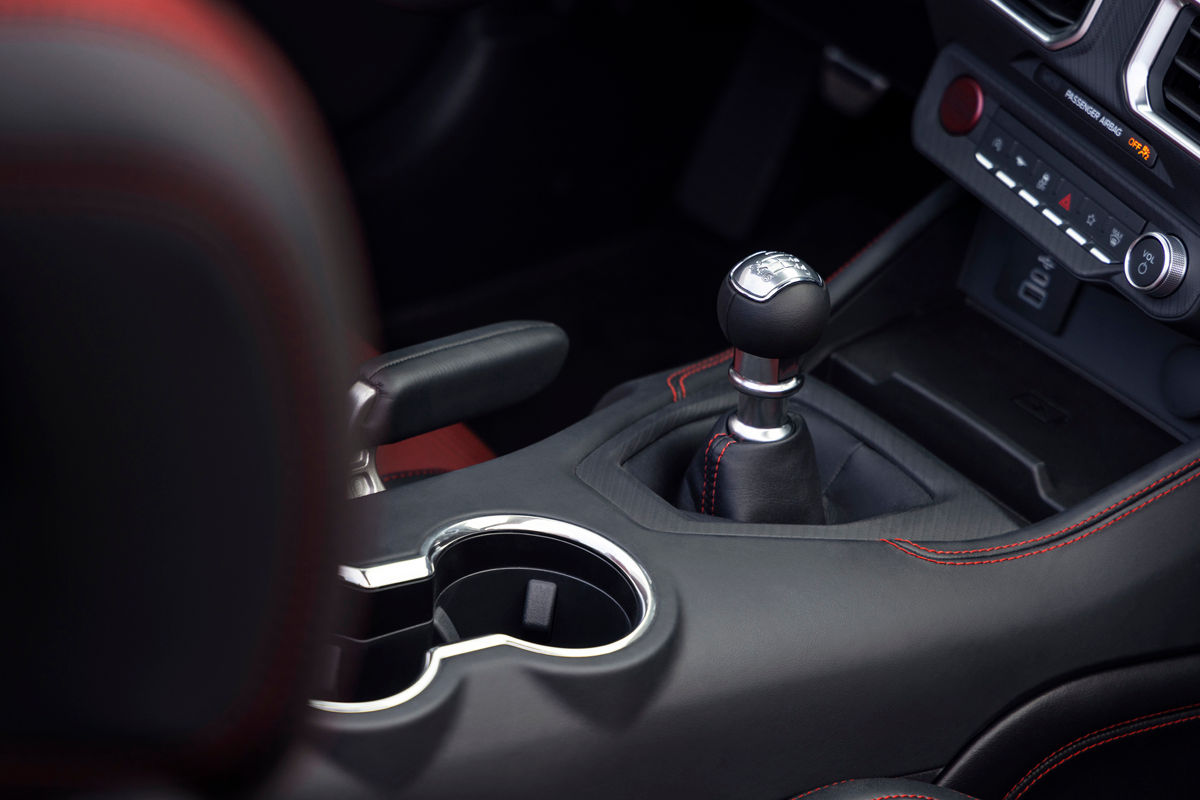
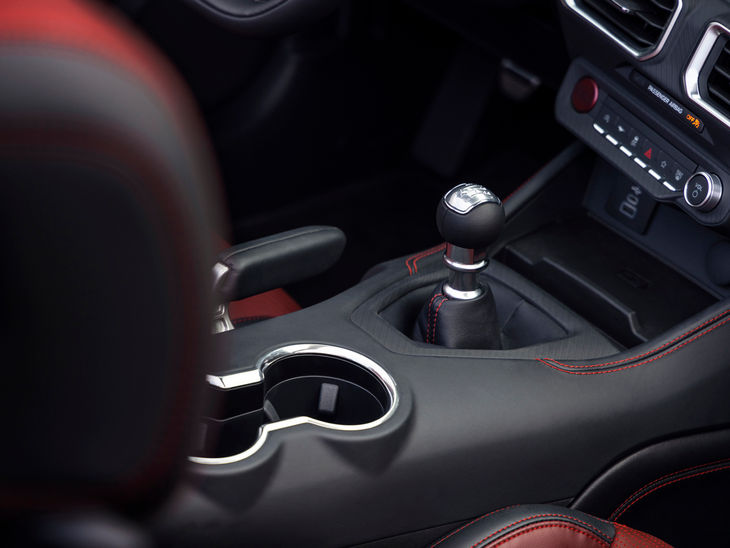
The 6-speed manual gearbox lives on the new Ford Mustang (in some markets, anyway).
In North America at least, the V8 lump will again be offered in conjunction with a 6-speed manual transmission (complete with a rev-matching function), though customers will have the option of specifying a 10-speed automatic transmission if they prefer two pedals to three. From what we understand, the manual cog-swapper won’t be available with the EcoBoost unit.
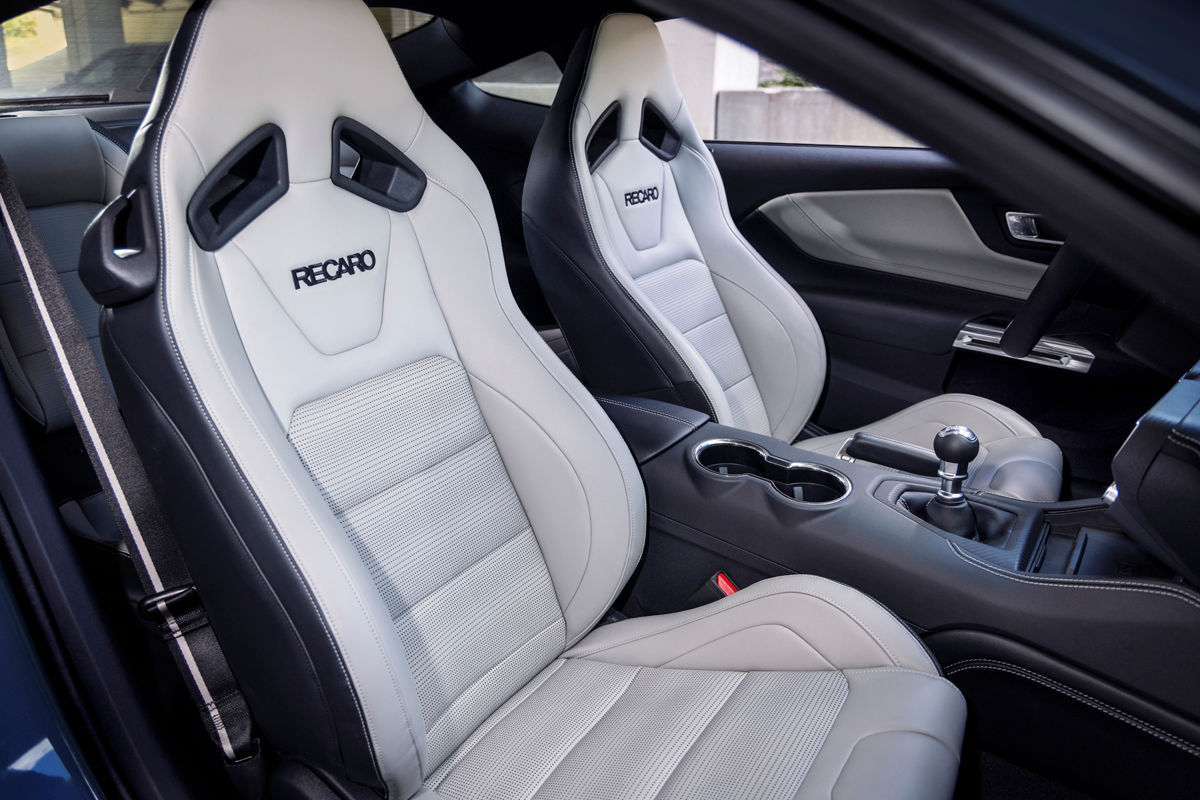
The new Mustang will feature six drive modes (normal, sport, slippery, drag, track and a customisable setting), while a Performance Pack will be optional in some markets. The latter adds a range of track-inspired features, such as a front tower brace, Torsen limited-slip differential, active suspension, wider rear wheels and larger brakes (390 mm front and 355 mm rear Brembo items), plus the option of Recaro seats and an active exhaust. In addition, the GT Performance Pack includes brake ducts and an auxiliary engine-oil cooler.
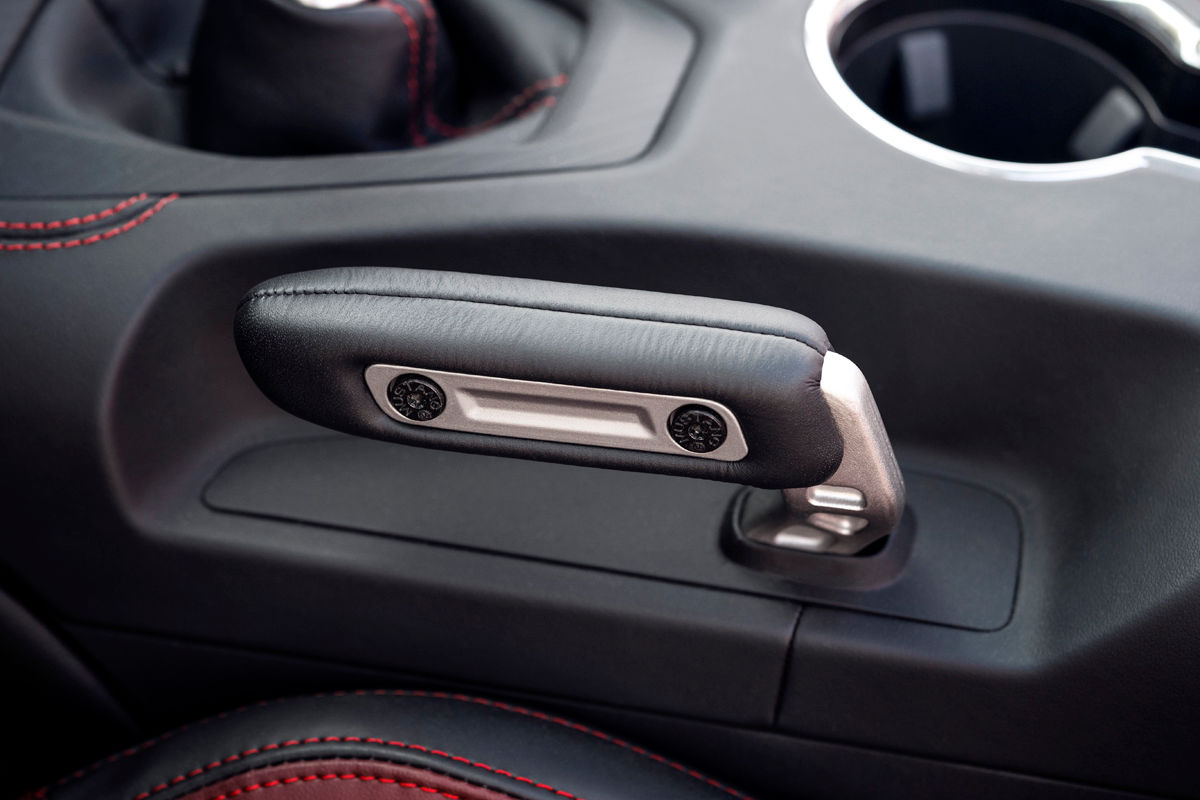
The seventh-generation Mustang furthermore gains a quicker steering ratio along with a “segment-first” electronic drift brake to “unlock the rear-wheel-drive drifting capability” of the new model. Called the Performance Electronic Parking Brake (with the “visual appeal and functionality” of a traditional, mechanical hand brake), this feature ostensibly allows novice drivers to learn and improve their drifting skills.
A look inside the new Ford Mustang’s cabin
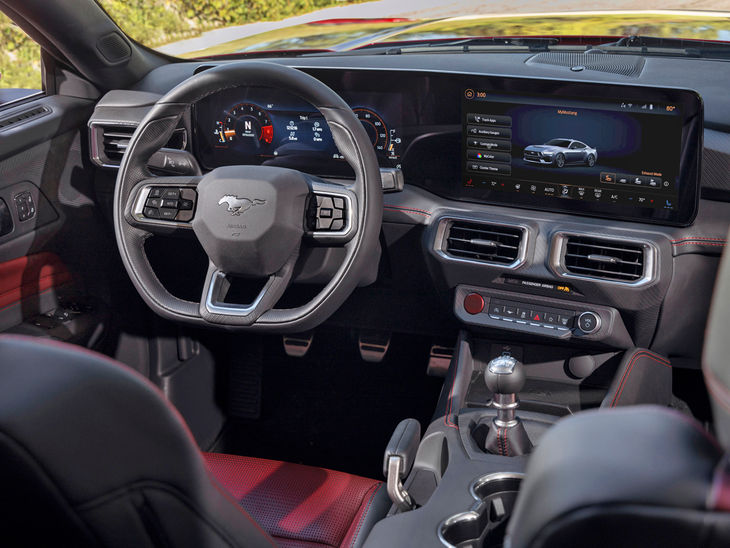
The pair of screens can optionally be connected behind a single piece of glass.
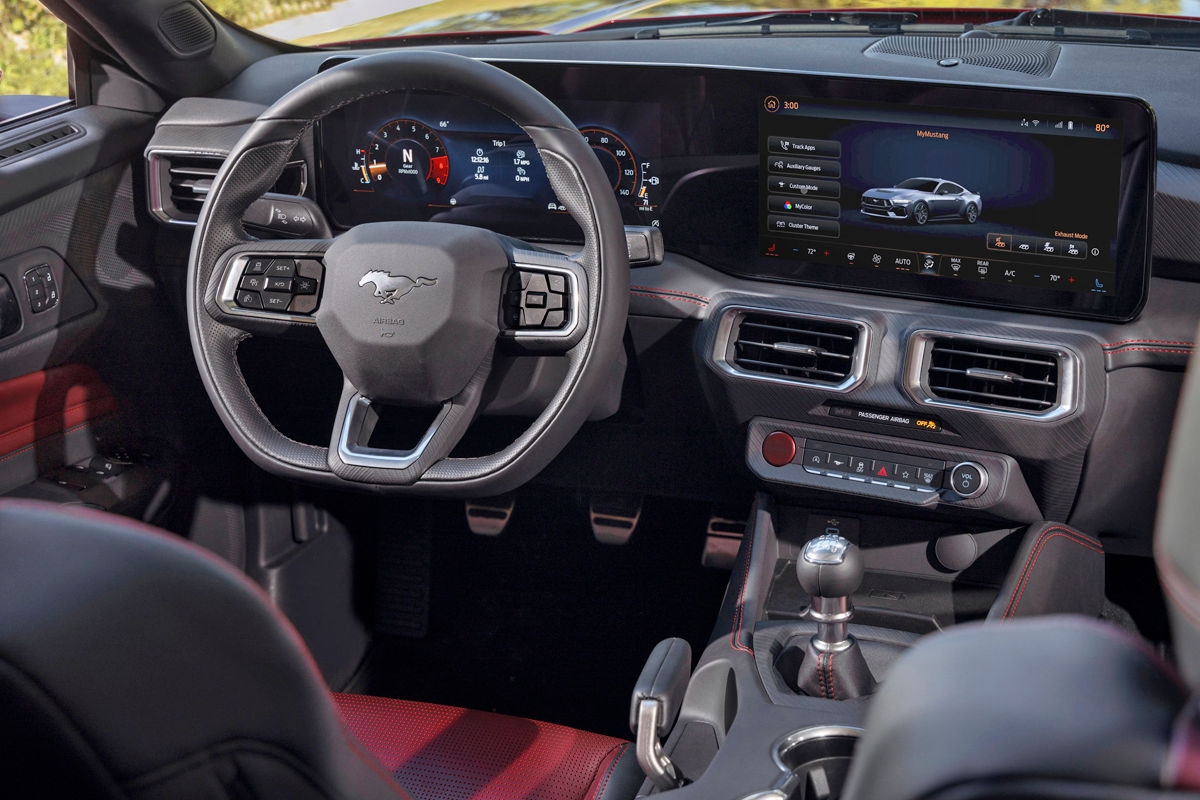
While the exterior design changes are fairly subtle (Ford calls them “edgier”), the Dearborn-based firm has made significant alterations to the Mustang’s cabin, rolling out what it describes as a “fighter jet-inspired digital” interior and the “most technologically advanced, driver-centric cockpit of any Mustang to date”.
In standard form, the facia features a pair of curved displays, with Ford promising the 12.4-inch digital instrument cluster is highly customisable. Interestingly, the digital instrument cluster can be optionally configured to flow into a 13.2-inch SYNC 4 centre stack behind a single piece of integrated glass angled toward the driver.
The American automaker has ditched some physical buttons (such as those for the radio and climate control) and integrated them into a digital display. Other changes inside include a new flat-bottomed steering wheel, which Ford says “provides more space when getting seated”. The company has also introduced something it calls Remote Rev, which – as the name suggests – lends the owner the ability to rev the car’s engine remotely using the key fob.
In North America, upholstery choices include cloth, Micro Suede vinyl inserts, synthetic leather upholstery and leather seat inserts. Top-spec models offer a leather-trimmed steering wheel as well as a choice of colour accent stitching and a unique upholstery perforation across the seat inserts. Other features and options include wireless smartphone charging, new overhead USB ports and a B&O sound system.
Of course, there’s plenty of safety kit on offer, from speed-sign recognition, adaptive cruise control and lane-centring assist to evasive steer assist and reverse brake assist. The Performance Package, meanwhile, adds active pothole mitigation, which monitors suspension, body, steering and braking input and adjusts suspension response accordingly.
The exterior styling of Ford’s fresh-faced Mustang
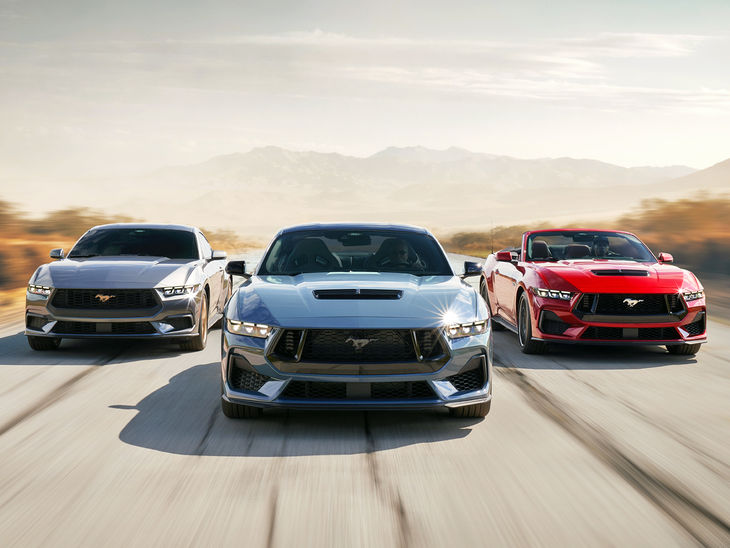
Note the less aggressive front styling of the EcoBoost model on the left.
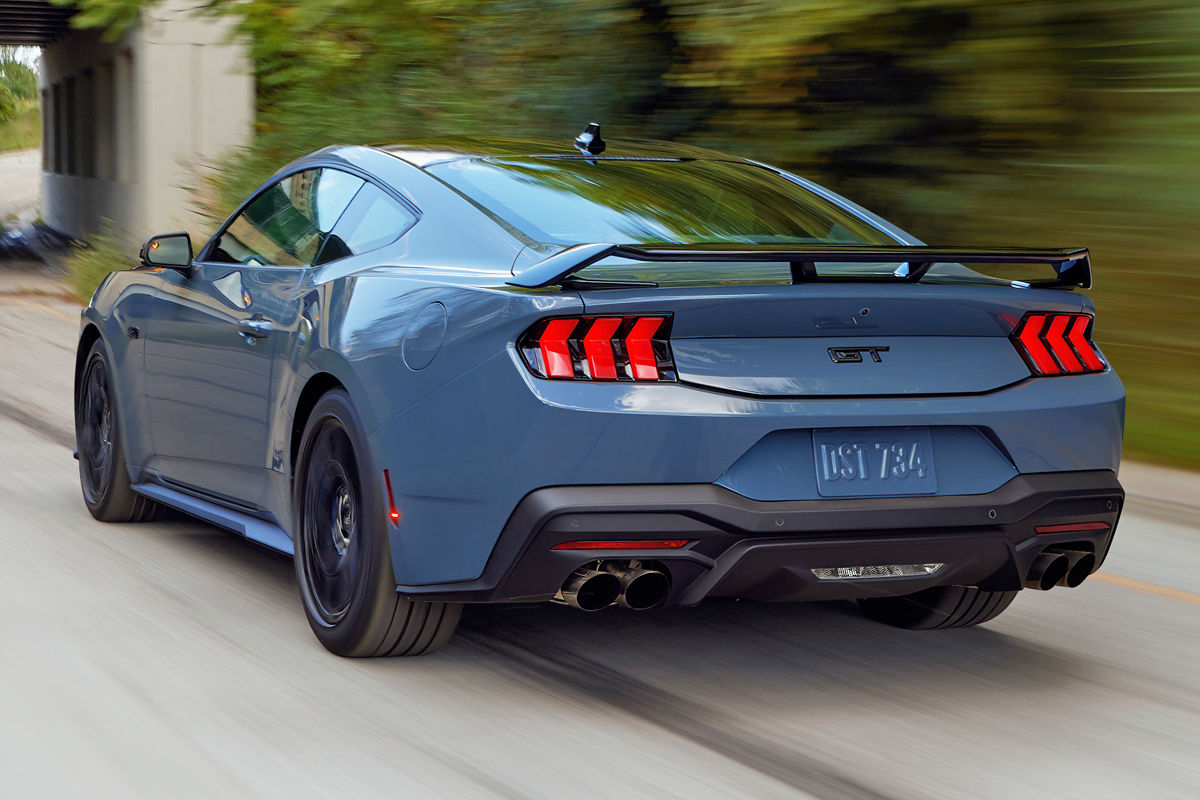
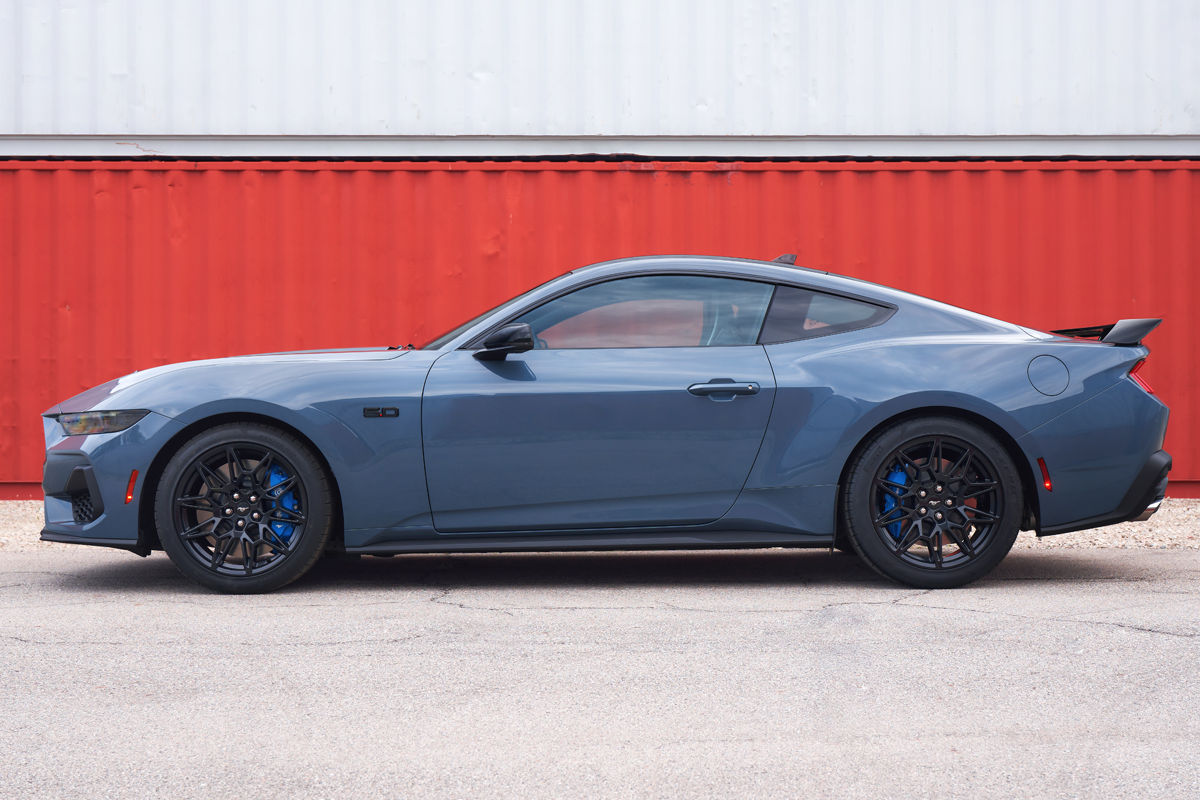
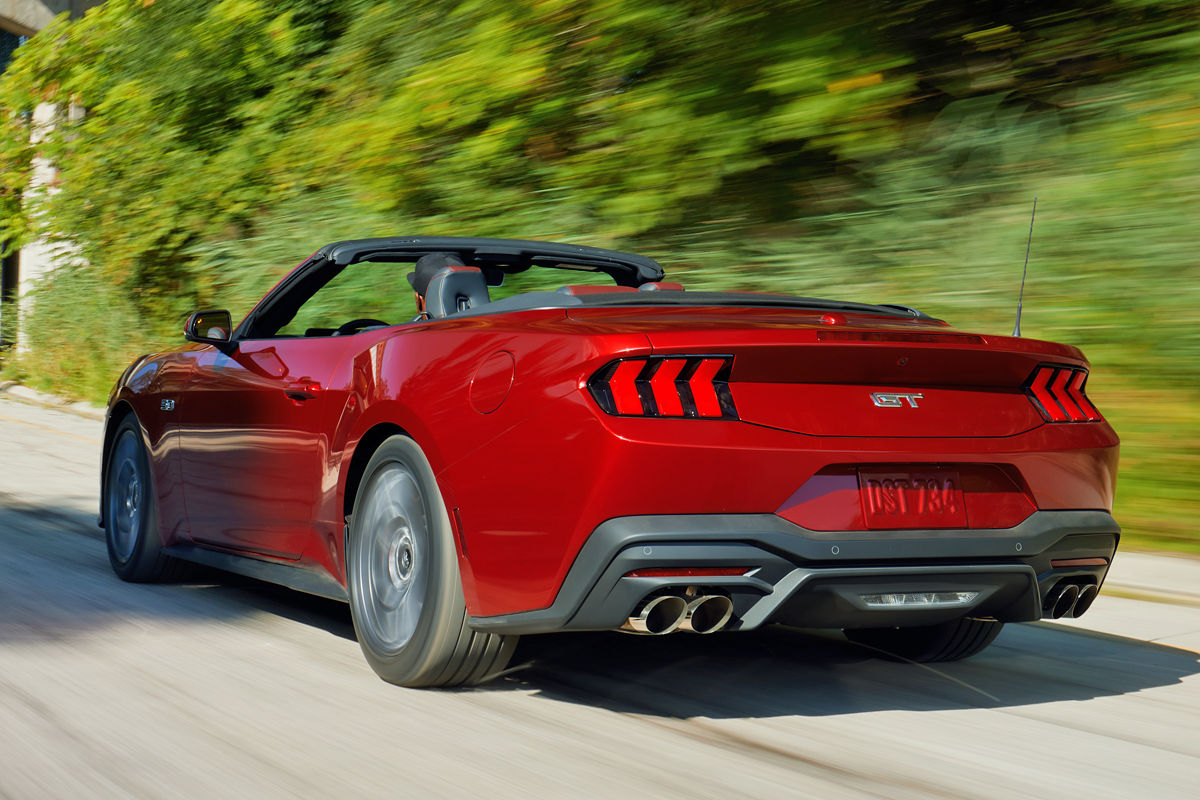
Ford claims the new model’s upper grille design shape was influenced by the original 1960s design, while the roofline and shortened rear overhang also remain true to the proportions of the first generation. The extended rear deck houses a fresh tri-bar lighting arrangement as well as a redesigned diffuser. The V8-powered GT is differentiated from the 4-cylinder model by larger, more aggressive grille openings. The apex model’s aerodynamics are optimised further with the addition of new bonnet vents and a redesigned front splitter.
In its domestic market, the new Mustang will be available in a choice of 11 exterior colours, including two new shades (Vapor Blue and Yellow Splash). Customers also can choose from three Brembo brake calliper hues (black, red or blue), while newly designed alloy wheels range in size from 17-inch items to 19-inch versions (with the option of upgrading to 20 inches on the GT).
“Investing in another generation of Mustang is a big statement at a time when many of our competitors are exiting the business of internal combustion vehicles,” said Jim Farley, CEO of Ford Motor Company. “Ford, however, is turbocharging its ICE growth plan, adding connected technology, opinionated derivatives, and hybrid options to our most profitable and popular cars – all in the Ford Blue family – on top of investing $50-billion in electric vehicles through 2026.”
The new Mustang will be built at Flat Rock Assembly Plant in Michigan, with sales in the United States commencing in 2023. Though right-hand-drive production has been confirmed, Ford Motor Company of Southern Africa has yet to indicate exactly when it plans to launch the new Mustang locally.
The Mustang’s (short) modern history in South Africa
Back in August 2014, Ford announced its engineers had finished construction of the very first right-hand-drive sixth-generation Mustang, confirming the production version would be exported to more than 25 right-hand-drive markets, including South Africa.
In December of the following year, the Mustang officially launched locally, with the range comprising six derivatives. There were fastback and convertible body styles, manual and automatic transmissions, and 4-cylinder and V8 engines. In July 2019, the refreshed Mustang arrived, with the line-up gaining Bullitt special edition. The Mach 1 followed in 2021, before the California Special arrived in 2022.
The outgoing Mustang range in South Africa – representing the only true passenger car from Ford still offered locally – currently comprises just three variants, all powered by the V8 engine: a fastback, a convertible and the aforementioned California Special.
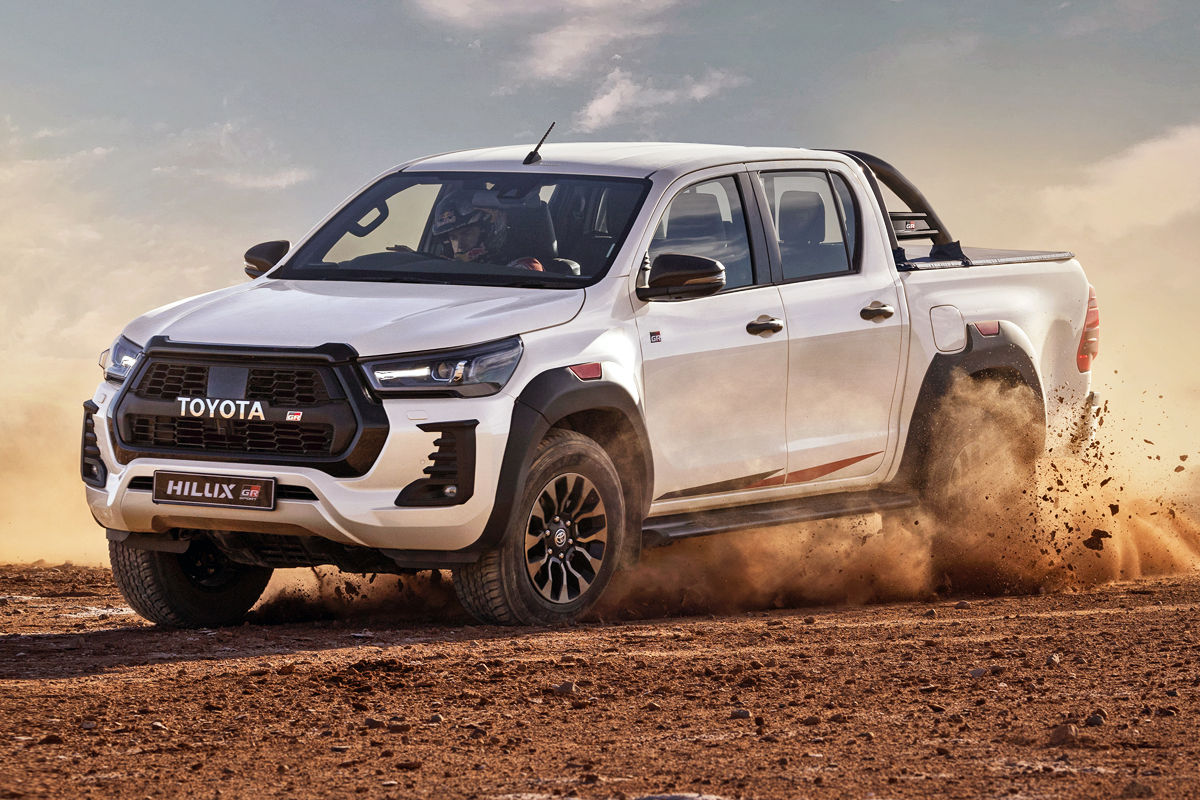
The long-awaited new Toyota Hilux GR-Sport has finally hit the market in South Africa, boasting an increase in power and torque! Here’s how much it costs…
The Toyota Hilux GR-Sport is finally here, inspired by the Japanese firm’s Dakar Rally success under the Gazoo Racing banner. What you’re looking at is the torquiest series-produced Hilux ever offered in South Africa.
Yes, the 2.8-litre, 4-cylinder turbodiesel engine used in this version of the Prospecton-built Hilux has been suitably massaged (via a “special ECU calibration”) to liberate some extra power and torque (unlike the similarly new Corolla Cross GR-Sport, which makes do with that model’s standard outputs). While the standard version of the Hilux’s 2.8-litre powertrain offers 150 kW and 500 Nm, the GR-Sport’s peak outputs sit at 165 kW and 550 Nm. Top speed remains unchanged at 175 kph, while Toyota doesn’t list a 0-100 kph time (but does say it improves by 0.65 seconds).
Available exclusively in the double-cab body style, the Hilux GR-Sport (or Hilux GR-S, for short) ships standard with the Japanese firm’s 6-speed automatic transmission and 4×4. With a starting price of R865 400, it’s interestingly not the most expensive derivative in the range, with the three RS versions priced higher (topping out at R917 900). For the record, the GR-Sport price represents a R40 500 premium over the Legend model.
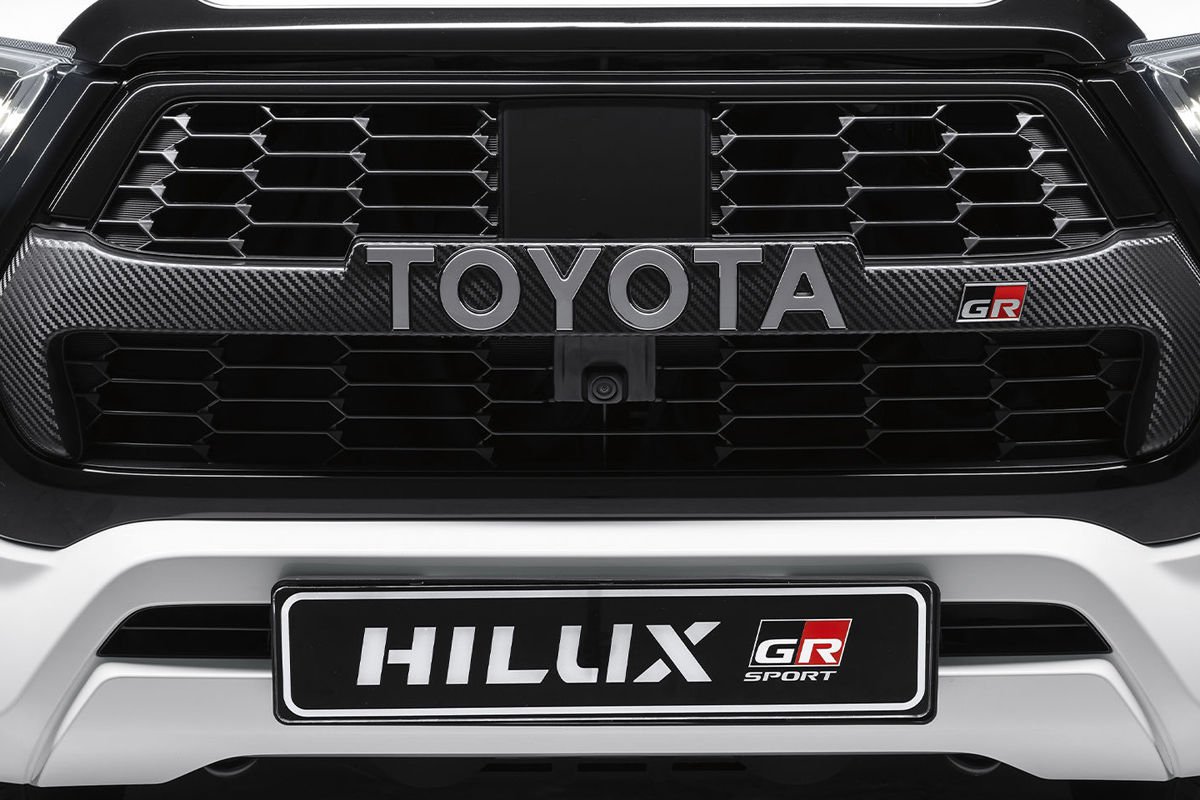
So, besides the extra oomph, what goes into the making of a Hilux GR-Sport? Well, there’s a model-specific GR-Sport grille painted in high-gloss black and fitted with bold “Toyota” lettering. In addition, this model rides on 17-inch alloy wheels (as opposed to the 18-inch items used by the Legend) wrapped in taller-profile 265/65 R17 rubber to “offer enhanced off-road performance”. Toyota South Africa Motors furthermore says the “GR-inspired suspension” in the form of new monotube shock absorbers and stiffer coil springs promises “improved off-road handling and comfort”.
The new Hilux GR-Sport is available in 4 exterior paint colours.
Of course, there are plenty of GR logos scattered around the exterior (on the grille, flanks, rear and the styling bar) along with the requisite decals, which we believe are optional. The bumpers are based on the Raider design (rather than Legend) and include wider black overfenders with contrasting inserts. Black side-mirror caps, black door handles, black side steps and the aforementioned styling bar are all also included.
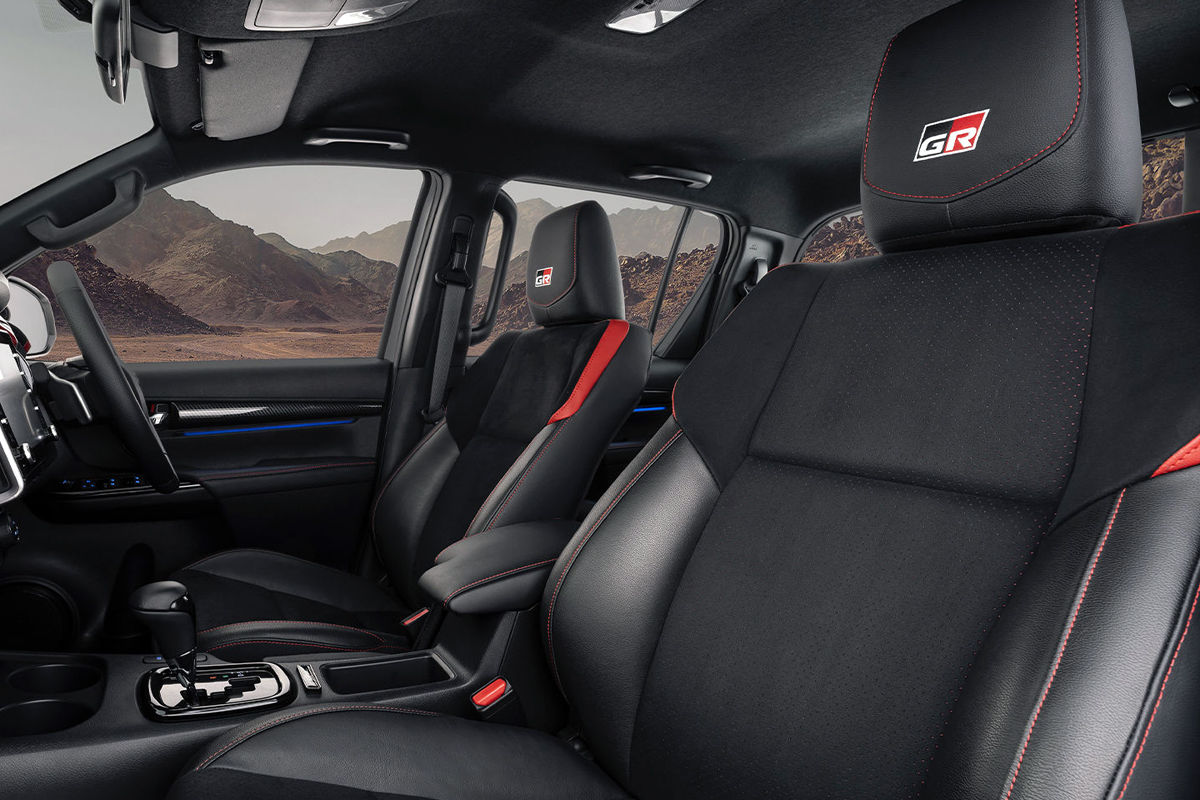
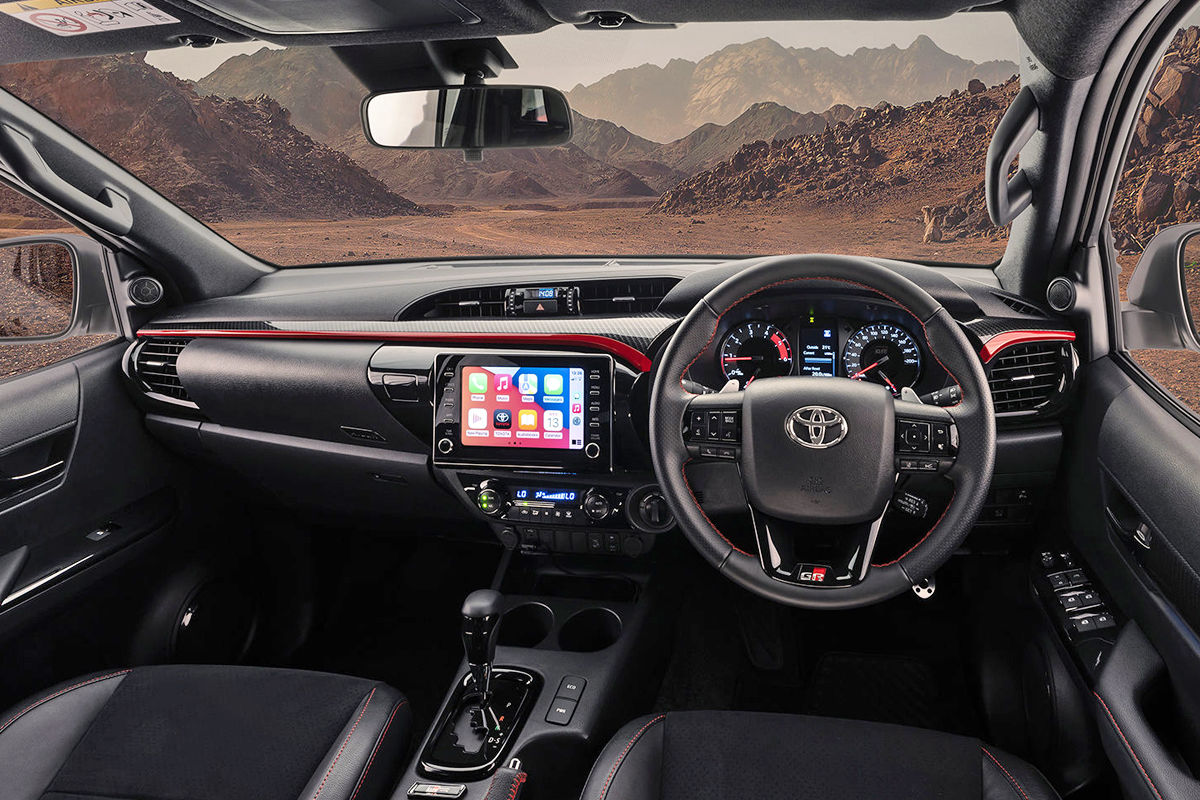
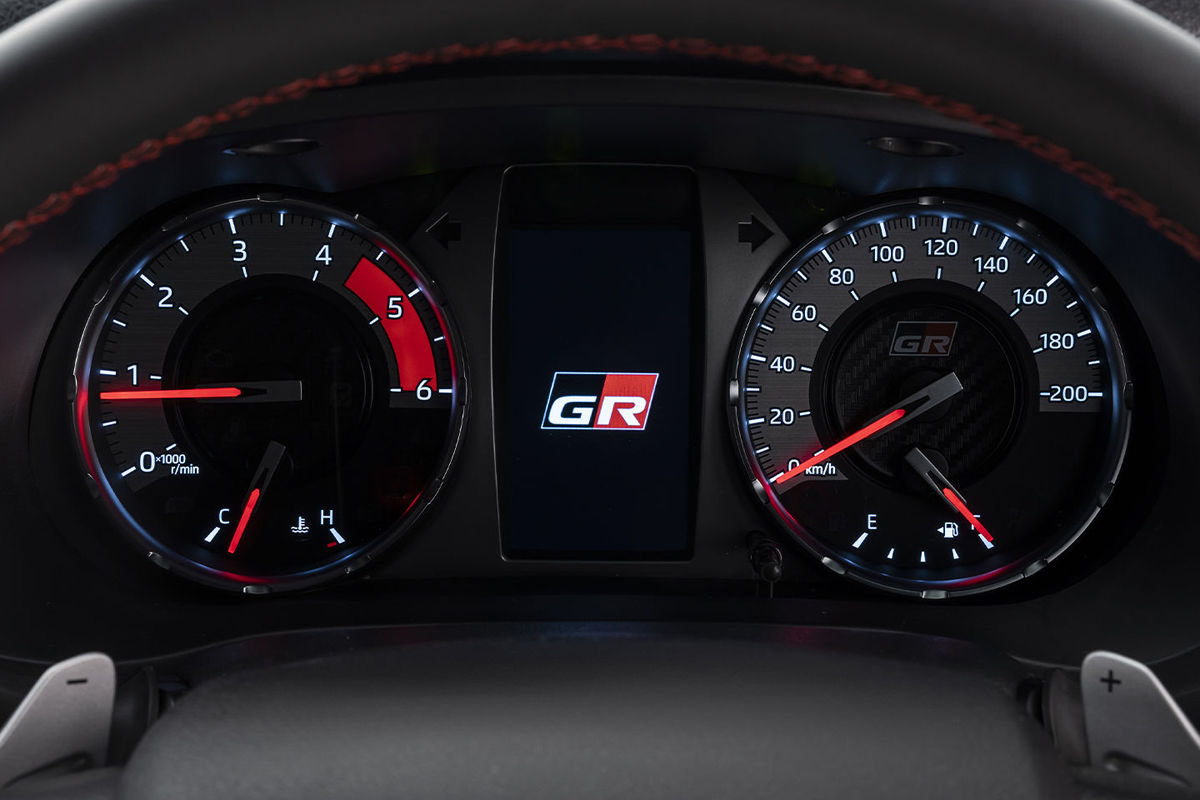
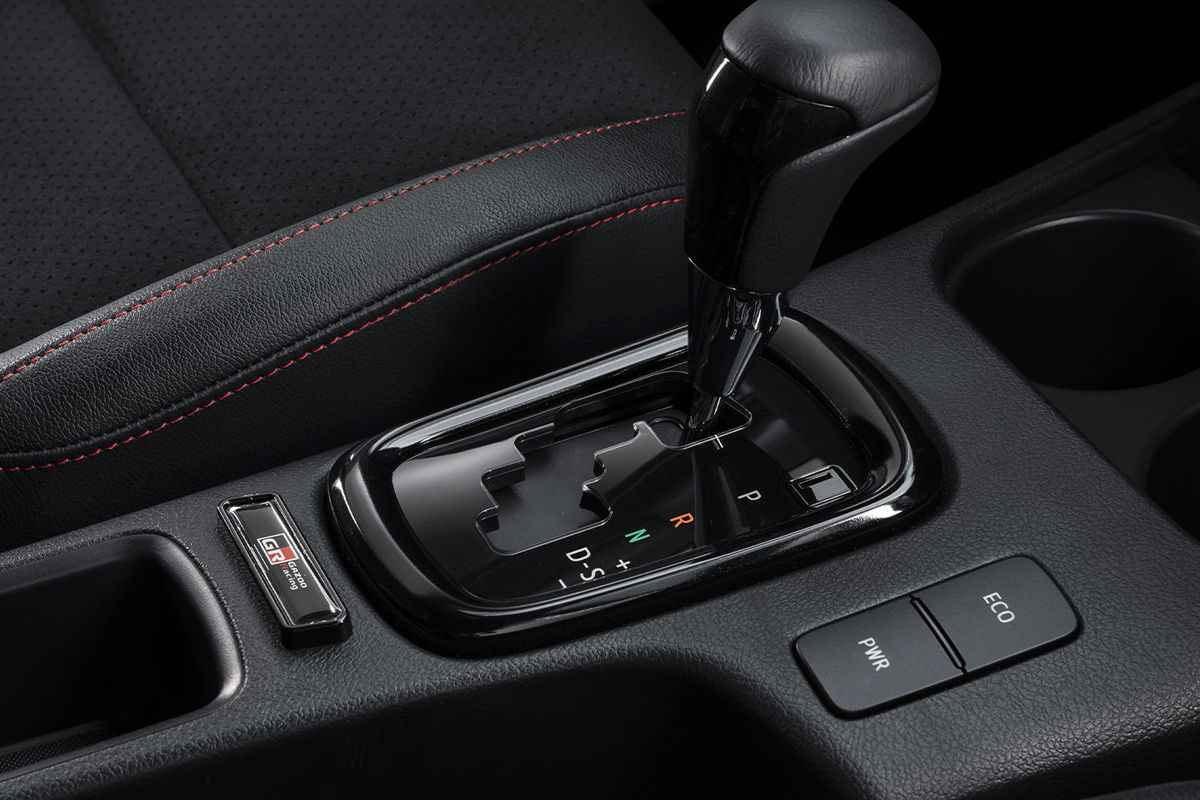
Inside, you’ll find items such as red facia trim, red contrasting stitching, GR graphics for the model-specific instrument cluster, a GR-branded start button, GR-branded carpets and a Gazoo Racing plaque behind the gear lever. The seats are trimmed in a combination of leather and Alcantara, while the front headrests boast GR logos. There’s also a bespoke leather-trimmed steering wheel and aluminium pedals with rubber inserts. Carbon-fibre trim replaces the brushed finish familiar from Legend models.
From what we can tell, a tonneau cover also comes standard, along with rubberising for the load bay. The Hilux GR-Sport is available in a choice of 4 exterior paint colours: Glacier White, Arizona Red, Attitude Black and Graphite Grey Metallic.
How much does the new Toyota Hilux GR-Sport cost in South Africa?
Toyota Hilux GR-Sport – R865 400
A 3-year/100 000 km warranty and a 9-service/90 000 km service plan are included in the purchase price.
After some delay, the Audi RS3 has finally touched down in South Africa. We headed to Gauteng to get behind the ‘wheel of what’s claimed to be the segment leader; was it worth waiting for?
At the pinnacle of the Audi A3 range sits the RS3 hatchback and sedan – a pair of performance-focused offerings that are pitched directly against M- and Mercedes-AMG models from Munich and Affalterbach respectively. With the all-new BMW M2 set to be revealed next month (October 2022, with a local introduction in 2023), and a Mercedes-AMG A45+ S due to be facelifted soon, the Audi RS3 will hog the limelight in the global and local markets for the remainder of 2022.
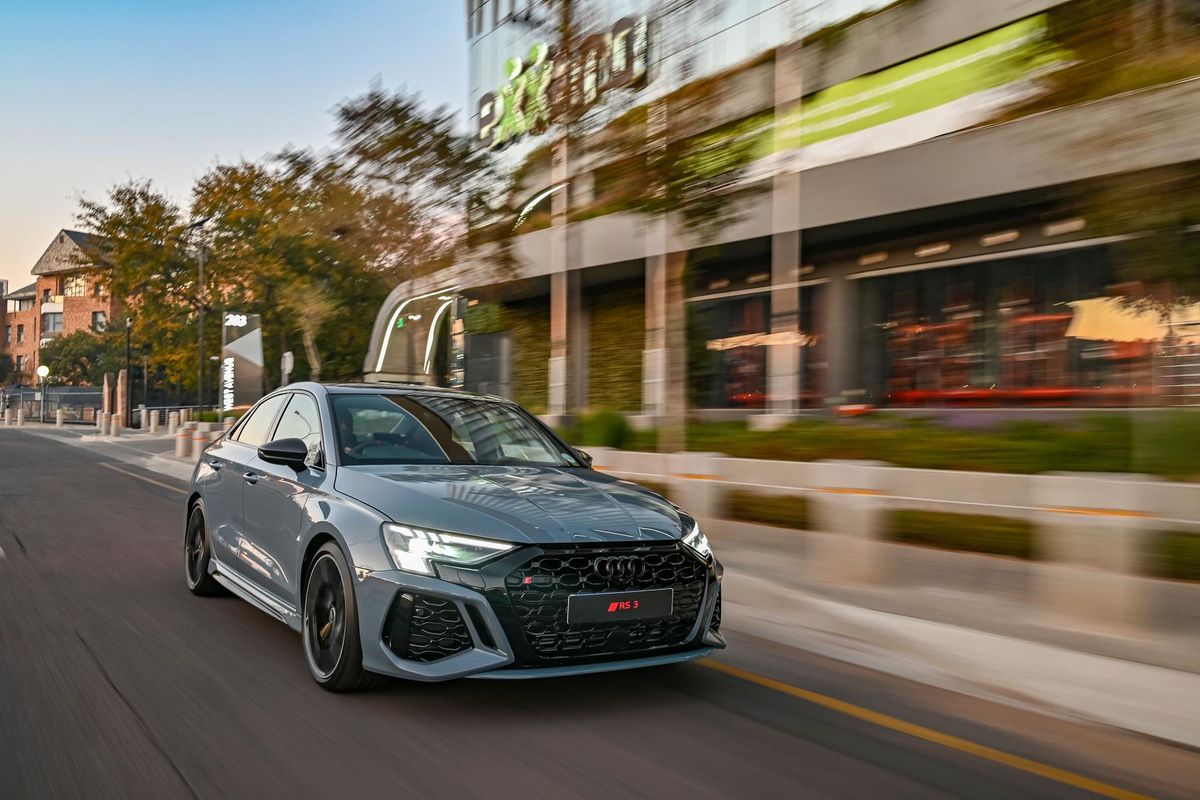
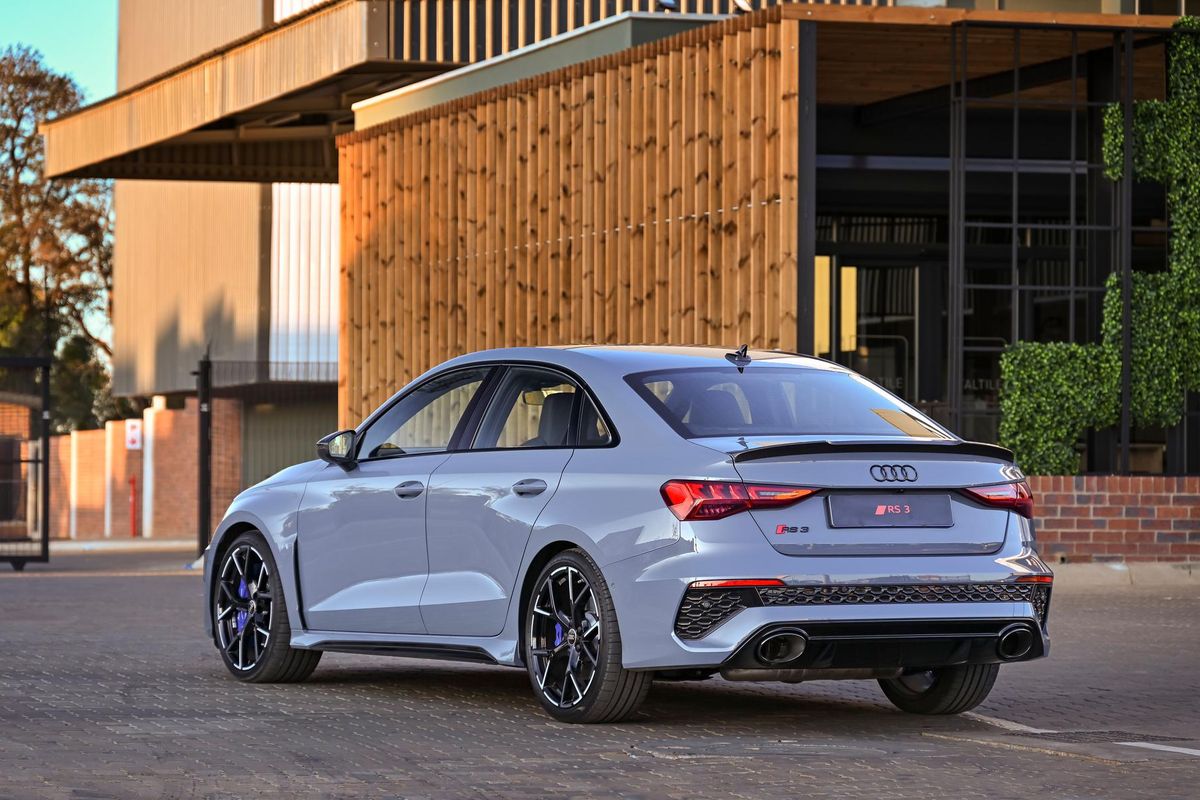
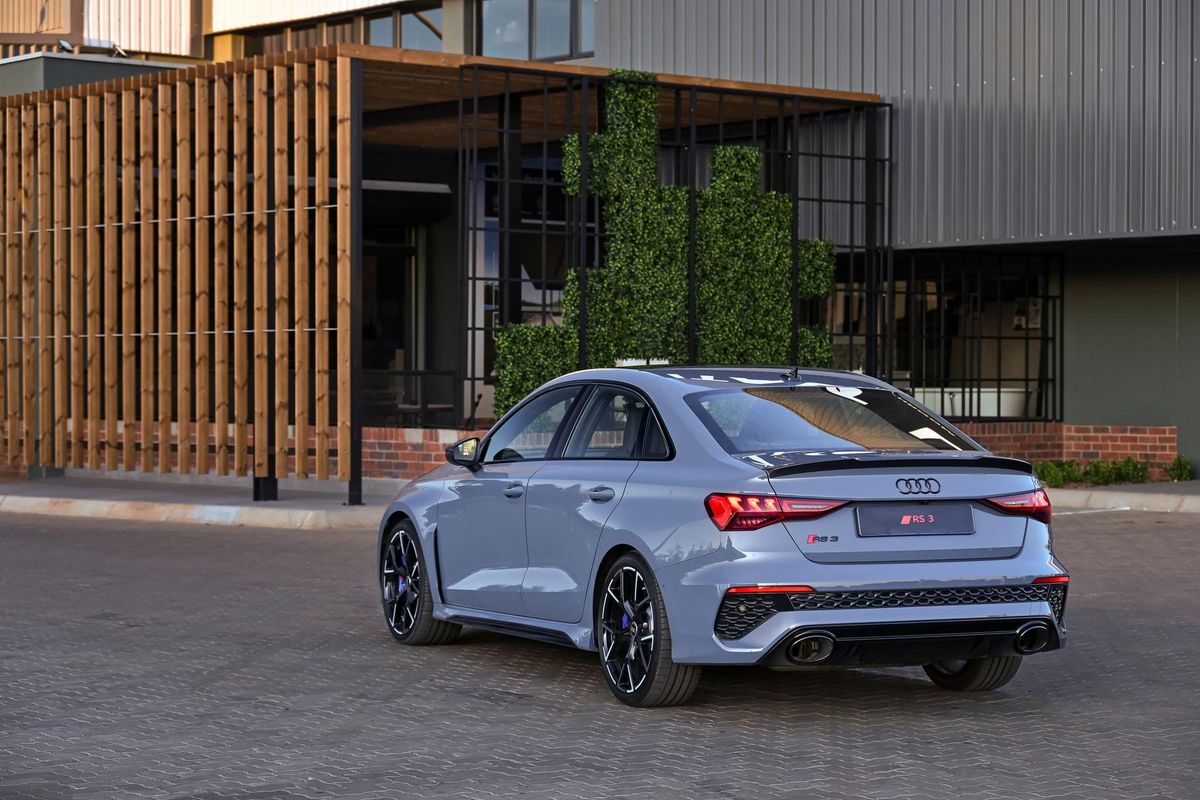
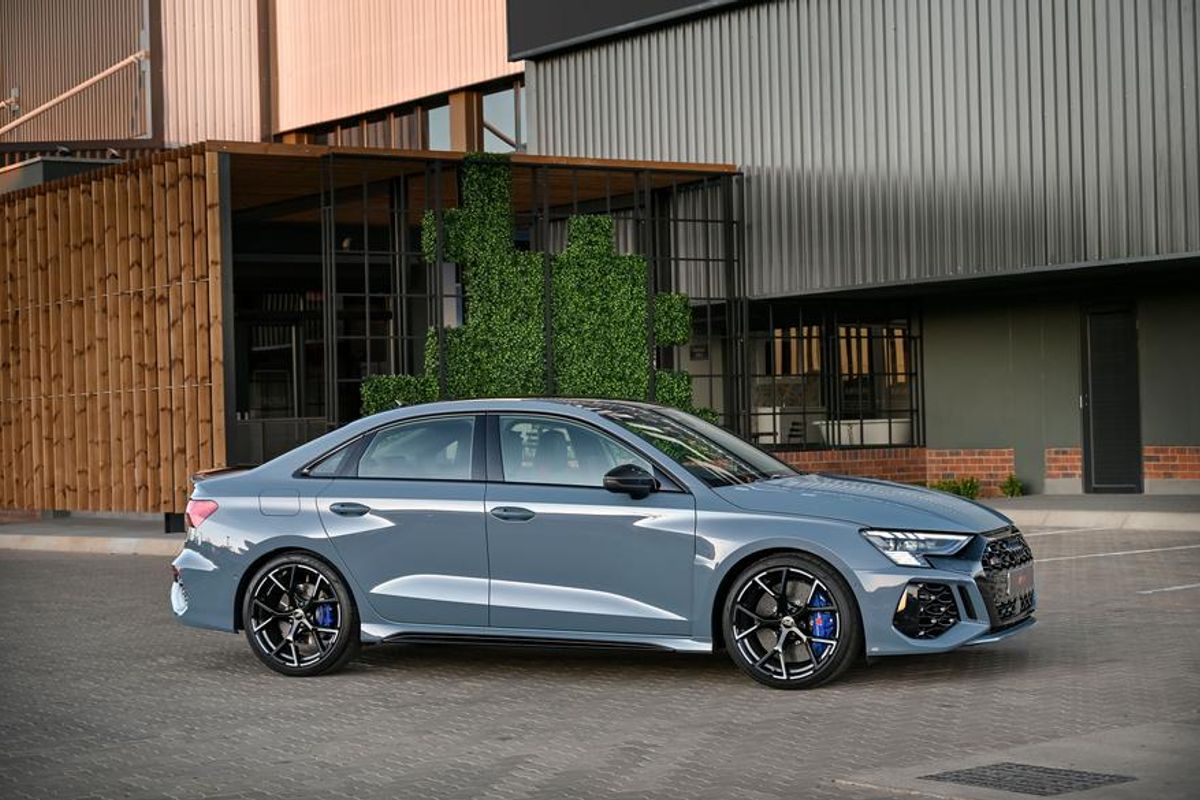
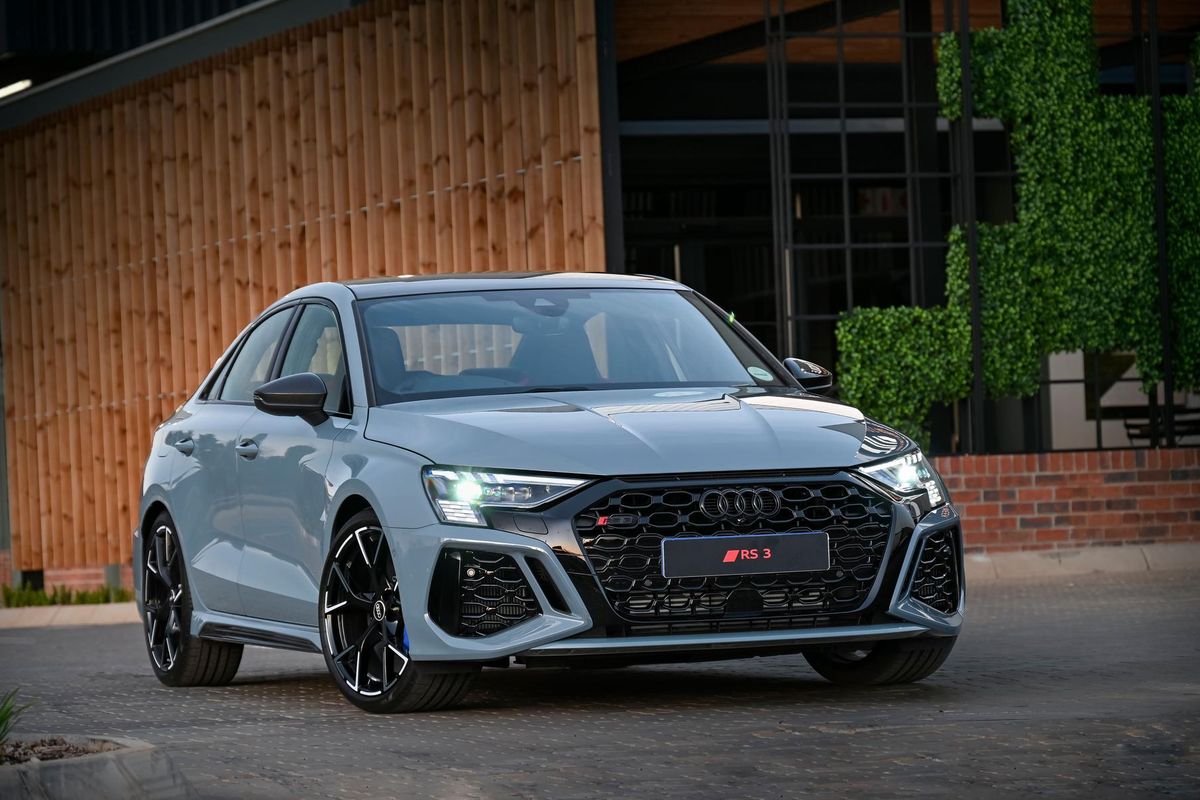
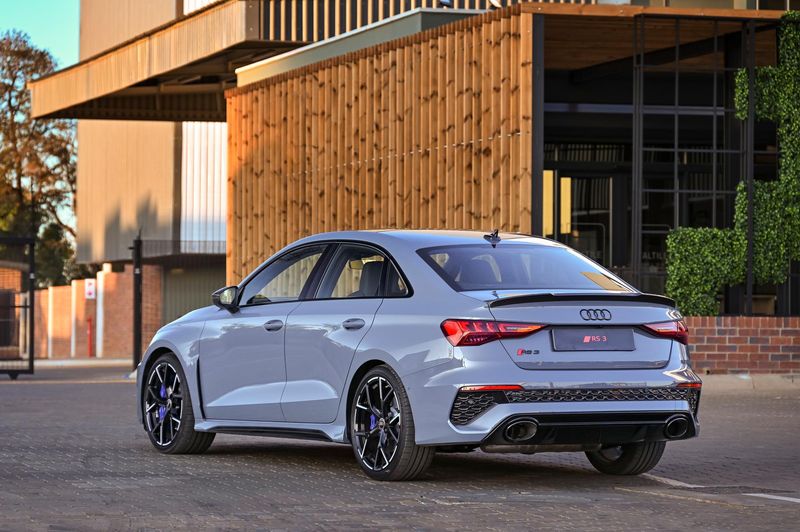
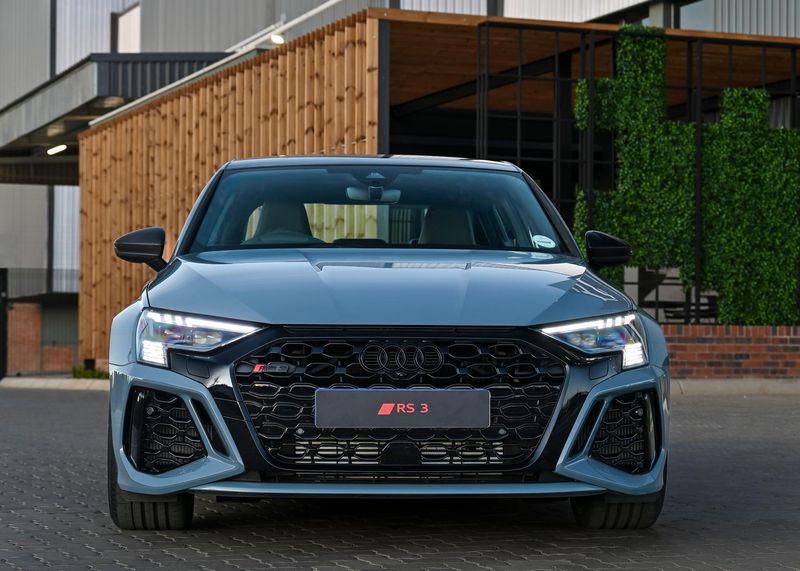
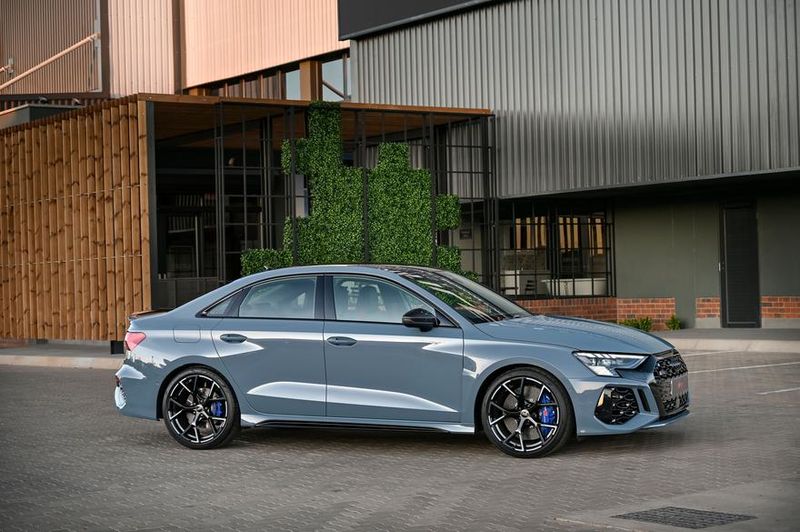
The RS3 is available in Sportback and Sedan guises. The latter is pictured here.
What’s New?
The newcomer is available in a choice of either Sportback (5-door) or sedan (4-door) body styles, and Audi South Africa’s online configurator shows that an excellent number of colour- and wheel choices are available. Audi SA has bucked the trend of offering a bewildering array of options and trimmed the goodies down to a far more manageable list. We took a look at these options in comparison with those of the RS3 Sportback’s nearest rival, the Mercedes-AMG A45 S, here.
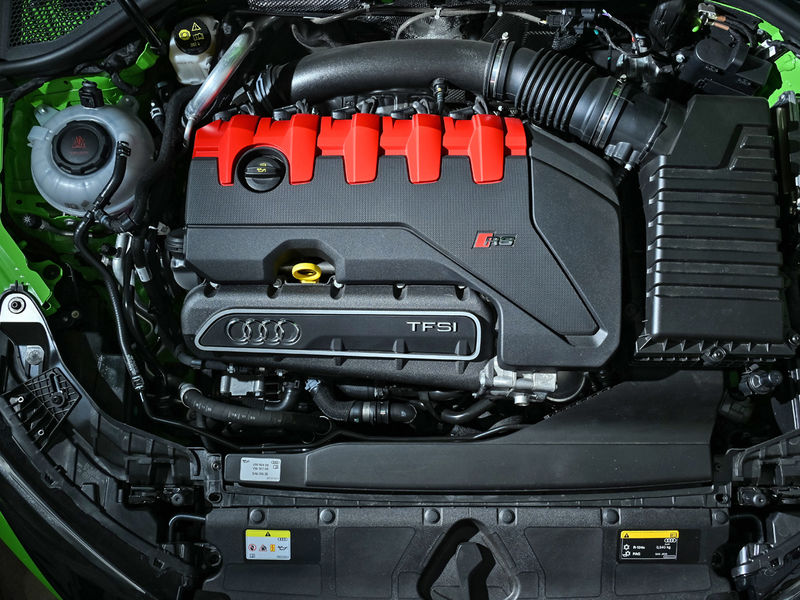
Both RS3 variants share an updated version of Neckarsulm’s iconic 2.5-litre 5-cylinder turbocharged petrol engine, which develops 294 kW and 500 Nm, with peak torque being increased by 20 Nm for this generation. As before, the powerplant is mated with a 7-speed dual-clutch automatic transmission. Detractors will be quick to point out that the engine has not changed dramatically, but remember the European Union is cracking down on vehicle emissions (including the noise they generate). Without getting mired in the technical reasons, suffice it to say there was simply no way a power boost could have happened without taking a hit on emissions taxes, which would, of course, be passed onto consumers.
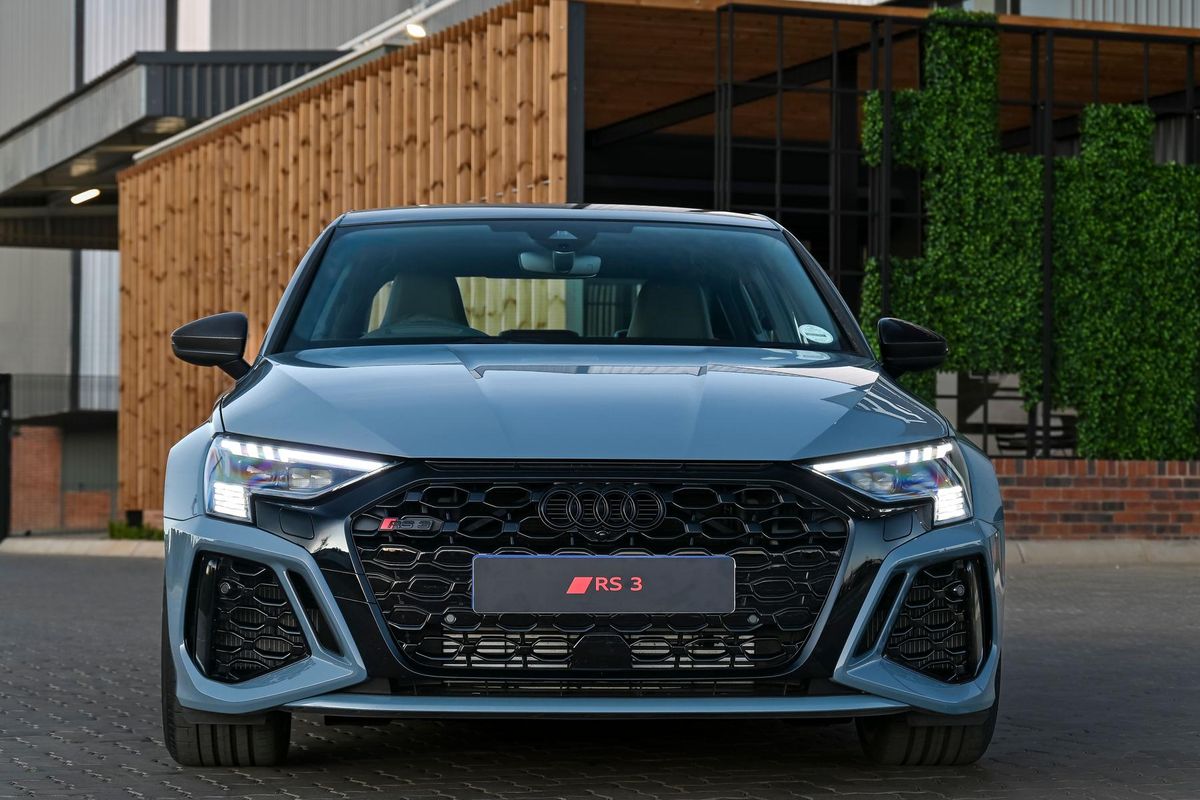
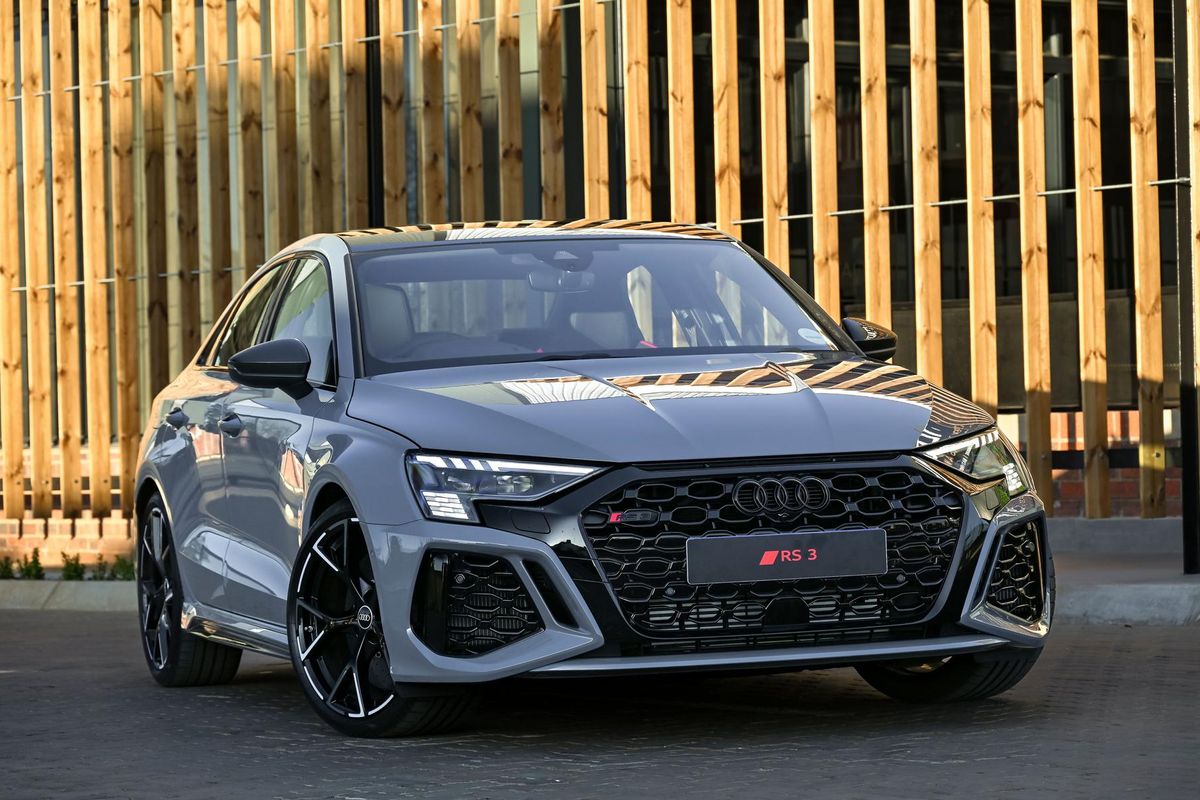
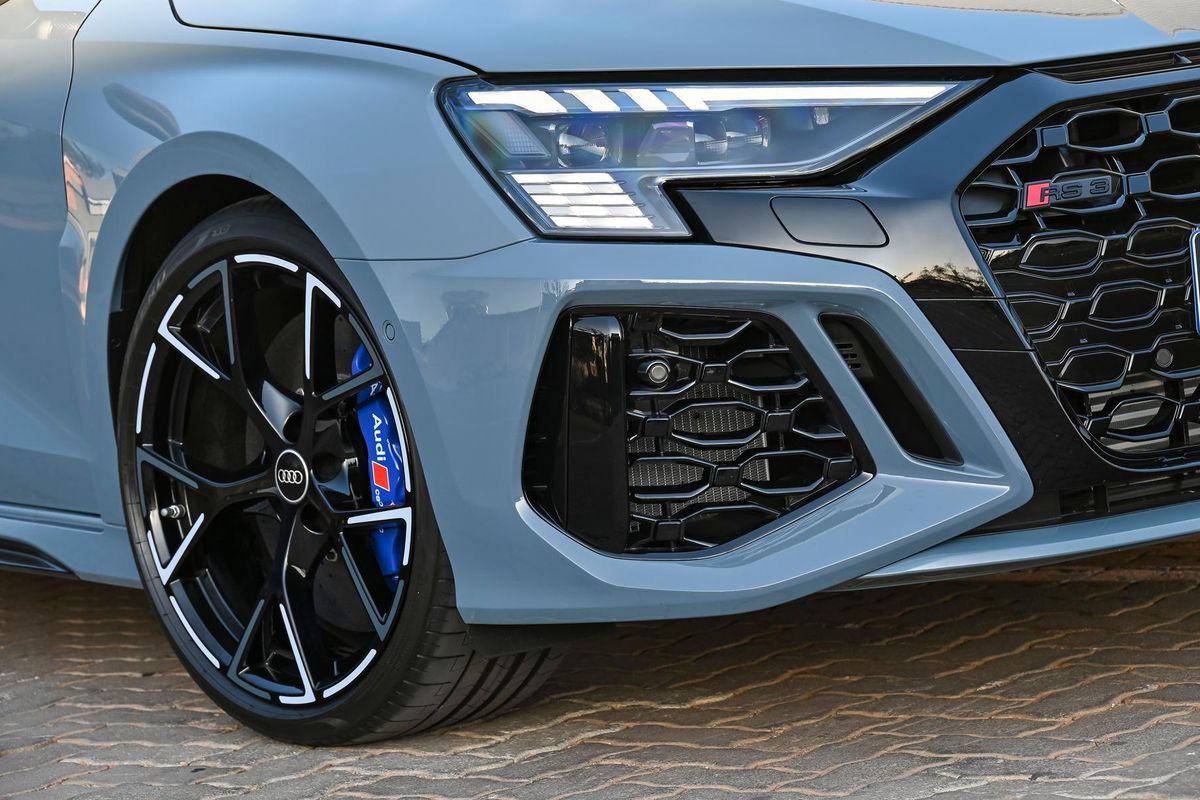
Matrix LED lights with model-specific detailing are standard.
There’s a very real possibility this iteration of the Audi RS3 may be the very last as European-based manufacturers transition to an all-electric future. While battery-electric vehicles (BEVs) have their place and appeal, we’re going to light a candle and pour one out for this iconic motor.
The performance claims for the RS3 are impressive, with 0-100 kph said to be dispatched in 3.8 seconds and, if you option the Audi RS Driver’s Package, a top speed of 290 kph is possible. There are uprated brakes, as well as a new suspension setup and the entire car sits wider and lower than its non-RS counterparts.
The introduction of an innovative rear torque splitter is one of this model’s standout features. Quattro all-wheel drive has always been integral to Audi’s RS models, but now, thanks to some mechanical witchcraft, the RS3 can also direct all its shove to only one of its rear wheels if required. To put it another way, the RS Torque Splitter affords “sideways action on demand”. We’re not going to say it’s a drift mode, but some fun tail-out antics are certainly possible!
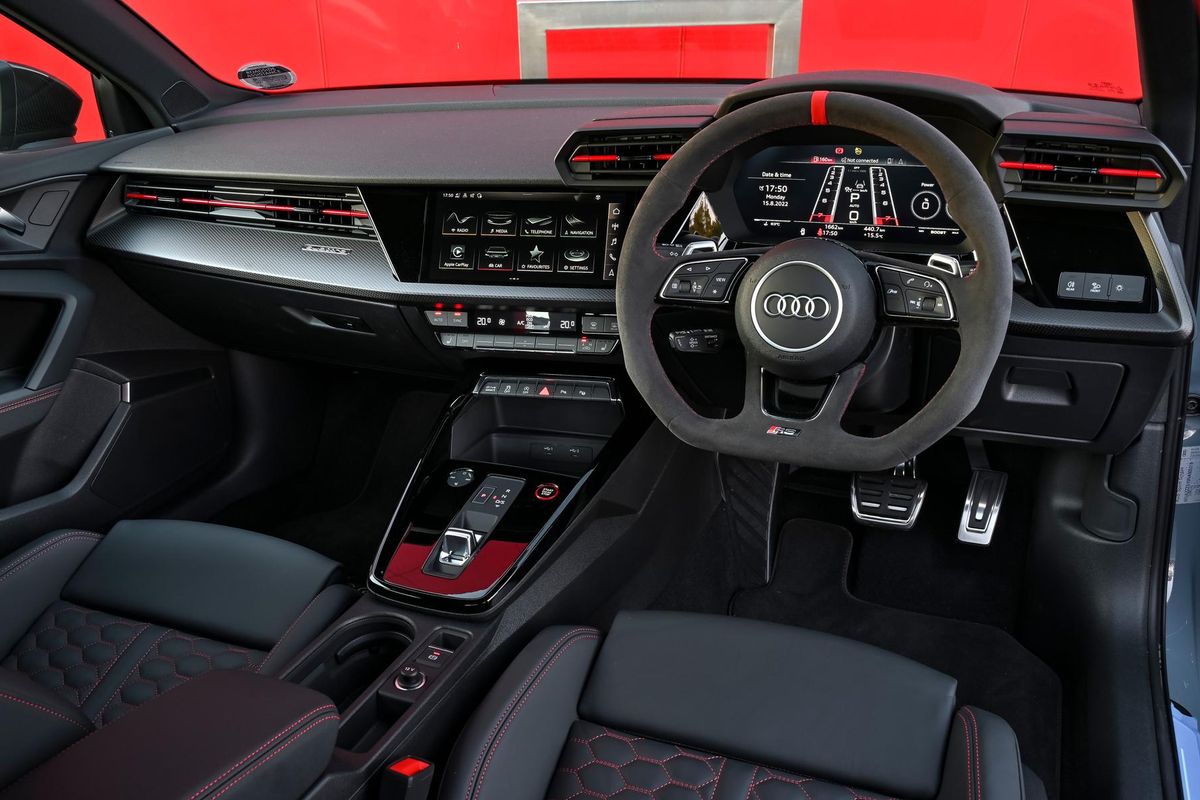
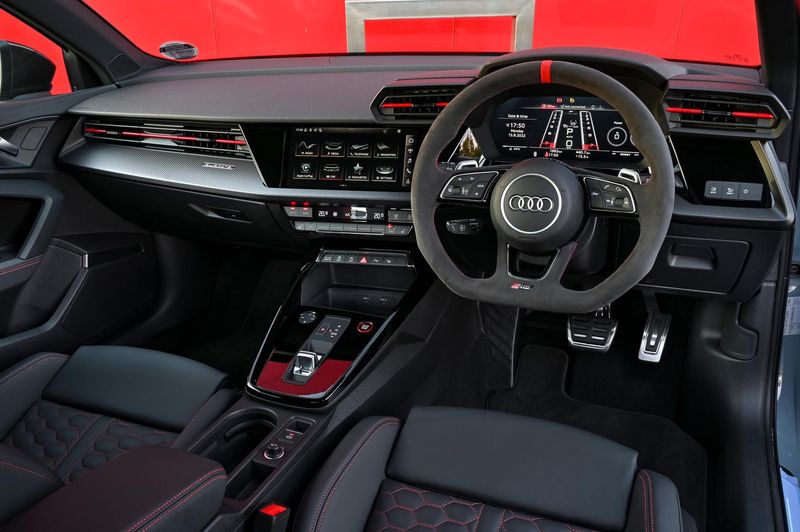
An intricate and sophisticated cabin design awaits.
Step inside, and you’re greeted by one of the more intricate and sophisticated cabin designs in the premium compact car segment. A conventional dial arrangement is ditched for a longitudinal graph-style rev counter and speedometer. We’ve first seen this in other models, such as the Audi RS Q3 and, while we didn’t gel with the layout immediately, it’s undoubtedly a conversation starter.
What’s the Audi RS3 like to drive?
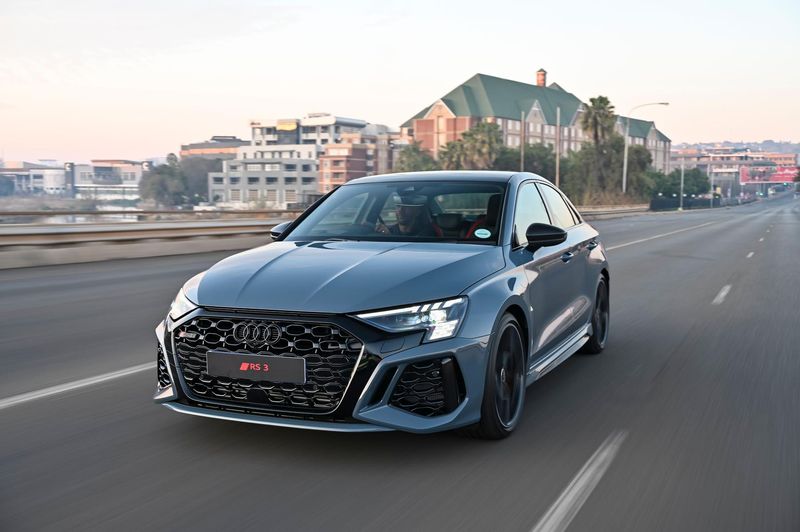
With a tasteful exterior finish and fitted with sporty rims, the Audi RS3 looks, in a word, sensational.
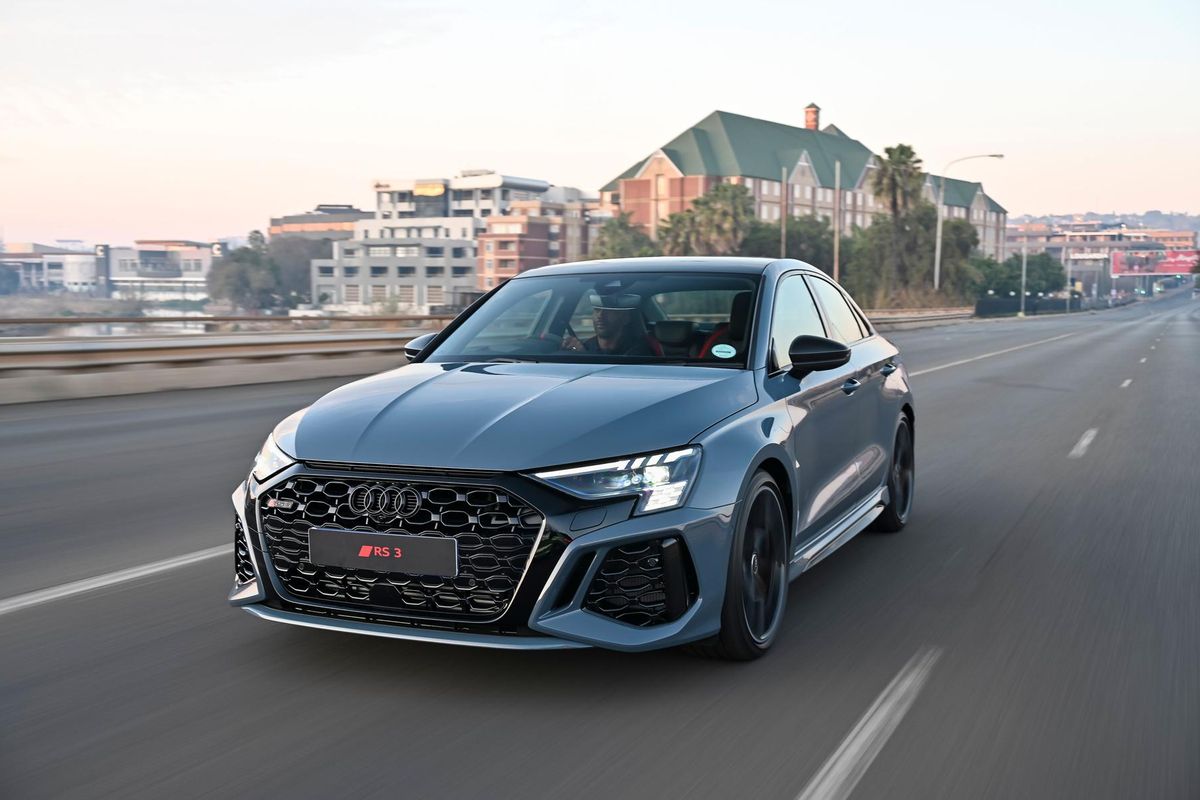
Fears of the RS3 losing its glorious soundtrack were quickly dispelled when we exited the OR Tambo International airport complex and joined the R21 highway at the ‘wheel of Audi’s newcomer. Even in its default drive mode, there’s a deeply satisfying rumble that permeates the cabin – you don’t even need to apply full throttle to extract aural satisfaction. A good start, then!
We’ll get onto the performance aspects a little later in this write-up… we had the chance to pilot the new RS3 around the Zwartkops circuit outside Pretoria, but given that the vast majority of customers are going to drive these cars on their daily commutes, it’s worth dispensing some words on the model’s general on-road demeanour.
In short, the RS3 is an accomplished “daily driver”. It stands head and shoulders above the firmer-than-necessary Mercedes-AMG A45 S in terms of in-car comfort and ride quality. Its MQB underpinnings continue to impress and undoubtedly supplement the refinement of the hyper hatch/performance sedan.
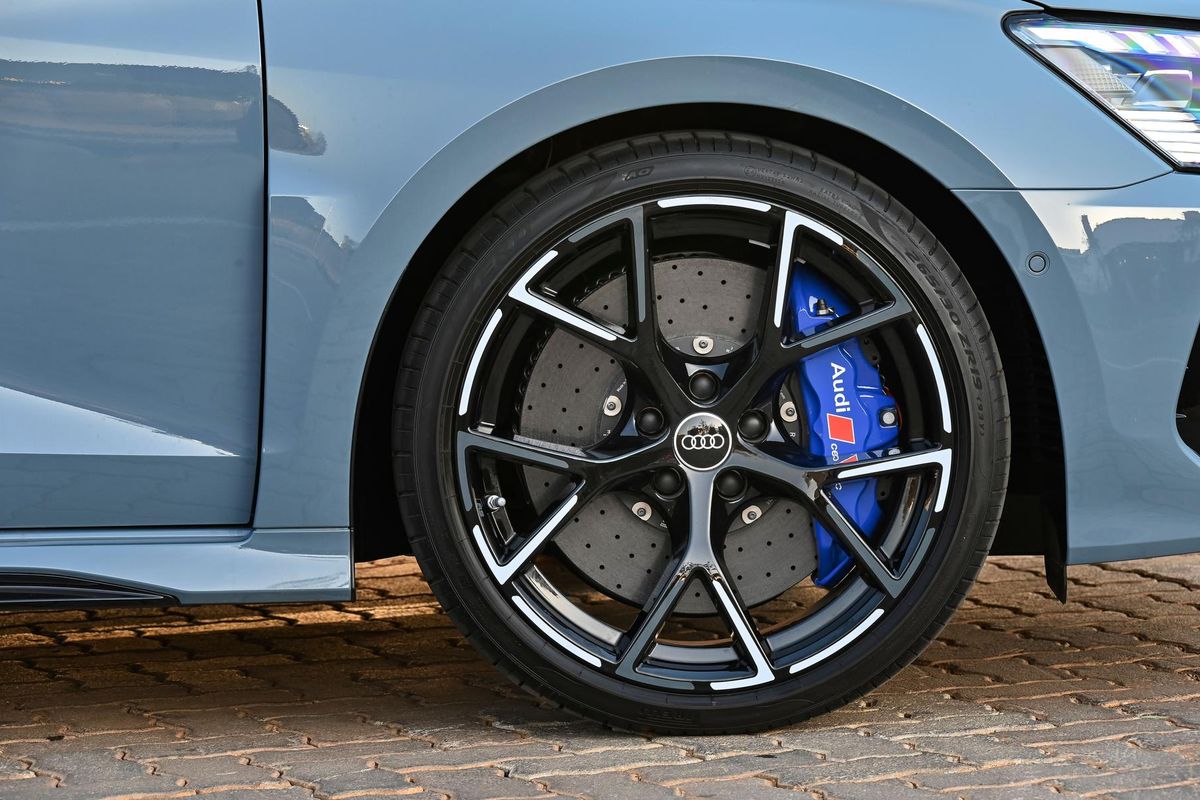
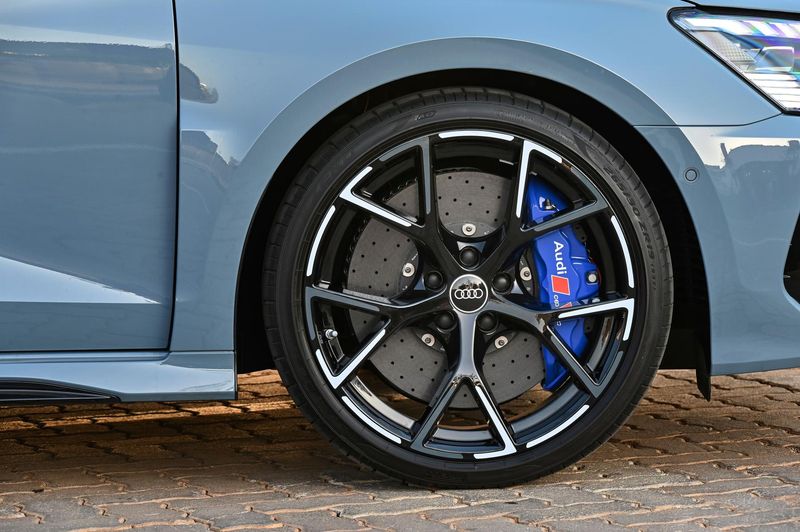
Audi is said to have improved the braking performance of the standard discs and pads, but you could specify these carbon-ceramic units.
Despite being fitted with sporty 19-inch wheels (wrapped in Pirelli low-profile rubber) and having a performance-oriented suspension setup, the RS3 does not ride like a box cart; in fact, you could be fooled into thinking you’re driving a bog-standard A3 derivative. There’s no thudding or bouncing over ruts and other undulations on the asphalt – the RS3 does a fine job of soaking up the bumps.
There’s genuine day-to-day usability here, with few compromises other than the RS3’s thirst for unleaded. Audi claims an average consumption of 9.0 L/100 km, but that’s optimistic, given how you often you’re likely to make the most of the 2.5 TFSI’s capabilities. After a few laps around the Zwartkops circuit, many of the launch units were down to 25% fuel capacity – an indication that when if you’re inclined to have a heavy right foot, the Audi will empty its 55-litre tank rather quickly.
Testing a vehicle on a race track is a great way to put its talents under the microscope in a safe and controlled environment; it also presents an opportunity to find out what the car is truly capable of. Under the supervision of an excellent instructor, I first got a feel of the layout and then gave it a “full send”. Cars.co.za’s track-test ace (and part-time racing driver) Ashley Oldfield would have approved, methinks.
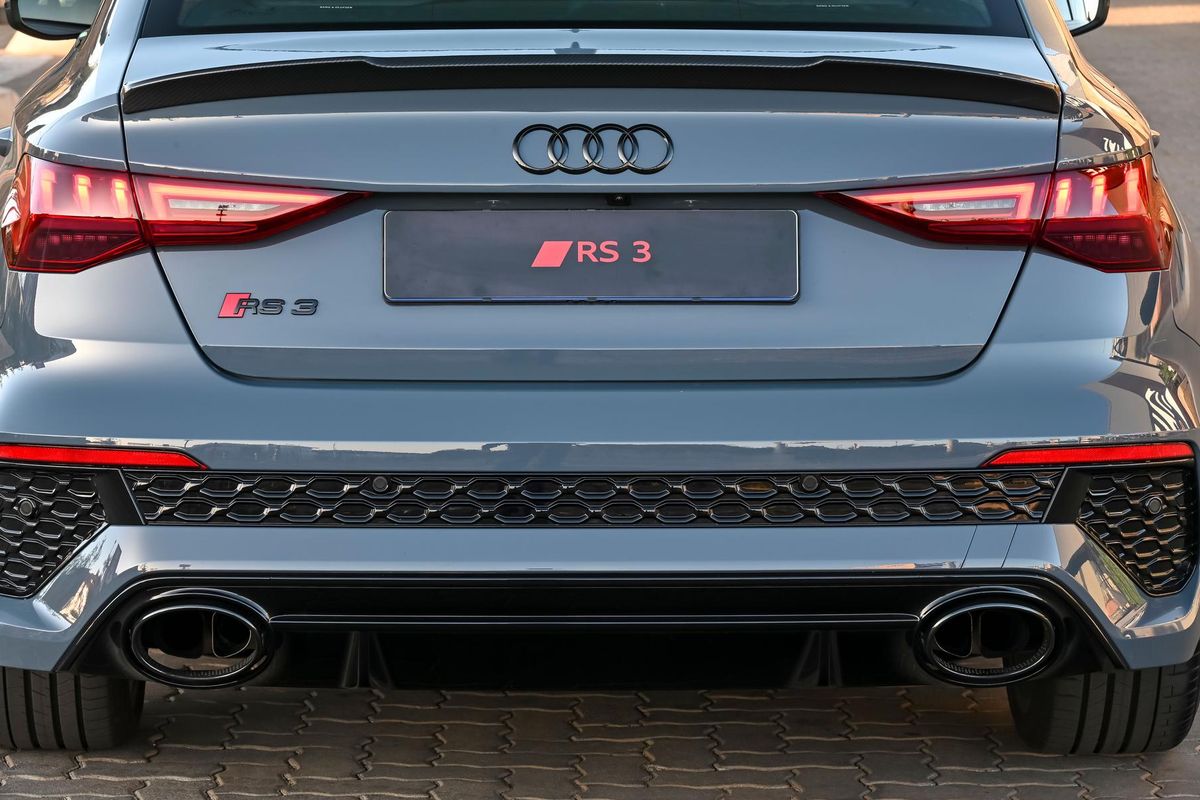
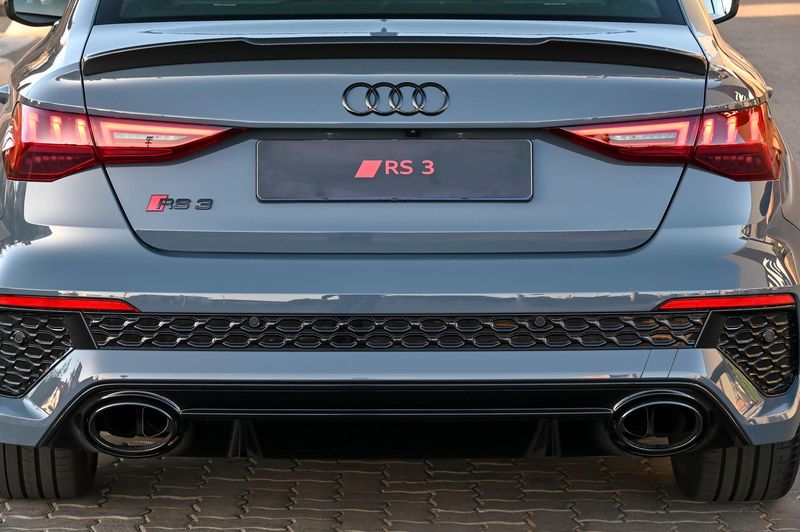
Although ovoid tips seem to protrude from the rear bumper, they’re just for show – the real exhaust ends lurk behind them.
The engine’s power delivery is outrageous: opening the proverbial taps results in a surge of power as the RS3 thrusts towards the horizon, with both exhausts bellowing a glorious battle cry. There’s hardly any power dropoff as you approach the red line either – it feels as if Audi Sport GmbH’s creation constantly coaxes you to make the most of each and every ounce of power available. Pull the right gearshift paddle (to change up a gear) and repeat, until you come to a corner.
Thankfully, the RS3’s new anchors are very capable; at least, they scrub off speed in a reasonably controlled manner. It’s good to have some reassurance, as we were barrelling down Zwartkops’ back straight on the wrong side of 175 kph! There’s some yaw and a slight hint of the rear wanting to overtake the front, but it’s manageable. After a few hard laps, the brakes still felt good and responsive. If you’re keen on track days, consider the optional carbon-ceramic setup for longer-lasting stoppers.
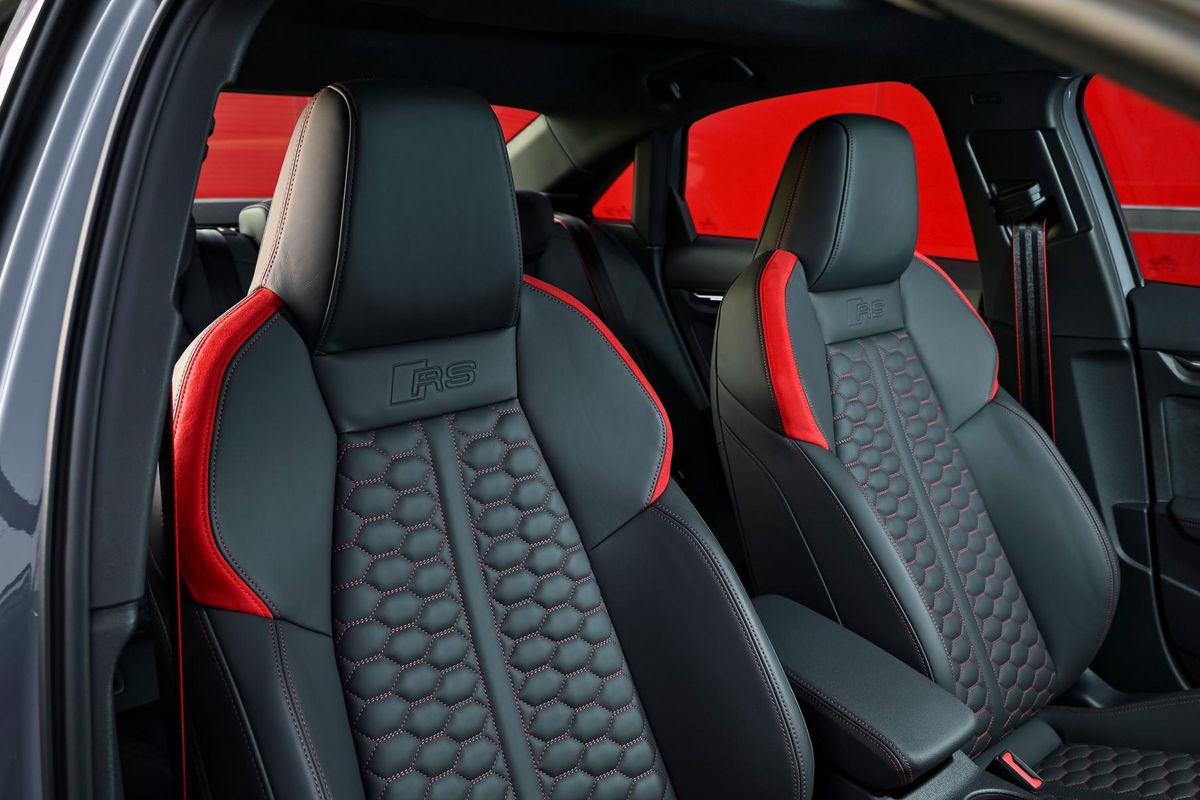
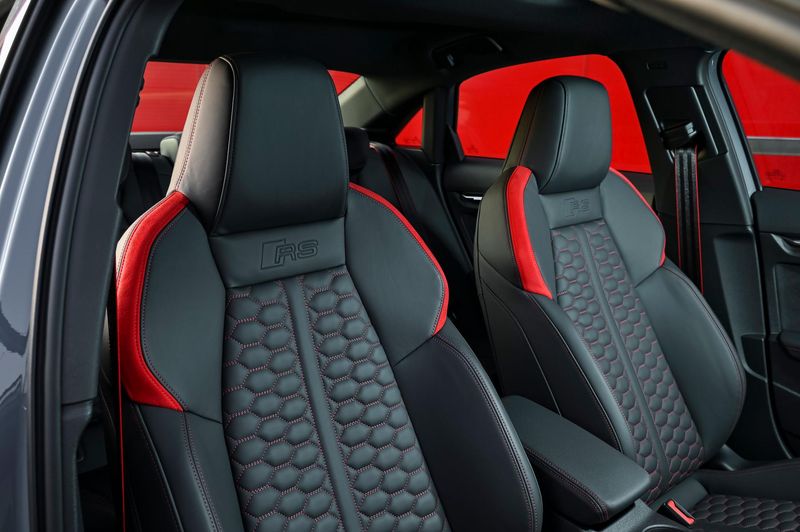
In the RS3’s default drive mode (Comfort), the steering setup is on the lighter side, but when you select Dynamic, there’s some artificial weighting added to the tiller action, which doesn’t feel quite right. Thankfully, the steering is accurate and direct. The figure-hugging sports seats are excellent: they’re both comfortable and supportive.
These sculpted sports seats look good and are supportive.
As for the aforementioned torque splitter, which allows for power to be sent to each of the wheels on the RS3’s rear axle separately, can you feel its effect? Yes, absolutely.
To put it simply, when you power out of a bend, the vehicle analyses a number of factors, including the steering angle and wheel speeds, after which it instantly sends more shove to the outside rear wheel. It works well – believe me! The RS Torque Splitter is an absolute treat… I’d go as far as to say this is what the RS3 needed all along, especially to even things up in the handling stakes when the model inevitably gets compared with the outgoing (and upcoming) BMW M2.
Whereas previous models tended to feel a bit nose-heavy (had a tendency to understeer) when pressing on, this is a revolution for the RS3 package; it really makes the vehicle feel a whole lot more nimble in the corners.
The 2.5-litre 5-cylinder turbopetrol motor continues to steal the show.
There’s even a drive mode that will make the RS3 direct its engine torque primarily to the rear axle, to impart an old-school rear-wheel-drive driving experience. While outrageous tail-out antics are unlikely to ensue (and that’s not the point, anyway), the driving experience does feel rear-biased, which will please the purists.
Ultimately, Audi’s newcomer vehicle feels far more alive and engaging when it’s carving up a series of bends than ever before and while most owners will be spending their time blasting between sets of traffic lights in a straight line, it’s nice to know that if you’re looking for true cornering talent, the Audi RS3 can be added to the list of exceptional vehicles.
Summary
This generation of the RS3 is arguably the best one yet.
This was not Cars.co.za’s first experience with an Audi RS3 – this author is in the privileged position to have driven pretty much every 5-cylinder turbopetrol-powered Audi RS model that has been sold in South Africa. Watching the car get incrementally better with each successive generation/update has been a fascinating and thoroughly enjoyable experience.
So, has the new RS3 been worth waiting for? With this internal-combustion engine (ICE) model expected to last until 2030, Audi has saved the best for last. This is one of the finest driver’s cars from Audi Sport that we’ve sampled in recent years. Not only is it brutally quick and sure-footed on a race track; it delivers a comfortable and luxurious ride in everyday driving conditions. Finally, the excellent engine-transmission combo is matched with a sorted chassis and suspension.
Audi SA says that the 1st batch of vehicles (around 140 units) have all been snapped up, but it’s hoping to secure a 2nd consignment as soon as possible. Pandemic-related production delays, exacerbated by a component shortage (the VW Group’s wiring harnesses used to come from Ukraine, for example, and, of course, those elusive semiconductors) and limited right-hand-drive market allocation have delayed the local arrival of many products from Audi and Volkswagen.
Audi Germany did offer its South African subsidiary some RS3 units at an earlier juncture, but these were missing critical features such as sunroofs, parking sensors and so on, and there’s no chance a premium brand would ever offer a stripped-out derivative purely to get the vehicle to the Republic as soon as possible – the backlash would have been brutal. In conclusion, then, if you’re in the market for a complete hyper hatch, get your name on Audi SA’s waiting list.