How Safe is the New Ford Ranger? Crash-Test Results Revealed
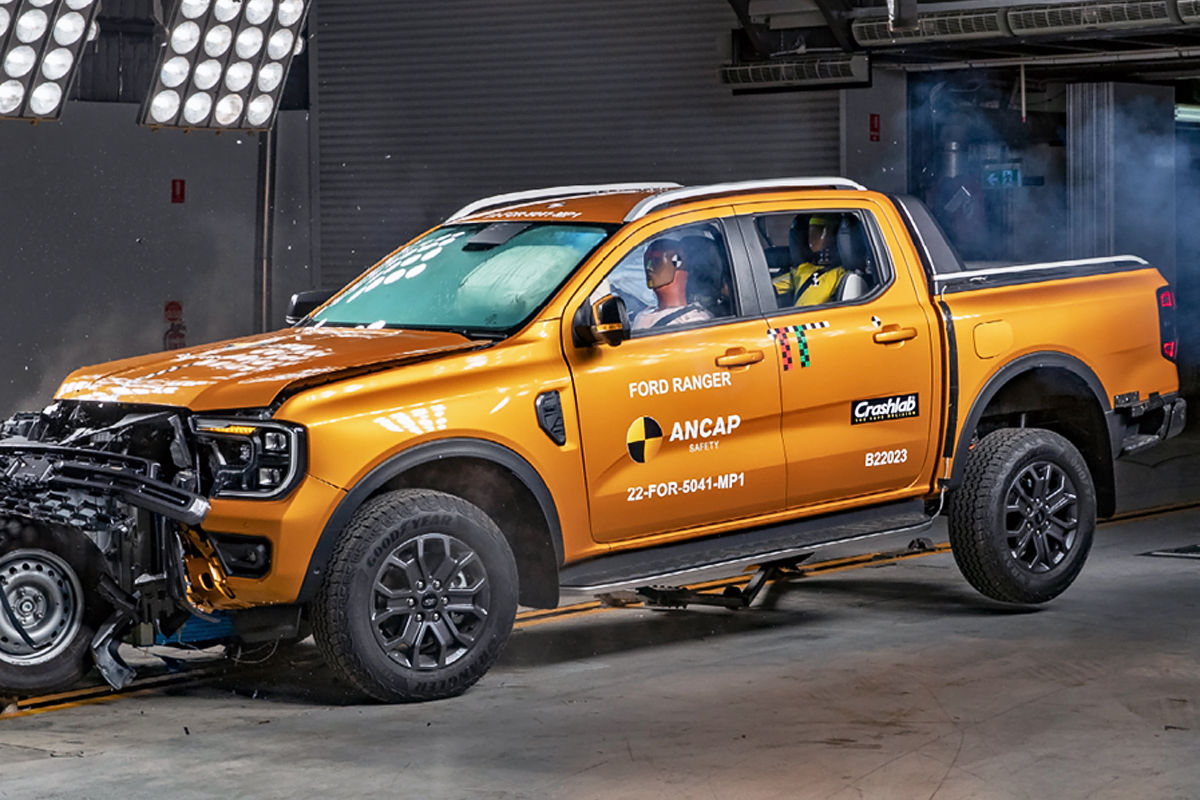
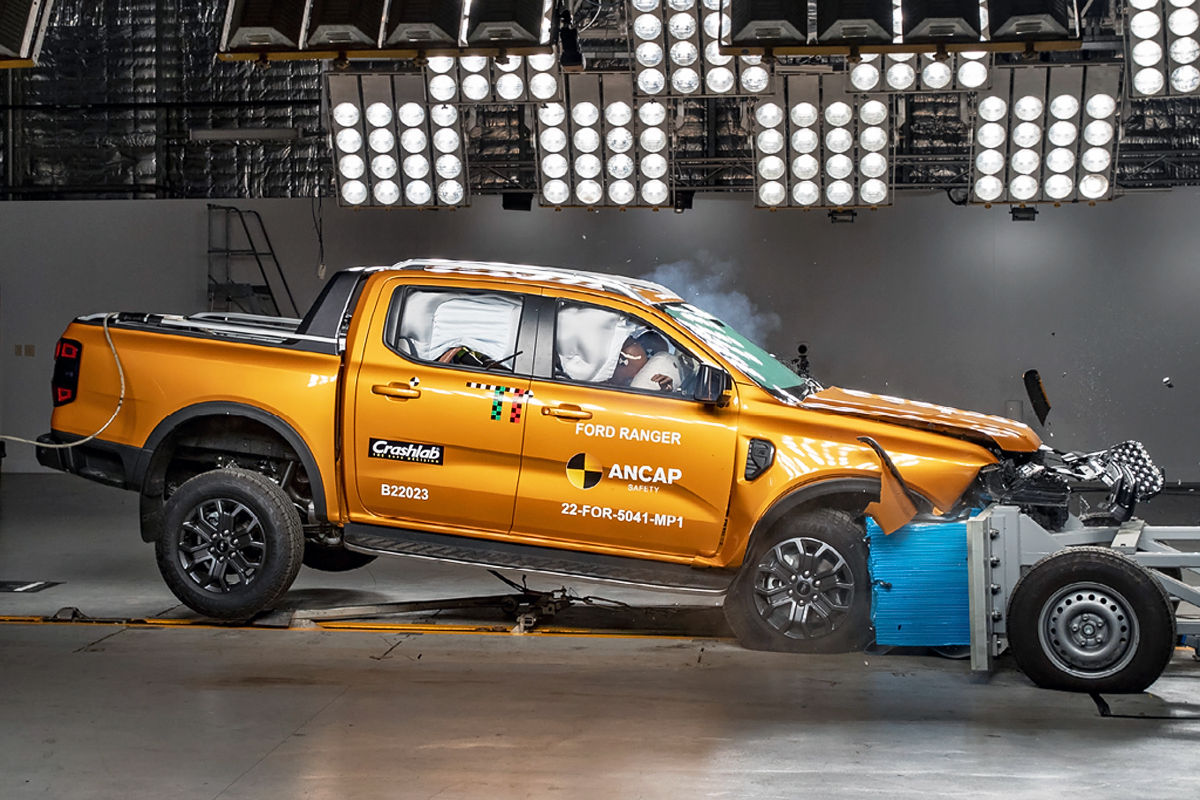
Ford’s new Ranger has been subjected to an ANCAP crash test under the latest, tougher safety evaluation protocols. Let’s take a look at how the bakkie fared…
While the new Ford Ranger has yet to launch in South Africa, it is already available Down Under. In fact, Australasia’s independent voice on vehicle safety, ANCAP, has just announced the results of the Blue Oval bakkie’s crash test.
So, how did the new-generation Ranger fare? Well, it scored a safety rating of 5 stars following a full suite of tests conducted in Australia.
Of course, we should point out Australia (and New Zealand) sources its Ranger from Thailand, while the version set to hit the market in South Africa before the end of the year will be produced locally at the Dearborn-based automaker’s Silverton facility. In addition, we can expect some specification differences between the two markets.
Regardless, the results make for very interesting reading. ANCAP awarded the Ranger a score of 84% for adult-occupant protection and 93% for child-occupant protection, along with 74% for vulnerable road-user protection and 83% for its standard safety assistance equipment.
A closer look at the Ranger’s crash-test results
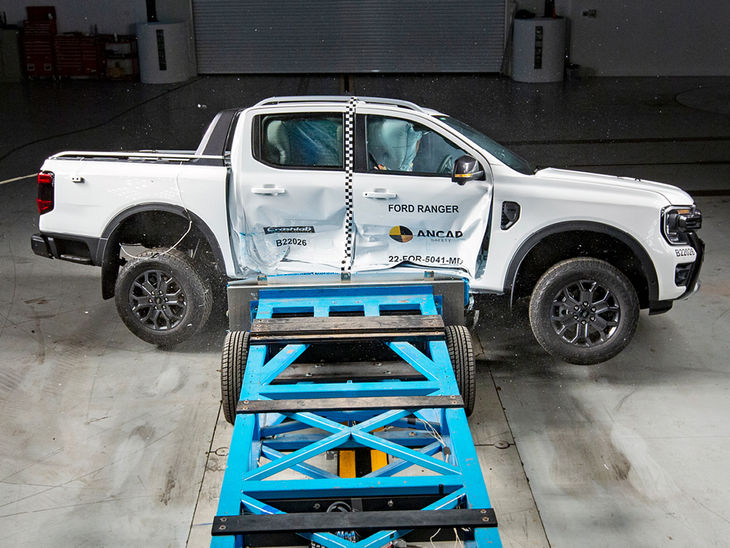
The new Ford Ranger undergoes ANCAP’s side-impact test.
According to ANCAP, the Ranger’s passenger compartment “remained stable” in the frontal offset test. The bakkie furthermore recorded a “solid score” for protection of adult occupants in the frontal offset, side impact and far-side impact tests, though had to settle for a “marginal” score for protection of the rear passenger’s chest in the full-width frontal crash test and for the driver’s chest in the oblique pole test. In addition, the Ranger’s front structure “presented a high risk to occupants of an oncoming vehicle”, resulting in the application of a penalty.
For the record, in Australia and New Zealand, the Ranger ships standard with dual front, side chest-protecting and side head-protecting curtain airbags, as well as a driver and passenger knee airbag. A centre airbag (providing added protection to front-seat occupants in side-impact crashes) is also standard, taking the total to 9 airbags. This version of the Ranger furthermore boasts a range of active collision avoidance systems, scoring “well” in performance tests of autonomous emergency braking, lane-keep assistance and speed assistance.
The safety authority says the 5-star safety rating applies to all Australian-spec variants of the Ranger (built from February 2022) bar the high-performance Raptor, which for now remains “unrated”. The new Everest, too, was awarded 5 stars, with its safety rating based on testing of the Ranger.
Ciro De Siena reveals his favourite cars and chats South African Car Culture
Ciro De Siena talks about South African Car Culture in this new series by Cars.co.za. Ciro tells us where his passion for cars, particularly BMWs, comes from and reveals his favourite car, which he also owns – a stunning BMW E39 M5.
Why do South Africans love the BMW brand so much? How did he get into the car reviewing business – thank you, Jeremy Clarkson! and why should you consider buying a classic rather than a new car? Ciro did just that … He bought an old Lexus LS400 for a third of the price of South Africa’s cheapest new car (the Suzuki S-Presso) and uses it as his daily. Ciro also tells the amazing story of how one of the first cars he drove after getting his license, a Mazda MX-5, came back to him many years later.
Ciro reflects on South Africa’s rich motorsport heritage, particularly the era of the South African specials, which saw cars such as the iconic BMW 325is (E30) – also known as the “Gusheshe” – and Opel Kadett GSi Superboss battle on South African racing circuits like Kyalami and Aldo Scribante in Group N racing. These days the Gusheshe and Superboss are valuable classics, not only in South Africa, but across the globe.
So now you know what South African car culture is to Ciro? What is it to you? Let us know in the comments below and look out for Episode 2 of SA Car Culture at 6pm on Sunday, September 18th.
Bonkers Fatboy V12 Hilux Unleashed
Meet Francois Fritz, the owner of FatBoy Fab Works and the builder of this bonkers twin-turbocharged V12-powered Toyota Hilux!
This project started with a stock single-cab Toyota Hilux 3.0 D-4D Hi-Rider which Francois used as his daily runabout.
Then, Francois came up with the idea of building something unique, a once-off build that no one has done before. Fritz sourced a 5.0-litre 1GZ V12 engine from Japan and dropped it into the engine bay of the Hilux, bolted on some turbochargers and tuned it up to over 420 kW and 900 Nm! The result is fabulously bonkers! Watch the video to see this epic V12 Hilux perform!
Cars.co.za tips its hat to the team at FatBoy Fab Works for bringing this car to life.
EV Triple Threat! Jeep Reveals Avenger, Recon and Wagoneer S
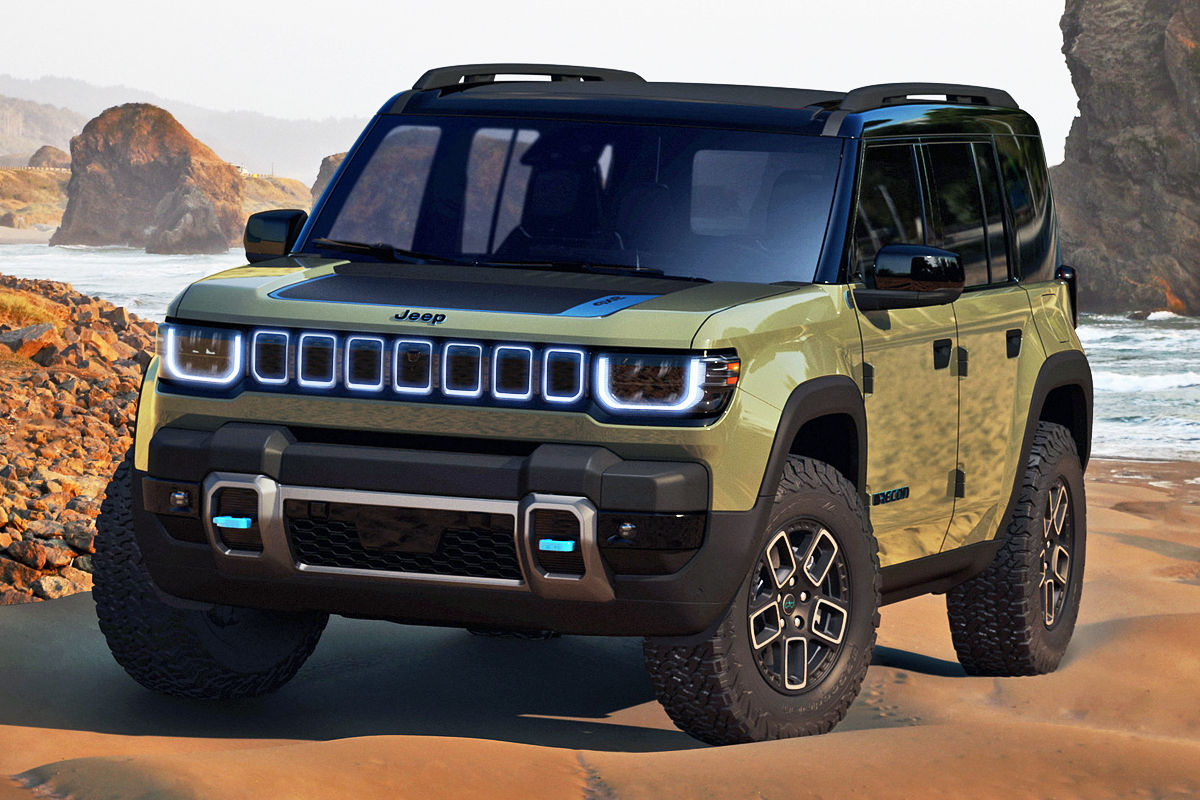
Jeep has whipped the wraps off three all-new electric SUVs as it bids to transform itself into the “leading electrified SUV brand in the world”. Let’s take a look at the new Avenger, Recon and Wagoneer S…
Like many automakers, Stellantis subsidiary Jeep has big plans when it comes to electrification. Those plans have been laid bare with the unveiling of three all-new battery-powered SUVs called the Avenger, Recon and Wagoneer S.
With these fully electric newcomers – as well as one more that has yet to break cover – the American marque plans to become what it terms “the leading electrified SUV brand in the world”.
The four SUVs are scheduled to hit the North American and European markets by the end of 2025. Once the curtains come down on 2030, Jeep wants half of its sales in the United States to comprise electric SUVs and all of its registrations in Europe to be battery-powered vehicles. Wondering where that leaves South Africa? Well, the company says “specific plans for other regions will be announced at a later date”.
“Driven by the success of our electrified 4xe portfolio in North America and Europe, we are designing and developing the most capable and sustainable Jeep SUVs to date, on our path to becoming the leading zero-emission SUV brand in the world,” says Christian Meunier, Jeep’s CEO.
“This is a forward-thinking strategy to help ensure millions of Jeep fans around the world continue to have a planet to explore, embrace and protect. Electrification is great for our brand, making it even more capable, exciting, sustainable and fun.”
A quick look at the new Jeep Recon
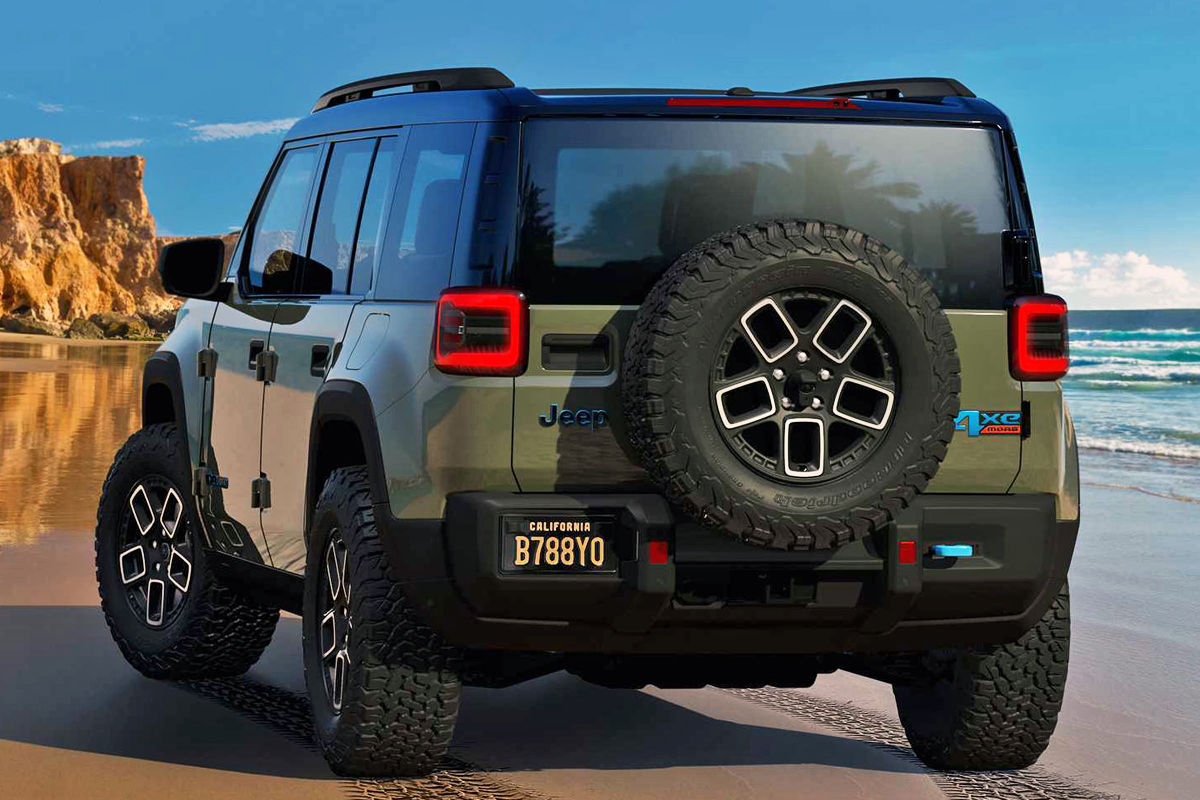
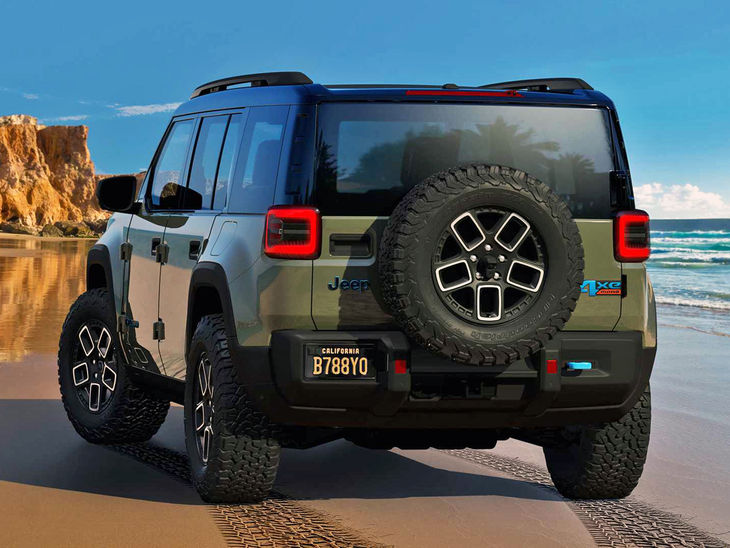
Described as a rugged “global SUV” that will be sold in “major markets around the world”, the Reco is set to go into production in 2024. Jeep says it is aimed at “those who love to explore extreme adventures in near silence”.
Designed from the ground up as a battery-powered 4×4, the Recon will feature Jeep’s terrain management system, e-locker axle technology, under-body protection, tow hooks and “aggressive” off-road tyres. Like the Wrangler, the Recon will ship with removable doors and glass, along with the latest-generation Uconnect infotainment system.
Meunier promises the Recon will have the capability to “cross the mighty Rubicon Trail, one of the most challenging off-road trails in the US, and reach the end of the trail with enough range to drive back to town and recharge”.
What about the new Jeep Avenger?
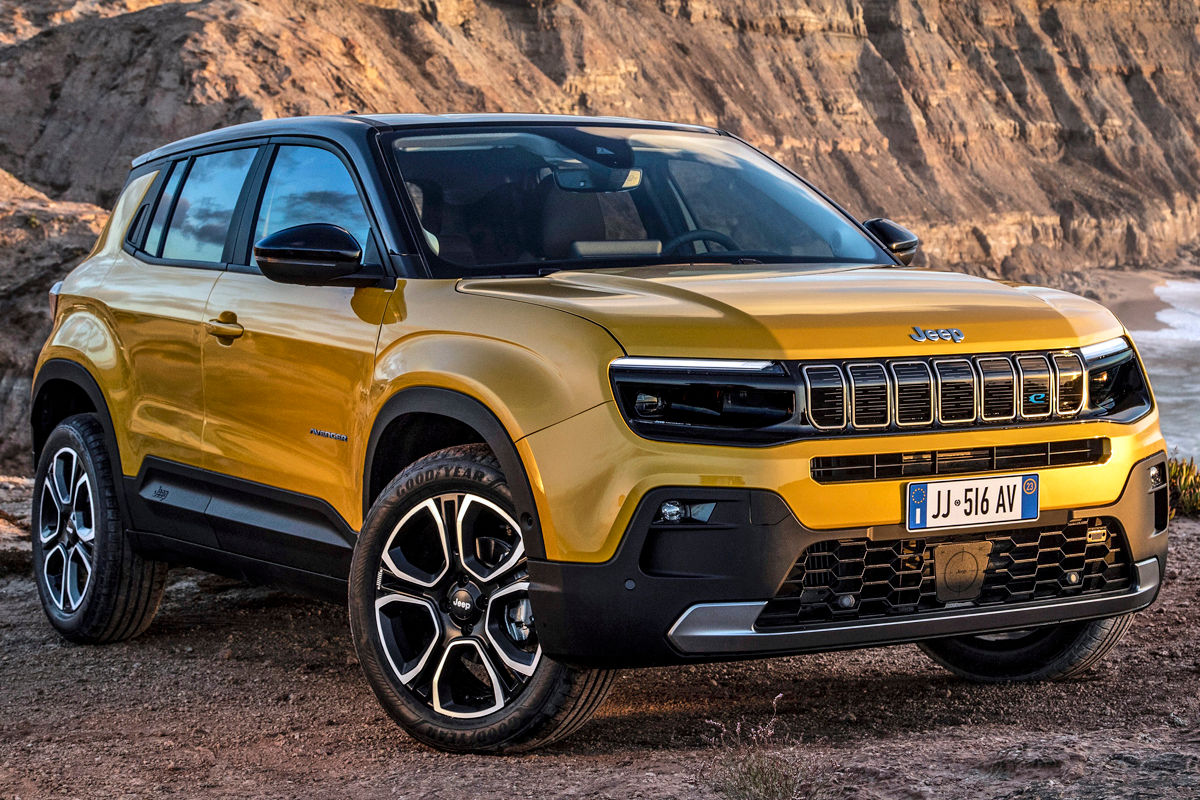
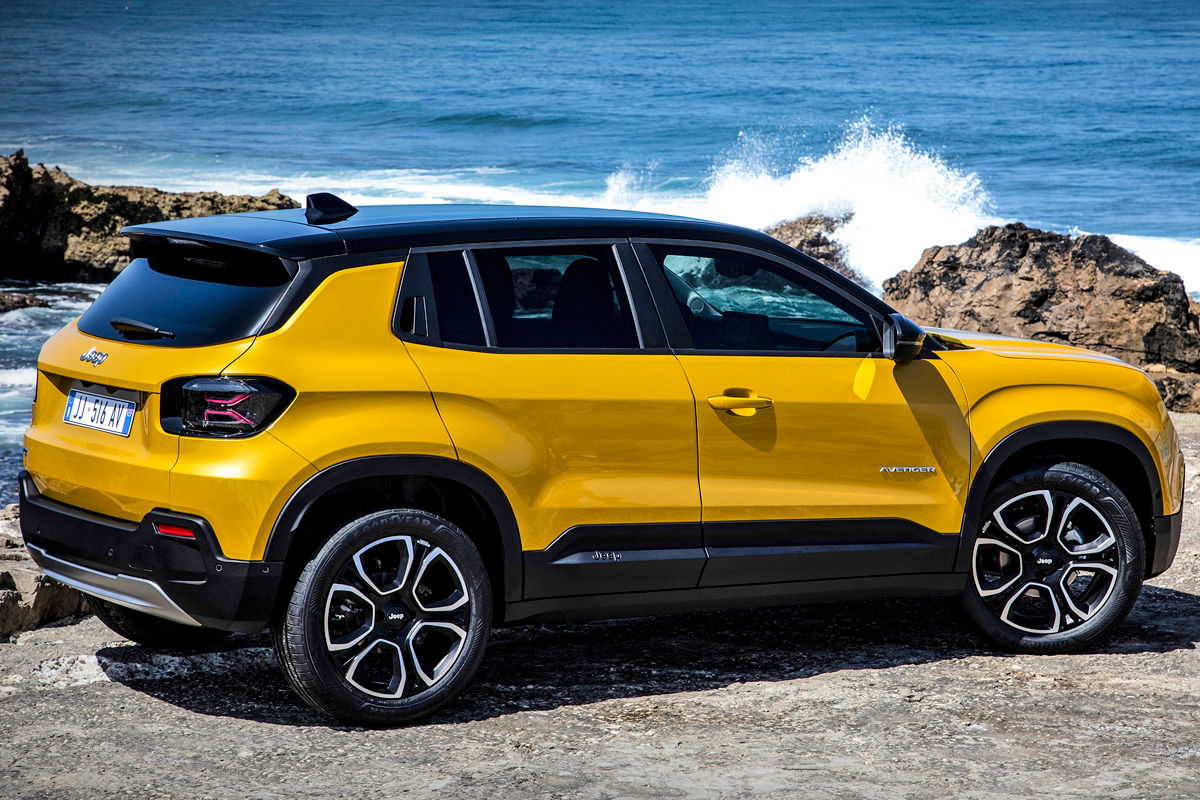
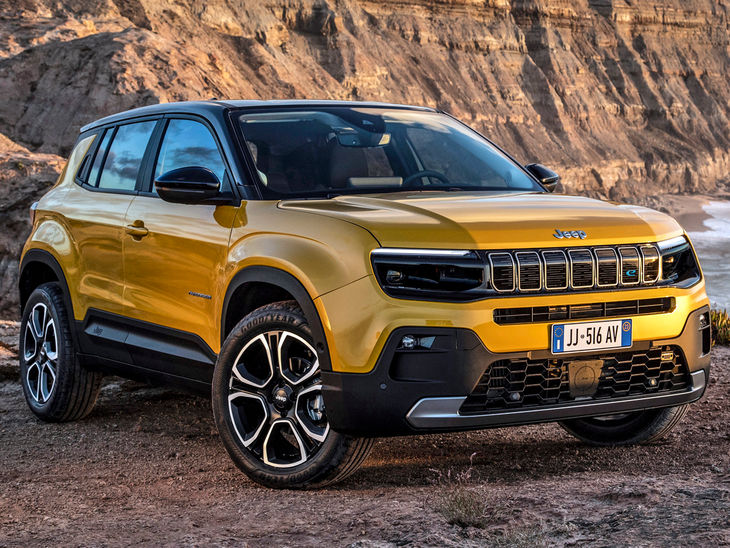
Then there’s the more compact Avenger, which is slated to arrive in Europe in 2023, before being rolled out to “other markets, such as Japan and South Korea”. It will be positioned below the Renegade and will be produced in Poland. From what we understand, it will be based on the same Stellantis platform as the Opel Mokka.
Jeep is targeting an electric range of 400 km as well as “impressive” ground clearance, breakover and approach angles for the segment. The Avenger is scheduled to officially debut at the 2022 Paris Motor Show in October, with reservations for customers in Europe opening immediately thereafter.
Antonella Bruno, head of Jeep Europe, says the Avenger will offer “Jeep brand capability that is right-sized for the European market”.
Early details on the new Jeep Wagoneer S
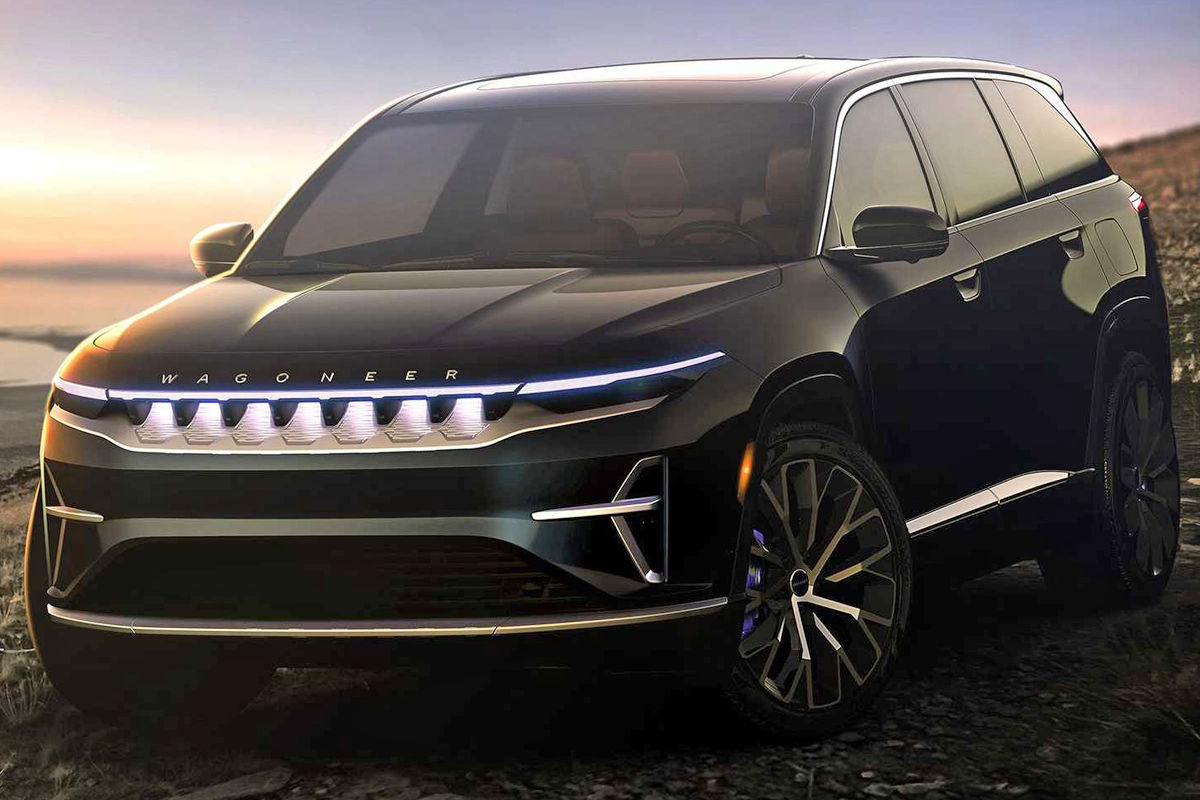
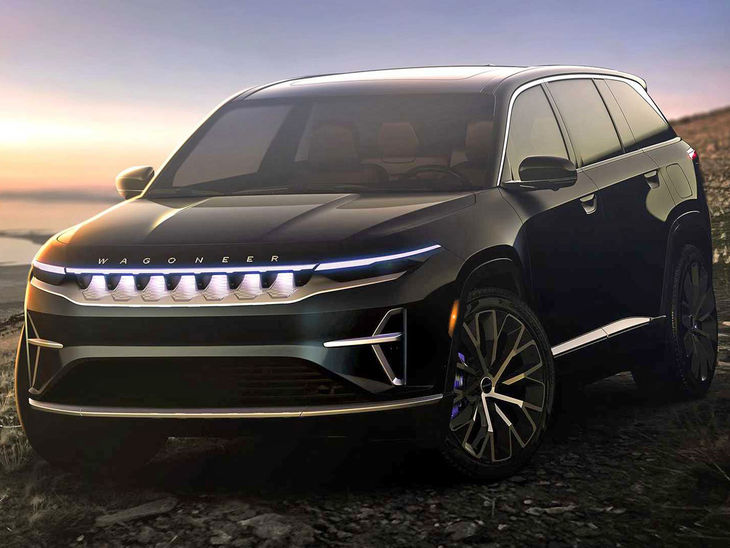
Finally, Jeep showed off a new electric version of the Wagoneer. Codenamed “Wagoneer S”, it’s described as another “global SUV” that will be “sold in major markets around the world, including Europe”.
Target specifications include a single-charge range of about 645 km, a peak power output of around 450 kW and a 0-100 kph time in the region of 3.5 seconds. The battery-powered Wagoneer will go into production in 2024 in North America, with reservations for US customers opening in early 2023.
“We’ll delight our customers with a premium, highly efficient SUV that is loaded with technology and high-quality craftmanship, offering 4×4 capability, high performance, rapid acceleration and a target range of 400 miles [around 645 km] on a single charge,” adds Meunier.
Of course, we’ll have to wait to find out whether any one of these new electric SUVs is on the cards for South Africa…
The 2022 Toyota Corolla Cross GR-Sport Price & Specs
A new GR-Sport version of the Toyota Corolla Cross will launch in South Africa very soon. We have official pricing for the locally built newcomer…
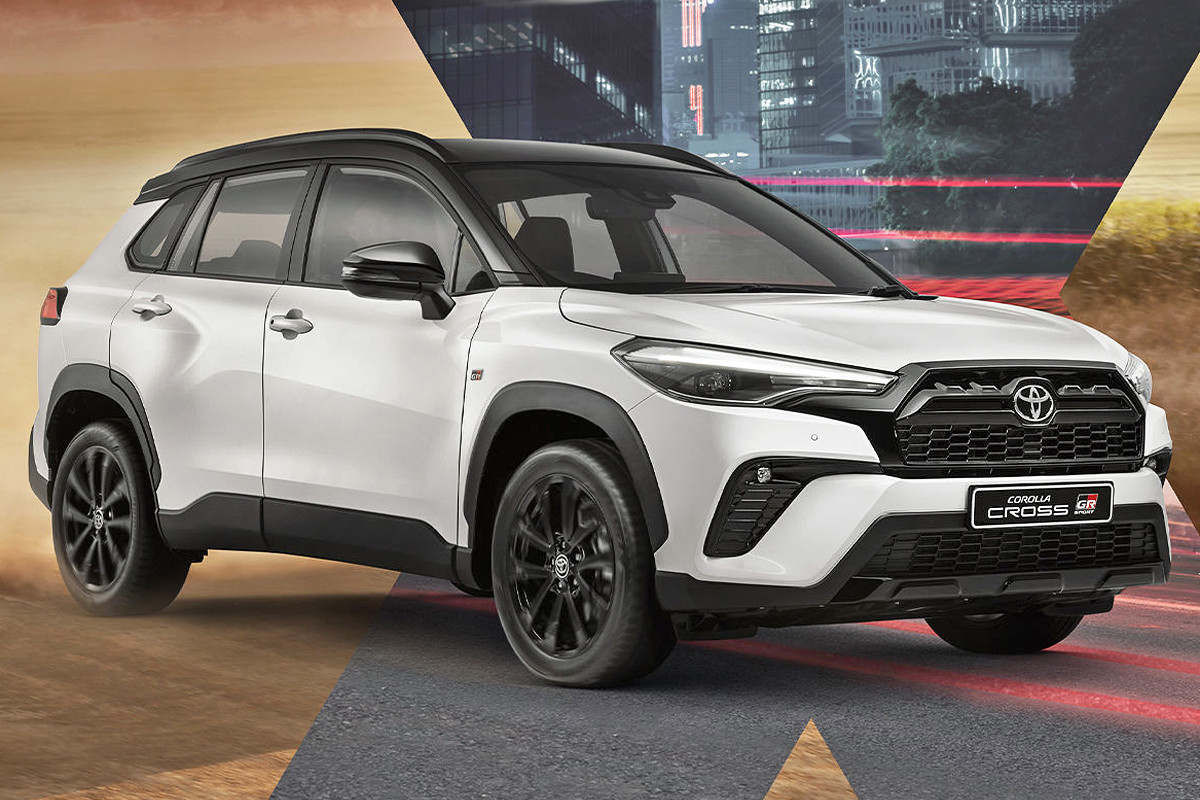
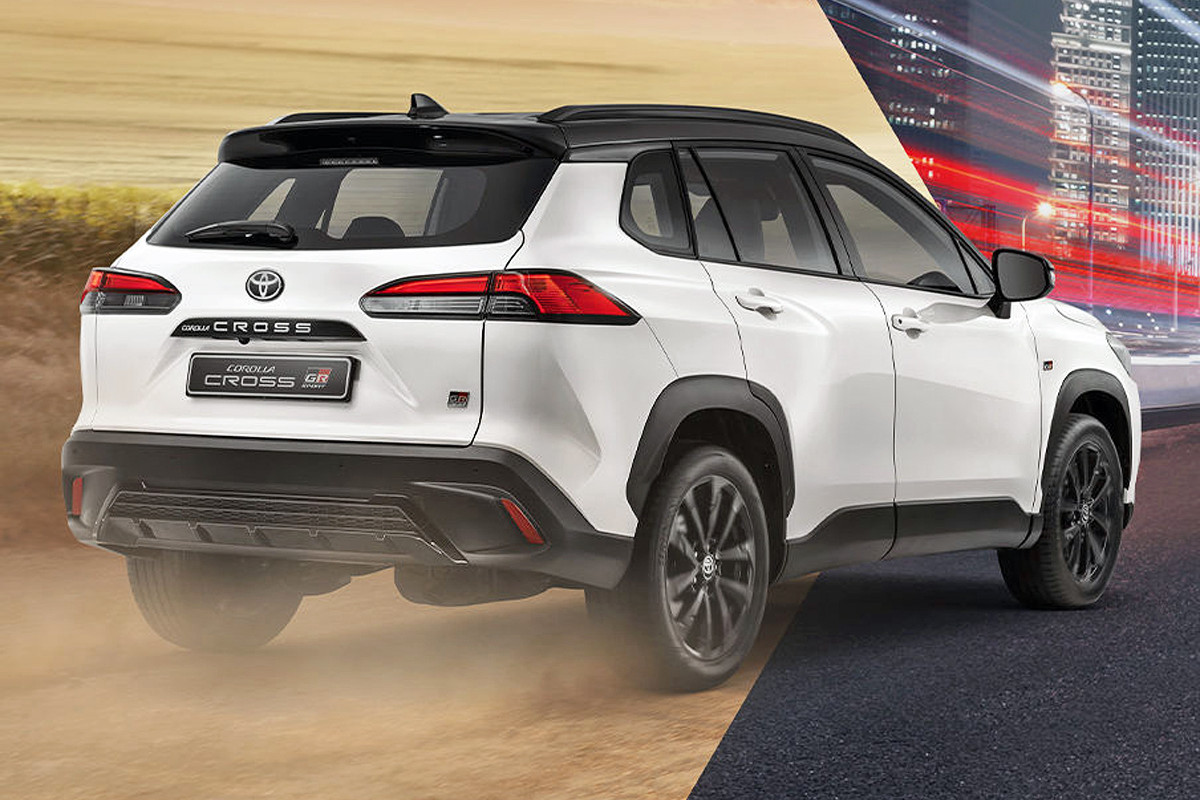
The Toyota Corolla Cross range in South Africa is soon set to be bolstered by the addition of a special GR-Sport derivative, subtly fettled by the company’s Gazoo Racing division and revealed last year in Asia. And official pricing has now been released.
The GR-Sport derivative has finally started rolling off the line alongside the cooking models – launched locally in November 2021 – at the Japanese firm’s Prospecton facility in KwaZulu-Natal, which is back to building vehicles after being forced to halt assembly in mid-April 2022 owing to severe flood damage. Toyota says it will be priced at R453 200, which translates to a R15 000 premium over the Corolla Cross 1.8 XR.
The Corolla Cross GR-Sport – or GR-S, for short – will be offered exclusively with Toyota’s naturally aspirated 1.8-litre, 4-cylinder petrol engine (rather than the hybrid powertrain). As with all GR Sport variants launched so far, the engine is untouched, which means unchanged peak outputs of 103 kW and 172 Nm.
Like the rest of the Corolla Cross range, the GR-S derivative uses a continuously variable transmission (CVT) driving the front axle. As such, performance is unchanged from the standard version (though Toyota SA Motors interestingly doesn’t quote a 0-100 kph time for any of its Corolla Cross models).
What makes a Toyota Corolla Cross GR-Sport?
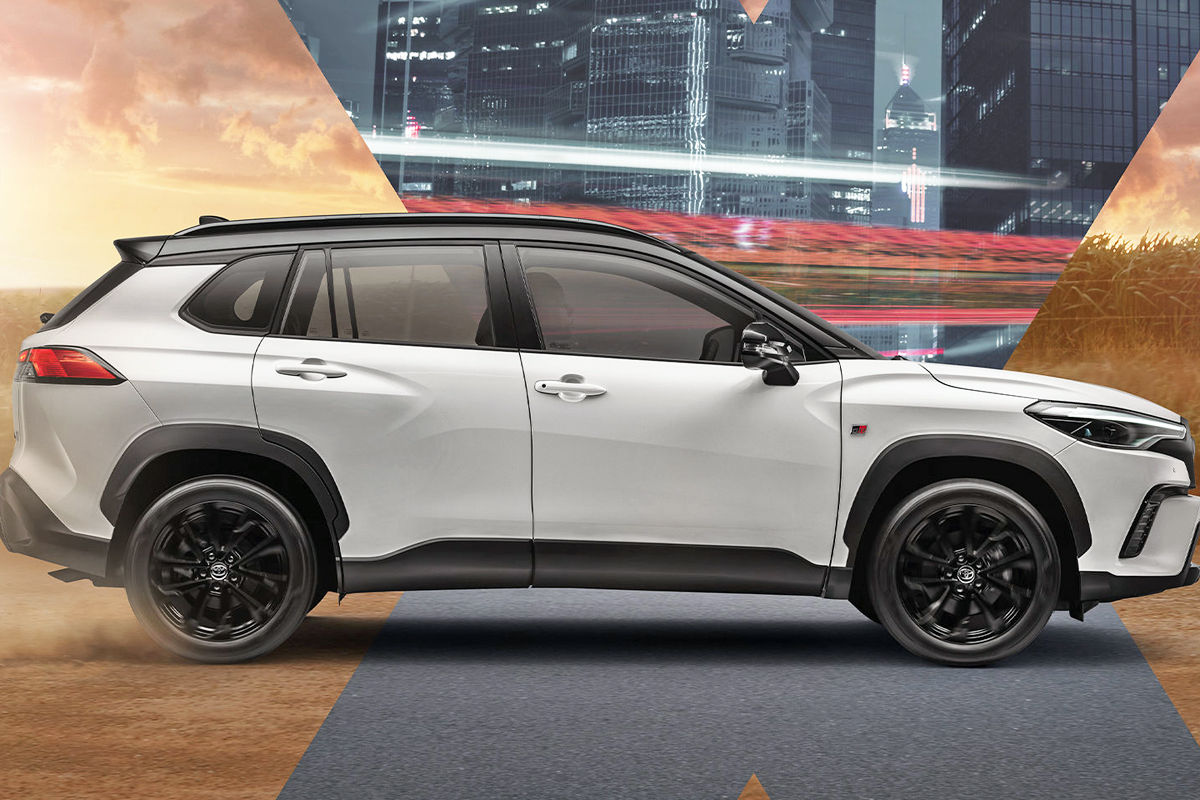
While the majority of the GR-Sport’s model-specific upgrades are cosmetic, SA-spec versions will also feature “specially tuned” suspension, which the firm claims delivers “more stability during extreme cornering”. The steering set-up, too, has been tweaked.
It appears the GR-S is based on the high-spec XR grade, though with a handful of updates. These include a set of black 18-inch alloy wheels (wrapped in the same 225/50 R18 rubber as used by XR models), a black roof, black side-mirror caps and a sportier treatment for the grille and front bumper (cutting the vehicle’s overall length by 5 mm to 4 455 mm).
There is also a faux-diffuser round back plus a GR-Sport badge for the tailgate. The Corolla Cross 1.8 GR-S CVT will be available in a choice of three exterior paint colours, each combined with a black roof: Glacier White, Arizona Red and Chromium Silver.
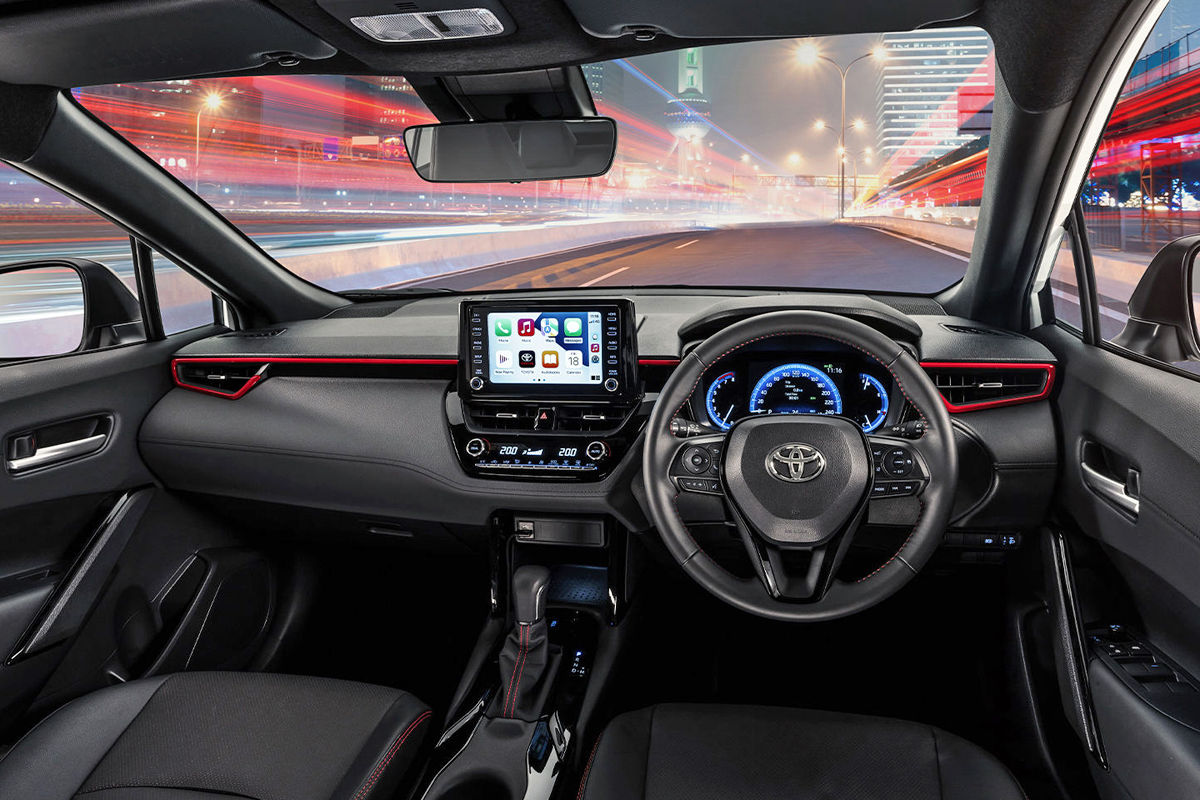
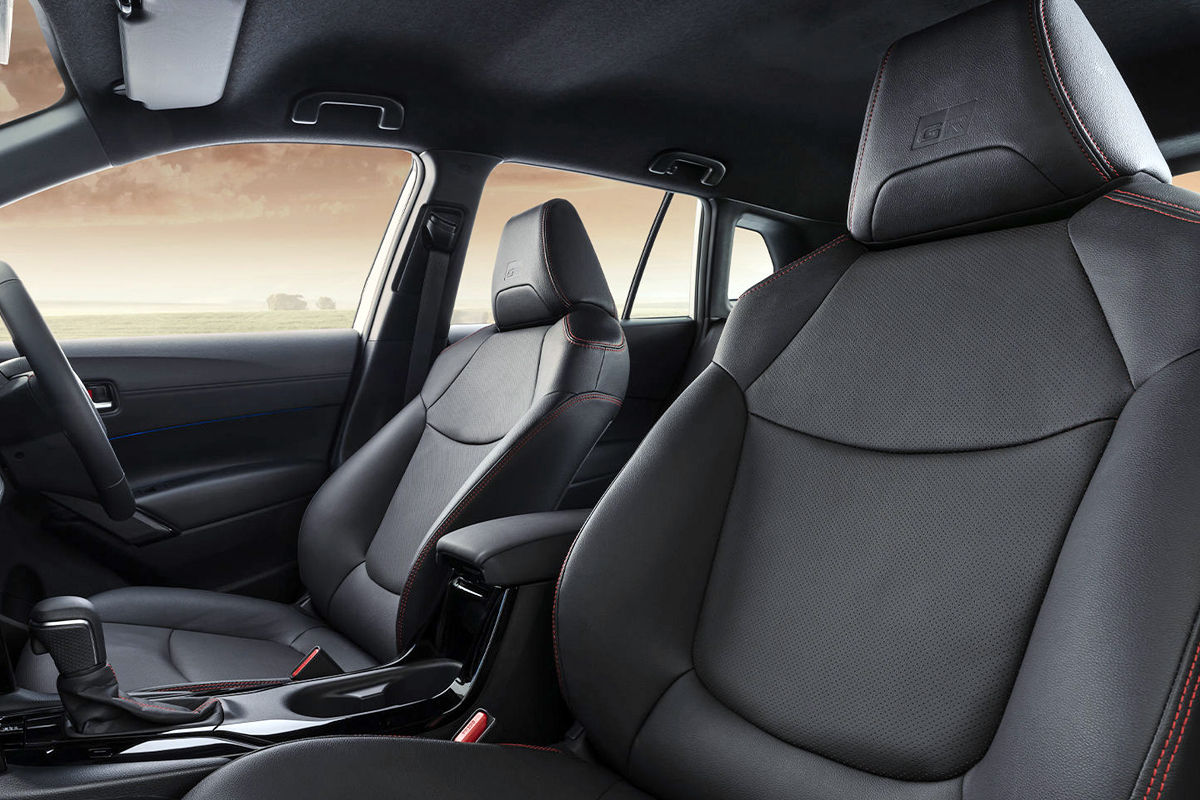
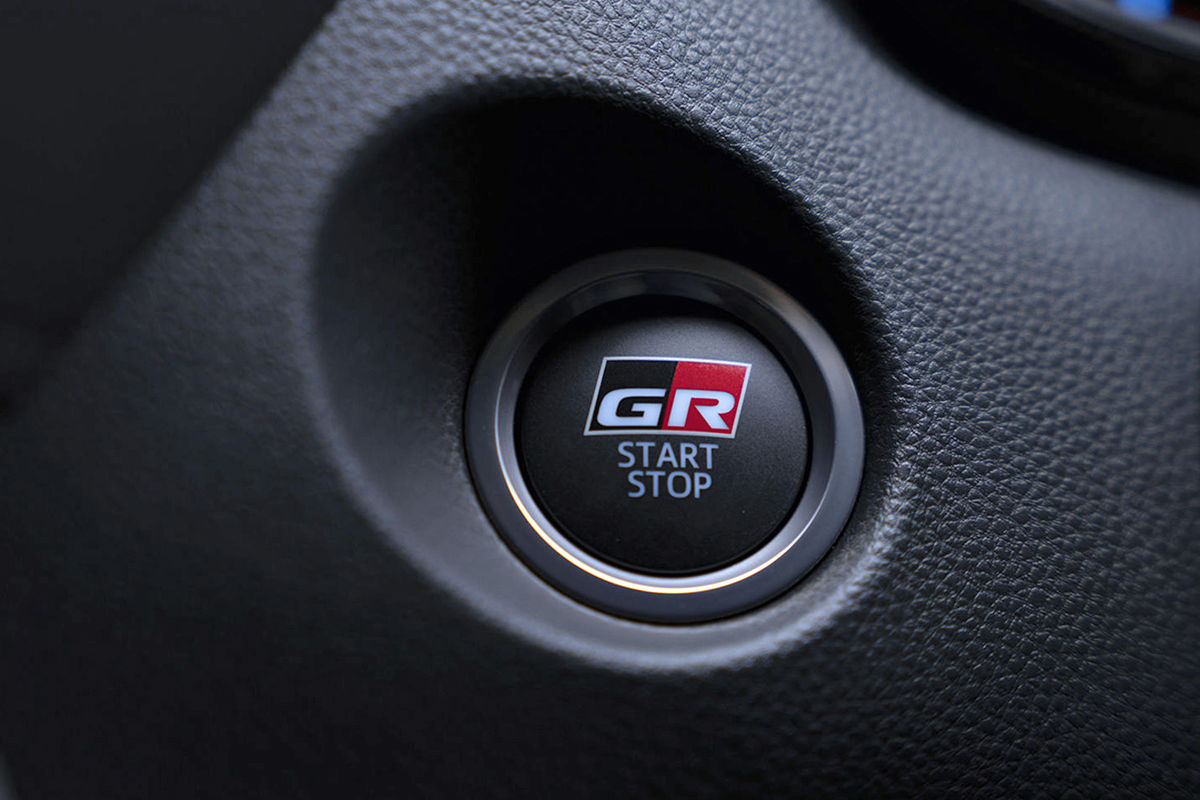
Inside, you’ll find more GR-Sport badges (including on the start button), along with leather upholstery with red stitching (as opposed to partial leather offered on the XR) and model-specific treatment for the CVT shift lever and knob.
Other standard features shared with the XR specification level include auto high-beam LED headlamps, rain-sensing wipers, an electro-chromatic rear-view mirror, dual-zone automatic air-conditioning, parking sensors (front and rear) and a reversing camera. Active safety kit like blind-spot monitoring, adaptive cruise control and lane-trace assist will also ship standard as part of the Toyota Safety Sense package.
How much does the Corolla Cross GR-Sport cost in SA?
Toyota Corolla Cross GR-Sport – R453 200
A 6-service/90 000 km service plan and a 3-year/100 000 km warranty are included in the purchase price.
Honda BR-V (2022) Launch Review
Honda has introduced an all-new BR-V to our market. Fresh out of a brand new factory in Indonesia and with the pretensions of moving into the crossover/SUV segment, does the newcomer offer enough substance to make a significant impact in a (now well-contested) segment? We sampled the BR-V at its local launch in the Western Cape.
What’s new on the BR-V?
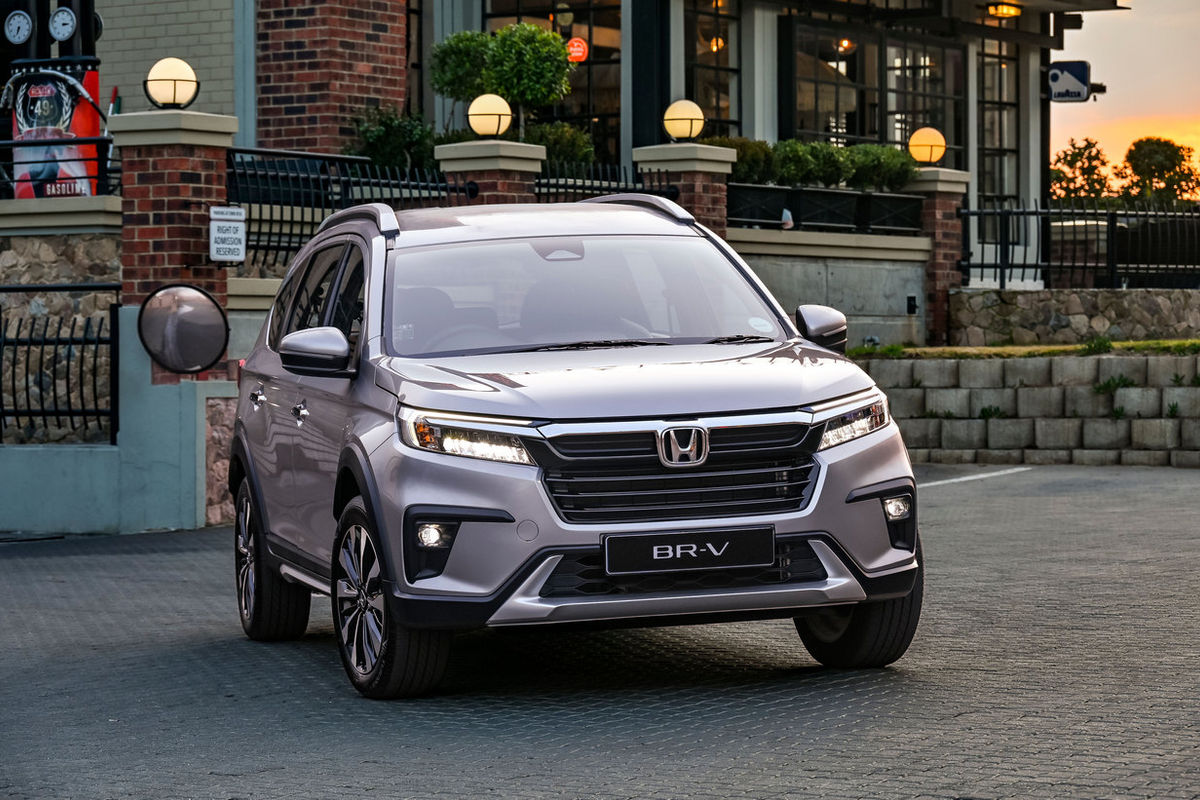
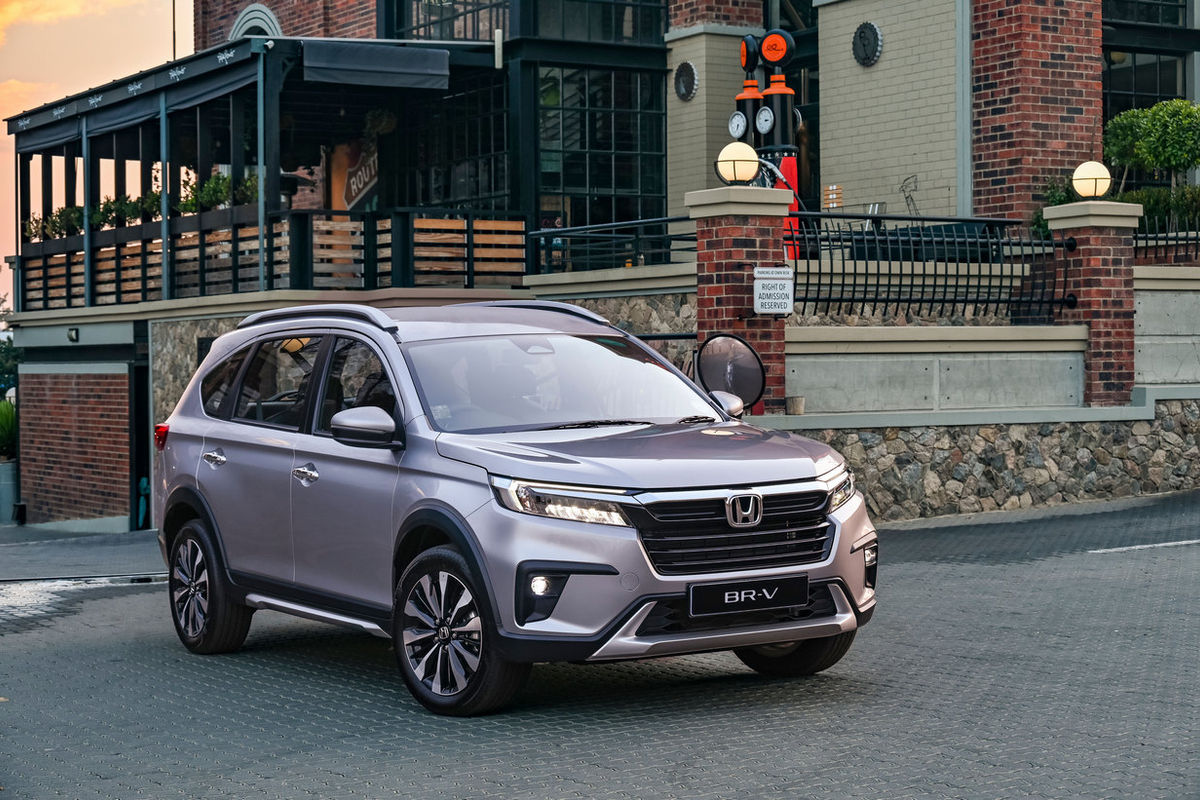
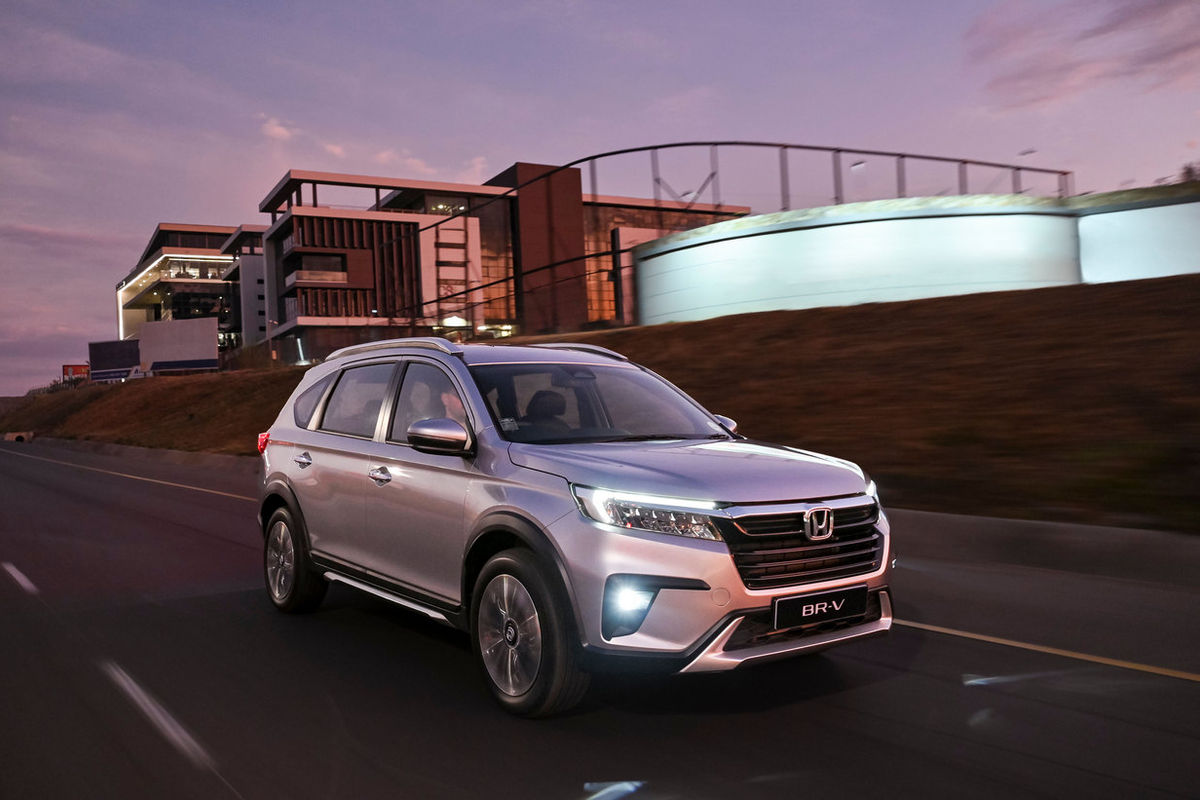
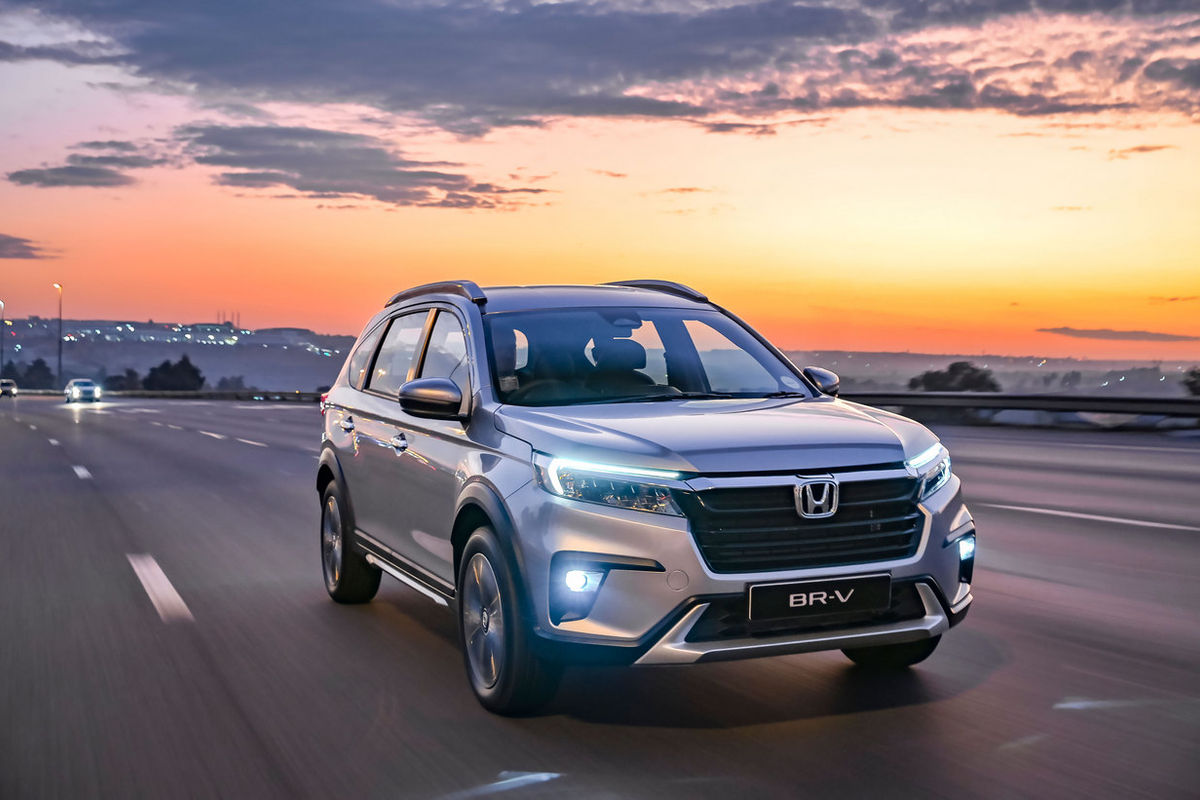
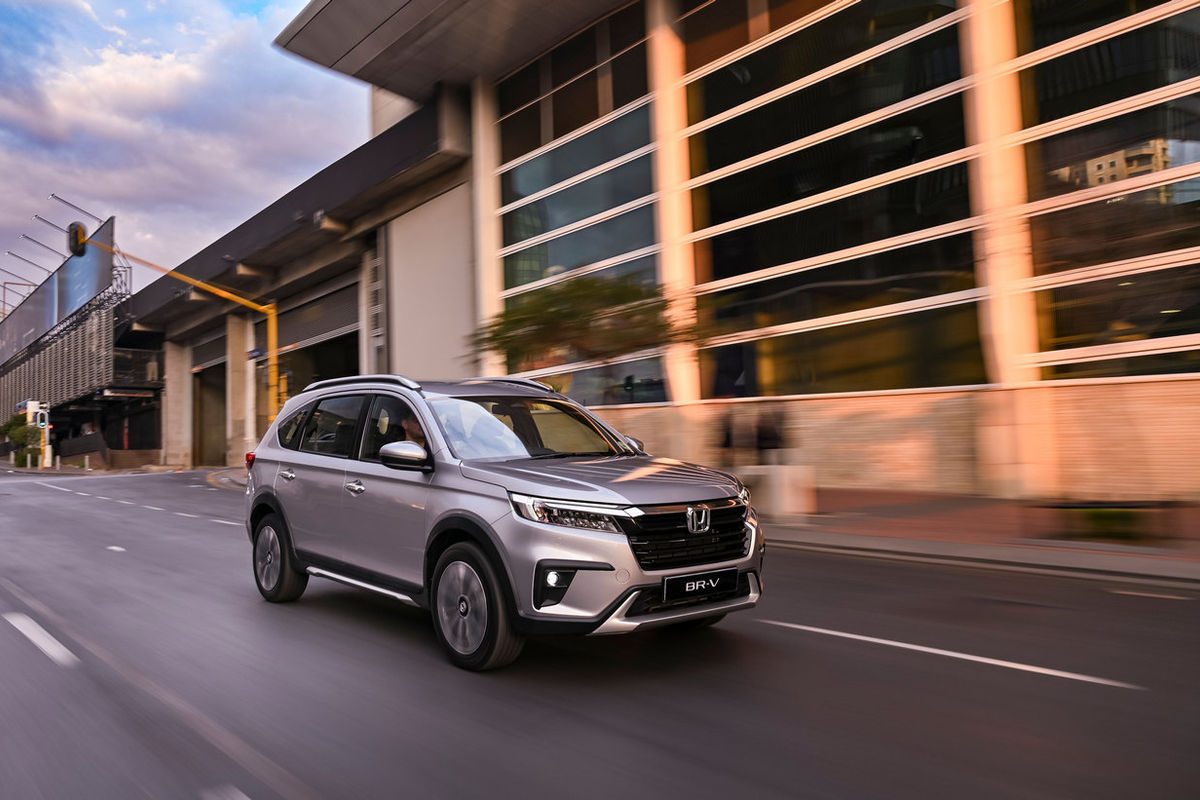
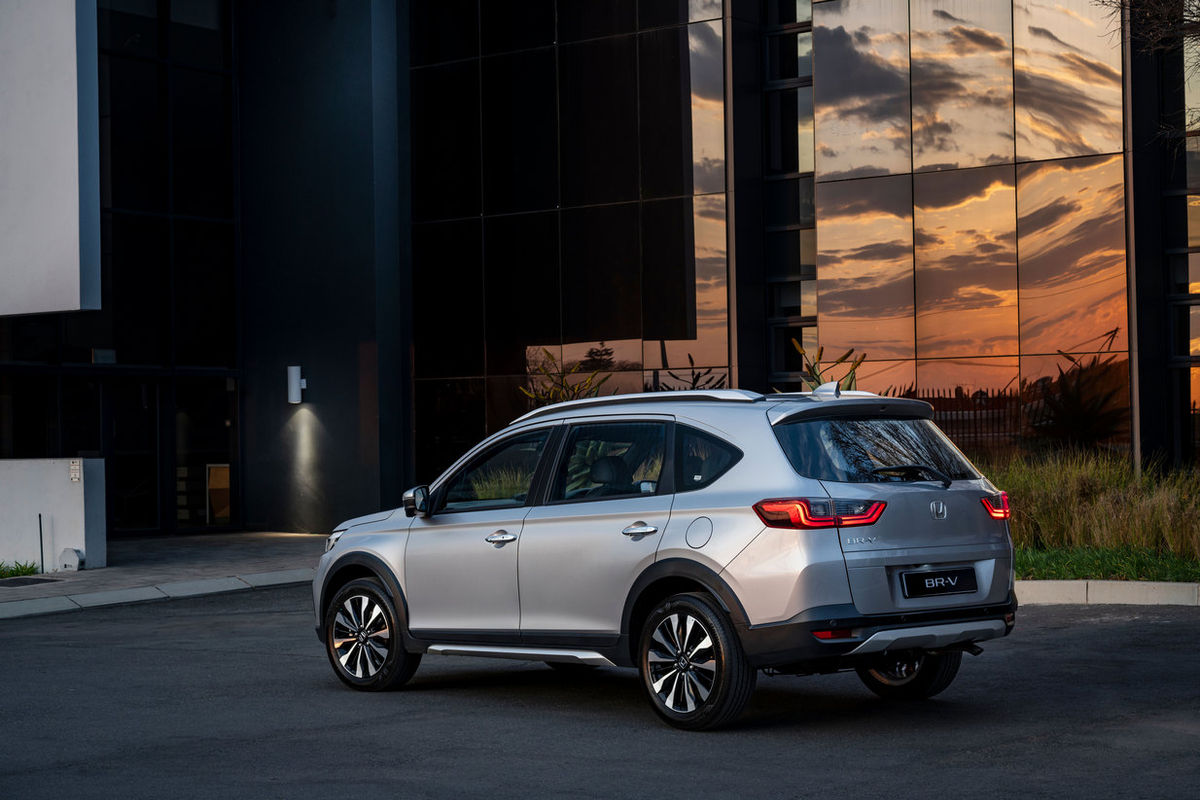
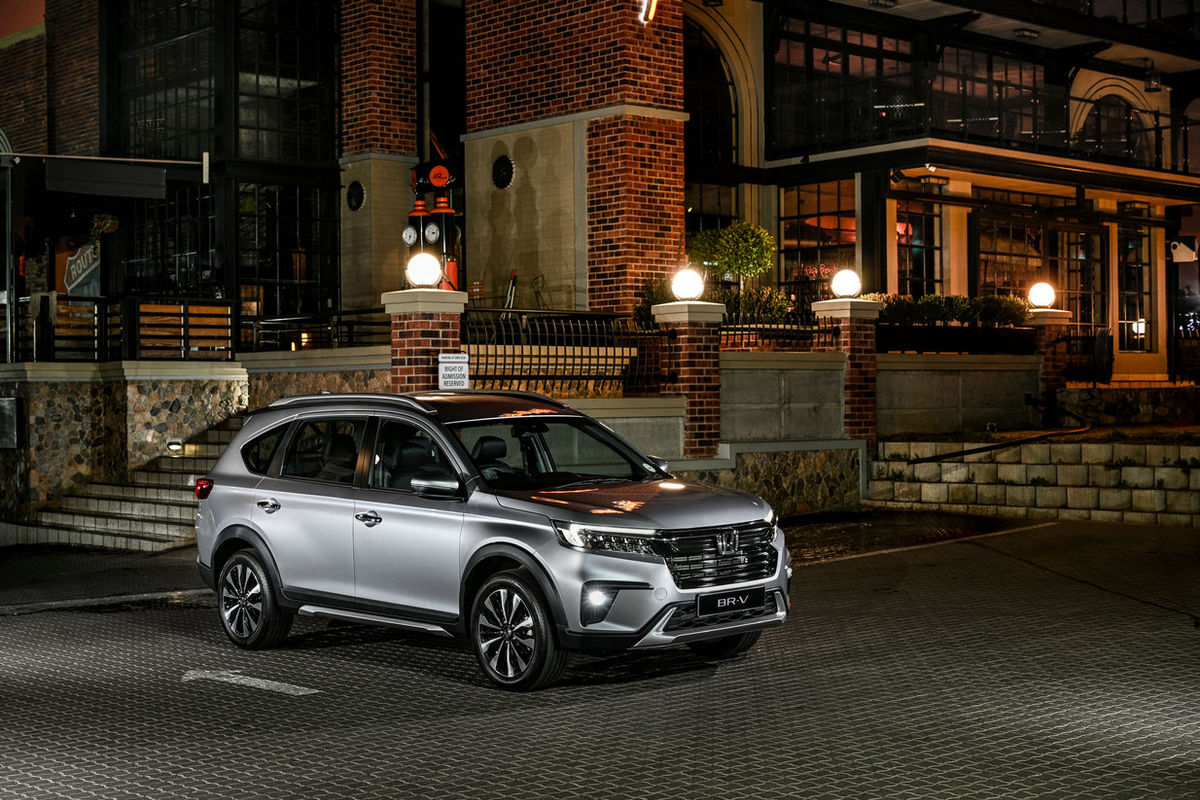
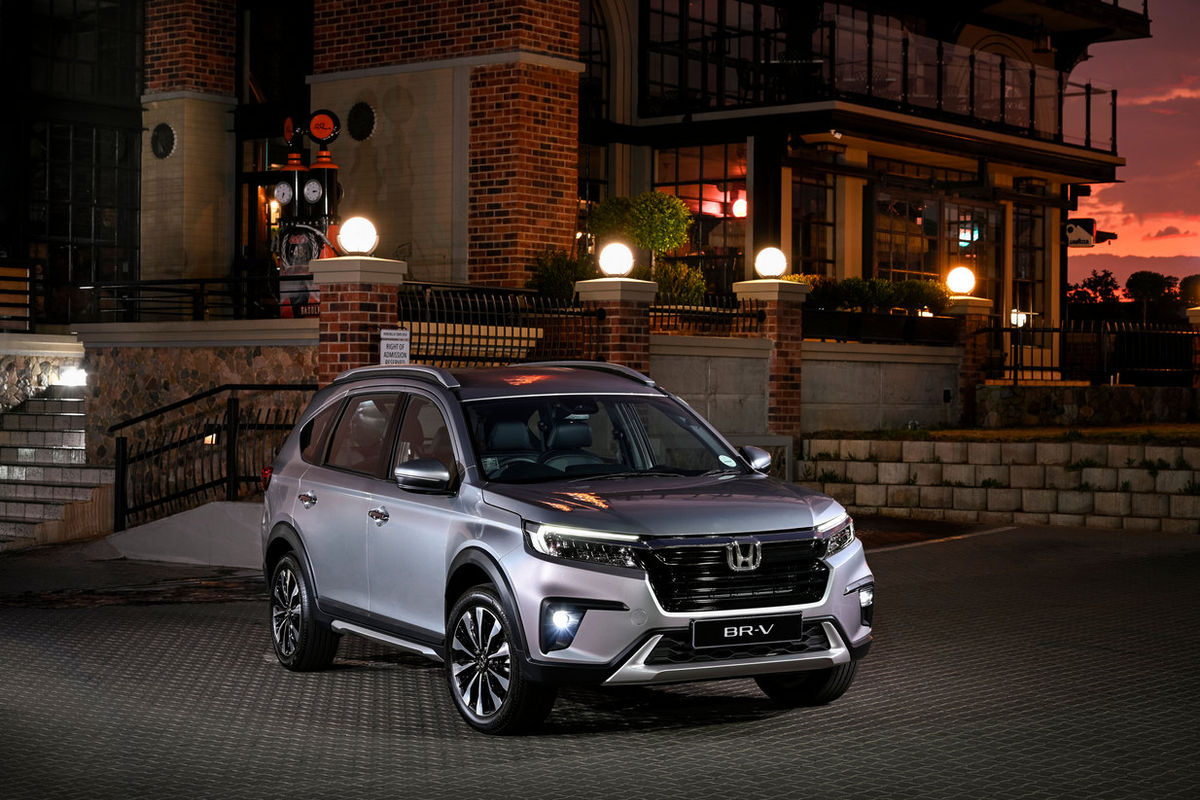
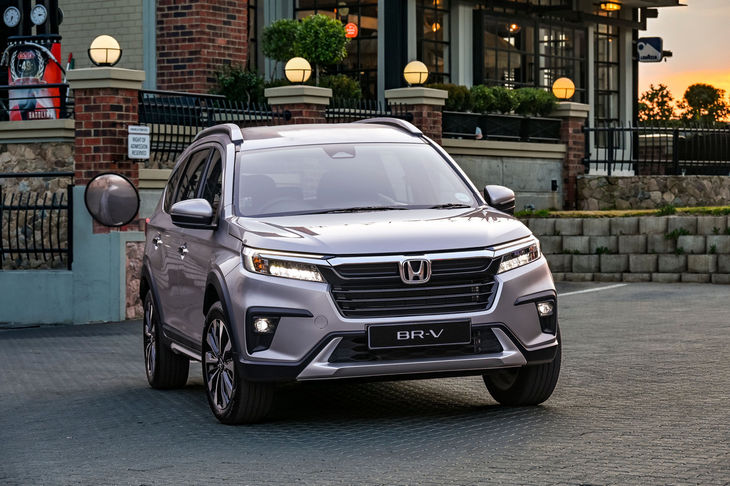
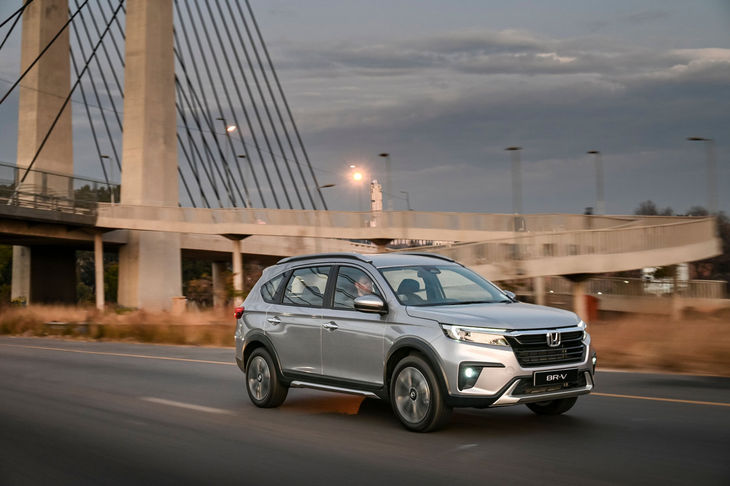
Stronger SUV-inspired front-end styling illustrates the BR-V’s shift from MPV to SUV.
The Honda BR-V was previously imported from India and, in a previous incarnation, it did duty as the Honda Mobilio. Many remember that as a pure rival to the now discontinued Toyota Avanza, as well as the Suzuki Ertiga. The Mobilio moniker was dropped in favour of the BR-V nameplate in 2015 before being introduced locally in 2016 as a pseudo-SUV; despite that, however, it was just a slightly raised MPV that still competed with the competitors mentioned above.
For 2022, the BR-V has made a bold move towards being an outright family SUV with its fresh design and broader suite of features. It’s a bigger car in every measurable direction, but still retains its 7-seater status.
Improvements have been made to the chassis, NVH levels have been lowered and a host of safety systems have been added (as standard) in order to push it upmarket – from the “ride-sharing” vehicle segment into the family-SUV category.
Is the BR-V still practical?
The new Honda BR-V has grown considerably compared with its predecessor. It’s 35 mm longer and 43 mm wider, most of which is evidenced by the increased interior space. The 3rd row of seats has more legroom and the load bay offers more luggage space behind the 3rd row. The second row of seats folds in a 60/40 split, while the rear row folds 50/50. All of the seats can be individually folded to have a somewhat flat load bay if you want to use it as a “quasi panel van”.
We drove the top-spec Elegance, which commands a R25 000 premium over the mid-spec Comfort derivative. However, the extra spec and features make it well worth the extra outlay, considering you get high-end additions such as lane-keep assist, adaptive cruise control, lane-watch camera (it’s mounted on the left side of the vehicle and displays its feed when you indicate left), as well as the collision mitigation braking system, which will apply the brakes automatically if needed.
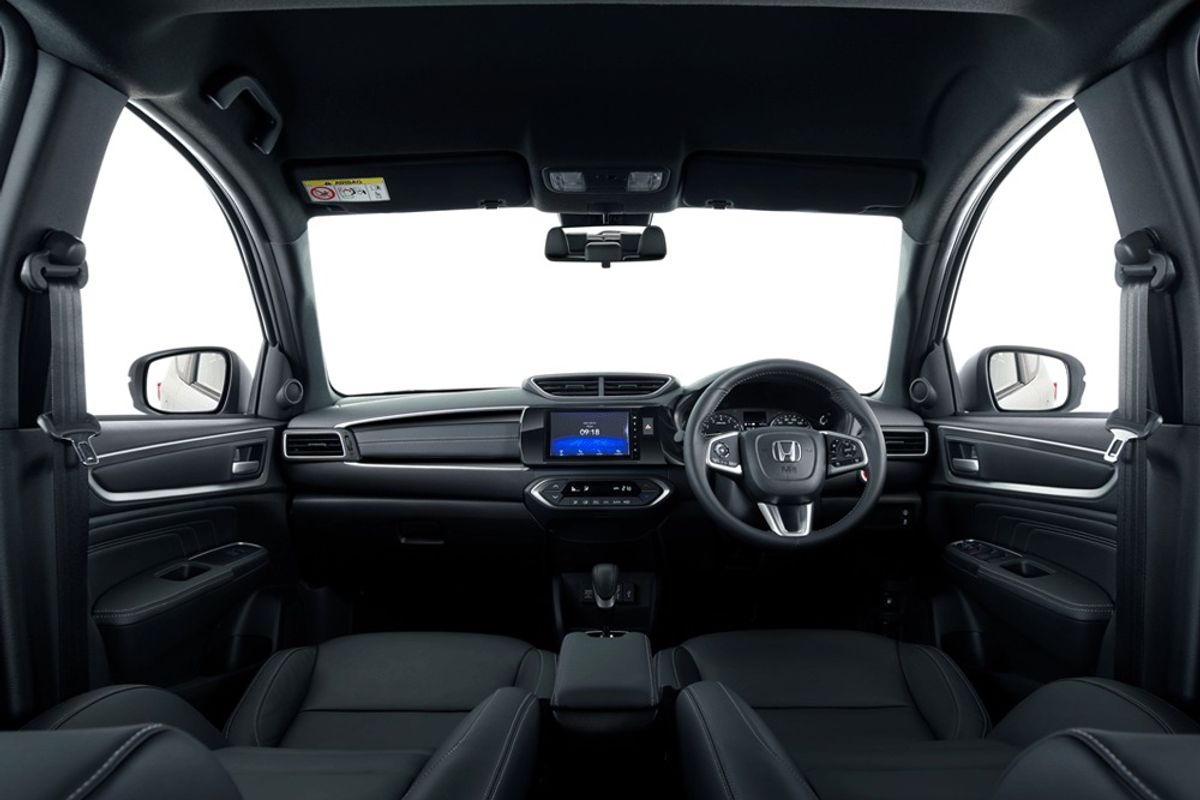
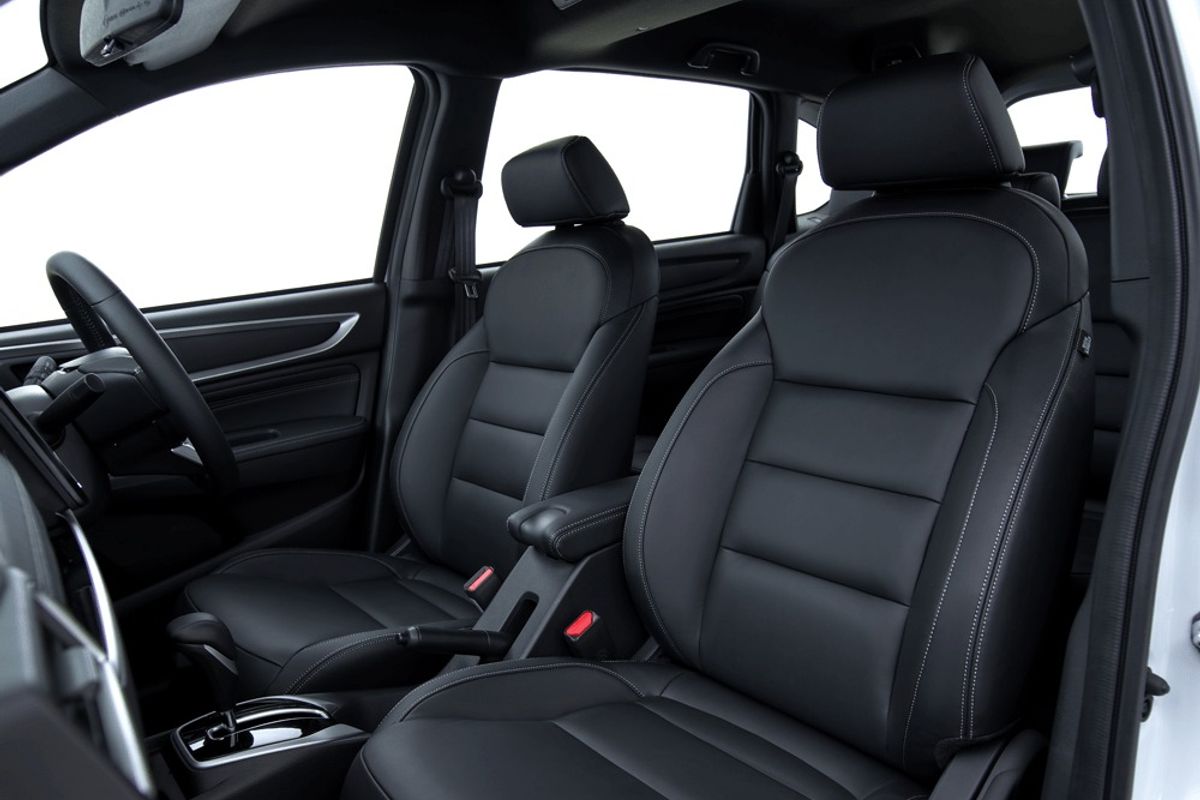
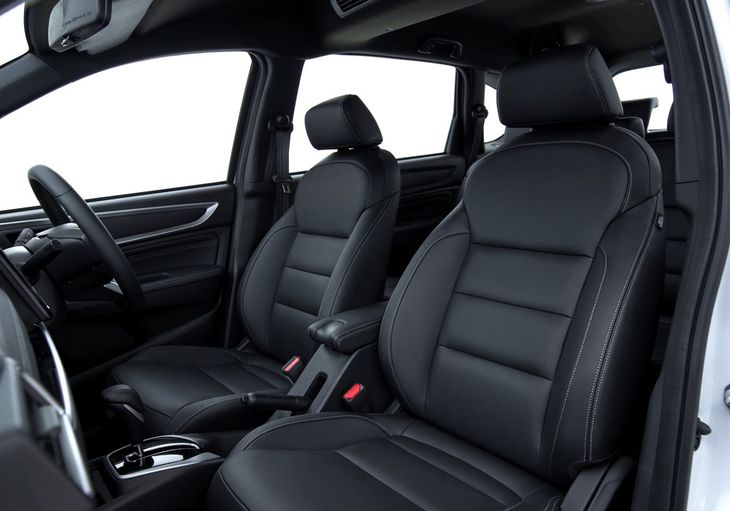
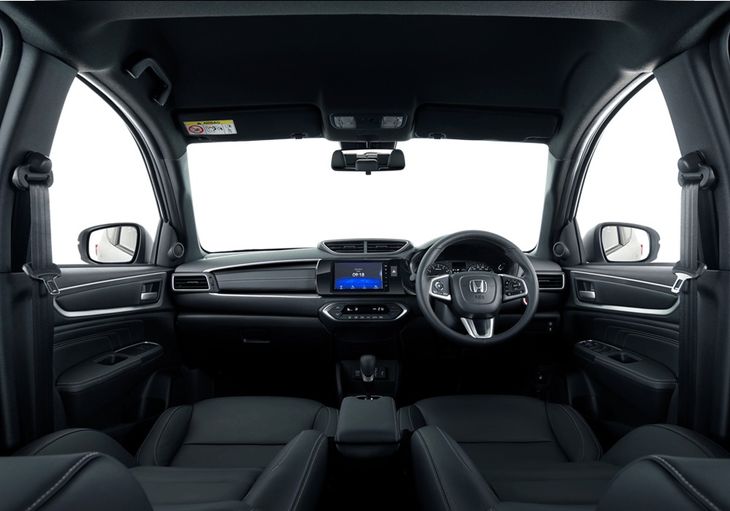
The interior looks more modern and the new factory seems quite capable of churning out Honda-quality fit and finish.
The only reason to choose the Comfort derivative would be if you really don’t want an automatic (it’s a CVT), because the Elegance is only available with a CVT, whereas the Comfort and Trend versions are equipped with a 6-speed manual.
In terms of the interior look and feel, the new BR-V is not bad at all. The dash mostly comprises hard plastics with a few leather-like inserts here and there, such as on the inside of the doors and above the glove box. The infotainment screen is basic, but still features Apple Carplay and Android Auto compatibility, but perhaps the 7-inch touchscreen is a bit dinky? You get 2 USB ports in the front and, if you do opt for the Elegance version, you’re afforded power outlets in every row.
Would the BR-V make a good family car?
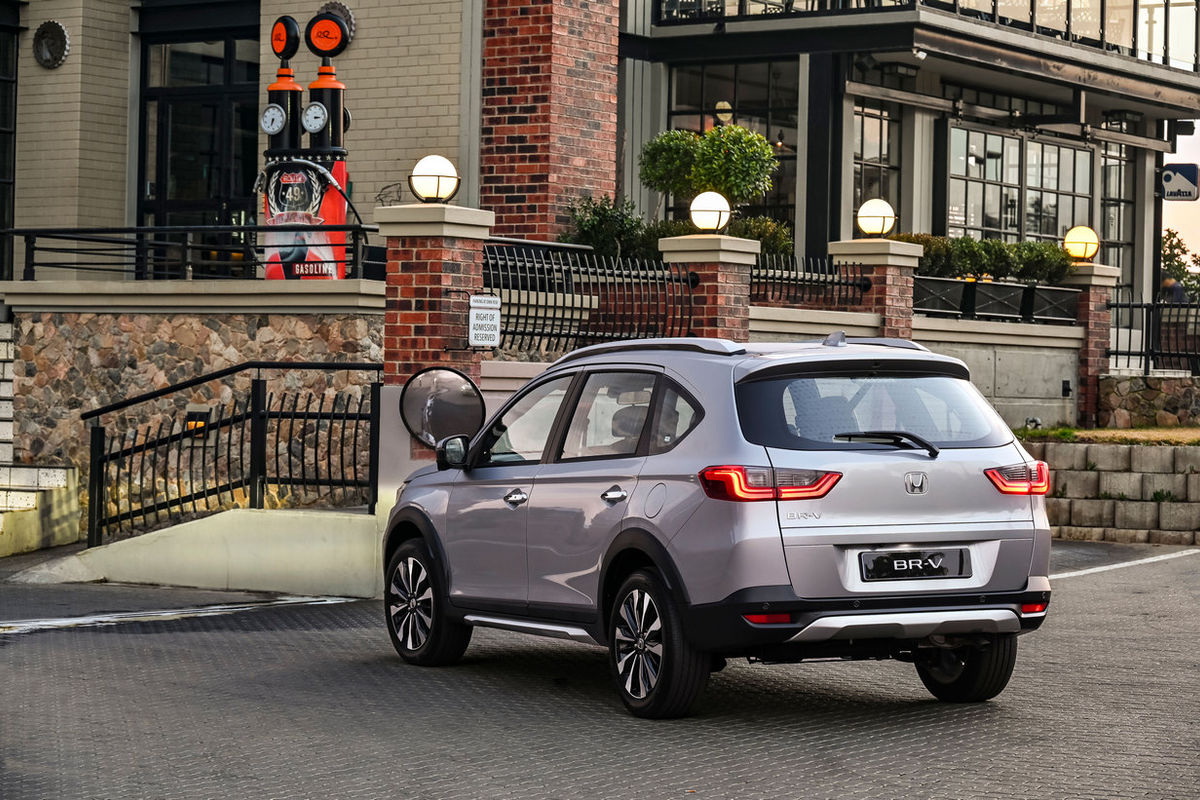
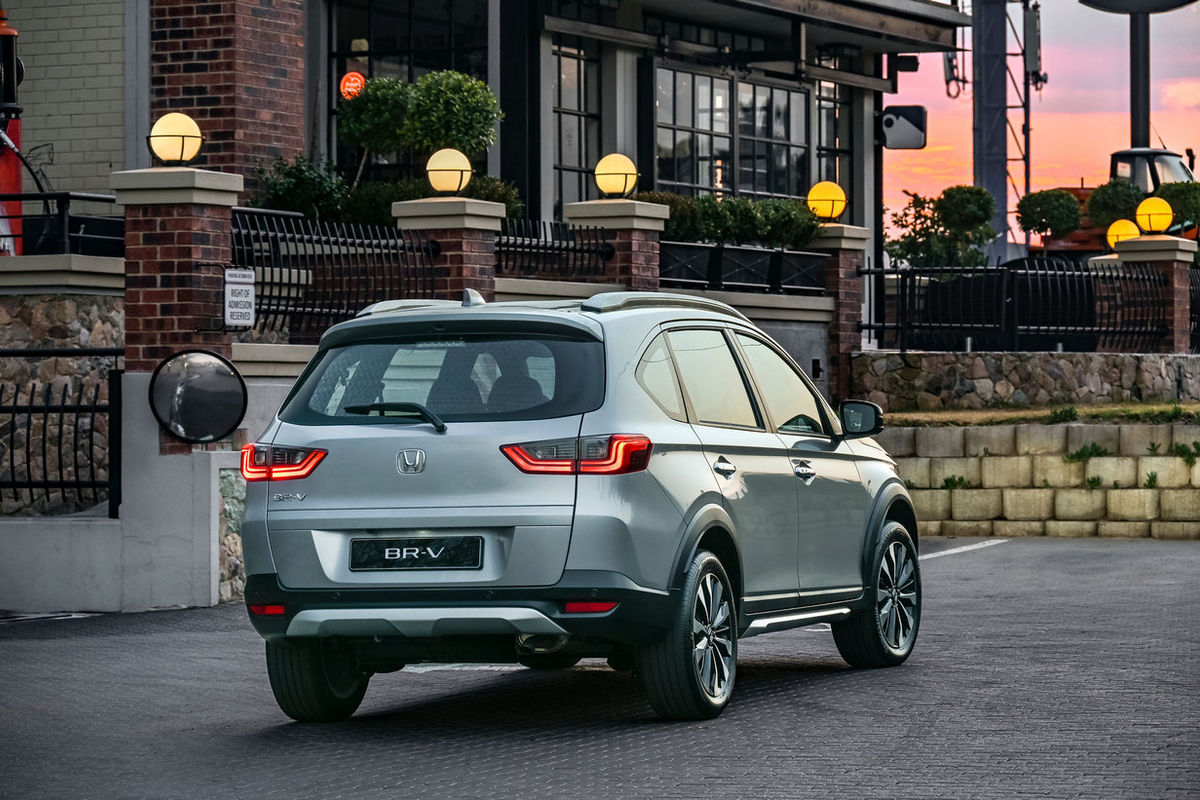
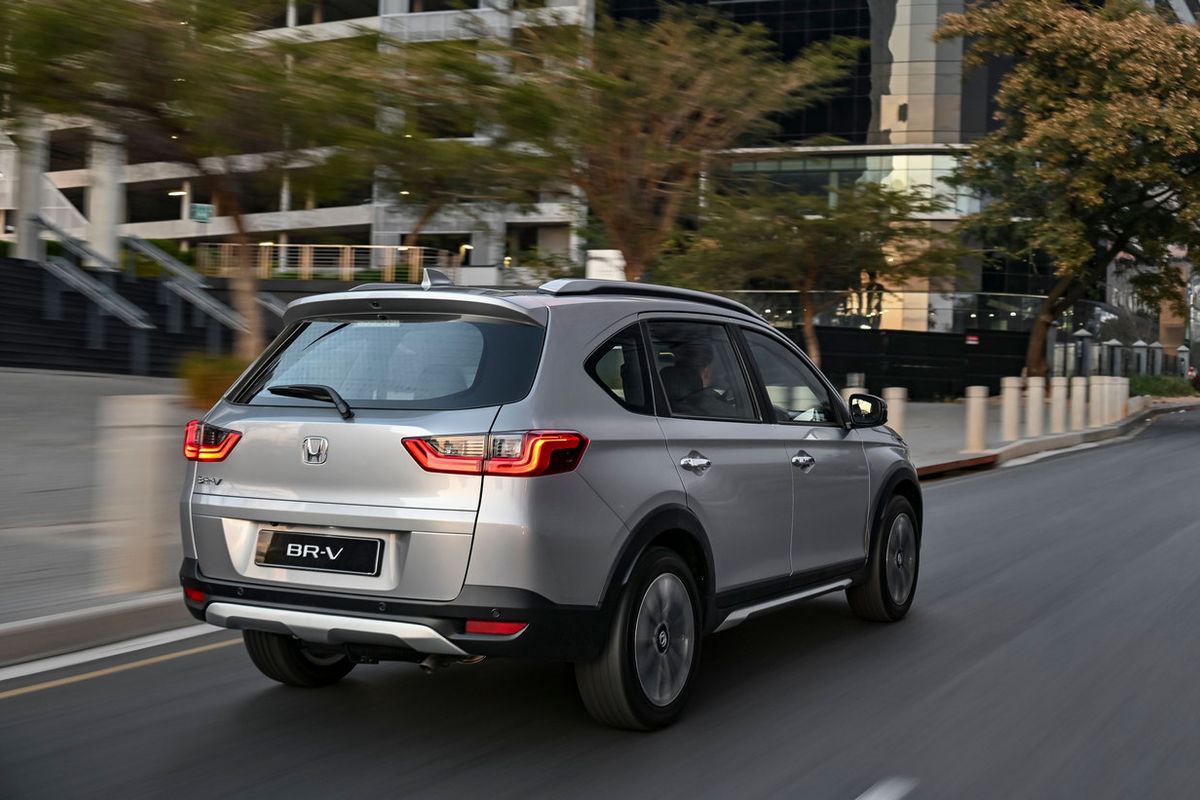
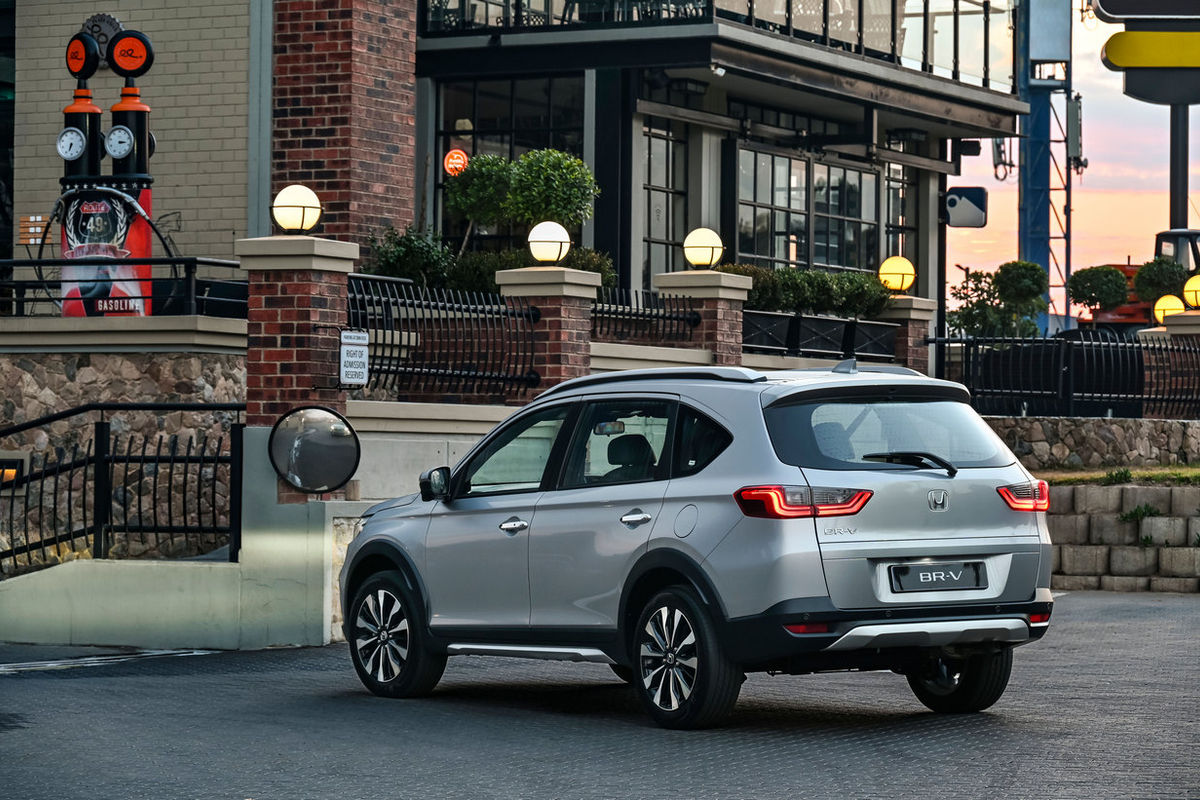
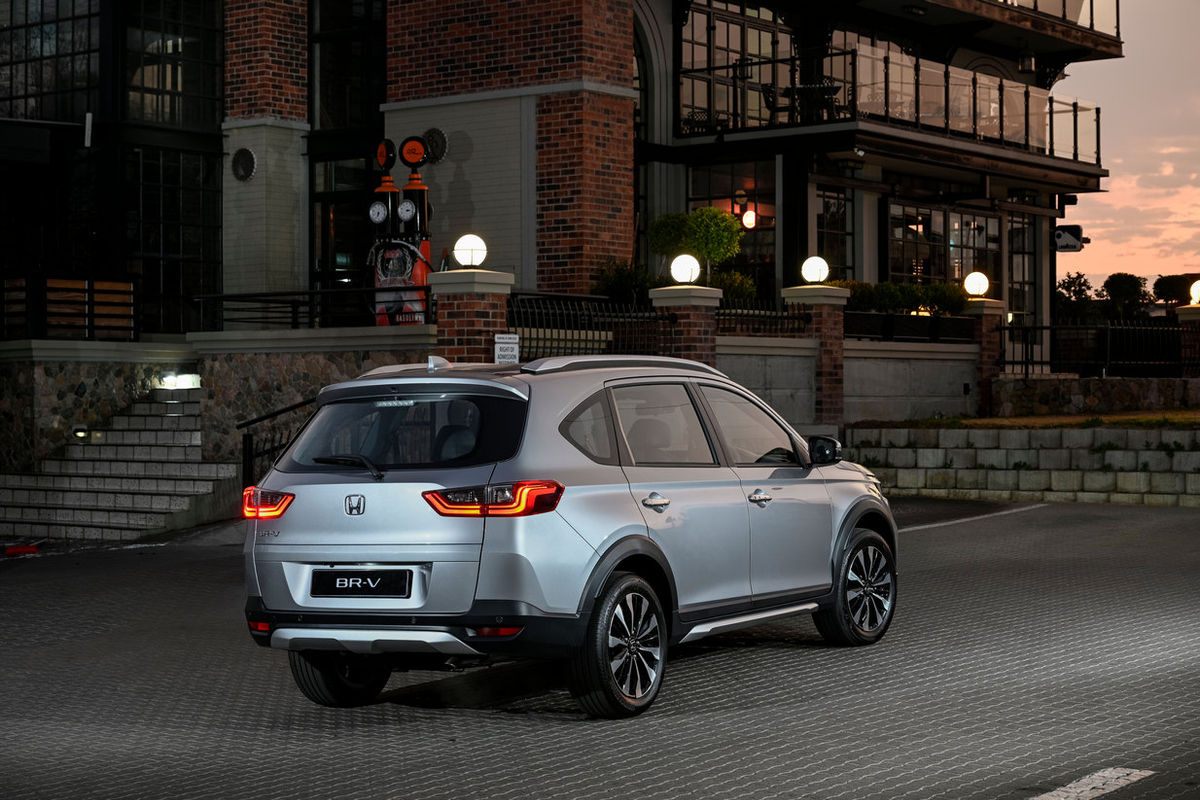
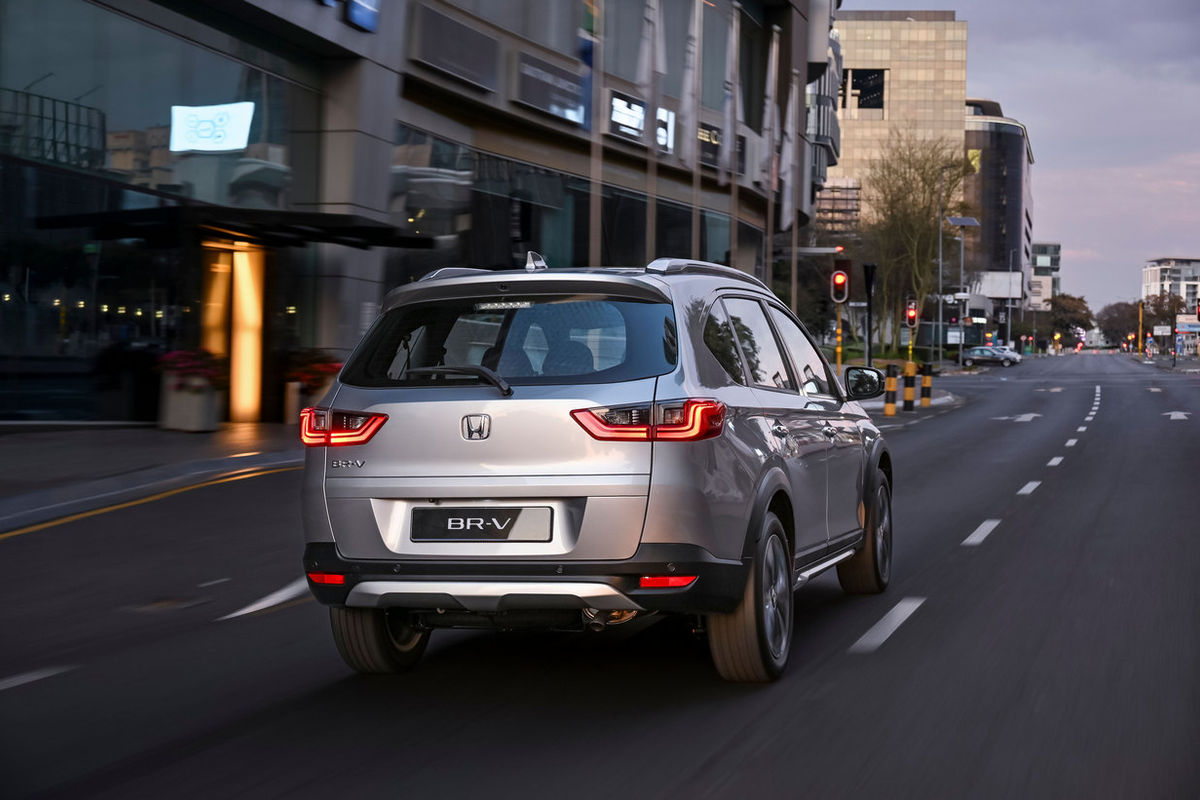
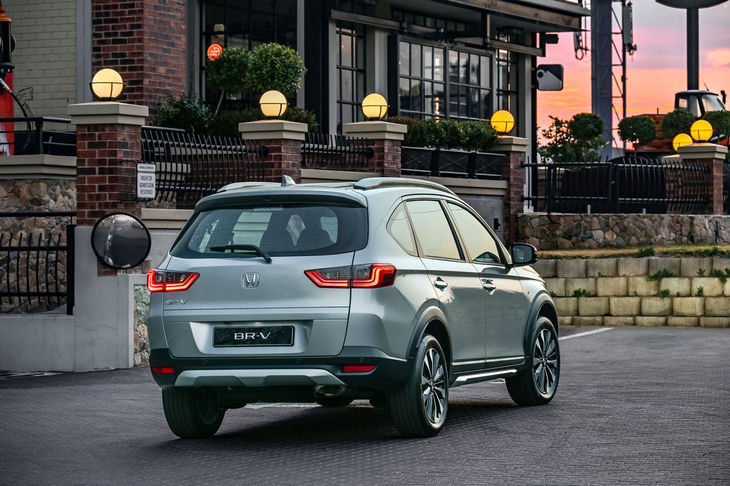
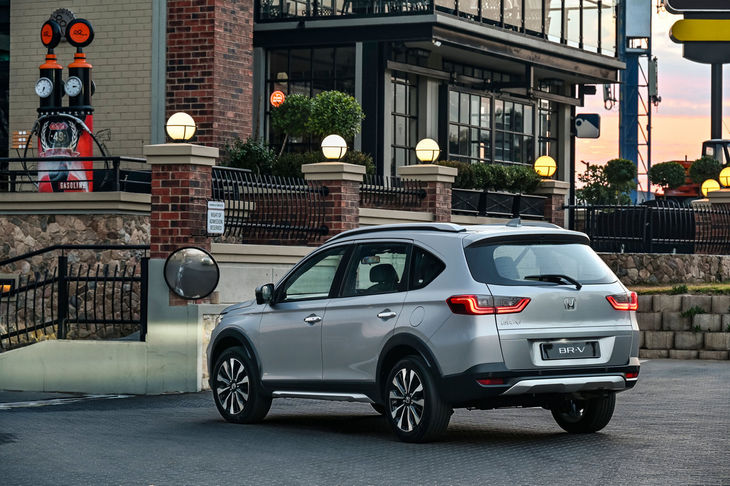
The rear-end styling isn’t as strong as at the front, but still represents a step forward from the predecessor.
There aren’t many direct rivals that you can easily point to in the price range that the BR-V now inhabits. It’s become more upmarket than the Toyota Rumion, Suzuki Ertiga and Renault Triber and is priced below the Hyundai Grand Creta, which was the first real 7-seater crossover/SUV you might want to use purely as a family vehicle…
The engine employed is the same unit as in the HR-V and Fit and whereas the HR-V could probably do with a feistier engine to match its price tag and looks, the 1.5-litre naturally aspirated petrol motor seems more appropriate in the BR-V.
It produces the same outputs as in the other Honda models – 89 kW and 145 Nm of torque – while its stated average fuel economy figure is 6.4 L/100 km. We achieved 6.5 L/100 km during our (mostly open-road) launch route so an efficiency-minded driver should be able to easily beat the claimed consumption. When the BR-V is loaded with 7 people, its engine is bound to struggle a bit and for those living in Gauteng or anywhere on the Reef, the effect is compounded by the thinner air, which saps about 17% of a non-turbocharged motor’s power. The engine is on par with the Rumion/Ertiga rivals, but if you are looking for a bit more pulling power, the bigger engine in the Grand Creta might be what you need.
The Elegance’s extra safety features make it a safe choice for shuttling around the family and improvements to the vehicle’s shell have further improved the rigidity of its crash structure. What’s more, noise levels inside the cabin have been improved thanks to the application of extra sound-deadening spray, which reduces road- and wind noise intrusion. I was specifically impressed with the latter when the test unit was traversing the rougher tarmac sections of our launch route.
What’s the BR-V like to drive?
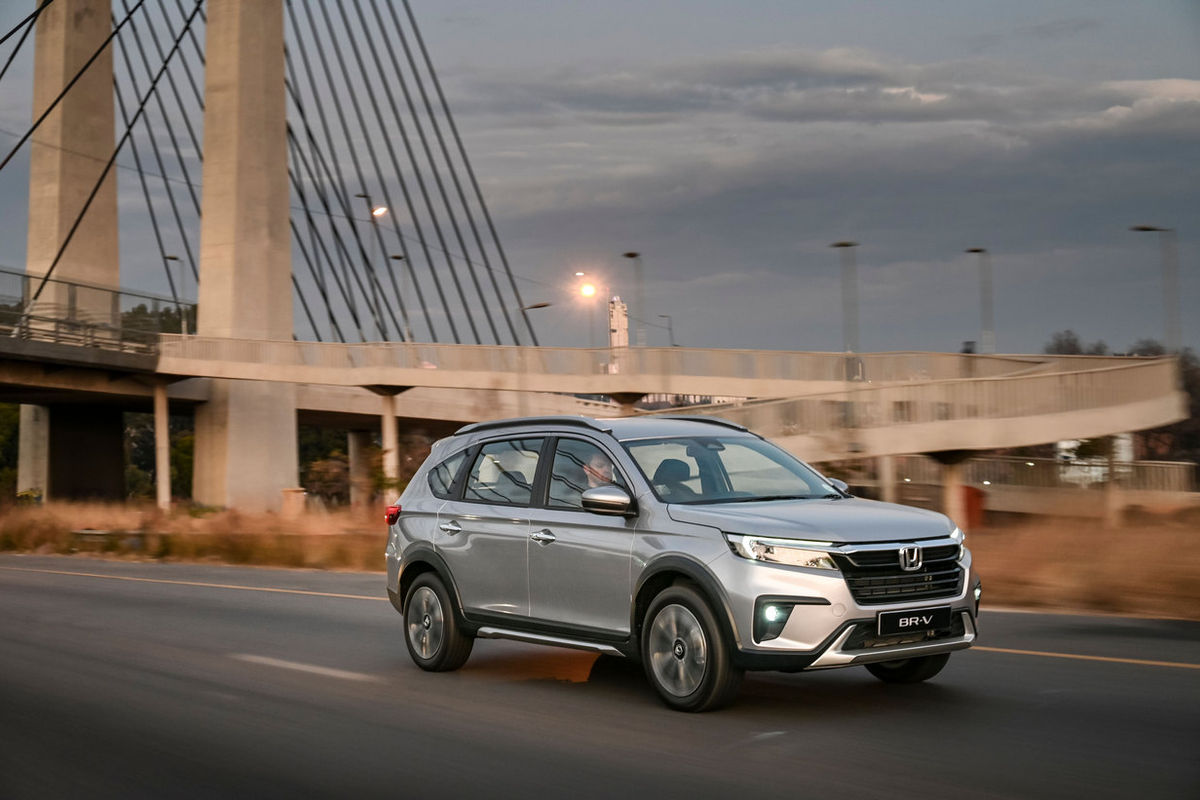
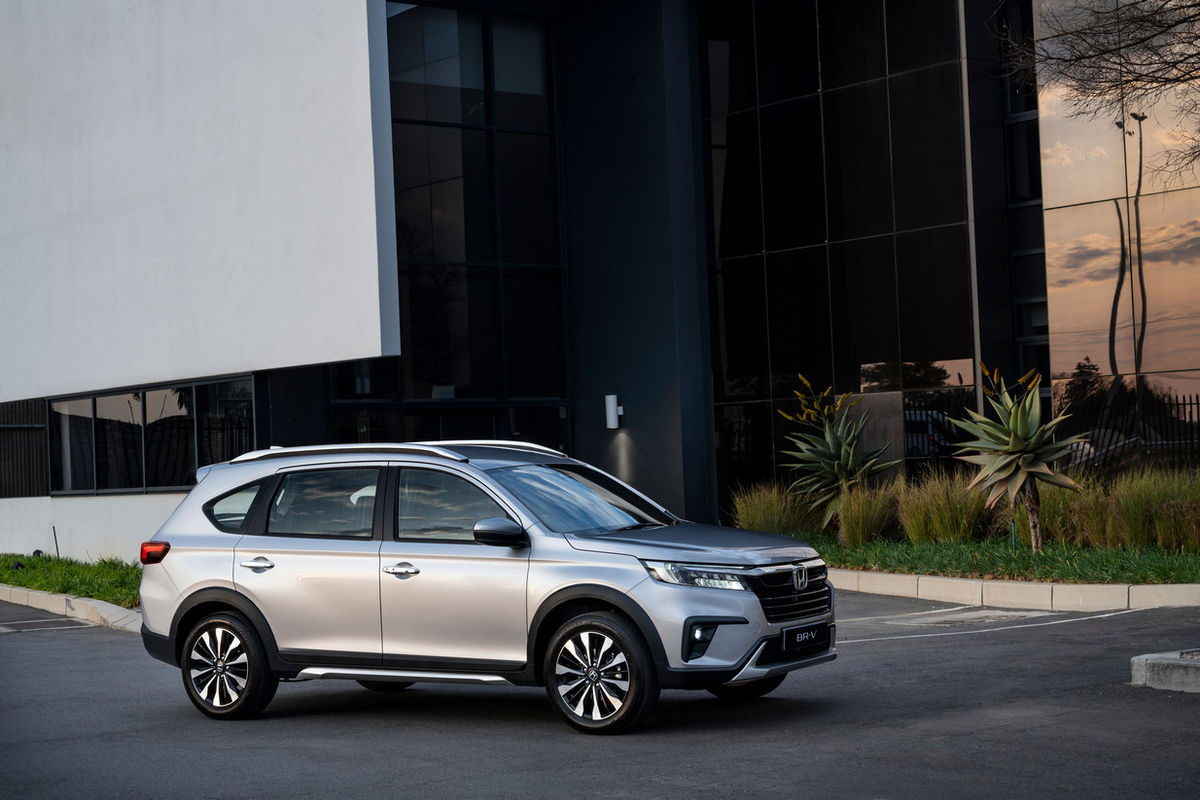
The new BR-V has improved handling manners without compromising on comfort.
Part of moving the BR-V into the family-SUV segment has meant ramping up the quality of the interior surfaces, as well as improving the model’s road-holding capability. It’s definitely a step ahead of the old BR-V in both those key areas. It feels more planted on its, um, wheels and the steering is more engaging. Many of the Honda’s “Uber-mobile” rivals (as mentioned above) offer very little in the way of “feel” between the steering wheel and what’s happening with the front tyres on the road, which makes for a less than confidence-inspiring driving experience. What’s more, most compact 7-seaters seem to have a top-heavy nature that seems to exacerbate body roll under quicker-than-usual cornering.
The new BR-V, by contrast, has moved on nicely from those old sparring partners and feels more like a modern SUV to drive, although it’s a bit baffling as to why there is no reach adjustment on the steering column. It may seem trivial, but a buyer’s decision can come down to the smallest of factors and the Honda’s somewhat awkward driving position might be to its detriment.
Honda BR-V prices and after-sales support
1.5 Trend MT
R379 900
1.5L Comfort MT
R409 900
1.5L Comfort CVT
R434 900
1.5L Elegance CVT
R459 900
The Honda BR-V is sold with a 5-year/200 000 km warranty and the Comfort and Elegance derivatives include a 4-year/60 000 km service plan as standard. Also included is 3-year AA roadside assistance.
Honda has found a gap in the market for an upmarket people mover with SUV aspirations. Will it succeed?
The new BR-V is a positive step forward for Honda, which is increasingly regarded as a niche brand in South Africa. The BR-V has moved away from the people shuttle/ride-sharing vehicle role to a more modern family SUV. The interior build quality produced by the Japanese brand’s new Indonesian factory appears to be much better than the standards of its Indian plant and the improved safety specification may tempt prospective family-car buyers to shortlist this model.
There aren’t many 7-seater rivals at the new BR-V’s price point, so Honda is hoping there is some interest in this in-betweener area of the market. I suspect Honda’s newcomer may find some traction in the local market as a 7-seat capacity can be a deciding factor when you need a spacious family car but are shopping for a new vehicle on a rather tight budget.
Farewell, M550i? New BMW 5 Series Set to Drop V8
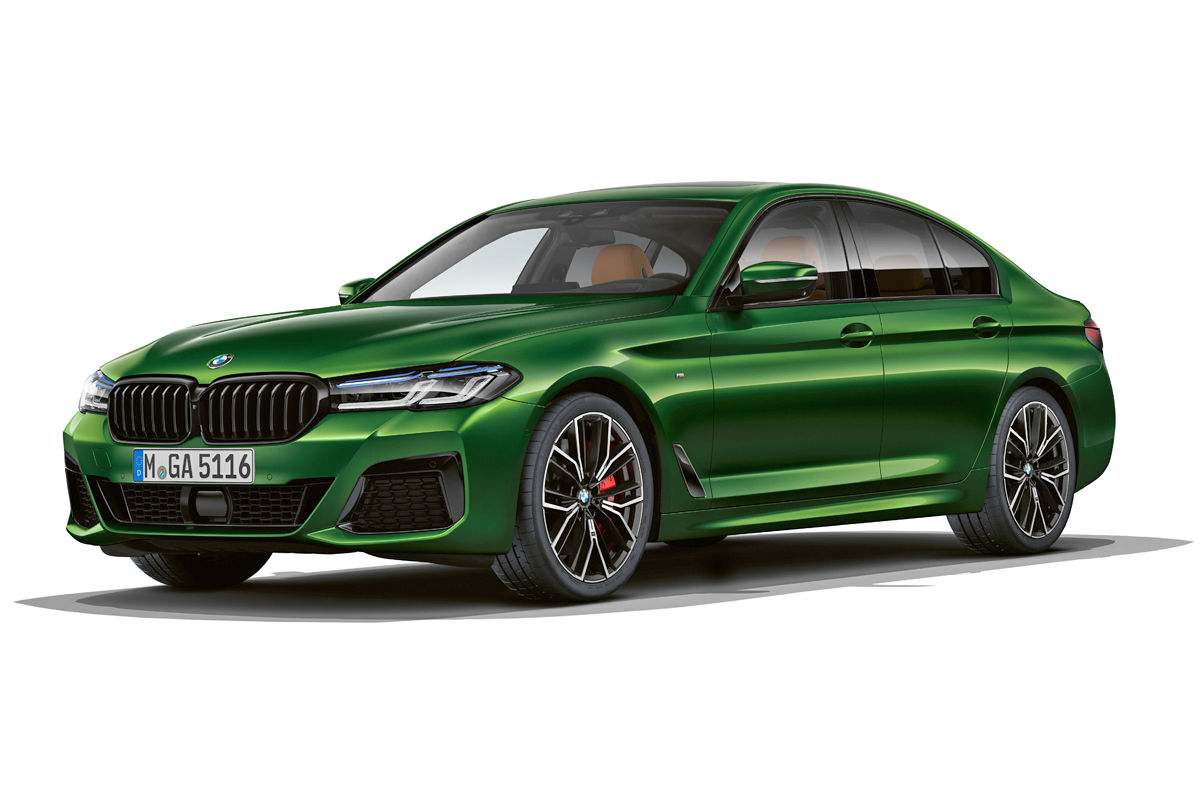
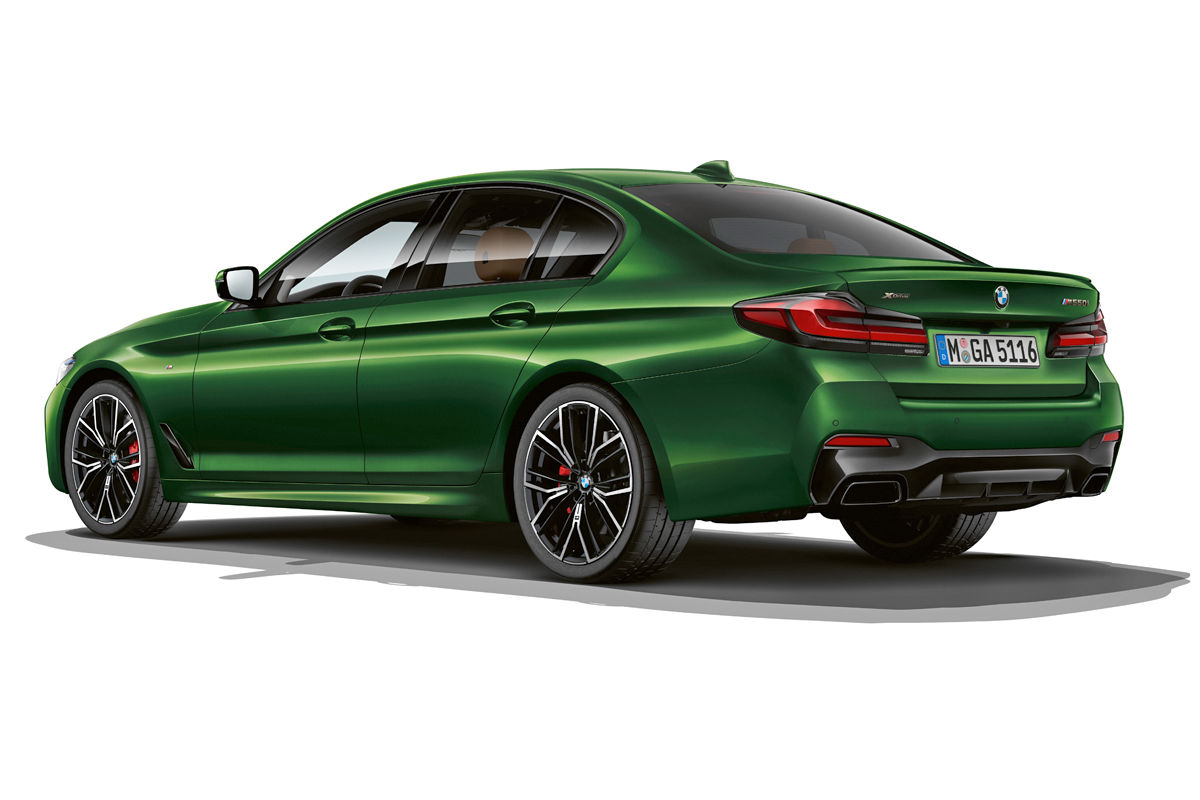
Gone too soon? It seems the BMW M550i xDrive is nearing the end of the road, with a new report claiming the V8-powered model won’t survive the shift to the new 5 Series generation…
Back in late 2016, BMW announced the first ever M550i xDrive (though it arrived in South Africa only at the very end of 2020). Now, as the G30-generation 5 Series nears the end of its lifecycle, a fresh report claims this V8-powered derivative won’t be part of the upcoming G60 line-up as the German firm further electrifies its model range.
According to BMW Blog, the new 5 Series range will again feature an M Performance model, though it won’t be the M550i xDrive. Instead, the publication claims BMW will introduce a new M560e plug-in hybrid model, combining the Munich-based brand’s turbocharged 3.0-litre straight-6 petrol engine with an electric motor or two and a battery pack.
The report claims production of the new 5 Series sedan will start in July 2023, before the first units are delivered to customers shortly thereafter. While the writing is seemingly on the wall for the M550i xDrive, the new 5 Series line-up is still set to feature an 8-cylinder engine, with earlier rumours suggesting the next M5 will employ the fresh S68 powerplant that has already debuted in the 760i and X7 M60i, but – like the upcoming XM – combined with a plug-in hybrid system.
A quick look at the BMW M550i xDrive
Though the M550i xDrive wasn’t part of the G30-generation 5 Series range in South Africa at launch back in February 2017, it eventually joined the line-up when the sedan was facelifted at the very end of 2020.
Slotting in below the M5 Competition (as something of an “M5 Lite”), the M550i xDrive uses BMW’s turbocharged 4.4-litre V8 petrol engine, which delivers 390 kW and an M5-matching 750 Nm to all four corners through an 8-speed automatic transmission. According to the Bavarian firm, that’s enough for a 0-100 kph sprint time of just 3.8 seconds and an electronically limited top speed of 250 kph.
Of course, the M550i xDrive is still available to purchase in South Africa (and should remain so until the second half of 2023, by our reckoning). Pricing currently starts at R 1 612 922, representing an R809 544 saving over the 460 kW/750 Nm BMW M5 Competition, which the company promises will hit three figures in just 3.3 seconds before topping out at 305 kph.
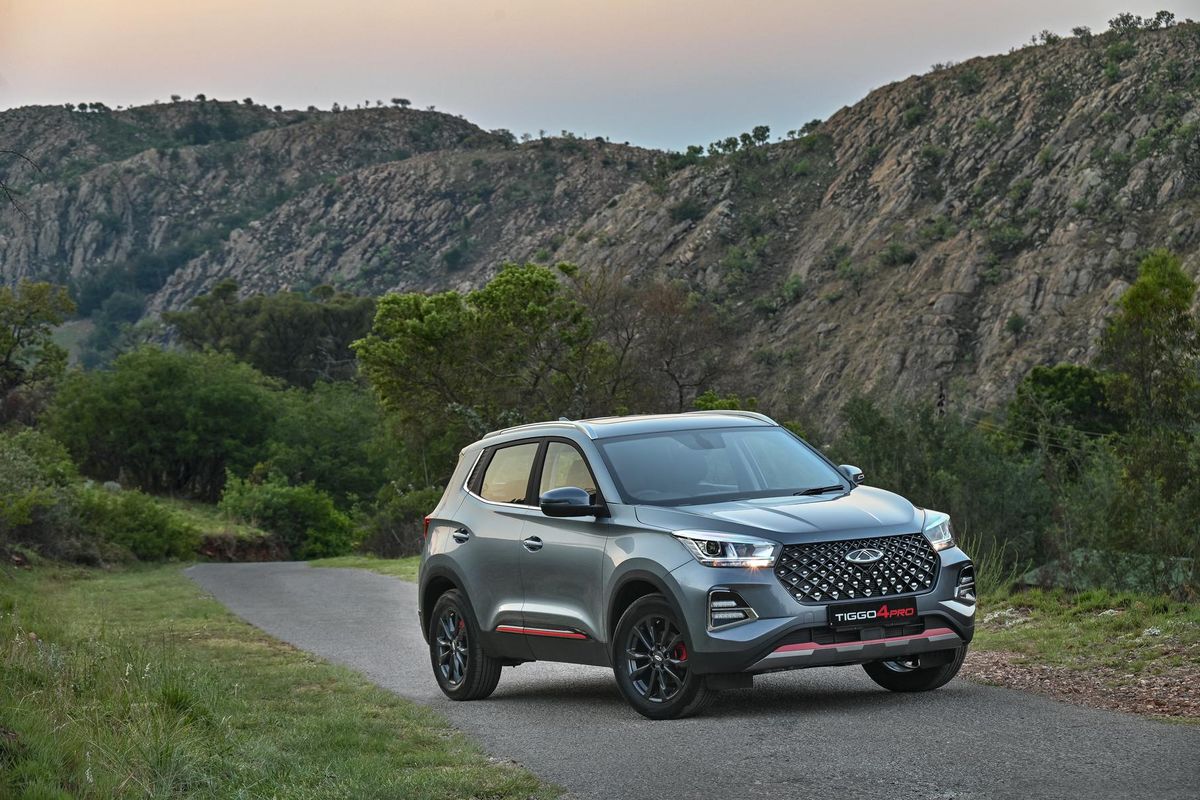
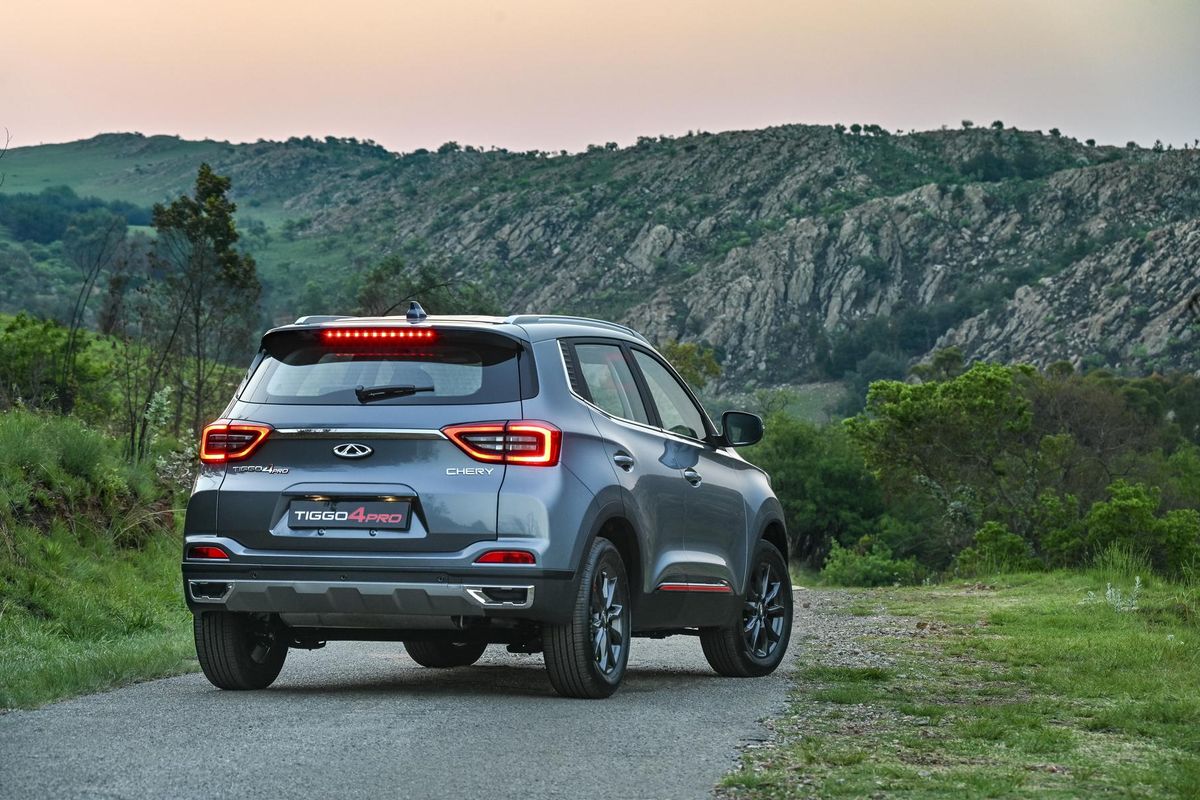
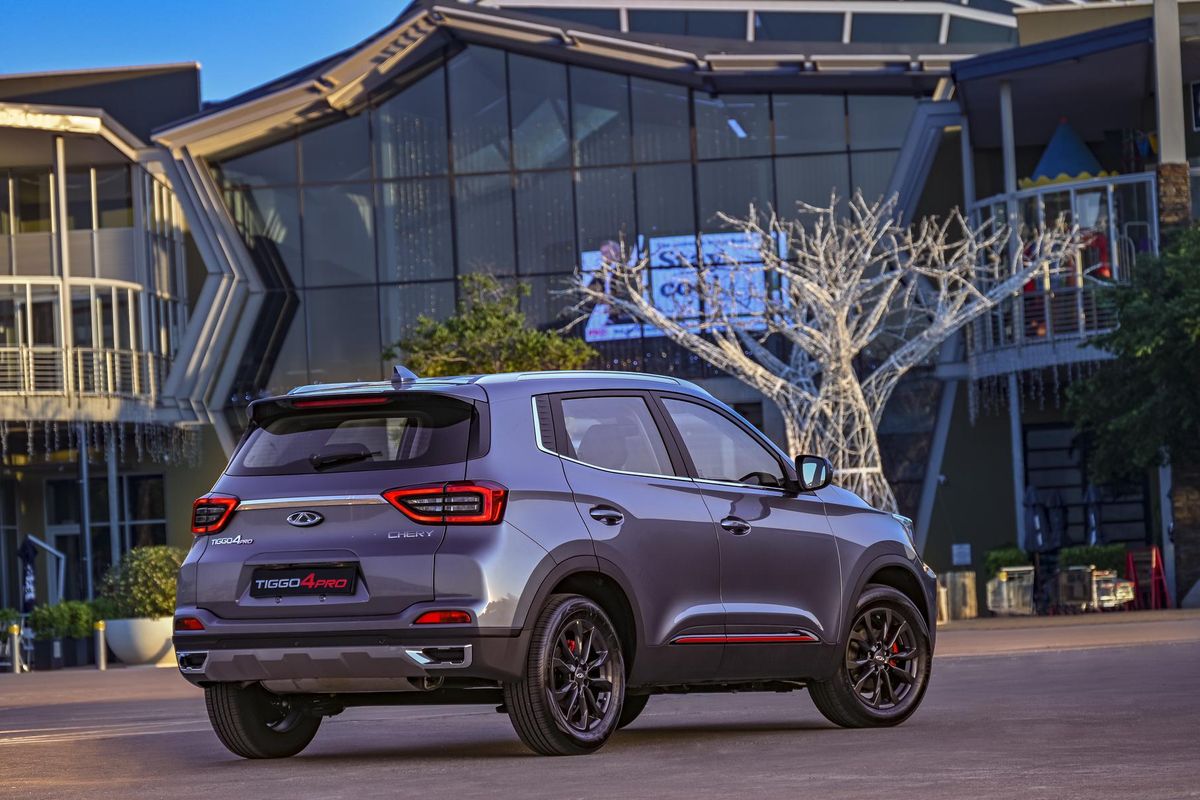
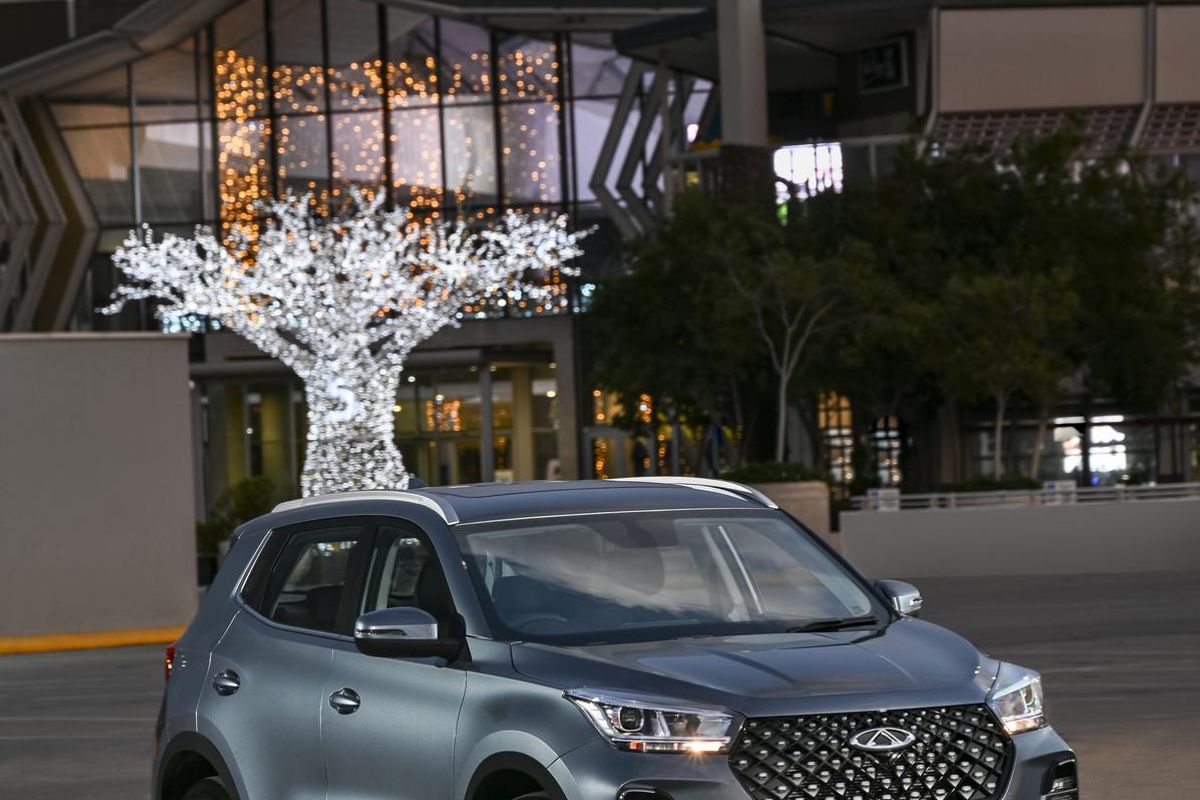
Chery Tiggo 4 Pro (2022) Specs & Price
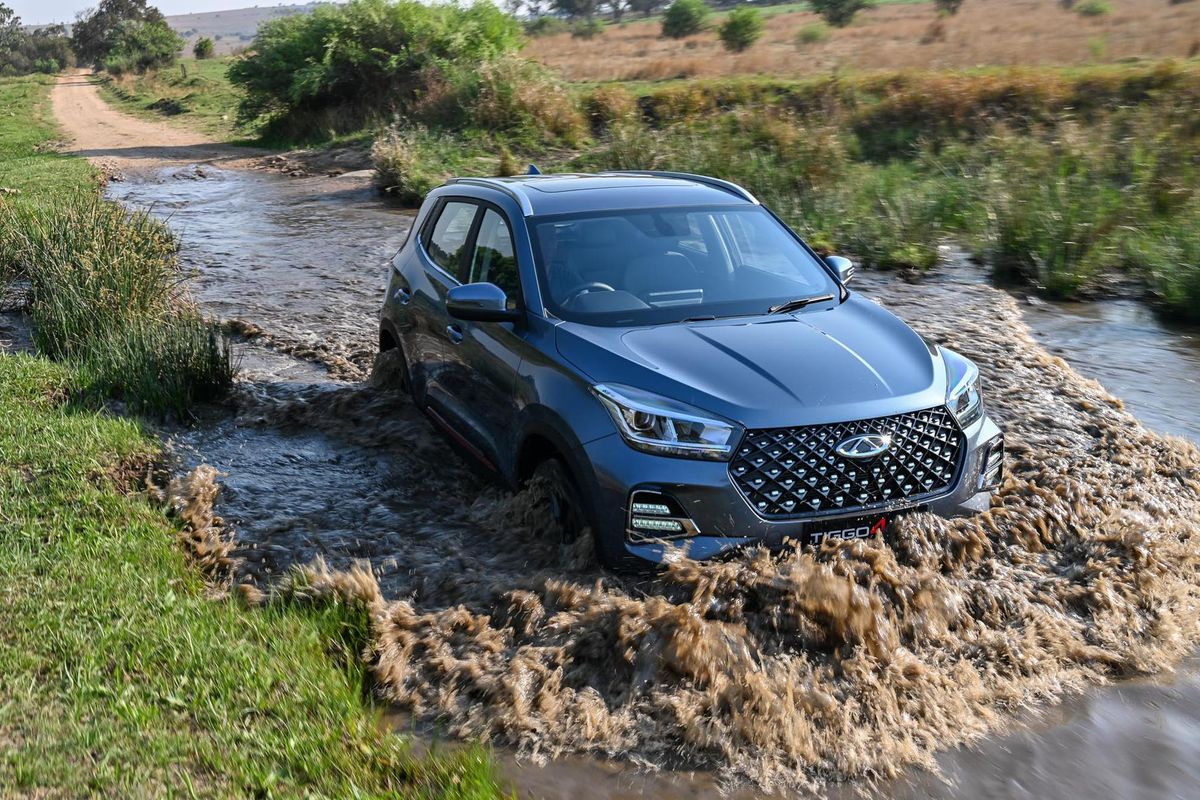
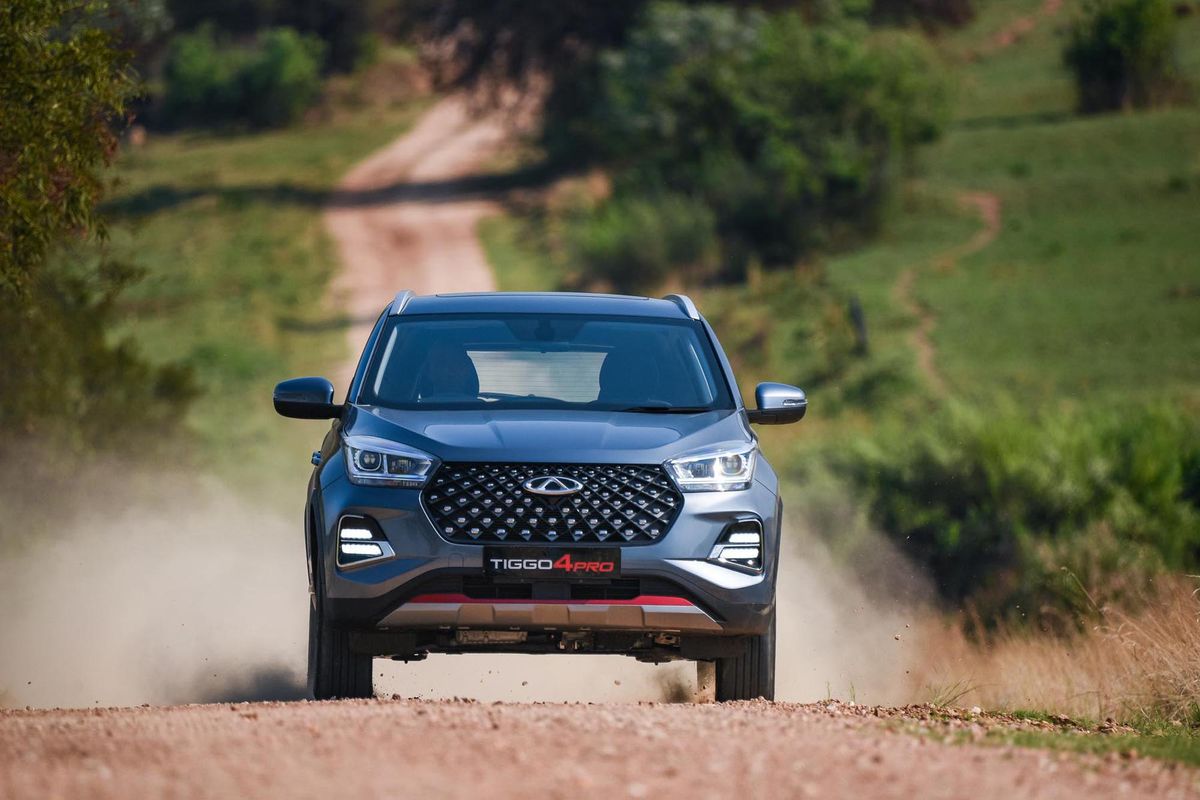
Chery is rocking the local sales charts and the Tiggo 4 Pro compact SUV has had a major part to play in the brand’s success in Mzansi. Chery is now introducing an updated Tiggo 4 Pro range in South Africa! See specification and pricing details below…
In November 2022, Chery South Africa will be celebrating a year of sales in South Africa since the arrival of the Tiggo 4 Pro in November 2021. Since then, the local market has also seen Chery’s range grow with the larger Tiggo 7 Pro and the 3-row Tiggo 8 Pro.
Now, in response to customer feedback, Chery has revised the Tiggo 4 Pro range, with updated specification for the entry-level Urban, mid-spec Comfort and range-topping Elite SE trim lines.
What engine powers the Tiggo 4 Pro?
The new Chery Tiggo 4 Pro is powered by either a naturally-aspirated 1.5-litre petrol engine with 85 kW and 141 Nm (Urban and Comfort) or a 1.5-litre turbocharged petrol engine with 108 kW and 210 Nm (Elite) of torque and is paired to either a 6-speed manual transmission or a 9-step Continuously-Variable Transmission (CVT).
Key features
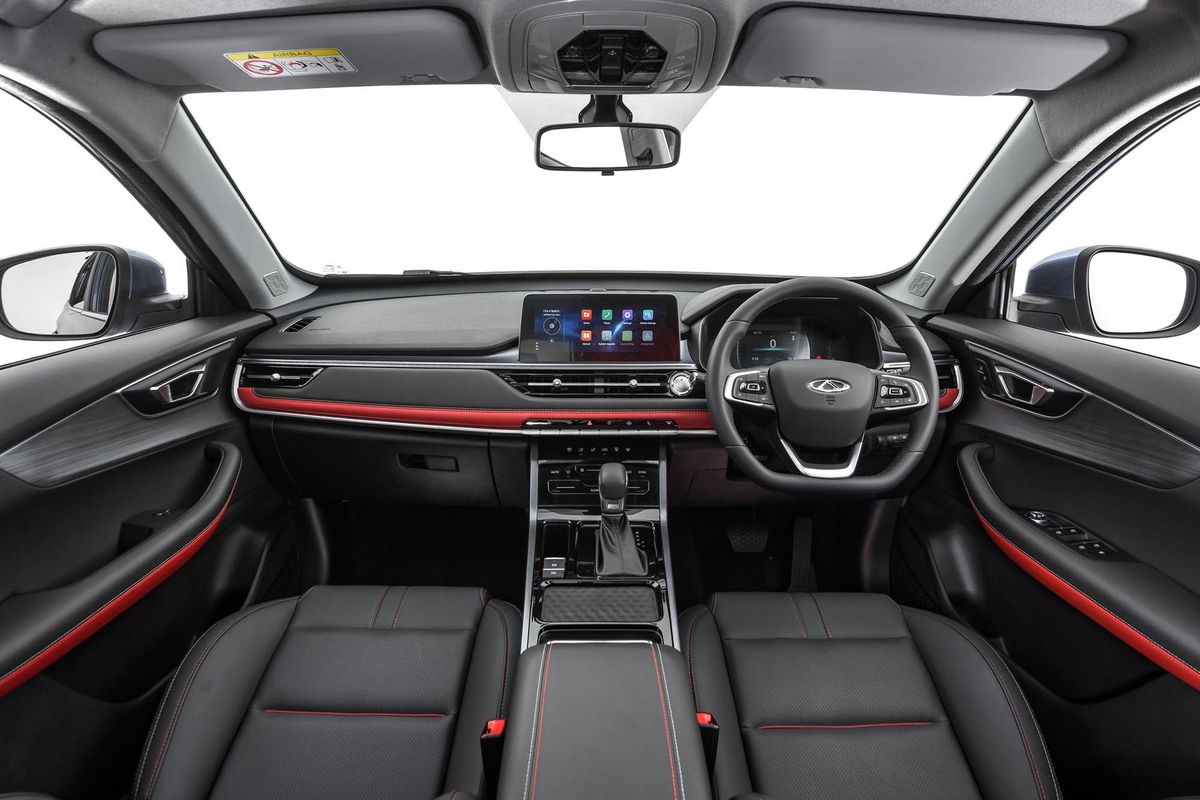
For this latest round of updates, the Tiggo 4 Urban and Comfort derivatives now gain vegan leather upholstery, replacing the previous cloth upholstery. This finish extends to the steering wheel and door inlays. Furthermore, a central front armrest is also fitted as well as adjustable rear headrests and a built-in coat rack.
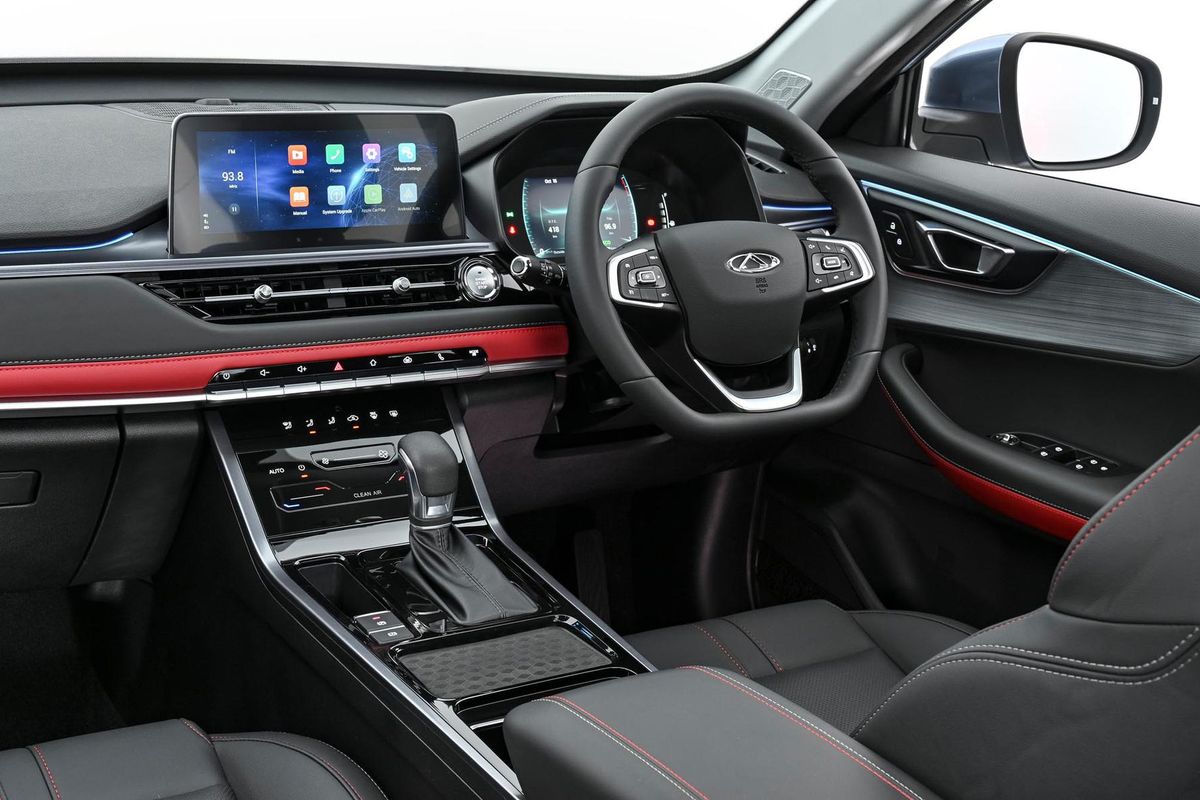
The base Urban and mid Comfort trim also gain a new 6-way manual adjustable driver’s seat as well as tyre pressure monitoring. The Urban and Comfort trim is now also fitted with Voice Command as standard as well as remote locking. A 3.5-inch TFT colour instrument cluster is fitted in Urban and Comfort trim (7-inch in Elite derivatives) while a large 10.25-inch touchscreen infotainment system that’s Apple CarPlay and Android Auto compatible while also offering Bluetooth connectivity and a DVD player rounds off the connectivity offering.
Other standard features include electric windows, air conditioning and automatic headlights while high-spec versions gain a powered sunroof, dual-zone climate control and a voice command system. Rear passengers get air vents in all models with a clean air filter system. Leather seats are available on the Elite model, which are also electrically adjustable for this model only.
Chery is also offering good levels of passive safety features including electronic stability control, traction control and at least 2 airbags. The Comfort trim now boasts 6 airbags as is fitted in the Elite SE derivative. More than this, Chery has now added its full array of Advanced Driver Assistance Systems (ADAS) which includes features such as Adaptive Cruise Control, a Pre-Collision Warning system that monitors traffic flow and pre-empts emergency braking or evasive manoeuvres, and Lane-keep and Lane Departure Warning systems. a 360-degree surround-view camera is now also offered in the range-topping Elite SE derivative.
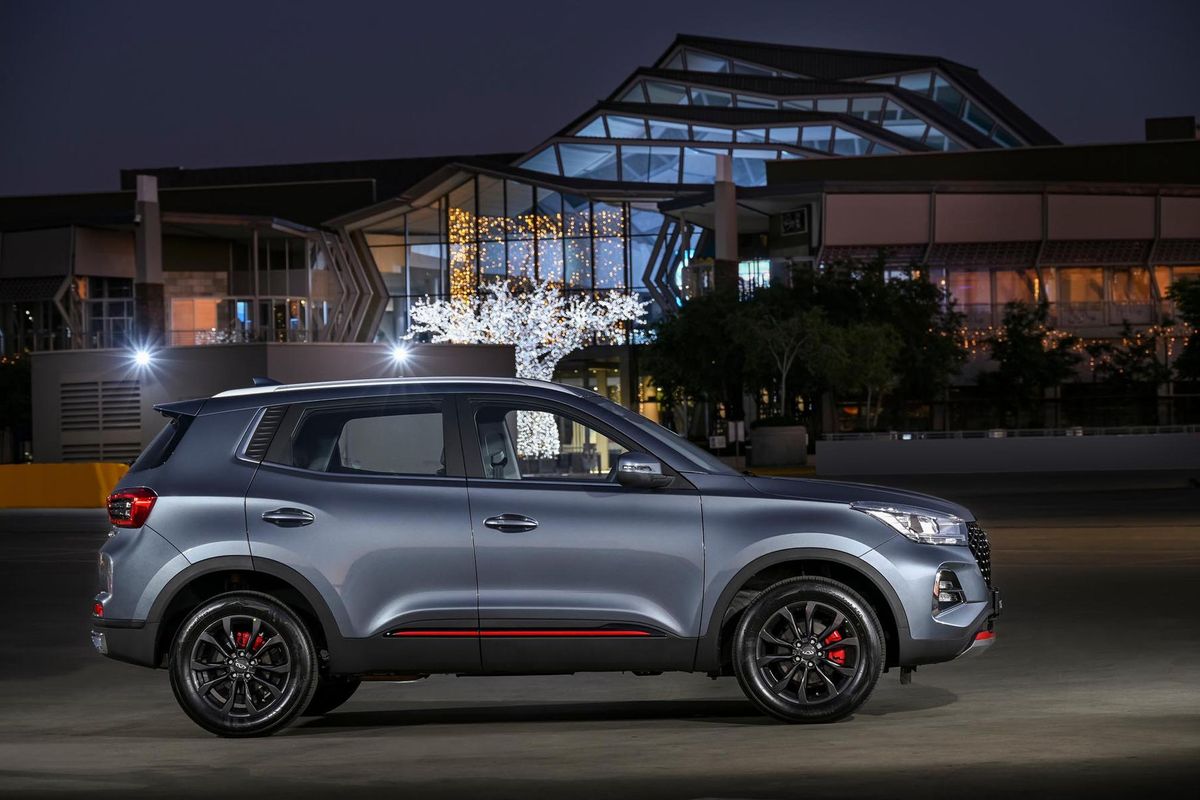
Stylistically, the Tiggo 4 Pro SE Elite has a few exterior enhancements. Red detailing is added to the front, side and rear skid plates matching the brake calipers which are also colourised. The red theme is continued on the inside with a contrasting red section on the lower half of the dash and below the door handle/armrest. This model also gets interior mood adjustable lighting and a puddle lamp that displays ‘Tiggo’ onto the floor below the wing mirrors.
Note that the new MY22 Tiggo 4 Pro range will be sold alongside the outgoing range until stock is sold out.
How much does the new Chery Tiggo 4 Pro Cost in South Africa?
Tiggo 4 Pro Urban 5MT – 1.5L – R289 900
MY22 Tiggo 4 Pro Urban 5MT – 1.5L – R299 900
Tiggo 4 Pro Comfort CVT – 1.5L – R319 900
MY22 Tiggo 4 Pro Comfort CVT – 1.5L – R336 900
Tiggo 4 Pro Elite 6MT – 1.5T – R346 900
Tiggo 4 Pro Elite CVT – 1.5T – R377 900
Tiggo 4 Pro Elite CVT SE – 1.5T – R381 900
MY22 Tiggo 4 Pro Elite CVT SE – 1.5T (ADAS) – R399
The Chery Tiggo 4 Pro is sold with a 5-year/150 000 km warranty plus a 1-million km / 10-year engine warranty and a 5-year/60 000 km service plan.
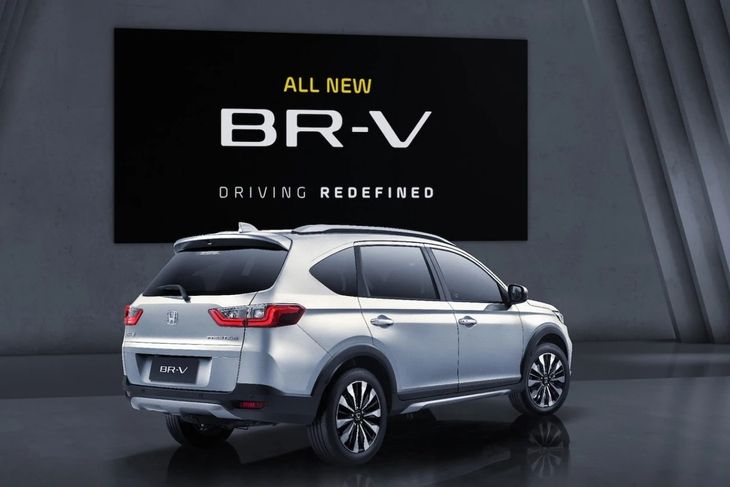
New Honda BR-V in SA (2022) Specs & Price
Honda has introduced the second-generation BR-V compact SUV in South Africa! Take a look at specifications and pricing details below!
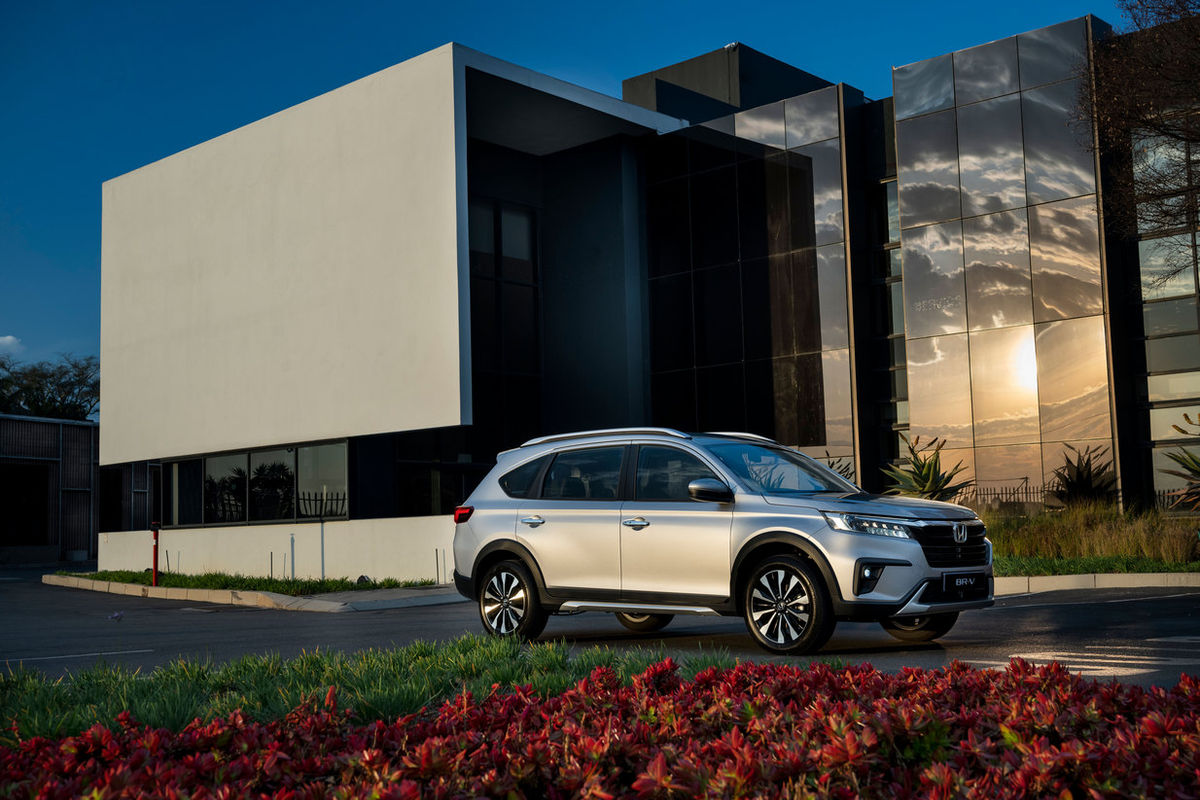
The second-generation Honda BR-V 7-seater compact SUV is now available in South Africa boasting a fresh and distinctly Honda styling treatment and the interior benefits from noticeable material quality upgrades and a tech boost too!
Unlike the first-generation BR-V which was produced in India (where production has now ceased), this new BR-V is produced in Indonesia at Honda’s Karawang facility.
In terms of dimensions, the new BR-V is larger than its predecessor in all directions, standing 4 490 mm long (+35 mm), 1 780 mm wide (+45), 1 638 mm high (+13mm) and with a longer wheelbase at 2 700mm (+40mm). This larger footprint translates into a more spacious cabin!
Larger dimensions translate into a more spacious cabin for the new BR-V.
What’s On Offer?
There are 3 trim levels for buyers to consider including Trend, Comfort and Elegance.
Under the bonnet, Honda has retained, but enhanced the same naturally-aspirated 1.5-litre petrol engine with 89 kW and 145 Nm and is mated with an enhanced CVT but a 6-speed manual is also offered in the base-spec Trend only and mid-spec Comfort specification. Honda claims a fuel consumption figure of 6.3 L/100km.
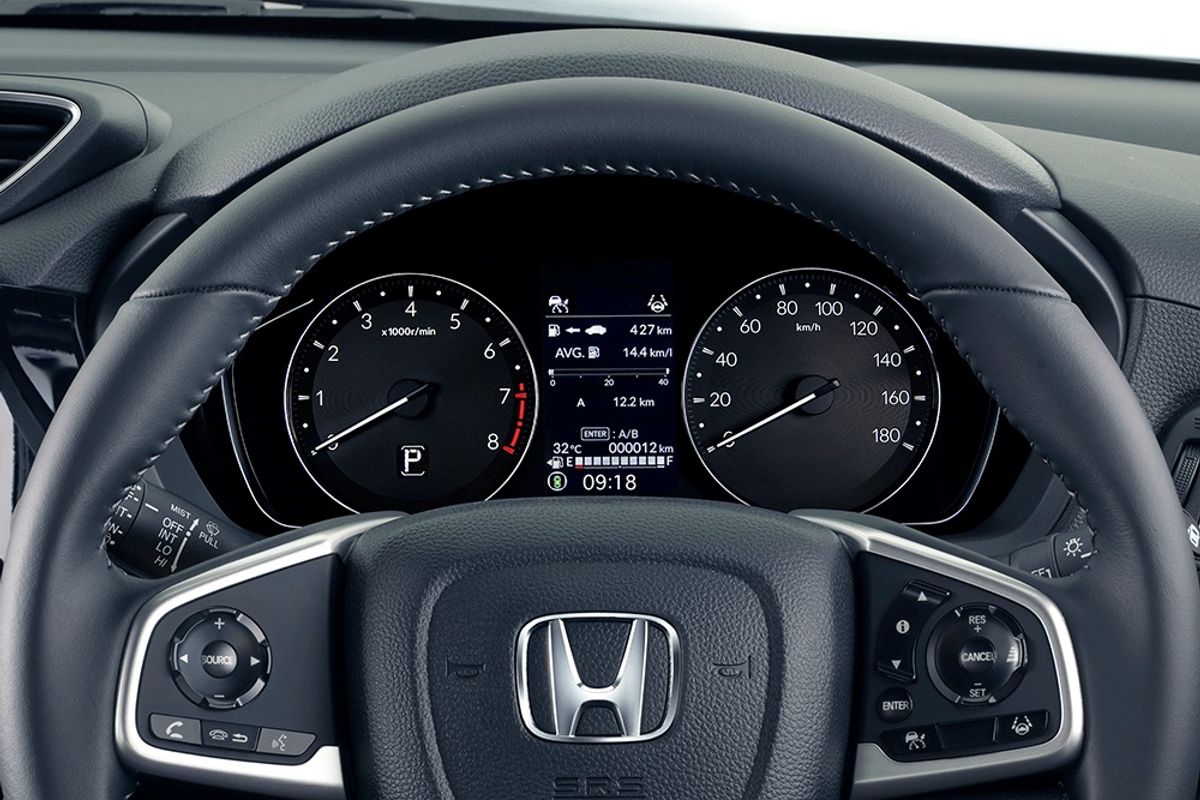
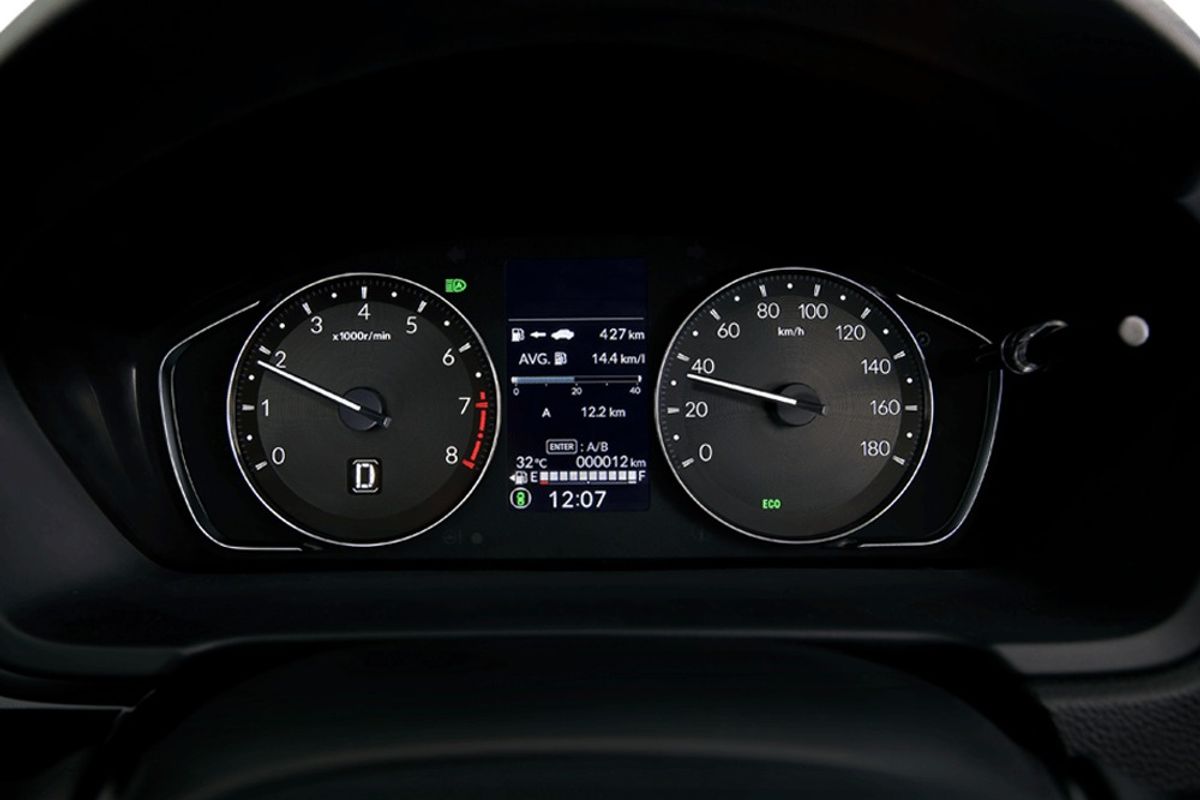
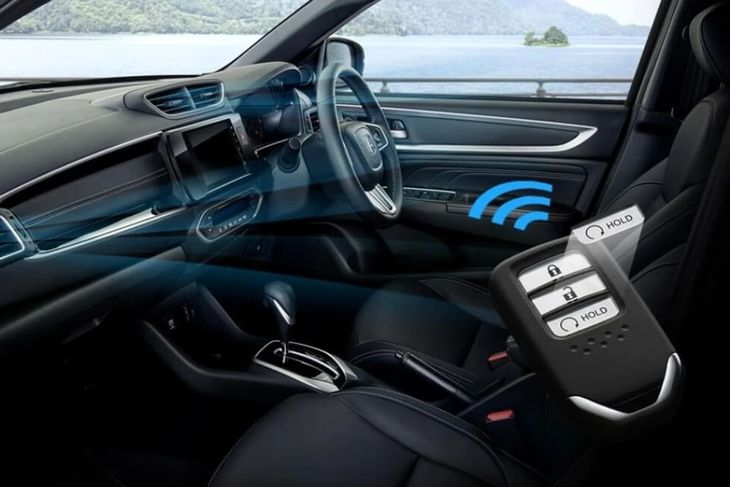
Perceived interior material quality has improved and the BR-V looks a bit more modern and upmarket now. Honda has also beefed up connectivity inside the BR-V with the fitment of a new 7-inch touchscreen infotainment system with Android Auto and Apple CarPlay as well as a new 4.2-inch TFT display in the instrument cluster (Elegance only).
The BR-V’s cabin has been modernised with higher quality materials and enhanced technology.
Practicality is a major USP for the BR-V and thanks to its larger dimensions, there’s not only more space for passengers in both rows but also for luggage and goods. The cabin is well-endowed with storage space and bottle holders and the load bay capacity has increased 21 litres to 244 litres.
The BR-V also features improved safety credentials with 6 airbags (front, side, curtain), Vehicle Stability Assist (VSA), ABS with EBD, Hill Start Assist, ISOFIX child seat anchors, seat belt pre-tensioning and Lanewatch blind spot monitoring.
Honda Sensing also makes its way into the new BR-V with a 100-degree front wide-view camera that detects vehicles, people and lanes as well as boundaries while also calculating the distance and position to objects. The system includes Collision Mitigation Brake System (CMBS), Adaptive Cruise Control (ACC), Road Departure Mitigation System, Lane Keep Assist System (LKAS), Lead Car Departure Notification System and auto High Beam.
Note that Honda Sensing is only offered on the range-topping Elegance derivative.
We are driving the new Honda BR-V at its local launch so look out for our driving impressions this week!
How much does the Honda BR-V cost in South Africa?
BR-V 1.5 Trend 6MT – R379 900
BR-V 1.5 Comfort 6MT – R409 900
BR-V 1.5 Comfort CVT – R434 900
BR-V 1.5 Elegance CVT – R459 900
The Honda BR-V is sold with a 5-year/200 000km warranty while a 4-year/60 000 km service plan is standard for Comfort and Elegance derivatives (optional for Trend).
How Hyundai became the world’s 3rd-biggest car company
Tesla’s share price is sky-high, but is Hyundai, in fact, the world’s ultimate deep-value car company?
A podium performance is only worthy if there are many competitors. And in the global automotive sales rankings, with about a dozen conglomerates controlling more than 60 brands, Hyundai’s had a terrific first half of 2022, during which it finished third overall. The Korean automotive multinational, which clusters the Hyundai car brand with its Kia and Genesis stablemates, trails only Toyota and Volkswagen, but is ahead of all American car companies.
With global electronics and semiconductor supply chains remaining fractured, no company had a great first half of 2022. It was a case of Hyundai’s decline being less than those of its rivals. But industry analysts and car fans won’t be surprised to learn that Hyundai is now the world’s 3rd-most powerful automotive entity.
There are good reasons for Hyundai’s lofty ranking, many of which are related to Korea’s industrial policy and high-level technical education. But Hyundai’s success also challenges the notion of what makes a great car company… and which products are perceived to guarantee success.
The best technical assets are human
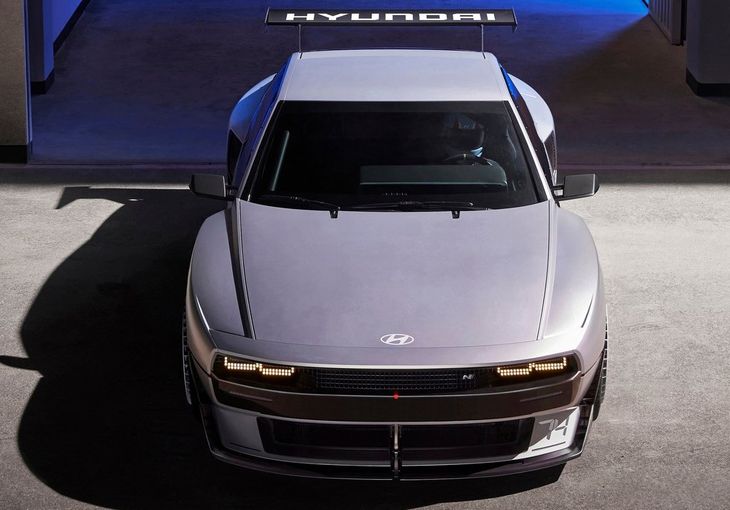
Technical excellence and an obsession with industrial design have become intrinsically Korean. It has given rise to concepts such as this…
Hyundai’s 3rd place in the global sales rankings didn’t happen by accident – it’s symbolic of Korea’s broader industrial success. And technical expertise. During the early 1990s, when Japanese car companies were at their most powerful, and European brands were in decline, Korea quietly reinforced its car industry.
It prioritised engineering- and English literacy, allowing technical experts to travel globally and absorb the latest trends without misinterpretation. You can’t build a great car without inspired designers and engineers and, with Korea producing a flood of brilliant engineering and industrial design graduates annually (for decades), Hyundai has benefitted from outstanding human resources.
With technical excellence in automotive engineering, there is no such thing as coincidence. Tesla dominates because it recruited the best people from the world’s greatest concentration of software and electronic engineering excellence, near its headquarters, in Northern California. Much the same is true for Mercedes-Benz and Porsche. Both are domiciled in Stuttgart, which is also the location of Bosch – for decades, the world’s automotive technology supplier of choice.
Hyundai can leverage the impressive Korean domestic supply of electronics and battery design specialists. It can access the same networks that LG and Samsung do, which affords it an enormous advantage in aspects of automotive engineering (areas where many legacy car companies are struggling) – powertrain electrification, software integration, general digitisation and user interfacing.
Need battery tech for your EV? Korea has it all
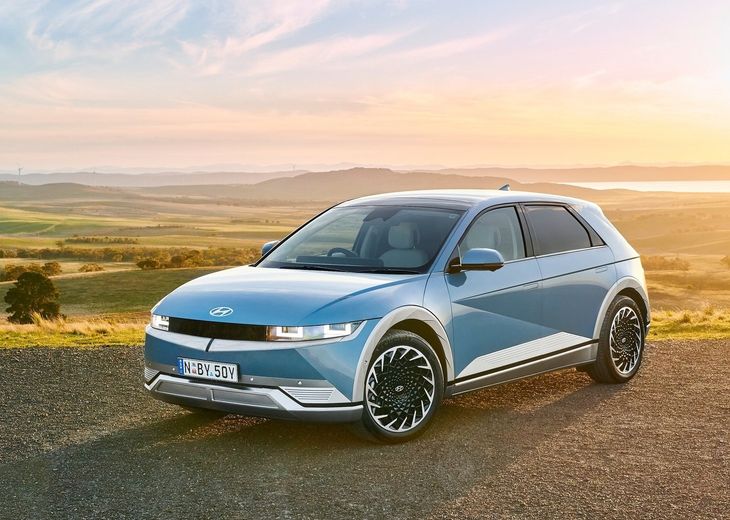
Hyundai has quietly and confidently deployed Ioniq as a global electric vehicle sub-brand.
Of all the global car companies, Hyundai has a great advantage by virtue of geography. Korea’s LG is the world’s 3rd-largest battery supplier. Whereas European and American car companies are desperately trying to negotiate battery supply agreements with LG, powertrain teams at Hyundai can use their university networks to schedule a meeting and get the business done without language or cultural barriers.
Asia controls the global supply of sophisticated high-energy batteries and, for Hyundai, it’s comparatively easy to link into that source of energy packs for its electric vehicles. Established technical relationships and partnerships between Korean companies also make it easier for Hyundai to plan and futureproof its electric vehicle strategy.
And it’s not only core battery chemistry. Hyundai’s executive and risk management consultants have been terrifically mindful of future technologies.
Korea is one of the world’s most technologically advanced societies. Throughout the country’s population, people are thoroughly versed in the latest digital technologies. Being an early adopter in Korea is not a thing, because it seems everyone in that country is “a tech geek”. And that shows in the way that Hyundai senior managers, who are in their late 50s, view technology – as an opportunity, not a threat.
Boston Dynamics – and bakkies
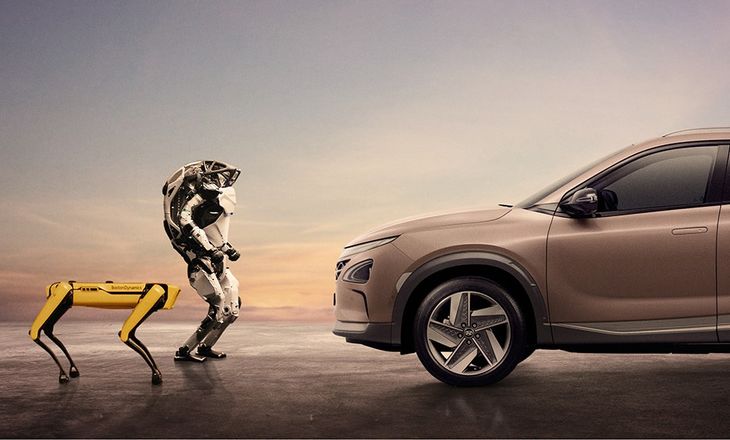
This is the image, that should send shivers across European car company boardrooms
Boston Dynamics is a renowned American robotics company famed for its amazingly capable robots (Atlas and Sport) that can perform superhuman and canine-like movements.
In June, Hyundai announced that it had acquired Boston Dynamics. This purchase secured the Korean car company some of the world’s best mechatronic engineers, crucial in designing and perfecting production lines that create batteries and electric motors.
Toyota has the most balanced product portfolio of the top 3 global car companies, with many SUVs and bakkies. VW’s bakkie business is negligible and Hyundai’s is marginal at the moment, with only the Santa Fe-based Santa Cruz.
The promise is that Hyundai will expand its bakkie business with a ladder-frame double-cab, and that should entrench its market position. Toyota cannot gain too much more market share with its bakkie business. Why? The diminishing return curve of being a global bakkie leader, which is already present in virtually all markets.
VW’s Amarok volumes will probably be similar to what they have been when the new version arrives. Hyundai has the most potential for organic growth. How? It can introduce more bakkie models and conquer customers from rival brands, without cannibalising within its own product portfolio
It is amazing that Hyundai has achieved such tremendous success without a scaled bakkie or ultra-luxury car business. Genesis is Hyundai’s attempt to create a Lexus-like luxury sub-brand, and it trades fairly well in North America, but it has hardly been a focus for the Korean automotive giant.
Korea is the brand – Hyundai produces the cars
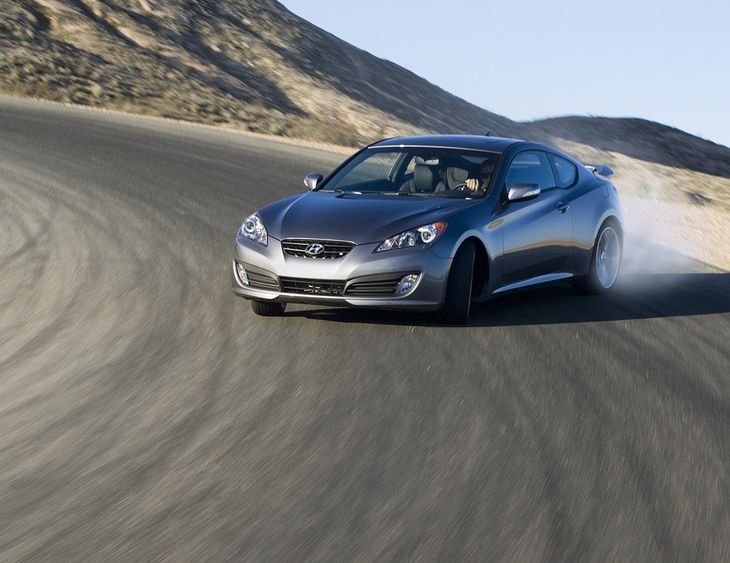
For astute car industry observers, the Genesis Coupe (2008) signalled Hyundai’s arrival as a technically excellent car company.
If you take a longitudinal view of the global car business, Hyundai is unique. Many of the traditional risks and constraints that bedevil the evolution of most car companies are absent with Hyundai. It doesn’t have the history of European legacy car companies, which renders it less constrained by tradition regarding design and brand positioning. It also never became dependent on the large-capacity engine profits that American brands rely on with their pick-up truck and SUVs.
And then there is the question of Korean cool. By association, Hyundai benefits from the global cachet of anything Korean (consider how K-pop has become a global phenomenon).
Much as all German car companies have, for decades, leveraged the reputation of German technical excellence in their product marketing, Korea could do the same. Or perhaps it already is, using the subconscious bias that is soft-wired to buyers who either have a Korean smartphone in their hand… or a Korean appliance in their home.