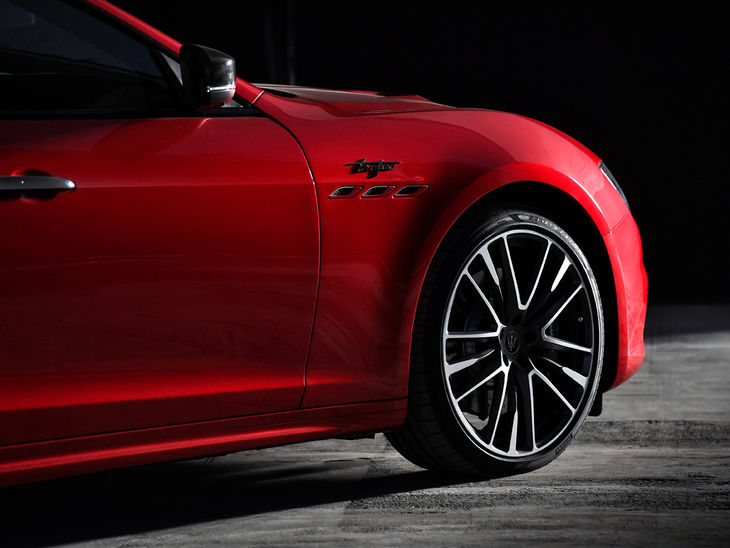
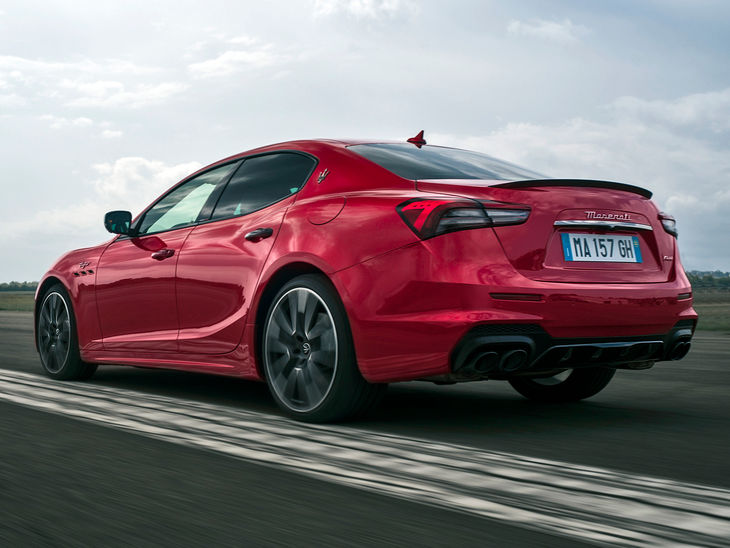
The Maserati Ghibli sedan will be put out to pasture in 2024, bringing to an end what will by then have been an 11-year production run for the current generation…
A Maserati executive has confirmed the Italian company plans to end production of the Ghibli in 2024 as the shift towards SUVs and electrification continues. The Ghibli badge traces its roots all the way back to 1967.
In March 2022, Maserati said all models in its 2025 portfolio would be available in fully electric form (wearing the Folgore badge), including the upcoming GranTurismo (and GranCabrio), the new Grecale, the MC20 sportscar, the next-generation Quattroporte sedan and the replacement for the Levante SUV. At the time, no mention was made of the Ghibli.
Now, however, Maserati Australia general manager Grant Barling has revealed the next-generation Quattroporte will effectively evolve to cover both sedan bases, shrinking in size and ultimately leading to the death of the smaller saloon.
“The long-term plan is that the Ghibli will be replaced with the Quattroporte. The Ghibli will move into run-out phase into 2024,” Barling told Drive, adding it was “definitely a tough segment to be in”.
“The plan is for the Ghibli and Quattroporte to become one. So the Quattroporte will become a short-wheelbase [model] – Ghibli-sized, but called a Quattroporte,” he explained.
With Maserati aiming to transform into a fully electric brand by 2030, Barling furthermore confirmed the impending end of the road for the Ferrari-derived twin-turbo 3.8-litre V8 petrol engine currently employed by Trofeo versions of the Ghibli, Quattroporte and Levante.
In 2023, Maserati plans to launch its new Mirafiori-built GranTurismo, billed as the “first car in Maserati history to adopt 100% electric solutions”. The new Grecale will also be available in an electric version.
The Ghibli badge – inspired by the name of the dry south-westerly wind of the Libyan desert – stretches all the way back to 1967. It was first applied to a V8-powered grand tourer, before being used on a V6-driven coupé that debuted in the early 1990s. The current model was revealed at the 2013 Shanghai Motor Show.
Volvo XC40: Is this SA’s best electric car?
Volvo has been leading the electric charge in many ways in SA. First with hybrids, then plug-ins and now we have the R1.2 million XC40 P8. It’s an all-electric SUV with the performance figures to outrun a Golf R to 100kph.
In this video, Ciro reviews the XC40 against other electric options as well as the all-important issue of charging, infrastructure and possible problems you may run into such as loadshedding.
Practicality and spec are going to be important in a car that costs this much, so what makes the Volvo XC40 special, if anything?
Is this the most Volvo-like Volvo on sale at the moment?
The models driving Opel’s quiet sales growth in SA
At the start of 2022, Opel South Africawas struggling to sell 50 units a month. By July, its monthly figure was 10 times as large. Here’s which models have been driving this impressive growth…
Despite a local heritage stretching all the way back to the 1930s, Opel has endured a tough few years in South Africa. So tough, in fact, that fewer than 50 units were registered here in January 2022 (a fact perhaps amplified by the sort of global supply constraints experienced by many automakers).
However, it seems the German brand has finally turned a corner in South Africa, with sales growing steadily every couple of months in 2022. While just 44 units were sold in South Africa in January, that figure doubled to a still relatively paltry 88 in February.
Despite a slight dip to 75 registrations in March, Opel finally crossed back into three figures in April, selling 141 vehicles across the country. That tally more than doubled to 317 units in May before growing another 100% to 633 units in June. July was another fairly strong month, with 497 units registered.
Breaking down Opel’s sales figures in South Africa
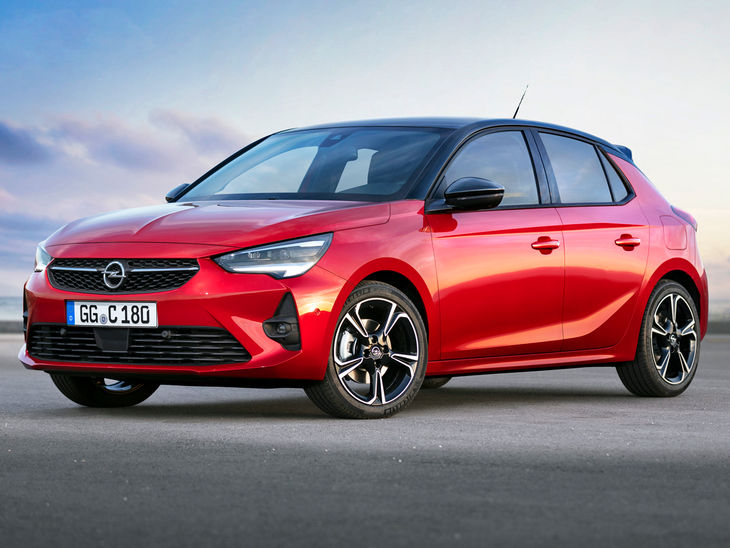
So, which models have been driving this growth? Interestingly, the sixth-generation Corsa and the facelifted Crossland have been doing much of the heavy lifting for the Rüsselsheim-based automaker.
The Corsa (514 units) dominated June’s total of 633 units, though 250 of those sales came courtesy of the rental channel. The Crossland (87 units) was next, with the new Mokka (21 units), Grandland X (5 units), Vivaro panel van (5 units) and Combo Life (1 unit) making up the numbers.
In July, however, the Crossland (207 units) outsold the Corsa (200), despite the latter benefitting from 105 registrations in the rental space. The light-commercial Combo contributed 42 units and the Mokka 35 units, while the Zafira (6 units), Combo Life (3 units), Grandland X (2 units) and Vivaro (2 units) were all stuck in single figures.
Peugeot Citroën South Africa took over the local distribution of Opel products back in January 2021, with the German brand having moved under the Stellantis umbrella. For the past three months, Opel has been the best-selling brand in the Stellantis family in SA, outdoing Alfa Romeo, Citroën, Fiat, Jeep and even Peugeot on the sales charts.
As the successor to the popular Tucson, the Hyundai ix35 represented a big step up from the original. So, what should you look out for when shopping on the used market and which one should you buy? Let’s dig in…
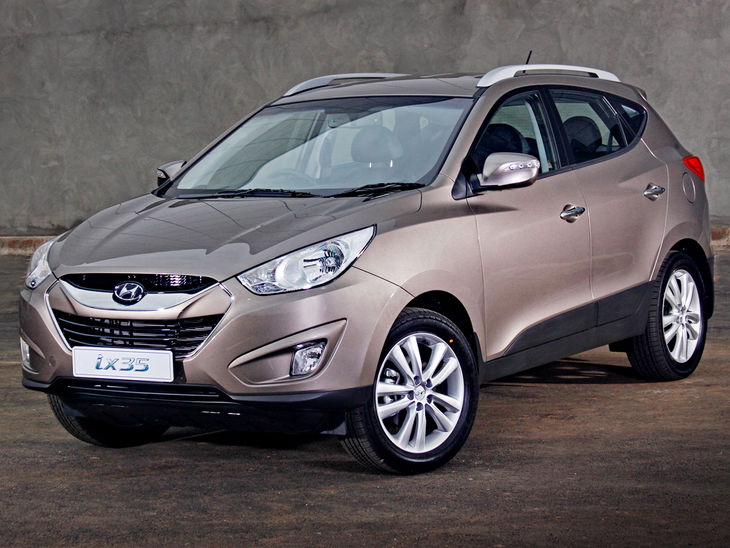
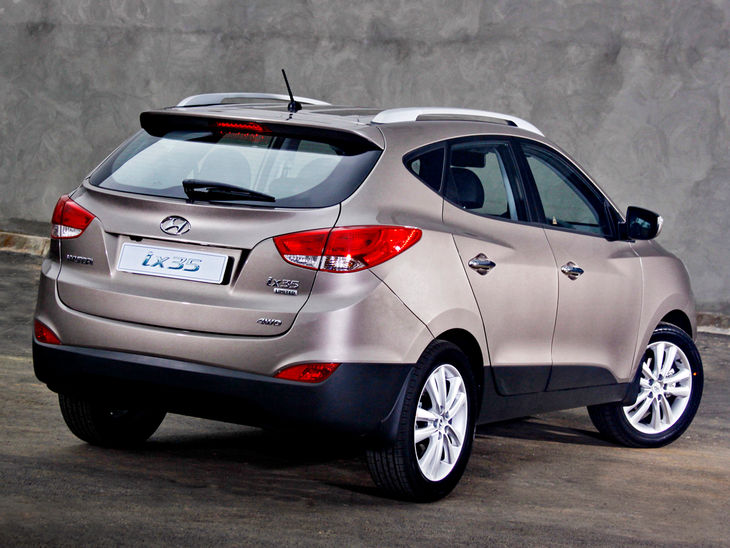
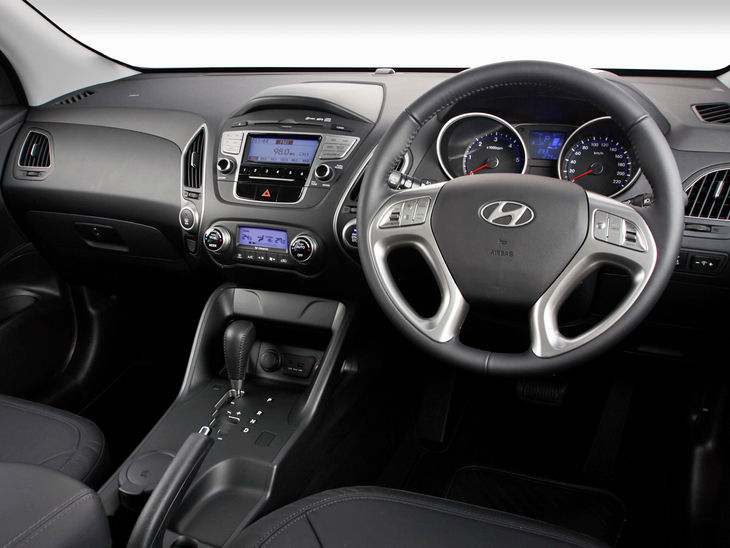
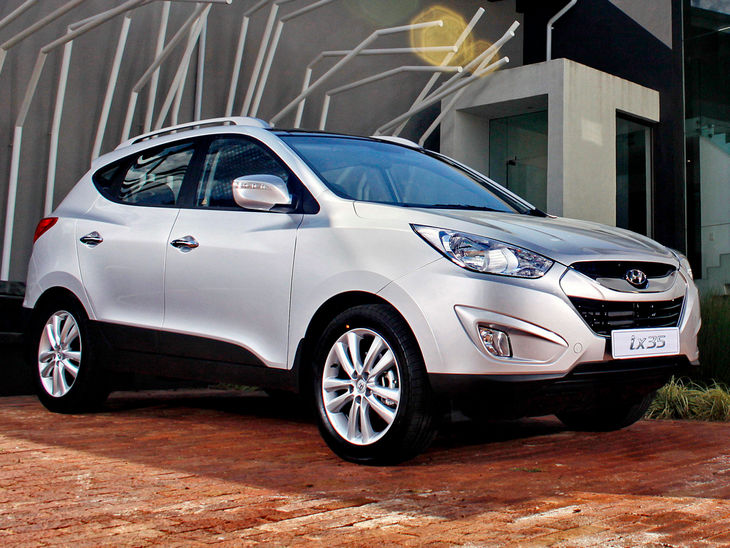
While Hyundai’s original JM-generation Tucson was a fairly generically styled compact crossover, the ix35 that followed adopted all manner of sweeping (dare we say coupé-like) lines, along with a smartly upgraded cabin, more efficient powertrain options and a raft of extra features. In short, it represented a significant step forward for the brand.
Although the Seoul-based automaker has since switched back to the Tucson nameplate, the ix35 remains a popular choice on South Africa’s used market, having sold in impressive numbers for the 6 years it was marketed locally.
The original ix35 range included this 2.4-litre petrol model, boasting 4×4 and a 6-speed automatic cog-swapper.
The ix35 arrived in South Africa in mid-2010, replacing the Tucson and debuting a badge that adopted the same prefix as other passenger cars in Hyundai’s line-up (thus falling in line with the alphanumeric nomenclature employed by the i10, i20 and i30).
At launch, the ix35 was available in six variants (four petrol and two diesel):
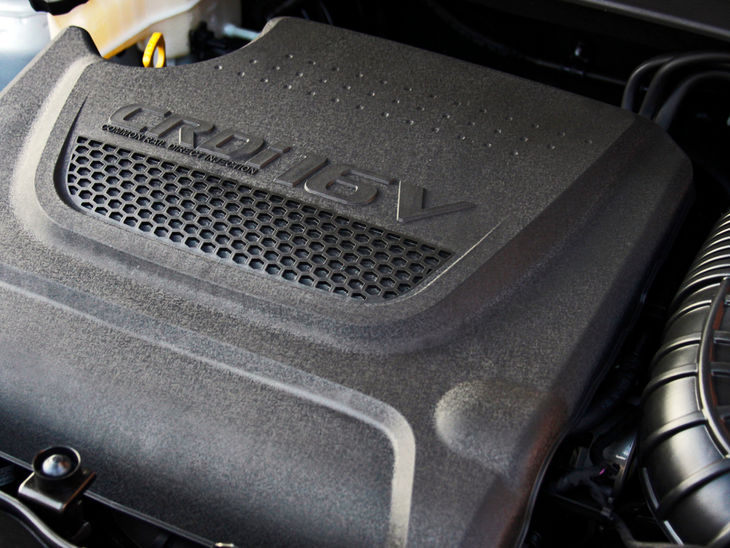
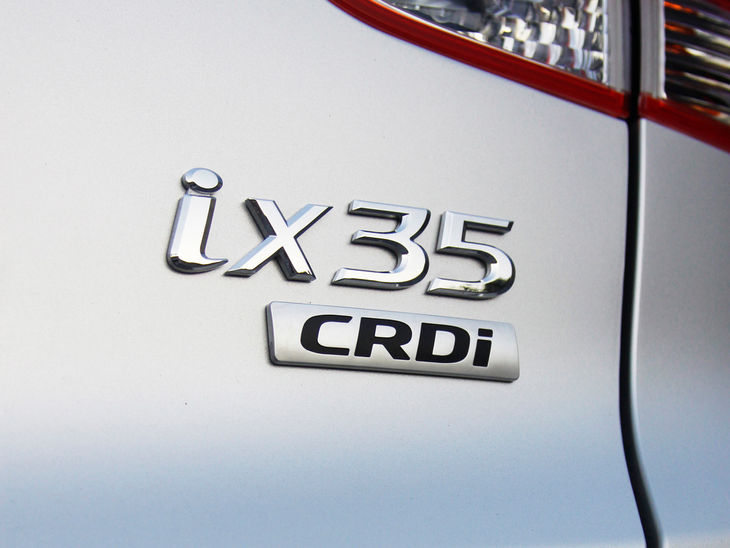
At launch, a 2.0-litre CRDi engine powered the flagship derivatives.
Interestingly, the ix35 was initially imported into South Africa from South Korea, before Hyundai Automotive SA quietly started sourcing its units from the Czech Republic instead, apparently in a bid to secure a steadier flow of stock.
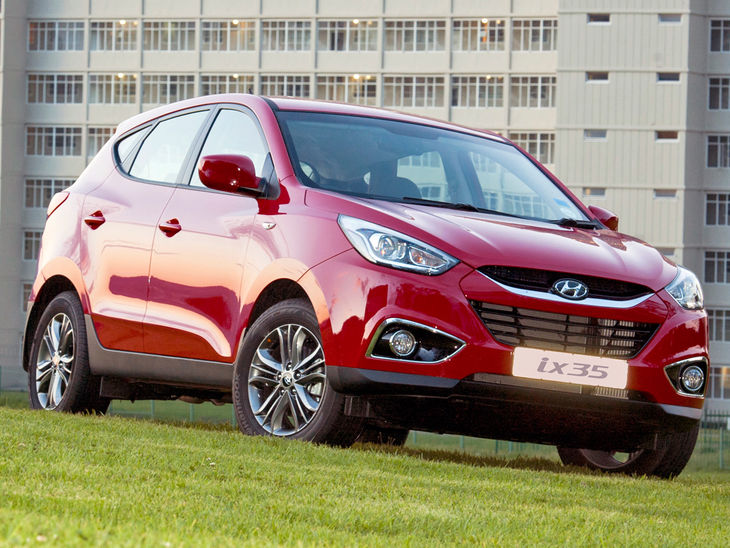
In 2014, the upgraded range touched down in South Africa, headlined by a new 2.0-litre petrol engine (which made do with slightly lower peak outputs of 116 kW and 192 Nm, but was somewhat lighter on unleaded) and fresh gearboxes. Hyundai furthermore took the opportunity to roll out new trim levels alongside the requisite (though fairly minor) exterior redesign and smattering of extra standard kit.
The rejig also resulted in the demise of the 2.4-litre 4×4 derivative. However, later in 2014, the range expanded with the addition of a downsized oil-burning option. This frugal 1.7-litre turbodiesel engine was mated with a 6-speed manual gearbox, and offered 85 kW and 260 Nm.
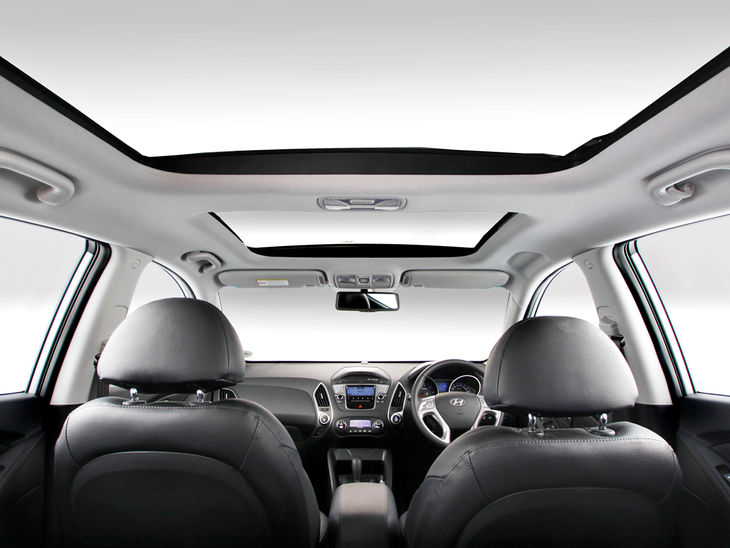
Plenty of space inside the ix35, with the range-topping diesel model furthermore boasting dual sunroofs.
The ix35 was 85 mm longer and 20 mm wider than the Tucson it replaced, while it gained 10 mm more space between its axles. The result was a relatively roomy cabin and a class-competitive luggage compartment (which also had the job of housing a full-size spare wheel). Compared with its forebear, the ix35’s interior felt solidly built and palpably more upmarket.
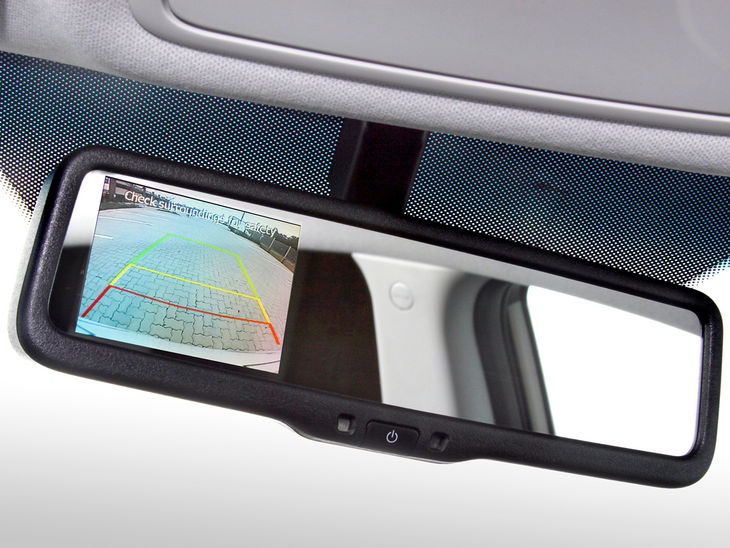
Furthermore, the list of included equipment was generous. At launch in 2010, items of kit that were standard across the range included a reversing camera, a leather-trimmed steering wheel and alloy wheels. All but the base petrol models were additionally equipped with black leather upholstery, dual-zone climate control, electric folding mirrors and cruise control, while the diesel flagship boasted an electrically adjustable driver’s seat, dual panoramic sunroofs, push-button start and even a separate amplifier for the 6-speaker sound system.
All variants in the original line-up featured a reversing camera, with the display integrated into the rearview mirror.
Another big selling point was the fuel economy potential of the diesel engines. According to Hyundai, the front-wheel-drive, manual-equipped version of the 2.0-litre CRDi model sipped at 6.4 L/100 km (a figure that interestingly climbed to 6.5 with the 2014 update). However, it was the later 1.7-litre unit that really allowed budding hyper-milers to wring every last kilometre from the 58-litre tank.
Product weaknesses
The suspension was perhaps a little too firmly sprung compared with some rivals.
Of course, the ix35 wasn’t without its foibles. The pre-facelift range, for instance, went without reach adjustment on the steering column, making it tricky to dial in a comfortable driving position. Thankfully, Hyundai remedied this with the 2014 update, adding telescopic adjustment to all but the entry-level Premium-spec models.
In addition, like so many Korean products of the era, the steering lacked both weight and feel. The ride, meanwhile, was regarded as slightly too firm at low speeds, while all front-driven variants in the original line-up shipped without electronic stability control. Again, however, mid-and top-spec derivatives gained this safety feature with the 2014 update.
Look out for excessive peeling of the trim on the steering wheel.
While the ix35 has built up a solid reputation for mechanical dependability (when maintained properly, of course), owners have reported a few issues. For example, some early manual models apparently suffered from clutch problems, though this tended to occur at fairly low mileage. We’d also recommend evaluating the air-conditioning system during your test drive, as some owners have complained about poor HVAC performance.
Furthermore, we’ve heard of numerous instances of steering-wheel trim peeling excessively after just a handful of years (Hyundai even issued a technical service bulletin on this topic in certain parts of the world). While some wear is to be expected on as frequent a touch point such as this, it’s worth closely examining the tiller of a vehicle you’re considering.
Thankfully, all engines in the ix35 range are chain driven, which means there’s no (often expensive) scheduled cambelt replacement about which to worry.
What to pay?
Most of the country’s ix35 stock is listed for between R150 000 and R200 000.
If you head over to Cars.co.za’s dedicated listings section for the Hyundai ix35, you’ll find a wide array of options. As always, first prize is a fastidiously maintained example with as long a service history as possible. Since the majority of ix35s would have been used as family haulers, finding one with minimal wear and tear in the cabin might prove tricky. Still, it’s certainly not impossible if you’re prepared to be patient.
Below R125 000: At the time of writing, prices kick off at a shade over R100 000, though only a few are on offer below R125 000. Interestingly, most examples at this low price point are listed with less than 100 000 km on the clock.
From R125 000 to R150 000: There are more options – including a couple with well in excess of 220 000 km on the odometer – in this price bracket, though most of them take the form of 2.0-litre petrol models.
From R150 000 to R200 000: The overwhelming majority of used stock is found between these bookends (this is where you’ll come across most of the diesels, too). We managed to pick out quite a few well-looked-after examples, many with partial service history at the agents and reasonable mileage.
R200 000 and up: If you prefer as late a model year as possible (which would have just come out of its 5-year service plan), there’s a fair choice above the R200 000 mark, many featuring mid- and top-spec trim levels. We even came across a couple of 2.0 CRDi derivatives priced well in excess of R300 000!
Pick of the range?
The 1.7 CRDi Premium that arrived in 2014 features the most balanced powertrain in the range.
Though the 2.0-litre petrol models – both with the earlier Theta-II engine and the later NU lump – are easily the most common, the 1.7 CRDi Premium arguably has the most compelling powertrain in the ix35 range. It’s far more frugal than the naturally aspirated petrol powerplants and a mite smoother and more refined than the brawnier 2.0 CRDi unit, too.
Unfortunately, since it was on the market for only around two years, the 1.7 CRDi Premium is in comparatively short supply, which means you’ll have to hunt hard to find a meticulously maintained one. Also, be aware this derivative was available only with a 6-speed manual gearbox (and no traction control), so you’d have to consider one of the other variants should you require a self-shifting vehicle. The same goes for buyers searching for something with all the bells and whistles; the Premium specification level, though generous, was positioned below Executive and Elite grades.
Verdict
If you value efficiency, concentrate on the turbodiesel derivatives.
Keep your eyes peeled and it’s perfectly possible to pick up a clean example of Hyundai’s ix35, a vehicle that helped cement the Korean brand’s now rock-solid reputation. Since this model sold in appreciable numbers in South Africa, there’s a fair amount of stock on the used market (though, again, most are petrol flavoured) from which to choose.
What are some credible alternatives to the ix35? Well, there are many, though the closely related third-generation Kia Sportage is perhaps the most obvious rival. It’s also possible to bag a late-year, first-generation Nissan Qashqai (or even an early second-gen model) for similar money. Another Japanese-built alternative is the fourth-generation Toyota RAV4 (complete with the option of the brand’s revered 2.2 D-4D engine), though since it has retained its value a little better, it will likely cost you more. Of course, Volkswagen also offered the original Tiguan around this time, but these also remain fairly pricey in comparison, while Honda had the CR-V and Mazda the CX-5.
Even in a sea of capable rivals, the Hyundai ix35 comes highly recommended, offering buyers a heady mix of practicality, standard specification and fuel efficiency (when equipped with one of the turbodiesel engines, that is).
Honda has confirmed plans to roll out an RS version of the Fit, releasing a few images of the upgraded variant but stopping short of revealing power figures…
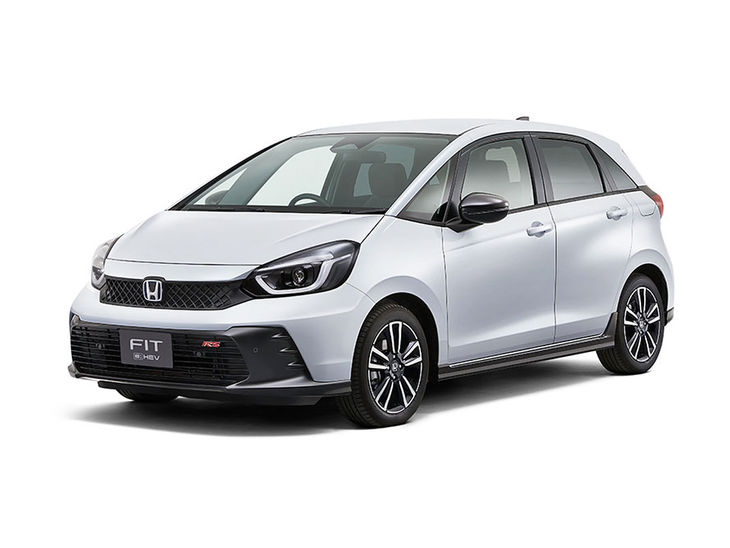
Honda has announced its Fit range will gain a sportier RS derivative in some markets when the hatchback receives its upcoming facelift.
Revealed in October 2019 before arriving in South Africa in June 2021, the fourth-generation version of Honda’s versatile supermini ditched the Jazz nameplate locally in favour of the Fit badge. And it seems the hatchback is already in line for a minor refresh.
Announced via Honda’s Japanese media portal, the facelift will include the launch of a new Fit RS that will have a focus on “sporty design and driving quality”. However, it’s unlikely to be an out-and-out hot hatch.
In fact, in its domestic market, the RS-badged variant will be offered exclusively with an uprated version of Honda’s 1.5-litre, two-motor hybrid system, which the automaker promises will deliver “increased output” and “improved accelerator response”, bringing “exhilaration to daily driving”.
The new Fit RS will use Honda’s e:HEV powertrain in Japan.
While the company has yet to detail the peak power and torque figures, we do know the front-wheel-drive RS model – yes, wearing the same badge as the new Civic RS sedan that has just arrived in South Africa – will offer a trio of drive modes (Econ, Normal and Sport), paddle shifters (to adjust the aggressiveness of the e:HEV system’s regenerative braking) with a raft of design updates.
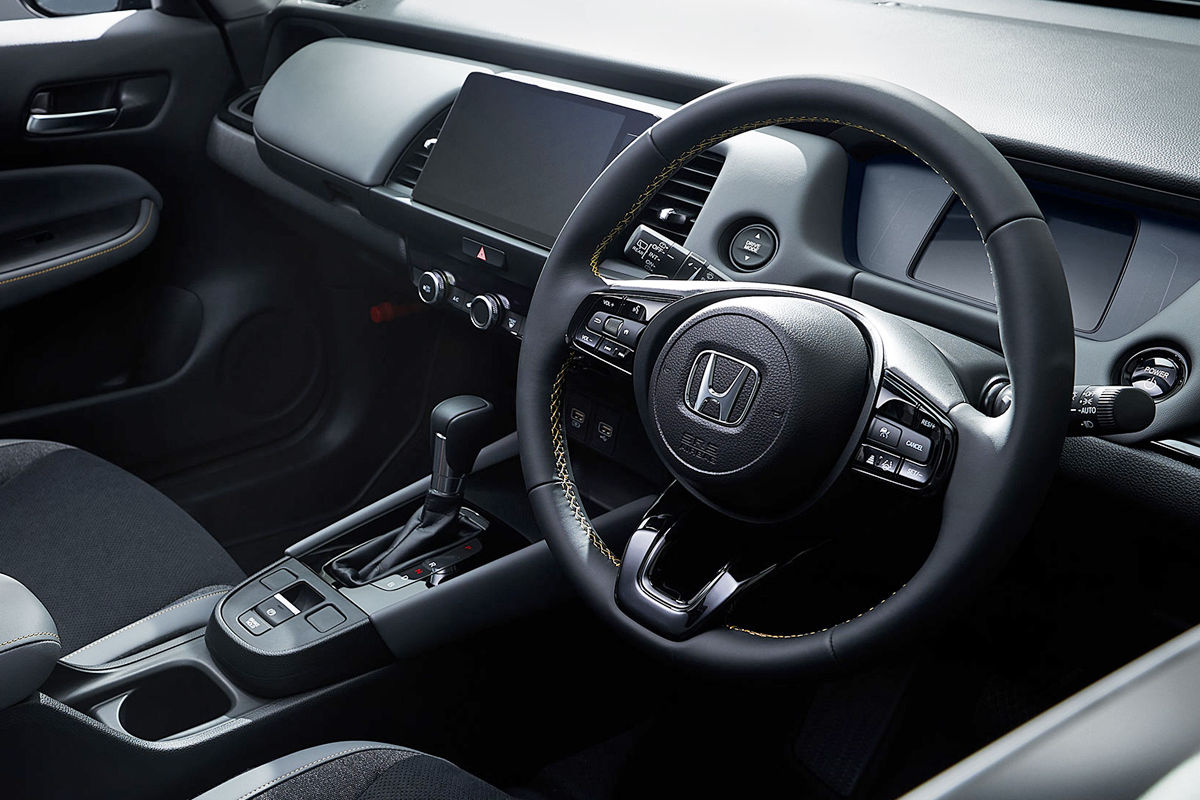
For example, the RS derivative will gain a model-specific grille, along with sportier front and rear bumpers as well as a subtle rear spoiler and two-tone alloy wheels. Judging by the single image of the cabin released thus far, the Fit RS will furthermore feature yellow stitching on elements such as the steering wheel, seats, centre console and interior door trim.
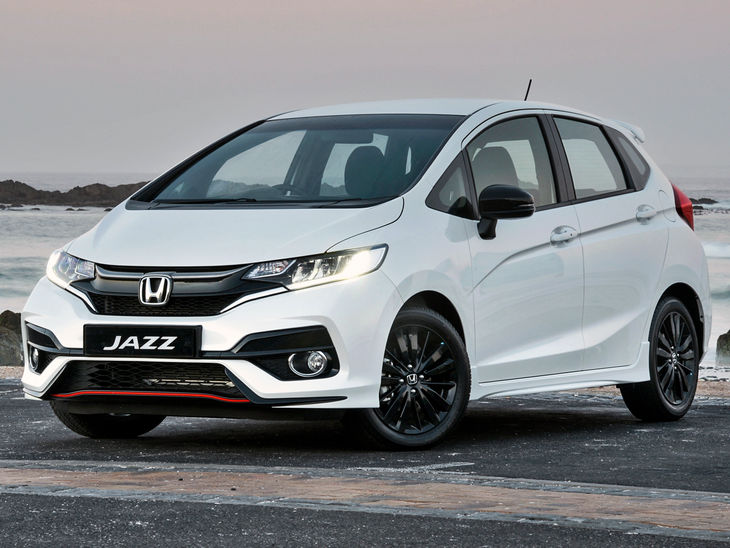
Whether or not Honda Southern Africa will add this new RS variant to its local Fit line-up remains to be seen, but we should keep in mind our market gained a slightly warmer version of the automaker’s supermini before. Yes, back in February 2018, the Jazz Sport touched down in South Africa, boasting Type R-inspired styling (including an aero package), an upgraded cabin, reworked suspension and a unique engine tune (97 kW and 155 Nm) for its naturally aspirated 1.5-litre, 4-cylinder petrol heart…
The SA market received the similarly executed Jazz Sport back in early 2018…
Toyota Land Cruiser 79 Double Cab (2022) Review
To celebrate the iconic Land Cruiser’s 70th anniversary, Toyota has launched a special edition of its hardy off-roader, replete with features specifically selected to enhance its go-anywhere ruggedness.
We like: Feeling of robustness, off-road ability
We don’t like: Somewhat basic inside – given the price, wind noise, lack of safety features
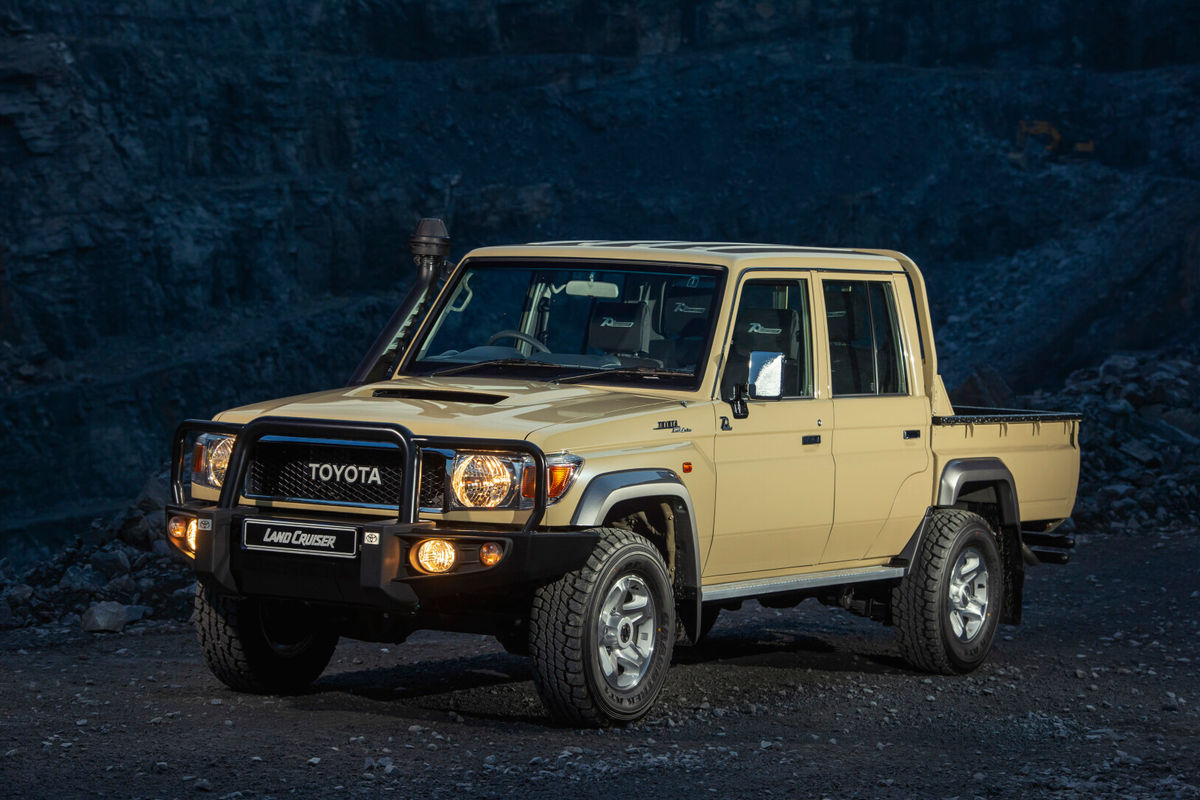
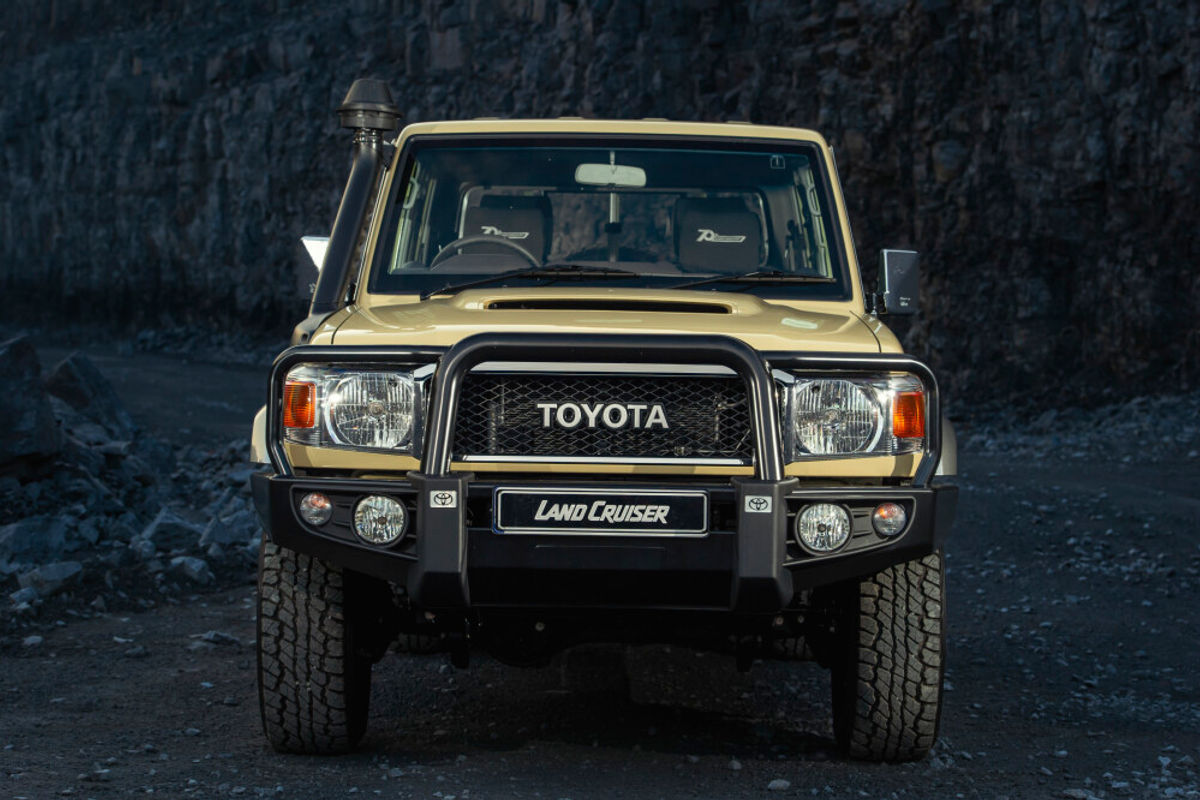
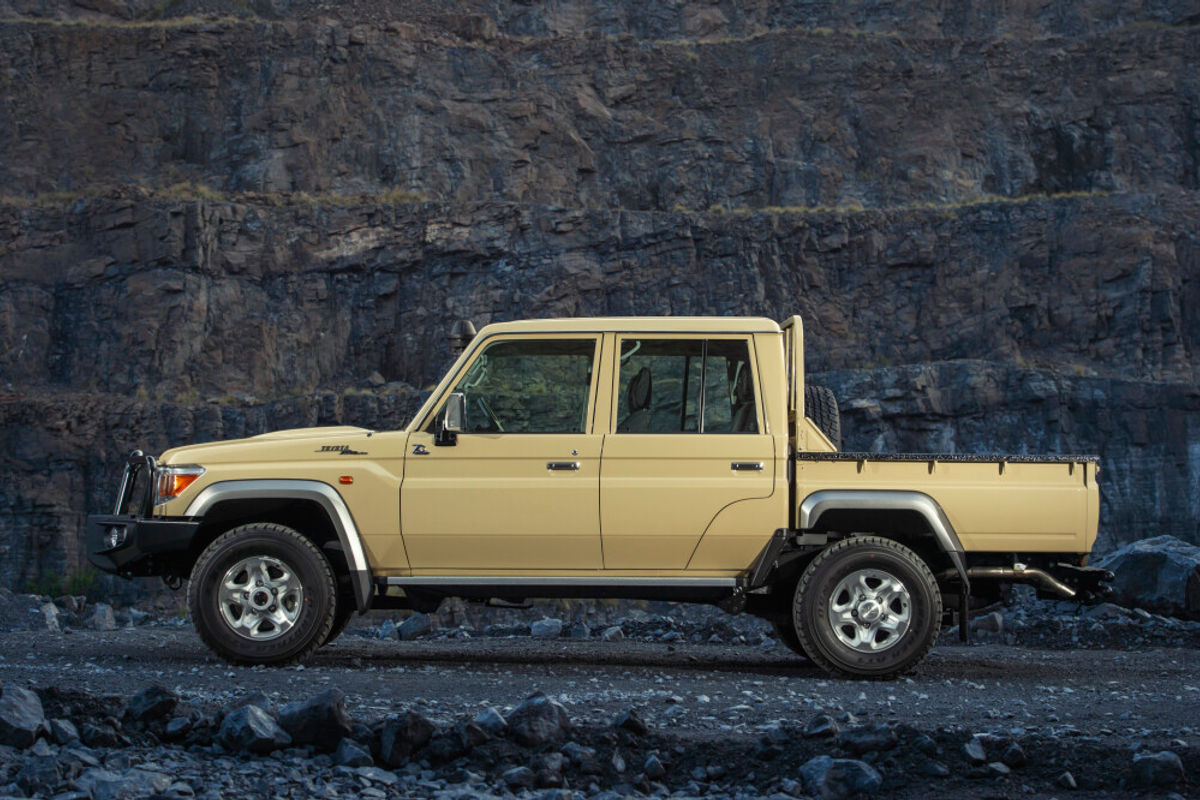
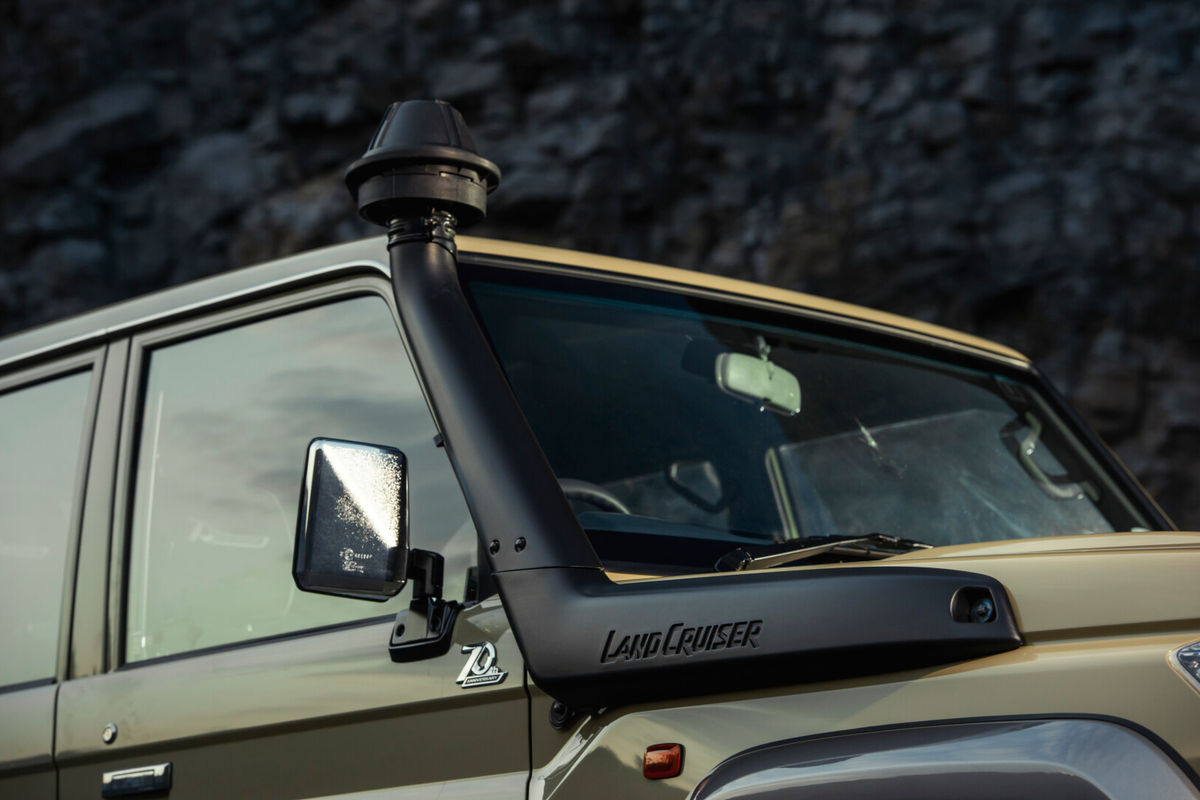
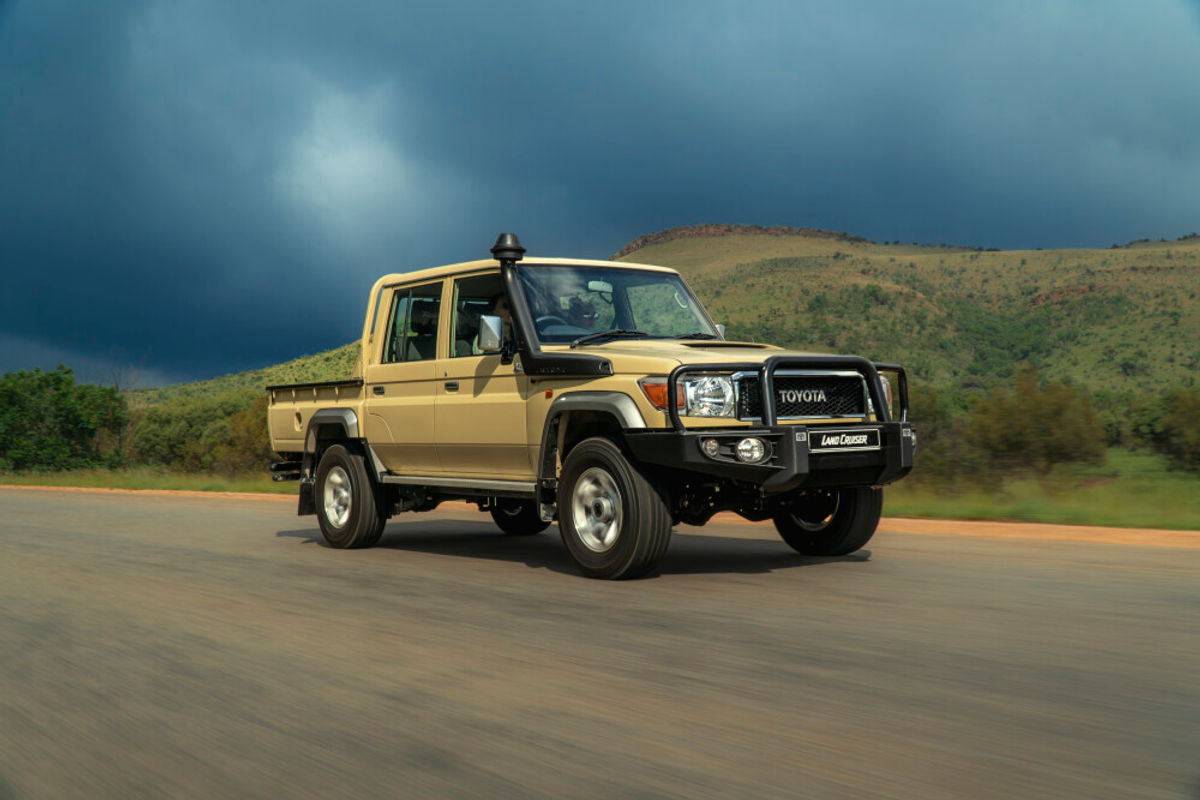
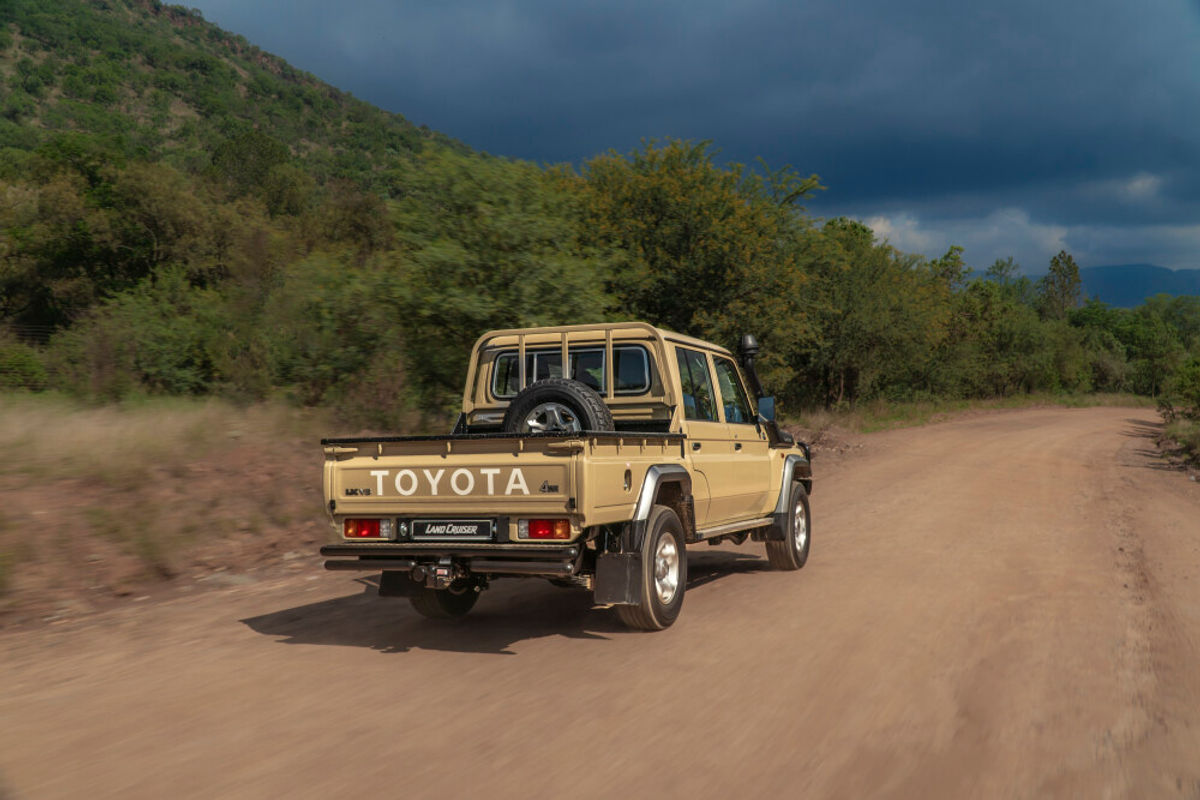
The 70th Anniversary derivatives are offered exclusively in Ivory White and, as shown above, Sand Beige.
What’s new about the 2022 Toyota Land Cruiser 79 70th Anniversary Edition?
The Toyota Land Cruiser is one of those rare vehicles that transcend fashion trends. Almost wilfully “agricultural” in its design, the Japanese brand’s ultimate 4×4 pick-up (the 70 series debuted in ’84) is regarded, paradoxically, as a workhorse – as well as a luxury item. Now 70 years into its existence, the model’s as popular as ever, and continues to soldier on as a back-to-basics, robust off-roader that you can trust to transport you to Timbuktu (literally and figuratively) and back.
To celebrate the milestone, Toyota has launched special 70th Anniversary edition derivatives of the Land Cruiser, in 79 single- and double-cab cab guises. The tweaks appear largely cosmetic, but most of them also serve to further enhance the vehicle’s legendary off-road ability. There are very few rivals to the Aichi-based firm’s “unashamed anachronism”, but we’ve included the newly-released, petrol-fed Jeep Gladiator and the Baja-inspired (outgoing) Ford Ranger Raptor…
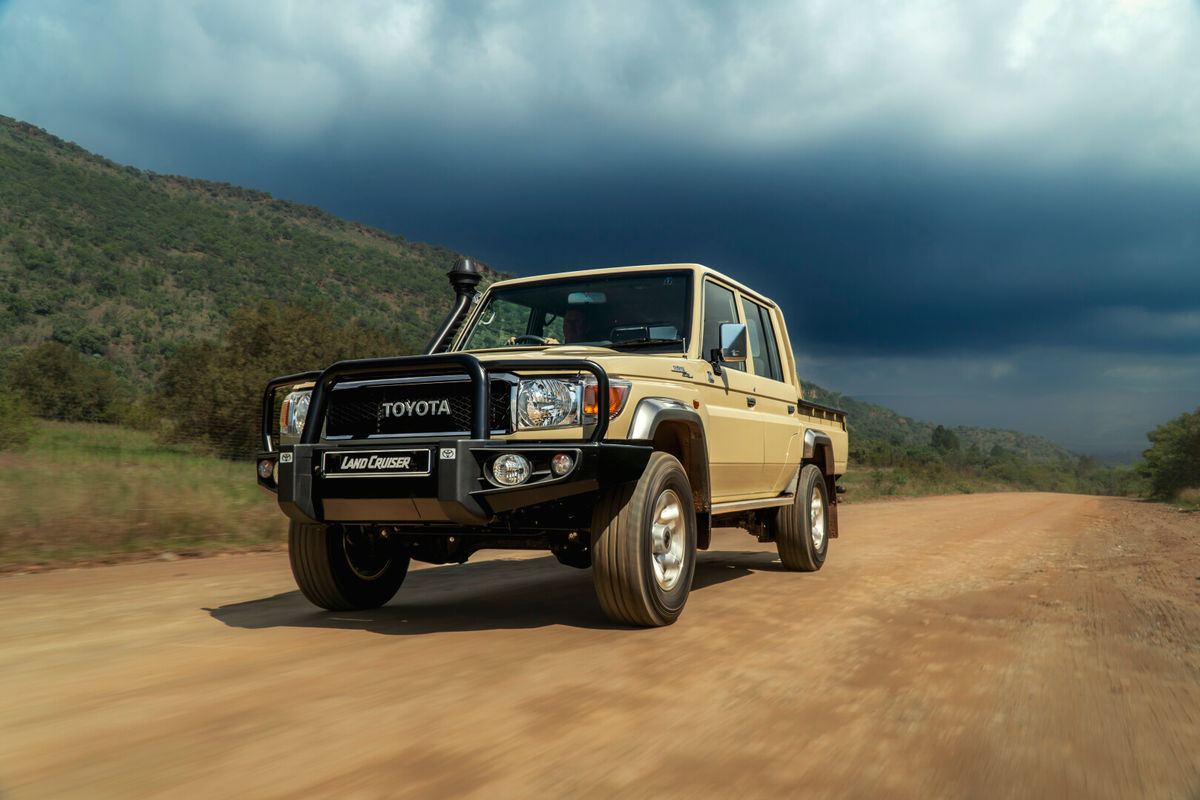
The front end of the 70th Anniversary Edition is distinguished by a “heritage-inspired” grille and a tubular front steel bumper.
How the Land Cruiser 79 70th Anniversary Edition fares in terms of…
Design and Packaging
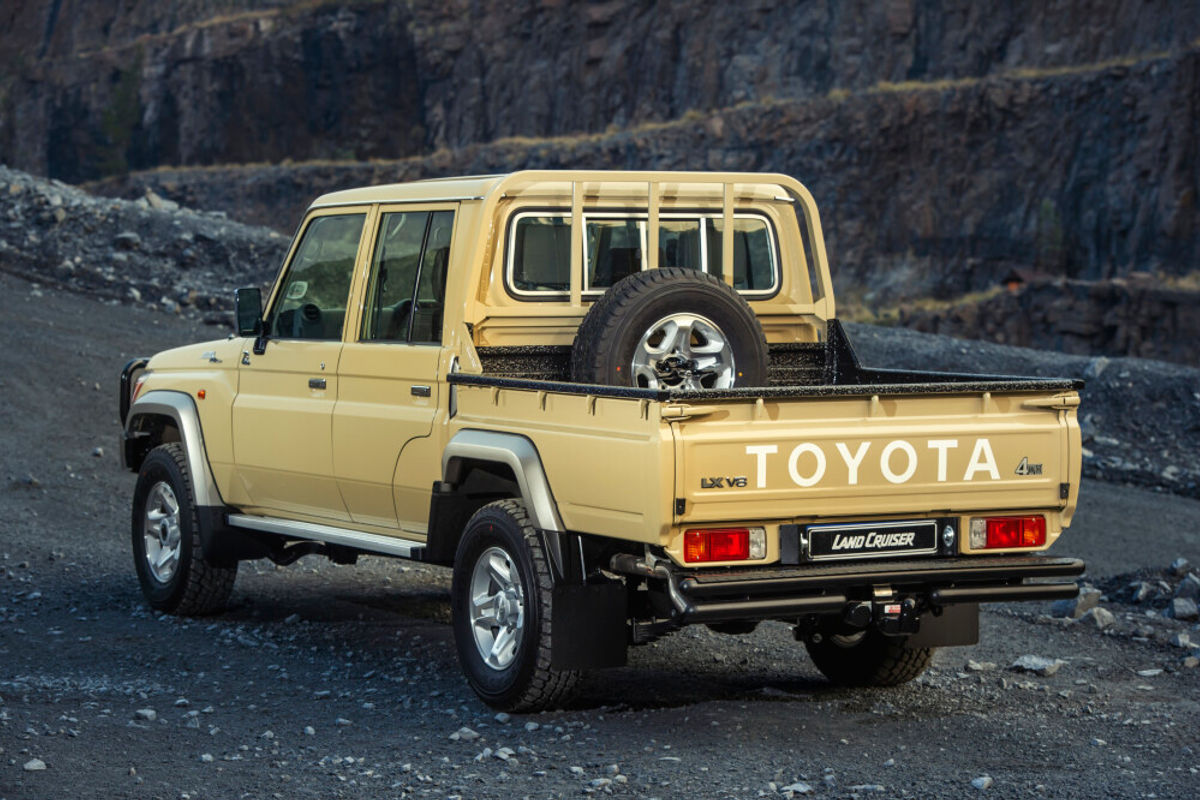
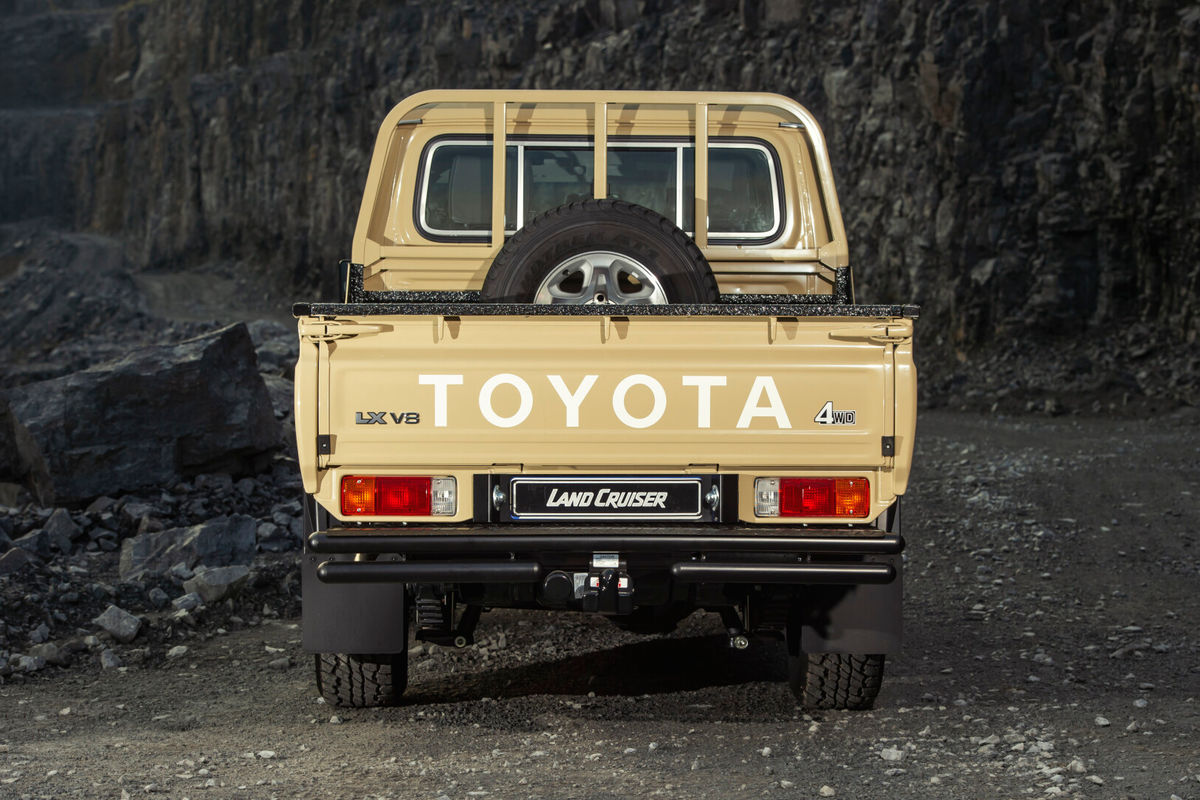
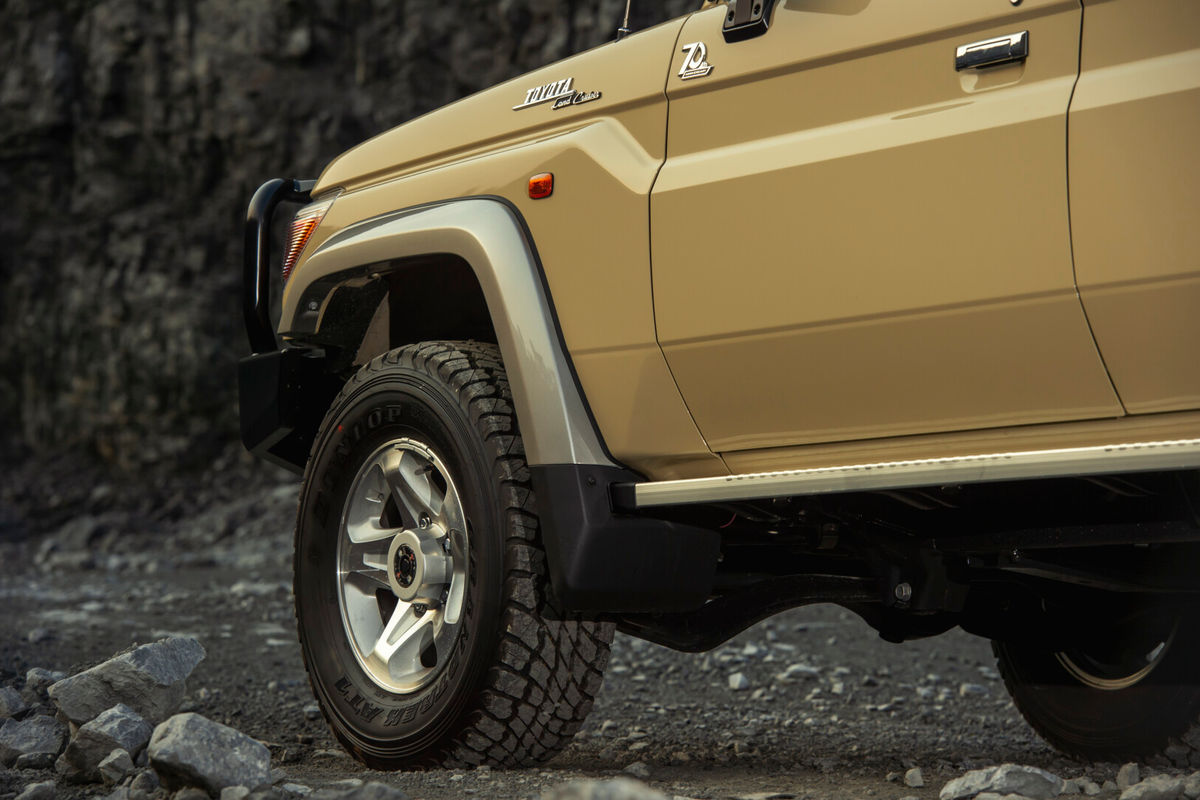
Available exclusively in Ivory White or Sand Beige (as shown here), the 70th Anniversary Edition can be easily distinguished by its unique “heritage-inspired” grille with Toyota lettering (instead of the usual Toyota ellipse badge) and 70th Anniversary logos that have been applied at various points in and around the vehicle. However, the more useful differences/changes to the regular 79-series derivatives include the fitment of a rear tubular step bumper (with a detachable towbar), rubberised load-bed lining (3 mm), a tubular front steel bumper (with integrated winch preparation). With its grey wheel-arch extensions and standing tall on its chunky 265/70 16-inch tyres, the Land Cruiser looks ready to hit the dirt.
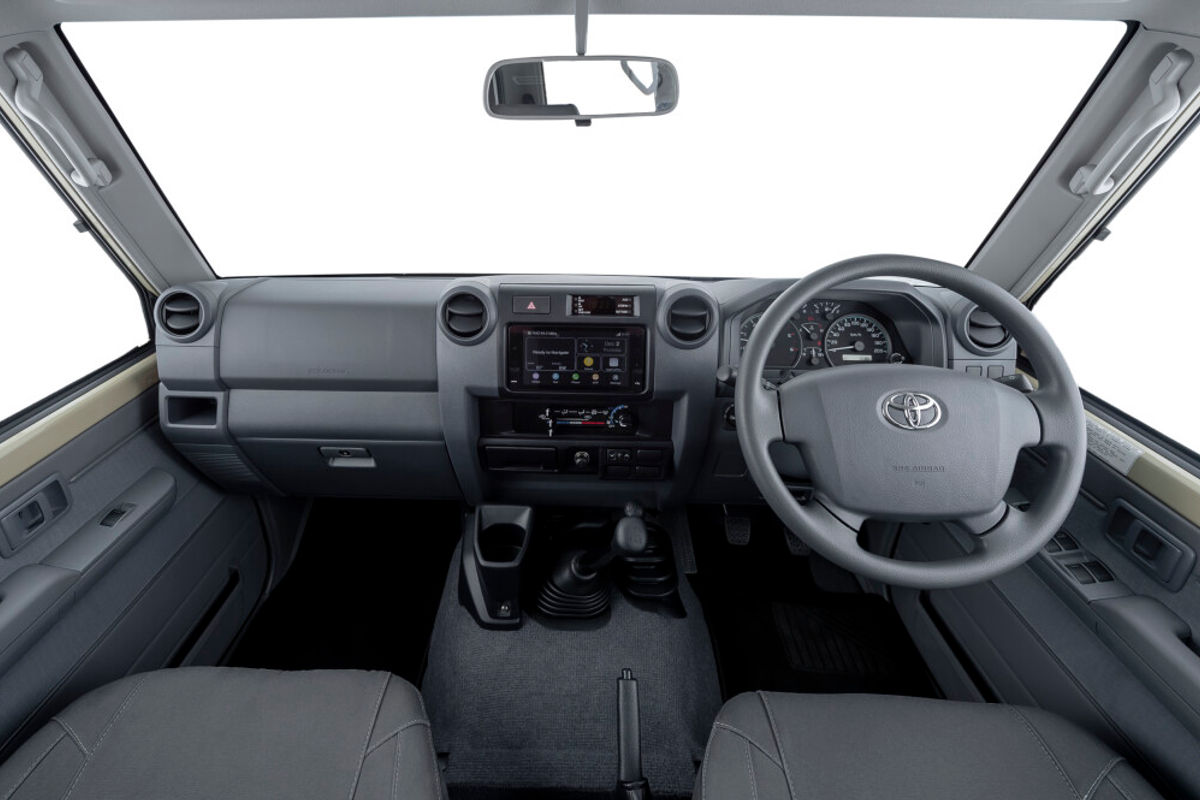
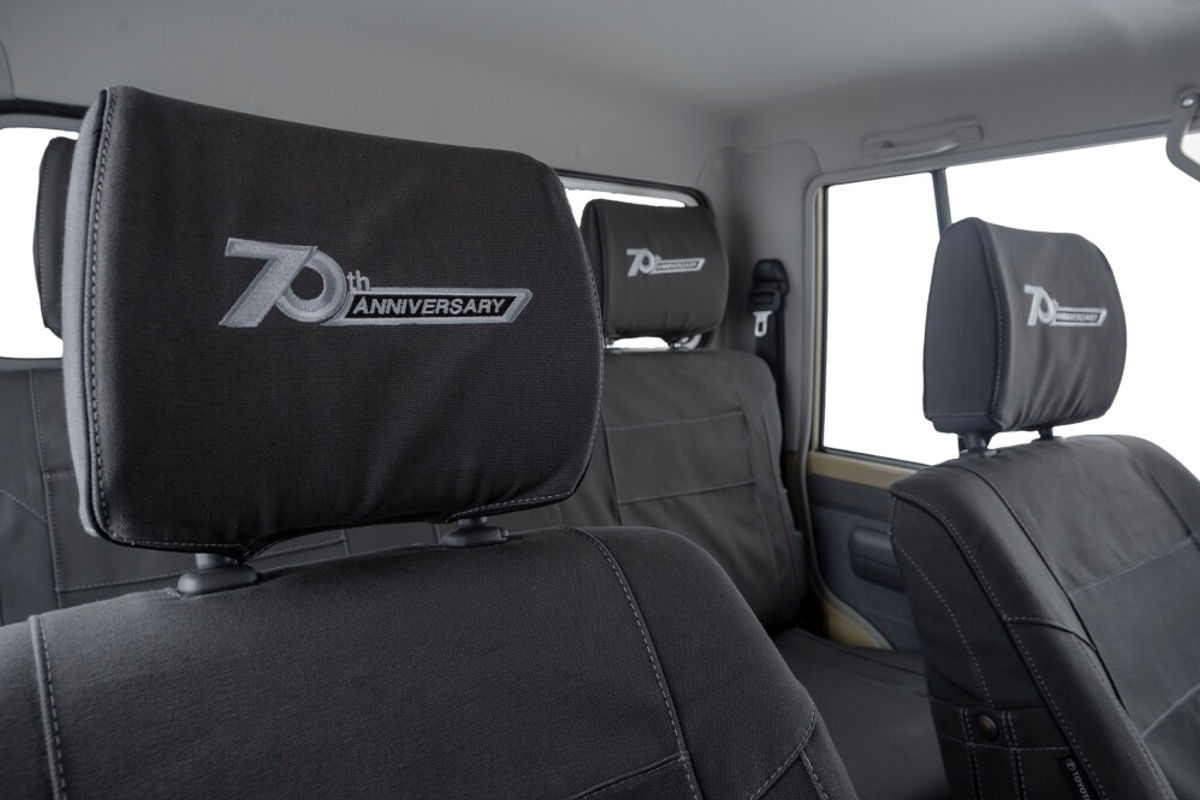
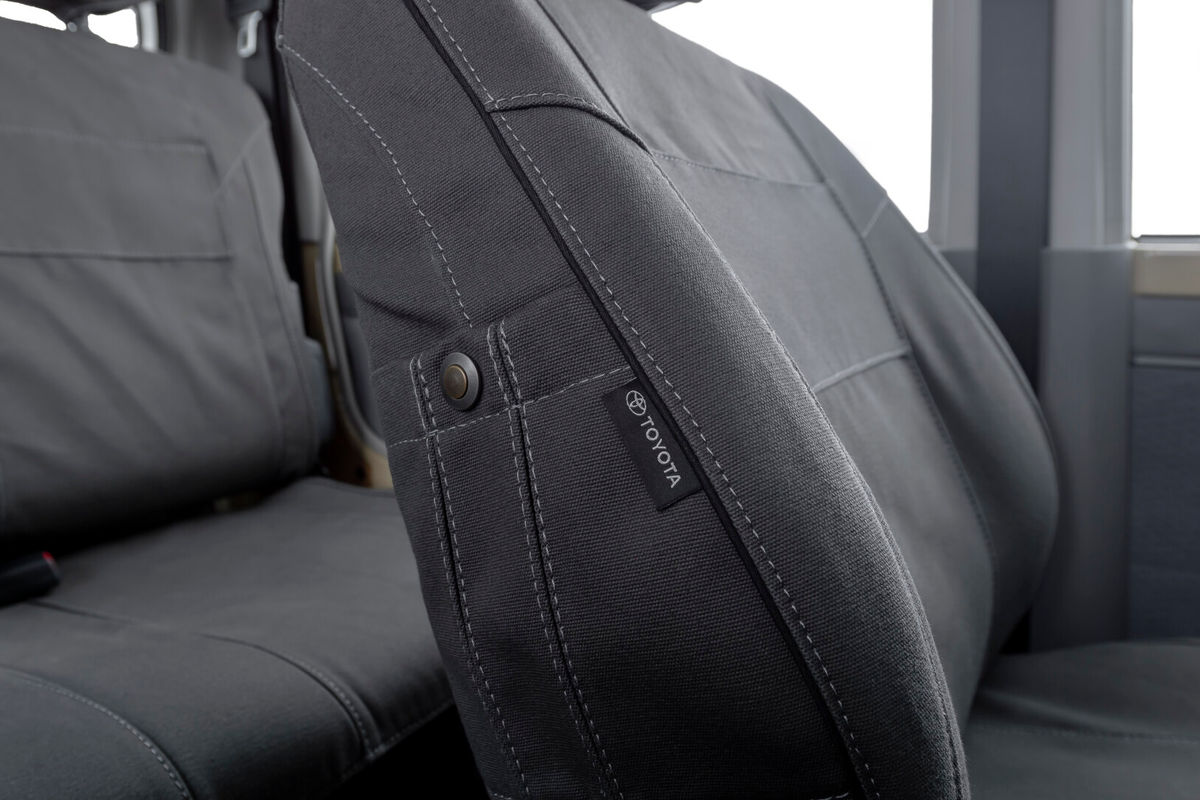
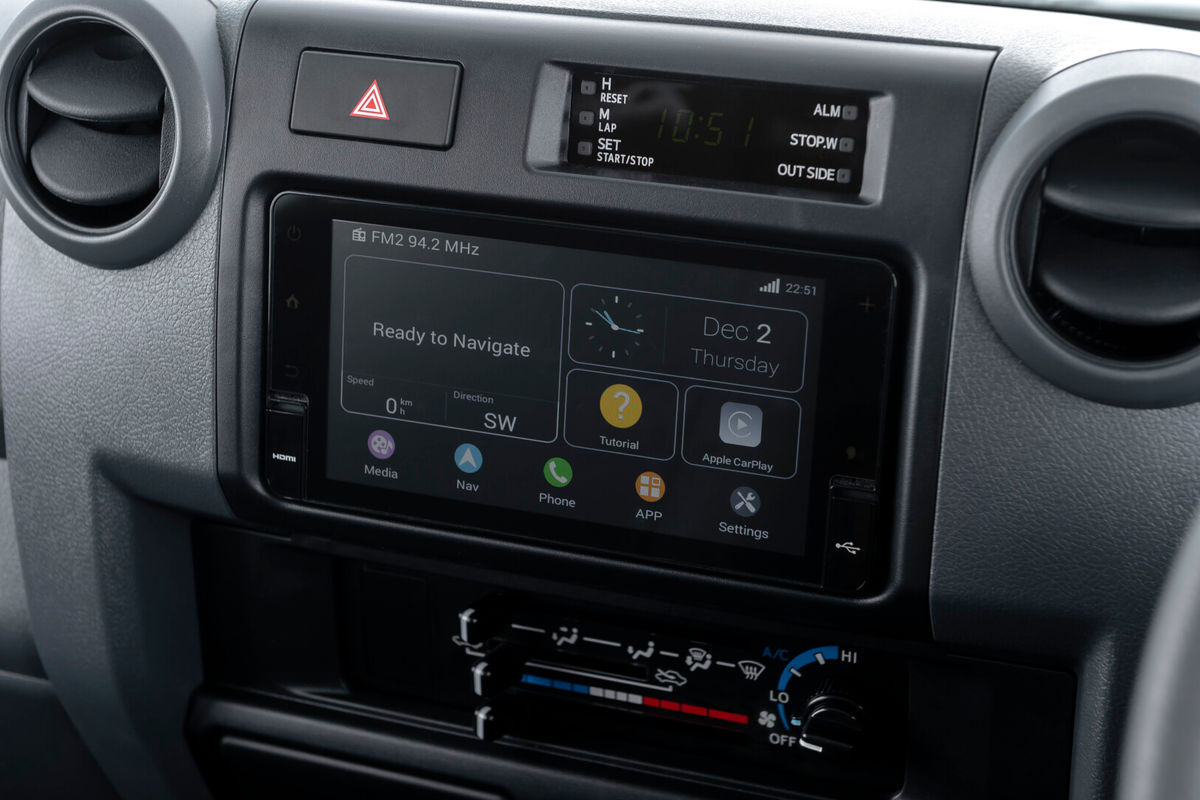
Changes inside are minimal and also quite functional. Additions include unique grey canvas seat covers (emblazoned with 70th Anniversary emblems), Land Cruiser-branded floormats and, in one of the few nods to modernism, a touchscreen infotainment system with Bluetooth connectivity and navigation, as well as Apple CarPlay/Android Auto compatibility.
Underneath the grey wheel-arch extensions sit 16-inch wheels shod with chunky 265/70 16-inch tyres.
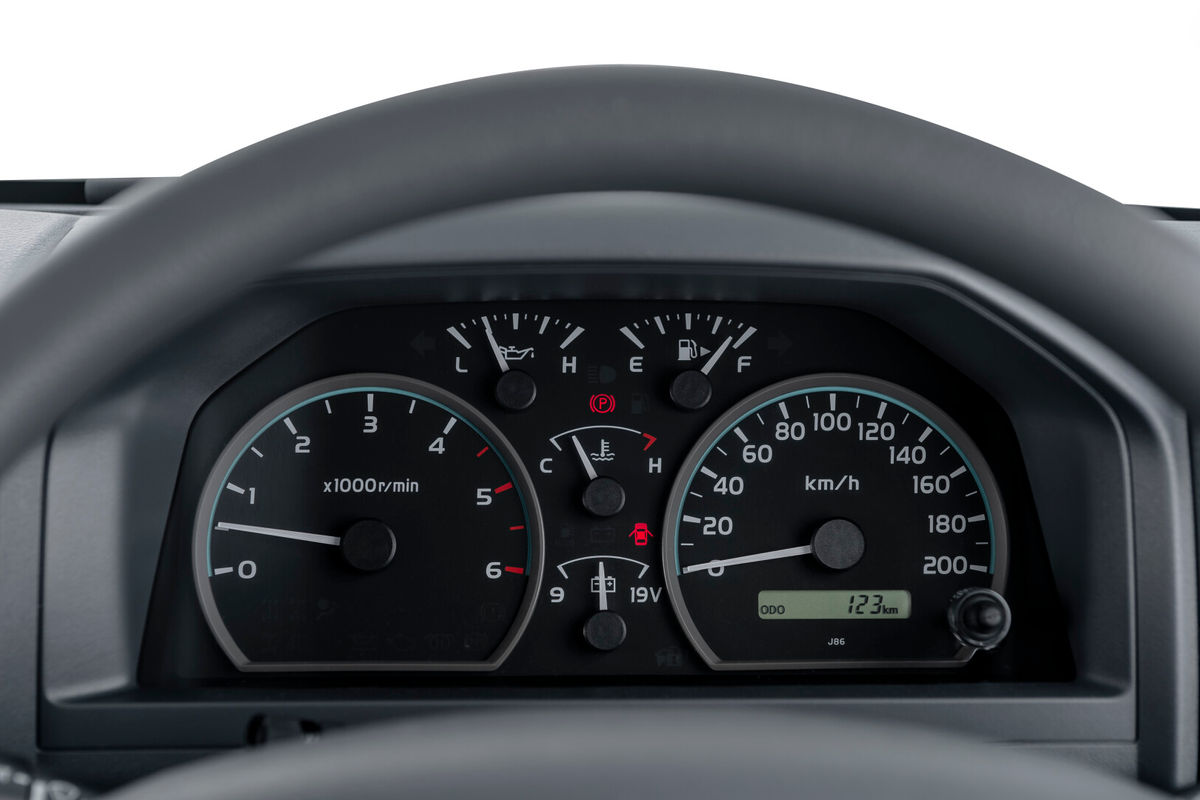
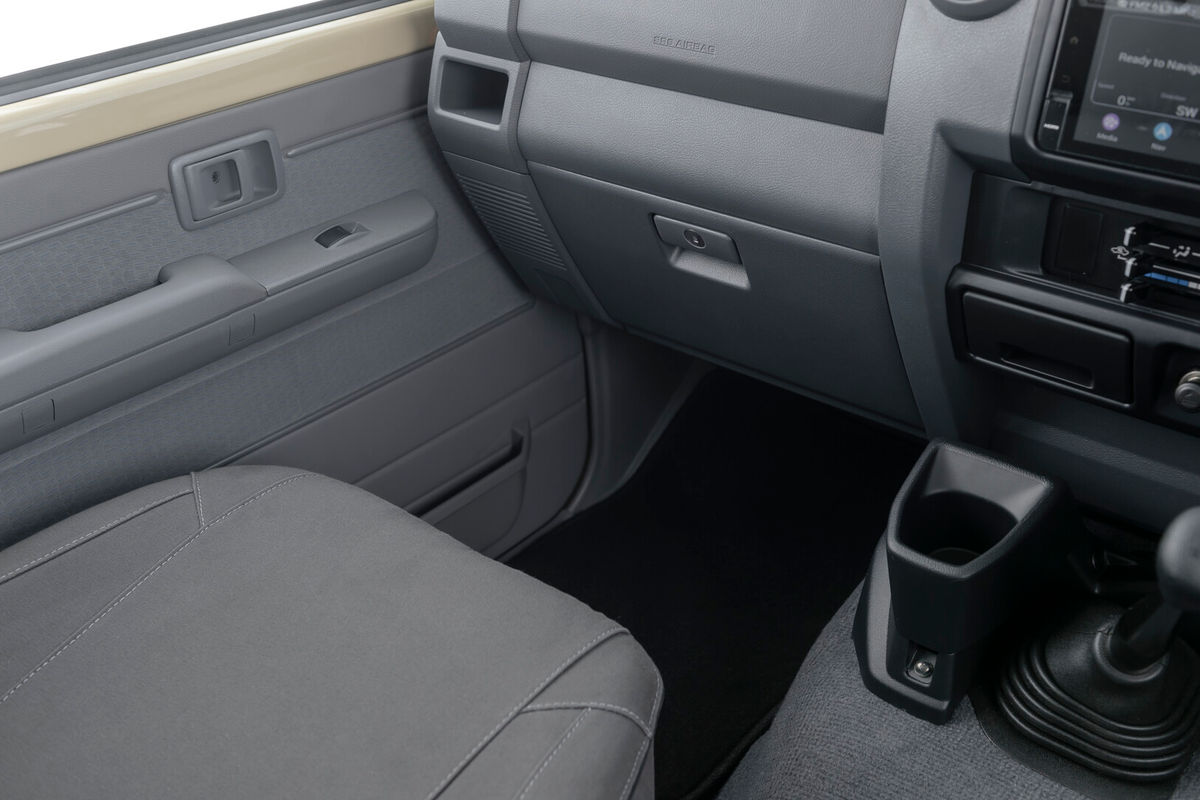
Beyond these changes, the Land Cruiser’s cabin is as functional – and basic – as before. Large expanses of hard, grey plastic are the order of the day, but they feel suitably hard-wearing. You’re likely to take a while to get used to the old-fashioned sliding controls for the ventilation system, and the steering wheel looks like it was sourced from Nineties-era Hilux (it features no remote audio controls, for example). But everything has a pleasingly sturdy feel to it.
Performance and Efficiency
The Land Cruiser is powered by a tried-and-trusted 4.5-litre V8 turbodiesel that delivers 151 kW and 430 Nm between 1 200 and 3 200 rpm. These figures may appear low given the capacity of the engine, but remember that the Land Cruiser is primarily built for reliability and off-road performance. The fact that a Ford Ranger Raptor’s bi-turbo 2.0-litre 4-cylinder engine delivers higher peak outputs should serve to illustrate just how unstressed the ‘Cruiser’s big V8 really is. Still, it’s not a vehicle to be hurried, though it does feel quite sprightly from pull-away to around 100 kph – if you flatten the accelerator pedal – and, for what it’s worth, the claimed top speed is 160 kph. The braked tow rating, meanwhile, is 3 500 kg.
The ‘Cruiser’s 4.5-litre V8 turbodiesel delivers leisurely on-road performance, but gets up to 100 kph relatively briskly.
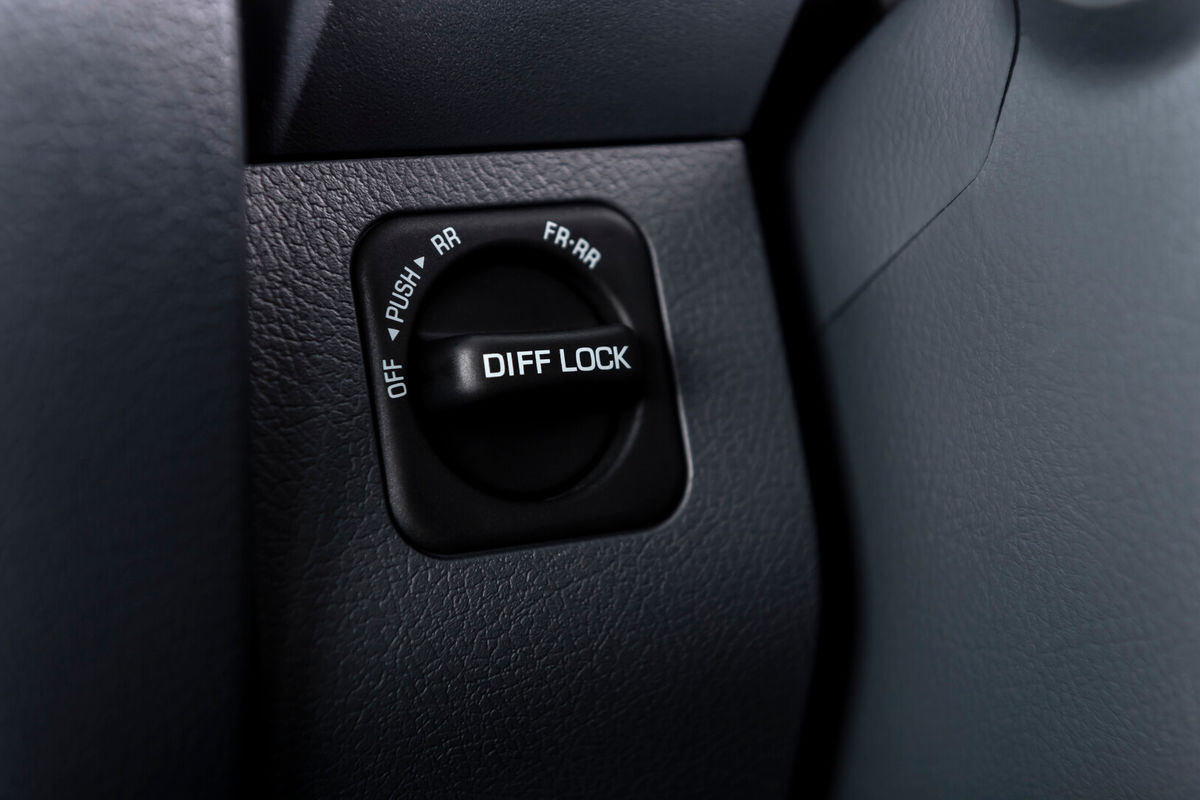
The Land Cruiser 97 double cab is fitted with a 5-speed manual transmission, which has a pleasingly mechanical shift action and drives the vehicle’s rear wheels. Of course, a separate transfer case is fitted; there is no fancy push-button or “terrain-response” system here, you have to select low four-wheel drive Low or High the old-fashioned way, via a secondary lever. A rotary knob is fitted to activate the front- and rear differential locks, however.
Toyota claims an average fuel consumption figure of 11.9 L/100km, but 13.5 L/100 km is more likely, which means you should be able to travel around 963 km on a single tankful (130 litres).
The cabin of the 70th Anniversary Edition remains basic and solidly made, but the infotainment system is quite modern.
Comfort and Features
With a wheelbase of 3 180 mm, coupled with an overall length of 5 235 mm, the Land Cruiser 79 double cab is not quite as spacious inside as, say, the new Jeep Gladiator. Accommodating tall adults at the back will require some compromise from those seated in the front, but there’s enough space for a family of 2 adults and 3 children, we’d say. Once seated, everyone is afforded a towering view of their surroundings. Note only a lap belt is availed to the centre rear passenger.
Given the fact that this is a near-R1-million vehicle, luxury interior features are few and far between. Then again, simplicity and reliability are more important to Land Cruiser owners than fancy gubbins. The air-conditioner (once you’ve figured out how it works), is powerful, the infotainment system is comprehensive and there are electric windows all-round.
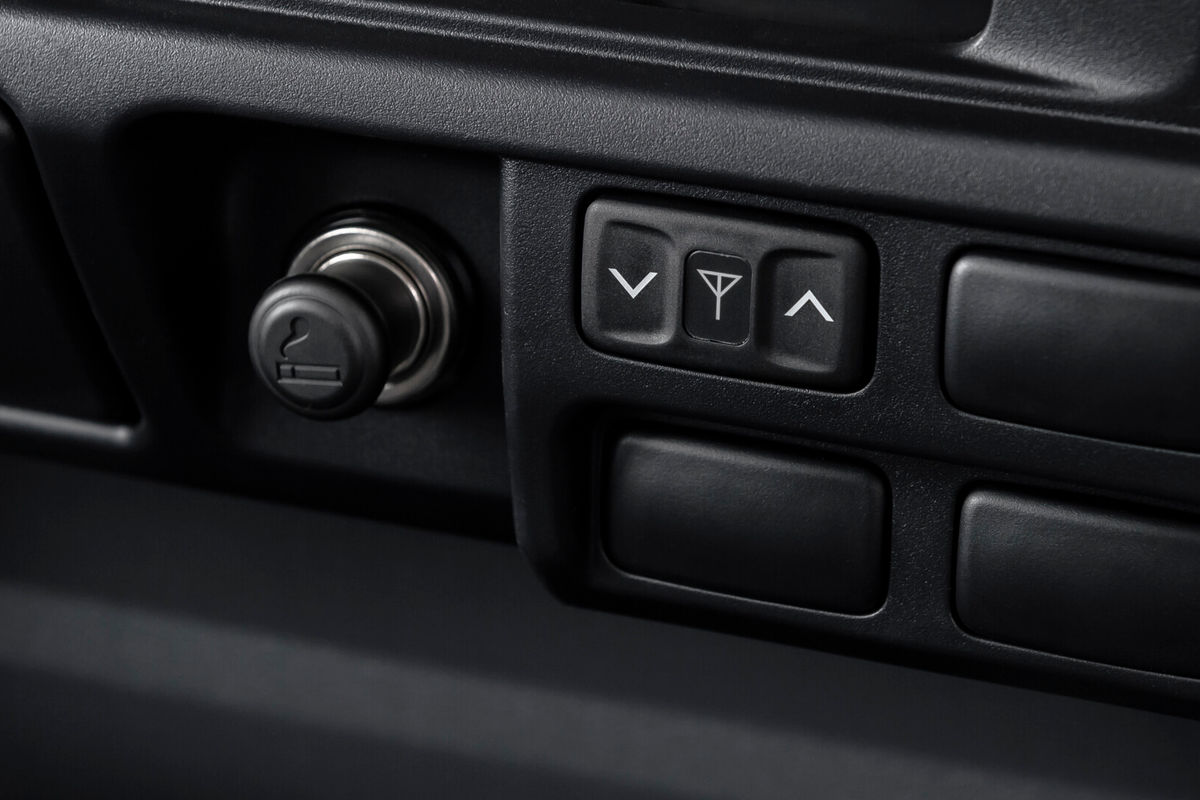
Interestingly, the Land Cruiser has an old-school retractable antenna, which can be lowered (when off-roading, for example). The lack of a rear-window demister is a bit of a nuisance, however.
The Apple CarPlay/Android Auto-compatible touchscreen infotainment system is just about the ‘Cruiser’s only sop to fashion.
The Land Cruiser is likely to be used for long trips quite often and, in that regard, we were somewhat surprised (and disappointed) by its shortage of storage solutions. There is one drinks holder in the front and the door pockets are narrow. The storage box between the front seats is also quite small and there are no drinks holders for rear occupants (but ashtrays are availed!). Thankfully the seat covers (unique to this vehicle) have stretching pockets that could hold cooldrink cans.
Overall, the Land Cruiser is perhaps a bit too spartan and rugged to be used as a daily runabout, but that’s not its purpose and it would be unfair to judge the Toyota against the criteria applied to crossovers and family SUVs. Out on the open road, and up to around 120 kph, its performance feels unstressed and the cabin is comfortable enough (considering what kind of vehicle the Toyota is), although wind noise becomes quite noticeable at the national speed limit.
The off-road ability of the Land Cruiser 79 is legendary. The off-roading fraternity cherishes the vehicle’s mechanical simplicity.
Ride and Handling
With its rigid front- and rear axles, off-road-biased tyres and high centre of gravity, it is clear that the Land Cruiser is built for slow and steady progress in the rough stuff, rather than a blast over a mountain pass. Nevertheless, we found it quite pleasing to drive at around-town speeds. The Toyota’s steering, for example, isn’t as vague as that of its Jeep rival and the mechanical nature of the controls makes for quite an engaging driving experience.
The ‘Cruiser laughs off speed bumps, or pavements, for that matter. But when you drive at higher speeds (such as on freeways), you may find the Toyota feels out of its element, which it is. Thankfully, ABS is fitted, but do keep in mind that there is no stability control to save your bacon… and when worst comes to worst, there are only two airbags (and they’re for the front passengers).
Suffice to say, the 79 double cab feels more “at home” when the tarmac turns to dirt and even more so when the road ends entirely. By simply engaging four-wheel drive low (4L), most ‘Cruiser drivers should be able to contend with somewhat tricky off-road conditions, but if things get really challenging (such as when traversing extreme low-grip surfaces), the Toyota’s front and rear differential can be locked!
In 4L mode, with both front and rear differential locks engaged, the ‘Cruiser feels virtually unstoppable off-road.
Visibility out of the vehicle is excellent, which makes it easier to place the car in difficult conditions, and that V8 really comes into its element when crawling up and over obstacles. For the record, the Land Cruiser’s approach and departure angles are 33 and 27 degrees, respectively. It has a claimed wading depth of 700 mm.
Price and After-Sales Support
The Land Cruiser 79 4.5D-4D LX V8 double cab 70th Anniversary sells for R981 100 before options. A 3-year/100 000 km warranty is included, but a service plan is optional (to a maximum of 7 years or 200 000 km). The service intervals are short by modern standards, however (10 000 km).
The Land Cruiser 79 double-cab 70th Anniversary Edition is old-school… and perfectly fit for purpose.
Verdict
Simply put, this is not a vehicle that will suit everyone. The Land Cruiser 79’s design is several decades old and it offers little in the way of interior conveniences and luxuries, which is why the venerable Toyota seems so archaic – in a sadly superficial world, the 70th Anniversary Edition is little more than a relic.
But there’s something inherently appealing about a vehicle that is so resolutely counter-establishment, and so true to its purpose. Yes, it’s expensive, but it’s not expensive because it’s loaded with toys and offers snob appeal, but by virtue of genuine ruggedness and off-road ability.
At the price it has no direct rival in the local market – the Jeep Gladiator is a flashy “toy” for the wealthy, by comparison. Here’s to another 70 years! With its diff-locks engaged, the ‘Cruiser feels pretty much unstoppable. It’s also worth noting that the vehicle’s non-blingy exterior seems to encourage off-road bravery – a few off-road scars are surely badges of honour!
But that is illustrative of where Subaru is trying to position the new WRX; as a more mature, grown-up sedan, that has largely shed its boy-racer, rally history.
While that might make fans of the brand despondent, it is a play for larger volumes and wider appeal.
We sent our in-house race ace, Ashley Oldfield, to try out this new Scooby and give us his opinion on the new engine, the chassis and handling dynamics and the all-new interior.
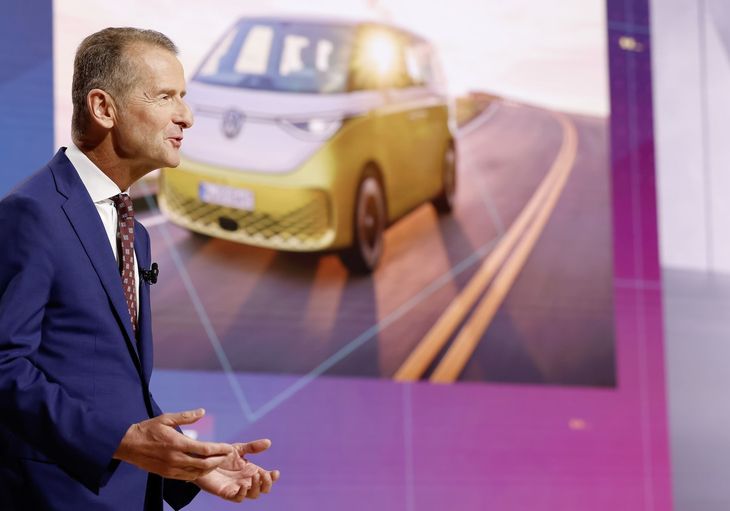
Any change at the top of Volkswagen AG is a huge deal. What will the new CEO of the German automotive giant mean for your VW – and South Africa?
What is the most challenging job in the automotive business? Being Elon Musk’s personal assistant? Choosing the next Toyota Hilux’s alloy wheel design? No, neither.
Being appointed VW’s CEO is the most poisoned chalice in the car industry…. not CEO of the Wolfsburg-based brand itself, but Volkswagen AG (VW AG), which includes Audi, Bentley, Lamborghini, Porsche, Seat, Cupra and Skoda.
VW AG has a ginormous – and diverse – portfolio of products, which speaks volumes of the industrial engineering complexity that is part and parcel of such a setup. And then there’s the family influence. At BMW, the Quant family are reasonably uninvolved and Mercedes-Benz operates as an independent corporate entity.
But at VW AG? If you’re the CEO, you must navigate a supervisory board that is very much the domain of two exceptional families: the Piëchs and Porsches. And they prefer things done their way. Or their way.
Even when management is orchestrating tremendous profits and facilitating the delivery of class-defining vehicles, the Piëch and Porsche families can dispose of VW AG’s most senior employees at will.
The impossible legacy of the world’s most powerful car company family
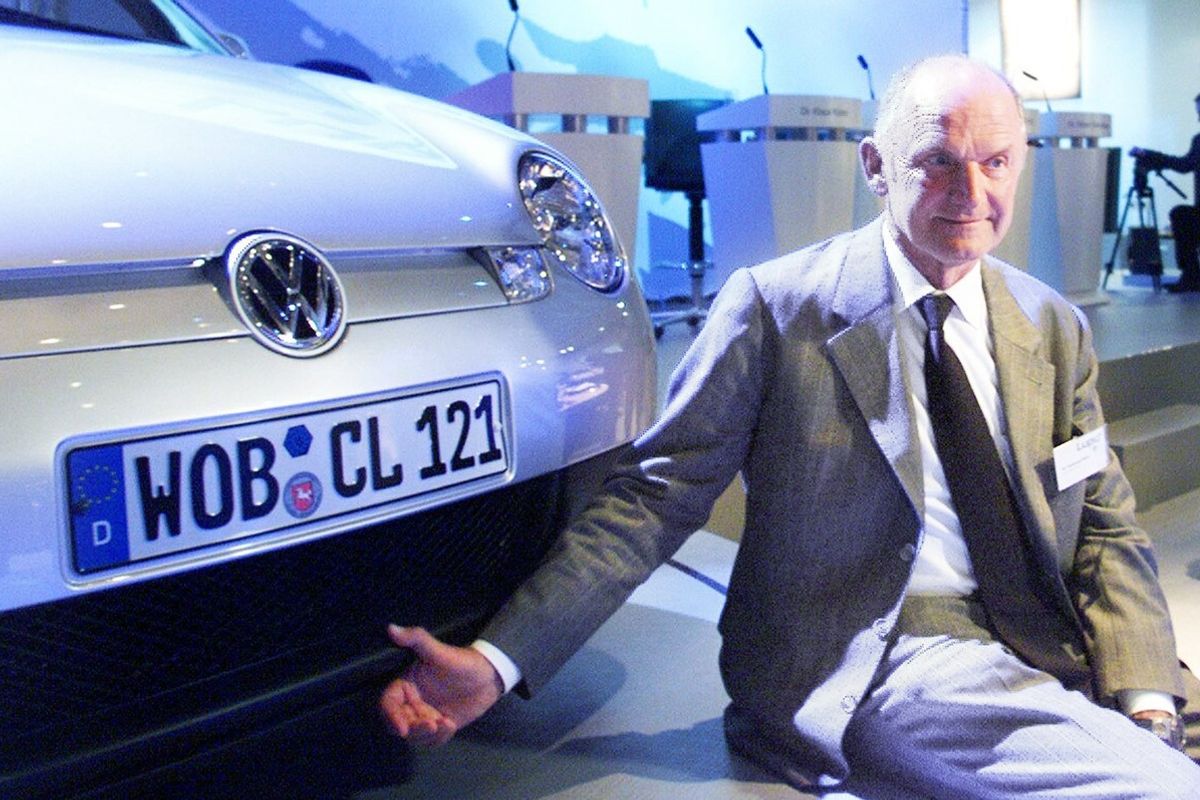
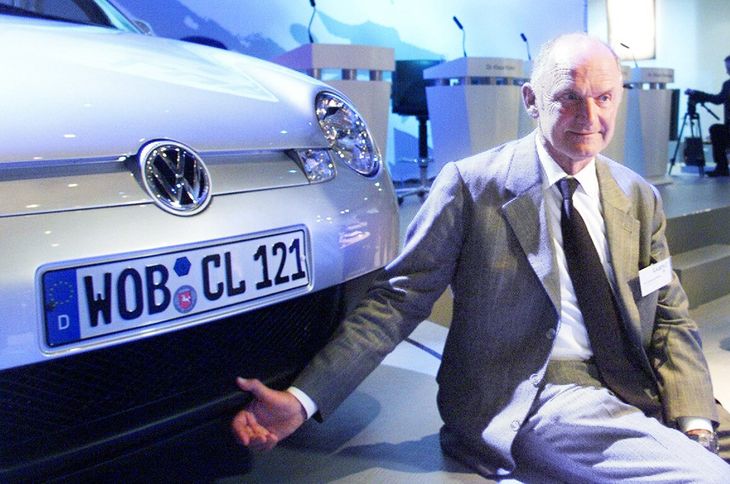
The late Ferdinand Piëch. Arguably the most incredible car company CEO of all time.
The industrial engineer who saved Porsche from bankruptcy and guided it to become the world’s most profitable car maker, Wendelin Wiedeking, was unceremoniously fired in 2009. Why? Wiedeking was judged as having become too “assertive” in his vision for VW AG.
After creating the Boxster business, generating huge profits with the Cayenne and saving the 911’s legacy, Wiedeking was unceremoniously fired. That’s the potency of VW AG board-level politics.
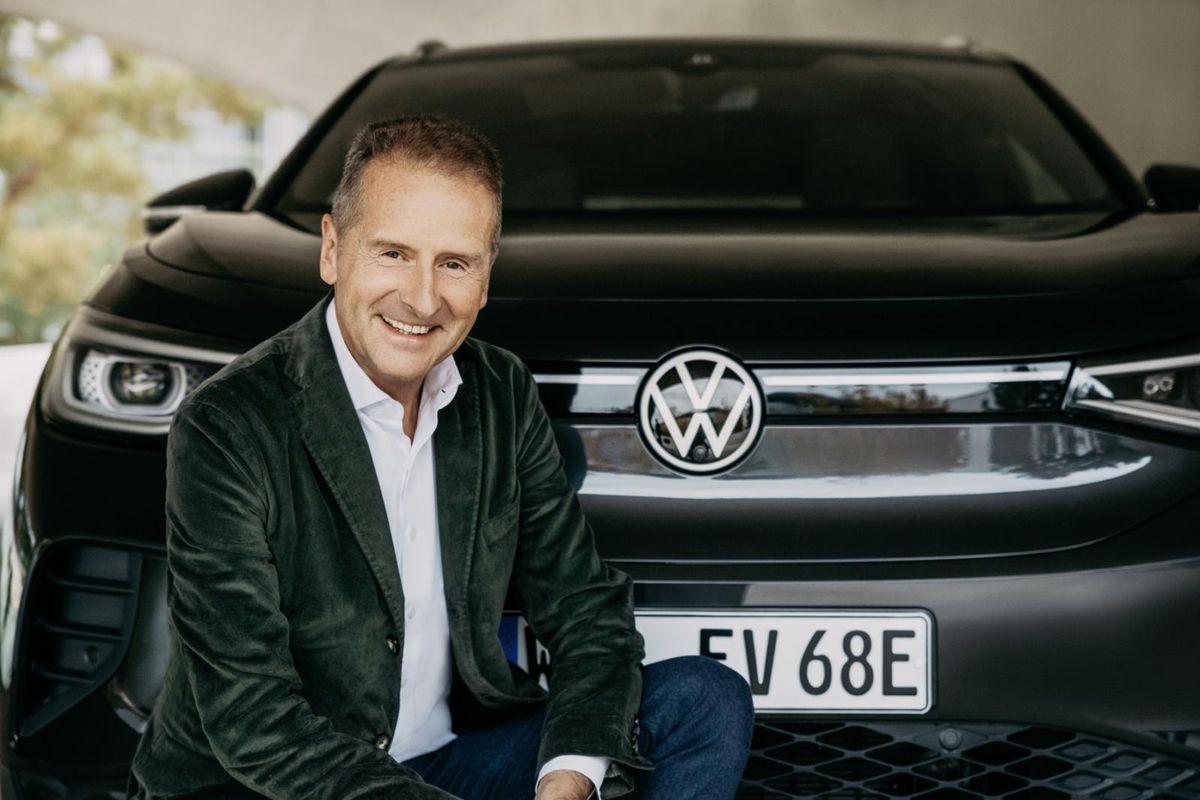
After VW AG’s diesel-emissions transgression of 2015 (which is commonly referred to as Dieselgate), many believed that change was needed at the top of the Group’s structure. In 2018, a former BMW engineer, Herbert Diess, was appointed the CEO of VW AG. It’s evidently a position that is toxic at the best of times, but in the aftermath of the company’s punitive diesel disaster, it was apocalyptic.
Diess, however, appeared undeterred and forged ahead with his vision of what VW AG should become. And that implied a restructuring and ego-reshaping for senior staff at Audi and Porsche. But Diess seemingly had an advantage in navigating the typically poisonous VW AG boardroom politics – he, like the core Piëch and Porsche family members who effectively control VW AG, is Austrian.
Unable to tame VW’s stakeholders
Diess held VW’s brand history and product legacy in high regard but knew that software was crucial, too.
Unlike the CEOs of most automotive companies, Diess was uncannily frank about VW AG’s flaws and recognised Tesla’s technical superiority in the areas of BEVs (battery-electric vehicles) and software engineering. This irked powerful forces within the Piëch and Porsche families, where the notion of their brands’ technological superiority is regarded as important as pure profit (I jest, but you get the gist).
Diess realised that VW would require a comprehensive software architecture – one that would genuinely rival Tesla’s – and allow the Group to advance into the future of automotive sales and ownership, without losing too much market volume. But that meant enormous research and development (R&D) investments in a field in which VW AG did not have a legacy or ascendancy: software and electronics.
Traditional automotive engineering is mechanical, allied with some metallurgic expertise. But, thanks to Tesla, competency in software, device convergence, over-the-air updates etc have become pivotal in an increasingly electrified industry.
Most legacy automotive brands are geared to spend huge allocations of their R&D budgets on increasing internal-combustion engine efficiency… as opposed to making Spotify graphics display without lag when there is poor internet connectivity (to give but one very simple example). The challenge of changing the focus of automotive engineering from mechanical to virtual is, in a word, colossal.
Code – not valve-lift tech – is the new currency
VW needs a new type of engineer, one that specialises in software, instead of a DSG’s throttle-blipping characteristics.
Despite Diess’ attempts to will VW AG to greater software independence, the Group’s failures have been obvious. Software engineering bosses have been fired and products delayed, the 8th-generation Golf being a prime example.
Of all the German automotive brands, VW has been most assertive in its strategy to usurp Tesla. BMW and Mercedes-Benz have been painfully conservative in their fleet-electrification plans; ostensibly the Sindelfingen- and Munich-based brands are keen to keep harvesting the easy profits of high-output petrol and diesel engines, at least until regulations (such as the EU ban on the sale of vehicles with internal combustion engines in 2035) make it impossible.
Diess was different. He started sacrificing VW AG’s vast R&D resources to deliver BEVs that would hardly make money for the Group, but are undeniably the products of the future in Audi, VW and Porsche’s most important markets.
Unfortunately for Diess, he lacked emotional intelligence when detailing the future of VW’s labour force. BEVs require so many fewer parts and assembly complexity compared to legacy petrol- or diesel-powered vehicles that job losses will inevitably total in the thousands, or tens of thousands. Suffice to say, Germany’s powerful metalworkers’ union took umbrage at his honesty.
Although Diess was unempathetically transparent about a smaller future staff count for VW AG, his undoing was virtual. Not human. The future of VW AG’s technical expertise won’t be dual-clutch transmissions, trick all-wheel drive systems, or turbopetrol engines. Software is destiny… and VW AG’s not doing it well.
Software trumps mechanical design
Futurists predict a market in which customers won’t buy any new vehicle without comprehensive over-the-air fault finding, remedying and update protocols. That imperils the very profitable mechanical service and maintenance business for dealerships. It also places an enormous and unfamiliar technology burden on legacy car manufacturers.
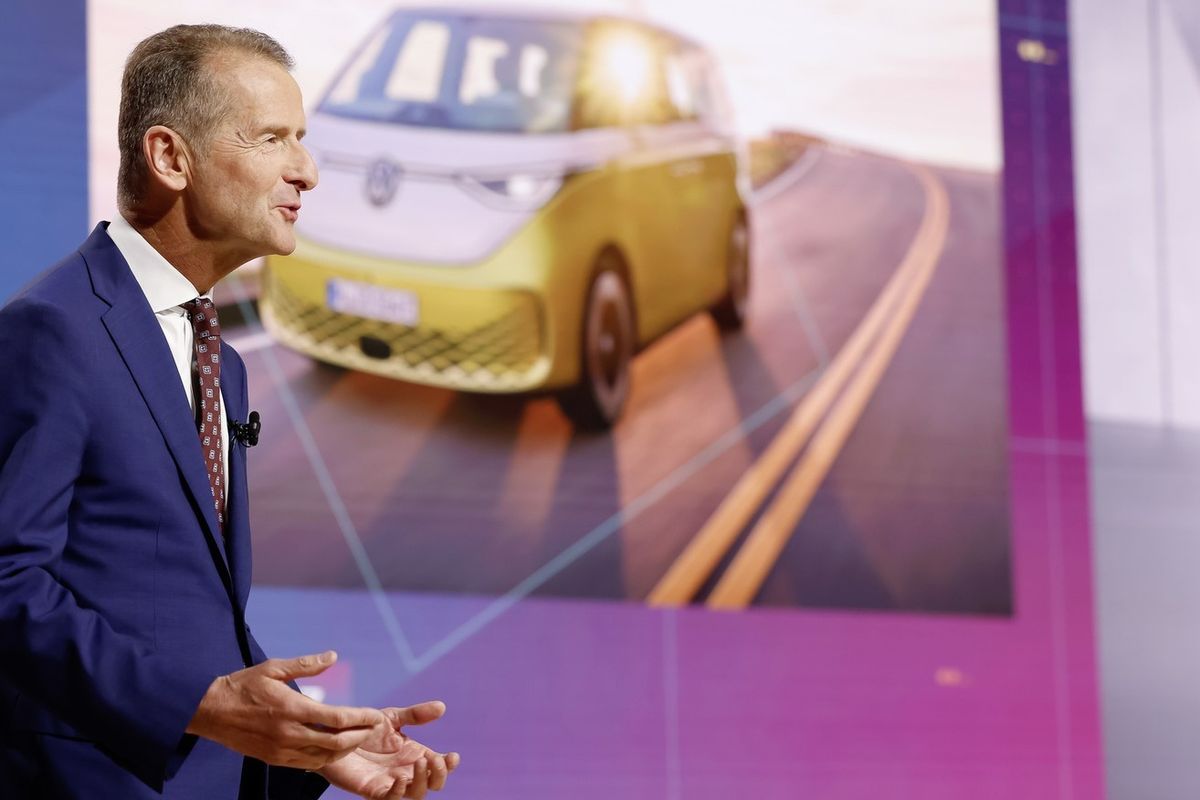
VW AG established CARIAD to solve its software development and hardware integration issues. But even Diess was unable to make CARIAD deliver on deadlines. Delays to expensive and potentially profitable new BEVs from Audi, Bentley and Porsche were deemed unforgivable by the Piëch and Porsche families. Consequently, he will finish work at the end of August.
But where to now for the Group? Diess was credited for making deeply unpopular, but necessary, decisions related to VW AG’s oversized labour force and future technology threats.
Oliver Blume is the new CEO and he’s tasked with solving the issues that Diess could not. Adding pressure to Blume’s crushing workload is the separate listing of Porsche, which is VW AG’s most profitable asset (scheduled for later this year).
Blume, who was responsible for the bodywork on Audi’s first-generation A3, is a brilliant engineer, but he is inheriting a cauldron of complexity.
The new CEO and SA?
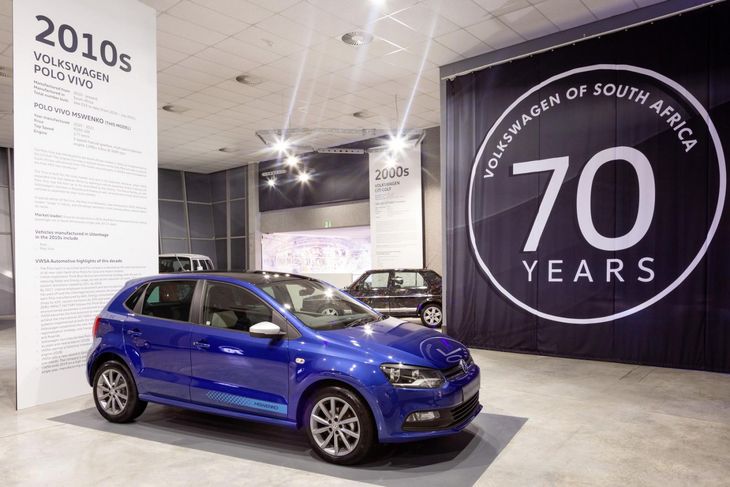
A slower pace of VW product electrification could be beneficial for Polo and Vivo assembly.
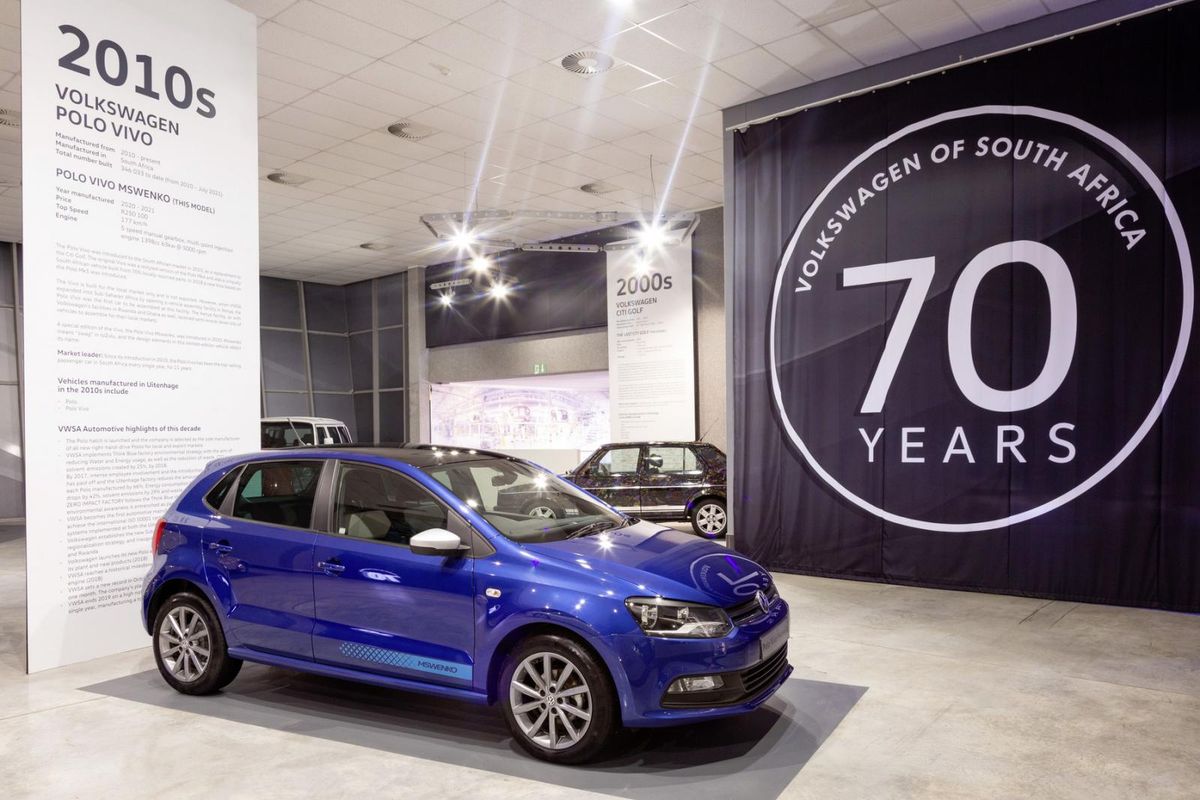
Volkswagen has tremendous customer loyalty in South Africa; it’s effectively the country’s near-most important car brand. Will a more conservative VW AG board of management, with Blume as CEO, be better or worse for VW’s South African business and future planning? After all, the Polo export business is a valuable source of employment and financial stability in the Eastern Cape.
Diess envisioned the rampant electrification of VW’s entire product portfolio. However, this ambition might be tempered under Blume (aided by the rising costs of producing BEV-specific components, let alone the lack of capacity to produce as many electric cars as VW AG would like to) and ease product-lifecycle pressure on VW’s Polo range, which is deemed unpractical to electrify. That could be a good outcome for VWSA’s Kariega factory, which produces Polo and Polo Vivo.
BMW 1 Series and 2 Series GC Mzansi Edition (2022) Specs & Price
BMW has given select derivatives from the 1 Series and 2 Series Gran Coupé ranges the Mzansi Edition treatment. Here’s what you get and how much extra it costs…
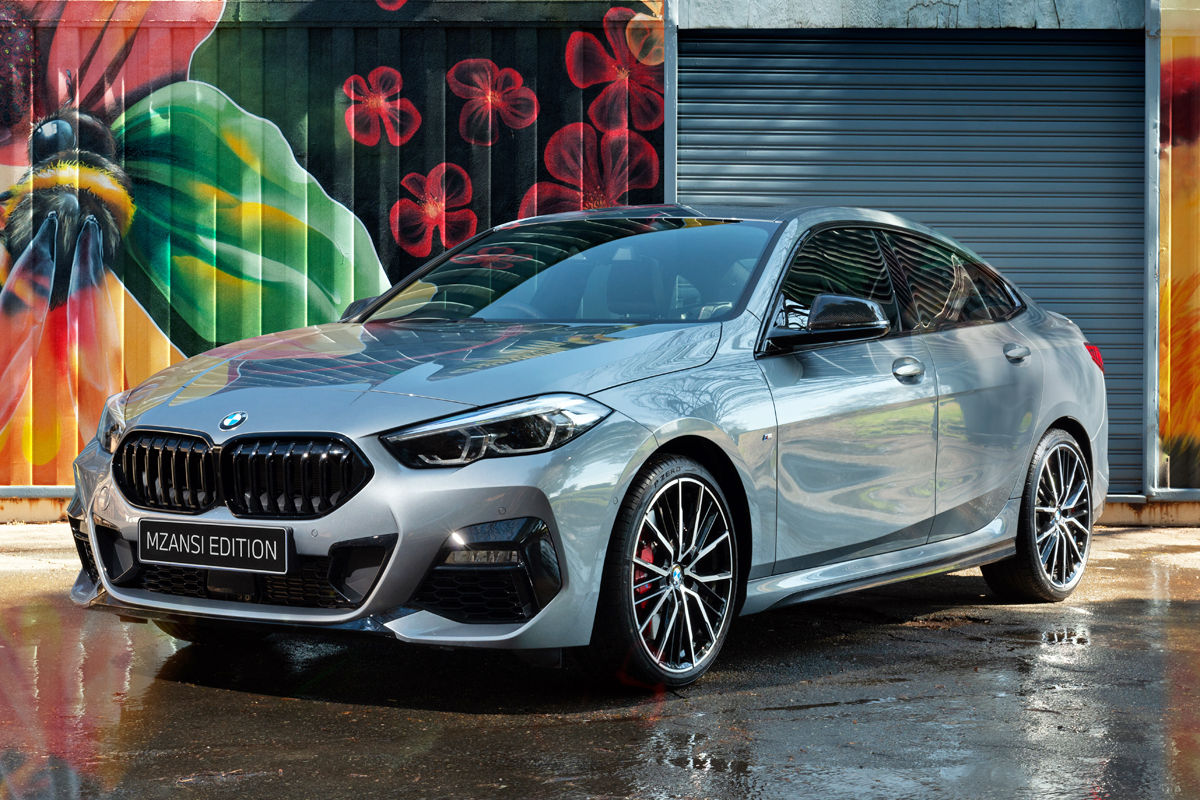
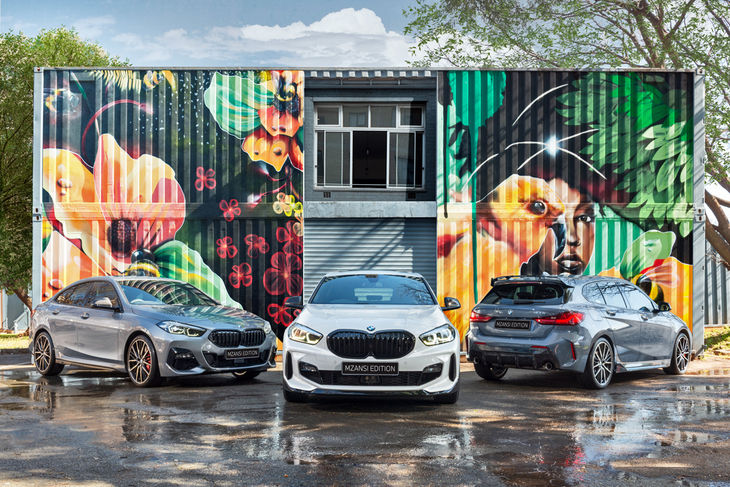
Already applied to variants from the 3 Series and X3 ranges, BMW South Africa has now rolled out special Mzansi Edition versions of the 1 Series hatchback and 2 Series Gran Coupé. The Munich-based firm’s local division says the newcomers will be “on sale in South Africa for a limited time only”.
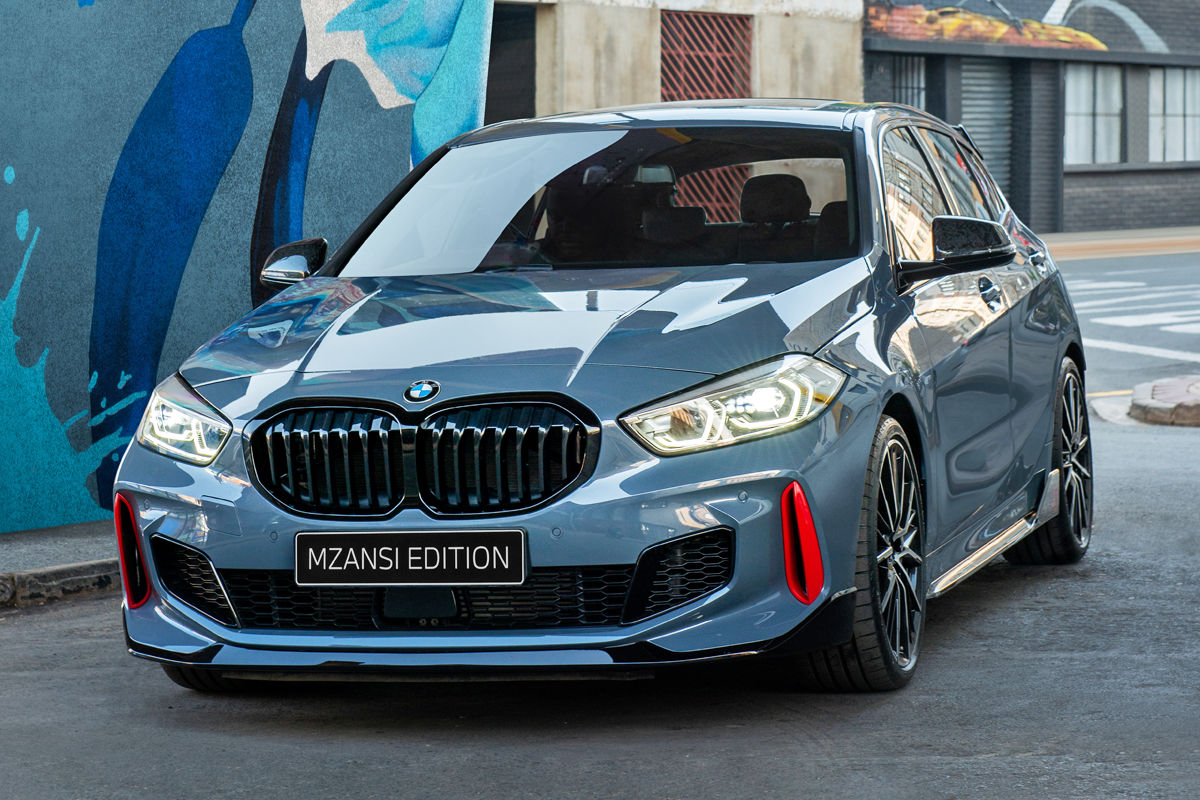
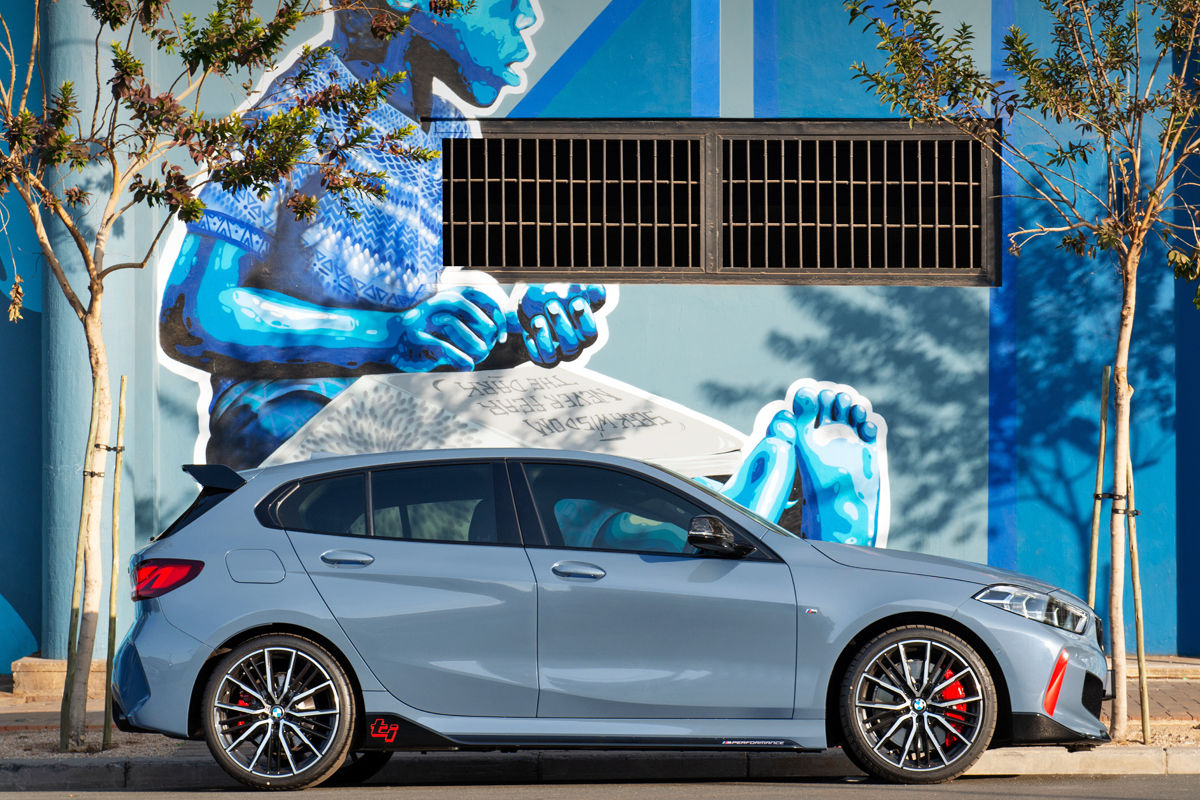
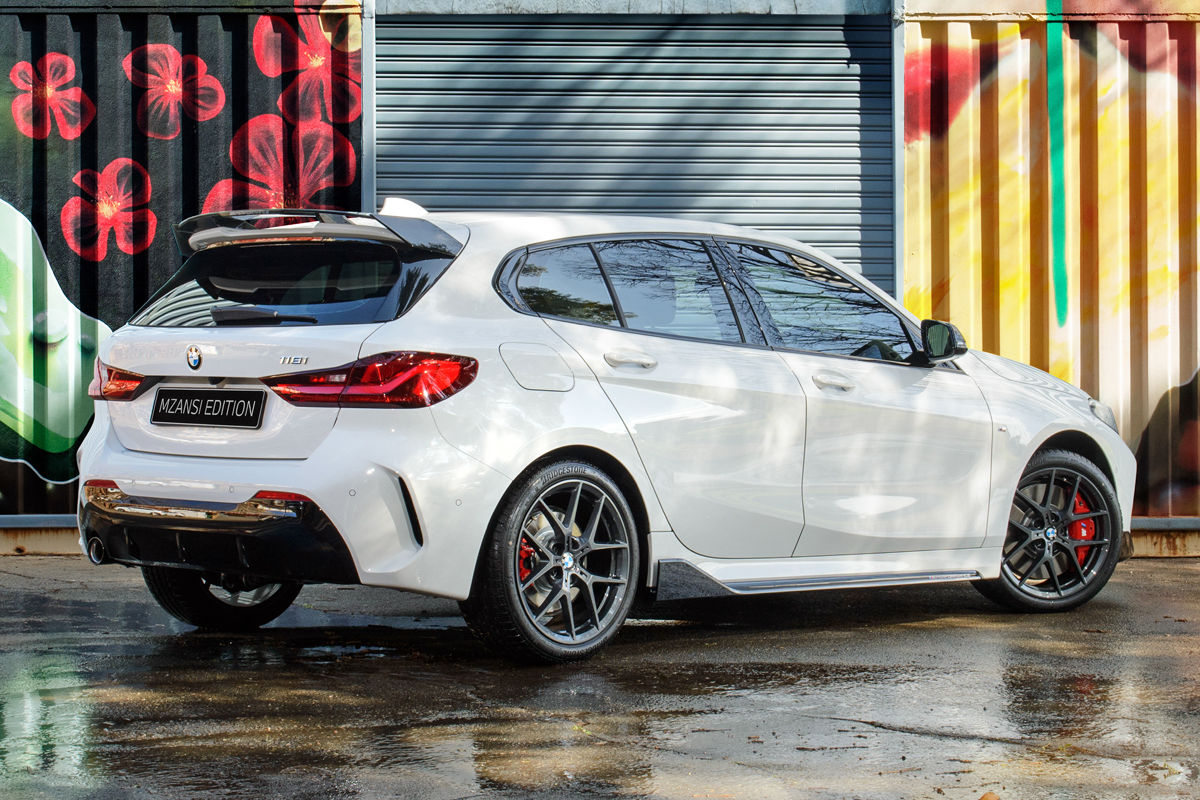
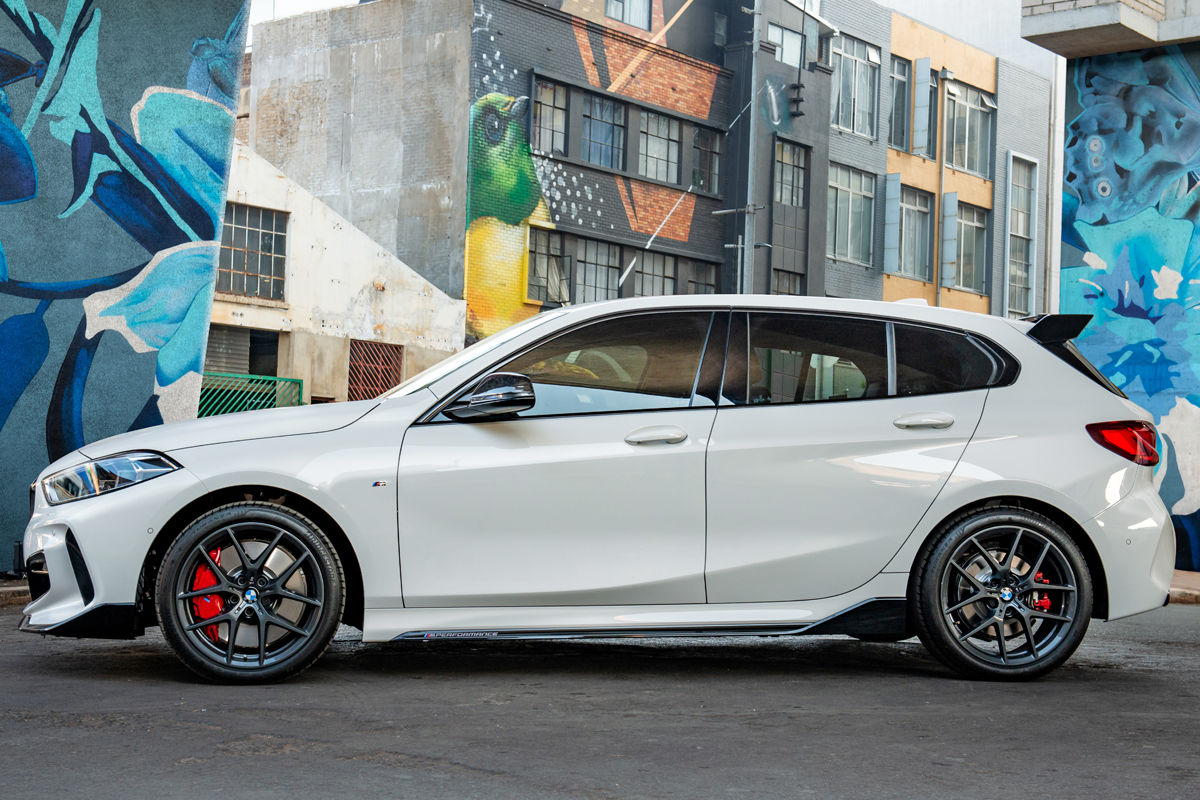
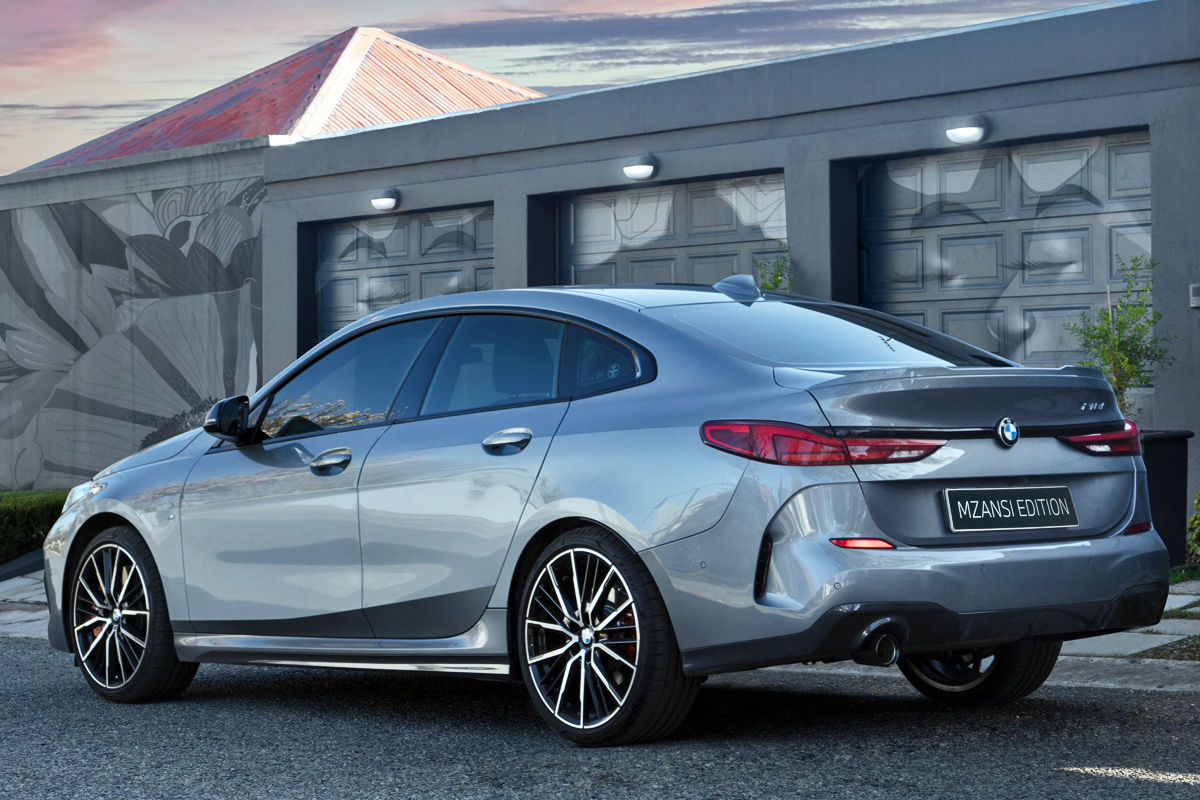
The 118i and 128ti are both available with the SA-specific package, which here adds the M Sport kit with high-gloss Shadow Line treatment for items such as the kidney grille, front spoiler attachment, side-sill details and rear spoiler. The tailpipes, meanwhile, are finished in black chrome, while both versions gain M Carbon side-mirror caps. The 128ti Mzansi Edition, meanwhile, furthermore scores a carbon rear diffuser.
Both of the special 1 Series derivatives upgrade to red M Sport brake callipers framed by 18-inch M light alloy wheels in the case of the 118i and 19-inch items for the 128ti. Available exterior colours common to both models include Alpine White, Skyscraper Grey Metallic and Black Sapphire, while Melbourne Red Metallic and Misano Blue Metallic are reserved for the 118i version and Storm Bay Blue Metallic for the 128ti hot hatch.
Inside, the 118i Mzansi Edition gains black sport seats in a Trigon and Sensatec combination (while the 128ti version’s pews are finished in a black-and-red cloth and Sensatec combination), along with M seat belts, BMW Live Cockpit Professional, a panoramic sliding glass roof and a Hi-Fi loudspeaker system.
The 118i Mzansi Edition is priced from R763 872, which is R138 800 more than the base version of the 118i. The Mzansi Edition premium for the 128ti, meanwhile, is R93 900, with the special model priced from R838 160.
Of course, the upgrades don’t extend to the respective powertrains, which remain standard. That means the 118i still employs a turbocharged 1.5-litre, 3-cylinder petrol mill sending 103 kW and 220 Nm to the front axle through a 7-speed dual-clutch transmission. As a reminder, the 128ti’s likewise turbocharged 2.0-litre, 4-cylinder petrol heart generates 180 kW and 380 Nm, peak outputs that are delivered to the front wheels via an 8-speed automatic gearbox.
Meanwhile, the 2 Series Gran Coupé Mzansi Edition is offered in 218i guise only and thus shares the 118i’s powertrain. It likewise gains the M Sport package with high-gloss Shadow Line details for the kidney grille and tailgate spoiler, along with black-chrome tailpipes and M Carbon side-mirror caps. The same red M Sport brakes callipers along with 19-inch M light alloy wheels in a double-spoke design are also included. You’ll pay from R781 972 for the 218i Gran Coupé Mzansi Edition, or R110 900 more than the base model.
The 218i version is available in Alpine White, as well as the Skyscraper Grey, Black Sapphire, Melbourne Red and Misano Blue metallic hues. Inside, you’ll find black Sport seats and M seat belts, along with BMW Live Cockpit Professional, a panoramic sliding glass roof and the aforementioned Hi-Fi loudspeaker system.
How much do these new Mzansi Edition models cost in SA?
BMW 118i Mzansi Edition – R763 872
BMW 128ti Mzansi Edition – R838 160
BMW 218i Gran Coupé Mzansi Edition – R781 972
End of VW Golf?
The VW Golf is one of the world’s most popular nameplates but its future appears to be hanging precariously in the balance as the automotive landscape continues to change and evolve at a rapid pace. Will we see a Golf 9 come to market? Maybe not…
Back in 2020, regular Cars.co.za contributor, Lance Branquinho, penned an excellent opinion piece entitled, Last Round of Golf?, which then highlighted the potential demise of the beloved Golf as the firm presses firmly towards an electrified future. If you haven’t read it, please do.
Less than a year later, in March 2021, Volkswagen announced its Accelerate strategy and therein, models such as the Golf, T-Roc, Tiguan, Passat and Tayron were all pegged to receive successors, albeit with increased electrification.
One of the key takeaways from the Accelerate strategy was that VW’s combustion engine fleet would continue to be developed in parallel to the firm’s significant Electric Vehicle (EV) ambitions.
Fast forward to the present and a change in sentiment is afoot in Wolfsburg. Volkswagen’s new CEO, Thomas Schäfer, in an interview with German publication, Welt, highlights that a decision on the future of the Golf has yet to be taken and that the fate of the popular model will be decided within the next 12 months.
More stringent Euro 7 emissions regulations are due in 2025 which is expected to hike prices for Internal Combustion Engine (ICE) vehicles as development costs increase in an effort to make combustion engines comply with the incoming regulations. These increasing costs may very well spell the end for Golf and other combustion-engined models in Europe. More so, Schäfer comments that it’s “extremely expensive” to develop a new Euro 7 compliant ICE vehicle. Many brands have already committed themselves to electrification and pressing on with ICE development for some brands is more than likely to be unprofitable going forward.
The European Union (EU) plans to ban the sale ICE vehicles by 2035, which means that we may not see next-generation Golf 9 come to fruition as Europe and indeed the world shift to electric mobility.
It’s also worth noting that profit margins on small vehicles are less palatable when the cost to develop them reaches breaking point. It’s for this very reason that some brands are wielding the axe on their smaller models — the Audi A1 and Q2 crossover and the Mercedes-Benz A-Class are good examples of this and more widespread product culling can be expected in coming months and years.
With that said, it’s not only the future of the Golf that’s hanging precariously in the balance but perhaps the locally-assembled Polo too…