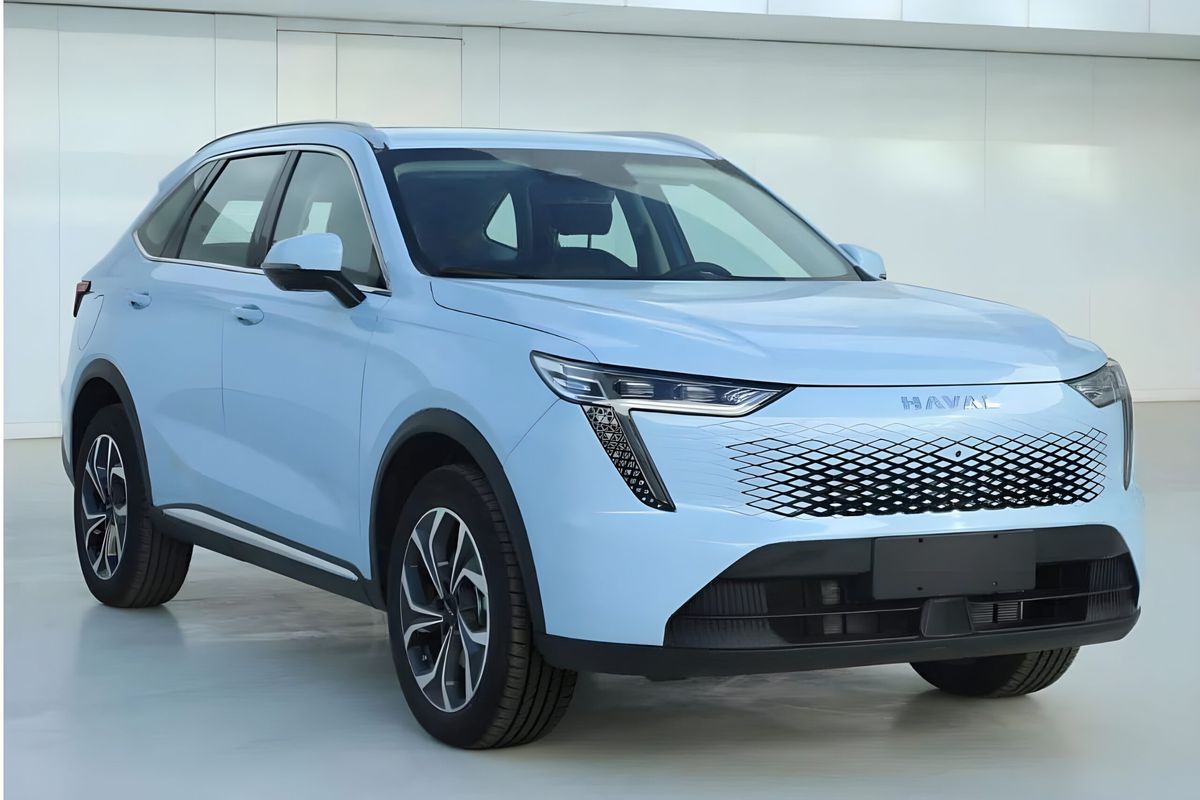
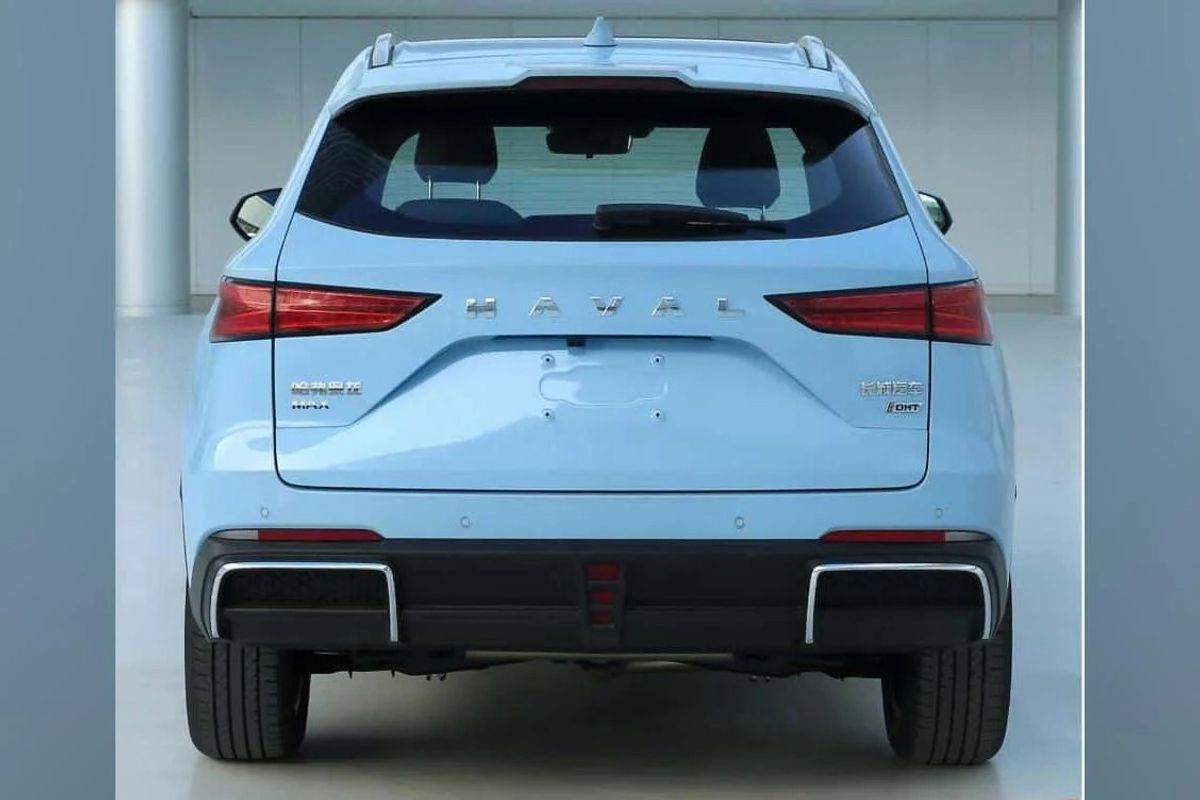
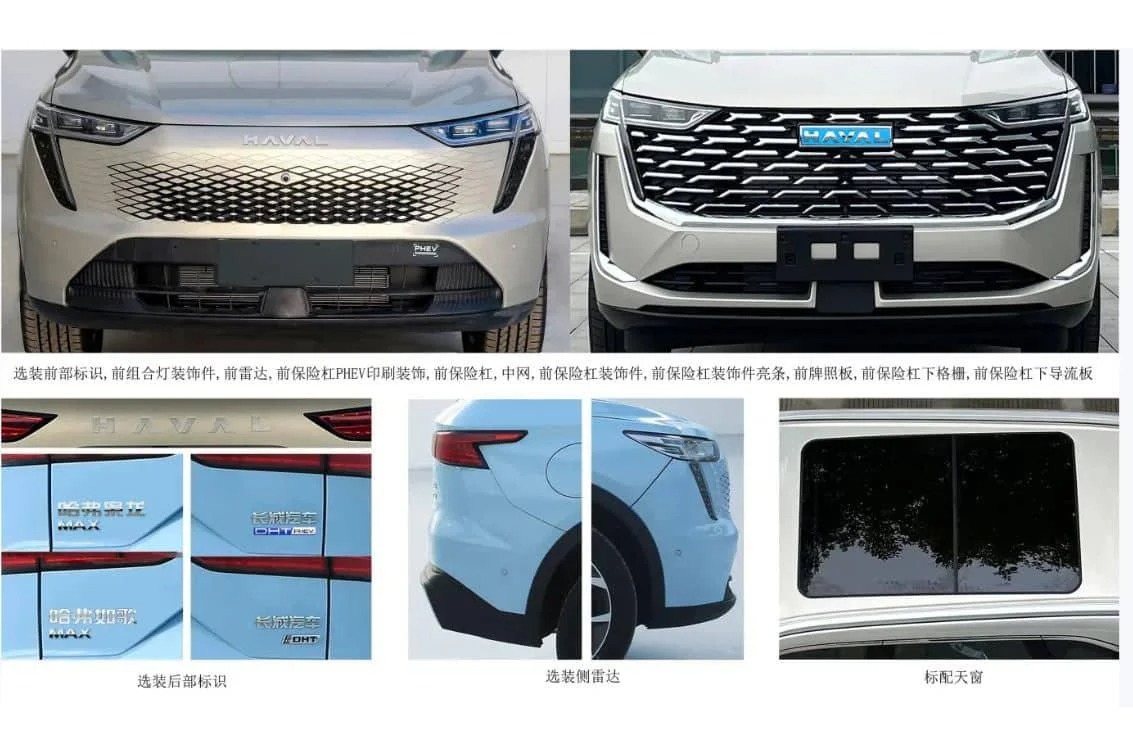
The yet-to-be-named SUV appeared online thanks to the Chinese Ministry of Industry and Information Technology. Here’s a first look at what you can expect ahead of its reveal.
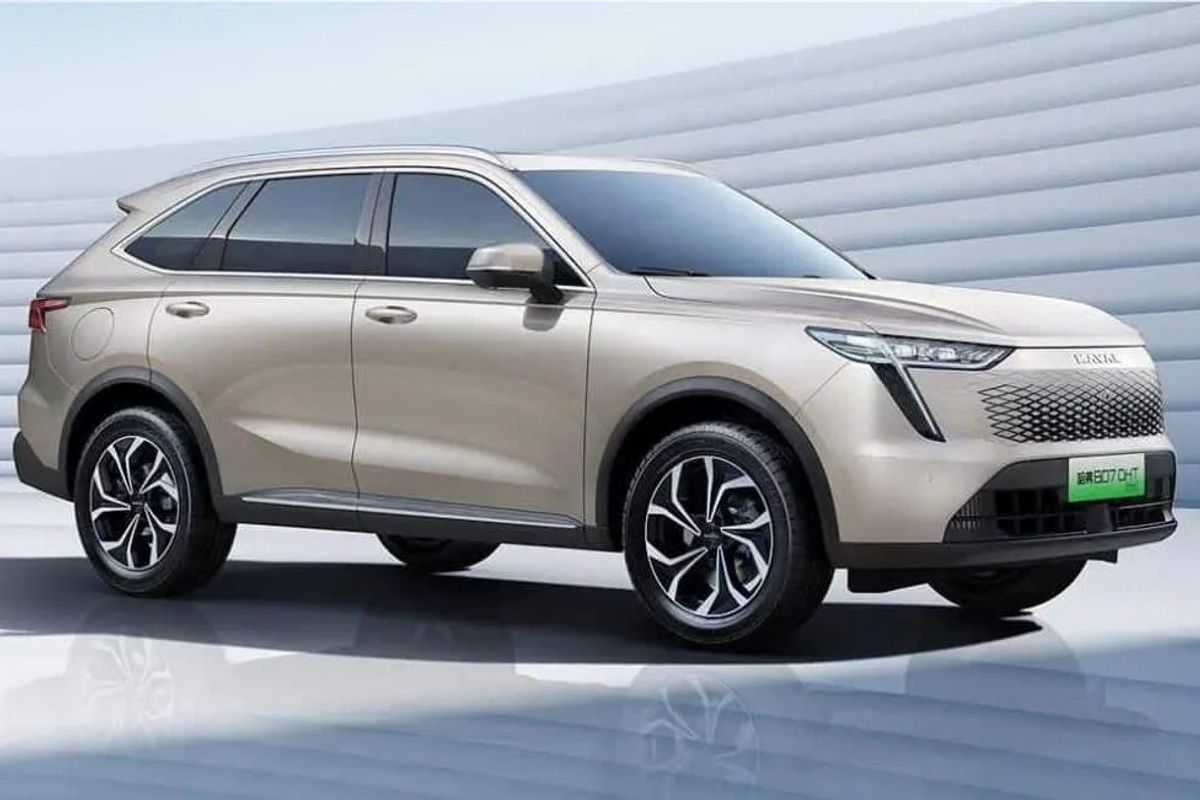
What you see here is what Chinese media dub the B07 / Xiaolong Max, but if we follow GWM Haval’s naming conventions, it’ll likely have a more conventional name. Right now, thanks to the Chinese Ministry of Industry and Information Technology, we know this newcomer is larger than the current Haval H6.
In terms of size, its 4 758 mm long, 1 895 mm wide and 1 725 mm tall. A wheelbase of 2 800 mm puts it 105 mm longer and 9 mm wider than the H6 with a 62 mm longer wheelbase. These dimensions put it in the same size bracket as something like a Kia Sorento or Hyundai Santa Fe.
PHEV stands for Plug-in Hybrid Electric Vehicle which means the car has a combination of an internal combustion engine as well as an electric motor, which can be recharged by either the car using its ICE or via an external plug.
Under the bonnet there’ll be two plug-in hybrid engines to choose from. A 1.5-litre naturally-aspirated 4-cylinder or a turbocharged 1.5-litre 4-cylinder petrol with 85 kW and 113 kW respectively, will be paired to battery packs. A choice of 9.4 kWh and 19.27 kWh battery packs are available.
A pure electric range of 44 km and 86 km is claimed, based on WLTC. It is unclear right now if there are any pure ICE powertrains.
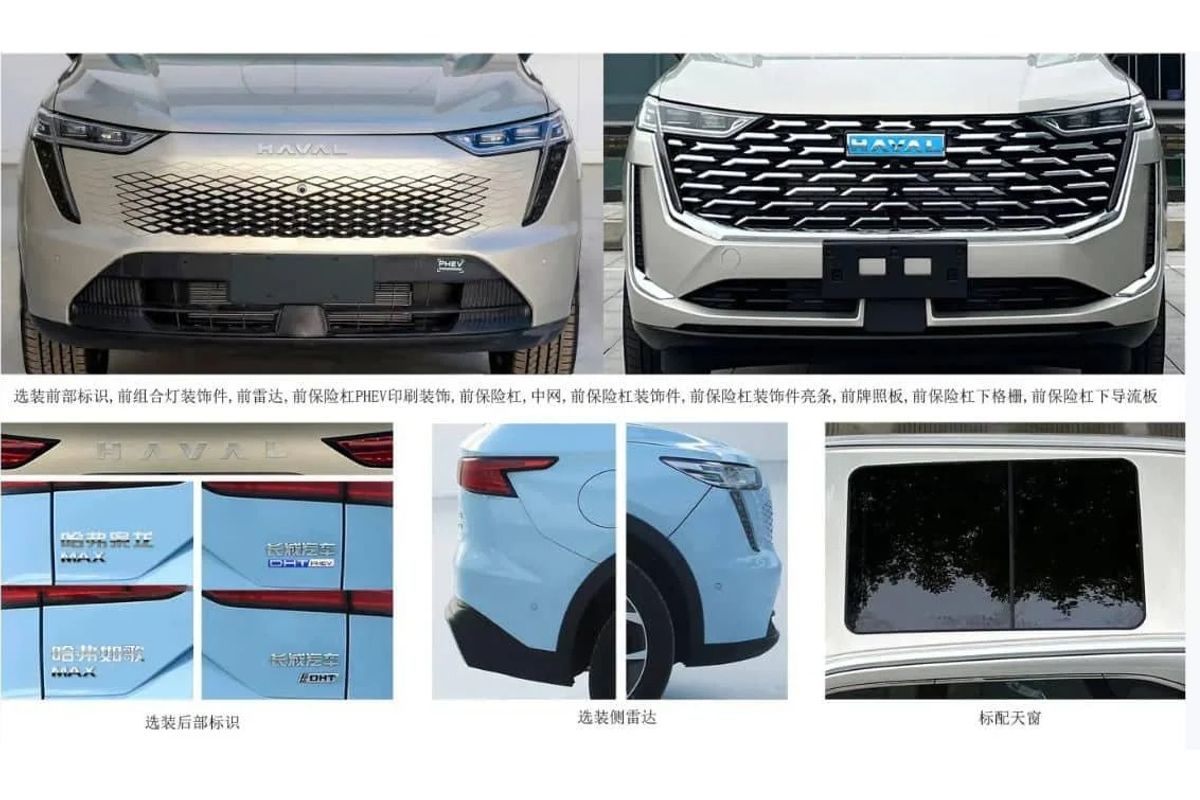
GWM Haval will be offering a choice of two front ends, as the below patent document reveals.
GWM Haval is growing rapidly, both globally and in South Africa. Both the Jolion and H6 have received mild hybrid derivatives added to their respective ranges, and the new offroad-focused GWM Tank 300 will be touching down locally in 2023. Let’s not forget the pure electric Ora or the sportily-styled Haval H6 GT either.
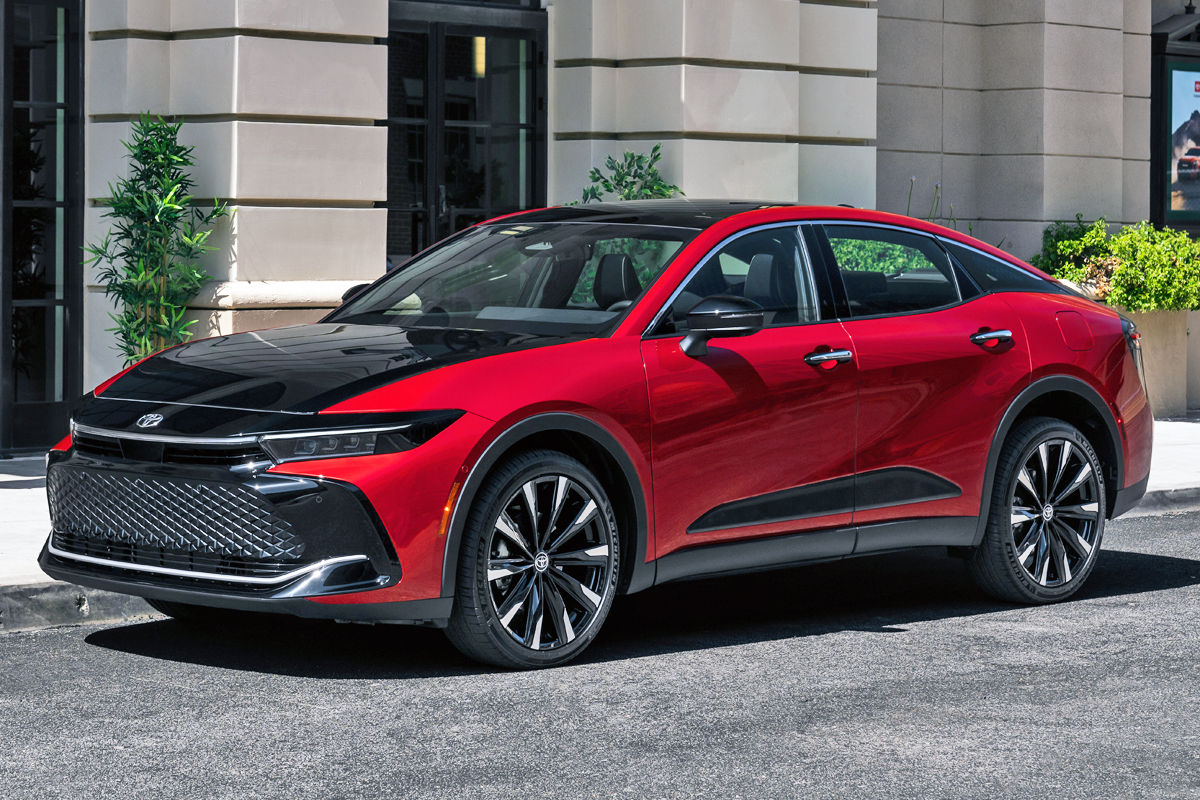
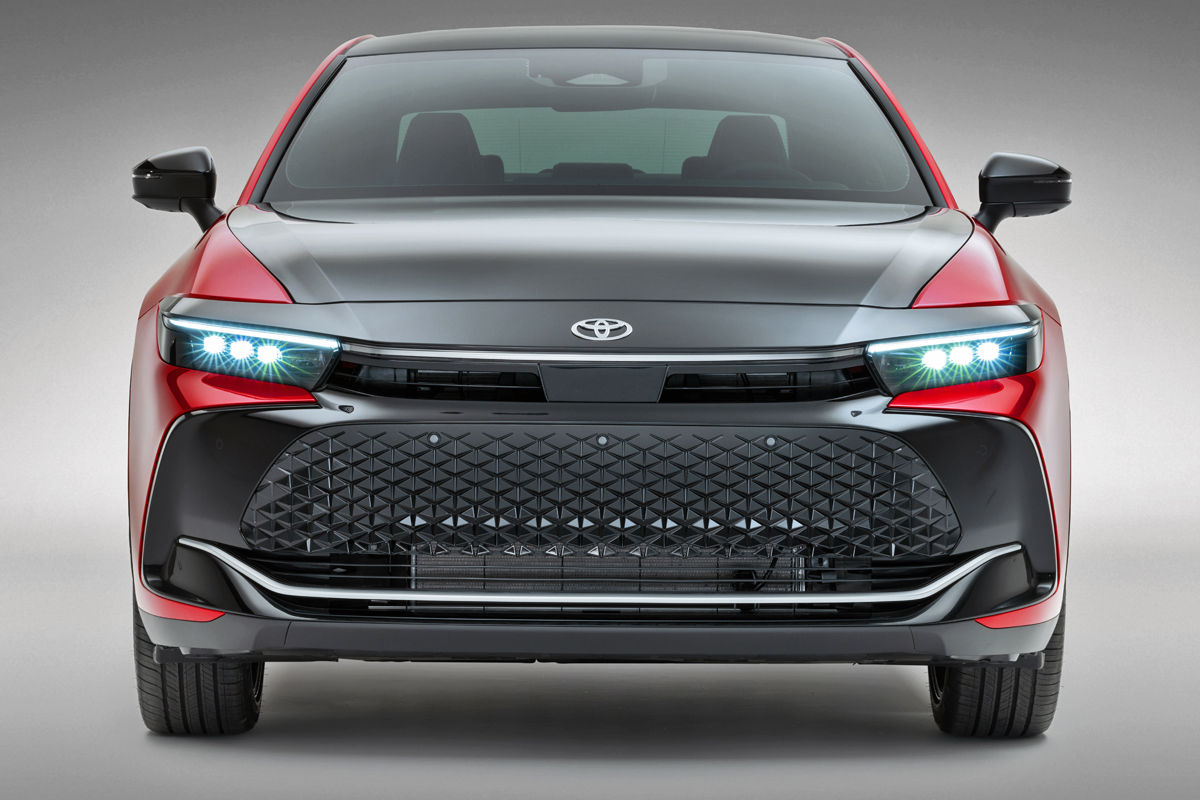
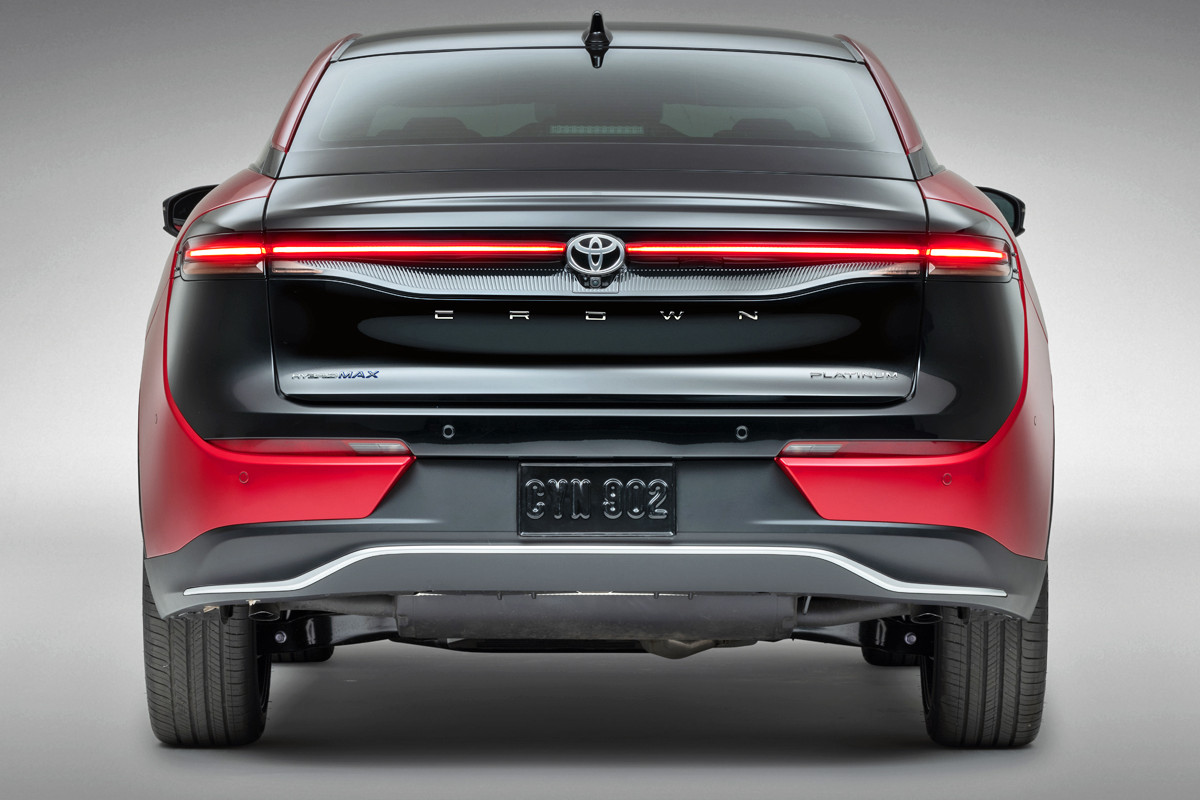
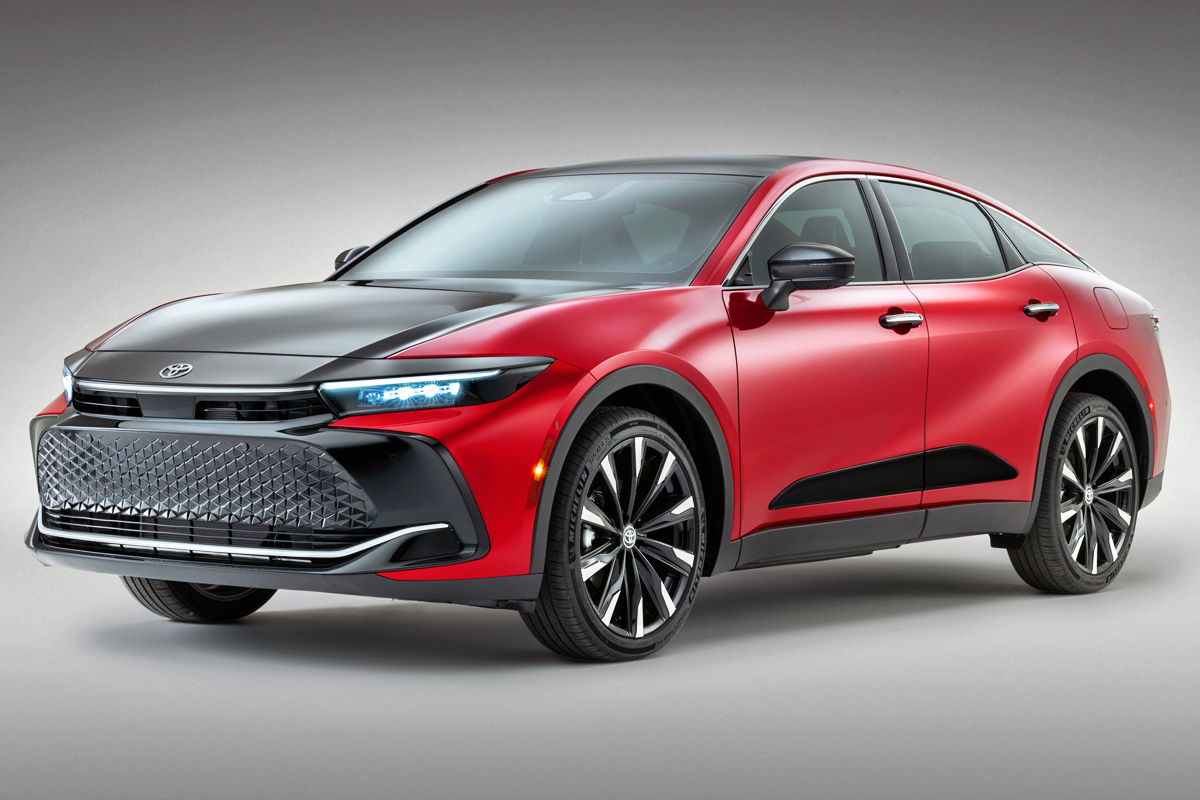
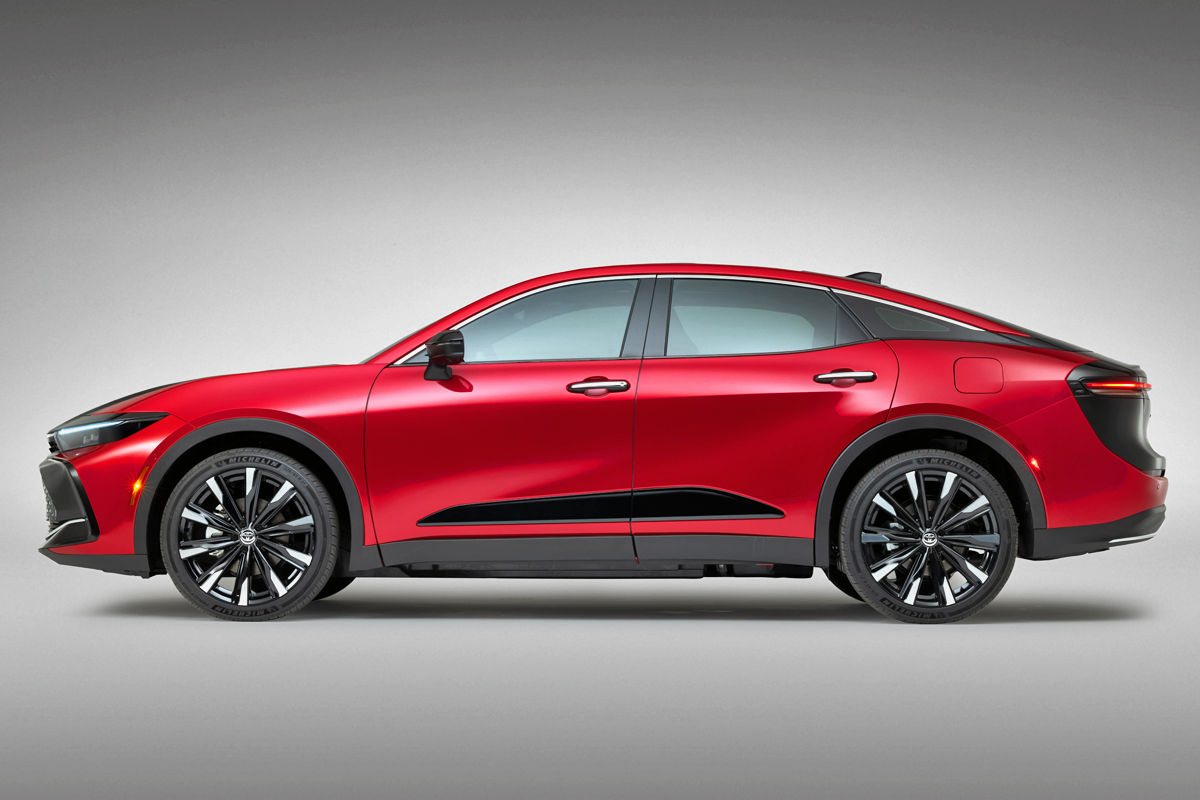
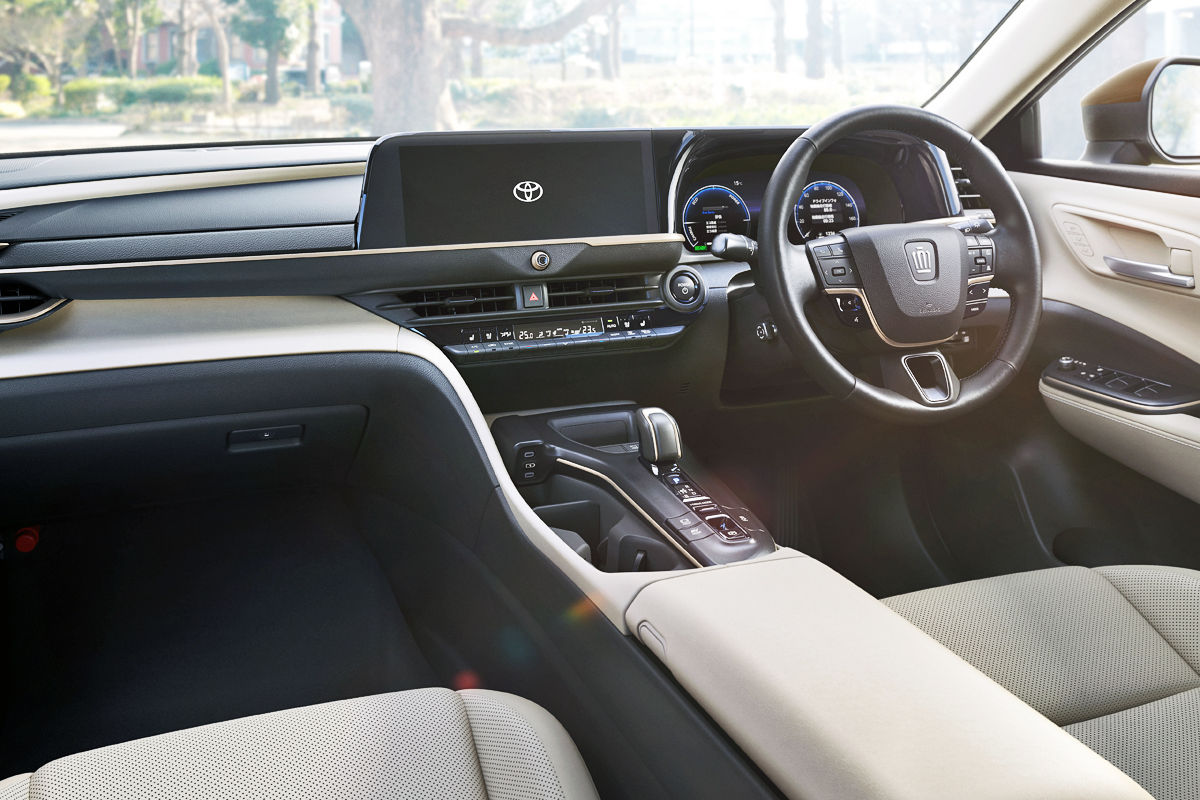
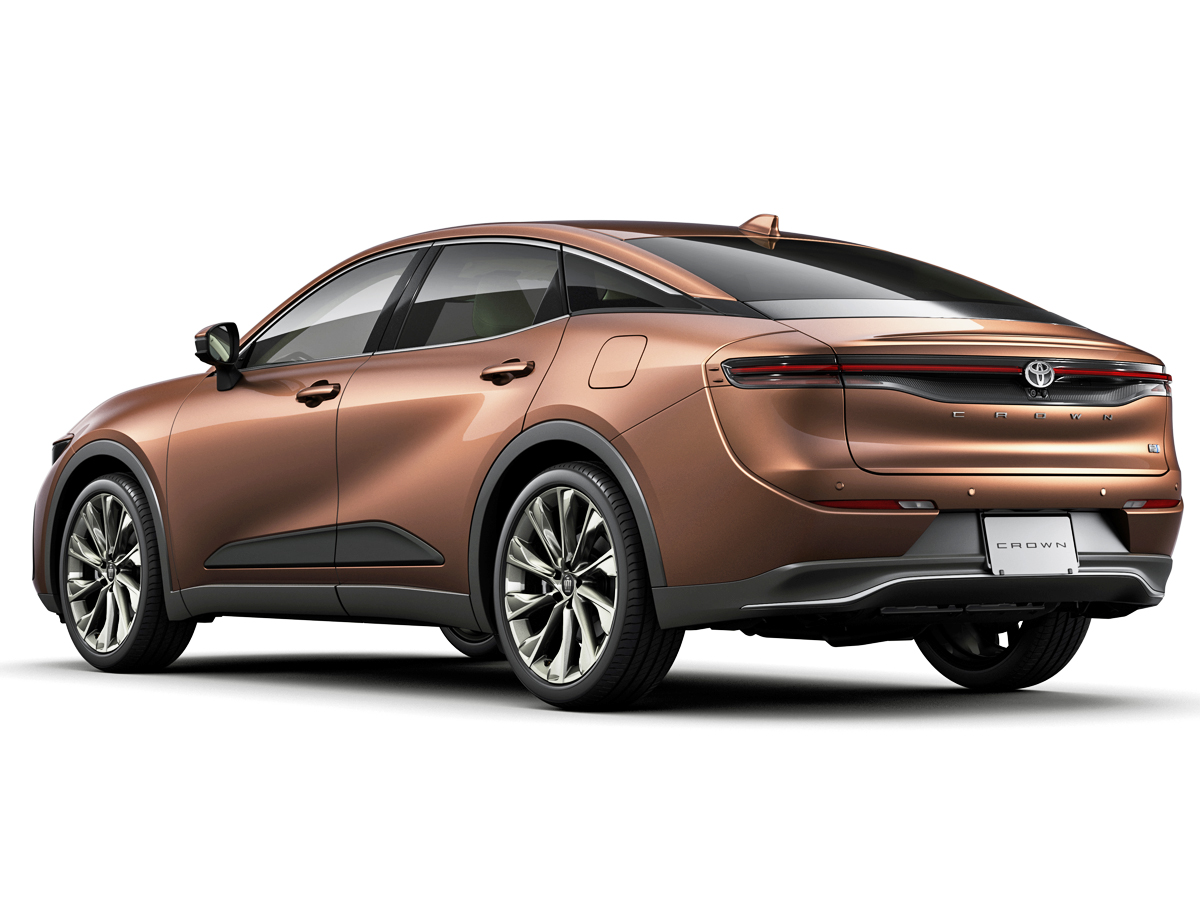
The Toyota Crown Crossover is headed to South Africa in limited numbers (at first, at least) and we’ve managed to unearth pricing for this exciting new-to-SA nameplate…
Though the original Toyota Crown debuted as long ago as 1955, it’s a nameplate that’s unfamiliar to most South Africans, having largely been limited to its domestic market of Japan (though some generations were offered in other major markets, such as North America). That’s about to change, with the first few examples of the completely redesigned Crown – now in its 16th generation – about to make local landfall as part of the brand’s major hybrid offensive.
Revealed in July 2022, the new flagship Crown has evolved from a conventional sedan into a range of 4 distinct body styles, each built on the TNGA-K platform: Crossover, Sport, Sedan and Estate. At launch, South Africa will receive only the Crown Crossover version, which the Japanese firm describes as the “fusing a sedan and an SUV” (so, something akin to a liftback).
Before we dive into the powertrain details, you’re probably wondering how much the newcomer will cost in South Africa. Well, we’ve confirmed with 2 independent sources that the line-up will comprise a pair of derivatives at launch.
Toyota pitches the Crown as half sedan, half SUV.
The Toyota Crown Crossover 2.5 E-Four CVT will start at R891 400, while a bi-tone version will also be available, kicking off at R899 600. From where we’re standing, that’s fairly keen pricing for what the automaker dubs its “luxury flagship”, as it sees the Crown Crossover positioned below top-spec versions of the Hilux, Fortuner, Land Cruiser 79 and Quantum, as well as the entire Land Cruiser Prado, GR Supra and Land Cruiser 300 ranges.
However, Toyota South Africa Motors told Cars.co.za its “allocation for this year has unfortunately been cut drastically” by the brand’s head office in Japan, suggesting very few units will be available at first. That said, the local division added it would be “requesting more volume for 2024 to introduce [the Crown Crossover] as a full-scale model in the line-up”.
Just how big is the Crown Crossover? Well, it measures 4 930 mm long, 1 840 mm wide and stands 1 540 mm tall, with 2 850 mm separating its axles. That makes it a mite shorter from nose to tail than a Land Cruiser 300, though it shares the ladder-frame SUV’s wheelbase, which likely translates into appreciable cabin space.
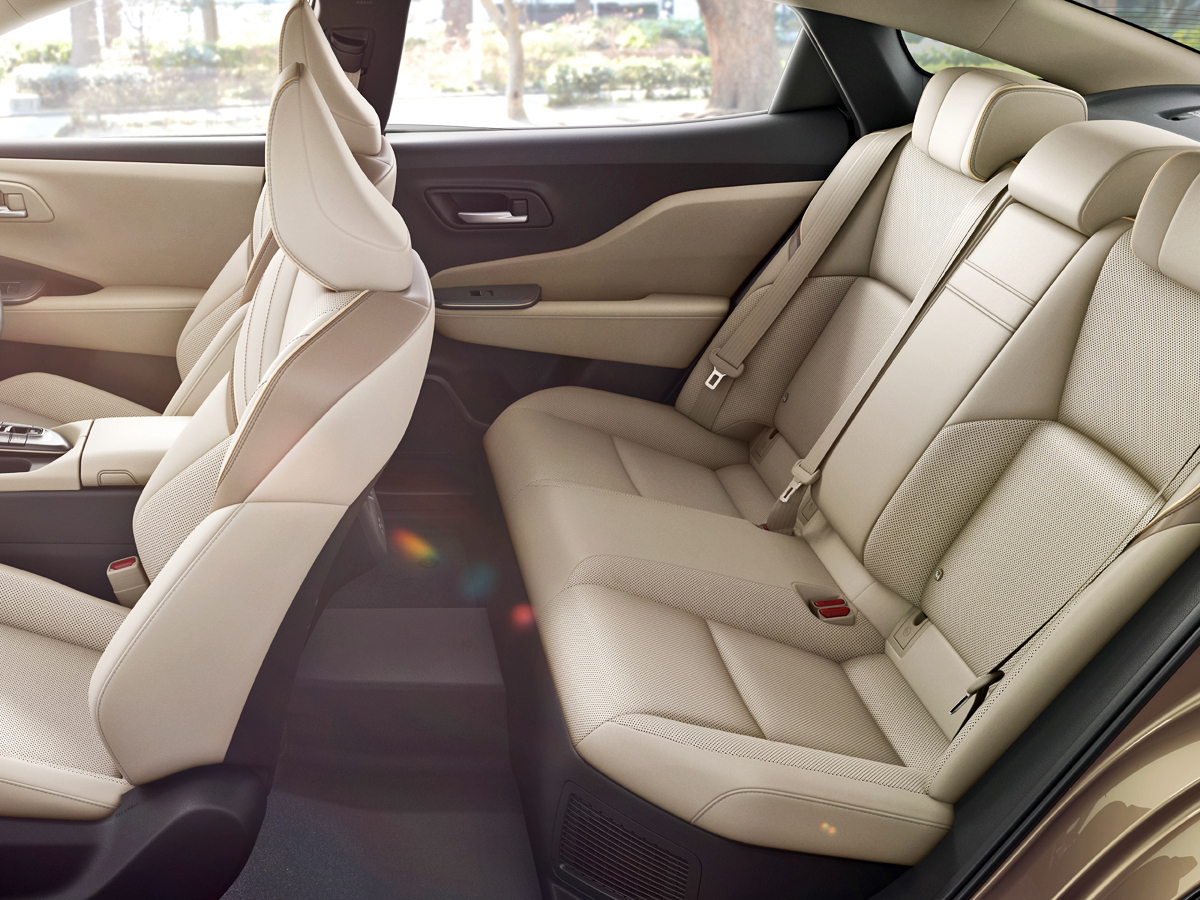
Judging by the press images (and exterior dimensions), space in the rear is generous.
While local specifications for the Crown are thin on the ground, we do know a fair bit about its powertrain. Arriving as the latest model in Toyota SA Motors’ new-energy vehicle product rollout, the Crown Crossover is equipped with a naturally aspirated 2.5-litre petrol engine as part of a hybrid system that incorporates a “newly developed bipolar nickel-hydrogen battery”. The result is what the company terms “class-leading fuel economy and quietness”, along with a “high-quality, incredibly smooth drive”.
According to Toyota, the system’s total power output stands at 176 kW, while the combined fuel consumption comes in at a mere 4.4 litres per 100 km. Drive is directed to all 4 wheels through a continuously variable transmission (CVT). From what we can tell, this powertrain set-up is closely related to the version employed by the new Lexus RX 350h, which itself has just arrived in SA. For now, at least, the Crown’s more powerful turbocharged 2.4-litre petrol-electric engine won’t be offered locally.
We’ll keep our eyes open for more Crown Crossover details and share them with you as soon as we have them…
How much does the new Toyota Crown cost in South Africa?
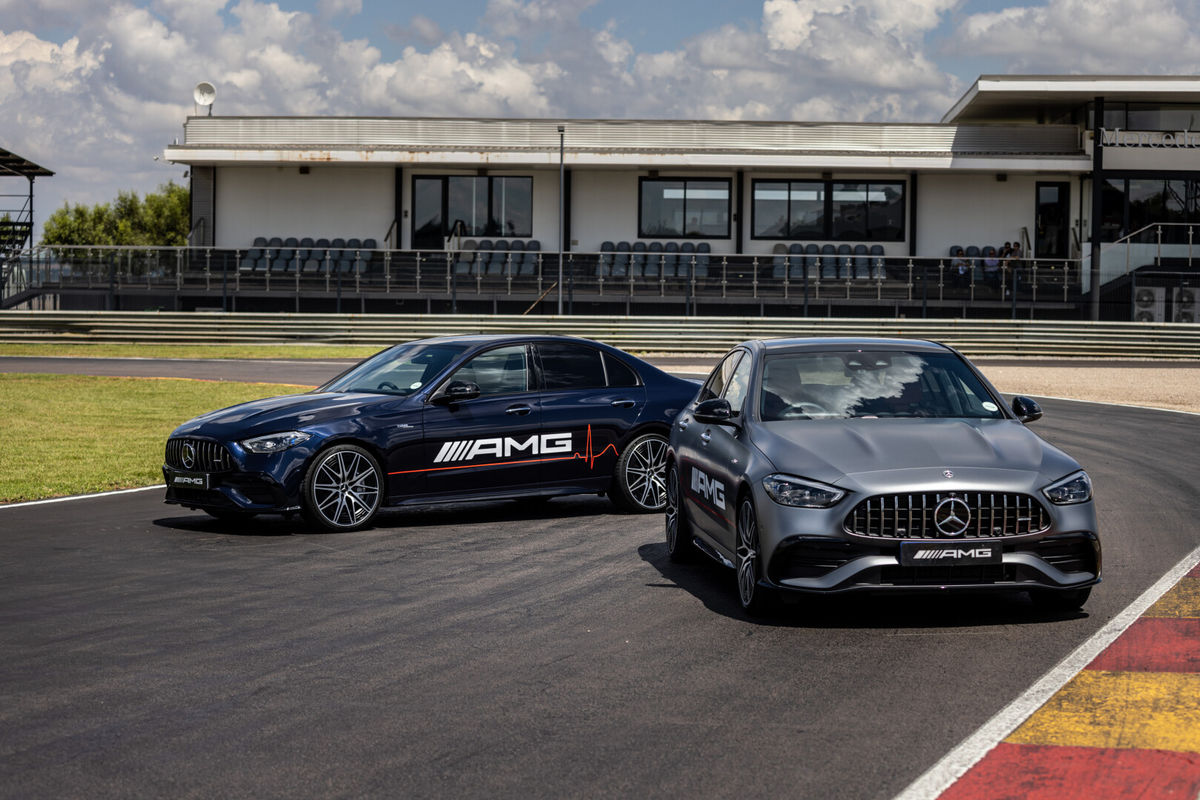
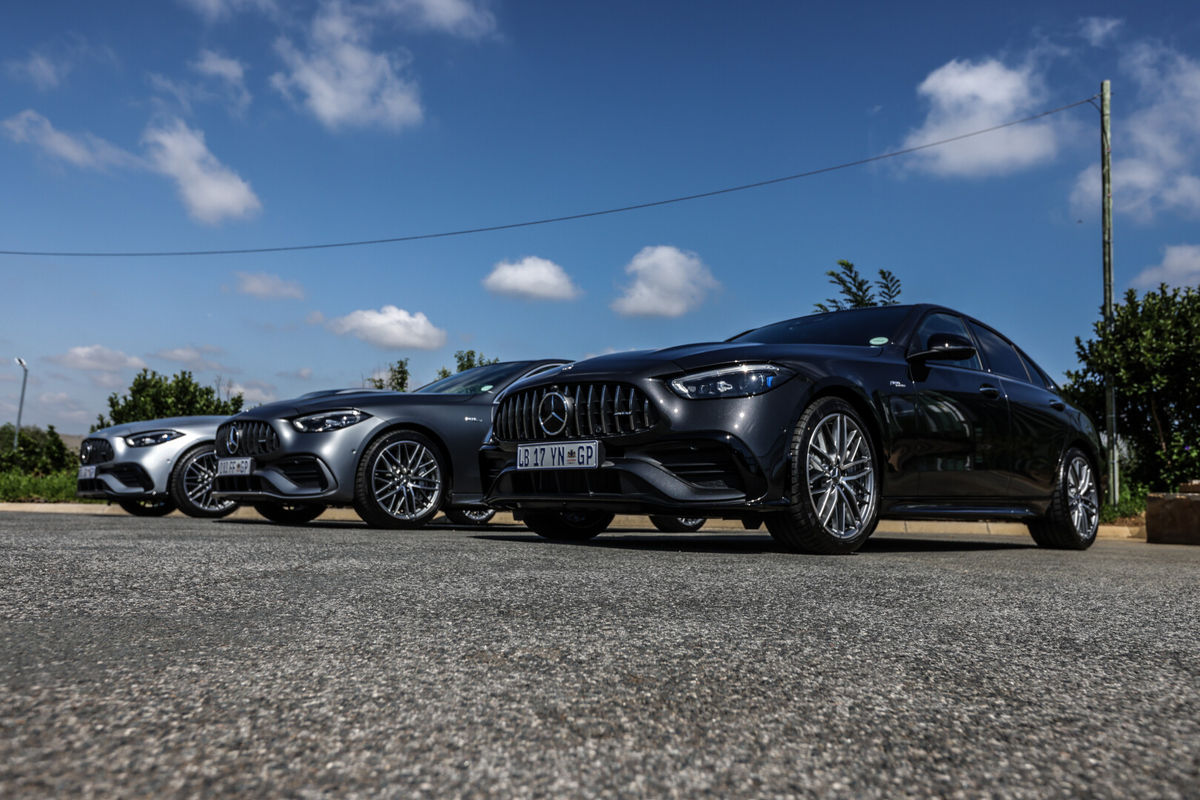
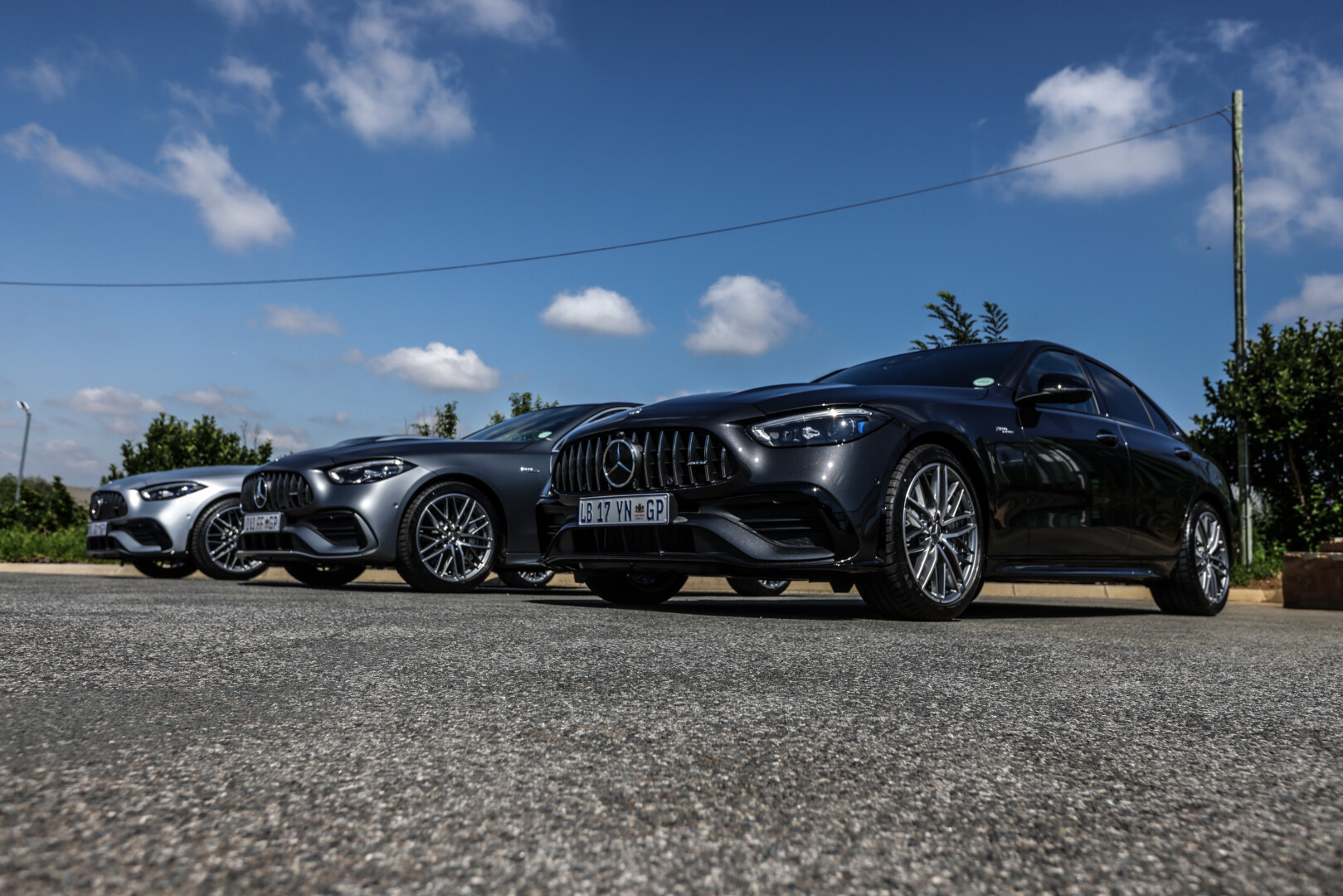
The electrified Mercedes-AMG C43 has gone on sale in South Africa. Here’s pricing and performance info on this locally-built vehicle.
The Mercedes-AMG C43 is the first performance vehicle based on the latest C-Class platform. It won’t be the last either, with the 590 kW flagship C63 due to arrive later in 2023. As a reminder, the Mercedes-Benz C-Class is locally built at the brand’s plant in East London.
So, what’s new? The new Mercedes-AMG C43 has lost two cylinders and gained some electrification. It may have lost of some that character from a lovely 6-cylinder petrol engine, but the performance has increased and so has the efficiency. Essentially, the C43 engine is the 2.0-litre turbocharged M139 from the A45 S hatchback paired to an electric exhaust gas turbocharger.
The numbers are impressive, with 300 kW and 500 Nm driving all four wheels, via a 9-speed automatic transmission. In terms of acceleration, Mercedes-AMG reckons its newcomer will hit 100 kph in 4.6 seconds. It’ll run to a top speed of 250 kph, but you can of course tick the AMG Drivers Package, which will move the limiter to 265 kph.
The trick all-wheel drive system is able to shuffle the 300 kW and 500 Nm between the front and rear axles with a split of 31 to 69 percent, meaning some rear-wheel drive dynamics are possible.
The vehicle comes with a 48-volt onboard electrical system that’s able to briefly supply 10 kW through the belt-driven start generator, as well as recover energy and The main benefit of going the electrified route is reduced emissions and consumption, with the economy claim of just 9.1-8.7 l/100 km based on WLTP.
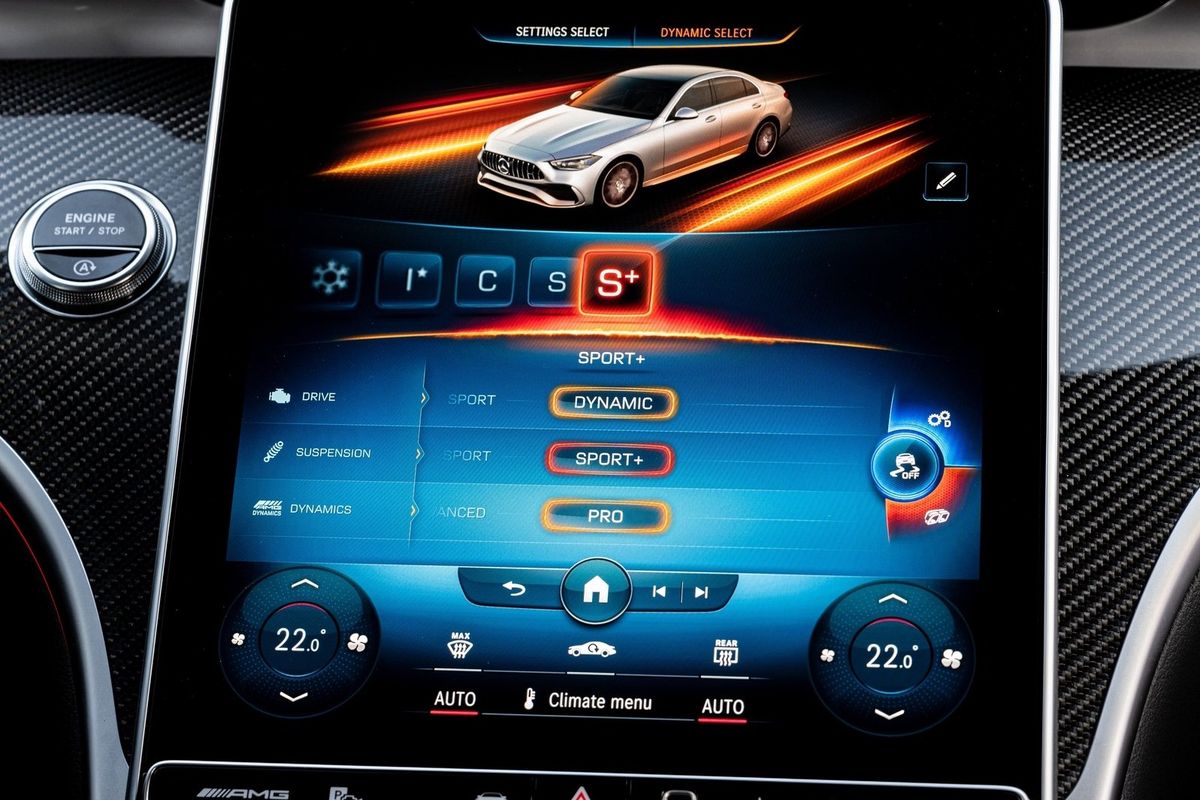
The new C43 comes with adaptive dampers, rear-wheel steering, variable steering geometry, sports braking system, AMG exhaust and driving modes as standard. It rides on 18-inch wheels, with customers able to choose from 19-inch or 20-inch as optional extras.
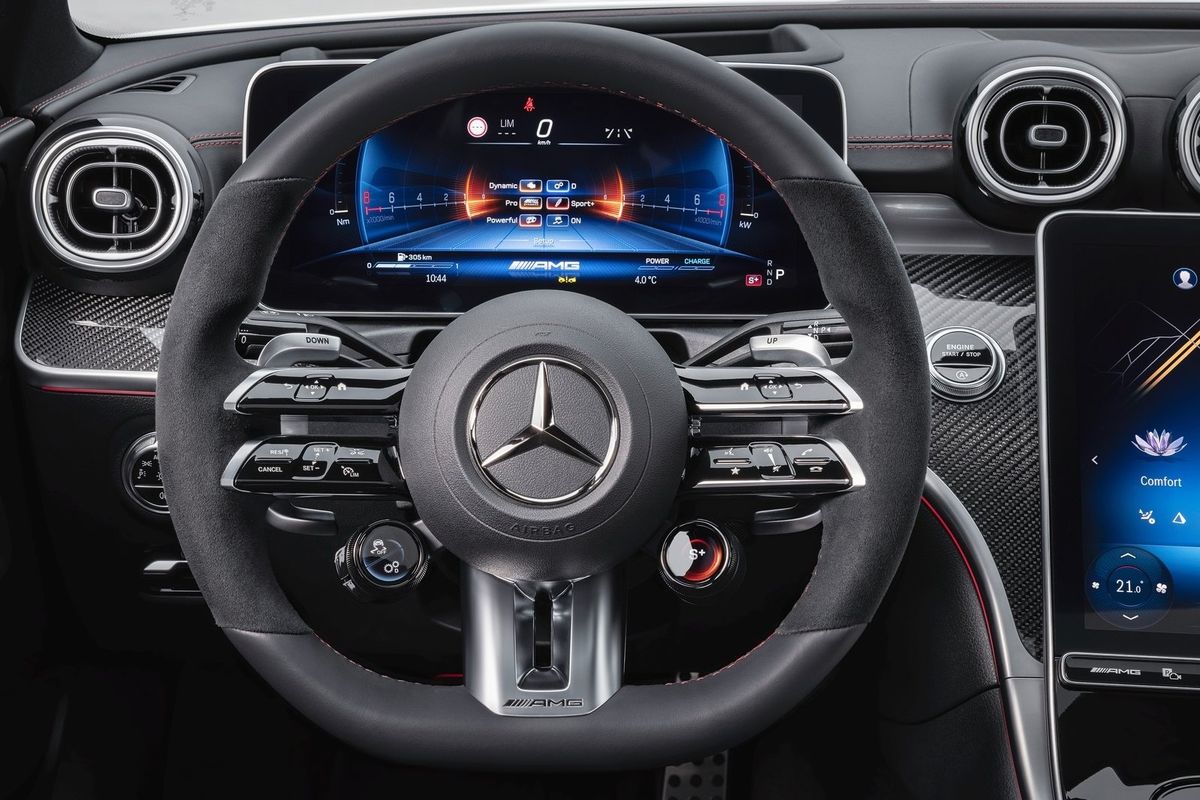
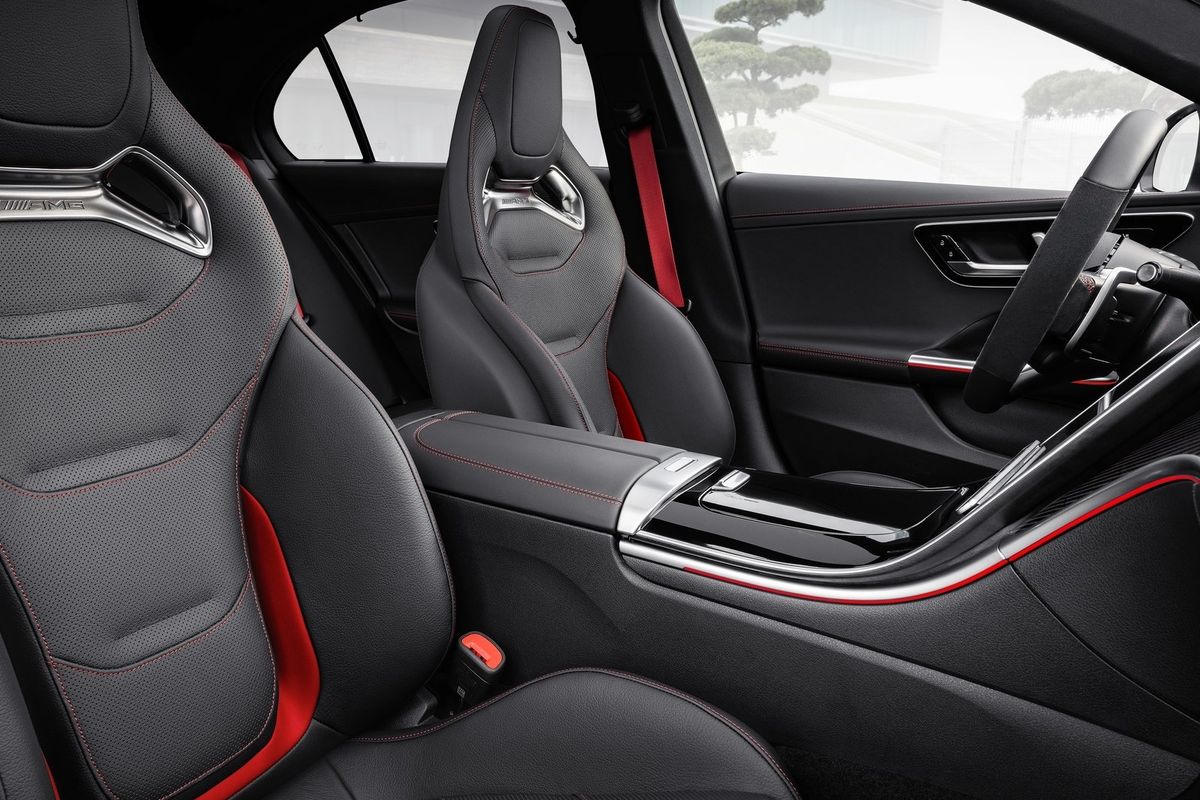
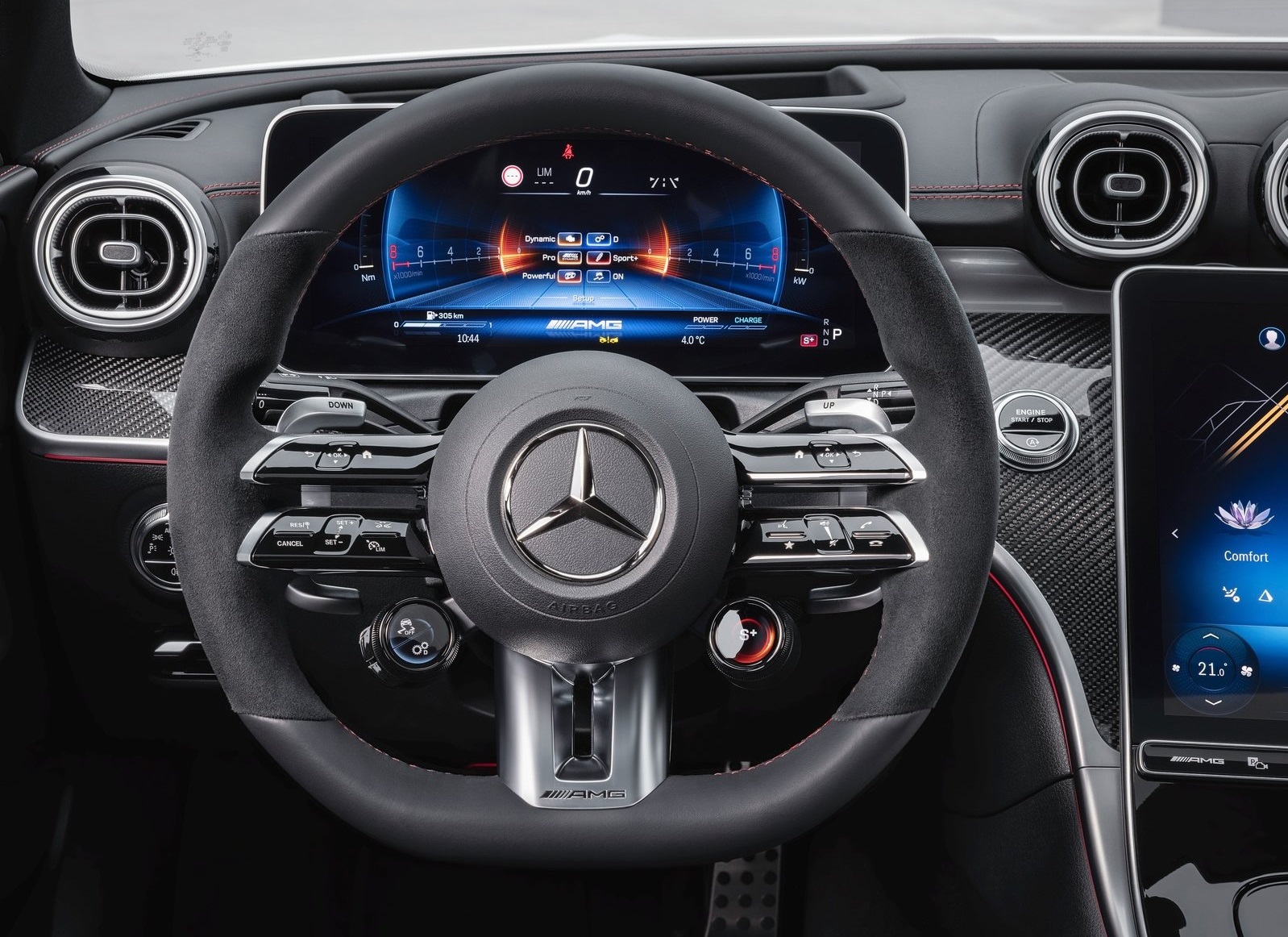
Inside, there are AMG seats in Artico man-made leather, AMG performance steering wheel in nappa leather as well as the MBUX infotainment system with AMG specific functions, modes and displays.
How much does the Mercedes-AMG C43 cost in South Africa?
Mercedes-AMG C43 – R1 608 810
The all-new Mercedes-AMG C 43 4MATIC is sold with a PremiumDrive 5-year/100,000 km maintenance plan.
The Blue Oval’s new Adventure SUV is undoubtedly a head-turner! However, is the 2023 Ford Everest truly in a higher category than other bakkie-based, 7-seat vehicles? To find out, we took the 3.0 V6 AWD Platinum on a 4 000-km journey.
I’m still the only “family guy” in the Cars.co.za test team, which means that, when a test car needs to get packed for a holiday, it has to accommodate kids, pets and much detritus. So, suffice it to say, I’ve been the go-to guy for testing large SUVs since I joined Cars.co.za! Every year, around November, anticipation levels are high in the Oosthuizen household, as we wait to hear which vehicle will be taking us on holiday.
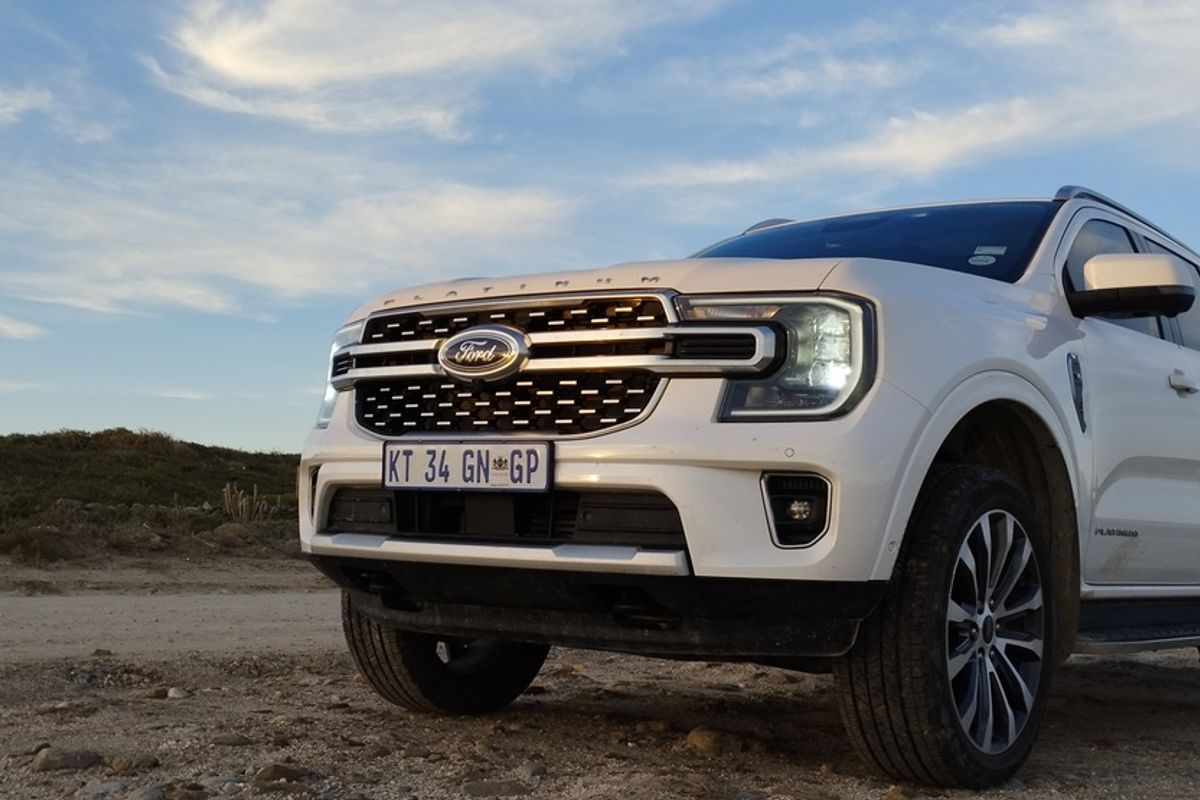
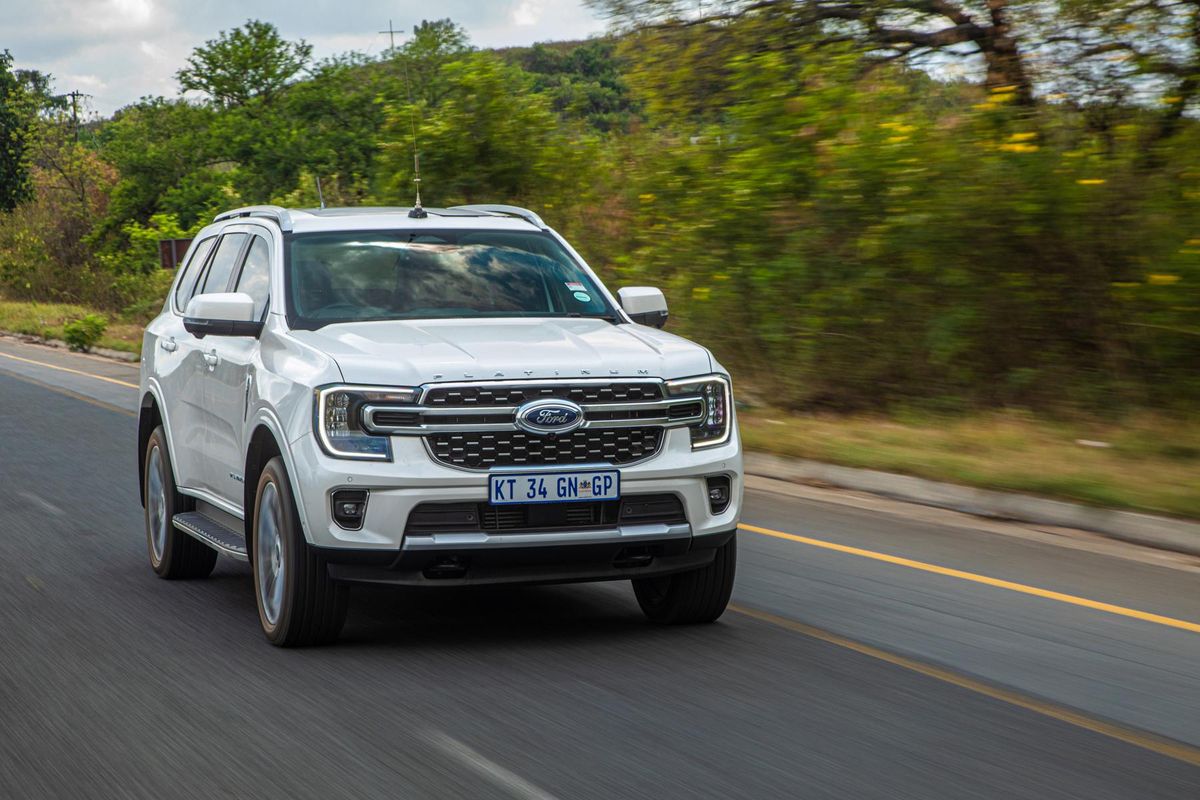
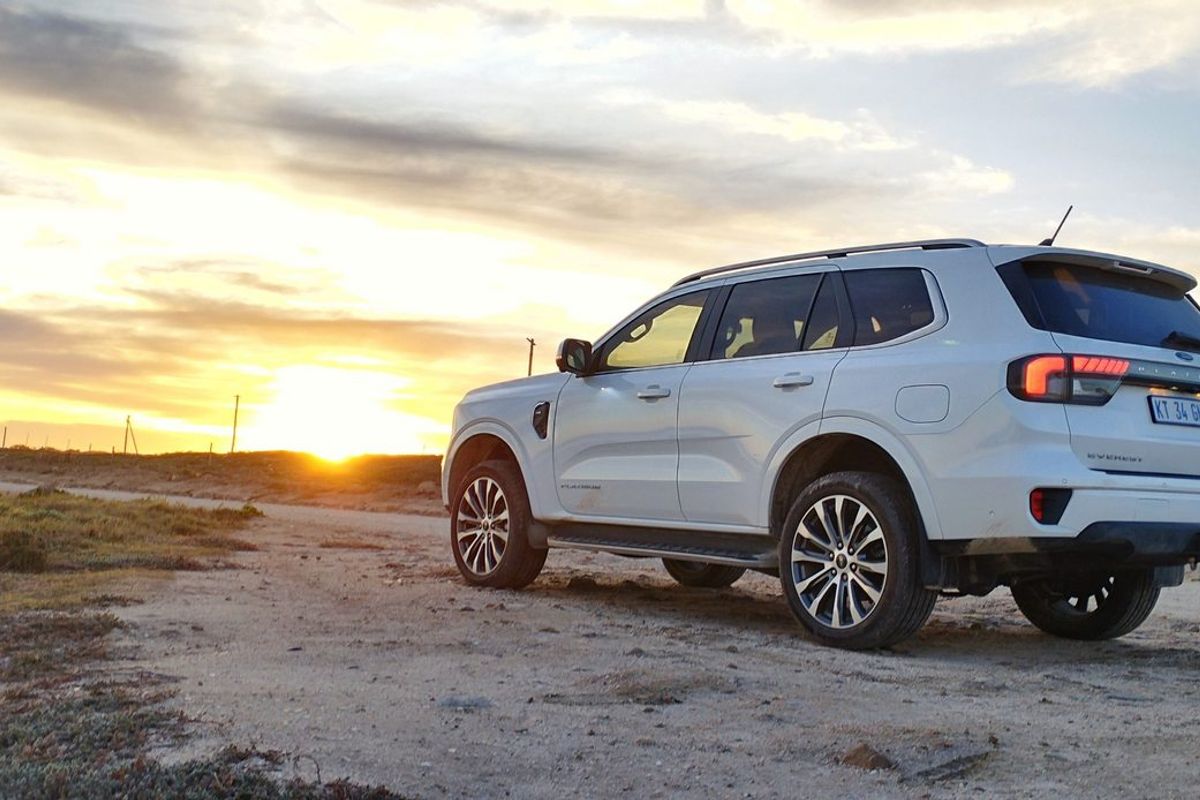
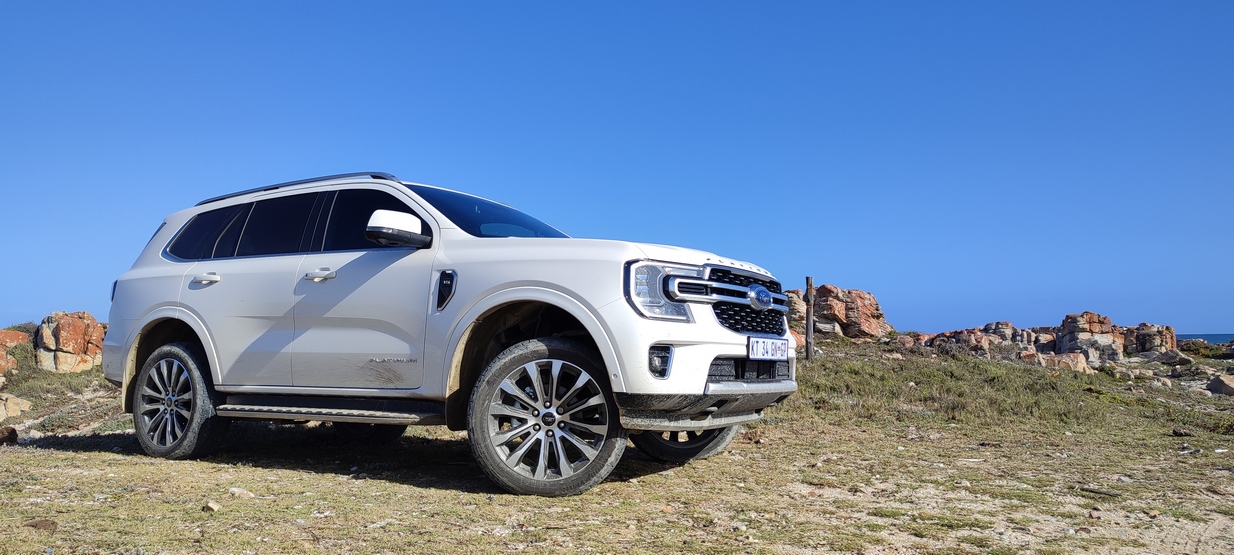
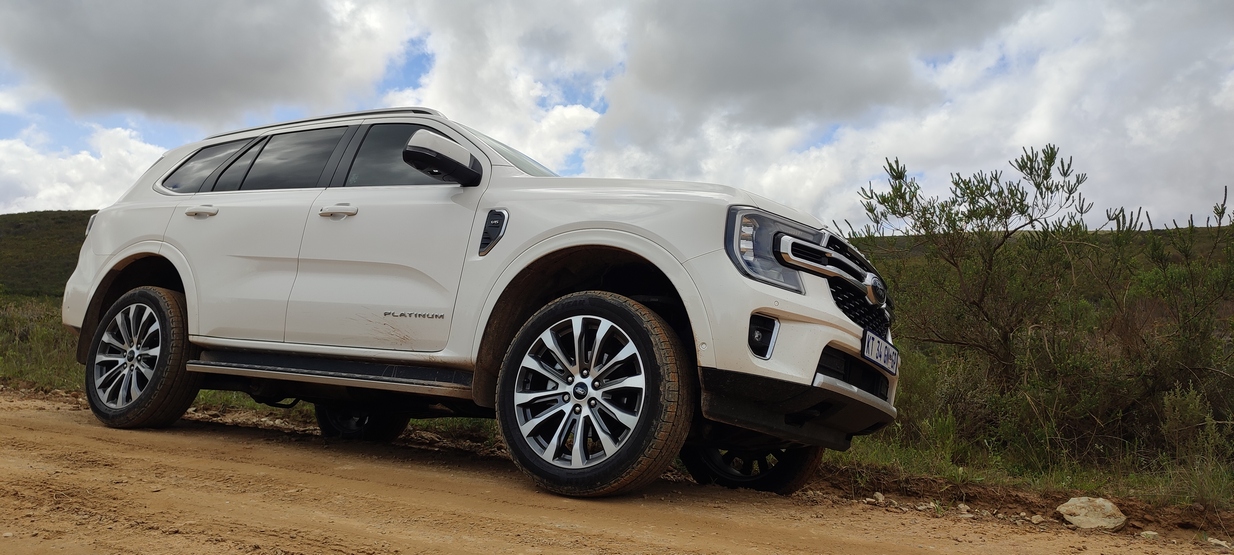
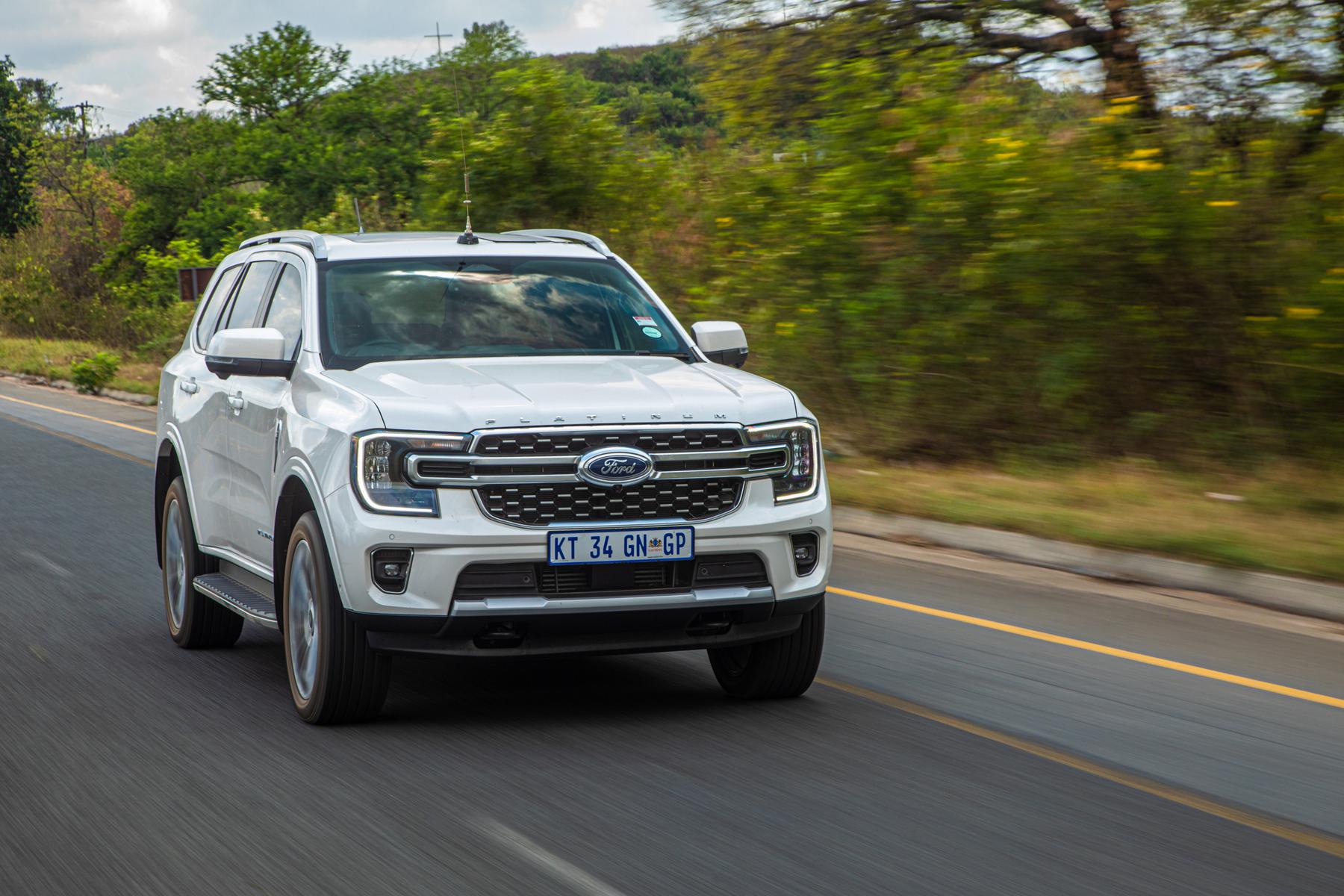
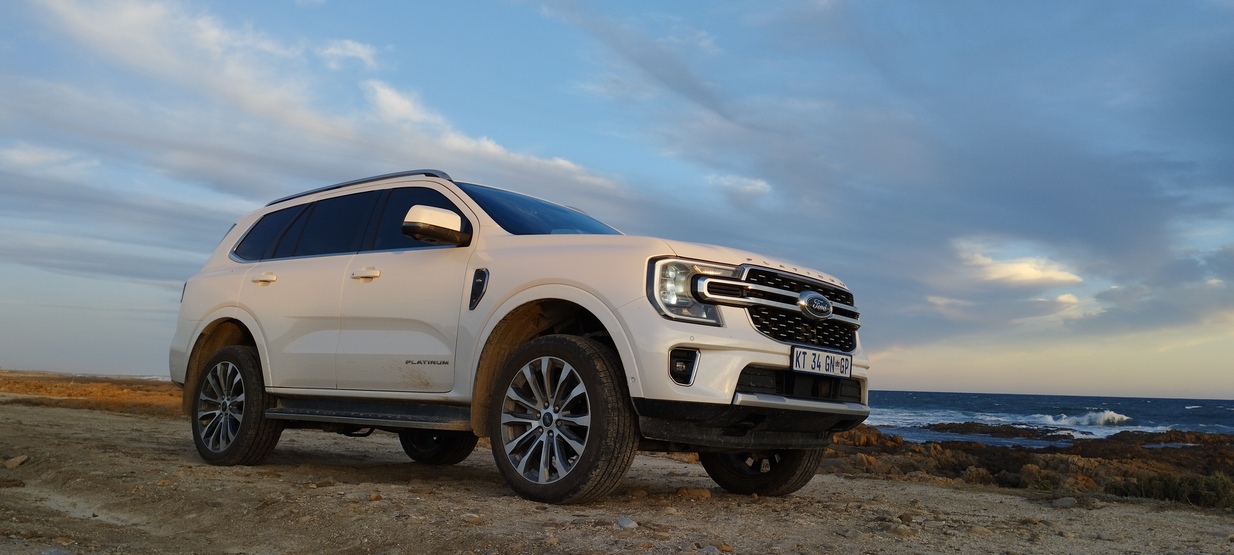
The 2023 Ford Everest 3.0 V6 AWD Platinum’s bold styling attracts many admiring glances.
As a happy consequence, I’ve driven most 7-seat SUVs in the new-vehicle market for extended periods of time, particularly models that fall in the bakkie-based SUV category – the Toyota Fortuner, Isuzu MU-X and so forth. Furthermore, I’ve driven them all on the same routes, so I am well-placed to compare them.
Recently, it was the 2023 Ford Everest’s turn to get packed to the rafters and go on a sojourn to the Southern Cape. How much better is it than its lauded predecessor? And has the Ford moved so far up the ladder in sophistication and ability that it has become a Toyota Prado rival, not a Fortuner challenger?
A month-long evaluation, during which I travelled about 4 000 km in the model, provided some answers.
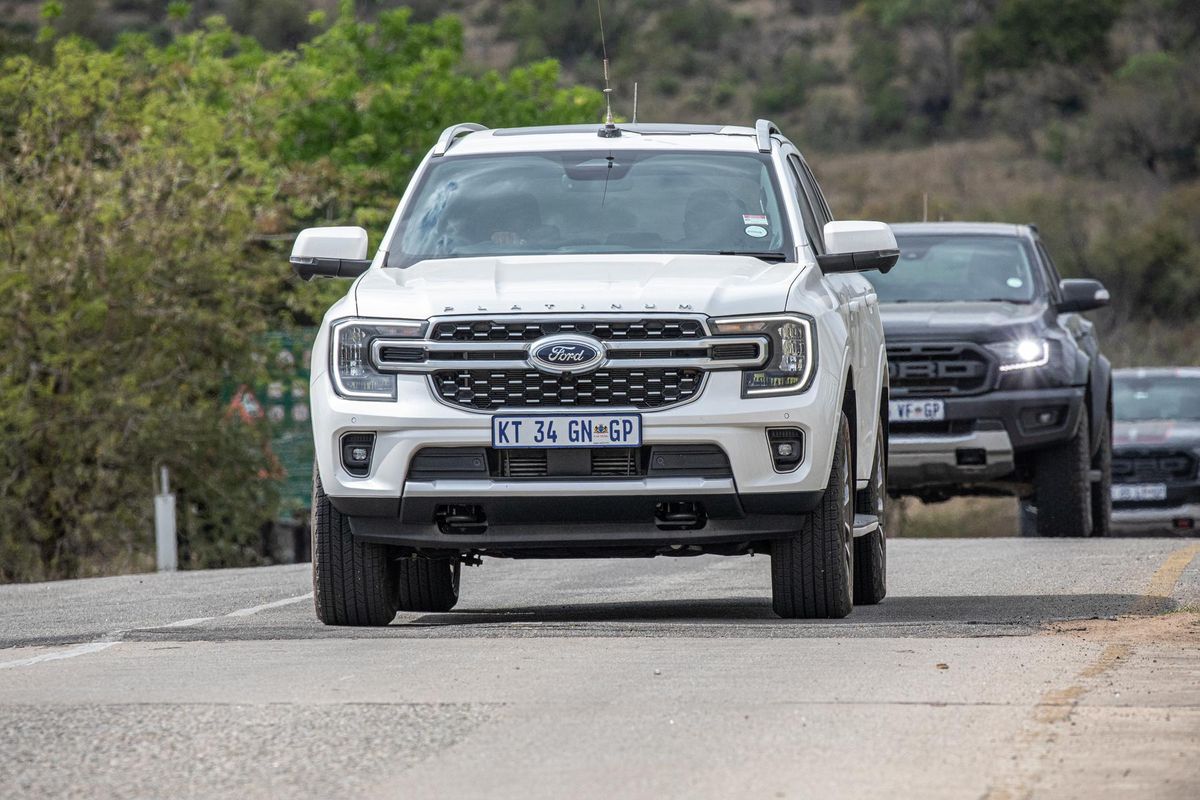
The Everest 3.0 V6 AWD Platinum impresses with its pliant ride, on-road stability and even cornering poise.
Massive public interest and awareness
I took delivery of the flagship Everest 3.0 V6 AWD Platinum in early December 2022 (before dealers started receiving their stock). By then, the launch had already happened and public awareness was impressive. Finished in white, the handsome 2023 Ford Everest turned heads wherever we went.
I’m used to driving new cars that attract a lot of attention, but once we reached our destination in the Southern Cape, the attention became even more heightened – bear in mind, I found myself among other holidayers driving not only examples of the previous-generation Everest, but all of its rivals as well.
So, whenever I parked the Ford at a petrol station or shopping mall, strangers walked up to me to come and inspect the Everest 3.0 V6 AWD Platinum inside and out! Their feedback? They were blown away…
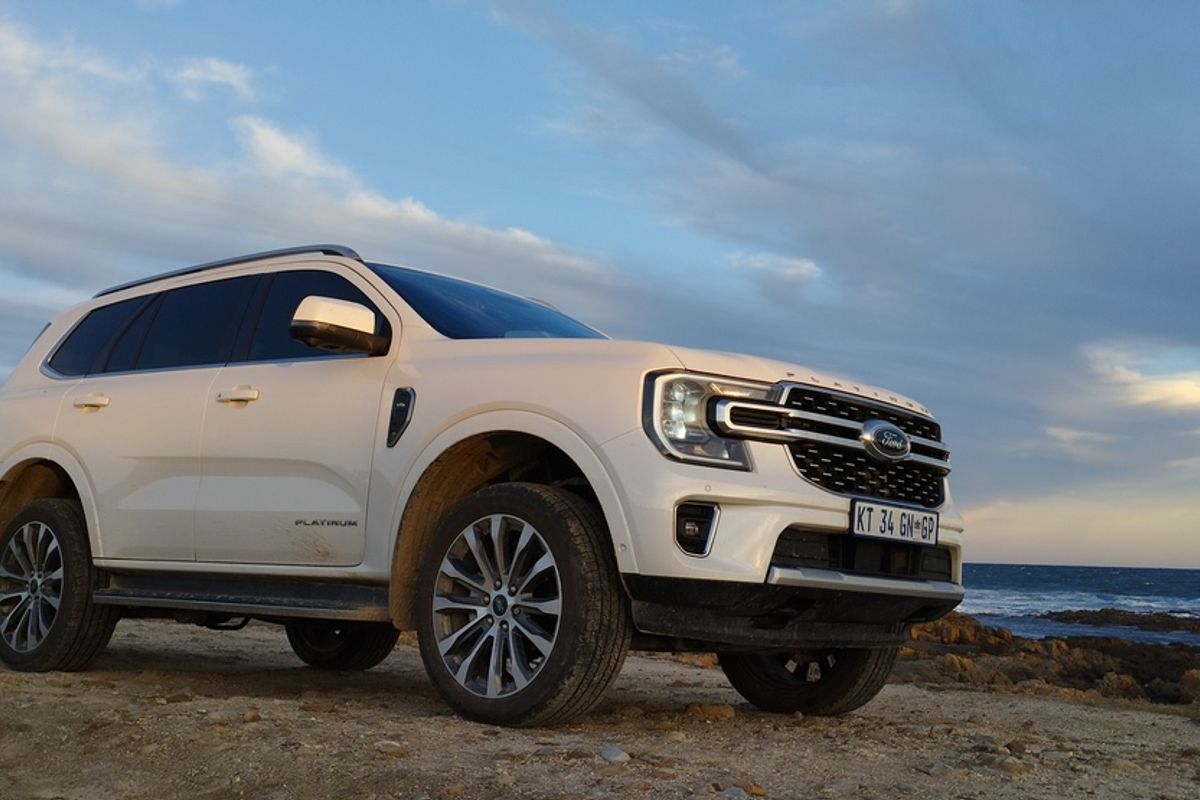
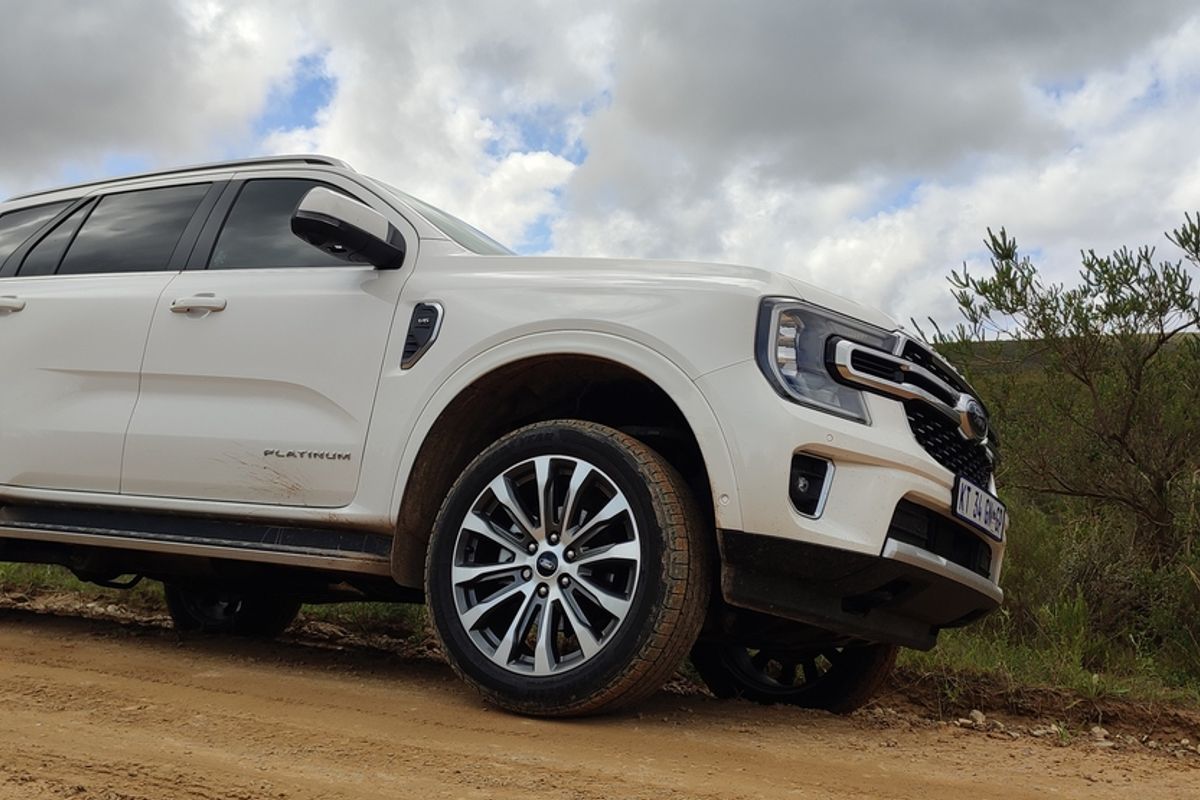
The Platinum-spec Everest’s 20-inch alloy wheels add kerb presence, but aren’t ideal for off-roading.
Interestingly, quite a few onlookers commented on the naming of the vehicle. Due to the number (and prominence) of Platinum badges on the Ford, some thought the SUV had been renamed “the Platinum”!
The Everest looks every bit like a R1.1-million-plus SUV. It’s huge (4.94 metres long and 2.2 metres wide) – in that sense, it’s a good match for the Prado, plus it rides high (it has a ground clearance of 226 mm) and on striking 21-inch multi-spoke wheels. If you are going to be doing a lot of off-roading, you may want to consider fitting the optional 18-inch rims, which are wrapped in more off-road-oriented rubber.
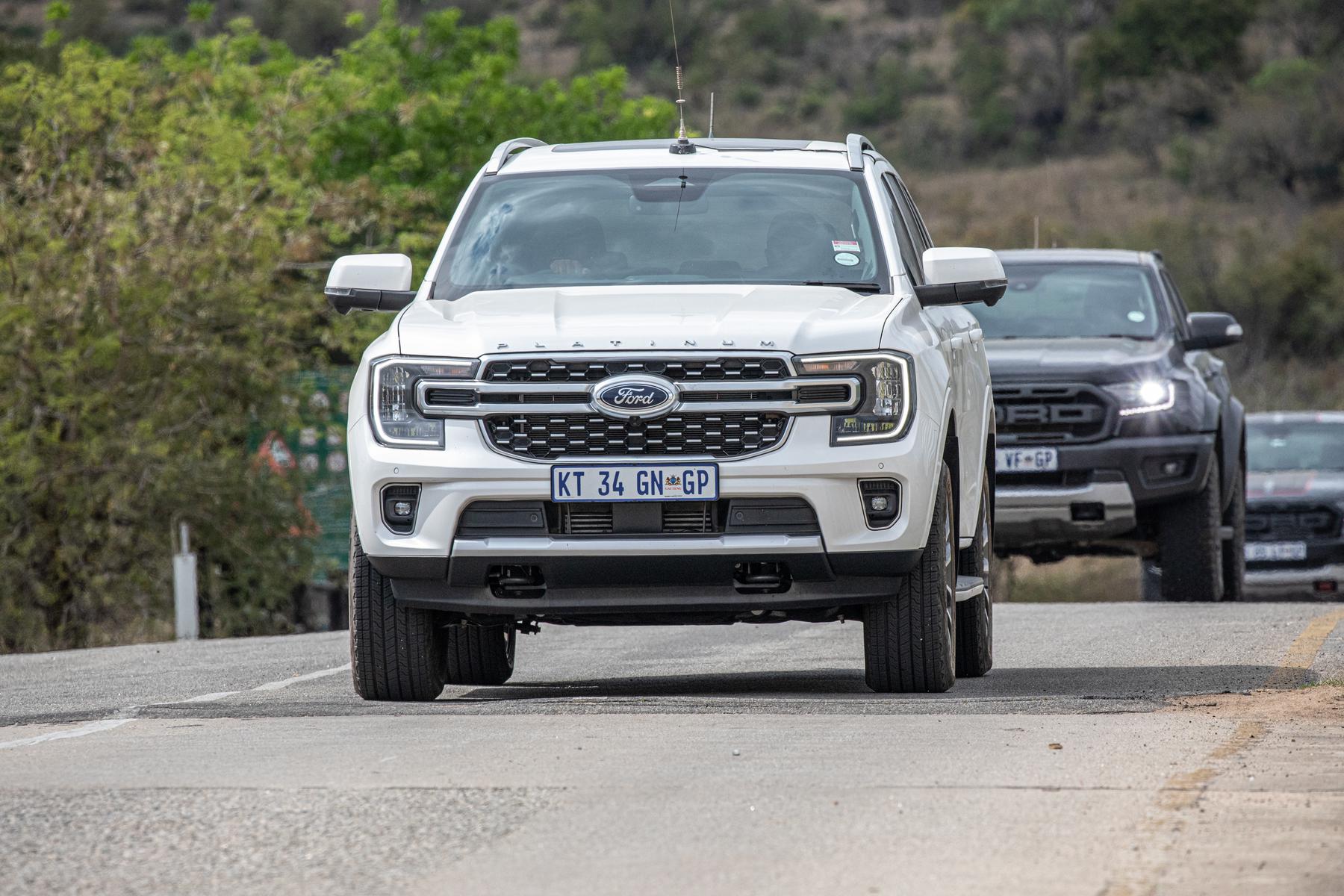
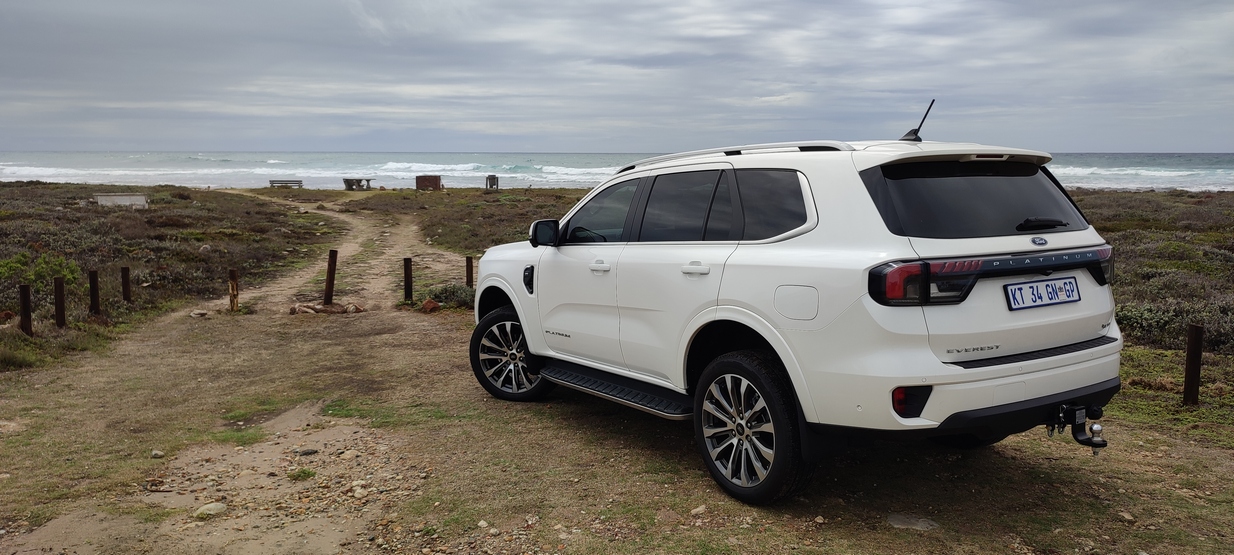
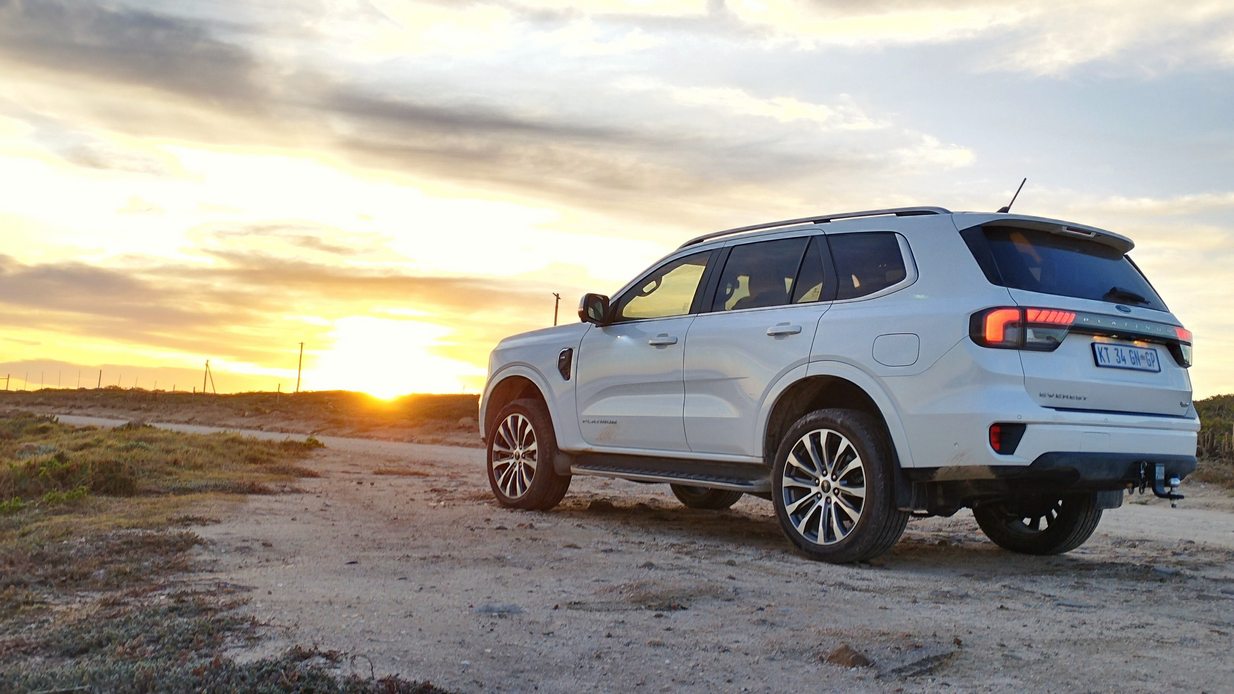
Furthermore, the Platinum trim level incorporates numerous chrome embellishments, but not to the extent that it seems overkill. In fact, the 2023 Ford Everest’s upright front-end design is rather attractive; its bracket-shaped LEDs flank an enormous grille that adds to the perceived wide stance of the 7-seater. The rear design is more conservative, but it certainly looks more modern than on the previous model.
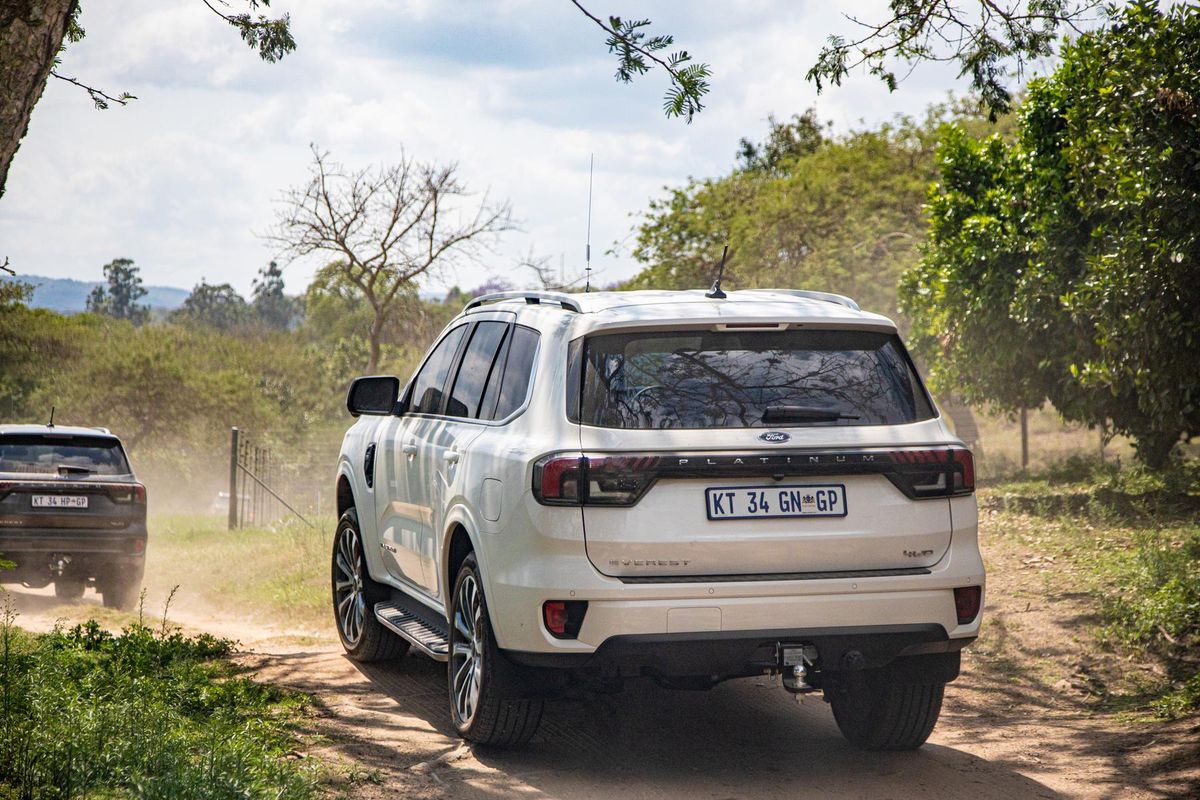
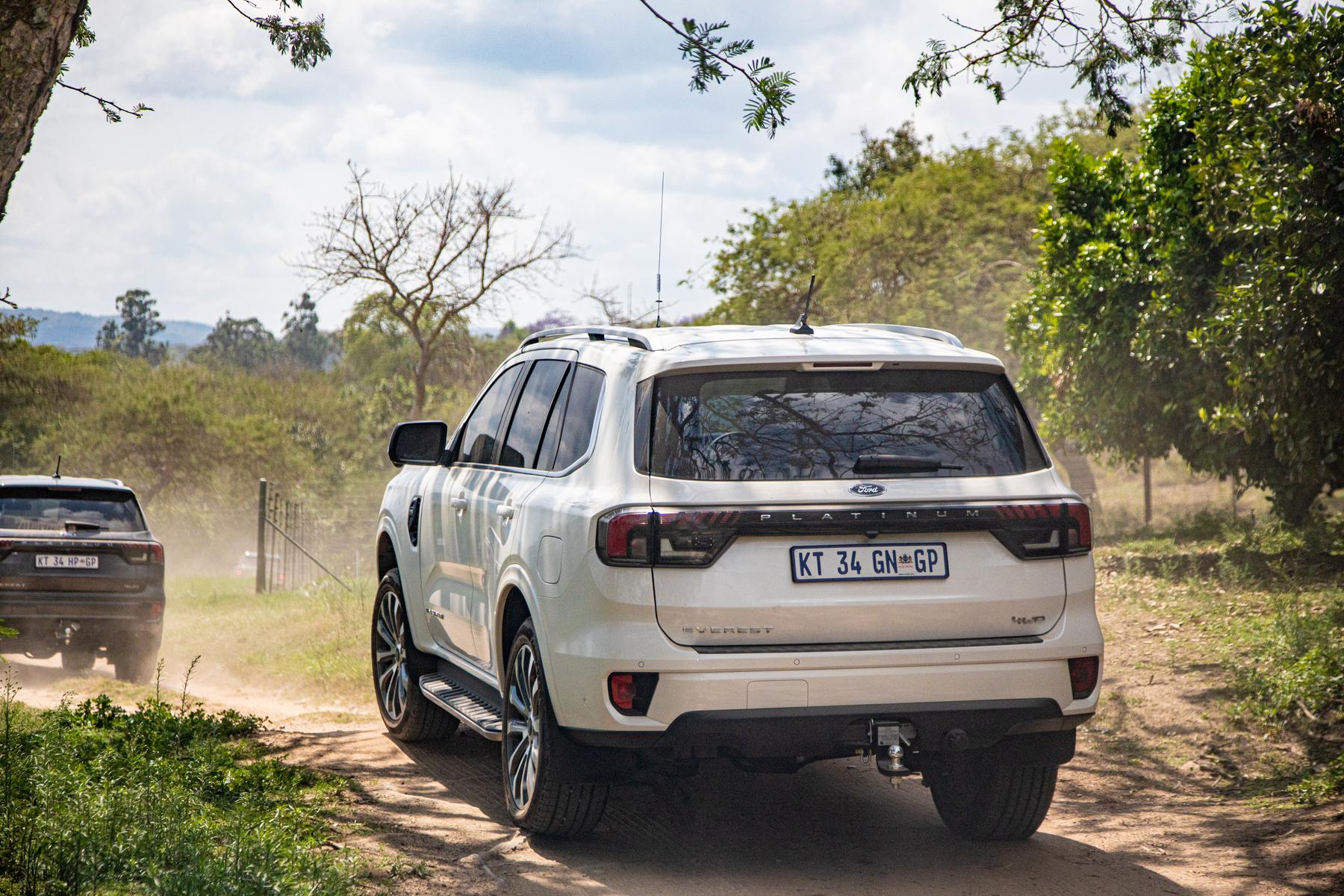
The 2023 Ford Everest’s rear styling is a trifle generic, but it’s better looking than that of its predecessor.
When it came to packing the Everest 3.0 V6 AWD Platinum for the holiday trip, a number of its features stood out. The cabin volume is massive: the 50/50-split 3rd row can be folded down electrically using switches mounted in the load bay and, with one part of the 60/40-split middle row folded down, one can easily fit a bicycle or surfboard in the Everest’s expansive cabin.
However, seeing as the first 2 rows would be occupied, and maximum luggage capacity was required, the surfboards were put on the roof (Ford claims the roof is sturdy enough to take static loads of 350 kg). A detachable towbar is fitted as standard and the tow rating has increased (by 400 kg) to 3 500 kg.
For me, the availability of a towbar meant I could fit my Thule bicycle carrier on the back, but I soon encountered an interesting quirk… The bicycle carrier would swivel on the ball of the towbar, no matter how tightly it was fastened. This presented a problem, seeing as bicycle pedals and handles could rub against the vehicle’s tailgate and bumper, so I applied thick double-sided tape to avoid any damage.
The standard fitment of a detachable towbar was a significant benefit during the 4 000-km road trip.
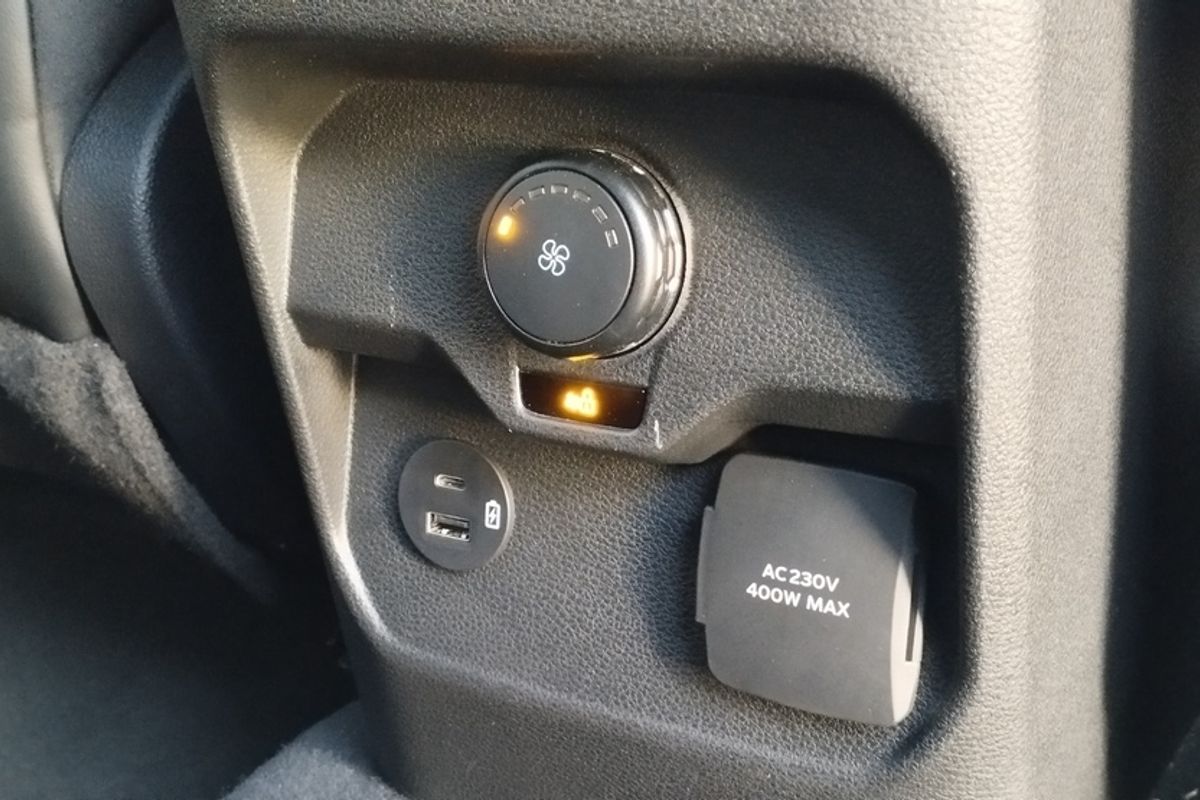
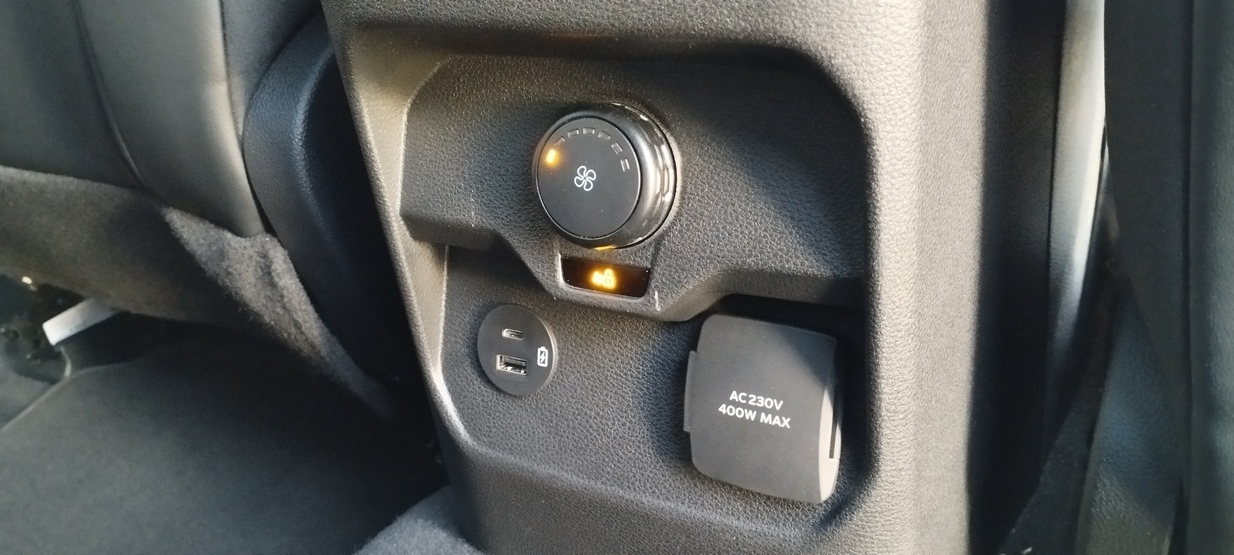
There were no such issues inside, however. The load bay is capacious with the 3rd row folded down (898 litres) and so it swallowed all our luggage and other items, while leaving enough space in the 2nd row for a trio of passengers. The middle row, by the way, can slide fore/aft and you sit slightly high (a reminder that the Everest is based on a ladder-frame chassis). Second-row passengers have access to two USB outlets, a 230V 3-pin power outlet and a separate fan-speed control for the overhead ventilation outlets.
Although the 3rd-row seats were folded down for most of our trip, later adventures required those seats to be occupied as well. Given the overall size of the 2023 Ford Everest, I was a little surprised by just how tight the 3rd-row accommodation was. To illustrate my point: if a pair of 1.8-metre occupants sat behind the ‘wheel and the seat directly behind it (in the second row) respectively, then the 3rd-row occupant behind them would have very little legroom. Headroom is tight too. Still, it’s no worse than in most 7-seat, bakkie-based SUVs. With all 7 seats occupied, the load capacity is 259 litres, which is relatively good.
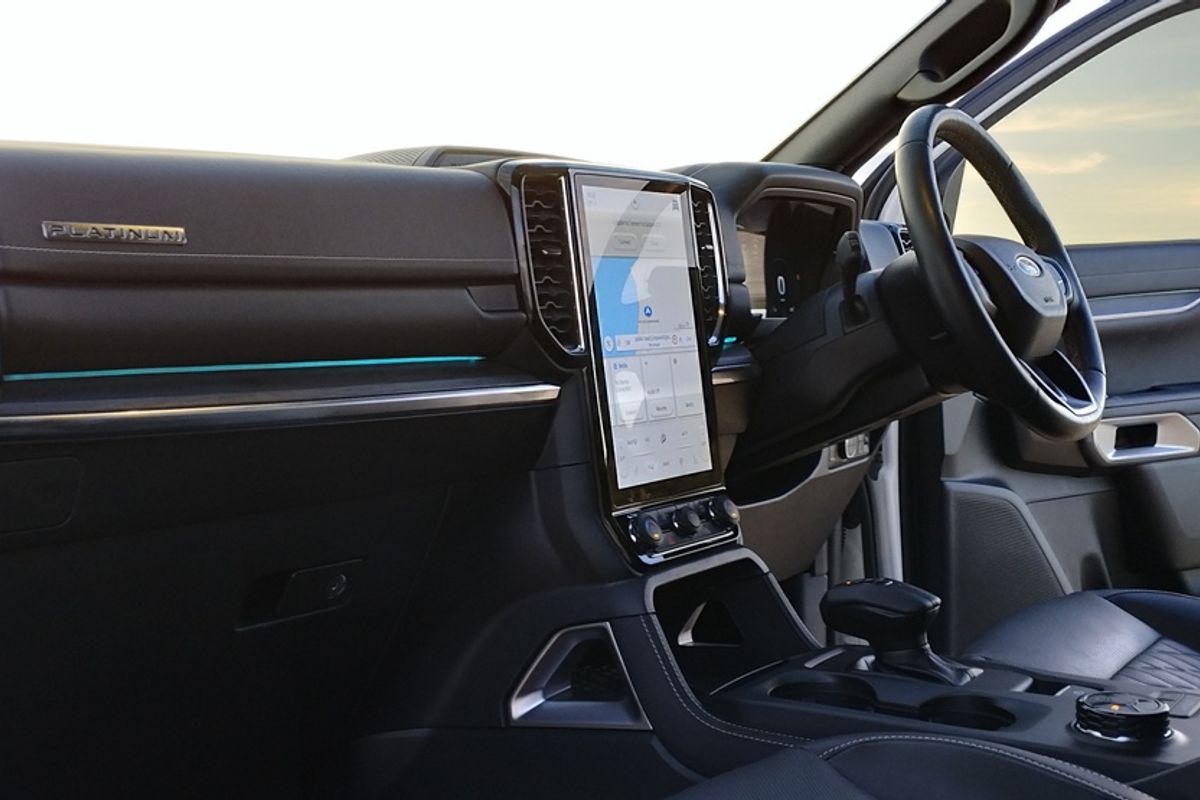
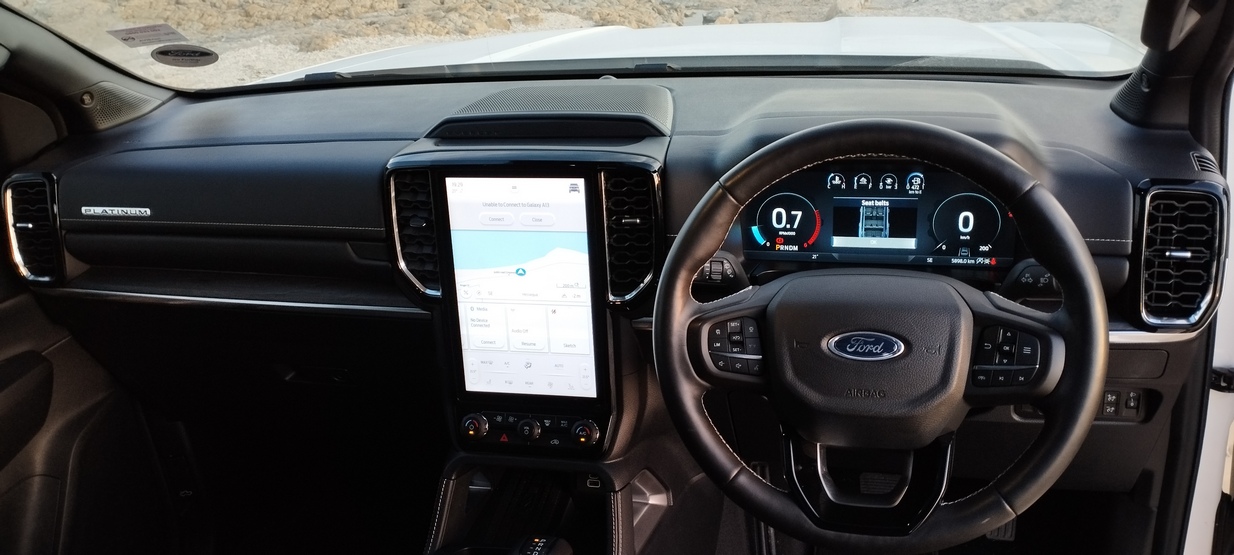
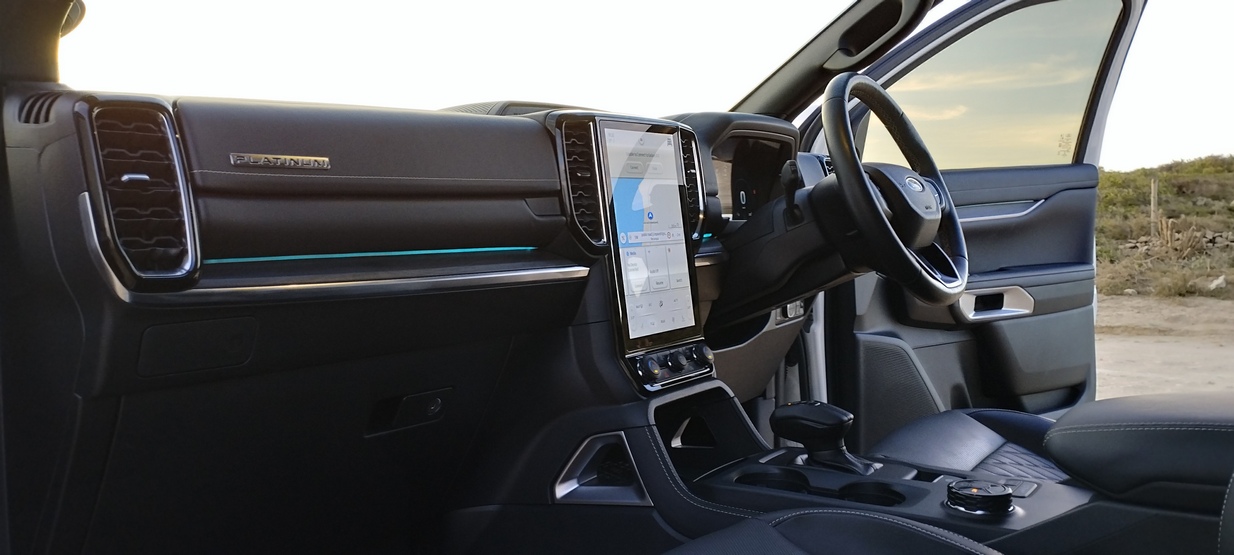
The Platinum-spec Everest’s cabin has an upmarket ambience, aided by its sizeable digital screens and stitched fascia.
Road tripping in the 2023 Ford Everest
The Platinum-specification Everest is offered exclusively in conjunction with Ford’s new 3.0-litre V6 turbodiesel motor, which delivers a healthy 184 kW at 3 250 rpm and peak torque of 600 Nm from 1 750 to 2 250 rpm. The engine is mated with Ford’s updated 10-speed automatic transmission, which drives a permanent all-wheel drive system (though, on the road, it mostly runs in 2H mode). There are no paddle shifters – frankly, you don’t need them – but if you really must make manual shifts, there are tiny buttons on the transmission lever. The ‘box is so well sorted, however, that you’re unlikely to ever use them.
When travelling fully laden on the open road (with the roof-mounted surfboards undoubtedly creating extra aerodynamic drag), the Everest was invariably eager to respond to throttle inputs and always had impressive overtaking acceleration on tap. Refinement is also good, with only some wind noise (from the oversized side mirrors) audible; NVH (noise, vibration, harshness) levels are probably class-leading.
Even when the Everest 3.0 V6 AWD Platinum was fully laden, it delivered flexible performance on the open road.
Similarly, there is no other bakkie-based SUV in the new-vehicle market that offers such a good combination of supple ride comfort and firm cornering stability; the 2023 Ford Everest largely avoids the top-heavy feel that afflicts similarly packaged vehicles. Only very sharp, sudden jolts knock through the suspension to the cabin occupants. As mentioned before, opting for the more off-road-oriented tyres (on 18-inch alloys) might realise some benefits when you are 4×4-ing (and provide a little more “give” over bumps on tar). Still, there will undoubtedly be an impact on the Everest’s impressive road manners.
When driven like this (with a near-full complement of passengers and cargo on board) and at (or near) the national speed limit, one should perhaps not expect incredible fuel economy, but I was still somewhat disappointed with the Everest 3.0 V6 AWD Platinum’s thirst throughout the test period. Ford claims an average consumption of 8.5 L/100km, but you’ll have to drive extremely gingerly to get near that figure.
The 10-speed transmission is brilliantly calibrated with the 3.0-litre V6 turbodiesel engine.
If you drive normally, you’re likely to average somewhere around 10.5 L/100 km. At best, then, you could achieve a range of just over 700 km on a full (76-litre) tank. If you are going to travel very long distances into the bundu, the Prado’s 150-litre tank capacity may swing your buying decision towards the Toyota.
2023 Ford Everest’s toys and safety features
As befits its flagship status, the Everest 3.0 V6 AWD Platinum is loaded with standard features, some of which are not even available as options on its traditional rivals.
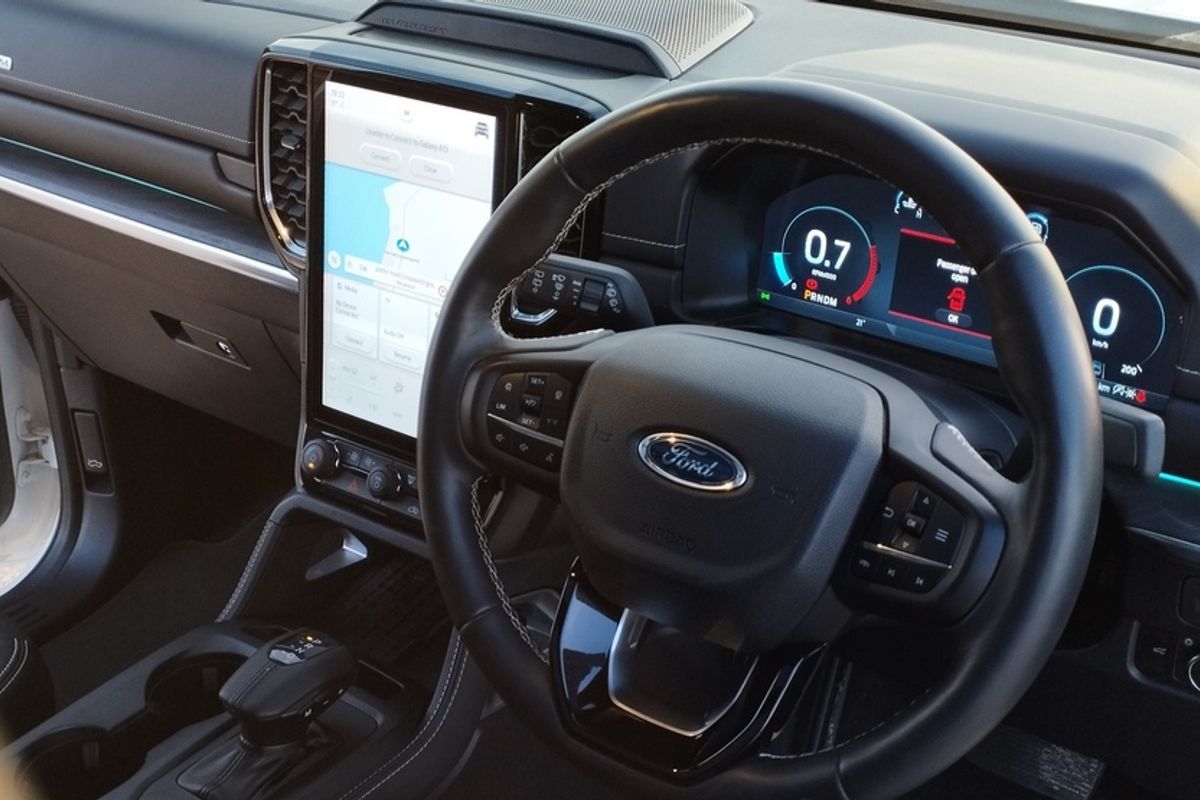
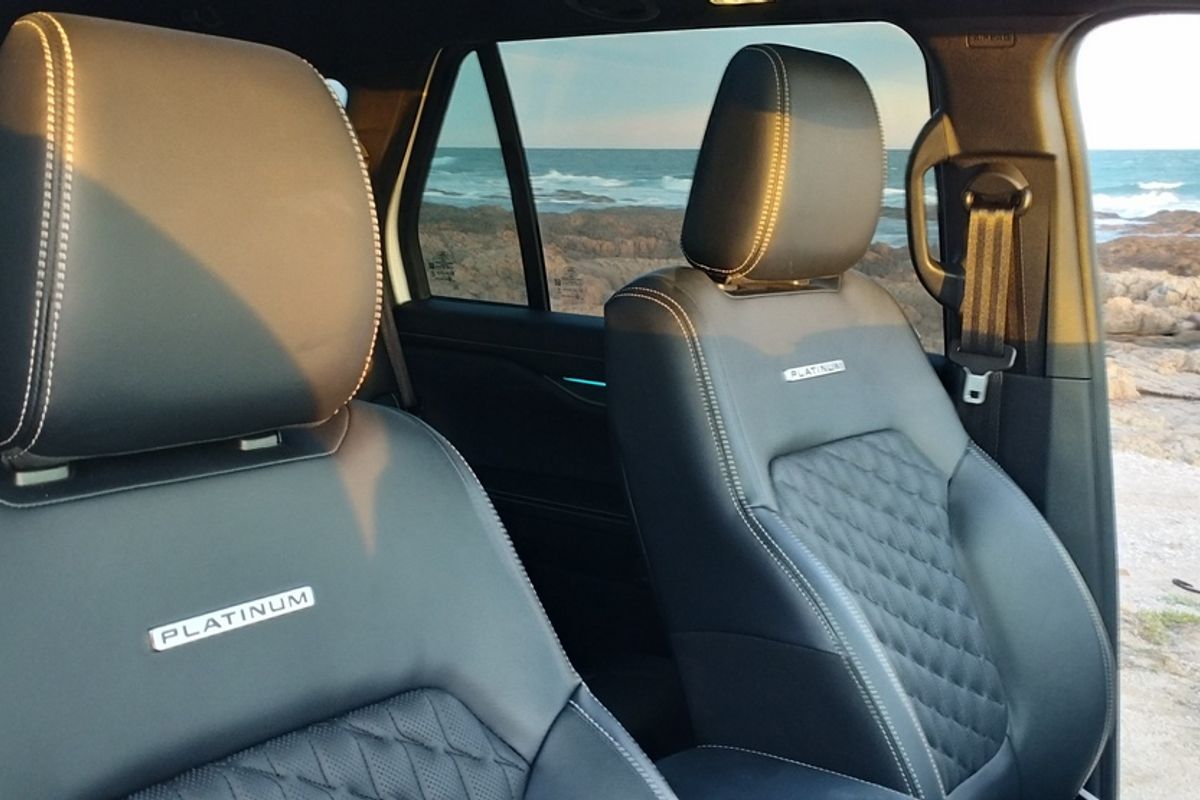
From behind the multifunction steering wheel, the range-topping derivative exudes upmarket luxury and high technology. I really like the way the door handles are integrated into the armrests, the stitched leather upper fascia, the dark faux-wood trim and the satin silver accents. The electrically-adjustable front seats, which offer heating and cooling (the 2nd row is heated as well) are superb, and the heated steering wheel is rake- as well as reach-adjustable, so it’s easy to find a comfortable driving position. Overhead, a large panoramic sunroof is standard and impressively well-insulated from wind noise.
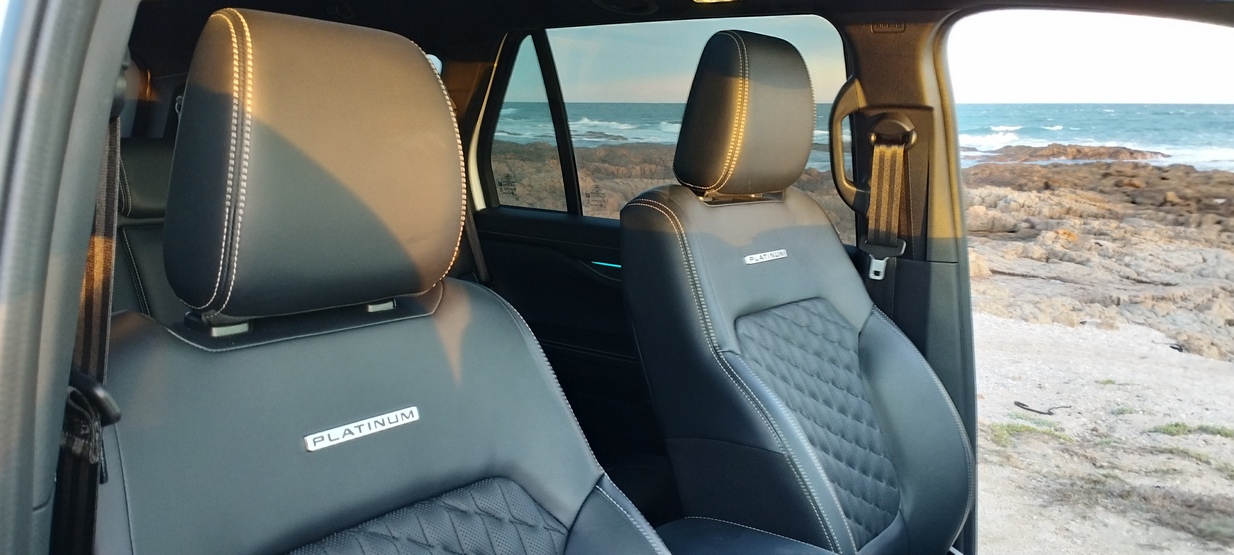
The shapely and well-padded front leather seats have heating and cooling functions.
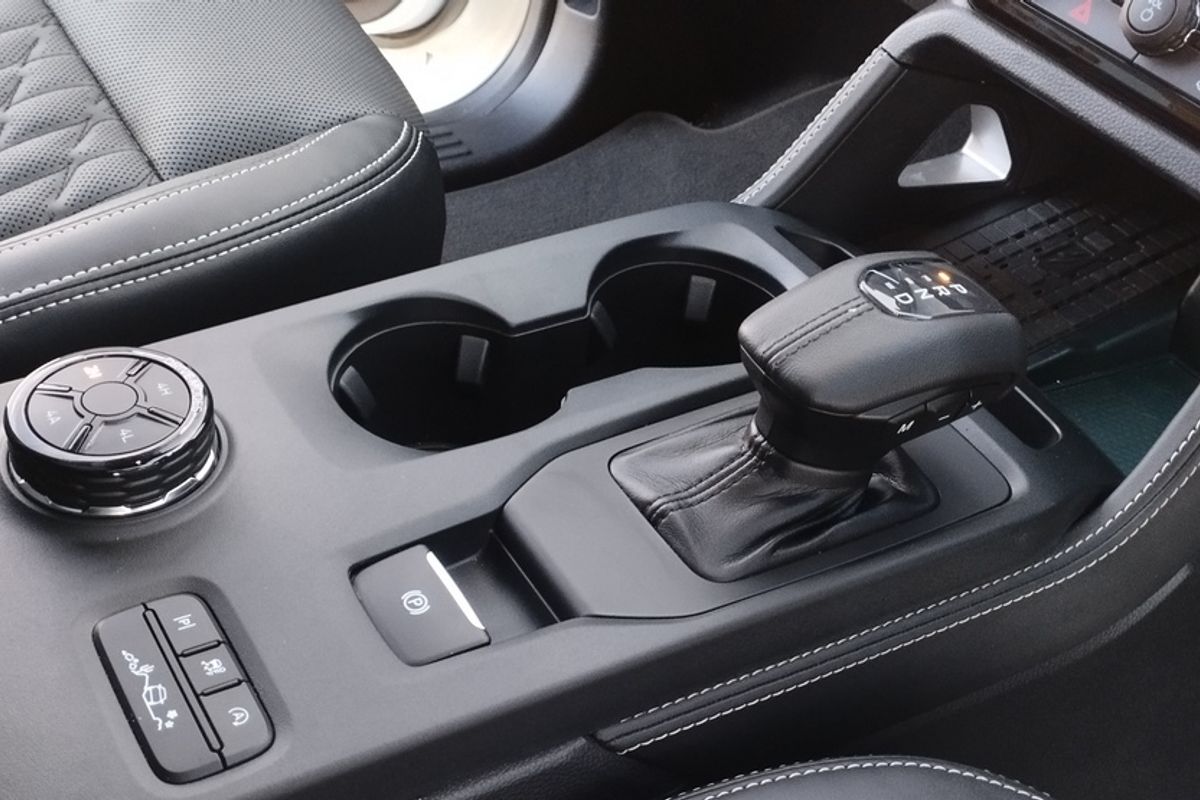
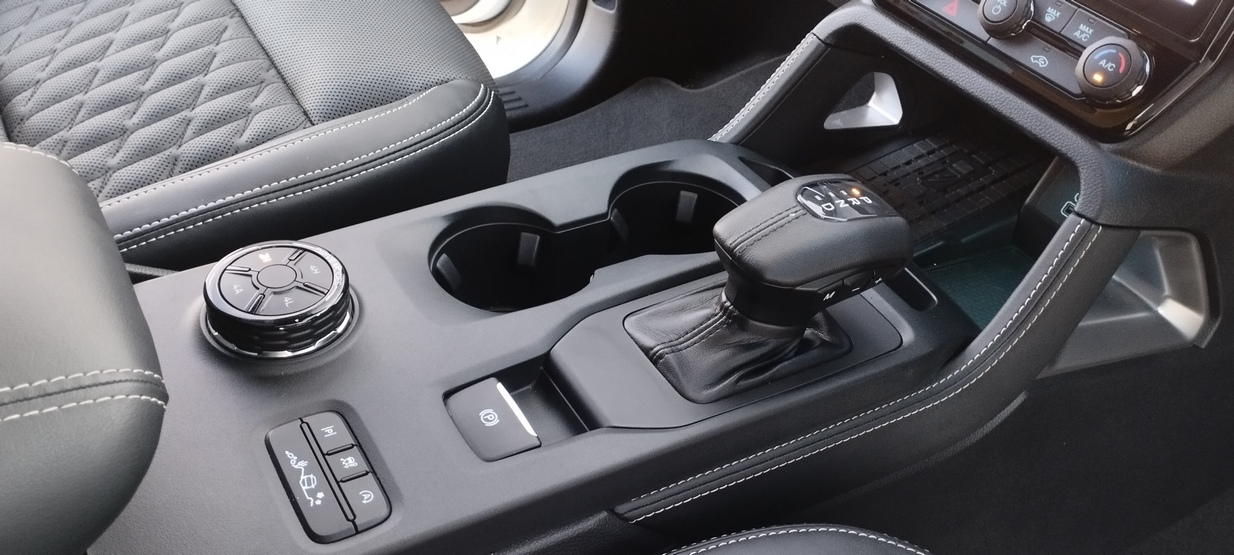
The very neat digital instrument cluster is packed with information: using the steering wheel-mounted controls, one can access various sub-menus and settings. You can switch between drive modes with a button on the transmission panel and neat graphics illustrate the selected mode in front of the driver.
There is also an excellent B&O audio system, dual-zone climate control and, of course, a long list of driver-assistance and safety systems, including adaptive cruise control, forward collision assist, rear cross-traffic alert with braking (very useful on a vehicle of this size), lane-keep assist and even active parking. Some of the systems are a little intrusive at first, but you can either deactivate some of them or simply adjust their sensitivity.
The user interface of the infotainment touchscreen required some familiarisation, but was a pleasure to use thereafter.
And now for the Everest cabin’s party piece – its massive (12-inch) tablet-like infotainment touchscreen, which is mounted portrait style in the middle of the fascia. Certainly, onlookers were always intrigued by the system’s functionality, but everyone agreed that it endowed the 2023 Ford Everest’s cabin with that last bit of next-gen tech that immediately makes every rival vehicle look like it comes from the past.
Of course, there are many features hidden in the infotainment system’s various menus, and finding your way around will take some time, but it’s all pretty intuitive. Besides, the controls that you will use most often (fan speed, temperature control, volume etc.) can still be accessed using physical buttons/knobs.
Ford’s latest SYNC4 system works very well indeed. Bluetooth, Android Auto and Apple CarPlay are all supported and a wireless charging pad is provided. Front occupants have access to a trio of USB ports (one being windscreen mounted – you can use it to power a “dash cam”, for example).
Second-row occupants have access to their own ventilation control, 2 types of USB sockets and a 230V power outlet.
If I had to nitpick, I’d say the camera system was somewhat disappointing. Crossovers priced at half of what this Everest costs feature more advanced 360-degree camera views and graphics. The resolution of the camera display is also not as crisp as I’ve seen in other vehicles. Still, there is a bird’s eye view…
Heading (slightly) off the beaten track
I didn’t get the opportunity to put the Everest 3.0 V6 AWD Platinum through a serious off-road test, largely because I was worried that the shiny big (20-inch) alloy wheels and elaborate side steps would be susceptible to damage. However, I did quite a lot of gravel-road driving and some minor off-roading.
By virtue of its automatic four-wheel drive, the 2023 Ford Everest easily adapts to most road surfaces.
In terms of its approach and departure angles, the 2023 Ford Everest is actually a close match for the Prado and, in addition to the automated four-wheel-drive setting, you can manually select 4H or 4L, and then further fine-tune the vehicle settings using a dial on the centre console. Normal, Eco, Tow Haul, Slippery, Mud&Ruts and Sand modes are available, and the rear diff lock can be activated electronically.
On gravel roads, we found the Everest’s driving experience quite superb and, when we did some off-road driving in trickier conditions, it was abundantly clear that even when rolling on road-biased tyres, the Blue Oval’s 7-seater’s strong torque and clever off-road systems combine to make it a truly capable Adventure SUV. Tyre pressure monitors are also fitted, as is specific underbody protection.
Apart from offering a variety of off-road drive modes, the Ford Everest is equipped with specific underbody protection.
Verdict
Priced at just over R1.1 million (without a service or maintenance plan), the flagship 2023 Ford Everest is comfortably in a different league to its traditional rivals from Toyota (Fortuner), Isuzu (MU-X) and Mitsubishi (Pajero Sport). In fact, Isuzu – in particular – must be concerned that its still-new MU-X (which I had on test for the same holiday period the previous year), has been outclassed so quickly.
How well does Ford’s newcomer compare with the Toyota Prado? I don’t think they appeal to the same kind of buyer, even though they may end up on the same shortlists. The Ford is a more premium and modern-feeling SUV with great on-road manners, while the Toyota has that reputation for unburstable reliability and off-road toughness – it arguably remains the choice if you’re going to head into the unknown very often. But, as a comfortable daily family vehicle that can do long-distance family trips with sufficient luxury, plenty of space and no shortage of occupant comfort, the Everest takes the crown.
How well are SA’s cheapest cars selling? A look at the sales figures
Just 8 passenger-vehicle ranges starting at R200 000 or less remain in South Africa. How well are these budget cars selling? Let’s unpack the sales figures for SA’s cheapest cars…
A mere 6 years ago, South Africa’s new-vehicle market contained as many as 42 passenger-car ranges with a starting price of less than R200 000. Today, that number stands at just 8. So, how well are the country’s cheapest cars selling?
Well, we tracked local registrations of this octet over the past 12 months – from the start of March 2022 to the end of February 2023 – to see how they rank. To qualify, the respective passenger-car range must start at R200 000 or less (note that even if some higher-spec derivatives come in above that figure, we’re still including them in this exercise, as model sales reported to Naamsa are unfortunately not broken down by derivative).
Before we explore the sales statistics of the nation’s cheapest cars, it’s interesting to note 7 of the 8 model ranges are shipped over from India, which is the leading country of origin in terms of vehicle imports into SA, and by quite some margin, too. In addition, it’s worth mentioning most of the vehicle ranges listed here benefit from a seasonal spike in sales owing to their popularity with rental-fleet buyers.
Suzuki Swift is the runaway budget-car leader
Yes, the Suzuki Swift was the unchallenged winner, with a whopping 17 766 units registered in South Africa over the past 12 months. That’s almost double the number achieved by the model slotting into 2nd place. Of course, we should point out only a single of the 7 Swift derivatives – the 1.2 GA at R194 900 – comes in at under R200 000.
Still, one could argue that makes the Swift’s sales performance even more impressive. For the record, the Maruti-sourced budget hatchback dipped under 1 000 units only once (in December 2022 with 806 sales) during the reporting period, while its best month was June 2022, when as many as 1 925 examples were registered (making to SA’s best-selling vehicle overall for 2 months on the trot). As a reminder, the Swift placed 2nd on the list of SA’s most popular passenger cars – behind only the Volkswagen Polo Vivo – in 2022, with the lightweight hatchback’s sales growing a hefty 108% year on year.
Renault Kwid grabs a comfortable 2nd spot
Though it found itself in a distant 2nd place, the Renault Kwid nevertheless proved a consistent performer for the French firm’s local distributor, with 8 978 units registered in the reporting period. The brand’s entry-level model range – which comprises 5 variants priced from R180 999 to R211 999 – broke the 4-figure barrier only once, when 1 077 units were sold in September 2022.
The Kwid finished the 12-month stretch well ahead of the model in 3rd place, which ended up more than 2 700 units off the pace. As a reminder, the Chennai-produced Kwid placed 8th on the list of SA’s top-selling passenger cars overall in 2022.
Hyundai Atos bows out with the final podium place
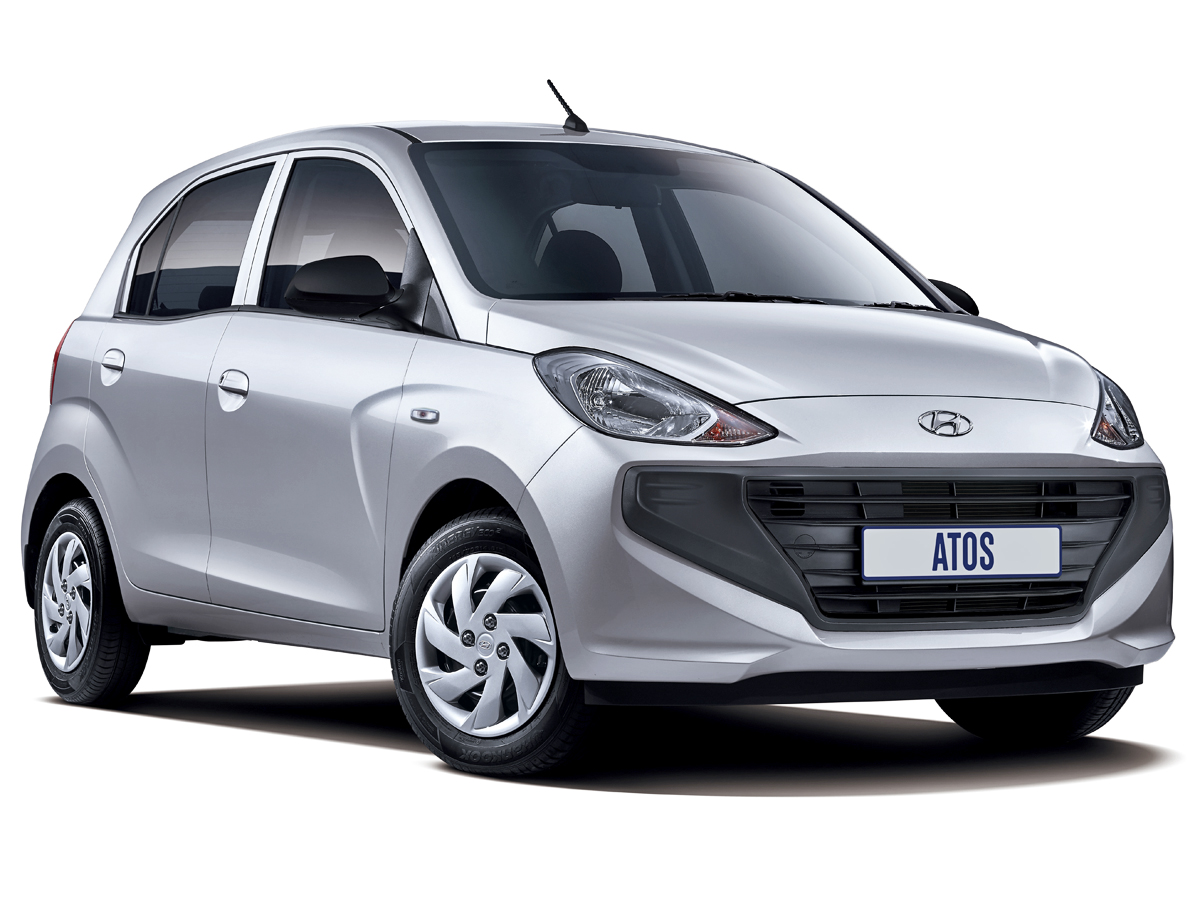
As its maker recently confirmed to Cars.co.za, the Hyundai Atos will soon be discontinued in South Africa as production in India has come to an end. The South Korean firm’s local division will certainly miss the entry-level hatchback’s contribution, which came in at a healthy 6 233 units over the past 12 months (a figure that would obviously have been even higher had production continued).
Note this number includes a few Cargo-badged panel-van derivatives registered in the light-commercial segment. Overall, the best single month for the 4-strong Atos line-up – priced from R199 900 to R214 900 – was March 2022, when 822 units were sold. With no direct replacement on the cards and stock running dry, the base version of the Grand i10 will take over as Hyundai’s cheapest car.
3 more Suzukis, an outgoing Toyota and a Mahindra
Despite a dip in sales around the time of its upgrade at the end of 2022, the Suzuki S-Presso – which is officially South Africa’s cheapest new passenger car, starting at R165 900 in 1.0 GL guise – found itself in 4th position. Over the past year, 5 243 units of the diminutive Suzuki were sold locally.
Just squeezing onto the list at a starting price of R200 000, the Toyota Agya wasn’t far behind in 5th spot, with 4 524 units registered over the reporting period. Like the Atos, the Agya – which is based on the Daihatsu Ayla, manufactured in Indonesia and arrived in SA as recently as late-2020 – is set to exit the local market soon. The new Vitz (a rebadged Celerio) is due to replace it in the 2nd quarter of 2023.
Effectively a notchback-sedan version of the popular Swift, the Suzuki Dzire (3 216 units) grabbed 6th place, ahead of the Suzuki Celerio (2 511 units). The latest generation of the latter launched in South Africa in March 2022 and bears a starting price of R178 900. Question is, will the upcoming Toyota-badged version outsell it? History suggests so…
The final place on the list went to the Mahindra KUV100 Nxt, which kicks off at R172 999. The Indian firm’s entry-level model range was the only one here that failed to crack 4 figures, with local registrations for some reason tapering off through 2022. Its overall sales figure – which includes the awkwardly named #Xprez panel van – came in at 878 units.
Sales of SA’s cheapest cars (up to R200k) over the past year
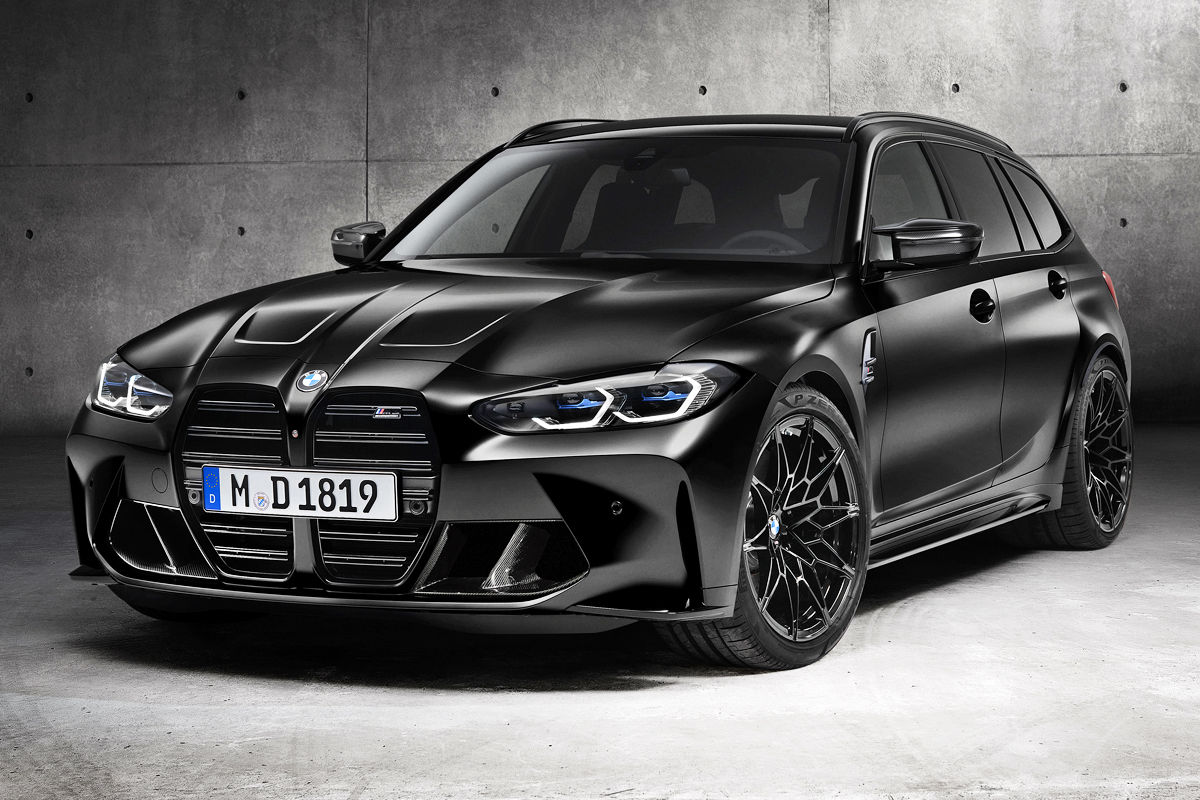
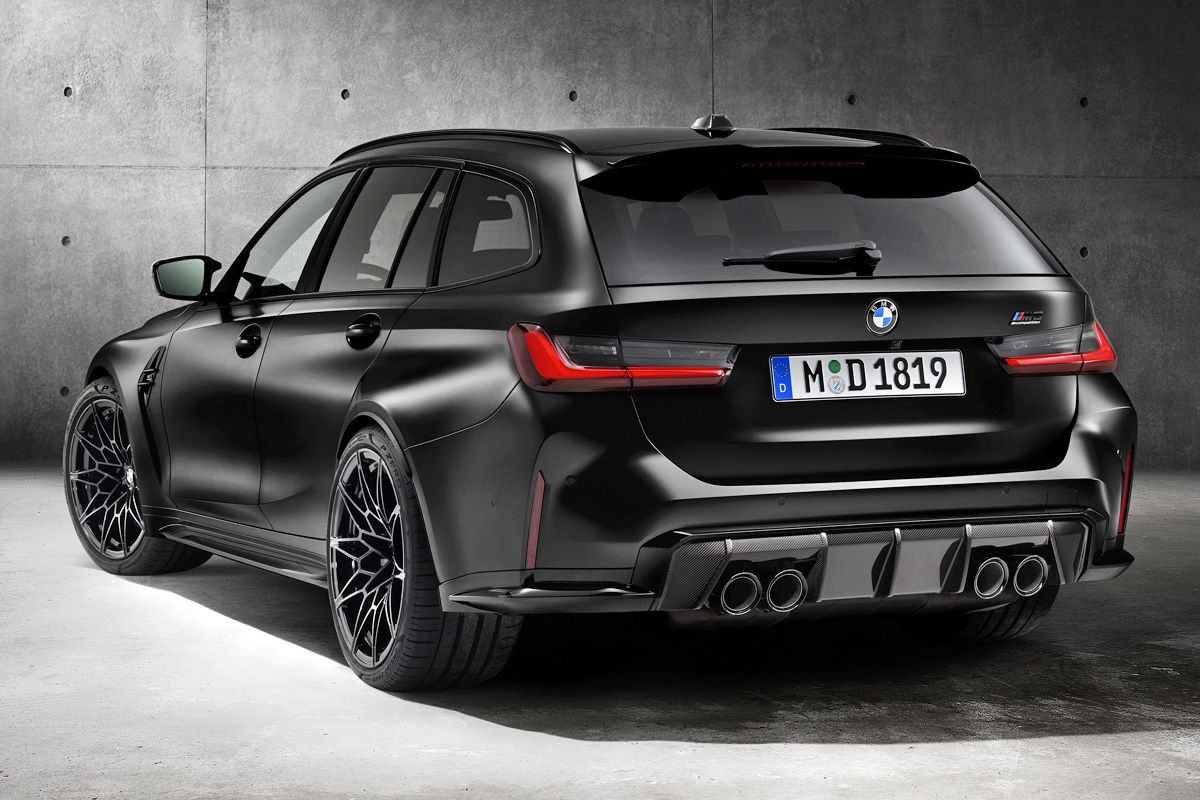
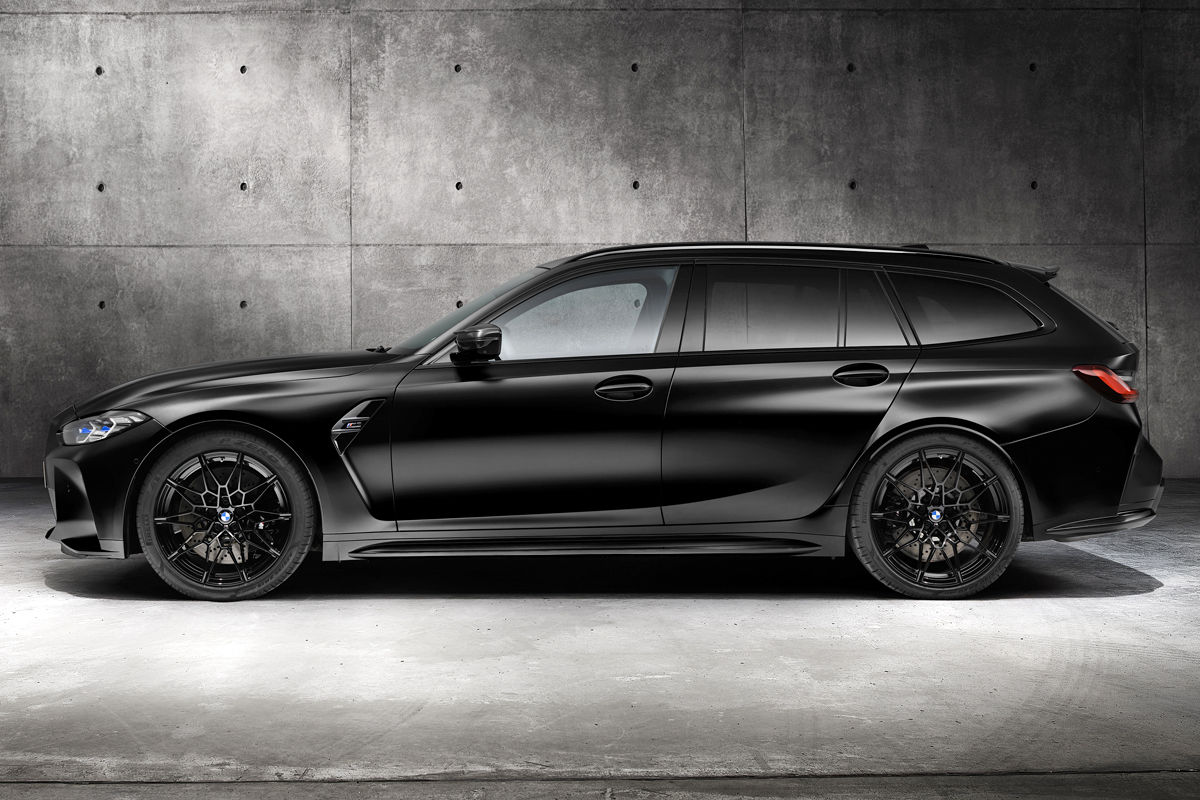
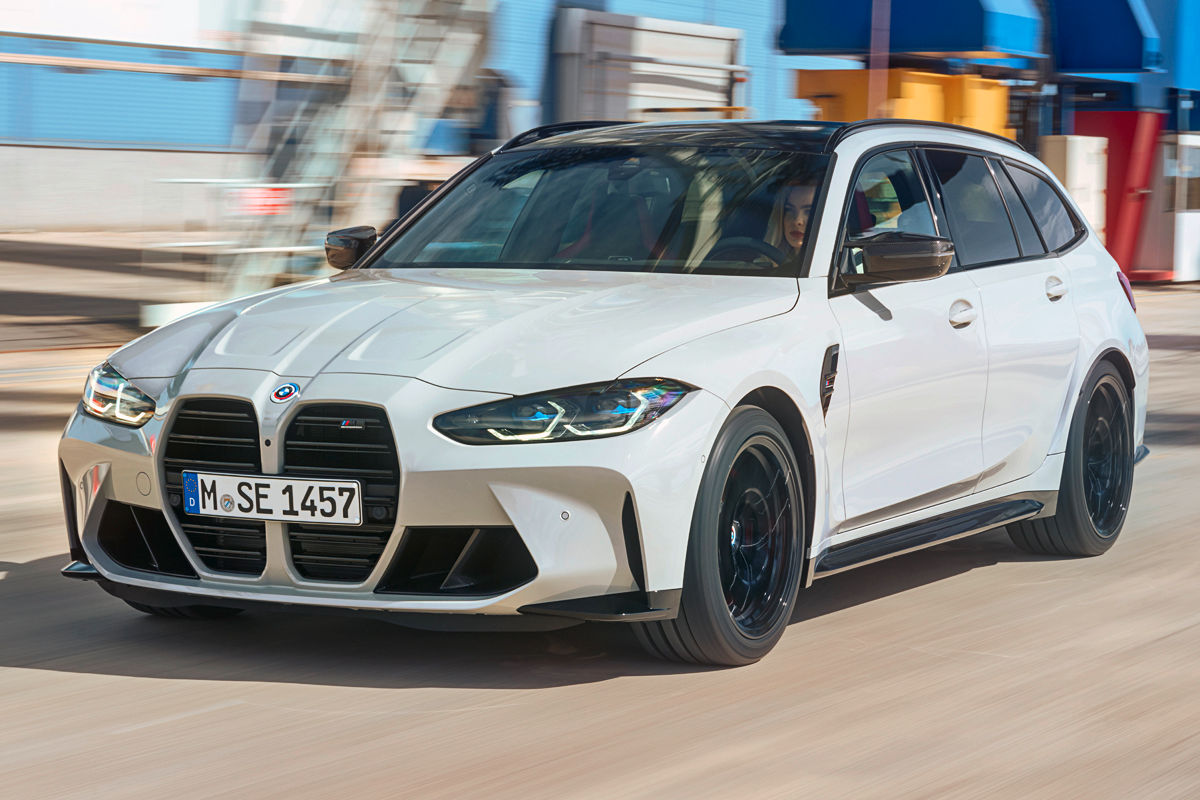
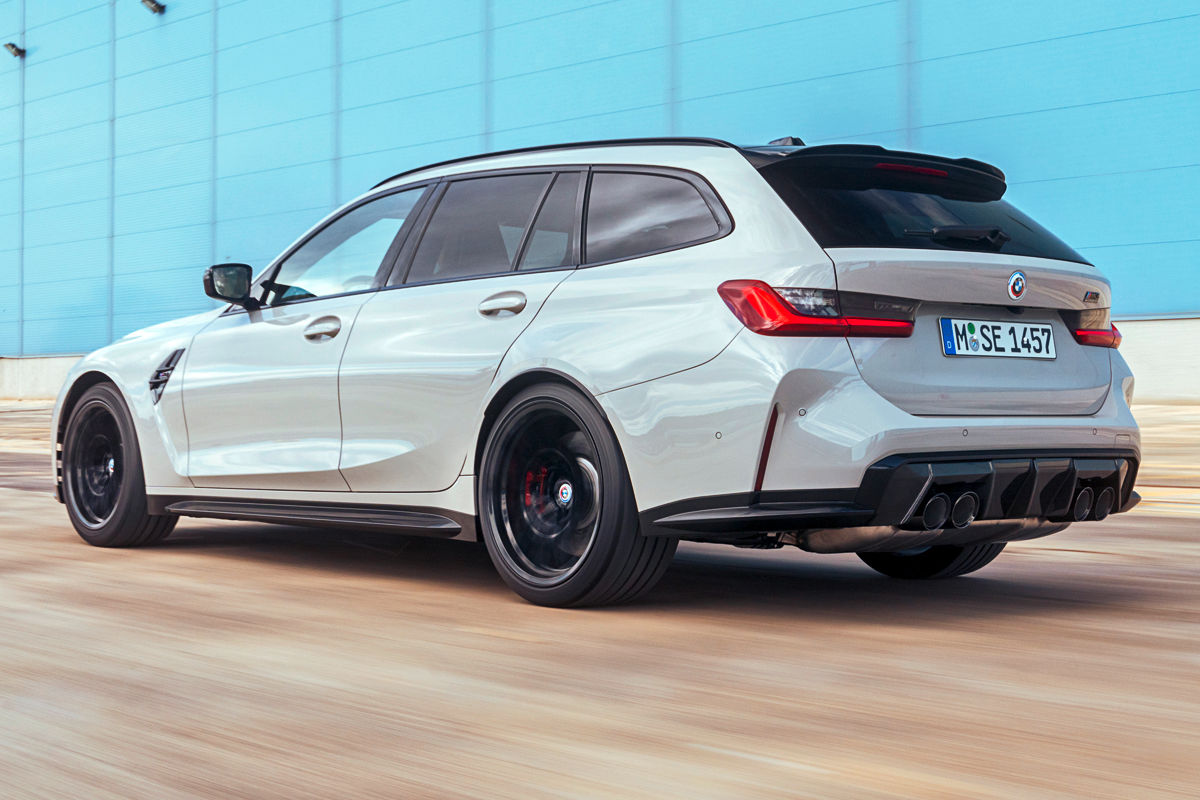
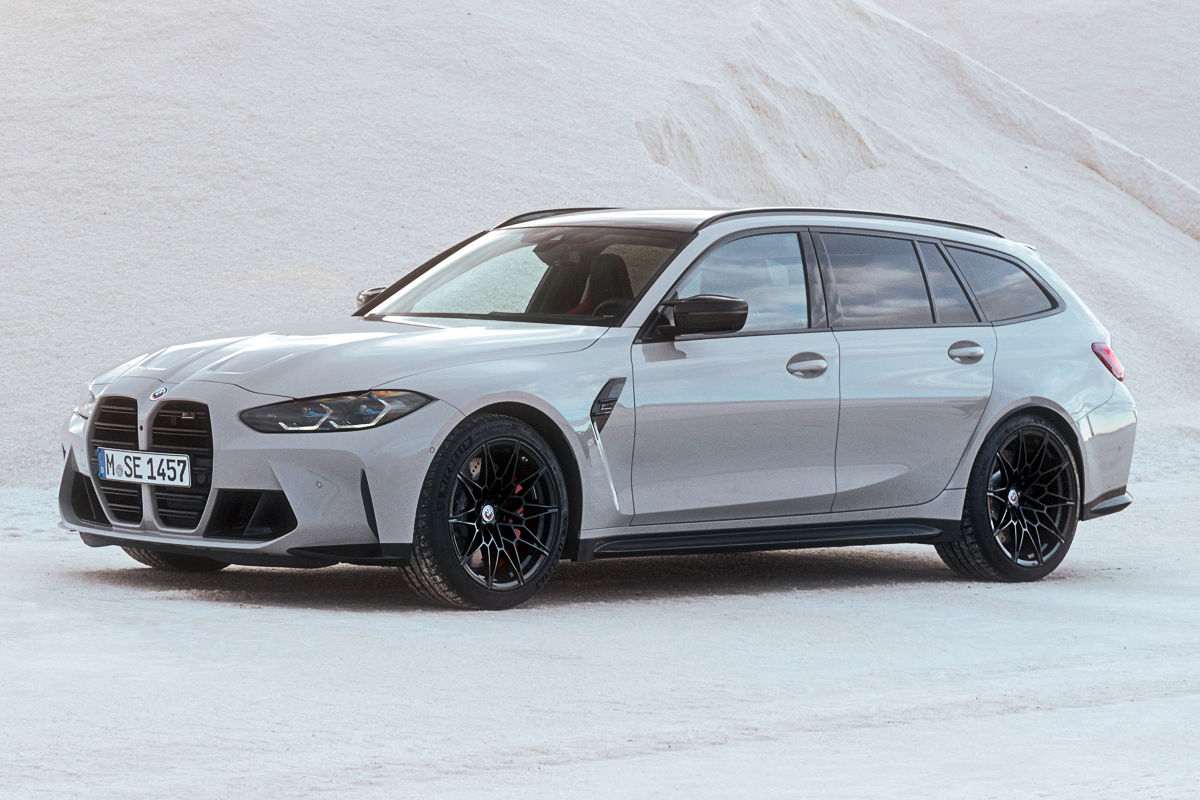
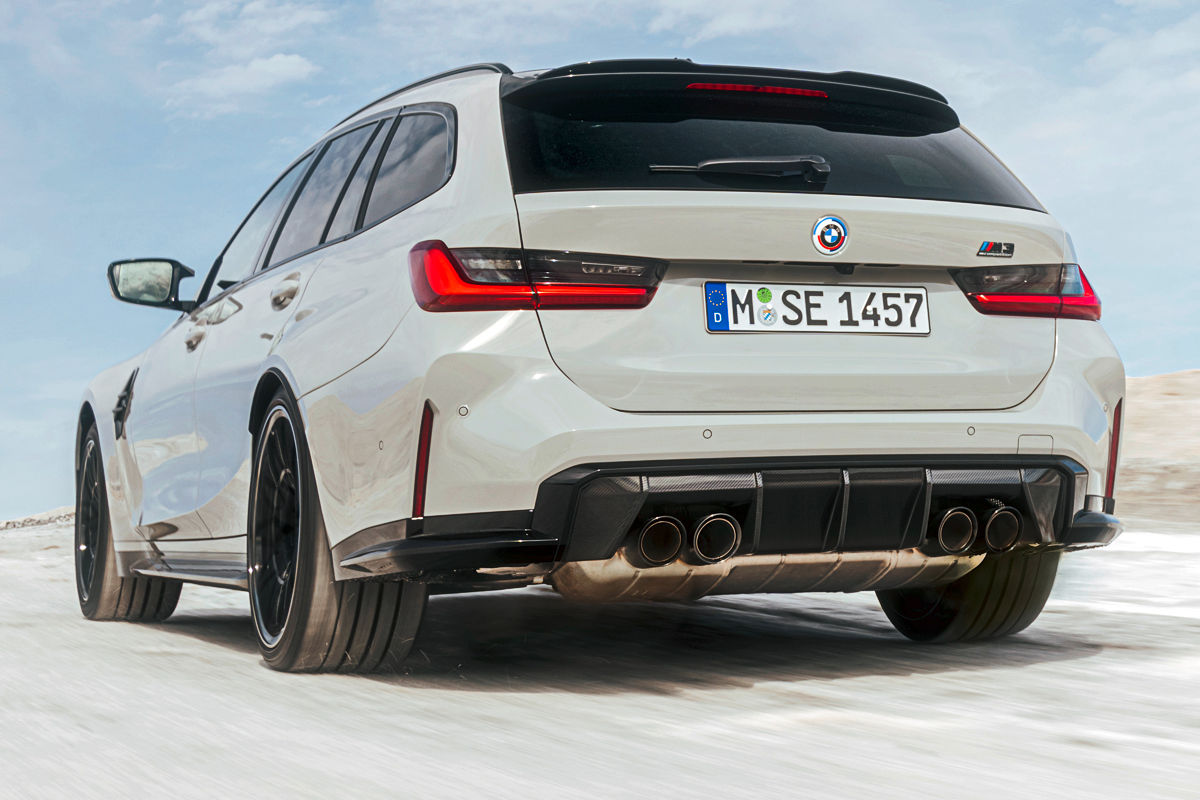
High-performance wagon, anyone? Meet the first-ever BMW M3 Touring, a celebration of 50 years of the M brand. Yes, it’s now been confirmed for a South African introduction…
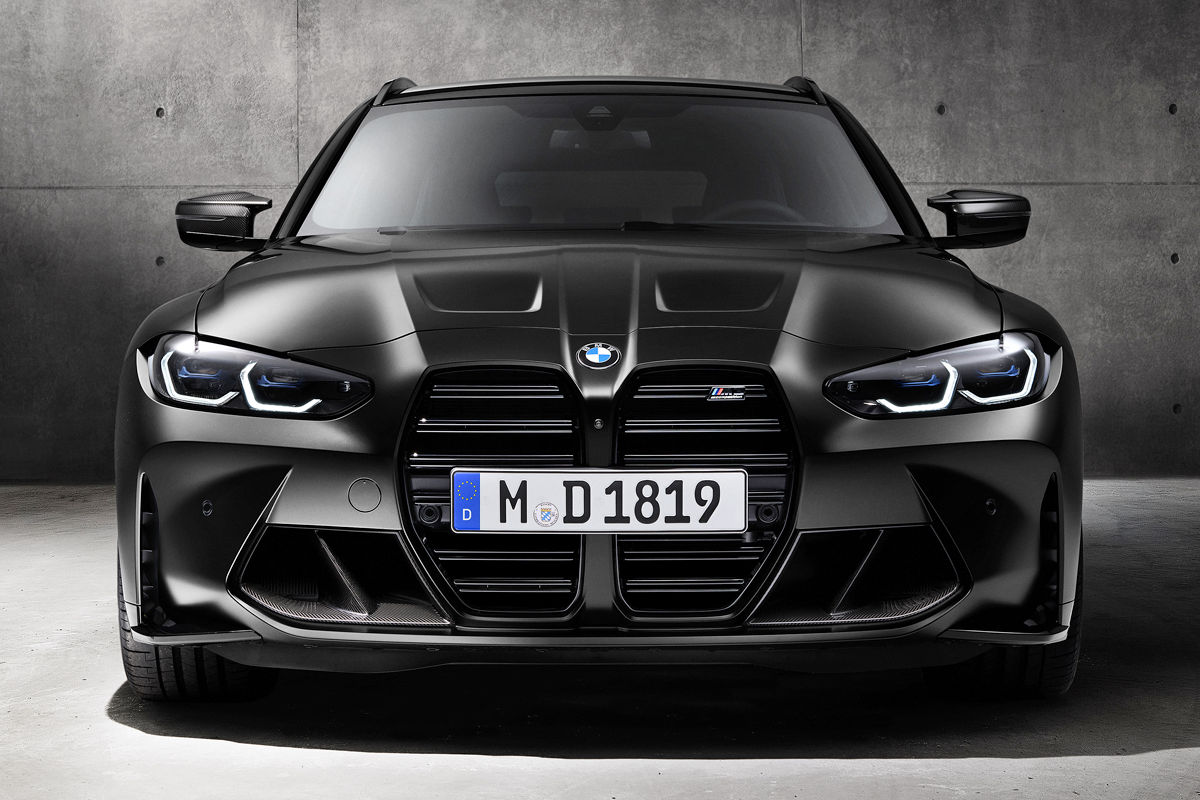
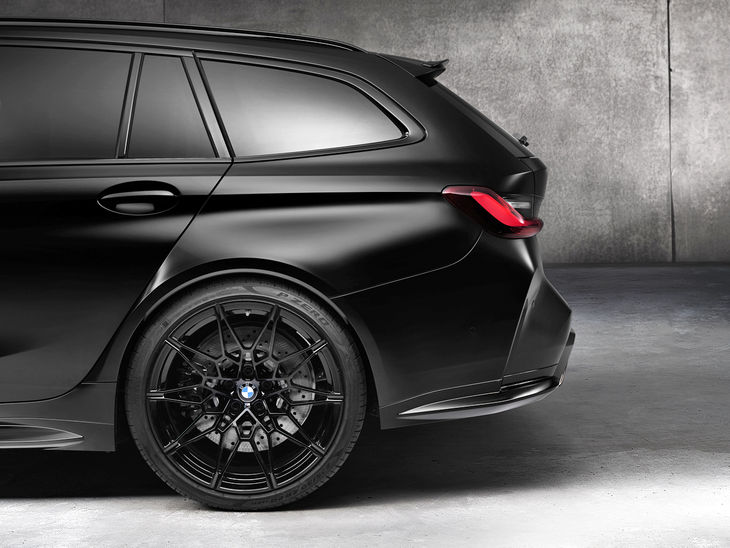
BMW’s celebration of 50 years of the M brand continues with the long-awaited unveiling of the first-ever M3 Touring. Yes, we finally have details of Munich’s unprecedented M3-badged estate.
M enthusiasts all over the country are likely wondering whether this high-performance wagon will make its way to local shores. Well, BMW Group South Africa has so far simply said the new M3 Touring “has not been confirmed” for a local introduction. Of course, South African car-buyers aren’t exactly renowned for their love of wagons, but considering BMW Group SA hasn’t completely ruled out the possibility, we live in hope.
UPDATE: BMW Group SA has confirmed the new M3 Touring is scheduled to arrive in South Africa in “limited numbers” at some point in 2024!
What do we know about the new M3 Touring? Well, it’s obviously closely related to the M3 saloon, though interestingly the estate version will be available exclusively in Competition guise (and fitted with the M xDrive system). That means the twin-turbocharged 3.0-litre straight-6 petrol engine generates 375 kW and 650 Nm, peak outputs that are directed to all four corners courtesy of an 8-speed automatic transmission.
The result is a claimed 0-100 kph time of 3.6 seconds (one-tenth slower than the all-paw M3 Competition sedan but considerably quicker than Audi’s RS4 Avant) and a top speed of 250 kph (or 280 kph when specified with the optional M Driver’s package). The Munich-based firm claims the speedometer will display 200 kph just 12.9 seconds after launch. In fact, BMW says the M3 Touring is the fastest production wagon to lap the Nürburgring Nordschleife, completing the circuit in 7 minutes and 35.060 seconds.
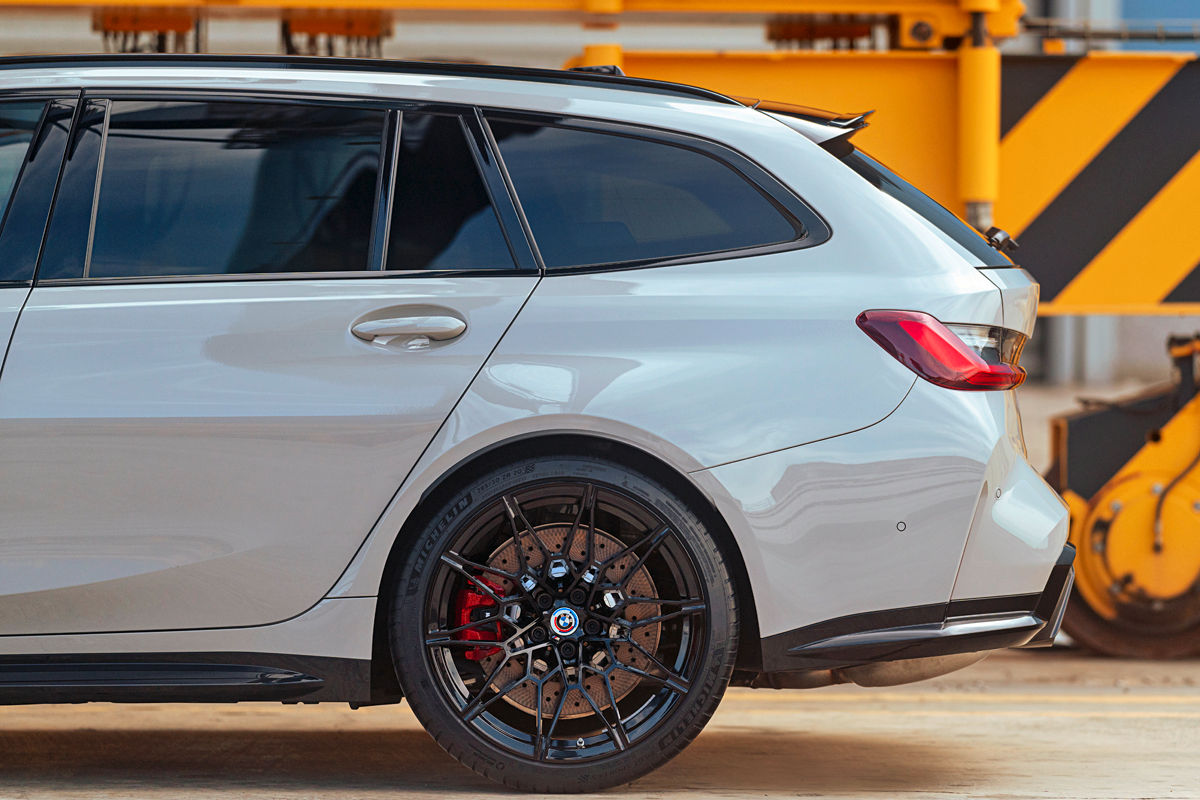
Adaptive M suspension (with electronically controlled shock absorbers) ships standard on the new M3 Touring, while M Carbon ceramic brakes can be optionally ordered as an alternative to the standard M Compound braking system. Forged M light-alloy wheels measuring 19 inches fore and 20 inches aft can be specified with track tyres as an option.
Party at the front, business at the back
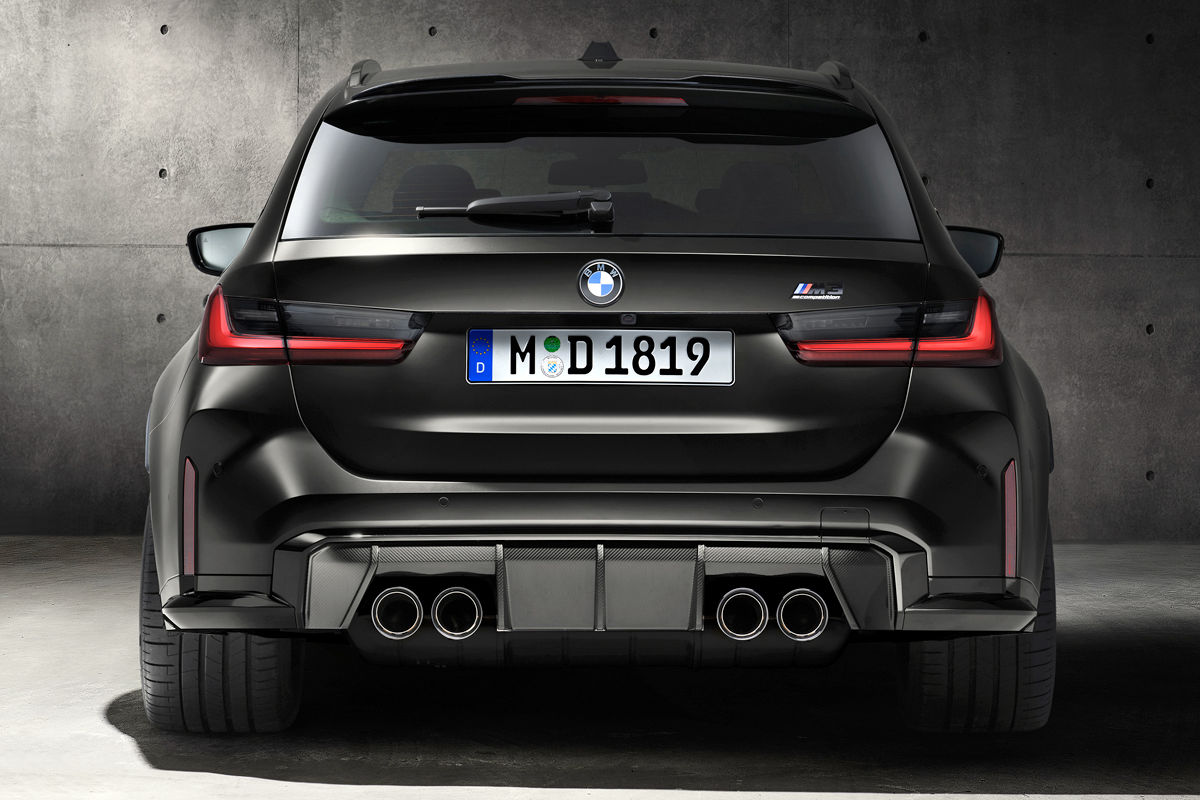
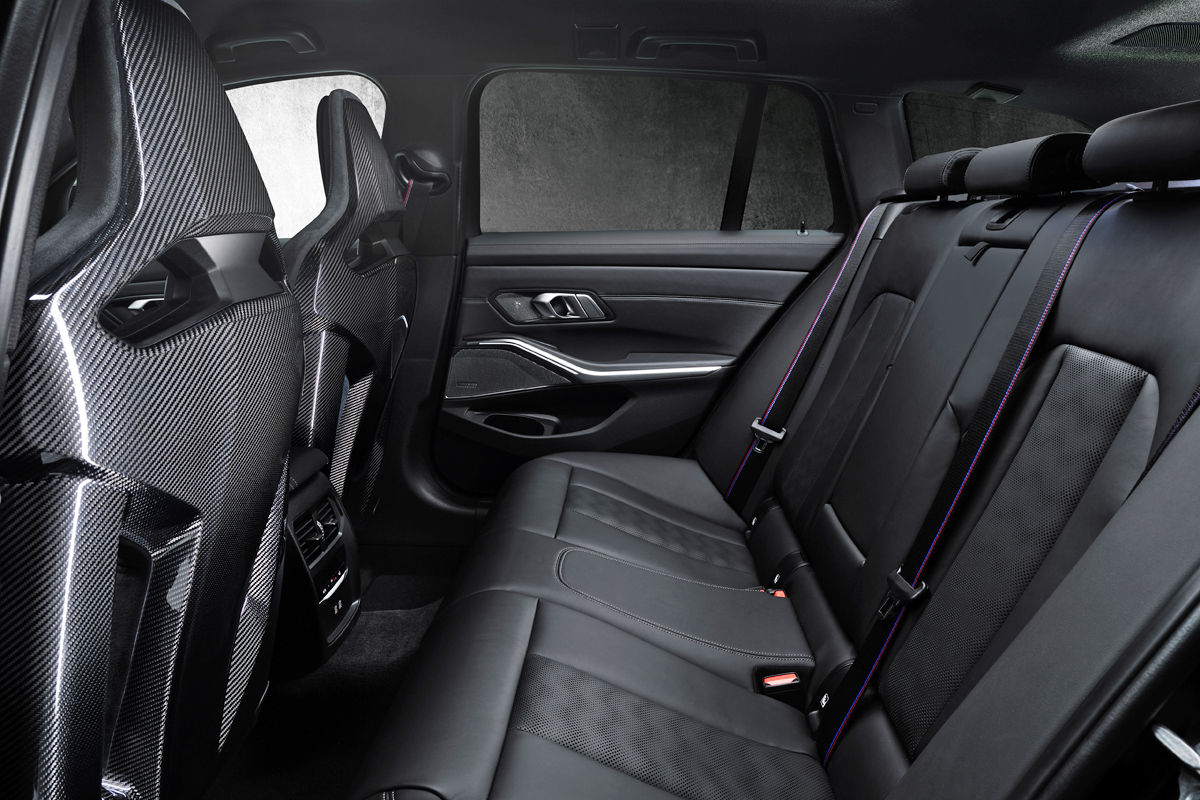
While the M3 Touring’s engine is obviously familiar to M fans, it’s the rear end that sets this estate apart from its sedan sibling. BMW claims there are three “full-size seats” in the rear quarters, with the backrest split in a 40:20:40 ratio. Drop all of those pews flat and the load capacity balloons from 500 litres (around 20 litres more than the sedan) to a whopping 1 510 litres.
Standard features include an automatic tailgate and a separately opening rear window, while there’s also a storage compartment beneath the boot floor (a space able to accommodate the compartment cover and boot-partition net). Anti-slip rails that automatically rise up from the boot floor can be ordered as an option.
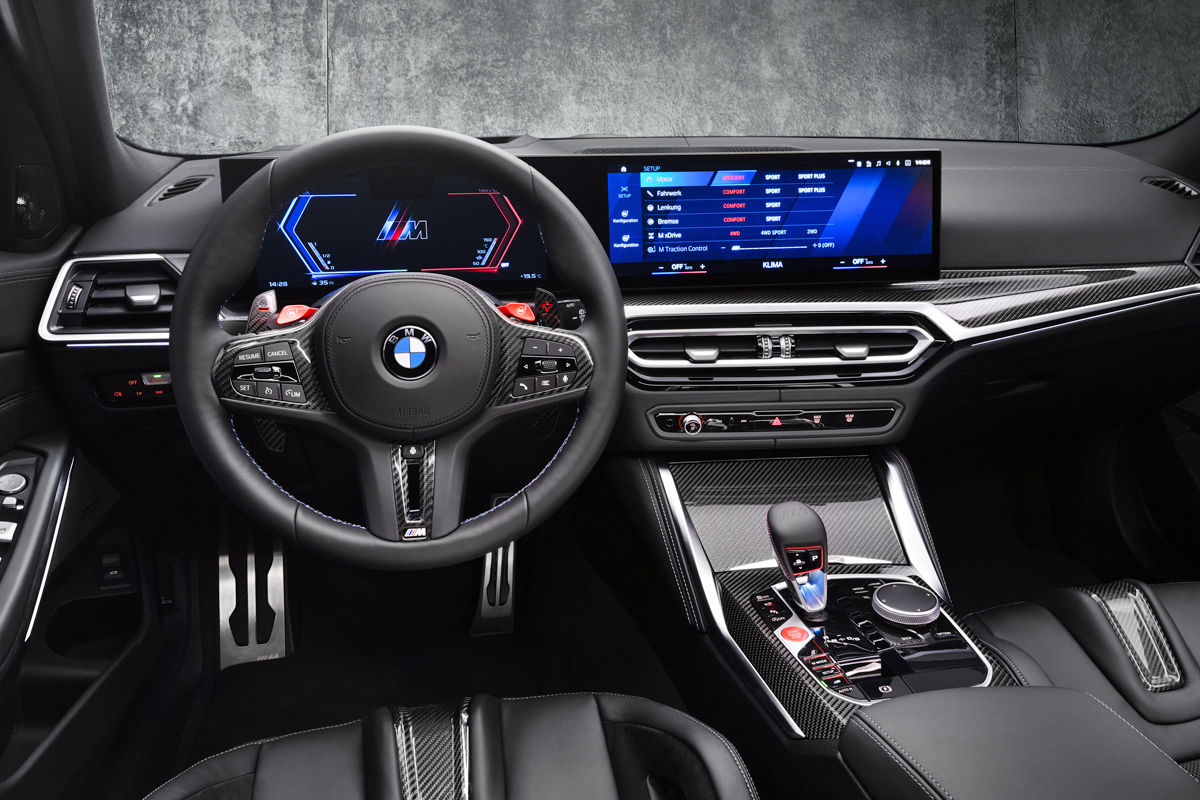
Up front, you’ll find electrically adjustable M Sport seats (with a memory function and seat heating) trimmed in Merino leather. Should you desire something a little more special, you can order the M Carbon bucket seats, complete with carbon-fibre-reinforced plastic structural elements, cut-outs in the side bolsters (and below the head restraints) and a weight saving of 9.6 kg.
The German automaker’s latest curved display is standard, with the digital screen array comprising a 12.3-inch information screen and a control display featuring a diagonal of 14.9 inches. A head-up display (with M-specific content) is offered as an option.
Other items on the standard equipment list include 3-zone automatic climate control, BMW’s Live Cockpit Plus system (including navigation), ambient lighting and a hi-fi speaker system. In terms of the exterior, the M3 Touring features a gloss black roof (or body colour as an option), with the roof rails and model-specific Gurney air-directing flap on the roof spoiler finished in the same hue. The M Carbon exterior package, meanwhile, is found on the options list.
BMW says orders for the new M3 Touring (in initial markets) will be taken from September 2022, with production scheduled to start in Munich in November 2022.
New Toyota GR86 (Manual) Review
The new Toyota GR86 has gone on sale and promises a fun and hands-on driving experience. Ciro de Siena gets behind the wheel and heads for the nearest driving road.
Carrying on a long tradition of Toyota selling cars made by someone else, the Toyota/Subaru partnership has produced the second generation of the 86 sports car. With stunning good looks, a larger engine offering more power, and sticking to the formula of a naturally aspirated, RWD layout, Ciro De Siena set out to answer the question, does this car offer the best of both worlds?
10 best-selling bakkies in South Africa: February 2023
We’ve rummaged through February 2023’s sales figures to identify South Africa’s best- and worst-selling bakkies. Here’s what you need to know…
South Africa’s new-vehicle market registered 2.6% of year-on-year growth in February 2023 to end the month on 45 352 units. Gains in the light-commercial vehicle segment, meanwhile, were slightly higher at 5.5%, resulting in total sales of 12 972 units, mostly in the form of bakkies (along with a few minibus and panel-van units).
So, what happened on the list of SA’s best-selling bakkies? Well, the Prospecton-produced Toyota Hilux was again head and shoulders above the rest of the field, finishing February 2023 on a healthy 3 335 units. For the record, that’s an improvement of 566 units compared with its performance in January 2023. As an aside, Toyota SA Motors has just announced a specification update for the Hilux, with a focus on the Xtra Cab Legend models.
With the new generation of the Ford Ranger now very much online (though the single- and extended-cab models will technically hit the local market only at some point in March), the Silverton-built bakkie (as well as the imported Raptor) regained 2nd place, with 1 806 units registered during the month. That saw the Struandale-manufactured Isuzu D-Max (1 747 units) drop a spot to 3rd, despite improving by 474 sales, month on month.
Though the Nissan NP200 (1 292 units) broke back into 4 figures, it again placed 4th (its manufacturer is currently “evaluating” a replacement), while the Mahindra Pik Up (844 units) likewise held steady in 5th. The Nissan Navara ended February 2023 with 581 registrations, which was enough to see the Rosslyn-built bakkie jump a place to 6th.
That meant the evergreen Toyota Land Cruiser 79 (393 units) fell a position to 7th, with the GWM P-Series (245 units), GWM Steed (115 units) and Mitsubishi Triton (60 units) again closing out the table.
Best of the rest in February 2023
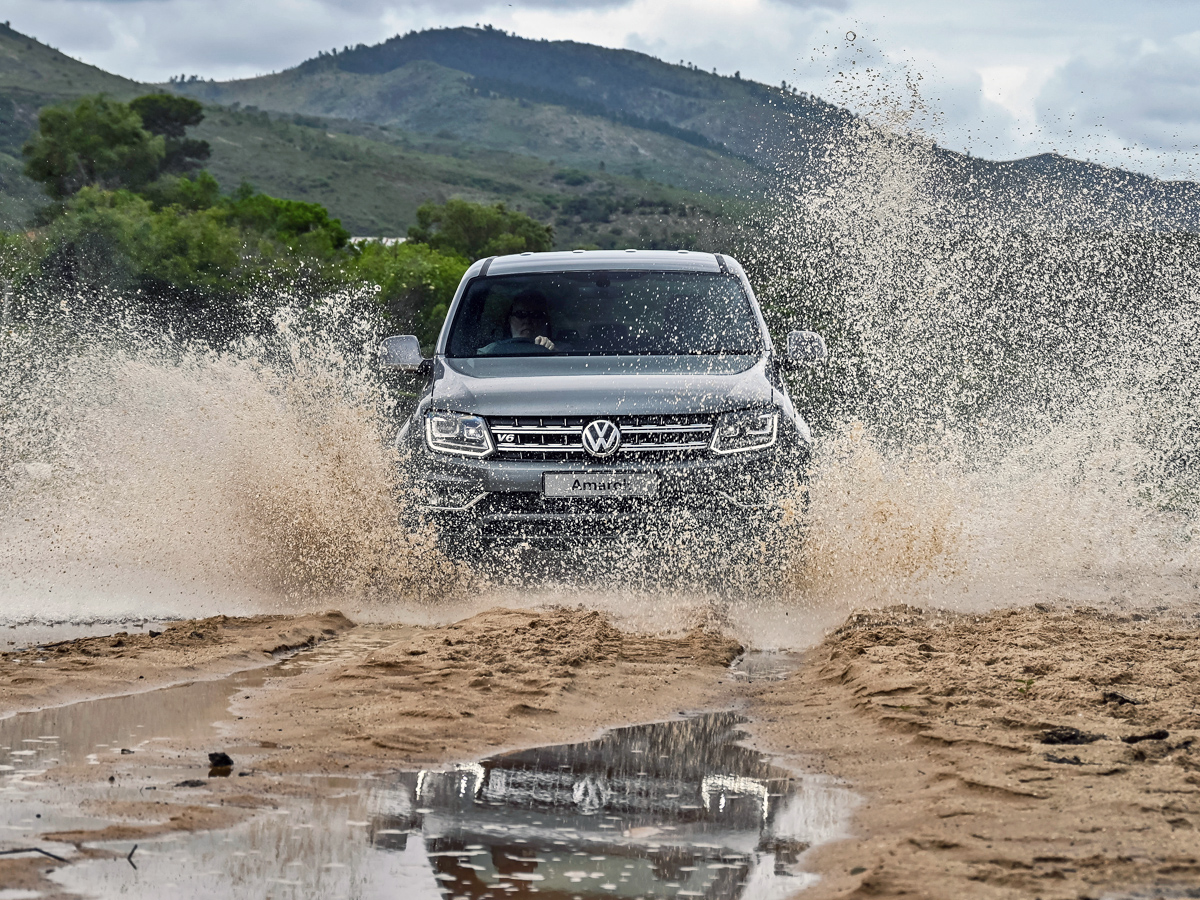
The first-gen VW Amarok is on run-out, with the new model set to launch in the 3rd week of March.
What about the models that failed to make the table in February 2023? Well, 58 examples of the outgoing Volkswagen Amarok were registered, putting the German bakkie just outside the top 10. As a reminder, the new (locally built and Ranger-based) Amarok is due to hit the local market on 18 March, so we should see a marked improvement in this nameplate’s sales performance over the next couple of months.
Next came the Mahindra Bolero (42 units), then the Peugeot Landtrek (29 units) and Jeep Gladiator (19 units). Yet again, the Mazda BT-50 brought up the rear, with 7 examples registered during the month. Meanwhile, JAC’s T-badged bakkies (the Chinese automaker reports a combined figure for its T6 and T8 line-ups) ended February 2023 on 43 units.
Export winners in February 2023
What about the bakkie export market? Well, the Toyota Hilux was again at the forefront, with 5 297 units sent overseas in February 2023. With shipments of the new model to international markets now underway, the Ford Ranger improved to 3 923 units, though remained in 2nd place.
The D-Max (571 units), Navara (402 units) and NP200 (2 units) again made up the numbers on the export charts. The official Naamsa report interestingly also showed a handful of imported models being exported from local shores in February 2023, in the form of the P-Series (30 units), Triton (18 units) and Steed (1 unit).
10 best-selling bakkies in South Africa for February 2023
The BMW 3 Series has undergone its Life Cycle Impulse (LCI) update. We attended the local launch of the 2023 business-class sedan to experience the changes in the metal.
The 3 Series needs little introduction: for many motoring enthusiasts, it’s the quintessential BMW model. Since the arrival of the first generation 3 Series back in 1975, more than 16 million units have been built and the latest iteration of the German sedan – the G20 generation – has attracted over 1.1 million sales!
South Africa has been a key market for the 3 Series; BMW SA now builds the X3 in Rosslyn, but before that it produced no fewer than 5 iterations of the 3er (up to the F30, of which production ended in 2018).
In fact, the 3 Series used to be one of Mzansi’s top sellers, but as the model has grown larger, moved further upmarket and become pricier, its segment has declined. Now, the 3 Series needs to stand out more than ever, especially with an all-new locally assembled Mercedes-Benz C-Class to contend with.
Does the BMW 3 Series LCI make a stronger case for itself in an SUV-dominated market? Let’s find out.
What’s Changed?
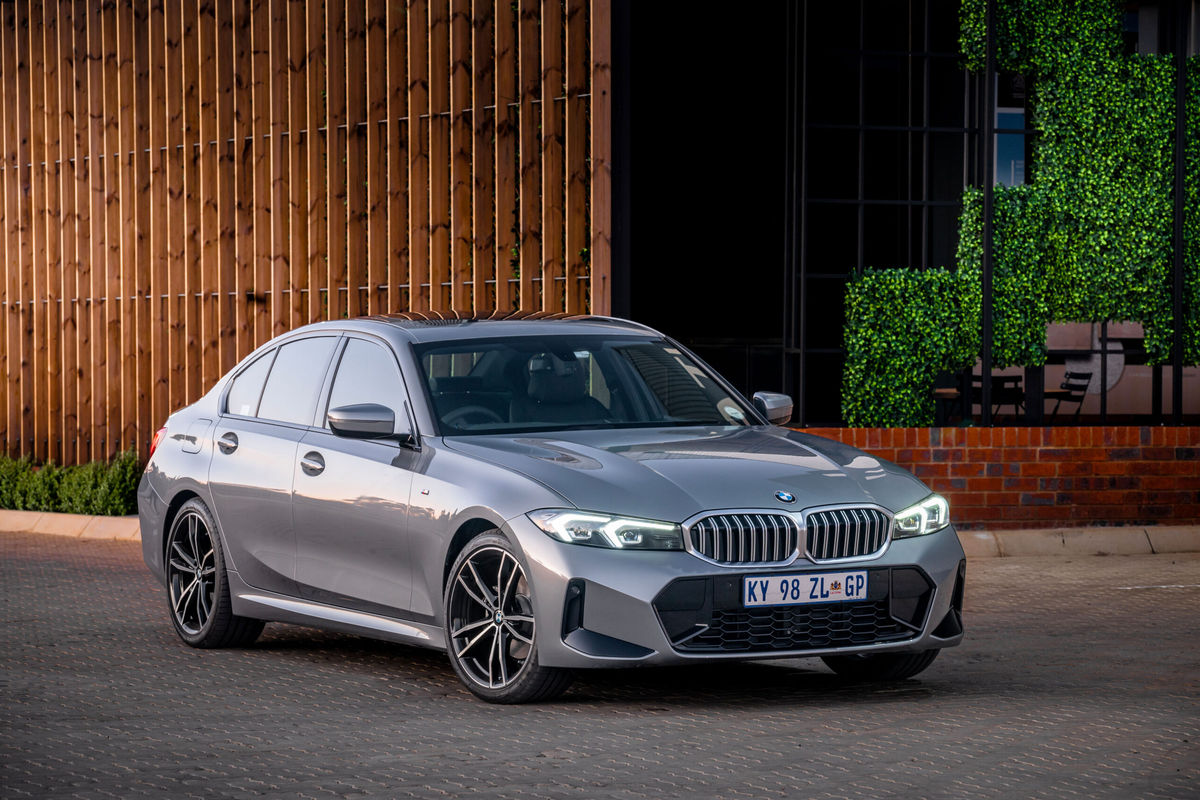
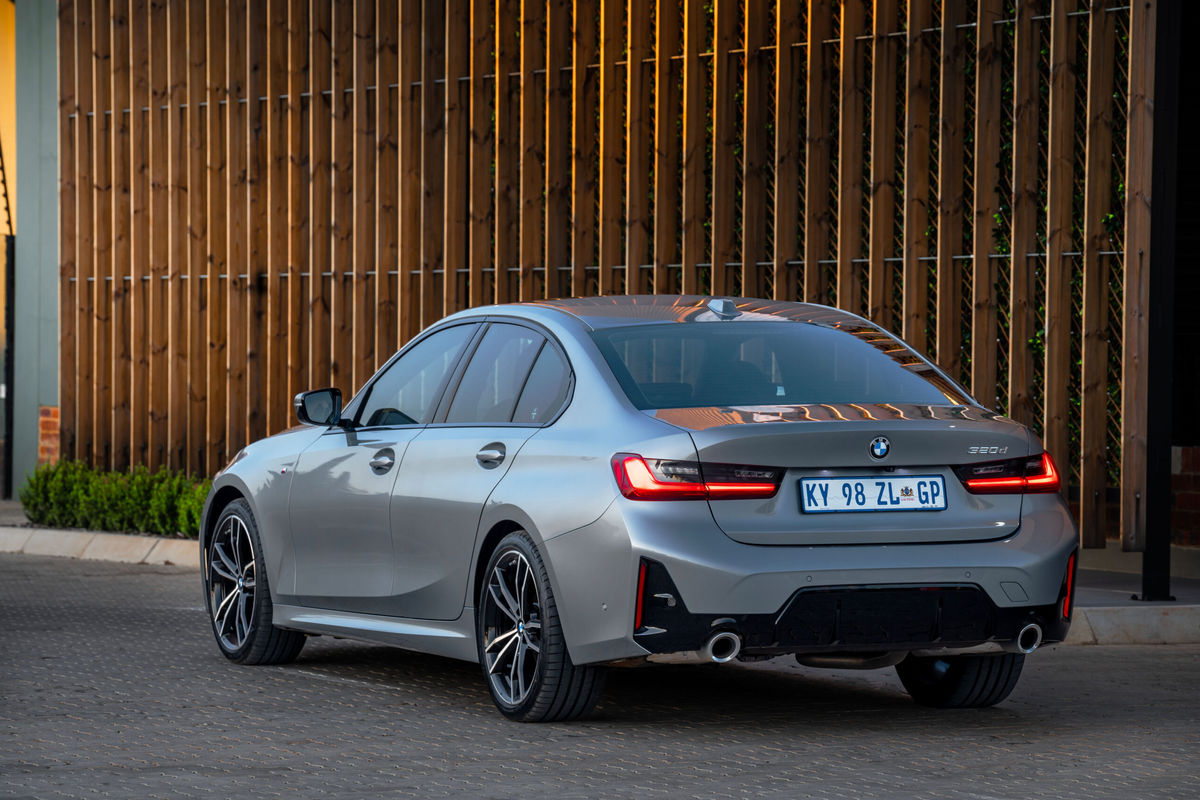
The BMW 3 Series LCI gains a sportier look with a revised lower bumper section and slimmer LED headlights.
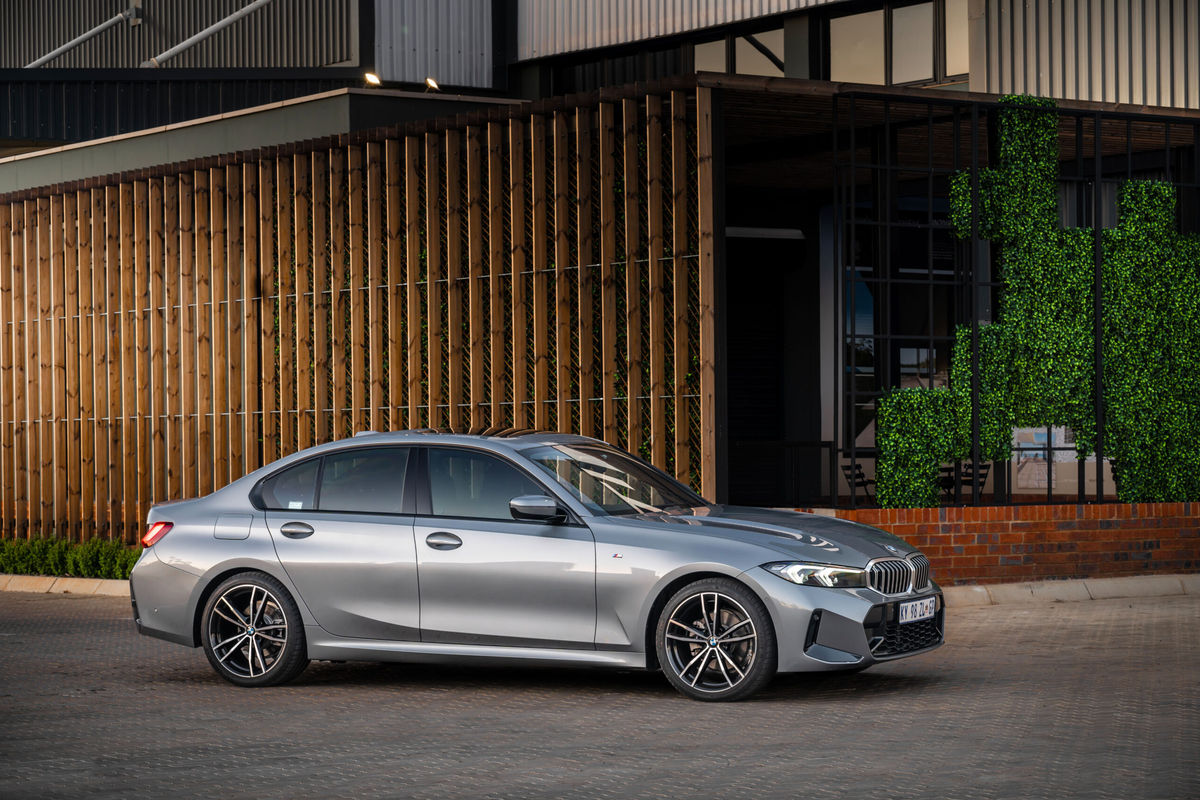
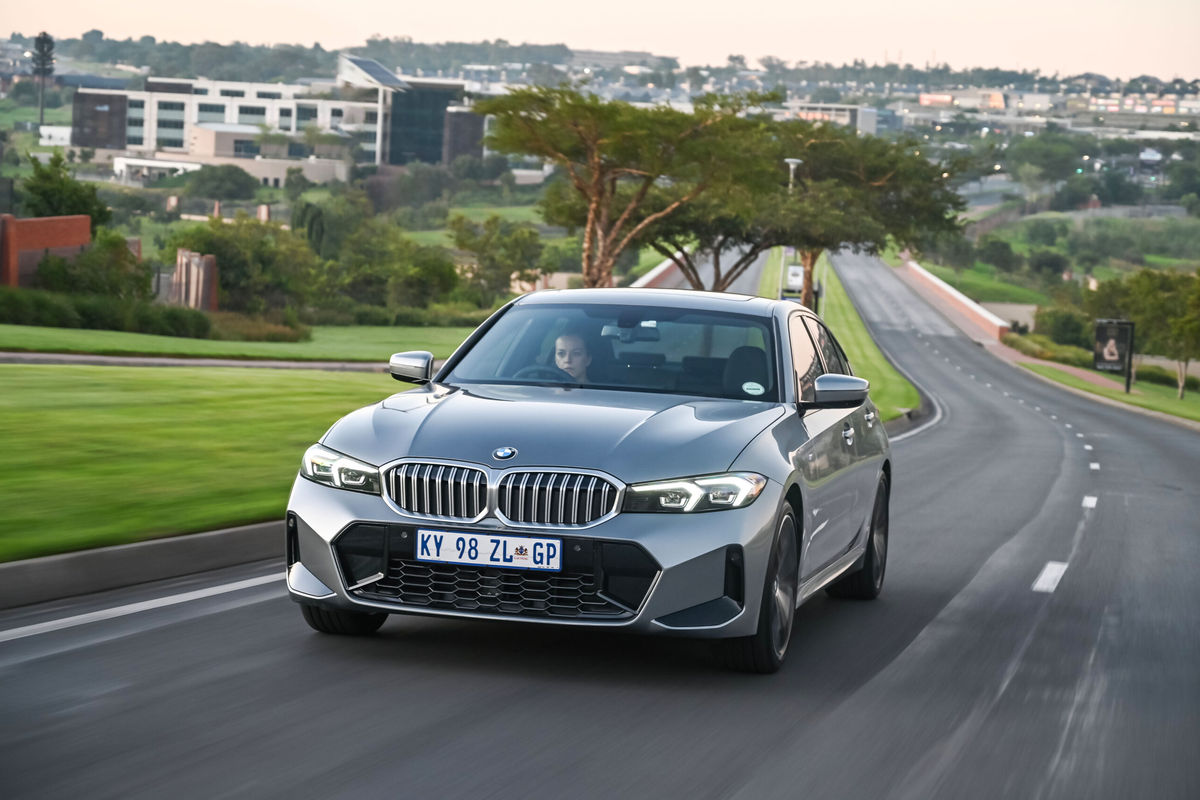
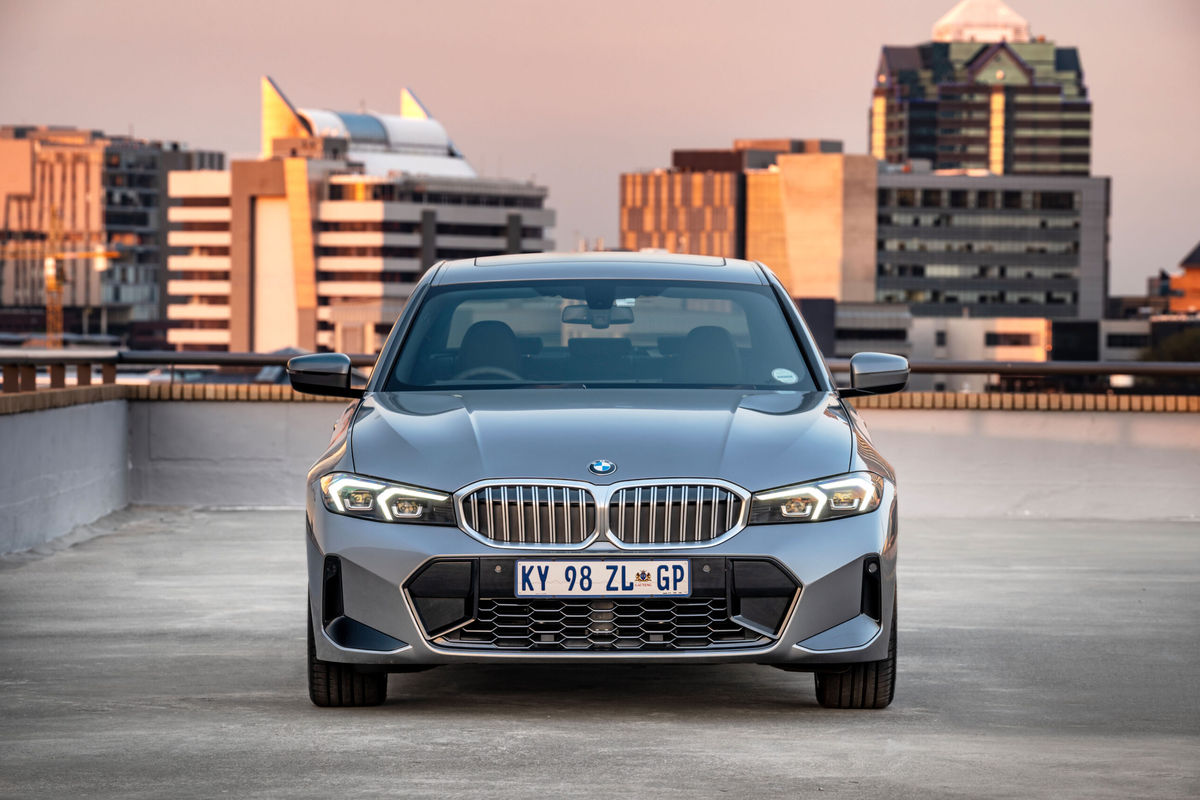
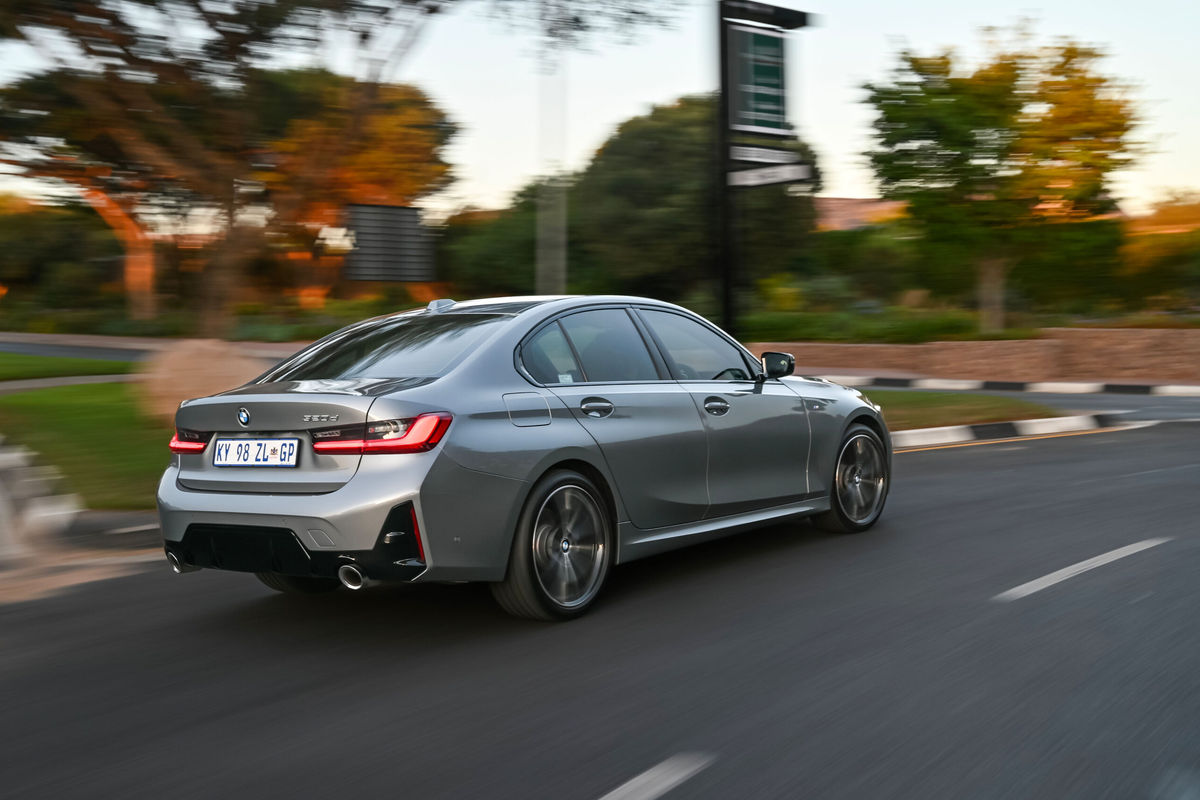
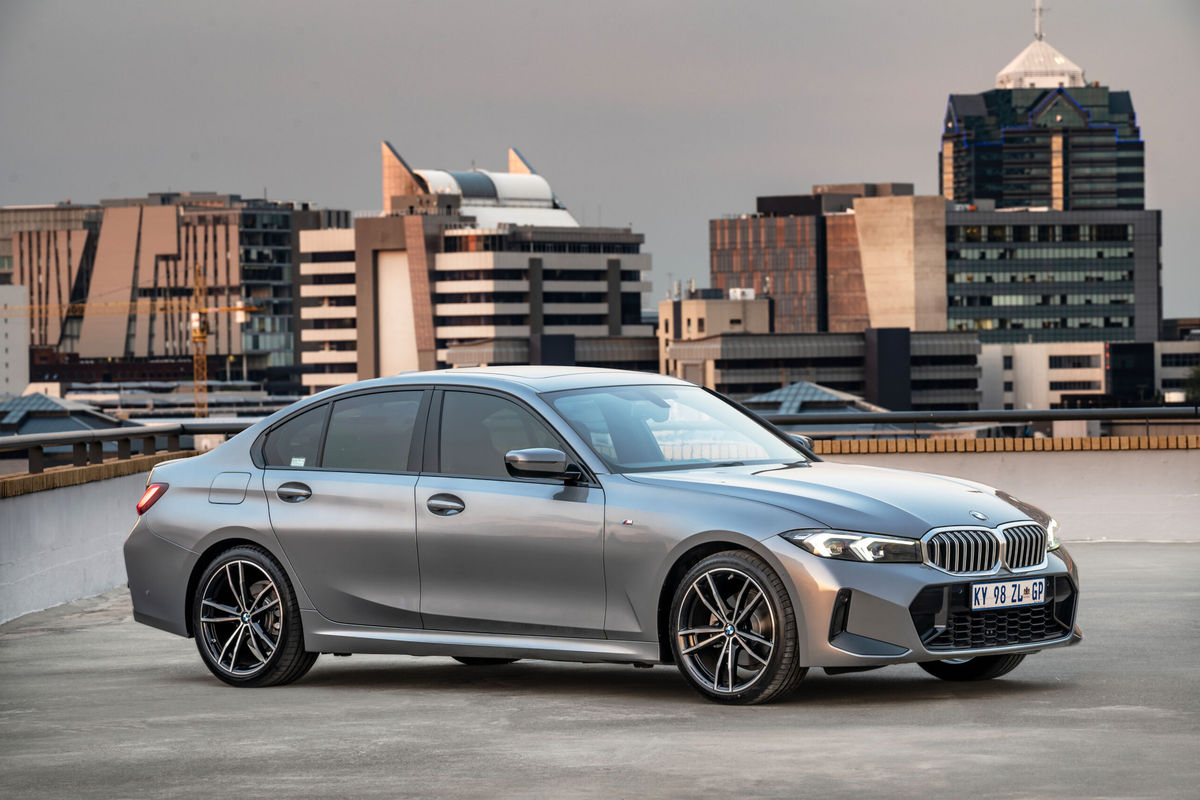
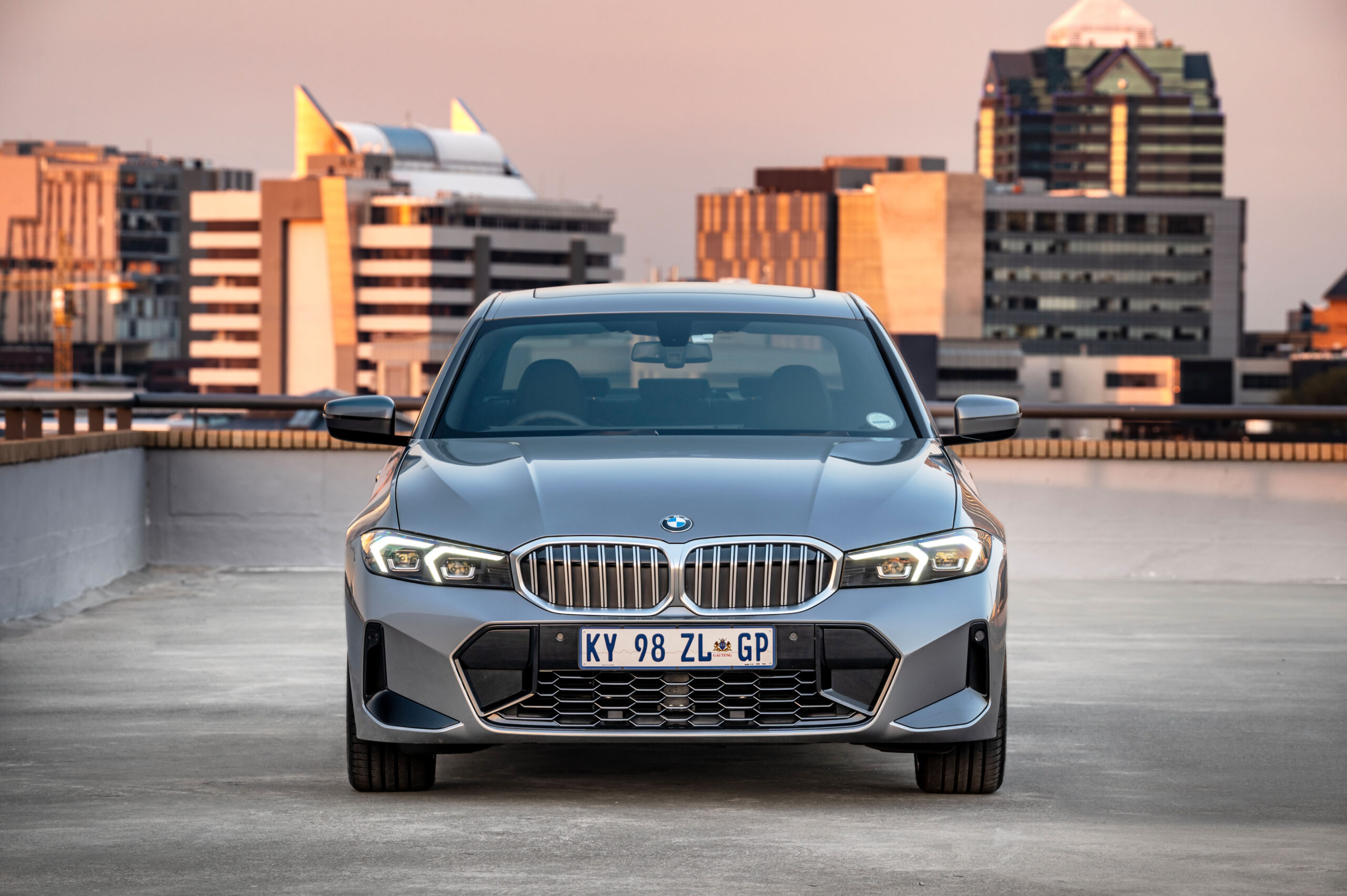
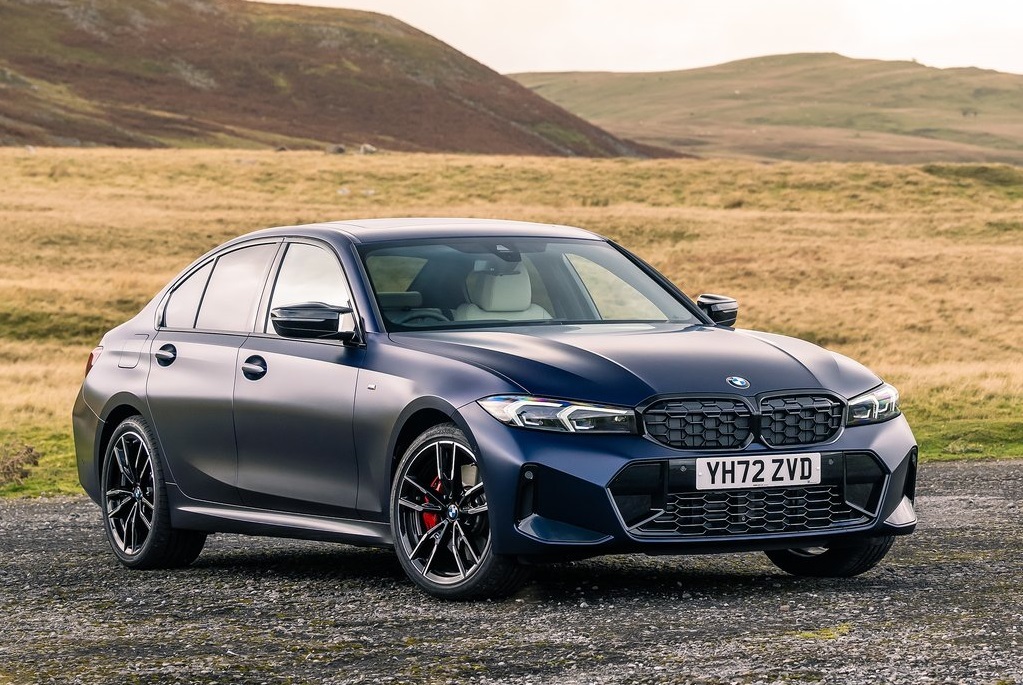
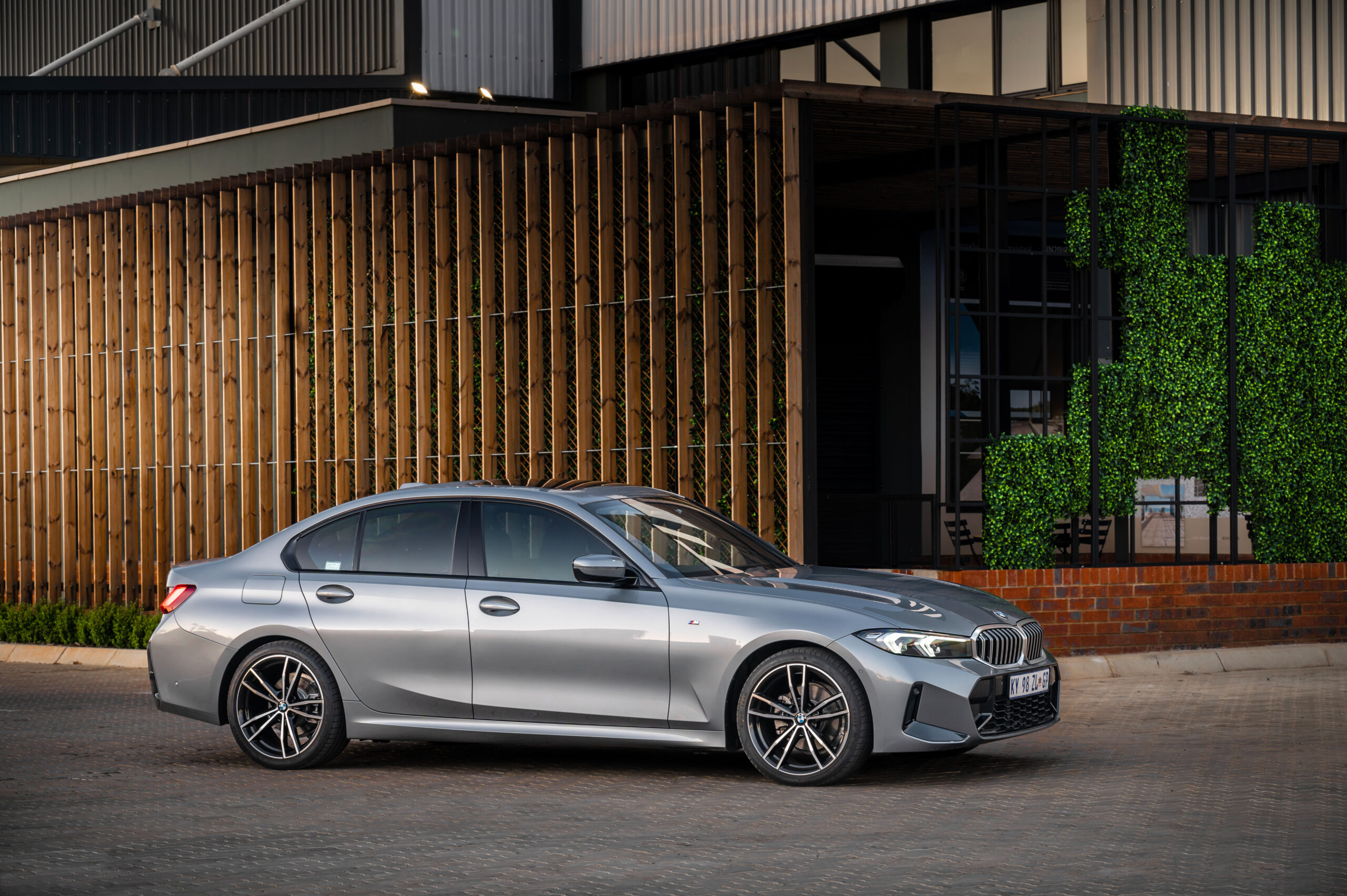
In order to keep the appearance of the BMW 3 Series (2023) looking fresh, the Munich-based brand has revised its business-class sedan’s front end by fitting a redesigned bumper with a larger honeycomb-mesh air intake. Those with a keen eye will also notice the slimmer “inverted L” LED headlights.
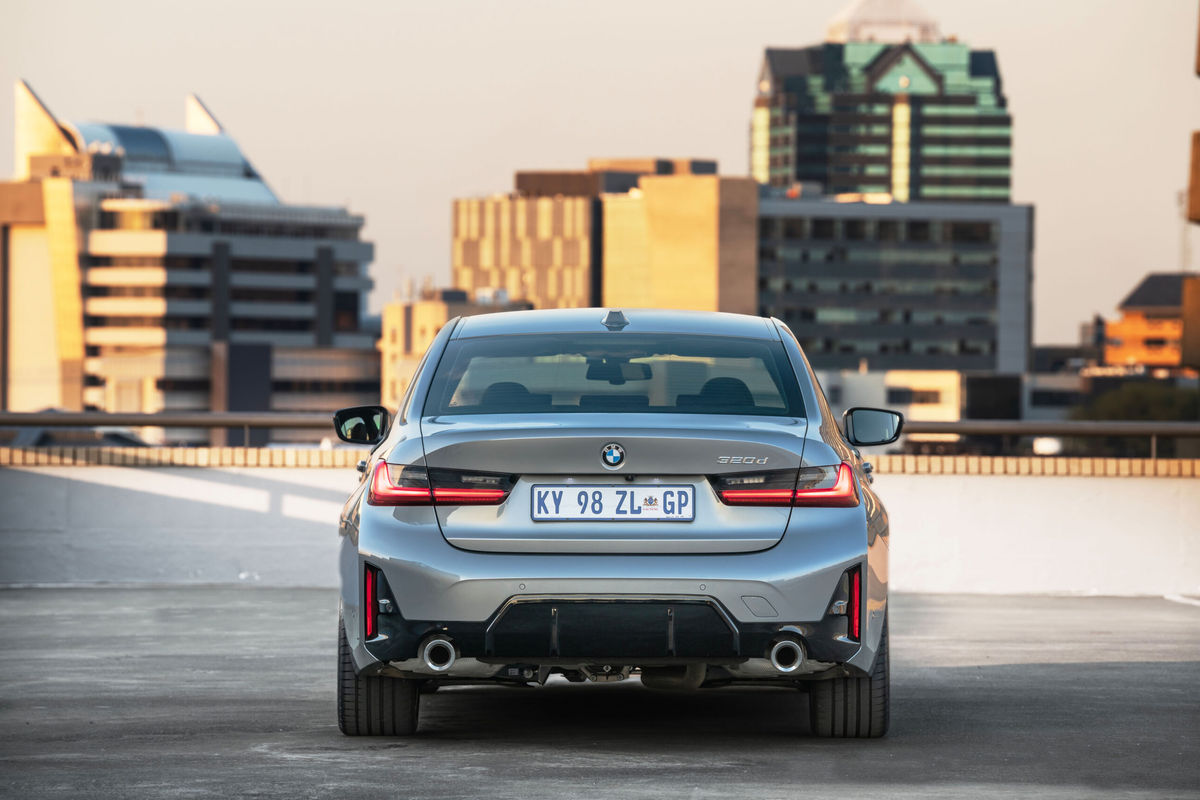
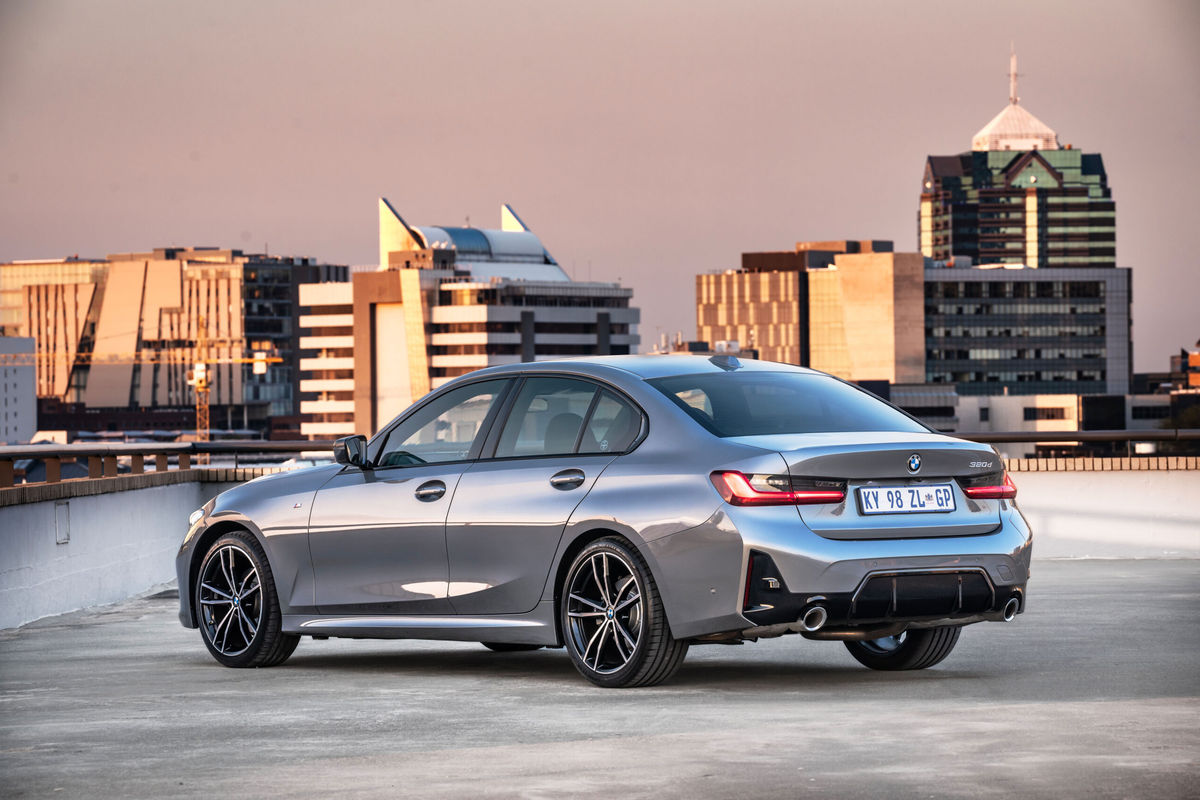
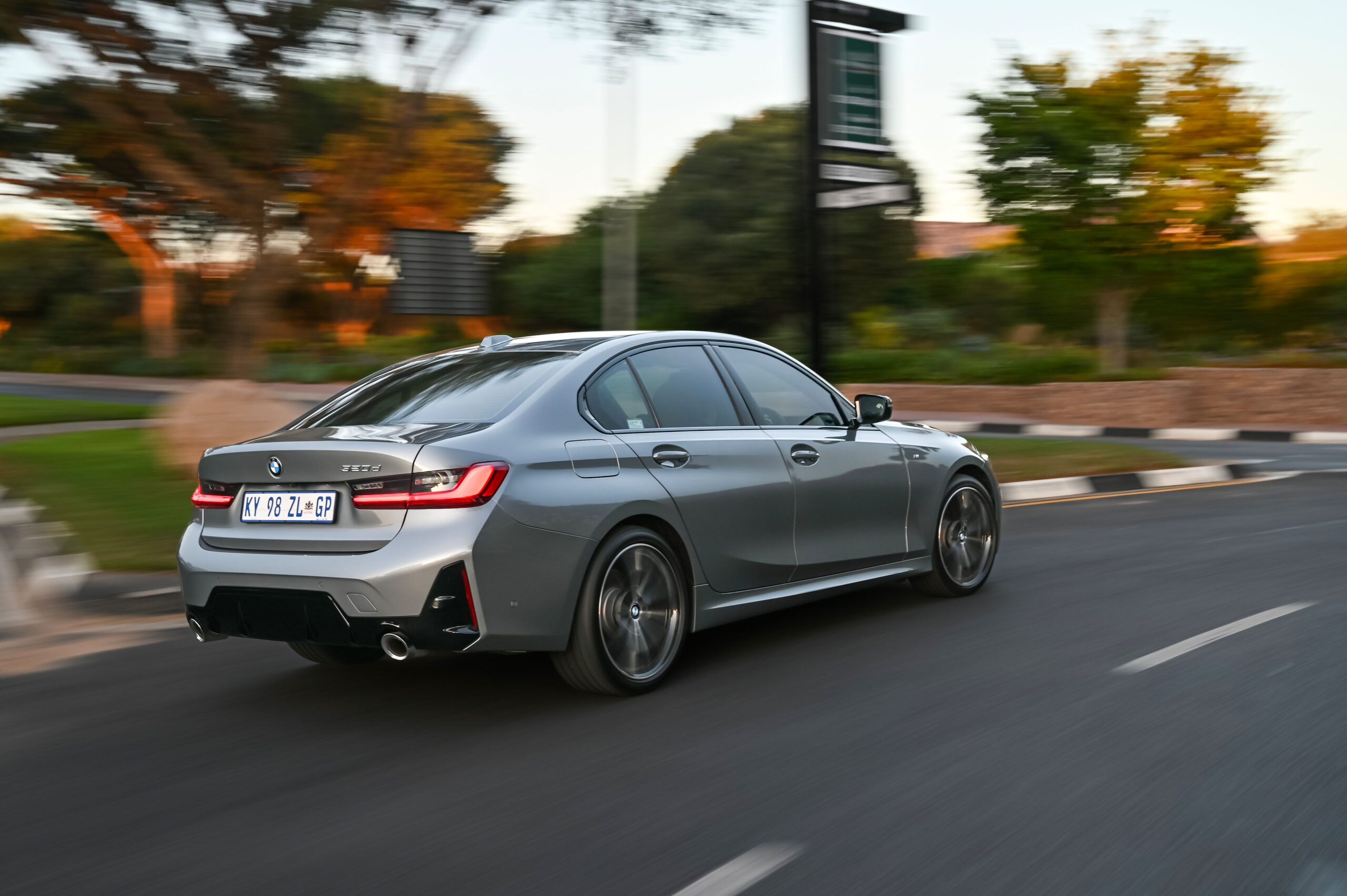
At the rear, a new-look lower bumper gains a sportier diffuser, while dual 100 mm exhaust ends hint at the 3 Series’ performance intentions. It may have put on a tailored suit, but the 3er is still a sporty sedan!
BMW’s Curved Display makes its way into the 3 Series. Fancy!
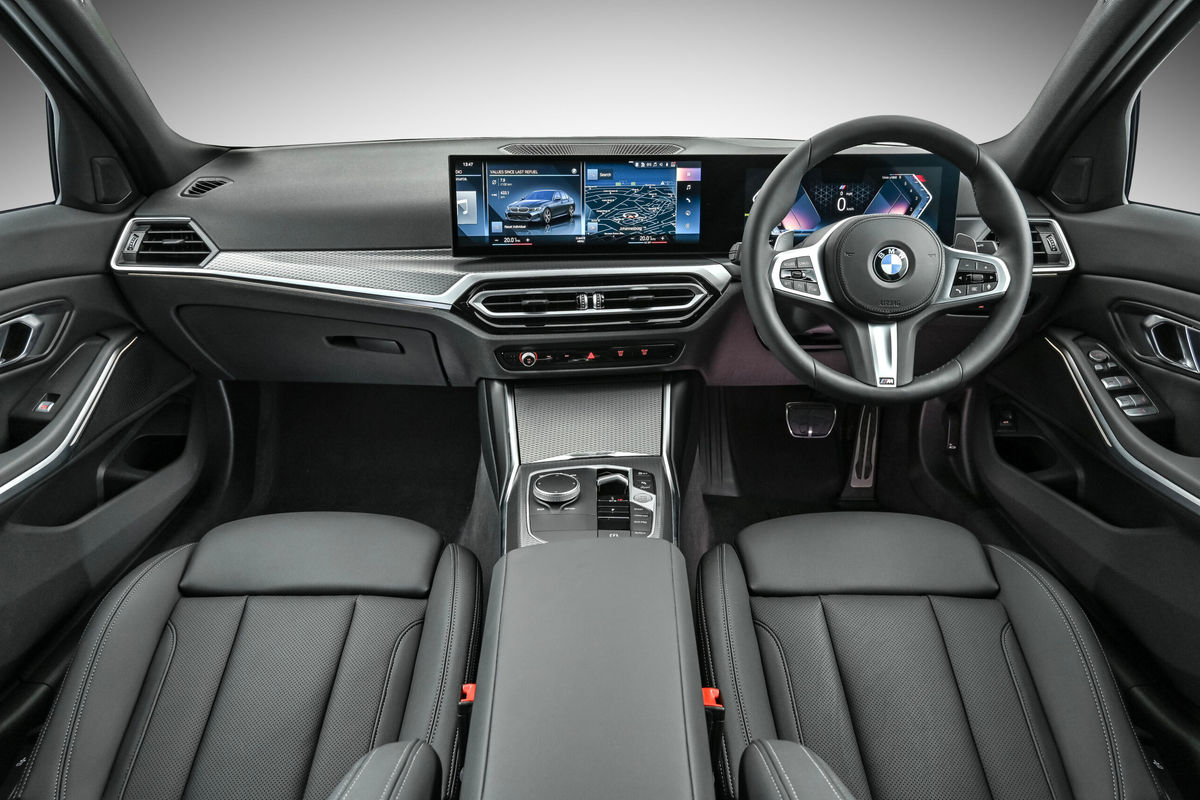
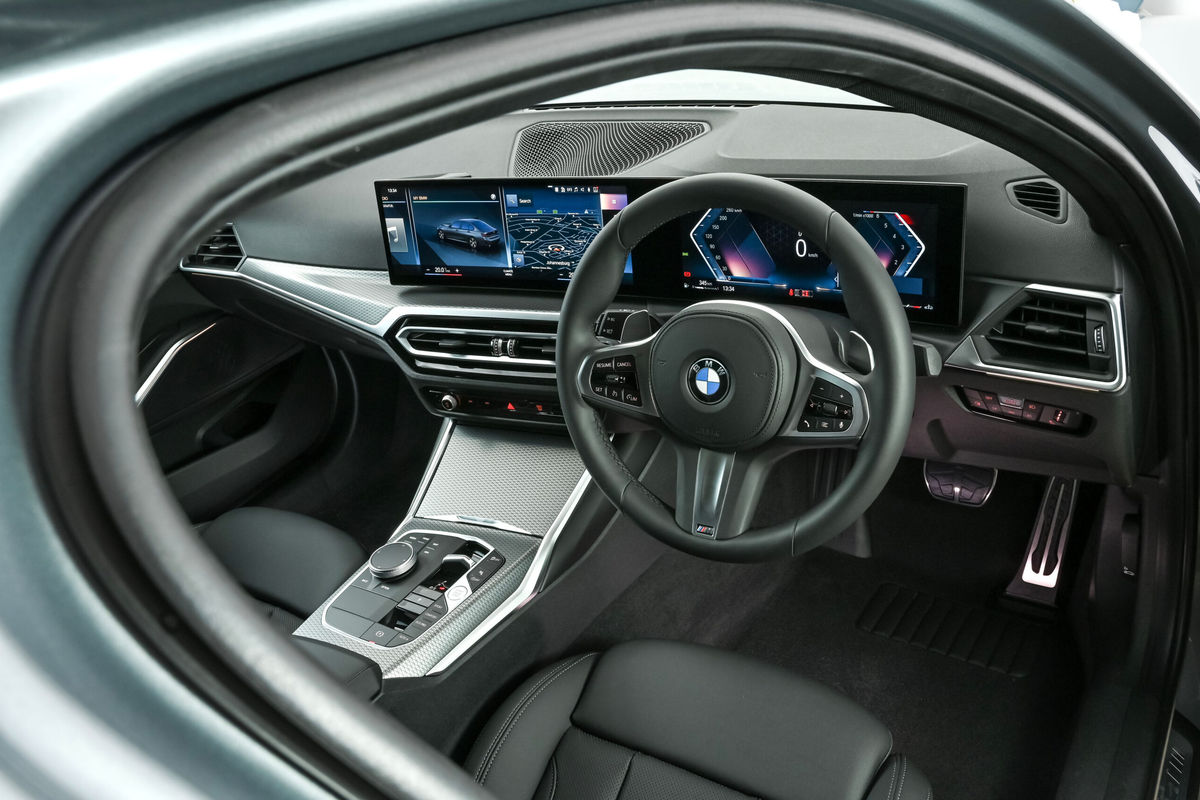
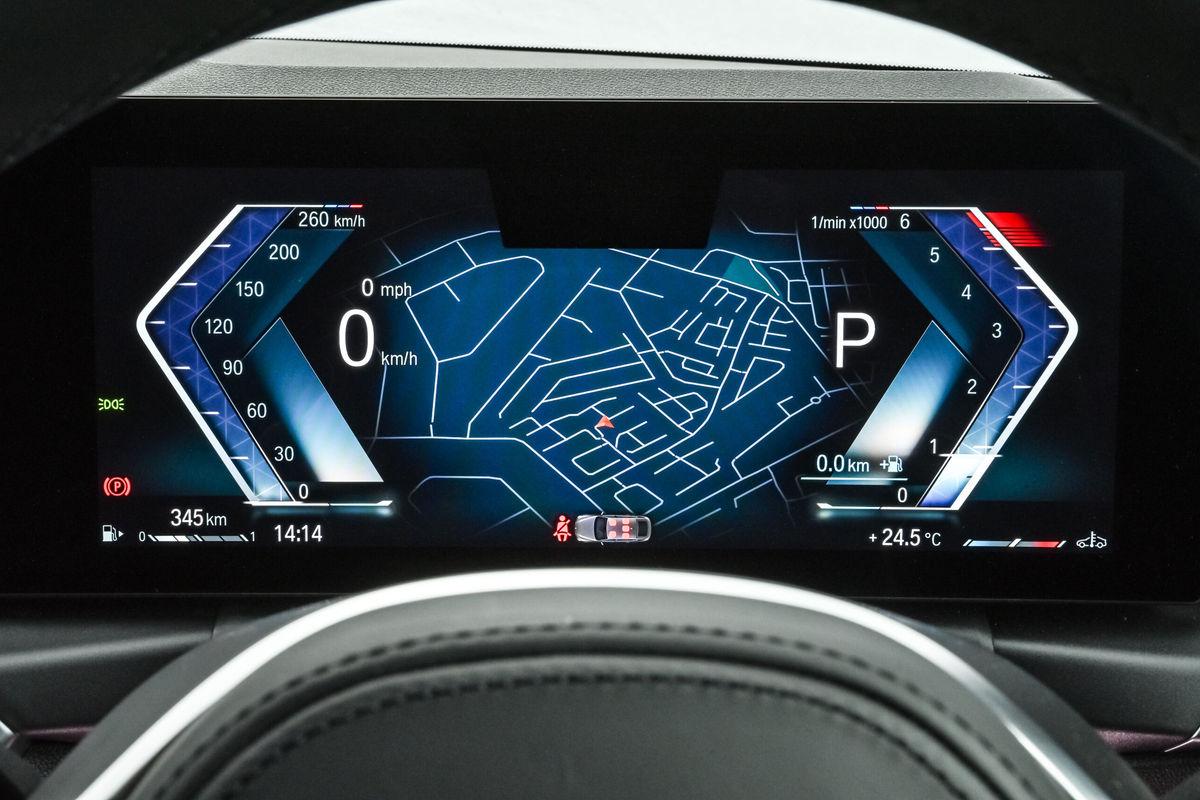
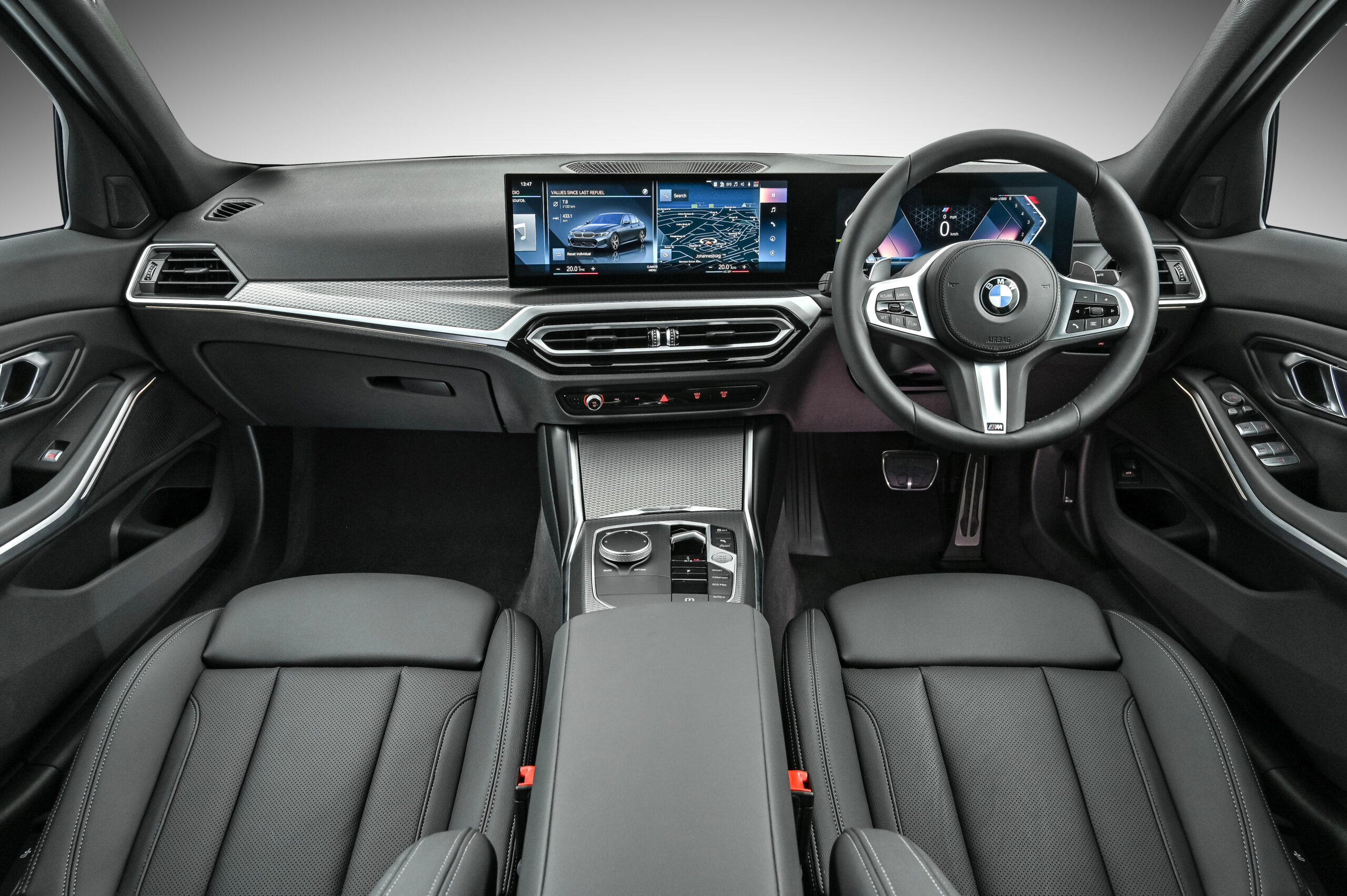
Inside, the most prominent change is the fitment of BMW’s Curved Display, which is standard on all 3 Series derivatives. Not only does it incorporate an all-digital 12.3-inch instrument cluster and an enlarged (14.9-inch) infotainment touchscreen, it’s powered by BMW’s latest software (Operating System 8).
The Curved Display has undoubtedly made the cabin look and feel more sophisticated. We found the system fairly easy to navigate and use, plus the intuitive voice control (with BMW Intelligent Personal Assistant) makes it palpably easy to access basic functions without lifting your hands from the ‘wheel.
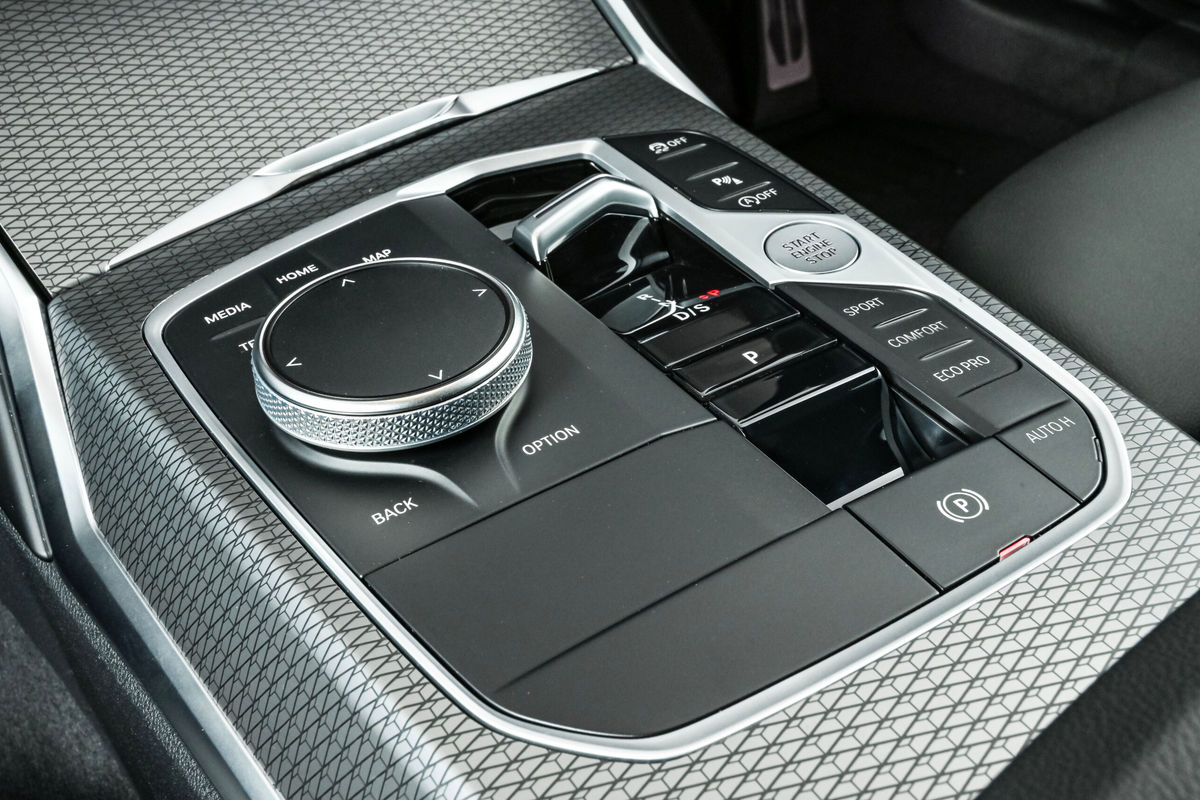
Another benefit of the Curved Display installation is the reduction of buttons on the centre stack, plus you’ll notice that the redesigned centre console now features a discreet transmission-mode selector.
Overall, the interior looks thoroughly modern and technologically advanced, which is precisely what you would expect from a business-class sedan. BMW was clearly determined not to let Mercedes-Benz get too far ahead with the portrait-oriented, tablet-style infotainment touchscreen in the latest C-Class!
What’s the BMW 3 Series LCI like to drive?
The 320d is the sensible choice but the M340i is for the performance enthusiasts.
The powertrain line-up is unchanged. The 3 Series range begins with the 115 kW/250 Nm 2.0-litre 4-cylinder turbopetrol engine in the 318i, which is followed by a more powerful version of the motor in the 320i (135 kW/300 Nm). As before, an 8-speed automatic transmission is standard on all derivatives.
There’s also a 320d, which is powered by a 140 kW/400 Nm 2.0-litre 4-cylinder turbodiesel engine and we had a chance to sample this derivative at the launch. These days, several manufacturers are phasing out turbodiesel engines from their passenger-car line-ups (apart from their bigger SUVs), but the 320d is arguably the most sensible offering in the range: it strikes a good balance between performance and efficiency. It has sufficient grunt to satisfy most consumers and that extra wallop torque helps to propel the business-class sedan forward with genuine gusto, which is useful when overtaking, for example.
The 320d’s handling is praiseworthy too. Compared with its predecessors, the BMW 3 Series feels quite conservative (buttoned-up, if you will), but the G20 generation’s steering setup feels sufficiently sharp and responsive, allied with superb sure-footedness and admirable body control under cornering load.
BMW claims an average fuel consumption figure of 5.0 L/100 km for the 320d, which sounds a trifle ambitious, but it makes this derivative an attractive proposition in the current fuel price environment.
The M340i delivers impeccable performance.
For those seeking heightened driver engagement (a more visceral driving experience, in other words), the all-wheel-drive M340i xDrive is arguably the go-to derivative if you can’t stretch your budget to acquire the full-blown M3 (the LCI M3 is coming in 2024) – and what a fine performance machine it is!
Powered by BMW’s evocative 3.0-litre, 6-cylinder twin-turbocharged petrol engine that dishes out a meaty 285 kW and 500 Nm (in conjunction with a quick-shifting 8-speed Sport transmission), the M340i xDrive is a rather potent, but also wonderfully balanced, performance-oriented business-class sedan.
As you’d expect, the ride quality is on the firm side (by virtue of the sporty M suspension), but thankfully the latter doesn’t sacrifice comfort entirely; it proved to be quite forgiving on Gauteng’s potholed roads.
Acceleration is blisteringly fast. If you flatten the accelerator pedal, the M340i xDrive will bolt from a standstill to 100 kph in just 4.3 seconds. Of course, its all-wheel-drive system (appended with an M differential) helps to ensure optimal traction, but it’s notably rear-biased… and that gives the 6-cylinder derivative a touch of playfulness) if you’re brave enough to explore the full breadth of its performance).
The M340i xDrive is purposely restrained (so as not to upstage the M3), but it emits a glorious noise at full tilt. Occasional pops and bangs from the Bimmer’s exhaust will put a smile on your face every time.
The 2023 BMW 3 Series builds on an already impressive product; the styling tweaks incorporated in the LCI update should find favour with local buyers. Besides, we think that the G20-generation 3er remains the most expressive business-class sedan in our market – yes, even ahead of its arch-rival, the C-Class.
Moreover, the interior tech updates are timely and the cabin’s general fit-and-finish remains impressive. Perhaps most impressive of all, however, is the 3 Series’ driving experience and effortless performance. Whether you opt for the 320d or the M340i xDrive, it matters not – you’re unlikely to be disappointed.
BMW 3 Series Price in South Africa
BMW 318i
R767 894
BMW 318i M Sport
R817 894
BMW 320i
R832 894
BMW 320i M Sport
R882 894
BMW 320d
R880 768
BMW 320d M Sport
R930 768
BMW 330i M Sport
R953 197
BMW M340i xDrive
R1 338 207
All BMW 3 Series derivatives come standard with a 2-year/unlimited km warranty and a 5-year/100 000 km maintenance plan.
Volkswagen is a major producer of battery-electric vehicles, but it offers none of them in the South African market. To find out about Volkswagen SA’s Electric Car Plan for 2023/2024, we chatted with VWSA’s head of passenger cars, Steffen Knapp.
We last chatted with Volkswagen SA about its electrification strategy back in October 2019, on the eve of the Frankfurt Motor Show, where Volkswagen unveiled its brand-new ID.3 to the world. Of course, a lot has happened throughout the past 3 years, with the pandemic, lockdowns, supply-chain maladies, logistical challenges, the war in Ukraine and so on. Since early 2020, the world has changed radically.
Right now, at the beginning of March 2023, there are many brands that offer battery-electric vehicles (BEVs) for sale. Granted, the overwhelming majority of those are premium car makers, with BMW Group, Audi, Porsche, Mercedes-Benz, Jaguar and Volvo offering models that produce zero carbon emissions.
This year will see a few more players join the market, with Haval’s ORA earmarked for introduction, while strong rumours persist that South Korean brands Kia and Hyundai’s local subsidiaries will bring in some of their flagship electric cars for testing/marketing purposes at some point in 2023. There’s also talk that the Chinese brand Build Your Dreams (BYD) will launch some of its offerings in Mzansi later this year.
Why the delay?
Steffen Knapp: Volkswagen South Africa’s Head of Passenger Cars.
We’ve seen many comments on our social media platforms about why there aren’t any Volkswagen electric cars on sale in the Republic (at least, not yet) and Steffen Knapp, Head of Passenger Cars at Volkswagen South Africa (VWSA), was quick to point out that current sales of BEVs are nominal.
“First of all, when we (launch a BEV) it needs to achieve relevant sales volumes. If it’s going to achieve fewer than 500 unit sales (a year), in my point of view, it’s very difficult to justify (bringing it to market).
“We are a volume brand and perceive ourselves as the most aspirational volume brand in South Africa and to sell 3, 5 or 10 cars a month (of a BEV model), that’s not the scale.”
Evidently, Volkswagen SA is playing the long game here and has been testing the waters already.
“We ran multiple test fleets to gain an understanding of customers’ apprehensions (and) consider how we should launch a BEV in the South African market. We also learnt lessons from the launches of our competitors, which showed us that we need to be selling the vehicles in a different way,” he added.
You can bet that VWSA has been closely studying the marketing and sales performance of every electric car on sale in the local new-vehicle market! One of its test fleets comprised VW e-Golfs, which were driven by journalists, potential customers, dealers and VW staff. Last year, VWSA ran an ID.4 test fleet.
And what about vehicle availability?
“The ID.4 will be the first car we’ll launch (in South Africa),” Knapp told Cars.co.za.
That’s exciting news, but the ID.4 has been around for a couple of years (it was named the 2021 World Car of the Year). So, why the delay? Knapp points out that, initially, only one plant was building the ID.4.
“When the ID.4 was available, it was only available from one plant in Zwickau (Germany) and it was not possible to get the capacity, which delayed us to a certain extent. Now, the ID.4 is being built in the US, in China and in Zwickau, so the availability situation is much improved.”
What is Volkswagen SA’s electric car business strategy?
Most new-car sales in South Africa result from cash transactions and vehicle-finance agreements, but Volkswagen SA will be going the leasing route with its electric cars. VWSA operates a leasing programme called EasyFinance for its ICE vehicles and you’ll notice marketing efforts around that begin to ramp up.
“(A BEV) needs to be sold in a different way,” said Knapp. “We anticipate that consumers will grow to embrace leasing, but vehicle ownership is deeply ingrained in the mentality of South African motorists.”
But, as he pointed out (with a laugh), most new-car deals are financed, which means that unless you’ve paid off the car, you still won’t own it. “As a matter of fact, customers never own the vehicle, because 72% of them are financing. So we have to go to the using – not owning – philosophy,” he quipped.
Essentially, the leasing programme for BEVs is a guaranteed future-value product (GFV), Knapp explains.
“When the ownership is not with the customer anymore, the customer has three options: 1. Bring the car back and get the residual value paid, which is guaranteed, 2. Bring the car back to the dealer who sells them a new car, or 3. They decide to keep the car and refinance it for another two or three years.
“This concept is already a major shift in the mindset of South African customers,” Knapp added.
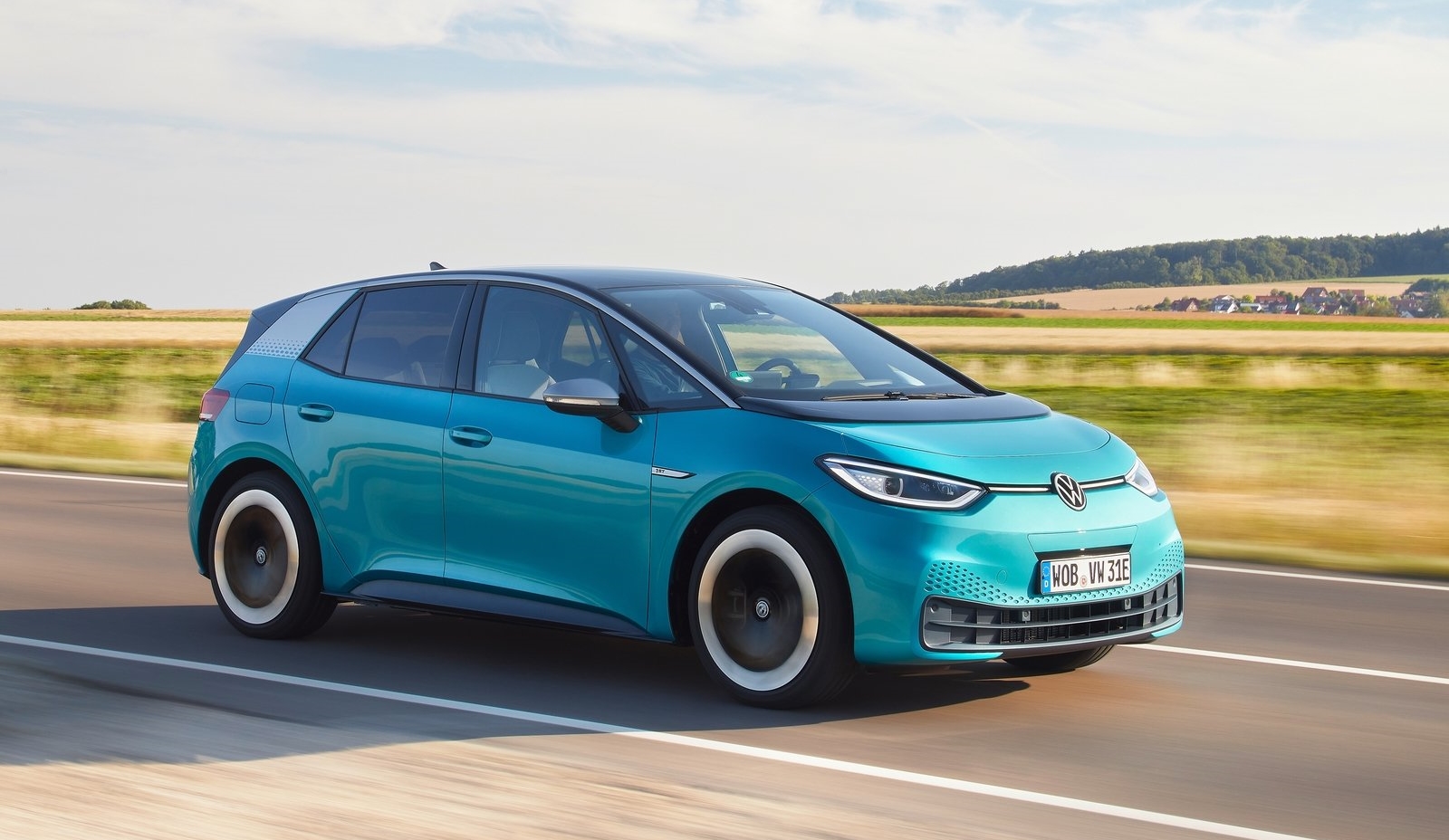
The Volkswagen ID.3 did not have a trouble-free debut overseas – it’s unlikely to be offered in Mzansi.
Leasing takes some sting out of depreciation
“I’m s**t scared to see the residual values of other brands’ BEVs in our market. That can destroy a brand, so if you go the leasing/guaranteed future value route, you define the value, and you can get the car back, meaning you can also control how the car is disposed of,” he added.
Pricing is a sticking point. Electric cars tend to be pricier than their petrol/diesel counterparts – not only because they cost more to produce, but Government imposes a higher tax on BEVs. However, VWSA is keen to point out that the numbers are favourable when you look at it from a running cost point of view.
“There’ll be a sales guy that will explain the costs of maintenance, fuel consumption, residual value, and insurance, so you (the customer) can get a Rands per kilometre price (for reference), and by doing this (even without any government subsidies), our business case shows that after 5 years, the electric vehicle is positive and more affordable basically than an internal combustion engine,” said Knapp.
If you already have a solar setup at home, there’s a strong potential to reduce your costs even more.
Despite the country’s unreliable electricity supply and public fear of blackouts, Knapp is not bothered. “At the end of the day, you have to see how many kilometres a South African is driving per day. If I take myself as an example, I am commuting from Fourways to Sandton every day and that’s around 40 km back and forth. So, if I have a range of 500 km, I just need to plug it in at night and it’s charged again.”
It’s important to note that even when plugged into a household outlet (3.5 kWh) overnight, an average BEV should gain about 150 km in 10 hours, even with a 2 hour power cut factored in. If you opt for the OEM 7 kWh wall box, your charging speed doubles (but it does not need to be plugged in that long).
“If you are working for a company, like in our case, we have charging stations in our garage, with generator backup. In terms of energy supply, I don’t see it (load shedding) as a hindrance (or obstacle) to the local-market introduction of electric vehicles. It’s more about mindset,” Knapp adds.
Will Volkswagen SA invest in charging infrastructure?
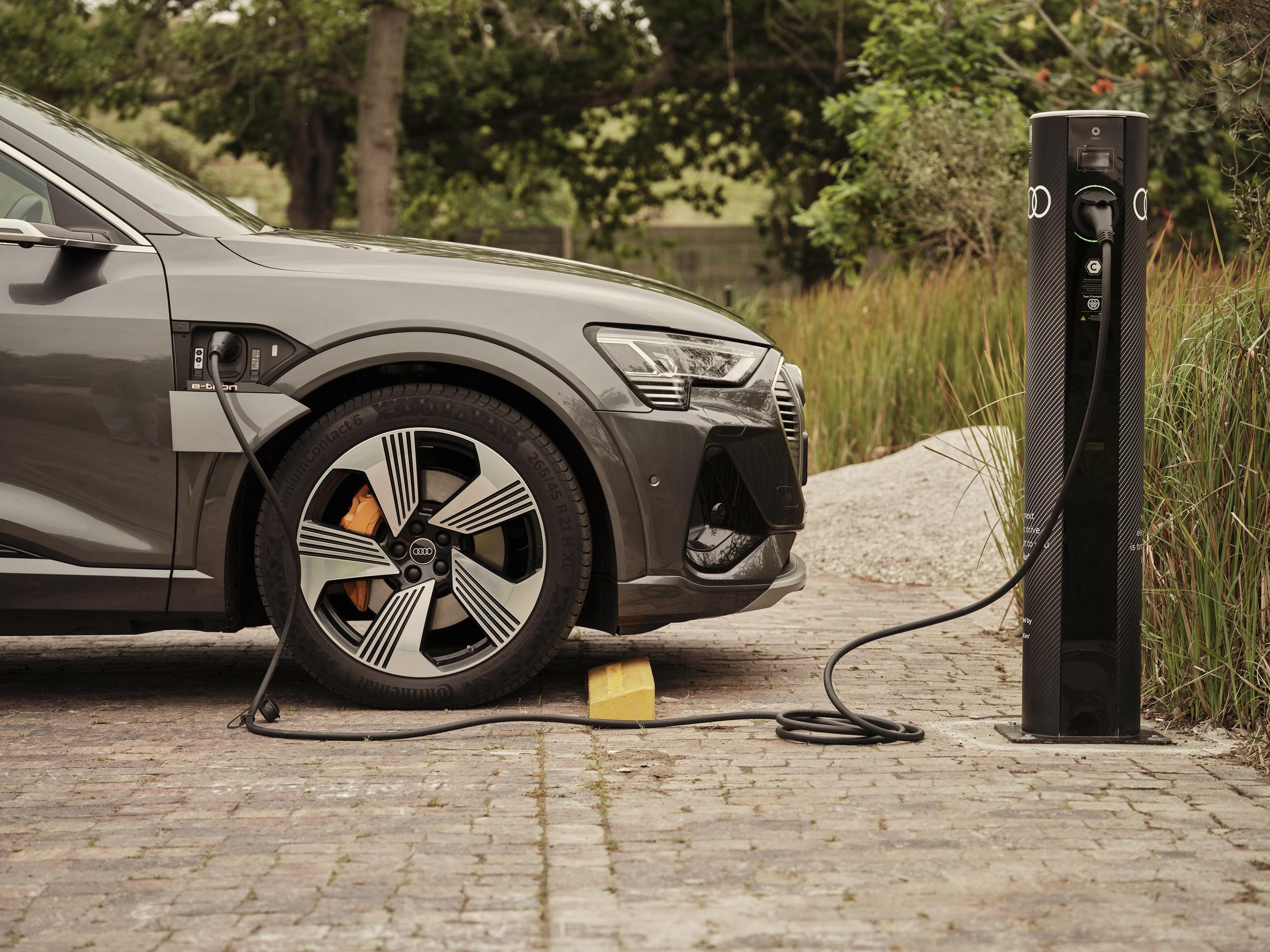
VW’s sibling brand, Audi has invested significantly in charging infrastructure.
These days, there are far more electric-car chargers in South Africa than you may realise, especially in major metropolitan areas. “The penetration of electric car chargers in South Africa is one of the highest in the world. The next challenge is speed related, these chargers are not fast DC chargers. At the moment, I think people can handle it, but going forward, (we’ll) obviously have to work on this.”
“So, going forward, our group (the Volkswagen Group of South Africa) will continue to invest in charging infrastructure,” said Knapp. “The EV-charging infrastructure has improved substantially, with Audi SA contributing significantly in that regard. The next wave, at least in theory, will be to equip each of about 4 500 service stations with an electric station that’s not 100% dependent on the grid. It’s all possible.”
Which electric cars are Volkswagen SA likely to offer?
An all-electric Tiguan-sized family SUV with 500 km of range? We’re keen.
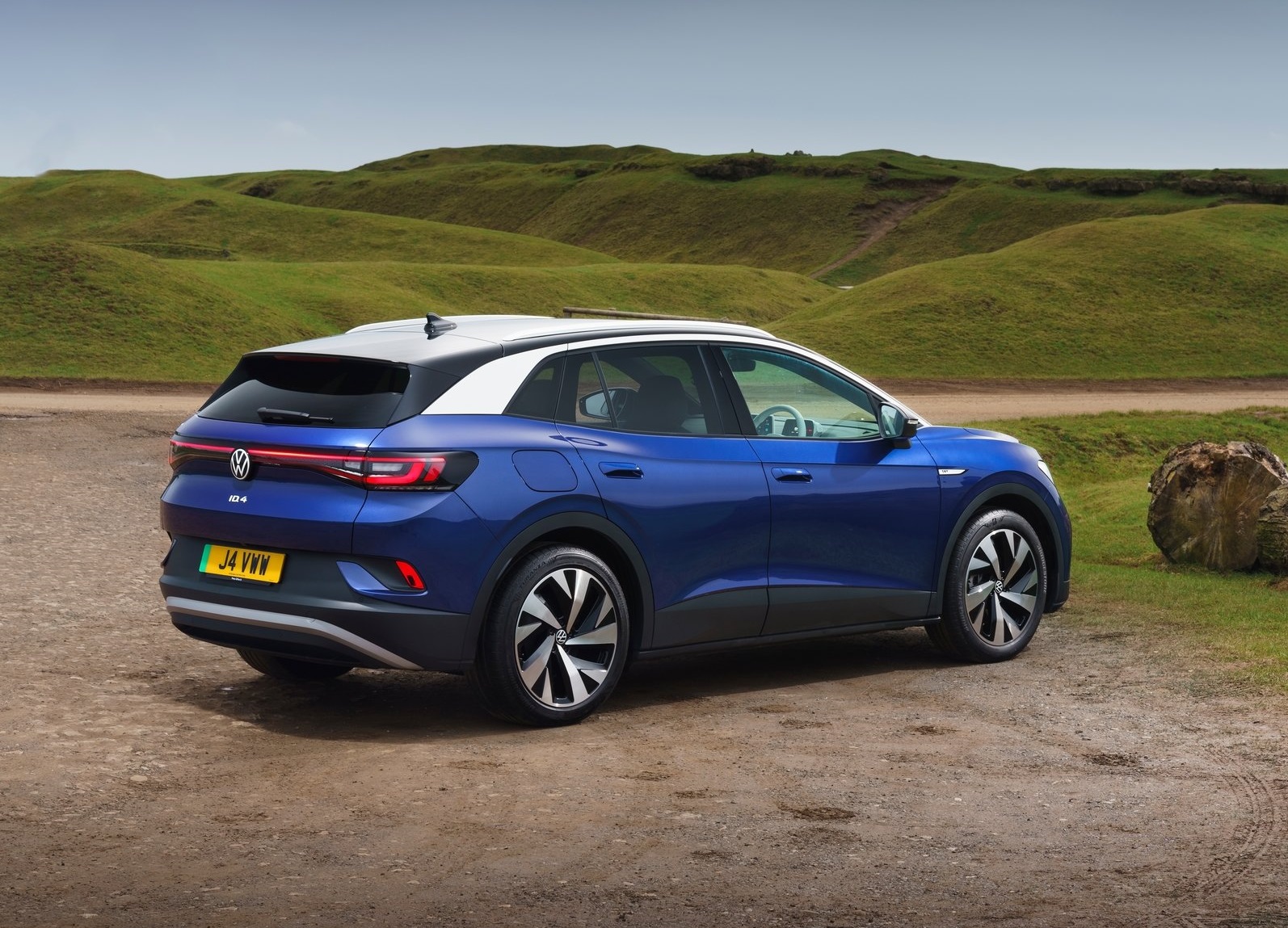
With the market showing a strong predilection for SUVs, it makes sense for VWSA to introduce only the crossover ID model. Meet the Volkswagen ID.4, an electric family-sized crossover. It’s fractionally larger than the Volkswagen Tiguan medium SUV, which should give you some sense of the ID.4’s dimensions.
The uptake of electric cars has been stymied by, yes, lofty purchase prices, but “range anxiety” as well. However, thanks to its 77 kWh battery, the ID.4 is claimed to travel up to 520 km on a full charge. It’s not going to be slow either, with 150 kW and 310 Nm on tap as well as an 8.5-second 0 to 100 kph time.
As we’ve mentioned, the ID.4 debuted overseas in 2021, but thanks to over-the-air updates VW is able to keep the model relevant and introduce UX improvements without the car needing to go to a dealer.
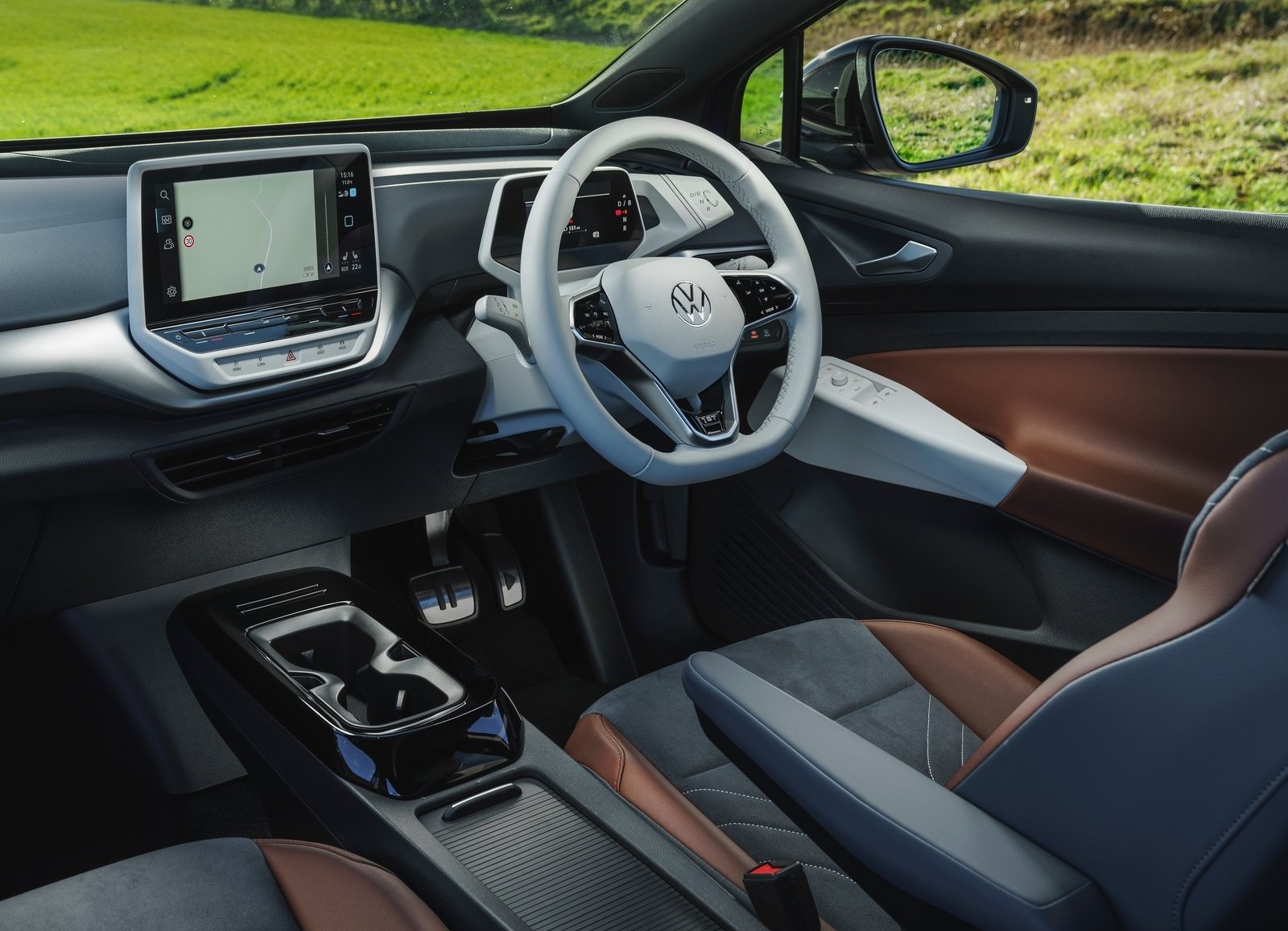
The minimalist, but stylish, Volkswagen ID.4 interior.
ID.4 is a great starting point for Volkswagen SA’s “new energy vehicle” line-up. Comparisons between the ID.4 and Tiguan will be inevitable, in terms of ownership and running costs. Of course, if it were up to us, we’d have the Volkswagen ID Buzz in a heartbeat – South Africans have a love affair with the Kombi!
At this stage, there’s no confirmation that the ID Buzz will be coming to Mzansi, but Knapp did say that it could come as a commercial vehicle in the future, so watch this space.
Could the VW ID Buzz reach our shores? Watch this space.
How soon will we see an electric VW on South African roads?
A lot sooner than you’d think, in actual fact. Some of you may even have seen the Volkswagen e-Golf research cars on SA roads and you’re likely to see the ID.4 test units in 2023. As for customer cars?
“I hope relatively soon – it could be before the end of this year (2023). It will depend on our supply chain situation (which has limited stock levels of some models severely), we are working to have (the ID.4) here by at least next year. An SUV is still, I believe, the best solution for mobility in South Africa and, based on sales data, the SUV market (continues to grow at a rapid rate),” Knapp concluded.