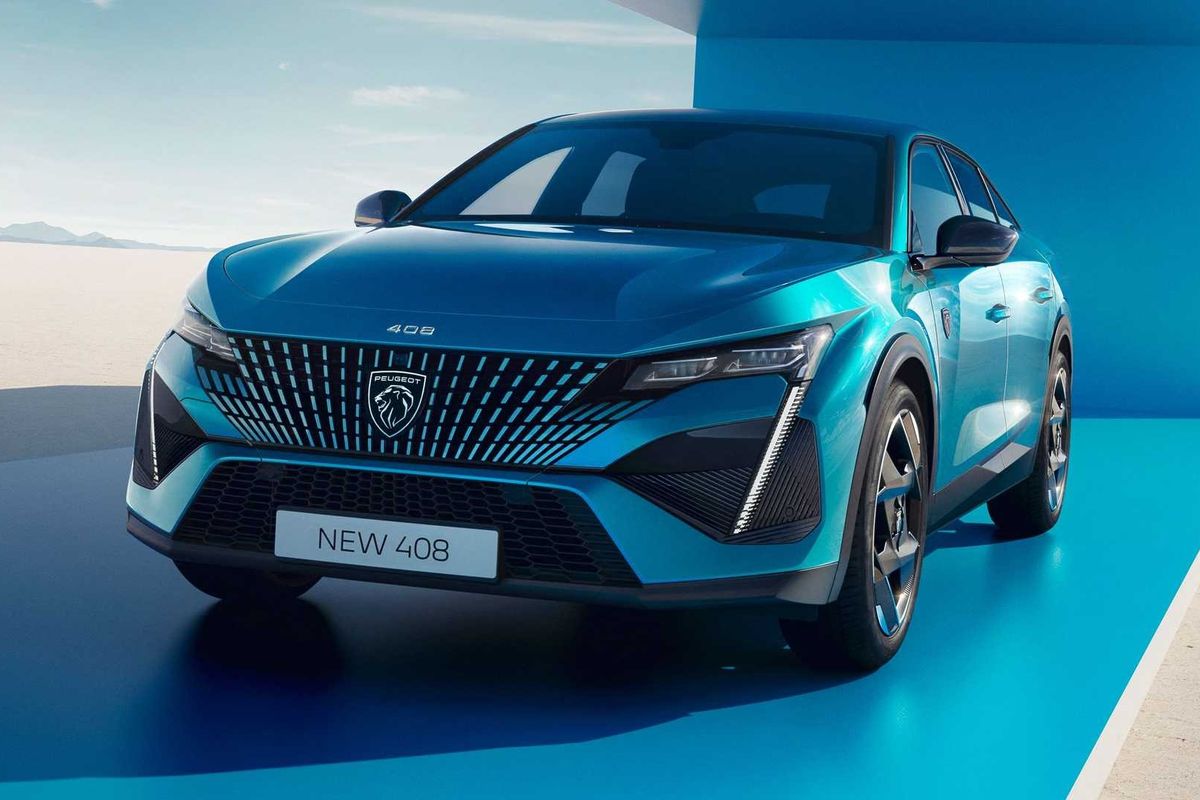
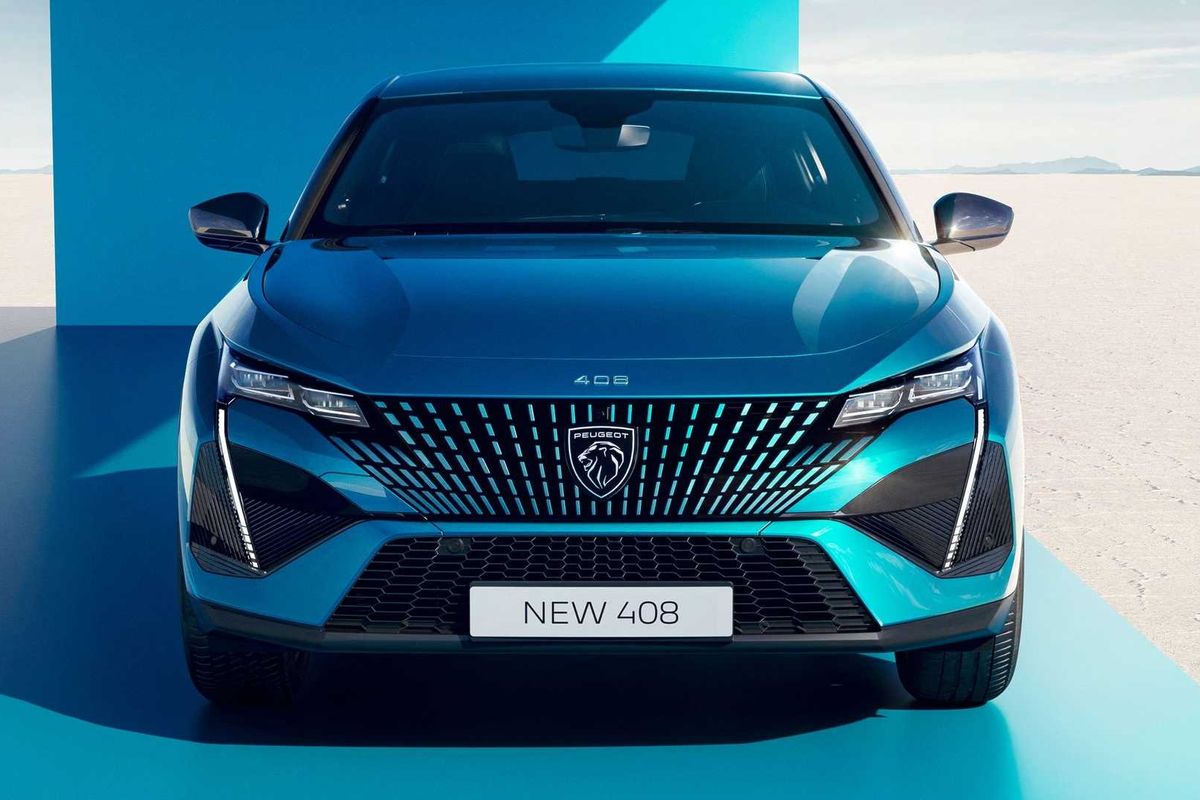
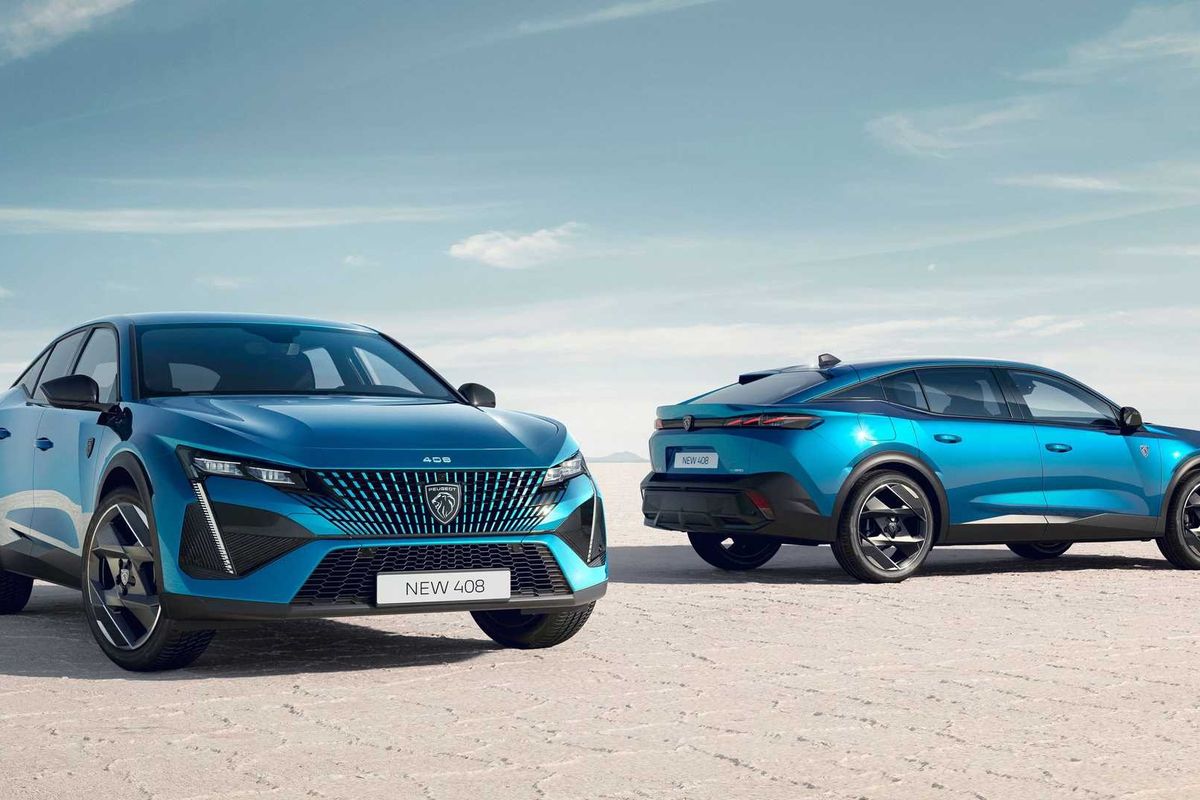
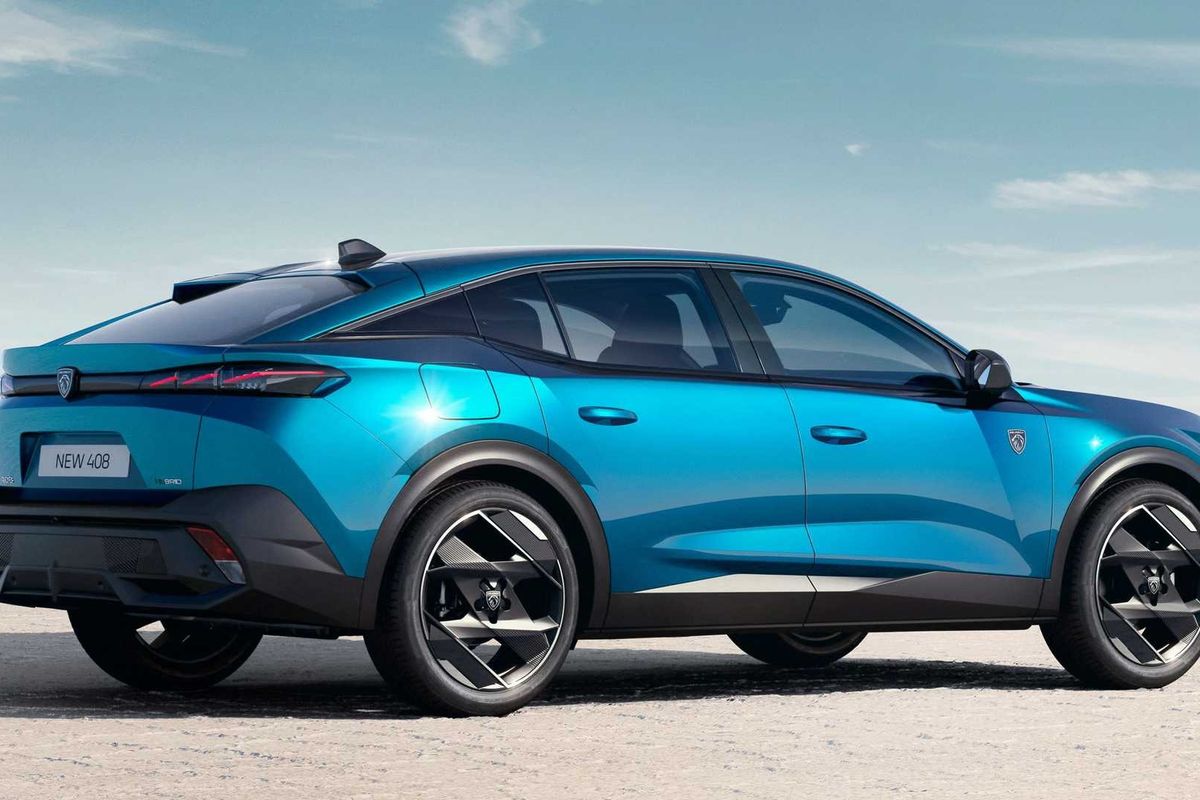
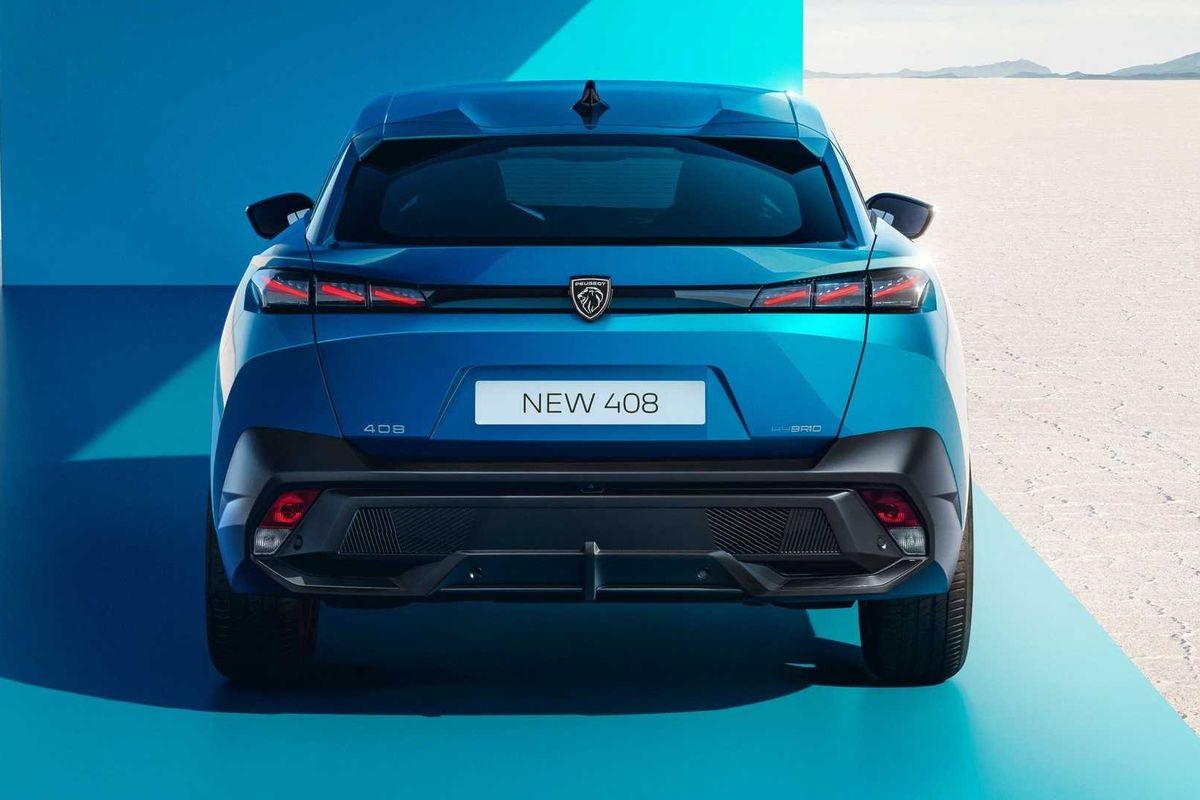
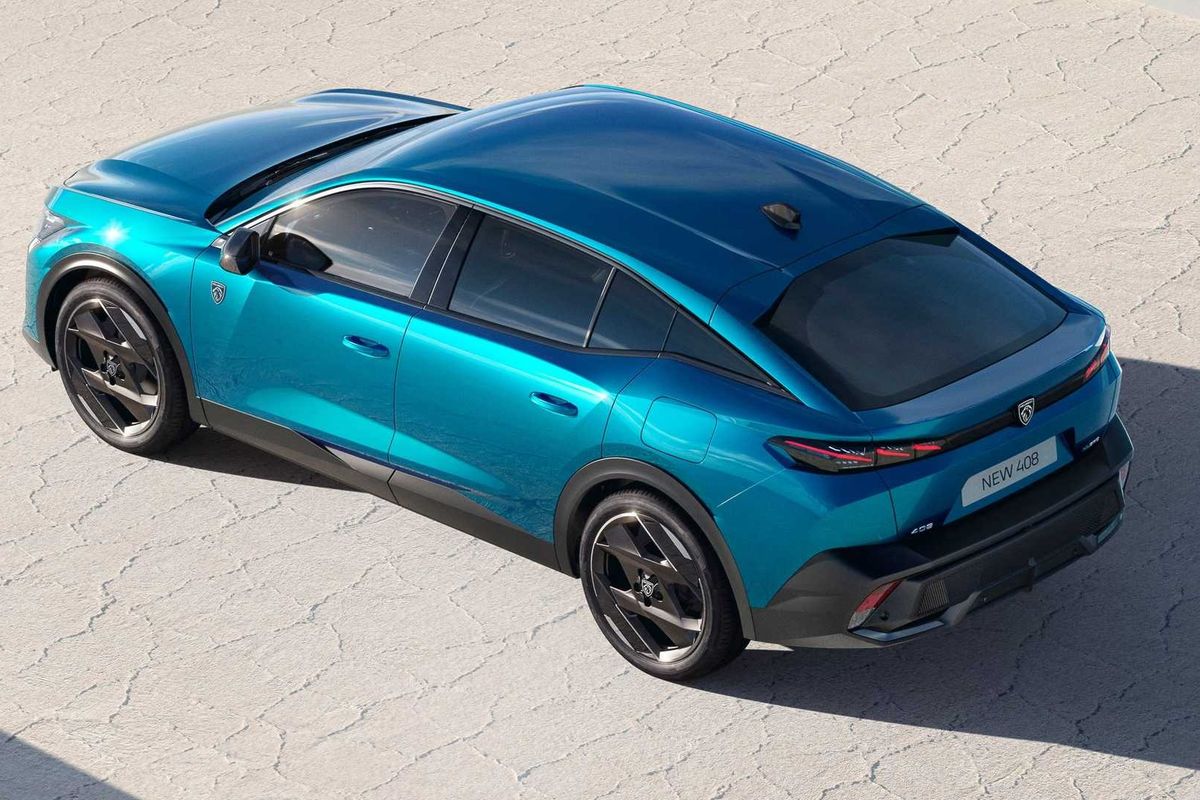
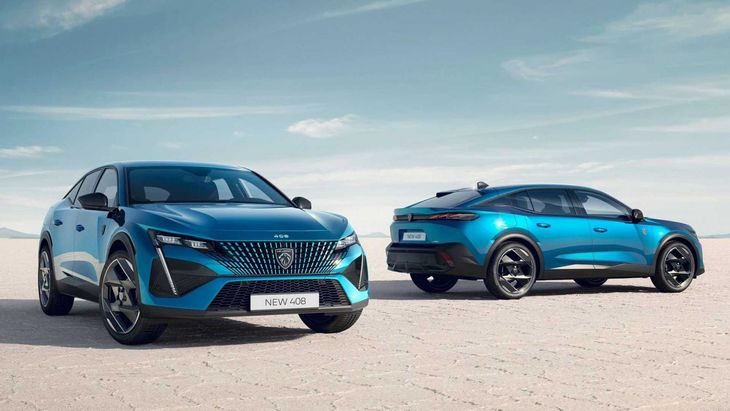
Peugeot has revealed its new 408 which boasts an elegant fastback design, an edgy tech-laden interior and the choice of ICE and PHEV powertrains and with an all-electric 408 coming later.
Peugeot products really do stand out from the crowd. Just look at the 208, 2008, 3008, and 5008. They are far from mundane and they have style that their rivals just can’t match.
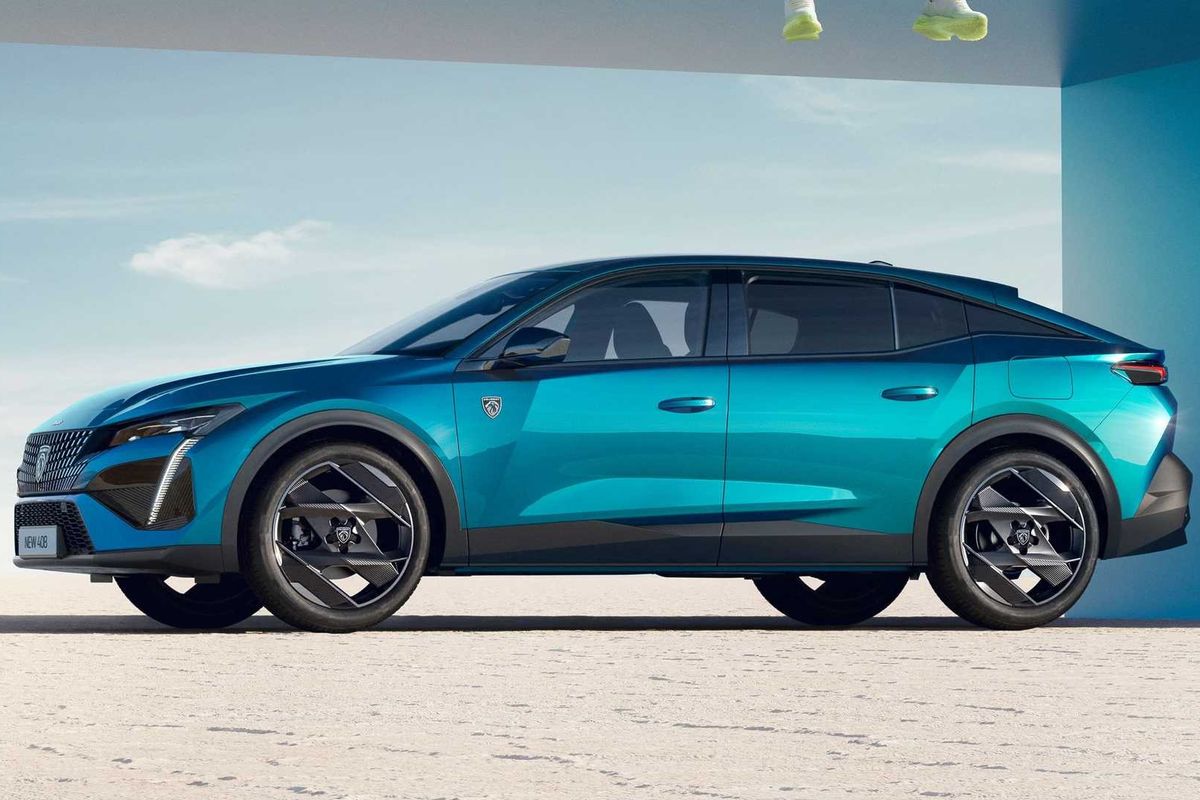
The latest new addition to Peugeot’s range is the new 408 which has just been revealed for Europe, and yes, it looks stunning! It’s a new shape for the French firm and can best be described as a sedan-SUV with a fastback-coupe-like silhouette. It’s a thing of beauty.
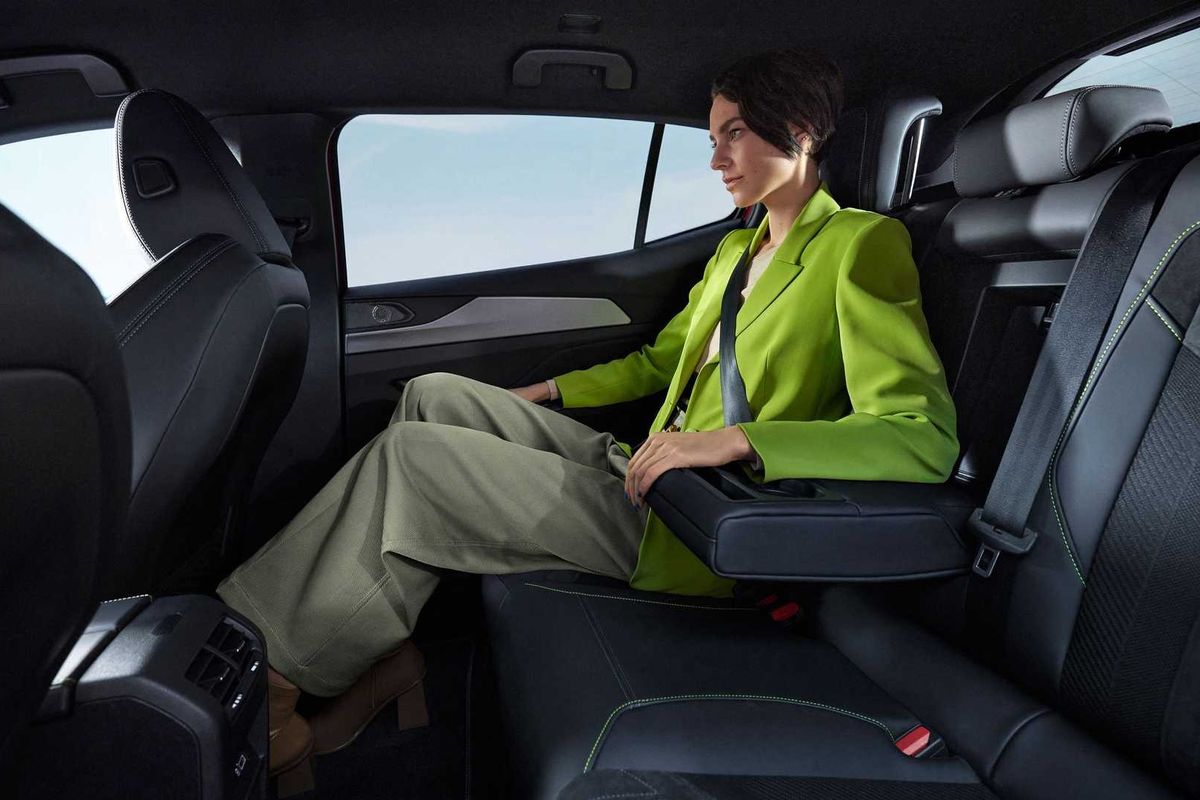
The color-coded grille design gives the impression that the 408 is all-electric, but in 2023 it will initially be offered with both ICE and PHEV powertrains (see below) while an electric 408 will follow later. The sleek fastback silhouette stretches a total of 4 690 mm in length with a wheelbase of 2 790 mm which has resulted in a spacious cabin for passengers with Peugeot claiming 188 mm of legroom for rear passengers while the load bay offers a generous 536 litres, expanding to a whopping 1 611-litres with the rear seats folded down.
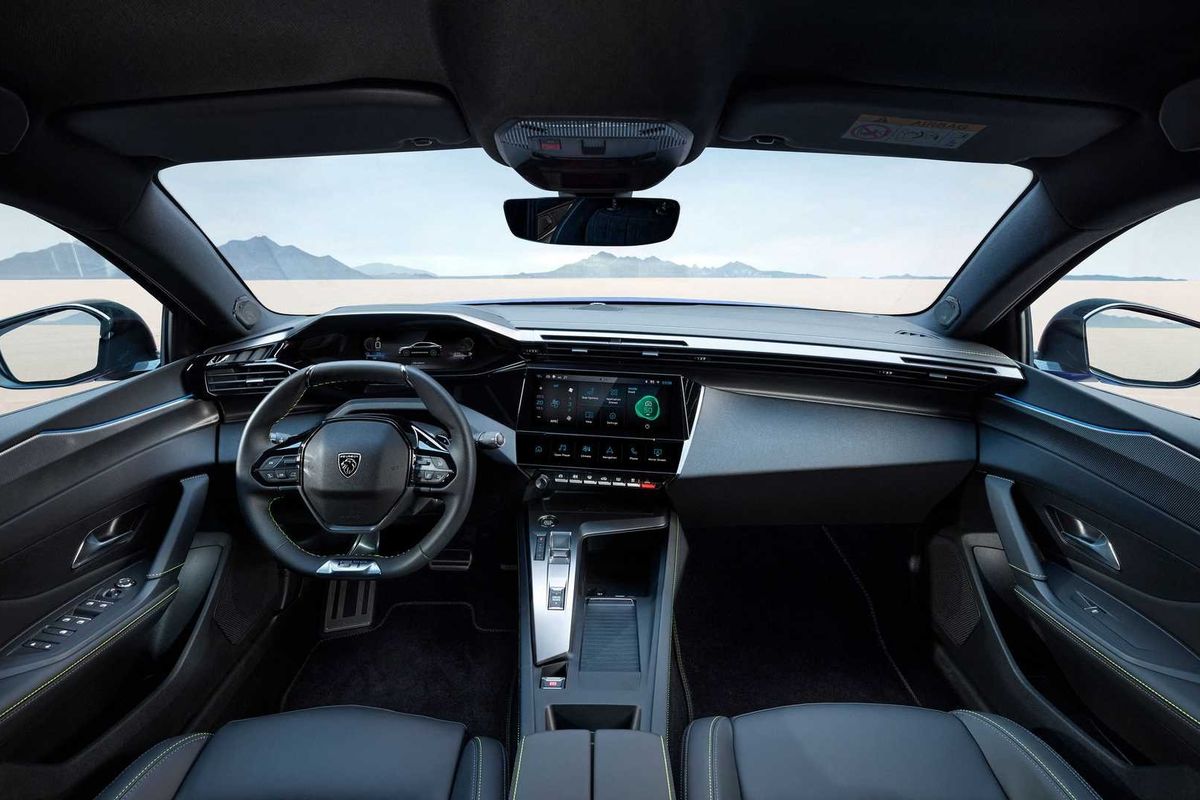
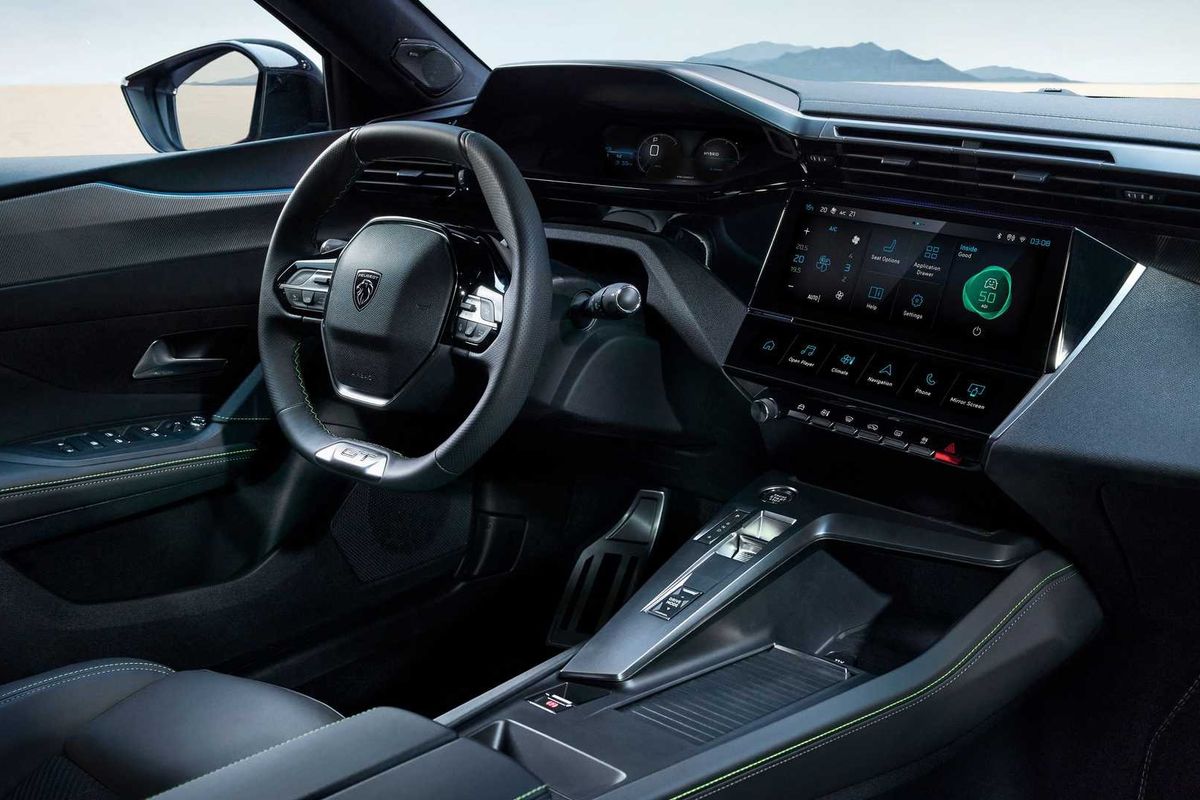
The new 408 features an edgy, futuristic design execution and is well-equipped with technology.
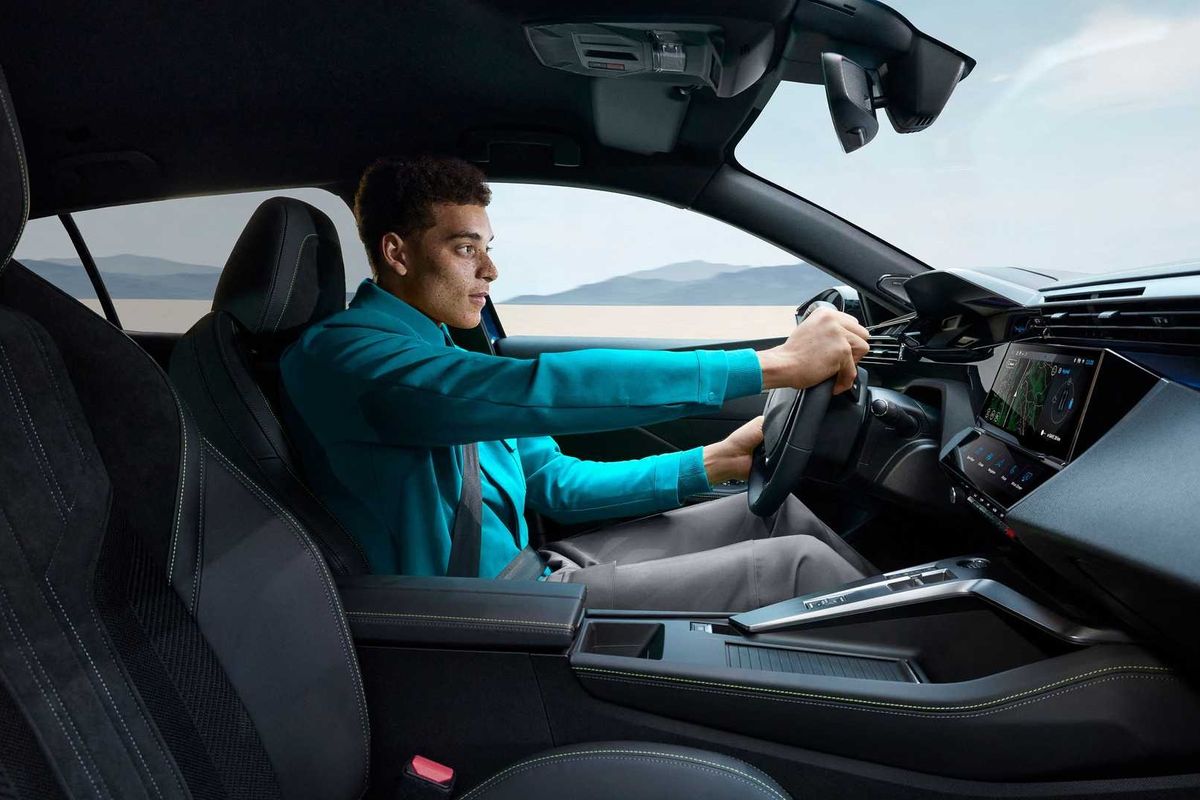
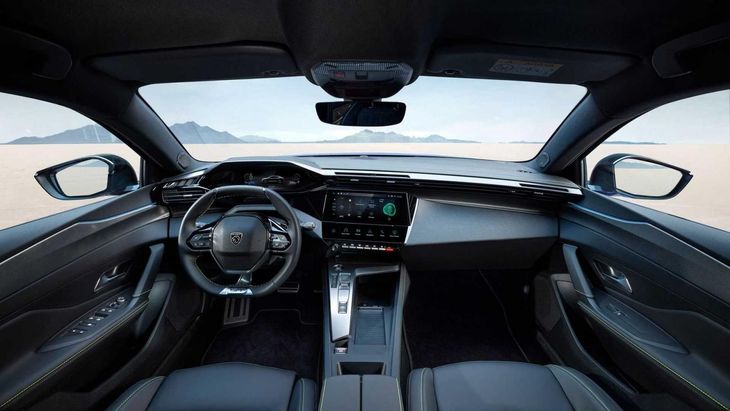
The stylish exterior is matched with an equally modern and edgy interior design with Peugeot’s latest generation i-Cockpit comprising a compact steering wheel and two 10-inch screens that make up the digital instrument cluster and infotainment system.
The 408 is also equipped with 6 cameras and 9 radars that feed into a suite of 30 driver assistance systems including adaptive cruise control with stop and go function, night vision with pedestrian / cyclist / animal warning, long-range (75 m) blind spot warning, active lane departure warning with lane correction, 180-degree rear reverse camera, 360-degree parking assistance, road sign recognition, driver attention alert and rear traffic alert, to name but a few.
What powertrains will be offered with the Peugeot 408?
The 408 will be offered with ICE, PHEV and BEV powertrains.
The new 408 will employ the familiar 1.2-litre turbopetrol engine, the same that powers the 2008, with 96 kW and 230 Nm of torque on offer.
Peugeot will also offer a pair of plug-in hybrid derivatives, combining a 81 kW electric motor and either a 110 kW or 132 kW 1.6-litre turbopetrol engine. Total power outputs for the base 408 comes to 133 kW and 360 Nm while the more powerful 408 offers 165 kW and the same torque figure of 360 Nm. An 8-speed automatic transmission directs power to the front wheels for all 408 derivatives. A battery-electric 408 will come to market later in 2023.
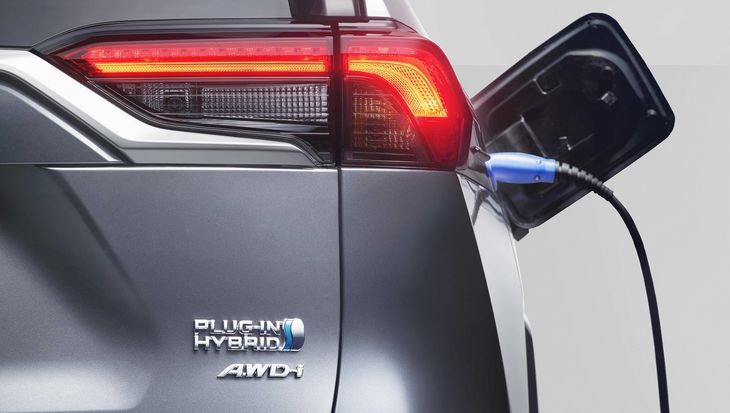
Both plug-in hybrid derivatives are fitted with a 12.4 kWh Lithium-ion battery (102 kW output) as well as a standard 3.7 kW single phase charger while an 7.4 kW single phase charger will be optional.
Peugeot says that charging time using a 7.4 kW Wall Box and the 7.4kw on-board charger will take just 1 hour 55 minutes while the 3.7 kW on-board charger will take 3 hours and 50 minutes. A domestic 3-pin socket with an accessory charging cable and using the 3.7 kW on-board charger will return a full charge in approximately 7.5 hours.
The Peugeot 408 will go on sale in Europe in early 2023 and will also be sold in global markets. We have reached out to Peugeot South Africa to find out if the 408 will come to South Africa but it has yet to be confirmed for local introduction. As always, we will keep you updated!
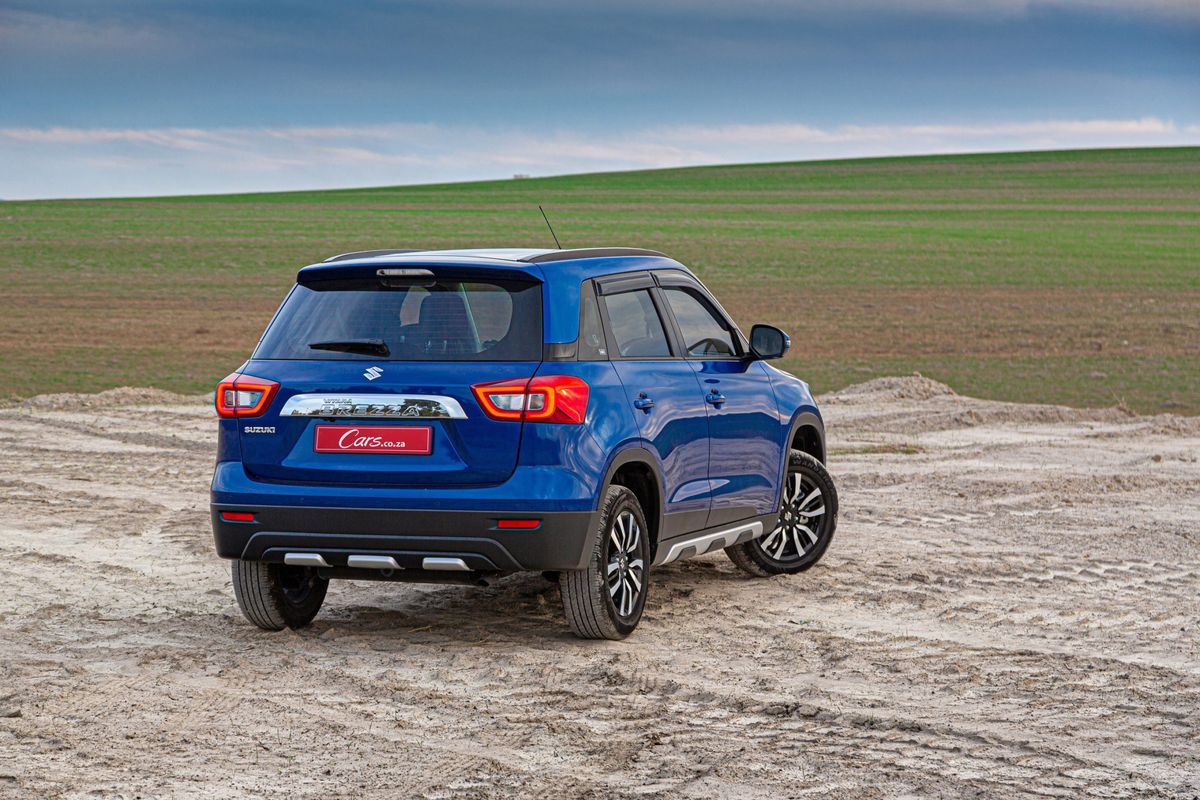
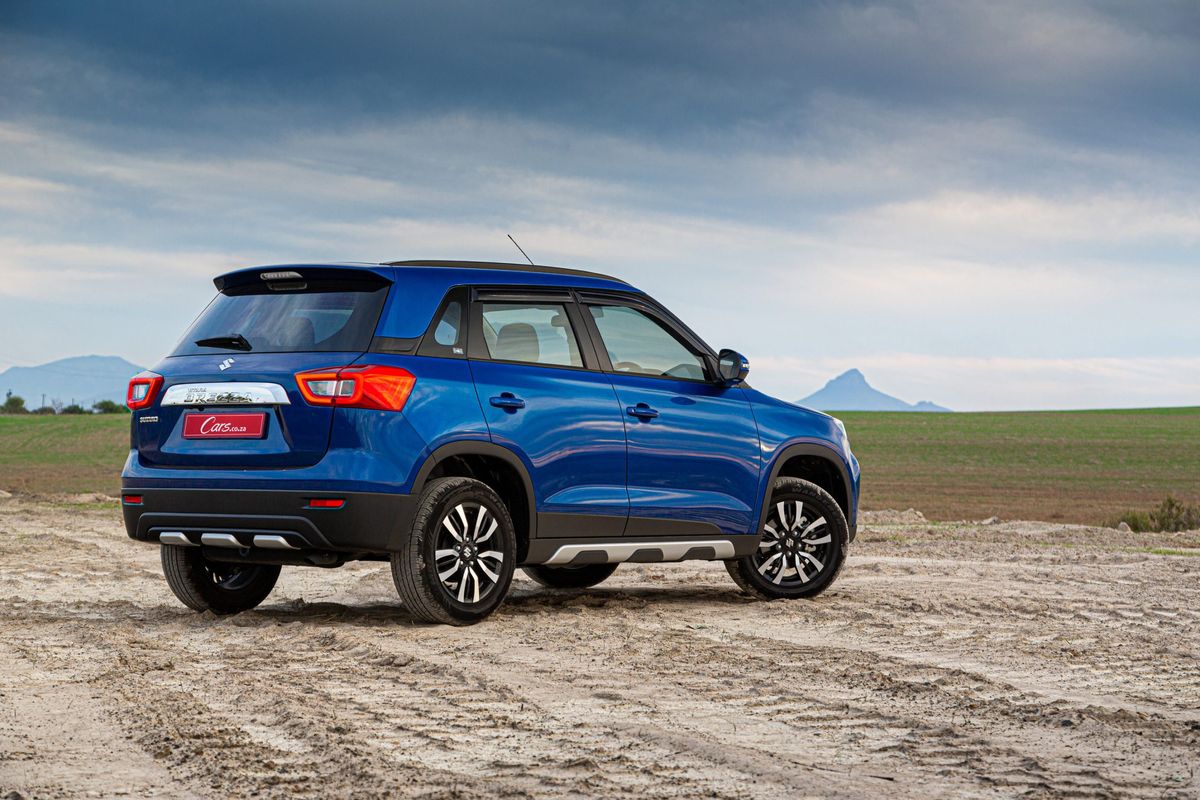
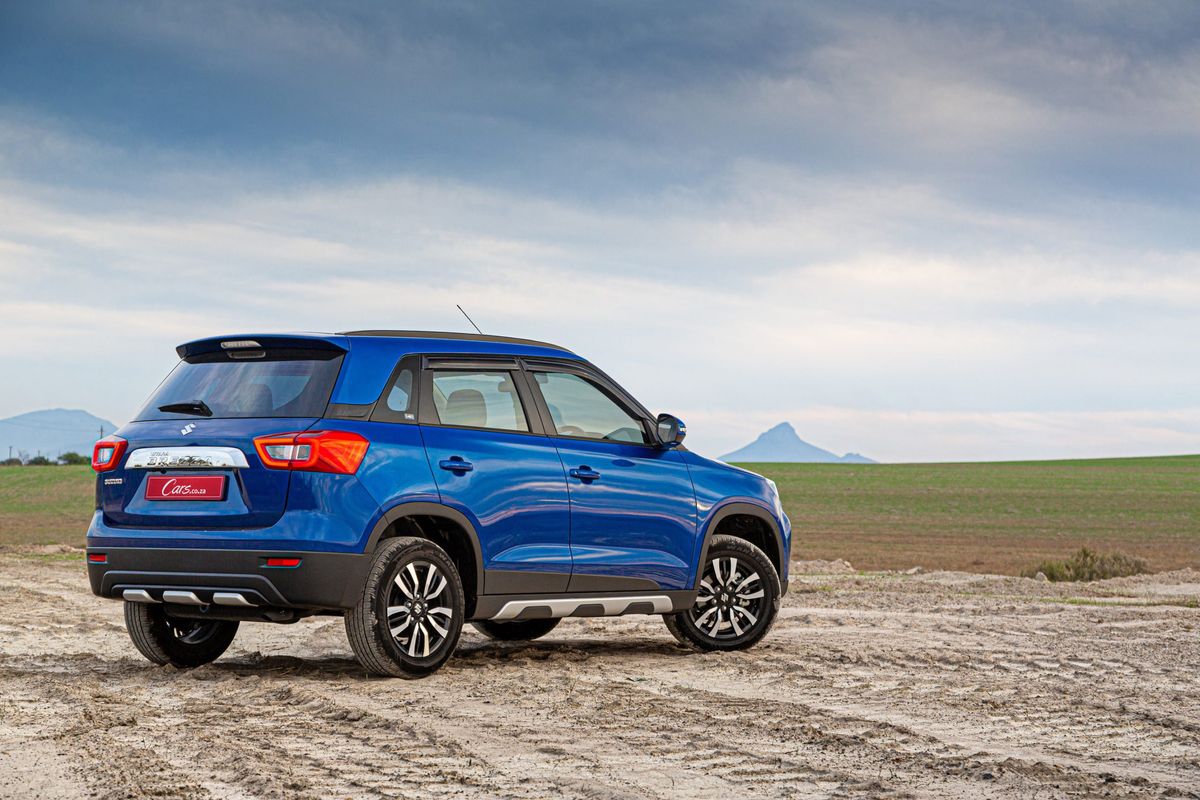
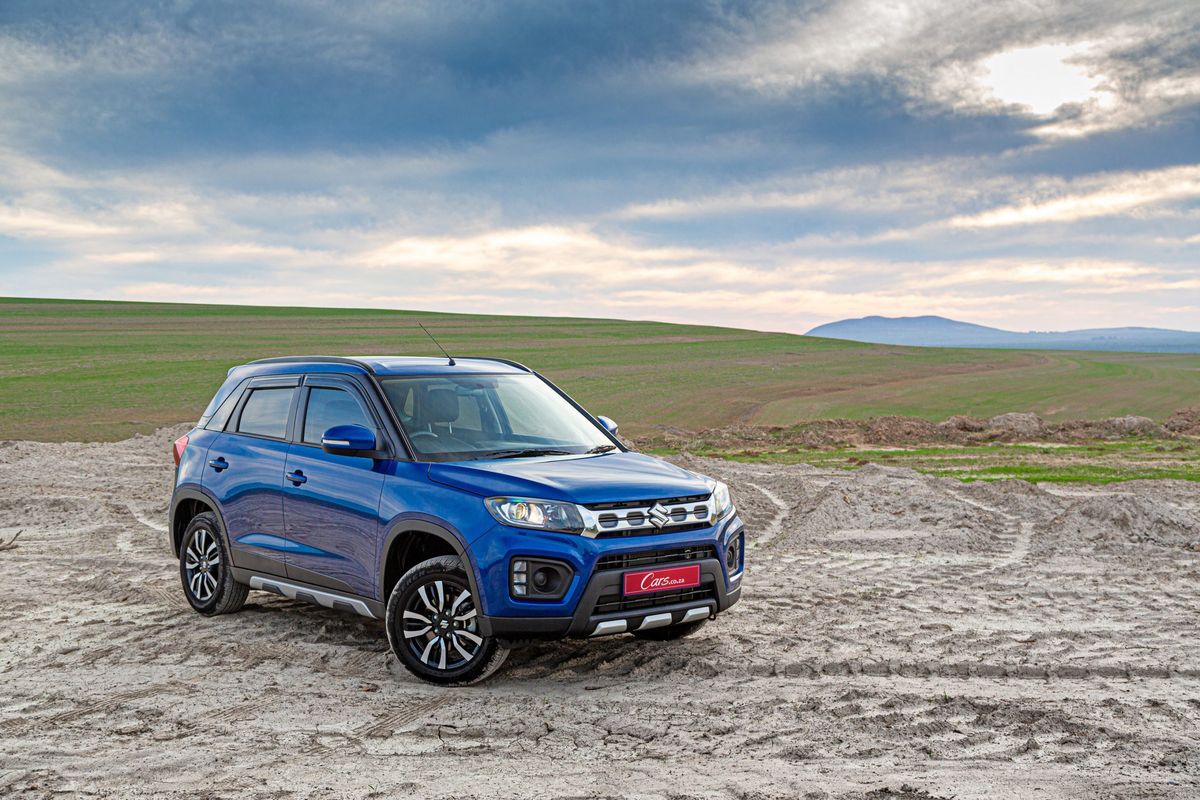
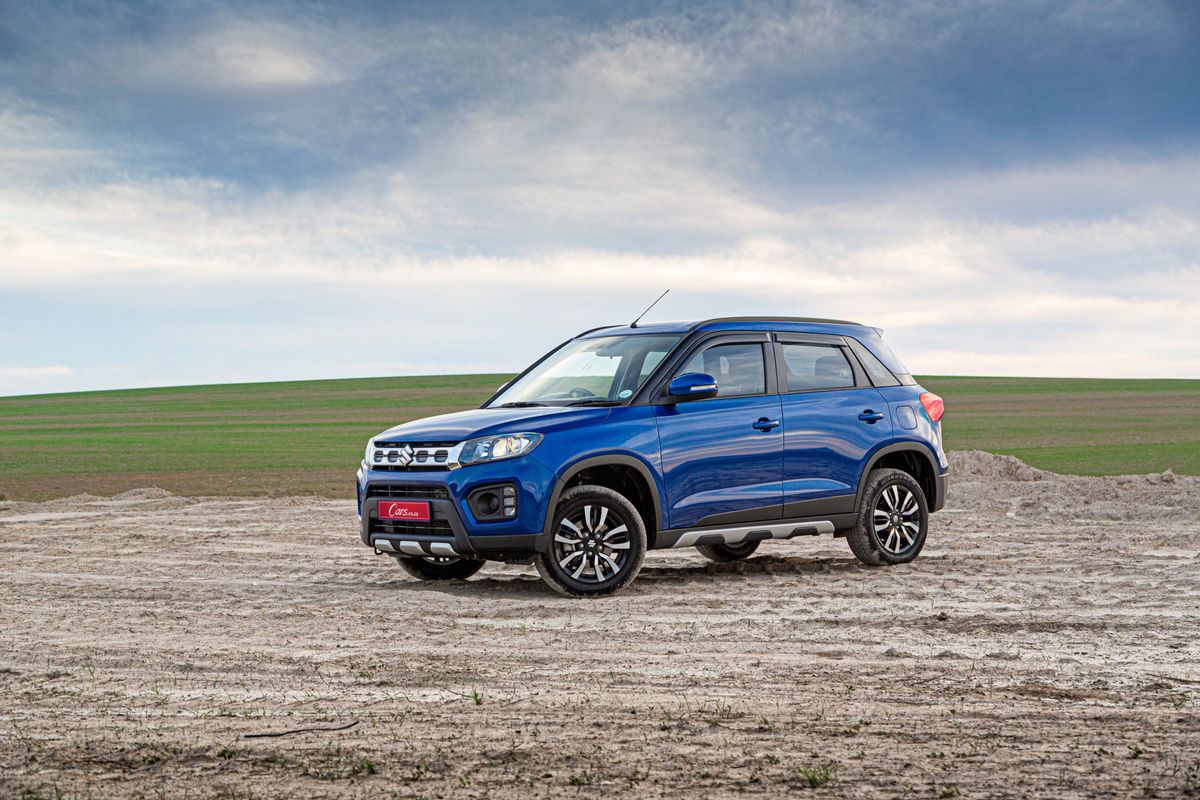
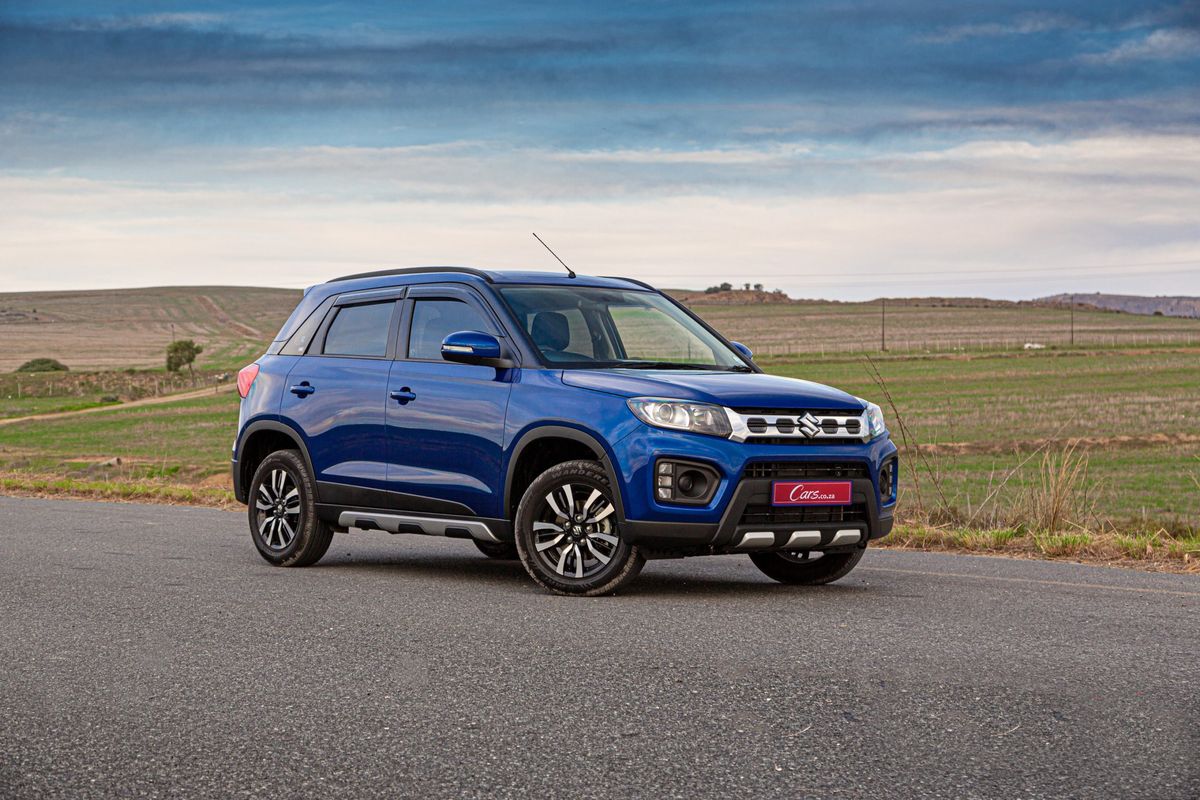
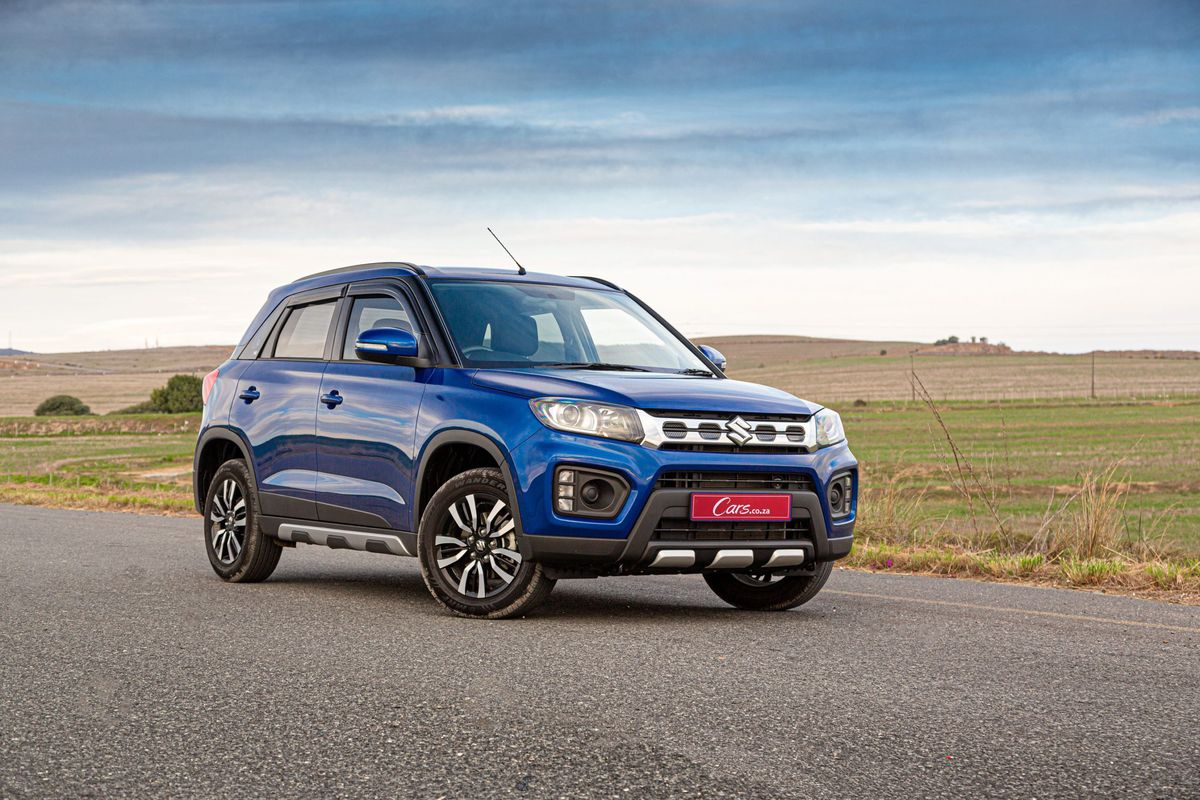
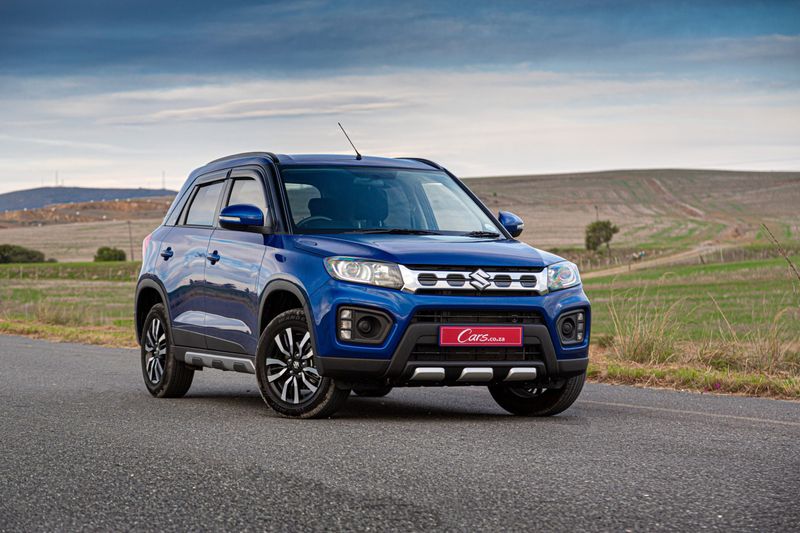
The Suzuki Vitara Brezza and its Toyota sibling (the Urban Cruiser) have proven quite popular since touching down in South Africa. Now, to mark the 1-year anniversary of the Vitara Brezza in the Mzansi market, Suzuki Auto SA has launched an S-Edition derivative of its budget crossover.
We like: Peppy performance, comfortable and spacious cabin, affordable to buy and cheap to run.
We don’t like: Begging for a 6th gear, lack of stability control, wind and road noise at triple-digit speeds.
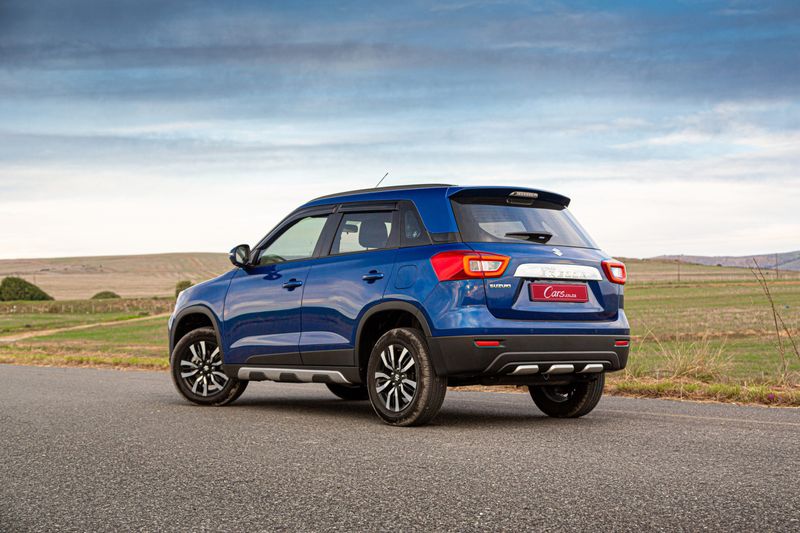
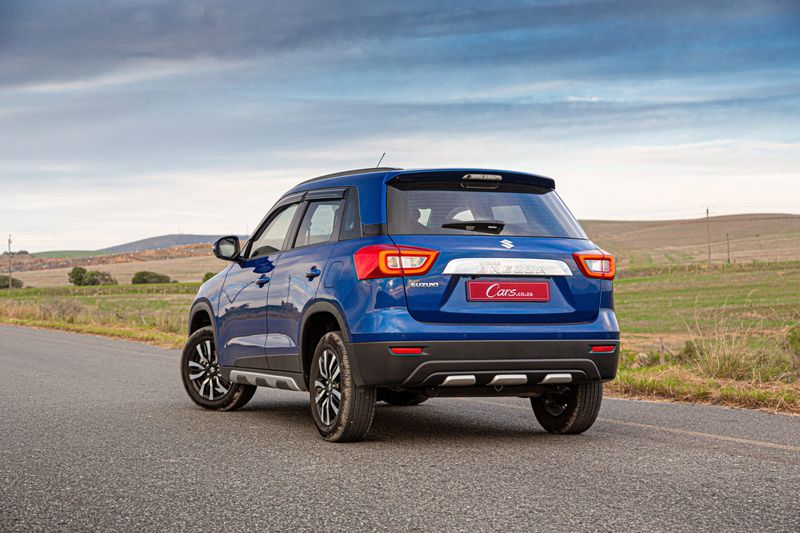
The S-Edition spec adds wind deflectors, new wheels, a new-look grille and other visual goodies.
When the crossover craze well and truly took hold, Suzuki was well positioned to produce models that would suit changing consumer tastes. Budget crossovers are based on ordinary hatchbacks and the Japanese marque offers acclaimed 5-door models such as the Celerio (new for 2022) and Swift (SA’s most popular passenger car in May 2022); what’s more, the firm has strong reputation for building a variety of SUVs, such as the Jimny and Vitara.
It’s no surprise, then, that the Vitara Brezza found instant favour. It’s the brand’s entry point to its crossover/SUV family and has all the hallmarks that we’ve come to know and respect about Suzuki: fun-to-drive characteristics, good affordability, and frugal fuel consumption.
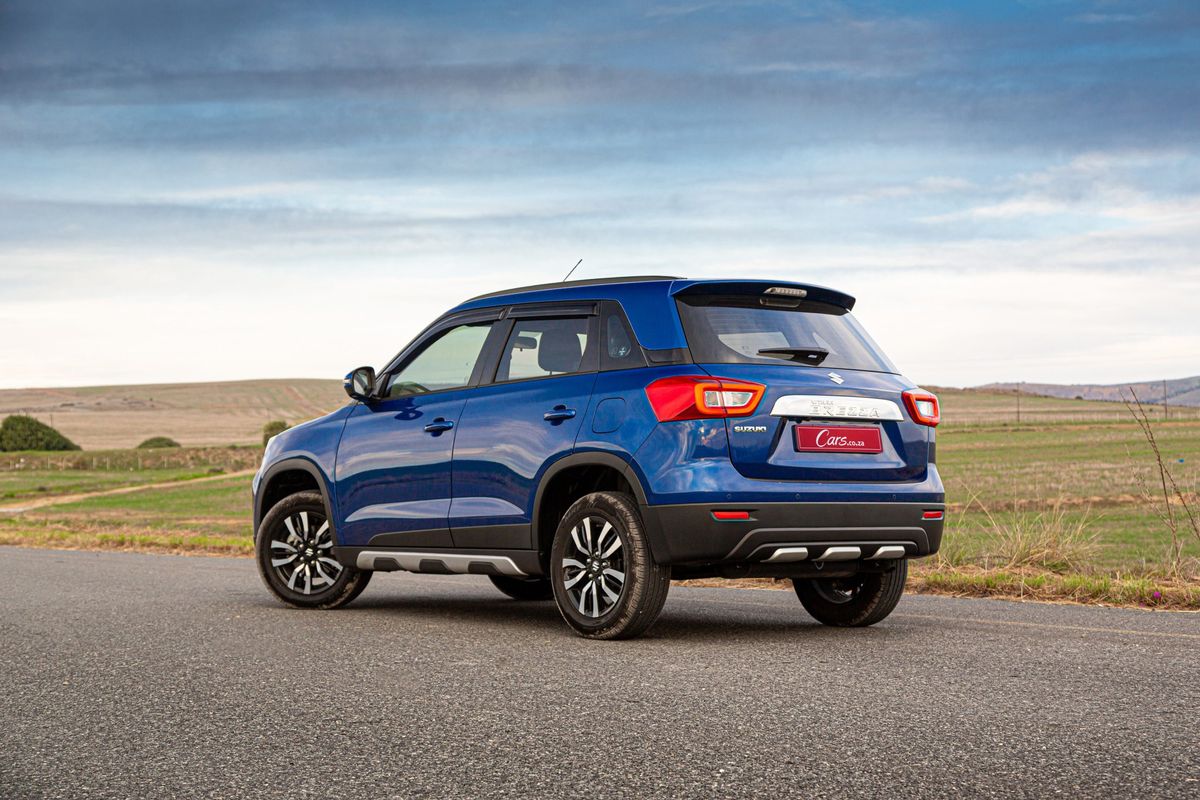
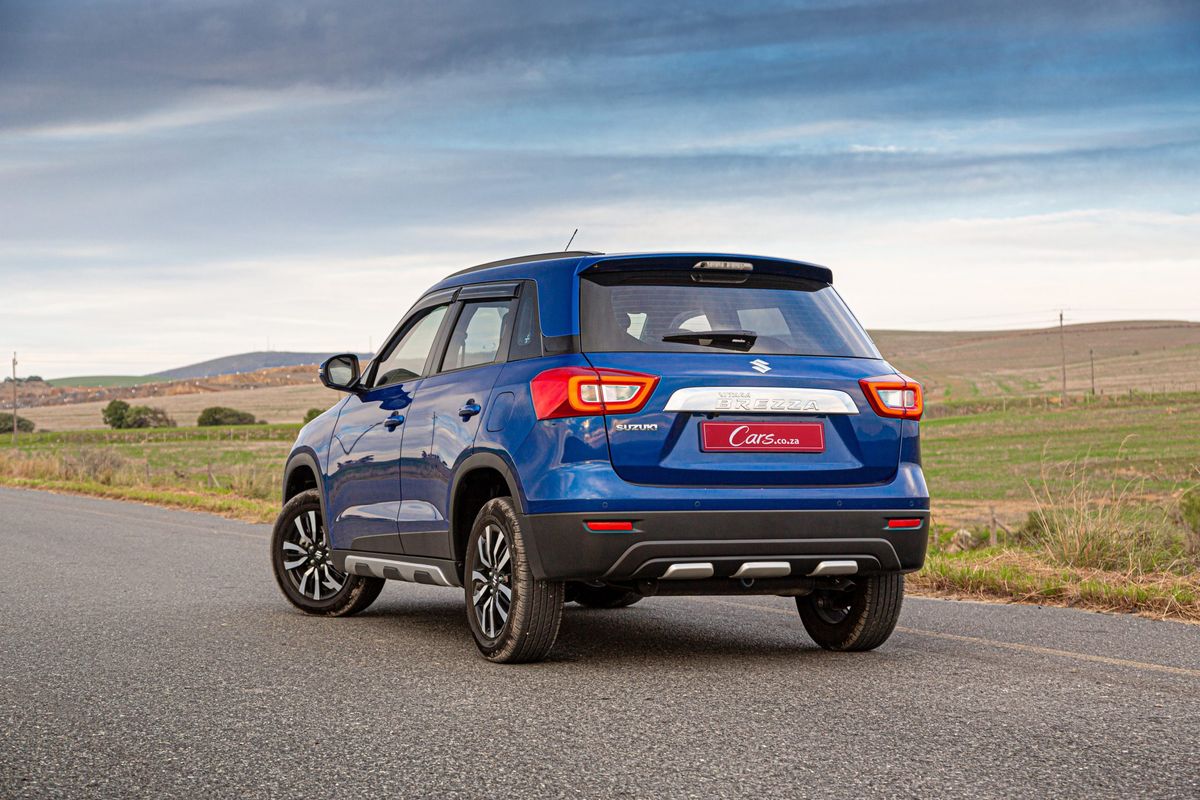
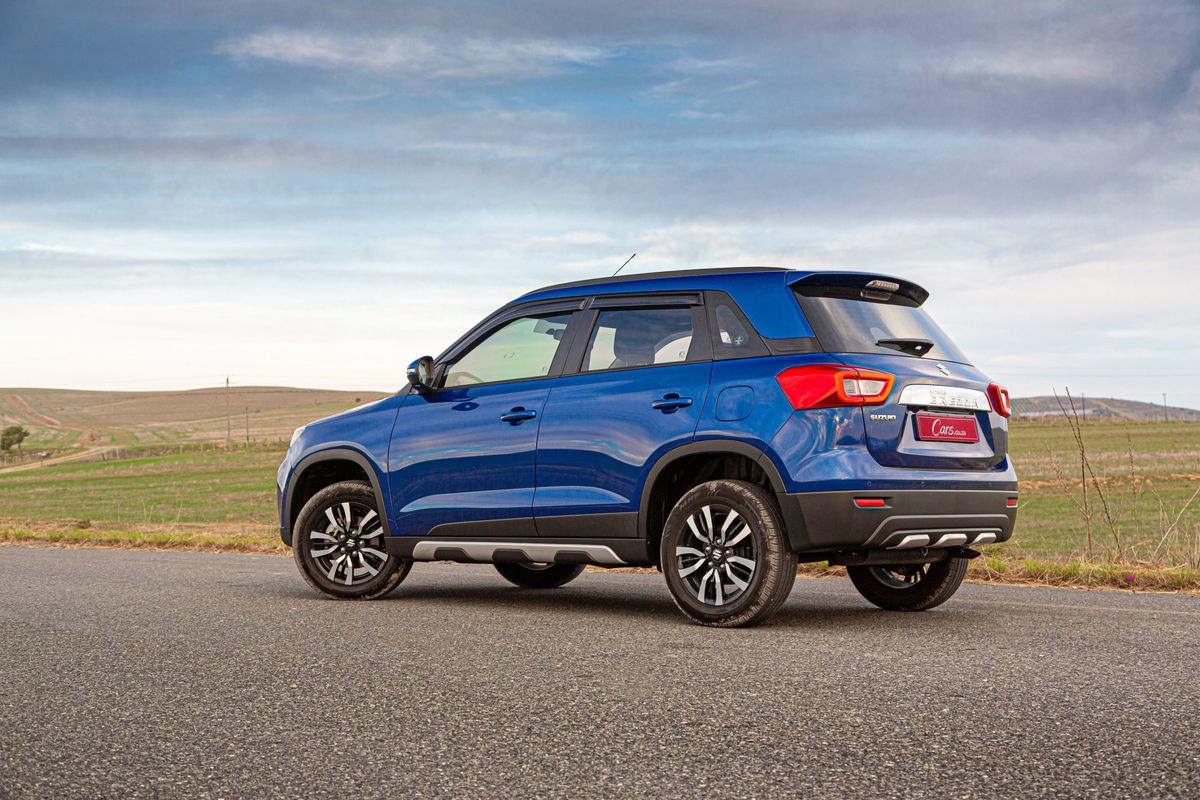
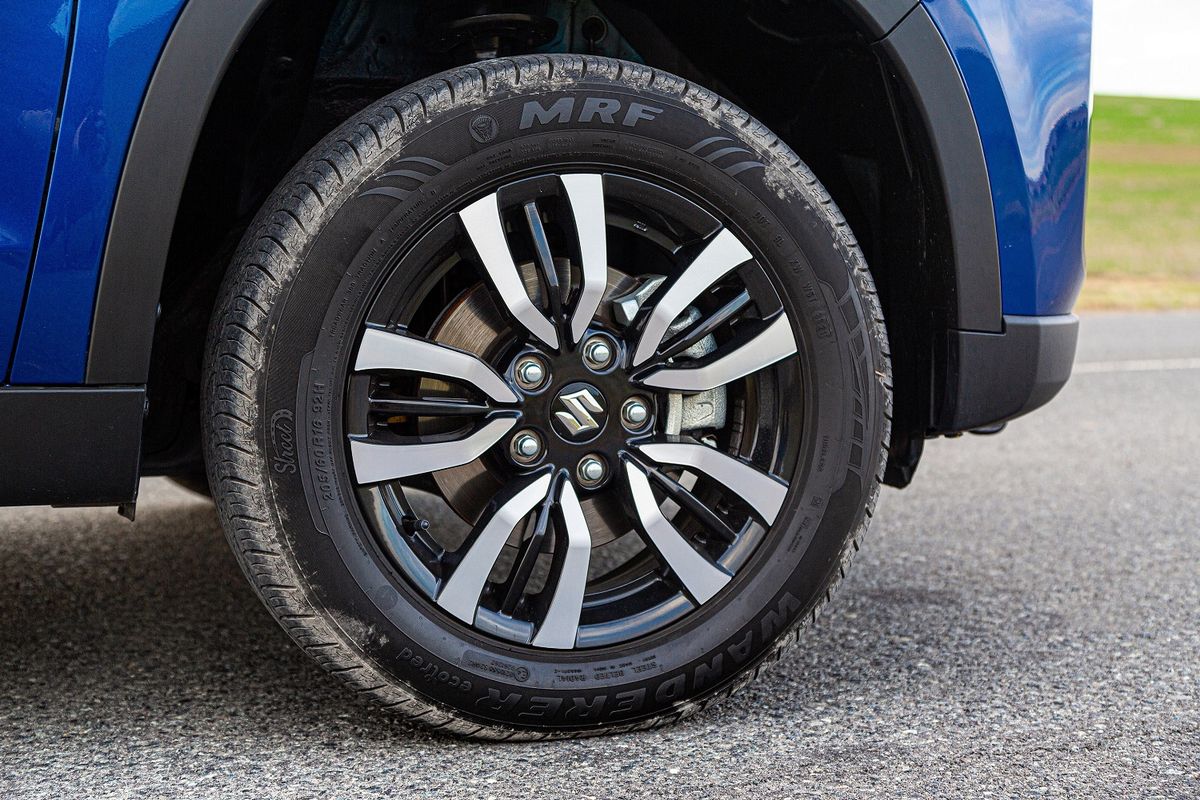
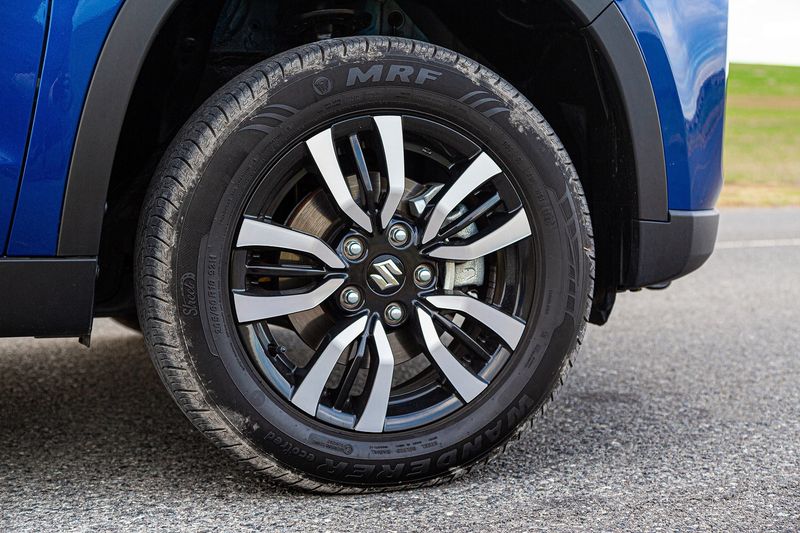
Suzuki Auto SA says the S-Edition of the Vitara Brezza was conceived to celebrate the model’s first birthday in South Africa. It’s a standard GL-grade Brezza, but features additional visual accessories, such as new-look cubic chrome grille, a silver skid plate on the front and rear bumpers, silver side garnishes, new 16-inch alloy wheels, and wind deflectors fitted to the doors. Inside, some of the dark cabin trim has been replaced by a lighter silver colour.
The Vitara Brezza’s cabin is nicely laid out, but there are some marginal finishes.
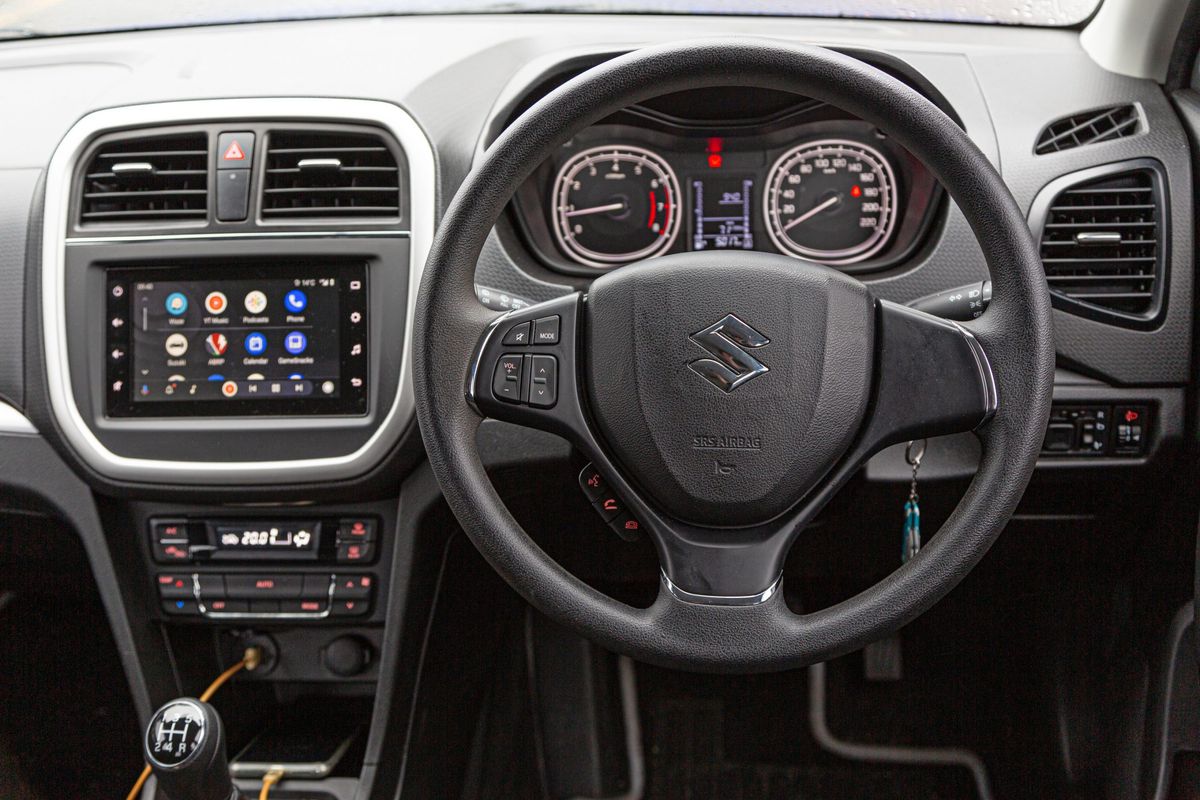
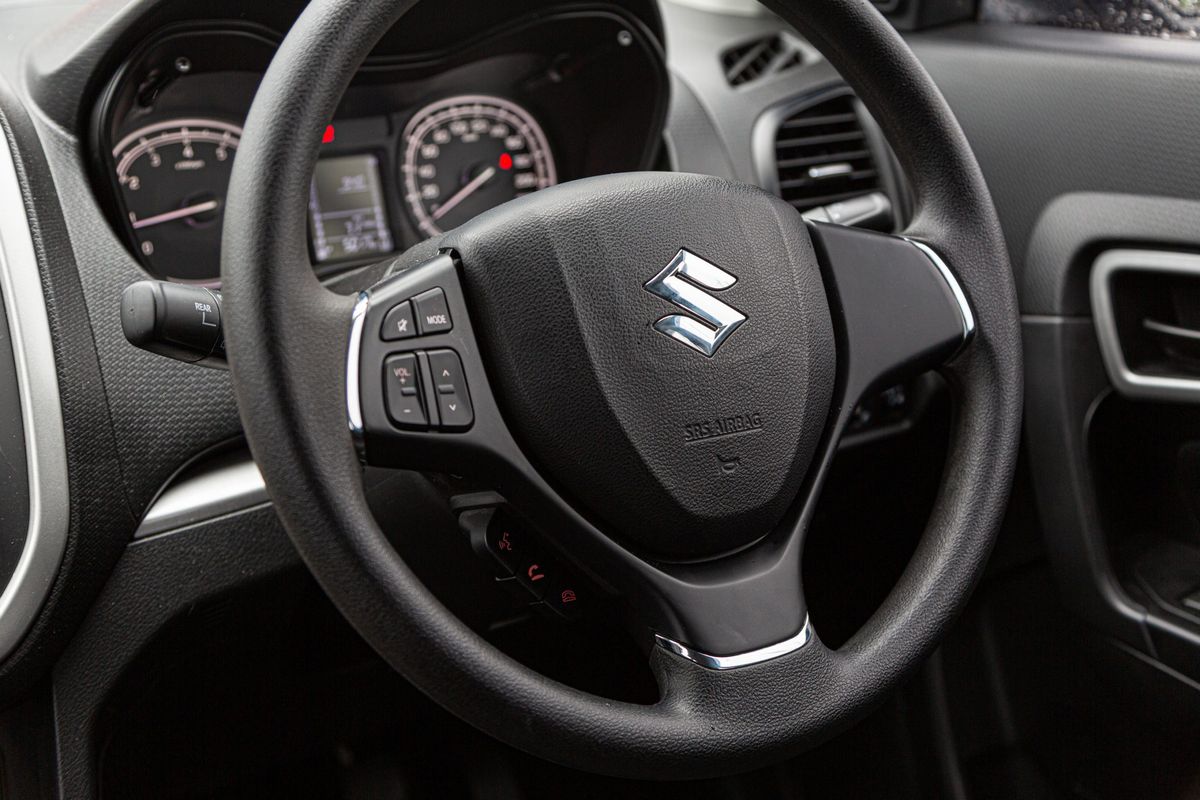
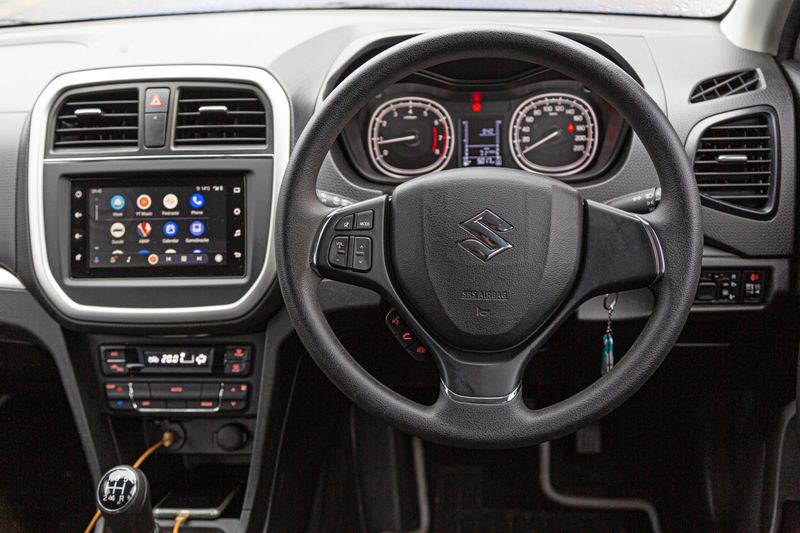
The interior of the Suzuki Vitara Brezza has a simple, no-frills layout but it’s a pleasant space to occupy, nonetheless. The instrument cluster is neat, with a comprehensive trip computer positioned between the dials and the info displayed is clear and legible. The silver inserts of the S-Edition give the otherwise black-on-black cabin a modicum of pizzazz, which we like.
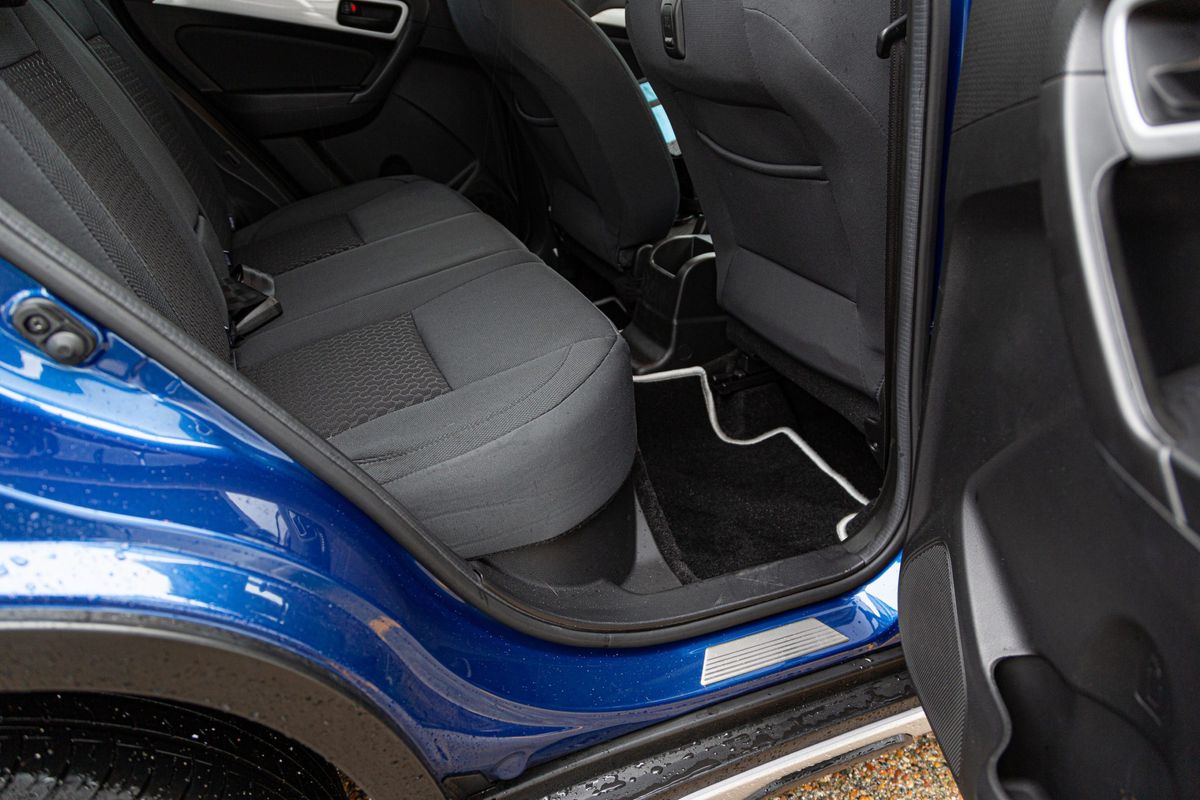
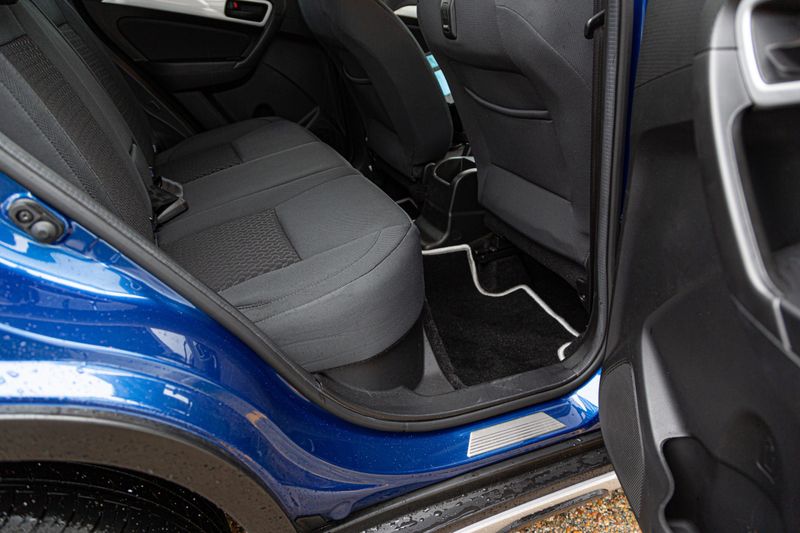
Despite the budget crossover’s compact dimensions, its cabin is relatively spacious. Rear occupants are availed reasonable leg- and headroom (so much so that adults could sit on the rear bench comfortably), but the the load-bay capacity (328 litres) in on the small side for the segment. In comparison, the Hyundai Venue and Kia Sonet offer 350 litres and 392 litres respectively. If you want more space, the rear seats split and fold in a 60/40 configuration.
Rear leg- and headroom are good.
It’s great to see that unlike many car makers that have attempted to infuse un-sporty family vehicles with dynamism (most of them without much success), Suzuki made on-road- and occupant comfort the Vitara Brezza’s primary focus, which is apt, considering the model will be used primarily for commuting. The high-seating position helps greatly with entry and exit.
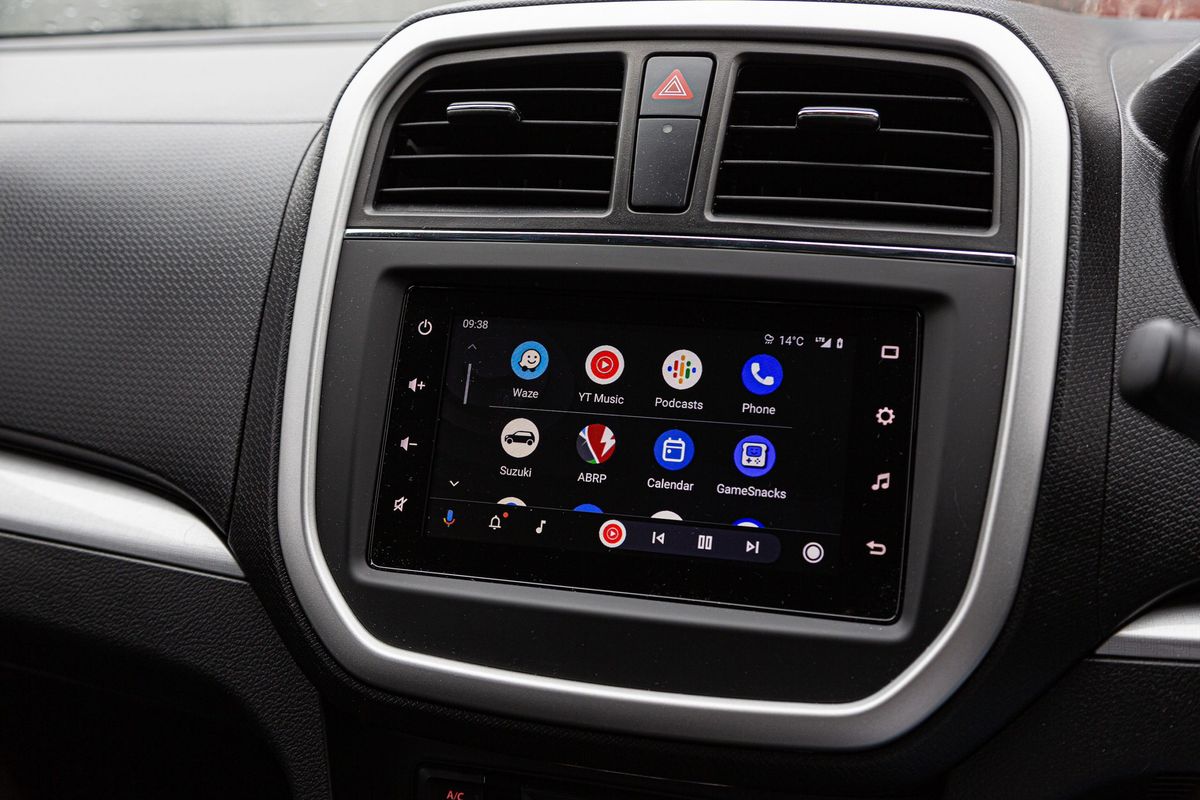
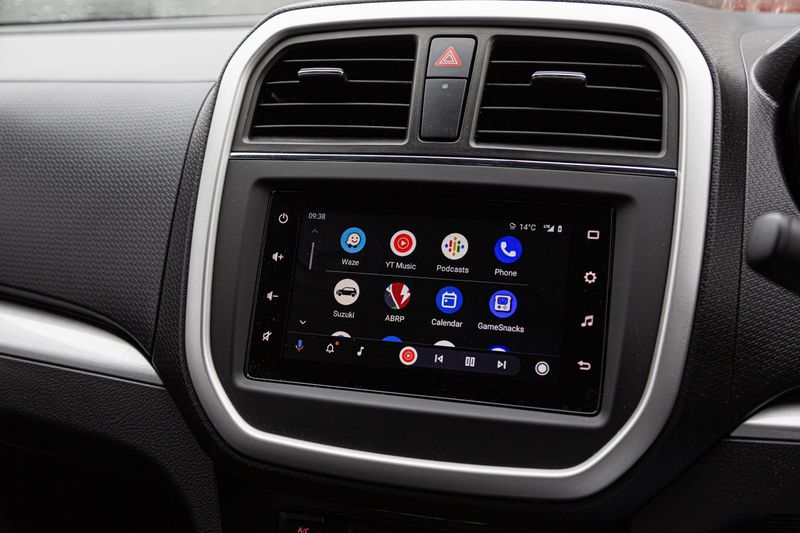
The standard spec is good at this price point. You get a nifty Apple CarPlay- and Android Auto compatible infotainment touchscreen system, a front USB port, electric windows, a multifunction steering wheel, a reverse-view camera, rear parking sensors and auto aircon (climate control).
Smartphone-screen mirroring technology has revolutionised in-car entertainment. Maps, music and more!
Do we have criticisms? Yes, although this is an affordable car, some cabin elements do feel “made to a price” and not in good way. We also wish the steering column offered a greater range of adjustment; it took us some testers a while to find a comfortable driving position.
Another issue we have is the lack of electronic stability control, which is surprising, considering Suzuki’s other entry-level model – the Celerio – does feature this technology. Anti-lock brakes and two front airbags are essentially the only safety features fitted.
Performance and Efficiency
Under the bonnet is a 1.5-litre 4-cylinder naturally-aspirated petrol engine that produces modest outputs (77 kW and 138 Nm) and is mated with a 5-speed manual gearbox – to be fair, it’s a powertrain we’ve experienced in numerous other Suzuki products. The Japanese firm claims a rather miserly average consumption figure of 6.2 L/100 km for the derivative.
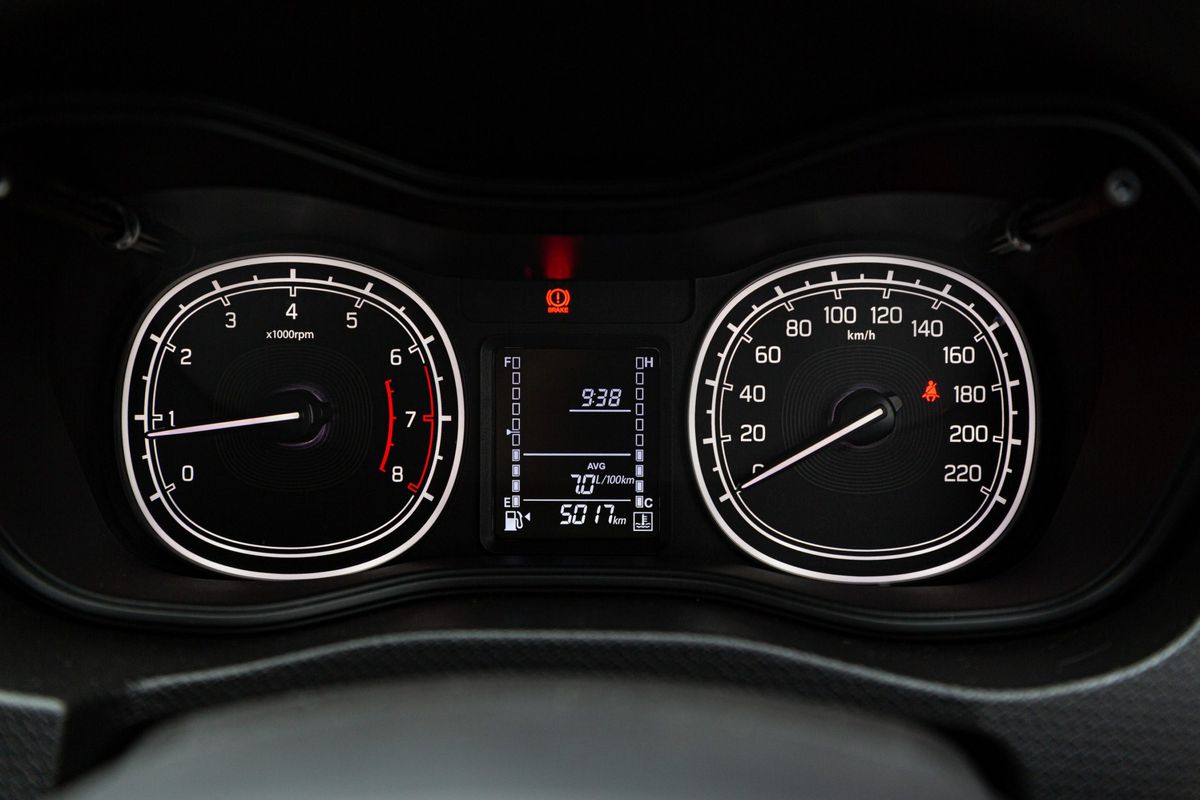
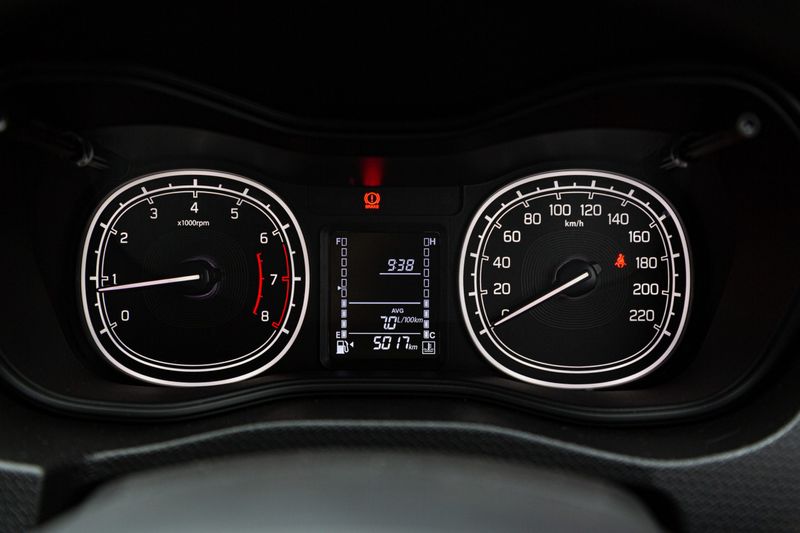
The instrument cluster features clearly-marked dials and a detailed trip computer/driver info display.
Due to the vehicle’s relatively low kerb weight of 1115 kg, its engine doesn’t need to work too hard (at least if you adopt a measured driving style, anyway), so, after a week’s worth of driving in mixed scenarios, the Vitara Brezza indicated a commendable figure of 7 L/100 km.
The powertrain’s performance is fair; the front-wheel-drive Suzuki performs with adequate vigour in and around town. The 5-speed gearbox is effortlessly light and direct to use, which is a bonus for those who’d rather change gears themselves than use the 4-speed automatic.
We’ve yet to drive the Vitara Brezza (or its Toyota sibling) at Gauteng altitudes where naturally-aspired (non-super or -turbocharged) engines suffer a 17% power deficit, but based on simple mathematics, we reckon there’d still be around 65 kW on offer. At sea level, when in first and second gear, the Suzuki’s motor feels spirited and revs quite freely.
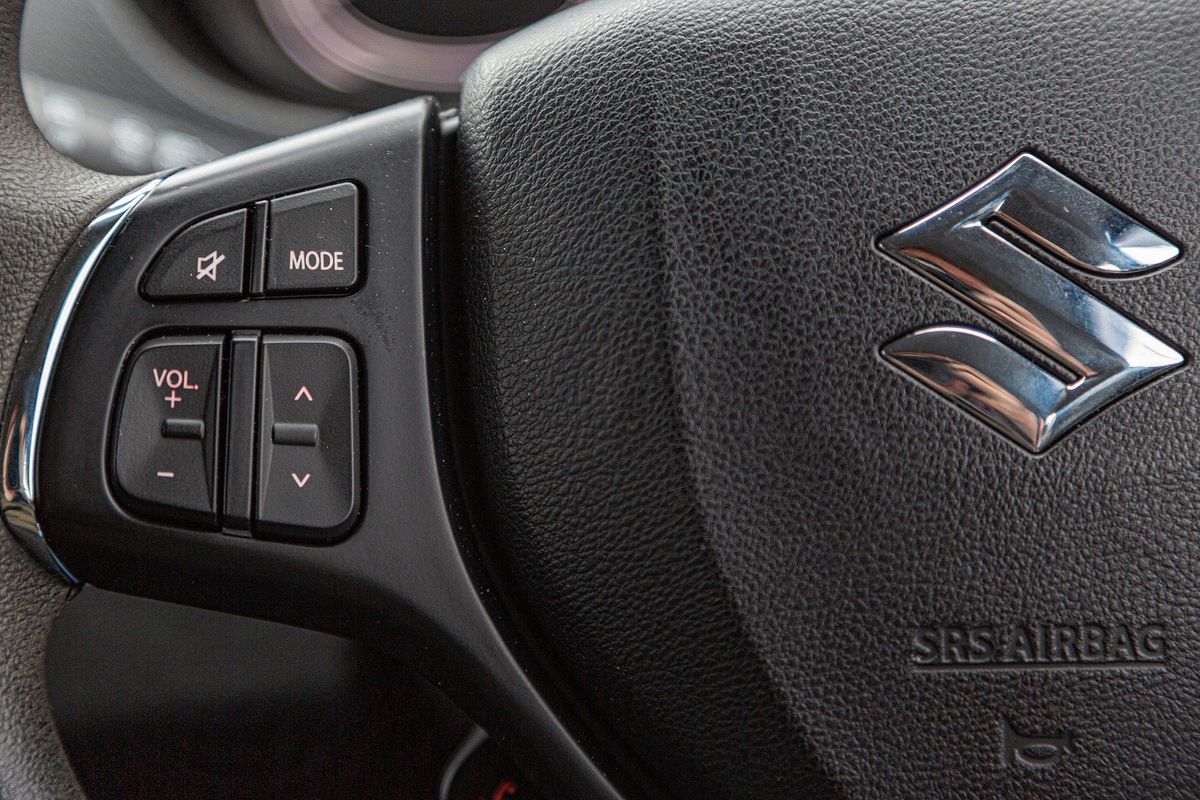
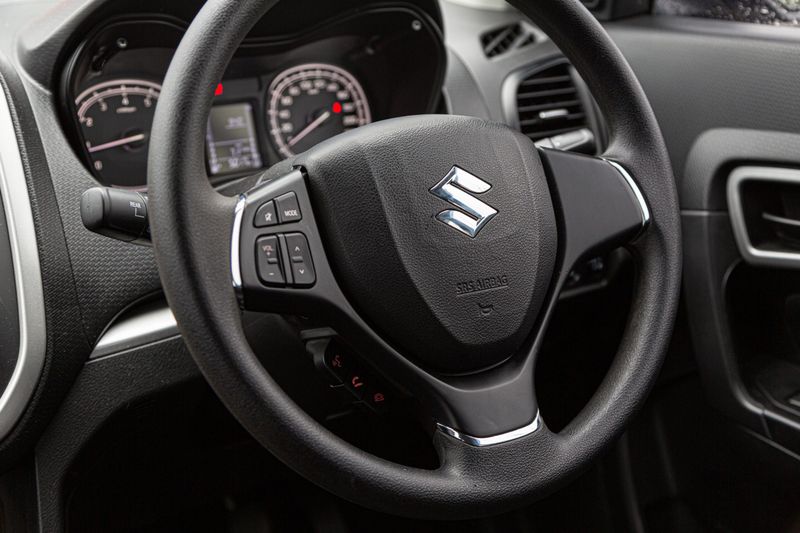
For convenience, radio and phone controls are located on the multifunction steering wheel.
So far so good, then. However, things go a little awry when you’re travelling on the open road. The weak link here is the gearbox, which would really benefit from an extra (top) gear.
You see, the Vitara Brezza is clearly geared for the urban commute and the lack of a 6th gear means the engine is spinning at 3600 rpm at the national speed limit (120 kph), which hurts fuel economy and your eardrums, because the cabin sounds boomy. We appreciate that a 6-speed ‘box would push up the model’s price/reduce its value-for-money proposition, but still.
Ride and Handling
These 16-inch alloy wheels are wrapped in high-profile rubber.
In day-to-day driving round town, the Vitara Brezza offers a comfortable and pliant ride quality, but, as we’ve mentioned, the model feels a bit breathless in flowing freeway traffic. Interestingly, the wind deflectors also seem to increase the amount of wind noise…
The steering-wheel action is pleasingly direct and light, which is a great combination for when you need to thread through traffic or execute parking manoeuvres in confined spaces. The forgiving suspension, meanwhile, absorbs the worst of the bumps and dips in the road.
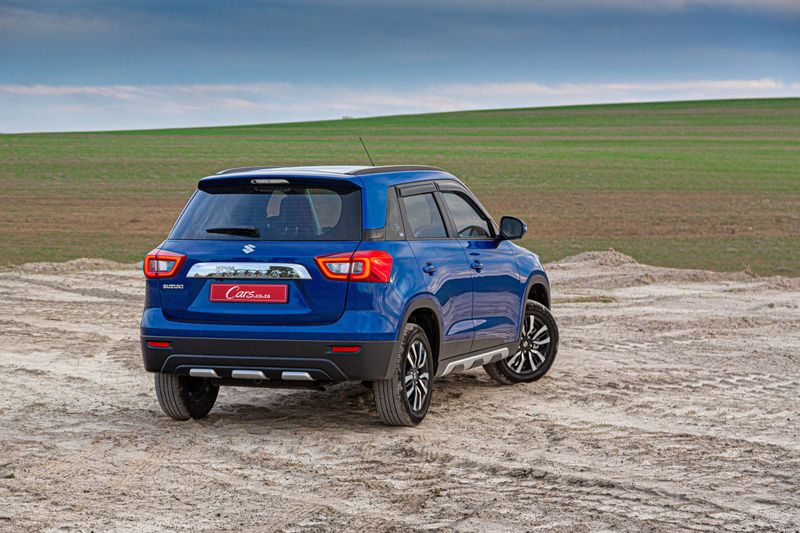
As a bonus, the Suzuki’s ground clearance of 198 mm and high-profile tyres give it some ability if you’re travelling on dirt and gravel roads. We’re not suggesting you should head to your nearest 4×4 trail, but if you do traverse unsealed roads, you’ll have enough clearance to clear rocks, potholes and ruts that would usually cause damage to sedans and hatchbacks.
When the tar turns to dirt, the ground clearance and thick tyres will be of great use.
Price and After-Sales Support
The Suzuki Vitara Brezza GL S-Edition costs R273 900, which includes a 5-year/200 000 km warranty, 4-year/60 000 km service plan and 3-year/unlimited km roadside assistance.
The Vitara Brezza is an accomplished crossover that does more right than wrong. Its value-for-money proposition is compelling, especially considering Suzuki’s enviable reputation for excellent reliability and after-sales support. The level of features at this price point is fair, but we wished the S-Edition featured electronic stability control. We expect an updated model to debut at some point in 2022 – hopefully that will coincide with a higher safety specification.
So, should you buy one? If generous luggage capacity isn’t high on your priority list and you don’t intend to undertake many long-haul road trips (where you’d likely cruise at triple-digit speeds), then yes, this vehicle is certainly worthy of your consideration. However, given South Africans’ predilection for taking road trips, you could also get into a Kia Sonet 1.5 LX; it’s a bit pricier, but offers a more capacious load bay and a 6th gear for a more relaxed drive.
Final Farewell? Ford Focus Will Be Dead By 2025
While it’s not been possible to buy a new Ford Focus in South Africa since the first half of 2019, it seems the hatchback’s time on the global stage is coming to an end, too…
Ford has confirmed it plans to wrap up production of the Focus hatchback in Europe by 2025, bringing down the curtain on what will by then have been a 27-year run for the nameplate.
The news come after the Blue Oval brand announced the “next step in its transformation” towards an “all-electric future” in Europe, selecting its Valencia plant in Spain to produce vehicles based on a next-generation electric platform. That means the Saarlouis factory in Germany, where the Focus is currently built, misses out.
In fact, the Dearborn-based automaker has gone as far as confirming there are no plans to replace Focus production in Saarlouis when the product cycle ends in 2025.
According to Automotive News Europe, Ford of Europe Chairman Stuart Rowley told media the company was “seeking other alternative opportunities for vehicle production at Saarlouis”, including potentially selling the factory to another manufacturer.
“We do not have in our planning cycle an additional model that goes into Saarlouis,” Rowley said, confirming the end of the line for the Focus by 2025.
A quick look at the history of the Focus
The original Focus was launched in Europe back in 1998, with the second-generation version hitting the global stage in 2004 (and being built here in South Africa, as well as at other sites) and the third iteration going into production late in 2010.
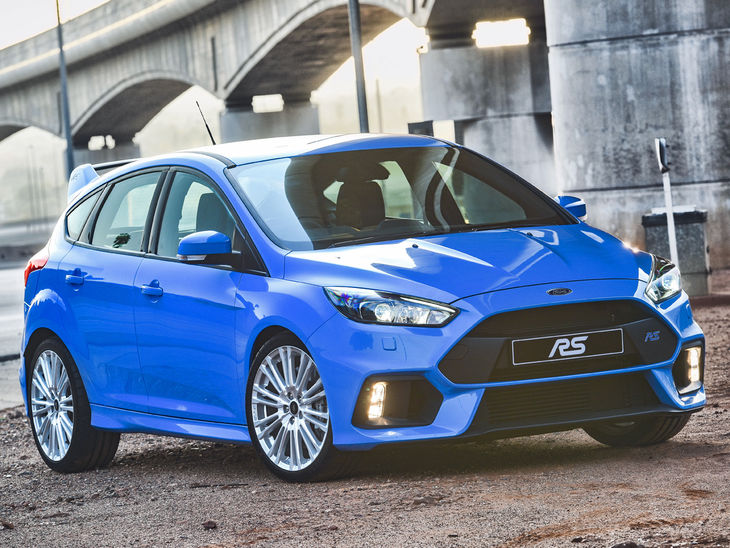
While the first three generations were sold locally, the fourth-gen model (and the 206 kW ST pictured above) didn’t ever make it to South Africa, much to the dismay of local Ford enthusiasts (and despite there being initial plans to launch it here).
Ford Motor Company of Southern Africa effectively axed the nameplate locally when the third-gen Focus range – which included sedan and hatchback body styles, as well as the front-driven 184 kW ST and all-paw 257 kW RS hot hatches – was discontinued at the end of the first quarter of 2019.
Since then, Ford has also pulled the Figo and Fiesta line-ups from the South African market, leaving the Mustang as its only true passenger-car offering.
The 257 kW Focus RS was discontinued in SA in 2019, along with the rest of the third-generation range.
How the Toyota RAV4 rules the world
Why nobody ever mentions the world’s best-selling car.
You can talk about vehicle marketing merits and test data, but nothing is more transparent than cold, hard new-vehicle sales figures.
A model can have the cleverest design and slickest functionality, but that counts for little if the product sells poorly. And each year, the world’s most popular model range is subject to analysis.
With all the data from 2021 collated, the model that outsold all others was a Toyota… but it’s not the one you think. The Corolla has been Toyota’s true “global car” for many decades, but demand for the traditional sedan (and its hatchback equivalent, for that matter) is waning dramatically. In 2021, Corolla sales were flat, globally.
If any Toyota was most likely to be the world’s most popular vehicle in 2021, it must be the Hilux, right? With its huge cluster of variants and derivatives (it’s sold in virtually every country and territory), Hilux enjoyed 22% sales growth. But it was bested by Toyota’s most stealthy success: the RAV4 medium SUV.
No vehicle illustrates Toyota’s product acumen better than the RAV4. As buyers of mid-sized cars disengage from hatchbacks and sedans, crossovers and SUVs have benefitted. It’s a trend that’s unlikely to change soon.
Even in the early to mid-1990s, Toyota foresaw that Camry and Corolla would eventually succumb to all-terrain vehicle popularity.
How Toyota saw the future
Virtually all manufacturers now produce a crossover or SUV of some kind. Even Ferrari has relented and resigned itself to sacrificing brand values at the altar of profitability (its upcoming SUV will be called the Purosangue).
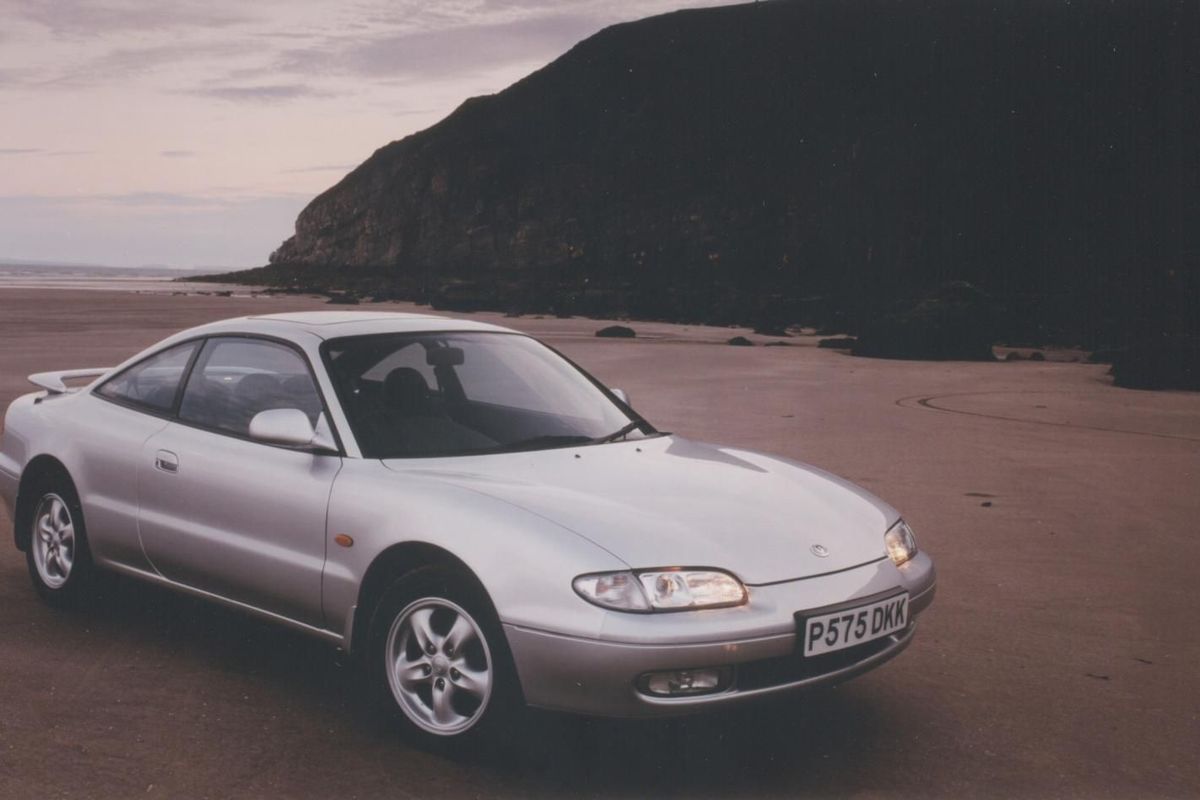
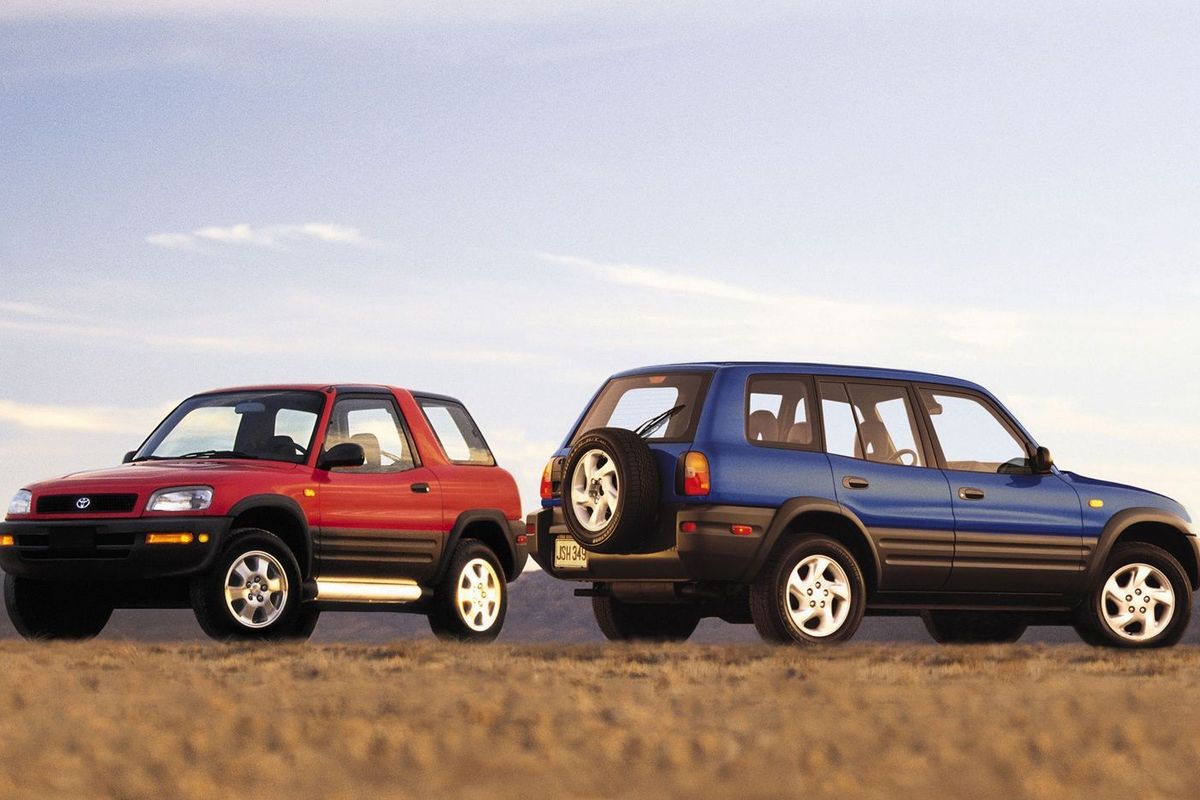
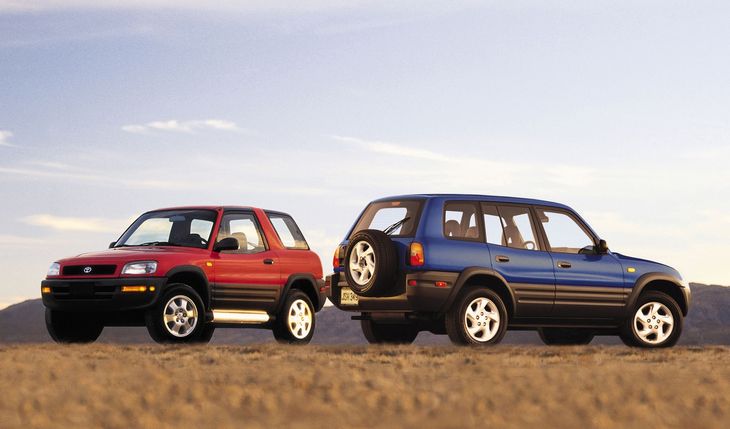
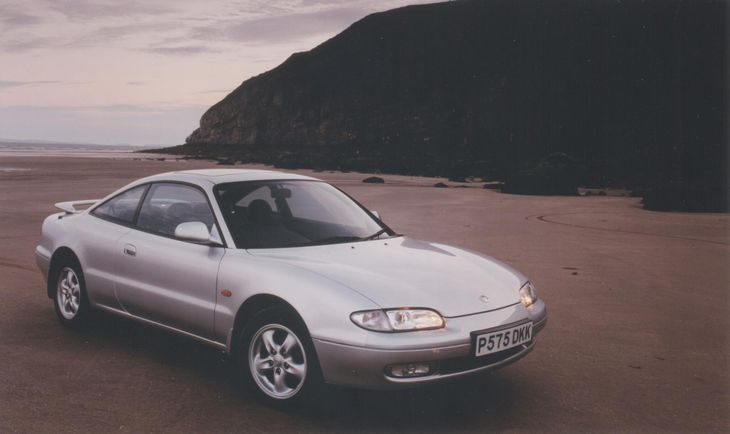
Toyota was way ahead of the trend and laid the foundation for its success in 1994. That year, it launched the RAV4, when most rival brands invested in compact luxury coupes and MPVs. This was the era of Renault’s Scenic and a collection of affordable coupes that South Africans mostly missed out on, but for the Opel Calibra and Mazda MX-6.
Toyota realised that a 1990s-era “affordable” coupe was very compromised as a long-term ownership proposition. The moment coupe owners had kids, their cars became deeply impractical.
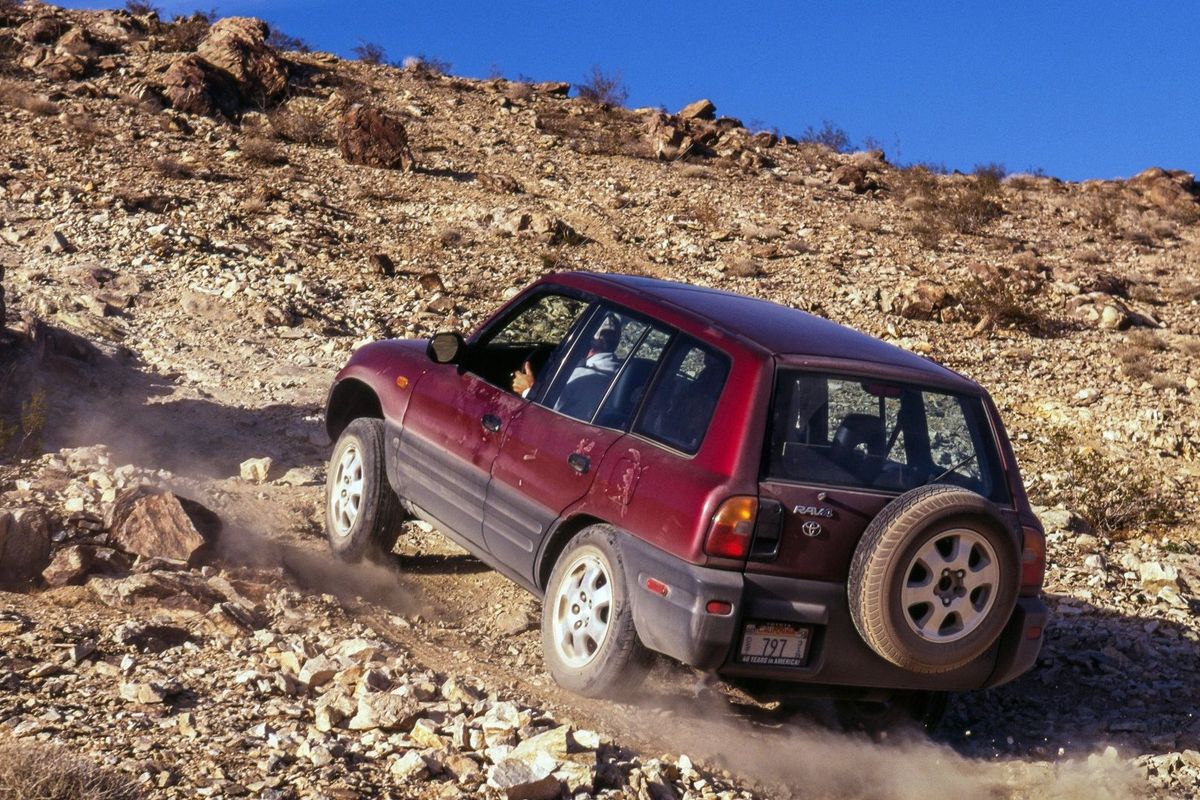
Toyota’s original RAV4 proved that you could go sensibly and mildly off-road, without low range. Now it’s widely accepted, but many considered the notion laughable in the mid-1990s. Most automotive study groups and brands could not imagine significant demand for a compact SUV that didn’t have extreme gradient climbing ability. How wrong they were.
At the time most brands were launching FWD coupes, like Mazda with its MX-6, Toyota brought the RAV4 to market.
Why the mild all-roader won
While many of its competitors were investing in MPVs and front-wheel-drive coupes, Toyota saw the future with the RAV4. Ford and Nissan both had similarly sized vehicles to the first-gen RAV4, but they were ladder-frame-based off-roaders with low-range transfer cases. However, the Maverick and Terrano had too much off-road ability for their size; they were too small to be stacked with Overlanding gear and too unwieldy to serve as passenger cars on the daily commute.
Toyota recognised passenger-car switchgear and ride quality, combined with enhanced ride height and confident gravel touring ability, was what the market wanted.
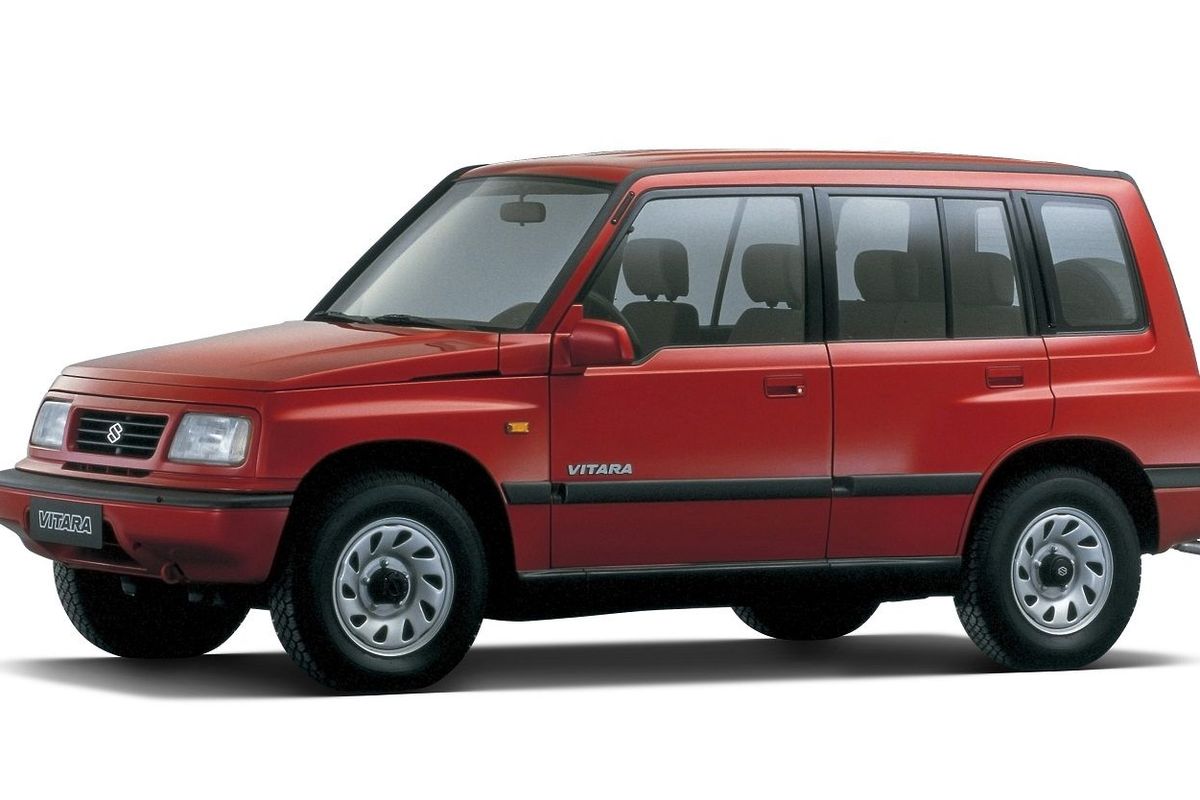
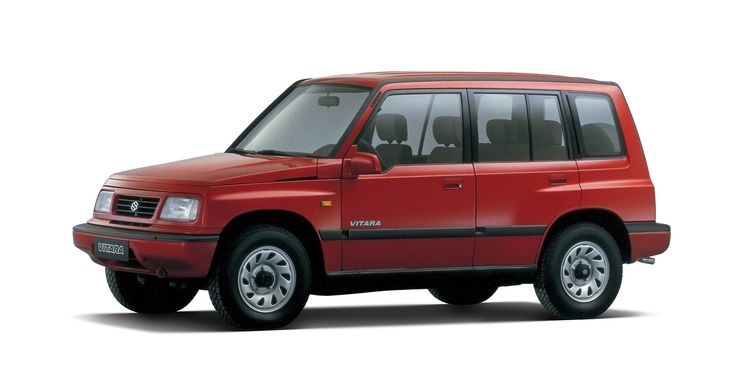
Vitara did much to establish the Japanese compact all-terrain vehicle market globally. But it was too rugged, and unrefined, compared with a RAV4.
The RAV4 entered a market with few rivals. In truth, there was only one. Suzuki’s Vitara predated the RAV4 by nearly six years, but Toyota’s SUV was immediately more successful. The reason was simple: the Aicho-based brand recognised that even the most ardent outdoorsy person would still spend most of their time driving their compact SUV on tar.
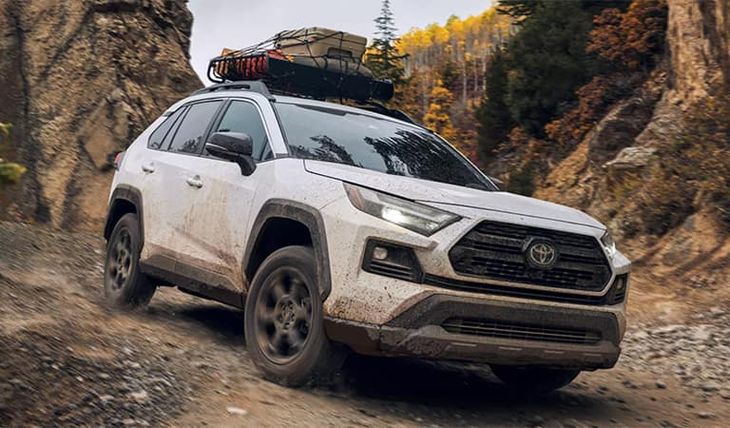
RAV4 is capable as it needs to be. I’d know, I’ve travelled in convoy through Botswana in a RAV4. With Prados and Fortuners, trailing… and the RAV4 incurred no damage.
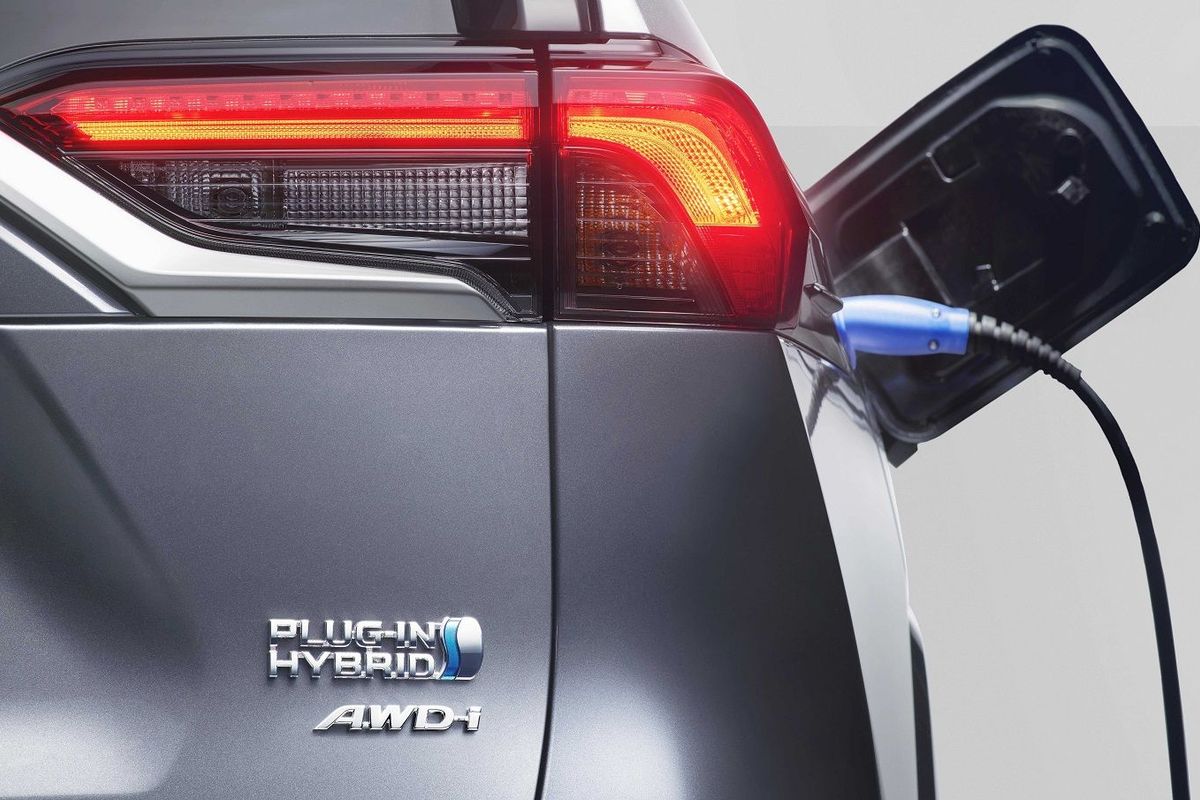
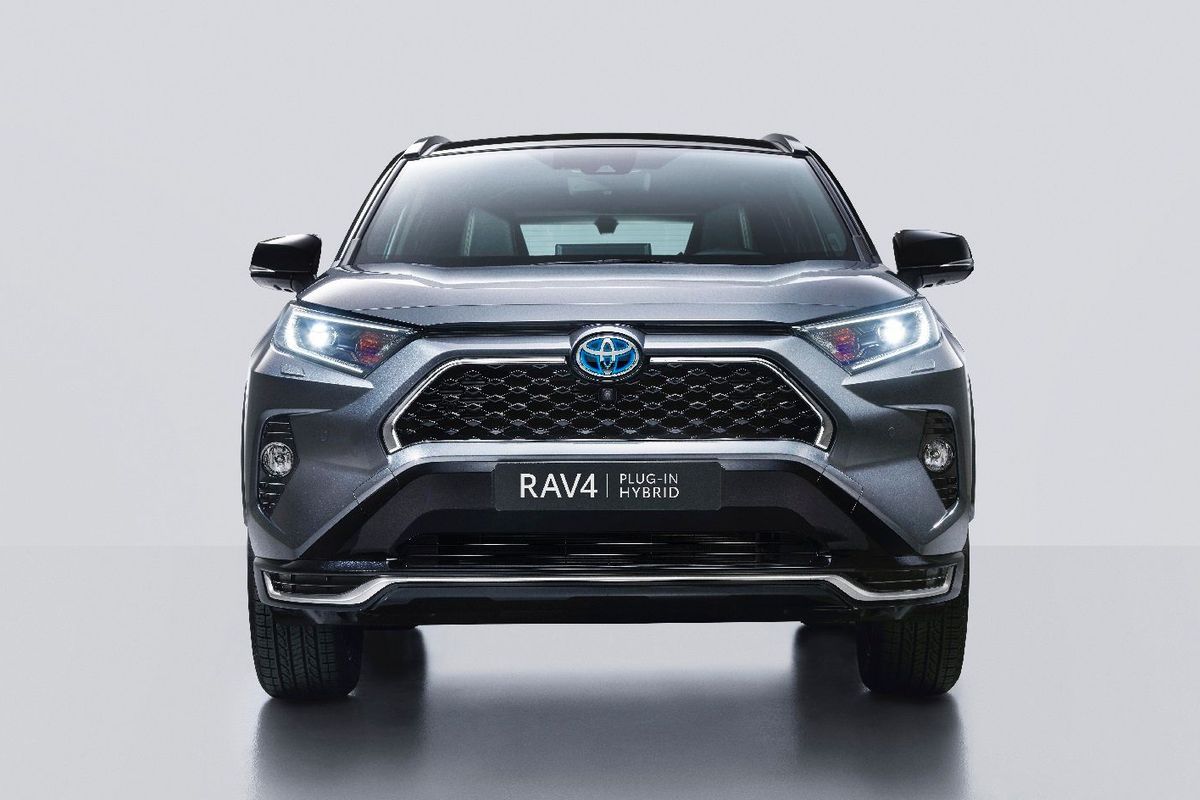
The success of the RAV4 says much about engine preference, too. Toyota offers mild-hybrid RAV4s, but no pure EVs or turbodiesels. Within the Toyota product matrix, there’s more hybridisation happening than what the brand crows about.
For decades, Lexus and Prius have allowed Toyota to run a parallel hybrid development and product integration programme. The moment diesel engines became too toxic for most markets, Toyota had mild hybrids ready to power the RAV4.
Toyota has managed the disengagement from diesel – and pivot to hybridisation – better than most carmakers.
While many of its rivals struggle with the cost implication of tapering diesel sales, and sourcing expensive petrol-hybrid replacements to futureproof their products, Toyota has much less of an issue.
In South Africa, the Hilux is revered, hence its best-seller status. When the conversion trail turns to Toyota, it’s imagery of rugged adventure vehicles that forms in the mind: Land Cruiser 70 and 300 Series. Hardly anyone mentions RAV4.
Perhaps this has been Toyota’s most remarkable achievement with the model. It’s a vehicle that nobody lists as a primary consideration in conversation, but it outsells everything.
The “real world” is that most euphemistic place, where people actually buy and own cars, instead of merely pondering them. And for most global real-world buyers, Japanese vehicles, specifically Toyotas, retain a lot of premium appeal.
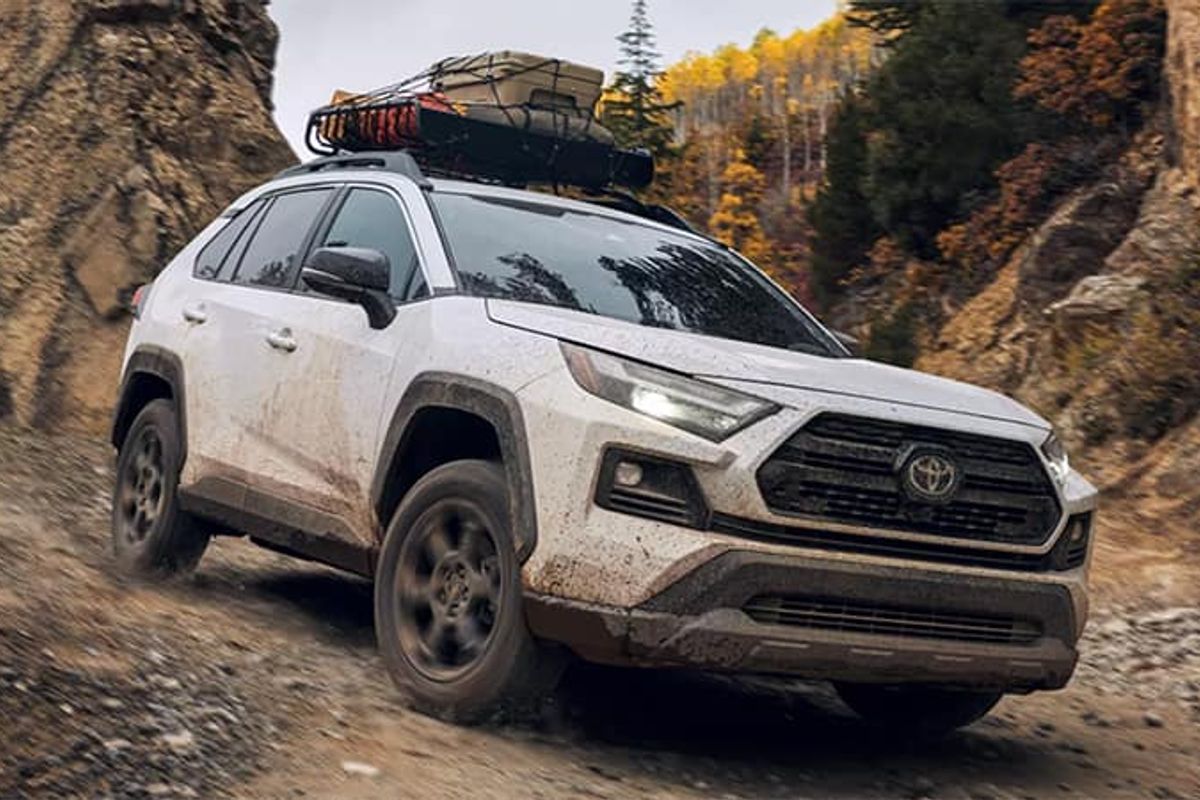
With off-road specification tyres, the RAV4 can do more than most of its owners would ever need.
Does RAV4 prove that Japanese cars rule the world?
A telling aspect of the RAV4’s status as the world’s reigning best-selling vehicle, is that it is Japanese. The broad view is that Japan’s automotive industry peaked just after RAV4 was launched in the mid-1990s.
The assumption is that German dominance is inarguable. And any Asian automotive entity capable of world domination will be either Korean or Chinese. Not Japanese. But the RAV4 proves that between marketing perception and the actual “real world” market, there’s a significant underappreciation of Japanese automotive legacy – and customer loyalty.
The RAV4’s best-seller status is not a happy accident for Toyota. Or a coincidence. Or pandemic supply-chain related. Now in its 5th generation, the RAV4 has an endearing heritage. Throughout nearly three decades, it has offered a near-ideal blend of passenger-car driveability and all-terrain ability. Not too much of the latter, and not too little of the former.
Jeep Gladiator (2022) Launch Review
The mighty Jeep Gladiator has touched down in South Africa and we’ve had a quick taste of its capabilities at the model’s local launch in Gauteng. Is this SA’s coolest double-cab bakkie?
It has been a quiet period for Jeep’s South African subsidiary. With the Stellantis merger affecting the order of business along with the pandemic, semi-conductor shortage and supply-chain issues, Jeep SA hasn’t had much to crow about.
For the US brand, the Gladiator double-cab bakkie is a pretty brash, in-yer-face way of announcing that you’re still open for business in 2022! Stellantis SA says it has opened 11 new dealers in 2022, increasing its footprint to almost 90.
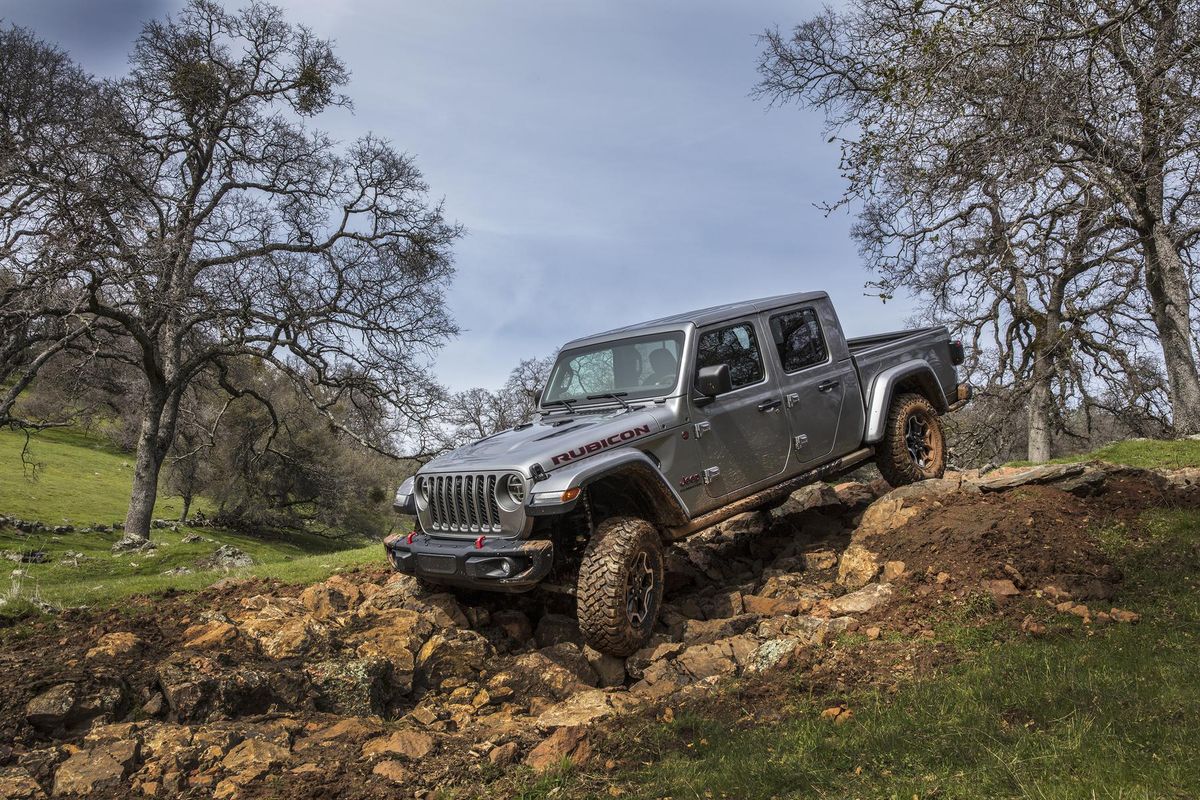
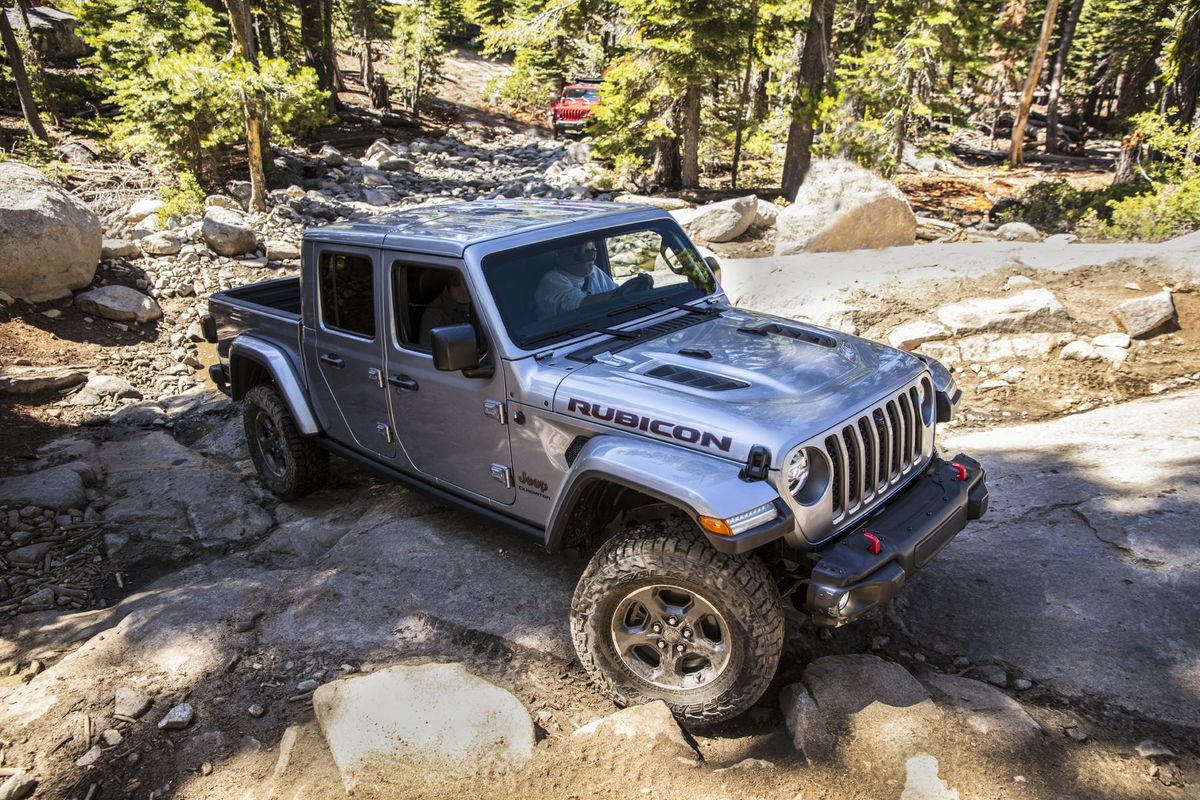
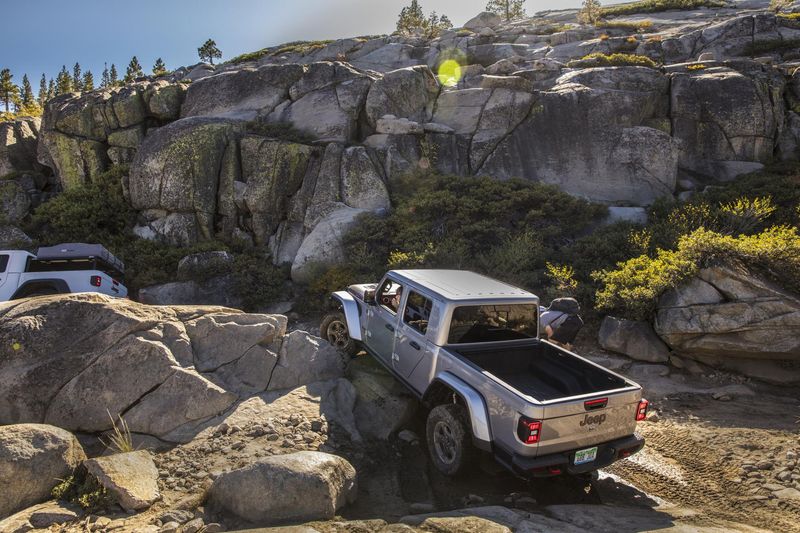
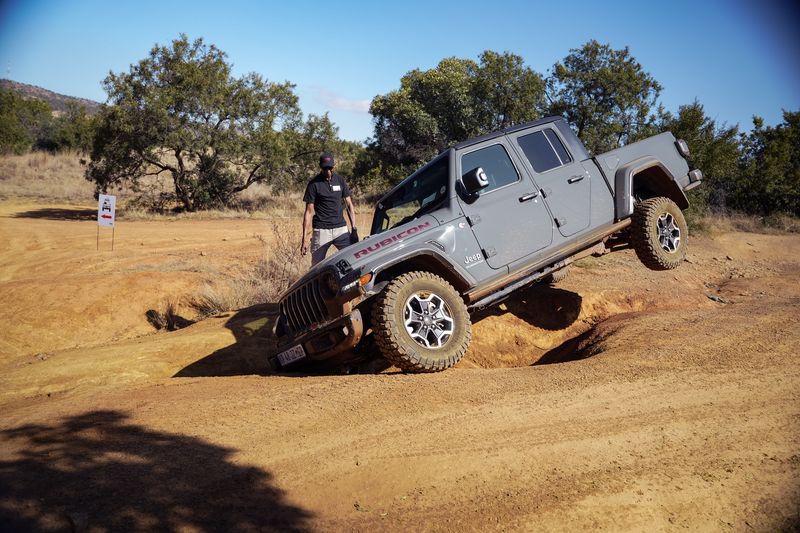
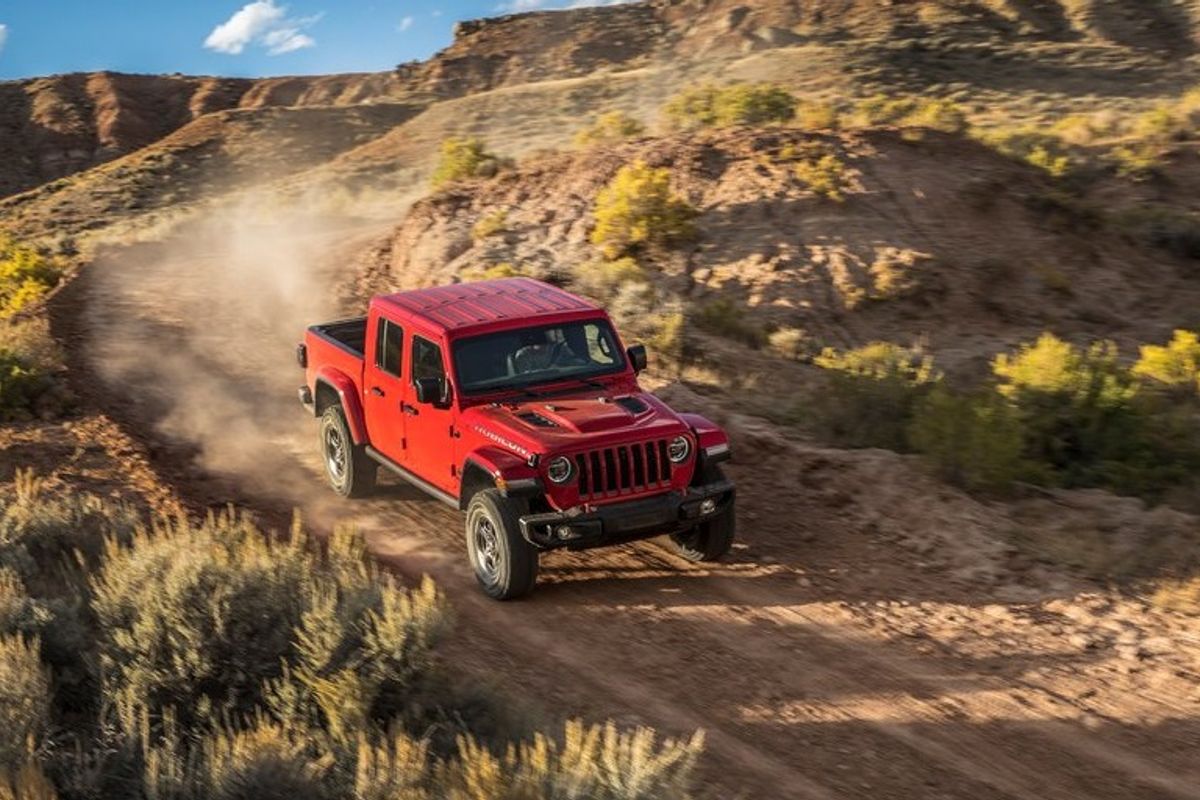
An off-road course is the Gladiator’s happy place.
What’s on offer?
The Jeep Gladiator double-cab bakkie has gone on sale with just one trim level and a single engine-transmission combination. The Gladiator Rubicon is powered by a Pentastar 3.6-litre V6, which has peak outputs of 209 kW and 347 Nm. The ‘box on duty is an 8-speed automatic unit allied with a low-range transfer case.
The Rubicon level of trim covers all the bases, which is to be expected – given the model’s 6-figure price tag, but before you close the window, hear us out. What luxury and off-road-capable SUV doesn’t cost over R1 million? Even executive SUVs – most of which are German in origin – have asking prices comfortably in excess of one bar…
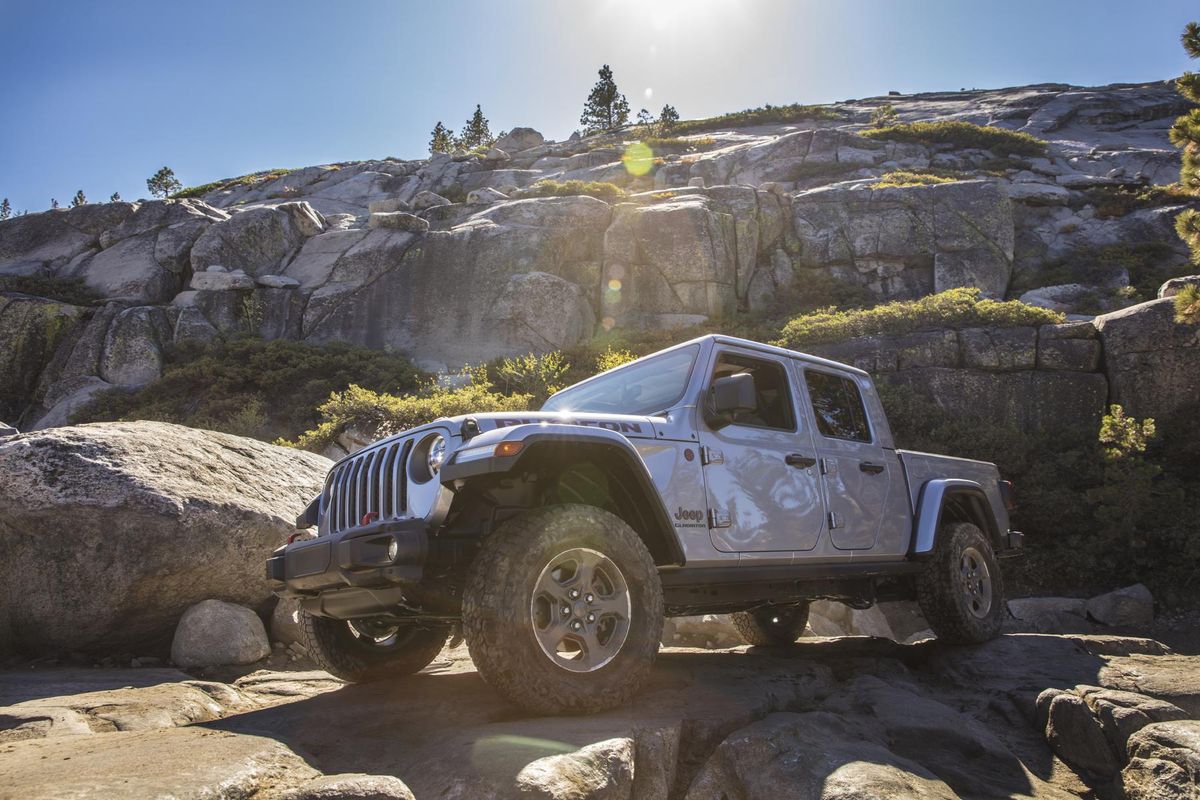
For off-road fans, the Gladiator offers some tantalising numbers to consider, including a ground clearance of 249 mm, a wading depth of 800 mm, approach/departure angles of 43.4/26 degrees, a payload of 693 kg, plus it can tow a 2 721-kg trailer. Tyres? You’re covered with chunky 32-inch BF Goodrich rubber (255/75R17) wrapped around 17-inch Granite Crystal alloy wheels.
There are plenty of gadgets and toys to keep the Jeep fanatics happy.
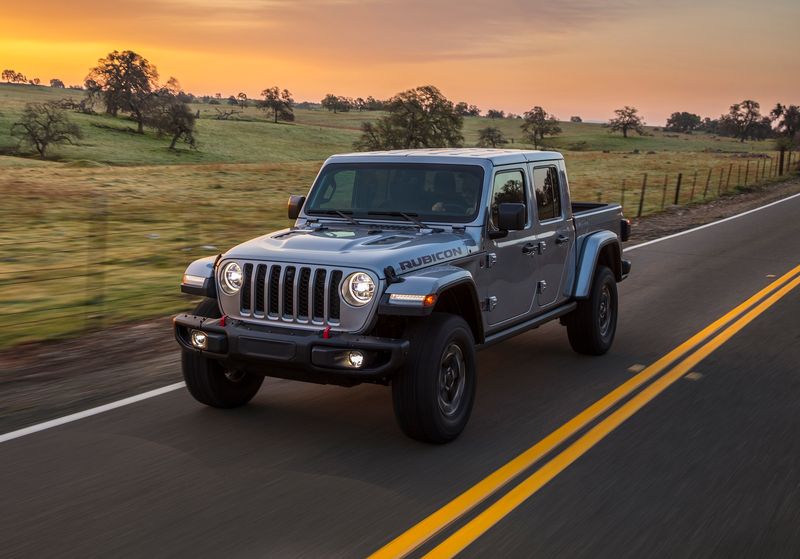
Physically, the Gladiator is a dauntingly-large bakkie, or should we say “truck” (with a yee-haw accent)? At 5 540 mm long, with a wheelbase of 3 490 mm, the Gladiator is not going to be the easiest thing to park. It’s an immense vehicle.
Just look at it though. It’s achingly cool and macho – you could easily envision a military version of this Jeep, packed with marines in full gear and armed to the teeth, charging across a battlefield. In an era of softer and gentler designs, this is a brash and bold rebuke of the crossover establishment. Even the colour names are interesting; Sarge Green, Sting Grey and Firecracker Red are three of the nine hues on offer.
The Gladiator’s features
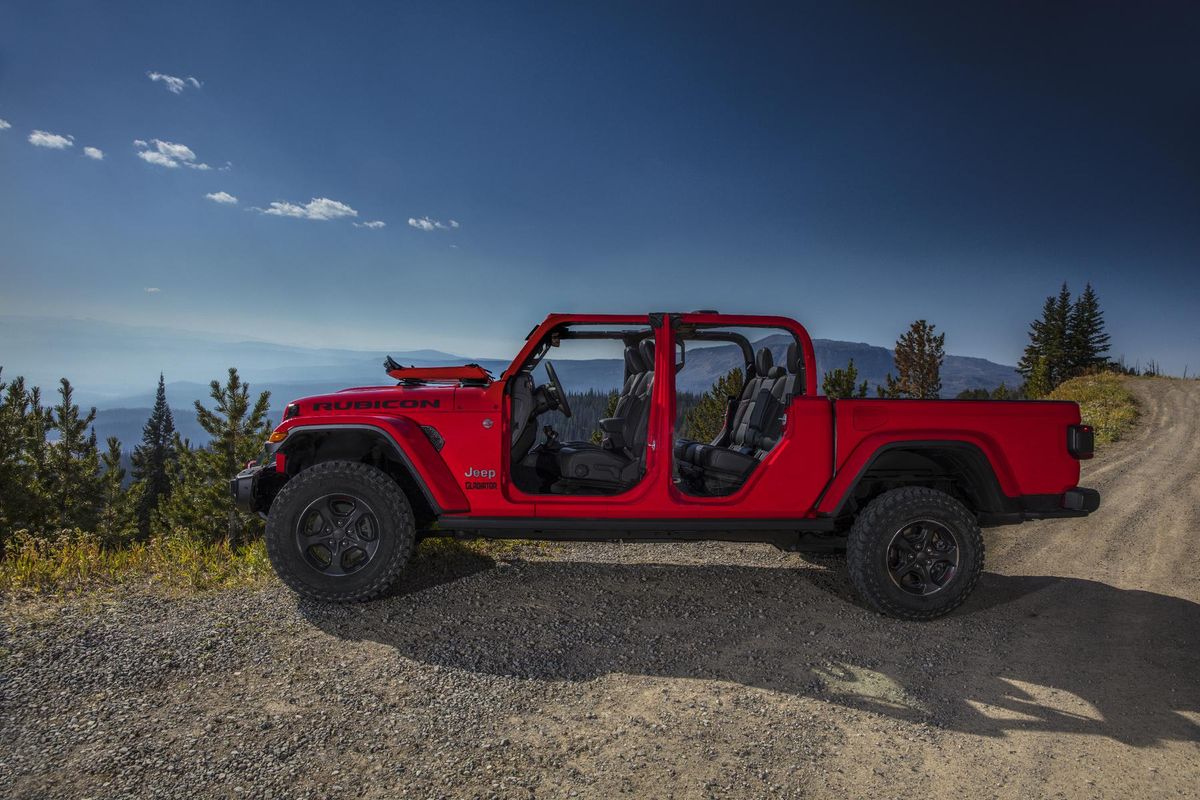
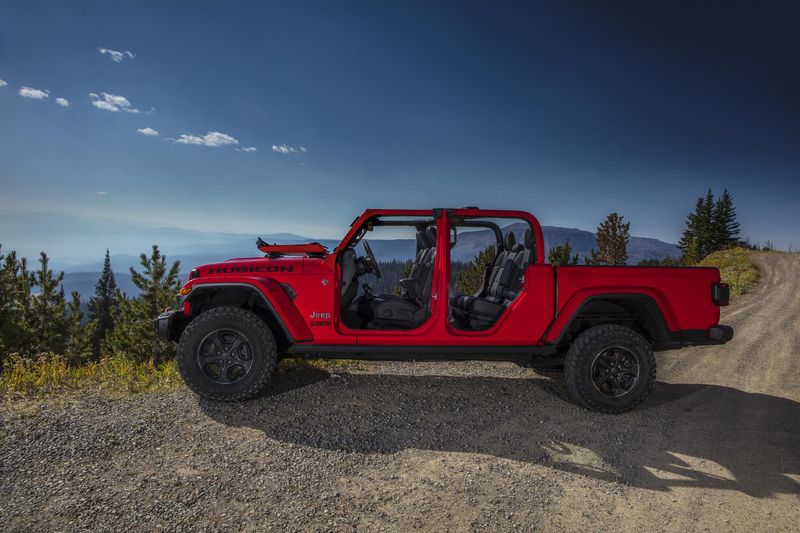
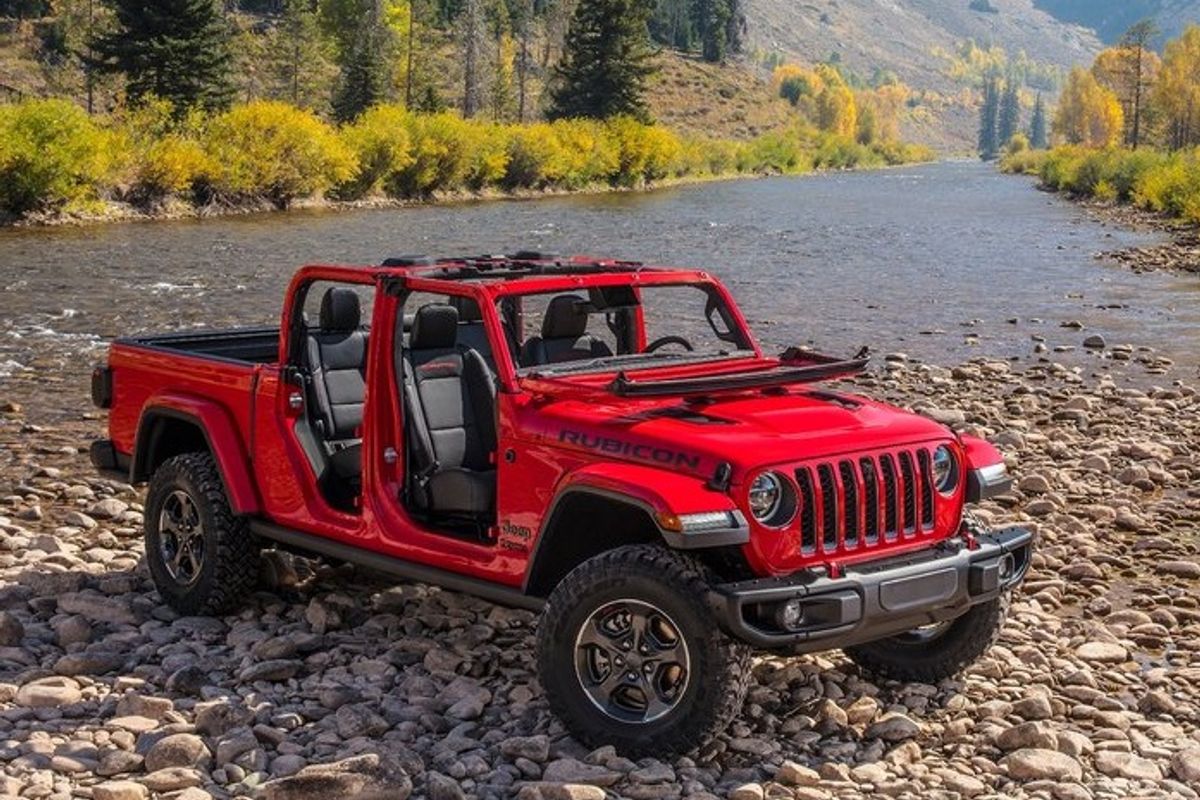
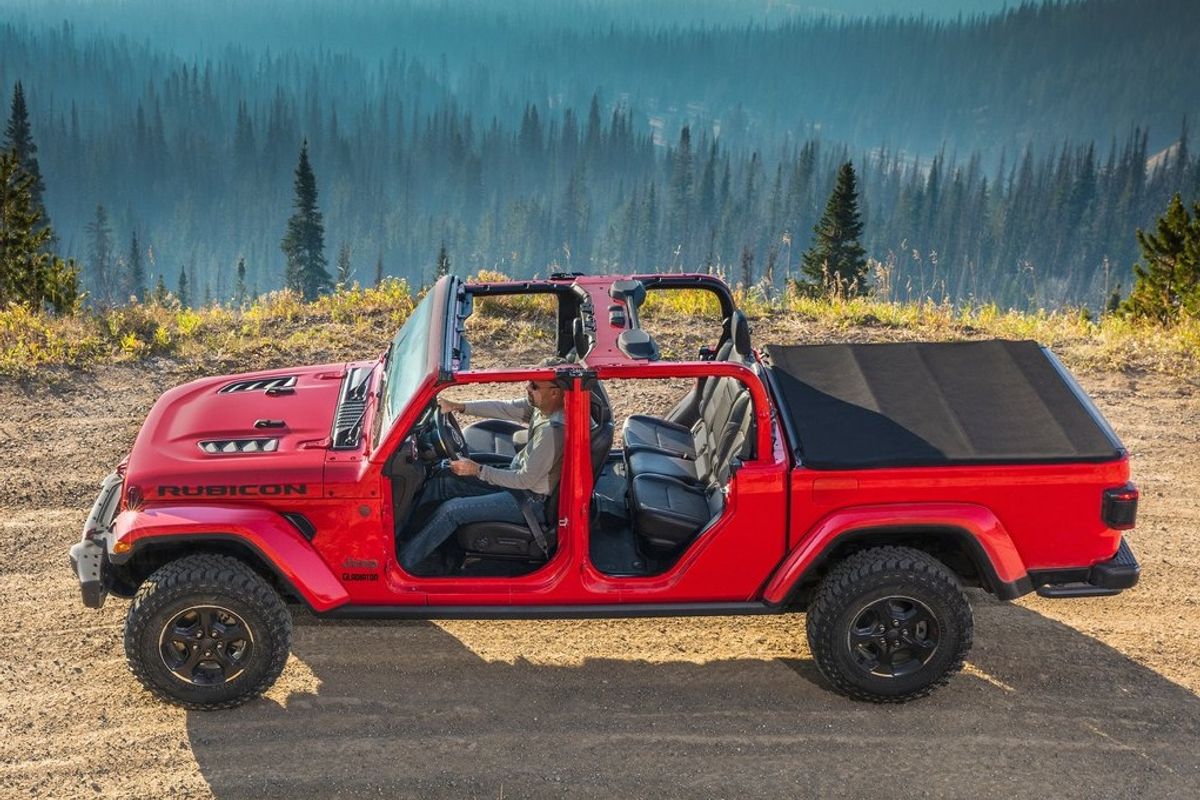
The roof, doors and windscreen can all be detached for outdoor escapades.
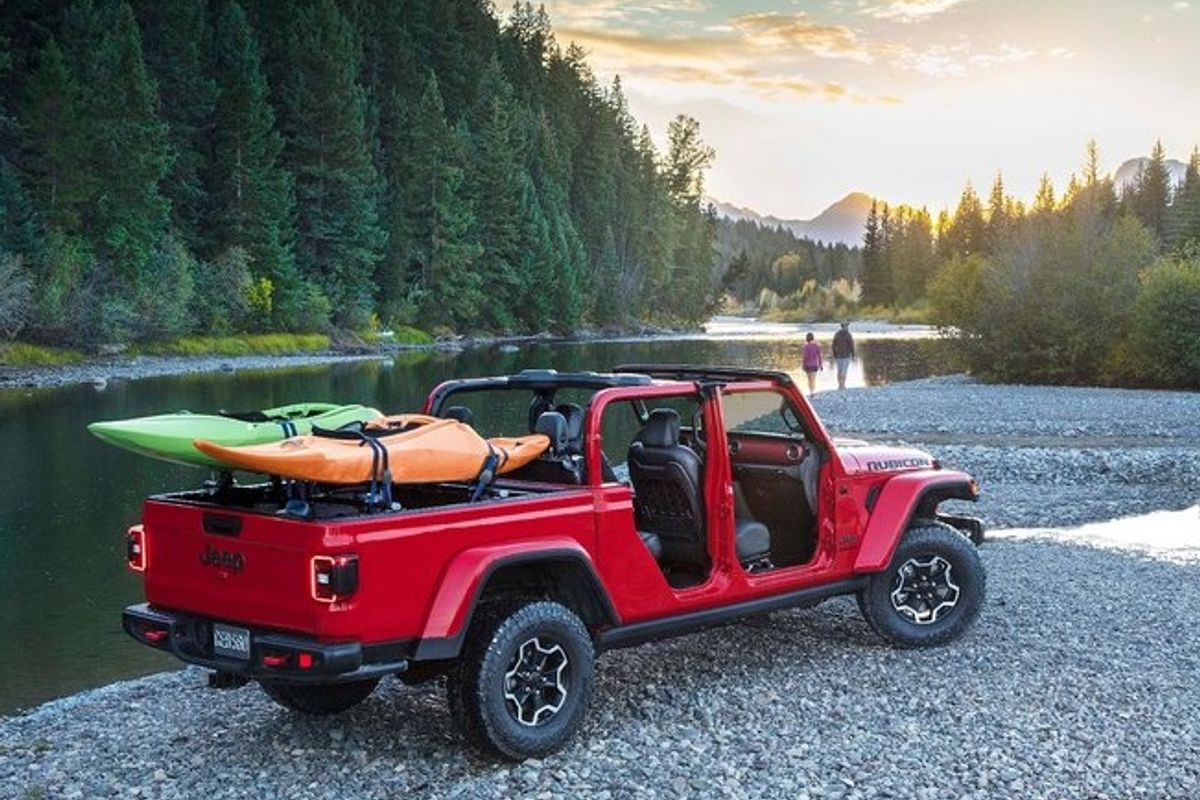
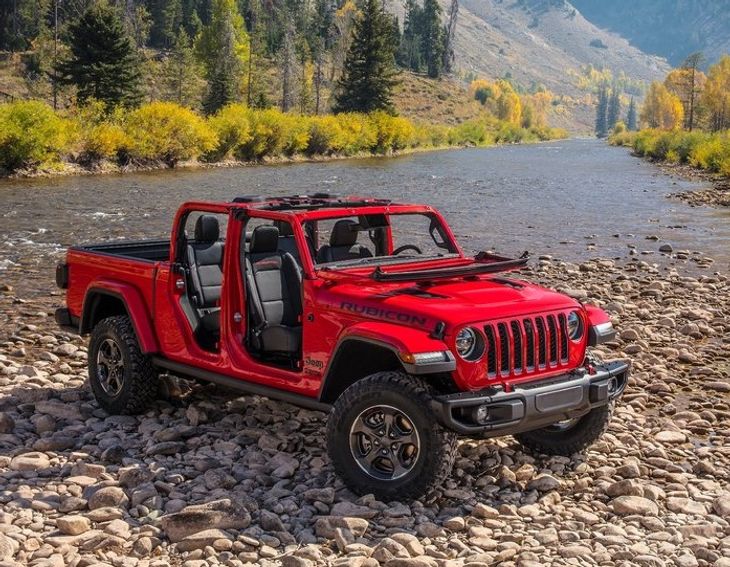
The Jeep Gladiator comes with many unique features, such as the ability to detach its doors and drop the windscreen for that “taming the great outdoors” experience. You can also completely remove the roof; Jeep boasts that its Gladiator is the only convertible bakkie on sale right now…
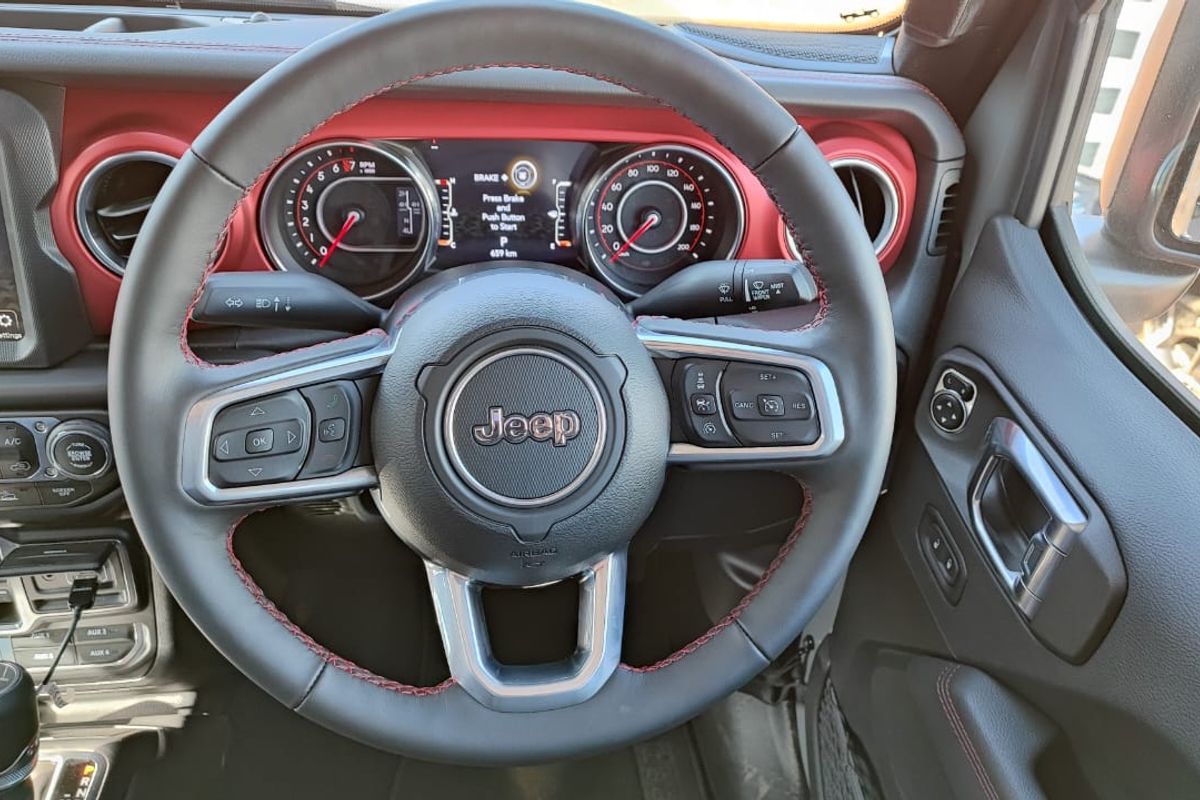
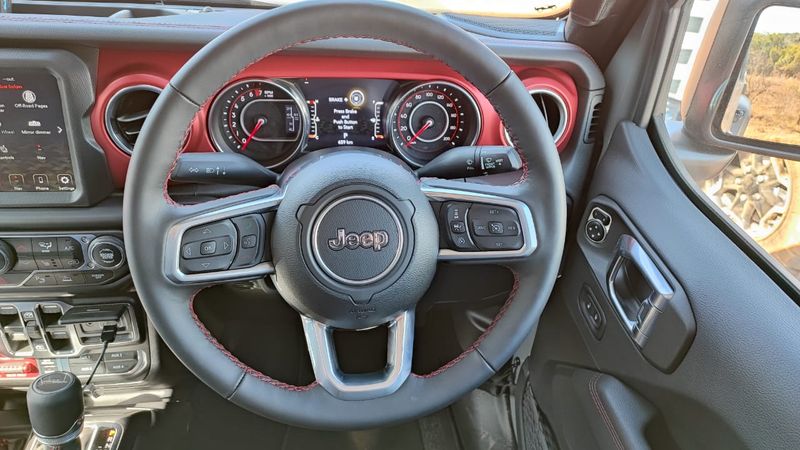
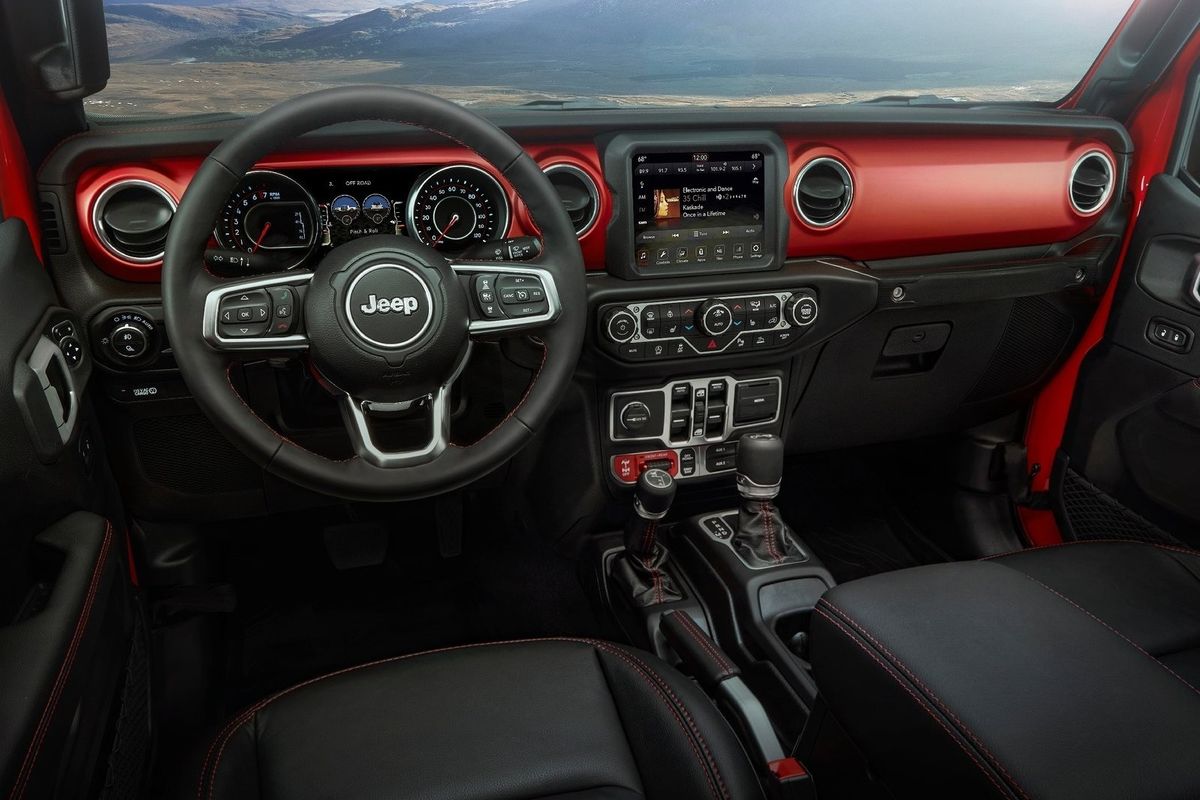
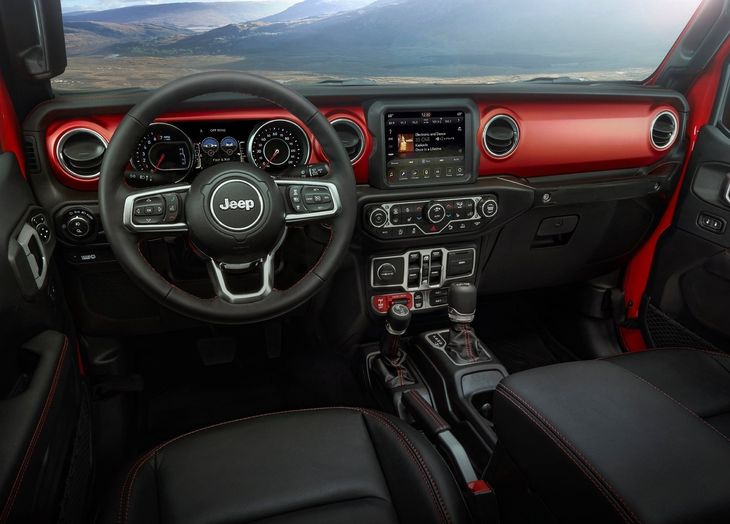
Inside, you’re spoilt with luxury features such as heated leather seats and a -multifunction steering wheel. The specification sheet also lists keyless entry, push-button start, a new 8.4-inch touchscreen infotainment system with Apple CarPlay and Android Auto, 3 USB ports up front and 2 USB ports for rear occupants. There’s even a detachable Bluetooth speaker, which is charged by the car.
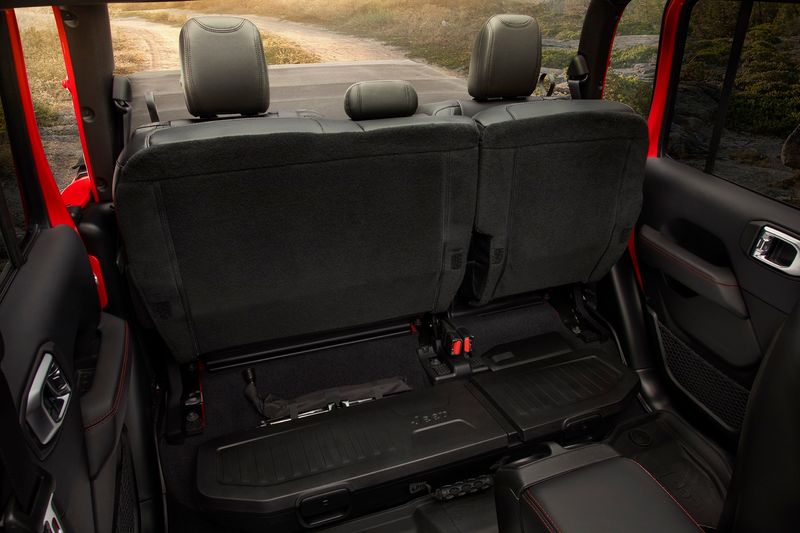
Cleverly, the rear passenger bench can be lifted up and underneath there’s substantial storage space. This area is lockable too.
Storage boxes are availed underneath the rear-bench squab.
Several safety features are fitted, but over and above the expected active and passive safety systems, the Gladiator has adaptive cruise control, blind-spot assist, rear cross-traffic assist, plus a reverse-view camera.
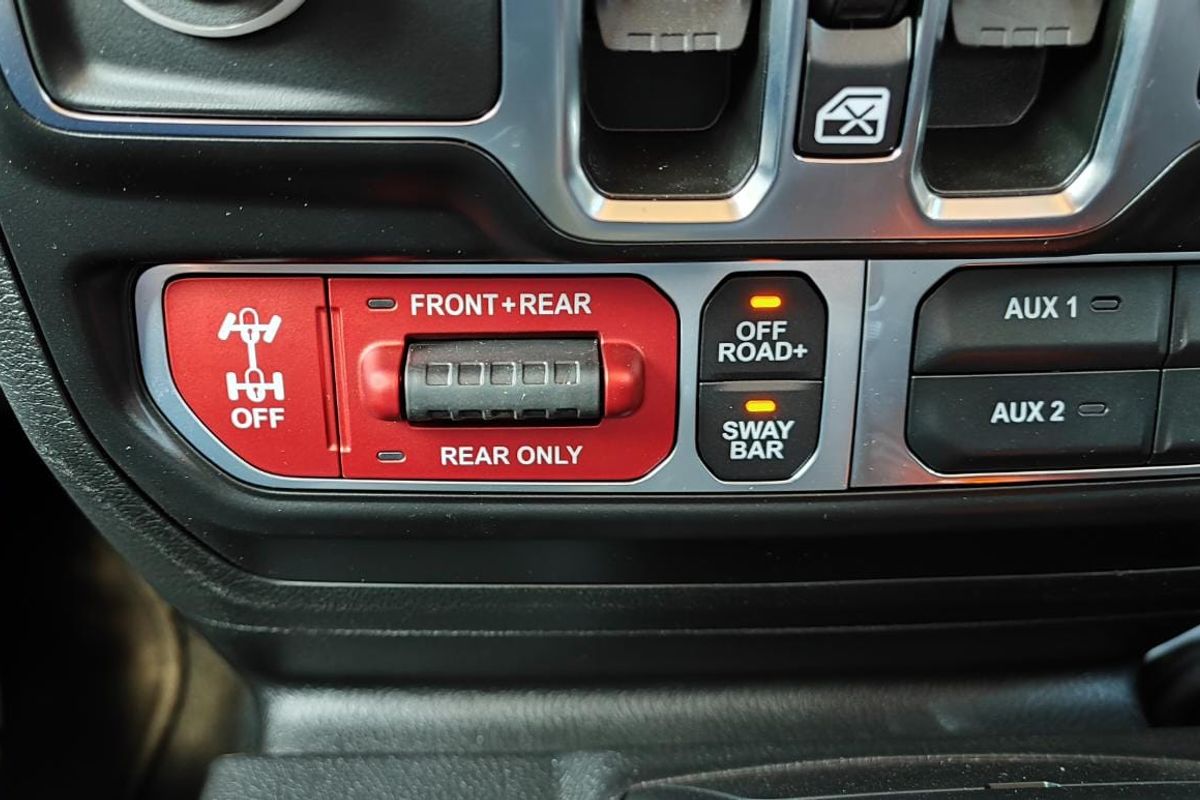
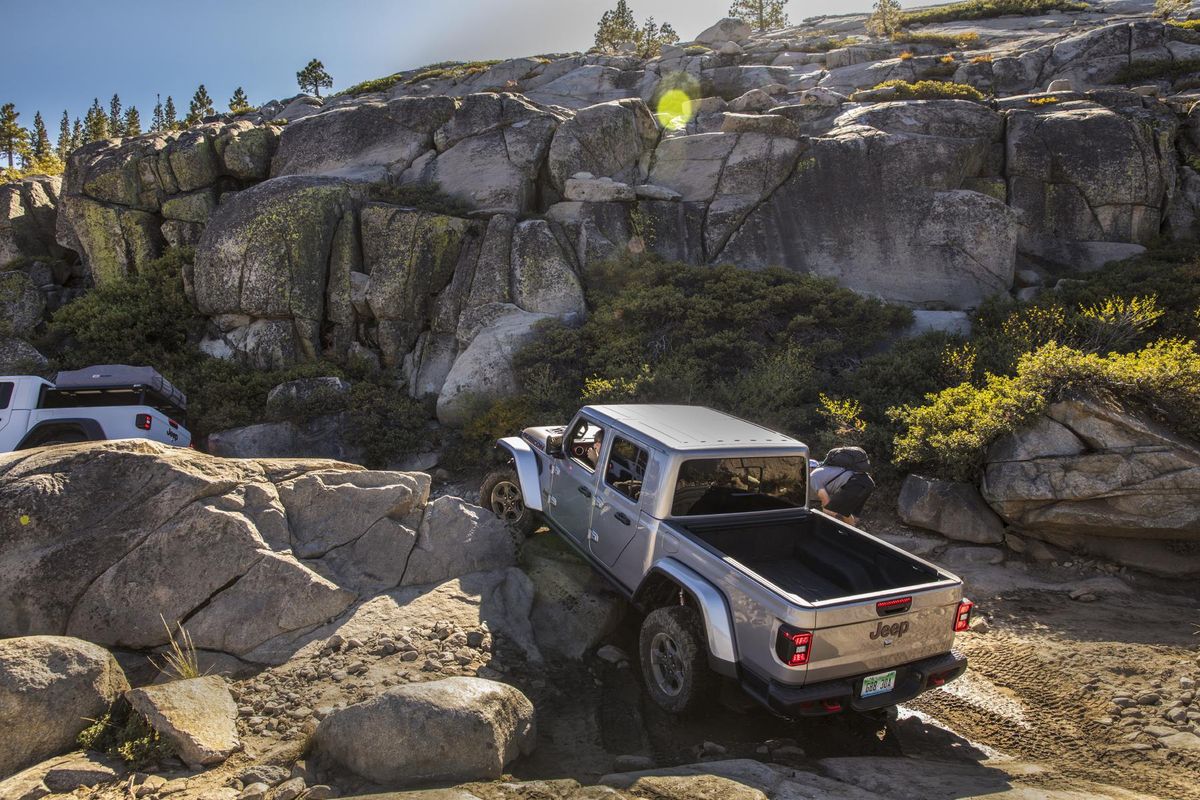
Of course, the Gladiator’s go-anywhere capability is its calling card, which is why the newcomer is comprehensively equipped with off-roading tech. There’s a Rock-Trac 4×4 system with 4LO, front- and rear diff-locks, 3rd-generation Dana 44 axles, a limited-slip differential, and you can even disable the front sway bars if the going gets really tough. The usually vulnerable underside of the vehicle is protected by steel rock rails and a quartet of skid plates.
What is it like to drive?
The Gladiator isn’t the most accomplished highway cruiser, but comes alive on the dirt.
Our launch route encompassed a great blend of on-road driving, combined with some brisk traverses of dirt roads that connect the farms of the North-West province and the challenging Hennops River 4×4 trail that awaited us at the end.
Let’s get the bad news over with first. At 120 kph, the Gladiator’s cabin is affected by a bothersome combination of road and wind noise, but to be fair, you cannot realistically expect the utilitarian Gladiator to have a perfectly quiet and insulated cabin; considering that you have the ability to remove the Jeep’s doors and roof, it’s anything but a conventional luxury SUV. We suspect the noise would make the Gladiator tiresome to drive on long trips, but we’ll put that to the test soon.
We also found the on-road steering setup to be overly assisted; it lacks in feel, as well as weight and precision. The ride quality was surprisingly supple, given the vehicle’s body-on-frame configuration, but the trick 5-link coil suspension made short work of most road imperfections. Having said that, the Gladiator does suffer from the same affliction as all bakkies – its ride quality can get quite jiggly on dirt roads.
The engine-transmission combination proved quite impressive, with the V6 sounding particularly spicy right from the get-go. Interestingly, Jeep offers a factory-backed Mopar performance exhaust, which we think a lot of customers will specify. Fuel consumption, well a big V6-powered American truck is never going to be the most fuel efficient and we saw 14 L/100 km on the trip computer.
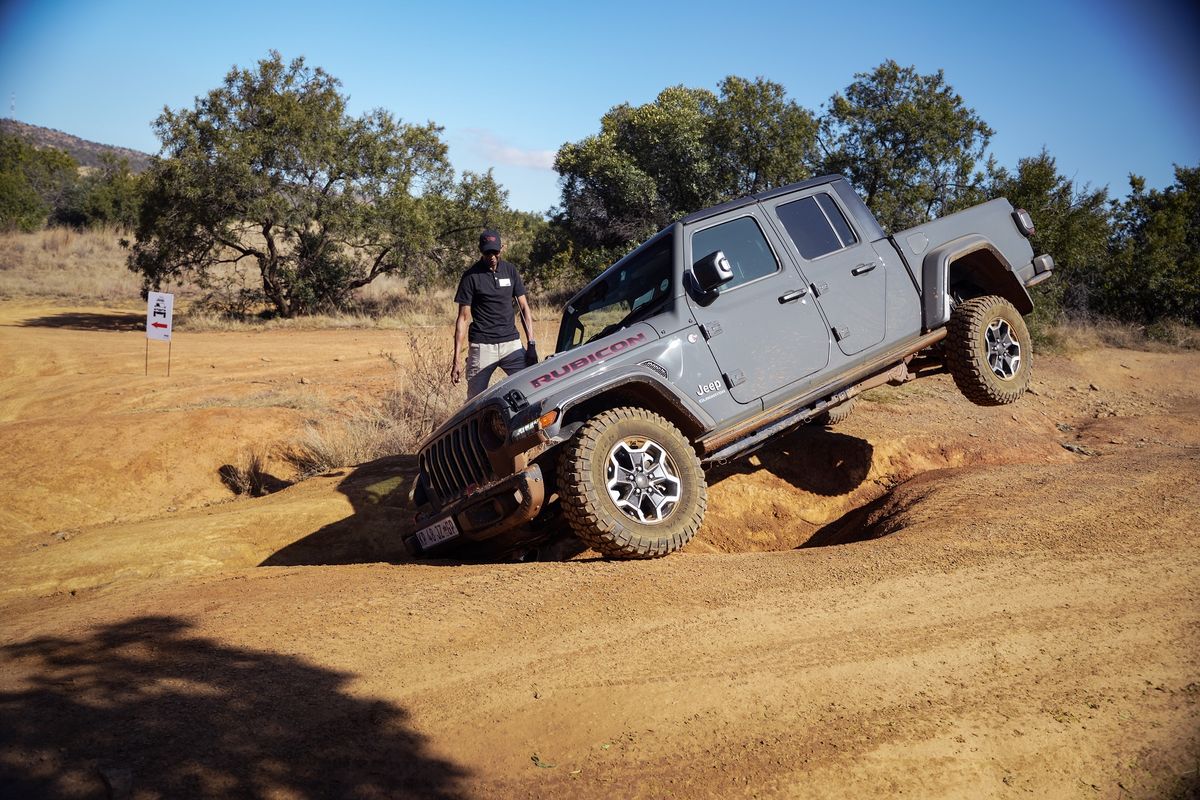
The author puts the low-range and diff locks to the test.
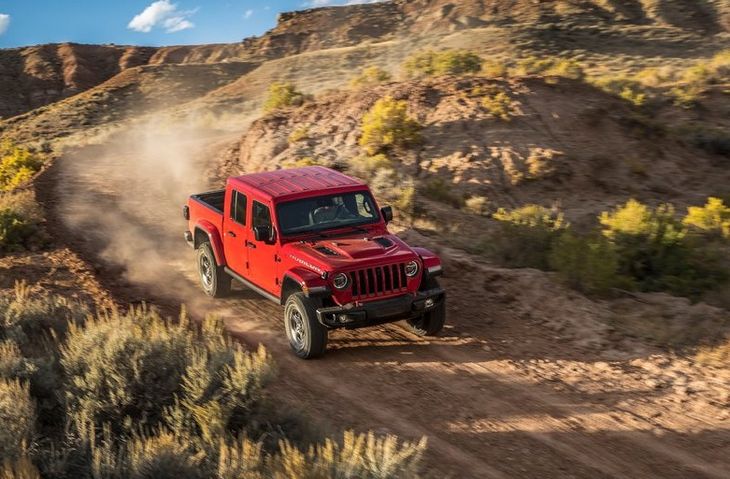
Now for the good news… In terms of off-roading prowess, the Gladiator is as accomplished as you’d expect it to be; in fact, it’s arguably even more capable than that, courtesy of its highly fettled suspension setup with some goodies from Fox.
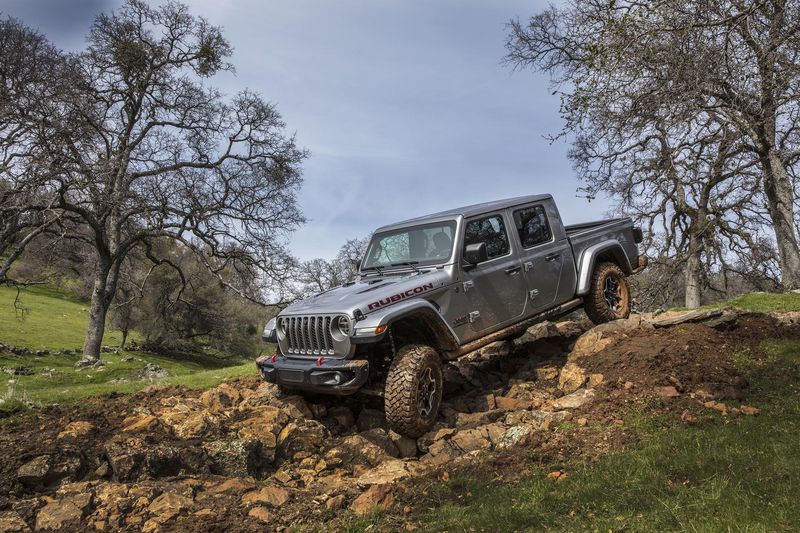
With excellent ground clearance and wheel articulation, the Gladiator will clear most of the off-road obstacles that it’s likely to encounter and venture further into the wilderness than pretty much everything this side of the Ford Ranger Raptor and Toyota Land Cruiser 79. While it looks expensive and cool, this model is still a Jeep at heart and eminently prepared for fun-filled adventures on the rough stuff.
Summary
“Are you not entertained?” asked Maximus Decimus Meridius – the lead character in the Academy Award-winning film Gladiator from the year 2000 and, in the case of Jeep’s new double-cab bakkie, we are happy to reply with a resounding “Yes!” The (Jeep) Gladiator is one very cool and capable off-roader and we’re itching to spend more time with it. We’ve had a taste of its skillset on the trails, but what is it like to live with? We hope to answer that question soon.
Jeep SA has said that due to global supply issues, stock availability of the model may become a problem, but it’s hoping to secure around 35 units a month for our market.
How much does the Jeep Gladiator cost in South Africa?
Jeep Gladiator Rubicon R1 259 900
The Gladiator is sold with a 3-year/100 000 km maintenance plan as well as a 5-year/100 000 km warranty.
New Suzuki Vitara Brezza Coming Soon
An all-new Suzuki Vitara Brezza is due to be revealed soon with bolder styling and new technology.
While the Suzuki Vitara Brezza was only introduced in South Africa in early 2021, it has been a sales hit in its home market in India since 2016 where it sells in huge numbers.
Now though, Suzuki is on the verge of introducing an all-new Vitara Brezza and bookings for the new model have opened in India which means that the official reveal is close.
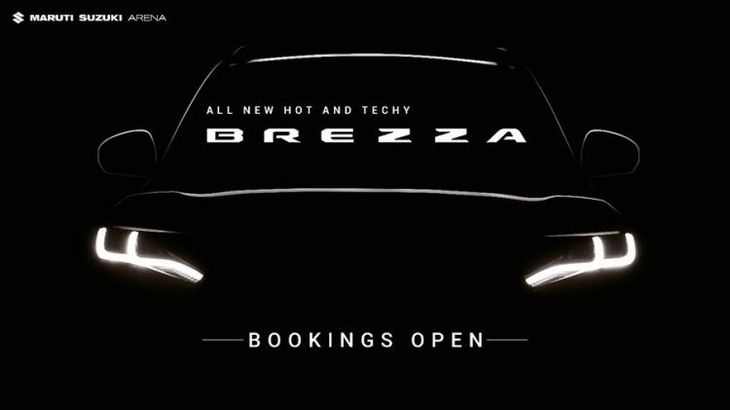
This promotional image highlights the Daytime Running Light (DRL) signature for the new Vitara Brezza.
Suzuki’s marketing campaign refers to the new model as the “all new hot and techy Brezza” which alludes to the model’s new bold design (which we have yet to see and judge) as well as the implementation of “new-age tech features”.
We suspect that some features from the new Suzuki Baleno such as the 360-degree camera system and head-up display will make its way into the new Vitara Brezza.
More so, the new Vitara Brezza will be powered by a next-generation powertrain and will be paired with a new 6-speed automatic transmission, replacing the current 4-speed automatic.
It’s also reasonable to expect to see a new Toyota Urban Cruiser revealed after the new Vitara Brezza comes to market since the 2 models are mechanically identical and differ only in terms of some minor styling details and feature specification as a result of the Suzuki-Toyota product-share agreement.
It’s too early to tell when the new Suzuki Vitara Brezza will be offered in South Africa but Suzuki SA has confirmed that the model is under consideration and its local confirmation is currently pending.
We will keep you in the loop as soon as the new Suzuki Vitara Brezza is revealed, so stay tuned!
If you are itching to see the new Jeep Gladiator bakkie in South Africa then we’ve got some good news for you as the newcomer is now available in South Africa!
The new Jeep Gladiator was revealed back in 2018 and it has now arrived on local soil.
This is big news because at the time, the Gladiator bakkie wasn’t under consideration for South Africa and now that it’s here, we’re excited to see how the Gladiator will perform against formidable rivals in the double-cab bakkie segment such as the Toyota Hilux, Ford Ranger, Isuzu D-Max, Volkswagen Amarok and others.
Is the Jeep Gladiator more versatile than a conventional double-cab bakkie?
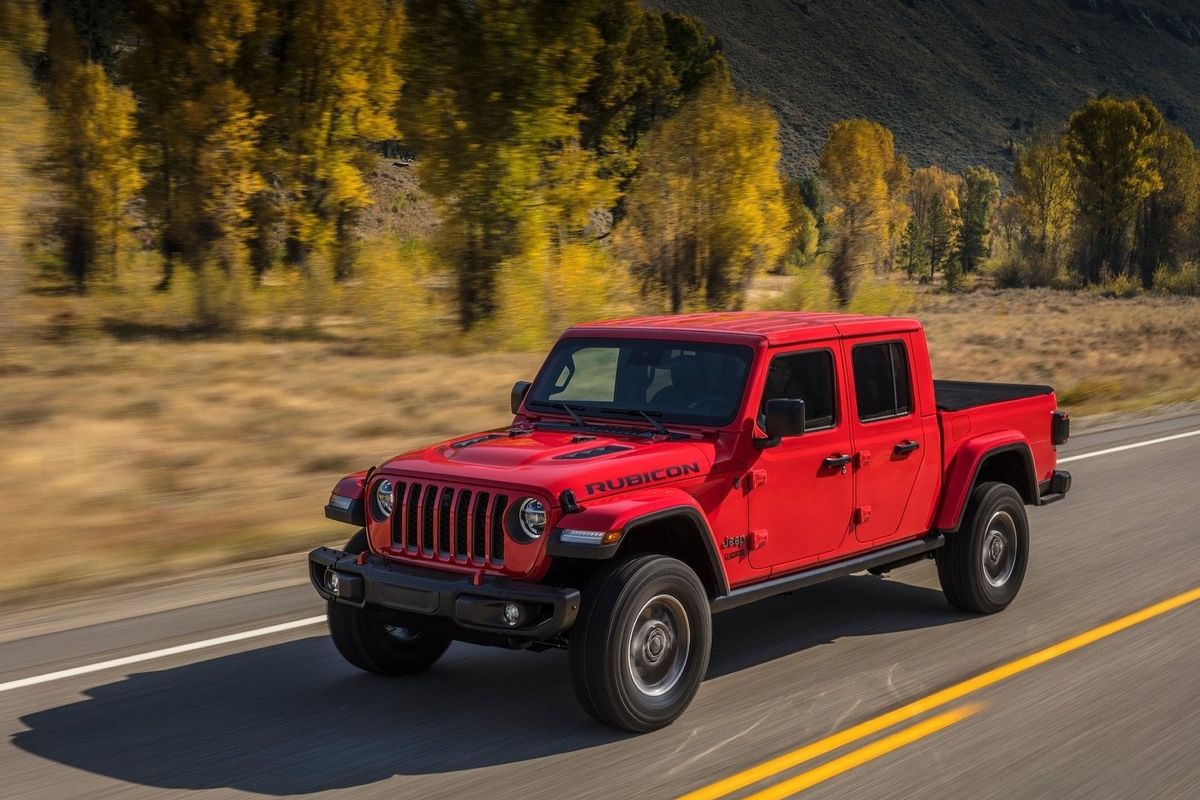
Versatility is a strength of the Gladiator bakkie and it makes for a unique driving experience.
The Jeep Gladiator is built at the firm’s Toledo production facility in Ohio, USA and it’s one impressive-looking vehicle! Perhaps where the Gladiator differentiates itself from its rivals the most is in terms of functionality and versatility. For instance, the Gladiator has been specifically designed to allow for the doors to be removed or for the windscreen to be folded down, if you wish. No other double-cab bakkie on the market can do that! This allows for a more intimate driving experience whether it be in the bush or in the urban jungle.
The Gladiator Rubicon is offered with a Sunrider soft top roof which can be open/closed in segments depending on your needs and there’s also a black 3-piece hardtop roof with a manual rear sliding window available with quick-release latches that make it easy to remove and install.
In South Africa, the Gladiator Rubicon will be the sole offering and standard feature specification is very good indeed. Gladiator buyers are treated to leather seats with adjustable bolster and lumbar support. An 8.4-inch Uconnect infotainment system with Android Auto and Apple CarPlay capability as well as intergrated navigation and a full-colour 7-inch LED instrument cluster is standard. A 9-speaker Alpine Premium sound system is also offered as standard as is wireless smart charging.
Safety features abound in the Gladiator and some key features include adaptive cruise control, a front and rear ParkSense system which helps with parking the Gladiator safely, Parkview rear camera, tyre pressure monitoring system and forward collision warning with active braking.
The Gladiator Rubicon is offered in a range of colours including Black, Bright White, Granite Crystal, Sting Grey, Sarge Green, Firecracker Red, Snazzberry, Hydro Blue or Silver Zenith.
The Gladiator Rubicon is jam-packed with comfort and convenience features.
What engine powers the Jeep Gladiator and can it go offroad?
The Jeep Gladiator is powered by a 3.6-litre Pentastar V6 petrol engine that offers 209 kW and 347Nm of torque and is mated with an 8-speed automatic. In overseas markets, a 191 kW / 597 Nm 3.0-litre EcoDiesel engine is also available, but given Jeep SA’s strategy of removing diesel power from its line-up, this engine is not available in South Africa which is a great pity because this diesel engine would be hugely competitive against other rivals in this segment.
Jeep says that the V6 petrol engine is engineered to provide a broad torque band but focuses on delivering low-end torque which offroad enthusiasts will find useful.
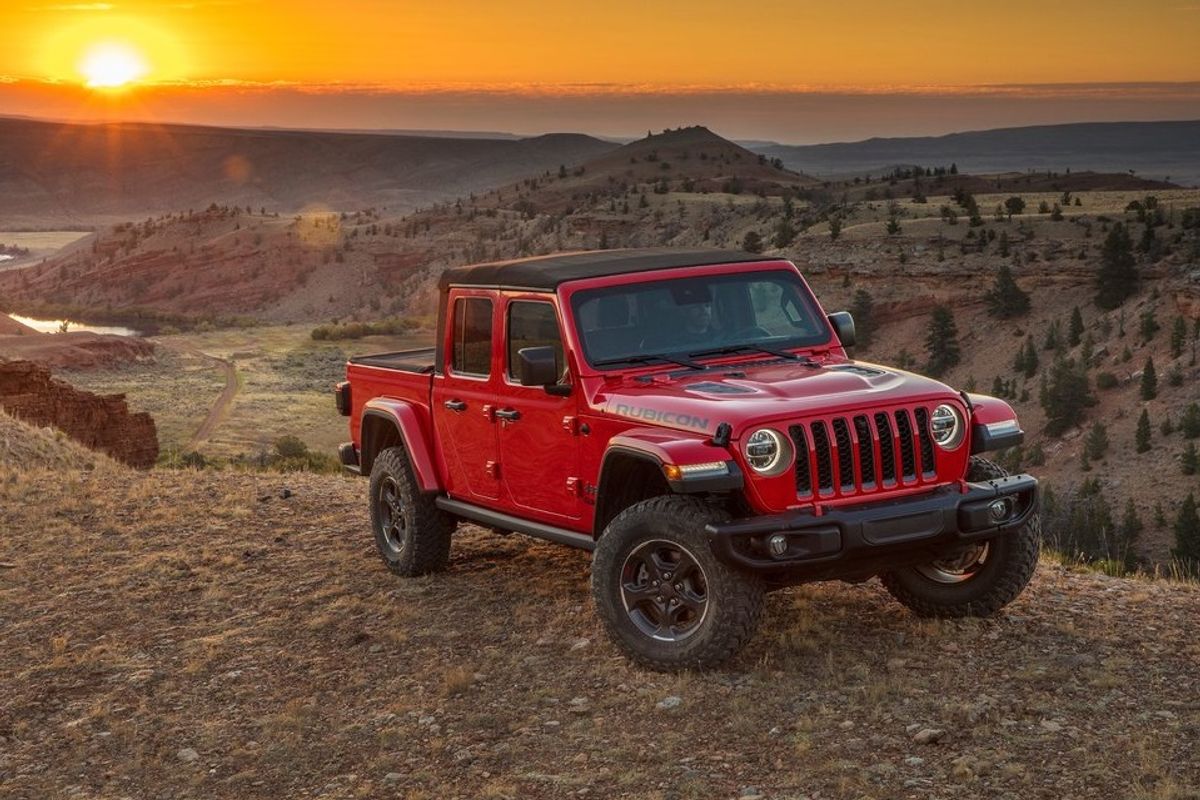
The Gladiator is said to offer formidable offroad ability. We can’t wait to put it to the test!
As far as offroad ability is concerned, the Gladiator brings some serious credentials to the table. The Gladiator Rubicon is equipped with a Rock Trac 4×4 system with heavy duty Dana 44 front and rear axles and front and rear Tru-Lok locking differentials as well as chunky 17-inch wheels shod with 32-inch BF Goodrich Off-Road rubber and front and rear FOX aluminium-bodies 2-inch diameter shocks. Approach angle is claimed at 43.4 degrees while the departure angle is claimed at 26-degrees. The breakover angle is said to be 20.3-degrees.
The Gladiator should be very capable when the tar ends with ground clearance at 282 mm, wading depth of 800 mm, a maximum towing capacity of 2 721 kg and payload capacity of 693 kg.
So, the question is, how much would you be prepared to pay for the ultimate Jeep?
How much does the Jeep Gladiator cost in South Africa?
Jeep Gladiator Rubicon – R1 259 900
The Jeep Gladiator is sold with a 5-year/100 000km warranty and a 3-year / 100 000km maintenance plan.
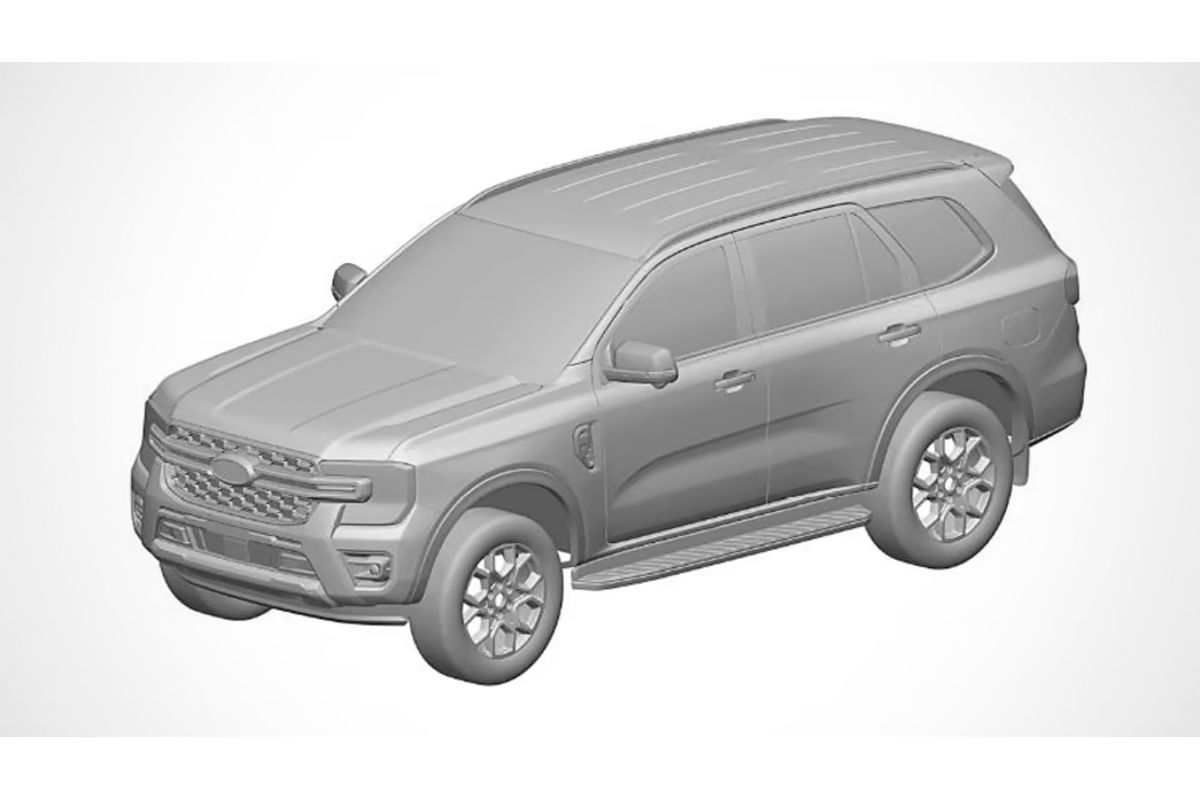
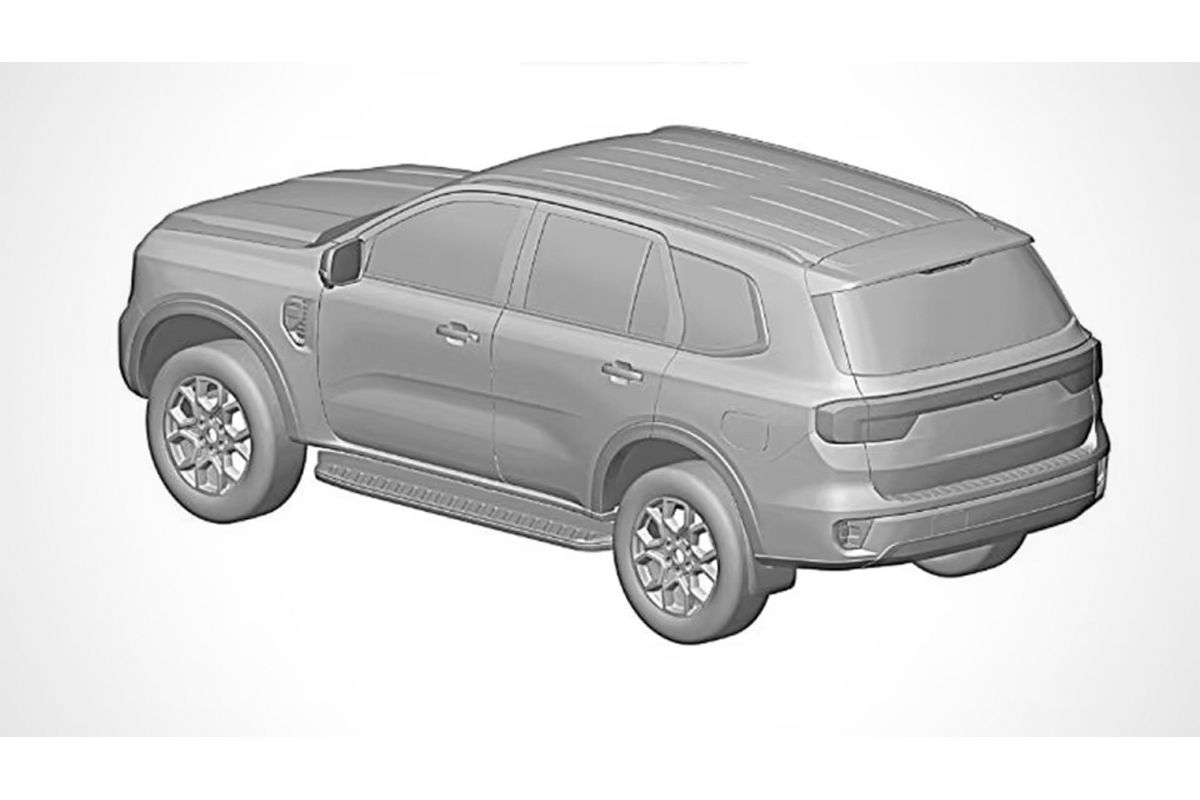
Patent Images Suggest New Ford Everest Wildtrak is Coming
Fresh patent images filed Down Under suggest Ford is preparing to launch an unprecedented Wildtrak version of its latest-generation Everest. Let’s take a closer look…
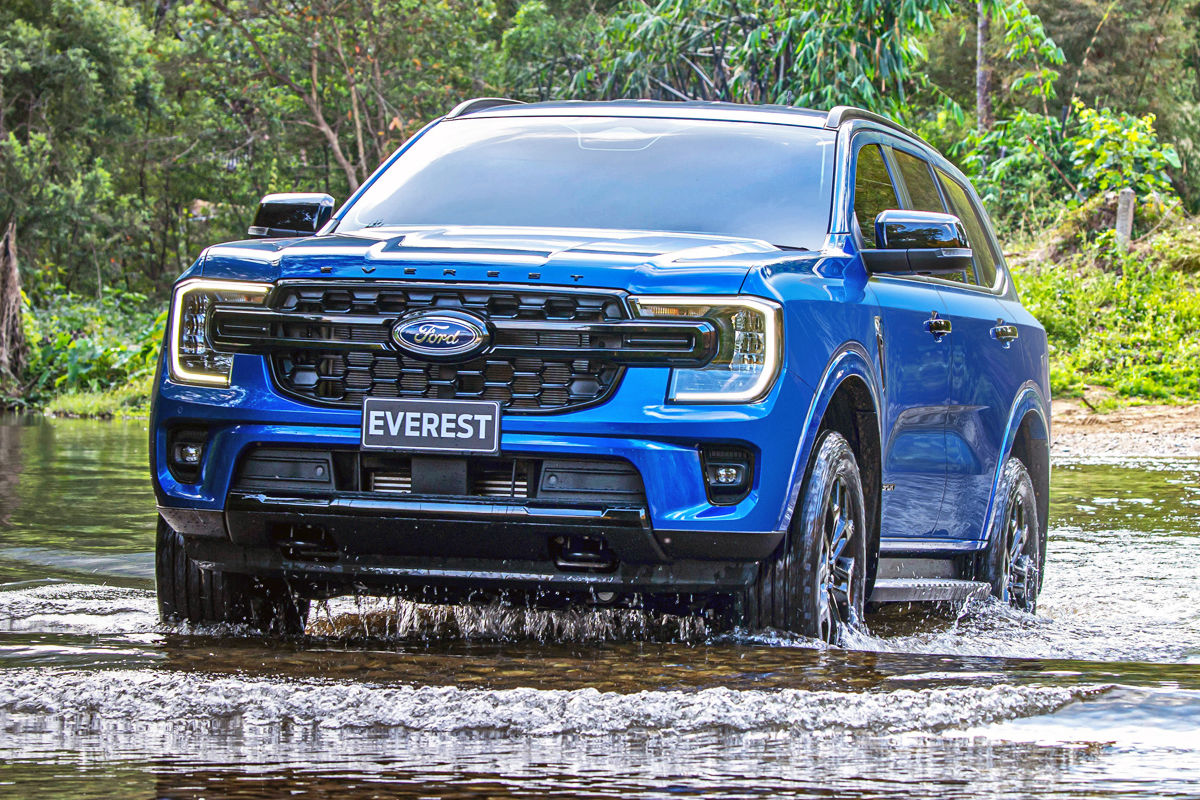
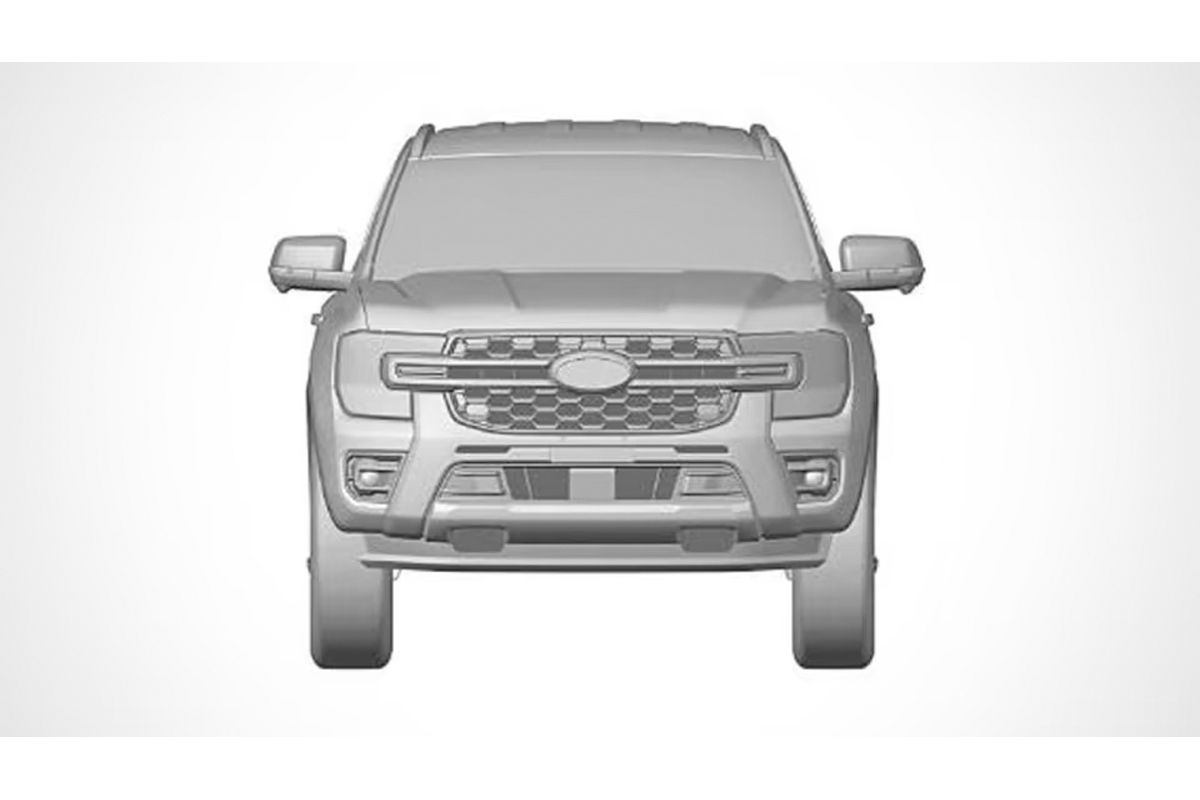
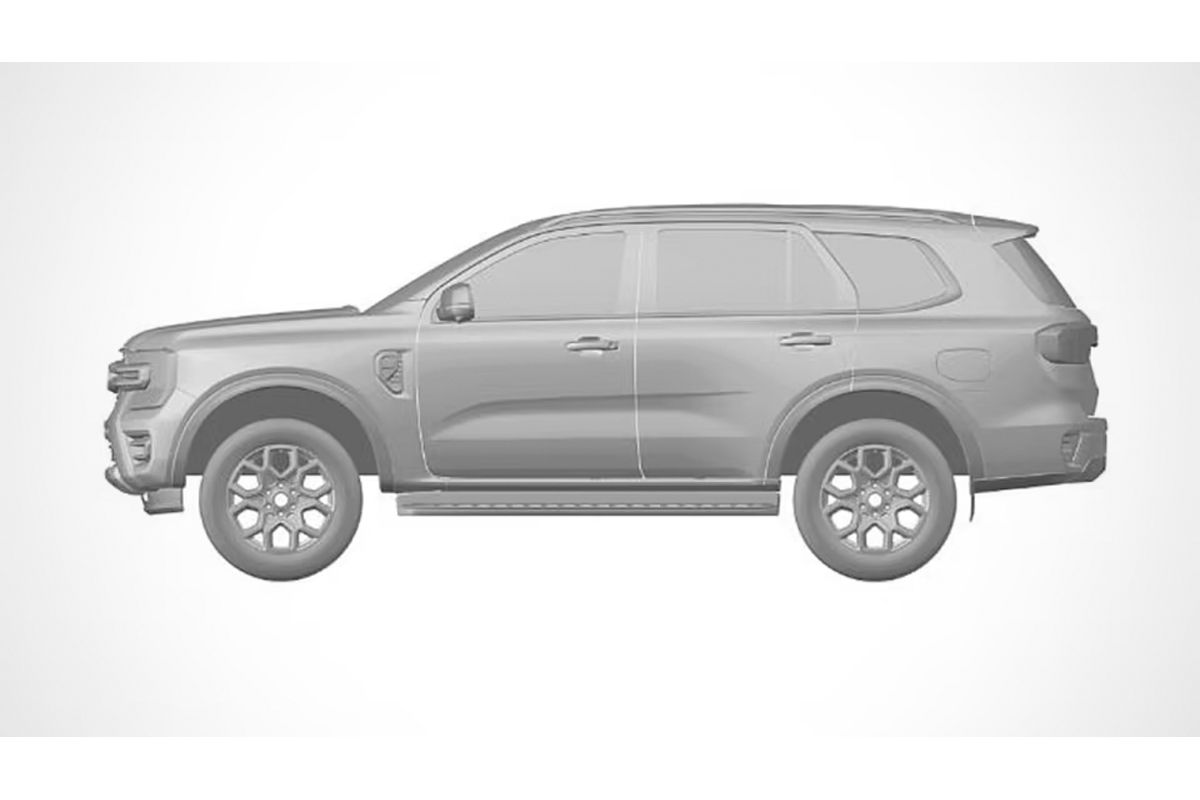
While Ford has already hinted its new Everest won’t be given the full-fat Raptor treatment, fresh patent images filed in Australia suggest the bakkie-based SUV will receive a new Wildtrak trim level instead.
As uncovered by the studious folks over at Drive, the patent images recently filed with Australia’s intellectual property office show the Everest wearing a suspiciously similar front facia to the Wildtrak version of the new Ranger.
The pictured version of the ladder-frame SUV furthermore upgrades to fresh alloy wheels, while also sporting 360-degree camera lenses fitted to the bottom of its side-mirror caps (suggesting the rumoured Wildtrak will be positioned right at the summit of the new Everest range, according to Drive).
Of course, when the publication approached Ford Australia for comment, the Blue Oval automaker would not confirm or deny plans to extend the Wildtrak badge – previously reserved for high-end versions of the Ranger – to the seven-seater SUV.
“Ford submits design applications for various brand assets as a normal course of business, but they aren’t necessarily an indication of new branding, badging or product plans,” the Dearborn-based firm said.
If the Everest Wildtrak were to get the go-ahead, we’d think Ford’s 3.0-litre turbodiesel V6 unit would be the right choice of engine, offering a brawny 184 kW and 600 Nm through a 10-speed automatic transmission. Then, just like the Ranger Wildtrak, such a model’s cabin would surely gain extra leather (with contrast stitching), some added standard kit and the obligatory smattering of Wildtrak logos.
Should Ford choose to give the rumoured Everest Wildtrak an off-road flavour (and perhaps even the Wildtrak X badge), other likely standard features would include the brand’s permanent four-wheel drive system, a locking rear differential and underbody protection. For now, though, we’ll just have to wait to see whether this model materialises…
Here’s the Wildtrak version of the new Ford Ranger bakkie…
Meet Zaahir Essa – #CarsSimRacerSearch winner
Out of more than 1 000 entries from aspiring Sim Racers from across South Africa, Zaahir Essa has been chosen as the inaugural winner of the #CarsSimRacerSearch.
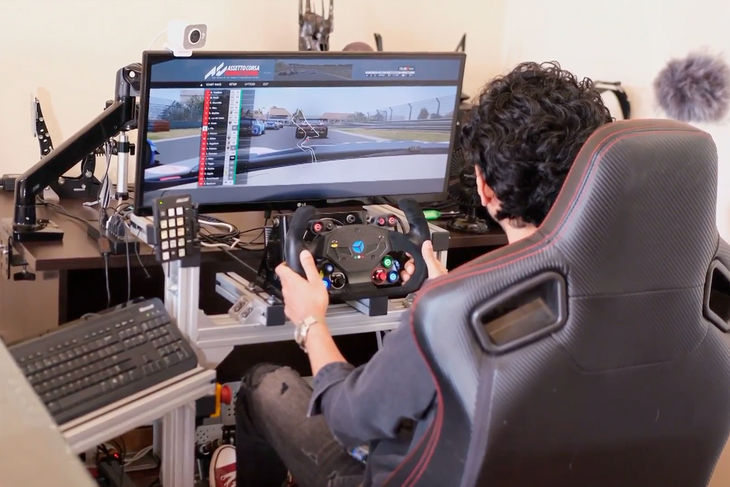
Zaahir is a family man and mechanical engineer by trade, but his biggest passion is racing – he has an accomplished career in Sim Racing, not to mention a fair amount of racetrack experience!
Zaahir grew up in Durban, but he doesn’t have a formal motorsport background. In fact, his introduction to the world of racing came quite unexpectedly, via a PC demo game CD that was attached to the back of a magazine, while he was in high school. One of the games on that disc was a Monaco Racing demo, and once he started playing that game, Zaahir was hooked – that’s how his love affair with the Monaco Grand Prix – and Formula 1, as a sport – began. From there he became obsessed with anything Ferrari- and Michael Schumacher-related; his passion for racing (with red cars, probably) made him take popular games like Need for Speed a whole lot more seriously than his friends (who he raced against).
Even though he was racing on a PC keyboard, his competitive nature kicked in. The thrill of going faster and beating his competition spurred him on – he was determined to get better with whatever new equipment he could lay his hands on.
Back then, there was no real local Sim Racing scene, but when home internet access became near-ubiquitous, Zaahir really cut his racing teeth, so to speak, by competing against European racers online. Multiplayer game formats (enabled by the proliferation of the internet) really gave the sport – and Zaahir’s progress within it – a major boost. It also encouraged his quest to transfer his Sim Racing talents to the racetrack.
Formula Vee, the most affordable single-seater racing formula, was his next step. Being a firm believer that Sim Racing equips you for nearly everything you need to know about racing dynamics and car set-up, Zaahir made the transition from sim- to genuine racing with relative success. Zaahir describes his time on the track, when he competed against even tougher opposition than he had faced online, as perhaps one of the best periods of his life.
He subsequently took the skills he gained on the racetrack back to the Sim-Racing realm where more opportunities began to present themselves.
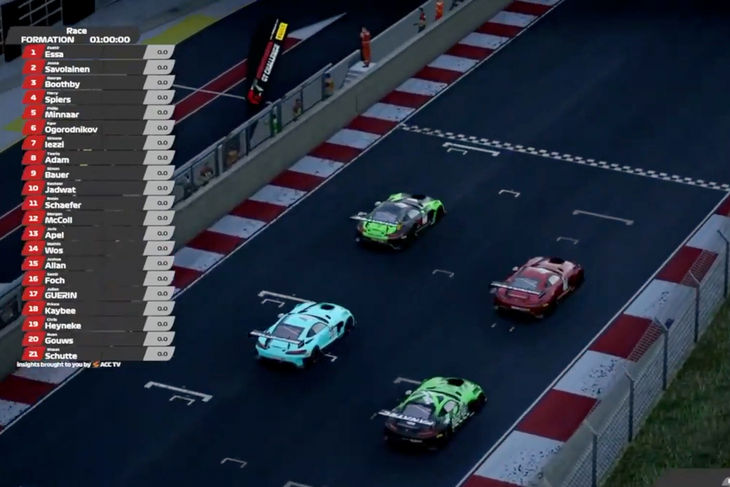
Zaahir is currently racing in the 2022 ATK Pro Series. Having come out on top in the inaugural 2020 series, he made the perfect start this year by winning the first event at the virtual Kyalami Grand Prix Circuit. What made this win all the more impressive was that this year, the ATK Pro Series attracted not only the best local sim racers, but seasoned campaigners from international markets.
Sim Racing is well and truly becoming more of its own entity, and although Zaahir and many fellow enthusiasts have wanted to use it as a platform to become real-life track racers, the emerging generation of sim racers is focused solely on achieving success in this virtual realm. It’s a development that has increased the competitive nature of the events considerably – and is generating more interest in the sport in general.
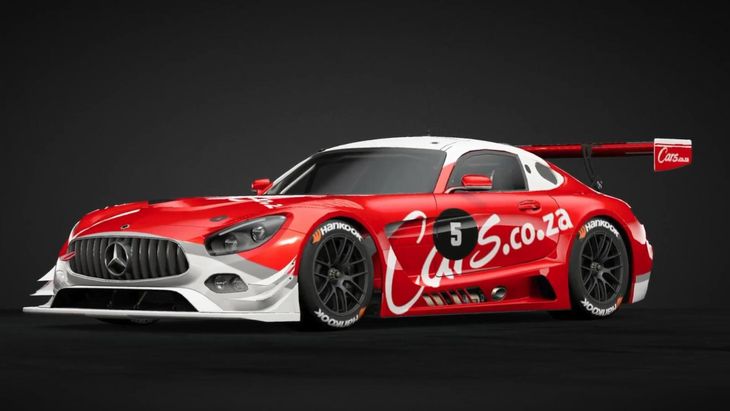
With victory in the season-opening race under his belt, Zaahir is excited by the prospect of now racing in the colours of Cars.co.za for the remainder of the 2022 ATK Pro Series. Setting his sights on overall success (again!) will allow him to take another step forward in his career and become more entrenched in this exciting sport’s growth.
“For me, there is so much potential in Sim Racing that I hope to have some kind of future in the sport given the heightened competitive level that it is reaching,” said Zaahir.
“Winning the first race of the 2022 ATK Pro Series was fantastic, because the level of talent was really high… The difference this year is that they have allowed in international talents, with quite high-profile drivers coming in, so for me winning the first race was a really good achievement.
“I am looking forward to the rest of the season. Racing under the Cars.co.za brand is going to be a fantastic opportunity. It gives me more drive to compete against those guys at that high level,” he added.
We wish Zaahir all the best with his season and will be covering his ongoing success and affiliation with the brand on our social media channels: Facebook, Twitter, Instagram and TikTok.
Tesla is currently the largest volume seller of Electric Vehicles (EVs) in the world, but Volkswagen is reportedly on track to snatch the top spot in 2024, according to Bloomberg Intelligence.
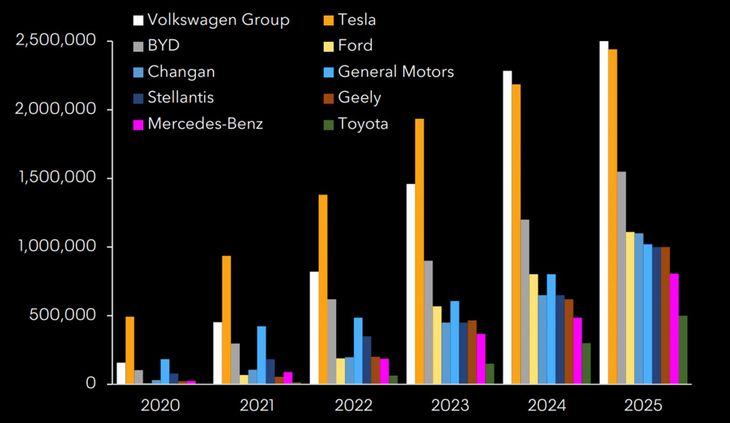
Tesla is currently the dominating force in the world of EVs — or at least in terms of outright sales. In 2021, Tesla recorded just under 1-million Battery Electric Vehicle (BEV) sales or 936 172 to be exact while in the same year German firm, Volkswagen, managed to move 452 900 BEVs to customers. While Tesla currently sells the most EVs worldwide, this isn’t likely to last as Volkswagen is predicted to overtake the American EV giant in 2024.
Volkswagen EV sales expected to boom!
This prediction was recently published by Bloomberg Intelligence, in a report entitled “Global Battery-Electric Vehicles: Race to the Top”. While Tesla is enjoying significant EV market share, traditional brands are playing catch up with factors such as rising battery costs and lack of scale being the key short-term challenges faced by most new EV manufacturers, barring Volkswagen.
With demand for BEVs expected to more than double by 2025, Volkswagen is expected to overtake Tesla in the EV sales race in 2024 with Chinese EV juggernaut, BYD, claiming the third spot while other manufacturers such as Mercedes-Benz, Ford, Toyota and others are lagging behind. The report does, however, foresee the gap closing significantly in the latter half of the decade as the economy of scale improves across the EV landscape.
“Looking ahead, automakers in Europe, China and elsewhere will continue to challenge Tesla via an impending wave of new models, though profit incentives are limited amid rising battery costs and a lack of scale. That may change in 2025-26 as more brands achieve critical mass on new-generation models with proprietary software. There are a number of challenging external factors to consider and bold BEV ambitions have done little to prevent crisis-level valuation multiples, stoked by recession fears, rising interest rates, supply-chain constraints and inflation,” said Michael Dean, Senior European Automotive Industry Analyst at Bloomberg Intelligence.
In an effort to improve competitiveness, Volkswagen is investing up to €30-billion in the supply chain which includes new battery-cell plants which are all expected to be fully operational by 2030.
China is a major market for EVs and for traditional brands to secure meaningful market penetration in China is no easy task because not only does Tesla have a solid footing in that market (with 473 078 sales in 2021) but local manufacturers such as BYD, Nio and Xpeng are hugely competitive in terms of technology, range offering and lower prices.
If you are interested in reading the full report, you can download it here.