Toyota RAV4 Was World’s Best-Selling Vehicle in 2021
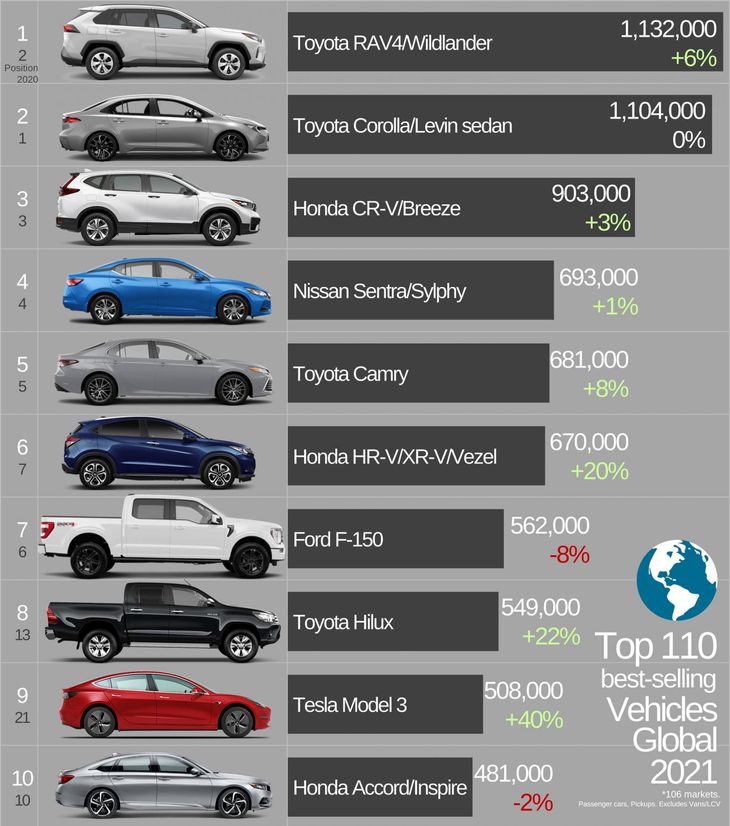
The Toyota RAV4 became the world’s best-selling vehicle in 2021, with the Hilux also entering a reshuffled top 10 dominated by Japanese automakers. Let’s take a look at the figures…
While 2021 was yet another tricky year for automakers still grappling with production interruptions and supply constraints, the list of the world’s best-selling vehicles still makes for interesting reading. Fascinatingly, eight of the vehicles in the top 10 come from Japanese manufacturers.
According to figures painstakingly collected by Felipe Munoz of Car Industry Analysis, who pulled data from 106 markets (including South Africa) representing 99.32% of global passenger car and bakkie sales in 2021, the Toyota RAV4 claimed the title of the world’s best-selling vehicle last year.
Worldwide sales of the RAV4 – which is known as the Wildlander in the Chinese market – increased 6% year on year to around 1 132 000 units, enough for it to climb one place to first overall, forcing the Toyota Corolla Sedan (badged as the Levin in China) down to second.
The Honda CR-V (aka Breeze), Nissan Sentra (or Sylphy) and Toyota Camry held steady in third, fourth and fifth place respectively, while the Honda HR-V (also badged as the XR-V and Vezel in some markets) improved one spot to sixth.
Owing to an 8% drop in sales, the Ford F-150 fell one place to seventh, just ahead of the Toyota Hilux, which entered the top 10 thanks to a 22% year-on-year increase in global registrations. The Tesla Model 3 was the biggest mover towards the top of the table, however, rocketing up to ninth place overall on the back of a 40% improvement in sales compared to 2020, while the Honda Accord remained in 10th.
Outside of the top 10, other big movers included the Toyota Highlander/Kluger (which climbed from 26th to 13th), the Tesla Model Y (which soared from 262nd to 19th) and the Wuling Hongguard Mini EV (which jumped from 176th to 20th).
Check out the top 10 in the image below and head over to Munoz’s website to see the rest of the top 110…
Hyundai Stargazer In The Pipeline
After the success of the Staria, the Korean carmaker is preparing to launch a smaller version called the Hyundai Stargazer. Here’s what we know ahead of the vehicle’s reveal.
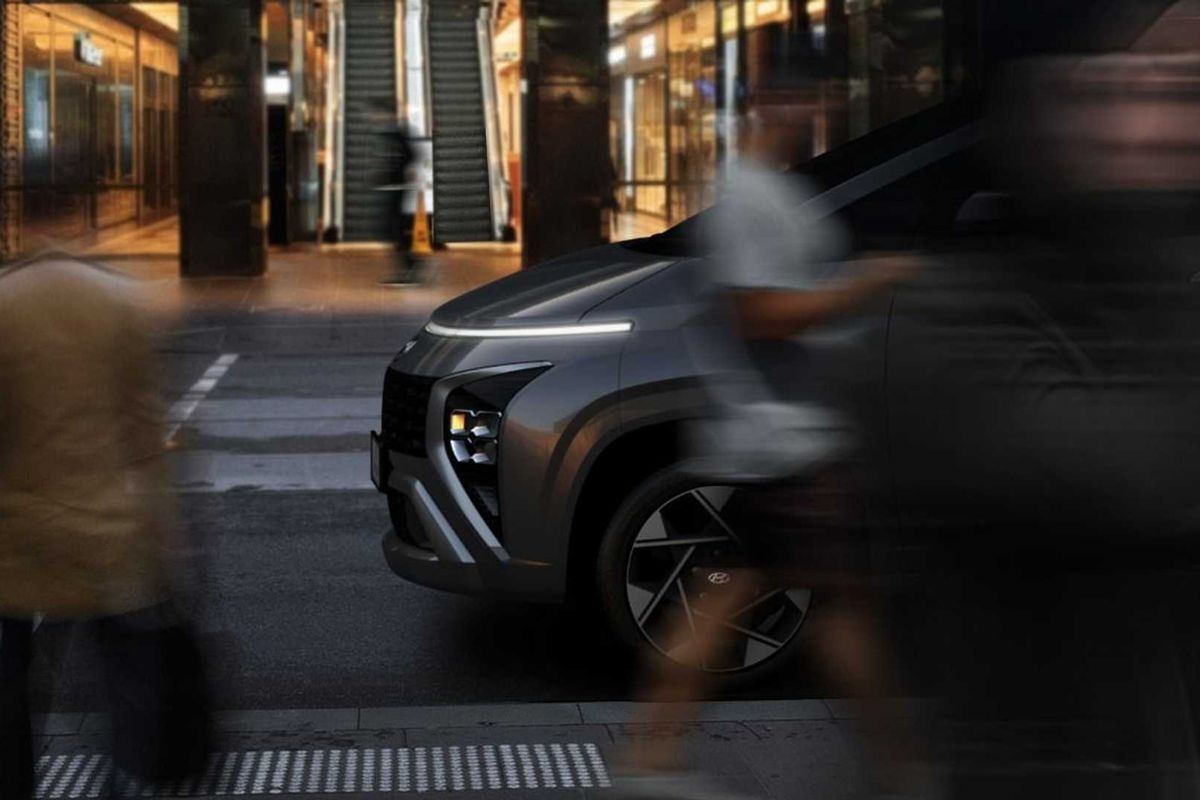
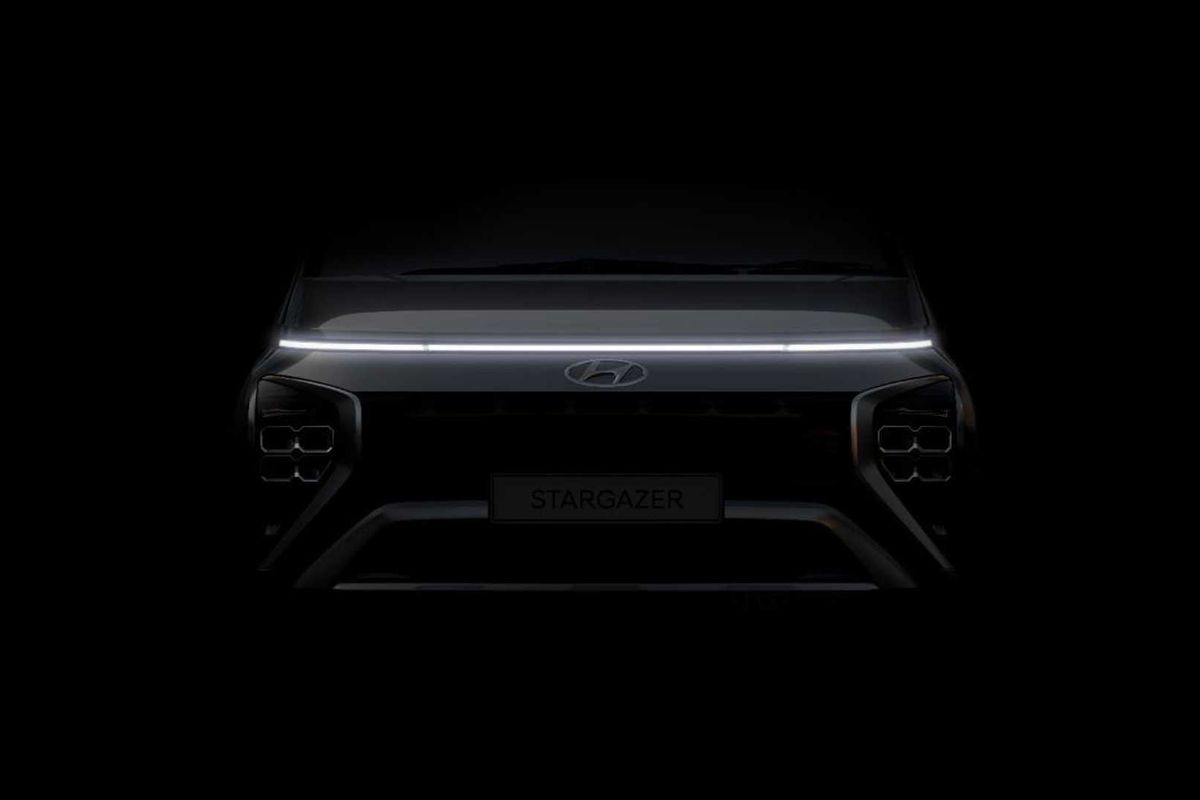
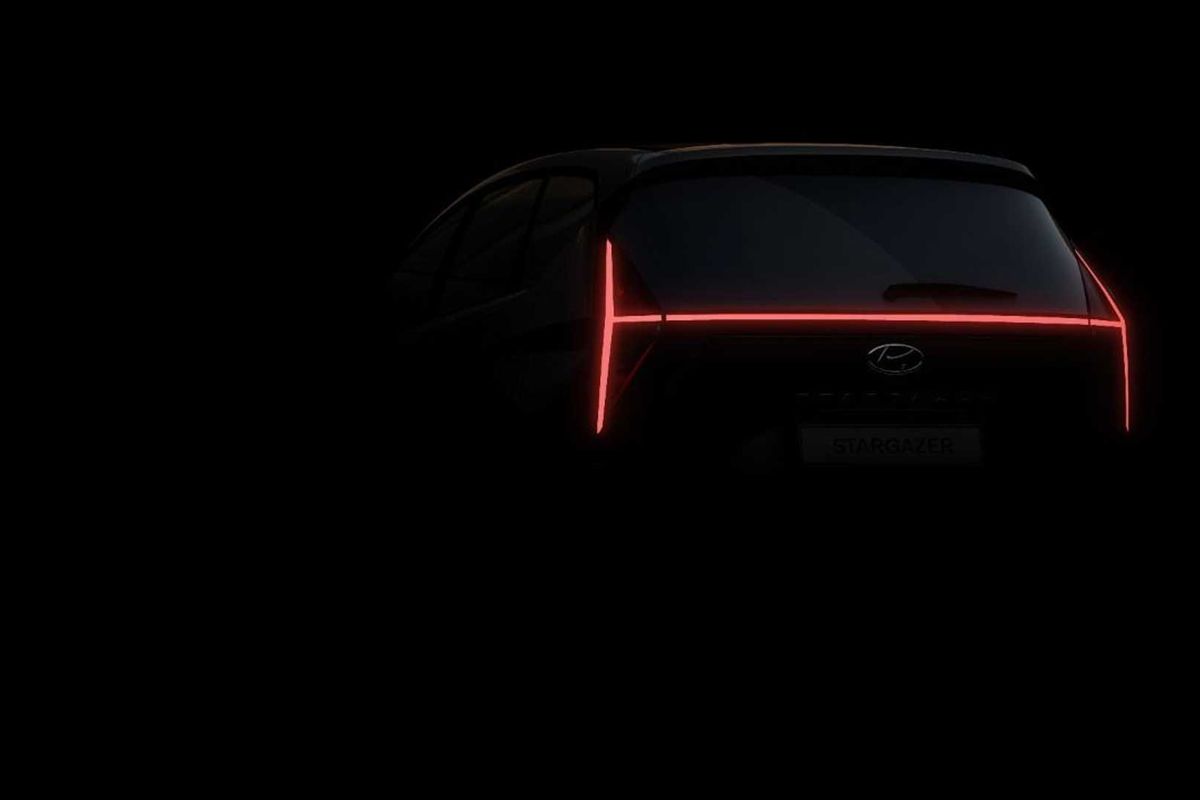
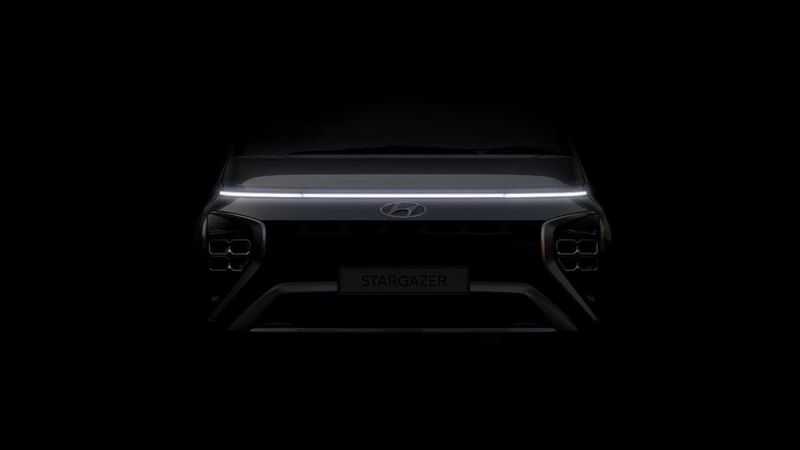
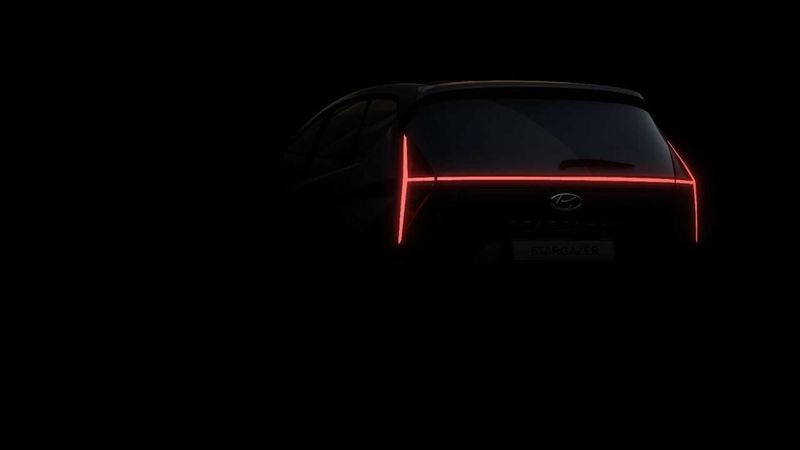
These teaser shots show the new new Hyundai Stargazer, a smaller entry-level minivan from the Korean brand. From what we can see it shares similar design elements from its bigger Staria brother.
We can see the horizontal LED lightbar stretching across the front of the vehicle, the signature language of the Staria which has polarised the public. Some people love the futuristic look of the Staria, while others are less kind. Crucially, we also see confirmation of the Stargazer name.
As far as positioning goes, the new Hyundai Stargazer is expected to be a 3-row, 7-seat pocket-friendly minivan that will take on things like the Suzuki Ertiga/Toyota Rumion, Mitsubishi Xpander and Honda BR-V.
From our understanding, the Hyundai Stargazer shares a platform with the Kia Carens (not available in SA) and given its factory location in Indonesia, we can make some educated guesses as to its powertrain options. The facelifted Hyundai Creta which is due to land in South Africa in July 2022 will be sourced from this same facility.
We can expect a 2.0-litre naturally-aspirated 4-cylinder motor, generating similar power outputs (117 kW / 191 Nm) to that of the 7-seater Hyundai Grand Creta, as well as the option of a 1.4-litre turbocharged petrol engine with 103 kW and 242 Nm. A diesel powertrain is possibly the best application for such a vehicle and the 1.5-litre 4-cylinder oil-burner is available with 81 kW and 250 Nm. We expecting automatic transmissions will dominate the lineup.
The new Hyundai Stargazer is expected to be revealed in July 2022 and we’ll update this article as soon as we have more information.
This Toyota DragLux is a drag race monster that eats supercars for breakfast. Watch the video!
When Raymond Swart pictured his dream Hilux, it didn’t have mud terrain tyres and a lift kit. Nope, he envisioned chasing supercars in his Hilux down the quarter mile.
To do so, the standard 2.5-litre diesel motor wasn’t exactly up to task. And so he approached 2JZ specialists, ICE Motorsport, to install a fully built, big turbo 2JZ under the bonnet.
A couple of manual gearboxes later, they made the switch to a high-strength auto, and the bakkie (pick-up) finally made it into the ‘9s.
Hear Raymond tell his story, we’re almost certain you’ll enjoy his enthusiasm for his vehicle as he tells us how he got to this point.
Jeep will be joining the compact SUV segment with a new product that will slot in below the Renegade. Take a look at the spy shots!
Picture credit: S. Baldauf/SB-Medien. We have paid for these photos and at the photographer’s request, have watermarked them.
The compact SUV segment is booming at this moment in time and just when you thought that the point of saturation has been reached, a new model comes to the fore. There’s always space for one more, right?
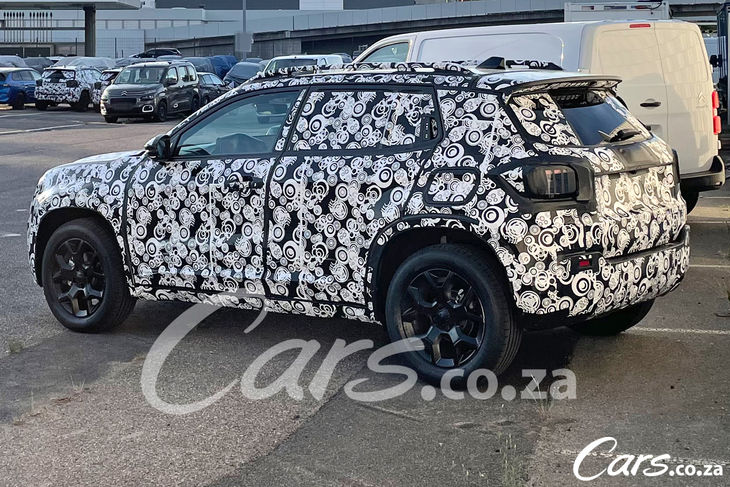
Our spy photographers have snapped images of a new compact Jeep SUV dressed in heavy camouflage. It’s name is unknown (for now) and the design details are well hidden, but the model will slot in beneath the Renegade in the firm’s lineup and features a compact footprint with short overhangs, roof rails, roof spoiler, hidden rear door handles an an exhaust tailpipe, which implies that the new model will be powered by an Internal Combustion Engine (ICE).
A compact Jeep SUV will have its work cut out as it joins a very competitive segment.
Under Stellantis, the new Jeep compact SUV will be built on PSA’s Common Modular Platform (CMP) which is dedicated to small vehicles (A,B,C segments) and can accommodate both ICE vehicles as well as Battery Electric Vehicles (BEVs). This platform currently underpins cars such as the new Opel Corsa and Mokka as well as the Peugeot 208.
Production of the new Jeep compact SUV is expected to take place in Tychy, Poland, and this is also where the equivalent Alfa Romeo Brennero and Fiat 500X replacement will be produced.
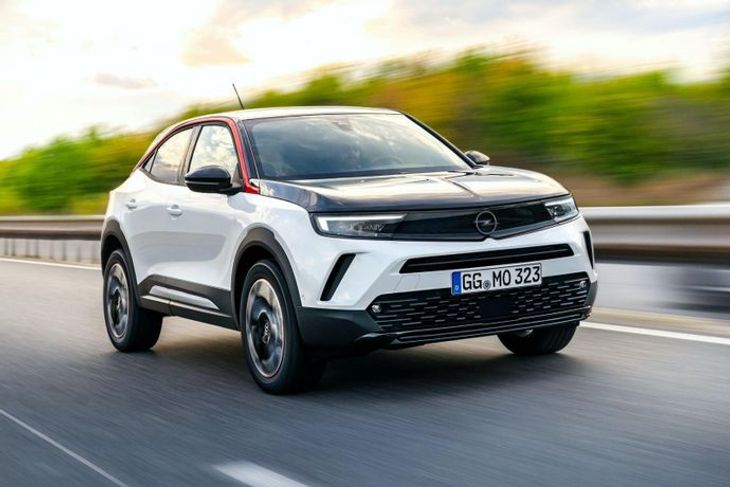
As far as powertrains are concerned, nothing is confirmed yet, but the new Jeep compact SUV is expected to be offered in both ICE, hybrid and EV guise, depending on the market. It’s not inconceivable that the new Opel Mokka’s powertrains will be used which includes 2 petrol engines, 1 diesel engine and an all-electric setup which powers the Mokka-e.
We expect a reveal before the end of 2022 or early in 2023 and we will keep you updated as soon as more details are revealed.
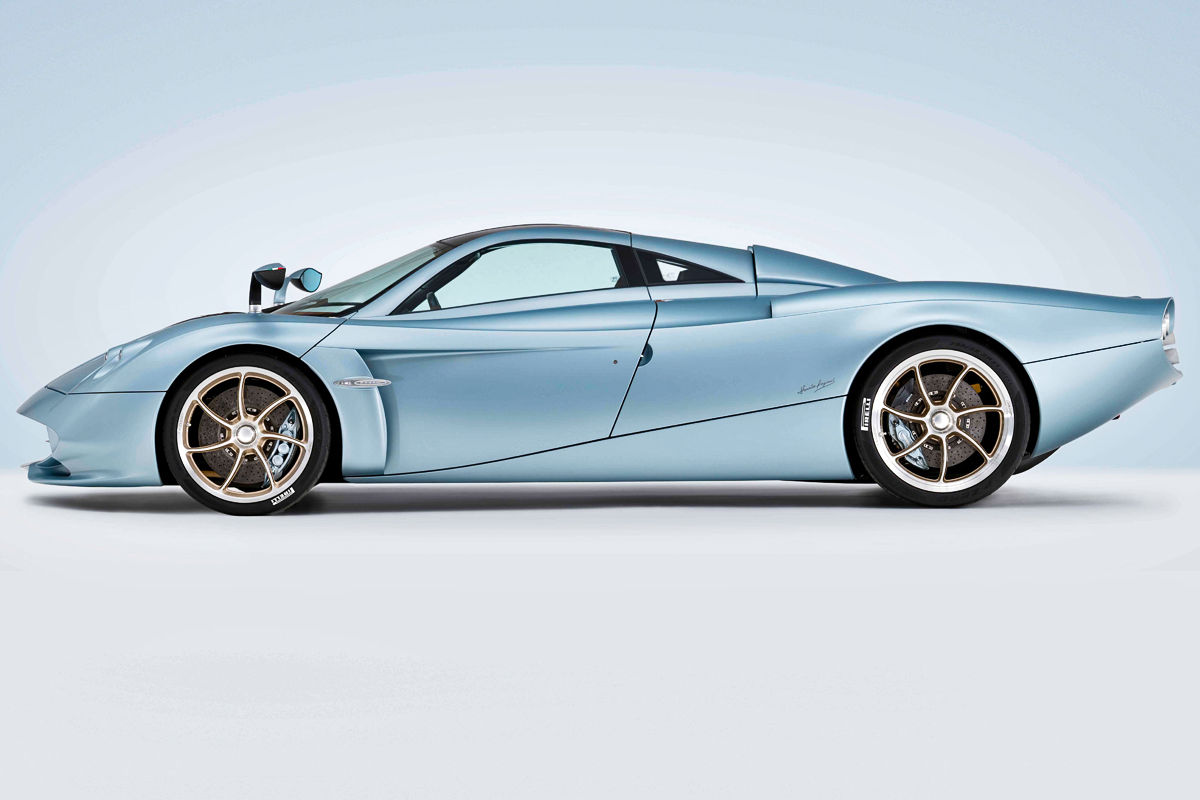
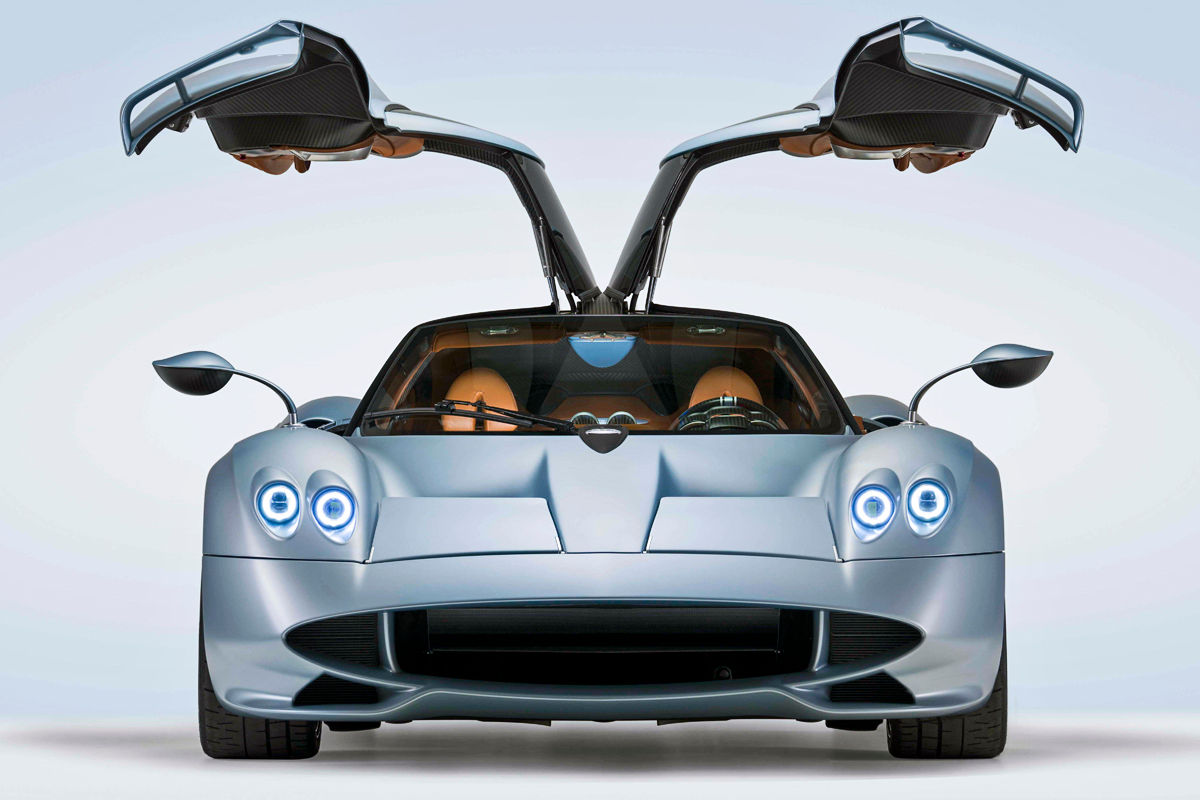
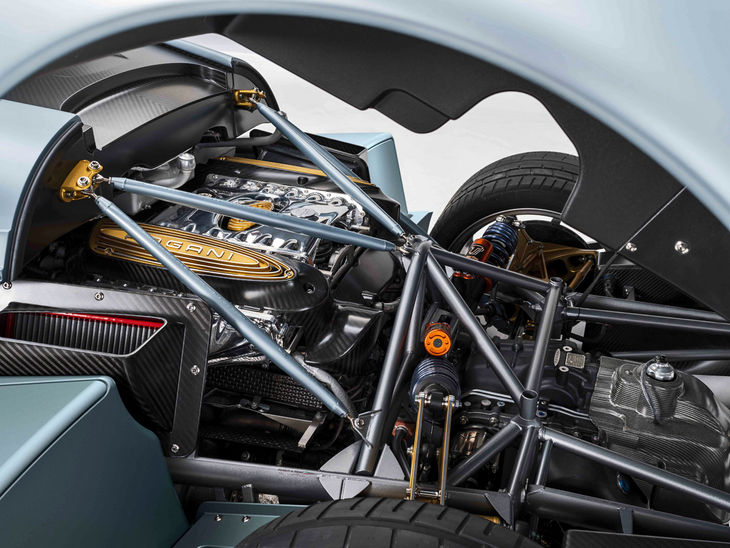
Pagani Huayra Codalunga Debuts as R118m Longtail Model
What would you do if you had around R120 million burning a hole in your pocket? Commission a special longtail version of the Pagani Huayra, of course. Meet the Codalunga…
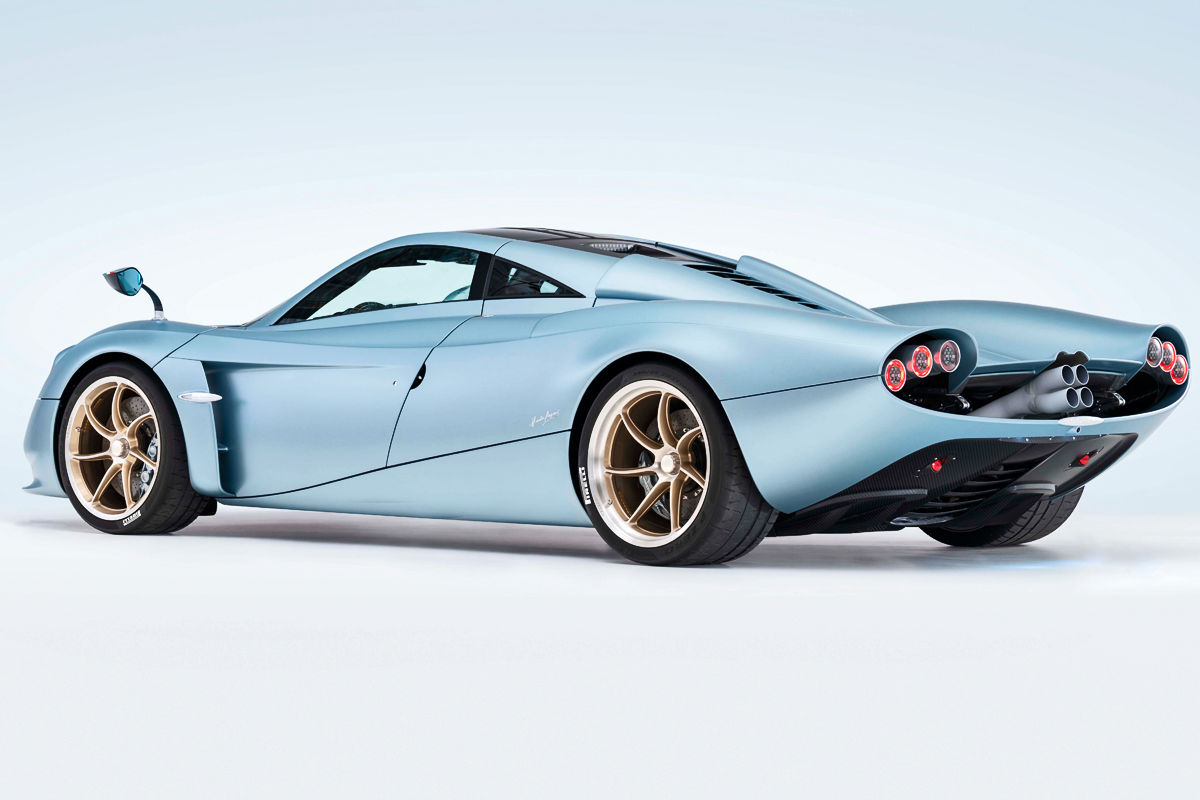
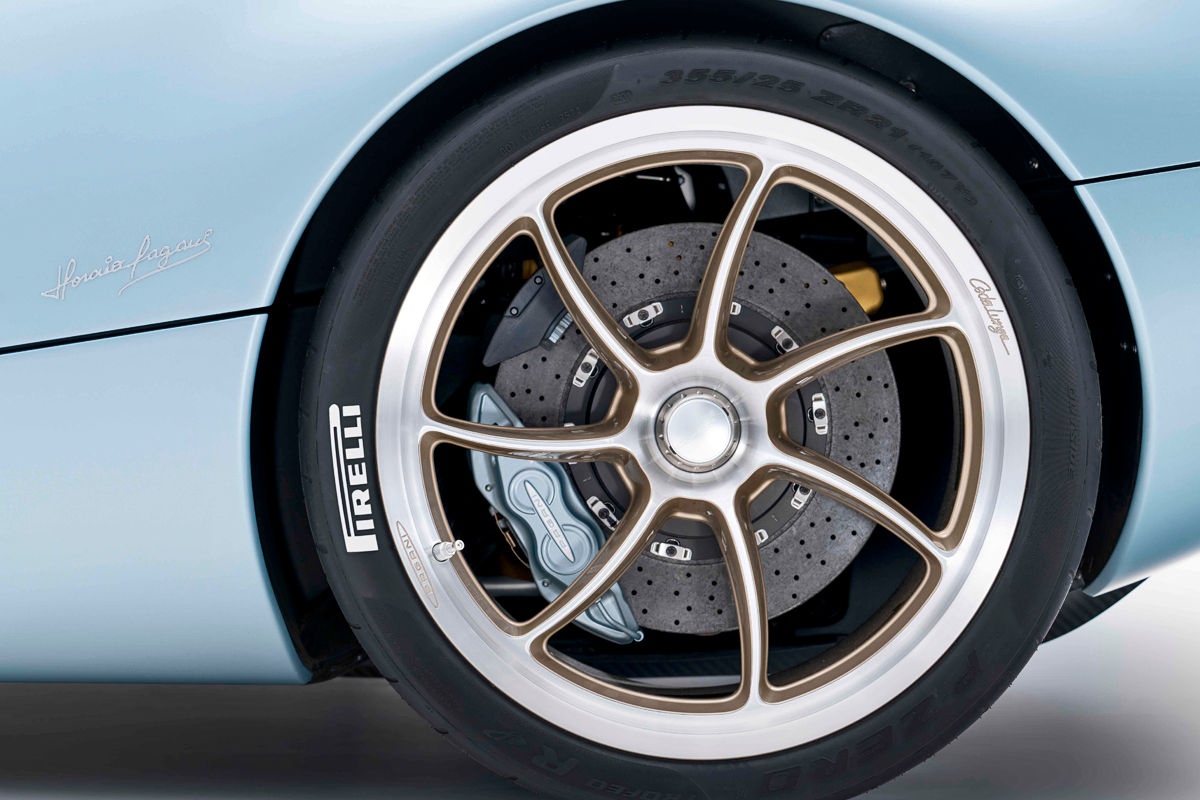
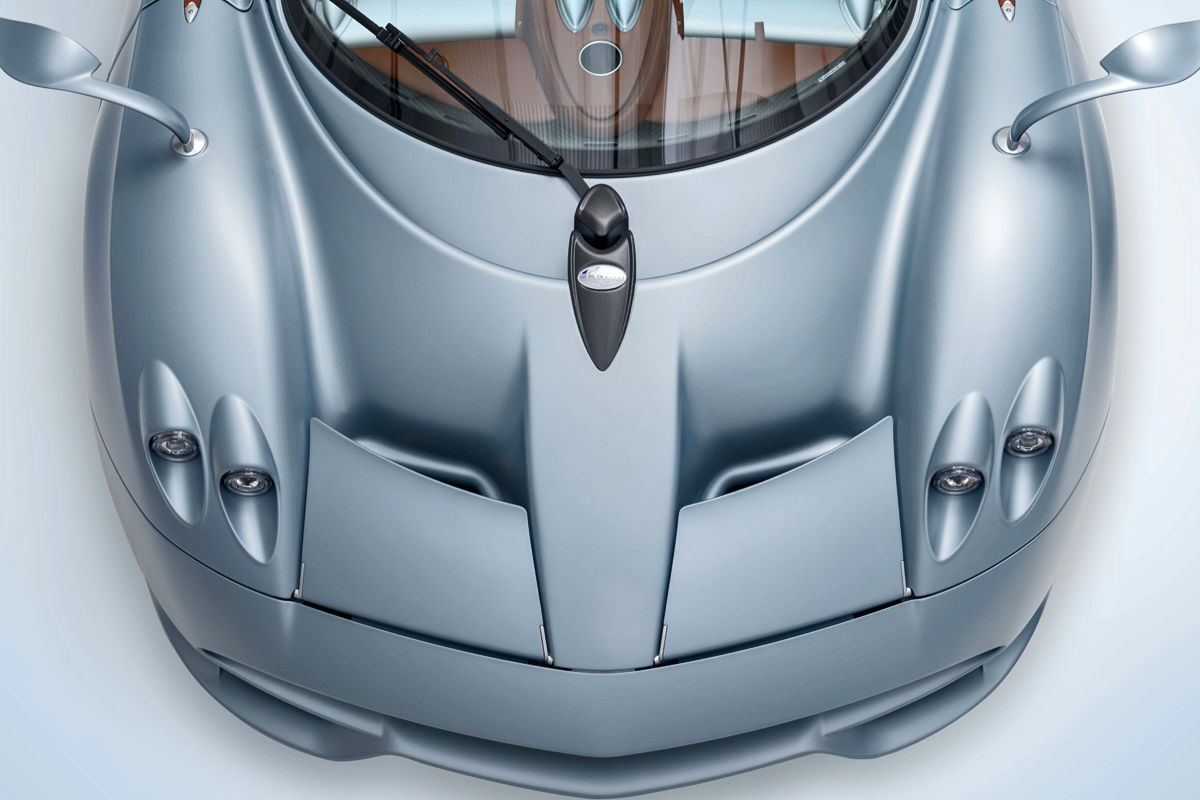
Pagani has whipped the covers off its new Huayra Codalunga, a special longtail version of the potent hypercar limited to just five units. The starting price? A cool €7 million, which translates to around R118 million at the current exchange rate.
So, where did the idea come from? Well, the Italian firm says two collectors approached founder Horacio Pagani back in 2018 to produce a longtail version of the Huayra coupé. The intention was to create “an elegant hypercar with a clean and streamlined design”, which would feel equally at home on the road and on “display at international Concours events”.
Pagani says the clients were “actively involved in the development of the project” and liaised directly with Pagani Grandi Complicazioni, the automaker’s special projects division. Even though just five units will be produced, the company claims “significant resources” were deployed to create a hypercar that would “comply with global regulatory requirements” and be fully certified.
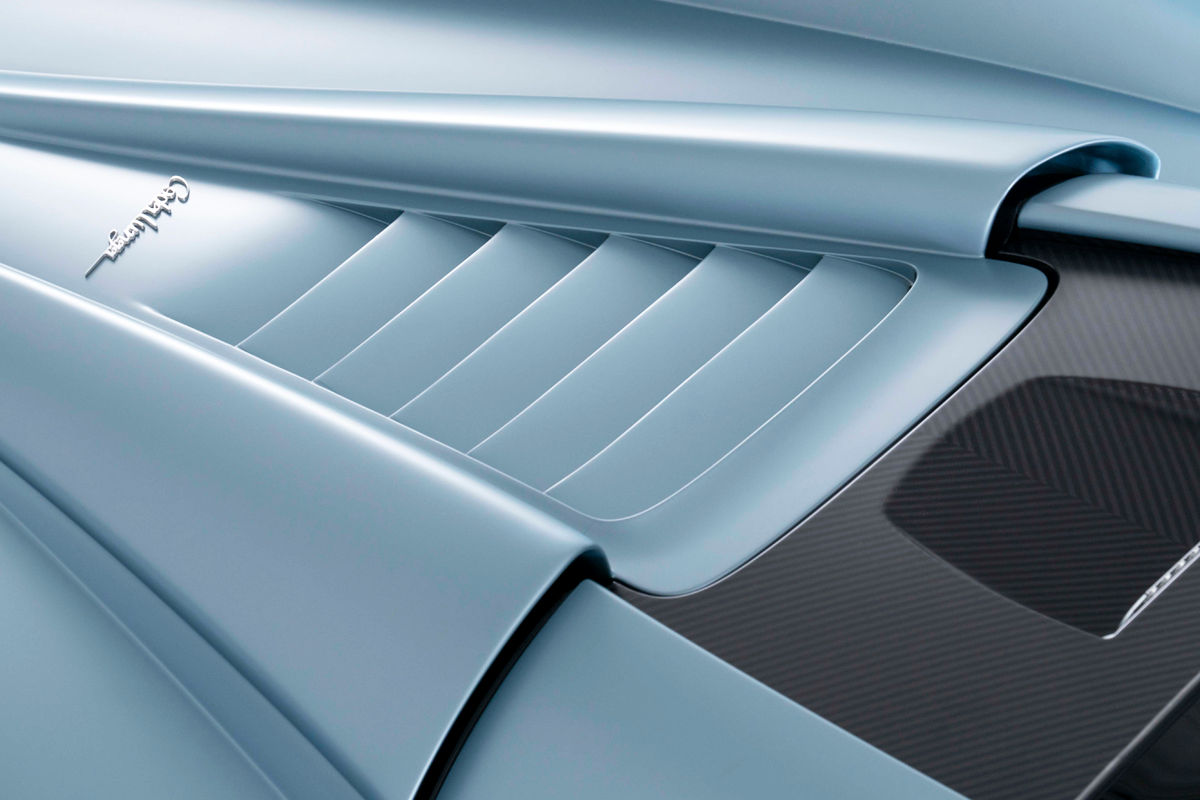
Inspired by the world of aircraft design as well as longtail Le Mans racers of the 1960s, Pagani restyled the Huayra’s rear engine cover, rendering it 360 mm longer than that of the coupé. Of course, under that lid you’ll find a twin-turbo 6.0-litre V12 petrol engine, here tuned to deliver 618 kW and 1 100 Nm to the rear axle via a 7-speed sequential transmission. Pagani has not released any performance figures.
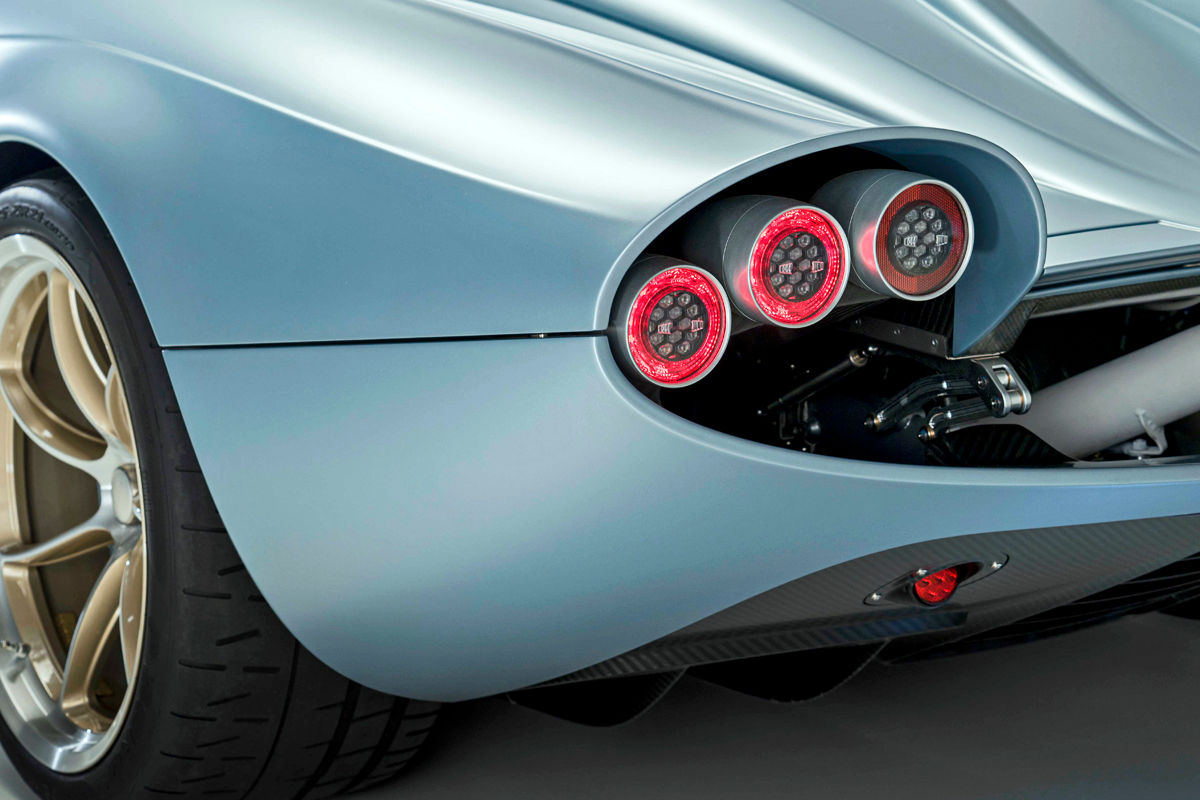
The lack of rear grilles lends onlookers an unobstructed view of the Huayra Codalunga’s exhaust system, which is fashioned from titanium and weighs a mere 4.4 kg. It furthermore features a special ceramic coating and culminates in Pagani’s signature four tailpipes.
Pagani claims the new model tips the scales at just 1 280 kg (somewhere around 70 kg lighter than the coupé) and boasts “extremely high aerodynamic efficiency”, thanks in part to the slippery body’s extra length (not to mention the active-aero system).
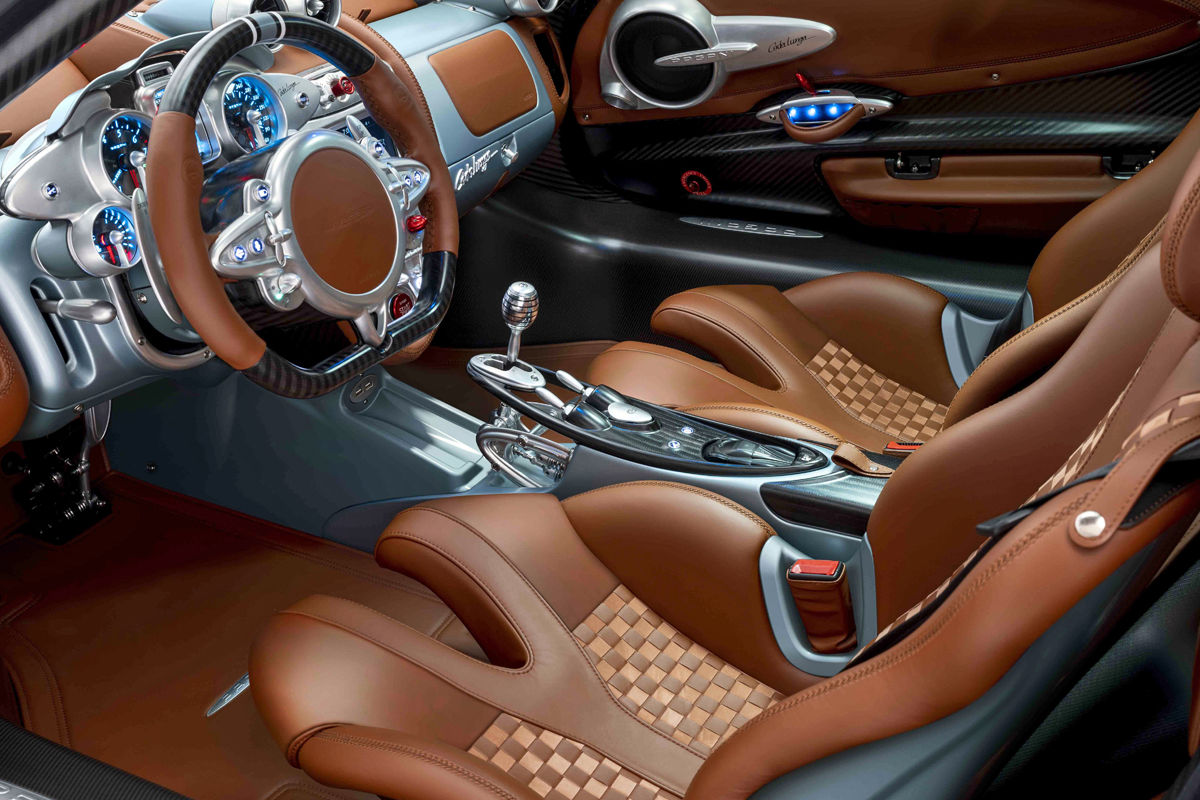
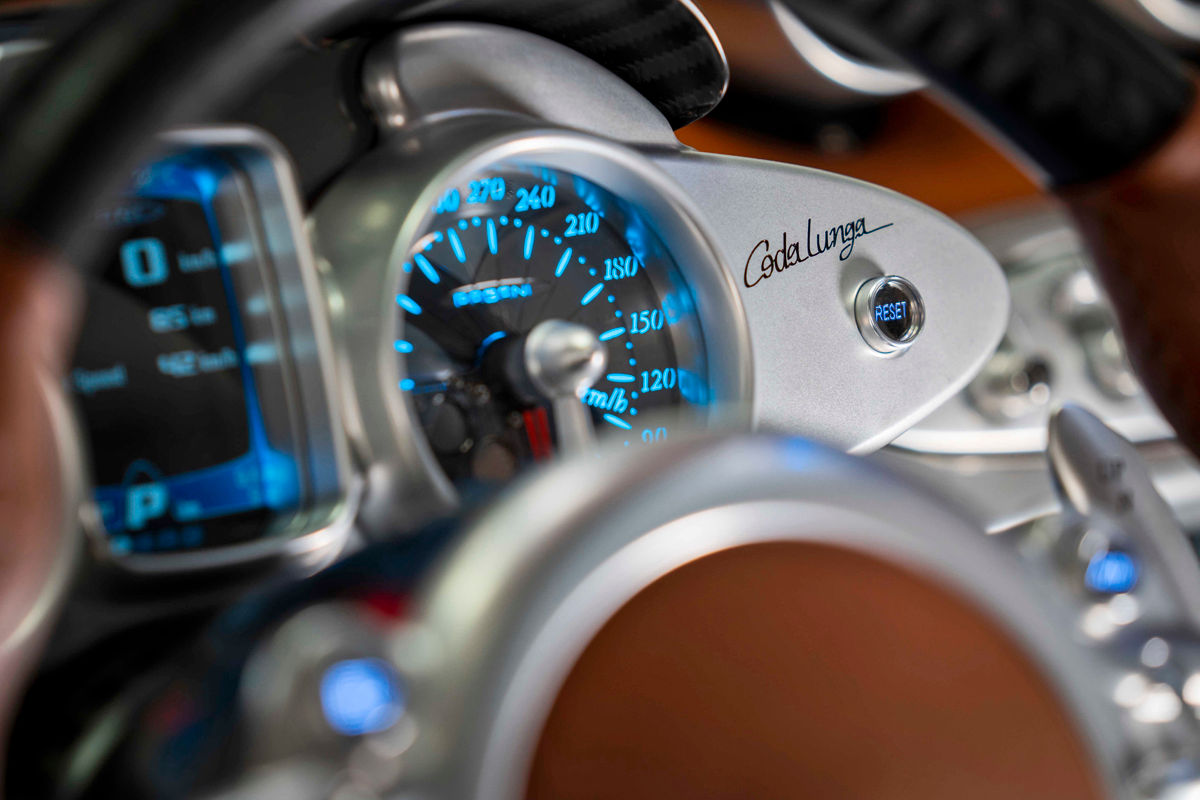
Each of the five Codalunga units will be offered in a neutral colour, with either semi-matte or fully matte paint. Inside, the seats will be finished in a woven leather/nubuck upholstery, while the various aluminium components will each be machined from a single block.
“We decided to use the simple linear style of the Huayra coupé as the starting point. We made the Huayra Codalunga longer and smoother, as if it had been caressed and moulded by the wind, to design lines that were even more elegant than the coupé,” explained Horacio Pagani.
“We drew inspiration from the longtails of the 1960s that raced at Le Mans, which had very clean lines. The Huayra Codalunga comprises very few essential elements; we have taken away rather than added. Simplifying is not at all straightforward, and this vehicle is, above all, the result of a complex pursuit of simple ideas.”
New Chery Tiggo 7 Pro Review – A premium SUV for Polo money?
Like the mythical phoenix, Chery has been reborn in SA from the ashes of its previous iteration. The Tiggo 7 Pro is the 3rd model to be launched in SA since the brand’s return to SA. We review the new model from a brand that’s really gaining ground locally.
New to our shores, Chinese brands GWM, Haval and Chery are enjoying significant success in our market. But for Chery, this is not their first foray into Mzansi, and their offerings from the 2010s certainly left a lot to be desired.
However, Chery’s latest products are lightyears ahead of their previous efforts, and in many ways, far ahead of some of their competitors.
However, especially in a cash-strapped economy like ours right now, it’s the staggeringly low price of these vehicles that is making South African motorists sit up and take notice.
The Chery Tiggo 7 Pro is available for a fair bit less than a top-spec Volkswagen Polo, and in that sense alone it represents incredible value. We sent our video guy, Ciro De Siena, to bring you a detailed review of the all-new Chery Tiggo 7 Pro.
Here’s a list of new cars that have either arrived in South Africa already or are destined to reach South Africa in 2022. What are you looking forward to most?
Despite the supply difficulties the global automotive industry is facing, there’s still lots of exciting new cars headed for South Africa.
From budget cars, compact crossovers, family SUVs to luxury SUVs, bakkies, MPVs, supercars and electric cars, there’s something for everyone!
Please note that this new cars list is generated based on feedback from manufacturers as well as from what has been reported publicly either on Cars.co.za or elsewhere. We have tried our utmost to make this list as accurate and as definitive as possible but please note that we will update this list regularly as we receive relevant information from manufacturers.
It’s also worth mentioning that arrival timings for new cars are tentative and are subject to change due to ongoing changes and delays in the global supply chain.
News Cars for South Africa in 2022
Abarth – No new product confirmed.
Alfa Romeo
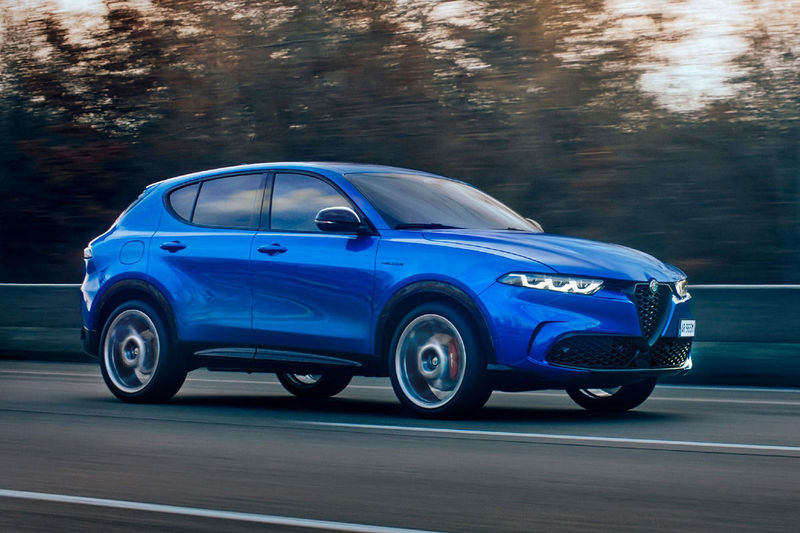
Alfa Romeo Tonale – Q4 2022
The new Alfa Romeo Tonale is due to be revealed in March 2022 with local arrival expected in Q4 2022. Alfa Romeo is keen to take advantage of the current SUV buying trend and the Tonale will slot in below the Stelvio in Alfa Romeo’s SUV range. More so, it will be built on the same Small Wide 4×4 platform that underpins the Jeep Renegade. Powertrain details have yet to be officially confirmed but a 1.3-litre plug-in hybrid EV powertrain (PHEV) is likely as well as a 1.4-litre turbocharged petrol engine. Buyers can expect a new Alfa Romeo every year until 2026.
Aston Martin
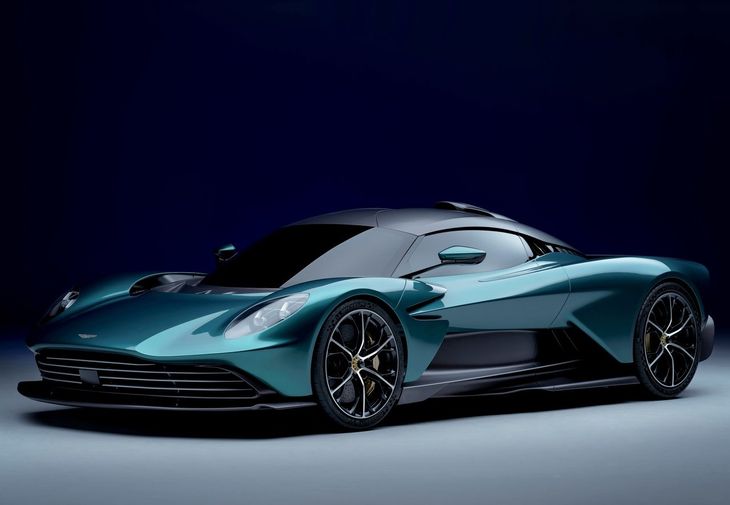
Aston Martin Valhalla – Q3 2022
The mid-engined Aston Martin Valhalla is finally expected to arrive on local soil in the second half of 2022 and will feature a potent twin-turbocharged 4.0-litre V8 engine sourced from Mercedes-AMG that combines with a pair of electric motors to produce 699 kW and 1 000 Nm of torque. This all culminates in rapid acceleration with zero to 100 kph claimed in 2.5 seconds before reaching its climax at 350 kph. Pricing has yet to be confirmed for the South African market, but don’t expect to see too many Valhallas out on the road.
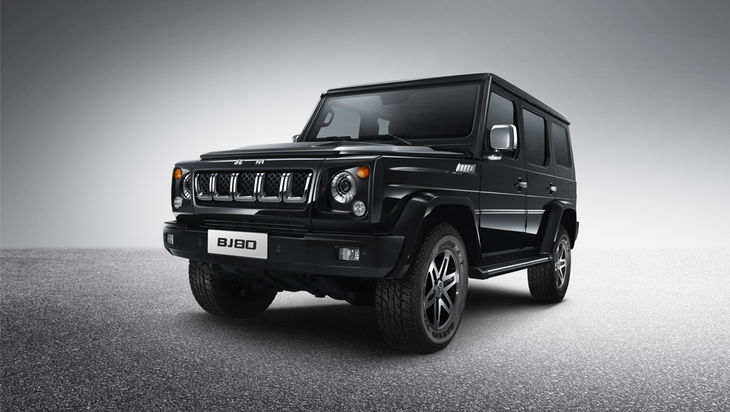
Following the local launch of the BAIC B40 Plus, BAIC South Africa has confirmed that it will introduce a new SUV product and all indications point to the larger BJ80 4×4 SUV making landfall to swipe sales from established offerings from Toyota, Ford, Mitsubishi and Haval. For all those people who want a Mercedes-Benz G-Class but can’t afford one, the BJ80 will be a more affordable alternative! Engine details have yet to be confirmed but a 3.0-litre V6 engine mated with an 8-speed automatic transmission is likely.
Bentley – No new product confirmed.
BMW
BMW 2 Series Coupe –
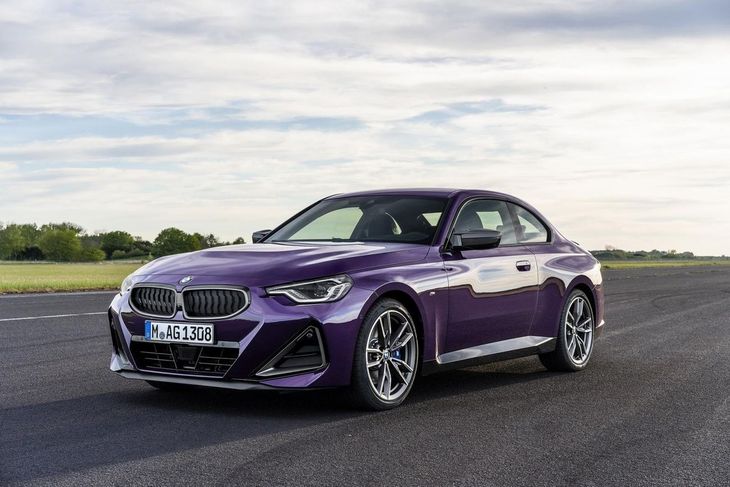
BMW’s handsome rear-wheel-drive 2 Series Coupe has arrived!. The initial South African line-up will include a 220i (135 kW/300 Nm), 220d and M240i xDrive (285 kW/500Nm), each of which will have an 8-speed automatic transmission. As for the range-topping M2, it’s expected to be revealed later in 2022 with local arrival only expected in 2023.
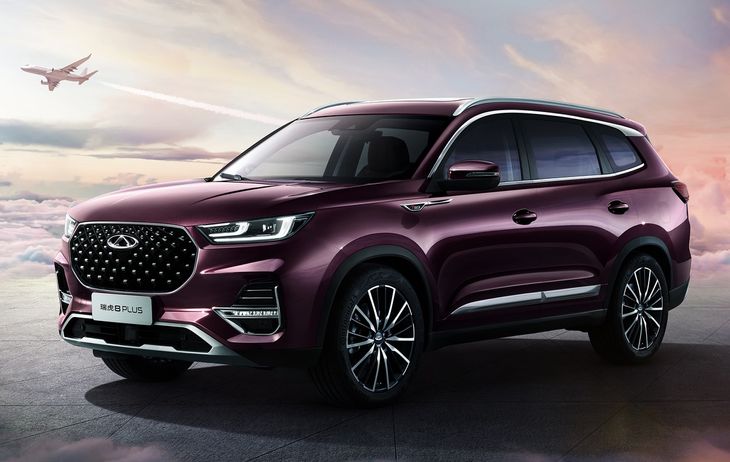
Chery is on a roll! Following the recent launch of the Tiggo 4 Pro, the Chinese firm has rapidly exapnded its local portfolio with the introduction of the Chery Tiggo 7 Pro and the 7-seater Tiggo 8 Pro flagship luxury SUV. Chery might have a few more surprises on the way in the form of the Tiggo Cross which might arrive in the second half of the year and there’s even talk of a Chery Tiggo Pup bakkie for 2023. Best to watch Chery’s product onslaught closely!
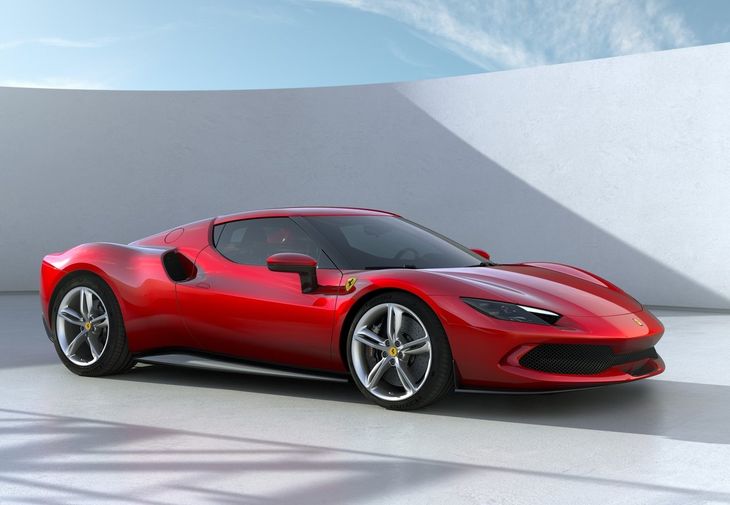
Ferrari will bring the V6-powered 296 GTB to market in 2022. The key here is hybrid technology and the plug-in setup combines with a turbocharged 3.0 V6 petrol engine to deliver 610 kW and 740 Nm and when everything is activated, the new Ferrari 296 GTB is good for a 0-100 kph of 2.9 seconds. It can also do 0-200 kph in 7.3 seconds and run to a top speed of 330 kph. The vehicle features an 8-speed dual-clutch transmission.
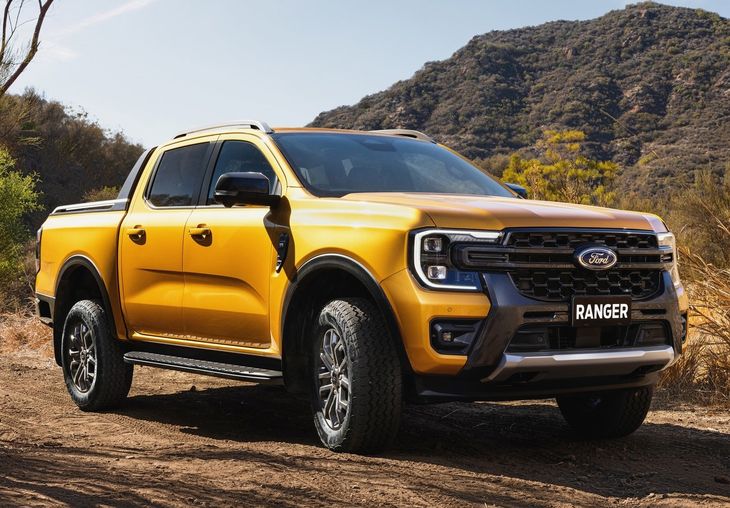
Ford will be producing the new Ranger locally at its upgraded facility in Silverton in 2022 for both the local and export market. It’s a bold design and based on reactions on social media, the new Ranger is expected to shake up the segment when it goes on sale. Much like the current range, the new Ranger will make use of both single and bi-turbocharged 2.0-litre diesel engines (updated) and Ford has also confirmed that a 3.0-litre V6 diesel engine will join the range and will also be built at the firm’s Struandale engine production facility in Gqeberha.
GWM
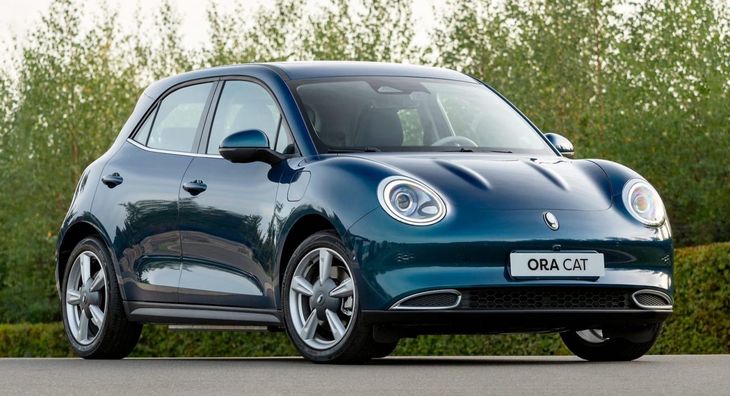
GWM ORA Cat – Not yet confirmed (under consideration)
GWM is keeping its product cards close to its chest for 2022 but we foresee some big surprises from the Chinese automotive giant. GWM’s electric sub-brand, ORA, is due to launch the Cat in the UK in early 2022. The model is currently also under consideration for introduction in Australia. This is significant because the UK and Australia are right-hand-drive markets (like South Africa) and if the ORA Cat makes its way to South Africa, GWM will be the first brand to introduce a more affordable EV option to the local market. The ORA Cat, depending on the derivative, can deliver up to 126 kW and 250 Nm from a front-drive motor and importantly offer a range of up to 501 km.
We must, however, make it clear that the ORA Cat is under consideration but not yet confirmed for South Africa. GWM and SUV brand Haval have ruffled many feathers locally with products such as the GWM P-Series bakkie, Haval Jolion and H6 family car, so it’s fair to expect some surprises. On that note, GWM’s Tank brand is also expected to make a local appearance in 2022… Watch this space!
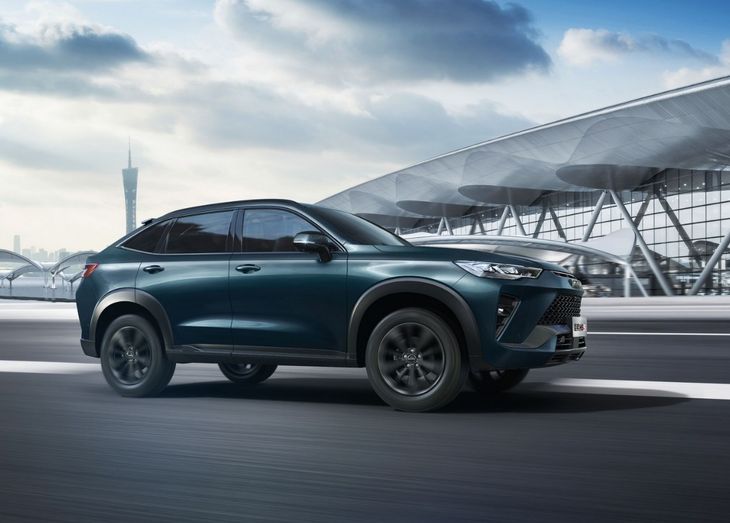
The sporty Haval H6 GT is expected to reach South Africa soon and will be powered by a a 2.0-litre turbocharged 4-cylinder petrol engine with 150 kW and 320 Nm which is mated with a 7-speed dual-clutch transmission. Local specification and pricing will be revealed closer to launch.
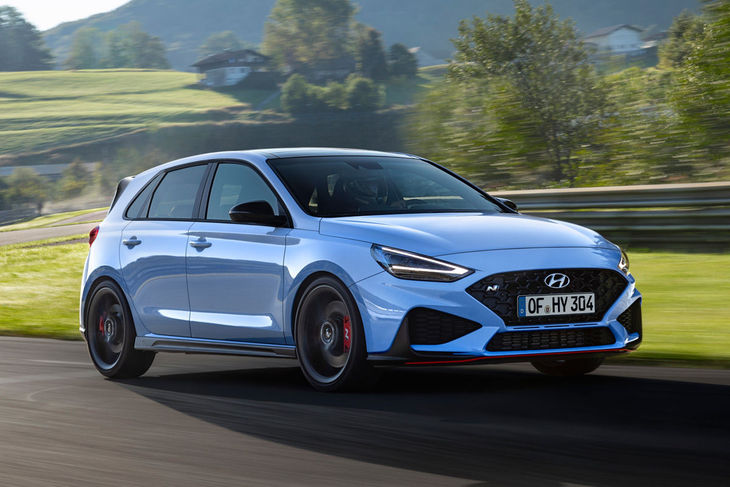
Hyundai has introduced the Kona N performance crossover and the i30 N with a dual clutch transmission simultaneously early in the year. The Kona N is powered by a 2.0-litre turbocharged 4-cylinder petrol engine which produces 206 kW and 392 Nm. All of that goes to the front wheels via an 8-speed dual-clutch gearbox and the Kona N sprints from zero to 100 kph of around 5.5 seconds, thanks to a neat overboost trick that increases power to 213 kW for a few seconds.
As for the updated i30 N DCT, it’s equippedwitha revised 2.0-litre turbopetrol engine (the same as the Kona N above) with outputs of 206 kW and 392 Nm but is now be offered with an 8-speed dual clutch transmission. Zero to 100 kph is claimed at 5.9 seconds.
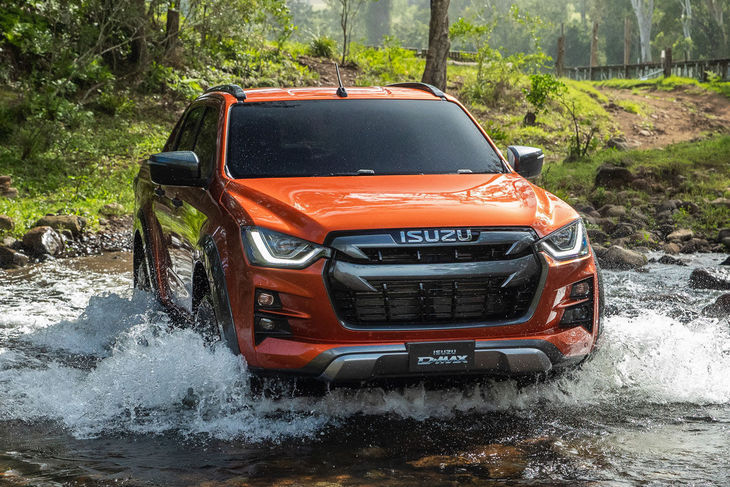
The new locally-assembled Isuzu D-Max has been launched in South Africa! The big news for the new Isuzu D-Max is the inclusion of a new 110 kW/350 Nm 1.9-litre turbodiesel engine, which is offered alongside the familiar (but updated) 140 kW/450 Nm 3.0-litre turbodiesel engine. As for the interior, the new D-Max is a vast improvement over the outgoing model with modern infotainment systems and connectivity solutions as well as a range of comfort and convenience features that customers in this segment have come to expect. See specification and pricing for the new Isuzu D-Max here!
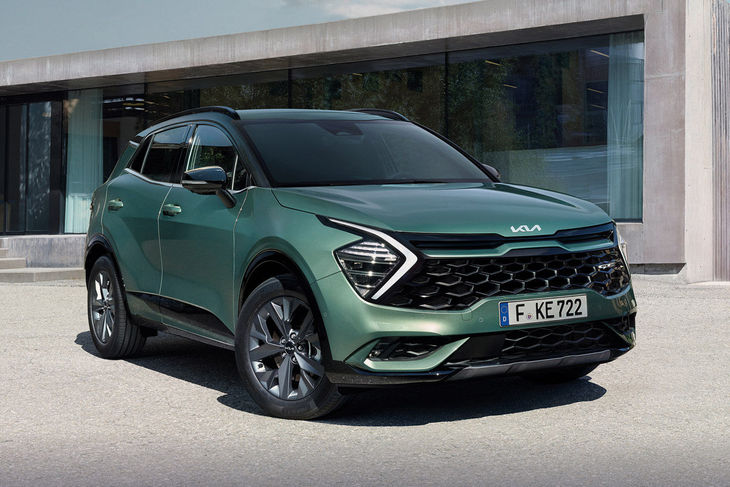
Kia’s new Sportage family car is on the way and it looks fantastic! The new Sportage not only boasts a stylish exterior look but its interior is vastly improved over its predecessor with a curved display panel incorporating a 12.3-inch digital instrument cluster and 12.3-inch infotainment touchscreen being a major highlight. The engine lineup for South Africa has yet to be confirmed but buyers can expect a wide choice of petrol and diesel engines as well as the possibility of a Sportage Hybrid which will be a direct rival to the Toyota RAV4 Hybrid. A Sportage Plug-in Hybrid is also offered in other markets but it’s not likely to be offered locally. Exact specifications and pricing details are expected closer to launch.
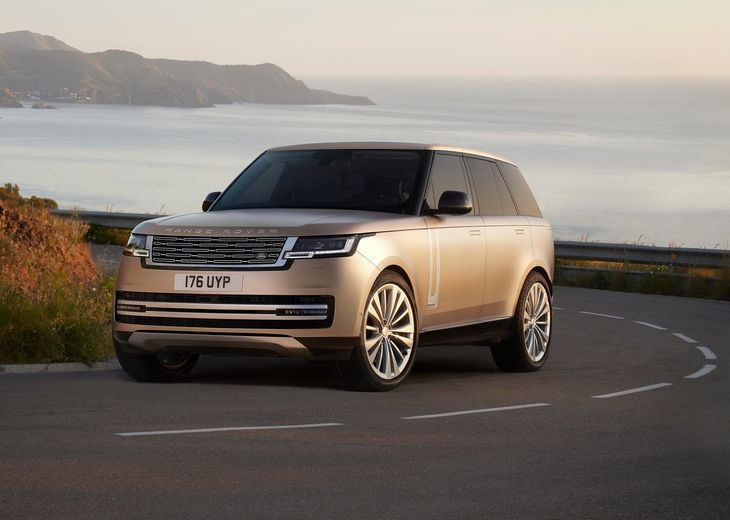
The new Range Rover was revealed earlier in 2021 and is expected to arrive locally in the second half of 2022 (see pricing details here). This new version remains instantly recognisable. With a minimalist styling theme, relying on form and proportion, instead of outrageous grille styling (like many of its rivals), the new Range Rover is a picture of elegance. The interior design features significant digitisation and instrumentation functions are relayed via a 13.7-inch TFT cluster, with the centre infotainment touchscreen being 13.1-inches in size.
Land Rover’s familiar Ingenium inline 6-cylinder turbopetrol and turbodiesel engines have been retained and there are plug-in petrol hybrids too, which offer up to 100km of pure electric driving range – ideal for crawling along in busy city traffic. Range Rover’s most potent non-hybrid in-line-6 turbopetrol engine develops 294 kW and 550 Nm.If you want a Range Rover V8, its 4.4-litre twin-turbocharged engine is sourced from BMW and configured to produce peak outputs of 390 kW and 750 Nm. Exact specification and pricing details will be communicated closer to launch.
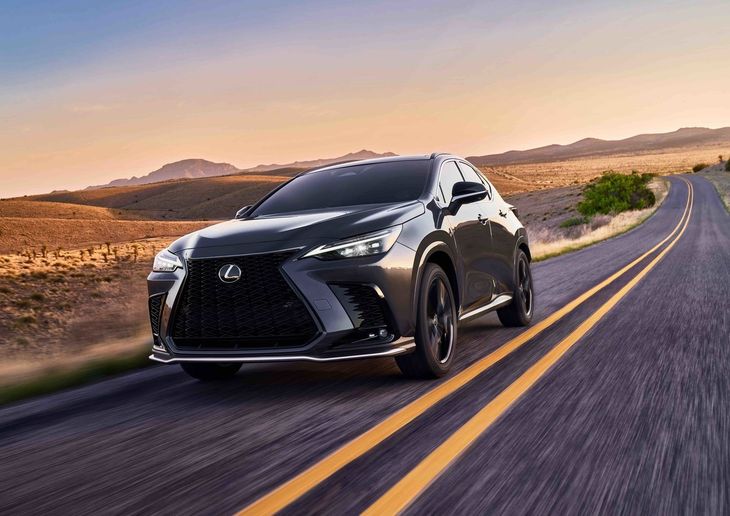
The new Lexus NX is built on an all-new platform and being a Lexus, electrification is key to the brand and the new 2022 Lexus NX will be both a hybrid electric vehicle (HEV) and a plug-in hybrid electric vehicle (PHEV). Other powertrain options include a 2.5-litre naturally-aspirated petrol engine and a 2.4-litre turbocharged petrol engine. The NX will also debut a new impressive infotainment system that will be rolled out into other Lexus models in due course.
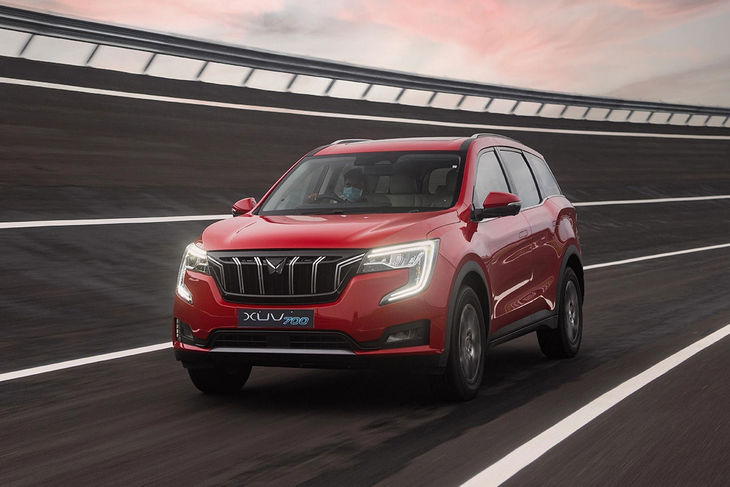
The all-new XUV700 was revealed in India in August as a replacement for the XUV500 and it’s the first model to feature Mahindra’s new “Twin Peaks” corporate logo. The XUV700 is the most luxuriously-appointed Mahindra we have yet seen and the large integrated dual-screen set up inside is a major talking point for this new model. A 2.0-litre mStallion turbopetrol produces peak outputs of 147 kW and 380 Nm in conjunction with a 6-speed automatic transmission, while a 2.2-litre mHawk turbodiesel comes in 2 stages of tune: it either produces 114 kW/360 Nm in combination with the manual gearbox or a punchy 136 kW and 420 Nm (manual) or 450 Nm (automatic) of torque. South African specification and pricing details will be announced closer to launch.
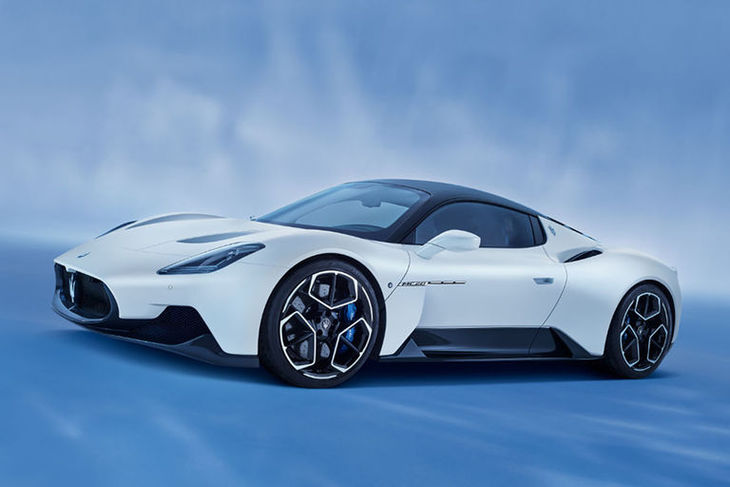
Powered by Maserati’s first in-house-designed engine in 20 years, the new carbon fibre-tubbed and butterfly-doored MC20 is powered by a twin-turbo 3.0-litre V6. It utilises its lightweight body and advanced aerodynamics to accelerate from standstill to 100 kph in less than 2.9 sec and on to a top speed of 325 kph using an 8-speed wet dual-clutch transmission. Total outputs are pegged at 463 kW at 7 500 rpm and 730 Nm of torque from 3 000 to 5 500 rpm. See local pricing details here!
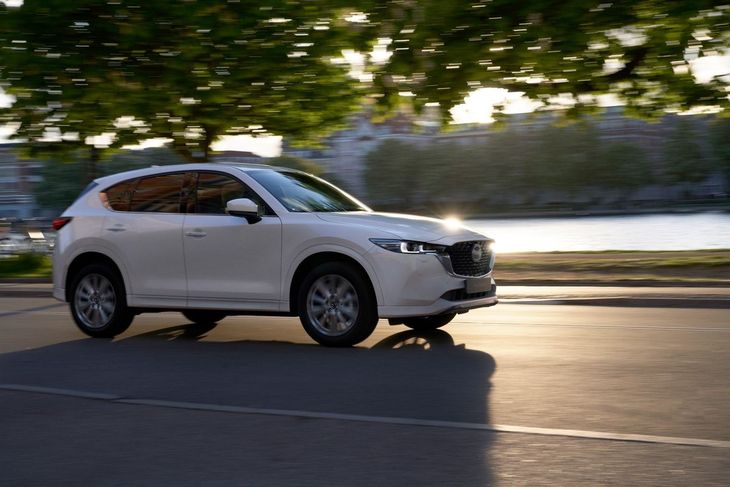
The CX-5 is a stylish and competent family SUV. With formidable rivals like the Volkswagen Tiguan, Hyundai Tucson, and the Toyota RAV4, the CX-5’s latest updates make it more competitive. Mazda has sharpened the look of the CX-5 and enhanced the interior with new trim elements and redesigned seats. As far as mechanical changes go, the 6-speed automatic transmission has been updated to be more responsive and deliver smoother acceleration. The suspension has been enhanced to reduce vibrations and road noise. All-wheel drive is now standard across the range, which will please those who enjoy driving off-tar and provide additional stability in slippery conditions. The current range of 2.0, 2.2 and 2.5-litre engines continue service in the CX-5. See local pricing and specification here!
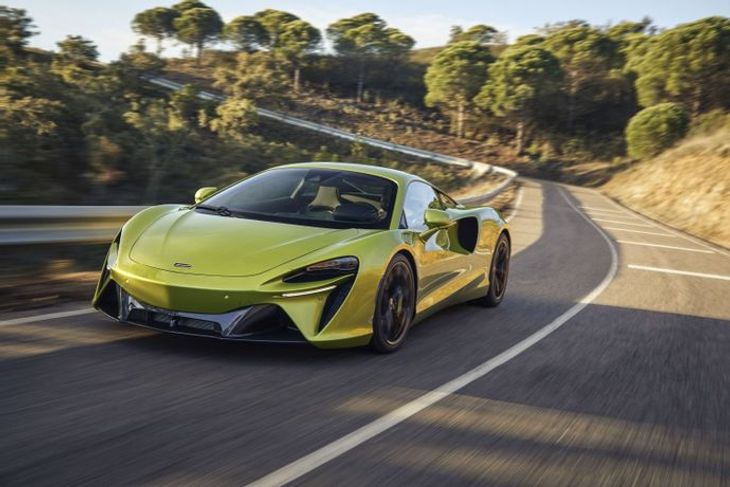
The Artura is McLaren’s first series production High-Performance Hybrid (HPH) supercar and it’s built on the new McLaren Carbon Lightweight Architecture (MCLA) which has resulted in the lightest dry weight of 1 395 kg (kerb weight of 1 498 kg) with a said class-leading power-to-weight ratio of 359 kW per ton.
The Artura is powered by an all-new twin-turbocharged 3.0-litre V6 petrol engine that develops 430 kW and 585 Nm of torque. This engine combines with a 70 kW electric motor that produces an additional 225 Nm. The Artura is equipped with a new 8-speed dual-clutch transmission. The Artura of accelerating from zero to 100 kph in 3.0 seconds flat and will reach 200 kph in just 8.3 seconds and 300 kph in 21.5 seconds. Top speed limited to 330 kph.
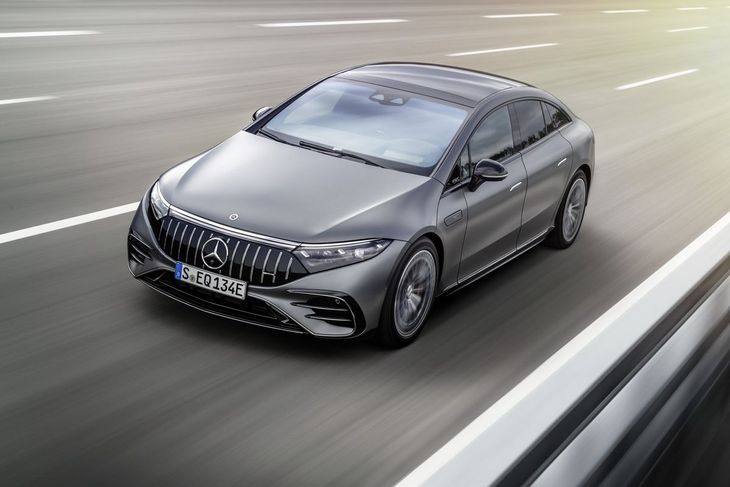
Much like Audi, Mercedes-Benz will be introducing a throng of EVs in South Africa in 2022 and will be headlined by the luxurious EQS. The first examples should be in showrooms sometime in the second quarter!
Mini – No new or updated Mini products scheduled for 2022.
Mitsubishi
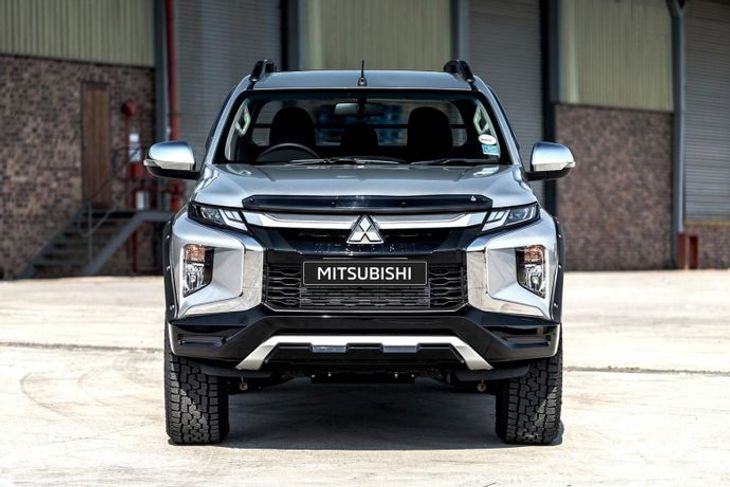
Updated Mitsubishi Triton and Triton Xtreme 4×2 – Arrived!
Mitsubishi South Africa will be releasing updates and new derivatives across its entire model range in 2022. The Triton double-cab bakkie has been updated in the first half of the year and the range-topping Triton Xtreme will also be offered with a new Triton Xtreme 4×2 derivative for those who buyers who love the Xtreme look but don’t necessarily need the 4×4 capability. The Triton’s tried-and-tested 2.4-litre MIVEC turbodiesel engine will remain with outputs of 133 kW and 430 Nm. See specs and pricing for the Triton here!
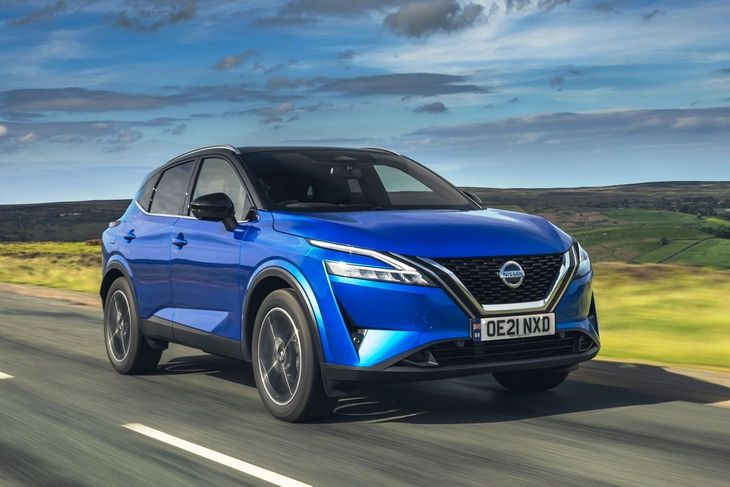
2022 is the year of the Qashqai for Nissan in South Africa. The new Qashqai was due to arrive earlier in the year but it seems its arrival has been delayed. While the local engine range has yet to be confirmed, the Qashqai features electrified powertrains for the first time. Kicking off the range is a 1.3-litre turbocharged petrol engine with mild-hybrid tech. It offers 103 kW and 240 Nm and is paired with a 6-speed manual gearbox. There’s also a 116 kW and 260 Nm derivative available. Nissan has catered for those wanting a clutchless option, with a CVT being available with either a front-wheel drive or all-wheel drive setup, called Xtronic.
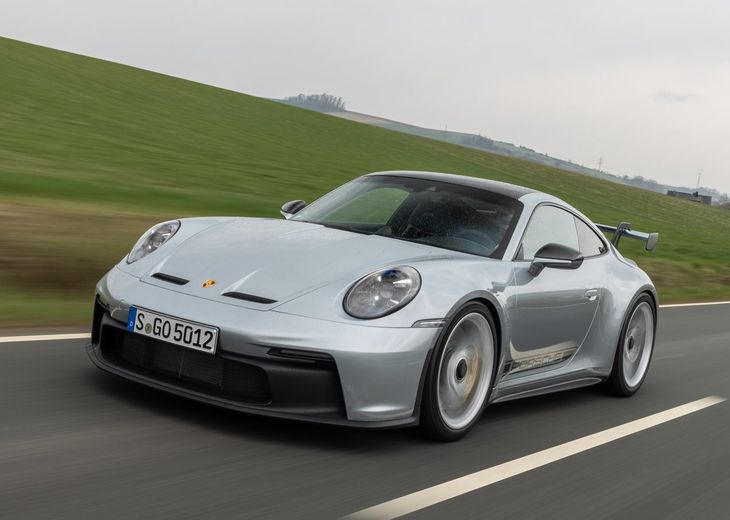
Porsche kicked off 2022 off with a mighty bang with the local introduction of the 911 GT3. Being one of the flagship Porsche 911 offerings, the performance of the 911 GT3 is nothing short of phenomenal. Power comes from the 4.0-litre flat-six petrol engine delivering 375 kW and 470 Nm. The engine has a red line of 9 000 rpm! Porsche claims a 0-100 kph in just 3.4 seconds and it will sprint to a top speed of 320 kph (318 kph with PDK). Yes, that’s right, Porsche is offering its new 911 GT3 with a manual transmission for the purest Porsche experience. Perhaps the most impressive performance figure is the 0-200 kph in just 10.8 seconds!
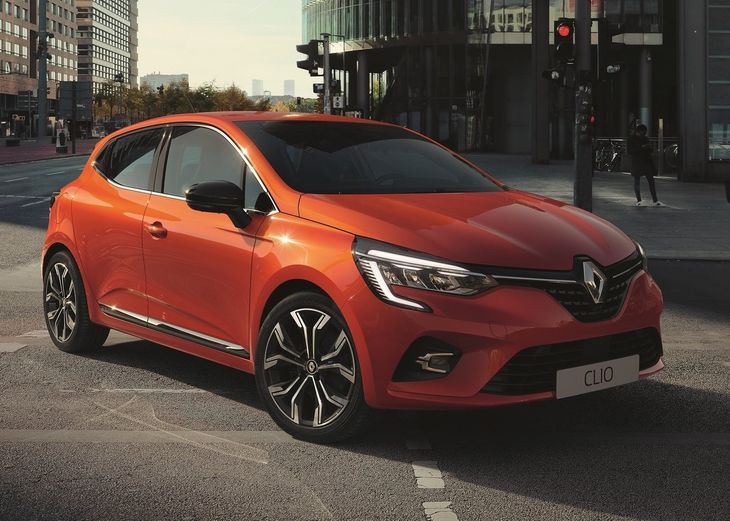
The arrival of the new Renault Clio 5 has been painfully delayed but it’s finally here! While the styling is familiar, Renault has gone to great lengths to enhance the cabin design of the new Clio and many buyers will appreciate that fact. The new 1.0-litre turbocharged 3-cylinder petrol engine is paired to a manual gearbox, which drives the front wheels. Outputs of 74 kW and 160 Nm are on offer. See specs and pricing details here!
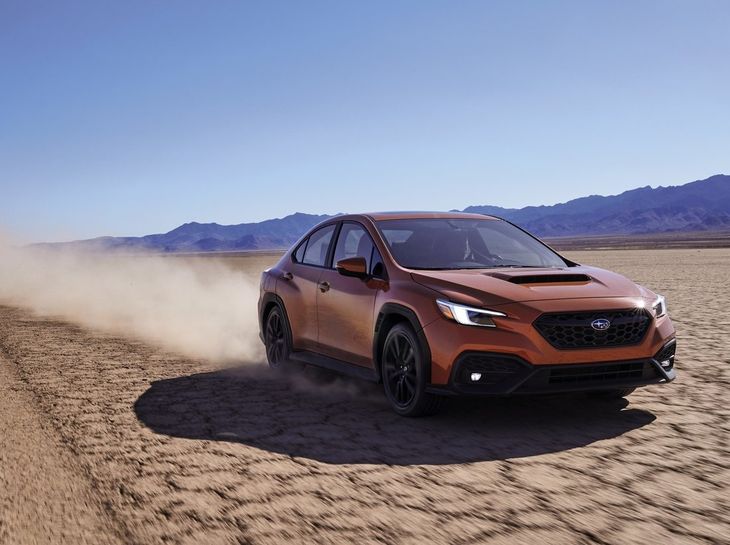
Subaru will be launching its all-new WRX on local soil in the middle of the year while the WRX wagon remains under consideration for our market (we hope it comes!). The new WRX is powered by a turbocharged 2.4-litre direct-injection flat-4 petrol engine that produces 202 kW and 350 Nm and can be mated with either a 6-speed manual or ‘Subaru Performance Transmission’, the latter of which is essentially a fancy name for a CVT. You can expect local pricing and specification to become available closer to launch.
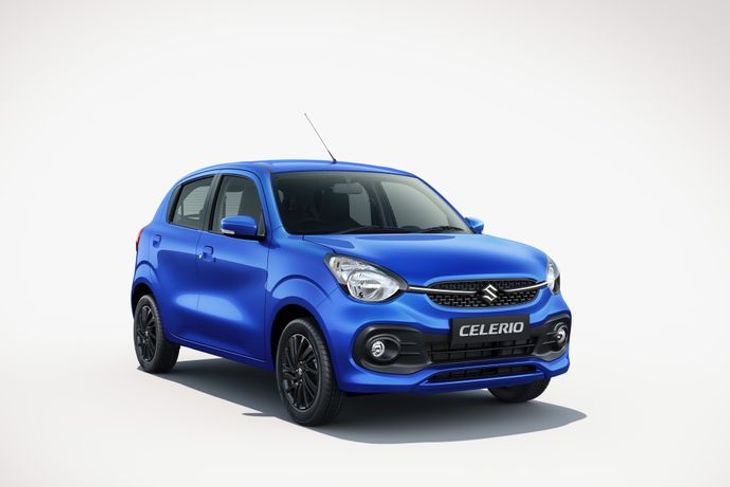
Budget car specialist, Suzuki, welcomed a new Celerio hatchback to market in 2022. The new Celerio is built on Suzuki’s HEARTECT platform, the same which underpins the Swift and S-Presso and features a rounder, more bulbous design than the outgoing Celerio.
As for the engine that powers the new Celerio, it’s a 3-cylinder, 1.0-litre, naturally aspirated engine with 49 kW and 89 Nm of torque. This engine is paired to either a 5-speed manual transmission or as Suzuki calls it, an Auto Gear Shift (AGS) transmission which is an automated manual transmission (AMT). See specs and pricing details here!
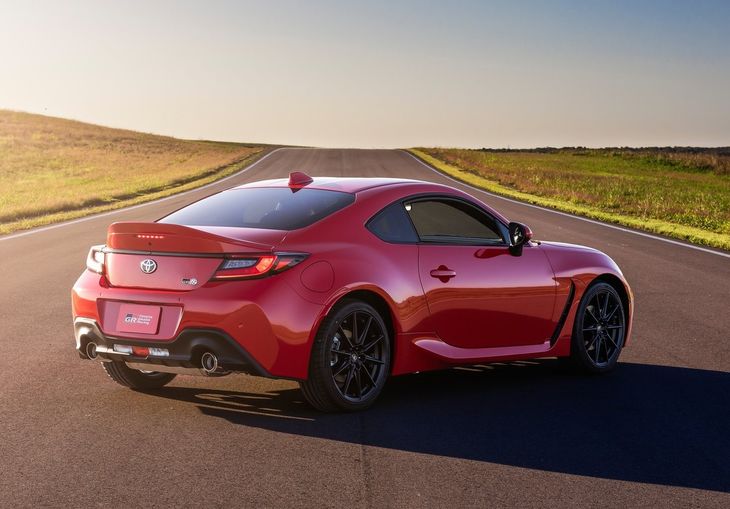
The Toyota GR86 is a lightweight, rear-wheel-drive coupe that’s been engineered from the ground up to be an enthusiast’s car. It ticks all the boxes for driving engagement; rear-wheel drive, nimble, light, manual gearbox and a rev-happy naturally-aspirated motor. It’s fitted with a lightweight, horizontally-opposed 4-cylinder 2.4-litre petrol unit that’s good for 173 kW and 250 Nm, which is a big jump from the 147 kW and 205 Nm of the outgoing GR 86. By all accounts, the new GR86 is expected to deliver a sensational hands-on driving experience.
Based on middle of the month data from the Central Energy Fund, it looks like yet another price increase for petrol and diesel is on the cards.
The Central Energy Fund is constantly tracking the factors which influence the price of fuel for motorists. Things like the exchange rate and the international price of oil are the two most important ones.
The current data and trends suggest that yet another increase is on the cards, with indications showing that motorists could potentially be paying around R2.03 per litre more, with diesel going up by around R1.28 a litre.
Let’s make it clear, these are not confirmed numbers and essentially show what could happen if the exchange rate and oil price remain at their current levels. The Department of Energy has said in the past that the current prediction doesn’t take into account things like slate levy adjustments or changes in the retail margin, which can all have a part to play in the overall price.
Still, these potential increases are brutal, despite the SA government’s strategy of extending its fuel price intervention for another two months. As a reminder, the General Fuel Levy was temporarily slashed by R1.50 per litre from Wednesday, 6 April 2022 to 31 May 2022. This was then extended until August 2022 where it will be reduced to 75 cents.
We’ll be keeping tabs on the current state of play and will update this article with the July petrol price changes towards the end of the month. Hopefully there will be some respite in the immediate future.
The new Mercedes-Benz GLC SUV was recently unveiled and it looks good. New spy shots suggest the coupe derivative is not far behind. Here’s what we know so far.
Picture credit: S. Baldauf/SB-Medien. We have paid for these photos and at the photographer’s request, have watermarked them.
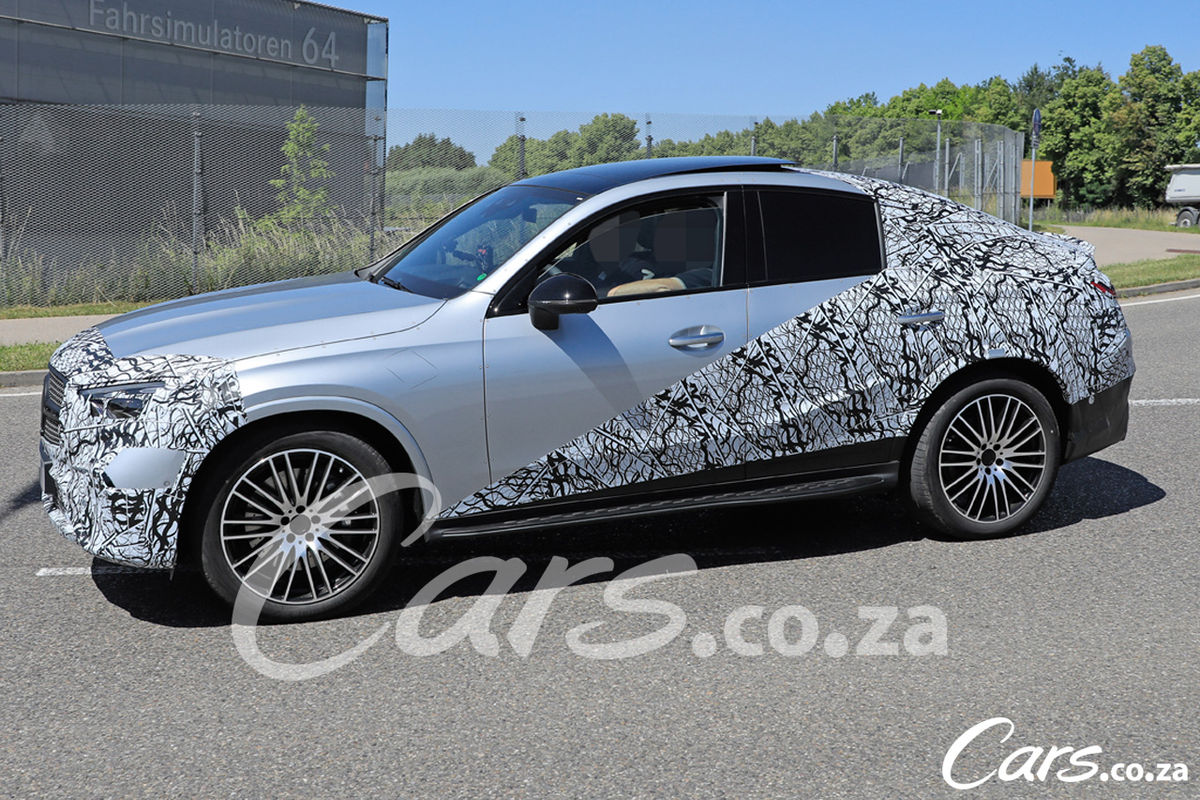
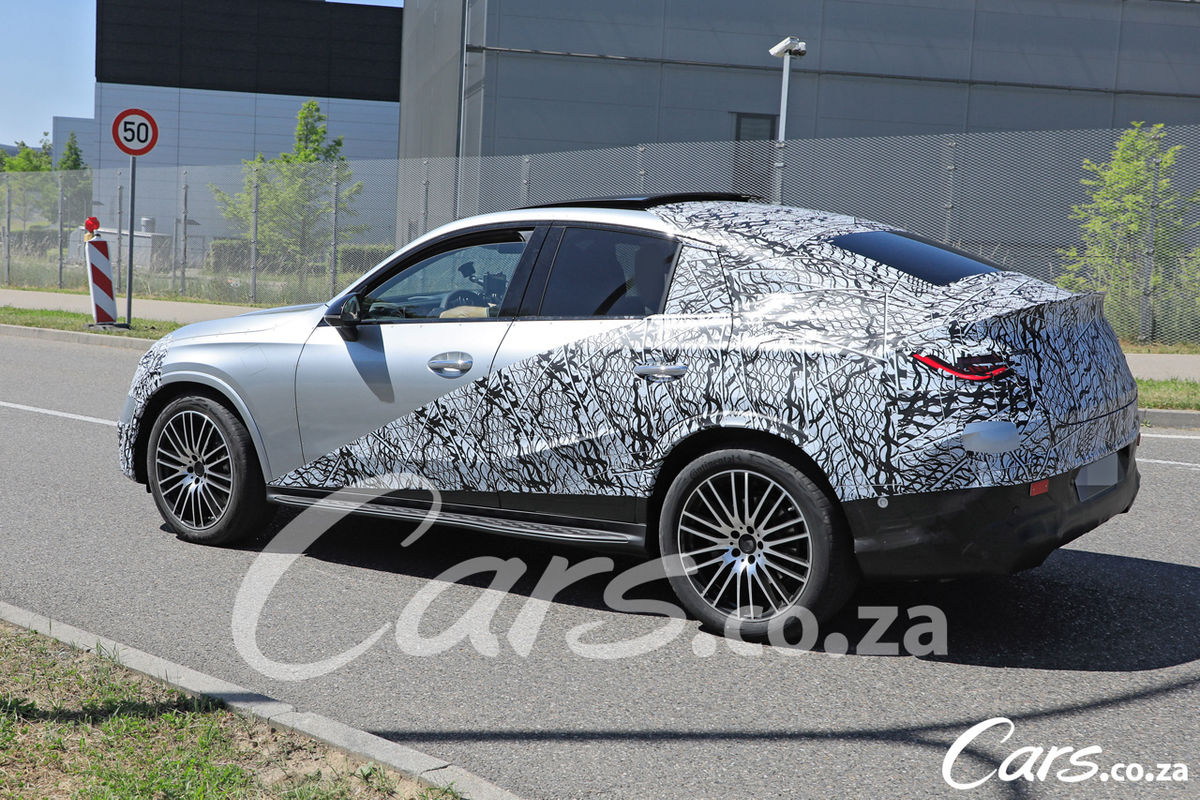
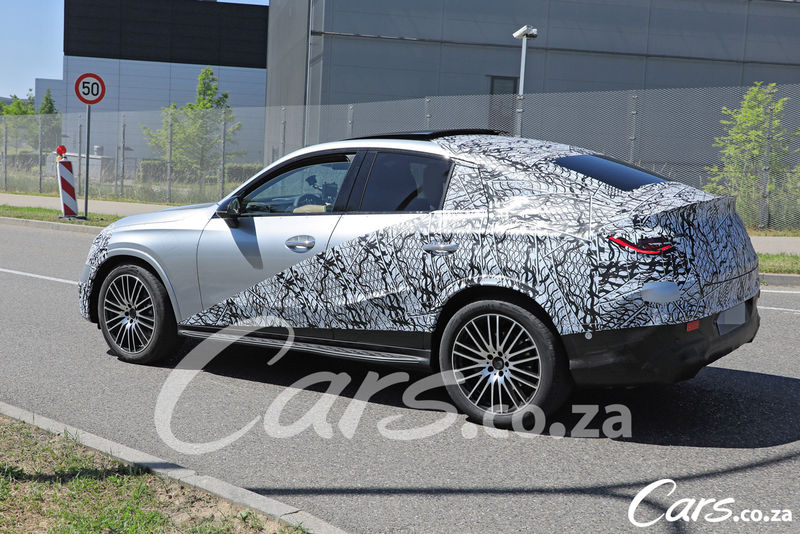
The all-new 2023 Mercedes-Benz GLC coupe has been spotted undergoing some final testing. After the recent reveal of the GLC SUV, it is expected that the coupe SUV model would be following closely behind. As a reminder and as proof that SUVs are extremely popular, the GLC has been the best-selling Mercedes-Benz model in the last two years, with over 2.6-million units finding homes around the world. The second-generation model is expected to carry on where its predecessor left off and boasts a cutting-edge cabin and state-of-the-art hybrid powertrains.
The 2023 Mercedes-Benz GLC Coupe (internal codename C254) was recently spotted cruising around with just minimal camouflage, an indication that a global reveal is not too far away. If you’re confused by the coupe name, think of this then as Mercedes-Benz’s answer to the BMW X4 and Audi Q5 Sportback.
While these vehicles look interesting in comparison to the SUVs upon which they’re based, there are some minor compromises like the rear sloping roof tends to eat into rear passenger headroom and the fact they’re a bit more expensive than their conventional counterparts.
As far as powertrains go, you can expect the 2023 Mercedes-Benz GLC Coupe to follow a similar lineup to the conventional GLC, with the petrol-powered 200 4Matic, 300 4Matic and the diesel-powered 220d 4Matic forming the backbone. Naturally, AMG engines will feature, but based on current timings, we estimate we’ll see 43 and 63 derivatives being revealed in 2023.
The facelifted Volvo XC60 range is headlined by the new T8 Recharge plug-in hybrid derivative. Petrol- AND rechargeable battery power – the best of both worlds?
We like: Phenomenal pace and economy, luxury fit and finish, refinement in abundance
We don’t like: Pricey, new Google interface lacks ease of use, you’ll need to change your driving style to get the most out of it.
FAST FACTS
Model: Volvo XC60 T8 Recharge AWD Inscription
Price: R1 282 400
Engine: 2.0-litre 4-cylinder, turbo- & supercharged petrol with electric motor
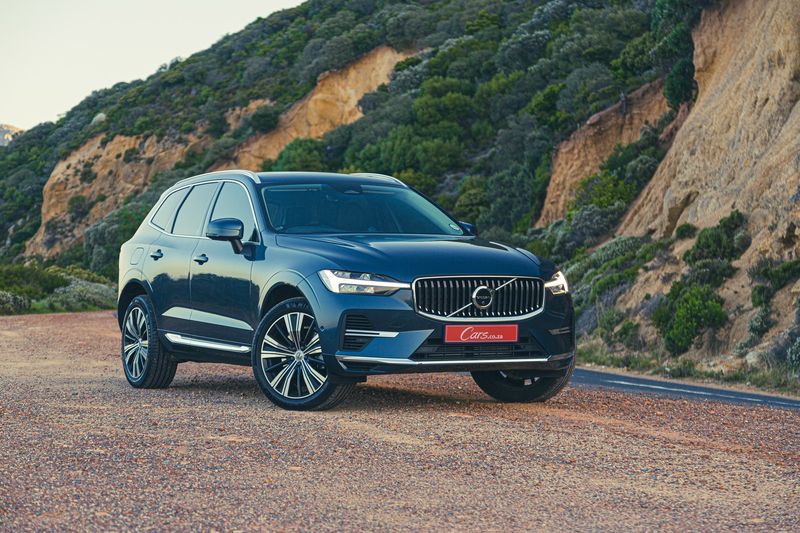
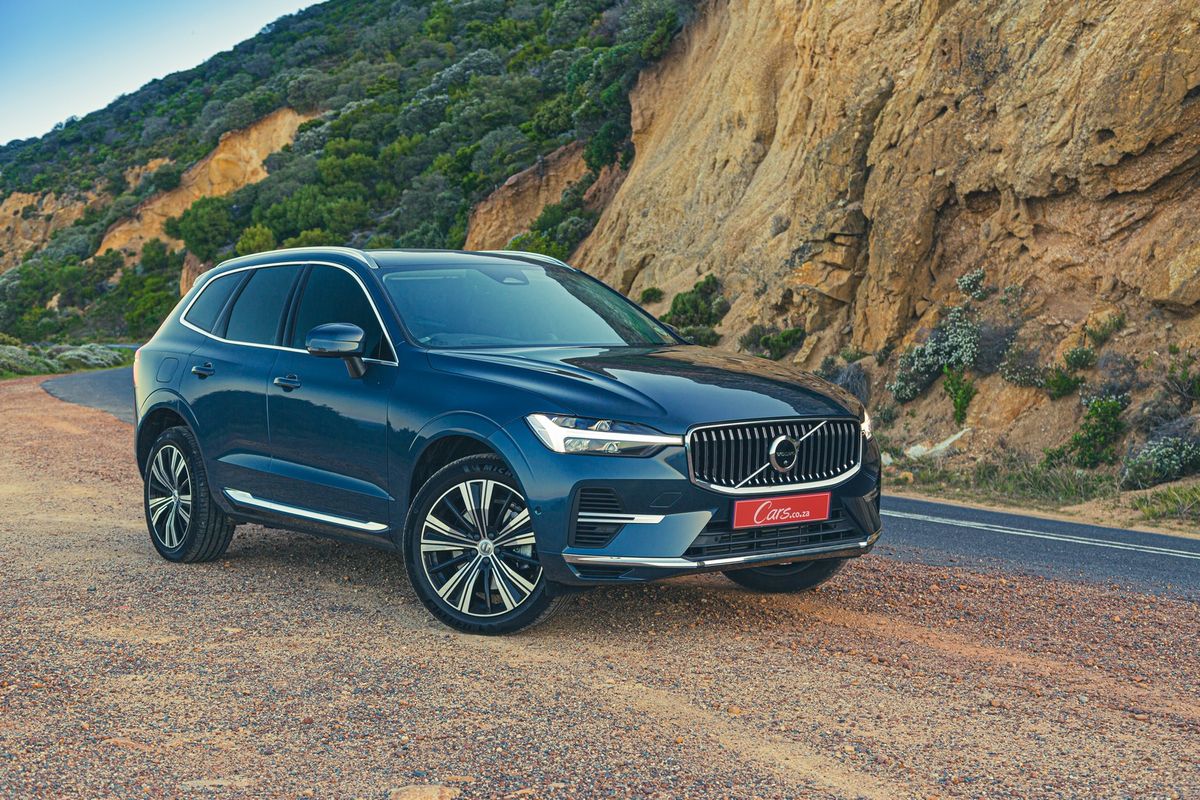
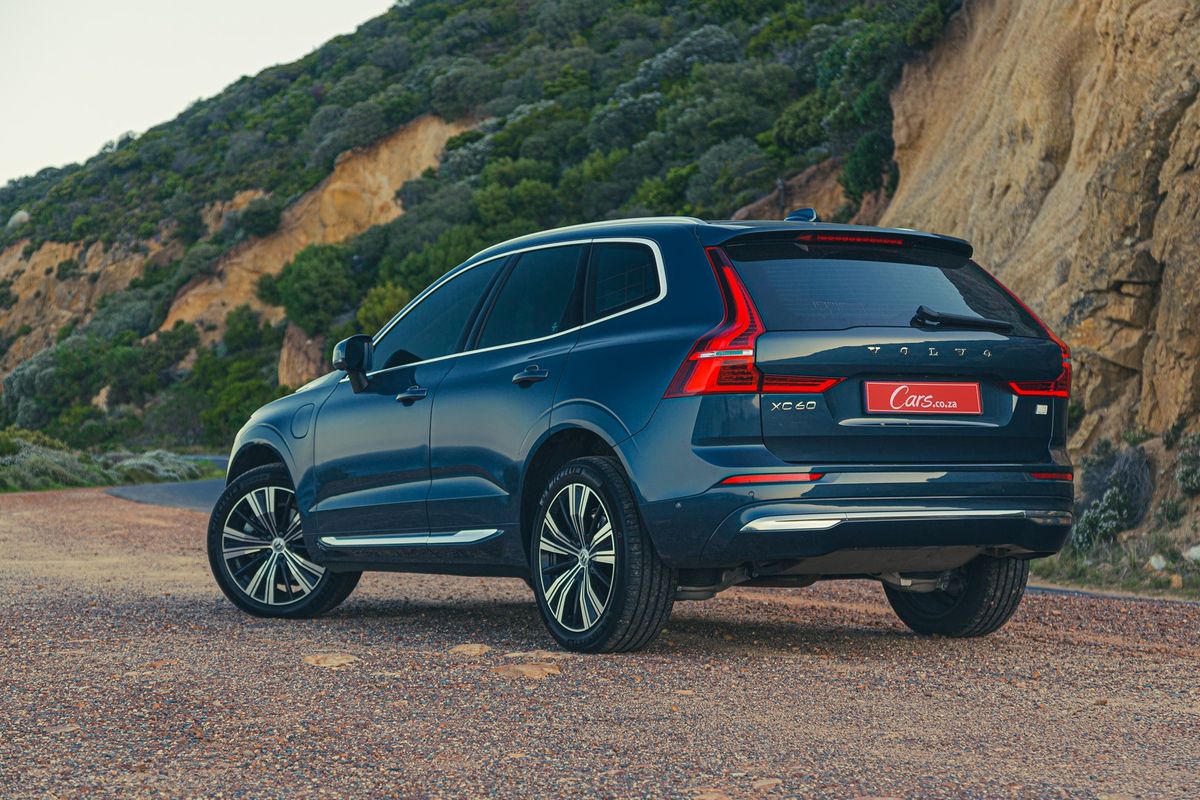
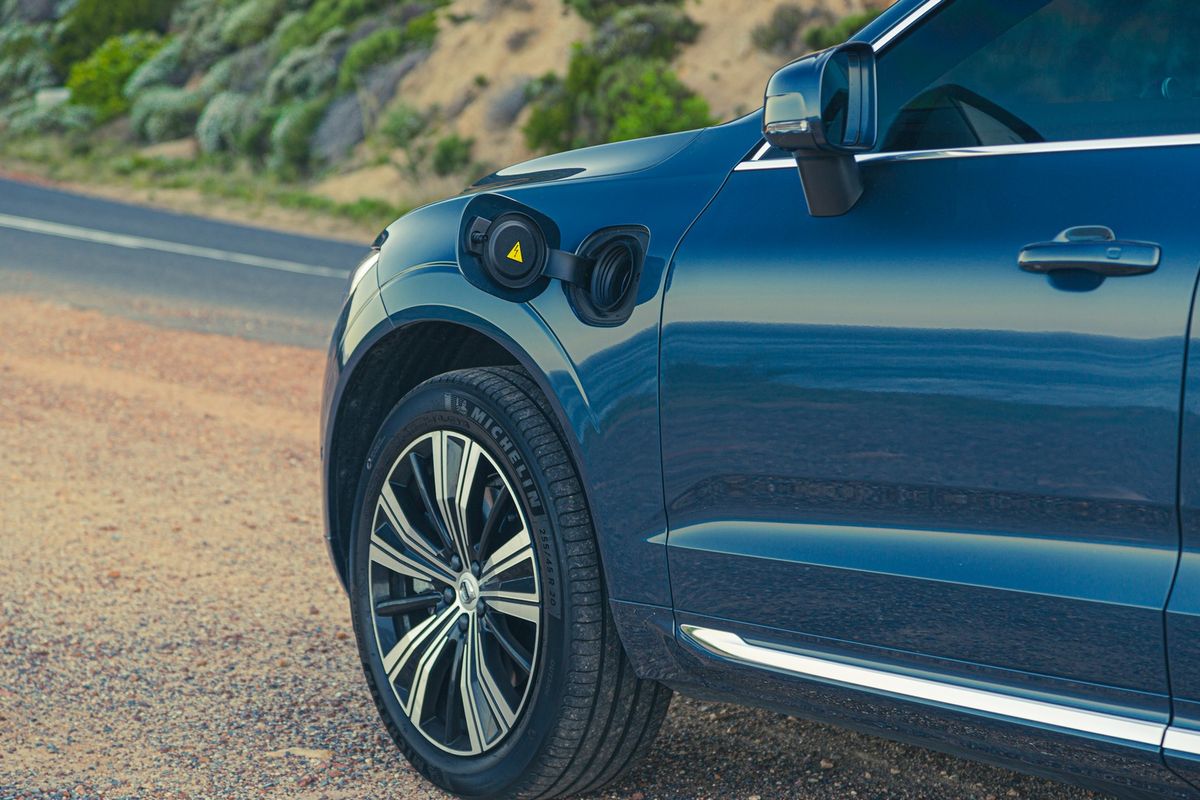
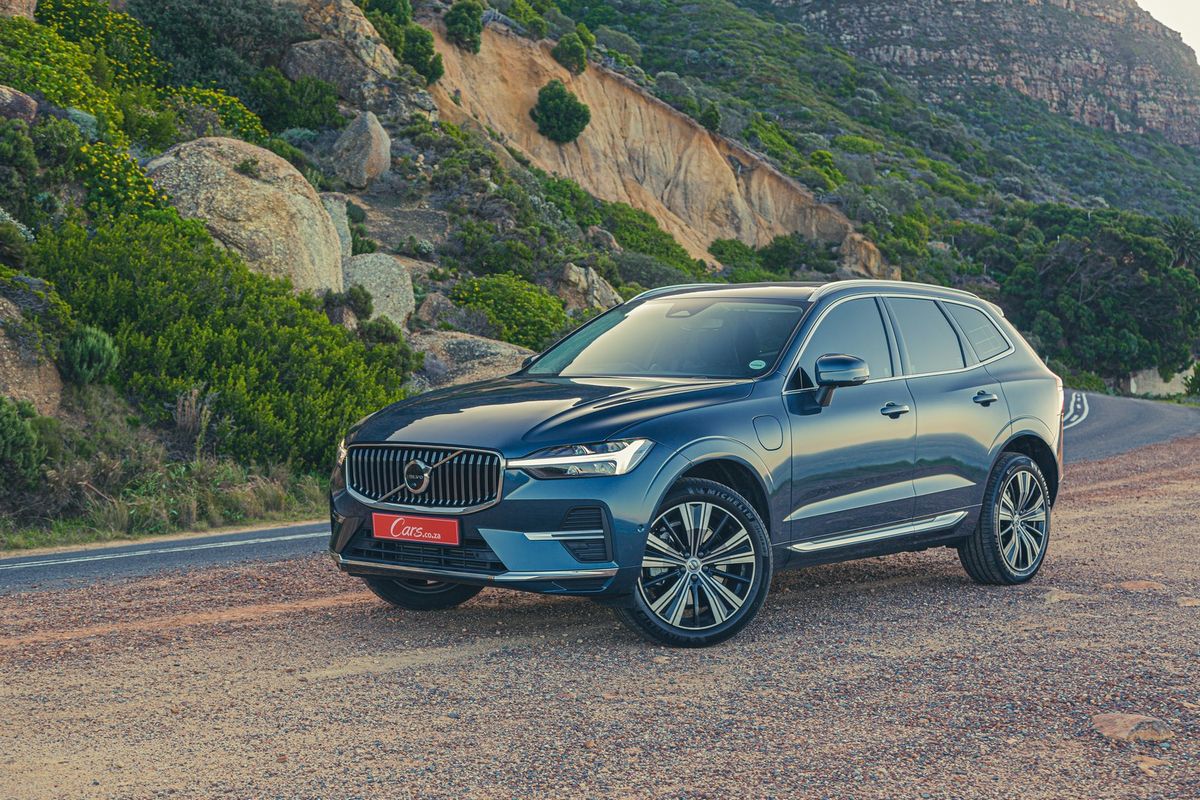
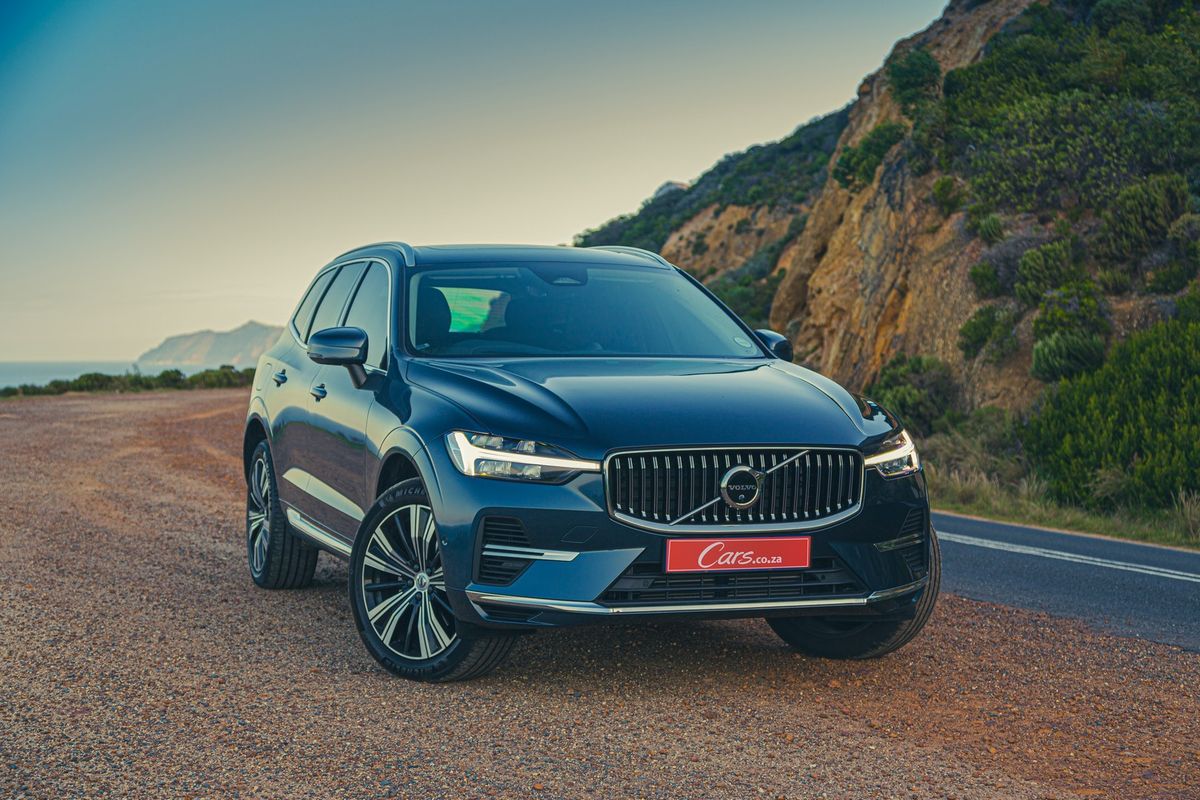
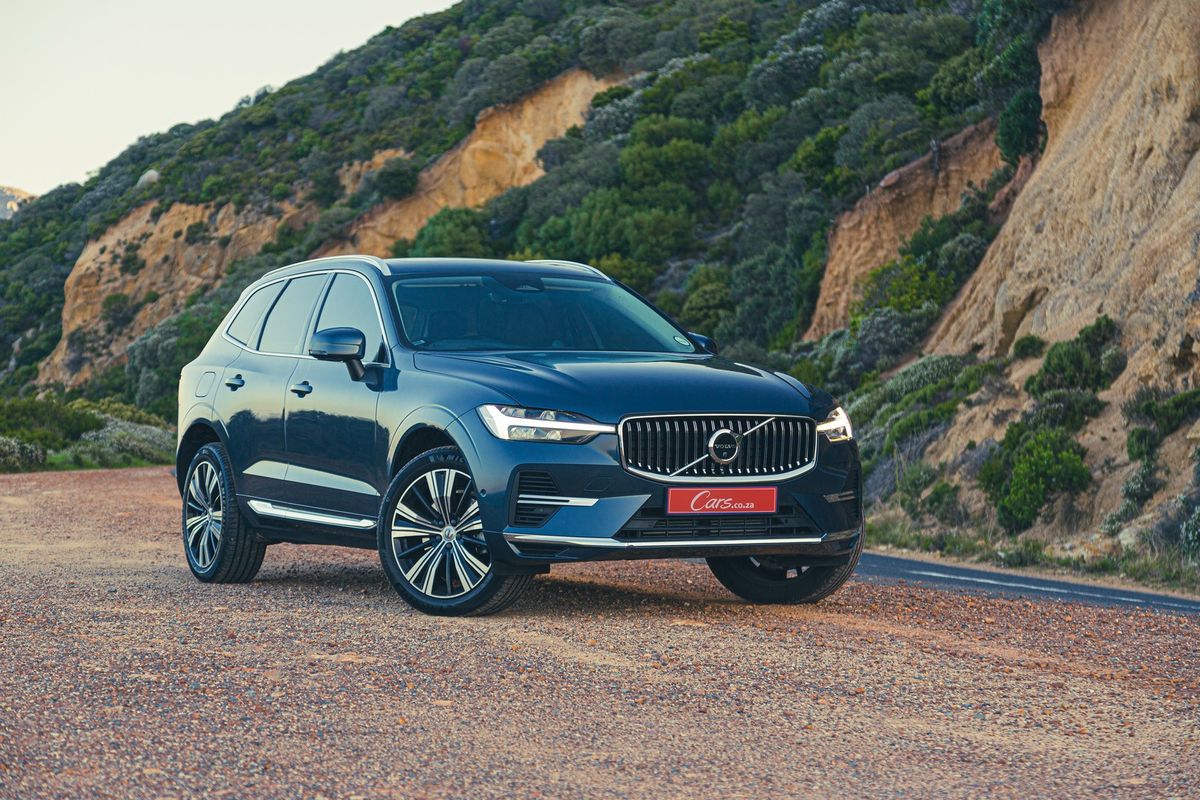
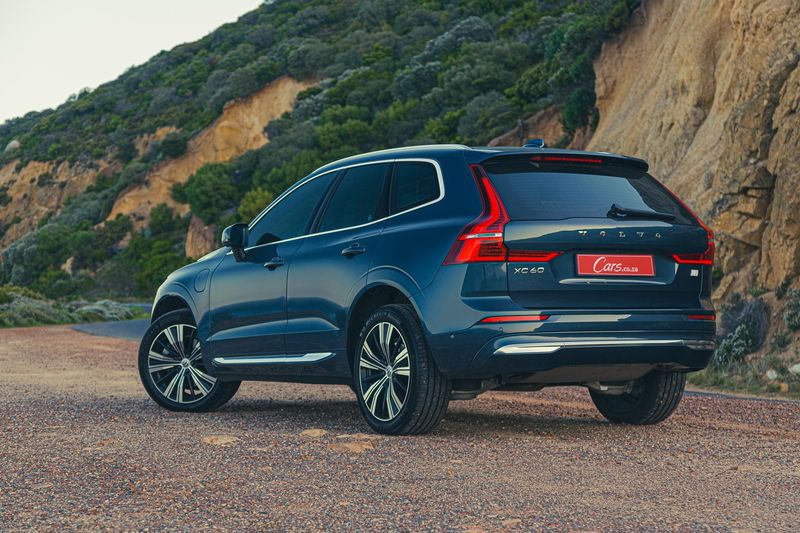
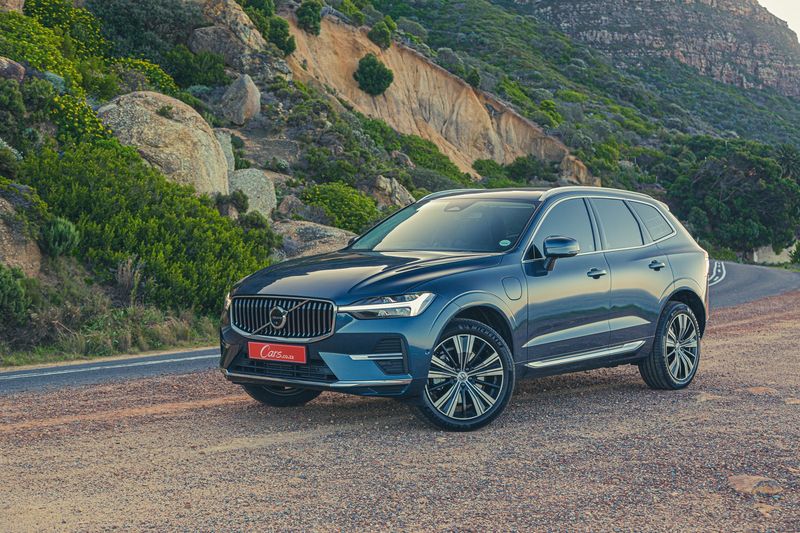
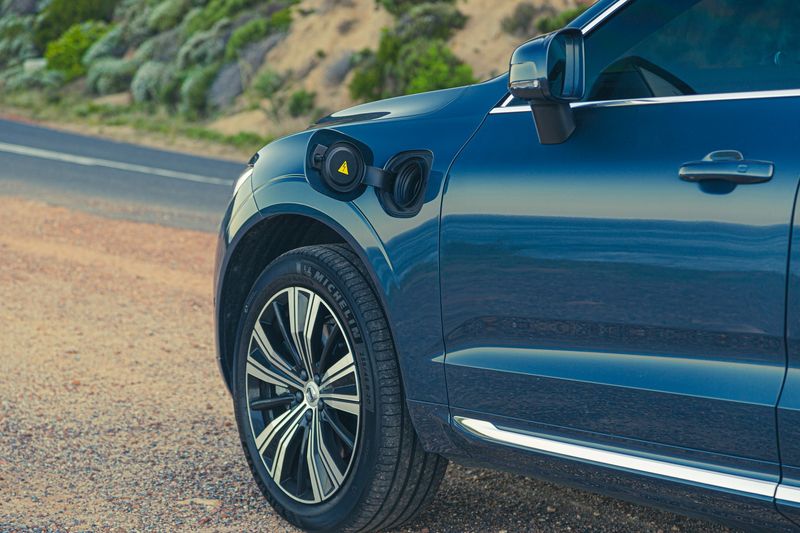
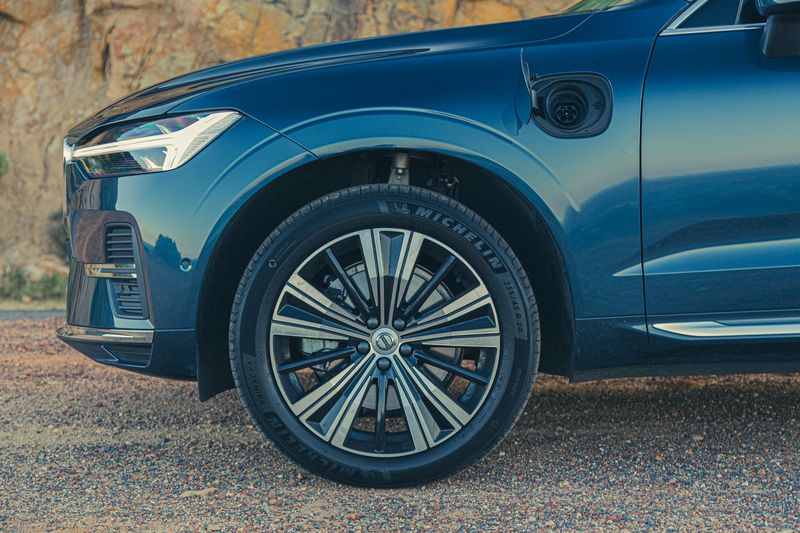
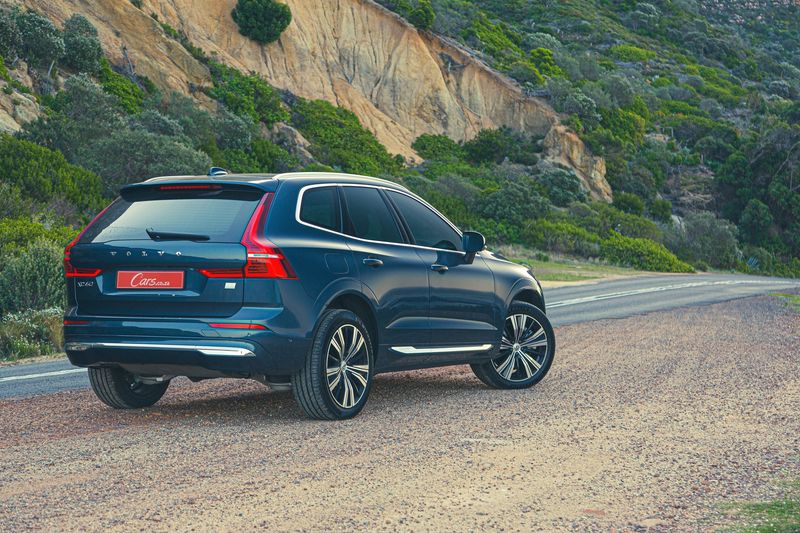
The XC60 is still as handsome as ever. Note the charging port, visible behind the left front wheel.
Can you believe the current-generation Volvo XC60 has been around since 2017? Granted, there have been updates to the model along the way, but it’s still one of the market’s finest executive SUVs. It bagged a World Car of the Year title and the D5 R-Design derivative won its category of the #CarsAwards in 2019 and 2021. With the XC60, Volvo can do no wrong.
For 2022, Volvo applied a mild update to the range and introduced arguably its most cutting-edge XC60 derivative ever – the XC60 T8 Recharge. It’s the brand’s 2nd plug-in hybrid to be sold in SA after the XC90 T8 Twin Engine (also a former #CarsAwards category winner).
Volvo has phased out its turbodiesel engines and they’ve been replaced by mild-hybrid petrol powerplants, as well as this range-topping Recharge plug-in hybrid, which we believe will probably be in service until the brand has a fully electric line-up by the end of the decade.
What is a plug-in hybrid? Like a conventional hybrid, it combines a petrol engine and an electric motor that can work independently or in tandem. However, it offers a superior electric-only range because, apart from being recharged by harvested energy, the high-voltage battery can be plugged in and charged fully at home or at a DC fast-charging station.
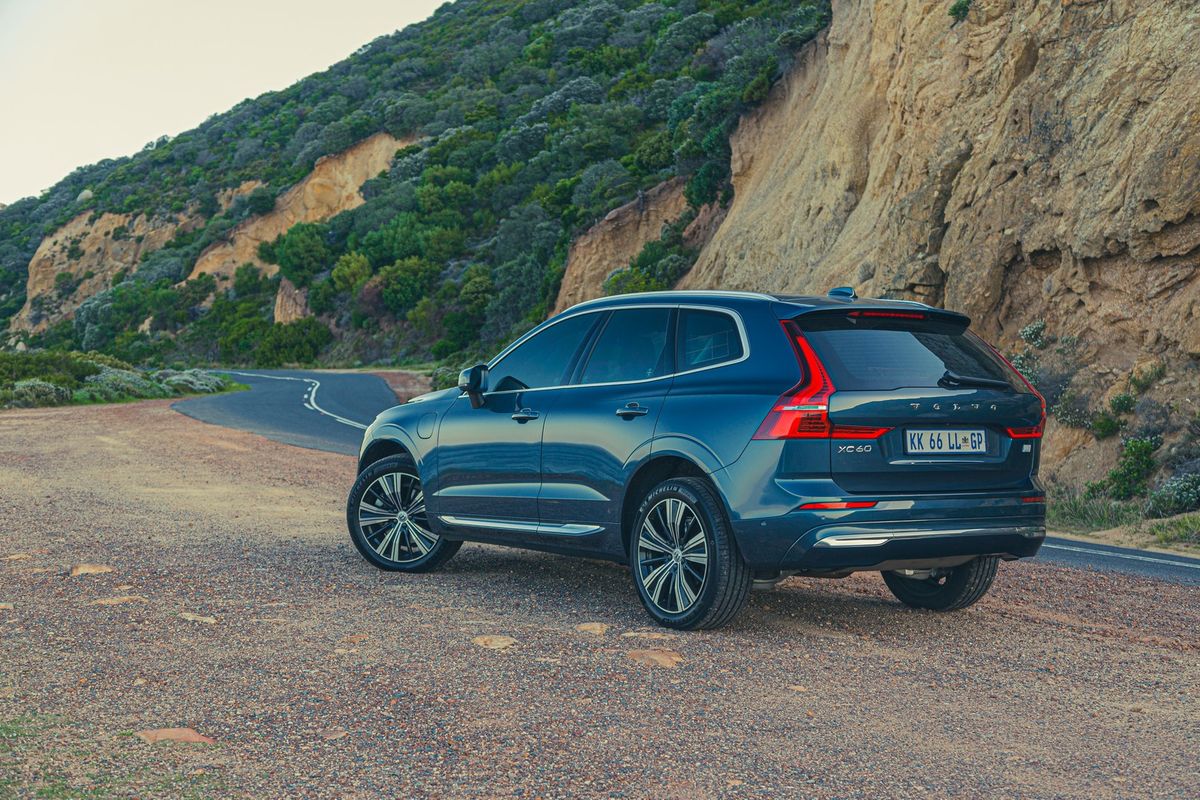
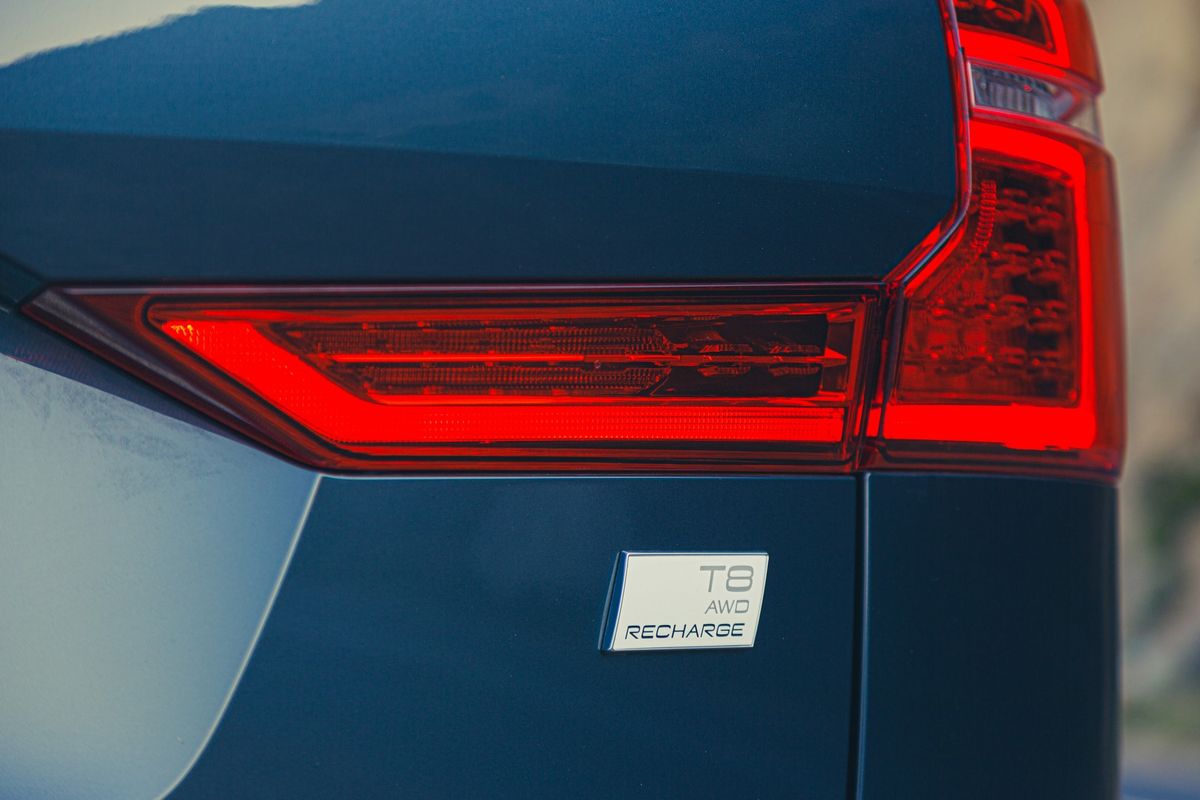
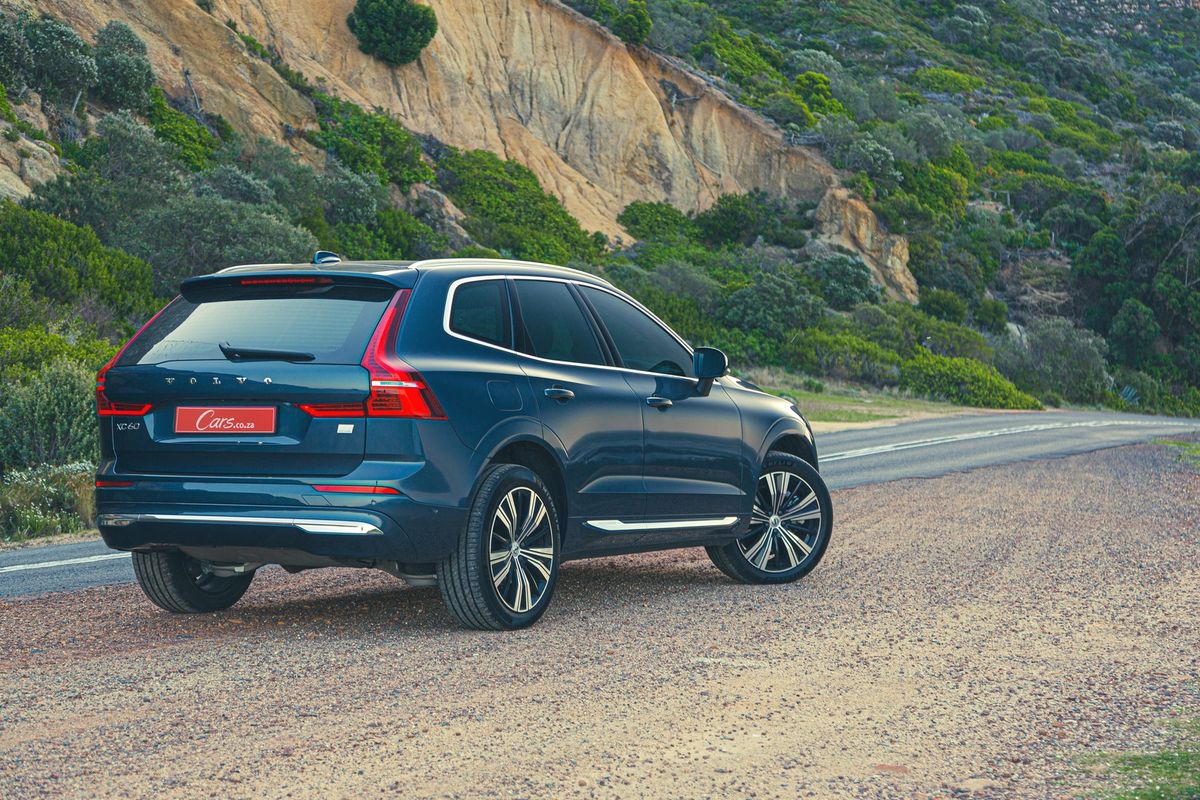
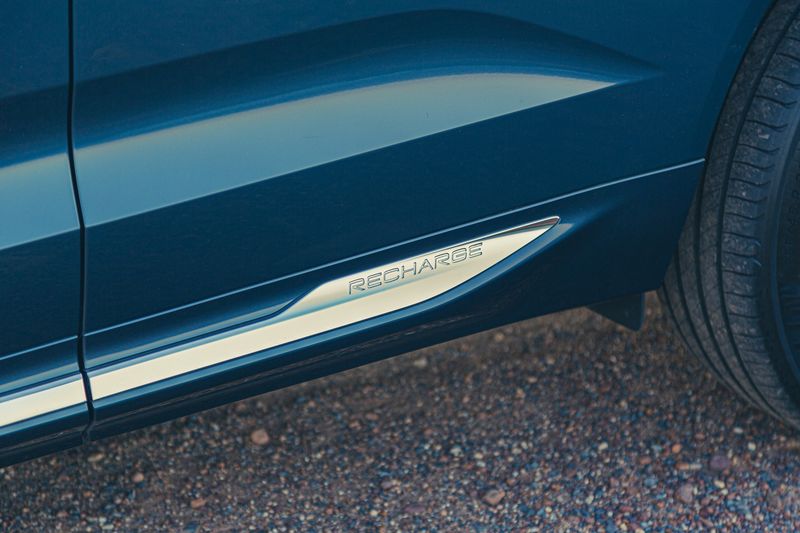
Subtle badging to let everyone know you’re in the plug-in hybrid.
Just a handful of plug-in hybrids have been sold in South Africa. We’ve reviewed the XC90 T8 Twin Engine as well as the BMW 330e and the Mercedes-Benz C350e, and Porsche has sold some e-Hybrid derivatives of its Cayenne and Panamera range. Jaguar and Land Rover offer plug-in hybrid versions of some models, but they’re substantially pricier than the Volvo.
Therefore, it’s not easy to find rivals for the XC60 T8 Recharge, but based on price and size, you could opt for the Mercedes-Benz GLC or Audi Q5 equipped with punchy-yet-frugal diesel engines, or go all-electric with the new BMW iX3, which is about to arrive in Mzansi.
Still one of the best looking luxury SUVs despite its age
How the Volvo XC60 fares in terms of…
Design and Packaging
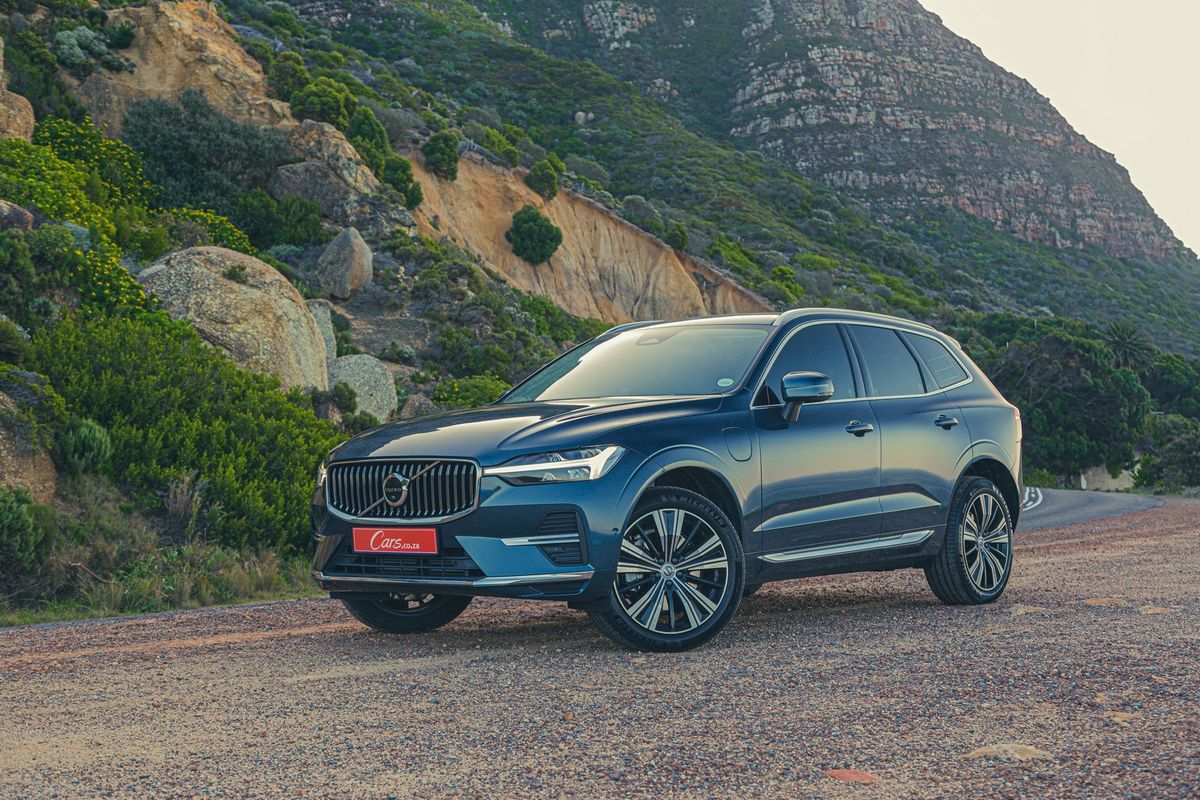
The XC60 is ageing gracefully. Even though it’s been on the market for 5 years, it is still a distinctive (and distinguished) executive SUV, replete with obligatory Volvo styling cues such as the Thor’s Hammer headlights and vertically stacked rear lights.
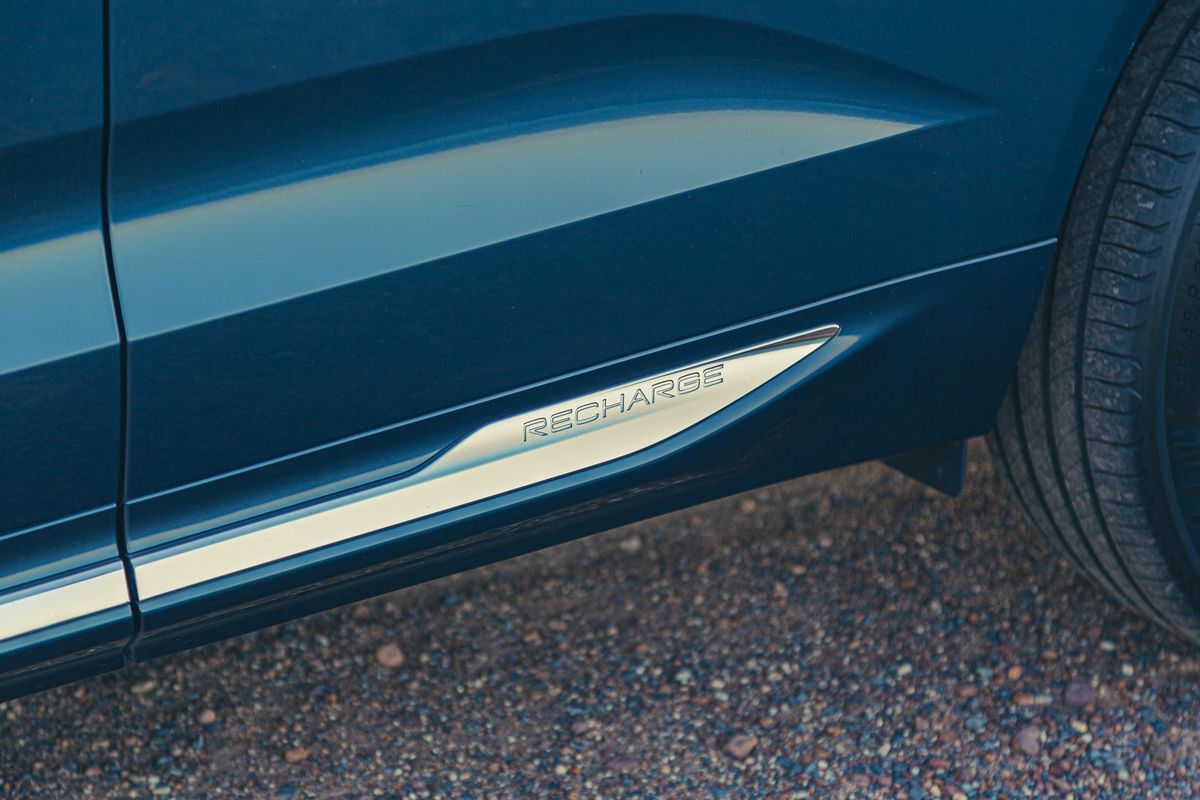
One of the criticisms we’ve had of EVs (hybrid- and all-electric vehicles) is that their exterior designs tend to be polarising, which may deter conservative buyers, but the T8 Recharge looks reassuringly conventional. The newcomer sports a subtle badge on each of the rear passenger doors, a small badge on the tailgate and a charge flap behind the front left wheel.
Ready to receive electricity.
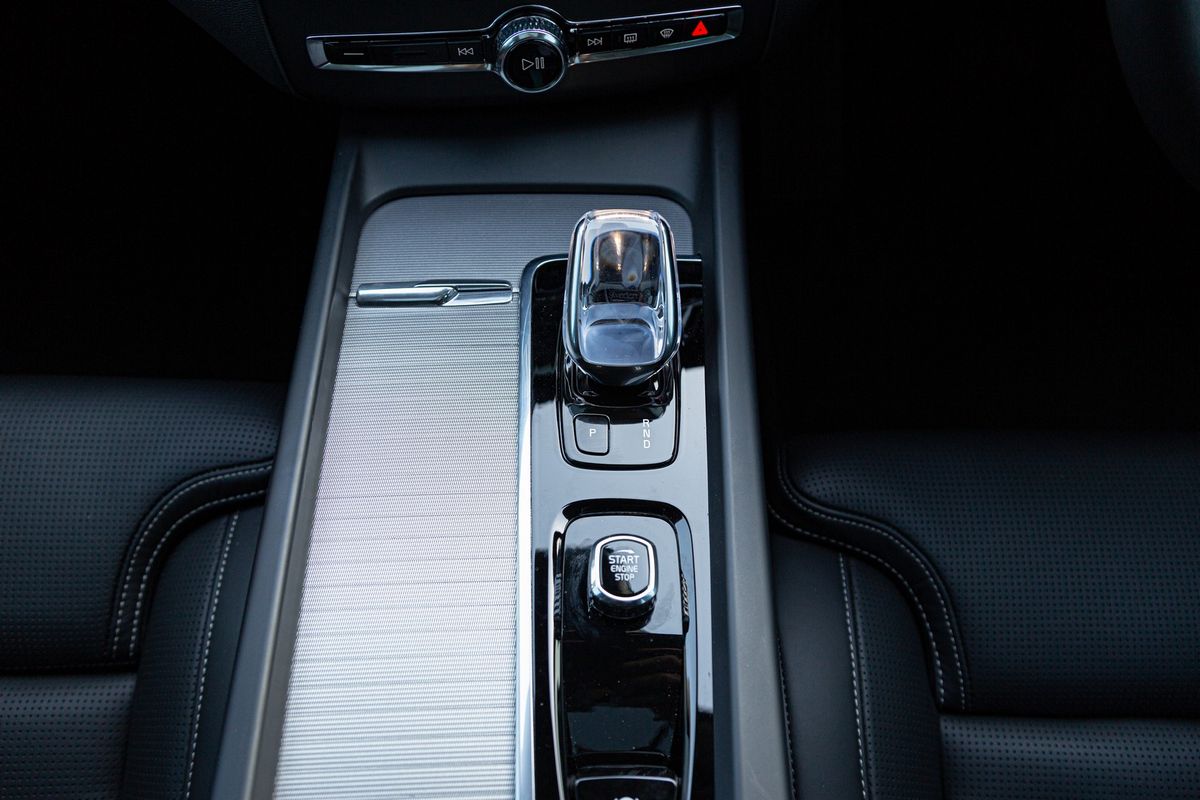
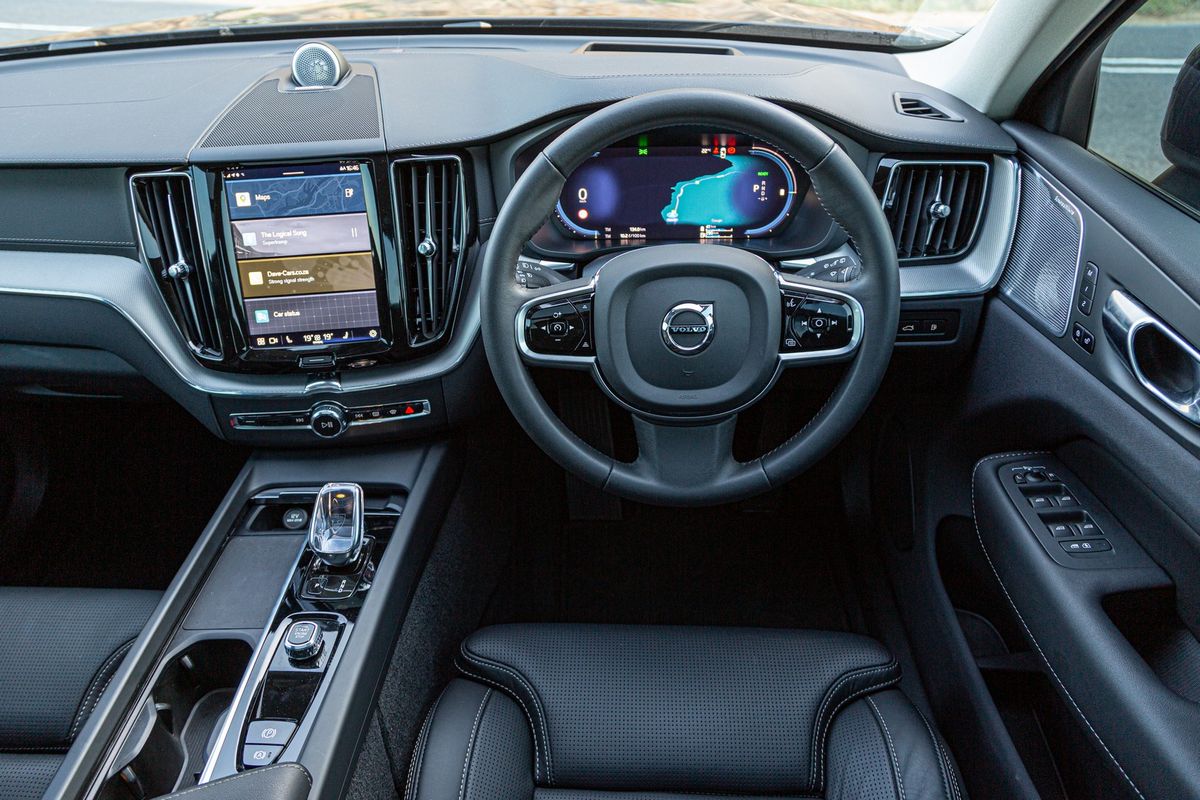
Inside, the XC60’s cabin remains a class act, with a minimalist design and extensive use of quality materials – it certainly has an air of (understated) luxury and sophistication about it.
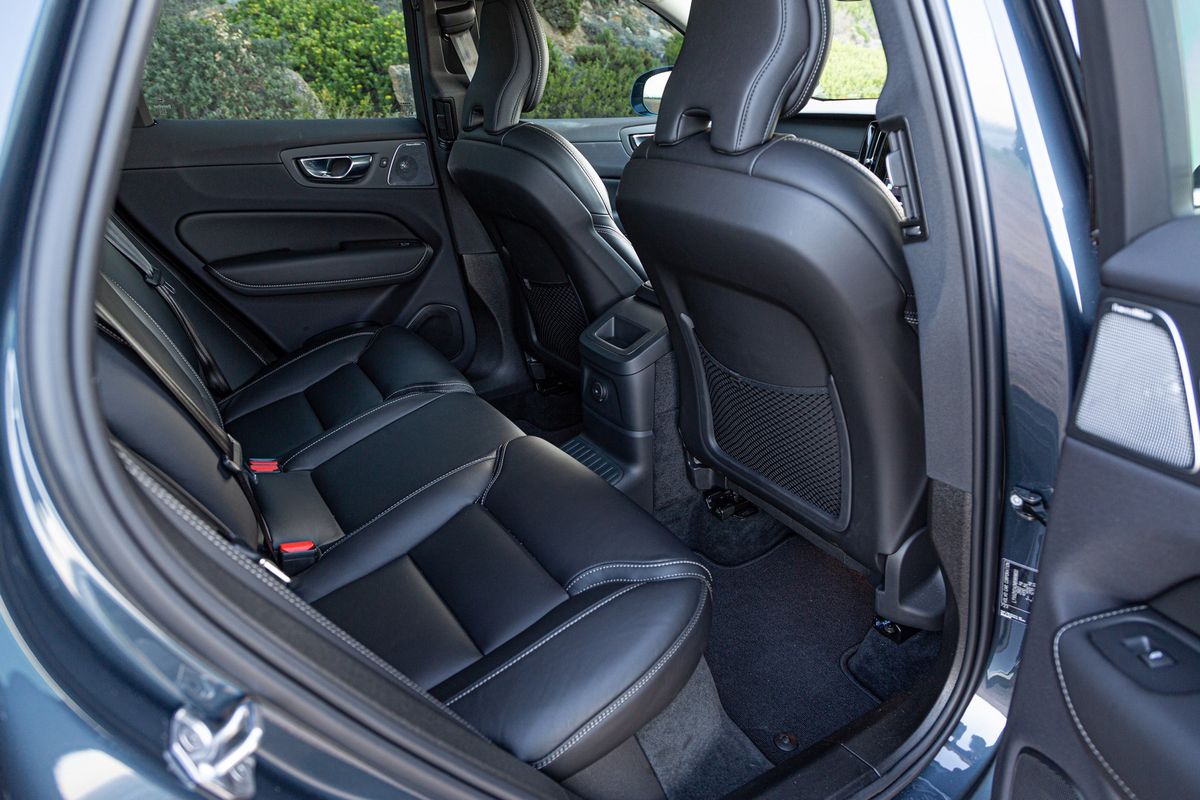
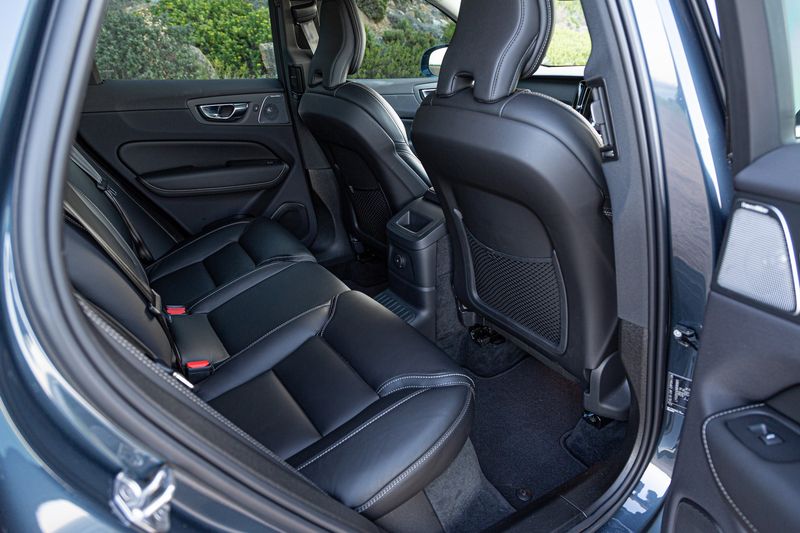
Interior space remains a strong point, with commendable rear legroom. The load-bay capacity has been reduced from 505 to 468 litres on account of the T8 Recharge’s additional hybrid hardware, but there’s still enough space to accommodate luggage for a brief family getaway.
Four adults will be seated in comfort
Performance and Efficiency
The party piece of the XC60 T8 Recharge is its powertrain. At its heart is a turbo- and super-charged 233 kW/400 Nm 2.0-litre 4-cylinder petrol engine mated with an 8-speed automatic transmission. While the ICE drives the Volvo’s front wheels, those at the rear are powered by a 107 kW/309 Nm electric motor. The hybrid’s combined outputs are 340 kW and 709 Nm.
The 18.8-kWh battery is good for around 80 km of pure electric range and the best part is you can charge it in a variety of ways. Your most logical option is to plug it into a wall socket in your garage overnight. You can also set the car to charge the battery while you drive, but that will come at the cost of increased fuel consumption – at one point, we saw an indicated consumption figure of (gasp) over 10 L/100 km! You can also make use of DC fast chargers, but we discovered that neither BMW nor Audi’s charging cables fitted into the Volvo’s port.
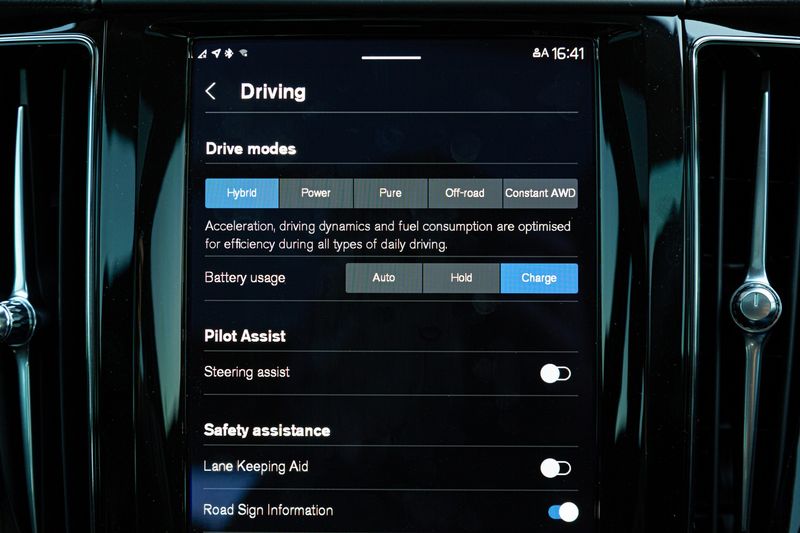
While Power mode is addictive, the best setting is default Hybrid.
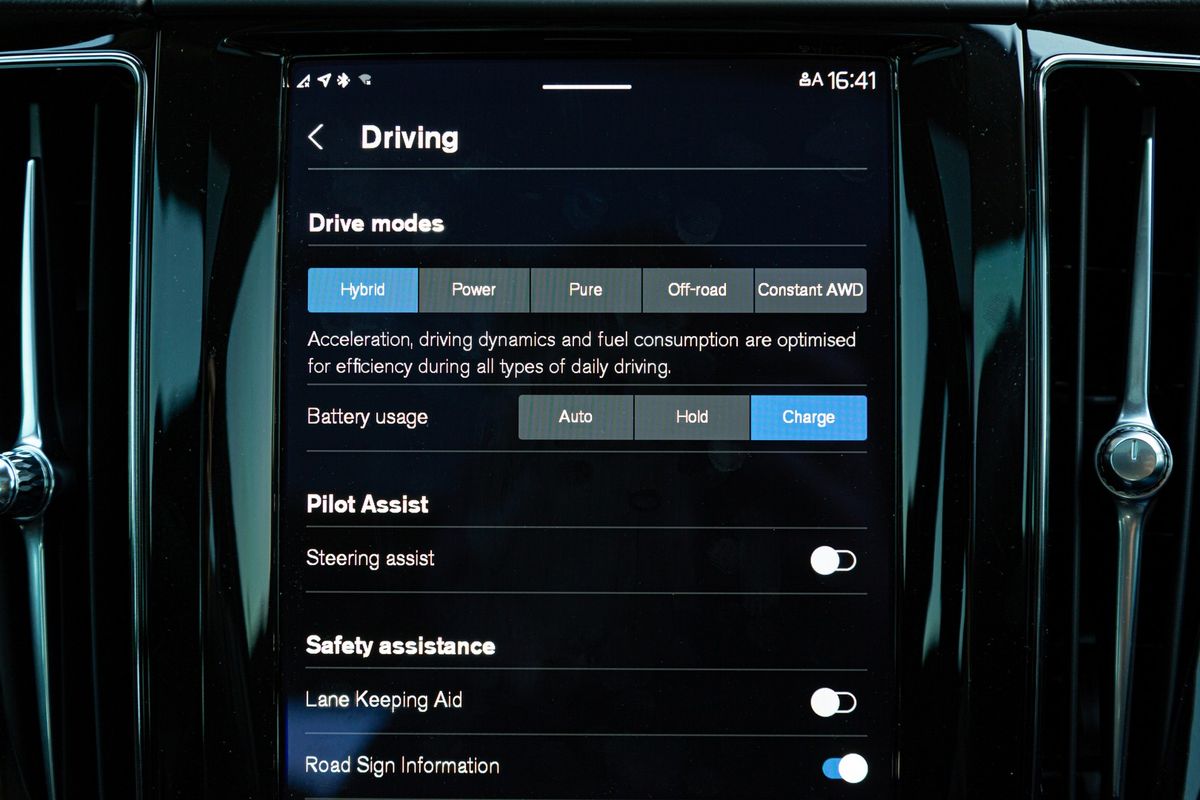
The powertrain operates in a variety of modes. You can leave the T8 Recharge to its own devices and let it decide when to use electric and/or petrol power for maximum efficiency, demand peak power delivery from the engine and motor, or switch to electric-only (Volvo calls it Pure) mode. You can even choose to let the battery hold its current charge for later, which is useful in European cities that levy congestion charges on ICE-powered vehicles.
The Volvo has a kerb weight of almost 2.2 tonnes, but with its peak power output of well over 300 kW, make no mistake, it’s quick! In Power mode, the engine and electric motor combine to deliver sledgehammer-like performance, with 0-100 kph dispatched in under 5 seconds (its top speed is limited to 180 kph). The responsiveness is addictive, but we must mention that the petrol engine sounds a bit coarse and throaty when you make it perform to its full potential. Also, once the battery is depleted, full-bore sprints won’t be as spirited.
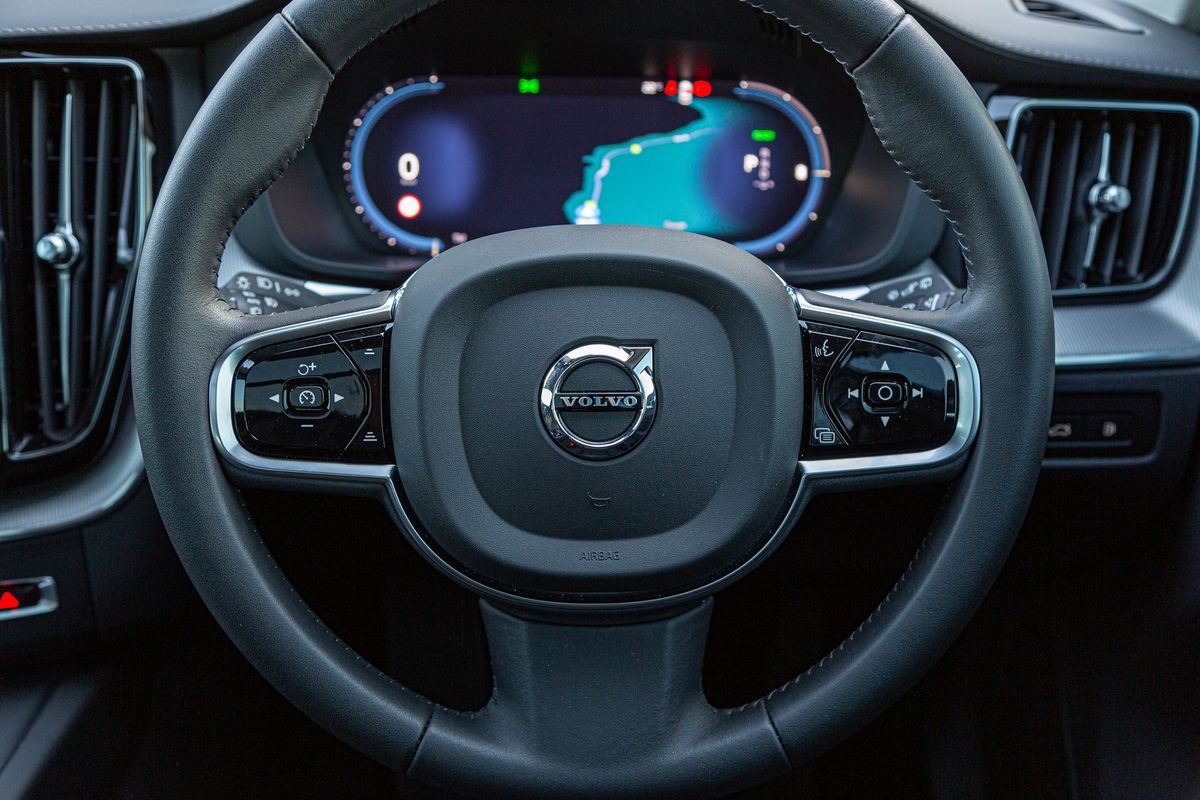
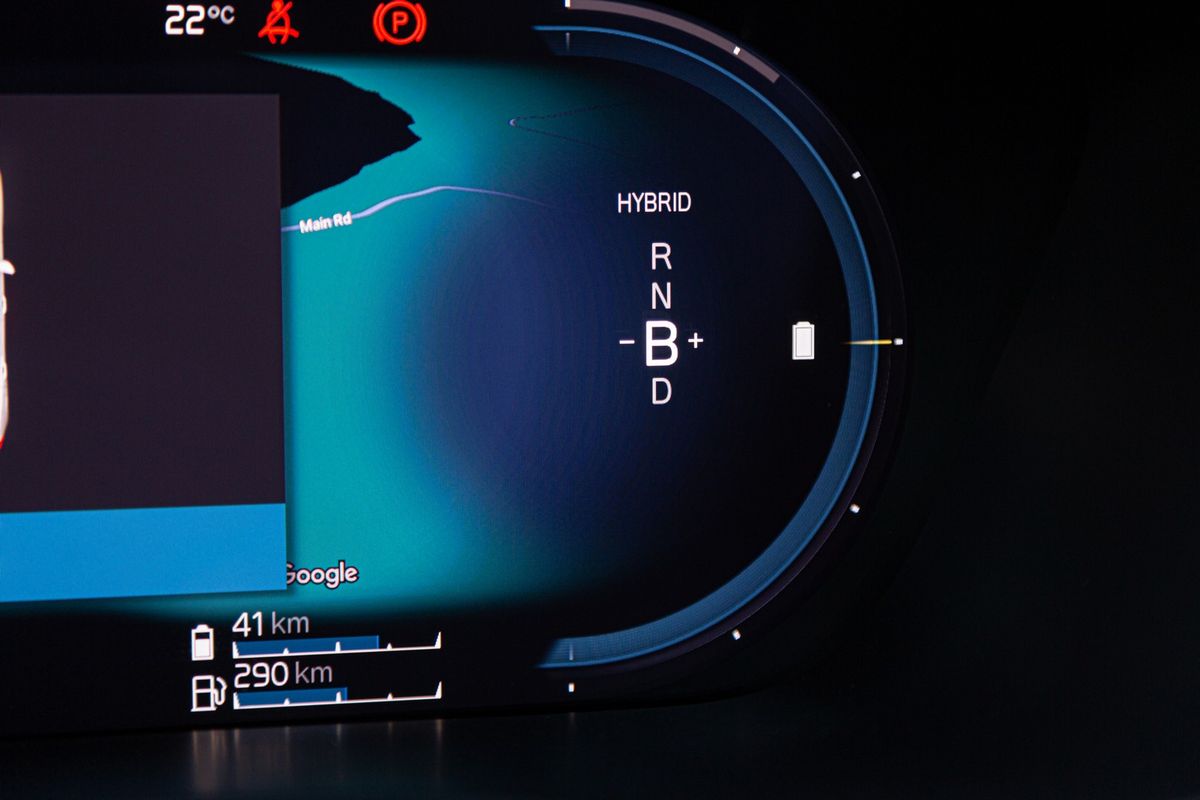
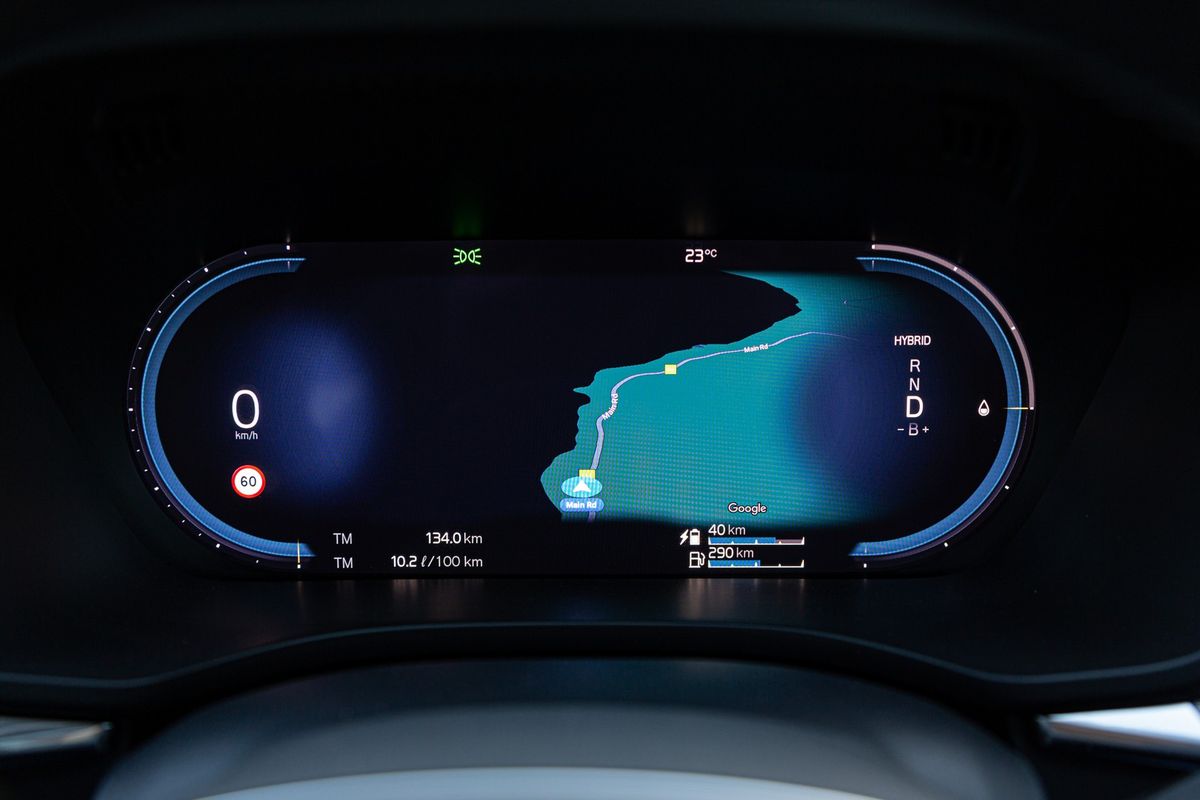
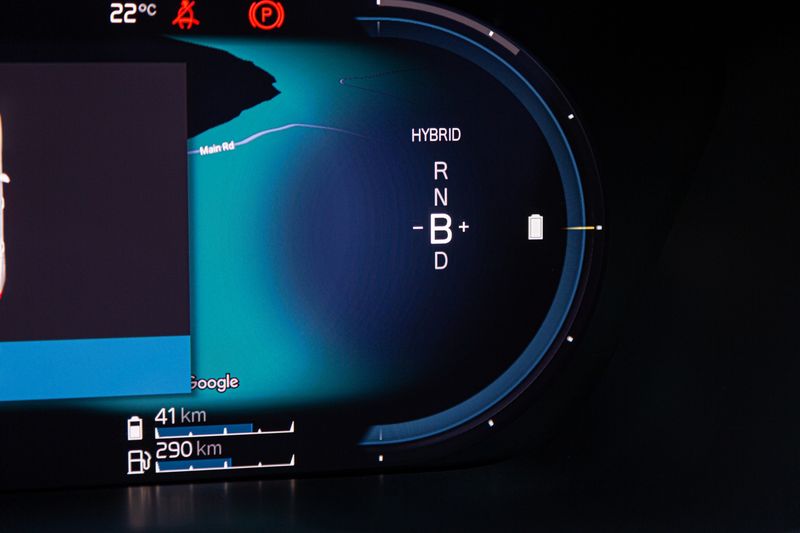
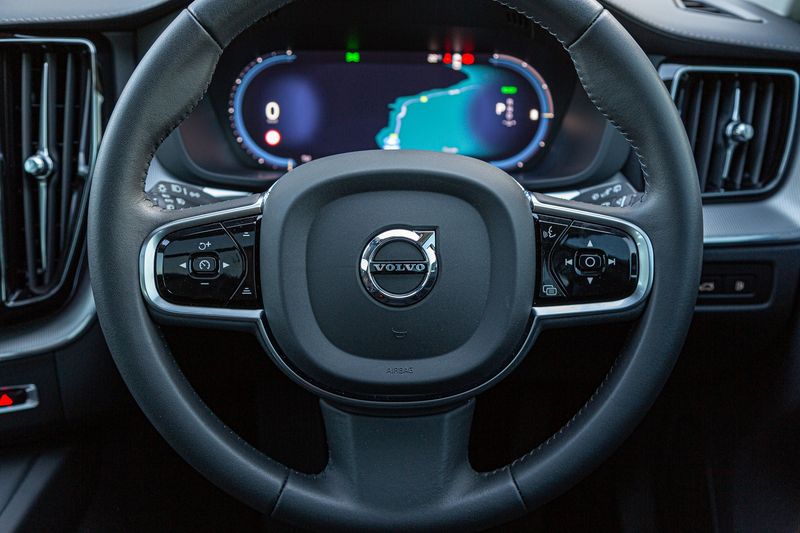
You’ll get used to seeing two range indicators on your dashboard. Engage Brake Recovery for max effect.
The T8 Recharge was not designed to deliver spectacular performance, however. If you take the time to understand how intuitively this powertrain operates when it’s in default hybrid mode, plus ensure to charge it overnight so that the high-voltage battery will be fully charged in the morning, you’ll be rewarded with excellent economy. There’s also brake regeneration, which helps to top up the high-voltage battery and facilitates one-pedal operation… Simply lift off the accelerator and the XC60 will slow down as if you’re applying the brake pedal.
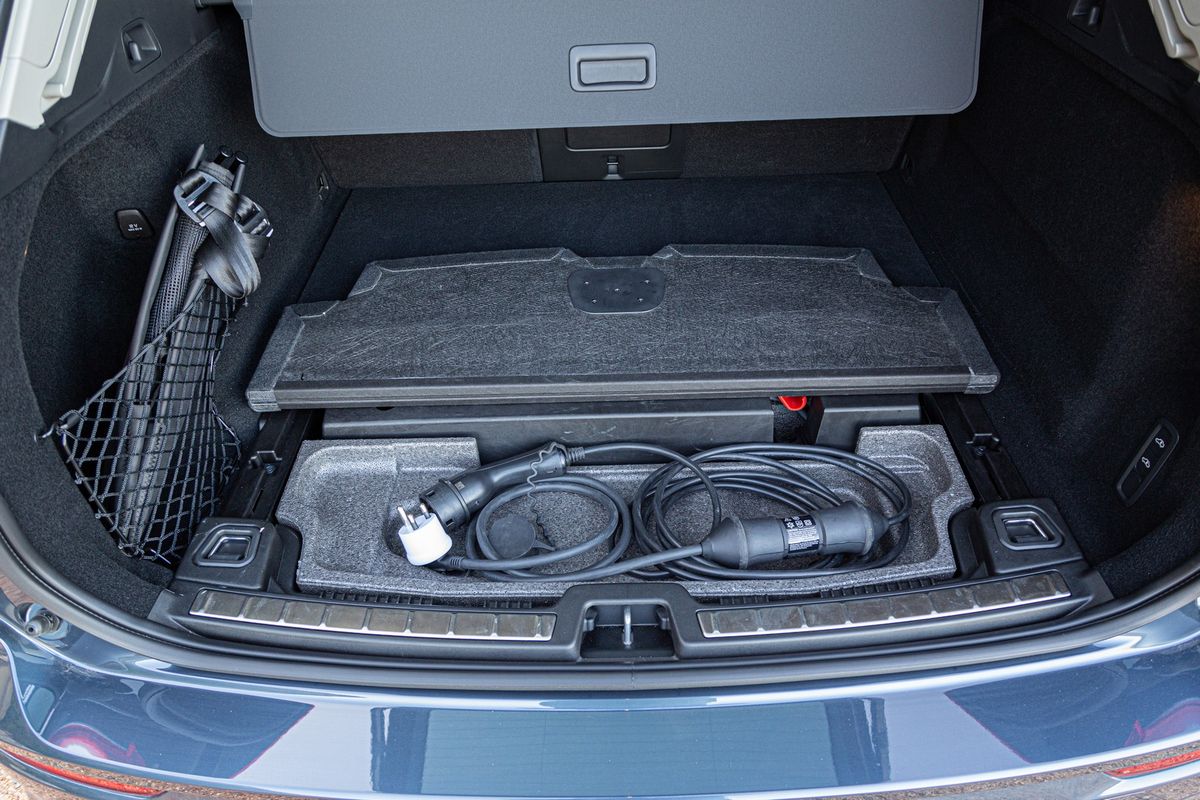
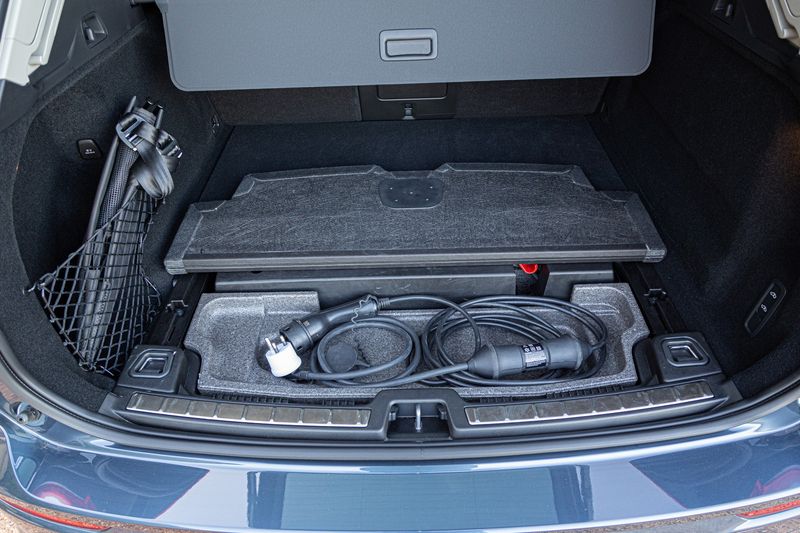
The supplied home-charging cable can be stored in the load bay.
For those who are accustomed to ICE cars (most of us), it’s eerie to see the car switch from electric to petrol propulsion (and back) without a noticeable change in momentum. The only clue is tiny icons on the dashboard that indicate a battery for electric and a droplet for petrol.
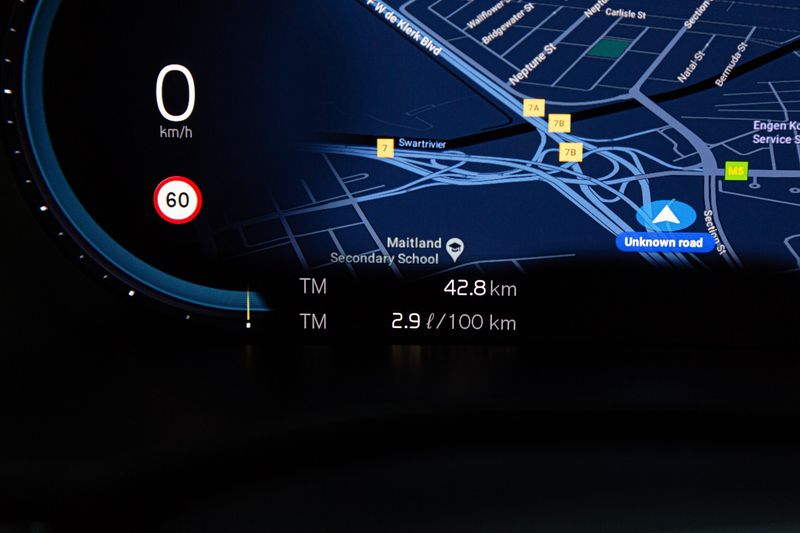
Having experimented with the T8 Recharge’s various drive modes and hybrid drivetrain settings during its tenure in our test fleet, we gained some fascinating insights… We’ve already touched on the inauspicious 10 L/100 km if you make the Volvo’s petrol engine propel the car and charge the battery (without any help from the latter), but when the electric motor does much of the work at lower speeds, that figure will dip under 3 L/100 km!
2.9 L/100 km without too much effort. We know it can go lower.
Think about it this way: thanks to the T8 Recharge’s plug-in hybrid configuration, if you’re not going to travel more than 80 km a day (most commuters don’t), you can drive routinely on battery power alone (as long as your speed doesn’t exceed 140 kph – the petrol engine may also cut in to supplement torque on steep inclines). The ICE component, in turn, eliminates the no need to experience range anxiety… or worry about load-shedding.
Ride and Handling
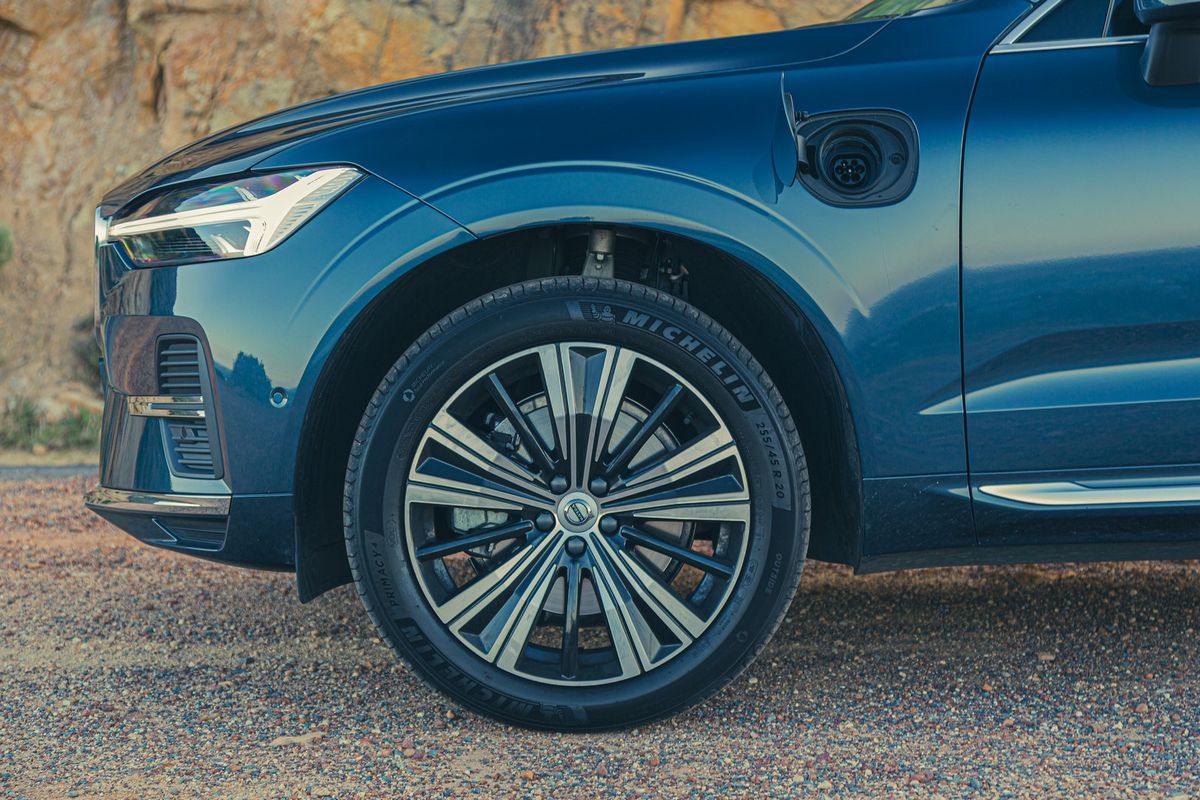
As ever, the Volvo XC60 delivers a luxurious driving experience. Granted, its suspension setup is softer than those of its German rivals, which have firmer (sportier) setups. Our test unit came equipped with the optional air suspension (R27 750), as well as striking 20-inch alloys (R20 000) and we were impressed with how pliant the car’s ride quality was, even on poorer roads. All-wheel-drive grip instils confidence, especially when travelling on dirt roads.
20-inch alloy wheels wrapped in Michelin rubber. Charging port is convenient for garage parking.
The T8 Recharge’s cabin is whisper quiet (aided by the hybrid powertrain’s refinement, of course); it’s one of the most relaxing vehicles we’ve tested. The test unit was fitted with the exceptional Bowers & Wilkins audio system (R43 500) – so much for the quietness, then.
The steering setup is light, which makes the Volvo feel smaller than it is at parking speeds or when trundling in traffic. It may be quite powerful, but this XC60 retains all the qualities of a relaxed cruiser – it doesn’t feel like a performance SUV.
Everything in the cabin feels beautifully finished.
Comfort and Features
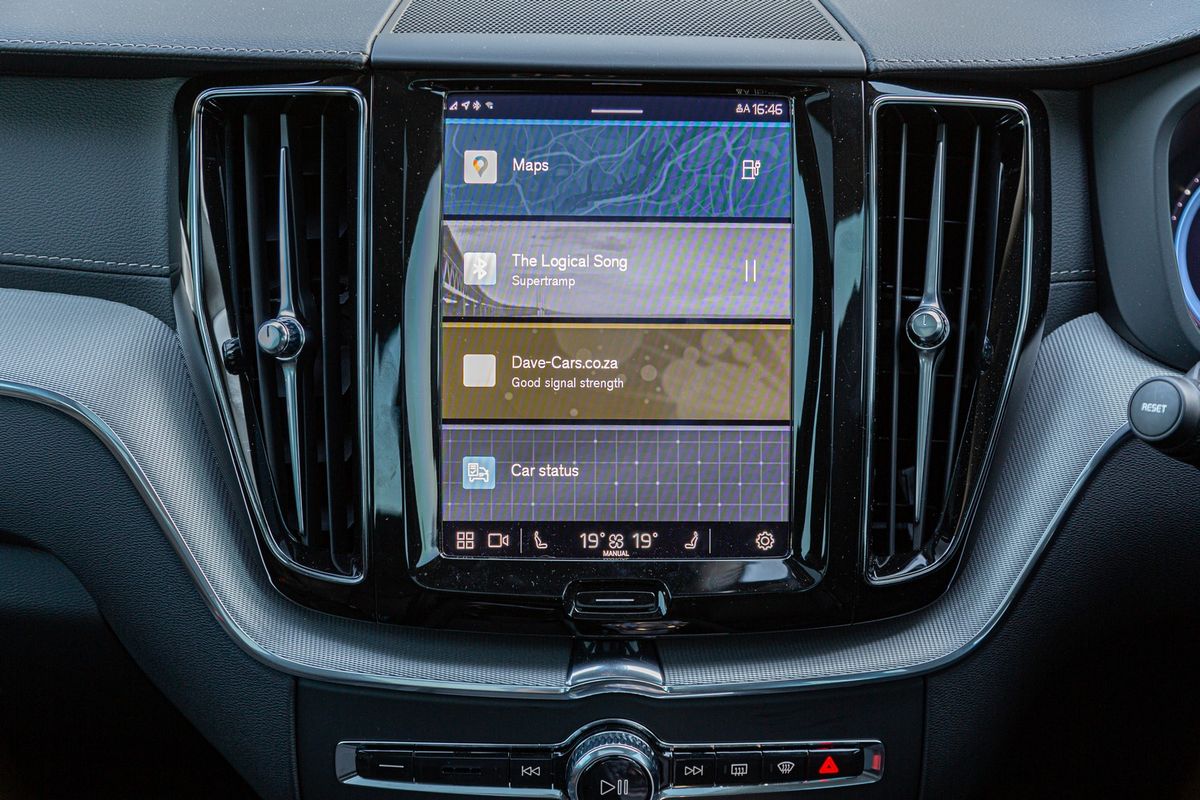
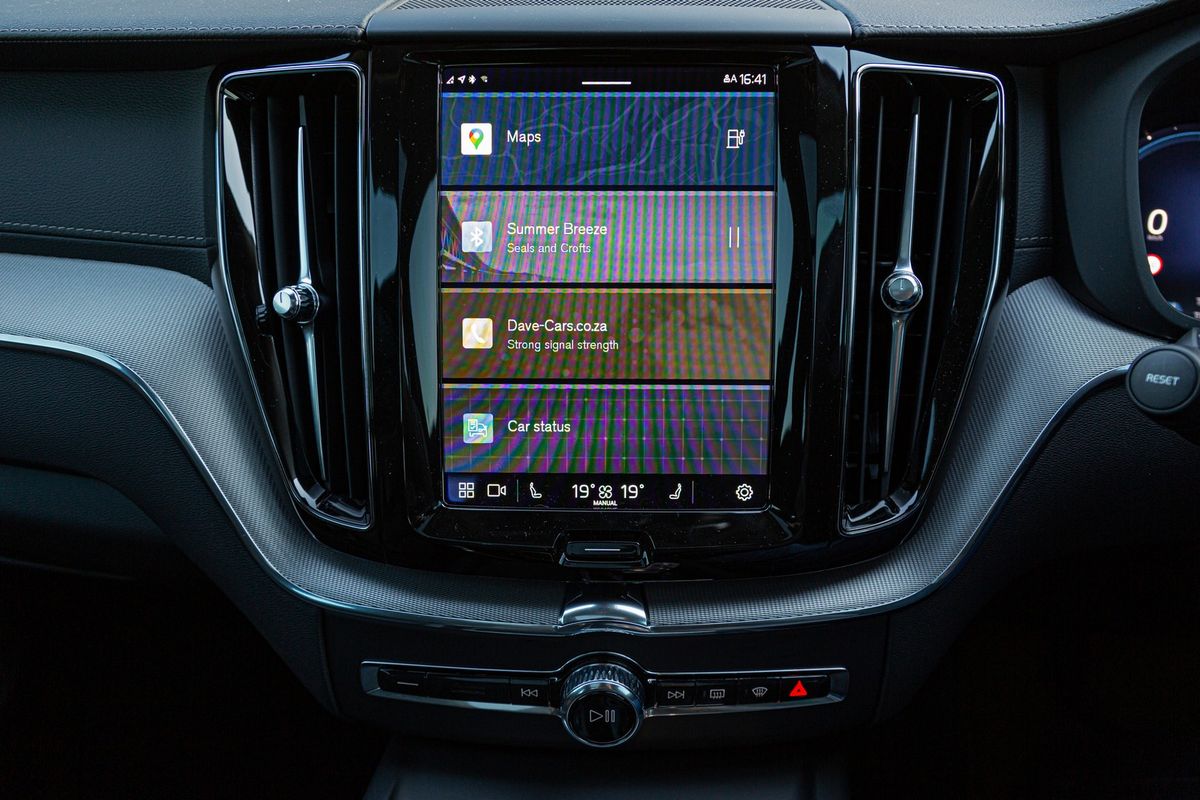
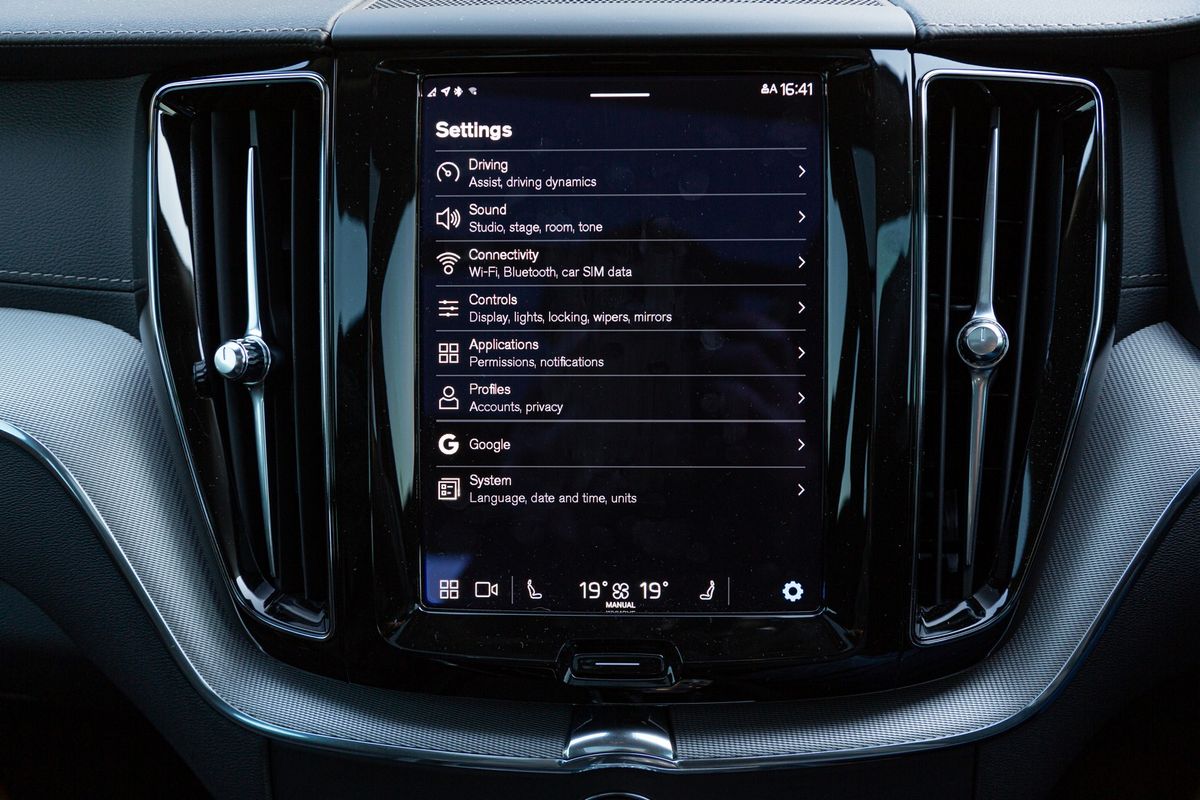
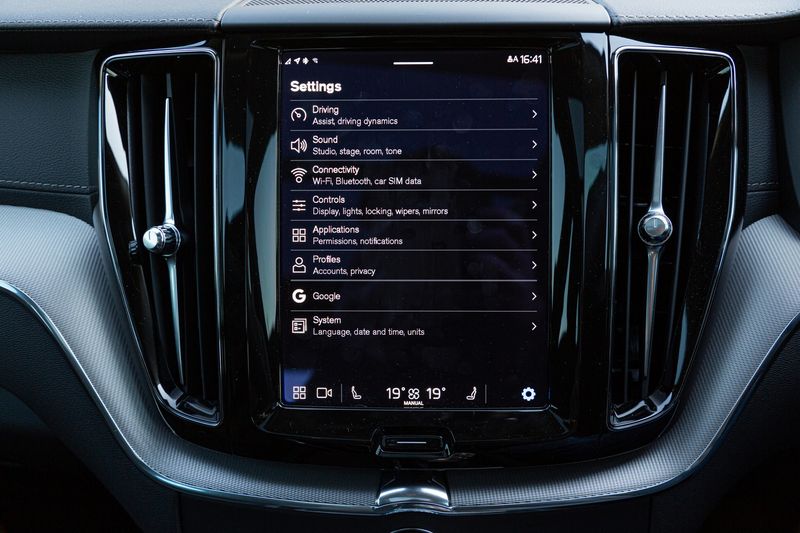
At this price point of R1.2 million, the Volvo XC60 Recharge comes with a fantastic array of comfort features, gadgets and gizmos. One of the biggest changes for this updated model was the tried-and-trusted Sensus infotainment system being replaced by an all-new interface supplied by Google.
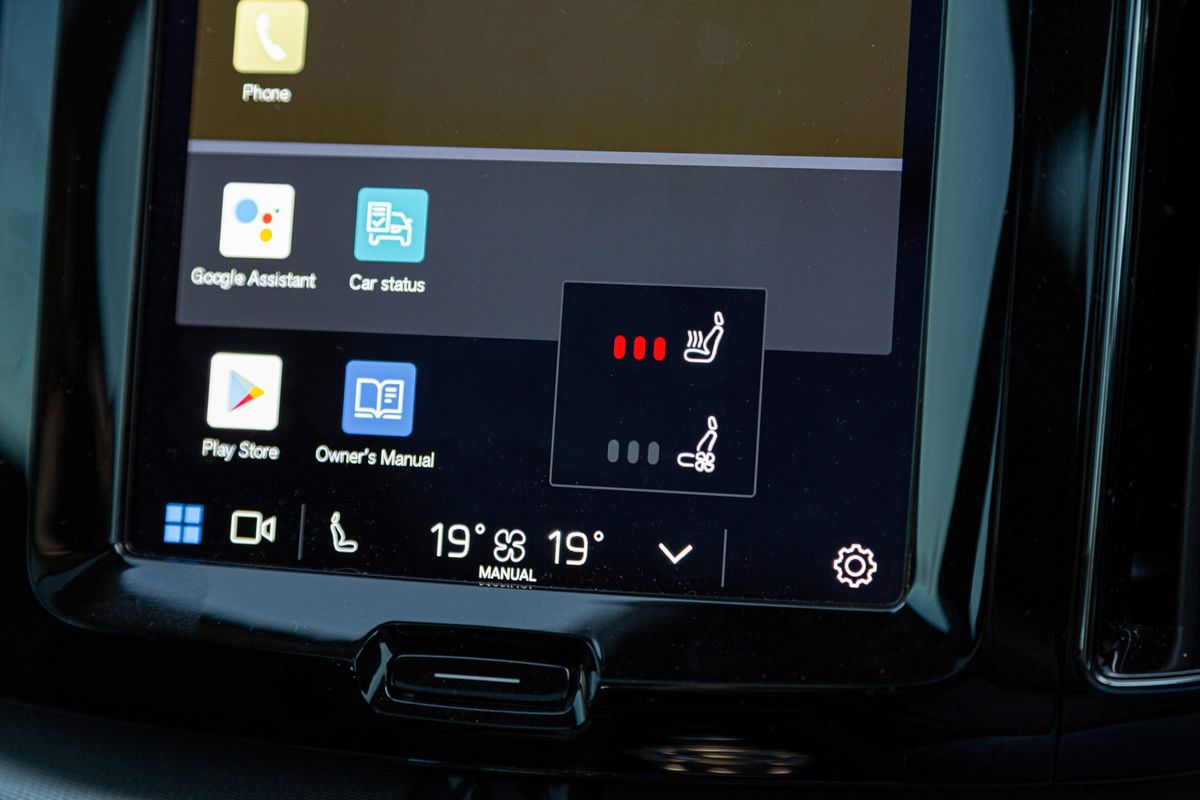
The new Google-powered system not a patch on the older Sensus system
With an all-new system come new challenges, like ease of use, general layout, visual impact and unfortunately for Google, the bar was set extremely high by Sensus… and this new setup falls a bit short. Yes, having integrated Google Maps and Google Assistant is a bonus, especially if you’re already an Android user, but the layout and setup isn’t the most intuitive.
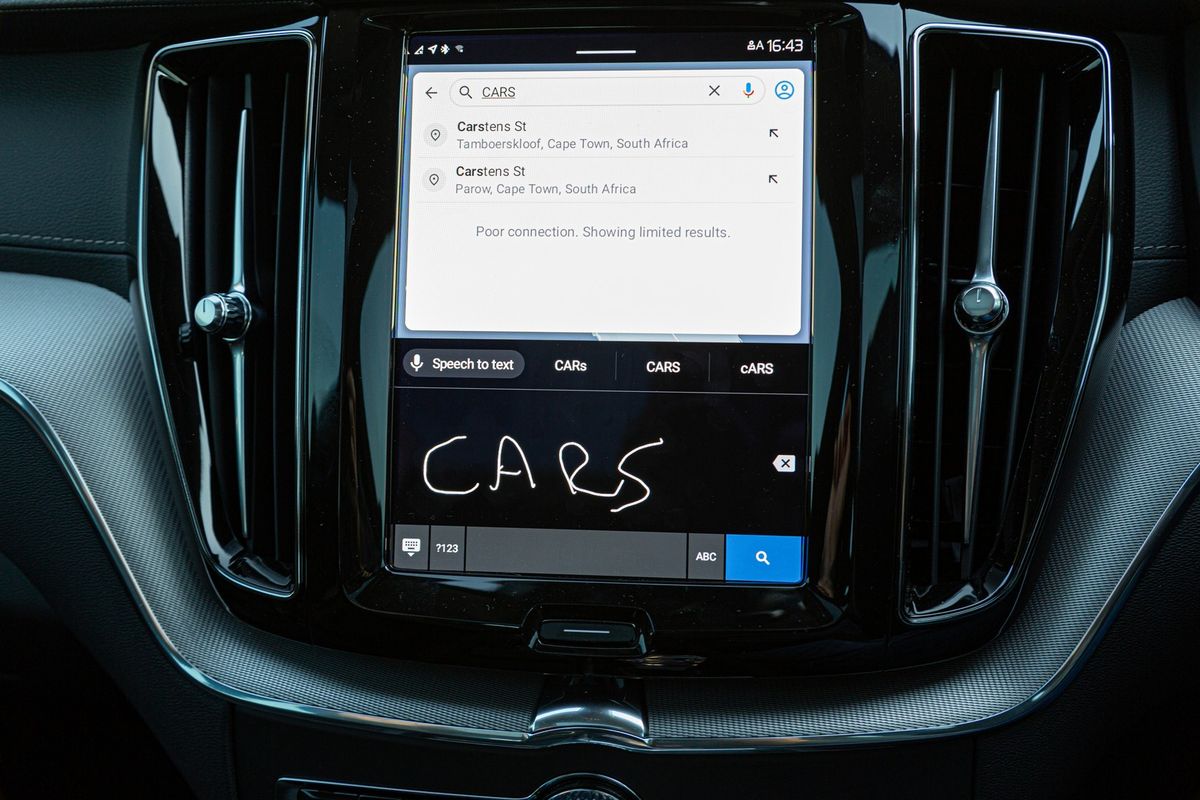
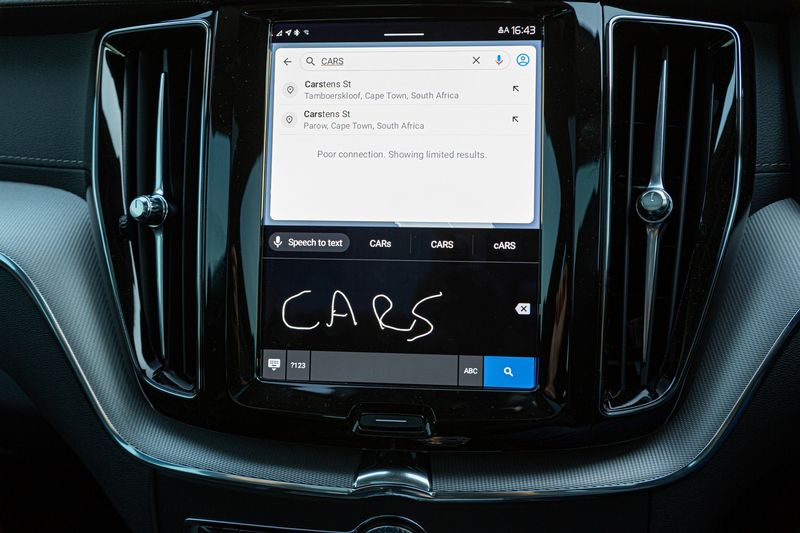
Finding car settings is an issue, as they’re located deep within the system. On the plus side, having the Google Play Store loaded means you can load apps such as Spotify. The voice-recognition software works well, as does the handwriting recognition.
Left-handers will enjoy the writing functionality
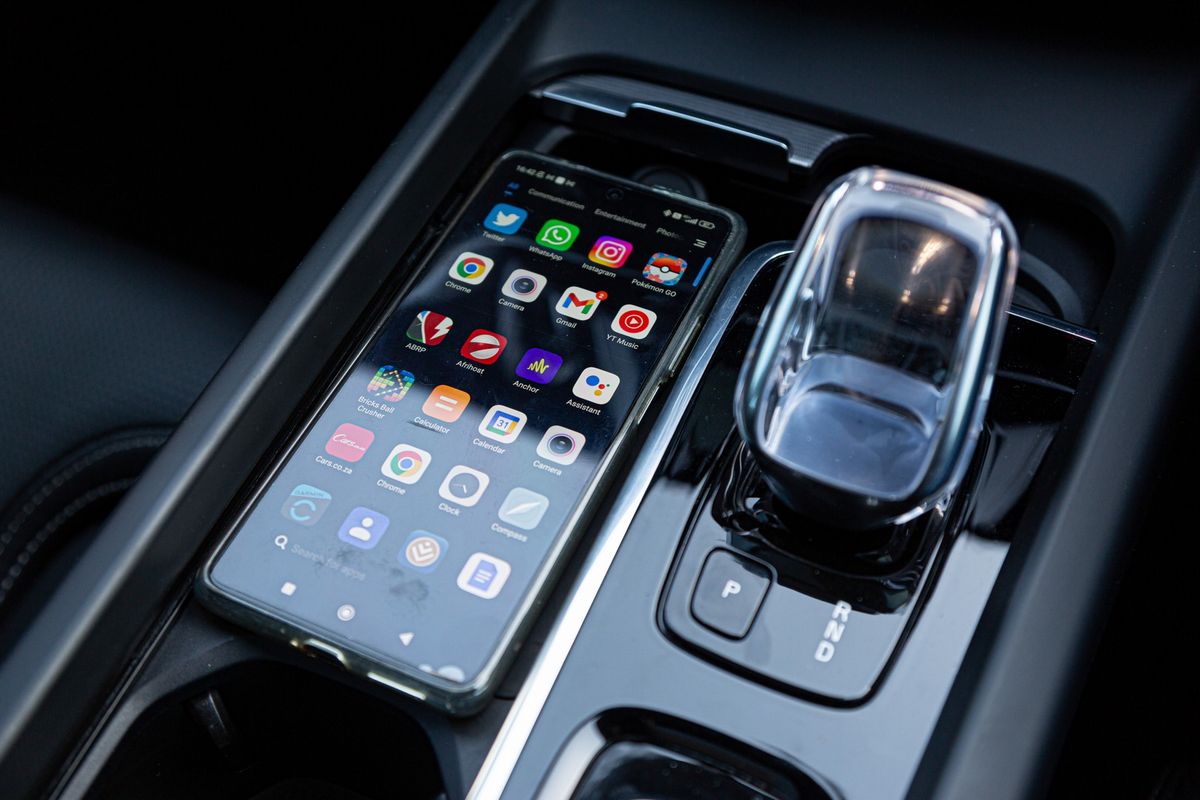
Our test unit also came with heated/cooled seats, a wireless charging pad for mobile phones, front and rear park assist and the may safety systems that Volvo is renowned for. There are myriad option packs available; they include niceties such as heated seats for rear passengers, head-up display and more.
Price and After-Sales Support
The Volvo XC60 range starts from R796 900, with the T8 Recharge listed at R1 282 400. The vehicle is sold with a 5-year/100 000 km warranty and a 5-year/100 000 km service plan.
Verdict
The Volvo XC60 Recharge is one of the most accomplished and complete vehicles on sale now
The fact that more plug-in hybrid models have not been introduced in our market is such a pity; such vehicles represent a near-perfect way to transition to full electrification – especially within the context of the luxury-vehicle market.
Right now, the few battery-electric vehicles in our market command quite a premium and while road trips in BEVs can be undertaken (if you plan carefully), our country’s charging network requires further development. With a plug-in hybrid, at the price of a high-end executive SUV, you get a luxury petrol car (which negates range anxiety) that offers a more-than-useful all-electric range for where you need it most (when driving in the city or commuting).
Here are some numbers to consider: the T8 Recharge’s battery is 18.8 kWh unit and my home’s electricity is billed at R1.99 per kWh. Therefore, it costs R37.41 to charge the high-voltage battery from depleted to fully charged at home (it will take between 4 and 8 hours to charge when plugged into a 220V socket). Even if the 80 km electric-only (Pure) range might be a trifle optimistic, we don’t see a need to venture to DC fast-charging stations very often.
The XC60 T8 Recharge is an accomplished luxury family SUV with the bonus of ultra-low fuel economy. Suffice to say it’s one of the most impressive cars we’ve reviewed in 2022.