Big U-Turn? McLaren Reportedly Working on Super-SUV
McLaren executives have long insisted the British firm would never build an SUV. A fresh report out of the United Kingdom, however, suggests the incoming CEO doesn’t agree. Brace yourself for a high-riding McLaren, folks…
McLaren is one of the few high-end automakers out there that doesn’t currently offer an SUV, with executives previously insisting such a vehicle would compromise the company’s overarching goal of delivering the ultimate driving experience. However, there’s a new chief executive officer (CEO) in town and a fresh report suggests a McLaren-badged SUV is indeed on the way.
According to Autocar, the U-turn comes just as Michael Leiters prepares to step into the role of CEO on 1 July 2022. The previous incumbent, Mike Flewitt, quit the company back in October 2021, having earlier famously promised McLaren would “never” add an SUV to its range.
German-born Leiters, however, seemingly has other ideas. Having held a senior position at Porsche and more recently occupied the role of chief technology officer at Ferrari, the 50-year-old engineer has vast experience overseeing the creation of high-riding models such as the Cayenne and Macan, not to mention the Maranello-based firm’s upcoming Purosangue.
Interestingly, the Autocar report claims the new high-performance McLaren SUV will hit the market only in the second half of this decade (likely after 2028) and will take the form of a fully electric model rather than a combustion-engined or hybrid vehicle. Nevertheless, the British publication suggests the newcomer will target the likes of the Aston Martin DBX 707, Lamborghini Urus and the aforementioned Purosangue.
According to the report, the McLaren super-SUV will be “low” and “compact”, and will feature either dual- or tri-motors along with the requisite four-wheel-drive system. The Woking-based automaker is seemingly waiting for battery technology to further improve to allow the SUV to benefit from a comparatively lightweight design.
Autocar further reports McLaren already holds trademarks for the Solus, Aonic and Aeron badges, with the publication speculating the latter (meaning “mountain of strength”) would be best suited to the rumoured battery-powered SUV.
Whether or not you believe McLaren should build an SUV, there’s no doubting the sales success of rivals from competing high-end brands. Indeed, the Cayenne and Macan today account for a hefty percentage of total Porsche sales, while the Urus is Lamborghini’s best-selling model after just four years of production. The DBX, too, has already proven a strong seller for Aston Martin. It seemed almost inevitable McLaren would follow suit…
BMW iX with Prototype Battery Claims 965 km Range
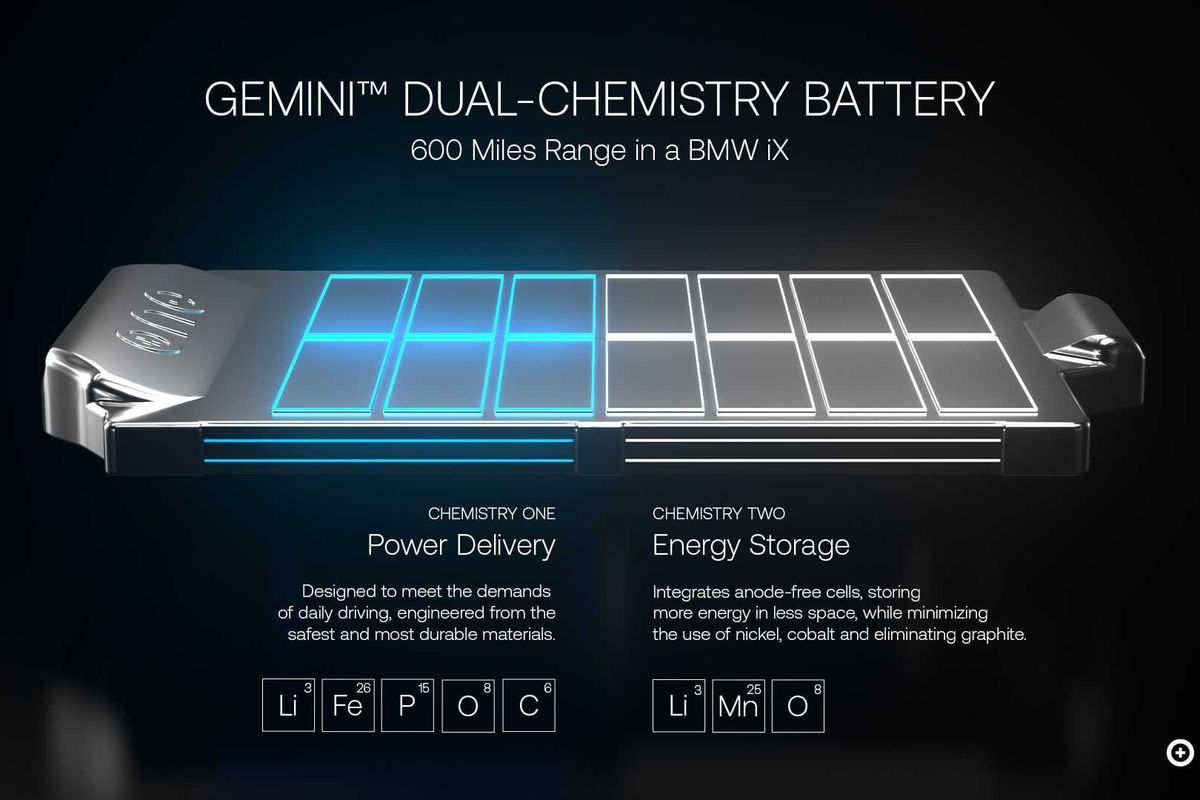
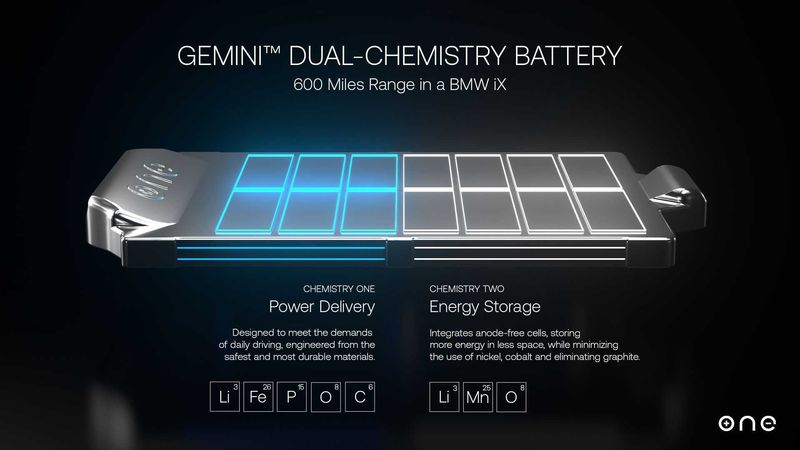
BMW Group has signed an agreement with a battery company to introduce an advanced battery in the iX, giving it an estimated 965 km of range!
The agreement from the German giant and Our Next Energy (ONE) is an interesting one as it addresses some of the issues around electrification.
As a reminder, despite the advances in tech, there will always be detractors who insist that range anxiety will always be a thing, and the mining of the materials used in the batteries is not entirely ethical or eco-friendly. ONE aims to change that with its advanced battery tech.
The Gemini Dual-Chemistry battery is claimed to reduce lithium use by 20%, reduce graphite use by 60% and there are reductions in the use of nickel and cobalt. It’s a more sustainable battery system and the best part is the power on offer. There’s simply more energy packed into ONE’s battery than a standard unit.
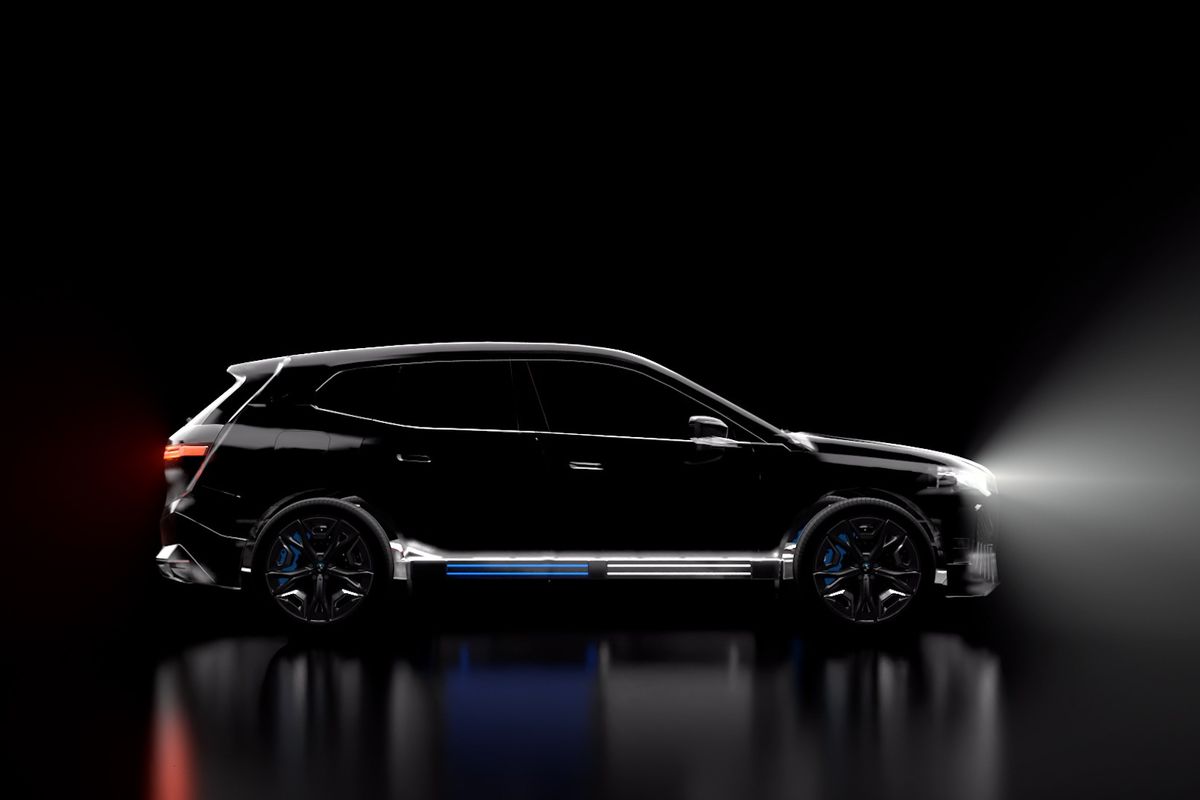
The BMW Group and ONE agreement will see a BMW iX be tested with this new battery, with completion by the end of 2022. The range claim is staggering, with over 950 km on a single charge which is almost double that of the standard car. We’re big fans of the BMW iX and spent a considerable time behind the wheel of this brilliant vehicle. If this prototype is a success, you can expect this tech to be rolled out into BMW Group products in the future.
“We are thrilled to be working with BMW to demonstrate our Gemini long-range battery technology to consumers,” said Mujeeb Ijaz, founder and CEO of ONE. “As EV adoption grows, drivers are learning that real-world conditions can significantly reduce the performance of their batteries. Common situations like maintaining highway speeds, winter temperatures, climbing mountains, towing, or a combination of all four things present challenges to electric vehicles. We plan to pack twice as much energy into batteries, so EVs can easily handle long-distance driving in real-world conditions.”
“We are well-positioned to incorporate ONE’s IP into BMW’s SAV line,” said Jürgen Hildinger, BMW Group New Technologies Head of High Voltage Storage. “We are confident that given economic viability, this can lead to commercial opportunities and strategies to integrate ONE’s battery technologies into models of our future BEV product line-up.”
Baby FJ, Anyone? Toyota Details Compact Cruiser EV Concept
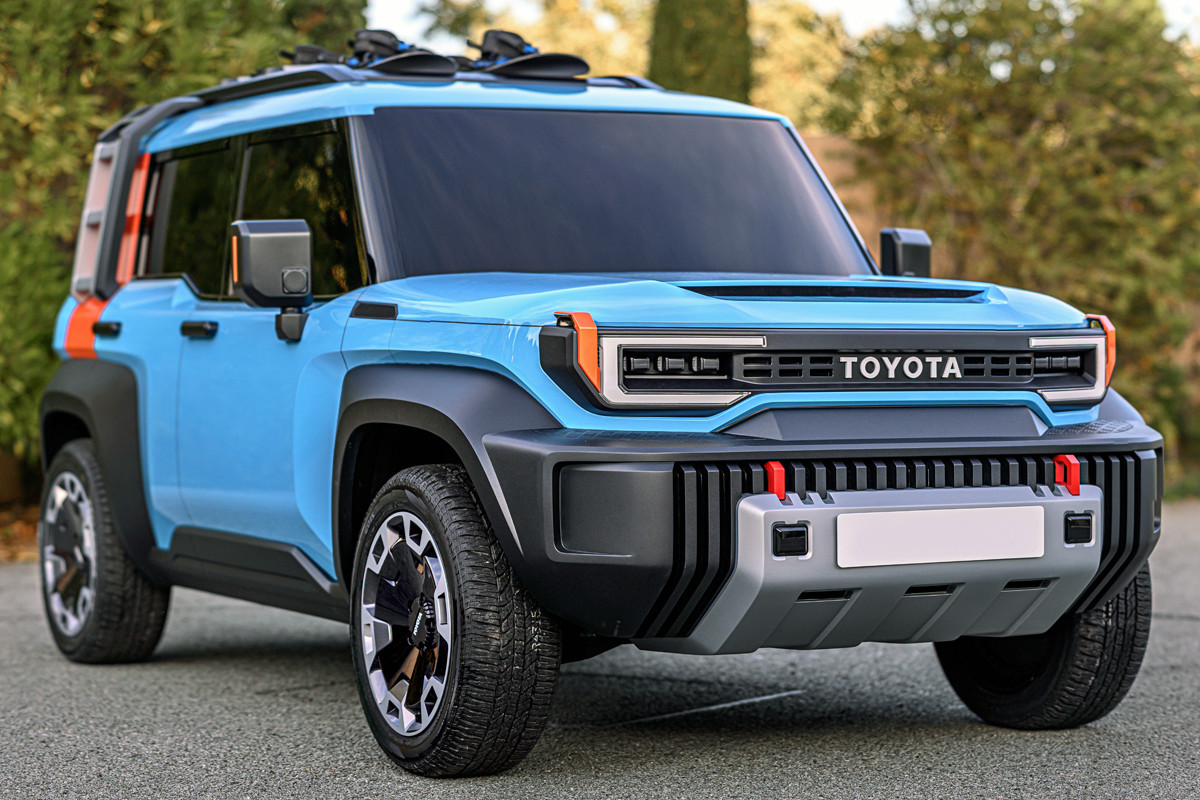
Remember the raft of electric concept vehicles Toyota briefly showed late in 2021? Well, the Japanese firm has just released detailed images of the intriguing Compact Cruiser EV…
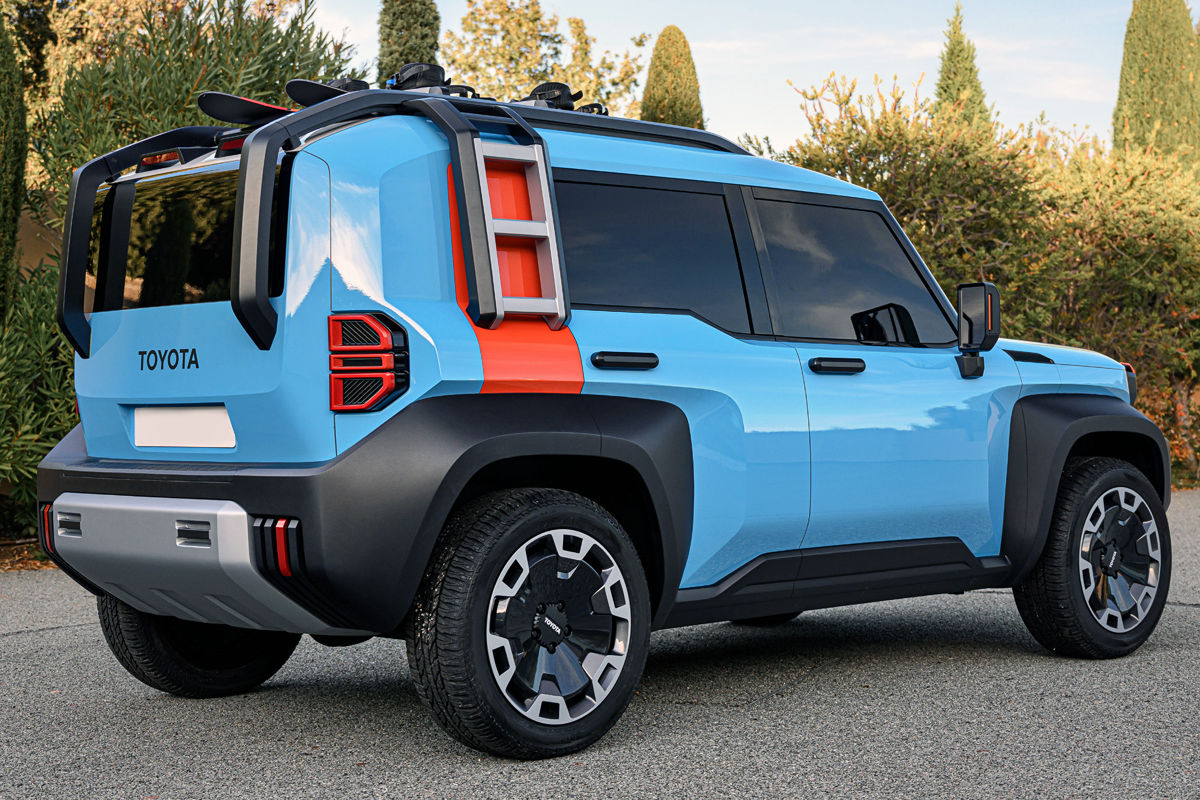
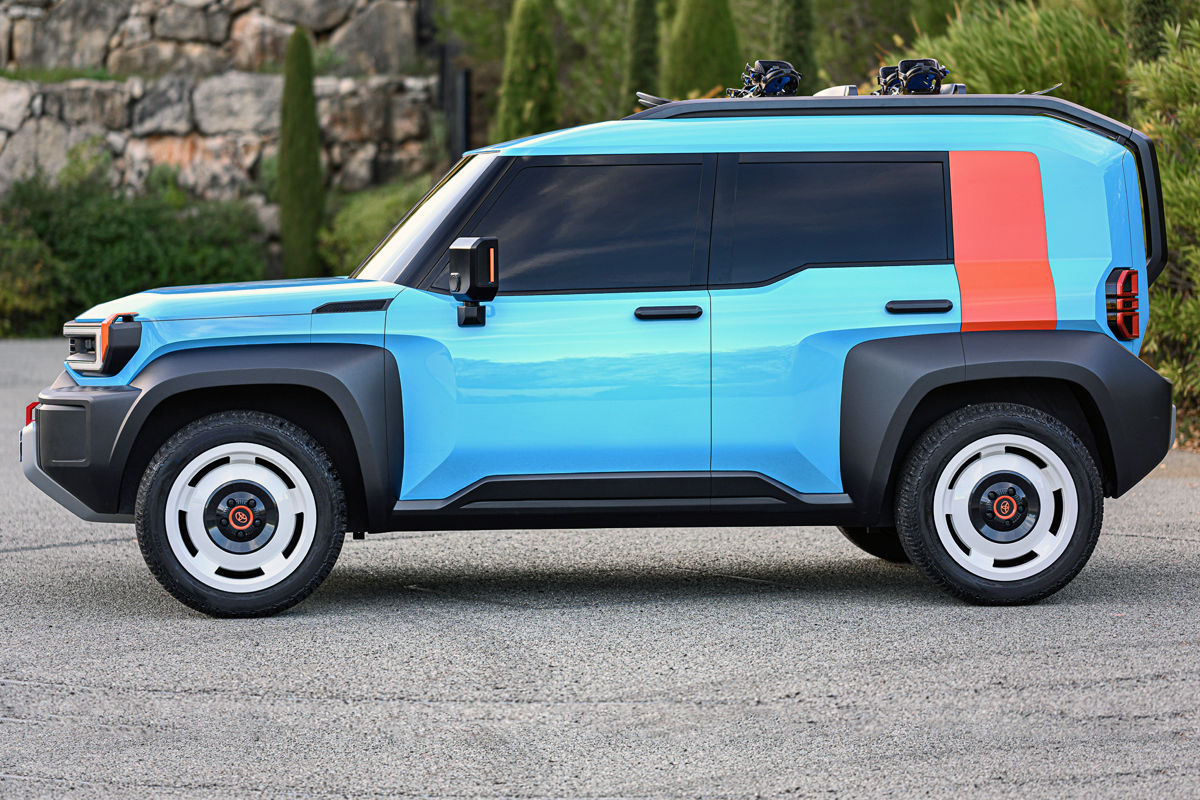
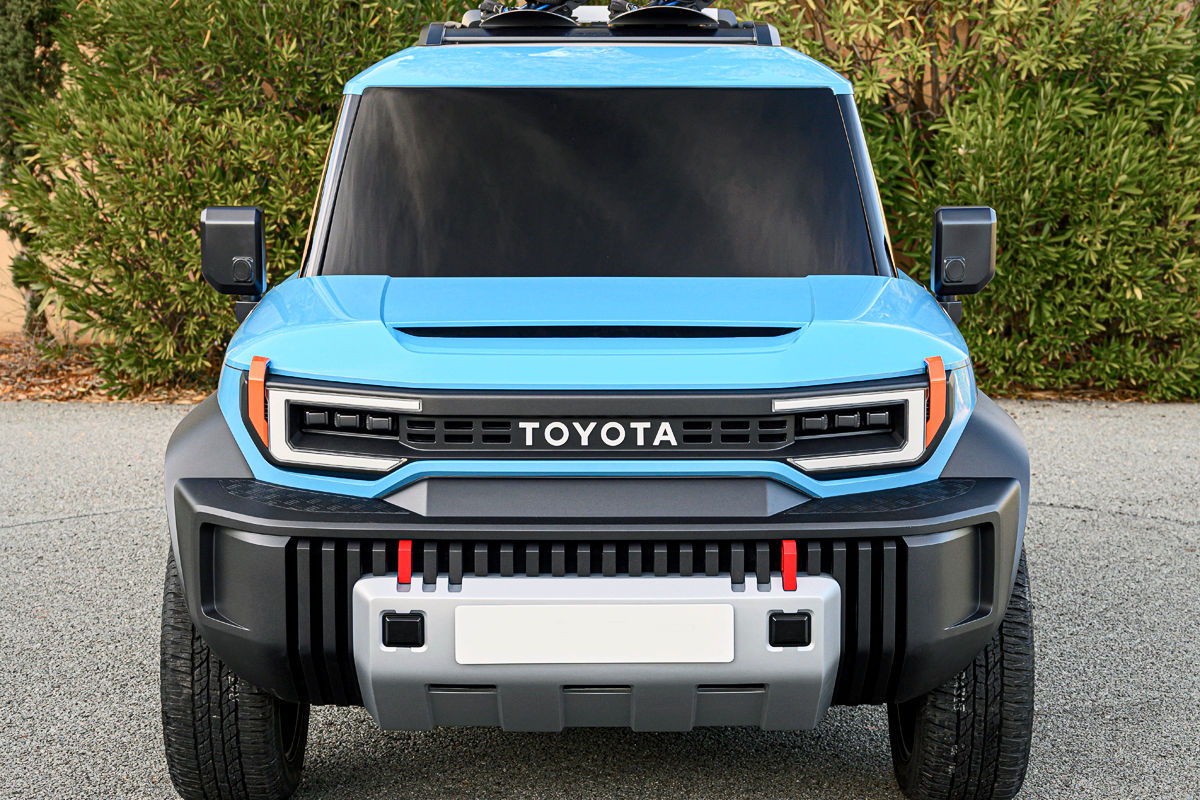
Back in December 2021, Toyota showcased 15 new electric vehicle (EV) concepts, laying bare its battery strategy. Now, the Japanese automaker has revealed detailed photographs of one of those fascinating show cars: the Toyota Compact Cruiser EV.
This particular vehicle is back in the news after winning the 2022 Car Design Award for concept vehicles. Toyota was presented with the prize at a ceremony held at the ADI Design Museum in Milan during the recent annual Milano Design Week.
Though Toyota has not confirmed plans to put the Compact Cruiser EV into production, rumours suggest the concept may well preview a future vehicle. Reports furthermore claim the battery-powered production version would adopt the “LiteCruiser” badge.
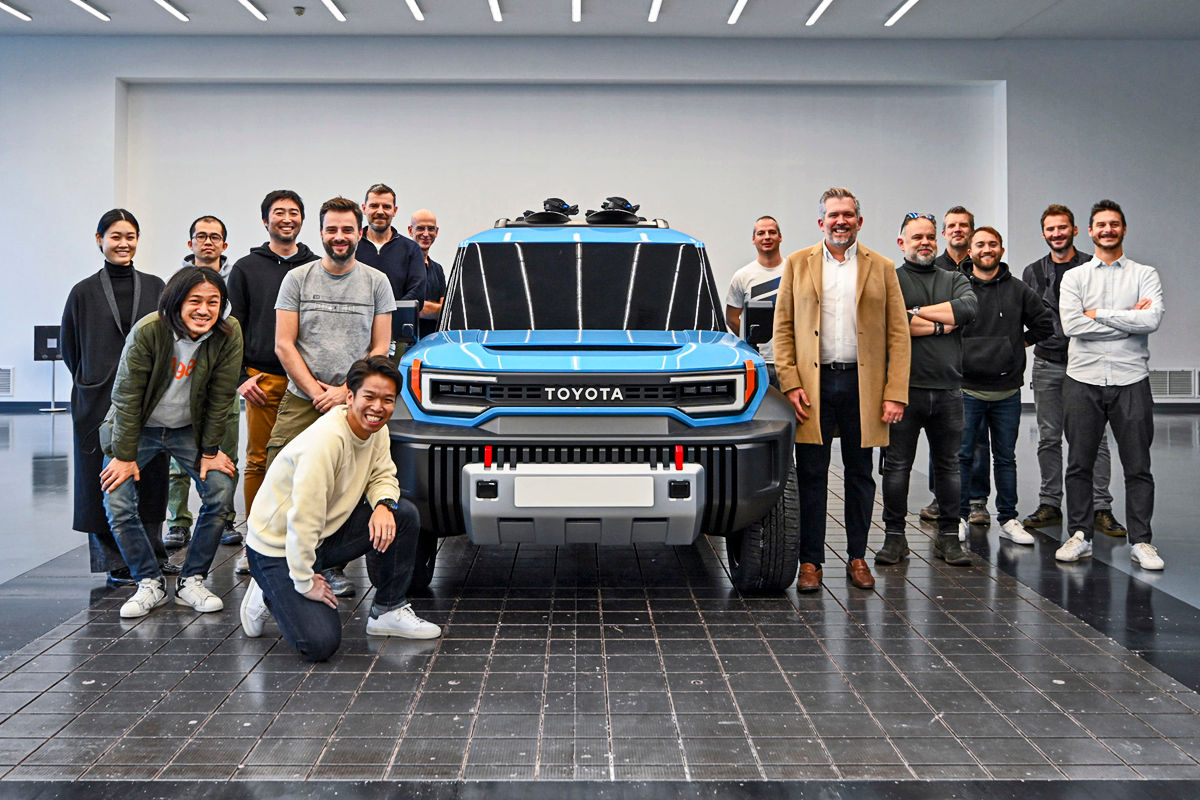
Conceived by Toyota’s design team based in France, the Compact Cruiser EV is said to build on the brand’s “strong off-road heritage”. Indeed, you’ll no doubt notice a handful of design nods to both the first-generation Land Cruiser and the FJ Cruiser still offered in South Africa today (we won’t dwell on any styling similarities to the latest Land Rover Defender).
Initial design sketches of Toyota’s little electric Compact Cruiser concept.
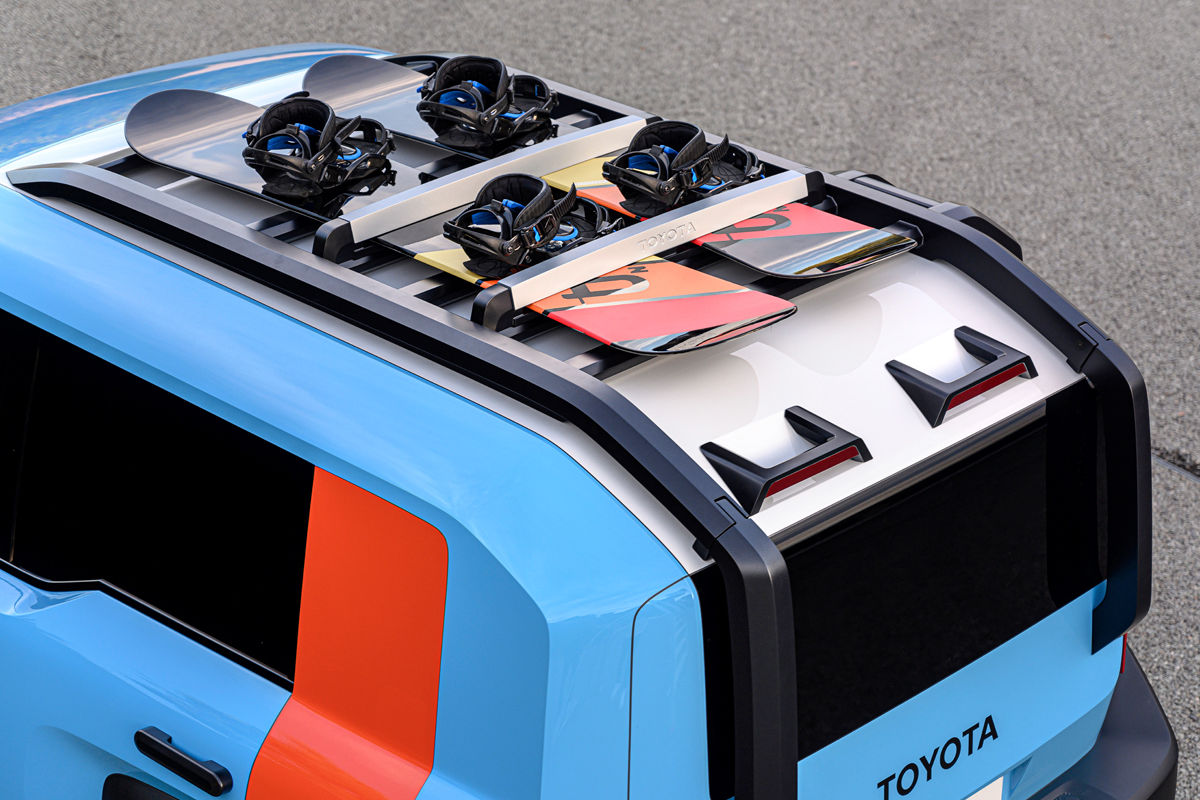
Toyota says the concept was designed to “enhance the lifestyles” of “young, professional urban dwellers who enjoy active outdoor leisure interests” (hence the snowboards strapped to the concept’s roof). The company has yet to release technical details, though we do know the Compact Cruiser EV features all-wheel drive, suggesting it employs an electric motor on each axle.
“Our research into electric vehicles has been ongoing for more than 30 years, and we’ve come a long way,” said Toyota design senior general manager, Simon Humphries.
“After an initial phase of contact with electric vehicles, people will want zero-emission cars that speak about them and express their lifestyle. And the Compact Cruiser EV is a perfect example of that trend,” he added.
While Toyota’s Compact Cruiser EV won the Concept Cars category at the 2022 Car Design Awards, the Ferrari 296 GTB took home the Production Cars gong and Polestar was awarded the Brand Design Language title.
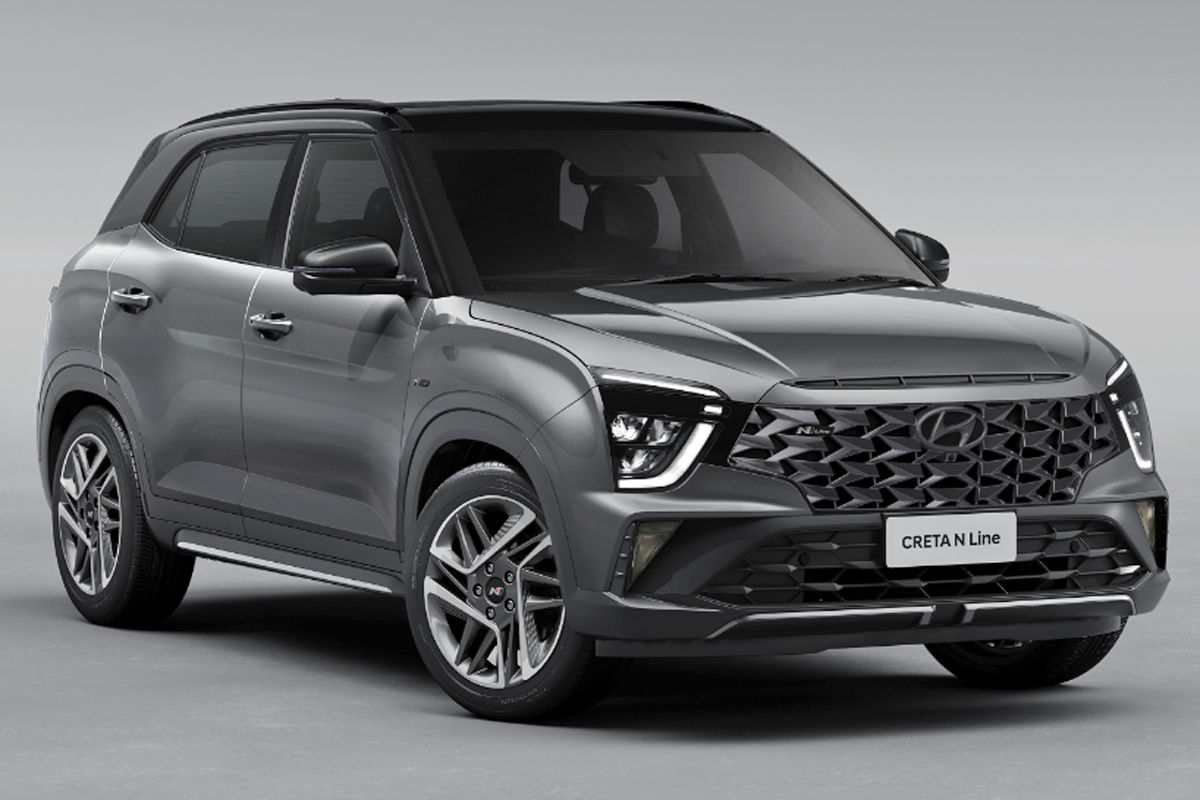
New Hyundai Creta N Line: No Plans for SA Launch
The Hyundai Creta has been handed the N Line treatment in Brazil, leading to speculation this new sportier version of the SUV will find its way to South Africa. Here’s what we know so far…
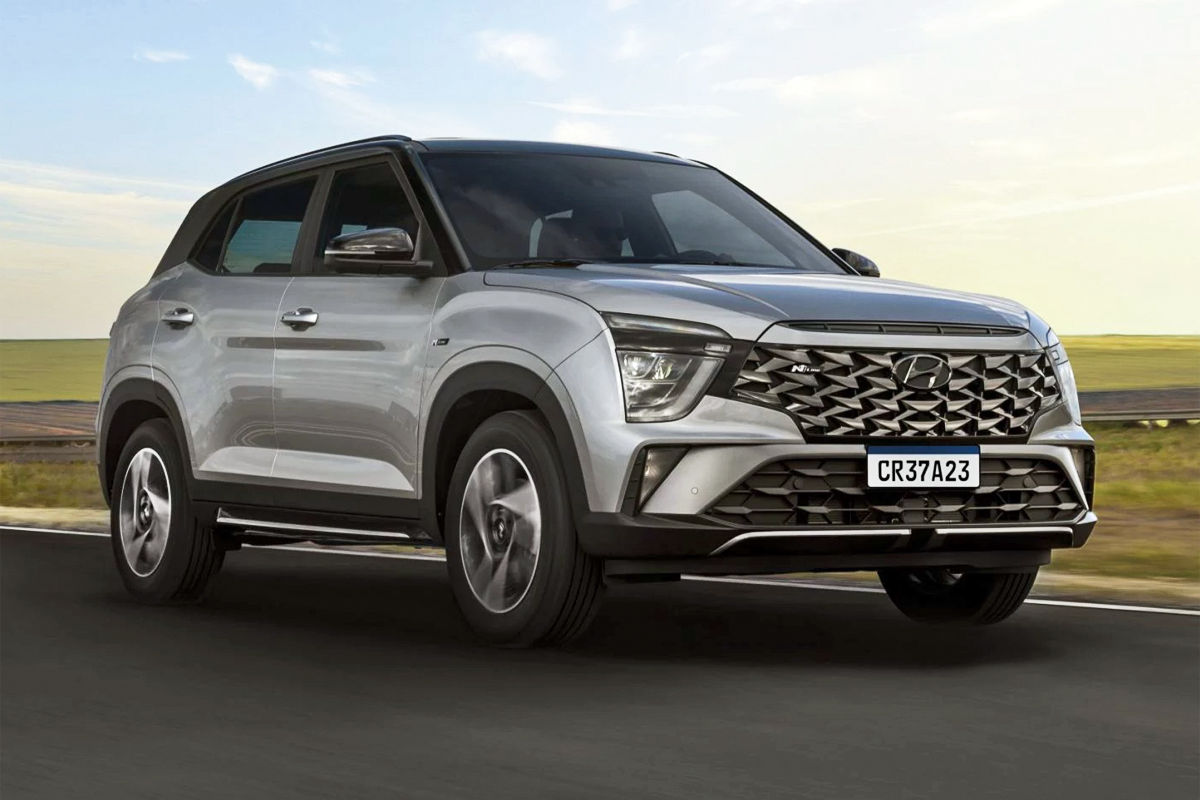
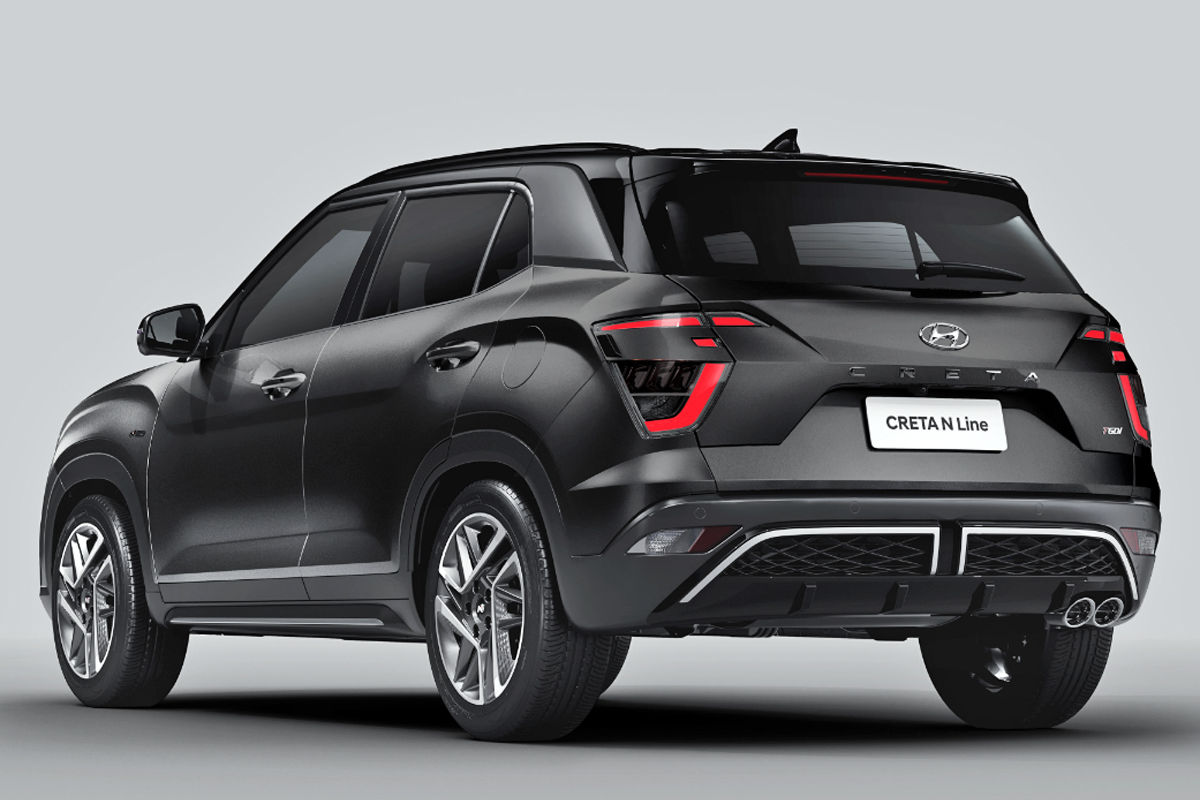
Hyundai has whipped the covers off its new Creta N Line in Brazil, handing the second-generation version of the SUV sportier styling (inside and out) as well as a model-specific suspension and steering tune.
While Brazil is the first country to receive this version of the Creta, the South Korean automaker says it “may soon be expanded to other markets”. Considering the popularity of the Creta in South Africa (and the fact the i20 N Line and Kona N Line are already offered here), we’d speculate there’s at least a possibility of the sportier Creta making its way to local shores at some point, perhaps a little while after the facelifted Creta range touches down in mid-July 2022. We’ve asked Hyundai Automotive SA for comment on the matter but have yet to hear back.
UPDATE: Sorry, folks. Hyundai Automotive SA says it has no plans to introduce the Creta N Line to the local market.
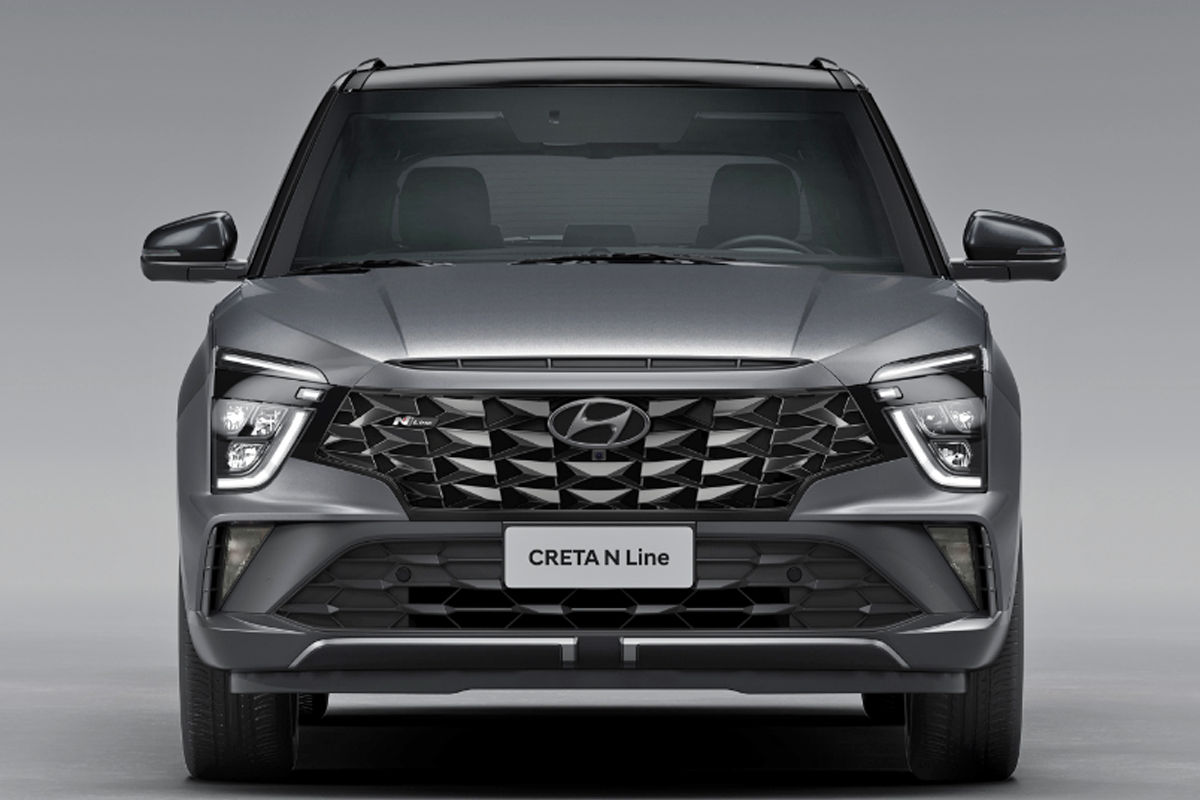
So, what exactly goes into creating an N Line version of the Creta? Well, the most obvious upgrades come in the form of more aggressively styled front and rear bumpers (with the former featuring a new foglamp design and the latter housing a twin-exit tailpipe), along with chunkier side skirts and a gloss-black finish for the side-mirror caps and roof rails.
In addition, the upgraded Creta gains a unique grille (complete with a darkened Hyundai logo) and a graphite-coloured C-pillar frame, as well as N Line logos on the grille, front fenders and 17-inch alloy wheels. There’s also a bonnet vent positioned just above the grille, while a black-painted roof is available in conjunction with certain exterior hues.
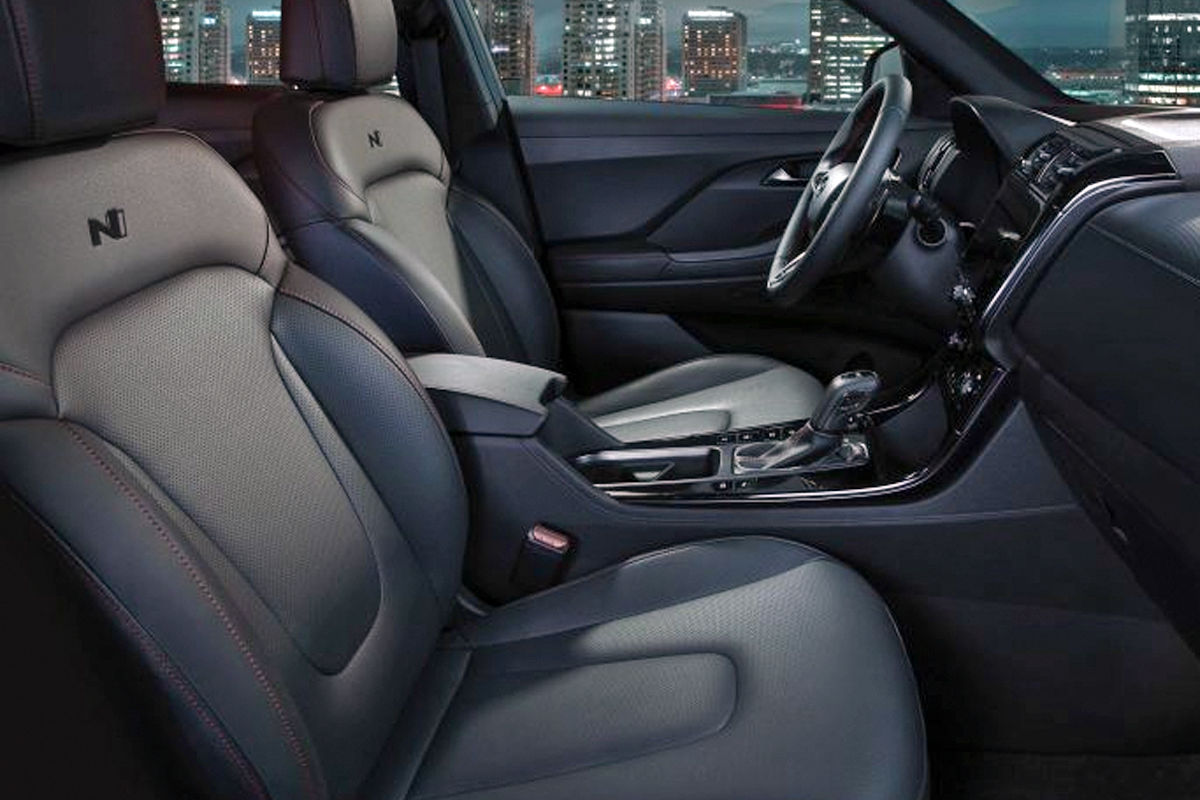
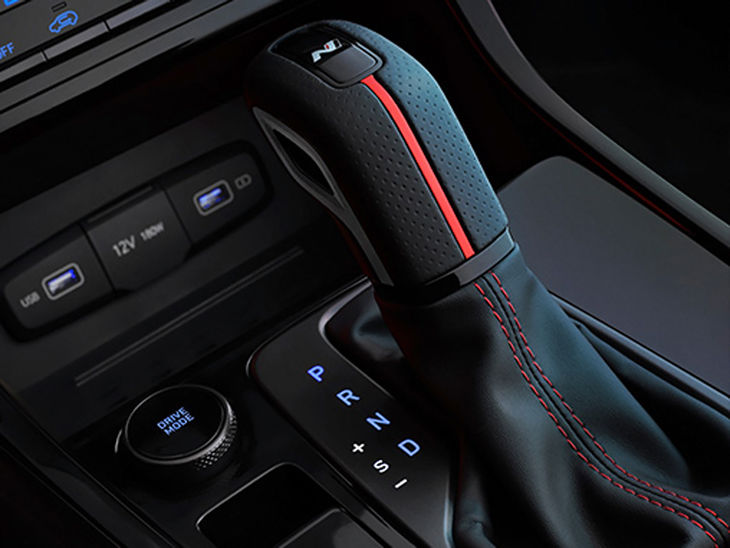
Inside, you’ll find that graphite finish repeated on elements of the steering wheel, dashboard, console and door panels. Furthermore, this version of the Creta upgrades to a new gearshift lever, alloy sports pedals and synthetic leather seats with red stitching (a treatment also handed to the central armrest, door trim and tiller). Finally, the obligatory N Line badges have been dotted around the cabin.
Meanwhile, Hyundai claims to have made “extensive” changes to the Creta’s chassis, firming up the suspension by way of new dampers and springs, and recalibrating the electric power steering system.
So, has Hyundai made any engine upgrades? Well, since this in an N Line product rather than a full-fat N model, there has been zero under-bonnet tinkering. In Brazil, that means a standard version of the firm’s turbocharged 1.0-litre petrol engine remains, driving the front axle through a 6-speed automatic transmission.
Were the Creta N Line be offered in South Africa, we’d expect it to employ the 103 kW/242 Nm turbocharged 1.4-litre petrol engine that already does duty in the flagship model.
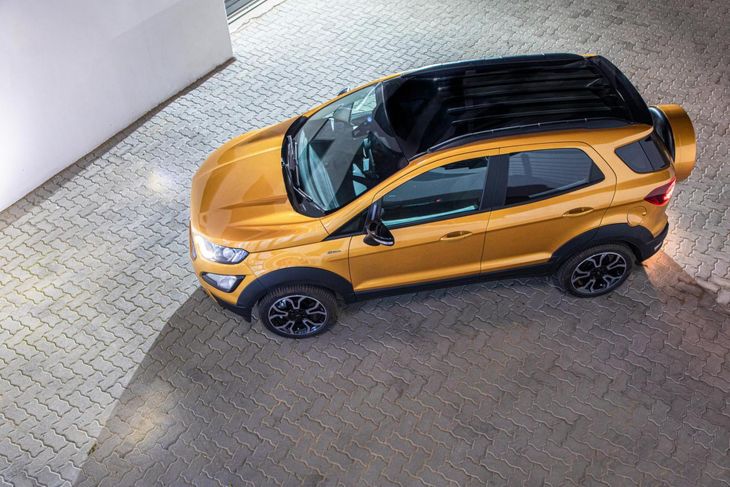
Ford EcoSport Active (2022) Launch Review
The Ford EcoSport is one of the longest-serving compact family cars in the South African market, but it’s still one of the most popular models in its segment. Now a new derivative – the EcoSport 1.0T Active – has joined the lineup and with it, the Blue Oval hopes to inject some life into the ageing model. Ciro De Siena drove it at its local launch in Cape Town.
I first drove a Ford EcoSport at the model’s global debut in India in 2013. At the time, it was a car that felt important for the brand, as well as within the context of the new-vehicle market in general. Arguably, the EcoSport was a pioneer; it was, along with the Dacia Duster (which is, of course, badged as a Renault in Mzansi) among the first offerings in what is now a fiercely contested segment – that of the compact crossover/small SUV.
Almost a decade later, I find myself seated in one of Cape Town’s most popular coffee shops, where the waiter tells you what you’d like to drink and that they don’t keep sugar on site because, in their opinion, their coffee is perfection in a cup and “how dare you demand sugar, you pleb?”
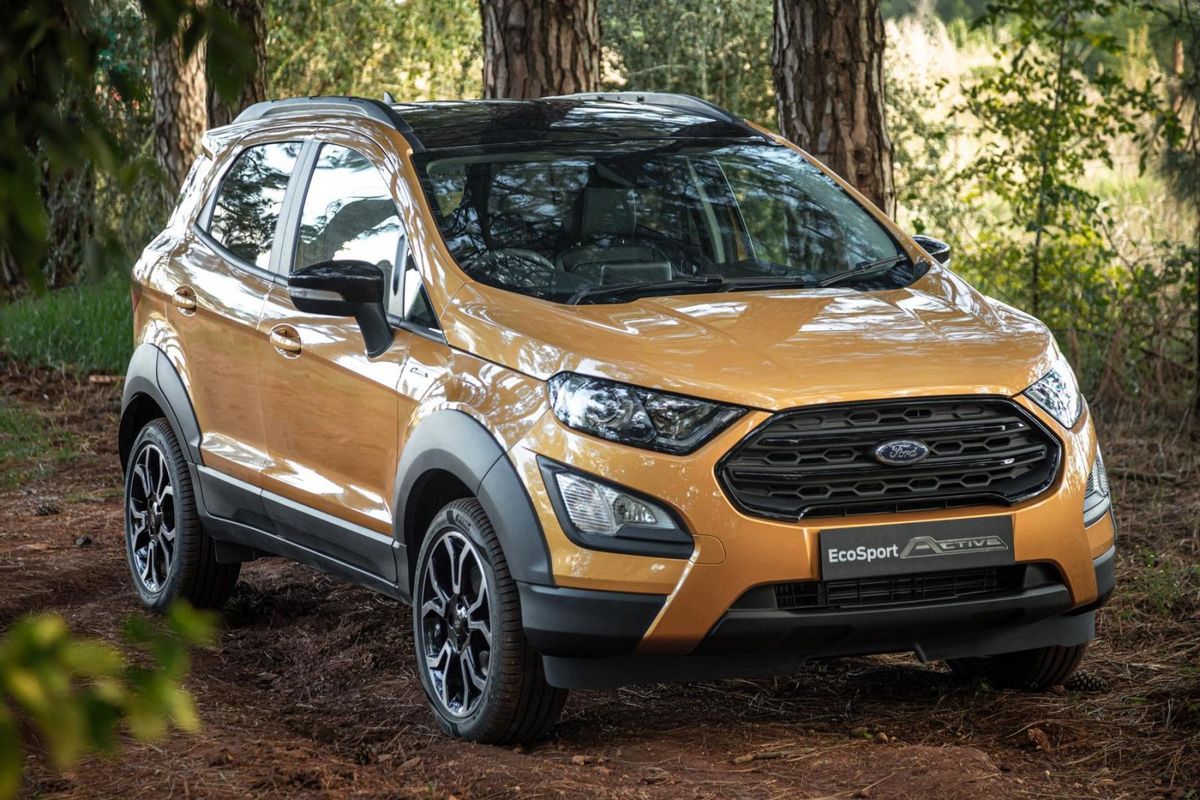
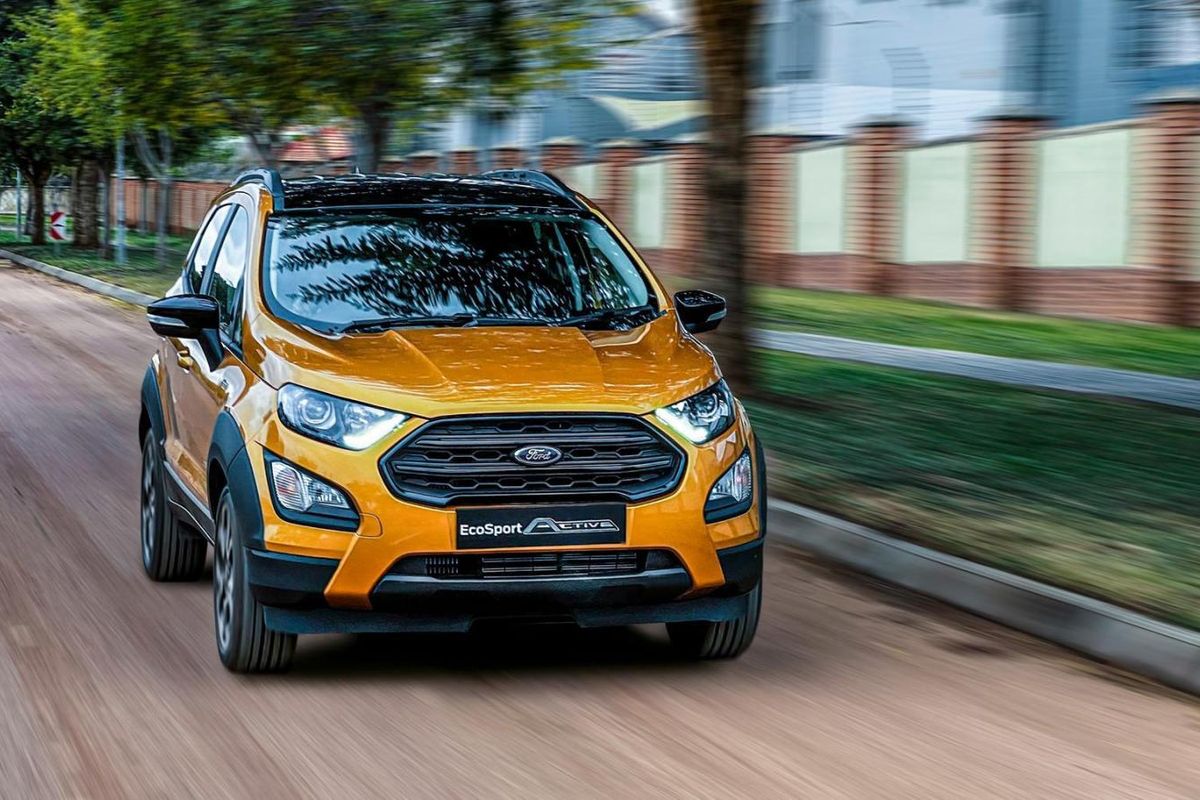
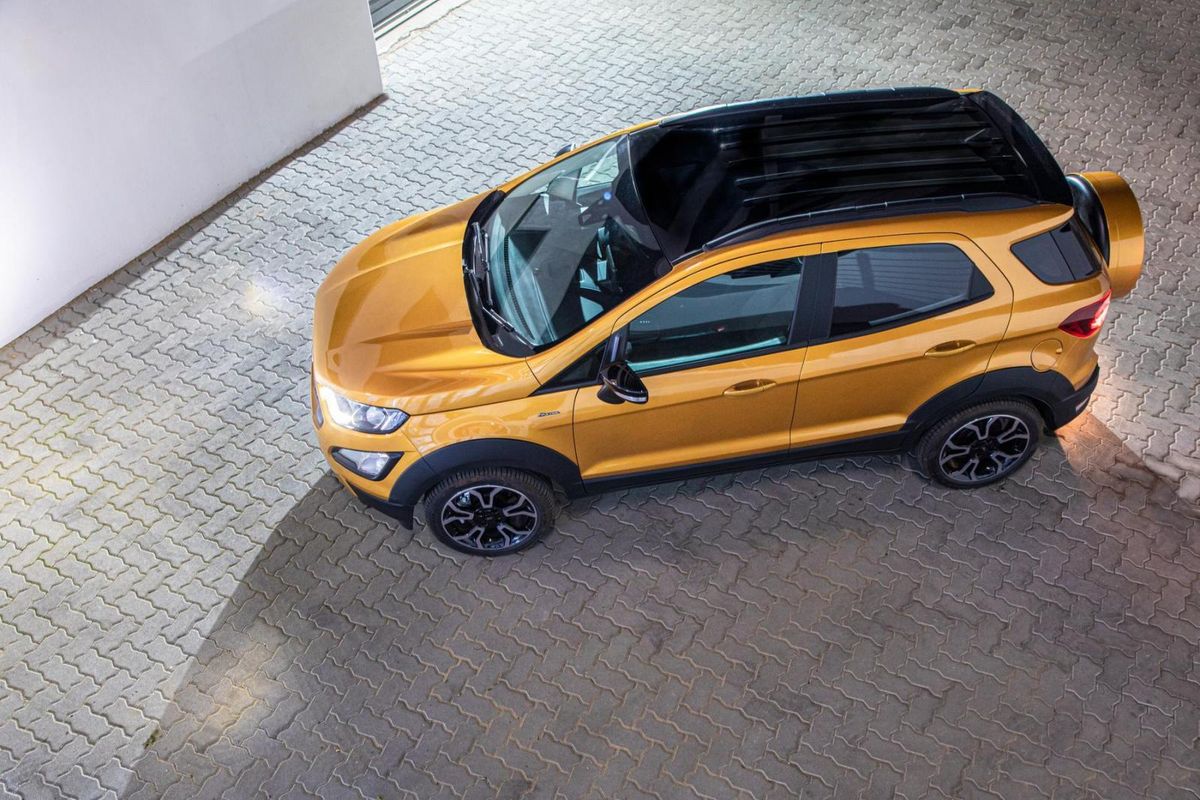
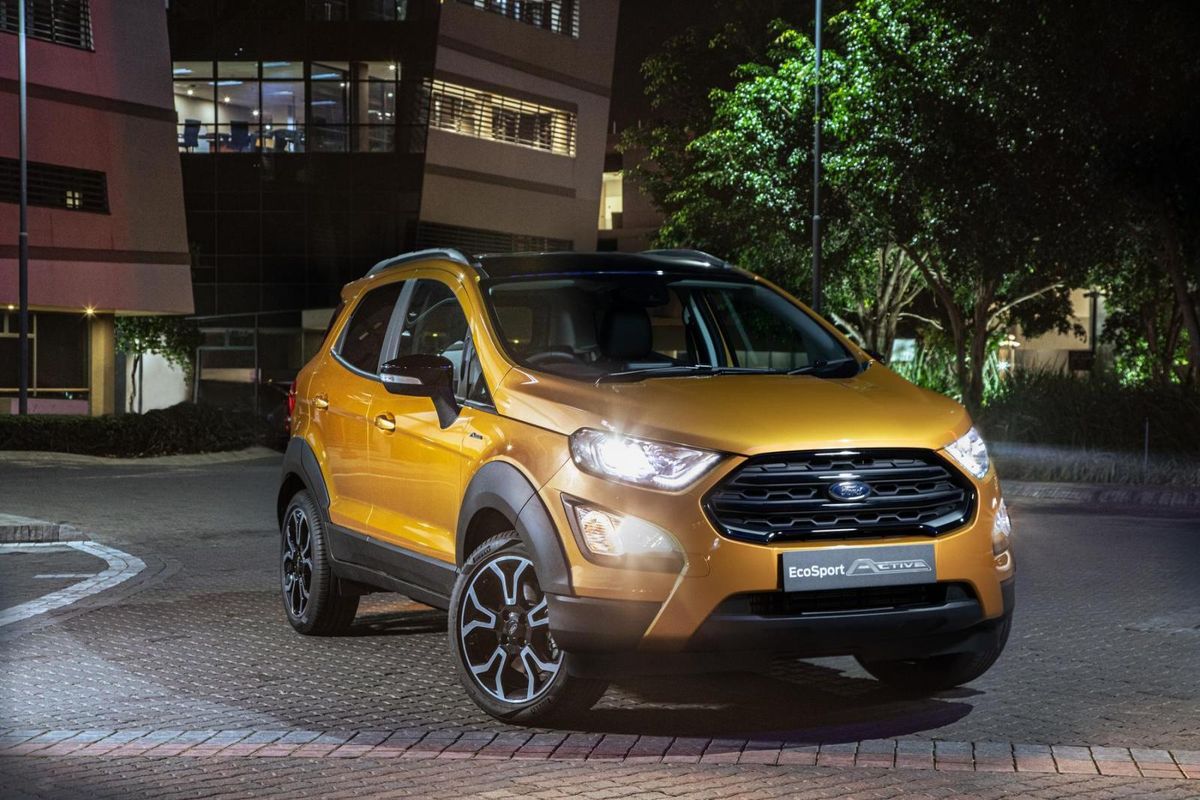
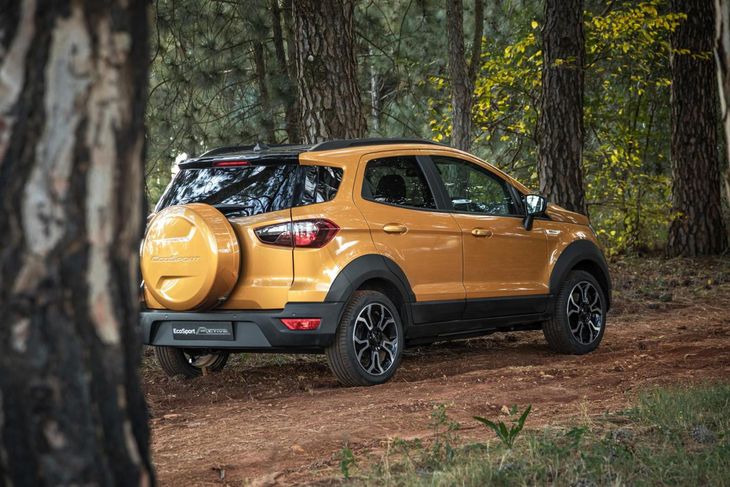
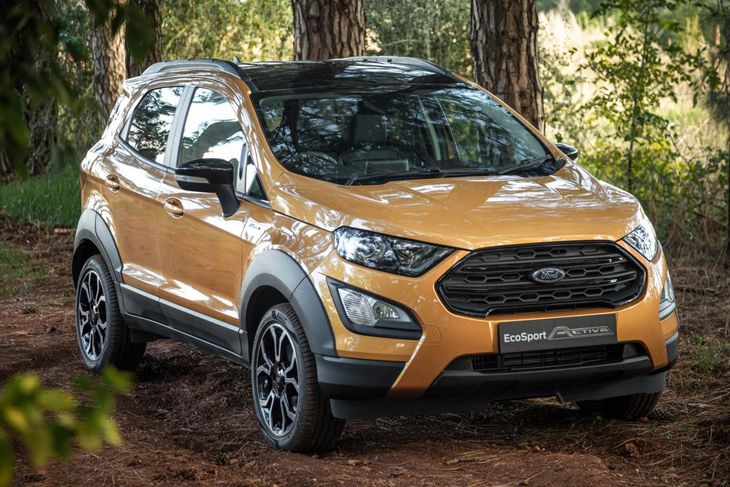
Anyway, I digress. Lined up outside this shrine to Cape Town’s most unaccommodating approach to serving patrons were 5 of the best-looking Ford EcoSports I’d ever seen. Right off the bat – in my opinion, at least – the visual changes that Ford has applied to this new derivative compliment the EcoSport’s design cues in the best way possible; they make the ageing compact family car look more substantial, so as to increase its presence, both on the road and in car parks.
It is a testament to how well the EcoSport was conceived, engineered and built that, all these years later, the model still sells extremely well in South Africa, where it fends off an onslaught of competition from newer models, some of which hadn’t even been thought of when the Blue Oval’s compact family car made its debut.
What’s New?
The EcoSport 1.0T Active, priced at R393 700, sits second from the top in the EcoSport line-up, just below the 1.0 Titanium. The distinguishing elements of the Active are largely cosmetic, but they amount to more than just “some sticker pack”.
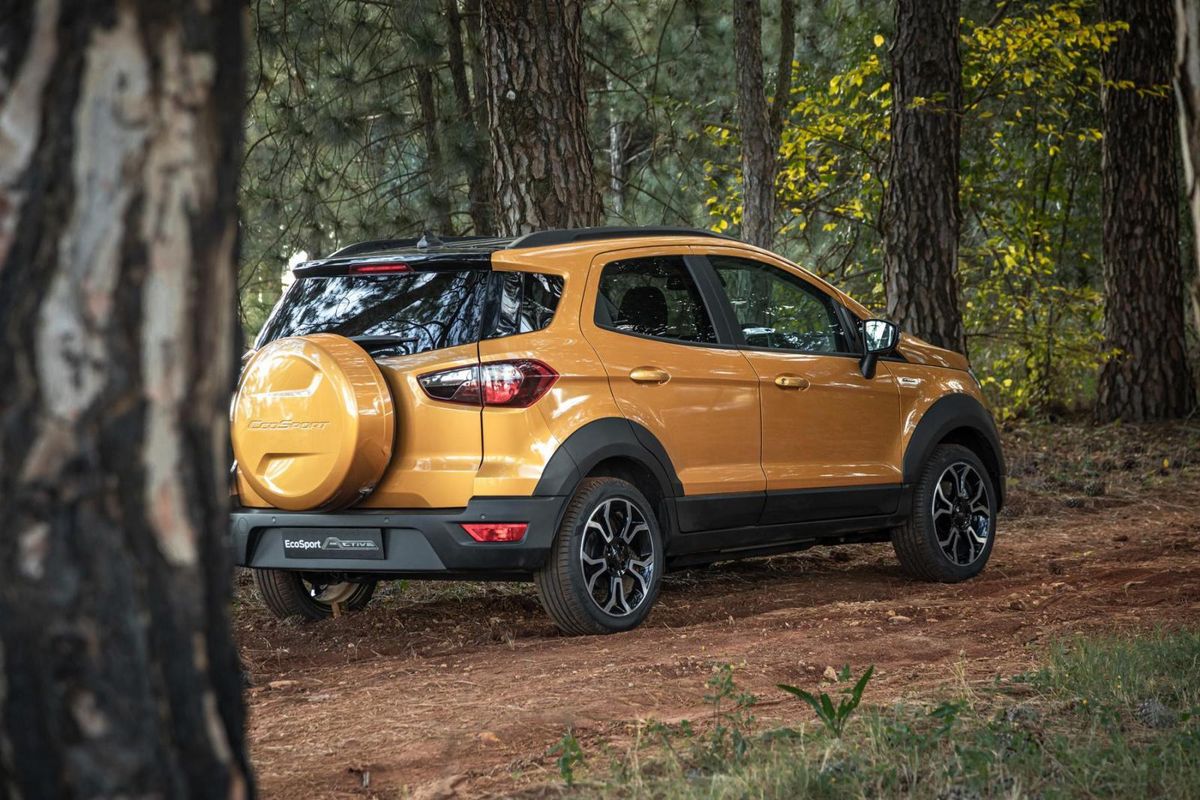
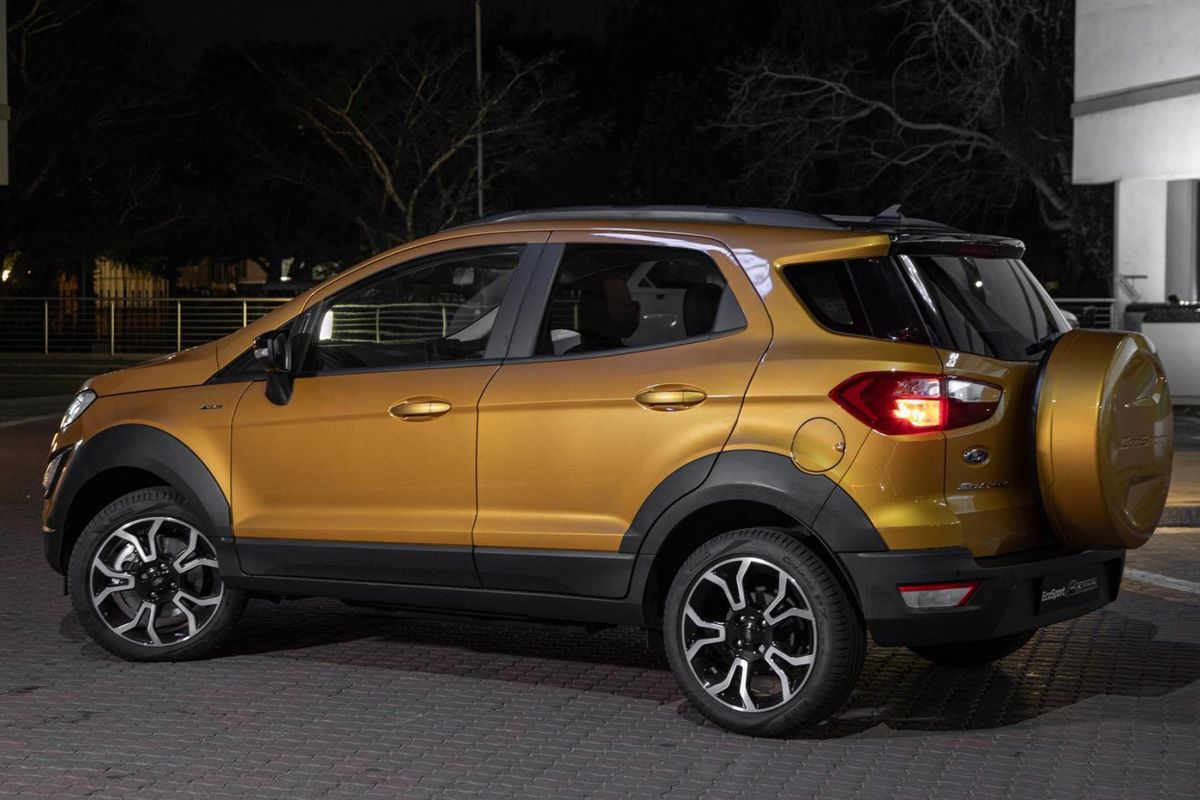
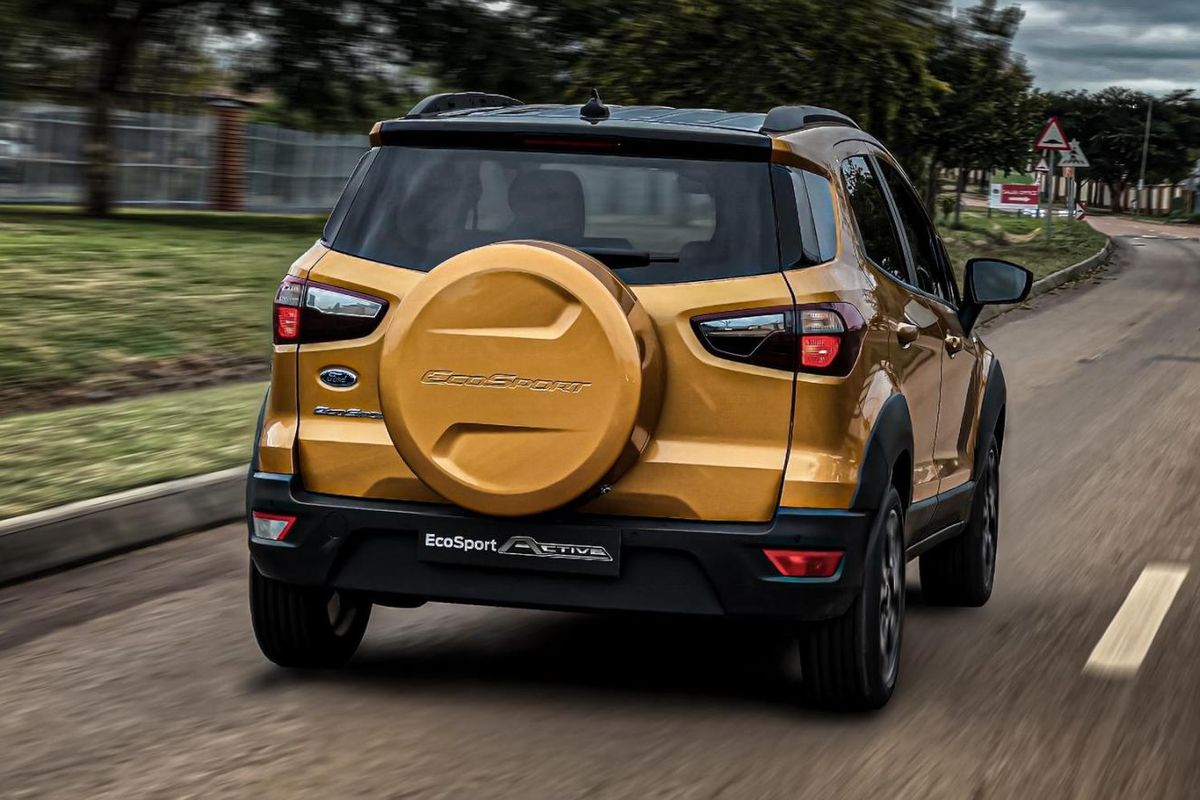
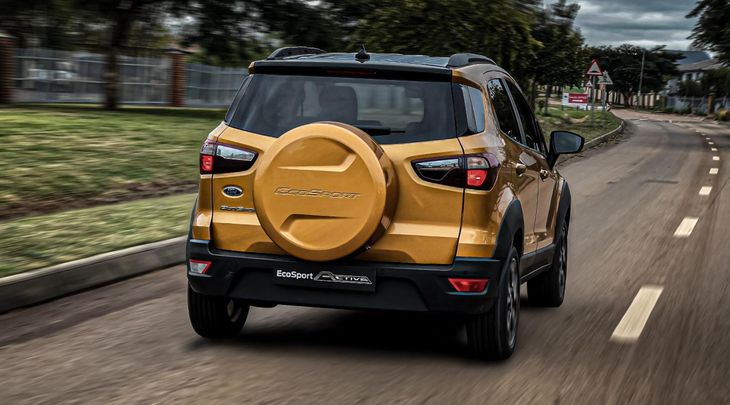
A significant addition is that of tough-wearing, black plastic cladding to the exterior (in key places), which gives the EcoSport 1.0T Active a significantly chunkier look. Newly-designed 17-inch alloys, dual-tone paint scheme (with contrasting black roof), bumpers and rear “diffuser” contribute to what is a handsome little car, especially when clad in sunshine-infused metallic paintwork, known as Luxe Yello, which makes up a quartet of body colours available for the newcomer.
Other visual flourishes include the black mirror caps and roof rails, along with dark-tinted privacy glass for the rear windows.
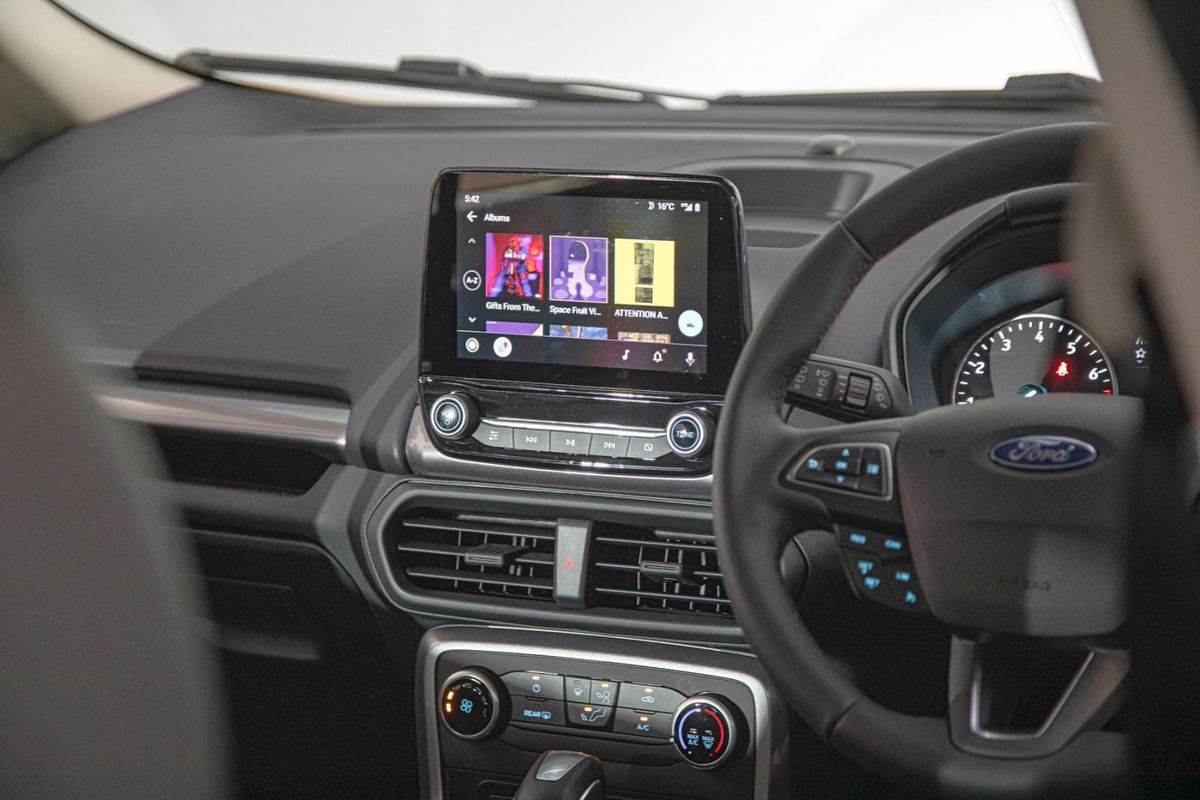
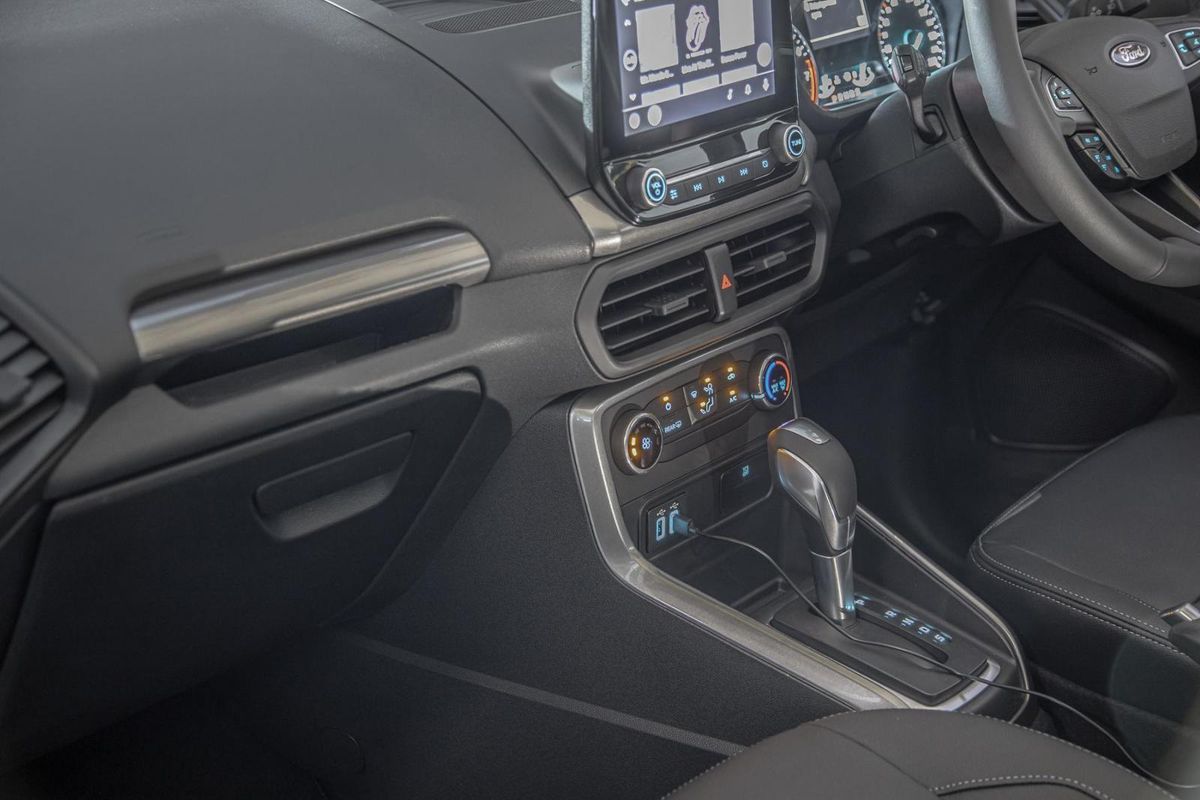
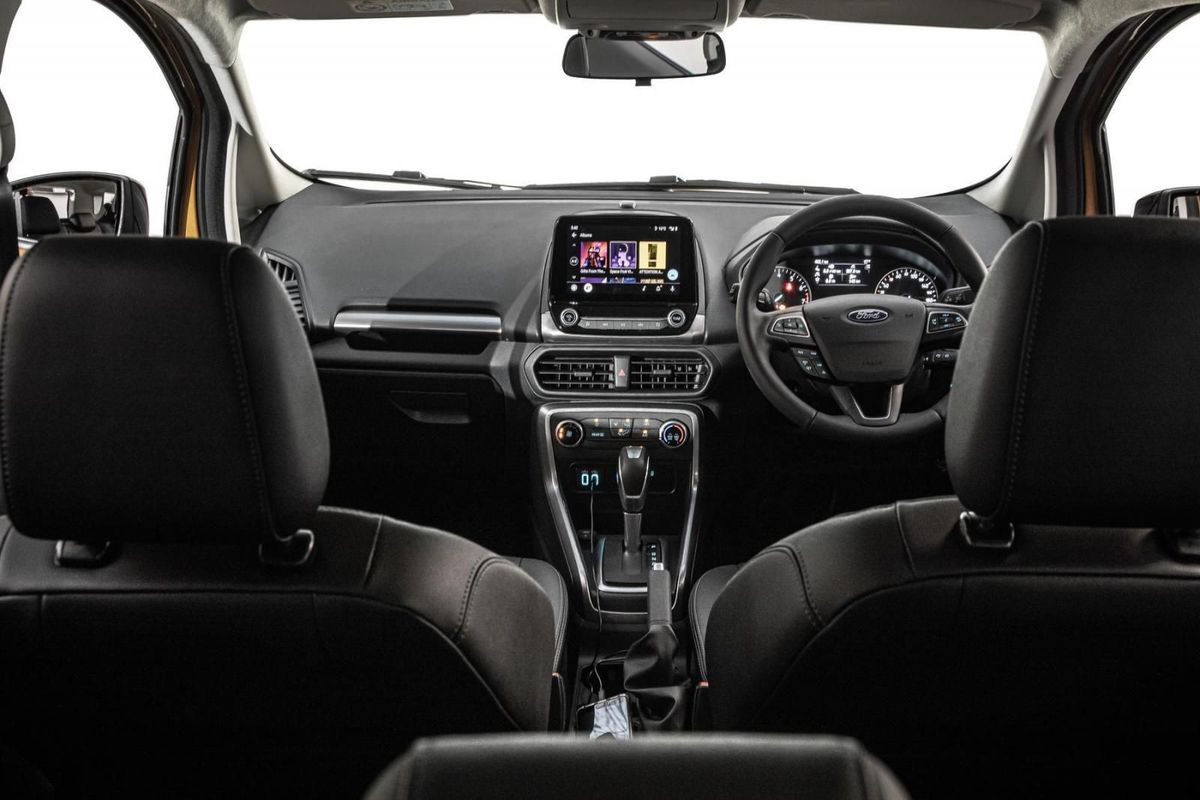
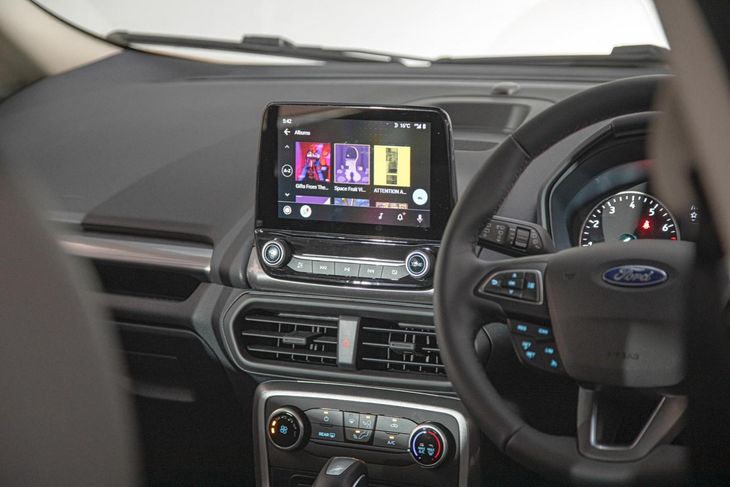
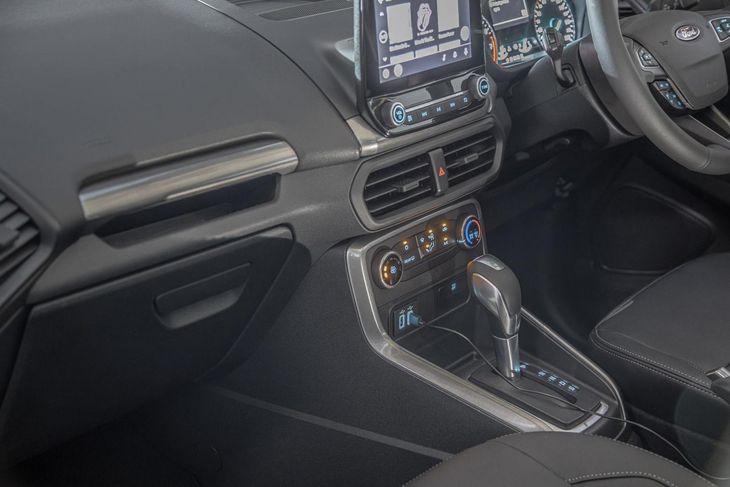
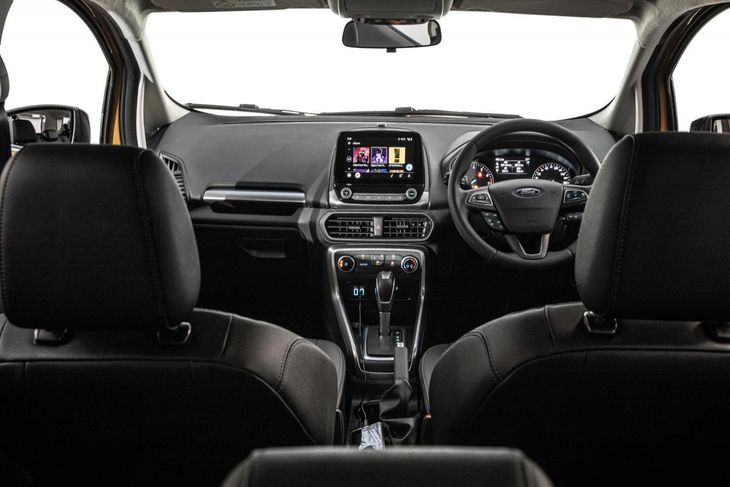
Throughout the years, Ford has significantly upgraded the EcoSport’s interior, and the prominent touchscreen infotainment system – seated in a glossy piano black frame – lifts the cabin and makes it feel more modern. Sure, you can see the age of some components, such as the old-school HVAC dials and buttons, as well as the swinging needles of the instrument cluster, but such anachronisms are to be expected.
The standard leather upholstery, however, certainly adds to the luxurious feel of the cabin. Overall, the interior feels a little plasticky in places but, in general, the feel of the materials and especially the build quality are of acceptible standard.
Another standard feature that adds to the contemporary feel of the EcoSport’s user experience is the ability to connect your car to the FordPass app on your smartphone. The 1.0T Active features a 4G always-on connection to the South African mobile network, so as long as your smartphone has a data connection (4G or WiFi), you can connect to your car from anywhere in the world.
The app allows you to remotely unlock or lock the car, start the engine and check the fuel level. It also brings up service and warranty information, can help you to find a Ford dealer and even lets you book a service, if required.
What it’s like to drive
The 1.0T Active is powered by the same 1.0-litre 3-cylinder turbopetrol engine that powers the mid- to high-end derivatives in the EcoSport range. With healthy outputs of 92 kW and 170 Nm, the “EcoBoost” never feels gutless; the venerable powerplant goes about its business more quietly than you might expect. The engine has been well paired with a 6-speed automatic transmission (the only ‘box available in the 1.0T Active) and gear changes are smooth and unobtrusive.
In terms of the all-important fuel consumption figure, Ford claims a combined-cycle figure of 6.3 L/100 km for the EcoSport 1.0T Active. On our launch drive, we averaged a very respectable 7.6 L/100 km… and that was without really trying to drive frugally on a route comprised mostly of urban roads. I suspect if you’re light with your right foot and hit the open road a bit more, that figure should drop below 7 L/100 km.
I’ve always been impressed by the EcoSport’s ride quality. With its slightly softer suspension setup, which I think is perfect for this type of vehicle, the Ford deals with most road imperfections (bumps and potholes) with minimal intrusion into the cabin. It has a quiet and comfortable ride at city speeds, and although we didn’t do much open-road driving, I can’t imagine it would fare differently at highway speeds. It offers a mature and refined on-road demeanour that befits its price point.
Yes, the Ecosport 1.0T Active carries one of the higher sticker prices in its segment, but I think this is one of those cases where you get what you pay for. In terms of safety systems, the EcoSport is well specced; the cabin features 7 airbags compared to say, the 2 you’ll find in a much more affordable Vitara Brezza or Urban Cruiser. It also features a key safety feature – ESC (electronic stability control) and not all of the so-called “budget crossovers” are equipped with that!
The future of the EcoSport
You may have seen or read that Ford is phasing out its operations on the Subcontinent… and India has been one of the key manufacturing hubs for the EcoSport. I asked Ford Motor Company of South Africa (FMCSA) representatives how this would affect the local supply of the model (our market is supplied with EcoSport units from Europe and India). For the record, the 1.5-litre (non-turbo) Ambiente derivatives come from India; the rest of the range is sourced from Europe.
The representatives assured me that FMCSA had significant stock of the 1.5 Ambiente. Plenty more are confirmed for South Africa (they’re ostensibly stockpiled in India), with several units already in transit by carrier ship at the time of writing.
In all likelihood, FMCSA has some idea of when the supply of the 1.5 Ambiente derivatives will run dry, but the Silverton-based manufacturer’s representatives didn’t reveal an end date. At some point, the 1.5 Ambiente will no longer be on sale in South Africa. Still, the Blue Oval has absolutely no plans to discontinue the EcoSport in South Africa anytime soon – it will keep selling the model for as long as it remains in production in Europe.
Price & after-sales support
To reiterate, the EcoSport 1.0T Active automatic retails for R393 700 and comes standard with a 4-year/120 000 km warranty, 4-year/unlimited km roadside assistance and 5-year/unlimited km corrosion warranty. A 4-year/60 000 km service plan, however, is an extra-cost option. The recommended service interval is 15 000 km or every 12 months, whichever occurs first.
While many of the EcoSport’s rivals represent an affordable way into this segment, and the new 1.0T Active is positioned at the pricier end of the segment (as a compact family car, rather than a budget crossover), the newcomer is packed with nifty features that help to justify its price tag, plus it sure looks the part! Given the model’s very healthy sales figures, FMCSA’s top brass must be hoping that their colleagues in Europe will keep EcoSport production going for a while yet…
How to check for previous damage on a used car
Have you got your eye on a used car and are thinking about signing on the dotted line? An encouraging test drive experience is a good sign, but before you commit to the purchase, it’s best to carry out a thorough close-up inspection. If a pre-owned vehicle has sustained serious damage in the past, it could cause various problems – and cost you dearly – in the future…
PARTNERED CONTENT
Buying a pre-owned vehicle has its risks, which is why it’s important to buy a car from a trusted seller or reputable dealer. Still, you can’t always be sure of a vehicle’s entire history, such as whether it has been in an accident, which may have necessitated extensive structural and mechanical repairs. When shopping for a pre-owned vehicle there are a number of things to look for that may suggest that the vehicle had been damaged (to the extent that it needed major repairs) at some point in its life.
For the sake of safeguarding the trade value of your next car to the best of your ability (other than carrying out scheduled maintenance), it’s advisable to avoid buying a previously damaged vehicle, even at a bargain price. Remember, if there’s any doubt, consider a different vehicle; there is a wide choice of other cars to choose from!
Here’s how to check for previous damage on a used vehicle, from motus.cars, supported by Motus Nissan (previously Imperial Nissan):
Check the paint
Look for changes in colour between adjacent body panels. Run your hand over the paintwork and feel for rough or uneven surfaces. The edges or corners of panels might show signs of repainting, for example.
Vehicles that are 3 or 4 years old should have some marks (cosmetic blemishes), such as stone chips on the bumpers and bonnet. If the bumpers on a vehicle of that age look immaculate, they have most probably been repainted.
Inspect the gaps between the various body panels, these should all be equal in width and well-aligned. If not, the panels have most likely been replaced.
Check the bodywork
Vehicle badges should be straight and aligned. If not, they have most probably been replaced following a paint respray. Also, ensure that the paint under the bonnet is consistent in colour with the rest of the vehicle.
The plastics around the engine bay and boot should be of similar colour/age. Ensure that all plastic panels are consistent in fit and finish and that they show no signs of having been removed or replaced, such as misalignment or loose corners (due to broken clips).
If possible, inspect the vehicle’s chassis legs for signs of damage or repair. Inspect the bodywork surrounding the spare-wheel well for any kinks and distortion (they would be signs that the car had been in rear-end collision before).
Check the wheels
Inspect the wheel rims for any scratches, cracks, warping or discolouration. Take careful notice of the wheels’ placement in the wheel well and ensure that their placement (relative to the wheel arches) is consistent all around.
Irregular caster, camber or out-of-specification wheel alignment could be a sign of suspension damage. A tyre dealer and fitment centre will be able to carry out a professional assessment on your behalf.
Have a look underneath
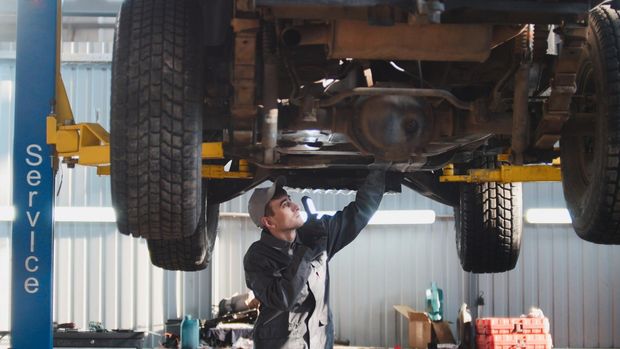
If possible, slide under the vehicle or, even better, ask the dealer to hoist the vehicle on a lift and look for signs of rust or damage to the underbody panels, suspension components and exhaust system.
Request a report
If the vehicle is not being sold with a report from an independent vehicle inspector such as Dekra, request the dealer to subject the vehicle to such an inspection and provide you with a copy of the specialist’s findings.
A report, such as those compiled by Dekra is a customised, professional used-vehicle condition evaluation completed by expert, independent, examiners. The quality of these independent reports ensures complete peace of mind when purchasing a vehicle as it virtually eliminates any nasy surprises.
Hyundai Staria vs Opel Zafira Life – Which Should You Buy?
Multi-seater MPVs have become hugely popular in South Africa and the segment has seen an influx of new products to meet the growing demand for capable and well-equipped people movers. In this article, we pit the glitzy Hyundai Staria against the fresh-faced Opel Zafira Life to determine which offers the strongest buying proposition. Take a look!
For this article, we will focus on the Hyundai Staria and Opel Zafira Life. Both these products are proving to be hugely popular in South Africa but how do they stack up against each other?
The main aim of this article is to help you, the consumer, make an informed buying decision. To help you do this, we will provide you with the need-to-know information and insight based on available vehicle information and our experience with the cars in question.
This article will cover key aspects including Engine Performance, Efficiency & Handling, Interior Features & Safety, Dimensions & Practicality and Pricing and Warranty details.
If at the end of this article you are still undecided as to ‘What To Buy’, you are more than welcome to reach out to us for additional information or advice via Twitter, Facebook or Instagram and our experienced test team will gladly assist you.
What To Buy – Hyundai Staria or Opel Zafira Life
Engine Performance, Efficiency and Ride Quality
Hyundai Staria
Opel Zafira Life
Engine
2.2-litre turbodiesel
2.0-litre turbodiesel
Power Output
130 kW
110 kW
Torque Output
430 Nm
370 Nm
Transmission
8-speed automatic
8-speed automatic
Fuel Consumption (claimed)
8.7 L/100km
6.3 L/100km
Hyundai Staria
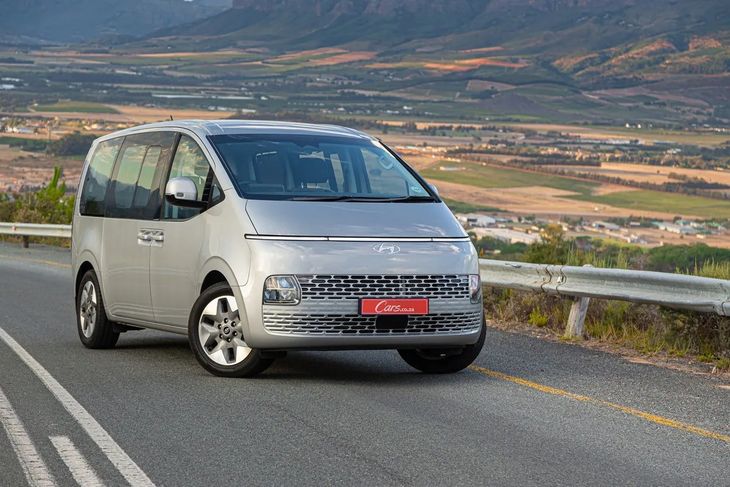
The Staria has a unique, futuristic styling approach that sets it apart from its rivals.
The Staria offers good overall performance with a fairly strong 2.2-litre turbodiesel engine doing service across the range with a welcome 130 kW and 430 Nm to exploit. This engine is paired to a smooth and responsive 8-speed automatic transmission (drive-by-wire in the Elite and Luxury derivatives) and there are well-calibrated drive modes on offer such as Eco, Comfort, Sport and Smart+ to match your intention. At start up, the engine does emit an agricultural twang but refinement improves once the Staria settles into its rhythm on the highway and it has sufficient grunt for executing overtaking manoeuvres.
The unibody Staria shares its platform with Hyundai’s Santa Fe and Palisade SUVs and the ride quality on offer is therefore far more comfortable and refined than the H1 it replaces. The Staria exhibits excellent road manners and with its light and communicative steering setup, it’s also fairly easy to manoeuvre in the city.
Fuel consumption in the Staria will vary according to your driving style and even though Hyundai claims 8.7 L/100km, figures below that are realistic.
The Zafira Life adopts a more rudimentary design approach with a rounder appearance.
Comparatively, the Opel Zafira is fitted with a smaller capacity 2.0-litre turbodiesel engine that offers 110 kW and 370 Nm and is mated with an 8-speed automatic transmission. The Zafira offers good overall performance but admittedly, you shouldn’t expect its acceleration to be as forthcoming as what’s offered by the Staria and there’s some turbo lag under harder acceleration but that’s not uncommon for turbodiesel engines and to be fair, the Staria also suffers from a degree of turbo lag too…
The Zafira Life is equipped with a rotary transmission selector, which means that you simply turn the dial to select your drive mode and this also frees up space on the fascia. The transmission itself delivers smooth shifts and contributes positively to the overall driving experience.
The Zafira’s ride quality is admirable on average quality road surfaces but the ride does become less forgiving as the surface deteriorates.
Opel quotes a claimed fuel consumption figure of 6.3 L/100km and real-world fuel consumption figures of around 7.3 L/100km can be expected, depending on your driving style.
You can, however, use our handy Cars.co.za Compare Tool to compare any vehicle derivative you like.
Hyundai Staria
Opel Zafira Life
Infotainment system
8.0-inch touchscreen infotainment system
7-inch inch touchscreen infotainment system
Digital instrument cluster
Yes, 10.25-inch TFT LCD display
No, analogue dials with central TFT display + head up display
Android Auto and Apple CarPlay, Bluetooth, voice control, USB, wireless charging
Yes to all
Yes, but no wireless charging
Radio
10 speaker BOSE sound system + 2 tweeters
10 speaker sound system
Rear View Camera
360-degree Surround View Camera
180-degree rear view camera
Cruise Control
Yes, adaptive
Yes, adaptive
Air Conditioning
Dual Zone + rear ventilation
Dual Zone + rear ventilation
Panoramic Sunroof
Dual Sunroof
Yes
Front and rear park distance control
Yes
Yes
Upholstery / electric seats
Leather, electric (front), heated
Leather, heated (front) with massage function
Safety Features
6 airbags, ABS with EBD, electronic stability control, tyre pressure monitoring, blind spot assist, lane departure warning, lane follow assist, fatigue detection, forward collision assist, rear-cross traffic collision avoidance
4 airbags, ABS with EDB, electronic stability control with traction control, tyre pressure monitoring, blind spot assist, lane-keeping assist, lane departure warning
Feature Summary
The driver’s cabin of the Hyundai Staria adopts a modern design and overall build quality is good. The range-topping Staria Luxury derivative is well specified with nice-to-have features, many of which you can expect to find in an expensive SUV which is to say that it’s not a boring, hum-drum people mover, quite the opposite, in fact.
Comparatively, the Opel Zafira Life adopts a more rudimentary design approach and while the cabin is fairly well-equipped in Elegance trim, its specification and execution can’t quite match that of the range-topping Staria (the range-topping Zafira Life is significantly cheaper though (see below)). Perceived build quality is good and the cabin has a sturdiness to it that imparts a sense of longevity, even though it might not look as “flashy” as the Staria. The Zafira’s infotainment system (and the overall cabin design) can be comparatively criticised for looking dated.
It’s worth mentioning here that the Staria Elite derivative (R964 900) has most of the key specification that is offered in the Staria Luxury (R1 104 900). The Elite, however, has a 3/3/3 row seating layout with artificial leather upholstery while the more expensive Luxury derivative employs a 2/2/2/3 9-seat layout with individual captain chairs and full leather upholstery. The Staria Elite is therefore more directly comparable to the Opel Zafira Life Elegance in terms of price, even though the Staria Elite is still almost R100k more expensive.
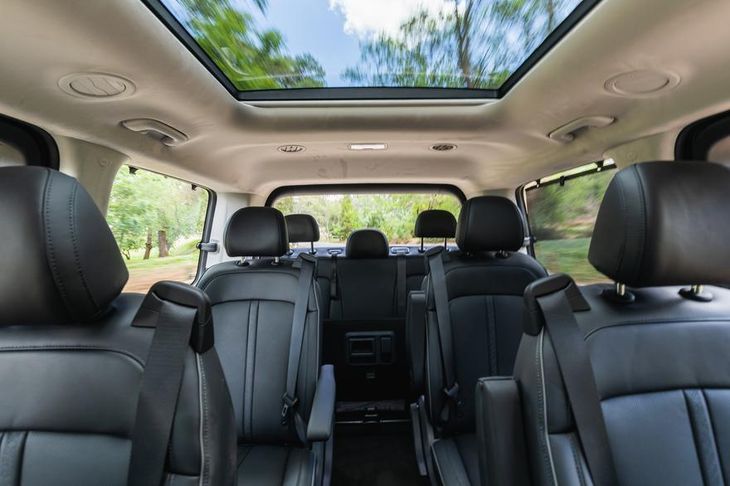
The Staria’s cabin is spacious and airy with large glass surfaces that improve outward visibility.
Both the Hyundai Staria and Opel Zafira Life are designed and built with practicality in mind but the execution of that practicality is slightly different for each brand and buyers will therefore have to decide which vehicle meets their practicality needs best.
The Staria, for instance, is offered as either a 9- or 11-seater or for those that need more loading space, a Multicab derivative is also available. As mentioned above, the seating arrangement depends on the derivative you choose and the seats feature posture control for added comfort. The window surfaces are also much larger which improves outward visibility for passengers. The Staria Elite and Luxury derivatives feature 2 electric sliding doors that allow for easy access to the cabin and there’s sufficient storage, cup holders and ventilation and charging ports for passengers. A rail system makes it easy to either prioritise legroom or load space depending on the requirement and Hyundai claims loading space at up to 1 303 litres (Staria Elite) which makes the Staria a flexible and accommodating vehicle choice.
The Zafira Life offers flexible seating and convenient features that rear passengers will appreciate.
The Opel Zafira Life hits back with a fine set of practical skills of its own and it can seat up to 9 passengers comfortably. The Zafira’s seats also work on a rail system to either prioritise legroom or storage and they can either be folded down or removed completely if you want to open up the cabin. Depending on your needs, captain chairs can be fitted or bench seating with individual seats is also possible. The seats can also be positioned to face each other. More so, the Zafira Life is equipped with a foldable table and convenient trays on the back of the front seats. There’s also ample storage and ventilation for rear passengers. Like the Staria, the range-topping Zafira Life Elegance also has 2 electric sliding doors and Opel claims up to 1 060 litres of load space. A unique feature is the tailgate window which opens upwards to provide access to the cabin without opening the tailgate.
So, what’s it going to be? The combination of the Staria’s styling appeal, modern and thoughtful interior execution and comprehensive after-sales support makes it an attractive choice in this segment, if you can afford it, that is. The Staria is a pricey proposition but we think the Staria Elite is the sweet spot in the range as it offers most of the tech and nice-to-haves but at a price currently below R1 million!
However, if you are the type of person who cares less about pomp and fluff and just want a no-frills people mover and will be happy with a few extra thousand Rands in your pocket, then the Opel Zafira Life makes a strong case for itself. Yes, it might not be the “fashionable” purchase but the Zafira Life represents comparatively good value at its price point with sufficient comfort and safety features to meet most buyers’ needs.
This is no doubt a difficult choice to make for any buyer considering vehicles in this segment and as always, we advise that you take the time to visit your nearest Opel and Hyundai dealership and take the Zafira Life and Staria for a test drive. Experiencing the cars in the metal will help you make up your mind!
BMW M fans, brace for electrification. The new M2 will mark the end of an era as the final full-fat M car powered by a pure combustion engine, according to the performance division’s CEO…
Frank van Meel, the head of the BMW M division, has confirmed the upcoming second-generation M2 coupé will be the last full-fat M car without some form of electrification, just as a fresh image of the high-performance coupé leaked online.
The new G87-generation M2 is scheduled to be revealed later in 2022 as one of a flurry of fresh performance models (including the M4 CSL, M4 50 Jahre Edition and M3 Touring) launched to celebrate 50 years of BMW’s M brand. However, the image above seemingly showing the undisguised rear end of the newcomer was recently posted on Instagram by user @wilcoblok.
Though the Munich-based firm has yet to release much in the way of official details, the new M2 is expected to inherit the turbocharged 3.0-litre, straight-six engine already used in the likes of the M3 and M4. In the most compact M product, the S58 unit is expected to generate peak outputs of around 335 kW and 550 Nm.
Based on the latest 2 Series coupé architecture, the new rear-driven M2 will be positioned above the all-wheel-drive M240i and likely again be initially produced in two engine derivatives (with corresponding M2 and M2 Competition badges, though it seems plausible South Africa will receive only the latter).
In an interview with BimmerToday, Van Meel confirmed the upcoming M2 would effectively close the chapter of pure internal-combustion M cars.
“The [new] BMW M2 will definitely be a purist driving machine with its straight-six [engine] and rear-wheel drive. We will see increasing electrification in other vehicles, of course in different forms, starting with the 48-volt electrical system and plug-in hybrids to fully electric drives,” he said.
“From this point of view, the M2 will be the last M with a pure combustion-engine drive and also without electrification scope such as a 48-volt on-board network,” Van Meel told the German publication, before furthermore confirming the new M2 would be available (depending on the market, of course) with the option of a six-speed manual gearbox (in addition to an automatic gearbox).
Electrification of the M brand has already commenced at the other end of the line-up, with the upcoming XM – which is set to go into production before the end of 2022 as the division’s second standalone model – down to employ a plug-in hybrid powertrain based around a V8 petrol engine.
Expect 48-volt systems, hybrid set-ups and ultimately fully electric powertrains to be introduced to other M cars in the coming months and years…
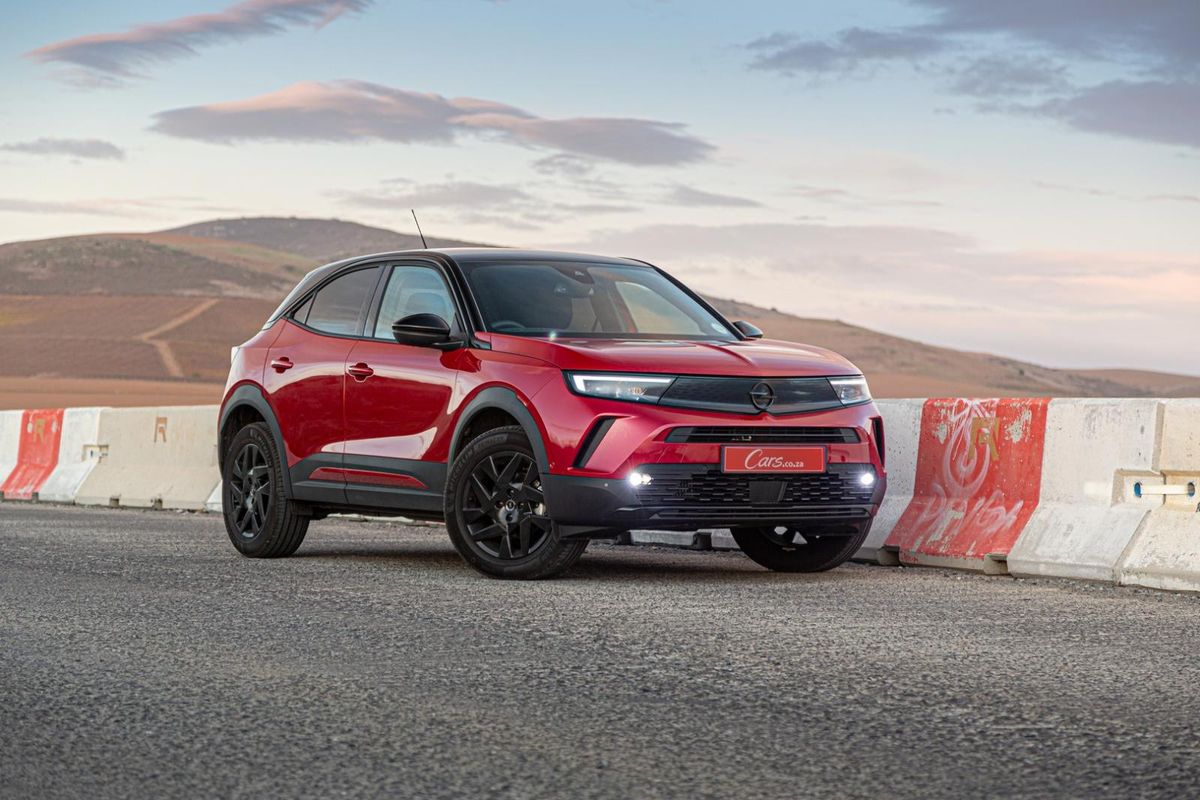
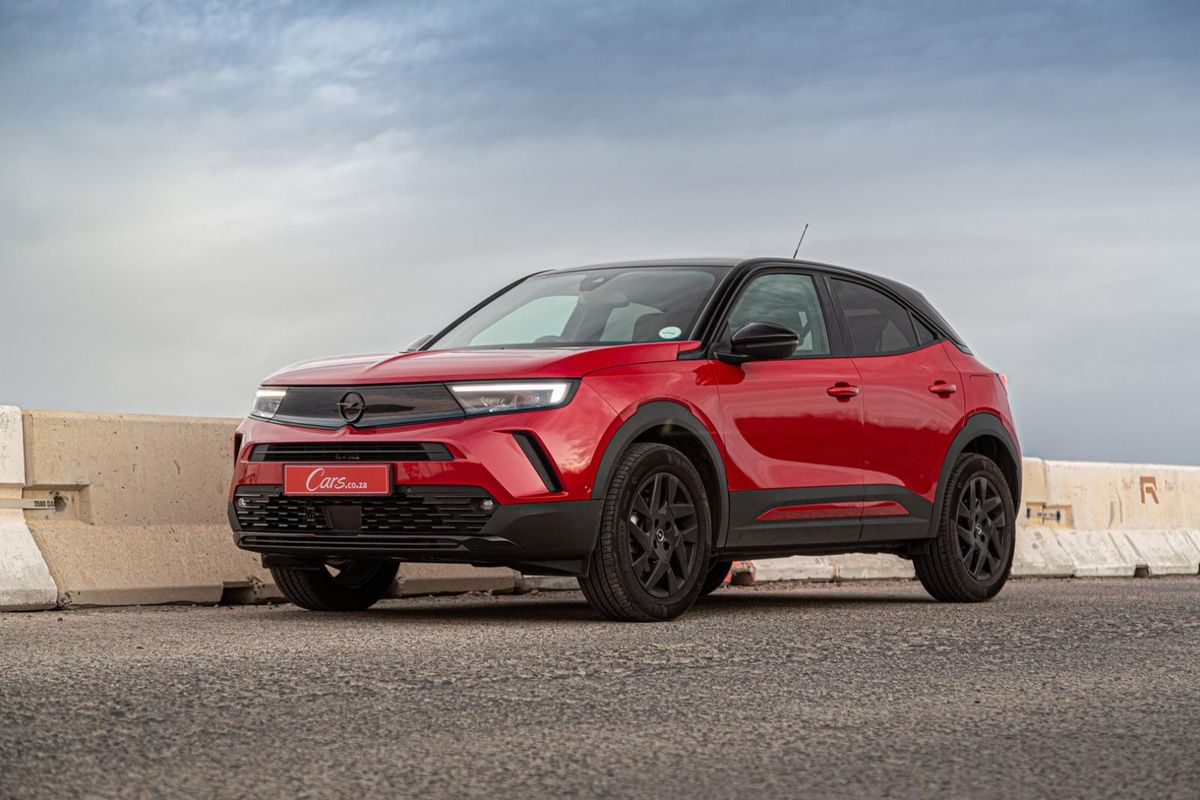
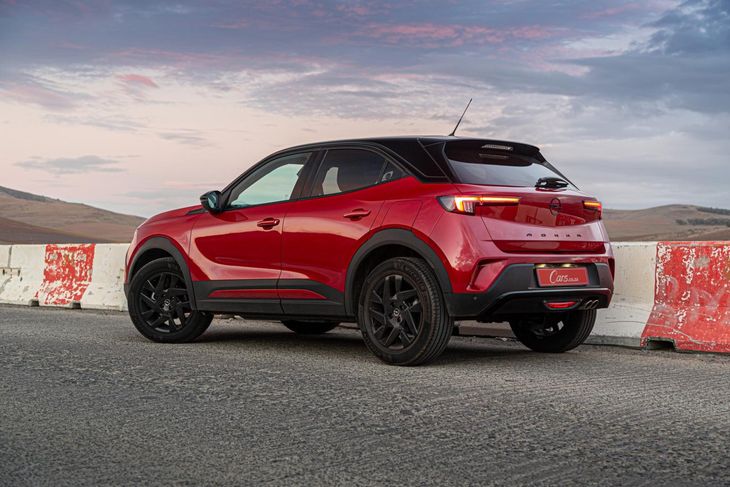
Opel Mokka (2022) Review
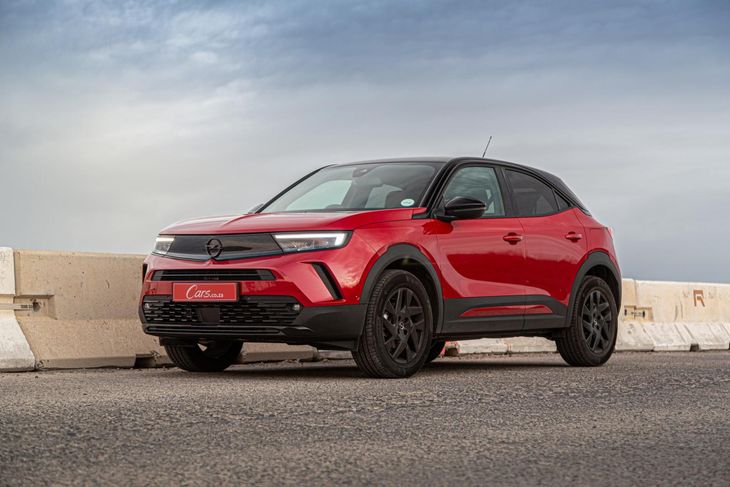
Opel has gained a new lease of life under the custodianship of the Stellantis group and the fresh-faced Mokka premium crossover – now available in Mzansi – embodies the brand’s revival.
We like: Design, quality, ride and handling, performance and efficiency
We don’t like: Cramped rear seats, small load bay, awkward ergonomics
Opel has taken a few more risks with the design of this new-generation Mokka.
The compact crossover/small-SUV segment continues to be the “darling” of the motor industry, which explains why it has become the fiercest battleground in the new-vehicle market! Whereas the B- (Polo) or C- (Golf) hatchback segments were all-important in the past, brands are increasingly abandoning those shrinking “legacy” sectors and doubling down on crossovers.
Opel is a prime example of a brand that’s strongly focused on producing family cars with hiked-up ride heights and off-road-inspired exterior styling. Whereas it is best-known in this country for its Corsa and Astra models, the Russelsheim-based brand’s line-up is increasingly dominated by crossovers (in fact, it has confirmed that the new Astra won’t come to South Africa). It currently offers the (recently refreshed) Crossland, Grandland X and now, all-new Mokka.
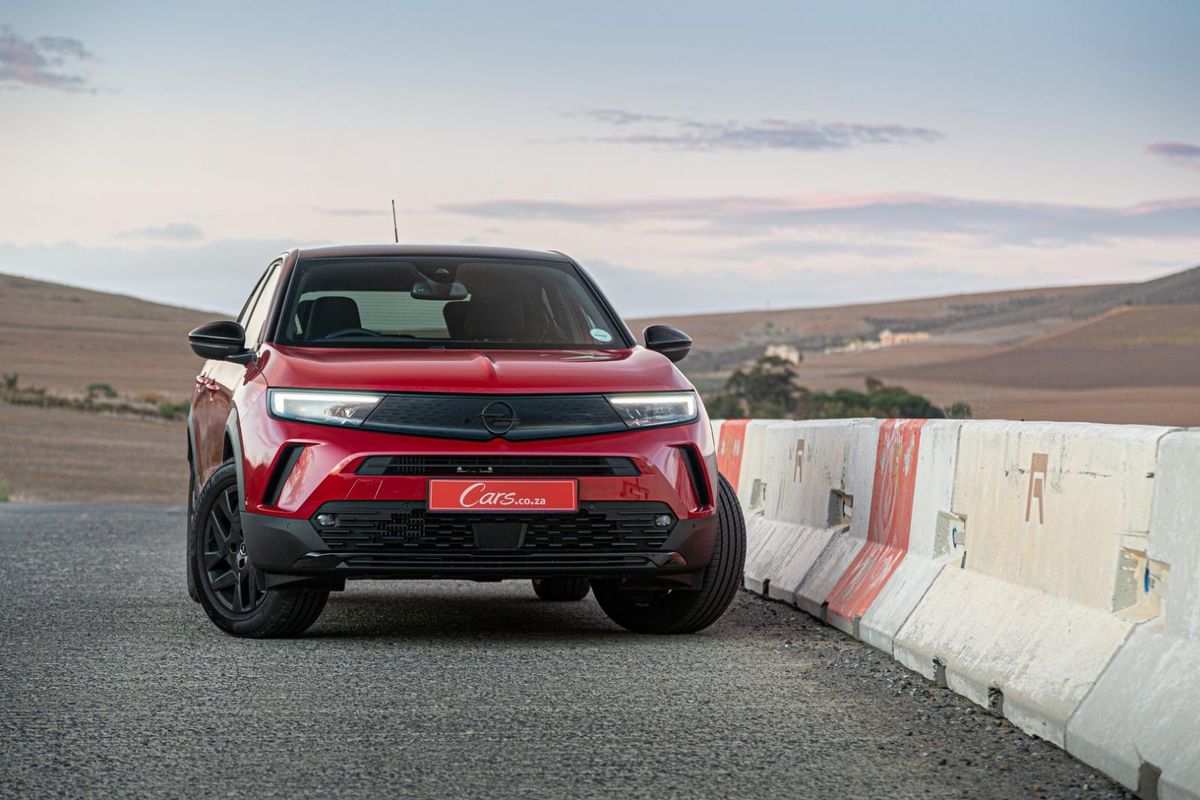
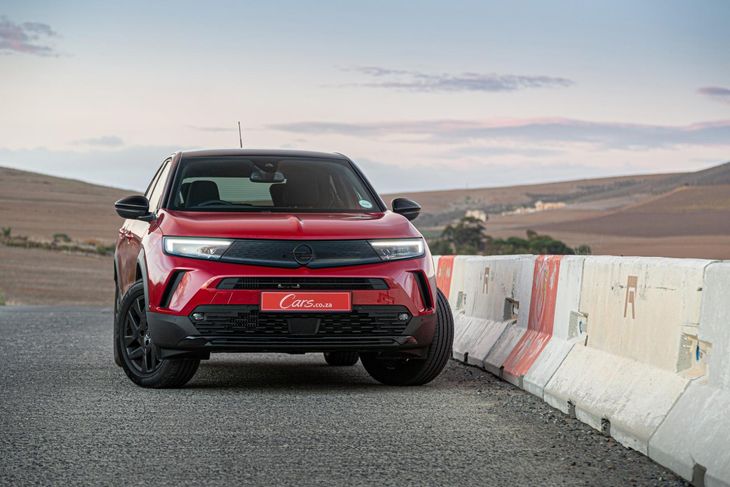
The new generation Mokka is instantly recognisable by virtue of its “Vizor” grille.
Of course, the Mokka name is not new; the original car was one of the first crossovers of its size to reach the market, and it had a long, relatively successful production life from 2012 to 2019. But this new model is a rather different proposition.
Based on the same underpinnings as the Peugeot 2008/208 and latest Opel Corsa, it is targeted squarely at the premium “boutique” end of the market, leaving the Crossland to compete with more practical, family-oriented offerings such as the Hyundai Creta, Kia Seltos, Toyota Corolla Cross and Volkswagen T-Cross etc.
So, in short, the new Mokka is aimed at buyers who prioritise look-at-me kerb appeal, high-end technology and premium quality over practicality and value for money. The Mokka is an undeniably striking machine, but does it have the goods to put Opel back in the running in South Africa against the likes of the Hyundai Kona, Honda HR-V, Mazda CX-30 and Volkswagen T-Roc (to name just the most well-known contenders)? There’s only one way to find out…
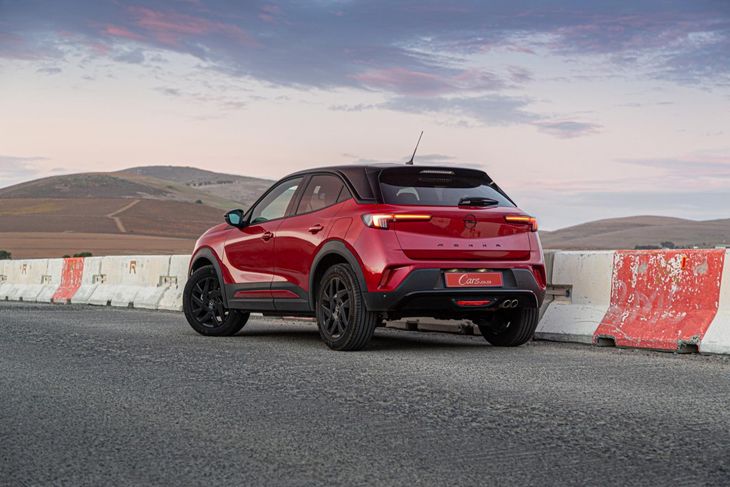
The tight proportions and a short wheelbase give the Mokka a distinctive road presence.
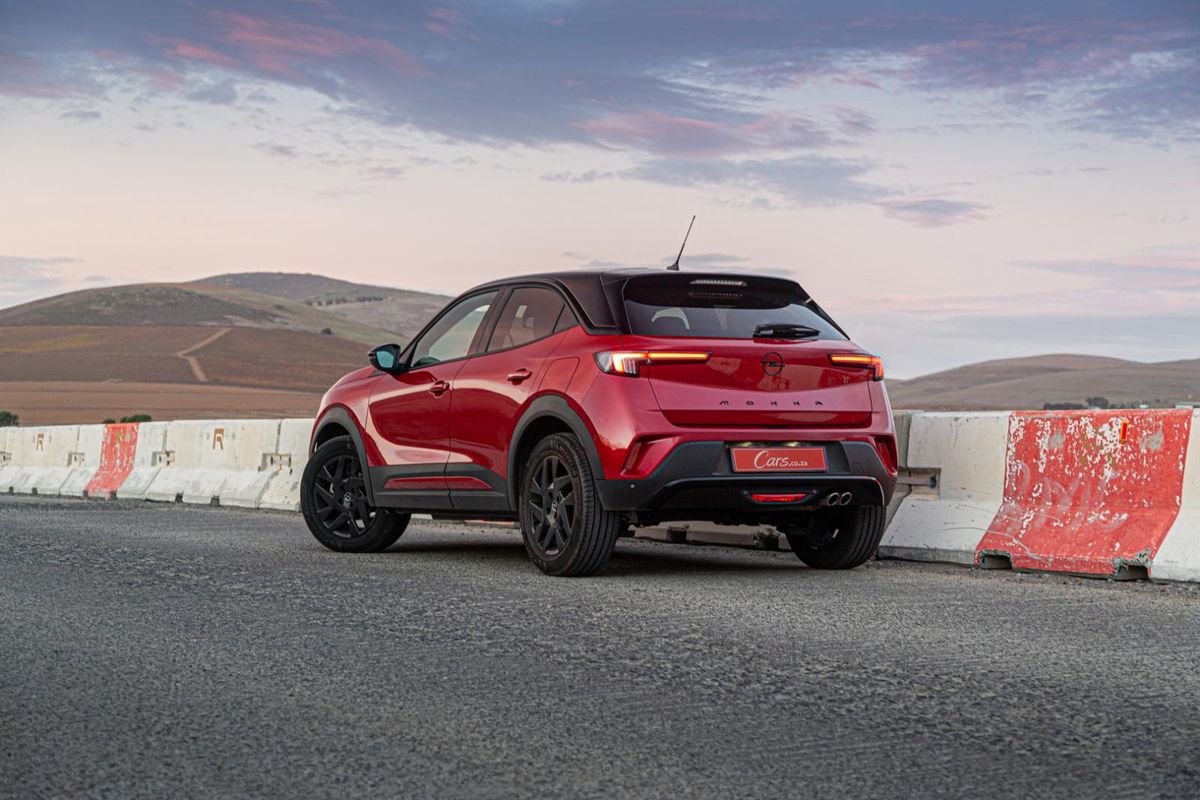
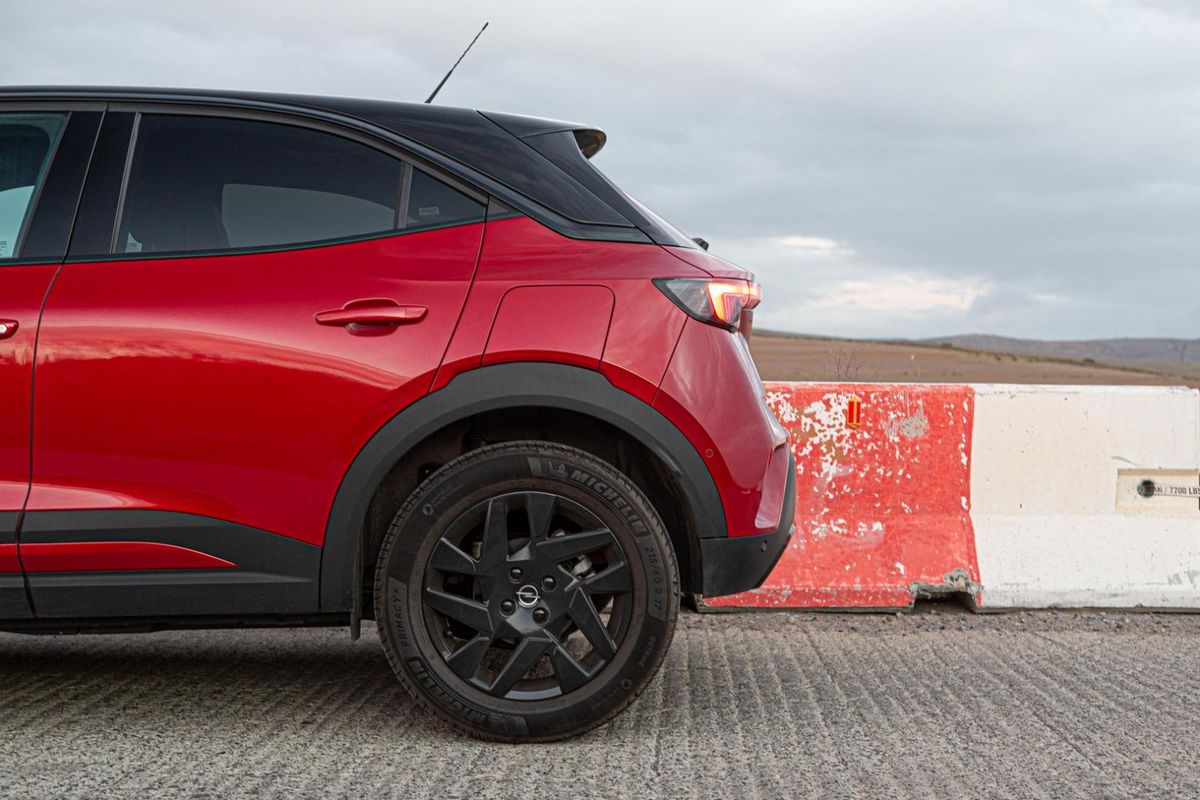
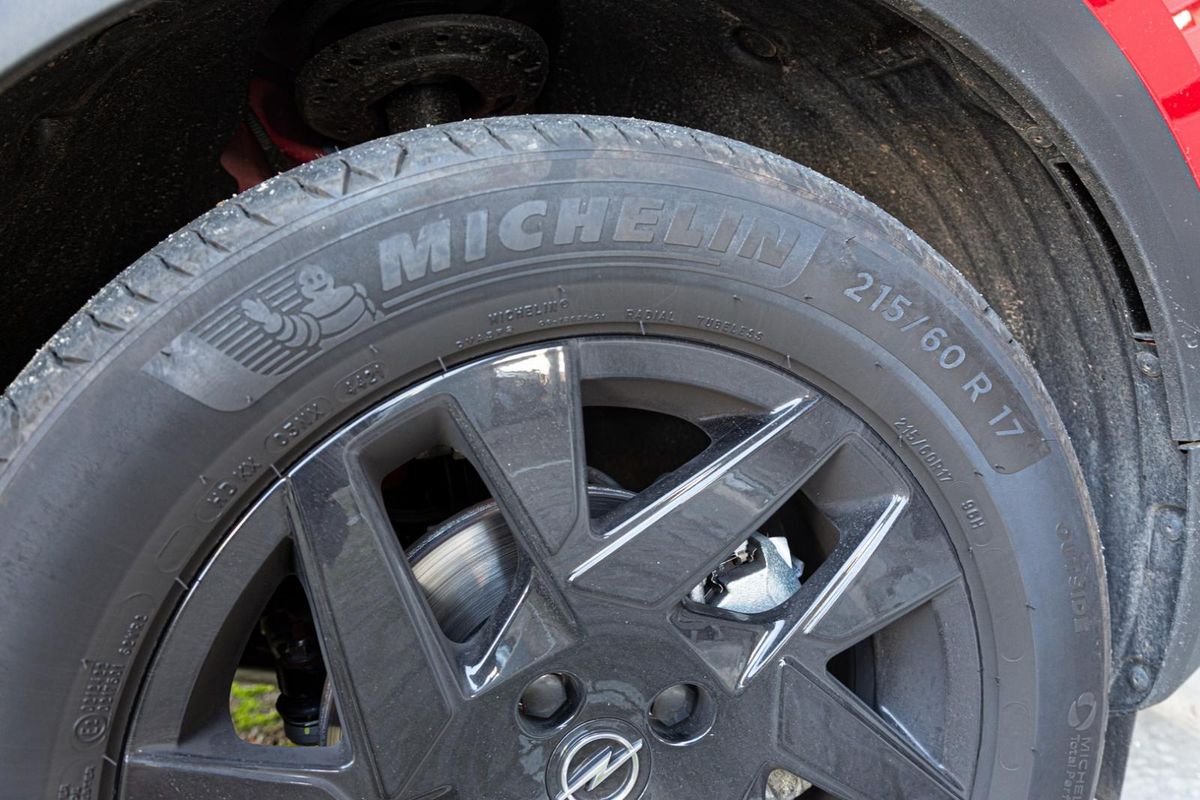
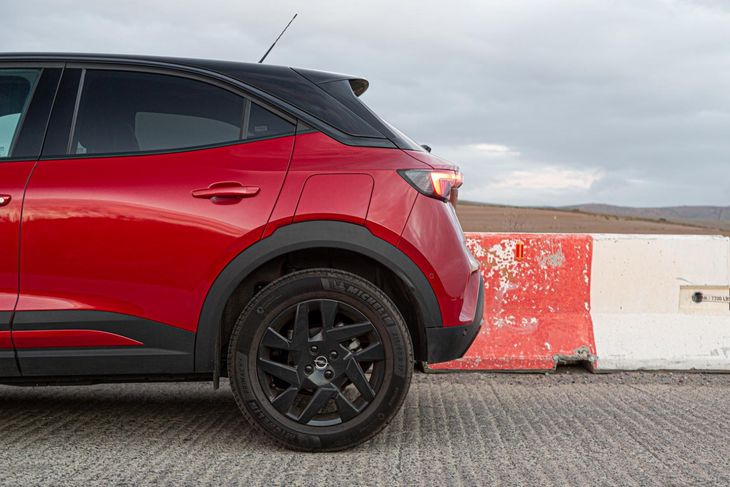
It’s a looker, that’s for sure. Featuring chiselled lines and Opel’s so-called new “vizor” face, the Mokka adds a welcome dash of flair to the German firm’s otherwise conservative local line-up. In many ways, the newcomer is symbolic of a brand that’s been revitalised. In South Africa, 2 Mokka derivatives are offered (powered by the same engine), and the one featured in this review is the flagship 1.2T GS Line… it can be distinguished from its Elegance sibling by its contrasting gloss black roof, 17-inch alloy wheels, rear privacy glass, blacked-out sections on the bumpers, and the standard fitment of Opel’s Matrix Lamps Pack (including directional LED headlamps – with levelling control – and LED taillamps).
Although it’s based on the same underpinnings as the Peugeot 2008 (which is a smash-hit in the European market), the Mokka boasts rather different proportions. It’s of similar width, but 150mm shorter and fractionally lower than its French cousin and has a shorter wheelbase. Consequently, the Opel is a sportier-looking compact crossover than the 2008, not to mention its main rivals.
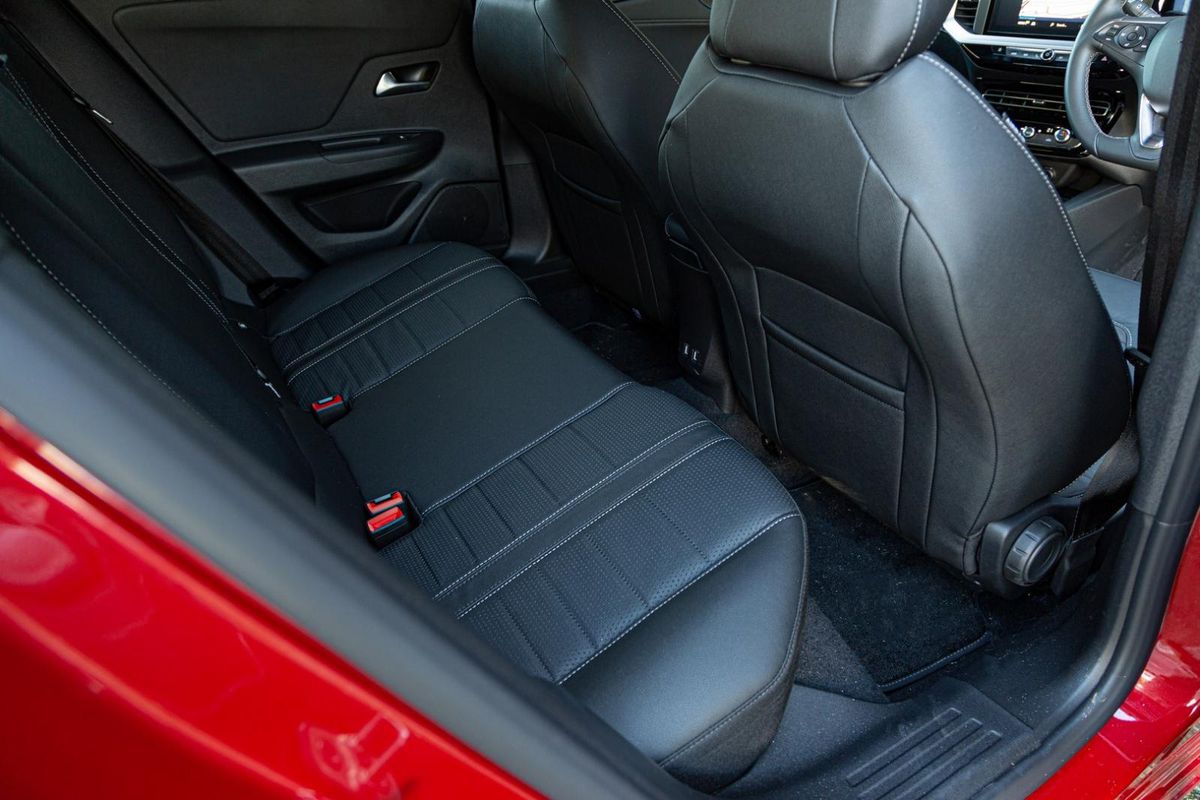
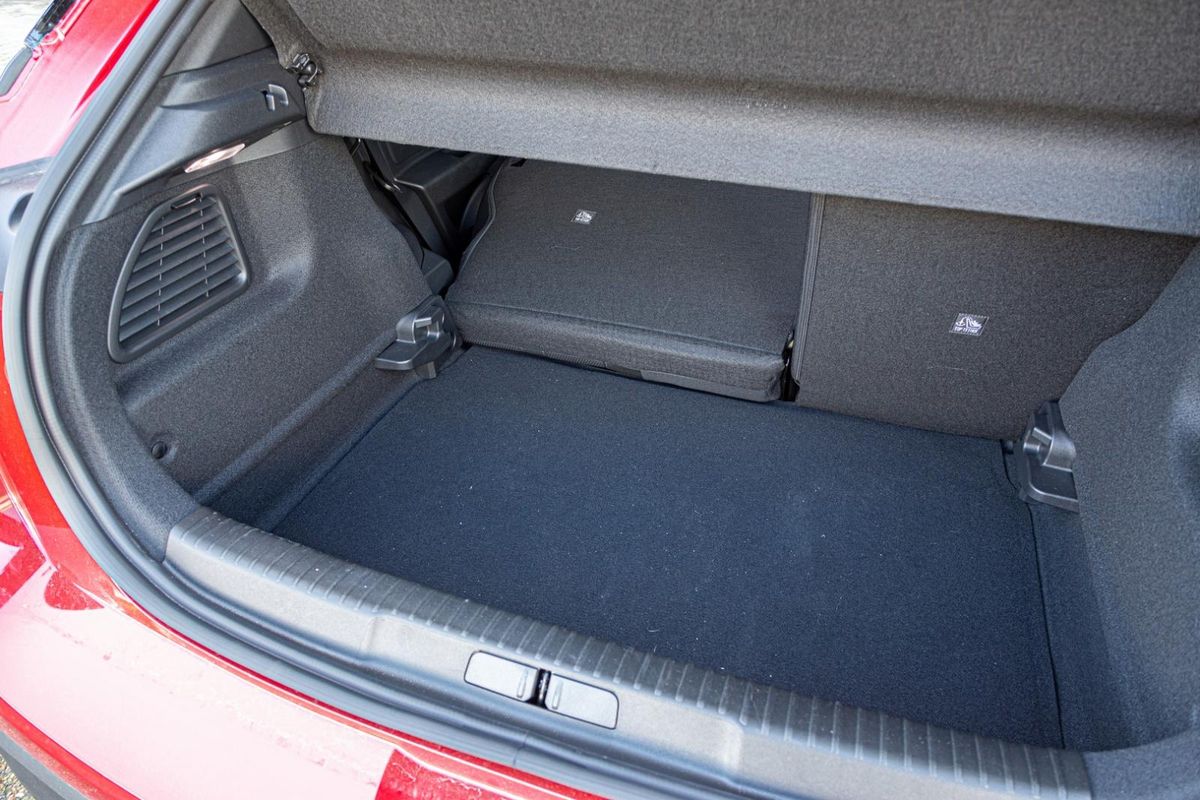
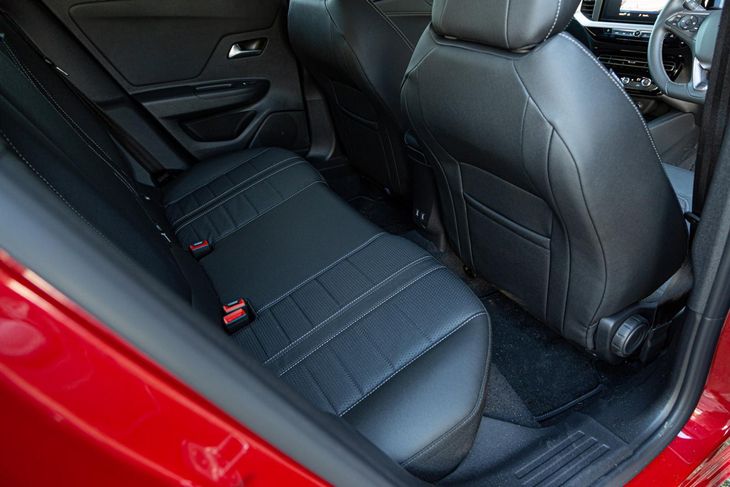
Those dimensions do have some implications on interior packaging, however. With its shorter wheelbase and body, the Mokka offers less rear legroom than the Kona, HR-V and T-Roc and less luggage capacity than the Hyundai and VW.
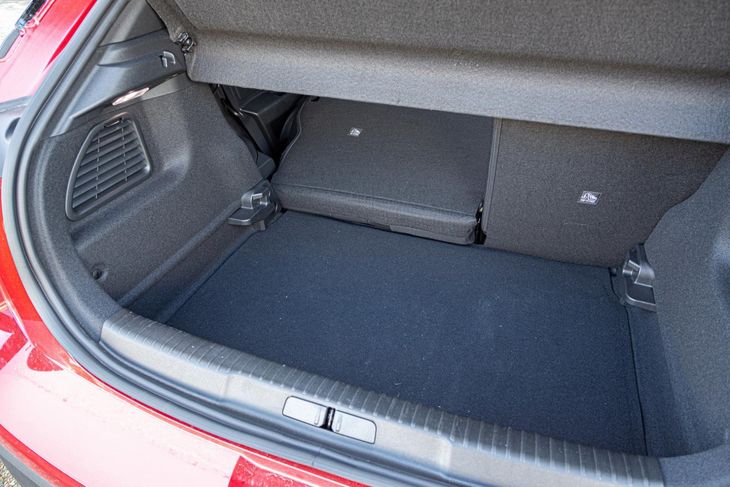
Look, the Mokka’s rear occupant space will be fine for the purposes of transporting small children, but the newcomer should not be viewed as a family-car offering, anyway. Think of it rather as a more affordable Audi Q2- or BMW X2 type of vehicle. For the record, the Mokka has a claimed load-bay capacity of 310 litres, whereas the Kona offers 544 litres, the HR-V 304 litres, the CX-30 295 litres and the T-Roc 445 litres.
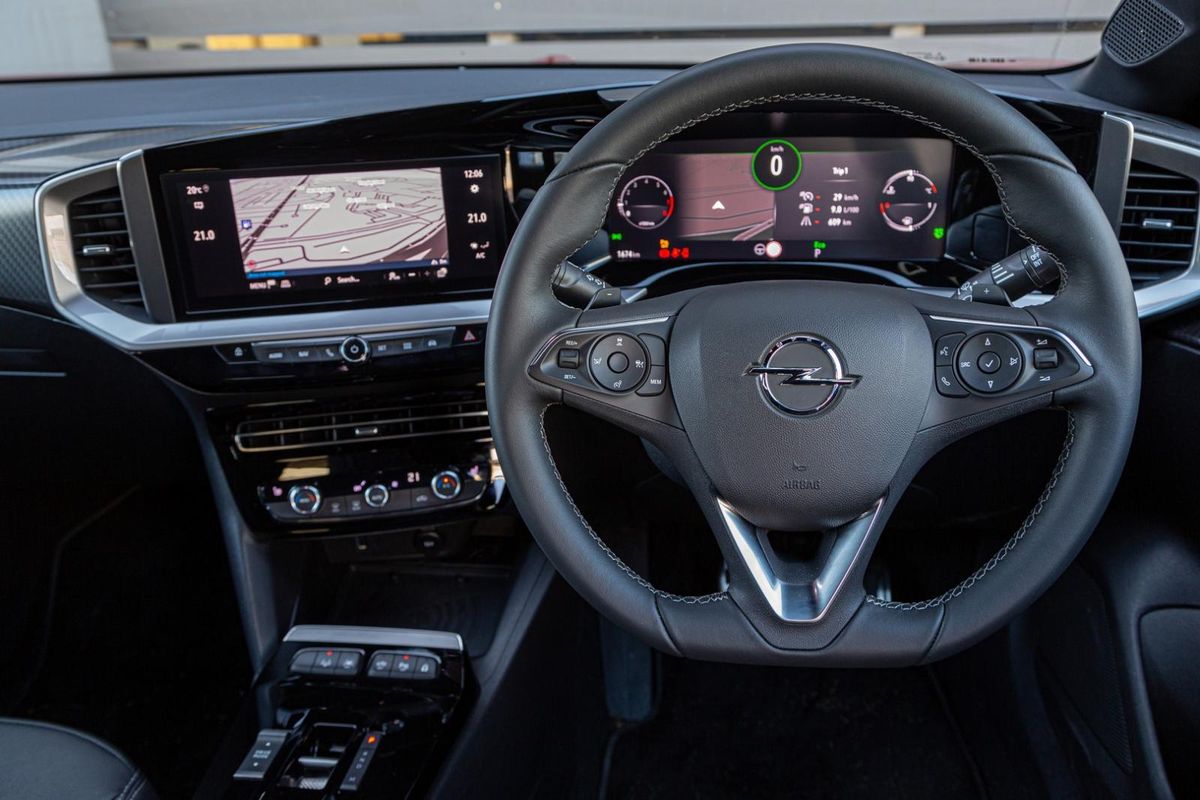
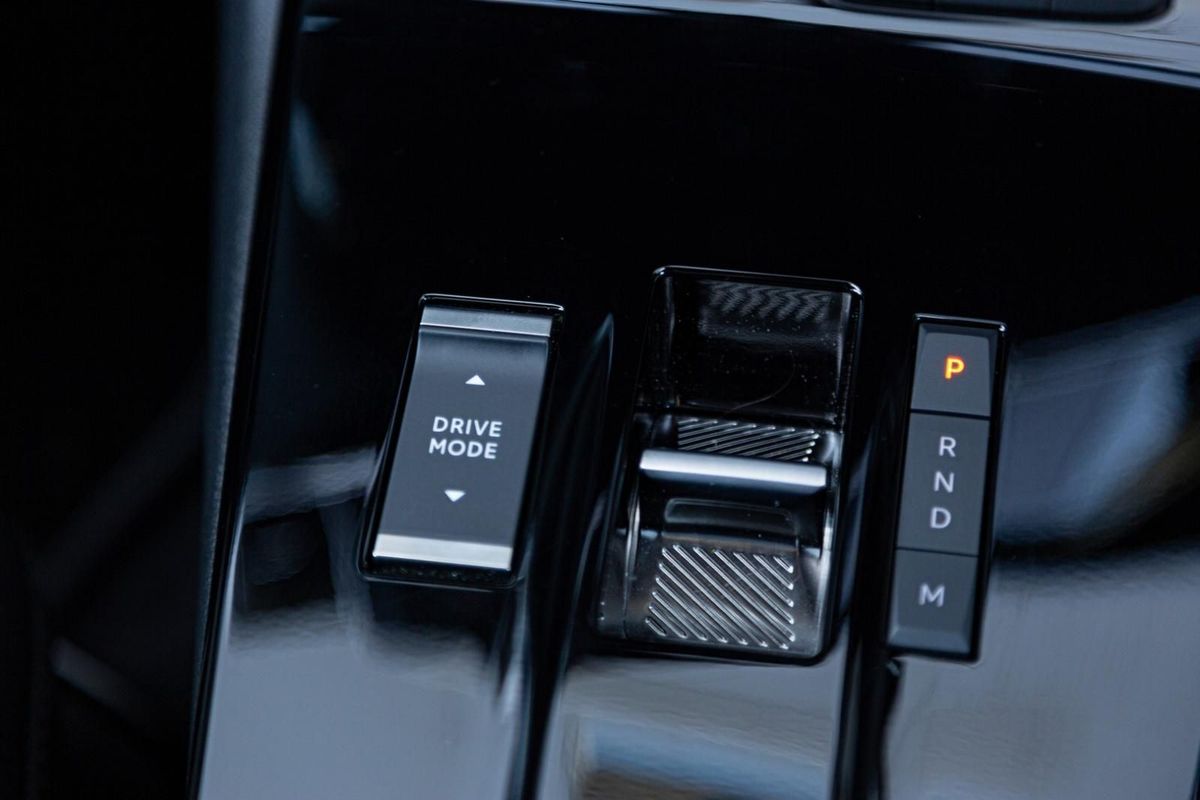
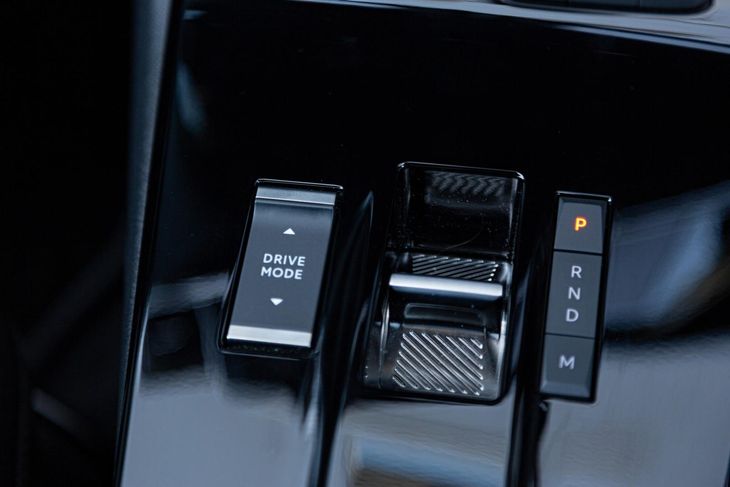
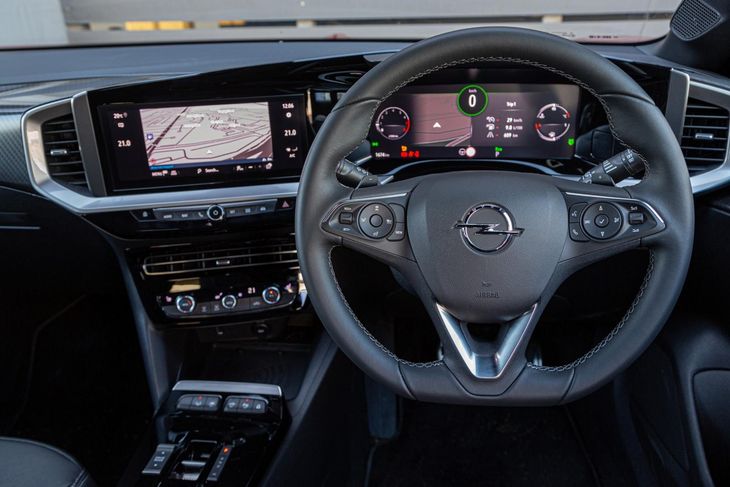
Space is considerably more generous up front, but the Mokka’s packaging is rather quirky. The fascia has a very flat, upright structure and the lack of a bulky transmission tunnel with a transmission lever creates the sensation of “sparseness”. In fact, the ergonomics might be problematic for some drivers… the low-slung seating position encourages an “arms stretched-out” driving position, but that makes reaching the infotainment system’s touchscreen a bit of a stretch.
The Mokka’s load-bay capacity (310 litres) is less than those of its Hyundai and Volkswagen rivals, but it’s not the smallest in class.
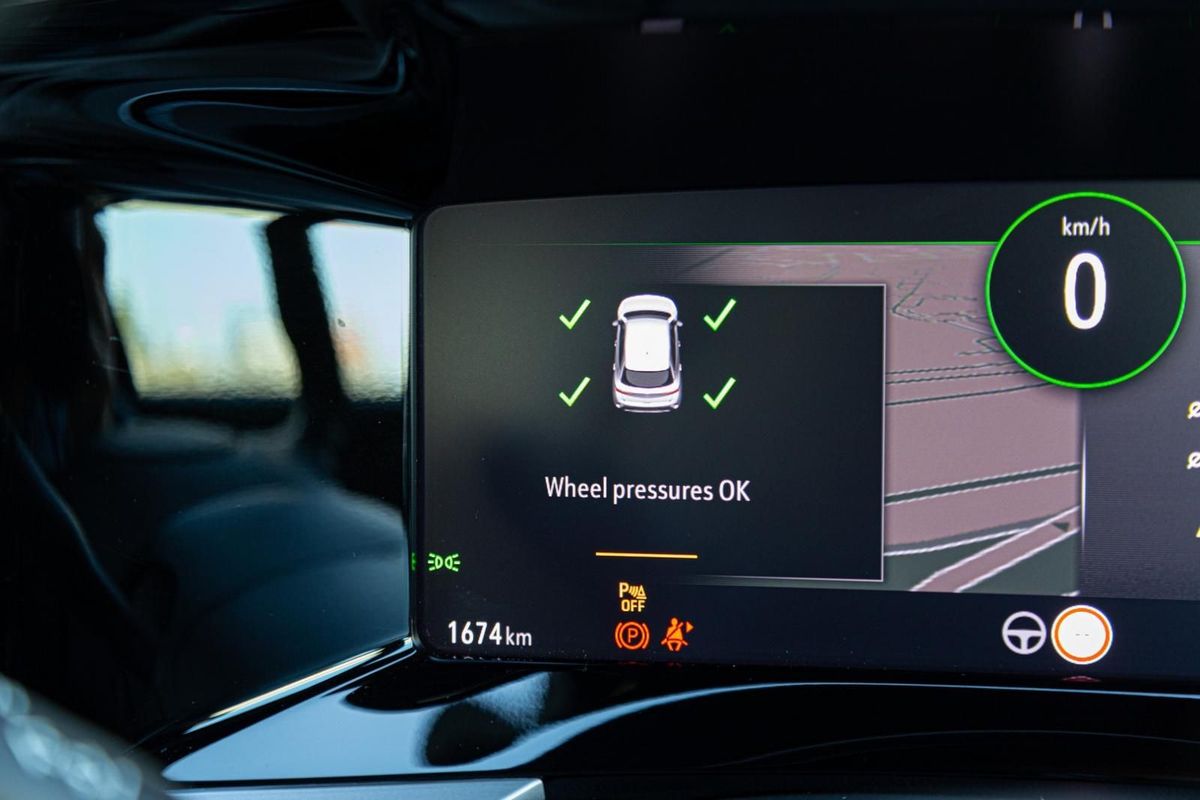
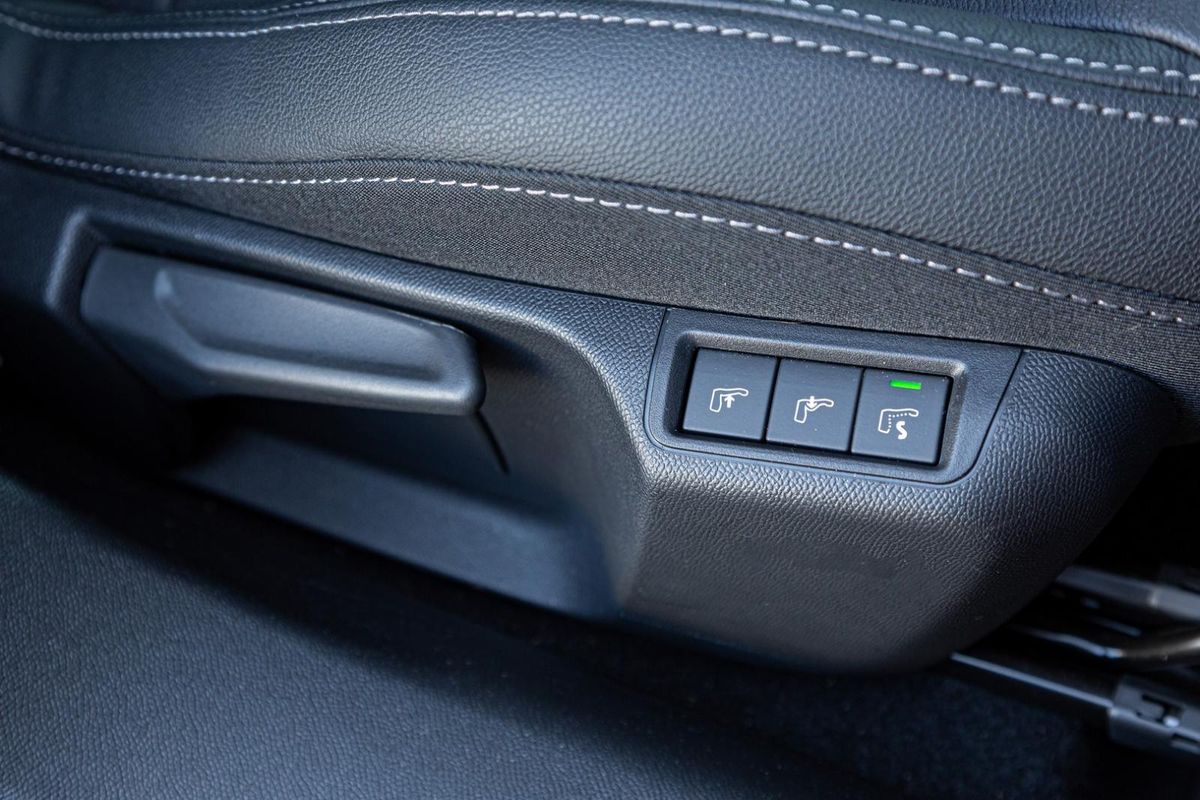
Of course, with a generous range of adjustments available from the steering column (rake and reach) as well as the seat (manual height), you will most likely be able to find a position that works for you, but it will take a while to get used to the layout. It’s also somewhat bizarre that the driver’s seat offers electric lumbar support, massaging and heating – but it has to be adjusted manually.
From behind the ‘wheel, when seated in the well-bolstered driver’s seat and looking over the bonnet with its centre “spine” – a feature taken from the iconic Manta coupe – the Mokka feels more like a sporty hatchback than a tame crossover.
Performance and Efficiency
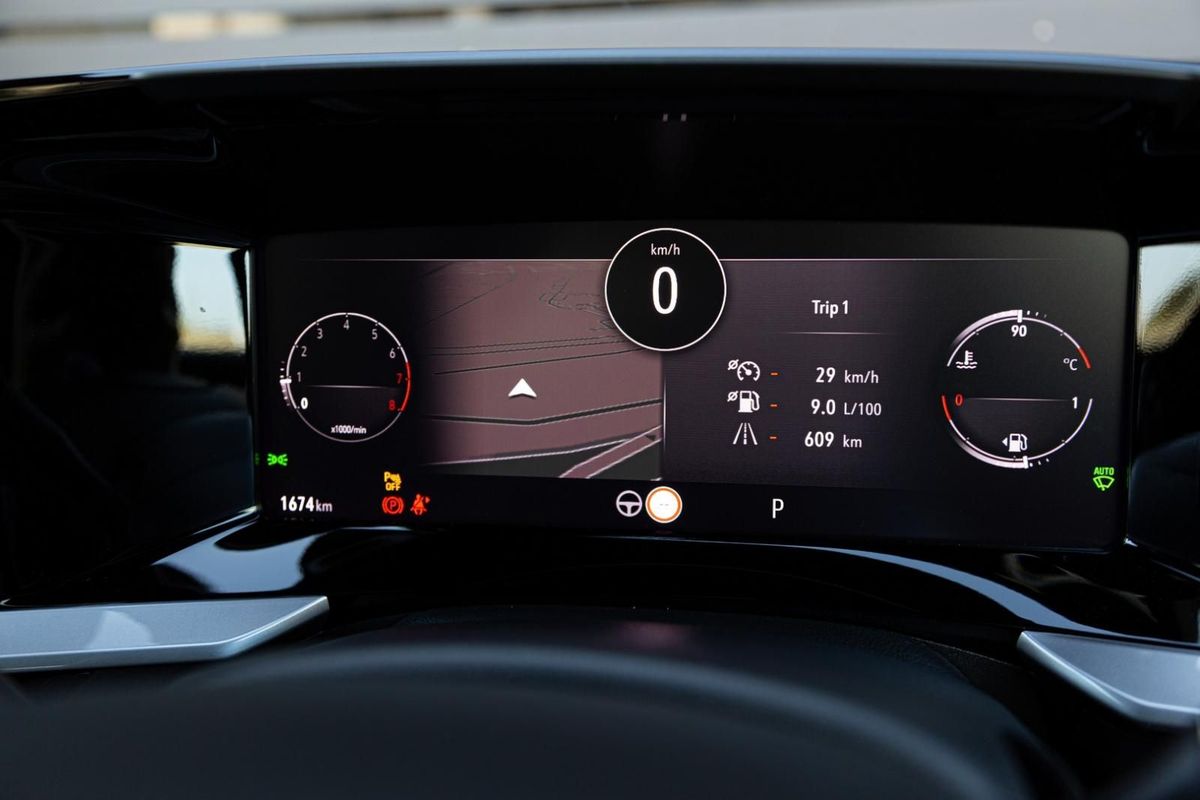
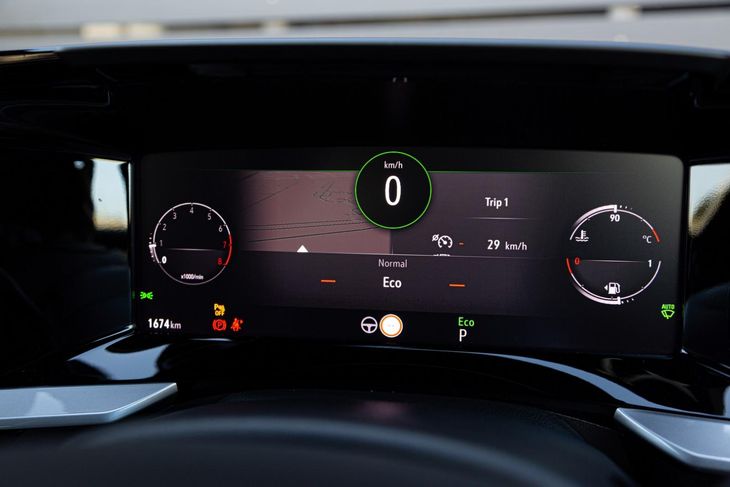
The instrument cluster is a fully digital affair nicely laid out.
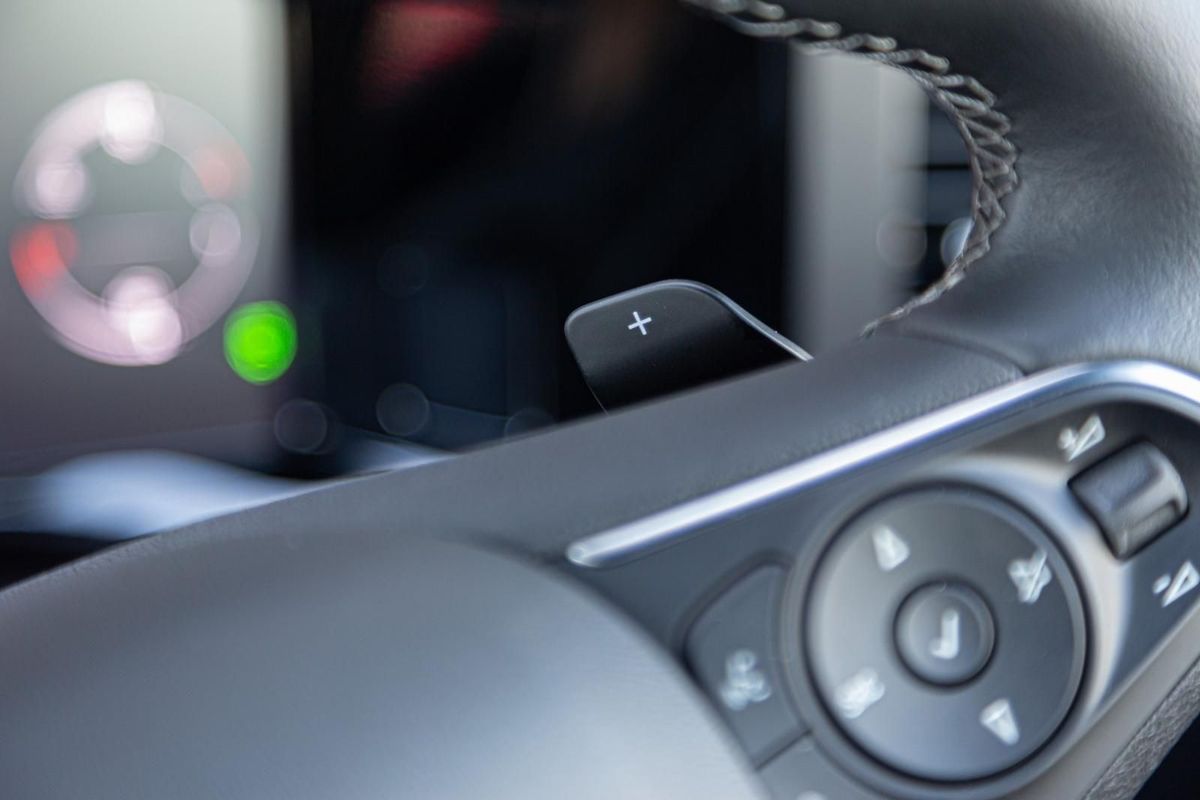
Does the new Mokka have the go to match the show? The short answer is yes. It may only have a 1.2-litre 3-cylinder turbopetrol engine under the bonnet, but it’s a punchy unit that emits a rorty, eager soundtrack. It delivers 96 kW and a substantial 230 Nm of torque, with power going to the front wheels via an 8-speed automatic transmission (paddle shifters are fitted to the steering wheel, should you ever feel inclined to actuate manual gear changes).
While the Opel’s peak outputs can’t match those of the comparably-priced Kona and T-Roc (it does produce slightly more torque than the CX-30 and outguns the HR-V), the Mokka is lighter than all of them (but the VW) and has been geared to feel very nippy around town. There are 3 drive modes available (Normal, Eco and Sport), and Opel claims a 0-100 kph time of 9.2 sec, which is not, um, “niche-leading”, but definitely on the brisk side for a compact crossover of its kind.
Out on the open road and at higher speeds, the Mokka is a relaxed, refined cruiser, and its 8-speed automatic transmission is really well-matched to the small-capacity turbopetrol engine’s power-delivery characteristics.
In terms of fuel economy, the Mokka has the edge on most of its rivals, at least according to our New Car Specs database. Opel claims an average consumption figure of 6.1 L/100 km for this derivative, which is slightly lower than the T-Roc (6.2 L/100 km) and just behind the HR-V (6.0 L/100 km). You may struggle to achieve efficiency in the 6.0 L/100 km ballpark in real-world conditions, but a return of around 7L/100 km would be good. The tank is small, however (44 litres).
Comfort and Features
The Mokka 1.2T GS Line comes with a very high level of standard specification.
As the flagship of the (admittedly truncated) Mokka line-up, the 1.2T GS Line packs a generous array of features into its compact body. Appearance-wise, the front of the Opel’s cabin looks decidedly technologically advanced, courtesy of a high-res digital dashboard, as well as a 10-inch infotainment touchscreen endowed with Apple Carplay and Android Auto compatibility. Built-in navigation is also present (it’s not a given in an era of smartphone route-guidance apps), and the display features a 180-degree augmented camera view that detects rear traffic/objects. A wireless smartphone charging pad is provided at the front (complemented with a USB outlet), while 2 more USB ports are availed to aft occupants.
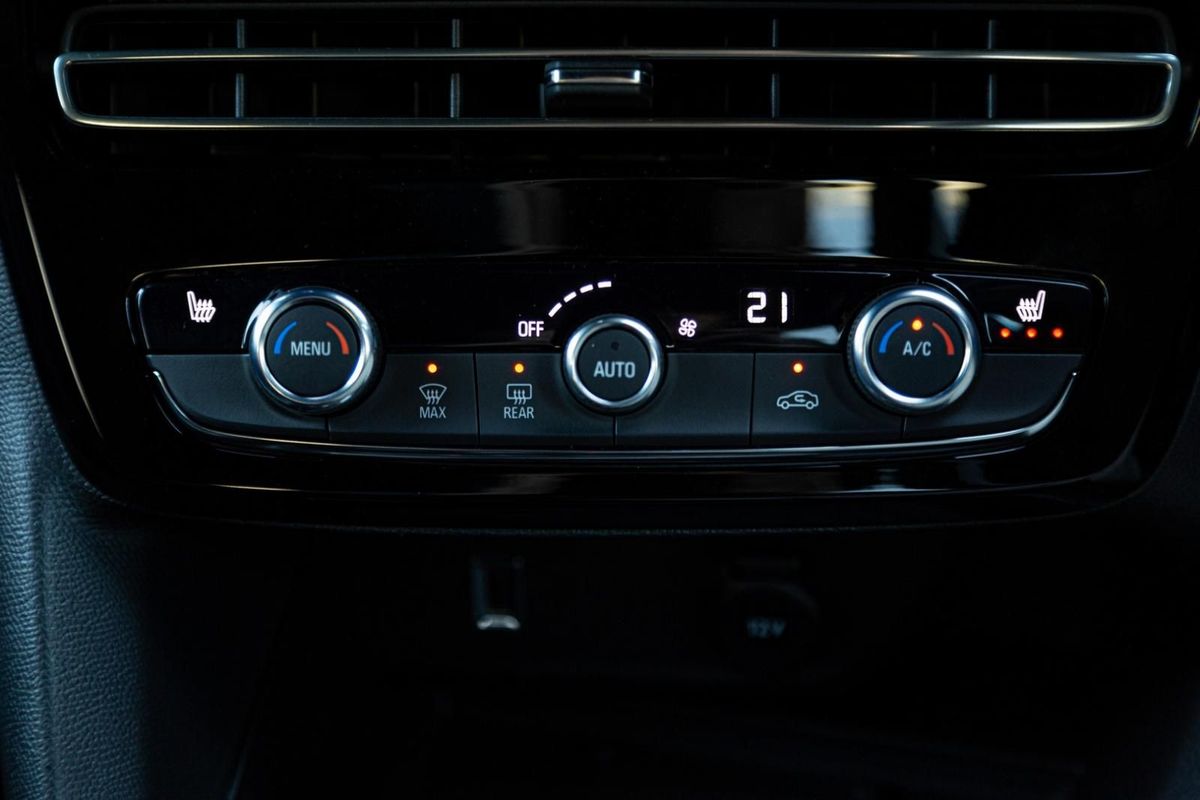
Although the Mokka shares many components with its Stellantis group siblings, its switchgear is still marked in “Opel font”.
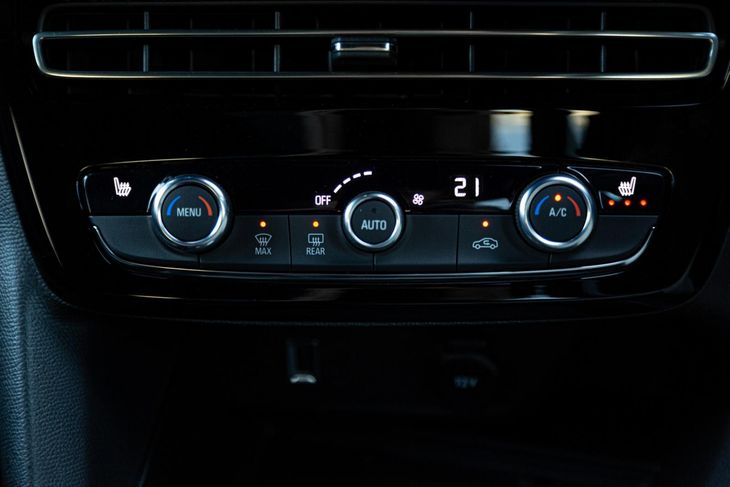
The 1.2T GS Line also features smart leather upholstery, as well as (fake) carbon-fibre trim and satin-silver finishes to break up the rather sombre (black) ambience. Dual-zone climate control is standard, as are auto lights and -wipers.
In terms of safety specification (also see the section under Ride and Handling), the Mokka ticks most boxes. Opel’s newcomer comes equipped with 6 airbags, but although it scored 4 – not 5 – stars in a recent EuroNCAP crash test (to a many people’s surprise), note that the car-safety authority awarded that rating because the Mokka wasn’t equipped with active emergency braking for cyclists or a centre airbag. Therefore, it had nothing to do with the car’s structural integrity.
Ride and Handling
The Mokka proves fun and enjoyable to drive while also being quiet inside.
Considering the admirable ride and handling characteristics exhibited by other models that are based on the ex-Peugeot-Citroen Common Modular Platform, we had high expectations of the Mokka – and it certainly didn’t disappoint. Very few small cars manage to strike such a wonderful balance of roll-free, sharp dynamics and suppleness. The Mokka rides bumps in a manner that befits a bigger, well-damped luxury car, yet its body doesn’t yaw alarmingly and the handling remains precise when the car’s made to corner briskly – the sporty looks and low-slung driver’s position aren’t just for show! This is a crossover that you’ll enjoy driving; the pleasingly weighted steering and sharp handling are certainly bonuses!
Perhaps equally impressive is the Mokka’s NVH (noise, vibration and harshness) control. Cars that prioritise sportiness and weight-saving measures tend to exhibit excessive road- or wind noise, but the Mokka’s cabin is a calm and tranquil place, which speaks volumes of excellent body rigidity and no skimping on insulation materials. In short, it rides and feels like a quality product.
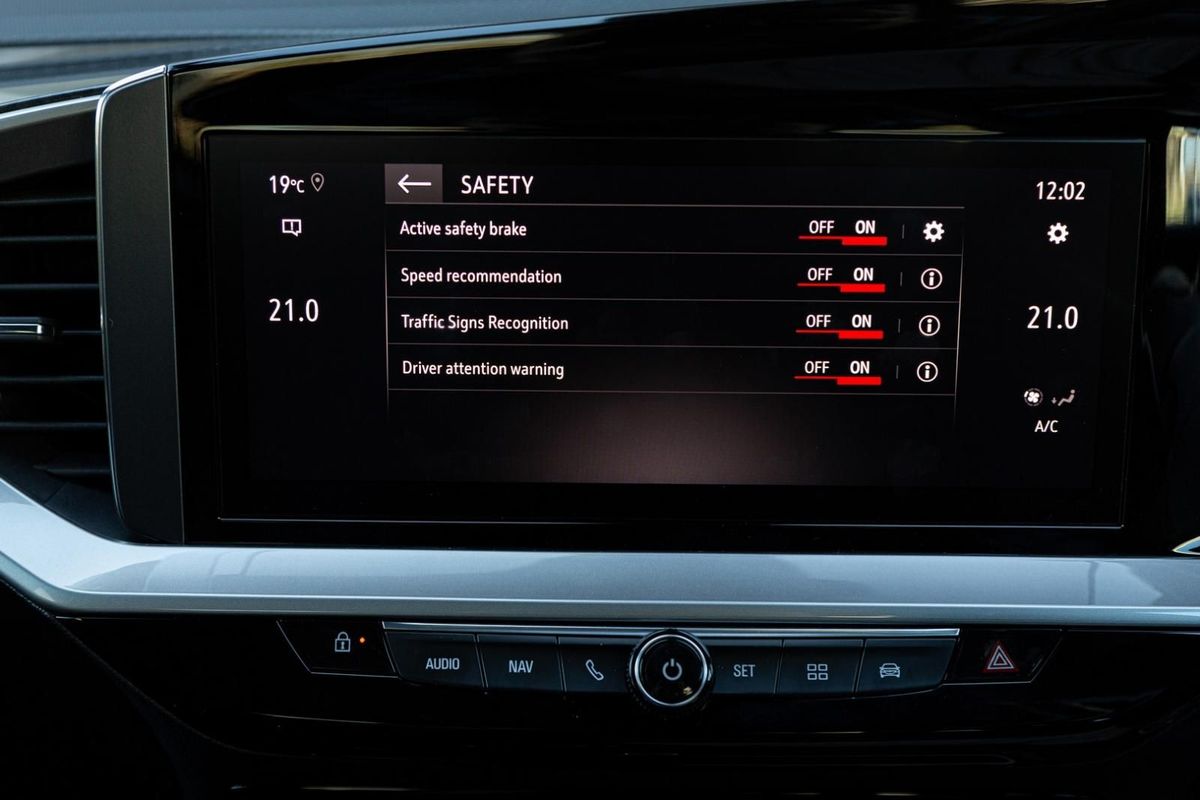
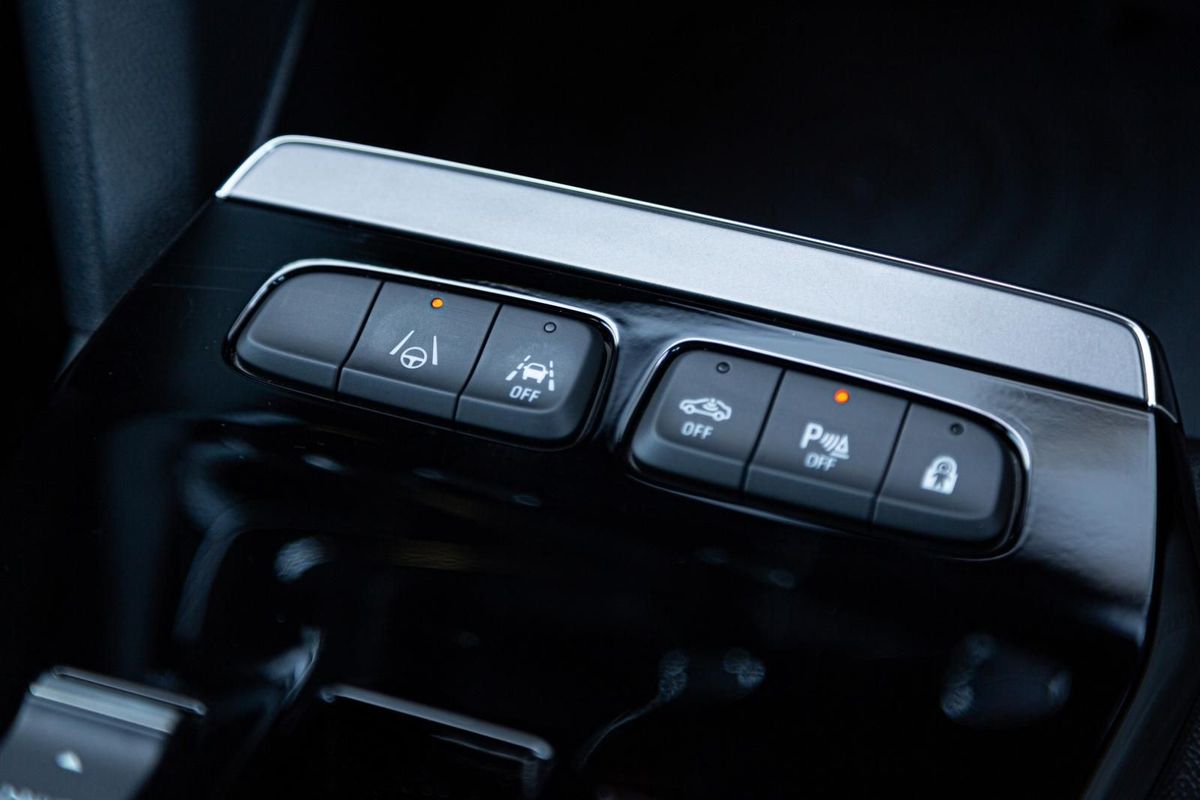
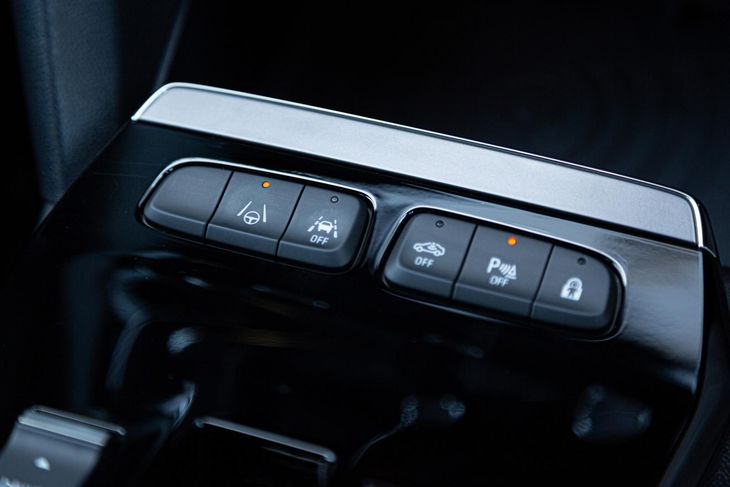
The active lane-keep assist and -departure warning functions can be switched on/off on this console.
The new Mokka is also a very safe car – it offers a comprehensive suite of active safety features to help keep you on the straight and narrow, including (but not limited to) speed-sign recognition, adaptive cruise control (with stop and go), active lane-keep assist and -departure warning, forward-collision avoidance and driver-attention alert.
Price and After-Sales Support
The Opel Mokka 1.2T GS Line is priced at R519 900 and comes backed with a 3-year/120 000 km warranty and a 4-year/60 000 km service plan. Service intervals are scheduled for every 12 months/15 000km.
Verdict
The Mokka is the most appealing Opel model to reach South African shores for some time.
When this review was written (June 2022), the Mokka 1.2T GS Line was a direct rival to the Hyundai Kona 1.6T Executive (R512 500), Mazda CX-30 2.0 Carbon Edition (R516 600), the Volkswagen T-Roc 1.4TSI 110kW (R524 000) and, at a push, the Honda HR-V 1.5 Executive (R554 500). You can make up your own mind about whether it’s the pick of the crop in terms of design, but those rivals can’t beat the Opel in terms of “the driving experience” (the Mazda comes closest).
Indeed, the new Mokka is certainly as fun to drive as it is to look at. It may trail some of its key rivals in terms of outright practicality, but its standard specification more than makes up for it. In fact, it beats many of its competitors in terms of active safety features, some luxury appointments and the standard fitment of a comprehensive Matrix (LED) Lamps Pack, for example.
So, could the Mokka be the stylish, premium, fun-to-drive compact crossover for you? That will depend on how much space you need, but if you’re interested in the 1.2T GS Line, its compromised packaging is unlikely to be a deal-breaker – boutique crossovers aren’t designed with general family-car buyers in mind. As long as lots of rear-occupant space and a huge load bay are not prerequisites, we can certainly highly recommend this fun, characterful newcomer.
Suzuki Baleno (2022) Launch Review
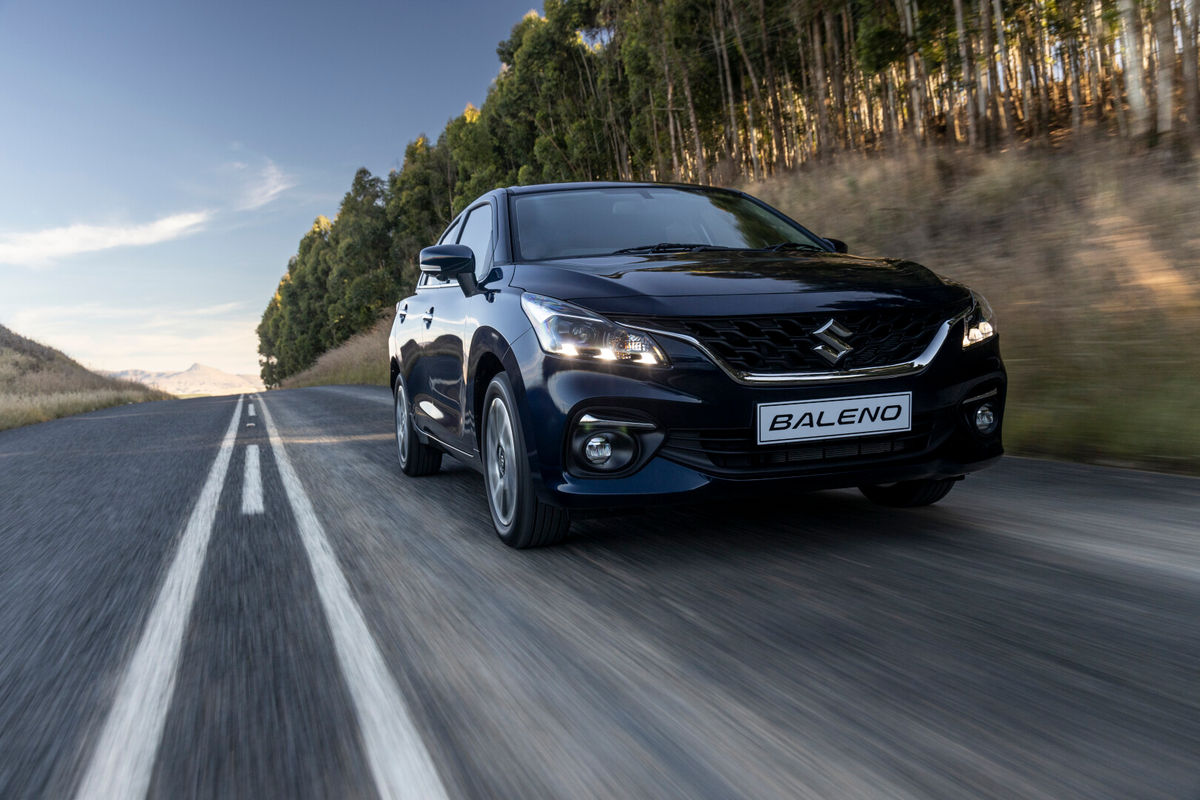
The latest iteration of the Suzuki Baleno is now available in South Africa and we headed to the KwaZulu-Natal Midlands to sample the Japanese brand’s B-segment hatchback. Has it retained its fun-to-drive traits? Is it still light on fuel? Does it represent “a lot of car” for the money? We answer those questions below…
In some bizarre coincidence (or was it?), the media launches of the “all-new” Suzuki Baleno and its (almost identical) twin, the “revised” Toyota Starlet, took place on the very same day. The two models are mechanically identical – all that separates them (apart from their badges, model- and derivative names) are minor visual differences, as well as their exact specs and asking prices. The Toyota is priced a little higher than its Suzuki counterpart, but more about that later…
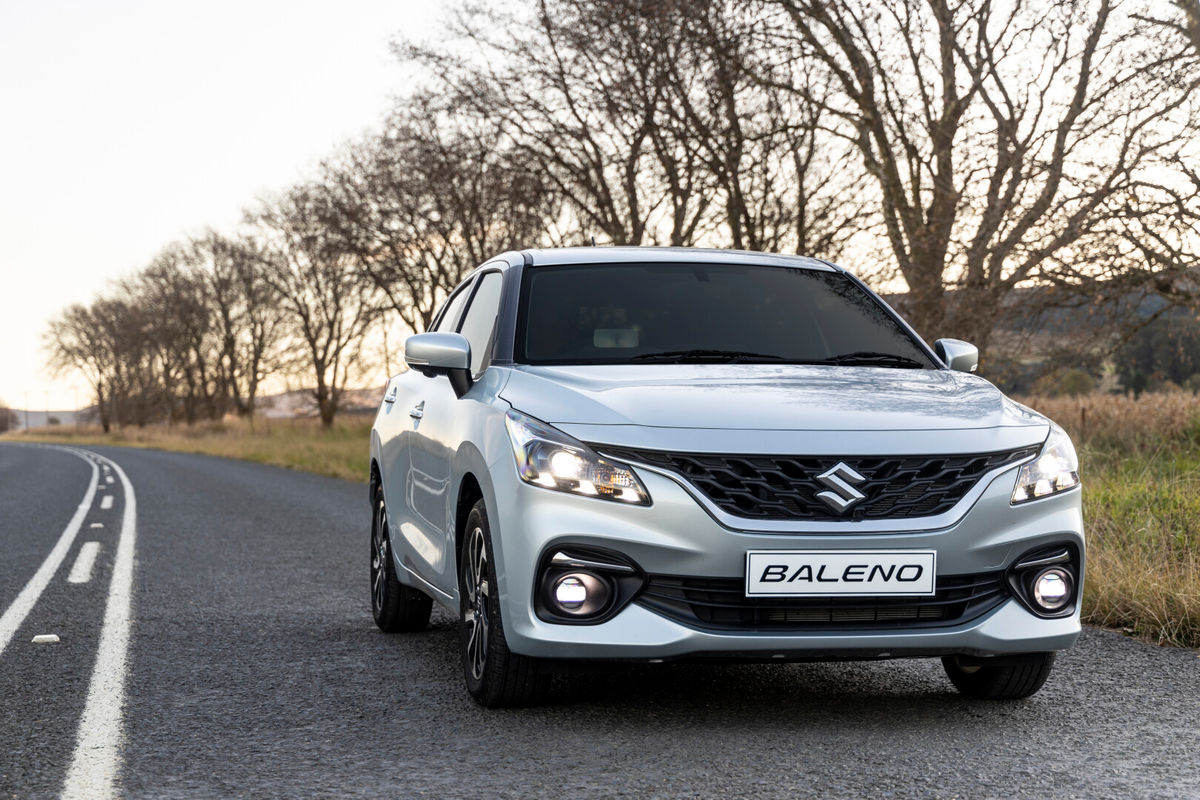
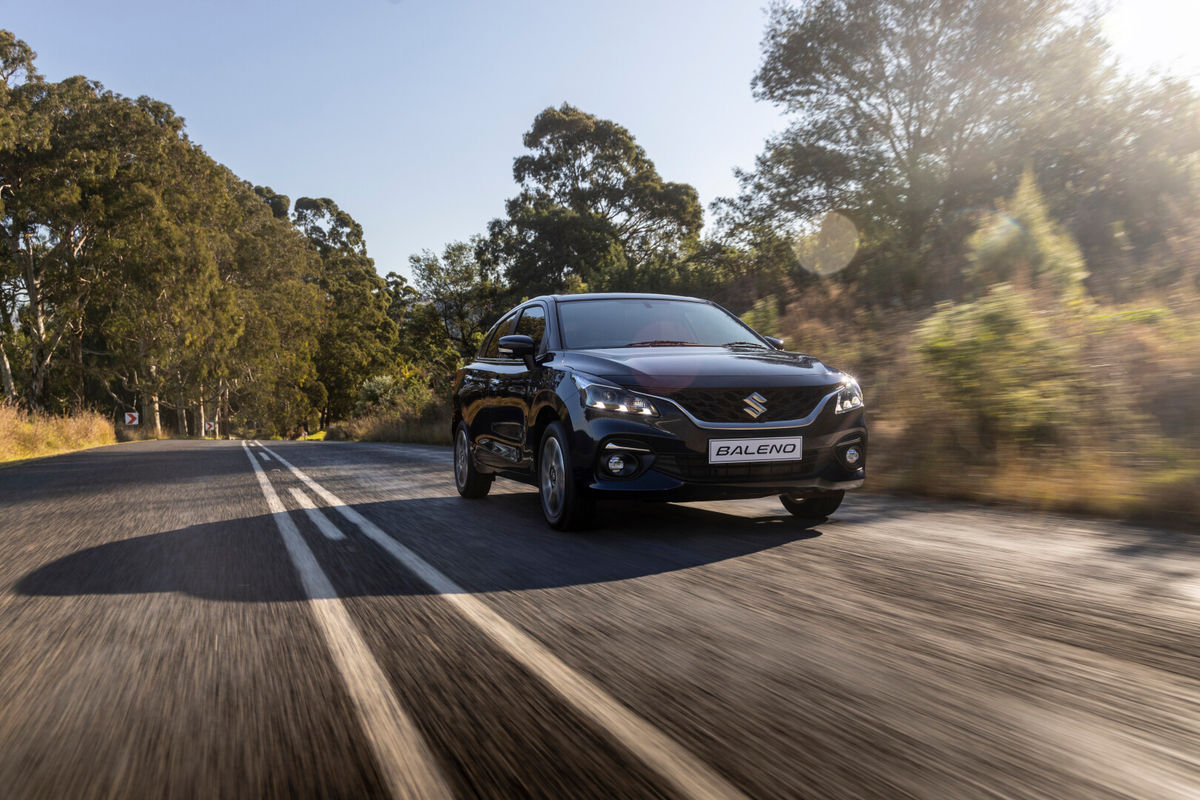
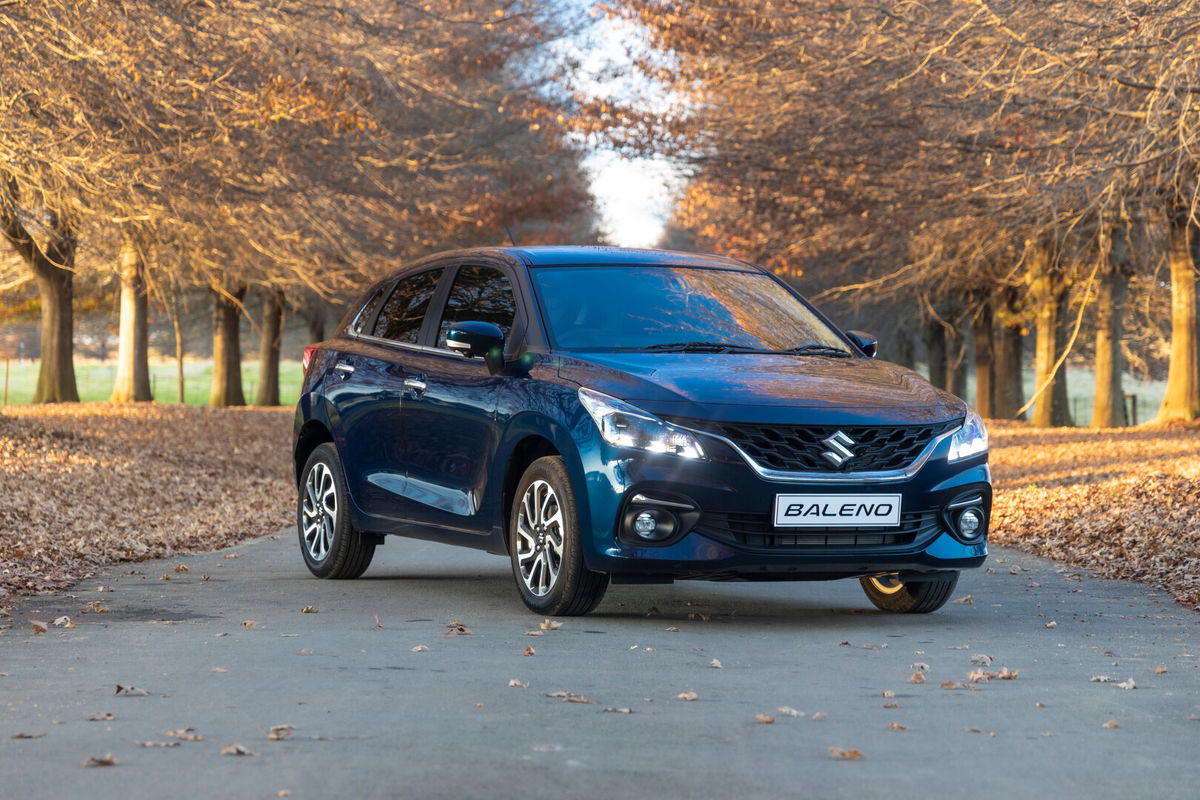
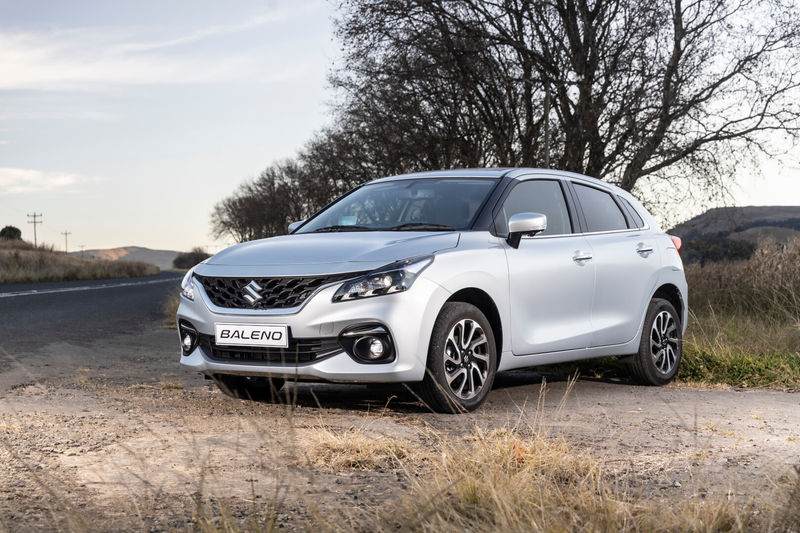
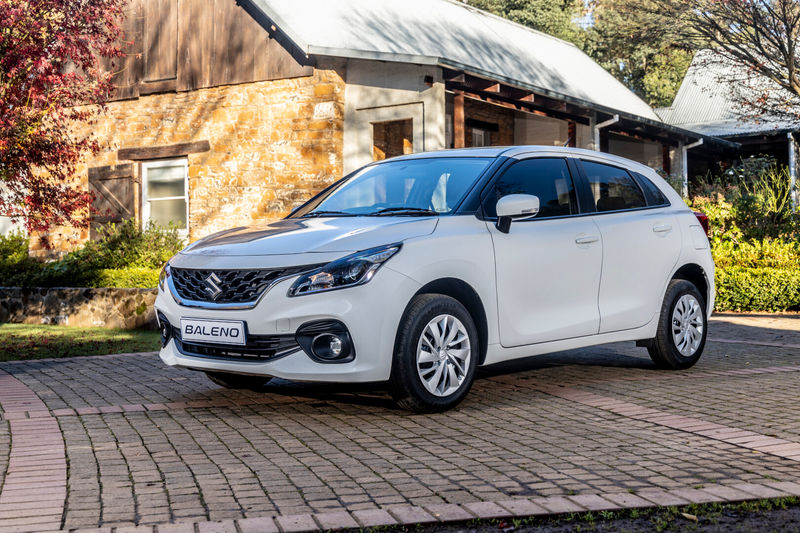
The top-spec Baleno 1.5 GLX comes equipped with LED headlamps (with LED daytime running lights) and 16-inch alloys.
What’s New?
Suzuki calls this the “new” Baleno; Toyota says its Starlet has been “updated”. But, considering that Suzuki Auto SA, which had the top-selling passenger car in the new-vehicle market last month (the Swift, May 2022), introduced the Baleno 6 years ago – and has upgraded it slightly since – it clearly wants to differentiate this version as a new model. When the Starlet arrived in 2020, it incorporated the changes Suzuki had rolled out as part of the Baleno’s mid-cycle update.
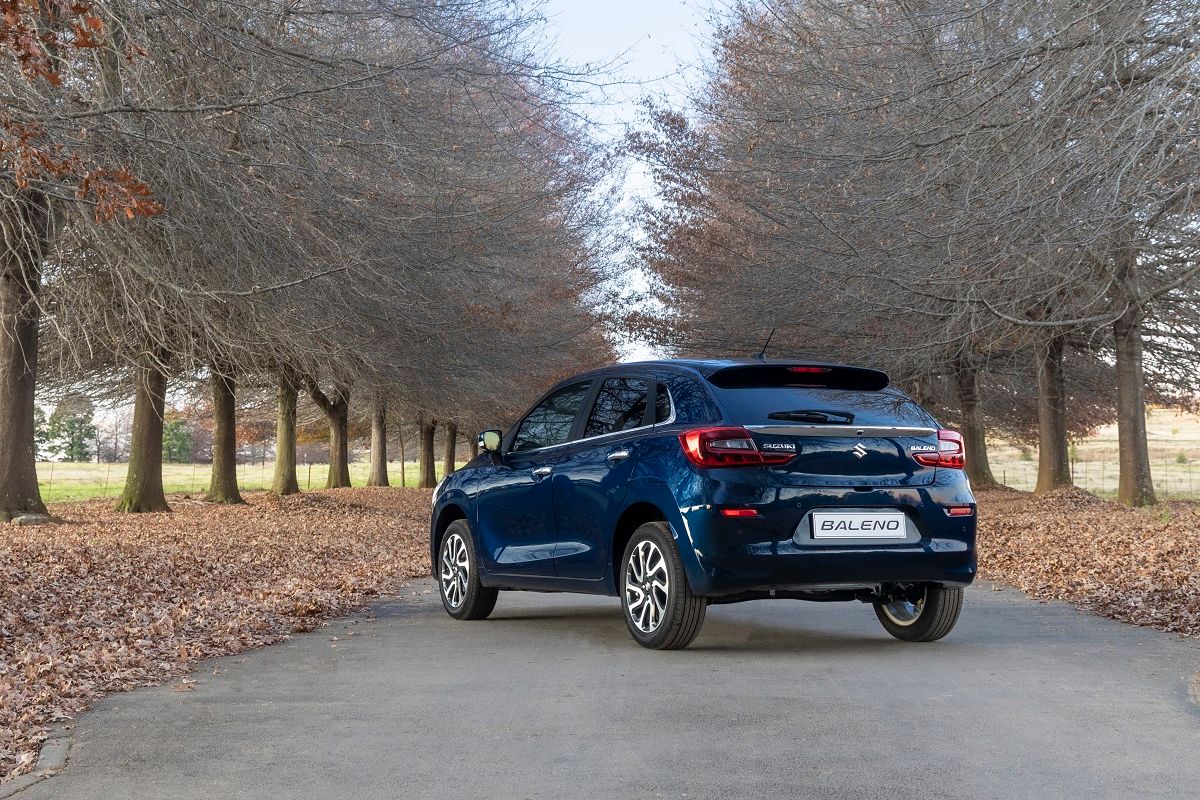
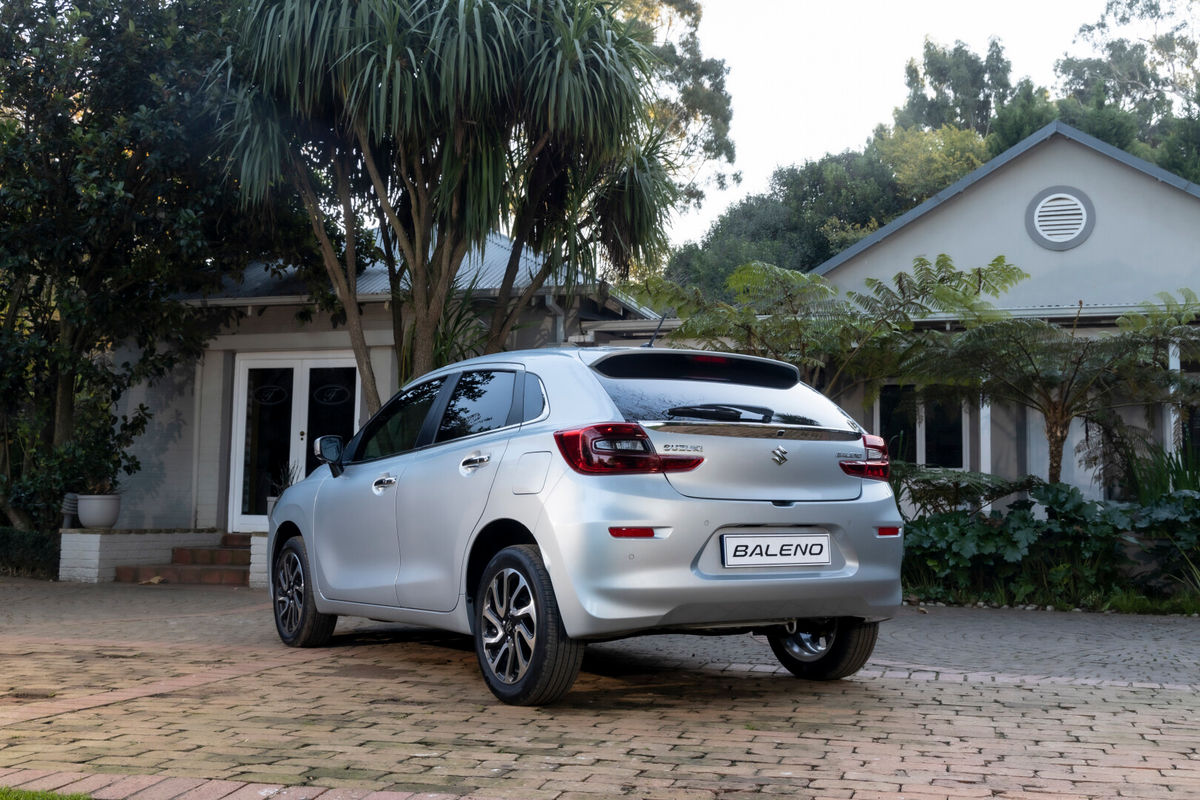
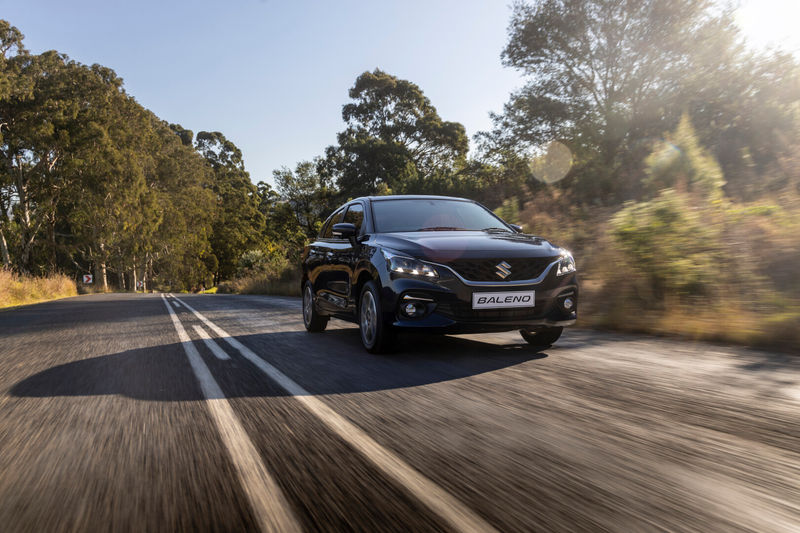
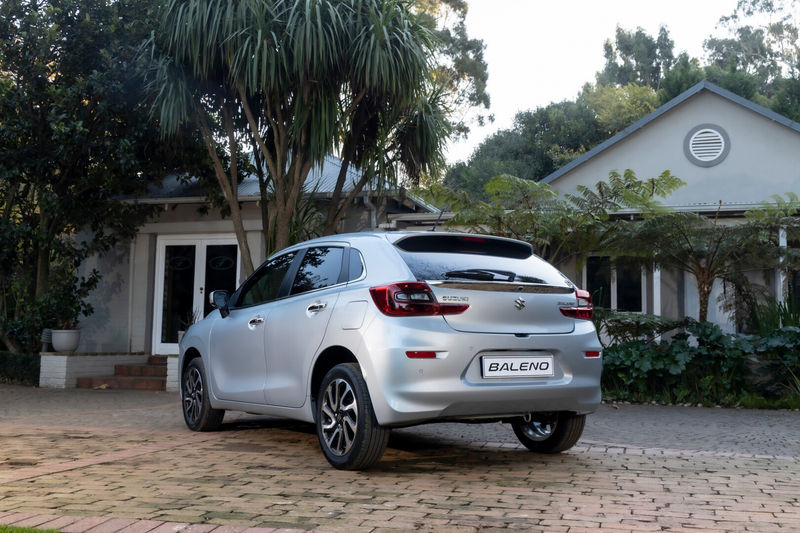
From an aesthetic point of view, the new model can be distinguished by its revised front-end treatment, which is complemented by baseball-cap-shaped taillight clusters. You can spot the top-spec GLX derivative by virtue of its LED headlamps (with LED DRLs) and 16-inch alloys. Under the skin, there are revisions to the steering setup and suspension, which Suzuki claims contribute to a more supple ride quality, plus the bodyshell offers higher rigidity, which benefits refinement.
The big change is the upgrade from a 1.4- to a 1.5-litre engine. This motor is used in other Suzuki products such as the Vitara Brezza, both locally and internationally, and it’s renowned for its punchiness… and frugality. The outputs may seem middling (77 kW/138 Nm), but they’re 9 kW and 8 Nm higher than the older 1.4-litre motor’s numbers. Like before, Suzuki has impressive claimed fuel efficiency figures: just 5.4 L/100 km for the manual and 5.7 L/100 km for the automatic.
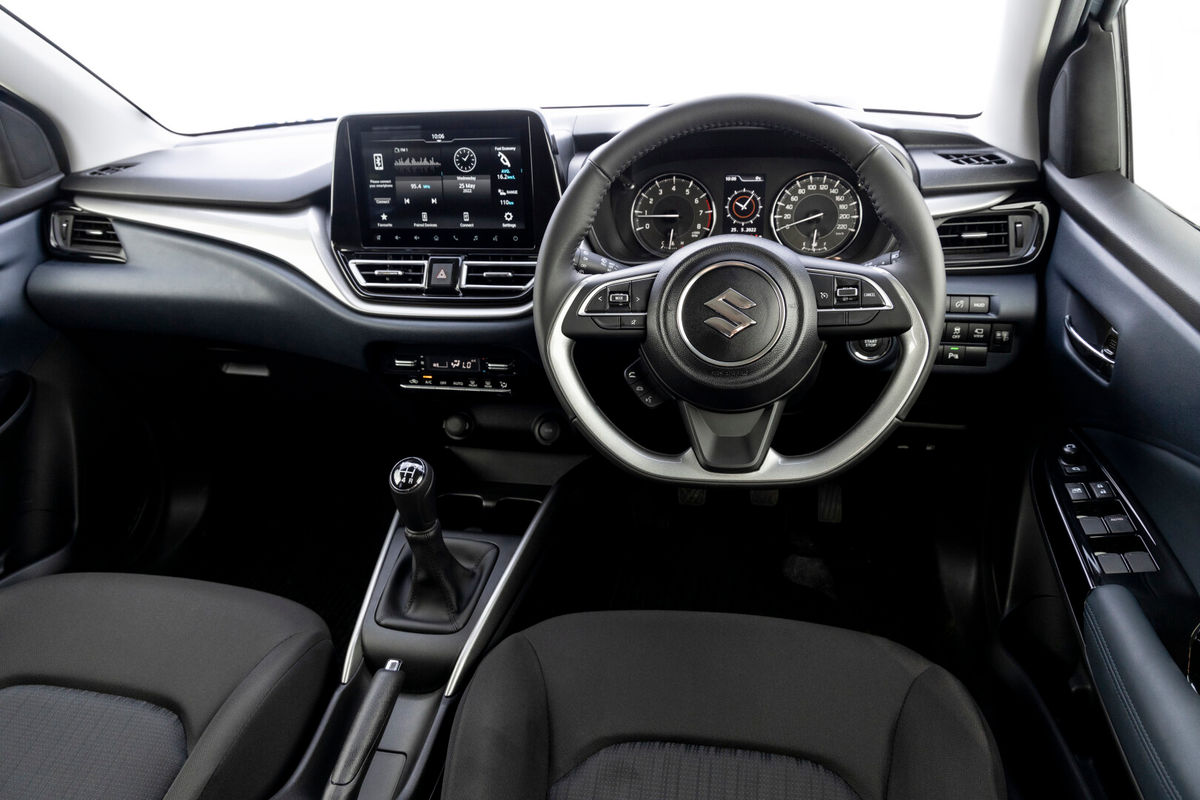
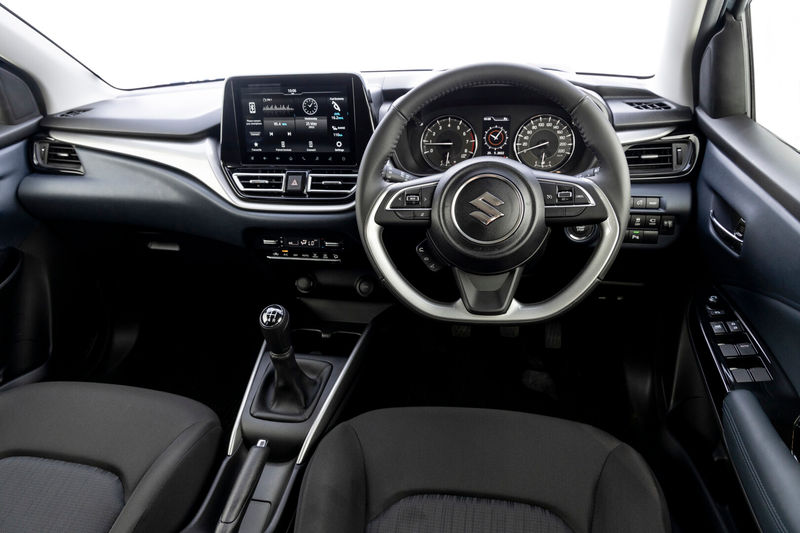
The larger (9-inch) infotainment touchscreen takes pride of place on the GLX derivative’s fascia.
What’s on Offer?
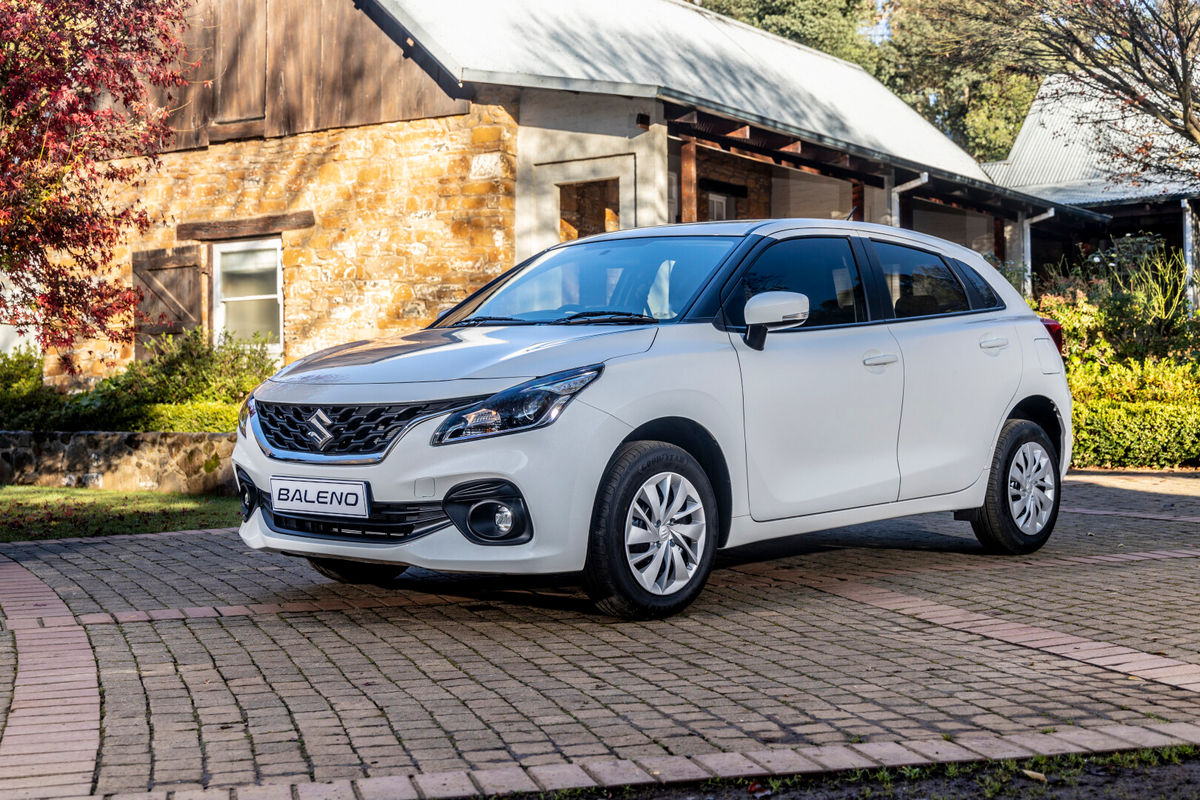
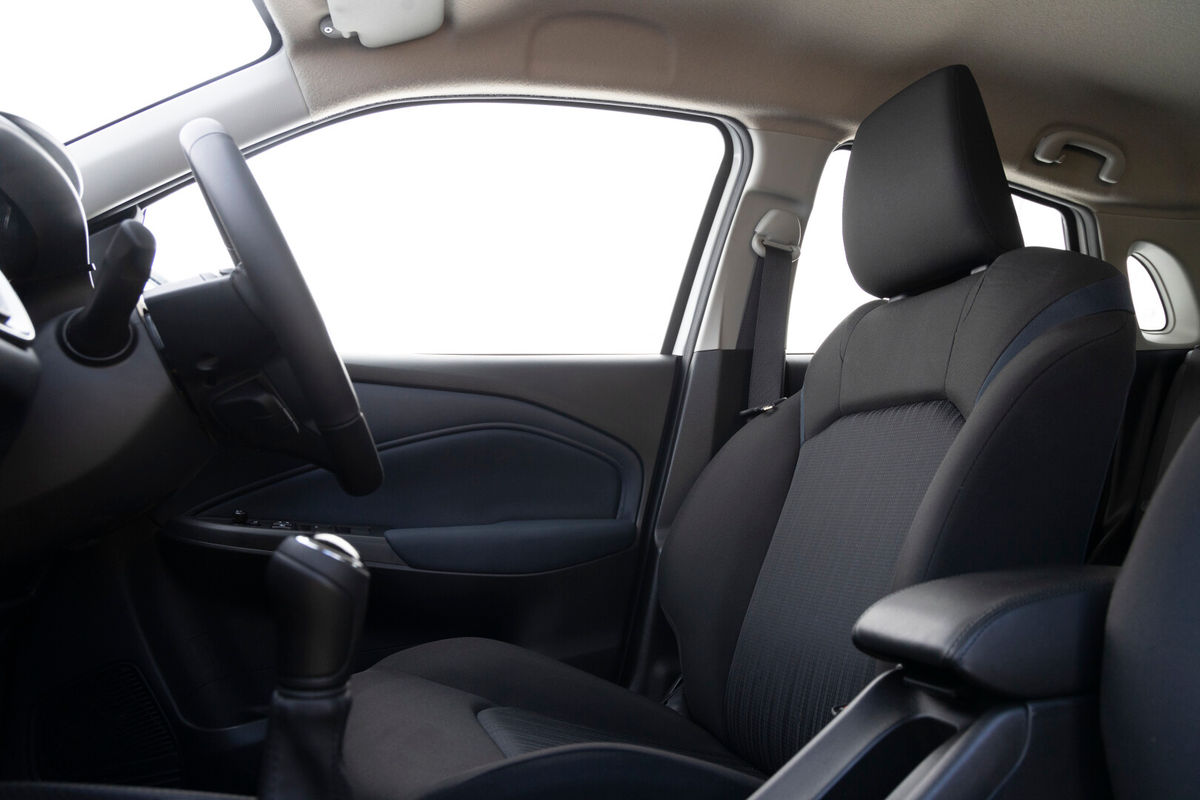
The Indian-built Baleno is available in 5-speed manual and 4-speed automatic guises, in 2 trim levels (GL and GLX) and there are 8 colours to choose from. Despite its entry-level positioning, the GL has a reasonably long list of standard features. When we took a closer look at the Suzuki’s cabin during the launch, we found a blend of some nice-feeling (almost plush) materials… and some rather marginal plastics. But, when prices start at under R250k, we won’t nitpick…
Baleno GL
7-inch infotainment system with Apple CarPlay/Android Auto (from the Celerio)
Reverse-view camera
Automatic climate control
Cruise control
1x USB at the front, two USB ports at the rear, one of which is a Type-C
LED foglamps
Multifunction leather-wrapped steering wheel
Baleno GLX
9-inch infotainment system with Apple CarPlay/Android Auto
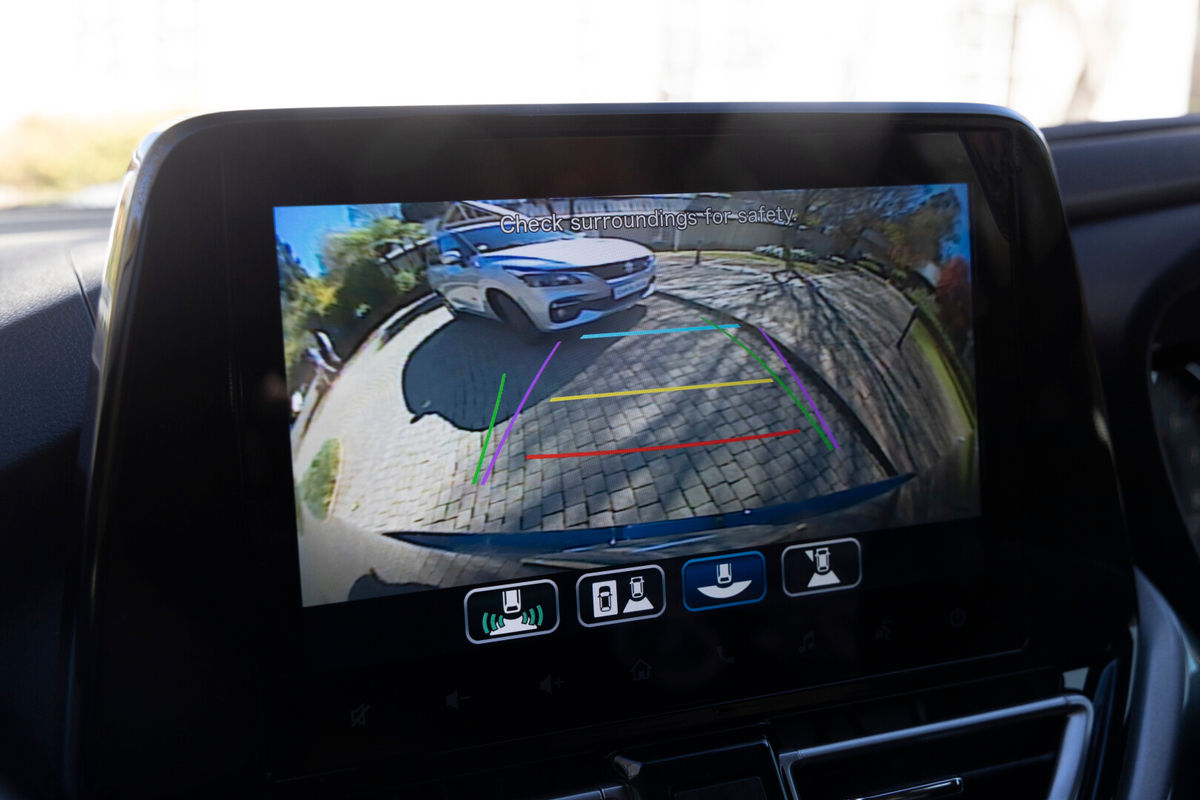
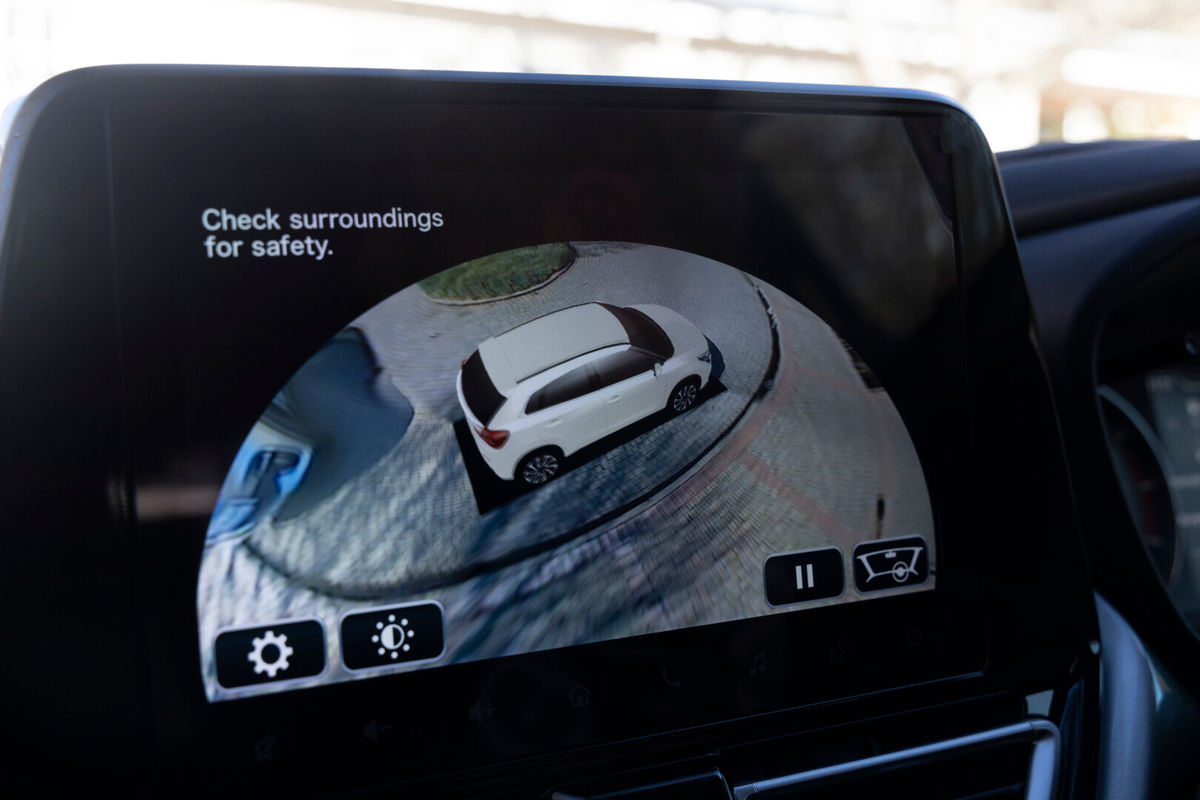
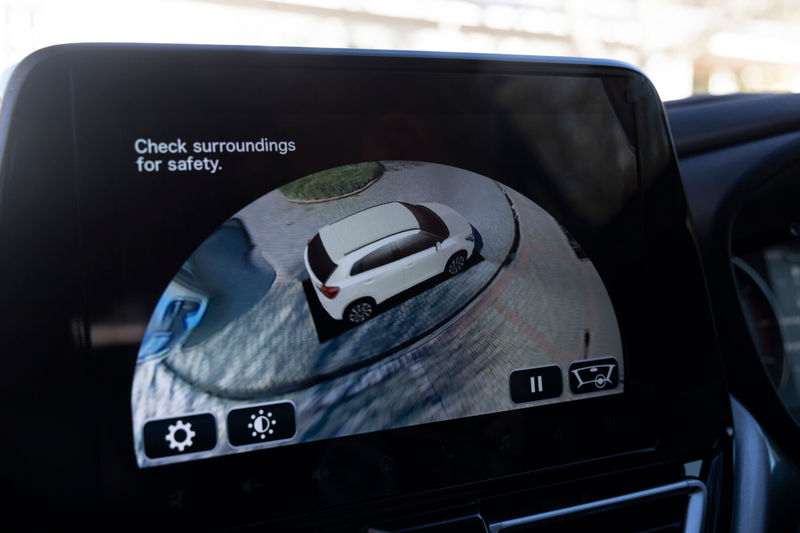
360-degree camera
Head-up display
16-inch alloy wheels
Keyless access with push-button start
LED daytime running lights and projector headlamps
Colour info display in the central cluster.
As far as safety is concerned, the GL comes with 2 frontal airbags, ABS (anti-lock brakes) and electronic stability control. The GLX features another 4 airbags (also side- and curtain airbags). Hill-hold assist is standard on both trim levels.
The 360-degree camera system is a unique feature in the entry-level hatchback segment.
What’s it like to drive?
For the record, the outgoing Suzuki Baleno may not have been a head-turner, but it was neither sluggish nor dull to drive; it combined an energetic powertrain with a modicum of dynamism and a pliant, reasonably comfortable ride quality.
Not much has changed in that regard, but the new engine is still worth more than a passing mention… Suffice to say it’s not the first time we’ve experienced Suzuki’s naturally aspirated (therefore, rather free-revving) 1.5-litre 4-cylinder petrol powerplant and, in this application, its performance is very willing. If you want to summon eager overtaking acceleration, simply lean hard on the accelerator pedal and the engine will respond in a linear fashion.
Our test unit was the Baleno 1.5 GLX manual, which has one of the nicer gearboxes to use in its class, thanks to the ‘box’s direct and light action. The gearing is, however, on the shorter side (the cabin sounds a bit buzzy at the national speed limit). The addition of a 6th ratio would have helped to reduce the 1.5-litre engine’s revs at 120 kph, but remember that in the Suzuki’s home market of India, average speeds are lower than in Mzansi. It’s not an unbearable racket, mind you.
A refined, rev-happy engine helps the Baleno punch above its weight, performance-wise.
Despite some shall we say, energetic, driving, we saw an indicated fuel consumption figure of 5.9 L/100 km on the trip computer (that’s not far off the manufacturer’s claim), so we’re confident in saying that if you adopt an efficiency-minded driving style, you could easily get very close to – or even match – that claimed figure. We reckon the car’s slim kerb weight helps a lot in that regard… the new Baleno, despite its compact hatchback dimensions, weighs just under 1 000 kg.
Our launch route encompassed some roads that were of rather poor quality. The recent heavy flooding, compounded by poor maintenance and continuous heavy-truck traffic wreaked havoc on national roads, let alone the extra-urban ones. Yet, the Baleno’s suspension was able to soak up the myriad imperfections (bumps, dips and ridges) without clunking or thumping through; we suspect those high-profile tyres fitted to the great-looking 16-inch alloys softened the impacts.
The steering is pleasantly light and the car feels impressively wieldy. Crucially, the Suzuki’s on-road refinement is excellent for its segment – the newcomer doesn’t feel cheap and nasty in any way. Remember, the Baleno starts at R225 900.
You can appreciate the revised tail lights from this angle.
How much does the new Baleno cost in South Africa?
Not only is the new Baleno offered at a fractionally lower price than its predecessor – all of its derivatives are more affordable than their Starlet-badged equivalents. The Suzuki also has a longer warranty (+2 years) and service plan (+1 year) than the Toyota. The prices below include the brand’s 5-year/200 000 km promotional warranty, as well as a 4-year/60 000 km service plan (with intervals of 15 000 km), plus an anti-corrosion warranty of 6 years (unlimited kilometres).
Baleno 1.5 GL manual
R225 900
Baleno 1.5 GL auto
R245 900
Baleno 1.5 GLX manual
R275 900
Baleno 1.5 GLX auto
R295 900
Summary
Suzuki just can’t put a foot wrong these days… The new Baleno is another excellent product.
With new-vehicle prices skyrocketing, which has made some of SA’s favourite models unobtainable for the average family-car buyers, not to mention brutal fuel-price increases, it’s a delight to find a spacious, well-thought-out and generously equipped entry-level hatchback that doesn’t cost a king’s ransom to purchase – or run. The Baleno is also one of few small hatchbacks that offer good rear legroom; indeed, it can seat 4 adults in comfort with adequate head- and legroom.
Granted, Suzuki’s newcomer has its drawbacks, but at this price, you can easily look past some of the (very minor) faults. We’ve yet to drive the Baleno in 4-speed automatic guise, but to be honest, we’re not looking forward to it. Whereas the GL derivative is the strongest value-for-money proposition, the 1.5 GLX 5-speed manual is arguably the pick of the bunch for private buyers… Priced comfortably under that crucial R300k barrier, it’s likely to be all the city car you’ll ever need.








.jpg?tr=w-800)
.jpg?tr=w-800)