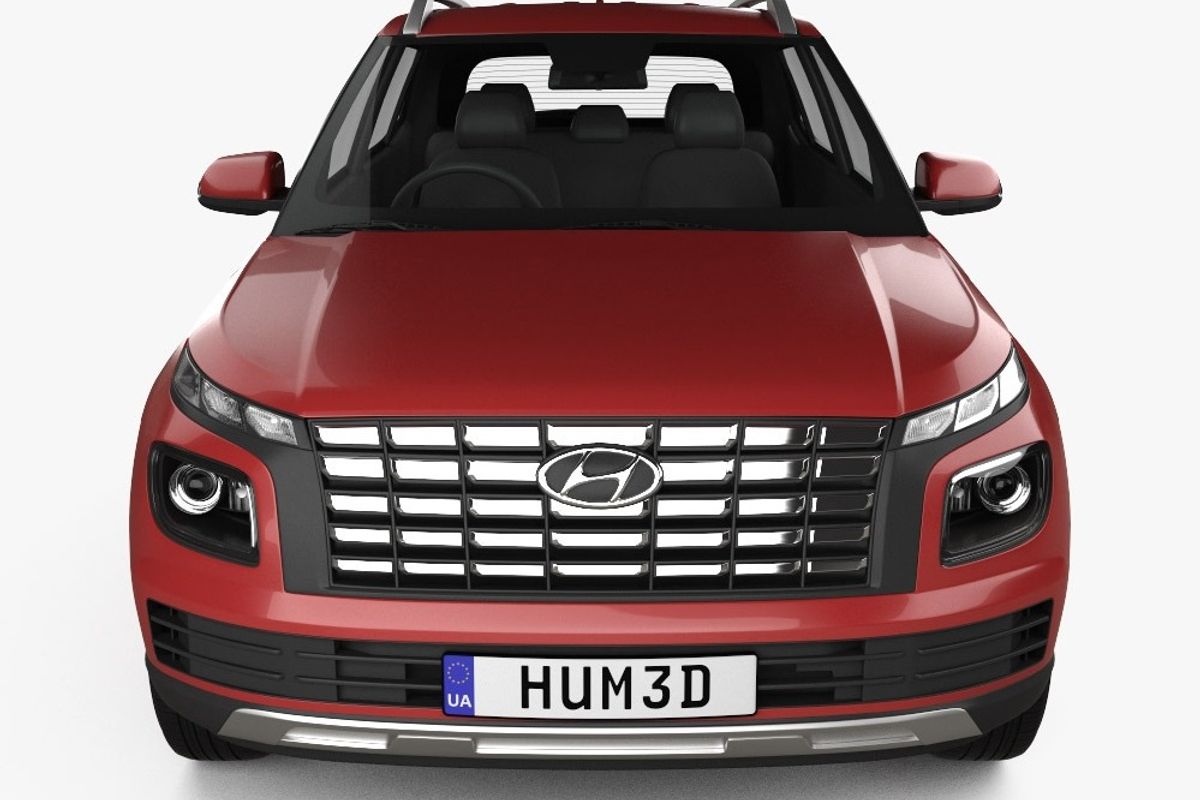
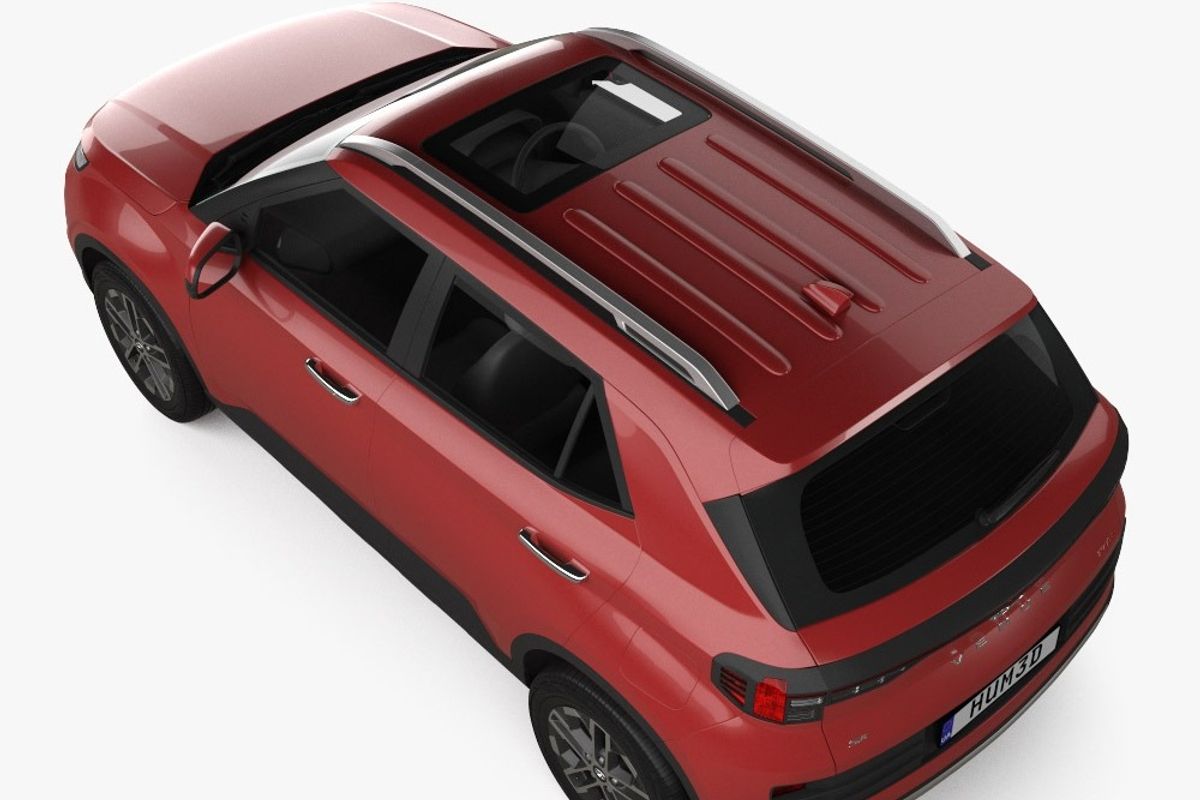
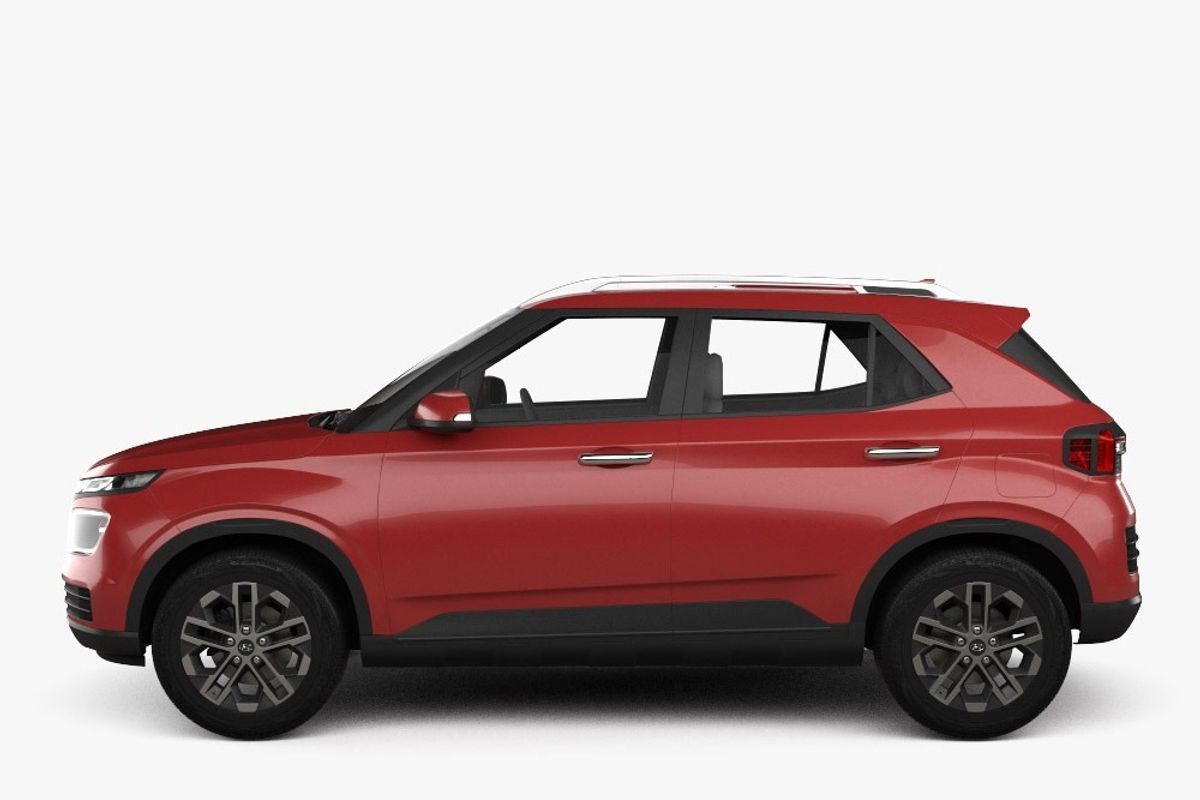
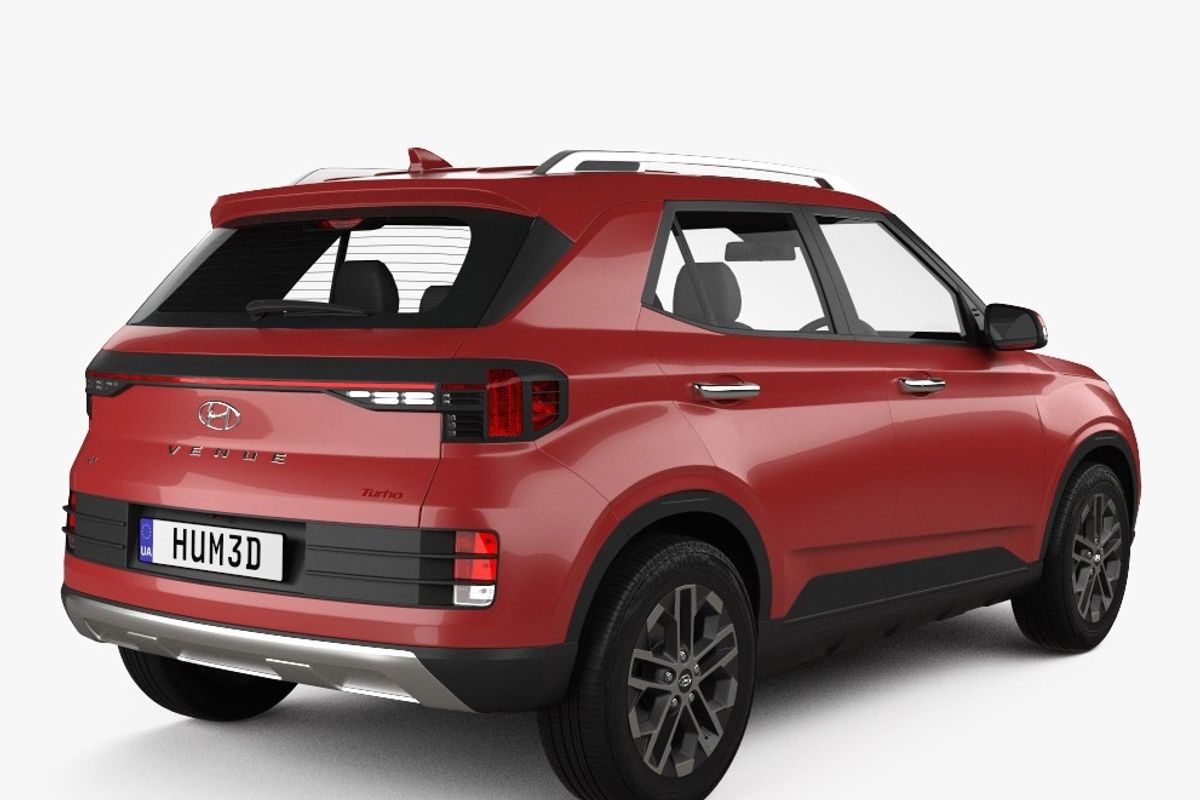
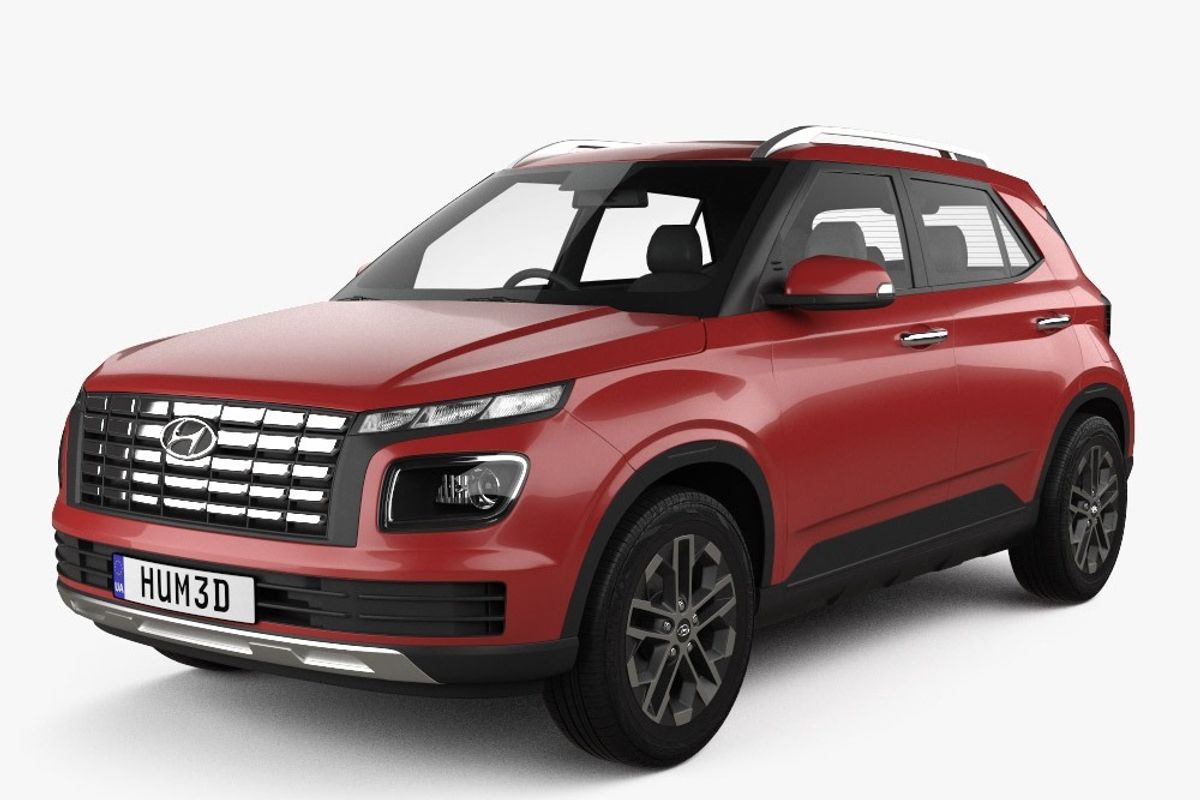
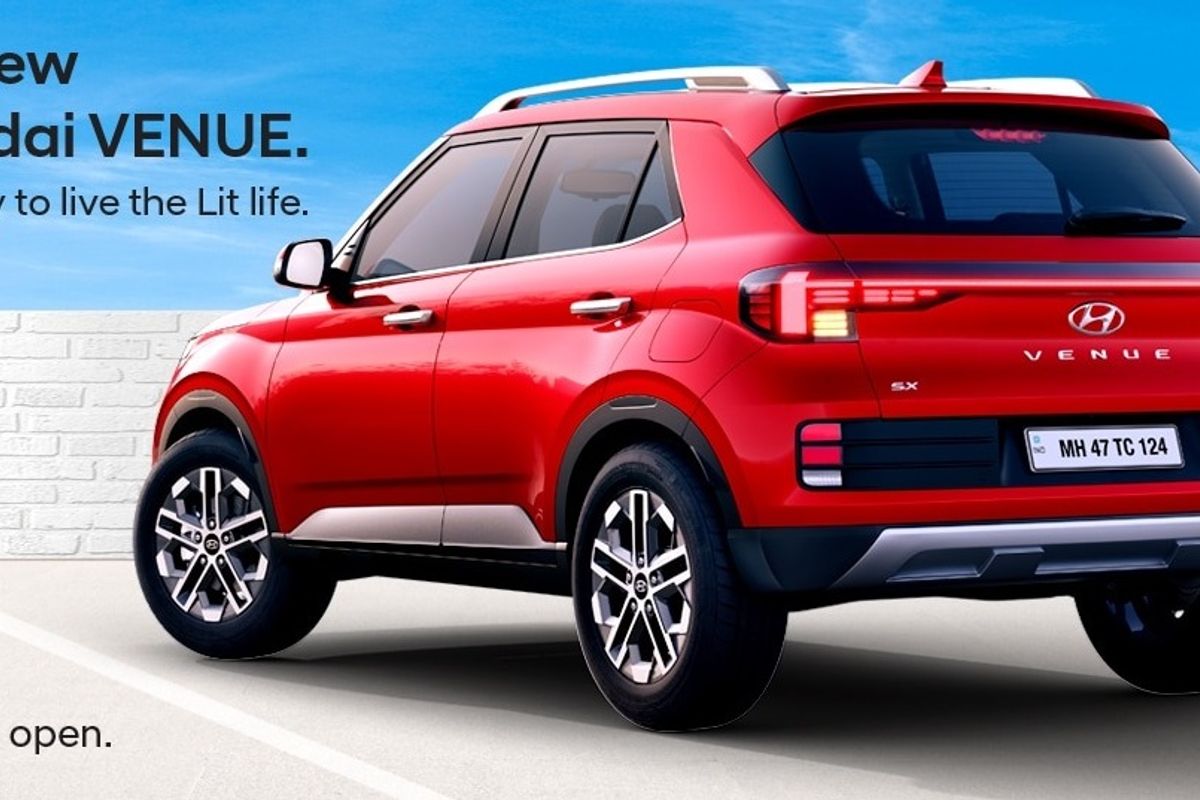
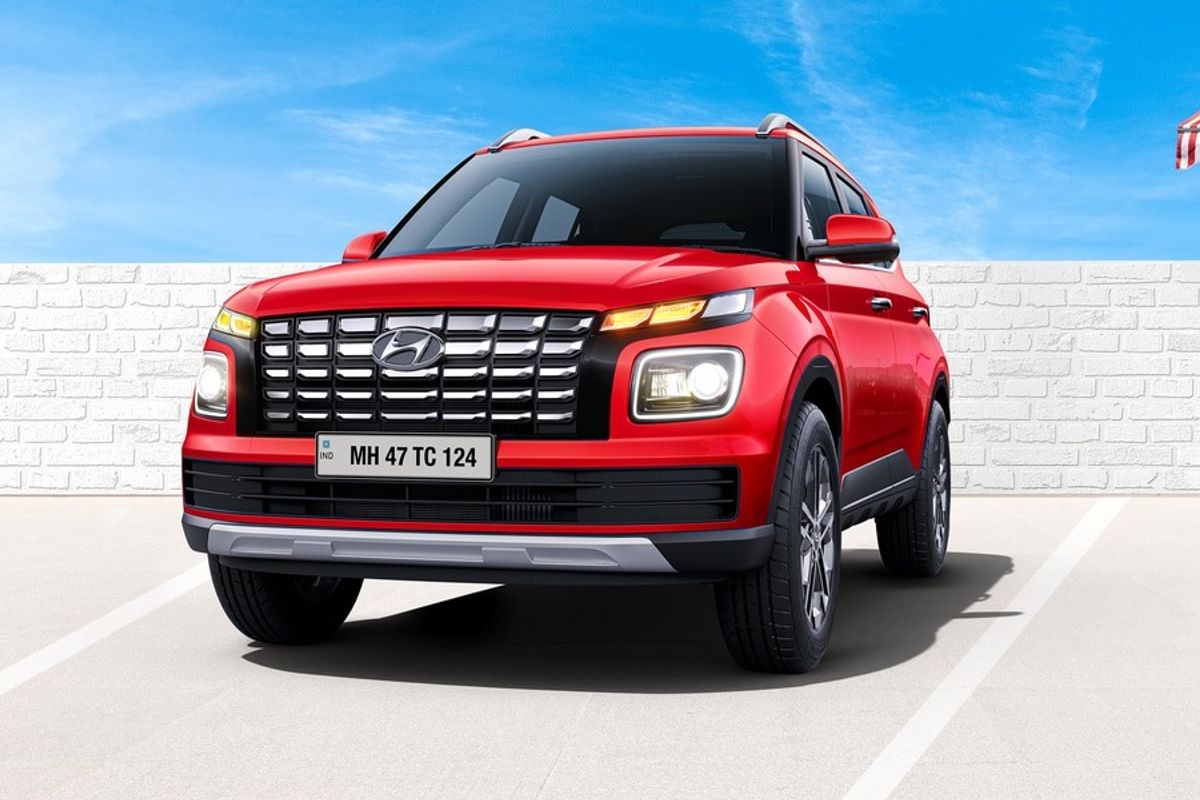
Hyundai India has released images and some early details of the Korean brand’s updated Venue compact family car/small crossover. The official pictures confirm the accuracy of the 3D renders that made their way online towards the end of May 2022…
Some powertrain information was sent out too, and the updated Hyundai Venue will have 3 engine options: a 1.2-litre naturally-aspirated petrol, a 1.0-litre turbo and a 1.5-litre turbodiesel, the latter of which wasn’t available for our market.
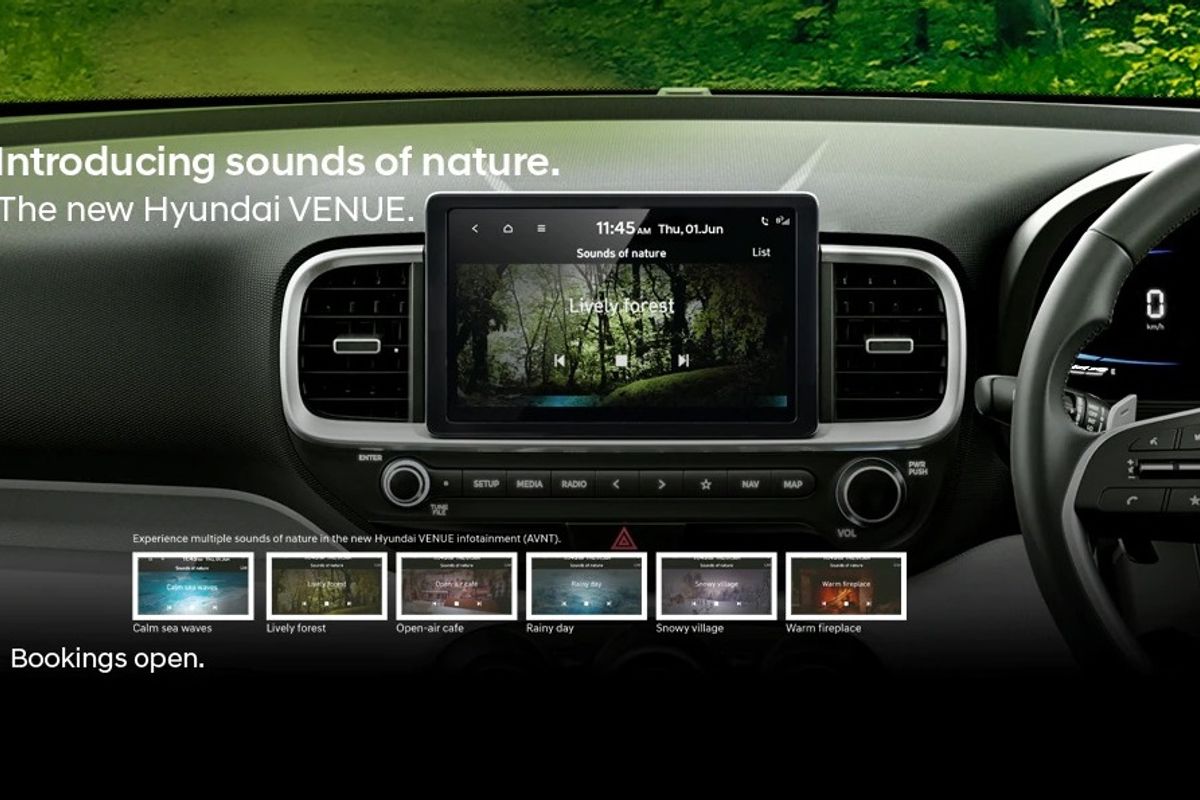
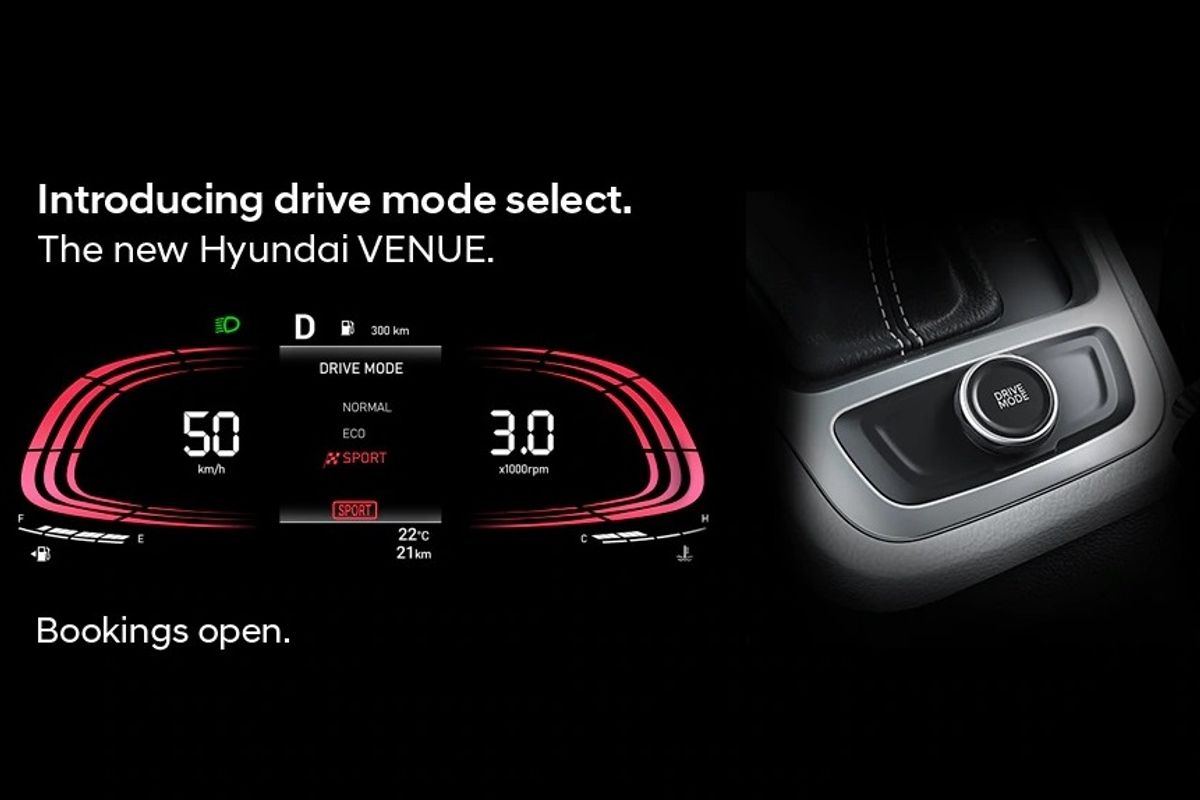
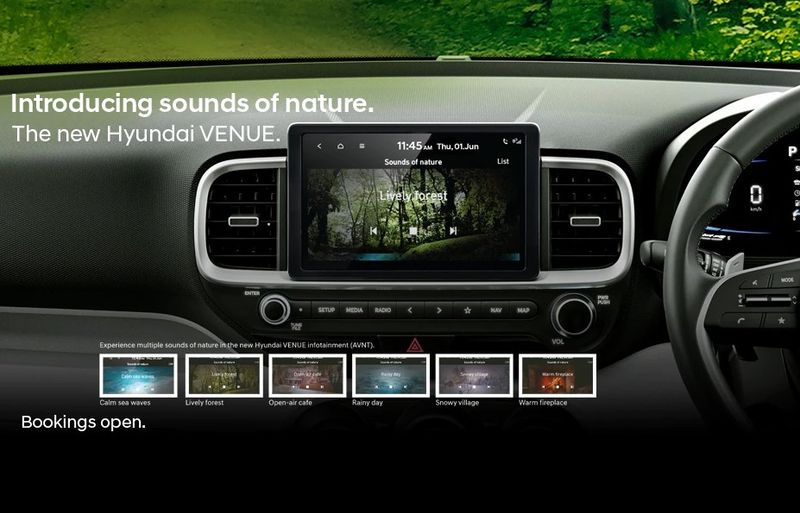
Inside, the cabin features Alexa connectivity, two-step reclining rear seats, driving modes, and an uprated infotainment system with a bigger screen. SA spec will be confirmed at a later point. More info is on its way, as Hyundai India says its Venue will be officially revealed on the 16th June 2022.
Since its launch in SA back in December 2019, the Hyundai Venue has proven popular. As far as sales figures go, the only data we have is Hyundai saying over 9 500 Venues have found homes locally when the brand launched a cheaper entry-level derivative in November 2021.
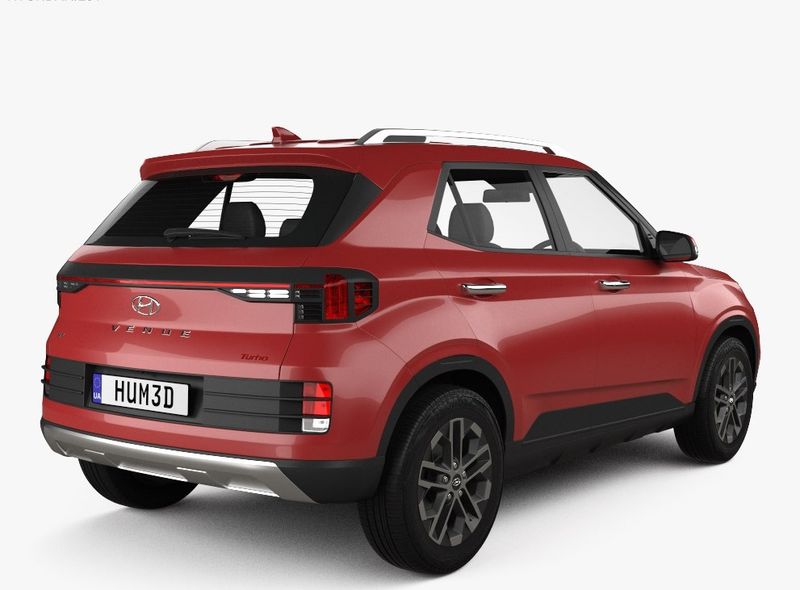
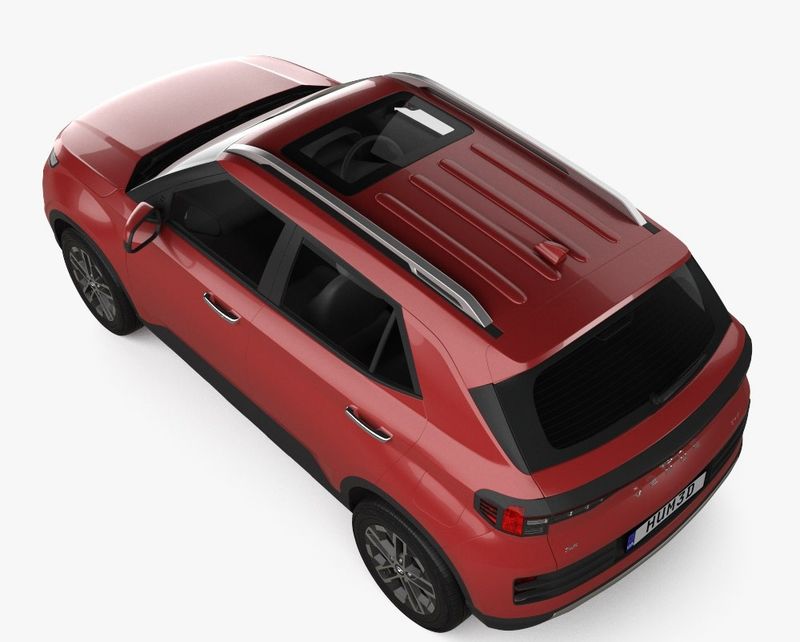
Now the 2023 Hyundai Venue is due for a public reveal, but thanks to a digital modelling company, we get a sneak preview. This company, Hum3D, specialises in high-quality 3D models for industrial applications and a quick glance through its other motoring creations shows a high degree of detail and accuracy in current models.
We suspect that Hum3D had access to the new 2023 Hyundai Venue prior to its reveal and given the detail, we reckon this is accurate. At the front, we can see the current design language from the Korean brand, where headlights and daytime running lights are neatly integrated into the grille and front bumper, like the Hyundai Tucson. The rear gains a new light treatment and it’s not too dissimilar to that of sister brand Kia’s Sonet.
There are also new wheel designs as well as a discrete turbo badge and a sunroof – the accessory most loved by South African motorists. There are no interior images, but we expect the 2023 Hyundai Venue to be revealed in the next month.
As far as engines go, we expect the powertrains to be carried over and customers can choose from naturally-aspirated 4-cylinder and turbocharged 3-cylinder petrol engines. Both manual gearboxes and dual-clutch transmissions are likely to be offered.
Where do SA’s best-selling imported cars come from?
Many of South Africa’s best-selling vehicles are built on local soil. But which are the most popular imported cars in the land? We take a closer look at May 2022’s sales figures to find out…
BMWs are built in Germany, Toyotas are imported from Japan and Fords are shipped over from the United States, right? Well, though each of these brands has its global headquarters (and indeed large-scale production facilities) in its respective home country, the reality is mainstream automakers have factories dotted all over the globe. In fact, all three of those marques also happen to build vehicles right here in South Africa.
So, that new BMW 2 Series coupé you’re eyeing up is actually screwed together in Mexico rather than Munich. And the Land Rover Defender? Well, it rolls off an assembly line in Slovakia rather than Solihull. This is the way of modern automotive manufacturing.
Thanks to South Africa’s largely robust vehicle-manufacturing industry, most of the country’s best-selling models are produced right here on local soil. In fact, as many as eight of SA’s 10 best-selling vehicles of 2021 were locally built models.
So, for the purposes of this exercise, we’ll concentrate on SA’s best-selling imported vehicles and exclude all locally produced models, such as the Silverton-built Ford Ranger, Isuzu’s Struandale-produced D-Max and the Rosslyn-built Nissan Navara, not to mention the BMW X3 and Mercedes-Benz C-Class sedan as well as the Mahindra Pik Up assembled in Durban.
A quick look back at 2021’s import figures
Before we delve into May 2022’s figures, let’s take a step back. According to Naamsa, 262 281 new light vehicles (comprising both passenger cars and light commercial vehicles) originating from 24 countries were imported into South Africa in 2021. Light-vehicle imports as a percentage of total new light-vehicle sales in South Africa increased to 60% last year, despite the popularity of the aforementioned locally built vehicles. If we were to remove light-commercial vehicles from the equation, we’d find passenger-car imports accounted for a whopping 78.3% of total new passenger-car sales.
India was easily the top country of origin in pure volume terms last year, with the 129 364 units shipped over from that country accounting for 49.3% of total light vehicles imported. Yes, virtually half of all light vehicles imported into SA in 2021 were bolted together in the world’s second-most populous nation, where several global brands – Japanese, French and South Korean among them – have set up large-scale production facilities focused on entry-level vehicles.
Owing to the recent local success of the likes of Haval and Chery, China (21 517 units) also gained traction as a country of origin in 2021, placing third just behind Japan (24 152 units). Germany (19 801 units) slipped to fourth in terms of vehicle-import volumes in South Africa, though stayed clear of South Korea (17 478 units). Spain (11 135 units) was the only other country to ship more than 10 000 units into SA in 2021. In import rand value terms as opposed to pure volume terms, India was also the leading country of origin, followed by Germany.
SA’s best-selling imported vehicles of May 2022
So, let’s get down to the nitty-gritty. Which were the strongest-selling imported vehicles of May 2022? Well, once we’ve excluded the SA-built models that typically dominate the top 10, we’re left with an interesting mix of imported vehicles. Still, as expected considering India’s domination as a country of origin, budget vehicles from that country are easily the most common.
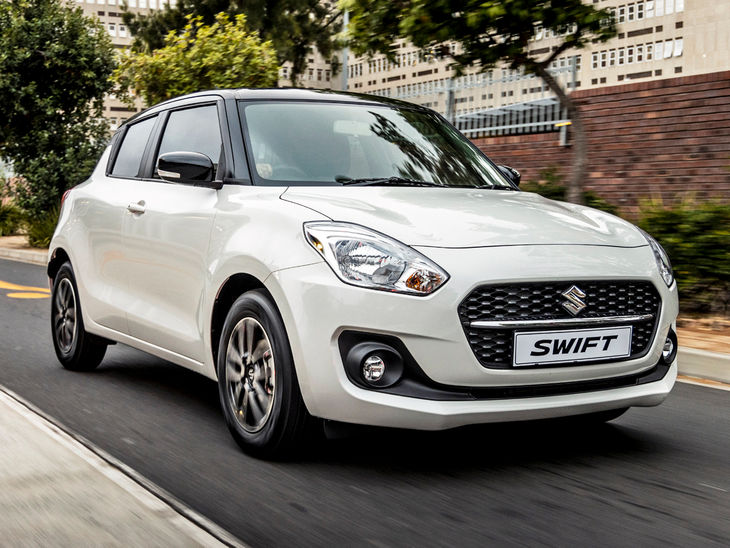
Ranking as South Africa’s best-selling vehicle overall for the first time, the Suzuki Swift (1 764 units) was thus also the most popular imported model of May 2022. For the record, Maruti Suzuki manufactures the Swift in Ahmedabad, India. Suzuki likewise produces the second-placed Toyota Urban Cruiser (1 213 units) in India, though this model rolls off the line (alongside the Vitara Brezza) at the Gurgaon facility.
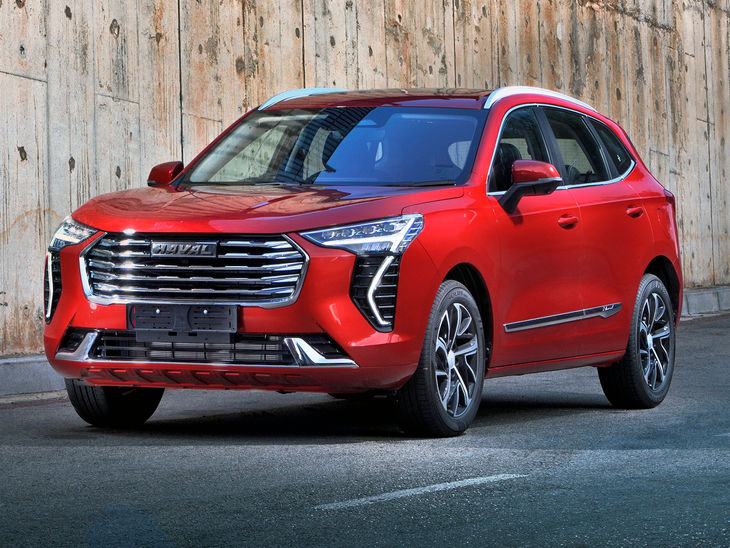
Third place in May 2022 went to the Volkswagen T-Cross (981 units), which is imported from the German firm’s Navarra plant in Spain. The Haval Jolion (975 units) – which is shipped over from Baoding in China – was the fourth best-selling imported model of the month.
Why is India dominating as a country of India for SA?
So, what are the reasons behind India’s dominance as a country of origin in South Africa’s automotive industry? Well, the most obvious explanation revolves around the fact the local market is a particularly price-sensitive one and India happens to be a leading mass-production hub for budget-friendly vehicles. Local divisions of global brands have identified that these vehicles (when priced smartly, of course) tend to find favour among South Africa’s large group of generally cash-conscious buyers. The right cars for the market (or, more specifically, at the right price), and all that.
In addition, with the two republics having developed significant economic ties over the years, a strong trade history exists; South Africa is billed as one of India’s largest trading partners in sub-Saharan Africa. Of course, it also helps the South Asian country is – just like us – a right-hand-drive market.
With South African consumers bracing for yet more inflationary pressure in the months to come (thanks to further expected increases in the interest rate as well as more pain at the pumps, to name but two factors), it seems exceedingly unlikely India will lose its title of top country of origin any time soon. In fact, unless China manages to significantly increase its slice of the pie, India looks poised to push its share well past half of all light vehicles imported into South Africa by the time 2022 draws to a close.
SA’s 10 best-selling imported vehicles of May 2022
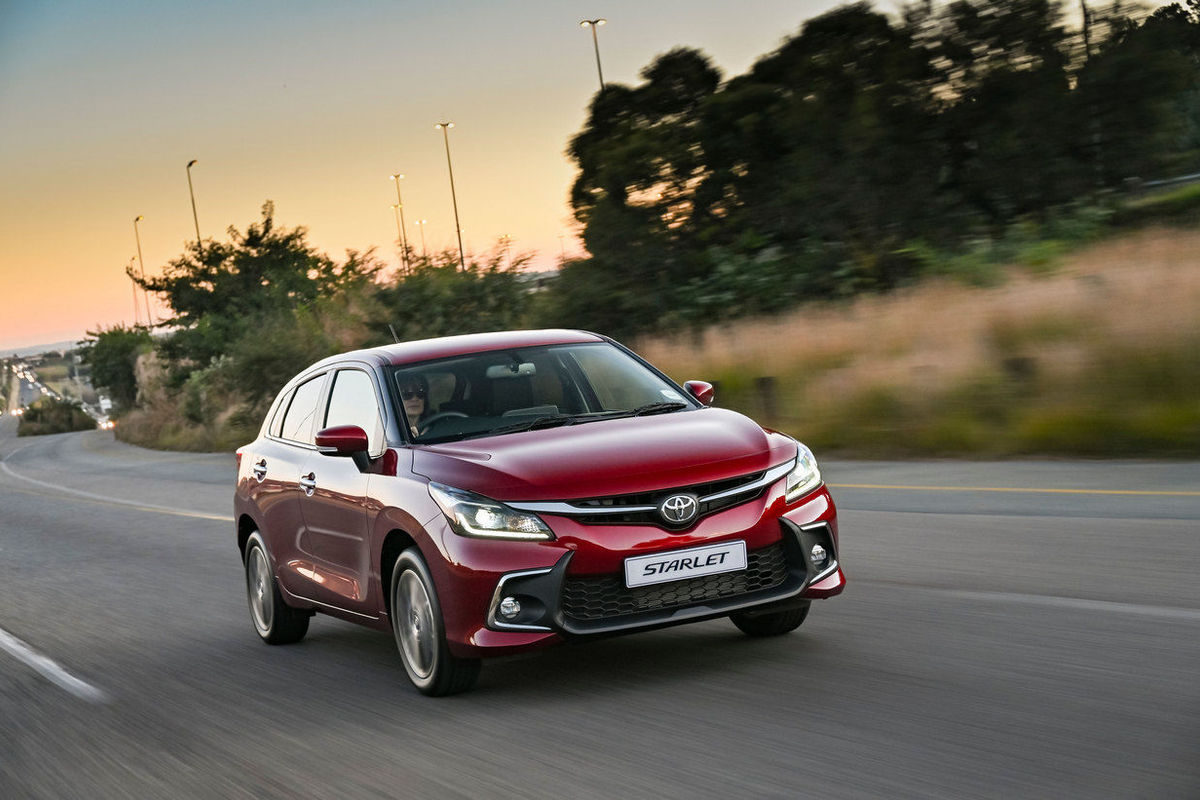
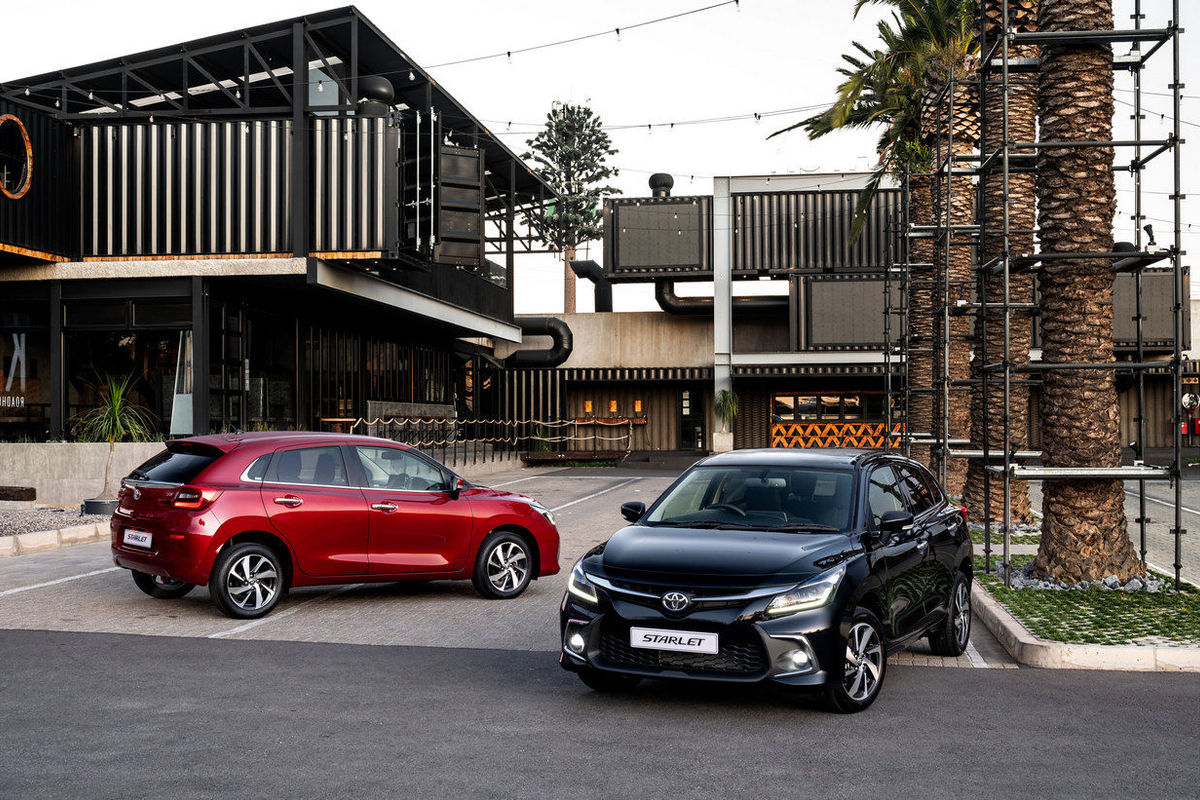
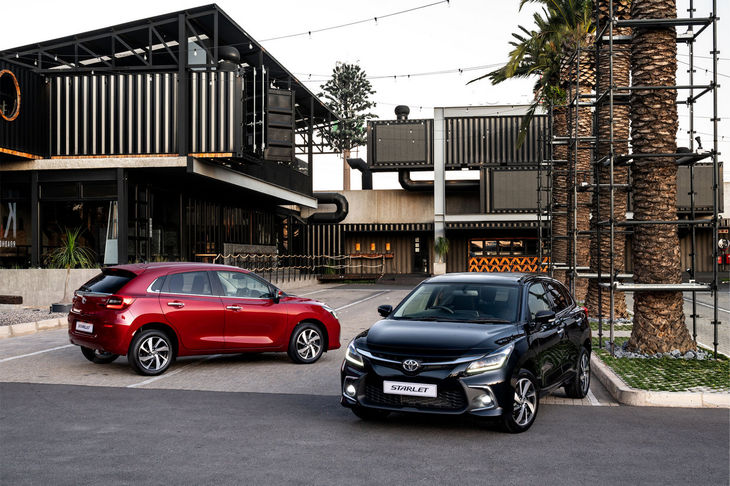
The revised version of Toyota’s successful Starlet has arrived, replete with a revamped exterior design, an updated engine and several more features. Could the 2022 model eclipse the much-loved Volkswagen Polo Vivo as South Africa’s favourite entry-level hatchback? We drove the newcomer during its local launch in the Western Cape.
What’s new?
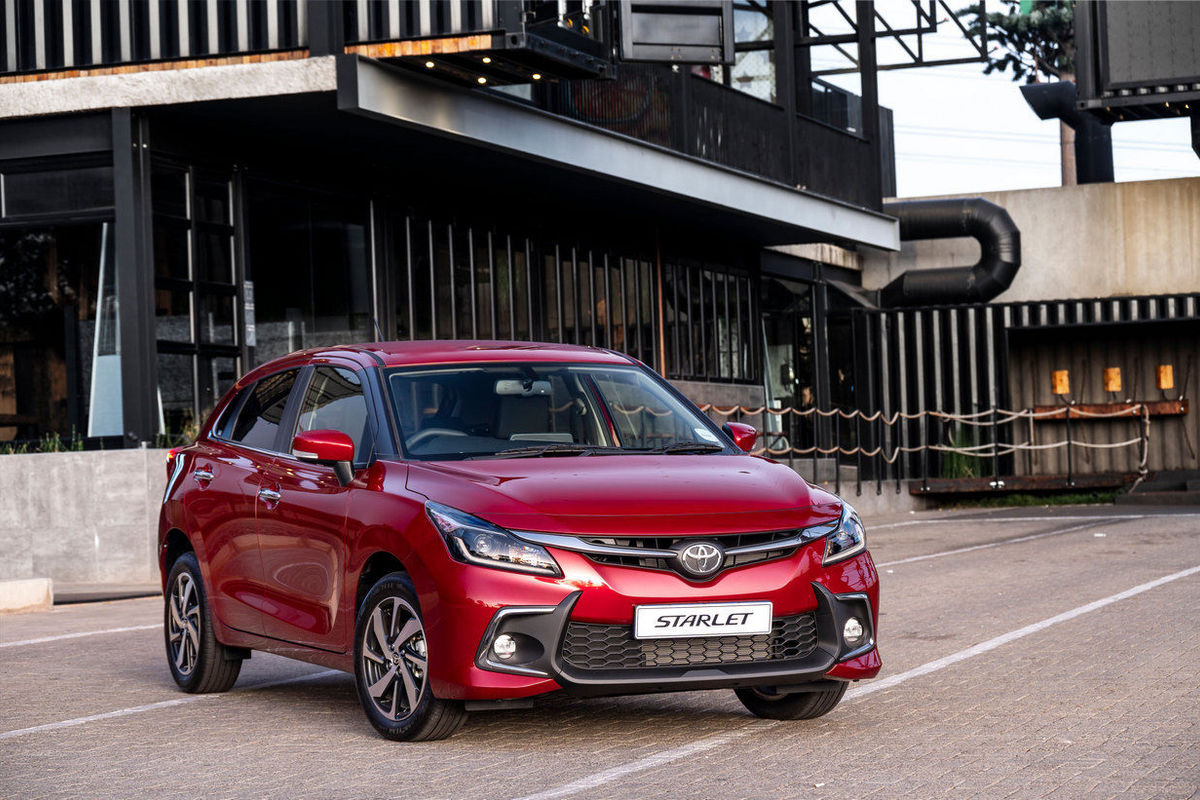
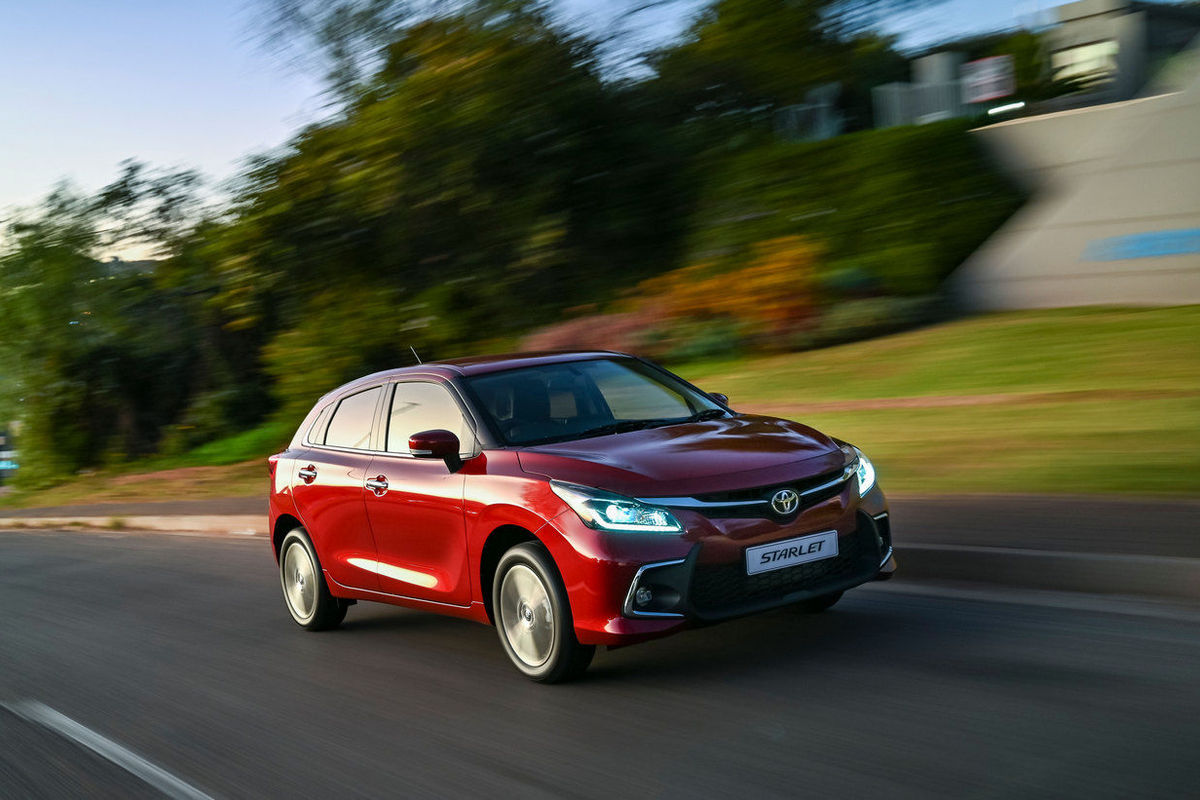
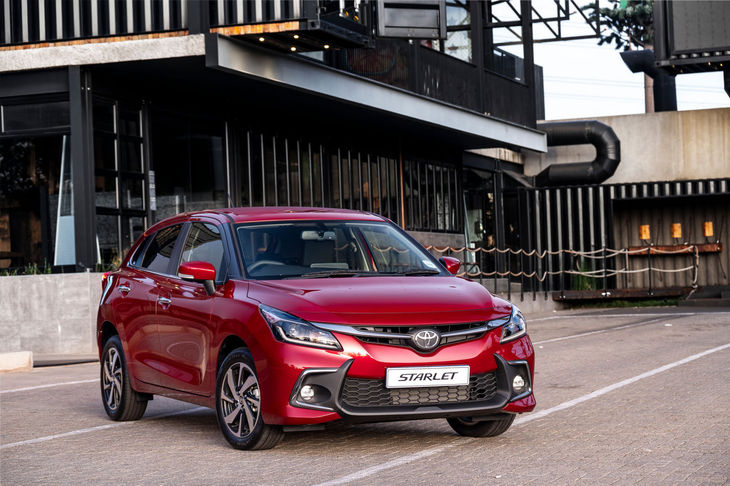
The new face on the Starlet includes new headlights, a revised bumper and chrome surrounds on the foglights.
Since its local introduction in 2020, the Starlet has proved a successful import for Toyota SA. It has often ranked as Toyota’s second-best-selling vehicle (behind the Hilux) and shows there’s still demand for an entry-level hatchback in SA!
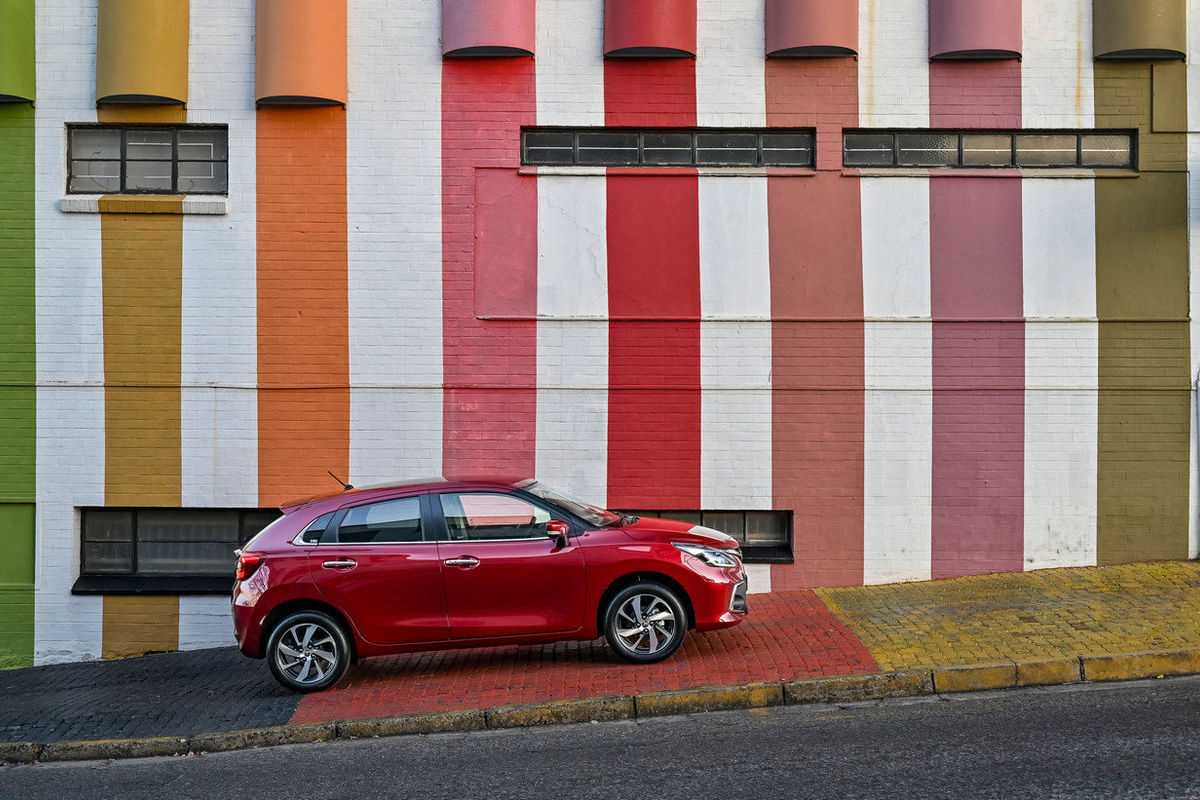
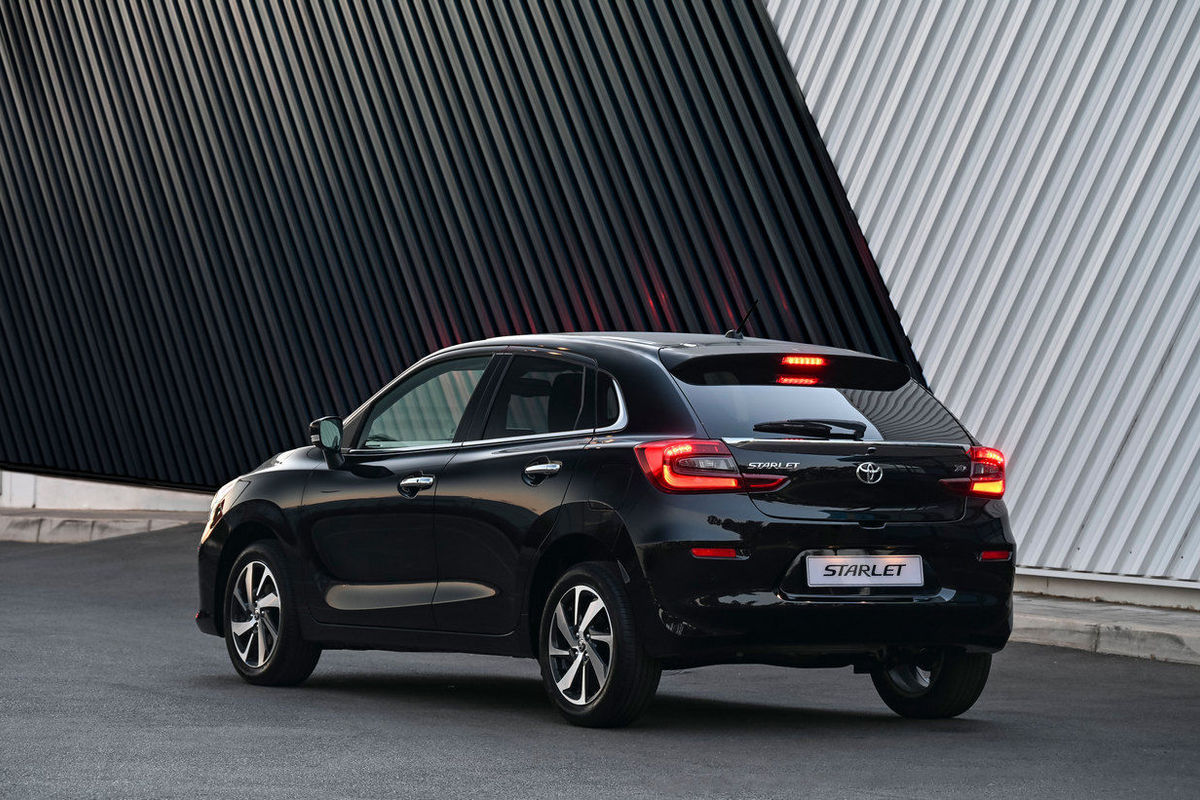
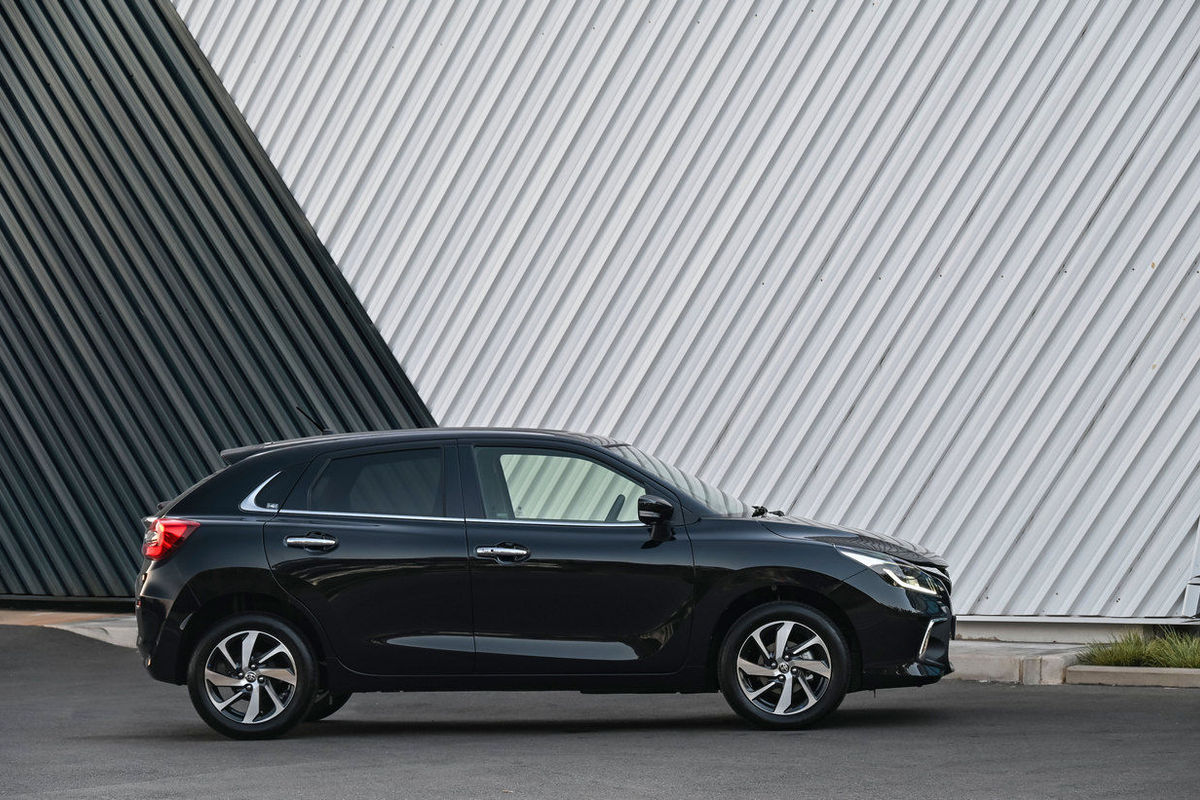
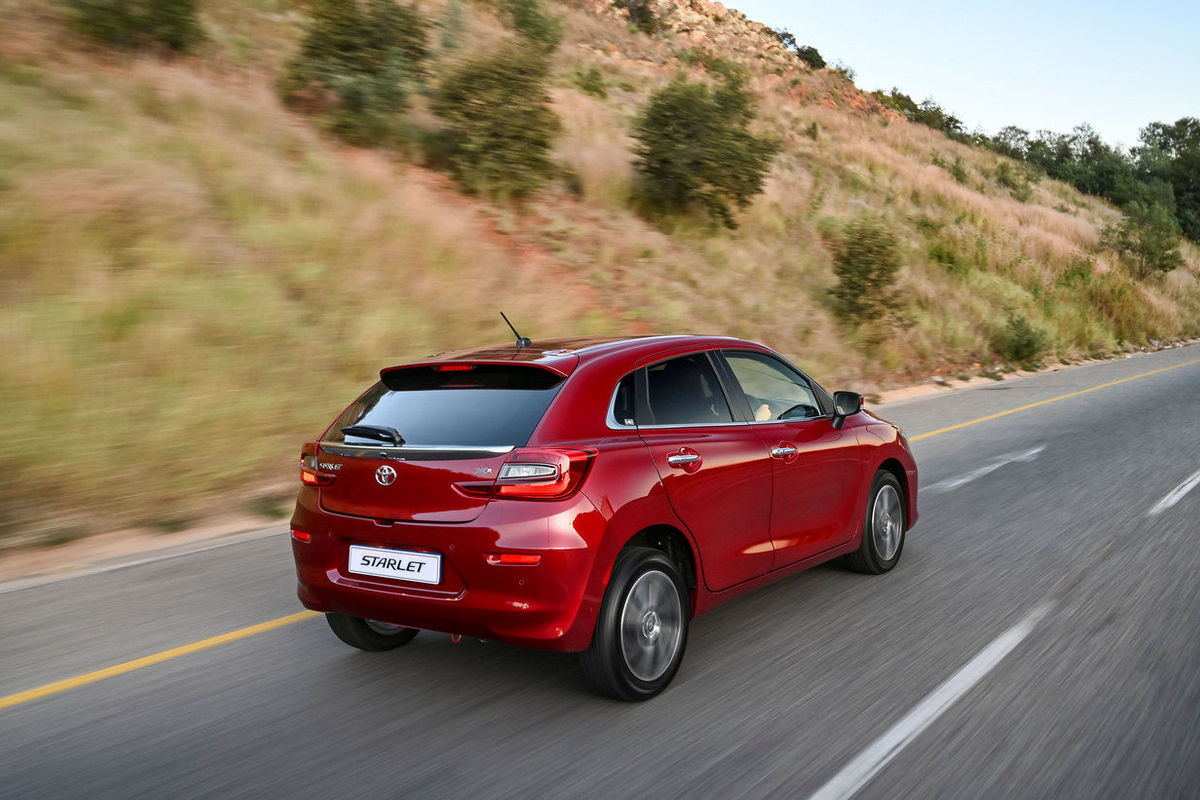
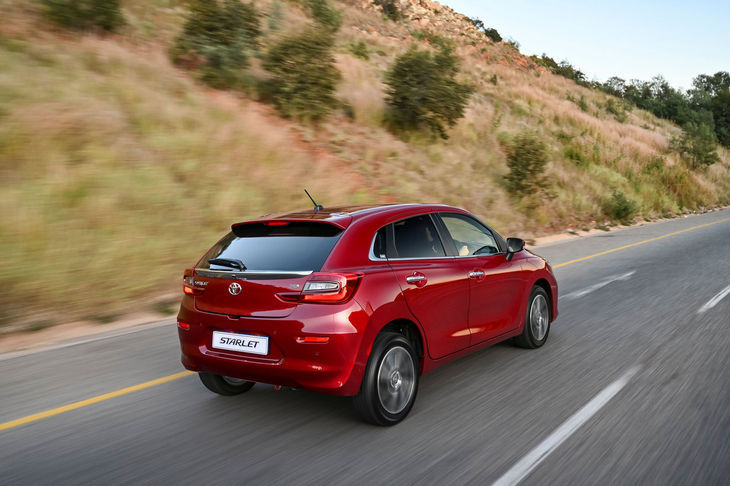
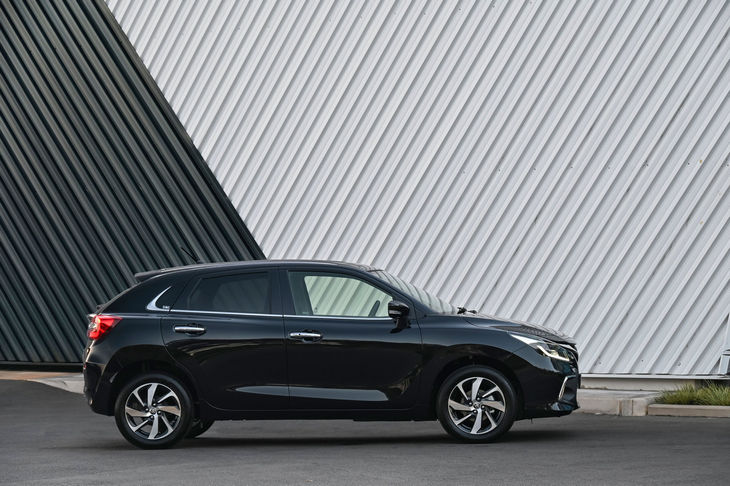
The facelifted model remains a rebadged version of the Suzuki Baleno and features a revised front end, with more chrome detailing and new-look headlamps. Similar treatment is given to the rear end, where new taillight clusters are linked by a chrome strip. The Starlet appears to be a much bigger car from the front (one that would compete with, say, a Volkswagen Golf), but when you look at the Toyota in profile it’s apparent that its size is more comparable with that of a Polo.
The most notable change is under the bonnet, where the 1.4-litre petrol engine has been replaced with a more powerful 1.5-litre petrol motor. The gearbox options remain either a 5-speed manual or a 4-speed automatic transmission.
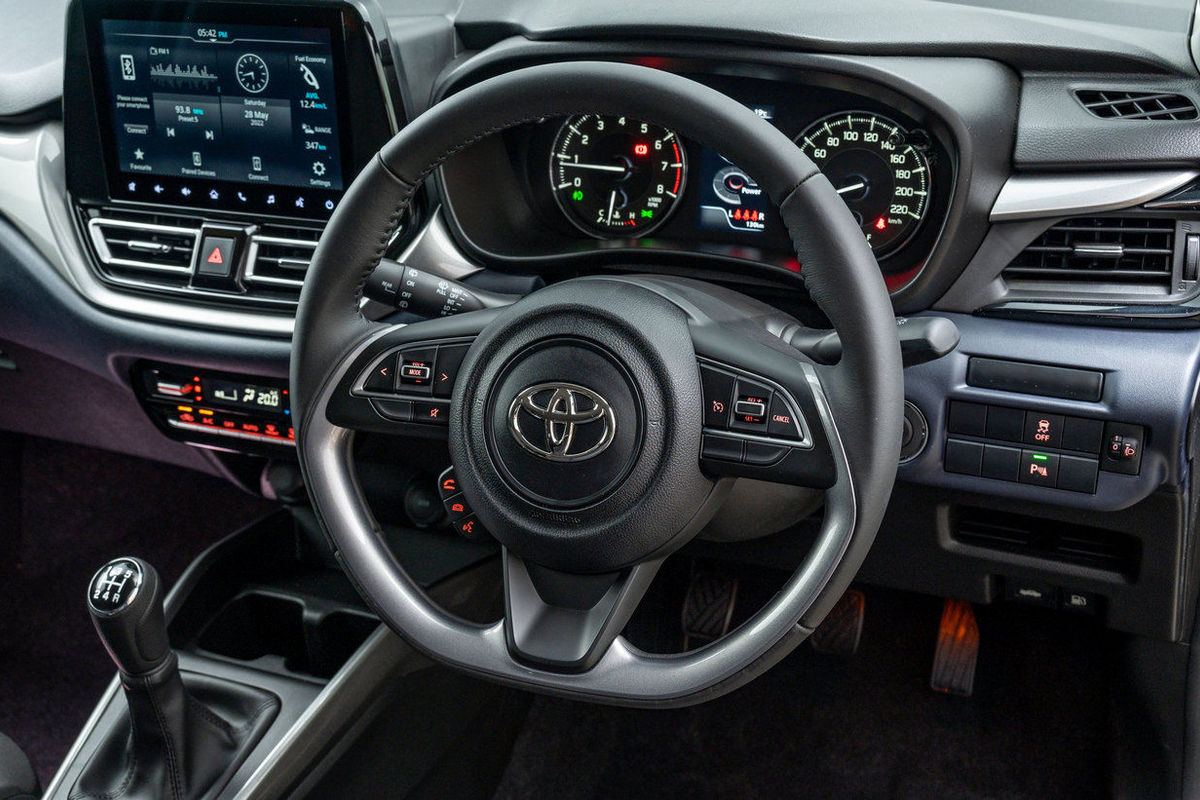
In terms of infotainment upgrades, a 7-inch touchscreen system is now standard on Xi and Xs derivatives, while the top-spec Xr gains a bigger (9-inch) unit. Both systems are compatible with Apple Carplay and Android Auto.
What’s more, additional safety features have been fitted to all versions of the Starlet – all told, it’s a comprehensively improved offering that will have segment favourites, such as the Polo Vivo, looking over their shoulders.
The new Starlet engine
More power and torque from a 1.5-litre engine.
One of the complaints buyers levelled at the pre-facelift Starlet was that it didn’t have enough performance. Toyota (or is that Suzuki?) has duly responded by installing a bigger (1.5-litre) engine, which is the same unit used in the Urban Cruiser and Suzuki Vitara Brezza. That means the Starlet now has 9 kW more power (77 kW) and 8 Nm more torque (138 Nm). It may not sound like a lot, but it’s more than a 10% increase in power and a little less than that in terms of peak torque.
The fuel economy has taken a slight hit as a result of the enlarged-capacity engine, but only by around 0.2 L/100 km, which is a fair result, I’d say. Claimed efficiency is between 5.4- and 5.7 L/100 km.
The new engine feels perky in the Starlet and, like most Japanese naturally aspirated engines, it’s happy to rev and really starts to get into its stride when the revs climb above 4 000 rpm. Most buyers are likely to keep the revs well below that mark in the interest of achieving optimal fuel efficiency. Speaking of which, the Toyota would be even more frugal if its maker endowed it with a 6th gear, especially when driving longer routes and cruising on the freeway at around 120 kph.
Still, fuel efficiency is good – even without the additional gear – and during our short drive in the new Starlet, we saw an indicated 6.9 L/100 km. A buyer with a “lighter right foot” could easily return somewhere in the low 6 L/100 km range.
The new engine improves the Starlet’s driveability in a number of ways… it can deliver superior in-gear acceleration compared with its 1.4-litre-engined predecessor; it’s likely to be more tractable when loaded up with passengers or things and we’re in no doubt that the extra performance will be useful for those at the Reef, where naturally aspirated engines can feel lethargic in the thin(ner) air.
What’s the Starlet like to drive?
The side profile shows its proportions are smaller than it initially looks from the front.
For a start, the Starlet’s bodyshell has been modified to improve its rigidity and stiffness. What’s more, changes have been applied to the rear torsion beam to improve handling, while the suspension features 20 mm more travel, which Toyota claims leads to improved ride comfort. All derivatives also have 10 mm wider tyres than their predecessors, which will improve grip levels in all atmospheric conditions.
The Western Cape’s major roads are generally well-maintained and the evaluation route encompassed some particularly smooth stretches of tarmac. The Starlet’s ride quality is comfortable – very absorbent. The steering is on the lighter side and there’s a fair amount of body roll when you corner at anything more than a snail’s pace. Still, the Starlet’s target clientele probably won’t be bothered by its handling characteristics, but WILL appreciate its comfortable ride and quiet cabin.
The 4-speed automatic shifts rather leisurely, which is to say it takes its sweet time to change up or down, all of which results in a frustratingly jerky driving experience. The manual is the more effective complement to the 1.5-litre powerplant, but, if you really don’t want to shift gears yourself (or tend to sit in congested traffic on the daily commute), the auto will do the job. It would just be nice, however, to have the option of a more modern 5- or 6-speed automatic transmission.
New technology available
All Starlet derivatives come with an infotainment screen as standard. The Xr’s 9-inch screen is shown above.
The infotainment system in the pre-facelift Starlet (if you could call it an infotainment system) was little more than a dot-matrix radio with not much in the way of functionality (besides Bluetooth connectivity). The entry Xi and Xs variants are now equipped with a proper 7-inch (touchscreen) infotainment system that includes Apple Carplay and Android Auto compatibility as standard. The top-spec Xr gets a bigger (9-inch) system as standard.
You also get USB ports in the rear now (as well as the front) – and they’re claimed to be fast-charging ports!
Safety improvements have been made across the range as well: stability control, ABS, EBD and hill-start assist are standard. Rear parking sensors are stock equipment, while the Xr versions are further equipped with a reverse-view camera.
In terms of airbags, the Xi and Xs derivatives have 2 airbags (driver and passenger), while the Xr versions feature 4 airbags (additional side and curtain ‘bags).
Pricing and after-sales support
The entry price of the Starlet range has only increased by R1 000, which, considering the improved specification the Indian-made model offers, makes it a better value-for-money proposition than the outgoing model.
All Toyota Starlets are sold with a 3-year/100 000 km warranty and a 3-year/45 000 km service plan. For a breakdown of the specs of each derivative, click here.
Starlet 1.5 Xi MT
R226 200
Starlet 1.5 Xs MT
R239 100
Starlet 1.5 Xs AT
R261 100
Starlet 1.5 Xr MT
R294 900
Starlet 1.5 Xr AT
R313 300
Summary
A higher standard specification and punchier drivetrain make the Starlet a formidable contender in the segment.
Given the prevalence of new-vehicle price inflation in the market (caused by higher component- and/or transport costs or simply a weaker exchange rate), it’s refreshing to be able to report that the updated Toyota Starlet offers MORE value than its predecessor. The Starlet was previously criticised for lacking performance… and a modern interior, but that’s all changed with this model, courtesy of the fitment of a more powerful engine, as well as an up-to-date infotainment setup.
A straight-up comparison with the competition will generally favour the Starlet, because the Japanese entry-level hatchback offers a better standard specification and, now, competitive performance, at an attractive price point. Then factor in that Toyota has a longstanding reputation for good after-sales backup – and the largest dealer network in the country – and, as purchasing proposition, the revised model offers MORE peace of mind too.
New Compact Toyota Bakkie On The Way?
While Ford and Hyundai are reaping the rewards of bringing the Maverick and Santa Cruz compact bakkies to market, other brands, including Toyota are reportedly considering taking the leap into the compact bakkie segment too.
Cast your memory back to 2015, the year Hyundai captured our imagination with the Santa Cruz concept. Hyundai’s compact bakkie intentions were mostly well-received and even bakkie lovers right here in South Africa were clamoring for Hyundai to give it the green light for production with the hope of right-hand-drive production which hasn’t materialised yet.
Both models are selling very strongly in the US and their sales success has other brands interested.
Volkswagen Group recently announced the revival of the Scout brand which will see an “all-electric pick-up and rugged SUV” come to market in the USA and recent comments from Toyota officials in the land of the free point to the possibility of Toyota producing a new compact bakkie to rival the Santa Cruz and Maverick.
Speaking to US publication, Motortrend, executive vice president of sales for Toyota Motor North America, Bob Carter alluded to the real possibility for Toyota to enter the compact bakkie fray, “One of the spaces we’re looking at—that won’t be short-term—is where the compact pickup truck is going. You have Santa Cruz and Maverick on the market, and it will be interesting to see Scout. Today, we have the market really well covered with Tacoma, but that [a compact pickup] could be a possibility and something we continue to look at”.
Carter’s colleague, Cooper Ericksen, group vice president of product planning and strategy, commented “If there’s a customer that needs a rugged, smaller body-on-frame vehicle, we can consider that, but if it’s more for urban use and less extreme off-road, then it would make more sense to use the TNGA unibody platform”.
Toyota’s TNGA platform underpins vehicles such as the Prius, RAV4 and Corolla and if Toyota does decide to produce a unibody bakkie, it’s likely that the firm will draw on its vast experience in hybrid powertrains to motivate the newcomer.
Carter also hinted that an official announcement could be made in 2023 which means that we might see a new small Toyota bakkie in 2024/25.
Bentley Continental GT S and GTC S Gets Sporty Treatment
If the Bentley Continental GT is too bland for you, perhaps the sportier GT S and GTC S iterations will get you excited?
When discussions about the pinnacle of luxury motoring take place, Bentley is likely to be mentioned. Our recent experience with the Bentley Continental GT Speed highlighted just how fantastically luxurious and powerful these creations are.
While the Continental GT Speed is equipped with the Crew-based firm’s marvelous 485 kW W12 6.0-litre engine, the standard Continental GT employs a turbocharged 4.0-litre V8 engine that produces a heady 404 kW and 770 Nm of torque.
Powerful refinement and continent-crushing ability is the name of the game here but what if you wanted something edgier without losing the essence of the Continental GT?
Well, Bentley has the answer! Meet the Bentley Continental GT S coupe and GTC S convertible!
Using the V8-powered Continental GT as a base, Bentley has ramped up the visual and aural presence of this posh brute.
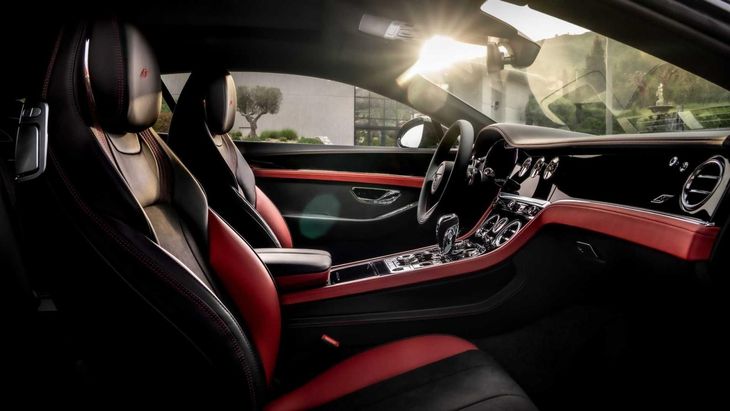
A two-tone interior adds sporty appeal to the interior.
On the outside, a black theme dominates. The headlights and taillights are dark tinted and the GT S and GTC S gain new 22-inch Y-spoke alloy wheels in gloss black but 21-inch 3-spoke wheels are also offered and red brake calipers add contrast and sporting appeal to the look. The grille also sports a glossy black finish and the newcomers are easily identified with S badges seen on the front fenders.
The sporty look is matched with a sports exhaust system with black exhaust tips emitting the V8’s song for the world to hear.
Moving inside, a two-tone black and red interior differentiates the pair from the base V8 Continental GT and the instrument cluster graphics are familiar from the Continental GT Speed. The “S” tread plates replace the regular “Bentley Motors LTD” plaques and the letter S is embossed onto both the front and rear headrests.
Pricing for the Bentley Continental GT V8 starts from R3 995 00 and while it’s not yet clear if the GT S and GTC S versions will be offered in South Africa, if they do become available, pricing north of R4 million can be expected. Better start saving!
For new-car buyers that are shopping on a tight budget, Suzuki’s efficient, affordable and well-specified small cars represent excellent value for money. The latest Celerio budget hatchback, in particular, is a rather compelling proposition in the sub-R200k segment of the market. We review the 1.0 GL derivative.
We like: Standard stability control, efficiency, refinement, value for money
We don’t like: “Top-heavy” feel under cornering, positioning of window switches
FAST FACTS
Model: Suzuki Celerio 1.0 GL
Price: R194 900
Engine: 1.0-litre 4-cylinder, petrol
Power/Torque: 49 kW/89 Nm
Transmission: 5-speed manual
Fuel consumption: 4.4 L/100 km (claimed)
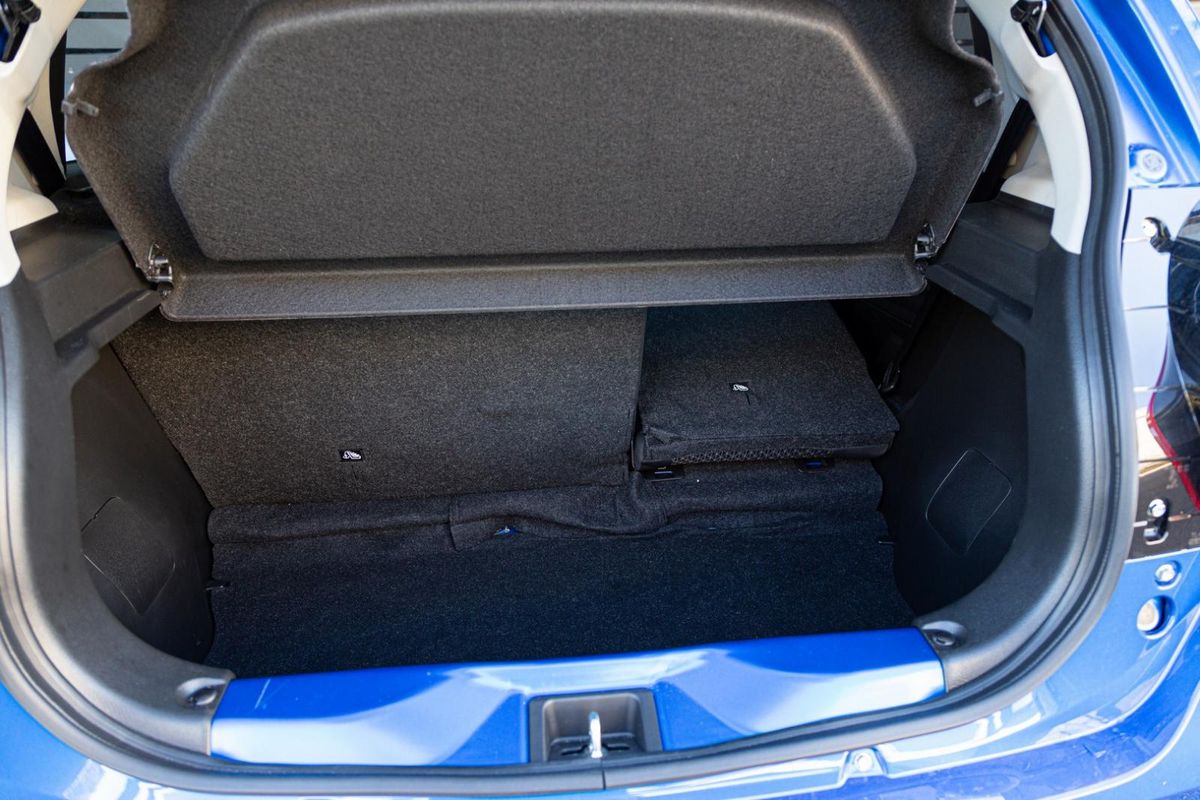
Luggage capacity: 295 litres
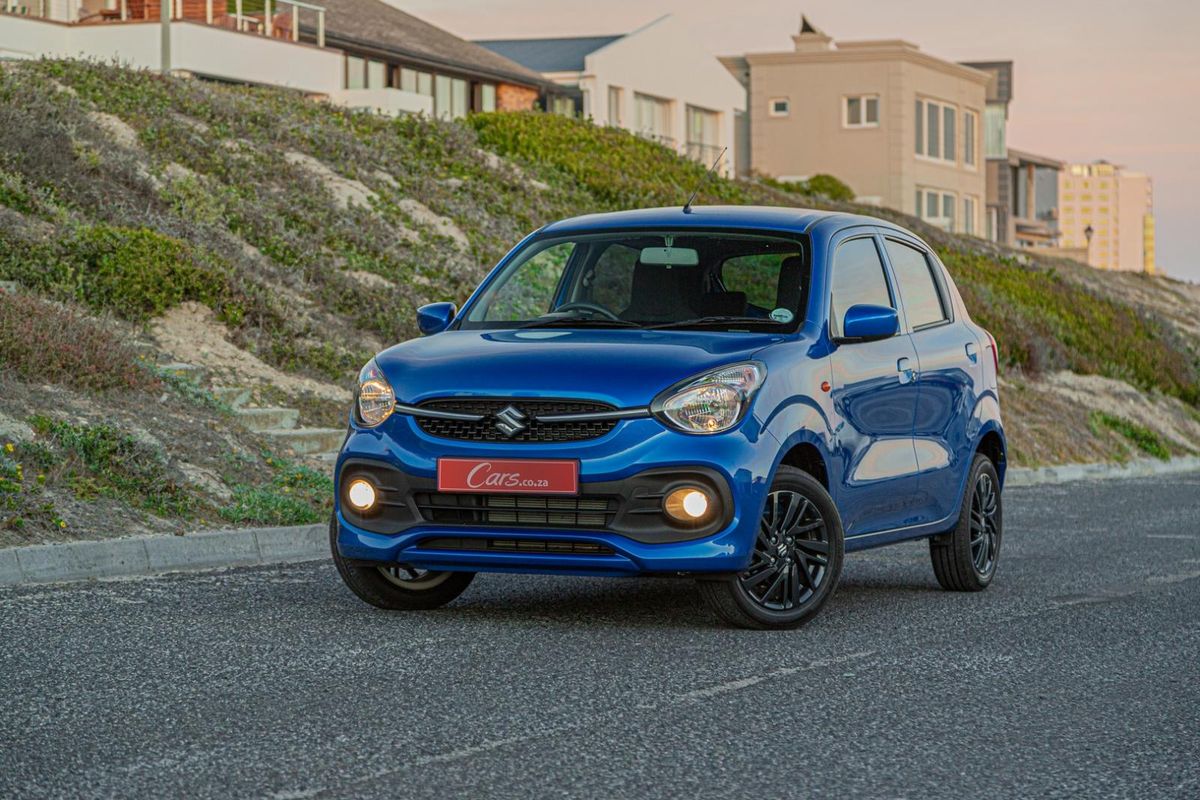
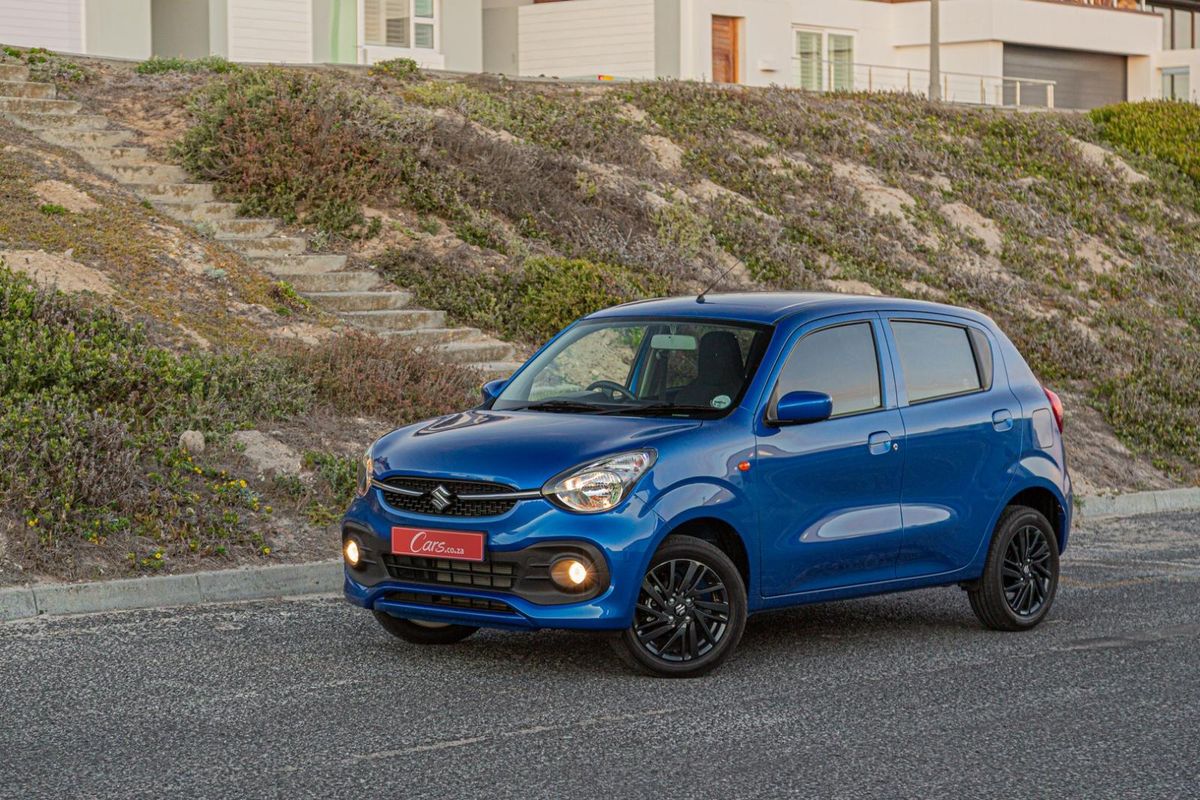
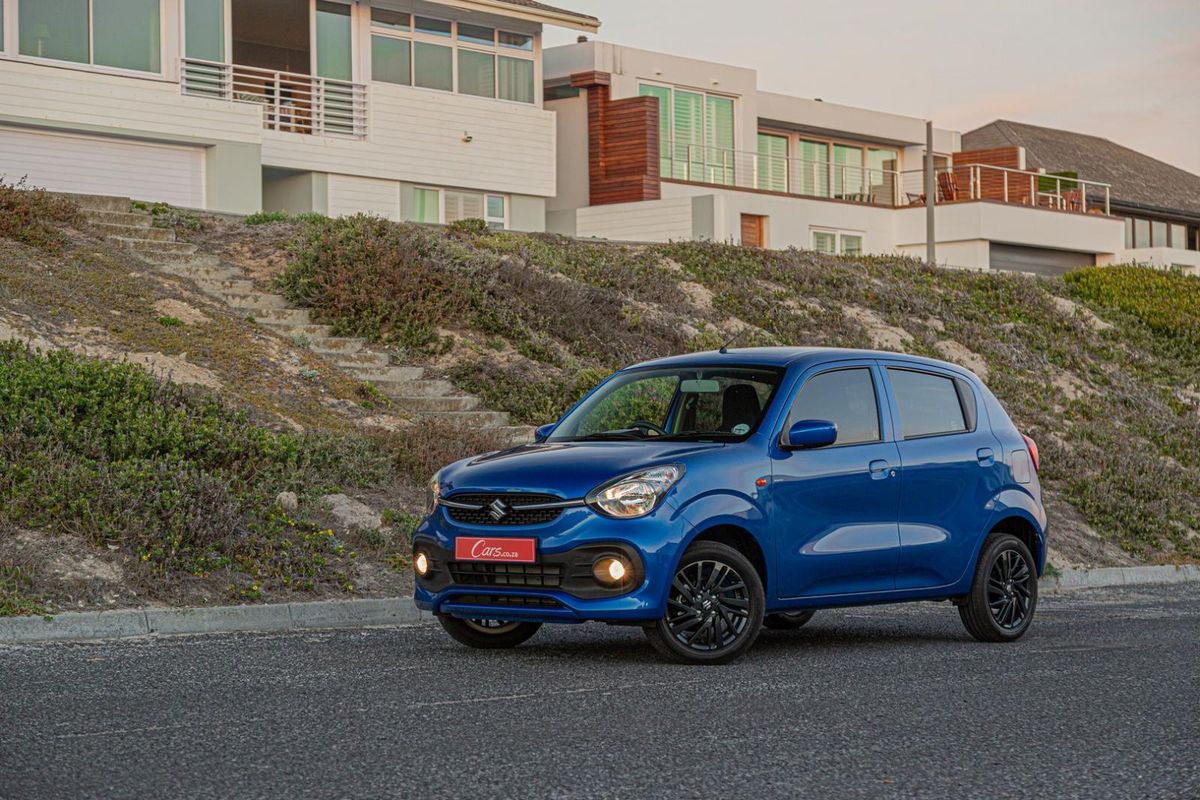
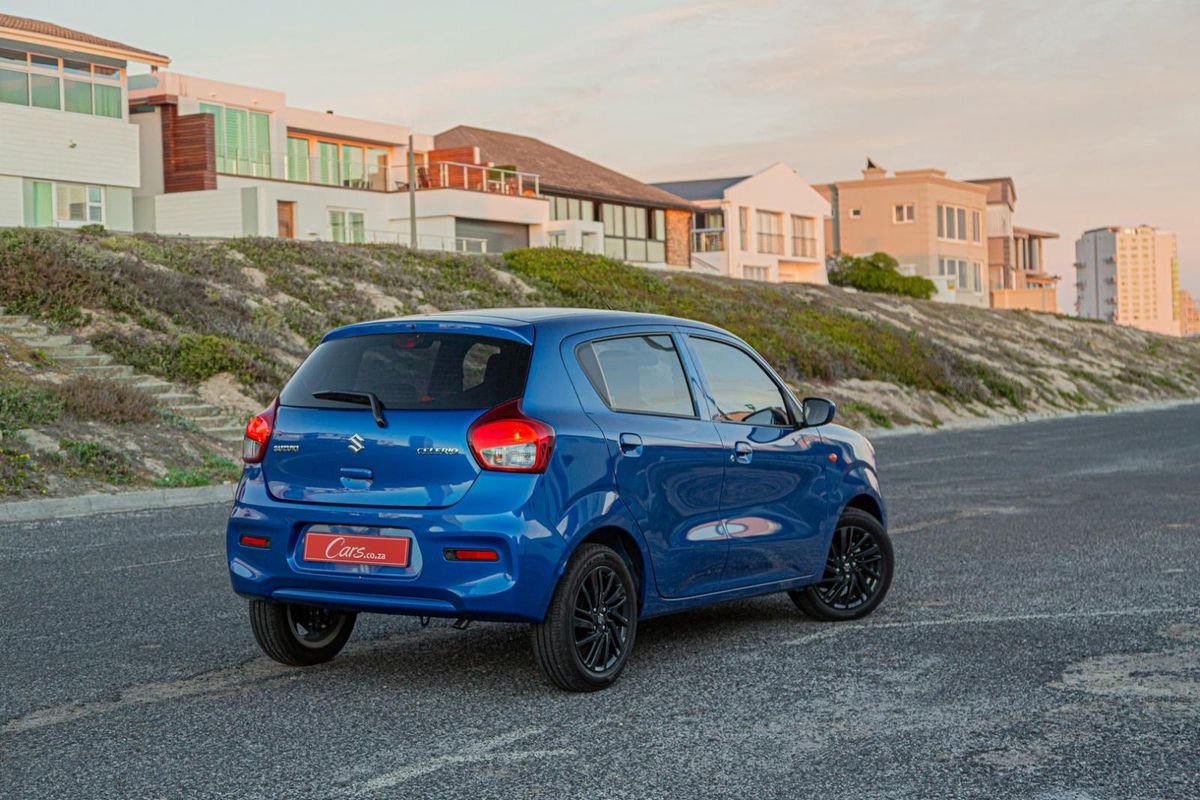
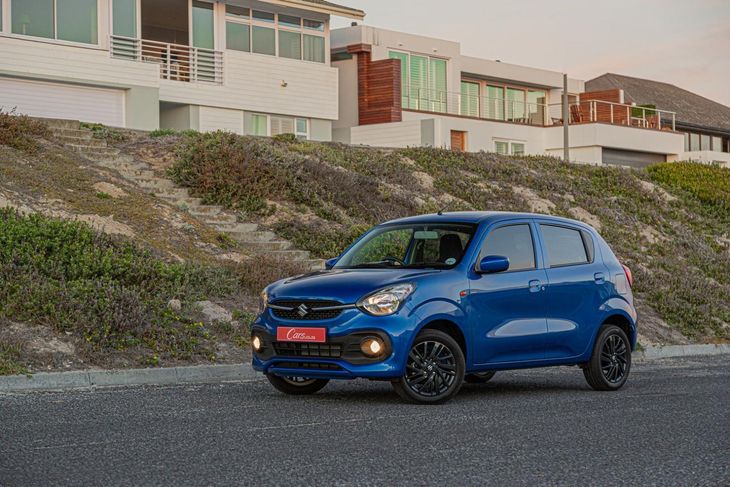
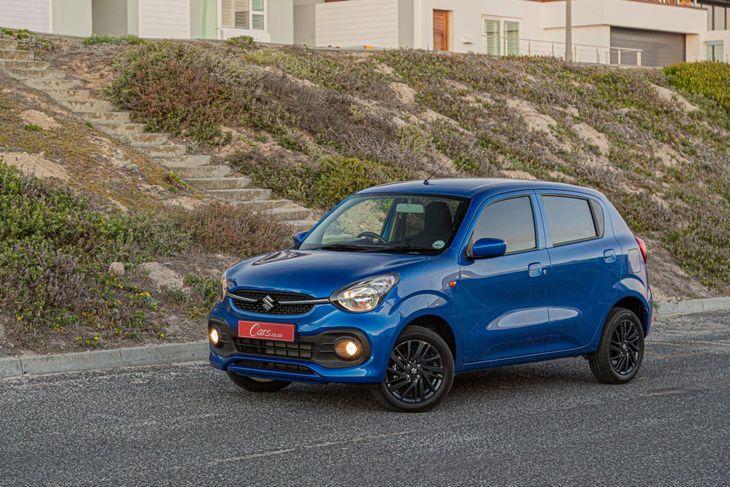
The Suzuki Celerio 1.0 GL comes with 15-inch alloy wheels and body-coloured door handles and side mirrors.
Where does the 2022 Suzuki Celerio fit in?
As this review was being prepared, the news broke that Suzuki’s Swift compact hatchback was South Africa’s top-selling new passenger vehicle in May 2022. It didn’t come as much of a surprise – Suzuki Auto SA’s sales have been rising steadily for several years, but recent vehicle-price hikes, fuel-price shocks, many brands’ stock supply maladies (and various other factors) have also worked in the Japanese marque’s favour. Suzuki is undeniably a master when it comes to producing quality, efficient products and bringing them to market at affordable prices – that’s why three of Toyota South Africa Motors’ current passenger-car models (the Urban Cruiser, Rumion and Starlet) are rebadged Suzukis!
The new Celerio sees Suzuki again playing to its strengths. The newcomer competes in the sub-R200k segment against the likes of the Toyota Agya and Hyundai Atos. The previous Celerio was a capable-enough product (it even won the Budget Car category of the Cars.co.za Consumer Awards in 2016/17), but it was perhaps a bit too conservatively styled – and positioned too close to Suzuki’s top seller, the Swift.
The 2nd-generation Celerio is again priced quite close to its Swift sibling, but appears to be a significantly revised offering, one that might finally be appealing enough in its own right. Let’s see…
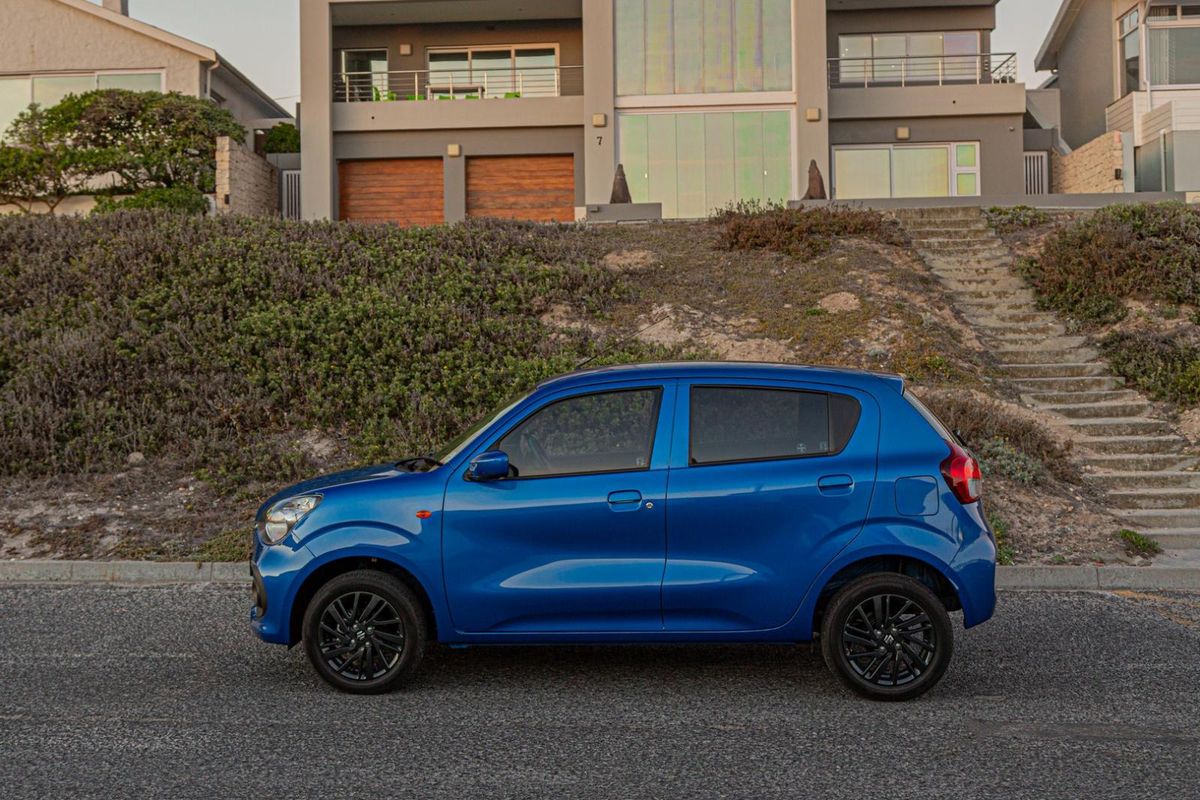
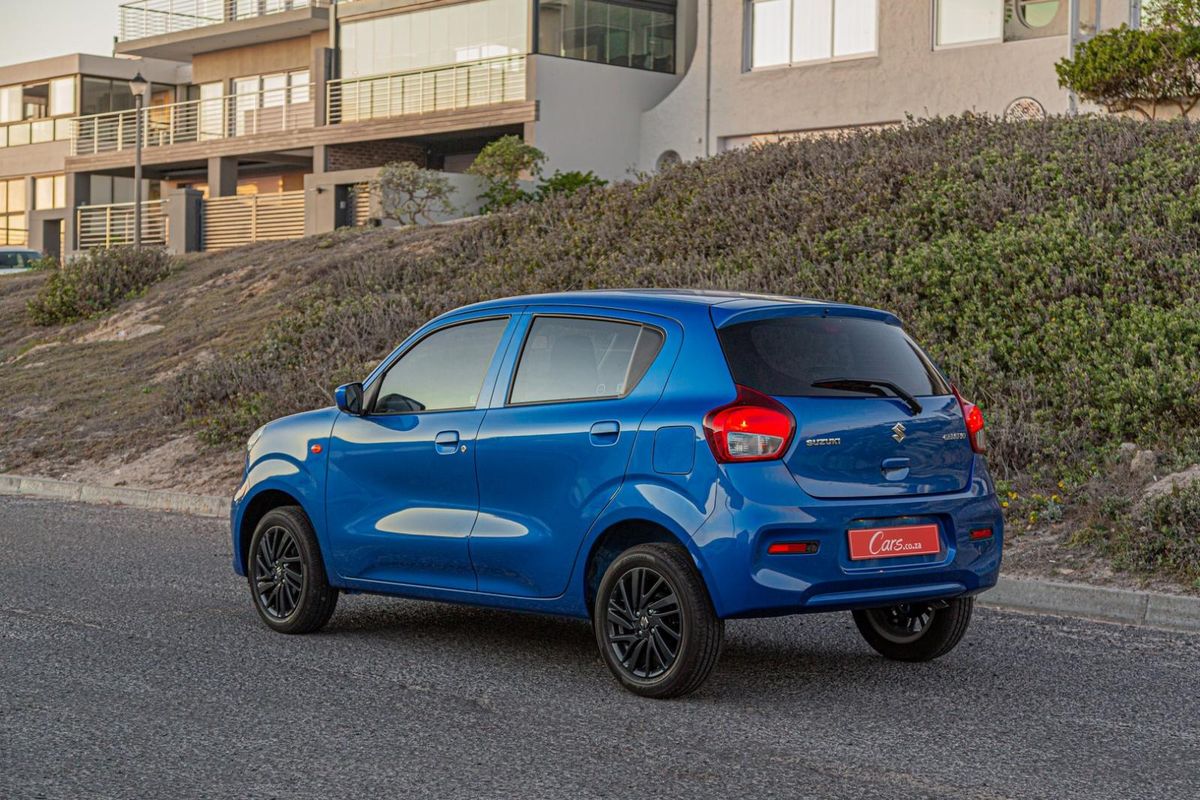
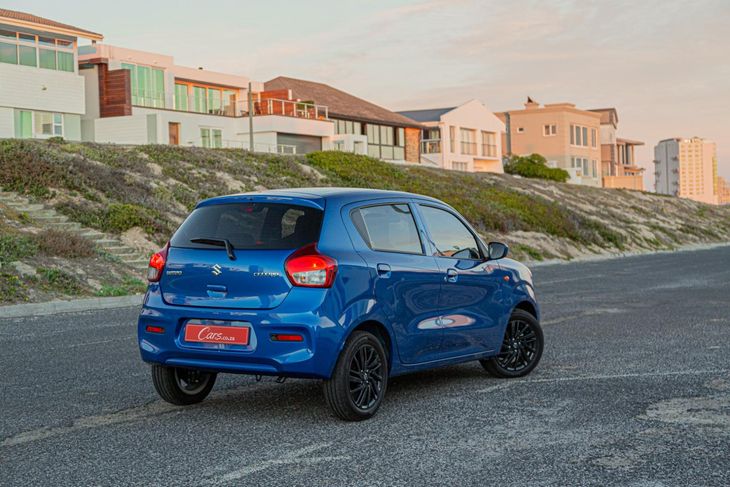
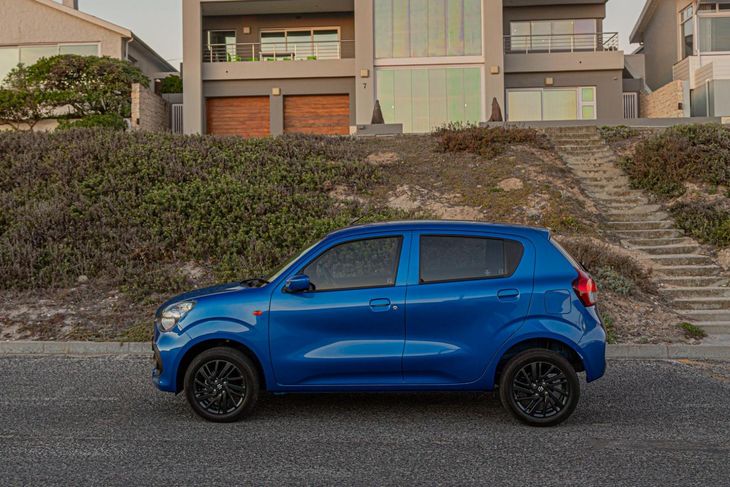
The second-generation Celerio is curvier, longer and wider than its predecessor.
Design and Packaging
It’s fair to say that the 1st-gen Celerio was no stylistic masterpiece. In fact, its appearance was so generic that it seemed exterior styling was an afterthought of the model’s development. With this 2nd-gen Celerio, Suzuki has definitely tried a bit harder… The newcomer is curvier than before, as well as longer and wider than its upright and boxy predecessor. It is built on the same HEARTECT platform as the Swift, which prioritises body rigidity and lightweight construction.
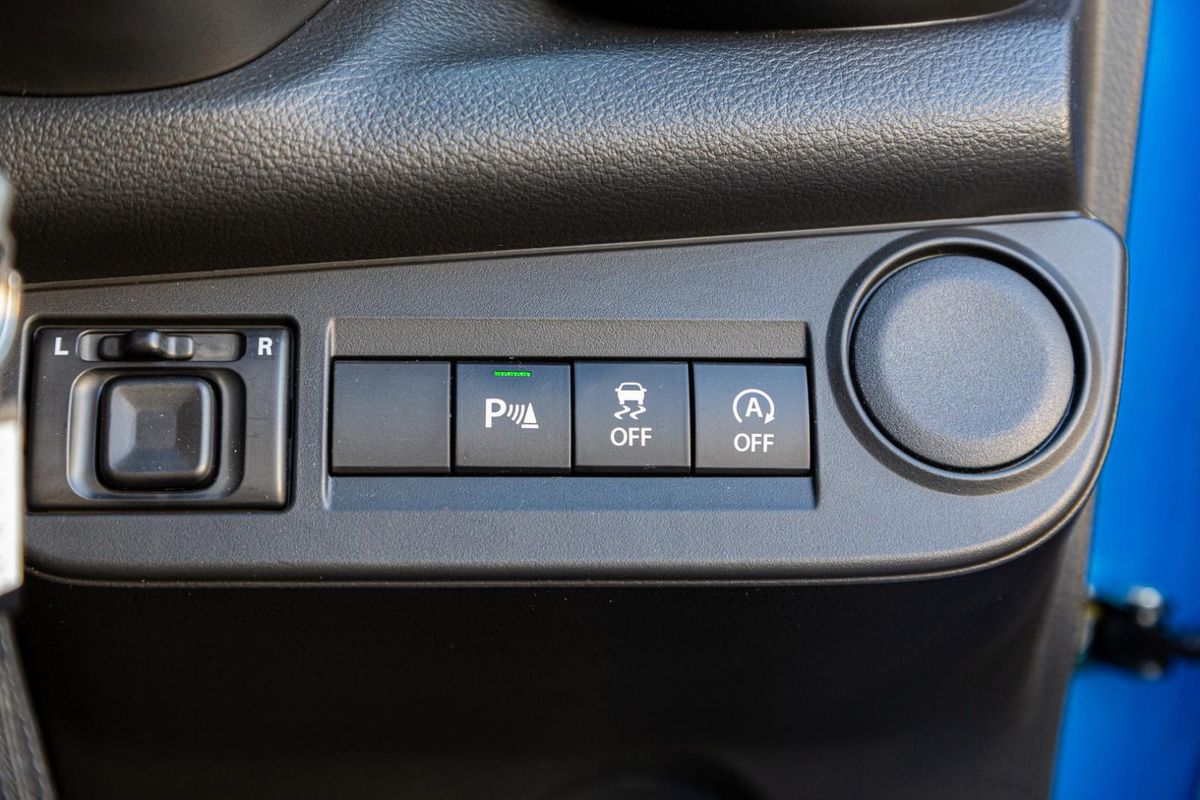
This top (GL) specification variant sports attractive black 15-inch alloy wheels and front fog lamps to bump up its visual appeal over the entry-level GA. Interestingly, all derivatives (including the GA) come fitted with rear parking sensors.
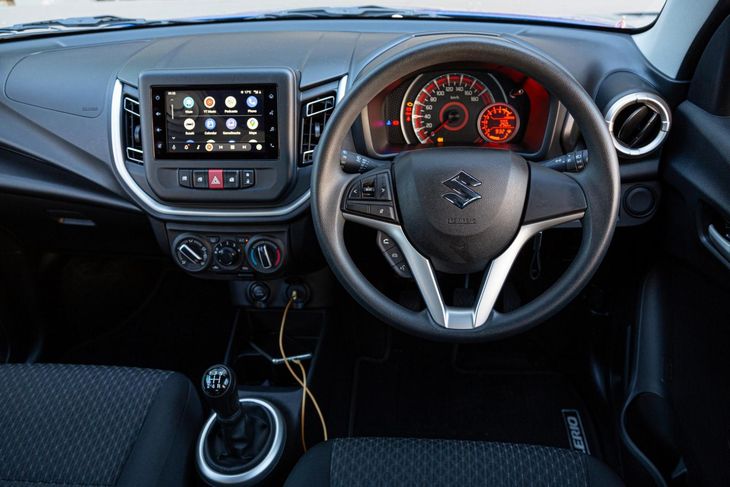
For a budget car, the Celerio’s cabin feels substantial and solidly made, even though the finishes are workmanlike.
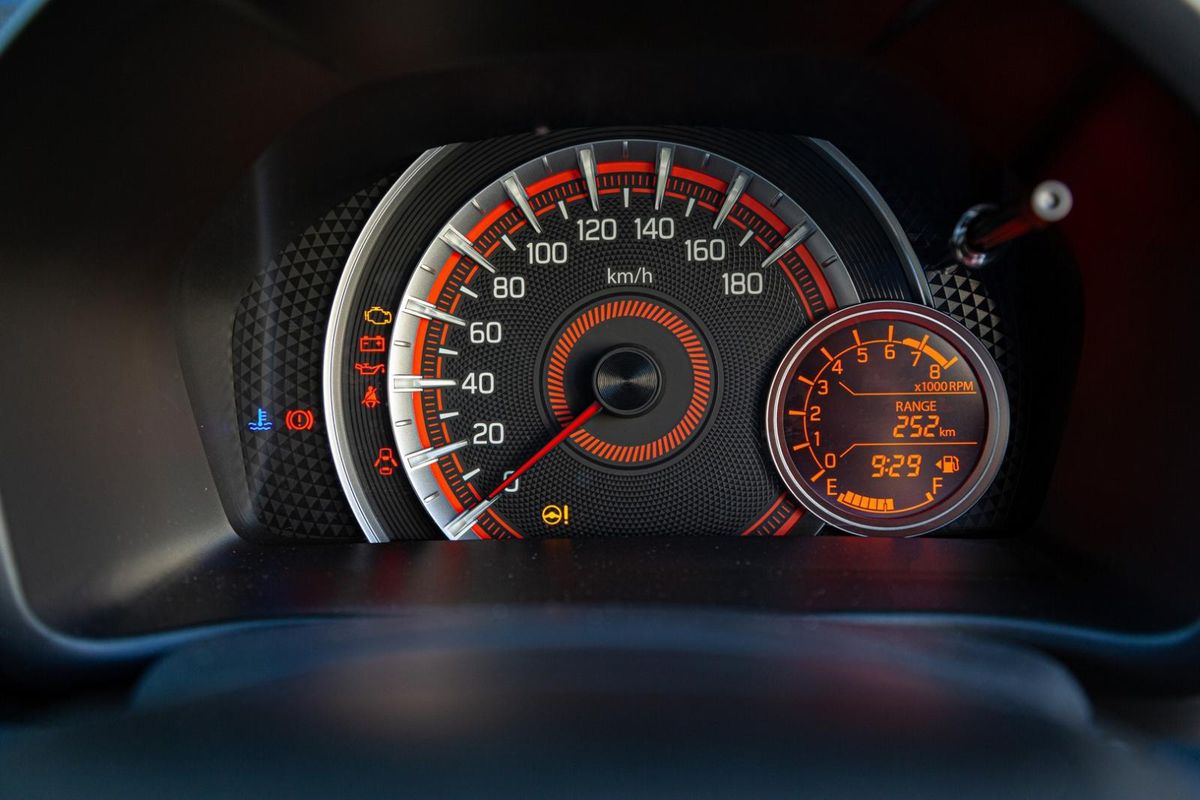
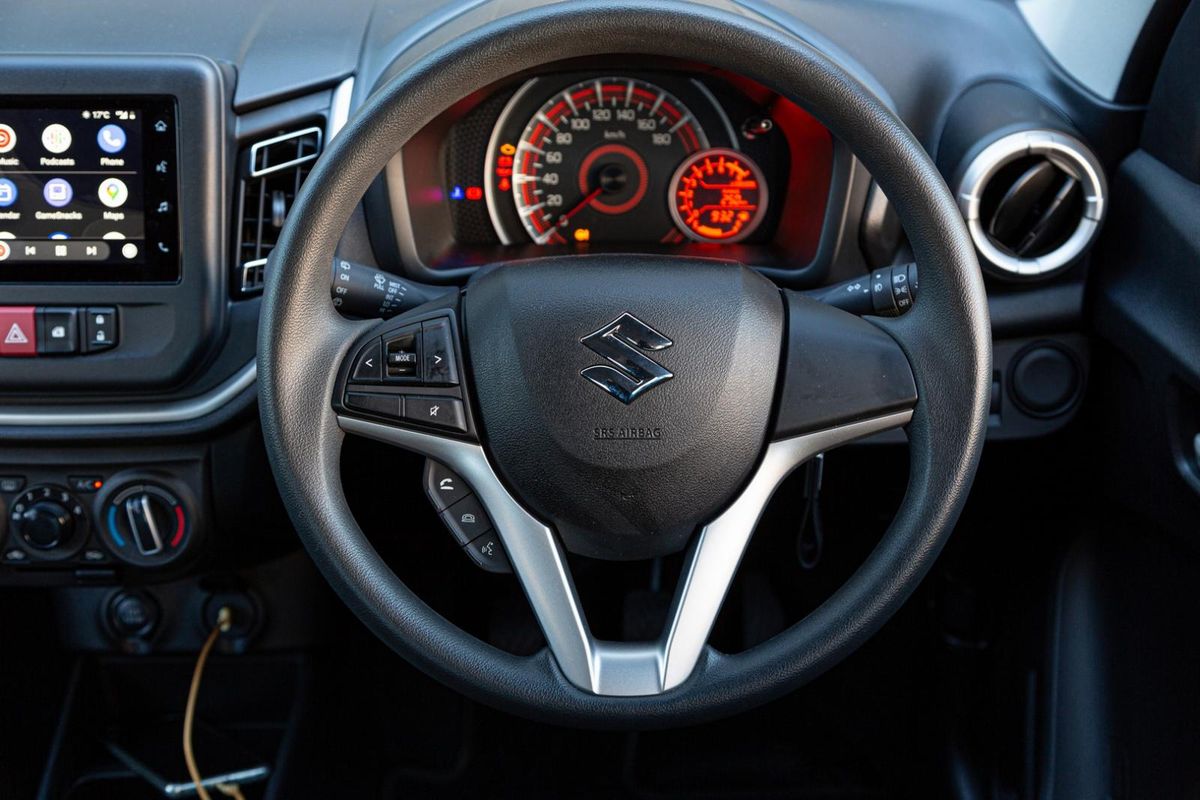
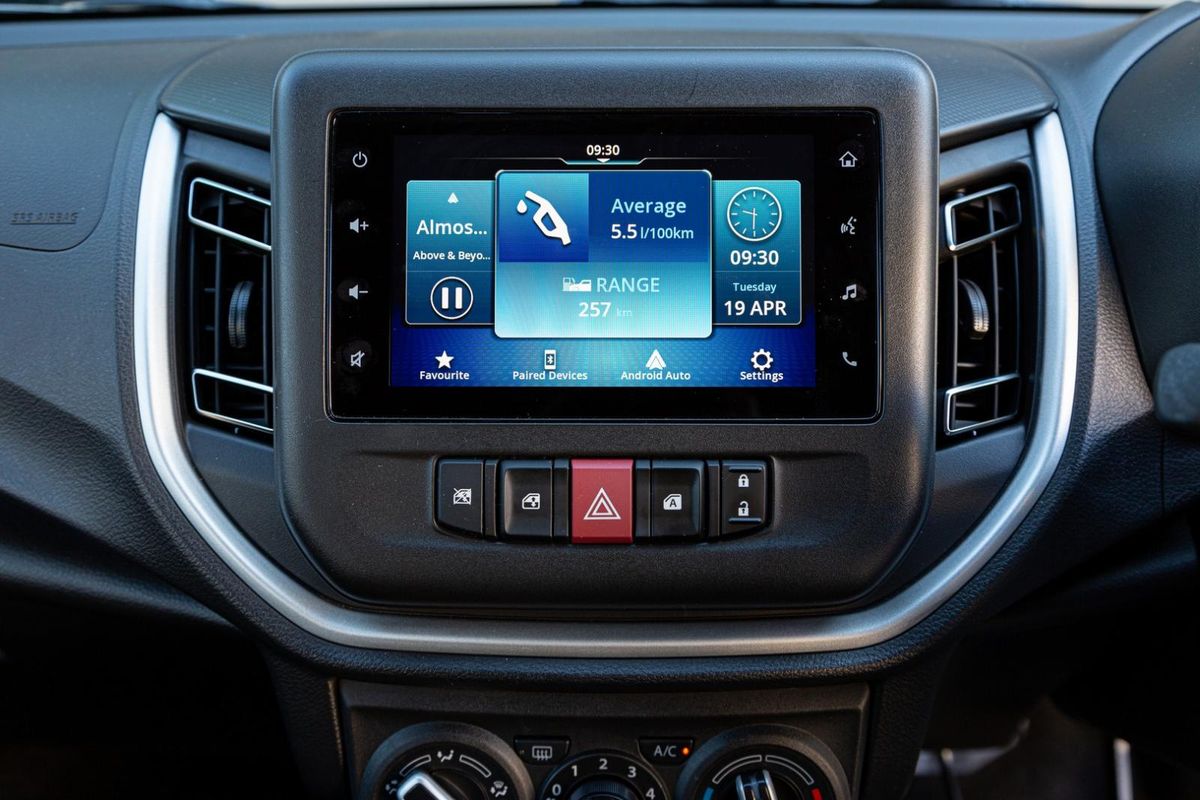
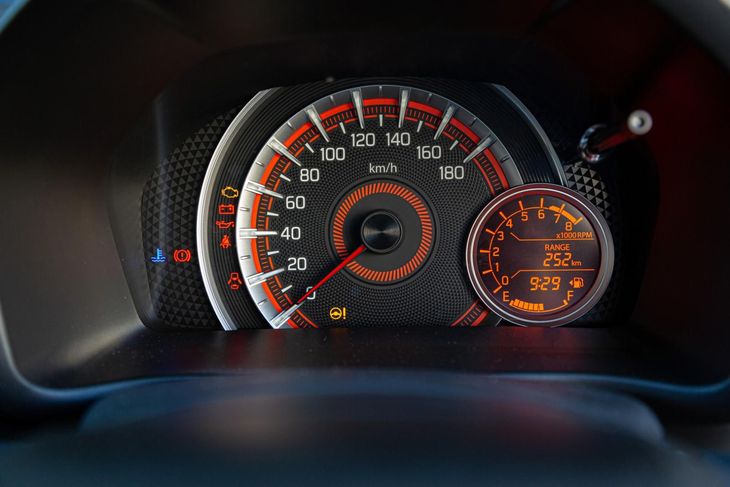
What’s more, the visual appeal of the cabin has been improved significantly. Yes, the plastics are all of the hard, industrial black variety, but they feel durable and the fit-and-finish is very good – certainly for a budget-car offering. The instrument panel looks very simple, but the large speedometer is flanked by a smaller LCD screen that displays an electronic rev counter. Valuable trip information, such as range-to-empty, is included in the driver-info display.
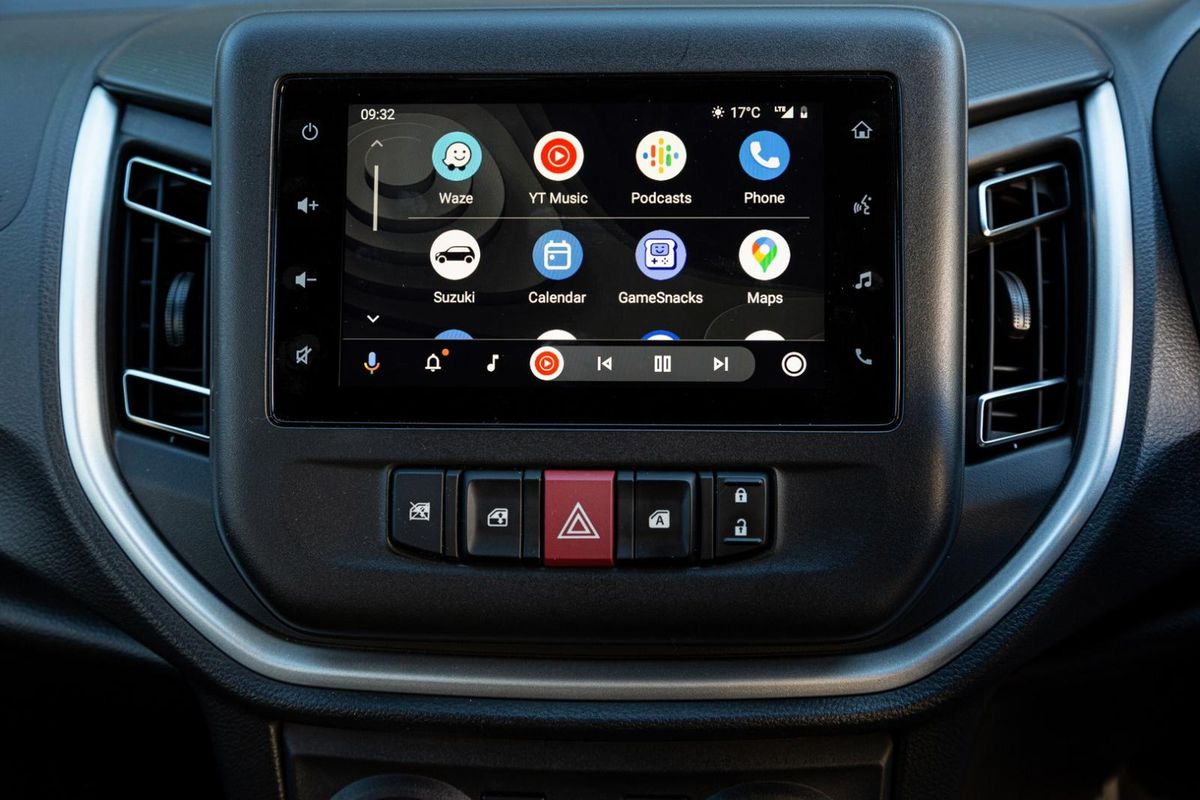
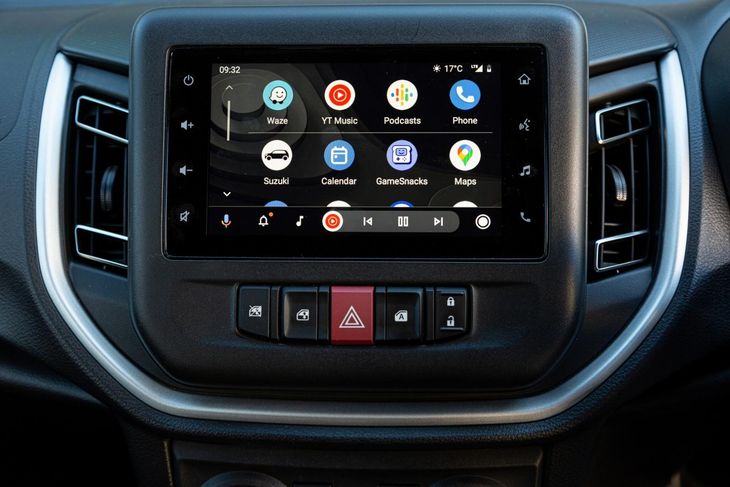
Neat satin silver accents here and there do a lot to improve the appearance of the cabin, but the most dominant item up front is the 7-inch touchscreen, which immediately makes the Celerio look and feel like a more expensive car than it is.
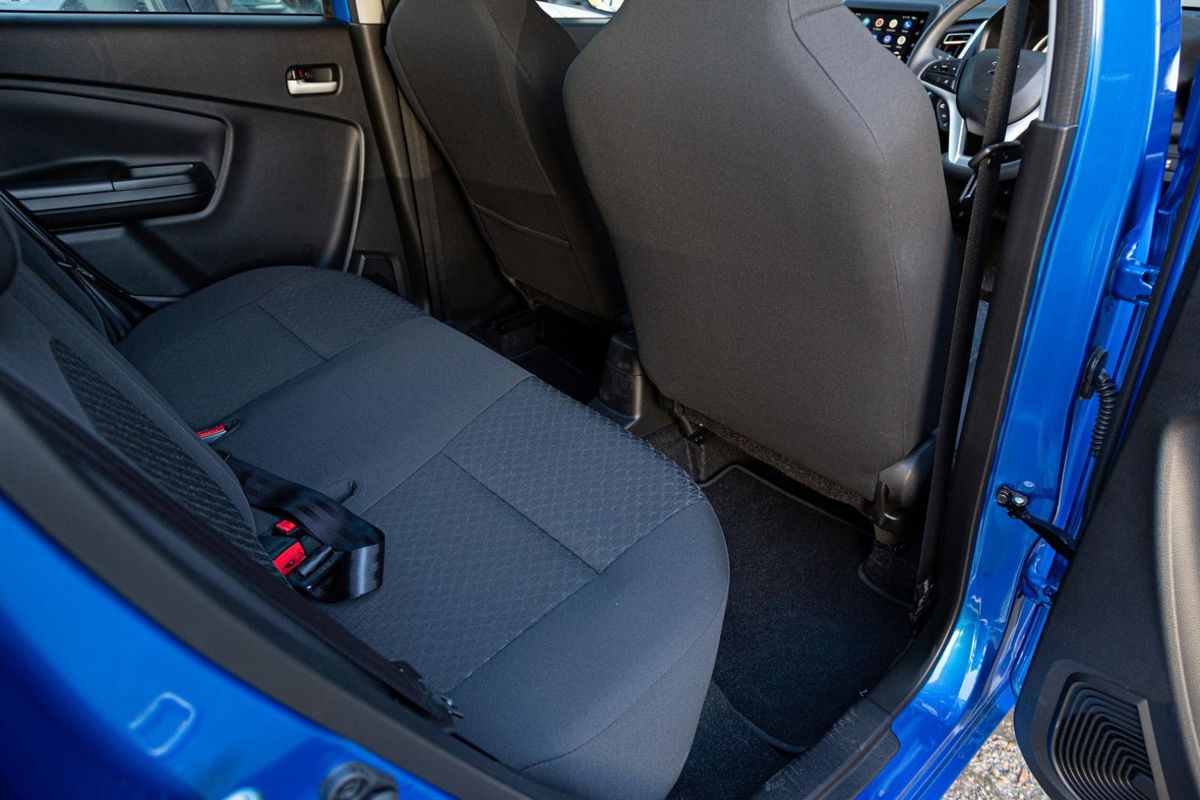
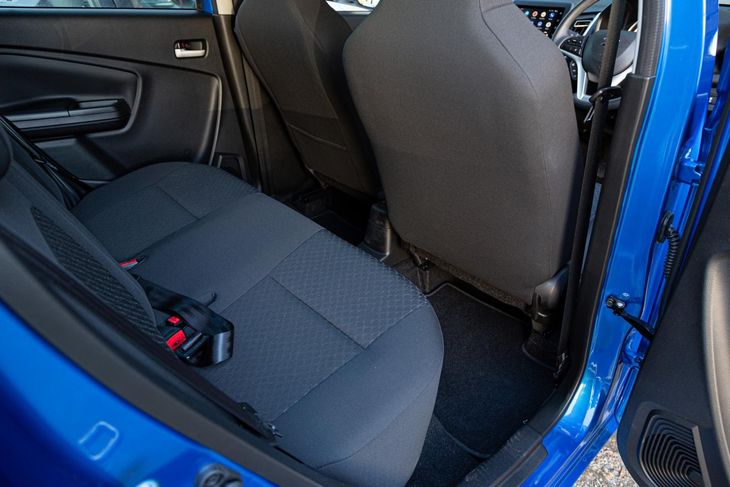
Rear occupant space is not generous, but quite sufficient for this class of vehicle.
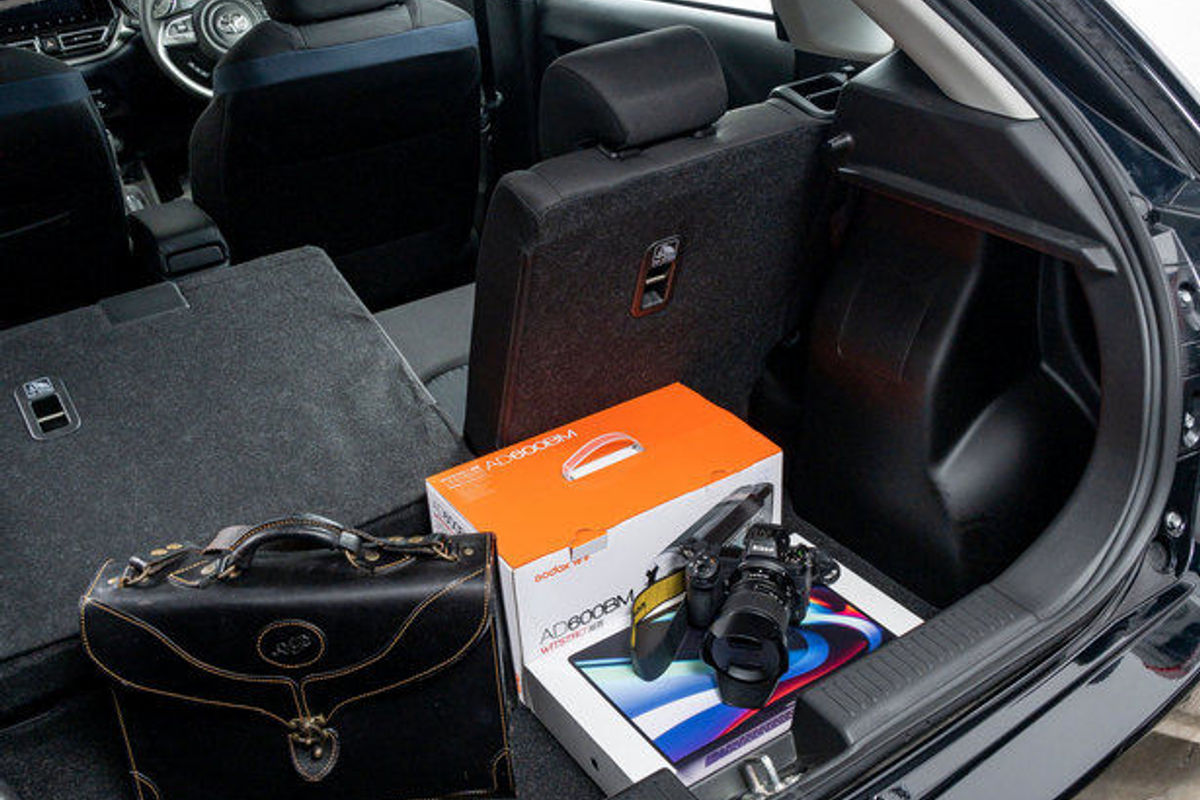
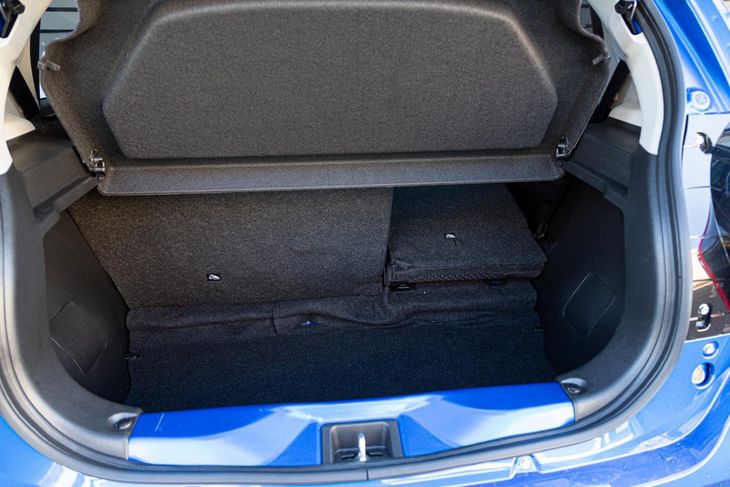
All-round space is good; all passengers are availed generous headroom, plus there is more shoulder width compared with the previous car. It’s still tight in the back for adults, however; also note that the middle passenger is only afforded a lap-, not a three-point safety belt. The load bay is more capacious than before and is said to swallow 295 litres, which is more than what is claimed for the “larger” Swift! The rear seat backrest splits 60/40 and can fold down (if not entirely flat).
According to Suzuki’s claimed figures, the Celerio’s load bay can hold a little more luggage than that of the Swift.
Performance and Efficiency
The Celerio is powered by a 1.0-litre 3-cylinder petrol engine that delivers 49 kW and only 89 Nm of torque. Usually, such low outputs would translate into woeful performance, but keep in mind that the Celerio is exceptionally light (its kerb weight is a mere 805 kg, which is featherlight by contemporary standards). Although Suzuki does not quote performance figures for the Celerio, it feels surprisingly sprightly around town and is quick off the mark. The little engine makes its voice heard when you plant the accelerator pedal, but at least it’s eager to rev and feels relatively refined.
The gearbox is a simple 5-speed manual offering, paired with a light clutch. Around town, the Celerio’s performance is unlikely to feel unacceptably flat-footed, but at higher speeds, and particularly at altitude (and when the vehicle is loaded with passengers and their luggage), you may be forced to shift down to find some torque rather regularly.
The Celerio’s powerplant is not particularly punchy, but it feels lively enough around town and proved impressively frugal.
In terms of efficiency, Suzuki claims an average consumption figure of 4.4 L/100 km and the good news is that, as is the case with most Suzukis, you can achieve quite close to that figure, provided you drive with an economic mindset. During our test period, we averaged around 5.0 L/100 km, which was excellent. The fuel tank is small (32 litres), but you’ll get about 640 km out of it; at the current fuel price (of R23.94 per litre), it’ll cost you R766 to fill a completely empty tank.
Comfort and Features
With its supple ride, relatively good on-road refinement and soft seats, the Celerio has a good platform from which to provide occupant comfort. We also found its spread of standard comfort, and (even) luxury features, appealing.
Aircon, power steering, electrically adjustable side mirrors, remote central locking and electric windows all-round are to be expected at this price level, BUT rear parking sensors, electronic stability control and a particularly neat 7-inch touchscreen infotainment system aren’t.
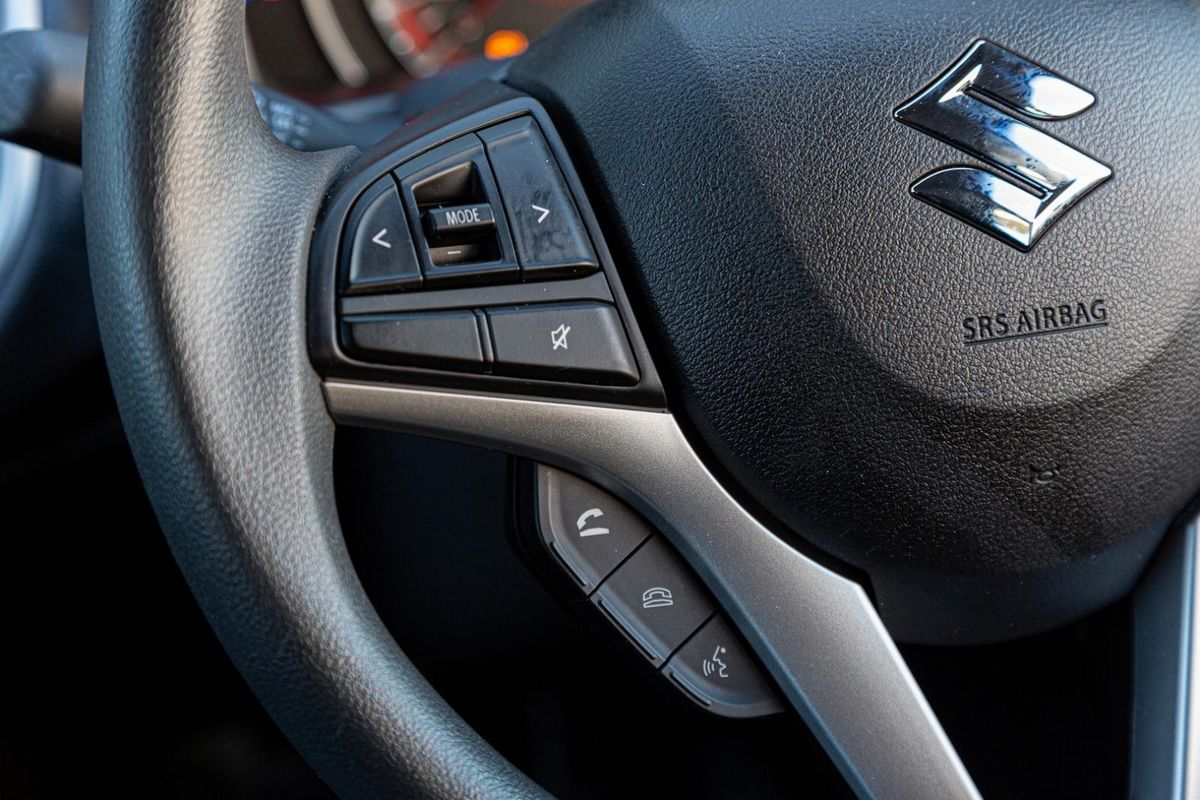
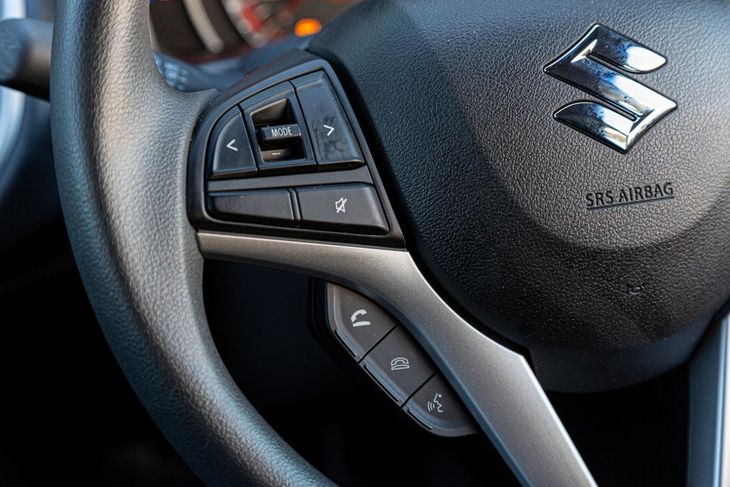
The steering wheel may feature a polyurethane rim, but it does come equipped with satellite audio and Bluetooth phone controls.
The infotainment system boasts nice clear graphics and features Apple CarPlay/Android Auto connectivity. A USB port is provided at the front, and the steering wheel comes equipped with remote audio and Bluetooth phone controls.
A minor point of criticism is the positioning of the switches for the electric windows – the front ones are mounted below the touchscreen, and those for the rear are… between the front seats. It just takes a while to get used to, that’s all.
The touchscreen infotainment system with smartphone-mirroring tech is nice to have, but the window switches are in a strange place.
Ride and Handling
Like some other budget cars under R200 000, the Celerio has a relatively high ride height (170 mm) which, coupled with the plump 15-inch tyres fitted, allows the little Suzuki to take South Africa’s deteriorating road infrastructure in its stride. In general driving (on good surfaces), the Celerio’s cabin is quiet and the ride nice and supple.
The Celerio 1.0 GL offers a relatively absorbent ride quality, but the price for its high ride height is excessive body lean.
The downside of the raised ride height and soft suspension setup is, of course, that the Celerio feels a bit top-heavy under hard cornering. If you want a more “dynamic” car, then perhaps consider spending a bit more and getting a Swift…
Still, the Celerio does have one important feature that very few cars below R200k-mark can match – stability control. This is a critical safety feature, and particularly appealing if you’re an inexperienced driver or buying a car for your offspring. The safety package also includes ABS with EBD and Brake Assist, as well as dual front airbags.
Price and After-Sales Support
The Suzuki Celerio 1.0 GL is priced at R194 900 and comes backed with an impressive 5-year/200 000 km warranty and 2-year/30 000 km service plan. Service intervals are every 15 000 km/12 months, whichever comes first.
Verdict
At this price point (just under R200k), the 2nd-gen Suzuki Celerio’s main rivals are the Toyota Agya and Hyundai Atos. While those cars (also offered by brands with strong reputations for reliability and after-sales service) are well worth considering, (especially the Atos), the Celerio holds the upper hand because of its blend of standard comfort and safety features. In fact, the fitment of electronic stability control – a potentially life-saving safety feature – should be decisive.
The biggest problem facing the Celerio is arguably the existence of a model with which it shares a showroom floor… the Swift 1.2 GL, which not only offers a more substantial package (in terms of interior space and on-road refinement), but better performance. That said, if you are really counting those cents, then the Celerio’s nearly R13 000 price advantage and its better fuel consumption might be deal clinchers.
10 Ways To Save Fuel: Get The Most Out Of Every Drop
The rapid increase in fuel prices is having a severe impact on daily life in South Africa and if you are lucky enough to own a car, then you would be wise to exercise a range of fuel-saving techniques to make every drop of fuel last longer. Here are 10 ways to save fuel today!
The rising cost of fuel has a significant negative impact on the household budget and consumers have to find ways to make their money stretch further. One of the easiest ways to save money would be to use less fuel. By far the best (and easiest) way to do that would be to buy a newer, more efficient car, but very few of us are in a position to do that. So… how can you use your current set of wheels more efficiently?
10 Ways to Save Fuel
1. Don’t let it idle – Drive off immediately after starting the car in the morning. Do not let it idle for any length of time, especially when the engine is below normal operating temperature. This will reduce the amount of time the engine has to inhale the over-rich fuel mixture required for starting and idling. Such a mixture is wasteful and contaminates the oil to such an extent that prolonged idling can ruin an engine. Go slow at first, to allow the engine, gearbox and final drive to warm up.
2. Go with the flow – Drive at a reasonable pace in town. Stay with the traffic, because if you slow down too much you will not only be an obstruction but you may also have to change down to a lower gear. A lower gear usually, but not always, means your vehicle will use more fuel.
3. Gentle on the throttle – Accelerate slowly and use the lower gears when you start from a speed below 1 500 r/min to avoid over-stressing the engine. Large throttle openings will obviously increase the fuel flow rate.
4. Drive (slightly) slower – Reduce your habitual cruising speed by 10 km/h. This will result in a measurable drop in fuel consumption because the air resistance increases dramatically with an increase in speed.
5. Anticipate the traffic – Try to brake as little as possible. Braking converts the car’s momentum into heat energy. When you accelerate again the engine has to supply the lost energy to get the vehicle back up to speed again.
6. Avoid roof racks and trailers – Carry excess luggage inside the car as much as possible. A roof rack or a trailer increases the air resistance dramatically but an increase in weight only increases the amount of fuel being used by a significant amount while you accelerate, not while you’re cruising.
7. Check your tyre pressures every two weeks – Soft tyres not only have a negative effect on fuel consumption but are also a major cause of blowouts.
8. Look after your car – Have your car serviced regularly to ensure it is in optimal working condition.
9. Keep score – A record of fuel consumption using the tank-full to tank-full method is a good way to remind yourself about saving fuel. This system works fairly well if you do not let the pump attendant trickle fuel in after the automatic pump was activated. Investigate any unreasonable change in fuel consumption.
10. Windows shut – Driving with open windows or activating the air-con will increase your fuel consumption by a few per cent but you must be fanatic about reducing consumption to drive like that.
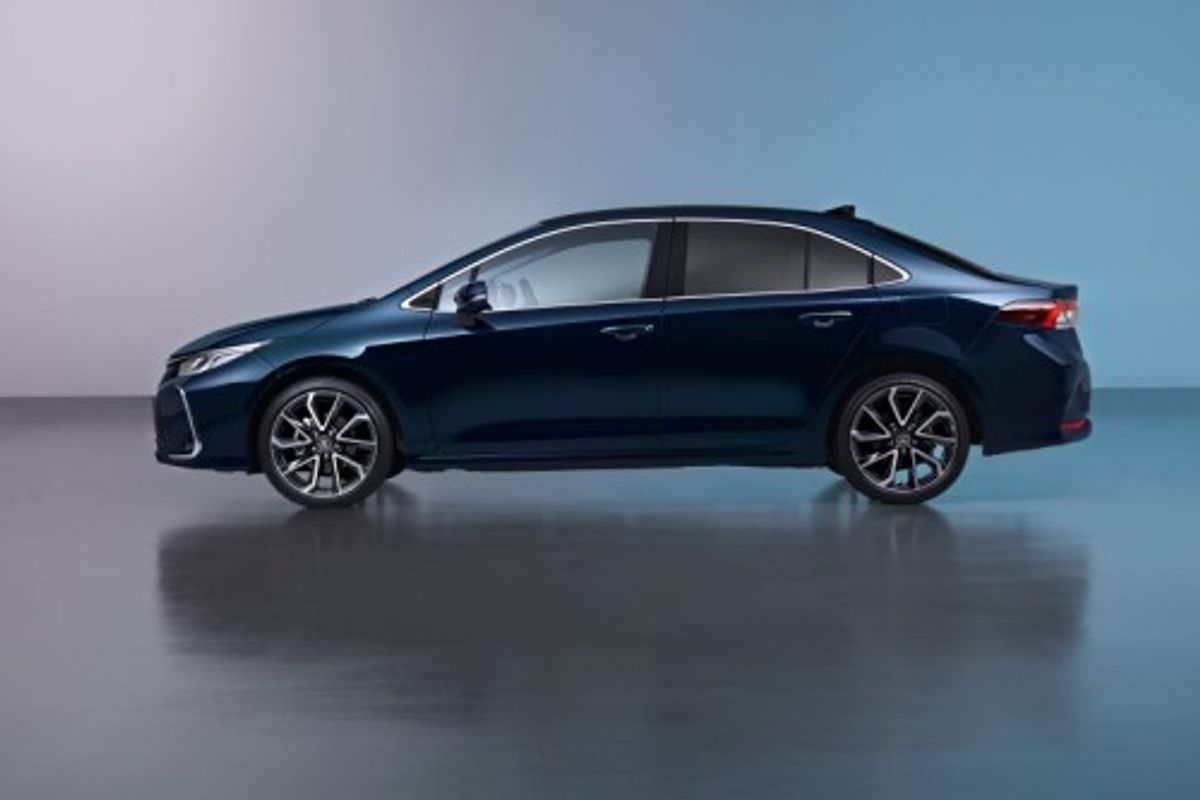
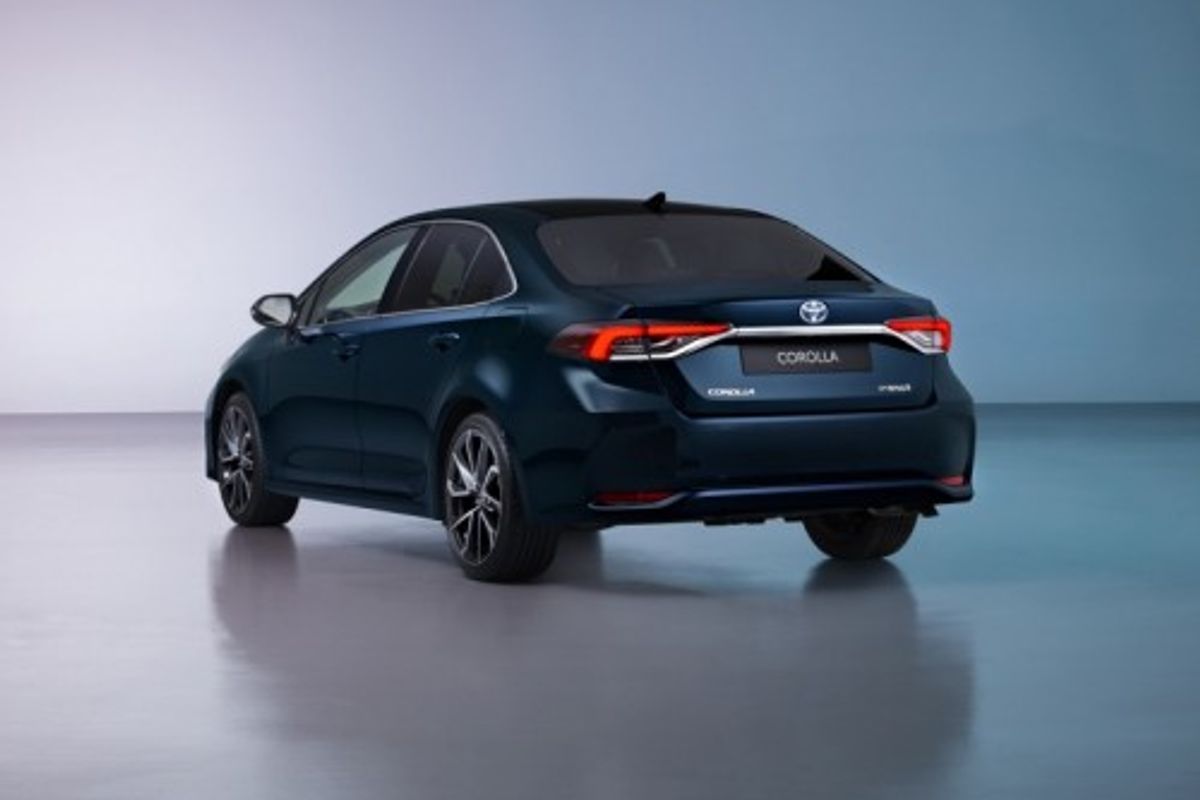
The ever-popular Toyota Corolla has been updated! Take a look at what’s changed!
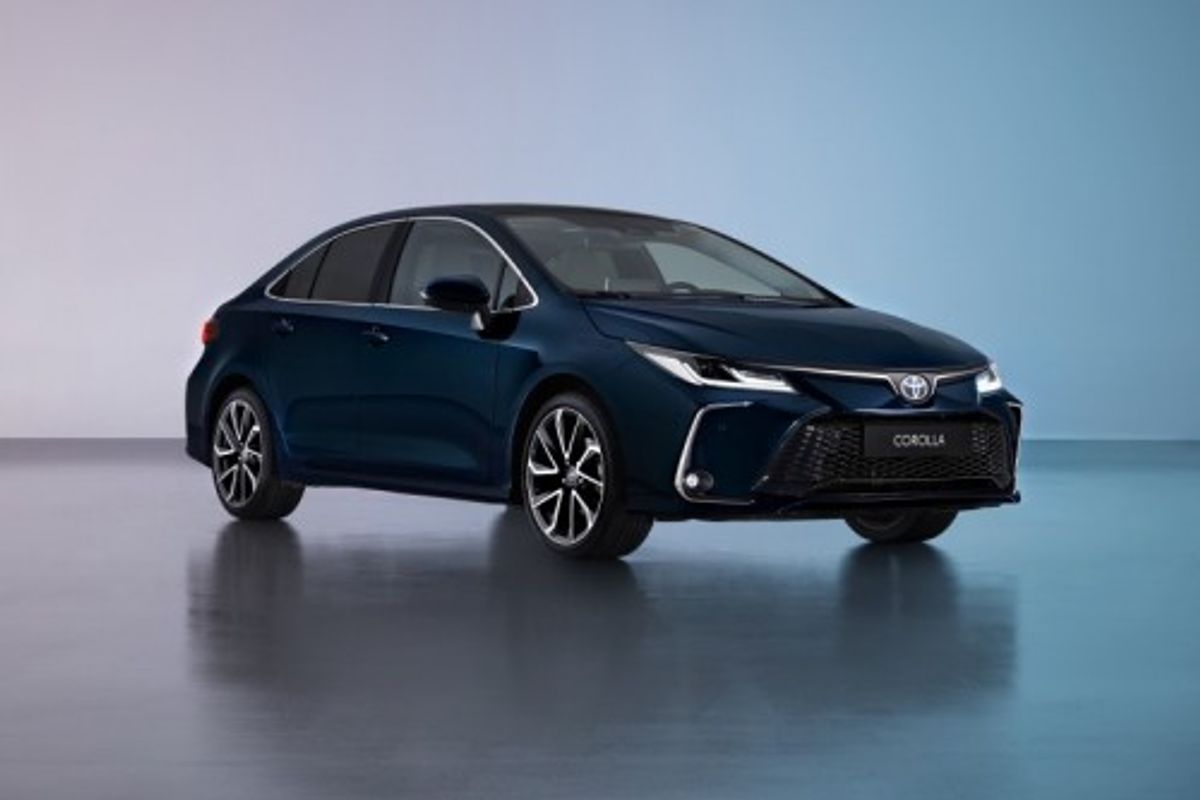
The 12th-generation Toyota Corolla arrived in South Africa back in 2020 and the Japenese firm has given the Corolla a styling and equipment update, but more importantly, the Corolla’s hybrid powertrain has also been enhanced.
What’s Changed?
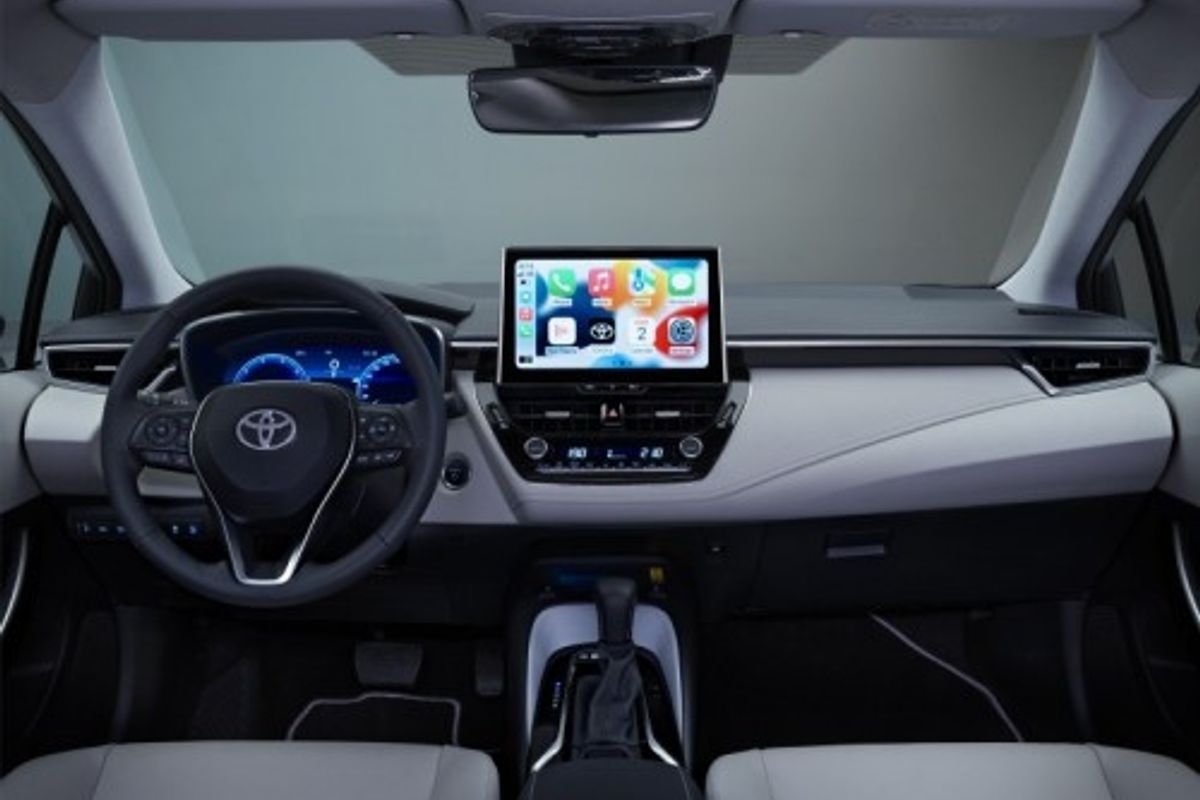
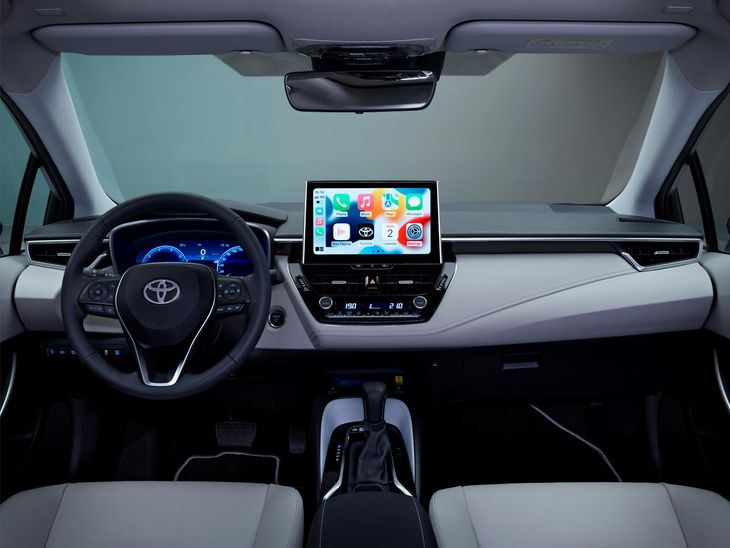
A larger infotainment system and a new instrument cluster makes its way into the updated Corolla.
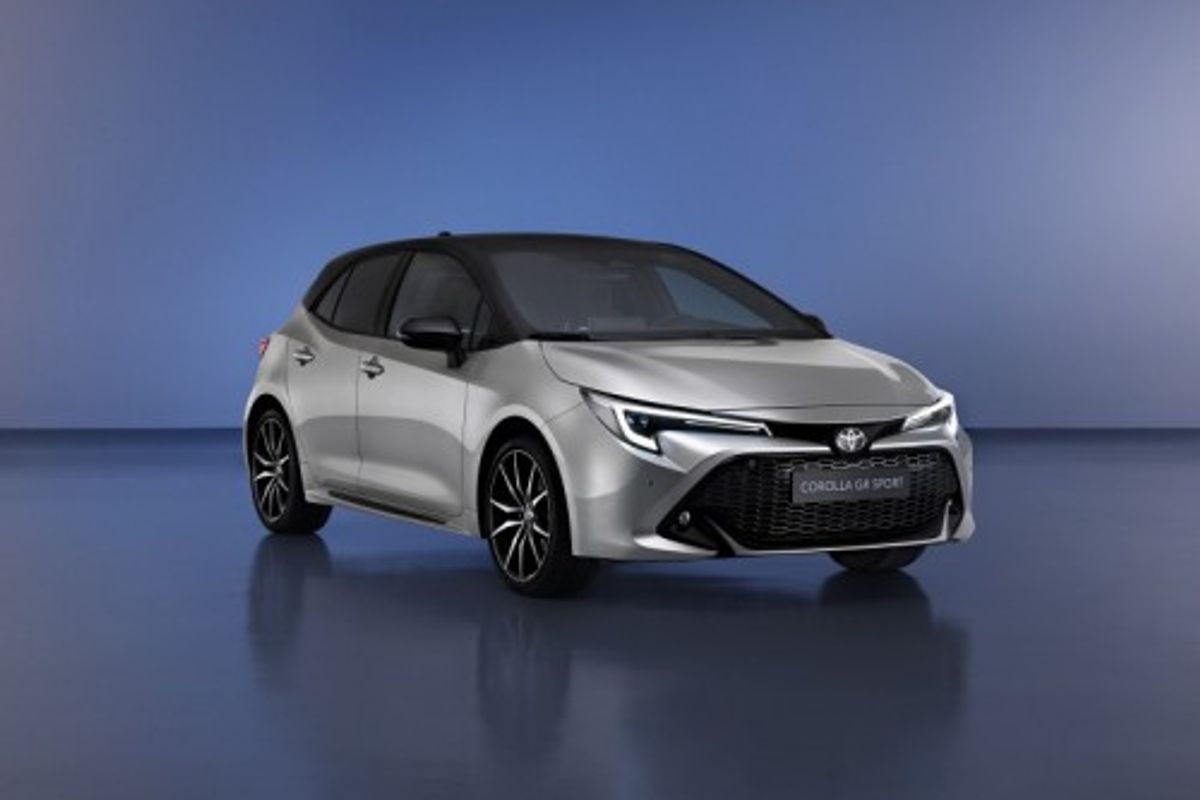
You’d be hard-pressed to spot the exterior styling changes but Toyota has updated the grille mesh design, tweaked the fog light bezels and bi-LED headlights with adaptive high beam are now fitted to range-topping Corollas while new alloy wheel designs will be offered too along with some new body colors to choose from such as Metallic Grey, Juniper Blue and Midnight Teal.
In markets where its offered, the Corolla GR Sport will gain new 18-inch alloy wheels, revised rear bumper and under-guard while the interior gets updated upholstery and a GR logo on the push-button start.
Interior changes include revised trim and upholstery with newly embossed patterns that give a 3-D effect while new Dark and Light Harmony upholstery combinations further enhance the cabin ambience. A larger 10.25 inch infotainment display also makes its way into the Corolla as well as a new 12.3-inch, customisable combimeter instrument cluster and a new voice assistance system.
The big news for this particular update, however, has taken place under the bonnet where Toyota’s fifth-generation hybrid-electric system now produces better performance!
For both the 1.8 and 2.0 Corolla Hybrid, Toyota has redesigned the power control unit (PCU) and transaxle motor while also fitting a more powerful and lighter lithium-ion battery resulting in up to 18 kg in weight savings.
As far as outputs go, the 1.8-litre Corolla Hybrid now produces 104 kW / 142 Nm (14 kW more than before) and is 1.7 seconds faster in the sprint to 100 kph at 9.2 seconds. The larger 2.0-litre Corolla Hybrid (not on sale in SA) get a 12 kW power bump to 146 kW and will now accelerate to 100 kph in 7.5 seconds, half a second quicker than before.
Toyota has also tweaked the hybrid control to deliver a more natural and intuitive acceleration feel and powertrain refinement has also been improved with less noise experienced while driving.
In terms of safety, Toyota T-Mate joins the familiar Toyota Safety Sense suite of driver assistance features which can be updated over-the-air. Improvements have been made to the acceleration suppression at low speeds, collision avoidance support, emergency steering assist, lateral collision avoidance and curve speed reduction. A Safe Exit System will now trigger a warning if a door is opened into the path of a car or cyclist approaching from the rear and a Rear Seat Reminder will let you know if you have left something on the back seats.
The updated Toyota Corolla will go on sale in Europe in the first quarter of 2023 and its local introduction in South Africa can be expected thereafter. We will keep you updated as more details become available.
The Ferrari-powered Lotus! Twin-turbo V8 Monster – Incredible one-off build
Ever found a Ferrari engine from a crash and wanted to stick it in a lightweight British Sportscar? Probably not, but that’s precisely why Davie Joubert did in this insane one-off build.
It’s fair to say that South African Dawie Joubert has a taste for speed and a flair for the spectacular. With a background in drag racing, he fell in love with the Lotus Elise but when he finally bought one he found it terribly underpowered.
And so he shoved a Honda K-Series engine in the back but he still felt the car could handle a lot more horsepower. As fate would have it, he was told that a Ferrari 488 GTB had crashed somewhere in South Africa and after a year of trying, he convinced the owner to sell him the wreck, and here is the result.
The car was specifically built to take part in the prestigious annual Simola Hillclimb, which our video guy Ciro just raced in an electric car in May this year, alongside this beast. With the twin-turbo Ferrari V8 under the rear hood sending an insane 571 kW to the rears, and an aggressive aero set-up, the Lotus Ferrari was incredibly quick up the hill. Join us as the owner tells us his story and fills us in on all the juicy details about his incredible car.
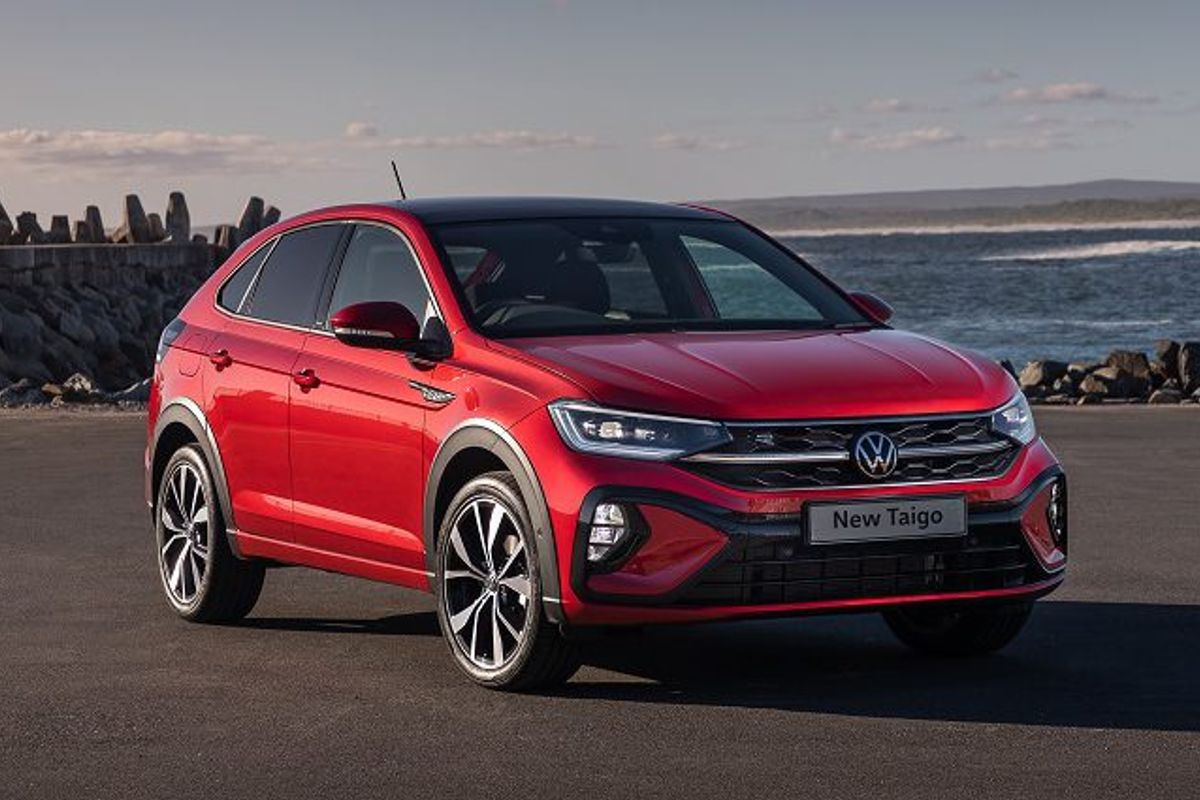
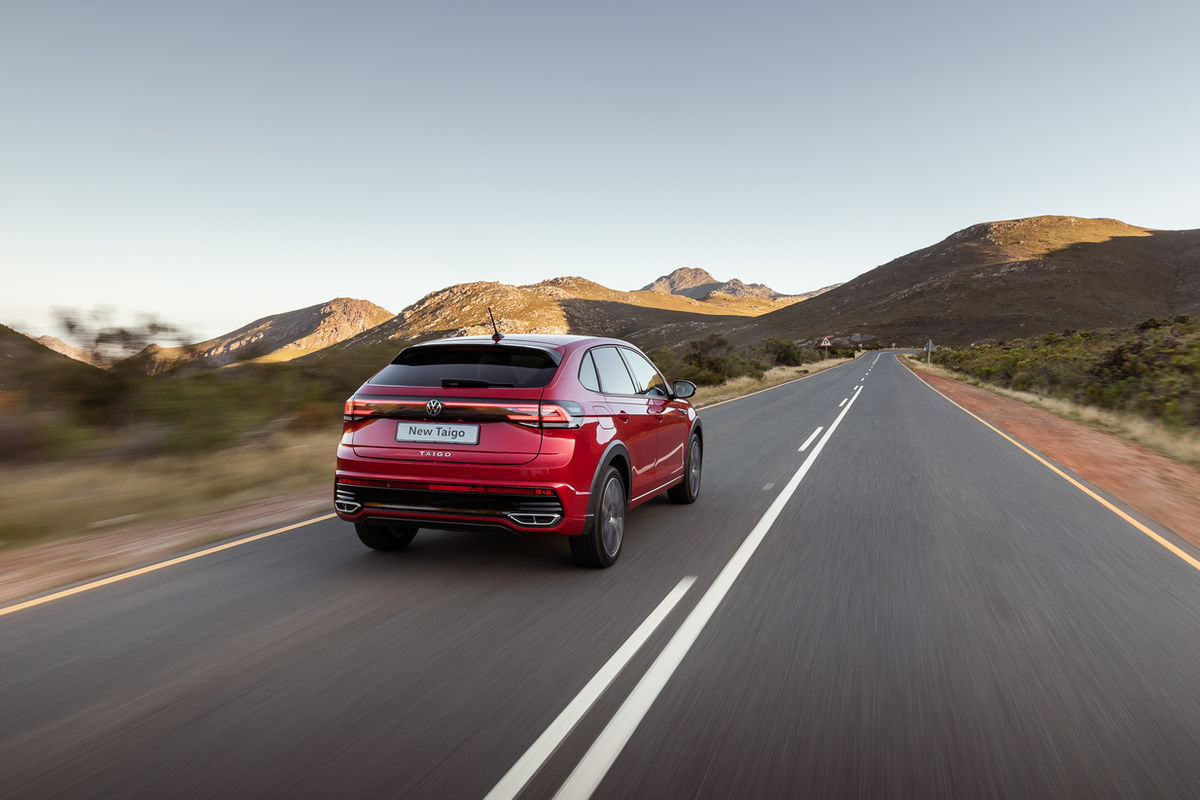
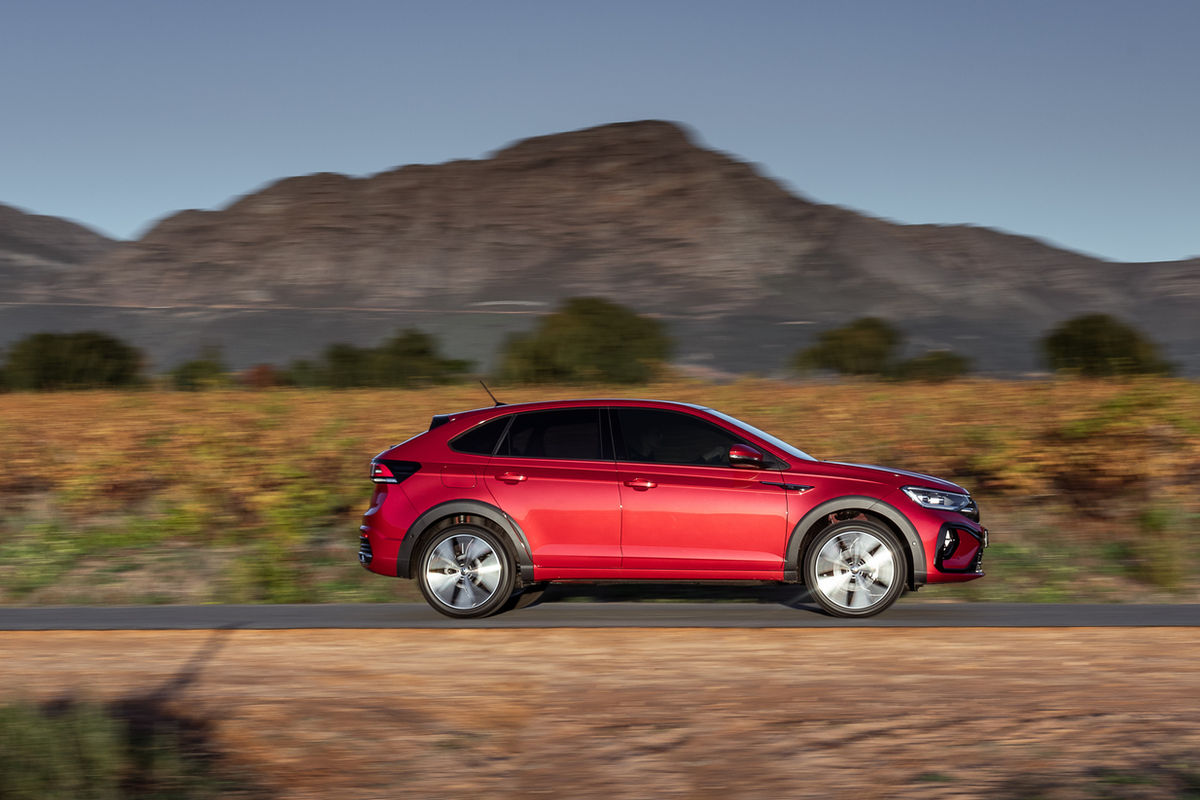
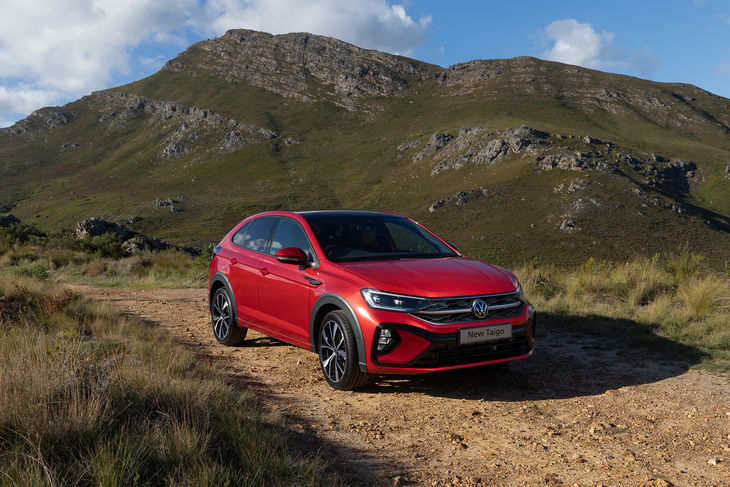
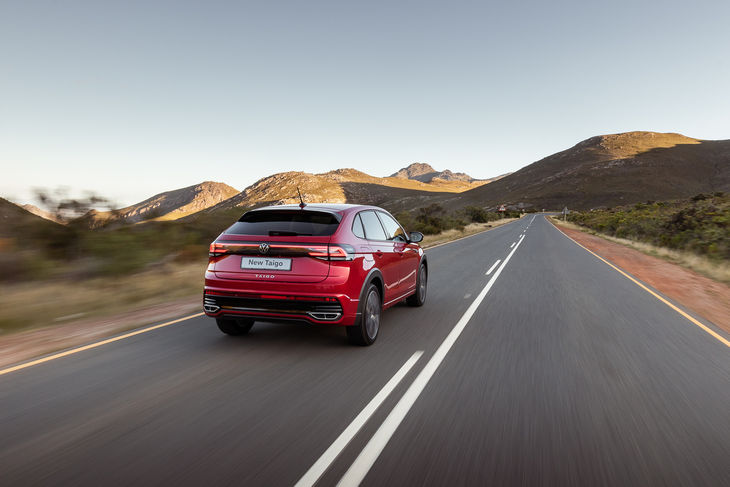
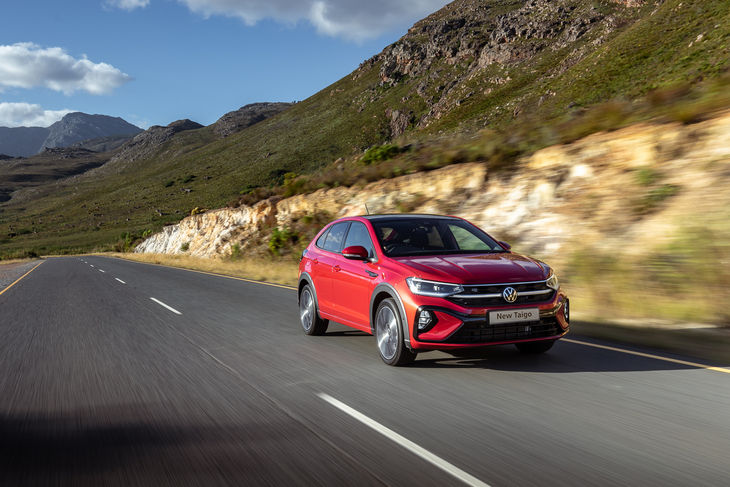
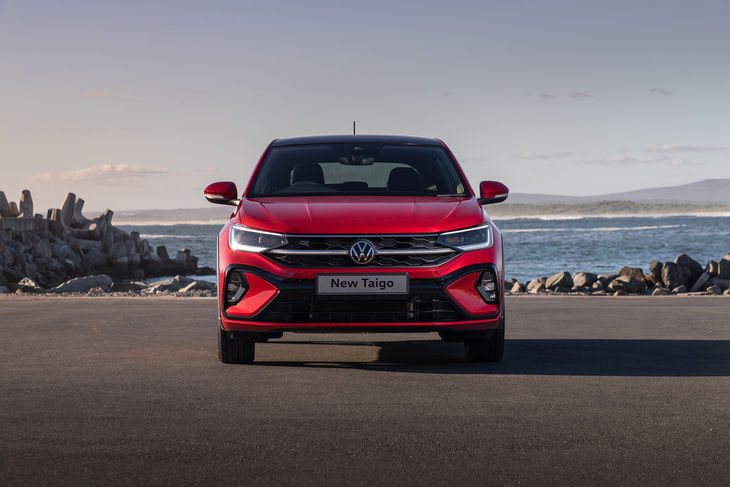
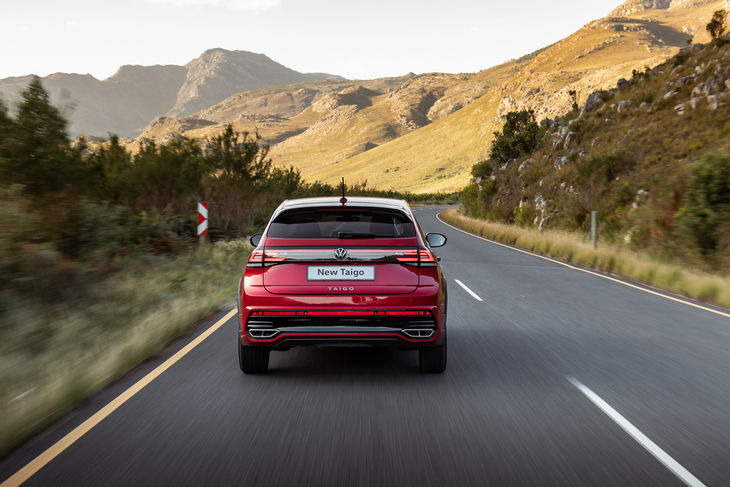
The stylish Volkswagen Taigo has finally touched down in Mzansi and we headed to Gauteng to sample the coupe-styled small crossover. Is the Taigo a bit too niche… or is it a perfect gap-filler between the T-Cross and T-Roc? Let’s find out!
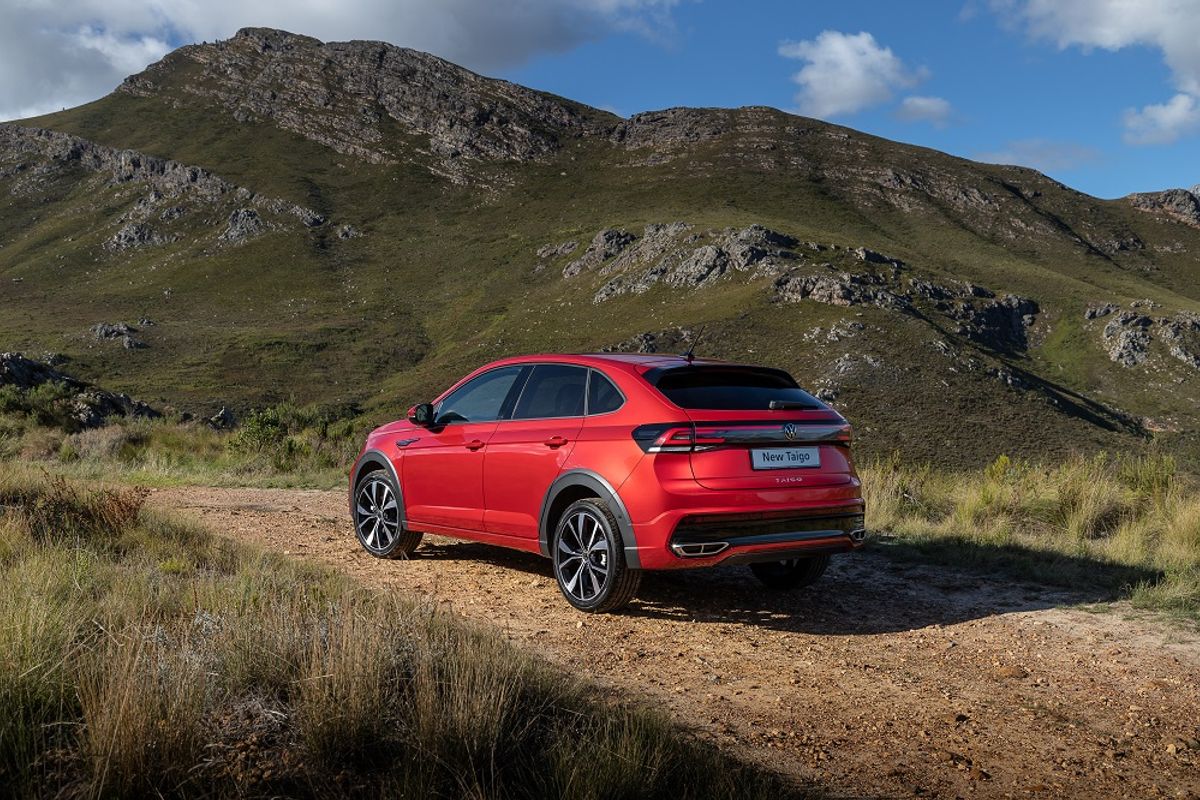
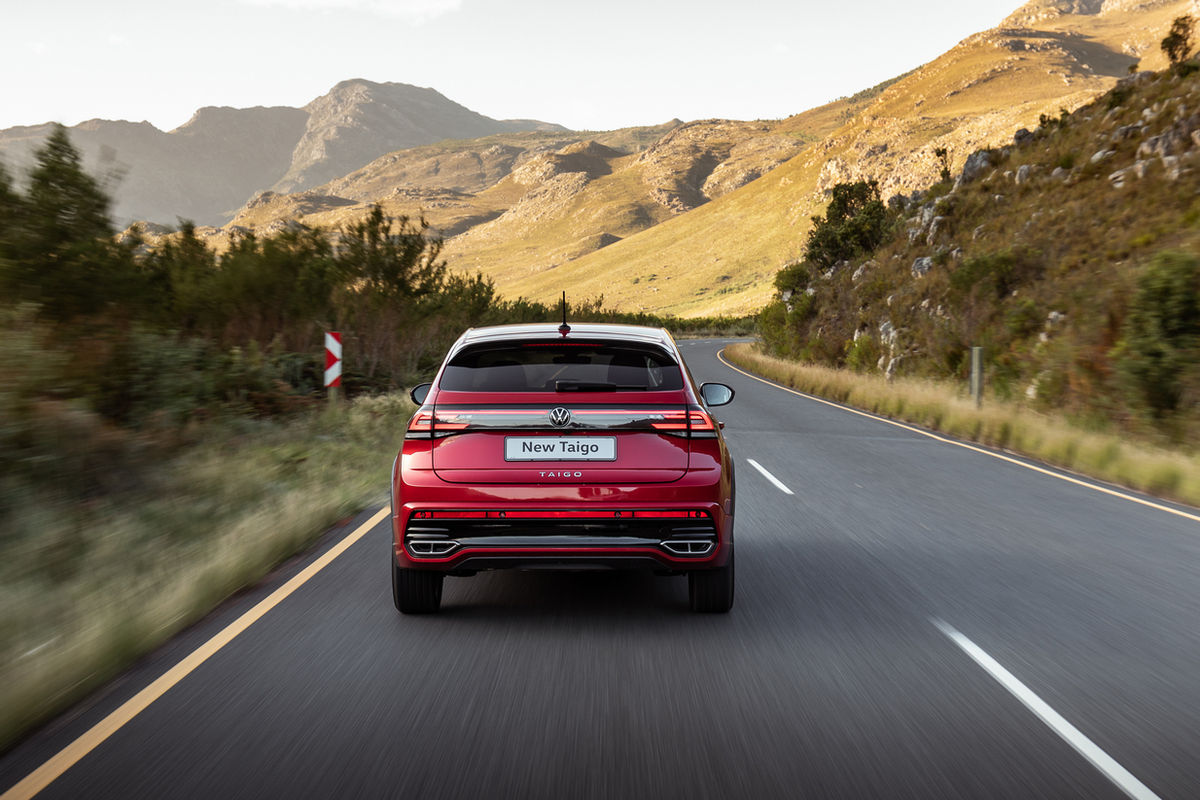
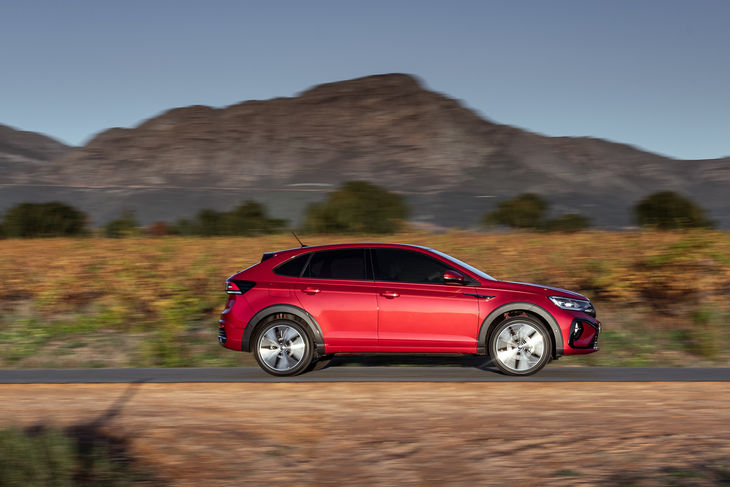
With a flamboyant colour palette and unusual proportions that are sure to start many conversations, there’s no denying that the Taigo is a distinctive out-of-left-field offering. We suspect it will garner sales based on looks alone – after all, coupe-SUVs are very much in fashion.
Premium products such as the Audi Q3 and Q5 Sportback (not to forget the Q8), BMW X4 and X6 and Mercedes-Benz GLC- and GLE Coupes can be considered the originators of this trend, but even mainstream brands have begun blending coupe and crossover styling cues.
But if Volkswagen already offers the accomplished T-Cross and slightly bigger T-Roc in its compact family car line-up, is there enough of a gap between them to accommodate the Taigo? Volkswagen certainly thinks there is, because last year, SUVs began outselling hatchbacks in the South African new-vehicle market, which suggests the Wolfsburg-based brand’s SUV push is well justified.
The Taigo is based on the same MQB platform that underpins the Polo, T-Cross and T-Roc, and we’ve always been impressed with the refined packaging and accomplished on-road demeanour that those models offer. Much like the T-Roc, the Taigo is aimed at “self-styled go-getters” (VWSA’s description, not ours), but in terms of dimensions, the Taigo is more comparable with the T-Cross; it’s slightly narrower and lower, but longer, by comparison.
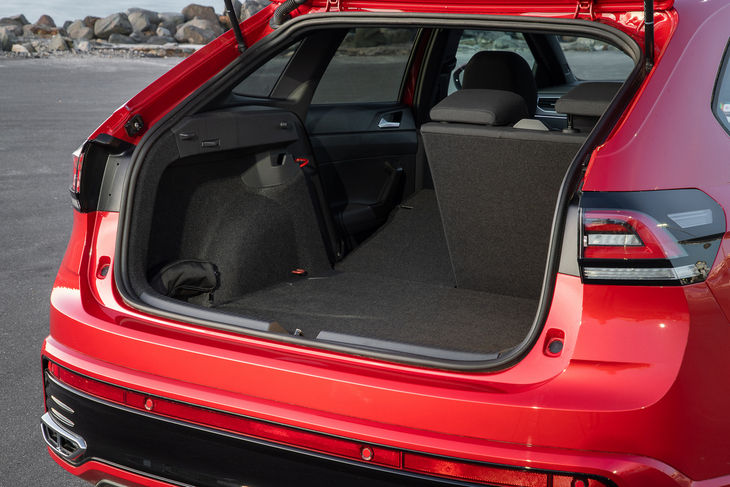
Interestingly, the Taigo might be longer than the T-Cross, but it offers a claimed 440 litres of luggage capacity with the rear seats up, which is 15 litres less than what the latter offers.
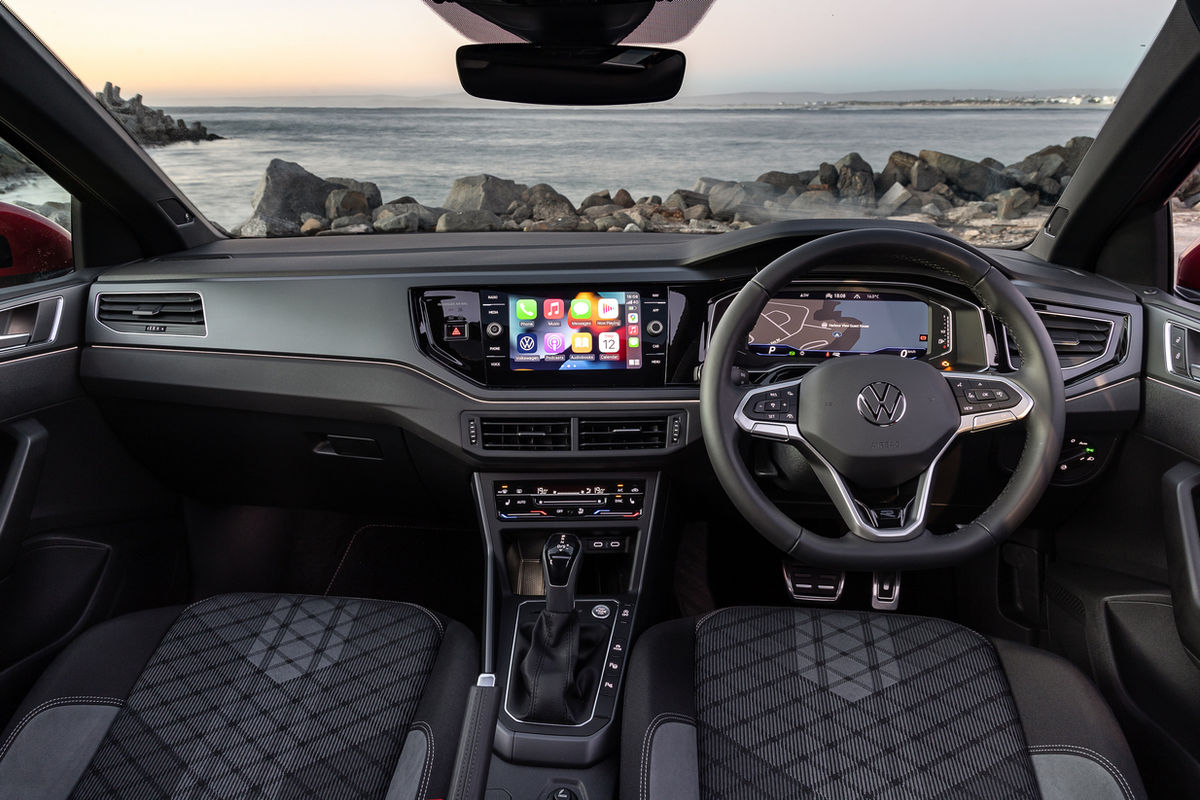
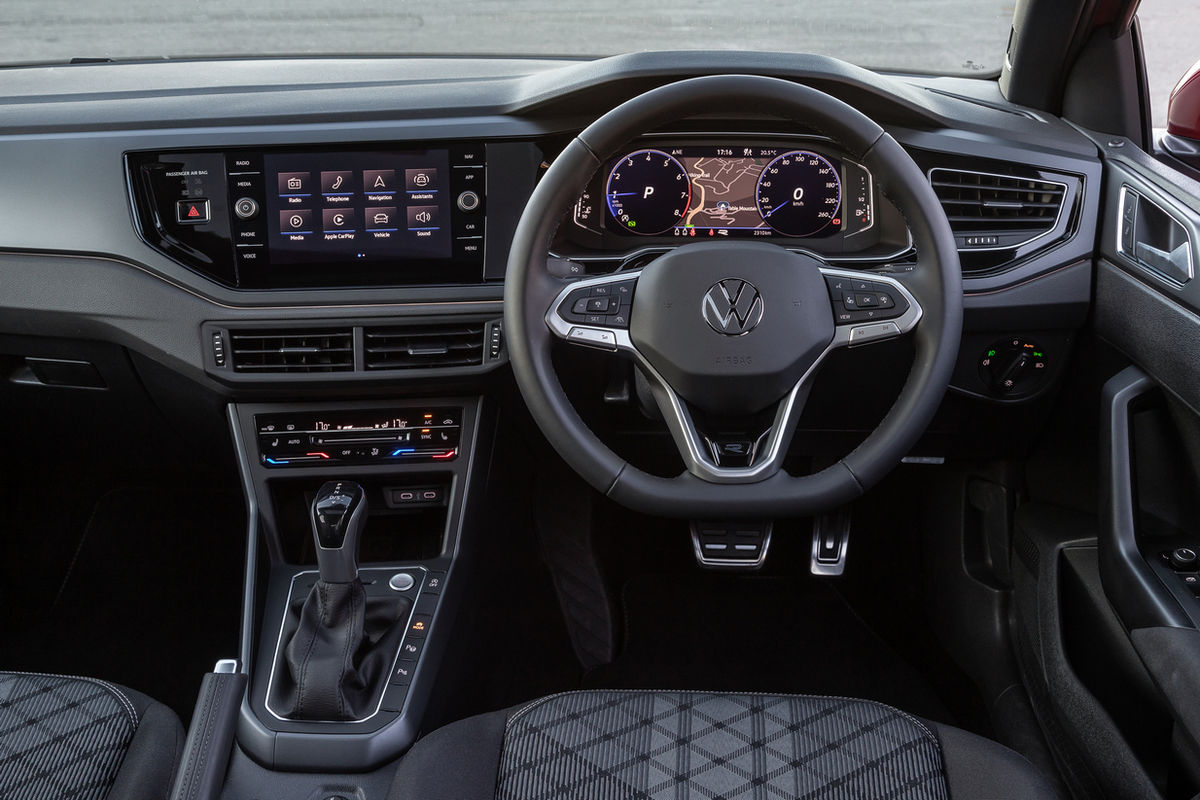
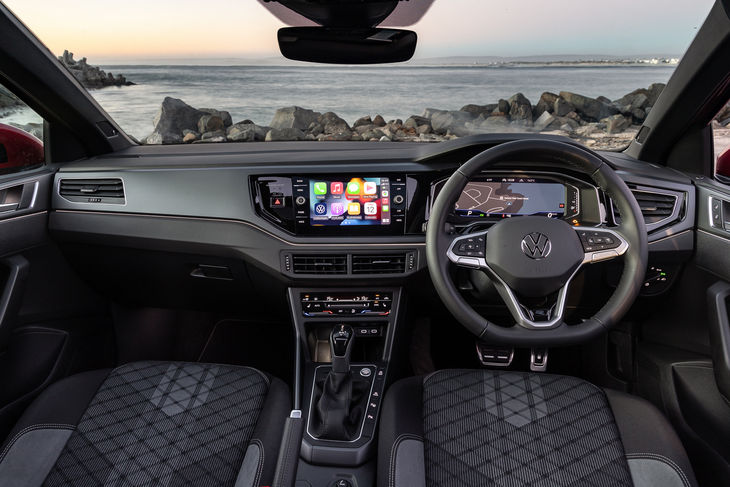
As for the interior, if you’ve sat in a T-Cross, the Taigo’s cabin will be instantly familiar. The slightly raised driver’s seat makes ingress/exit easier than in, say, an ordinary hatchback.
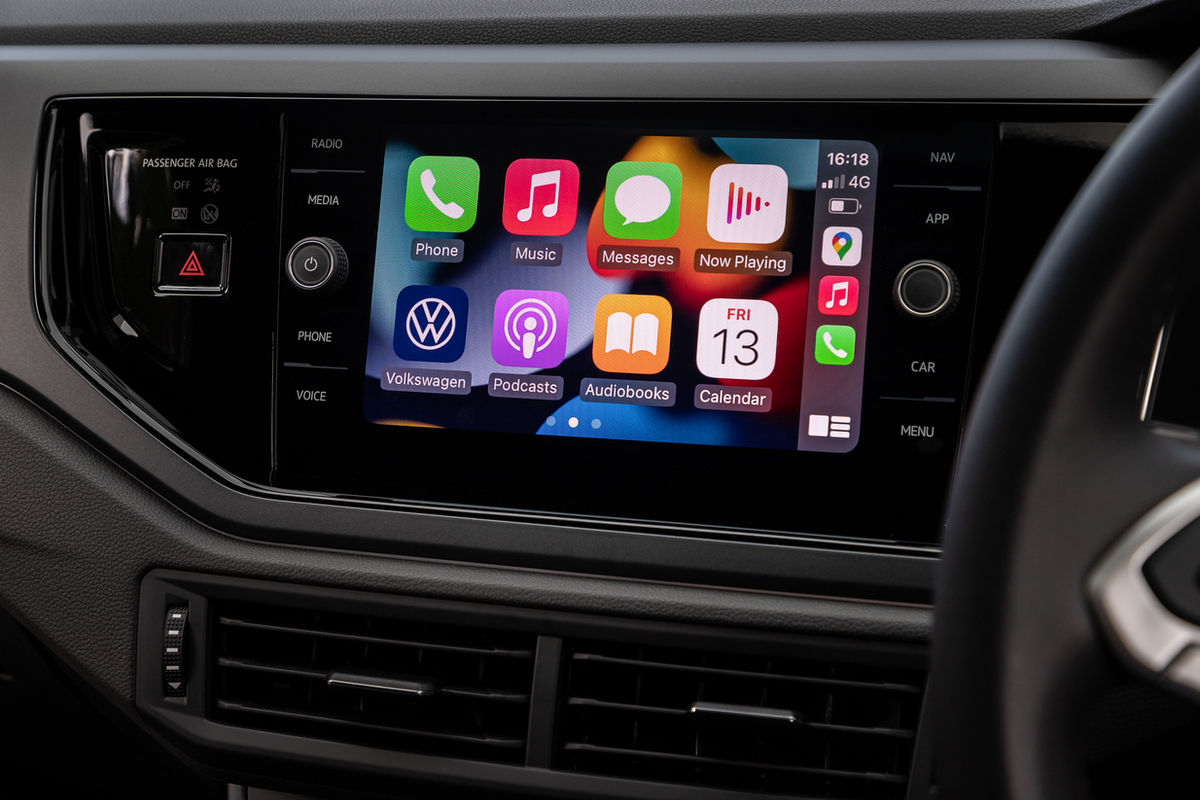
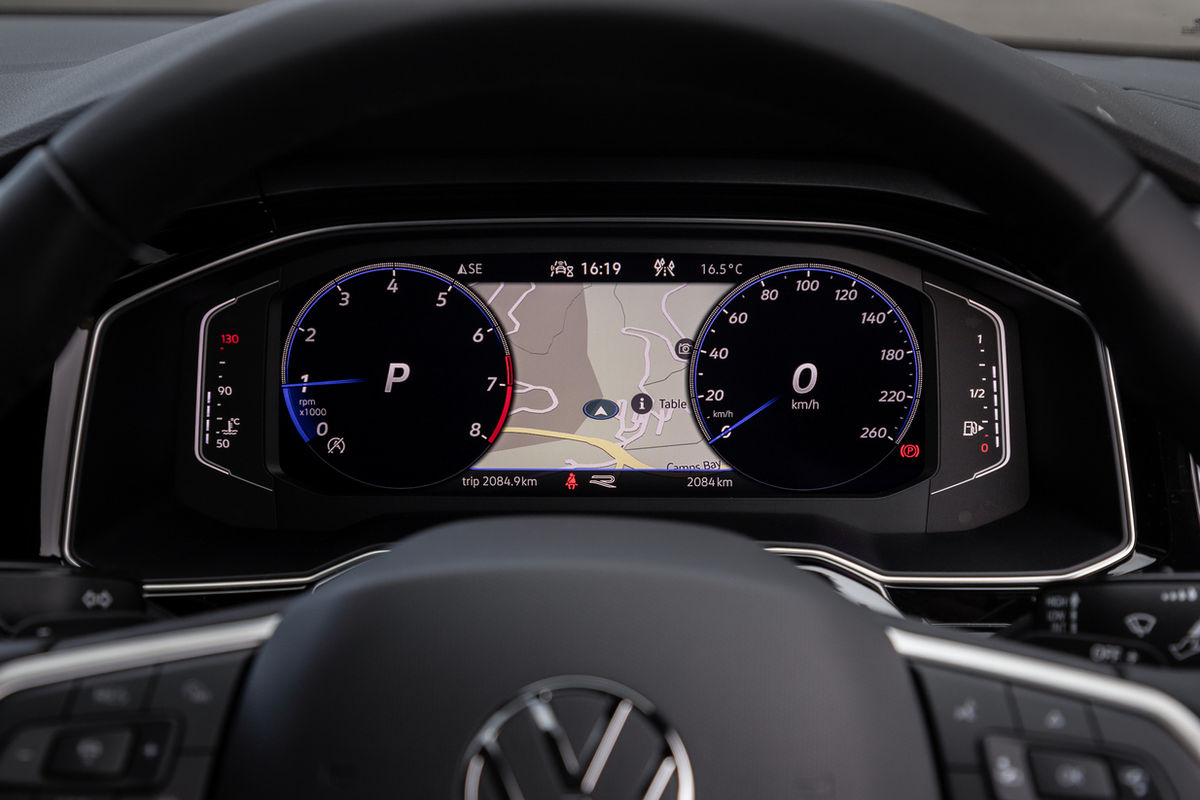
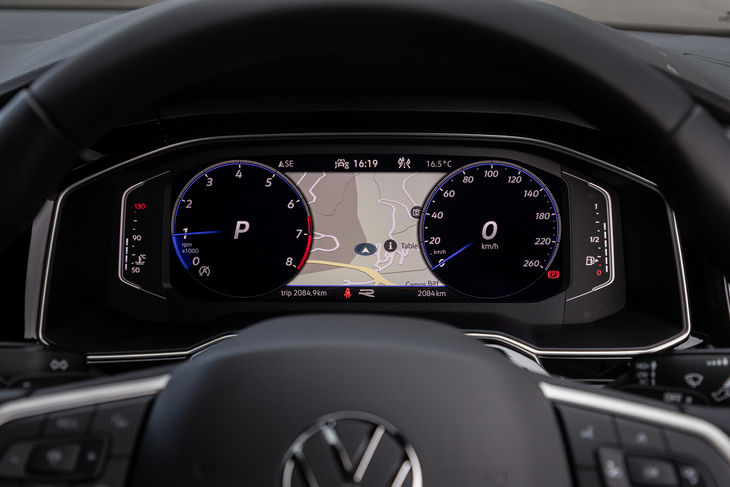
Prospective buyers will be wowed by the digital dashboard and Apple CarPlay and Android Auto-compatible touchscreen infotainment system, but upon closer inspection, the Taigo has some of the same foibles as the T-Cross: some interior surfaces look and feel quite premium, but then marginal-quality plastics are apparent in other areas…
Okay, so the finishes vary, but there’s no denying the model’s build quality. We drove the Taigo on some particularly poor roads, but its cabin never exhibited creaks or rattles.
What’s on offer?
The Taigo has one engine-transmission combo and three trim lines: Life, Style and R-Line. The engine is the tried-and-tested 1.0-litre 3-cylinder turbopetrol motor, which develops 85 kW and 200 Nm. It’s an auto, with the quick-shifting 7-speed dual-clutch ‘box on duty. It has a 40-litre fuel tank and VWSA claims an average consumption figure of 5.4 L/100 km.
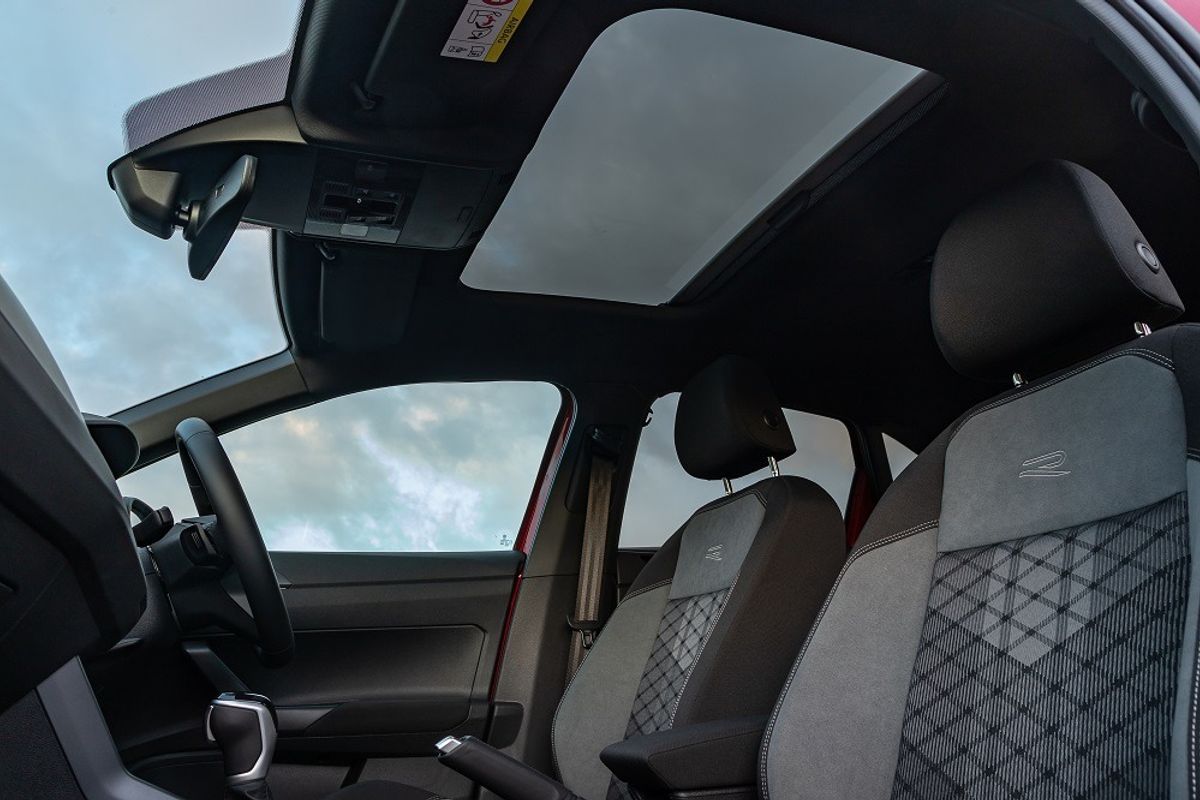
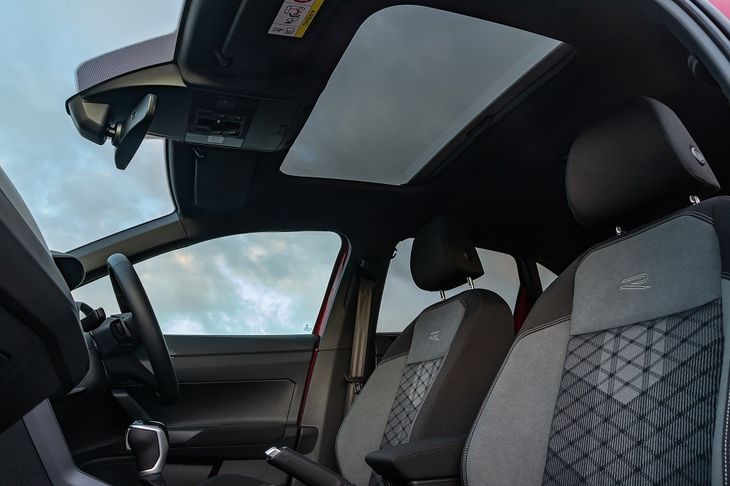
Our launch test unit was the top-spec R-Line derivative, which was loaded with options such as heated front seats, Beats audio system, panoramic roof, Comfort package (reverse-view camera, keyless access, park assist), IQ Drive package (adaptive cruise control, lane-keeping assist, forward collision warning with auto brake) and the uprated Discover Pro infotainment system, replete with a wireless charging pad.
What is the new Taigo like to drive?
Our extended launch drive saw us travelling through the Gauteng, Free State and North-West provinces and the route incorporated extended stretches of open-road driving. The Taigo’s ride quality and cabin insulation impressed us right from the start (the R-Line derivative can be specified with 18-inch Misano wheels, which really look great, but they may result in a slightly bumpier ride).
Despite its large proportions, the Taigo’s not a hefty vehicle. It weighs around 1100 kg and, aided by its well-sorted MQB underpinnings, it feels nimble and agile on its, um, wheels.
Don’t get too excited, however, the VW’s handling is less than sporty (which, to be fair, is the norm in this segment) and besides, its hiked-up ride height does cause a bit of body lean. There is little amiss with the steering setup and feel, however; the ‘wheel action is light, which aids manoeuvrability in town, but weighty enough for when you’re cruising on the open road.
Not all compact turbo engines feel up to the task of propelling family vehicles with much vigour, but the Volkswagen’s 85 kW/200 Nm 1.0-litre motor performs spiritedly. In fact, it’s quite free-revving, which means that you can enjoy working the 1.0-litre triple a little harder.
At low revs, 3-cylinder engines sound a bit gruff, but when you’re pressing on, the VW motor emits a pleasant thrum. Look, the Taigo’s not going to win races, but with 200 Nm available from 2 000 rpm, it can keep pace with traffic and its overtaking ability (from 80-120 kph) is quite acceptable.
What’s more, the 7-speed dual-clutch transmission is a peach. It tends to shift up quite smoothly and does not drop gears frantically when you lean on the accelerator. Granted, the downshifts aren’t rapid, but we found that actuating manual changes by using the steering-wheel paddles resulted in a more engaging experience, especially in cut-and-thrust traffic.
How much does the new Volkswagen Taigo cost in South Africa?
The Taigo is sold with a 3-year/120 000 km warranty, 3-year/45 000 km EasyDrive service plan and a 12-year anti-corrosion warranty. The service intervals are every 15 000 km.
Volkswagen Taigo Life
R429 900
Volkswagen Taigo Style
R464 100
Volkswagen Taigo R-Line
R486 000
Summary
Given the trend in the new-vehicle market (as in the rest of the world, where SUVs are increasingly preferred to hatchbacks), we can fully understand that manufacturers would want to offer as many crossovers in the compact-car market as they can make viable business cases for.
Although VWSA suggests the typical Taigo customer will value design and comfort above practicality, that notion might be more applicable to the luxury end of the market. However, the Kariega-based company well and truly hits the proverbial nail on the head when it asserts that the newcomer “will be more attainable than a T-Roc and appeal to a more individualistic audience than a T-Cross.”
From my perspective, there’s nothing inherently wrong with the Taigo and, yes, it’s more affordable than the T-Roc, but in terms of its core strengths it does not set itself apart from its #CarsAwards category-winning T-Cross sibling.
Who should you buy a Taigo, then? VWSA says the model’s core market is brand loyalists among the “aspiring middle class” who dream of owning a cool Volkswagen – fair enough, the Taigo is more stylish – “cooler” – than the T-Cross.
So, if you think the T-Cross is a little too mainstream and want something a bit colourful and are prepared to settle for a fractionally smaller load bay and pay a bit more, then the Taigo may just be worth looking into. It looks brilliant in Kings Red Metallic or Visual Green Metallic, by the way.